window.__IS_SSR__=true
window.__INITIAL_STATE__={
"attachmentsReducer": {
"audio_0": {
"type": "attachments",
"id": "audio_0",
"imgSizes": {
"kqedFullSize": {
"file": "https://ww2.kqed.org/news/wp-content/themes/KQED-unified/img/audio_bgs/background0.jpg"
}
}
},
"audio_1": {
"type": "attachments",
"id": "audio_1",
"imgSizes": {
"kqedFullSize": {
"file": "https://ww2.kqed.org/news/wp-content/themes/KQED-unified/img/audio_bgs/background1.jpg"
}
}
},
"audio_2": {
"type": "attachments",
"id": "audio_2",
"imgSizes": {
"kqedFullSize": {
"file": "https://ww2.kqed.org/news/wp-content/themes/KQED-unified/img/audio_bgs/background2.jpg"
}
}
},
"audio_3": {
"type": "attachments",
"id": "audio_3",
"imgSizes": {
"kqedFullSize": {
"file": "https://ww2.kqed.org/news/wp-content/themes/KQED-unified/img/audio_bgs/background3.jpg"
}
}
},
"audio_4": {
"type": "attachments",
"id": "audio_4",
"imgSizes": {
"kqedFullSize": {
"file": "https://ww2.kqed.org/news/wp-content/themes/KQED-unified/img/audio_bgs/background4.jpg"
}
}
},
"placeholder": {
"type": "attachments",
"id": "placeholder",
"imgSizes": {
"thumbnail": {
"file": "https://cdn.kqed.org/wp-content/uploads/2024/12/KQED-Default-Image-816638274-2000x1333-1-160x107.jpg",
"width": 160,
"height": 107,
"mimeType": "image/jpeg"
},
"medium": {
"file": "https://cdn.kqed.org/wp-content/uploads/2024/12/KQED-Default-Image-816638274-2000x1333-1-800x533.jpg",
"width": 800,
"height": 533,
"mimeType": "image/jpeg"
},
"medium_large": {
"file": "https://cdn.kqed.org/wp-content/uploads/2024/12/KQED-Default-Image-816638274-2000x1333-1-768x512.jpg",
"width": 768,
"height": 512,
"mimeType": "image/jpeg"
},
"large": {
"file": "https://cdn.kqed.org/wp-content/uploads/2024/12/KQED-Default-Image-816638274-2000x1333-1-1020x680.jpg",
"width": 1020,
"height": 680,
"mimeType": "image/jpeg"
},
"1536x1536": {
"file": "https://cdn.kqed.org/wp-content/uploads/2024/12/KQED-Default-Image-816638274-2000x1333-1-1536x1024.jpg",
"width": 1536,
"height": 1024,
"mimeType": "image/jpeg"
},
"fd-lrg": {
"file": "https://cdn.kqed.org/wp-content/uploads/2024/12/KQED-Default-Image-816638274-2000x1333-1-1536x1024.jpg",
"width": 1536,
"height": 1024,
"mimeType": "image/jpeg"
},
"fd-med": {
"file": "https://cdn.kqed.org/wp-content/uploads/2024/12/KQED-Default-Image-816638274-2000x1333-1-1020x680.jpg",
"width": 1020,
"height": 680,
"mimeType": "image/jpeg"
},
"fd-sm": {
"file": "https://cdn.kqed.org/wp-content/uploads/2024/12/KQED-Default-Image-816638274-2000x1333-1-800x533.jpg",
"width": 800,
"height": 533,
"mimeType": "image/jpeg"
},
"post-thumbnail": {
"file": "https://cdn.kqed.org/wp-content/uploads/2024/12/KQED-Default-Image-816638274-2000x1333-1-672x372.jpg",
"width": 672,
"height": 372,
"mimeType": "image/jpeg"
},
"twentyfourteen-full-width": {
"file": "https://cdn.kqed.org/wp-content/uploads/2024/12/KQED-Default-Image-816638274-2000x1333-1-1038x576.jpg",
"width": 1038,
"height": 576,
"mimeType": "image/jpeg"
},
"xxsmall": {
"file": "https://cdn.kqed.org/wp-content/uploads/2024/12/KQED-Default-Image-816638274-2000x1333-1-160x107.jpg",
"width": 160,
"height": 107,
"mimeType": "image/jpeg"
},
"xsmall": {
"file": "https://cdn.kqed.org/wp-content/uploads/2024/12/KQED-Default-Image-816638274-2000x1333-1-672x372.jpg",
"width": 672,
"height": 372,
"mimeType": "image/jpeg"
},
"small": {
"file": "https://cdn.kqed.org/wp-content/uploads/2024/12/KQED-Default-Image-816638274-2000x1333-1-672x372.jpg",
"width": 672,
"height": 372,
"mimeType": "image/jpeg"
},
"xlarge": {
"file": "https://cdn.kqed.org/wp-content/uploads/2024/12/KQED-Default-Image-816638274-2000x1333-1-1020x680.jpg",
"width": 1020,
"height": 680,
"mimeType": "image/jpeg"
},
"full-width": {
"file": "https://cdn.kqed.org/wp-content/uploads/2024/12/KQED-Default-Image-816638274-2000x1333-1-1920x1280.jpg",
"width": 1920,
"height": 1280,
"mimeType": "image/jpeg"
},
"guest-author-32": {
"file": "https://cdn.kqed.org/wp-content/uploads/2025/01/KQED-Default-Image-816638274-1333x1333-1-160x160.jpg",
"width": 32,
"height": 32,
"mimeType": "image/jpeg"
},
"guest-author-50": {
"file": "https://cdn.kqed.org/wp-content/uploads/2025/01/KQED-Default-Image-816638274-1333x1333-1-160x160.jpg",
"width": 50,
"height": 50,
"mimeType": "image/jpeg"
},
"guest-author-64": {
"file": "https://cdn.kqed.org/wp-content/uploads/2025/01/KQED-Default-Image-816638274-1333x1333-1-160x160.jpg",
"width": 64,
"height": 64,
"mimeType": "image/jpeg"
},
"guest-author-96": {
"file": "https://cdn.kqed.org/wp-content/uploads/2025/01/KQED-Default-Image-816638274-1333x1333-1-160x160.jpg",
"width": 96,
"height": 96,
"mimeType": "image/jpeg"
},
"guest-author-128": {
"file": "https://cdn.kqed.org/wp-content/uploads/2025/01/KQED-Default-Image-816638274-1333x1333-1-160x160.jpg",
"width": 128,
"height": 128,
"mimeType": "image/jpeg"
},
"detail": {
"file": "https://cdn.kqed.org/wp-content/uploads/2025/01/KQED-Default-Image-816638274-1333x1333-1-160x160.jpg",
"width": 160,
"height": 160,
"mimeType": "image/jpeg"
},
"kqedFullSize": {
"file": "https://cdn.kqed.org/wp-content/uploads/2024/12/KQED-Default-Image-816638274-2000x1333-1.jpg",
"width": 2000,
"height": 1333
}
}
},
"news_11885740": {
"type": "attachments",
"id": "news_11885740",
"meta": {
"index": "attachments_1716263798",
"site": "news",
"id": "11885740",
"found": true
},
"parent": 11885724,
"imgSizes": {
"twentyfourteen-full-width": {
"file": "https://ww2.kqed.org/app/uploads/sites/10/2021/08/eldersupporter_081921_final-1038x576.png",
"width": 1038,
"mimeType": "image/png",
"height": 576
},
"thumbnail": {
"file": "https://ww2.kqed.org/app/uploads/sites/10/2021/08/eldersupporter_081921_final-160x105.png",
"width": 160,
"mimeType": "image/png",
"height": 105
},
"post-thumbnail": {
"file": "https://ww2.kqed.org/app/uploads/sites/10/2021/08/eldersupporter_081921_final-672x372.png",
"width": 672,
"mimeType": "image/png",
"height": 372
},
"kqedFullSize": {
"file": "https://ww2.kqed.org/app/uploads/sites/10/2021/08/eldersupporter_081921_final.png",
"width": 1920,
"height": 1264
},
"large": {
"file": "https://ww2.kqed.org/app/uploads/sites/10/2021/08/eldersupporter_081921_final-1020x672.png",
"width": 1020,
"mimeType": "image/png",
"height": 672
},
"1536x1536": {
"file": "https://ww2.kqed.org/app/uploads/sites/10/2021/08/eldersupporter_081921_final-1536x1011.png",
"width": 1536,
"mimeType": "image/png",
"height": 1011
},
"medium": {
"file": "https://ww2.kqed.org/app/uploads/sites/10/2021/08/eldersupporter_081921_final-800x527.png",
"width": 800,
"mimeType": "image/png",
"height": 527
}
},
"publishDate": 1629409423,
"modified": 1629409503,
"caption": null,
"description": null,
"title": "eldersupporter_081921_final",
"credit": null,
"status": "inherit",
"altTag": "A Mark Fiore cartoon showing a large COVID character holding two signs. One says, \"Recall Newsom,\" and the other one says, \"Larry Elder for Governor!\" In the background, Larry Elder speaks to a crowd while wearing his trademark white bath robe.",
"isLoading": false,
"fetchFailed": false
},
"news_11885635": {
"type": "attachments",
"id": "news_11885635",
"meta": {
"index": "attachments_1716263798",
"site": "news",
"id": "11885635",
"found": true
},
"parent": 11885623,
"imgSizes": {
"twentyfourteen-full-width": {
"file": "https://ww2.kqed.org/app/uploads/sites/10/2021/08/AP_ImperialCOVID_072120_01-1038x576.jpg",
"width": 1038,
"mimeType": "image/jpeg",
"height": 576
},
"thumbnail": {
"file": "https://ww2.kqed.org/app/uploads/sites/10/2021/08/AP_ImperialCOVID_072120_01-160x107.jpg",
"width": 160,
"mimeType": "image/jpeg",
"height": 107
},
"post-thumbnail": {
"file": "https://ww2.kqed.org/app/uploads/sites/10/2021/08/AP_ImperialCOVID_072120_01-672x372.jpg",
"width": 672,
"mimeType": "image/jpeg",
"height": 372
},
"kqedFullSize": {
"file": "https://ww2.kqed.org/app/uploads/sites/10/2021/08/AP_ImperialCOVID_072120_01.jpg",
"width": 1536,
"height": 1024
},
"large": {
"file": "https://ww2.kqed.org/app/uploads/sites/10/2021/08/AP_ImperialCOVID_072120_01-1020x680.jpg",
"width": 1020,
"mimeType": "image/jpeg",
"height": 680
},
"medium": {
"file": "https://ww2.kqed.org/app/uploads/sites/10/2021/08/AP_ImperialCOVID_072120_01-800x533.jpg",
"width": 800,
"mimeType": "image/jpeg",
"height": 533
}
},
"publishDate": 1629351667,
"modified": 1629402274,
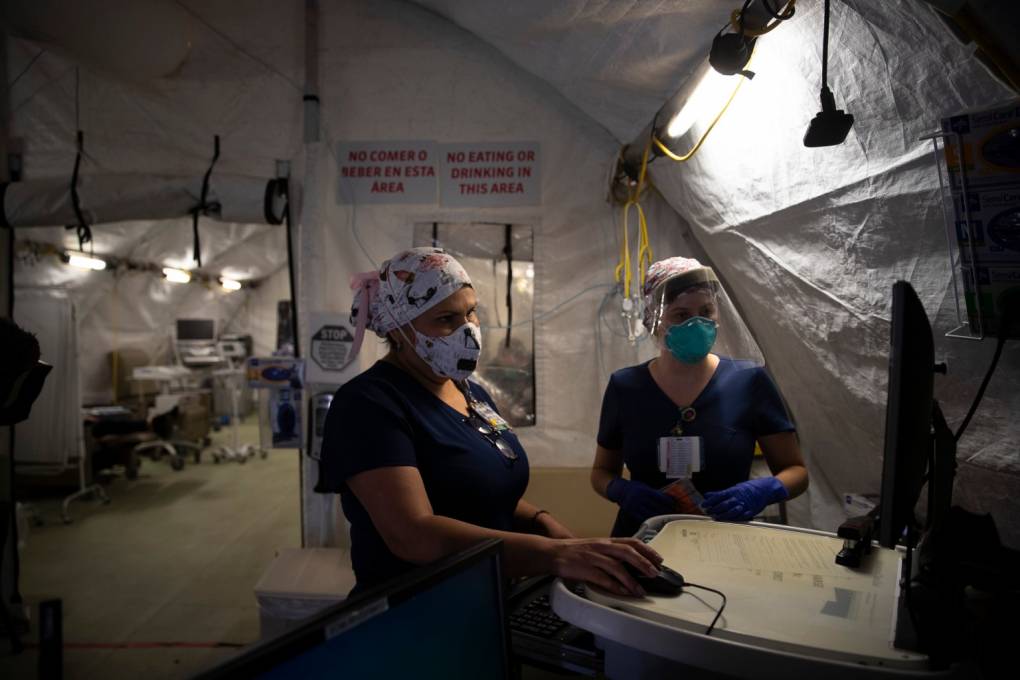
"caption": "Nurses Karla Salazar, right, and Marisol Perez work in a tent set up to help treat COVID-19 patients at El Centro Regional Medical Center on July 21, 2020. Hit hard by COVID-19, Imperial County now has a vaccination rate as high as that of San Francisco.",
"description": "Nurses Karla Salazar, right, and Marisol Perez work in a tent set up to help treat COVID-19 patients at El Centro Regional Medical Center in El Centro on July 21, 2020.",
"title": "AP_ImperialCOVID_072120_01",
"credit": "Jae C. Hong/AP Photo",
"status": "inherit",
"altTag": "Two nurses wearing scrubs and facemasks look at a screen in a dark tent.",
"isLoading": false,
"fetchFailed": false
},
"news_11885536": {
"type": "attachments",
"id": "news_11885536",
"meta": {
"index": "attachments_1716263798",
"site": "news",
"id": "11885536",
"found": true
},
"parent": 11885531,
"imgSizes": {
"twentyfourteen-full-width": {
"file": "https://ww2.kqed.org/app/uploads/sites/10/2021/08/RS49573_007_PortofOakland_Vaccination_05272021-qut-1038x576.jpg",
"width": 1038,
"mimeType": "image/jpeg",
"height": 576
},
"thumbnail": {
"file": "https://ww2.kqed.org/app/uploads/sites/10/2021/08/RS49573_007_PortofOakland_Vaccination_05272021-qut-160x107.jpg",
"width": 160,
"mimeType": "image/jpeg",
"height": 107
},
"post-thumbnail": {
"file": "https://ww2.kqed.org/app/uploads/sites/10/2021/08/RS49573_007_PortofOakland_Vaccination_05272021-qut-672x372.jpg",
"width": 672,
"mimeType": "image/jpeg",
"height": 372
},
"kqedFullSize": {
"file": "https://ww2.kqed.org/app/uploads/sites/10/2021/08/RS49573_007_PortofOakland_Vaccination_05272021-qut.jpg",
"width": 1920,
"height": 1280
},
"large": {
"file": "https://ww2.kqed.org/app/uploads/sites/10/2021/08/RS49573_007_PortofOakland_Vaccination_05272021-qut-1020x680.jpg",
"width": 1020,
"mimeType": "image/jpeg",
"height": 680
},
"1536x1536": {
"file": "https://ww2.kqed.org/app/uploads/sites/10/2021/08/RS49573_007_PortofOakland_Vaccination_05272021-qut-1536x1024.jpg",
"width": 1536,
"mimeType": "image/jpeg",
"height": 1024
},
"medium": {
"file": "https://ww2.kqed.org/app/uploads/sites/10/2021/08/RS49573_007_PortofOakland_Vaccination_05272021-qut-800x533.jpg",
"width": 800,
"mimeType": "image/jpeg",
"height": 533
}
},
"publishDate": 1629307098,
"modified": 1632444586,
"caption": "Medical assistant Martha Velasquez from the Alameda Health System prepares a dose of a COVID-19 vaccine.",
"description": "Medical assistant Martha Velasquez from the Alameda Health System prepares a dose of a COVID-19 vaccine.",
"title": "RS49573_007_PortofOakland_Vaccination_05272021-qut",
"credit": "Beth LaBerge/KQED",
"status": "inherit",
"altTag": "A woman wearing purple gloves flicks a needle inserted upside-down into a vial.",
"isLoading": false,
"fetchFailed": false
},
"news_11885163": {
"type": "attachments",
"id": "news_11885163",
"meta": {
"index": "attachments_1716263798",
"site": "news",
"id": "11885163",
"found": true
},
"parent": 11885160,
"imgSizes": {
"twentyfourteen-full-width": {
"file": "https://ww2.kqed.org/app/uploads/sites/10/2021/08/low-rider-vax-1038x576.jpg",
"width": 1038,
"mimeType": "image/jpeg",
"height": 576
},
"thumbnail": {
"file": "https://ww2.kqed.org/app/uploads/sites/10/2021/08/low-rider-vax-160x90.jpg",
"width": 160,
"mimeType": "image/jpeg",
"height": 90
},
"post-thumbnail": {
"file": "https://ww2.kqed.org/app/uploads/sites/10/2021/08/low-rider-vax-672x372.jpg",
"width": 672,
"mimeType": "image/jpeg",
"height": 372
},
"kqedFullSize": {
"file": "https://ww2.kqed.org/app/uploads/sites/10/2021/08/low-rider-vax-scaled.jpg",
"width": 2560,
"height": 1440
},
"2048x2048": {
"file": "https://ww2.kqed.org/app/uploads/sites/10/2021/08/low-rider-vax-2048x1152.jpg",
"width": 2048,
"mimeType": "image/jpeg",
"height": 1152
},
"large": {
"file": "https://ww2.kqed.org/app/uploads/sites/10/2021/08/low-rider-vax-1020x574.jpg",
"width": 1020,
"mimeType": "image/jpeg",
"height": 574
},
"1536x1536": {
"file": "https://ww2.kqed.org/app/uploads/sites/10/2021/08/low-rider-vax-1536x864.jpg",
"width": 1536,
"mimeType": "image/jpeg",
"height": 864
},
"full-width": {
"file": "https://ww2.kqed.org/app/uploads/sites/10/2021/08/low-rider-vax-1920x1080.jpg",
"width": 1920,
"mimeType": "image/jpeg",
"height": 1080
},
"medium": {
"file": "https://ww2.kqed.org/app/uploads/sites/10/2021/08/low-rider-vax-800x450.jpg",
"width": 800,
"mimeType": "image/jpeg",
"height": 450
}
},
"publishDate": 1629047387,
"modified": 1629153014,
"caption": "Carlos Huaman poses for a photo with his 1961 Chevy Impala at the King of the Streets' 40th anniversary lowrider show and hopping contest at the Cow Palace in Daly City on August 14, 2021. ‘It’s candy Aztec gold paint,’ he said. ",
"description": "Carlos Huaman poses for a photo with is 1961 Chevy Impala at the King of the Streets 40th Anniversary lowrider show and hopping contest at the Cow Palace in Daly City on August 14, 2021. ‘It’s candy Aztec gold paint,’ he said. ",
"title": "low-rider-vax",
"credit": "Sara Hosseini/KQED",
"status": "inherit",
"altTag": "man with yellow lowrider car",
"isLoading": false,
"fetchFailed": false
},
"news_11885108": {
"type": "attachments",
"id": "news_11885108",
"meta": {
"index": "attachments_1716263798",
"site": "news",
"id": "11885108",
"found": true
},
"parent": 11885106,
"imgSizes": {
"twentyfourteen-full-width": {
"file": "https://ww2.kqed.org/app/uploads/sites/10/2021/08/GettyImages-1233376928-1-1038x576.jpg",
"width": 1038,
"mimeType": "image/jpeg",
"height": 576
},
"thumbnail": {
"file": "https://ww2.kqed.org/app/uploads/sites/10/2021/08/GettyImages-1233376928-1-160x107.jpg",
"width": 160,
"mimeType": "image/jpeg",
"height": 107
},
"post-thumbnail": {
"file": "https://ww2.kqed.org/app/uploads/sites/10/2021/08/GettyImages-1233376928-1-672x372.jpg",
"width": 672,
"mimeType": "image/jpeg",
"height": 372
},
"kqedFullSize": {
"file": "https://ww2.kqed.org/app/uploads/sites/10/2021/08/GettyImages-1233376928-1.jpg",
"width": 1920,
"height": 1280
},
"large": {
"file": "https://ww2.kqed.org/app/uploads/sites/10/2021/08/GettyImages-1233376928-1-1020x680.jpg",
"width": 1020,
"mimeType": "image/jpeg",
"height": 680
},
"1536x1536": {
"file": "https://ww2.kqed.org/app/uploads/sites/10/2021/08/GettyImages-1233376928-1-1536x1024.jpg",
"width": 1536,
"mimeType": "image/jpeg",
"height": 1024
},
"medium": {
"file": "https://ww2.kqed.org/app/uploads/sites/10/2021/08/GettyImages-1233376928-1-800x533.jpg",
"width": 800,
"mimeType": "image/jpeg",
"height": 533
}
},
"publishDate": 1628897204,
"modified": 1629144621,
"caption": "President Joe Biden (L) listens as Pfizer CEO Albert Bourla makes a statement in Cornwall, England, on June 10, 2021, ahead of the three-day G7 summit.",
"description": "US President Joe Biden (L) listens as Pfizer CEO Albert Bourla makes a statements in St Ives, Cornwall on June 10, 2021, ahead of the three-day G7 summit being held from 11-13 June. ",
"title": "GettyImages-1233376928 (1)",
"credit": "Brendan Smialowski/AFP via Getty Images",
"status": "inherit",
"altTag": "US President Joe Biden (L) listens as Pfizer CEO Albert Bourla makes a statements in St Ives, Cornwall on June 10, 2021, ahead of the three-day G7 summit being held from 11-13 June.",
"isLoading": false,
"fetchFailed": false
},
"news_11885070": {
"type": "attachments",
"id": "news_11885070",
"meta": {
"index": "attachments_1716263798",
"site": "news",
"id": "11885070",
"found": true
},
"parent": 11885061,
"imgSizes": {
"twentyfourteen-full-width": {
"file": "https://ww2.kqed.org/app/uploads/sites/10/2021/08/vaccinecard_081321_final-1038x576.png",
"width": 1038,
"mimeType": "image/png",
"height": 576
},
"thumbnail": {
"file": "https://ww2.kqed.org/app/uploads/sites/10/2021/08/vaccinecard_081321_final-160x108.png",
"width": 160,
"mimeType": "image/png",
"height": 108
},
"post-thumbnail": {
"file": "https://ww2.kqed.org/app/uploads/sites/10/2021/08/vaccinecard_081321_final-672x372.png",
"width": 672,
"mimeType": "image/png",
"height": 372
},
"kqedFullSize": {
"file": "https://ww2.kqed.org/app/uploads/sites/10/2021/08/vaccinecard_081321_final.png",
"width": 1920,
"height": 1292
},
"large": {
"file": "https://ww2.kqed.org/app/uploads/sites/10/2021/08/vaccinecard_081321_final-1020x686.png",
"width": 1020,
"mimeType": "image/png",
"height": 686
},
"1536x1536": {
"file": "https://ww2.kqed.org/app/uploads/sites/10/2021/08/vaccinecard_081321_final-1536x1034.png",
"width": 1536,
"mimeType": "image/png",
"height": 1034
},
"medium": {
"file": "https://ww2.kqed.org/app/uploads/sites/10/2021/08/vaccinecard_081321_final-800x538.png",
"width": 800,
"mimeType": "image/png",
"height": 538
}
},
"publishDate": 1628893581,
"modified": 1628893656,
"caption": null,
"description": null,
"title": "vaccinecard_081321_final",
"credit": null,
"status": "inherit",
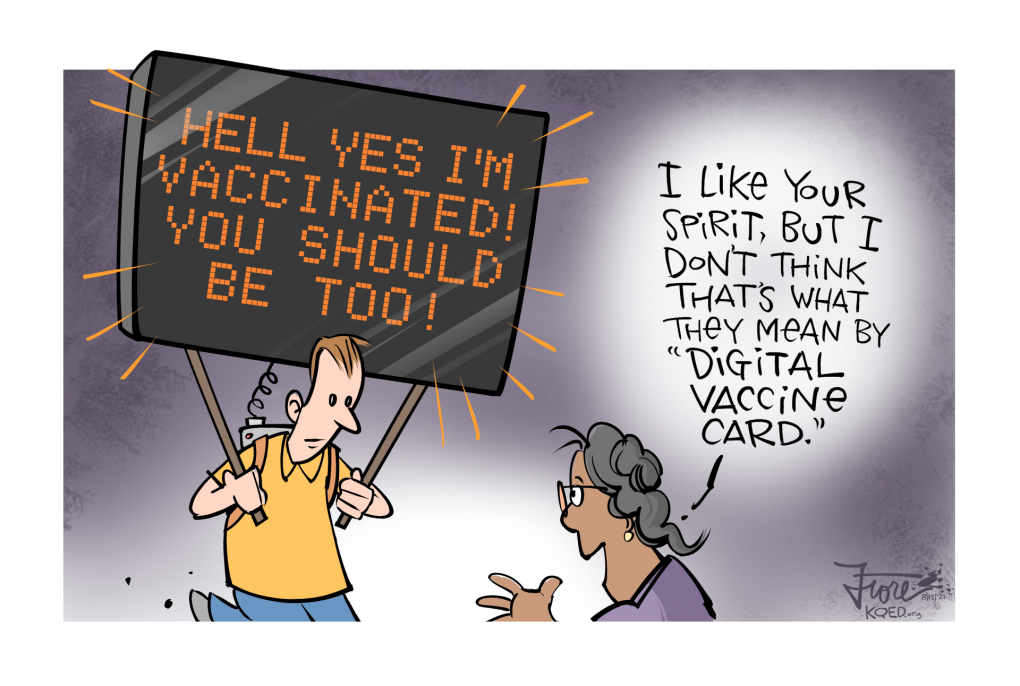
"altTag": "A Mark Fiore cartoon that shows a character with a huge digital sign over his head that reads \"hell yes I'm vaccinated! You should be too!\" A woman to the right says, \"I like your spirit, but don't think that's what they mean by \"digital vaccine card.\"",
"isLoading": false,
"fetchFailed": false
},
"news_11884839": {
"type": "attachments",
"id": "news_11884839",
"meta": {
"index": "attachments_1716263798",
"site": "news",
"id": "11884839",
"found": true
},
"parent": 11884830,
"imgSizes": {
"twentyfourteen-full-width": {
"file": "https://ww2.kqed.org/app/uploads/sites/10/2021/08/noshoes_081221_final-1038x576.png",
"width": 1038,
"mimeType": "image/png",
"height": 576
},
"thumbnail": {
"file": "https://ww2.kqed.org/app/uploads/sites/10/2021/08/noshoes_081221_final-160x99.png",
"width": 160,
"mimeType": "image/png",
"height": 99
},
"post-thumbnail": {
"file": "https://ww2.kqed.org/app/uploads/sites/10/2021/08/noshoes_081221_final-672x372.png",
"width": 672,
"mimeType": "image/png",
"height": 372
},
"kqedFullSize": {
"file": "https://ww2.kqed.org/app/uploads/sites/10/2021/08/noshoes_081221_final.png",
"width": 1920,
"height": 1183
},
"large": {
"file": "https://ww2.kqed.org/app/uploads/sites/10/2021/08/noshoes_081221_final-1020x628.png",
"width": 1020,
"mimeType": "image/png",
"height": 628
},
"1536x1536": {
"file": "https://ww2.kqed.org/app/uploads/sites/10/2021/08/noshoes_081221_final-1536x946.png",
"width": 1536,
"mimeType": "image/png",
"height": 946
},
"medium": {
"file": "https://ww2.kqed.org/app/uploads/sites/10/2021/08/noshoes_081221_final-800x493.png",
"width": 800,
"mimeType": "image/png",
"height": 493
}
},
"publishDate": 1628802803,
"modified": 1628802877,
"caption": null,
"description": null,
"title": "noshoes_081221_final",
"credit": null,
"status": "inherit",
"altTag": "A Mark Fiore cartoon that looks like a sign you'd see at a restaurant or bar that reads, \"no shoes, no shirt, no shot, no service.\" The generic sign-person wears a mask, has a band-aid on their arm and is giving the thumbs up sign.",
"isLoading": false,
"fetchFailed": false
},
"news_11884803": {
"type": "attachments",
"id": "news_11884803",
"meta": {
"index": "attachments_1716263798",
"site": "news",
"id": "11884803",
"found": true
},
"parent": 11884778,
"imgSizes": {
"twentyfourteen-full-width": {
"file": "https://ww2.kqed.org/app/uploads/sites/10/2021/08/RS50616_GettyImages-1331386269-qut-1038x576.jpg",
"width": 1038,
"mimeType": "image/jpeg",
"height": 576
},
"thumbnail": {
"file": "https://ww2.kqed.org/app/uploads/sites/10/2021/08/RS50616_GettyImages-1331386269-qut-160x107.jpg",
"width": 160,
"mimeType": "image/jpeg",
"height": 107
},
"post-thumbnail": {
"file": "https://ww2.kqed.org/app/uploads/sites/10/2021/08/RS50616_GettyImages-1331386269-qut-672x372.jpg",
"width": 672,
"mimeType": "image/jpeg",
"height": 372
},
"kqedFullSize": {
"file": "https://ww2.kqed.org/app/uploads/sites/10/2021/08/RS50616_GettyImages-1331386269-qut.jpg",
"width": 1920,
"height": 1280
},
"large": {
"file": "https://ww2.kqed.org/app/uploads/sites/10/2021/08/RS50616_GettyImages-1331386269-qut-1020x680.jpg",
"width": 1020,
"mimeType": "image/jpeg",
"height": 680
},
"1536x1536": {
"file": "https://ww2.kqed.org/app/uploads/sites/10/2021/08/RS50616_GettyImages-1331386269-qut-1536x1024.jpg",
"width": 1536,
"mimeType": "image/jpeg",
"height": 1024
},
"medium": {
"file": "https://ww2.kqed.org/app/uploads/sites/10/2021/08/RS50616_GettyImages-1331386269-qut-800x533.jpg",
"width": 800,
"mimeType": "image/jpeg",
"height": 533
}
},
"publishDate": 1628797621,
"modified": 1628816156,
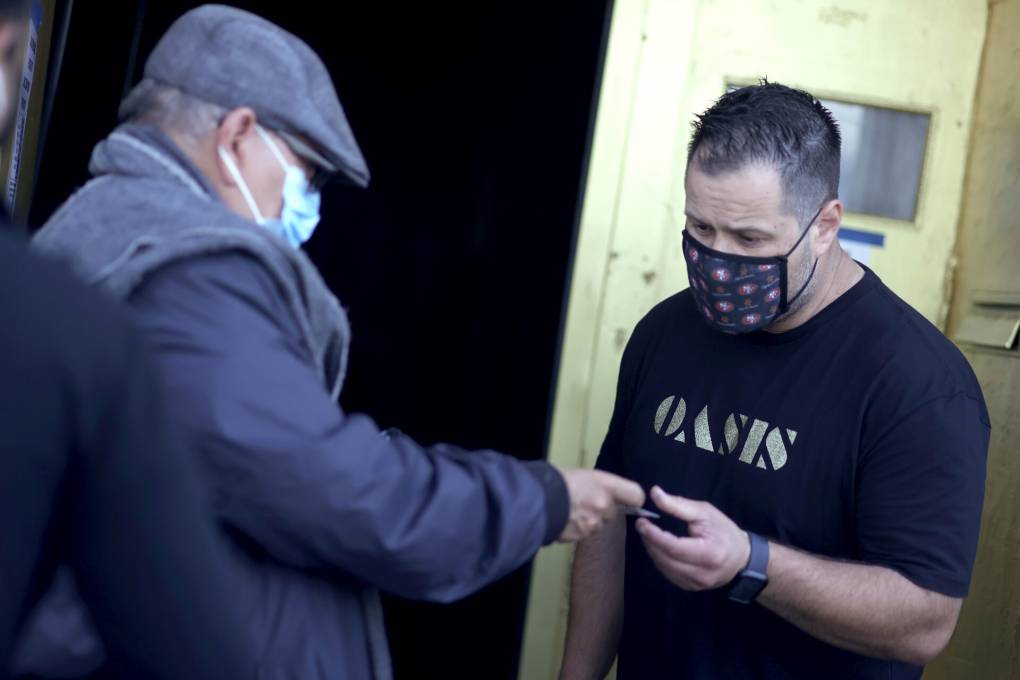
"caption": "A doorman at Oasis checks a customer's vaccination card before allowing him to enter on July 29, 2021, in San Francisco.",
"description": "A doorman at Oasis checks a customer's vaccination card before allowing him to enter on July 29, 2021 in San Francisco.",
"title": "San Francisco Bar Group Encourages Members To Require Proof Of Vaccine For Entry",
"credit": "Justin Sullivan/Getty Images",
"status": "inherit",
"altTag": "bar doorman checks patron's vaccine card",
"isLoading": false,
"fetchFailed": false
},
"news_11884623": {
"type": "attachments",
"id": "news_11884623",
"meta": {
"index": "attachments_1716263798",
"site": "news",
"id": "11884623",
"found": true
},
"parent": 11884622,
"imgSizes": {
"twentyfourteen-full-width": {
"file": "https://ww2.kqed.org/app/uploads/sites/10/2021/08/gettyimages-1232668997_custom-45aef38b9ac495d0a953edfbb404ba7f3849fa59-1038x576.jpg",
"width": 1038,
"mimeType": "image/jpeg",
"height": 576
},
"thumbnail": {
"file": "https://ww2.kqed.org/app/uploads/sites/10/2021/08/gettyimages-1232668997_custom-45aef38b9ac495d0a953edfbb404ba7f3849fa59-160x107.jpg",
"width": 160,
"mimeType": "image/jpeg",
"height": 107
},
"post-thumbnail": {
"file": "https://ww2.kqed.org/app/uploads/sites/10/2021/08/gettyimages-1232668997_custom-45aef38b9ac495d0a953edfbb404ba7f3849fa59-672x372.jpg",
"width": 672,
"mimeType": "image/jpeg",
"height": 372
},
"kqedFullSize": {
"file": "https://ww2.kqed.org/app/uploads/sites/10/2021/08/gettyimages-1232668997_custom-45aef38b9ac495d0a953edfbb404ba7f3849fa59-e1628708342617.jpg",
"width": 1920,
"height": 1279
},
"large": {
"file": "https://ww2.kqed.org/app/uploads/sites/10/2021/08/gettyimages-1232668997_custom-45aef38b9ac495d0a953edfbb404ba7f3849fa59-1020x679.jpg",
"width": 1020,
"mimeType": "image/jpeg",
"height": 679
},
"1536x1536": {
"file": "https://ww2.kqed.org/app/uploads/sites/10/2021/08/gettyimages-1232668997_custom-45aef38b9ac495d0a953edfbb404ba7f3849fa59-1536x1023.jpg",
"width": 1536,
"mimeType": "image/jpeg",
"height": 1023
},
"full-width": {
"file": "https://ww2.kqed.org/app/uploads/sites/10/2021/08/gettyimages-1232668997_custom-45aef38b9ac495d0a953edfbb404ba7f3849fa59-1920x1279.jpg",
"width": 1920,
"mimeType": "image/jpeg",
"height": 1279
},
"medium": {
"file": "https://ww2.kqed.org/app/uploads/sites/10/2021/08/gettyimages-1232668997_custom-45aef38b9ac495d0a953edfbb404ba7f3849fa59-800x533.jpg",
"width": 800,
"mimeType": "image/jpeg",
"height": 533
}
},
"publishDate": 1628705931,
"modified": 1629762359,
"caption": "Kindergartner Allyson Zavala joined with other students and school superintendent Austin Buetner for a class selfie in April inside teacher Alicia Pizzi's classroom at Maurice Sendak Elementary School in North Hollywood.",
"description": "Kindergartner Allyson Zavala joined with other students and school officials for a class selfie in April 2021, inside teacher Alicia Pizzi's classroom at Maurice Sendak Elementary School in North Hollywood.",
"title": "Kindergartner Allyson Zavala joined with other students and school superintendent Austin Buetner for a class selfie in April inside teacher Alicia Pizzi's classroom at Maurice Sendak Elementary School in North Hollywood, Calif.",
"credit": "Robert Gauthier/Los Angeles Times via Getty Images",
"status": "inherit",
"altTag": "masked kindergartners in masks at desks raising hands",
"isLoading": false,
"fetchFailed": false
},
"news_11879261": {
"type": "attachments",
"id": "news_11879261",
"meta": {
"index": "attachments_1716263798",
"site": "news",
"id": "11879261",
"found": true
},
"parent": 11879188,
"imgSizes": {
"twentyfourteen-full-width": {
"file": "https://ww2.kqed.org/app/uploads/sites/10/2021/06/RS50134_GettyImages-1233050133-qut-1038x576.jpg",
"width": 1038,
"mimeType": "image/jpeg",
"height": 576
},
"thumbnail": {
"file": "https://ww2.kqed.org/app/uploads/sites/10/2021/06/RS50134_GettyImages-1233050133-qut-160x107.jpg",
"width": 160,
"mimeType": "image/jpeg",
"height": 107
},
"post-thumbnail": {
"file": "https://ww2.kqed.org/app/uploads/sites/10/2021/06/RS50134_GettyImages-1233050133-qut-672x372.jpg",
"width": 672,
"mimeType": "image/jpeg",
"height": 372
},
"kqedFullSize": {
"file": "https://ww2.kqed.org/app/uploads/sites/10/2021/06/RS50134_GettyImages-1233050133-qut.jpg",
"width": 1920,
"height": 1280
},
"large": {
"file": "https://ww2.kqed.org/app/uploads/sites/10/2021/06/RS50134_GettyImages-1233050133-qut-1020x680.jpg",
"width": 1020,
"mimeType": "image/jpeg",
"height": 680
},
"1536x1536": {
"file": "https://ww2.kqed.org/app/uploads/sites/10/2021/06/RS50134_GettyImages-1233050133-qut-1536x1024.jpg",
"width": 1536,
"mimeType": "image/jpeg",
"height": 1024
},
"medium": {
"file": "https://ww2.kqed.org/app/uploads/sites/10/2021/06/RS50134_GettyImages-1233050133-qut-800x533.jpg",
"width": 800,
"mimeType": "image/jpeg",
"height": 533
}
},
"publishDate": 1624575525,
"modified": 1624578625,
"caption": "A bouncer turns away people without their vaccination cards outside a club in Los Angeles on May 21, 2021.",
"description": "A bouncer turns away people without their vaccination cards outside a club in Los Angeles on May 21, 2021.",
"title": "US-HEALTH-VIRUS-ENTERTAINMENT-BAR",
"credit": "Patrick T. Fallon/AFP via Getty Images",
"status": "inherit",
"altTag": null,
"isLoading": false,
"fetchFailed": false
},
"news_11884612": {
"type": "attachments",
"id": "news_11884612",
"meta": {
"index": "attachments_1716263798",
"site": "news",
"id": "11884612",
"found": true
},
"parent": 11884606,
"imgSizes": {
"twentyfourteen-full-width": {
"file": "https://ww2.kqed.org/app/uploads/sites/10/2021/08/GettyImages-1307454937-1-1038x576.jpg",
"width": 1038,
"mimeType": "image/jpeg",
"height": 576
},
"thumbnail": {
"file": "https://ww2.kqed.org/app/uploads/sites/10/2021/08/GettyImages-1307454937-1-160x108.jpg",
"width": 160,
"mimeType": "image/jpeg",
"height": 108
},
"post-thumbnail": {
"file": "https://ww2.kqed.org/app/uploads/sites/10/2021/08/GettyImages-1307454937-1-672x372.jpg",
"width": 672,
"mimeType": "image/jpeg",
"height": 372
},
"kqedFullSize": {
"file": "https://ww2.kqed.org/app/uploads/sites/10/2021/08/GettyImages-1307454937-1.jpg",
"width": 1920,
"height": 1296
},
"large": {
"file": "https://ww2.kqed.org/app/uploads/sites/10/2021/08/GettyImages-1307454937-1-1020x689.jpg",
"width": 1020,
"mimeType": "image/jpeg",
"height": 689
},
"1536x1536": {
"file": "https://ww2.kqed.org/app/uploads/sites/10/2021/08/GettyImages-1307454937-1-1536x1037.jpg",
"width": 1536,
"mimeType": "image/jpeg",
"height": 1037
},
"medium": {
"file": "https://ww2.kqed.org/app/uploads/sites/10/2021/08/GettyImages-1307454937-1-800x540.jpg",
"width": 800,
"mimeType": "image/jpeg",
"height": 540
}
},
"publishDate": 1628704361,
"modified": 1633123943,
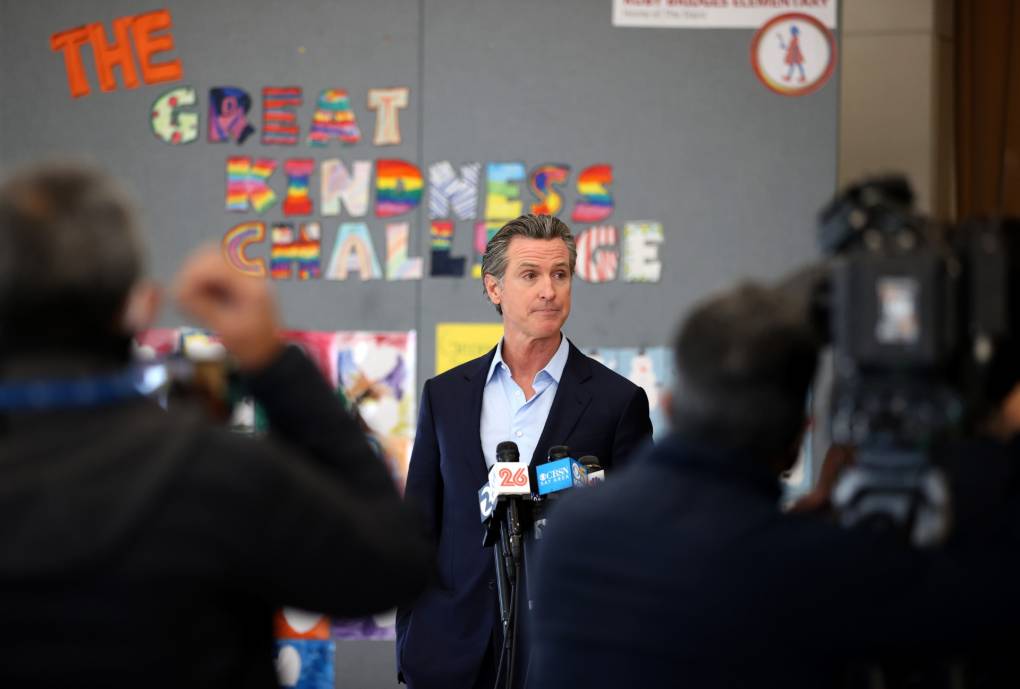
"caption": "Gov. Gavin Newsom speaks during a news conference after touring an elementary school on March 16, 2021, in Alameda. ",
"description": "Gov. Gavin Newsom speaks during a news conference after touring an elementary school on March 16, 2021, in Alameda. ",
"title": "GettyImages-1307454937 (1)",
"credit": "Justin Sullivan/Getty Images",
"status": "inherit",
"altTag": "Gavin Newsom, without a tie, speaks into a bank of microphones in front of a board with colorful letters that spell \"The Great Kindness Challenge.\"",
"isLoading": false,
"fetchFailed": false
},
"news_11884570": {
"type": "attachments",
"id": "news_11884570",
"meta": {
"index": "attachments_1716263798",
"site": "news",
"id": "11884570",
"found": true
},
"parent": 11884547,
"imgSizes": {
"twentyfourteen-full-width": {
"file": "https://ww2.kqed.org/app/uploads/sites/10/2021/08/RS48733_012_SanFrancisco_GordonLauElementary_04212021-qut-1038x576.jpg",
"width": 1038,
"mimeType": "image/jpeg",
"height": 576
},
"thumbnail": {
"file": "https://ww2.kqed.org/app/uploads/sites/10/2021/08/RS48733_012_SanFrancisco_GordonLauElementary_04212021-qut-160x107.jpg",
"width": 160,
"mimeType": "image/jpeg",
"height": 107
},
"post-thumbnail": {
"file": "https://ww2.kqed.org/app/uploads/sites/10/2021/08/RS48733_012_SanFrancisco_GordonLauElementary_04212021-qut-672x372.jpg",
"width": 672,
"mimeType": "image/jpeg",
"height": 372
},
"kqedFullSize": {
"file": "https://ww2.kqed.org/app/uploads/sites/10/2021/08/RS48733_012_SanFrancisco_GordonLauElementary_04212021-qut.jpg",
"width": 1920,
"height": 1280
},
"large": {
"file": "https://ww2.kqed.org/app/uploads/sites/10/2021/08/RS48733_012_SanFrancisco_GordonLauElementary_04212021-qut-1020x680.jpg",
"width": 1020,
"mimeType": "image/jpeg",
"height": 680
},
"1536x1536": {
"file": "https://ww2.kqed.org/app/uploads/sites/10/2021/08/RS48733_012_SanFrancisco_GordonLauElementary_04212021-qut-1536x1024.jpg",
"width": 1536,
"mimeType": "image/jpeg",
"height": 1024
},
"medium": {
"file": "https://ww2.kqed.org/app/uploads/sites/10/2021/08/RS48733_012_SanFrancisco_GordonLauElementary_04212021-qut-800x533.jpg",
"width": 800,
"mimeType": "image/jpeg",
"height": 533
}
},
"publishDate": 1628639308,
"modified": 1628704028,
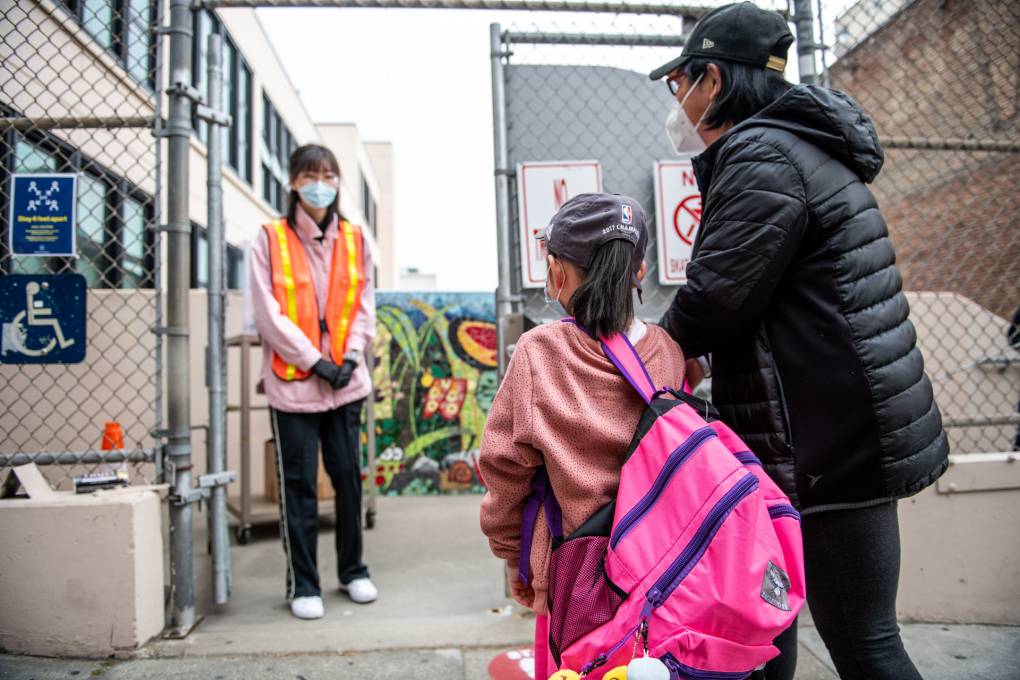
"caption": "A student and her parent check in with staff at Gordon Lau Elementary School in San Francisco on April 21, 2021. SFUSD will now require all staff to either get vaccinated against COVID or undergo weekly testing.",
"description": "A student and her parent check in with staff at Gordon Lau Elementary School in San Francisco on April 21, 2021. SFUSD will now require all of its staff to either get vaccinated against COVID or undergo weekly testing.",
"title": "RS48733_012_SanFrancisco_GordonLauElementary_04212021-qut",
"credit": "Beth LaBerge/KQED",
"status": "inherit",
"altTag": null,
"isLoading": false,
"fetchFailed": false
}
},
"audioPlayerReducer": {
"postId": "stream_live",
"isPaused": true,
"isPlaying": false,
"pfsActive": false,
"pledgeModalIsOpen": true,
"playerDrawerIsOpen": false,
"liveAudioPlayStartedAt": 0,
"liveAudioPlayContext": ""
},
"authorsReducer": {
"byline_news_11885623": {
"type": "authors",
"id": "byline_news_11885623",
"meta": {
"override": true
},
"slug": "byline_news_11885623",
"name": "\u003ca href=\"https://calmatters.org/author/anaibarra/\">Ana B. Ibarra\u003c/a>",
"isLoading": false
},
"byline_news_11885106": {
"type": "authors",
"id": "byline_news_11885106",
"meta": {
"override": true
},
"slug": "byline_news_11885106",
"name": "Sarah Jane Tribble\u003cbr>Kaiser Health News",
"isLoading": false
},
"byline_news_11884622": {
"type": "authors",
"id": "byline_news_11884622",
"meta": {
"override": true
},
"slug": "byline_news_11884622",
"name": "\u003ca href=\"https://www.npr.org/people/729920828/pien-huang\">Pien Huang\u003c/a>",
"isLoading": false
},
"byline_news_11884606": {
"type": "authors",
"id": "byline_news_11884606",
"meta": {
"override": true
},
"slug": "byline_news_11884606",
"name": "\u003ca href=\"https://calmatters.org/author/joe-hong/\">Joe Hong\u003c/a>, CalMatters \u003cbr> \u003ca href=\"https://www.kqed.org/author/jrodriguez\">Joe Fitzgerald Rodriguez\u003c/a>, KQED",
"isLoading": false
},
"kqednewsstaffandwires": {
"type": "authors",
"id": "237",
"meta": {
"index": "authors_1716337520",
"id": "237",
"found": true
},
"name": "KQED News Staff and Wires",
"firstName": "KQED News Staff and Wires",
"lastName": null,
"slug": "kqednewsstaffandwires",
"email": "onlinenewsstaff@kqed.org",
"display_author_email": false,
"staff_mastheads": [],
"title": null,
"bio": null,
"avatar": "https://secure.gravatar.com/avatar/72295af8ebbfbd19a4948f5271285664?s=600&d=blank&r=g",
"twitter": null,
"facebook": null,
"instagram": null,
"linkedin": null,
"sites": [
{
"site": "arts",
"roles": [
"contributor"
]
},
{
"site": "news",
"roles": [
"contributor"
]
},
{
"site": "lowdown",
"roles": [
"author"
]
},
{
"site": "stateofhealth",
"roles": [
"contributor"
]
},
{
"site": "food",
"roles": [
"author"
]
}
],
"headData": {
"title": "KQED News Staff and Wires | KQED",
"description": null,
"ogImgSrc": "https://secure.gravatar.com/avatar/72295af8ebbfbd19a4948f5271285664?s=600&d=blank&r=g",
"twImgSrc": "https://secure.gravatar.com/avatar/72295af8ebbfbd19a4948f5271285664?s=600&d=blank&r=g"
},
"isLoading": false,
"link": "/author/kqednewsstaffandwires"
},
"shossaini": {
"type": "authors",
"id": "3214",
"meta": {
"index": "authors_1716337520",
"id": "3214",
"found": true
},
"name": "Sara Hossaini",
"firstName": "Sara",
"lastName": "Hossaini",
"slug": "shossaini",
"email": "shossaini@kqed.org",
"display_author_email": true,
"staff_mastheads": [
"news"
],
"title": "KQED Reporter",
"bio": "Sara Hossaini came to general assignment reporting at KQED in 2013 after two winters reporting at Wyoming Public Radio. She holds a bachelor's degree in broadcast journalism from the University of Nebraska-Lincoln. Her radio romance began after a bitter breakup with documentary film (Ok, maybe it's still complicated). Her first simultaneous jobs in San Francisco were as Associate Producer on a PBS film series through the Center for Asian American Media and as a butler. She likes to trot, plot and make things with her hands.",
"avatar": "https://secure.gravatar.com/avatar/060e9f56b9554e17942e89f413242774?s=600&d=blank&r=g",
"twitter": "mshossaini",
"facebook": null,
"instagram": null,
"linkedin": null,
"sites": [
{
"site": "news",
"roles": [
"author"
]
},
{
"site": "stateofhealth",
"roles": [
"author"
]
}
],
"headData": {
"title": "Sara Hossaini | KQED",
"description": "KQED Reporter",
"ogImgSrc": "https://secure.gravatar.com/avatar/060e9f56b9554e17942e89f413242774?s=600&d=blank&r=g",
"twImgSrc": "https://secure.gravatar.com/avatar/060e9f56b9554e17942e89f413242774?s=600&d=blank&r=g"
},
"isLoading": false,
"link": "/author/shossaini"
},
"markfiore": {
"type": "authors",
"id": "3236",
"meta": {
"index": "authors_1716337520",
"id": "3236",
"found": true
},
"name": "Mark Fiore",
"firstName": "Mark",
"lastName": "Fiore",
"slug": "markfiore",
"email": "mark@markfiore.com",
"display_author_email": false,
"staff_mastheads": [
"news"
],
"title": "KQED News Cartoonist",
"bio": "\u003ca href=\"http://www.MarkFiore.com\">MarkFiore.com\u003c/a> | \u003ca href=\"https://twitter.com/markfiore\">Follow on Twitter\u003c/a> | \u003ca href=\"https://www.facebook.com/pages/Mark-Fiore-Animated-Political-Cartoons/94451707396?ref=bookmarks\">Facebook\u003c/a> | \u003ca href=\"mailto:mark@markfiore.com\">email\u003c/a>\r\n\r\nPulitzer Prize-winner, Mark Fiore, who the Wall Street Journal has called “the undisputed guru of the form,” creates animated political cartoons in San Francisco, where his work has been featured regularly on the San Francisco Chronicle’s web site, SFGate.com. His work has appeared on Newsweek.com, Slate.com, CBSNews.com, MotherJones.com, DailyKos.com and NPR’s web site. Fiore’s political animation has appeared on CNN, Frontline, Bill Moyers Journal, Salon.com and cable and broadcast outlets across the globe.\r\n\r\nBeginning his professional life by drawing traditional political cartoons for newspapers, Fiore’s work appeared in publications ranging from the Washington Post to the Los Angeles Times. In the late 1990s, he began to experiment with animating political cartoons and, after a short stint at the San Jose Mercury News as their staff cartoonist, Fiore devoted all his energies to animation.\r\nGrowing up in California, Fiore also spent a good portion of his life in the backwoods of Idaho. It was this combination that shaped him politically. Mark majored in political science at Colorado College, where, in a perfect send-off for a cartoonist, he received his diploma in 1991 as commencement speaker Dick Cheney smiled approvingly.\r\nMark Fiore was awarded the Pulitzer Prize for political cartooning in 2010, a Robert F. Kennedy Journalism Award in 2004 and has twice received an Online Journalism Award for commentary from the Online News Association (2002, 2008). Fiore has received two awards for his work in new media from the National Cartoonists Society (2001, 2002), and in 2006 received The James Madison Freedom of Information Award from The Society of Professional Journalists.",
"avatar": "https://secure.gravatar.com/avatar/fc4e2a612b15b67bad0c6f0e1db4ca9b?s=600&d=blank&r=g",
"twitter": "MarkFiore",
"facebook": null,
"instagram": "https://www.instagram.com/markfiore/?hl=en",
"linkedin": null,
"sites": [
{
"site": "arts",
"roles": [
"contributor"
]
},
{
"site": "news",
"roles": [
"editor"
]
},
{
"site": "futureofyou",
"roles": [
"editor"
]
},
{
"site": "science",
"roles": [
"editor"
]
}
],
"headData": {
"title": "Mark Fiore | KQED",
"description": "KQED News Cartoonist",
"ogImgSrc": "https://secure.gravatar.com/avatar/fc4e2a612b15b67bad0c6f0e1db4ca9b?s=600&d=blank&r=g",
"twImgSrc": "https://secure.gravatar.com/avatar/fc4e2a612b15b67bad0c6f0e1db4ca9b?s=600&d=blank&r=g"
},
"isLoading": false,
"link": "/author/markfiore"
},
"carlysevern": {
"type": "authors",
"id": "3243",
"meta": {
"index": "authors_1716337520",
"id": "3243",
"found": true
},
"name": "Carly Severn",
"firstName": "Carly",
"lastName": "Severn",
"slug": "carlysevern",
"email": "csevern@kqed.org",
"display_author_email": false,
"staff_mastheads": [
"news"
],
"title": "Senior Editor, Audience News ",
"bio": "Carly is KQED's Senior Editor of Audience News on the Digital News team, and has reported for the California Report Magazine, Bay Curious and KQED Arts. She's formerly the host of \u003ca href=\"http://ww2.kqed.org/pop/category/the-cooler/\" rel=\"noopener noreferrer\">The Cooler\u003c/a> podcast.",
"avatar": "https://secure.gravatar.com/avatar/54037bf5c128fe678f0ef26cec97a93f2e7f220a22d7285703328f12c42c1b1d?s=600&d=blank&r=g",
"twitter": "teacupinthebay",
"bluesky": null,
"facebook": null,
"instagram": null,
"linkedin": null,
"sites": [
{
"site": "",
"roles": [
"editor"
]
},
{
"site": "arts",
"roles": [
"editor"
]
},
{
"site": "news",
"roles": [
"administrator"
]
},
{
"site": "pop",
"roles": [
"editor"
]
},
{
"site": "futureofyou",
"roles": [
"editor"
]
},
{
"site": "about",
"roles": [
"administrator"
]
},
{
"site": "mindshift",
"roles": [
"editor"
]
},
{
"site": "bayareabites",
"roles": [
"editor"
]
},
{
"site": "stateofhealth",
"roles": [
"editor"
]
},
{
"site": "science",
"roles": [
"editor"
]
},
{
"site": "food",
"roles": [
"contributor"
]
},
{
"site": "forum",
"roles": [
"editor"
]
},
{
"site": "perspectives",
"roles": [
"administrator"
]
},
{
"site": "liveblog",
"roles": [
"editor"
]
}
],
"headData": {
"title": "Carly Severn | KQED",
"description": "Senior Editor, Audience News ",
"ogImgSrc": "https://secure.gravatar.com/avatar/54037bf5c128fe678f0ef26cec97a93f2e7f220a22d7285703328f12c42c1b1d?s=600&d=blank&r=g",
"twImgSrc": "https://secure.gravatar.com/avatar/54037bf5c128fe678f0ef26cec97a93f2e7f220a22d7285703328f12c42c1b1d?s=600&d=blank&r=g"
},
"isLoading": false,
"link": "/author/carlysevern"
},
"jrodriguez": {
"type": "authors",
"id": "11690",
"meta": {
"index": "authors_1716337520",
"id": "11690",
"found": true
},
"name": "Joe Fitzgerald Rodriguez",
"firstName": "Joe",
"lastName": "Fitzgerald Rodriguez",
"slug": "jrodriguez",
"email": "jrodriguez@kqed.org",
"display_author_email": true,
"staff_mastheads": [
"news"
],
"title": "Reporter and Producer",
"bio": "Joe Fitzgerald Rodriguez is a reporter and digital producer for KQED covering politics. Joe most recently wrote for the \u003cem>San Francisco Examiner\u003c/em> as a political columnist covering The City. He was raised in San Francisco and has spent his reporting career in his beloved, foggy, city by the bay. Joe was 12-years-old when he conducted his first interview in journalism, grilling former San Francisco Mayor Willie Brown for the Marina Middle School newspaper, \u003cem>The Penguin Press, \u003c/em>and he continues to report on the San Francisco Bay Area to this day.",
"avatar": "https://secure.gravatar.com/avatar/2247beb0564c1e9c62228d5649d2edac?s=600&d=blank&r=g",
"twitter": "FitztheReporter",
"facebook": null,
"instagram": "https://www.instagram.com/fitzthereporter/",
"linkedin": null,
"sites": [
{
"site": "",
"roles": [
"editor"
]
},
{
"site": "arts",
"roles": [
"editor"
]
},
{
"site": "news",
"roles": [
"editor"
]
},
{
"site": "science",
"roles": [
"editor"
]
},
{
"site": "elections",
"roles": [
"editor"
]
},
{
"site": "liveblog",
"roles": [
"editor"
]
}
],
"headData": {
"title": "Joe Fitzgerald Rodriguez | KQED",
"description": "Reporter and Producer",
"ogImgSrc": "https://secure.gravatar.com/avatar/2247beb0564c1e9c62228d5649d2edac?s=600&d=blank&r=g",
"twImgSrc": "https://secure.gravatar.com/avatar/2247beb0564c1e9c62228d5649d2edac?s=600&d=blank&r=g"
},
"isLoading": false,
"link": "/author/jrodriguez"
},
"ninasparling": {
"type": "authors",
"id": "11710",
"meta": {
"index": "authors_1716337520",
"id": "11710",
"found": true
},
"name": "ninasparling",
"firstName": "Nina",
"lastName": "Sparling",
"slug": "ninasparling",
"email": "ninasparling@kqed.org",
"display_author_email": false,
"staff_mastheads": [],
"title": "KQED Contributor",
"bio": null,
"avatar": "https://secure.gravatar.com/avatar/7fe6530cd951c31c709822d4ff97d2a8659c7b377dcc1ac6203b70aa62197c31?s=600&d=blank&r=g",
"twitter": null,
"bluesky": null,
"facebook": null,
"instagram": null,
"linkedin": null,
"sites": [
{
"site": "news",
"roles": [
"author"
]
}
],
"headData": {
"title": "ninasparling | KQED",
"description": "KQED Contributor",
"ogImgSrc": "https://secure.gravatar.com/avatar/7fe6530cd951c31c709822d4ff97d2a8659c7b377dcc1ac6203b70aa62197c31?s=600&d=blank&r=g",
"twImgSrc": "https://secure.gravatar.com/avatar/7fe6530cd951c31c709822d4ff97d2a8659c7b377dcc1ac6203b70aa62197c31?s=600&d=blank&r=g"
},
"isLoading": false,
"link": "/author/ninasparling"
}
},
"pagesReducer": {
"news_tag_vaccines": {
"type": "terms",
"id": "news_981",
"meta": {
"index": "terms_1716263798",
"site": "news",
"id": "981",
"score": 8.668587
},
"name": "Vaccines",
"slug": "vaccines",
"taxonomy": "tag",
"description": null,
"featImg": null,
"headData": {
"title": "Vaccines | KQED News",
"description": null,
"ogTitle": null,
"ogDescription": null,
"ogImgId": null,
"twTitle": null,
"twDescription": null,
"twImgId": null
},
"ttid": 991,
"isLoading": false,
"title": "Vaccines",
"pageMeta": {
"site": "news",
"WpPageTemplate": "page-topic-editorial",
"currentPage": 8
},
"blocks": [
{
"blockName": "kqed/post-list",
"attrs": {
"layout": "cardArticle2",
"query": "posts/news?tag=vaccines",
"seeMore": false,
"paginated": true,
"page": 8
}
},
{
"blockName": "kqed/ad"
}
]
}
},
"pfsSessionReducer": {},
"postsReducer": {
"stream_live": {
"type": "live",
"id": "stream_live",
"audioUrl": "https://streams.kqed.org/kqedradio",
"title": "Live Stream",
"excerpt": "Live Stream information currently unavailable.",
"link": "/radio",
"featImg": "",
"label": {
"name": "KQED Live",
"link": "/"
}
},
"stream_kqedNewscast": {
"type": "posts",
"id": "stream_kqedNewscast",
"audioUrl": "https://www.kqed.org/.stream/anon/radio/RDnews/newscast.mp3?_=1",
"title": "KQED Newscast",
"featImg": "",
"label": {
"name": "88.5 FM",
"link": "/"
}
},
"news_11885724": {
"type": "posts",
"id": "news_11885724",
"meta": {
"index": "posts_1716263798",
"site": "news",
"id": "11885724",
"score": null,
"sort": [
1629413153000
]
},
"parent": 0,
"labelTerm": {
"site": "news",
"term": 18515
},
"blocks": [],
"publishDate": 1629413153,
"format": "aside",
"disqusTitle": "His Top Supporter",
"title": "His Top Supporter",
"headTitle": "Mark Fiore: Drawn to the Bay | KQED News",
"content": "\u003cp>\u003ca href=\"https://ww2.kqed.org/app/uploads/sites/10/2021/08/eldersupporter_081921_final.png\">\u003cimg class=\"alignnone size-full wp-image-11885740\" src=\"https://ww2.kqed.org/app/uploads/sites/10/2021/08/eldersupporter_081921_final.png\" alt='A Mark Fiore cartoon showing a large COVID character holding two signs. One says, \"Recall Newsom,\" and the other one says, \"Larry Elder for Governor!\" In the background, Larry Elder speaks to a crowd while wearing his trademark white bath robe.' width=\"1920\" height=\"1264\" srcset=\"https://ww2.kqed.org/app/uploads/sites/10/2021/08/eldersupporter_081921_final.png 1920w, https://ww2.kqed.org/app/uploads/sites/10/2021/08/eldersupporter_081921_final-800x527.png 800w, https://ww2.kqed.org/app/uploads/sites/10/2021/08/eldersupporter_081921_final-1020x672.png 1020w, https://ww2.kqed.org/app/uploads/sites/10/2021/08/eldersupporter_081921_final-160x105.png 160w, https://ww2.kqed.org/app/uploads/sites/10/2021/08/eldersupporter_081921_final-1536x1011.png 1536w\" sizes=\"(max-width: 1920px) 100vw, 1920px\">\u003c/a>\u003c/p>\n\u003cp>Larry Elder, the Republican front-runner in the race to replace Gov. Gavin Newsom in the Sept. 14 recall election, said one of his first acts as governor would be to \u003ca href=\"https://www.sfchronicle.com/politics/article/Newsom-recall-rival-Larry-Elder-denounces-16386041.php\">overturn mask mandates and vaccine requirements\u003c/a>.\u003c/p>\n\u003cp>Learn more about how your vote counts with \u003ca href=\"https://www.kqed.org/recall\">KQED's handy voter guide\u003c/a>.\u003c/p>\n\u003cp>The \u003ca href=\"https://www.kqed.org/news/11885054/recall-heats-up-as-newsom-challengers-rally-supporters\">polls are close\u003c/a>, with Newsom facing a tighter race than he had hoped.\u003c/p>\n\u003cp>At this point, there is a reasonable chance we could have a new governor who believes in phony \"freedom\" more than what scientists advise, opposes the minimum wage, says \u003ca href=\"https://abc7.com/larry-elder-california-recall-election-gavin-newsom-women-comments/10960411/\">ridiculous things\u003c/a> about women and reportedly \u003ca href=\"https://www.politico.com/news/2021/08/19/elders-ex-fiancee-said-he-brandished-a-gun-at-her-506286\">pulled out a gun\u003c/a> during an argument with his ex-fiancée.\u003c/p>\n\u003cp>Time to \u003ca href=\"https://www.kqed.org/recall\">study that voter guide\u003c/a>.\u003c/p>\n\u003cp>[ad fullwidth]\u003c/p>\n\u003cp>\u003c/p>\n",
"disqusIdentifier": "11885724 https://ww2.kqed.org/news/?p=11885724",
"disqusUrl": "https://ww2.kqed.org/news/2021/08/19/his-top-supporter/",
"stats": {
"hasVideo": false,
"hasChartOrMap": false,
"hasAudio": false,
"hasPolis": false,
"wordCount": 120,
"hasGoogleForm": false,
"hasGallery": false,
"hasHearkenModule": false,
"iframeSrcs": [],
"paragraphCount": 8
},
"modified": 1629416131,
"excerpt": "Larry Elder, the Republican front-runner in the race to replace Gov. Gavin Newsom in the Sept. 14 recall election, said one of his first acts as governor would be to overturn mask mandates and vaccine requirements.",
"headData": {
"twImgId": "",
"twTitle": "",
"ogTitle": "",
"ogImgId": "",
"twDescription": "",
"description": "Larry Elder, the Republican front-runner in the race to replace Gov. Gavin Newsom in the Sept. 14 recall election, said one of his first acts as governor would be to overturn mask mandates and vaccine requirements.",
"title": "His Top Supporter | KQED",
"ogDescription": "",
"schema": {
"@context": "https://schema.org",
"@type": "NewsArticle",
"headline": "His Top Supporter",
"datePublished": "2021-08-19T15:45:53-07:00",
"dateModified": "2021-08-19T16:35:31-07:00",
"image": "https://cdn.kqed.org/wp-content/uploads/2020/02/KQED-OG-Image@1x.png",
"isAccessibleForFree": "True",
"publisher": {
"@type": "NewsMediaOrganization",
"@id": "https://www.kqed.org/#organization",
"name": "KQED",
"logo": "https://cdn.kqed.org/wp-content/uploads/2020/02/KQED-OG-Image@1x.png",
"url": "https://www.kqed.org",
"sameAs": [
"https://www.facebook.com/KQED",
"https://twitter.com/KQED",
"https://www.instagram.com/kqed/",
"https://www.tiktok.com/@kqedofficial",
"https://www.linkedin.com/company/kqed",
"https://www.youtube.com/channel/UCeC0IOo7i1P_61zVUWbJ4nw"
]
}
}
},
"guestAuthors": [],
"slug": "his-top-supporter",
"status": "publish",
"path": "/news/11885724/his-top-supporter",
"audioTrackLength": null,
"parsedContent": [
{
"type": "contentString",
"content": "\u003cdiv class=\"post-body\">\u003cp>\u003cp>\u003ca href=\"https://ww2.kqed.org/app/uploads/sites/10/2021/08/eldersupporter_081921_final.png\">\u003cimg class=\"alignnone size-full wp-image-11885740\" src=\"https://ww2.kqed.org/app/uploads/sites/10/2021/08/eldersupporter_081921_final.png\" alt='A Mark Fiore cartoon showing a large COVID character holding two signs. One says, \"Recall Newsom,\" and the other one says, \"Larry Elder for Governor!\" In the background, Larry Elder speaks to a crowd while wearing his trademark white bath robe.' width=\"1920\" height=\"1264\" srcset=\"https://ww2.kqed.org/app/uploads/sites/10/2021/08/eldersupporter_081921_final.png 1920w, https://ww2.kqed.org/app/uploads/sites/10/2021/08/eldersupporter_081921_final-800x527.png 800w, https://ww2.kqed.org/app/uploads/sites/10/2021/08/eldersupporter_081921_final-1020x672.png 1020w, https://ww2.kqed.org/app/uploads/sites/10/2021/08/eldersupporter_081921_final-160x105.png 160w, https://ww2.kqed.org/app/uploads/sites/10/2021/08/eldersupporter_081921_final-1536x1011.png 1536w\" sizes=\"(max-width: 1920px) 100vw, 1920px\">\u003c/a>\u003c/p>\n\u003cp>Larry Elder, the Republican front-runner in the race to replace Gov. Gavin Newsom in the Sept. 14 recall election, said one of his first acts as governor would be to \u003ca href=\"https://www.sfchronicle.com/politics/article/Newsom-recall-rival-Larry-Elder-denounces-16386041.php\">overturn mask mandates and vaccine requirements\u003c/a>.\u003c/p>\n\u003cp>Learn more about how your vote counts with \u003ca href=\"https://www.kqed.org/recall\">KQED's handy voter guide\u003c/a>.\u003c/p>\n\u003cp>The \u003ca href=\"https://www.kqed.org/news/11885054/recall-heats-up-as-newsom-challengers-rally-supporters\">polls are close\u003c/a>, with Newsom facing a tighter race than he had hoped.\u003c/p>\n\u003cp>At this point, there is a reasonable chance we could have a new governor who believes in phony \"freedom\" more than what scientists advise, opposes the minimum wage, says \u003ca href=\"https://abc7.com/larry-elder-california-recall-election-gavin-newsom-women-comments/10960411/\">ridiculous things\u003c/a> about women and reportedly \u003ca href=\"https://www.politico.com/news/2021/08/19/elders-ex-fiancee-said-he-brandished-a-gun-at-her-506286\">pulled out a gun\u003c/a> during an argument with his ex-fiancée.\u003c/p>\n\u003cp>Time to \u003ca href=\"https://www.kqed.org/recall\">study that voter guide\u003c/a>.\u003c/p>\n\u003cp>\u003c/p>\u003c/div>",
"attributes": {
"named": {},
"numeric": []
}
},
{
"type": "component",
"content": "",
"name": "ad",
"attributes": {
"named": {
"label": "fullwidth"
},
"numeric": [
"fullwidth"
]
}
},
{
"type": "contentString",
"content": "\u003cdiv class=\"post-body\">\u003cp>\u003c/p>\n\u003cp>\u003c/p>\n\u003c/div>\u003c/p>",
"attributes": {
"named": {},
"numeric": []
}
}
],
"link": "/news/11885724/his-top-supporter",
"authors": [
"3236"
],
"series": [
"news_18515"
],
"categories": [
"news_457",
"news_13"
],
"tags": [
"news_29465",
"news_27350",
"news_27504",
"news_27804",
"news_29678",
"news_20949",
"news_28988",
"news_27660",
"news_29647",
"news_981"
],
"featImg": "news_11885740",
"label": "news_18515"
},
"news_11885623": {
"type": "posts",
"id": "news_11885623",
"meta": {
"index": "posts_1716263798",
"site": "news",
"id": "11885623",
"score": null,
"sort": [
1629388803000
]
},
"guestAuthors": [],
"slug": "imperial-county-has-one-of-californias-best-vaccination-rates-heres-why",
"title": "Imperial County Has One of California’s Best Vaccination Rates. Here’s Why.",
"publishDate": 1629388803,
"format": "standard",
"headTitle": "Imperial County Has One of California’s Best Vaccination Rates. Here’s Why. | KQED",
"labelTerm": {},
"content": "\u003cp>\u003ca href=\"https://calmatters.org/calmatters-en-espanol/2021/08/el-condado-de-imperial-tiene-una-de-las-mejores-tasas-de-vacunacion-de-california-esta-es-la-razon/\">\u003cem>Leer en español\u003c/em>\u003c/a>\u003c/p>\n\u003cp>\u003cem>This story was updated on Aug. 19, 2021.\u003c/em>\u003c/p>\n\u003cp>Imperial County, tucked into the southeast corner of California, learned early on what it meant to be a COVID-19 hot spot. The virus bulldozed through the agricultural county last spring, then again in the winter. About one in six residents has been infected, and 746 people have died.\u003c/p>\n\u003cp>But Imperial County has one statistic that is giving local health officials hope: 86% of its eligible population has been vaccinated with at least one dose. It’s one of the best vaccination rates in California, eclipsed only by Marin and Santa Clara counties and tied with San Francisco. Statewide, \u003ca href=\"https://covid19.ca.gov/vaccination-progress-data/\">the rate is almost 65%\u003c/a>.\u003c/p>\n\u003cp>[aside postID=\"news_11855623\" hero=\"https://ww2.kqed.org/app/uploads/sites/10/2021/02/Vaccination-Prep-1020x680.jpg\"]In addition, Imperial was \u003ca href=\"https://calmatters.org/health/coronavirus/2021/07/medi-cal-covid-vaccinations/\">one of only 11 counties\u003c/a> in mid-July where more than half of its residents on Medi-Cal, the state health insurance program for lower-income people, were vaccinated. That’s a sign that it is faring better than most counties in protecting its marginalized residents from COVID-19.\u003c/p>\n\u003cp>In many ways, Imperial is defying the odds: Despite its remoteness and high poverty rate, which is often associated with worse health outcomes, most of its 186,000 residents appear steadfast in keeping the virus at bay.\u003c/p>\n\u003cp>“In general, there is a correlation with income and vaccination rates, but I think what Imperial County data tells us is that it can be overcome. It just takes effort,” said Fabian Rivera-Chávez, assistant professor of pediatrics and biological sciences at the University of California, San Diego.\u003c/p>\n\u003cp>The reasons for Imperial’s high percentage of vaccinated residents are not well understood. But local experts and health officials say one key factor is its strong network of nonprofits, clinics, hospitals and agricultural employers that have reached out to people personally to provide vaccinations.\u003c/p>\n\u003cp>Located far from California’s more populous areas, Imperial’s residents over the years have come to rely on their local network to overcome health challenges.\u003c/p>\n\u003cp>\u003c!-- iframe plugin v.4.3 wordpress.org/plugins/iframe/ -->\u003cbr>\n\u003ciframe loading=\"lazy\" src=\"https://e.infogram.com/_/rSG08Cv774mE3AJ1rWTB?src=embed\" title=\"Imperial figures\" width=\"800\" height=\"842\" scrolling=\"no\" frameborder=\"0\" style=\"border:none;\" allowfullscreen=\"allowfullscreen\" class=\"iframe-class\">\u003c/iframe>\u003c/p>\n\u003cp>“In our world, we do learn from others. I think small communities, we are used to working closely together and that has translated in our efforts and our response,” said Rosyo Ramirez, deputy director at the Imperial County Public Health Department.\u003c/p>\n\u003cp>The county has administered 227,700 doses of COVID-19 vaccines. “There is no way we would have been able to do that on our own,” Ramirez said.\u003c/p>\n\u003cp>Imperial has the largest proportion of vaccinated residents in the entire southern half of the state. About 73% of Los Angeles County residents and 50% of Kern County residents, for instance, have received at least one shot, compared to Imperial’s 86%.\u003c/p>\n\u003cp>Imperial County has a lot working against it when it comes to controlling a pandemic.\u003c/p>\n\u003cp>[pullquote align=\"right\" size=\"medium\" citation=\"Rosyo Ramirez, Deputy Director, Public Health Department of Imperial County\"]‘I think small communities, we are used to working closely together and that has translated in our efforts and our response.’[/pullquote]More than one in five residents lives in poverty, \u003ca href=\"https://www.indexmundi.com/facts/united-states/quick-facts/california/percent-of-people-of-all-ages-in-poverty#map\">one of the highest rates in the state\u003c/a>. About \u003ca href=\"https://www.census.gov/quickfacts/imperialcountycalifornia\">85% of its population is Latino\u003c/a>, a group that statewide continues to fall behind on vaccines; 44% of Latinos in California have yet to receive a first dose, \u003ca href=\"https://covid19.ca.gov/vaccination-progress-data/\">according to state data\u003c/a>.\u003c/p>\n\u003cp>It’s also sparsely populated — 43 people live per square mile, compared to its next door neighbor, San Diego County, which has 793 people per square mile, and to Los Angeles, with 2,744.\u003c/p>\n\u003cp>That means not having access to a car in Imperial can pose significant challenges and limitations for people seeking vaccinations.\u003c/p>\n\u003cp>Being a border county, Imperial also has a large binational population, meaning people may work on one side of the border and live on the other. That comes with its own unique logistical challenges in controlling and tracing the spread of the virus.\u003c/p>\n\u003cp>The Imperial Valley was desert, inhabited by humans, until it was transformed at the turn of the 20th century when a canal diverted Colorado River water to irrigate crops. Since then, it has become a \u003ca href=\"https://agcom.imperialcounty.org/wp-content/uploads/2020/12/2019-Crop-Report.pdf\">top producer of vegetables and livestock\u003c/a>, valued at more than $2 billion a year, led by cattle, alfalfa, lettuce and broccoli. Its biggest city is El Centro, home to 44,000 people.\u003c/p>\n\u003cfigure id=\"attachment_11885639\" class=\"wp-caption alignnone\" style=\"max-width: 1024px\">\u003cimg loading=\"lazy\" decoding=\"async\" class=\"size-full wp-image-11885639\" src=\"https://ww2.kqed.org/app/uploads/sites/10/2021/08/04292021_ElCentroCourts_SH_20.jpg\" alt=\"An old truck is parked in an empty and sandy parking lot. Behind it are empty warehouses and telephone poles. This takes place in a rural setting.\" width=\"1024\" height=\"682\" srcset=\"https://cdn.kqed.org/wp-content/uploads/sites/10/2021/08/04292021_ElCentroCourts_SH_20.jpg 1024w, https://cdn.kqed.org/wp-content/uploads/sites/10/2021/08/04292021_ElCentroCourts_SH_20-800x533.jpg 800w, https://cdn.kqed.org/wp-content/uploads/sites/10/2021/08/04292021_ElCentroCourts_SH_20-1020x679.jpg 1020w, https://cdn.kqed.org/wp-content/uploads/sites/10/2021/08/04292021_ElCentroCourts_SH_20-160x107.jpg 160w\" sizes=\"auto, (max-width: 1024px) 100vw, 1024px\">\u003cfigcaption class=\"wp-caption-text\">El Centro, with a population of 44,000, is Imperial County’s largest city. Since the turn of the 20th century, the Imperial Valley has been a top producer of vegetables and livestock, valued at more than $2 billion a year. \u003ccite>(Shae Hammond/CalMatters)\u003c/cite>\u003c/figcaption>\u003c/figure>\n\u003ch3>A personalized approach to vaccinations\u003c/h3>\n\u003cp>Reaching out to people in remote towns that are many miles apart is difficult, but seems to be paying off in Imperial County.\u003c/p>\n\u003cp>Rosa Diaz, CEO of the \u003ca href=\"https://www.ivlgbtcenter.com/\">Imperial Valley LGBT Resource Center\u003c/a>, said her organization has focused on some of the most rural communities, like Ocotillo, Bombay Beach, Niland and Seely, where populations range from 200 to 1,000 people. When the weather allows, her team sets up canopies in these towns to provide vaccine education and information on how to sign up, and to survey people on whether they have bedridden family members who need transportation, Diaz said.\u003c/p>\n\u003cp>[pullquote align=\"right\" size=\"medium\" citation=\"Shelby Trimm, Executive Director, Imperial Valley Vegetable Growers Association\"]‘You had these buses full of workers from the fields show up to vaccination clinics … The goal was really to make it as easy as possible.’[/pullquote]For four months this year, a medical team from El Centro Regional Medical Center, one of two area hospitals, set up shop at the Imperial Valley Mall every Friday. They’d administer anywhere from 600 to 1,000 doses a day — on their busiest day they had almost 2,000 people, said CEO Adolphe Edward of the medical center.\u003c/p>\n\u003cp>When vaccines became more available to farmworkers in the spring, Shelby Trimm, executive director of the Imperial Valley Vegetable Growers Association, spent days on the phone coordinating with farm labor contractors so they’d send field workers to vaccination clinics.\u003c/p>\n\u003cp>Many farmworkers have to report to different worksites, so going through the contractors was a good way to capture more people, Trimm said.\u003c/p>\n\u003cp>“You had these buses full of workers from the fields show up to vaccination clinics,” Trimm said. “The goal was really to make it as easy as possible.”\u003c/p>\n\u003cp>Trimm said that local providers also set up clinics at the border to offer doses to farmworkers and others who come into Imperial for work.\u003c/p>\n\u003cfigure id=\"attachment_11885640\" class=\"wp-caption alignnone\" style=\"max-width: 862px\">\u003cimg loading=\"lazy\" decoding=\"async\" class=\"size-full wp-image-11885640\" src=\"https://ww2.kqed.org/app/uploads/sites/10/2021/08/04292021_ElCentroCourts_SH_34.jpg\" alt=\"An aerial view of a desert in Imperial Valley. A few bushes are surrounded by vast stretches of dry land.\" width=\"862\" height=\"575\" srcset=\"https://cdn.kqed.org/wp-content/uploads/sites/10/2021/08/04292021_ElCentroCourts_SH_34.jpg 862w, https://cdn.kqed.org/wp-content/uploads/sites/10/2021/08/04292021_ElCentroCourts_SH_34-800x534.jpg 800w, https://cdn.kqed.org/wp-content/uploads/sites/10/2021/08/04292021_ElCentroCourts_SH_34-160x107.jpg 160w\" sizes=\"auto, (max-width: 862px) 100vw, 862px\">\u003cfigcaption class=\"wp-caption-text\">A plot of desert land in Imperial Valley. The county is sparsely populated, as 43 people live per square mile, a fraction of its next-door neighbor, San Diego County, which has 793 people per square mile. \u003ccite>(Shae Hammond/CalMatters)\u003c/cite>\u003c/figcaption>\u003c/figure>\n\u003cp>The county offers vaccinations to people who work in Imperial County and live in Mexico. But its vaccination data only reflects doses given to people with U.S. addresses and ZIP codes, county public health officials said.\u003c/p>\n\u003cp>“If they’re working here, they’re affecting our community,” Ramirez said. “From the beginning we understood that it was important to get them vaccinated.”\u003c/p>\n\u003cp>[aside label ='Related Coverage' tag='vaccines']While there is no county data to show vaccination uptake by sector, Trimm said that anecdotally there wasn’t much vaccine resistance or hesitance among farmworkers.\u003c/p>\n\u003cp>“At this point you’ve had COVID or have a loved one who did,” Trimm said. “So many people saw family members dying or sick. It can’t get any worse than that. So if there was a way to save themselves, people did it.”\u003c/p>\n\u003cp>The medical center’s Edward agrees that many of the county’s residents may have felt compelled to get vaccinated because the virus hit close to home. “People got serious about it,” he said.\u003c/p>\n\u003cp>Imperial County may have more natural immunity because of its high infection rate.\u003c/p>\n\u003cp>“A county that was hit hard like Imperial is also likely to have a higher rate of natural immunity,” Rivera-Chávez at UCSD said. And when people who have natural immunity get vaccinated, they gain what’s known as “hybrid immunity,” which can provide even stronger protection, he explained.\u003c/p>\n\u003cfigure id=\"attachment_11885641\" class=\"wp-caption alignnone\" style=\"max-width: 1024px\">\u003cimg loading=\"lazy\" decoding=\"async\" class=\"size-full wp-image-11885641\" src=\"https://ww2.kqed.org/app/uploads/sites/10/2021/08/02052021_LithiumValley_SH_02H.jpg\" alt=\"A wide shot of an crop field during the morning. The sun is slightly above the horizon and the sky is clear.\" width=\"1024\" height=\"682\" srcset=\"https://cdn.kqed.org/wp-content/uploads/sites/10/2021/08/02052021_LithiumValley_SH_02H.jpg 1024w, https://cdn.kqed.org/wp-content/uploads/sites/10/2021/08/02052021_LithiumValley_SH_02H-800x533.jpg 800w, https://cdn.kqed.org/wp-content/uploads/sites/10/2021/08/02052021_LithiumValley_SH_02H-1020x679.jpg 1020w, https://cdn.kqed.org/wp-content/uploads/sites/10/2021/08/02052021_LithiumValley_SH_02H-160x107.jpg 160w\" sizes=\"auto, (max-width: 1024px) 100vw, 1024px\">\u003cfigcaption class=\"wp-caption-text\">Rows of crops grow near Brawley in this photo from Feb. 5, 2021. So far, the county has administered 227,700 doses of COVID-19 vaccines. \u003ccite>(Shae Hammond/CalMatters)\u003c/cite>\u003c/figcaption>\u003c/figure>\n\u003ch3>Hospitalizations on the rise\u003c/h3>\n\u003cp>Still, as long as some residents continue to be unvaccinated, there is risk, Edward said. In the last two weeks, Imperial’s seven-day average of COVID hospitalizations jumped from eight to 16 between July 29 and Aug. 11. Hospital admissions in California have \u003ca href=\"https://calmatters.org/health/2021/08/covid-hospitals-california/\">shot up at roughly the same rate\u003c/a>.\u003c/p>\n\u003cp>[pullquote align=\"right\" size=\"medium\" citation=\"Adolphe Edward, El Centro Regional Medical Center\"]‘I’m glad people are getting vaccinated, but we can’t stop here … we know that the people left are the hardest to reach.’[/pullquote]This shows that there is still work to be done. More than half of Imperial County residents are on Medi-Cal. And while Imperial is ahead of most other counties with 50% of its Medi-Cal members vaccinated, that means there is another half still to be vaccinated.\u003c/p>\n\u003cp>Earlier this month, the state announced it would be rolling out \u003ca href=\"https://www.sacbee.com/news/politics-government/capitol-alert/article253323043.html\">$350 million in incentive payments\u003c/a> for health insurance plans to increase vaccination among their Medi-Cal members across the state. Funding for health plans is contingent upon them meeting specific vaccination goals, and some money could provide direct incentives to people, like grocery store gift cards.\u003c/p>\n\u003cp>“I’m glad people are getting vaccinated, but we can’t stop here,” Edward said. “I think a lot of people are running out of energy … but we know that the people left are the hardest to reach.”\u003cbr>\n[ad fullwidth]\u003c/p>\n\u003cp>[ad floatright]\u003c/p>\n",
"blocks": [],
"excerpt": "Imperial County has emerged as an unexpected success story: 86% of eligible residents are vaccinated — despite being remote and heavily hit by COVID-19.",
"status": "publish",
"parent": 0,
"modified": 1740699421,
"stats": {
"hasAudio": false,
"hasVideo": false,
"hasChartOrMap": true,
"iframeSrcs": [
"https://e.infogram.com/_/rSG08Cv774mE3AJ1rWTB"
],
"hasGoogleForm": false,
"hasGallery": false,
"hasHearkenModule": false,
"hasPolis": false,
"paragraphCount": 38,
"wordCount": 1698
},
"headData": {
"title": "Imperial County Has One of California’s Best Vaccination Rates. Here’s Why. | KQED",
"description": "Imperial County has emerged as an unexpected success story: 86% of eligible residents are vaccinated — despite being remote and heavily hit by COVID-19.",
"ogTitle": "",
"ogDescription": "",
"ogImgId": "",
"twTitle": "",
"twDescription": "",
"twImgId": "",
"schema": {
"@context": "https://schema.org",
"@type": "NewsArticle",
"headline": "Imperial County Has One of California’s Best Vaccination Rates. Here’s Why.",
"datePublished": "2021-08-19T09:00:03-07:00",
"dateModified": "2025-02-27T15:37:01-08:00",
"image": "https://cdn.kqed.org/wp-content/uploads/2020/02/KQED-OG-Image@1x.png",
"isAccessibleForFree": "True",
"publisher": {
"@type": "NewsMediaOrganization",
"@id": "https://www.kqed.org/#organization",
"name": "KQED",
"logo": "https://cdn.kqed.org/wp-content/uploads/2020/02/KQED-OG-Image@1x.png",
"url": "https://www.kqed.org",
"sameAs": [
"https://www.facebook.com/KQED",
"https://twitter.com/KQED",
"https://www.instagram.com/kqed/",
"https://www.tiktok.com/@kqedofficial",
"https://www.linkedin.com/company/kqed",
"https://www.youtube.com/channel/UCeC0IOo7i1P_61zVUWbJ4nw"
]
}
}
},
"source": "CalMatters",
"sourceUrl": "https://calmatters.org/",
"sticky": false,
"nprByline": "\u003ca href=\"https://calmatters.org/author/anaibarra/\">Ana B. Ibarra\u003c/a>",
"path": "/news/11885623/imperial-county-has-one-of-californias-best-vaccination-rates-heres-why",
"audioTrackLength": null,
"parsedContent": [
{
"type": "contentString",
"content": "\u003cdiv class=\"post-body\">\u003cp>\u003cp>\u003ca href=\"https://calmatters.org/calmatters-en-espanol/2021/08/el-condado-de-imperial-tiene-una-de-las-mejores-tasas-de-vacunacion-de-california-esta-es-la-razon/\">\u003cem>Leer en español\u003c/em>\u003c/a>\u003c/p>\n\u003cp>\u003cem>This story was updated on Aug. 19, 2021.\u003c/em>\u003c/p>\n\u003cp>Imperial County, tucked into the southeast corner of California, learned early on what it meant to be a COVID-19 hot spot. The virus bulldozed through the agricultural county last spring, then again in the winter. About one in six residents has been infected, and 746 people have died.\u003c/p>\n\u003cp>But Imperial County has one statistic that is giving local health officials hope: 86% of its eligible population has been vaccinated with at least one dose. It’s one of the best vaccination rates in California, eclipsed only by Marin and Santa Clara counties and tied with San Francisco. Statewide, \u003ca href=\"https://covid19.ca.gov/vaccination-progress-data/\">the rate is almost 65%\u003c/a>.\u003c/p>\n\u003cp>\u003c/p>\u003c/div>",
"attributes": {
"named": {},
"numeric": []
}
},
{
"type": "component",
"content": "",
"name": "aside",
"attributes": {
"named": {
"postid": "news_11855623",
"hero": "https://ww2.kqed.org/app/uploads/sites/10/2021/02/Vaccination-Prep-1020x680.jpg",
"label": ""
},
"numeric": []
}
},
{
"type": "contentString",
"content": "\u003cdiv class=\"post-body\">\u003cp>In addition, Imperial was \u003ca href=\"https://calmatters.org/health/coronavirus/2021/07/medi-cal-covid-vaccinations/\">one of only 11 counties\u003c/a> in mid-July where more than half of its residents on Medi-Cal, the state health insurance program for lower-income people, were vaccinated. That’s a sign that it is faring better than most counties in protecting its marginalized residents from COVID-19.\u003c/p>\n\u003cp>In many ways, Imperial is defying the odds: Despite its remoteness and high poverty rate, which is often associated with worse health outcomes, most of its 186,000 residents appear steadfast in keeping the virus at bay.\u003c/p>\n\u003cp>“In general, there is a correlation with income and vaccination rates, but I think what Imperial County data tells us is that it can be overcome. It just takes effort,” said Fabian Rivera-Chávez, assistant professor of pediatrics and biological sciences at the University of California, San Diego.\u003c/p>\n\u003cp>The reasons for Imperial’s high percentage of vaccinated residents are not well understood. But local experts and health officials say one key factor is its strong network of nonprofits, clinics, hospitals and agricultural employers that have reached out to people personally to provide vaccinations.\u003c/p>\n\u003cp>Located far from California’s more populous areas, Imperial’s residents over the years have come to rely on their local network to overcome health challenges.\u003c/p>\n\u003cp>\u003c!-- iframe plugin v.4.3 wordpress.org/plugins/iframe/ -->\u003cbr>\n\u003ciframe loading=\"lazy\" src=\"https://e.infogram.com/_/rSG08Cv774mE3AJ1rWTB?src=embed\" title=\"Imperial figures\" width=\"800\" height=\"842\" scrolling=\"no\" frameborder=\"0\" style=\"border:none;\" allowfullscreen=\"allowfullscreen\" class=\"iframe-class\">\u003c/iframe>\u003c/p>\n\u003cp>“In our world, we do learn from others. I think small communities, we are used to working closely together and that has translated in our efforts and our response,” said Rosyo Ramirez, deputy director at the Imperial County Public Health Department.\u003c/p>\n\u003cp>The county has administered 227,700 doses of COVID-19 vaccines. “There is no way we would have been able to do that on our own,” Ramirez said.\u003c/p>\n\u003cp>Imperial has the largest proportion of vaccinated residents in the entire southern half of the state. About 73% of Los Angeles County residents and 50% of Kern County residents, for instance, have received at least one shot, compared to Imperial’s 86%.\u003c/p>\n\u003cp>Imperial County has a lot working against it when it comes to controlling a pandemic.\u003c/p>\n\u003cp>\u003c/p>\u003c/div>",
"attributes": {
"named": {},
"numeric": []
}
},
{
"type": "component",
"content": "‘I think small communities, we are used to working closely together and that has translated in our efforts and our response.’",
"name": "pullquote",
"attributes": {
"named": {
"align": "right",
"size": "medium",
"citation": "Rosyo Ramirez, Deputy Director, Public Health Department of Imperial County",
"label": ""
},
"numeric": []
}
},
{
"type": "contentString",
"content": "\u003cdiv class=\"post-body\">\u003cp>More than one in five residents lives in poverty, \u003ca href=\"https://www.indexmundi.com/facts/united-states/quick-facts/california/percent-of-people-of-all-ages-in-poverty#map\">one of the highest rates in the state\u003c/a>. About \u003ca href=\"https://www.census.gov/quickfacts/imperialcountycalifornia\">85% of its population is Latino\u003c/a>, a group that statewide continues to fall behind on vaccines; 44% of Latinos in California have yet to receive a first dose, \u003ca href=\"https://covid19.ca.gov/vaccination-progress-data/\">according to state data\u003c/a>.\u003c/p>\n\u003cp>It’s also sparsely populated — 43 people live per square mile, compared to its next door neighbor, San Diego County, which has 793 people per square mile, and to Los Angeles, with 2,744.\u003c/p>\n\u003cp>That means not having access to a car in Imperial can pose significant challenges and limitations for people seeking vaccinations.\u003c/p>\n\u003cp>Being a border county, Imperial also has a large binational population, meaning people may work on one side of the border and live on the other. That comes with its own unique logistical challenges in controlling and tracing the spread of the virus.\u003c/p>\n\u003cp>The Imperial Valley was desert, inhabited by humans, until it was transformed at the turn of the 20th century when a canal diverted Colorado River water to irrigate crops. Since then, it has become a \u003ca href=\"https://agcom.imperialcounty.org/wp-content/uploads/2020/12/2019-Crop-Report.pdf\">top producer of vegetables and livestock\u003c/a>, valued at more than $2 billion a year, led by cattle, alfalfa, lettuce and broccoli. Its biggest city is El Centro, home to 44,000 people.\u003c/p>\n\u003cfigure id=\"attachment_11885639\" class=\"wp-caption alignnone\" style=\"max-width: 1024px\">\u003cimg loading=\"lazy\" decoding=\"async\" class=\"size-full wp-image-11885639\" src=\"https://ww2.kqed.org/app/uploads/sites/10/2021/08/04292021_ElCentroCourts_SH_20.jpg\" alt=\"An old truck is parked in an empty and sandy parking lot. Behind it are empty warehouses and telephone poles. This takes place in a rural setting.\" width=\"1024\" height=\"682\" srcset=\"https://cdn.kqed.org/wp-content/uploads/sites/10/2021/08/04292021_ElCentroCourts_SH_20.jpg 1024w, https://cdn.kqed.org/wp-content/uploads/sites/10/2021/08/04292021_ElCentroCourts_SH_20-800x533.jpg 800w, https://cdn.kqed.org/wp-content/uploads/sites/10/2021/08/04292021_ElCentroCourts_SH_20-1020x679.jpg 1020w, https://cdn.kqed.org/wp-content/uploads/sites/10/2021/08/04292021_ElCentroCourts_SH_20-160x107.jpg 160w\" sizes=\"auto, (max-width: 1024px) 100vw, 1024px\">\u003cfigcaption class=\"wp-caption-text\">El Centro, with a population of 44,000, is Imperial County’s largest city. Since the turn of the 20th century, the Imperial Valley has been a top producer of vegetables and livestock, valued at more than $2 billion a year. \u003ccite>(Shae Hammond/CalMatters)\u003c/cite>\u003c/figcaption>\u003c/figure>\n\u003ch3>A personalized approach to vaccinations\u003c/h3>\n\u003cp>Reaching out to people in remote towns that are many miles apart is difficult, but seems to be paying off in Imperial County.\u003c/p>\n\u003cp>Rosa Diaz, CEO of the \u003ca href=\"https://www.ivlgbtcenter.com/\">Imperial Valley LGBT Resource Center\u003c/a>, said her organization has focused on some of the most rural communities, like Ocotillo, Bombay Beach, Niland and Seely, where populations range from 200 to 1,000 people. When the weather allows, her team sets up canopies in these towns to provide vaccine education and information on how to sign up, and to survey people on whether they have bedridden family members who need transportation, Diaz said.\u003c/p>\n\u003cp>\u003c/p>\u003c/div>",
"attributes": {
"named": {},
"numeric": []
}
},
{
"type": "component",
"content": "‘You had these buses full of workers from the fields show up to vaccination clinics … The goal was really to make it as easy as possible.’",
"name": "pullquote",
"attributes": {
"named": {
"align": "right",
"size": "medium",
"citation": "Shelby Trimm, Executive Director, Imperial Valley Vegetable Growers Association",
"label": ""
},
"numeric": []
}
},
{
"type": "contentString",
"content": "\u003cdiv class=\"post-body\">\u003cp>For four months this year, a medical team from El Centro Regional Medical Center, one of two area hospitals, set up shop at the Imperial Valley Mall every Friday. They’d administer anywhere from 600 to 1,000 doses a day — on their busiest day they had almost 2,000 people, said CEO Adolphe Edward of the medical center.\u003c/p>\n\u003cp>When vaccines became more available to farmworkers in the spring, Shelby Trimm, executive director of the Imperial Valley Vegetable Growers Association, spent days on the phone coordinating with farm labor contractors so they’d send field workers to vaccination clinics.\u003c/p>\n\u003cp>Many farmworkers have to report to different worksites, so going through the contractors was a good way to capture more people, Trimm said.\u003c/p>\n\u003cp>“You had these buses full of workers from the fields show up to vaccination clinics,” Trimm said. “The goal was really to make it as easy as possible.”\u003c/p>\n\u003cp>Trimm said that local providers also set up clinics at the border to offer doses to farmworkers and others who come into Imperial for work.\u003c/p>\n\u003cfigure id=\"attachment_11885640\" class=\"wp-caption alignnone\" style=\"max-width: 862px\">\u003cimg loading=\"lazy\" decoding=\"async\" class=\"size-full wp-image-11885640\" src=\"https://ww2.kqed.org/app/uploads/sites/10/2021/08/04292021_ElCentroCourts_SH_34.jpg\" alt=\"An aerial view of a desert in Imperial Valley. A few bushes are surrounded by vast stretches of dry land.\" width=\"862\" height=\"575\" srcset=\"https://cdn.kqed.org/wp-content/uploads/sites/10/2021/08/04292021_ElCentroCourts_SH_34.jpg 862w, https://cdn.kqed.org/wp-content/uploads/sites/10/2021/08/04292021_ElCentroCourts_SH_34-800x534.jpg 800w, https://cdn.kqed.org/wp-content/uploads/sites/10/2021/08/04292021_ElCentroCourts_SH_34-160x107.jpg 160w\" sizes=\"auto, (max-width: 862px) 100vw, 862px\">\u003cfigcaption class=\"wp-caption-text\">A plot of desert land in Imperial Valley. The county is sparsely populated, as 43 people live per square mile, a fraction of its next-door neighbor, San Diego County, which has 793 people per square mile. \u003ccite>(Shae Hammond/CalMatters)\u003c/cite>\u003c/figcaption>\u003c/figure>\n\u003cp>The county offers vaccinations to people who work in Imperial County and live in Mexico. But its vaccination data only reflects doses given to people with U.S. addresses and ZIP codes, county public health officials said.\u003c/p>\n\u003cp>“If they’re working here, they’re affecting our community,” Ramirez said. “From the beginning we understood that it was important to get them vaccinated.”\u003c/p>\n\u003cp>\u003c/p>\u003c/div>",
"attributes": {
"named": {},
"numeric": []
}
},
{
"type": "component",
"content": "",
"name": "aside",
"attributes": {
"named": {
"label": "Related Coverage ",
"tag": "vaccines"
},
"numeric": []
}
},
{
"type": "contentString",
"content": "\u003cdiv class=\"post-body\">\u003cp>While there is no county data to show vaccination uptake by sector, Trimm said that anecdotally there wasn’t much vaccine resistance or hesitance among farmworkers.\u003c/p>\n\u003cp>“At this point you’ve had COVID or have a loved one who did,” Trimm said. “So many people saw family members dying or sick. It can’t get any worse than that. So if there was a way to save themselves, people did it.”\u003c/p>\n\u003cp>The medical center’s Edward agrees that many of the county’s residents may have felt compelled to get vaccinated because the virus hit close to home. “People got serious about it,” he said.\u003c/p>\n\u003cp>Imperial County may have more natural immunity because of its high infection rate.\u003c/p>\n\u003cp>“A county that was hit hard like Imperial is also likely to have a higher rate of natural immunity,” Rivera-Chávez at UCSD said. And when people who have natural immunity get vaccinated, they gain what’s known as “hybrid immunity,” which can provide even stronger protection, he explained.\u003c/p>\n\u003cfigure id=\"attachment_11885641\" class=\"wp-caption alignnone\" style=\"max-width: 1024px\">\u003cimg loading=\"lazy\" decoding=\"async\" class=\"size-full wp-image-11885641\" src=\"https://ww2.kqed.org/app/uploads/sites/10/2021/08/02052021_LithiumValley_SH_02H.jpg\" alt=\"A wide shot of an crop field during the morning. The sun is slightly above the horizon and the sky is clear.\" width=\"1024\" height=\"682\" srcset=\"https://cdn.kqed.org/wp-content/uploads/sites/10/2021/08/02052021_LithiumValley_SH_02H.jpg 1024w, https://cdn.kqed.org/wp-content/uploads/sites/10/2021/08/02052021_LithiumValley_SH_02H-800x533.jpg 800w, https://cdn.kqed.org/wp-content/uploads/sites/10/2021/08/02052021_LithiumValley_SH_02H-1020x679.jpg 1020w, https://cdn.kqed.org/wp-content/uploads/sites/10/2021/08/02052021_LithiumValley_SH_02H-160x107.jpg 160w\" sizes=\"auto, (max-width: 1024px) 100vw, 1024px\">\u003cfigcaption class=\"wp-caption-text\">Rows of crops grow near Brawley in this photo from Feb. 5, 2021. So far, the county has administered 227,700 doses of COVID-19 vaccines. \u003ccite>(Shae Hammond/CalMatters)\u003c/cite>\u003c/figcaption>\u003c/figure>\n\u003ch3>Hospitalizations on the rise\u003c/h3>\n\u003cp>Still, as long as some residents continue to be unvaccinated, there is risk, Edward said. In the last two weeks, Imperial’s seven-day average of COVID hospitalizations jumped from eight to 16 between July 29 and Aug. 11. Hospital admissions in California have \u003ca href=\"https://calmatters.org/health/2021/08/covid-hospitals-california/\">shot up at roughly the same rate\u003c/a>.\u003c/p>\n\u003cp>\u003c/p>\u003c/div>",
"attributes": {
"named": {},
"numeric": []
}
},
{
"type": "component",
"content": "‘I’m glad people are getting vaccinated, but we can’t stop here … we know that the people left are the hardest to reach.’",
"name": "pullquote",
"attributes": {
"named": {
"align": "right",
"size": "medium",
"citation": "Adolphe Edward, El Centro Regional Medical Center",
"label": ""
},
"numeric": []
}
},
{
"type": "contentString",
"content": "\u003cdiv class=\"post-body\">\u003cp>This shows that there is still work to be done. More than half of Imperial County residents are on Medi-Cal. And while Imperial is ahead of most other counties with 50% of its Medi-Cal members vaccinated, that means there is another half still to be vaccinated.\u003c/p>\n\u003cp>Earlier this month, the state announced it would be rolling out \u003ca href=\"https://www.sacbee.com/news/politics-government/capitol-alert/article253323043.html\">$350 million in incentive payments\u003c/a> for health insurance plans to increase vaccination among their Medi-Cal members across the state. Funding for health plans is contingent upon them meeting specific vaccination goals, and some money could provide direct incentives to people, like grocery store gift cards.\u003c/p>\n\u003cp>“I’m glad people are getting vaccinated, but we can’t stop here,” Edward said. “I think a lot of people are running out of energy … but we know that the people left are the hardest to reach.”\u003cbr>\n\u003c/p>\u003c/div>",
"attributes": {
"named": {},
"numeric": []
}
},
{
"type": "component",
"content": "",
"name": "ad",
"attributes": {
"named": {
"label": "fullwidth"
},
"numeric": [
"fullwidth"
]
}
},
{
"type": "contentString",
"content": "\u003cdiv class=\"post-body\">\u003cp>\u003c/p>\n\u003cp>\u003c/p>\u003c/div>",
"attributes": {
"named": {},
"numeric": []
}
},
{
"type": "component",
"content": "",
"name": "ad",
"attributes": {
"named": {
"label": "floatright"
},
"numeric": [
"floatright"
]
}
},
{
"type": "contentString",
"content": "\u003cdiv class=\"post-body\">\u003cp>\u003c/p>\n\u003c/div>\u003c/p>",
"attributes": {
"named": {},
"numeric": []
}
}
],
"link": "/news/11885623/imperial-county-has-one-of-californias-best-vaccination-rates-heres-why",
"authors": [
"byline_news_11885623"
],
"categories": [
"news_457",
"news_8"
],
"tags": [
"news_18538",
"news_27350",
"news_28801",
"news_28126",
"news_24369",
"news_981"
],
"featImg": "news_11885635",
"label": "source_news_11885623"
},
"news_11885531": {
"type": "posts",
"id": "news_11885531",
"meta": {
"index": "posts_1716263798",
"site": "news",
"id": "11885531",
"score": null,
"sort": [
1629307720000
]
},
"guestAuthors": [],
"slug": "covid-booster-shots-to-roll-out-in-september-in-the-u-s-health-officials-say",
"title": "COVID Booster Shots to Roll Out in September in the U.S., Health Officials Say",
"publishDate": 1629307720,
"format": "standard",
"headTitle": "COVID Booster Shots to Roll Out in September in the U.S., Health Officials Say | KQED",
"labelTerm": {
"site": "news"
},
"content": "\u003cul>\n\u003cli>\u003cstrong>Skip to: \u003ca href=\"#bayarea\">What do we know about potential booster shots in the Bay Area?\u003c/a>\u003c/strong>\u003c/li>\n\u003c/ul>\n\u003cp>U.S. health officials Wednesday announced plans to offer COVID-19 booster shots to all Americans to shore up their protection amid the surging delta variant and signs that the vaccines’ effectiveness is falling.\u003c/p>\n\u003cp>The plan, as outlined by the director of the Centers for Disease Control and Prevention and other top authorities, calls for an extra dose eight months after people get their second shot of the Pfizer or Moderna vaccine. The doses could begin the week of Sept. 20.\u003c/p>\n\u003cp>“Our plan is to protect the American people, to stay ahead of this virus,” CDC Director Dr. Rochelle Walensky said.\u003c/p>\n\u003cp>People who received the single-dose Johnson & Johnson vaccine will also probably need extra shots, health officials said. But they said they are waiting for more data. The overall plan is subject to a Food and Drug Administration evaluation of the safety and effectiveness of a third dose and a review by a CDC advisory panel.\u003c/p>\n\u003cp>Officials said it is “very clear” that the vaccines’ protection against infection wanes over time, and they noted that Israel has begun seeing a worsening of infections among vaccinated people. They said the U.S. needs to get out ahead of the problem before it takes a more lethal turn here and starts leading to hospitalizations and deaths among the vaccinated.\u003c/p>\n\u003cp>Dr. Anthony Fauci, the government’s foremost expert on COVID-19, said that one of the key lessons of the virus is that it’s better to “stay ahead of it than chasing after it.”\u003c/p>\n\u003cp>Dr. Mark Mulligan of NYU Langone Health welcomed the announcement as a “proactive” response to signs that vaccine strength is eroding as the highly contagious delta variant spreads.\u003c/p>\n\u003cp>“Part of leadership is being able to see around the corner and make hard decisions without having all the data. It seems to me that’s what they’re doing here,” he said.\u003c/p>\n\u003ch3>Why is the U.S. recommending booster shots while other countries wait for vaccines?\u003c/h3>\n\u003cp>Top scientists at the World Health Organization bitterly objected to the U.S. plan, noting that poor countries are not getting enough vaccine for their initial rounds of shots.\u003c/p>\n\u003cp>“We’re planning to hand out extra life jackets to people who already have life jackets, while we’re leaving other people to drown without a single life jacket,” said Dr. Michael Ryan, the WHO’s emergencies chief.\u003c/p>\n\u003cp>The organization’s top scientist, Dr. Soumya Swaminathan, said: “We believe clearly that the data does not indicate that boosters are needed” for everyone. She warned that leaving billions of people in the developing world unvaccinated could foster the emergence of new variants and result in “even more dire situations.”\u003c/p>\n\u003cp>U.S. Surgeon General Vivek Murthy rejected the notion that the U.S. must choose between “America and the world.”\u003c/p>\n\u003cp>“We clearly see our responsibility to both, and we’ve got to do everything we can to protect people here at home while recognizing that tamping down the epidemic across the world is going to be key,” Murthy said.\u003c/p>\n\u003cp>White House officials noted that the U.S. has donated 115 million doses to 80 countries, more than all other nations combined. They said the U.S. has enough vaccine to dispense boosters to the American people.\u003c/p>\n\u003ch3>\u003ca id=\"bayarea\">\u003c/a>What does this mean in California and the Bay Area?\u003c/h3>\n\u003cp>As yet, logistics are unclear — but this announcement of booster shots is a move many in the health community here have been anticipating for a while.\u003c/p>\n\u003cp>Dr. Tomás J. Aragón, California Department of Public Health director and state public health officer, said that CDPH “has been planning for and is ready to begin administering booster doses in California starting in late September, pending review and approval by our federal partners and the Western States Scientific Safety Review Workgroup.”\u003c/p>\n\u003cp>“I think that this has been something we’ve been waiting for for some time,” Dr. Bela T. Matyas, health officer and deputy director of Solano County Public Health said. “From the very beginning of the vaccination campaign, we were aware the boosters are going to be needed at some point. So at least now we’re getting better clarity on the timing.”\u003c/p>\n\u003cp>Matyas also said that the general thinking in the public health community is that the COVID vaccination “\u003cb>\u003c/b>will probably become an annual vaccination,” much like the flu shot.\u003c/p>\n\u003cp>As well as still administering first and second doses of the vaccine to residents, Bay Area counties are beginning to roll out \u003ca href=\"https://www.kqed.org/news/11885225/immunocompromised-and-considering-a-3rd-covid-vaccine-6-things-to-know\">third doses of the Pfizer and Moderna vaccines to immunocompromised people\u003c/a> who qualify for a booster shot under the CDC’s guidelines. Right now, these booster shots are limited to a relatively small group of people with specific conditions.\u003ca href=\"https://www.kqed.org/news/11855623/where-can-i-get-a-covid-19-vaccine-in-the-bay-area-your-questions-answered#where\"> Read more about getting a third dose of the vaccine today if you’re immunocompromised.\u003c/a>\u003c/p>\n\u003cp>The Bay Area might expect to see at least the partial return of the kind of mass COVID vaccination sites that were established earlier this year to handle the demand for first and second doses of the vaccine for the general population age 12 and over. The majority of these mass vaccination sites — such as the Oakland Coliseum and San Francisco’s Moscone Center — were shuttered as demand waned, but a San Mateo County spokesperson said the county expects to “remobilize some mass vaccination capacity to offer timely, large-scale delivery to supplement what our health care partners expect to deliver.”\u003c/p>\n\u003cp>As for the timing of any booster shot program, even if these vaccinations start Sept. 20, the rollout for a booster dose could be staggered according to eligibility, rather than being opened up to everyone at the same time. San Francisco Department of Public Health officials said they’re anticipating “a phased rollout similar to how the vaccine was initially distributed: prioritizing the most vulnerable, in collaboration with our health care and pharmacy partners.”\u003c/p>\n\u003cp>San Mateo health officials also said they’re “closely monitoring the federal deliberation that will lead to broader use of boosters for other populations, likely commencing with health care workers, residents of high-risk congregate care facilities and older adults.” Dr. Matyas of Solano County Public Health echoes this as an ideal structure for those initial vaccination tiers, after which “then I believe we have the resources to be able to get out there and boost everybody.”\u003c/p>\n\u003ch3>How has the thinking on booster shots evolved?\u003c/h3>\n\u003cp>Israel is already offering booster shots to people over 50 to control its delta surge. And European medical regulators said they are talking with vaccine developers about the idea.\u003c/p>\n\u003cp>Last week, U.S. health officials recommended \u003ca href=\"https://www.kqed.org/news/11885225/immunocompromised-and-considering-a-3rd-covid-vaccine-6-things-to-know\">boosters for some people with weakened immune systems\u003c/a>, such as cancer patients and organ transplant recipients. Offering boosters to all Americans would be a major expansion of what is already the biggest vaccination campaign in U.S. history.\u003c/p>\n\u003cp>[aside postID=news_11885225 hero='https://ww2.kqed.org/app/uploads/sites/10/2021/08/gettyimages-1234511960_custom-8db10d9e64f2a642bf78df0e5af734fae14aa52d-1020x703.jpg']Some experts have expressed concern that calling for boosters would undermine the public health message — and reinforce opposition to the vaccine — by raising more doubts in the minds of people who have been skeptical about the shots’ effectiveness.\u003c/p>\n\u003cp>Experts believe health officials will recommend that the booster be the same brand of vaccine that people received initially.\u003c/p>\n\u003cp>As for why the vaccines appear to be less effective against stopping infections over time, there are indications that the body’s immune response to the shots fades, as it does with other inoculations. But also, the vaccines simply may not protect against the delta variant as well as they do against the original virus. Scientists are still trying to answer the question.\u003c/p>\n\u003cp>[ad fullwidth]\u003c/p>\n\u003ch3>Why are booster shots needed in the U.S.?\u003c/h3>\n\u003cp>The call for booster shots is a stark reminder that nearly 20 months into the outbreak, the U.S. is still unable to contain the virus that has killed 620,000 Americans and disrupted nearly every part of daily life.\u003c/p>\n\u003cp>Just weeks after President Joe Biden declared the country’s “independence” from COVID-19 on July Fourth, emergency rooms in parts of the South and West are overloaded again, and cases are now averaging nearly 140,000 per day, quadrupling in just a month.\u003c/p>\n\u003cp>[aside label='More Coronavirus Coverage' tag='coronavirus']In making its announcement on boosters, the CDC released three studies conducted during the delta surge that suggest that the COVID-19 vaccines remain highly effective at keeping Americans out of the hospital but that their ability to prevent infection is dropping markedly among nursing home residents and others.\u003c/p>\n\u003cp>One of the studies looked at reported infections in residents of nearly 15,000 nursing homes and other long-term care facilities. It found that the effectiveness of the Pfizer and Moderna vaccines against COVID-19 infection dropped from about 74% in March, April and early May to 53% in June and July.\u003c/p>\n\u003cp>The researchers said it was not clear how much of the decline is attributable to the delta variant and how much might be due to a more general weakening of immunity that could have occurred against any strain.\u003c/p>\n\u003cp>The study looked at all COVID-19 infections, with or without symptoms. The researchers said more work is needed to determine whether there was a higher incidence of infections that resulted in severe illness.\u003c/p>\n\u003cp>Another one of the studies looked at 21 hospitals. It found that the vaccine’s effectiveness in preventing the need for COVID-19-associated hospitalization was 86% at two to 12 weeks after the second dose, and 85% at 13 to 24 weeks after.\u003c/p>\n\u003cp>The third study, conducted in New York state, found that protection against hospitalizations stayed steady at about 95% over the nearly three months examined. But vaccine effectiveness against new laboratory-confirmed infections declined from about 92% in early May to about 80% in late July.\u003c/p>\n\u003cp>The researchers said they are not certain why the decline occurred, but noted it coincided with the delta variant as well as an easing of social distancing and mask rules. Some scientists had been looking for signs that hospitalizations or deaths are increasing, as a necessary indicator that boosters might be needed.\u003c/p>\n\u003cp>To some leading scientists, the new studies “would not be sufficient, in and of themselves, to make the case for a booster,” said Dr. William Schaffner, an infectious-diseases expert at Vanderbilt University and liaison to an expert advisory panel that helps the CDC form its vaccination recommendations.\u003c/p>\n\u003cp>\u003cem>This story includes reporting from Mike Stobbe, Matthew Perrone and Jamey Keaten of the Associated Press, and KQED’s Carly Severn and Tara Siler.\u003c/em>\u003c/p>\n\u003cp>[ad floatright]\u003c/p>\n",
"blocks": [],
"excerpt": "The plan calls for an extra dose eight months after a second shot of the Pfizer or Moderna vaccine. People who got a Johnson & Johnson vaccine will also probably need an extra shot, but officials said they're waiting for more data.",
"status": "publish",
"parent": 0,
"modified": 1740615481,
"stats": {
"hasAudio": false,
"hasVideo": false,
"hasChartOrMap": false,
"iframeSrcs": [],
"hasGoogleForm": false,
"hasGallery": false,
"hasHearkenModule": false,
"hasPolis": false,
"paragraphCount": 40,
"wordCount": 1848
},
"headData": {
"title": "COVID Booster Shots to Roll Out in September in the U.S., Health Officials Say | KQED",
"description": "The plan calls for an extra dose eight months after a second shot of the Pfizer or Moderna vaccine. People who got a Johnson & Johnson vaccine will also probably need an extra shot, but officials said they're waiting for more data.",
"ogTitle": "",
"ogDescription": "",
"ogImgId": "",
"twTitle": "",
"twDescription": "",
"twImgId": "",
"schema": {
"@context": "https://schema.org",
"@type": "NewsArticle",
"headline": "COVID Booster Shots to Roll Out in September in the U.S., Health Officials Say",
"datePublished": "2021-08-18T10:28:40-07:00",
"dateModified": "2025-02-26T16:18:01-08:00",
"image": "https://cdn.kqed.org/wp-content/uploads/2020/02/KQED-OG-Image@1x.png",
"isAccessibleForFree": "True",
"publisher": {
"@type": "NewsMediaOrganization",
"@id": "https://www.kqed.org/#organization",
"name": "KQED",
"logo": "https://cdn.kqed.org/wp-content/uploads/2020/02/KQED-OG-Image@1x.png",
"url": "https://www.kqed.org",
"sameAs": [
"https://www.facebook.com/KQED",
"https://twitter.com/KQED",
"https://www.instagram.com/kqed/",
"https://www.tiktok.com/@kqedofficial",
"https://www.linkedin.com/company/kqed",
"https://www.youtube.com/channel/UCeC0IOo7i1P_61zVUWbJ4nw"
]
}
}
},
"sticky": false,
"path": "/news/11885531/covid-booster-shots-to-roll-out-in-september-in-the-u-s-health-officials-say",
"audioTrackLength": null,
"parsedContent": [
{
"type": "contentString",
"content": "\u003cdiv class=\"post-body\">\u003cp>\u003cul>\n\u003cli>\u003cstrong>Skip to: \u003ca href=\"#bayarea\">What do we know about potential booster shots in the Bay Area?\u003c/a>\u003c/strong>\u003c/li>\n\u003c/ul>\n\u003cp>U.S. health officials Wednesday announced plans to offer COVID-19 booster shots to all Americans to shore up their protection amid the surging delta variant and signs that the vaccines’ effectiveness is falling.\u003c/p>\n\u003cp>The plan, as outlined by the director of the Centers for Disease Control and Prevention and other top authorities, calls for an extra dose eight months after people get their second shot of the Pfizer or Moderna vaccine. The doses could begin the week of Sept. 20.\u003c/p>\n\u003cp>“Our plan is to protect the American people, to stay ahead of this virus,” CDC Director Dr. Rochelle Walensky said.\u003c/p>\n\u003cp>People who received the single-dose Johnson & Johnson vaccine will also probably need extra shots, health officials said. But they said they are waiting for more data. The overall plan is subject to a Food and Drug Administration evaluation of the safety and effectiveness of a third dose and a review by a CDC advisory panel.\u003c/p>\n\u003cp>Officials said it is “very clear” that the vaccines’ protection against infection wanes over time, and they noted that Israel has begun seeing a worsening of infections among vaccinated people. They said the U.S. needs to get out ahead of the problem before it takes a more lethal turn here and starts leading to hospitalizations and deaths among the vaccinated.\u003c/p>\n\u003cp>Dr. Anthony Fauci, the government’s foremost expert on COVID-19, said that one of the key lessons of the virus is that it’s better to “stay ahead of it than chasing after it.”\u003c/p>\n\u003cp>Dr. Mark Mulligan of NYU Langone Health welcomed the announcement as a “proactive” response to signs that vaccine strength is eroding as the highly contagious delta variant spreads.\u003c/p>\n\u003cp>“Part of leadership is being able to see around the corner and make hard decisions without having all the data. It seems to me that’s what they’re doing here,” he said.\u003c/p>\n\u003ch3>Why is the U.S. recommending booster shots while other countries wait for vaccines?\u003c/h3>\n\u003cp>Top scientists at the World Health Organization bitterly objected to the U.S. plan, noting that poor countries are not getting enough vaccine for their initial rounds of shots.\u003c/p>\n\u003cp>“We’re planning to hand out extra life jackets to people who already have life jackets, while we’re leaving other people to drown without a single life jacket,” said Dr. Michael Ryan, the WHO’s emergencies chief.\u003c/p>\n\u003cp>The organization’s top scientist, Dr. Soumya Swaminathan, said: “We believe clearly that the data does not indicate that boosters are needed” for everyone. She warned that leaving billions of people in the developing world unvaccinated could foster the emergence of new variants and result in “even more dire situations.”\u003c/p>\n\u003cp>U.S. Surgeon General Vivek Murthy rejected the notion that the U.S. must choose between “America and the world.”\u003c/p>\n\u003cp>“We clearly see our responsibility to both, and we’ve got to do everything we can to protect people here at home while recognizing that tamping down the epidemic across the world is going to be key,” Murthy said.\u003c/p>\n\u003cp>White House officials noted that the U.S. has donated 115 million doses to 80 countries, more than all other nations combined. They said the U.S. has enough vaccine to dispense boosters to the American people.\u003c/p>\n\u003ch3>\u003ca id=\"bayarea\">\u003c/a>What does this mean in California and the Bay Area?\u003c/h3>\n\u003cp>As yet, logistics are unclear — but this announcement of booster shots is a move many in the health community here have been anticipating for a while.\u003c/p>\n\u003cp>Dr. Tomás J. Aragón, California Department of Public Health director and state public health officer, said that CDPH “has been planning for and is ready to begin administering booster doses in California starting in late September, pending review and approval by our federal partners and the Western States Scientific Safety Review Workgroup.”\u003c/p>\n\u003cp>“I think that this has been something we’ve been waiting for for some time,” Dr. Bela T. Matyas, health officer and deputy director of Solano County Public Health said. “From the very beginning of the vaccination campaign, we were aware the boosters are going to be needed at some point. So at least now we’re getting better clarity on the timing.”\u003c/p>\n\u003cp>Matyas also said that the general thinking in the public health community is that the COVID vaccination “\u003cb>\u003c/b>will probably become an annual vaccination,” much like the flu shot.\u003c/p>\n\u003cp>As well as still administering first and second doses of the vaccine to residents, Bay Area counties are beginning to roll out \u003ca href=\"https://www.kqed.org/news/11885225/immunocompromised-and-considering-a-3rd-covid-vaccine-6-things-to-know\">third doses of the Pfizer and Moderna vaccines to immunocompromised people\u003c/a> who qualify for a booster shot under the CDC’s guidelines. Right now, these booster shots are limited to a relatively small group of people with specific conditions.\u003ca href=\"https://www.kqed.org/news/11855623/where-can-i-get-a-covid-19-vaccine-in-the-bay-area-your-questions-answered#where\"> Read more about getting a third dose of the vaccine today if you’re immunocompromised.\u003c/a>\u003c/p>\n\u003cp>The Bay Area might expect to see at least the partial return of the kind of mass COVID vaccination sites that were established earlier this year to handle the demand for first and second doses of the vaccine for the general population age 12 and over. The majority of these mass vaccination sites — such as the Oakland Coliseum and San Francisco’s Moscone Center — were shuttered as demand waned, but a San Mateo County spokesperson said the county expects to “remobilize some mass vaccination capacity to offer timely, large-scale delivery to supplement what our health care partners expect to deliver.”\u003c/p>\n\u003cp>As for the timing of any booster shot program, even if these vaccinations start Sept. 20, the rollout for a booster dose could be staggered according to eligibility, rather than being opened up to everyone at the same time. San Francisco Department of Public Health officials said they’re anticipating “a phased rollout similar to how the vaccine was initially distributed: prioritizing the most vulnerable, in collaboration with our health care and pharmacy partners.”\u003c/p>\n\u003cp>San Mateo health officials also said they’re “closely monitoring the federal deliberation that will lead to broader use of boosters for other populations, likely commencing with health care workers, residents of high-risk congregate care facilities and older adults.” Dr. Matyas of Solano County Public Health echoes this as an ideal structure for those initial vaccination tiers, after which “then I believe we have the resources to be able to get out there and boost everybody.”\u003c/p>\n\u003ch3>How has the thinking on booster shots evolved?\u003c/h3>\n\u003cp>Israel is already offering booster shots to people over 50 to control its delta surge. And European medical regulators said they are talking with vaccine developers about the idea.\u003c/p>\n\u003cp>Last week, U.S. health officials recommended \u003ca href=\"https://www.kqed.org/news/11885225/immunocompromised-and-considering-a-3rd-covid-vaccine-6-things-to-know\">boosters for some people with weakened immune systems\u003c/a>, such as cancer patients and organ transplant recipients. Offering boosters to all Americans would be a major expansion of what is already the biggest vaccination campaign in U.S. history.\u003c/p>\n\u003cp>\u003c/p>\u003c/div>",
"attributes": {
"named": {},
"numeric": []
}
},
{
"type": "component",
"content": "",
"name": "aside",
"attributes": {
"named": {
"postid": "news_11885225",
"hero": "https://ww2.kqed.org/app/uploads/sites/10/2021/08/gettyimages-1234511960_custom-8db10d9e64f2a642bf78df0e5af734fae14aa52d-1020x703.jpg",
"label": ""
},
"numeric": []
}
},
{
"type": "contentString",
"content": "\u003cdiv class=\"post-body\">\u003cp>Some experts have expressed concern that calling for boosters would undermine the public health message — and reinforce opposition to the vaccine — by raising more doubts in the minds of people who have been skeptical about the shots’ effectiveness.\u003c/p>\n\u003cp>Experts believe health officials will recommend that the booster be the same brand of vaccine that people received initially.\u003c/p>\n\u003cp>As for why the vaccines appear to be less effective against stopping infections over time, there are indications that the body’s immune response to the shots fades, as it does with other inoculations. But also, the vaccines simply may not protect against the delta variant as well as they do against the original virus. Scientists are still trying to answer the question.\u003c/p>\n\u003cp>\u003c/p>\u003c/div>",
"attributes": {
"named": {},
"numeric": []
}
},
{
"type": "component",
"content": "",
"name": "ad",
"attributes": {
"named": {
"label": "fullwidth"
},
"numeric": [
"fullwidth"
]
}
},
{
"type": "contentString",
"content": "\u003cdiv class=\"post-body\">\u003cp>\u003c/p>\n\u003ch3>Why are booster shots needed in the U.S.?\u003c/h3>\n\u003cp>The call for booster shots is a stark reminder that nearly 20 months into the outbreak, the U.S. is still unable to contain the virus that has killed 620,000 Americans and disrupted nearly every part of daily life.\u003c/p>\n\u003cp>Just weeks after President Joe Biden declared the country’s “independence” from COVID-19 on July Fourth, emergency rooms in parts of the South and West are overloaded again, and cases are now averaging nearly 140,000 per day, quadrupling in just a month.\u003c/p>\n\u003cp>\u003c/p>\u003c/div>",
"attributes": {
"named": {},
"numeric": []
}
},
{
"type": "component",
"content": "",
"name": "aside",
"attributes": {
"named": {
"label": "More Coronavirus Coverage ",
"tag": "coronavirus"
},
"numeric": []
}
},
{
"type": "contentString",
"content": "\u003cdiv class=\"post-body\">\u003cp>In making its announcement on boosters, the CDC released three studies conducted during the delta surge that suggest that the COVID-19 vaccines remain highly effective at keeping Americans out of the hospital but that their ability to prevent infection is dropping markedly among nursing home residents and others.\u003c/p>\n\u003cp>One of the studies looked at reported infections in residents of nearly 15,000 nursing homes and other long-term care facilities. It found that the effectiveness of the Pfizer and Moderna vaccines against COVID-19 infection dropped from about 74% in March, April and early May to 53% in June and July.\u003c/p>\n\u003cp>The researchers said it was not clear how much of the decline is attributable to the delta variant and how much might be due to a more general weakening of immunity that could have occurred against any strain.\u003c/p>\n\u003cp>The study looked at all COVID-19 infections, with or without symptoms. The researchers said more work is needed to determine whether there was a higher incidence of infections that resulted in severe illness.\u003c/p>\n\u003cp>Another one of the studies looked at 21 hospitals. It found that the vaccine’s effectiveness in preventing the need for COVID-19-associated hospitalization was 86% at two to 12 weeks after the second dose, and 85% at 13 to 24 weeks after.\u003c/p>\n\u003cp>The third study, conducted in New York state, found that protection against hospitalizations stayed steady at about 95% over the nearly three months examined. But vaccine effectiveness against new laboratory-confirmed infections declined from about 92% in early May to about 80% in late July.\u003c/p>\n\u003cp>The researchers said they are not certain why the decline occurred, but noted it coincided with the delta variant as well as an easing of social distancing and mask rules. Some scientists had been looking for signs that hospitalizations or deaths are increasing, as a necessary indicator that boosters might be needed.\u003c/p>\n\u003cp>To some leading scientists, the new studies “would not be sufficient, in and of themselves, to make the case for a booster,” said Dr. William Schaffner, an infectious-diseases expert at Vanderbilt University and liaison to an expert advisory panel that helps the CDC form its vaccination recommendations.\u003c/p>\n\u003cp>\u003cem>This story includes reporting from Mike Stobbe, Matthew Perrone and Jamey Keaten of the Associated Press, and KQED’s Carly Severn and Tara Siler.\u003c/em>\u003c/p>\n\u003cp>\u003c/p>\u003c/div>",
"attributes": {
"named": {},
"numeric": []
}
},
{
"type": "component",
"content": "",
"name": "ad",
"attributes": {
"named": {
"label": "floatright"
},
"numeric": [
"floatright"
]
}
},
{
"type": "contentString",
"content": "\u003cdiv class=\"post-body\">\u003cp>\u003c/p>\n\u003c/div>\u003c/p>",
"attributes": {
"named": {},
"numeric": []
}
}
],
"link": "/news/11885531/covid-booster-shots-to-roll-out-in-september-in-the-u-s-health-officials-say",
"authors": [
"237"
],
"categories": [
"news_457",
"news_8",
"news_356"
],
"tags": [
"news_29759",
"news_27350",
"news_28801",
"news_27504",
"news_27626",
"news_981"
],
"featImg": "news_11885536",
"label": "news"
},
"news_11885160": {
"type": "posts",
"id": "news_11885160",
"meta": {
"index": "posts_1716263798",
"site": "news",
"id": "11885160",
"score": null,
"sort": [
1629065756000
]
},
"guestAuthors": [],
"slug": "sf-lowrider-fest-watch-these-cars-bounce-and-get-a-vaccine-too",
"title": "SF Lowrider Fest: Watch These Cars Bounce and Get a Vaccine, Too",
"publishDate": 1629065756,
"format": "audio",
"headTitle": "SF Lowrider Fest: Watch These Cars Bounce and Get a Vaccine, Too | KQED",
"labelTerm": {
"site": "news"
},
"content": "\u003cp>Fans of lowrider car culture celebrated with a purpose over the weekend: The 40th annual “King of the Streets” lowrider car show at Daly City’s Cow Palace also included a vaccination clinic.\u003c/p>\n\u003cp>“It’s about being creative, just like lowriders, we’re creative,” said San Francisco Lowrider Council founder Roberto Y. Hernández.\u003c/p>\n\u003cp>While the usual hydraulic-propelled car-hopping contest took place, the lowrider council also came up with the idea to offer cash incentives to help reach unvaccinated folks, especially in the Latino community. And alongside the usual arts and crafts vendors, the council provided custom-made lowrider masks.\u003c/p>\n\u003cp>\u003ca href=\"https://www.sanfranciscolowridercouncil.com/\" target=\"_blank\" rel=\"noopener noreferrer\">The Lowrider Council\u003c/a> was initially founded in 1981 in an effort to push back against the racial profiling of young Latino men by the San Francisco Police Department. Hernández was arrested 113 times by San Francisco police under then-Mayor Dianne Feinstein, according to an event press release from the council.\u003c/p>\n\u003cp>Hernandez, along with others, filed a civil rights lawsuit against the city of San Francisco, and forced the removal of some police officers. Over the years, the council has collaborated with social justice organizations such as the United Farm Workers, Black Lives Matter and others calling for justice for Alex Nieto, a young Latino man killed by SFPD in 2014.\u003c/p>\n\u003cp>[ad fullwidth]\u003c/p>\n\u003cp>At Saturday’s event, the focus was on vaccinations.\u003c/p>\n\u003cp>“Eventually, you’re going to need a vaccine to go to indoor events,” Hernández said. “So let’s just get everybody vaccinated so that you don’t feel deprived of not being able to participate in things that you’re used to participating in.”\u003c/p>\n\u003cp>San Francisco Mayor London Breed announced Aug. 12 that the city will soon require proof of vaccination against COVID-19 to enter public indoor spaces including bars, restaurants and gyms. The new rule goes into effect Aug. 20. [aside postID=news_11884778]\u003c/p>\n\u003cp>“This is serious,” 58-year-old Marcus Gregory told KQED at the lowrider festival. He heard about the event from his friend, 59-year-old Ricky Ervin.\u003c/p>\n\u003cp>“I just want to … be on the safe side,” Gregory said. After his jab, he was up and headed toward the waiting area, where his friend Ricky sat with a Band-Aid on his arm.\u003c/p>\n\u003cp>Ervin said he’s been spreading the word after hearing about the event on the news. Each of them received a $100 Target gift card and a free “King of the Streets” T-shirt for their participation.\u003c/p>\n\u003cp>Pascal García-Montpetit, who is the health coordinator of the Latino Task Force, said vaccination rates in San Francisco are high — \u003ca href=\"https://sf.gov/data/covid-19-vaccinations\" target=\"_blank\" rel=\"noopener noreferrer\">77% of SF residents have had at least one dose\u003c/a> — but also noted the people coming to get their vaccines sometimes need a bit more encouragement.\u003c/p>\n\u003cp>“We do have to have these longer conversations with people,” he said, “with these extra incentives to help get them across that finish line.”\u003c/p>\n\u003cp>Catalina Cervantes Torres ended up getting COVID-19 before she decided to get vaccinated.\u003c/p>\n\u003cp>“I hadn’t planned on getting one [a vaccine] but a few months ago I got COVID and decided to do it,” she told KQED in Spanish. She came with her husband to admire the cars — and to get her shot.\u003c/p>\n\u003cp>\u003c/p>\n\u003cp>“Vacúnate ya, [vaccinate now] low and slow,” Hernandez said. “Winner takes home bragging rights and is the king of the streets all year long.”\u003c/p>\n\n",
"blocks": [],
"excerpt": "Fans of lowrider car culture celebrated with a purpose over the weekend: The 40th annual 'King of the Streets' lowrider car show and hopping contest at the Cow Palace included a vaccination clinic.",
"status": "publish",
"parent": 0,
"modified": 1740613570,
"stats": {
"hasAudio": false,
"hasVideo": false,
"hasChartOrMap": false,
"iframeSrcs": [],
"hasGoogleForm": false,
"hasGallery": false,
"hasHearkenModule": false,
"hasPolis": false,
"paragraphCount": 18,
"wordCount": 605
},
"headData": {
"title": "SF Lowrider Fest: Watch These Cars Bounce and Get a Vaccine, Too | KQED",
"description": "Fans of lowrider car culture celebrated with a purpose over the weekend: The 40th annual 'King of the Streets' lowrider car show and hopping contest at the Cow Palace included a vaccination clinic.",
"ogTitle": "",
"ogDescription": "",
"ogImgId": "",
"twTitle": "",
"twDescription": "",
"twImgId": "",
"schema": {
"@context": "https://schema.org",
"@type": "NewsArticle",
"headline": "SF Lowrider Fest: Watch These Cars Bounce and Get a Vaccine, Too",
"datePublished": "2021-08-15T15:15:56-07:00",
"dateModified": "2025-02-26T15:46:10-08:00",
"image": "https://cdn.kqed.org/wp-content/uploads/2020/02/KQED-OG-Image@1x.png",
"isAccessibleForFree": "True",
"publisher": {
"@type": "NewsMediaOrganization",
"@id": "https://www.kqed.org/#organization",
"name": "KQED",
"logo": "https://cdn.kqed.org/wp-content/uploads/2020/02/KQED-OG-Image@1x.png",
"url": "https://www.kqed.org",
"sameAs": [
"https://www.facebook.com/KQED",
"https://twitter.com/KQED",
"https://www.instagram.com/kqed/",
"https://www.tiktok.com/@kqedofficial",
"https://www.linkedin.com/company/kqed",
"https://www.youtube.com/channel/UCeC0IOo7i1P_61zVUWbJ4nw"
]
}
}
},
"audioUrl": "https://www.kqed.org/.stream/anon/radio/RDnews/2021/08/HossainiLowRiderVaccines.mp3",
"sticky": false,
"path": "/news/11885160/sf-lowrider-fest-watch-these-cars-bounce-and-get-a-vaccine-too",
"audioTrackLength": null,
"parsedContent": [
{
"type": "contentString",
"content": "\u003cdiv class=\"post-body\">\u003cp>\u003cp>Fans of lowrider car culture celebrated with a purpose over the weekend: The 40th annual “King of the Streets” lowrider car show at Daly City’s Cow Palace also included a vaccination clinic.\u003c/p>\n\u003cp>“It’s about being creative, just like lowriders, we’re creative,” said San Francisco Lowrider Council founder Roberto Y. Hernández.\u003c/p>\n\u003cp>While the usual hydraulic-propelled car-hopping contest took place, the lowrider council also came up with the idea to offer cash incentives to help reach unvaccinated folks, especially in the Latino community. And alongside the usual arts and crafts vendors, the council provided custom-made lowrider masks.\u003c/p>\n\u003cp>\u003ca href=\"https://www.sanfranciscolowridercouncil.com/\" target=\"_blank\" rel=\"noopener noreferrer\">The Lowrider Council\u003c/a> was initially founded in 1981 in an effort to push back against the racial profiling of young Latino men by the San Francisco Police Department. Hernández was arrested 113 times by San Francisco police under then-Mayor Dianne Feinstein, according to an event press release from the council.\u003c/p>\n\u003cp>Hernandez, along with others, filed a civil rights lawsuit against the city of San Francisco, and forced the removal of some police officers. Over the years, the council has collaborated with social justice organizations such as the United Farm Workers, Black Lives Matter and others calling for justice for Alex Nieto, a young Latino man killed by SFPD in 2014.\u003c/p>\n\u003cp>\u003c/p>\u003c/div>",
"attributes": {
"named": {},
"numeric": []
}
},
{
"type": "component",
"content": "",
"name": "ad",
"attributes": {
"named": {
"label": "fullwidth"
},
"numeric": [
"fullwidth"
]
}
},
{
"type": "contentString",
"content": "\u003cdiv class=\"post-body\">\u003cp>\u003c/p>\n\u003cp>At Saturday’s event, the focus was on vaccinations.\u003c/p>\n\u003cp>“Eventually, you’re going to need a vaccine to go to indoor events,” Hernández said. “So let’s just get everybody vaccinated so that you don’t feel deprived of not being able to participate in things that you’re used to participating in.”\u003c/p>\n\u003cp>San Francisco Mayor London Breed announced Aug. 12 that the city will soon require proof of vaccination against COVID-19 to enter public indoor spaces including bars, restaurants and gyms. The new rule goes into effect Aug. 20. \u003c/p>\u003c/div>",
"attributes": {
"named": {},
"numeric": []
}
},
{
"type": "component",
"content": "",
"name": "aside",
"attributes": {
"named": {
"postid": "news_11884778",
"label": ""
},
"numeric": []
}
},
{
"type": "contentString",
"content": "\u003cdiv class=\"post-body\">\u003cp>\u003c/p>\n\u003cp>“This is serious,” 58-year-old Marcus Gregory told KQED at the lowrider festival. He heard about the event from his friend, 59-year-old Ricky Ervin.\u003c/p>\n\u003cp>“I just want to … be on the safe side,” Gregory said. After his jab, he was up and headed toward the waiting area, where his friend Ricky sat with a Band-Aid on his arm.\u003c/p>\n\u003cp>Ervin said he’s been spreading the word after hearing about the event on the news. Each of them received a $100 Target gift card and a free “King of the Streets” T-shirt for their participation.\u003c/p>\n\u003cp>Pascal García-Montpetit, who is the health coordinator of the Latino Task Force, said vaccination rates in San Francisco are high — \u003ca href=\"https://sf.gov/data/covid-19-vaccinations\" target=\"_blank\" rel=\"noopener noreferrer\">77% of SF residents have had at least one dose\u003c/a> — but also noted the people coming to get their vaccines sometimes need a bit more encouragement.\u003c/p>\n\u003cp>“We do have to have these longer conversations with people,” he said, “with these extra incentives to help get them across that finish line.”\u003c/p>\n\u003cp>Catalina Cervantes Torres ended up getting COVID-19 before she decided to get vaccinated.\u003c/p>\n\u003cp>“I hadn’t planned on getting one [a vaccine] but a few months ago I got COVID and decided to do it,” she told KQED in Spanish. She came with her husband to admire the cars — and to get her shot.\u003c/p>\n\u003cp>\u003c/p>\n\u003cp>“Vacúnate ya, [vaccinate now] low and slow,” Hernandez said. “Winner takes home bragging rights and is the king of the streets all year long.”\u003c/p>\n\n\u003c/div>\u003c/p>",
"attributes": {
"named": {},
"numeric": []
}
}
],
"link": "/news/11885160/sf-lowrider-fest-watch-these-cars-bounce-and-get-a-vaccine-too",
"authors": [
"3214"
],
"categories": [
"news_223",
"news_457",
"news_28250",
"news_8"
],
"tags": [
"news_27989",
"news_27504",
"news_22044",
"news_29644",
"news_27626",
"news_18543",
"news_29792",
"news_38",
"news_981"
],
"featImg": "news_11885163",
"label": "news"
},
"news_11885106": {
"type": "posts",
"id": "news_11885106",
"meta": {
"index": "posts_1716263798",
"site": "news",
"id": "11885106",
"score": null,
"sort": [
1628942421000
]
},
"parent": 0,
"labelTerm": {
"site": "news"
},
"blocks": [],
"publishDate": 1628942421,
"format": "standard",
"disqusTitle": "Pfizer CEO to Public: Just Trust Us on the COVID Booster",
"title": "Pfizer CEO to Public: Just Trust Us on the COVID Booster",
"headTitle": "KQED News",
"content": "\u003cp>Pfizer CEO Albert Bourla was confident in June about the ability of his company’s vaccine to protect against the highly contagious delta variant, as it marched across the globe and filled U.S. hospitals with patients.\u003c/p>\n\u003cp>“I feel quite comfortable that we cover it,” Bourla said.\u003c/p>\n\u003cp>Just weeks later, Pfizer said it would seek authorization for a booster shot, after early trial results showed a third dose potentially increased protection. At the end of July, Pfizer and BioNTech announced findings that four to six months after a second dose, their vaccine’s efficacy dropped to about 84%.\u003c/p>\n\u003cp>Bourla was quick to promote a third dose after the discouraging news, saying he was “very, very confident” that a booster would increase immunity levels in the vaccinated.\u003c/p>\n\u003cp>There’s one hitch: Pfizer has not yet delivered conclusive proof to back up that confidence. The company lacks late-stage clinical trial results to confirm a booster will work against COVID variants including delta, which now accounts for 93% of new infections across the U.S.\u003c/p>\n\u003cp>[ad fullwidth]\u003c/p>\n\u003cp>Pfizer announced its \u003ca href=\"https://clinicaltrials.gov/ct2/show/NCT04955626?term=Pfizer&cond=Covid19&draw=3started\">global phase 3 trial\u003c/a> on a third dose in mid-July. That trial’s completion date is in 2022. Phase 3 results generally are required before regulatory approval.\u003c/p>\n\u003cp>“We are confident in this vaccine and the third dose, but you have to remember the vaccine efficacy study is still going on, so we need all the evidence to back up that,” Jerica Pitts, Pfizer’s director of global media relations, said Monday. The financial stakes are enormous: Pfizer announced in July that it expects \u003ca href=\"https://investors.pfizer.com/investor-news/press-release-details/2021/PFIZER-REPORTS-SECOND-QUARTER-2021-RESULTS/default.aspx\">$33.5 billion \u003c/a>in COVID-19 vaccine revenue this year.\u003c/p>\n\u003cp>Meanwhile, Pfizer recently said that if a third dose couldn’t combat the delta or other variants, the drugmaker is poised to come up with a “tailor-made” vaccine within 100 days.\u003c/p>\n\u003cp>All of this has sown a sense of confusion about what exactly will work, and when. The pharmaceutical industry’s rush to recommend boosters for the public is “a little frustrating,” said Dr. Paul Offit, director of the Vaccine Education Center at Children’s Hospital of Philadelphia and an adviser to the National Institutes of Health and the Food and Drug Administration. Even if a booster is found to be safe, he said, the U.S. effort should focus on “vaccinating people who are unvaccinated.”\u003c/p>\n\u003cp>In any case, decisions about boosters do not rest with vaccine makers, he said.\u003c/p>\n\u003cp>“Pharmaceutical companies aren’t public health agencies. It’s really not theirs to determine when or whether there should be booster dosing,” Offit said. “That is the purview of the CDC.”\u003c/p>\n\u003cp>Indeed, the Centers for Disease Control and Prevention and the FDA ― the federal agencies overseeing the authorization of COVID vaccines ― said \u003ca href=\"https://www.cdc.gov/media/releases/2021/s-07082021.html\" target=\"_blank\" rel=\"noopener noreferrer\">in July\u003c/a> that fully vaccinated Americans do not need a booster shot. Currently authorized vaccines ― from Pfizer, Moderna and Johnson & Johnson ― are working as they should: All three lower the risk of COVID severe enough to hospitalize or kill a person.\u003c/p>\n\u003cp>If hospitalization and death rates increase among the vaccinated, then it would be time to talk about boosters, Offit said, but “we’re not there yet.”\u003c/p>\n\u003cp>The White House has added to the mixed messaging: Press Secretary Jen Psaki confirmed that the U.S. will buy an additional 200 million doses of the Pfizer-BioNTech vaccine for inoculating children under 12 and for possible boosters.\u003c/p>\n\u003cp>Natalie Dean, a biostatistician at Emory University in Atlanta, said the confusion is not necessarily the fault of any one institution but rather that “there is genuine scientific uncertainty about how well [existing] vaccines work against the new variant.”\u003c/p>\n\u003cp>Scientists are piecing together information from observational studies, outbreak investigations and analyses of antibody responses.\u003c/p>\n\u003cp>For many Americans ― especially those who struggled six months ago to find any dose, frantically using \u003ca href=\"https://www.vaccinehunter.org/\">vaccine hunters\u003c/a> and driving hours-long distances for their first jab ― the confusion has set off a feverish search for an illicit third dose just in case it’s necessary.\u003c/p>\n\u003cp>“I snuck in a dose of Pfizer last week,” Angie Melton, a 50-year-old mother of four, shared on Facebook. Melton received the one-dose Johnson & Johnson shot at a mass vaccination site in April and feared the highly contagious delta variant could infect her and, then, her unvaccinated 10-year-old son, who has asthma.\u003c/p>\n\u003cp>After consulting friends and doctors and seeing \u003ca href=\"https://www.cnbc.com/2021/07/26/delta-people-are-mixing-and-matching-covid-vaccines-over-concerns-about-variant.html\">reports\u003c/a> about mix-and-match approaches in Europe, Melton signed onto a local pharmacy site and made an appointment to get a Pfizer shot. She’s scheduled for a second shot as well.\u003c/p>\n\u003cp>“I’m trying to keep my family safe,” Melton said.\u003c/p>\n\u003cp>A CDC advisory panel was set to meet Friday to consider updates on whether additional vaccine doses are necessary for immunocompromised people. A presentation about boosters is also on the \u003ca href=\"https://www.cdc.gov/vaccines/acip/meetings/downloads/agenda-archive/agenda-2021-08-13-508.pdf\">agenda\u003c/a>.\u003c/p>\n\u003cp>Immunocompromised patients like Sarah Keitt, who has multiple sclerosis and Crohn’s disease, expressed relief that federal regulators planned to recommend a third dose. Keitt, a disability rights activist who lives in Connecticut, said her neurologist told her to get a booster even after she had received two doses of Moderna. On Thursday, she said she was eager to get another dose but still frustrated about a lack of confidence in how much protection it would offer.[pullquote size=\"medium\" align=\"right\" citation=\"Natalie Dean, biostatistician at Emory University in Atlanta\"]'There is genuine scientific uncertainty about how well [existing] vaccines work against the new variant.’[/pullquote]\u003c/p>\n\u003cp>“If someone could definitely say there is a 95% chance you are protected” by a booster, Keitt said, “I would love it.”\u003c/p>\n\u003cp>Despite widespread media reports of so-called “breakthrough cases,” a \u003ca href=\"https://www.kff.org/policy-watch/covid-19-vaccine-breakthrough-cases-data-from-the-states/\">recent\u003c/a> data analysis by the Kaiser Family Foundation found that hospitalizations and deaths are extremely rare among the fully vaccinated ― well below 1%.\u003c/p>\n\u003cp>Offit points to a recent \u003ca href=\"https://www.cdc.gov/mmwr/volumes/70/wr/mm7031e2.htm\" target=\"_blank\" rel=\"noopener noreferrer\">outbreak\u003c/a> in Provincetown, Massachusetts, in which only four of the 346 fully vaccinated people infected with COVID were hospitalized, two of whom had underlying medical conditions. And no one died. “This vaccine still does an excellent job in the face of the delta variant at protecting people against severe, critical disease,” he said.\u003c/p>\n\u003cp>Yet the effectiveness of the Pfizer vaccine against variants is still under debate. This month a new preprint study by the Mayo Clinic found that the product’s effectiveness against infection dropped to 42% from January to July ― as the delta variant’s prevalence markedly increased.\u003c/p>\n\u003cp>Pfizer and partner BioNTech announced they \u003ca href=\"https://investors.biontech.de/news-releases/news-release-details/pfizer-and-biontech-provide-update-booster-program-light-delta\" target=\"_blank\" rel=\"noopener noreferrer\">are developing\u003c/a> an updated version of their vaccine in Germany to target the genomic features of the delta variant.\u003c/p>\n\u003cp>However, the idea that a new formulation could work better is “mostly hypothetical at this point,” said Vaughn Cooper, a professor of microbiology and molecular genetics at the University of Pittsburgh.\u003c/p>\n\u003cp>Dr. Vincent Rajkumar, a hematologist at the Mayo Clinic who closely studies his patients’ immune responses and antibody levels, said trying both strategies of using the current vaccine and testing a new version sounds reasonable.[aside tag=\"vaccines\" label=\"More COVID coverage\"]\u003c/p>\n\u003cp>There is one hypothesis that if “breakthrough” infections are due to a drop in antibody levels, boosting those levels will be enough, Rajkumar said. But the more worrisome hypothesis is that the delta variant, or any other variant, might respond considerably differently to ― and be less threatened ― by the antibodies the current vaccine generates.\u003c/p>\n\u003cp>“So unless you boost [antibodies] with a vaccine that is specific to delta, it won’t work,” Rajkumar said. He said testing both hypotheses is the “right thing to do in the interest of time.”\u003c/p>\n\u003cp>At the same time, though, the push for giving booster shots to healthy populations is premature, said Dr. Sadiya Khan, an epidemiologist and cardiologist at Northwestern University Feinberg School of Medicine. That’s because even if those already fully vaccinated do get a third dose or booster, the virus is still circulating among millions of unvaccinated people.\u003c/p>\n\u003cp>“The overwhelming majority of infections and hospitalizations and deaths are occurring among those who are unvaccinated,” Khan said.\u003c/p>\n\u003cp>“Giving up on that greater strategy of vaccinating the population is going to lead to continued surges,” she said. “The potential for harm is quite large.”\u003c/p>\n\u003cp>\u003cem>Kaiser Health News editor Arthur Allen contributed to this report.\u003c/em>\u003c/p>\n\u003cp>\u003ca href=\"https://khn.org/morning-briefing/\" target=\"_blank\" rel=\"noopener noreferrer\">Subscribe\u003c/a> to KHN's free Morning Briefing.\u003c/p>\n\u003cp>[ad floatright]\u003c/p>\n\u003cp> \u003c/p>\n\n",
"disqusIdentifier": "11885106 https://ww2.kqed.org/news/?p=11885106",
"disqusUrl": "https://ww2.kqed.org/news/2021/08/14/pfizer-ceo-to-public-just-trust-us-on-the-covid-booster/",
"stats": {
"hasVideo": false,
"hasChartOrMap": false,
"hasAudio": false,
"hasPolis": false,
"wordCount": 1452,
"hasGoogleForm": false,
"hasGallery": false,
"hasHearkenModule": false,
"iframeSrcs": [],
"paragraphCount": 38
},
"modified": 1629398635,
"excerpt": "'We are confident in this vaccine and the third dose, but you have to remember the vaccine efficacy study is still going on, so we need all the evidence to back up that,' said Jerica Pitts, Pfizer’s director of global media relations.",
"headData": {
"twImgId": "",
"twTitle": "",
"ogTitle": "",
"ogImgId": "",
"twDescription": "",
"description": "'We are confident in this vaccine and the third dose, but you have to remember the vaccine efficacy study is still going on, so we need all the evidence to back up that,' said Jerica Pitts, Pfizer’s director of global media relations.",
"title": "Pfizer CEO to Public: Just Trust Us on the COVID Booster | KQED",
"ogDescription": "",
"schema": {
"@context": "https://schema.org",
"@type": "NewsArticle",
"headline": "Pfizer CEO to Public: Just Trust Us on the COVID Booster",
"datePublished": "2021-08-14T05:00:21-07:00",
"dateModified": "2021-08-19T11:43:55-07:00",
"image": "https://cdn.kqed.org/wp-content/uploads/2020/02/KQED-OG-Image@1x.png",
"isAccessibleForFree": "True",
"publisher": {
"@type": "NewsMediaOrganization",
"@id": "https://www.kqed.org/#organization",
"name": "KQED",
"logo": "https://cdn.kqed.org/wp-content/uploads/2020/02/KQED-OG-Image@1x.png",
"url": "https://www.kqed.org",
"sameAs": [
"https://www.facebook.com/KQED",
"https://twitter.com/KQED",
"https://www.instagram.com/kqed/",
"https://www.tiktok.com/@kqedofficial",
"https://www.linkedin.com/company/kqed",
"https://www.youtube.com/channel/UCeC0IOo7i1P_61zVUWbJ4nw"
]
}
}
},
"guestAuthors": [],
"slug": "pfizer-ceo-to-public-just-trust-us-on-the-covid-booster",
"status": "publish",
"nprByline": "Sarah Jane Tribble\u003cbr>Kaiser Health News",
"path": "/news/11885106/pfizer-ceo-to-public-just-trust-us-on-the-covid-booster",
"audioTrackLength": null,
"parsedContent": [
{
"type": "contentString",
"content": "\u003cdiv class=\"post-body\">\u003cp>\u003cp>Pfizer CEO Albert Bourla was confident in June about the ability of his company’s vaccine to protect against the highly contagious delta variant, as it marched across the globe and filled U.S. hospitals with patients.\u003c/p>\n\u003cp>“I feel quite comfortable that we cover it,” Bourla said.\u003c/p>\n\u003cp>Just weeks later, Pfizer said it would seek authorization for a booster shot, after early trial results showed a third dose potentially increased protection. At the end of July, Pfizer and BioNTech announced findings that four to six months after a second dose, their vaccine’s efficacy dropped to about 84%.\u003c/p>\n\u003cp>Bourla was quick to promote a third dose after the discouraging news, saying he was “very, very confident” that a booster would increase immunity levels in the vaccinated.\u003c/p>\n\u003cp>There’s one hitch: Pfizer has not yet delivered conclusive proof to back up that confidence. The company lacks late-stage clinical trial results to confirm a booster will work against COVID variants including delta, which now accounts for 93% of new infections across the U.S.\u003c/p>\n\u003cp>\u003c/p>\u003c/div>",
"attributes": {
"named": {},
"numeric": []
}
},
{
"type": "component",
"content": "",
"name": "ad",
"attributes": {
"named": {
"label": "fullwidth"
},
"numeric": [
"fullwidth"
]
}
},
{
"type": "contentString",
"content": "\u003cdiv class=\"post-body\">\u003cp>\u003c/p>\n\u003cp>Pfizer announced its \u003ca href=\"https://clinicaltrials.gov/ct2/show/NCT04955626?term=Pfizer&cond=Covid19&draw=3started\">global phase 3 trial\u003c/a> on a third dose in mid-July. That trial’s completion date is in 2022. Phase 3 results generally are required before regulatory approval.\u003c/p>\n\u003cp>“We are confident in this vaccine and the third dose, but you have to remember the vaccine efficacy study is still going on, so we need all the evidence to back up that,” Jerica Pitts, Pfizer’s director of global media relations, said Monday. The financial stakes are enormous: Pfizer announced in July that it expects \u003ca href=\"https://investors.pfizer.com/investor-news/press-release-details/2021/PFIZER-REPORTS-SECOND-QUARTER-2021-RESULTS/default.aspx\">$33.5 billion \u003c/a>in COVID-19 vaccine revenue this year.\u003c/p>\n\u003cp>Meanwhile, Pfizer recently said that if a third dose couldn’t combat the delta or other variants, the drugmaker is poised to come up with a “tailor-made” vaccine within 100 days.\u003c/p>\n\u003cp>All of this has sown a sense of confusion about what exactly will work, and when. The pharmaceutical industry’s rush to recommend boosters for the public is “a little frustrating,” said Dr. Paul Offit, director of the Vaccine Education Center at Children’s Hospital of Philadelphia and an adviser to the National Institutes of Health and the Food and Drug Administration. Even if a booster is found to be safe, he said, the U.S. effort should focus on “vaccinating people who are unvaccinated.”\u003c/p>\n\u003cp>In any case, decisions about boosters do not rest with vaccine makers, he said.\u003c/p>\n\u003cp>“Pharmaceutical companies aren’t public health agencies. It’s really not theirs to determine when or whether there should be booster dosing,” Offit said. “That is the purview of the CDC.”\u003c/p>\n\u003cp>Indeed, the Centers for Disease Control and Prevention and the FDA ― the federal agencies overseeing the authorization of COVID vaccines ― said \u003ca href=\"https://www.cdc.gov/media/releases/2021/s-07082021.html\" target=\"_blank\" rel=\"noopener noreferrer\">in July\u003c/a> that fully vaccinated Americans do not need a booster shot. Currently authorized vaccines ― from Pfizer, Moderna and Johnson & Johnson ― are working as they should: All three lower the risk of COVID severe enough to hospitalize or kill a person.\u003c/p>\n\u003cp>If hospitalization and death rates increase among the vaccinated, then it would be time to talk about boosters, Offit said, but “we’re not there yet.”\u003c/p>\n\u003cp>The White House has added to the mixed messaging: Press Secretary Jen Psaki confirmed that the U.S. will buy an additional 200 million doses of the Pfizer-BioNTech vaccine for inoculating children under 12 and for possible boosters.\u003c/p>\n\u003cp>Natalie Dean, a biostatistician at Emory University in Atlanta, said the confusion is not necessarily the fault of any one institution but rather that “there is genuine scientific uncertainty about how well [existing] vaccines work against the new variant.”\u003c/p>\n\u003cp>Scientists are piecing together information from observational studies, outbreak investigations and analyses of antibody responses.\u003c/p>\n\u003cp>For many Americans ― especially those who struggled six months ago to find any dose, frantically using \u003ca href=\"https://www.vaccinehunter.org/\">vaccine hunters\u003c/a> and driving hours-long distances for their first jab ― the confusion has set off a feverish search for an illicit third dose just in case it’s necessary.\u003c/p>\n\u003cp>“I snuck in a dose of Pfizer last week,” Angie Melton, a 50-year-old mother of four, shared on Facebook. Melton received the one-dose Johnson & Johnson shot at a mass vaccination site in April and feared the highly contagious delta variant could infect her and, then, her unvaccinated 10-year-old son, who has asthma.\u003c/p>\n\u003cp>After consulting friends and doctors and seeing \u003ca href=\"https://www.cnbc.com/2021/07/26/delta-people-are-mixing-and-matching-covid-vaccines-over-concerns-about-variant.html\">reports\u003c/a> about mix-and-match approaches in Europe, Melton signed onto a local pharmacy site and made an appointment to get a Pfizer shot. She’s scheduled for a second shot as well.\u003c/p>\n\u003cp>“I’m trying to keep my family safe,” Melton said.\u003c/p>\n\u003cp>A CDC advisory panel was set to meet Friday to consider updates on whether additional vaccine doses are necessary for immunocompromised people. A presentation about boosters is also on the \u003ca href=\"https://www.cdc.gov/vaccines/acip/meetings/downloads/agenda-archive/agenda-2021-08-13-508.pdf\">agenda\u003c/a>.\u003c/p>\n\u003cp>Immunocompromised patients like Sarah Keitt, who has multiple sclerosis and Crohn’s disease, expressed relief that federal regulators planned to recommend a third dose. Keitt, a disability rights activist who lives in Connecticut, said her neurologist told her to get a booster even after she had received two doses of Moderna. On Thursday, she said she was eager to get another dose but still frustrated about a lack of confidence in how much protection it would offer.\u003c/p>\u003c/div>",
"attributes": {
"named": {},
"numeric": []
}
},
{
"type": "component",
"content": "'There is genuine scientific uncertainty about how well [existing] vaccines work against the new variant.’",
"name": "pullquote",
"attributes": {
"named": {
"size": "medium",
"align": "right",
"citation": "Natalie Dean, biostatistician at Emory University in Atlanta",
"label": ""
},
"numeric": []
}
},
{
"type": "contentString",
"content": "\u003cdiv class=\"post-body\">\u003cp>\u003c/p>\n\u003cp>“If someone could definitely say there is a 95% chance you are protected” by a booster, Keitt said, “I would love it.”\u003c/p>\n\u003cp>Despite widespread media reports of so-called “breakthrough cases,” a \u003ca href=\"https://www.kff.org/policy-watch/covid-19-vaccine-breakthrough-cases-data-from-the-states/\">recent\u003c/a> data analysis by the Kaiser Family Foundation found that hospitalizations and deaths are extremely rare among the fully vaccinated ― well below 1%.\u003c/p>\n\u003cp>Offit points to a recent \u003ca href=\"https://www.cdc.gov/mmwr/volumes/70/wr/mm7031e2.htm\" target=\"_blank\" rel=\"noopener noreferrer\">outbreak\u003c/a> in Provincetown, Massachusetts, in which only four of the 346 fully vaccinated people infected with COVID were hospitalized, two of whom had underlying medical conditions. And no one died. “This vaccine still does an excellent job in the face of the delta variant at protecting people against severe, critical disease,” he said.\u003c/p>\n\u003cp>Yet the effectiveness of the Pfizer vaccine against variants is still under debate. This month a new preprint study by the Mayo Clinic found that the product’s effectiveness against infection dropped to 42% from January to July ― as the delta variant’s prevalence markedly increased.\u003c/p>\n\u003cp>Pfizer and partner BioNTech announced they \u003ca href=\"https://investors.biontech.de/news-releases/news-release-details/pfizer-and-biontech-provide-update-booster-program-light-delta\" target=\"_blank\" rel=\"noopener noreferrer\">are developing\u003c/a> an updated version of their vaccine in Germany to target the genomic features of the delta variant.\u003c/p>\n\u003cp>However, the idea that a new formulation could work better is “mostly hypothetical at this point,” said Vaughn Cooper, a professor of microbiology and molecular genetics at the University of Pittsburgh.\u003c/p>\n\u003cp>Dr. Vincent Rajkumar, a hematologist at the Mayo Clinic who closely studies his patients’ immune responses and antibody levels, said trying both strategies of using the current vaccine and testing a new version sounds reasonable.\u003c/p>\u003c/div>",
"attributes": {
"named": {},
"numeric": []
}
},
{
"type": "component",
"content": "",
"name": "aside",
"attributes": {
"named": {
"tag": "vaccines",
"label": "More COVID coverage "
},
"numeric": []
}
},
{
"type": "contentString",
"content": "\u003cdiv class=\"post-body\">\u003cp>\u003c/p>\n\u003cp>There is one hypothesis that if “breakthrough” infections are due to a drop in antibody levels, boosting those levels will be enough, Rajkumar said. But the more worrisome hypothesis is that the delta variant, or any other variant, might respond considerably differently to ― and be less threatened ― by the antibodies the current vaccine generates.\u003c/p>\n\u003cp>“So unless you boost [antibodies] with a vaccine that is specific to delta, it won’t work,” Rajkumar said. He said testing both hypotheses is the “right thing to do in the interest of time.”\u003c/p>\n\u003cp>At the same time, though, the push for giving booster shots to healthy populations is premature, said Dr. Sadiya Khan, an epidemiologist and cardiologist at Northwestern University Feinberg School of Medicine. That’s because even if those already fully vaccinated do get a third dose or booster, the virus is still circulating among millions of unvaccinated people.\u003c/p>\n\u003cp>“The overwhelming majority of infections and hospitalizations and deaths are occurring among those who are unvaccinated,” Khan said.\u003c/p>\n\u003cp>“Giving up on that greater strategy of vaccinating the population is going to lead to continued surges,” she said. “The potential for harm is quite large.”\u003c/p>\n\u003cp>\u003cem>Kaiser Health News editor Arthur Allen contributed to this report.\u003c/em>\u003c/p>\n\u003cp>\u003ca href=\"https://khn.org/morning-briefing/\" target=\"_blank\" rel=\"noopener noreferrer\">Subscribe\u003c/a> to KHN's free Morning Briefing.\u003c/p>\n\u003cp>\u003c/p>\u003c/div>",
"attributes": {
"named": {},
"numeric": []
}
},
{
"type": "component",
"content": "",
"name": "ad",
"attributes": {
"named": {
"label": "floatright"
},
"numeric": [
"floatright"
]
}
},
{
"type": "contentString",
"content": "\u003cdiv class=\"post-body\">\u003cp>\u003c/p>\n\u003cp> \u003c/p>\n\n\u003c/div>\u003c/p>",
"attributes": {
"named": {},
"numeric": []
}
}
],
"link": "/news/11885106/pfizer-ceo-to-public-just-trust-us-on-the-covid-booster",
"authors": [
"byline_news_11885106"
],
"categories": [
"news_457",
"news_8",
"news_356"
],
"tags": [
"news_27350",
"news_27989",
"news_27504",
"news_28199",
"news_717",
"news_28919",
"news_981"
],
"featImg": "news_11885108",
"label": "news"
},
"news_11885061": {
"type": "posts",
"id": "news_11885061",
"meta": {
"index": "posts_1716263798",
"site": "news",
"id": "11885061",
"score": null,
"sort": [
1628895750000
]
},
"guestAuthors": [],
"slug": "proof-of-vaccination-please",
"title": "Proof of Vaccination, Please",
"publishDate": 1628895750,
"format": "aside",
"headTitle": "Proof of Vaccination, Please | KQED",
"labelTerm": {},
"content": "\u003cp>\u003ca href=\"https://ww2.kqed.org/app/uploads/sites/10/2021/08/vaccinecard_081321_final.png\">\u003cimg loading=\"lazy\" decoding=\"async\" class=\"alignnone size-full wp-image-11885070\" src=\"https://ww2.kqed.org/app/uploads/sites/10/2021/08/vaccinecard_081321_final.png\" alt=\"A Mark Fiore cartoon that shows a character with a huge digital sign over his head that reads "hell yes I'm vaccinated! You should be too!" A woman to the right says, "I like your spirit, but don't think that's what they mean by "digital vaccine card."\" width=\"1920\" height=\"1292\" srcset=\"https://cdn.kqed.org/wp-content/uploads/sites/10/2021/08/vaccinecard_081321_final.png 1920w, https://cdn.kqed.org/wp-content/uploads/sites/10/2021/08/vaccinecard_081321_final-800x538.png 800w, https://cdn.kqed.org/wp-content/uploads/sites/10/2021/08/vaccinecard_081321_final-1020x686.png 1020w, https://cdn.kqed.org/wp-content/uploads/sites/10/2021/08/vaccinecard_081321_final-160x108.png 160w, https://cdn.kqed.org/wp-content/uploads/sites/10/2021/08/vaccinecard_081321_final-1536x1034.png 1536w\" sizes=\"auto, (max-width: 1920px) 100vw, 1920px\">\u003c/a>\u003c/p>\n\u003cp>With proof of vaccination requirements on the rise, the era of the digital vaccine card is here. KQED has some \u003ca href=\"https://bit.ly/fioredigitalvaccinecard\">handy tips\u003c/a> for how to get yours.\u003c/p>\n\u003cp>You’ll need to show proof of full vaccination to eat or drink \u003ca href=\"https://bit.ly/fioresfvaccinemandate\">inside San Francisco’s bars and restaurants\u003c/a>, and more places in our corner of the world will likely require you to prove you’re vaccinated.\u003c/p>\n\u003cp>For the sake of public health, I sure hope digital vaccine cards become as common as driver’s licenses, Apple Pay and Venmo.\u003c/p>\n\u003cp>[ad fullwidth]\u003c/p>\n\u003cp>\u003c/p>\n",
"blocks": [],
"excerpt": "With proof of vaccination requirements on the rise, the era of the digital vaccine card is here. KQED has some handy tips for how to get yours. ",
"status": "publish",
"parent": 0,
"modified": 1740615488,
"stats": {
"hasAudio": false,
"hasVideo": false,
"hasChartOrMap": false,
"iframeSrcs": [],
"hasGoogleForm": false,
"hasGallery": false,
"hasHearkenModule": false,
"hasPolis": false,
"paragraphCount": 6,
"wordCount": 94
},
"headData": {
"title": "Proof of Vaccination, Please | KQED",
"description": "With proof of vaccination requirements on the rise, the era of the digital vaccine card is here. KQED has some handy tips for how to get yours. ",
"ogTitle": "",
"ogDescription": "",
"ogImgId": "",
"twTitle": "",
"twDescription": "",
"twImgId": "",
"schema": {
"@context": "https://schema.org",
"@type": "NewsArticle",
"headline": "Proof of Vaccination, Please",
"datePublished": "2021-08-13T16:02:30-07:00",
"dateModified": "2025-02-26T16:18:08-08:00",
"image": "https://cdn.kqed.org/wp-content/uploads/2020/02/KQED-OG-Image@1x.png",
"isAccessibleForFree": "True",
"publisher": {
"@type": "NewsMediaOrganization",
"@id": "https://www.kqed.org/#organization",
"name": "KQED",
"logo": "https://cdn.kqed.org/wp-content/uploads/2020/02/KQED-OG-Image@1x.png",
"url": "https://www.kqed.org",
"sameAs": [
"https://www.facebook.com/KQED",
"https://twitter.com/KQED",
"https://www.instagram.com/kqed/",
"https://www.tiktok.com/@kqedofficial",
"https://www.linkedin.com/company/kqed",
"https://www.youtube.com/channel/UCeC0IOo7i1P_61zVUWbJ4nw"
]
}
}
},
"source": "Food",
"sourceUrl": "/food/",
"sticky": false,
"path": "/news/11885061/proof-of-vaccination-please",
"audioTrackLength": null,
"parsedContent": [
{
"type": "contentString",
"content": "\u003cdiv class=\"post-body\">\u003cp>\u003cp>\u003ca href=\"https://ww2.kqed.org/app/uploads/sites/10/2021/08/vaccinecard_081321_final.png\">\u003cimg loading=\"lazy\" decoding=\"async\" class=\"alignnone size-full wp-image-11885070\" src=\"https://ww2.kqed.org/app/uploads/sites/10/2021/08/vaccinecard_081321_final.png\" alt=\"A Mark Fiore cartoon that shows a character with a huge digital sign over his head that reads "hell yes I'm vaccinated! You should be too!" A woman to the right says, "I like your spirit, but don't think that's what they mean by "digital vaccine card."\" width=\"1920\" height=\"1292\" srcset=\"https://cdn.kqed.org/wp-content/uploads/sites/10/2021/08/vaccinecard_081321_final.png 1920w, https://cdn.kqed.org/wp-content/uploads/sites/10/2021/08/vaccinecard_081321_final-800x538.png 800w, https://cdn.kqed.org/wp-content/uploads/sites/10/2021/08/vaccinecard_081321_final-1020x686.png 1020w, https://cdn.kqed.org/wp-content/uploads/sites/10/2021/08/vaccinecard_081321_final-160x108.png 160w, https://cdn.kqed.org/wp-content/uploads/sites/10/2021/08/vaccinecard_081321_final-1536x1034.png 1536w\" sizes=\"auto, (max-width: 1920px) 100vw, 1920px\">\u003c/a>\u003c/p>\n\u003cp>With proof of vaccination requirements on the rise, the era of the digital vaccine card is here. KQED has some \u003ca href=\"https://bit.ly/fioredigitalvaccinecard\">handy tips\u003c/a> for how to get yours.\u003c/p>\n\u003cp>You’ll need to show proof of full vaccination to eat or drink \u003ca href=\"https://bit.ly/fioresfvaccinemandate\">inside San Francisco’s bars and restaurants\u003c/a>, and more places in our corner of the world will likely require you to prove you’re vaccinated.\u003c/p>\n\u003cp>For the sake of public health, I sure hope digital vaccine cards become as common as driver’s licenses, Apple Pay and Venmo.\u003c/p>\n\u003cp>\u003c/p>\u003c/div>",
"attributes": {
"named": {},
"numeric": []
}
},
{
"type": "component",
"content": "",
"name": "ad",
"attributes": {
"named": {
"label": "fullwidth"
},
"numeric": [
"fullwidth"
]
}
},
{
"type": "contentString",
"content": "\u003cdiv class=\"post-body\">\u003cp>\u003c/p>\n\u003cp>\u003c/p>\n\u003c/div>\u003c/p>",
"attributes": {
"named": {},
"numeric": []
}
}
],
"link": "/news/11885061/proof-of-vaccination-please",
"authors": [
"3236"
],
"series": [
"news_18515"
],
"categories": [
"news_24114",
"news_457",
"news_6188",
"news_13"
],
"tags": [
"news_27350",
"news_28801",
"news_27504",
"news_20949",
"news_27660",
"news_3228",
"news_981"
],
"featImg": "news_11885070",
"label": "source_news_11885061"
},
"news_11884830": {
"type": "posts",
"id": "news_11884830",
"meta": {
"index": "posts_1716263798",
"site": "news",
"id": "11884830",
"score": null,
"sort": [
1628803757000
]
},
"guestAuthors": [],
"slug": "more-like-this-please",
"title": "More Like This, Please",
"publishDate": 1628803757,
"format": "aside",
"headTitle": "More Like This, Please | KQED",
"labelTerm": {
"term": 18515,
"site": "news"
},
"content": "\u003cp>\u003ca href=\"https://ww2.kqed.org/app/uploads/sites/10/2021/08/noshoes_081221_final.png\">\u003cimg loading=\"lazy\" decoding=\"async\" class=\"alignnone size-full wp-image-11884839\" src=\"https://ww2.kqed.org/app/uploads/sites/10/2021/08/noshoes_081221_final.png\" alt=\"A Mark Fiore cartoon that looks like a sign you'd see at a restaurant or bar that reads, "no shoes, no shirt, no shot, no service." The generic sign-person wears a mask, has a band-aid on their arm and is giving the thumbs up sign.\" width=\"1920\" height=\"1183\" srcset=\"https://cdn.kqed.org/wp-content/uploads/sites/10/2021/08/noshoes_081221_final.png 1920w, https://cdn.kqed.org/wp-content/uploads/sites/10/2021/08/noshoes_081221_final-800x493.png 800w, https://cdn.kqed.org/wp-content/uploads/sites/10/2021/08/noshoes_081221_final-1020x628.png 1020w, https://cdn.kqed.org/wp-content/uploads/sites/10/2021/08/noshoes_081221_final-160x99.png 160w, https://cdn.kqed.org/wp-content/uploads/sites/10/2021/08/noshoes_081221_final-1536x946.png 1536w\" sizes=\"auto, (max-width: 1920px) 100vw, 1920px\">\u003c/a>\u003c/p>\n\u003cp>Mayor London Breed announced that San Francisco will \u003ca href=\"https://bit.ly/fioresfvaccinemandate\">require proof of COVID-19 vaccination\u003c/a> for people who want to enter public indoor spaces like bars, restaurants and gyms.\u003c/p>\n\u003cp>Fortunately, with nearly 80% of the city’s residents fully vaccinated, Breed’s mandate won’t be an issue for most people.\u003c/p>\n\u003cp>The order comes one day after \u003ca href=\"https://www.kqed.org/news/11884606/newsom-mandates-covid-vaccines-or-regular-tests-for-all-california-teachers\">Gov. Gavin Newsom declared \u003c/a>that all teachers and staff who work on California school campuses must be vaccinated for the coronavirus or be tested weekly.\u003c/p>\n\u003cp>These are two steps in the right direction: We need to make it easier for people to go through life \u003cem>with\u003c/em> the vaccine than without.\u003c/p>\n\u003cp>Now if we can just replicate these orders in all 50 states.\u003c/p>\n\u003cp>[ad fullwidth]\u003c/p>\n\u003cp>\u003c/p>\n",
"blocks": [],
"excerpt": "Mayor London Breed announced that San Francisco will require proof of full COVID-19 vaccination for people who want to enter public indoor spaces like bars, restaurants and gyms.",
"status": "publish",
"parent": 0,
"modified": 1740615495,
"stats": {
"hasAudio": false,
"hasVideo": false,
"hasChartOrMap": false,
"iframeSrcs": [],
"hasGoogleForm": false,
"hasGallery": false,
"hasHearkenModule": false,
"hasPolis": false,
"paragraphCount": 8,
"wordCount": 123
},
"headData": {
"title": "More Like This, Please | KQED",
"description": "Mayor London Breed announced that San Francisco will require proof of full COVID-19 vaccination for people who want to enter public indoor spaces like bars, restaurants and gyms.",
"ogTitle": "",
"ogDescription": "",
"ogImgId": "",
"twTitle": "",
"twDescription": "",
"twImgId": "",
"schema": {
"@context": "https://schema.org",
"@type": "NewsArticle",
"headline": "More Like This, Please",
"datePublished": "2021-08-12T14:29:17-07:00",
"dateModified": "2025-02-26T16:18:15-08:00",
"image": "https://cdn.kqed.org/wp-content/uploads/2020/02/KQED-OG-Image@1x.png",
"isAccessibleForFree": "True",
"publisher": {
"@type": "NewsMediaOrganization",
"@id": "https://www.kqed.org/#organization",
"name": "KQED",
"logo": "https://cdn.kqed.org/wp-content/uploads/2020/02/KQED-OG-Image@1x.png",
"url": "https://www.kqed.org",
"sameAs": [
"https://www.facebook.com/KQED",
"https://twitter.com/KQED",
"https://www.instagram.com/kqed/",
"https://www.tiktok.com/@kqedofficial",
"https://www.linkedin.com/company/kqed",
"https://www.youtube.com/channel/UCeC0IOo7i1P_61zVUWbJ4nw"
]
}
}
},
"sticky": false,
"path": "/news/11884830/more-like-this-please",
"audioTrackLength": null,
"parsedContent": [
{
"type": "contentString",
"content": "\u003cdiv class=\"post-body\">\u003cp>\u003cp>\u003ca href=\"https://ww2.kqed.org/app/uploads/sites/10/2021/08/noshoes_081221_final.png\">\u003cimg loading=\"lazy\" decoding=\"async\" class=\"alignnone size-full wp-image-11884839\" src=\"https://ww2.kqed.org/app/uploads/sites/10/2021/08/noshoes_081221_final.png\" alt=\"A Mark Fiore cartoon that looks like a sign you'd see at a restaurant or bar that reads, "no shoes, no shirt, no shot, no service." The generic sign-person wears a mask, has a band-aid on their arm and is giving the thumbs up sign.\" width=\"1920\" height=\"1183\" srcset=\"https://cdn.kqed.org/wp-content/uploads/sites/10/2021/08/noshoes_081221_final.png 1920w, https://cdn.kqed.org/wp-content/uploads/sites/10/2021/08/noshoes_081221_final-800x493.png 800w, https://cdn.kqed.org/wp-content/uploads/sites/10/2021/08/noshoes_081221_final-1020x628.png 1020w, https://cdn.kqed.org/wp-content/uploads/sites/10/2021/08/noshoes_081221_final-160x99.png 160w, https://cdn.kqed.org/wp-content/uploads/sites/10/2021/08/noshoes_081221_final-1536x946.png 1536w\" sizes=\"auto, (max-width: 1920px) 100vw, 1920px\">\u003c/a>\u003c/p>\n\u003cp>Mayor London Breed announced that San Francisco will \u003ca href=\"https://bit.ly/fioresfvaccinemandate\">require proof of COVID-19 vaccination\u003c/a> for people who want to enter public indoor spaces like bars, restaurants and gyms.\u003c/p>\n\u003cp>Fortunately, with nearly 80% of the city’s residents fully vaccinated, Breed’s mandate won’t be an issue for most people.\u003c/p>\n\u003cp>The order comes one day after \u003ca href=\"https://www.kqed.org/news/11884606/newsom-mandates-covid-vaccines-or-regular-tests-for-all-california-teachers\">Gov. Gavin Newsom declared \u003c/a>that all teachers and staff who work on California school campuses must be vaccinated for the coronavirus or be tested weekly.\u003c/p>\n\u003cp>These are two steps in the right direction: We need to make it easier for people to go through life \u003cem>with\u003c/em> the vaccine than without.\u003c/p>\n\u003cp>Now if we can just replicate these orders in all 50 states.\u003c/p>\n\u003cp>\u003c/p>\u003c/div>",
"attributes": {
"named": {},
"numeric": []
}
},
{
"type": "component",
"content": "",
"name": "ad",
"attributes": {
"named": {
"label": "fullwidth"
},
"numeric": [
"fullwidth"
]
}
},
{
"type": "contentString",
"content": "\u003cdiv class=\"post-body\">\u003cp>\u003c/p>\n\u003cp>\u003c/p>\n\u003c/div>\u003c/p>",
"attributes": {
"named": {},
"numeric": []
}
}
],
"link": "/news/11884830/more-like-this-please",
"authors": [
"3236"
],
"series": [
"news_18515"
],
"categories": [
"news_457",
"news_6188",
"news_13"
],
"tags": [
"news_27350",
"news_28801",
"news_27504",
"news_16",
"news_6931",
"news_20949",
"news_27660",
"news_981"
],
"featImg": "news_11884839",
"label": "news_18515"
},
"news_11884778": {
"type": "posts",
"id": "news_11884778",
"meta": {
"index": "posts_1716263798",
"site": "news",
"id": "11884778",
"score": null,
"sort": [
1628799616000
]
},
"guestAuthors": [],
"slug": "san-franciscos-new-vaccine-mandate-when-it-starts-what-it-covers",
"title": "San Francisco's New Vaccine Mandate: When It Starts, What it Covers",
"publishDate": 1628799616,
"format": "standard",
"headTitle": "San Francisco’s New Vaccine Mandate: When It Starts, What it Covers | KQED",
"labelTerm": {
"site": "news"
},
"content": "\u003cp>San Francisco will soon require proof of full vaccination against COVID-19 to enter public indoor spaces including bars, restaurants and gyms, Mayor London Breed announced Thursday. The mandate also includes employees.\u003c/p>\n\u003cp>“Why we are doing this is to protect the workers, is to protect kids. It’s to protect those who can’t get vaccinated, to make sure that we don’t go backwards,” Breed said in a press conference.\u003c/p>\n\u003cp>While the requirement goes into effect on Aug. 20, employees of businesses affected by the mandate will have until Oct. 13 to provide proof of full vaccination “to preserve jobs while giving time for compliance,” the mayor’s office wrote in a statement.\u003c/p>\n\u003cp>Besides the obvious public health benefits, Breed also said vaccinations were important to ensure the economy recovers.\u003c/p>\n\u003cp>“We all have to do our part. We need to get vaccinated,” she said.\u003c/p>\n\u003cp>\u003cstrong>An overview of the main details of San Francisco’s new vaccine mandate\u003c/strong>:\u003c/p>\n\u003cul>\n\u003cli>Mandate starts on Aug. 20.\u003c/li>\n\u003cli>\u003ca href=\"https://www.kqed.org/news/11879188/dont-have-your-california-digital-vaccine-card-yet-heres-how-to-get-it\">Proof of vaccination\u003c/a> will be needed to enter crowded businesses like bars, restaurants, clubs, gyms and theaters.\u003c/li>\n\u003cli>Acceptable proof of vaccination includes your CDC vaccination card, a physical or digital copy or picture of that card, documentation from a health care provider, or a personal digital COVID-19 vaccine record issued by the state of California or by an approved private company.\u003c/li>\n\u003cli>Local business and merchant groups are largely supportive of the new requirements.\u003c/li>\n\u003cli>There are limited exceptions: People only need a mask to use a restroom at a business, for instance, and if a restaurant has a patio, proof of vaccination isn’t required for outdoor dining.\u003c/li>\n\u003cli>Businesses can ask for vaccine verification in advance and simply check ID upon entry.\u003c/li>\n\u003c/ul>\n\u003cp>\u003cem>Read on for the full details of San Francisco’s new vaccine mandate.\u003c/em>\u003c/p>\n\u003cp>https://twitter.com/LondonBreed/status/1425880490897076225\u003c/p>\n\u003cp>You won’t need to brandish your vaccination card everywhere — city officials said the new rule applies only to businesses in “high-contact indoor sectors.”\u003c/p>\n\u003cp>What does that mean? Essentially the order applies to places with crowds: those that serve food or drinks like bars and restaurants, theaters and clubs, and fitness establishments like gyms. The mandate does not apply to food pickups for to-go orders, officials said. \u003ca href=\"https://www.kqed.org/news/11879188/dont-have-your-california-digital-vaccine-card-yet-heres-how-to-get-it\">Read more on how to get a digital version of your proof of vaccination\u003c/a> if you don’t already have a digital vaccine card.\u003c/p>\n\u003cp>There are some exceptions to the proof of vaccination requirement. For instance, businesses may allow patrons to use outdoor areas without vaccination verification and may allow patrons wearing a well-fitted mask to use a restroom indoors without vaccination verification. Businesses that serve food or drinks to go may allow individuals wearing a well-fitted mask to order, pick up or pay for food or drink without vaccination verification.\u003c/p>\n\u003cp>Businesses also have the option to ask for verification in advance, as long as they confirm the patron’s identification when they enter the establishment.\u003c/p>\n\u003cp>[ad fullwidth]\u003c/p>\n\u003cp>The mandate will be more stringent than the requirement announced by New York City Mayor Bill De Blasio last week. San Francisco will now require proof of full vaccination for all customers and staff, while New York mandated proof of at least one shot for similar indoor activities.\u003c/p>\n\u003cp>Los Angeles is considering a similar move requiring people to have at least one dose of a COVID-19 vaccine before going to indoor restaurants, bars, gyms, movie theaters and other venues. City leaders there voted Wednesday to direct city attorneys to work out the details.\u003c/p>\n\u003ch3>‘A bold step’\u003c/h3>\n\u003cp>San Francisco just took “a bold step” to prevent the spread of the delta variant, said Dr. Yvonne Maldonado, a professor of global health and infectious diseases at Stanford University School of Medicine.\u003c/p>\n\u003cp>“I think the city and county of San Francisco don’t want to take any step backward in controlling this pandemic in the city,” Maldonado said. \u003c/p>\n\u003cp>The announcement comes a day after Gov. Gavin Newsom said \u003ca href=\"https://www.kqed.org/news/11884606/newsom-mandates-covid-vaccines-or-regular-tests-for-all-california-teachers\">all employees at public and private schools in California will have to show proof of vaccination\u003c/a> or face weekly testing.\u003c/p>\n\u003cp>Breed announced the mandate at the historic Vesuvio Cafe in North Beach, a favorite haunt of the beat poets. The cafe has been asking indoor patrons to show proof of vaccination since July 20.\u003c/p>\n\u003cp>Ben Bleiman, founder of the San Francisco Bar Owners Alliance, said the city’s restaurants and bars, which have already been voluntarily requiring proof of vaccination, say it’s a breeze.\u003c/p>\n\u003cp>“In actual practice, it actually was a little bit of a nothing burger,” Bleiman said. “If anything, almost every single person who walked through our doors that we’re hearing about was happy about it. They were thrilled, they were thankful. They felt safer.”\u003c/p>\n\u003cp>[aside label='Related Coverage' tag='coronavirus-resources-and-explainers']The San Francisco Independent Fitness Coalition, which represents more than 100 city fitness establishments, also said it supports the move.\u003c/p>\n\u003cp>Coalition board member Dave Karraker said in a statement, “We feel anything that can be done to avoid the capacity limits or the full shut down of indoor fitness that we experienced last year is in everyone’s best interest, particularly those small, neighborhood businesses that suffered so much since the start of the pandemic.”\u003c/p>\n\u003cp>The new order also applies to large events at indoor venues and requires attendees age 12 and over at events numbering 1,000 or more to provide proof of vaccination. A negative COVID test is no longer the bar for attending these events — proof of full vaccination is a must.\u003c/p>\n\u003cp>Some San Francisco health care providers not already subject to the state’s vaccination requirements will also now be required to show proof of vaccination. That includes workers at residential care facilities, adult day centers, and dental offices, as well as pharmacists and home health aides, according to city health officials.\u003c/p>\n\u003cp>The new rules are a response to the rise of the delta variant across the country, and locally. About 78% of San Franciscans are vaccinated, but the new surge shows a “need for additional measures to close the remaining gap of unvaccinated people,” the mayor’s statement said.\u003c/p>\n\u003cp>“We are now in a new phase of the pandemic,” said Dr. Grant Colfax, the city’s health director. “And even as we see a surge of cases, we have the powerful tool to fight this disease and to keep ourselves and each other safe. The vaccines, let’s use them”\u003c/p>\n\u003cp>https://twitter.com/MyrPressOffice/status/1425885296042811398\u003c/p>\n\u003cp>The move comes after San Francisco city officials announced all 35,000 government employees are required to be vaccinated. More than 80% of employees already are.\u003c/p>\n\u003cp>In a letter to the city, however, roughly 200 employees pushed back on the city’s vaccination effort, sending in “conspiracy-tinged letters,” \u003ca href=\"https://www.sfchronicle.com/sf/article/In-conspiracy-tinged-letters-200-S-F-employees-16375674.php\">according to The San Francisco Chronicle\u003c/a>. The employees were mostly fire department workers.\u003c/p>\n\u003cp>\u003cem>The Associated Press, KQED’s Nina Sparling and KQED’s Tara Siler contributed to this report.\u003c/em>\u003c/p>\n\u003cp>[ad floatright]\u003c/p>\n",
"blocks": [],
"excerpt": "A requirement for full vaccination against COVID will be required to enter public spaces including bars, restaurants and gyms, beginning Aug. 20, Mayor London Breed announced.",
"status": "publish",
"parent": 0,
"modified": 1726006246,
"stats": {
"hasAudio": false,
"hasVideo": false,
"hasChartOrMap": false,
"iframeSrcs": [],
"hasGoogleForm": false,
"hasGallery": false,
"hasHearkenModule": false,
"hasPolis": false,
"paragraphCount": 30,
"wordCount": 1211
},
"headData": {
"title": "San Francisco's New Vaccine Mandate: When It Starts, What it Covers | KQED",
"description": "A requirement for full vaccination against COVID will be required to enter public spaces including bars, restaurants and gyms, beginning Aug. 20, Mayor London Breed announced.",
"ogTitle": "",
"ogDescription": "",
"ogImgId": "",
"twTitle": "",
"twDescription": "",
"twImgId": "",
"schema": {
"@context": "https://schema.org",
"@type": "NewsArticle",
"headline": "San Francisco's New Vaccine Mandate: When It Starts, What it Covers",
"datePublished": "2021-08-12T13:20:16-07:00",
"dateModified": "2024-09-10T15:10:46-07:00",
"image": "https://cdn.kqed.org/wp-content/uploads/2020/02/KQED-OG-Image@1x.png",
"isAccessibleForFree": "True",
"publisher": {
"@type": "NewsMediaOrganization",
"@id": "https://www.kqed.org/#organization",
"name": "KQED",
"logo": "https://cdn.kqed.org/wp-content/uploads/2020/02/KQED-OG-Image@1x.png",
"url": "https://www.kqed.org",
"sameAs": [
"https://www.facebook.com/KQED",
"https://twitter.com/KQED",
"https://www.instagram.com/kqed/",
"https://www.tiktok.com/@kqedofficial",
"https://www.linkedin.com/company/kqed",
"https://www.youtube.com/channel/UCeC0IOo7i1P_61zVUWbJ4nw"
]
}
}
},
"sticky": false,
"path": "/news/11884778/san-franciscos-new-vaccine-mandate-when-it-starts-what-it-covers",
"audioTrackLength": null,
"parsedContent": [
{
"type": "contentString",
"content": "\u003cdiv class=\"post-body\">\u003cp>\u003cp>San Francisco will soon require proof of full vaccination against COVID-19 to enter public indoor spaces including bars, restaurants and gyms, Mayor London Breed announced Thursday. The mandate also includes employees.\u003c/p>\n\u003cp>“Why we are doing this is to protect the workers, is to protect kids. It’s to protect those who can’t get vaccinated, to make sure that we don’t go backwards,” Breed said in a press conference.\u003c/p>\n\u003cp>While the requirement goes into effect on Aug. 20, employees of businesses affected by the mandate will have until Oct. 13 to provide proof of full vaccination “to preserve jobs while giving time for compliance,” the mayor’s office wrote in a statement.\u003c/p>\n\u003cp>Besides the obvious public health benefits, Breed also said vaccinations were important to ensure the economy recovers.\u003c/p>\n\u003cp>“We all have to do our part. We need to get vaccinated,” she said.\u003c/p>\n\u003cp>\u003cstrong>An overview of the main details of San Francisco’s new vaccine mandate\u003c/strong>:\u003c/p>\n\u003cul>\n\u003cli>Mandate starts on Aug. 20.\u003c/li>\n\u003cli>\u003ca href=\"https://www.kqed.org/news/11879188/dont-have-your-california-digital-vaccine-card-yet-heres-how-to-get-it\">Proof of vaccination\u003c/a> will be needed to enter crowded businesses like bars, restaurants, clubs, gyms and theaters.\u003c/li>\n\u003cli>Acceptable proof of vaccination includes your CDC vaccination card, a physical or digital copy or picture of that card, documentation from a health care provider, or a personal digital COVID-19 vaccine record issued by the state of California or by an approved private company.\u003c/li>\n\u003cli>Local business and merchant groups are largely supportive of the new requirements.\u003c/li>\n\u003cli>There are limited exceptions: People only need a mask to use a restroom at a business, for instance, and if a restaurant has a patio, proof of vaccination isn’t required for outdoor dining.\u003c/li>\n\u003cli>Businesses can ask for vaccine verification in advance and simply check ID upon entry.\u003c/li>\n\u003c/ul>\n\u003cp>\u003cem>Read on for the full details of San Francisco’s new vaccine mandate.\u003c/em>\u003c/p>\u003c/p>\u003c/div>",
"attributes": {
"named": {},
"numeric": []
}
},
{
"type": "component",
"content": "",
"name": "singleTwitterStatus",
"attributes": {
"named": {
"id": "1425880490897076225"
},
"numeric": []
}
},
{
"type": "contentString",
"content": "\u003cdiv class=\"post-body\">\u003cp>\n\u003cp>You won’t need to brandish your vaccination card everywhere — city officials said the new rule applies only to businesses in “high-contact indoor sectors.”\u003c/p>\n\u003cp>What does that mean? Essentially the order applies to places with crowds: those that serve food or drinks like bars and restaurants, theaters and clubs, and fitness establishments like gyms. The mandate does not apply to food pickups for to-go orders, officials said. \u003ca href=\"https://www.kqed.org/news/11879188/dont-have-your-california-digital-vaccine-card-yet-heres-how-to-get-it\">Read more on how to get a digital version of your proof of vaccination\u003c/a> if you don’t already have a digital vaccine card.\u003c/p>\n\u003cp>There are some exceptions to the proof of vaccination requirement. For instance, businesses may allow patrons to use outdoor areas without vaccination verification and may allow patrons wearing a well-fitted mask to use a restroom indoors without vaccination verification. Businesses that serve food or drinks to go may allow individuals wearing a well-fitted mask to order, pick up or pay for food or drink without vaccination verification.\u003c/p>\n\u003cp>Businesses also have the option to ask for verification in advance, as long as they confirm the patron’s identification when they enter the establishment.\u003c/p>\n\u003cp>\u003c/p>\u003c/div>",
"attributes": {
"named": {},
"numeric": []
}
},
{
"type": "component",
"content": "",
"name": "ad",
"attributes": {
"named": {
"label": "fullwidth"
},
"numeric": [
"fullwidth"
]
}
},
{
"type": "contentString",
"content": "\u003cdiv class=\"post-body\">\u003cp>\u003c/p>\n\u003cp>The mandate will be more stringent than the requirement announced by New York City Mayor Bill De Blasio last week. San Francisco will now require proof of full vaccination for all customers and staff, while New York mandated proof of at least one shot for similar indoor activities.\u003c/p>\n\u003cp>Los Angeles is considering a similar move requiring people to have at least one dose of a COVID-19 vaccine before going to indoor restaurants, bars, gyms, movie theaters and other venues. City leaders there voted Wednesday to direct city attorneys to work out the details.\u003c/p>\n\u003ch3>‘A bold step’\u003c/h3>\n\u003cp>San Francisco just took “a bold step” to prevent the spread of the delta variant, said Dr. Yvonne Maldonado, a professor of global health and infectious diseases at Stanford University School of Medicine.\u003c/p>\n\u003cp>“I think the city and county of San Francisco don’t want to take any step backward in controlling this pandemic in the city,” Maldonado said. \u003c/p>\n\u003cp>The announcement comes a day after Gov. Gavin Newsom said \u003ca href=\"https://www.kqed.org/news/11884606/newsom-mandates-covid-vaccines-or-regular-tests-for-all-california-teachers\">all employees at public and private schools in California will have to show proof of vaccination\u003c/a> or face weekly testing.\u003c/p>\n\u003cp>Breed announced the mandate at the historic Vesuvio Cafe in North Beach, a favorite haunt of the beat poets. The cafe has been asking indoor patrons to show proof of vaccination since July 20.\u003c/p>\n\u003cp>Ben Bleiman, founder of the San Francisco Bar Owners Alliance, said the city’s restaurants and bars, which have already been voluntarily requiring proof of vaccination, say it’s a breeze.\u003c/p>\n\u003cp>“In actual practice, it actually was a little bit of a nothing burger,” Bleiman said. “If anything, almost every single person who walked through our doors that we’re hearing about was happy about it. They were thrilled, they were thankful. They felt safer.”\u003c/p>\n\u003cp>\u003c/p>\u003c/div>",
"attributes": {
"named": {},
"numeric": []
}
},
{
"type": "component",
"content": "",
"name": "aside",
"attributes": {
"named": {
"label": "Related Coverage ",
"tag": "coronavirus-resources-and-explainers"
},
"numeric": []
}
},
{
"type": "contentString",
"content": "\u003cdiv class=\"post-body\">\u003cp>The San Francisco Independent Fitness Coalition, which represents more than 100 city fitness establishments, also said it supports the move.\u003c/p>\n\u003cp>Coalition board member Dave Karraker said in a statement, “We feel anything that can be done to avoid the capacity limits or the full shut down of indoor fitness that we experienced last year is in everyone’s best interest, particularly those small, neighborhood businesses that suffered so much since the start of the pandemic.”\u003c/p>\n\u003cp>The new order also applies to large events at indoor venues and requires attendees age 12 and over at events numbering 1,000 or more to provide proof of vaccination. A negative COVID test is no longer the bar for attending these events — proof of full vaccination is a must.\u003c/p>\n\u003cp>Some San Francisco health care providers not already subject to the state’s vaccination requirements will also now be required to show proof of vaccination. That includes workers at residential care facilities, adult day centers, and dental offices, as well as pharmacists and home health aides, according to city health officials.\u003c/p>\n\u003cp>The new rules are a response to the rise of the delta variant across the country, and locally. About 78% of San Franciscans are vaccinated, but the new surge shows a “need for additional measures to close the remaining gap of unvaccinated people,” the mayor’s statement said.\u003c/p>\n\u003cp>“We are now in a new phase of the pandemic,” said Dr. Grant Colfax, the city’s health director. “And even as we see a surge of cases, we have the powerful tool to fight this disease and to keep ourselves and each other safe. The vaccines, let’s use them”\u003c/p>\u003c/p>\u003c/div>",
"attributes": {
"named": {},
"numeric": []
}
},
{
"type": "component",
"content": "",
"name": "singleTwitterStatus",
"attributes": {
"named": {
"id": "1425885296042811398"
},
"numeric": []
}
},
{
"type": "contentString",
"content": "\u003cdiv class=\"post-body\">\u003cp>\n\u003cp>The move comes after San Francisco city officials announced all 35,000 government employees are required to be vaccinated. More than 80% of employees already are.\u003c/p>\n\u003cp>In a letter to the city, however, roughly 200 employees pushed back on the city’s vaccination effort, sending in “conspiracy-tinged letters,” \u003ca href=\"https://www.sfchronicle.com/sf/article/In-conspiracy-tinged-letters-200-S-F-employees-16375674.php\">according to The San Francisco Chronicle\u003c/a>. The employees were mostly fire department workers.\u003c/p>\n\u003cp>\u003cem>The Associated Press, KQED’s Nina Sparling and KQED’s Tara Siler contributed to this report.\u003c/em>\u003c/p>\n\u003cp>\u003c/p>\u003c/div>",
"attributes": {
"named": {},
"numeric": []
}
},
{
"type": "component",
"content": "",
"name": "ad",
"attributes": {
"named": {
"label": "floatright"
},
"numeric": [
"floatright"
]
}
},
{
"type": "contentString",
"content": "\u003cdiv class=\"post-body\">\u003cp>\u003c/p>\n\u003c/div>\u003c/p>",
"attributes": {
"named": {},
"numeric": []
}
}
],
"link": "/news/11884778/san-franciscos-new-vaccine-mandate-when-it-starts-what-it-covers",
"authors": [
"11690",
"11710"
],
"categories": [
"news_457",
"news_8",
"news_13"
],
"tags": [
"news_27350",
"news_27989",
"news_28801",
"news_27626",
"news_2388",
"news_18543",
"news_6931",
"news_38",
"news_3228",
"news_981"
],
"featImg": "news_11884803",
"label": "news"
},
"news_11884622": {
"type": "posts",
"id": "news_11884622",
"meta": {
"index": "posts_1716263798",
"site": "news",
"id": "11884622",
"score": null,
"sort": [
1628721496000
]
},
"parent": 0,
"labelTerm": {},
"blocks": [],
"publishDate": 1628721496,
"format": "standard",
"disqusTitle": "How to Keep Your Child Safe From the Delta Variant",
"title": "How to Keep Your Child Safe From the Delta Variant",
"headTitle": "KQED News",
"content": "\u003cp>\u003cspan style=\"font-weight: 400\">It's inevitable that when kids mix as they head back to school, germs spread. And in a pandemic year fueled by the delta variant, some of those germs may cause COVID-19. The CDC has advice for keeping your child protected from this highly contagious version of the coronavirus now and this fall: Mask up in schools and other crowded venues, and make sure everyone age 12 and older in the family gets a COVID-19 shot.\u003c/span>\u003c/p>\n\u003cp>\u003cspan style=\"font-weight: 400\">But what if your kids are younger than that? What if they develop symptoms or come into contact with someone who tests positive for the coronavirus?\u003c/span>\u003c/p>\n\u003cp>\u003cspan style=\"font-weight: 400\">Rules for testing and quarantining vary from place to place, so we asked several public health experts — all parents — about their personal strategies for keeping their kids and families safe these days.\u003c/span>\u003c/p>\n\u003ch3>\u003cb>What Do I Do if My Kid Wakes Up with the Sniffles?\u003c/b>\u003c/h3>\n\u003cp>\u003ci>\u003cspan style=\"font-weight: 400\">Keep your child at home and consult the pediatrician.\u003c/span>\u003c/i>\u003c/p>\n\u003cp>\u003cspan style=\"font-weight: 400\">\"This happened to us [recently], for camp,\" says\u003c/span>\u003ca href=\"http://www.mmg.pitt.edu/person/seema-s-lakdawala\"> \u003cspan style=\"font-weight: 400\">Seema Lakdawala\u003c/span>\u003c/a>\u003cspan style=\"font-weight: 400\">, a virologist who studies flu transmission at the University of Pittsburgh. She has two daughters, ages 5 and 8. \"My [8-year-old] daughter woke up and was sneezing and had a runny nose.\"\u003c/span>\u003c/p>\n\u003cp>\u003cspan style=\"font-weight: 400\">She kept her daughter home and then called the pediatrician to talk through her symptoms. The likely culprit was allergies, the doctor told her; the child has known allergies to grass pollen, and it's already hay fever season where she lives. Sure enough, when Lakdawala gave her daughter allergy medication, her symptoms resolved.\u003c/span>\u003c/p>\n\u003cp>\u003cspan style=\"font-weight: 400\">The key, says Lakdawala, is that her daughter had no known exposures to COVID-19. \"If we had been on a plane recently, or otherwise traveling, then I would definitely want to get her tested for COVID,\" the parent says.\u003c/span>\u003c/p>\n\u003cp>\u003ci>\u003cspan style=\"font-weight: 400\">Test for the coronavirus when warranted.\u003c/span>\u003c/i>\u003c/p>\n\u003cp>\u003cspan style=\"font-weight: 400\">Ahead of those sniffles, while everyone's healthy, figure out where your child and others in your home can get\u003c/span>\u003ca href=\"https://www.npr.org/sections/health-shots/2020/05/01/847368012/how-reliable-are-covid-19-tests-depends-which-one-you-mean\"> \u003cspan style=\"font-weight: 400\">PCR-tested\u003c/span>\u003c/a>\u003cspan style=\"font-weight: 400\"> for the coronavirus on short notice with quick results. \"Our pediatrician's office, like many pediatric clinics, has walk-in hours for children who are sick,\" says\u003c/span>\u003ca href=\"https://www.bumc.bu.edu/busm/profile/cassandra-pierre/\"> \u003cspan style=\"font-weight: 400\">Dr. Cassandra Pierre\u003c/span>\u003c/a>\u003cspan style=\"font-weight: 400\">, medical director of public health programs at Boston Medical Center and the parent of 3-year-old twins. \"Those hours are in the morning, which means my child could get tested and, hopefully, get the results in the same day.\"\u003c/span>\u003c/p>\n\u003cp>\u003cspan style=\"font-weight: 400\">Keep your child at home until those test results come back, says Pierre.\u003c/span>\u003c/p>\n\u003cp>\u003cspan style=\"font-weight: 400\">[ad fullwidth]\u003c/span>\u003c/p>\n\u003cp>\u003cspan style=\"font-weight: 400\">Another option is to buy some over-the-counter,\u003c/span>\u003ca href=\"https://www.npr.org/2021/04/22/989934597/as-at-home-coronavirus-tests-hit-pharmacies-what-role-can-they-play-in-the-pande\"> \u003cspan style=\"font-weight: 400\">rapid antigen tests\u003c/span>\u003c/a>\u003cspan style=\"font-weight: 400\"> from the pharmacy now and keep them in your medicine cabinet for a time when you might need them, says\u003c/span>\u003ca href=\"https://www.centerforhealthsecurity.org/our-people/gronvall/\"> \u003cspan style=\"font-weight: 400\">Gigi Gronvall\u003c/span>\u003c/a>\u003cspan style=\"font-weight: 400\">, an immunologist and researcher at the Johns Hopkins Center for Health Security. She has two kids, ages 11 and 14. These swab tests are less sensitive than PCR tests (so they might miss very minor infections). But they're quick, easy to use, and considered to be fairly accurate in people who are actively sick. \"They certainly provide peace of mind, especially if [people are] symptomatic,\" Gronvall says.\u003c/span>\u003c/p>\n\u003cp>\u003ci>\u003cspan style=\"font-weight: 400\">Even if those symptoms turn out to be \"just a cold,\" try not to spread it.\u003c/span>\u003c/i>\u003c/p>\n\u003cp>\u003cspan style=\"font-weight: 400\">Whatever your child's COVID-19 status, please don't send them back to school if they're still coughing and sneezing, Pierre says.\u003c/span>\u003c/p>\n\u003cp>\u003cspan style=\"font-weight: 400\">Her 3-year-old was home sick from day care with a cold the day we spoke with her. \"If my son is still sick tomorrow, still stuffy and having nasal secretions, I wouldn't necessarily put him right back and expose other children to another respiratory virus,\" Pierre says. As difficult as it is to arrange for child care, the pandemic has driven home to her that \"we really rely on the decisions that other people make,\" she says. \"I want to make sure that I'm making good decisions to prevent other children and parents potentially from getting sick.\"\u003c/span>\u003c/p>\n\u003cp>\u003cspan style=\"font-weight: 400\">If kids must return to camp or school or day care with mild cold symptoms, they should wear masks consistently, says\u003c/span>\u003ca href=\"https://profiles.ucsf.edu/monica.gandhi\"> \u003cspan style=\"font-weight: 400\">Dr. Monica Gandhi\u003c/span>\u003c/a>\u003cspan style=\"font-weight: 400\">, an infectious disease doctor at UCSF.\u003c/span>\u003c/p>\n\u003cp>\u003cspan style=\"font-weight: 400\">[aside postID=news_11881535]\u003c/span>\u003c/p>\n\u003ch3>\u003cb>What If My Child Tests Positive for the Coronavirus?\u003c/b>\u003c/h3>\n\u003cp>\u003cspan style=\"font-weight: 400\">\"Don't panic,\" says Pierre. \"The first thing to remember is that children are incredibly resilient.\" Most cases of COVID-19 in\u003c/span>\u003ca href=\"https://www.cdc.gov/coronavirus/2019-ncov/faq.html#Children\"> \u003cspan style=\"font-weight: 400\">children are mild\u003c/span>\u003c/a>\u003cspan style=\"font-weight: 400\">. Keep a close eye on your child and check in with the pediatrician, particularly if your child has underlying health conditions that may need monitoring.\u003c/span>\u003c/p>\n\u003cp>\u003ci>\u003cspan style=\"font-weight: 400\">Think ahead of time about who will take care of whom — and how — if somebody gets sick.\u003c/span>\u003c/i>\u003c/p>\n\u003cp>\u003cspan style=\"font-weight: 400\">Households are complicated, so think right now about how you could limit the sick child's contact with others in your home. Consider how you and any other members could best divvy up care. If your situation requires backup, Lakdawala suggests reaching out to fully vaccinated family members, friends or neighbors who may be able to step in and offer help.\u003c/span>\u003c/p>\n\u003cp>\u003cspan style=\"font-weight: 400\"> Lakdawala and her husband have walked through this scenario. They are both fully vaccinated, but their two children are not yet eligible. If one child tests positive for the coronavirus, she says, they will split the household into parent-child pairs in different parts of the house. They might then take turns in the kitchen and minimize the amount of time they're in enclosed spaces with each other.\u003c/span>\u003c/p>\n\u003cp>\u003ci>\u003cspan style=\"font-weight: 400\">Layer protections to reduce the risk of household transmission.\u003c/span>\u003c/i>\u003c/p>\n\u003cp>\u003cspan style=\"font-weight: 400\">Space is limited for most families in the U.S. Still, there are proven ways to reduce the risks of transmission. The key is to rely on multiple types of protection.\u003c/span>\u003c/p>\n\u003cp>\u003cspan style=\"font-weight: 400\">COVID-19 is primarily transmitted\u003c/span>\u003ca href=\"https://www.cdc.gov/coronavirus/2019-ncov/science/science-briefs/sars-cov-2-transmission.html\"> \u003cspan style=\"font-weight: 400\">through the air\u003c/span>\u003c/a>\u003cspan style=\"font-weight: 400\">, so Pierre notes that \"respiratory hygiene is your No. 1 priority.\"\u003c/span>\u003c/p>\n\u003cp>\u003cspan style=\"font-weight: 400\">If indoor space is shared with a sick person, everyone in the house\u003c/span>\u003ca href=\"https://www.npr.org/sections/health-shots/2021/07/17/1017075240/delta-variant-is-spreading-fast-and-new-cases-are-rising-is-time-to-mask-up-agai\"> \u003cspan style=\"font-weight: 400\">should wear masks\u003c/span>\u003c/a>\u003cspan style=\"font-weight: 400\"> as much as possible, says Gandhi. This means at all times, except when eating, drinking and sleeping. For the sick person, this reduces the amount of virus they exhale into the air, and for others in the household, it limits the amount of virus they breathe in. If a room is available, an older child who is sick with COVID-19 may be able to isolate there, says Pierre. This limits the presence of the virus to a specific part of the home.\u003c/span>\u003c/p>\n\u003cp>\u003cspan style=\"font-weight: 400\">Get fresh air into the house to disperse any clouds of virus that may be lingering in the air, Lakdawala advises: \"Open the windows, turn on the fans, get some air circulating.\"\u003c/span> \u003cspan style=\"font-weight: 400\">Air purifiers, available in \u003ca href=\"https://www.kqed.org/news/11884658/free-air-filters-for-lower-income-people-with-asthma-how-bay-area-homes-can-sign-up\">six Bay Area counties\u003c/a> to lower-income residents with asthma,\u003c/span>\u003cspan style=\"font-weight: 400\"> could help filter virus out of the air in a closed room, Pierre adds.\u003c/span>\u003c/p>\n\u003cp>\u003cspan style=\"font-weight: 400\">Another possible route of transmission is picking up the live virus on your hands and touching your eyes, nose or mouth. So periodically\u003c/span>\u003ca href=\"https://www.cdc.gov/coronavirus/2019-ncov/prevent-getting-sick/disinfecting-your-home.html\"> \u003cspan style=\"font-weight: 400\">clean and disinfect\u003c/span>\u003c/a>\u003cspan style=\"font-weight: 400\"> shared surfaces such as the bathroom counter or kitchen table, particularly if a sick person has been coughing or sneezing nearby, Pierre says. After a few days (the CDC recommends\u003c/span>\u003ca href=\"https://www.cdc.gov/coronavirus/2019-ncov/symptoms-testing/testing.html\"> \u003cspan style=\"font-weight: 400\">three to five days\u003c/span>\u003c/a>\u003cspan style=\"font-weight: 400\"> after a known exposure), it's a good idea to get the rest of the household tested for the coronavirus.\u003c/span>\u003c/p>\n\u003cp>\u003cspan style=\"font-weight: 400\">The best defense, Pierre says, is vaccines. \"We really should be thinking about getting as many people in the household vaccinated as possible to protect themselves, but also to protect the child.\" Vaccinated people can provide care\u003c/span>\u003ca href=\"https://www.cdc.gov/coronavirus/2019-ncov/vaccines/fully-vaccinated-guidance.html#anchor_1617376555813\"> \u003cspan style=\"font-weight: 400\">without needing to quarantine\u003c/span>\u003c/a>\u003cspan style=\"font-weight: 400\">, so long as they remain healthy, without COVID-19 symptoms.\u003c/span>\u003c/p>\n\u003cp>\u003ci>\u003cspan style=\"font-weight: 400\">Keep your child home until they're no longer contagious.\u003c/span>\u003c/i>\u003c/p>\n\u003cp>\u003cspan style=\"font-weight: 400\">Though asymptomatic infections can spread disease, too, people with COVID-19 are most likely to spread the infection to others when symptoms first appear. So\u003c/span>\u003ca href=\"https://www.cdc.gov/coronavirus/2019-ncov/if-you-are-sick/quarantine.html?CDC_AA_refVal=https%3A%2F%2Fwww.cdc.gov%2Fcoronavirus%2F2019-ncov%2Fif-you-are-sick%2Fisolation.html\"> \u003cspan style=\"font-weight: 400\">10 days after symptoms first appear\u003c/span>\u003c/a>\u003cspan style=\"font-weight: 400\">, if those symptoms have resolved without the continued use of fever-reducing medicine, the illness is no longer considered contagious, Gronvall says. Sometimes, children develop symptoms such as loss of taste and smell that can last longer, \"but as far as there being a danger to others, these symptoms don't need to interfere with them going back to school,\" she says.\u003c/span>\u003c/p>\n\u003cp>\u003cspan style=\"font-weight: 400\">Again, if child care is an issue, fully vaccinated family members, friends or neighbors may be able to help.\u003c/span>\u003c/p>\n\u003cfigure id=\"attachment_11884679\" class=\"wp-caption aligncenter\" style=\"max-width: 1920px\">\u003cimg class=\"size-full wp-image-11884679\" src=\"https://ww2.kqed.org/app/uploads/sites/10/2021/08/RS46334_012_KQED_SanFrancisco_Playgrounds_12102020-qut.jpg\" alt=\"young child on slide wearing a mask\" width=\"1920\" height=\"1280\" srcset=\"https://ww2.kqed.org/app/uploads/sites/10/2021/08/RS46334_012_KQED_SanFrancisco_Playgrounds_12102020-qut.jpg 1920w, https://ww2.kqed.org/app/uploads/sites/10/2021/08/RS46334_012_KQED_SanFrancisco_Playgrounds_12102020-qut-800x533.jpg 800w, https://ww2.kqed.org/app/uploads/sites/10/2021/08/RS46334_012_KQED_SanFrancisco_Playgrounds_12102020-qut-1020x680.jpg 1020w, https://ww2.kqed.org/app/uploads/sites/10/2021/08/RS46334_012_KQED_SanFrancisco_Playgrounds_12102020-qut-160x107.jpg 160w, https://ww2.kqed.org/app/uploads/sites/10/2021/08/RS46334_012_KQED_SanFrancisco_Playgrounds_12102020-qut-1536x1024.jpg 1536w\" sizes=\"(max-width: 1920px) 100vw, 1920px\">\u003cfigcaption class=\"wp-caption-text\">A child goes down a concrete slide at Youngblood Coleman Playground in San Francisco. \u003ccite>(Beth LaBerge/KQED)\u003c/cite>\u003c/figcaption>\u003c/figure>\n\u003ch3>\u003cb>What Kind of Mask Should a Child Wear?\u003c/b>\u003c/h3>\n\u003cp>\u003cspan style=\"font-weight: 400\">Wear any mask that fits well — with no gaps around the mouth, nose or chin — and is comfortable. While adults these days are being encouraged\u003c/span>\u003ca href=\"https://www.npr.org/sections/health-shots/2021/02/03/962197192/5-hacks-to-make-your-face-mask-more-protective\"> \u003cspan style=\"font-weight: 400\">to step up our mask game\u003c/span>\u003c/a>\u003cspan style=\"font-weight: 400\"> beyond cloth versions, the advice for children may be a little different. \"The best mask is one that they can wear for long periods of time, even in school,\" Pierre says. \"A cotton mask is the most comfortable, lightweight and breathable.\"\u003c/span>\u003c/p>\n\u003cp>\u003cspan style=\"font-weight: 400\">Bonus points if the kids like the design: A child is more likely to wear a mask they find appealing, and to wear it consistently and correctly. \u003c/span>\u003c/p>\n\u003cp>\u003cspan style=\"font-weight: 400\">\"My kids have the cutest masks,\" Lakdawala says. \"They have the ones that look like little cat faces and smiley faces or dogs or bears or whatever.\" Gronvall's 11-year-old prefers a mask that is \"silky and has pictures of cats in outer space that have lasers coming out of their eyes,\" so she has ordered several of those masks to send with him to school. \u003c/span>\u003c/p>\n\u003cp>\u003cspan style=\"font-weight: 400\">Kids can also DIY existing masks with art supplies.\u003c/span>\u003c/p>\n\u003cp>\u003cspan style=\"font-weight: 400\">If you want to add more protection, Gandhi suggests wearing two masks, which creates a tighter mask fit on the face, or adding a filter layer to a child's mask. \"You can buy a cloth mask with a pocket, and\u003c/span>\u003ca href=\"https://www.medrxiv.org/content/10.1101/2020.11.18.20233353v1\"> \u003cspan style=\"font-weight: 400\">use vacuum bag material as a filter\u003c/span>\u003c/a>\u003cspan style=\"font-weight: 400\">. It's thin and it blocks virus very effectively,\" she says. Still, she agrees that the bottom line with kids is comfort. So if these interventions make them less likely to wear the mask, she says you can skip them.\u003c/span>\u003c/p>\n\u003ch3>\u003cb>Is It OK to Hug Our Kids When They're Sick with COVID-19?\u003c/b>\u003c/h3>\n\u003cp>\u003cspan style=\"font-weight: 400\">The reassurance of physical contact — hugs and cuddles — can be important, especially for little ones, Lakdawala says. \"I'm not going to deny or deprive my child of that comfort when they're not feeling well.\" And you may feel that way, too. But Pierre says that if the kids are older, \"I would recommend physical distancing.\"\u003c/span>\u003c/p>\n\u003cp>\u003ca href=\"https://www.cidrap.umn.edu/news-perspective/2020/11/covid-19-most-contagious-first-5-days-illness-study-finds\">\u003cspan style=\"font-weight: 400\">Studies suggest\u003c/span>\u003c/a>\u003cspan style=\"font-weight: 400\"> that a person with COVID-19 is most infectious in the first five days, so Gandhi says she'd aim to limit close contact in that period. \"For the first five days, I'd let them watch TV and I would try to not be as cuddly,\" she says.\u003c/span>\u003c/p>\n\u003cp>\u003cspan style=\"font-weight: 400\">\"At night, if a child has a fever and needs comfort, that can be difficult,\" says Pierre. Nobody recommends wearing a protective mask while sleeping, but if you're sharing a bed with a sick child, you might consider facing in the same direction from behind them, or away — so they're not breathing directly into your face — and opening up the windows or using air purifiers to help clear the air.\u003c/span>\u003c/p>\n\u003cp>\u003cspan style=\"font-weight: 400\">Lakdawala says wearing masks when someone is sick with COVID-19, and, again, divvying up care responsibilities (including hugs), can help reduce the risk that everyone in the household gets sick.\u003c/span>\u003c/p>\n\u003cp>\u003cspan style=\"font-weight: 400\">[aside label='Coronavirus Coverage' tag='coronavirus,vaccines,vaccination']\u003c/span>\u003c/p>\n\u003ch3>\u003cb>What Do I Do if My Child Is Sent Home From School After a COVID-19 Exposure?\u003c/b>\u003c/h3>\n\u003cp>\u003ci>\u003cspan style=\"font-weight: 400\">If your child is unvaccinated, quarantine your child, wear masks, watch for symptoms and test.\u003c/span>\u003c/i>\u003c/p>\n\u003cp>\u003cspan style=\"font-weight: 400\">If the school district provides specific instructions for quarantining, follow that guidance, Pierre says. The CDC has a specific definition for \"close contact\" between kids in schools, and\u003c/span>\u003ca href=\"https://www.cdc.gov/coronavirus/2019-ncov/php/contact-tracing/contact-tracing-plan/appendix.html#contact\"> \u003cspan style=\"font-weight: 400\">it is more lenient\u003c/span>\u003c/a>\u003cspan style=\"font-weight: 400\"> than in other settings: \"If your child is physically distancing 3 feet from another child who's sick and both of them are wearing masks consistently, we would not actually consider that to be an exposure,\" says Pierre. \"But if that is not what has happened, then the child needs\u003c/span>\u003ca href=\"https://www.cdc.gov/coronavirus/2019-ncov/if-you-are-sick/quarantine.html\"> \u003cspan style=\"font-weight: 400\">to be quarantined\u003c/span>\u003c/a>\u003cspan style=\"font-weight: 400\">.\"\u003c/span>\u003c/p>\n\u003cp>\u003cspan style=\"font-weight: 400\">In the house, take reasonable precautions, says Pierre, \"but it's not necessarily with the rigor of having to go to your room and stay there,\" unless your child develops symptoms or tests positive for the coronavirus. Instead, try to keep some physical distance between the quarantining child and other household members, and have the child and/or those other family members wear a mask, especially those who are the most vulnerable and unvaccinated.\u003c/span>\u003c/p>\n\u003cp>\u003cspan style=\"font-weight: 400\">In Lakdawala's home, her two children — both too young to be vaccinated — typically share a room. If one were in quarantine, \"I would separate them in terms of where they would sleep, but I would probably still send the other one to school if it was just an exposure,\" she says.\u003c/span>\u003c/p>\n\u003cp>\u003cspan style=\"font-weight: 400\">She would wait a few days and then get the quarantining child tested for the coronavirus with a PCR test. In the interim, she'd\u003c/span>\u003ca href=\"https://www.cdc.gov/coronavirus/2019-ncov/symptoms-testing/symptoms.html\"> \u003cspan style=\"font-weight: 400\">watch for symptoms\u003c/span>\u003c/a>\u003cspan style=\"font-weight: 400\">. If no symptoms develop or the test comes back negative, it's fine to resume all the usual activities\u003c/span>\u003ca href=\"https://www.cdc.gov/coronavirus/2019-ncov/community/schools-childcare/k-12-guidance.html#contact-tracing\"> \u003cspan style=\"font-weight: 400\">after seven to 14 days\u003c/span>\u003c/a>\u003cspan style=\"font-weight: 400\">, depending on your school's policy.\u003c/span>\u003c/p>\n\u003cp>\u003cspan style=\"font-weight: 400\">And while the child in quarantine is staying home, Lakdawala says, the rest of the household can keep on with essential business — school, work, grocery shopping and the like — with some precautions. The whole family should refrain from playdates or gatherings and wear masks in public, indoor settings.\u003c/span>\u003c/p>\n\u003cp>\u003cem>NPR editor and producer \u003c/em>\u003ca href=\"https://www.npr.org/people/468930062/jane-greenhalgh\">\u003cem>Jane Greenhalgh\u003c/em>\u003c/a>\u003cem> and correspondent \u003c/em>\u003ca href=\"https://www.npr.org/people/146944972/rob-stein/\">\u003cem>Rob Stein\u003c/em>\u003c/a>\u003cem> contributed reporting, and KQED's Jenny Pritchett contributed to this story.\u003c/em>\u003c/p>\n\u003cdiv class=\"fullattribution\">Copyright 2021 NPR. To see more, visit npr.org.\u003cimg src=\"https://www.google-analytics.com/__utm.gif?utmac=UA-5828686-4&utmdt=How+To+Keep+Your+Child+Safe+From+The+Delta+Variant&utme=8(APIKey)9(MDAxOTAwOTE4MDEyMTkxMDAzNjczZDljZA004)\">\u003c/div>\n\u003cp>[ad floatright]\u003c/p>\n",
"disqusIdentifier": "11884622 https://ww2.kqed.org/news/?p=11884622",
"disqusUrl": "https://ww2.kqed.org/news/2021/08/11/how-to-keep-your-child-safe-from-the-delta-variant/",
"stats": {
"hasVideo": false,
"hasChartOrMap": false,
"hasAudio": false,
"hasPolis": false,
"wordCount": 2281,
"hasGoogleForm": false,
"hasGallery": false,
"hasHearkenModule": false,
"iframeSrcs": [],
"paragraphCount": 49
},
"modified": 1628805665,
"excerpt": "Some public health experts are also parents of little kids, and have to strategize to keep those too young to be vaccinated from getting or spreading the delta variant. Here are their tips.",
"headData": {
"twImgId": "",
"twTitle": "",
"ogTitle": "",
"ogImgId": "",
"twDescription": "",
"description": "Some public health experts are also parents of little kids, and have to strategize to keep those too young to be vaccinated from getting or spreading the delta variant. Here are their tips.",
"title": "How to Keep Your Child Safe From the Delta Variant | KQED",
"ogDescription": "",
"schema": {
"@context": "https://schema.org",
"@type": "NewsArticle",
"headline": "How to Keep Your Child Safe From the Delta Variant",
"datePublished": "2021-08-11T15:38:16-07:00",
"dateModified": "2021-08-12T15:01:05-07:00",
"image": "https://cdn.kqed.org/wp-content/uploads/2020/02/KQED-OG-Image@1x.png",
"isAccessibleForFree": "True",
"publisher": {
"@type": "NewsMediaOrganization",
"@id": "https://www.kqed.org/#organization",
"name": "KQED",
"logo": "https://cdn.kqed.org/wp-content/uploads/2020/02/KQED-OG-Image@1x.png",
"url": "https://www.kqed.org",
"sameAs": [
"https://www.facebook.com/KQED",
"https://twitter.com/KQED",
"https://www.instagram.com/kqed/",
"https://www.tiktok.com/@kqedofficial",
"https://www.linkedin.com/company/kqed",
"https://www.youtube.com/channel/UCeC0IOo7i1P_61zVUWbJ4nw"
]
}
}
},
"guestAuthors": [],
"slug": "how-to-keep-your-child-safe-from-the-delta-variant",
"status": "publish",
"sourceUrl": "https://www.npr.org/",
"nprApiLink": "http://api.npr.org/query?id=1025663559&apiKey=MDAxOTAwOTE4MDEyMTkxMDAzNjczZDljZA004",
"nprByline": "\u003ca href=\"https://www.npr.org/people/729920828/pien-huang\">Pien Huang\u003c/a>",
"nprStoryDate": "Tue, 10 Aug 2021 05:00:00 -0400",
"nprLastModifiedDate": "Tue, 10 Aug 2021 08:46:44 -0400",
"nprHtmlLink": "https://www.npr.org/sections/health-shots/2021/08/10/1025663559/how-to-keep-your-child-safe-from-the-delta-variant?ft=nprml&f=1025663559",
"nprImageAgency": "Los Angeles Times via Getty Images",
"nprImageCredit": "Robert Gauthier",
"source": "NPR",
"nprStoryId": "1025663559",
"nprRetrievedStory": "1",
"nprPubDate": "Tue, 10 Aug 2021 08:46:00 -0400",
"path": "/news/11884622/how-to-keep-your-child-safe-from-the-delta-variant",
"audioTrackLength": null,
"parsedContent": [
{
"type": "contentString",
"content": "\u003cdiv class=\"post-body\">\u003cp>\u003cp>\u003cspan style=\"font-weight: 400\">It's inevitable that when kids mix as they head back to school, germs spread. And in a pandemic year fueled by the delta variant, some of those germs may cause COVID-19. The CDC has advice for keeping your child protected from this highly contagious version of the coronavirus now and this fall: Mask up in schools and other crowded venues, and make sure everyone age 12 and older in the family gets a COVID-19 shot.\u003c/span>\u003c/p>\n\u003cp>\u003cspan style=\"font-weight: 400\">But what if your kids are younger than that? What if they develop symptoms or come into contact with someone who tests positive for the coronavirus?\u003c/span>\u003c/p>\n\u003cp>\u003cspan style=\"font-weight: 400\">Rules for testing and quarantining vary from place to place, so we asked several public health experts — all parents — about their personal strategies for keeping their kids and families safe these days.\u003c/span>\u003c/p>\n\u003ch3>\u003cb>What Do I Do if My Kid Wakes Up with the Sniffles?\u003c/b>\u003c/h3>\n\u003cp>\u003ci>\u003cspan style=\"font-weight: 400\">Keep your child at home and consult the pediatrician.\u003c/span>\u003c/i>\u003c/p>\n\u003cp>\u003cspan style=\"font-weight: 400\">\"This happened to us [recently], for camp,\" says\u003c/span>\u003ca href=\"http://www.mmg.pitt.edu/person/seema-s-lakdawala\"> \u003cspan style=\"font-weight: 400\">Seema Lakdawala\u003c/span>\u003c/a>\u003cspan style=\"font-weight: 400\">, a virologist who studies flu transmission at the University of Pittsburgh. She has two daughters, ages 5 and 8. \"My [8-year-old] daughter woke up and was sneezing and had a runny nose.\"\u003c/span>\u003c/p>\n\u003cp>\u003cspan style=\"font-weight: 400\">She kept her daughter home and then called the pediatrician to talk through her symptoms. The likely culprit was allergies, the doctor told her; the child has known allergies to grass pollen, and it's already hay fever season where she lives. Sure enough, when Lakdawala gave her daughter allergy medication, her symptoms resolved.\u003c/span>\u003c/p>\n\u003cp>\u003cspan style=\"font-weight: 400\">The key, says Lakdawala, is that her daughter had no known exposures to COVID-19. \"If we had been on a plane recently, or otherwise traveling, then I would definitely want to get her tested for COVID,\" the parent says.\u003c/span>\u003c/p>\n\u003cp>\u003ci>\u003cspan style=\"font-weight: 400\">Test for the coronavirus when warranted.\u003c/span>\u003c/i>\u003c/p>\n\u003cp>\u003cspan style=\"font-weight: 400\">Ahead of those sniffles, while everyone's healthy, figure out where your child and others in your home can get\u003c/span>\u003ca href=\"https://www.npr.org/sections/health-shots/2020/05/01/847368012/how-reliable-are-covid-19-tests-depends-which-one-you-mean\"> \u003cspan style=\"font-weight: 400\">PCR-tested\u003c/span>\u003c/a>\u003cspan style=\"font-weight: 400\"> for the coronavirus on short notice with quick results. \"Our pediatrician's office, like many pediatric clinics, has walk-in hours for children who are sick,\" says\u003c/span>\u003ca href=\"https://www.bumc.bu.edu/busm/profile/cassandra-pierre/\"> \u003cspan style=\"font-weight: 400\">Dr. Cassandra Pierre\u003c/span>\u003c/a>\u003cspan style=\"font-weight: 400\">, medical director of public health programs at Boston Medical Center and the parent of 3-year-old twins. \"Those hours are in the morning, which means my child could get tested and, hopefully, get the results in the same day.\"\u003c/span>\u003c/p>\n\u003cp>\u003cspan style=\"font-weight: 400\">Keep your child at home until those test results come back, says Pierre.\u003c/span>\u003c/p>\n\u003cp>\u003cspan style=\"font-weight: 400\">\u003c/p>\u003c/div>",
"attributes": {
"named": {},
"numeric": []
}
},
{
"type": "component",
"content": "",
"name": "ad",
"attributes": {
"named": {
"label": "fullwidth"
},
"numeric": [
"fullwidth"
]
}
},
{
"type": "contentString",
"content": "\u003cdiv class=\"post-body\">\u003cp>\u003c/span>\u003c/p>\n\u003cp>\u003cspan style=\"font-weight: 400\">Another option is to buy some over-the-counter,\u003c/span>\u003ca href=\"https://www.npr.org/2021/04/22/989934597/as-at-home-coronavirus-tests-hit-pharmacies-what-role-can-they-play-in-the-pande\"> \u003cspan style=\"font-weight: 400\">rapid antigen tests\u003c/span>\u003c/a>\u003cspan style=\"font-weight: 400\"> from the pharmacy now and keep them in your medicine cabinet for a time when you might need them, says\u003c/span>\u003ca href=\"https://www.centerforhealthsecurity.org/our-people/gronvall/\"> \u003cspan style=\"font-weight: 400\">Gigi Gronvall\u003c/span>\u003c/a>\u003cspan style=\"font-weight: 400\">, an immunologist and researcher at the Johns Hopkins Center for Health Security. She has two kids, ages 11 and 14. These swab tests are less sensitive than PCR tests (so they might miss very minor infections). But they're quick, easy to use, and considered to be fairly accurate in people who are actively sick. \"They certainly provide peace of mind, especially if [people are] symptomatic,\" Gronvall says.\u003c/span>\u003c/p>\n\u003cp>\u003ci>\u003cspan style=\"font-weight: 400\">Even if those symptoms turn out to be \"just a cold,\" try not to spread it.\u003c/span>\u003c/i>\u003c/p>\n\u003cp>\u003cspan style=\"font-weight: 400\">Whatever your child's COVID-19 status, please don't send them back to school if they're still coughing and sneezing, Pierre says.\u003c/span>\u003c/p>\n\u003cp>\u003cspan style=\"font-weight: 400\">Her 3-year-old was home sick from day care with a cold the day we spoke with her. \"If my son is still sick tomorrow, still stuffy and having nasal secretions, I wouldn't necessarily put him right back and expose other children to another respiratory virus,\" Pierre says. As difficult as it is to arrange for child care, the pandemic has driven home to her that \"we really rely on the decisions that other people make,\" she says. \"I want to make sure that I'm making good decisions to prevent other children and parents potentially from getting sick.\"\u003c/span>\u003c/p>\n\u003cp>\u003cspan style=\"font-weight: 400\">If kids must return to camp or school or day care with mild cold symptoms, they should wear masks consistently, says\u003c/span>\u003ca href=\"https://profiles.ucsf.edu/monica.gandhi\"> \u003cspan style=\"font-weight: 400\">Dr. Monica Gandhi\u003c/span>\u003c/a>\u003cspan style=\"font-weight: 400\">, an infectious disease doctor at UCSF.\u003c/span>\u003c/p>\n\u003cp>\u003cspan style=\"font-weight: 400\">\u003c/p>\u003c/div>",
"attributes": {
"named": {},
"numeric": []
}
},
{
"type": "component",
"content": "",
"name": "aside",
"attributes": {
"named": {
"postid": "news_11881535",
"label": ""
},
"numeric": []
}
},
{
"type": "contentString",
"content": "\u003cdiv class=\"post-body\">\u003cp>\u003c/span>\u003c/p>\n\u003ch3>\u003cb>What If My Child Tests Positive for the Coronavirus?\u003c/b>\u003c/h3>\n\u003cp>\u003cspan style=\"font-weight: 400\">\"Don't panic,\" says Pierre. \"The first thing to remember is that children are incredibly resilient.\" Most cases of COVID-19 in\u003c/span>\u003ca href=\"https://www.cdc.gov/coronavirus/2019-ncov/faq.html#Children\"> \u003cspan style=\"font-weight: 400\">children are mild\u003c/span>\u003c/a>\u003cspan style=\"font-weight: 400\">. Keep a close eye on your child and check in with the pediatrician, particularly if your child has underlying health conditions that may need monitoring.\u003c/span>\u003c/p>\n\u003cp>\u003ci>\u003cspan style=\"font-weight: 400\">Think ahead of time about who will take care of whom — and how — if somebody gets sick.\u003c/span>\u003c/i>\u003c/p>\n\u003cp>\u003cspan style=\"font-weight: 400\">Households are complicated, so think right now about how you could limit the sick child's contact with others in your home. Consider how you and any other members could best divvy up care. If your situation requires backup, Lakdawala suggests reaching out to fully vaccinated family members, friends or neighbors who may be able to step in and offer help.\u003c/span>\u003c/p>\n\u003cp>\u003cspan style=\"font-weight: 400\"> Lakdawala and her husband have walked through this scenario. They are both fully vaccinated, but their two children are not yet eligible. If one child tests positive for the coronavirus, she says, they will split the household into parent-child pairs in different parts of the house. They might then take turns in the kitchen and minimize the amount of time they're in enclosed spaces with each other.\u003c/span>\u003c/p>\n\u003cp>\u003ci>\u003cspan style=\"font-weight: 400\">Layer protections to reduce the risk of household transmission.\u003c/span>\u003c/i>\u003c/p>\n\u003cp>\u003cspan style=\"font-weight: 400\">Space is limited for most families in the U.S. Still, there are proven ways to reduce the risks of transmission. The key is to rely on multiple types of protection.\u003c/span>\u003c/p>\n\u003cp>\u003cspan style=\"font-weight: 400\">COVID-19 is primarily transmitted\u003c/span>\u003ca href=\"https://www.cdc.gov/coronavirus/2019-ncov/science/science-briefs/sars-cov-2-transmission.html\"> \u003cspan style=\"font-weight: 400\">through the air\u003c/span>\u003c/a>\u003cspan style=\"font-weight: 400\">, so Pierre notes that \"respiratory hygiene is your No. 1 priority.\"\u003c/span>\u003c/p>\n\u003cp>\u003cspan style=\"font-weight: 400\">If indoor space is shared with a sick person, everyone in the house\u003c/span>\u003ca href=\"https://www.npr.org/sections/health-shots/2021/07/17/1017075240/delta-variant-is-spreading-fast-and-new-cases-are-rising-is-time-to-mask-up-agai\"> \u003cspan style=\"font-weight: 400\">should wear masks\u003c/span>\u003c/a>\u003cspan style=\"font-weight: 400\"> as much as possible, says Gandhi. This means at all times, except when eating, drinking and sleeping. For the sick person, this reduces the amount of virus they exhale into the air, and for others in the household, it limits the amount of virus they breathe in. If a room is available, an older child who is sick with COVID-19 may be able to isolate there, says Pierre. This limits the presence of the virus to a specific part of the home.\u003c/span>\u003c/p>\n\u003cp>\u003cspan style=\"font-weight: 400\">Get fresh air into the house to disperse any clouds of virus that may be lingering in the air, Lakdawala advises: \"Open the windows, turn on the fans, get some air circulating.\"\u003c/span> \u003cspan style=\"font-weight: 400\">Air purifiers, available in \u003ca href=\"https://www.kqed.org/news/11884658/free-air-filters-for-lower-income-people-with-asthma-how-bay-area-homes-can-sign-up\">six Bay Area counties\u003c/a> to lower-income residents with asthma,\u003c/span>\u003cspan style=\"font-weight: 400\"> could help filter virus out of the air in a closed room, Pierre adds.\u003c/span>\u003c/p>\n\u003cp>\u003cspan style=\"font-weight: 400\">Another possible route of transmission is picking up the live virus on your hands and touching your eyes, nose or mouth. So periodically\u003c/span>\u003ca href=\"https://www.cdc.gov/coronavirus/2019-ncov/prevent-getting-sick/disinfecting-your-home.html\"> \u003cspan style=\"font-weight: 400\">clean and disinfect\u003c/span>\u003c/a>\u003cspan style=\"font-weight: 400\"> shared surfaces such as the bathroom counter or kitchen table, particularly if a sick person has been coughing or sneezing nearby, Pierre says. After a few days (the CDC recommends\u003c/span>\u003ca href=\"https://www.cdc.gov/coronavirus/2019-ncov/symptoms-testing/testing.html\"> \u003cspan style=\"font-weight: 400\">three to five days\u003c/span>\u003c/a>\u003cspan style=\"font-weight: 400\"> after a known exposure), it's a good idea to get the rest of the household tested for the coronavirus.\u003c/span>\u003c/p>\n\u003cp>\u003cspan style=\"font-weight: 400\">The best defense, Pierre says, is vaccines. \"We really should be thinking about getting as many people in the household vaccinated as possible to protect themselves, but also to protect the child.\" Vaccinated people can provide care\u003c/span>\u003ca href=\"https://www.cdc.gov/coronavirus/2019-ncov/vaccines/fully-vaccinated-guidance.html#anchor_1617376555813\"> \u003cspan style=\"font-weight: 400\">without needing to quarantine\u003c/span>\u003c/a>\u003cspan style=\"font-weight: 400\">, so long as they remain healthy, without COVID-19 symptoms.\u003c/span>\u003c/p>\n\u003cp>\u003ci>\u003cspan style=\"font-weight: 400\">Keep your child home until they're no longer contagious.\u003c/span>\u003c/i>\u003c/p>\n\u003cp>\u003cspan style=\"font-weight: 400\">Though asymptomatic infections can spread disease, too, people with COVID-19 are most likely to spread the infection to others when symptoms first appear. So\u003c/span>\u003ca href=\"https://www.cdc.gov/coronavirus/2019-ncov/if-you-are-sick/quarantine.html?CDC_AA_refVal=https%3A%2F%2Fwww.cdc.gov%2Fcoronavirus%2F2019-ncov%2Fif-you-are-sick%2Fisolation.html\"> \u003cspan style=\"font-weight: 400\">10 days after symptoms first appear\u003c/span>\u003c/a>\u003cspan style=\"font-weight: 400\">, if those symptoms have resolved without the continued use of fever-reducing medicine, the illness is no longer considered contagious, Gronvall says. Sometimes, children develop symptoms such as loss of taste and smell that can last longer, \"but as far as there being a danger to others, these symptoms don't need to interfere with them going back to school,\" she says.\u003c/span>\u003c/p>\n\u003cp>\u003cspan style=\"font-weight: 400\">Again, if child care is an issue, fully vaccinated family members, friends or neighbors may be able to help.\u003c/span>\u003c/p>\n\u003cfigure id=\"attachment_11884679\" class=\"wp-caption aligncenter\" style=\"max-width: 1920px\">\u003cimg class=\"size-full wp-image-11884679\" src=\"https://ww2.kqed.org/app/uploads/sites/10/2021/08/RS46334_012_KQED_SanFrancisco_Playgrounds_12102020-qut.jpg\" alt=\"young child on slide wearing a mask\" width=\"1920\" height=\"1280\" srcset=\"https://ww2.kqed.org/app/uploads/sites/10/2021/08/RS46334_012_KQED_SanFrancisco_Playgrounds_12102020-qut.jpg 1920w, https://ww2.kqed.org/app/uploads/sites/10/2021/08/RS46334_012_KQED_SanFrancisco_Playgrounds_12102020-qut-800x533.jpg 800w, https://ww2.kqed.org/app/uploads/sites/10/2021/08/RS46334_012_KQED_SanFrancisco_Playgrounds_12102020-qut-1020x680.jpg 1020w, https://ww2.kqed.org/app/uploads/sites/10/2021/08/RS46334_012_KQED_SanFrancisco_Playgrounds_12102020-qut-160x107.jpg 160w, https://ww2.kqed.org/app/uploads/sites/10/2021/08/RS46334_012_KQED_SanFrancisco_Playgrounds_12102020-qut-1536x1024.jpg 1536w\" sizes=\"(max-width: 1920px) 100vw, 1920px\">\u003cfigcaption class=\"wp-caption-text\">A child goes down a concrete slide at Youngblood Coleman Playground in San Francisco. \u003ccite>(Beth LaBerge/KQED)\u003c/cite>\u003c/figcaption>\u003c/figure>\n\u003ch3>\u003cb>What Kind of Mask Should a Child Wear?\u003c/b>\u003c/h3>\n\u003cp>\u003cspan style=\"font-weight: 400\">Wear any mask that fits well — with no gaps around the mouth, nose or chin — and is comfortable. While adults these days are being encouraged\u003c/span>\u003ca href=\"https://www.npr.org/sections/health-shots/2021/02/03/962197192/5-hacks-to-make-your-face-mask-more-protective\"> \u003cspan style=\"font-weight: 400\">to step up our mask game\u003c/span>\u003c/a>\u003cspan style=\"font-weight: 400\"> beyond cloth versions, the advice for children may be a little different. \"The best mask is one that they can wear for long periods of time, even in school,\" Pierre says. \"A cotton mask is the most comfortable, lightweight and breathable.\"\u003c/span>\u003c/p>\n\u003cp>\u003cspan style=\"font-weight: 400\">Bonus points if the kids like the design: A child is more likely to wear a mask they find appealing, and to wear it consistently and correctly. \u003c/span>\u003c/p>\n\u003cp>\u003cspan style=\"font-weight: 400\">\"My kids have the cutest masks,\" Lakdawala says. \"They have the ones that look like little cat faces and smiley faces or dogs or bears or whatever.\" Gronvall's 11-year-old prefers a mask that is \"silky and has pictures of cats in outer space that have lasers coming out of their eyes,\" so she has ordered several of those masks to send with him to school. \u003c/span>\u003c/p>\n\u003cp>\u003cspan style=\"font-weight: 400\">Kids can also DIY existing masks with art supplies.\u003c/span>\u003c/p>\n\u003cp>\u003cspan style=\"font-weight: 400\">If you want to add more protection, Gandhi suggests wearing two masks, which creates a tighter mask fit on the face, or adding a filter layer to a child's mask. \"You can buy a cloth mask with a pocket, and\u003c/span>\u003ca href=\"https://www.medrxiv.org/content/10.1101/2020.11.18.20233353v1\"> \u003cspan style=\"font-weight: 400\">use vacuum bag material as a filter\u003c/span>\u003c/a>\u003cspan style=\"font-weight: 400\">. It's thin and it blocks virus very effectively,\" she says. Still, she agrees that the bottom line with kids is comfort. So if these interventions make them less likely to wear the mask, she says you can skip them.\u003c/span>\u003c/p>\n\u003ch3>\u003cb>Is It OK to Hug Our Kids When They're Sick with COVID-19?\u003c/b>\u003c/h3>\n\u003cp>\u003cspan style=\"font-weight: 400\">The reassurance of physical contact — hugs and cuddles — can be important, especially for little ones, Lakdawala says. \"I'm not going to deny or deprive my child of that comfort when they're not feeling well.\" And you may feel that way, too. But Pierre says that if the kids are older, \"I would recommend physical distancing.\"\u003c/span>\u003c/p>\n\u003cp>\u003ca href=\"https://www.cidrap.umn.edu/news-perspective/2020/11/covid-19-most-contagious-first-5-days-illness-study-finds\">\u003cspan style=\"font-weight: 400\">Studies suggest\u003c/span>\u003c/a>\u003cspan style=\"font-weight: 400\"> that a person with COVID-19 is most infectious in the first five days, so Gandhi says she'd aim to limit close contact in that period. \"For the first five days, I'd let them watch TV and I would try to not be as cuddly,\" she says.\u003c/span>\u003c/p>\n\u003cp>\u003cspan style=\"font-weight: 400\">\"At night, if a child has a fever and needs comfort, that can be difficult,\" says Pierre. Nobody recommends wearing a protective mask while sleeping, but if you're sharing a bed with a sick child, you might consider facing in the same direction from behind them, or away — so they're not breathing directly into your face — and opening up the windows or using air purifiers to help clear the air.\u003c/span>\u003c/p>\n\u003cp>\u003cspan style=\"font-weight: 400\">Lakdawala says wearing masks when someone is sick with COVID-19, and, again, divvying up care responsibilities (including hugs), can help reduce the risk that everyone in the household gets sick.\u003c/span>\u003c/p>\n\u003cp>\u003cspan style=\"font-weight: 400\">\u003c/p>\u003c/div>",
"attributes": {
"named": {},
"numeric": []
}
},
{
"type": "component",
"content": "",
"name": "aside",
"attributes": {
"named": {
"label": "Coronavirus Coverage ",
"tag": "coronavirus,vaccines,vaccination"
},
"numeric": []
}
},
{
"type": "contentString",
"content": "\u003cdiv class=\"post-body\">\u003cp>\u003c/span>\u003c/p>\n\u003ch3>\u003cb>What Do I Do if My Child Is Sent Home From School After a COVID-19 Exposure?\u003c/b>\u003c/h3>\n\u003cp>\u003ci>\u003cspan style=\"font-weight: 400\">If your child is unvaccinated, quarantine your child, wear masks, watch for symptoms and test.\u003c/span>\u003c/i>\u003c/p>\n\u003cp>\u003cspan style=\"font-weight: 400\">If the school district provides specific instructions for quarantining, follow that guidance, Pierre says. The CDC has a specific definition for \"close contact\" between kids in schools, and\u003c/span>\u003ca href=\"https://www.cdc.gov/coronavirus/2019-ncov/php/contact-tracing/contact-tracing-plan/appendix.html#contact\"> \u003cspan style=\"font-weight: 400\">it is more lenient\u003c/span>\u003c/a>\u003cspan style=\"font-weight: 400\"> than in other settings: \"If your child is physically distancing 3 feet from another child who's sick and both of them are wearing masks consistently, we would not actually consider that to be an exposure,\" says Pierre. \"But if that is not what has happened, then the child needs\u003c/span>\u003ca href=\"https://www.cdc.gov/coronavirus/2019-ncov/if-you-are-sick/quarantine.html\"> \u003cspan style=\"font-weight: 400\">to be quarantined\u003c/span>\u003c/a>\u003cspan style=\"font-weight: 400\">.\"\u003c/span>\u003c/p>\n\u003cp>\u003cspan style=\"font-weight: 400\">In the house, take reasonable precautions, says Pierre, \"but it's not necessarily with the rigor of having to go to your room and stay there,\" unless your child develops symptoms or tests positive for the coronavirus. Instead, try to keep some physical distance between the quarantining child and other household members, and have the child and/or those other family members wear a mask, especially those who are the most vulnerable and unvaccinated.\u003c/span>\u003c/p>\n\u003cp>\u003cspan style=\"font-weight: 400\">In Lakdawala's home, her two children — both too young to be vaccinated — typically share a room. If one were in quarantine, \"I would separate them in terms of where they would sleep, but I would probably still send the other one to school if it was just an exposure,\" she says.\u003c/span>\u003c/p>\n\u003cp>\u003cspan style=\"font-weight: 400\">She would wait a few days and then get the quarantining child tested for the coronavirus with a PCR test. In the interim, she'd\u003c/span>\u003ca href=\"https://www.cdc.gov/coronavirus/2019-ncov/symptoms-testing/symptoms.html\"> \u003cspan style=\"font-weight: 400\">watch for symptoms\u003c/span>\u003c/a>\u003cspan style=\"font-weight: 400\">. If no symptoms develop or the test comes back negative, it's fine to resume all the usual activities\u003c/span>\u003ca href=\"https://www.cdc.gov/coronavirus/2019-ncov/community/schools-childcare/k-12-guidance.html#contact-tracing\"> \u003cspan style=\"font-weight: 400\">after seven to 14 days\u003c/span>\u003c/a>\u003cspan style=\"font-weight: 400\">, depending on your school's policy.\u003c/span>\u003c/p>\n\u003cp>\u003cspan style=\"font-weight: 400\">And while the child in quarantine is staying home, Lakdawala says, the rest of the household can keep on with essential business — school, work, grocery shopping and the like — with some precautions. The whole family should refrain from playdates or gatherings and wear masks in public, indoor settings.\u003c/span>\u003c/p>\n\u003cp>\u003cem>NPR editor and producer \u003c/em>\u003ca href=\"https://www.npr.org/people/468930062/jane-greenhalgh\">\u003cem>Jane Greenhalgh\u003c/em>\u003c/a>\u003cem> and correspondent \u003c/em>\u003ca href=\"https://www.npr.org/people/146944972/rob-stein/\">\u003cem>Rob Stein\u003c/em>\u003c/a>\u003cem> contributed reporting, and KQED's Jenny Pritchett contributed to this story.\u003c/em>\u003c/p>\n\u003cdiv class=\"fullattribution\">Copyright 2021 NPR. To see more, visit npr.org.\u003cimg src=\"https://www.google-analytics.com/__utm.gif?utmac=UA-5828686-4&utmdt=How+To+Keep+Your+Child+Safe+From+The+Delta+Variant&utme=8(APIKey)9(MDAxOTAwOTE4MDEyMTkxMDAzNjczZDljZA004)\">\u003c/div>\n\u003cp>\u003c/p>\u003c/div>",
"attributes": {
"named": {},
"numeric": []
}
},
{
"type": "component",
"content": "",
"name": "ad",
"attributes": {
"named": {
"label": "floatright"
},
"numeric": [
"floatright"
]
}
},
{
"type": "contentString",
"content": "\u003cdiv class=\"post-body\">\u003cp>\u003c/p>\n\u003c/div>\u003c/p>",
"attributes": {
"named": {},
"numeric": []
}
}
],
"link": "/news/11884622/how-to-keep-your-child-safe-from-the-delta-variant",
"authors": [
"byline_news_11884622"
],
"categories": [
"news_18540",
"news_457",
"news_8",
"news_13"
],
"tags": [
"news_18538",
"news_2043",
"news_27350",
"news_29029",
"news_28801",
"news_20013",
"news_17762",
"news_981"
],
"featImg": "news_11884623",
"label": "source_news_11884622"
},
"news_11879188": {
"type": "posts",
"id": "news_11879188",
"meta": {
"index": "posts_1716263798",
"site": "news",
"id": "11879188",
"score": null,
"sort": [
1628719274000
]
},
"guestAuthors": [],
"slug": "dont-have-your-california-digital-vaccine-card-yet-heres-how-to-get-it",
"title": "Don't Have Your California Digital Vaccine Card Yet? Here's How to Get It",
"publishDate": 1628719274,
"format": "standard",
"headTitle": "Don’t Have Your California Digital Vaccine Card Yet? Here’s How to Get It | KQED",
"labelTerm": {
"site": "news"
},
"content": "\u003cp>Digital vaccine cards — referred to by some as “vaccine passports” — have been available to Californians since June through the California Department of Public Health. And with \u003ca href=\"https://www.kqed.org/news/11881585/with-the-delta-variant-spreading-fast-is-it-time-to-mask-up-again\">the COVID-19 delta variant continuing to spread statewide\u003c/a>, and \u003ca href=\"https://www.kqed.org/news/11883397/indoor-mask-mandate-reinstated-in-most-bay-area-counties-regardless-of-vaccination-status\">Bay Area counties recently reinstating a mask mandate indoors\u003c/a>, the likelihood that you might need to provide proof of vaccination to enter certain restaurants, venues and bars is increasing.\u003c/p>\n\u003cp>Proof of vaccination among staff is also becoming more common among employers. On Wednesday, Gov. Gavin Newsom issued a mandate that \u003ca href=\"https://www.kqed.org/news/11884606/newsom-mandates-covid-vaccines-or-regular-tests-for-all-california-teachers\">all California teachers and staff be vaccinated for COVID-19\u003c/a> or be tested weekly — the first such statewide mandate in the nation.\u003c/p>\n\u003cp>If you haven’t signed up for your digital vaccine card yet, read on for more details of what CDPH’s digital vaccine verification looks like, why you might want to have one, how to request your digital vaccine record online and what do if you have problems with the system.\u003c/p>\n\u003cp>\u003cstrong>Skip straight to:\u003c/strong>\u003c/p>\n\u003cul>\n\u003cli>\u003cstrong>\u003ca href=\"#why\">Why should I get a digital vaccine card?\u003c/a>\u003c/strong>\u003c/li>\n\u003cli>\u003cstrong>\u003ca href=\"#howto\">What does the application process look like?\u003c/a>\u003c/strong>\u003c/li>\n\u003cli>\u003cstrong>\u003ca href=\"#problems\">Whom do I contact if it’s not working?\u003c/a>\u003c/strong>\u003c/li>\n\u003cli>\u003cstrong>\u003ca href=\"#outside\">NEW: What if I got vaccinated outside California?\u003c/a>\u003c/strong>\u003c/li>\n\u003c/ul>\n\u003ch3>What is a digital COVID vaccine record? What does it look like?\u003c/h3>\n\u003cp>\u003ca href=\"https://myvaccinerecord.cdph.ca.gov/\">Your digital COVID vaccine record\u003c/a> refers to the details of your COVID vaccination as stored in the California Immunization Registry (CAIR, which also stores details of \u003cem>all\u003c/em> your vaccinations, not just your COVID shots).\u003c/p>\n\u003cp>[ad fullwidth]\u003c/p>\n\u003cp>What’s being referred to as your “digital COVID vaccine card” is really just a screenshot of that online record — plus a QR code that’s attached to it. It’s an alternative way of verifying your COVID vaccination status if and when venues or businesses request to see it. Previously, you’d only have been able to show the paper copy of your vaccine record (the one you received when you got your shot) or a photo of that paper copy.\u003c/p>\n\u003cp>\u003ca href=\"https://myvaccinerecord.cdph.ca.gov/\">The state’s digital COVID vaccine record\u003c/a> works by taking the phone number or email address associated with your COVID vaccine appointment, and then matching those details with the vaccination information stored with CAIR.\u003c/p>\n\u003cp>The link you’ll receive from the CDPH will either be texted to you or emailed, depending on the contact method you provide. The link opens to a webpage with your COVID vaccination record(s), including which brand of vaccine you received and when you got your shot(s). You can screenshot this page and save it to your computer or phone.\u003c/p>\n\u003cp>The webpage will contain a QR code, which you can also screenshot and save on your phone. If you’re at a venue that can read SMART Health Cards, you can present a copy of this QR code for them to scan.\u003c/p>\n\u003ch3>\u003ca id=\"why\">\u003c/a>Why should I get a digital vaccine card? Where could I be asked for mine?\u003c/h3>\n\u003cp>\u003ca href=\"https://myvaccinerecord.cdph.ca.gov/\">The sign-up process is fairly simple\u003c/a>, and no separate app download is required. The electronic record of your vaccination may also be easier to read than a photo of your paper vaccine card, which will have been handwritten by a member of the staff at your vaccination appointment.\u003c/p>\n\u003cp>This digital record is also a good option if you’ve straight-up misplaced or damaged your paper vaccine card recently. (If that’s you, and you’re seeking a replacement for your CDC card, \u003ca href=\"https://www.sfchronicle.com/health/article/Lost-your-COVID-vaccine-card-Here-s-what-you-16377496.php\">The San Francisco Chronicle has a guide to how to request one\u003c/a>.) Not only can you use the digital version as proof of your vaccination, but you can print it out to replace your paper card.\u003c/p>\n\u003cp>The state has stressed that \u003ca href=\"https://myvaccinerecord.cdph.ca.gov/faq\">the digital vaccination record is \u003cem>not\u003c/em> a vaccine passport\u003c/a>, and that you are not required to obtain one. The \u003ca href=\"https://myvaccinerecord.cdph.ca.gov/faq\">state’s vaccine card FAQ\u003c/a> also says that California “will not be implementing a mandatory passport system in California.”\u003c/p>\n\u003cp>The California Department of Public Health lists \u003ca href=\"https://www.cdph.ca.gov/Programs/CID/DCDC/Pages/COVID-19/Vaccine-Record-Guidelines-Standards.aspx\">several alternative ways to prove your vaccination status\u003c/a> if required, including your CDC card (the paper copy or a photo of the card on your phone) or documentation of vaccination from a health care provider.\u003c/p>\n\u003cp>Some venues have the right to ask you to provide proof of vaccination as a condition of entry — and they’re going to do that regardless of whether you call that proof a “passport” or not. These venues might include larger locations like concert halls and sporting stadiums, and smaller venues like gyms and bars.\u003c/p>\n\u003cp>In July, hundreds of San Francisco bars announced they’d be requiring proof of vaccination upon entry for customers. (\u003ca href=\"https://sf.eater.com/2021/7/26/22594908/restaurants-bars-proof-vaccination-san-francisco-bay-area\">Read the list of these bars and venues requiring proof of vaccination\u003c/a> via SF Eater.)\u003c/p>\n\u003cp>Your workplace may also ask you to provide proof of vaccination. Gov. Gavin Newsom has issued a mandate that \u003ca href=\"https://www.kqed.org/news/11884606/newsom-mandates-covid-vaccines-or-regular-tests-for-all-california-teachers\">all California teachers and staff be vaccinated for COVID-19\u003c/a> or be tested weekly. In the past two weeks, the state also has issued vaccination or regular testing mandates for state employees and health care workers.\u003c/p>\n\u003ch3>\u003ca id=\"howto\">\u003c/a>Step-by-step: How to get your digital vaccine card\u003c/h3>\n\u003cp>Visit the state’s \u003ca href=\"https://myvaccinerecord.cdph.ca.gov/\">Digital COVID-19 Vaccine Record\u003c/a> portal to start the process of requesting your vaccination record electronically. The request process is all based around this one webpage.\u003c/p>\n\u003cp>First, input your name and birthday:\u003c/p>\n\u003cp>\u003cimg loading=\"lazy\" decoding=\"async\" class=\"alignnone size-full wp-image-11879218\" src=\"https://ww2.kqed.org/app/uploads/sites/10/2021/06/1.png\" alt=\"\" width=\"1067\" height=\"692\" srcset=\"https://cdn.kqed.org/wp-content/uploads/sites/10/2021/06/1.png 1067w, https://cdn.kqed.org/wp-content/uploads/sites/10/2021/06/1-800x519.png 800w, https://cdn.kqed.org/wp-content/uploads/sites/10/2021/06/1-1020x662.png 1020w, https://cdn.kqed.org/wp-content/uploads/sites/10/2021/06/1-160x104.png 160w\" sizes=\"auto, (max-width: 1067px) 100vw, 1067px\">\u003c/p>\n\u003cp>Next, you’ll provide the phone number or email address you gave when you originally made your COVID vaccine appointment:\u003c/p>\n\u003cp>\u003cimg loading=\"lazy\" decoding=\"async\" class=\"alignnone size-full wp-image-11879219\" src=\"https://ww2.kqed.org/app/uploads/sites/10/2021/06/2.png\" alt=\"\" width=\"1008\" height=\"353\" srcset=\"https://cdn.kqed.org/wp-content/uploads/sites/10/2021/06/2.png 1008w, https://cdn.kqed.org/wp-content/uploads/sites/10/2021/06/2-800x280.png 800w, https://cdn.kqed.org/wp-content/uploads/sites/10/2021/06/2-160x56.png 160w\" sizes=\"auto, (max-width: 1008px) 100vw, 1008px\">\u003c/p>\n\u003cp>The last step is creating a PIN number, which you’ll use to get access to your vaccine record when the link is texted or emailed to you:\u003c/p>\n\u003cp>\u003cimg loading=\"lazy\" decoding=\"async\" class=\"alignnone size-full wp-image-11879220\" src=\"https://ww2.kqed.org/app/uploads/sites/10/2021/06/3.png\" alt=\"\" width=\"1021\" height=\"475\" srcset=\"https://cdn.kqed.org/wp-content/uploads/sites/10/2021/06/3.png 1021w, https://cdn.kqed.org/wp-content/uploads/sites/10/2021/06/3-800x372.png 800w, https://cdn.kqed.org/wp-content/uploads/sites/10/2021/06/3-160x74.png 160w\" sizes=\"auto, (max-width: 1021px) 100vw, 1021px\">\u003c/p>\n\u003cp>If you provide a phone number, the link will be texted to you. If you provide an email address, you’ll get the link via email. Open the link and input the PIN you set earlier. You’ll then see your COVID vaccine record and your QR code. Screenshot and save the image, or print it out for a paper copy of your vaccination.\u003c/p>\n\u003cp>This link to your digital vaccine record is available for 24 hours. After that, you’ll have to request your record and a new link again.\u003c/p>\n\u003ch3>What if I used the same phone number or email address to make multiple vaccination appointments for my family?\u003c/h3>\n\u003cp>It’s totally fine. Just enter each vaccination record request separately, with the name of the vaccinated person and whatever phone number or email was used to make their appointment.\u003c/p>\n\u003ch3>\u003ca id=\"outside\">\u003c/a>What if I got vaccinated outside California?\u003c/h3>\n\u003cp>If you got vaccinated in a state other than California, see if that state offers a digital vaccine card equivalent to California’s My Vaccine Record that you can request and present when asked for proof of vaccination in California.\u003c/p>\n\u003cp>If they don’t, you can just present a photo of your CDC vaccination card — since that card is provided for every COVID vaccination in the United States, regardless of which state it took place in.\u003c/p>\n\u003cp>What if you got vaccinated in a country outside the U.S.? Take a look at the California Department of Public Health’s \u003ca href=\"https://www.cdph.ca.gov/Programs/CID/DCDC/Pages/COVID-19/Vaccine-Record-Guidelines-Standards.aspx\">recommended ways to show your proof of vaccination \u003c/a>to see what you can provide.\u003c/p>\n\u003cp>You may also wish to consult the specific information on acceptable proof of vaccination in a particular city or county. For example, \u003ca href=\"https://www.sfdph.org/dph/alerts/coronavirus-faq.asp\">San Francisco’s detailed FAQ on providing proof of vaccination \u003c/a>says that city establishments will accept “similar documentation issued by another foreign governmental jurisdiction” when it comes to vaccines, as long as the name on that documentation can be matched to your photo identification.\u003c/p>\n\u003cp>\u003ca href=\"https://www.sfdph.org/dph/alerts/coronavirus-faq.asp\">San Francisco also provides specific advice to people who live in Canada and who got the AstraZeneca vaccine.\u003c/a> It confirms that a Canadian vaccination card \u003cem>will\u003c/em> satisfy the proof of vaccination requirement even though AstraZeneca’s vaccine wasn’t approved by the FDA — as long as you are fully vaccinated.\u003c/p>\n\u003ch3>\u003ca id=\"problems\">\u003c/a>What if I can’t find my vaccine record, or there’s a mistake on it?\u003c/h3>\n\u003cp>If you submit your information to the portal but no link to your vaccination record is returned, the state recommends making sure:\u003c/p>\n\u003cul>\n\u003cli>That you’re entering an email or phone number associated with your vaccine record (i.e., the contact details you originally used to make your vaccination appointment).\u003c/li>\n\u003cli>That you double-check you’ve entered the correct name and birthdate.\u003c/li>\n\u003c/ul>\n\u003cp>If your record still isn’t found, or if the information that’s returned is wrong (for example, the wrong vaccination dates, dose number or dose brand), you can:\u003c/p>\n\u003cul>\n\u003cli>Follow \u003ca href=\"https://www.cdph.ca.gov/Programs/CID/DCDC/Pages/Immunization/COVID-19VaccineRecord.aspx\">CDPH’s troubleshooting tips.\u003c/a>\u003c/li>\n\u003cli>Call (833) 422-4255 (lines open Monday-Friday 8 a.m. to 8 p.m, Saturday-Sunday 8 a.m. to 5 p.m.).\u003c/li>\n\u003cli>Email novelvirus@cdph.ca.gov.\u003c/li>\n\u003c/ul>\n\u003cp>CDPH also has a \u003ca href=\"https://myvaccinerecord.cdph.ca.gov/unmatched\">troubleshooting form\u003c/a> you can complete, but the state says it’ll take two to three weeks to get back to you with their findings and next steps,.\u003c/p>\n\u003cp>Some people will have made their vaccination appointment over the phone via CPDH’s COVID hotline, precisely because they didn’t have a cellphone number or email address with which to make their appointment. If that’s you, we suggest contacting CDPH using the number above.\u003c/p>\n\u003ch3>What if I don’t want to get a digital vaccine card?\u003c/h3>\n\u003cp>That’s OK — nobody’s going to make you get a digital vaccine card. The state says you are not required to obtain a digital COVID-19 vaccine record and that this system is entirely optional.\u003c/p>\n\u003cp>It’s also just \u003ca href=\"https://www.cdph.ca.gov/Programs/CID/DCDC/Pages/COVID-19/Vaccine-Record-Guidelines-Standards.aspx\">\u003cem>one\u003c/em> of the ways to show your proof of vaccination\u003c/a>. You can still show your paper card anywhere that’s requesting proof of vaccination, or use another method included on \u003ca href=\"https://www.cdph.ca.gov/Programs/CID/DCDC/Pages/COVID-19/Vaccine-Record-Guidelines-Standards.aspx\">the California Department of Public Health’s list of ways to prove you’re vaccinated\u003c/a>.\u003c/p>\n\u003cp>[ad floatright]\u003c/p>\n\u003cp>\u003cem>A version of this story was originally published on June 24.\u003c/em>\u003c/p>\n\n",
"blocks": [],
"excerpt": "Digital vaccine cards — referred to by some as 'vaccine passports' — are available via the California Department of Public Health. Here's how (and why) to get your vaccine record online.",
"status": "publish",
"parent": 0,
"modified": 1740614794,
"stats": {
"hasAudio": false,
"hasVideo": false,
"hasChartOrMap": false,
"iframeSrcs": [],
"hasGoogleForm": false,
"hasGallery": false,
"hasHearkenModule": false,
"hasPolis": false,
"paragraphCount": 40,
"wordCount": 1689
},
"headData": {
"title": "Don't Have Your California Digital Vaccine Card Yet? Here's How to Get It | KQED",
"description": "Digital vaccine cards — referred to by some as 'vaccine passports' — are available via the California Department of Public Health. Here's how (and why) to get your vaccine record online.",
"ogTitle": "",
"ogDescription": "",
"ogImgId": "",
"twTitle": "",
"twDescription": "",
"twImgId": "",
"schema": {
"@context": "https://schema.org",
"@type": "NewsArticle",
"headline": "Don't Have Your California Digital Vaccine Card Yet? Here's How to Get It",
"datePublished": "2021-08-11T15:01:14-07:00",
"dateModified": "2025-02-26T16:06:34-08:00",
"image": "https://cdn.kqed.org/wp-content/uploads/2020/02/KQED-OG-Image@1x.png",
"isAccessibleForFree": "True",
"publisher": {
"@type": "NewsMediaOrganization",
"@id": "https://www.kqed.org/#organization",
"name": "KQED",
"logo": "https://cdn.kqed.org/wp-content/uploads/2020/02/KQED-OG-Image@1x.png",
"url": "https://www.kqed.org",
"sameAs": [
"https://www.facebook.com/KQED",
"https://twitter.com/KQED",
"https://www.instagram.com/kqed/",
"https://www.tiktok.com/@kqedofficial",
"https://www.linkedin.com/company/kqed",
"https://www.youtube.com/channel/UCeC0IOo7i1P_61zVUWbJ4nw"
]
}
}
},
"sticky": false,
"path": "/news/11879188/dont-have-your-california-digital-vaccine-card-yet-heres-how-to-get-it",
"audioTrackLength": null,
"parsedContent": [
{
"type": "contentString",
"content": "\u003cdiv class=\"post-body\">\u003cp>\u003cp>Digital vaccine cards — referred to by some as “vaccine passports” — have been available to Californians since June through the California Department of Public Health. And with \u003ca href=\"https://www.kqed.org/news/11881585/with-the-delta-variant-spreading-fast-is-it-time-to-mask-up-again\">the COVID-19 delta variant continuing to spread statewide\u003c/a>, and \u003ca href=\"https://www.kqed.org/news/11883397/indoor-mask-mandate-reinstated-in-most-bay-area-counties-regardless-of-vaccination-status\">Bay Area counties recently reinstating a mask mandate indoors\u003c/a>, the likelihood that you might need to provide proof of vaccination to enter certain restaurants, venues and bars is increasing.\u003c/p>\n\u003cp>Proof of vaccination among staff is also becoming more common among employers. On Wednesday, Gov. Gavin Newsom issued a mandate that \u003ca href=\"https://www.kqed.org/news/11884606/newsom-mandates-covid-vaccines-or-regular-tests-for-all-california-teachers\">all California teachers and staff be vaccinated for COVID-19\u003c/a> or be tested weekly — the first such statewide mandate in the nation.\u003c/p>\n\u003cp>If you haven’t signed up for your digital vaccine card yet, read on for more details of what CDPH’s digital vaccine verification looks like, why you might want to have one, how to request your digital vaccine record online and what do if you have problems with the system.\u003c/p>\n\u003cp>\u003cstrong>Skip straight to:\u003c/strong>\u003c/p>\n\u003cul>\n\u003cli>\u003cstrong>\u003ca href=\"#why\">Why should I get a digital vaccine card?\u003c/a>\u003c/strong>\u003c/li>\n\u003cli>\u003cstrong>\u003ca href=\"#howto\">What does the application process look like?\u003c/a>\u003c/strong>\u003c/li>\n\u003cli>\u003cstrong>\u003ca href=\"#problems\">Whom do I contact if it’s not working?\u003c/a>\u003c/strong>\u003c/li>\n\u003cli>\u003cstrong>\u003ca href=\"#outside\">NEW: What if I got vaccinated outside California?\u003c/a>\u003c/strong>\u003c/li>\n\u003c/ul>\n\u003ch3>What is a digital COVID vaccine record? What does it look like?\u003c/h3>\n\u003cp>\u003ca href=\"https://myvaccinerecord.cdph.ca.gov/\">Your digital COVID vaccine record\u003c/a> refers to the details of your COVID vaccination as stored in the California Immunization Registry (CAIR, which also stores details of \u003cem>all\u003c/em> your vaccinations, not just your COVID shots).\u003c/p>\n\u003cp>\u003c/p>\u003c/div>",
"attributes": {
"named": {},
"numeric": []
}
},
{
"type": "component",
"content": "",
"name": "ad",
"attributes": {
"named": {
"label": "fullwidth"
},
"numeric": [
"fullwidth"
]
}
},
{
"type": "contentString",
"content": "\u003cdiv class=\"post-body\">\u003cp>\u003c/p>\n\u003cp>What’s being referred to as your “digital COVID vaccine card” is really just a screenshot of that online record — plus a QR code that’s attached to it. It’s an alternative way of verifying your COVID vaccination status if and when venues or businesses request to see it. Previously, you’d only have been able to show the paper copy of your vaccine record (the one you received when you got your shot) or a photo of that paper copy.\u003c/p>\n\u003cp>\u003ca href=\"https://myvaccinerecord.cdph.ca.gov/\">The state’s digital COVID vaccine record\u003c/a> works by taking the phone number or email address associated with your COVID vaccine appointment, and then matching those details with the vaccination information stored with CAIR.\u003c/p>\n\u003cp>The link you’ll receive from the CDPH will either be texted to you or emailed, depending on the contact method you provide. The link opens to a webpage with your COVID vaccination record(s), including which brand of vaccine you received and when you got your shot(s). You can screenshot this page and save it to your computer or phone.\u003c/p>\n\u003cp>The webpage will contain a QR code, which you can also screenshot and save on your phone. If you’re at a venue that can read SMART Health Cards, you can present a copy of this QR code for them to scan.\u003c/p>\n\u003ch3>\u003ca id=\"why\">\u003c/a>Why should I get a digital vaccine card? Where could I be asked for mine?\u003c/h3>\n\u003cp>\u003ca href=\"https://myvaccinerecord.cdph.ca.gov/\">The sign-up process is fairly simple\u003c/a>, and no separate app download is required. The electronic record of your vaccination may also be easier to read than a photo of your paper vaccine card, which will have been handwritten by a member of the staff at your vaccination appointment.\u003c/p>\n\u003cp>This digital record is also a good option if you’ve straight-up misplaced or damaged your paper vaccine card recently. (If that’s you, and you’re seeking a replacement for your CDC card, \u003ca href=\"https://www.sfchronicle.com/health/article/Lost-your-COVID-vaccine-card-Here-s-what-you-16377496.php\">The San Francisco Chronicle has a guide to how to request one\u003c/a>.) Not only can you use the digital version as proof of your vaccination, but you can print it out to replace your paper card.\u003c/p>\n\u003cp>The state has stressed that \u003ca href=\"https://myvaccinerecord.cdph.ca.gov/faq\">the digital vaccination record is \u003cem>not\u003c/em> a vaccine passport\u003c/a>, and that you are not required to obtain one. The \u003ca href=\"https://myvaccinerecord.cdph.ca.gov/faq\">state’s vaccine card FAQ\u003c/a> also says that California “will not be implementing a mandatory passport system in California.”\u003c/p>\n\u003cp>The California Department of Public Health lists \u003ca href=\"https://www.cdph.ca.gov/Programs/CID/DCDC/Pages/COVID-19/Vaccine-Record-Guidelines-Standards.aspx\">several alternative ways to prove your vaccination status\u003c/a> if required, including your CDC card (the paper copy or a photo of the card on your phone) or documentation of vaccination from a health care provider.\u003c/p>\n\u003cp>Some venues have the right to ask you to provide proof of vaccination as a condition of entry — and they’re going to do that regardless of whether you call that proof a “passport” or not. These venues might include larger locations like concert halls and sporting stadiums, and smaller venues like gyms and bars.\u003c/p>\n\u003cp>In July, hundreds of San Francisco bars announced they’d be requiring proof of vaccination upon entry for customers. (\u003ca href=\"https://sf.eater.com/2021/7/26/22594908/restaurants-bars-proof-vaccination-san-francisco-bay-area\">Read the list of these bars and venues requiring proof of vaccination\u003c/a> via SF Eater.)\u003c/p>\n\u003cp>Your workplace may also ask you to provide proof of vaccination. Gov. Gavin Newsom has issued a mandate that \u003ca href=\"https://www.kqed.org/news/11884606/newsom-mandates-covid-vaccines-or-regular-tests-for-all-california-teachers\">all California teachers and staff be vaccinated for COVID-19\u003c/a> or be tested weekly. In the past two weeks, the state also has issued vaccination or regular testing mandates for state employees and health care workers.\u003c/p>\n\u003ch3>\u003ca id=\"howto\">\u003c/a>Step-by-step: How to get your digital vaccine card\u003c/h3>\n\u003cp>Visit the state’s \u003ca href=\"https://myvaccinerecord.cdph.ca.gov/\">Digital COVID-19 Vaccine Record\u003c/a> portal to start the process of requesting your vaccination record electronically. The request process is all based around this one webpage.\u003c/p>\n\u003cp>First, input your name and birthday:\u003c/p>\n\u003cp>\u003cimg loading=\"lazy\" decoding=\"async\" class=\"alignnone size-full wp-image-11879218\" src=\"https://ww2.kqed.org/app/uploads/sites/10/2021/06/1.png\" alt=\"\" width=\"1067\" height=\"692\" srcset=\"https://cdn.kqed.org/wp-content/uploads/sites/10/2021/06/1.png 1067w, https://cdn.kqed.org/wp-content/uploads/sites/10/2021/06/1-800x519.png 800w, https://cdn.kqed.org/wp-content/uploads/sites/10/2021/06/1-1020x662.png 1020w, https://cdn.kqed.org/wp-content/uploads/sites/10/2021/06/1-160x104.png 160w\" sizes=\"auto, (max-width: 1067px) 100vw, 1067px\">\u003c/p>\n\u003cp>Next, you’ll provide the phone number or email address you gave when you originally made your COVID vaccine appointment:\u003c/p>\n\u003cp>\u003cimg loading=\"lazy\" decoding=\"async\" class=\"alignnone size-full wp-image-11879219\" src=\"https://ww2.kqed.org/app/uploads/sites/10/2021/06/2.png\" alt=\"\" width=\"1008\" height=\"353\" srcset=\"https://cdn.kqed.org/wp-content/uploads/sites/10/2021/06/2.png 1008w, https://cdn.kqed.org/wp-content/uploads/sites/10/2021/06/2-800x280.png 800w, https://cdn.kqed.org/wp-content/uploads/sites/10/2021/06/2-160x56.png 160w\" sizes=\"auto, (max-width: 1008px) 100vw, 1008px\">\u003c/p>\n\u003cp>The last step is creating a PIN number, which you’ll use to get access to your vaccine record when the link is texted or emailed to you:\u003c/p>\n\u003cp>\u003cimg loading=\"lazy\" decoding=\"async\" class=\"alignnone size-full wp-image-11879220\" src=\"https://ww2.kqed.org/app/uploads/sites/10/2021/06/3.png\" alt=\"\" width=\"1021\" height=\"475\" srcset=\"https://cdn.kqed.org/wp-content/uploads/sites/10/2021/06/3.png 1021w, https://cdn.kqed.org/wp-content/uploads/sites/10/2021/06/3-800x372.png 800w, https://cdn.kqed.org/wp-content/uploads/sites/10/2021/06/3-160x74.png 160w\" sizes=\"auto, (max-width: 1021px) 100vw, 1021px\">\u003c/p>\n\u003cp>If you provide a phone number, the link will be texted to you. If you provide an email address, you’ll get the link via email. Open the link and input the PIN you set earlier. You’ll then see your COVID vaccine record and your QR code. Screenshot and save the image, or print it out for a paper copy of your vaccination.\u003c/p>\n\u003cp>This link to your digital vaccine record is available for 24 hours. After that, you’ll have to request your record and a new link again.\u003c/p>\n\u003ch3>What if I used the same phone number or email address to make multiple vaccination appointments for my family?\u003c/h3>\n\u003cp>It’s totally fine. Just enter each vaccination record request separately, with the name of the vaccinated person and whatever phone number or email was used to make their appointment.\u003c/p>\n\u003ch3>\u003ca id=\"outside\">\u003c/a>What if I got vaccinated outside California?\u003c/h3>\n\u003cp>If you got vaccinated in a state other than California, see if that state offers a digital vaccine card equivalent to California’s My Vaccine Record that you can request and present when asked for proof of vaccination in California.\u003c/p>\n\u003cp>If they don’t, you can just present a photo of your CDC vaccination card — since that card is provided for every COVID vaccination in the United States, regardless of which state it took place in.\u003c/p>\n\u003cp>What if you got vaccinated in a country outside the U.S.? Take a look at the California Department of Public Health’s \u003ca href=\"https://www.cdph.ca.gov/Programs/CID/DCDC/Pages/COVID-19/Vaccine-Record-Guidelines-Standards.aspx\">recommended ways to show your proof of vaccination \u003c/a>to see what you can provide.\u003c/p>\n\u003cp>You may also wish to consult the specific information on acceptable proof of vaccination in a particular city or county. For example, \u003ca href=\"https://www.sfdph.org/dph/alerts/coronavirus-faq.asp\">San Francisco’s detailed FAQ on providing proof of vaccination \u003c/a>says that city establishments will accept “similar documentation issued by another foreign governmental jurisdiction” when it comes to vaccines, as long as the name on that documentation can be matched to your photo identification.\u003c/p>\n\u003cp>\u003ca href=\"https://www.sfdph.org/dph/alerts/coronavirus-faq.asp\">San Francisco also provides specific advice to people who live in Canada and who got the AstraZeneca vaccine.\u003c/a> It confirms that a Canadian vaccination card \u003cem>will\u003c/em> satisfy the proof of vaccination requirement even though AstraZeneca’s vaccine wasn’t approved by the FDA — as long as you are fully vaccinated.\u003c/p>\n\u003ch3>\u003ca id=\"problems\">\u003c/a>What if I can’t find my vaccine record, or there’s a mistake on it?\u003c/h3>\n\u003cp>If you submit your information to the portal but no link to your vaccination record is returned, the state recommends making sure:\u003c/p>\n\u003cul>\n\u003cli>That you’re entering an email or phone number associated with your vaccine record (i.e., the contact details you originally used to make your vaccination appointment).\u003c/li>\n\u003cli>That you double-check you’ve entered the correct name and birthdate.\u003c/li>\n\u003c/ul>\n\u003cp>If your record still isn’t found, or if the information that’s returned is wrong (for example, the wrong vaccination dates, dose number or dose brand), you can:\u003c/p>\n\u003cul>\n\u003cli>Follow \u003ca href=\"https://www.cdph.ca.gov/Programs/CID/DCDC/Pages/Immunization/COVID-19VaccineRecord.aspx\">CDPH’s troubleshooting tips.\u003c/a>\u003c/li>\n\u003cli>Call (833) 422-4255 (lines open Monday-Friday 8 a.m. to 8 p.m, Saturday-Sunday 8 a.m. to 5 p.m.).\u003c/li>\n\u003cli>Email novelvirus@cdph.ca.gov.\u003c/li>\n\u003c/ul>\n\u003cp>CDPH also has a \u003ca href=\"https://myvaccinerecord.cdph.ca.gov/unmatched\">troubleshooting form\u003c/a> you can complete, but the state says it’ll take two to three weeks to get back to you with their findings and next steps,.\u003c/p>\n\u003cp>Some people will have made their vaccination appointment over the phone via CPDH’s COVID hotline, precisely because they didn’t have a cellphone number or email address with which to make their appointment. If that’s you, we suggest contacting CDPH using the number above.\u003c/p>\n\u003ch3>What if I don’t want to get a digital vaccine card?\u003c/h3>\n\u003cp>That’s OK — nobody’s going to make you get a digital vaccine card. The state says you are not required to obtain a digital COVID-19 vaccine record and that this system is entirely optional.\u003c/p>\n\u003cp>It’s also just \u003ca href=\"https://www.cdph.ca.gov/Programs/CID/DCDC/Pages/COVID-19/Vaccine-Record-Guidelines-Standards.aspx\">\u003cem>one\u003c/em> of the ways to show your proof of vaccination\u003c/a>. You can still show your paper card anywhere that’s requesting proof of vaccination, or use another method included on \u003ca href=\"https://www.cdph.ca.gov/Programs/CID/DCDC/Pages/COVID-19/Vaccine-Record-Guidelines-Standards.aspx\">the California Department of Public Health’s list of ways to prove you’re vaccinated\u003c/a>.\u003c/p>\n\u003cp>\u003c/p>\u003c/div>",
"attributes": {
"named": {},
"numeric": []
}
},
{
"type": "component",
"content": "",
"name": "ad",
"attributes": {
"named": {
"label": "floatright"
},
"numeric": [
"floatright"
]
}
},
{
"type": "contentString",
"content": "\u003cdiv class=\"post-body\">\u003cp>\u003c/p>\n\u003cp>\u003cem>A version of this story was originally published on June 24.\u003c/em>\u003c/p>\n\n\u003c/div>\u003c/p>",
"attributes": {
"named": {},
"numeric": []
}
}
],
"link": "/news/11879188/dont-have-your-california-digital-vaccine-card-yet-heres-how-to-get-it",
"authors": [
"3243"
],
"categories": [
"news_457",
"news_8"
],
"tags": [
"news_18538",
"news_27350",
"news_29029",
"news_29546",
"news_28801",
"news_981"
],
"featImg": "news_11879261",
"label": "news"
},
"news_11884606": {
"type": "posts",
"id": "news_11884606",
"meta": {
"index": "posts_1716263798",
"site": "news",
"id": "11884606",
"score": null,
"sort": [
1628707684000
]
},
"guestAuthors": [],
"slug": "newsom-mandates-covid-vaccines-or-regular-tests-for-all-california-teachers",
"title": "Newsom Mandates COVID Vaccines or Regular Tests for All California Teachers",
"publishDate": 1628707684,
"format": "standard",
"headTitle": "Newsom Mandates COVID Vaccines or Regular Tests for All California Teachers | KQED",
"labelTerm": {
"site": "news"
},
"content": "\u003cp>After \u003ca href=\"https://calmatters.org/education/2021/08/california-vaccines-teachers-mandate/\">months of reluctance\u003c/a>, Gov. Gavin Newsom issued a mandate on Wednesday that all California teachers and staff working on school campuses be vaccinated for COVID-19 or be tested weekly.\u003c/p>\n\u003cp>It’s the first such statewide mandate in the nation.\u003c/p>\n\u003cp>“We think this is the right thing to do, and we think this is a sustainable way to keep schools open,” Newsom said at a Wednesday press conference at Carl B. Munck Elementary School in Oakland.\u003c/p>\n\u003cp>Newsom said the mandate would apply to staff as well as teachers, including “custodial staff, the bus drivers, folks that are critical to supporting the entire school ecosystem.”\u003c/p>\n\u003cp>Until now, Newsom had stopped short of such a requirement: He spent the past several months voicing confidence in school safety protocols that were based on increased ventilation and masking, while urging all school employees to be vaccinated.\u003c/p>\n\u003cp>At the Wednesday press conference, Newsom was flanked by Oakland school officials and representatives, including Democratic Rep. Barbara Lee, who said there was “no substitute” for in-person learning, which vaccines make possible.\u003c/p>\n\u003cp>“Our children, especially children from low-income communities — they cannot afford to take steps backward on their education,” she said. “As one of the greatest artists of all time, Marvin Gaye, reminded us: \u003ca href=\"https://www.youtube.com/watch?v=ELNL_vRX4eQ\">Save the children\u003c/a>.”\u003c/p>\n\u003cp>Children under 12 are not yet eligible for the vaccine.\u003c/p>\n\u003cp>Staffers at schools statewide will have various options to prove they’ve been vaccinated, \u003ca href=\"https://www.cdph.ca.gov/Programs/CID/DCDC/Pages/COVID-19/Order-of-the-State-Public-Health-Officer-Vaccine-Verification-for-Workers-in-Schools.aspx\">according to the state’s health order\u003c/a>: They can present either a COVID-19 vaccination record card, a photocopy of the card, a photo of their vaccination card on a phone (or another electronic device), alternate documentation of vaccination from a health care provider, a digital record with a QR code compatible with a SMART Health Card reader, or documentation of vaccination from other contracted employers.\u003c/p>\n\u003cp>Staffers who are unvaccinated, even if they don’t have symptoms, must get COVID-19 tests at least once weekly with PCR or antigen testing, according to the California Department of Public Health. Those previously infected with the coronavirus are not exempt from the testing or vaccine requirements.\u003c/p>\n\u003cp>Additionally, schools will be required to have a plan in place to track which workers are vaccinated and to track the testing. Schools also must report this data to local public health departments.\u003c/p>\n\u003cp>The state’s health order applies only to K-12 schools, not higher education. Some funding is available to help schools implement the new requirements, including subsidized COVID-19 testing provided by the California Department of Public Health.\u003c/p>\n\u003cp>https://twitter.com/CAgovernor/status/1425513813869170694\u003c/p>\n\u003cp>Before the announcement, districts across the state formed a patchwork of various vaccination rules for school employees. San José Unified, San Francisco Unified, San Diego Unified and others were already requiring teachers to either be vaccinated or undergo regular testing. Other districts throughout California were requiring neither.\u003c/p>\n\u003cp>[aside postID=news_11884547]Both the University of California and California State University systems have issued vaccine mandates for students. The UC will also require faculty to be vaccinated.\u003c/p>\n\u003cp>Megan Bacigalupi, the founder and executive director of OpenSchoolsCA, said this requirement should have come sooner. Her children’s district, Oakland Unified, started its school year on Monday.\u003c/p>\n\u003cp>“I wish this vaccine requirement would have happened earlier in the summer when it could’ve had a bigger impact,” she said. “I’m certainly happy to see [Newsom] do it, but I don’t know why it took this long.”\u003c/p>\n\u003cp>[ad fullwidth]\u003c/p>\n\u003cp>Before the mandate, California teacher vaccines and testing vaccine requirements were negotiated between teachers unions and local school districts. One legal expert \u003ca href=\"https://calmatters.org/education/2021/08/california-vaccines-teachers-mandate/\">told CalMatters\u003c/a> that because the vaccines were not yet fully approved by the U.S. Food and Drug Administration, a unilateral mandate from either the state or local districts could be vulnerable to legal challenges.\u003c/p>\n\u003cp>At Sacramento City Unified, district administrators and the teachers union met on Tuesday afternoon to discuss a vaccine or testing requirement for teachers. According to David Fisher, president of the Sacramento City Teachers Association, no formal agreement was reached, but he said the union and the district appeared to be on the same page.\u003c/p>\n\u003cp>Fisher said that with the delta variant, vaccinations alone aren’t enough. He said SCTA is calling for weekly testing for even vaccinated teachers who could pass the more contagious delta variant to unvaccinated students or staff.\u003c/p>\n\u003cp>“I think there should be an increased emphasis on testing,” he said. “While the science becomes more clear, we think universal testing should be a goal.”\u003c/p>\n\u003cp>https://twitter.com/CAgovernor/status/1425522323126329346\u003c/p>\n\u003cp>In the past two weeks, the state also issued \u003ca href=\"https://www.gov.ca.gov/2021/07/26/california-implements-first-in-the-nation-measures-to-encourage-state-employees-and-health-care-workers-to-get-vaccinated/\">vaccination or regular testing mandates for state employees and health care workers\u003c/a>. On Sunday, Randi Weingarten, president of the American Federation of Teachers, the country’s second largest teachers union, added to this momentum by calling for vaccine requirements for educators.\u003c/p>\n\u003cp>Dr. Anthony Fauci, director of the National Institute of Allergy and Infectious Diseases and President Biden’s chief medical adviser on COVID-19, said Tuesday morning in an \u003ca href=\"https://www.msnbc.com/morning-joe/watch/dr-fauci-there-s-no-doubt-these-vaccines-will-be-fully-approved-by-fda-118264901984\">interview on MSNBC,\u003c/a> “I’m going to upset some people on this, but I think we should [require teacher vaccinations]. We’ve had 615,000-plus deaths, and we are in a major surge now as we’re going into the fall, into the school season. This is very serious business.”\u003c/p>\n\u003cp>Bacigalupi said she’s hoping Newsom will issue a stronger vaccination mandate once the vaccines are officially approved by the FDA.\u003c/p>\n\u003cp>“I’m assuming that districts and the governor are potentially waiting for the vaccine to be fully authorized,” she said. “Once it’s fully authorized, I don’t understand why it wouldn’t be fully mandated.”\u003c/p>\n\u003cp>\u003c/p>\n",
"blocks": [],
"excerpt": "Gov. Gavin Newsom's announcement marks the first such statewide mandate for teachers and school staff in the nation.",
"status": "publish",
"parent": 0,
"modified": 1721130241,
"stats": {
"hasAudio": false,
"hasVideo": false,
"hasChartOrMap": false,
"iframeSrcs": [],
"hasGoogleForm": false,
"hasGallery": false,
"hasHearkenModule": false,
"hasPolis": false,
"paragraphCount": 26,
"wordCount": 986
},
"headData": {
"title": "Newsom Mandates COVID Vaccines or Regular Tests for All California Teachers | KQED",
"description": "Gov. Gavin Newsom's announcement marks the first such statewide mandate for teachers and school staff in the nation.",
"ogTitle": "",
"ogDescription": "",
"ogImgId": "",
"twTitle": "",
"twDescription": "",
"twImgId": "",
"schema": {
"@context": "https://schema.org",
"@type": "NewsArticle",
"headline": "Newsom Mandates COVID Vaccines or Regular Tests for All California Teachers",
"datePublished": "2021-08-11T11:48:04-07:00",
"dateModified": "2024-07-16T04:44:01-07:00",
"image": "https://cdn.kqed.org/wp-content/uploads/2020/02/KQED-OG-Image@1x.png",
"isAccessibleForFree": "True",
"publisher": {
"@type": "NewsMediaOrganization",
"@id": "https://www.kqed.org/#organization",
"name": "KQED",
"logo": "https://cdn.kqed.org/wp-content/uploads/2020/02/KQED-OG-Image@1x.png",
"url": "https://www.kqed.org",
"sameAs": [
"https://www.facebook.com/KQED",
"https://twitter.com/KQED",
"https://www.instagram.com/kqed/",
"https://www.tiktok.com/@kqedofficial",
"https://www.linkedin.com/company/kqed",
"https://www.youtube.com/channel/UCeC0IOo7i1P_61zVUWbJ4nw"
]
}
}
},
"sticky": false,
"nprByline": "\u003ca href=\"https://calmatters.org/author/joe-hong/\">Joe Hong\u003c/a>, CalMatters \u003cbr> \u003ca href=\"https://www.kqed.org/author/jrodriguez\">Joe Fitzgerald Rodriguez\u003c/a>, KQED",
"path": "/news/11884606/newsom-mandates-covid-vaccines-or-regular-tests-for-all-california-teachers",
"audioTrackLength": null,
"parsedContent": [
{
"type": "contentString",
"content": "\u003cdiv class=\"post-body\">\u003cp>\u003cp>After \u003ca href=\"https://calmatters.org/education/2021/08/california-vaccines-teachers-mandate/\">months of reluctance\u003c/a>, Gov. Gavin Newsom issued a mandate on Wednesday that all California teachers and staff working on school campuses be vaccinated for COVID-19 or be tested weekly.\u003c/p>\n\u003cp>It’s the first such statewide mandate in the nation.\u003c/p>\n\u003cp>“We think this is the right thing to do, and we think this is a sustainable way to keep schools open,” Newsom said at a Wednesday press conference at Carl B. Munck Elementary School in Oakland.\u003c/p>\n\u003cp>Newsom said the mandate would apply to staff as well as teachers, including “custodial staff, the bus drivers, folks that are critical to supporting the entire school ecosystem.”\u003c/p>\n\u003cp>Until now, Newsom had stopped short of such a requirement: He spent the past several months voicing confidence in school safety protocols that were based on increased ventilation and masking, while urging all school employees to be vaccinated.\u003c/p>\n\u003cp>At the Wednesday press conference, Newsom was flanked by Oakland school officials and representatives, including Democratic Rep. Barbara Lee, who said there was “no substitute” for in-person learning, which vaccines make possible.\u003c/p>\n\u003cp>“Our children, especially children from low-income communities — they cannot afford to take steps backward on their education,” she said. “As one of the greatest artists of all time, Marvin Gaye, reminded us: \u003ca href=\"https://www.youtube.com/watch?v=ELNL_vRX4eQ\">Save the children\u003c/a>.”\u003c/p>\n\u003cp>Children under 12 are not yet eligible for the vaccine.\u003c/p>\n\u003cp>Staffers at schools statewide will have various options to prove they’ve been vaccinated, \u003ca href=\"https://www.cdph.ca.gov/Programs/CID/DCDC/Pages/COVID-19/Order-of-the-State-Public-Health-Officer-Vaccine-Verification-for-Workers-in-Schools.aspx\">according to the state’s health order\u003c/a>: They can present either a COVID-19 vaccination record card, a photocopy of the card, a photo of their vaccination card on a phone (or another electronic device), alternate documentation of vaccination from a health care provider, a digital record with a QR code compatible with a SMART Health Card reader, or documentation of vaccination from other contracted employers.\u003c/p>\n\u003cp>Staffers who are unvaccinated, even if they don’t have symptoms, must get COVID-19 tests at least once weekly with PCR or antigen testing, according to the California Department of Public Health. Those previously infected with the coronavirus are not exempt from the testing or vaccine requirements.\u003c/p>\n\u003cp>Additionally, schools will be required to have a plan in place to track which workers are vaccinated and to track the testing. Schools also must report this data to local public health departments.\u003c/p>\n\u003cp>The state’s health order applies only to K-12 schools, not higher education. Some funding is available to help schools implement the new requirements, including subsidized COVID-19 testing provided by the California Department of Public Health.\u003c/p>\u003c/p>\u003c/div>",
"attributes": {
"named": {},
"numeric": []
}
},
{
"type": "component",
"content": "",
"name": "singleTwitterStatus",
"attributes": {
"named": {
"id": "1425513813869170694"
},
"numeric": []
}
},
{
"type": "contentString",
"content": "\u003cdiv class=\"post-body\">\u003cp>\n\u003cp>Before the announcement, districts across the state formed a patchwork of various vaccination rules for school employees. San José Unified, San Francisco Unified, San Diego Unified and others were already requiring teachers to either be vaccinated or undergo regular testing. Other districts throughout California were requiring neither.\u003c/p>\n\u003cp>\u003c/p>\u003c/div>",
"attributes": {
"named": {},
"numeric": []
}
},
{
"type": "component",
"content": "",
"name": "aside",
"attributes": {
"named": {
"postid": "news_11884547",
"label": ""
},
"numeric": []
}
},
{
"type": "contentString",
"content": "\u003cdiv class=\"post-body\">\u003cp>Both the University of California and California State University systems have issued vaccine mandates for students. The UC will also require faculty to be vaccinated.\u003c/p>\n\u003cp>Megan Bacigalupi, the founder and executive director of OpenSchoolsCA, said this requirement should have come sooner. Her children’s district, Oakland Unified, started its school year on Monday.\u003c/p>\n\u003cp>“I wish this vaccine requirement would have happened earlier in the summer when it could’ve had a bigger impact,” she said. “I’m certainly happy to see [Newsom] do it, but I don’t know why it took this long.”\u003c/p>\n\u003cp>\u003c/p>\u003c/div>",
"attributes": {
"named": {},
"numeric": []
}
},
{
"type": "component",
"content": "",
"name": "ad",
"attributes": {
"named": {
"label": "fullwidth"
},
"numeric": [
"fullwidth"
]
}
},
{
"type": "contentString",
"content": "\u003cdiv class=\"post-body\">\u003cp>\u003c/p>\n\u003cp>Before the mandate, California teacher vaccines and testing vaccine requirements were negotiated between teachers unions and local school districts. One legal expert \u003ca href=\"https://calmatters.org/education/2021/08/california-vaccines-teachers-mandate/\">told CalMatters\u003c/a> that because the vaccines were not yet fully approved by the U.S. Food and Drug Administration, a unilateral mandate from either the state or local districts could be vulnerable to legal challenges.\u003c/p>\n\u003cp>At Sacramento City Unified, district administrators and the teachers union met on Tuesday afternoon to discuss a vaccine or testing requirement for teachers. According to David Fisher, president of the Sacramento City Teachers Association, no formal agreement was reached, but he said the union and the district appeared to be on the same page.\u003c/p>\n\u003cp>Fisher said that with the delta variant, vaccinations alone aren’t enough. He said SCTA is calling for weekly testing for even vaccinated teachers who could pass the more contagious delta variant to unvaccinated students or staff.\u003c/p>\n\u003cp>“I think there should be an increased emphasis on testing,” he said. “While the science becomes more clear, we think universal testing should be a goal.”\u003c/p>\u003c/p>\u003c/div>",
"attributes": {
"named": {},
"numeric": []
}
},
{
"type": "component",
"content": "",
"name": "singleTwitterStatus",
"attributes": {
"named": {
"id": "1425522323126329346"
},
"numeric": []
}
},
{
"type": "contentString",
"content": "\u003cdiv class=\"post-body\">\u003cp>\n\u003cp>In the past two weeks, the state also issued \u003ca href=\"https://www.gov.ca.gov/2021/07/26/california-implements-first-in-the-nation-measures-to-encourage-state-employees-and-health-care-workers-to-get-vaccinated/\">vaccination or regular testing mandates for state employees and health care workers\u003c/a>. On Sunday, Randi Weingarten, president of the American Federation of Teachers, the country’s second largest teachers union, added to this momentum by calling for vaccine requirements for educators.\u003c/p>\n\u003cp>Dr. Anthony Fauci, director of the National Institute of Allergy and Infectious Diseases and President Biden’s chief medical adviser on COVID-19, said Tuesday morning in an \u003ca href=\"https://www.msnbc.com/morning-joe/watch/dr-fauci-there-s-no-doubt-these-vaccines-will-be-fully-approved-by-fda-118264901984\">interview on MSNBC,\u003c/a> “I’m going to upset some people on this, but I think we should [require teacher vaccinations]. We’ve had 615,000-plus deaths, and we are in a major surge now as we’re going into the fall, into the school season. This is very serious business.”\u003c/p>\n\u003cp>Bacigalupi said she’s hoping Newsom will issue a stronger vaccination mandate once the vaccines are officially approved by the FDA.\u003c/p>\n\u003cp>“I’m assuming that districts and the governor are potentially waiting for the vaccine to be fully authorized,” she said. “Once it’s fully authorized, I don’t understand why it wouldn’t be fully mandated.”\u003c/p>\n\u003cp>\u003c/p>\n\u003c/div>\u003c/p>",
"attributes": {
"named": {},
"numeric": []
}
}
],
"link": "/news/11884606/newsom-mandates-covid-vaccines-or-regular-tests-for-all-california-teachers",
"authors": [
"byline_news_11884606"
],
"categories": [
"news_18540",
"news_457",
"news_8",
"news_13"
],
"tags": [
"news_18538",
"news_27350",
"news_28801",
"news_29644",
"news_20013",
"news_27626",
"news_16",
"news_2998",
"news_17615",
"news_981"
],
"featImg": "news_11884612",
"label": "news"
},
"news_11884547": {
"type": "posts",
"id": "news_11884547",
"meta": {
"index": "posts_1716263798",
"site": "news",
"id": "11884547",
"score": null,
"sort": [
1628639572000
]
},
"parent": 0,
"labelTerm": {
"site": "news"
},
"blocks": [],
"publishDate": 1628639572,
"format": "standard",
"disqusTitle": "SFUSD to Require COVID Vaccinations for Staff — or Weekly Testing",
"title": "SFUSD to Require COVID Vaccinations for Staff — or Weekly Testing",
"headTitle": "KQED News",
"content": "\u003cp>The San Francisco Unified School District will require all of its employees to be fully vaccinated against COVID-19 or get tested for the coronavirus at least weekly, \u003ca href=\"https://www.sfusd.edu/announcements/2021-08-10-new-vaccination-requirement-all-sfusd-employees\">district officials announced Tuesday\u003c/a>.\u003c/p>\n\u003cp>The new policy, which takes effect on Sept. 7, affects approximately 10,000 workers, but does not apply to students.\u003c/p>\n\u003cp>SFUSD is giving its employees until Aug. 31 to submit their vaccination verification. More than half of SFUSD staff has been vaccinated to date, according to the announcement.\u003c/p>\n\u003cp>The union representing city teachers, United Educators of San Francisco, has advocated for a vaccine mandate, and supported the decision.\u003c/p>\n\u003cp>\"As we all return to school buildings in person, we are glad that we can move forward welcoming students and families with excitement and ensuring the safety conditions possible in the midst of this continuing pandemic,\" UESF President Cassondra Curiel said.\u003c/p>\n\u003cp>[ad fullwidth]\u003c/p>\n\u003cp>Curiel acknowledged there would be disagreement over the decision.\u003c/p>\n\u003cp>\"But ultimately, I believe that the majority of educators are in line with this kind of policy and also wanting to do what’s best for a great number of our population, which is students that aren’t yet eligible for the vaccine and also for people in our population who might be medically vulnerable and cannot obtain that vaccine yet or ever,\" Curiel told KQED.\u003c/p>\n\u003cp>Tuesday marked the first day back to work for SFUSD staff, while students return to class Monday, Aug. 16.\u003c/p>\n\u003cp>All students and staff will continue to have access to COVID-19 testing through SFUSD’s \u003ca href=\"https://www.color.com/sfusd\">partnership with Color\u003c/a>, district officials said.\u003c/p>\n\u003cp>As cases continue to climb throughout the city and the nation, district leaders said the move is necessary.\u003c/p>\n\u003cp>\"As we move to a full return to in-person learning on August 16, we are doing so with all of the current health and safety requirements in place,\" SFUSD Superintendent Vincent Matthews said in a statement. \"Given that we are in the midst of rising cases and new variants in our community, a vaccine requirement is a necessary step to keeping our students, staff and families safe.\"\u003c/p>\n\u003cp>[aside tag=\"coronavirus, COVID-19\" label=\"Related Posts\"]\u003c/p>\n\u003cp>In addition to the vaccination requirement for staff, students and staff will also have to adhere to indoor mask mandates — regardless of vaccination status — in alignment with the citywide health order that went into effect last week.\u003c/p>\n\u003cp>San José and Long Beach unified school districts have issued similar requirements in recent days. Los Angeles Unified, the state’s largest district, is requiring all students and employees to undergo weekly COVID-19 testing, regardless of vaccination status.\u003c/p>\n\u003cp>In the past few weeks, Gov. Gavin Newsom has mandated that state employees and health care workers must be fully vaccinated for employment. For schools, Newsom has issued a mandatory mask mandate for indoor classes that applies to teachers and students but has left the decision of whether to require vaccines up to local districts.\u003c/p>\n\u003cp>Dr. Anthony Fauci, director of the National Institute of Allergy and Infectious Diseases and President Biden's chief medical adviser on COVID-19, \u003ca href=\"https://www.npr.org/sections/coronavirus-live-updates/2021/08/10/1026384528/fauci-teachers-vaccination-mandates-schools-students-covid\">said on Tuesday that COVID-19 vaccines should be mandatory for school teachers\u003c/a>, citing the need to protect children who are too young to be vaccinated during a pandemic that has grown worse with the spread of the delta variant.\u003c/p>\n\u003cp>\"I'm going to upset some people on this, but I think we should [require teacher vaccinations],\" Fauci said in an interview on MSNBC.\u003c/p>\n\u003cp>\u003c/p>\n\u003cp>\u003cem>This story includes reporting from KQED's Don Clyde and Kaushikee Nayudu, NPR, The Associated Press and Bay City News.\u003c/em>\u003c/p>\n\n",
"disqusIdentifier": "11884547 https://ww2.kqed.org/news/?p=11884547",
"disqusUrl": "https://ww2.kqed.org/news/2021/08/10/sfusd-to-require-covid-vaccinations-for-staff-or-weekly-testing/",
"stats": {
"hasVideo": false,
"hasChartOrMap": false,
"hasAudio": false,
"hasPolis": false,
"wordCount": 598,
"hasGoogleForm": false,
"hasGallery": false,
"hasHearkenModule": false,
"iframeSrcs": [],
"paragraphCount": 20
},
"modified": 1628704415,
"excerpt": "The new policy, which takes effect on Sept. 7, affects approximately 10,000 workers but does not apply to students.",
"headData": {
"twImgId": "",
"twTitle": "",
"ogTitle": "",
"ogImgId": "",
"twDescription": "",
"description": "The new policy, which takes effect on Sept. 7, affects approximately 10,000 workers but does not apply to students.",
"title": "SFUSD to Require COVID Vaccinations for Staff — or Weekly Testing | KQED",
"ogDescription": "",
"schema": {
"@context": "https://schema.org",
"@type": "NewsArticle",
"headline": "SFUSD to Require COVID Vaccinations for Staff — or Weekly Testing",
"datePublished": "2021-08-10T16:52:52-07:00",
"dateModified": "2021-08-11T10:53:35-07:00",
"image": "https://cdn.kqed.org/wp-content/uploads/2020/02/KQED-OG-Image@1x.png",
"isAccessibleForFree": "True",
"publisher": {
"@type": "NewsMediaOrganization",
"@id": "https://www.kqed.org/#organization",
"name": "KQED",
"logo": "https://cdn.kqed.org/wp-content/uploads/2020/02/KQED-OG-Image@1x.png",
"url": "https://www.kqed.org",
"sameAs": [
"https://www.facebook.com/KQED",
"https://twitter.com/KQED",
"https://www.instagram.com/kqed/",
"https://www.tiktok.com/@kqedofficial",
"https://www.linkedin.com/company/kqed",
"https://www.youtube.com/channel/UCeC0IOo7i1P_61zVUWbJ4nw"
]
}
}
},
"guestAuthors": [],
"slug": "sfusd-to-require-covid-vaccinations-for-staff-or-weekly-testing",
"status": "publish",
"path": "/news/11884547/sfusd-to-require-covid-vaccinations-for-staff-or-weekly-testing",
"audioTrackLength": null,
"parsedContent": [
{
"type": "contentString",
"content": "\u003cdiv class=\"post-body\">\u003cp>\u003cp>The San Francisco Unified School District will require all of its employees to be fully vaccinated against COVID-19 or get tested for the coronavirus at least weekly, \u003ca href=\"https://www.sfusd.edu/announcements/2021-08-10-new-vaccination-requirement-all-sfusd-employees\">district officials announced Tuesday\u003c/a>.\u003c/p>\n\u003cp>The new policy, which takes effect on Sept. 7, affects approximately 10,000 workers, but does not apply to students.\u003c/p>\n\u003cp>SFUSD is giving its employees until Aug. 31 to submit their vaccination verification. More than half of SFUSD staff has been vaccinated to date, according to the announcement.\u003c/p>\n\u003cp>The union representing city teachers, United Educators of San Francisco, has advocated for a vaccine mandate, and supported the decision.\u003c/p>\n\u003cp>\"As we all return to school buildings in person, we are glad that we can move forward welcoming students and families with excitement and ensuring the safety conditions possible in the midst of this continuing pandemic,\" UESF President Cassondra Curiel said.\u003c/p>\n\u003cp>\u003c/p>\u003c/div>",
"attributes": {
"named": {},
"numeric": []
}
},
{
"type": "component",
"content": "",
"name": "ad",
"attributes": {
"named": {
"label": "fullwidth"
},
"numeric": [
"fullwidth"
]
}
},
{
"type": "contentString",
"content": "\u003cdiv class=\"post-body\">\u003cp>\u003c/p>\n\u003cp>Curiel acknowledged there would be disagreement over the decision.\u003c/p>\n\u003cp>\"But ultimately, I believe that the majority of educators are in line with this kind of policy and also wanting to do what’s best for a great number of our population, which is students that aren’t yet eligible for the vaccine and also for people in our population who might be medically vulnerable and cannot obtain that vaccine yet or ever,\" Curiel told KQED.\u003c/p>\n\u003cp>Tuesday marked the first day back to work for SFUSD staff, while students return to class Monday, Aug. 16.\u003c/p>\n\u003cp>All students and staff will continue to have access to COVID-19 testing through SFUSD’s \u003ca href=\"https://www.color.com/sfusd\">partnership with Color\u003c/a>, district officials said.\u003c/p>\n\u003cp>As cases continue to climb throughout the city and the nation, district leaders said the move is necessary.\u003c/p>\n\u003cp>\"As we move to a full return to in-person learning on August 16, we are doing so with all of the current health and safety requirements in place,\" SFUSD Superintendent Vincent Matthews said in a statement. \"Given that we are in the midst of rising cases and new variants in our community, a vaccine requirement is a necessary step to keeping our students, staff and families safe.\"\u003c/p>\n\u003cp>\u003c/p>\u003c/div>",
"attributes": {
"named": {},
"numeric": []
}
},
{
"type": "component",
"content": "",
"name": "aside",
"attributes": {
"named": {
"tag": "coronavirus, COVID-19",
"label": "Related Posts "
},
"numeric": []
}
},
{
"type": "contentString",
"content": "\u003cdiv class=\"post-body\">\u003cp>\u003c/p>\n\u003cp>In addition to the vaccination requirement for staff, students and staff will also have to adhere to indoor mask mandates — regardless of vaccination status — in alignment with the citywide health order that went into effect last week.\u003c/p>\n\u003cp>San José and Long Beach unified school districts have issued similar requirements in recent days. Los Angeles Unified, the state’s largest district, is requiring all students and employees to undergo weekly COVID-19 testing, regardless of vaccination status.\u003c/p>\n\u003cp>In the past few weeks, Gov. Gavin Newsom has mandated that state employees and health care workers must be fully vaccinated for employment. For schools, Newsom has issued a mandatory mask mandate for indoor classes that applies to teachers and students but has left the decision of whether to require vaccines up to local districts.\u003c/p>\n\u003cp>Dr. Anthony Fauci, director of the National Institute of Allergy and Infectious Diseases and President Biden's chief medical adviser on COVID-19, \u003ca href=\"https://www.npr.org/sections/coronavirus-live-updates/2021/08/10/1026384528/fauci-teachers-vaccination-mandates-schools-students-covid\">said on Tuesday that COVID-19 vaccines should be mandatory for school teachers\u003c/a>, citing the need to protect children who are too young to be vaccinated during a pandemic that has grown worse with the spread of the delta variant.\u003c/p>\n\u003cp>\"I'm going to upset some people on this, but I think we should [require teacher vaccinations],\" Fauci said in an interview on MSNBC.\u003c/p>\n\u003cp>\u003c/p>\n\u003cp>\u003cem>This story includes reporting from KQED's Don Clyde and Kaushikee Nayudu, NPR, The Associated Press and Bay City News.\u003c/em>\u003c/p>\n\n\u003c/div>\u003c/p>",
"attributes": {
"named": {},
"numeric": []
}
}
],
"link": "/news/11884547/sfusd-to-require-covid-vaccinations-for-staff-or-weekly-testing",
"authors": [
"237"
],
"categories": [
"news_18540",
"news_8"
],
"tags": [
"news_27350",
"news_28801",
"news_27504",
"news_20013",
"news_3946",
"news_2998",
"news_1290",
"news_3228",
"news_981"
],
"featImg": "news_11884570",
"label": "news"
}
},
"podcastsReducer": {
"isFetching": false,
"fetchFailed": false,
"hasFetched": false,
"podcasts": {}
},
"radioProgramsReducer": {
"isFetching": false,
"fetchFailed": false,
"hasFetched": false,
"radioPrograms": {}
},
"radioSearchSegmentsReducer": {},
"programsReducer": {
"all-things-considered": {
"id": "all-things-considered",
"title": "All Things Considered",
"info": "Every weekday, \u003cem>All Things Considered\u003c/em> hosts Robert Siegel, Audie Cornish, Ari Shapiro, and Kelly McEvers present the program's trademark mix of news, interviews, commentaries, reviews, and offbeat features. Michel Martin hosts on the weekends.",
"airtime": "MON-FRI 1pm-2pm, 4:30pm-6:30pm\u003cbr />SAT-SUN 5pm-6pm",
"imageSrc": "https://cdn.kqed.org/wp-content/uploads/2024/04/All-Things-Considered-Podcast-Tile-360x360-1.jpg",
"officialWebsiteLink": "https://www.npr.org/programs/all-things-considered/",
"meta": {
"site": "news",
"source": "npr"
},
"link": "/radio/program/all-things-considered"
},
"american-suburb-podcast": {
"id": "american-suburb-podcast",
"title": "American Suburb: The Podcast",
"tagline": "The flip side of gentrification, told through one town",
"info": "Gentrification is changing cities across America, forcing people from neighborhoods they have long called home. Call them the displaced. Now those priced out of the Bay Area are looking for a better life in an unlikely place. American Suburb follows this migration to one California town along the Delta, 45 miles from San Francisco. But is this once sleepy suburb ready for them?",
"imageSrc": "https://cdn.kqed.org/wp-content/uploads/2024/04/American-Suburb-Podcast-Tile-703x703-1.jpg",
"officialWebsiteLink": "/news/series/american-suburb-podcast",
"meta": {
"site": "news",
"source": "kqed",
"order": 19
},
"link": "/news/series/american-suburb-podcast/",
"subscribe": {
"npr": "https://rpb3r.app.goo.gl/RBrW",
"apple": "https://itunes.apple.com/WebObjects/MZStore.woa/wa/viewPodcast?mt=2&id=1287748328",
"tuneIn": "https://tunein.com/radio/American-Suburb-p1086805/",
"rss": "https://ww2.kqed.org/news/series/american-suburb-podcast/feed/podcast",
"google": "https://podcasts.google.com/feed/aHR0cHM6Ly9mZWVkcy5tZWdhcGhvbmUuZm0vS1FJTkMzMDExODgxNjA5"
}
},
"baycurious": {
"id": "baycurious",
"title": "Bay Curious",
"tagline": "Exploring the Bay Area, one question at a time",
"info": "KQED’s new podcast, Bay Curious, gets to the bottom of the mysteries — both profound and peculiar — that give the Bay Area its unique identity. And we’ll do it with your help! You ask the questions. You decide what Bay Curious investigates. And you join us on the journey to find the answers.",
"imageSrc": "https://cdn.kqed.org/wp-content/uploads/2024/04/Bay-Curious-Podcast-Tile-703x703-1.jpg",
"imageAlt": "KQED Bay Curious",
"officialWebsiteLink": "/news/series/baycurious",
"meta": {
"site": "news",
"source": "kqed",
"order": 3
},
"link": "/podcasts/baycurious",
"subscribe": {
"apple": "https://podcasts.apple.com/us/podcast/bay-curious/id1172473406",
"npr": "https://www.npr.org/podcasts/500557090/bay-curious",
"rss": "https://ww2.kqed.org/news/category/bay-curious-podcast/feed/podcast",
"amazon": "https://music.amazon.com/podcasts/9a90d476-aa04-455d-9a4c-0871ed6216d4/bay-curious",
"stitcher": "https://www.stitcher.com/podcast/kqed/bay-curious",
"spotify": "https://open.spotify.com/show/6O76IdmhixfijmhTZLIJ8k"
}
},
"bbc-world-service": {
"id": "bbc-world-service",
"title": "BBC World Service",
"info": "The day's top stories from BBC News compiled twice daily in the week, once at weekends.",
"airtime": "MON-FRI 9pm-10pm, TUE-FRI 1am-2am",
"imageSrc": "https://cdn.kqed.org/wp-content/uploads/2024/04/BBC-World-Service-Podcast-Tile-360x360-1.jpg",
"officialWebsiteLink": "https://www.bbc.co.uk/sounds/play/live:bbc_world_service",
"meta": {
"site": "news",
"source": "BBC World Service"
},
"link": "/radio/program/bbc-world-service",
"subscribe": {
"apple": "https://itunes.apple.com/us/podcast/global-news-podcast/id135067274?mt=2",
"tuneIn": "https://tunein.com/radio/BBC-World-Service-p455581/",
"rss": "https://podcasts.files.bbci.co.uk/p02nq0gn.rss"
}
},
"californiareport": {
"id": "californiareport",
"title": "The California Report",
"tagline": "California, day by day",
"info": "KQED’s statewide radio news program providing daily coverage of issues, trends and public policy decisions.",
"imageSrc": "https://cdn.kqed.org/wp-content/uploads/2024/04/The-California-Report-Podcast-Tile-703x703-1.jpg",
"imageAlt": "KQED The California Report",
"officialWebsiteLink": "/californiareport",
"meta": {
"site": "news",
"source": "kqed",
"order": 8
},
"link": "/californiareport",
"subscribe": {
"apple": "https://podcasts.apple.com/us/podcast/kqeds-the-california-report/id79681292",
"amazon": "https://music.amazon.com/podcasts/26099305-72af-4542-9dde-ac1807fe36d5/kqed-s-the-california-report",
"npr": "https://www.npr.org/podcasts/432285393/the-california-report",
"stitcher": "https://www.stitcher.com/podcast/kqedfm-kqeds-the-california-report-podcast-8838",
"rss": "https://ww2.kqed.org/news/tag/tcram/feed/podcast"
}
},
"californiareportmagazine": {
"id": "californiareportmagazine",
"title": "The California Report Magazine",
"tagline": "Your state, your stories",
"info": "Every week, The California Report Magazine takes you on a road trip for the ears: to visit the places and meet the people who make California unique. The in-depth storytelling podcast from the California Report.",
"airtime": "FRI 4:30pm-5pm, 6:30pm-7pm, 11pm-11:30pm",
"imageSrc": "https://cdn.kqed.org/wp-content/uploads/2024/04/The-California-Report-Magazine-Podcast-Tile-703x703-1.jpg",
"imageAlt": "KQED The California Report Magazine",
"officialWebsiteLink": "/californiareportmagazine",
"meta": {
"site": "news",
"source": "kqed",
"order": 10
},
"link": "/californiareportmagazine",
"subscribe": {
"apple": "https://podcasts.apple.com/us/podcast/the-california-report-magazine/id1314750545",
"google": "https://podcasts.google.com/feed/aHR0cHM6Ly9mZWVkcy5tZWdhcGhvbmUuZm0vS1FJTkM3NjkwNjk1OTAz",
"npr": "https://www.npr.org/podcasts/564733126/the-california-report-magazine",
"stitcher": "https://www.stitcher.com/podcast/kqed/the-california-report-magazine",
"rss": "https://ww2.kqed.org/news/tag/tcrmag/feed/podcast"
}
},
"city-arts": {
"id": "city-arts",
"title": "City Arts & Lectures",
"info": "A one-hour radio program to hear celebrated writers, artists and thinkers address contemporary ideas and values, often discussing the creative process. Please note: tapes or transcripts are not available",
"imageSrc": "https://ww2.kqed.org/radio/wp-content/uploads/sites/50/2018/05/cityartsandlecture-300x300.jpg",
"officialWebsiteLink": "https://www.cityarts.net/",
"airtime": "SUN 1pm-2pm, TUE 10pm, WED 1am",
"meta": {
"site": "news",
"source": "City Arts & Lectures"
},
"link": "https://www.cityarts.net",
"subscribe": {
"tuneIn": "https://tunein.com/radio/City-Arts-and-Lectures-p692/",
"rss": "https://www.cityarts.net/feed/"
}
},
"closealltabs": {
"id": "closealltabs",
"title": "Close All Tabs",
"tagline": "Your irreverent guide to the trends redefining our world",
"info": "Close All Tabs breaks down how digital culture shapes our world through thoughtful insights and irreverent humor.",
"imageSrc": "https://cdn.kqed.org/wp-content/uploads/2025/02/CAT_2_Tile-scaled.jpg",
"imageAlt": "KQED Close All Tabs",
"officialWebsiteLink": "/podcasts/closealltabs",
"meta": {
"site": "news",
"source": "kqed",
"order": 1
},
"link": "/podcasts/closealltabs",
"subscribe": {
"apple": "https://podcasts.apple.com/us/podcast/close-all-tabs/id214663465",
"rss": "https://feeds.megaphone.fm/KQINC6993880386",
"amazon": "https://music.amazon.com/podcasts/92d9d4ac-67a3-4eed-b10a-fb45d45b1ef2/close-all-tabs",
"spotify": "https://open.spotify.com/show/6LAJFHnGK1pYXYzv6SIol6?si=deb0cae19813417c"
}
},
"code-switch-life-kit": {
"id": "code-switch-life-kit",
"title": "Code Switch / Life Kit",
"info": "\u003cem>Code Switch\u003c/em>, which listeners will hear in the first part of the hour, has fearless and much-needed conversations about race. Hosted by journalists of color, the show tackles the subject of race head-on, exploring how it impacts every part of society — from politics and pop culture to history, sports and more.\u003cbr />\u003cbr />\u003cem>Life Kit\u003c/em>, which will be in the second part of the hour, guides you through spaces and feelings no one prepares you for — from finances to mental health, from workplace microaggressions to imposter syndrome, from relationships to parenting. The show features experts with real world experience and shares their knowledge. Because everyone needs a little help being human.\u003cbr />\u003cbr />\u003ca href=\"https://www.npr.org/podcasts/510312/codeswitch\">\u003cem>Code Switch\u003c/em> offical site and podcast\u003c/a>\u003cbr />\u003ca href=\"https://www.npr.org/lifekit\">\u003cem>Life Kit\u003c/em> offical site and podcast\u003c/a>\u003cbr />",
"airtime": "SUN 9pm-10pm",
"imageSrc": "https://cdn.kqed.org/wp-content/uploads/2024/04/Code-Switch-Life-Kit-Podcast-Tile-360x360-1.jpg",
"meta": {
"site": "radio",
"source": "npr"
},
"link": "/radio/program/code-switch-life-kit",
"subscribe": {
"apple": "https://podcasts.apple.com/podcast/1112190608?mt=2&at=11l79Y&ct=nprdirectory",
"google": "https://podcasts.google.com/feed/aHR0cHM6Ly93d3cubnByLm9yZy9yc3MvcG9kY2FzdC5waHA_aWQ9NTEwMzEy",
"spotify": "https://open.spotify.com/show/3bExJ9JQpkwNhoHvaIIuyV",
"rss": "https://feeds.npr.org/510312/podcast.xml"
}
},
"commonwealth-club": {
"id": "commonwealth-club",
"title": "Commonwealth Club of California Podcast",
"info": "The Commonwealth Club of California is the nation's oldest and largest public affairs forum. As a non-partisan forum, The Club brings to the public airwaves diverse viewpoints on important topics. The Club's weekly radio broadcast - the oldest in the U.S., dating back to 1924 - is carried across the nation on public radio stations and is now podcasting. Our website archive features audio of our recent programs, as well as selected speeches from our long and distinguished history. This podcast feed is usually updated twice a week and is always un-edited.",
"airtime": "THU 10pm, FRI 1am",
"imageSrc": "https://cdn.kqed.org/wp-content/uploads/2024/04/Commonwealth-Club-Podcast-Tile-360x360-1.jpg",
"officialWebsiteLink": "https://www.commonwealthclub.org/podcasts",
"meta": {
"site": "news",
"source": "Commonwealth Club of California"
},
"link": "/radio/program/commonwealth-club",
"subscribe": {
"apple": "https://itunes.apple.com/us/podcast/commonwealth-club-of-california-podcast/id976334034?mt=2",
"google": "https://podcasts.google.com/feed/aHR0cDovL3d3dy5jb21tb253ZWFsdGhjbHViLm9yZy9hdWRpby9wb2RjYXN0L3dlZWtseS54bWw",
"tuneIn": "https://tunein.com/radio/Commonwealth-Club-of-California-p1060/"
}
},
"forum": {
"id": "forum",
"title": "Forum",
"tagline": "The conversation starts here",
"info": "KQED’s live call-in program discussing local, state, national and international issues, as well as in-depth interviews.",
"airtime": "MON-FRI 9am-11am, 10pm-11pm",
"imageSrc": "https://cdn.kqed.org/wp-content/uploads/2024/04/Forum-Podcast-Tile-703x703-1.jpg",
"imageAlt": "KQED Forum with Mina Kim and Alexis Madrigal",
"officialWebsiteLink": "/forum",
"meta": {
"site": "news",
"source": "kqed",
"order": 9
},
"link": "/forum",
"subscribe": {
"apple": "https://podcasts.apple.com/us/podcast/kqeds-forum/id73329719",
"google": "https://podcasts.google.com/feed/aHR0cHM6Ly9mZWVkcy5tZWdhcGhvbmUuZm0vS1FJTkM5NTU3MzgxNjMz",
"npr": "https://www.npr.org/podcasts/432307980/forum",
"stitcher": "https://www.stitcher.com/podcast/kqedfm-kqeds-forum-podcast",
"rss": "https://feeds.megaphone.fm/KQINC9557381633"
}
},
"freakonomics-radio": {
"id": "freakonomics-radio",
"title": "Freakonomics Radio",
"info": "Freakonomics Radio is a one-hour award-winning podcast and public-radio project hosted by Stephen Dubner, with co-author Steve Levitt as a regular guest. It is produced in partnership with WNYC.",
"imageSrc": "https://ww2.kqed.org/news/wp-content/uploads/sites/10/2018/05/freakonomicsRadio.png",
"officialWebsiteLink": "http://freakonomics.com/",
"airtime": "SUN 1am-2am, SAT 3pm-4pm",
"meta": {
"site": "radio",
"source": "WNYC"
},
"link": "/radio/program/freakonomics-radio",
"subscribe": {
"npr": "https://rpb3r.app.goo.gl/4s8b",
"apple": "https://itunes.apple.com/us/podcast/freakonomics-radio/id354668519",
"tuneIn": "https://tunein.com/podcasts/WNYC-Podcasts/Freakonomics-Radio-p272293/",
"rss": "https://feeds.feedburner.com/freakonomicsradio"
}
},
"fresh-air": {
"id": "fresh-air",
"title": "Fresh Air",
"info": "Hosted by Terry Gross, \u003cem>Fresh Air from WHYY\u003c/em> is the Peabody Award-winning weekday magazine of contemporary arts and issues. One of public radio's most popular programs, Fresh Air features intimate conversations with today's biggest luminaries.",
"airtime": "MON-FRI 7pm-8pm",
"imageSrc": "https://cdn.kqed.org/wp-content/uploads/2024/04/Fresh-Air-Podcast-Tile-360x360-1.jpg",
"officialWebsiteLink": "https://www.npr.org/programs/fresh-air/",
"meta": {
"site": "radio",
"source": "npr"
},
"link": "/radio/program/fresh-air",
"subscribe": {
"npr": "https://rpb3r.app.goo.gl/4s8b",
"apple": "https://itunes.apple.com/WebObjects/MZStore.woa/wa/viewPodcast?s=143441&mt=2&id=214089682&at=11l79Y&ct=nprdirectory",
"tuneIn": "https://tunein.com/radio/Fresh-Air-p17/",
"rss": "https://feeds.npr.org/381444908/podcast.xml"
}
},
"here-and-now": {
"id": "here-and-now",
"title": "Here & Now",
"info": "A live production of NPR and WBUR Boston, in collaboration with stations across the country, Here & Now reflects the fluid world of news as it's happening in the middle of the day, with timely, in-depth news, interviews and conversation. Hosted by Robin Young, Jeremy Hobson and Tonya Mosley.",
"airtime": "MON-THU 11am-12pm",
"imageSrc": "https://cdn.kqed.org/wp-content/uploads/2024/04/Here-And-Now-Podcast-Tile-360x360-1.jpg",
"officialWebsiteLink": "http://www.wbur.org/hereandnow",
"meta": {
"site": "news",
"source": "npr"
},
"link": "/radio/program/here-and-now",
"subsdcribe": {
"apple": "https://itunes.apple.com/WebObjects/MZStore.woa/wa/viewPodcast?mt=2&id=426698661",
"tuneIn": "https://tunein.com/radio/Here--Now-p211/",
"rss": "https://feeds.npr.org/510051/podcast.xml"
}
},
"hidden-brain": {
"id": "hidden-brain",
"title": "Hidden Brain",
"info": "Shankar Vedantam uses science and storytelling to reveal the unconscious patterns that drive human behavior, shape our choices and direct our relationships.",
"imageSrc": "https://ww2.kqed.org/radio/wp-content/uploads/sites/50/2018/05/hiddenbrain.jpg",
"officialWebsiteLink": "https://www.npr.org/series/423302056/hidden-brain",
"airtime": "SUN 7pm-8pm",
"meta": {
"site": "news",
"source": "NPR"
},
"link": "/radio/program/hidden-brain",
"subscribe": {
"apple": "https://itunes.apple.com/us/podcast/hidden-brain/id1028908750?mt=2",
"tuneIn": "https://tunein.com/podcasts/Science-Podcasts/Hidden-Brain-p787503/",
"rss": "https://feeds.npr.org/510308/podcast.xml"
}
},
"how-i-built-this": {
"id": "how-i-built-this",
"title": "How I Built This with Guy Raz",
"info": "Guy Raz dives into the stories behind some of the world's best known companies. How I Built This weaves a narrative journey about innovators, entrepreneurs and idealists—and the movements they built.",
"imageSrc": "https://ww2.kqed.org/news/wp-content/uploads/sites/10/2018/05/howIBuiltThis.png",
"officialWebsiteLink": "https://www.npr.org/podcasts/510313/how-i-built-this",
"airtime": "SUN 7:30pm-8pm",
"meta": {
"site": "news",
"source": "npr"
},
"link": "/radio/program/how-i-built-this",
"subscribe": {
"npr": "https://rpb3r.app.goo.gl/3zxy",
"apple": "https://itunes.apple.com/us/podcast/how-i-built-this-with-guy-raz/id1150510297?mt=2",
"tuneIn": "https://tunein.com/podcasts/Arts--Culture-Podcasts/How-I-Built-This-p910896/",
"rss": "https://feeds.npr.org/510313/podcast.xml"
}
},
"hyphenacion": {
"id": "hyphenacion",
"title": "Hyphenación",
"tagline": "Where conversation and cultura meet",
"info": "What kind of no sabo word is Hyphenación? For us, it’s about living within a hyphenation. Like being a third-gen Mexican-American from the Texas border now living that Bay Area Chicano life. Like Xorje! Each week we bring together a couple of hyphenated Latinos to talk all about personal life choices: family, careers, relationships, belonging … everything is on the table. ",
"imageSrc": "https://cdn.kqed.org/wp-content/uploads/2025/03/Hyphenacion_FinalAssets_PodcastTile.png",
"imageAlt": "KQED Hyphenación",
"officialWebsiteLink": "/podcasts/hyphenacion",
"meta": {
"site": "news",
"source": "kqed",
"order": 15
},
"link": "/podcasts/hyphenacion",
"subscribe": {
"apple": "https://podcasts.apple.com/us/podcast/hyphenaci%C3%B3n/id1191591838",
"spotify": "https://open.spotify.com/show/2p3Fifq96nw9BPcmFdIq0o?si=39209f7b25774f38",
"youtube": "https://www.youtube.com/c/kqedarts",
"amazon": "https://music.amazon.com/podcasts/6c3dd23c-93fb-4aab-97ba-1725fa6315f1/hyphenaci%C3%B3n",
"rss": "https://feeds.megaphone.fm/KQINC2275451163"
}
},
"jerrybrown": {
"id": "jerrybrown",
"title": "The Political Mind of Jerry Brown",
"tagline": "Lessons from a lifetime in politics",
"info": "The Political Mind of Jerry Brown brings listeners the wisdom of the former Governor, Mayor, and presidential candidate. Scott Shafer interviewed Brown for more than 40 hours, covering the former governor's life and half-century in the political game – and Brown has some lessons he'd like to share. ",
"imageSrc": "https://cdn.kqed.org/wp-content/uploads/2024/04/The-Political-Mind-of-Jerry-Brown-Podcast-Tile-703x703-1.jpg",
"imageAlt": "KQED The Political Mind of Jerry Brown",
"officialWebsiteLink": "/podcasts/jerrybrown",
"meta": {
"site": "news",
"source": "kqed",
"order": 18
},
"link": "/podcasts/jerrybrown",
"subscribe": {
"npr": "https://www.npr.org/podcasts/790253322/the-political-mind-of-jerry-brown",
"apple": "https://itunes.apple.com/us/podcast/id1492194549",
"rss": "https://ww2.kqed.org/news/series/jerrybrown/feed/podcast/",
"tuneIn": "http://tun.in/pjGcK",
"stitcher": "https://www.stitcher.com/podcast/kqed/the-political-mind-of-jerry-brown",
"spotify": "https://open.spotify.com/show/54C1dmuyFyKMFttY6X2j6r?si=K8SgRCoISNK6ZbjpXrX5-w",
"amazon": "https://music.amazon.com/podcasts/44420f75-3b0e-4301-ab3b-16da6b09e543/the-political-mind-of-jerry-brown"
}
},
"latino-usa": {
"id": "latino-usa",
"title": "Latino USA",
"airtime": "MON 1am-2am, SUN 6pm-7pm",
"info": "Latino USA, the radio journal of news and culture, is the only national, English-language radio program produced from a Latino perspective.",
"imageSrc": "https://ww2.kqed.org/radio/wp-content/uploads/sites/50/2018/04/latinoUsa.jpg",
"officialWebsiteLink": "http://latinousa.org/",
"meta": {
"site": "news",
"source": "npr"
},
"link": "/radio/program/latino-usa",
"subscribe": {
"npr": "https://rpb3r.app.goo.gl/xtTd",
"apple": "https://itunes.apple.com/WebObjects/MZStore.woa/wa/viewPodcast?s=143441&mt=2&id=79681317&at=11l79Y&ct=nprdirectory",
"tuneIn": "https://tunein.com/radio/Latino-USA-p621/",
"rss": "https://feeds.npr.org/510016/podcast.xml"
}
},
"marketplace": {
"id": "marketplace",
"title": "Marketplace",
"info": "Our flagship program, helmed by Kai Ryssdal, examines what the day in money delivered, through stories, conversations, newsworthy numbers and more. Updated Monday through Friday at about 3:30 p.m. PT.",
"airtime": "MON-FRI 4pm-4:30pm, MON-WED 6:30pm-7pm",
"imageSrc": "https://cdn.kqed.org/wp-content/uploads/2024/04/Marketplace-Podcast-Tile-360x360-1.jpg",
"officialWebsiteLink": "https://www.marketplace.org/",
"meta": {
"site": "news",
"source": "American Public Media"
},
"link": "/radio/program/marketplace",
"subscribe": {
"apple": "https://itunes.apple.com/WebObjects/MZStore.woa/wa/viewPodcast?s=143441&mt=2&id=201853034&at=11l79Y&ct=nprdirectory",
"tuneIn": "https://tunein.com/radio/APM-Marketplace-p88/",
"rss": "https://feeds.publicradio.org/public_feeds/marketplace-pm/rss/rss"
}
},
"masters-of-scale": {
"id": "masters-of-scale",
"title": "Masters of Scale",
"info": "Masters of Scale is an original podcast in which LinkedIn co-founder and Greylock Partner Reid Hoffman sets out to describe and prove theories that explain how great entrepreneurs take their companies from zero to a gazillion in ingenious fashion.",
"airtime": "Every other Wednesday June 12 through October 16 at 8pm (repeats Thursdays at 2am)",
"imageSrc": "https://cdn.kqed.org/wp-content/uploads/2024/04/Masters-of-Scale-Podcast-Tile-360x360-1.jpg",
"officialWebsiteLink": "https://mastersofscale.com/",
"meta": {
"site": "radio",
"source": "WaitWhat"
},
"link": "/radio/program/masters-of-scale",
"subscribe": {
"apple": "http://mastersofscale.app.link/",
"rss": "https://rss.art19.com/masters-of-scale"
}
},
"mindshift": {
"id": "mindshift",
"title": "MindShift",
"tagline": "A podcast about the future of learning and how we raise our kids",
"info": "The MindShift podcast explores the innovations in education that are shaping how kids learn. Hosts Ki Sung and Katrina Schwartz introduce listeners to educators, researchers, parents and students who are developing effective ways to improve how kids learn. We cover topics like how fed-up administrators are developing surprising tactics to deal with classroom disruptions; how listening to podcasts are helping kids develop reading skills; the consequences of overparenting; and why interdisciplinary learning can engage students on all ends of the traditional achievement spectrum. This podcast is part of the MindShift education site, a division of KQED News. KQED is an NPR/PBS member station based in San Francisco. You can also visit the MindShift website for episodes and supplemental blog posts or tweet us \u003ca href=\"https://twitter.com/MindShiftKQED\">@MindShiftKQED\u003c/a> or visit us at \u003ca href=\"/mindshift\">MindShift.KQED.org\u003c/a>",
"imageSrc": "https://cdn.kqed.org/wp-content/uploads/2024/04/Mindshift-Podcast-Tile-703x703-1.jpg",
"imageAlt": "KQED MindShift: How We Will Learn",
"officialWebsiteLink": "/mindshift/",
"meta": {
"site": "news",
"source": "kqed",
"order": 12
},
"link": "/podcasts/mindshift",
"subscribe": {
"apple": "https://podcasts.apple.com/us/podcast/mindshift-podcast/id1078765985",
"google": "https://podcasts.google.com/feed/aHR0cHM6Ly9mZWVkcy5tZWdhcGhvbmUuZm0vS1FJTkM1NzY0NjAwNDI5",
"npr": "https://www.npr.org/podcasts/464615685/mind-shift-podcast",
"stitcher": "https://www.stitcher.com/podcast/kqed/stories-teachers-share",
"spotify": "https://open.spotify.com/show/0MxSpNYZKNprFLCl7eEtyx"
}
},
"morning-edition": {
"id": "morning-edition",
"title": "Morning Edition",
"info": "\u003cem>Morning Edition\u003c/em> takes listeners around the country and the world with multi-faceted stories and commentaries every weekday. Hosts Steve Inskeep, David Greene and Rachel Martin bring you the latest breaking news and features to prepare you for the day.",
"airtime": "MON-FRI 3am-9am",
"imageSrc": "https://cdn.kqed.org/wp-content/uploads/2024/04/Morning-Edition-Podcast-Tile-360x360-1.jpg",
"officialWebsiteLink": "https://www.npr.org/programs/morning-edition/",
"meta": {
"site": "news",
"source": "npr"
},
"link": "/radio/program/morning-edition"
},
"onourwatch": {
"id": "onourwatch",
"title": "On Our Watch",
"tagline": "Deeply-reported investigative journalism",
"info": "For decades, the process for how police police themselves has been inconsistent – if not opaque. In some states, like California, these proceedings were completely hidden. After a new police transparency law unsealed scores of internal affairs files, our reporters set out to examine these cases and the shadow world of police discipline. On Our Watch brings listeners into the rooms where officers are questioned and witnesses are interrogated to find out who this system is really protecting. Is it the officers, or the public they've sworn to serve?",
"imageSrc": "https://cdn.kqed.org/wp-content/uploads/2024/04/On-Our-Watch-Podcast-Tile-703x703-1.jpg",
"imageAlt": "On Our Watch from NPR and KQED",
"officialWebsiteLink": "/podcasts/onourwatch",
"meta": {
"site": "news",
"source": "kqed",
"order": 11
},
"link": "/podcasts/onourwatch",
"subscribe": {
"apple": "https://podcasts.apple.com/podcast/id1567098962",
"google": "https://podcasts.google.com/feed/aHR0cHM6Ly9mZWVkcy5ucHIub3JnLzUxMDM2MC9wb2RjYXN0LnhtbD9zYz1nb29nbGVwb2RjYXN0cw",
"npr": "https://rpb3r.app.goo.gl/onourwatch",
"spotify": "https://open.spotify.com/show/0OLWoyizopu6tY1XiuX70x",
"tuneIn": "https://tunein.com/radio/On-Our-Watch-p1436229/",
"stitcher": "https://www.stitcher.com/show/on-our-watch",
"rss": "https://feeds.npr.org/510360/podcast.xml"
}
},
"on-the-media": {
"id": "on-the-media",
"title": "On The Media",
"info": "Our weekly podcast explores how the media 'sausage' is made, casts an incisive eye on fluctuations in the marketplace of ideas, and examines threats to the freedom of information and expression in America and abroad. For one hour a week, the show tries to lift the veil from the process of \"making media,\" especially news media, because it's through that lens that we see the world and the world sees us",
"airtime": "SUN 2pm-3pm, MON 12am-1am",
"imageSrc": "https://ww2.kqed.org/radio/wp-content/uploads/sites/50/2018/04/onTheMedia.png",
"officialWebsiteLink": "https://www.wnycstudios.org/shows/otm",
"meta": {
"site": "news",
"source": "wnyc"
},
"link": "/radio/program/on-the-media",
"subscribe": {
"apple": "https://itunes.apple.com/us/podcast/on-the-media/id73330715?mt=2",
"tuneIn": "https://tunein.com/radio/On-the-Media-p69/",
"rss": "http://feeds.wnyc.org/onthemedia"
}
},
"pbs-newshour": {
"id": "pbs-newshour",
"title": "PBS NewsHour",
"info": "Analysis, background reports and updates from the PBS NewsHour putting today's news in context.",
"airtime": "MON-FRI 3pm-4pm",
"imageSrc": "https://cdn.kqed.org/wp-content/uploads/2024/04/PBS-News-Hour-Podcast-Tile-360x360-1.jpg",
"officialWebsiteLink": "https://www.pbs.org/newshour/",
"meta": {
"site": "news",
"source": "pbs"
},
"link": "/radio/program/pbs-newshour",
"subscribe": {
"apple": "https://itunes.apple.com/us/podcast/pbs-newshour-full-show/id394432287?mt=2",
"tuneIn": "https://tunein.com/radio/PBS-NewsHour---Full-Show-p425698/",
"rss": "https://www.pbs.org/newshour/feeds/rss/podcasts/show"
}
},
"perspectives": {
"id": "perspectives",
"title": "Perspectives",
"tagline": "KQED's series of daily listener commentaries since 1991",
"info": "KQED's series of daily listener commentaries since 1991.",
"imageSrc": "https://cdn.kqed.org/wp-content/uploads/2025/01/Perspectives_Tile_Final.jpg",
"imageAlt": "KQED Perspectives",
"officialWebsiteLink": "/perspectives/",
"meta": {
"site": "radio",
"source": "kqed",
"order": 14
},
"link": "/perspectives",
"subscribe": {
"apple": "https://podcasts.apple.com/us/podcast/id73801135",
"npr": "https://www.npr.org/podcasts/432309616/perspectives",
"rss": "https://ww2.kqed.org/perspectives/category/perspectives/feed/",
"google": "https://podcasts.google.com/feed/aHR0cHM6Ly93dzIua3FlZC5vcmcvcGVyc3BlY3RpdmVzL2NhdGVnb3J5L3BlcnNwZWN0aXZlcy9mZWVkLw"
}
},
"planet-money": {
"id": "planet-money",
"title": "Planet Money",
"info": "The economy explained. Imagine you could call up a friend and say, Meet me at the bar and tell me what's going on with the economy. Now imagine that's actually a fun evening.",
"airtime": "SUN 3pm-4pm",
"imageSrc": "https://ww2.kqed.org/radio/wp-content/uploads/sites/50/2018/04/planetmoney.jpg",
"officialWebsiteLink": "https://www.npr.org/sections/money/",
"meta": {
"site": "news",
"source": "npr"
},
"link": "/radio/program/planet-money",
"subscribe": {
"npr": "https://rpb3r.app.goo.gl/M4f5",
"apple": "https://itunes.apple.com/us/podcast/planet-money/id290783428?mt=2",
"tuneIn": "https://tunein.com/podcasts/Business--Economics-Podcasts/Planet-Money-p164680/",
"rss": "https://feeds.npr.org/510289/podcast.xml"
}
},
"politicalbreakdown": {
"id": "politicalbreakdown",
"title": "Political Breakdown",
"tagline": "Politics from a personal perspective",
"info": "Political Breakdown is a new series that explores the political intersection of California and the nation. Each week hosts Scott Shafer and Marisa Lagos are joined with a new special guest to unpack politics -- with personality — and offer an insider’s glimpse at how politics happens.",
"airtime": "THU 6:30pm-7pm",
"imageSrc": "https://cdn.kqed.org/wp-content/uploads/2024/04/Political-Breakdown-2024-Podcast-Tile-703x703-1.jpg",
"imageAlt": "KQED Political Breakdown",
"officialWebsiteLink": "/podcasts/politicalbreakdown",
"meta": {
"site": "radio",
"source": "kqed",
"order": 5
},
"link": "/podcasts/politicalbreakdown",
"subscribe": {
"apple": "https://podcasts.apple.com/us/podcast/political-breakdown/id1327641087",
"amazon": "https://music.amazon.com/podcasts/e0c2d153-ad36-4c8d-901d-f1da6a724824/political-breakdown",
"npr": "https://www.npr.org/podcasts/572155894/political-breakdown",
"stitcher": "https://www.stitcher.com/podcast/kqed/political-breakdown",
"spotify": "https://open.spotify.com/show/07RVyIjIdk2WDuVehvBMoN",
"rss": "https://ww2.kqed.org/news/tag/political-breakdown/feed/podcast"
}
},
"possible": {
"id": "possible",
"title": "Possible",
"info": "Possible is hosted by entrepreneur Reid Hoffman and writer Aria Finger. Together in Possible, Hoffman and Finger lead enlightening discussions about building a brighter collective future. The show features interviews with visionary guests like Trevor Noah, Sam Altman and Janette Sadik-Khan. Possible paints an optimistic portrait of the world we can create through science, policy, business, art and our shared humanity. It asks: What if everything goes right for once? How can we get there? Each episode also includes a short fiction story generated by advanced AI GPT-4, serving as a thought-provoking springboard to speculate how humanity could leverage technology for good.",
"airtime": "SUN 2pm",
"imageSrc": "https://cdn.kqed.org/wp-content/uploads/2024/04/Possible-Podcast-Tile-360x360-1.jpg",
"officialWebsiteLink": "https://www.possible.fm/",
"meta": {
"site": "news",
"source": "Possible"
},
"link": "/radio/program/possible",
"subscribe": {
"apple": "https://podcasts.apple.com/us/podcast/possible/id1677184070",
"spotify": "https://open.spotify.com/show/730YpdUSNlMyPQwNnyjp4k"
}
},
"pri-the-world": {
"id": "pri-the-world",
"title": "PRI's The World: Latest Edition",
"info": "Each weekday, host Marco Werman and his team of producers bring you the world's most interesting stories in an hour of radio that reminds us just how small our planet really is.",
"airtime": "MON-FRI 2pm-3pm",
"imageSrc": "https://cdn.kqed.org/wp-content/uploads/2024/04/The-World-Podcast-Tile-360x360-1.jpg",
"officialWebsiteLink": "https://www.pri.org/programs/the-world",
"meta": {
"site": "news",
"source": "PRI"
},
"link": "/radio/program/pri-the-world",
"subscribe": {
"apple": "https://itunes.apple.com/us/podcast/pris-the-world-latest-edition/id278196007?mt=2",
"tuneIn": "https://tunein.com/podcasts/News--Politics-Podcasts/PRIs-The-World-p24/",
"rss": "http://feeds.feedburner.com/pri/theworld"
}
},
"radiolab": {
"id": "radiolab",
"title": "Radiolab",
"info": "A two-time Peabody Award-winner, Radiolab is an investigation told through sounds and stories, and centered around one big idea. In the Radiolab world, information sounds like music and science and culture collide. Hosted by Jad Abumrad and Robert Krulwich, the show is designed for listeners who demand skepticism, but appreciate wonder. WNYC Studios is the producer of other leading podcasts including Freakonomics Radio, Death, Sex & Money, On the Media and many more.",
"airtime": "SUN 12am-1am, SAT 2pm-3pm",
"imageSrc": "https://ww2.kqed.org/radio/wp-content/uploads/sites/50/2018/04/radiolab1400.png",
"officialWebsiteLink": "https://www.wnycstudios.org/shows/radiolab/",
"meta": {
"site": "science",
"source": "WNYC"
},
"link": "/radio/program/radiolab",
"subscribe": {
"apple": "https://itunes.apple.com/us/podcast/radiolab/id152249110?mt=2",
"tuneIn": "https://tunein.com/radio/RadioLab-p68032/",
"rss": "https://feeds.wnyc.org/radiolab"
}
},
"reveal": {
"id": "reveal",
"title": "Reveal",
"info": "Created by The Center for Investigative Reporting and PRX, Reveal is public radios first one-hour weekly radio show and podcast dedicated to investigative reporting. Credible, fact based and without a partisan agenda, Reveal combines the power and artistry of driveway moment storytelling with data-rich reporting on critically important issues. The result is stories that inform and inspire, arming our listeners with information to right injustices, hold the powerful accountable and improve lives.Reveal is hosted by Al Letson and showcases the award-winning work of CIR and newsrooms large and small across the nation. In a radio and podcast market crowded with choices, Reveal focuses on important and often surprising stories that illuminate the world for our listeners.",
"airtime": "SAT 4pm-5pm",
"imageSrc": "https://ww2.kqed.org/radio/wp-content/uploads/sites/50/2018/04/reveal300px.png",
"officialWebsiteLink": "https://www.revealnews.org/episodes/",
"meta": {
"site": "news",
"source": "npr"
},
"link": "/radio/program/reveal",
"subscribe": {
"apple": "https://itunes.apple.com/us/podcast/reveal/id886009669",
"tuneIn": "https://tunein.com/radio/Reveal-p679597/",
"rss": "http://feeds.revealradio.org/revealpodcast"
}
},
"rightnowish": {
"id": "rightnowish",
"title": "Rightnowish",
"tagline": "Art is where you find it",
"info": "Rightnowish digs into life in the Bay Area right now… ish. Journalist Pendarvis Harshaw takes us to galleries painted on the sides of liquor stores in West Oakland. We'll dance in warehouses in the Bayview, make smoothies with kids in South Berkeley, and listen to classical music in a 1984 Cutlass Supreme in Richmond. Every week, Pen talks to movers and shakers about how the Bay Area shapes what they create, and how they shape the place we call home.",
"imageSrc": "https://cdn.kqed.org/wp-content/uploads/2024/04/Rightnowish-Podcast-Tile-500x500-1.jpg",
"imageAlt": "KQED Rightnowish with Pendarvis Harshaw",
"officialWebsiteLink": "/podcasts/rightnowish",
"meta": {
"site": "arts",
"source": "kqed",
"order": 16
},
"link": "/podcasts/rightnowish",
"subscribe": {
"npr": "https://www.npr.org/podcasts/721590300/rightnowish",
"rss": "https://ww2.kqed.org/arts/programs/rightnowish/feed/podcast",
"apple": "https://podcasts.apple.com/us/podcast/rightnowish/id1482187648",
"stitcher": "https://www.stitcher.com/podcast/kqed/rightnowish",
"google": "https://podcasts.google.com/feed/aHR0cHM6Ly9mZWVkcy5tZWdhcGhvbmUuZm0vS1FJTkMxMjU5MTY3NDc4",
"spotify": "https://open.spotify.com/show/7kEJuafTzTVan7B78ttz1I"
}
},
"science-friday": {
"id": "science-friday",
"title": "Science Friday",
"info": "Science Friday is a weekly science talk show, broadcast live over public radio stations nationwide. Each week, the show focuses on science topics that are in the news and tries to bring an educated, balanced discussion to bear on the scientific issues at hand. Panels of expert guests join host Ira Flatow, a veteran science journalist, to discuss science and to take questions from listeners during the call-in portion of the program.",
"airtime": "FRI 11am-1pm",
"imageSrc": "https://cdn.kqed.org/wp-content/uploads/2024/04/Science-Friday-Podcast-Tile-360x360-1.jpg",
"officialWebsiteLink": "https://www.wnycstudios.org/shows/science-friday",
"meta": {
"site": "news",
"source": "npr"
},
"link": "/radio/program/science-friday",
"subscribe": {
"apple": "https://itunes.apple.com/WebObjects/MZStore.woa/wa/viewPodcast?s=143441&mt=2&id=73329284&at=11l79Y&ct=nprdirectory",
"tuneIn": "https://tunein.com/radio/Science-Friday-p394/",
"rss": "http://feeds.wnyc.org/science-friday"
}
},
"snap-judgment": {
"id": "snap-judgment",
"title": "Snap Judgment",
"tagline": "Real stories with killer beats",
"info": "The Snap Judgment radio show and podcast mixes real stories with killer beats to produce cinematic, dramatic radio. Snap's musical brand of storytelling dares listeners to see the world through the eyes of another. This is storytelling... with a BEAT!! Snap first aired on public radio stations nationwide in July 2010. Today, Snap Judgment airs on over 450 public radio stations and is brought to the airwaves by KQED & PRX.",
"airtime": "SAT 1pm-2pm, 9pm-10pm",
"imageSrc": "https://cdn.kqed.org/wp-content/uploads/2024/05/Snap-Judgment-Podcast-Tile-703x703-1.jpg",
"imageAlt": "KQED Snap Judgment",
"officialWebsiteLink": "https://snapjudgment.org",
"meta": {
"site": "arts",
"source": "kqed",
"order": 4
},
"link": "https://snapjudgment.org",
"subscribe": {
"apple": "https://podcasts.apple.com/us/podcast/snap-judgment/id283657561",
"npr": "https://www.npr.org/podcasts/449018144/snap-judgment",
"stitcher": "https://www.pandora.com/podcast/snap-judgment/PC:241?source=stitcher-sunset",
"spotify": "https://open.spotify.com/show/3Cct7ZWmxHNAtLgBTqjC5v",
"rss": "https://snap.feed.snapjudgment.org/"
}
},
"soldout": {
"id": "soldout",
"title": "SOLD OUT: Rethinking Housing in America",
"tagline": "A new future for housing",
"info": "Sold Out: Rethinking Housing in America",
"imageSrc": "https://cdn.kqed.org/wp-content/uploads/2024/04/Sold-Out-Podcast-Tile-703x703-1.jpg",
"imageAlt": "KQED Sold Out: Rethinking Housing in America",
"officialWebsiteLink": "/podcasts/soldout",
"meta": {
"site": "news",
"source": "kqed",
"order": 13
},
"link": "/podcasts/soldout",
"subscribe": {
"npr": "https://www.npr.org/podcasts/911586047/s-o-l-d-o-u-t-a-new-future-for-housing",
"apple": "https://podcasts.apple.com/us/podcast/introducing-sold-out-rethinking-housing-in-america/id1531354937",
"rss": "https://feeds.megaphone.fm/soldout",
"spotify": "https://open.spotify.com/show/38dTBSk2ISFoPiyYNoKn1X",
"stitcher": "https://www.stitcher.com/podcast/kqed/sold-out-rethinking-housing-in-america",
"tunein": "https://tunein.com/radio/SOLD-OUT-Rethinking-Housing-in-America-p1365871/"
}
},
"spooked": {
"id": "spooked",
"title": "Spooked",
"tagline": "True-life supernatural stories",
"info": "",
"imageSrc": "https://cdn.kqed.org/wp-content/uploads/2024/10/Spooked-Podcast-Tile-703x703-1.jpg",
"imageAlt": "KQED Spooked",
"officialWebsiteLink": "https://spookedpodcast.org/",
"meta": {
"site": "news",
"source": "kqed",
"order": 7
},
"link": "https://spookedpodcast.org/",
"subscribe": {
"apple": "https://podcasts.apple.com/us/podcast/spooked/id1279361017",
"npr": "https://www.npr.org/podcasts/549547848/snap-judgment-presents-spooked",
"spotify": "https://open.spotify.com/show/76571Rfl3m7PLJQZKQIGCT",
"rss": "https://feeds.simplecast.com/TBotaapn"
}
},
"tech-nation": {
"id": "tech-nation",
"title": "Tech Nation Radio Podcast",
"info": "Tech Nation is a weekly public radio program, hosted by Dr. Moira Gunn. Founded in 1993, it has grown from a simple interview show to a multi-faceted production, featuring conversations with noted technology and science leaders, and a weekly science and technology-related commentary.",
"airtime": "FRI 10pm",
"imageSrc": "https://cdn.kqed.org/wp-content/uploads/2024/04/Tech-Nation-Radio-Podcast-Tile-360x360-1.jpg",
"officialWebsiteLink": "http://technation.podomatic.com/",
"meta": {
"site": "science",
"source": "Tech Nation Media"
},
"link": "/radio/program/tech-nation",
"subscribe": {
"rss": "https://technation.podomatic.com/rss2.xml"
}
},
"ted-radio-hour": {
"id": "ted-radio-hour",
"title": "TED Radio Hour",
"info": "The TED Radio Hour is a journey through fascinating ideas, astonishing inventions, fresh approaches to old problems, and new ways to think and create.",
"airtime": "SUN 3pm-4pm, SAT 10pm-11pm",
"imageSrc": "https://ww2.kqed.org/radio/wp-content/uploads/sites/50/2018/04/tedRadioHour.jpg",
"officialWebsiteLink": "https://www.npr.org/programs/ted-radio-hour/?showDate=2018-06-22",
"meta": {
"site": "news",
"source": "npr"
},
"link": "/radio/program/ted-radio-hour",
"subscribe": {
"npr": "https://rpb3r.app.goo.gl/8vsS",
"apple": "https://itunes.apple.com/WebObjects/MZStore.woa/wa/viewPodcast?s=143441&mt=2&id=523121474&at=11l79Y&ct=nprdirectory",
"tuneIn": "https://tunein.com/radio/TED-Radio-Hour-p418021/",
"rss": "https://feeds.npr.org/510298/podcast.xml"
}
},
"thebay": {
"id": "thebay",
"title": "The Bay",
"tagline": "Local news to keep you rooted",
"info": "Host Devin Katayama walks you through the biggest story of the day with reporters and newsmakers.",
"imageSrc": "https://cdn.kqed.org/wp-content/uploads/2024/04/The-Bay-Podcast-Tile-703x703-1.jpg",
"imageAlt": "KQED The Bay",
"officialWebsiteLink": "/podcasts/thebay",
"meta": {
"site": "radio",
"source": "kqed",
"order": 2
},
"link": "/podcasts/thebay",
"subscribe": {
"apple": "https://podcasts.apple.com/us/podcast/the-bay/id1350043452",
"amazon": "https://music.amazon.com/podcasts/d800ea4c-7a2c-42f2-b861-edaf78a5db0b/the-bay",
"npr": "https://www.npr.org/podcasts/586725995/the-bay",
"stitcher": "https://www.stitcher.com/podcast/kqed/the-bay",
"spotify": "https://open.spotify.com/show/4BIKBKIujizLHlIlBNaAqQ",
"rss": "https://feeds.megaphone.fm/KQINC8259786327"
}
},
"thelatest": {
"id": "thelatest",
"title": "The Latest",
"tagline": "Trusted local news in real time",
"info": "",
"imageSrc": "https://cdn.kqed.org/wp-content/uploads/2025/05/The-Latest-2025-Podcast-Tile-703x703-1.jpg",
"imageAlt": "KQED The Latest",
"officialWebsiteLink": "/thelatest",
"meta": {
"site": "news",
"source": "kqed",
"order": 6
},
"link": "/thelatest",
"subscribe": {
"apple": "https://podcasts.apple.com/us/podcast/the-latest-from-kqed/id1197721799",
"npr": "https://www.npr.org/podcasts/1257949365/the-latest-from-k-q-e-d",
"spotify": "https://open.spotify.com/show/5KIIXMgM9GTi5AepwOYvIZ?si=bd3053fec7244dba",
"rss": "https://feeds.megaphone.fm/KQINC9137121918"
}
},
"theleap": {
"id": "theleap",
"title": "The Leap",
"tagline": "What if you closed your eyes, and jumped?",
"info": "Stories about people making dramatic, risky changes, told by award-winning public radio reporter Judy Campbell.",
"imageSrc": "https://cdn.kqed.org/wp-content/uploads/2024/04/The-Leap-Podcast-Tile-703x703-1.jpg",
"imageAlt": "KQED The Leap",
"officialWebsiteLink": "/podcasts/theleap",
"meta": {
"site": "news",
"source": "kqed",
"order": 17
},
"link": "/podcasts/theleap",
"subscribe": {
"apple": "https://podcasts.apple.com/us/podcast/the-leap/id1046668171",
"npr": "https://www.npr.org/podcasts/447248267/the-leap",
"stitcher": "https://www.stitcher.com/podcast/kqed/the-leap",
"spotify": "https://open.spotify.com/show/3sSlVHHzU0ytLwuGs1SD1U",
"rss": "https://ww2.kqed.org/news/programs/the-leap/feed/podcast"
}
},
"the-moth-radio-hour": {
"id": "the-moth-radio-hour",
"title": "The Moth Radio Hour",
"info": "Since its launch in 1997, The Moth has presented thousands of true stories, told live and without notes, to standing-room-only crowds worldwide. Moth storytellers stand alone, under a spotlight, with only a microphone and a roomful of strangers. The storyteller and the audience embark on a high-wire act of shared experience which is both terrifying and exhilarating. Since 2008, The Moth podcast has featured many of our favorite stories told live on Moth stages around the country. For information on all of our programs and live events, visit themoth.org.",
"airtime": "SAT 8pm-9pm and SUN 11am-12pm",
"imageSrc": "https://ww2.kqed.org/radio/wp-content/uploads/sites/50/2018/04/theMoth.jpg",
"officialWebsiteLink": "https://themoth.org/",
"meta": {
"site": "arts",
"source": "prx"
},
"link": "/radio/program/the-moth-radio-hour",
"subscribe": {
"apple": "https://itunes.apple.com/us/podcast/the-moth-podcast/id275699983?mt=2",
"tuneIn": "https://tunein.com/radio/The-Moth-p273888/",
"rss": "http://feeds.themoth.org/themothpodcast"
}
},
"the-new-yorker-radio-hour": {
"id": "the-new-yorker-radio-hour",
"title": "The New Yorker Radio Hour",
"info": "The New Yorker Radio Hour is a weekly program presented by the magazine's editor, David Remnick, and produced by WNYC Studios and The New Yorker. Each episode features a diverse mix of interviews, profiles, storytelling, and an occasional burst of humor inspired by the magazine, and shaped by its writers, artists, and editors. This isn't a radio version of a magazine, but something all its own, reflecting the rich possibilities of audio storytelling and conversation. Theme music for the show was composed and performed by Merrill Garbus of tUnE-YArDs.",
"airtime": "SAT 10am-11am",
"imageSrc": "https://cdn.kqed.org/wp-content/uploads/2024/04/The-New-Yorker-Podcast-Tile-360x360-1.jpg",
"officialWebsiteLink": "https://www.wnycstudios.org/shows/tnyradiohour",
"meta": {
"site": "arts",
"source": "WNYC"
},
"link": "/radio/program/the-new-yorker-radio-hour",
"subscribe": {
"apple": "https://itunes.apple.com/us/podcast/id1050430296",
"tuneIn": "https://tunein.com/podcasts/WNYC-Podcasts/New-Yorker-Radio-Hour-p803804/",
"rss": "https://feeds.feedburner.com/newyorkerradiohour"
}
},
"the-sam-sanders-show": {
"id": "the-sam-sanders-show",
"title": "The Sam Sanders Show",
"info": "One of public radio's most dynamic voices, Sam Sanders helped launch The NPR Politics Podcast and hosted NPR's hit show It's Been A Minute. Now, the award-winning host returns with something brand new, The Sam Sanders Show. Every week, Sam Sanders and friends dig into the culture that shapes our lives: what's driving the biggest trends, how artists really think, and even the memes you can't stop scrolling past. Sam is beloved for his way of unpacking the world and bringing you up close to fresh currents and engaging conversations. The Sam Sanders Show is smart, funny and always a good time.",
"airtime": "FRI 12-1pm AND SAT 11am-12pm",
"imageSrc": "https://cdn.kqed.org/wp-content/uploads/2025/11/The-Sam-Sanders-Show-Podcast-Tile-400x400-1.jpg",
"officialWebsiteLink": "https://www.kcrw.com/shows/the-sam-sanders-show/latest",
"meta": {
"site": "arts",
"source": "KCRW"
},
"link": "https://www.kcrw.com/shows/the-sam-sanders-show/latest",
"subscribe": {
"rss": "https://feed.cdnstream1.com/zjb/feed/download/ac/28/59/ac28594c-e1d0-4231-8728-61865cdc80e8.xml"
}
},
"the-splendid-table": {
"id": "the-splendid-table",
"title": "The Splendid Table",
"info": "\u003cem>The Splendid Table\u003c/em> hosts our nation's conversations about cooking, sustainability and food culture.",
"imageSrc": "https://cdn.kqed.org/wp-content/uploads/2024/04/The-Splendid-Table-Podcast-Tile-360x360-1.jpg",
"officialWebsiteLink": "https://www.splendidtable.org/",
"airtime": "SUN 10-11 pm",
"meta": {
"site": "radio",
"source": "npr"
},
"link": "/radio/program/the-splendid-table"
},
"this-american-life": {
"id": "this-american-life",
"title": "This American Life",
"info": "This American Life is a weekly public radio show, heard by 2.2 million people on more than 500 stations. Another 2.5 million people download the weekly podcast. It is hosted by Ira Glass, produced in collaboration with Chicago Public Media, delivered to stations by PRX The Public Radio Exchange, and has won all of the major broadcasting awards.",
"airtime": "SAT 12pm-1pm, 7pm-8pm",
"imageSrc": "https://ww2.kqed.org/radio/wp-content/uploads/sites/50/2018/04/thisAmericanLife.png",
"officialWebsiteLink": "https://www.thisamericanlife.org/",
"meta": {
"site": "news",
"source": "wbez"
},
"link": "/radio/program/this-american-life",
"subscribe": {
"apple": "https://itunes.apple.com/WebObjects/MZStore.woa/wa/viewPodcast?s=143441&mt=2&id=201671138&at=11l79Y&ct=nprdirectory",
"rss": "https://www.thisamericanlife.org/podcast/rss.xml"
}
},
"tinydeskradio": {
"id": "tinydeskradio",
"title": "Tiny Desk Radio",
"info": "We're bringing the best of Tiny Desk to the airwaves, only on public radio.",
"airtime": "SUN 8pm and SAT 9pm",
"imageSrc": "https://cdn.kqed.org/wp-content/uploads/2025/04/300x300-For-Member-Station-Logo-Tiny-Desk-Radio-@2x.png",
"officialWebsiteLink": "https://www.npr.org/series/g-s1-52030/tiny-desk-radio",
"meta": {
"site": "news",
"source": "npr"
},
"link": "/radio/program/tinydeskradio",
"subscribe": {
"rss": "https://feeds.npr.org/g-s1-52030/rss.xml"
}
},
"wait-wait-dont-tell-me": {
"id": "wait-wait-dont-tell-me",
"title": "Wait Wait... Don't Tell Me!",
"info": "Peter Sagal and Bill Kurtis host the weekly NPR News quiz show alongside some of the best and brightest news and entertainment personalities.",
"airtime": "SUN 10am-11am, SAT 11am-12pm, SAT 6pm-7pm",
"imageSrc": "https://cdn.kqed.org/wp-content/uploads/2024/04/Wait-Wait-Podcast-Tile-300x300-1.jpg",
"officialWebsiteLink": "https://www.npr.org/programs/wait-wait-dont-tell-me/",
"meta": {
"site": "news",
"source": "npr"
},
"link": "/radio/program/wait-wait-dont-tell-me",
"subscribe": {
"npr": "https://rpb3r.app.goo.gl/Xogv",
"apple": "https://itunes.apple.com/WebObjects/MZStore.woa/wa/viewPodcast?s=143441&mt=2&id=121493804&at=11l79Y&ct=nprdirectory",
"tuneIn": "https://tunein.com/radio/Wait-Wait-Dont-Tell-Me-p46/",
"rss": "https://feeds.npr.org/344098539/podcast.xml"
}
},
"weekend-edition-saturday": {
"id": "weekend-edition-saturday",
"title": "Weekend Edition Saturday",
"info": "Weekend Edition Saturday wraps up the week's news and offers a mix of analysis and features on a wide range of topics, including arts, sports, entertainment, and human interest stories. The two-hour program is hosted by NPR's Peabody Award-winning Scott Simon.",
"airtime": "SAT 5am-10am",
"imageSrc": "https://cdn.kqed.org/wp-content/uploads/2024/04/Weekend-Edition-Podcast-Tile-360x360-1.jpg",
"officialWebsiteLink": "https://www.npr.org/programs/weekend-edition-saturday/",
"meta": {
"site": "news",
"source": "npr"
},
"link": "/radio/program/weekend-edition-saturday"
},
"weekend-edition-sunday": {
"id": "weekend-edition-sunday",
"title": "Weekend Edition Sunday",
"info": "Weekend Edition Sunday features interviews with newsmakers, artists, scientists, politicians, musicians, writers, theologians and historians. The program has covered news events from Nelson Mandela's 1990 release from a South African prison to the capture of Saddam Hussein.",
"airtime": "SUN 5am-10am",
"imageSrc": "https://cdn.kqed.org/wp-content/uploads/2024/04/Weekend-Edition-Podcast-Tile-360x360-1.jpg",
"officialWebsiteLink": "https://www.npr.org/programs/weekend-edition-sunday/",
"meta": {
"site": "news",
"source": "npr"
},
"link": "/radio/program/weekend-edition-sunday"
}
},
"racesReducer": {},
"racesGenElectionReducer": {},
"racesGenElection2026Reducer": {},
"radioSchedulesReducer": {},
"listsReducer": {
"posts/news?tag=vaccines": {
"isFetching": false,
"latestQuery": {
"from": 84,
"size": 12
},
"vitalsOnly": false,
"totalRequested": 12,
"isLoading": false,
"isLoadingMore": true,
"total": {
"value": 180,
"relation": "eq"
},
"items": [
"news_11885724",
"news_11885623",
"news_11885531",
"news_11885160",
"news_11885106",
"news_11885061",
"news_11884830",
"news_11884778",
"news_11884622",
"news_11879188",
"news_11884606",
"news_11884547"
],
"complete": true
}
},
"recallGuideReducer": {
"intros": {},
"policy": {},
"candidates": {}
},
"savedArticleReducer": {
"articles": [],
"status": {}
},
"newslettersReducer": {
"isFetching": false,
"fetchFailed": false,
"hasFetched": false,
"newsletters": {},
"isSubscribing": false,
"isUnsubscribing": false,
"subscribedNewsletters": {}
},
"termsReducer": {
"about": {
"name": "About",
"type": "terms",
"id": "about",
"slug": "about",
"link": "/about",
"taxonomy": "site"
},
"arts": {
"name": "Arts & Culture",
"grouping": [
"arts",
"pop",
"trulyca"
],
"description": "KQED Arts provides daily in-depth coverage of the Bay Area's music, art, film, performing arts, literature and arts news, as well as cultural commentary and criticism.",
"type": "terms",
"id": "arts",
"slug": "arts",
"link": "/arts",
"taxonomy": "site"
},
"artschool": {
"name": "Art School",
"parent": "arts",
"type": "terms",
"id": "artschool",
"slug": "artschool",
"link": "/artschool",
"taxonomy": "site"
},
"bayareabites": {
"name": "KQED food",
"grouping": [
"food",
"bayareabites",
"checkplease"
],
"parent": "food",
"type": "terms",
"id": "bayareabites",
"slug": "bayareabites",
"link": "/food",
"taxonomy": "site"
},
"bayareahiphop": {
"name": "Bay Area Hiphop",
"type": "terms",
"id": "bayareahiphop",
"slug": "bayareahiphop",
"link": "/bayareahiphop",
"taxonomy": "site"
},
"campaign21": {
"name": "Campaign 21",
"type": "terms",
"id": "campaign21",
"slug": "campaign21",
"link": "/campaign21",
"taxonomy": "site"
},
"careers": {
"name": "Careers",
"type": "terms",
"id": "careers",
"slug": "careers",
"link": "/careers",
"taxonomy": "site"
},
"checkplease": {
"name": "KQED food",
"grouping": [
"food",
"bayareabites",
"checkplease"
],
"parent": "food",
"type": "terms",
"id": "checkplease",
"slug": "checkplease",
"link": "/food",
"taxonomy": "site"
},
"education": {
"name": "Education",
"grouping": [
"education"
],
"type": "terms",
"id": "education",
"slug": "education",
"link": "/education",
"taxonomy": "site"
},
"elections": {
"name": "Elections",
"type": "terms",
"id": "elections",
"slug": "elections",
"link": "/elections",
"taxonomy": "site"
},
"events": {
"name": "Events",
"type": "terms",
"id": "events",
"slug": "events",
"link": "/events",
"taxonomy": "site"
},
"event": {
"name": "Event",
"alias": "events",
"type": "terms",
"id": "event",
"slug": "event",
"link": "/event",
"taxonomy": "site"
},
"filmschoolshorts": {
"name": "Film School Shorts",
"type": "terms",
"id": "filmschoolshorts",
"slug": "filmschoolshorts",
"link": "/filmschoolshorts",
"taxonomy": "site"
},
"food": {
"name": "KQED food",
"grouping": [
"food",
"bayareabites",
"checkplease"
],
"type": "terms",
"id": "food",
"slug": "food",
"link": "/food",
"taxonomy": "site"
},
"forum": {
"name": "Forum",
"relatedContentQuery": "posts/forum?",
"parent": "news",
"type": "terms",
"id": "forum",
"slug": "forum",
"link": "/forum",
"taxonomy": "site"
},
"futureofyou": {
"name": "Future of You",
"grouping": [
"science",
"futureofyou"
],
"parent": "science",
"type": "terms",
"id": "futureofyou",
"slug": "futureofyou",
"link": "/futureofyou",
"taxonomy": "site"
},
"jpepinheart": {
"name": "KQED food",
"relatedContentQuery": "posts/food,bayareabites,checkplease",
"parent": "food",
"type": "terms",
"id": "jpepinheart",
"slug": "jpepinheart",
"link": "/food",
"taxonomy": "site"
},
"liveblog": {
"name": "Live Blog",
"type": "terms",
"id": "liveblog",
"slug": "liveblog",
"link": "/liveblog",
"taxonomy": "site"
},
"livetv": {
"name": "Live TV",
"parent": "tv",
"type": "terms",
"id": "livetv",
"slug": "livetv",
"link": "/livetv",
"taxonomy": "site"
},
"lowdown": {
"name": "The Lowdown",
"relatedContentQuery": "posts/lowdown?",
"parent": "news",
"type": "terms",
"id": "lowdown",
"slug": "lowdown",
"link": "/lowdown",
"taxonomy": "site"
},
"mindshift": {
"name": "Mindshift",
"parent": "news",
"description": "MindShift explores the future of education by highlighting the innovative – and sometimes counterintuitive – ways educators and parents are helping all children succeed.",
"type": "terms",
"id": "mindshift",
"slug": "mindshift",
"link": "/mindshift",
"taxonomy": "site"
},
"news": {
"name": "News",
"grouping": [
"news",
"forum"
],
"type": "terms",
"id": "news",
"slug": "news",
"link": "/news",
"taxonomy": "site"
},
"newsletters": {
"name": "newsletters",
"type": "terms",
"id": "newsletters",
"slug": "newsletters",
"link": "/newsletters",
"taxonomy": "site"
},
"perspectives": {
"name": "Perspectives",
"parent": "radio",
"type": "terms",
"id": "perspectives",
"slug": "perspectives",
"link": "/perspectives",
"taxonomy": "site"
},
"podcasts": {
"name": "Podcasts",
"type": "terms",
"id": "podcasts",
"slug": "podcasts",
"link": "/podcasts",
"taxonomy": "site"
},
"pop": {
"name": "Pop",
"parent": "arts",
"type": "terms",
"id": "pop",
"slug": "pop",
"link": "/pop",
"taxonomy": "site"
},
"pressroom": {
"name": "Pressroom",
"type": "terms",
"id": "pressroom",
"slug": "pressroom",
"link": "/pressroom",
"taxonomy": "site"
},
"quest": {
"name": "Quest",
"parent": "science",
"type": "terms",
"id": "quest",
"slug": "quest",
"link": "/quest",
"taxonomy": "site"
},
"radio": {
"name": "Radio",
"grouping": [
"forum",
"perspectives"
],
"description": "Listen to KQED Public Radio – home of Forum and The California Report – on 88.5 FM in San Francisco, 89.3 FM in Sacramento, 88.3 FM in Santa Rosa and 88.1 FM in Martinez.",
"type": "terms",
"id": "radio",
"slug": "radio",
"link": "/radio",
"taxonomy": "site"
},
"root": {
"name": "KQED",
"image": "https://ww2.kqed.org/app/uploads/2020/02/KQED-OG-Image@1x.png",
"imageWidth": 1200,
"imageHeight": 630,
"headData": {
"title": "KQED | News, Radio, Podcasts, TV | Public Media for Northern California",
"description": "KQED provides public radio, television, and independent reporting on issues that matter to the Bay Area. We’re the NPR and PBS member station for Northern California."
},
"type": "terms",
"id": "root",
"slug": "root",
"link": "/root",
"taxonomy": "site"
},
"science": {
"name": "Science",
"grouping": [
"science",
"futureofyou"
],
"description": "KQED Science brings you award-winning science and environment coverage from the Bay Area and beyond.",
"type": "terms",
"id": "science",
"slug": "science",
"link": "/science",
"taxonomy": "site"
},
"stateofhealth": {
"name": "State of Health",
"parent": "science",
"type": "terms",
"id": "stateofhealth",
"slug": "stateofhealth",
"link": "/stateofhealth",
"taxonomy": "site"
},
"support": {
"name": "Support",
"type": "terms",
"id": "support",
"slug": "support",
"link": "/support",
"taxonomy": "site"
},
"thedolist": {
"name": "The Do List",
"parent": "arts",
"type": "terms",
"id": "thedolist",
"slug": "thedolist",
"link": "/thedolist",
"taxonomy": "site"
},
"trulyca": {
"name": "Truly CA",
"grouping": [
"arts",
"pop",
"trulyca"
],
"parent": "arts",
"type": "terms",
"id": "trulyca",
"slug": "trulyca",
"link": "/trulyca",
"taxonomy": "site"
},
"tv": {
"name": "TV",
"type": "terms",
"id": "tv",
"slug": "tv",
"link": "/tv",
"taxonomy": "site"
},
"voterguide": {
"name": "Voter Guide",
"parent": "elections",
"alias": "elections",
"type": "terms",
"id": "voterguide",
"slug": "voterguide",
"link": "/voterguide",
"taxonomy": "site"
},
"guiaelectoral": {
"name": "Guia Electoral",
"parent": "elections",
"alias": "elections",
"type": "terms",
"id": "guiaelectoral",
"slug": "guiaelectoral",
"link": "/guiaelectoral",
"taxonomy": "site"
},
"news_tag_vaccines": {
"isLoading": true
},
"news_981": {
"type": "terms",
"id": "news_981",
"meta": {
"index": "terms_1716263798",
"site": "news",
"id": "981",
"found": true
},
"relationships": {},
"name": "Vaccines",
"slug": "vaccines",
"taxonomy": "tag",
"description": null,
"featImg": null,
"headData": {
"title": "Vaccines | KQED News",
"description": null,
"ogTitle": null,
"ogDescription": null,
"ogImgId": null,
"twTitle": null,
"twDescription": null,
"twImgId": null
},
"ttid": 991,
"isLoading": false,
"link": "/news/tag/vaccines"
},
"source_news_11885623": {
"type": "terms",
"id": "source_news_11885623",
"meta": {
"override": true
},
"name": "CalMatters",
"link": "https://calmatters.org/",
"isLoading": false
},
"source_news_11885061": {
"type": "terms",
"id": "source_news_11885061",
"meta": {
"override": true
},
"name": "Food",
"link": "/food/",
"isLoading": false
},
"source_news_11884622": {
"type": "terms",
"id": "source_news_11884622",
"meta": {
"override": true
},
"name": "NPR",
"link": "https://www.npr.org/",
"isLoading": false
},
"news_18515": {
"type": "terms",
"id": "news_18515",
"meta": {
"index": "terms_1716263798",
"site": "news",
"id": "18515",
"found": true
},
"relationships": {},
"featImg": "https://ww2.kqed.org/app/uploads/sites/10/2015/09/DrawnBayHeader.jpg",
"name": "Mark Fiore: Drawn to the Bay",
"description": "\"Mark Fiore: Drawn to the Bay\" is a look at the Bay Area through the eyes of a longtime local cartoonist. Sometimes current, sometimes quirky, always interesting and engaging, you can find Drawn to the Bay here and on KQED’s Facebook, Twitter and Instagram feeds Monday through Friday. Mark Fiore is a Pulitzer Prize-winning political animator and cartoonist who hatched in California before the Intertubes were even invented.\r\n",
"taxonomy": "series",
"headData": {
"twImgId": null,
"twTitle": null,
"ogTitle": null,
"ogImgId": null,
"twDescription": null,
"description": "\"Mark Fiore: Drawn to the Bay\" is a look at the Bay Area through the eyes of a longtime local cartoonist. Sometimes current, sometimes quirky, always interesting and engaging, you can find Drawn to the Bay here and on KQED’s Facebook, Twitter and Instagram feeds Monday through Friday. Mark Fiore is a Pulitzer Prize-winning political animator and cartoonist who hatched in California before the Intertubes were even invented.",
"title": "Mark Fiore: Drawn to the Bay Archives | KQED News",
"ogDescription": null
},
"ttid": 18549,
"slug": "mark-fiore-drawn-to-the-bay",
"isLoading": false,
"link": "/news/series/mark-fiore-drawn-to-the-bay"
},
"news_457": {
"type": "terms",
"id": "news_457",
"meta": {
"index": "terms_1716263798",
"site": "news",
"id": "457",
"found": true
},
"relationships": {},
"featImg": null,
"name": "Health",
"description": null,
"taxonomy": "category",
"headData": {
"twImgId": null,
"twTitle": null,
"ogTitle": null,
"ogImgId": null,
"twDescription": null,
"description": null,
"title": "Health Archives | KQED News",
"ogDescription": null
},
"ttid": 16998,
"slug": "health",
"isLoading": false,
"link": "/news/category/health"
},
"news_13": {
"type": "terms",
"id": "news_13",
"meta": {
"index": "terms_1716263798",
"site": "news",
"id": "13",
"found": true
},
"relationships": {},
"name": "Politics",
"slug": "politics",
"taxonomy": "category",
"description": null,
"featImg": null,
"headData": {
"title": "Politics | KQED News",
"description": null,
"ogTitle": null,
"ogDescription": null,
"ogImgId": null,
"twTitle": null,
"twDescription": null,
"twImgId": null
},
"ttid": 13,
"isLoading": false,
"link": "/news/category/politics"
},
"news_29465": {
"type": "terms",
"id": "news_29465",
"meta": {
"index": "terms_1716263798",
"site": "news",
"id": "29465",
"found": true
},
"relationships": {},
"featImg": null,
"name": "california recall",
"description": null,
"taxonomy": "tag",
"headData": {
"twImgId": null,
"twTitle": null,
"ogTitle": null,
"ogImgId": null,
"twDescription": null,
"description": null,
"title": "california recall Archives | KQED News",
"ogDescription": null
},
"ttid": 29482,
"slug": "california-recall",
"isLoading": false,
"link": "/news/tag/california-recall"
},
"news_27350": {
"type": "terms",
"id": "news_27350",
"meta": {
"index": "terms_1716263798",
"site": "news",
"id": "27350",
"found": true
},
"relationships": {},
"featImg": null,
"name": "coronavirus",
"description": null,
"taxonomy": "tag",
"headData": {
"twImgId": null,
"twTitle": null,
"ogTitle": null,
"ogImgId": null,
"twDescription": null,
"description": null,
"title": "coronavirus Archives | KQED News",
"ogDescription": null
},
"ttid": 27367,
"slug": "coronavirus",
"isLoading": false,
"link": "/news/tag/coronavirus"
},
"news_27504": {
"type": "terms",
"id": "news_27504",
"meta": {
"index": "terms_1716263798",
"site": "news",
"id": "27504",
"found": true
},
"relationships": {},
"featImg": null,
"name": "covid-19",
"description": null,
"taxonomy": "tag",
"headData": {
"twImgId": null,
"twTitle": null,
"ogTitle": null,
"ogImgId": null,
"twDescription": null,
"description": null,
"title": "covid-19 Archives | KQED News",
"ogDescription": null
},
"ttid": 27521,
"slug": "covid-19",
"isLoading": false,
"link": "/news/tag/covid-19"
},
"news_27804": {
"type": "terms",
"id": "news_27804",
"meta": {
"index": "terms_1716263798",
"site": "news",
"id": "27804",
"found": true
},
"relationships": {},
"featImg": null,
"name": "face masks",
"description": null,
"taxonomy": "tag",
"headData": {
"twImgId": null,
"twTitle": null,
"ogTitle": null,
"ogImgId": null,
"twDescription": null,
"description": null,
"title": "face masks Archives | KQED News",
"ogDescription": null
},
"ttid": 27821,
"slug": "face-masks",
"isLoading": false,
"link": "/news/tag/face-masks"
},
"news_29678": {
"type": "terms",
"id": "news_29678",
"meta": {
"index": "terms_1716263798",
"site": "news",
"id": "29678",
"found": true
},
"relationships": {},
"featImg": null,
"name": "Larry Elder",
"description": null,
"taxonomy": "tag",
"headData": {
"twImgId": null,
"twTitle": null,
"ogTitle": null,
"ogImgId": null,
"twDescription": null,
"description": null,
"title": "Larry Elder Archives | KQED News",
"ogDescription": null
},
"ttid": 29695,
"slug": "larry-elder",
"isLoading": false,
"link": "/news/tag/larry-elder"
},
"news_20949": {
"type": "terms",
"id": "news_20949",
"meta": {
"index": "terms_1716263798",
"site": "news",
"id": "20949",
"found": true
},
"relationships": {},
"featImg": null,
"name": "mark-fiore-drawn-to-the-bay-featured",
"description": null,
"taxonomy": "tag",
"headData": {
"twImgId": null,
"twTitle": null,
"ogTitle": null,
"ogImgId": null,
"twDescription": null,
"description": null,
"title": "mark-fiore-drawn-to-the-bay-featured Archives | KQED News",
"ogDescription": null
},
"ttid": 20966,
"slug": "mark-fiore-drawn-to-the-bay-featured",
"isLoading": false,
"link": "/news/tag/mark-fiore-drawn-to-the-bay-featured"
},
"news_28988": {
"type": "terms",
"id": "news_28988",
"meta": {
"index": "terms_1716263798",
"site": "news",
"id": "28988",
"found": true
},
"relationships": {},
"featImg": null,
"name": "Newsom Recall",
"description": "KQED's coverage of the 2021 recall election.",
"taxonomy": "tag",
"headData": {
"twImgId": null,
"twTitle": null,
"ogTitle": null,
"ogImgId": null,
"twDescription": null,
"description": "KQED's coverage of the 2021 recall election.",
"title": "Newsom Recall Archives | KQED News",
"ogDescription": null
},
"ttid": 29005,
"slug": "newsom-recall",
"isLoading": false,
"link": "/news/tag/newsom-recall"
},
"news_27660": {
"type": "terms",
"id": "news_27660",
"meta": {
"index": "terms_1716263798",
"site": "news",
"id": "27660",
"found": true
},
"relationships": {},
"featImg": null,
"name": "pandemic",
"description": null,
"taxonomy": "tag",
"headData": {
"twImgId": null,
"twTitle": null,
"ogTitle": null,
"ogImgId": null,
"twDescription": null,
"description": null,
"title": "pandemic Archives | KQED News",
"ogDescription": null
},
"ttid": 27677,
"slug": "pandemic",
"isLoading": false,
"link": "/news/tag/pandemic"
},
"news_29647": {
"type": "terms",
"id": "news_29647",
"meta": {
"index": "terms_1716263798",
"site": "news",
"id": "29647",
"found": true
},
"relationships": {},
"featImg": null,
"name": "Recall election",
"description": null,
"taxonomy": "tag",
"headData": {
"twImgId": null,
"twTitle": null,
"ogTitle": null,
"ogImgId": null,
"twDescription": null,
"description": null,
"title": "Recall election Archives | KQED News",
"ogDescription": null
},
"ttid": 29664,
"slug": "recall-election",
"isLoading": false,
"link": "/news/tag/recall-election"
},
"news_8": {
"type": "terms",
"id": "news_8",
"meta": {
"index": "terms_1716263798",
"site": "news",
"id": "8",
"found": true
},
"relationships": {},
"featImg": null,
"name": "News",
"description": null,
"taxonomy": "category",
"headData": {
"twImgId": null,
"twTitle": null,
"ogTitle": null,
"ogImgId": null,
"twDescription": null,
"description": null,
"title": "News Archives | KQED News",
"ogDescription": null
},
"ttid": 8,
"slug": "news",
"isLoading": false,
"link": "/news/category/news"
},
"news_18538": {
"type": "terms",
"id": "news_18538",
"meta": {
"index": "terms_1716263798",
"site": "news",
"id": "18538",
"found": true
},
"relationships": {},
"featImg": null,
"name": "California",
"description": null,
"taxonomy": "tag",
"headData": {
"twImgId": null,
"twTitle": null,
"ogTitle": null,
"ogImgId": null,
"twDescription": null,
"description": null,
"title": "California Archives | KQED News",
"ogDescription": null
},
"ttid": 31,
"slug": "california",
"isLoading": false,
"link": "/news/tag/california"
},
"news_28801": {
"type": "terms",
"id": "news_28801",
"meta": {
"index": "terms_1716263798",
"site": "news",
"id": "28801",
"found": true
},
"relationships": {},
"name": "COVID vaccines",
"slug": "covid-vaccines",
"taxonomy": "tag",
"description": null,
"featImg": null,
"headData": {
"title": "COVID vaccines | KQED News",
"description": null,
"ogTitle": null,
"ogDescription": null,
"ogImgId": null,
"twTitle": null,
"twDescription": null,
"twImgId": null
},
"ttid": 28818,
"isLoading": false,
"link": "/news/tag/covid-vaccines"
},
"news_28126": {
"type": "terms",
"id": "news_28126",
"meta": {
"index": "terms_1716263798",
"site": "news",
"id": "28126",
"found": true
},
"relationships": {},
"featImg": null,
"name": "imperial county",
"description": null,
"taxonomy": "tag",
"headData": {
"twImgId": null,
"twTitle": null,
"ogTitle": null,
"ogImgId": null,
"twDescription": null,
"description": null,
"title": "imperial county Archives | KQED News",
"ogDescription": null
},
"ttid": 28143,
"slug": "imperial-county",
"isLoading": false,
"link": "/news/tag/imperial-county"
},
"news_24369": {
"type": "terms",
"id": "news_24369",
"meta": {
"index": "terms_1716263798",
"site": "news",
"id": "24369",
"found": true
},
"relationships": {},
"name": "Imperial Valley",
"slug": "imperial-valley",
"taxonomy": "tag",
"description": null,
"featImg": null,
"headData": {
"title": "Imperial Valley | KQED News",
"description": null,
"ogTitle": null,
"ogDescription": null,
"ogImgId": null,
"twTitle": null,
"twDescription": null,
"twImgId": null,
"metaRobotsNoIndex": "noindex"
},
"ttid": 24386,
"isLoading": false,
"link": "/news/tag/imperial-valley"
},
"news_356": {
"type": "terms",
"id": "news_356",
"meta": {
"index": "terms_1716263798",
"site": "news",
"id": "356",
"found": true
},
"relationships": {},
"featImg": null,
"name": "Science",
"description": null,
"taxonomy": "category",
"headData": {
"twImgId": null,
"twTitle": null,
"ogTitle": null,
"ogImgId": null,
"twDescription": null,
"description": null,
"title": "Science Archives | KQED News",
"ogDescription": null
},
"ttid": 364,
"slug": "science",
"isLoading": false,
"link": "/news/category/science"
},
"news_29759": {
"type": "terms",
"id": "news_29759",
"meta": {
"index": "terms_1716263798",
"site": "news",
"id": "29759",
"found": true
},
"relationships": {},
"featImg": null,
"name": "booster shot",
"description": null,
"taxonomy": "tag",
"headData": {
"twImgId": null,
"twTitle": null,
"ogTitle": null,
"ogImgId": null,
"twDescription": null,
"description": null,
"title": "booster shot Archives | KQED News",
"ogDescription": null
},
"ttid": 29776,
"slug": "booster-shot",
"isLoading": false,
"link": "/news/tag/booster-shot"
},
"news_27626": {
"type": "terms",
"id": "news_27626",
"meta": {
"index": "terms_1716263798",
"site": "news",
"id": "27626",
"found": true
},
"relationships": {},
"featImg": null,
"name": "featured-news",
"description": null,
"taxonomy": "tag",
"headData": {
"twImgId": null,
"twTitle": null,
"ogTitle": null,
"ogImgId": null,
"twDescription": null,
"description": null,
"title": "featured-news Archives | KQED News",
"ogDescription": null
},
"ttid": 27643,
"slug": "featured-news",
"isLoading": false,
"link": "/news/tag/featured-news"
},
"news_223": {
"type": "terms",
"id": "news_223",
"meta": {
"index": "terms_1716263798",
"site": "news",
"id": "223",
"found": true
},
"relationships": {},
"featImg": null,
"name": "Arts and Culture",
"description": null,
"taxonomy": "category",
"headData": {
"twImgId": null,
"twTitle": null,
"ogTitle": null,
"ogImgId": null,
"twDescription": null,
"description": null,
"title": "Arts and Culture Archives | KQED News",
"ogDescription": null
},
"ttid": 231,
"slug": "arts-and-culture",
"isLoading": false,
"link": "/news/category/arts-and-culture"
},
"news_28250": {
"type": "terms",
"id": "news_28250",
"meta": {
"index": "terms_1716263798",
"site": "news",
"id": "28250",
"found": true
},
"relationships": {},
"featImg": null,
"name": "Local",
"description": null,
"taxonomy": "category",
"headData": {
"twImgId": null,
"twTitle": null,
"ogTitle": null,
"ogImgId": null,
"twDescription": null,
"description": null,
"title": "Local Archives | KQED News",
"ogDescription": null
},
"ttid": 28267,
"slug": "local",
"isLoading": false,
"link": "/news/category/local"
},
"news_27989": {
"type": "terms",
"id": "news_27989",
"meta": {
"index": "terms_1716263798",
"site": "news",
"id": "27989",
"found": true
},
"relationships": {},
"featImg": null,
"name": "covid",
"description": null,
"taxonomy": "tag",
"headData": {
"twImgId": null,
"twTitle": null,
"ogTitle": null,
"ogImgId": null,
"twDescription": null,
"description": null,
"title": "covid Archives | KQED News",
"ogDescription": null
},
"ttid": 28006,
"slug": "covid",
"isLoading": false,
"link": "/news/tag/covid"
},
"news_22044": {
"type": "terms",
"id": "news_22044",
"meta": {
"index": "terms_1716263798",
"site": "news",
"id": "22044",
"found": true
},
"relationships": {},
"featImg": null,
"name": "Cow Palace",
"description": null,
"taxonomy": "tag",
"headData": {
"twImgId": null,
"twTitle": null,
"ogTitle": null,
"ogImgId": null,
"twDescription": null,
"description": null,
"title": "Cow Palace Archives | KQED News",
"ogDescription": null
},
"ttid": 22061,
"slug": "cow-palace",
"isLoading": false,
"link": "/news/tag/cow-palace"
},
"news_29644": {
"type": "terms",
"id": "news_29644",
"meta": {
"index": "terms_1716263798",
"site": "news",
"id": "29644",
"found": true
},
"relationships": {},
"featImg": null,
"name": "delta variant",
"description": null,
"taxonomy": "tag",
"headData": {
"twImgId": null,
"twTitle": null,
"ogTitle": null,
"ogImgId": null,
"twDescription": null,
"description": null,
"title": "delta variant Archives | KQED News",
"ogDescription": null
},
"ttid": 29661,
"slug": "delta-variant",
"isLoading": false,
"link": "/news/tag/delta-variant"
},
"news_18543": {
"type": "terms",
"id": "news_18543",
"meta": {
"index": "terms_1716263798",
"site": "news",
"id": "18543",
"found": true
},
"relationships": {},
"featImg": null,
"name": "Health",
"description": null,
"taxonomy": "tag",
"headData": {
"twImgId": null,
"twTitle": null,
"ogTitle": null,
"ogImgId": null,
"twDescription": null,
"description": null,
"title": "Health Archives | KQED News",
"ogDescription": null
},
"ttid": 466,
"slug": "health",
"isLoading": false,
"link": "/news/tag/health"
},
"news_29792": {
"type": "terms",
"id": "news_29792",
"meta": {
"index": "terms_1716263798",
"site": "news",
"id": "29792",
"found": true
},
"relationships": {},
"name": "lowrider",
"slug": "lowrider",
"taxonomy": "tag",
"description": null,
"featImg": null,
"headData": {
"title": "lowrider | KQED News",
"description": null,
"ogTitle": null,
"ogDescription": null,
"ogImgId": null,
"twTitle": null,
"twDescription": null,
"twImgId": null,
"metaRobotsNoIndex": "noindex"
},
"ttid": 29809,
"isLoading": false,
"link": "/news/tag/lowrider"
},
"news_38": {
"type": "terms",
"id": "news_38",
"meta": {
"index": "terms_1716263798",
"site": "news",
"id": "38",
"found": true
},
"relationships": {},
"featImg": null,
"name": "San Francisco",
"description": null,
"taxonomy": "tag",
"headData": {
"twImgId": null,
"twTitle": null,
"ogTitle": null,
"ogImgId": null,
"twDescription": null,
"description": null,
"title": "San Francisco Archives | KQED News",
"ogDescription": null
},
"ttid": 58,
"slug": "san-francisco",
"isLoading": false,
"link": "/news/tag/san-francisco"
},
"news_28199": {
"type": "terms",
"id": "news_28199",
"meta": {
"index": "terms_1716263798",
"site": "news",
"id": "28199",
"found": true
},
"relationships": {},
"featImg": null,
"name": "featured-science",
"description": null,
"taxonomy": "tag",
"headData": {
"twImgId": null,
"twTitle": null,
"ogTitle": null,
"ogImgId": null,
"twDescription": null,
"description": null,
"title": "featured-science Archives | KQED News",
"ogDescription": null
},
"ttid": 28216,
"slug": "featured-science",
"isLoading": false,
"link": "/news/tag/featured-science"
},
"news_717": {
"type": "terms",
"id": "news_717",
"meta": {
"index": "terms_1716263798",
"site": "news",
"id": "717",
"found": true
},
"relationships": {},
"featImg": null,
"name": "Joe Biden",
"description": null,
"taxonomy": "tag",
"headData": {
"twImgId": null,
"twTitle": null,
"ogTitle": null,
"ogImgId": null,
"twDescription": null,
"description": null,
"title": "Joe Biden Archives | KQED News",
"ogDescription": null
},
"ttid": 726,
"slug": "joe-biden",
"isLoading": false,
"link": "/news/tag/joe-biden"
},
"news_28919": {
"type": "terms",
"id": "news_28919",
"meta": {
"index": "terms_1716263798",
"site": "news",
"id": "28919",
"found": true
},
"relationships": {},
"featImg": null,
"name": "pfizer",
"description": null,
"taxonomy": "tag",
"headData": {
"twImgId": null,
"twTitle": null,
"ogTitle": null,
"ogImgId": null,
"twDescription": null,
"description": null,
"title": "pfizer Archives | KQED News",
"ogDescription": null
},
"ttid": 28936,
"slug": "pfizer",
"isLoading": false,
"link": "/news/tag/pfizer"
},
"news_24114": {
"type": "terms",
"id": "news_24114",
"meta": {
"index": "terms_1716263798",
"site": "news",
"id": "24114",
"found": true
},
"relationships": {},
"featImg": null,
"name": "Food",
"description": null,
"taxonomy": "category",
"headData": {
"twImgId": null,
"twTitle": null,
"ogTitle": null,
"ogImgId": null,
"twDescription": null,
"description": null,
"title": "Food Archives | KQED News",
"ogDescription": null
},
"ttid": 24131,
"slug": "food",
"isLoading": false,
"link": "/news/category/food"
},
"news_6188": {
"type": "terms",
"id": "news_6188",
"meta": {
"index": "terms_1716263798",
"site": "news",
"id": "6188",
"found": true
},
"relationships": {},
"featImg": null,
"name": "Law and Justice",
"description": null,
"taxonomy": "category",
"headData": {
"twImgId": null,
"twTitle": null,
"ogTitle": null,
"ogImgId": null,
"twDescription": null,
"description": null,
"title": "Law and Justice Archives | KQED News",
"ogDescription": null
},
"ttid": 6212,
"slug": "law-and-justice",
"isLoading": false,
"link": "/news/category/law-and-justice"
},
"news_3228": {
"type": "terms",
"id": "news_3228",
"meta": {
"index": "terms_1716263798",
"site": "news",
"id": "3228",
"found": true
},
"relationships": {},
"featImg": null,
"name": "vaccination",
"description": null,
"taxonomy": "tag",
"headData": {
"twImgId": null,
"twTitle": null,
"ogTitle": null,
"ogImgId": null,
"twDescription": null,
"description": null,
"title": "vaccination Archives | KQED News",
"ogDescription": null
},
"ttid": 3246,
"slug": "vaccination",
"isLoading": false,
"link": "/news/tag/vaccination"
},
"news_16": {
"type": "terms",
"id": "news_16",
"meta": {
"index": "terms_1716263798",
"site": "news",
"id": "16",
"found": true
},
"relationships": {},
"featImg": null,
"name": "Gavin Newsom",
"description": null,
"taxonomy": "tag",
"headData": {
"twImgId": null,
"twTitle": null,
"ogTitle": null,
"ogImgId": null,
"twDescription": null,
"description": null,
"title": "Gavin Newsom Archives | KQED News",
"ogDescription": null
},
"ttid": 16,
"slug": "gavin-newsom",
"isLoading": false,
"link": "/news/tag/gavin-newsom"
},
"news_6931": {
"type": "terms",
"id": "news_6931",
"meta": {
"index": "terms_1716263798",
"site": "news",
"id": "6931",
"found": true
},
"relationships": {},
"featImg": null,
"name": "London Breed",
"description": null,
"taxonomy": "tag",
"headData": {
"twImgId": null,
"twTitle": null,
"ogTitle": null,
"ogImgId": null,
"twDescription": null,
"description": null,
"title": "London Breed Archives | KQED News",
"ogDescription": null
},
"ttid": 6955,
"slug": "london-breed",
"isLoading": false,
"link": "/news/tag/london-breed"
},
"news_2388": {
"type": "terms",
"id": "news_2388",
"meta": {
"index": "terms_1716263798",
"site": "news",
"id": "2388",
"found": true
},
"relationships": {},
"featImg": null,
"name": "Grant Colfax",
"description": null,
"taxonomy": "tag",
"headData": {
"twImgId": null,
"twTitle": null,
"ogTitle": null,
"ogImgId": null,
"twDescription": null,
"description": null,
"title": "Grant Colfax Archives | KQED News",
"ogDescription": null
},
"ttid": 2403,
"slug": "grant-colfax",
"isLoading": false,
"link": "/news/tag/grant-colfax"
},
"news_18540": {
"type": "terms",
"id": "news_18540",
"meta": {
"index": "terms_1716263798",
"site": "news",
"id": "18540",
"found": true
},
"relationships": {},
"featImg": null,
"name": "Education",
"description": null,
"taxonomy": "category",
"headData": {
"twImgId": null,
"twTitle": null,
"ogTitle": null,
"ogImgId": null,
"twDescription": null,
"description": null,
"title": "Education Archives | KQED News",
"ogDescription": null
},
"ttid": 2595,
"slug": "education",
"isLoading": false,
"link": "/news/category/education"
},
"news_2043": {
"type": "terms",
"id": "news_2043",
"meta": {
"index": "terms_1716263798",
"site": "news",
"id": "2043",
"found": true
},
"relationships": {},
"featImg": null,
"name": "children",
"description": null,
"taxonomy": "tag",
"headData": {
"twImgId": null,
"twTitle": null,
"ogTitle": null,
"ogImgId": null,
"twDescription": null,
"description": null,
"title": "children Archives | KQED News",
"ogDescription": null
},
"ttid": 2058,
"slug": "children",
"isLoading": false,
"link": "/news/tag/children"
},
"news_29029": {
"type": "terms",
"id": "news_29029",
"meta": {
"index": "terms_1716263798",
"site": "news",
"id": "29029",
"found": true
},
"relationships": {},
"featImg": null,
"name": "Coronavirus Resources and Explainers",
"description": null,
"taxonomy": "tag",
"headData": {
"twImgId": null,
"twTitle": null,
"ogTitle": null,
"ogImgId": null,
"twDescription": null,
"description": null,
"title": "Coronavirus Resources and Explainers Archives | KQED News",
"ogDescription": null
},
"ttid": 29046,
"slug": "coronavirus-resources-and-explainers",
"isLoading": false,
"link": "/news/tag/coronavirus-resources-and-explainers"
},
"news_20013": {
"type": "terms",
"id": "news_20013",
"meta": {
"index": "terms_1716263798",
"site": "news",
"id": "20013",
"found": true
},
"relationships": {},
"featImg": null,
"name": "education",
"description": null,
"taxonomy": "tag",
"headData": {
"twImgId": null,
"twTitle": null,
"ogTitle": null,
"ogImgId": null,
"twDescription": null,
"description": null,
"title": "education Archives | KQED News",
"ogDescription": null
},
"ttid": 20030,
"slug": "education",
"isLoading": false,
"link": "/news/tag/education"
},
"news_17762": {
"type": "terms",
"id": "news_17762",
"meta": {
"index": "terms_1716263798",
"site": "news",
"id": "17762",
"found": true
},
"relationships": {},
"featImg": null,
"name": "kids",
"description": null,
"taxonomy": "tag",
"headData": {
"twImgId": null,
"twTitle": null,
"ogTitle": null,
"ogImgId": null,
"twDescription": null,
"description": null,
"title": "kids Archives | KQED News",
"ogDescription": null
},
"ttid": 17796,
"slug": "kids",
"isLoading": false,
"link": "/news/tag/kids"
},
"news_29546": {
"type": "terms",
"id": "news_29546",
"meta": {
"index": "terms_1716263798",
"site": "news",
"id": "29546",
"found": true
},
"relationships": {},
"featImg": null,
"name": "Covid 19 Pandemic",
"description": null,
"taxonomy": "tag",
"headData": {
"twImgId": null,
"twTitle": null,
"ogTitle": null,
"ogImgId": null,
"twDescription": null,
"description": null,
"title": "Covid 19 Pandemic Archives | KQED News",
"ogDescription": null
},
"ttid": 29563,
"slug": "covid-19-pandemic",
"isLoading": false,
"link": "/news/tag/covid-19-pandemic"
},
"news_2998": {
"type": "terms",
"id": "news_2998",
"meta": {
"index": "terms_1716263798",
"site": "news",
"id": "2998",
"found": true
},
"relationships": {},
"featImg": null,
"name": "schools",
"description": null,
"taxonomy": "tag",
"headData": {
"twImgId": null,
"twTitle": null,
"ogTitle": null,
"ogImgId": null,
"twDescription": null,
"description": null,
"title": "schools Archives | KQED News",
"ogDescription": null
},
"ttid": 3016,
"slug": "schools",
"isLoading": false,
"link": "/news/tag/schools"
},
"news_17615": {
"type": "terms",
"id": "news_17615",
"meta": {
"index": "terms_1716263798",
"site": "news",
"id": "17615",
"found": true
},
"relationships": {},
"featImg": null,
"name": "vaccinations",
"description": null,
"taxonomy": "tag",
"headData": {
"twImgId": null,
"twTitle": null,
"ogTitle": null,
"ogImgId": null,
"twDescription": null,
"description": null,
"title": "vaccinations Archives | KQED News",
"ogDescription": null
},
"ttid": 17649,
"slug": "vaccinations",
"isLoading": false,
"link": "/news/tag/vaccinations"
},
"news_3946": {
"type": "terms",
"id": "news_3946",
"meta": {
"index": "terms_1716263798",
"site": "news",
"id": "3946",
"found": true
},
"relationships": {},
"featImg": null,
"name": "San Francisco Unified School District",
"description": null,
"taxonomy": "tag",
"headData": {
"twImgId": null,
"twTitle": null,
"ogTitle": null,
"ogImgId": null,
"twDescription": null,
"description": null,
"title": "San Francisco Unified School District Archives | KQED News",
"ogDescription": null
},
"ttid": 3965,
"slug": "san-francisco-unified-school-district",
"isLoading": false,
"link": "/news/tag/san-francisco-unified-school-district"
},
"news_1290": {
"type": "terms",
"id": "news_1290",
"meta": {
"index": "terms_1716263798",
"site": "news",
"id": "1290",
"found": true
},
"relationships": {},
"featImg": null,
"name": "SFUSD",
"description": null,
"taxonomy": "tag",
"headData": {
"twImgId": null,
"twTitle": null,
"ogTitle": null,
"ogImgId": null,
"twDescription": null,
"description": null,
"title": "SFUSD Archives | KQED News",
"ogDescription": null
},
"ttid": 1302,
"slug": "sfusd",
"isLoading": false,
"link": "/news/tag/sfusd"
}
},
"userPermissionsReducer": {
"wpLoggedIn": false
},
"eventsReducer": {},
"fssReducer": {},
"tvDailyScheduleReducer": {},
"tvWeeklyScheduleReducer": {},
"tvPrimetimeScheduleReducer": {},
"tvMonthlyScheduleReducer": {},
"userAccountReducer": {
"user": {
"email": null,
"emailStatus": "EMAIL_UNVALIDATED",
"loggedStatus": "LOGGED_OUT",
"loggingChecked": false,
"articles": [],
"firstName": null,
"lastName": null,
"phoneNumber": null,
"fetchingMembership": false,
"membershipError": false,
"memberships": [
{
"id": null,
"startDate": null,
"firstName": null,
"lastName": null,
"familyNumber": null,
"memberNumber": null,
"memberSince": null,
"expirationDate": null,
"pfsEligible": false,
"isSustaining": false,
"membershipLevel": "Prospect",
"membershipStatus": "Non Member",
"lastGiftDate": null,
"renewalDate": null,
"lastDonationAmount": null
}
]
},
"authModal": {
"isOpen": false,
"view": "LANDING_VIEW"
},
"error": null
},
"youthMediaReducer": {},
"checkPleaseReducer": {
"filterData": {
"region": {
"key": "Restaurant Region",
"filters": [
"Any Region"
]
},
"cuisine": {
"key": "Restaurant Cuisine",
"filters": [
"Any Cuisine"
]
}
},
"restaurantDataById": {},
"restaurantIdsSorted": [],
"error": null
},
"userAgentReducer": {
"userAgent": "Mozilla/5.0 AppleWebKit/537.36 (KHTML, like Gecko; compatible; ClaudeBot/1.0; +claudebot@anthropic.com)",
"isBot": true
},
"requestOutcomesReducer": {
"notFound": []
}
}