window.__IS_SSR__=true
window.__INITIAL_STATE__={
"attachmentsReducer": {
"audio_0": {
"type": "attachments",
"id": "audio_0",
"imgSizes": {
"kqedFullSize": {
"file": "https://ww2.kqed.org/news/wp-content/themes/KQED-unified/img/audio_bgs/background0.jpg"
}
}
},
"audio_1": {
"type": "attachments",
"id": "audio_1",
"imgSizes": {
"kqedFullSize": {
"file": "https://ww2.kqed.org/news/wp-content/themes/KQED-unified/img/audio_bgs/background1.jpg"
}
}
},
"audio_2": {
"type": "attachments",
"id": "audio_2",
"imgSizes": {
"kqedFullSize": {
"file": "https://ww2.kqed.org/news/wp-content/themes/KQED-unified/img/audio_bgs/background2.jpg"
}
}
},
"audio_3": {
"type": "attachments",
"id": "audio_3",
"imgSizes": {
"kqedFullSize": {
"file": "https://ww2.kqed.org/news/wp-content/themes/KQED-unified/img/audio_bgs/background3.jpg"
}
}
},
"audio_4": {
"type": "attachments",
"id": "audio_4",
"imgSizes": {
"kqedFullSize": {
"file": "https://ww2.kqed.org/news/wp-content/themes/KQED-unified/img/audio_bgs/background4.jpg"
}
}
},
"placeholder": {
"type": "attachments",
"id": "placeholder",
"imgSizes": {
"thumbnail": {
"file": "https://cdn.kqed.org/wp-content/uploads/2024/12/KQED-Default-Image-816638274-2000x1333-1-160x107.jpg",
"width": 160,
"height": 107,
"mimeType": "image/jpeg"
},
"medium": {
"file": "https://cdn.kqed.org/wp-content/uploads/2024/12/KQED-Default-Image-816638274-2000x1333-1-800x533.jpg",
"width": 800,
"height": 533,
"mimeType": "image/jpeg"
},
"medium_large": {
"file": "https://cdn.kqed.org/wp-content/uploads/2024/12/KQED-Default-Image-816638274-2000x1333-1-768x512.jpg",
"width": 768,
"height": 512,
"mimeType": "image/jpeg"
},
"large": {
"file": "https://cdn.kqed.org/wp-content/uploads/2024/12/KQED-Default-Image-816638274-2000x1333-1-1020x680.jpg",
"width": 1020,
"height": 680,
"mimeType": "image/jpeg"
},
"1536x1536": {
"file": "https://cdn.kqed.org/wp-content/uploads/2024/12/KQED-Default-Image-816638274-2000x1333-1-1536x1024.jpg",
"width": 1536,
"height": 1024,
"mimeType": "image/jpeg"
},
"fd-lrg": {
"file": "https://cdn.kqed.org/wp-content/uploads/2024/12/KQED-Default-Image-816638274-2000x1333-1-1536x1024.jpg",
"width": 1536,
"height": 1024,
"mimeType": "image/jpeg"
},
"fd-med": {
"file": "https://cdn.kqed.org/wp-content/uploads/2024/12/KQED-Default-Image-816638274-2000x1333-1-1020x680.jpg",
"width": 1020,
"height": 680,
"mimeType": "image/jpeg"
},
"fd-sm": {
"file": "https://cdn.kqed.org/wp-content/uploads/2024/12/KQED-Default-Image-816638274-2000x1333-1-800x533.jpg",
"width": 800,
"height": 533,
"mimeType": "image/jpeg"
},
"post-thumbnail": {
"file": "https://cdn.kqed.org/wp-content/uploads/2024/12/KQED-Default-Image-816638274-2000x1333-1-672x372.jpg",
"width": 672,
"height": 372,
"mimeType": "image/jpeg"
},
"twentyfourteen-full-width": {
"file": "https://cdn.kqed.org/wp-content/uploads/2024/12/KQED-Default-Image-816638274-2000x1333-1-1038x576.jpg",
"width": 1038,
"height": 576,
"mimeType": "image/jpeg"
},
"xxsmall": {
"file": "https://cdn.kqed.org/wp-content/uploads/2024/12/KQED-Default-Image-816638274-2000x1333-1-160x107.jpg",
"width": 160,
"height": 107,
"mimeType": "image/jpeg"
},
"xsmall": {
"file": "https://cdn.kqed.org/wp-content/uploads/2024/12/KQED-Default-Image-816638274-2000x1333-1-672x372.jpg",
"width": 672,
"height": 372,
"mimeType": "image/jpeg"
},
"small": {
"file": "https://cdn.kqed.org/wp-content/uploads/2024/12/KQED-Default-Image-816638274-2000x1333-1-672x372.jpg",
"width": 672,
"height": 372,
"mimeType": "image/jpeg"
},
"xlarge": {
"file": "https://cdn.kqed.org/wp-content/uploads/2024/12/KQED-Default-Image-816638274-2000x1333-1-1020x680.jpg",
"width": 1020,
"height": 680,
"mimeType": "image/jpeg"
},
"full-width": {
"file": "https://cdn.kqed.org/wp-content/uploads/2024/12/KQED-Default-Image-816638274-2000x1333-1-1920x1280.jpg",
"width": 1920,
"height": 1280,
"mimeType": "image/jpeg"
},
"guest-author-32": {
"file": "https://cdn.kqed.org/wp-content/uploads/2025/01/KQED-Default-Image-816638274-1333x1333-1-160x160.jpg",
"width": 32,
"height": 32,
"mimeType": "image/jpeg"
},
"guest-author-50": {
"file": "https://cdn.kqed.org/wp-content/uploads/2025/01/KQED-Default-Image-816638274-1333x1333-1-160x160.jpg",
"width": 50,
"height": 50,
"mimeType": "image/jpeg"
},
"guest-author-64": {
"file": "https://cdn.kqed.org/wp-content/uploads/2025/01/KQED-Default-Image-816638274-1333x1333-1-160x160.jpg",
"width": 64,
"height": 64,
"mimeType": "image/jpeg"
},
"guest-author-96": {
"file": "https://cdn.kqed.org/wp-content/uploads/2025/01/KQED-Default-Image-816638274-1333x1333-1-160x160.jpg",
"width": 96,
"height": 96,
"mimeType": "image/jpeg"
},
"guest-author-128": {
"file": "https://cdn.kqed.org/wp-content/uploads/2025/01/KQED-Default-Image-816638274-1333x1333-1-160x160.jpg",
"width": 128,
"height": 128,
"mimeType": "image/jpeg"
},
"detail": {
"file": "https://cdn.kqed.org/wp-content/uploads/2025/01/KQED-Default-Image-816638274-1333x1333-1-160x160.jpg",
"width": 160,
"height": 160,
"mimeType": "image/jpeg"
},
"kqedFullSize": {
"file": "https://cdn.kqed.org/wp-content/uploads/2024/12/KQED-Default-Image-816638274-2000x1333-1.jpg",
"width": 2000,
"height": 1333
}
}
},
"news_11883903": {
"type": "attachments",
"id": "news_11883903",
"meta": {
"index": "attachments_1716263798",
"site": "news",
"id": "11883903",
"found": true
},
"parent": 11883895,
"imgSizes": {
"twentyfourteen-full-width": {
"file": "https://ww2.kqed.org/app/uploads/sites/10/2021/08/newstyles_080521_final-1038x576.png",
"width": 1038,
"mimeType": "image/png",
"height": 576
},
"thumbnail": {
"file": "https://ww2.kqed.org/app/uploads/sites/10/2021/08/newstyles_080521_final-160x110.png",
"width": 160,
"mimeType": "image/png",
"height": 110
},
"post-thumbnail": {
"file": "https://ww2.kqed.org/app/uploads/sites/10/2021/08/newstyles_080521_final-672x372.png",
"width": 672,
"mimeType": "image/png",
"height": 372
},
"kqedFullSize": {
"file": "https://ww2.kqed.org/app/uploads/sites/10/2021/08/newstyles_080521_final.png",
"width": 1920,
"height": 1321
},
"large": {
"file": "https://ww2.kqed.org/app/uploads/sites/10/2021/08/newstyles_080521_final-1020x702.png",
"width": 1020,
"mimeType": "image/png",
"height": 702
},
"1536x1536": {
"file": "https://ww2.kqed.org/app/uploads/sites/10/2021/08/newstyles_080521_final-1536x1057.png",
"width": 1536,
"mimeType": "image/png",
"height": 1057
},
"medium": {
"file": "https://ww2.kqed.org/app/uploads/sites/10/2021/08/newstyles_080521_final-800x550.png",
"width": 800,
"mimeType": "image/png",
"height": 550
}
},
"publishDate": 1628192836,
"modified": 1628192957,
"caption": null,
"description": null,
"title": "newstyles_080521_final",
"credit": null,
"status": "inherit",
"altTag": "A Mark Fiore cartoon titled \"New Styles for a New Variant,\" that shows four face masks. The face masks read, \"get vaccinated, dammit!\", \"re-masking because of the variant, selfish anti-vaxxers and to protect those who cant yet get vaccinated,\" \"your 'freedom' makes us all less free,\" and \"so over this.\"",
"isLoading": false,
"fetchFailed": false
},
"news_11883762": {
"type": "attachments",
"id": "news_11883762",
"meta": {
"index": "attachments_1716263798",
"site": "news",
"id": "11883762",
"found": true
},
"parent": 11883688,
"imgSizes": {
"twentyfourteen-full-width": {
"file": "https://ww2.kqed.org/app/uploads/sites/10/2021/08/RS50550_GettyImages-1332255616-qut-1038x576.jpg",
"width": 1038,
"mimeType": "image/jpeg",
"height": 576
},
"thumbnail": {
"file": "https://ww2.kqed.org/app/uploads/sites/10/2021/08/RS50550_GettyImages-1332255616-qut-160x108.jpg",
"width": 160,
"mimeType": "image/jpeg",
"height": 108
},
"post-thumbnail": {
"file": "https://ww2.kqed.org/app/uploads/sites/10/2021/08/RS50550_GettyImages-1332255616-qut-672x372.jpg",
"width": 672,
"mimeType": "image/jpeg",
"height": 372
},
"kqedFullSize": {
"file": "https://ww2.kqed.org/app/uploads/sites/10/2021/08/RS50550_GettyImages-1332255616-qut.jpg",
"width": 1920,
"height": 1299
},
"large": {
"file": "https://ww2.kqed.org/app/uploads/sites/10/2021/08/RS50550_GettyImages-1332255616-qut-1020x690.jpg",
"width": 1020,
"mimeType": "image/jpeg",
"height": 690
},
"1536x1536": {
"file": "https://ww2.kqed.org/app/uploads/sites/10/2021/08/RS50550_GettyImages-1332255616-qut-1536x1039.jpg",
"width": 1536,
"mimeType": "image/jpeg",
"height": 1039
},
"medium": {
"file": "https://ww2.kqed.org/app/uploads/sites/10/2021/08/RS50550_GettyImages-1332255616-qut-800x541.jpg",
"width": 800,
"mimeType": "image/jpeg",
"height": 541
}
},
"publishDate": 1628113054,
"modified": 1628122057,
"caption": "A patient receives a COVID-19 vaccination dose as part of a National Night Out event hosted by Melrose Action on Aug. 3, 2021 in Los Angeles.",
"description": null,
"title": "National Night Out Promotes Police-Community Relationships In Los Angeles",
"credit": "Mario Tama/Getty Images",
"status": "inherit",
"altTag": null,
"isLoading": false,
"fetchFailed": false
},
"news_11883739": {
"type": "attachments",
"id": "news_11883739",
"meta": {
"index": "attachments_1716263798",
"site": "news",
"id": "11883739",
"found": true
},
"parent": 0,
"imgSizes": {
"twentyfourteen-full-width": {
"file": "https://ww2.kqed.org/app/uploads/sites/10/2021/08/RS50546_014_SanFrancisco_IndoorMasks_07302021-qut-1038x576.jpg",
"width": 1038,
"mimeType": "image/jpeg",
"height": 576
},
"thumbnail": {
"file": "https://ww2.kqed.org/app/uploads/sites/10/2021/08/RS50546_014_SanFrancisco_IndoorMasks_07302021-qut-160x107.jpg",
"width": 160,
"mimeType": "image/jpeg",
"height": 107
},
"post-thumbnail": {
"file": "https://ww2.kqed.org/app/uploads/sites/10/2021/08/RS50546_014_SanFrancisco_IndoorMasks_07302021-qut-672x372.jpg",
"width": 672,
"mimeType": "image/jpeg",
"height": 372
},
"kqedFullSize": {
"file": "https://ww2.kqed.org/app/uploads/sites/10/2021/08/RS50546_014_SanFrancisco_IndoorMasks_07302021-qut.jpg",
"width": 1920,
"height": 1280
},
"large": {
"file": "https://ww2.kqed.org/app/uploads/sites/10/2021/08/RS50546_014_SanFrancisco_IndoorMasks_07302021-qut-1020x680.jpg",
"width": 1020,
"mimeType": "image/jpeg",
"height": 680
},
"1536x1536": {
"file": "https://ww2.kqed.org/app/uploads/sites/10/2021/08/RS50546_014_SanFrancisco_IndoorMasks_07302021-qut-1536x1024.jpg",
"width": 1536,
"mimeType": "image/jpeg",
"height": 1024
},
"medium": {
"file": "https://ww2.kqed.org/app/uploads/sites/10/2021/08/RS50546_014_SanFrancisco_IndoorMasks_07302021-qut-800x533.jpg",
"width": 800,
"mimeType": "image/jpeg",
"height": 533
}
},
"publishDate": 1628108287,
"modified": 1628108320,
"caption": "An employee at La Copa Loca Gelato in San Francisco rings up a customer on July 30, 2021.",
"description": null,
"title": "RS50546_014_SanFrancisco_IndoorMasks_07302021-qut",
"credit": "Beth LaBerge/KQED",
"status": "inherit",
"altTag": null,
"isLoading": false,
"fetchFailed": false
},
"news_11882934": {
"type": "attachments",
"id": "news_11882934",
"meta": {
"index": "attachments_1716263798",
"site": "news",
"id": "11882934",
"found": true
},
"parent": 11882027,
"imgSizes": {
"twentyfourteen-full-width": {
"file": "https://ww2.kqed.org/app/uploads/sites/10/2021/07/RS50436_009_Emeryville_COVIDMasks_07282021-qut-1038x576.jpeg",
"width": 1038,
"mimeType": "image/jpeg",
"height": 576
},
"thumbnail": {
"file": "https://ww2.kqed.org/app/uploads/sites/10/2021/07/RS50436_009_Emeryville_COVIDMasks_07282021-qut-160x107.jpeg",
"width": 160,
"mimeType": "image/jpeg",
"height": 107
},
"post-thumbnail": {
"file": "https://ww2.kqed.org/app/uploads/sites/10/2021/07/RS50436_009_Emeryville_COVIDMasks_07282021-qut-672x372.jpeg",
"width": 672,
"mimeType": "image/jpeg",
"height": 372
},
"kqedFullSize": {
"file": "https://ww2.kqed.org/app/uploads/sites/10/2021/07/RS50436_009_Emeryville_COVIDMasks_07282021-qut.jpeg",
"width": 1920,
"height": 1280
},
"large": {
"file": "https://ww2.kqed.org/app/uploads/sites/10/2021/07/RS50436_009_Emeryville_COVIDMasks_07282021-qut-1020x680.jpeg",
"width": 1020,
"mimeType": "image/jpeg",
"height": 680
},
"1536x1536": {
"file": "https://ww2.kqed.org/app/uploads/sites/10/2021/07/RS50436_009_Emeryville_COVIDMasks_07282021-qut-1536x1024.jpeg",
"width": 1536,
"mimeType": "image/jpeg",
"height": 1024
},
"medium": {
"file": "https://ww2.kqed.org/app/uploads/sites/10/2021/07/RS50436_009_Emeryville_COVIDMasks_07282021-qut-800x533.jpeg",
"width": 800,
"mimeType": "image/jpeg",
"height": 533
}
},
"publishDate": 1627577755,
"modified": 1646232281,
"caption": null,
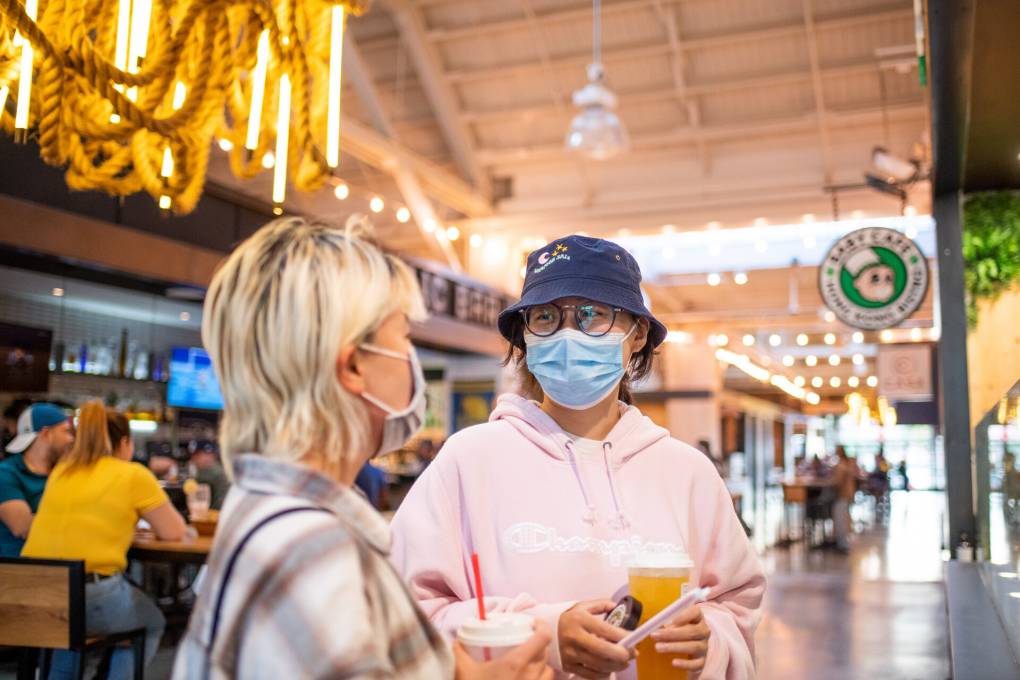
"description": "Two women wait for their drink order at The Public Market in Emeryville, California, on July 28, 2021.",
"title": "RS50436_009_Emeryville_COVIDMasks_07282021-qut",
"credit": "Beth LaBerge/KQED",
"status": "inherit",
"altTag": "Two women with masks in a high-ceilinged, brightly lit public market.",
"isLoading": false,
"fetchFailed": false
},
"news_11882724": {
"type": "attachments",
"id": "news_11882724",
"meta": {
"index": "attachments_1716263798",
"site": "news",
"id": "11882724",
"found": true
},
"parent": 11882632,
"imgSizes": {
"twentyfourteen-full-width": {
"file": "https://ww2.kqed.org/app/uploads/sites/10/2021/07/GettyImages-1230161351-1038x576.jpg",
"width": 1038,
"mimeType": "image/jpeg",
"height": 576
},
"thumbnail": {
"file": "https://ww2.kqed.org/app/uploads/sites/10/2021/07/GettyImages-1230161351-160x107.jpg",
"width": 160,
"mimeType": "image/jpeg",
"height": 107
},
"post-thumbnail": {
"file": "https://ww2.kqed.org/app/uploads/sites/10/2021/07/GettyImages-1230161351-672x372.jpg",
"width": 672,
"mimeType": "image/jpeg",
"height": 372
},
"kqedFullSize": {
"file": "https://ww2.kqed.org/app/uploads/sites/10/2021/07/GettyImages-1230161351-scaled-e1627432159522.jpg",
"width": 1280,
"height": 854
},
"2048x2048": {
"file": "https://ww2.kqed.org/app/uploads/sites/10/2021/07/GettyImages-1230161351-2048x1365.jpg",
"width": 2048,
"mimeType": "image/jpeg",
"height": 1365
},
"large": {
"file": "https://ww2.kqed.org/app/uploads/sites/10/2021/07/GettyImages-1230161351-1020x680.jpg",
"width": 1020,
"mimeType": "image/jpeg",
"height": 680
},
"1536x1536": {
"file": "https://ww2.kqed.org/app/uploads/sites/10/2021/07/GettyImages-1230161351-1536x1024.jpg",
"width": 1536,
"mimeType": "image/jpeg",
"height": 1024
},
"full-width": {
"file": "https://ww2.kqed.org/app/uploads/sites/10/2021/07/GettyImages-1230161351-1920x1280.jpg",
"width": 1920,
"mimeType": "image/jpeg",
"height": 1280
},
"medium": {
"file": "https://ww2.kqed.org/app/uploads/sites/10/2021/07/GettyImages-1230161351-800x533.jpg",
"width": 800,
"mimeType": "image/jpeg",
"height": 533
}
},
"publishDate": 1627430981,
"modified": 1627511877,
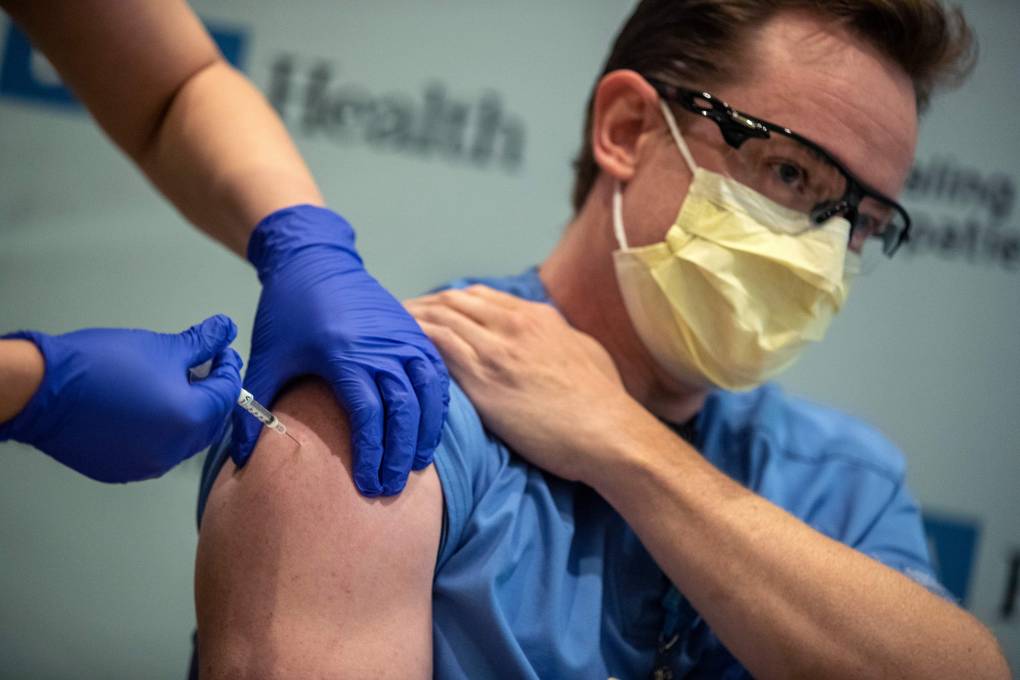
"caption": "UCLA respiratory therapy manager Matt Dartt gets an injection of the COVID-19 vaccine at Ronald Reagan UCLA Medical Center in Westwood, California on Dec. 16, 2020. ",
"description": "UCLA respiratory therapy manager Matt Dartt gets an injection of the Covid-19 vaccine at Ronald Reagan UCLA Medical Center in Westwood, California on December 16, 2020. ",
"title": "US-HEALTH-VIRUS-VACCINE-California-curfew",
"credit": "Brian van der Brug/AFP/Getty Images",
"status": "inherit",
"altTag": "A health care worker receives the Covid-19 vaccine",
"isLoading": false,
"fetchFailed": false
},
"news_11882669": {
"type": "attachments",
"id": "news_11882669",
"meta": {
"index": "attachments_1716263798",
"site": "news",
"id": "11882669",
"found": true
},
"parent": 11882650,
"imgSizes": {
"twentyfourteen-full-width": {
"file": "https://ww2.kqed.org/app/uploads/sites/10/2021/07/thechoice_072721_final-1038x576.png",
"width": 1038,
"mimeType": "image/png",
"height": 576
},
"thumbnail": {
"file": "https://ww2.kqed.org/app/uploads/sites/10/2021/07/thechoice_072721_final-160x105.png",
"width": 160,
"mimeType": "image/png",
"height": 105
},
"post-thumbnail": {
"file": "https://ww2.kqed.org/app/uploads/sites/10/2021/07/thechoice_072721_final-672x372.png",
"width": 672,
"mimeType": "image/png",
"height": 372
},
"kqedFullSize": {
"file": "https://ww2.kqed.org/app/uploads/sites/10/2021/07/thechoice_072721_final.png",
"width": 1920,
"height": 1256
},
"large": {
"file": "https://ww2.kqed.org/app/uploads/sites/10/2021/07/thechoice_072721_final-1020x667.png",
"width": 1020,
"mimeType": "image/png",
"height": 667
},
"1536x1536": {
"file": "https://ww2.kqed.org/app/uploads/sites/10/2021/07/thechoice_072721_final-1536x1005.png",
"width": 1536,
"mimeType": "image/png",
"height": 1005
},
"medium": {
"file": "https://ww2.kqed.org/app/uploads/sites/10/2021/07/thechoice_072721_final-800x523.png",
"width": 800,
"mimeType": "image/png",
"height": 523
}
},
"publishDate": 1627424389,
"modified": 1627424464,
"caption": null,
"description": null,
"title": "thechoice_072721_final",
"credit": null,
"status": "inherit",
"altTag": "A Mark Fiore cartoon titled, \"The Choice\" that shows rising vaccinations on the left side while the right side shows rising hospitalizations, testing, deaths, masks forever and a plummeting economy.",
"isLoading": false,
"fetchFailed": false
},
"news_11882296": {
"type": "attachments",
"id": "news_11882296",
"meta": {
"index": "attachments_1716263798",
"site": "news",
"id": "11882296",
"found": true
},
"parent": 11882289,
"imgSizes": {
"twentyfourteen-full-width": {
"file": "https://ww2.kqed.org/app/uploads/sites/10/2021/07/employees_072321_final-1038x576.png",
"width": 1038,
"mimeType": "image/png",
"height": 576
},
"thumbnail": {
"file": "https://ww2.kqed.org/app/uploads/sites/10/2021/07/employees_072321_final-160x116.png",
"width": 160,
"mimeType": "image/png",
"height": 116
},
"post-thumbnail": {
"file": "https://ww2.kqed.org/app/uploads/sites/10/2021/07/employees_072321_final-672x372.png",
"width": 672,
"mimeType": "image/png",
"height": 372
},
"kqedFullSize": {
"file": "https://ww2.kqed.org/app/uploads/sites/10/2021/07/employees_072321_final.png",
"width": 1920,
"height": 1387
},
"large": {
"file": "https://ww2.kqed.org/app/uploads/sites/10/2021/07/employees_072321_final-1020x737.png",
"width": 1020,
"mimeType": "image/png",
"height": 737
},
"1536x1536": {
"file": "https://ww2.kqed.org/app/uploads/sites/10/2021/07/employees_072321_final-1536x1110.png",
"width": 1536,
"mimeType": "image/png",
"height": 1110
},
"medium": {
"file": "https://ww2.kqed.org/app/uploads/sites/10/2021/07/employees_072321_final-800x578.png",
"width": 800,
"mimeType": "image/png",
"height": 578
}
},
"publishDate": 1627069579,
"modified": 1627069651,
"caption": null,
"description": null,
"title": "employees_072321_final",
"credit": null,
"status": "inherit",
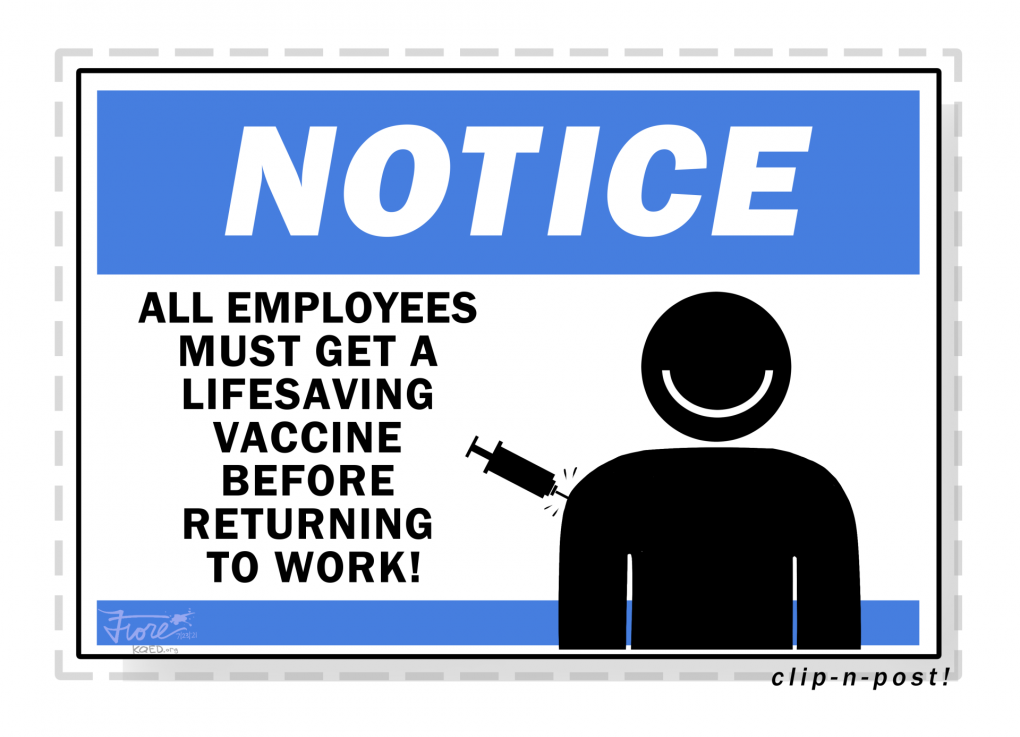
"altTag": "A Mark Fiore cartoon that looks like a workplace sign. The sign reads, \"Notice: all employees must get a lifesaving vaccine before returning to work!\" There is a smiling figure getting a shot on the sign as well.",
"isLoading": false,
"fetchFailed": false
},
"news_11881984": {
"type": "attachments",
"id": "news_11881984",
"meta": {
"index": "attachments_1716263798",
"site": "news",
"id": "11881984",
"found": true
},
"parent": 11881977,
"imgSizes": {
"twentyfourteen-full-width": {
"file": "https://ww2.kqed.org/app/uploads/sites/10/2021/07/groundhogday_072121_final-1038x576.png",
"width": 1038,
"mimeType": "image/png",
"height": 576
},
"thumbnail": {
"file": "https://ww2.kqed.org/app/uploads/sites/10/2021/07/groundhogday_072121_final-160x105.png",
"width": 160,
"mimeType": "image/png",
"height": 105
},
"post-thumbnail": {
"file": "https://ww2.kqed.org/app/uploads/sites/10/2021/07/groundhogday_072121_final-672x372.png",
"width": 672,
"mimeType": "image/png",
"height": 372
},
"kqedFullSize": {
"file": "https://ww2.kqed.org/app/uploads/sites/10/2021/07/groundhogday_072121_final.png",
"width": 1920,
"height": 1263
},
"large": {
"file": "https://ww2.kqed.org/app/uploads/sites/10/2021/07/groundhogday_072121_final-1020x671.png",
"width": 1020,
"mimeType": "image/png",
"height": 671
},
"1536x1536": {
"file": "https://ww2.kqed.org/app/uploads/sites/10/2021/07/groundhogday_072121_final-1536x1010.png",
"width": 1536,
"mimeType": "image/png",
"height": 1010
},
"medium": {
"file": "https://ww2.kqed.org/app/uploads/sites/10/2021/07/groundhogday_072121_final-800x526.png",
"width": 800,
"mimeType": "image/png",
"height": 526
}
},
"publishDate": 1626903332,
"modified": 1626903462,
"caption": null,
"description": null,
"title": "groundhogday_072121_final",
"credit": null,
"status": "inherit",
"altTag": "A Mark Fiore cartoon showing a groundhog wearing a mask with people, some with masks, others carrying anti-vaccine signs and \"don't tread on me\" flags. A man wearing a face mask looks to another character and says, \"too many anti-vaxxers mean at least 6 more weeks of masking.\"",
"isLoading": false,
"fetchFailed": false
},
"news_11880798": {
"type": "attachments",
"id": "news_11880798",
"meta": {
"index": "attachments_1716263798",
"site": "news",
"id": "11880798",
"found": true
},
"parent": 11880792,
"imgSizes": {
"twentyfourteen-full-width": {
"file": "https://ww2.kqed.org/app/uploads/sites/10/2021/07/GettyImages-1233832328-1-1038x576.jpg",
"width": 1038,
"mimeType": "image/jpeg",
"height": 576
},
"thumbnail": {
"file": "https://ww2.kqed.org/app/uploads/sites/10/2021/07/GettyImages-1233832328-1-160x107.jpg",
"width": 160,
"mimeType": "image/jpeg",
"height": 107
},
"post-thumbnail": {
"file": "https://ww2.kqed.org/app/uploads/sites/10/2021/07/GettyImages-1233832328-1-672x372.jpg",
"width": 672,
"mimeType": "image/jpeg",
"height": 372
},
"kqedFullSize": {
"file": "https://ww2.kqed.org/app/uploads/sites/10/2021/07/GettyImages-1233832328-1.jpg",
"width": 1920,
"height": 1280
},
"large": {
"file": "https://ww2.kqed.org/app/uploads/sites/10/2021/07/GettyImages-1233832328-1-1020x680.jpg",
"width": 1020,
"mimeType": "image/jpeg",
"height": 680
},
"1536x1536": {
"file": "https://ww2.kqed.org/app/uploads/sites/10/2021/07/GettyImages-1233832328-1-1536x1024.jpg",
"width": 1536,
"mimeType": "image/jpeg",
"height": 1024
},
"medium": {
"file": "https://ww2.kqed.org/app/uploads/sites/10/2021/07/GettyImages-1233832328-1-800x533.jpg",
"width": 800,
"mimeType": "image/jpeg",
"height": 533
}
},
"publishDate": 1625875911,
"modified": 1625875928,
"caption": "A medical worker takes a dose of a COVID-19 vaccine in a syringe on July 6, 2021 in Dhaka, Bangladesh. ",
"description": "A medical worker takes a dose of a COVID-19 vaccine in a syringe on July 6, 2021 in Dhaka, Bangladesh. ",
"title": "GettyImages-1233832328 (1)",
"credit": "Allison Joyce/Getty Images",
"status": "inherit",
"altTag": null,
"isLoading": false,
"fetchFailed": false
},
"news_11880733": {
"type": "attachments",
"id": "news_11880733",
"meta": {
"index": "attachments_1716263798",
"site": "news",
"id": "11880733",
"found": true
},
"parent": 11880730,
"imgSizes": {
"twentyfourteen-full-width": {
"file": "https://ww2.kqed.org/app/uploads/sites/10/2021/07/RS49604_010_SanFrancisco_AlexPadillaMissionKids_06012021-qut-1038x576.jpg",
"width": 1038,
"mimeType": "image/jpeg",
"height": 576
},
"thumbnail": {
"file": "https://ww2.kqed.org/app/uploads/sites/10/2021/07/RS49604_010_SanFrancisco_AlexPadillaMissionKids_06012021-qut-160x107.jpg",
"width": 160,
"mimeType": "image/jpeg",
"height": 107
},
"post-thumbnail": {
"file": "https://ww2.kqed.org/app/uploads/sites/10/2021/07/RS49604_010_SanFrancisco_AlexPadillaMissionKids_06012021-qut-672x372.jpg",
"width": 672,
"mimeType": "image/jpeg",
"height": 372
},
"kqedFullSize": {
"file": "https://ww2.kqed.org/app/uploads/sites/10/2021/07/RS49604_010_SanFrancisco_AlexPadillaMissionKids_06012021-qut.jpg",
"width": 1920,
"height": 1280
},
"large": {
"file": "https://ww2.kqed.org/app/uploads/sites/10/2021/07/RS49604_010_SanFrancisco_AlexPadillaMissionKids_06012021-qut-1020x680.jpg",
"width": 1020,
"mimeType": "image/jpeg",
"height": 680
},
"1536x1536": {
"file": "https://ww2.kqed.org/app/uploads/sites/10/2021/07/RS49604_010_SanFrancisco_AlexPadillaMissionKids_06012021-qut-1536x1024.jpg",
"width": 1536,
"mimeType": "image/jpeg",
"height": 1024
},
"medium": {
"file": "https://ww2.kqed.org/app/uploads/sites/10/2021/07/RS49604_010_SanFrancisco_AlexPadillaMissionKids_06012021-qut-800x533.jpg",
"width": 800,
"mimeType": "image/jpeg",
"height": 533
}
},
"publishDate": 1625853789,
"modified": 1644935808,
"caption": "A child uses a keyboard at Mission Kids Preschool in San Francisco on June 1, 2021. When kids are too young for vaccines, masks are critical in reducing the risk of COVID-19 transmission. That's part of the newly updated CDC guidelines for the coming school year — and for any travel plans parents are making for summer.",
"description": "A child uses a keyboard at Mission Kids Preschool in San Francisco on June 1, 2021. When kids are too young for vaccines, masks are critical in reducing the risk of COVID-19 transmission. That's part of the newly updated CDC guidelines for the coming school year — and for any travel plans parents are making for summer.",
"title": "RS49604_010_SanFrancisco_AlexPadillaMissionKids_06012021-qut",
"credit": "Beth LaBerge/KQED",
"status": "inherit",
"altTag": null,
"isLoading": false,
"fetchFailed": false
},
"news_11866691": {
"type": "attachments",
"id": "news_11866691",
"meta": {
"index": "attachments_1716263798",
"site": "news",
"id": "11866691",
"found": true
},
"parent": 11864473,
"imgSizes": {
"twentyfourteen-full-width": {
"file": "https://ww2.kqed.org/app/uploads/sites/10/2021/03/hugs-2-1038x576.png",
"width": 1038,
"mimeType": "image/png",
"height": 576
},
"thumbnail": {
"file": "https://ww2.kqed.org/app/uploads/sites/10/2021/03/hugs-2-160x97.png",
"width": 160,
"mimeType": "image/png",
"height": 97
},
"post-thumbnail": {
"file": "https://ww2.kqed.org/app/uploads/sites/10/2021/03/hugs-2-672x372.png",
"width": 672,
"mimeType": "image/png",
"height": 372
},
"kqedFullSize": {
"file": "https://ww2.kqed.org/app/uploads/sites/10/2021/03/hugs-2.png",
"width": 1980,
"height": 1200
},
"large": {
"file": "https://ww2.kqed.org/app/uploads/sites/10/2021/03/hugs-2-1020x618.png",
"width": 1020,
"mimeType": "image/png",
"height": 618
},
"1536x1536": {
"file": "https://ww2.kqed.org/app/uploads/sites/10/2021/03/hugs-2-1536x931.png",
"width": 1536,
"mimeType": "image/png",
"height": 931
},
"full-width": {
"file": "https://ww2.kqed.org/app/uploads/sites/10/2021/03/hugs-2-1920x1164.png",
"width": 1920,
"mimeType": "image/png",
"height": 1164
},
"medium": {
"file": "https://ww2.kqed.org/app/uploads/sites/10/2021/03/hugs-2-800x485.png",
"width": 800,
"mimeType": "image/png",
"height": 485
}
},
"publishDate": 1616786875,
"modified": 1616799955,
"caption": "What can you do after you're fully vaccinated? The CDC has guidance.",
"description": "What can you do after you're fully vaccinated? The CDC has guidance.",
"title": "fully-vaccinated-guidance",
"credit": "Cottonbro/Pexels",
"status": "inherit",
"altTag": "Two people standing in front of a window, hugging",
"isLoading": false,
"fetchFailed": false
},
"news_11877890": {
"type": "attachments",
"id": "news_11877890",
"meta": {
"index": "attachments_1716263798",
"site": "news",
"id": "11877890",
"found": true
},
"parent": 11877874,
"imgSizes": {
"twentyfourteen-full-width": {
"file": "https://ww2.kqed.org/app/uploads/sites/10/2021/06/grand_061421_final-1038x576.png",
"width": 1038,
"mimeType": "image/png",
"height": 576
},
"thumbnail": {
"file": "https://ww2.kqed.org/app/uploads/sites/10/2021/06/grand_061421_final-160x108.png",
"width": 160,
"mimeType": "image/png",
"height": 108
},
"post-thumbnail": {
"file": "https://ww2.kqed.org/app/uploads/sites/10/2021/06/grand_061421_final-672x372.png",
"width": 672,
"mimeType": "image/png",
"height": 372
},
"kqedFullSize": {
"file": "https://ww2.kqed.org/app/uploads/sites/10/2021/06/grand_061421_final.png",
"width": 1920,
"height": 1301
},
"large": {
"file": "https://ww2.kqed.org/app/uploads/sites/10/2021/06/grand_061421_final-1020x691.png",
"width": 1020,
"mimeType": "image/png",
"height": 691
},
"1536x1536": {
"file": "https://ww2.kqed.org/app/uploads/sites/10/2021/06/grand_061421_final-1536x1041.png",
"width": 1536,
"mimeType": "image/png",
"height": 1041
},
"medium": {
"file": "https://ww2.kqed.org/app/uploads/sites/10/2021/06/grand_061421_final-800x542.png",
"width": 800,
"mimeType": "image/png",
"height": 542
}
},
"publishDate": 1623698008,
"modified": 1623698065,
"caption": null,
"description": null,
"title": "grand_061421_final",
"credit": null,
"status": "inherit",
"altTag": "A Mark Fiore cartoon that show festive, colorful face masks hanging to spell out \"grand reopening\" as people (two who are masked) celebrate below.",
"isLoading": false,
"fetchFailed": false
}
},
"audioPlayerReducer": {
"postId": "stream_live",
"isPaused": true,
"isPlaying": false,
"pfsActive": false,
"pledgeModalIsOpen": true,
"playerDrawerIsOpen": false,
"liveAudioPlayStartedAt": 0,
"liveAudioPlayContext": ""
},
"authorsReducer": {
"byline_news_11881585": {
"type": "authors",
"id": "byline_news_11881585",
"meta": {
"override": true
},
"slug": "byline_news_11881585",
"name": "Allison Aubrey, Selena Simmons-Duffin, Rob Stein and Carmel Wroth",
"isLoading": false
},
"byline_news_11882027": {
"type": "authors",
"id": "byline_news_11882027",
"meta": {
"override": true
},
"slug": "byline_news_11882027",
"name": "Rob Stein",
"isLoading": false
},
"byline_news_11882632": {
"type": "authors",
"id": "byline_news_11882632",
"meta": {
"override": true
},
"slug": "byline_news_11882632",
"name": "Mae Anderson and Ricardo Alonso-Zaldivar \u003cbr> The Associated Press",
"isLoading": false
},
"byline_news_11880792": {
"type": "authors",
"id": "byline_news_11880792",
"meta": {
"override": true
},
"slug": "byline_news_11880792",
"name": "Emma Bowman",
"isLoading": false
},
"byline_news_11880730": {
"type": "authors",
"id": "byline_news_11880730",
"meta": {
"override": true
},
"slug": "byline_news_11880730",
"name": "Sheila Mulrooney Eldred",
"isLoading": false
},
"kqednewsstaffandwires": {
"type": "authors",
"id": "237",
"meta": {
"index": "authors_1716337520",
"id": "237",
"found": true
},
"name": "KQED News Staff and Wires",
"firstName": "KQED News Staff and Wires",
"lastName": null,
"slug": "kqednewsstaffandwires",
"email": "onlinenewsstaff@kqed.org",
"display_author_email": false,
"staff_mastheads": [],
"title": null,
"bio": null,
"avatar": "https://secure.gravatar.com/avatar/72295af8ebbfbd19a4948f5271285664?s=600&d=blank&r=g",
"twitter": null,
"facebook": null,
"instagram": null,
"linkedin": null,
"sites": [
{
"site": "arts",
"roles": [
"contributor"
]
},
{
"site": "news",
"roles": [
"contributor"
]
},
{
"site": "lowdown",
"roles": [
"author"
]
},
{
"site": "stateofhealth",
"roles": [
"contributor"
]
},
{
"site": "food",
"roles": [
"author"
]
}
],
"headData": {
"title": "KQED News Staff and Wires | KQED",
"description": null,
"ogImgSrc": "https://secure.gravatar.com/avatar/72295af8ebbfbd19a4948f5271285664?s=600&d=blank&r=g",
"twImgSrc": "https://secure.gravatar.com/avatar/72295af8ebbfbd19a4948f5271285664?s=600&d=blank&r=g"
},
"isLoading": false,
"link": "/author/kqednewsstaffandwires"
},
"markfiore": {
"type": "authors",
"id": "3236",
"meta": {
"index": "authors_1716337520",
"id": "3236",
"found": true
},
"name": "Mark Fiore",
"firstName": "Mark",
"lastName": "Fiore",
"slug": "markfiore",
"email": "mark@markfiore.com",
"display_author_email": false,
"staff_mastheads": [
"news"
],
"title": "KQED News Cartoonist",
"bio": "\u003ca href=\"http://www.MarkFiore.com\">MarkFiore.com\u003c/a> | \u003ca href=\"https://twitter.com/markfiore\">Follow on Twitter\u003c/a> | \u003ca href=\"https://www.facebook.com/pages/Mark-Fiore-Animated-Political-Cartoons/94451707396?ref=bookmarks\">Facebook\u003c/a> | \u003ca href=\"mailto:mark@markfiore.com\">email\u003c/a>\r\n\r\nPulitzer Prize-winner, Mark Fiore, who the Wall Street Journal has called “the undisputed guru of the form,” creates animated political cartoons in San Francisco, where his work has been featured regularly on the San Francisco Chronicle’s web site, SFGate.com. His work has appeared on Newsweek.com, Slate.com, CBSNews.com, MotherJones.com, DailyKos.com and NPR’s web site. Fiore’s political animation has appeared on CNN, Frontline, Bill Moyers Journal, Salon.com and cable and broadcast outlets across the globe.\r\n\r\nBeginning his professional life by drawing traditional political cartoons for newspapers, Fiore’s work appeared in publications ranging from the Washington Post to the Los Angeles Times. In the late 1990s, he began to experiment with animating political cartoons and, after a short stint at the San Jose Mercury News as their staff cartoonist, Fiore devoted all his energies to animation.\r\nGrowing up in California, Fiore also spent a good portion of his life in the backwoods of Idaho. It was this combination that shaped him politically. Mark majored in political science at Colorado College, where, in a perfect send-off for a cartoonist, he received his diploma in 1991 as commencement speaker Dick Cheney smiled approvingly.\r\nMark Fiore was awarded the Pulitzer Prize for political cartooning in 2010, a Robert F. Kennedy Journalism Award in 2004 and has twice received an Online Journalism Award for commentary from the Online News Association (2002, 2008). Fiore has received two awards for his work in new media from the National Cartoonists Society (2001, 2002), and in 2006 received The James Madison Freedom of Information Award from The Society of Professional Journalists.",
"avatar": "https://secure.gravatar.com/avatar/fc4e2a612b15b67bad0c6f0e1db4ca9b?s=600&d=blank&r=g",
"twitter": "MarkFiore",
"facebook": null,
"instagram": "https://www.instagram.com/markfiore/?hl=en",
"linkedin": null,
"sites": [
{
"site": "arts",
"roles": [
"contributor"
]
},
{
"site": "news",
"roles": [
"editor"
]
},
{
"site": "futureofyou",
"roles": [
"editor"
]
},
{
"site": "science",
"roles": [
"editor"
]
}
],
"headData": {
"title": "Mark Fiore | KQED",
"description": "KQED News Cartoonist",
"ogImgSrc": "https://secure.gravatar.com/avatar/fc4e2a612b15b67bad0c6f0e1db4ca9b?s=600&d=blank&r=g",
"twImgSrc": "https://secure.gravatar.com/avatar/fc4e2a612b15b67bad0c6f0e1db4ca9b?s=600&d=blank&r=g"
},
"isLoading": false,
"link": "/author/markfiore"
},
"carlysevern": {
"type": "authors",
"id": "3243",
"meta": {
"index": "authors_1716337520",
"id": "3243",
"found": true
},
"name": "Carly Severn",
"firstName": "Carly",
"lastName": "Severn",
"slug": "carlysevern",
"email": "csevern@kqed.org",
"display_author_email": false,
"staff_mastheads": [
"news"
],
"title": "Senior Editor, Audience News ",
"bio": "Carly is KQED's Senior Editor of Audience News on the Digital News team, and has reported for the California Report Magazine, Bay Curious and KQED Arts. She's formerly the host of \u003ca href=\"http://ww2.kqed.org/pop/category/the-cooler/\" rel=\"noopener noreferrer\">The Cooler\u003c/a> podcast.",
"avatar": "https://secure.gravatar.com/avatar/54037bf5c128fe678f0ef26cec97a93f2e7f220a22d7285703328f12c42c1b1d?s=600&d=blank&r=g",
"twitter": "teacupinthebay",
"bluesky": null,
"facebook": null,
"instagram": null,
"linkedin": null,
"sites": [
{
"site": "",
"roles": [
"editor"
]
},
{
"site": "arts",
"roles": [
"editor"
]
},
{
"site": "news",
"roles": [
"administrator"
]
},
{
"site": "pop",
"roles": [
"editor"
]
},
{
"site": "futureofyou",
"roles": [
"editor"
]
},
{
"site": "about",
"roles": [
"administrator"
]
},
{
"site": "mindshift",
"roles": [
"editor"
]
},
{
"site": "bayareabites",
"roles": [
"editor"
]
},
{
"site": "stateofhealth",
"roles": [
"editor"
]
},
{
"site": "science",
"roles": [
"editor"
]
},
{
"site": "food",
"roles": [
"contributor"
]
},
{
"site": "forum",
"roles": [
"editor"
]
},
{
"site": "perspectives",
"roles": [
"administrator"
]
},
{
"site": "liveblog",
"roles": [
"editor"
]
}
],
"headData": {
"title": "Carly Severn | KQED",
"description": "Senior Editor, Audience News ",
"ogImgSrc": "https://secure.gravatar.com/avatar/54037bf5c128fe678f0ef26cec97a93f2e7f220a22d7285703328f12c42c1b1d?s=600&d=blank&r=g",
"twImgSrc": "https://secure.gravatar.com/avatar/54037bf5c128fe678f0ef26cec97a93f2e7f220a22d7285703328f12c42c1b1d?s=600&d=blank&r=g"
},
"isLoading": false,
"link": "/author/carlysevern"
},
"mwiley": {
"type": "authors",
"id": "11526",
"meta": {
"index": "authors_1716337520",
"id": "11526",
"found": true
},
"name": "Michelle Wiley",
"firstName": "Michelle",
"lastName": "Wiley",
"slug": "mwiley",
"email": "mwiley@KQED.org",
"display_author_email": true,
"staff_mastheads": [],
"title": null,
"bio": "Michelle Wiley was the senior editor of weekends.",
"avatar": "https://secure.gravatar.com/avatar/3b897d82a09e8587e8e73fa69fbcc635?s=600&d=blank&r=g",
"twitter": "michelleewiley",
"facebook": null,
"instagram": null,
"linkedin": null,
"sites": [
{
"site": "",
"roles": [
"editor"
]
},
{
"site": "arts",
"roles": [
"editor"
]
},
{
"site": "news",
"roles": [
"subscriber"
]
},
{
"site": "lowdown",
"roles": [
"editor"
]
},
{
"site": "science",
"roles": [
"editor"
]
},
{
"site": "podcasts",
"roles": [
"editor"
]
}
],
"headData": {
"title": "Michelle Wiley | KQED",
"description": null,
"ogImgSrc": "https://secure.gravatar.com/avatar/3b897d82a09e8587e8e73fa69fbcc635?s=600&d=blank&r=g",
"twImgSrc": "https://secure.gravatar.com/avatar/3b897d82a09e8587e8e73fa69fbcc635?s=600&d=blank&r=g"
},
"isLoading": false,
"link": "/author/mwiley"
}
},
"pagesReducer": {
"news_tag_vaccines": {
"type": "terms",
"id": "news_981",
"meta": {
"index": "terms_1716263798",
"site": "news",
"id": "981",
"score": 8.668587
},
"name": "Vaccines",
"slug": "vaccines",
"taxonomy": "tag",
"description": null,
"featImg": null,
"headData": {
"title": "Vaccines | KQED News",
"description": null,
"ogTitle": null,
"ogDescription": null,
"ogImgId": null,
"twTitle": null,
"twDescription": null,
"twImgId": null
},
"ttid": 991,
"isLoading": false,
"title": "Vaccines",
"pageMeta": {
"site": "news",
"WpPageTemplate": "page-topic-editorial",
"currentPage": 9
},
"blocks": [
{
"blockName": "kqed/post-list",
"attrs": {
"layout": "cardArticle2",
"query": "posts/news?tag=vaccines",
"seeMore": false,
"paginated": true,
"page": 9
}
},
{
"blockName": "kqed/ad"
}
]
}
},
"pfsSessionReducer": {},
"postsReducer": {
"stream_live": {
"type": "live",
"id": "stream_live",
"audioUrl": "https://streams.kqed.org/kqedradio",
"title": "Live Stream",
"excerpt": "Live Stream information currently unavailable.",
"link": "/radio",
"featImg": "",
"label": {
"name": "KQED Live",
"link": "/"
}
},
"stream_kqedNewscast": {
"type": "posts",
"id": "stream_kqedNewscast",
"audioUrl": "https://www.kqed.org/.stream/anon/radio/RDnews/newscast.mp3?_=1",
"title": "KQED Newscast",
"featImg": "",
"label": {
"name": "88.5 FM",
"link": "/"
}
},
"news_11883895": {
"type": "posts",
"id": "news_11883895",
"meta": {
"index": "posts_1716263798",
"site": "news",
"id": "11883895",
"score": null,
"sort": [
1628200411000
]
},
"guestAuthors": [],
"slug": "more-virus-more-masks",
"title": "More Virus, More Masks",
"publishDate": 1628200411,
"format": "aside",
"headTitle": "More Virus, More Masks | KQED",
"labelTerm": {
"term": 18515,
"site": "news"
},
"content": "\u003cp>\u003ca href=\"https://ww2.kqed.org/app/uploads/sites/10/2021/08/newstyles_080521_final.png\">\u003cimg loading=\"lazy\" decoding=\"async\" class=\"alignnone size-full wp-image-11883903\" src=\"https://ww2.kqed.org/app/uploads/sites/10/2021/08/newstyles_080521_final.png\" alt=\"A Mark Fiore cartoon titled "New Styles for a New Variant," that shows four face masks. The face masks read, "get vaccinated, dammit!", "re-masking because of the variant, selfish anti-vaxxers and to protect those who cant yet get vaccinated," "your 'freedom' makes us all less free," and "so over this."\" width=\"1920\" height=\"1321\" srcset=\"https://cdn.kqed.org/wp-content/uploads/sites/10/2021/08/newstyles_080521_final.png 1920w, https://cdn.kqed.org/wp-content/uploads/sites/10/2021/08/newstyles_080521_final-800x550.png 800w, https://cdn.kqed.org/wp-content/uploads/sites/10/2021/08/newstyles_080521_final-1020x702.png 1020w, https://cdn.kqed.org/wp-content/uploads/sites/10/2021/08/newstyles_080521_final-160x110.png 160w, https://cdn.kqed.org/wp-content/uploads/sites/10/2021/08/newstyles_080521_final-1536x1057.png 1536w\" sizes=\"auto, (max-width: 1920px) 100vw, 1920px\">\u003c/a>\u003c/p>\n\u003cp>Face mask mandates are back as the delta variant rampages across the country, with hospitalizations and deaths rising fastest in places with low vaccination rates.\u003c/p>\n\u003cp>KQED has \u003ca href=\"https://bit.ly/fioreremaskingdelta\">compiled some answers\u003c/a> to questions you may have about the delta variant.\u003c/p>\n\u003cp>Spoiler alert: Get vaccinated now, if you haven’t already.\u003c/p>\n\u003cp>Just when it seemed like we were out of the woods, a new COVID-19 variant and far too many people who choose not to get vaccinated combined to boost infection rates across the country.\u003c/p>\n\u003cp>Among the vaccinated, we’re going to need those masks a little longer – to protect the anti-vaxxers from themselves, children under 12 who can’t yet get vaccinated and people with serious medical conditions who are unvaccinated.\u003c/p>\n\u003cp>[ad fullwidth]\u003c/p>\n\u003cp>\u003c/p>\n",
"blocks": [],
"excerpt": "Face mask mandates are back as the delta variant rampages across the country, with hospitalizations and deaths rising fastest in places with low vaccination rates.",
"status": "publish",
"parent": 0,
"modified": 1740615500,
"stats": {
"hasAudio": false,
"hasVideo": false,
"hasChartOrMap": false,
"iframeSrcs": [],
"hasGoogleForm": false,
"hasGallery": false,
"hasHearkenModule": false,
"hasPolis": false,
"paragraphCount": 8,
"wordCount": 128
},
"headData": {
"title": "More Virus, More Masks | KQED",
"description": "Face mask mandates are back as the delta variant rampages across the country, with hospitalizations and deaths rising fastest in places with low vaccination rates.",
"ogTitle": "",
"ogDescription": "",
"ogImgId": "",
"twTitle": "",
"twDescription": "",
"twImgId": "",
"schema": {
"@context": "https://schema.org",
"@type": "NewsArticle",
"headline": "More Virus, More Masks",
"datePublished": "2021-08-05T14:53:31-07:00",
"dateModified": "2025-02-26T16:18:20-08:00",
"image": "https://cdn.kqed.org/wp-content/uploads/2020/02/KQED-OG-Image@1x.png",
"isAccessibleForFree": "True",
"publisher": {
"@type": "NewsMediaOrganization",
"@id": "https://www.kqed.org/#organization",
"name": "KQED",
"logo": "https://cdn.kqed.org/wp-content/uploads/2020/02/KQED-OG-Image@1x.png",
"url": "https://www.kqed.org",
"sameAs": [
"https://www.facebook.com/KQED",
"https://twitter.com/KQED",
"https://www.instagram.com/kqed/",
"https://www.tiktok.com/@kqedofficial",
"https://www.linkedin.com/company/kqed",
"https://www.youtube.com/channel/UCeC0IOo7i1P_61zVUWbJ4nw"
]
}
}
},
"sticky": false,
"path": "/news/11883895/more-virus-more-masks",
"audioTrackLength": null,
"parsedContent": [
{
"type": "contentString",
"content": "\u003cdiv class=\"post-body\">\u003cp>\u003cp>\u003ca href=\"https://ww2.kqed.org/app/uploads/sites/10/2021/08/newstyles_080521_final.png\">\u003cimg loading=\"lazy\" decoding=\"async\" class=\"alignnone size-full wp-image-11883903\" src=\"https://ww2.kqed.org/app/uploads/sites/10/2021/08/newstyles_080521_final.png\" alt=\"A Mark Fiore cartoon titled "New Styles for a New Variant," that shows four face masks. The face masks read, "get vaccinated, dammit!", "re-masking because of the variant, selfish anti-vaxxers and to protect those who cant yet get vaccinated," "your 'freedom' makes us all less free," and "so over this."\" width=\"1920\" height=\"1321\" srcset=\"https://cdn.kqed.org/wp-content/uploads/sites/10/2021/08/newstyles_080521_final.png 1920w, https://cdn.kqed.org/wp-content/uploads/sites/10/2021/08/newstyles_080521_final-800x550.png 800w, https://cdn.kqed.org/wp-content/uploads/sites/10/2021/08/newstyles_080521_final-1020x702.png 1020w, https://cdn.kqed.org/wp-content/uploads/sites/10/2021/08/newstyles_080521_final-160x110.png 160w, https://cdn.kqed.org/wp-content/uploads/sites/10/2021/08/newstyles_080521_final-1536x1057.png 1536w\" sizes=\"auto, (max-width: 1920px) 100vw, 1920px\">\u003c/a>\u003c/p>\n\u003cp>Face mask mandates are back as the delta variant rampages across the country, with hospitalizations and deaths rising fastest in places with low vaccination rates.\u003c/p>\n\u003cp>KQED has \u003ca href=\"https://bit.ly/fioreremaskingdelta\">compiled some answers\u003c/a> to questions you may have about the delta variant.\u003c/p>\n\u003cp>Spoiler alert: Get vaccinated now, if you haven’t already.\u003c/p>\n\u003cp>Just when it seemed like we were out of the woods, a new COVID-19 variant and far too many people who choose not to get vaccinated combined to boost infection rates across the country.\u003c/p>\n\u003cp>Among the vaccinated, we’re going to need those masks a little longer – to protect the anti-vaxxers from themselves, children under 12 who can’t yet get vaccinated and people with serious medical conditions who are unvaccinated.\u003c/p>\n\u003cp>\u003c/p>\u003c/div>",
"attributes": {
"named": {},
"numeric": []
}
},
{
"type": "component",
"content": "",
"name": "ad",
"attributes": {
"named": {
"label": "fullwidth"
},
"numeric": [
"fullwidth"
]
}
},
{
"type": "contentString",
"content": "\u003cdiv class=\"post-body\">\u003cp>\u003c/p>\n\u003cp>\u003c/p>\n\u003c/div>\u003c/p>",
"attributes": {
"named": {},
"numeric": []
}
}
],
"link": "/news/11883895/more-virus-more-masks",
"authors": [
"3236"
],
"series": [
"news_18515"
],
"categories": [
"news_457",
"news_13"
],
"tags": [
"news_29120",
"news_27350",
"news_28801",
"news_27504",
"news_27804",
"news_20949",
"news_29575",
"news_27651",
"news_27660",
"news_981"
],
"featImg": "news_11883903",
"label": "news_18515"
},
"news_11883688": {
"type": "posts",
"id": "news_11883688",
"meta": {
"index": "posts_1716263798",
"site": "news",
"id": "11883688",
"score": null,
"sort": [
1628122059000
]
},
"guestAuthors": [],
"slug": "sf-to-begin-offering-covid-19-booster-shots-to-some-even-as-who-urges-moratorium",
"title": "SF to Begin Offering Some ‘Supplemental’ COVID-19 Shots, Even as WHO Discourages Boosters",
"publishDate": 1628122059,
"format": "standard",
"headTitle": "SF to Begin Offering Some ‘Supplemental’ COVID-19 Shots, Even as WHO Discourages Boosters | KQED",
"labelTerm": {
"site": "news"
},
"content": "\u003cp>The head of the World Health Organization on Wednesday \u003ca href=\"https://apnews.com/article/0e7636c1bcf61e70d9e61ce70300aa78\">called on wealthier nations\u003c/a> with relatively high COVID-19 vaccination rates to refrain from offering booster shots to their citizens to ensure that adequate supplies are available in poorer countries where few people have received their first shots.\u003c/p>\n\u003cp>In reiterating his push for a moratorium, WHO Director-General Tedros Adhanom Ghebreyesus pointed out that richer countries have, on average, administered about 100 doses of coronavirus vaccines for every 100 people, while lower-income countries — hampered by short supplies — have provided an average of only about 1.5 doses per 100 people.\u003c/p>\n\u003cp>That appeal comes only a day after San Francisco health officials announced the city would begin offering a supplemental shot of the Moderna or Pfizer mRNA vaccine for some residents who originally received the single Johnson & Johnson shot.\u003c/p>\n\u003cp>San Francisco General Hospital officials \u003ca href=\"https://abc7news.com/coronavirus-sf-general-hospital-supplemental-vaccine-jj-shot/10926455/\">said\u003c/a> on Tuesday that supplemental shots would soon be available on a widespread basis.\u003c/p>\n\u003cp>“Potential benefit, no downside. To me, as we look at the future of this virus, and now we’re facing a fourth surge, it does make sense,” said Dr. Chris Colwell, chief of emergency medicine at SF General, according to KGO-TV.\u003c/p>\n\u003cp>He added that “it’s not a booster because it’s not specific for some of the variants, which the booster ultimately will be.”\u003c/p>\n\u003cp>But San Francisco Department of Public Health officials quickly clarified that the city is not “recommending” but merely “accommodating” special requests, contingent on a doctor’s recommendation.\u003c/p>\n\u003cp>[aside label=\"related coverage\" tag=\"delta-variant\"]While Johnson & Johnson’s vaccine is effective at preventing serious infections, “We have gotten a few requests based on patients talking to their physicians, and that’s why we are allowing the accommodations,” Dr. Naveena Bobba, the department’s deputy director, said at a Tuesday afternoon press briefing.\u003c/p>\n\u003cp>Bobba insisted the city was not deviating from the Centers for Disease Control and Prevention guidance, which stops short of recommending a supplemental shot.\u003c/p>\n\u003cp>On Thursday, however, SF General confirmed it had begun offering the supplemental shot at its drop-in clinic to anyone who previously received the J&J vaccine, without requiring a doctor’s note — a move that seemingly contradicts what public health officials said the day before.\u003c/p>\n\u003cp>The city’s decision comes amid an alarming nationwide spike in new infections stemming from the highly transmissible delta variant, which has sparked a sharp uptick in hospitalizations, almost exclusively among unvaccinated people.\u003c/p>\n\u003cp>California health officials on Tuesday reported more than 7,300 new cases of the coronavirus and said that 6.7% of tests were positive over a seven-day period, a steep increase from just a few weeks ago although a lower count than during the fall and winter surges.\u003c/p>\n\u003cp>Confusion has swirled around the various vaccines and whether they are effective against the delta variant.\u003c/p>\n\u003cp>In clinical trials in the United States, the single-shot J&J vaccine has been shown to be 72% effective in preventing moderate to severe illness from COVID-19. That’s compared to the two-shot Pfizer and Moderna vaccines, which are considered to be roughly 95% effective.\u003c/p>\n\u003cp>Early preprint \u003ca href=\"https://www.biorxiv.org/content/10.1101/2021.07.19.452771v2\" target=\"_blank\" rel=\"noopener noreferrer\">research\u003c/a> conducted using blood samples in labs also suggests the J&J vaccine could be less effective against the delta variant — but researchers caution that the analysis is preliminary and more studies are needed.\u003c/p>\n\u003cp>In July, J&J \u003ca href=\"https://www.jnj.com/positive-new-data-for-johnson-johnson-single-shot-covid-19-vaccine-on-activity-against-delta-variant-and-long-lasting-durability-of-response\" target=\"_blank\" rel=\"noopener noreferrer\">said\u003c/a> its vaccine provided at least eight months of immunity from COVID-19 and “generated strong, persistent activity” against the delta variant.\u003c/p>\n\u003cp>Even so, Desi Kotis, associate dean at UCSF’s School of Pharmacy, said the city’s new policy seemed at odds with most current official health guidelines.\u003c/p>\n\u003cp>Neither the California Department of Public Health, the CDC nor the WHO has endorsed administering additional shots to people considered fully vaccinated, including those who have received the J&J vaccine, she noted.\u003c/p>\n\u003cp>“It’s not backed by anybody else, any other counties, so I would wait for now,” Kotis said.\u003c/p>\n\u003cp>The WHO has repeatedly called for richer countries to do more to help improve access to vaccines in poorer countries. It argues that no one is safe from COVID-19 until everyone is immunized, because the longer and more widely the virus circulates, the greater the chance of new variants emerging.\u003c/p>\n\u003cp>“Even while hundreds of millions of people are still waiting for their first dose, some rich countries are moving towards booster doses,” Tedros said Wednesday. He noted that more than 80% of vaccines have been administered in higher and upper-middle income countries, even though they account for less than half of the world’s population.\u003c/p>\n\u003cp>The U.N. health agency has no power to require countries to act, and many nations during the pandemic have ignored its appeals to donate more vaccines and boost production in developing countries.\u003c/p>\n\u003cp>“I understand the concern of all governments to protect their people from the delta variant,” Tedros said. “But we cannot and we should not accept countries that have already used most of the global supply of vaccines using even more of it, while the world’s most vulnerable people remain unprotected.”\u003c/p>\n\u003cp>[ad fullwidth]As of Tuesday, \u003ca href=\"https://sf.gov/data/covid-19-vaccinations\" target=\"_blank\" rel=\"noopener noreferrer\">70% of San Francisco residents\u003c/a> have been fully vaccinated, a rate \u003ca href=\"https://www.cdc.gov/coronavirus/2019-ncov/vaccines/distributing/about-vaccine-data.html\" target=\"_blank\" rel=\"noopener noreferrer\">significantly higher than the national average\u003c/a>. Less than 10% of the nearly 665,000 fully vaccinated people in San Francisco got the J&J shot.\u003c/p>\n\u003cp>Health experts point out that San Francisco has stockpiled a vaccine supply much greater than what the city’s population needs.\u003c/p>\n\u003cp>“There’s plenty of vaccines,” said UCSF’s Kotis. “We’re not just swimming in vaccines in San Francisco, we’re drowning in a volume of vaccines.”\u003c/p>\n\u003cp>Kotis added that city health officials are now trying to get permission to send surplus vaccine doses to other countries. But to do so, the city needs permission from the federal government, a request that has not yet been approved, she said.\u003c/p>\n\u003cp>“We could certainly be redirecting if the federal government would allow us to move this vaccine to other countries that need it,” Kotis said. “We’re very fortunate to be where we’re living. There are other countries that could utilize this vaccine.”\u003c/p>\n\u003cp>\u003ci data-stringify-type=\"italic\">This post includes reporting from KQED’s Alex Emslie and Carlos Cabrera-Lomelí, and the Associated Press.\u003c/i>\u003c/p>\n\u003cp>[ad floatright]\u003c/p>\n",
"blocks": [],
"excerpt": "San Francisco is providing a supplemental vaccine to some who received the Johnson & Johnson shot. Meanwhile, the WHO said wealthier nations should send their excess vaccine supplies to poorer countries before recommending boosters. ",
"status": "publish",
"parent": 0,
"modified": 1740699675,
"stats": {
"hasAudio": false,
"hasVideo": false,
"hasChartOrMap": false,
"iframeSrcs": [],
"hasGoogleForm": false,
"hasGallery": false,
"hasHearkenModule": false,
"hasPolis": false,
"paragraphCount": 30,
"wordCount": 1110
},
"headData": {
"title": "SF to Begin Offering Some ‘Supplemental’ COVID-19 Shots, Even as WHO Discourages Boosters | KQED",
"description": "San Francisco is providing a supplemental vaccine to some who received the Johnson & Johnson shot. Meanwhile, the WHO said wealthier nations should send their excess vaccine supplies to poorer countries before recommending boosters. ",
"ogTitle": "",
"ogDescription": "",
"ogImgId": "",
"twTitle": "",
"twDescription": "",
"twImgId": "",
"schema": {
"@context": "https://schema.org",
"@type": "NewsArticle",
"headline": "SF to Begin Offering Some ‘Supplemental’ COVID-19 Shots, Even as WHO Discourages Boosters",
"datePublished": "2021-08-04T17:07:39-07:00",
"dateModified": "2025-02-27T15:41:15-08:00",
"image": "https://cdn.kqed.org/wp-content/uploads/2020/02/KQED-OG-Image@1x.png",
"isAccessibleForFree": "True",
"publisher": {
"@type": "NewsMediaOrganization",
"@id": "https://www.kqed.org/#organization",
"name": "KQED",
"logo": "https://cdn.kqed.org/wp-content/uploads/2020/02/KQED-OG-Image@1x.png",
"url": "https://www.kqed.org",
"sameAs": [
"https://www.facebook.com/KQED",
"https://twitter.com/KQED",
"https://www.instagram.com/kqed/",
"https://www.tiktok.com/@kqedofficial",
"https://www.linkedin.com/company/kqed",
"https://www.youtube.com/channel/UCeC0IOo7i1P_61zVUWbJ4nw"
]
}
}
},
"sticky": false,
"path": "/news/11883688/sf-to-begin-offering-covid-19-booster-shots-to-some-even-as-who-urges-moratorium",
"audioTrackLength": null,
"parsedContent": [
{
"type": "contentString",
"content": "\u003cdiv class=\"post-body\">\u003cp>\u003cp>The head of the World Health Organization on Wednesday \u003ca href=\"https://apnews.com/article/0e7636c1bcf61e70d9e61ce70300aa78\">called on wealthier nations\u003c/a> with relatively high COVID-19 vaccination rates to refrain from offering booster shots to their citizens to ensure that adequate supplies are available in poorer countries where few people have received their first shots.\u003c/p>\n\u003cp>In reiterating his push for a moratorium, WHO Director-General Tedros Adhanom Ghebreyesus pointed out that richer countries have, on average, administered about 100 doses of coronavirus vaccines for every 100 people, while lower-income countries — hampered by short supplies — have provided an average of only about 1.5 doses per 100 people.\u003c/p>\n\u003cp>That appeal comes only a day after San Francisco health officials announced the city would begin offering a supplemental shot of the Moderna or Pfizer mRNA vaccine for some residents who originally received the single Johnson & Johnson shot.\u003c/p>\n\u003cp>San Francisco General Hospital officials \u003ca href=\"https://abc7news.com/coronavirus-sf-general-hospital-supplemental-vaccine-jj-shot/10926455/\">said\u003c/a> on Tuesday that supplemental shots would soon be available on a widespread basis.\u003c/p>\n\u003cp>“Potential benefit, no downside. To me, as we look at the future of this virus, and now we’re facing a fourth surge, it does make sense,” said Dr. Chris Colwell, chief of emergency medicine at SF General, according to KGO-TV.\u003c/p>\n\u003cp>He added that “it’s not a booster because it’s not specific for some of the variants, which the booster ultimately will be.”\u003c/p>\n\u003cp>But San Francisco Department of Public Health officials quickly clarified that the city is not “recommending” but merely “accommodating” special requests, contingent on a doctor’s recommendation.\u003c/p>\n\u003cp>\u003c/p>\u003c/div>",
"attributes": {
"named": {},
"numeric": []
}
},
{
"type": "component",
"content": "",
"name": "aside",
"attributes": {
"named": {
"label": "related coverage ",
"tag": "delta-variant"
},
"numeric": []
}
},
{
"type": "contentString",
"content": "\u003cdiv class=\"post-body\">\u003cp>While Johnson & Johnson’s vaccine is effective at preventing serious infections, “We have gotten a few requests based on patients talking to their physicians, and that’s why we are allowing the accommodations,” Dr. Naveena Bobba, the department’s deputy director, said at a Tuesday afternoon press briefing.\u003c/p>\n\u003cp>Bobba insisted the city was not deviating from the Centers for Disease Control and Prevention guidance, which stops short of recommending a supplemental shot.\u003c/p>\n\u003cp>On Thursday, however, SF General confirmed it had begun offering the supplemental shot at its drop-in clinic to anyone who previously received the J&J vaccine, without requiring a doctor’s note — a move that seemingly contradicts what public health officials said the day before.\u003c/p>\n\u003cp>The city’s decision comes amid an alarming nationwide spike in new infections stemming from the highly transmissible delta variant, which has sparked a sharp uptick in hospitalizations, almost exclusively among unvaccinated people.\u003c/p>\n\u003cp>California health officials on Tuesday reported more than 7,300 new cases of the coronavirus and said that 6.7% of tests were positive over a seven-day period, a steep increase from just a few weeks ago although a lower count than during the fall and winter surges.\u003c/p>\n\u003cp>Confusion has swirled around the various vaccines and whether they are effective against the delta variant.\u003c/p>\n\u003cp>In clinical trials in the United States, the single-shot J&J vaccine has been shown to be 72% effective in preventing moderate to severe illness from COVID-19. That’s compared to the two-shot Pfizer and Moderna vaccines, which are considered to be roughly 95% effective.\u003c/p>\n\u003cp>Early preprint \u003ca href=\"https://www.biorxiv.org/content/10.1101/2021.07.19.452771v2\" target=\"_blank\" rel=\"noopener noreferrer\">research\u003c/a> conducted using blood samples in labs also suggests the J&J vaccine could be less effective against the delta variant — but researchers caution that the analysis is preliminary and more studies are needed.\u003c/p>\n\u003cp>In July, J&J \u003ca href=\"https://www.jnj.com/positive-new-data-for-johnson-johnson-single-shot-covid-19-vaccine-on-activity-against-delta-variant-and-long-lasting-durability-of-response\" target=\"_blank\" rel=\"noopener noreferrer\">said\u003c/a> its vaccine provided at least eight months of immunity from COVID-19 and “generated strong, persistent activity” against the delta variant.\u003c/p>\n\u003cp>Even so, Desi Kotis, associate dean at UCSF’s School of Pharmacy, said the city’s new policy seemed at odds with most current official health guidelines.\u003c/p>\n\u003cp>Neither the California Department of Public Health, the CDC nor the WHO has endorsed administering additional shots to people considered fully vaccinated, including those who have received the J&J vaccine, she noted.\u003c/p>\n\u003cp>“It’s not backed by anybody else, any other counties, so I would wait for now,” Kotis said.\u003c/p>\n\u003cp>The WHO has repeatedly called for richer countries to do more to help improve access to vaccines in poorer countries. It argues that no one is safe from COVID-19 until everyone is immunized, because the longer and more widely the virus circulates, the greater the chance of new variants emerging.\u003c/p>\n\u003cp>“Even while hundreds of millions of people are still waiting for their first dose, some rich countries are moving towards booster doses,” Tedros said Wednesday. He noted that more than 80% of vaccines have been administered in higher and upper-middle income countries, even though they account for less than half of the world’s population.\u003c/p>\n\u003cp>The U.N. health agency has no power to require countries to act, and many nations during the pandemic have ignored its appeals to donate more vaccines and boost production in developing countries.\u003c/p>\n\u003cp>“I understand the concern of all governments to protect their people from the delta variant,” Tedros said. “But we cannot and we should not accept countries that have already used most of the global supply of vaccines using even more of it, while the world’s most vulnerable people remain unprotected.”\u003c/p>\n\u003cp>\u003c/p>\u003c/div>",
"attributes": {
"named": {},
"numeric": []
}
},
{
"type": "component",
"content": "",
"name": "ad",
"attributes": {
"named": {
"label": "fullwidth"
},
"numeric": [
"fullwidth"
]
}
},
{
"type": "contentString",
"content": "\u003cdiv class=\"post-body\">\u003cp>As of Tuesday, \u003ca href=\"https://sf.gov/data/covid-19-vaccinations\" target=\"_blank\" rel=\"noopener noreferrer\">70% of San Francisco residents\u003c/a> have been fully vaccinated, a rate \u003ca href=\"https://www.cdc.gov/coronavirus/2019-ncov/vaccines/distributing/about-vaccine-data.html\" target=\"_blank\" rel=\"noopener noreferrer\">significantly higher than the national average\u003c/a>. Less than 10% of the nearly 665,000 fully vaccinated people in San Francisco got the J&J shot.\u003c/p>\n\u003cp>Health experts point out that San Francisco has stockpiled a vaccine supply much greater than what the city’s population needs.\u003c/p>\n\u003cp>“There’s plenty of vaccines,” said UCSF’s Kotis. “We’re not just swimming in vaccines in San Francisco, we’re drowning in a volume of vaccines.”\u003c/p>\n\u003cp>Kotis added that city health officials are now trying to get permission to send surplus vaccine doses to other countries. But to do so, the city needs permission from the federal government, a request that has not yet been approved, she said.\u003c/p>\n\u003cp>“We could certainly be redirecting if the federal government would allow us to move this vaccine to other countries that need it,” Kotis said. “We’re very fortunate to be where we’re living. There are other countries that could utilize this vaccine.”\u003c/p>\n\u003cp>\u003ci data-stringify-type=\"italic\">This post includes reporting from KQED’s Alex Emslie and Carlos Cabrera-Lomelí, and the Associated Press.\u003c/i>\u003c/p>\n\u003cp>\u003c/p>\u003c/div>",
"attributes": {
"named": {},
"numeric": []
}
},
{
"type": "component",
"content": "",
"name": "ad",
"attributes": {
"named": {
"label": "floatright"
},
"numeric": [
"floatright"
]
}
},
{
"type": "contentString",
"content": "\u003cdiv class=\"post-body\">\u003cp>\u003c/p>\n\u003c/div>\u003c/p>",
"attributes": {
"named": {},
"numeric": []
}
}
],
"link": "/news/11883688/sf-to-begin-offering-covid-19-booster-shots-to-some-even-as-who-urges-moratorium",
"authors": [
"237"
],
"categories": [
"news_457",
"news_8"
],
"tags": [
"news_29759",
"news_22221",
"news_27350",
"news_28801",
"news_21405",
"news_27626",
"news_38",
"news_981"
],
"featImg": "news_11883762",
"label": "news"
},
"news_11881585": {
"type": "posts",
"id": "news_11881585",
"meta": {
"index": "posts_1716263798",
"site": "news",
"id": "11881585",
"score": null,
"sort": [
1628100055000
]
},
"guestAuthors": [],
"slug": "with-the-delta-variant-spreading-fast-is-it-time-to-mask-up-again",
"title": "Delta Is Surging. Here's the Latest You Need to Know to Stay Safe",
"publishDate": 1628100055,
"format": "standard",
"headTitle": "Delta Is Surging. Here’s the Latest You Need to Know to Stay Safe | KQED",
"labelTerm": {},
"content": "\u003cp>\u003cem>Updated Aug. 4, 2021 at 9:50 a.m. PT\u003c/em>\u003c/p>\n\u003cp>With the highly contagious delta variant surging ferociously, Americans are once again grappling with pandemic anxiety.\u003c/p>\n\u003cp>The surge has prompted a flurry of new mask and vaccine mandates and other steps to try to get the virus back under control.\u003c/p>\n\u003cp>While delta can sometimes infect vaccinated people, infections, hospitalizations and deaths are rising fastest in parts of the country with the most unvaccinated people. Hotspots, however, are popping up everywhere from Massachusetts to California.\u003c/p>\n\u003cp>“While we desperately want to be done with this pandemic, COVID-19 is clearly not done with us, and so our battle must last a little longer,” Centers for Disease Control and Prevention Director Dr. Rochelle Walensky said a recent White House COVID-19 briefing.\u003c/p>\n\u003cp>[ad fullwidth]\u003c/p>\n\u003cp>But if you’re already vaccinated, how worried should you be? What new precautions are called for? Here’s what to know about the fast-spreading variant and how to stay safe and protect others.\u003c/p>\n\u003cul>\n\u003cli>\u003ca href=\"#anchor1\">\u003cb>\u003cstrong>How much more contagious is the delta variant?\u003c/strong>\u003c/b>\u003c/a>\u003c/li>\n\u003cli>\u003ca href=\"#anchor2\">\u003cb>If I’m vaccinated, can I get sick with delta?\u003c/b>\u003c/a>\u003c/li>\n\u003cli>\u003ca href=\"#anchor3\">\u003cb>What about long COVID-19?\u003c/b>\u003c/a>\u003c/li>\n\u003cli>\u003ca href=\"#anchor4\">\u003cb>Should I go back to wearing a mask in public?\u003c/b>\u003c/a>\u003c/li>\n\u003cli>\u003ca href=\"#anchor5\">\u003cb>Do I need a booster shot?\u003c/b>\u003c/a>\u003c/li>\n\u003cli>\u003ca href=\"#anchor6\">\u003cb>What about kids?\u003c/b>\u003c/a>\u003c/li>\n\u003cli>\u003ca href=\"#anchor7\">\u003cb>Is it safe to fly?\u003c/b>\u003c/a>\u003c/li>\n\u003cli>\u003ca href=\"#anchor8\">\u003cb>How about going to weddings and other large gatherings?\u003c/b>\u003c/a>\u003c/li>\n\u003cli>\u003ca href=\"#anchor9\">\u003cb>Does delta cause different COVID-19 symptoms\u003c/b>\u003c/a>\u003c/li>\n\u003cli>\u003ca href=\"#anchor10\">\u003cb>Do I need to wipe down everything again?\u003c/b>\u003c/a>\u003c/li>\n\u003c/ul>\n\u003cp> \u003cbr>\n\u003ca id=\"anchor1\">\u003c/a>\u003c/p>\n\u003ch3>How much more contagious is the delta variant, really?\u003c/h3>\n\u003cp>Very. As \u003ca href=\"https://www.npr.org/sections/goatsandsoda/2021/05/07/994710459/is-the-variant-from-india-the-most-contagious-coronavirus-mutant-on-the-planet\">NPR has reported\u003c/a>, delta appears to be around twice as transmissible as the original SARS-CoV-2 strains.\u003c/p>\n\u003cp>One \u003ca href=\"https://www.npr.org/sections/goatsandsoda/2021/07/08/1013794996/why-the-delta-variant-is-so-contagious-a-new-study-sheds-light\">recent preprint study from China\u003c/a> found that people who are infected with delta have — on average — about 1,000 times more copies of the virus in their respiratory tracts than those infected with the original strain, and are infectious earlier in the course of their illness.\u003c/p>\n\u003cp>No matter how you look at it, delta seems to spread faster, explains \u003ca href=\"https://www.uwmedicine.org/bios/helen-chu\">Helen Chu\u003c/a>, associate professor of medicine at the University of Washington.\u003c/p>\n\u003cp>“You can look at it through modeling, you can look at it through population-level data, and you can look at it simply by putting the virus into the cell and looking at how quickly it infects the next cell,” she says. “In all of those measures, it has looked like it’s more transmissible.”\u003cbr>\n\u003ca id=\"anchor2\">\u003c/a>\u003c/p>\n\u003ch3>If I’m vaccinated, can I get sick with delta?\u003c/h3>\n\u003cp>\u003cbr>\nYes, but don’t panic. While the vaccines are somewhat less protective against delta, they are still highly effective at preventing people from getting severely ill and dying.\u003c/p>\n\u003cp>[aside label=\"related coverage\" tag=\"delta-variant\"]During a recent White House briefing, Dr. Anthony Fauci, director of the National Institute of Allergy and Infectious Diseases, noted that the data from the UK showed the vaccines are 88% effective at preventing people from developing symptoms.\u003c/p>\n\u003cp>Vaccinated people are eight times less likely to get sick and 25 times less likely to end up in the hospital compared to unvaccinated people, Fauci said.\u003c/p>\n\u003cp>For context, the CDC \u003ca href=\"https://www.cdc.gov/vaccines/covid-19/health-departments/breakthrough-cases.html\">has documented\u003c/a> a total of 6,587 cases of fully vaccinated people who were hospitalized or died from COVID-19, among the more than 163 million people who have been fully vaccinated in this country.\u003c/p>\n\u003cp>That is a rate of 0.01% or less, Fauci said.\u003c/p>\n\u003cp>“The bottom line of what we are saying is: Get vaccinated,” Fauci says. “The COVID vaccines give strong protection against the delta variant, and it protects you, your family, and your community.\u003c/p>\n\u003cp>Though the CDC only tracks breakthrough infections that lead to hospitalization and death, some states are keeping track of every case. According to an \u003ca href=\"https://www.kff.org/policy-watch/covid-19-vaccine-breakthrough-cases-data-from-the-states/\">analysis by the Kaiser Family Foundation\u003c/a> — among states that track the data — the rate of breakthrough cases among fully vaccinated people ranged from 0.01% in Connecticut to 0.29% in Alaska.\u003cbr>\n\u003ca id=\"anchor3\">\u003c/a>\u003c/p>\n\u003ch3>What about long COVID-19?\u003c/h3>\n\u003cp>While the risk of getting sick if you’re vaccinated is very low, if you do get a symptomatic case, it’s still possible to end up with long-haul COVID-19 symptoms, according to virologist \u003ca href=\"https://angelarasmussen.org/about\">Angela Rasmussen\u003c/a>, who works with the Vaccine and Infectious Disease Organization at the University of Saskatchewan in Canada. She notes the data is still quite limited, though.\u003c/p>\n\u003cp>“Even if you don’t end up in the hospital, there’s certainly a possibility that you could end up with long COVID,” she says. “So, the safest thing to do is to avoid being infected altogether.”\u003c/p>\n\u003cp>In fact, \u003ca href=\"https://www.npr.org/sections/health-shots/2021/07/28/1021888033/breakthrough-infections-may-cause-long-covid-symptoms-small-study-suggests\">a recent study\u003c/a> from Israel suggested that even people who experience “mild” breakthrough infections may be at risk for symptoms that linger.\u003c/p>\n\u003cp>The study found that about one in five people — 19% — who got infected even though they were vaccinated experienced symptoms found in long COVID patients that lasted at least six weeks, including headaches, body aches, fatigue and loss of taste and smell. The study, however, was very small, including only seven patients out of about 1,500 who experienced lingering health problems.\u003cbr>\n\u003ca id=\"anchor4\">\u003c/a>\u003c/p>\n\u003ch3>Should I go back to wearing a mask in public?\u003c/h3>\n\u003cp>Yes, and many experts advise you up your mask game to wear the best-fitting mask you can.\u003c/p>\n\u003cp>In late July, CDC \u003ca href=\"https://www.npr.org/sections/health-shots/2021/07/27/1021206558/cdc-expected-to-change-mask-guidance-for-vaccinated-people-including-in-schools\">issued new guidelines\u003c/a> that even fully vaccinated people should start masking up again indoors when they are places where the virus is circulating widely. (Check \u003ca href=\"https://www.npr.org/1021795290\">this map with data from the CDC\u003c/a> to see if you need to mask up where you live.)\u003c/p>\n\u003cp>The CDC’s new recommendation was based on an investigation of an outbreak that occurred in Provincetown, Massachusetts, around the July 4 holiday. Researchers discovered that fully vaccinated people who caught the virus could carry as much virus as unvaccinated people, which means they could spread the virus to other people. The findings are consistent with outbreak investigations, the CDC’s Walensky said.\u003c/p>\n\u003cp>The CDC also updated its guidance to recommend everyone in schools wear masks, regardless of whether they are vaccinated.\u003c/p>\n\u003cp>“I understand this is all frustrating news, and I share this frustration,” Walensky said. “We continue to learn each day from emerging science and use this evidence to update our recommendations.”\u003c/p>\n\u003cp>Before CDC changed its guidance, many health experts were already calling for vaccinated people to resume masking indoors. Many said they’d never stopped masking.\u003c/p>\n\u003cp>\u003ca href=\"https://cph.osu.edu/people/wmiller\">Bill Miller\u003c/a>, a physician and epidemiologist at The Ohio State University says he wears a mask in public places, even though he’s fully vaccinated. “I know that I am extremely unlikely to get seriously ill. But I also know that if I am exposed, I may become infected and pass it on to others,” he says.\u003cbr>\n\u003ca id=\"anchor5\">\u003c/a>\u003c/p>\n\u003ch3>Do I need a booster shot?\u003c/h3>\n\u003cp>At this point, no. So far, the federal government doesn’t recommend booster shots to enhance immunity, though it is actively studying the question.\u003c/p>\n\u003cp>“The CDC and the FDA are working very hard to get as much data as they possibly can to adequately address that question,” Dr. Fauci told NPR’s \u003cem>Here & Now\u003c/em> recently. Federal health officials and vaccine makers continue to follow participants enrolled in the initial clinical trials to see how well immunity holds up with current vaccinations.\u003c/p>\n\u003cp>So far, experts say it’s encouraging. “The level of antibodies seem to be holding up pretty well, so we have to watch and see what happens over the course of the coming months,” \u003ca href=\"https://www.nih.gov/about-nih/who-we-are/nih-director/biographical-sketch-francis-s-collins-md-phd\">Francis Collins\u003c/a>, National Institutes of Health director, told NPR in an interview.\u003c/p>\n\u003cp>Eventually, as immunity wanes, a booster could be recommended for certain groups, including elderly people. There’s also research underway to test a \u003ca href=\"https://www.bcm.edu/news/baylor-launches-clinical-trial-for-covid-19-vaccine-booster\">mix-and-match approach to booster shots\u003c/a>. Researchers are giving study participants who were originally vaccinated with any of the three authorized vaccines a booster shot of the Moderna vaccine.\u003c/p>\n\u003cp>White House COVID-19 response coordinator Jeff Zients said that the administration is ready for the possibility of boosters “if and when the science shows they are needed.”\u003c/p>\n\u003cp>However, some other countries have either already started or announced plans to start giving very vulnerable or older people boosters soon.\u003cbr>\n\u003ca id=\"anchor6\">\u003c/a>\u003c/p>\n\u003ch3>What about kids? Can kids get infected and spread delta?\u003c/h3>\n\u003cp>Yes. Although children tend to have milder cases of coronavirus, they are certainly susceptible to infection. Children remain the least protected age group, since the vaccine is not authorized for children under the age of 12.\u003c/p>\n\u003cp>It’s possible that children who get infected with the delta variant might have more symptoms than they would if they were infected with an earlier version of the virus. With a more transmissible variant, “when someone gets sick, they tend to have more virus, and they tend to have more symptoms,” Chu, from the University of Washington, explains.\u003c/p>\n\u003cp>That being said, typically “children are not that symptomatic from COVID,” she says. Her best guess? She thinks delta “probably will not lead to significant numbers of children getting hospitalized.”\u003c/p>\n\u003cp>But there’s still a reason to keep your kids masked up in public, and that’s the risk they could spread it to more vulnerable people, says Rasmussen, from the University of Saskatchewan. “Even if it doesn’t impact them, it could impact other vulnerable people in their household, such as people who may not have had a robust response to the vaccine, people who are immunocompromised.”\u003cbr>\n\u003ca id=\"anchor7\">\u003c/a>\u003c/p>\n\u003ch3>Is it safe to fly, especially with my unvaccinated kids? Any other travel precautions to be aware of?\u003c/h3>\n\u003cp>Infectious disease experts say to use extra caution when traveling. “We are now dealing with a different virus, and we are living in this highly contagious virus’ playground,” Dr. Ravina Kullar, infectious diseases specialist and epidemiologist, at UCLA, told NPR via email.\u003c/p>\n\u003cp>Airplanes themselves are generally deemed low risk, given that the air filtration is typically excellent and passengers wear masks. But getting to, and waiting around in, the airport could be risky, especially for unvaccinated kids. With that in mind, Kullar says she would hold off on flying with young kids “until delta plateaus” and plan a road trip instead.\u003c/p>\n\u003cp>Other experts said short flights may be OK. But if you do fly, make sure you and your kids \u003ca href=\"https://www.npr.org/sections/health-shots/2021/02/03/962197192/5-hacks-to-make-your-face-mask-more-protective\">wear well-fitted masks,\u003c/a> ideally N95s or KN95s, or double mask. And keep masks on the entire time you’re in the airport and plane.\u003c/p>\n\u003cp>Whether you plan to fly or drive, take a look at the level of coronavirus spread in the area you’re traveling to, advises Dr. Helen Boucher, an infectious disease physician at Tufts Medical Center. She suggests canceling plans to travel to places with high or “substantial” spread, according to the CDC designation. (Check \u003ca href=\"https://www.npr.org/1021795290\">NPR’s map here\u003c/a>.)\u003c/p>\n\u003cp>Dr. Jeanne Marrazzo, infectious disease specialist at the University of Alabama at Birmingham School of Medicine, agrees strongly: “One should be very wary of taking a child too young to be vaccinated from a low-incidence state to a high-incidence state like Florida,” she told NPR. “Glad I don’t have to make those hard choices for my family.”\u003c/p>\n\u003cp>If you fly, there’s “no need to quarantine after flying unless a person has symptoms,” Dr. Tina Tan, an infectious disease specialist at the Northwestern University Feinberg School of Medicine, told NPR via email. But do avoid busy, crowded vacation spots, she warns. Other agree: Beach parties, bars and crowded concerts, even outdoor ones, could pose a risk during the delta surge.\u003cbr>\n\u003ca id=\"anchor8\">\u003c/a>\u003c/p>\n\u003ch3>Should I turn down invitations to weddings and other large gatherings?\u003c/h3>\n\u003cp>Many public health experts say it’s safe to attend certain gatherings if you’re vaccinated, but keep the variant in mind, especially if you’re somewhere with rising cases.\u003c/p>\n\u003cp>OSU’s Bill Miller says he encourages mask wearing for an indoor wedding or event “because you’re bringing people together from different social networks, creating a great opportunity for an outbreak.”\u003c/p>\n\u003cp>One case study serves as a reminder that the risk is not zero: Six vaccinated people got COVID-19 after attending a wedding near Houston, held in a large, outdoor tent. All of the infected people got symptoms, one was hospitalized, and another person — who had received India’s Covaxin vaccine — died, according to \u003ca href=\"https://www.medrxiv.org/content/10.1101/2021.06.28.21258780v1.full#T1\">a preprint study\u003c/a>.\u003c/p>\n\u003cp>As scary as that sounds, “there could be rare events like these where people are in an enclosed tent and very close to each other. But the vast majority, the vast, vast majority of viral transmission is happening indoors,” says Chu.\u003cbr>\n\u003ca id=\"anchor9\">\u003c/a>\u003c/p>\n\u003ch3>Does delta cause different COVID-19 symptoms?\u003c/h3>\n\u003cp>Maybe. Some doctors and public health departments have reported that people infected with delta have different symptoms from the original, classic signs of COVID-19: cough, loss of taste or smell, and fever. Now, some of the more common symptoms appear to be \u003ca href=\"https://covid.joinzoe.com/post/new-top-5-covid-symptoms\">runny nose, sore throat and headache\u003c/a>, according to the ZOE COVID Study, an ongoing app-based research project based in the UK.\u003c/p>\n\u003cp>But Chu warns that it’s hard to know what’s behind that apparent change, “because the population that it’s infecting is not the same population that was infected in the prior waves.” The people getting sick now tend to be much younger, she says.\u003c/p>\n\u003cp>Since COVID-19 might present differently in younger people, any changes in symptoms could have less to do with the new variant and more to do with the people who are contracting it. “I don’t know that you can disentangle that,” Chu says.\u003c/p>\n\u003cp>“This is already a disease that produces a pretty broad range of different clinical presentations in people,” adds Rasmussen. She’d like to see better data before concluding the symptoms are, in fact, different.\u003cbr>\n\u003ca id=\"anchor10\">\u003c/a>\u003c/p>\n\u003ch3>Do I need those bleach wipes again?\u003c/h3>\n\u003cp>No extra surface cleaning is necessary. Even though it’s more transmissible, delta still transmits the same way the original SARS-CoV-2 virus does. “This type of virus, which is an RNA virus that is enveloped, tends to transmit [through] respiratory transmission,” Chu says.\u003c/p>\n\u003cp>That’s backed by “some extremely detailed contact tracing” done in the recent preprint study from China, says Rasmussen. The researchers “determined that these cases were transmitted primarily through what they called indirect contact, which is most likely inhalation of infectious aerosols [while] breathing shared air, or through direct physical contact,” she says.\u003c/p>\n\u003cp>That means the virus is most likely to be transmitted to someone indoors who is breathing in a nearby infected person’s droplets or aerosols. With delta, the difference is that the infected person will make many more copies of the virus, faster, which makes it easier to spread.\u003c/p>\n\u003cp>[ad floatright]\u003c/p>\n\u003cp>But in a way, “that’s good news,” Rasmussen says. “It means that the mitigation measures that we have put in place previously will still work against the delta variant — it’s not being transmitted by some other route.”\u003c/p>\n\u003cdiv class=\"fullattribution\">Copyright 2021 NPR. To see more, visit https://www.npr.org.\u003cimg decoding=\"async\" src=\"https://www.google-analytics.com/__utm.gif?utmac=UA-5828686-4&utmdt=Delta+Is+Surging.+Here%27s+What+You+Need+To+Know+To+Stay+Safe&utme=8(APIKey)9(MDAxOTAwOTE4MDEyMTkxMDAzNjczZDljZA004)\">\u003c/div>\n\n",
"blocks": [],
"excerpt": "The highly contagious delta variant is spreading fast and driving new cases and hospitalizations. Here's what you need to know to keep yourself and your kids from getting sick.",
"status": "publish",
"parent": 0,
"modified": 1740613576,
"stats": {
"hasAudio": false,
"hasVideo": false,
"hasChartOrMap": false,
"iframeSrcs": [],
"hasGoogleForm": false,
"hasGallery": false,
"hasHearkenModule": false,
"hasPolis": false,
"paragraphCount": 58,
"wordCount": 2575
},
"headData": {
"title": "Delta Is Surging. Here's the Latest You Need to Know to Stay Safe | KQED",
"description": "The highly contagious delta variant is spreading fast and driving new cases and hospitalizations. Here's what you need to know to keep yourself and your kids from getting sick.",
"ogTitle": "",
"ogDescription": "",
"ogImgId": "",
"twTitle": "",
"twDescription": "",
"twImgId": "",
"schema": {
"@context": "https://schema.org",
"@type": "NewsArticle",
"headline": "Delta Is Surging. Here's the Latest You Need to Know to Stay Safe",
"datePublished": "2021-08-04T11:00:55-07:00",
"dateModified": "2025-02-26T15:46:16-08:00",
"image": "https://cdn.kqed.org/wp-content/uploads/2020/02/KQED-OG-Image@1x.png",
"isAccessibleForFree": "True",
"publisher": {
"@type": "NewsMediaOrganization",
"@id": "https://www.kqed.org/#organization",
"name": "KQED",
"logo": "https://cdn.kqed.org/wp-content/uploads/2020/02/KQED-OG-Image@1x.png",
"url": "https://www.kqed.org",
"sameAs": [
"https://www.facebook.com/KQED",
"https://twitter.com/KQED",
"https://www.instagram.com/kqed/",
"https://www.tiktok.com/@kqedofficial",
"https://www.linkedin.com/company/kqed",
"https://www.youtube.com/channel/UCeC0IOo7i1P_61zVUWbJ4nw"
]
}
}
},
"source": "NPR",
"sourceUrl": "https://www.npr.org/",
"sticky": false,
"nprImageCredit": "Robyn Beck",
"nprByline": "Allison Aubrey, Selena Simmons-Duffin, Rob Stein and Carmel Wroth",
"nprImageAgency": "AFP via Getty Images",
"nprStoryId": "1017075240",
"nprApiLink": "http://api.npr.org/query?id=1017075240&apiKey=MDAxOTAwOTE4MDEyMTkxMDAzNjczZDljZA004",
"nprHtmlLink": "https://www.npr.org/sections/health-shots/2021/07/17/1017075240/delta-variant-is-spreading-fast-and-new-cases-are-rising-is-time-to-mask-up-agai?ft=nprml&f=1017075240",
"nprRetrievedStory": "1",
"nprPubDate": "Wed, 04 Aug 2021 12:51:00 -0400",
"nprStoryDate": "Sat, 17 Jul 2021 07:00:55 -0400",
"nprLastModifiedDate": "Wed, 04 Aug 2021 12:51:13 -0400",
"path": "/news/11881585/with-the-delta-variant-spreading-fast-is-it-time-to-mask-up-again",
"audioTrackLength": null,
"parsedContent": [
{
"type": "contentString",
"content": "\u003cdiv class=\"post-body\">\u003cp>\u003cp>\u003cem>Updated Aug. 4, 2021 at 9:50 a.m. PT\u003c/em>\u003c/p>\n\u003cp>With the highly contagious delta variant surging ferociously, Americans are once again grappling with pandemic anxiety.\u003c/p>\n\u003cp>The surge has prompted a flurry of new mask and vaccine mandates and other steps to try to get the virus back under control.\u003c/p>\n\u003cp>While delta can sometimes infect vaccinated people, infections, hospitalizations and deaths are rising fastest in parts of the country with the most unvaccinated people. Hotspots, however, are popping up everywhere from Massachusetts to California.\u003c/p>\n\u003cp>“While we desperately want to be done with this pandemic, COVID-19 is clearly not done with us, and so our battle must last a little longer,” Centers for Disease Control and Prevention Director Dr. Rochelle Walensky said a recent White House COVID-19 briefing.\u003c/p>\n\u003cp>\u003c/p>\u003c/div>",
"attributes": {
"named": {},
"numeric": []
}
},
{
"type": "component",
"content": "",
"name": "ad",
"attributes": {
"named": {
"label": "fullwidth"
},
"numeric": [
"fullwidth"
]
}
},
{
"type": "contentString",
"content": "\u003cdiv class=\"post-body\">\u003cp>\u003c/p>\n\u003cp>But if you’re already vaccinated, how worried should you be? What new precautions are called for? Here’s what to know about the fast-spreading variant and how to stay safe and protect others.\u003c/p>\n\u003cul>\n\u003cli>\u003ca href=\"#anchor1\">\u003cb>\u003cstrong>How much more contagious is the delta variant?\u003c/strong>\u003c/b>\u003c/a>\u003c/li>\n\u003cli>\u003ca href=\"#anchor2\">\u003cb>If I’m vaccinated, can I get sick with delta?\u003c/b>\u003c/a>\u003c/li>\n\u003cli>\u003ca href=\"#anchor3\">\u003cb>What about long COVID-19?\u003c/b>\u003c/a>\u003c/li>\n\u003cli>\u003ca href=\"#anchor4\">\u003cb>Should I go back to wearing a mask in public?\u003c/b>\u003c/a>\u003c/li>\n\u003cli>\u003ca href=\"#anchor5\">\u003cb>Do I need a booster shot?\u003c/b>\u003c/a>\u003c/li>\n\u003cli>\u003ca href=\"#anchor6\">\u003cb>What about kids?\u003c/b>\u003c/a>\u003c/li>\n\u003cli>\u003ca href=\"#anchor7\">\u003cb>Is it safe to fly?\u003c/b>\u003c/a>\u003c/li>\n\u003cli>\u003ca href=\"#anchor8\">\u003cb>How about going to weddings and other large gatherings?\u003c/b>\u003c/a>\u003c/li>\n\u003cli>\u003ca href=\"#anchor9\">\u003cb>Does delta cause different COVID-19 symptoms\u003c/b>\u003c/a>\u003c/li>\n\u003cli>\u003ca href=\"#anchor10\">\u003cb>Do I need to wipe down everything again?\u003c/b>\u003c/a>\u003c/li>\n\u003c/ul>\n\u003cp> \u003cbr>\n\u003ca id=\"anchor1\">\u003c/a>\u003c/p>\n\u003ch3>How much more contagious is the delta variant, really?\u003c/h3>\n\u003cp>Very. As \u003ca href=\"https://www.npr.org/sections/goatsandsoda/2021/05/07/994710459/is-the-variant-from-india-the-most-contagious-coronavirus-mutant-on-the-planet\">NPR has reported\u003c/a>, delta appears to be around twice as transmissible as the original SARS-CoV-2 strains.\u003c/p>\n\u003cp>One \u003ca href=\"https://www.npr.org/sections/goatsandsoda/2021/07/08/1013794996/why-the-delta-variant-is-so-contagious-a-new-study-sheds-light\">recent preprint study from China\u003c/a> found that people who are infected with delta have — on average — about 1,000 times more copies of the virus in their respiratory tracts than those infected with the original strain, and are infectious earlier in the course of their illness.\u003c/p>\n\u003cp>No matter how you look at it, delta seems to spread faster, explains \u003ca href=\"https://www.uwmedicine.org/bios/helen-chu\">Helen Chu\u003c/a>, associate professor of medicine at the University of Washington.\u003c/p>\n\u003cp>“You can look at it through modeling, you can look at it through population-level data, and you can look at it simply by putting the virus into the cell and looking at how quickly it infects the next cell,” she says. “In all of those measures, it has looked like it’s more transmissible.”\u003cbr>\n\u003ca id=\"anchor2\">\u003c/a>\u003c/p>\n\u003ch3>If I’m vaccinated, can I get sick with delta?\u003c/h3>\n\u003cp>\u003cbr>\nYes, but don’t panic. While the vaccines are somewhat less protective against delta, they are still highly effective at preventing people from getting severely ill and dying.\u003c/p>\n\u003cp>\u003c/p>\u003c/div>",
"attributes": {
"named": {},
"numeric": []
}
},
{
"type": "component",
"content": "",
"name": "aside",
"attributes": {
"named": {
"label": "related coverage ",
"tag": "delta-variant"
},
"numeric": []
}
},
{
"type": "contentString",
"content": "\u003cdiv class=\"post-body\">\u003cp>During a recent White House briefing, Dr. Anthony Fauci, director of the National Institute of Allergy and Infectious Diseases, noted that the data from the UK showed the vaccines are 88% effective at preventing people from developing symptoms.\u003c/p>\n\u003cp>Vaccinated people are eight times less likely to get sick and 25 times less likely to end up in the hospital compared to unvaccinated people, Fauci said.\u003c/p>\n\u003cp>For context, the CDC \u003ca href=\"https://www.cdc.gov/vaccines/covid-19/health-departments/breakthrough-cases.html\">has documented\u003c/a> a total of 6,587 cases of fully vaccinated people who were hospitalized or died from COVID-19, among the more than 163 million people who have been fully vaccinated in this country.\u003c/p>\n\u003cp>That is a rate of 0.01% or less, Fauci said.\u003c/p>\n\u003cp>“The bottom line of what we are saying is: Get vaccinated,” Fauci says. “The COVID vaccines give strong protection against the delta variant, and it protects you, your family, and your community.\u003c/p>\n\u003cp>Though the CDC only tracks breakthrough infections that lead to hospitalization and death, some states are keeping track of every case. According to an \u003ca href=\"https://www.kff.org/policy-watch/covid-19-vaccine-breakthrough-cases-data-from-the-states/\">analysis by the Kaiser Family Foundation\u003c/a> — among states that track the data — the rate of breakthrough cases among fully vaccinated people ranged from 0.01% in Connecticut to 0.29% in Alaska.\u003cbr>\n\u003ca id=\"anchor3\">\u003c/a>\u003c/p>\n\u003ch3>What about long COVID-19?\u003c/h3>\n\u003cp>While the risk of getting sick if you’re vaccinated is very low, if you do get a symptomatic case, it’s still possible to end up with long-haul COVID-19 symptoms, according to virologist \u003ca href=\"https://angelarasmussen.org/about\">Angela Rasmussen\u003c/a>, who works with the Vaccine and Infectious Disease Organization at the University of Saskatchewan in Canada. She notes the data is still quite limited, though.\u003c/p>\n\u003cp>“Even if you don’t end up in the hospital, there’s certainly a possibility that you could end up with long COVID,” she says. “So, the safest thing to do is to avoid being infected altogether.”\u003c/p>\n\u003cp>In fact, \u003ca href=\"https://www.npr.org/sections/health-shots/2021/07/28/1021888033/breakthrough-infections-may-cause-long-covid-symptoms-small-study-suggests\">a recent study\u003c/a> from Israel suggested that even people who experience “mild” breakthrough infections may be at risk for symptoms that linger.\u003c/p>\n\u003cp>The study found that about one in five people — 19% — who got infected even though they were vaccinated experienced symptoms found in long COVID patients that lasted at least six weeks, including headaches, body aches, fatigue and loss of taste and smell. The study, however, was very small, including only seven patients out of about 1,500 who experienced lingering health problems.\u003cbr>\n\u003ca id=\"anchor4\">\u003c/a>\u003c/p>\n\u003ch3>Should I go back to wearing a mask in public?\u003c/h3>\n\u003cp>Yes, and many experts advise you up your mask game to wear the best-fitting mask you can.\u003c/p>\n\u003cp>In late July, CDC \u003ca href=\"https://www.npr.org/sections/health-shots/2021/07/27/1021206558/cdc-expected-to-change-mask-guidance-for-vaccinated-people-including-in-schools\">issued new guidelines\u003c/a> that even fully vaccinated people should start masking up again indoors when they are places where the virus is circulating widely. (Check \u003ca href=\"https://www.npr.org/1021795290\">this map with data from the CDC\u003c/a> to see if you need to mask up where you live.)\u003c/p>\n\u003cp>The CDC’s new recommendation was based on an investigation of an outbreak that occurred in Provincetown, Massachusetts, around the July 4 holiday. Researchers discovered that fully vaccinated people who caught the virus could carry as much virus as unvaccinated people, which means they could spread the virus to other people. The findings are consistent with outbreak investigations, the CDC’s Walensky said.\u003c/p>\n\u003cp>The CDC also updated its guidance to recommend everyone in schools wear masks, regardless of whether they are vaccinated.\u003c/p>\n\u003cp>“I understand this is all frustrating news, and I share this frustration,” Walensky said. “We continue to learn each day from emerging science and use this evidence to update our recommendations.”\u003c/p>\n\u003cp>Before CDC changed its guidance, many health experts were already calling for vaccinated people to resume masking indoors. Many said they’d never stopped masking.\u003c/p>\n\u003cp>\u003ca href=\"https://cph.osu.edu/people/wmiller\">Bill Miller\u003c/a>, a physician and epidemiologist at The Ohio State University says he wears a mask in public places, even though he’s fully vaccinated. “I know that I am extremely unlikely to get seriously ill. But I also know that if I am exposed, I may become infected and pass it on to others,” he says.\u003cbr>\n\u003ca id=\"anchor5\">\u003c/a>\u003c/p>\n\u003ch3>Do I need a booster shot?\u003c/h3>\n\u003cp>At this point, no. So far, the federal government doesn’t recommend booster shots to enhance immunity, though it is actively studying the question.\u003c/p>\n\u003cp>“The CDC and the FDA are working very hard to get as much data as they possibly can to adequately address that question,” Dr. Fauci told NPR’s \u003cem>Here & Now\u003c/em> recently. Federal health officials and vaccine makers continue to follow participants enrolled in the initial clinical trials to see how well immunity holds up with current vaccinations.\u003c/p>\n\u003cp>So far, experts say it’s encouraging. “The level of antibodies seem to be holding up pretty well, so we have to watch and see what happens over the course of the coming months,” \u003ca href=\"https://www.nih.gov/about-nih/who-we-are/nih-director/biographical-sketch-francis-s-collins-md-phd\">Francis Collins\u003c/a>, National Institutes of Health director, told NPR in an interview.\u003c/p>\n\u003cp>Eventually, as immunity wanes, a booster could be recommended for certain groups, including elderly people. There’s also research underway to test a \u003ca href=\"https://www.bcm.edu/news/baylor-launches-clinical-trial-for-covid-19-vaccine-booster\">mix-and-match approach to booster shots\u003c/a>. Researchers are giving study participants who were originally vaccinated with any of the three authorized vaccines a booster shot of the Moderna vaccine.\u003c/p>\n\u003cp>White House COVID-19 response coordinator Jeff Zients said that the administration is ready for the possibility of boosters “if and when the science shows they are needed.”\u003c/p>\n\u003cp>However, some other countries have either already started or announced plans to start giving very vulnerable or older people boosters soon.\u003cbr>\n\u003ca id=\"anchor6\">\u003c/a>\u003c/p>\n\u003ch3>What about kids? Can kids get infected and spread delta?\u003c/h3>\n\u003cp>Yes. Although children tend to have milder cases of coronavirus, they are certainly susceptible to infection. Children remain the least protected age group, since the vaccine is not authorized for children under the age of 12.\u003c/p>\n\u003cp>It’s possible that children who get infected with the delta variant might have more symptoms than they would if they were infected with an earlier version of the virus. With a more transmissible variant, “when someone gets sick, they tend to have more virus, and they tend to have more symptoms,” Chu, from the University of Washington, explains.\u003c/p>\n\u003cp>That being said, typically “children are not that symptomatic from COVID,” she says. Her best guess? She thinks delta “probably will not lead to significant numbers of children getting hospitalized.”\u003c/p>\n\u003cp>But there’s still a reason to keep your kids masked up in public, and that’s the risk they could spread it to more vulnerable people, says Rasmussen, from the University of Saskatchewan. “Even if it doesn’t impact them, it could impact other vulnerable people in their household, such as people who may not have had a robust response to the vaccine, people who are immunocompromised.”\u003cbr>\n\u003ca id=\"anchor7\">\u003c/a>\u003c/p>\n\u003ch3>Is it safe to fly, especially with my unvaccinated kids? Any other travel precautions to be aware of?\u003c/h3>\n\u003cp>Infectious disease experts say to use extra caution when traveling. “We are now dealing with a different virus, and we are living in this highly contagious virus’ playground,” Dr. Ravina Kullar, infectious diseases specialist and epidemiologist, at UCLA, told NPR via email.\u003c/p>\n\u003cp>Airplanes themselves are generally deemed low risk, given that the air filtration is typically excellent and passengers wear masks. But getting to, and waiting around in, the airport could be risky, especially for unvaccinated kids. With that in mind, Kullar says she would hold off on flying with young kids “until delta plateaus” and plan a road trip instead.\u003c/p>\n\u003cp>Other experts said short flights may be OK. But if you do fly, make sure you and your kids \u003ca href=\"https://www.npr.org/sections/health-shots/2021/02/03/962197192/5-hacks-to-make-your-face-mask-more-protective\">wear well-fitted masks,\u003c/a> ideally N95s or KN95s, or double mask. And keep masks on the entire time you’re in the airport and plane.\u003c/p>\n\u003cp>Whether you plan to fly or drive, take a look at the level of coronavirus spread in the area you’re traveling to, advises Dr. Helen Boucher, an infectious disease physician at Tufts Medical Center. She suggests canceling plans to travel to places with high or “substantial” spread, according to the CDC designation. (Check \u003ca href=\"https://www.npr.org/1021795290\">NPR’s map here\u003c/a>.)\u003c/p>\n\u003cp>Dr. Jeanne Marrazzo, infectious disease specialist at the University of Alabama at Birmingham School of Medicine, agrees strongly: “One should be very wary of taking a child too young to be vaccinated from a low-incidence state to a high-incidence state like Florida,” she told NPR. “Glad I don’t have to make those hard choices for my family.”\u003c/p>\n\u003cp>If you fly, there’s “no need to quarantine after flying unless a person has symptoms,” Dr. Tina Tan, an infectious disease specialist at the Northwestern University Feinberg School of Medicine, told NPR via email. But do avoid busy, crowded vacation spots, she warns. Other agree: Beach parties, bars and crowded concerts, even outdoor ones, could pose a risk during the delta surge.\u003cbr>\n\u003ca id=\"anchor8\">\u003c/a>\u003c/p>\n\u003ch3>Should I turn down invitations to weddings and other large gatherings?\u003c/h3>\n\u003cp>Many public health experts say it’s safe to attend certain gatherings if you’re vaccinated, but keep the variant in mind, especially if you’re somewhere with rising cases.\u003c/p>\n\u003cp>OSU’s Bill Miller says he encourages mask wearing for an indoor wedding or event “because you’re bringing people together from different social networks, creating a great opportunity for an outbreak.”\u003c/p>\n\u003cp>One case study serves as a reminder that the risk is not zero: Six vaccinated people got COVID-19 after attending a wedding near Houston, held in a large, outdoor tent. All of the infected people got symptoms, one was hospitalized, and another person — who had received India’s Covaxin vaccine — died, according to \u003ca href=\"https://www.medrxiv.org/content/10.1101/2021.06.28.21258780v1.full#T1\">a preprint study\u003c/a>.\u003c/p>\n\u003cp>As scary as that sounds, “there could be rare events like these where people are in an enclosed tent and very close to each other. But the vast majority, the vast, vast majority of viral transmission is happening indoors,” says Chu.\u003cbr>\n\u003ca id=\"anchor9\">\u003c/a>\u003c/p>\n\u003ch3>Does delta cause different COVID-19 symptoms?\u003c/h3>\n\u003cp>Maybe. Some doctors and public health departments have reported that people infected with delta have different symptoms from the original, classic signs of COVID-19: cough, loss of taste or smell, and fever. Now, some of the more common symptoms appear to be \u003ca href=\"https://covid.joinzoe.com/post/new-top-5-covid-symptoms\">runny nose, sore throat and headache\u003c/a>, according to the ZOE COVID Study, an ongoing app-based research project based in the UK.\u003c/p>\n\u003cp>But Chu warns that it’s hard to know what’s behind that apparent change, “because the population that it’s infecting is not the same population that was infected in the prior waves.” The people getting sick now tend to be much younger, she says.\u003c/p>\n\u003cp>Since COVID-19 might present differently in younger people, any changes in symptoms could have less to do with the new variant and more to do with the people who are contracting it. “I don’t know that you can disentangle that,” Chu says.\u003c/p>\n\u003cp>“This is already a disease that produces a pretty broad range of different clinical presentations in people,” adds Rasmussen. She’d like to see better data before concluding the symptoms are, in fact, different.\u003cbr>\n\u003ca id=\"anchor10\">\u003c/a>\u003c/p>\n\u003ch3>Do I need those bleach wipes again?\u003c/h3>\n\u003cp>No extra surface cleaning is necessary. Even though it’s more transmissible, delta still transmits the same way the original SARS-CoV-2 virus does. “This type of virus, which is an RNA virus that is enveloped, tends to transmit [through] respiratory transmission,” Chu says.\u003c/p>\n\u003cp>That’s backed by “some extremely detailed contact tracing” done in the recent preprint study from China, says Rasmussen. The researchers “determined that these cases were transmitted primarily through what they called indirect contact, which is most likely inhalation of infectious aerosols [while] breathing shared air, or through direct physical contact,” she says.\u003c/p>\n\u003cp>That means the virus is most likely to be transmitted to someone indoors who is breathing in a nearby infected person’s droplets or aerosols. With delta, the difference is that the infected person will make many more copies of the virus, faster, which makes it easier to spread.\u003c/p>\n\u003cp>\u003c/p>\u003c/div>",
"attributes": {
"named": {},
"numeric": []
}
},
{
"type": "component",
"content": "",
"name": "ad",
"attributes": {
"named": {
"label": "floatright"
},
"numeric": [
"floatright"
]
}
},
{
"type": "contentString",
"content": "\u003cdiv class=\"post-body\">\u003cp>\u003c/p>\n\u003cp>But in a way, “that’s good news,” Rasmussen says. “It means that the mitigation measures that we have put in place previously will still work against the delta variant — it’s not being transmitted by some other route.”\u003c/p>\n\u003cdiv class=\"fullattribution\">Copyright 2021 NPR. To see more, visit https://www.npr.org.\u003cimg decoding=\"async\" src=\"https://www.google-analytics.com/__utm.gif?utmac=UA-5828686-4&utmdt=Delta+Is+Surging.+Here%27s+What+You+Need+To+Know+To+Stay+Safe&utme=8(APIKey)9(MDAxOTAwOTE4MDEyMTkxMDAzNjczZDljZA004)\">\u003c/div>\n\n\u003c/div>\u003c/p>",
"attributes": {
"named": {},
"numeric": []
}
}
],
"link": "/news/11881585/with-the-delta-variant-spreading-fast-is-it-time-to-mask-up-again",
"authors": [
"byline_news_11881585"
],
"categories": [
"news_457",
"news_8"
],
"tags": [
"news_27350",
"news_27504",
"news_29644",
"news_27804",
"news_27626",
"news_18543",
"news_29535",
"news_27651",
"news_981"
],
"featImg": "news_11883739",
"label": "source_news_11881585"
},
"news_11882027": {
"type": "posts",
"id": "news_11882027",
"meta": {
"index": "posts_1716263798",
"site": "news",
"id": "11882027",
"score": null,
"sort": [
1627581902000
]
},
"guestAuthors": [],
"slug": "worried-about-breakthrough-covid-cases-heres-what-to-know",
"title": "Experts Explain How They're Tracking Breakthrough Infections, Risk",
"publishDate": 1627581902,
"format": "standard",
"headTitle": "Experts Explain How They’re Tracking Breakthrough Infections, Risk | KQED",
"labelTerm": {},
"content": "\u003cp>\u003cem>Updated July 29, 10 a.m.\u003c/em>\u003c/p>\n\u003cp>\u003cem>Please note that the science on the delta variant is changing fast, with new data consistently being reported. Check our latest coverage for the most updated information. \u003c/em>\u003c/p>\n\u003cp>New data on the delta variant is coming in, and it’s not looking good. The currently authorized vaccines are still very protective, especially against hospitalization and death. But when it comes to getting an asymptomatic or mild case of COVID, they may not be quite as protective as they were against earlier strains.\u003c/p>\n\u003cp>And, here’s the part that really could change your day-to-day life: It seems vaccinated people who get breakthrough infections may be able to transmit the virus, according to the director of the Centers for Disease Control and Prevention, Dr. Rochelle Walensky.\u003c/p>\n\u003cp>“On rare occasions, some vaccinated people infected with the delta variant after vaccination may be contagious and spread the virus to others,” she \u003ca href=\"https://www.npr.org/sections/health-shots/2021/07/27/1021206558/cdc-expected-to-change-mask-guidance-for-vaccinated-people-including-in-schools\" target=\"_blank\" rel=\"noopener noreferrer\">told reporters Tuesday\u003c/a>, citing unpublished CDC data from recent outbreak investigations. “This new science is worrisome.” [aside postID=news_11882632]\u003c/p>\n\u003cp>[ad fullwidth]\u003c/p>\n\u003cp>That led the CDC to advise that even if people are fully vaccinated, they should \u003ca href=\"https://www.cdc.gov/coronavirus/2019-ncov/vaccines/fully-vaccinated-guidance.html\" target=\"_blank\" rel=\"noopener noreferrer\">wear masks indoors\u003c/a> if \u003ca href=\"https://www.npr.org/sections/health-shots/2021/07/28/1021795290/cdc-mask-guidelines-indoors-vaccinated-by-county-covid-spread\" target=\"_blank\" rel=\"noopener noreferrer\">they live in a place\u003c/a> with “substantial” or “high” levels of coronavirus transmission.\u003c/p>\n\u003cp>Still, people who’ve been vaccinated may rightly be asking: Are breakthrough cases becoming more common because of the delta variant? Could I get sick or get a family member sick?\u003c/p>\n\u003cp>Here’s what to know about breakthrough cases in the context of the delta variant, and what scientists are doing to track the vaccines’ efficacy.\u003c/p>\n\u003ch3>You Can Get COVID-19 Even if You’re Vaccinated, but It’s Rare and Likely to Be Mild\u003c/h3>\n\u003cp>Bottom line: Don’t panic. So far, research shows the current vaccines are holding up well against the delta variant. For instance, \u003ca href=\"https://www.nejm.org/doi/full/10.1056/NEJMoa2108891\" target=\"_blank\" rel=\"noopener noreferrer\">data from the U.K.\u003c/a> suggests the Pfizer vaccine is 88% effective at preventing symptomatic COVID-19 from the delta variant after two doses. And an earlier \u003ca href=\"https://www.gov.uk/government/news/vaccines-highly-effective-against-hospitalisation-from-delta-variant\" target=\"_blank\" rel=\"noopener noreferrer\">study from the U.K.\u003c/a> found that it is 96% effective against hospitalization.\u003c/p>\n\u003cp>If you do get infected (which is not likely but possible), the vaccine should help you keep from getting seriously sick. “Breakthrough infections, they tend to be mild — they tend to be more like a cold,” said \u003ca href=\"https://vaccines.emory.edu/faculty-evc/primary-faculty/delrio_carlos.html\" target=\"_blank\" rel=\"noopener noreferrer\">Dr. Carlos del Rio\u003c/a>, professor of medicine and infectious disease epidemiology at the Emory University School of Medicine.\u003c/p>\n\u003cp>Severe cases among vaccinated people are possible, but extremely rare — the vaccines dramatically reduce the risk of serious illness that leads to hospitalization or death. And 97% of those currently hospitalized with COVID-19 are unvaccinated, \u003ca href=\"https://www.npr.org/2021/07/16/1017002907/u-s-covid-deaths-are-rising-again-experts-call-it-a-pandemic-of-the-unvaccinated\" target=\"_blank\" rel=\"noopener noreferrer\">according to Walensky\u003c/a>.\u003c/p>\n\u003cp>For context, as of July 19, out of 159 million fully vaccinated people, the \u003ca href=\"https://www.cdc.gov/vaccines/covid-19/health-departments/breakthrough-cases.html\" target=\"_blank\" rel=\"noopener noreferrer\">CDC documented\u003c/a> 5,914 cases of fully vaccinated people who were hospitalized or died from COVID-19, and 75% of them were over age 65. It’s not clear how many of these breakthrough infections were caused by the delta variant, but that’s now by far \u003ca href=\"https://covid.cdc.gov/covid-data-tracker/#variant-proportions\" target=\"_blank\" rel=\"noopener noreferrer\">the dominant variant\u003c/a> in circulation.\u003c/p>\n\u003cp>The chances of getting seriously ill after being vaccinated are higher for those with \u003ca href=\"https://www.npr.org/sections/health-shots/2021/03/29/981767390/immunocompromised-and-concerned-about-the-vaccine-heres-what-you-need-to-know\" target=\"_blank\" rel=\"noopener noreferrer\">certain health conditions\u003c/a> that affect the immune system.\u003ca href=\"https://www.houstonmethodist.org/faculty/marc-boom/\" target=\"_blank\" rel=\"noopener noreferrer\"> Dr. Marc Boom,\u003c/a> president and CEO of Houston Methodist, said that at his hospital, 90% of the patients with COVID-19 are unvaccinated. The small percentage of vaccinated patients who do end up hospitalized, he said, “have underlying significant health risks — like cancer, like [organ] transplants — that probably prevented them from mounting a full immune response to the vaccine.”\u003c/p>\n\u003ch3>You May Be Able to Spread the Coronavirus if You Get a Breakthrough Infection\u003c/h3>\n\u003cp>Although health officials initially believed that it was unlikely people who got infected after being fully vaccinated could transmit the virus, new research suggests they can. Part of the reason, experts say, may be that the delta variant has been shown to \u003ca href=\"https://www.npr.org/sections/goatsandsoda/2021/07/08/1013794996/why-the-delta-variant-is-so-contagious-a-new-study-sheds-light\" target=\"_blank\" rel=\"noopener noreferrer\">replicate quickly and copiously\u003c/a> in people it infects.\u003c/p>\n\u003cp>As Walensky explained Tuesday, CDC has conducted outbreak investigations, and analyzed the viral load in the people who got infected, breaking out the vaccinated from the unvaccinated. “When we examine the rarer breakthrough infections and we look at the amount of virus in those people, it is pretty similar to the amount of virus in unvaccinated people,” she said.\u003c/p>\n\u003cp>CDC is continuing to follow those breakthrough cases to understand whether this higher-than-expected viral load leads them to actually infect other people.\u003c/p>\n\u003cp>The viral load data was part of the reason CDC changed its masking guidelines for vaccinated people, Walensky said, but the agency has not yet released the data she described.\u003c/p>\n\u003cp>“CDC has been good about releasing data along with policy,” said \u003ca href=\"https://medicine.yale.edu/yigh/profile/saad_omer/\" target=\"_blank\" rel=\"noopener noreferrer\">Saad Omer\u003c/a>, director of the Yale Institute for Global Health. He’s hoping this data will be made public soon as well, so he and other infectious disease experts can look it through.\u003c/p>\n\u003ch3>A Small Study Suggests It Might Be Possible for Vaccinated People to Get Long COVID\u003c/h3>\n\u003cp>Until recently there was very little data to help answer the question of whether the vaccinated could get long-haul COVID after a breakthrough case. Some experts thought it was unlikely. But a \u003ca href=\"http://www.nejm.org/doi/full/10.1056/NEJMoa2109072\" target=\"_blank\" rel=\"noopener noreferrer\">new study from Israel\u003c/a> suggests there’s a chance vaccinated people may be at risk for \u003ca href=\"https://www.cdc.gov/coronavirus/2019-ncov/long-term-effects.html\" target=\"_blank\" rel=\"noopener noreferrer\">long COVID-19 symptoms\u003c/a>.\u003c/p>\n\u003cp>\u003ca href=\"https://www.npr.org/sections/health-shots/2021/07/28/1021888033/breakthrough-infections-may-cause-long-covid-symptoms-small-study-suggests\" target=\"_blank\" rel=\"noopener noreferrer\">As NPR reported,\u003c/a> researchers at the Sheba Medical Center in Israel tracked nearly 1,500 vaccinated health care workers — among them, 39 people got sick with COVID, and of those, seven people had symptoms that lingered beyond six weeks.\u003c/p>\n\u003cp>Gili Regev-Yochay, who led the study, said these patients had symptoms like severe fatigue, loss of taste and smell, muscle pain and headaches.\u003c/p>\n\u003cp>“You could say these are mild symptoms, but disturbing enough that some of them didn’t even return to work,” she said.\u003c/p>\n\u003cp>It could be that this is a false alarm, and that these cases are even rarer than this study suggests, or that these symptoms do end up going away relatively quickly and don’t plague people for months like long COVID. Nevertheless, infectious disease experts described the findings as concerning.\u003c/p>\n\u003cp>“This study is the first to give us an indicator that we may be seeing long COVID even after vaccination, said \u003ca href=\"https://www.scripps.edu/faculty/topol/\" target=\"_blank\" rel=\"noopener noreferrer\">Dr. Eric Topol,\u003c/a> a professor of molecular medicine at Scripps Research. “We had hoped that when you get vaccinated even if you did have a breakthrough infection, you would have enough of an immune response that would block this protracted symptom complex.”\u003c/p>\n\u003cp>Scientists stress more research is needed to understand this issue. In the meantime, “the safest thing to do is to avoid being infected altogether,” says virologist \u003ca href=\"https://angelarasmussen.org/about\" target=\"_blank\" rel=\"noopener noreferrer\">Angela Rasmussen\u003c/a> of the Vaccine and Infectious Disease Organization at the University of Saskatchewan in Canada.\u003c/p>\n\u003cp>That might mean — in addition to vaccination — breaking out masks again, re-upping good hand hygiene and getting more air circulating when gathering indoors.\u003c/p>\n\u003cp>“The mitigation measures that we have put in place previously will still work against the delta variant — it’s not being transmitted by some other route,” Rasmussen added.\u003c/p>\n\u003ch3>CDC Doesn’t Track All Breakthroughs, but It’s Using Modeling to Estimate the Risk\u003c/h3>\n\u003cp>There’s no exact number of breakthrough cases nationally. It would be difficult to count the asymptomatic breakthrough cases because the U.S. isn’t testing nearly enough to catch them all. And in fact, the CDC stopped keeping a \u003ca href=\"https://www.npr.org/sections/health-shots/2021/05/27/1000933529/cdc-approach-to-breakthrough-infections-sparks-concerns\" target=\"_blank\" rel=\"noopener noreferrer\">running tally of mild breakthrough cases in May\u003c/a>.\u003c/p>\n\u003cp>But that’s not necessarily a problem, said \u003ca href=\"https://sph.umich.edu/faculty-profiles/martin-emily.html\" target=\"_blank\" rel=\"noopener noreferrer\">Emily Martin\u003c/a>, an epidemiology professor at the University of Michigan. “You don’t want to test everybody — you don’t need every positive to be identified,” she said. “You just need to understand how the positives that you’re finding represent the whole pie that you’re not seeing.”\u003c/p>\n\u003cp>The CDC runs carefully designed surveillance systems (which try to find pie slices that are representative) and does burden estimation (calculations you use to fill in the rest of the pie). It’s a process that’s already done every year with the flu, Martin said, to assess how well the flu shot is working when the vast majority of people who get the flu are never tested.\u003c/p>\n\u003cp>Now, the CDC is doing the same thing to monitor COVID-19. Hospitals and health departments are sending the CDC detailed information about certain cases of vaccinated patients who are hospitalized with COVID-19.\u003c/p>\n\u003cp>“We’d like to have a sample of the virus so that we can understand the viral load, so that we can sequence it, we can understand their symptoms and their risks that potentially put them in that situation,” the CDC’s Walensky told a \u003ca href=\"https://www.help.senate.gov/hearings/the-path-forward-a-federal-perspective-on-the-covid-19-response\" target=\"_blank\" rel=\"noopener noreferrer\">Senate panel \u003c/a>last week.\u003c/p>\n\u003cp>At the same time, the agency is doing ongoing \u003ca href=\"https://www.cdc.gov/vaccines/covid-19/effectiveness-research/protocols.html\" target=\"_blank\" rel=\"noopener noreferrer\">vaccine effectiveness studies\u003c/a> at long-term care facilities, academic medical centers, hospitals, and among health care and essential workers. “We’re doing many of those studies across the nation,” Walensky said, explaining that these allow the CDC to get an accurate picture of the real rate of breakthroughs among vaccinated people and whether that’s changing over time.\u003c/p>\n\u003cp>“That is a more systematic way of measuring breakthrough cases,” Martin said. Realistically, health officials can’t count every case, so this careful, long-term surveillance, along with calculations to extrapolate those findings, gives a fuller picture of how much virus is really out in the community.\u003c/p>\n\u003ch3>The Number of Breakthrough Cases is Growing, and That’s Expected\u003c/h3>\n\u003cp>There’s basic arithmetic at play: As more people get vaccinated, even if breakthroughs are rare, a rising number of cases will be among the vaccinated.\u003c/p>\n\u003cp>“Even with a 95% efficacious vaccine, you will have one in 20 vaccinees who are exposed get the disease,” said \u003ca href=\"https://www.medschool.umaryland.edu/profiles/Neuzil-Kathleen/\" target=\"_blank\" rel=\"noopener noreferrer\">Dr. Kathleen Neuzil\u003c/a>, director of the Center for Vaccine Development and Global Health at the University of Maryland. The important thing to note is that “the overwhelming number [of cases] are among the unvaccinated,” she said.\u003c/p>\n\u003cp>Certainly, with the delta variant taking over — which spreads about \u003ca href=\"https://www.npr.org/sections/goatsandsoda/2021/07/08/1013794996/why-the-delta-variant-is-so-contagious-a-new-study-sheds-light\" target=\"_blank\" rel=\"noopener noreferrer\">two to three times faster\u003c/a> than the original strain — there will be more cases among everyone, vaccinated and unvaccinated, said \u003ca href=\"https://vivo.weill.cornell.edu/display/cwid-jpm2003\" target=\"_blank\" rel=\"noopener noreferrer\">John Moore\u003c/a>, professor of microbiology and immunology at Weill Cornell Medicine.\u003c/p>\n\u003cp>“But its ability to infect fully vaccinated people is much less than those who are not vaccinated,” he said. “In other words, the vaccines still work, just a bit less well.”\u003c/p>\n\u003cp>Saad Omer of Yale put it this way: Previously you might have thought your vaccination as “providing a bit of a force field, but that’s not the case anymore,” he said. “It’s still pretty strong armor. But it’s penetrable armor.”\u003c/p>\n\u003cp>Epidemiologist Martin said that although it’s concerning to see places — \u003ca href=\"https://urldefense.com/v3/__https://laist.com/news/health/delta-variant-surges-in-la-and-more-vaccinated-people-are-testing-positive__;!!Iwwt!Db5WcrJRUlbSqsSOZOuoLn7Xxou_h8bBeHw1bv79bbUcYw43KIx_NygYqsxJdgtEXQ%24\" target=\"_blank\" rel=\"noopener noreferrer\">like LA county\u003c/a> — where a growing portion of positive tests are in vaccinated people, that’s not the metric she’s tracking to see if the delta is evading the vaccines.\u003c/p>\n\u003cp>Rather, she said, “I’m looking for an indication that a higher percentage of vaccinated people are getting infected than previously.”\u003c/p>\n\u003cp>She and other public health experts are watching for that carefully.\u003c/p>\n\u003cp>\u003cem>Unvaccinated Californians can go to \u003ca title=\"myturn.ca.gov\" href=\"https://myturn.ca.gov/\" target=\"_blank\" rel=\"noopener noreferrer\" data-auth=\"NotApplicable\" data-linkindex=\"6\">myturn.ca.gov\u003c/a> or call (833) 422-4255 to schedule their appointment or go to \u003ca title=\"myturn.ca.gov/clinic\" href=\"https://myturn.ca.gov/clinic.html\" target=\"_blank\" rel=\"noopener noreferrer\" data-auth=\"NotApplicable\" data-linkindex=\"7\">myturn.ca.gov/clinic\u003c/a> to find a walk-in clinic in their county.\u003c/em>\u003c/p>\n\u003cp>[ad floatright]\u003c/p>\n\u003cp>\u003cem>NPR’s Allison Aubrey contributed to this report.\u003c/em>\u003c/p>\n\u003cdiv class=\"fullattribution\">Copyright 2021 NPR. To see more, visit https://www.npr.org.\u003cimg decoding=\"async\" src=\"https://www.google-analytics.com/__utm.gif?utmac=UA-5828686-4&utmdt=What+The+Latest+Science+Shows+About+Breakthrough+Cases&utme=8(APIKey)9(MDAxOTAwOTE4MDEyMTkxMDAzNjczZDljZA004)\">\u003c/div>\n\n",
"blocks": [],
"excerpt": "With news about vaccinated people getting COVID infections, should you be worried? How common are breakthrough infections? Here's what scientists know and what they're trying to learn.",
"status": "publish",
"parent": 0,
"modified": 1740614817,
"stats": {
"hasAudio": false,
"hasVideo": false,
"hasChartOrMap": false,
"iframeSrcs": [],
"hasGoogleForm": false,
"hasGallery": false,
"hasHearkenModule": false,
"hasPolis": false,
"paragraphCount": 46,
"wordCount": 1996
},
"headData": {
"title": "Experts Explain How They're Tracking Breakthrough Infections, Risk | KQED",
"description": "With news about vaccinated people getting COVID infections, should you be worried? How common are breakthrough infections? Here's what scientists know and what they're trying to learn.",
"ogTitle": "",
"ogDescription": "",
"ogImgId": "",
"twTitle": "",
"twDescription": "",
"twImgId": "",
"schema": {
"@context": "https://schema.org",
"@type": "NewsArticle",
"headline": "Experts Explain How They're Tracking Breakthrough Infections, Risk",
"datePublished": "2021-07-29T11:05:02-07:00",
"dateModified": "2025-02-26T16:06:57-08:00",
"image": "https://cdn.kqed.org/wp-content/uploads/2020/02/KQED-OG-Image@1x.png",
"isAccessibleForFree": "True",
"publisher": {
"@type": "NewsMediaOrganization",
"@id": "https://www.kqed.org/#organization",
"name": "KQED",
"logo": "https://cdn.kqed.org/wp-content/uploads/2020/02/KQED-OG-Image@1x.png",
"url": "https://www.kqed.org",
"sameAs": [
"https://www.facebook.com/KQED",
"https://twitter.com/KQED",
"https://www.instagram.com/kqed/",
"https://www.tiktok.com/@kqedofficial",
"https://www.linkedin.com/company/kqed",
"https://www.youtube.com/channel/UCeC0IOo7i1P_61zVUWbJ4nw"
]
}
}
},
"source": "NPR",
"sourceUrl": "https://www.npr.org/",
"sticky": false,
"nprImageCredit": "Mario Tama",
"nprByline": "Rob Stein",
"nprImageAgency": "Getty Images",
"nprStoryId": "1018872469",
"nprApiLink": "http://api.npr.org/query?id=1018872469&apiKey=MDAxOTAwOTE4MDEyMTkxMDAzNjczZDljZA004",
"nprHtmlLink": "https://www.npr.org/sections/health-shots/2021/07/21/1018872469/worried-about-breakthrough-covid-cases-heres-what-to-know?ft=nprml&f=1018872469",
"nprRetrievedStory": "1",
"nprPubDate": "Thu, 29 Jul 2021 12:05:00 -0400",
"nprStoryDate": "Wed, 21 Jul 2021 14:21:02 -0400",
"nprLastModifiedDate": "Thu, 29 Jul 2021 12:05:45 -0400",
"path": "/news/11882027/worried-about-breakthrough-covid-cases-heres-what-to-know",
"audioTrackLength": null,
"parsedContent": [
{
"type": "contentString",
"content": "\u003cdiv class=\"post-body\">\u003cp>\u003cp>\u003cem>Updated July 29, 10 a.m.\u003c/em>\u003c/p>\n\u003cp>\u003cem>Please note that the science on the delta variant is changing fast, with new data consistently being reported. Check our latest coverage for the most updated information. \u003c/em>\u003c/p>\n\u003cp>New data on the delta variant is coming in, and it’s not looking good. The currently authorized vaccines are still very protective, especially against hospitalization and death. But when it comes to getting an asymptomatic or mild case of COVID, they may not be quite as protective as they were against earlier strains.\u003c/p>\n\u003cp>And, here’s the part that really could change your day-to-day life: It seems vaccinated people who get breakthrough infections may be able to transmit the virus, according to the director of the Centers for Disease Control and Prevention, Dr. Rochelle Walensky.\u003c/p>\n\u003cp>“On rare occasions, some vaccinated people infected with the delta variant after vaccination may be contagious and spread the virus to others,” she \u003ca href=\"https://www.npr.org/sections/health-shots/2021/07/27/1021206558/cdc-expected-to-change-mask-guidance-for-vaccinated-people-including-in-schools\" target=\"_blank\" rel=\"noopener noreferrer\">told reporters Tuesday\u003c/a>, citing unpublished CDC data from recent outbreak investigations. “This new science is worrisome.” \u003c/p>\u003c/div>",
"attributes": {
"named": {},
"numeric": []
}
},
{
"type": "component",
"content": "",
"name": "aside",
"attributes": {
"named": {
"postid": "news_11882632",
"label": ""
},
"numeric": []
}
},
{
"type": "contentString",
"content": "\u003cdiv class=\"post-body\">\u003cp>\u003c/p>\n\u003cp>\u003c/p>\u003c/div>",
"attributes": {
"named": {},
"numeric": []
}
},
{
"type": "component",
"content": "",
"name": "ad",
"attributes": {
"named": {
"label": "fullwidth"
},
"numeric": [
"fullwidth"
]
}
},
{
"type": "contentString",
"content": "\u003cdiv class=\"post-body\">\u003cp>\u003c/p>\n\u003cp>That led the CDC to advise that even if people are fully vaccinated, they should \u003ca href=\"https://www.cdc.gov/coronavirus/2019-ncov/vaccines/fully-vaccinated-guidance.html\" target=\"_blank\" rel=\"noopener noreferrer\">wear masks indoors\u003c/a> if \u003ca href=\"https://www.npr.org/sections/health-shots/2021/07/28/1021795290/cdc-mask-guidelines-indoors-vaccinated-by-county-covid-spread\" target=\"_blank\" rel=\"noopener noreferrer\">they live in a place\u003c/a> with “substantial” or “high” levels of coronavirus transmission.\u003c/p>\n\u003cp>Still, people who’ve been vaccinated may rightly be asking: Are breakthrough cases becoming more common because of the delta variant? Could I get sick or get a family member sick?\u003c/p>\n\u003cp>Here’s what to know about breakthrough cases in the context of the delta variant, and what scientists are doing to track the vaccines’ efficacy.\u003c/p>\n\u003ch3>You Can Get COVID-19 Even if You’re Vaccinated, but It’s Rare and Likely to Be Mild\u003c/h3>\n\u003cp>Bottom line: Don’t panic. So far, research shows the current vaccines are holding up well against the delta variant. For instance, \u003ca href=\"https://www.nejm.org/doi/full/10.1056/NEJMoa2108891\" target=\"_blank\" rel=\"noopener noreferrer\">data from the U.K.\u003c/a> suggests the Pfizer vaccine is 88% effective at preventing symptomatic COVID-19 from the delta variant after two doses. And an earlier \u003ca href=\"https://www.gov.uk/government/news/vaccines-highly-effective-against-hospitalisation-from-delta-variant\" target=\"_blank\" rel=\"noopener noreferrer\">study from the U.K.\u003c/a> found that it is 96% effective against hospitalization.\u003c/p>\n\u003cp>If you do get infected (which is not likely but possible), the vaccine should help you keep from getting seriously sick. “Breakthrough infections, they tend to be mild — they tend to be more like a cold,” said \u003ca href=\"https://vaccines.emory.edu/faculty-evc/primary-faculty/delrio_carlos.html\" target=\"_blank\" rel=\"noopener noreferrer\">Dr. Carlos del Rio\u003c/a>, professor of medicine and infectious disease epidemiology at the Emory University School of Medicine.\u003c/p>\n\u003cp>Severe cases among vaccinated people are possible, but extremely rare — the vaccines dramatically reduce the risk of serious illness that leads to hospitalization or death. And 97% of those currently hospitalized with COVID-19 are unvaccinated, \u003ca href=\"https://www.npr.org/2021/07/16/1017002907/u-s-covid-deaths-are-rising-again-experts-call-it-a-pandemic-of-the-unvaccinated\" target=\"_blank\" rel=\"noopener noreferrer\">according to Walensky\u003c/a>.\u003c/p>\n\u003cp>For context, as of July 19, out of 159 million fully vaccinated people, the \u003ca href=\"https://www.cdc.gov/vaccines/covid-19/health-departments/breakthrough-cases.html\" target=\"_blank\" rel=\"noopener noreferrer\">CDC documented\u003c/a> 5,914 cases of fully vaccinated people who were hospitalized or died from COVID-19, and 75% of them were over age 65. It’s not clear how many of these breakthrough infections were caused by the delta variant, but that’s now by far \u003ca href=\"https://covid.cdc.gov/covid-data-tracker/#variant-proportions\" target=\"_blank\" rel=\"noopener noreferrer\">the dominant variant\u003c/a> in circulation.\u003c/p>\n\u003cp>The chances of getting seriously ill after being vaccinated are higher for those with \u003ca href=\"https://www.npr.org/sections/health-shots/2021/03/29/981767390/immunocompromised-and-concerned-about-the-vaccine-heres-what-you-need-to-know\" target=\"_blank\" rel=\"noopener noreferrer\">certain health conditions\u003c/a> that affect the immune system.\u003ca href=\"https://www.houstonmethodist.org/faculty/marc-boom/\" target=\"_blank\" rel=\"noopener noreferrer\"> Dr. Marc Boom,\u003c/a> president and CEO of Houston Methodist, said that at his hospital, 90% of the patients with COVID-19 are unvaccinated. The small percentage of vaccinated patients who do end up hospitalized, he said, “have underlying significant health risks — like cancer, like [organ] transplants — that probably prevented them from mounting a full immune response to the vaccine.”\u003c/p>\n\u003ch3>You May Be Able to Spread the Coronavirus if You Get a Breakthrough Infection\u003c/h3>\n\u003cp>Although health officials initially believed that it was unlikely people who got infected after being fully vaccinated could transmit the virus, new research suggests they can. Part of the reason, experts say, may be that the delta variant has been shown to \u003ca href=\"https://www.npr.org/sections/goatsandsoda/2021/07/08/1013794996/why-the-delta-variant-is-so-contagious-a-new-study-sheds-light\" target=\"_blank\" rel=\"noopener noreferrer\">replicate quickly and copiously\u003c/a> in people it infects.\u003c/p>\n\u003cp>As Walensky explained Tuesday, CDC has conducted outbreak investigations, and analyzed the viral load in the people who got infected, breaking out the vaccinated from the unvaccinated. “When we examine the rarer breakthrough infections and we look at the amount of virus in those people, it is pretty similar to the amount of virus in unvaccinated people,” she said.\u003c/p>\n\u003cp>CDC is continuing to follow those breakthrough cases to understand whether this higher-than-expected viral load leads them to actually infect other people.\u003c/p>\n\u003cp>The viral load data was part of the reason CDC changed its masking guidelines for vaccinated people, Walensky said, but the agency has not yet released the data she described.\u003c/p>\n\u003cp>“CDC has been good about releasing data along with policy,” said \u003ca href=\"https://medicine.yale.edu/yigh/profile/saad_omer/\" target=\"_blank\" rel=\"noopener noreferrer\">Saad Omer\u003c/a>, director of the Yale Institute for Global Health. He’s hoping this data will be made public soon as well, so he and other infectious disease experts can look it through.\u003c/p>\n\u003ch3>A Small Study Suggests It Might Be Possible for Vaccinated People to Get Long COVID\u003c/h3>\n\u003cp>Until recently there was very little data to help answer the question of whether the vaccinated could get long-haul COVID after a breakthrough case. Some experts thought it was unlikely. But a \u003ca href=\"http://www.nejm.org/doi/full/10.1056/NEJMoa2109072\" target=\"_blank\" rel=\"noopener noreferrer\">new study from Israel\u003c/a> suggests there’s a chance vaccinated people may be at risk for \u003ca href=\"https://www.cdc.gov/coronavirus/2019-ncov/long-term-effects.html\" target=\"_blank\" rel=\"noopener noreferrer\">long COVID-19 symptoms\u003c/a>.\u003c/p>\n\u003cp>\u003ca href=\"https://www.npr.org/sections/health-shots/2021/07/28/1021888033/breakthrough-infections-may-cause-long-covid-symptoms-small-study-suggests\" target=\"_blank\" rel=\"noopener noreferrer\">As NPR reported,\u003c/a> researchers at the Sheba Medical Center in Israel tracked nearly 1,500 vaccinated health care workers — among them, 39 people got sick with COVID, and of those, seven people had symptoms that lingered beyond six weeks.\u003c/p>\n\u003cp>Gili Regev-Yochay, who led the study, said these patients had symptoms like severe fatigue, loss of taste and smell, muscle pain and headaches.\u003c/p>\n\u003cp>“You could say these are mild symptoms, but disturbing enough that some of them didn’t even return to work,” she said.\u003c/p>\n\u003cp>It could be that this is a false alarm, and that these cases are even rarer than this study suggests, or that these symptoms do end up going away relatively quickly and don’t plague people for months like long COVID. Nevertheless, infectious disease experts described the findings as concerning.\u003c/p>\n\u003cp>“This study is the first to give us an indicator that we may be seeing long COVID even after vaccination, said \u003ca href=\"https://www.scripps.edu/faculty/topol/\" target=\"_blank\" rel=\"noopener noreferrer\">Dr. Eric Topol,\u003c/a> a professor of molecular medicine at Scripps Research. “We had hoped that when you get vaccinated even if you did have a breakthrough infection, you would have enough of an immune response that would block this protracted symptom complex.”\u003c/p>\n\u003cp>Scientists stress more research is needed to understand this issue. In the meantime, “the safest thing to do is to avoid being infected altogether,” says virologist \u003ca href=\"https://angelarasmussen.org/about\" target=\"_blank\" rel=\"noopener noreferrer\">Angela Rasmussen\u003c/a> of the Vaccine and Infectious Disease Organization at the University of Saskatchewan in Canada.\u003c/p>\n\u003cp>That might mean — in addition to vaccination — breaking out masks again, re-upping good hand hygiene and getting more air circulating when gathering indoors.\u003c/p>\n\u003cp>“The mitigation measures that we have put in place previously will still work against the delta variant — it’s not being transmitted by some other route,” Rasmussen added.\u003c/p>\n\u003ch3>CDC Doesn’t Track All Breakthroughs, but It’s Using Modeling to Estimate the Risk\u003c/h3>\n\u003cp>There’s no exact number of breakthrough cases nationally. It would be difficult to count the asymptomatic breakthrough cases because the U.S. isn’t testing nearly enough to catch them all. And in fact, the CDC stopped keeping a \u003ca href=\"https://www.npr.org/sections/health-shots/2021/05/27/1000933529/cdc-approach-to-breakthrough-infections-sparks-concerns\" target=\"_blank\" rel=\"noopener noreferrer\">running tally of mild breakthrough cases in May\u003c/a>.\u003c/p>\n\u003cp>But that’s not necessarily a problem, said \u003ca href=\"https://sph.umich.edu/faculty-profiles/martin-emily.html\" target=\"_blank\" rel=\"noopener noreferrer\">Emily Martin\u003c/a>, an epidemiology professor at the University of Michigan. “You don’t want to test everybody — you don’t need every positive to be identified,” she said. “You just need to understand how the positives that you’re finding represent the whole pie that you’re not seeing.”\u003c/p>\n\u003cp>The CDC runs carefully designed surveillance systems (which try to find pie slices that are representative) and does burden estimation (calculations you use to fill in the rest of the pie). It’s a process that’s already done every year with the flu, Martin said, to assess how well the flu shot is working when the vast majority of people who get the flu are never tested.\u003c/p>\n\u003cp>Now, the CDC is doing the same thing to monitor COVID-19. Hospitals and health departments are sending the CDC detailed information about certain cases of vaccinated patients who are hospitalized with COVID-19.\u003c/p>\n\u003cp>“We’d like to have a sample of the virus so that we can understand the viral load, so that we can sequence it, we can understand their symptoms and their risks that potentially put them in that situation,” the CDC’s Walensky told a \u003ca href=\"https://www.help.senate.gov/hearings/the-path-forward-a-federal-perspective-on-the-covid-19-response\" target=\"_blank\" rel=\"noopener noreferrer\">Senate panel \u003c/a>last week.\u003c/p>\n\u003cp>At the same time, the agency is doing ongoing \u003ca href=\"https://www.cdc.gov/vaccines/covid-19/effectiveness-research/protocols.html\" target=\"_blank\" rel=\"noopener noreferrer\">vaccine effectiveness studies\u003c/a> at long-term care facilities, academic medical centers, hospitals, and among health care and essential workers. “We’re doing many of those studies across the nation,” Walensky said, explaining that these allow the CDC to get an accurate picture of the real rate of breakthroughs among vaccinated people and whether that’s changing over time.\u003c/p>\n\u003cp>“That is a more systematic way of measuring breakthrough cases,” Martin said. Realistically, health officials can’t count every case, so this careful, long-term surveillance, along with calculations to extrapolate those findings, gives a fuller picture of how much virus is really out in the community.\u003c/p>\n\u003ch3>The Number of Breakthrough Cases is Growing, and That’s Expected\u003c/h3>\n\u003cp>There’s basic arithmetic at play: As more people get vaccinated, even if breakthroughs are rare, a rising number of cases will be among the vaccinated.\u003c/p>\n\u003cp>“Even with a 95% efficacious vaccine, you will have one in 20 vaccinees who are exposed get the disease,” said \u003ca href=\"https://www.medschool.umaryland.edu/profiles/Neuzil-Kathleen/\" target=\"_blank\" rel=\"noopener noreferrer\">Dr. Kathleen Neuzil\u003c/a>, director of the Center for Vaccine Development and Global Health at the University of Maryland. The important thing to note is that “the overwhelming number [of cases] are among the unvaccinated,” she said.\u003c/p>\n\u003cp>Certainly, with the delta variant taking over — which spreads about \u003ca href=\"https://www.npr.org/sections/goatsandsoda/2021/07/08/1013794996/why-the-delta-variant-is-so-contagious-a-new-study-sheds-light\" target=\"_blank\" rel=\"noopener noreferrer\">two to three times faster\u003c/a> than the original strain — there will be more cases among everyone, vaccinated and unvaccinated, said \u003ca href=\"https://vivo.weill.cornell.edu/display/cwid-jpm2003\" target=\"_blank\" rel=\"noopener noreferrer\">John Moore\u003c/a>, professor of microbiology and immunology at Weill Cornell Medicine.\u003c/p>\n\u003cp>“But its ability to infect fully vaccinated people is much less than those who are not vaccinated,” he said. “In other words, the vaccines still work, just a bit less well.”\u003c/p>\n\u003cp>Saad Omer of Yale put it this way: Previously you might have thought your vaccination as “providing a bit of a force field, but that’s not the case anymore,” he said. “It’s still pretty strong armor. But it’s penetrable armor.”\u003c/p>\n\u003cp>Epidemiologist Martin said that although it’s concerning to see places — \u003ca href=\"https://urldefense.com/v3/__https://laist.com/news/health/delta-variant-surges-in-la-and-more-vaccinated-people-are-testing-positive__;!!Iwwt!Db5WcrJRUlbSqsSOZOuoLn7Xxou_h8bBeHw1bv79bbUcYw43KIx_NygYqsxJdgtEXQ%24\" target=\"_blank\" rel=\"noopener noreferrer\">like LA county\u003c/a> — where a growing portion of positive tests are in vaccinated people, that’s not the metric she’s tracking to see if the delta is evading the vaccines.\u003c/p>\n\u003cp>Rather, she said, “I’m looking for an indication that a higher percentage of vaccinated people are getting infected than previously.”\u003c/p>\n\u003cp>She and other public health experts are watching for that carefully.\u003c/p>\n\u003cp>\u003cem>Unvaccinated Californians can go to \u003ca title=\"myturn.ca.gov\" href=\"https://myturn.ca.gov/\" target=\"_blank\" rel=\"noopener noreferrer\" data-auth=\"NotApplicable\" data-linkindex=\"6\">myturn.ca.gov\u003c/a> or call (833) 422-4255 to schedule their appointment or go to \u003ca title=\"myturn.ca.gov/clinic\" href=\"https://myturn.ca.gov/clinic.html\" target=\"_blank\" rel=\"noopener noreferrer\" data-auth=\"NotApplicable\" data-linkindex=\"7\">myturn.ca.gov/clinic\u003c/a> to find a walk-in clinic in their county.\u003c/em>\u003c/p>\n\u003cp>\u003c/p>\u003c/div>",
"attributes": {
"named": {},
"numeric": []
}
},
{
"type": "component",
"content": "",
"name": "ad",
"attributes": {
"named": {
"label": "floatright"
},
"numeric": [
"floatright"
]
}
},
{
"type": "contentString",
"content": "\u003cdiv class=\"post-body\">\u003cp>\u003c/p>\n\u003cp>\u003cem>NPR’s Allison Aubrey contributed to this report.\u003c/em>\u003c/p>\n\u003cdiv class=\"fullattribution\">Copyright 2021 NPR. To see more, visit https://www.npr.org.\u003cimg decoding=\"async\" src=\"https://www.google-analytics.com/__utm.gif?utmac=UA-5828686-4&utmdt=What+The+Latest+Science+Shows+About+Breakthrough+Cases&utme=8(APIKey)9(MDAxOTAwOTE4MDEyMTkxMDAzNjczZDljZA004)\">\u003c/div>\n\n\u003c/div>\u003c/p>",
"attributes": {
"named": {},
"numeric": []
}
}
],
"link": "/news/11882027/worried-about-breakthrough-covid-cases-heres-what-to-know",
"authors": [
"byline_news_11882027"
],
"categories": [
"news_457",
"news_8",
"news_356"
],
"tags": [
"news_27350",
"news_27989",
"news_28801",
"news_27504",
"news_29644",
"news_28199",
"news_981"
],
"featImg": "news_11882934",
"label": "source_news_11882027"
},
"news_11882632": {
"type": "posts",
"id": "news_11882632",
"meta": {
"index": "posts_1716263798",
"site": "news",
"id": "11882632",
"score": null,
"sort": [
1627508159000
]
},
"guestAuthors": [],
"slug": "workplace-vaccine-mandates-can-employers-require-workers-to-get-the-shot",
"title": "Workplace Vaccine Mandates: Can Employers Require Workers to Get the Shot?",
"publishDate": 1627508159,
"format": "standard",
"headTitle": "Workplace Vaccine Mandates: Can Employers Require Workers to Get the Shot? | KQED",
"labelTerm": {
"site": "news"
},
"content": "\u003cp>Hospitals and nursing homes. The University of California and \u003ca href=\"https://www.kqed.org/news/11882644/csu-to-require-covid-19-vaccinations-for-all-students-faculty-and-staff-on-campus-this-fall\">California State University systems\u003c/a>. San Francisco. And as of this Monday, the state of California. Employers are putting COVID-19 vaccine requirements into place, and it’s getting attention. But what happens if workers refuse?\u003c/p>\n\u003cp>Federal guidance out this week suggests the law is on the side of employers. Vaccination can be considered a “condition of employment,” akin to a job qualification.\u003c/p>\n\u003cp>That said, employment lawyers believe many businesses will want to meet hesitant workers halfway. Below are some common questions regarding workplace vaccine requirements. Click on the links below to skip to a specific section:\u003c/p>\n\u003cul>\n\u003cli>\u003ca href=\"#require\">\u003cstrong>Can my employer require me to get the shot?\u003c/strong>\u003c/a>\u003c/li>\n\u003cli>\u003ca href=\"#which\">\u003cstrong>Which employers have ordered a vaccine requirement?\u003c/strong>\u003c/a>\u003c/li>\n\u003cli>\u003ca href=\"#alternatives\">\u003cstrong>What are the alternatives to a vaccine mandate?\u003c/strong>\u003c/a>\u003c/li>\n\u003cli>\u003ca href=\"#options\">\u003cstrong>What are options for employees who refuse to get inoculated?\u003c/strong>\u003c/a>\u003c/li>\n\u003cli>\u003ca href=\"#tide\">\u003cstrong>Could workplace mandates turn the tide on vaccine hesitancy?\u003c/strong>\u003c/a>\u003c/li>\n\u003c/ul>\n\u003ch3>\u003ca id=\"require\">\u003c/a>Can Employers Require Workers to Get the Shot?\u003c/h3>\n\u003cp>Yes. Private companies and government agencies can require their employees to get vaccinated as a condition of working there. Individuals retain the right to refuse, but they have no ironclad right to legal protection.\u003c/p>\n\u003cp>“Those who have a disability or a sincerely held religious belief may be entitled to a reasonable accommodation under civil rights laws, so long as providing that accommodation does not constitute an undue hardship for the employer,” said Sharon Perley Masling, an employment lawyer who leads the COVID-19 task force at Morgan Lewis.\u003c/p>\n\u003cp>Employees who don’t meet such criteria “may need to go on leave or seek different opportunities,” she added.\u003c/p>\n\u003cp>[pullquote align=\"right\" size=\"medium\" citation=\"Sharon Perley Masling, employment lawyer\"]‘Those who have a disability or a sincerely held religious belief may be entitled to a reasonable accommodation under civil rights laws.’[/pullquote]The U.S. Justice Department addressed the rights of employers and workers in a legal opinion this week. It tackled an argument raised by some vaccine skeptics that the federal Food, Drug and Cosmetic Act prohibits employers from requiring vaccination with shots that are only approved for emergency use, as coronavirus vaccines currently are.\u003c/p>\n\u003cp>Department lawyers wrote that the law in question requires individuals be informed of their “option to accept or refuse administration” of an emergency use vaccine or drug. But that requirement does not prohibit employers from mandating vaccination as “a condition of employment.”\u003c/p>\n\u003cp>The same reasoning applies to universities, school districts or other entities potentially requiring COVID-19 vaccines, the lawyers added. Available evidence overwhelmingly shows the vaccines are safe and effective.\u003c/p>\n\u003cp>The Justice Department opinion followed earlier guidance from the Equal Employment Opportunity Commission that federal laws prohibiting discrimination in the workplace “do not prevent an employer from requiring all employees physically entering the workplace to be vaccinated for COVID-19.”\u003c/p>\n\u003cp>The EEOC listed some cases in which employers must offer exemptions. People who have a medical or religious reason can be accommodated through alternative measures. Those can include getting tested weekly, wearing masks while in the office or working remotely.\u003c/p>\n\u003cfigure id=\"attachment_11878603\" class=\"wp-caption alignnone\" style=\"max-width: 1920px\">\u003cimg loading=\"lazy\" decoding=\"async\" class=\"size-full wp-image-11878603\" src=\"https://ww2.kqed.org/app/uploads/sites/10/2021/06/GettyImages-1232312321-1.jpg\" alt=\"\" width=\"1920\" height=\"1280\" srcset=\"https://cdn.kqed.org/wp-content/uploads/sites/10/2021/06/GettyImages-1232312321-1.jpg 1920w, https://cdn.kqed.org/wp-content/uploads/sites/10/2021/06/GettyImages-1232312321-1-800x533.jpg 800w, https://cdn.kqed.org/wp-content/uploads/sites/10/2021/06/GettyImages-1232312321-1-1020x680.jpg 1020w, https://cdn.kqed.org/wp-content/uploads/sites/10/2021/06/GettyImages-1232312321-1-160x107.jpg 160w, https://cdn.kqed.org/wp-content/uploads/sites/10/2021/06/GettyImages-1232312321-1-1536x1024.jpg 1536w\" sizes=\"auto, (max-width: 1920px) 100vw, 1920px\">\u003cfigcaption class=\"wp-caption-text\">Californians will be able to acquire a digital record of their coronavirus vaccination to access spaces that require proof of inoculation. \u003ccite>(Chandan Khanna/AFP via Getty Images)\u003c/cite>\u003c/figcaption>\u003c/figure>\n\u003ch3>\u003ca id=\"which\">\u003c/a>Who Is Requiring the Vaccine?\u003c/h3>\n\u003cp>In the Bay Area, the city of San Francisco announced a vaccine mandate earlier this month. City employees in San Francisco that work in high-risk settings must be vaccinated \u003ca href=\"https://www.sfdph.org/dph/alerts/files/C19-07-Safer-Return-Together-Health-Order.pdf\">before Sept. 15\u003c/a>.\u003c/p>\n\u003cp>Both San Francisco and Santa Clara counties, along with Contra Costa County, \u003ca href=\"https://covid19.sccgov.org/news-releases/pr-07-22-2021-public-health-officials-urge-employers-to-require-employee-vaccination\">encourage private employers\u003c/a> to mandate vaccine requirements for on-site workers.\u003c/p>\n\u003cp>The Department of Veterans Affairs on Monday became \u003ca href=\"https://apnews.com/article/government-and-politics-business-health-coronavirus-pandemic-92751d50b5919525e4033c63c1b4695f\">the first major federal agency to require\u003c/a> health care workers to get COVID-19 vaccine. Also on Monday, the state of California said \u003ca href=\"https://apnews.com/article/government-and-politics-health-california-coronavirus-pandemic-c2c3dbfcf66e41ef77f3f0dbb15ca12f\">it will require \u003c/a>millions of health care workers and state employees to show proof of a COVID-19 vaccination or get tested weekly.\u003c/p>\n\u003cp>White House press secretary Jen Psaki says the Biden administration is holding the door open to mandates for other federal workers. “We will continue to look at what steps we need to take for our workforce,” she said Tuesday.\u003c/p>\n\u003cp>In the corporate world, the push for vaccines has been more piecemeal. Delta and United airlines are requiring new employees to show proof of vaccination. Goldman Sachs requires its employees to disclose their vaccination status but does not require staffers to be vaccinated.\u003c/p>\n\u003cp>Michelle S. Strowhiro, an employment adviser and lawyer at McDermott Will & Emery, said there are costs for employers requiring vaccines. There’s the administrative burden of tracking compliance and managing exemption requests. Claims of discrimination could also arise.\u003c/p>\n\u003cp>But ultimately, the rise in the \u003ca href=\"https://apnews.com/article/michael-brown-europe-coronavirus-pandemic-coronavirus-vaccine-science-e1379d34d3cdff0f522e0915b0f246fe\">delta variant \u003c/a>and breakthrough cases in fully vaccinated people have “served as extra motivation for employers to take a stronger stand on vaccination generally,” she said. “Employers are going to be looking toward vaccine mandates more and more.”\u003cbr>\n[ad fullwidth]\u003c/p>\n\u003ch3>\u003ca id=\"alternatives\">\u003c/a>Are There Alternatives to Mandates?\u003c/h3>\n\u003cp>Instead of requiring vaccines, some companies try to entice workers by offering cash bonuses, paid time off and other rewards.\u003c/p>\n\u003cp>Walmart, for example, is offering a $75 bonus for employees who provide proof they were vaccinated. Amazon is giving workers an $80 bonus if they show proof of vaccination, and new hires get $100 if they’re vaccinated.\u003c/p>\n\u003ch3>\u003ca id=\"options\">\u003c/a>What Are Options for Employees Who Refuse to Get Inoculated?\u003c/h3>\n\u003cp>Most employers are likely to give workers some options if they don’t want to take the vaccine. For example, New York City and California have imposed what’s being called a “soft mandate” — workers who don’t want to get vaccinated can get tested weekly instead.\u003c/p>\n\u003cp>If an employer does set a hard requirement, employees can ask for an exemption for medical or religious reasons. Then, under EEOC civil rights rules, the employer must provide “reasonable accommodation that does not pose an undue hardship on the operation of the employer’s business.” Some alternatives could include wearing a face mask at work, social distancing, working a modified shift, COVID-19 testing or the option to work remotely, or even offering a reassignment.\u003c/p>\n\u003ch3>\u003ca id=\"tide\">\u003c/a>Will Workplace Mandates Turn the Tide on Vaccine Hesitancy?\u003c/h3>\n\u003cp>It’s too early to tell.\u003c/p>\n\u003cp>“Every employer that decides to mandate vaccination paves the way for other employers to feel safer doing so,” said Masling.\u003c/p>\n\u003cp>[aside label ='More Stories' tag='vaccine-hesitancy']A recent legal decision may help move the needle. In June, a \u003ca href=\"https://apnews.com/article/coronavirus-pandemic-business-health-ef3a5d8c3bac429c3b47d8cf5d3866d7\">federal district court in Texas rejected an attempt by medical workers to challenge the legality\u003c/a> of Houston Methodist Hospital’s vaccine mandate. The court found such a requirement in line with public policy.\u003c/p>\n\u003cp>Dorit Reiss, a law professor specializing in vaccine policies at UC Hastings College of the Law, said, “more businesses will have confidence they can mandate the vaccine.”\u003c/p>\n\u003cp>She believes most companies will go the route of a soft mandate, with alternatives for employees who remain reluctant.\u003c/p>\n\u003cp>“I think it’s a reasonable option,” she said.\u003c/p>\n\u003chr>\n\u003cp>\u003cem>KQED’s \u003ca href=\"https://www.kqed.org/author/ccabreralomeli\">Carlos Cabrera-Lomelí\u003c/a> contributed to this post.\u003c/em>\u003cbr>\n[ad fullwidth]\u003c/p>\n\u003cp>[ad floatright]\u003c/p>\n",
"blocks": [],
"excerpt": "Employers are putting COVID-19 vaccine requirements into place. But what happens if workers refuse? According to federal guidance out this week, the law is on the side of employers. ",
"status": "publish",
"parent": 0,
"modified": 1740699423,
"stats": {
"hasAudio": false,
"hasVideo": false,
"hasChartOrMap": false,
"iframeSrcs": [],
"hasGoogleForm": false,
"hasGallery": false,
"hasHearkenModule": false,
"hasPolis": false,
"paragraphCount": 30,
"wordCount": 1214
},
"headData": {
"title": "Workplace Vaccine Mandates: Can Employers Require Workers to Get the Shot? | KQED",
"description": "Employers are putting COVID-19 vaccine requirements into place. But what happens if workers refuse? According to federal guidance out this week, the law is on the side of employers. ",
"ogTitle": "",
"ogDescription": "",
"ogImgId": "",
"twTitle": "",
"twDescription": "",
"twImgId": "",
"schema": {
"@context": "https://schema.org",
"@type": "NewsArticle",
"headline": "Workplace Vaccine Mandates: Can Employers Require Workers to Get the Shot?",
"datePublished": "2021-07-28T14:35:59-07:00",
"dateModified": "2025-02-27T15:37:03-08:00",
"image": "https://cdn.kqed.org/wp-content/uploads/2020/02/KQED-OG-Image@1x.png",
"isAccessibleForFree": "True",
"publisher": {
"@type": "NewsMediaOrganization",
"@id": "https://www.kqed.org/#organization",
"name": "KQED",
"logo": "https://cdn.kqed.org/wp-content/uploads/2020/02/KQED-OG-Image@1x.png",
"url": "https://www.kqed.org",
"sameAs": [
"https://www.facebook.com/KQED",
"https://twitter.com/KQED",
"https://www.instagram.com/kqed/",
"https://www.tiktok.com/@kqedofficial",
"https://www.linkedin.com/company/kqed",
"https://www.youtube.com/channel/UCeC0IOo7i1P_61zVUWbJ4nw"
]
}
}
},
"sticky": false,
"nprByline": "Mae Anderson and Ricardo Alonso-Zaldivar \u003cbr> The Associated Press",
"path": "/news/11882632/workplace-vaccine-mandates-can-employers-require-workers-to-get-the-shot",
"audioTrackLength": null,
"parsedContent": [
{
"type": "contentString",
"content": "\u003cdiv class=\"post-body\">\u003cp>\u003cp>Hospitals and nursing homes. The University of California and \u003ca href=\"https://www.kqed.org/news/11882644/csu-to-require-covid-19-vaccinations-for-all-students-faculty-and-staff-on-campus-this-fall\">California State University systems\u003c/a>. San Francisco. And as of this Monday, the state of California. Employers are putting COVID-19 vaccine requirements into place, and it’s getting attention. But what happens if workers refuse?\u003c/p>\n\u003cp>Federal guidance out this week suggests the law is on the side of employers. Vaccination can be considered a “condition of employment,” akin to a job qualification.\u003c/p>\n\u003cp>That said, employment lawyers believe many businesses will want to meet hesitant workers halfway. Below are some common questions regarding workplace vaccine requirements. Click on the links below to skip to a specific section:\u003c/p>\n\u003cul>\n\u003cli>\u003ca href=\"#require\">\u003cstrong>Can my employer require me to get the shot?\u003c/strong>\u003c/a>\u003c/li>\n\u003cli>\u003ca href=\"#which\">\u003cstrong>Which employers have ordered a vaccine requirement?\u003c/strong>\u003c/a>\u003c/li>\n\u003cli>\u003ca href=\"#alternatives\">\u003cstrong>What are the alternatives to a vaccine mandate?\u003c/strong>\u003c/a>\u003c/li>\n\u003cli>\u003ca href=\"#options\">\u003cstrong>What are options for employees who refuse to get inoculated?\u003c/strong>\u003c/a>\u003c/li>\n\u003cli>\u003ca href=\"#tide\">\u003cstrong>Could workplace mandates turn the tide on vaccine hesitancy?\u003c/strong>\u003c/a>\u003c/li>\n\u003c/ul>\n\u003ch3>\u003ca id=\"require\">\u003c/a>Can Employers Require Workers to Get the Shot?\u003c/h3>\n\u003cp>Yes. Private companies and government agencies can require their employees to get vaccinated as a condition of working there. Individuals retain the right to refuse, but they have no ironclad right to legal protection.\u003c/p>\n\u003cp>“Those who have a disability or a sincerely held religious belief may be entitled to a reasonable accommodation under civil rights laws, so long as providing that accommodation does not constitute an undue hardship for the employer,” said Sharon Perley Masling, an employment lawyer who leads the COVID-19 task force at Morgan Lewis.\u003c/p>\n\u003cp>Employees who don’t meet such criteria “may need to go on leave or seek different opportunities,” she added.\u003c/p>\n\u003cp>\u003c/p>\u003c/div>",
"attributes": {
"named": {},
"numeric": []
}
},
{
"type": "component",
"content": "‘Those who have a disability or a sincerely held religious belief may be entitled to a reasonable accommodation under civil rights laws.’",
"name": "pullquote",
"attributes": {
"named": {
"align": "right",
"size": "medium",
"citation": "Sharon Perley Masling, employment lawyer",
"label": ""
},
"numeric": []
}
},
{
"type": "contentString",
"content": "\u003cdiv class=\"post-body\">\u003cp>The U.S. Justice Department addressed the rights of employers and workers in a legal opinion this week. It tackled an argument raised by some vaccine skeptics that the federal Food, Drug and Cosmetic Act prohibits employers from requiring vaccination with shots that are only approved for emergency use, as coronavirus vaccines currently are.\u003c/p>\n\u003cp>Department lawyers wrote that the law in question requires individuals be informed of their “option to accept or refuse administration” of an emergency use vaccine or drug. But that requirement does not prohibit employers from mandating vaccination as “a condition of employment.”\u003c/p>\n\u003cp>The same reasoning applies to universities, school districts or other entities potentially requiring COVID-19 vaccines, the lawyers added. Available evidence overwhelmingly shows the vaccines are safe and effective.\u003c/p>\n\u003cp>The Justice Department opinion followed earlier guidance from the Equal Employment Opportunity Commission that federal laws prohibiting discrimination in the workplace “do not prevent an employer from requiring all employees physically entering the workplace to be vaccinated for COVID-19.”\u003c/p>\n\u003cp>The EEOC listed some cases in which employers must offer exemptions. People who have a medical or religious reason can be accommodated through alternative measures. Those can include getting tested weekly, wearing masks while in the office or working remotely.\u003c/p>\n\u003cfigure id=\"attachment_11878603\" class=\"wp-caption alignnone\" style=\"max-width: 1920px\">\u003cimg loading=\"lazy\" decoding=\"async\" class=\"size-full wp-image-11878603\" src=\"https://ww2.kqed.org/app/uploads/sites/10/2021/06/GettyImages-1232312321-1.jpg\" alt=\"\" width=\"1920\" height=\"1280\" srcset=\"https://cdn.kqed.org/wp-content/uploads/sites/10/2021/06/GettyImages-1232312321-1.jpg 1920w, https://cdn.kqed.org/wp-content/uploads/sites/10/2021/06/GettyImages-1232312321-1-800x533.jpg 800w, https://cdn.kqed.org/wp-content/uploads/sites/10/2021/06/GettyImages-1232312321-1-1020x680.jpg 1020w, https://cdn.kqed.org/wp-content/uploads/sites/10/2021/06/GettyImages-1232312321-1-160x107.jpg 160w, https://cdn.kqed.org/wp-content/uploads/sites/10/2021/06/GettyImages-1232312321-1-1536x1024.jpg 1536w\" sizes=\"auto, (max-width: 1920px) 100vw, 1920px\">\u003cfigcaption class=\"wp-caption-text\">Californians will be able to acquire a digital record of their coronavirus vaccination to access spaces that require proof of inoculation. \u003ccite>(Chandan Khanna/AFP via Getty Images)\u003c/cite>\u003c/figcaption>\u003c/figure>\n\u003ch3>\u003ca id=\"which\">\u003c/a>Who Is Requiring the Vaccine?\u003c/h3>\n\u003cp>In the Bay Area, the city of San Francisco announced a vaccine mandate earlier this month. City employees in San Francisco that work in high-risk settings must be vaccinated \u003ca href=\"https://www.sfdph.org/dph/alerts/files/C19-07-Safer-Return-Together-Health-Order.pdf\">before Sept. 15\u003c/a>.\u003c/p>\n\u003cp>Both San Francisco and Santa Clara counties, along with Contra Costa County, \u003ca href=\"https://covid19.sccgov.org/news-releases/pr-07-22-2021-public-health-officials-urge-employers-to-require-employee-vaccination\">encourage private employers\u003c/a> to mandate vaccine requirements for on-site workers.\u003c/p>\n\u003cp>The Department of Veterans Affairs on Monday became \u003ca href=\"https://apnews.com/article/government-and-politics-business-health-coronavirus-pandemic-92751d50b5919525e4033c63c1b4695f\">the first major federal agency to require\u003c/a> health care workers to get COVID-19 vaccine. Also on Monday, the state of California said \u003ca href=\"https://apnews.com/article/government-and-politics-health-california-coronavirus-pandemic-c2c3dbfcf66e41ef77f3f0dbb15ca12f\">it will require \u003c/a>millions of health care workers and state employees to show proof of a COVID-19 vaccination or get tested weekly.\u003c/p>\n\u003cp>White House press secretary Jen Psaki says the Biden administration is holding the door open to mandates for other federal workers. “We will continue to look at what steps we need to take for our workforce,” she said Tuesday.\u003c/p>\n\u003cp>In the corporate world, the push for vaccines has been more piecemeal. Delta and United airlines are requiring new employees to show proof of vaccination. Goldman Sachs requires its employees to disclose their vaccination status but does not require staffers to be vaccinated.\u003c/p>\n\u003cp>Michelle S. Strowhiro, an employment adviser and lawyer at McDermott Will & Emery, said there are costs for employers requiring vaccines. There’s the administrative burden of tracking compliance and managing exemption requests. Claims of discrimination could also arise.\u003c/p>\n\u003cp>But ultimately, the rise in the \u003ca href=\"https://apnews.com/article/michael-brown-europe-coronavirus-pandemic-coronavirus-vaccine-science-e1379d34d3cdff0f522e0915b0f246fe\">delta variant \u003c/a>and breakthrough cases in fully vaccinated people have “served as extra motivation for employers to take a stronger stand on vaccination generally,” she said. “Employers are going to be looking toward vaccine mandates more and more.”\u003cbr>\n\u003c/p>\u003c/div>",
"attributes": {
"named": {},
"numeric": []
}
},
{
"type": "component",
"content": "",
"name": "ad",
"attributes": {
"named": {
"label": "fullwidth"
},
"numeric": [
"fullwidth"
]
}
},
{
"type": "contentString",
"content": "\u003cdiv class=\"post-body\">\u003cp>\u003c/p>\n\u003ch3>\u003ca id=\"alternatives\">\u003c/a>Are There Alternatives to Mandates?\u003c/h3>\n\u003cp>Instead of requiring vaccines, some companies try to entice workers by offering cash bonuses, paid time off and other rewards.\u003c/p>\n\u003cp>Walmart, for example, is offering a $75 bonus for employees who provide proof they were vaccinated. Amazon is giving workers an $80 bonus if they show proof of vaccination, and new hires get $100 if they’re vaccinated.\u003c/p>\n\u003ch3>\u003ca id=\"options\">\u003c/a>What Are Options for Employees Who Refuse to Get Inoculated?\u003c/h3>\n\u003cp>Most employers are likely to give workers some options if they don’t want to take the vaccine. For example, New York City and California have imposed what’s being called a “soft mandate” — workers who don’t want to get vaccinated can get tested weekly instead.\u003c/p>\n\u003cp>If an employer does set a hard requirement, employees can ask for an exemption for medical or religious reasons. Then, under EEOC civil rights rules, the employer must provide “reasonable accommodation that does not pose an undue hardship on the operation of the employer’s business.” Some alternatives could include wearing a face mask at work, social distancing, working a modified shift, COVID-19 testing or the option to work remotely, or even offering a reassignment.\u003c/p>\n\u003ch3>\u003ca id=\"tide\">\u003c/a>Will Workplace Mandates Turn the Tide on Vaccine Hesitancy?\u003c/h3>\n\u003cp>It’s too early to tell.\u003c/p>\n\u003cp>“Every employer that decides to mandate vaccination paves the way for other employers to feel safer doing so,” said Masling.\u003c/p>\n\u003cp>\u003c/p>\u003c/div>",
"attributes": {
"named": {},
"numeric": []
}
},
{
"type": "component",
"content": "",
"name": "aside",
"attributes": {
"named": {
"label": "More Stories ",
"tag": "vaccine-hesitancy"
},
"numeric": []
}
},
{
"type": "contentString",
"content": "\u003cdiv class=\"post-body\">\u003cp>A recent legal decision may help move the needle. In June, a \u003ca href=\"https://apnews.com/article/coronavirus-pandemic-business-health-ef3a5d8c3bac429c3b47d8cf5d3866d7\">federal district court in Texas rejected an attempt by medical workers to challenge the legality\u003c/a> of Houston Methodist Hospital’s vaccine mandate. The court found such a requirement in line with public policy.\u003c/p>\n\u003cp>Dorit Reiss, a law professor specializing in vaccine policies at UC Hastings College of the Law, said, “more businesses will have confidence they can mandate the vaccine.”\u003c/p>\n\u003cp>She believes most companies will go the route of a soft mandate, with alternatives for employees who remain reluctant.\u003c/p>\n\u003cp>“I think it’s a reasonable option,” she said.\u003c/p>\n\u003chr>\n\u003cp>\u003cem>KQED’s \u003ca href=\"https://www.kqed.org/author/ccabreralomeli\">Carlos Cabrera-Lomelí\u003c/a> contributed to this post.\u003c/em>\u003cbr>\n\u003c/p>\u003c/div>",
"attributes": {
"named": {},
"numeric": []
}
},
{
"type": "component",
"content": "",
"name": "ad",
"attributes": {
"named": {
"label": "fullwidth"
},
"numeric": [
"fullwidth"
]
}
},
{
"type": "contentString",
"content": "\u003cdiv class=\"post-body\">\u003cp>\u003c/p>\n\u003cp>\u003c/p>\u003c/div>",
"attributes": {
"named": {},
"numeric": []
}
},
{
"type": "component",
"content": "",
"name": "ad",
"attributes": {
"named": {
"label": "floatright"
},
"numeric": [
"floatright"
]
}
},
{
"type": "contentString",
"content": "\u003cdiv class=\"post-body\">\u003cp>\u003c/p>\n\u003c/div>\u003c/p>",
"attributes": {
"named": {},
"numeric": []
}
}
],
"link": "/news/11882632/workplace-vaccine-mandates-can-employers-require-workers-to-get-the-shot",
"authors": [
"byline_news_11882632"
],
"categories": [
"news_1758",
"news_457",
"news_8"
],
"tags": [
"news_28801",
"news_1416",
"news_981"
],
"featImg": "news_11882724",
"label": "news"
},
"news_11882650": {
"type": "posts",
"id": "news_11882650",
"meta": {
"index": "posts_1716263798",
"site": "news",
"id": "11882650",
"score": null,
"sort": [
1627425173000
]
},
"guestAuthors": [],
"slug": "hint-choose-the-shot",
"title": "Hint: Choose the Shot",
"publishDate": 1627425173,
"format": "aside",
"headTitle": "Hint: Choose the Shot | KQED",
"labelTerm": {
"term": 18515,
"site": "news"
},
"content": "\u003cp>\u003ca href=\"https://ww2.kqed.org/app/uploads/sites/10/2021/07/thechoice_072721_final.png\">\u003cimg loading=\"lazy\" decoding=\"async\" class=\"alignnone size-full wp-image-11882669\" src=\"https://ww2.kqed.org/app/uploads/sites/10/2021/07/thechoice_072721_final.png\" alt='A Mark Fiore cartoon titled, \"The Choice\" that shows rising vaccinations on the left side while the right side shows rising hospitalizations, testing, deaths, masks forever and a plummeting economy.' width=\"1920\" height=\"1256\" srcset=\"https://cdn.kqed.org/wp-content/uploads/sites/10/2021/07/thechoice_072721_final.png 1920w, https://cdn.kqed.org/wp-content/uploads/sites/10/2021/07/thechoice_072721_final-800x523.png 800w, https://cdn.kqed.org/wp-content/uploads/sites/10/2021/07/thechoice_072721_final-1020x667.png 1020w, https://cdn.kqed.org/wp-content/uploads/sites/10/2021/07/thechoice_072721_final-160x105.png 160w, https://cdn.kqed.org/wp-content/uploads/sites/10/2021/07/thechoice_072721_final-1536x1005.png 1536w\" sizes=\"auto, (max-width: 1920px) 100vw, 1920px\">\u003c/a>\u003c/p>\n\u003cp>Requiring proof of vaccine is becoming more commonplace. On Monday, Gov. Gavin Newsom announced state employees and health care workers \u003ca href=\"https://bit.ly/fioreCAvaccineproof\">must be vaccinated\u003c/a> or tested weekly for COVID-19.\u003c/p>\n\u003cp>As the delta variant runs rampant among the unvaccinated, it’s about time cities, counties and \u003ca href=\"https://www.kqed.org/news/11882487/carded-sf-bar-group-to-require-proof-of-covid-vaccination-or-negative-test-result-to-drink-indoors\">even bars\u003c/a> require proof of vaccine.\u003c/p>\n\u003cp>We need to do all we can to encourage — and, yes, mandate — that as many people as possible get vaccinated.\u003c/p>\n\u003cp>People who are standing up for bogus Fox News-style “freedom,” or who just haven’t quite gotten around to getting their shot, are endangering their own lives, the lives of people with medical conditions who can’t get the vaccine and the lives of all children under 12 years old.\u003c/p>\n\u003cp>[ad fullwidth]\u003c/p>\n\u003cp>\u003c/p>\n",
"blocks": [],
"excerpt": "Requiring a proof of vaccine is becoming more commonplace as Gov. Gavin Newsom announced state employees and health care workers must be vaccinated or be tested weekly for COVID-19. ",
"status": "publish",
"parent": 0,
"modified": 1740615503,
"stats": {
"hasAudio": false,
"hasVideo": false,
"hasChartOrMap": false,
"iframeSrcs": [],
"hasGoogleForm": false,
"hasGallery": false,
"hasHearkenModule": false,
"hasPolis": false,
"paragraphCount": 7,
"wordCount": 131
},
"headData": {
"title": "Hint: Choose the Shot | KQED",
"description": "Requiring a proof of vaccine is becoming more commonplace as Gov. Gavin Newsom announced state employees and health care workers must be vaccinated or be tested weekly for COVID-19. ",
"ogTitle": "",
"ogDescription": "",
"ogImgId": "",
"twTitle": "",
"twDescription": "",
"twImgId": "",
"schema": {
"@context": "https://schema.org",
"@type": "NewsArticle",
"headline": "Hint: Choose the Shot",
"datePublished": "2021-07-27T15:32:53-07:00",
"dateModified": "2025-02-26T16:18:23-08:00",
"image": "https://cdn.kqed.org/wp-content/uploads/2020/02/KQED-OG-Image@1x.png",
"isAccessibleForFree": "True",
"publisher": {
"@type": "NewsMediaOrganization",
"@id": "https://www.kqed.org/#organization",
"name": "KQED",
"logo": "https://cdn.kqed.org/wp-content/uploads/2020/02/KQED-OG-Image@1x.png",
"url": "https://www.kqed.org",
"sameAs": [
"https://www.facebook.com/KQED",
"https://twitter.com/KQED",
"https://www.instagram.com/kqed/",
"https://www.tiktok.com/@kqedofficial",
"https://www.linkedin.com/company/kqed",
"https://www.youtube.com/channel/UCeC0IOo7i1P_61zVUWbJ4nw"
]
}
}
},
"sticky": false,
"path": "/news/11882650/hint-choose-the-shot",
"audioTrackLength": null,
"parsedContent": [
{
"type": "contentString",
"content": "\u003cdiv class=\"post-body\">\u003cp>\u003cp>\u003ca href=\"https://ww2.kqed.org/app/uploads/sites/10/2021/07/thechoice_072721_final.png\">\u003cimg loading=\"lazy\" decoding=\"async\" class=\"alignnone size-full wp-image-11882669\" src=\"https://ww2.kqed.org/app/uploads/sites/10/2021/07/thechoice_072721_final.png\" alt='A Mark Fiore cartoon titled, \"The Choice\" that shows rising vaccinations on the left side while the right side shows rising hospitalizations, testing, deaths, masks forever and a plummeting economy.' width=\"1920\" height=\"1256\" srcset=\"https://cdn.kqed.org/wp-content/uploads/sites/10/2021/07/thechoice_072721_final.png 1920w, https://cdn.kqed.org/wp-content/uploads/sites/10/2021/07/thechoice_072721_final-800x523.png 800w, https://cdn.kqed.org/wp-content/uploads/sites/10/2021/07/thechoice_072721_final-1020x667.png 1020w, https://cdn.kqed.org/wp-content/uploads/sites/10/2021/07/thechoice_072721_final-160x105.png 160w, https://cdn.kqed.org/wp-content/uploads/sites/10/2021/07/thechoice_072721_final-1536x1005.png 1536w\" sizes=\"auto, (max-width: 1920px) 100vw, 1920px\">\u003c/a>\u003c/p>\n\u003cp>Requiring proof of vaccine is becoming more commonplace. On Monday, Gov. Gavin Newsom announced state employees and health care workers \u003ca href=\"https://bit.ly/fioreCAvaccineproof\">must be vaccinated\u003c/a> or tested weekly for COVID-19.\u003c/p>\n\u003cp>As the delta variant runs rampant among the unvaccinated, it’s about time cities, counties and \u003ca href=\"https://www.kqed.org/news/11882487/carded-sf-bar-group-to-require-proof-of-covid-vaccination-or-negative-test-result-to-drink-indoors\">even bars\u003c/a> require proof of vaccine.\u003c/p>\n\u003cp>We need to do all we can to encourage — and, yes, mandate — that as many people as possible get vaccinated.\u003c/p>\n\u003cp>People who are standing up for bogus Fox News-style “freedom,” or who just haven’t quite gotten around to getting their shot, are endangering their own lives, the lives of people with medical conditions who can’t get the vaccine and the lives of all children under 12 years old.\u003c/p>\n\u003cp>\u003c/p>\u003c/div>",
"attributes": {
"named": {},
"numeric": []
}
},
{
"type": "component",
"content": "",
"name": "ad",
"attributes": {
"named": {
"label": "fullwidth"
},
"numeric": [
"fullwidth"
]
}
},
{
"type": "contentString",
"content": "\u003cdiv class=\"post-body\">\u003cp>\u003c/p>\n\u003cp>\u003c/p>\n\u003c/div>\u003c/p>",
"attributes": {
"named": {},
"numeric": []
}
}
],
"link": "/news/11882650/hint-choose-the-shot",
"authors": [
"3236"
],
"series": [
"news_18515"
],
"categories": [
"news_457",
"news_13"
],
"tags": [
"news_29120",
"news_27350",
"news_28801",
"news_27504",
"news_16",
"news_20949",
"news_27660",
"news_981"
],
"featImg": "news_11882669",
"label": "news_18515"
},
"news_11882289": {
"type": "posts",
"id": "news_11882289",
"meta": {
"index": "posts_1716263798",
"site": "news",
"id": "11882289",
"score": null,
"sort": [
1627070540000
]
},
"guestAuthors": [],
"slug": "and-wash-your-hands-too",
"title": "And Wash Your Hands, Too ...",
"publishDate": 1627070540,
"format": "aside",
"headTitle": "And Wash Your Hands, Too … | KQED",
"labelTerm": {
"term": 18515,
"site": "news"
},
"content": "\u003cp>\u003ca href=\"https://ww2.kqed.org/app/uploads/sites/10/2021/07/employees_072321_final.png\">\u003cimg loading=\"lazy\" decoding=\"async\" class=\"alignnone size-full wp-image-11882296\" src=\"https://ww2.kqed.org/app/uploads/sites/10/2021/07/employees_072321_final.png\" alt='A Mark Fiore cartoon that looks like a workplace sign. The sign reads, \"Notice: all employees must get a lifesaving vaccine before returning to work!\" There is a smiling figure getting a shot on the sign as well.' width=\"1920\" height=\"1387\" srcset=\"https://cdn.kqed.org/wp-content/uploads/sites/10/2021/07/employees_072321_final.png 1920w, https://cdn.kqed.org/wp-content/uploads/sites/10/2021/07/employees_072321_final-800x578.png 800w, https://cdn.kqed.org/wp-content/uploads/sites/10/2021/07/employees_072321_final-1020x737.png 1020w, https://cdn.kqed.org/wp-content/uploads/sites/10/2021/07/employees_072321_final-160x116.png 160w, https://cdn.kqed.org/wp-content/uploads/sites/10/2021/07/employees_072321_final-1536x1110.png 1536w\" sizes=\"auto, (max-width: 1920px) 100vw, 1920px\">\u003c/a>\u003c/p>\n\u003cp>Public health officials in three Bay Area counties are urging businesses to \u003ca href=\"https://bit.ly/fioreemployeevaccines\">require their employees be vaccinated\u003c/a>.\u003c/p>\n\u003cp>With the delta variant spreading, the city and county of San Francisco and UCSF informed all their workers that COVID-19 vaccines are mandatory.\u003c/p>\n\u003cp>Even though some labor unions and advocacy groups have chafed at the vaccine requirement, it makes sense to me.\u003c/p>\n\u003cp>After all, isn’t the idea to make the workplace (and society at large) as safe as possible?\u003c/p>\n\u003cp>[ad fullwidth]\u003c/p>\n\u003cp>\u003c/p>\n",
"blocks": [],
"excerpt": "Public health officials in three Bay Area counties are urging businesses to require their employees be vaccinated.",
"status": "publish",
"parent": 0,
"modified": 1740615506,
"stats": {
"hasAudio": false,
"hasVideo": false,
"hasChartOrMap": false,
"iframeSrcs": [],
"hasGoogleForm": false,
"hasGallery": false,
"hasHearkenModule": false,
"hasPolis": false,
"paragraphCount": 7,
"wordCount": 81
},
"headData": {
"title": "And Wash Your Hands, Too ... | KQED",
"description": "Public health officials in three Bay Area counties are urging businesses to require their employees be vaccinated.",
"ogTitle": "",
"ogDescription": "",
"ogImgId": "",
"twTitle": "",
"twDescription": "",
"twImgId": "",
"schema": {
"@context": "https://schema.org",
"@type": "NewsArticle",
"headline": "And Wash Your Hands, Too ...",
"datePublished": "2021-07-23T13:02:20-07:00",
"dateModified": "2025-02-26T16:18:26-08:00",
"image": "https://cdn.kqed.org/wp-content/uploads/2020/02/KQED-OG-Image@1x.png",
"isAccessibleForFree": "True",
"publisher": {
"@type": "NewsMediaOrganization",
"@id": "https://www.kqed.org/#organization",
"name": "KQED",
"logo": "https://cdn.kqed.org/wp-content/uploads/2020/02/KQED-OG-Image@1x.png",
"url": "https://www.kqed.org",
"sameAs": [
"https://www.facebook.com/KQED",
"https://twitter.com/KQED",
"https://www.instagram.com/kqed/",
"https://www.tiktok.com/@kqedofficial",
"https://www.linkedin.com/company/kqed",
"https://www.youtube.com/channel/UCeC0IOo7i1P_61zVUWbJ4nw"
]
}
}
},
"sticky": false,
"path": "/news/11882289/and-wash-your-hands-too",
"audioTrackLength": null,
"parsedContent": [
{
"type": "contentString",
"content": "\u003cdiv class=\"post-body\">\u003cp>\u003cp>\u003ca href=\"https://ww2.kqed.org/app/uploads/sites/10/2021/07/employees_072321_final.png\">\u003cimg loading=\"lazy\" decoding=\"async\" class=\"alignnone size-full wp-image-11882296\" src=\"https://ww2.kqed.org/app/uploads/sites/10/2021/07/employees_072321_final.png\" alt='A Mark Fiore cartoon that looks like a workplace sign. The sign reads, \"Notice: all employees must get a lifesaving vaccine before returning to work!\" There is a smiling figure getting a shot on the sign as well.' width=\"1920\" height=\"1387\" srcset=\"https://cdn.kqed.org/wp-content/uploads/sites/10/2021/07/employees_072321_final.png 1920w, https://cdn.kqed.org/wp-content/uploads/sites/10/2021/07/employees_072321_final-800x578.png 800w, https://cdn.kqed.org/wp-content/uploads/sites/10/2021/07/employees_072321_final-1020x737.png 1020w, https://cdn.kqed.org/wp-content/uploads/sites/10/2021/07/employees_072321_final-160x116.png 160w, https://cdn.kqed.org/wp-content/uploads/sites/10/2021/07/employees_072321_final-1536x1110.png 1536w\" sizes=\"auto, (max-width: 1920px) 100vw, 1920px\">\u003c/a>\u003c/p>\n\u003cp>Public health officials in three Bay Area counties are urging businesses to \u003ca href=\"https://bit.ly/fioreemployeevaccines\">require their employees be vaccinated\u003c/a>.\u003c/p>\n\u003cp>With the delta variant spreading, the city and county of San Francisco and UCSF informed all their workers that COVID-19 vaccines are mandatory.\u003c/p>\n\u003cp>Even though some labor unions and advocacy groups have chafed at the vaccine requirement, it makes sense to me.\u003c/p>\n\u003cp>After all, isn’t the idea to make the workplace (and society at large) as safe as possible?\u003c/p>\n\u003cp>\u003c/p>\u003c/div>",
"attributes": {
"named": {},
"numeric": []
}
},
{
"type": "component",
"content": "",
"name": "ad",
"attributes": {
"named": {
"label": "fullwidth"
},
"numeric": [
"fullwidth"
]
}
},
{
"type": "contentString",
"content": "\u003cdiv class=\"post-body\">\u003cp>\u003c/p>\n\u003cp>\u003c/p>\n\u003c/div>\u003c/p>",
"attributes": {
"named": {},
"numeric": []
}
}
],
"link": "/news/11882289/and-wash-your-hands-too",
"authors": [
"3236"
],
"series": [
"news_18515"
],
"categories": [
"news_457",
"news_13"
],
"tags": [
"news_27350",
"news_28801",
"news_27504",
"news_20949",
"news_27660",
"news_38",
"news_922",
"news_981"
],
"featImg": "news_11882296",
"label": "news_18515"
},
"news_11881977": {
"type": "posts",
"id": "news_11881977",
"meta": {
"index": "posts_1716263798",
"site": "news",
"id": "11881977",
"score": null,
"sort": [
1626903938000
]
},
"guestAuthors": [],
"slug": "groundhog-day-for-masking",
"title": "Groundhog Day for Masking",
"publishDate": 1626903938,
"format": "aside",
"headTitle": "Groundhog Day for Masking | KQED",
"labelTerm": {
"term": 18515,
"site": "news"
},
"content": "\u003cp>\u003ca href=\"https://ww2.kqed.org/app/uploads/sites/10/2021/07/groundhogday_072121_final.png\">\u003cimg loading=\"lazy\" decoding=\"async\" class=\"alignnone size-full wp-image-11881984\" src=\"https://ww2.kqed.org/app/uploads/sites/10/2021/07/groundhogday_072121_final.png\" alt=\"A Mark Fiore cartoon showing a groundhog wearing a mask with people, some with masks, others carrying anti-vaccine signs and "don't tread on me" flags. A man wearing a face mask looks to another character and says, "too many anti-vaxxers mean at least 6 more weeks of masking."\" width=\"1920\" height=\"1263\" srcset=\"https://cdn.kqed.org/wp-content/uploads/sites/10/2021/07/groundhogday_072121_final.png 1920w, https://cdn.kqed.org/wp-content/uploads/sites/10/2021/07/groundhogday_072121_final-800x526.png 800w, https://cdn.kqed.org/wp-content/uploads/sites/10/2021/07/groundhogday_072121_final-1020x671.png 1020w, https://cdn.kqed.org/wp-content/uploads/sites/10/2021/07/groundhogday_072121_final-160x105.png 160w, https://cdn.kqed.org/wp-content/uploads/sites/10/2021/07/groundhogday_072121_final-1536x1010.png 1536w\" sizes=\"auto, (max-width: 1920px) 100vw, 1920px\">\u003c/a>\u003c/p>\n\u003cp>The COVID delta variant is spreading fast and many Bay Area counties are calling on people to mask up in public indoor spaces, even if they’re vaccinated.\u003c/p>\n\u003cp>\u003ca href=\"https://bit.ly/fioreremaskingdelta\">Here are some answers\u003c/a> to questions you may have.\u003c/p>\n\u003cp>The most maddening reason vaccinated people are being asked to re-mask is to help protect people who refuse to get inoculated.\u003c/p>\n\u003cp>If everyone wears face masks (again), then people who choose to remain unvaccinated will be protected from their own stupidity as the much more virulent delta variant spreads.\u003c/p>\n\u003cp>At least wearing masks will help protect children under 12, who are not yet eligible for COVID vaccines — and those very children were made more vulnerable by anti-vaxxer conspiracy theorists.\u003c/p>\n\u003cp>[ad fullwidth]\u003c/p>\n\u003cp>\u003c/p>\n",
"blocks": [],
"excerpt": "The delta variant is spreading fast and many Bay Area counties are calling on people to mask up in public indoor spaces, even if they're vaccinated. ",
"status": "publish",
"parent": 0,
"modified": 1740615508,
"stats": {
"hasAudio": false,
"hasVideo": false,
"hasChartOrMap": false,
"iframeSrcs": [],
"hasGoogleForm": false,
"hasGallery": false,
"hasHearkenModule": false,
"hasPolis": false,
"paragraphCount": 8,
"wordCount": 123
},
"headData": {
"title": "Groundhog Day for Masking | KQED",
"description": "The delta variant is spreading fast and many Bay Area counties are calling on people to mask up in public indoor spaces, even if they're vaccinated. ",
"ogTitle": "",
"ogDescription": "",
"ogImgId": "",
"twTitle": "",
"twDescription": "",
"twImgId": "",
"schema": {
"@context": "https://schema.org",
"@type": "NewsArticle",
"headline": "Groundhog Day for Masking",
"datePublished": "2021-07-21T14:45:38-07:00",
"dateModified": "2025-02-26T16:18:28-08:00",
"image": "https://cdn.kqed.org/wp-content/uploads/2020/02/KQED-OG-Image@1x.png",
"isAccessibleForFree": "True",
"publisher": {
"@type": "NewsMediaOrganization",
"@id": "https://www.kqed.org/#organization",
"name": "KQED",
"logo": "https://cdn.kqed.org/wp-content/uploads/2020/02/KQED-OG-Image@1x.png",
"url": "https://www.kqed.org",
"sameAs": [
"https://www.facebook.com/KQED",
"https://twitter.com/KQED",
"https://www.instagram.com/kqed/",
"https://www.tiktok.com/@kqedofficial",
"https://www.linkedin.com/company/kqed",
"https://www.youtube.com/channel/UCeC0IOo7i1P_61zVUWbJ4nw"
]
}
}
},
"sticky": false,
"path": "/news/11881977/groundhog-day-for-masking",
"audioTrackLength": null,
"parsedContent": [
{
"type": "contentString",
"content": "\u003cdiv class=\"post-body\">\u003cp>\u003cp>\u003ca href=\"https://ww2.kqed.org/app/uploads/sites/10/2021/07/groundhogday_072121_final.png\">\u003cimg loading=\"lazy\" decoding=\"async\" class=\"alignnone size-full wp-image-11881984\" src=\"https://ww2.kqed.org/app/uploads/sites/10/2021/07/groundhogday_072121_final.png\" alt=\"A Mark Fiore cartoon showing a groundhog wearing a mask with people, some with masks, others carrying anti-vaccine signs and "don't tread on me" flags. A man wearing a face mask looks to another character and says, "too many anti-vaxxers mean at least 6 more weeks of masking."\" width=\"1920\" height=\"1263\" srcset=\"https://cdn.kqed.org/wp-content/uploads/sites/10/2021/07/groundhogday_072121_final.png 1920w, https://cdn.kqed.org/wp-content/uploads/sites/10/2021/07/groundhogday_072121_final-800x526.png 800w, https://cdn.kqed.org/wp-content/uploads/sites/10/2021/07/groundhogday_072121_final-1020x671.png 1020w, https://cdn.kqed.org/wp-content/uploads/sites/10/2021/07/groundhogday_072121_final-160x105.png 160w, https://cdn.kqed.org/wp-content/uploads/sites/10/2021/07/groundhogday_072121_final-1536x1010.png 1536w\" sizes=\"auto, (max-width: 1920px) 100vw, 1920px\">\u003c/a>\u003c/p>\n\u003cp>The COVID delta variant is spreading fast and many Bay Area counties are calling on people to mask up in public indoor spaces, even if they’re vaccinated.\u003c/p>\n\u003cp>\u003ca href=\"https://bit.ly/fioreremaskingdelta\">Here are some answers\u003c/a> to questions you may have.\u003c/p>\n\u003cp>The most maddening reason vaccinated people are being asked to re-mask is to help protect people who refuse to get inoculated.\u003c/p>\n\u003cp>If everyone wears face masks (again), then people who choose to remain unvaccinated will be protected from their own stupidity as the much more virulent delta variant spreads.\u003c/p>\n\u003cp>At least wearing masks will help protect children under 12, who are not yet eligible for COVID vaccines — and those very children were made more vulnerable by anti-vaxxer conspiracy theorists.\u003c/p>\n\u003cp>\u003c/p>\u003c/div>",
"attributes": {
"named": {},
"numeric": []
}
},
{
"type": "component",
"content": "",
"name": "ad",
"attributes": {
"named": {
"label": "fullwidth"
},
"numeric": [
"fullwidth"
]
}
},
{
"type": "contentString",
"content": "\u003cdiv class=\"post-body\">\u003cp>\u003c/p>\n\u003cp>\u003c/p>\n\u003c/div>\u003c/p>",
"attributes": {
"named": {},
"numeric": []
}
}
],
"link": "/news/11881977/groundhog-day-for-masking",
"authors": [
"3236"
],
"series": [
"news_18515"
],
"categories": [
"news_457",
"news_13"
],
"tags": [
"news_29120",
"news_27350",
"news_28801",
"news_27504",
"news_27804",
"news_20949",
"news_29535",
"news_29575",
"news_27651",
"news_27660",
"news_981"
],
"featImg": "news_11881984",
"label": "news_18515"
},
"news_11880792": {
"type": "posts",
"id": "news_11880792",
"meta": {
"index": "posts_1716263798",
"site": "news",
"id": "11880792",
"score": null,
"sort": [
1625876264000
]
},
"parent": 0,
"labelTerm": {},
"blocks": [],
"publishDate": 1625876264,
"format": "standard",
"disqusTitle": "Despite New COVID Variants, CDC Says You Don't Need Any Booster Doses Right Now",
"title": "Despite New COVID Variants, CDC Says You Don't Need Any Booster Doses Right Now",
"headTitle": "KQED News",
"content": "\u003cp>As new coronavirus variants test the protections of the available vaccines, federal health officials say there's no need for booster doses right now.\u003c/p>\n\u003cp>\"Americans who have been fully vaccinated do not need a booster shot at this time,\" read a joint statement sent Thursday from the Centers for Disease Control and Prevention and the Food and Drug Administration.\u003c/p>\n\u003cp>The agencies added that people who are fully vaccinated are protected from severe illness and death, including from emerging variants such as the highly contagious delta variant that's now the dominant strain in the U.S. and in other countries.\u003c/p>\n\u003cp>The news comes shortly after Pfizer and BioNTech announced \u003ca href=\"https://cdn.pfizer.com/pfizercom/2021-07/Delta_Variant_Study_Press_Statement_Final_7.8.21.pdf?IPpR1xZjlwvaUMQ9sRn2FkePcBiRPGqw\">plans to seek FDA authorization for a booster dose\u003c/a> of their COVID-19 vaccine.\u003c/p>\n\u003cp>Pfizer and BioNTech say initial trial results from an ongoing booster trial show that a third shot given six months after the initial two shots can bring antibody levels to a point that should increase protection against disease caused by either the original strain of the coronavirus or the beta variant (the variant first detected in South Africa).\u003c/p>\n\u003cp>[ad fullwidth]\u003c/p>\n\u003cp>Pfizer and BioNTech say they are also developing a new version of their vaccine designed specifically to target the delta variant, which they hope to start testing in volunteers this summer.\u003c/p>\n\u003cp>\u003c/p>\n\u003cp>\u003cem>NPR's Joe Palca contributed \u003ca href=\"https://www.npr.org/sections/coronavirus-live-updates/2021/07/08/1014438902/despite-new-covid-variants-cdc-says-you-dont-need-any-booster-doses-right-now\">to this report\u003c/a>.\u003c/em>\u003c/p>\n\n",
"disqusIdentifier": "11880792 https://ww2.kqed.org/news/?p=11880792",
"disqusUrl": "https://ww2.kqed.org/news/2021/07/09/despite-new-covid-variants-cdc-says-you-dont-need-any-booster-doses-right-now/",
"stats": {
"hasVideo": false,
"hasChartOrMap": false,
"hasAudio": false,
"hasPolis": false,
"wordCount": 222,
"hasGoogleForm": false,
"hasGallery": false,
"hasHearkenModule": false,
"iframeSrcs": [],
"paragraphCount": 9
},
"modified": 1625878364,
"excerpt": "People who are fully vaccinated are protected from severe illness and death, including from emerging variants such as the highly contagious delta variant that's now the dominant strain in the U.S. and in other countries.",
"headData": {
"twImgId": "",
"twTitle": "",
"ogTitle": "",
"ogImgId": "",
"twDescription": "",
"description": "People who are fully vaccinated are protected from severe illness and death, including from emerging variants such as the highly contagious delta variant that's now the dominant strain in the U.S. and in other countries.",
"title": "Despite New COVID Variants, CDC Says You Don't Need Any Booster Doses Right Now | KQED",
"ogDescription": "",
"schema": {
"@context": "https://schema.org",
"@type": "NewsArticle",
"headline": "Despite New COVID Variants, CDC Says You Don't Need Any Booster Doses Right Now",
"datePublished": "2021-07-09T17:17:44-07:00",
"dateModified": "2021-07-09T17:52:44-07:00",
"image": "https://cdn.kqed.org/wp-content/uploads/2020/02/KQED-OG-Image@1x.png",
"isAccessibleForFree": "True",
"publisher": {
"@type": "NewsMediaOrganization",
"@id": "https://www.kqed.org/#organization",
"name": "KQED",
"logo": "https://cdn.kqed.org/wp-content/uploads/2020/02/KQED-OG-Image@1x.png",
"url": "https://www.kqed.org",
"sameAs": [
"https://www.facebook.com/KQED",
"https://twitter.com/KQED",
"https://www.instagram.com/kqed/",
"https://www.tiktok.com/@kqedofficial",
"https://www.linkedin.com/company/kqed",
"https://www.youtube.com/channel/UCeC0IOo7i1P_61zVUWbJ4nw"
]
}
}
},
"guestAuthors": [],
"slug": "despite-new-covid-variants-cdc-says-you-dont-need-any-booster-doses-right-now",
"status": "publish",
"sourceUrl": "https://www.npr.org/",
"nprByline": "Emma Bowman",
"source": "NPR",
"path": "/news/11880792/despite-new-covid-variants-cdc-says-you-dont-need-any-booster-doses-right-now",
"audioTrackLength": null,
"parsedContent": [
{
"type": "contentString",
"content": "\u003cdiv class=\"post-body\">\u003cp>\u003cp>As new coronavirus variants test the protections of the available vaccines, federal health officials say there's no need for booster doses right now.\u003c/p>\n\u003cp>\"Americans who have been fully vaccinated do not need a booster shot at this time,\" read a joint statement sent Thursday from the Centers for Disease Control and Prevention and the Food and Drug Administration.\u003c/p>\n\u003cp>The agencies added that people who are fully vaccinated are protected from severe illness and death, including from emerging variants such as the highly contagious delta variant that's now the dominant strain in the U.S. and in other countries.\u003c/p>\n\u003cp>The news comes shortly after Pfizer and BioNTech announced \u003ca href=\"https://cdn.pfizer.com/pfizercom/2021-07/Delta_Variant_Study_Press_Statement_Final_7.8.21.pdf?IPpR1xZjlwvaUMQ9sRn2FkePcBiRPGqw\">plans to seek FDA authorization for a booster dose\u003c/a> of their COVID-19 vaccine.\u003c/p>\n\u003cp>Pfizer and BioNTech say initial trial results from an ongoing booster trial show that a third shot given six months after the initial two shots can bring antibody levels to a point that should increase protection against disease caused by either the original strain of the coronavirus or the beta variant (the variant first detected in South Africa).\u003c/p>\n\u003cp>\u003c/p>\u003c/div>",
"attributes": {
"named": {},
"numeric": []
}
},
{
"type": "component",
"content": "",
"name": "ad",
"attributes": {
"named": {
"label": "fullwidth"
},
"numeric": [
"fullwidth"
]
}
},
{
"type": "contentString",
"content": "\u003cdiv class=\"post-body\">\u003cp>\u003c/p>\n\u003cp>Pfizer and BioNTech say they are also developing a new version of their vaccine designed specifically to target the delta variant, which they hope to start testing in volunteers this summer.\u003c/p>\n\u003cp>\u003c/p>\n\u003cp>\u003cem>NPR's Joe Palca contributed \u003ca href=\"https://www.npr.org/sections/coronavirus-live-updates/2021/07/08/1014438902/despite-new-covid-variants-cdc-says-you-dont-need-any-booster-doses-right-now\">to this report\u003c/a>.\u003c/em>\u003c/p>\n\n\u003c/div>\u003c/p>",
"attributes": {
"named": {},
"numeric": []
}
}
],
"link": "/news/11880792/despite-new-covid-variants-cdc-says-you-dont-need-any-booster-doses-right-now",
"authors": [
"byline_news_11880792"
],
"categories": [
"news_457",
"news_8"
],
"tags": [
"news_27350",
"news_27504",
"news_981"
],
"featImg": "news_11880798",
"label": "source_news_11880792"
},
"news_11880730": {
"type": "posts",
"id": "news_11880730",
"meta": {
"index": "posts_1716263798",
"site": "news",
"id": "11880730",
"score": null,
"sort": [
1625857015000
]
},
"guestAuthors": [],
"slug": "cdc-updates-guidelines-on-k-12-schools-plus-tips-for-travel-and-family-gatherings",
"title": "CDC Updates Guidelines on K-12 Schools, Plus Tips for Travel and Family Gatherings",
"publishDate": 1625857015,
"format": "standard",
"headTitle": "CDC Updates Guidelines on K-12 Schools, Plus Tips for Travel and Family Gatherings | KQED",
"labelTerm": {},
"content": "\u003cp>It’s only July, but the Centers for Disease Control and Prevention is focusing on the coming school year, and its message is clear: It wants students back in the classroom.\u003c/p>\n\u003cp>On Friday, the agency issued updated guidance for K-12 schools, highlighting the importance of getting as many eligible kids vaccinated as possible in order to return classrooms to normal, or near normal.\u003c/p>\n\u003cp>[pullquote size=\"medium\" align=\"right\" citation=\"Dr. Jill Weatherhead, Baylor College of Medicine\"]‘There’s always going to be some risk, but we can reduce it in the healthiest way possible.’[/pullquote]So far, just 1 out of 3 kids ages 12 to 17 have received a COVID vaccine nationally. The Biden administration is hoping to boost these numbers before school starts in the fall.\u003c/p>\n\u003cp>“For families who haven’t gotten their kids vaccinated yet, now is the time,” said Erin Sauber-Schatz, lead for the Community Interventions and Critical Populations Task Force at the CDC. “It takes five weeks to get fully vaccinated. If you got your first shot today, the second would be July 30 and you’d be fully vaccinated on Aug. 13. So now’s the time if you haven’t gotten vaccinated yet.”\u003c/p>\n\u003cp>If a high school could document that everyone in the building were fully vaccinated, she said, school would look a lot like it did pre-pandemic. Of course, the reality is that most schools will have a mix of vaccinated and unvaccinated students and staff.\u003c/p>\n\u003cp>The updated guidelines note that fully vaccinated staff and students may not need to wear masks at school. (Although because of the CDC order requiring masks on public transportation, they would have to mask up on school buses.)\u003c/p>\n\u003cp>For students too young to be vaccinated at this time, the CDC suggests multiple strategies to reduce the risk of transmission: notably, mask-wearing for ages 2 and up and physical distancing when possible of a minimum of 3 feet in indoor school settings (even when children are vaccinated).\u003c/p>\n\u003cp>Additional protective measures advocated in the CDC guidelines include hand-washing and good indoor ventilation and cleaning procedures. In addition, the CDC urges any students or staff with signs of infectious illness to stay home, be tested for COVID and quarantine if indicated.\u003c/p>\n\u003cp>The guidelines put a priority on in-school instruction and emphasize the need to be flexible. “If 3 feet is not feasible, it should not keep kids out of school,” Sauber-Schatz said. “In our guidance we focus on the most important prevention strategies, and they should be removed one at a time and then closely monitored” to make sure infection rates don’t rise.\u003c/p>\n\u003cp>The CDC adds that enforcement of these guidelines is up to local jurisdictions.\u003c/p>\n\u003ch3>In California:\u003c/h3>\n\u003cp>State public health officials announced Friday that they will release updated guidance for the fall school semester next week encouraging schools to return to full in-person classes.\u003c/p>\n\u003cp>The guidance will align with the CDC’s and focus on COVID-19 testing support for schools and safety measures like wearing face coverings indoors. Officials with the California Department of Public Health said they’ll require students and staff to continue wearing face coverings indoors, regardless of vaccination status, to “ensure that all kids are treated the same.”\u003c/p>\n\u003cp>“At the outset of the new year, students should be able to walk into school without worrying about whether they will feel different or singled out for being vaccinated or unvaccinated,” state Health and Human Services Agency Secretary Dr. Mark Ghaly said in a statement.\u003c/p>\n\u003cp>In California, \u003ca href=\"https://covid19.ca.gov/vaccination-progress-data/#progress-by-group\" target=\"_blank\" rel=\"noopener noreferrer\">more than 34% of the 3.1 million kids\u003c/a> ages 12 to 17 are fully vaccinated as of Friday, that’s according to the CDPH’s vaccine data portal.\u003c/p>\n\u003cp>To help fund the state’s school system, Gov. Gavin Newsom also signed a funding package Friday that will allocate nearly $124 billion to support expanded after school and summer learning programs, increase school staff sizes and make pre-kindergarten available for free for all of the state’s 4-year-olds by 2025.\u003c/p>\n\u003cp>San Francisco’s Health Officer Dr. Susan Philip released a statement Friday supporting the full return to in-person classrooms for all grades in the fall, citing low community transmission and high vaccination rates in the city.\u003c/p>\n\u003cp>“There were less than five cases of COVID transmission in schools with in-person learning among 48,000 students and teachers during the last school year, including during the height of our winter surge,” she said in the statement, and added that current vaccines are effective against the more infections delta variant spreading in the state.\u003c/p>\n\u003cp>Philip said in school settings, masks will be required, but only indoors, and physical distancing will not be required. Additional safety procedures will be in place, including increased ventilation and symptom screenings.\u003c/p>\n\u003cp>Meanwhile, in the immediate weeks ahead, parents may also be wondering about how to keep unvaccinated kids safe during summer vacations and outings.\u003c/p>\n\u003cp>The CDC recommends \u003ca href=\"https://www.cdc.gov/coronavirus/2019-ncov/travelers/travel-risk.html\">not traveling until you’re fully vaccinated\u003c/a>, but that leaves many families with a conundrum, said Mayo Clinic pediatric infectious disease specialist \u003ca href=\"https://www.mayoclinic.org/biographies/rajapakse-nipunie-s-m-d-m-p-h/bio-20308514\">Dr. Nipunie Rajapakse\u003c/a> and Baylor College of Medicine assistant professor of adult and pediatric infectious diseases \u003ca href=\"https://urldefense.com/v3/__https:/www.bcm.edu/people-search/jill-weatherhead-32866__;!!Iwwt!CRCarT-rT3I8tHi1Ah0Rkwy31yjBE15DbG1JHnZqWti4jbpB8ch0qnQp9mLc%24\">Dr. Jill Weatherhead\u003c/a>.\u003c/p>\n\u003cp>“That really puts families in a tough spot when you have parents and older siblings who have been vaccinated and younger siblings who have not,” Weatherhead said.\u003c/p>\n\u003cp>Don’t worry: You probably don’t need to leave unvaccinated kids at home, according to our sources — though much depends on a family’s individual circumstances and risk tolerance. But Weatherhead and Rajapakse said that many families will be able to make traveling with unvaccinated kids acceptably safe. Here’s how:\u003c/p>\n\u003ch3>Flying:\u003c/h3>\n\u003cp>Last summer, Weatherhead’s husband drove the couple’s two young kids from Houston to their annual summer vacation in Michigan. This year, they flew — with plenty of hand sanitizer and distancing whenever possible. They were able to snag flights on a carrier that flies out of an airport that isn’t superbusy and allowed them to choose their own seats upon boarding. Of course, that’s not an option on most carriers, and Delta, one of the last U.S. airlines to leave middle rows vacant, began booking those seats in May.\u003c/p>\n\u003cp>Flights haven’t turned out to be superspreaders, although it matters who is seated near you: On \u003ca href=\"https://wwwnc.cdc.gov/eid/article/27/3/20-4714_article\">a September flight \u003c/a>from Dubai, United Arab Emirates, to New Zealand, at least four people within two rows of a contagious passenger got COVID-19.\u003c/p>\n\u003cp>“You never know who is seated near you, especially on long flights when you’re in close proximity,” Rajapakse said. “And at airports, people from different parts of the country and the world are mixing in a confined area.”\u003c/p>\n\u003cp>[ad fullwidth]\u003c/p>\n\u003cp>With no way of knowing which passengers are vaccinated, make sure unvaccinated kids keep their masks on as much as possible (\u003ca href=\"https://www.cdc.gov/coronavirus/2019-ncov/travelers/travel-risk.html\">masks are still required in airports and on flights\u003c/a>). In addition, unvaccinated kids should also adhere to physical distancing guidelines while traveling and good hand hygiene — and get tested before and after the flight, according to the \u003ca href=\"https://www.cdc.gov/coronavirus/2019-ncov/travelers/travel-during-covid19.html\">CDC\u003c/a>.\u003c/p>\n\u003cp>That could mean finding a less-busy area in the airport to wait in before your flight, toting your own hand sanitizer, avoiding crowded restaurants and kiosks, and keeping snack and water breaks as brief as possible. If your kids need a snack on board, make sure they wait until other passengers have finished eating and masked up again.\u003c/p>\n\u003cp>“There’s always going to be some risk, but we can reduce it in the healthiest way possible,” Weatherhead said.\u003c/p>\n\u003ch3>Family Reunions:\u003c/h3>\n\u003cp>To avoid awkward scenarios, have the COVID conversation ahead of time, Weatherhead suggests.\u003c/p>\n\u003cp>“People should have open discussions with the people they’re visiting about what makes them feel safe,” she said. “The more you can communicate that ahead of time, the more enjoyable it will be for everyone.”\u003c/p>\n\u003cp>For example, Weatherhead suggests saying: “Please, everyone get vaccinated because I’m bringing my 2-year-old and I want to see you, but I want to protect her.”\u003c/p>\n\u003cp>The easiest way to protect everyone in your family is to encourage the adults to get vaccinated and to ensure their tweens and teens are fully vaccinated before the planned gathering, Rajapakse and Weatherhead agreed.\u003c/p>\n\u003cp>“If there are unvaccinated individuals, the risk goes up for everyone,” Rajapakse said.\u003c/p>\n\u003cp>The more you can “cocoon” unvaccinated kids by surrounding them with vaccinated people, the more you can protect them, Weatherhead said. “It’s the safest thing you can do besides staying home.”\u003c/p>\n\u003cp>Once you’re there, you can further reduce risks by planning outdoor activities and spacing out tables at meals, Weatherhead added.\u003c/p>\n\u003ch3>At Home:\u003c/h3>\n\u003cp>Precautions shouldn’t end after your trip, even if most people in your community have let their guard down. With the delta variant now accounting for over half of new COVID-19 cases in the U.S., it’s important for anyone who’s not vaccinated to adhere to mask wearing and physical distancing — especially if you live in an area with low vaccination rates and high transmission, Rajapakse said.\u003c/p>\n\u003cp>[aside tag=\"coronavirus-resources-and-explainers\" label=\"COVID-19 Resources and Explainers\"]Instead of focusing on national numbers, Rajapakse recommends staying on top of your community’s rates: “Knowing who you’re around and what’s going on in your community and who you’re interacting with is the more important statistic,” she said. “As we see the virus circulation rates go down, we will see risks go down — but the risk to kids is not zero, especially with the delta variant.”\u003c/p>\n\u003cp>If your under-12 kids are reluctant to be the only ones in a store wearing masks, put your own on.\u003c/p>\n\u003cp>“Even though my husband and I are vaccinated, we wear masks to protect them as much as we can and to model that behavior for them,” Weatherhead said.\u003c/p>\n\u003cp>And remember, vaccines for kids are on the way.\u003c/p>\n\u003cp>\u003cem>Sheila Mulrooney Eldred is a freelance health journalist in Minneapolis. She’s written about COVID-19 for many publications, including Medscape, Kaiser Health News, Science News for Students and The Washington Post. More at \u003c/em>\u003ca href=\"https://urldefense.com/v3/__http:/sheilaeldred.pressfolios.com__;!!Iwwt!EK3837L0Aze-xksfoR3K5AMElHCnihZwm5GA1qwGU6K4a94b-GMJup_1kYqv%24\">\u003cem>sheilaeldred.pressfolios.com\u003c/em>\u003c/a>\u003cem>. On Twitter: \u003c/em>\u003ca href=\"https://twitter.com/milepostmedia?lang=en\">\u003cem>@milepostmedia\u003c/em>\u003c/a>\u003cem>.\u003c/em>\u003c/p>\n\u003cp>\u003cem>Bay City News and KQED’s Julie Chang contributed to this report.\u003c/em>\u003c/p>\n\u003cdiv class=\"fullattribution\">Copyright 2021 NPR. To see more, visit https://www.npr.org.\u003cimg decoding=\"async\" src=\"https://www.google-analytics.com/__utm.gif?utmac=UA-5828686-4&utmdt=CDC+Updates+Guidelines+To+Protect+Kids+From+COVID+In+School.+Plus%3A+Vacation+Tips&utme=8(APIKey)9(MDAxOTAwOTE4MDEyMTkxMDAzNjczZDljZA004)\">\u003c/div>\n\u003cp>[ad floatright]\u003c/p>\n",
"blocks": [],
"excerpt": "The updated guidance promotes vaccination for those old enough and says vaccinated kids may not need masks. What about kids too young for vaccines? And as summer begins, what about vacation risks?",
"status": "publish",
"parent": 0,
"modified": 1721111570,
"stats": {
"hasAudio": false,
"hasVideo": false,
"hasChartOrMap": false,
"iframeSrcs": [],
"hasGoogleForm": false,
"hasGallery": false,
"hasHearkenModule": false,
"hasPolis": false,
"paragraphCount": 44,
"wordCount": 1804
},
"headData": {
"title": "CDC Updates Guidelines on K-12 Schools, Plus Tips for Travel and Family Gatherings | KQED",
"description": "The updated guidance promotes vaccination for those old enough and says vaccinated kids may not need masks. What about kids too young for vaccines? And as summer begins, what about vacation risks?",
"ogTitle": "",
"ogDescription": "",
"ogImgId": "",
"twTitle": "",
"twDescription": "",
"twImgId": "",
"schema": {
"@context": "https://schema.org",
"@type": "NewsArticle",
"headline": "CDC Updates Guidelines on K-12 Schools, Plus Tips for Travel and Family Gatherings",
"datePublished": "2021-07-09T11:56:55-07:00",
"dateModified": "2024-07-15T23:32:50-07:00",
"image": "https://cdn.kqed.org/wp-content/uploads/2020/02/KQED-OG-Image@1x.png",
"isAccessibleForFree": "True",
"publisher": {
"@type": "NewsMediaOrganization",
"@id": "https://www.kqed.org/#organization",
"name": "KQED",
"logo": "https://cdn.kqed.org/wp-content/uploads/2020/02/KQED-OG-Image@1x.png",
"url": "https://www.kqed.org",
"sameAs": [
"https://www.facebook.com/KQED",
"https://twitter.com/KQED",
"https://www.instagram.com/kqed/",
"https://www.tiktok.com/@kqedofficial",
"https://www.linkedin.com/company/kqed",
"https://www.youtube.com/channel/UCeC0IOo7i1P_61zVUWbJ4nw"
]
}
}
},
"source": "NPR",
"sourceUrl": "https://www.npr.org/",
"sticky": false,
"nprImageCredit": "Ben Hasty",
"nprByline": "Sheila Mulrooney Eldred",
"nprImageAgency": "MediaNews Group/Reading Eagle/Getty Images",
"nprStoryId": "1014543918",
"nprApiLink": "http://api.npr.org/query?id=1014543918&apiKey=MDAxOTAwOTE4MDEyMTkxMDAzNjczZDljZA004",
"nprHtmlLink": "https://www.npr.org/sections/goatsandsoda/2021/07/09/1014543918/coronavirus-faq-whats-the-latest-advice-to-protect-kids-in-school-and-on-vacatio?ft=nprml&f=1014543918",
"nprRetrievedStory": "1",
"nprPubDate": "Fri, 09 Jul 2021 13:20:00 -0400",
"nprStoryDate": "Fri, 09 Jul 2021 11:06:23 -0400",
"nprLastModifiedDate": "Fri, 09 Jul 2021 13:20:56 -0400",
"path": "/news/11880730/cdc-updates-guidelines-on-k-12-schools-plus-tips-for-travel-and-family-gatherings",
"audioTrackLength": null,
"parsedContent": [
{
"type": "contentString",
"content": "\u003cdiv class=\"post-body\">\u003cp>\u003cp>It’s only July, but the Centers for Disease Control and Prevention is focusing on the coming school year, and its message is clear: It wants students back in the classroom.\u003c/p>\n\u003cp>On Friday, the agency issued updated guidance for K-12 schools, highlighting the importance of getting as many eligible kids vaccinated as possible in order to return classrooms to normal, or near normal.\u003c/p>\n\u003cp>\u003c/p>\u003c/div>",
"attributes": {
"named": {},
"numeric": []
}
},
{
"type": "component",
"content": "‘There’s always going to be some risk, but we can reduce it in the healthiest way possible.’",
"name": "pullquote",
"attributes": {
"named": {
"size": "medium",
"align": "right",
"citation": "Dr. Jill Weatherhead, Baylor College of Medicine",
"label": ""
},
"numeric": []
}
},
{
"type": "contentString",
"content": "\u003cdiv class=\"post-body\">\u003cp>So far, just 1 out of 3 kids ages 12 to 17 have received a COVID vaccine nationally. The Biden administration is hoping to boost these numbers before school starts in the fall.\u003c/p>\n\u003cp>“For families who haven’t gotten their kids vaccinated yet, now is the time,” said Erin Sauber-Schatz, lead for the Community Interventions and Critical Populations Task Force at the CDC. “It takes five weeks to get fully vaccinated. If you got your first shot today, the second would be July 30 and you’d be fully vaccinated on Aug. 13. So now’s the time if you haven’t gotten vaccinated yet.”\u003c/p>\n\u003cp>If a high school could document that everyone in the building were fully vaccinated, she said, school would look a lot like it did pre-pandemic. Of course, the reality is that most schools will have a mix of vaccinated and unvaccinated students and staff.\u003c/p>\n\u003cp>The updated guidelines note that fully vaccinated staff and students may not need to wear masks at school. (Although because of the CDC order requiring masks on public transportation, they would have to mask up on school buses.)\u003c/p>\n\u003cp>For students too young to be vaccinated at this time, the CDC suggests multiple strategies to reduce the risk of transmission: notably, mask-wearing for ages 2 and up and physical distancing when possible of a minimum of 3 feet in indoor school settings (even when children are vaccinated).\u003c/p>\n\u003cp>Additional protective measures advocated in the CDC guidelines include hand-washing and good indoor ventilation and cleaning procedures. In addition, the CDC urges any students or staff with signs of infectious illness to stay home, be tested for COVID and quarantine if indicated.\u003c/p>\n\u003cp>The guidelines put a priority on in-school instruction and emphasize the need to be flexible. “If 3 feet is not feasible, it should not keep kids out of school,” Sauber-Schatz said. “In our guidance we focus on the most important prevention strategies, and they should be removed one at a time and then closely monitored” to make sure infection rates don’t rise.\u003c/p>\n\u003cp>The CDC adds that enforcement of these guidelines is up to local jurisdictions.\u003c/p>\n\u003ch3>In California:\u003c/h3>\n\u003cp>State public health officials announced Friday that they will release updated guidance for the fall school semester next week encouraging schools to return to full in-person classes.\u003c/p>\n\u003cp>The guidance will align with the CDC’s and focus on COVID-19 testing support for schools and safety measures like wearing face coverings indoors. Officials with the California Department of Public Health said they’ll require students and staff to continue wearing face coverings indoors, regardless of vaccination status, to “ensure that all kids are treated the same.”\u003c/p>\n\u003cp>“At the outset of the new year, students should be able to walk into school without worrying about whether they will feel different or singled out for being vaccinated or unvaccinated,” state Health and Human Services Agency Secretary Dr. Mark Ghaly said in a statement.\u003c/p>\n\u003cp>In California, \u003ca href=\"https://covid19.ca.gov/vaccination-progress-data/#progress-by-group\" target=\"_blank\" rel=\"noopener noreferrer\">more than 34% of the 3.1 million kids\u003c/a> ages 12 to 17 are fully vaccinated as of Friday, that’s according to the CDPH’s vaccine data portal.\u003c/p>\n\u003cp>To help fund the state’s school system, Gov. Gavin Newsom also signed a funding package Friday that will allocate nearly $124 billion to support expanded after school and summer learning programs, increase school staff sizes and make pre-kindergarten available for free for all of the state’s 4-year-olds by 2025.\u003c/p>\n\u003cp>San Francisco’s Health Officer Dr. Susan Philip released a statement Friday supporting the full return to in-person classrooms for all grades in the fall, citing low community transmission and high vaccination rates in the city.\u003c/p>\n\u003cp>“There were less than five cases of COVID transmission in schools with in-person learning among 48,000 students and teachers during the last school year, including during the height of our winter surge,” she said in the statement, and added that current vaccines are effective against the more infections delta variant spreading in the state.\u003c/p>\n\u003cp>Philip said in school settings, masks will be required, but only indoors, and physical distancing will not be required. Additional safety procedures will be in place, including increased ventilation and symptom screenings.\u003c/p>\n\u003cp>Meanwhile, in the immediate weeks ahead, parents may also be wondering about how to keep unvaccinated kids safe during summer vacations and outings.\u003c/p>\n\u003cp>The CDC recommends \u003ca href=\"https://www.cdc.gov/coronavirus/2019-ncov/travelers/travel-risk.html\">not traveling until you’re fully vaccinated\u003c/a>, but that leaves many families with a conundrum, said Mayo Clinic pediatric infectious disease specialist \u003ca href=\"https://www.mayoclinic.org/biographies/rajapakse-nipunie-s-m-d-m-p-h/bio-20308514\">Dr. Nipunie Rajapakse\u003c/a> and Baylor College of Medicine assistant professor of adult and pediatric infectious diseases \u003ca href=\"https://urldefense.com/v3/__https:/www.bcm.edu/people-search/jill-weatherhead-32866__;!!Iwwt!CRCarT-rT3I8tHi1Ah0Rkwy31yjBE15DbG1JHnZqWti4jbpB8ch0qnQp9mLc%24\">Dr. Jill Weatherhead\u003c/a>.\u003c/p>\n\u003cp>“That really puts families in a tough spot when you have parents and older siblings who have been vaccinated and younger siblings who have not,” Weatherhead said.\u003c/p>\n\u003cp>Don’t worry: You probably don’t need to leave unvaccinated kids at home, according to our sources — though much depends on a family’s individual circumstances and risk tolerance. But Weatherhead and Rajapakse said that many families will be able to make traveling with unvaccinated kids acceptably safe. Here’s how:\u003c/p>\n\u003ch3>Flying:\u003c/h3>\n\u003cp>Last summer, Weatherhead’s husband drove the couple’s two young kids from Houston to their annual summer vacation in Michigan. This year, they flew — with plenty of hand sanitizer and distancing whenever possible. They were able to snag flights on a carrier that flies out of an airport that isn’t superbusy and allowed them to choose their own seats upon boarding. Of course, that’s not an option on most carriers, and Delta, one of the last U.S. airlines to leave middle rows vacant, began booking those seats in May.\u003c/p>\n\u003cp>Flights haven’t turned out to be superspreaders, although it matters who is seated near you: On \u003ca href=\"https://wwwnc.cdc.gov/eid/article/27/3/20-4714_article\">a September flight \u003c/a>from Dubai, United Arab Emirates, to New Zealand, at least four people within two rows of a contagious passenger got COVID-19.\u003c/p>\n\u003cp>“You never know who is seated near you, especially on long flights when you’re in close proximity,” Rajapakse said. “And at airports, people from different parts of the country and the world are mixing in a confined area.”\u003c/p>\n\u003cp>\u003c/p>\u003c/div>",
"attributes": {
"named": {},
"numeric": []
}
},
{
"type": "component",
"content": "",
"name": "ad",
"attributes": {
"named": {
"label": "fullwidth"
},
"numeric": [
"fullwidth"
]
}
},
{
"type": "contentString",
"content": "\u003cdiv class=\"post-body\">\u003cp>\u003c/p>\n\u003cp>With no way of knowing which passengers are vaccinated, make sure unvaccinated kids keep their masks on as much as possible (\u003ca href=\"https://www.cdc.gov/coronavirus/2019-ncov/travelers/travel-risk.html\">masks are still required in airports and on flights\u003c/a>). In addition, unvaccinated kids should also adhere to physical distancing guidelines while traveling and good hand hygiene — and get tested before and after the flight, according to the \u003ca href=\"https://www.cdc.gov/coronavirus/2019-ncov/travelers/travel-during-covid19.html\">CDC\u003c/a>.\u003c/p>\n\u003cp>That could mean finding a less-busy area in the airport to wait in before your flight, toting your own hand sanitizer, avoiding crowded restaurants and kiosks, and keeping snack and water breaks as brief as possible. If your kids need a snack on board, make sure they wait until other passengers have finished eating and masked up again.\u003c/p>\n\u003cp>“There’s always going to be some risk, but we can reduce it in the healthiest way possible,” Weatherhead said.\u003c/p>\n\u003ch3>Family Reunions:\u003c/h3>\n\u003cp>To avoid awkward scenarios, have the COVID conversation ahead of time, Weatherhead suggests.\u003c/p>\n\u003cp>“People should have open discussions with the people they’re visiting about what makes them feel safe,” she said. “The more you can communicate that ahead of time, the more enjoyable it will be for everyone.”\u003c/p>\n\u003cp>For example, Weatherhead suggests saying: “Please, everyone get vaccinated because I’m bringing my 2-year-old and I want to see you, but I want to protect her.”\u003c/p>\n\u003cp>The easiest way to protect everyone in your family is to encourage the adults to get vaccinated and to ensure their tweens and teens are fully vaccinated before the planned gathering, Rajapakse and Weatherhead agreed.\u003c/p>\n\u003cp>“If there are unvaccinated individuals, the risk goes up for everyone,” Rajapakse said.\u003c/p>\n\u003cp>The more you can “cocoon” unvaccinated kids by surrounding them with vaccinated people, the more you can protect them, Weatherhead said. “It’s the safest thing you can do besides staying home.”\u003c/p>\n\u003cp>Once you’re there, you can further reduce risks by planning outdoor activities and spacing out tables at meals, Weatherhead added.\u003c/p>\n\u003ch3>At Home:\u003c/h3>\n\u003cp>Precautions shouldn’t end after your trip, even if most people in your community have let their guard down. With the delta variant now accounting for over half of new COVID-19 cases in the U.S., it’s important for anyone who’s not vaccinated to adhere to mask wearing and physical distancing — especially if you live in an area with low vaccination rates and high transmission, Rajapakse said.\u003c/p>\n\u003cp>\u003c/p>\u003c/div>",
"attributes": {
"named": {},
"numeric": []
}
},
{
"type": "component",
"content": "",
"name": "aside",
"attributes": {
"named": {
"tag": "coronavirus-resources-and-explainers",
"label": "COVID-19 Resources and Explainers "
},
"numeric": []
}
},
{
"type": "contentString",
"content": "\u003cdiv class=\"post-body\">\u003cp>Instead of focusing on national numbers, Rajapakse recommends staying on top of your community’s rates: “Knowing who you’re around and what’s going on in your community and who you’re interacting with is the more important statistic,” she said. “As we see the virus circulation rates go down, we will see risks go down — but the risk to kids is not zero, especially with the delta variant.”\u003c/p>\n\u003cp>If your under-12 kids are reluctant to be the only ones in a store wearing masks, put your own on.\u003c/p>\n\u003cp>“Even though my husband and I are vaccinated, we wear masks to protect them as much as we can and to model that behavior for them,” Weatherhead said.\u003c/p>\n\u003cp>And remember, vaccines for kids are on the way.\u003c/p>\n\u003cp>\u003cem>Sheila Mulrooney Eldred is a freelance health journalist in Minneapolis. She’s written about COVID-19 for many publications, including Medscape, Kaiser Health News, Science News for Students and The Washington Post. More at \u003c/em>\u003ca href=\"https://urldefense.com/v3/__http:/sheilaeldred.pressfolios.com__;!!Iwwt!EK3837L0Aze-xksfoR3K5AMElHCnihZwm5GA1qwGU6K4a94b-GMJup_1kYqv%24\">\u003cem>sheilaeldred.pressfolios.com\u003c/em>\u003c/a>\u003cem>. On Twitter: \u003c/em>\u003ca href=\"https://twitter.com/milepostmedia?lang=en\">\u003cem>@milepostmedia\u003c/em>\u003c/a>\u003cem>.\u003c/em>\u003c/p>\n\u003cp>\u003cem>Bay City News and KQED’s Julie Chang contributed to this report.\u003c/em>\u003c/p>\n\u003cdiv class=\"fullattribution\">Copyright 2021 NPR. To see more, visit https://www.npr.org.\u003cimg decoding=\"async\" src=\"https://www.google-analytics.com/__utm.gif?utmac=UA-5828686-4&utmdt=CDC+Updates+Guidelines+To+Protect+Kids+From+COVID+In+School.+Plus%3A+Vacation+Tips&utme=8(APIKey)9(MDAxOTAwOTE4MDEyMTkxMDAzNjczZDljZA004)\">\u003c/div>\n\u003cp>\u003c/p>\u003c/div>",
"attributes": {
"named": {},
"numeric": []
}
},
{
"type": "component",
"content": "",
"name": "ad",
"attributes": {
"named": {
"label": "floatright"
},
"numeric": [
"floatright"
]
}
},
{
"type": "contentString",
"content": "\u003cdiv class=\"post-body\">\u003cp>\u003c/p>\n\u003c/div>\u003c/p>",
"attributes": {
"named": {},
"numeric": []
}
}
],
"link": "/news/11880730/cdc-updates-guidelines-on-k-12-schools-plus-tips-for-travel-and-family-gatherings",
"authors": [
"byline_news_11880730"
],
"categories": [
"news_457",
"news_8"
],
"tags": [
"news_22221",
"news_27350",
"news_29029",
"news_28801",
"news_27504",
"news_20013",
"news_27651",
"news_28267",
"news_981"
],
"featImg": "news_11880733",
"label": "source_news_11880730"
},
"news_11864473": {
"type": "posts",
"id": "news_11864473",
"meta": {
"index": "posts_1716263798",
"site": "news",
"id": "11864473",
"score": null,
"sort": [
1623771970000
]
},
"parent": 0,
"labelTerm": {
"site": "news"
},
"blocks": [],
"publishDate": 1623771970,
"format": "image",
"disqusTitle": "California Reopens: Here's What You Can Do if You're Vaccinated — and Where You Need a Mask",
"title": "California Reopens: Here's What You Can Do if You're Vaccinated — and Where You Need a Mask",
"headTitle": "KQED News",
"content": "\u003cp>\u003cstrong>Go straight to:\u003c/strong>\u003c/p>\n\u003cul>\n\u003cli>\u003ca href=\"#where\">Where do I still have to wear a mask?\u003c/a>\u003c/li>\n\u003cli>\u003cstrong>\u003ca href=\"#safe\">Is it safe to hang out with unvaccinated friends?\u003c/a>\u003c/strong>\u003c/li>\n\u003cli>\u003ca href=\"#kids\">How does this work with unvaccinated kids?\u003c/a>\u003c/li>\n\u003cli>\u003cstrong>\u003ca href=\"#when\">Remind me: What does 'fully vaccinated' mean? \u003c/a>\u003c/strong>\u003c/li>\n\u003c/ul>\n\u003cp>Almost half of California's population is fully vaccinated against COVID-19.\u003c/p>\n\u003cp>And now, as of June 15, the state has reopened for \"business as usual\" — which includes scrapping the long-standing mask mandate and officially adopting the Centers for Disease Control and Prevention's earlier guidance that fully vaccinated people no longer need to wear masks in most places.\u003c/p>\n\u003cp>(If you're feeling like you already heard about this CDC update, you're not imagining it: These are the same guidelines released back on May 13. Unlike other states, California has waited a month to adopt them.)\u003c/p>\n\u003cp>\"Some people are nervous and some people are ready. And I can just tell you scientifically, we are ready,\" said Dr. Monica Gandhi, infectious disease expert and professor of medicine at UCSF, about this reopening.\u003c/p>\n\u003cp>\"These vaccines absolutely work against variants ... it really is safe to ditch that mask inside if you're vaccinated,\" said Gandhi.\u003c/p>\n\u003cp>With all this in mind, you might be wondering: What exactly can you now do after you're fully vaccinated? Where do you still have to wear a mask? And, perhaps more importantly, what should you not do?\u003c/p>\n\u003cp>Remember: Even though the official guidance has been updated, \u003ca href=\"https://www.kqed.org/news/11877048/californias-mask-mandate-ends-june-15-heres-why-some-fully-vaccinated-people-will-keep-wearing-them\">many fully vaccinated people will be choosing to still wear their mask\u003c/a> in certain settings, despite the rules saying they don't \u003cem>have\u003c/em> to. \u003ca href=\"https://www.kqed.org/news/11877048/californias-mask-mandate-ends-june-15-heres-why-some-fully-vaccinated-people-will-keep-wearing-them\">Read more\u003c/a> about the reasons you might consider holding onto your mask a little longer.\u003c/p>\n\u003cul>\n\u003cli>\u003cstrong>\u003ca href=\"#ask\">Don't see your question answered here? Wondering about specific situations? Ask KQED\u003c/a>\u003c/strong>\u003c/li>\n\u003c/ul>\n\u003ch3>\u003ca id=\"where\">\u003c/a>If I'm Fully Vaccinated, in Which Settings Can I Ditch My Mask?\u003c/h3>\n\u003cp>As of June 15, pretty much everywhere — with a few exceptions.\u003c/p>\n\u003cp>Now that California has adopted the CDC's latest guidance, the only places that fully vaccinated people are still required to wear a mask are:\u003c/p>\n\u003cul>\n\u003cli>On public transit, like BART and Muni (because \u003ca href=\"https://www.tsa.gov/news/press/releases/2021/04/30/tsa-extends-face-mask-requirement-airports-and-throughout\">the Transportation Security Administration has extended mask requirements\u003c/a> across all transportation networks throughout the United States — meaning buses, rail systems, planes and at airports — through Sept. 13)\u003c/li>\n\u003cli>Indoors in K-12 schools and child care settings\u003c/li>\n\u003cli>Health care settings, like hospitals\u003c/li>\n\u003cli>Homeless shelters, emergency shelters and and cooling centers.\u003c/li>\n\u003c/ul>\n\u003cp>Individual businesses, like stores, may also require customers wear masks. Your workplace may also have its own rules about you, as an employee, wearing a mask.\u003c/p>\n\u003cp>According to the CDC, here are \u003ca href=\"https://www.cdc.gov/coronavirus/2019-ncov/daily-life-coping/participate-in-activities.html\">examples of the outdoor situations\u003c/a> in which fully vaccinated Californians now no longer need masks. The asterisk* shows which activities still require unvaccinated people to wear a mask:\u003c/p>\n\u003cul>\n\u003cli>Walk, run, wheelchair roll or bike outdoors with members of your household\u003c/li>\n\u003cli>Attend a small, outdoor gathering with fully vaccinated family and friends\u003c/li>\n\u003cli>Attend a small, outdoor gathering with fully vaccinated and unvaccinated people, particularly in areas of substantial to high transmission*\u003c/li>\n\u003cli>Dine at an outdoor restaurant with friends from multiple households*\u003c/li>\n\u003cli>Attend a crowded outdoor event like a live performance, parade or sports event*\u003c/li>\n\u003c/ul>\n\u003cp>(Because all these updates can get confusing: \u003ca href=\"https://www.kqed.org/news/11871317/stop-and-smell-the-roses-cdc-says-many-americans-can-now-go-outside-safely-without-a-mask\">The CDC's earlier guidance about outdoor masking \u003c/a>stated that the only place fully vaccinated people had to wear a mask outside was in \u003cem>crowds\u003c/em>. This newest guidance for California, however, has removed this requirement.)\u003c/p>\n\u003cfigure id=\"attachment_11824024\" class=\"wp-caption alignnone\" style=\"max-width: 1900px\">\u003cimg class=\"size-full wp-image-11824024\" src=\"https://ww2.kqed.org/app/uploads/sites/10/2020/06/10-lb-rogue-weight-plate-near-people-gathered-703016-NEW.jpg\" alt=\"\" width=\"1900\" height=\"1267\" srcset=\"https://ww2.kqed.org/app/uploads/sites/10/2020/06/10-lb-rogue-weight-plate-near-people-gathered-703016-NEW.jpg 1900w, https://ww2.kqed.org/app/uploads/sites/10/2020/06/10-lb-rogue-weight-plate-near-people-gathered-703016-NEW-160x107.jpg 160w, https://ww2.kqed.org/app/uploads/sites/10/2020/06/10-lb-rogue-weight-plate-near-people-gathered-703016-NEW-800x533.jpg 800w, https://ww2.kqed.org/app/uploads/sites/10/2020/06/10-lb-rogue-weight-plate-near-people-gathered-703016-NEW-1020x680.jpg 1020w\" sizes=\"(max-width: 1900px) 100vw, 1900px\">\u003cfigcaption class=\"wp-caption-text\">California has lifted its mask mandate, and fully vaccinated people no longer need to wear masks during exercise classes — unless a gym requires it. \u003ccite>(Victor Freitas/Pexels)\u003c/cite>\u003c/figcaption>\u003c/figure>\n\u003cp>\u003ca href=\"https://www.cdc.gov/coronavirus/2019-ncov/daily-life-coping/participate-in-activities.html\">Examples of indoor settings\u003c/a> in which fully vaccinated Californians now no longer need masks (asterisk* shows which activities still require unvaccinated people to wear a mask):\u003c/p>\n\u003cul>\n\u003cli>Visit a barber or hair salon*\u003c/li>\n\u003cli>Go to an uncrowded, indoor shopping center or museum*\u003c/li>\n\u003cli>Attend a small, indoor gathering of fully vaccinated and unvaccinated people from multiple households*\u003c/li>\n\u003cli>Go to an indoor movie theater*\u003c/li>\n\u003cli>Attend a full-capacity worship service*\u003c/li>\n\u003cli>Sing in an indoor chorus*\u003c/li>\n\u003cli>Eat at an indoor restaurant or bar*\u003c/li>\n\u003cli>Participate in an indoor, high-intensity exercise class*\u003c/li>\n\u003c/ul>\n\u003cp>Because it might not always be obvious ahead of time what businesses or locations might require you to put on a mask regardless of your vaccination status, it's a good idea to still bring a mask with you when you leave your home ... just in case.\u003c/p>\n\u003cp>\u003cem>\u003cstrong>The short version: \u003c/strong>If you're fully vaccinated, you can go mask-free in pretty much all settings, with important exceptions.\u003c/em>\u003c/p>\n\u003cul>\n\u003cli>\u003cstrong>\u003ca href=\"#ask\">Don't see your question answered here? Wondering about specific situations? Ask KQED\u003c/a>\u003c/strong>\u003c/li>\n\u003c/ul>\n\u003ch3>\u003ca id=\"safe\">\u003c/a>What About Hanging Out With Unvaccinated Friends?\u003c/h3>\n\u003cp>If you're fully vaccinated and you're meeting up with a friend who for whatever reason hasn't got their vaccine yet, the CDC's guidance now effective in California says that \u003ca href=\"https://www.cdc.gov/coronavirus/2019-ncov/daily-life-coping/participate-in-activities.html\">\u003cem>you\u003c/em> don't have to wear your mask around them \u003c/a>— indoors or outdoors.\u003c/p>\n\u003cp>If your unvaccinated friend is immunocompromised, or otherwise at high risk for getting very sick from COVID, you may want to chat to them about their preferences around masking. Even though your chances of transmitting the coronavirus to them are low as a fully vaccinated person, if masking up makes everyone involved feel safe and more comfortable, it might be something to consider. Read more about \u003ca href=\"https://www.kqed.org/news/11877048/californias-mask-mandate-ends-june-15-heres-why-some-fully-vaccinated-people-will-keep-wearing-them#health\">vaccinated people wanting to mask around people with health conditions\u003c/a>.\u003c/p>\n\u003cfigure id=\"attachment_11866713\" class=\"wp-caption alignnone\" style=\"max-width: 1920px\">\u003cimg class=\"size-full wp-image-11866713\" src=\"https://ww2.kqed.org/app/uploads/sites/10/2021/03/pexels-cottonbro-4684262.jpg\" alt=\"\" width=\"1920\" height=\"1280\" srcset=\"https://ww2.kqed.org/app/uploads/sites/10/2021/03/pexels-cottonbro-4684262.jpg 1920w, https://ww2.kqed.org/app/uploads/sites/10/2021/03/pexels-cottonbro-4684262-800x533.jpg 800w, https://ww2.kqed.org/app/uploads/sites/10/2021/03/pexels-cottonbro-4684262-1020x680.jpg 1020w, https://ww2.kqed.org/app/uploads/sites/10/2021/03/pexels-cottonbro-4684262-160x107.jpg 160w, https://ww2.kqed.org/app/uploads/sites/10/2021/03/pexels-cottonbro-4684262-1536x1024.jpg 1536w\" sizes=\"(max-width: 1920px) 100vw, 1920px\">\u003cfigcaption class=\"wp-caption-text\">If you and your friend are both fully vaccinated, it's safe to hang out with them indoors, without masks. \u003ccite>(Cottonbro/Pexels)\u003c/cite>\u003c/figcaption>\u003c/figure>\n\u003cp>You might also stay vigilant when it comes to the \u003cem>size\u003c/em> of any gathering.\u003c/p>\n\u003cp>\"The numbers matter because it's just a matter of how many noses and mouths from different risk groups come together,\" said Dr. Peter Chin-Hong, a professor of medicine and infectious disease specialist at UCSF. \"The more people you bring together [vaccinated or unvaccinated], the higher the chances of somebody who didn't respond to the vaccine, and somebody who might have COVID might be in a larger group. So it's just really a statistical game.\"\u003c/p>\n\u003cp>\u003cem>\u003cstrong>The short version:\u003c/strong> The CDC's guidance says you don't need a mask around unvaccinated people — but there a few instances in which you might still consider it. \u003c/em>\u003c/p>\n\u003ch3>\u003ca id=\"kids\">\u003c/a>How Does All This Work Around Unvaccinated Kids?\u003c/h3>\n\u003cp>\u003cstrong>Are indoor play dates/hangouts OK if the adults are all vaccinated but the kids aren't?\u003c/strong>\u003c/p>\n\u003cp>While younger children are at lower risk of severe disease if they do get infected, the risk \"is not zero,\" said \u003ca href=\"https://www.uofmhealth.org/profile/922/preeti-n-malani-md\">Dr. Preeti Malani\u003c/a>, an infectious disease specialist and chief health officer at the University of Michigan. And kids can transmit to others, so you still need to be thoughtful about your social bubble.\u003c/p>\n\u003cp>Outdoor play dates are safer, and Dr. \u003ca href=\"https://www.bumc.bu.edu/busm/profile/cassandra-pierre/\">Cassandra Pierre,\u003c/a> an infectious disease specialist at Boston Medical Center, said it's probably fine to let the kiddos go maskless if they are outside — provided there aren't variants of concern circulating widely in your community.\u003c/p>\n\u003cfigure id=\"attachment_11856374\" class=\"wp-caption alignnone\" style=\"max-width: 1920px\">\u003cimg class=\"size-full wp-image-11856374\" src=\"https://ww2.kqed.org/app/uploads/sites/10/2021/01/01202021_KidsCOVID_SH_01_10-e1611253693171.jpg\" alt=\"\" width=\"1920\" height=\"1280\">\u003cfigcaption class=\"wp-caption-text\">Mae Villanueva, 4, plays at Lake Balboa Park in Van Nuys on Jan. 20, 2021. \u003ccite>(Shae Hammond/CalMatters)\u003c/cite>\u003c/figcaption>\u003c/figure>\n\u003cp>If you want the kids to play indoors, make sure you have an honest conversation with the other family about their risk factors. Did they just fly back from vacation in a spot where variants of concern are circulating widely? Do their kids play on a sports team that just had a COVID-19 case? Have they had a sleepover at someone else's house?\u003c/p>\n\u003cp>\"The point is, you have shared risk and shared responsibility in terms of play dates,\" Malani said.\u003c/p>\n\u003cp>As for how many families can join the indoor play date? Given CDC guidelines about meeting up with unvaccinated households, Pierre suggests limiting it to one family at a time.\u003c/p>\n\u003cp>\u003ca href=\"https://profiles.ucsf.edu/monica.gandhi\">Dr. Monica Gandhi\u003c/a> is an infectious disease doctor at UCSF, and her interpretation is more liberal: If the kids are all low-risk and the adults are all vaccinated, she would suggest no more than four households. \"It's ultimately about what your risk tolerance is,\" Gandhi notes — though case rates in your community should help guide your decision making.\u003c/p>\n\u003cp>\u003cstrong>My relatives want to hold a family reunion. Is it safe for us to gather?\u003c/strong>\u003c/p>\n\u003cp>Yes, but keep it small and keep most of the activities outdoors if you can. \"If you have a big family reunion, there's going to be risk,\" said Malani. \"It's probably not a great time to hang out with 100 people.\"\u003c/p>\n\u003cp>Make sure all the vulnerable adults in the family are vaccinated, and again, talk openly about the kids' risk factors. It might be a good idea to hold off on maskless indoor play dates for a week or two before traveling to the reunion, Pierre said. For older kids, maybe they shouldn't be spending a lot of time unmasked with a bunch of friends before they meet up with grandparents, said Dr. Emily Landon, an infectious disease specialist and executive medical director for infection prevention and control at the University of Chicago School of Medicine.\u003c/p>\n\u003cp>\u003cstrong>What about taking a vacation with my unvaccinated kids?\u003c/strong>\u003c/p>\n\u003cp>If it's feasible, consider driving instead of flying, said \u003ca href=\"https://www.vumc.org/viiii/person/david-aronoff-md\">Dr. David Aronoff\u003c/a>, director of the division of infectious diseases at Vanderbilt University Medical Center.\u003c/p>\n\u003cp>If you do fly, make sure your kids know how to wear a mask properly and keep their distance from other people. Pierre, the mother of 3-year-old twins, suggests avoiding longer flights because longer exposures pose potentially higher risks. Also, consider your sanity: It can be hard to keep young kids masked up and entertained on long-haul flights.\u003c/p>\n\u003cp>The biggest risk on flights is from the exhalations of nearby passengers, so seat your kids in between you and their other parent, not on an aisle, suggest Aronoff and Gandhi.\u003c/p>\n\u003cp>Avoid busy theme parks or crowded indoor activities at your destination. One other thing to consider: Will your kids have to quarantine once they're back home or refrain from school sports or other activities?\u003c/p>\n\u003ch3>\u003ca id=\"movies\">\u003c/a>Can I Travel if I'm Fully Vaccinated?\u003c/h3>\n\u003cp>Yes. On April 2, the CDC updated its guidance to say \u003ca href=\"https://www.kqed.org/news/11867775/fully-vaccinated-you-can-travel-again-says-new-cdc-covid-19-guidance\">fully vaccinated people can travel within the U.S.\u003c/a> without getting tested for the coronavirus or going into quarantine afterward.\u003c/p>\n\u003cp>During travel, you'll have to wear a mask on planes, buses, trains and other forms of public transit. You'll also have to do so indoors at U.S. transportation hubs such as airports and train or bus stations.\u003c/p>\n\u003cp>After you arrive home from traveling, the CDC still recommends you monitor yourself for COVID symptoms, but says you'll only need to self-quarantine or get a coronavirus test if you do develop symptoms.\u003c/p>\n\u003cfigure id=\"attachment_11867796\" class=\"wp-caption alignnone\" style=\"max-width: 1920px\">\u003cimg class=\"size-full wp-image-11867796\" src=\"https://ww2.kqed.org/app/uploads/sites/10/2021/04/RS48337_GettyImages-1292637776-qut.jpg\" alt=\"Two masked people hugging in an airport\" width=\"1920\" height=\"1299\" srcset=\"https://ww2.kqed.org/app/uploads/sites/10/2021/04/RS48337_GettyImages-1292637776-qut.jpg 1920w, https://ww2.kqed.org/app/uploads/sites/10/2021/04/RS48337_GettyImages-1292637776-qut-800x541.jpg 800w, https://ww2.kqed.org/app/uploads/sites/10/2021/04/RS48337_GettyImages-1292637776-qut-1020x690.jpg 1020w, https://ww2.kqed.org/app/uploads/sites/10/2021/04/RS48337_GettyImages-1292637776-qut-160x108.jpg 160w, https://ww2.kqed.org/app/uploads/sites/10/2021/04/RS48337_GettyImages-1292637776-qut-1536x1039.jpg 1536w\" sizes=\"(max-width: 1920px) 100vw, 1920px\">\u003cfigcaption class=\"wp-caption-text\">A traveler is hugged outside the Tom Bradley International Terminal after arriving at Los Angeles International Airport. \u003ccite>(Mario Tama/Getty Images)\u003c/cite>\u003c/figcaption>\u003c/figure>\n\u003cp>What about state-specific advice? Back on April 2, \u003ca href=\"https://www.cdph.ca.gov/Programs/CID/DCDC/Pages/COVID-19/Travel-Advisory.aspx\">the California Department of Public Health released revised COVID-19 travel guidance \u003c/a>for both residents and travelers to the state, removing \u003ca href=\"https://www.latimes.com/california/story/2021-01-07/californians-shouldnt-travel-more-than-120-miles-from-home-state-says\">previous guidelines that asked Californians to travel no further than 120 miles from their homes\u003c/a>. The revised guidelines still urge \u003cem>unvaccinated\u003c/em> Californians to \"avoid non-essential travel outside of California, to other states or countries.\"\u003c/p>\n\u003cp>\u003cem>\u003cstrong>The short version: \u003c/strong>The CDC now says travel is OK once you're fully vaccinated, but you'll still need to mask in transit.\u003c/em>\u003c/p>\n\u003cp>[ad fullwidth]\u003c/p>\n\u003ch3>\u003ca id=\"when\">\u003c/a>Remind Me: When Am I Fully Vaccinated After My COVID-19 Vaccine?\u003c/h3>\n\u003cp>It's important to know that \u003ca class=\"c-link\" href=\"https://www.kqed.org/science/1972824/covid-19-vaccine-your-questions-answered#question11\" target=\"_blank\" rel=\"noopener noreferrer\" data-stringify-link=\"https://www.kqed.org/science/1972824/covid-19-vaccine-your-questions-answered#question11\" data-sk=\"tooltip_parent\">you are \u003ci data-stringify-type=\"italic\">not\u003c/i> immediately protected from the coronavirus after your first vaccination shot\u003c/a>. That's because it takes your body time to build up the necessary antibodies that offer protection against getting sick from COVID-19.\u003c/p>\n\u003cp>\u003ca class=\"c-link\" href=\"https://www.cdc.gov/coronavirus/2019-ncov/vaccines/fully-vaccinated.html\" target=\"_blank\" rel=\"noopener noreferrer\" data-stringify-link=\"https://www.cdc.gov/coronavirus/2019-ncov/vaccines/fully-vaccinated.html\" data-sk=\"tooltip_parent\">You're considered \"fully protected\" \u003c/a>and \u003ca href=\"https://www.cdc.gov/coronavirus/2019-ncov/vaccines/fully-vaccinated-guidance.html\">\"fully vaccinated,\"\u003c/a> according to the CDC, two weeks after your second dose of the Pfizer-BioNTech or Moderna COVID-19 vaccine, or two weeks after the single-dose Johnson & Johnson/Janssen COVID-19 vaccine.\u003c/p>\n\u003cfigure id=\"attachment_11866647\" class=\"wp-caption alignnone\" style=\"max-width: 2560px\">\u003cimg class=\"size-full wp-image-11866647\" src=\"https://ww2.kqed.org/app/uploads/sites/10/2021/03/GettyImages-1231929310-scaled.jpg\" alt=\"\" width=\"2560\" height=\"1405\" srcset=\"https://ww2.kqed.org/app/uploads/sites/10/2021/03/GettyImages-1231929310-scaled.jpg 2560w, https://ww2.kqed.org/app/uploads/sites/10/2021/03/GettyImages-1231929310-800x439.jpg 800w, https://ww2.kqed.org/app/uploads/sites/10/2021/03/GettyImages-1231929310-1020x560.jpg 1020w, https://ww2.kqed.org/app/uploads/sites/10/2021/03/GettyImages-1231929310-160x88.jpg 160w, https://ww2.kqed.org/app/uploads/sites/10/2021/03/GettyImages-1231929310-1536x843.jpg 1536w, https://ww2.kqed.org/app/uploads/sites/10/2021/03/GettyImages-1231929310-2048x1124.jpg 2048w, https://ww2.kqed.org/app/uploads/sites/10/2021/03/GettyImages-1231929310-1920x1054.jpg 1920w\" sizes=\"(max-width: 2560px) 100vw, 2560px\">\u003cfigcaption class=\"wp-caption-text\">Licensed vocational nurse Denise Saldana prepares the single-dose Johnson&Johnson/Janssen COVID-19 vaccine \u003ccite>(Frederic J Brown/AFP/Getty Images)\u003c/cite>\u003c/figcaption>\u003c/figure>\n\u003cp>So what about your immunity \u003cem>before\u003c/em> that? For the Moderna and Pfizer-BioNTech vaccines, \u003ca href=\"https://www.kqed.org/science/1972824/covid-19-vaccine-your-questions-answered#question11\">the first dose gives you most of the protection against severe disease\u003c/a> and the second dose takes you all the way there. Plus, experts think the second dose may extend how long the vaccine lasts.\u003c/p>\n\u003cp>Fourteen days after your first dose of the Moderna or Pfizer-BioNTech vaccine, you are 80% protected on average, said \u003ca href=\"https://profiles.ucsf.edu/robert.wachter\">Dr. Robert Wachter\u003c/a>, chair of the UCSF Department of Medicine. (In case that makes you think about skipping the second dose, remember that the vaccine trials were two doses, so what we know about how well the vaccine works depends on two doses.)\u003cspan style=\"font-weight: 400;\">[aside postID=\"news_11855623\"]\u003c/span>\u003c/p>\n\u003cp>Johnson & Johnson/Janssen's single dose provides 66% overall protection after two weeks. It becomes more effective at preventing severe or critical illness, at 85%, after 28 days.\u003ca href=\"https://www.kqed.org/science/1972824/covid-19-vaccine-your-questions-answered#question11\"> Read more about how immunity develops after getting the vaccine.\u003c/a>\u003c/p>\n\u003cp>But it's also important to remember that not everyone's body will react to the vaccine the same way.\u003c/p>\n\u003cp>\"It's super important to wait two weeks after your last shot, because not everybody is the same, and although some people get some efficacy early on with antibodies being formed against the spike proteins, that's not true for most people,\" said Dr. Chin-Hong.\u003c/p>\n\u003cp>\"We don't know who's going to get the antibody response early and who's not. So giving everyone a two week window period after your last shot gives us the confidence that you're going to act like the people in the clinical trials,\" he said.\u003c/p>\n\u003cp>\u003cem>\u003cstrong>The short version: \u003c/strong>Give the vaccine the time it needs to get your body protected from COVID-19. You're not fully vaccinated until two weeks after your dose.\u003c/em>\u003c/p>\n\u003ch3>\u003ca id=\"infection\">\u003c/a> If I'm Fully Vaccinated Can I Still Transmit COVID-19?\u003c/h3>\n\u003cp>\"The bulk of the evidence now suggests that it is very, very unlikely that a vaccinated individual — who's fully vaccinated — can transmit to somebody who is not vaccinated. But there's always going to be a small chance,\" Chin-Hong said.\u003c/p>\n\u003cp>So, as with everything in the pandemic, it's best to err on the side of caution to protect your friends, family and greater community, and follow the guidelines.\u003c/p>\n\u003cp>\u003cem>\u003cstrong>The short version: \u003c/strong>We still don't know for sure yet if being fully vaccinated from COVID-19 stops you from spreading the virus. That's why you'll still be asked to wear a mask in certain scenarios.\u003c/em>\u003c/p>\n\u003ch3>Can I Still \u003cem>Get\u003c/em> COVID-19 When Fully Vaccinated?\u003c/h3>\n\u003cp>The CDC says that the risk that fully vaccinated people could become infected with COVID-19 is \"low\" — but that any \u003cem>symptoms\u003c/em> of COVID-19 are the thing you should really watch for.[aside postID=\"science_1972824\"]\u003c/p>\n\u003cp>If you're exposed to someone with suspected or confirmed COVID-19, but you're fully vaccinated and you have no COVID-like symptoms, \u003ca href=\"https://www.cdc.gov/coronavirus/2019-ncov/vaccines/fully-vaccinated-guidance.html\">you don't need to quarantine and you don't need to get tested for the coronavirus\u003c/a>. That's because your risk of infection is is low, says the CDC.\u003c/p>\n\u003cfigure id=\"attachment_11862753\" class=\"wp-caption alignnone\" style=\"max-width: 1920px\">\u003cimg class=\"size-full wp-image-11862753\" src=\"https://ww2.kqed.org/app/uploads/sites/10/2021/03/pexels-polina-tankilevitch-3873193.jpg\" alt=\"A woman with a face mask\" width=\"1920\" height=\"1280\" srcset=\"https://ww2.kqed.org/app/uploads/sites/10/2021/03/pexels-polina-tankilevitch-3873193.jpg 1920w, https://ww2.kqed.org/app/uploads/sites/10/2021/03/pexels-polina-tankilevitch-3873193-800x533.jpg 800w, https://ww2.kqed.org/app/uploads/sites/10/2021/03/pexels-polina-tankilevitch-3873193-1020x680.jpg 1020w, https://ww2.kqed.org/app/uploads/sites/10/2021/03/pexels-polina-tankilevitch-3873193-160x107.jpg 160w, https://ww2.kqed.org/app/uploads/sites/10/2021/03/pexels-polina-tankilevitch-3873193-1536x1024.jpg 1536w\" sizes=\"(max-width: 1920px) 100vw, 1920px\">\u003cfigcaption class=\"wp-caption-text\">A year into the COVID-19 pandemic, we want to know: What do you need? \u003ccite>(Polina Tankilevitch/Pexels)\u003c/cite>\u003c/figcaption>\u003c/figure>\n\u003cp>But if you are exposed and you \u003cem>do\u003c/em> get symptoms, the CDC says you should isolate yourselves from others and get a test. When this happens, it's important to let your health care provider know that you're fully vaccinated.\u003c/p>\n\u003cp>The CDC also has more detailed \u003ca href=\"https://www.cdc.gov/coronavirus/2019-ncov/hcp/infection-control-after-vaccination.html\">guidance for fully vaccinated people who work in health care settings\u003c/a>.\u003c/p>\n\u003cp>\u003cem>\u003cstrong>The short version: \u003c/strong>Your risk of getting COVID-19 when fully vaccinated is low, but watch for symptoms.\u003c/em>\u003c/p>\n\u003ch3>\u003ca id=\"ask\">\u003c/a>Ask Your Question: What Else Do You Want to Know?\u003c/h3>\n\u003cp>[hearken id=\"7478\" src=\"https://modules.wearehearken.com/kqed/embed/7478.js\"]\u003c/p>\n\u003cp>\u003cem>A previous version of this post was published on April 27. \u003ci data-stringify-type=\"italic\">This post includes additional reporting from NPR’s Maria Godoy and Carmel Wroth, and \u003c/i>KQED Science's Carolina Cuellar.\u003c/em>\u003c/p>\n\u003cp>[ad floatright]\u003c/p>\n",
"disqusIdentifier": "11864473 https://ww2.kqed.org/news/?p=11864473",
"disqusUrl": "https://ww2.kqed.org/news/2021/06/15/what-can-you-do-after-youre-fully-vaccinated-against-covid-19/",
"stats": {
"hasVideo": false,
"hasChartOrMap": false,
"hasAudio": false,
"hasPolis": false,
"wordCount": 2691,
"hasGoogleForm": false,
"hasGallery": false,
"hasHearkenModule": true,
"iframeSrcs": [],
"paragraphCount": 62
},
"modified": 1623789154,
"excerpt": "June 15 is finally here. From where masks are still required to what California's reopening means for unvaccinated kids, here's what you need to know.",
"headData": {
"twImgId": "",
"twTitle": "",
"ogTitle": "",
"ogImgId": "",
"twDescription": "",
"description": "June 15 is finally here. From where masks are still required to what California's reopening means for unvaccinated kids, here's what you need to know.",
"title": "California Reopens: Here's What You Can Do if You're Vaccinated — and Where You Need a Mask | KQED",
"ogDescription": "",
"schema": {
"@context": "https://schema.org",
"@type": "NewsArticle",
"headline": "California Reopens: Here's What You Can Do if You're Vaccinated — and Where You Need a Mask",
"datePublished": "2021-06-15T08:46:10-07:00",
"dateModified": "2021-06-15T13:32:34-07:00",
"image": "https://cdn.kqed.org/wp-content/uploads/2020/02/KQED-OG-Image@1x.png",
"isAccessibleForFree": "True",
"publisher": {
"@type": "NewsMediaOrganization",
"@id": "https://www.kqed.org/#organization",
"name": "KQED",
"logo": "https://cdn.kqed.org/wp-content/uploads/2020/02/KQED-OG-Image@1x.png",
"url": "https://www.kqed.org",
"sameAs": [
"https://www.facebook.com/KQED",
"https://twitter.com/KQED",
"https://www.instagram.com/kqed/",
"https://www.tiktok.com/@kqedofficial",
"https://www.linkedin.com/company/kqed",
"https://www.youtube.com/channel/UCeC0IOo7i1P_61zVUWbJ4nw"
]
}
}
},
"guestAuthors": [],
"slug": "what-can-you-do-after-youre-fully-vaccinated-against-covid-19",
"status": "publish",
"audioUrl": "https://traffic.omny.fm/d/clips/0af137ef-751e-4b19-a055-aaef00d2d578/ffca7e9f-6831-41c5-bcaf-aaef00f5a073/a8490d4c-4b0c-41ed-8dc5-ad4801241e96/audio.mp3",
"path": "/news/11864473/what-can-you-do-after-youre-fully-vaccinated-against-covid-19",
"audioDuration": 201000,
"audioTrackLength": null,
"parsedContent": [
{
"type": "contentString",
"content": "\u003cdiv class=\"post-body\">\u003cp>\u003cp>\u003cstrong>Go straight to:\u003c/strong>\u003c/p>\n\u003cul>\n\u003cli>\u003ca href=\"#where\">Where do I still have to wear a mask?\u003c/a>\u003c/li>\n\u003cli>\u003cstrong>\u003ca href=\"#safe\">Is it safe to hang out with unvaccinated friends?\u003c/a>\u003c/strong>\u003c/li>\n\u003cli>\u003ca href=\"#kids\">How does this work with unvaccinated kids?\u003c/a>\u003c/li>\n\u003cli>\u003cstrong>\u003ca href=\"#when\">Remind me: What does 'fully vaccinated' mean? \u003c/a>\u003c/strong>\u003c/li>\n\u003c/ul>\n\u003cp>Almost half of California's population is fully vaccinated against COVID-19.\u003c/p>\n\u003cp>And now, as of June 15, the state has reopened for \"business as usual\" — which includes scrapping the long-standing mask mandate and officially adopting the Centers for Disease Control and Prevention's earlier guidance that fully vaccinated people no longer need to wear masks in most places.\u003c/p>\n\u003cp>(If you're feeling like you already heard about this CDC update, you're not imagining it: These are the same guidelines released back on May 13. Unlike other states, California has waited a month to adopt them.)\u003c/p>\n\u003cp>\"Some people are nervous and some people are ready. And I can just tell you scientifically, we are ready,\" said Dr. Monica Gandhi, infectious disease expert and professor of medicine at UCSF, about this reopening.\u003c/p>\n\u003cp>\"These vaccines absolutely work against variants ... it really is safe to ditch that mask inside if you're vaccinated,\" said Gandhi.\u003c/p>\n\u003cp>With all this in mind, you might be wondering: What exactly can you now do after you're fully vaccinated? Where do you still have to wear a mask? And, perhaps more importantly, what should you not do?\u003c/p>\n\u003cp>Remember: Even though the official guidance has been updated, \u003ca href=\"https://www.kqed.org/news/11877048/californias-mask-mandate-ends-june-15-heres-why-some-fully-vaccinated-people-will-keep-wearing-them\">many fully vaccinated people will be choosing to still wear their mask\u003c/a> in certain settings, despite the rules saying they don't \u003cem>have\u003c/em> to. \u003ca href=\"https://www.kqed.org/news/11877048/californias-mask-mandate-ends-june-15-heres-why-some-fully-vaccinated-people-will-keep-wearing-them\">Read more\u003c/a> about the reasons you might consider holding onto your mask a little longer.\u003c/p>\n\u003cul>\n\u003cli>\u003cstrong>\u003ca href=\"#ask\">Don't see your question answered here? Wondering about specific situations? Ask KQED\u003c/a>\u003c/strong>\u003c/li>\n\u003c/ul>\n\u003ch3>\u003ca id=\"where\">\u003c/a>If I'm Fully Vaccinated, in Which Settings Can I Ditch My Mask?\u003c/h3>\n\u003cp>As of June 15, pretty much everywhere — with a few exceptions.\u003c/p>\n\u003cp>Now that California has adopted the CDC's latest guidance, the only places that fully vaccinated people are still required to wear a mask are:\u003c/p>\n\u003cul>\n\u003cli>On public transit, like BART and Muni (because \u003ca href=\"https://www.tsa.gov/news/press/releases/2021/04/30/tsa-extends-face-mask-requirement-airports-and-throughout\">the Transportation Security Administration has extended mask requirements\u003c/a> across all transportation networks throughout the United States — meaning buses, rail systems, planes and at airports — through Sept. 13)\u003c/li>\n\u003cli>Indoors in K-12 schools and child care settings\u003c/li>\n\u003cli>Health care settings, like hospitals\u003c/li>\n\u003cli>Homeless shelters, emergency shelters and and cooling centers.\u003c/li>\n\u003c/ul>\n\u003cp>Individual businesses, like stores, may also require customers wear masks. Your workplace may also have its own rules about you, as an employee, wearing a mask.\u003c/p>\n\u003cp>According to the CDC, here are \u003ca href=\"https://www.cdc.gov/coronavirus/2019-ncov/daily-life-coping/participate-in-activities.html\">examples of the outdoor situations\u003c/a> in which fully vaccinated Californians now no longer need masks. The asterisk* shows which activities still require unvaccinated people to wear a mask:\u003c/p>\n\u003cul>\n\u003cli>Walk, run, wheelchair roll or bike outdoors with members of your household\u003c/li>\n\u003cli>Attend a small, outdoor gathering with fully vaccinated family and friends\u003c/li>\n\u003cli>Attend a small, outdoor gathering with fully vaccinated and unvaccinated people, particularly in areas of substantial to high transmission*\u003c/li>\n\u003cli>Dine at an outdoor restaurant with friends from multiple households*\u003c/li>\n\u003cli>Attend a crowded outdoor event like a live performance, parade or sports event*\u003c/li>\n\u003c/ul>\n\u003cp>(Because all these updates can get confusing: \u003ca href=\"https://www.kqed.org/news/11871317/stop-and-smell-the-roses-cdc-says-many-americans-can-now-go-outside-safely-without-a-mask\">The CDC's earlier guidance about outdoor masking \u003c/a>stated that the only place fully vaccinated people had to wear a mask outside was in \u003cem>crowds\u003c/em>. This newest guidance for California, however, has removed this requirement.)\u003c/p>\n\u003cfigure id=\"attachment_11824024\" class=\"wp-caption alignnone\" style=\"max-width: 1900px\">\u003cimg class=\"size-full wp-image-11824024\" src=\"https://ww2.kqed.org/app/uploads/sites/10/2020/06/10-lb-rogue-weight-plate-near-people-gathered-703016-NEW.jpg\" alt=\"\" width=\"1900\" height=\"1267\" srcset=\"https://ww2.kqed.org/app/uploads/sites/10/2020/06/10-lb-rogue-weight-plate-near-people-gathered-703016-NEW.jpg 1900w, https://ww2.kqed.org/app/uploads/sites/10/2020/06/10-lb-rogue-weight-plate-near-people-gathered-703016-NEW-160x107.jpg 160w, https://ww2.kqed.org/app/uploads/sites/10/2020/06/10-lb-rogue-weight-plate-near-people-gathered-703016-NEW-800x533.jpg 800w, https://ww2.kqed.org/app/uploads/sites/10/2020/06/10-lb-rogue-weight-plate-near-people-gathered-703016-NEW-1020x680.jpg 1020w\" sizes=\"(max-width: 1900px) 100vw, 1900px\">\u003cfigcaption class=\"wp-caption-text\">California has lifted its mask mandate, and fully vaccinated people no longer need to wear masks during exercise classes — unless a gym requires it. \u003ccite>(Victor Freitas/Pexels)\u003c/cite>\u003c/figcaption>\u003c/figure>\n\u003cp>\u003ca href=\"https://www.cdc.gov/coronavirus/2019-ncov/daily-life-coping/participate-in-activities.html\">Examples of indoor settings\u003c/a> in which fully vaccinated Californians now no longer need masks (asterisk* shows which activities still require unvaccinated people to wear a mask):\u003c/p>\n\u003cul>\n\u003cli>Visit a barber or hair salon*\u003c/li>\n\u003cli>Go to an uncrowded, indoor shopping center or museum*\u003c/li>\n\u003cli>Attend a small, indoor gathering of fully vaccinated and unvaccinated people from multiple households*\u003c/li>\n\u003cli>Go to an indoor movie theater*\u003c/li>\n\u003cli>Attend a full-capacity worship service*\u003c/li>\n\u003cli>Sing in an indoor chorus*\u003c/li>\n\u003cli>Eat at an indoor restaurant or bar*\u003c/li>\n\u003cli>Participate in an indoor, high-intensity exercise class*\u003c/li>\n\u003c/ul>\n\u003cp>Because it might not always be obvious ahead of time what businesses or locations might require you to put on a mask regardless of your vaccination status, it's a good idea to still bring a mask with you when you leave your home ... just in case.\u003c/p>\n\u003cp>\u003cem>\u003cstrong>The short version: \u003c/strong>If you're fully vaccinated, you can go mask-free in pretty much all settings, with important exceptions.\u003c/em>\u003c/p>\n\u003cul>\n\u003cli>\u003cstrong>\u003ca href=\"#ask\">Don't see your question answered here? Wondering about specific situations? Ask KQED\u003c/a>\u003c/strong>\u003c/li>\n\u003c/ul>\n\u003ch3>\u003ca id=\"safe\">\u003c/a>What About Hanging Out With Unvaccinated Friends?\u003c/h3>\n\u003cp>If you're fully vaccinated and you're meeting up with a friend who for whatever reason hasn't got their vaccine yet, the CDC's guidance now effective in California says that \u003ca href=\"https://www.cdc.gov/coronavirus/2019-ncov/daily-life-coping/participate-in-activities.html\">\u003cem>you\u003c/em> don't have to wear your mask around them \u003c/a>— indoors or outdoors.\u003c/p>\n\u003cp>If your unvaccinated friend is immunocompromised, or otherwise at high risk for getting very sick from COVID, you may want to chat to them about their preferences around masking. Even though your chances of transmitting the coronavirus to them are low as a fully vaccinated person, if masking up makes everyone involved feel safe and more comfortable, it might be something to consider. Read more about \u003ca href=\"https://www.kqed.org/news/11877048/californias-mask-mandate-ends-june-15-heres-why-some-fully-vaccinated-people-will-keep-wearing-them#health\">vaccinated people wanting to mask around people with health conditions\u003c/a>.\u003c/p>\n\u003cfigure id=\"attachment_11866713\" class=\"wp-caption alignnone\" style=\"max-width: 1920px\">\u003cimg class=\"size-full wp-image-11866713\" src=\"https://ww2.kqed.org/app/uploads/sites/10/2021/03/pexels-cottonbro-4684262.jpg\" alt=\"\" width=\"1920\" height=\"1280\" srcset=\"https://ww2.kqed.org/app/uploads/sites/10/2021/03/pexels-cottonbro-4684262.jpg 1920w, https://ww2.kqed.org/app/uploads/sites/10/2021/03/pexels-cottonbro-4684262-800x533.jpg 800w, https://ww2.kqed.org/app/uploads/sites/10/2021/03/pexels-cottonbro-4684262-1020x680.jpg 1020w, https://ww2.kqed.org/app/uploads/sites/10/2021/03/pexels-cottonbro-4684262-160x107.jpg 160w, https://ww2.kqed.org/app/uploads/sites/10/2021/03/pexels-cottonbro-4684262-1536x1024.jpg 1536w\" sizes=\"(max-width: 1920px) 100vw, 1920px\">\u003cfigcaption class=\"wp-caption-text\">If you and your friend are both fully vaccinated, it's safe to hang out with them indoors, without masks. \u003ccite>(Cottonbro/Pexels)\u003c/cite>\u003c/figcaption>\u003c/figure>\n\u003cp>You might also stay vigilant when it comes to the \u003cem>size\u003c/em> of any gathering.\u003c/p>\n\u003cp>\"The numbers matter because it's just a matter of how many noses and mouths from different risk groups come together,\" said Dr. Peter Chin-Hong, a professor of medicine and infectious disease specialist at UCSF. \"The more people you bring together [vaccinated or unvaccinated], the higher the chances of somebody who didn't respond to the vaccine, and somebody who might have COVID might be in a larger group. So it's just really a statistical game.\"\u003c/p>\n\u003cp>\u003cem>\u003cstrong>The short version:\u003c/strong> The CDC's guidance says you don't need a mask around unvaccinated people — but there a few instances in which you might still consider it. \u003c/em>\u003c/p>\n\u003ch3>\u003ca id=\"kids\">\u003c/a>How Does All This Work Around Unvaccinated Kids?\u003c/h3>\n\u003cp>\u003cstrong>Are indoor play dates/hangouts OK if the adults are all vaccinated but the kids aren't?\u003c/strong>\u003c/p>\n\u003cp>While younger children are at lower risk of severe disease if they do get infected, the risk \"is not zero,\" said \u003ca href=\"https://www.uofmhealth.org/profile/922/preeti-n-malani-md\">Dr. Preeti Malani\u003c/a>, an infectious disease specialist and chief health officer at the University of Michigan. And kids can transmit to others, so you still need to be thoughtful about your social bubble.\u003c/p>\n\u003cp>Outdoor play dates are safer, and Dr. \u003ca href=\"https://www.bumc.bu.edu/busm/profile/cassandra-pierre/\">Cassandra Pierre,\u003c/a> an infectious disease specialist at Boston Medical Center, said it's probably fine to let the kiddos go maskless if they are outside — provided there aren't variants of concern circulating widely in your community.\u003c/p>\n\u003cfigure id=\"attachment_11856374\" class=\"wp-caption alignnone\" style=\"max-width: 1920px\">\u003cimg class=\"size-full wp-image-11856374\" src=\"https://ww2.kqed.org/app/uploads/sites/10/2021/01/01202021_KidsCOVID_SH_01_10-e1611253693171.jpg\" alt=\"\" width=\"1920\" height=\"1280\">\u003cfigcaption class=\"wp-caption-text\">Mae Villanueva, 4, plays at Lake Balboa Park in Van Nuys on Jan. 20, 2021. \u003ccite>(Shae Hammond/CalMatters)\u003c/cite>\u003c/figcaption>\u003c/figure>\n\u003cp>If you want the kids to play indoors, make sure you have an honest conversation with the other family about their risk factors. Did they just fly back from vacation in a spot where variants of concern are circulating widely? Do their kids play on a sports team that just had a COVID-19 case? Have they had a sleepover at someone else's house?\u003c/p>\n\u003cp>\"The point is, you have shared risk and shared responsibility in terms of play dates,\" Malani said.\u003c/p>\n\u003cp>As for how many families can join the indoor play date? Given CDC guidelines about meeting up with unvaccinated households, Pierre suggests limiting it to one family at a time.\u003c/p>\n\u003cp>\u003ca href=\"https://profiles.ucsf.edu/monica.gandhi\">Dr. Monica Gandhi\u003c/a> is an infectious disease doctor at UCSF, and her interpretation is more liberal: If the kids are all low-risk and the adults are all vaccinated, she would suggest no more than four households. \"It's ultimately about what your risk tolerance is,\" Gandhi notes — though case rates in your community should help guide your decision making.\u003c/p>\n\u003cp>\u003cstrong>My relatives want to hold a family reunion. Is it safe for us to gather?\u003c/strong>\u003c/p>\n\u003cp>Yes, but keep it small and keep most of the activities outdoors if you can. \"If you have a big family reunion, there's going to be risk,\" said Malani. \"It's probably not a great time to hang out with 100 people.\"\u003c/p>\n\u003cp>Make sure all the vulnerable adults in the family are vaccinated, and again, talk openly about the kids' risk factors. It might be a good idea to hold off on maskless indoor play dates for a week or two before traveling to the reunion, Pierre said. For older kids, maybe they shouldn't be spending a lot of time unmasked with a bunch of friends before they meet up with grandparents, said Dr. Emily Landon, an infectious disease specialist and executive medical director for infection prevention and control at the University of Chicago School of Medicine.\u003c/p>\n\u003cp>\u003cstrong>What about taking a vacation with my unvaccinated kids?\u003c/strong>\u003c/p>\n\u003cp>If it's feasible, consider driving instead of flying, said \u003ca href=\"https://www.vumc.org/viiii/person/david-aronoff-md\">Dr. David Aronoff\u003c/a>, director of the division of infectious diseases at Vanderbilt University Medical Center.\u003c/p>\n\u003cp>If you do fly, make sure your kids know how to wear a mask properly and keep their distance from other people. Pierre, the mother of 3-year-old twins, suggests avoiding longer flights because longer exposures pose potentially higher risks. Also, consider your sanity: It can be hard to keep young kids masked up and entertained on long-haul flights.\u003c/p>\n\u003cp>The biggest risk on flights is from the exhalations of nearby passengers, so seat your kids in between you and their other parent, not on an aisle, suggest Aronoff and Gandhi.\u003c/p>\n\u003cp>Avoid busy theme parks or crowded indoor activities at your destination. One other thing to consider: Will your kids have to quarantine once they're back home or refrain from school sports or other activities?\u003c/p>\n\u003ch3>\u003ca id=\"movies\">\u003c/a>Can I Travel if I'm Fully Vaccinated?\u003c/h3>\n\u003cp>Yes. On April 2, the CDC updated its guidance to say \u003ca href=\"https://www.kqed.org/news/11867775/fully-vaccinated-you-can-travel-again-says-new-cdc-covid-19-guidance\">fully vaccinated people can travel within the U.S.\u003c/a> without getting tested for the coronavirus or going into quarantine afterward.\u003c/p>\n\u003cp>During travel, you'll have to wear a mask on planes, buses, trains and other forms of public transit. You'll also have to do so indoors at U.S. transportation hubs such as airports and train or bus stations.\u003c/p>\n\u003cp>After you arrive home from traveling, the CDC still recommends you monitor yourself for COVID symptoms, but says you'll only need to self-quarantine or get a coronavirus test if you do develop symptoms.\u003c/p>\n\u003cfigure id=\"attachment_11867796\" class=\"wp-caption alignnone\" style=\"max-width: 1920px\">\u003cimg class=\"size-full wp-image-11867796\" src=\"https://ww2.kqed.org/app/uploads/sites/10/2021/04/RS48337_GettyImages-1292637776-qut.jpg\" alt=\"Two masked people hugging in an airport\" width=\"1920\" height=\"1299\" srcset=\"https://ww2.kqed.org/app/uploads/sites/10/2021/04/RS48337_GettyImages-1292637776-qut.jpg 1920w, https://ww2.kqed.org/app/uploads/sites/10/2021/04/RS48337_GettyImages-1292637776-qut-800x541.jpg 800w, https://ww2.kqed.org/app/uploads/sites/10/2021/04/RS48337_GettyImages-1292637776-qut-1020x690.jpg 1020w, https://ww2.kqed.org/app/uploads/sites/10/2021/04/RS48337_GettyImages-1292637776-qut-160x108.jpg 160w, https://ww2.kqed.org/app/uploads/sites/10/2021/04/RS48337_GettyImages-1292637776-qut-1536x1039.jpg 1536w\" sizes=\"(max-width: 1920px) 100vw, 1920px\">\u003cfigcaption class=\"wp-caption-text\">A traveler is hugged outside the Tom Bradley International Terminal after arriving at Los Angeles International Airport. \u003ccite>(Mario Tama/Getty Images)\u003c/cite>\u003c/figcaption>\u003c/figure>\n\u003cp>What about state-specific advice? Back on April 2, \u003ca href=\"https://www.cdph.ca.gov/Programs/CID/DCDC/Pages/COVID-19/Travel-Advisory.aspx\">the California Department of Public Health released revised COVID-19 travel guidance \u003c/a>for both residents and travelers to the state, removing \u003ca href=\"https://www.latimes.com/california/story/2021-01-07/californians-shouldnt-travel-more-than-120-miles-from-home-state-says\">previous guidelines that asked Californians to travel no further than 120 miles from their homes\u003c/a>. The revised guidelines still urge \u003cem>unvaccinated\u003c/em> Californians to \"avoid non-essential travel outside of California, to other states or countries.\"\u003c/p>\n\u003cp>\u003cem>\u003cstrong>The short version: \u003c/strong>The CDC now says travel is OK once you're fully vaccinated, but you'll still need to mask in transit.\u003c/em>\u003c/p>\n\u003cp>\u003c/p>\u003c/div>",
"attributes": {
"named": {},
"numeric": []
}
},
{
"type": "component",
"content": "",
"name": "ad",
"attributes": {
"named": {
"label": "fullwidth"
},
"numeric": [
"fullwidth"
]
}
},
{
"type": "contentString",
"content": "\u003cdiv class=\"post-body\">\u003cp>\u003c/p>\n\u003ch3>\u003ca id=\"when\">\u003c/a>Remind Me: When Am I Fully Vaccinated After My COVID-19 Vaccine?\u003c/h3>\n\u003cp>It's important to know that \u003ca class=\"c-link\" href=\"https://www.kqed.org/science/1972824/covid-19-vaccine-your-questions-answered#question11\" target=\"_blank\" rel=\"noopener noreferrer\" data-stringify-link=\"https://www.kqed.org/science/1972824/covid-19-vaccine-your-questions-answered#question11\" data-sk=\"tooltip_parent\">you are \u003ci data-stringify-type=\"italic\">not\u003c/i> immediately protected from the coronavirus after your first vaccination shot\u003c/a>. That's because it takes your body time to build up the necessary antibodies that offer protection against getting sick from COVID-19.\u003c/p>\n\u003cp>\u003ca class=\"c-link\" href=\"https://www.cdc.gov/coronavirus/2019-ncov/vaccines/fully-vaccinated.html\" target=\"_blank\" rel=\"noopener noreferrer\" data-stringify-link=\"https://www.cdc.gov/coronavirus/2019-ncov/vaccines/fully-vaccinated.html\" data-sk=\"tooltip_parent\">You're considered \"fully protected\" \u003c/a>and \u003ca href=\"https://www.cdc.gov/coronavirus/2019-ncov/vaccines/fully-vaccinated-guidance.html\">\"fully vaccinated,\"\u003c/a> according to the CDC, two weeks after your second dose of the Pfizer-BioNTech or Moderna COVID-19 vaccine, or two weeks after the single-dose Johnson & Johnson/Janssen COVID-19 vaccine.\u003c/p>\n\u003cfigure id=\"attachment_11866647\" class=\"wp-caption alignnone\" style=\"max-width: 2560px\">\u003cimg class=\"size-full wp-image-11866647\" src=\"https://ww2.kqed.org/app/uploads/sites/10/2021/03/GettyImages-1231929310-scaled.jpg\" alt=\"\" width=\"2560\" height=\"1405\" srcset=\"https://ww2.kqed.org/app/uploads/sites/10/2021/03/GettyImages-1231929310-scaled.jpg 2560w, https://ww2.kqed.org/app/uploads/sites/10/2021/03/GettyImages-1231929310-800x439.jpg 800w, https://ww2.kqed.org/app/uploads/sites/10/2021/03/GettyImages-1231929310-1020x560.jpg 1020w, https://ww2.kqed.org/app/uploads/sites/10/2021/03/GettyImages-1231929310-160x88.jpg 160w, https://ww2.kqed.org/app/uploads/sites/10/2021/03/GettyImages-1231929310-1536x843.jpg 1536w, https://ww2.kqed.org/app/uploads/sites/10/2021/03/GettyImages-1231929310-2048x1124.jpg 2048w, https://ww2.kqed.org/app/uploads/sites/10/2021/03/GettyImages-1231929310-1920x1054.jpg 1920w\" sizes=\"(max-width: 2560px) 100vw, 2560px\">\u003cfigcaption class=\"wp-caption-text\">Licensed vocational nurse Denise Saldana prepares the single-dose Johnson&Johnson/Janssen COVID-19 vaccine \u003ccite>(Frederic J Brown/AFP/Getty Images)\u003c/cite>\u003c/figcaption>\u003c/figure>\n\u003cp>So what about your immunity \u003cem>before\u003c/em> that? For the Moderna and Pfizer-BioNTech vaccines, \u003ca href=\"https://www.kqed.org/science/1972824/covid-19-vaccine-your-questions-answered#question11\">the first dose gives you most of the protection against severe disease\u003c/a> and the second dose takes you all the way there. Plus, experts think the second dose may extend how long the vaccine lasts.\u003c/p>\n\u003cp>Fourteen days after your first dose of the Moderna or Pfizer-BioNTech vaccine, you are 80% protected on average, said \u003ca href=\"https://profiles.ucsf.edu/robert.wachter\">Dr. Robert Wachter\u003c/a>, chair of the UCSF Department of Medicine. (In case that makes you think about skipping the second dose, remember that the vaccine trials were two doses, so what we know about how well the vaccine works depends on two doses.)\u003cspan style=\"font-weight: 400;\">\u003c/p>\u003c/div>",
"attributes": {
"named": {},
"numeric": []
}
},
{
"type": "component",
"content": "",
"name": "aside",
"attributes": {
"named": {
"postid": "news_11855623",
"label": ""
},
"numeric": []
}
},
{
"type": "contentString",
"content": "\u003cdiv class=\"post-body\">\u003cp>\u003c/span>\u003c/p>\n\u003cp>Johnson & Johnson/Janssen's single dose provides 66% overall protection after two weeks. It becomes more effective at preventing severe or critical illness, at 85%, after 28 days.\u003ca href=\"https://www.kqed.org/science/1972824/covid-19-vaccine-your-questions-answered#question11\"> Read more about how immunity develops after getting the vaccine.\u003c/a>\u003c/p>\n\u003cp>But it's also important to remember that not everyone's body will react to the vaccine the same way.\u003c/p>\n\u003cp>\"It's super important to wait two weeks after your last shot, because not everybody is the same, and although some people get some efficacy early on with antibodies being formed against the spike proteins, that's not true for most people,\" said Dr. Chin-Hong.\u003c/p>\n\u003cp>\"We don't know who's going to get the antibody response early and who's not. So giving everyone a two week window period after your last shot gives us the confidence that you're going to act like the people in the clinical trials,\" he said.\u003c/p>\n\u003cp>\u003cem>\u003cstrong>The short version: \u003c/strong>Give the vaccine the time it needs to get your body protected from COVID-19. You're not fully vaccinated until two weeks after your dose.\u003c/em>\u003c/p>\n\u003ch3>\u003ca id=\"infection\">\u003c/a> If I'm Fully Vaccinated Can I Still Transmit COVID-19?\u003c/h3>\n\u003cp>\"The bulk of the evidence now suggests that it is very, very unlikely that a vaccinated individual — who's fully vaccinated — can transmit to somebody who is not vaccinated. But there's always going to be a small chance,\" Chin-Hong said.\u003c/p>\n\u003cp>So, as with everything in the pandemic, it's best to err on the side of caution to protect your friends, family and greater community, and follow the guidelines.\u003c/p>\n\u003cp>\u003cem>\u003cstrong>The short version: \u003c/strong>We still don't know for sure yet if being fully vaccinated from COVID-19 stops you from spreading the virus. That's why you'll still be asked to wear a mask in certain scenarios.\u003c/em>\u003c/p>\n\u003ch3>Can I Still \u003cem>Get\u003c/em> COVID-19 When Fully Vaccinated?\u003c/h3>\n\u003cp>The CDC says that the risk that fully vaccinated people could become infected with COVID-19 is \"low\" — but that any \u003cem>symptoms\u003c/em> of COVID-19 are the thing you should really watch for.\u003c/p>\u003c/div>",
"attributes": {
"named": {},
"numeric": []
}
},
{
"type": "component",
"content": "",
"name": "aside",
"attributes": {
"named": {
"postid": "science_1972824",
"label": ""
},
"numeric": []
}
},
{
"type": "contentString",
"content": "\u003cdiv class=\"post-body\">\u003cp>\u003c/p>\n\u003cp>If you're exposed to someone with suspected or confirmed COVID-19, but you're fully vaccinated and you have no COVID-like symptoms, \u003ca href=\"https://www.cdc.gov/coronavirus/2019-ncov/vaccines/fully-vaccinated-guidance.html\">you don't need to quarantine and you don't need to get tested for the coronavirus\u003c/a>. That's because your risk of infection is is low, says the CDC.\u003c/p>\n\u003cfigure id=\"attachment_11862753\" class=\"wp-caption alignnone\" style=\"max-width: 1920px\">\u003cimg class=\"size-full wp-image-11862753\" src=\"https://ww2.kqed.org/app/uploads/sites/10/2021/03/pexels-polina-tankilevitch-3873193.jpg\" alt=\"A woman with a face mask\" width=\"1920\" height=\"1280\" srcset=\"https://ww2.kqed.org/app/uploads/sites/10/2021/03/pexels-polina-tankilevitch-3873193.jpg 1920w, https://ww2.kqed.org/app/uploads/sites/10/2021/03/pexels-polina-tankilevitch-3873193-800x533.jpg 800w, https://ww2.kqed.org/app/uploads/sites/10/2021/03/pexels-polina-tankilevitch-3873193-1020x680.jpg 1020w, https://ww2.kqed.org/app/uploads/sites/10/2021/03/pexels-polina-tankilevitch-3873193-160x107.jpg 160w, https://ww2.kqed.org/app/uploads/sites/10/2021/03/pexels-polina-tankilevitch-3873193-1536x1024.jpg 1536w\" sizes=\"(max-width: 1920px) 100vw, 1920px\">\u003cfigcaption class=\"wp-caption-text\">A year into the COVID-19 pandemic, we want to know: What do you need? \u003ccite>(Polina Tankilevitch/Pexels)\u003c/cite>\u003c/figcaption>\u003c/figure>\n\u003cp>But if you are exposed and you \u003cem>do\u003c/em> get symptoms, the CDC says you should isolate yourselves from others and get a test. When this happens, it's important to let your health care provider know that you're fully vaccinated.\u003c/p>\n\u003cp>The CDC also has more detailed \u003ca href=\"https://www.cdc.gov/coronavirus/2019-ncov/hcp/infection-control-after-vaccination.html\">guidance for fully vaccinated people who work in health care settings\u003c/a>.\u003c/p>\n\u003cp>\u003cem>\u003cstrong>The short version: \u003c/strong>Your risk of getting COVID-19 when fully vaccinated is low, but watch for symptoms.\u003c/em>\u003c/p>\n\u003ch3>\u003ca id=\"ask\">\u003c/a>Ask Your Question: What Else Do You Want to Know?\u003c/h3>\n\u003cp>\u003c/p>\u003c/div>",
"attributes": {
"named": {},
"numeric": []
}
},
{
"type": "component",
"content": "",
"name": "hearken",
"attributes": {
"named": {
"id": "7478",
"src": "https://modules.wearehearken.com/kqed/embed/7478.js",
"label": ""
},
"numeric": []
}
},
{
"type": "contentString",
"content": "\u003cdiv class=\"post-body\">\u003cp>\u003c/p>\n\u003cp>\u003cem>A previous version of this post was published on April 27. \u003ci data-stringify-type=\"italic\">This post includes additional reporting from NPR’s Maria Godoy and Carmel Wroth, and \u003c/i>KQED Science's Carolina Cuellar.\u003c/em>\u003c/p>\n\u003cp>\u003c/p>\u003c/div>",
"attributes": {
"named": {},
"numeric": []
}
},
{
"type": "component",
"content": "",
"name": "ad",
"attributes": {
"named": {
"label": "floatright"
},
"numeric": [
"floatright"
]
}
},
{
"type": "contentString",
"content": "\u003cdiv class=\"post-body\">\u003cp>\u003c/p>\n\u003c/div>\u003c/p>",
"attributes": {
"named": {},
"numeric": []
}
}
],
"link": "/news/11864473/what-can-you-do-after-youre-fully-vaccinated-against-covid-19",
"authors": [
"3243",
"11526"
],
"categories": [
"news_457",
"news_8"
],
"tags": [
"news_29216",
"news_18538",
"news_27350",
"news_29029",
"news_28801",
"news_27504",
"news_27626",
"news_981"
],
"featImg": "news_11866691",
"label": "news"
},
"news_11877874": {
"type": "posts",
"id": "news_11877874",
"meta": {
"index": "posts_1716263798",
"site": "news",
"id": "11877874",
"score": null,
"sort": [
1623698781000
]
},
"guestAuthors": [],
"slug": "the-reopening-day-weve-all-been-waiting-for",
"title": "The Reopening Day We've All Been Waiting For",
"publishDate": 1623698781,
"format": "aside",
"headTitle": "The Reopening Day We’ve All Been Waiting For | KQED",
"labelTerm": {
"term": 18515,
"site": "news"
},
"content": "\u003cp>\u003ca href=\"https://ww2.kqed.org/app/uploads/sites/10/2021/06/grand_061421_final.png\">\u003cimg loading=\"lazy\" decoding=\"async\" class=\"alignnone size-full wp-image-11877890\" src=\"https://ww2.kqed.org/app/uploads/sites/10/2021/06/grand_061421_final.png\" alt='A Mark Fiore cartoon that show festive, colorful face masks hanging to spell out \"grand reopening\" as people (two who are masked) celebrate below.' width=\"1920\" height=\"1301\" srcset=\"https://cdn.kqed.org/wp-content/uploads/sites/10/2021/06/grand_061421_final.png 1920w, https://cdn.kqed.org/wp-content/uploads/sites/10/2021/06/grand_061421_final-800x542.png 800w, https://cdn.kqed.org/wp-content/uploads/sites/10/2021/06/grand_061421_final-1020x691.png 1020w, https://cdn.kqed.org/wp-content/uploads/sites/10/2021/06/grand_061421_final-160x108.png 160w, https://cdn.kqed.org/wp-content/uploads/sites/10/2021/06/grand_061421_final-1536x1041.png 1536w\" sizes=\"auto, (max-width: 1920px) 100vw, 1920px\">\u003c/a>\u003c/p>\n\u003cp>California’s official reopening happens Tuesday, and even though it will be the end of the state’s mask mandate, you’ll likely still see \u003ca href=\"https://bit.ly/fioremaskmandateends\">some people wearing face masks\u003c/a>.\u003c/p>\n\u003cp>It has been a long, awful road for California and the world as the pandemic ravaged the globe, but it feels like good times really are nearly here again.\u003c/p>\n\u003cp>Gov. Gavin Newsom and health officials are still pushing for more people to get vaccinated by June 15, with cash giveaways and, um, free cheese at Chipotle?\u003c/p>\n\u003cp>https://twitter.com/GavinNewsom/status/1403498452890406916\u003c/p>\n\u003cp>I hope the COVID-19 vaccines are also effective against gloopy cheese-in-a-bag.\u003c/p>\n\u003cp>[ad fullwidth]\u003c/p>\n\u003cp>\u003c/p>\n",
"blocks": [],
"excerpt": "California's official reopening happens Tuesday, and even though it will be the end of the state's mask mandate, you'll likely still see some people wearing face masks. ",
"status": "publish",
"parent": 0,
"modified": 1740615526,
"stats": {
"hasAudio": false,
"hasVideo": false,
"hasChartOrMap": false,
"iframeSrcs": [],
"hasGoogleForm": false,
"hasGallery": false,
"hasHearkenModule": false,
"hasPolis": false,
"paragraphCount": 7,
"wordCount": 112
},
"headData": {
"title": "The Reopening Day We've All Been Waiting For | KQED",
"description": "California's official reopening happens Tuesday, and even though it will be the end of the state's mask mandate, you'll likely still see some people wearing face masks. ",
"ogTitle": "",
"ogDescription": "",
"ogImgId": "",
"twTitle": "",
"twDescription": "",
"twImgId": "",
"schema": {
"@context": "https://schema.org",
"@type": "NewsArticle",
"headline": "The Reopening Day We've All Been Waiting For",
"datePublished": "2021-06-14T12:26:21-07:00",
"dateModified": "2025-02-26T16:18:46-08:00",
"image": "https://cdn.kqed.org/wp-content/uploads/2020/02/KQED-OG-Image@1x.png",
"isAccessibleForFree": "True",
"publisher": {
"@type": "NewsMediaOrganization",
"@id": "https://www.kqed.org/#organization",
"name": "KQED",
"logo": "https://cdn.kqed.org/wp-content/uploads/2020/02/KQED-OG-Image@1x.png",
"url": "https://www.kqed.org",
"sameAs": [
"https://www.facebook.com/KQED",
"https://twitter.com/KQED",
"https://www.instagram.com/kqed/",
"https://www.tiktok.com/@kqedofficial",
"https://www.linkedin.com/company/kqed",
"https://www.youtube.com/channel/UCeC0IOo7i1P_61zVUWbJ4nw"
]
}
}
},
"sticky": false,
"path": "/news/11877874/the-reopening-day-weve-all-been-waiting-for",
"audioTrackLength": null,
"parsedContent": [
{
"type": "contentString",
"content": "\u003cdiv class=\"post-body\">\u003cp>\u003cp>\u003ca href=\"https://ww2.kqed.org/app/uploads/sites/10/2021/06/grand_061421_final.png\">\u003cimg loading=\"lazy\" decoding=\"async\" class=\"alignnone size-full wp-image-11877890\" src=\"https://ww2.kqed.org/app/uploads/sites/10/2021/06/grand_061421_final.png\" alt='A Mark Fiore cartoon that show festive, colorful face masks hanging to spell out \"grand reopening\" as people (two who are masked) celebrate below.' width=\"1920\" height=\"1301\" srcset=\"https://cdn.kqed.org/wp-content/uploads/sites/10/2021/06/grand_061421_final.png 1920w, https://cdn.kqed.org/wp-content/uploads/sites/10/2021/06/grand_061421_final-800x542.png 800w, https://cdn.kqed.org/wp-content/uploads/sites/10/2021/06/grand_061421_final-1020x691.png 1020w, https://cdn.kqed.org/wp-content/uploads/sites/10/2021/06/grand_061421_final-160x108.png 160w, https://cdn.kqed.org/wp-content/uploads/sites/10/2021/06/grand_061421_final-1536x1041.png 1536w\" sizes=\"auto, (max-width: 1920px) 100vw, 1920px\">\u003c/a>\u003c/p>\n\u003cp>California’s official reopening happens Tuesday, and even though it will be the end of the state’s mask mandate, you’ll likely still see \u003ca href=\"https://bit.ly/fioremaskmandateends\">some people wearing face masks\u003c/a>.\u003c/p>\n\u003cp>It has been a long, awful road for California and the world as the pandemic ravaged the globe, but it feels like good times really are nearly here again.\u003c/p>\n\u003cp>Gov. Gavin Newsom and health officials are still pushing for more people to get vaccinated by June 15, with cash giveaways and, um, free cheese at Chipotle?\u003c/p>\u003c/p>\u003c/div>",
"attributes": {
"named": {},
"numeric": []
}
},
{
"type": "component",
"content": "",
"name": "singleTwitterStatus",
"attributes": {
"named": {
"id": "1403498452890406916"
},
"numeric": []
}
},
{
"type": "contentString",
"content": "\u003cdiv class=\"post-body\">\u003cp>\n\u003cp>I hope the COVID-19 vaccines are also effective against gloopy cheese-in-a-bag.\u003c/p>\n\u003cp>\u003c/p>\u003c/div>",
"attributes": {
"named": {},
"numeric": []
}
},
{
"type": "component",
"content": "",
"name": "ad",
"attributes": {
"named": {
"label": "fullwidth"
},
"numeric": [
"fullwidth"
]
}
},
{
"type": "contentString",
"content": "\u003cdiv class=\"post-body\">\u003cp>\u003c/p>\n\u003cp>\u003c/p>\n\u003c/div>\u003c/p>",
"attributes": {
"named": {},
"numeric": []
}
}
],
"link": "/news/11877874/the-reopening-day-weve-all-been-waiting-for",
"authors": [
"3236"
],
"series": [
"news_18515"
],
"categories": [
"news_457",
"news_13"
],
"tags": [
"news_29495",
"news_27350",
"news_28801",
"news_27504",
"news_16",
"news_20949",
"news_27660",
"news_27881",
"news_981"
],
"featImg": "news_11877890",
"label": "news_18515"
}
},
"podcastsReducer": {
"isFetching": false,
"fetchFailed": false,
"hasFetched": false,
"podcasts": {}
},
"radioProgramsReducer": {
"isFetching": false,
"fetchFailed": false,
"hasFetched": false,
"radioPrograms": {}
},
"radioSearchSegmentsReducer": {},
"programsReducer": {
"all-things-considered": {
"id": "all-things-considered",
"title": "All Things Considered",
"info": "Every weekday, \u003cem>All Things Considered\u003c/em> hosts Robert Siegel, Audie Cornish, Ari Shapiro, and Kelly McEvers present the program's trademark mix of news, interviews, commentaries, reviews, and offbeat features. Michel Martin hosts on the weekends.",
"airtime": "MON-FRI 1pm-2pm, 4:30pm-6:30pm\u003cbr />SAT-SUN 5pm-6pm",
"imageSrc": "https://cdn.kqed.org/wp-content/uploads/2024/04/All-Things-Considered-Podcast-Tile-360x360-1.jpg",
"officialWebsiteLink": "https://www.npr.org/programs/all-things-considered/",
"meta": {
"site": "news",
"source": "npr"
},
"link": "/radio/program/all-things-considered"
},
"american-suburb-podcast": {
"id": "american-suburb-podcast",
"title": "American Suburb: The Podcast",
"tagline": "The flip side of gentrification, told through one town",
"info": "Gentrification is changing cities across America, forcing people from neighborhoods they have long called home. Call them the displaced. Now those priced out of the Bay Area are looking for a better life in an unlikely place. American Suburb follows this migration to one California town along the Delta, 45 miles from San Francisco. But is this once sleepy suburb ready for them?",
"imageSrc": "https://cdn.kqed.org/wp-content/uploads/2024/04/American-Suburb-Podcast-Tile-703x703-1.jpg",
"officialWebsiteLink": "/news/series/american-suburb-podcast",
"meta": {
"site": "news",
"source": "kqed",
"order": 19
},
"link": "/news/series/american-suburb-podcast/",
"subscribe": {
"npr": "https://rpb3r.app.goo.gl/RBrW",
"apple": "https://itunes.apple.com/WebObjects/MZStore.woa/wa/viewPodcast?mt=2&id=1287748328",
"tuneIn": "https://tunein.com/radio/American-Suburb-p1086805/",
"rss": "https://ww2.kqed.org/news/series/american-suburb-podcast/feed/podcast",
"google": "https://podcasts.google.com/feed/aHR0cHM6Ly9mZWVkcy5tZWdhcGhvbmUuZm0vS1FJTkMzMDExODgxNjA5"
}
},
"baycurious": {
"id": "baycurious",
"title": "Bay Curious",
"tagline": "Exploring the Bay Area, one question at a time",
"info": "KQED’s new podcast, Bay Curious, gets to the bottom of the mysteries — both profound and peculiar — that give the Bay Area its unique identity. And we’ll do it with your help! You ask the questions. You decide what Bay Curious investigates. And you join us on the journey to find the answers.",
"imageSrc": "https://cdn.kqed.org/wp-content/uploads/2024/04/Bay-Curious-Podcast-Tile-703x703-1.jpg",
"imageAlt": "KQED Bay Curious",
"officialWebsiteLink": "/news/series/baycurious",
"meta": {
"site": "news",
"source": "kqed",
"order": 3
},
"link": "/podcasts/baycurious",
"subscribe": {
"apple": "https://podcasts.apple.com/us/podcast/bay-curious/id1172473406",
"npr": "https://www.npr.org/podcasts/500557090/bay-curious",
"rss": "https://ww2.kqed.org/news/category/bay-curious-podcast/feed/podcast",
"amazon": "https://music.amazon.com/podcasts/9a90d476-aa04-455d-9a4c-0871ed6216d4/bay-curious",
"stitcher": "https://www.stitcher.com/podcast/kqed/bay-curious",
"spotify": "https://open.spotify.com/show/6O76IdmhixfijmhTZLIJ8k"
}
},
"bbc-world-service": {
"id": "bbc-world-service",
"title": "BBC World Service",
"info": "The day's top stories from BBC News compiled twice daily in the week, once at weekends.",
"airtime": "MON-FRI 9pm-10pm, TUE-FRI 1am-2am",
"imageSrc": "https://cdn.kqed.org/wp-content/uploads/2024/04/BBC-World-Service-Podcast-Tile-360x360-1.jpg",
"officialWebsiteLink": "https://www.bbc.co.uk/sounds/play/live:bbc_world_service",
"meta": {
"site": "news",
"source": "BBC World Service"
},
"link": "/radio/program/bbc-world-service",
"subscribe": {
"apple": "https://itunes.apple.com/us/podcast/global-news-podcast/id135067274?mt=2",
"tuneIn": "https://tunein.com/radio/BBC-World-Service-p455581/",
"rss": "https://podcasts.files.bbci.co.uk/p02nq0gn.rss"
}
},
"californiareport": {
"id": "californiareport",
"title": "The California Report",
"tagline": "California, day by day",
"info": "KQED’s statewide radio news program providing daily coverage of issues, trends and public policy decisions.",
"imageSrc": "https://cdn.kqed.org/wp-content/uploads/2024/04/The-California-Report-Podcast-Tile-703x703-1.jpg",
"imageAlt": "KQED The California Report",
"officialWebsiteLink": "/californiareport",
"meta": {
"site": "news",
"source": "kqed",
"order": 8
},
"link": "/californiareport",
"subscribe": {
"apple": "https://podcasts.apple.com/us/podcast/kqeds-the-california-report/id79681292",
"amazon": "https://music.amazon.com/podcasts/26099305-72af-4542-9dde-ac1807fe36d5/kqed-s-the-california-report",
"npr": "https://www.npr.org/podcasts/432285393/the-california-report",
"stitcher": "https://www.stitcher.com/podcast/kqedfm-kqeds-the-california-report-podcast-8838",
"rss": "https://ww2.kqed.org/news/tag/tcram/feed/podcast"
}
},
"californiareportmagazine": {
"id": "californiareportmagazine",
"title": "The California Report Magazine",
"tagline": "Your state, your stories",
"info": "Every week, The California Report Magazine takes you on a road trip for the ears: to visit the places and meet the people who make California unique. The in-depth storytelling podcast from the California Report.",
"airtime": "FRI 4:30pm-5pm, 6:30pm-7pm, 11pm-11:30pm",
"imageSrc": "https://cdn.kqed.org/wp-content/uploads/2024/04/The-California-Report-Magazine-Podcast-Tile-703x703-1.jpg",
"imageAlt": "KQED The California Report Magazine",
"officialWebsiteLink": "/californiareportmagazine",
"meta": {
"site": "news",
"source": "kqed",
"order": 10
},
"link": "/californiareportmagazine",
"subscribe": {
"apple": "https://podcasts.apple.com/us/podcast/the-california-report-magazine/id1314750545",
"google": "https://podcasts.google.com/feed/aHR0cHM6Ly9mZWVkcy5tZWdhcGhvbmUuZm0vS1FJTkM3NjkwNjk1OTAz",
"npr": "https://www.npr.org/podcasts/564733126/the-california-report-magazine",
"stitcher": "https://www.stitcher.com/podcast/kqed/the-california-report-magazine",
"rss": "https://ww2.kqed.org/news/tag/tcrmag/feed/podcast"
}
},
"city-arts": {
"id": "city-arts",
"title": "City Arts & Lectures",
"info": "A one-hour radio program to hear celebrated writers, artists and thinkers address contemporary ideas and values, often discussing the creative process. Please note: tapes or transcripts are not available",
"imageSrc": "https://ww2.kqed.org/radio/wp-content/uploads/sites/50/2018/05/cityartsandlecture-300x300.jpg",
"officialWebsiteLink": "https://www.cityarts.net/",
"airtime": "SUN 1pm-2pm, TUE 10pm, WED 1am",
"meta": {
"site": "news",
"source": "City Arts & Lectures"
},
"link": "https://www.cityarts.net",
"subscribe": {
"tuneIn": "https://tunein.com/radio/City-Arts-and-Lectures-p692/",
"rss": "https://www.cityarts.net/feed/"
}
},
"closealltabs": {
"id": "closealltabs",
"title": "Close All Tabs",
"tagline": "Your irreverent guide to the trends redefining our world",
"info": "Close All Tabs breaks down how digital culture shapes our world through thoughtful insights and irreverent humor.",
"imageSrc": "https://cdn.kqed.org/wp-content/uploads/2025/02/CAT_2_Tile-scaled.jpg",
"imageAlt": "KQED Close All Tabs",
"officialWebsiteLink": "/podcasts/closealltabs",
"meta": {
"site": "news",
"source": "kqed",
"order": 1
},
"link": "/podcasts/closealltabs",
"subscribe": {
"apple": "https://podcasts.apple.com/us/podcast/close-all-tabs/id214663465",
"rss": "https://feeds.megaphone.fm/KQINC6993880386",
"amazon": "https://music.amazon.com/podcasts/92d9d4ac-67a3-4eed-b10a-fb45d45b1ef2/close-all-tabs",
"spotify": "https://open.spotify.com/show/6LAJFHnGK1pYXYzv6SIol6?si=deb0cae19813417c"
}
},
"code-switch-life-kit": {
"id": "code-switch-life-kit",
"title": "Code Switch / Life Kit",
"info": "\u003cem>Code Switch\u003c/em>, which listeners will hear in the first part of the hour, has fearless and much-needed conversations about race. Hosted by journalists of color, the show tackles the subject of race head-on, exploring how it impacts every part of society — from politics and pop culture to history, sports and more.\u003cbr />\u003cbr />\u003cem>Life Kit\u003c/em>, which will be in the second part of the hour, guides you through spaces and feelings no one prepares you for — from finances to mental health, from workplace microaggressions to imposter syndrome, from relationships to parenting. The show features experts with real world experience and shares their knowledge. Because everyone needs a little help being human.\u003cbr />\u003cbr />\u003ca href=\"https://www.npr.org/podcasts/510312/codeswitch\">\u003cem>Code Switch\u003c/em> offical site and podcast\u003c/a>\u003cbr />\u003ca href=\"https://www.npr.org/lifekit\">\u003cem>Life Kit\u003c/em> offical site and podcast\u003c/a>\u003cbr />",
"airtime": "SUN 9pm-10pm",
"imageSrc": "https://cdn.kqed.org/wp-content/uploads/2024/04/Code-Switch-Life-Kit-Podcast-Tile-360x360-1.jpg",
"meta": {
"site": "radio",
"source": "npr"
},
"link": "/radio/program/code-switch-life-kit",
"subscribe": {
"apple": "https://podcasts.apple.com/podcast/1112190608?mt=2&at=11l79Y&ct=nprdirectory",
"google": "https://podcasts.google.com/feed/aHR0cHM6Ly93d3cubnByLm9yZy9yc3MvcG9kY2FzdC5waHA_aWQ9NTEwMzEy",
"spotify": "https://open.spotify.com/show/3bExJ9JQpkwNhoHvaIIuyV",
"rss": "https://feeds.npr.org/510312/podcast.xml"
}
},
"commonwealth-club": {
"id": "commonwealth-club",
"title": "Commonwealth Club of California Podcast",
"info": "The Commonwealth Club of California is the nation's oldest and largest public affairs forum. As a non-partisan forum, The Club brings to the public airwaves diverse viewpoints on important topics. The Club's weekly radio broadcast - the oldest in the U.S., dating back to 1924 - is carried across the nation on public radio stations and is now podcasting. Our website archive features audio of our recent programs, as well as selected speeches from our long and distinguished history. This podcast feed is usually updated twice a week and is always un-edited.",
"airtime": "THU 10pm, FRI 1am",
"imageSrc": "https://cdn.kqed.org/wp-content/uploads/2024/04/Commonwealth-Club-Podcast-Tile-360x360-1.jpg",
"officialWebsiteLink": "https://www.commonwealthclub.org/podcasts",
"meta": {
"site": "news",
"source": "Commonwealth Club of California"
},
"link": "/radio/program/commonwealth-club",
"subscribe": {
"apple": "https://itunes.apple.com/us/podcast/commonwealth-club-of-california-podcast/id976334034?mt=2",
"google": "https://podcasts.google.com/feed/aHR0cDovL3d3dy5jb21tb253ZWFsdGhjbHViLm9yZy9hdWRpby9wb2RjYXN0L3dlZWtseS54bWw",
"tuneIn": "https://tunein.com/radio/Commonwealth-Club-of-California-p1060/"
}
},
"forum": {
"id": "forum",
"title": "Forum",
"tagline": "The conversation starts here",
"info": "KQED’s live call-in program discussing local, state, national and international issues, as well as in-depth interviews.",
"airtime": "MON-FRI 9am-11am, 10pm-11pm",
"imageSrc": "https://cdn.kqed.org/wp-content/uploads/2024/04/Forum-Podcast-Tile-703x703-1.jpg",
"imageAlt": "KQED Forum with Mina Kim and Alexis Madrigal",
"officialWebsiteLink": "/forum",
"meta": {
"site": "news",
"source": "kqed",
"order": 9
},
"link": "/forum",
"subscribe": {
"apple": "https://podcasts.apple.com/us/podcast/kqeds-forum/id73329719",
"google": "https://podcasts.google.com/feed/aHR0cHM6Ly9mZWVkcy5tZWdhcGhvbmUuZm0vS1FJTkM5NTU3MzgxNjMz",
"npr": "https://www.npr.org/podcasts/432307980/forum",
"stitcher": "https://www.stitcher.com/podcast/kqedfm-kqeds-forum-podcast",
"rss": "https://feeds.megaphone.fm/KQINC9557381633"
}
},
"freakonomics-radio": {
"id": "freakonomics-radio",
"title": "Freakonomics Radio",
"info": "Freakonomics Radio is a one-hour award-winning podcast and public-radio project hosted by Stephen Dubner, with co-author Steve Levitt as a regular guest. It is produced in partnership with WNYC.",
"imageSrc": "https://ww2.kqed.org/news/wp-content/uploads/sites/10/2018/05/freakonomicsRadio.png",
"officialWebsiteLink": "http://freakonomics.com/",
"airtime": "SUN 1am-2am, SAT 3pm-4pm",
"meta": {
"site": "radio",
"source": "WNYC"
},
"link": "/radio/program/freakonomics-radio",
"subscribe": {
"npr": "https://rpb3r.app.goo.gl/4s8b",
"apple": "https://itunes.apple.com/us/podcast/freakonomics-radio/id354668519",
"tuneIn": "https://tunein.com/podcasts/WNYC-Podcasts/Freakonomics-Radio-p272293/",
"rss": "https://feeds.feedburner.com/freakonomicsradio"
}
},
"fresh-air": {
"id": "fresh-air",
"title": "Fresh Air",
"info": "Hosted by Terry Gross, \u003cem>Fresh Air from WHYY\u003c/em> is the Peabody Award-winning weekday magazine of contemporary arts and issues. One of public radio's most popular programs, Fresh Air features intimate conversations with today's biggest luminaries.",
"airtime": "MON-FRI 7pm-8pm",
"imageSrc": "https://cdn.kqed.org/wp-content/uploads/2024/04/Fresh-Air-Podcast-Tile-360x360-1.jpg",
"officialWebsiteLink": "https://www.npr.org/programs/fresh-air/",
"meta": {
"site": "radio",
"source": "npr"
},
"link": "/radio/program/fresh-air",
"subscribe": {
"npr": "https://rpb3r.app.goo.gl/4s8b",
"apple": "https://itunes.apple.com/WebObjects/MZStore.woa/wa/viewPodcast?s=143441&mt=2&id=214089682&at=11l79Y&ct=nprdirectory",
"tuneIn": "https://tunein.com/radio/Fresh-Air-p17/",
"rss": "https://feeds.npr.org/381444908/podcast.xml"
}
},
"here-and-now": {
"id": "here-and-now",
"title": "Here & Now",
"info": "A live production of NPR and WBUR Boston, in collaboration with stations across the country, Here & Now reflects the fluid world of news as it's happening in the middle of the day, with timely, in-depth news, interviews and conversation. Hosted by Robin Young, Jeremy Hobson and Tonya Mosley.",
"airtime": "MON-THU 11am-12pm",
"imageSrc": "https://cdn.kqed.org/wp-content/uploads/2024/04/Here-And-Now-Podcast-Tile-360x360-1.jpg",
"officialWebsiteLink": "http://www.wbur.org/hereandnow",
"meta": {
"site": "news",
"source": "npr"
},
"link": "/radio/program/here-and-now",
"subsdcribe": {
"apple": "https://itunes.apple.com/WebObjects/MZStore.woa/wa/viewPodcast?mt=2&id=426698661",
"tuneIn": "https://tunein.com/radio/Here--Now-p211/",
"rss": "https://feeds.npr.org/510051/podcast.xml"
}
},
"hidden-brain": {
"id": "hidden-brain",
"title": "Hidden Brain",
"info": "Shankar Vedantam uses science and storytelling to reveal the unconscious patterns that drive human behavior, shape our choices and direct our relationships.",
"imageSrc": "https://ww2.kqed.org/radio/wp-content/uploads/sites/50/2018/05/hiddenbrain.jpg",
"officialWebsiteLink": "https://www.npr.org/series/423302056/hidden-brain",
"airtime": "SUN 7pm-8pm",
"meta": {
"site": "news",
"source": "NPR"
},
"link": "/radio/program/hidden-brain",
"subscribe": {
"apple": "https://itunes.apple.com/us/podcast/hidden-brain/id1028908750?mt=2",
"tuneIn": "https://tunein.com/podcasts/Science-Podcasts/Hidden-Brain-p787503/",
"rss": "https://feeds.npr.org/510308/podcast.xml"
}
},
"how-i-built-this": {
"id": "how-i-built-this",
"title": "How I Built This with Guy Raz",
"info": "Guy Raz dives into the stories behind some of the world's best known companies. How I Built This weaves a narrative journey about innovators, entrepreneurs and idealists—and the movements they built.",
"imageSrc": "https://ww2.kqed.org/news/wp-content/uploads/sites/10/2018/05/howIBuiltThis.png",
"officialWebsiteLink": "https://www.npr.org/podcasts/510313/how-i-built-this",
"airtime": "SUN 7:30pm-8pm",
"meta": {
"site": "news",
"source": "npr"
},
"link": "/radio/program/how-i-built-this",
"subscribe": {
"npr": "https://rpb3r.app.goo.gl/3zxy",
"apple": "https://itunes.apple.com/us/podcast/how-i-built-this-with-guy-raz/id1150510297?mt=2",
"tuneIn": "https://tunein.com/podcasts/Arts--Culture-Podcasts/How-I-Built-This-p910896/",
"rss": "https://feeds.npr.org/510313/podcast.xml"
}
},
"hyphenacion": {
"id": "hyphenacion",
"title": "Hyphenación",
"tagline": "Where conversation and cultura meet",
"info": "What kind of no sabo word is Hyphenación? For us, it’s about living within a hyphenation. Like being a third-gen Mexican-American from the Texas border now living that Bay Area Chicano life. Like Xorje! Each week we bring together a couple of hyphenated Latinos to talk all about personal life choices: family, careers, relationships, belonging … everything is on the table. ",
"imageSrc": "https://cdn.kqed.org/wp-content/uploads/2025/03/Hyphenacion_FinalAssets_PodcastTile.png",
"imageAlt": "KQED Hyphenación",
"officialWebsiteLink": "/podcasts/hyphenacion",
"meta": {
"site": "news",
"source": "kqed",
"order": 15
},
"link": "/podcasts/hyphenacion",
"subscribe": {
"apple": "https://podcasts.apple.com/us/podcast/hyphenaci%C3%B3n/id1191591838",
"spotify": "https://open.spotify.com/show/2p3Fifq96nw9BPcmFdIq0o?si=39209f7b25774f38",
"youtube": "https://www.youtube.com/c/kqedarts",
"amazon": "https://music.amazon.com/podcasts/6c3dd23c-93fb-4aab-97ba-1725fa6315f1/hyphenaci%C3%B3n",
"rss": "https://feeds.megaphone.fm/KQINC2275451163"
}
},
"jerrybrown": {
"id": "jerrybrown",
"title": "The Political Mind of Jerry Brown",
"tagline": "Lessons from a lifetime in politics",
"info": "The Political Mind of Jerry Brown brings listeners the wisdom of the former Governor, Mayor, and presidential candidate. Scott Shafer interviewed Brown for more than 40 hours, covering the former governor's life and half-century in the political game – and Brown has some lessons he'd like to share. ",
"imageSrc": "https://cdn.kqed.org/wp-content/uploads/2024/04/The-Political-Mind-of-Jerry-Brown-Podcast-Tile-703x703-1.jpg",
"imageAlt": "KQED The Political Mind of Jerry Brown",
"officialWebsiteLink": "/podcasts/jerrybrown",
"meta": {
"site": "news",
"source": "kqed",
"order": 18
},
"link": "/podcasts/jerrybrown",
"subscribe": {
"npr": "https://www.npr.org/podcasts/790253322/the-political-mind-of-jerry-brown",
"apple": "https://itunes.apple.com/us/podcast/id1492194549",
"rss": "https://ww2.kqed.org/news/series/jerrybrown/feed/podcast/",
"tuneIn": "http://tun.in/pjGcK",
"stitcher": "https://www.stitcher.com/podcast/kqed/the-political-mind-of-jerry-brown",
"spotify": "https://open.spotify.com/show/54C1dmuyFyKMFttY6X2j6r?si=K8SgRCoISNK6ZbjpXrX5-w",
"amazon": "https://music.amazon.com/podcasts/44420f75-3b0e-4301-ab3b-16da6b09e543/the-political-mind-of-jerry-brown"
}
},
"latino-usa": {
"id": "latino-usa",
"title": "Latino USA",
"airtime": "MON 1am-2am, SUN 6pm-7pm",
"info": "Latino USA, the radio journal of news and culture, is the only national, English-language radio program produced from a Latino perspective.",
"imageSrc": "https://ww2.kqed.org/radio/wp-content/uploads/sites/50/2018/04/latinoUsa.jpg",
"officialWebsiteLink": "http://latinousa.org/",
"meta": {
"site": "news",
"source": "npr"
},
"link": "/radio/program/latino-usa",
"subscribe": {
"npr": "https://rpb3r.app.goo.gl/xtTd",
"apple": "https://itunes.apple.com/WebObjects/MZStore.woa/wa/viewPodcast?s=143441&mt=2&id=79681317&at=11l79Y&ct=nprdirectory",
"tuneIn": "https://tunein.com/radio/Latino-USA-p621/",
"rss": "https://feeds.npr.org/510016/podcast.xml"
}
},
"marketplace": {
"id": "marketplace",
"title": "Marketplace",
"info": "Our flagship program, helmed by Kai Ryssdal, examines what the day in money delivered, through stories, conversations, newsworthy numbers and more. Updated Monday through Friday at about 3:30 p.m. PT.",
"airtime": "MON-FRI 4pm-4:30pm, MON-WED 6:30pm-7pm",
"imageSrc": "https://cdn.kqed.org/wp-content/uploads/2024/04/Marketplace-Podcast-Tile-360x360-1.jpg",
"officialWebsiteLink": "https://www.marketplace.org/",
"meta": {
"site": "news",
"source": "American Public Media"
},
"link": "/radio/program/marketplace",
"subscribe": {
"apple": "https://itunes.apple.com/WebObjects/MZStore.woa/wa/viewPodcast?s=143441&mt=2&id=201853034&at=11l79Y&ct=nprdirectory",
"tuneIn": "https://tunein.com/radio/APM-Marketplace-p88/",
"rss": "https://feeds.publicradio.org/public_feeds/marketplace-pm/rss/rss"
}
},
"masters-of-scale": {
"id": "masters-of-scale",
"title": "Masters of Scale",
"info": "Masters of Scale is an original podcast in which LinkedIn co-founder and Greylock Partner Reid Hoffman sets out to describe and prove theories that explain how great entrepreneurs take their companies from zero to a gazillion in ingenious fashion.",
"airtime": "Every other Wednesday June 12 through October 16 at 8pm (repeats Thursdays at 2am)",
"imageSrc": "https://cdn.kqed.org/wp-content/uploads/2024/04/Masters-of-Scale-Podcast-Tile-360x360-1.jpg",
"officialWebsiteLink": "https://mastersofscale.com/",
"meta": {
"site": "radio",
"source": "WaitWhat"
},
"link": "/radio/program/masters-of-scale",
"subscribe": {
"apple": "http://mastersofscale.app.link/",
"rss": "https://rss.art19.com/masters-of-scale"
}
},
"mindshift": {
"id": "mindshift",
"title": "MindShift",
"tagline": "A podcast about the future of learning and how we raise our kids",
"info": "The MindShift podcast explores the innovations in education that are shaping how kids learn. Hosts Ki Sung and Katrina Schwartz introduce listeners to educators, researchers, parents and students who are developing effective ways to improve how kids learn. We cover topics like how fed-up administrators are developing surprising tactics to deal with classroom disruptions; how listening to podcasts are helping kids develop reading skills; the consequences of overparenting; and why interdisciplinary learning can engage students on all ends of the traditional achievement spectrum. This podcast is part of the MindShift education site, a division of KQED News. KQED is an NPR/PBS member station based in San Francisco. You can also visit the MindShift website for episodes and supplemental blog posts or tweet us \u003ca href=\"https://twitter.com/MindShiftKQED\">@MindShiftKQED\u003c/a> or visit us at \u003ca href=\"/mindshift\">MindShift.KQED.org\u003c/a>",
"imageSrc": "https://cdn.kqed.org/wp-content/uploads/2024/04/Mindshift-Podcast-Tile-703x703-1.jpg",
"imageAlt": "KQED MindShift: How We Will Learn",
"officialWebsiteLink": "/mindshift/",
"meta": {
"site": "news",
"source": "kqed",
"order": 12
},
"link": "/podcasts/mindshift",
"subscribe": {
"apple": "https://podcasts.apple.com/us/podcast/mindshift-podcast/id1078765985",
"google": "https://podcasts.google.com/feed/aHR0cHM6Ly9mZWVkcy5tZWdhcGhvbmUuZm0vS1FJTkM1NzY0NjAwNDI5",
"npr": "https://www.npr.org/podcasts/464615685/mind-shift-podcast",
"stitcher": "https://www.stitcher.com/podcast/kqed/stories-teachers-share",
"spotify": "https://open.spotify.com/show/0MxSpNYZKNprFLCl7eEtyx"
}
},
"morning-edition": {
"id": "morning-edition",
"title": "Morning Edition",
"info": "\u003cem>Morning Edition\u003c/em> takes listeners around the country and the world with multi-faceted stories and commentaries every weekday. Hosts Steve Inskeep, David Greene and Rachel Martin bring you the latest breaking news and features to prepare you for the day.",
"airtime": "MON-FRI 3am-9am",
"imageSrc": "https://cdn.kqed.org/wp-content/uploads/2024/04/Morning-Edition-Podcast-Tile-360x360-1.jpg",
"officialWebsiteLink": "https://www.npr.org/programs/morning-edition/",
"meta": {
"site": "news",
"source": "npr"
},
"link": "/radio/program/morning-edition"
},
"onourwatch": {
"id": "onourwatch",
"title": "On Our Watch",
"tagline": "Deeply-reported investigative journalism",
"info": "For decades, the process for how police police themselves has been inconsistent – if not opaque. In some states, like California, these proceedings were completely hidden. After a new police transparency law unsealed scores of internal affairs files, our reporters set out to examine these cases and the shadow world of police discipline. On Our Watch brings listeners into the rooms where officers are questioned and witnesses are interrogated to find out who this system is really protecting. Is it the officers, or the public they've sworn to serve?",
"imageSrc": "https://cdn.kqed.org/wp-content/uploads/2024/04/On-Our-Watch-Podcast-Tile-703x703-1.jpg",
"imageAlt": "On Our Watch from NPR and KQED",
"officialWebsiteLink": "/podcasts/onourwatch",
"meta": {
"site": "news",
"source": "kqed",
"order": 11
},
"link": "/podcasts/onourwatch",
"subscribe": {
"apple": "https://podcasts.apple.com/podcast/id1567098962",
"google": "https://podcasts.google.com/feed/aHR0cHM6Ly9mZWVkcy5ucHIub3JnLzUxMDM2MC9wb2RjYXN0LnhtbD9zYz1nb29nbGVwb2RjYXN0cw",
"npr": "https://rpb3r.app.goo.gl/onourwatch",
"spotify": "https://open.spotify.com/show/0OLWoyizopu6tY1XiuX70x",
"tuneIn": "https://tunein.com/radio/On-Our-Watch-p1436229/",
"stitcher": "https://www.stitcher.com/show/on-our-watch",
"rss": "https://feeds.npr.org/510360/podcast.xml"
}
},
"on-the-media": {
"id": "on-the-media",
"title": "On The Media",
"info": "Our weekly podcast explores how the media 'sausage' is made, casts an incisive eye on fluctuations in the marketplace of ideas, and examines threats to the freedom of information and expression in America and abroad. For one hour a week, the show tries to lift the veil from the process of \"making media,\" especially news media, because it's through that lens that we see the world and the world sees us",
"airtime": "SUN 2pm-3pm, MON 12am-1am",
"imageSrc": "https://ww2.kqed.org/radio/wp-content/uploads/sites/50/2018/04/onTheMedia.png",
"officialWebsiteLink": "https://www.wnycstudios.org/shows/otm",
"meta": {
"site": "news",
"source": "wnyc"
},
"link": "/radio/program/on-the-media",
"subscribe": {
"apple": "https://itunes.apple.com/us/podcast/on-the-media/id73330715?mt=2",
"tuneIn": "https://tunein.com/radio/On-the-Media-p69/",
"rss": "http://feeds.wnyc.org/onthemedia"
}
},
"pbs-newshour": {
"id": "pbs-newshour",
"title": "PBS NewsHour",
"info": "Analysis, background reports and updates from the PBS NewsHour putting today's news in context.",
"airtime": "MON-FRI 3pm-4pm",
"imageSrc": "https://cdn.kqed.org/wp-content/uploads/2024/04/PBS-News-Hour-Podcast-Tile-360x360-1.jpg",
"officialWebsiteLink": "https://www.pbs.org/newshour/",
"meta": {
"site": "news",
"source": "pbs"
},
"link": "/radio/program/pbs-newshour",
"subscribe": {
"apple": "https://itunes.apple.com/us/podcast/pbs-newshour-full-show/id394432287?mt=2",
"tuneIn": "https://tunein.com/radio/PBS-NewsHour---Full-Show-p425698/",
"rss": "https://www.pbs.org/newshour/feeds/rss/podcasts/show"
}
},
"perspectives": {
"id": "perspectives",
"title": "Perspectives",
"tagline": "KQED's series of daily listener commentaries since 1991",
"info": "KQED's series of daily listener commentaries since 1991.",
"imageSrc": "https://cdn.kqed.org/wp-content/uploads/2025/01/Perspectives_Tile_Final.jpg",
"imageAlt": "KQED Perspectives",
"officialWebsiteLink": "/perspectives/",
"meta": {
"site": "radio",
"source": "kqed",
"order": 14
},
"link": "/perspectives",
"subscribe": {
"apple": "https://podcasts.apple.com/us/podcast/id73801135",
"npr": "https://www.npr.org/podcasts/432309616/perspectives",
"rss": "https://ww2.kqed.org/perspectives/category/perspectives/feed/",
"google": "https://podcasts.google.com/feed/aHR0cHM6Ly93dzIua3FlZC5vcmcvcGVyc3BlY3RpdmVzL2NhdGVnb3J5L3BlcnNwZWN0aXZlcy9mZWVkLw"
}
},
"planet-money": {
"id": "planet-money",
"title": "Planet Money",
"info": "The economy explained. Imagine you could call up a friend and say, Meet me at the bar and tell me what's going on with the economy. Now imagine that's actually a fun evening.",
"airtime": "SUN 3pm-4pm",
"imageSrc": "https://ww2.kqed.org/radio/wp-content/uploads/sites/50/2018/04/planetmoney.jpg",
"officialWebsiteLink": "https://www.npr.org/sections/money/",
"meta": {
"site": "news",
"source": "npr"
},
"link": "/radio/program/planet-money",
"subscribe": {
"npr": "https://rpb3r.app.goo.gl/M4f5",
"apple": "https://itunes.apple.com/us/podcast/planet-money/id290783428?mt=2",
"tuneIn": "https://tunein.com/podcasts/Business--Economics-Podcasts/Planet-Money-p164680/",
"rss": "https://feeds.npr.org/510289/podcast.xml"
}
},
"politicalbreakdown": {
"id": "politicalbreakdown",
"title": "Political Breakdown",
"tagline": "Politics from a personal perspective",
"info": "Political Breakdown is a new series that explores the political intersection of California and the nation. Each week hosts Scott Shafer and Marisa Lagos are joined with a new special guest to unpack politics -- with personality — and offer an insider’s glimpse at how politics happens.",
"airtime": "THU 6:30pm-7pm",
"imageSrc": "https://cdn.kqed.org/wp-content/uploads/2024/04/Political-Breakdown-2024-Podcast-Tile-703x703-1.jpg",
"imageAlt": "KQED Political Breakdown",
"officialWebsiteLink": "/podcasts/politicalbreakdown",
"meta": {
"site": "radio",
"source": "kqed",
"order": 5
},
"link": "/podcasts/politicalbreakdown",
"subscribe": {
"apple": "https://podcasts.apple.com/us/podcast/political-breakdown/id1327641087",
"amazon": "https://music.amazon.com/podcasts/e0c2d153-ad36-4c8d-901d-f1da6a724824/political-breakdown",
"npr": "https://www.npr.org/podcasts/572155894/political-breakdown",
"stitcher": "https://www.stitcher.com/podcast/kqed/political-breakdown",
"spotify": "https://open.spotify.com/show/07RVyIjIdk2WDuVehvBMoN",
"rss": "https://ww2.kqed.org/news/tag/political-breakdown/feed/podcast"
}
},
"possible": {
"id": "possible",
"title": "Possible",
"info": "Possible is hosted by entrepreneur Reid Hoffman and writer Aria Finger. Together in Possible, Hoffman and Finger lead enlightening discussions about building a brighter collective future. The show features interviews with visionary guests like Trevor Noah, Sam Altman and Janette Sadik-Khan. Possible paints an optimistic portrait of the world we can create through science, policy, business, art and our shared humanity. It asks: What if everything goes right for once? How can we get there? Each episode also includes a short fiction story generated by advanced AI GPT-4, serving as a thought-provoking springboard to speculate how humanity could leverage technology for good.",
"airtime": "SUN 2pm",
"imageSrc": "https://cdn.kqed.org/wp-content/uploads/2024/04/Possible-Podcast-Tile-360x360-1.jpg",
"officialWebsiteLink": "https://www.possible.fm/",
"meta": {
"site": "news",
"source": "Possible"
},
"link": "/radio/program/possible",
"subscribe": {
"apple": "https://podcasts.apple.com/us/podcast/possible/id1677184070",
"spotify": "https://open.spotify.com/show/730YpdUSNlMyPQwNnyjp4k"
}
},
"pri-the-world": {
"id": "pri-the-world",
"title": "PRI's The World: Latest Edition",
"info": "Each weekday, host Marco Werman and his team of producers bring you the world's most interesting stories in an hour of radio that reminds us just how small our planet really is.",
"airtime": "MON-FRI 2pm-3pm",
"imageSrc": "https://cdn.kqed.org/wp-content/uploads/2024/04/The-World-Podcast-Tile-360x360-1.jpg",
"officialWebsiteLink": "https://www.pri.org/programs/the-world",
"meta": {
"site": "news",
"source": "PRI"
},
"link": "/radio/program/pri-the-world",
"subscribe": {
"apple": "https://itunes.apple.com/us/podcast/pris-the-world-latest-edition/id278196007?mt=2",
"tuneIn": "https://tunein.com/podcasts/News--Politics-Podcasts/PRIs-The-World-p24/",
"rss": "http://feeds.feedburner.com/pri/theworld"
}
},
"radiolab": {
"id": "radiolab",
"title": "Radiolab",
"info": "A two-time Peabody Award-winner, Radiolab is an investigation told through sounds and stories, and centered around one big idea. In the Radiolab world, information sounds like music and science and culture collide. Hosted by Jad Abumrad and Robert Krulwich, the show is designed for listeners who demand skepticism, but appreciate wonder. WNYC Studios is the producer of other leading podcasts including Freakonomics Radio, Death, Sex & Money, On the Media and many more.",
"airtime": "SUN 12am-1am, SAT 2pm-3pm",
"imageSrc": "https://ww2.kqed.org/radio/wp-content/uploads/sites/50/2018/04/radiolab1400.png",
"officialWebsiteLink": "https://www.wnycstudios.org/shows/radiolab/",
"meta": {
"site": "science",
"source": "WNYC"
},
"link": "/radio/program/radiolab",
"subscribe": {
"apple": "https://itunes.apple.com/us/podcast/radiolab/id152249110?mt=2",
"tuneIn": "https://tunein.com/radio/RadioLab-p68032/",
"rss": "https://feeds.wnyc.org/radiolab"
}
},
"reveal": {
"id": "reveal",
"title": "Reveal",
"info": "Created by The Center for Investigative Reporting and PRX, Reveal is public radios first one-hour weekly radio show and podcast dedicated to investigative reporting. Credible, fact based and without a partisan agenda, Reveal combines the power and artistry of driveway moment storytelling with data-rich reporting on critically important issues. The result is stories that inform and inspire, arming our listeners with information to right injustices, hold the powerful accountable and improve lives.Reveal is hosted by Al Letson and showcases the award-winning work of CIR and newsrooms large and small across the nation. In a radio and podcast market crowded with choices, Reveal focuses on important and often surprising stories that illuminate the world for our listeners.",
"airtime": "SAT 4pm-5pm",
"imageSrc": "https://ww2.kqed.org/radio/wp-content/uploads/sites/50/2018/04/reveal300px.png",
"officialWebsiteLink": "https://www.revealnews.org/episodes/",
"meta": {
"site": "news",
"source": "npr"
},
"link": "/radio/program/reveal",
"subscribe": {
"apple": "https://itunes.apple.com/us/podcast/reveal/id886009669",
"tuneIn": "https://tunein.com/radio/Reveal-p679597/",
"rss": "http://feeds.revealradio.org/revealpodcast"
}
},
"rightnowish": {
"id": "rightnowish",
"title": "Rightnowish",
"tagline": "Art is where you find it",
"info": "Rightnowish digs into life in the Bay Area right now… ish. Journalist Pendarvis Harshaw takes us to galleries painted on the sides of liquor stores in West Oakland. We'll dance in warehouses in the Bayview, make smoothies with kids in South Berkeley, and listen to classical music in a 1984 Cutlass Supreme in Richmond. Every week, Pen talks to movers and shakers about how the Bay Area shapes what they create, and how they shape the place we call home.",
"imageSrc": "https://cdn.kqed.org/wp-content/uploads/2024/04/Rightnowish-Podcast-Tile-500x500-1.jpg",
"imageAlt": "KQED Rightnowish with Pendarvis Harshaw",
"officialWebsiteLink": "/podcasts/rightnowish",
"meta": {
"site": "arts",
"source": "kqed",
"order": 16
},
"link": "/podcasts/rightnowish",
"subscribe": {
"npr": "https://www.npr.org/podcasts/721590300/rightnowish",
"rss": "https://ww2.kqed.org/arts/programs/rightnowish/feed/podcast",
"apple": "https://podcasts.apple.com/us/podcast/rightnowish/id1482187648",
"stitcher": "https://www.stitcher.com/podcast/kqed/rightnowish",
"google": "https://podcasts.google.com/feed/aHR0cHM6Ly9mZWVkcy5tZWdhcGhvbmUuZm0vS1FJTkMxMjU5MTY3NDc4",
"spotify": "https://open.spotify.com/show/7kEJuafTzTVan7B78ttz1I"
}
},
"science-friday": {
"id": "science-friday",
"title": "Science Friday",
"info": "Science Friday is a weekly science talk show, broadcast live over public radio stations nationwide. Each week, the show focuses on science topics that are in the news and tries to bring an educated, balanced discussion to bear on the scientific issues at hand. Panels of expert guests join host Ira Flatow, a veteran science journalist, to discuss science and to take questions from listeners during the call-in portion of the program.",
"airtime": "FRI 11am-1pm",
"imageSrc": "https://cdn.kqed.org/wp-content/uploads/2024/04/Science-Friday-Podcast-Tile-360x360-1.jpg",
"officialWebsiteLink": "https://www.wnycstudios.org/shows/science-friday",
"meta": {
"site": "news",
"source": "npr"
},
"link": "/radio/program/science-friday",
"subscribe": {
"apple": "https://itunes.apple.com/WebObjects/MZStore.woa/wa/viewPodcast?s=143441&mt=2&id=73329284&at=11l79Y&ct=nprdirectory",
"tuneIn": "https://tunein.com/radio/Science-Friday-p394/",
"rss": "http://feeds.wnyc.org/science-friday"
}
},
"snap-judgment": {
"id": "snap-judgment",
"title": "Snap Judgment",
"tagline": "Real stories with killer beats",
"info": "The Snap Judgment radio show and podcast mixes real stories with killer beats to produce cinematic, dramatic radio. Snap's musical brand of storytelling dares listeners to see the world through the eyes of another. This is storytelling... with a BEAT!! Snap first aired on public radio stations nationwide in July 2010. Today, Snap Judgment airs on over 450 public radio stations and is brought to the airwaves by KQED & PRX.",
"airtime": "SAT 1pm-2pm, 9pm-10pm",
"imageSrc": "https://cdn.kqed.org/wp-content/uploads/2024/05/Snap-Judgment-Podcast-Tile-703x703-1.jpg",
"imageAlt": "KQED Snap Judgment",
"officialWebsiteLink": "https://snapjudgment.org",
"meta": {
"site": "arts",
"source": "kqed",
"order": 4
},
"link": "https://snapjudgment.org",
"subscribe": {
"apple": "https://podcasts.apple.com/us/podcast/snap-judgment/id283657561",
"npr": "https://www.npr.org/podcasts/449018144/snap-judgment",
"stitcher": "https://www.pandora.com/podcast/snap-judgment/PC:241?source=stitcher-sunset",
"spotify": "https://open.spotify.com/show/3Cct7ZWmxHNAtLgBTqjC5v",
"rss": "https://snap.feed.snapjudgment.org/"
}
},
"soldout": {
"id": "soldout",
"title": "SOLD OUT: Rethinking Housing in America",
"tagline": "A new future for housing",
"info": "Sold Out: Rethinking Housing in America",
"imageSrc": "https://cdn.kqed.org/wp-content/uploads/2024/04/Sold-Out-Podcast-Tile-703x703-1.jpg",
"imageAlt": "KQED Sold Out: Rethinking Housing in America",
"officialWebsiteLink": "/podcasts/soldout",
"meta": {
"site": "news",
"source": "kqed",
"order": 13
},
"link": "/podcasts/soldout",
"subscribe": {
"npr": "https://www.npr.org/podcasts/911586047/s-o-l-d-o-u-t-a-new-future-for-housing",
"apple": "https://podcasts.apple.com/us/podcast/introducing-sold-out-rethinking-housing-in-america/id1531354937",
"rss": "https://feeds.megaphone.fm/soldout",
"spotify": "https://open.spotify.com/show/38dTBSk2ISFoPiyYNoKn1X",
"stitcher": "https://www.stitcher.com/podcast/kqed/sold-out-rethinking-housing-in-america",
"tunein": "https://tunein.com/radio/SOLD-OUT-Rethinking-Housing-in-America-p1365871/"
}
},
"spooked": {
"id": "spooked",
"title": "Spooked",
"tagline": "True-life supernatural stories",
"info": "",
"imageSrc": "https://cdn.kqed.org/wp-content/uploads/2024/10/Spooked-Podcast-Tile-703x703-1.jpg",
"imageAlt": "KQED Spooked",
"officialWebsiteLink": "https://spookedpodcast.org/",
"meta": {
"site": "news",
"source": "kqed",
"order": 7
},
"link": "https://spookedpodcast.org/",
"subscribe": {
"apple": "https://podcasts.apple.com/us/podcast/spooked/id1279361017",
"npr": "https://www.npr.org/podcasts/549547848/snap-judgment-presents-spooked",
"spotify": "https://open.spotify.com/show/76571Rfl3m7PLJQZKQIGCT",
"rss": "https://feeds.simplecast.com/TBotaapn"
}
},
"tech-nation": {
"id": "tech-nation",
"title": "Tech Nation Radio Podcast",
"info": "Tech Nation is a weekly public radio program, hosted by Dr. Moira Gunn. Founded in 1993, it has grown from a simple interview show to a multi-faceted production, featuring conversations with noted technology and science leaders, and a weekly science and technology-related commentary.",
"airtime": "FRI 10pm",
"imageSrc": "https://cdn.kqed.org/wp-content/uploads/2024/04/Tech-Nation-Radio-Podcast-Tile-360x360-1.jpg",
"officialWebsiteLink": "http://technation.podomatic.com/",
"meta": {
"site": "science",
"source": "Tech Nation Media"
},
"link": "/radio/program/tech-nation",
"subscribe": {
"rss": "https://technation.podomatic.com/rss2.xml"
}
},
"ted-radio-hour": {
"id": "ted-radio-hour",
"title": "TED Radio Hour",
"info": "The TED Radio Hour is a journey through fascinating ideas, astonishing inventions, fresh approaches to old problems, and new ways to think and create.",
"airtime": "SUN 3pm-4pm, SAT 10pm-11pm",
"imageSrc": "https://ww2.kqed.org/radio/wp-content/uploads/sites/50/2018/04/tedRadioHour.jpg",
"officialWebsiteLink": "https://www.npr.org/programs/ted-radio-hour/?showDate=2018-06-22",
"meta": {
"site": "news",
"source": "npr"
},
"link": "/radio/program/ted-radio-hour",
"subscribe": {
"npr": "https://rpb3r.app.goo.gl/8vsS",
"apple": "https://itunes.apple.com/WebObjects/MZStore.woa/wa/viewPodcast?s=143441&mt=2&id=523121474&at=11l79Y&ct=nprdirectory",
"tuneIn": "https://tunein.com/radio/TED-Radio-Hour-p418021/",
"rss": "https://feeds.npr.org/510298/podcast.xml"
}
},
"thebay": {
"id": "thebay",
"title": "The Bay",
"tagline": "Local news to keep you rooted",
"info": "Host Devin Katayama walks you through the biggest story of the day with reporters and newsmakers.",
"imageSrc": "https://cdn.kqed.org/wp-content/uploads/2024/04/The-Bay-Podcast-Tile-703x703-1.jpg",
"imageAlt": "KQED The Bay",
"officialWebsiteLink": "/podcasts/thebay",
"meta": {
"site": "radio",
"source": "kqed",
"order": 2
},
"link": "/podcasts/thebay",
"subscribe": {
"apple": "https://podcasts.apple.com/us/podcast/the-bay/id1350043452",
"amazon": "https://music.amazon.com/podcasts/d800ea4c-7a2c-42f2-b861-edaf78a5db0b/the-bay",
"npr": "https://www.npr.org/podcasts/586725995/the-bay",
"stitcher": "https://www.stitcher.com/podcast/kqed/the-bay",
"spotify": "https://open.spotify.com/show/4BIKBKIujizLHlIlBNaAqQ",
"rss": "https://feeds.megaphone.fm/KQINC8259786327"
}
},
"thelatest": {
"id": "thelatest",
"title": "The Latest",
"tagline": "Trusted local news in real time",
"info": "",
"imageSrc": "https://cdn.kqed.org/wp-content/uploads/2025/05/The-Latest-2025-Podcast-Tile-703x703-1.jpg",
"imageAlt": "KQED The Latest",
"officialWebsiteLink": "/thelatest",
"meta": {
"site": "news",
"source": "kqed",
"order": 6
},
"link": "/thelatest",
"subscribe": {
"apple": "https://podcasts.apple.com/us/podcast/the-latest-from-kqed/id1197721799",
"npr": "https://www.npr.org/podcasts/1257949365/the-latest-from-k-q-e-d",
"spotify": "https://open.spotify.com/show/5KIIXMgM9GTi5AepwOYvIZ?si=bd3053fec7244dba",
"rss": "https://feeds.megaphone.fm/KQINC9137121918"
}
},
"theleap": {
"id": "theleap",
"title": "The Leap",
"tagline": "What if you closed your eyes, and jumped?",
"info": "Stories about people making dramatic, risky changes, told by award-winning public radio reporter Judy Campbell.",
"imageSrc": "https://cdn.kqed.org/wp-content/uploads/2024/04/The-Leap-Podcast-Tile-703x703-1.jpg",
"imageAlt": "KQED The Leap",
"officialWebsiteLink": "/podcasts/theleap",
"meta": {
"site": "news",
"source": "kqed",
"order": 17
},
"link": "/podcasts/theleap",
"subscribe": {
"apple": "https://podcasts.apple.com/us/podcast/the-leap/id1046668171",
"npr": "https://www.npr.org/podcasts/447248267/the-leap",
"stitcher": "https://www.stitcher.com/podcast/kqed/the-leap",
"spotify": "https://open.spotify.com/show/3sSlVHHzU0ytLwuGs1SD1U",
"rss": "https://ww2.kqed.org/news/programs/the-leap/feed/podcast"
}
},
"the-moth-radio-hour": {
"id": "the-moth-radio-hour",
"title": "The Moth Radio Hour",
"info": "Since its launch in 1997, The Moth has presented thousands of true stories, told live and without notes, to standing-room-only crowds worldwide. Moth storytellers stand alone, under a spotlight, with only a microphone and a roomful of strangers. The storyteller and the audience embark on a high-wire act of shared experience which is both terrifying and exhilarating. Since 2008, The Moth podcast has featured many of our favorite stories told live on Moth stages around the country. For information on all of our programs and live events, visit themoth.org.",
"airtime": "SAT 8pm-9pm and SUN 11am-12pm",
"imageSrc": "https://ww2.kqed.org/radio/wp-content/uploads/sites/50/2018/04/theMoth.jpg",
"officialWebsiteLink": "https://themoth.org/",
"meta": {
"site": "arts",
"source": "prx"
},
"link": "/radio/program/the-moth-radio-hour",
"subscribe": {
"apple": "https://itunes.apple.com/us/podcast/the-moth-podcast/id275699983?mt=2",
"tuneIn": "https://tunein.com/radio/The-Moth-p273888/",
"rss": "http://feeds.themoth.org/themothpodcast"
}
},
"the-new-yorker-radio-hour": {
"id": "the-new-yorker-radio-hour",
"title": "The New Yorker Radio Hour",
"info": "The New Yorker Radio Hour is a weekly program presented by the magazine's editor, David Remnick, and produced by WNYC Studios and The New Yorker. Each episode features a diverse mix of interviews, profiles, storytelling, and an occasional burst of humor inspired by the magazine, and shaped by its writers, artists, and editors. This isn't a radio version of a magazine, but something all its own, reflecting the rich possibilities of audio storytelling and conversation. Theme music for the show was composed and performed by Merrill Garbus of tUnE-YArDs.",
"airtime": "SAT 10am-11am",
"imageSrc": "https://cdn.kqed.org/wp-content/uploads/2024/04/The-New-Yorker-Podcast-Tile-360x360-1.jpg",
"officialWebsiteLink": "https://www.wnycstudios.org/shows/tnyradiohour",
"meta": {
"site": "arts",
"source": "WNYC"
},
"link": "/radio/program/the-new-yorker-radio-hour",
"subscribe": {
"apple": "https://itunes.apple.com/us/podcast/id1050430296",
"tuneIn": "https://tunein.com/podcasts/WNYC-Podcasts/New-Yorker-Radio-Hour-p803804/",
"rss": "https://feeds.feedburner.com/newyorkerradiohour"
}
},
"the-sam-sanders-show": {
"id": "the-sam-sanders-show",
"title": "The Sam Sanders Show",
"info": "One of public radio's most dynamic voices, Sam Sanders helped launch The NPR Politics Podcast and hosted NPR's hit show It's Been A Minute. Now, the award-winning host returns with something brand new, The Sam Sanders Show. Every week, Sam Sanders and friends dig into the culture that shapes our lives: what's driving the biggest trends, how artists really think, and even the memes you can't stop scrolling past. Sam is beloved for his way of unpacking the world and bringing you up close to fresh currents and engaging conversations. The Sam Sanders Show is smart, funny and always a good time.",
"airtime": "FRI 12-1pm AND SAT 11am-12pm",
"imageSrc": "https://cdn.kqed.org/wp-content/uploads/2025/11/The-Sam-Sanders-Show-Podcast-Tile-400x400-1.jpg",
"officialWebsiteLink": "https://www.kcrw.com/shows/the-sam-sanders-show/latest",
"meta": {
"site": "arts",
"source": "KCRW"
},
"link": "https://www.kcrw.com/shows/the-sam-sanders-show/latest",
"subscribe": {
"rss": "https://feed.cdnstream1.com/zjb/feed/download/ac/28/59/ac28594c-e1d0-4231-8728-61865cdc80e8.xml"
}
},
"the-splendid-table": {
"id": "the-splendid-table",
"title": "The Splendid Table",
"info": "\u003cem>The Splendid Table\u003c/em> hosts our nation's conversations about cooking, sustainability and food culture.",
"imageSrc": "https://cdn.kqed.org/wp-content/uploads/2024/04/The-Splendid-Table-Podcast-Tile-360x360-1.jpg",
"officialWebsiteLink": "https://www.splendidtable.org/",
"airtime": "SUN 10-11 pm",
"meta": {
"site": "radio",
"source": "npr"
},
"link": "/radio/program/the-splendid-table"
},
"this-american-life": {
"id": "this-american-life",
"title": "This American Life",
"info": "This American Life is a weekly public radio show, heard by 2.2 million people on more than 500 stations. Another 2.5 million people download the weekly podcast. It is hosted by Ira Glass, produced in collaboration with Chicago Public Media, delivered to stations by PRX The Public Radio Exchange, and has won all of the major broadcasting awards.",
"airtime": "SAT 12pm-1pm, 7pm-8pm",
"imageSrc": "https://ww2.kqed.org/radio/wp-content/uploads/sites/50/2018/04/thisAmericanLife.png",
"officialWebsiteLink": "https://www.thisamericanlife.org/",
"meta": {
"site": "news",
"source": "wbez"
},
"link": "/radio/program/this-american-life",
"subscribe": {
"apple": "https://itunes.apple.com/WebObjects/MZStore.woa/wa/viewPodcast?s=143441&mt=2&id=201671138&at=11l79Y&ct=nprdirectory",
"rss": "https://www.thisamericanlife.org/podcast/rss.xml"
}
},
"tinydeskradio": {
"id": "tinydeskradio",
"title": "Tiny Desk Radio",
"info": "We're bringing the best of Tiny Desk to the airwaves, only on public radio.",
"airtime": "SUN 8pm and SAT 9pm",
"imageSrc": "https://cdn.kqed.org/wp-content/uploads/2025/04/300x300-For-Member-Station-Logo-Tiny-Desk-Radio-@2x.png",
"officialWebsiteLink": "https://www.npr.org/series/g-s1-52030/tiny-desk-radio",
"meta": {
"site": "news",
"source": "npr"
},
"link": "/radio/program/tinydeskradio",
"subscribe": {
"rss": "https://feeds.npr.org/g-s1-52030/rss.xml"
}
},
"wait-wait-dont-tell-me": {
"id": "wait-wait-dont-tell-me",
"title": "Wait Wait... Don't Tell Me!",
"info": "Peter Sagal and Bill Kurtis host the weekly NPR News quiz show alongside some of the best and brightest news and entertainment personalities.",
"airtime": "SUN 10am-11am, SAT 11am-12pm, SAT 6pm-7pm",
"imageSrc": "https://cdn.kqed.org/wp-content/uploads/2024/04/Wait-Wait-Podcast-Tile-300x300-1.jpg",
"officialWebsiteLink": "https://www.npr.org/programs/wait-wait-dont-tell-me/",
"meta": {
"site": "news",
"source": "npr"
},
"link": "/radio/program/wait-wait-dont-tell-me",
"subscribe": {
"npr": "https://rpb3r.app.goo.gl/Xogv",
"apple": "https://itunes.apple.com/WebObjects/MZStore.woa/wa/viewPodcast?s=143441&mt=2&id=121493804&at=11l79Y&ct=nprdirectory",
"tuneIn": "https://tunein.com/radio/Wait-Wait-Dont-Tell-Me-p46/",
"rss": "https://feeds.npr.org/344098539/podcast.xml"
}
},
"weekend-edition-saturday": {
"id": "weekend-edition-saturday",
"title": "Weekend Edition Saturday",
"info": "Weekend Edition Saturday wraps up the week's news and offers a mix of analysis and features on a wide range of topics, including arts, sports, entertainment, and human interest stories. The two-hour program is hosted by NPR's Peabody Award-winning Scott Simon.",
"airtime": "SAT 5am-10am",
"imageSrc": "https://cdn.kqed.org/wp-content/uploads/2024/04/Weekend-Edition-Podcast-Tile-360x360-1.jpg",
"officialWebsiteLink": "https://www.npr.org/programs/weekend-edition-saturday/",
"meta": {
"site": "news",
"source": "npr"
},
"link": "/radio/program/weekend-edition-saturday"
},
"weekend-edition-sunday": {
"id": "weekend-edition-sunday",
"title": "Weekend Edition Sunday",
"info": "Weekend Edition Sunday features interviews with newsmakers, artists, scientists, politicians, musicians, writers, theologians and historians. The program has covered news events from Nelson Mandela's 1990 release from a South African prison to the capture of Saddam Hussein.",
"airtime": "SUN 5am-10am",
"imageSrc": "https://cdn.kqed.org/wp-content/uploads/2024/04/Weekend-Edition-Podcast-Tile-360x360-1.jpg",
"officialWebsiteLink": "https://www.npr.org/programs/weekend-edition-sunday/",
"meta": {
"site": "news",
"source": "npr"
},
"link": "/radio/program/weekend-edition-sunday"
}
},
"racesReducer": {},
"racesGenElectionReducer": {},
"racesGenElection2026Reducer": {},
"radioSchedulesReducer": {},
"listsReducer": {
"posts/news?tag=vaccines": {
"isFetching": false,
"latestQuery": {
"from": 96,
"size": 12
},
"vitalsOnly": false,
"totalRequested": 12,
"isLoading": false,
"isLoadingMore": true,
"total": {
"value": 180,
"relation": "eq"
},
"items": [
"news_11883895",
"news_11883688",
"news_11881585",
"news_11882027",
"news_11882632",
"news_11882650",
"news_11882289",
"news_11881977",
"news_11880792",
"news_11880730",
"news_11864473",
"news_11877874"
],
"complete": true
}
},
"recallGuideReducer": {
"intros": {},
"policy": {},
"candidates": {}
},
"savedArticleReducer": {
"articles": [],
"status": {}
},
"newslettersReducer": {
"isFetching": false,
"fetchFailed": false,
"hasFetched": false,
"newsletters": {},
"isSubscribing": false,
"isUnsubscribing": false,
"subscribedNewsletters": {}
},
"termsReducer": {
"about": {
"name": "About",
"type": "terms",
"id": "about",
"slug": "about",
"link": "/about",
"taxonomy": "site"
},
"arts": {
"name": "Arts & Culture",
"grouping": [
"arts",
"pop",
"trulyca"
],
"description": "KQED Arts provides daily in-depth coverage of the Bay Area's music, art, film, performing arts, literature and arts news, as well as cultural commentary and criticism.",
"type": "terms",
"id": "arts",
"slug": "arts",
"link": "/arts",
"taxonomy": "site"
},
"artschool": {
"name": "Art School",
"parent": "arts",
"type": "terms",
"id": "artschool",
"slug": "artschool",
"link": "/artschool",
"taxonomy": "site"
},
"bayareabites": {
"name": "KQED food",
"grouping": [
"food",
"bayareabites",
"checkplease"
],
"parent": "food",
"type": "terms",
"id": "bayareabites",
"slug": "bayareabites",
"link": "/food",
"taxonomy": "site"
},
"bayareahiphop": {
"name": "Bay Area Hiphop",
"type": "terms",
"id": "bayareahiphop",
"slug": "bayareahiphop",
"link": "/bayareahiphop",
"taxonomy": "site"
},
"campaign21": {
"name": "Campaign 21",
"type": "terms",
"id": "campaign21",
"slug": "campaign21",
"link": "/campaign21",
"taxonomy": "site"
},
"careers": {
"name": "Careers",
"type": "terms",
"id": "careers",
"slug": "careers",
"link": "/careers",
"taxonomy": "site"
},
"checkplease": {
"name": "KQED food",
"grouping": [
"food",
"bayareabites",
"checkplease"
],
"parent": "food",
"type": "terms",
"id": "checkplease",
"slug": "checkplease",
"link": "/food",
"taxonomy": "site"
},
"education": {
"name": "Education",
"grouping": [
"education"
],
"type": "terms",
"id": "education",
"slug": "education",
"link": "/education",
"taxonomy": "site"
},
"elections": {
"name": "Elections",
"type": "terms",
"id": "elections",
"slug": "elections",
"link": "/elections",
"taxonomy": "site"
},
"events": {
"name": "Events",
"type": "terms",
"id": "events",
"slug": "events",
"link": "/events",
"taxonomy": "site"
},
"event": {
"name": "Event",
"alias": "events",
"type": "terms",
"id": "event",
"slug": "event",
"link": "/event",
"taxonomy": "site"
},
"filmschoolshorts": {
"name": "Film School Shorts",
"type": "terms",
"id": "filmschoolshorts",
"slug": "filmschoolshorts",
"link": "/filmschoolshorts",
"taxonomy": "site"
},
"food": {
"name": "KQED food",
"grouping": [
"food",
"bayareabites",
"checkplease"
],
"type": "terms",
"id": "food",
"slug": "food",
"link": "/food",
"taxonomy": "site"
},
"forum": {
"name": "Forum",
"relatedContentQuery": "posts/forum?",
"parent": "news",
"type": "terms",
"id": "forum",
"slug": "forum",
"link": "/forum",
"taxonomy": "site"
},
"futureofyou": {
"name": "Future of You",
"grouping": [
"science",
"futureofyou"
],
"parent": "science",
"type": "terms",
"id": "futureofyou",
"slug": "futureofyou",
"link": "/futureofyou",
"taxonomy": "site"
},
"jpepinheart": {
"name": "KQED food",
"relatedContentQuery": "posts/food,bayareabites,checkplease",
"parent": "food",
"type": "terms",
"id": "jpepinheart",
"slug": "jpepinheart",
"link": "/food",
"taxonomy": "site"
},
"liveblog": {
"name": "Live Blog",
"type": "terms",
"id": "liveblog",
"slug": "liveblog",
"link": "/liveblog",
"taxonomy": "site"
},
"livetv": {
"name": "Live TV",
"parent": "tv",
"type": "terms",
"id": "livetv",
"slug": "livetv",
"link": "/livetv",
"taxonomy": "site"
},
"lowdown": {
"name": "The Lowdown",
"relatedContentQuery": "posts/lowdown?",
"parent": "news",
"type": "terms",
"id": "lowdown",
"slug": "lowdown",
"link": "/lowdown",
"taxonomy": "site"
},
"mindshift": {
"name": "Mindshift",
"parent": "news",
"description": "MindShift explores the future of education by highlighting the innovative – and sometimes counterintuitive – ways educators and parents are helping all children succeed.",
"type": "terms",
"id": "mindshift",
"slug": "mindshift",
"link": "/mindshift",
"taxonomy": "site"
},
"news": {
"name": "News",
"grouping": [
"news",
"forum"
],
"type": "terms",
"id": "news",
"slug": "news",
"link": "/news",
"taxonomy": "site"
},
"newsletters": {
"name": "newsletters",
"type": "terms",
"id": "newsletters",
"slug": "newsletters",
"link": "/newsletters",
"taxonomy": "site"
},
"perspectives": {
"name": "Perspectives",
"parent": "radio",
"type": "terms",
"id": "perspectives",
"slug": "perspectives",
"link": "/perspectives",
"taxonomy": "site"
},
"podcasts": {
"name": "Podcasts",
"type": "terms",
"id": "podcasts",
"slug": "podcasts",
"link": "/podcasts",
"taxonomy": "site"
},
"pop": {
"name": "Pop",
"parent": "arts",
"type": "terms",
"id": "pop",
"slug": "pop",
"link": "/pop",
"taxonomy": "site"
},
"pressroom": {
"name": "Pressroom",
"type": "terms",
"id": "pressroom",
"slug": "pressroom",
"link": "/pressroom",
"taxonomy": "site"
},
"quest": {
"name": "Quest",
"parent": "science",
"type": "terms",
"id": "quest",
"slug": "quest",
"link": "/quest",
"taxonomy": "site"
},
"radio": {
"name": "Radio",
"grouping": [
"forum",
"perspectives"
],
"description": "Listen to KQED Public Radio – home of Forum and The California Report – on 88.5 FM in San Francisco, 89.3 FM in Sacramento, 88.3 FM in Santa Rosa and 88.1 FM in Martinez.",
"type": "terms",
"id": "radio",
"slug": "radio",
"link": "/radio",
"taxonomy": "site"
},
"root": {
"name": "KQED",
"image": "https://ww2.kqed.org/app/uploads/2020/02/KQED-OG-Image@1x.png",
"imageWidth": 1200,
"imageHeight": 630,
"headData": {
"title": "KQED | News, Radio, Podcasts, TV | Public Media for Northern California",
"description": "KQED provides public radio, television, and independent reporting on issues that matter to the Bay Area. We’re the NPR and PBS member station for Northern California."
},
"type": "terms",
"id": "root",
"slug": "root",
"link": "/root",
"taxonomy": "site"
},
"science": {
"name": "Science",
"grouping": [
"science",
"futureofyou"
],
"description": "KQED Science brings you award-winning science and environment coverage from the Bay Area and beyond.",
"type": "terms",
"id": "science",
"slug": "science",
"link": "/science",
"taxonomy": "site"
},
"stateofhealth": {
"name": "State of Health",
"parent": "science",
"type": "terms",
"id": "stateofhealth",
"slug": "stateofhealth",
"link": "/stateofhealth",
"taxonomy": "site"
},
"support": {
"name": "Support",
"type": "terms",
"id": "support",
"slug": "support",
"link": "/support",
"taxonomy": "site"
},
"thedolist": {
"name": "The Do List",
"parent": "arts",
"type": "terms",
"id": "thedolist",
"slug": "thedolist",
"link": "/thedolist",
"taxonomy": "site"
},
"trulyca": {
"name": "Truly CA",
"grouping": [
"arts",
"pop",
"trulyca"
],
"parent": "arts",
"type": "terms",
"id": "trulyca",
"slug": "trulyca",
"link": "/trulyca",
"taxonomy": "site"
},
"tv": {
"name": "TV",
"type": "terms",
"id": "tv",
"slug": "tv",
"link": "/tv",
"taxonomy": "site"
},
"voterguide": {
"name": "Voter Guide",
"parent": "elections",
"alias": "elections",
"type": "terms",
"id": "voterguide",
"slug": "voterguide",
"link": "/voterguide",
"taxonomy": "site"
},
"guiaelectoral": {
"name": "Guia Electoral",
"parent": "elections",
"alias": "elections",
"type": "terms",
"id": "guiaelectoral",
"slug": "guiaelectoral",
"link": "/guiaelectoral",
"taxonomy": "site"
},
"news_tag_vaccines": {
"isLoading": true
},
"news_981": {
"type": "terms",
"id": "news_981",
"meta": {
"index": "terms_1716263798",
"site": "news",
"id": "981",
"found": true
},
"relationships": {},
"name": "Vaccines",
"slug": "vaccines",
"taxonomy": "tag",
"description": null,
"featImg": null,
"headData": {
"title": "Vaccines | KQED News",
"description": null,
"ogTitle": null,
"ogDescription": null,
"ogImgId": null,
"twTitle": null,
"twDescription": null,
"twImgId": null
},
"ttid": 991,
"isLoading": false,
"link": "/news/tag/vaccines"
},
"source_news_11881585": {
"type": "terms",
"id": "source_news_11881585",
"meta": {
"override": true
},
"name": "NPR",
"link": "https://www.npr.org/",
"isLoading": false
},
"source_news_11882027": {
"type": "terms",
"id": "source_news_11882027",
"meta": {
"override": true
},
"name": "NPR",
"link": "https://www.npr.org/",
"isLoading": false
},
"source_news_11880792": {
"type": "terms",
"id": "source_news_11880792",
"meta": {
"override": true
},
"name": "NPR",
"link": "https://www.npr.org/",
"isLoading": false
},
"source_news_11880730": {
"type": "terms",
"id": "source_news_11880730",
"meta": {
"override": true
},
"name": "NPR",
"link": "https://www.npr.org/",
"isLoading": false
},
"news_18515": {
"type": "terms",
"id": "news_18515",
"meta": {
"index": "terms_1716263798",
"site": "news",
"id": "18515",
"found": true
},
"relationships": {},
"featImg": "https://ww2.kqed.org/app/uploads/sites/10/2015/09/DrawnBayHeader.jpg",
"name": "Mark Fiore: Drawn to the Bay",
"description": "\"Mark Fiore: Drawn to the Bay\" is a look at the Bay Area through the eyes of a longtime local cartoonist. Sometimes current, sometimes quirky, always interesting and engaging, you can find Drawn to the Bay here and on KQED’s Facebook, Twitter and Instagram feeds Monday through Friday. Mark Fiore is a Pulitzer Prize-winning political animator and cartoonist who hatched in California before the Intertubes were even invented.\r\n",
"taxonomy": "series",
"headData": {
"twImgId": null,
"twTitle": null,
"ogTitle": null,
"ogImgId": null,
"twDescription": null,
"description": "\"Mark Fiore: Drawn to the Bay\" is a look at the Bay Area through the eyes of a longtime local cartoonist. Sometimes current, sometimes quirky, always interesting and engaging, you can find Drawn to the Bay here and on KQED’s Facebook, Twitter and Instagram feeds Monday through Friday. Mark Fiore is a Pulitzer Prize-winning political animator and cartoonist who hatched in California before the Intertubes were even invented.",
"title": "Mark Fiore: Drawn to the Bay Archives | KQED News",
"ogDescription": null
},
"ttid": 18549,
"slug": "mark-fiore-drawn-to-the-bay",
"isLoading": false,
"link": "/news/series/mark-fiore-drawn-to-the-bay"
},
"news_457": {
"type": "terms",
"id": "news_457",
"meta": {
"index": "terms_1716263798",
"site": "news",
"id": "457",
"found": true
},
"relationships": {},
"featImg": null,
"name": "Health",
"description": null,
"taxonomy": "category",
"headData": {
"twImgId": null,
"twTitle": null,
"ogTitle": null,
"ogImgId": null,
"twDescription": null,
"description": null,
"title": "Health Archives | KQED News",
"ogDescription": null
},
"ttid": 16998,
"slug": "health",
"isLoading": false,
"link": "/news/category/health"
},
"news_13": {
"type": "terms",
"id": "news_13",
"meta": {
"index": "terms_1716263798",
"site": "news",
"id": "13",
"found": true
},
"relationships": {},
"name": "Politics",
"slug": "politics",
"taxonomy": "category",
"description": null,
"featImg": null,
"headData": {
"title": "Politics | KQED News",
"description": null,
"ogTitle": null,
"ogDescription": null,
"ogImgId": null,
"twTitle": null,
"twDescription": null,
"twImgId": null
},
"ttid": 13,
"isLoading": false,
"link": "/news/category/politics"
},
"news_29120": {
"type": "terms",
"id": "news_29120",
"meta": {
"index": "terms_1716263798",
"site": "news",
"id": "29120",
"found": true
},
"relationships": {},
"featImg": null,
"name": "anti-vaxxers",
"description": null,
"taxonomy": "tag",
"headData": {
"twImgId": null,
"twTitle": null,
"ogTitle": null,
"ogImgId": null,
"twDescription": null,
"description": null,
"title": "anti-vaxxers Archives | KQED News",
"ogDescription": null
},
"ttid": 29137,
"slug": "anti-vaxxers",
"isLoading": false,
"link": "/news/tag/anti-vaxxers"
},
"news_27350": {
"type": "terms",
"id": "news_27350",
"meta": {
"index": "terms_1716263798",
"site": "news",
"id": "27350",
"found": true
},
"relationships": {},
"featImg": null,
"name": "coronavirus",
"description": null,
"taxonomy": "tag",
"headData": {
"twImgId": null,
"twTitle": null,
"ogTitle": null,
"ogImgId": null,
"twDescription": null,
"description": null,
"title": "coronavirus Archives | KQED News",
"ogDescription": null
},
"ttid": 27367,
"slug": "coronavirus",
"isLoading": false,
"link": "/news/tag/coronavirus"
},
"news_28801": {
"type": "terms",
"id": "news_28801",
"meta": {
"index": "terms_1716263798",
"site": "news",
"id": "28801",
"found": true
},
"relationships": {},
"name": "COVID vaccines",
"slug": "covid-vaccines",
"taxonomy": "tag",
"description": null,
"featImg": null,
"headData": {
"title": "COVID vaccines | KQED News",
"description": null,
"ogTitle": null,
"ogDescription": null,
"ogImgId": null,
"twTitle": null,
"twDescription": null,
"twImgId": null
},
"ttid": 28818,
"isLoading": false,
"link": "/news/tag/covid-vaccines"
},
"news_27504": {
"type": "terms",
"id": "news_27504",
"meta": {
"index": "terms_1716263798",
"site": "news",
"id": "27504",
"found": true
},
"relationships": {},
"featImg": null,
"name": "covid-19",
"description": null,
"taxonomy": "tag",
"headData": {
"twImgId": null,
"twTitle": null,
"ogTitle": null,
"ogImgId": null,
"twDescription": null,
"description": null,
"title": "covid-19 Archives | KQED News",
"ogDescription": null
},
"ttid": 27521,
"slug": "covid-19",
"isLoading": false,
"link": "/news/tag/covid-19"
},
"news_27804": {
"type": "terms",
"id": "news_27804",
"meta": {
"index": "terms_1716263798",
"site": "news",
"id": "27804",
"found": true
},
"relationships": {},
"featImg": null,
"name": "face masks",
"description": null,
"taxonomy": "tag",
"headData": {
"twImgId": null,
"twTitle": null,
"ogTitle": null,
"ogImgId": null,
"twDescription": null,
"description": null,
"title": "face masks Archives | KQED News",
"ogDescription": null
},
"ttid": 27821,
"slug": "face-masks",
"isLoading": false,
"link": "/news/tag/face-masks"
},
"news_20949": {
"type": "terms",
"id": "news_20949",
"meta": {
"index": "terms_1716263798",
"site": "news",
"id": "20949",
"found": true
},
"relationships": {},
"featImg": null,
"name": "mark-fiore-drawn-to-the-bay-featured",
"description": null,
"taxonomy": "tag",
"headData": {
"twImgId": null,
"twTitle": null,
"ogTitle": null,
"ogImgId": null,
"twDescription": null,
"description": null,
"title": "mark-fiore-drawn-to-the-bay-featured Archives | KQED News",
"ogDescription": null
},
"ttid": 20966,
"slug": "mark-fiore-drawn-to-the-bay-featured",
"isLoading": false,
"link": "/news/tag/mark-fiore-drawn-to-the-bay-featured"
},
"news_29575": {
"type": "terms",
"id": "news_29575",
"meta": {
"index": "terms_1716263798",
"site": "news",
"id": "29575",
"found": true
},
"relationships": {},
"featImg": null,
"name": "mask mandates",
"description": null,
"taxonomy": "tag",
"headData": {
"twImgId": null,
"twTitle": null,
"ogTitle": null,
"ogImgId": null,
"twDescription": null,
"description": null,
"title": "mask mandates Archives | KQED News",
"ogDescription": null
},
"ttid": 29592,
"slug": "mask-mandates",
"isLoading": false,
"link": "/news/tag/mask-mandates"
},
"news_27651": {
"type": "terms",
"id": "news_27651",
"meta": {
"index": "terms_1716263798",
"site": "news",
"id": "27651",
"found": true
},
"relationships": {},
"featImg": null,
"name": "masks",
"description": null,
"taxonomy": "tag",
"headData": {
"twImgId": null,
"twTitle": null,
"ogTitle": null,
"ogImgId": null,
"twDescription": null,
"description": null,
"title": "masks Archives | KQED News",
"ogDescription": null
},
"ttid": 27668,
"slug": "masks",
"isLoading": false,
"link": "/news/tag/masks"
},
"news_27660": {
"type": "terms",
"id": "news_27660",
"meta": {
"index": "terms_1716263798",
"site": "news",
"id": "27660",
"found": true
},
"relationships": {},
"featImg": null,
"name": "pandemic",
"description": null,
"taxonomy": "tag",
"headData": {
"twImgId": null,
"twTitle": null,
"ogTitle": null,
"ogImgId": null,
"twDescription": null,
"description": null,
"title": "pandemic Archives | KQED News",
"ogDescription": null
},
"ttid": 27677,
"slug": "pandemic",
"isLoading": false,
"link": "/news/tag/pandemic"
},
"news_8": {
"type": "terms",
"id": "news_8",
"meta": {
"index": "terms_1716263798",
"site": "news",
"id": "8",
"found": true
},
"relationships": {},
"featImg": null,
"name": "News",
"description": null,
"taxonomy": "category",
"headData": {
"twImgId": null,
"twTitle": null,
"ogTitle": null,
"ogImgId": null,
"twDescription": null,
"description": null,
"title": "News Archives | KQED News",
"ogDescription": null
},
"ttid": 8,
"slug": "news",
"isLoading": false,
"link": "/news/category/news"
},
"news_29759": {
"type": "terms",
"id": "news_29759",
"meta": {
"index": "terms_1716263798",
"site": "news",
"id": "29759",
"found": true
},
"relationships": {},
"featImg": null,
"name": "booster shot",
"description": null,
"taxonomy": "tag",
"headData": {
"twImgId": null,
"twTitle": null,
"ogTitle": null,
"ogImgId": null,
"twDescription": null,
"description": null,
"title": "booster shot Archives | KQED News",
"ogDescription": null
},
"ttid": 29776,
"slug": "booster-shot",
"isLoading": false,
"link": "/news/tag/booster-shot"
},
"news_22221": {
"type": "terms",
"id": "news_22221",
"meta": {
"index": "terms_1716263798",
"site": "news",
"id": "22221",
"found": true
},
"relationships": {},
"featImg": null,
"name": "cdc",
"description": null,
"taxonomy": "tag",
"headData": {
"twImgId": null,
"twTitle": null,
"ogTitle": null,
"ogImgId": null,
"twDescription": null,
"description": null,
"title": "cdc Archives | KQED News",
"ogDescription": null
},
"ttid": 22238,
"slug": "cdc",
"isLoading": false,
"link": "/news/tag/cdc"
},
"news_21405": {
"type": "terms",
"id": "news_21405",
"meta": {
"index": "terms_1716263798",
"site": "news",
"id": "21405",
"found": true
},
"relationships": {},
"featImg": null,
"name": "equity",
"description": null,
"taxonomy": "tag",
"headData": {
"twImgId": null,
"twTitle": null,
"ogTitle": null,
"ogImgId": null,
"twDescription": null,
"description": null,
"title": "equity Archives | KQED News",
"ogDescription": null
},
"ttid": 21422,
"slug": "equity",
"isLoading": false,
"link": "/news/tag/equity"
},
"news_27626": {
"type": "terms",
"id": "news_27626",
"meta": {
"index": "terms_1716263798",
"site": "news",
"id": "27626",
"found": true
},
"relationships": {},
"featImg": null,
"name": "featured-news",
"description": null,
"taxonomy": "tag",
"headData": {
"twImgId": null,
"twTitle": null,
"ogTitle": null,
"ogImgId": null,
"twDescription": null,
"description": null,
"title": "featured-news Archives | KQED News",
"ogDescription": null
},
"ttid": 27643,
"slug": "featured-news",
"isLoading": false,
"link": "/news/tag/featured-news"
},
"news_38": {
"type": "terms",
"id": "news_38",
"meta": {
"index": "terms_1716263798",
"site": "news",
"id": "38",
"found": true
},
"relationships": {},
"featImg": null,
"name": "San Francisco",
"description": null,
"taxonomy": "tag",
"headData": {
"twImgId": null,
"twTitle": null,
"ogTitle": null,
"ogImgId": null,
"twDescription": null,
"description": null,
"title": "San Francisco Archives | KQED News",
"ogDescription": null
},
"ttid": 58,
"slug": "san-francisco",
"isLoading": false,
"link": "/news/tag/san-francisco"
},
"news_29644": {
"type": "terms",
"id": "news_29644",
"meta": {
"index": "terms_1716263798",
"site": "news",
"id": "29644",
"found": true
},
"relationships": {},
"featImg": null,
"name": "delta variant",
"description": null,
"taxonomy": "tag",
"headData": {
"twImgId": null,
"twTitle": null,
"ogTitle": null,
"ogImgId": null,
"twDescription": null,
"description": null,
"title": "delta variant Archives | KQED News",
"ogDescription": null
},
"ttid": 29661,
"slug": "delta-variant",
"isLoading": false,
"link": "/news/tag/delta-variant"
},
"news_18543": {
"type": "terms",
"id": "news_18543",
"meta": {
"index": "terms_1716263798",
"site": "news",
"id": "18543",
"found": true
},
"relationships": {},
"featImg": null,
"name": "Health",
"description": null,
"taxonomy": "tag",
"headData": {
"twImgId": null,
"twTitle": null,
"ogTitle": null,
"ogImgId": null,
"twDescription": null,
"description": null,
"title": "Health Archives | KQED News",
"ogDescription": null
},
"ttid": 466,
"slug": "health",
"isLoading": false,
"link": "/news/tag/health"
},
"news_29535": {
"type": "terms",
"id": "news_29535",
"meta": {
"index": "terms_1716263798",
"site": "news",
"id": "29535",
"found": true
},
"relationships": {},
"featImg": null,
"name": "mask mandate",
"description": null,
"taxonomy": "tag",
"headData": {
"twImgId": null,
"twTitle": null,
"ogTitle": null,
"ogImgId": null,
"twDescription": null,
"description": null,
"title": "mask mandate Archives | KQED News",
"ogDescription": null
},
"ttid": 29552,
"slug": "mask-mandate",
"isLoading": false,
"link": "/news/tag/mask-mandate"
},
"news_356": {
"type": "terms",
"id": "news_356",
"meta": {
"index": "terms_1716263798",
"site": "news",
"id": "356",
"found": true
},
"relationships": {},
"featImg": null,
"name": "Science",
"description": null,
"taxonomy": "category",
"headData": {
"twImgId": null,
"twTitle": null,
"ogTitle": null,
"ogImgId": null,
"twDescription": null,
"description": null,
"title": "Science Archives | KQED News",
"ogDescription": null
},
"ttid": 364,
"slug": "science",
"isLoading": false,
"link": "/news/category/science"
},
"news_27989": {
"type": "terms",
"id": "news_27989",
"meta": {
"index": "terms_1716263798",
"site": "news",
"id": "27989",
"found": true
},
"relationships": {},
"featImg": null,
"name": "covid",
"description": null,
"taxonomy": "tag",
"headData": {
"twImgId": null,
"twTitle": null,
"ogTitle": null,
"ogImgId": null,
"twDescription": null,
"description": null,
"title": "covid Archives | KQED News",
"ogDescription": null
},
"ttid": 28006,
"slug": "covid",
"isLoading": false,
"link": "/news/tag/covid"
},
"news_28199": {
"type": "terms",
"id": "news_28199",
"meta": {
"index": "terms_1716263798",
"site": "news",
"id": "28199",
"found": true
},
"relationships": {},
"featImg": null,
"name": "featured-science",
"description": null,
"taxonomy": "tag",
"headData": {
"twImgId": null,
"twTitle": null,
"ogTitle": null,
"ogImgId": null,
"twDescription": null,
"description": null,
"title": "featured-science Archives | KQED News",
"ogDescription": null
},
"ttid": 28216,
"slug": "featured-science",
"isLoading": false,
"link": "/news/tag/featured-science"
},
"news_1758": {
"type": "terms",
"id": "news_1758",
"meta": {
"index": "terms_1716263798",
"site": "news",
"id": "1758",
"found": true
},
"relationships": {},
"featImg": null,
"name": "Economy",
"description": null,
"taxonomy": "category",
"headData": {
"twImgId": null,
"twTitle": null,
"ogTitle": null,
"ogImgId": null,
"twDescription": null,
"description": "Full coverage of the economy",
"title": "Economy Archives | KQED News",
"ogDescription": null
},
"ttid": 2648,
"slug": "economy",
"isLoading": false,
"link": "/news/category/economy"
},
"news_1416": {
"type": "terms",
"id": "news_1416",
"meta": {
"index": "terms_1716263798",
"site": "news",
"id": "1416",
"found": true
},
"relationships": {},
"featImg": null,
"name": "Department of Veterans Affairs",
"description": null,
"taxonomy": "tag",
"headData": {
"twImgId": null,
"twTitle": null,
"ogTitle": null,
"ogImgId": null,
"twDescription": null,
"description": null,
"title": "Department of Veterans Affairs Archives | KQED News",
"ogDescription": null
},
"ttid": 1428,
"slug": "department-of-veterans-affairs",
"isLoading": false,
"link": "/news/tag/department-of-veterans-affairs"
},
"news_16": {
"type": "terms",
"id": "news_16",
"meta": {
"index": "terms_1716263798",
"site": "news",
"id": "16",
"found": true
},
"relationships": {},
"featImg": null,
"name": "Gavin Newsom",
"description": null,
"taxonomy": "tag",
"headData": {
"twImgId": null,
"twTitle": null,
"ogTitle": null,
"ogImgId": null,
"twDescription": null,
"description": null,
"title": "Gavin Newsom Archives | KQED News",
"ogDescription": null
},
"ttid": 16,
"slug": "gavin-newsom",
"isLoading": false,
"link": "/news/tag/gavin-newsom"
},
"news_922": {
"type": "terms",
"id": "news_922",
"meta": {
"index": "terms_1716263798",
"site": "news",
"id": "922",
"found": true
},
"relationships": {},
"featImg": null,
"name": "ucsf",
"description": null,
"taxonomy": "tag",
"headData": {
"twImgId": null,
"twTitle": null,
"ogTitle": null,
"ogImgId": null,
"twDescription": null,
"description": null,
"title": "ucsf Archives | KQED News",
"ogDescription": null
},
"ttid": 932,
"slug": "ucsf",
"isLoading": false,
"link": "/news/tag/ucsf"
},
"news_29029": {
"type": "terms",
"id": "news_29029",
"meta": {
"index": "terms_1716263798",
"site": "news",
"id": "29029",
"found": true
},
"relationships": {},
"featImg": null,
"name": "Coronavirus Resources and Explainers",
"description": null,
"taxonomy": "tag",
"headData": {
"twImgId": null,
"twTitle": null,
"ogTitle": null,
"ogImgId": null,
"twDescription": null,
"description": null,
"title": "Coronavirus Resources and Explainers Archives | KQED News",
"ogDescription": null
},
"ttid": 29046,
"slug": "coronavirus-resources-and-explainers",
"isLoading": false,
"link": "/news/tag/coronavirus-resources-and-explainers"
},
"news_20013": {
"type": "terms",
"id": "news_20013",
"meta": {
"index": "terms_1716263798",
"site": "news",
"id": "20013",
"found": true
},
"relationships": {},
"featImg": null,
"name": "education",
"description": null,
"taxonomy": "tag",
"headData": {
"twImgId": null,
"twTitle": null,
"ogTitle": null,
"ogImgId": null,
"twDescription": null,
"description": null,
"title": "education Archives | KQED News",
"ogDescription": null
},
"ttid": 20030,
"slug": "education",
"isLoading": false,
"link": "/news/tag/education"
},
"news_28267": {
"type": "terms",
"id": "news_28267",
"meta": {
"index": "terms_1716263798",
"site": "news",
"id": "28267",
"found": true
},
"relationships": {},
"featImg": null,
"name": "school reopening",
"description": null,
"taxonomy": "tag",
"headData": {
"twImgId": null,
"twTitle": null,
"ogTitle": null,
"ogImgId": null,
"twDescription": null,
"description": null,
"title": "school reopening Archives | KQED News",
"ogDescription": null
},
"ttid": 28284,
"slug": "school-reopening",
"isLoading": false,
"link": "/news/tag/school-reopening"
},
"news_29216": {
"type": "terms",
"id": "news_29216",
"meta": {
"index": "terms_1716263798",
"site": "news",
"id": "29216",
"found": true
},
"relationships": {},
"name": "A Year of COVID",
"slug": "a-year-of-covid",
"taxonomy": "tag",
"description": null,
"featImg": null,
"headData": {
"title": "A Year of COVID | KQED News",
"description": null,
"ogTitle": null,
"ogDescription": null,
"ogImgId": null,
"twTitle": null,
"twDescription": null,
"twImgId": null,
"metaRobotsNoIndex": "noindex"
},
"ttid": 29233,
"isLoading": false,
"link": "/news/tag/a-year-of-covid"
},
"news_18538": {
"type": "terms",
"id": "news_18538",
"meta": {
"index": "terms_1716263798",
"site": "news",
"id": "18538",
"found": true
},
"relationships": {},
"featImg": null,
"name": "California",
"description": null,
"taxonomy": "tag",
"headData": {
"twImgId": null,
"twTitle": null,
"ogTitle": null,
"ogImgId": null,
"twDescription": null,
"description": null,
"title": "California Archives | KQED News",
"ogDescription": null
},
"ttid": 31,
"slug": "california",
"isLoading": false,
"link": "/news/tag/california"
},
"news_29495": {
"type": "terms",
"id": "news_29495",
"meta": {
"index": "terms_1716263798",
"site": "news",
"id": "29495",
"found": true
},
"relationships": {},
"featImg": null,
"name": "california reopening",
"description": null,
"taxonomy": "tag",
"headData": {
"twImgId": null,
"twTitle": null,
"ogTitle": null,
"ogImgId": null,
"twDescription": null,
"description": null,
"title": "california reopening Archives | KQED News",
"ogDescription": null
},
"ttid": 29512,
"slug": "california-reopening",
"isLoading": false,
"link": "/news/tag/california-reopening"
},
"news_27881": {
"type": "terms",
"id": "news_27881",
"meta": {
"index": "terms_1716263798",
"site": "news",
"id": "27881",
"found": true
},
"relationships": {},
"featImg": null,
"name": "reopening",
"description": null,
"taxonomy": "tag",
"headData": {
"twImgId": null,
"twTitle": null,
"ogTitle": null,
"ogImgId": null,
"twDescription": null,
"description": null,
"title": "reopening Archives | KQED News",
"ogDescription": null
},
"ttid": 27898,
"slug": "reopening",
"isLoading": false,
"link": "/news/tag/reopening"
}
},
"userPermissionsReducer": {
"wpLoggedIn": false
},
"eventsReducer": {},
"fssReducer": {},
"tvDailyScheduleReducer": {},
"tvWeeklyScheduleReducer": {},
"tvPrimetimeScheduleReducer": {},
"tvMonthlyScheduleReducer": {},
"userAccountReducer": {
"user": {
"email": null,
"emailStatus": "EMAIL_UNVALIDATED",
"loggedStatus": "LOGGED_OUT",
"loggingChecked": false,
"articles": [],
"firstName": null,
"lastName": null,
"phoneNumber": null,
"fetchingMembership": false,
"membershipError": false,
"memberships": [
{
"id": null,
"startDate": null,
"firstName": null,
"lastName": null,
"familyNumber": null,
"memberNumber": null,
"memberSince": null,
"expirationDate": null,
"pfsEligible": false,
"isSustaining": false,
"membershipLevel": "Prospect",
"membershipStatus": "Non Member",
"lastGiftDate": null,
"renewalDate": null,
"lastDonationAmount": null
}
]
},
"authModal": {
"isOpen": false,
"view": "LANDING_VIEW"
},
"error": null
},
"youthMediaReducer": {},
"checkPleaseReducer": {
"filterData": {
"region": {
"key": "Restaurant Region",
"filters": [
"Any Region"
]
},
"cuisine": {
"key": "Restaurant Cuisine",
"filters": [
"Any Cuisine"
]
}
},
"restaurantDataById": {},
"restaurantIdsSorted": [],
"error": null
},
"userAgentReducer": {
"userAgent": "Mozilla/5.0 AppleWebKit/537.36 (KHTML, like Gecko; compatible; ClaudeBot/1.0; +claudebot@anthropic.com)",
"isBot": true
},
"requestOutcomesReducer": {
"notFound": []
}
}