KQED Community Representation & Workplace Belonging ReportKQED Community Representation & Workplace Belonging Report
We’re excited to share our 2025 Community Representation & Workplace Belonging report with our audiences. Each year, this report allows us to reflect on the progress we’ve made and to show how our work continues to evolve in service of the Bay Area. It is an opportunity to share not only what we’ve accomplished, but also how those accomplishments have shaped the culture of our organization and the connections we create with our communities.
KQED remains unwavering in our orientation toward human dignity, equity, and belonging within our organization and the communities we serve in all that we do. Over the past several years, we’ve worked intentionally to build a workplace that reflects the Bay Area’s diversity while also fostering an environment where staff can grow, lead and bring their full selves to their work. These commitments are evident in both our internal efforts shared in this report, and in the focus and performance of our community service.
This focus on dignity and belonging has allowed us to cultivate a dynamic and vital work environment, fostered by highly talented staff from different backgrounds, perspectives, and experiences. By encouraging curiosity, creativity, innovation, and diversity of thought, we enrich the working experience of our staff and the quality of our service to the community. Our programs—from live events to journalism to broadcast and digital offerings—have expanded their reach and resonance by centering voices and perspectives that more fully reflect our region.
In recent years, we’ve also built new structures to support accountability and alignment across the organization. From greater equity in staff development to expanding internship pathways, from building inclusive brand guidelines to embedding inclusive learning opportunities for staff, each step has deepened the ways we connect with and represent our audiences. Together, these efforts have laid the groundwork for the strategic focus you’ll see reflected in this report.
Our ongoing dedication to this work is essential—not only to fulfilling our mission today, but to the continued fostering of these efforts grounded in purpose: to create a shared sense of place for Bay Area communities. We believe that when audiences can see themselves reflected in our journalism, our live events, our educational programs and our cultural storytelling, they not only feel recognized but also gain the chance to learn more about one another. That is how we deepen belonging—not just within KQED, but across the broader region we call home.
— Bridget Barrett, General Counsel and Corporate Secretary
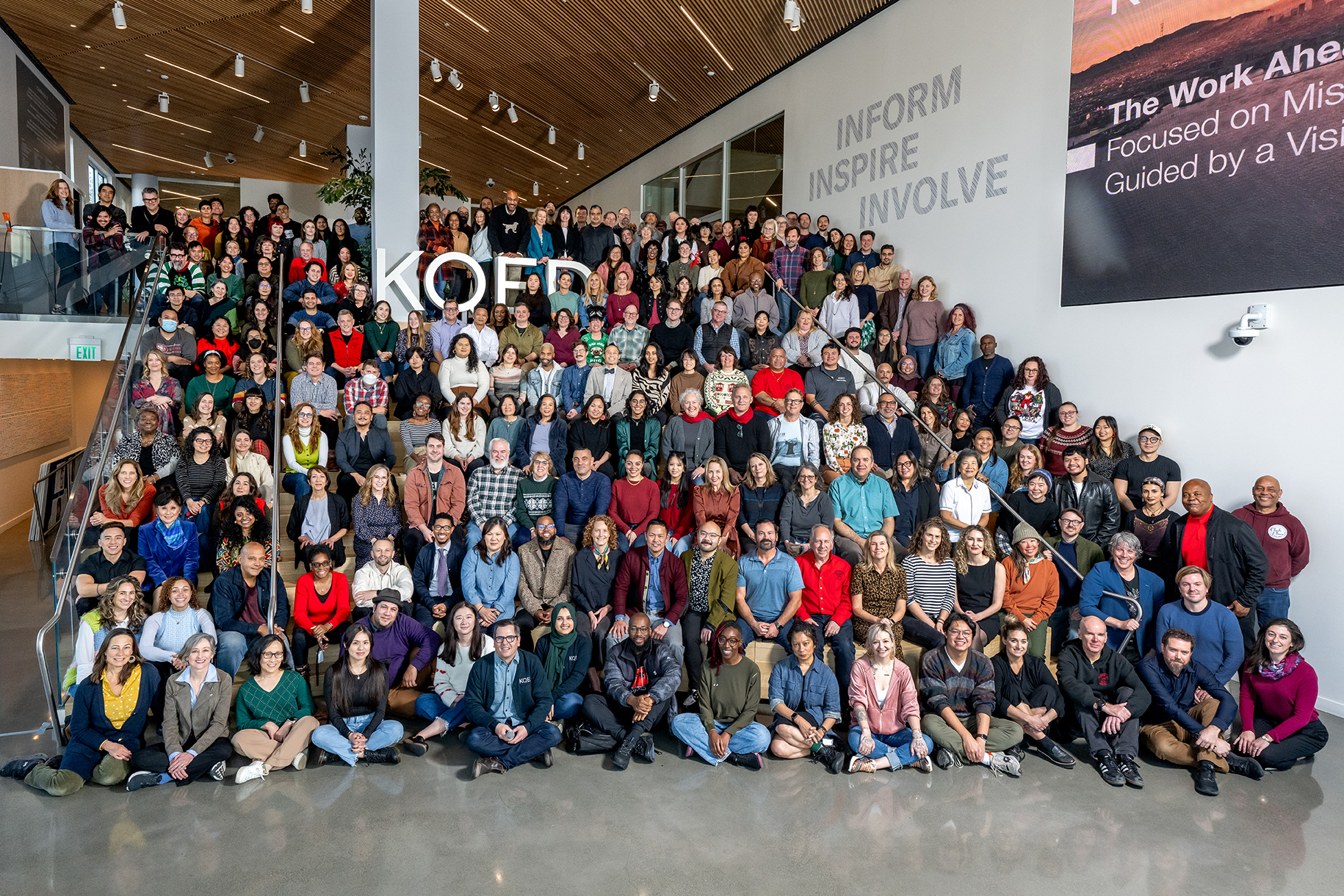
KQED: Representing our Community
KQED seeks to reflect the Bay Area with its outreach and development efforts, and support a culture of belonging, equity and curiosity. We believe that reflecting our community makes KQED’s content, events and other programs exhibit a shared sense of place for our Bay Area communities. While we are committed to broad outreach and fostering an inclusive workplace, all hiring and promotion decisions are based on qualifications, skills, and experience; ensuring that the strongest candidate is selected for each role.
Recruiting and Hiring
In FY25, we strengthened our outreach and recruitment practices to ensure that candidates see inclusion and curiosity as central to KQED’s culture. All applicants are asked:
KQED envisions a public media organization with a culture rich in inclusion and curiosity. An inclusive culture helps us attract and retain top talent and create a more dynamic work environment. Cultivating curiosity means encouraging our employees to ask questions, actively listen, engage in meaningful conversations, participate in new experiences and understand the world from others’ viewpoints. Share with us how you would contribute to advancing inclusion and curiosity at KQED.
Highlights from this year include:
- Expanding our talent pipeline through participation in more than a dozen career and networking fairs across the Bay Area.
- Positioning KQED as an employer of choice by clearly communicating our values of inclusion and curiosity in every job posting.
- Deepening partnerships with diversity-focused journalism and career programs, broadening awareness of opportunities at KQED and reinforcing our commitment to accessible pathways into media careers.
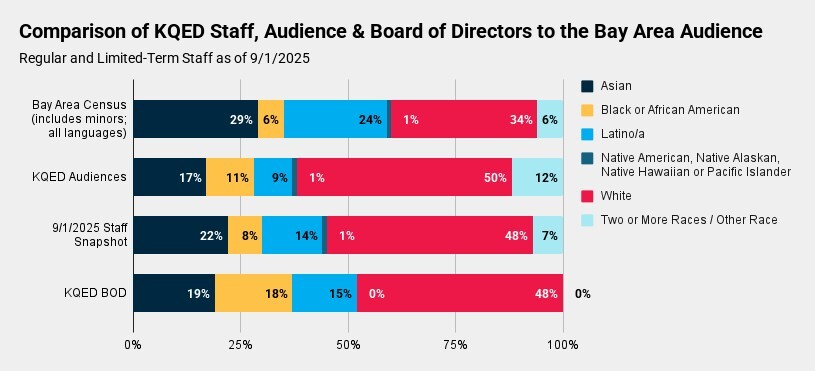
Note: The graph above reflects KQED’s staff race and ethnic representation in the context of the broad demographic categories recognized by the federal government.
Promotions and Leadership Roles
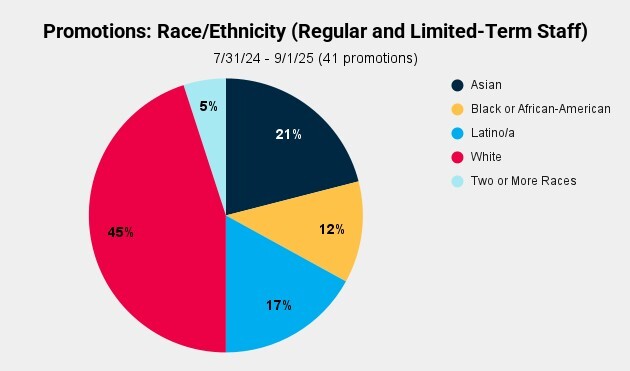
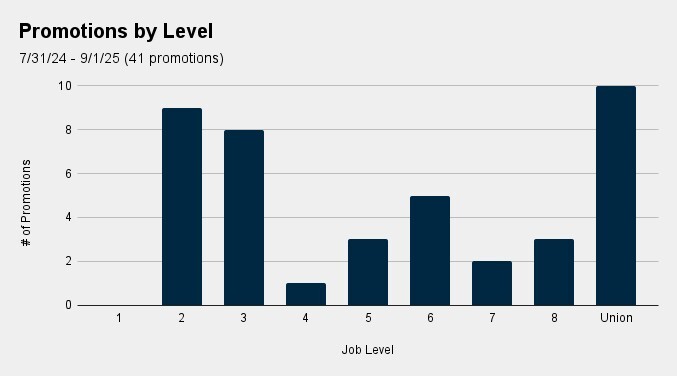
KQED has made sustained efforts to ensure transparency in the promotion process, resulting in more equitable advancement opportunities across the organization. In FY25, this work is reflected in the data: 64% of promotions went to employees identifying as female and 36% to male employees. Several of these promotions were offered to interns who successfully transitioned into on-call or regular staff positions, strengthening pathways into careers at KQED.
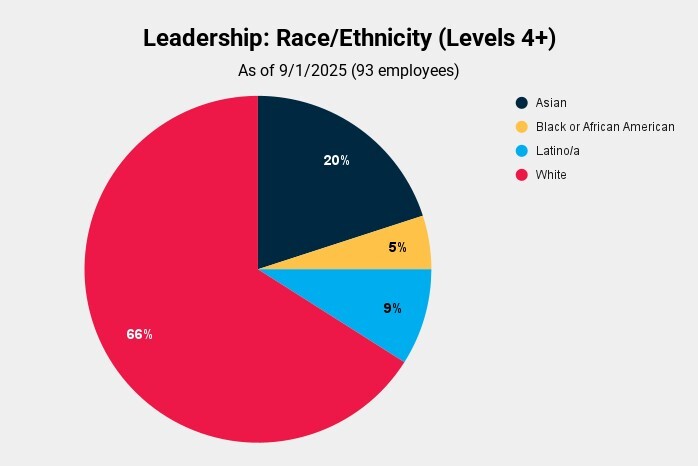
These charts show the racial and ethnic composition of staff receiving promotions as well as employees in leadership roles (levels 4 and above). Together, they highlight how our internal practices create opportunities for advancement that better reflect the Bay Area community.
Internship Programs
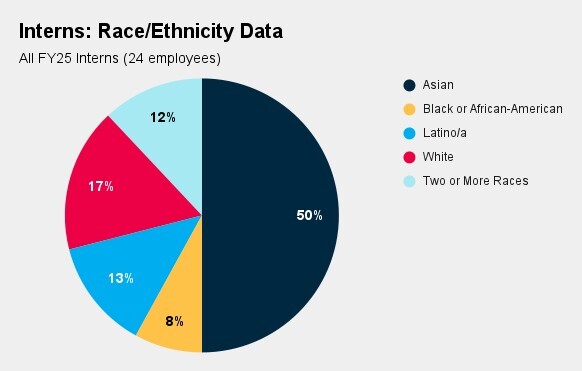
KQED continues to invest in a robust, fully paid internship program that creates meaningful entry points into public media. Interns are placed across departments — from News and Audience Development to Engineering and Membership — contributing directly to KQED’s work while gaining professional experience.
In FY25, KQED strengthened these pathways by:
- Offering internships across multiple departments, ensuring opportunities in both content and operational roles.
- Expanding visibility through participation in more than half a dozen career and internship fairs, reaching students across Bay Area colleges and universities.
- Posting widely across national and regional job boards, broadening access for early-career professionals from diverse backgrounds.
Embedding equity principles into all training and development opportunities, ensuring our internships reduce barriers and foster fair treatment.
Multigenerational Workforce
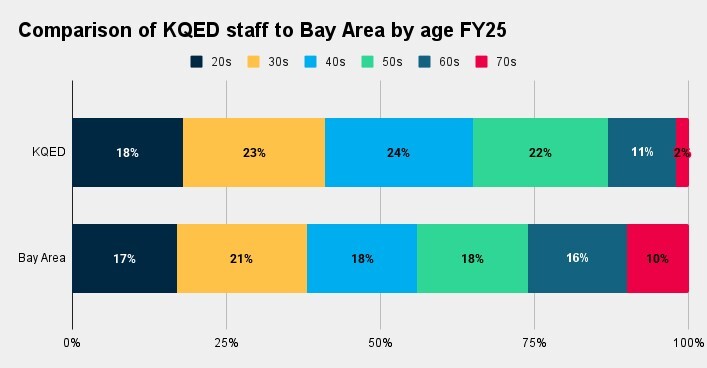
KQED’s workforce reflects a multigenerational mix of employees, with staff contributing perspectives from early-career professionals to those with decades of experience. This diversity in age strengthens our culture and helps us design programs, benefits, and development opportunities that meet employees where they are in their careers and lives.
KQED Live Brings Bay Area’s Diverse and Distinctive Communities Together

KQED’s event program, KQED Live, is rooted in the democratic value of assembly—of gathering individuals with distinct cultures and identities on common ground to chart a shared destiny. In this vein, event programming at KQED continues to prioritize creating and promoting spaces where diverse Bay Area communities can articulate their lived experiences and express the cultures that ground their visions of collective flourishing. With nearly 60% of events created in partnership with nonprofit community and cultural organizations, KQED Live continues to produce a wide-ranging assortment of events that showcase our region’s diverse communities and talents.
Fiscal year 2025 audience data shows that KQED Live continues to represent one of our most diverse audiences, with a 47% plurality of attendees identifying as BIPOC—an increase over last year. We also saw a 45% growth in audiences aged 44 and younger. This reflects progress on our goal to make KQED Live programming more representative of the Bay Area. Moving forward, KQED Live will continue this work by continuing to expand the proportion of our events developed with community partners, increasing the number of kid-friendly events and events produced in counties outside of San Francisco, and launch qualitative surveying to better understand what events can do to help widen a sense of belonging in the Bay Area.
KQED Live Audience Demographic Data
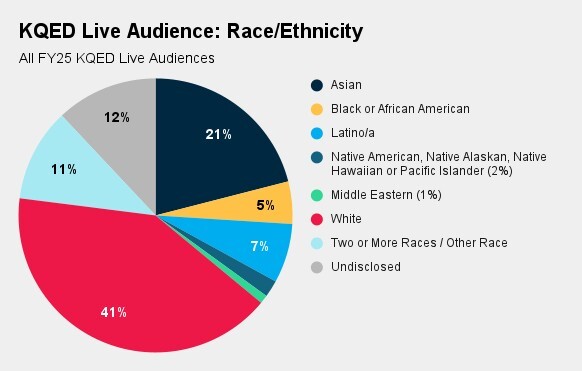
Note: The graph above reflects KQED Live audience’s race and ethnic representation in the context of the broad demographic categories recognized by the federal government
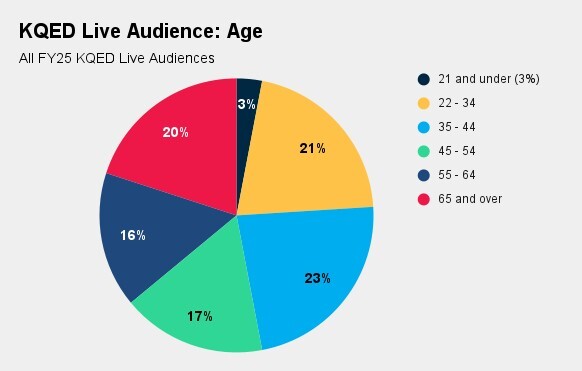
In fiscal year 2025, KQED’s event space featured a vibrant lineup of live storytelling, artistic performances, and participatory workshops. These programs highlighted the Bay Area’s distinctive mosaic of community voices and cultural expressions – from mural painting and vernacular dance styles, to spoken word, comedy and artisanal crafts – offering audiences opportunities to connect across perspectives and creative practices.
In the arts, this year’s KQED Live programming celebrated the diversity of local Latinx musical traditions with cumbia dance lessons, a salsa night, a banda music showstopper, a backyard concert with Accíon Latina, and a new opera infused with ranchera from artist San Cha. Programming also prioritized expressions of Black and brown creativity and joy with an immersive look at the Bay Area’s ballroom scene with “Oakland to All,” a teen poetry slam with Youth Speaks, a panel and evening of choreographic selections with the artists behind Alonzo King LINES Ballet, and an emerging talent competition for music and hip hop artists hosted and headlined by Vallejo’s native son and breakout star LaRussell.
Meanwhile, KQED Live continued to expand engagement with AAPI communities by focusing on intergenerational stories and traditions with events such as the return of “Hella Asian,” a multimedia storytelling show with the Asian American Journalists Association SF Bay Area chapter; programs looking at the history and legacy of of Asian American activism in the Bay Area and at the role that mahjong plays in gathering and memory-making for Asian families, with host Cecilia Lei; showcases of local Pacific Islander dance and storymakers with Pacific Islands Together and Nā Lei Hulu i ka Wēkiu; and a partnership with the Chinese Culture Center of San Francisco for a special Chinese New Year Parade viewing party from the Portsmouth Square Bridge.
At KQED Live audiences got to experience how culture strengthens by gathering for a meal with culinary events such as our panel and tasting event featuring some of the region’s most accomplished Black food and wine entrepreneurs. Hosted by Fresh Glass’s Cassandra Schaeg, our food “showdown” series highlighting the Bay Area’s cross-cultural takes on Latinx culinary comfort staples like burritos, salsa, and empanadas; and our look at how Middle Eastern American communities in the Bay preserve and play on traditional Levantine flavors.
And family-friendly programming and providing literacy resources remained a core engagement priority with KQED Live collaborating with partners at regional library and parks departments on large-scale community events such “Día de los Niños / Día de los Libros,” “Family Fun at VIVA Parks,” and “Afternoon of Ideas,” bringing PBS KIDS characters, distributing bilingual children’s books and other literacy resources, and creating spaces for free enrichment activities for all ages.
— Ryan Davis, Executive Director, KQED Live
KQED Leans Into Engagement with Latinx Audiences
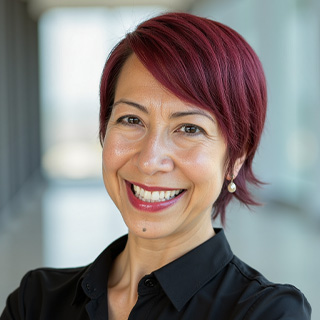
In 2023 KQED launched a three-year Latinx Initiative to better serve Bay Area Latinx audiences, aligning our service with the region’s demographics, strengthening representation and building learnings to inform content, events and community partnerships.
In this initiative’s final year, we focused on deepening impact through targeted projects:
- Spanish-Language Voter Guide: Expanded outreach and distribution, reaching Bay Area residents through community partners, cultural events, newsletter promotions, and in-person distribution. Social media, influencer partnerships, and tabling events ensured access to critical election information.
- ¡K Onda! Newsletter: Continued growth of KQED’s digital offering, connecting Latinx audiences to trusted news, arts, and culture content. The newsletter celebrates and elevates the voices of Latinx changemakers in the Bay Area, with a monthly bilingual digital offering connecting audiences to trusted news, arts, and culture content while exploring the Latino experience through profiles of community leaders and coverage of topics ranging from politics to cultural preservation.
- KQED News launched “KQED en Español” during the COVID-19 pandemic, and as part of the Latinx Initiative, we continued our commitment to serving Spanish-speaking audiences through community-centered journalism that demonstrates understanding of cultural heritage, with research showing audiences want high-quality English and Spanish content that reflects their full identities, including bilingual programming that respects both American and heritage experiences.
- Live Events: Built on the success of KQED Live, with culturally rooted programs that amplified Latinx voices and drew younger, more diverse audiences. (See KQED Live section above for more detail.)
- Community Partnerships: Strengthened relationships with more than 90 local organizations through the Community Advisory Panel (CAP), expanding distribution, promotion and shared visibility.
Impact & Learnings
Over three years, the effort demonstrated both progress and lessons that will shape KQED’s future audience strategy:
- Resources Matter: Dedicated staff and budget are essential for consistent outreach and timely execution.
- Trust is Built Over Time: Success of KQED Live Latinx programming underscored that strong relationships with community partners and community representation create deeper engagement.
- Cross-Department Alignment is Key: Where content, product, and audience teams worked together, outcomes were stronger and more sustainable.
Looking Ahead
While the formal initiative concludes, KQED’s commitment does not. The learnings and relationships built will inform how we serve all communities across the Bay Area.
— Vanessa Merina, Vice President of Strategy & Communications
Source Tracking

Local news and storytelling are central to what we do at KQED. We aim to provide a holistic look at the celebrations, news, and issues that center all the voices of the Bay Area. With this goal in mind KQED began a comprehensive initiative in 2021 to better capture data about the sources our audiences see and hear in the journalism we make.
Since that time, KQED has tracked tens of thousands of sources, growing year-over-year. This demonstrates that source tracking is now a consistent practice in our newsroom, giving us a stronger baseline for understanding representation across the voices we elevate.
Moving forward, this data will serve as the basis for a new data review initiative we will be embarking on with each program. These sessions will allow our journalists to look retroactively at their own source-tracking data—acknowledging where we’ve made progress, opportunities we see, and how those patterns align with both the organizational strategic plan and accountability and learning measures rooted in equity, inclusion, and curiosity. By turning data into dialogue, the meetings are designed to highlight areas of success, identify potential for more inclusive storytelling, and deepen cultural understanding.
The ultimate goal is to use both real-time and retroactive insights to move closer to a shared sense of place for Bay Area communities—helping audiences see themselves in KQED’s journalism while also learning more about one another.
– Ki Sung, Managing Editor, KQED News
Inclusive Guidance & Programming
Brand Guidelines
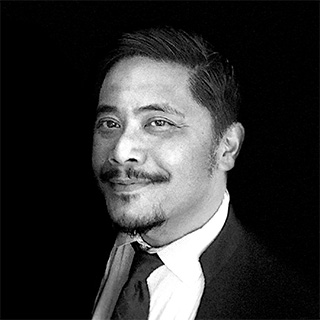
At KQED, every choice we make—from the words we use to the images we share—is a reflection of the communities we serve. This year, we added guidelines that intentionally focus on equity, inclusion and accessibility to our brand toolkit These updates provide our staff with tools to communicate in ways that are respectful, authentic, and welcoming, ensuring that our work is accessible to all.
The guidelines are organized around key principles:
- Language Guidance: Using language that respects and welcomes people as they are including evolving language around identities and avoids stereotypes.
- Visual Inclusivity: Ensuring our imagery authentically captures the richness of Bay Area life.
- Culturally Expansive: Engaging with communities directly to portray their stories with respect and accuracy.
- Digital Accessibility: Following best practices so that our websites, apps and digital content work seamlessly with assistive technologies.
- Communication Access: Ensuring our materials, from newsletters to on-air content, are understandable and available to everyone.
For our audiences, this means that every interaction with KQED—whether through our news, cultural programming, live events, digital platforms or day-to-day communications—will reflect a commitment to building a shared sense of place for Bay Area residents. By embedding these principles into everything we do, we aim to maintain trust and create more meaningful connections with the people we serve. And importantly, these guidelines are not a finish line but a foundation we will continue to build on as our Bay Area communities grow and evolve.
— Zaldy Serrano, Creative Director, KQED Creative
Meredith’s Must-Sees: Connecting Audiences to KQED TV

Launched in March 2025, Meredith’s Must-Sees is a monthly guide to KQED programming curated by Senior Director of TV Programming, Meredith Speight. The page, paired with sizzle reels airing on Channel 9, has become a trusted way for audiences to discover programs that celebrate Bay Area diversity while building stronger connections to our content. Over the first sixmonths, the page has steadily grown, shaped by targeted updates that improved visibility and deepened engagement.
Total Views
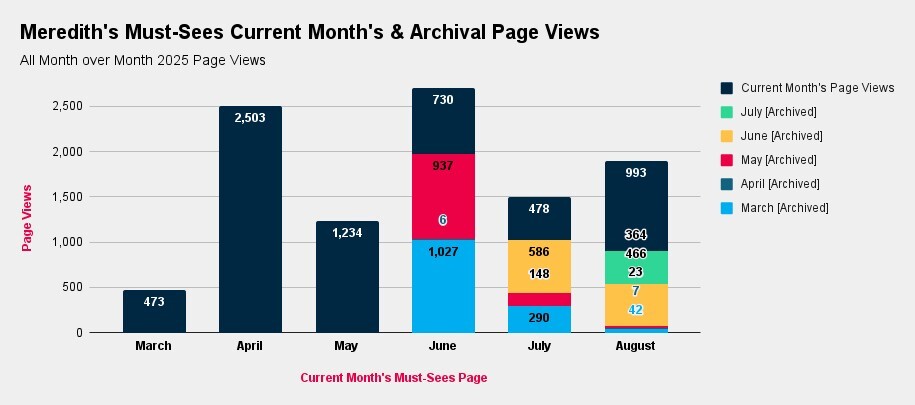
Views of the Must-Sees page climbed quickly after launch, peaking at 2,503 in April following the addition of a direct promo link in KQED’s main navigation. In May, LinkedIn promotion helped maintain visibility, while in June we introduced archive links at the bottom of the current month’s page. This gave audiences the option to revisit prior highlights, and the impact was immediate: more than 1,000 people revisited the March Must-Sees page from the June page alone, along with hundreds more exploring April and May. From that point forward, the chart shows not just how many people viewed the current month’s page, but also how many dug into archived pages during the same period—clear evidence that audiences are finding value in the full collection, not just what’s new.
By July, we layered in Membership and Passport promos, which helped sustain steady engagement even as current month traffic dipped to 478 views. August closed with just under 1,000 current month views, but importantly, nearly 900 additional views went to archived content. In fact, more than a third of August’s total Must-Sees traffic came from people exploring past highlights, signaling that the archive has become an enduring entry point into KQED programming. This combination of current and archived views suggests a healthy balance of discovery and long-tail engagement, building a consistent audience base over time.
Average Engagement Time
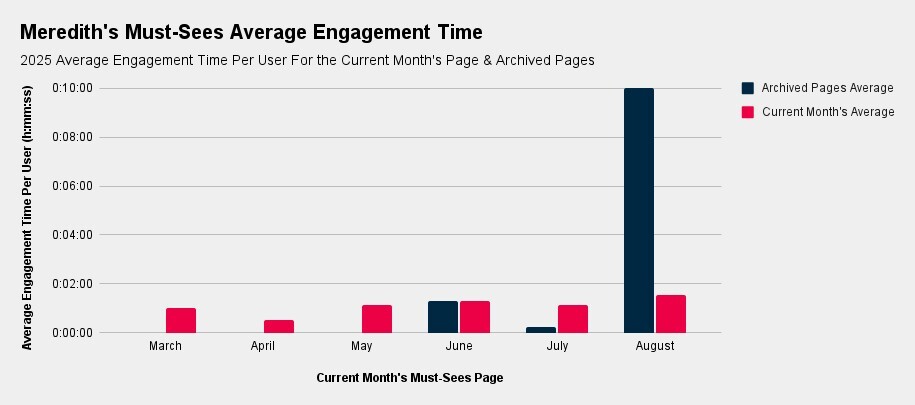
Audiences are not just visiting the page—they are spending more time with it. While April’s surge in traffic brought the average down to 0:31 per visit, subsequent updates steadily improved engagement. Adding archive links in June encouraged deeper exploration, pushing time on page to 1:29. By August, average engagement reached its highest point at 1:32, showing that viewers are forming stronger habits and staying longer with each visit.
Click-throughs
The clearest signal of deeper audience connection came in July and August, when clicks on the page rose to seven per month, compared to only one or two clicks in earlier months. These clicks represent when audiences, through links within the page, explored individual program details, revisited earlier months’ highlights or connected directly with KQED through membership opportunities—clear indicators of deeper engagement beyond discovery. This growth directly followed the integration of membership and Passport promos, which provided clearer opportunities for audiences to take action. The steady clickthrough in August remaining at 7 clicks per month and 2 click average total for archival pages listed at the bottom of the current month’s page, shows that Must-Sees is evolving from a discovery page into a driver of deeper participation.
Looking Ahead
The first six months of Meredith’s Must-Sees demonstrate both growth and promise. With targeted updates—navigation placement, social promotion, archive integration, and membership tie-ins—the page has become a reliable entry point to KQED programming. As we continue refining its promotion and features, Must-Sees will remain a powerful bridge between KQED’s storytelling and the diverse audiences we serve.
— Meredith Speight, Senior Director, TV Programming & Kimberly Low, Lead Product Designer
Conclusion
Thank you for reading our 2025 Community Representation & Workplace Belonging Report. This year, our focus is on strategy—an intentional effort to move from vision to action. Strategy, for us, means creating the frameworks, language, and practices that allow us to embed fair, inclusive, and curious principles into every layer of KQED.
By aligning our internal culture with the needs of the Bay Area, we strengthen both our staff and our service. We are building a foundation where belonging is not just encouraged but expected, where curiosity fuels learning, and where equity shapes how we tell stories, design programs, and partner with our communities.
Looking ahead, our representation, equity, inclusion, and curiosity efforts will continue to take shape through an equitable, presence-focused, inclusive, and curious lens. This work is designed to provide opportunities for shared learning, reflection, and celebration—deepening our shared sense of place across the region we call home.
Our commitment is grounded in purpose. With clear direction and purposeful action, we are moving forward not just with optimism but with a roadmap—one that ensures when our community looks to KQED, they see themselves, their neighbors, and the future we are building together.
We invite you to join us in this next chapter of our journey, as we continue weaving strategy, belonging, and impact into everything we do.
—Candace Rucker, Director of Diversity, Equity & Inclusion
Notes:
- You may see inconsistent use of terms in some places (for example, Latinx versus Latino) in the above report. In most cases, we’ve used language that we feel best represents our audiences, but some language reflects the categories recognized by the federal government or those recognized by a specific tracking platform.