See the unseen at the very edge of our visible world. Get a new perspective on our place in the universe and meet extraordinary new friends. Explore big scientific mysteries by going incredibly small with Deep Look, a ultra-HD (4K) wildlife & nature series created by KQED San Francisco and presented by PBS Digital Studios.
Body Snatchers: Four of Nature’s Freakiest Parasites
Sep 29
Extreme Makeovers Aren’t Just a Human Thing
Aug 26
These Animals May Sting You, Spray You With Stinky Fluid or Explode In Your Face
Jul 28
Copycats! This Ant Is Surrounded By Imposters
Jun 30
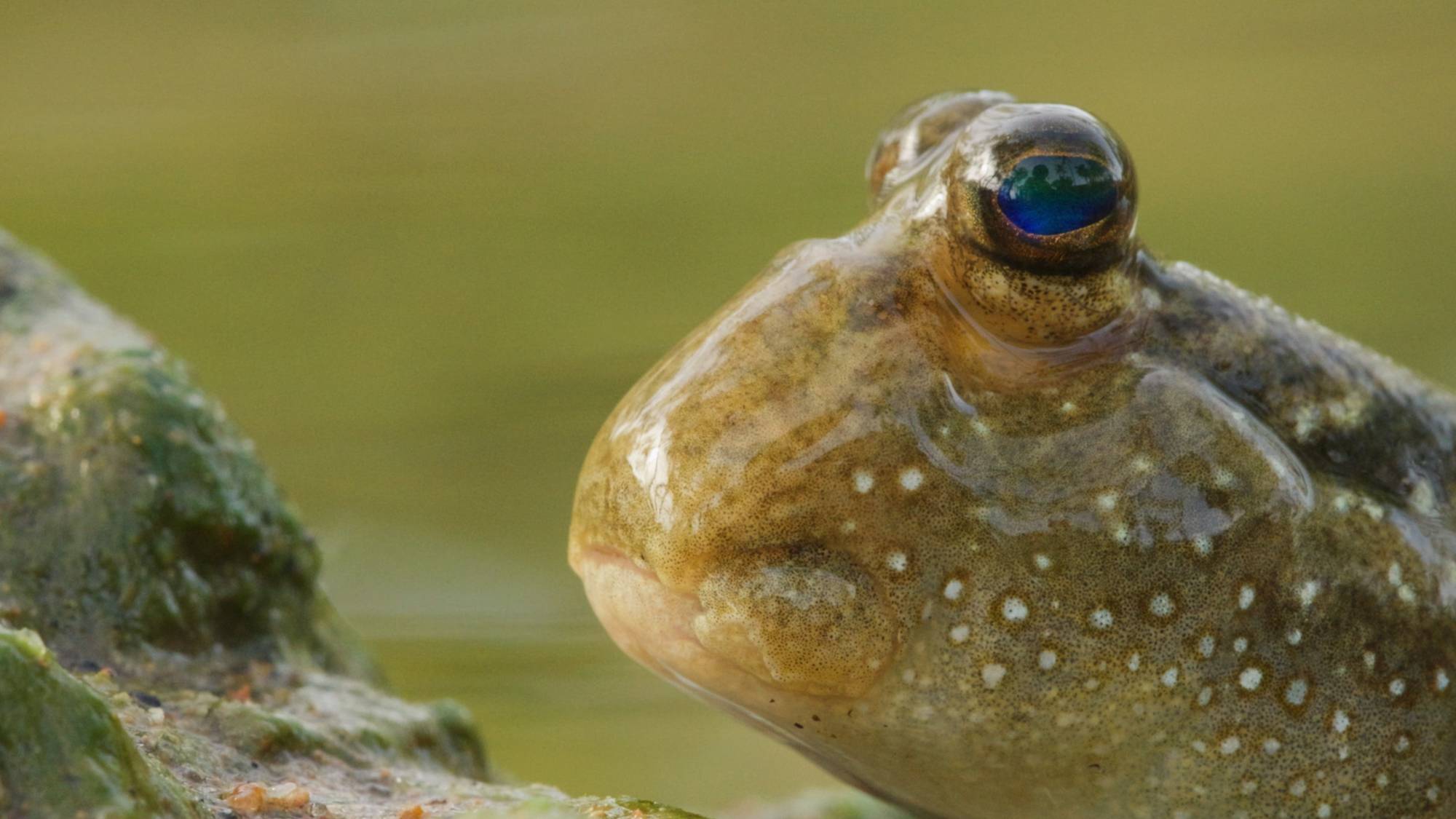
This Fish Walks on Land and Leaps for Love
Jun 02
The Slimy, Sticky World of Banana Slug Courtship
May 12
Release The Brood! Roly Poly Birthing Is Intense
Apr 21
Spotted Lanternflies are The Ultimate Party Crashers
Mar 31
Why Do Animals Glow? The Science of Bioluminescence
Mar 10
Why Mammals Gave Up on Laying Eggs
Funding for Deep Look is provided in part by PBS Digital Studios.
Player sponsored by
window.__IS_SSR__=true
window.__INITIAL_STATE__={
"attachmentsReducer": {
"audio_0": {
"type": "attachments",
"id": "audio_0",
"imgSizes": {
"kqedFullSize": {
"file": "https://ww2.kqed.org/news/wp-content/themes/KQED-unified/img/audio_bgs/background0.jpg"
}
}
},
"audio_1": {
"type": "attachments",
"id": "audio_1",
"imgSizes": {
"kqedFullSize": {
"file": "https://ww2.kqed.org/news/wp-content/themes/KQED-unified/img/audio_bgs/background1.jpg"
}
}
},
"audio_2": {
"type": "attachments",
"id": "audio_2",
"imgSizes": {
"kqedFullSize": {
"file": "https://ww2.kqed.org/news/wp-content/themes/KQED-unified/img/audio_bgs/background2.jpg"
}
}
},
"audio_3": {
"type": "attachments",
"id": "audio_3",
"imgSizes": {
"kqedFullSize": {
"file": "https://ww2.kqed.org/news/wp-content/themes/KQED-unified/img/audio_bgs/background3.jpg"
}
}
},
"audio_4": {
"type": "attachments",
"id": "audio_4",
"imgSizes": {
"kqedFullSize": {
"file": "https://ww2.kqed.org/news/wp-content/themes/KQED-unified/img/audio_bgs/background4.jpg"
}
}
},
"placeholder": {
"type": "attachments",
"id": "placeholder",
"imgSizes": {
"thumbnail": {
"file": "https://cdn.kqed.org/wp-content/uploads/2024/12/KQED-Default-Image-816638274-2000x1333-1-160x107.jpg",
"width": 160,
"height": 107,
"mimeType": "image/jpeg"
},
"medium": {
"file": "https://cdn.kqed.org/wp-content/uploads/2024/12/KQED-Default-Image-816638274-2000x1333-1-800x533.jpg",
"width": 800,
"height": 533,
"mimeType": "image/jpeg"
},
"medium_large": {
"file": "https://cdn.kqed.org/wp-content/uploads/2024/12/KQED-Default-Image-816638274-2000x1333-1-768x512.jpg",
"width": 768,
"height": 512,
"mimeType": "image/jpeg"
},
"large": {
"file": "https://cdn.kqed.org/wp-content/uploads/2024/12/KQED-Default-Image-816638274-2000x1333-1-1020x680.jpg",
"width": 1020,
"height": 680,
"mimeType": "image/jpeg"
},
"1536x1536": {
"file": "https://cdn.kqed.org/wp-content/uploads/2024/12/KQED-Default-Image-816638274-2000x1333-1-1536x1024.jpg",
"width": 1536,
"height": 1024,
"mimeType": "image/jpeg"
},
"fd-lrg": {
"file": "https://cdn.kqed.org/wp-content/uploads/2024/12/KQED-Default-Image-816638274-2000x1333-1-1536x1024.jpg",
"width": 1536,
"height": 1024,
"mimeType": "image/jpeg"
},
"fd-med": {
"file": "https://cdn.kqed.org/wp-content/uploads/2024/12/KQED-Default-Image-816638274-2000x1333-1-1020x680.jpg",
"width": 1020,
"height": 680,
"mimeType": "image/jpeg"
},
"fd-sm": {
"file": "https://cdn.kqed.org/wp-content/uploads/2024/12/KQED-Default-Image-816638274-2000x1333-1-800x533.jpg",
"width": 800,
"height": 533,
"mimeType": "image/jpeg"
},
"post-thumbnail": {
"file": "https://cdn.kqed.org/wp-content/uploads/2024/12/KQED-Default-Image-816638274-2000x1333-1-672x372.jpg",
"width": 672,
"height": 372,
"mimeType": "image/jpeg"
},
"twentyfourteen-full-width": {
"file": "https://cdn.kqed.org/wp-content/uploads/2024/12/KQED-Default-Image-816638274-2000x1333-1-1038x576.jpg",
"width": 1038,
"height": 576,
"mimeType": "image/jpeg"
},
"xxsmall": {
"file": "https://cdn.kqed.org/wp-content/uploads/2024/12/KQED-Default-Image-816638274-2000x1333-1-160x107.jpg",
"width": 160,
"height": 107,
"mimeType": "image/jpeg"
},
"xsmall": {
"file": "https://cdn.kqed.org/wp-content/uploads/2024/12/KQED-Default-Image-816638274-2000x1333-1-672x372.jpg",
"width": 672,
"height": 372,
"mimeType": "image/jpeg"
},
"small": {
"file": "https://cdn.kqed.org/wp-content/uploads/2024/12/KQED-Default-Image-816638274-2000x1333-1-672x372.jpg",
"width": 672,
"height": 372,
"mimeType": "image/jpeg"
},
"xlarge": {
"file": "https://cdn.kqed.org/wp-content/uploads/2024/12/KQED-Default-Image-816638274-2000x1333-1-1020x680.jpg",
"width": 1020,
"height": 680,
"mimeType": "image/jpeg"
},
"full-width": {
"file": "https://cdn.kqed.org/wp-content/uploads/2024/12/KQED-Default-Image-816638274-2000x1333-1-1920x1280.jpg",
"width": 1920,
"height": 1280,
"mimeType": "image/jpeg"
},
"guest-author-32": {
"file": "https://cdn.kqed.org/wp-content/uploads/2025/01/KQED-Default-Image-816638274-1333x1333-1-160x160.jpg",
"width": 32,
"height": 32,
"mimeType": "image/jpeg"
},
"guest-author-50": {
"file": "https://cdn.kqed.org/wp-content/uploads/2025/01/KQED-Default-Image-816638274-1333x1333-1-160x160.jpg",
"width": 50,
"height": 50,
"mimeType": "image/jpeg"
},
"guest-author-64": {
"file": "https://cdn.kqed.org/wp-content/uploads/2025/01/KQED-Default-Image-816638274-1333x1333-1-160x160.jpg",
"width": 64,
"height": 64,
"mimeType": "image/jpeg"
},
"guest-author-96": {
"file": "https://cdn.kqed.org/wp-content/uploads/2025/01/KQED-Default-Image-816638274-1333x1333-1-160x160.jpg",
"width": 96,
"height": 96,
"mimeType": "image/jpeg"
},
"guest-author-128": {
"file": "https://cdn.kqed.org/wp-content/uploads/2025/01/KQED-Default-Image-816638274-1333x1333-1-160x160.jpg",
"width": 128,
"height": 128,
"mimeType": "image/jpeg"
},
"detail": {
"file": "https://cdn.kqed.org/wp-content/uploads/2025/01/KQED-Default-Image-816638274-1333x1333-1-160x160.jpg",
"width": 160,
"height": 160,
"mimeType": "image/jpeg"
},
"kqedFullSize": {
"file": "https://cdn.kqed.org/wp-content/uploads/2024/12/KQED-Default-Image-816638274-2000x1333-1.jpg",
"width": 2000,
"height": 1333
}
}
},
"root-site_15731": {
"type": "attachments",
"id": "root-site_15731",
"meta": {
"index": "attachments_1716263798",
"site": "root-site",
"id": "15731",
"found": true
},
"parent": 15489,
"imgSizes": {
"twentyfourteen-full-width": {
"file": "https://cdn.kqed.org/wp-content/uploads/2020/02/DL_413Caterpillars_MONARCH_CATERPILLAR_WEAVES_SILK_PAD_WS-1038x576.jpg",
"width": 1038,
"mimeType": "image/jpeg",
"height": 576
},
"thumbnail": {
"file": "https://cdn.kqed.org/wp-content/uploads/2020/02/DL_413Caterpillars_MONARCH_CATERPILLAR_WEAVES_SILK_PAD_WS-160x90.jpg",
"width": 160,
"mimeType": "image/jpeg",
"height": 90
},
"post-thumbnail": {
"file": "https://cdn.kqed.org/wp-content/uploads/2020/02/DL_413Caterpillars_MONARCH_CATERPILLAR_WEAVES_SILK_PAD_WS-672x372.jpg",
"width": 672,
"mimeType": "image/jpeg",
"height": 372
},
"kqedFullSize": {
"file": "https://cdn.kqed.org/wp-content/uploads/2020/02/DL_413Caterpillars_MONARCH_CATERPILLAR_WEAVES_SILK_PAD_WS.jpg",
"width": 1920,
"height": 1080
},
"large": {
"file": "https://cdn.kqed.org/wp-content/uploads/2020/02/DL_413Caterpillars_MONARCH_CATERPILLAR_WEAVES_SILK_PAD_WS-1020x574.jpg",
"width": 1020,
"mimeType": "image/jpeg",
"height": 574
},
"full-width": {
"file": "https://cdn.kqed.org/wp-content/uploads/2020/02/DL_413Caterpillars_MONARCH_CATERPILLAR_WEAVES_SILK_PAD_WS-1920x1080.jpg",
"width": 1920,
"mimeType": "image/jpeg",
"height": 1080
},
"medium": {
"file": "https://cdn.kqed.org/wp-content/uploads/2020/02/DL_413Caterpillars_MONARCH_CATERPILLAR_WEAVES_SILK_PAD_WS-800x450.jpg",
"width": 800,
"mimeType": "image/jpeg",
"height": 450
},
"medium_large": {
"file": "https://cdn.kqed.org/wp-content/uploads/2020/02/DL_413Caterpillars_MONARCH_CATERPILLAR_WEAVES_SILK_PAD_WS-768x432.jpg",
"width": 768,
"mimeType": "image/jpeg",
"height": 432
}
},
"publishDate": 1582143762,
"modified": 1582143762,
"caption": null,
"description": null,
"title": "DL_413Caterpillars_MONARCH_CATERPILLAR_WEAVES_SILK_PAD_WS",
"credit": null,
"status": "inherit",
"altTag": null,
"isLoading": false,
"fetchFailed": false
},
"science_2002428": {
"type": "attachments",
"id": "science_2002428",
"meta": {
"index": "attachments_1716263798",
"site": "science",
"id": "2002428",
"found": true
},
"title": "DL1014_Varroa_mite_on_honeybee_pupa",
"publishDate": 1792713395,
"status": "inherit",
"parent": 2002423,
"modified": 1792713422,
"caption": null,
"credit": null,
"altTag": null,
"description": null,
"imgSizes": {
"medium": {
"file": "https://cdn.kqed.org/wp-content/uploads/sites/35/2026/10/DL1014_Varroa_mite_on_honeybee_pupa-96203b2d-2000x1125.jpg",
"width": 2000,
"height": 1125,
"mimeType": "image/jpeg"
},
"large": {
"file": "https://cdn.kqed.org/wp-content/uploads/sites/35/2026/10/DL1014_Varroa_mite_on_honeybee_pupa-96203b2d-2000x1125.jpg",
"width": 2000,
"height": 1125,
"mimeType": "image/jpeg"
},
"thumbnail": {
"file": "https://cdn.kqed.org/wp-content/uploads/sites/35/2026/10/DL1014_Varroa_mite_on_honeybee_pupa-96203b2d-160x90.jpg",
"width": 160,
"height": 90,
"mimeType": "image/jpeg"
},
"medium_large": {
"file": "https://cdn.kqed.org/wp-content/uploads/sites/35/2026/10/DL1014_Varroa_mite_on_honeybee_pupa-96203b2d-768x432.jpg",
"width": 768,
"height": 432,
"mimeType": "image/jpeg"
},
"1536x1536": {
"file": "https://cdn.kqed.org/wp-content/uploads/sites/35/2026/10/DL1014_Varroa_mite_on_honeybee_pupa-96203b2d-1536x864.jpg",
"width": 1536,
"height": 864,
"mimeType": "image/jpeg"
},
"2048x2048": {
"file": "https://cdn.kqed.org/wp-content/uploads/sites/35/2026/10/DL1014_Varroa_mite_on_honeybee_pupa-96203b2d-2048x1152.jpg",
"width": 2048,
"height": 1152,
"mimeType": "image/jpeg"
},
"post-thumbnail": {
"file": "https://cdn.kqed.org/wp-content/uploads/sites/35/2026/10/DL1014_Varroa_mite_on_honeybee_pupa-96203b2d-672x372.jpg",
"width": 672,
"height": 372,
"mimeType": "image/jpeg"
},
"twentyfourteen-full-width": {
"file": "https://cdn.kqed.org/wp-content/uploads/sites/35/2026/10/DL1014_Varroa_mite_on_honeybee_pupa-96203b2d-1038x576.jpg",
"width": 1038,
"height": 576,
"mimeType": "image/jpeg"
},
"full-width": {
"file": "https://cdn.kqed.org/wp-content/uploads/sites/35/2026/10/DL1014_Varroa_mite_on_honeybee_pupa-96203b2d-2000x1125.jpg",
"width": 2000,
"height": 1125,
"mimeType": "image/jpeg"
},
"npr-cds-wide": {
"file": "https://cdn.kqed.org/wp-content/uploads/sites/35/2026/10/DL1014_Varroa_mite_on_honeybee_pupa-96203b2d-1200x675.jpg",
"width": 1200,
"height": 675,
"mimeType": "image/jpeg"
},
"npr-cds-square": {
"file": "https://cdn.kqed.org/wp-content/uploads/sites/35/2026/10/DL1014_Varroa_mite_on_honeybee_pupa-96203b2d-600x600.jpg",
"width": 600,
"height": 600,
"mimeType": "image/jpeg"
},
"kqedFullSize": {
"file": "https://cdn.kqed.org/wp-content/uploads/sites/35/2026/10/DL1014_Varroa_mite_on_honeybee_pupa-96203b2d-scaled.jpg",
"width": 2560,
"height": 1440
}
},
"isLoading": false,
"fetchFailed": false
},
"science_2002062": {
"type": "attachments",
"id": "science_2002062",
"meta": {
"index": "attachments_1716263798",
"site": "science",
"id": "2002062",
"found": true
},
"title": "DL1305_Extreme_Makeovers_Still004",
"publishDate": 1790270553,
"status": "inherit",
"parent": 2002059,
"modified": 1790270553,
"caption": null,
"credit": null,
"altTag": null,
"description": null,
"imgSizes": {
"medium": {
"file": "https://cdn.kqed.org/wp-content/uploads/sites/35/2026/09/DL1305_Extreme_Makeovers_Still004-2000x1125.jpg",
"width": 2000,
"height": 1125,
"mimeType": "image/jpeg"
},
"large": {
"file": "https://cdn.kqed.org/wp-content/uploads/sites/35/2026/09/DL1305_Extreme_Makeovers_Still004-2000x1125.jpg",
"width": 2000,
"height": 1125,
"mimeType": "image/jpeg"
},
"thumbnail": {
"file": "https://cdn.kqed.org/wp-content/uploads/sites/35/2026/09/DL1305_Extreme_Makeovers_Still004-160x90.jpg",
"width": 160,
"height": 90,
"mimeType": "image/jpeg"
},
"medium_large": {
"file": "https://cdn.kqed.org/wp-content/uploads/sites/35/2026/09/DL1305_Extreme_Makeovers_Still004-768x432.jpg",
"width": 768,
"height": 432,
"mimeType": "image/jpeg"
},
"1536x1536": {
"file": "https://cdn.kqed.org/wp-content/uploads/sites/35/2026/09/DL1305_Extreme_Makeovers_Still004-1536x864.jpg",
"width": 1536,
"height": 864,
"mimeType": "image/jpeg"
},
"2048x2048": {
"file": "https://cdn.kqed.org/wp-content/uploads/sites/35/2026/09/DL1305_Extreme_Makeovers_Still004-2048x1152.jpg",
"width": 2048,
"height": 1152,
"mimeType": "image/jpeg"
},
"post-thumbnail": {
"file": "https://cdn.kqed.org/wp-content/uploads/sites/35/2026/09/DL1305_Extreme_Makeovers_Still004-672x372.jpg",
"width": 672,
"height": 372,
"mimeType": "image/jpeg"
},
"twentyfourteen-full-width": {
"file": "https://cdn.kqed.org/wp-content/uploads/sites/35/2026/09/DL1305_Extreme_Makeovers_Still004-1038x576.jpg",
"width": 1038,
"height": 576,
"mimeType": "image/jpeg"
},
"full-width": {
"file": "https://cdn.kqed.org/wp-content/uploads/sites/35/2026/09/DL1305_Extreme_Makeovers_Still004-2000x1125.jpg",
"width": 2000,
"height": 1125,
"mimeType": "image/jpeg"
},
"npr-cds-wide": {
"file": "https://cdn.kqed.org/wp-content/uploads/sites/35/2026/09/DL1305_Extreme_Makeovers_Still004-1200x675.jpg",
"width": 1200,
"height": 675,
"mimeType": "image/jpeg"
},
"npr-cds-square": {
"file": "https://cdn.kqed.org/wp-content/uploads/sites/35/2026/09/DL1305_Extreme_Makeovers_Still004-600x600.jpg",
"width": 600,
"height": 600,
"mimeType": "image/jpeg"
},
"kqedFullSize": {
"file": "https://cdn.kqed.org/wp-content/uploads/sites/35/2026/09/DL1305_Extreme_Makeovers_Still004-scaled.jpg",
"width": 2560,
"height": 1440
}
},
"isLoading": false,
"fetchFailed": false
},
"science_2001760": {
"type": "attachments",
"id": "science_2001760",
"meta": {
"index": "attachments_1716263798",
"site": "science",
"id": "2001760",
"found": true
},
"title": "DL904_vinegaroon_spray1",
"publishDate": 1787249364,
"status": "inherit",
"parent": 2001759,
"modified": 1787253746,
"caption": "Vinegaroon spraying for defense (Mike Seely).",
"credit": null,
"altTag": null,
"description": null,
"imgSizes": {
"thumbnail": {
"file": "https://cdn.kqed.org/wp-content/uploads/sites/35/2026/08/DL904_vinegaroon_spray1-160x90.gif",
"width": 160,
"height": 90,
"mimeType": "image/gif"
},
"npr-cds-square": {
"file": "https://cdn.kqed.org/wp-content/uploads/sites/35/2026/08/DL904_vinegaroon_spray1-600x360.gif",
"width": 600,
"height": 360,
"mimeType": "image/gif"
},
"kqedFullSize": {
"file": "https://cdn.kqed.org/wp-content/uploads/sites/35/2026/08/DL904_vinegaroon_spray1.gif",
"width": 640,
"height": 360
}
},
"isLoading": false,
"fetchFailed": false
},
"science_2001530": {
"type": "attachments",
"id": "science_2001530",
"meta": {
"index": "attachments_1716263798",
"site": "science",
"id": "2001530",
"found": true
},
"title": "DL1303_Ant_Mimics_17",
"publishDate": 1784743549,
"status": "inherit",
"parent": 2001529,
"modified": 1784744055,
"caption": "Green tree ant eating leaf. ",
"credit": "Jordan Dean / KQED",
"altTag": "Green tree ant eating leaf.",
"description": "Green tree ant eating leaf.",
"imgSizes": {
"medium": {
"file": "https://cdn.kqed.org/wp-content/uploads/sites/35/2026/07/DL1303_Ant_Mimics_17-2000x1125.jpg",
"width": 2000,
"height": 1125,
"mimeType": "image/jpeg"
},
"large": {
"file": "https://cdn.kqed.org/wp-content/uploads/sites/35/2026/07/DL1303_Ant_Mimics_17-2000x1125.jpg",
"width": 2000,
"height": 1125,
"mimeType": "image/jpeg"
},
"thumbnail": {
"file": "https://cdn.kqed.org/wp-content/uploads/sites/35/2026/07/DL1303_Ant_Mimics_17-160x90.jpg",
"width": 160,
"height": 90,
"mimeType": "image/jpeg"
},
"medium_large": {
"file": "https://cdn.kqed.org/wp-content/uploads/sites/35/2026/07/DL1303_Ant_Mimics_17-768x432.jpg",
"width": 768,
"height": 432,
"mimeType": "image/jpeg"
},
"1536x1536": {
"file": "https://cdn.kqed.org/wp-content/uploads/sites/35/2026/07/DL1303_Ant_Mimics_17-1536x864.jpg",
"width": 1536,
"height": 864,
"mimeType": "image/jpeg"
},
"2048x2048": {
"file": "https://cdn.kqed.org/wp-content/uploads/sites/35/2026/07/DL1303_Ant_Mimics_17-2048x1152.jpg",
"width": 2048,
"height": 1152,
"mimeType": "image/jpeg"
},
"post-thumbnail": {
"file": "https://cdn.kqed.org/wp-content/uploads/sites/35/2026/07/DL1303_Ant_Mimics_17-672x372.jpg",
"width": 672,
"height": 372,
"mimeType": "image/jpeg"
},
"twentyfourteen-full-width": {
"file": "https://cdn.kqed.org/wp-content/uploads/sites/35/2026/07/DL1303_Ant_Mimics_17-1038x576.jpg",
"width": 1038,
"height": 576,
"mimeType": "image/jpeg"
},
"full-width": {
"file": "https://cdn.kqed.org/wp-content/uploads/sites/35/2026/07/DL1303_Ant_Mimics_17-2000x1125.jpg",
"width": 2000,
"height": 1125,
"mimeType": "image/jpeg"
},
"npr-cds-wide": {
"file": "https://cdn.kqed.org/wp-content/uploads/sites/35/2026/07/DL1303_Ant_Mimics_17-1200x675.jpg",
"width": 1200,
"height": 675,
"mimeType": "image/jpeg"
},
"npr-cds-square": {
"file": "https://cdn.kqed.org/wp-content/uploads/sites/35/2026/07/DL1303_Ant_Mimics_17-600x600.jpg",
"width": 600,
"height": 600,
"mimeType": "image/jpeg"
},
"kqedFullSize": {
"file": "https://cdn.kqed.org/wp-content/uploads/sites/35/2026/07/DL1303_Ant_Mimics_17-scaled.jpg",
"width": 2560,
"height": 1440
}
},
"isLoading": false,
"fetchFailed": false
},
"science_2001349": {
"type": "attachments",
"id": "science_2001349",
"meta": {
"index": "attachments_1716263798",
"site": "science",
"id": "2001349",
"found": true
},
"title": "DL1302_Mudskippers_A",
"publishDate": 1781822789,
"status": "inherit",
"parent": 2001332,
"modified": 1785861258,
"caption": null,
"credit": null,
"altTag": null,
"description": "A leaping mudskipper.",
"imgSizes": {
"medium": {
"file": "https://cdn.kqed.org/wp-content/uploads/sites/35/2026/06/DL1302_Mudskippers_A-2000x1125.jpg",
"width": 2000,
"height": 1125,
"mimeType": "image/jpeg"
},
"large": {
"file": "https://cdn.kqed.org/wp-content/uploads/sites/35/2026/06/DL1302_Mudskippers_A-2000x1125.jpg",
"width": 2000,
"height": 1125,
"mimeType": "image/jpeg"
},
"thumbnail": {
"file": "https://cdn.kqed.org/wp-content/uploads/sites/35/2026/06/DL1302_Mudskippers_A-160x90.jpg",
"width": 160,
"height": 90,
"mimeType": "image/jpeg"
},
"medium_large": {
"file": "https://cdn.kqed.org/wp-content/uploads/sites/35/2026/06/DL1302_Mudskippers_A-768x432.jpg",
"width": 768,
"height": 432,
"mimeType": "image/jpeg"
},
"1536x1536": {
"file": "https://cdn.kqed.org/wp-content/uploads/sites/35/2026/06/DL1302_Mudskippers_A-1536x864.jpg",
"width": 1536,
"height": 864,
"mimeType": "image/jpeg"
},
"2048x2048": {
"file": "https://cdn.kqed.org/wp-content/uploads/sites/35/2026/06/DL1302_Mudskippers_A-2048x1152.jpg",
"width": 2048,
"height": 1152,
"mimeType": "image/jpeg"
},
"post-thumbnail": {
"file": "https://cdn.kqed.org/wp-content/uploads/sites/35/2026/06/DL1302_Mudskippers_A-672x372.jpg",
"width": 672,
"height": 372,
"mimeType": "image/jpeg"
},
"twentyfourteen-full-width": {
"file": "https://cdn.kqed.org/wp-content/uploads/sites/35/2026/06/DL1302_Mudskippers_A-1038x576.jpg",
"width": 1038,
"height": 576,
"mimeType": "image/jpeg"
},
"full-width": {
"file": "https://cdn.kqed.org/wp-content/uploads/sites/35/2026/06/DL1302_Mudskippers_A-2000x1125.jpg",
"width": 2000,
"height": 1125,
"mimeType": "image/jpeg"
},
"npr-cds-wide": {
"file": "https://cdn.kqed.org/wp-content/uploads/sites/35/2026/06/DL1302_Mudskippers_A-1200x675.jpg",
"width": 1200,
"height": 675,
"mimeType": "image/jpeg"
},
"npr-cds-square": {
"file": "https://cdn.kqed.org/wp-content/uploads/sites/35/2026/06/DL1302_Mudskippers_A-600x600.jpg",
"width": 600,
"height": 600,
"mimeType": "image/jpeg"
},
"kqedFullSize": {
"file": "https://cdn.kqed.org/wp-content/uploads/sites/35/2026/06/DL1302_Mudskippers_A-scaled.jpg",
"width": 2560,
"height": 1440
}
},
"isLoading": false,
"fetchFailed": false
},
"science_2001124": {
"type": "attachments",
"id": "science_2001124",
"meta": {
"index": "attachments_1716263798",
"site": "science",
"id": "2001124",
"found": true
},
"title": "DL1219_Banana_Slug_Sex_FB_B",
"publishDate": 1779989841,
"status": "inherit",
"parent": 2001123,
"modified": 1779989865,
"caption": null,
"credit": null,
"altTag": "Banana Slugs",
"description": "Banana Slugs",
"imgSizes": {
"thumbnail": {
"file": "https://cdn.kqed.org/wp-content/uploads/sites/35/2026/05/DL1219_Banana_Slug_Sex_FB_B-160x90.png",
"width": 160,
"height": 90,
"mimeType": "image/png"
},
"medium_large": {
"file": "https://cdn.kqed.org/wp-content/uploads/sites/35/2026/05/DL1219_Banana_Slug_Sex_FB_B-768x432.png",
"width": 768,
"height": 432,
"mimeType": "image/png"
},
"post-thumbnail": {
"file": "https://cdn.kqed.org/wp-content/uploads/sites/35/2026/05/DL1219_Banana_Slug_Sex_FB_B-672x372.png",
"width": 672,
"height": 372,
"mimeType": "image/png"
},
"twentyfourteen-full-width": {
"file": "https://cdn.kqed.org/wp-content/uploads/sites/35/2026/05/DL1219_Banana_Slug_Sex_FB_B-1038x576.png",
"width": 1038,
"height": 576,
"mimeType": "image/png"
},
"npr-cds-wide": {
"file": "https://cdn.kqed.org/wp-content/uploads/sites/35/2026/05/DL1219_Banana_Slug_Sex_FB_B-1200x675.png",
"width": 1200,
"height": 675,
"mimeType": "image/png"
},
"npr-cds-square": {
"file": "https://cdn.kqed.org/wp-content/uploads/sites/35/2026/05/DL1219_Banana_Slug_Sex_FB_B-600x600.png",
"width": 600,
"height": 600,
"mimeType": "image/png"
},
"kqedFullSize": {
"file": "https://cdn.kqed.org/wp-content/uploads/sites/35/2026/05/DL1219_Banana_Slug_Sex_FB_B.png",
"width": 1280,
"height": 720
}
},
"isLoading": false,
"fetchFailed": false
},
"science_2000951": {
"type": "attachments",
"id": "science_2000951",
"meta": {
"index": "attachments_1716263798",
"site": "science",
"id": "2000951",
"found": true
},
"title": "D1218_PillBugMom_Still_5",
"publishDate": 1778078008,
"status": "inherit",
"parent": 2000948,
"modified": 1778078018,
"caption": null,
"credit": null,
"altTag": null,
"description": "A roly poly.",
"imgSizes": {
"thumbnail": {
"file": "https://cdn.kqed.org/wp-content/uploads/sites/35/2026/05/D1218_PillBugMom_Still_5-160x90.png",
"width": 160,
"height": 90,
"mimeType": "image/png"
},
"medium_large": {
"file": "https://cdn.kqed.org/wp-content/uploads/sites/35/2026/05/D1218_PillBugMom_Still_5-768x432.png",
"width": 768,
"height": 432,
"mimeType": "image/png"
},
"1536x1536": {
"file": "https://cdn.kqed.org/wp-content/uploads/sites/35/2026/05/D1218_PillBugMom_Still_5-1536x864.png",
"width": 1536,
"height": 864,
"mimeType": "image/png"
},
"post-thumbnail": {
"file": "https://cdn.kqed.org/wp-content/uploads/sites/35/2026/05/D1218_PillBugMom_Still_5-672x372.png",
"width": 672,
"height": 372,
"mimeType": "image/png"
},
"twentyfourteen-full-width": {
"file": "https://cdn.kqed.org/wp-content/uploads/sites/35/2026/05/D1218_PillBugMom_Still_5-1038x576.png",
"width": 1038,
"height": 576,
"mimeType": "image/png"
},
"npr-cds-wide": {
"file": "https://cdn.kqed.org/wp-content/uploads/sites/35/2026/05/D1218_PillBugMom_Still_5-1200x675.png",
"width": 1200,
"height": 675,
"mimeType": "image/png"
},
"npr-cds-square": {
"file": "https://cdn.kqed.org/wp-content/uploads/sites/35/2026/05/D1218_PillBugMom_Still_5-600x600.png",
"width": 600,
"height": 600,
"mimeType": "image/png"
},
"kqedFullSize": {
"file": "https://cdn.kqed.org/wp-content/uploads/sites/35/2026/05/D1218_PillBugMom_Still_5.png",
"width": 1920,
"height": 1080
}
},
"isLoading": false,
"fetchFailed": false
},
"science_2000677": {
"type": "attachments",
"id": "science_2000677",
"meta": {
"index": "attachments_1716263798",
"site": "science",
"id": "2000677",
"found": true
},
"title": "DL1217_Still_9",
"publishDate": 1776258384,
"status": "inherit",
"parent": 2000676,
"modified": 1776258411,
"caption": null,
"credit": null,
"altTag": null,
"description": "A spotted lanternfly.",
"imgSizes": {
"medium": {
"file": "https://cdn.kqed.org/wp-content/uploads/sites/35/2026/04/DL1217_Still_9-2000x1125.png",
"width": 2000,
"height": 1125,
"mimeType": "image/png"
},
"large": {
"file": "https://cdn.kqed.org/wp-content/uploads/sites/35/2026/04/DL1217_Still_9-2000x1125.png",
"width": 2000,
"height": 1125,
"mimeType": "image/png"
},
"thumbnail": {
"file": "https://cdn.kqed.org/wp-content/uploads/sites/35/2026/04/DL1217_Still_9-160x90.png",
"width": 160,
"height": 90,
"mimeType": "image/png"
},
"medium_large": {
"file": "https://cdn.kqed.org/wp-content/uploads/sites/35/2026/04/DL1217_Still_9-768x432.png",
"width": 768,
"height": 432,
"mimeType": "image/png"
},
"1536x1536": {
"file": "https://cdn.kqed.org/wp-content/uploads/sites/35/2026/04/DL1217_Still_9-1536x864.png",
"width": 1536,
"height": 864,
"mimeType": "image/png"
},
"2048x2048": {
"file": "https://cdn.kqed.org/wp-content/uploads/sites/35/2026/04/DL1217_Still_9-2048x1152.png",
"width": 2048,
"height": 1152,
"mimeType": "image/png"
},
"post-thumbnail": {
"file": "https://cdn.kqed.org/wp-content/uploads/sites/35/2026/04/DL1217_Still_9-672x372.png",
"width": 672,
"height": 372,
"mimeType": "image/png"
},
"twentyfourteen-full-width": {
"file": "https://cdn.kqed.org/wp-content/uploads/sites/35/2026/04/DL1217_Still_9-1038x576.png",
"width": 1038,
"height": 576,
"mimeType": "image/png"
},
"full-width": {
"file": "https://cdn.kqed.org/wp-content/uploads/sites/35/2026/04/DL1217_Still_9-2000x1125.png",
"width": 2000,
"height": 1125,
"mimeType": "image/png"
},
"npr-cds-wide": {
"file": "https://cdn.kqed.org/wp-content/uploads/sites/35/2026/04/DL1217_Still_9-1200x675.png",
"width": 1200,
"height": 675,
"mimeType": "image/png"
},
"npr-cds-square": {
"file": "https://cdn.kqed.org/wp-content/uploads/sites/35/2026/04/DL1217_Still_9-600x600.png",
"width": 600,
"height": 600,
"mimeType": "image/png"
},
"kqedFullSize": {
"file": "https://cdn.kqed.org/wp-content/uploads/sites/35/2026/04/DL1217_Still_9.png",
"width": 3840,
"height": 2160
}
},
"isLoading": false,
"fetchFailed": false
},
"science_2000497": {
"type": "attachments",
"id": "science_2000497",
"meta": {
"index": "attachments_1716263798",
"site": "science",
"id": "2000497",
"found": true
},
"title": "DL1221_Big_Ideas_Bioluminesence_B",
"publishDate": 1774552789,
"status": "inherit",
"parent": 2000492,
"modified": 1774552858,
"caption": null,
"credit": null,
"altTag": "Close-up of a glowing firefly perched on a plant, with text reading “How does this work?” and an arrow pointing to its bioluminescent tail.",
"description": "Close-up of a bioluminescent firefly glowing green on a plant, with text “How does this work?” and an arrow pointing to its light.",
"imgSizes": {
"thumbnail": {
"file": "https://cdn.kqed.org/wp-content/uploads/sites/35/2026/03/DL1221_Big_Ideas_Bioluminesence_B-160x90.png",
"width": 160,
"height": 90,
"mimeType": "image/png"
},
"medium_large": {
"file": "https://cdn.kqed.org/wp-content/uploads/sites/35/2026/03/DL1221_Big_Ideas_Bioluminesence_B-768x432.png",
"width": 768,
"height": 432,
"mimeType": "image/png"
},
"post-thumbnail": {
"file": "https://cdn.kqed.org/wp-content/uploads/sites/35/2026/03/DL1221_Big_Ideas_Bioluminesence_B-672x372.png",
"width": 672,
"height": 372,
"mimeType": "image/png"
},
"twentyfourteen-full-width": {
"file": "https://cdn.kqed.org/wp-content/uploads/sites/35/2026/03/DL1221_Big_Ideas_Bioluminesence_B-1038x576.png",
"width": 1038,
"height": 576,
"mimeType": "image/png"
},
"npr-cds-wide": {
"file": "https://cdn.kqed.org/wp-content/uploads/sites/35/2026/03/DL1221_Big_Ideas_Bioluminesence_B-1200x675.png",
"width": 1200,
"height": 675,
"mimeType": "image/png"
},
"npr-cds-square": {
"file": "https://cdn.kqed.org/wp-content/uploads/sites/35/2026/03/DL1221_Big_Ideas_Bioluminesence_B-600x600.png",
"width": 600,
"height": 600,
"mimeType": "image/png"
},
"kqedFullSize": {
"file": "https://cdn.kqed.org/wp-content/uploads/sites/35/2026/03/DL1221_Big_Ideas_Bioluminesence_B.png",
"width": 1280,
"height": 720
}
},
"isLoading": false,
"fetchFailed": false
},
"science_2000272": {
"type": "attachments",
"id": "science_2000272",
"meta": {
"index": "attachments_1716263798",
"site": "science",
"id": "2000272",
"found": true
},
"title": "Artboard 6",
"publishDate": 1773092672,
"status": "inherit",
"parent": 2000271,
"modified": 1773092694,
"caption": null,
"credit": null,
"altTag": "Niba looking at eggs under cinder blocks.",
"description": "Niba looking at eggs under cinder blocks.",
"imgSizes": {
"thumbnail": {
"file": "https://cdn.kqed.org/wp-content/uploads/sites/35/2026/03/Artboard-6-160x90.png",
"width": 160,
"height": 90,
"mimeType": "image/png"
},
"medium_large": {
"file": "https://cdn.kqed.org/wp-content/uploads/sites/35/2026/03/Artboard-6-768x432.png",
"width": 768,
"height": 432,
"mimeType": "image/png"
},
"post-thumbnail": {
"file": "https://cdn.kqed.org/wp-content/uploads/sites/35/2026/03/Artboard-6-672x372.png",
"width": 672,
"height": 372,
"mimeType": "image/png"
},
"twentyfourteen-full-width": {
"file": "https://cdn.kqed.org/wp-content/uploads/sites/35/2026/03/Artboard-6-1038x576.png",
"width": 1038,
"height": 576,
"mimeType": "image/png"
},
"npr-cds-wide": {
"file": "https://cdn.kqed.org/wp-content/uploads/sites/35/2026/03/Artboard-6-1200x675.png",
"width": 1200,
"height": 675,
"mimeType": "image/png"
},
"kqedFullSize": {
"file": "https://cdn.kqed.org/wp-content/uploads/sites/35/2026/03/Artboard-6.png",
"width": 1280,
"height": 720
}
},
"isLoading": false,
"fetchFailed": false
}
},
"audioPlayerReducer": {
"postId": "stream_live",
"isPaused": true,
"isPlaying": false,
"pfsActive": false,
"pledgeModalIsOpen": true,
"playerDrawerIsOpen": false,
"liveAudioPlayStartedAt": 0,
"liveAudioPlayContext": ""
},
"authorsReducer": {
"mseely": {
"type": "authors",
"id": "11095",
"meta": {
"index": "authors_1716337520",
"id": "11095",
"found": true
},
"name": "Mike Seely",
"firstName": "Mike",
"lastName": "Seely",
"slug": "mseely",
"email": "mseely@kqed.org",
"display_author_email": false,
"staff_mastheads": [
"science"
],
"title": "Producer",
"bio": "Mike is a Digital Media Producer for KQED Science and Post Production Coordinator for \u003ca href=\"https://www.youtube.com/user/KQEDDeepLook\" target=\"_blank\" rel=\"noopener noreferrer\">Deep Look\u003c/a>. Prior to his work at KQED, he worked independently for 15 years as a director, producer and cinematographer of documentary films about art, science, and social issues, collaborating with independent directors, corporate clients, non-profits, digital and broadcast networks. Previous to filmmaking life, he majored in biology as an undergrad at Oberlin College, and worked as a wildlife biologist on bird and seal population studies in California. He also holds an M.A. in Documentary Film Production from Stanford University.",
"avatar": "https://secure.gravatar.com/avatar/f9c5c6f7135a7c3fc0ce85114f7b05dd18e0b71af78a2d6770a1b09a921d8425?s=600&d=blank&r=g",
"twitter": null,
"bluesky": null,
"facebook": null,
"instagram": null,
"linkedin": null,
"sites": [
{
"site": "arts",
"roles": [
"subscriber"
]
},
{
"site": "science",
"roles": [
"author"
]
}
],
"headData": {
"title": "Mike Seely | KQED",
"description": "Producer",
"ogImgSrc": "https://secure.gravatar.com/avatar/f9c5c6f7135a7c3fc0ce85114f7b05dd18e0b71af78a2d6770a1b09a921d8425?s=600&d=blank&r=g",
"twImgSrc": "https://secure.gravatar.com/avatar/f9c5c6f7135a7c3fc0ce85114f7b05dd18e0b71af78a2d6770a1b09a921d8425?s=600&d=blank&r=g"
},
"isLoading": false,
"link": "/author/mseely"
},
"mschiffman": {
"type": "authors",
"id": "11833",
"meta": {
"index": "authors_1716337520",
"id": "11833",
"found": true
},
"name": "Mimi Schiffman",
"firstName": "Mimi",
"lastName": "Schiffman",
"slug": "mschiffman",
"email": "mschiffman@kqed.org",
"display_author_email": false,
"staff_mastheads": [],
"title": "KQED Contributor",
"bio": "Mimi Schiffman is a producer for Deep Look.\r\n\r\nPrior to joining the Deep Look team she made hundreds of stories over more than a decade as a producer, director of photography and/or editor. \r\n\r\nShe's filmed lemurs finger painting (a favorite pastime of the amazing Duke Lemur Center inhabitants), stayed awake for 36 hours while trailing the first person with dwarfism to complete an Ironman (shout out to John Young, aka \"The Hammer\") and got to interview the late, great Anthony Bourdain.\r\n \r\nFun facts: Mimi's first job was weighing foraminifera - single cell organisms - in tiny foil cups, and she once got a river designated as “Wild and scenic.” She’s passionate about animals in general but very specifically her rescue dog, Henry. And her kid, Sierra and husband, Peter.",
"avatar": "https://secure.gravatar.com/avatar/e8b898539bc6a47f47f94992f0f17948?s=600&d=blank&r=g",
"twitter": null,
"facebook": null,
"instagram": null,
"linkedin": null,
"sites": [
{
"site": "science",
"roles": [
"editor"
]
}
],
"headData": {
"title": "Mimi Schiffman | KQED",
"description": "KQED Contributor",
"ogImgSrc": "https://secure.gravatar.com/avatar/e8b898539bc6a47f47f94992f0f17948?s=600&d=blank&r=g",
"twImgSrc": "https://secure.gravatar.com/avatar/e8b898539bc6a47f47f94992f0f17948?s=600&d=blank&r=g"
},
"isLoading": false,
"link": "/author/mschiffman"
},
"gzada": {
"type": "authors",
"id": "11929",
"meta": {
"index": "authors_1716337520",
"id": "11929",
"found": true
},
"name": "Gilare Zada",
"firstName": "Gilare",
"lastName": "Zada",
"slug": "gzada",
"email": "gzada@kqed.org",
"display_author_email": true,
"staff_mastheads": [
"news"
],
"title": null,
"bio": "Gilare Zada is a Kurdish-American from San Diego, CA. Storytelling, fitness, and binge reading are some of her passions outside of news reporting. Her work has appeared in Mission Local, the Peninsula Press, the San Francisco Press Club, and more. She also writes as a class correspondent for the Stanford Magazine - go Card!",
"avatar": "https://secure.gravatar.com/avatar/33a75f2b947669a488a805edec3fbf3838c1cedaedda710e983770633b4d6a75?s=600&d=blank&r=g",
"twitter": null,
"bluesky": null,
"facebook": null,
"instagram": null,
"linkedin": null,
"sites": [
{
"site": "",
"roles": [
"editor"
]
},
{
"site": "arts",
"roles": [
"editor"
]
},
{
"site": "news",
"roles": [
"administrator"
]
},
{
"site": "science",
"roles": [
"editor"
]
}
],
"headData": {
"title": "Gilare Zada | KQED",
"description": null,
"ogImgSrc": "https://secure.gravatar.com/avatar/33a75f2b947669a488a805edec3fbf3838c1cedaedda710e983770633b4d6a75?s=600&d=blank&r=g",
"twImgSrc": "https://secure.gravatar.com/avatar/33a75f2b947669a488a805edec3fbf3838c1cedaedda710e983770633b4d6a75?s=600&d=blank&r=g"
},
"isLoading": false,
"link": "/author/gzada"
},
"klowpensky": {
"type": "authors",
"id": "12000",
"meta": {
"index": "authors_1716337520",
"id": "12000",
"found": true
},
"name": "Kate Lowpensky",
"firstName": "Kate",
"lastName": "Lowpensky",
"slug": "klowpensky",
"email": "klowpensky@kqed.org",
"display_author_email": false,
"staff_mastheads": [],
"title": "Intern",
"bio": null,
"avatar": "https://secure.gravatar.com/avatar/ea2108d1ee2a684638487ae21ec97942a86a667f0950d6c9130ad59b0b86141b?s=600&d=blank&r=g",
"twitter": null,
"bluesky": null,
"facebook": null,
"instagram": null,
"linkedin": null,
"sites": [
{
"site": "science",
"roles": [
"editor"
]
}
],
"headData": {
"title": "Kate Lowpensky | KQED",
"description": "Intern",
"ogImgSrc": "https://secure.gravatar.com/avatar/ea2108d1ee2a684638487ae21ec97942a86a667f0950d6c9130ad59b0b86141b?s=600&d=blank&r=g",
"twImgSrc": "https://secure.gravatar.com/avatar/ea2108d1ee2a684638487ae21ec97942a86a667f0950d6c9130ad59b0b86141b?s=600&d=blank&r=g"
},
"isLoading": false,
"link": "/author/klowpensky"
}
},
"pagesReducer": {
"root-site_deeplook": {
"type": "pages",
"id": "root-site_15489",
"meta": {
"index": "pages_1716337520",
"site": "root-site",
"id": "15489",
"score": 0
},
"parent": 0,
"pageMeta": {
"gemtone": "#a37d00",
"excludeFromSiteSearch": "Include",
"sticky": false,
"adSlotOverride": "kqed300x250_deeplook",
"WpPageTemplate": "page-topic-editorial"
},
"labelTerm": {
"site": ""
},
"blocks": [
{
"innerHTML": "\n\u003cp>See the unseen at the very edge of our visible world. Get a new perspective on our place in the universe and meet extraordinary new friends. Explore big scientific mysteries by going incredibly small with Deep Look, a ultra-HD (4K) wildlife & nature series created by KQED San Francisco and presented by PBS Digital Studios.\u003c/p>\n",
"blockName": "core/paragraph",
"innerContent": [
"\n\u003cp>See the unseen at the very edge of our visible world. Get a new perspective on our place in the universe and meet extraordinary new friends. Explore big scientific mysteries by going incredibly small with Deep Look, a ultra-HD (4K) wildlife & nature series created by KQED San Francisco and presented by PBS Digital Studios.\u003c/p>\n"
],
"innerBlocks": [],
"attrs": []
},
{
"innerHTML": "\n\u003cp>Don’t miss an episode! \u003ca href=\"http://goo.gl/8NwXqt\">SUBSCRIBE to Deep Look on YouTube.\u003c/a>\u003c/p>\n",
"blockName": "core/paragraph",
"innerContent": [
"\n\u003cp>Don’t miss an episode! \u003ca href=\"http://goo.gl/8NwXqt\">SUBSCRIBE to Deep Look on YouTube.\u003c/a>\u003c/p>\n"
],
"innerBlocks": [],
"attrs": []
},
{
"innerHTML": "",
"blockName": "kqed/post-list",
"innerContent": [],
"innerBlocks": [],
"attrs": {
"layout": "cardVideo2",
"useSSR": true,
"sizeBase": 10,
"seeMore": true,
"query": "posts/science?series=deep-look&queryId=ed50999924"
}
},
{
"innerHTML": "",
"blockName": "kqed/funding-credits",
"innerContent": [],
"innerBlocks": [],
"attrs": {
"text": "Funding for \u003cem>Deep Look\u003c/em> is provided in part by PBS Digital Studios. "
}
},
{
"innerHTML": "",
"blockName": "kqed/ad",
"innerContent": [],
"innerBlocks": [],
"attrs": []
}
],
"publishDate": 1580929898,
"title": "Deep Look",
"pagePath": "deeplook",
"headTitle": "Deep Look | KQED",
"content": "\u003cp>See the unseen at the very edge of our visible world. Get a new perspective on our place in the universe and meet extraordinary new friends. Explore big scientific mysteries by going incredibly small with Deep Look, a ultra-HD (4K) wildlife & nature series created by KQED San Francisco and presented by PBS Digital Studios.\u003c/p>\n\n\n\n\u003cp>Don’t miss an episode! \u003ca href=\"http://goo.gl/8NwXqt\">SUBSCRIBE to Deep Look on YouTube.\u003c/a>\u003c/p>\n\n\n\n\n\n\n\u003cp>[ad fullwidth]\u003c/p>\u003cp>\u003c/p>\n",
"modified": 1690471826,
"headData": {
"twImgId": "",
"twTitle": "",
"socialTitle": "Deep Look: Wildlife & Nature Series | KQED",
"ogTitle": "",
"ogImgId": "",
"twDescription": "",
"description": "Explore the unseen wonders of our universe and unravel scientific mysteries with Deep Look, an ultra-HD video series by KQED and PBS Digital Studios.",
"socialDescription": "Explore the unseen wonders of our universe and unravel scientific mysteries with Deep Look, an ultra-HD video series by KQED and PBS Digital Studios.",
"title": "Deep Look: Wildlife & Nature Series | KQED",
"ogDescription": ""
},
"slug": "deeplook",
"status": "publish",
"format": "standard",
"path": "/root-site/15489/deeplook",
"audioTrackLength": null,
"parsedContent": [
{
"type": "contentString",
"content": "\u003cdiv class=\"post-body\">\u003cp>\u003cp>See the unseen at the very edge of our visible world. Get a new perspective on our place in the universe and meet extraordinary new friends. Explore big scientific mysteries by going incredibly small with Deep Look, a ultra-HD (4K) wildlife & nature series created by KQED San Francisco and presented by PBS Digital Studios.\u003c/p>\n\n\n\n\u003cp>Don’t miss an episode! \u003ca href=\"http://goo.gl/8NwXqt\">SUBSCRIBE to Deep Look on YouTube.\u003c/a>\u003c/p>\n\n\n\n\n\n\n\u003cp>\u003c/p>\u003c/div>",
"attributes": {
"named": {},
"numeric": []
}
},
{
"type": "component",
"content": "",
"name": "ad",
"attributes": {
"named": {
"label": "fullwidth"
},
"numeric": [
"fullwidth"
]
}
},
{
"type": "contentString",
"content": "\u003cdiv class=\"post-body\">\u003cp>\u003c/p>\u003cp>\u003c/p>\n\u003c/div>\u003c/p>",
"attributes": {
"named": {},
"numeric": []
}
}
],
"featImg": "root-site_15731",
"label": "root-site",
"isLoading": false
}
},
"pfsSessionReducer": {},
"postsReducer": {
"stream_live": {
"type": "live",
"id": "stream_live",
"audioUrl": "https://hls.kqed.org/hls/kqed_app/playlist.m3u8",
"title": "Live Stream",
"excerpt": "Live Stream information currently unavailable.",
"link": "/radio",
"featImg": "",
"label": {
"name": "KQED Live",
"link": "/"
}
},
"stream_kqedNewscast": {
"type": "posts",
"id": "stream_kqedNewscast",
"audioUrl": "https://www.kqed.org/.stream/anon/radio/RDnews/newscast.mp3?_=1",
"title": "KQED Newscast",
"featImg": "",
"label": {
"name": "88.5 FM",
"link": "/"
}
},
"science_2002423": {
"type": "posts",
"id": "science_2002423",
"meta": {
"index": "posts_1716263798",
"site": "science",
"id": "2002423",
"score": null,
"sort": [
1793113200000
]
},
"guestAuthors": [],
"slug": "body-snatchers-four-of-natures-freakiest-parasites",
"title": "Body Snatchers: Four of Nature’s Freakiest Parasites",
"publishDate": 1793113200,
"format": "video",
"headTitle": "Body Snatchers: Four of Nature’s Freakiest Parasites | KQED",
"labelTerm": {
"term": 1935,
"site": "science"
},
"content": "\n\u003cp class=\"wp-block-paragraph\">\u003cbr>Zombies, vampires and mind-controlling body snatchers aren’t just fantastical creatures from horror movies. In nature, a fungus can control the mind of a fruit fly, a hairworm can hijack a cricket’s brain and body, tiny vampire-like mites feast on honeybees, and a tiny parasite can sabotage a monarch butterfly’s metamorphosis.\u003c/p>\n\n\n\n\u003cp class=\"wp-block-paragraph\">\u003cstrong>TRANSCRIPT\u003c/strong>\u003c/p>\n\n\n\n\u003cp class=\"wp-block-paragraph\">Zombies, mind control, vampires. The Invasion of the Body Snatchers isn’t as far fetched as you might think. In fact, it’s happening all around us – right now.\u003c/p>\n\n\n\n\u003cp class=\"wp-block-paragraph\">Like horsehair worms that enter the body of a cricket and then take over its mind.\u003c/p>\n\n\n\n\u003cp class=\"wp-block-paragraph\">Or diabolical varroa mites that live off the bodies of honeybees and their offspring.\u003c/p>\n\n\n\n\u003cp class=\"wp-block-paragraph\">And tiny parasites that hide on a Monarch caterpillar’s favorite food, and attack it from inside – as it grows.\u003c/p>\n\n\n\n\u003cp class=\"wp-block-paragraph\">First up, see how this killer fungus turns a fruit fly into a zombie that will do its bidding.\u003c/p>\n\n\n\n\u003cp class=\"wp-block-paragraph\">We like to think we’re in control – that our minds are our own.\u003c/p>\n\n\n\n\u003cp class=\"wp-block-paragraph\">But that’s not true for this fruit fly.\u003c/p>\n\n\n\n\u003cp class=\"wp-block-paragraph\">Its brain has been hijacked by another organism and it’s not going to end well.\u003c/p>\n\n\n\n\u003cp class=\"wp-block-paragraph\">It all starts when the fly is innocently walking around, sipping on overripe fruit.\u003c/p>\n\n\n\n\u003cp class=\"wp-block-paragraph\">It picks up an invisible fungus spore, which bores under its skin.\u003c/p>\n\n\n\n\u003cp class=\"wp-block-paragraph\">For a few days, everything seems normal.\u003c/p>\n\n\n\n\u003cp class=\"wp-block-paragraph\">But inside, the fungus is growing, feeding on the fly’s fat, and infiltrating its mind.\u003c/p>\n\n\n\n\u003cp class=\"wp-block-paragraph\">At dusk on the fourth or fifth day, the fly gets a little erratic, wandering around.\u003c/p>\n\n\n\n\u003cp class=\"wp-block-paragraph\">It climbs to a high place. Scientists call this behavior “summiting.”\u003c/p>\n\n\n\n\u003cp class=\"wp-block-paragraph\">Then it starts twitching. The fungus is in control.\u003c/p>\n\n\n\n\u003cp class=\"wp-block-paragraph\">The fly sticks out its mouthpart and spits out a tiny drop of sticky liquid.\u003c/p>\n\n\n\n\u003cp class=\"wp-block-paragraph\">That glues the fly down, sealing its fate.\u003c/p>\n\n\n\n\u003cp class=\"wp-block-paragraph\">A few minutes later, its wings shoot up. And it dies.\u003c/p>\n\n\n\n\u003cp class=\"wp-block-paragraph\">Now that the fungus has forced the fly into this death pose – wings out of the way – nothing can stop it. It emerges.\u003c/p>\n\n\n\n\u003cp class=\"wp-block-paragraph\">Tiny spore launchers burst out of the fly’s skin. Hundreds of spores shoot out at high speed, catching a breeze if the fly climbed high enough.\u003c/p>\n\n\n\n\u003cp class=\"wp-block-paragraph\">They’re the next generation of killer fungus. It continues for hours, spores flying out.\u003c/p>\n\n\n\n\u003cp class=\"wp-block-paragraph\">These flies are in the wrong place at the wrong time. And if spores land on a wing, which they can’t bore into, they shoot out a secondary spore to increase their chances of spreading.\u003c/p>\n\n\n\n\u003cp class=\"wp-block-paragraph\">So how does a fungus take control of a brain?\u003c/p>\n\n\n\n\u003cp class=\"wp-block-paragraph\">At Harvard, Carolyn Elya is trying to understand that.\u003c/p>\n\n\n\n\u003cp class=\"wp-block-paragraph\">She thinks the fungus secretes chemicals to manipulate the fly’s neurons, maybe stimulating the ones that make flies climb.\u003c/p>\n\n\n\n\u003cp class=\"wp-block-paragraph\">But don’t worry: The fungus can’t hurt humans.\u003c/p>\n\n\n\n\u003cp class=\"wp-block-paragraph\">Scientists have tried to harness its power for our benefit, to kill flies in our kitchens and farms.\u003c/p>\n\n\n\n\u003cp class=\"wp-block-paragraph\">They haven’t had any luck though. The deadly spores are actually pretty fragile and short-lived.\u003c/p>\n\n\n\n\u003cp class=\"wp-block-paragraph\">It turns out, this lethal puppet master does only what it needs to for its *own* survival.\u003c/p>\n\n\n\n\u003cp class=\"wp-block-paragraph\">How’s your appetite for more mind control? These hairworms get inside the body – and brain – of a cricket.\u003c/p>\n\n\n\n\u003cp class=\"wp-block-paragraph\">The day starts normally enough. You give your pet some food and water.\u003c/p>\n\n\n\n\u003cp class=\"wp-block-paragraph\">But later in your pet’s water dish, you find this.\u003c/p>\n\n\n\n\u003cp class=\"wp-block-paragraph\">A hairworm.\u003c/p>\n\n\n\n\u003cp class=\"wp-block-paragraph\">It didn’t get here on its own.\u003c/p>\n\n\n\n\u003cp class=\"wp-block-paragraph\">It came out of a little cricket.\u003c/p>\n\n\n\n\u003cp class=\"wp-block-paragraph\">Don’t believe me? OK.\u003c/p>\n\n\n\n\u003cp class=\"wp-block-paragraph\">These hairworms are gnarly parasites. They actually control a cricket’s mind to get to their home: the water.\u003c/p>\n\n\n\n\u003cp class=\"wp-block-paragraph\">The hairworm’s journey starts innocently enough in a river, as an egg – one of many in this long string.\u003c/p>\n\n\n\n\u003cp class=\"wp-block-paragraph\">The eggs grow into squiggly larvae, which get eaten by a mayfly larva that also lives in the river.\u003c/p>\n\n\n\n\u003cp class=\"wp-block-paragraph\">And inside the mayfly is exactly where the hairworm needs to be.\u003c/p>\n\n\n\n\u003cp class=\"wp-block-paragraph\">The hairworm uses this pointy part to burrow into the mayfly’s flesh.\u003c/p>\n\n\n\n\u003cp class=\"wp-block-paragraph\">Then it curls up and waits.\u003c/p>\n\n\n\n\u003cp class=\"wp-block-paragraph\">Because, really, it’s not after a mayfly.\u003c/p>\n\n\n\n\u003cp class=\"wp-block-paragraph\">It’s after a cricket.\u003c/p>\n\n\n\n\u003cp class=\"wp-block-paragraph\">So it sits tight, while the mayfly larva turns into an adult and heads to dry land where it just might get eaten by a cricket – that has no idea what it’s in for.\u003c/p>\n\n\n\n\u003cp class=\"wp-block-paragraph\">Inside the cricket, the hairworm goes at it, eating all the cricket’s stored-up fat, for about a month.\u003c/p>\n\n\n\n\u003cp class=\"wp-block-paragraph\">The cricket loses its chirp, but the hairworm doesn’t kill the cricket because the worm needs a lift back to the water.\u003c/p>\n\n\n\n\u003cp class=\"wp-block-paragraph\">Crickets usually avoid bodies of water. They’re not great swimmers.\u003c/p>\n\n\n\n\u003cp class=\"wp-block-paragraph\">So the worm takes over, boosting chemicals in the cricket’s brain, which make the cricket walk around mindlessly until it happens to reach water.\u003c/p>\n\n\n\n\u003cp class=\"wp-block-paragraph\">Scientists in France watched this infected cricket make a beeline for the pool.\u003c/p>\n\n\n\n\u003cp class=\"wp-block-paragraph\">The hairworm makes a break for it.\u003c/p>\n\n\n\n\u003cp class=\"wp-block-paragraph\">Still going.\u003c/p>\n\n\n\n\u003cp class=\"wp-block-paragraph\">Ugh, that’s just – ugh.\u003c/p>\n\n\n\n\u003cp class=\"wp-block-paragraph\">But don’t worry. They don’t target humans.\u003c/p>\n\n\n\n\u003cp class=\"wp-block-paragraph\">Ready for more?\u003c/p>\n\n\n\n\u003cp class=\"wp-block-paragraph\">This one at the University of New Mexico has a whole lot of hairworms inside it.\u003c/p>\n\n\n\n\u003cp class=\"wp-block-paragraph\">They don’t waste any time, curling around each other to mate even before they’re fully outside the cricket.\u003c/p>\n\n\n\n\u003cp class=\"wp-block-paragraph\">But it’s more than a gruesome spectacle of nature.\u003c/p>\n\n\n\n\u003cp class=\"wp-block-paragraph\">Learning about these hairworms could help scientists understand parasites like toxoplasma that make us very sick.\u003c/p>\n\n\n\n\u003cp class=\"wp-block-paragraph\">As for the crickets, don’t feel bad.\u003c/p>\n\n\n\n\u003cp class=\"wp-block-paragraph\">If they don’t drown, most of them survive their ordeal.\u003c/p>\n\n\n\n\u003cp class=\"wp-block-paragraph\">At least that’s what scientists have seen in the lab.\u003c/p>\n\n\n\n\u003cp class=\"wp-block-paragraph\">They go back to being crickets and hopefully stay on dry land.\u003c/p>\n\n\n\n\u003cp class=\"wp-block-paragraph\">And that’s not all. Vampiric mites are hungry for honeybee organs, and could destroy a whole colony. Unless the bees eat them first.\u003c/p>\n\n\n\n\u003cp class=\"wp-block-paragraph\">Here’s a go-to recipe for beekeepers. It’s called a “sugar shake.”\u003c/p>\n\n\n\n\u003cp class=\"wp-block-paragraph\">Take a half-cup of bees. That’s about 300.\u003c/p>\n\n\n\n\u003cp class=\"wp-block-paragraph\">Put them in a jar and cover them with a mesh lid.\u003c/p>\n\n\n\n\u003cp class=\"wp-block-paragraph\">Add two tablespoons confectioners’ sugar.\u003c/p>\n\n\n\n\u003cp class=\"wp-block-paragraph\">Shake for 30 seconds. We’re going for a nice, even coat.\u003c/p>\n\n\n\n\u003cp class=\"wp-block-paragraph\">Empty the sugar onto a tray. And there you have it: frosted varroa mites, aka Varroa destructor. They’re a honeybee’s worst enemy.\u003c/p>\n\n\n\n\u003cp class=\"wp-block-paragraph\">The fine-powdered sugar made them lose the grip they had on their hosts.\u003c/p>\n\n\n\n\u003cp class=\"wp-block-paragraph\">A minute ago, the mites were on the bees in the hive.\u003c/p>\n\n\n\n\u003cp class=\"wp-block-paragraph\">It’s as if you were carrying around a tick the size of a dinner plate.\u003c/p>\n\n\n\n\u003cp class=\"wp-block-paragraph\">Every year, up to half the managed honeybee hives in the United States die from hazards like pesticide exposure, lack of flowers to forage on year-round, and varroa mites.\u003c/p>\n\n\n\n\u003cp class=\"wp-block-paragraph\">To feed, a varroa mite nestles between the bees’ protective plates.\u003c/p>\n\n\n\n\u003cp class=\"wp-block-paragraph\">It digs in with its gnarly mouth, the gnathosoma. The mite sinks it into a crucial organ called the fat body. It’s a layer of tissue that lines the abdomen.\u003c/p>\n\n\n\n\u003cp class=\"wp-block-paragraph\">Sort of like the human liver, the fat body helps the bee break down harmful stuff, including pesticides. And it maintains the bee’s immune system. So, when varroa mites attack the fat body, they seriously weaken the bee.\u003c/p>\n\n\n\n\u003cp class=\"wp-block-paragraph\">The mites can also transmit a virus that causes a bee to be born with deformed wings, no good for flying.\u003c/p>\n\n\n\n\u003cp class=\"wp-block-paragraph\">Let’s go back to the “sugar shake.” Beekeepers use them to monitor the varroa mites in their hives.\u003c/p>\n\n\n\n\u003cp class=\"wp-block-paragraph\">As few as three mites per half-cup of bees could kill a hive within the year. That’s because varroa mites are great at sneaking into hives, hiding, and reproducing like mad.\u003c/p>\n\n\n\n\u003cp class=\"wp-block-paragraph\">The first mite gets into a hive by hitching a ride on a bee from another colony. Maybe the bee’s own colony wasn’t doing well and it was looking for a new home.\u003c/p>\n\n\n\n\u003cp class=\"wp-block-paragraph\">The mite sniffs around for a bee larva and sneaks in right before the bees cover the cell with wax.\u003c/p>\n\n\n\n\u003cp class=\"wp-block-paragraph\">The defenseless larva is now trapped with its enemy, which begins to feed.\u003c/p>\n\n\n\n\u003cp class=\"wp-block-paragraph\">As the larva grows into a pupa, the mite, called a foundress, starts her family. Take a look underneath this bee pupa.\u003c/p>\n\n\n\n\u003cp class=\"wp-block-paragraph\">The mite’s firstborn is always a son. The rest are daughters. They’re hard to tell apart when they’re young.\u003c/p>\n\n\n\n\u003cp class=\"wp-block-paragraph\">When the siblings come of age inside the cell, they’ll meet up on this pile of mite poop – maybe they’re guided by the scent. And they’ll mate with each other.\u003c/p>\n\n\n\n\u003cp class=\"wp-block-paragraph\">Sometimes two foundresses make it into a cell. Then their offspring get to mate with someone they’re not related to.\u003c/p>\n\n\n\n\u003cp class=\"wp-block-paragraph\">The mites live off the bee pupa, but they don’t kill it.\u003c/p>\n\n\n\n\u003cp class=\"wp-block-paragraph\">When the bee is all grown up, it chews its way out of the cell.\u003c/p>\n\n\n\n\u003cp class=\"wp-block-paragraph\">The mite slips onto its next victim.\u003c/p>\n\n\n\n\u003cp class=\"wp-block-paragraph\">So, why don’t the bees just pick those mites off themselves?\u003c/p>\n\n\n\n\u003cp class=\"wp-block-paragraph\">Well, we didn’t start seeing varroa mites in the U.S. until the 1980s. They evolved on eastern honeybees, in Asia. That’s why the western honeybees in the Americas and Europe aren’t yet good at defending against them.\u003c/p>\n\n\n\n\u003cp class=\"wp-block-paragraph\">When beekeepers find mites in a sugar shake, they treat a hive with pesticide strips that kill the mites. But mites are becoming resistant.\u003c/p>\n\n\n\n\u003cp class=\"wp-block-paragraph\">So, researchers are selectively breeding honeybees to fight back.\u003c/p>\n\n\n\n\u003cp class=\"wp-block-paragraph\">The U.S. Department of Agriculture and private companies are breeding bees that can sniff out varroa mites. When the bees find some, they uncap the cells and interrupt reproduction. The bees then, um, “recycle” the unlucky pupa. Yep, they’re eating it.\u003c/p>\n\n\n\n\u003cp class=\"wp-block-paragraph\">At Purdue and Central State universities, scientists breed honeybees known as “mite-biters.”\u003c/p>\n\n\n\n\u003cp class=\"wp-block-paragraph\">After collecting sperm from a male bee, they inseminate a queen.\u003c/p>\n\n\n\n\u003cp class=\"wp-block-paragraph\">Both the queen and the male come from colonies that are particularly good at killing mites by chewing off their legs.\u003c/p>\n\n\n\n\u003cp class=\"wp-block-paragraph\">It’s a grisly end for these tormentors and – just maybe – a fair shake for the honeybees.\u003c/p>\n\n\n\n\u003cp class=\"wp-block-paragraph\">Finally, monarch butterfly metamorphosis is a splendid thing – unless it gets hijacked by a parasite.\u003c/p>\n\n\n\n\u003cp class=\"wp-block-paragraph\">It’s a magical moment in the life of a monarch butterfly — and a vulnerable one.\u003c/p>\n\n\n\n\u003cp class=\"wp-block-paragraph\">Its metamorphosis complete — it breaks free from its chrysalis and pumps fluid from its abdomen into its spectacular new wings.\u003c/p>\n\n\n\n\u003cp class=\"wp-block-paragraph\">But for some it’s a struggle.\u003c/p>\n\n\n\n\u003cp class=\"wp-block-paragraph\">An old enemy, a parasite called Ophryocystis elektroscirrha, known as OE, is making it harder for monarchs to undergo this crucial transformation.\u003c/p>\n\n\n\n\u003cp class=\"wp-block-paragraph\">The infection causes sticky sores on the abdomen, trapping the butterfly inside its own chrysalis.\u003c/p>\n\n\n\n\u003cp class=\"wp-block-paragraph\">And by trying to help monarchs, we humans might be making it worse.\u003c/p>\n\n\n\n\u003cp class=\"wp-block-paragraph\">Each summer, monarchs make their homes in milkweed patches all over North America.\u003c/p>\n\n\n\n\u003cp class=\"wp-block-paragraph\">When infected females lay their eggs on the plant, they unknowingly drop microscopic OE spores onto the eggs and surrounding leaves.\u003c/p>\n\n\n\n\u003cp class=\"wp-block-paragraph\">A few days later the next generation begins.\u003c/p>\n\n\n\n\u003cp class=\"wp-block-paragraph\">The caterpillar goes to work, munching on the empty shell of its old egg.\u003c/p>\n\n\n\n\u003cp class=\"wp-block-paragraph\">Then it’s on to the milkweed.\u003c/p>\n\n\n\n\u003cp class=\"wp-block-paragraph\">With each bite, the caterpillar downs more and more of these microscopic, football-shaped spores.\u003c/p>\n\n\n\n\u003cp class=\"wp-block-paragraph\">Inside the caterpillar’s gut, the spores break open, releasing wormy-looking parasites that burrow out of the gut and into the caterpillars flesh.\u003c/p>\n\n\n\n\u003cp class=\"wp-block-paragraph\">When the caterpillar transforms into a chrysalis …\u003c/p>\n\n\n\n\u003cp class=\"wp-block-paragraph\">The parasite starts multiplying rapidly, stealing nutrients and taking up space where the monarch would normally grow skin and scales.\u003c/p>\n\n\n\n\u003cp class=\"wp-block-paragraph\">When it’s time to emerge, the weakened butterfly fights to free itself from the sticky chrysalis – attracting predators and exhausting itself.\u003c/p>\n\n\n\n\u003cp class=\"wp-block-paragraph\">Some never escape.\u003c/p>\n\n\n\n\u003cp class=\"wp-block-paragraph\">Others do, but with wings that are all crumpled and deformed, never fully extending.\u003c/p>\n\n\n\n\u003cp class=\"wp-block-paragraph\">Or just bent and uneven, making it harder to fly.\u003c/p>\n\n\n\n\u003cp class=\"wp-block-paragraph\">Researchers at Emory University in Atlanta take samples of monarch scales to hunt for OE under the microscope.\u003c/p>\n\n\n\n\u003cp class=\"wp-block-paragraph\">See all those tiny black specs wedged in between the monarch’s scales?\u003c/p>\n\n\n\n\u003cp class=\"wp-block-paragraph\">Those are OE spores.\u003c/p>\n\n\n\n\u003cp class=\"wp-block-paragraph\">Unfortunately, this one’s infected.\u003c/p>\n\n\n\n\u003cp class=\"wp-block-paragraph\">But OE has been around a long time.\u003c/p>\n\n\n\n\u003cp class=\"wp-block-paragraph\">So what’s making it such a big problem now?\u003c/p>\n\n\n\n\u003cp class=\"wp-block-paragraph\">Well, monarchs have lost much of their summertime milkweed habitat to agriculture and development.\u003c/p>\n\n\n\n\u003cp class=\"wp-block-paragraph\">Every stage of their life cycle is connected to this family of unassuming plants.\u003c/p>\n\n\n\n\u003cp class=\"wp-block-paragraph\">At the end of summer the local milkweed dies off and the monarchs head south for the winter.\u003c/p>\n\n\n\n\u003cp class=\"wp-block-paragraph\">When the plant dies back, it takes the OE down with it.\u003c/p>\n\n\n\n\u003cp class=\"wp-block-paragraph\">That’s good.\u003c/p>\n\n\n\n\u003cp class=\"wp-block-paragraph\">But, in an effort to help monarchs, some of us plant tropical milkweed in our gardens, with its showy yellow and red flowers.\u003c/p>\n\n\n\n\u003cp class=\"wp-block-paragraph\">Tropical milkweed sticks around a lot later into the year than native milkweeds.\u003c/p>\n\n\n\n\u003cp class=\"wp-block-paragraph\">That means more time for OE to build up on its leaves.\u003c/p>\n\n\n\n\u003cp class=\"wp-block-paragraph\">And because the tropical kind doesn’t die back with the rest of the milkweed, some monarchs don’t get the signal to start migrating.\u003c/p>\n\n\n\n\u003cp class=\"wp-block-paragraph\">They just hang out on the infested plants, missing their chance to hook up with all the other butterflies that spend their winters partying down south.\u003c/p>\n\n\n\n\u003cp class=\"wp-block-paragraph\">What’s worse, they spread OE to healthy butterflies that pass through on their migration.\u003c/p>\n\n\n\n\u003cp class=\"wp-block-paragraph\">So, if you wanna help the monarchs – do ’em a solid!\u003c/p>\n\n\n\n\u003cp class=\"wp-block-paragraph\">Cut back your tropical milkweed in the fall.\u003c/p>\n\n\n\n\u003cp class=\"wp-block-paragraph\">And the next time you plant milkweed make sure it’s a native kind.\u003c/p>\n\n\n\n\u003cp class=\"wp-block-paragraph\">With all the problems that monarchs face, this is one small thing we can do to help.\u003c/p>\n",
"blocks": [
{
"blockName": "core/paragraph",
"attrs": {
"dropCap": false
},
"innerHTML": "\n\u003cp>\u003cbr>Zombies, vampires and mind-controlling body snatchers aren’t just fantastical creatures from horror movies. In nature, a fungus can control the mind of a fruit fly, a hairworm can hijack a cricket’s brain and body, tiny vampire-like mites feast on honeybees, and a tiny parasite can sabotage a monarch butterfly’s metamorphosis.\u003c/p>\n",
"innerContent": [
"\n\u003cp>\u003cbr>Zombies, vampires and mind-controlling body snatchers aren’t just fantastical creatures from horror movies. In nature, a fungus can control the mind of a fruit fly, a hairworm can hijack a cricket’s brain and body, tiny vampire-like mites feast on honeybees, and a tiny parasite can sabotage a monarch butterfly’s metamorphosis.\u003c/p>\n"
],
"innerBlocks": []
},
{
"blockName": "core/paragraph",
"attrs": {
"dropCap": false
},
"innerHTML": "\n\u003cp>\u003cstrong>TRANSCRIPT\u003c/strong>\u003c/p>\n",
"innerContent": [
"\n\u003cp>\u003cstrong>TRANSCRIPT\u003c/strong>\u003c/p>\n"
],
"innerBlocks": []
},
{
"blockName": "core/paragraph",
"attrs": {
"dropCap": false
},
"innerHTML": "\n\u003cp>Zombies, mind control, vampires. The Invasion of the Body Snatchers isn’t as far fetched as you might think. In fact, it’s happening all around us – right now.\u003c/p>\n",
"innerContent": [
"\n\u003cp>Zombies, mind control, vampires. The Invasion of the Body Snatchers isn’t as far fetched as you might think. In fact, it’s happening all around us – right now.\u003c/p>\n"
],
"innerBlocks": []
},
{
"blockName": "core/paragraph",
"attrs": {
"dropCap": false
},
"innerHTML": "\n\u003cp>Like horsehair worms that enter the body of a cricket and then take over its mind.\u003c/p>\n",
"innerContent": [
"\n\u003cp>Like horsehair worms that enter the body of a cricket and then take over its mind.\u003c/p>\n"
],
"innerBlocks": []
},
{
"blockName": "core/paragraph",
"attrs": {
"dropCap": false
},
"innerHTML": "\n\u003cp>Or diabolical varroa mites that live off the bodies of honeybees and their offspring.\u003c/p>\n",
"innerContent": [
"\n\u003cp>Or diabolical varroa mites that live off the bodies of honeybees and their offspring.\u003c/p>\n"
],
"innerBlocks": []
},
{
"blockName": "core/paragraph",
"attrs": {
"dropCap": false
},
"innerHTML": "\n\u003cp>And tiny parasites that hide on a Monarch caterpillar’s favorite food, and attack it from inside – as it grows.\u003c/p>\n",
"innerContent": [
"\n\u003cp>And tiny parasites that hide on a Monarch caterpillar’s favorite food, and attack it from inside – as it grows.\u003c/p>\n"
],
"innerBlocks": []
},
{
"blockName": "core/paragraph",
"attrs": {
"dropCap": false
},
"innerHTML": "\n\u003cp>First up, see how this killer fungus turns a fruit fly into a zombie that will do its bidding.\u003c/p>\n",
"innerContent": [
"\n\u003cp>First up, see how this killer fungus turns a fruit fly into a zombie that will do its bidding.\u003c/p>\n"
],
"innerBlocks": []
},
{
"blockName": "core/paragraph",
"attrs": {
"dropCap": false
},
"innerHTML": "\n\u003cp>We like to think we’re in control – that our minds are our own.\u003c/p>\n",
"innerContent": [
"\n\u003cp>We like to think we’re in control – that our minds are our own.\u003c/p>\n"
],
"innerBlocks": []
},
{
"blockName": "core/paragraph",
"attrs": {
"dropCap": false
},
"innerHTML": "\n\u003cp>But that’s not true for this fruit fly.\u003c/p>\n",
"innerContent": [
"\n\u003cp>But that’s not true for this fruit fly.\u003c/p>\n"
],
"innerBlocks": []
},
{
"blockName": "core/paragraph",
"attrs": {
"dropCap": false
},
"innerHTML": "\n\u003cp>Its brain has been hijacked by another organism and it’s not going to end well.\u003c/p>\n",
"innerContent": [
"\n\u003cp>Its brain has been hijacked by another organism and it’s not going to end well.\u003c/p>\n"
],
"innerBlocks": []
},
{
"blockName": "core/paragraph",
"attrs": {
"dropCap": false
},
"innerHTML": "\n\u003cp>It all starts when the fly is innocently walking around, sipping on overripe fruit.\u003c/p>\n",
"innerContent": [
"\n\u003cp>It all starts when the fly is innocently walking around, sipping on overripe fruit.\u003c/p>\n"
],
"innerBlocks": []
},
{
"blockName": "core/paragraph",
"attrs": {
"dropCap": false
},
"innerHTML": "\n\u003cp>It picks up an invisible fungus spore, which bores under its skin.\u003c/p>\n",
"innerContent": [
"\n\u003cp>It picks up an invisible fungus spore, which bores under its skin.\u003c/p>\n"
],
"innerBlocks": []
},
{
"blockName": "core/paragraph",
"attrs": {
"dropCap": false
},
"innerHTML": "\n\u003cp>For a few days, everything seems normal.\u003c/p>\n",
"innerContent": [
"\n\u003cp>For a few days, everything seems normal.\u003c/p>\n"
],
"innerBlocks": []
},
{
"blockName": "core/paragraph",
"attrs": {
"dropCap": false
},
"innerHTML": "\n\u003cp>But inside, the fungus is growing, feeding on the fly’s fat, and infiltrating its mind.\u003c/p>\n",
"innerContent": [
"\n\u003cp>But inside, the fungus is growing, feeding on the fly’s fat, and infiltrating its mind.\u003c/p>\n"
],
"innerBlocks": []
},
{
"blockName": "core/paragraph",
"attrs": {
"dropCap": false
},
"innerHTML": "\n\u003cp>At dusk on the fourth or fifth day, the fly gets a little erratic, wandering around.\u003c/p>\n",
"innerContent": [
"\n\u003cp>At dusk on the fourth or fifth day, the fly gets a little erratic, wandering around.\u003c/p>\n"
],
"innerBlocks": []
},
{
"blockName": "core/paragraph",
"attrs": {
"dropCap": false
},
"innerHTML": "\n\u003cp>It climbs to a high place. Scientists call this behavior “summiting.”\u003c/p>\n",
"innerContent": [
"\n\u003cp>It climbs to a high place. Scientists call this behavior “summiting.”\u003c/p>\n"
],
"innerBlocks": []
},
{
"blockName": "core/paragraph",
"attrs": {
"dropCap": false
},
"innerHTML": "\n\u003cp>Then it starts twitching. The fungus is in control.\u003c/p>\n",
"innerContent": [
"\n\u003cp>Then it starts twitching. The fungus is in control.\u003c/p>\n"
],
"innerBlocks": []
},
{
"blockName": "core/paragraph",
"attrs": {
"dropCap": false
},
"innerHTML": "\n\u003cp>The fly sticks out its mouthpart and spits out a tiny drop of sticky liquid.\u003c/p>\n",
"innerContent": [
"\n\u003cp>The fly sticks out its mouthpart and spits out a tiny drop of sticky liquid.\u003c/p>\n"
],
"innerBlocks": []
},
{
"blockName": "core/paragraph",
"attrs": {
"dropCap": false
},
"innerHTML": "\n\u003cp>That glues the fly down, sealing its fate.\u003c/p>\n",
"innerContent": [
"\n\u003cp>That glues the fly down, sealing its fate.\u003c/p>\n"
],
"innerBlocks": []
},
{
"blockName": "core/paragraph",
"attrs": {
"dropCap": false
},
"innerHTML": "\n\u003cp>A few minutes later, its wings shoot up. And it dies.\u003c/p>\n",
"innerContent": [
"\n\u003cp>A few minutes later, its wings shoot up. And it dies.\u003c/p>\n"
],
"innerBlocks": []
},
{
"blockName": "core/paragraph",
"attrs": {
"dropCap": false
},
"innerHTML": "\n\u003cp>Now that the fungus has forced the fly into this death pose – wings out of the way – nothing can stop it. It emerges.\u003c/p>\n",
"innerContent": [
"\n\u003cp>Now that the fungus has forced the fly into this death pose – wings out of the way – nothing can stop it. It emerges.\u003c/p>\n"
],
"innerBlocks": []
},
{
"blockName": "core/paragraph",
"attrs": {
"dropCap": false
},
"innerHTML": "\n\u003cp>Tiny spore launchers burst out of the fly’s skin. Hundreds of spores shoot out at high speed, catching a breeze if the fly climbed high enough.\u003c/p>\n",
"innerContent": [
"\n\u003cp>Tiny spore launchers burst out of the fly’s skin. Hundreds of spores shoot out at high speed, catching a breeze if the fly climbed high enough.\u003c/p>\n"
],
"innerBlocks": []
},
{
"blockName": "core/paragraph",
"attrs": {
"dropCap": false
},
"innerHTML": "\n\u003cp>They’re the next generation of killer fungus. It continues for hours, spores flying out.\u003c/p>\n",
"innerContent": [
"\n\u003cp>They’re the next generation of killer fungus. It continues for hours, spores flying out.\u003c/p>\n"
],
"innerBlocks": []
},
{
"blockName": "core/paragraph",
"attrs": {
"dropCap": false
},
"innerHTML": "\n\u003cp>These flies are in the wrong place at the wrong time. And if spores land on a wing, which they can’t bore into, they shoot out a secondary spore to increase their chances of spreading.\u003c/p>\n",
"innerContent": [
"\n\u003cp>These flies are in the wrong place at the wrong time. And if spores land on a wing, which they can’t bore into, they shoot out a secondary spore to increase their chances of spreading.\u003c/p>\n"
],
"innerBlocks": []
},
{
"blockName": "core/paragraph",
"attrs": {
"dropCap": false
},
"innerHTML": "\n\u003cp>So how does a fungus take control of a brain?\u003c/p>\n",
"innerContent": [
"\n\u003cp>So how does a fungus take control of a brain?\u003c/p>\n"
],
"innerBlocks": []
},
{
"blockName": "core/paragraph",
"attrs": {
"dropCap": false
},
"innerHTML": "\n\u003cp>At Harvard, Carolyn Elya is trying to understand that.\u003c/p>\n",
"innerContent": [
"\n\u003cp>At Harvard, Carolyn Elya is trying to understand that.\u003c/p>\n"
],
"innerBlocks": []
},
{
"blockName": "core/paragraph",
"attrs": {
"dropCap": false
},
"innerHTML": "\n\u003cp>She thinks the fungus secretes chemicals to manipulate the fly’s neurons, maybe stimulating the ones that make flies climb.\u003c/p>\n",
"innerContent": [
"\n\u003cp>She thinks the fungus secretes chemicals to manipulate the fly’s neurons, maybe stimulating the ones that make flies climb.\u003c/p>\n"
],
"innerBlocks": []
},
{
"blockName": "core/paragraph",
"attrs": {
"dropCap": false
},
"innerHTML": "\n\u003cp>But don’t worry: The fungus can’t hurt humans.\u003c/p>\n",
"innerContent": [
"\n\u003cp>But don’t worry: The fungus can’t hurt humans.\u003c/p>\n"
],
"innerBlocks": []
},
{
"blockName": "core/paragraph",
"attrs": {
"dropCap": false
},
"innerHTML": "\n\u003cp>Scientists have tried to harness its power for our benefit, to kill flies in our kitchens and farms.\u003c/p>\n",
"innerContent": [
"\n\u003cp>Scientists have tried to harness its power for our benefit, to kill flies in our kitchens and farms.\u003c/p>\n"
],
"innerBlocks": []
},
{
"blockName": "core/paragraph",
"attrs": {
"dropCap": false
},
"innerHTML": "\n\u003cp>They haven’t had any luck though. The deadly spores are actually pretty fragile and short-lived.\u003c/p>\n",
"innerContent": [
"\n\u003cp>They haven’t had any luck though. The deadly spores are actually pretty fragile and short-lived.\u003c/p>\n"
],
"innerBlocks": []
},
{
"blockName": "core/paragraph",
"attrs": {
"dropCap": false
},
"innerHTML": "\n\u003cp>It turns out, this lethal puppet master does only what it needs to for its *own* survival.\u003c/p>\n",
"innerContent": [
"\n\u003cp>It turns out, this lethal puppet master does only what it needs to for its *own* survival.\u003c/p>\n"
],
"innerBlocks": []
},
{
"blockName": "core/paragraph",
"attrs": {
"dropCap": false
},
"innerHTML": "\n\u003cp>How’s your appetite for more mind control? These hairworms get inside the body – and brain – of a cricket.\u003c/p>\n",
"innerContent": [
"\n\u003cp>How’s your appetite for more mind control? These hairworms get inside the body – and brain – of a cricket.\u003c/p>\n"
],
"innerBlocks": []
},
{
"blockName": "core/paragraph",
"attrs": {
"dropCap": false
},
"innerHTML": "\n\u003cp>The day starts normally enough. You give your pet some food and water.\u003c/p>\n",
"innerContent": [
"\n\u003cp>The day starts normally enough. You give your pet some food and water.\u003c/p>\n"
],
"innerBlocks": []
},
{
"blockName": "core/paragraph",
"attrs": {
"dropCap": false
},
"innerHTML": "\n\u003cp>But later in your pet’s water dish, you find this.\u003c/p>\n",
"innerContent": [
"\n\u003cp>But later in your pet’s water dish, you find this.\u003c/p>\n"
],
"innerBlocks": []
},
{
"blockName": "core/paragraph",
"attrs": {
"dropCap": false
},
"innerHTML": "\n\u003cp>A hairworm.\u003c/p>\n",
"innerContent": [
"\n\u003cp>A hairworm.\u003c/p>\n"
],
"innerBlocks": []
},
{
"blockName": "core/paragraph",
"attrs": {
"dropCap": false
},
"innerHTML": "\n\u003cp>It didn’t get here on its own.\u003c/p>\n",
"innerContent": [
"\n\u003cp>It didn’t get here on its own.\u003c/p>\n"
],
"innerBlocks": []
},
{
"blockName": "core/paragraph",
"attrs": {
"dropCap": false
},
"innerHTML": "\n\u003cp>It came out of a little cricket.\u003c/p>\n",
"innerContent": [
"\n\u003cp>It came out of a little cricket.\u003c/p>\n"
],
"innerBlocks": []
},
{
"blockName": "core/paragraph",
"attrs": {
"dropCap": false
},
"innerHTML": "\n\u003cp>Don’t believe me? OK.\u003c/p>\n",
"innerContent": [
"\n\u003cp>Don’t believe me? OK.\u003c/p>\n"
],
"innerBlocks": []
},
{
"blockName": "core/paragraph",
"attrs": {
"dropCap": false
},
"innerHTML": "\n\u003cp>These hairworms are gnarly parasites. They actually control a cricket’s mind to get to their home: the water.\u003c/p>\n",
"innerContent": [
"\n\u003cp>These hairworms are gnarly parasites. They actually control a cricket’s mind to get to their home: the water.\u003c/p>\n"
],
"innerBlocks": []
},
{
"blockName": "core/paragraph",
"attrs": {
"dropCap": false
},
"innerHTML": "\n\u003cp>The hairworm’s journey starts innocently enough in a river, as an egg – one of many in this long string.\u003c/p>\n",
"innerContent": [
"\n\u003cp>The hairworm’s journey starts innocently enough in a river, as an egg – one of many in this long string.\u003c/p>\n"
],
"innerBlocks": []
},
{
"blockName": "core/paragraph",
"attrs": {
"dropCap": false
},
"innerHTML": "\n\u003cp>The eggs grow into squiggly larvae, which get eaten by a mayfly larva that also lives in the river.\u003c/p>\n",
"innerContent": [
"\n\u003cp>The eggs grow into squiggly larvae, which get eaten by a mayfly larva that also lives in the river.\u003c/p>\n"
],
"innerBlocks": []
},
{
"blockName": "core/paragraph",
"attrs": {
"dropCap": false
},
"innerHTML": "\n\u003cp>And inside the mayfly is exactly where the hairworm needs to be.\u003c/p>\n",
"innerContent": [
"\n\u003cp>And inside the mayfly is exactly where the hairworm needs to be.\u003c/p>\n"
],
"innerBlocks": []
},
{
"blockName": "core/paragraph",
"attrs": {
"dropCap": false
},
"innerHTML": "\n\u003cp>The hairworm uses this pointy part to burrow into the mayfly’s flesh.\u003c/p>\n",
"innerContent": [
"\n\u003cp>The hairworm uses this pointy part to burrow into the mayfly’s flesh.\u003c/p>\n"
],
"innerBlocks": []
},
{
"blockName": "core/paragraph",
"attrs": {
"dropCap": false
},
"innerHTML": "\n\u003cp>Then it curls up and waits.\u003c/p>\n",
"innerContent": [
"\n\u003cp>Then it curls up and waits.\u003c/p>\n"
],
"innerBlocks": []
},
{
"blockName": "core/paragraph",
"attrs": {
"dropCap": false
},
"innerHTML": "\n\u003cp>Because, really, it’s not after a mayfly.\u003c/p>\n",
"innerContent": [
"\n\u003cp>Because, really, it’s not after a mayfly.\u003c/p>\n"
],
"innerBlocks": []
},
{
"blockName": "core/paragraph",
"attrs": {
"dropCap": false
},
"innerHTML": "\n\u003cp>It’s after a cricket.\u003c/p>\n",
"innerContent": [
"\n\u003cp>It’s after a cricket.\u003c/p>\n"
],
"innerBlocks": []
},
{
"blockName": "core/paragraph",
"attrs": {
"dropCap": false
},
"innerHTML": "\n\u003cp>So it sits tight, while the mayfly larva turns into an adult and heads to dry land where it just might get eaten by a cricket – that has no idea what it’s in for.\u003c/p>\n",
"innerContent": [
"\n\u003cp>So it sits tight, while the mayfly larva turns into an adult and heads to dry land where it just might get eaten by a cricket – that has no idea what it’s in for.\u003c/p>\n"
],
"innerBlocks": []
},
{
"blockName": "core/paragraph",
"attrs": {
"dropCap": false
},
"innerHTML": "\n\u003cp>Inside the cricket, the hairworm goes at it, eating all the cricket’s stored-up fat, for about a month.\u003c/p>\n",
"innerContent": [
"\n\u003cp>Inside the cricket, the hairworm goes at it, eating all the cricket’s stored-up fat, for about a month.\u003c/p>\n"
],
"innerBlocks": []
},
{
"blockName": "core/paragraph",
"attrs": {
"dropCap": false
},
"innerHTML": "\n\u003cp>The cricket loses its chirp, but the hairworm doesn’t kill the cricket because the worm needs a lift back to the water.\u003c/p>\n",
"innerContent": [
"\n\u003cp>The cricket loses its chirp, but the hairworm doesn’t kill the cricket because the worm needs a lift back to the water.\u003c/p>\n"
],
"innerBlocks": []
},
{
"blockName": "core/paragraph",
"attrs": {
"dropCap": false
},
"innerHTML": "\n\u003cp>Crickets usually avoid bodies of water. They’re not great swimmers.\u003c/p>\n",
"innerContent": [
"\n\u003cp>Crickets usually avoid bodies of water. They’re not great swimmers.\u003c/p>\n"
],
"innerBlocks": []
},
{
"blockName": "core/paragraph",
"attrs": {
"dropCap": false
},
"innerHTML": "\n\u003cp>So the worm takes over, boosting chemicals in the cricket’s brain, which make the cricket walk around mindlessly until it happens to reach water.\u003c/p>\n",
"innerContent": [
"\n\u003cp>So the worm takes over, boosting chemicals in the cricket’s brain, which make the cricket walk around mindlessly until it happens to reach water.\u003c/p>\n"
],
"innerBlocks": []
},
{
"blockName": "core/paragraph",
"attrs": {
"dropCap": false
},
"innerHTML": "\n\u003cp>Scientists in France watched this infected cricket make a beeline for the pool.\u003c/p>\n",
"innerContent": [
"\n\u003cp>Scientists in France watched this infected cricket make a beeline for the pool.\u003c/p>\n"
],
"innerBlocks": []
},
{
"blockName": "core/paragraph",
"attrs": {
"dropCap": false
},
"innerHTML": "\n\u003cp>The hairworm makes a break for it.\u003c/p>\n",
"innerContent": [
"\n\u003cp>The hairworm makes a break for it.\u003c/p>\n"
],
"innerBlocks": []
},
{
"blockName": "core/paragraph",
"attrs": {
"dropCap": false
},
"innerHTML": "\n\u003cp>Still going.\u003c/p>\n",
"innerContent": [
"\n\u003cp>Still going.\u003c/p>\n"
],
"innerBlocks": []
},
{
"blockName": "core/paragraph",
"attrs": {
"dropCap": false
},
"innerHTML": "\n\u003cp>Ugh, that’s just – ugh.\u003c/p>\n",
"innerContent": [
"\n\u003cp>Ugh, that’s just – ugh.\u003c/p>\n"
],
"innerBlocks": []
},
{
"blockName": "core/paragraph",
"attrs": {
"dropCap": false
},
"innerHTML": "\n\u003cp>But don’t worry. They don’t target humans.\u003c/p>\n",
"innerContent": [
"\n\u003cp>But don’t worry. They don’t target humans.\u003c/p>\n"
],
"innerBlocks": []
},
{
"blockName": "core/paragraph",
"attrs": {
"dropCap": false
},
"innerHTML": "\n\u003cp>Ready for more?\u003c/p>\n",
"innerContent": [
"\n\u003cp>Ready for more?\u003c/p>\n"
],
"innerBlocks": []
},
{
"blockName": "core/paragraph",
"attrs": {
"dropCap": false
},
"innerHTML": "\n\u003cp>This one at the University of New Mexico has a whole lot of hairworms inside it.\u003c/p>\n",
"innerContent": [
"\n\u003cp>This one at the University of New Mexico has a whole lot of hairworms inside it.\u003c/p>\n"
],
"innerBlocks": []
},
{
"blockName": "core/paragraph",
"attrs": {
"dropCap": false
},
"innerHTML": "\n\u003cp>They don’t waste any time, curling around each other to mate even before they’re fully outside the cricket.\u003c/p>\n",
"innerContent": [
"\n\u003cp>They don’t waste any time, curling around each other to mate even before they’re fully outside the cricket.\u003c/p>\n"
],
"innerBlocks": []
},
{
"blockName": "core/paragraph",
"attrs": {
"dropCap": false
},
"innerHTML": "\n\u003cp>But it’s more than a gruesome spectacle of nature.\u003c/p>\n",
"innerContent": [
"\n\u003cp>But it’s more than a gruesome spectacle of nature.\u003c/p>\n"
],
"innerBlocks": []
},
{
"blockName": "core/paragraph",
"attrs": {
"dropCap": false
},
"innerHTML": "\n\u003cp>Learning about these hairworms could help scientists understand parasites like toxoplasma that make us very sick.\u003c/p>\n",
"innerContent": [
"\n\u003cp>Learning about these hairworms could help scientists understand parasites like toxoplasma that make us very sick.\u003c/p>\n"
],
"innerBlocks": []
},
{
"blockName": "core/paragraph",
"attrs": {
"dropCap": false
},
"innerHTML": "\n\u003cp>As for the crickets, don’t feel bad.\u003c/p>\n",
"innerContent": [
"\n\u003cp>As for the crickets, don’t feel bad.\u003c/p>\n"
],
"innerBlocks": []
},
{
"blockName": "core/paragraph",
"attrs": {
"dropCap": false
},
"innerHTML": "\n\u003cp>If they don’t drown, most of them survive their ordeal.\u003c/p>\n",
"innerContent": [
"\n\u003cp>If they don’t drown, most of them survive their ordeal.\u003c/p>\n"
],
"innerBlocks": []
},
{
"blockName": "core/paragraph",
"attrs": {
"dropCap": false
},
"innerHTML": "\n\u003cp>At least that’s what scientists have seen in the lab.\u003c/p>\n",
"innerContent": [
"\n\u003cp>At least that’s what scientists have seen in the lab.\u003c/p>\n"
],
"innerBlocks": []
},
{
"blockName": "core/paragraph",
"attrs": {
"dropCap": false
},
"innerHTML": "\n\u003cp>They go back to being crickets and hopefully stay on dry land.\u003c/p>\n",
"innerContent": [
"\n\u003cp>They go back to being crickets and hopefully stay on dry land.\u003c/p>\n"
],
"innerBlocks": []
},
{
"blockName": "core/paragraph",
"attrs": {
"dropCap": false
},
"innerHTML": "\n\u003cp>And that’s not all. Vampiric mites are hungry for honeybee organs, and could destroy a whole colony. Unless the bees eat them first.\u003c/p>\n",
"innerContent": [
"\n\u003cp>And that’s not all. Vampiric mites are hungry for honeybee organs, and could destroy a whole colony. Unless the bees eat them first.\u003c/p>\n"
],
"innerBlocks": []
},
{
"blockName": "core/paragraph",
"attrs": {
"dropCap": false
},
"innerHTML": "\n\u003cp>Here’s a go-to recipe for beekeepers. It’s called a “sugar shake.”\u003c/p>\n",
"innerContent": [
"\n\u003cp>Here’s a go-to recipe for beekeepers. It’s called a “sugar shake.”\u003c/p>\n"
],
"innerBlocks": []
},
{
"blockName": "core/paragraph",
"attrs": {
"dropCap": false
},
"innerHTML": "\n\u003cp>Take a half-cup of bees. That’s about 300.\u003c/p>\n",
"innerContent": [
"\n\u003cp>Take a half-cup of bees. That’s about 300.\u003c/p>\n"
],
"innerBlocks": []
},
{
"blockName": "core/paragraph",
"attrs": {
"dropCap": false
},
"innerHTML": "\n\u003cp>Put them in a jar and cover them with a mesh lid.\u003c/p>\n",
"innerContent": [
"\n\u003cp>Put them in a jar and cover them with a mesh lid.\u003c/p>\n"
],
"innerBlocks": []
},
{
"blockName": "core/paragraph",
"attrs": {
"dropCap": false
},
"innerHTML": "\n\u003cp>Add two tablespoons confectioners’ sugar.\u003c/p>\n",
"innerContent": [
"\n\u003cp>Add two tablespoons confectioners’ sugar.\u003c/p>\n"
],
"innerBlocks": []
},
{
"blockName": "core/paragraph",
"attrs": {
"dropCap": false
},
"innerHTML": "\n\u003cp>Shake for 30 seconds. We’re going for a nice, even coat.\u003c/p>\n",
"innerContent": [
"\n\u003cp>Shake for 30 seconds. We’re going for a nice, even coat.\u003c/p>\n"
],
"innerBlocks": []
},
{
"blockName": "core/paragraph",
"attrs": {
"dropCap": false
},
"innerHTML": "\n\u003cp>Empty the sugar onto a tray. And there you have it: frosted varroa mites, aka Varroa destructor. They’re a honeybee’s worst enemy.\u003c/p>\n",
"innerContent": [
"\n\u003cp>Empty the sugar onto a tray. And there you have it: frosted varroa mites, aka Varroa destructor. They’re a honeybee’s worst enemy.\u003c/p>\n"
],
"innerBlocks": []
},
{
"blockName": "core/paragraph",
"attrs": {
"dropCap": false
},
"innerHTML": "\n\u003cp>The fine-powdered sugar made them lose the grip they had on their hosts.\u003c/p>\n",
"innerContent": [
"\n\u003cp>The fine-powdered sugar made them lose the grip they had on their hosts.\u003c/p>\n"
],
"innerBlocks": []
},
{
"blockName": "core/paragraph",
"attrs": {
"dropCap": false
},
"innerHTML": "\n\u003cp>A minute ago, the mites were on the bees in the hive.\u003c/p>\n",
"innerContent": [
"\n\u003cp>A minute ago, the mites were on the bees in the hive.\u003c/p>\n"
],
"innerBlocks": []
},
{
"blockName": "core/paragraph",
"attrs": {
"dropCap": false
},
"innerHTML": "\n\u003cp>It’s as if you were carrying around a tick the size of a dinner plate.\u003c/p>\n",
"innerContent": [
"\n\u003cp>It’s as if you were carrying around a tick the size of a dinner plate.\u003c/p>\n"
],
"innerBlocks": []
},
{
"blockName": "core/paragraph",
"attrs": {
"dropCap": false
},
"innerHTML": "\n\u003cp>Every year, up to half the managed honeybee hives in the United States die from hazards like pesticide exposure, lack of flowers to forage on year-round, and varroa mites.\u003c/p>\n",
"innerContent": [
"\n\u003cp>Every year, up to half the managed honeybee hives in the United States die from hazards like pesticide exposure, lack of flowers to forage on year-round, and varroa mites.\u003c/p>\n"
],
"innerBlocks": []
},
{
"blockName": "core/paragraph",
"attrs": {
"dropCap": false
},
"innerHTML": "\n\u003cp>To feed, a varroa mite nestles between the bees’ protective plates.\u003c/p>\n",
"innerContent": [
"\n\u003cp>To feed, a varroa mite nestles between the bees’ protective plates.\u003c/p>\n"
],
"innerBlocks": []
},
{
"blockName": "core/paragraph",
"attrs": {
"dropCap": false
},
"innerHTML": "\n\u003cp>It digs in with its gnarly mouth, the gnathosoma. The mite sinks it into a crucial organ called the fat body. It’s a layer of tissue that lines the abdomen.\u003c/p>\n",
"innerContent": [
"\n\u003cp>It digs in with its gnarly mouth, the gnathosoma. The mite sinks it into a crucial organ called the fat body. It’s a layer of tissue that lines the abdomen.\u003c/p>\n"
],
"innerBlocks": []
},
{
"blockName": "core/paragraph",
"attrs": {
"dropCap": false
},
"innerHTML": "\n\u003cp>Sort of like the human liver, the fat body helps the bee break down harmful stuff, including pesticides. And it maintains the bee’s immune system. So, when varroa mites attack the fat body, they seriously weaken the bee.\u003c/p>\n",
"innerContent": [
"\n\u003cp>Sort of like the human liver, the fat body helps the bee break down harmful stuff, including pesticides. And it maintains the bee’s immune system. So, when varroa mites attack the fat body, they seriously weaken the bee.\u003c/p>\n"
],
"innerBlocks": []
},
{
"blockName": "core/paragraph",
"attrs": {
"dropCap": false
},
"innerHTML": "\n\u003cp>The mites can also transmit a virus that causes a bee to be born with deformed wings, no good for flying.\u003c/p>\n",
"innerContent": [
"\n\u003cp>The mites can also transmit a virus that causes a bee to be born with deformed wings, no good for flying.\u003c/p>\n"
],
"innerBlocks": []
},
{
"blockName": "core/paragraph",
"attrs": {
"dropCap": false
},
"innerHTML": "\n\u003cp>Let’s go back to the “sugar shake.” Beekeepers use them to monitor the varroa mites in their hives.\u003c/p>\n",
"innerContent": [
"\n\u003cp>Let’s go back to the “sugar shake.” Beekeepers use them to monitor the varroa mites in their hives.\u003c/p>\n"
],
"innerBlocks": []
},
{
"blockName": "core/paragraph",
"attrs": {
"dropCap": false
},
"innerHTML": "\n\u003cp>As few as three mites per half-cup of bees could kill a hive within the year. That’s because varroa mites are great at sneaking into hives, hiding, and reproducing like mad.\u003c/p>\n",
"innerContent": [
"\n\u003cp>As few as three mites per half-cup of bees could kill a hive within the year. That’s because varroa mites are great at sneaking into hives, hiding, and reproducing like mad.\u003c/p>\n"
],
"innerBlocks": []
},
{
"blockName": "core/paragraph",
"attrs": {
"dropCap": false
},
"innerHTML": "\n\u003cp>The first mite gets into a hive by hitching a ride on a bee from another colony. Maybe the bee’s own colony wasn’t doing well and it was looking for a new home.\u003c/p>\n",
"innerContent": [
"\n\u003cp>The first mite gets into a hive by hitching a ride on a bee from another colony. Maybe the bee’s own colony wasn’t doing well and it was looking for a new home.\u003c/p>\n"
],
"innerBlocks": []
},
{
"blockName": "core/paragraph",
"attrs": {
"dropCap": false
},
"innerHTML": "\n\u003cp>The mite sniffs around for a bee larva and sneaks in right before the bees cover the cell with wax.\u003c/p>\n",
"innerContent": [
"\n\u003cp>The mite sniffs around for a bee larva and sneaks in right before the bees cover the cell with wax.\u003c/p>\n"
],
"innerBlocks": []
},
{
"blockName": "core/paragraph",
"attrs": {
"dropCap": false
},
"innerHTML": "\n\u003cp>The defenseless larva is now trapped with its enemy, which begins to feed.\u003c/p>\n",
"innerContent": [
"\n\u003cp>The defenseless larva is now trapped with its enemy, which begins to feed.\u003c/p>\n"
],
"innerBlocks": []
},
{
"blockName": "core/paragraph",
"attrs": {
"dropCap": false
},
"innerHTML": "\n\u003cp>As the larva grows into a pupa, the mite, called a foundress, starts her family. Take a look underneath this bee pupa.\u003c/p>\n",
"innerContent": [
"\n\u003cp>As the larva grows into a pupa, the mite, called a foundress, starts her family. Take a look underneath this bee pupa.\u003c/p>\n"
],
"innerBlocks": []
},
{
"blockName": "core/paragraph",
"attrs": {
"dropCap": false
},
"innerHTML": "\n\u003cp>The mite’s firstborn is always a son. The rest are daughters. They’re hard to tell apart when they’re young.\u003c/p>\n",
"innerContent": [
"\n\u003cp>The mite’s firstborn is always a son. The rest are daughters. They’re hard to tell apart when they’re young.\u003c/p>\n"
],
"innerBlocks": []
},
{
"blockName": "core/paragraph",
"attrs": {
"dropCap": false
},
"innerHTML": "\n\u003cp>When the siblings come of age inside the cell, they’ll meet up on this pile of mite poop – maybe they’re guided by the scent. And they’ll mate with each other.\u003c/p>\n",
"innerContent": [
"\n\u003cp>When the siblings come of age inside the cell, they’ll meet up on this pile of mite poop – maybe they’re guided by the scent. And they’ll mate with each other.\u003c/p>\n"
],
"innerBlocks": []
},
{
"blockName": "core/paragraph",
"attrs": {
"dropCap": false
},
"innerHTML": "\n\u003cp>Sometimes two foundresses make it into a cell. Then their offspring get to mate with someone they’re not related to.\u003c/p>\n",
"innerContent": [
"\n\u003cp>Sometimes two foundresses make it into a cell. Then their offspring get to mate with someone they’re not related to.\u003c/p>\n"
],
"innerBlocks": []
},
{
"blockName": "core/paragraph",
"attrs": {
"dropCap": false
},
"innerHTML": "\n\u003cp>The mites live off the bee pupa, but they don’t kill it.\u003c/p>\n",
"innerContent": [
"\n\u003cp>The mites live off the bee pupa, but they don’t kill it.\u003c/p>\n"
],
"innerBlocks": []
},
{
"blockName": "core/paragraph",
"attrs": {
"dropCap": false
},
"innerHTML": "\n\u003cp>When the bee is all grown up, it chews its way out of the cell.\u003c/p>\n",
"innerContent": [
"\n\u003cp>When the bee is all grown up, it chews its way out of the cell.\u003c/p>\n"
],
"innerBlocks": []
},
{
"blockName": "core/paragraph",
"attrs": {
"dropCap": false
},
"innerHTML": "\n\u003cp>The mite slips onto its next victim.\u003c/p>\n",
"innerContent": [
"\n\u003cp>The mite slips onto its next victim.\u003c/p>\n"
],
"innerBlocks": []
},
{
"blockName": "core/paragraph",
"attrs": {
"dropCap": false
},
"innerHTML": "\n\u003cp>So, why don’t the bees just pick those mites off themselves?\u003c/p>\n",
"innerContent": [
"\n\u003cp>So, why don’t the bees just pick those mites off themselves?\u003c/p>\n"
],
"innerBlocks": []
},
{
"blockName": "core/paragraph",
"attrs": {
"dropCap": false
},
"innerHTML": "\n\u003cp>Well, we didn’t start seeing varroa mites in the U.S. until the 1980s. They evolved on eastern honeybees, in Asia. That’s why the western honeybees in the Americas and Europe aren’t yet good at defending against them.\u003c/p>\n",
"innerContent": [
"\n\u003cp>Well, we didn’t start seeing varroa mites in the U.S. until the 1980s. They evolved on eastern honeybees, in Asia. That’s why the western honeybees in the Americas and Europe aren’t yet good at defending against them.\u003c/p>\n"
],
"innerBlocks": []
},
{
"blockName": "core/paragraph",
"attrs": {
"dropCap": false
},
"innerHTML": "\n\u003cp>When beekeepers find mites in a sugar shake, they treat a hive with pesticide strips that kill the mites. But mites are becoming resistant.\u003c/p>\n",
"innerContent": [
"\n\u003cp>When beekeepers find mites in a sugar shake, they treat a hive with pesticide strips that kill the mites. But mites are becoming resistant.\u003c/p>\n"
],
"innerBlocks": []
},
{
"blockName": "core/paragraph",
"attrs": {
"dropCap": false
},
"innerHTML": "\n\u003cp>So, researchers are selectively breeding honeybees to fight back.\u003c/p>\n",
"innerContent": [
"\n\u003cp>So, researchers are selectively breeding honeybees to fight back.\u003c/p>\n"
],
"innerBlocks": []
},
{
"blockName": "core/paragraph",
"attrs": {
"dropCap": false
},
"innerHTML": "\n\u003cp>The U.S. Department of Agriculture and private companies are breeding bees that can sniff out varroa mites. When the bees find some, they uncap the cells and interrupt reproduction. The bees then, um, “recycle” the unlucky pupa. Yep, they’re eating it.\u003c/p>\n",
"innerContent": [
"\n\u003cp>The U.S. Department of Agriculture and private companies are breeding bees that can sniff out varroa mites. When the bees find some, they uncap the cells and interrupt reproduction. The bees then, um, “recycle” the unlucky pupa. Yep, they’re eating it.\u003c/p>\n"
],
"innerBlocks": []
},
{
"blockName": "core/paragraph",
"attrs": {
"dropCap": false
},
"innerHTML": "\n\u003cp>At Purdue and Central State universities, scientists breed honeybees known as “mite-biters.”\u003c/p>\n",
"innerContent": [
"\n\u003cp>At Purdue and Central State universities, scientists breed honeybees known as “mite-biters.”\u003c/p>\n"
],
"innerBlocks": []
},
{
"blockName": "core/paragraph",
"attrs": {
"dropCap": false
},
"innerHTML": "\n\u003cp>After collecting sperm from a male bee, they inseminate a queen.\u003c/p>\n",
"innerContent": [
"\n\u003cp>After collecting sperm from a male bee, they inseminate a queen.\u003c/p>\n"
],
"innerBlocks": []
},
{
"blockName": "core/paragraph",
"attrs": {
"dropCap": false
},
"innerHTML": "\n\u003cp>Both the queen and the male come from colonies that are particularly good at killing mites by chewing off their legs.\u003c/p>\n",
"innerContent": [
"\n\u003cp>Both the queen and the male come from colonies that are particularly good at killing mites by chewing off their legs.\u003c/p>\n"
],
"innerBlocks": []
},
{
"blockName": "core/paragraph",
"attrs": {
"dropCap": false
},
"innerHTML": "\n\u003cp>It’s a grisly end for these tormentors and – just maybe – a fair shake for the honeybees.\u003c/p>\n",
"innerContent": [
"\n\u003cp>It’s a grisly end for these tormentors and – just maybe – a fair shake for the honeybees.\u003c/p>\n"
],
"innerBlocks": []
},
{
"blockName": "core/paragraph",
"attrs": {
"dropCap": false
},
"innerHTML": "\n\u003cp>Finally, monarch butterfly metamorphosis is a splendid thing – unless it gets hijacked by a parasite.\u003c/p>\n",
"innerContent": [
"\n\u003cp>Finally, monarch butterfly metamorphosis is a splendid thing – unless it gets hijacked by a parasite.\u003c/p>\n"
],
"innerBlocks": []
},
{
"blockName": "core/paragraph",
"attrs": {
"dropCap": false
},
"innerHTML": "\n\u003cp>It’s a magical moment in the life of a monarch butterfly — and a vulnerable one.\u003c/p>\n",
"innerContent": [
"\n\u003cp>It’s a magical moment in the life of a monarch butterfly — and a vulnerable one.\u003c/p>\n"
],
"innerBlocks": []
},
{
"blockName": "core/paragraph",
"attrs": {
"dropCap": false
},
"innerHTML": "\n\u003cp>Its metamorphosis complete — it breaks free from its chrysalis and pumps fluid from its abdomen into its spectacular new wings.\u003c/p>\n",
"innerContent": [
"\n\u003cp>Its metamorphosis complete — it breaks free from its chrysalis and pumps fluid from its abdomen into its spectacular new wings.\u003c/p>\n"
],
"innerBlocks": []
},
{
"blockName": "core/paragraph",
"attrs": {
"dropCap": false
},
"innerHTML": "\n\u003cp>But for some it’s a struggle.\u003c/p>\n",
"innerContent": [
"\n\u003cp>But for some it’s a struggle.\u003c/p>\n"
],
"innerBlocks": []
},
{
"blockName": "core/paragraph",
"attrs": {
"dropCap": false
},
"innerHTML": "\n\u003cp>An old enemy, a parasite called Ophryocystis elektroscirrha, known as OE, is making it harder for monarchs to undergo this crucial transformation.\u003c/p>\n",
"innerContent": [
"\n\u003cp>An old enemy, a parasite called Ophryocystis elektroscirrha, known as OE, is making it harder for monarchs to undergo this crucial transformation.\u003c/p>\n"
],
"innerBlocks": []
},
{
"blockName": "core/paragraph",
"attrs": {
"dropCap": false
},
"innerHTML": "\n\u003cp>The infection causes sticky sores on the abdomen, trapping the butterfly inside its own chrysalis.\u003c/p>\n",
"innerContent": [
"\n\u003cp>The infection causes sticky sores on the abdomen, trapping the butterfly inside its own chrysalis.\u003c/p>\n"
],
"innerBlocks": []
},
{
"blockName": "core/paragraph",
"attrs": {
"dropCap": false
},
"innerHTML": "\n\u003cp>And by trying to help monarchs, we humans might be making it worse.\u003c/p>\n",
"innerContent": [
"\n\u003cp>And by trying to help monarchs, we humans might be making it worse.\u003c/p>\n"
],
"innerBlocks": []
},
{
"blockName": "core/paragraph",
"attrs": {
"dropCap": false
},
"innerHTML": "\n\u003cp>Each summer, monarchs make their homes in milkweed patches all over North America.\u003c/p>\n",
"innerContent": [
"\n\u003cp>Each summer, monarchs make their homes in milkweed patches all over North America.\u003c/p>\n"
],
"innerBlocks": []
},
{
"blockName": "core/paragraph",
"attrs": {
"dropCap": false
},
"innerHTML": "\n\u003cp>When infected females lay their eggs on the plant, they unknowingly drop microscopic OE spores onto the eggs and surrounding leaves.\u003c/p>\n",
"innerContent": [
"\n\u003cp>When infected females lay their eggs on the plant, they unknowingly drop microscopic OE spores onto the eggs and surrounding leaves.\u003c/p>\n"
],
"innerBlocks": []
},
{
"blockName": "core/paragraph",
"attrs": {
"dropCap": false
},
"innerHTML": "\n\u003cp>A few days later the next generation begins.\u003c/p>\n",
"innerContent": [
"\n\u003cp>A few days later the next generation begins.\u003c/p>\n"
],
"innerBlocks": []
},
{
"blockName": "core/paragraph",
"attrs": {
"dropCap": false
},
"innerHTML": "\n\u003cp>The caterpillar goes to work, munching on the empty shell of its old egg.\u003c/p>\n",
"innerContent": [
"\n\u003cp>The caterpillar goes to work, munching on the empty shell of its old egg.\u003c/p>\n"
],
"innerBlocks": []
},
{
"blockName": "core/paragraph",
"attrs": {
"dropCap": false
},
"innerHTML": "\n\u003cp>Then it’s on to the milkweed.\u003c/p>\n",
"innerContent": [
"\n\u003cp>Then it’s on to the milkweed.\u003c/p>\n"
],
"innerBlocks": []
},
{
"blockName": "core/paragraph",
"attrs": {
"dropCap": false
},
"innerHTML": "\n\u003cp>With each bite, the caterpillar downs more and more of these microscopic, football-shaped spores.\u003c/p>\n",
"innerContent": [
"\n\u003cp>With each bite, the caterpillar downs more and more of these microscopic, football-shaped spores.\u003c/p>\n"
],
"innerBlocks": []
},
{
"blockName": "core/paragraph",
"attrs": {
"dropCap": false
},
"innerHTML": "\n\u003cp>Inside the caterpillar’s gut, the spores break open, releasing wormy-looking parasites that burrow out of the gut and into the caterpillars flesh.\u003c/p>\n",
"innerContent": [
"\n\u003cp>Inside the caterpillar’s gut, the spores break open, releasing wormy-looking parasites that burrow out of the gut and into the caterpillars flesh.\u003c/p>\n"
],
"innerBlocks": []
},
{
"blockName": "core/paragraph",
"attrs": {
"dropCap": false
},
"innerHTML": "\n\u003cp>When the caterpillar transforms into a chrysalis …\u003c/p>\n",
"innerContent": [
"\n\u003cp>When the caterpillar transforms into a chrysalis …\u003c/p>\n"
],
"innerBlocks": []
},
{
"blockName": "core/paragraph",
"attrs": {
"dropCap": false
},
"innerHTML": "\n\u003cp>The parasite starts multiplying rapidly, stealing nutrients and taking up space where the monarch would normally grow skin and scales.\u003c/p>\n",
"innerContent": [
"\n\u003cp>The parasite starts multiplying rapidly, stealing nutrients and taking up space where the monarch would normally grow skin and scales.\u003c/p>\n"
],
"innerBlocks": []
},
{
"blockName": "core/paragraph",
"attrs": {
"dropCap": false
},
"innerHTML": "\n\u003cp>When it’s time to emerge, the weakened butterfly fights to free itself from the sticky chrysalis – attracting predators and exhausting itself.\u003c/p>\n",
"innerContent": [
"\n\u003cp>When it’s time to emerge, the weakened butterfly fights to free itself from the sticky chrysalis – attracting predators and exhausting itself.\u003c/p>\n"
],
"innerBlocks": []
},
{
"blockName": "core/paragraph",
"attrs": {
"dropCap": false
},
"innerHTML": "\n\u003cp>Some never escape.\u003c/p>\n",
"innerContent": [
"\n\u003cp>Some never escape.\u003c/p>\n"
],
"innerBlocks": []
},
{
"blockName": "core/paragraph",
"attrs": {
"dropCap": false
},
"innerHTML": "\n\u003cp>Others do, but with wings that are all crumpled and deformed, never fully extending.\u003c/p>\n",
"innerContent": [
"\n\u003cp>Others do, but with wings that are all crumpled and deformed, never fully extending.\u003c/p>\n"
],
"innerBlocks": []
},
{
"blockName": "core/paragraph",
"attrs": {
"dropCap": false
},
"innerHTML": "\n\u003cp>Or just bent and uneven, making it harder to fly.\u003c/p>\n",
"innerContent": [
"\n\u003cp>Or just bent and uneven, making it harder to fly.\u003c/p>\n"
],
"innerBlocks": []
},
{
"blockName": "core/paragraph",
"attrs": {
"dropCap": false
},
"innerHTML": "\n\u003cp>Researchers at Emory University in Atlanta take samples of monarch scales to hunt for OE under the microscope.\u003c/p>\n",
"innerContent": [
"\n\u003cp>Researchers at Emory University in Atlanta take samples of monarch scales to hunt for OE under the microscope.\u003c/p>\n"
],
"innerBlocks": []
},
{
"blockName": "core/paragraph",
"attrs": {
"dropCap": false
},
"innerHTML": "\n\u003cp>See all those tiny black specs wedged in between the monarch’s scales?\u003c/p>\n",
"innerContent": [
"\n\u003cp>See all those tiny black specs wedged in between the monarch’s scales?\u003c/p>\n"
],
"innerBlocks": []
},
{
"blockName": "core/paragraph",
"attrs": {
"dropCap": false
},
"innerHTML": "\n\u003cp>Those are OE spores.\u003c/p>\n",
"innerContent": [
"\n\u003cp>Those are OE spores.\u003c/p>\n"
],
"innerBlocks": []
},
{
"blockName": "core/paragraph",
"attrs": {
"dropCap": false
},
"innerHTML": "\n\u003cp>Unfortunately, this one’s infected.\u003c/p>\n",
"innerContent": [
"\n\u003cp>Unfortunately, this one’s infected.\u003c/p>\n"
],
"innerBlocks": []
},
{
"blockName": "core/paragraph",
"attrs": {
"dropCap": false
},
"innerHTML": "\n\u003cp>But OE has been around a long time.\u003c/p>\n",
"innerContent": [
"\n\u003cp>But OE has been around a long time.\u003c/p>\n"
],
"innerBlocks": []
},
{
"blockName": "core/paragraph",
"attrs": {
"dropCap": false
},
"innerHTML": "\n\u003cp>So what’s making it such a big problem now?\u003c/p>\n",
"innerContent": [
"\n\u003cp>So what’s making it such a big problem now?\u003c/p>\n"
],
"innerBlocks": []
},
{
"blockName": "core/paragraph",
"attrs": {
"dropCap": false
},
"innerHTML": "\n\u003cp>Well, monarchs have lost much of their summertime milkweed habitat to agriculture and development.\u003c/p>\n",
"innerContent": [
"\n\u003cp>Well, monarchs have lost much of their summertime milkweed habitat to agriculture and development.\u003c/p>\n"
],
"innerBlocks": []
},
{
"blockName": "core/paragraph",
"attrs": {
"dropCap": false
},
"innerHTML": "\n\u003cp>Every stage of their life cycle is connected to this family of unassuming plants.\u003c/p>\n",
"innerContent": [
"\n\u003cp>Every stage of their life cycle is connected to this family of unassuming plants.\u003c/p>\n"
],
"innerBlocks": []
},
{
"blockName": "core/paragraph",
"attrs": {
"dropCap": false
},
"innerHTML": "\n\u003cp>At the end of summer the local milkweed dies off and the monarchs head south for the winter.\u003c/p>\n",
"innerContent": [
"\n\u003cp>At the end of summer the local milkweed dies off and the monarchs head south for the winter.\u003c/p>\n"
],
"innerBlocks": []
},
{
"blockName": "core/paragraph",
"attrs": {
"dropCap": false
},
"innerHTML": "\n\u003cp>When the plant dies back, it takes the OE down with it.\u003c/p>\n",
"innerContent": [
"\n\u003cp>When the plant dies back, it takes the OE down with it.\u003c/p>\n"
],
"innerBlocks": []
},
{
"blockName": "core/paragraph",
"attrs": {
"dropCap": false
},
"innerHTML": "\n\u003cp>That’s good.\u003c/p>\n",
"innerContent": [
"\n\u003cp>That’s good.\u003c/p>\n"
],
"innerBlocks": []
},
{
"blockName": "core/paragraph",
"attrs": {
"dropCap": false
},
"innerHTML": "\n\u003cp>But, in an effort to help monarchs, some of us plant tropical milkweed in our gardens, with its showy yellow and red flowers.\u003c/p>\n",
"innerContent": [
"\n\u003cp>But, in an effort to help monarchs, some of us plant tropical milkweed in our gardens, with its showy yellow and red flowers.\u003c/p>\n"
],
"innerBlocks": []
},
{
"blockName": "core/paragraph",
"attrs": {
"dropCap": false
},
"innerHTML": "\n\u003cp>Tropical milkweed sticks around a lot later into the year than native milkweeds.\u003c/p>\n",
"innerContent": [
"\n\u003cp>Tropical milkweed sticks around a lot later into the year than native milkweeds.\u003c/p>\n"
],
"innerBlocks": []
},
{
"blockName": "core/paragraph",
"attrs": {
"dropCap": false
},
"innerHTML": "\n\u003cp>That means more time for OE to build up on its leaves.\u003c/p>\n",
"innerContent": [
"\n\u003cp>That means more time for OE to build up on its leaves.\u003c/p>\n"
],
"innerBlocks": []
},
{
"blockName": "core/paragraph",
"attrs": {
"dropCap": false
},
"innerHTML": "\n\u003cp>And because the tropical kind doesn’t die back with the rest of the milkweed, some monarchs don’t get the signal to start migrating.\u003c/p>\n",
"innerContent": [
"\n\u003cp>And because the tropical kind doesn’t die back with the rest of the milkweed, some monarchs don’t get the signal to start migrating.\u003c/p>\n"
],
"innerBlocks": []
},
{
"blockName": "core/paragraph",
"attrs": {
"dropCap": false
},
"innerHTML": "\n\u003cp>They just hang out on the infested plants, missing their chance to hook up with all the other butterflies that spend their winters partying down south.\u003c/p>\n",
"innerContent": [
"\n\u003cp>They just hang out on the infested plants, missing their chance to hook up with all the other butterflies that spend their winters partying down south.\u003c/p>\n"
],
"innerBlocks": []
},
{
"blockName": "core/paragraph",
"attrs": {
"dropCap": false
},
"innerHTML": "\n\u003cp>What’s worse, they spread OE to healthy butterflies that pass through on their migration.\u003c/p>\n",
"innerContent": [
"\n\u003cp>What’s worse, they spread OE to healthy butterflies that pass through on their migration.\u003c/p>\n"
],
"innerBlocks": []
},
{
"blockName": "core/paragraph",
"attrs": {
"dropCap": false
},
"innerHTML": "\n\u003cp>So, if you wanna help the monarchs – do ’em a solid!\u003c/p>\n",
"innerContent": [
"\n\u003cp>So, if you wanna help the monarchs – do ’em a solid!\u003c/p>\n"
],
"innerBlocks": []
},
{
"blockName": "core/paragraph",
"attrs": {
"dropCap": false
},
"innerHTML": "\n\u003cp>Cut back your tropical milkweed in the fall.\u003c/p>\n",
"innerContent": [
"\n\u003cp>Cut back your tropical milkweed in the fall.\u003c/p>\n"
],
"innerBlocks": []
},
{
"blockName": "core/paragraph",
"attrs": {
"dropCap": false
},
"innerHTML": "\n\u003cp>And the next time you plant milkweed make sure it’s a native kind.\u003c/p>\n",
"innerContent": [
"\n\u003cp>And the next time you plant milkweed make sure it’s a native kind.\u003c/p>\n"
],
"innerBlocks": []
},
{
"blockName": "core/paragraph",
"attrs": {
"dropCap": false
},
"innerHTML": "\n\u003cp>With all the problems that monarchs face, this is one small thing we can do to help.\u003c/p>\n",
"innerContent": [
"\n\u003cp>With all the problems that monarchs face, this is one small thing we can do to help.\u003c/p>\n"
],
"innerBlocks": []
}
],
"excerpt": null,
"status": "publish",
"parent": 0,
"modified": 1792715310,
"stats": {
"hasAudio": false,
"hasVideo": false,
"hasChartOrMap": false,
"iframeSrcs": [],
"hasGoogleForm": false,
"hasGallery": false,
"hasHearkenModule": false,
"hasPolis": false,
"paragraphCount": 0,
"wordCount": 2228
},
"headData": {
"title": "Body Snatchers: Four of Nature’s Freakiest Parasites | KQED",
"description": "Zombies, vampires and mind-controlling body snatchers aren’t just fantastical creatures from horror movies. In nature, a fungus can control the mind of a fruit fly, a hairworm can hijack a cricket’s brain and body, tiny vampire-like mites feast on honeybees, and a tiny parasite can sabotage a monarch butterfly’s metamorphosis. TRANSCRIPT Zombies, mind control, vampires.",
"ogTitle": "",
"ogDescription": "",
"ogImgId": "",
"twTitle": "",
"twDescription": "",
"twImgId": "",
"schema": {
"@context": "https://schema.org",
"@type": "Article",
"headline": "Body Snatchers: Four of Nature’s Freakiest Parasites",
"datePublished": "2026-10-27T08:00:00-07:00",
"dateModified": "2026-10-22T17:28:30-07:00",
"image": "https://cdn.kqed.org/wp-content/uploads/2020/02/KQED-OG-Image@1x.png"
}
},
"primaryCategory": {
"termId": 4450,
"slug": "science",
"name": "Science"
},
"videoEmbed": "https://youtu.be/Huii-MIcZU4",
"sticky": false,
"nprStoryId": "kqed-2002059",
"templateType": "video",
"featuredImageType": "video",
"excludeFromSiteSearch": "Include",
"articleAge": "0",
"path": "/science/2002423/body-snatchers-four-of-natures-freakiest-parasites",
"audioTrackLength": null,
"parsedContent": [
{
"type": "contentString",
"content": "\u003cdiv class=\"post-body\">\u003cp>\n\u003cp class=\"wp-block-paragraph\">\u003cbr>Zombies, vampires and mind-controlling body snatchers aren’t just fantastical creatures from horror movies. In nature, a fungus can control the mind of a fruit fly, a hairworm can hijack a cricket’s brain and body, tiny vampire-like mites feast on honeybees, and a tiny parasite can sabotage a monarch butterfly’s metamorphosis.\u003c/p>\n\n\n\n\u003cp class=\"wp-block-paragraph\">\u003cstrong>TRANSCRIPT\u003c/strong>\u003c/p>\n\n\n\n\u003cp class=\"wp-block-paragraph\">Zombies, mind control, vampires. The Invasion of the Body Snatchers isn’t as far fetched as you might think. In fact, it’s happening all around us – right now.\u003c/p>\n\n\n\n\u003cp class=\"wp-block-paragraph\">Like horsehair worms that enter the body of a cricket and then take over its mind.\u003c/p>\n\n\n\n\u003cp class=\"wp-block-paragraph\">Or diabolical varroa mites that live off the bodies of honeybees and their offspring.\u003c/p>\n\n\n\n\u003cp class=\"wp-block-paragraph\">And tiny parasites that hide on a Monarch caterpillar’s favorite food, and attack it from inside – as it grows.\u003c/p>\n\n\n\n\u003cp class=\"wp-block-paragraph\">First up, see how this killer fungus turns a fruit fly into a zombie that will do its bidding.\u003c/p>\n\n\n\n\u003cp class=\"wp-block-paragraph\">We like to think we’re in control – that our minds are our own.\u003c/p>\n\n\n\n\u003cp class=\"wp-block-paragraph\">But that’s not true for this fruit fly.\u003c/p>\n\n\n\n\u003cp class=\"wp-block-paragraph\">Its brain has been hijacked by another organism and it’s not going to end well.\u003c/p>\n\n\n\n\u003cp class=\"wp-block-paragraph\">It all starts when the fly is innocently walking around, sipping on overripe fruit.\u003c/p>\n\n\n\n\u003cp class=\"wp-block-paragraph\">It picks up an invisible fungus spore, which bores under its skin.\u003c/p>\n\n\n\n\u003cp class=\"wp-block-paragraph\">For a few days, everything seems normal.\u003c/p>\n\n\n\n\u003cp class=\"wp-block-paragraph\">But inside, the fungus is growing, feeding on the fly’s fat, and infiltrating its mind.\u003c/p>\n\n\n\n\u003cp class=\"wp-block-paragraph\">At dusk on the fourth or fifth day, the fly gets a little erratic, wandering around.\u003c/p>\n\n\n\n\u003cp class=\"wp-block-paragraph\">It climbs to a high place. Scientists call this behavior “summiting.”\u003c/p>\n\n\n\n\u003cp class=\"wp-block-paragraph\">Then it starts twitching. The fungus is in control.\u003c/p>\n\n\n\n\u003cp class=\"wp-block-paragraph\">The fly sticks out its mouthpart and spits out a tiny drop of sticky liquid.\u003c/p>\n\n\n\n\u003cp class=\"wp-block-paragraph\">That glues the fly down, sealing its fate.\u003c/p>\n\n\n\n\u003cp class=\"wp-block-paragraph\">A few minutes later, its wings shoot up. And it dies.\u003c/p>\n\n\n\n\u003cp class=\"wp-block-paragraph\">Now that the fungus has forced the fly into this death pose – wings out of the way – nothing can stop it. It emerges.\u003c/p>\n\n\n\n\u003cp class=\"wp-block-paragraph\">Tiny spore launchers burst out of the fly’s skin. Hundreds of spores shoot out at high speed, catching a breeze if the fly climbed high enough.\u003c/p>\n\n\n\n\u003cp class=\"wp-block-paragraph\">They’re the next generation of killer fungus. It continues for hours, spores flying out.\u003c/p>\n\n\n\n\u003cp class=\"wp-block-paragraph\">These flies are in the wrong place at the wrong time. And if spores land on a wing, which they can’t bore into, they shoot out a secondary spore to increase their chances of spreading.\u003c/p>\n\n\n\n\u003cp class=\"wp-block-paragraph\">So how does a fungus take control of a brain?\u003c/p>\n\n\n\n\u003cp class=\"wp-block-paragraph\">At Harvard, Carolyn Elya is trying to understand that.\u003c/p>\n\n\n\n\u003cp class=\"wp-block-paragraph\">She thinks the fungus secretes chemicals to manipulate the fly’s neurons, maybe stimulating the ones that make flies climb.\u003c/p>\n\n\n\n\u003cp class=\"wp-block-paragraph\">But don’t worry: The fungus can’t hurt humans.\u003c/p>\n\n\n\n\u003cp class=\"wp-block-paragraph\">Scientists have tried to harness its power for our benefit, to kill flies in our kitchens and farms.\u003c/p>\n\n\n\n\u003cp class=\"wp-block-paragraph\">They haven’t had any luck though. The deadly spores are actually pretty fragile and short-lived.\u003c/p>\n\n\n\n\u003cp class=\"wp-block-paragraph\">It turns out, this lethal puppet master does only what it needs to for its *own* survival.\u003c/p>\n\n\n\n\u003cp class=\"wp-block-paragraph\">How’s your appetite for more mind control? These hairworms get inside the body – and brain – of a cricket.\u003c/p>\n\n\n\n\u003cp class=\"wp-block-paragraph\">The day starts normally enough. You give your pet some food and water.\u003c/p>\n\n\n\n\u003cp class=\"wp-block-paragraph\">But later in your pet’s water dish, you find this.\u003c/p>\n\n\n\n\u003cp class=\"wp-block-paragraph\">A hairworm.\u003c/p>\n\n\n\n\u003cp class=\"wp-block-paragraph\">It didn’t get here on its own.\u003c/p>\n\n\n\n\u003cp class=\"wp-block-paragraph\">It came out of a little cricket.\u003c/p>\n\n\n\n\u003cp class=\"wp-block-paragraph\">Don’t believe me? OK.\u003c/p>\n\n\n\n\u003cp class=\"wp-block-paragraph\">These hairworms are gnarly parasites. They actually control a cricket’s mind to get to their home: the water.\u003c/p>\n\n\n\n\u003cp class=\"wp-block-paragraph\">The hairworm’s journey starts innocently enough in a river, as an egg – one of many in this long string.\u003c/p>\n\n\n\n\u003cp class=\"wp-block-paragraph\">The eggs grow into squiggly larvae, which get eaten by a mayfly larva that also lives in the river.\u003c/p>\n\n\n\n\u003cp class=\"wp-block-paragraph\">And inside the mayfly is exactly where the hairworm needs to be.\u003c/p>\n\n\n\n\u003cp class=\"wp-block-paragraph\">The hairworm uses this pointy part to burrow into the mayfly’s flesh.\u003c/p>\n\n\n\n\u003cp class=\"wp-block-paragraph\">Then it curls up and waits.\u003c/p>\n\n\n\n\u003cp class=\"wp-block-paragraph\">Because, really, it’s not after a mayfly.\u003c/p>\n\n\n\n\u003cp class=\"wp-block-paragraph\">It’s after a cricket.\u003c/p>\n\n\n\n\u003cp class=\"wp-block-paragraph\">So it sits tight, while the mayfly larva turns into an adult and heads to dry land where it just might get eaten by a cricket – that has no idea what it’s in for.\u003c/p>\n\n\n\n\u003cp class=\"wp-block-paragraph\">Inside the cricket, the hairworm goes at it, eating all the cricket’s stored-up fat, for about a month.\u003c/p>\n\n\n\n\u003cp class=\"wp-block-paragraph\">The cricket loses its chirp, but the hairworm doesn’t kill the cricket because the worm needs a lift back to the water.\u003c/p>\n\n\n\n\u003cp class=\"wp-block-paragraph\">Crickets usually avoid bodies of water. They’re not great swimmers.\u003c/p>\n\n\n\n\u003cp class=\"wp-block-paragraph\">So the worm takes over, boosting chemicals in the cricket’s brain, which make the cricket walk around mindlessly until it happens to reach water.\u003c/p>\n\n\n\n\u003cp class=\"wp-block-paragraph\">Scientists in France watched this infected cricket make a beeline for the pool.\u003c/p>\n\n\n\n\u003cp class=\"wp-block-paragraph\">The hairworm makes a break for it.\u003c/p>\n\n\n\n\u003cp class=\"wp-block-paragraph\">Still going.\u003c/p>\n\n\n\n\u003cp class=\"wp-block-paragraph\">Ugh, that’s just – ugh.\u003c/p>\n\n\n\n\u003cp class=\"wp-block-paragraph\">But don’t worry. They don’t target humans.\u003c/p>\n\n\n\n\u003cp class=\"wp-block-paragraph\">Ready for more?\u003c/p>\n\n\n\n\u003cp class=\"wp-block-paragraph\">This one at the University of New Mexico has a whole lot of hairworms inside it.\u003c/p>\n\n\n\n\u003cp class=\"wp-block-paragraph\">They don’t waste any time, curling around each other to mate even before they’re fully outside the cricket.\u003c/p>\n\n\n\n\u003cp class=\"wp-block-paragraph\">But it’s more than a gruesome spectacle of nature.\u003c/p>\n\n\n\n\u003cp class=\"wp-block-paragraph\">Learning about these hairworms could help scientists understand parasites like toxoplasma that make us very sick.\u003c/p>\n\n\n\n\u003cp class=\"wp-block-paragraph\">As for the crickets, don’t feel bad.\u003c/p>\n\n\n\n\u003cp class=\"wp-block-paragraph\">If they don’t drown, most of them survive their ordeal.\u003c/p>\n\n\n\n\u003cp class=\"wp-block-paragraph\">At least that’s what scientists have seen in the lab.\u003c/p>\n\n\n\n\u003cp class=\"wp-block-paragraph\">They go back to being crickets and hopefully stay on dry land.\u003c/p>\n\n\n\n\u003cp class=\"wp-block-paragraph\">And that’s not all. Vampiric mites are hungry for honeybee organs, and could destroy a whole colony. Unless the bees eat them first.\u003c/p>\n\n\n\n\u003cp class=\"wp-block-paragraph\">Here’s a go-to recipe for beekeepers. It’s called a “sugar shake.”\u003c/p>\n\n\n\n\u003cp class=\"wp-block-paragraph\">Take a half-cup of bees. That’s about 300.\u003c/p>\n\n\n\n\u003cp class=\"wp-block-paragraph\">Put them in a jar and cover them with a mesh lid.\u003c/p>\n\n\n\n\u003cp class=\"wp-block-paragraph\">Add two tablespoons confectioners’ sugar.\u003c/p>\n\n\n\n\u003cp class=\"wp-block-paragraph\">Shake for 30 seconds. We’re going for a nice, even coat.\u003c/p>\n\n\n\n\u003cp class=\"wp-block-paragraph\">Empty the sugar onto a tray. And there you have it: frosted varroa mites, aka Varroa destructor. They’re a honeybee’s worst enemy.\u003c/p>\n\n\n\n\u003cp class=\"wp-block-paragraph\">The fine-powdered sugar made them lose the grip they had on their hosts.\u003c/p>\n\n\n\n\u003cp class=\"wp-block-paragraph\">A minute ago, the mites were on the bees in the hive.\u003c/p>\n\n\n\n\u003cp class=\"wp-block-paragraph\">It’s as if you were carrying around a tick the size of a dinner plate.\u003c/p>\n\n\n\n\u003cp class=\"wp-block-paragraph\">Every year, up to half the managed honeybee hives in the United States die from hazards like pesticide exposure, lack of flowers to forage on year-round, and varroa mites.\u003c/p>\n\n\n\n\u003cp class=\"wp-block-paragraph\">To feed, a varroa mite nestles between the bees’ protective plates.\u003c/p>\n\n\n\n\u003cp class=\"wp-block-paragraph\">It digs in with its gnarly mouth, the gnathosoma. The mite sinks it into a crucial organ called the fat body. It’s a layer of tissue that lines the abdomen.\u003c/p>\n\n\n\n\u003cp class=\"wp-block-paragraph\">Sort of like the human liver, the fat body helps the bee break down harmful stuff, including pesticides. And it maintains the bee’s immune system. So, when varroa mites attack the fat body, they seriously weaken the bee.\u003c/p>\n\n\n\n\u003cp class=\"wp-block-paragraph\">The mites can also transmit a virus that causes a bee to be born with deformed wings, no good for flying.\u003c/p>\n\n\n\n\u003cp class=\"wp-block-paragraph\">Let’s go back to the “sugar shake.” Beekeepers use them to monitor the varroa mites in their hives.\u003c/p>\n\n\n\n\u003cp class=\"wp-block-paragraph\">As few as three mites per half-cup of bees could kill a hive within the year. That’s because varroa mites are great at sneaking into hives, hiding, and reproducing like mad.\u003c/p>\n\n\n\n\u003cp class=\"wp-block-paragraph\">The first mite gets into a hive by hitching a ride on a bee from another colony. Maybe the bee’s own colony wasn’t doing well and it was looking for a new home.\u003c/p>\n\n\n\n\u003cp class=\"wp-block-paragraph\">The mite sniffs around for a bee larva and sneaks in right before the bees cover the cell with wax.\u003c/p>\n\n\n\n\u003cp class=\"wp-block-paragraph\">The defenseless larva is now trapped with its enemy, which begins to feed.\u003c/p>\n\n\n\n\u003cp class=\"wp-block-paragraph\">As the larva grows into a pupa, the mite, called a foundress, starts her family. Take a look underneath this bee pupa.\u003c/p>\n\n\n\n\u003cp class=\"wp-block-paragraph\">The mite’s firstborn is always a son. The rest are daughters. They’re hard to tell apart when they’re young.\u003c/p>\n\n\n\n\u003cp class=\"wp-block-paragraph\">When the siblings come of age inside the cell, they’ll meet up on this pile of mite poop – maybe they’re guided by the scent. And they’ll mate with each other.\u003c/p>\n\n\n\n\u003cp class=\"wp-block-paragraph\">Sometimes two foundresses make it into a cell. Then their offspring get to mate with someone they’re not related to.\u003c/p>\n\n\n\n\u003cp class=\"wp-block-paragraph\">The mites live off the bee pupa, but they don’t kill it.\u003c/p>\n\n\n\n\u003cp class=\"wp-block-paragraph\">When the bee is all grown up, it chews its way out of the cell.\u003c/p>\n\n\n\n\u003cp class=\"wp-block-paragraph\">The mite slips onto its next victim.\u003c/p>\n\n\n\n\u003cp class=\"wp-block-paragraph\">So, why don’t the bees just pick those mites off themselves?\u003c/p>\n\n\n\n\u003cp class=\"wp-block-paragraph\">Well, we didn’t start seeing varroa mites in the U.S. until the 1980s. They evolved on eastern honeybees, in Asia. That’s why the western honeybees in the Americas and Europe aren’t yet good at defending against them.\u003c/p>\n\n\n\n\u003cp class=\"wp-block-paragraph\">When beekeepers find mites in a sugar shake, they treat a hive with pesticide strips that kill the mites. But mites are becoming resistant.\u003c/p>\n\n\n\n\u003cp class=\"wp-block-paragraph\">So, researchers are selectively breeding honeybees to fight back.\u003c/p>\n\n\n\n\u003cp class=\"wp-block-paragraph\">The U.S. Department of Agriculture and private companies are breeding bees that can sniff out varroa mites. When the bees find some, they uncap the cells and interrupt reproduction. The bees then, um, “recycle” the unlucky pupa. Yep, they’re eating it.\u003c/p>\n\n\n\n\u003cp class=\"wp-block-paragraph\">At Purdue and Central State universities, scientists breed honeybees known as “mite-biters.”\u003c/p>\n\n\n\n\u003cp class=\"wp-block-paragraph\">After collecting sperm from a male bee, they inseminate a queen.\u003c/p>\n\n\n\n\u003cp class=\"wp-block-paragraph\">Both the queen and the male come from colonies that are particularly good at killing mites by chewing off their legs.\u003c/p>\n\n\n\n\u003cp class=\"wp-block-paragraph\">It’s a grisly end for these tormentors and – just maybe – a fair shake for the honeybees.\u003c/p>\n\n\n\n\u003cp class=\"wp-block-paragraph\">Finally, monarch butterfly metamorphosis is a splendid thing – unless it gets hijacked by a parasite.\u003c/p>\n\n\n\n\u003cp class=\"wp-block-paragraph\">It’s a magical moment in the life of a monarch butterfly — and a vulnerable one.\u003c/p>\n\n\n\n\u003cp class=\"wp-block-paragraph\">Its metamorphosis complete — it breaks free from its chrysalis and pumps fluid from its abdomen into its spectacular new wings.\u003c/p>\n\n\n\n\u003cp class=\"wp-block-paragraph\">But for some it’s a struggle.\u003c/p>\n\n\n\n\u003cp class=\"wp-block-paragraph\">An old enemy, a parasite called Ophryocystis elektroscirrha, known as OE, is making it harder for monarchs to undergo this crucial transformation.\u003c/p>\n\n\n\n\u003cp class=\"wp-block-paragraph\">The infection causes sticky sores on the abdomen, trapping the butterfly inside its own chrysalis.\u003c/p>\n\n\n\n\u003cp class=\"wp-block-paragraph\">And by trying to help monarchs, we humans might be making it worse.\u003c/p>\n\n\n\n\u003cp class=\"wp-block-paragraph\">Each summer, monarchs make their homes in milkweed patches all over North America.\u003c/p>\n\n\n\n\u003cp class=\"wp-block-paragraph\">When infected females lay their eggs on the plant, they unknowingly drop microscopic OE spores onto the eggs and surrounding leaves.\u003c/p>\n\n\n\n\u003cp class=\"wp-block-paragraph\">A few days later the next generation begins.\u003c/p>\n\n\n\n\u003cp class=\"wp-block-paragraph\">The caterpillar goes to work, munching on the empty shell of its old egg.\u003c/p>\n\n\n\n\u003cp class=\"wp-block-paragraph\">Then it’s on to the milkweed.\u003c/p>\n\n\n\n\u003cp class=\"wp-block-paragraph\">With each bite, the caterpillar downs more and more of these microscopic, football-shaped spores.\u003c/p>\n\n\n\n\u003cp class=\"wp-block-paragraph\">Inside the caterpillar’s gut, the spores break open, releasing wormy-looking parasites that burrow out of the gut and into the caterpillars flesh.\u003c/p>\n\n\n\n\u003cp class=\"wp-block-paragraph\">When the caterpillar transforms into a chrysalis …\u003c/p>\n\n\n\n\u003cp class=\"wp-block-paragraph\">The parasite starts multiplying rapidly, stealing nutrients and taking up space where the monarch would normally grow skin and scales.\u003c/p>\n\n\n\n\u003cp class=\"wp-block-paragraph\">When it’s time to emerge, the weakened butterfly fights to free itself from the sticky chrysalis – attracting predators and exhausting itself.\u003c/p>\n\n\n\n\u003cp class=\"wp-block-paragraph\">Some never escape.\u003c/p>\n\n\n\n\u003cp class=\"wp-block-paragraph\">Others do, but with wings that are all crumpled and deformed, never fully extending.\u003c/p>\n\n\n\n\u003cp class=\"wp-block-paragraph\">Or just bent and uneven, making it harder to fly.\u003c/p>\n\n\n\n\u003cp class=\"wp-block-paragraph\">Researchers at Emory University in Atlanta take samples of monarch scales to hunt for OE under the microscope.\u003c/p>\n\n\n\n\u003cp class=\"wp-block-paragraph\">See all those tiny black specs wedged in between the monarch’s scales?\u003c/p>\n\n\n\n\u003cp class=\"wp-block-paragraph\">Those are OE spores.\u003c/p>\n\n\n\n\u003cp class=\"wp-block-paragraph\">Unfortunately, this one’s infected.\u003c/p>\n\n\n\n\u003cp class=\"wp-block-paragraph\">But OE has been around a long time.\u003c/p>\n\n\n\n\u003cp class=\"wp-block-paragraph\">So what’s making it such a big problem now?\u003c/p>\n\n\n\n\u003cp class=\"wp-block-paragraph\">Well, monarchs have lost much of their summertime milkweed habitat to agriculture and development.\u003c/p>\n\n\n\n\u003cp class=\"wp-block-paragraph\">Every stage of their life cycle is connected to this family of unassuming plants.\u003c/p>\n\n\n\n\u003cp class=\"wp-block-paragraph\">At the end of summer the local milkweed dies off and the monarchs head south for the winter.\u003c/p>\n\n\n\n\u003cp class=\"wp-block-paragraph\">When the plant dies back, it takes the OE down with it.\u003c/p>\n\n\n\n\u003cp class=\"wp-block-paragraph\">That’s good.\u003c/p>\n\n\n\n\u003cp class=\"wp-block-paragraph\">But, in an effort to help monarchs, some of us plant tropical milkweed in our gardens, with its showy yellow and red flowers.\u003c/p>\n\n\n\n\u003cp class=\"wp-block-paragraph\">Tropical milkweed sticks around a lot later into the year than native milkweeds.\u003c/p>\n\n\n\n\u003cp class=\"wp-block-paragraph\">That means more time for OE to build up on its leaves.\u003c/p>\n\n\n\n\u003cp class=\"wp-block-paragraph\">And because the tropical kind doesn’t die back with the rest of the milkweed, some monarchs don’t get the signal to start migrating.\u003c/p>\n\n\n\n\u003cp class=\"wp-block-paragraph\">They just hang out on the infested plants, missing their chance to hook up with all the other butterflies that spend their winters partying down south.\u003c/p>\n\n\n\n\u003cp class=\"wp-block-paragraph\">What’s worse, they spread OE to healthy butterflies that pass through on their migration.\u003c/p>\n\n\n\n\u003cp class=\"wp-block-paragraph\">So, if you wanna help the monarchs – do ’em a solid!\u003c/p>\n\n\n\n\u003cp class=\"wp-block-paragraph\">Cut back your tropical milkweed in the fall.\u003c/p>\n\n\n\n\u003cp class=\"wp-block-paragraph\">And the next time you plant milkweed make sure it’s a native kind.\u003c/p>\n\n\n\n\u003cp class=\"wp-block-paragraph\">With all the problems that monarchs face, this is one small thing we can do to help.\u003c/p>\n\u003c/div>\u003c/p>",
"attributes": {
"named": {},
"numeric": []
}
}
],
"link": "/science/2002423/body-snatchers-four-of-natures-freakiest-parasites",
"authors": [
"12000",
"11095"
],
"series": [
"science_1935"
],
"categories": [
"science_4450"
],
"featImg": "science_2002428",
"label": "science_1935"
},
"science_2002059": {
"type": "posts",
"id": "science_2002059",
"meta": {
"index": "posts_1716263798",
"site": "science",
"id": "2002059",
"score": null,
"sort": [
1790693915000
]
},
"guestAuthors": [],
"slug": "extreme-makeovers-arent-just-a-human-thing",
"title": "Extreme Makeovers Aren’t Just a Human Thing",
"publishDate": 1790693915,
"format": "video",
"headTitle": "Extreme Makeovers Aren’t Just a Human Thing | KQED",
"labelTerm": {
"term": 1935,
"site": "science"
},
"content": "\n\u003cp>\u003cbr>For these four animals, extreme makeovers are just a part of life. A house fly larva needs a radical transformation before it’s totally ready to annoy you. A hungry caterpillar goes on a protein bender to fuel its ultimate glow-up into a butterfly. The axolotl simply refuses to grow up, while the planarian worm has no problem growing a whole new body – and even a head – whenever it needs one.\u003c/p>\n\n\n\n\u003cp>\u003cstrong>TRANSCRIPT\u003c/strong>\u003c/p>\n\n\n\n\u003cp>With an extreme makeover, looking fabulous isn’t always the goal. For these four creatures, their growing bodies take radical turns in the course of a lifetime.\u003c/p>\n\n\n\n\u003cp>Cut this flatworm in half, and you get – two flatworms!\u003c/p>\n\n\n\n\u003cp>Even after millions of years of evolution, the axolotl’s still got its youthful glow.\u003c/p>\n\n\n\n\u003cp>This caterpillar is super hungry for a good reason: it’s bulking up to fuel a whole new way of life.\u003c/p>\n\n\n\n\u003cp>But first, the common housefly has to go through a mind-blowing transformation before it’s totally ready to annoy you.\u003c/p>\n\n\n\n\u003cp>Coming of age is awkward, messy, challenging. Even for a house fly.\u003c/p>\n\n\n\n\u003cp>See this pulsing sac on the fly’s head?\u003c/p>\n\n\n\n\u003cp>It’s a specialized organ that the fly uses just once … to break free from its pupal casing.\u003c/p>\n\n\n\n\u003cp>Whew. What a headache!\u003c/p>\n\n\n\n\u003cp>It all started a few weeks back, when mom and dad had a brief but spirited courtship.\u003c/p>\n\n\n\n\u003cp>Which resulted in these delicate, oblong eggs. And from the eggs: maggots.\u003c/p>\n\n\n\n\u003cp>Hi!\u003c/p>\n\n\n\n\u003cp>The little squirmers dig right in wherever mom laid them!\u003c/p>\n\n\n\n\u003cp>After chowing down for a few days, this chonker is now five times its original size.\u003c/p>\n\n\n\n\u003cp>What it wants now is privacy.\u003c/p>\n\n\n\n\u003cp>Over the next four days or so, the maggot’s ivory exoskeleton hardens …\u003c/p>\n\n\n\n\u003cp>“Ughhh, I’m going to my room.”\u003c/p>\n\n\n\n\u003cp>… and darkens to a deep mahogany.\u003c/p>\n\n\n\n\u003cp>The fly is now a pupa.\u003c/p>\n\n\n\n\u003cp>See these holes? This is how it gets oxygen … and that air just happens to flow through its butt.\u003c/p>\n\n\n\n\u003cp>While things may look quiet on the outside, there’s a lot happening beneath the surface.\u003c/p>\n\n\n\n\u003cp>This is a blowfly – a house fly’s cousin.\u003c/p>\n\n\n\n\u003cp>Scientists at the Natural History Museum in London X-rayed the pupa to reveal the transformation behind its opaque shell.\u003c/p>\n\n\n\n\u003cp>See them go from chubby tube to a complex creature with legs and wings and big eyes?\u003c/p>\n\n\n\n\u003cp>The once blobby maggot has totally transformed.\u003c/p>\n\n\n\n\u003cp>But the cozy casing that protected it now holds it captive.\u003c/p>\n\n\n\n\u003cp>That’s why this inflatable organ, called the ptilinum, is essential.\u003c/p>\n\n\n\n\u003cp>The fly pumps it full of clear-colored insect blood called hemolymph – and pops the lid off its casing.\u003c/p>\n\n\n\n\u003cp>Once the head’s out, the struggle continues.\u003c/p>\n\n\n\n\u003cp>Next come the front legs, abdomen and back legs.\u003c/p>\n\n\n\n\u003cp>The process of freeing itself is called eclosion.\u003c/p>\n\n\n\n\u003cp>But not everyone makes it: Some get stuck right in the middle. Forever.\u003c/p>\n\n\n\n\u003cp>The ones that do survive pull the ptilinum into their head.\u003c/p>\n\n\n\n\u003cp>All that remains is the ptilinal suture. It’s a scar the adult fly will carry around as a reminder of the heroic effort it made to start its life on the outside.\u003c/p>\n\n\n\n\u003cp>Now what to do with all these new body parts?\u003c/p>\n\n\n\n\u003cp>Its wings extend from crumpled to elegant as they fill with hemolymph.\u003c/p>\n\n\n\n\u003cp>This insect has now realized its full potential – to fly off into your house and drive you mad.\u003c/p>\n\n\n\n\u003cp>If you like this video, please hit the like and subscribe buttons.\u003c/p>\n\n\n\n\u003cp>It really helps us reach more people, and we truly appreciate your support!\u003c/p>\n\n\n\n\u003cp>Don’t judge a flatworm by its simple squirminess. This little worm may help humans learn how to grow new body parts.\u003c/p>\n\n\n\n\u003cp>This goofy little guy is called a planarian.\u003c/p>\n\n\n\n\u003cp>Sure, it’s just a flatworm at the bottom of a pond.\u003c/p>\n\n\n\n\u003cp>But it has a very special superpower, one that scientists would love to harness.\u003c/p>\n\n\n\n\u003cp>To show you … well, it’s going to get a little bit “slasher movie” here.\u003c/p>\n\n\n\n\u003cp>OK, don’t worry.\u003c/p>\n\n\n\n\u003cp>It’s going to be OK.\u003c/p>\n\n\n\n\u003cp>Seriously. I promise. It doesn’t even hurt.\u003c/p>\n\n\n\n\u003cp>That would be curtains for most organisms.\u003c/p>\n\n\n\n\u003cp>I mean, this piece here is just a chunk, with no head and no tail.\u003c/p>\n\n\n\n\u003cp>But watch.\u003c/p>\n\n\n\n\u003cp>You can see under a microscope that overnight its wound heals closed.\u003c/p>\n\n\n\n\u003cp>OK, maybe we could do that – more slowly, of course.\u003c/p>\n\n\n\n\u003cp>But then it starts to regenerate, growing new tissue. It’s that white part, called the blastema.\u003c/p>\n\n\n\n\u003cp>In a week … See those tiny little spots? They’re new eyes grown from scratch.\u003c/p>\n\n\n\n\u003cp>But the planarian – can I call it that yet? – it still kind of looks like a blob.\u003c/p>\n\n\n\n\u003cp>By Day 12, it’s starting to look like a proper planarian. It’s got a head – an entirely new one.\u003c/p>\n\n\n\n\u003cp>And a new tail.\u003c/p>\n\n\n\n\u003cp>And it’s doing its regular planarian things, like, uh, pooping. That’s because one of the first things it started regrowing was a tube called the pharynx, which is how things go in and out. It sucks up food, like this beef liver that scientists are feeding it.\u003c/p>\n\n\n\n\u003cp>After three weeks, it looks totally normal. From that one planarian, you get four.\u003c/p>\n\n\n\n\u003cp>Other animals, like this newt, can regrow a toe or a tail. But planarians are practically the only animal that can regrow a head.\u003c/p>\n\n\n\n\u003cp>So why can’t we do that? Well, it all comes down to powerful cells known as stem cells.\u003c/p>\n\n\n\n\u003cp>They’re the green dots here. And they make up one fifth of a planarian’s body.\u003c/p>\n\n\n\n\u003cp>They can turn into different kinds of cells and make every new body part.\u003c/p>\n\n\n\n\u003cp>We only have stem cells that act like these when we’re embryos.\u003c/p>\n\n\n\n\u003cp>Once we grow up, we pretty much lose this ability. Though doctors have been able to get us to grow back a fingertip.\u003c/p>\n\n\n\n\u003cp>But what if we could grow ourselves anew? A whole arm, or a liver?\u003c/p>\n\n\n\n\u003cp>Scientists are trying to figure out exactly how planarians do it, and maybe one day these humble flatworms could inspire new ways to heal our injuries.\u003c/p>\n\n\n\n\u003cp>This axolotl salamander just doesn’t want to grow up. They can teach us a few things about staying young, if we help them out.\u003c/p>\n\n\n\n\u003cp>The axolotl isn’t just a frilly salamander with a half-smile and a blank stare.\u003c/p>\n\n\n\n\u003cp>It’s named after an Aztec god, who escaped death by morphing into this amphibian shape.\u003c/p>\n\n\n\n\u003cp>It’s a creature that’s a bridge between worlds: the spiritual and the natural; the aquatic and the terrestrial; survival and extinction.\u003c/p>\n\n\n\n\u003cp>Like most of its salamander relatives, the axolotl begins its life as a tiny, translucent egg laid underwater. It grows into a tadpole – a larva with gills and a flattened, fin-shaped tail. In time, many salamanders shed these features, develop lungs, and crawl onto land. But the axolotl never makes the transition ashore. Even as it grows – up to a foot in length – it hangs on to its larval lifestyle.\u003c/p>\n\n\n\n\u003cp>The gills are reddish-purple from the blood cells pulsing through them, pulling oxygen directly from the water. To breathe, it just flaps those gills.\u003c/p>\n\n\n\n\u003cp>But if that doesn’t work – like if there’s not enough oxygen in the water – the axolotl has a backup: fully functional lungs it can use to gulp air from the surface. These organs are evolutionary leftovers from when its ancestors lived on land. The axolotl’s lungs are a rare example of cryptic metamorphosis – when an animal matures to its next stage of development internally, but doesn’t show it on the outside.\u003c/p>\n\n\n\n\u003cp>Despite its flexibility, this magnificent vertebrate is in trouble.\u003c/p>\n\n\n\n\u003cp>Since the 16th century, the axolotl’s native habitat, Lake Xochimilco in Mexico City, has been built over and polluted as this megacity grew. Now the lake is just a few canals, where the axolotls battle invasive predators, and warming waters from climate change. Here, in the remnants of their ancestral home, only a few hundred are left.\u003c/p>\n\n\n\n\u003cp>But scattered across the globe, you’ll find thousands of them –not in the wild though. They’re in research labs. Scientists are impressed by the axolotl’s ability to rapidly regenerate damaged limbs, organs, even parts of their brain.And that’s amazing for a vertebrate – an animal with a backbone – like us. Harnessing this healing ability for humans would be a breakthrough.\u003c/p>\n\n\n\n\u003cp>But what does it mean if an animal is thriving, only in captivity?\u003c/p>\n\n\n\n\u003cp>What is a species without its natural habitat?\u003c/p>\n\n\n\n\u003cp>To preserve what’s left of the axolotl’s wild home, a team of biologists at the National Autonomous University of Mexico started an innovative collaboration. They work with farmers of the chinampas – the traditional floating gardens along the Xochimilco canals where the animals still live.\u003c/p>\n\n\n\n\u003cp>The farmers filter canal water for crops through native aquatic plants and gravel, without the use of pesticides. This protects axolotls from both pollution and invasive predators.\u003c/p>\n\n\n\n\u003cp>For many in Mexico City, axolotls have come to symbolize the connection between humans and the natural world.\u003c/p>\n\n\n\n\u003cp>Humans have put axolotls and our environment in peril. But with traditional knowledge, respect, and some ingenuity, we can give these remarkable animals a chance to come back.\u003c/p>\n\n\n\n\u003cp>On a protein kick? So is this hungry caterpillar, storing up enough protein for its radical transformation – and a completely new way of life.\u003c/p>\n\n\n\n\u003cp>Now, are you on a protein kick? This hungry caterpillar is storing up enough protein for a radical transformation – and a completely new way of life.\u003c/p>\n\n\n\n\u003cp>Let’s face it. Butterflies get all the glory, fluttering around with their flashy looks.\u003c/p>\n\n\n\n\u003cp>But caterpillars? They’re more than just an awkward adolescent phase.\u003c/p>\n\n\n\n\u003cp>They do all the hard work, so that one day they can look like this.\u003c/p>\n\n\n\n\u003cp>As adults, butterflies really only have one job: mating. They’re basically flying reproduction machines, powered by sugar water.\u003c/p>\n\n\n\n\u003cp>Their proboscis is made for sipping nectar.\u003c/p>\n\n\n\n\u003cp>But that liquid diet doesn’t give them much of the protein they need to make eggs.\u003c/p>\n\n\n\n\u003cp>So that hungry, hungry caterpillar has a big job to do. It’s not just eating for itself. It’s stockpiling the protein it will need later on to make the next generation.\u003c/p>\n\n\n\n\u003cp>It starts by eating its way out of the egg.\u003c/p>\n\n\n\n\u003cp>No leftovers.\u003c/p>\n\n\n\n\u003cp>Then it’s onto the main course.\u003c/p>\n\n\n\n\u003cp>These pipevine swallowtail caterpillars are chowing down on their favorite – and only – food: the pipevine.\u003c/p>\n\n\n\n\u003cp>For a monarch caterpillar, it’s all about the milkweed.\u003c/p>\n\n\n\n\u003cp>In two weeks they’ll grow 20 times longer.\u003c/p>\n\n\n\n\u003cp>That’s like a human baby growing as tall as a three-story building.\u003c/p>\n\n\n\n\u003cp>A caterpillar can’t see very well. So it uses antennae to smell for food. Not those big ones on top – those are for feeling around. It’s the tiny ones right down there.\u003c/p>\n\n\n\n\u003cp>It eats and eats and eats … storing up as much protein as possible. Leaves are about one quarter protein.\u003c/p>\n\n\n\n\u003cp>After packing on the pounds for a couple of weeks, this monarch caterpillar is finally ready for the big day.\u003c/p>\n\n\n\n\u003cp>It weaves a ball of silk on a branch.\u003c/p>\n\n\n\n\u003cp>Then, it hooks onto it – with its backside.\u003c/p>\n\n\n\n\u003cp>And lets go.\u003c/p>\n\n\n\n\u003cp>Look through its skin. There’s something wiggling in there.\u003c/p>\n\n\n\n\u003cp>The caterpillar pumps and pushes.\u003c/p>\n\n\n\n\u003cp>Until …\u003c/p>\n\n\n\n\u003cp>it splits open …\u003c/p>\n\n\n\n\u003cp>shedding all traces of its youth …\u003c/p>\n\n\n\n\u003cp>including its face.\u003c/p>\n\n\n\n\u003cp>The outer skin hardens into the chrysalis that protects the pupa inside.\u003c/p>\n\n\n\n\u003cp>Its stomach shrinks. It’s giving up its gluttonous ways.\u003c/p>\n\n\n\n\u003cp>When the butterfly emerges days later, it uncurls its brand new proboscis – two pieces called galeae that have to be zipped together into a single straw before the butterfly can use it.\u003c/p>\n\n\n\n\u003cp>And it lets those glorious wings unfold. They’ll take it to find mates and a juicy new plant to lay its eggs on, using that stored up protein.\u003c/p>\n\n\n\n\u003cp>This complete metamorphosis is called holometaboly.\u003c/p>\n\n\n\n\u003cp>Multiple lives in a single life.\u003c/p>\n\n\n\n\u003cp>It takes a lot of work. And butterflies only live a few weeks. But this strategy is not as rare as you might think.\u003c/p>\n\n\n\n\u003cp>In the animal kingdom, it’s incredibly common. Mammals like us are the weird ones. After all, our face doesn’t fall off when we grow up.\u003c/p>\n",
"blocks": [
{
"blockName": "core/paragraph",
"attrs": {
"dropCap": false
},
"innerHTML": "\n\u003cp>\u003cbr>For these four animals, extreme makeovers are just a part of life. A house fly larva needs a radical transformation before it’s totally ready to annoy you. A hungry caterpillar goes on a protein bender to fuel its ultimate glow-up into a butterfly. The axolotl simply refuses to grow up, while the planarian worm has no problem growing a whole new body – and even a head – whenever it needs one.\u003c/p>\n",
"innerContent": [
"\n\u003cp>\u003cbr>For these four animals, extreme makeovers are just a part of life. A house fly larva needs a radical transformation before it’s totally ready to annoy you. A hungry caterpillar goes on a protein bender to fuel its ultimate glow-up into a butterfly. The axolotl simply refuses to grow up, while the planarian worm has no problem growing a whole new body – and even a head – whenever it needs one.\u003c/p>\n"
],
"innerBlocks": []
},
{
"blockName": "core/paragraph",
"attrs": {
"dropCap": false
},
"innerHTML": "\n\u003cp>\u003cstrong>TRANSCRIPT\u003c/strong>\u003c/p>\n",
"innerContent": [
"\n\u003cp>\u003cstrong>TRANSCRIPT\u003c/strong>\u003c/p>\n"
],
"innerBlocks": []
},
{
"blockName": "core/paragraph",
"attrs": {
"dropCap": false
},
"innerHTML": "\n\u003cp>With an extreme makeover, looking fabulous isn’t always the goal. For these four creatures, their growing bodies take radical turns in the course of a lifetime.\u003c/p>\n",
"innerContent": [
"\n\u003cp>With an extreme makeover, looking fabulous isn’t always the goal. For these four creatures, their growing bodies take radical turns in the course of a lifetime.\u003c/p>\n"
],
"innerBlocks": []
},
{
"blockName": "core/paragraph",
"attrs": {
"dropCap": false
},
"innerHTML": "\n\u003cp>Cut this flatworm in half, and you get – two flatworms!\u003c/p>\n",
"innerContent": [
"\n\u003cp>Cut this flatworm in half, and you get – two flatworms!\u003c/p>\n"
],
"innerBlocks": []
},
{
"blockName": "core/paragraph",
"attrs": {
"dropCap": false
},
"innerHTML": "\n\u003cp>Even after millions of years of evolution, the axolotl’s still got its youthful glow.\u003c/p>\n",
"innerContent": [
"\n\u003cp>Even after millions of years of evolution, the axolotl’s still got its youthful glow.\u003c/p>\n"
],
"innerBlocks": []
},
{
"blockName": "core/paragraph",
"attrs": {
"dropCap": false
},
"innerHTML": "\n\u003cp>This caterpillar is super hungry for a good reason: it’s bulking up to fuel a whole new way of life.\u003c/p>\n",
"innerContent": [
"\n\u003cp>This caterpillar is super hungry for a good reason: it’s bulking up to fuel a whole new way of life.\u003c/p>\n"
],
"innerBlocks": []
},
{
"blockName": "core/paragraph",
"attrs": {
"dropCap": false
},
"innerHTML": "\n\u003cp>But first, the common housefly has to go through a mind-blowing transformation before it’s totally ready to annoy you.\u003c/p>\n",
"innerContent": [
"\n\u003cp>But first, the common housefly has to go through a mind-blowing transformation before it’s totally ready to annoy you.\u003c/p>\n"
],
"innerBlocks": []
},
{
"blockName": "core/paragraph",
"attrs": {
"dropCap": false
},
"innerHTML": "\n\u003cp>Coming of age is awkward, messy, challenging. Even for a house fly.\u003c/p>\n",
"innerContent": [
"\n\u003cp>Coming of age is awkward, messy, challenging. Even for a house fly.\u003c/p>\n"
],
"innerBlocks": []
},
{
"blockName": "core/paragraph",
"attrs": {
"dropCap": false
},
"innerHTML": "\n\u003cp>See this pulsing sac on the fly’s head?\u003c/p>\n",
"innerContent": [
"\n\u003cp>See this pulsing sac on the fly’s head?\u003c/p>\n"
],
"innerBlocks": []
},
{
"blockName": "core/paragraph",
"attrs": {
"dropCap": false
},
"innerHTML": "\n\u003cp>It’s a specialized organ that the fly uses just once … to break free from its pupal casing.\u003c/p>\n",
"innerContent": [
"\n\u003cp>It’s a specialized organ that the fly uses just once … to break free from its pupal casing.\u003c/p>\n"
],
"innerBlocks": []
},
{
"blockName": "core/paragraph",
"attrs": {
"dropCap": false
},
"innerHTML": "\n\u003cp>Whew. What a headache!\u003c/p>\n",
"innerContent": [
"\n\u003cp>Whew. What a headache!\u003c/p>\n"
],
"innerBlocks": []
},
{
"blockName": "core/paragraph",
"attrs": {
"dropCap": false
},
"innerHTML": "\n\u003cp>It all started a few weeks back, when mom and dad had a brief but spirited courtship.\u003c/p>\n",
"innerContent": [
"\n\u003cp>It all started a few weeks back, when mom and dad had a brief but spirited courtship.\u003c/p>\n"
],
"innerBlocks": []
},
{
"blockName": "core/paragraph",
"attrs": {
"dropCap": false
},
"innerHTML": "\n\u003cp>Which resulted in these delicate, oblong eggs. And from the eggs: maggots.\u003c/p>\n",
"innerContent": [
"\n\u003cp>Which resulted in these delicate, oblong eggs. And from the eggs: maggots.\u003c/p>\n"
],
"innerBlocks": []
},
{
"blockName": "core/paragraph",
"attrs": {
"dropCap": false
},
"innerHTML": "\n\u003cp>Hi!\u003c/p>\n",
"innerContent": [
"\n\u003cp>Hi!\u003c/p>\n"
],
"innerBlocks": []
},
{
"blockName": "core/paragraph",
"attrs": {
"dropCap": false
},
"innerHTML": "\n\u003cp>The little squirmers dig right in wherever mom laid them!\u003c/p>\n",
"innerContent": [
"\n\u003cp>The little squirmers dig right in wherever mom laid them!\u003c/p>\n"
],
"innerBlocks": []
},
{
"blockName": "core/paragraph",
"attrs": {
"dropCap": false
},
"innerHTML": "\n\u003cp>After chowing down for a few days, this chonker is now five times its original size.\u003c/p>\n",
"innerContent": [
"\n\u003cp>After chowing down for a few days, this chonker is now five times its original size.\u003c/p>\n"
],
"innerBlocks": []
},
{
"blockName": "core/paragraph",
"attrs": {
"dropCap": false
},
"innerHTML": "\n\u003cp>What it wants now is privacy.\u003c/p>\n",
"innerContent": [
"\n\u003cp>What it wants now is privacy.\u003c/p>\n"
],
"innerBlocks": []
},
{
"blockName": "core/paragraph",
"attrs": {
"dropCap": false
},
"innerHTML": "\n\u003cp>Over the next four days or so, the maggot’s ivory exoskeleton hardens …\u003c/p>\n",
"innerContent": [
"\n\u003cp>Over the next four days or so, the maggot’s ivory exoskeleton hardens …\u003c/p>\n"
],
"innerBlocks": []
},
{
"blockName": "core/paragraph",
"attrs": {
"dropCap": false
},
"innerHTML": "\n\u003cp>“Ughhh, I’m going to my room.”\u003c/p>\n",
"innerContent": [
"\n\u003cp>“Ughhh, I’m going to my room.”\u003c/p>\n"
],
"innerBlocks": []
},
{
"blockName": "core/paragraph",
"attrs": {
"dropCap": false
},
"innerHTML": "\n\u003cp>… and darkens to a deep mahogany.\u003c/p>\n",
"innerContent": [
"\n\u003cp>… and darkens to a deep mahogany.\u003c/p>\n"
],
"innerBlocks": []
},
{
"blockName": "core/paragraph",
"attrs": {
"dropCap": false
},
"innerHTML": "\n\u003cp>The fly is now a pupa.\u003c/p>\n",
"innerContent": [
"\n\u003cp>The fly is now a pupa.\u003c/p>\n"
],
"innerBlocks": []
},
{
"blockName": "core/paragraph",
"attrs": {
"dropCap": false
},
"innerHTML": "\n\u003cp>See these holes? This is how it gets oxygen … and that air just happens to flow through its butt.\u003c/p>\n",
"innerContent": [
"\n\u003cp>See these holes? This is how it gets oxygen … and that air just happens to flow through its butt.\u003c/p>\n"
],
"innerBlocks": []
},
{
"blockName": "core/paragraph",
"attrs": {
"dropCap": false
},
"innerHTML": "\n\u003cp>While things may look quiet on the outside, there’s a lot happening beneath the surface.\u003c/p>\n",
"innerContent": [
"\n\u003cp>While things may look quiet on the outside, there’s a lot happening beneath the surface.\u003c/p>\n"
],
"innerBlocks": []
},
{
"blockName": "core/paragraph",
"attrs": {
"dropCap": false
},
"innerHTML": "\n\u003cp>This is a blowfly – a house fly’s cousin.\u003c/p>\n",
"innerContent": [
"\n\u003cp>This is a blowfly – a house fly’s cousin.\u003c/p>\n"
],
"innerBlocks": []
},
{
"blockName": "core/paragraph",
"attrs": {
"dropCap": false
},
"innerHTML": "\n\u003cp>Scientists at the Natural History Museum in London X-rayed the pupa to reveal the transformation behind its opaque shell.\u003c/p>\n",
"innerContent": [
"\n\u003cp>Scientists at the Natural History Museum in London X-rayed the pupa to reveal the transformation behind its opaque shell.\u003c/p>\n"
],
"innerBlocks": []
},
{
"blockName": "core/paragraph",
"attrs": {
"dropCap": false
},
"innerHTML": "\n\u003cp>See them go from chubby tube to a complex creature with legs and wings and big eyes?\u003c/p>\n",
"innerContent": [
"\n\u003cp>See them go from chubby tube to a complex creature with legs and wings and big eyes?\u003c/p>\n"
],
"innerBlocks": []
},
{
"blockName": "core/paragraph",
"attrs": {
"dropCap": false
},
"innerHTML": "\n\u003cp>The once blobby maggot has totally transformed.\u003c/p>\n",
"innerContent": [
"\n\u003cp>The once blobby maggot has totally transformed.\u003c/p>\n"
],
"innerBlocks": []
},
{
"blockName": "core/paragraph",
"attrs": {
"dropCap": false
},
"innerHTML": "\n\u003cp>But the cozy casing that protected it now holds it captive.\u003c/p>\n",
"innerContent": [
"\n\u003cp>But the cozy casing that protected it now holds it captive.\u003c/p>\n"
],
"innerBlocks": []
},
{
"blockName": "core/paragraph",
"attrs": {
"dropCap": false
},
"innerHTML": "\n\u003cp>That’s why this inflatable organ, called the ptilinum, is essential.\u003c/p>\n",
"innerContent": [
"\n\u003cp>That’s why this inflatable organ, called the ptilinum, is essential.\u003c/p>\n"
],
"innerBlocks": []
},
{
"blockName": "core/paragraph",
"attrs": {
"dropCap": false
},
"innerHTML": "\n\u003cp>The fly pumps it full of clear-colored insect blood called hemolymph – and pops the lid off its casing.\u003c/p>\n",
"innerContent": [
"\n\u003cp>The fly pumps it full of clear-colored insect blood called hemolymph – and pops the lid off its casing.\u003c/p>\n"
],
"innerBlocks": []
},
{
"blockName": "core/paragraph",
"attrs": {
"dropCap": false
},
"innerHTML": "\n\u003cp>Once the head’s out, the struggle continues.\u003c/p>\n",
"innerContent": [
"\n\u003cp>Once the head’s out, the struggle continues.\u003c/p>\n"
],
"innerBlocks": []
},
{
"blockName": "core/paragraph",
"attrs": {
"dropCap": false
},
"innerHTML": "\n\u003cp>Next come the front legs, abdomen and back legs.\u003c/p>\n",
"innerContent": [
"\n\u003cp>Next come the front legs, abdomen and back legs.\u003c/p>\n"
],
"innerBlocks": []
},
{
"blockName": "core/paragraph",
"attrs": {
"dropCap": false
},
"innerHTML": "\n\u003cp>The process of freeing itself is called eclosion.\u003c/p>\n",
"innerContent": [
"\n\u003cp>The process of freeing itself is called eclosion.\u003c/p>\n"
],
"innerBlocks": []
},
{
"blockName": "core/paragraph",
"attrs": {
"dropCap": false
},
"innerHTML": "\n\u003cp>But not everyone makes it: Some get stuck right in the middle. Forever.\u003c/p>\n",
"innerContent": [
"\n\u003cp>But not everyone makes it: Some get stuck right in the middle. Forever.\u003c/p>\n"
],
"innerBlocks": []
},
{
"blockName": "core/paragraph",
"attrs": {
"dropCap": false
},
"innerHTML": "\n\u003cp>The ones that do survive pull the ptilinum into their head.\u003c/p>\n",
"innerContent": [
"\n\u003cp>The ones that do survive pull the ptilinum into their head.\u003c/p>\n"
],
"innerBlocks": []
},
{
"blockName": "core/paragraph",
"attrs": {
"dropCap": false
},
"innerHTML": "\n\u003cp>All that remains is the ptilinal suture. It’s a scar the adult fly will carry around as a reminder of the heroic effort it made to start its life on the outside.\u003c/p>\n",
"innerContent": [
"\n\u003cp>All that remains is the ptilinal suture. It’s a scar the adult fly will carry around as a reminder of the heroic effort it made to start its life on the outside.\u003c/p>\n"
],
"innerBlocks": []
},
{
"blockName": "core/paragraph",
"attrs": {
"dropCap": false
},
"innerHTML": "\n\u003cp>Now what to do with all these new body parts?\u003c/p>\n",
"innerContent": [
"\n\u003cp>Now what to do with all these new body parts?\u003c/p>\n"
],
"innerBlocks": []
},
{
"blockName": "core/paragraph",
"attrs": {
"dropCap": false
},
"innerHTML": "\n\u003cp>Its wings extend from crumpled to elegant as they fill with hemolymph.\u003c/p>\n",
"innerContent": [
"\n\u003cp>Its wings extend from crumpled to elegant as they fill with hemolymph.\u003c/p>\n"
],
"innerBlocks": []
},
{
"blockName": "core/paragraph",
"attrs": {
"dropCap": false
},
"innerHTML": "\n\u003cp>This insect has now realized its full potential – to fly off into your house and drive you mad.\u003c/p>\n",
"innerContent": [
"\n\u003cp>This insect has now realized its full potential – to fly off into your house and drive you mad.\u003c/p>\n"
],
"innerBlocks": []
},
{
"blockName": "core/paragraph",
"attrs": {
"dropCap": false
},
"innerHTML": "\n\u003cp>If you like this video, please hit the like and subscribe buttons.\u003c/p>\n",
"innerContent": [
"\n\u003cp>If you like this video, please hit the like and subscribe buttons.\u003c/p>\n"
],
"innerBlocks": []
},
{
"blockName": "core/paragraph",
"attrs": {
"dropCap": false
},
"innerHTML": "\n\u003cp>It really helps us reach more people, and we truly appreciate your support!\u003c/p>\n",
"innerContent": [
"\n\u003cp>It really helps us reach more people, and we truly appreciate your support!\u003c/p>\n"
],
"innerBlocks": []
},
{
"blockName": "core/paragraph",
"attrs": {
"dropCap": false
},
"innerHTML": "\n\u003cp>Don’t judge a flatworm by its simple squirminess. This little worm may help humans learn how to grow new body parts.\u003c/p>\n",
"innerContent": [
"\n\u003cp>Don’t judge a flatworm by its simple squirminess. This little worm may help humans learn how to grow new body parts.\u003c/p>\n"
],
"innerBlocks": []
},
{
"blockName": "core/paragraph",
"attrs": {
"dropCap": false
},
"innerHTML": "\n\u003cp>This goofy little guy is called a planarian.\u003c/p>\n",
"innerContent": [
"\n\u003cp>This goofy little guy is called a planarian.\u003c/p>\n"
],
"innerBlocks": []
},
{
"blockName": "core/paragraph",
"attrs": {
"dropCap": false
},
"innerHTML": "\n\u003cp>Sure, it’s just a flatworm at the bottom of a pond.\u003c/p>\n",
"innerContent": [
"\n\u003cp>Sure, it’s just a flatworm at the bottom of a pond.\u003c/p>\n"
],
"innerBlocks": []
},
{
"blockName": "core/paragraph",
"attrs": {
"dropCap": false
},
"innerHTML": "\n\u003cp>But it has a very special superpower, one that scientists would love to harness.\u003c/p>\n",
"innerContent": [
"\n\u003cp>But it has a very special superpower, one that scientists would love to harness.\u003c/p>\n"
],
"innerBlocks": []
},
{
"blockName": "core/paragraph",
"attrs": {
"dropCap": false
},
"innerHTML": "\n\u003cp>To show you … well, it’s going to get a little bit “slasher movie” here.\u003c/p>\n",
"innerContent": [
"\n\u003cp>To show you … well, it’s going to get a little bit “slasher movie” here.\u003c/p>\n"
],
"innerBlocks": []
},
{
"blockName": "core/paragraph",
"attrs": {
"dropCap": false
},
"innerHTML": "\n\u003cp>OK, don’t worry.\u003c/p>\n",
"innerContent": [
"\n\u003cp>OK, don’t worry.\u003c/p>\n"
],
"innerBlocks": []
},
{
"blockName": "core/paragraph",
"attrs": {
"dropCap": false
},
"innerHTML": "\n\u003cp>It’s going to be OK.\u003c/p>\n",
"innerContent": [
"\n\u003cp>It’s going to be OK.\u003c/p>\n"
],
"innerBlocks": []
},
{
"blockName": "core/paragraph",
"attrs": {
"dropCap": false
},
"innerHTML": "\n\u003cp>Seriously. I promise. It doesn’t even hurt.\u003c/p>\n",
"innerContent": [
"\n\u003cp>Seriously. I promise. It doesn’t even hurt.\u003c/p>\n"
],
"innerBlocks": []
},
{
"blockName": "core/paragraph",
"attrs": {
"dropCap": false
},
"innerHTML": "\n\u003cp>That would be curtains for most organisms.\u003c/p>\n",
"innerContent": [
"\n\u003cp>That would be curtains for most organisms.\u003c/p>\n"
],
"innerBlocks": []
},
{
"blockName": "core/paragraph",
"attrs": {
"dropCap": false
},
"innerHTML": "\n\u003cp>I mean, this piece here is just a chunk, with no head and no tail.\u003c/p>\n",
"innerContent": [
"\n\u003cp>I mean, this piece here is just a chunk, with no head and no tail.\u003c/p>\n"
],
"innerBlocks": []
},
{
"blockName": "core/paragraph",
"attrs": {
"dropCap": false
},
"innerHTML": "\n\u003cp>But watch.\u003c/p>\n",
"innerContent": [
"\n\u003cp>But watch.\u003c/p>\n"
],
"innerBlocks": []
},
{
"blockName": "core/paragraph",
"attrs": {
"dropCap": false
},
"innerHTML": "\n\u003cp>You can see under a microscope that overnight its wound heals closed.\u003c/p>\n",
"innerContent": [
"\n\u003cp>You can see under a microscope that overnight its wound heals closed.\u003c/p>\n"
],
"innerBlocks": []
},
{
"blockName": "core/paragraph",
"attrs": {
"dropCap": false
},
"innerHTML": "\n\u003cp>OK, maybe we could do that – more slowly, of course.\u003c/p>\n",
"innerContent": [
"\n\u003cp>OK, maybe we could do that – more slowly, of course.\u003c/p>\n"
],
"innerBlocks": []
},
{
"blockName": "core/paragraph",
"attrs": {
"dropCap": false
},
"innerHTML": "\n\u003cp>But then it starts to regenerate, growing new tissue. It’s that white part, called the blastema.\u003c/p>\n",
"innerContent": [
"\n\u003cp>But then it starts to regenerate, growing new tissue. It’s that white part, called the blastema.\u003c/p>\n"
],
"innerBlocks": []
},
{
"blockName": "core/paragraph",
"attrs": {
"dropCap": false
},
"innerHTML": "\n\u003cp>In a week … See those tiny little spots? They’re new eyes grown from scratch.\u003c/p>\n",
"innerContent": [
"\n\u003cp>In a week … See those tiny little spots? They’re new eyes grown from scratch.\u003c/p>\n"
],
"innerBlocks": []
},
{
"blockName": "core/paragraph",
"attrs": {
"dropCap": false
},
"innerHTML": "\n\u003cp>But the planarian – can I call it that yet? – it still kind of looks like a blob.\u003c/p>\n",
"innerContent": [
"\n\u003cp>But the planarian – can I call it that yet? – it still kind of looks like a blob.\u003c/p>\n"
],
"innerBlocks": []
},
{
"blockName": "core/paragraph",
"attrs": {
"dropCap": false
},
"innerHTML": "\n\u003cp>By Day 12, it’s starting to look like a proper planarian. It’s got a head – an entirely new one.\u003c/p>\n",
"innerContent": [
"\n\u003cp>By Day 12, it’s starting to look like a proper planarian. It’s got a head – an entirely new one.\u003c/p>\n"
],
"innerBlocks": []
},
{
"blockName": "core/paragraph",
"attrs": {
"dropCap": false
},
"innerHTML": "\n\u003cp>And a new tail.\u003c/p>\n",
"innerContent": [
"\n\u003cp>And a new tail.\u003c/p>\n"
],
"innerBlocks": []
},
{
"blockName": "core/paragraph",
"attrs": {
"dropCap": false
},
"innerHTML": "\n\u003cp>And it’s doing its regular planarian things, like, uh, pooping. That’s because one of the first things it started regrowing was a tube called the pharynx, which is how things go in and out. It sucks up food, like this beef liver that scientists are feeding it.\u003c/p>\n",
"innerContent": [
"\n\u003cp>And it’s doing its regular planarian things, like, uh, pooping. That’s because one of the first things it started regrowing was a tube called the pharynx, which is how things go in and out. It sucks up food, like this beef liver that scientists are feeding it.\u003c/p>\n"
],
"innerBlocks": []
},
{
"blockName": "core/paragraph",
"attrs": {
"dropCap": false
},
"innerHTML": "\n\u003cp>After three weeks, it looks totally normal. From that one planarian, you get four.\u003c/p>\n",
"innerContent": [
"\n\u003cp>After three weeks, it looks totally normal. From that one planarian, you get four.\u003c/p>\n"
],
"innerBlocks": []
},
{
"blockName": "core/paragraph",
"attrs": {
"dropCap": false
},
"innerHTML": "\n\u003cp>Other animals, like this newt, can regrow a toe or a tail. But planarians are practically the only animal that can regrow a head. \u003c/p>\n",
"innerContent": [
"\n\u003cp>Other animals, like this newt, can regrow a toe or a tail. But planarians are practically the only animal that can regrow a head. \u003c/p>\n"
],
"innerBlocks": []
},
{
"blockName": "core/paragraph",
"attrs": {
"dropCap": false
},
"innerHTML": "\n\u003cp>So why can’t we do that? Well, it all comes down to powerful cells known as stem cells.\u003c/p>\n",
"innerContent": [
"\n\u003cp>So why can’t we do that? Well, it all comes down to powerful cells known as stem cells.\u003c/p>\n"
],
"innerBlocks": []
},
{
"blockName": "core/paragraph",
"attrs": {
"dropCap": false
},
"innerHTML": "\n\u003cp>They’re the green dots here. And they make up one fifth of a planarian’s body.\u003c/p>\n",
"innerContent": [
"\n\u003cp>They’re the green dots here. And they make up one fifth of a planarian’s body.\u003c/p>\n"
],
"innerBlocks": []
},
{
"blockName": "core/paragraph",
"attrs": {
"dropCap": false
},
"innerHTML": "\n\u003cp>They can turn into different kinds of cells and make every new body part.\u003c/p>\n",
"innerContent": [
"\n\u003cp>They can turn into different kinds of cells and make every new body part.\u003c/p>\n"
],
"innerBlocks": []
},
{
"blockName": "core/paragraph",
"attrs": {
"dropCap": false
},
"innerHTML": "\n\u003cp>We only have stem cells that act like these when we’re embryos.\u003c/p>\n",
"innerContent": [
"\n\u003cp>We only have stem cells that act like these when we’re embryos.\u003c/p>\n"
],
"innerBlocks": []
},
{
"blockName": "core/paragraph",
"attrs": {
"dropCap": false
},
"innerHTML": "\n\u003cp>Once we grow up, we pretty much lose this ability. Though doctors have been able to get us to grow back a fingertip.\u003c/p>\n",
"innerContent": [
"\n\u003cp>Once we grow up, we pretty much lose this ability. Though doctors have been able to get us to grow back a fingertip.\u003c/p>\n"
],
"innerBlocks": []
},
{
"blockName": "core/paragraph",
"attrs": {
"dropCap": false
},
"innerHTML": "\n\u003cp>But what if we could grow ourselves anew? A whole arm, or a liver?\u003c/p>\n",
"innerContent": [
"\n\u003cp>But what if we could grow ourselves anew? A whole arm, or a liver?\u003c/p>\n"
],
"innerBlocks": []
},
{
"blockName": "core/paragraph",
"attrs": {
"dropCap": false
},
"innerHTML": "\n\u003cp>Scientists are trying to figure out exactly how planarians do it, and maybe one day these humble flatworms could inspire new ways to heal our injuries.\u003c/p>\n",
"innerContent": [
"\n\u003cp>Scientists are trying to figure out exactly how planarians do it, and maybe one day these humble flatworms could inspire new ways to heal our injuries.\u003c/p>\n"
],
"innerBlocks": []
},
{
"blockName": "core/paragraph",
"attrs": {
"dropCap": false
},
"innerHTML": "\n\u003cp>This axolotl salamander just doesn’t want to grow up. They can teach us a few things about staying young, if we help them out.\u003c/p>\n",
"innerContent": [
"\n\u003cp>This axolotl salamander just doesn’t want to grow up. They can teach us a few things about staying young, if we help them out.\u003c/p>\n"
],
"innerBlocks": []
},
{
"blockName": "core/paragraph",
"attrs": {
"dropCap": false
},
"innerHTML": "\n\u003cp>The axolotl isn’t just a frilly salamander with a half-smile and a blank stare.\u003c/p>\n",
"innerContent": [
"\n\u003cp>The axolotl isn’t just a frilly salamander with a half-smile and a blank stare.\u003c/p>\n"
],
"innerBlocks": []
},
{
"blockName": "core/paragraph",
"attrs": {
"dropCap": false
},
"innerHTML": "\n\u003cp>It’s named after an Aztec god, who escaped death by morphing into this amphibian shape.\u003c/p>\n",
"innerContent": [
"\n\u003cp>It’s named after an Aztec god, who escaped death by morphing into this amphibian shape.\u003c/p>\n"
],
"innerBlocks": []
},
{
"blockName": "core/paragraph",
"attrs": {
"dropCap": false
},
"innerHTML": "\n\u003cp>It’s a creature that’s a bridge between worlds: the spiritual and the natural; the aquatic and the terrestrial; survival and extinction.\u003c/p>\n",
"innerContent": [
"\n\u003cp>It’s a creature that’s a bridge between worlds: the spiritual and the natural; the aquatic and the terrestrial; survival and extinction.\u003c/p>\n"
],
"innerBlocks": []
},
{
"blockName": "core/paragraph",
"attrs": {
"dropCap": false
},
"innerHTML": "\n\u003cp>Like most of its salamander relatives, the axolotl begins its life as a tiny, translucent egg laid underwater. It grows into a tadpole – a larva with gills and a flattened, fin-shaped tail. In time, many salamanders shed these features, develop lungs, and crawl onto land. But the axolotl never makes the transition ashore. Even as it grows – up to a foot in length – it hangs on to its larval lifestyle.\u003c/p>\n",
"innerContent": [
"\n\u003cp>Like most of its salamander relatives, the axolotl begins its life as a tiny, translucent egg laid underwater. It grows into a tadpole – a larva with gills and a flattened, fin-shaped tail. In time, many salamanders shed these features, develop lungs, and crawl onto land. But the axolotl never makes the transition ashore. Even as it grows – up to a foot in length – it hangs on to its larval lifestyle.\u003c/p>\n"
],
"innerBlocks": []
},
{
"blockName": "core/paragraph",
"attrs": {
"dropCap": false
},
"innerHTML": "\n\u003cp>The gills are reddish-purple from the blood cells pulsing through them, pulling oxygen directly from the water. To breathe, it just flaps those gills.\u003c/p>\n",
"innerContent": [
"\n\u003cp>The gills are reddish-purple from the blood cells pulsing through them, pulling oxygen directly from the water. To breathe, it just flaps those gills.\u003c/p>\n"
],
"innerBlocks": []
},
{
"blockName": "core/paragraph",
"attrs": {
"dropCap": false
},
"innerHTML": "\n\u003cp>But if that doesn’t work – like if there’s not enough oxygen in the water – the axolotl has a backup: fully functional lungs it can use to gulp air from the surface. These organs are evolutionary leftovers from when its ancestors lived on land. The axolotl’s lungs are a rare example of cryptic metamorphosis – when an animal matures to its next stage of development internally, but doesn’t show it on the outside.\u003c/p>\n",
"innerContent": [
"\n\u003cp>But if that doesn’t work – like if there’s not enough oxygen in the water – the axolotl has a backup: fully functional lungs it can use to gulp air from the surface. These organs are evolutionary leftovers from when its ancestors lived on land. The axolotl’s lungs are a rare example of cryptic metamorphosis – when an animal matures to its next stage of development internally, but doesn’t show it on the outside.\u003c/p>\n"
],
"innerBlocks": []
},
{
"blockName": "core/paragraph",
"attrs": {
"dropCap": false
},
"innerHTML": "\n\u003cp>Despite its flexibility, this magnificent vertebrate is in trouble.\u003c/p>\n",
"innerContent": [
"\n\u003cp>Despite its flexibility, this magnificent vertebrate is in trouble.\u003c/p>\n"
],
"innerBlocks": []
},
{
"blockName": "core/paragraph",
"attrs": {
"dropCap": false
},
"innerHTML": "\n\u003cp>Since the 16th century, the axolotl’s native habitat, Lake Xochimilco in Mexico City, has been built over and polluted as this megacity grew. Now the lake is just a few canals, where the axolotls battle invasive predators, and warming waters from climate change. Here, in the remnants of their ancestral home, only a few hundred are left.\u003c/p>\n",
"innerContent": [
"\n\u003cp>Since the 16th century, the axolotl’s native habitat, Lake Xochimilco in Mexico City, has been built over and polluted as this megacity grew. Now the lake is just a few canals, where the axolotls battle invasive predators, and warming waters from climate change. Here, in the remnants of their ancestral home, only a few hundred are left.\u003c/p>\n"
],
"innerBlocks": []
},
{
"blockName": "core/paragraph",
"attrs": {
"dropCap": false
},
"innerHTML": "\n\u003cp>But scattered across the globe, you’ll find thousands of them –not in the wild though. They’re in research labs. Scientists are impressed by the axolotl’s ability to rapidly regenerate damaged limbs, organs, even parts of their brain.And that’s amazing for a vertebrate – an animal with a backbone – like us. Harnessing this healing ability for humans would be a breakthrough.\u003c/p>\n",
"innerContent": [
"\n\u003cp>But scattered across the globe, you’ll find thousands of them –not in the wild though. They’re in research labs. Scientists are impressed by the axolotl’s ability to rapidly regenerate damaged limbs, organs, even parts of their brain.And that’s amazing for a vertebrate – an animal with a backbone – like us. Harnessing this healing ability for humans would be a breakthrough.\u003c/p>\n"
],
"innerBlocks": []
},
{
"blockName": "core/paragraph",
"attrs": {
"dropCap": false
},
"innerHTML": "\n\u003cp>But what does it mean if an animal is thriving, only in captivity?\u003c/p>\n",
"innerContent": [
"\n\u003cp>But what does it mean if an animal is thriving, only in captivity?\u003c/p>\n"
],
"innerBlocks": []
},
{
"blockName": "core/paragraph",
"attrs": {
"dropCap": false
},
"innerHTML": "\n\u003cp>What is a species without its natural habitat?\u003c/p>\n",
"innerContent": [
"\n\u003cp>What is a species without its natural habitat?\u003c/p>\n"
],
"innerBlocks": []
},
{
"blockName": "core/paragraph",
"attrs": {
"dropCap": false
},
"innerHTML": "\n\u003cp>To preserve what’s left of the axolotl’s wild home, a team of biologists at the National Autonomous University of Mexico started an innovative collaboration. They work with farmers of the chinampas – the traditional floating gardens along the Xochimilco canals where the animals still live.\u003c/p>\n",
"innerContent": [
"\n\u003cp>To preserve what’s left of the axolotl’s wild home, a team of biologists at the National Autonomous University of Mexico started an innovative collaboration. They work with farmers of the chinampas – the traditional floating gardens along the Xochimilco canals where the animals still live.\u003c/p>\n"
],
"innerBlocks": []
},
{
"blockName": "core/paragraph",
"attrs": {
"dropCap": false
},
"innerHTML": "\n\u003cp>The farmers filter canal water for crops through native aquatic plants and gravel, without the use of pesticides. This protects axolotls from both pollution and invasive predators.\u003c/p>\n",
"innerContent": [
"\n\u003cp>The farmers filter canal water for crops through native aquatic plants and gravel, without the use of pesticides. This protects axolotls from both pollution and invasive predators.\u003c/p>\n"
],
"innerBlocks": []
},
{
"blockName": "core/paragraph",
"attrs": {
"dropCap": false
},
"innerHTML": "\n\u003cp>For many in Mexico City, axolotls have come to symbolize the connection between humans and the natural world.\u003c/p>\n",
"innerContent": [
"\n\u003cp>For many in Mexico City, axolotls have come to symbolize the connection between humans and the natural world.\u003c/p>\n"
],
"innerBlocks": []
},
{
"blockName": "core/paragraph",
"attrs": {
"dropCap": false
},
"innerHTML": "\n\u003cp>Humans have put axolotls and our environment in peril. But with traditional knowledge, respect, and some ingenuity, we can give these remarkable animals a chance to come back.\u003c/p>\n",
"innerContent": [
"\n\u003cp>Humans have put axolotls and our environment in peril. But with traditional knowledge, respect, and some ingenuity, we can give these remarkable animals a chance to come back.\u003c/p>\n"
],
"innerBlocks": []
},
{
"blockName": "core/paragraph",
"attrs": {
"dropCap": false
},
"innerHTML": "\n\u003cp>On a protein kick? So is this hungry caterpillar, storing up enough protein for its radical transformation – and a completely new way of life.\u003c/p>\n",
"innerContent": [
"\n\u003cp>On a protein kick? So is this hungry caterpillar, storing up enough protein for its radical transformation – and a completely new way of life.\u003c/p>\n"
],
"innerBlocks": []
},
{
"blockName": "core/paragraph",
"attrs": {
"dropCap": false
},
"innerHTML": "\n\u003cp>Now, are you on a protein kick? This hungry caterpillar is storing up enough protein for a radical transformation – and a completely new way of life.\u003c/p>\n",
"innerContent": [
"\n\u003cp>Now, are you on a protein kick? This hungry caterpillar is storing up enough protein for a radical transformation – and a completely new way of life.\u003c/p>\n"
],
"innerBlocks": []
},
{
"blockName": "core/paragraph",
"attrs": {
"dropCap": false
},
"innerHTML": "\n\u003cp>Let’s face it. Butterflies get all the glory, fluttering around with their flashy looks.\u003c/p>\n",
"innerContent": [
"\n\u003cp>Let’s face it. Butterflies get all the glory, fluttering around with their flashy looks.\u003c/p>\n"
],
"innerBlocks": []
},
{
"blockName": "core/paragraph",
"attrs": {
"dropCap": false
},
"innerHTML": "\n\u003cp>But caterpillars? They’re more than just an awkward adolescent phase.\u003c/p>\n",
"innerContent": [
"\n\u003cp>But caterpillars? They’re more than just an awkward adolescent phase.\u003c/p>\n"
],
"innerBlocks": []
},
{
"blockName": "core/paragraph",
"attrs": {
"dropCap": false
},
"innerHTML": "\n\u003cp>They do all the hard work, so that one day they can look like this.\u003c/p>\n",
"innerContent": [
"\n\u003cp>They do all the hard work, so that one day they can look like this.\u003c/p>\n"
],
"innerBlocks": []
},
{
"blockName": "core/paragraph",
"attrs": {
"dropCap": false
},
"innerHTML": "\n\u003cp>As adults, butterflies really only have one job: mating. They’re basically flying reproduction machines, powered by sugar water.\u003c/p>\n",
"innerContent": [
"\n\u003cp>As adults, butterflies really only have one job: mating. They’re basically flying reproduction machines, powered by sugar water.\u003c/p>\n"
],
"innerBlocks": []
},
{
"blockName": "core/paragraph",
"attrs": {
"dropCap": false
},
"innerHTML": "\n\u003cp>Their proboscis is made for sipping nectar.\u003c/p>\n",
"innerContent": [
"\n\u003cp>Their proboscis is made for sipping nectar.\u003c/p>\n"
],
"innerBlocks": []
},
{
"blockName": "core/paragraph",
"attrs": {
"dropCap": false
},
"innerHTML": "\n\u003cp>But that liquid diet doesn’t give them much of the protein they need to make eggs.\u003c/p>\n",
"innerContent": [
"\n\u003cp>But that liquid diet doesn’t give them much of the protein they need to make eggs.\u003c/p>\n"
],
"innerBlocks": []
},
{
"blockName": "core/paragraph",
"attrs": {
"dropCap": false
},
"innerHTML": "\n\u003cp>So that hungry, hungry caterpillar has a big job to do. It’s not just eating for itself. It’s stockpiling the protein it will need later on to make the next generation.\u003c/p>\n",
"innerContent": [
"\n\u003cp>So that hungry, hungry caterpillar has a big job to do. It’s not just eating for itself. It’s stockpiling the protein it will need later on to make the next generation.\u003c/p>\n"
],
"innerBlocks": []
},
{
"blockName": "core/paragraph",
"attrs": {
"dropCap": false
},
"innerHTML": "\n\u003cp>It starts by eating its way out of the egg.\u003c/p>\n",
"innerContent": [
"\n\u003cp>It starts by eating its way out of the egg.\u003c/p>\n"
],
"innerBlocks": []
},
{
"blockName": "core/paragraph",
"attrs": {
"dropCap": false
},
"innerHTML": "\n\u003cp>No leftovers.\u003c/p>\n",
"innerContent": [
"\n\u003cp>No leftovers.\u003c/p>\n"
],
"innerBlocks": []
},
{
"blockName": "core/paragraph",
"attrs": {
"dropCap": false
},
"innerHTML": "\n\u003cp>Then it’s onto the main course.\u003c/p>\n",
"innerContent": [
"\n\u003cp>Then it’s onto the main course.\u003c/p>\n"
],
"innerBlocks": []
},
{
"blockName": "core/paragraph",
"attrs": {
"dropCap": false
},
"innerHTML": "\n\u003cp>These pipevine swallowtail caterpillars are chowing down on their favorite – and only – food: the pipevine.\u003c/p>\n",
"innerContent": [
"\n\u003cp>These pipevine swallowtail caterpillars are chowing down on their favorite – and only – food: the pipevine.\u003c/p>\n"
],
"innerBlocks": []
},
{
"blockName": "core/paragraph",
"attrs": {
"dropCap": false
},
"innerHTML": "\n\u003cp>For a monarch caterpillar, it’s all about the milkweed.\u003c/p>\n",
"innerContent": [
"\n\u003cp>For a monarch caterpillar, it’s all about the milkweed.\u003c/p>\n"
],
"innerBlocks": []
},
{
"blockName": "core/paragraph",
"attrs": {
"dropCap": false
},
"innerHTML": "\n\u003cp>In two weeks they’ll grow 20 times longer.\u003c/p>\n",
"innerContent": [
"\n\u003cp>In two weeks they’ll grow 20 times longer.\u003c/p>\n"
],
"innerBlocks": []
},
{
"blockName": "core/paragraph",
"attrs": {
"dropCap": false
},
"innerHTML": "\n\u003cp>That’s like a human baby growing as tall as a three-story building.\u003c/p>\n",
"innerContent": [
"\n\u003cp>That’s like a human baby growing as tall as a three-story building.\u003c/p>\n"
],
"innerBlocks": []
},
{
"blockName": "core/paragraph",
"attrs": {
"dropCap": false
},
"innerHTML": "\n\u003cp>A caterpillar can’t see very well. So it uses antennae to smell for food. Not those big ones on top – those are for feeling around. It’s the tiny ones right down there.\u003c/p>\n",
"innerContent": [
"\n\u003cp>A caterpillar can’t see very well. So it uses antennae to smell for food. Not those big ones on top – those are for feeling around. It’s the tiny ones right down there.\u003c/p>\n"
],
"innerBlocks": []
},
{
"blockName": "core/paragraph",
"attrs": {
"dropCap": false
},
"innerHTML": "\n\u003cp>It eats and eats and eats … storing up as much protein as possible. Leaves are about one quarter protein.\u003c/p>\n",
"innerContent": [
"\n\u003cp>It eats and eats and eats … storing up as much protein as possible. Leaves are about one quarter protein.\u003c/p>\n"
],
"innerBlocks": []
},
{
"blockName": "core/paragraph",
"attrs": {
"dropCap": false
},
"innerHTML": "\n\u003cp>After packing on the pounds for a couple of weeks, this monarch caterpillar is finally ready for the big day.\u003c/p>\n",
"innerContent": [
"\n\u003cp>After packing on the pounds for a couple of weeks, this monarch caterpillar is finally ready for the big day.\u003c/p>\n"
],
"innerBlocks": []
},
{
"blockName": "core/paragraph",
"attrs": {
"dropCap": false
},
"innerHTML": "\n\u003cp>It weaves a ball of silk on a branch.\u003c/p>\n",
"innerContent": [
"\n\u003cp>It weaves a ball of silk on a branch.\u003c/p>\n"
],
"innerBlocks": []
},
{
"blockName": "core/paragraph",
"attrs": {
"dropCap": false
},
"innerHTML": "\n\u003cp>Then, it hooks onto it – with its backside.\u003c/p>\n",
"innerContent": [
"\n\u003cp>Then, it hooks onto it – with its backside.\u003c/p>\n"
],
"innerBlocks": []
},
{
"blockName": "core/paragraph",
"attrs": {
"dropCap": false
},
"innerHTML": "\n\u003cp>And lets go.\u003c/p>\n",
"innerContent": [
"\n\u003cp>And lets go.\u003c/p>\n"
],
"innerBlocks": []
},
{
"blockName": "core/paragraph",
"attrs": {
"dropCap": false
},
"innerHTML": "\n\u003cp>Look through its skin. There’s something wiggling in there.\u003c/p>\n",
"innerContent": [
"\n\u003cp>Look through its skin. There’s something wiggling in there.\u003c/p>\n"
],
"innerBlocks": []
},
{
"blockName": "core/paragraph",
"attrs": {
"dropCap": false
},
"innerHTML": "\n\u003cp>The caterpillar pumps and pushes.\u003c/p>\n",
"innerContent": [
"\n\u003cp>The caterpillar pumps and pushes.\u003c/p>\n"
],
"innerBlocks": []
},
{
"blockName": "core/paragraph",
"attrs": {
"dropCap": false
},
"innerHTML": "\n\u003cp>Until …\u003c/p>\n",
"innerContent": [
"\n\u003cp>Until …\u003c/p>\n"
],
"innerBlocks": []
},
{
"blockName": "core/paragraph",
"attrs": {
"dropCap": false
},
"innerHTML": "\n\u003cp>it splits open …\u003c/p>\n",
"innerContent": [
"\n\u003cp>it splits open …\u003c/p>\n"
],
"innerBlocks": []
},
{
"blockName": "core/paragraph",
"attrs": {
"dropCap": false
},
"innerHTML": "\n\u003cp>shedding all traces of its youth …\u003c/p>\n",
"innerContent": [
"\n\u003cp>shedding all traces of its youth …\u003c/p>\n"
],
"innerBlocks": []
},
{
"blockName": "core/paragraph",
"attrs": {
"dropCap": false
},
"innerHTML": "\n\u003cp>including its face.\u003c/p>\n",
"innerContent": [
"\n\u003cp>including its face.\u003c/p>\n"
],
"innerBlocks": []
},
{
"blockName": "core/paragraph",
"attrs": {
"dropCap": false
},
"innerHTML": "\n\u003cp>The outer skin hardens into the chrysalis that protects the pupa inside.\u003c/p>\n",
"innerContent": [
"\n\u003cp>The outer skin hardens into the chrysalis that protects the pupa inside.\u003c/p>\n"
],
"innerBlocks": []
},
{
"blockName": "core/paragraph",
"attrs": {
"dropCap": false
},
"innerHTML": "\n\u003cp>Its stomach shrinks. It’s giving up its gluttonous ways.\u003c/p>\n",
"innerContent": [
"\n\u003cp>Its stomach shrinks. It’s giving up its gluttonous ways.\u003c/p>\n"
],
"innerBlocks": []
},
{
"blockName": "core/paragraph",
"attrs": {
"dropCap": false
},
"innerHTML": "\n\u003cp>When the butterfly emerges days later, it uncurls its brand new proboscis – two pieces called galeae that have to be zipped together into a single straw before the butterfly can use it.\u003c/p>\n",
"innerContent": [
"\n\u003cp>When the butterfly emerges days later, it uncurls its brand new proboscis – two pieces called galeae that have to be zipped together into a single straw before the butterfly can use it.\u003c/p>\n"
],
"innerBlocks": []
},
{
"blockName": "core/paragraph",
"attrs": {
"dropCap": false
},
"innerHTML": "\n\u003cp>And it lets those glorious wings unfold. They’ll take it to find mates and a juicy new plant to lay its eggs on, using that stored up protein.\u003c/p>\n",
"innerContent": [
"\n\u003cp>And it lets those glorious wings unfold. They’ll take it to find mates and a juicy new plant to lay its eggs on, using that stored up protein.\u003c/p>\n"
],
"innerBlocks": []
},
{
"blockName": "core/paragraph",
"attrs": {
"dropCap": false
},
"innerHTML": "\n\u003cp>This complete metamorphosis is called holometaboly.\u003c/p>\n",
"innerContent": [
"\n\u003cp>This complete metamorphosis is called holometaboly.\u003c/p>\n"
],
"innerBlocks": []
},
{
"blockName": "core/paragraph",
"attrs": {
"dropCap": false
},
"innerHTML": "\n\u003cp>Multiple lives in a single life.\u003c/p>\n",
"innerContent": [
"\n\u003cp>Multiple lives in a single life.\u003c/p>\n"
],
"innerBlocks": []
},
{
"blockName": "core/paragraph",
"attrs": {
"dropCap": false
},
"innerHTML": "\n\u003cp>It takes a lot of work. And butterflies only live a few weeks. But this strategy is not as rare as you might think.\u003c/p>\n",
"innerContent": [
"\n\u003cp>It takes a lot of work. And butterflies only live a few weeks. But this strategy is not as rare as you might think.\u003c/p>\n"
],
"innerBlocks": []
},
{
"blockName": "core/paragraph",
"attrs": {
"dropCap": false
},
"innerHTML": "\n\u003cp>In the animal kingdom, it’s incredibly common. Mammals like us are the weird ones. After all, our face doesn’t fall off when we grow up.\u003c/p>\n",
"innerContent": [
"\n\u003cp>In the animal kingdom, it’s incredibly common. Mammals like us are the weird ones. After all, our face doesn’t fall off when we grow up.\u003c/p>\n"
],
"innerBlocks": []
}
],
"excerpt": null,
"status": "publish",
"parent": 0,
"modified": 1790693923,
"stats": {
"hasAudio": false,
"hasVideo": false,
"hasChartOrMap": false,
"iframeSrcs": [],
"hasGoogleForm": false,
"hasGallery": false,
"hasHearkenModule": false,
"hasPolis": false,
"paragraphCount": 121,
"wordCount": 2031
},
"headData": {
"title": "Extreme Makeovers Aren’t Just a Human Thing | KQED",
"description": "For these four animals, extreme makeovers are just a part of life. A house fly larva needs a radical transformation before it’s totally ready to annoy you. A hungry caterpillar goes on a protein bender to fuel its ultimate glow-up into a butterfly. The axolotl simply refuses to grow up, while the planarian worm has no problem growing a whole new body – and even a head – whenever it needs one. TRANSCRIPT With an extreme makeover, looking fabulous isn’t always the goal. For these four creatures, their growing bodies take radical turns in the course of a lifetime. Cut",
"ogTitle": "",
"ogDescription": "",
"ogImgId": "",
"twTitle": "",
"twDescription": "",
"twImgId": "",
"schema": {
"@context": "https://schema.org",
"@type": "Article",
"headline": "Extreme Makeovers Aren’t Just a Human Thing",
"datePublished": "2026-09-29T07:58:35-07:00",
"dateModified": "2026-09-29T07:58:43-07:00",
"image": "https://cdn.kqed.org/wp-content/uploads/2020/02/KQED-OG-Image@1x.png"
}
},
"primaryCategory": {
"termId": 4450,
"slug": "science",
"name": "Science"
},
"videoEmbed": "https://youtu.be/OawSUyFDGGw",
"sticky": false,
"nprStoryId": "kqed-2002059",
"templateType": "video",
"featuredImageType": "video",
"excludeFromSiteSearch": "Include",
"articleAge": "0",
"path": "/science/2002059/extreme-makeovers-arent-just-a-human-thing",
"audioTrackLength": null,
"parsedContent": [
{
"type": "contentString",
"content": "\u003cdiv class=\"post-body\">\u003cp>\n\u003cp>\u003cbr>For these four animals, extreme makeovers are just a part of life. A house fly larva needs a radical transformation before it’s totally ready to annoy you. A hungry caterpillar goes on a protein bender to fuel its ultimate glow-up into a butterfly. The axolotl simply refuses to grow up, while the planarian worm has no problem growing a whole new body – and even a head – whenever it needs one.\u003c/p>\n\n\n\n\u003cp>\u003cstrong>TRANSCRIPT\u003c/strong>\u003c/p>\n\n\n\n\u003cp>With an extreme makeover, looking fabulous isn’t always the goal. For these four creatures, their growing bodies take radical turns in the course of a lifetime.\u003c/p>\n\n\n\n\u003cp>Cut this flatworm in half, and you get – two flatworms!\u003c/p>\n\n\n\n\u003cp>Even after millions of years of evolution, the axolotl’s still got its youthful glow.\u003c/p>\n\n\n\n\u003cp>This caterpillar is super hungry for a good reason: it’s bulking up to fuel a whole new way of life.\u003c/p>\n\n\n\n\u003cp>But first, the common housefly has to go through a mind-blowing transformation before it’s totally ready to annoy you.\u003c/p>\n\n\n\n\u003cp>Coming of age is awkward, messy, challenging. Even for a house fly.\u003c/p>\n\n\n\n\u003cp>See this pulsing sac on the fly’s head?\u003c/p>\n\n\n\n\u003cp>It’s a specialized organ that the fly uses just once … to break free from its pupal casing.\u003c/p>\n\n\n\n\u003cp>Whew. What a headache!\u003c/p>\n\n\n\n\u003cp>It all started a few weeks back, when mom and dad had a brief but spirited courtship.\u003c/p>\n\n\n\n\u003cp>Which resulted in these delicate, oblong eggs. And from the eggs: maggots.\u003c/p>\n\n\n\n\u003cp>Hi!\u003c/p>\n\n\n\n\u003cp>The little squirmers dig right in wherever mom laid them!\u003c/p>\n\n\n\n\u003cp>After chowing down for a few days, this chonker is now five times its original size.\u003c/p>\n\n\n\n\u003cp>What it wants now is privacy.\u003c/p>\n\n\n\n\u003cp>Over the next four days or so, the maggot’s ivory exoskeleton hardens …\u003c/p>\n\n\n\n\u003cp>“Ughhh, I’m going to my room.”\u003c/p>\n\n\n\n\u003cp>… and darkens to a deep mahogany.\u003c/p>\n\n\n\n\u003cp>The fly is now a pupa.\u003c/p>\n\n\n\n\u003cp>See these holes? This is how it gets oxygen … and that air just happens to flow through its butt.\u003c/p>\n\n\n\n\u003cp>While things may look quiet on the outside, there’s a lot happening beneath the surface.\u003c/p>\n\n\n\n\u003cp>This is a blowfly – a house fly’s cousin.\u003c/p>\n\n\n\n\u003cp>Scientists at the Natural History Museum in London X-rayed the pupa to reveal the transformation behind its opaque shell.\u003c/p>\n\n\n\n\u003cp>See them go from chubby tube to a complex creature with legs and wings and big eyes?\u003c/p>\n\n\n\n\u003cp>The once blobby maggot has totally transformed.\u003c/p>\n\n\n\n\u003cp>But the cozy casing that protected it now holds it captive.\u003c/p>\n\n\n\n\u003cp>That’s why this inflatable organ, called the ptilinum, is essential.\u003c/p>\n\n\n\n\u003cp>The fly pumps it full of clear-colored insect blood called hemolymph – and pops the lid off its casing.\u003c/p>\n\n\n\n\u003cp>Once the head’s out, the struggle continues.\u003c/p>\n\n\n\n\u003cp>Next come the front legs, abdomen and back legs.\u003c/p>\n\n\n\n\u003cp>The process of freeing itself is called eclosion.\u003c/p>\n\n\n\n\u003cp>But not everyone makes it: Some get stuck right in the middle. Forever.\u003c/p>\n\n\n\n\u003cp>The ones that do survive pull the ptilinum into their head.\u003c/p>\n\n\n\n\u003cp>All that remains is the ptilinal suture. It’s a scar the adult fly will carry around as a reminder of the heroic effort it made to start its life on the outside.\u003c/p>\n\n\n\n\u003cp>Now what to do with all these new body parts?\u003c/p>\n\n\n\n\u003cp>Its wings extend from crumpled to elegant as they fill with hemolymph.\u003c/p>\n\n\n\n\u003cp>This insect has now realized its full potential – to fly off into your house and drive you mad.\u003c/p>\n\n\n\n\u003cp>If you like this video, please hit the like and subscribe buttons.\u003c/p>\n\n\n\n\u003cp>It really helps us reach more people, and we truly appreciate your support!\u003c/p>\n\n\n\n\u003cp>Don’t judge a flatworm by its simple squirminess. This little worm may help humans learn how to grow new body parts.\u003c/p>\n\n\n\n\u003cp>This goofy little guy is called a planarian.\u003c/p>\n\n\n\n\u003cp>Sure, it’s just a flatworm at the bottom of a pond.\u003c/p>\n\n\n\n\u003cp>But it has a very special superpower, one that scientists would love to harness.\u003c/p>\n\n\n\n\u003cp>To show you … well, it’s going to get a little bit “slasher movie” here.\u003c/p>\n\n\n\n\u003cp>OK, don’t worry.\u003c/p>\n\n\n\n\u003cp>It’s going to be OK.\u003c/p>\n\n\n\n\u003cp>Seriously. I promise. It doesn’t even hurt.\u003c/p>\n\n\n\n\u003cp>That would be curtains for most organisms.\u003c/p>\n\n\n\n\u003cp>I mean, this piece here is just a chunk, with no head and no tail.\u003c/p>\n\n\n\n\u003cp>But watch.\u003c/p>\n\n\n\n\u003cp>You can see under a microscope that overnight its wound heals closed.\u003c/p>\n\n\n\n\u003cp>OK, maybe we could do that – more slowly, of course.\u003c/p>\n\n\n\n\u003cp>But then it starts to regenerate, growing new tissue. It’s that white part, called the blastema.\u003c/p>\n\n\n\n\u003cp>In a week … See those tiny little spots? They’re new eyes grown from scratch.\u003c/p>\n\n\n\n\u003cp>But the planarian – can I call it that yet? – it still kind of looks like a blob.\u003c/p>\n\n\n\n\u003cp>By Day 12, it’s starting to look like a proper planarian. It’s got a head – an entirely new one.\u003c/p>\n\n\n\n\u003cp>And a new tail.\u003c/p>\n\n\n\n\u003cp>And it’s doing its regular planarian things, like, uh, pooping. That’s because one of the first things it started regrowing was a tube called the pharynx, which is how things go in and out. It sucks up food, like this beef liver that scientists are feeding it.\u003c/p>\n\n\n\n\u003cp>After three weeks, it looks totally normal. From that one planarian, you get four.\u003c/p>\n\n\n\n\u003cp>Other animals, like this newt, can regrow a toe or a tail. But planarians are practically the only animal that can regrow a head.\u003c/p>\n\n\n\n\u003cp>So why can’t we do that? Well, it all comes down to powerful cells known as stem cells.\u003c/p>\n\n\n\n\u003cp>They’re the green dots here. And they make up one fifth of a planarian’s body.\u003c/p>\n\n\n\n\u003cp>They can turn into different kinds of cells and make every new body part.\u003c/p>\n\n\n\n\u003cp>We only have stem cells that act like these when we’re embryos.\u003c/p>\n\n\n\n\u003cp>Once we grow up, we pretty much lose this ability. Though doctors have been able to get us to grow back a fingertip.\u003c/p>\n\n\n\n\u003cp>But what if we could grow ourselves anew? A whole arm, or a liver?\u003c/p>\n\n\n\n\u003cp>Scientists are trying to figure out exactly how planarians do it, and maybe one day these humble flatworms could inspire new ways to heal our injuries.\u003c/p>\n\n\n\n\u003cp>This axolotl salamander just doesn’t want to grow up. They can teach us a few things about staying young, if we help them out.\u003c/p>\n\n\n\n\u003cp>The axolotl isn’t just a frilly salamander with a half-smile and a blank stare.\u003c/p>\n\n\n\n\u003cp>It’s named after an Aztec god, who escaped death by morphing into this amphibian shape.\u003c/p>\n\n\n\n\u003cp>It’s a creature that’s a bridge between worlds: the spiritual and the natural; the aquatic and the terrestrial; survival and extinction.\u003c/p>\n\n\n\n\u003cp>Like most of its salamander relatives, the axolotl begins its life as a tiny, translucent egg laid underwater. It grows into a tadpole – a larva with gills and a flattened, fin-shaped tail. In time, many salamanders shed these features, develop lungs, and crawl onto land. But the axolotl never makes the transition ashore. Even as it grows – up to a foot in length – it hangs on to its larval lifestyle.\u003c/p>\n\n\n\n\u003cp>The gills are reddish-purple from the blood cells pulsing through them, pulling oxygen directly from the water. To breathe, it just flaps those gills.\u003c/p>\n\n\n\n\u003cp>But if that doesn’t work – like if there’s not enough oxygen in the water – the axolotl has a backup: fully functional lungs it can use to gulp air from the surface. These organs are evolutionary leftovers from when its ancestors lived on land. The axolotl’s lungs are a rare example of cryptic metamorphosis – when an animal matures to its next stage of development internally, but doesn’t show it on the outside.\u003c/p>\n\n\n\n\u003cp>Despite its flexibility, this magnificent vertebrate is in trouble.\u003c/p>\n\n\n\n\u003cp>Since the 16th century, the axolotl’s native habitat, Lake Xochimilco in Mexico City, has been built over and polluted as this megacity grew. Now the lake is just a few canals, where the axolotls battle invasive predators, and warming waters from climate change. Here, in the remnants of their ancestral home, only a few hundred are left.\u003c/p>\n\n\n\n\u003cp>But scattered across the globe, you’ll find thousands of them –not in the wild though. They’re in research labs. Scientists are impressed by the axolotl’s ability to rapidly regenerate damaged limbs, organs, even parts of their brain.And that’s amazing for a vertebrate – an animal with a backbone – like us. Harnessing this healing ability for humans would be a breakthrough.\u003c/p>\n\n\n\n\u003cp>But what does it mean if an animal is thriving, only in captivity?\u003c/p>\n\n\n\n\u003cp>What is a species without its natural habitat?\u003c/p>\n\n\n\n\u003cp>To preserve what’s left of the axolotl’s wild home, a team of biologists at the National Autonomous University of Mexico started an innovative collaboration. They work with farmers of the chinampas – the traditional floating gardens along the Xochimilco canals where the animals still live.\u003c/p>\n\n\n\n\u003cp>The farmers filter canal water for crops through native aquatic plants and gravel, without the use of pesticides. This protects axolotls from both pollution and invasive predators.\u003c/p>\n\n\n\n\u003cp>For many in Mexico City, axolotls have come to symbolize the connection between humans and the natural world.\u003c/p>\n\n\n\n\u003cp>Humans have put axolotls and our environment in peril. But with traditional knowledge, respect, and some ingenuity, we can give these remarkable animals a chance to come back.\u003c/p>\n\n\n\n\u003cp>On a protein kick? So is this hungry caterpillar, storing up enough protein for its radical transformation – and a completely new way of life.\u003c/p>\n\n\n\n\u003cp>Now, are you on a protein kick? This hungry caterpillar is storing up enough protein for a radical transformation – and a completely new way of life.\u003c/p>\n\n\n\n\u003cp>Let’s face it. Butterflies get all the glory, fluttering around with their flashy looks.\u003c/p>\n\n\n\n\u003cp>But caterpillars? They’re more than just an awkward adolescent phase.\u003c/p>\n\n\n\n\u003cp>They do all the hard work, so that one day they can look like this.\u003c/p>\n\n\n\n\u003cp>As adults, butterflies really only have one job: mating. They’re basically flying reproduction machines, powered by sugar water.\u003c/p>\n\n\n\n\u003cp>Their proboscis is made for sipping nectar.\u003c/p>\n\n\n\n\u003cp>But that liquid diet doesn’t give them much of the protein they need to make eggs.\u003c/p>\n\n\n\n\u003cp>So that hungry, hungry caterpillar has a big job to do. It’s not just eating for itself. It’s stockpiling the protein it will need later on to make the next generation.\u003c/p>\n\n\n\n\u003cp>It starts by eating its way out of the egg.\u003c/p>\n\n\n\n\u003cp>No leftovers.\u003c/p>\n\n\n\n\u003cp>Then it’s onto the main course.\u003c/p>\n\n\n\n\u003cp>These pipevine swallowtail caterpillars are chowing down on their favorite – and only – food: the pipevine.\u003c/p>\n\n\n\n\u003cp>For a monarch caterpillar, it’s all about the milkweed.\u003c/p>\n\n\n\n\u003cp>In two weeks they’ll grow 20 times longer.\u003c/p>\n\n\n\n\u003cp>That’s like a human baby growing as tall as a three-story building.\u003c/p>\n\n\n\n\u003cp>A caterpillar can’t see very well. So it uses antennae to smell for food. Not those big ones on top – those are for feeling around. It’s the tiny ones right down there.\u003c/p>\n\n\n\n\u003cp>It eats and eats and eats … storing up as much protein as possible. Leaves are about one quarter protein.\u003c/p>\n\n\n\n\u003cp>After packing on the pounds for a couple of weeks, this monarch caterpillar is finally ready for the big day.\u003c/p>\n\n\n\n\u003cp>It weaves a ball of silk on a branch.\u003c/p>\n\n\n\n\u003cp>Then, it hooks onto it – with its backside.\u003c/p>\n\n\n\n\u003cp>And lets go.\u003c/p>\n\n\n\n\u003cp>Look through its skin. There’s something wiggling in there.\u003c/p>\n\n\n\n\u003cp>The caterpillar pumps and pushes.\u003c/p>\n\n\n\n\u003cp>Until …\u003c/p>\n\n\n\n\u003cp>it splits open …\u003c/p>\n\n\n\n\u003cp>shedding all traces of its youth …\u003c/p>\n\n\n\n\u003cp>including its face.\u003c/p>\n\n\n\n\u003cp>The outer skin hardens into the chrysalis that protects the pupa inside.\u003c/p>\n\n\n\n\u003cp>Its stomach shrinks. It’s giving up its gluttonous ways.\u003c/p>\n\n\n\n\u003cp>When the butterfly emerges days later, it uncurls its brand new proboscis – two pieces called galeae that have to be zipped together into a single straw before the butterfly can use it.\u003c/p>\n\n\n\n\u003cp>And it lets those glorious wings unfold. They’ll take it to find mates and a juicy new plant to lay its eggs on, using that stored up protein.\u003c/p>\n\n\n\n\u003cp>This complete metamorphosis is called holometaboly.\u003c/p>\n\n\n\n\u003cp>Multiple lives in a single life.\u003c/p>\n\n\n\n\u003cp>It takes a lot of work. And butterflies only live a few weeks. But this strategy is not as rare as you might think.\u003c/p>\n\n\n\n\u003cp>In the animal kingdom, it’s incredibly common. Mammals like us are the weird ones. After all, our face doesn’t fall off when we grow up.\u003c/p>\n\u003c/div>\u003c/p>",
"attributes": {
"named": {},
"numeric": []
}
}
],
"link": "/science/2002059/extreme-makeovers-arent-just-a-human-thing",
"authors": [
"12000",
"11095"
],
"series": [
"science_1935"
],
"categories": [
"science_4450"
],
"featImg": "science_2002062",
"label": "science_1935"
},
"science_2001759": {
"type": "posts",
"id": "science_2001759",
"meta": {
"index": "posts_1716263798",
"site": "science",
"id": "2001759",
"score": null,
"sort": [
1787713200000
]
},
"guestAuthors": [],
"slug": "these-animals-may-sting-you-spray-you-with-stinky-fluid-or-explode-in-your-face",
"title": "These Animals May Sting You, Spray You With Stinky Fluid or Explode In Your Face",
"publishDate": 1787713200,
"format": "standard",
"headTitle": "These Animals May Sting You, Spray You With Stinky Fluid or Explode In Your Face | KQED",
"labelTerm": {
"term": 1935,
"site": "science"
},
"content": "\u003cfigure class=\"wp-block-embed is-type-video is-provider-youtube wp-block-embed-youtube wp-embed-aspect-4-3 wp-has-aspect-ratio\">\u003cdiv class=\"wp-block-embed__wrapper\">\nhttps://youtu.be/KT3vyVBacSA\n\u003c/div>\u003c/figure>\n\n\n\n\u003cp>Meet four animals that have mastered the art of chemical defense and offense. Sneak up on a bombardier beetle and it will shoot boiling acid from its behind. Cone snails will inject a fish with venom and swallow it whole, while the reclusive vinegaroon has a stinky surprise for anyone who messes with it. The Arizona bark scorpion has a sting powerful enough to send humans to the hospital, but it doesn’t seem to bother the tiny southern grasshopper mouse.\u003c/p>\n\n\n\n\u003cp>\u003cstrong>TRANSCRIPT\u003c/strong>\u003c/p>\n\n\n\n\u003cp>Lookout! Duck! Run for cover! These four wild creatures use chemical weapons for offense and defense.\u003c/p>\n\n\n\n\u003cp>The mysterious vinegaroon sprays a vinegary blast into the face of hungry predators.\u003c/p>\n\n\n\n\u003cp>The Arizona bark scorpion is powerful – but this cute mouse is basically immune to it.\u003c/p>\n\n\n\n\u003cp>[ad fullwidth]\u003c/p>\n\u003cp>Attackers beware of the Bombardier beetle’s explosive backside.\u003c/p>\n\n\n\n\u003cp>First, cone snails use a hidden harpoon to inject a fish with venom and swallow it whole.\u003c/p>\n\n\n\n\u003cp>Cone snails are striking, in more ways than one.\u003c/p>\n\n\n\n\u003cp>They lurk in the sand around coral reefs.\u003c/p>\n\n\n\n\u003cp>And wait til you see what’s under the hood.\u003c/p>\n\n\n\n\u003cp>That pretty veneer is hiding an impressive array of tools and weapons.\u003c/p>\n\n\n\n\u003cp>A cone snail’s breathing tube, called a siphon, is actually more like a sheet of muscle rolled into a snorkel.\u003c/p>\n\n\n\n\u003cp>Besides drawing water to gills deep in its shell, the siphon also can pick up the scent of unsuspecting prey.\u003c/p>\n\n\n\n\u003cp>That’s when the cone snail goes spearfishing.\u003c/p>\n\n\n\n\u003cp>Its extendible proboscis is packing a concealed weapon.\u003c/p>\n\n\n\n\u003cp>A tiny, hollow harpoon made of chitin, the same tough stuff in a lobster shell.\u003c/p>\n\n\n\n\u003cp>And the end of the proboscis is tricked out with receptors – taste buds that help it close in on its target.\u003c/p>\n\n\n\n\u003cp>When it strikes, the snail’s pace jumps to light speed.\u003c/p>\n\n\n\n\u003cp>The embedded harpoon doubles as a hypodermic needle to inject the victim with paralyzing venom.\u003c/p>\n\n\n\n\u003cp>As it reels in the catch, the cone snail uses another covert tool called a rostrum.\u003c/p>\n\n\n\n\u003cp>It opens up to swallow the fish whole.\u003c/p>\n\n\n\n\u003cp>Some cone snails hunt more familiar prey. Other snails.\u003c/p>\n\n\n\n\u003cp>The smaller snail digs down to hide its shell opening.\u003c/p>\n\n\n\n\u003cp>The predator looks for a way in.\u003c/p>\n\n\n\n\u003cp>When it finds it, the hunter hits its prey with more than one shot of venom.\u003c/p>\n\n\n\n\u003cp>A lot is going on in the fifth of a second before the snail fires that harpoon.\u003c/p>\n\n\n\n\u003cp>So let’s rewind and break it down.\u003c/p>\n\n\n\n\u003cp>First the proboscis flexes as the muscles inside prepare for the strike. Then the venom floods into the proboscis, but stops just short of the harpoon. A round muscle holds the lethal fluid in check, like a kink in a hose, building even more pressure.\u003c/p>\n\n\n\n\u003cp>Then, everything blows, and propels the venom into the harpoon, the harpoon into the prey.\u003c/p>\n\n\n\n\u003cp>What has scientists interested in cone snails is that their venom varies not only from species to species but also from individual to individual, and even from shot to shot.\u003c/p>\n\n\n\n\u003cp>In fact they seem to mix their venom cocktail on the fly from thousands of unique ingredients, each with its own purpose.\u003c/p>\n\n\n\n\u003cp>All this variety means a world of new drugs could lie under that shell.\u003c/p>\n\n\n\n\u003cp>Novel ways to treat things like chronic pain, Alzheimer’s, and diabetes.\u003c/p>\n\n\n\n\u003cp>Most cone snail strikes hurt as much as a bee sting. A few can kill you though, like this geography cone, it has the most venomous sting in the world.\u003c/p>\n\n\n\n\u003cp>Here’s a tip: Don’t go gathering these shells when you’re snorkeling in Australia.\u003c/p>\n\n\n\n\u003cp>If you love learning about wildlife, subscribe to our weekly newsletter. It’s free! Link in the description.\u003c/p>\n\n\n\n\u003cp>How about a little defense? The reclusive and well-armoured vinegaroon has a stinky surprise for anyone who messes with it.\u003c/p>\n\n\n\n\u003cp>Late at night, after a rain in Arizona’s high desert, a dark shape creeps out from its underground lair. It’s as big as your palm, and it’s hungry.\u003c/p>\n\n\n\n\u003cp>And if it feels bothered…\u003c/p>\n\n\n\n\u003cp>OK what just happened? And seriously, what is this thing?\u003c/p>\n\n\n\n\u003cp>A mutant land lobster?\u003c/p>\n\n\n\n\u003cp>I mean, it’s got claws like a scorpion…\u003c/p>\n\n\n\n\u003cp>The mouth of a spider?\u003c/p>\n\n\n\n\u003cp>Antennae-like things coming out of its armpits.\u003c/p>\n\n\n\n\u003cp>A long, skinny tail like a rat?\u003c/p>\n\n\n\n\u003cp>This surprising combo of monster body parts is a vinegaroon, also known as a whip scorpion.\u003c/p>\n\n\n\n\u003cp>It’s in a group of animals called arachnids, that includes scorpions and spiders.\u003c/p>\n\n\n\n\u003cp>But it doesn’t sting like a scorpion, or hunt with a web like many spiders.\u003c/p>\n\n\n\n\u003cp>A vinegaroon has its very own style.\u003c/p>\n\n\n\n\u003cp>This tail may look dangerous, but it’s actually a finely-tuned sensor. It picks up vibrations and chemicals in the air, in this case, to stalk its prey\u003c/p>\n\n\n\n\u003cp>Up front, those antennae-looking things are actually specialized legs. They help the vinegaroon feel its way around.\u003c/p>\n\n\n\n\u003cp>It’s basically blind. So it relies on touch and smell to close in on its meal.\u003c/p>\n\n\n\n\u003cp>It will break through this cricket’s tough exoskeleton with its claws and bristly mouth.\u003c/p>\n\n\n\n\u003cp>The vinegaroon also uses these wicked claws to excavate its burrow.\u003c/p>\n\n\n\n\u003cp>Adults and their young use the burrows for protection from predators, and to stay out of the scorching desert sun. Vinegaroons and their ancestors have survived this way for hundreds of millions of years.\u003c/p>\n\n\n\n\u003cp>So, what does it need that spray for? Researchers observe it by gently holding the animal with forceps.\u003c/p>\n\n\n\n\u003cp>Despite those frightening looks, this surprising spritz is actually its strongest defense against anything that wants to eat them – like skunks, raccoons or coyotes.\u003c/p>\n\n\n\n\u003cp>Even with poor eyesight, the vinegaroon sprays with incredible accuracy.\u003c/p>\n\n\n\n\u003cp>Inside, two pygidial glands, also known as “stink glands,” hold the foul fluid.\u003c/p>\n\n\n\n\u003cp>The base of the tail is extremely flexible, and can aim the blast in any direction.\u003c/p>\n\n\n\n\u003cp>Touché, skunk!\u003c/p>\n\n\n\n\u003cp>The instant it sprays, the gland openings appear as two retractable nozzles.\u003c/p>\n\n\n\n\u003cp>An adult vinegaroon can shoot up to five times before it needs to let its stink glands fill up again. The spray reeks.\u003c/p>\n\n\n\n\u003cp>That’s because the solution is mostly acetic acid, the same stuff in the vinegar in your salad dressing, except this cocktail is 16 times stronger. A blast of that to the face of a larger predator is like pepper spray.\u003c/p>\n\n\n\n\u003cp>While the vinegaroon’s signature defense is unlikely to do any lasting damage, it will certainly leave a lasting impression.\u003c/p>\n\n\n\n\u003cp>The Arizona bark scorpion has a sting potent enough to send humans to the hospital, so why isn’t this fuzzy mouse afraid of that venom?\u003c/p>\n\n\n\n\u003cp>There’s an arms race underway in the Sonoran desert: mouse versus scorpion.\u003c/p>\n\n\n\n\u003cp>Locked in a battle of one-upmanship, each animal evolving better, stronger chemical defenses against the other.\u003c/p>\n\n\n\n\u003cp>Consider the Arizona bark scorpion.\u003c/p>\n\n\n\n\u003cp>Its tail contains the most powerful venom of any scorpion in the United States, delivering white hot electrical pain.\u003c/p>\n\n\n\n\u003cp>This sting sends hundreds of people to the hospital each year.\u003c/p>\n\n\n\n\u003cp>That venom isn’t just potent – it’s sophisticated.\u003c/p>\n\n\n\n\u003cp>Researchers at The California Academy of Sciences in San Francisco are studying how this venom has become increasingly complex over time to deal with the threats scorpions face.\u003c/p>\n\n\n\n\u003cp>They milk the scorpion. They use a piece of wax paper to coax it into stinging.\u003c/p>\n\n\n\n\u003cp>That droplet contains a complex brew of chemicals, including neurotoxins that quickly paralyze prey, like this cricket….\u003c/p>\n\n\n\n\u003cp>But venom also serves as a powerful] defense… against being eaten…\u003c/p>\n\n\n\n\u003cp>That’s… where the mouse comes in.\u003c/p>\n\n\n\n\u003cp>Do not be fooled by its cuteness.\u003c/p>\n\n\n\n\u003cp>The southern grasshopper mouse is a ferocious hunter, which is rare among mice.\u003c/p>\n\n\n\n\u003cp>And it’s got a taste for scorpion.\u003c/p>\n\n\n\n\u003cp>Which would seem like a death wish. But it isn’t.\u003c/p>\n\n\n\n\u003cp>Scientists at Michigan State University are studying how the battle unfolds – not just physically, but at a chemical level.\u003c/p>\n\n\n\n\u003cp>This mouse is on the attack.\u003c/p>\n\n\n\n\u003cp>But the scorpion is not having it.\u003c/p>\n\n\n\n\u003cp>See how it keeps stinging the mouse?\u003c/p>\n\n\n\n\u003cp>For any other animal – including you or me – this would hurt. Badly.\u003c/p>\n\n\n\n\u003cp>And for a second, with the grasshopper mouse, it does.\u003c/p>\n\n\n\n\u003cp>See how it’s rubbing its face?\u003c/p>\n\n\n\n\u003cp>But after a brief moment of pain, its nerves go numb.\u003c/p>\n\n\n\n\u003cp>Most animals its size would be dead by now.\u003c/p>\n\n\n\n\u003cp>But the grasshopper mouse has evolved a specific defense against scorpion venom.\u003c/p>\n\n\n\n\u003cp>A protein built into the mouse’s nerve cells – binds to the toxin.\u003c/p>\n\n\n\n\u003cp>It blocks it.\u003c/p>\n\n\n\n\u003cp>Instead of causing pain and paralysis, the toxin does the opposite.\u003c/p>\n\n\n\n\u003cp>It acts like a painkiller – an analgesic.\u003c/p>\n\n\n\n\u003cp>After the first couple stings, the mouse barely feels anything.\u003c/p>\n\n\n\n\u003cp>Bad news for the scorpion.\u003c/p>\n\n\n\n\u003cp>Researchers think this trick could point the way to more precise pain medications for people, with fewer side effects.\u003c/p>\n\n\n\n\u003cp>Once upon a time, the scorpion’s venom was enough to protect it.\u003c/p>\n\n\n\n\u003cp>But today – in this desert arms race – the mouse has the upper paw.\u003c/p>\n\n\n\n\u003cp>At least for now.\u003c/p>\n\n\n\n\u003cp>Next up: get too close and the back end of this beetle will literally explode in your face.\u003c/p>\n\n\n\n\u003cp>The bombardier beetle is one of nature’s most improbable creatures.\u003c/p>\n\n\n\n\u003cp>For some, it throws a monkey wrench into the whole idea of evolution.\u003c/p>\n\n\n\n\u003cp>This beetle is a walking powder keg.\u003c/p>\n\n\n\n\u003cp>That cloud you see is the result of a lightning fast chemical reaction inside his body.\u003c/p>\n\n\n\n\u003cp>When attacked, the beetle sets off the explosion, releasing a boiling hot, stinging poison that sends his enemies running.\u003c/p>\n\n\n\n\u003cp>He can even aim it.\u003c/p>\n\n\n\n\u003cp>This potent mixture inside the beetle is made up of three main ingredients.\u003c/p>\n\n\n\n\u003cp>Mix the first two of them together and nothing happens – but throw in the third, and boom.\u003c/p>\n\n\n\n\u003cp>So the beetle has a trick – he keeps these ingredients separate inside his body.\u003c/p>\n\n\n\n\u003cp>From an evolutionary standpoint that’s what’s interesting.\u003c/p>\n\n\n\n\u003cp>In fact, people have been scratching their heads over this for decades.\u003c/p>\n\n\n\n\u003cp>How did this complex system evolve over time?\u003c/p>\n\n\n\n\u003cp>Wouldn’t earlier generations of beetles have blown themselves up, like a bunch of amateur bomb-makers?\u003c/p>\n\n\n\n\u003cp>To some, this beetle’s very survival is proof that the whole theory of evolution is wrong.\u003c/p>\n\n\n\n\u003cp>But it turns out there is a way this system could have evolved gradually.\u003c/p>\n\n\n\n\u003cp>Remember that third ingredient?\u003c/p>\n\n\n\n\u003cp>It’s an enzyme. It’s like a spark. It sets the explosion in motion. and enzymes…evolve.\u003c/p>\n\n\n\n\u003cp>At first, maybe this one wasn’t so dangerous. But gradually, it became more potent, more specialized, more explosive.\u003c/p>\n\n\n\n\u003cp>As the beetle’s body changed to contain it.\u003c/p>\n\n\n\n\u003cp>Scientists at UC Berkeley are trying to figure out how this system came together.\u003c/p>\n\n\n\n\u003cp>They think one of those explosive chemicals evolved from the same raw materials as the beetle’s shell.\u003c/p>\n\n\n\n\u003cp>\u003ca>\u003c/a>That happens a lot in evolution. It’s called “exaptation.” one body part repurposed for something else.\u003c/p>\n\n\n\n\u003cp>The improbable bombardier beetle.\u003c/p>\n\n\n\n\u003cp>[ad floatright]\u003c/p>\n\u003cp>Living proof that what doesn’t kill you, only makes you stronger.\u003c/p>\n\n",
"blocks": [
{
"blockName": "core/embed",
"attrs": {
"url": "https://youtu.be/KT3vyVBacSA",
"type": "video",
"providerNameSlug": "youtube",
"responsive": true,
"className": "wp-embed-aspect-4-3 wp-has-aspect-ratio",
"allowResponsive": true,
"previewable": true
},
"innerHTML": "\n\u003cfigure class=\"wp-block-embed is-type-video is-provider-youtube wp-block-embed-youtube wp-embed-aspect-4-3 wp-has-aspect-ratio\">\u003cdiv class=\"wp-block-embed__wrapper\">\nhttps://youtu.be/KT3vyVBacSA\n\u003c/div>\u003c/figure>\n",
"innerContent": [
"\n\u003cfigure class=\"wp-block-embed is-type-video is-provider-youtube wp-block-embed-youtube wp-embed-aspect-4-3 wp-has-aspect-ratio\">\u003cdiv class=\"wp-block-embed__wrapper\">\nhttps://youtu.be/KT3vyVBacSA\n\u003c/div>\u003c/figure>\n"
],
"innerBlocks": []
},
{
"blockName": "core/paragraph",
"attrs": {
"dropCap": false
},
"innerHTML": "\n\u003cp>Meet four animals that have mastered the art of chemical defense and offense. Sneak up on a bombardier beetle and it will shoot boiling acid from its behind. Cone snails will inject a fish with venom and swallow it whole, while the reclusive vinegaroon has a stinky surprise for anyone who messes with it. The Arizona bark scorpion has a sting powerful enough to send humans to the hospital, but it doesn’t seem to bother the tiny southern grasshopper mouse.\u003c/p>\n",
"innerContent": [
"\n\u003cp>Meet four animals that have mastered the art of chemical defense and offense. Sneak up on a bombardier beetle and it will shoot boiling acid from its behind. Cone snails will inject a fish with venom and swallow it whole, while the reclusive vinegaroon has a stinky surprise for anyone who messes with it. The Arizona bark scorpion has a sting powerful enough to send humans to the hospital, but it doesn’t seem to bother the tiny southern grasshopper mouse.\u003c/p>\n"
],
"innerBlocks": []
},
{
"blockName": "core/paragraph",
"attrs": {
"dropCap": false
},
"innerHTML": "\n\u003cp>\u003cstrong>TRANSCRIPT\u003c/strong>\u003c/p>\n",
"innerContent": [
"\n\u003cp>\u003cstrong>TRANSCRIPT\u003c/strong>\u003c/p>\n"
],
"innerBlocks": []
},
{
"blockName": "core/paragraph",
"attrs": {
"dropCap": false
},
"innerHTML": "\n\u003cp>Lookout! Duck! Run for cover! These four wild creatures use chemical weapons for offense and defense.\u003c/p>\n",
"innerContent": [
"\n\u003cp>Lookout! Duck! Run for cover! These four wild creatures use chemical weapons for offense and defense.\u003c/p>\n"
],
"innerBlocks": []
},
{
"blockName": "core/paragraph",
"attrs": {
"dropCap": false
},
"innerHTML": "\n\u003cp>The mysterious vinegaroon sprays a vinegary blast into the face of hungry predators.\u003c/p>\n",
"innerContent": [
"\n\u003cp>The mysterious vinegaroon sprays a vinegary blast into the face of hungry predators.\u003c/p>\n"
],
"innerBlocks": []
},
{
"blockName": "core/paragraph",
"attrs": {
"dropCap": false
},
"innerHTML": "\n\u003cp>The Arizona bark scorpion is powerful – but this cute mouse is basically immune to it.\u003c/p>\n",
"innerContent": [
"\n\u003cp>The Arizona bark scorpion is powerful – but this cute mouse is basically immune to it.\u003c/p>\n"
],
"innerBlocks": []
},
{
"blockName": "kqed/ad",
"attrs": {
"format": "fullwidth"
},
"innerBlocks": [],
"innerHTML": "",
"innerContent": []
},
{
"blockName": "core/paragraph",
"attrs": {
"dropCap": false
},
"innerHTML": "\n\u003cp>Attackers beware of the Bombardier beetle’s explosive backside.\u003c/p>\n",
"innerContent": [
"\n\u003cp>Attackers beware of the Bombardier beetle’s explosive backside.\u003c/p>\n"
],
"innerBlocks": []
},
{
"blockName": "core/paragraph",
"attrs": {
"dropCap": false
},
"innerHTML": "\n\u003cp>First, cone snails use a hidden harpoon to inject a fish with venom and swallow it whole.\u003c/p>\n",
"innerContent": [
"\n\u003cp>First, cone snails use a hidden harpoon to inject a fish with venom and swallow it whole.\u003c/p>\n"
],
"innerBlocks": []
},
{
"blockName": "core/paragraph",
"attrs": {
"dropCap": false
},
"innerHTML": "\n\u003cp>Cone snails are striking, in more ways than one.\u003c/p>\n",
"innerContent": [
"\n\u003cp>Cone snails are striking, in more ways than one.\u003c/p>\n"
],
"innerBlocks": []
},
{
"blockName": "core/paragraph",
"attrs": {
"dropCap": false
},
"innerHTML": "\n\u003cp>They lurk in the sand around coral reefs.\u003c/p>\n",
"innerContent": [
"\n\u003cp>They lurk in the sand around coral reefs.\u003c/p>\n"
],
"innerBlocks": []
},
{
"blockName": "core/paragraph",
"attrs": {
"dropCap": false
},
"innerHTML": "\n\u003cp>And wait til you see what’s under the hood.\u003c/p>\n",
"innerContent": [
"\n\u003cp>And wait til you see what’s under the hood.\u003c/p>\n"
],
"innerBlocks": []
},
{
"blockName": "core/paragraph",
"attrs": {
"dropCap": false
},
"innerHTML": "\n\u003cp>That pretty veneer is hiding an impressive array of tools and weapons.\u003c/p>\n",
"innerContent": [
"\n\u003cp>That pretty veneer is hiding an impressive array of tools and weapons.\u003c/p>\n"
],
"innerBlocks": []
},
{
"blockName": "core/paragraph",
"attrs": {
"dropCap": false
},
"innerHTML": "\n\u003cp>A cone snail’s breathing tube, called a siphon, is actually more like a sheet of muscle rolled into a snorkel.\u003c/p>\n",
"innerContent": [
"\n\u003cp>A cone snail’s breathing tube, called a siphon, is actually more like a sheet of muscle rolled into a snorkel.\u003c/p>\n"
],
"innerBlocks": []
},
{
"blockName": "core/paragraph",
"attrs": {
"dropCap": false
},
"innerHTML": "\n\u003cp>Besides drawing water to gills deep in its shell, the siphon also can pick up the scent of unsuspecting prey.\u003c/p>\n",
"innerContent": [
"\n\u003cp>Besides drawing water to gills deep in its shell, the siphon also can pick up the scent of unsuspecting prey.\u003c/p>\n"
],
"innerBlocks": []
},
{
"blockName": "core/paragraph",
"attrs": {
"dropCap": false
},
"innerHTML": "\n\u003cp>That’s when the cone snail goes spearfishing.\u003c/p>\n",
"innerContent": [
"\n\u003cp>That’s when the cone snail goes spearfishing.\u003c/p>\n"
],
"innerBlocks": []
},
{
"blockName": "core/paragraph",
"attrs": {
"dropCap": false
},
"innerHTML": "\n\u003cp>Its extendible proboscis is packing a concealed weapon.\u003c/p>\n",
"innerContent": [
"\n\u003cp>Its extendible proboscis is packing a concealed weapon.\u003c/p>\n"
],
"innerBlocks": []
},
{
"blockName": "core/paragraph",
"attrs": {
"dropCap": false
},
"innerHTML": "\n\u003cp>A tiny, hollow harpoon made of chitin, the same tough stuff in a lobster shell.\u003c/p>\n",
"innerContent": [
"\n\u003cp>A tiny, hollow harpoon made of chitin, the same tough stuff in a lobster shell.\u003c/p>\n"
],
"innerBlocks": []
},
{
"blockName": "core/paragraph",
"attrs": {
"dropCap": false
},
"innerHTML": "\n\u003cp>And the end of the proboscis is tricked out with receptors – taste buds that help it close in on its target.\u003c/p>\n",
"innerContent": [
"\n\u003cp>And the end of the proboscis is tricked out with receptors – taste buds that help it close in on its target.\u003c/p>\n"
],
"innerBlocks": []
},
{
"blockName": "core/paragraph",
"attrs": {
"dropCap": false
},
"innerHTML": "\n\u003cp>When it strikes, the snail’s pace jumps to light speed.\u003c/p>\n",
"innerContent": [
"\n\u003cp>When it strikes, the snail’s pace jumps to light speed.\u003c/p>\n"
],
"innerBlocks": []
},
{
"blockName": "core/paragraph",
"attrs": {
"dropCap": false
},
"innerHTML": "\n\u003cp>The embedded harpoon doubles as a hypodermic needle to inject the victim with paralyzing venom.\u003c/p>\n",
"innerContent": [
"\n\u003cp>The embedded harpoon doubles as a hypodermic needle to inject the victim with paralyzing venom.\u003c/p>\n"
],
"innerBlocks": []
},
{
"blockName": "core/paragraph",
"attrs": {
"dropCap": false
},
"innerHTML": "\n\u003cp>As it reels in the catch, the cone snail uses another covert tool called a rostrum.\u003c/p>\n",
"innerContent": [
"\n\u003cp>As it reels in the catch, the cone snail uses another covert tool called a rostrum.\u003c/p>\n"
],
"innerBlocks": []
},
{
"blockName": "core/paragraph",
"attrs": {
"dropCap": false
},
"innerHTML": "\n\u003cp>It opens up to swallow the fish whole.\u003c/p>\n",
"innerContent": [
"\n\u003cp>It opens up to swallow the fish whole.\u003c/p>\n"
],
"innerBlocks": []
},
{
"blockName": "core/paragraph",
"attrs": {
"dropCap": false
},
"innerHTML": "\n\u003cp>Some cone snails hunt more familiar prey. Other snails.\u003c/p>\n",
"innerContent": [
"\n\u003cp>Some cone snails hunt more familiar prey. Other snails.\u003c/p>\n"
],
"innerBlocks": []
},
{
"blockName": "core/paragraph",
"attrs": {
"dropCap": false
},
"innerHTML": "\n\u003cp>The smaller snail digs down to hide its shell opening.\u003c/p>\n",
"innerContent": [
"\n\u003cp>The smaller snail digs down to hide its shell opening.\u003c/p>\n"
],
"innerBlocks": []
},
{
"blockName": "core/paragraph",
"attrs": {
"dropCap": false
},
"innerHTML": "\n\u003cp>The predator looks for a way in.\u003c/p>\n",
"innerContent": [
"\n\u003cp>The predator looks for a way in.\u003c/p>\n"
],
"innerBlocks": []
},
{
"blockName": "core/paragraph",
"attrs": {
"dropCap": false
},
"innerHTML": "\n\u003cp>When it finds it, the hunter hits its prey with more than one shot of venom.\u003c/p>\n",
"innerContent": [
"\n\u003cp>When it finds it, the hunter hits its prey with more than one shot of venom.\u003c/p>\n"
],
"innerBlocks": []
},
{
"blockName": "core/paragraph",
"attrs": {
"dropCap": false
},
"innerHTML": "\n\u003cp>A lot is going on in the fifth of a second before the snail fires that harpoon.\u003c/p>\n",
"innerContent": [
"\n\u003cp>A lot is going on in the fifth of a second before the snail fires that harpoon.\u003c/p>\n"
],
"innerBlocks": []
},
{
"blockName": "core/paragraph",
"attrs": {
"dropCap": false
},
"innerHTML": "\n\u003cp>So let’s rewind and break it down.\u003c/p>\n",
"innerContent": [
"\n\u003cp>So let’s rewind and break it down.\u003c/p>\n"
],
"innerBlocks": []
},
{
"blockName": "core/paragraph",
"attrs": {
"dropCap": false
},
"innerHTML": "\n\u003cp>First the proboscis flexes as the muscles inside prepare for the strike. Then the venom floods into the proboscis, but stops just short of the harpoon. A round muscle holds the lethal fluid in check, like a kink in a hose, building even more pressure.\u003c/p>\n",
"innerContent": [
"\n\u003cp>First the proboscis flexes as the muscles inside prepare for the strike. Then the venom floods into the proboscis, but stops just short of the harpoon. A round muscle holds the lethal fluid in check, like a kink in a hose, building even more pressure.\u003c/p>\n"
],
"innerBlocks": []
},
{
"blockName": "core/paragraph",
"attrs": {
"dropCap": false
},
"innerHTML": "\n\u003cp>Then, everything blows, and propels the venom into the harpoon, the harpoon into the prey.\u003c/p>\n",
"innerContent": [
"\n\u003cp>Then, everything blows, and propels the venom into the harpoon, the harpoon into the prey.\u003c/p>\n"
],
"innerBlocks": []
},
{
"blockName": "core/paragraph",
"attrs": {
"dropCap": false
},
"innerHTML": "\n\u003cp>What has scientists interested in cone snails is that their venom varies not only from species to species but also from individual to individual, and even from shot to shot.\u003c/p>\n",
"innerContent": [
"\n\u003cp>What has scientists interested in cone snails is that their venom varies not only from species to species but also from individual to individual, and even from shot to shot.\u003c/p>\n"
],
"innerBlocks": []
},
{
"blockName": "core/paragraph",
"attrs": {
"dropCap": false
},
"innerHTML": "\n\u003cp>In fact they seem to mix their venom cocktail on the fly from thousands of unique ingredients, each with its own purpose.\u003c/p>\n",
"innerContent": [
"\n\u003cp>In fact they seem to mix their venom cocktail on the fly from thousands of unique ingredients, each with its own purpose.\u003c/p>\n"
],
"innerBlocks": []
},
{
"blockName": "core/paragraph",
"attrs": {
"dropCap": false
},
"innerHTML": "\n\u003cp>All this variety means a world of new drugs could lie under that shell.\u003c/p>\n",
"innerContent": [
"\n\u003cp>All this variety means a world of new drugs could lie under that shell.\u003c/p>\n"
],
"innerBlocks": []
},
{
"blockName": "core/paragraph",
"attrs": {
"dropCap": false
},
"innerHTML": "\n\u003cp>Novel ways to treat things like chronic pain, Alzheimer’s, and diabetes.\u003c/p>\n",
"innerContent": [
"\n\u003cp>Novel ways to treat things like chronic pain, Alzheimer’s, and diabetes.\u003c/p>\n"
],
"innerBlocks": []
},
{
"blockName": "core/paragraph",
"attrs": {
"dropCap": false
},
"innerHTML": "\n\u003cp>Most cone snail strikes hurt as much as a bee sting. A few can kill you though, like this geography cone, it has the most venomous sting in the world.\u003c/p>\n",
"innerContent": [
"\n\u003cp>Most cone snail strikes hurt as much as a bee sting. A few can kill you though, like this geography cone, it has the most venomous sting in the world.\u003c/p>\n"
],
"innerBlocks": []
},
{
"blockName": "core/paragraph",
"attrs": {
"dropCap": false
},
"innerHTML": "\n\u003cp>Here’s a tip: Don’t go gathering these shells when you’re snorkeling in Australia.\u003c/p>\n",
"innerContent": [
"\n\u003cp>Here’s a tip: Don’t go gathering these shells when you’re snorkeling in Australia.\u003c/p>\n"
],
"innerBlocks": []
},
{
"blockName": "core/paragraph",
"attrs": {
"dropCap": false
},
"innerHTML": "\n\u003cp>If you love learning about wildlife, subscribe to our weekly newsletter. It’s free! Link in the description.\u003c/p>\n",
"innerContent": [
"\n\u003cp>If you love learning about wildlife, subscribe to our weekly newsletter. It’s free! Link in the description.\u003c/p>\n"
],
"innerBlocks": []
},
{
"blockName": "core/paragraph",
"attrs": {
"dropCap": false
},
"innerHTML": "\n\u003cp>How about a little defense? The reclusive and well-armoured vinegaroon has a stinky surprise for anyone who messes with it.\u003c/p>\n",
"innerContent": [
"\n\u003cp>How about a little defense? The reclusive and well-armoured vinegaroon has a stinky surprise for anyone who messes with it.\u003c/p>\n"
],
"innerBlocks": []
},
{
"blockName": "core/paragraph",
"attrs": {
"dropCap": false
},
"innerHTML": "\n\u003cp>Late at night, after a rain in Arizona’s high desert, a dark shape creeps out from its underground lair. It’s as big as your palm, and it’s hungry.\u003c/p>\n",
"innerContent": [
"\n\u003cp>Late at night, after a rain in Arizona’s high desert, a dark shape creeps out from its underground lair. It’s as big as your palm, and it’s hungry.\u003c/p>\n"
],
"innerBlocks": []
},
{
"blockName": "core/paragraph",
"attrs": {
"dropCap": false
},
"innerHTML": "\n\u003cp>And if it feels bothered…\u003c/p>\n",
"innerContent": [
"\n\u003cp>And if it feels bothered…\u003c/p>\n"
],
"innerBlocks": []
},
{
"blockName": "core/paragraph",
"attrs": {
"dropCap": false
},
"innerHTML": "\n\u003cp>OK what just happened? And seriously, what is this thing?\u003c/p>\n",
"innerContent": [
"\n\u003cp>OK what just happened? And seriously, what is this thing?\u003c/p>\n"
],
"innerBlocks": []
},
{
"blockName": "core/paragraph",
"attrs": {
"dropCap": false
},
"innerHTML": "\n\u003cp>A mutant land lobster?\u003c/p>\n",
"innerContent": [
"\n\u003cp>A mutant land lobster?\u003c/p>\n"
],
"innerBlocks": []
},
{
"blockName": "core/paragraph",
"attrs": {
"dropCap": false
},
"innerHTML": "\n\u003cp>I mean, it’s got claws like a scorpion…\u003c/p>\n",
"innerContent": [
"\n\u003cp>I mean, it’s got claws like a scorpion…\u003c/p>\n"
],
"innerBlocks": []
},
{
"blockName": "core/paragraph",
"attrs": {
"dropCap": false
},
"innerHTML": "\n\u003cp>The mouth of a spider?\u003c/p>\n",
"innerContent": [
"\n\u003cp>The mouth of a spider?\u003c/p>\n"
],
"innerBlocks": []
},
{
"blockName": "core/paragraph",
"attrs": {
"dropCap": false
},
"innerHTML": "\n\u003cp>Antennae-like things coming out of its armpits.\u003c/p>\n",
"innerContent": [
"\n\u003cp>Antennae-like things coming out of its armpits.\u003c/p>\n"
],
"innerBlocks": []
},
{
"blockName": "core/paragraph",
"attrs": {
"dropCap": false
},
"innerHTML": "\n\u003cp>A long, skinny tail like a rat?\u003c/p>\n",
"innerContent": [
"\n\u003cp>A long, skinny tail like a rat?\u003c/p>\n"
],
"innerBlocks": []
},
{
"blockName": "core/paragraph",
"attrs": {
"dropCap": false
},
"innerHTML": "\n\u003cp>This surprising combo of monster body parts is a vinegaroon, also known as a whip scorpion.\u003c/p>\n",
"innerContent": [
"\n\u003cp>This surprising combo of monster body parts is a vinegaroon, also known as a whip scorpion.\u003c/p>\n"
],
"innerBlocks": []
},
{
"blockName": "core/paragraph",
"attrs": {
"dropCap": false
},
"innerHTML": "\n\u003cp>It’s in a group of animals called arachnids, that includes scorpions and spiders.\u003c/p>\n",
"innerContent": [
"\n\u003cp>It’s in a group of animals called arachnids, that includes scorpions and spiders.\u003c/p>\n"
],
"innerBlocks": []
},
{
"blockName": "core/paragraph",
"attrs": {
"dropCap": false
},
"innerHTML": "\n\u003cp>But it doesn’t sting like a scorpion, or hunt with a web like many spiders.\u003c/p>\n",
"innerContent": [
"\n\u003cp>But it doesn’t sting like a scorpion, or hunt with a web like many spiders.\u003c/p>\n"
],
"innerBlocks": []
},
{
"blockName": "core/paragraph",
"attrs": {
"dropCap": false
},
"innerHTML": "\n\u003cp>A vinegaroon has its very own style.\u003c/p>\n",
"innerContent": [
"\n\u003cp>A vinegaroon has its very own style.\u003c/p>\n"
],
"innerBlocks": []
},
{
"blockName": "core/paragraph",
"attrs": {
"dropCap": false
},
"innerHTML": "\n\u003cp>This tail may look dangerous, but it’s actually a finely-tuned sensor. It picks up vibrations and chemicals in the air, in this case, to stalk its prey\u003c/p>\n",
"innerContent": [
"\n\u003cp>This tail may look dangerous, but it’s actually a finely-tuned sensor. It picks up vibrations and chemicals in the air, in this case, to stalk its prey\u003c/p>\n"
],
"innerBlocks": []
},
{
"blockName": "core/paragraph",
"attrs": {
"dropCap": false
},
"innerHTML": "\n\u003cp>Up front, those antennae-looking things are actually specialized legs. They help the vinegaroon feel its way around.\u003c/p>\n",
"innerContent": [
"\n\u003cp>Up front, those antennae-looking things are actually specialized legs. They help the vinegaroon feel its way around.\u003c/p>\n"
],
"innerBlocks": []
},
{
"blockName": "core/paragraph",
"attrs": {
"dropCap": false
},
"innerHTML": "\n\u003cp>It’s basically blind. So it relies on touch and smell to close in on its meal.\u003c/p>\n",
"innerContent": [
"\n\u003cp>It’s basically blind. So it relies on touch and smell to close in on its meal.\u003c/p>\n"
],
"innerBlocks": []
},
{
"blockName": "core/paragraph",
"attrs": {
"dropCap": false
},
"innerHTML": "\n\u003cp>It will break through this cricket’s tough exoskeleton with its claws and bristly mouth.\u003c/p>\n",
"innerContent": [
"\n\u003cp>It will break through this cricket’s tough exoskeleton with its claws and bristly mouth.\u003c/p>\n"
],
"innerBlocks": []
},
{
"blockName": "core/paragraph",
"attrs": {
"dropCap": false
},
"innerHTML": "\n\u003cp>The vinegaroon also uses these wicked claws to excavate its burrow.\u003c/p>\n",
"innerContent": [
"\n\u003cp>The vinegaroon also uses these wicked claws to excavate its burrow.\u003c/p>\n"
],
"innerBlocks": []
},
{
"blockName": "core/paragraph",
"attrs": {
"dropCap": false
},
"innerHTML": "\n\u003cp>Adults and their young use the burrows for protection from predators, and to stay out of the scorching desert sun. Vinegaroons and their ancestors have survived this way for hundreds of millions of years.\u003c/p>\n",
"innerContent": [
"\n\u003cp>Adults and their young use the burrows for protection from predators, and to stay out of the scorching desert sun. Vinegaroons and their ancestors have survived this way for hundreds of millions of years.\u003c/p>\n"
],
"innerBlocks": []
},
{
"blockName": "core/paragraph",
"attrs": {
"dropCap": false
},
"innerHTML": "\n\u003cp>So, what does it need that spray for? Researchers observe it by gently holding the animal with forceps.\u003c/p>\n",
"innerContent": [
"\n\u003cp>So, what does it need that spray for? Researchers observe it by gently holding the animal with forceps.\u003c/p>\n"
],
"innerBlocks": []
},
{
"blockName": "core/paragraph",
"attrs": {
"dropCap": false
},
"innerHTML": "\n\u003cp>Despite those frightening looks, this surprising spritz is actually its strongest defense against anything that wants to eat them – like skunks, raccoons or coyotes.\u003c/p>\n",
"innerContent": [
"\n\u003cp>Despite those frightening looks, this surprising spritz is actually its strongest defense against anything that wants to eat them – like skunks, raccoons or coyotes.\u003c/p>\n"
],
"innerBlocks": []
},
{
"blockName": "core/paragraph",
"attrs": {
"dropCap": false
},
"innerHTML": "\n\u003cp>Even with poor eyesight, the vinegaroon sprays with incredible accuracy.\u003c/p>\n",
"innerContent": [
"\n\u003cp>Even with poor eyesight, the vinegaroon sprays with incredible accuracy.\u003c/p>\n"
],
"innerBlocks": []
},
{
"blockName": "core/paragraph",
"attrs": {
"dropCap": false
},
"innerHTML": "\n\u003cp>Inside, two pygidial glands, also known as “stink glands,” hold the foul fluid.\u003c/p>\n",
"innerContent": [
"\n\u003cp>Inside, two pygidial glands, also known as “stink glands,” hold the foul fluid.\u003c/p>\n"
],
"innerBlocks": []
},
{
"blockName": "core/paragraph",
"attrs": {
"dropCap": false
},
"innerHTML": "\n\u003cp>The base of the tail is extremely flexible, and can aim the blast in any direction.\u003c/p>\n",
"innerContent": [
"\n\u003cp>The base of the tail is extremely flexible, and can aim the blast in any direction.\u003c/p>\n"
],
"innerBlocks": []
},
{
"blockName": "core/paragraph",
"attrs": {
"dropCap": false
},
"innerHTML": "\n\u003cp>Touché, skunk!\u003c/p>\n",
"innerContent": [
"\n\u003cp>Touché, skunk!\u003c/p>\n"
],
"innerBlocks": []
},
{
"blockName": "core/paragraph",
"attrs": {
"dropCap": false
},
"innerHTML": "\n\u003cp>The instant it sprays, the gland openings appear as two retractable nozzles.\u003c/p>\n",
"innerContent": [
"\n\u003cp>The instant it sprays, the gland openings appear as two retractable nozzles.\u003c/p>\n"
],
"innerBlocks": []
},
{
"blockName": "core/paragraph",
"attrs": {
"dropCap": false
},
"innerHTML": "\n\u003cp>An adult vinegaroon can shoot up to five times before it needs to let its stink glands fill up again. The spray reeks.\u003c/p>\n",
"innerContent": [
"\n\u003cp>An adult vinegaroon can shoot up to five times before it needs to let its stink glands fill up again. The spray reeks.\u003c/p>\n"
],
"innerBlocks": []
},
{
"blockName": "core/paragraph",
"attrs": {
"dropCap": false
},
"innerHTML": "\n\u003cp>That’s because the solution is mostly acetic acid, the same stuff in the vinegar in your salad dressing, except this cocktail is 16 times stronger. A blast of that to the face of a larger predator is like pepper spray.\u003c/p>\n",
"innerContent": [
"\n\u003cp>That’s because the solution is mostly acetic acid, the same stuff in the vinegar in your salad dressing, except this cocktail is 16 times stronger. A blast of that to the face of a larger predator is like pepper spray.\u003c/p>\n"
],
"innerBlocks": []
},
{
"blockName": "core/paragraph",
"attrs": {
"dropCap": false
},
"innerHTML": "\n\u003cp>While the vinegaroon’s signature defense is unlikely to do any lasting damage, it will certainly leave a lasting impression.\u003c/p>\n",
"innerContent": [
"\n\u003cp>While the vinegaroon’s signature defense is unlikely to do any lasting damage, it will certainly leave a lasting impression.\u003c/p>\n"
],
"innerBlocks": []
},
{
"blockName": "core/paragraph",
"attrs": {
"dropCap": false
},
"innerHTML": "\n\u003cp>The Arizona bark scorpion has a sting potent enough to send humans to the hospital, so why isn’t this fuzzy mouse afraid of that venom?\u003c/p>\n",
"innerContent": [
"\n\u003cp>The Arizona bark scorpion has a sting potent enough to send humans to the hospital, so why isn’t this fuzzy mouse afraid of that venom?\u003c/p>\n"
],
"innerBlocks": []
},
{
"blockName": "core/paragraph",
"attrs": {
"dropCap": false
},
"innerHTML": "\n\u003cp>There’s an arms race underway in the Sonoran desert: mouse versus scorpion.\u003c/p>\n",
"innerContent": [
"\n\u003cp>There’s an arms race underway in the Sonoran desert: mouse versus scorpion.\u003c/p>\n"
],
"innerBlocks": []
},
{
"blockName": "core/paragraph",
"attrs": {
"dropCap": false
},
"innerHTML": "\n\u003cp>Locked in a battle of one-upmanship, each animal evolving better, stronger chemical defenses against the other.\u003c/p>\n",
"innerContent": [
"\n\u003cp>Locked in a battle of one-upmanship, each animal evolving better, stronger chemical defenses against the other.\u003c/p>\n"
],
"innerBlocks": []
},
{
"blockName": "core/paragraph",
"attrs": {
"dropCap": false
},
"innerHTML": "\n\u003cp>Consider the Arizona bark scorpion.\u003c/p>\n",
"innerContent": [
"\n\u003cp>Consider the Arizona bark scorpion.\u003c/p>\n"
],
"innerBlocks": []
},
{
"blockName": "core/paragraph",
"attrs": {
"dropCap": false
},
"innerHTML": "\n\u003cp>Its tail contains the most powerful venom of any scorpion in the United States, delivering white hot electrical pain.\u003c/p>\n",
"innerContent": [
"\n\u003cp>Its tail contains the most powerful venom of any scorpion in the United States, delivering white hot electrical pain.\u003c/p>\n"
],
"innerBlocks": []
},
{
"blockName": "core/paragraph",
"attrs": {
"dropCap": false
},
"innerHTML": "\n\u003cp>This sting sends hundreds of people to the hospital each year.\u003c/p>\n",
"innerContent": [
"\n\u003cp>This sting sends hundreds of people to the hospital each year.\u003c/p>\n"
],
"innerBlocks": []
},
{
"blockName": "core/paragraph",
"attrs": {
"dropCap": false
},
"innerHTML": "\n\u003cp>That venom isn’t just potent – it’s sophisticated.\u003c/p>\n",
"innerContent": [
"\n\u003cp>That venom isn’t just potent – it’s sophisticated.\u003c/p>\n"
],
"innerBlocks": []
},
{
"blockName": "core/paragraph",
"attrs": {
"dropCap": false
},
"innerHTML": "\n\u003cp>Researchers at The California Academy of Sciences in San Francisco are studying how this venom has become increasingly complex over time to deal with the threats scorpions face.\u003c/p>\n",
"innerContent": [
"\n\u003cp>Researchers at The California Academy of Sciences in San Francisco are studying how this venom has become increasingly complex over time to deal with the threats scorpions face.\u003c/p>\n"
],
"innerBlocks": []
},
{
"blockName": "core/paragraph",
"attrs": {
"dropCap": false
},
"innerHTML": "\n\u003cp>They milk the scorpion. They use a piece of wax paper to coax it into stinging.\u003c/p>\n",
"innerContent": [
"\n\u003cp>They milk the scorpion. They use a piece of wax paper to coax it into stinging.\u003c/p>\n"
],
"innerBlocks": []
},
{
"blockName": "core/paragraph",
"attrs": {
"dropCap": false
},
"innerHTML": "\n\u003cp>That droplet contains a complex brew of chemicals, including neurotoxins that quickly paralyze prey, like this cricket….\u003c/p>\n",
"innerContent": [
"\n\u003cp>That droplet contains a complex brew of chemicals, including neurotoxins that quickly paralyze prey, like this cricket….\u003c/p>\n"
],
"innerBlocks": []
},
{
"blockName": "core/paragraph",
"attrs": {
"dropCap": false
},
"innerHTML": "\n\u003cp>But venom also serves as a powerful] defense… against being eaten…\u003c/p>\n",
"innerContent": [
"\n\u003cp>But venom also serves as a powerful] defense… against being eaten…\u003c/p>\n"
],
"innerBlocks": []
},
{
"blockName": "core/paragraph",
"attrs": {
"dropCap": false
},
"innerHTML": "\n\u003cp>That’s… where the mouse comes in.\u003c/p>\n",
"innerContent": [
"\n\u003cp>That’s… where the mouse comes in.\u003c/p>\n"
],
"innerBlocks": []
},
{
"blockName": "core/paragraph",
"attrs": {
"dropCap": false
},
"innerHTML": "\n\u003cp>Do not be fooled by its cuteness.\u003c/p>\n",
"innerContent": [
"\n\u003cp>Do not be fooled by its cuteness.\u003c/p>\n"
],
"innerBlocks": []
},
{
"blockName": "core/paragraph",
"attrs": {
"dropCap": false
},
"innerHTML": "\n\u003cp>The southern grasshopper mouse is a ferocious hunter, which is rare among mice.\u003c/p>\n",
"innerContent": [
"\n\u003cp>The southern grasshopper mouse is a ferocious hunter, which is rare among mice.\u003c/p>\n"
],
"innerBlocks": []
},
{
"blockName": "core/paragraph",
"attrs": {
"dropCap": false
},
"innerHTML": "\n\u003cp>And it’s got a taste for scorpion.\u003c/p>\n",
"innerContent": [
"\n\u003cp>And it’s got a taste for scorpion.\u003c/p>\n"
],
"innerBlocks": []
},
{
"blockName": "core/paragraph",
"attrs": {
"dropCap": false
},
"innerHTML": "\n\u003cp>Which would seem like a death wish. But it isn’t.\u003c/p>\n",
"innerContent": [
"\n\u003cp>Which would seem like a death wish. But it isn’t.\u003c/p>\n"
],
"innerBlocks": []
},
{
"blockName": "core/paragraph",
"attrs": {
"dropCap": false
},
"innerHTML": "\n\u003cp>Scientists at Michigan State University are studying how the battle unfolds – not just physically, but at a chemical level.\u003c/p>\n",
"innerContent": [
"\n\u003cp>Scientists at Michigan State University are studying how the battle unfolds – not just physically, but at a chemical level.\u003c/p>\n"
],
"innerBlocks": []
},
{
"blockName": "core/paragraph",
"attrs": {
"dropCap": false
},
"innerHTML": "\n\u003cp>This mouse is on the attack.\u003c/p>\n",
"innerContent": [
"\n\u003cp>This mouse is on the attack.\u003c/p>\n"
],
"innerBlocks": []
},
{
"blockName": "core/paragraph",
"attrs": {
"dropCap": false
},
"innerHTML": "\n\u003cp>But the scorpion is not having it.\u003c/p>\n",
"innerContent": [
"\n\u003cp>But the scorpion is not having it.\u003c/p>\n"
],
"innerBlocks": []
},
{
"blockName": "core/paragraph",
"attrs": {
"dropCap": false
},
"innerHTML": "\n\u003cp>See how it keeps stinging the mouse?\u003c/p>\n",
"innerContent": [
"\n\u003cp>See how it keeps stinging the mouse?\u003c/p>\n"
],
"innerBlocks": []
},
{
"blockName": "core/paragraph",
"attrs": {
"dropCap": false
},
"innerHTML": "\n\u003cp>For any other animal – including you or me – this would hurt. Badly.\u003c/p>\n",
"innerContent": [
"\n\u003cp>For any other animal – including you or me – this would hurt. Badly.\u003c/p>\n"
],
"innerBlocks": []
},
{
"blockName": "core/paragraph",
"attrs": {
"dropCap": false
},
"innerHTML": "\n\u003cp>And for a second, with the grasshopper mouse, it does.\u003c/p>\n",
"innerContent": [
"\n\u003cp>And for a second, with the grasshopper mouse, it does.\u003c/p>\n"
],
"innerBlocks": []
},
{
"blockName": "core/paragraph",
"attrs": {
"dropCap": false
},
"innerHTML": "\n\u003cp>See how it’s rubbing its face?\u003c/p>\n",
"innerContent": [
"\n\u003cp>See how it’s rubbing its face?\u003c/p>\n"
],
"innerBlocks": []
},
{
"blockName": "core/paragraph",
"attrs": {
"dropCap": false
},
"innerHTML": "\n\u003cp>But after a brief moment of pain, its nerves go numb.\u003c/p>\n",
"innerContent": [
"\n\u003cp>But after a brief moment of pain, its nerves go numb.\u003c/p>\n"
],
"innerBlocks": []
},
{
"blockName": "core/paragraph",
"attrs": {
"dropCap": false
},
"innerHTML": "\n\u003cp>Most animals its size would be dead by now.\u003c/p>\n",
"innerContent": [
"\n\u003cp>Most animals its size would be dead by now.\u003c/p>\n"
],
"innerBlocks": []
},
{
"blockName": "core/paragraph",
"attrs": {
"dropCap": false
},
"innerHTML": "\n\u003cp>But the grasshopper mouse has evolved a specific defense against scorpion venom.\u003c/p>\n",
"innerContent": [
"\n\u003cp>But the grasshopper mouse has evolved a specific defense against scorpion venom.\u003c/p>\n"
],
"innerBlocks": []
},
{
"blockName": "core/paragraph",
"attrs": {
"dropCap": false
},
"innerHTML": "\n\u003cp>A protein built into the mouse’s nerve cells – binds to the toxin.\u003c/p>\n",
"innerContent": [
"\n\u003cp>A protein built into the mouse’s nerve cells – binds to the toxin.\u003c/p>\n"
],
"innerBlocks": []
},
{
"blockName": "core/paragraph",
"attrs": {
"dropCap": false
},
"innerHTML": "\n\u003cp>It blocks it.\u003c/p>\n",
"innerContent": [
"\n\u003cp>It blocks it.\u003c/p>\n"
],
"innerBlocks": []
},
{
"blockName": "core/paragraph",
"attrs": {
"dropCap": false
},
"innerHTML": "\n\u003cp>Instead of causing pain and paralysis, the toxin does the opposite.\u003c/p>\n",
"innerContent": [
"\n\u003cp>Instead of causing pain and paralysis, the toxin does the opposite.\u003c/p>\n"
],
"innerBlocks": []
},
{
"blockName": "core/paragraph",
"attrs": {
"dropCap": false
},
"innerHTML": "\n\u003cp>It acts like a painkiller – an analgesic.\u003c/p>\n",
"innerContent": [
"\n\u003cp>It acts like a painkiller – an analgesic.\u003c/p>\n"
],
"innerBlocks": []
},
{
"blockName": "core/paragraph",
"attrs": {
"dropCap": false
},
"innerHTML": "\n\u003cp>After the first couple stings, the mouse barely feels anything.\u003c/p>\n",
"innerContent": [
"\n\u003cp>After the first couple stings, the mouse barely feels anything.\u003c/p>\n"
],
"innerBlocks": []
},
{
"blockName": "core/paragraph",
"attrs": {
"dropCap": false
},
"innerHTML": "\n\u003cp>Bad news for the scorpion.\u003c/p>\n",
"innerContent": [
"\n\u003cp>Bad news for the scorpion.\u003c/p>\n"
],
"innerBlocks": []
},
{
"blockName": "core/paragraph",
"attrs": {
"dropCap": false
},
"innerHTML": "\n\u003cp>Researchers think this trick could point the way to more precise pain medications for people, with fewer side effects.\u003c/p>\n",
"innerContent": [
"\n\u003cp>Researchers think this trick could point the way to more precise pain medications for people, with fewer side effects.\u003c/p>\n"
],
"innerBlocks": []
},
{
"blockName": "core/paragraph",
"attrs": {
"dropCap": false
},
"innerHTML": "\n\u003cp>Once upon a time, the scorpion’s venom was enough to protect it.\u003c/p>\n",
"innerContent": [
"\n\u003cp>Once upon a time, the scorpion’s venom was enough to protect it.\u003c/p>\n"
],
"innerBlocks": []
},
{
"blockName": "core/paragraph",
"attrs": {
"dropCap": false
},
"innerHTML": "\n\u003cp>But today – in this desert arms race – the mouse has the upper paw.\u003c/p>\n",
"innerContent": [
"\n\u003cp>But today – in this desert arms race – the mouse has the upper paw.\u003c/p>\n"
],
"innerBlocks": []
},
{
"blockName": "core/paragraph",
"attrs": {
"dropCap": false
},
"innerHTML": "\n\u003cp>At least for now.\u003c/p>\n",
"innerContent": [
"\n\u003cp>At least for now.\u003c/p>\n"
],
"innerBlocks": []
},
{
"blockName": "core/paragraph",
"attrs": {
"dropCap": false
},
"innerHTML": "\n\u003cp>Next up: get too close and the back end of this beetle will literally explode in your face.\u003c/p>\n",
"innerContent": [
"\n\u003cp>Next up: get too close and the back end of this beetle will literally explode in your face.\u003c/p>\n"
],
"innerBlocks": []
},
{
"blockName": "core/paragraph",
"attrs": {
"dropCap": false
},
"innerHTML": "\n\u003cp>The bombardier beetle is one of nature’s most improbable creatures.\u003c/p>\n",
"innerContent": [
"\n\u003cp>The bombardier beetle is one of nature’s most improbable creatures.\u003c/p>\n"
],
"innerBlocks": []
},
{
"blockName": "core/paragraph",
"attrs": {
"dropCap": false
},
"innerHTML": "\n\u003cp>For some, it throws a monkey wrench into the whole idea of evolution.\u003c/p>\n",
"innerContent": [
"\n\u003cp>For some, it throws a monkey wrench into the whole idea of evolution.\u003c/p>\n"
],
"innerBlocks": []
},
{
"blockName": "core/paragraph",
"attrs": {
"dropCap": false
},
"innerHTML": "\n\u003cp>This beetle is a walking powder keg.\u003c/p>\n",
"innerContent": [
"\n\u003cp>This beetle is a walking powder keg.\u003c/p>\n"
],
"innerBlocks": []
},
{
"blockName": "core/paragraph",
"attrs": {
"dropCap": false
},
"innerHTML": "\n\u003cp>That cloud you see is the result of a lightning fast chemical reaction inside his body.\u003c/p>\n",
"innerContent": [
"\n\u003cp>That cloud you see is the result of a lightning fast chemical reaction inside his body.\u003c/p>\n"
],
"innerBlocks": []
},
{
"blockName": "core/paragraph",
"attrs": {
"dropCap": false
},
"innerHTML": "\n\u003cp>When attacked, the beetle sets off the explosion, releasing a boiling hot, stinging poison that sends his enemies running.\u003c/p>\n",
"innerContent": [
"\n\u003cp>When attacked, the beetle sets off the explosion, releasing a boiling hot, stinging poison that sends his enemies running.\u003c/p>\n"
],
"innerBlocks": []
},
{
"blockName": "core/paragraph",
"attrs": {
"dropCap": false
},
"innerHTML": "\n\u003cp>He can even aim it.\u003c/p>\n",
"innerContent": [
"\n\u003cp>He can even aim it.\u003c/p>\n"
],
"innerBlocks": []
},
{
"blockName": "core/paragraph",
"attrs": {
"dropCap": false
},
"innerHTML": "\n\u003cp>This potent mixture inside the beetle is made up of three main ingredients.\u003c/p>\n",
"innerContent": [
"\n\u003cp>This potent mixture inside the beetle is made up of three main ingredients.\u003c/p>\n"
],
"innerBlocks": []
},
{
"blockName": "core/paragraph",
"attrs": {
"dropCap": false
},
"innerHTML": "\n\u003cp>Mix the first two of them together and nothing happens – but throw in the third, and boom.\u003c/p>\n",
"innerContent": [
"\n\u003cp>Mix the first two of them together and nothing happens – but throw in the third, and boom.\u003c/p>\n"
],
"innerBlocks": []
},
{
"blockName": "core/paragraph",
"attrs": {
"dropCap": false
},
"innerHTML": "\n\u003cp>So the beetle has a trick – he keeps these ingredients separate inside his body.\u003c/p>\n",
"innerContent": [
"\n\u003cp>So the beetle has a trick – he keeps these ingredients separate inside his body.\u003c/p>\n"
],
"innerBlocks": []
},
{
"blockName": "core/paragraph",
"attrs": {
"dropCap": false
},
"innerHTML": "\n\u003cp>From an evolutionary standpoint that’s what’s interesting.\u003c/p>\n",
"innerContent": [
"\n\u003cp>From an evolutionary standpoint that’s what’s interesting.\u003c/p>\n"
],
"innerBlocks": []
},
{
"blockName": "core/paragraph",
"attrs": {
"dropCap": false
},
"innerHTML": "\n\u003cp>In fact, people have been scratching their heads over this for decades.\u003c/p>\n",
"innerContent": [
"\n\u003cp>In fact, people have been scratching their heads over this for decades.\u003c/p>\n"
],
"innerBlocks": []
},
{
"blockName": "core/paragraph",
"attrs": {
"dropCap": false
},
"innerHTML": "\n\u003cp>How did this complex system evolve over time?\u003c/p>\n",
"innerContent": [
"\n\u003cp>How did this complex system evolve over time?\u003c/p>\n"
],
"innerBlocks": []
},
{
"blockName": "core/paragraph",
"attrs": {
"dropCap": false
},
"innerHTML": "\n\u003cp>Wouldn’t earlier generations of beetles have blown themselves up, like a bunch of amateur bomb-makers?\u003c/p>\n",
"innerContent": [
"\n\u003cp>Wouldn’t earlier generations of beetles have blown themselves up, like a bunch of amateur bomb-makers?\u003c/p>\n"
],
"innerBlocks": []
},
{
"blockName": "core/paragraph",
"attrs": {
"dropCap": false
},
"innerHTML": "\n\u003cp>To some, this beetle’s very survival is proof that the whole theory of evolution is wrong.\u003c/p>\n",
"innerContent": [
"\n\u003cp>To some, this beetle’s very survival is proof that the whole theory of evolution is wrong.\u003c/p>\n"
],
"innerBlocks": []
},
{
"blockName": "core/paragraph",
"attrs": {
"dropCap": false
},
"innerHTML": "\n\u003cp>But it turns out there is a way this system could have evolved gradually.\u003c/p>\n",
"innerContent": [
"\n\u003cp>But it turns out there is a way this system could have evolved gradually.\u003c/p>\n"
],
"innerBlocks": []
},
{
"blockName": "core/paragraph",
"attrs": {
"dropCap": false
},
"innerHTML": "\n\u003cp>Remember that third ingredient?\u003c/p>\n",
"innerContent": [
"\n\u003cp>Remember that third ingredient?\u003c/p>\n"
],
"innerBlocks": []
},
{
"blockName": "core/paragraph",
"attrs": {
"dropCap": false
},
"innerHTML": "\n\u003cp>It’s an enzyme. It’s like a spark. It sets the explosion in motion. and enzymes…evolve.\u003c/p>\n",
"innerContent": [
"\n\u003cp>It’s an enzyme. It’s like a spark. It sets the explosion in motion. and enzymes…evolve.\u003c/p>\n"
],
"innerBlocks": []
},
{
"blockName": "core/paragraph",
"attrs": {
"dropCap": false
},
"innerHTML": "\n\u003cp>At first, maybe this one wasn’t so dangerous. But gradually, it became more potent, more specialized, more explosive.\u003c/p>\n",
"innerContent": [
"\n\u003cp>At first, maybe this one wasn’t so dangerous. But gradually, it became more potent, more specialized, more explosive.\u003c/p>\n"
],
"innerBlocks": []
},
{
"blockName": "core/paragraph",
"attrs": {
"dropCap": false
},
"innerHTML": "\n\u003cp>As the beetle’s body changed to contain it.\u003c/p>\n",
"innerContent": [
"\n\u003cp>As the beetle’s body changed to contain it.\u003c/p>\n"
],
"innerBlocks": []
},
{
"blockName": "core/paragraph",
"attrs": {
"dropCap": false
},
"innerHTML": "\n\u003cp>Scientists at UC Berkeley are trying to figure out how this system came together.\u003c/p>\n",
"innerContent": [
"\n\u003cp>Scientists at UC Berkeley are trying to figure out how this system came together.\u003c/p>\n"
],
"innerBlocks": []
},
{
"blockName": "core/paragraph",
"attrs": {
"dropCap": false
},
"innerHTML": "\n\u003cp>They think one of those explosive chemicals evolved from the same raw materials as the beetle’s shell.\u003c/p>\n",
"innerContent": [
"\n\u003cp>They think one of those explosive chemicals evolved from the same raw materials as the beetle’s shell.\u003c/p>\n"
],
"innerBlocks": []
},
{
"blockName": "core/paragraph",
"attrs": {
"dropCap": false
},
"innerHTML": "\n\u003cp>\u003ca>\u003c/a>That happens a lot in evolution. It’s called “exaptation.” one body part repurposed for something else.\u003c/p>\n",
"innerContent": [
"\n\u003cp>\u003ca>\u003c/a>That happens a lot in evolution. It’s called “exaptation.” one body part repurposed for something else.\u003c/p>\n"
],
"innerBlocks": []
},
{
"blockName": "core/paragraph",
"attrs": {
"dropCap": false
},
"innerHTML": "\n\u003cp>The improbable bombardier beetle.\u003c/p>\n",
"innerContent": [
"\n\u003cp>The improbable bombardier beetle.\u003c/p>\n"
],
"innerBlocks": []
},
{
"blockName": "kqed/ad",
"attrs": {
"format": "floatright"
},
"innerBlocks": [],
"innerHTML": "",
"innerContent": []
},
{
"blockName": "core/paragraph",
"attrs": {
"dropCap": false
},
"innerHTML": "\n\u003cp>Living proof that what doesn’t kill you, only makes you stronger.\u003c/p>\n",
"innerContent": [
"\n\u003cp>Living proof that what doesn’t kill you, only makes you stronger.\u003c/p>\n"
],
"innerBlocks": []
}
],
"excerpt": null,
"status": "publish",
"parent": 0,
"modified": 1787265160,
"stats": {
"hasAudio": false,
"hasVideo": false,
"hasChartOrMap": false,
"iframeSrcs": [],
"hasGoogleForm": false,
"hasGallery": false,
"hasHearkenModule": false,
"hasPolis": false,
"paragraphCount": 128,
"wordCount": 1878
},
"headData": {
"title": "These Animals May Sting You, Spray You With Stinky Fluid or Explode In Your Face | KQED",
"description": "Meet four animals that have mastered the art of chemical defense and offense. Sneak up on a bombardier beetle and it will shoot boiling acid from its behind. Cone snails will inject a fish with venom and swallow it whole, while the reclusive vinegaroon has a stinky surprise for anyone who messes with it. The",
"ogTitle": "",
"ogDescription": "",
"ogImgId": "",
"twTitle": "",
"twDescription": "",
"twImgId": "",
"schema": {
"@context": "https://schema.org",
"@type": "Article",
"headline": "These Animals May Sting You, Spray You With Stinky Fluid or Explode In Your Face",
"datePublished": "2026-08-25T20:00:00-07:00",
"dateModified": "2026-08-20T15:32:40-07:00",
"image": "https://cdn.kqed.org/wp-content/uploads/2020/02/KQED-OG-Image@1x.png"
}
},
"primaryCategory": {
"termId": 2874,
"slug": "animals",
"name": "Animals"
},
"sticky": false,
"nprStoryId": "kqed-2001759",
"templateType": "standard",
"featuredImageType": "video",
"subhead": "Meet four animals that have mastered the art of chemical defense and offense. Sneak up on a bombardier beetle and it will shoot boiling acid from its behind. Cone snails will inject a fish with venom and swallow it whole, while the reclusive vinegaroon has a stinky surprise for anyone who messes with it. The Arizona bark scorpion has a sting powerful enough to send humans to the hospital, but it doesn’t seem to bother the tiny southern grasshopper mouse.",
"excludeFromSiteSearch": "Include",
"showOnAuthorArchivePages": "No",
"articleAge": "0",
"path": "/science/2001759/these-animals-may-sting-you-spray-you-with-stinky-fluid-or-explode-in-your-face",
"audioTrackLength": null,
"parsedContent": [
{
"type": "contentString",
"content": "\u003cdiv class=\"post-body\">\u003cp>\u003cfigure class=\"wp-block-embed is-type-video is-provider-youtube wp-block-embed-youtube wp-embed-aspect-4-3 wp-has-aspect-ratio\">\u003cdiv class=\"wp-block-embed__wrapper\">\u003c/p>\u003cp>\u003cspan class='utils-parseShortcode-shortcodes-__youtubeShortcode__embedYoutube'>\n \u003cspan class='utils-parseShortcode-shortcodes-__youtubeShortcode__embedYoutubeInside'>\n \u003ciframe\n loading='lazy'\n class='utils-parseShortcode-shortcodes-__youtubeShortcode__youtubePlayer'\n type='text/html'\n src='//www.youtube.com/embed/KT3vyVBacSA'\n title='//www.youtube.com/embed/KT3vyVBacSA'\n allowfullscreen='true'\n style='border:0;'>\u003c/iframe>\n \u003c/span>\n \u003c/span>\u003c/p>\u003cp>\u003c/div>\u003c/figure>\n\n\n\n\u003cp>Meet four animals that have mastered the art of chemical defense and offense. Sneak up on a bombardier beetle and it will shoot boiling acid from its behind. Cone snails will inject a fish with venom and swallow it whole, while the reclusive vinegaroon has a stinky surprise for anyone who messes with it. The Arizona bark scorpion has a sting powerful enough to send humans to the hospital, but it doesn’t seem to bother the tiny southern grasshopper mouse.\u003c/p>\n\n\n\n\u003cp>\u003cstrong>TRANSCRIPT\u003c/strong>\u003c/p>\n\n\n\n\u003cp>Lookout! Duck! Run for cover! These four wild creatures use chemical weapons for offense and defense.\u003c/p>\n\n\n\n\u003cp>The mysterious vinegaroon sprays a vinegary blast into the face of hungry predators.\u003c/p>\n\n\n\n\u003cp>The Arizona bark scorpion is powerful – but this cute mouse is basically immune to it.\u003c/p>\n\n\n\n\u003cp>\u003c/p>\u003c/div>",
"attributes": {
"named": {},
"numeric": []
}
},
{
"type": "component",
"content": "",
"name": "ad",
"attributes": {
"named": {
"label": "fullwidth"
},
"numeric": [
"fullwidth"
]
}
},
{
"type": "contentString",
"content": "\u003cdiv class=\"post-body\">\u003cp>\u003c/p>\n\u003cp>Attackers beware of the Bombardier beetle’s explosive backside.\u003c/p>\n\n\n\n\u003cp>First, cone snails use a hidden harpoon to inject a fish with venom and swallow it whole.\u003c/p>\n\n\n\n\u003cp>Cone snails are striking, in more ways than one.\u003c/p>\n\n\n\n\u003cp>They lurk in the sand around coral reefs.\u003c/p>\n\n\n\n\u003cp>And wait til you see what’s under the hood.\u003c/p>\n\n\n\n\u003cp>That pretty veneer is hiding an impressive array of tools and weapons.\u003c/p>\n\n\n\n\u003cp>A cone snail’s breathing tube, called a siphon, is actually more like a sheet of muscle rolled into a snorkel.\u003c/p>\n\n\n\n\u003cp>Besides drawing water to gills deep in its shell, the siphon also can pick up the scent of unsuspecting prey.\u003c/p>\n\n\n\n\u003cp>That’s when the cone snail goes spearfishing.\u003c/p>\n\n\n\n\u003cp>Its extendible proboscis is packing a concealed weapon.\u003c/p>\n\n\n\n\u003cp>A tiny, hollow harpoon made of chitin, the same tough stuff in a lobster shell.\u003c/p>\n\n\n\n\u003cp>And the end of the proboscis is tricked out with receptors – taste buds that help it close in on its target.\u003c/p>\n\n\n\n\u003cp>When it strikes, the snail’s pace jumps to light speed.\u003c/p>\n\n\n\n\u003cp>The embedded harpoon doubles as a hypodermic needle to inject the victim with paralyzing venom.\u003c/p>\n\n\n\n\u003cp>As it reels in the catch, the cone snail uses another covert tool called a rostrum.\u003c/p>\n\n\n\n\u003cp>It opens up to swallow the fish whole.\u003c/p>\n\n\n\n\u003cp>Some cone snails hunt more familiar prey. Other snails.\u003c/p>\n\n\n\n\u003cp>The smaller snail digs down to hide its shell opening.\u003c/p>\n\n\n\n\u003cp>The predator looks for a way in.\u003c/p>\n\n\n\n\u003cp>When it finds it, the hunter hits its prey with more than one shot of venom.\u003c/p>\n\n\n\n\u003cp>A lot is going on in the fifth of a second before the snail fires that harpoon.\u003c/p>\n\n\n\n\u003cp>So let’s rewind and break it down.\u003c/p>\n\n\n\n\u003cp>First the proboscis flexes as the muscles inside prepare for the strike. Then the venom floods into the proboscis, but stops just short of the harpoon. A round muscle holds the lethal fluid in check, like a kink in a hose, building even more pressure.\u003c/p>\n\n\n\n\u003cp>Then, everything blows, and propels the venom into the harpoon, the harpoon into the prey.\u003c/p>\n\n\n\n\u003cp>What has scientists interested in cone snails is that their venom varies not only from species to species but also from individual to individual, and even from shot to shot.\u003c/p>\n\n\n\n\u003cp>In fact they seem to mix their venom cocktail on the fly from thousands of unique ingredients, each with its own purpose.\u003c/p>\n\n\n\n\u003cp>All this variety means a world of new drugs could lie under that shell.\u003c/p>\n\n\n\n\u003cp>Novel ways to treat things like chronic pain, Alzheimer’s, and diabetes.\u003c/p>\n\n\n\n\u003cp>Most cone snail strikes hurt as much as a bee sting. A few can kill you though, like this geography cone, it has the most venomous sting in the world.\u003c/p>\n\n\n\n\u003cp>Here’s a tip: Don’t go gathering these shells when you’re snorkeling in Australia.\u003c/p>\n\n\n\n\u003cp>If you love learning about wildlife, subscribe to our weekly newsletter. It’s free! Link in the description.\u003c/p>\n\n\n\n\u003cp>How about a little defense? The reclusive and well-armoured vinegaroon has a stinky surprise for anyone who messes with it.\u003c/p>\n\n\n\n\u003cp>Late at night, after a rain in Arizona’s high desert, a dark shape creeps out from its underground lair. It’s as big as your palm, and it’s hungry.\u003c/p>\n\n\n\n\u003cp>And if it feels bothered…\u003c/p>\n\n\n\n\u003cp>OK what just happened? And seriously, what is this thing?\u003c/p>\n\n\n\n\u003cp>A mutant land lobster?\u003c/p>\n\n\n\n\u003cp>I mean, it’s got claws like a scorpion…\u003c/p>\n\n\n\n\u003cp>The mouth of a spider?\u003c/p>\n\n\n\n\u003cp>Antennae-like things coming out of its armpits.\u003c/p>\n\n\n\n\u003cp>A long, skinny tail like a rat?\u003c/p>\n\n\n\n\u003cp>This surprising combo of monster body parts is a vinegaroon, also known as a whip scorpion.\u003c/p>\n\n\n\n\u003cp>It’s in a group of animals called arachnids, that includes scorpions and spiders.\u003c/p>\n\n\n\n\u003cp>But it doesn’t sting like a scorpion, or hunt with a web like many spiders.\u003c/p>\n\n\n\n\u003cp>A vinegaroon has its very own style.\u003c/p>\n\n\n\n\u003cp>This tail may look dangerous, but it’s actually a finely-tuned sensor. It picks up vibrations and chemicals in the air, in this case, to stalk its prey\u003c/p>\n\n\n\n\u003cp>Up front, those antennae-looking things are actually specialized legs. They help the vinegaroon feel its way around.\u003c/p>\n\n\n\n\u003cp>It’s basically blind. So it relies on touch and smell to close in on its meal.\u003c/p>\n\n\n\n\u003cp>It will break through this cricket’s tough exoskeleton with its claws and bristly mouth.\u003c/p>\n\n\n\n\u003cp>The vinegaroon also uses these wicked claws to excavate its burrow.\u003c/p>\n\n\n\n\u003cp>Adults and their young use the burrows for protection from predators, and to stay out of the scorching desert sun. Vinegaroons and their ancestors have survived this way for hundreds of millions of years.\u003c/p>\n\n\n\n\u003cp>So, what does it need that spray for? Researchers observe it by gently holding the animal with forceps.\u003c/p>\n\n\n\n\u003cp>Despite those frightening looks, this surprising spritz is actually its strongest defense against anything that wants to eat them – like skunks, raccoons or coyotes.\u003c/p>\n\n\n\n\u003cp>Even with poor eyesight, the vinegaroon sprays with incredible accuracy.\u003c/p>\n\n\n\n\u003cp>Inside, two pygidial glands, also known as “stink glands,” hold the foul fluid.\u003c/p>\n\n\n\n\u003cp>The base of the tail is extremely flexible, and can aim the blast in any direction.\u003c/p>\n\n\n\n\u003cp>Touché, skunk!\u003c/p>\n\n\n\n\u003cp>The instant it sprays, the gland openings appear as two retractable nozzles.\u003c/p>\n\n\n\n\u003cp>An adult vinegaroon can shoot up to five times before it needs to let its stink glands fill up again. The spray reeks.\u003c/p>\n\n\n\n\u003cp>That’s because the solution is mostly acetic acid, the same stuff in the vinegar in your salad dressing, except this cocktail is 16 times stronger. A blast of that to the face of a larger predator is like pepper spray.\u003c/p>\n\n\n\n\u003cp>While the vinegaroon’s signature defense is unlikely to do any lasting damage, it will certainly leave a lasting impression.\u003c/p>\n\n\n\n\u003cp>The Arizona bark scorpion has a sting potent enough to send humans to the hospital, so why isn’t this fuzzy mouse afraid of that venom?\u003c/p>\n\n\n\n\u003cp>There’s an arms race underway in the Sonoran desert: mouse versus scorpion.\u003c/p>\n\n\n\n\u003cp>Locked in a battle of one-upmanship, each animal evolving better, stronger chemical defenses against the other.\u003c/p>\n\n\n\n\u003cp>Consider the Arizona bark scorpion.\u003c/p>\n\n\n\n\u003cp>Its tail contains the most powerful venom of any scorpion in the United States, delivering white hot electrical pain.\u003c/p>\n\n\n\n\u003cp>This sting sends hundreds of people to the hospital each year.\u003c/p>\n\n\n\n\u003cp>That venom isn’t just potent – it’s sophisticated.\u003c/p>\n\n\n\n\u003cp>Researchers at The California Academy of Sciences in San Francisco are studying how this venom has become increasingly complex over time to deal with the threats scorpions face.\u003c/p>\n\n\n\n\u003cp>They milk the scorpion. They use a piece of wax paper to coax it into stinging.\u003c/p>\n\n\n\n\u003cp>That droplet contains a complex brew of chemicals, including neurotoxins that quickly paralyze prey, like this cricket….\u003c/p>\n\n\n\n\u003cp>But venom also serves as a powerful] defense… against being eaten…\u003c/p>\n\n\n\n\u003cp>That’s… where the mouse comes in.\u003c/p>\n\n\n\n\u003cp>Do not be fooled by its cuteness.\u003c/p>\n\n\n\n\u003cp>The southern grasshopper mouse is a ferocious hunter, which is rare among mice.\u003c/p>\n\n\n\n\u003cp>And it’s got a taste for scorpion.\u003c/p>\n\n\n\n\u003cp>Which would seem like a death wish. But it isn’t.\u003c/p>\n\n\n\n\u003cp>Scientists at Michigan State University are studying how the battle unfolds – not just physically, but at a chemical level.\u003c/p>\n\n\n\n\u003cp>This mouse is on the attack.\u003c/p>\n\n\n\n\u003cp>But the scorpion is not having it.\u003c/p>\n\n\n\n\u003cp>See how it keeps stinging the mouse?\u003c/p>\n\n\n\n\u003cp>For any other animal – including you or me – this would hurt. Badly.\u003c/p>\n\n\n\n\u003cp>And for a second, with the grasshopper mouse, it does.\u003c/p>\n\n\n\n\u003cp>See how it’s rubbing its face?\u003c/p>\n\n\n\n\u003cp>But after a brief moment of pain, its nerves go numb.\u003c/p>\n\n\n\n\u003cp>Most animals its size would be dead by now.\u003c/p>\n\n\n\n\u003cp>But the grasshopper mouse has evolved a specific defense against scorpion venom.\u003c/p>\n\n\n\n\u003cp>A protein built into the mouse’s nerve cells – binds to the toxin.\u003c/p>\n\n\n\n\u003cp>It blocks it.\u003c/p>\n\n\n\n\u003cp>Instead of causing pain and paralysis, the toxin does the opposite.\u003c/p>\n\n\n\n\u003cp>It acts like a painkiller – an analgesic.\u003c/p>\n\n\n\n\u003cp>After the first couple stings, the mouse barely feels anything.\u003c/p>\n\n\n\n\u003cp>Bad news for the scorpion.\u003c/p>\n\n\n\n\u003cp>Researchers think this trick could point the way to more precise pain medications for people, with fewer side effects.\u003c/p>\n\n\n\n\u003cp>Once upon a time, the scorpion’s venom was enough to protect it.\u003c/p>\n\n\n\n\u003cp>But today – in this desert arms race – the mouse has the upper paw.\u003c/p>\n\n\n\n\u003cp>At least for now.\u003c/p>\n\n\n\n\u003cp>Next up: get too close and the back end of this beetle will literally explode in your face.\u003c/p>\n\n\n\n\u003cp>The bombardier beetle is one of nature’s most improbable creatures.\u003c/p>\n\n\n\n\u003cp>For some, it throws a monkey wrench into the whole idea of evolution.\u003c/p>\n\n\n\n\u003cp>This beetle is a walking powder keg.\u003c/p>\n\n\n\n\u003cp>That cloud you see is the result of a lightning fast chemical reaction inside his body.\u003c/p>\n\n\n\n\u003cp>When attacked, the beetle sets off the explosion, releasing a boiling hot, stinging poison that sends his enemies running.\u003c/p>\n\n\n\n\u003cp>He can even aim it.\u003c/p>\n\n\n\n\u003cp>This potent mixture inside the beetle is made up of three main ingredients.\u003c/p>\n\n\n\n\u003cp>Mix the first two of them together and nothing happens – but throw in the third, and boom.\u003c/p>\n\n\n\n\u003cp>So the beetle has a trick – he keeps these ingredients separate inside his body.\u003c/p>\n\n\n\n\u003cp>From an evolutionary standpoint that’s what’s interesting.\u003c/p>\n\n\n\n\u003cp>In fact, people have been scratching their heads over this for decades.\u003c/p>\n\n\n\n\u003cp>How did this complex system evolve over time?\u003c/p>\n\n\n\n\u003cp>Wouldn’t earlier generations of beetles have blown themselves up, like a bunch of amateur bomb-makers?\u003c/p>\n\n\n\n\u003cp>To some, this beetle’s very survival is proof that the whole theory of evolution is wrong.\u003c/p>\n\n\n\n\u003cp>But it turns out there is a way this system could have evolved gradually.\u003c/p>\n\n\n\n\u003cp>Remember that third ingredient?\u003c/p>\n\n\n\n\u003cp>It’s an enzyme. It’s like a spark. It sets the explosion in motion. and enzymes…evolve.\u003c/p>\n\n\n\n\u003cp>At first, maybe this one wasn’t so dangerous. But gradually, it became more potent, more specialized, more explosive.\u003c/p>\n\n\n\n\u003cp>As the beetle’s body changed to contain it.\u003c/p>\n\n\n\n\u003cp>Scientists at UC Berkeley are trying to figure out how this system came together.\u003c/p>\n\n\n\n\u003cp>They think one of those explosive chemicals evolved from the same raw materials as the beetle’s shell.\u003c/p>\n\n\n\n\u003cp>\u003ca>\u003c/a>That happens a lot in evolution. It’s called “exaptation.” one body part repurposed for something else.\u003c/p>\n\n\n\n\u003cp>The improbable bombardier beetle.\u003c/p>\n\n\n\n\u003cp>\u003c/p>\u003c/div>",
"attributes": {
"named": {},
"numeric": []
}
},
{
"type": "component",
"content": "",
"name": "ad",
"attributes": {
"named": {
"label": "floatright"
},
"numeric": [
"floatright"
]
}
},
{
"type": "contentString",
"content": "\u003cdiv class=\"post-body\">\u003cp>\u003c/p>\n\u003cp>Living proof that what doesn’t kill you, only makes you stronger.\u003c/p>\n\n\u003c/div>\u003c/p>",
"attributes": {
"named": {},
"numeric": []
}
}
],
"link": "/science/2001759/these-animals-may-sting-you-spray-you-with-stinky-fluid-or-explode-in-your-face",
"authors": [
"12000",
"11095"
],
"series": [
"science_1935"
],
"categories": [
"science_2874",
"science_4450"
],
"featImg": "science_2001760",
"label": "science_1935"
},
"science_2001529": {
"type": "posts",
"id": "science_2001529",
"meta": {
"index": "posts_1716263798",
"site": "science",
"id": "2001529",
"score": null,
"sort": [
1785250708000
]
},
"guestAuthors": [],
"slug": "copycats-this-ant-is-surrounded-by-imposters",
"title": "Copycats! This Ant Is Surrounded By Imposters",
"publishDate": 1785250708,
"format": "video",
"headTitle": "Copycats! This Ant Is Surrounded By Imposters | KQED",
"labelTerm": {
"term": 1935,
"site": "science"
},
"content": "\u003cdiv class=\"wp-block-post-excerpt\">\u003cp class=\"wp-block-post-excerpt__excerpt\">Green tree ants are a dominant species in tropical forests stretching from India to northern Australia. Aggressive, industrious and highly territorial, most of their neighbors don’t want to mess with them. With a reputation like that, over millions of years multiple animals evolved to mimic them– some to stay safe, and others to kill. \u003c/p>\u003c/div>\n\n\n\u003cp>\u003cstrong>TRANSCRIPT\u003c/strong>\u003c/p>\n\n\n\n\u003cp>In this tropical rainforest green tree ants are everywhere. And they bite.\u003c/p>\n\n\n\n\u003cp>A single colony can hold up to half a million ants, spreading across a dozen trees and 150 nests — all built by weaving leaves together with silk produced by larvae — their own offspring.\u003c/p>\n\n\n\n\u003cp>They form living chains, to pull leaf edges together while they weave.\u003c/p>\n\n\n\n\u003cp>The canopy bustles with ants that are industrious, aggressive, and highly territorial.\u003c/p>\n\n\n\n\u003cp>[ad fullwidth]\u003c/p>\n\u003cp>But what’s this slacker doing? Working hard or hardly working?\u003c/p>\n\n\n\n\u003cp>This isn’t a green tree ant at all. It’s a wannabe, a young bean bug. Pretty convincing disguise.\u003c/p>\n\n\n\n\u003cp>This proboscis gives it away. It’s how they eat.\u003c/p>\n\n\n\n\u003cp>Ants have mandibles. They carry knives, not straws.\u003c/p>\n\n\n\n\u003cp>Bean bugs spend their lives drinking the sap of this bean plant.\u003c/p>\n\n\n\n\u003cp>When bean bugs grow up, they shed their disguise.\u003c/p>\n\n\n\n\u003cp>So why the getup in the first place?\u003c/p>\n\n\n\n\u003cp>It’s an example of Batesian mimicry, when a vulnerable species like the bean bug evolves to look like a more dangerous one.\u003c/p>\n\n\n\n\u003cp>A predator is likely to skip a green tree ant meal. It’s not worth the fight risk.\u003c/p>\n\n\n\n\u003cp>By looking like the green tree ant, this docile little bean bug seems like a real threat.\u003c/p>\n\n\n\n\u003cp>As an adult, it’s much larger and now has wings.\u003c/p>\n\n\n\n\u003cp>There’s another ant imposter lurking near the colony.\u003c/p>\n\n\n\n\u003cp>The abdomen of this comb-footed spider resembles the head of a green tree ant – just enough to make predators think twice.\u003c/p>\n\n\n\n\u003cp>This spider isn’t just some harmless bean bug. It’s here to hunt.\u003c/p>\n\n\n\n\u003cp>The comb-footed spider lays a silk trap just outside the ant nest.\u003c/p>\n\n\n\n\u003cp>This is an example of aggressive mimicry.\u003c/p>\n\n\n\n\u003cp>Where one animal mimics another in order to eat it.\u003c/p>\n\n\n\n\u003cp>But this isn’t the only spider in ant’s clothing around here.\u003c/p>\n\n\n\n\u003cp>This crab spider mimics the look and behavior of green tree ants.\u003c/p>\n\n\n\n\u003cp>It even waves its front legs around, kinda like the ants’ antennae.\u003c/p>\n\n\n\n\u003cp>The crab spider is an ambush hunter who will wait outside the ant nest, until – gotcha!\u003c/p>\n\n\n\n\u003cp>Enter mimic number 4: these jumping spiders don’t look so much like green tree ants, but they use another type of aggressive mimicry.They smell just like them.\u003c/p>\n\n\n\n\u003cp>Also known as chemical mimicry – it’s a convincing enough disguise for the spider to sneak into the ant nest to steal its favorite food: green tree ant larvae.\u003c/p>\n\n\n\n\u003cp>Researchers think that these jumping spiders live their whole lives next to the same colony.\u003c/p>\n\n\n\n\u003cp>As they feed on the larvae, they absorb pheromones, which lend the spiders a convincing green tree ant aroma.\u003c/p>\n\n\n\n\u003cp>Despite all the backstabbers, the wannabes, and infiltrators, green tree ants remain a dominant species from India to Papua New Guinea.\u003c/p>\n\n\n\n\u003cp>Why have so many different species evolved to look, behave, and smell like this one type of ant?\u003c/p>\n\n\n\n\u003cp>For millions of years, green tree ants have played such an important role in tropical ecosystems that their neighbors are more likely to survive by mimicking them.\u003c/p>\n\n\n\n\u003cp>There are masses of them, so finding a way to eat them means access to an abundant food source. They’re also formidable predators, so looking like them means staying safe.\u003c/p>\n\n\n\n\u003cp>After all, mimicry is the highest form of flattery.\u003c/p>\n\n\n\n\u003cp>Or trickery.\u003c/p>\n\n\n\n\u003cp>If you liked this video, please consider supporting KQED, the PBS station that produces Deep Look. Donations from viewers like you allow us to continue making our award-winning series. Click the link on-screen or in the description below.\u003c/p>\n\n\n\n\u003cp>\u003c/p>\n\u003cp>Now, see more green tree ant action as they battle peppermint stick insects.\u003c/p>\n\n",
"blocks": [
{
"blockName": "core/post-excerpt",
"attrs": [],
"innerHTML": "",
"innerContent": [],
"innerBlocks": []
},
{
"blockName": "core/paragraph",
"attrs": [],
"innerHTML": "\n\u003cp>\u003cstrong>TRANSCRIPT\u003c/strong>\u003c/p>\n",
"innerContent": [
"\n\u003cp>\u003cstrong>TRANSCRIPT\u003c/strong>\u003c/p>\n"
],
"innerBlocks": []
},
{
"blockName": "core/paragraph",
"attrs": [],
"innerHTML": "\n\u003cp>In this tropical rainforest green tree ants are everywhere. And they bite.\u003c/p>\n",
"innerContent": [
"\n\u003cp>In this tropical rainforest green tree ants are everywhere. And they bite.\u003c/p>\n"
],
"innerBlocks": []
},
{
"blockName": "core/paragraph",
"attrs": [],
"innerHTML": "\n\u003cp>A single colony can hold up to half a million ants, spreading across a dozen trees and 150 nests — all built by weaving leaves together with silk produced by larvae — their own offspring.\u003c/p>\n",
"innerContent": [
"\n\u003cp>A single colony can hold up to half a million ants, spreading across a dozen trees and 150 nests — all built by weaving leaves together with silk produced by larvae — their own offspring.\u003c/p>\n"
],
"innerBlocks": []
},
{
"blockName": "core/paragraph",
"attrs": [],
"innerHTML": "\n\u003cp>They form living chains, to pull leaf edges together while they weave.\u003c/p>\n",
"innerContent": [
"\n\u003cp>They form living chains, to pull leaf edges together while they weave.\u003c/p>\n"
],
"innerBlocks": []
},
{
"blockName": "core/paragraph",
"attrs": [],
"innerHTML": "\n\u003cp>The canopy bustles with ants that are industrious, aggressive, and highly territorial.\u003c/p>\n",
"innerContent": [
"\n\u003cp>The canopy bustles with ants that are industrious, aggressive, and highly territorial.\u003c/p>\n"
],
"innerBlocks": []
},
{
"blockName": "kqed/ad",
"attrs": {
"format": "fullwidth"
},
"innerBlocks": [],
"innerHTML": "",
"innerContent": []
},
{
"blockName": "core/paragraph",
"attrs": [],
"innerHTML": "\n\u003cp>But what’s this slacker doing? Working hard or hardly working?\u003c/p>\n",
"innerContent": [
"\n\u003cp>But what’s this slacker doing? Working hard or hardly working?\u003c/p>\n"
],
"innerBlocks": []
},
{
"blockName": "core/paragraph",
"attrs": [],
"innerHTML": "\n\u003cp>This isn’t a green tree ant at all. It’s a wannabe, a young bean bug. Pretty convincing disguise.\u003c/p>\n",
"innerContent": [
"\n\u003cp>This isn’t a green tree ant at all. It’s a wannabe, a young bean bug. Pretty convincing disguise.\u003c/p>\n"
],
"innerBlocks": []
},
{
"blockName": "core/paragraph",
"attrs": [],
"innerHTML": "\n\u003cp>This proboscis gives it away. It’s how they eat.\u003c/p>\n",
"innerContent": [
"\n\u003cp>This proboscis gives it away. It’s how they eat.\u003c/p>\n"
],
"innerBlocks": []
},
{
"blockName": "core/paragraph",
"attrs": [],
"innerHTML": "\n\u003cp>Ants have mandibles. They carry knives, not straws.\u003c/p>\n",
"innerContent": [
"\n\u003cp>Ants have mandibles. They carry knives, not straws.\u003c/p>\n"
],
"innerBlocks": []
},
{
"blockName": "core/paragraph",
"attrs": [],
"innerHTML": "\n\u003cp>Bean bugs spend their lives drinking the sap of this bean plant.\u003c/p>\n",
"innerContent": [
"\n\u003cp>Bean bugs spend their lives drinking the sap of this bean plant.\u003c/p>\n"
],
"innerBlocks": []
},
{
"blockName": "core/paragraph",
"attrs": [],
"innerHTML": "\n\u003cp>When bean bugs grow up, they shed their disguise.\u003c/p>\n",
"innerContent": [
"\n\u003cp>When bean bugs grow up, they shed their disguise.\u003c/p>\n"
],
"innerBlocks": []
},
{
"blockName": "core/paragraph",
"attrs": [],
"innerHTML": "\n\u003cp>So why the getup in the first place?\u003c/p>\n",
"innerContent": [
"\n\u003cp>So why the getup in the first place?\u003c/p>\n"
],
"innerBlocks": []
},
{
"blockName": "core/paragraph",
"attrs": [],
"innerHTML": "\n\u003cp>It’s an example of Batesian mimicry, when a vulnerable species like the bean bug evolves to look like a more dangerous one.\u003c/p>\n",
"innerContent": [
"\n\u003cp>It’s an example of Batesian mimicry, when a vulnerable species like the bean bug evolves to look like a more dangerous one.\u003c/p>\n"
],
"innerBlocks": []
},
{
"blockName": "core/paragraph",
"attrs": [],
"innerHTML": "\n\u003cp>A predator is likely to skip a green tree ant meal. It’s not worth the fight risk.\u003c/p>\n",
"innerContent": [
"\n\u003cp>A predator is likely to skip a green tree ant meal. It’s not worth the fight risk.\u003c/p>\n"
],
"innerBlocks": []
},
{
"blockName": "core/paragraph",
"attrs": [],
"innerHTML": "\n\u003cp>By looking like the green tree ant, this docile little bean bug seems like a real threat.\u003c/p>\n",
"innerContent": [
"\n\u003cp>By looking like the green tree ant, this docile little bean bug seems like a real threat.\u003c/p>\n"
],
"innerBlocks": []
},
{
"blockName": "core/paragraph",
"attrs": [],
"innerHTML": "\n\u003cp>As an adult, it’s much larger and now has wings.\u003c/p>\n",
"innerContent": [
"\n\u003cp>As an adult, it’s much larger and now has wings.\u003c/p>\n"
],
"innerBlocks": []
},
{
"blockName": "core/paragraph",
"attrs": [],
"innerHTML": "\n\u003cp>There’s another ant imposter lurking near the colony.\u003c/p>\n",
"innerContent": [
"\n\u003cp>There’s another ant imposter lurking near the colony.\u003c/p>\n"
],
"innerBlocks": []
},
{
"blockName": "core/paragraph",
"attrs": [],
"innerHTML": "\n\u003cp>The abdomen of this comb-footed spider resembles the head of a green tree ant – just enough to make predators think twice.\u003c/p>\n",
"innerContent": [
"\n\u003cp>The abdomen of this comb-footed spider resembles the head of a green tree ant – just enough to make predators think twice.\u003c/p>\n"
],
"innerBlocks": []
},
{
"blockName": "core/paragraph",
"attrs": [],
"innerHTML": "\n\u003cp>This spider isn’t just some harmless bean bug. It’s here to hunt.\u003c/p>\n",
"innerContent": [
"\n\u003cp>This spider isn’t just some harmless bean bug. It’s here to hunt.\u003c/p>\n"
],
"innerBlocks": []
},
{
"blockName": "core/paragraph",
"attrs": [],
"innerHTML": "\n\u003cp>The comb-footed spider lays a silk trap just outside the ant nest.\u003c/p>\n",
"innerContent": [
"\n\u003cp>The comb-footed spider lays a silk trap just outside the ant nest.\u003c/p>\n"
],
"innerBlocks": []
},
{
"blockName": "core/paragraph",
"attrs": [],
"innerHTML": "\n\u003cp>This is an example of aggressive mimicry.\u003c/p>\n",
"innerContent": [
"\n\u003cp>This is an example of aggressive mimicry.\u003c/p>\n"
],
"innerBlocks": []
},
{
"blockName": "core/paragraph",
"attrs": [],
"innerHTML": "\n\u003cp>Where one animal mimics another in order to eat it.\u003c/p>\n",
"innerContent": [
"\n\u003cp>Where one animal mimics another in order to eat it.\u003c/p>\n"
],
"innerBlocks": []
},
{
"blockName": "core/paragraph",
"attrs": [],
"innerHTML": "\n\u003cp>But this isn’t the only spider in ant’s clothing around here.\u003c/p>\n",
"innerContent": [
"\n\u003cp>But this isn’t the only spider in ant’s clothing around here.\u003c/p>\n"
],
"innerBlocks": []
},
{
"blockName": "core/paragraph",
"attrs": [],
"innerHTML": "\n\u003cp>This crab spider mimics the look and behavior of green tree ants.\u003c/p>\n",
"innerContent": [
"\n\u003cp>This crab spider mimics the look and behavior of green tree ants.\u003c/p>\n"
],
"innerBlocks": []
},
{
"blockName": "core/paragraph",
"attrs": [],
"innerHTML": "\n\u003cp>It even waves its front legs around, kinda like the ants’ antennae.\u003c/p>\n",
"innerContent": [
"\n\u003cp>It even waves its front legs around, kinda like the ants’ antennae.\u003c/p>\n"
],
"innerBlocks": []
},
{
"blockName": "core/paragraph",
"attrs": [],
"innerHTML": "\n\u003cp>The crab spider is an ambush hunter who will wait outside the ant nest, until – gotcha!\u003c/p>\n",
"innerContent": [
"\n\u003cp>The crab spider is an ambush hunter who will wait outside the ant nest, until – gotcha!\u003c/p>\n"
],
"innerBlocks": []
},
{
"blockName": "core/paragraph",
"attrs": [],
"innerHTML": "\n\u003cp>Enter mimic number 4: these jumping spiders don’t look so much like green tree ants, but they use another type of aggressive mimicry.They smell just like them.\u003c/p>\n",
"innerContent": [
"\n\u003cp>Enter mimic number 4: these jumping spiders don’t look so much like green tree ants, but they use another type of aggressive mimicry.They smell just like them.\u003c/p>\n"
],
"innerBlocks": []
},
{
"blockName": "core/paragraph",
"attrs": [],
"innerHTML": "\n\u003cp>Also known as chemical mimicry – it’s a convincing enough disguise for the spider to sneak into the ant nest to steal its favorite food: green tree ant larvae.\u003c/p>\n",
"innerContent": [
"\n\u003cp>Also known as chemical mimicry – it’s a convincing enough disguise for the spider to sneak into the ant nest to steal its favorite food: green tree ant larvae.\u003c/p>\n"
],
"innerBlocks": []
},
{
"blockName": "core/paragraph",
"attrs": [],
"innerHTML": "\n\u003cp>Researchers think that these jumping spiders live their whole lives next to the same colony.\u003c/p>\n",
"innerContent": [
"\n\u003cp>Researchers think that these jumping spiders live their whole lives next to the same colony.\u003c/p>\n"
],
"innerBlocks": []
},
{
"blockName": "core/paragraph",
"attrs": [],
"innerHTML": "\n\u003cp>As they feed on the larvae, they absorb pheromones, which lend the spiders a convincing green tree ant aroma.\u003c/p>\n",
"innerContent": [
"\n\u003cp>As they feed on the larvae, they absorb pheromones, which lend the spiders a convincing green tree ant aroma.\u003c/p>\n"
],
"innerBlocks": []
},
{
"blockName": "core/paragraph",
"attrs": [],
"innerHTML": "\n\u003cp>Despite all the backstabbers, the wannabes, and infiltrators, green tree ants remain a dominant species from India to Papua New Guinea.\u003c/p>\n",
"innerContent": [
"\n\u003cp>Despite all the backstabbers, the wannabes, and infiltrators, green tree ants remain a dominant species from India to Papua New Guinea.\u003c/p>\n"
],
"innerBlocks": []
},
{
"blockName": "core/paragraph",
"attrs": [],
"innerHTML": "\n\u003cp>Why have so many different species evolved to look, behave, and smell like this one type of ant?\u003c/p>\n",
"innerContent": [
"\n\u003cp>Why have so many different species evolved to look, behave, and smell like this one type of ant?\u003c/p>\n"
],
"innerBlocks": []
},
{
"blockName": "core/paragraph",
"attrs": [],
"innerHTML": "\n\u003cp>For millions of years, green tree ants have played such an important role in tropical ecosystems that their neighbors are more likely to survive by mimicking them.\u003c/p>\n",
"innerContent": [
"\n\u003cp>For millions of years, green tree ants have played such an important role in tropical ecosystems that their neighbors are more likely to survive by mimicking them.\u003c/p>\n"
],
"innerBlocks": []
},
{
"blockName": "core/paragraph",
"attrs": [],
"innerHTML": "\n\u003cp>There are masses of them, so finding a way to eat them means access to an abundant food source. They’re also formidable predators, so looking like them means staying safe.\u003c/p>\n",
"innerContent": [
"\n\u003cp>There are masses of them, so finding a way to eat them means access to an abundant food source. They’re also formidable predators, so looking like them means staying safe.\u003c/p>\n"
],
"innerBlocks": []
},
{
"blockName": "core/paragraph",
"attrs": [],
"innerHTML": "\n\u003cp>After all, mimicry is the highest form of flattery.\u003c/p>\n",
"innerContent": [
"\n\u003cp>After all, mimicry is the highest form of flattery.\u003c/p>\n"
],
"innerBlocks": []
},
{
"blockName": "core/paragraph",
"attrs": [],
"innerHTML": "\n\u003cp>Or trickery.\u003c/p>\n",
"innerContent": [
"\n\u003cp>Or trickery.\u003c/p>\n"
],
"innerBlocks": []
},
{
"blockName": "core/paragraph",
"attrs": [],
"innerHTML": "\n\u003cp>If you liked this video, please consider supporting KQED, the PBS station that produces Deep Look. Donations from viewers like you allow us to continue making our award-winning series. Click the link on-screen or in the description below.\u003c/p>\n",
"innerContent": [
"\n\u003cp>If you liked this video, please consider supporting KQED, the PBS station that produces Deep Look. Donations from viewers like you allow us to continue making our award-winning series. Click the link on-screen or in the description below.\u003c/p>\n"
],
"innerBlocks": []
},
{
"blockName": "kqed/ad",
"attrs": {
"format": "floatright"
},
"innerBlocks": [],
"innerHTML": "",
"innerContent": []
},
{
"blockName": "core/paragraph",
"attrs": [],
"innerHTML": "\n\u003cp>Now, see more green tree ant action as they battle peppermint stick insects.\u003c/p>\n",
"innerContent": [
"\n\u003cp>Now, see more green tree ant action as they battle peppermint stick insects.\u003c/p>\n"
],
"innerBlocks": []
}
],
"excerpt": "Green tree ants are a dominant species in tropical forests stretching from India to northern Australia. Aggressive, industrious and highly territorial, most of their neighbors don’t want to mess with them. With a reputation like that, over millions of years multiple animals evolved to mimic them– some to stay safe, and others to kill.",
"status": "publish",
"parent": 0,
"modified": 1786379932,
"stats": {
"hasAudio": false,
"hasVideo": false,
"hasChartOrMap": false,
"iframeSrcs": [],
"hasGoogleForm": false,
"hasGallery": false,
"hasHearkenModule": false,
"hasPolis": false,
"paragraphCount": 40,
"wordCount": 678
},
"headData": {
"title": "Copycats! This Ant Is Surrounded By Imposters | KQED",
"description": "Green tree ants are a dominant species in tropical forests stretching from India to northern Australia. Aggressive, industrious and highly territorial, most of their neighbors don’t want to mess with them. With a reputation like that, over millions of years multiple animals evolved to mimic them– some to stay safe, and others to kill.",
"ogTitle": "",
"ogDescription": "",
"ogImgId": "",
"twTitle": "",
"twDescription": "",
"twImgId": "",
"schema": {
"@context": "https://schema.org",
"@type": "Article",
"headline": "Copycats! This Ant Is Surrounded By Imposters",
"datePublished": "2026-07-28T07:58:28-07:00",
"dateModified": "2026-08-10T09:38:52-07:00",
"image": "https://cdn.kqed.org/wp-content/uploads/2020/02/KQED-OG-Image@1x.png"
}
},
"primaryCategory": {
"termId": 2874,
"slug": "animals",
"name": "Animals"
},
"videoEmbed": "https://youtu.be/3tmPS1p-vEQ",
"sticky": false,
"nprStoryId": "kqed-2001529",
"templateType": "video",
"featuredImageType": "standard",
"subhead": "Green tree ants are a dominant species in tropical forests stretching from India to northern Australia. Aggressive, industrious and highly territorial, most of their neighbors don’t want to mess with them. But that fearsome reputation has a fascinating side effect: over millions of years, multiple animals have evolved to impersonate them – some to stay safe, and others to kill.",
"excludeFromSiteSearch": "Include",
"articleAge": "0",
"path": "/science/2001529/copycats-this-ant-is-surrounded-by-imposters",
"audioTrackLength": null,
"parsedContent": [
{
"type": "contentString",
"content": "\u003cdiv class=\"post-body\">\u003cp>\u003cdiv class=\"wp-block-post-excerpt\">\u003cp class=\"wp-block-post-excerpt__excerpt\">Green tree ants are a dominant species in tropical forests stretching from India to northern Australia. Aggressive, industrious and highly territorial, most of their neighbors don’t want to mess with them. With a reputation like that, over millions of years multiple animals evolved to mimic them– some to stay safe, and others to kill. \u003c/p>\u003c/div>\n\n\n\u003cp>\u003cstrong>TRANSCRIPT\u003c/strong>\u003c/p>\n\n\n\n\u003cp>In this tropical rainforest green tree ants are everywhere. And they bite.\u003c/p>\n\n\n\n\u003cp>A single colony can hold up to half a million ants, spreading across a dozen trees and 150 nests — all built by weaving leaves together with silk produced by larvae — their own offspring.\u003c/p>\n\n\n\n\u003cp>They form living chains, to pull leaf edges together while they weave.\u003c/p>\n\n\n\n\u003cp>The canopy bustles with ants that are industrious, aggressive, and highly territorial.\u003c/p>\n\n\n\n\u003cp>\u003c/p>\u003c/div>",
"attributes": {
"named": {},
"numeric": []
}
},
{
"type": "component",
"content": "",
"name": "ad",
"attributes": {
"named": {
"label": "fullwidth"
},
"numeric": [
"fullwidth"
]
}
},
{
"type": "contentString",
"content": "\u003cdiv class=\"post-body\">\u003cp>\u003c/p>\n\u003cp>But what’s this slacker doing? Working hard or hardly working?\u003c/p>\n\n\n\n\u003cp>This isn’t a green tree ant at all. It’s a wannabe, a young bean bug. Pretty convincing disguise.\u003c/p>\n\n\n\n\u003cp>This proboscis gives it away. It’s how they eat.\u003c/p>\n\n\n\n\u003cp>Ants have mandibles. They carry knives, not straws.\u003c/p>\n\n\n\n\u003cp>Bean bugs spend their lives drinking the sap of this bean plant.\u003c/p>\n\n\n\n\u003cp>When bean bugs grow up, they shed their disguise.\u003c/p>\n\n\n\n\u003cp>So why the getup in the first place?\u003c/p>\n\n\n\n\u003cp>It’s an example of Batesian mimicry, when a vulnerable species like the bean bug evolves to look like a more dangerous one.\u003c/p>\n\n\n\n\u003cp>A predator is likely to skip a green tree ant meal. It’s not worth the fight risk.\u003c/p>\n\n\n\n\u003cp>By looking like the green tree ant, this docile little bean bug seems like a real threat.\u003c/p>\n\n\n\n\u003cp>As an adult, it’s much larger and now has wings.\u003c/p>\n\n\n\n\u003cp>There’s another ant imposter lurking near the colony.\u003c/p>\n\n\n\n\u003cp>The abdomen of this comb-footed spider resembles the head of a green tree ant – just enough to make predators think twice.\u003c/p>\n\n\n\n\u003cp>This spider isn’t just some harmless bean bug. It’s here to hunt.\u003c/p>\n\n\n\n\u003cp>The comb-footed spider lays a silk trap just outside the ant nest.\u003c/p>\n\n\n\n\u003cp>This is an example of aggressive mimicry.\u003c/p>\n\n\n\n\u003cp>Where one animal mimics another in order to eat it.\u003c/p>\n\n\n\n\u003cp>But this isn’t the only spider in ant’s clothing around here.\u003c/p>\n\n\n\n\u003cp>This crab spider mimics the look and behavior of green tree ants.\u003c/p>\n\n\n\n\u003cp>It even waves its front legs around, kinda like the ants’ antennae.\u003c/p>\n\n\n\n\u003cp>The crab spider is an ambush hunter who will wait outside the ant nest, until – gotcha!\u003c/p>\n\n\n\n\u003cp>Enter mimic number 4: these jumping spiders don’t look so much like green tree ants, but they use another type of aggressive mimicry.They smell just like them.\u003c/p>\n\n\n\n\u003cp>Also known as chemical mimicry – it’s a convincing enough disguise for the spider to sneak into the ant nest to steal its favorite food: green tree ant larvae.\u003c/p>\n\n\n\n\u003cp>Researchers think that these jumping spiders live their whole lives next to the same colony.\u003c/p>\n\n\n\n\u003cp>As they feed on the larvae, they absorb pheromones, which lend the spiders a convincing green tree ant aroma.\u003c/p>\n\n\n\n\u003cp>Despite all the backstabbers, the wannabes, and infiltrators, green tree ants remain a dominant species from India to Papua New Guinea.\u003c/p>\n\n\n\n\u003cp>Why have so many different species evolved to look, behave, and smell like this one type of ant?\u003c/p>\n\n\n\n\u003cp>For millions of years, green tree ants have played such an important role in tropical ecosystems that their neighbors are more likely to survive by mimicking them.\u003c/p>\n\n\n\n\u003cp>There are masses of them, so finding a way to eat them means access to an abundant food source. They’re also formidable predators, so looking like them means staying safe.\u003c/p>\n\n\n\n\u003cp>After all, mimicry is the highest form of flattery.\u003c/p>\n\n\n\n\u003cp>Or trickery.\u003c/p>\n\n\n\n\u003cp>If you liked this video, please consider supporting KQED, the PBS station that produces Deep Look. Donations from viewers like you allow us to continue making our award-winning series. Click the link on-screen or in the description below.\u003c/p>\n\n\n\n\u003cp>\u003c/p>\n\u003cp>Now, see more green tree ant action as they battle peppermint stick insects.\u003c/p>\n\n\u003c/div>\u003c/p>",
"attributes": {
"named": {},
"numeric": []
}
}
],
"link": "/science/2001529/copycats-this-ant-is-surrounded-by-imposters",
"authors": [
"12000",
"11095"
],
"series": [
"science_1935"
],
"categories": [
"science_2874",
"science_40",
"science_4450",
"science_86"
],
"featImg": "science_2001530",
"label": "science_1935"
},
"science_2001332": {
"type": "posts",
"id": "science_2001332",
"meta": {
"index": "posts_1716263798",
"site": "science",
"id": "2001332",
"score": null,
"sort": [
1782825316000
]
},
"guestAuthors": [],
"slug": "this-fish-walks-on-land-and-leaps-for-love",
"title": "This Fish Walks on Land and Leaps for Love",
"publishDate": 1782825316,
"format": "video",
"headTitle": "This Fish Walks on Land and Leaps for Love | KQED",
"labelTerm": {
"term": 1935,
"site": "science"
},
"content": "\u003cp>[dl_subscribe]\u003c/p>\n\u003cp>\u003cspan style=\"font-weight: 400\">Mudskippers are actually fish, but they sure don’t act like it. They breathe using special gill chambers and absorb oxygen through their skin like amphibians. Scanning the lumpy mudscape with their periscope-like eyes, they fiercely guard their burrows and leap to impress potential mates. \u003c/span>\u003c/p>\n\u003cp>\u003cspan style=\"font-weight: 400\">Find out how these land-loving fish carved out a life between sea and shore — and why their strange lifestyle might \u003c/span>\u003ci>\u003cspan style=\"font-weight: 400\">not\u003c/span>\u003c/i>\u003cspan style=\"font-weight: 400\"> be so strange after all.\u003c/span>\u003c/p>\n\u003cp>[ad fullwidth]\u003c/p>\n\u003ch2>Transcript\u003c/h2>\n\u003cdiv id=\"meta-origin\" data-coolorigin=\"https%3A%2F%2Fcloud.kqed.org%2Fapps%2Frichdocumentscode%2Fproxy.php%3Freq%3D%2Fcool%2Fclipboard%3FWOPISrc%3Dhttps%253A%252F%252Fcloud.kqed.org%252Findex.php%252Fapps%252Frichdocuments%252Fwopi%252Ffiles%252F5707402_ocdd7q04clzt%26ServerId%3D89caa68f%26ViewId%3D4%26Tag%3D429b630bfc6e3845\">\n\u003cp align=\"left\">From the depths of time, a creature emerges, something fishy.\u003c/p>\n\u003cp align=\"left\">It’s the majestic mudskipper.\u003c/p>\n\u003cp align=\"left\">They might look like an evolutionary glitch – as if a fish pressed pause in the middle of evolving into something else.\u003c/p>\n\u003cp align=\"left\">But this is no mistake – the mudskipper is very well-suited for this lumpy mudscape.\u003c/p>\n\u003cp align=\"left\">And it absolutely lives up to its name.\u003c/p>\n\u003cp align=\"left\">A type of amphibious fish, there are dozens of species of mudskippers hopping around the humid, intertidal mudflats in mangrove forests from West Africa to New Guinea.\u003c/p>\n\u003cp align=\"left\">And in North Queensland, Australia, we found a few of these beauties living side-by-side.\u003c/p>\n\u003cp align=\"left\">Those puffy cheeks aren’t just for cuteness.\u003c/p>\n\u003cp align=\"left\">Mudskippers don’t have lungs, they fill their gill chambers with water and a bubble of air – then seal them tightly. That air bubble keeps the water oxygenated.\u003c/p>\n\u003cp align=\"left\">Like frogs and other amphibians, they also absorb oxygen through their skin – via cutaneous respiration – and through the lining in their mouths.\u003c/p>\n\u003cp align=\"left\">That’s how these fishy friends can spend about three-quarters of their lives out of water.\u003c/p>\n\u003cp align=\"left\">But they do need to stay wet.\u003c/p>\n\u003cp align=\"left\">With each blink, the mudskipper submerges its periscope-like eyeballs in fluid-filled chambers to hydrate and wash off debris.\u003c/p>\n\u003cp align=\"left\">Researchers think this may be a clue as to why and how blinking evolved in land animals.\u003c/p>\n\u003cp align=\"left\">With their sharp little chompers, they snatch and slurp down just about anything that fits in their mouths: other fish, insects, worms, and even small crabs.\u003c/p>\n\u003cp align=\"left\">This mudskipper works hard to defend his mudpatch. It’s in a prime location with the very best mud.\u003c/p>\n\u003cp align=\"left\">He needs to stay vigilant to fend off jealous neighbors who’d love to take over the lease.\u003c/p>\n\u003cp align=\"left\">Or eat them for lunch.\u003c/p>\n\u003cp align=\"left\">When a predator shows up, they use their trademark skips to bounce.\u003c/p>\n\u003cp align=\"left\">You thought you knew what fins are for.\u003c/p>\n\u003cp align=\"left\">You. Have. No. Idea.\u003c/p>\n\u003cp align=\"left\">There are lots of novel ways to use those fishy appendages.\u003c/p>\n\u003cp align=\"left\">Those pelvic fins in the front act kind of like a kick-stand. Or a “fish stand.”\u003c/p>\n\u003cp align=\"left\">Male mudskippers do the work of building and maintaining cozy, safe burrows for the females to lay their eggs in.\u003c/p>\n\u003cp align=\"left\">But first they need to get their attention.\u003c/p>\n\u003cp align=\"left\">Ooh la-la!\u003c/p>\n\u003cp align=\"left\">This species – a bearded mudskipper – prefers to show off its acrobatic tail-stands.\u003c/p>\n\u003cp align=\"left\">Plus these guys have an extra fancy back fin.\u003c/p>\n\u003cp align=\"left\">It says “back off” or “come hither,” depending on the context. Fighting or mating?\u003c/p>\n\u003cp align=\"left\">But these species – the barred mudskipper and the Takita’s mudskipper – get airborne.\u003c/p>\n\u003cp align=\"left\">The higher, the better. These are fitness displays.\u003c/p>\n\u003cp align=\"left\">This guy will face off against competitor mudskippers by showing females just how strong and capable he is.\u003c/p>\n\u003cp align=\"left\">Get it, skipper boy!\u003c/p>\n\u003cp align=\"left\">If the male’s doing it right, she’ll pick his burrow, and deposit her eggs on the ceiling or walls inside the chamber.\u003c/p>\n\u003cp align=\"left\">The male then fertilizes the eggs. Over the next week, as they develop and hatch, he fiercely defends the burrow from poachers and other mudskippers.\u003c/p>\n\u003cp align=\"left\">He’s securing his legacy. The next generation of artful exhibitionists will inherit this muddy paradise.\u003c/p>\n\u003cp align=\"left\">The Magnificent Mudskipper is literally a fish out of water, but this fish is totally comfortable in his own slimy skin.\u003c/p>\n\u003c/div>\n\u003cp>\u003c/p>\n",
"blocks": [],
"excerpt": "They walk, they fight, they leap for love. Meet the mudskipper — the fish that ditched the water.\r\n",
"status": "publish",
"parent": 0,
"modified": 1782840449,
"stats": {
"hasAudio": false,
"hasVideo": false,
"hasChartOrMap": false,
"iframeSrcs": [],
"hasGoogleForm": false,
"hasGallery": false,
"hasHearkenModule": false,
"hasPolis": false,
"paragraphCount": 5,
"wordCount": 641
},
"headData": {
"title": "This Fish Walks on Land and Leaps for Love | KQED",
"description": "They walk, they fight, they leap for love. Meet the mudskipper — the fish that ditched the water.\r\n",
"ogTitle": "",
"ogDescription": "",
"ogImgId": "",
"twTitle": "",
"twDescription": "",
"twImgId": "",
"schema": {
"@context": "https://schema.org",
"@type": "Article",
"headline": "This Fish Walks on Land and Leaps for Love",
"datePublished": "2026-06-30T06:15:16-07:00",
"dateModified": "2026-06-30T10:27:29-07:00",
"image": "https://cdn.kqed.org/wp-content/uploads/2020/02/KQED-OG-Image@1x.png"
}
},
"primaryCategory": {
"termId": 4450,
"slug": "science",
"name": "Science"
},
"videoEmbed": "https://youtu.be/CJl_relCddQ",
"sticky": false,
"nprStoryId": "kqed-2001332",
"templateType": "standard",
"featuredImageType": "standard",
"excludeFromSiteSearch": "Include",
"articleAge": "0",
"path": "/science/2001332/this-fish-walks-on-land-and-leaps-for-love",
"audioTrackLength": null,
"parsedContent": [
{
"type": "contentString",
"content": "\u003cdiv class=\"post-body\">\u003cp>\u003cp>\u003c/p>\u003c/div>",
"attributes": {
"named": {},
"numeric": []
}
},
{
"type": "component",
"content": "",
"name": "dl_subscribe",
"attributes": {
"named": {
"label": ""
},
"numeric": []
}
},
{
"type": "contentString",
"content": "\u003cdiv class=\"post-body\">\u003cp>\u003c/p>\n\u003cp>\u003cspan style=\"font-weight: 400\">Mudskippers are actually fish, but they sure don’t act like it. They breathe using special gill chambers and absorb oxygen through their skin like amphibians. Scanning the lumpy mudscape with their periscope-like eyes, they fiercely guard their burrows and leap to impress potential mates. \u003c/span>\u003c/p>\n\u003cp>\u003cspan style=\"font-weight: 400\">Find out how these land-loving fish carved out a life between sea and shore — and why their strange lifestyle might \u003c/span>\u003ci>\u003cspan style=\"font-weight: 400\">not\u003c/span>\u003c/i>\u003cspan style=\"font-weight: 400\"> be so strange after all.\u003c/span>\u003c/p>\n\u003cp>\u003c/p>\u003c/div>",
"attributes": {
"named": {},
"numeric": []
}
},
{
"type": "component",
"content": "",
"name": "ad",
"attributes": {
"named": {
"label": "fullwidth"
},
"numeric": [
"fullwidth"
]
}
},
{
"type": "contentString",
"content": "\u003cdiv class=\"post-body\">\u003cp>\u003c/p>\n\u003ch2>Transcript\u003c/h2>\n\u003cdiv id=\"meta-origin\" data-coolorigin=\"https%3A%2F%2Fcloud.kqed.org%2Fapps%2Frichdocumentscode%2Fproxy.php%3Freq%3D%2Fcool%2Fclipboard%3FWOPISrc%3Dhttps%253A%252F%252Fcloud.kqed.org%252Findex.php%252Fapps%252Frichdocuments%252Fwopi%252Ffiles%252F5707402_ocdd7q04clzt%26ServerId%3D89caa68f%26ViewId%3D4%26Tag%3D429b630bfc6e3845\">\n\u003cp align=\"left\">From the depths of time, a creature emerges, something fishy.\u003c/p>\n\u003cp align=\"left\">It’s the majestic mudskipper.\u003c/p>\n\u003cp align=\"left\">They might look like an evolutionary glitch – as if a fish pressed pause in the middle of evolving into something else.\u003c/p>\n\u003cp align=\"left\">But this is no mistake – the mudskipper is very well-suited for this lumpy mudscape.\u003c/p>\n\u003cp align=\"left\">And it absolutely lives up to its name.\u003c/p>\n\u003cp align=\"left\">A type of amphibious fish, there are dozens of species of mudskippers hopping around the humid, intertidal mudflats in mangrove forests from West Africa to New Guinea.\u003c/p>\n\u003cp align=\"left\">And in North Queensland, Australia, we found a few of these beauties living side-by-side.\u003c/p>\n\u003cp align=\"left\">Those puffy cheeks aren’t just for cuteness.\u003c/p>\n\u003cp align=\"left\">Mudskippers don’t have lungs, they fill their gill chambers with water and a bubble of air – then seal them tightly. That air bubble keeps the water oxygenated.\u003c/p>\n\u003cp align=\"left\">Like frogs and other amphibians, they also absorb oxygen through their skin – via cutaneous respiration – and through the lining in their mouths.\u003c/p>\n\u003cp align=\"left\">That’s how these fishy friends can spend about three-quarters of their lives out of water.\u003c/p>\n\u003cp align=\"left\">But they do need to stay wet.\u003c/p>\n\u003cp align=\"left\">With each blink, the mudskipper submerges its periscope-like eyeballs in fluid-filled chambers to hydrate and wash off debris.\u003c/p>\n\u003cp align=\"left\">Researchers think this may be a clue as to why and how blinking evolved in land animals.\u003c/p>\n\u003cp align=\"left\">With their sharp little chompers, they snatch and slurp down just about anything that fits in their mouths: other fish, insects, worms, and even small crabs.\u003c/p>\n\u003cp align=\"left\">This mudskipper works hard to defend his mudpatch. It’s in a prime location with the very best mud.\u003c/p>\n\u003cp align=\"left\">He needs to stay vigilant to fend off jealous neighbors who’d love to take over the lease.\u003c/p>\n\u003cp align=\"left\">Or eat them for lunch.\u003c/p>\n\u003cp align=\"left\">When a predator shows up, they use their trademark skips to bounce.\u003c/p>\n\u003cp align=\"left\">You thought you knew what fins are for.\u003c/p>\n\u003cp align=\"left\">You. Have. No. Idea.\u003c/p>\n\u003cp align=\"left\">There are lots of novel ways to use those fishy appendages.\u003c/p>\n\u003cp align=\"left\">Those pelvic fins in the front act kind of like a kick-stand. Or a “fish stand.”\u003c/p>\n\u003cp align=\"left\">Male mudskippers do the work of building and maintaining cozy, safe burrows for the females to lay their eggs in.\u003c/p>\n\u003cp align=\"left\">But first they need to get their attention.\u003c/p>\n\u003cp align=\"left\">Ooh la-la!\u003c/p>\n\u003cp align=\"left\">This species – a bearded mudskipper – prefers to show off its acrobatic tail-stands.\u003c/p>\n\u003cp align=\"left\">Plus these guys have an extra fancy back fin.\u003c/p>\n\u003cp align=\"left\">It says “back off” or “come hither,” depending on the context. Fighting or mating?\u003c/p>\n\u003cp align=\"left\">But these species – the barred mudskipper and the Takita’s mudskipper – get airborne.\u003c/p>\n\u003cp align=\"left\">The higher, the better. These are fitness displays.\u003c/p>\n\u003cp align=\"left\">This guy will face off against competitor mudskippers by showing females just how strong and capable he is.\u003c/p>\n\u003cp align=\"left\">Get it, skipper boy!\u003c/p>\n\u003cp align=\"left\">If the male’s doing it right, she’ll pick his burrow, and deposit her eggs on the ceiling or walls inside the chamber.\u003c/p>\n\u003cp align=\"left\">The male then fertilizes the eggs. Over the next week, as they develop and hatch, he fiercely defends the burrow from poachers and other mudskippers.\u003c/p>\n\u003cp align=\"left\">He’s securing his legacy. The next generation of artful exhibitionists will inherit this muddy paradise.\u003c/p>\n\u003cp align=\"left\">The Magnificent Mudskipper is literally a fish out of water, but this fish is totally comfortable in his own slimy skin.\u003c/p>\n\u003c/div>\n\u003cp>\u003c/p>\n\u003c/div>\u003c/p>",
"attributes": {
"named": {},
"numeric": []
}
}
],
"link": "/science/2001332/this-fish-walks-on-land-and-leaps-for-love",
"authors": [
"11929"
],
"series": [
"science_1935"
],
"categories": [
"science_2874",
"science_40",
"science_4450",
"science_86"
],
"featImg": "science_2001349",
"label": "science_1935"
},
"science_2001123": {
"type": "posts",
"id": "science_2001123",
"meta": {
"index": "posts_1716263798",
"site": "science",
"id": "2001123",
"score": null,
"sort": [
1780406103000
]
},
"guestAuthors": [],
"slug": "the-slimy-sticky-world-of-banana-slug-courtship",
"title": "The Slimy, Sticky World of Banana Slug Courtship",
"publishDate": 1780406103,
"format": "video",
"headTitle": "The Slimy, Sticky World of Banana Slug Courtship | KQED",
"labelTerm": {
"term": 1935,
"site": "science"
},
"content": "\u003cp>[dl_subscribe]\u003c/p>\n\u003cp>\u003cspan style=\"font-weight: 400;\">When it comes to sex, banana slugs take things slow. But slow doesn’t mean boring. Banana slug mating involves swapping slime, swinging heads and some light (or heavy) biting. Learn about how banana slugs procreate in this video – we promise it won’t disappoint.\u003c/span>\u003c/p>\n\u003cp>[ad fullwidth]\u003c/p>\n\u003ch2>TRANSCRIPT\u003c/h2>\n\u003cp class=\"p2\">When it comes to sex, banana slugs take things slow.\u003c/p>\n\u003cp class=\"p2\">But slow doesn’t mean boring.\u003c/p>\n\u003cp class=\"p2\">For them, it’s a head-banging,\u003c/p>\n\u003cp class=\"p2\">slime-swapping,\u003c/p>\n\u003cp class=\"p2\">body-chomping bonanza.\u003c/p>\n\u003cp class=\"p2\">Banana slugs glide across the forest floor on a bed of their own slime,\u003c/p>\n\u003cp class=\"p2\">keeping an eye out for yummy things…\u003c/p>\n\u003cp class=\"p2\">like this mushroom.\u003c/p>\n\u003cp class=\"p2\">Or this dung.\u003c/p>\n\u003cp class=\"p2\">They’re also detritivores.\u003c/p>\n\u003cp class=\"p2\">They eat dead organic matter and recycle it into fertilizer for the forest floor.\u003c/p>\n\u003cp class=\"p2\">Thanks slug!\u003c/p>\n\u003cp class=\"p2\">Here’s some of that fertilizer now.\u003c/p>\n\u003cp class=\"p2\">It comes out of a hole right next to the pneumastome, the slug’s respiratory organ.\u003c/p>\n\u003cp class=\"p2\">The banana slug is what’s called a ‘simultaneous hermaphrodite,’\u003c/p>\n\u003cp class=\"p2\">meaning each slug has male and female sexual organs at the same time.\u003c/p>\n\u003cp class=\"p2\">They can actually impregnate themselves,\u003c/p>\n\u003cp class=\"p2\">but fun’s more fun when you have it together – right?\u003c/p>\n\u003cp class=\"p2\">Oh, hello gorgeous.\u003c/p>\n\u003cp class=\"p2\">The slugs swing their heads at one another, and start taking little nibbles.\u003c/p>\n\u003cp class=\"p2\">Don’t worry! They’re not hurting each other.\u003c/p>\n\u003cp class=\"p2\">Think of it as a sort of taste test, to see if they’re compatible.\u003c/p>\n\u003cp class=\"p2\">Excuse me, a little privacy here?\u003c/p>\n\u003cp class=\"p2\">It’s a test that goes on…\u003c/p>\n\u003cp class=\"p2\">and on…\u003c/p>\n\u003cp class=\"p2\">for up to two hours!\u003c/p>\n\u003cp class=\"p2\">Researchers think that they need all that time to prepare for the main event.\u003c/p>\n\u003cp class=\"p2\">The slugs flex the muscles in their heads, increasing blood flow to the gonopore,\u003c/p>\n\u003cp class=\"p2\">where each slug’s male and female sexual organs are located.\u003c/p>\n\u003cp class=\"p2\">They need it to be swollen in order for things to progress.\u003c/p>\n\u003cp class=\"p2\">You might notice some heavy breathing – here, in the pneumostome.\u003c/p>\n\u003cp class=\"p2\">This is hard work!\u003c/p>\n\u003cp class=\"p2\">They lock heads in a sort of side-hug-french-kiss combination.\u003c/p>\n\u003cp class=\"p2\">And they’ll stay like this for another couple hours,\u003c/p>\n\u003cp class=\"p2\">taking turns delivering sperm to one another.\u003c/p>\n\u003cp class=\"p2\">When they’re not mating, the penis is tucked away inside the slug –\u003c/p>\n\u003cp class=\"p2\">but it can be as long as the slug itself.\u003c/p>\n\u003cp class=\"p2\">Oh! Here’s a view of it …\u003c/p>\n\u003cp class=\"p2\">But wait! This encounter has gone a bit sideways.\u003c/p>\n\u003cp class=\"p2\">Banana slugs are known to occasionally…\u003c/p>\n\u003cp class=\"p2\">chew off their mate’s penis, an act called apophallation.\u003c/p>\n\u003cp class=\"p2\">Our duo uncouples peacefully.\u003c/p>\n\u003cp class=\"p2\">Each taking the other’s sperm with them.\u003c/p>\n\u003cp class=\"p2\">They leave a bit of a mess.\u003c/p>\n\u003cp class=\"p2\">During their slimy romp, slugs produce enough slime to make a kind of nutrient-filled mucus blanket.\u003c/p>\n\u003cp class=\"p2\">And this one stays to eat it.\u003c/p>\n\u003cp class=\"p2\">They’re hungry now, and ever resourceful.\u003c/p>\n\u003cp class=\"p2\">So resourceful that they can store their mate’s sperm for months,\u003c/p>\n\u003cp class=\"p2\">waiting to fertilize their eggs until the time is right.\u003c/p>\n\u003cp class=\"p2\">When the weather is damp and cool, they find a protected place to lay a clutch of eggs.\u003c/p>\n\u003cp class=\"p2\">And over the next few months the next generation will arrive…\u003c/p>\n\u003cp class=\"p2\">making the forest a more beautiful, fertile place.\u003c/p>\n\u003cp>\u003c/p>\n",
"blocks": [],
"excerpt": "Banana slug mating is slow—but far from boring: slime, biting, and wild slug sex explained.",
"status": "publish",
"parent": 0,
"modified": 1780504802,
"stats": {
"hasAudio": false,
"hasVideo": false,
"hasChartOrMap": false,
"iframeSrcs": [],
"hasGoogleForm": false,
"hasGallery": false,
"hasHearkenModule": false,
"hasPolis": false,
"paragraphCount": 4,
"wordCount": 537
},
"headData": {
"title": "The Slimy, Sticky World of Banana Slug Courtship | KQED",
"description": "Banana slug mating is slow—but far from boring: slime, biting, and wild slug sex explained.",
"ogTitle": "",
"ogDescription": "",
"ogImgId": "",
"twTitle": "",
"twDescription": "",
"twImgId": "",
"schema": {
"@context": "https://schema.org",
"@type": "Article",
"headline": "The Slimy, Sticky World of Banana Slug Courtship",
"datePublished": "2026-06-02T06:15:03-07:00",
"dateModified": "2026-06-03T09:40:02-07:00",
"image": "https://cdn.kqed.org/wp-content/uploads/2020/02/KQED-OG-Image@1x.png"
}
},
"primaryCategory": {
"termId": 2874,
"slug": "animals",
"name": "Animals"
},
"videoEmbed": "https://youtu.be/1VGBy04nIjA",
"sticky": false,
"nprStoryId": "kqed-2001123",
"excludeFromSiteSearch": "Include",
"articleAge": "0",
"path": "/science/2001123/the-slimy-sticky-world-of-banana-slug-courtship",
"audioTrackLength": null,
"parsedContent": [
{
"type": "contentString",
"content": "\u003cdiv class=\"post-body\">\u003cp>\u003cp>\u003c/p>\u003c/div>",
"attributes": {
"named": {},
"numeric": []
}
},
{
"type": "component",
"content": "",
"name": "dl_subscribe",
"attributes": {
"named": {
"label": ""
},
"numeric": []
}
},
{
"type": "contentString",
"content": "\u003cdiv class=\"post-body\">\u003cp>\u003c/p>\n\u003cp>\u003cspan style=\"font-weight: 400;\">When it comes to sex, banana slugs take things slow. But slow doesn’t mean boring. Banana slug mating involves swapping slime, swinging heads and some light (or heavy) biting. Learn about how banana slugs procreate in this video – we promise it won’t disappoint.\u003c/span>\u003c/p>\n\u003cp>\u003c/p>\u003c/div>",
"attributes": {
"named": {},
"numeric": []
}
},
{
"type": "component",
"content": "",
"name": "ad",
"attributes": {
"named": {
"label": "fullwidth"
},
"numeric": [
"fullwidth"
]
}
},
{
"type": "contentString",
"content": "\u003cdiv class=\"post-body\">\u003cp>\u003c/p>\n\u003ch2>TRANSCRIPT\u003c/h2>\n\u003cp class=\"p2\">When it comes to sex, banana slugs take things slow.\u003c/p>\n\u003cp class=\"p2\">But slow doesn’t mean boring.\u003c/p>\n\u003cp class=\"p2\">For them, it’s a head-banging,\u003c/p>\n\u003cp class=\"p2\">slime-swapping,\u003c/p>\n\u003cp class=\"p2\">body-chomping bonanza.\u003c/p>\n\u003cp class=\"p2\">Banana slugs glide across the forest floor on a bed of their own slime,\u003c/p>\n\u003cp class=\"p2\">keeping an eye out for yummy things…\u003c/p>\n\u003cp class=\"p2\">like this mushroom.\u003c/p>\n\u003cp class=\"p2\">Or this dung.\u003c/p>\n\u003cp class=\"p2\">They’re also detritivores.\u003c/p>\n\u003cp class=\"p2\">They eat dead organic matter and recycle it into fertilizer for the forest floor.\u003c/p>\n\u003cp class=\"p2\">Thanks slug!\u003c/p>\n\u003cp class=\"p2\">Here’s some of that fertilizer now.\u003c/p>\n\u003cp class=\"p2\">It comes out of a hole right next to the pneumastome, the slug’s respiratory organ.\u003c/p>\n\u003cp class=\"p2\">The banana slug is what’s called a ‘simultaneous hermaphrodite,’\u003c/p>\n\u003cp class=\"p2\">meaning each slug has male and female sexual organs at the same time.\u003c/p>\n\u003cp class=\"p2\">They can actually impregnate themselves,\u003c/p>\n\u003cp class=\"p2\">but fun’s more fun when you have it together – right?\u003c/p>\n\u003cp class=\"p2\">Oh, hello gorgeous.\u003c/p>\n\u003cp class=\"p2\">The slugs swing their heads at one another, and start taking little nibbles.\u003c/p>\n\u003cp class=\"p2\">Don’t worry! They’re not hurting each other.\u003c/p>\n\u003cp class=\"p2\">Think of it as a sort of taste test, to see if they’re compatible.\u003c/p>\n\u003cp class=\"p2\">Excuse me, a little privacy here?\u003c/p>\n\u003cp class=\"p2\">It’s a test that goes on…\u003c/p>\n\u003cp class=\"p2\">and on…\u003c/p>\n\u003cp class=\"p2\">for up to two hours!\u003c/p>\n\u003cp class=\"p2\">Researchers think that they need all that time to prepare for the main event.\u003c/p>\n\u003cp class=\"p2\">The slugs flex the muscles in their heads, increasing blood flow to the gonopore,\u003c/p>\n\u003cp class=\"p2\">where each slug’s male and female sexual organs are located.\u003c/p>\n\u003cp class=\"p2\">They need it to be swollen in order for things to progress.\u003c/p>\n\u003cp class=\"p2\">You might notice some heavy breathing – here, in the pneumostome.\u003c/p>\n\u003cp class=\"p2\">This is hard work!\u003c/p>\n\u003cp class=\"p2\">They lock heads in a sort of side-hug-french-kiss combination.\u003c/p>\n\u003cp class=\"p2\">And they’ll stay like this for another couple hours,\u003c/p>\n\u003cp class=\"p2\">taking turns delivering sperm to one another.\u003c/p>\n\u003cp class=\"p2\">When they’re not mating, the penis is tucked away inside the slug –\u003c/p>\n\u003cp class=\"p2\">but it can be as long as the slug itself.\u003c/p>\n\u003cp class=\"p2\">Oh! Here’s a view of it …\u003c/p>\n\u003cp class=\"p2\">But wait! This encounter has gone a bit sideways.\u003c/p>\n\u003cp class=\"p2\">Banana slugs are known to occasionally…\u003c/p>\n\u003cp class=\"p2\">chew off their mate’s penis, an act called apophallation.\u003c/p>\n\u003cp class=\"p2\">Our duo uncouples peacefully.\u003c/p>\n\u003cp class=\"p2\">Each taking the other’s sperm with them.\u003c/p>\n\u003cp class=\"p2\">They leave a bit of a mess.\u003c/p>\n\u003cp class=\"p2\">During their slimy romp, slugs produce enough slime to make a kind of nutrient-filled mucus blanket.\u003c/p>\n\u003cp class=\"p2\">And this one stays to eat it.\u003c/p>\n\u003cp class=\"p2\">They’re hungry now, and ever resourceful.\u003c/p>\n\u003cp class=\"p2\">So resourceful that they can store their mate’s sperm for months,\u003c/p>\n\u003cp class=\"p2\">waiting to fertilize their eggs until the time is right.\u003c/p>\n\u003cp class=\"p2\">When the weather is damp and cool, they find a protected place to lay a clutch of eggs.\u003c/p>\n\u003cp class=\"p2\">And over the next few months the next generation will arrive…\u003c/p>\n\u003cp class=\"p2\">making the forest a more beautiful, fertile place.\u003c/p>\n\u003cp>\u003c/p>\n\u003c/div>\u003c/p>",
"attributes": {
"named": {},
"numeric": []
}
}
],
"link": "/science/2001123/the-slimy-sticky-world-of-banana-slug-courtship",
"authors": [
"11833"
],
"series": [
"science_1935"
],
"categories": [
"science_2874",
"science_40",
"science_4450",
"science_86"
],
"featImg": "science_2001124",
"label": "science_1935"
},
"science_2000948": {
"type": "posts",
"id": "science_2000948",
"meta": {
"index": "posts_1716263798",
"site": "science",
"id": "2000948",
"score": null,
"sort": [
1778591710000
]
},
"guestAuthors": [],
"slug": "release-the-brood-roly-poly-birthing-is-intense",
"title": "Release The Brood! Roly Poly Birthing Is Intense",
"publishDate": 1778591710,
"format": "video",
"headTitle": "Release The Brood! Roly Poly Birthing Is Intense | KQED",
"labelTerm": {
"term": 1935,
"site": "science"
},
"content": "\u003cp>[dl_subscribe]\u003c/p>\n\u003cp>Roly polies aren’t insects — they’re crustaceans, and they have more in common with kangaroos than you might think.\u003c/p>\n\u003cp>These land-dwelling isopods carry their eggs in a fluid-filled pouch on their underside, giving their young a tiny ocean to develop in until they’re ready to face the world.\u003c/p>\n\u003cp>In this episode of Deep Look, we take a close look at how roly poly moms protect their eggs, nurture their babies, and pull off one of nature’s most surprising examples of convergent evolution.\u003c/p>\n\u003cp>[ad fullwidth]\u003c/p>\n\u003ch2>TRANSCRIPT\u003c/h2>\n\u003cp>What does this roly-poly have in common with a kangaroo?\u003c/p>\n\u003cp>Here’s a hint …\u003c/p>\n\u003cp>It’s all about her parenting style.\u003c/p>\n\u003cp>Unlike mammals, most insects take a hands-off approach.\u003c/p>\n\u003cp>They find a good spot, lay their eggs and move on.\u003c/p>\n\u003cp>Good luck, little one!\u003c/p>\n\u003cp>But roly-polies, also called pill bugs, or doodle bugs, aren’t like most insects.\u003c/p>\n\u003cp>Actually, they aren’t insects at all.\u003c/p>\n\u003cp>They’re crustaceans, like shrimp and lobsters.\u003c/p>\n\u003cp>Roly-polies belong to a group of crustaceans called isopods, which originated in the sea.\u003c/p>\n\u003cp>About half of isopod species still live there.\u003c/p>\n\u003cp>But roly-polies’ ancestors ventured out onto dry land.\u003c/p>\n\u003cp>And they brought with them a maternal adaptation from their aquatic past.\u003c/p>\n\u003cp>After mating, a female roly-poly transfers her eggs into a fluid-filled pouch on her underside called a marsupium.\u003c/p>\n\u003cp>At first the marsupium just looks yellow.\u003c/p>\n\u003cp>But it doesn’t take long – just a few days – ‘til you can spot the eggs – about 40–60 of them!\u003c/p>\n\u003cp>Keeping them close is a good strategy.\u003c/p>\n\u003cp>If she were to lay her eggs on land, they’d dry out.\u003c/p>\n\u003cp>They don’t have the protective outer barrier of an insect egg to keep moisture in.\u003c/p>\n\u003cp>But inside their mom’s marsupium, the eggs have their own tiny ocean.\u003c/p>\n\u003cp>Roly-polies are clad in overlapping armored plates called pereonites.\u003c/p>\n\u003cp>If she gets spooked she can curl up in a perfect little ball to shield herself and her babies.\u003c/p>\n\u003cp>The marsupium is protected by more plates called oostegites.\u003c/p>\n\u003cp>But they’re thinner … almost clear, like a window into her nursery.\u003c/p>\n\u003cp>After 3 to 4 weeks, the babies, now called mancae, emerge from the eggs.\u003c/p>\n\u003cp>They look like miniature yellow versions of their mom.\u003c/p>\n\u003cp>But they aren’t ready to face the world yet.\u003c/p>\n\u003cp>They keep developing inside their mama’s pouch for another week or so.\u003c/p>\n\u003cp>As they mature, they start getting restless.\u003c/p>\n\u003cp>Sixty squirming babies in one crowded pouch.\u003c/p>\n\u003cp>A feeling only a mother could love.\u003c/p>\n\u003cp>The mancae eventually wriggle out from between the plates covering their mom’s pouch.\u003c/p>\n\u003cp>Then, after about a month of being little pouch potatoes, they’re finally out on their own.\u003c/p>\n\u003cp>They’ll go on to do the good work of detritivores, eating rotting wood and leaves … recycling the nutrients back into the soil.\u003c/p>\n\u003cp>And one day, the females will get to host their own pouch parties.\u003c/p>\n\u003cp>Marsupials and isopods tell a story of convergent evolution: two wildly different animals who come up with a similar solution.\u003c/p>\n\u003cp>But unlike a kangaroo, a roly-poly mom doesn’t invite her babies back in for a ride.\u003c/p>\n\u003cp>She gave them a nice, cozy upbringing.\u003c/p>\n\u003cp>Now it’s time for them to venture out and let the good times roll.\u003c/p>\n\u003cp>If you liked this video, please consider supporting KQED, the PBS station that produces Deep Look.\u003c/p>\n\u003cp>Donations from viewers like you allow us to continue making our award-winning series.\u003c/p>\n\u003cp>Click the link on screen or in the description below!\u003c/p>\n\u003cp>Now, check out the six-rayed sea star, another very overprotective mom.\u003c/p>\n\u003cp>\u003c/p>\n",
"blocks": [],
"excerpt": null,
"status": "publish",
"parent": 0,
"modified": 1781125004,
"stats": {
"hasAudio": false,
"hasVideo": false,
"hasChartOrMap": false,
"iframeSrcs": [],
"hasGoogleForm": false,
"hasGallery": false,
"hasHearkenModule": false,
"hasPolis": false,
"paragraphCount": 49,
"wordCount": 634
},
"headData": {
"title": "Release The Brood! Roly Poly Birthing Is Intense | KQED",
"description": "Roly polies aren’t insects — they’re crustaceans, and they have more in common with kangaroos than you might think. These land-dwelling isopods carry their eggs in a fluid-filled pouch on their underside, giving their young a tiny ocean to develop in until they’re ready to face the world. In this episode of Deep Look, we take a close look at how roly poly moms protect their eggs, nurture their babies, and pull off one of nature’s most surprising examples of convergent evolution. TRANSCRIPT What does this roly-poly have in common with a kangaroo? Here’s a hint … It’s all about",
"ogTitle": "",
"ogDescription": "",
"ogImgId": "",
"twTitle": "",
"twDescription": "",
"twImgId": "",
"schema": {
"@context": "https://schema.org",
"@type": "Article",
"headline": "Release The Brood! Roly Poly Birthing Is Intense",
"datePublished": "2026-05-12T06:15:10-07:00",
"dateModified": "2026-06-10T13:56:44-07:00",
"image": "https://cdn.kqed.org/wp-content/uploads/2020/02/KQED-OG-Image@1x.png"
}
},
"primaryCategory": {
"termId": 4450,
"slug": "science",
"name": "Science"
},
"videoEmbed": "https://youtu.be/pmLHg_B8uoI",
"sticky": false,
"nprStoryId": "kqed-2000948",
"templateType": "standard",
"featuredImageType": "standard",
"excludeFromSiteSearch": "Include",
"articleAge": "0",
"path": "/science/2000948/release-the-brood-roly-poly-birthing-is-intense",
"audioTrackLength": null,
"parsedContent": [
{
"type": "contentString",
"content": "\u003cdiv class=\"post-body\">\u003cp>\u003cp>\u003c/p>\u003c/div>",
"attributes": {
"named": {},
"numeric": []
}
},
{
"type": "component",
"content": "",
"name": "dl_subscribe",
"attributes": {
"named": {
"label": ""
},
"numeric": []
}
},
{
"type": "contentString",
"content": "\u003cdiv class=\"post-body\">\u003cp>\u003c/p>\n\u003cp>Roly polies aren’t insects — they’re crustaceans, and they have more in common with kangaroos than you might think.\u003c/p>\n\u003cp>These land-dwelling isopods carry their eggs in a fluid-filled pouch on their underside, giving their young a tiny ocean to develop in until they’re ready to face the world.\u003c/p>\n\u003cp>In this episode of Deep Look, we take a close look at how roly poly moms protect their eggs, nurture their babies, and pull off one of nature’s most surprising examples of convergent evolution.\u003c/p>\n\u003cp>\u003c/p>\u003c/div>",
"attributes": {
"named": {},
"numeric": []
}
},
{
"type": "component",
"content": "",
"name": "ad",
"attributes": {
"named": {
"label": "fullwidth"
},
"numeric": [
"fullwidth"
]
}
},
{
"type": "contentString",
"content": "\u003cdiv class=\"post-body\">\u003cp>\u003c/p>\n\u003ch2>TRANSCRIPT\u003c/h2>\n\u003cp>What does this roly-poly have in common with a kangaroo?\u003c/p>\n\u003cp>Here’s a hint …\u003c/p>\n\u003cp>It’s all about her parenting style.\u003c/p>\n\u003cp>Unlike mammals, most insects take a hands-off approach.\u003c/p>\n\u003cp>They find a good spot, lay their eggs and move on.\u003c/p>\n\u003cp>Good luck, little one!\u003c/p>\n\u003cp>But roly-polies, also called pill bugs, or doodle bugs, aren’t like most insects.\u003c/p>\n\u003cp>Actually, they aren’t insects at all.\u003c/p>\n\u003cp>They’re crustaceans, like shrimp and lobsters.\u003c/p>\n\u003cp>Roly-polies belong to a group of crustaceans called isopods, which originated in the sea.\u003c/p>\n\u003cp>About half of isopod species still live there.\u003c/p>\n\u003cp>But roly-polies’ ancestors ventured out onto dry land.\u003c/p>\n\u003cp>And they brought with them a maternal adaptation from their aquatic past.\u003c/p>\n\u003cp>After mating, a female roly-poly transfers her eggs into a fluid-filled pouch on her underside called a marsupium.\u003c/p>\n\u003cp>At first the marsupium just looks yellow.\u003c/p>\n\u003cp>But it doesn’t take long – just a few days – ‘til you can spot the eggs – about 40–60 of them!\u003c/p>\n\u003cp>Keeping them close is a good strategy.\u003c/p>\n\u003cp>If she were to lay her eggs on land, they’d dry out.\u003c/p>\n\u003cp>They don’t have the protective outer barrier of an insect egg to keep moisture in.\u003c/p>\n\u003cp>But inside their mom’s marsupium, the eggs have their own tiny ocean.\u003c/p>\n\u003cp>Roly-polies are clad in overlapping armored plates called pereonites.\u003c/p>\n\u003cp>If she gets spooked she can curl up in a perfect little ball to shield herself and her babies.\u003c/p>\n\u003cp>The marsupium is protected by more plates called oostegites.\u003c/p>\n\u003cp>But they’re thinner … almost clear, like a window into her nursery.\u003c/p>\n\u003cp>After 3 to 4 weeks, the babies, now called mancae, emerge from the eggs.\u003c/p>\n\u003cp>They look like miniature yellow versions of their mom.\u003c/p>\n\u003cp>But they aren’t ready to face the world yet.\u003c/p>\n\u003cp>They keep developing inside their mama’s pouch for another week or so.\u003c/p>\n\u003cp>As they mature, they start getting restless.\u003c/p>\n\u003cp>Sixty squirming babies in one crowded pouch.\u003c/p>\n\u003cp>A feeling only a mother could love.\u003c/p>\n\u003cp>The mancae eventually wriggle out from between the plates covering their mom’s pouch.\u003c/p>\n\u003cp>Then, after about a month of being little pouch potatoes, they’re finally out on their own.\u003c/p>\n\u003cp>They’ll go on to do the good work of detritivores, eating rotting wood and leaves … recycling the nutrients back into the soil.\u003c/p>\n\u003cp>And one day, the females will get to host their own pouch parties.\u003c/p>\n\u003cp>Marsupials and isopods tell a story of convergent evolution: two wildly different animals who come up with a similar solution.\u003c/p>\n\u003cp>But unlike a kangaroo, a roly-poly mom doesn’t invite her babies back in for a ride.\u003c/p>\n\u003cp>She gave them a nice, cozy upbringing.\u003c/p>\n\u003cp>Now it’s time for them to venture out and let the good times roll.\u003c/p>\n\u003cp>If you liked this video, please consider supporting KQED, the PBS station that produces Deep Look.\u003c/p>\n\u003cp>Donations from viewers like you allow us to continue making our award-winning series.\u003c/p>\n\u003cp>Click the link on screen or in the description below!\u003c/p>\n\u003cp>Now, check out the six-rayed sea star, another very overprotective mom.\u003c/p>\n\u003cp>\u003c/p>\n\u003c/div>\u003c/p>",
"attributes": {
"named": {},
"numeric": []
}
}
],
"link": "/science/2000948/release-the-brood-roly-poly-birthing-is-intense",
"authors": [
"11929"
],
"series": [
"science_1935"
],
"categories": [
"science_2874",
"science_40",
"science_4450",
"science_86"
],
"featImg": "science_2000951",
"label": "science_1935"
},
"science_2000676": {
"type": "posts",
"id": "science_2000676",
"meta": {
"index": "posts_1716263798",
"site": "science",
"id": "2000676",
"score": null,
"sort": [
1776777359000
]
},
"guestAuthors": [],
"slug": "spotted-lanternflies-are-the-ultimate-party-crashers",
"title": "Spotted Lanternflies are The Ultimate Party Crashers",
"publishDate": 1776777359,
"format": "video",
"headTitle": "Spotted Lanternflies are The Ultimate Party Crashers | KQED",
"labelTerm": {
"term": 1935,
"site": "science"
},
"content": "\u003cp>[dl_subscribe]\u003c/p>\n\u003cp>\u003cspan style=\"font-weight: 400\">They’re bright, bold — and can be bad news.\u003c/span>\u003c/p>\n\u003cp>\u003cspan style=\"font-weight: 400\">Spotted lanternflies are invasive insects that spread by hitchhiking on almost anything we move. Once they arrive, they swarm trees and crops, draining sap and leaving behind sticky residue that can damage entire ecosystems.\u003c/span>\u003c/p>\n\u003cp>Find out how they got here, why they’re so hard to stop, and whether scientists can find a way to shut the party down.\u003c/p>\n\u003ch2>TRANSCRIPT\u003c/h2>\n\u003cdiv id=\"meta-origin\" data-coolorigin=\"https%3A%2F%2Fcloud.kqed.org%2Fapps%2Frichdocumentscode%2Fproxy.php%3Freq%3D%2Fcool%2Fclipboard%3FWOPISrc%3Dhttps%253A%252F%252Fcloud.kqed.org%252Findex.php%252Fapps%252Frichdocuments%252Fwopi%252Ffiles%252F5243890_ocdd7q04clzt%26ServerId%3D3f6890da%26ViewId%3D4%26Tag%3Dc617c0734697f24d\">\n\u003cp align=\"left\">Spotted lanternflies are the ultimate party crashers.\u003c/p>\n\u003cp align=\"left\">And they show up in style.\u003c/p>\n\u003cp align=\"left\">They made their first appearance in the US in 2014, and since then, they’ve been having a blast trashing the place.\u003c/p>\n\u003cp align=\"left\">It’s an ecological disaster that’s spreading.\u003c/p>\n\u003cp align=\"left\">And we’ve been making them feel at home, giving them free rides and putting out the hors d’oeuvres.\u003c/p>\n\u003cp align=\"left\">Spotted lanternflies weren’t even planning to come to this party.\u003c/p>\n\u003cp align=\"left\">So how did they get here?\u003c/p>\n\u003cp align=\"left\">They lay their eggs in clusters and cover them with goop that dries and cracks, disguising them as a smudge of dirt.\u003c/p>\n\u003cp align=\"left\">Researchers think their eggs hitched a ride on some decorative landscaping stones that took a transpacific cruise from China.\u003c/p>\n\u003cp align=\"left\">And nobody noticed.\u003c/p>\n\u003cp align=\"left\">Those stones with the eggs ended up in Pennsylvania and once spring hit, nymphs busted out.\u003c/p>\n\u003cp align=\"left\">They found themselves in a very hospitable new home.\u003c/p>\n\u003cp align=\"left\">A buffet of trees like walnut, maple, apple, peach and cherry, but spotted lanternflies are especially into grape vines.\u003c/p>\n\u003cp align=\"left\">They pierce plants with their sharp stylet and suck out the sap.\u003c/p>\n\u003cp align=\"left\">And they flick droplets of their sugary waste called honeydew.\u003c/p>\n\u003cp align=\"left\">Sooty mold grows on that honeydew, blocking the sunlight from the leaves, cutting off photosynthesis, and devastating the harvest.\u003c/p>\n\u003cp align=\"left\">Spotted lanternflies aren’t flies at all.\u003c/p>\n\u003cp align=\"left\">They’re a type of insect called plant hoppers.\u003c/p>\n\u003cp align=\"left\">As nymphs, they don’t even have wings.\u003c/p>\n\u003cp align=\"left\">Just adorable polka dots.\u003c/p>\n\u003cp align=\"left\">And the later stages add red to the mix.\u003c/p>\n\u003cp align=\"left\">Only adults have wings but they’re not strong fliers.\u003c/p>\n\u003cp align=\"left\">Luckily for them, we take them to fun new dinner parties.\u003c/p>\n\u003cp align=\"left\">They lay their hidden eggs on lumber and crops and then we cart them around on trucks and trains.\u003c/p>\n\u003cp align=\"left\">Plus we’ve got their favorite food from home to snack on along the way.\u003c/p>\n\u003cp align=\"left\">It’s called tree of heaven.\u003c/p>\n\u003cp align=\"left\">We brought it here from Asia a couple hundred years ago and it spread, especially along our roads and railway lines.\u003c/p>\n\u003cp align=\"left\">When lanternflies feed on the sap of the tree of heaven, they accumulate toxic chemicals that make them taste bad.\u003c/p>\n\u003cp align=\"left\">With time, predators and parasites back in Asia adapted to eat lanternflies anyway, but most of the ones here just can’t stomach them.\u003c/p>\n\u003cp align=\"left\">So there’s no one around here to keep the population in check.\u003c/p>\n\u003cp align=\"left\">With no enemies and so much good stuff to eat, the party’s growing. Fast.\u003c/p>\n\u003cp align=\"left\">They haven’t made it out to the West Coast yet, and growers in California want to keep it that way.\u003c/p>\n\u003cp align=\"left\">USDA researchers in a lab at UC Davis are testing fumigation on lanternfly eggs.\u003c/p>\n\u003cp align=\"left\">It’s hard for chemicals to kill pest eggs because they’ve got a protective outer shield.\u003c/p>\n\u003cp align=\"left\">But using a scanning electron microscope, researchers may have found a weak spot.\u003c/p>\n\u003cp align=\"left\">Each egg has a little trap door that the nymph inside uses to break free.\u003c/p>\n\u003cp align=\"left\">And the seal around the edge of the door is thinner than the rest of the shell.\u003c/p>\n\u003cp align=\"left\">Researchers hope that they can get poison through that seal to destroy the eggs before they hatch.\u003c/p>\n\u003cp align=\"left\">Maybe the door is a way in too.\u003c/p>\n\u003cp align=\"left\">It’ll take a long time for local predators or parasites to acquire a taste and keep the lanternfly population in check.\u003c/p>\n\u003cp align=\"left\">Fumigation could buy us time, but to truly stop them, we might need to carefully introduce one of their old enemies from Asia.\u003c/p>\n\u003cp align=\"left\">Until then, be on the lookout … for these destructive but inconspicuous hitchhikers.\u003c/p>\n\u003cp align=\"left\">If you like this video, please consider supporting KQED, the PBS station that produces Deep Look\u003c/p>\n\u003cp align=\"left\">Donations from viewers like you allow us to continue making our award-winning series.\u003c/p>\n\u003cp align=\"left\">Click the link on screen or in the description below.\u003c/p>\n\u003cp align=\"left\">Now, see who else is coming for your grapes … mealybugs.\u003c/p>\n\u003c/div>\n\u003cp>[ad fullwidth]\u003c/p>\u003cp>\u003c/p>\n",
"blocks": [],
"excerpt": "They’re colorful, invasive and spreading fast. Meet the spotted lanternfly — and why it’s so hard to stop.",
"status": "publish",
"parent": 0,
"modified": 1776875864,
"stats": {
"hasAudio": false,
"hasVideo": false,
"hasChartOrMap": false,
"iframeSrcs": [],
"hasGoogleForm": false,
"hasGallery": false,
"hasHearkenModule": false,
"hasPolis": false,
"paragraphCount": 6,
"wordCount": 725
},
"headData": {
"title": "Spotted Lanternflies are The Ultimate Party Crashers | KQED",
"description": "They’re colorful, invasive and spreading fast. Meet the spotted lanternfly — and why it’s so hard to stop.",
"ogTitle": "",
"ogDescription": "",
"ogImgId": "",
"twTitle": "",
"twDescription": "",
"twImgId": "",
"schema": {
"@context": "https://schema.org",
"@type": "Article",
"headline": "Spotted Lanternflies are The Ultimate Party Crashers",
"datePublished": "2026-04-21T06:15:59-07:00",
"dateModified": "2026-04-22T09:37:44-07:00",
"image": "https://cdn.kqed.org/wp-content/uploads/2020/02/KQED-OG-Image@1x.png"
}
},
"primaryCategory": {
"termId": 4450,
"slug": "science",
"name": "Science"
},
"videoEmbed": "https://youtu.be/IGtbHRPcSe8",
"sticky": false,
"nprStoryId": "kqed-2000676",
"templateType": "standard",
"featuredImageType": "standard",
"excludeFromSiteSearch": "Include",
"articleAge": "0",
"path": "/science/2000676/spotted-lanternflies-are-the-ultimate-party-crashers",
"audioTrackLength": null,
"parsedContent": [
{
"type": "contentString",
"content": "\u003cdiv class=\"post-body\">\u003cp>\u003cp>\u003c/p>\u003c/div>",
"attributes": {
"named": {},
"numeric": []
}
},
{
"type": "component",
"content": "",
"name": "dl_subscribe",
"attributes": {
"named": {
"label": ""
},
"numeric": []
}
},
{
"type": "contentString",
"content": "\u003cdiv class=\"post-body\">\u003cp>\u003c/p>\n\u003cp>\u003cspan style=\"font-weight: 400\">They’re bright, bold — and can be bad news.\u003c/span>\u003c/p>\n\u003cp>\u003cspan style=\"font-weight: 400\">Spotted lanternflies are invasive insects that spread by hitchhiking on almost anything we move. Once they arrive, they swarm trees and crops, draining sap and leaving behind sticky residue that can damage entire ecosystems.\u003c/span>\u003c/p>\n\u003cp>Find out how they got here, why they’re so hard to stop, and whether scientists can find a way to shut the party down.\u003c/p>\n\u003ch2>TRANSCRIPT\u003c/h2>\n\u003cdiv id=\"meta-origin\" data-coolorigin=\"https%3A%2F%2Fcloud.kqed.org%2Fapps%2Frichdocumentscode%2Fproxy.php%3Freq%3D%2Fcool%2Fclipboard%3FWOPISrc%3Dhttps%253A%252F%252Fcloud.kqed.org%252Findex.php%252Fapps%252Frichdocuments%252Fwopi%252Ffiles%252F5243890_ocdd7q04clzt%26ServerId%3D3f6890da%26ViewId%3D4%26Tag%3Dc617c0734697f24d\">\n\u003cp align=\"left\">Spotted lanternflies are the ultimate party crashers.\u003c/p>\n\u003cp align=\"left\">And they show up in style.\u003c/p>\n\u003cp align=\"left\">They made their first appearance in the US in 2014, and since then, they’ve been having a blast trashing the place.\u003c/p>\n\u003cp align=\"left\">It’s an ecological disaster that’s spreading.\u003c/p>\n\u003cp align=\"left\">And we’ve been making them feel at home, giving them free rides and putting out the hors d’oeuvres.\u003c/p>\n\u003cp align=\"left\">Spotted lanternflies weren’t even planning to come to this party.\u003c/p>\n\u003cp align=\"left\">So how did they get here?\u003c/p>\n\u003cp align=\"left\">They lay their eggs in clusters and cover them with goop that dries and cracks, disguising them as a smudge of dirt.\u003c/p>\n\u003cp align=\"left\">Researchers think their eggs hitched a ride on some decorative landscaping stones that took a transpacific cruise from China.\u003c/p>\n\u003cp align=\"left\">And nobody noticed.\u003c/p>\n\u003cp align=\"left\">Those stones with the eggs ended up in Pennsylvania and once spring hit, nymphs busted out.\u003c/p>\n\u003cp align=\"left\">They found themselves in a very hospitable new home.\u003c/p>\n\u003cp align=\"left\">A buffet of trees like walnut, maple, apple, peach and cherry, but spotted lanternflies are especially into grape vines.\u003c/p>\n\u003cp align=\"left\">They pierce plants with their sharp stylet and suck out the sap.\u003c/p>\n\u003cp align=\"left\">And they flick droplets of their sugary waste called honeydew.\u003c/p>\n\u003cp align=\"left\">Sooty mold grows on that honeydew, blocking the sunlight from the leaves, cutting off photosynthesis, and devastating the harvest.\u003c/p>\n\u003cp align=\"left\">Spotted lanternflies aren’t flies at all.\u003c/p>\n\u003cp align=\"left\">They’re a type of insect called plant hoppers.\u003c/p>\n\u003cp align=\"left\">As nymphs, they don’t even have wings.\u003c/p>\n\u003cp align=\"left\">Just adorable polka dots.\u003c/p>\n\u003cp align=\"left\">And the later stages add red to the mix.\u003c/p>\n\u003cp align=\"left\">Only adults have wings but they’re not strong fliers.\u003c/p>\n\u003cp align=\"left\">Luckily for them, we take them to fun new dinner parties.\u003c/p>\n\u003cp align=\"left\">They lay their hidden eggs on lumber and crops and then we cart them around on trucks and trains.\u003c/p>\n\u003cp align=\"left\">Plus we’ve got their favorite food from home to snack on along the way.\u003c/p>\n\u003cp align=\"left\">It’s called tree of heaven.\u003c/p>\n\u003cp align=\"left\">We brought it here from Asia a couple hundred years ago and it spread, especially along our roads and railway lines.\u003c/p>\n\u003cp align=\"left\">When lanternflies feed on the sap of the tree of heaven, they accumulate toxic chemicals that make them taste bad.\u003c/p>\n\u003cp align=\"left\">With time, predators and parasites back in Asia adapted to eat lanternflies anyway, but most of the ones here just can’t stomach them.\u003c/p>\n\u003cp align=\"left\">So there’s no one around here to keep the population in check.\u003c/p>\n\u003cp align=\"left\">With no enemies and so much good stuff to eat, the party’s growing. Fast.\u003c/p>\n\u003cp align=\"left\">They haven’t made it out to the West Coast yet, and growers in California want to keep it that way.\u003c/p>\n\u003cp align=\"left\">USDA researchers in a lab at UC Davis are testing fumigation on lanternfly eggs.\u003c/p>\n\u003cp align=\"left\">It’s hard for chemicals to kill pest eggs because they’ve got a protective outer shield.\u003c/p>\n\u003cp align=\"left\">But using a scanning electron microscope, researchers may have found a weak spot.\u003c/p>\n\u003cp align=\"left\">Each egg has a little trap door that the nymph inside uses to break free.\u003c/p>\n\u003cp align=\"left\">And the seal around the edge of the door is thinner than the rest of the shell.\u003c/p>\n\u003cp align=\"left\">Researchers hope that they can get poison through that seal to destroy the eggs before they hatch.\u003c/p>\n\u003cp align=\"left\">Maybe the door is a way in too.\u003c/p>\n\u003cp align=\"left\">It’ll take a long time for local predators or parasites to acquire a taste and keep the lanternfly population in check.\u003c/p>\n\u003cp align=\"left\">Fumigation could buy us time, but to truly stop them, we might need to carefully introduce one of their old enemies from Asia.\u003c/p>\n\u003cp align=\"left\">Until then, be on the lookout … for these destructive but inconspicuous hitchhikers.\u003c/p>\n\u003cp align=\"left\">If you like this video, please consider supporting KQED, the PBS station that produces Deep Look\u003c/p>\n\u003cp align=\"left\">Donations from viewers like you allow us to continue making our award-winning series.\u003c/p>\n\u003cp align=\"left\">Click the link on screen or in the description below.\u003c/p>\n\u003cp align=\"left\">Now, see who else is coming for your grapes … mealybugs.\u003c/p>\n\u003c/div>\n\u003cp>\u003c/p>\u003c/div>",
"attributes": {
"named": {},
"numeric": []
}
},
{
"type": "component",
"content": "",
"name": "ad",
"attributes": {
"named": {
"label": "fullwidth"
},
"numeric": [
"fullwidth"
]
}
},
{
"type": "contentString",
"content": "\u003cdiv class=\"post-body\">\u003cp>\u003c/p>\u003cp>\u003c/p>\n\u003c/div>\u003c/p>",
"attributes": {
"named": {},
"numeric": []
}
}
],
"link": "/science/2000676/spotted-lanternflies-are-the-ultimate-party-crashers",
"authors": [
"11929"
],
"series": [
"science_1935"
],
"categories": [
"science_2874",
"science_4450",
"science_86"
],
"featImg": "science_2000677",
"label": "science_1935"
},
"science_2000492": {
"type": "posts",
"id": "science_2000492",
"meta": {
"index": "posts_1716263798",
"site": "science",
"id": "2000492",
"score": null,
"sort": [
1774962951000
]
},
"guestAuthors": [],
"slug": "why-do-animals-glow-the-science-of-bioluminescence",
"title": "Why Do Animals Glow? The Science of Bioluminescence",
"publishDate": 1774962951,
"format": "video",
"headTitle": "Why Do Animals Glow? The Science of Bioluminescence | KQED",
"labelTerm": {
"term": 1935,
"site": "science"
},
"content": "\u003cp>[dl_subscribe]\u003c/p>\n\u003cdiv id=\"meta-origin\" data-coolorigin=\"https%3A%2F%2Fcloud.kqed.org%2Fapps%2Frichdocumentscode%2Fproxy.php%3Freq%3D%2Fcool%2Fclipboard%3FWOPISrc%3Dhttps%253A%252F%252Fcloud.kqed.org%252Findex.php%252Fapps%252Frichdocuments%252Fwopi%252Ffiles%252F5044178_ocdd7q04clzt%26ServerId%3Dbd3021cf%26ViewId%3D4%26Tag%3D4c073c3abf7aaf3f\">\n\u003cp class=\"western\" align=\"left\">From the depths of the ocean to the forest floor at night, some animals can do something that seems almost magical: they make their own light.\u003c/p>\n\u003cp class=\"western\" align=\"left\">This phenomenon is known as bioluminescence. But glowing isn’t just for show. For many species, producing light is a powerful survival strategy.\u003c/p>\n\u003cp class=\"western\" align=\"left\">In this episode of Big Ideas, we dive into the chemistry that makes living light possible.\u003c/p>\n\u003c/div>\n\u003ch2>TRANSCRIPT\u003c/h2>\n\u003cdiv id=\"meta-origin\" data-coolorigin=\"https%3A%2F%2Fcloud.kqed.org%2Fapps%2Frichdocumentscode%2Fproxy.php%3Freq%3D%2Fcool%2Fclipboard%3FWOPISrc%3Dhttps%253A%252F%252Fcloud.kqed.org%252Findex.php%252Fapps%252Frichdocuments%252Fwopi%252Ffiles%252F5165658_ocdd7q04clzt%26ServerId%3Dbd3021cf%26ViewId%3D4%26Tag%3D67f70a5022165904\">\n\u003cp class=\"western\" align=\"left\">It’s a hot summer night and you’re standing at the beach, and you notice that with each crashing wave, the ocean begins to glow with ethereal blue light.\u003c/p>\n\u003cp class=\"western\" align=\"left\">Fish are leaving trails of light behind them, like underwater shooting stars.\u003c/p>\n\u003cp class=\"western\" align=\"left\">It might look magical, but in actuality, it’s just your friendly neighborhood dinoflagellates—single-celled organisms that glow when disturbed.\u003c/p>\n\u003cp class=\"western\" align=\"left\">That light you’re seeing is called bioluminescence.\u003c/p>\n\u003cp class=\"western\" align=\"left\">Some cultures once believed that these lights were doorways to a mythical realm or the spirits of those who passed away.\u003c/p>\n\u003cp class=\"western\" align=\"left\">Today we know it’s actually organisms creating their own light.\u003c/p>\n\u003cp class=\"western\" align=\"left\">But how does this actually happen, and why would these creatures even do it in the first place?\u003c/p>\n\u003cp class=\"western\" align=\"left\">Hi, I’m Niba.\u003c/p>\n\u003cp class=\"western\" align=\"left\">Today we’re shining a light on bioluminescence, diving deep into how it works—and even making a light show of our own.\u003c/p>\n\u003cp class=\"western\" align=\"left\">Welcome to Big Ideas, a new show from the team behind Deep Look.\u003c/p>\n\u003cp class=\"western\" align=\"left\">While Deep Look zooms in on one small animal, Big Ideas zooms out, answering the big questions about how animals survive.\u003c/p>\n\u003cp class=\"western\" align=\"left\">Bioluminescence can be found all over our planet, from marine plankton to fungi and even deep-sea creatures.\u003c/p>\n\u003cp class=\"western\" align=\"left\">According to researchers, three-quarters of deep-sea animals make their own light.\u003c/p>\n\u003cp class=\"western\" align=\"left\">Like this female anglerfish. In the pitch-black depths of the ocean, she dangles a glowing lure.\u003c/p>\n\u003cp class=\"western\" align=\"left\">Inside are bioluminescent bacteria that entice unsuspecting prey before she swallows them whole.\u003c/p>\n\u003cp class=\"western\" align=\"left\">Now, bioluminescence isn’t as widespread on land as it is underwater, but it does exist.\u003c/p>\n\u003cp class=\"western\" align=\"left\">You’ll find it in some species of mushrooms and in the mycelia, or root structure, of certain fungi.\u003c/p>\n\u003cp class=\"western\" align=\"left\">And of course, one of the most famous glowing creatures is the beloved firefly, also known as lightning bugs.\u003c/p>\n\u003cp class=\"western\" align=\"left\">But they’re actually neither flies nor bugs—they’re beetles.\u003c/p>\n\u003cp class=\"western\" align=\"left\">Out of about 400,000 beetle species, only half of 1% can actually glow.\u003c/p>\n\u003cp class=\"western\" align=\"left\">So yes, you are special, little firefly—and so are all 2,000 beetle species in the Lampyridae family.\u003c/p>\n\u003cp class=\"western\" align=\"left\">Anyways, while most glowing beetles thrive in tropical humidity, fireflies are very adaptable.\u003c/p>\n\u003cp class=\"western\" align=\"left\">These remarkable insects have spread to every continent except Antarctica. I guess even fireflies draw the line somewhere.\u003c/p>\n\u003cp class=\"western\" align=\"left\">So what exactly makes these beetles—not flies or bugs—flash when the sun goes down? What’s actually going on when they emit light?\u003c/p>\n\u003cp class=\"western\" align=\"left\">Basically, bioluminescence is light produced inside an organism through a chemical reaction.\u003c/p>\n\u003cp class=\"western\" align=\"left\">These insects produce light in a special organ in their abdomen called a photophore. We sometimes refer to it as a lantern, for obvious reasons.\u003c/p>\n\u003cp class=\"western\" align=\"left\">Scientists discovered that for these beetles to create their special glow, four chemicals need to work together: oxygen, an enzyme called luciferase, the light-producing compound luciferin, and the energy molecule ATP—adenosine triphosphate.\u003c/p>\n\u003cp class=\"western\" align=\"left\">So when the beetles want to light up, they redirect oxygen into their lantern through structures called peroxisomes. That’s where you find the enzyme luciferase.\u003c/p>\n\u003cp class=\"western\" align=\"left\">Luciferase has these pockets, or cubby holes, that hold the light-producing compound luciferin right next to the energy currency of ATP. And now the stage is set for the beetle’s light show.\u003c/p>\n\u003cp class=\"western\" align=\"left\">When oxygen is introduced, it excites the luciferin and the ATP, causing the duo to release a burst of energy—which is how these tiny insects create that big yellow-green glow.\u003c/p>\n\u003cp class=\"western\" align=\"left\">We don’t have any fireflies in our studio, but we can create a similar chemical reaction using different substances.\u003c/p>\n\u003cp class=\"western\" align=\"left\">We have luminol, sodium hydroxide, bleach, and the MVP ingredient: oxygen. This will create a chemiluminescent reaction similar to what’s happening in the firefly. Safety first, though.\u003c/p>\n\u003cp class=\"western\" align=\"left\">Okay, let’s see what happens when I introduce the luminol solution to the bleach.\u003c/p>\n\u003cp class=\"western\" align=\"left\">What? Yo, that was so cool!\u003c/p>\n\u003cp class=\"western\" align=\"left\">The chemical reactions taking place in bioluminescence and in fire are quite similar. Both involve oxygen to create light—but there’s a key difference.\u003c/p>\n\u003cp class=\"western\" align=\"left\">Fire produces both light and heat—this is called “hot light.” But bioluminescence produces only light, which is why it’s called “cold light.”\u003c/p>\n\u003cp class=\"western\" align=\"left\">The chemical reaction behind bioluminescence is amazing because it converts nearly all its energy into light rather than releasing it as heat.\u003c/p>\n\u003cp class=\"western\" align=\"left\">Imagine if this beloved glowing beetle emitted hot light inside its lantern—I don’t think it would survive that experience.\u003c/p>\n\u003cp class=\"western\" align=\"left\">This is a really cool evolutionary marvel: producing light without heat. It must serve some kind of purpose.\u003c/p>\n\u003cp class=\"western\" align=\"left\">Some species of glowing beetles start using light as a warning before they’re even born—while still in their eggs.\u003c/p>\n\u003cp class=\"western\" align=\"left\">As larvae, they light up to tell predators like frogs or toads, “Hey, don’t eat me. I taste awful and might even be toxic.”\u003c/p>\n\u003cp class=\"western\" align=\"left\">But as adults, these glowing beetles use their flashing lanterns for the ultimate goal: attracting a mate. Like nature’s version of a dating app.\u003c/p>\n\u003cp class=\"western\" align=\"left\">The males are the flashy ones, flying around and showing off their light patterns like, “Hey ladies, check me out.”\u003c/p>\n\u003cp class=\"western\" align=\"left\">Meanwhile, the females hang out in the grass or on plants. When a female sees a male whose flashing pattern catches her eye, she flashes back—that’s her way of saying she’s interested.\u003c/p>\n\u003cp class=\"western\" align=\"left\">But it’s not all romantic fairytales.\u003c/p>\n\u003cp class=\"western\" align=\"left\">In the beetle world, some sneaky female fireflies—called “femme fatales” in the Photuris genus—are masters of deception.\u003c/p>\n\u003cp class=\"western\" align=\"left\">They copy the flash patterns of females from other species to trick males into thinking they’ve found a mate.\u003c/p>\n\u003cp class=\"western\" align=\"left\">But when the poor guy flies down to meet her… surprise. He becomes dinner instead.\u003c/p>\n\u003cp class=\"western\" align=\"left\">These glowing beetles have been around since the age of dinosaurs. The oldest known fossilized firefly is about 99 million years old.\u003c/p>\n\u003cp class=\"western\" align=\"left\">And while it took generations of scientists to figure out how fireflies create their glow, today researchers are putting that knowledge to work in some pretty mind-blowing ways.\u003c/p>\n\u003cp class=\"western\" align=\"left\">It’s even being used in cancer research.\u003c/p>\n\u003cp class=\"western\" align=\"left\">Scientists can genetically modify cancer cells to glow, then inject them into mice.\u003c/p>\n\u003cp class=\"western\" align=\"left\">Using specialized cameras, they can track tumor growth and spread in real time, helping them better understand how cancer progresses—and how it responds to treatment.\u003c/p>\n\u003cp class=\"western\" align=\"left\">So bioluminescence is way more than just a fun light show.\u003c/p>\n\u003cp class=\"western\" align=\"left\">It’s a survival tactic, a mating signal, and maybe one day a key part of new scientific discoveries.\u003c/p>\n\u003cp class=\"western\" align=\"left\">It’s pretty amazing that these tiny glowing beetles are helping us better understand the world we live in.\u003c/p>\n\u003c/div>\n\u003cp>[ad fullwidth]\u003c/p>\u003cp>[ad floatright]\u003c/p>\n",
"blocks": [],
"excerpt": "From ocean depths to forests, some animals glow — and it’s key to their survival.",
"status": "publish",
"parent": 0,
"modified": 1774553019,
"stats": {
"hasAudio": false,
"hasVideo": false,
"hasChartOrMap": false,
"iframeSrcs": [],
"hasGoogleForm": false,
"hasGallery": false,
"hasHearkenModule": false,
"hasPolis": false,
"paragraphCount": 3,
"wordCount": 1202
},
"headData": {
"title": "Why Do Animals Glow? The Science of Bioluminescence | KQED",
"description": "From ocean depths to forests, some animals glow — and it’s key to their survival.",
"ogTitle": "",
"ogDescription": "",
"ogImgId": "",
"twTitle": "",
"twDescription": "",
"twImgId": "",
"schema": {
"@context": "https://schema.org",
"@type": "Article",
"headline": "Why Do Animals Glow? The Science of Bioluminescence",
"datePublished": "2026-03-31T06:15:51-07:00",
"dateModified": "2026-03-26T12:23:39-07:00",
"image": "https://cdn.kqed.org/wp-content/uploads/2020/02/KQED-OG-Image@1x.png"
}
},
"primaryCategory": {
"termId": 4450,
"slug": "science",
"name": "Science"
},
"videoEmbed": "https://youtu.be/fbuJSmpxiNY",
"sticky": false,
"templateType": "standard",
"featuredImageType": "standard",
"excludeFromSiteSearch": "Include",
"articleAge": "0",
"path": "/science/2000492/why-do-animals-glow-the-science-of-bioluminescence",
"audioTrackLength": null,
"parsedContent": [
{
"type": "contentString",
"content": "\u003cdiv class=\"post-body\">\u003cp>\u003cp>\u003c/p>\u003c/div>",
"attributes": {
"named": {},
"numeric": []
}
},
{
"type": "component",
"content": "",
"name": "dl_subscribe",
"attributes": {
"named": {
"label": ""
},
"numeric": []
}
},
{
"type": "contentString",
"content": "\u003cdiv class=\"post-body\">\u003cp>\u003c/p>\n\u003cdiv id=\"meta-origin\" data-coolorigin=\"https%3A%2F%2Fcloud.kqed.org%2Fapps%2Frichdocumentscode%2Fproxy.php%3Freq%3D%2Fcool%2Fclipboard%3FWOPISrc%3Dhttps%253A%252F%252Fcloud.kqed.org%252Findex.php%252Fapps%252Frichdocuments%252Fwopi%252Ffiles%252F5044178_ocdd7q04clzt%26ServerId%3Dbd3021cf%26ViewId%3D4%26Tag%3D4c073c3abf7aaf3f\">\n\u003cp class=\"western\" align=\"left\">From the depths of the ocean to the forest floor at night, some animals can do something that seems almost magical: they make their own light.\u003c/p>\n\u003cp class=\"western\" align=\"left\">This phenomenon is known as bioluminescence. But glowing isn’t just for show. For many species, producing light is a powerful survival strategy.\u003c/p>\n\u003cp class=\"western\" align=\"left\">In this episode of Big Ideas, we dive into the chemistry that makes living light possible.\u003c/p>\n\u003c/div>\n\u003ch2>TRANSCRIPT\u003c/h2>\n\u003cdiv id=\"meta-origin\" data-coolorigin=\"https%3A%2F%2Fcloud.kqed.org%2Fapps%2Frichdocumentscode%2Fproxy.php%3Freq%3D%2Fcool%2Fclipboard%3FWOPISrc%3Dhttps%253A%252F%252Fcloud.kqed.org%252Findex.php%252Fapps%252Frichdocuments%252Fwopi%252Ffiles%252F5165658_ocdd7q04clzt%26ServerId%3Dbd3021cf%26ViewId%3D4%26Tag%3D67f70a5022165904\">\n\u003cp class=\"western\" align=\"left\">It’s a hot summer night and you’re standing at the beach, and you notice that with each crashing wave, the ocean begins to glow with ethereal blue light.\u003c/p>\n\u003cp class=\"western\" align=\"left\">Fish are leaving trails of light behind them, like underwater shooting stars.\u003c/p>\n\u003cp class=\"western\" align=\"left\">It might look magical, but in actuality, it’s just your friendly neighborhood dinoflagellates—single-celled organisms that glow when disturbed.\u003c/p>\n\u003cp class=\"western\" align=\"left\">That light you’re seeing is called bioluminescence.\u003c/p>\n\u003cp class=\"western\" align=\"left\">Some cultures once believed that these lights were doorways to a mythical realm or the spirits of those who passed away.\u003c/p>\n\u003cp class=\"western\" align=\"left\">Today we know it’s actually organisms creating their own light.\u003c/p>\n\u003cp class=\"western\" align=\"left\">But how does this actually happen, and why would these creatures even do it in the first place?\u003c/p>\n\u003cp class=\"western\" align=\"left\">Hi, I’m Niba.\u003c/p>\n\u003cp class=\"western\" align=\"left\">Today we’re shining a light on bioluminescence, diving deep into how it works—and even making a light show of our own.\u003c/p>\n\u003cp class=\"western\" align=\"left\">Welcome to Big Ideas, a new show from the team behind Deep Look.\u003c/p>\n\u003cp class=\"western\" align=\"left\">While Deep Look zooms in on one small animal, Big Ideas zooms out, answering the big questions about how animals survive.\u003c/p>\n\u003cp class=\"western\" align=\"left\">Bioluminescence can be found all over our planet, from marine plankton to fungi and even deep-sea creatures.\u003c/p>\n\u003cp class=\"western\" align=\"left\">According to researchers, three-quarters of deep-sea animals make their own light.\u003c/p>\n\u003cp class=\"western\" align=\"left\">Like this female anglerfish. In the pitch-black depths of the ocean, she dangles a glowing lure.\u003c/p>\n\u003cp class=\"western\" align=\"left\">Inside are bioluminescent bacteria that entice unsuspecting prey before she swallows them whole.\u003c/p>\n\u003cp class=\"western\" align=\"left\">Now, bioluminescence isn’t as widespread on land as it is underwater, but it does exist.\u003c/p>\n\u003cp class=\"western\" align=\"left\">You’ll find it in some species of mushrooms and in the mycelia, or root structure, of certain fungi.\u003c/p>\n\u003cp class=\"western\" align=\"left\">And of course, one of the most famous glowing creatures is the beloved firefly, also known as lightning bugs.\u003c/p>\n\u003cp class=\"western\" align=\"left\">But they’re actually neither flies nor bugs—they’re beetles.\u003c/p>\n\u003cp class=\"western\" align=\"left\">Out of about 400,000 beetle species, only half of 1% can actually glow.\u003c/p>\n\u003cp class=\"western\" align=\"left\">So yes, you are special, little firefly—and so are all 2,000 beetle species in the Lampyridae family.\u003c/p>\n\u003cp class=\"western\" align=\"left\">Anyways, while most glowing beetles thrive in tropical humidity, fireflies are very adaptable.\u003c/p>\n\u003cp class=\"western\" align=\"left\">These remarkable insects have spread to every continent except Antarctica. I guess even fireflies draw the line somewhere.\u003c/p>\n\u003cp class=\"western\" align=\"left\">So what exactly makes these beetles—not flies or bugs—flash when the sun goes down? What’s actually going on when they emit light?\u003c/p>\n\u003cp class=\"western\" align=\"left\">Basically, bioluminescence is light produced inside an organism through a chemical reaction.\u003c/p>\n\u003cp class=\"western\" align=\"left\">These insects produce light in a special organ in their abdomen called a photophore. We sometimes refer to it as a lantern, for obvious reasons.\u003c/p>\n\u003cp class=\"western\" align=\"left\">Scientists discovered that for these beetles to create their special glow, four chemicals need to work together: oxygen, an enzyme called luciferase, the light-producing compound luciferin, and the energy molecule ATP—adenosine triphosphate.\u003c/p>\n\u003cp class=\"western\" align=\"left\">So when the beetles want to light up, they redirect oxygen into their lantern through structures called peroxisomes. That’s where you find the enzyme luciferase.\u003c/p>\n\u003cp class=\"western\" align=\"left\">Luciferase has these pockets, or cubby holes, that hold the light-producing compound luciferin right next to the energy currency of ATP. And now the stage is set for the beetle’s light show.\u003c/p>\n\u003cp class=\"western\" align=\"left\">When oxygen is introduced, it excites the luciferin and the ATP, causing the duo to release a burst of energy—which is how these tiny insects create that big yellow-green glow.\u003c/p>\n\u003cp class=\"western\" align=\"left\">We don’t have any fireflies in our studio, but we can create a similar chemical reaction using different substances.\u003c/p>\n\u003cp class=\"western\" align=\"left\">We have luminol, sodium hydroxide, bleach, and the MVP ingredient: oxygen. This will create a chemiluminescent reaction similar to what’s happening in the firefly. Safety first, though.\u003c/p>\n\u003cp class=\"western\" align=\"left\">Okay, let’s see what happens when I introduce the luminol solution to the bleach.\u003c/p>\n\u003cp class=\"western\" align=\"left\">What? Yo, that was so cool!\u003c/p>\n\u003cp class=\"western\" align=\"left\">The chemical reactions taking place in bioluminescence and in fire are quite similar. Both involve oxygen to create light—but there’s a key difference.\u003c/p>\n\u003cp class=\"western\" align=\"left\">Fire produces both light and heat—this is called “hot light.” But bioluminescence produces only light, which is why it’s called “cold light.”\u003c/p>\n\u003cp class=\"western\" align=\"left\">The chemical reaction behind bioluminescence is amazing because it converts nearly all its energy into light rather than releasing it as heat.\u003c/p>\n\u003cp class=\"western\" align=\"left\">Imagine if this beloved glowing beetle emitted hot light inside its lantern—I don’t think it would survive that experience.\u003c/p>\n\u003cp class=\"western\" align=\"left\">This is a really cool evolutionary marvel: producing light without heat. It must serve some kind of purpose.\u003c/p>\n\u003cp class=\"western\" align=\"left\">Some species of glowing beetles start using light as a warning before they’re even born—while still in their eggs.\u003c/p>\n\u003cp class=\"western\" align=\"left\">As larvae, they light up to tell predators like frogs or toads, “Hey, don’t eat me. I taste awful and might even be toxic.”\u003c/p>\n\u003cp class=\"western\" align=\"left\">But as adults, these glowing beetles use their flashing lanterns for the ultimate goal: attracting a mate. Like nature’s version of a dating app.\u003c/p>\n\u003cp class=\"western\" align=\"left\">The males are the flashy ones, flying around and showing off their light patterns like, “Hey ladies, check me out.”\u003c/p>\n\u003cp class=\"western\" align=\"left\">Meanwhile, the females hang out in the grass or on plants. When a female sees a male whose flashing pattern catches her eye, she flashes back—that’s her way of saying she’s interested.\u003c/p>\n\u003cp class=\"western\" align=\"left\">But it’s not all romantic fairytales.\u003c/p>\n\u003cp class=\"western\" align=\"left\">In the beetle world, some sneaky female fireflies—called “femme fatales” in the Photuris genus—are masters of deception.\u003c/p>\n\u003cp class=\"western\" align=\"left\">They copy the flash patterns of females from other species to trick males into thinking they’ve found a mate.\u003c/p>\n\u003cp class=\"western\" align=\"left\">But when the poor guy flies down to meet her… surprise. He becomes dinner instead.\u003c/p>\n\u003cp class=\"western\" align=\"left\">These glowing beetles have been around since the age of dinosaurs. The oldest known fossilized firefly is about 99 million years old.\u003c/p>\n\u003cp class=\"western\" align=\"left\">And while it took generations of scientists to figure out how fireflies create their glow, today researchers are putting that knowledge to work in some pretty mind-blowing ways.\u003c/p>\n\u003cp class=\"western\" align=\"left\">It’s even being used in cancer research.\u003c/p>\n\u003cp class=\"western\" align=\"left\">Scientists can genetically modify cancer cells to glow, then inject them into mice.\u003c/p>\n\u003cp class=\"western\" align=\"left\">Using specialized cameras, they can track tumor growth and spread in real time, helping them better understand how cancer progresses—and how it responds to treatment.\u003c/p>\n\u003cp class=\"western\" align=\"left\">So bioluminescence is way more than just a fun light show.\u003c/p>\n\u003cp class=\"western\" align=\"left\">It’s a survival tactic, a mating signal, and maybe one day a key part of new scientific discoveries.\u003c/p>\n\u003cp class=\"western\" align=\"left\">It’s pretty amazing that these tiny glowing beetles are helping us better understand the world we live in.\u003c/p>\n\u003c/div>\n\u003cp>\u003c/p>\u003c/div>",
"attributes": {
"named": {},
"numeric": []
}
},
{
"type": "component",
"content": "",
"name": "ad",
"attributes": {
"named": {
"label": "fullwidth"
},
"numeric": [
"fullwidth"
]
}
},
{
"type": "contentString",
"content": "\u003cdiv class=\"post-body\">\u003cp>\u003c/p>\u003cp>\u003c/p>\u003c/div>",
"attributes": {
"named": {},
"numeric": []
}
},
{
"type": "component",
"content": "",
"name": "ad",
"attributes": {
"named": {
"label": "floatright"
},
"numeric": [
"floatright"
]
}
},
{
"type": "contentString",
"content": "\u003cdiv class=\"post-body\">\u003cp>\u003c/p>\n\u003c/div>\u003c/p>",
"attributes": {
"named": {},
"numeric": []
}
}
],
"link": "/science/2000492/why-do-animals-glow-the-science-of-bioluminescence",
"authors": [
"11929"
],
"series": [
"science_1935"
],
"categories": [
"science_2874",
"science_4450",
"science_86"
],
"featImg": "science_2000497",
"label": "science_1935"
},
"science_2000271": {
"type": "posts",
"id": "science_2000271",
"meta": {
"index": "posts_1716263798",
"site": "science",
"id": "2000271",
"score": null,
"sort": [
1773148523000
]
},
"guestAuthors": [],
"slug": "why-mammals-gave-up-on-laying-eggs",
"title": "Why Mammals Gave Up on Laying Eggs",
"publishDate": 1773148523,
"format": "video",
"headTitle": "Why Mammals Gave Up on Laying Eggs | KQED",
"labelTerm": {
"term": 1935,
"site": "science"
},
"content": "\u003cp>[dl_subscribe]\u003c/p>\n\u003cp>Why did our ancestors ditch the shell and start growing babies inside their bodies instead?\u003c/p>\n\u003cp>In this episode of Big Ideas, from the team behind Deep Look, Niba zooms out to explore one of evolution’s biggest plot twists: how eggs evolved, how they conquered land, and why most mammals — including us — moved on to live birth.\u003c/p>\n\u003ch2>\u003cstrong>TRANSCRIPT\u003c/strong>\u003c/h2>\n\u003cp>So why don’t we lay eggs?\u003c/p>\n\u003cp>Like, seriously.\u003c/p>\n\u003cp>The vast majority of animal species on this planet lay eggs, most insects, most fish, most amphibians, most reptiles, all birds, and even a few mammals lay eggs to reproduce.\u003c/p>\n\u003cp>And if you go back far enough, you can see that our ancestors laid eggs for millions of years too.\u003c/p>\n\u003cp>So what happened to us?\u003c/p>\n\u003cp>Why do humans keep their young inside instead of laying eggs?\u003c/p>\n\u003cp>And what would it be like if we did lay eggs?\u003c/p>\n\u003cp>Can you imagine?\u003c/p>\n\u003cp>Hi, I’m Niba.\u003c/p>\n\u003cp>We’re cracking open the case on why eggs are so cool by putting them through feats of strength and taking a close look under the shell.\u003c/p>\n\u003cp>Welcome to Big Ideas, a new show from the team behind Deep Look.\u003c/p>\n\u003cp>While Deep Look zooms in on one small animal, Big Ideas zooms out, answering the big questions about how animals survive.\u003c/p>\n\u003cp>When most people think of an egg, they picture this: A chicken egg.\u003c/p>\n\u003cp>This modern day bird marvel of evolution is surprisingly complex with an impressive set of features.\u003c/p>\n\u003cp>And yet it’s just the tip of the iceberg when it comes to eggs, because eggs are also this and this and this.\u003c/p>\n\u003cp>Like the animals that make them eggs are constantly evolving over time.\u003c/p>\n\u003cp>Eggs were around for millions of years before chickens even existed.\u003c/p>\n\u003cp>So in the age old question of chicken versus egg, the egg wins.\u003c/p>\n\u003cp>By hundreds of millions of years.\u003c/p>\n\u003cp>The strategy of animals reproducing using an egg was first hatched not in a nest on land, but actually in the sea.\u003c/p>\n\u003cp>Researchers think the first animals to make eggs were ancient marine organisms, like sea sponges or possibly comb jellies.\u003c/p>\n\u003cp>They were broadcast spawners, meaning they release their sperm and eggs right into the water where they meet, and the eggs get fertilized.\u003c/p>\n\u003cp>Lots of creatures still reproduce this way.\u003c/p>\n\u003cp>Check out these sea urchins.\u003c/p>\n\u003cp>They release millions of eggs at a time.\u003c/p>\n\u003cp>These eggs don’t have a hard shell for protection, but being soft allows water to flow into the eggs, bringing oxygen with it, helping the embryo breathe.\u003c/p>\n\u003cp>The embryos grow into larvae and they’re on their own from day one, but they’re self-sufficient feeding on microscopic algae as they go.\u003c/p>\n\u003cp>To us it might seem cold for these parents to just send their offspring off to fend for themselves.\u003c/p>\n\u003cp>Tiny fish and other predators do gobble up a lot of the unprotected babies, but they make so many of them that chances are at least some will survive.\u003c/p>\n\u003cp>What if parents want to give their offspring a bigger headstart in life?\u003c/p>\n\u003cp>Take a mama salmon, for example.\u003c/p>\n\u003cp>It lays thousands of eggs at a time which the males fertilize thoroughly.\u003c/p>\n\u003cp>The salmon packs each egg with more yolk compared to an urchin, that means more proteins, fats, carbs, minerals, and vitamins to feed that growing embryo.\u003c/p>\n\u003cp>That yolk gives the young salmon a jumpstart on growing when they’re at their most tiny and vulnerable stage.\u003c/p>\n\u003cp>Thanks, mom.\u003c/p>\n\u003cp>Not all animals that lay eggs in water are broadcast spawners, or lay eggs for that matter.\u003c/p>\n\u003cp>But overall, laying eggs in water?\u003c/p>\n\u003cp>Massive success.\u003c/p>\n\u003cp>We don’t live in water, so we would need a different strategy if we were to lay eggs, or would we?\u003c/p>\n\u003cp>These California newts spend most of their adult lives here along the forest floor, but during their mating season, they make a pilgrimage back to the exact pond where they were born.\u003c/p>\n\u003cp>Amphibian eggs can breathe through their jelly-like covering, but only in moist environments.\u003c/p>\n\u003cp>The vast majority of amphibians are tied to the water like this ’cause their eggs would shrivel up and die if they were left in the air.\u003c/p>\n\u003cp>But reptiles evolved a way to make eggs that survive out of water.\u003c/p>\n\u003cp>Their eggs have a shell, which includes a layer of calcium carbonate to keep the egg from getting dried out.\u003c/p>\n\u003cp>And they have an added feature, an albumin, you might know it as the egg white, a gel-like substance that provides extra protein and also hydration.\u003c/p>\n\u003cp>Like a drink for the baby lizard or turtle.\u003c/p>\n\u003cp>Plus, it provides padding in case the egg gets jostled around and helps regulate temperature by holding onto heat during warm periods and then releasing it during colder times.\u003c/p>\n\u003cp>Most snakes, most lizards, and most turtles have flexible leathery shells.\u003c/p>\n\u003cp>These eggs can survive out of water, but they still need to be kept in damp environments like buried in wet sand.\u003c/p>\n\u003cp>The shells of bird eggs are even more rigid and resistant to drying out due to high concentrations of calcium carbonate drawn from the mother’s bones and arranged in tightly packed, layered crystals.\u003c/p>\n\u003cp>And if we did lay eggs, this is probably the kind that you’d want.\u003c/p>\n\u003cp>While you ponder that, take a look at this.\u003c/p>\n\u003cp>These shells are still thin, but they’re surprisingly strong.\u003c/p>\n\u003cp>How strong?\u003c/p>\n\u003cp>Well, birds have a huge diversity of egg shapes and sizes.\u003c/p>\n\u003cp>Check out these chicken eggs for example.\u003c/p>\n\u003cp>I’ll balance these four eggs pointing up on these bottle caps on the top and on the bottom.\u003c/p>\n\u003cp>How many of these books do you think I can put on here?\u003c/p>\n\u003cp>Well, let’s find out.\u003c/p>\n\u003cp>Each egg can support 50 to a hundred pounds.\u003c/p>\n\u003cp>That’s between 22 to 45 kilograms.\u003c/p>\n\u003cp>As long as the pressure is applied evenly.\u003c/p>\n\u003cp>Why don’t we try something a little heavier?\u003c/p>\n\u003cp>Let’s try 20 pounds of cement.\u003c/p>\n\u003cp>Oh wow.\u003c/p>\n\u003cp>This burly shell means it’s no sweat to have their parents sit on the eggs all day to keep ’em warm and protect them from predators, all without the egg cracking.\u003c/p>\n\u003cp>The extra warmth means the eggs can develop and hatch quicker.\u003c/p>\n\u003cp>But if the eggs parents have to take off for a bit, the shell keeps them from drying out in the sun.\u003c/p>\n\u003cp>And that albumin helps keep them from getting too hot or too cold.\u003c/p>\n\u003cp>How about two?\u003c/p>\n\u003cp>That’s a huge advantage, especially for female birds that would otherwise have to carry that extra weight as they fly around getting food.\u003c/p>\n\u003cp>Maybe that’s why every known species of bird lays eggs.\u003c/p>\n\u003cp>Okay, so the shell is really cool, but what’s underneath?\u003c/p>\n\u003cp>If you soak an egg in vinegar for about a week, the acidic vinegar dissolves the calcium carbonate shell right off the egg.\u003c/p>\n\u003cp>And this here is the membrane.\u003c/p>\n\u003cp>Most animal eggs have this membrane to separate their insides from the outside world.\u003c/p>\n\u003cp>Crack open an egg.\u003c/p>\n\u003cp>And you can see the yolk, that mega food source, along with two chalazae, the two thin ropes that hold the yolk in the center of the egg, like little anchors.\u003c/p>\n\u003cp>That’s surrounded by the clear albumin water supply.\u003c/p>\n\u003cp>And the yolk has a white spot called the blastodisc, which contains the ovum, the female reproductive cell.\u003c/p>\n\u003cp>But if the hen who laid this egg had mated with a rooster, that sperm would fertilize this ovum and grow into a tiny embryo.\u003c/p>\n\u003cp>If it’s kept warm, that embryo feeds on the yolk and albumin and grows.\u003c/p>\n\u003cp>It also dissolves calcium from the inside of the shell to build the bones of the growing chick, making the shell easier to break out of until the chick is ready to make its grand entrance.\u003c/p>\n\u003cp>All in all, it’s a beautifully efficient method for procreation.\u003c/p>\n\u003cp>And that said, if eggs are such a successful system, why did our ancestors give it up?\u003c/p>\n\u003cp>Paleontologists think that about 320 million years ago, a group of reptiles split off and some of them became our earliest mammal ancestors.\u003c/p>\n\u003cp>They laid eggs.\u003c/p>\n\u003cp>And today a few mammals still keep it old school.\u003c/p>\n\u003cp>I’m looking at you platypuses and echidnas.\u003c/p>\n\u003cp>They’re members of a group of mammals called monotremes.\u003c/p>\n\u003cp>They’ve got soft leathery eggs, kinda like reptiles, but they also feed their young milk like mammals.\u003c/p>\n\u003cp>Later, some mammals evolved to be able to feed their developing offspring as they were nestled safely inside them: Marsupials, relatives of the kangaroos and koalas we see today were the first mammals to give live birth called viviparity.\u003c/p>\n\u003cp>They give birth to their young, early and the not really ready to go offspring need to make the perilous journey into their mom’s pouch so that she can nurse them.\u003c/p>\n\u003cp>Instead of getting all their nutrients from the egg, these mammals get around the clock warmth and nutrition provided directly by their mom instead of relying on a finite amount of yolk inside an egg.\u003c/p>\n\u003cp>And pregnant moms might move a bit slower and be less agile, but they aren’t tied to eggs that don’t move.\u003c/p>\n\u003cp>Later, placental mammals evolve to carry their offspring longer and complete their development inside their mom, meaning they could nourish the growing embryo continuously while protecting it from danger.\u003c/p>\n\u003cp>Nowadays, the vast majority of mammals are placental mammals, from cats to whales to people.\u003c/p>\n\u003cp>There are some drawbacks, though.\u003c/p>\n\u003cp>Viviparous animals tend to have fewer offspring than egg layers, but their offspring typically have a better chance of survival because of the extra care and protection they receive.\u003c/p>\n\u003cp>Of the more than 5,000 known species of mammals, only five lay eggs.\u003c/p>\n\u003cp>And to add to that, there are different reptiles, fish and invertebrates and other non-mammals that also do live birth.\u003c/p>\n\u003cp>One size doesn’t fit all.\u003c/p>\n\u003cp>An evolution is still happening today.\u003c/p>\n\u003cp>Who knows what new strategies might come about in the future.\u003c/p>\n\u003cp>And maybe my life would be better with big old people eggs instead of periods.\u003c/p>\n\u003cp>But I guess then I might have to eat like a bajillion calories to grow the eggs every month.\u003c/p>\n\u003cp>And fetus development would probably be way slower since a fetus couldn’t get that constant supply of nutrition and warmth.\u003c/p>\n\u003cp>Unless I stayed at home, keeping the eggs warm for like months or years before it hatched.\u003c/p>\n\u003cp>Or maybe it would be fun then ’cause then I could just paint it, give it cute little outfits and egg-ccessories.\u003c/p>\n\u003cp>Would you want that?\u003c/p>\n\u003cp>Eggs or no eggs, to reproduce most animals first need to mate.\u003c/p>\n\u003cp>Sometimes it’s cuddly, like earthworms.\u003c/p>\n\u003cp>Sometimes it’s not, the poor praying mantis.\u003c/p>\n\u003cp>Barnacles reach out to visit with their neighbors, whereas newts have to travel.\u003c/p>\n\u003cp>Watch these four tiny romances blossom in this Deep look episode.\u003c/p>\n\u003cp>Check it out.\u003c/p>\n",
"blocks": [],
"excerpt": "Eggs helped animals conquer land—but most mammals stopped laying them. Why is that?",
"status": "publish",
"parent": 0,
"modified": 1773166303,
"stats": {
"hasAudio": false,
"hasVideo": false,
"hasChartOrMap": false,
"iframeSrcs": [],
"hasGoogleForm": false,
"hasGallery": false,
"hasHearkenModule": false,
"hasPolis": false,
"paragraphCount": 119,
"wordCount": 1853
},
"headData": {
"title": "Why Mammals Gave Up on Laying Eggs | KQED",
"description": "Eggs helped animals conquer land—but most mammals stopped laying them. Why is that?",
"ogTitle": "",
"ogDescription": "",
"ogImgId": "",
"twTitle": "",
"twDescription": "",
"twImgId": "",
"schema": {
"@context": "https://schema.org",
"@type": "Article",
"headline": "Why Mammals Gave Up on Laying Eggs",
"datePublished": "2026-03-10T06:15:23-07:00",
"dateModified": "2026-03-10T11:11:43-07:00",
"image": "https://cdn.kqed.org/wp-content/uploads/2020/02/KQED-OG-Image@1x.png"
}
},
"primaryCategory": {
"termId": 4450,
"slug": "science",
"name": "Science"
},
"hideAds": true,
"videoEmbed": "https://youtu.be/ilpmpCEDK8A",
"sticky": false,
"nprStoryId": "kqed-2000271",
"templateType": "standard",
"featuredImageType": "standard",
"excludeFromSiteSearch": "Include",
"articleAge": "0",
"path": "/science/2000271/why-mammals-gave-up-on-laying-eggs",
"audioTrackLength": null,
"parsedContent": [
{
"type": "contentString",
"content": "\u003cdiv class=\"post-body\">\u003cp>\u003cp>\u003c/p>\u003c/div>",
"attributes": {
"named": {},
"numeric": []
}
},
{
"type": "component",
"content": "",
"name": "dl_subscribe",
"attributes": {
"named": {
"label": ""
},
"numeric": []
}
},
{
"type": "contentString",
"content": "\u003cdiv class=\"post-body\">\u003cp>\u003c/p>\n\u003cp>Why did our ancestors ditch the shell and start growing babies inside their bodies instead?\u003c/p>\n\u003cp>In this episode of Big Ideas, from the team behind Deep Look, Niba zooms out to explore one of evolution’s biggest plot twists: how eggs evolved, how they conquered land, and why most mammals — including us — moved on to live birth.\u003c/p>\n\u003ch2>\u003cstrong>TRANSCRIPT\u003c/strong>\u003c/h2>\n\u003cp>So why don’t we lay eggs?\u003c/p>\n\u003cp>Like, seriously.\u003c/p>\n\u003cp>The vast majority of animal species on this planet lay eggs, most insects, most fish, most amphibians, most reptiles, all birds, and even a few mammals lay eggs to reproduce.\u003c/p>\n\u003cp>And if you go back far enough, you can see that our ancestors laid eggs for millions of years too.\u003c/p>\n\u003cp>So what happened to us?\u003c/p>\n\u003cp>Why do humans keep their young inside instead of laying eggs?\u003c/p>\n\u003cp>And what would it be like if we did lay eggs?\u003c/p>\n\u003cp>Can you imagine?\u003c/p>\n\u003cp>Hi, I’m Niba.\u003c/p>\n\u003cp>We’re cracking open the case on why eggs are so cool by putting them through feats of strength and taking a close look under the shell.\u003c/p>\n\u003cp>Welcome to Big Ideas, a new show from the team behind Deep Look.\u003c/p>\n\u003cp>While Deep Look zooms in on one small animal, Big Ideas zooms out, answering the big questions about how animals survive.\u003c/p>\n\u003cp>When most people think of an egg, they picture this: A chicken egg.\u003c/p>\n\u003cp>This modern day bird marvel of evolution is surprisingly complex with an impressive set of features.\u003c/p>\n\u003cp>And yet it’s just the tip of the iceberg when it comes to eggs, because eggs are also this and this and this.\u003c/p>\n\u003cp>Like the animals that make them eggs are constantly evolving over time.\u003c/p>\n\u003cp>Eggs were around for millions of years before chickens even existed.\u003c/p>\n\u003cp>So in the age old question of chicken versus egg, the egg wins.\u003c/p>\n\u003cp>By hundreds of millions of years.\u003c/p>\n\u003cp>The strategy of animals reproducing using an egg was first hatched not in a nest on land, but actually in the sea.\u003c/p>\n\u003cp>Researchers think the first animals to make eggs were ancient marine organisms, like sea sponges or possibly comb jellies.\u003c/p>\n\u003cp>They were broadcast spawners, meaning they release their sperm and eggs right into the water where they meet, and the eggs get fertilized.\u003c/p>\n\u003cp>Lots of creatures still reproduce this way.\u003c/p>\n\u003cp>Check out these sea urchins.\u003c/p>\n\u003cp>They release millions of eggs at a time.\u003c/p>\n\u003cp>These eggs don’t have a hard shell for protection, but being soft allows water to flow into the eggs, bringing oxygen with it, helping the embryo breathe.\u003c/p>\n\u003cp>The embryos grow into larvae and they’re on their own from day one, but they’re self-sufficient feeding on microscopic algae as they go.\u003c/p>\n\u003cp>To us it might seem cold for these parents to just send their offspring off to fend for themselves.\u003c/p>\n\u003cp>Tiny fish and other predators do gobble up a lot of the unprotected babies, but they make so many of them that chances are at least some will survive.\u003c/p>\n\u003cp>What if parents want to give their offspring a bigger headstart in life?\u003c/p>\n\u003cp>Take a mama salmon, for example.\u003c/p>\n\u003cp>It lays thousands of eggs at a time which the males fertilize thoroughly.\u003c/p>\n\u003cp>The salmon packs each egg with more yolk compared to an urchin, that means more proteins, fats, carbs, minerals, and vitamins to feed that growing embryo.\u003c/p>\n\u003cp>That yolk gives the young salmon a jumpstart on growing when they’re at their most tiny and vulnerable stage.\u003c/p>\n\u003cp>Thanks, mom.\u003c/p>\n\u003cp>Not all animals that lay eggs in water are broadcast spawners, or lay eggs for that matter.\u003c/p>\n\u003cp>But overall, laying eggs in water?\u003c/p>\n\u003cp>Massive success.\u003c/p>\n\u003cp>We don’t live in water, so we would need a different strategy if we were to lay eggs, or would we?\u003c/p>\n\u003cp>These California newts spend most of their adult lives here along the forest floor, but during their mating season, they make a pilgrimage back to the exact pond where they were born.\u003c/p>\n\u003cp>Amphibian eggs can breathe through their jelly-like covering, but only in moist environments.\u003c/p>\n\u003cp>The vast majority of amphibians are tied to the water like this ’cause their eggs would shrivel up and die if they were left in the air.\u003c/p>\n\u003cp>But reptiles evolved a way to make eggs that survive out of water.\u003c/p>\n\u003cp>Their eggs have a shell, which includes a layer of calcium carbonate to keep the egg from getting dried out.\u003c/p>\n\u003cp>And they have an added feature, an albumin, you might know it as the egg white, a gel-like substance that provides extra protein and also hydration.\u003c/p>\n\u003cp>Like a drink for the baby lizard or turtle.\u003c/p>\n\u003cp>Plus, it provides padding in case the egg gets jostled around and helps regulate temperature by holding onto heat during warm periods and then releasing it during colder times.\u003c/p>\n\u003cp>Most snakes, most lizards, and most turtles have flexible leathery shells.\u003c/p>\n\u003cp>These eggs can survive out of water, but they still need to be kept in damp environments like buried in wet sand.\u003c/p>\n\u003cp>The shells of bird eggs are even more rigid and resistant to drying out due to high concentrations of calcium carbonate drawn from the mother’s bones and arranged in tightly packed, layered crystals.\u003c/p>\n\u003cp>And if we did lay eggs, this is probably the kind that you’d want.\u003c/p>\n\u003cp>While you ponder that, take a look at this.\u003c/p>\n\u003cp>These shells are still thin, but they’re surprisingly strong.\u003c/p>\n\u003cp>How strong?\u003c/p>\n\u003cp>Well, birds have a huge diversity of egg shapes and sizes.\u003c/p>\n\u003cp>Check out these chicken eggs for example.\u003c/p>\n\u003cp>I’ll balance these four eggs pointing up on these bottle caps on the top and on the bottom.\u003c/p>\n\u003cp>How many of these books do you think I can put on here?\u003c/p>\n\u003cp>Well, let’s find out.\u003c/p>\n\u003cp>Each egg can support 50 to a hundred pounds.\u003c/p>\n\u003cp>That’s between 22 to 45 kilograms.\u003c/p>\n\u003cp>As long as the pressure is applied evenly.\u003c/p>\n\u003cp>Why don’t we try something a little heavier?\u003c/p>\n\u003cp>Let’s try 20 pounds of cement.\u003c/p>\n\u003cp>Oh wow.\u003c/p>\n\u003cp>This burly shell means it’s no sweat to have their parents sit on the eggs all day to keep ’em warm and protect them from predators, all without the egg cracking.\u003c/p>\n\u003cp>The extra warmth means the eggs can develop and hatch quicker.\u003c/p>\n\u003cp>But if the eggs parents have to take off for a bit, the shell keeps them from drying out in the sun.\u003c/p>\n\u003cp>And that albumin helps keep them from getting too hot or too cold.\u003c/p>\n\u003cp>How about two?\u003c/p>\n\u003cp>That’s a huge advantage, especially for female birds that would otherwise have to carry that extra weight as they fly around getting food.\u003c/p>\n\u003cp>Maybe that’s why every known species of bird lays eggs.\u003c/p>\n\u003cp>Okay, so the shell is really cool, but what’s underneath?\u003c/p>\n\u003cp>If you soak an egg in vinegar for about a week, the acidic vinegar dissolves the calcium carbonate shell right off the egg.\u003c/p>\n\u003cp>And this here is the membrane.\u003c/p>\n\u003cp>Most animal eggs have this membrane to separate their insides from the outside world.\u003c/p>\n\u003cp>Crack open an egg.\u003c/p>\n\u003cp>And you can see the yolk, that mega food source, along with two chalazae, the two thin ropes that hold the yolk in the center of the egg, like little anchors.\u003c/p>\n\u003cp>That’s surrounded by the clear albumin water supply.\u003c/p>\n\u003cp>And the yolk has a white spot called the blastodisc, which contains the ovum, the female reproductive cell.\u003c/p>\n\u003cp>But if the hen who laid this egg had mated with a rooster, that sperm would fertilize this ovum and grow into a tiny embryo.\u003c/p>\n\u003cp>If it’s kept warm, that embryo feeds on the yolk and albumin and grows.\u003c/p>\n\u003cp>It also dissolves calcium from the inside of the shell to build the bones of the growing chick, making the shell easier to break out of until the chick is ready to make its grand entrance.\u003c/p>\n\u003cp>All in all, it’s a beautifully efficient method for procreation.\u003c/p>\n\u003cp>And that said, if eggs are such a successful system, why did our ancestors give it up?\u003c/p>\n\u003cp>Paleontologists think that about 320 million years ago, a group of reptiles split off and some of them became our earliest mammal ancestors.\u003c/p>\n\u003cp>They laid eggs.\u003c/p>\n\u003cp>And today a few mammals still keep it old school.\u003c/p>\n\u003cp>I’m looking at you platypuses and echidnas.\u003c/p>\n\u003cp>They’re members of a group of mammals called monotremes.\u003c/p>\n\u003cp>They’ve got soft leathery eggs, kinda like reptiles, but they also feed their young milk like mammals.\u003c/p>\n\u003cp>Later, some mammals evolved to be able to feed their developing offspring as they were nestled safely inside them: Marsupials, relatives of the kangaroos and koalas we see today were the first mammals to give live birth called viviparity.\u003c/p>\n\u003cp>They give birth to their young, early and the not really ready to go offspring need to make the perilous journey into their mom’s pouch so that she can nurse them.\u003c/p>\n\u003cp>Instead of getting all their nutrients from the egg, these mammals get around the clock warmth and nutrition provided directly by their mom instead of relying on a finite amount of yolk inside an egg.\u003c/p>\n\u003cp>And pregnant moms might move a bit slower and be less agile, but they aren’t tied to eggs that don’t move.\u003c/p>\n\u003cp>Later, placental mammals evolve to carry their offspring longer and complete their development inside their mom, meaning they could nourish the growing embryo continuously while protecting it from danger.\u003c/p>\n\u003cp>Nowadays, the vast majority of mammals are placental mammals, from cats to whales to people.\u003c/p>\n\u003cp>There are some drawbacks, though.\u003c/p>\n\u003cp>Viviparous animals tend to have fewer offspring than egg layers, but their offspring typically have a better chance of survival because of the extra care and protection they receive.\u003c/p>\n\u003cp>Of the more than 5,000 known species of mammals, only five lay eggs.\u003c/p>\n\u003cp>And to add to that, there are different reptiles, fish and invertebrates and other non-mammals that also do live birth.\u003c/p>\n\u003cp>One size doesn’t fit all.\u003c/p>\n\u003cp>An evolution is still happening today.\u003c/p>\n\u003cp>Who knows what new strategies might come about in the future.\u003c/p>\n\u003cp>And maybe my life would be better with big old people eggs instead of periods.\u003c/p>\n\u003cp>But I guess then I might have to eat like a bajillion calories to grow the eggs every month.\u003c/p>\n\u003cp>And fetus development would probably be way slower since a fetus couldn’t get that constant supply of nutrition and warmth.\u003c/p>\n\u003cp>Unless I stayed at home, keeping the eggs warm for like months or years before it hatched.\u003c/p>\n\u003cp>Or maybe it would be fun then ’cause then I could just paint it, give it cute little outfits and egg-ccessories.\u003c/p>\n\u003cp>Would you want that?\u003c/p>\n\u003cp>Eggs or no eggs, to reproduce most animals first need to mate.\u003c/p>\n\u003cp>Sometimes it’s cuddly, like earthworms.\u003c/p>\n\u003cp>Sometimes it’s not, the poor praying mantis.\u003c/p>\n\u003cp>Barnacles reach out to visit with their neighbors, whereas newts have to travel.\u003c/p>\n\u003cp>Watch these four tiny romances blossom in this Deep look episode.\u003c/p>\n\u003cp>Check it out.\u003c/p>\n\u003c/div>\u003c/p>",
"attributes": {
"named": {},
"numeric": []
}
}
],
"link": "/science/2000271/why-mammals-gave-up-on-laying-eggs",
"authors": [
"11929"
],
"series": [
"science_1935"
],
"categories": [
"science_2874",
"science_4450",
"science_86"
],
"featImg": "science_2000272",
"label": "science_1935"
}
},
"podcastsReducer": {
"isFetching": false,
"fetchFailed": false,
"hasFetched": false,
"podcasts": {}
},
"radioProgramsReducer": {
"isFetching": false,
"fetchFailed": false,
"hasFetched": false,
"radioPrograms": {}
},
"radioSearchSegmentsReducer": {},
"programsReducer": {
"all-things-considered": {
"id": "all-things-considered",
"title": "All Things Considered",
"info": "Every weekday, \u003cem>All Things Considered\u003c/em> hosts Robert Siegel, Audie Cornish, Ari Shapiro, and Kelly McEvers present the program's trademark mix of news, interviews, commentaries, reviews, and offbeat features. Michel Martin hosts on the weekends.",
"airtime": "MON-FRI 1pm-2pm, 4:30pm-6:30pm\u003cbr />SAT-SUN 5pm-6pm",
"imageSrc": "https://cdn.kqed.org/wp-content/uploads/2024/04/All-Things-Considered-Podcast-Tile-360x360-1.jpg",
"officialWebsiteLink": "https://www.npr.org/programs/all-things-considered/",
"meta": {
"site": "news",
"source": "npr"
},
"link": "/radio/program/all-things-considered"
},
"american-suburb-podcast": {
"id": "american-suburb-podcast",
"title": "American Suburb: The Podcast",
"tagline": "The flip side of gentrification, told through one town",
"info": "Gentrification is changing cities across America, forcing people from neighborhoods they have long called home. Call them the displaced. Now those priced out of the Bay Area are looking for a better life in an unlikely place. American Suburb follows this migration to one California town along the Delta, 45 miles from San Francisco. But is this once sleepy suburb ready for them?",
"imageSrc": "https://cdn.kqed.org/wp-content/uploads/2024/04/American-Suburb-Podcast-Tile-703x703-1.jpg",
"officialWebsiteLink": "/news/series/american-suburb-podcast",
"meta": {
"site": "news",
"source": "kqed",
"order": 19
},
"link": "/news/series/american-suburb-podcast/",
"subscribe": {
"npr": "https://rpb3r.app.goo.gl/RBrW",
"apple": "https://itunes.apple.com/WebObjects/MZStore.woa/wa/viewPodcast?mt=2&id=1287748328",
"tuneIn": "https://tunein.com/radio/American-Suburb-p1086805/",
"rss": "https://ww2.kqed.org/news/series/american-suburb-podcast/feed/podcast",
"google": "https://podcasts.google.com/feed/aHR0cHM6Ly9mZWVkcy5tZWdhcGhvbmUuZm0vS1FJTkMzMDExODgxNjA5"
}
},
"baycurious": {
"id": "baycurious",
"title": "Bay Curious",
"tagline": "Exploring the Bay Area, one question at a time",
"info": "KQED’s new podcast, Bay Curious, gets to the bottom of the mysteries — both profound and peculiar — that give the Bay Area its unique identity. And we’ll do it with your help! You ask the questions. You decide what Bay Curious investigates. And you join us on the journey to find the answers.",
"imageSrc": "https://cdn.kqed.org/wp-content/uploads/2024/04/Bay-Curious-Podcast-Tile-703x703-1.jpg",
"imageAlt": "KQED Bay Curious",
"officialWebsiteLink": "/news/series/baycurious",
"meta": {
"site": "news",
"source": "kqed",
"order": 3
},
"link": "/podcasts/baycurious",
"subscribe": {
"apple": "https://podcasts.apple.com/us/podcast/bay-curious/id1172473406",
"npr": "https://www.npr.org/podcasts/500557090/bay-curious",
"rss": "https://ww2.kqed.org/news/category/bay-curious-podcast/feed/podcast",
"amazon": "https://music.amazon.com/podcasts/9a90d476-aa04-455d-9a4c-0871ed6216d4/bay-curious",
"stitcher": "https://www.stitcher.com/podcast/kqed/bay-curious",
"spotify": "https://open.spotify.com/show/6O76IdmhixfijmhTZLIJ8k"
}
},
"bbc-world-service": {
"id": "bbc-world-service",
"title": "BBC World Service",
"info": "The day's top stories from BBC News compiled twice daily in the week, once at weekends.",
"airtime": "MON-FRI 9pm-10pm, TUE-FRI 1am-2am",
"imageSrc": "https://cdn.kqed.org/wp-content/uploads/2024/04/BBC-World-Service-Podcast-Tile-360x360-1.jpg",
"officialWebsiteLink": "https://www.bbc.co.uk/sounds/play/live:bbc_world_service",
"meta": {
"site": "news",
"source": "BBC World Service"
},
"link": "/radio/program/bbc-world-service",
"subscribe": {
"apple": "https://itunes.apple.com/us/podcast/global-news-podcast/id135067274?mt=2",
"tuneIn": "https://tunein.com/radio/BBC-World-Service-p455581/",
"rss": "https://podcasts.files.bbci.co.uk/p02nq0gn.rss"
}
},
"californiareport": {
"id": "californiareport",
"title": "The California Report",
"tagline": "California, day by day",
"info": "KQED’s statewide radio news program providing daily coverage of issues, trends and public policy decisions.",
"imageSrc": "https://cdn.kqed.org/wp-content/uploads/2024/04/The-California-Report-Podcast-Tile-703x703-1.jpg",
"imageAlt": "KQED The California Report",
"officialWebsiteLink": "/californiareport",
"meta": {
"site": "news",
"source": "kqed",
"order": 8
},
"link": "/californiareport",
"subscribe": {
"apple": "https://podcasts.apple.com/us/podcast/kqeds-the-california-report/id79681292",
"amazon": "https://music.amazon.com/podcasts/26099305-72af-4542-9dde-ac1807fe36d5/kqed-s-the-california-report",
"npr": "https://www.npr.org/podcasts/432285393/the-california-report",
"stitcher": "https://www.stitcher.com/podcast/kqedfm-kqeds-the-california-report-podcast-8838",
"rss": "https://ww2.kqed.org/news/tag/tcram/feed/podcast"
}
},
"californiareportmagazine": {
"id": "californiareportmagazine",
"title": "The California Report Magazine",
"tagline": "Your state, your stories",
"info": "Every week, The California Report Magazine takes you on a road trip for the ears: to visit the places and meet the people who make California unique. The in-depth storytelling podcast from the California Report.",
"airtime": "FRI 4:30pm-5pm, 6:30pm-7pm, 11pm-11:30pm",
"imageSrc": "https://cdn.kqed.org/wp-content/uploads/2024/04/The-California-Report-Magazine-Podcast-Tile-703x703-1.jpg",
"imageAlt": "KQED The California Report Magazine",
"officialWebsiteLink": "/californiareportmagazine",
"meta": {
"site": "news",
"source": "kqed",
"order": 10
},
"link": "/californiareportmagazine",
"subscribe": {
"apple": "https://podcasts.apple.com/us/podcast/the-california-report-magazine/id1314750545",
"google": "https://podcasts.google.com/feed/aHR0cHM6Ly9mZWVkcy5tZWdhcGhvbmUuZm0vS1FJTkM3NjkwNjk1OTAz",
"npr": "https://www.npr.org/podcasts/564733126/the-california-report-magazine",
"stitcher": "https://www.stitcher.com/podcast/kqed/the-california-report-magazine",
"rss": "https://ww2.kqed.org/news/tag/tcrmag/feed/podcast"
}
},
"city-arts": {
"id": "city-arts",
"title": "City Arts & Lectures",
"info": "A one-hour radio program to hear celebrated writers, artists and thinkers address contemporary ideas and values, often discussing the creative process. Please note: tapes or transcripts are not available",
"imageSrc": "https://ww2.kqed.org/radio/wp-content/uploads/sites/50/2018/05/cityartsandlecture-300x300.jpg",
"officialWebsiteLink": "https://www.cityarts.net/",
"airtime": "SUN 1pm-2pm, TUE 10pm, WED 1am",
"meta": {
"site": "news",
"source": "City Arts & Lectures"
},
"link": "https://www.cityarts.net",
"subscribe": {
"tuneIn": "https://tunein.com/radio/City-Arts-and-Lectures-p692/",
"rss": "https://www.cityarts.net/feed/"
}
},
"closealltabs": {
"id": "closealltabs",
"title": "Close All Tabs",
"tagline": "Your irreverent guide to the trends redefining our world",
"info": "Close All Tabs breaks down how digital culture shapes our world through thoughtful insights and irreverent humor.",
"imageSrc": "https://cdn.kqed.org/wp-content/uploads/2025/02/CAT_2_Tile-scaled.jpg",
"imageAlt": "KQED Close All Tabs",
"officialWebsiteLink": "/podcasts/closealltabs",
"meta": {
"site": "news",
"source": "kqed",
"order": 1
},
"link": "/podcasts/closealltabs",
"subscribe": {
"apple": "https://podcasts.apple.com/us/podcast/close-all-tabs/id214663465",
"rss": "https://feeds.megaphone.fm/KQINC6993880386",
"amazon": "https://music.amazon.com/podcasts/92d9d4ac-67a3-4eed-b10a-fb45d45b1ef2/close-all-tabs",
"spotify": "https://open.spotify.com/show/6LAJFHnGK1pYXYzv6SIol6?si=deb0cae19813417c"
}
},
"code-switch-life-kit": {
"id": "code-switch-life-kit",
"title": "Code Switch / Life Kit",
"info": "\u003cem>Code Switch\u003c/em>, which listeners will hear in the first part of the hour, has fearless and much-needed conversations about race. Hosted by journalists of color, the show tackles the subject of race head-on, exploring how it impacts every part of society — from politics and pop culture to history, sports and more.\u003cbr />\u003cbr />\u003cem>Life Kit\u003c/em>, which will be in the second part of the hour, guides you through spaces and feelings no one prepares you for — from finances to mental health, from workplace microaggressions to imposter syndrome, from relationships to parenting. The show features experts with real world experience and shares their knowledge. Because everyone needs a little help being human.\u003cbr />\u003cbr />\u003ca href=\"https://www.npr.org/podcasts/510312/codeswitch\">\u003cem>Code Switch\u003c/em> offical site and podcast\u003c/a>\u003cbr />\u003ca href=\"https://www.npr.org/lifekit\">\u003cem>Life Kit\u003c/em> offical site and podcast\u003c/a>\u003cbr />",
"airtime": "SUN 9pm-10pm",
"imageSrc": "https://cdn.kqed.org/wp-content/uploads/2024/04/Code-Switch-Life-Kit-Podcast-Tile-360x360-1.jpg",
"meta": {
"site": "radio",
"source": "npr"
},
"link": "/radio/program/code-switch-life-kit",
"subscribe": {
"apple": "https://podcasts.apple.com/podcast/1112190608?mt=2&at=11l79Y&ct=nprdirectory",
"google": "https://podcasts.google.com/feed/aHR0cHM6Ly93d3cubnByLm9yZy9yc3MvcG9kY2FzdC5waHA_aWQ9NTEwMzEy",
"spotify": "https://open.spotify.com/show/3bExJ9JQpkwNhoHvaIIuyV",
"rss": "https://feeds.npr.org/510312/podcast.xml"
}
},
"commonwealth-club": {
"id": "commonwealth-club",
"title": "Commonwealth Club of California Podcast",
"info": "The Commonwealth Club of California is the nation's oldest and largest public affairs forum. As a non-partisan forum, The Club brings to the public airwaves diverse viewpoints on important topics. The Club's weekly radio broadcast - the oldest in the U.S., dating back to 1924 - is carried across the nation on public radio stations and is now podcasting. Our website archive features audio of our recent programs, as well as selected speeches from our long and distinguished history. This podcast feed is usually updated twice a week and is always un-edited.",
"airtime": "THU 10pm, FRI 1am",
"imageSrc": "https://cdn.kqed.org/wp-content/uploads/2024/04/Commonwealth-Club-Podcast-Tile-360x360-1.jpg",
"officialWebsiteLink": "https://www.commonwealthclub.org/podcasts",
"meta": {
"site": "news",
"source": "Commonwealth Club of California"
},
"link": "/radio/program/commonwealth-club",
"subscribe": {
"apple": "https://itunes.apple.com/us/podcast/commonwealth-club-of-california-podcast/id976334034?mt=2",
"google": "https://podcasts.google.com/feed/aHR0cDovL3d3dy5jb21tb253ZWFsdGhjbHViLm9yZy9hdWRpby9wb2RjYXN0L3dlZWtseS54bWw",
"tuneIn": "https://tunein.com/radio/Commonwealth-Club-of-California-p1060/"
}
},
"forum": {
"id": "forum",
"title": "Forum",
"tagline": "The conversation starts here",
"info": "KQED’s live call-in program discussing local, state, national and international issues, as well as in-depth interviews.",
"airtime": "MON-FRI 9am-11am, 10pm-11pm",
"imageSrc": "https://cdn.kqed.org/wp-content/uploads/2024/04/Forum-Podcast-Tile-703x703-1.jpg",
"imageAlt": "KQED Forum with Mina Kim and Alexis Madrigal",
"officialWebsiteLink": "/forum",
"meta": {
"site": "news",
"source": "kqed",
"order": 9
},
"link": "/forum",
"subscribe": {
"apple": "https://podcasts.apple.com/us/podcast/kqeds-forum/id73329719",
"google": "https://podcasts.google.com/feed/aHR0cHM6Ly9mZWVkcy5tZWdhcGhvbmUuZm0vS1FJTkM5NTU3MzgxNjMz",
"npr": "https://www.npr.org/podcasts/432307980/forum",
"stitcher": "https://www.stitcher.com/podcast/kqedfm-kqeds-forum-podcast",
"rss": "https://feeds.megaphone.fm/KQINC9557381633"
}
},
"freakonomics-radio": {
"id": "freakonomics-radio",
"title": "Freakonomics Radio",
"info": "Freakonomics Radio is a one-hour award-winning podcast and public-radio project hosted by Stephen Dubner, with co-author Steve Levitt as a regular guest. It is produced in partnership with WNYC.",
"imageSrc": "https://ww2.kqed.org/news/wp-content/uploads/sites/10/2018/05/freakonomicsRadio.png",
"officialWebsiteLink": "http://freakonomics.com/",
"airtime": "SUN 1am-2am, SAT 3pm-4pm",
"meta": {
"site": "radio",
"source": "WNYC"
},
"link": "/radio/program/freakonomics-radio",
"subscribe": {
"npr": "https://rpb3r.app.goo.gl/4s8b",
"apple": "https://itunes.apple.com/us/podcast/freakonomics-radio/id354668519",
"tuneIn": "https://tunein.com/podcasts/WNYC-Podcasts/Freakonomics-Radio-p272293/",
"rss": "https://feeds.feedburner.com/freakonomicsradio"
}
},
"fresh-air": {
"id": "fresh-air",
"title": "Fresh Air",
"info": "Hosted by Terry Gross, \u003cem>Fresh Air from WHYY\u003c/em> is the Peabody Award-winning weekday magazine of contemporary arts and issues. One of public radio's most popular programs, Fresh Air features intimate conversations with today's biggest luminaries.",
"airtime": "MON-FRI 7pm-8pm",
"imageSrc": "https://cdn.kqed.org/wp-content/uploads/2024/04/Fresh-Air-Podcast-Tile-360x360-1.jpg",
"officialWebsiteLink": "https://www.npr.org/programs/fresh-air/",
"meta": {
"site": "radio",
"source": "npr"
},
"link": "/radio/program/fresh-air",
"subscribe": {
"npr": "https://rpb3r.app.goo.gl/4s8b",
"apple": "https://itunes.apple.com/WebObjects/MZStore.woa/wa/viewPodcast?s=143441&mt=2&id=214089682&at=11l79Y&ct=nprdirectory",
"tuneIn": "https://tunein.com/radio/Fresh-Air-p17/",
"rss": "https://feeds.npr.org/381444908/podcast.xml"
}
},
"here-and-now": {
"id": "here-and-now",
"title": "Here & Now",
"info": "A live production of NPR and WBUR Boston, in collaboration with stations across the country, Here & Now reflects the fluid world of news as it's happening in the middle of the day, with timely, in-depth news, interviews and conversation. Hosted by Robin Young, Jeremy Hobson and Tonya Mosley.",
"airtime": "MON-THU 11am-12pm",
"imageSrc": "https://cdn.kqed.org/wp-content/uploads/2024/04/Here-And-Now-Podcast-Tile-360x360-1.jpg",
"officialWebsiteLink": "http://www.wbur.org/hereandnow",
"meta": {
"site": "news",
"source": "npr"
},
"link": "/radio/program/here-and-now",
"subsdcribe": {
"apple": "https://itunes.apple.com/WebObjects/MZStore.woa/wa/viewPodcast?mt=2&id=426698661",
"tuneIn": "https://tunein.com/radio/Here--Now-p211/",
"rss": "https://feeds.npr.org/510051/podcast.xml"
}
},
"hidden-brain": {
"id": "hidden-brain",
"title": "Hidden Brain",
"info": "Shankar Vedantam uses science and storytelling to reveal the unconscious patterns that drive human behavior, shape our choices and direct our relationships.",
"imageSrc": "https://ww2.kqed.org/radio/wp-content/uploads/sites/50/2018/05/hiddenbrain.jpg",
"officialWebsiteLink": "https://www.npr.org/series/423302056/hidden-brain",
"airtime": "SUN 7pm-8pm",
"meta": {
"site": "news",
"source": "NPR"
},
"link": "/radio/program/hidden-brain",
"subscribe": {
"apple": "https://itunes.apple.com/us/podcast/hidden-brain/id1028908750?mt=2",
"tuneIn": "https://tunein.com/podcasts/Science-Podcasts/Hidden-Brain-p787503/",
"rss": "https://feeds.npr.org/510308/podcast.xml"
}
},
"how-i-built-this": {
"id": "how-i-built-this",
"title": "How I Built This with Guy Raz",
"info": "Guy Raz dives into the stories behind some of the world's best known companies. How I Built This weaves a narrative journey about innovators, entrepreneurs and idealists—and the movements they built.",
"imageSrc": "https://ww2.kqed.org/news/wp-content/uploads/sites/10/2018/05/howIBuiltThis.png",
"officialWebsiteLink": "https://www.npr.org/podcasts/510313/how-i-built-this",
"airtime": "SUN 7:30pm-8pm",
"meta": {
"site": "news",
"source": "npr"
},
"link": "/radio/program/how-i-built-this",
"subscribe": {
"npr": "https://rpb3r.app.goo.gl/3zxy",
"apple": "https://itunes.apple.com/us/podcast/how-i-built-this-with-guy-raz/id1150510297?mt=2",
"tuneIn": "https://tunein.com/podcasts/Arts--Culture-Podcasts/How-I-Built-This-p910896/",
"rss": "https://feeds.npr.org/510313/podcast.xml"
}
},
"hyphenacion": {
"id": "hyphenacion",
"title": "Hyphenación",
"tagline": "Where conversation and cultura meet",
"info": "What kind of no sabo word is Hyphenación? For us, it’s about living within a hyphenation. Like being a third-gen Mexican-American from the Texas border now living that Bay Area Chicano life. Like Xorje! Each week we bring together a couple of hyphenated Latinos to talk all about personal life choices: family, careers, relationships, belonging … everything is on the table. ",
"imageSrc": "https://cdn.kqed.org/wp-content/uploads/2025/03/Hyphenacion_FinalAssets_PodcastTile.png",
"imageAlt": "KQED Hyphenación",
"officialWebsiteLink": "/podcasts/hyphenacion",
"meta": {
"site": "news",
"source": "kqed",
"order": 15
},
"link": "/podcasts/hyphenacion",
"subscribe": {
"apple": "https://podcasts.apple.com/us/podcast/hyphenaci%C3%B3n/id1191591838",
"spotify": "https://open.spotify.com/show/2p3Fifq96nw9BPcmFdIq0o?si=39209f7b25774f38",
"youtube": "https://www.youtube.com/c/kqedarts",
"amazon": "https://music.amazon.com/podcasts/6c3dd23c-93fb-4aab-97ba-1725fa6315f1/hyphenaci%C3%B3n",
"rss": "https://feeds.megaphone.fm/KQINC2275451163"
}
},
"jerrybrown": {
"id": "jerrybrown",
"title": "The Political Mind of Jerry Brown",
"tagline": "Lessons from a lifetime in politics",
"info": "The Political Mind of Jerry Brown brings listeners the wisdom of the former Governor, Mayor, and presidential candidate. Scott Shafer interviewed Brown for more than 40 hours, covering the former governor's life and half-century in the political game – and Brown has some lessons he'd like to share. ",
"imageSrc": "https://cdn.kqed.org/wp-content/uploads/2024/04/The-Political-Mind-of-Jerry-Brown-Podcast-Tile-703x703-1.jpg",
"imageAlt": "KQED The Political Mind of Jerry Brown",
"officialWebsiteLink": "/podcasts/jerrybrown",
"meta": {
"site": "news",
"source": "kqed",
"order": 18
},
"link": "/podcasts/jerrybrown",
"subscribe": {
"npr": "https://www.npr.org/podcasts/790253322/the-political-mind-of-jerry-brown",
"apple": "https://itunes.apple.com/us/podcast/id1492194549",
"rss": "https://ww2.kqed.org/news/series/jerrybrown/feed/podcast/",
"tuneIn": "http://tun.in/pjGcK",
"stitcher": "https://www.stitcher.com/podcast/kqed/the-political-mind-of-jerry-brown",
"spotify": "https://open.spotify.com/show/54C1dmuyFyKMFttY6X2j6r?si=K8SgRCoISNK6ZbjpXrX5-w",
"amazon": "https://music.amazon.com/podcasts/44420f75-3b0e-4301-ab3b-16da6b09e543/the-political-mind-of-jerry-brown"
}
},
"latino-usa": {
"id": "latino-usa",
"title": "Latino USA",
"airtime": "MON 1am-2am, SUN 6pm-7pm",
"info": "Latino USA, the radio journal of news and culture, is the only national, English-language radio program produced from a Latino perspective.",
"imageSrc": "https://ww2.kqed.org/radio/wp-content/uploads/sites/50/2018/04/latinoUsa.jpg",
"officialWebsiteLink": "http://latinousa.org/",
"meta": {
"site": "news",
"source": "npr"
},
"link": "/radio/program/latino-usa",
"subscribe": {
"npr": "https://rpb3r.app.goo.gl/xtTd",
"apple": "https://itunes.apple.com/WebObjects/MZStore.woa/wa/viewPodcast?s=143441&mt=2&id=79681317&at=11l79Y&ct=nprdirectory",
"tuneIn": "https://tunein.com/radio/Latino-USA-p621/",
"rss": "https://feeds.npr.org/510016/podcast.xml"
}
},
"marketplace": {
"id": "marketplace",
"title": "Marketplace",
"info": "Our flagship program, helmed by Kai Ryssdal, examines what the day in money delivered, through stories, conversations, newsworthy numbers and more. Updated Monday through Friday at about 3:30 p.m. PT.",
"airtime": "MON-FRI 4pm-4:30pm, MON-WED 6:30pm-7pm",
"imageSrc": "https://cdn.kqed.org/wp-content/uploads/2024/04/Marketplace-Podcast-Tile-360x360-1.jpg",
"officialWebsiteLink": "https://www.marketplace.org/",
"meta": {
"site": "news",
"source": "American Public Media"
},
"link": "/radio/program/marketplace",
"subscribe": {
"apple": "https://itunes.apple.com/WebObjects/MZStore.woa/wa/viewPodcast?s=143441&mt=2&id=201853034&at=11l79Y&ct=nprdirectory",
"tuneIn": "https://tunein.com/radio/APM-Marketplace-p88/",
"rss": "https://feeds.publicradio.org/public_feeds/marketplace-pm/rss/rss"
}
},
"masters-of-scale": {
"id": "masters-of-scale",
"title": "Masters of Scale",
"info": "Masters of Scale is an original podcast in which LinkedIn co-founder and Greylock Partner Reid Hoffman sets out to describe and prove theories that explain how great entrepreneurs take their companies from zero to a gazillion in ingenious fashion.",
"airtime": "Every other Wednesday June 12 through October 16 at 8pm (repeats Thursdays at 2am)",
"imageSrc": "https://cdn.kqed.org/wp-content/uploads/2024/04/Masters-of-Scale-Podcast-Tile-360x360-1.jpg",
"officialWebsiteLink": "https://mastersofscale.com/",
"meta": {
"site": "radio",
"source": "WaitWhat"
},
"link": "/radio/program/masters-of-scale",
"subscribe": {
"apple": "http://mastersofscale.app.link/",
"rss": "https://rss.art19.com/masters-of-scale"
}
},
"mindshift": {
"id": "mindshift",
"title": "MindShift",
"tagline": "A podcast about the future of learning and how we raise our kids",
"info": "The MindShift podcast explores the innovations in education that are shaping how kids learn. Hosts Ki Sung and Katrina Schwartz introduce listeners to educators, researchers, parents and students who are developing effective ways to improve how kids learn. We cover topics like how fed-up administrators are developing surprising tactics to deal with classroom disruptions; how listening to podcasts are helping kids develop reading skills; the consequences of overparenting; and why interdisciplinary learning can engage students on all ends of the traditional achievement spectrum. This podcast is part of the MindShift education site, a division of KQED News. KQED is an NPR/PBS member station based in San Francisco. You can also visit the MindShift website for episodes and supplemental blog posts or tweet us \u003ca href=\"https://twitter.com/MindShiftKQED\">@MindShiftKQED\u003c/a> or visit us at \u003ca href=\"/mindshift\">MindShift.KQED.org\u003c/a>",
"imageSrc": "https://cdn.kqed.org/wp-content/uploads/2024/04/Mindshift-Podcast-Tile-703x703-1.jpg",
"imageAlt": "KQED MindShift: How We Will Learn",
"officialWebsiteLink": "/mindshift/",
"meta": {
"site": "news",
"source": "kqed",
"order": 12
},
"link": "/podcasts/mindshift",
"subscribe": {
"apple": "https://podcasts.apple.com/us/podcast/mindshift-podcast/id1078765985",
"google": "https://podcasts.google.com/feed/aHR0cHM6Ly9mZWVkcy5tZWdhcGhvbmUuZm0vS1FJTkM1NzY0NjAwNDI5",
"npr": "https://www.npr.org/podcasts/464615685/mind-shift-podcast",
"stitcher": "https://www.stitcher.com/podcast/kqed/stories-teachers-share",
"spotify": "https://open.spotify.com/show/0MxSpNYZKNprFLCl7eEtyx"
}
},
"morning-edition": {
"id": "morning-edition",
"title": "Morning Edition",
"info": "\u003cem>Morning Edition\u003c/em> takes listeners around the country and the world with multi-faceted stories and commentaries every weekday. Hosts Steve Inskeep, David Greene and Rachel Martin bring you the latest breaking news and features to prepare you for the day.",
"airtime": "MON-FRI 3am-9am",
"imageSrc": "https://cdn.kqed.org/wp-content/uploads/2024/04/Morning-Edition-Podcast-Tile-360x360-1.jpg",
"officialWebsiteLink": "https://www.npr.org/programs/morning-edition/",
"meta": {
"site": "news",
"source": "npr"
},
"link": "/radio/program/morning-edition"
},
"onourwatch": {
"id": "onourwatch",
"title": "On Our Watch",
"tagline": "Deeply-reported investigative journalism",
"info": "For decades, the process for how police police themselves has been inconsistent – if not opaque. In some states, like California, these proceedings were completely hidden. After a new police transparency law unsealed scores of internal affairs files, our reporters set out to examine these cases and the shadow world of police discipline. On Our Watch brings listeners into the rooms where officers are questioned and witnesses are interrogated to find out who this system is really protecting. Is it the officers, or the public they've sworn to serve?",
"imageSrc": "https://cdn.kqed.org/wp-content/uploads/2024/04/On-Our-Watch-Podcast-Tile-703x703-1.jpg",
"imageAlt": "On Our Watch from NPR and KQED",
"officialWebsiteLink": "/podcasts/onourwatch",
"meta": {
"site": "news",
"source": "kqed",
"order": 11
},
"link": "/podcasts/onourwatch",
"subscribe": {
"apple": "https://podcasts.apple.com/podcast/id1567098962",
"google": "https://podcasts.google.com/feed/aHR0cHM6Ly9mZWVkcy5ucHIub3JnLzUxMDM2MC9wb2RjYXN0LnhtbD9zYz1nb29nbGVwb2RjYXN0cw",
"npr": "https://rpb3r.app.goo.gl/onourwatch",
"spotify": "https://open.spotify.com/show/0OLWoyizopu6tY1XiuX70x",
"tuneIn": "https://tunein.com/radio/On-Our-Watch-p1436229/",
"stitcher": "https://www.stitcher.com/show/on-our-watch",
"rss": "https://feeds.npr.org/510360/podcast.xml"
}
},
"on-the-media": {
"id": "on-the-media",
"title": "On The Media",
"info": "Our weekly podcast explores how the media 'sausage' is made, casts an incisive eye on fluctuations in the marketplace of ideas, and examines threats to the freedom of information and expression in America and abroad. For one hour a week, the show tries to lift the veil from the process of \"making media,\" especially news media, because it's through that lens that we see the world and the world sees us",
"airtime": "SUN 2pm-3pm, MON 12am-1am",
"imageSrc": "https://ww2.kqed.org/radio/wp-content/uploads/sites/50/2018/04/onTheMedia.png",
"officialWebsiteLink": "https://www.wnycstudios.org/shows/otm",
"meta": {
"site": "news",
"source": "wnyc"
},
"link": "/radio/program/on-the-media",
"subscribe": {
"apple": "https://itunes.apple.com/us/podcast/on-the-media/id73330715?mt=2",
"tuneIn": "https://tunein.com/radio/On-the-Media-p69/",
"rss": "http://feeds.wnyc.org/onthemedia"
}
},
"pbs-newshour": {
"id": "pbs-newshour",
"title": "PBS NewsHour",
"info": "Analysis, background reports and updates from the PBS NewsHour putting today's news in context.",
"airtime": "MON-FRI 3pm-4pm",
"imageSrc": "https://cdn.kqed.org/wp-content/uploads/2024/04/PBS-News-Hour-Podcast-Tile-360x360-1.jpg",
"officialWebsiteLink": "https://www.pbs.org/newshour/",
"meta": {
"site": "news",
"source": "pbs"
},
"link": "/radio/program/pbs-newshour",
"subscribe": {
"apple": "https://itunes.apple.com/us/podcast/pbs-newshour-full-show/id394432287?mt=2",
"tuneIn": "https://tunein.com/radio/PBS-NewsHour---Full-Show-p425698/",
"rss": "https://www.pbs.org/newshour/feeds/rss/podcasts/show"
}
},
"perspectives": {
"id": "perspectives",
"title": "Perspectives",
"tagline": "KQED's series of daily listener commentaries since 1991",
"info": "KQED's series of daily listener commentaries since 1991.",
"imageSrc": "https://cdn.kqed.org/wp-content/uploads/2025/01/Perspectives_Tile_Final.jpg",
"imageAlt": "KQED Perspectives",
"officialWebsiteLink": "/perspectives/",
"meta": {
"site": "radio",
"source": "kqed",
"order": 14
},
"link": "/perspectives",
"subscribe": {
"apple": "https://podcasts.apple.com/us/podcast/id73801135",
"npr": "https://www.npr.org/podcasts/432309616/perspectives",
"rss": "https://ww2.kqed.org/perspectives/category/perspectives/feed/",
"google": "https://podcasts.google.com/feed/aHR0cHM6Ly93dzIua3FlZC5vcmcvcGVyc3BlY3RpdmVzL2NhdGVnb3J5L3BlcnNwZWN0aXZlcy9mZWVkLw"
}
},
"planet-money": {
"id": "planet-money",
"title": "Planet Money",
"info": "The economy explained. Imagine you could call up a friend and say, Meet me at the bar and tell me what's going on with the economy. Now imagine that's actually a fun evening.",
"airtime": "SUN 3pm-4pm",
"imageSrc": "https://ww2.kqed.org/radio/wp-content/uploads/sites/50/2018/04/planetmoney.jpg",
"officialWebsiteLink": "https://www.npr.org/sections/money/",
"meta": {
"site": "news",
"source": "npr"
},
"link": "/radio/program/planet-money",
"subscribe": {
"npr": "https://rpb3r.app.goo.gl/M4f5",
"apple": "https://itunes.apple.com/us/podcast/planet-money/id290783428?mt=2",
"tuneIn": "https://tunein.com/podcasts/Business--Economics-Podcasts/Planet-Money-p164680/",
"rss": "https://feeds.npr.org/510289/podcast.xml"
}
},
"politicalbreakdown": {
"id": "politicalbreakdown",
"title": "Political Breakdown",
"tagline": "Politics from a personal perspective",
"info": "Political Breakdown is a new series that explores the political intersection of California and the nation. Each week hosts Scott Shafer and Marisa Lagos are joined with a new special guest to unpack politics -- with personality — and offer an insider’s glimpse at how politics happens.",
"airtime": "THU 6:30pm-7pm",
"imageSrc": "https://cdn.kqed.org/wp-content/uploads/2024/04/Political-Breakdown-2024-Podcast-Tile-703x703-1.jpg",
"imageAlt": "KQED Political Breakdown",
"officialWebsiteLink": "/podcasts/politicalbreakdown",
"meta": {
"site": "radio",
"source": "kqed",
"order": 5
},
"link": "/podcasts/politicalbreakdown",
"subscribe": {
"apple": "https://podcasts.apple.com/us/podcast/political-breakdown/id1327641087",
"amazon": "https://music.amazon.com/podcasts/e0c2d153-ad36-4c8d-901d-f1da6a724824/political-breakdown",
"npr": "https://www.npr.org/podcasts/572155894/political-breakdown",
"stitcher": "https://www.stitcher.com/podcast/kqed/political-breakdown",
"spotify": "https://open.spotify.com/show/07RVyIjIdk2WDuVehvBMoN",
"rss": "https://ww2.kqed.org/news/tag/political-breakdown/feed/podcast"
}
},
"possible": {
"id": "possible",
"title": "Possible",
"info": "Possible is hosted by entrepreneur Reid Hoffman and writer Aria Finger. Together in Possible, Hoffman and Finger lead enlightening discussions about building a brighter collective future. The show features interviews with visionary guests like Trevor Noah, Sam Altman and Janette Sadik-Khan. Possible paints an optimistic portrait of the world we can create through science, policy, business, art and our shared humanity. It asks: What if everything goes right for once? How can we get there? Each episode also includes a short fiction story generated by advanced AI GPT-4, serving as a thought-provoking springboard to speculate how humanity could leverage technology for good.",
"airtime": "SUN 2pm",
"imageSrc": "https://cdn.kqed.org/wp-content/uploads/2024/04/Possible-Podcast-Tile-360x360-1.jpg",
"officialWebsiteLink": "https://www.possible.fm/",
"meta": {
"site": "news",
"source": "Possible"
},
"link": "/radio/program/possible",
"subscribe": {
"apple": "https://podcasts.apple.com/us/podcast/possible/id1677184070",
"spotify": "https://open.spotify.com/show/730YpdUSNlMyPQwNnyjp4k"
}
},
"pri-the-world": {
"id": "pri-the-world",
"title": "PRI's The World: Latest Edition",
"info": "Each weekday, host Marco Werman and his team of producers bring you the world's most interesting stories in an hour of radio that reminds us just how small our planet really is.",
"airtime": "MON-FRI 2pm-3pm",
"imageSrc": "https://cdn.kqed.org/wp-content/uploads/2024/04/The-World-Podcast-Tile-360x360-1.jpg",
"officialWebsiteLink": "https://www.pri.org/programs/the-world",
"meta": {
"site": "news",
"source": "PRI"
},
"link": "/radio/program/pri-the-world",
"subscribe": {
"apple": "https://itunes.apple.com/us/podcast/pris-the-world-latest-edition/id278196007?mt=2",
"tuneIn": "https://tunein.com/podcasts/News--Politics-Podcasts/PRIs-The-World-p24/",
"rss": "http://feeds.feedburner.com/pri/theworld"
}
},
"radiolab": {
"id": "radiolab",
"title": "Radiolab",
"info": "A two-time Peabody Award-winner, Radiolab is an investigation told through sounds and stories, and centered around one big idea. In the Radiolab world, information sounds like music and science and culture collide. Hosted by Jad Abumrad and Robert Krulwich, the show is designed for listeners who demand skepticism, but appreciate wonder. WNYC Studios is the producer of other leading podcasts including Freakonomics Radio, Death, Sex & Money, On the Media and many more.",
"airtime": "SUN 12am-1am, SAT 2pm-3pm",
"imageSrc": "https://ww2.kqed.org/radio/wp-content/uploads/sites/50/2018/04/radiolab1400.png",
"officialWebsiteLink": "https://www.wnycstudios.org/shows/radiolab/",
"meta": {
"site": "science",
"source": "WNYC"
},
"link": "/radio/program/radiolab",
"subscribe": {
"apple": "https://itunes.apple.com/us/podcast/radiolab/id152249110?mt=2",
"tuneIn": "https://tunein.com/radio/RadioLab-p68032/",
"rss": "https://feeds.wnyc.org/radiolab"
}
},
"reveal": {
"id": "reveal",
"title": "Reveal",
"info": "Created by The Center for Investigative Reporting and PRX, Reveal is public radios first one-hour weekly radio show and podcast dedicated to investigative reporting. Credible, fact based and without a partisan agenda, Reveal combines the power and artistry of driveway moment storytelling with data-rich reporting on critically important issues. The result is stories that inform and inspire, arming our listeners with information to right injustices, hold the powerful accountable and improve lives.Reveal is hosted by Al Letson and showcases the award-winning work of CIR and newsrooms large and small across the nation. In a radio and podcast market crowded with choices, Reveal focuses on important and often surprising stories that illuminate the world for our listeners.",
"airtime": "SAT 4pm-5pm",
"imageSrc": "https://ww2.kqed.org/radio/wp-content/uploads/sites/50/2018/04/reveal300px.png",
"officialWebsiteLink": "https://www.revealnews.org/episodes/",
"meta": {
"site": "news",
"source": "npr"
},
"link": "/radio/program/reveal",
"subscribe": {
"apple": "https://itunes.apple.com/us/podcast/reveal/id886009669",
"tuneIn": "https://tunein.com/radio/Reveal-p679597/",
"rss": "http://feeds.revealradio.org/revealpodcast"
}
},
"rightnowish": {
"id": "rightnowish",
"title": "Rightnowish",
"tagline": "Art is where you find it",
"info": "Rightnowish digs into life in the Bay Area right now… ish. Journalist Pendarvis Harshaw takes us to galleries painted on the sides of liquor stores in West Oakland. We'll dance in warehouses in the Bayview, make smoothies with kids in South Berkeley, and listen to classical music in a 1984 Cutlass Supreme in Richmond. Every week, Pen talks to movers and shakers about how the Bay Area shapes what they create, and how they shape the place we call home.",
"imageSrc": "https://cdn.kqed.org/wp-content/uploads/2024/04/Rightnowish-Podcast-Tile-500x500-1.jpg",
"imageAlt": "KQED Rightnowish with Pendarvis Harshaw",
"officialWebsiteLink": "/podcasts/rightnowish",
"meta": {
"site": "arts",
"source": "kqed",
"order": 16
},
"link": "/podcasts/rightnowish",
"subscribe": {
"npr": "https://www.npr.org/podcasts/721590300/rightnowish",
"rss": "https://ww2.kqed.org/arts/programs/rightnowish/feed/podcast",
"apple": "https://podcasts.apple.com/us/podcast/rightnowish/id1482187648",
"stitcher": "https://www.stitcher.com/podcast/kqed/rightnowish",
"google": "https://podcasts.google.com/feed/aHR0cHM6Ly9mZWVkcy5tZWdhcGhvbmUuZm0vS1FJTkMxMjU5MTY3NDc4",
"spotify": "https://open.spotify.com/show/7kEJuafTzTVan7B78ttz1I"
}
},
"science-friday": {
"id": "science-friday",
"title": "Science Friday",
"info": "Science Friday is a weekly science talk show, broadcast live over public radio stations nationwide. Each week, the show focuses on science topics that are in the news and tries to bring an educated, balanced discussion to bear on the scientific issues at hand. Panels of expert guests join host Ira Flatow, a veteran science journalist, to discuss science and to take questions from listeners during the call-in portion of the program.",
"airtime": "FRI 11am-1pm",
"imageSrc": "https://cdn.kqed.org/wp-content/uploads/2024/04/Science-Friday-Podcast-Tile-360x360-1.jpg",
"officialWebsiteLink": "https://www.wnycstudios.org/shows/science-friday",
"meta": {
"site": "news",
"source": "npr"
},
"link": "/radio/program/science-friday",
"subscribe": {
"apple": "https://itunes.apple.com/WebObjects/MZStore.woa/wa/viewPodcast?s=143441&mt=2&id=73329284&at=11l79Y&ct=nprdirectory",
"tuneIn": "https://tunein.com/radio/Science-Friday-p394/",
"rss": "http://feeds.wnyc.org/science-friday"
}
},
"snap-judgment": {
"id": "snap-judgment",
"title": "Snap Judgment",
"tagline": "Real stories with killer beats",
"info": "The Snap Judgment radio show and podcast mixes real stories with killer beats to produce cinematic, dramatic radio. Snap's musical brand of storytelling dares listeners to see the world through the eyes of another. This is storytelling... with a BEAT!! Snap first aired on public radio stations nationwide in July 2010. Today, Snap Judgment airs on over 450 public radio stations and is brought to the airwaves by KQED & PRX.",
"airtime": "SAT 1pm-2pm, 9pm-10pm",
"imageSrc": "https://cdn.kqed.org/wp-content/uploads/2024/05/Snap-Judgment-Podcast-Tile-703x703-1.jpg",
"imageAlt": "KQED Snap Judgment",
"officialWebsiteLink": "https://snapjudgment.org",
"meta": {
"site": "arts",
"source": "kqed",
"order": 4
},
"link": "https://snapjudgment.org",
"subscribe": {
"apple": "https://podcasts.apple.com/us/podcast/snap-judgment/id283657561",
"npr": "https://www.npr.org/podcasts/449018144/snap-judgment",
"stitcher": "https://www.pandora.com/podcast/snap-judgment/PC:241?source=stitcher-sunset",
"spotify": "https://open.spotify.com/show/3Cct7ZWmxHNAtLgBTqjC5v",
"rss": "https://snap.feed.snapjudgment.org/"
}
},
"soldout": {
"id": "soldout",
"title": "SOLD OUT: Rethinking Housing in America",
"tagline": "A new future for housing",
"info": "Sold Out: Rethinking Housing in America",
"imageSrc": "https://cdn.kqed.org/wp-content/uploads/2024/04/Sold-Out-Podcast-Tile-703x703-1.jpg",
"imageAlt": "KQED Sold Out: Rethinking Housing in America",
"officialWebsiteLink": "/podcasts/soldout",
"meta": {
"site": "news",
"source": "kqed",
"order": 13
},
"link": "/podcasts/soldout",
"subscribe": {
"npr": "https://www.npr.org/podcasts/911586047/s-o-l-d-o-u-t-a-new-future-for-housing",
"apple": "https://podcasts.apple.com/us/podcast/introducing-sold-out-rethinking-housing-in-america/id1531354937",
"rss": "https://feeds.megaphone.fm/soldout",
"spotify": "https://open.spotify.com/show/38dTBSk2ISFoPiyYNoKn1X",
"stitcher": "https://www.stitcher.com/podcast/kqed/sold-out-rethinking-housing-in-america",
"tunein": "https://tunein.com/radio/SOLD-OUT-Rethinking-Housing-in-America-p1365871/"
}
},
"spooked": {
"id": "spooked",
"title": "Spooked",
"tagline": "True-life supernatural stories",
"info": "",
"imageSrc": "https://cdn.kqed.org/wp-content/uploads/2024/10/Spooked-Podcast-Tile-703x703-1.jpg",
"imageAlt": "KQED Spooked",
"officialWebsiteLink": "https://spookedpodcast.org/",
"meta": {
"site": "news",
"source": "kqed",
"order": 7
},
"link": "https://spookedpodcast.org/",
"subscribe": {
"apple": "https://podcasts.apple.com/us/podcast/spooked/id1279361017",
"npr": "https://www.npr.org/podcasts/549547848/snap-judgment-presents-spooked",
"spotify": "https://open.spotify.com/show/76571Rfl3m7PLJQZKQIGCT",
"rss": "https://feeds.simplecast.com/TBotaapn"
}
},
"tech-nation": {
"id": "tech-nation",
"title": "Tech Nation Radio Podcast",
"info": "Tech Nation is a weekly public radio program, hosted by Dr. Moira Gunn. Founded in 1993, it has grown from a simple interview show to a multi-faceted production, featuring conversations with noted technology and science leaders, and a weekly science and technology-related commentary.",
"airtime": "FRI 10pm",
"imageSrc": "https://cdn.kqed.org/wp-content/uploads/2024/04/Tech-Nation-Radio-Podcast-Tile-360x360-1.jpg",
"officialWebsiteLink": "http://technation.podomatic.com/",
"meta": {
"site": "science",
"source": "Tech Nation Media"
},
"link": "/radio/program/tech-nation",
"subscribe": {
"rss": "https://technation.podomatic.com/rss2.xml"
}
},
"ted-radio-hour": {
"id": "ted-radio-hour",
"title": "TED Radio Hour",
"info": "The TED Radio Hour is a journey through fascinating ideas, astonishing inventions, fresh approaches to old problems, and new ways to think and create.",
"airtime": "SUN 3pm-4pm, SAT 10pm-11pm",
"imageSrc": "https://ww2.kqed.org/radio/wp-content/uploads/sites/50/2018/04/tedRadioHour.jpg",
"officialWebsiteLink": "https://www.npr.org/programs/ted-radio-hour/?showDate=2018-06-22",
"meta": {
"site": "news",
"source": "npr"
},
"link": "/radio/program/ted-radio-hour",
"subscribe": {
"npr": "https://rpb3r.app.goo.gl/8vsS",
"apple": "https://itunes.apple.com/WebObjects/MZStore.woa/wa/viewPodcast?s=143441&mt=2&id=523121474&at=11l79Y&ct=nprdirectory",
"tuneIn": "https://tunein.com/radio/TED-Radio-Hour-p418021/",
"rss": "https://feeds.npr.org/510298/podcast.xml"
}
},
"thebay": {
"id": "thebay",
"title": "The Bay",
"tagline": "Local news to keep you rooted",
"info": "Host Devin Katayama walks you through the biggest story of the day with reporters and newsmakers.",
"imageSrc": "https://cdn.kqed.org/wp-content/uploads/2024/04/The-Bay-Podcast-Tile-703x703-1.jpg",
"imageAlt": "KQED The Bay",
"officialWebsiteLink": "/podcasts/thebay",
"meta": {
"site": "radio",
"source": "kqed",
"order": 2
},
"link": "/podcasts/thebay",
"subscribe": {
"apple": "https://podcasts.apple.com/us/podcast/the-bay/id1350043452",
"amazon": "https://music.amazon.com/podcasts/d800ea4c-7a2c-42f2-b861-edaf78a5db0b/the-bay",
"npr": "https://www.npr.org/podcasts/586725995/the-bay",
"stitcher": "https://www.stitcher.com/podcast/kqed/the-bay",
"spotify": "https://open.spotify.com/show/4BIKBKIujizLHlIlBNaAqQ",
"rss": "https://feeds.megaphone.fm/KQINC8259786327"
}
},
"thelatest": {
"id": "thelatest",
"title": "The Latest",
"tagline": "Trusted local news in real time",
"info": "",
"imageSrc": "https://cdn.kqed.org/wp-content/uploads/2025/05/The-Latest-2025-Podcast-Tile-703x703-1.jpg",
"imageAlt": "KQED The Latest",
"officialWebsiteLink": "/thelatest",
"meta": {
"site": "news",
"source": "kqed",
"order": 6
},
"link": "/thelatest",
"subscribe": {
"apple": "https://podcasts.apple.com/us/podcast/the-latest-from-kqed/id1197721799",
"npr": "https://www.npr.org/podcasts/1257949365/the-latest-from-k-q-e-d",
"spotify": "https://open.spotify.com/show/5KIIXMgM9GTi5AepwOYvIZ?si=bd3053fec7244dba",
"rss": "https://feeds.megaphone.fm/KQINC9137121918"
}
},
"theleap": {
"id": "theleap",
"title": "The Leap",
"tagline": "What if you closed your eyes, and jumped?",
"info": "Stories about people making dramatic, risky changes, told by award-winning public radio reporter Judy Campbell.",
"imageSrc": "https://cdn.kqed.org/wp-content/uploads/2024/04/The-Leap-Podcast-Tile-703x703-1.jpg",
"imageAlt": "KQED The Leap",
"officialWebsiteLink": "/podcasts/theleap",
"meta": {
"site": "news",
"source": "kqed",
"order": 17
},
"link": "/podcasts/theleap",
"subscribe": {
"apple": "https://podcasts.apple.com/us/podcast/the-leap/id1046668171",
"npr": "https://www.npr.org/podcasts/447248267/the-leap",
"stitcher": "https://www.stitcher.com/podcast/kqed/the-leap",
"spotify": "https://open.spotify.com/show/3sSlVHHzU0ytLwuGs1SD1U",
"rss": "https://ww2.kqed.org/news/programs/the-leap/feed/podcast"
}
},
"the-moth-radio-hour": {
"id": "the-moth-radio-hour",
"title": "The Moth Radio Hour",
"info": "Since its launch in 1997, The Moth has presented thousands of true stories, told live and without notes, to standing-room-only crowds worldwide. Moth storytellers stand alone, under a spotlight, with only a microphone and a roomful of strangers. The storyteller and the audience embark on a high-wire act of shared experience which is both terrifying and exhilarating. Since 2008, The Moth podcast has featured many of our favorite stories told live on Moth stages around the country. For information on all of our programs and live events, visit themoth.org.",
"airtime": "SAT 8pm-9pm and SUN 11am-12pm",
"imageSrc": "https://ww2.kqed.org/radio/wp-content/uploads/sites/50/2018/04/theMoth.jpg",
"officialWebsiteLink": "https://themoth.org/",
"meta": {
"site": "arts",
"source": "prx"
},
"link": "/radio/program/the-moth-radio-hour",
"subscribe": {
"apple": "https://itunes.apple.com/us/podcast/the-moth-podcast/id275699983?mt=2",
"tuneIn": "https://tunein.com/radio/The-Moth-p273888/",
"rss": "http://feeds.themoth.org/themothpodcast"
}
},
"the-new-yorker-radio-hour": {
"id": "the-new-yorker-radio-hour",
"title": "The New Yorker Radio Hour",
"info": "The New Yorker Radio Hour is a weekly program presented by the magazine's editor, David Remnick, and produced by WNYC Studios and The New Yorker. Each episode features a diverse mix of interviews, profiles, storytelling, and an occasional burst of humor inspired by the magazine, and shaped by its writers, artists, and editors. This isn't a radio version of a magazine, but something all its own, reflecting the rich possibilities of audio storytelling and conversation. Theme music for the show was composed and performed by Merrill Garbus of tUnE-YArDs.",
"airtime": "SAT 10am-11am",
"imageSrc": "https://cdn.kqed.org/wp-content/uploads/2024/04/The-New-Yorker-Podcast-Tile-360x360-1.jpg",
"officialWebsiteLink": "https://www.wnycstudios.org/shows/tnyradiohour",
"meta": {
"site": "arts",
"source": "WNYC"
},
"link": "/radio/program/the-new-yorker-radio-hour",
"subscribe": {
"apple": "https://itunes.apple.com/us/podcast/id1050430296",
"tuneIn": "https://tunein.com/podcasts/WNYC-Podcasts/New-Yorker-Radio-Hour-p803804/",
"rss": "https://feeds.feedburner.com/newyorkerradiohour"
}
},
"the-sam-sanders-show": {
"id": "the-sam-sanders-show",
"title": "The Sam Sanders Show",
"info": "One of public radio's most dynamic voices, Sam Sanders helped launch The NPR Politics Podcast and hosted NPR's hit show It's Been A Minute. Now, the award-winning host returns with something brand new, The Sam Sanders Show. Every week, Sam Sanders and friends dig into the culture that shapes our lives: what's driving the biggest trends, how artists really think, and even the memes you can't stop scrolling past. Sam is beloved for his way of unpacking the world and bringing you up close to fresh currents and engaging conversations. The Sam Sanders Show is smart, funny and always a good time.",
"airtime": "FRI 12-1pm AND SAT 11am-12pm",
"imageSrc": "https://cdn.kqed.org/wp-content/uploads/2025/11/The-Sam-Sanders-Show-Podcast-Tile-400x400-1.jpg",
"officialWebsiteLink": "https://www.kcrw.com/shows/the-sam-sanders-show/latest",
"meta": {
"site": "arts",
"source": "KCRW"
},
"link": "https://www.kcrw.com/shows/the-sam-sanders-show/latest",
"subscribe": {
"rss": "https://feed.cdnstream1.com/zjb/feed/download/ac/28/59/ac28594c-e1d0-4231-8728-61865cdc80e8.xml"
}
},
"the-splendid-table": {
"id": "the-splendid-table",
"title": "The Splendid Table",
"info": "\u003cem>The Splendid Table\u003c/em> hosts our nation's conversations about cooking, sustainability and food culture.",
"imageSrc": "https://cdn.kqed.org/wp-content/uploads/2024/04/The-Splendid-Table-Podcast-Tile-360x360-1.jpg",
"officialWebsiteLink": "https://www.splendidtable.org/",
"airtime": "SUN 10-11 pm",
"meta": {
"site": "radio",
"source": "npr"
},
"link": "/radio/program/the-splendid-table"
},
"this-american-life": {
"id": "this-american-life",
"title": "This American Life",
"info": "This American Life is a weekly public radio show, heard by 2.2 million people on more than 500 stations. Another 2.5 million people download the weekly podcast. It is hosted by Ira Glass, produced in collaboration with Chicago Public Media, delivered to stations by PRX The Public Radio Exchange, and has won all of the major broadcasting awards.",
"airtime": "SAT 12pm-1pm, 7pm-8pm",
"imageSrc": "https://ww2.kqed.org/radio/wp-content/uploads/sites/50/2018/04/thisAmericanLife.png",
"officialWebsiteLink": "https://www.thisamericanlife.org/",
"meta": {
"site": "news",
"source": "wbez"
},
"link": "/radio/program/this-american-life",
"subscribe": {
"apple": "https://itunes.apple.com/WebObjects/MZStore.woa/wa/viewPodcast?s=143441&mt=2&id=201671138&at=11l79Y&ct=nprdirectory",
"rss": "https://www.thisamericanlife.org/podcast/rss.xml"
}
},
"tinydeskradio": {
"id": "tinydeskradio",
"title": "Tiny Desk Radio",
"info": "We're bringing the best of Tiny Desk to the airwaves, only on public radio.",
"airtime": "SUN 8pm and SAT 9pm",
"imageSrc": "https://cdn.kqed.org/wp-content/uploads/2025/04/300x300-For-Member-Station-Logo-Tiny-Desk-Radio-@2x.png",
"officialWebsiteLink": "https://www.npr.org/series/g-s1-52030/tiny-desk-radio",
"meta": {
"site": "news",
"source": "npr"
},
"link": "/radio/program/tinydeskradio",
"subscribe": {
"rss": "https://feeds.npr.org/g-s1-52030/rss.xml"
}
},
"wait-wait-dont-tell-me": {
"id": "wait-wait-dont-tell-me",
"title": "Wait Wait... Don't Tell Me!",
"info": "Peter Sagal and Bill Kurtis host the weekly NPR News quiz show alongside some of the best and brightest news and entertainment personalities.",
"airtime": "SUN 10am-11am, SAT 11am-12pm, SAT 6pm-7pm",
"imageSrc": "https://cdn.kqed.org/wp-content/uploads/2024/04/Wait-Wait-Podcast-Tile-300x300-1.jpg",
"officialWebsiteLink": "https://www.npr.org/programs/wait-wait-dont-tell-me/",
"meta": {
"site": "news",
"source": "npr"
},
"link": "/radio/program/wait-wait-dont-tell-me",
"subscribe": {
"npr": "https://rpb3r.app.goo.gl/Xogv",
"apple": "https://itunes.apple.com/WebObjects/MZStore.woa/wa/viewPodcast?s=143441&mt=2&id=121493804&at=11l79Y&ct=nprdirectory",
"tuneIn": "https://tunein.com/radio/Wait-Wait-Dont-Tell-Me-p46/",
"rss": "https://feeds.npr.org/344098539/podcast.xml"
}
},
"weekend-edition-saturday": {
"id": "weekend-edition-saturday",
"title": "Weekend Edition Saturday",
"info": "Weekend Edition Saturday wraps up the week's news and offers a mix of analysis and features on a wide range of topics, including arts, sports, entertainment, and human interest stories. The two-hour program is hosted by NPR's Peabody Award-winning Scott Simon.",
"airtime": "SAT 5am-10am",
"imageSrc": "https://cdn.kqed.org/wp-content/uploads/2024/04/Weekend-Edition-Podcast-Tile-360x360-1.jpg",
"officialWebsiteLink": "https://www.npr.org/programs/weekend-edition-saturday/",
"meta": {
"site": "news",
"source": "npr"
},
"link": "/radio/program/weekend-edition-saturday"
},
"weekend-edition-sunday": {
"id": "weekend-edition-sunday",
"title": "Weekend Edition Sunday",
"info": "Weekend Edition Sunday features interviews with newsmakers, artists, scientists, politicians, musicians, writers, theologians and historians. The program has covered news events from Nelson Mandela's 1990 release from a South African prison to the capture of Saddam Hussein.",
"airtime": "SUN 5am-10am",
"imageSrc": "https://cdn.kqed.org/wp-content/uploads/2024/04/Weekend-Edition-Podcast-Tile-360x360-1.jpg",
"officialWebsiteLink": "https://www.npr.org/programs/weekend-edition-sunday/",
"meta": {
"site": "news",
"source": "npr"
},
"link": "/radio/program/weekend-edition-sunday"
}
},
"racesReducer": {},
"racesGenElectionReducer": {},
"racesGenElection2026Reducer": {},
"racesGenElection2026PresidentialReducer": {},
"radioSchedulesReducer": {},
"listsReducer": {
"posts/science?series=deep-look&queryId=ed50999924": {
"isFetching": false,
"latestQuery": {
"from": 0,
"size": 10
},
"vitalsOnly": false,
"totalRequested": 10,
"isLoading": false,
"isLoadingMore": true,
"total": {
"value": 229,
"relation": "eq"
},
"items": [
"science_2002423",
"science_2002059",
"science_2001759",
"science_2001529",
"science_2001332",
"science_2001123",
"science_2000948",
"science_2000676",
"science_2000492",
"science_2000271"
],
"complete": true
}
},
"recallGuideReducer": {
"intros": {},
"policy": {},
"candidates": {}
},
"savedArticleReducer": {
"articles": [],
"status": {}
},
"newslettersReducer": {
"isFetching": false,
"fetchFailed": false,
"hasFetched": false,
"newsletters": {},
"isSubscribing": false,
"isUnsubscribing": false,
"subscribedNewsletters": {}
},
"termsReducer": {
"about": {
"name": "About",
"type": "terms",
"id": "about",
"slug": "about",
"link": "/about",
"taxonomy": "site"
},
"arts": {
"name": "Arts & Culture",
"grouping": [
"arts",
"pop",
"trulyca"
],
"description": "KQED Arts provides daily in-depth coverage of the Bay Area's music, art, film, performing arts, literature and arts news, as well as cultural commentary and criticism.",
"type": "terms",
"id": "arts",
"slug": "arts",
"link": "/arts",
"taxonomy": "site"
},
"artschool": {
"name": "Art School",
"parent": "arts",
"type": "terms",
"id": "artschool",
"slug": "artschool",
"link": "/artschool",
"taxonomy": "site"
},
"bayareabites": {
"name": "KQED food",
"grouping": [
"food",
"bayareabites",
"checkplease"
],
"parent": "food",
"type": "terms",
"id": "bayareabites",
"slug": "bayareabites",
"link": "/food",
"taxonomy": "site"
},
"bayareahiphop": {
"name": "Bay Area Hiphop",
"type": "terms",
"id": "bayareahiphop",
"slug": "bayareahiphop",
"link": "/bayareahiphop",
"taxonomy": "site"
},
"campaign21": {
"name": "Campaign 21",
"type": "terms",
"id": "campaign21",
"slug": "campaign21",
"link": "/campaign21",
"taxonomy": "site"
},
"careers": {
"name": "Careers",
"type": "terms",
"id": "careers",
"slug": "careers",
"link": "/careers",
"taxonomy": "site"
},
"checkplease": {
"name": "KQED food",
"grouping": [
"food",
"bayareabites",
"checkplease"
],
"parent": "food",
"type": "terms",
"id": "checkplease",
"slug": "checkplease",
"link": "/food",
"taxonomy": "site"
},
"education": {
"name": "Education",
"grouping": [
"education"
],
"type": "terms",
"id": "education",
"slug": "education",
"link": "/education",
"taxonomy": "site"
},
"elections": {
"name": "Elections",
"type": "terms",
"id": "elections",
"slug": "elections",
"link": "/elections",
"taxonomy": "site"
},
"events": {
"name": "Events",
"type": "terms",
"id": "events",
"slug": "events",
"link": "/events",
"taxonomy": "site"
},
"event": {
"name": "Event",
"alias": "events",
"type": "terms",
"id": "event",
"slug": "event",
"link": "/event",
"taxonomy": "site"
},
"filmschoolshorts": {
"name": "Film School Shorts",
"type": "terms",
"id": "filmschoolshorts",
"slug": "filmschoolshorts",
"link": "/filmschoolshorts",
"taxonomy": "site"
},
"food": {
"name": "KQED food",
"grouping": [
"food",
"bayareabites",
"checkplease"
],
"type": "terms",
"id": "food",
"slug": "food",
"link": "/food",
"taxonomy": "site"
},
"forum": {
"name": "Forum",
"relatedContentQuery": "posts/forum?",
"parent": "news",
"type": "terms",
"id": "forum",
"slug": "forum",
"link": "/forum",
"taxonomy": "site"
},
"futureofyou": {
"name": "Future of You",
"grouping": [
"science",
"futureofyou"
],
"parent": "science",
"type": "terms",
"id": "futureofyou",
"slug": "futureofyou",
"link": "/futureofyou",
"taxonomy": "site"
},
"jpepinheart": {
"name": "KQED food",
"relatedContentQuery": "posts/food,bayareabites,checkplease",
"parent": "food",
"type": "terms",
"id": "jpepinheart",
"slug": "jpepinheart",
"link": "/food",
"taxonomy": "site"
},
"liveblog": {
"name": "Live Blog",
"type": "terms",
"id": "liveblog",
"slug": "liveblog",
"link": "/liveblog",
"taxonomy": "site"
},
"livetv": {
"name": "Live TV",
"parent": "tv",
"type": "terms",
"id": "livetv",
"slug": "livetv",
"link": "/livetv",
"taxonomy": "site"
},
"lowdown": {
"name": "The Lowdown",
"relatedContentQuery": "posts/lowdown?",
"parent": "news",
"type": "terms",
"id": "lowdown",
"slug": "lowdown",
"link": "/lowdown",
"taxonomy": "site"
},
"mindshift": {
"name": "Mindshift",
"parent": "news",
"description": "MindShift explores the future of education by highlighting the innovative – and sometimes counterintuitive – ways educators and parents are helping all children succeed.",
"type": "terms",
"id": "mindshift",
"slug": "mindshift",
"link": "/mindshift",
"taxonomy": "site"
},
"news": {
"name": "News",
"grouping": [
"news",
"forum"
],
"type": "terms",
"id": "news",
"slug": "news",
"link": "/news",
"taxonomy": "site"
},
"newsletters": {
"name": "newsletters",
"type": "terms",
"id": "newsletters",
"slug": "newsletters",
"link": "/newsletters",
"taxonomy": "site"
},
"perspectives": {
"name": "Perspectives",
"parent": "radio",
"type": "terms",
"id": "perspectives",
"slug": "perspectives",
"link": "/perspectives",
"taxonomy": "site"
},
"podcasts": {
"name": "Podcasts",
"type": "terms",
"id": "podcasts",
"slug": "podcasts",
"link": "/podcasts",
"taxonomy": "site"
},
"pop": {
"name": "Pop",
"parent": "arts",
"type": "terms",
"id": "pop",
"slug": "pop",
"link": "/pop",
"taxonomy": "site"
},
"pressroom": {
"name": "Pressroom",
"type": "terms",
"id": "pressroom",
"slug": "pressroom",
"link": "/pressroom",
"taxonomy": "site"
},
"quest": {
"name": "Quest",
"parent": "science",
"type": "terms",
"id": "quest",
"slug": "quest",
"link": "/quest",
"taxonomy": "site"
},
"radio": {
"name": "Radio",
"grouping": [
"forum",
"perspectives"
],
"description": "Listen to KQED Public Radio – home of Forum and The California Report – on 88.5 FM in San Francisco, 89.3 FM in Sacramento, 88.3 FM in Santa Rosa and 88.1 FM in Martinez.",
"type": "terms",
"id": "radio",
"slug": "radio",
"link": "/radio",
"taxonomy": "site"
},
"root": {
"name": "KQED",
"image": "https://ww2.kqed.org/app/uploads/2020/02/KQED-OG-Image@1x.png",
"imageWidth": 1200,
"imageHeight": 630,
"headData": {
"title": "KQED | News, Radio, Podcasts, TV | Public Media for Northern California",
"description": "KQED provides public radio, television, and independent reporting on issues that matter to the Bay Area. We’re the NPR and PBS member station for Northern California."
},
"type": "terms",
"id": "root",
"slug": "root",
"link": "/root",
"taxonomy": "site"
},
"science": {
"name": "Science",
"grouping": [
"science",
"futureofyou"
],
"description": "KQED Science brings you award-winning science and environment coverage from the Bay Area and beyond.",
"type": "terms",
"id": "science",
"slug": "science",
"link": "/science",
"taxonomy": "site"
},
"stateofhealth": {
"name": "State of Health",
"parent": "science",
"type": "terms",
"id": "stateofhealth",
"slug": "stateofhealth",
"link": "/stateofhealth",
"taxonomy": "site"
},
"support": {
"name": "Support",
"type": "terms",
"id": "support",
"slug": "support",
"link": "/support",
"taxonomy": "site"
},
"thedolist": {
"name": "The Do List",
"parent": "arts",
"type": "terms",
"id": "thedolist",
"slug": "thedolist",
"link": "/thedolist",
"taxonomy": "site"
},
"trulyca": {
"name": "Truly CA",
"grouping": [
"arts",
"pop",
"trulyca"
],
"parent": "arts",
"type": "terms",
"id": "trulyca",
"slug": "trulyca",
"link": "/trulyca",
"taxonomy": "site"
},
"tv": {
"name": "TV",
"type": "terms",
"id": "tv",
"slug": "tv",
"link": "/tv",
"taxonomy": "site"
},
"voterguide": {
"name": "Voter Guide",
"parent": "elections",
"alias": "elections",
"type": "terms",
"id": "voterguide",
"slug": "voterguide",
"link": "/voterguide",
"taxonomy": "site"
},
"guiaelectoral": {
"name": "Guia Electoral",
"parent": "elections",
"alias": "elections",
"type": "terms",
"id": "guiaelectoral",
"slug": "guiaelectoral",
"link": "/guiaelectoral",
"taxonomy": "site"
},
"science_1935": {
"type": "terms",
"id": "science_1935",
"meta": {
"index": "terms_1716263798",
"site": "science",
"id": "1935",
"found": true
},
"relationships": {},
"featImg": null,
"name": "Deep Look",
"description": "[youtube https://www.youtube.com/watch?v=mpAc7SyETD4?rel=0&w=640&h=360]\r\n\r\n\u003cbr/>\r\n\r\n\u003ch2>About Deep Look\u003c/h2>\r\n\r\n[dl_subscribe]\r\n\r\n\u003cp>See the unseen at the very edge of our visible world. Get a new perspective on our place in the universe and meet extraordinary new friends. Explore big scientific mysteries by going incredibly small with Deep Look, a new ultra-HD (4K) short video series created by KQED San Francisco and presented by PBS Digital Studios.\u003c/p>\r\n\r\n\u003cp>Don't miss an episode! \u003ca href=\"http://goo.gl/8NwXqt\">SUBSCRIBE to Deep Look on YouTube.\u003c/a>\u003c/p>\r\n",
"taxonomy": "series",
"headData": {
"twImgId": null,
"twTitle": null,
"ogTitle": null,
"ogImgId": null,
"twDescription": null,
"description": "[youtube https://www.youtube.com/watch?v=mpAc7SyETD4?rel=0&w=640&h=360] About Deep Look [dl_subscribe] See the unseen at the very edge of our visible world. Get a new perspective on our place in the universe and meet extraordinary new friends. Explore big scientific mysteries by going incredibly small with Deep Look, a new ultra-HD (4K) short video series created by KQED San Francisco and presented by PBS Digital Studios. Don't miss an episode! SUBSCRIBE to Deep Look on YouTube.",
"title": "Deep Look Archives | KQED Science",
"ogDescription": null
},
"ttid": 1946,
"slug": "deep-look",
"isLoading": false,
"link": "/science/series/deep-look"
},
"science_4450": {
"type": "terms",
"id": "science_4450",
"meta": {
"index": "terms_1716263798",
"site": "science",
"id": "4450",
"found": true
},
"relationships": {},
"featImg": null,
"name": "Science",
"description": null,
"taxonomy": "category",
"headData": {
"twImgId": null,
"twTitle": null,
"ogTitle": null,
"ogImgId": null,
"twDescription": null,
"description": null,
"title": "Science Archives | KQED Science",
"ogDescription": null
},
"ttid": 4450,
"slug": "science",
"isLoading": false,
"link": "/science/category/science"
},
"science_2874": {
"type": "terms",
"id": "science_2874",
"meta": {
"index": "terms_1716263798",
"site": "science",
"id": "2874",
"found": true
},
"relationships": {},
"featImg": null,
"name": "Animals",
"description": null,
"taxonomy": "category",
"headData": {
"twImgId": null,
"twTitle": null,
"ogTitle": null,
"ogImgId": null,
"twDescription": null,
"description": null,
"title": "Animals Archives | KQED Science",
"ogDescription": null
},
"ttid": 2874,
"slug": "animals",
"isLoading": false,
"link": "/science/category/animals"
},
"science_40": {
"type": "terms",
"id": "science_40",
"meta": {
"index": "terms_1716263798",
"site": "science",
"id": "40",
"found": true
},
"relationships": {},
"featImg": null,
"name": "News",
"description": null,
"taxonomy": "category",
"headData": {
"twImgId": null,
"twTitle": null,
"ogTitle": null,
"ogImgId": null,
"twDescription": null,
"description": null,
"title": "News Archives | KQED Science",
"ogDescription": null
},
"ttid": 42,
"slug": "news",
"isLoading": false,
"link": "/science/category/news"
},
"science_86": {
"type": "terms",
"id": "science_86",
"meta": {
"index": "terms_1716263798",
"site": "science",
"id": "86",
"found": true
},
"relationships": {},
"featImg": null,
"name": "Video",
"description": null,
"taxonomy": "category",
"headData": {
"twImgId": null,
"twTitle": null,
"ogTitle": null,
"ogImgId": null,
"twDescription": null,
"description": null,
"title": "Video Archives | KQED Science",
"ogDescription": null
},
"ttid": 89,
"slug": "video",
"isLoading": false,
"link": "/science/category/video"
}
},
"userPermissionsReducer": {
"wpLoggedIn": false
},
"eventsReducer": {},
"fssReducer": {},
"tvDailyScheduleReducer": {},
"tvWeeklyScheduleReducer": {},
"tvPrimetimeScheduleReducer": {},
"tvMonthlyScheduleReducer": {},
"userAccountReducer": {
"user": {
"email": null,
"emailStatus": "EMAIL_UNVALIDATED",
"loggedStatus": "LOGGED_OUT",
"loggingChecked": false,
"articles": [],
"firstName": null,
"lastName": null,
"phoneNumber": null,
"fetchingMembership": false,
"membershipError": false,
"memberships": [
{
"id": null,
"startDate": null,
"firstName": null,
"lastName": null,
"familyNumber": null,
"memberNumber": null,
"memberSince": null,
"expirationDate": null,
"pfsEligible": false,
"isSustaining": false,
"membershipLevel": "Prospect",
"membershipStatus": "Non Member",
"lastGiftDate": null,
"renewalDate": null,
"lastDonationAmount": null
}
]
},
"authModal": {
"isOpen": false,
"view": "LANDING_VIEW"
},
"error": null
},
"youthMediaReducer": {},
"checkPleaseReducer": {
"filterData": {
"region": {
"key": "Restaurant Region",
"filters": [
"Any Region"
]
},
"cuisine": {
"key": "Restaurant Cuisine",
"filters": [
"Any Cuisine"
]
}
},
"restaurantDataById": {},
"restaurantIdsSorted": [],
"error": null
},
"userAgentReducer": {
"userAgent": "Mozilla/5.0 AppleWebKit/537.36 (KHTML, like Gecko; compatible; ClaudeBot/1.0; +claudebot@anthropic.com)",
"isBot": true
},
"requestOutcomesReducer": {
"notFound": []
},
"navPromosReducer": {
"isFetching": false,
"fetchFailed": false,
"hasFetched": true,
"promos": {
"news": {
"name": "2026 Voter Guide",
"link": "/voterguide",
"imageURL": "https://cdn.kqed.org/wp-content/uploads/2026/10/Nav-News-Nov2026ElectionCoverage@2x-7bd4aad4.png",
"description": "Get informed in minutes with our Voter Guide for California’s November 3 election."
},
"podcasts-radio": {},
"video-tv": {},
"events": {},
"support": {}
}
}
}