Mac Dre Will Get a Vallejo Street Named in His Honor
Taper Avenue will be renamed after one of the Bay Area's biggest rap icons.
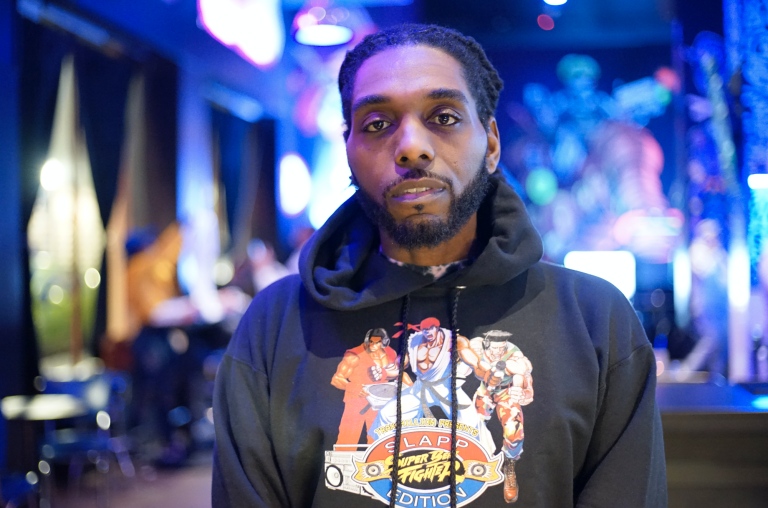
20 Years Later, Traxamillion’s ‘Slapp Addict’ Remains the Royal Hyphy Standard
The San José producer’s debut album is a cultural time capsule of the hyphy movement in 2006.
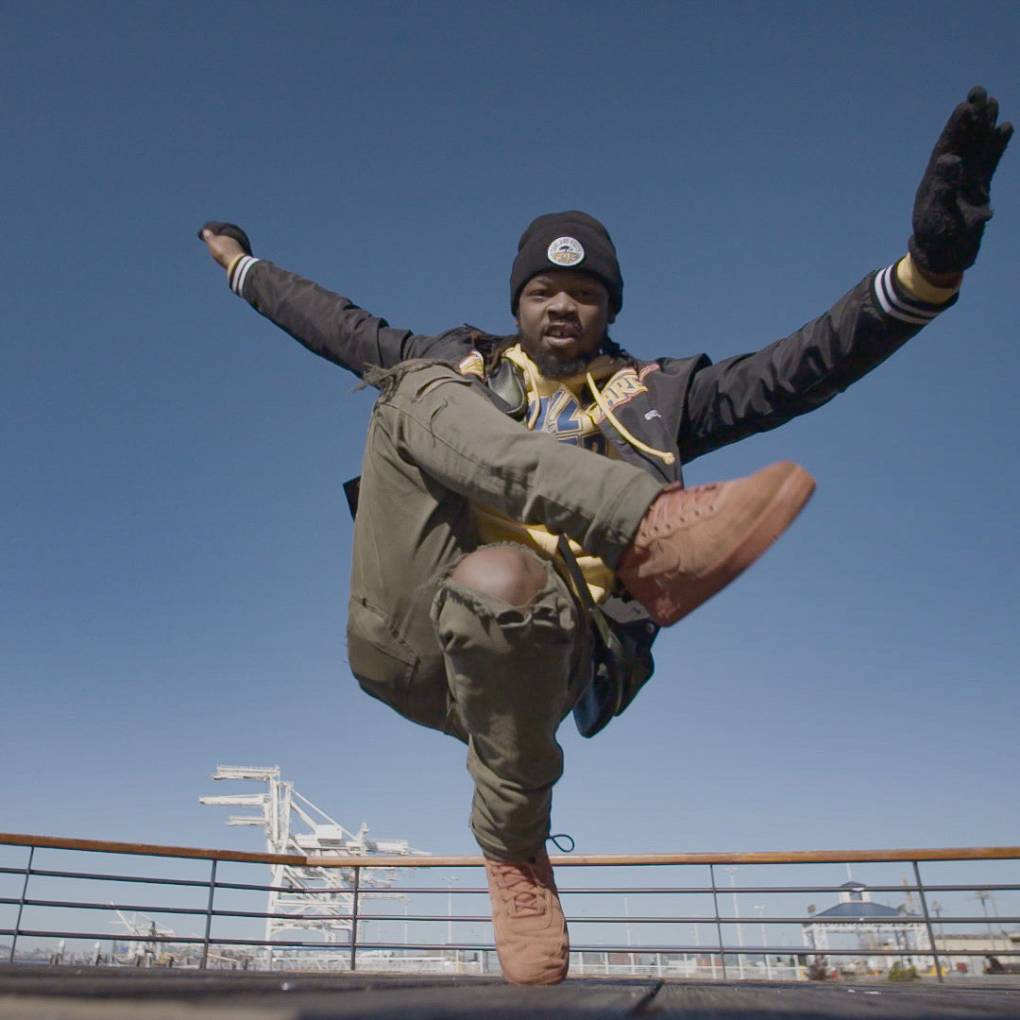
How Turf Dancing Came to Define Oakland Street Dance
Hyphy videos, youth centers and street battles all propelled Oakland's 'street ballet' of turfing, now known around the world.
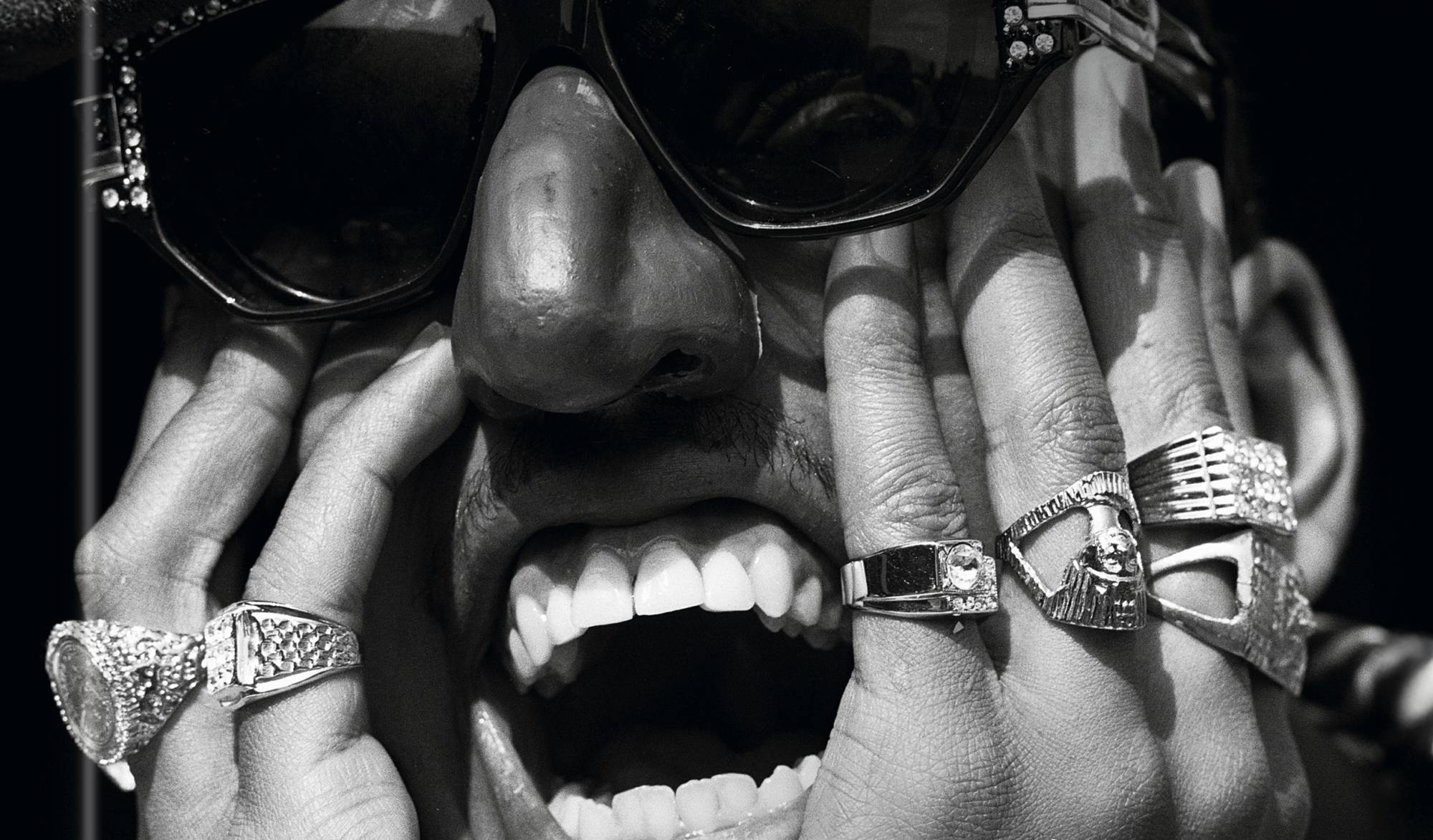
A New Memoir Captures Shock G’s Brilliance — In All Its Funkiest Forms
‘Keep It Beautiful’ is an inside look at the Digital Underground frontman’s artistry and complexities.
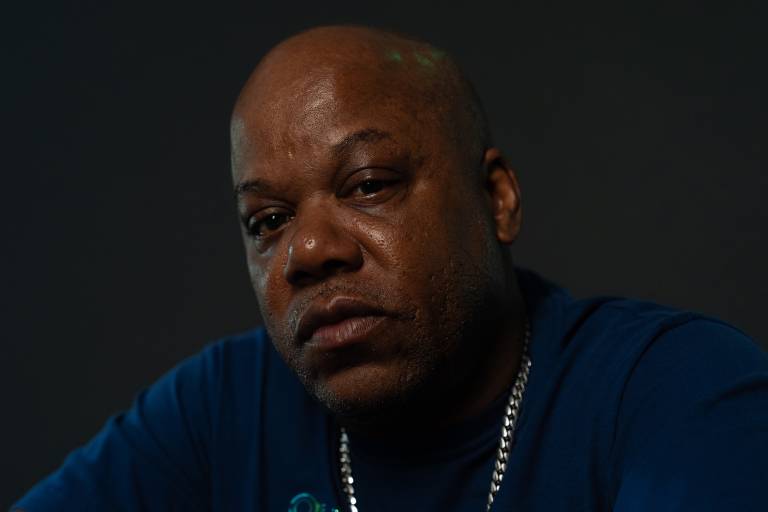
Too Short, Going Strong at 60, Makes the Case for ‘Senior Citizen Rappers’
‘Who laid the rule down that in hip-hop you gotta stop at 40?’ asks Short, whose 23rd album drops Friday.
After 20 Years of Blaps, The Mekanix Thrive on Willpower and Alignment
For 20 years, the Oakland production duo has helped define the sound of Bay Area rap — and they're not done yet.
Digital Underground’s MC Was Secretly a Genius Illustrator
Shock G, aka Humpty Hump, created countless brilliant drawings — many unseen — under a pseudonym.
‘Blow the Whistle’ is 20 Years Old — and Keeps Going On and On
Tamara Palmer recalls Too Short's video shoot in Oakland, and the makings of a Bay Area classic.
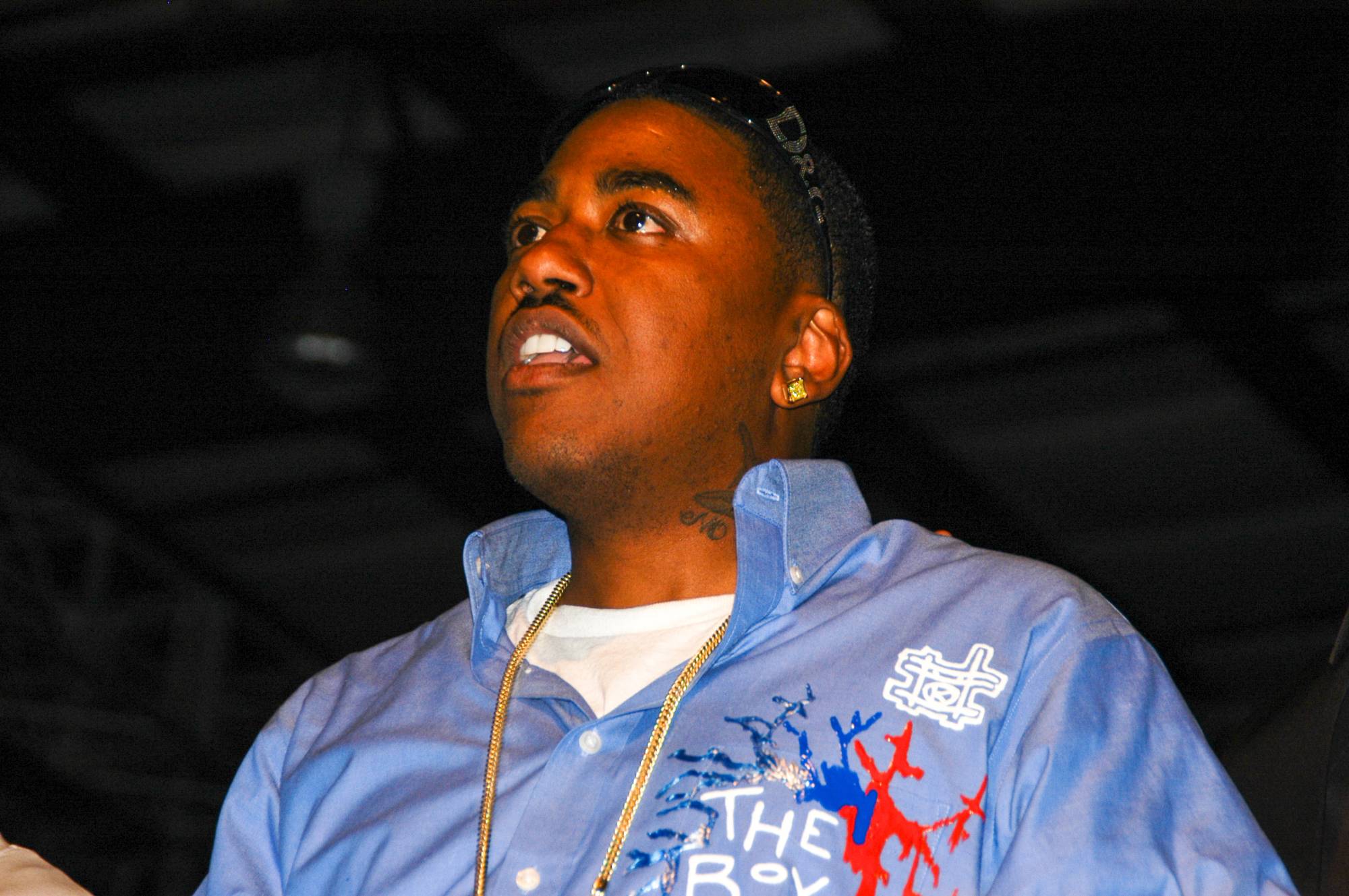
The Bay Showed Love to Messy Marv in 2025
This year, the outpouring of love for the San Francisco rapper was a beautiful thing, writes Pendarvis Harshaw.
Player sponsored by
window.__IS_SSR__=true
window.__INITIAL_STATE__={
"attachmentsReducer": {
"audio_0": {
"type": "attachments",
"id": "audio_0",
"imgSizes": {
"kqedFullSize": {
"file": "https://ww2.kqed.org/news/wp-content/themes/KQED-unified/img/audio_bgs/background0.jpg"
}
}
},
"audio_1": {
"type": "attachments",
"id": "audio_1",
"imgSizes": {
"kqedFullSize": {
"file": "https://ww2.kqed.org/news/wp-content/themes/KQED-unified/img/audio_bgs/background1.jpg"
}
}
},
"audio_2": {
"type": "attachments",
"id": "audio_2",
"imgSizes": {
"kqedFullSize": {
"file": "https://ww2.kqed.org/news/wp-content/themes/KQED-unified/img/audio_bgs/background2.jpg"
}
}
},
"audio_3": {
"type": "attachments",
"id": "audio_3",
"imgSizes": {
"kqedFullSize": {
"file": "https://ww2.kqed.org/news/wp-content/themes/KQED-unified/img/audio_bgs/background3.jpg"
}
}
},
"audio_4": {
"type": "attachments",
"id": "audio_4",
"imgSizes": {
"kqedFullSize": {
"file": "https://ww2.kqed.org/news/wp-content/themes/KQED-unified/img/audio_bgs/background4.jpg"
}
}
},
"placeholder": {
"type": "attachments",
"id": "placeholder",
"imgSizes": {
"thumbnail": {
"file": "https://cdn.kqed.org/wp-content/uploads/2024/12/KQED-Default-Image-816638274-2000x1333-1-160x107.jpg",
"width": 160,
"height": 107,
"mimeType": "image/jpeg"
},
"medium": {
"file": "https://cdn.kqed.org/wp-content/uploads/2024/12/KQED-Default-Image-816638274-2000x1333-1-800x533.jpg",
"width": 800,
"height": 533,
"mimeType": "image/jpeg"
},
"medium_large": {
"file": "https://cdn.kqed.org/wp-content/uploads/2024/12/KQED-Default-Image-816638274-2000x1333-1-768x512.jpg",
"width": 768,
"height": 512,
"mimeType": "image/jpeg"
},
"large": {
"file": "https://cdn.kqed.org/wp-content/uploads/2024/12/KQED-Default-Image-816638274-2000x1333-1-1020x680.jpg",
"width": 1020,
"height": 680,
"mimeType": "image/jpeg"
},
"1536x1536": {
"file": "https://cdn.kqed.org/wp-content/uploads/2024/12/KQED-Default-Image-816638274-2000x1333-1-1536x1024.jpg",
"width": 1536,
"height": 1024,
"mimeType": "image/jpeg"
},
"fd-lrg": {
"file": "https://cdn.kqed.org/wp-content/uploads/2024/12/KQED-Default-Image-816638274-2000x1333-1-1536x1024.jpg",
"width": 1536,
"height": 1024,
"mimeType": "image/jpeg"
},
"fd-med": {
"file": "https://cdn.kqed.org/wp-content/uploads/2024/12/KQED-Default-Image-816638274-2000x1333-1-1020x680.jpg",
"width": 1020,
"height": 680,
"mimeType": "image/jpeg"
},
"fd-sm": {
"file": "https://cdn.kqed.org/wp-content/uploads/2024/12/KQED-Default-Image-816638274-2000x1333-1-800x533.jpg",
"width": 800,
"height": 533,
"mimeType": "image/jpeg"
},
"post-thumbnail": {
"file": "https://cdn.kqed.org/wp-content/uploads/2024/12/KQED-Default-Image-816638274-2000x1333-1-672x372.jpg",
"width": 672,
"height": 372,
"mimeType": "image/jpeg"
},
"twentyfourteen-full-width": {
"file": "https://cdn.kqed.org/wp-content/uploads/2024/12/KQED-Default-Image-816638274-2000x1333-1-1038x576.jpg",
"width": 1038,
"height": 576,
"mimeType": "image/jpeg"
},
"xxsmall": {
"file": "https://cdn.kqed.org/wp-content/uploads/2024/12/KQED-Default-Image-816638274-2000x1333-1-160x107.jpg",
"width": 160,
"height": 107,
"mimeType": "image/jpeg"
},
"xsmall": {
"file": "https://cdn.kqed.org/wp-content/uploads/2024/12/KQED-Default-Image-816638274-2000x1333-1-672x372.jpg",
"width": 672,
"height": 372,
"mimeType": "image/jpeg"
},
"small": {
"file": "https://cdn.kqed.org/wp-content/uploads/2024/12/KQED-Default-Image-816638274-2000x1333-1-672x372.jpg",
"width": 672,
"height": 372,
"mimeType": "image/jpeg"
},
"xlarge": {
"file": "https://cdn.kqed.org/wp-content/uploads/2024/12/KQED-Default-Image-816638274-2000x1333-1-1020x680.jpg",
"width": 1020,
"height": 680,
"mimeType": "image/jpeg"
},
"full-width": {
"file": "https://cdn.kqed.org/wp-content/uploads/2024/12/KQED-Default-Image-816638274-2000x1333-1-1920x1280.jpg",
"width": 1920,
"height": 1280,
"mimeType": "image/jpeg"
},
"guest-author-32": {
"file": "https://cdn.kqed.org/wp-content/uploads/2025/01/KQED-Default-Image-816638274-1333x1333-1-160x160.jpg",
"width": 32,
"height": 32,
"mimeType": "image/jpeg"
},
"guest-author-50": {
"file": "https://cdn.kqed.org/wp-content/uploads/2025/01/KQED-Default-Image-816638274-1333x1333-1-160x160.jpg",
"width": 50,
"height": 50,
"mimeType": "image/jpeg"
},
"guest-author-64": {
"file": "https://cdn.kqed.org/wp-content/uploads/2025/01/KQED-Default-Image-816638274-1333x1333-1-160x160.jpg",
"width": 64,
"height": 64,
"mimeType": "image/jpeg"
},
"guest-author-96": {
"file": "https://cdn.kqed.org/wp-content/uploads/2025/01/KQED-Default-Image-816638274-1333x1333-1-160x160.jpg",
"width": 96,
"height": 96,
"mimeType": "image/jpeg"
},
"guest-author-128": {
"file": "https://cdn.kqed.org/wp-content/uploads/2025/01/KQED-Default-Image-816638274-1333x1333-1-160x160.jpg",
"width": 128,
"height": 128,
"mimeType": "image/jpeg"
},
"detail": {
"file": "https://cdn.kqed.org/wp-content/uploads/2025/01/KQED-Default-Image-816638274-1333x1333-1-160x160.jpg",
"width": 160,
"height": 160,
"mimeType": "image/jpeg"
},
"kqedFullSize": {
"file": "https://cdn.kqed.org/wp-content/uploads/2024/12/KQED-Default-Image-816638274-2000x1333-1.jpg",
"width": 2000,
"height": 1333
}
}
},
"hiphop_1191": {
"type": "attachments",
"id": "hiphop_1191",
"meta": {
"index": "attachments_1716263798",
"site": "hiphop",
"id": "1191",
"found": true
},
"parent": 316,
"imgSizes": {
"twentyfourteen-full-width": {
"file": "https://ww2.kqed.org/app/uploads/sites/83/2023/01/KQED-BAHH-OG-1038x576.jpg",
"width": 1038,
"mimeType": "image/jpeg",
"height": 576
},
"thumbnail": {
"file": "https://ww2.kqed.org/app/uploads/sites/83/2023/01/KQED-BAHH-OG-160x84.jpg",
"width": 160,
"mimeType": "image/jpeg",
"height": 84
},
"post-thumbnail": {
"file": "https://ww2.kqed.org/app/uploads/sites/83/2023/01/KQED-BAHH-OG-672x372.jpg",
"width": 672,
"mimeType": "image/jpeg",
"height": 372
},
"kqedFullSize": {
"file": "https://ww2.kqed.org/app/uploads/sites/83/2023/01/KQED-BAHH-OG.jpg",
"width": 1200,
"height": 630
},
"large": {
"file": "https://ww2.kqed.org/app/uploads/sites/83/2023/01/KQED-BAHH-OG-1020x536.jpg",
"width": 1020,
"mimeType": "image/jpeg",
"height": 536
},
"medium": {
"file": "https://ww2.kqed.org/app/uploads/sites/83/2023/01/KQED-BAHH-OG-800x420.jpg",
"width": 800,
"mimeType": "image/jpeg",
"height": 420
},
"medium_large": {
"file": "https://ww2.kqed.org/app/uploads/sites/83/2023/01/KQED-BAHH-OG-768x403.jpg",
"width": 768,
"mimeType": "image/jpeg",
"height": 403
}
},
"publishDate": 1674757307,
"modified": 1674757307,
"caption": null,
"description": null,
"title": "KQED-BAHH-OG",
"credit": null,
"status": "inherit",
"altTag": null,
"isLoading": false,
"fetchFailed": false
},
"arts_13994651": {
"type": "attachments",
"id": "arts_13994651",
"meta": {
"index": "attachments_1716263798",
"site": "arts",
"id": "13994651",
"found": true
},
"title": "218589634_hr",
"publishDate": 1791523050,
"status": "inherit",
"parent": 13994440,
"modified": 1791523141,
"caption": "Lil Jon’s new memoir, ‘I Only Shout So You Can Hear Me,’ details the Atlanta rapper and producer’s ongoing relationship with the Bay Area.",
"credit": "Simon and Schuster",
"altTag": null,
"description": null,
"imgSizes": {
"thumbnail": {
"file": "https://cdn.kqed.org/wp-content/uploads/sites/2/2026/10/218589634_hr-5d46c1a2-160x107.jpg",
"width": 160,
"height": 107,
"mimeType": "image/jpeg"
},
"medium_large": {
"file": "https://cdn.kqed.org/wp-content/uploads/sites/2/2026/10/218589634_hr-5d46c1a2-768x512.jpg",
"width": 768,
"height": 512,
"mimeType": "image/jpeg"
},
"1536x1536": {
"file": "https://cdn.kqed.org/wp-content/uploads/sites/2/2026/10/218589634_hr-5d46c1a2-1536x1024.jpg",
"width": 1536,
"height": 1024,
"mimeType": "image/jpeg"
},
"post-thumbnail": {
"file": "https://cdn.kqed.org/wp-content/uploads/sites/2/2026/10/218589634_hr-5d46c1a2-672x372.jpg",
"width": 672,
"height": 372,
"mimeType": "image/jpeg"
},
"twentyfourteen-full-width": {
"file": "https://cdn.kqed.org/wp-content/uploads/sites/2/2026/10/218589634_hr-5d46c1a2-1038x576.jpg",
"width": 1038,
"height": 576,
"mimeType": "image/jpeg"
},
"npr-cds-wide": {
"file": "https://cdn.kqed.org/wp-content/uploads/sites/2/2026/10/218589634_hr-5d46c1a2-1200x675.jpg",
"width": 1200,
"height": 675,
"mimeType": "image/jpeg"
},
"npr-cds-square": {
"file": "https://cdn.kqed.org/wp-content/uploads/sites/2/2026/10/218589634_hr-5d46c1a2-600x600.jpg",
"width": 600,
"height": 600,
"mimeType": "image/jpeg"
},
"kqedFullSize": {
"file": "https://cdn.kqed.org/wp-content/uploads/sites/2/2026/10/218589634_hr-5d46c1a2.jpg",
"width": 2000,
"height": 1333
}
},
"isLoading": false,
"fetchFailed": false
},
"arts_13993849": {
"type": "attachments",
"id": "arts_13993849",
"meta": {
"index": "attachments_1716263798",
"site": "arts",
"id": "13993849",
"found": true
},
"title": "Screenshot-2026-09-13-at-9.38.41 PM",
"publishDate": 1789361149,
"status": "inherit",
"parent": 0,
"modified": 1789365618,
"caption": "Producer Tone Capone, seen here DJing in the 1980s, produced tracks for the Luniz, E-40, Mac Dre, Scarface and many, many others. ",
"credit": "Tone Capone / Instagram",
"altTag": "A young Black man in a white shirt and tie wears headphones as he focuses on a turntable and mixer",
"description": null,
"imgSizes": {
"thumbnail": {
"file": "https://cdn.kqed.org/wp-content/uploads/sites/2/2026/09/Screenshot-2026-09-13-at-9.38.41-PM-160x119.jpg",
"width": 160,
"height": 119,
"mimeType": "image/jpeg"
},
"medium_large": {
"file": "https://cdn.kqed.org/wp-content/uploads/sites/2/2026/09/Screenshot-2026-09-13-at-9.38.41-PM-768x573.jpg",
"width": 768,
"height": 573,
"mimeType": "image/jpeg"
},
"1536x1536": {
"file": "https://cdn.kqed.org/wp-content/uploads/sites/2/2026/09/Screenshot-2026-09-13-at-9.38.41-PM-1536x1147.jpg",
"width": 1536,
"height": 1147,
"mimeType": "image/jpeg"
},
"post-thumbnail": {
"file": "https://cdn.kqed.org/wp-content/uploads/sites/2/2026/09/Screenshot-2026-09-13-at-9.38.41-PM-672x372.jpg",
"width": 672,
"height": 372,
"mimeType": "image/jpeg"
},
"twentyfourteen-full-width": {
"file": "https://cdn.kqed.org/wp-content/uploads/sites/2/2026/09/Screenshot-2026-09-13-at-9.38.41-PM-1038x576.jpg",
"width": 1038,
"height": 576,
"mimeType": "image/jpeg"
},
"npr-cds-wide": {
"file": "https://cdn.kqed.org/wp-content/uploads/sites/2/2026/09/Screenshot-2026-09-13-at-9.38.41-PM-1200x675.jpg",
"width": 1200,
"height": 675,
"mimeType": "image/jpeg"
},
"npr-cds-square": {
"file": "https://cdn.kqed.org/wp-content/uploads/sites/2/2026/09/Screenshot-2026-09-13-at-9.38.41-PM-600x600.jpg",
"width": 600,
"height": 600,
"mimeType": "image/jpeg"
},
"kqedFullSize": {
"file": "https://cdn.kqed.org/wp-content/uploads/sites/2/2026/09/Screenshot-2026-09-13-at-9.38.41-PM.jpg",
"width": 2000,
"height": 1493
}
},
"isLoading": false,
"fetchFailed": false
},
"arts_13930491": {
"type": "attachments",
"id": "arts_13930491",
"meta": {
"index": "attachments_1716263798",
"site": "arts",
"id": "13930491",
"found": true
},
"parent": 13929900,
"imgSizes": {
"twentyfourteen-full-width": {
"file": "https://ww2.kqed.org/app/uploads/sites/2/2023/06/GettyImages-1313940191-16x9-1-1038x576.jpg",
"width": 1038,
"mimeType": "image/jpeg",
"height": 576
},
"thumbnail": {
"file": "https://ww2.kqed.org/app/uploads/sites/2/2023/06/GettyImages-1313940191-16x9-1-160x90.jpg",
"width": 160,
"mimeType": "image/jpeg",
"height": 90
},
"post-thumbnail": {
"file": "https://ww2.kqed.org/app/uploads/sites/2/2023/06/GettyImages-1313940191-16x9-1-672x372.jpg",
"width": 672,
"mimeType": "image/jpeg",
"height": 372
},
"kqedFullSize": {
"file": "https://ww2.kqed.org/app/uploads/sites/2/2023/06/GettyImages-1313940191-16x9-1.jpg",
"width": 1878,
"height": 1056
},
"large": {
"file": "https://ww2.kqed.org/app/uploads/sites/2/2023/06/GettyImages-1313940191-16x9-1-1020x574.jpg",
"width": 1020,
"mimeType": "image/jpeg",
"height": 574
},
"1536x1536": {
"file": "https://ww2.kqed.org/app/uploads/sites/2/2023/06/GettyImages-1313940191-16x9-1-1536x864.jpg",
"width": 1536,
"mimeType": "image/jpeg",
"height": 864
},
"medium": {
"file": "https://ww2.kqed.org/app/uploads/sites/2/2023/06/GettyImages-1313940191-16x9-1-800x450.jpg",
"width": 800,
"mimeType": "image/jpeg",
"height": 450
},
"medium_large": {
"file": "https://ww2.kqed.org/app/uploads/sites/2/2023/06/GettyImages-1313940191-16x9-1-768x432.jpg",
"width": 768,
"mimeType": "image/jpeg",
"height": 432
}
},
"publishDate": 1686772833,
"modified": 1686772876,
"caption": "Shock G (aka Gregory Jacobs; Humpty Hump) and Digital Underground perform at Newark Symphony Hall on April 10, 1990 in Newark, New Jersey.",
"description": null,
"title": "Digital Underground Performs At Newark Symphony Hall",
"credit": "Photo by Al Pereira/Getty Images/Michael Ochs Archives",
"status": "inherit",
"altTag": "A black-and-white photo of Shock G performing, wearing a fur hat over a zebra-print hat, a patterned blazer and a fake nose. He holds a champagne bottle as he raps into the mic.",
"isLoading": false,
"fetchFailed": false
},
"arts_13930744": {
"type": "attachments",
"id": "arts_13930744",
"meta": {
"index": "attachments_1716263798",
"site": "arts",
"id": "13930744",
"found": true
},
"parent": 13930686,
"imgSizes": {
"thumbnail": {
"file": "https://ww2.kqed.org/app/uploads/sites/2/2023/06/mac-dre-16x9-1-160x90.png",
"width": 160,
"mimeType": "image/png",
"height": 90
},
"post-thumbnail": {
"file": "https://ww2.kqed.org/app/uploads/sites/2/2023/06/mac-dre-16x9-1-672x372.png",
"width": 672,
"mimeType": "image/png",
"height": 372
},
"kqedFullSize": {
"file": "https://ww2.kqed.org/app/uploads/sites/2/2023/06/mac-dre-16x9-1.png",
"width": 1001,
"height": 563
},
"medium": {
"file": "https://ww2.kqed.org/app/uploads/sites/2/2023/06/mac-dre-16x9-1-800x450.png",
"width": 800,
"mimeType": "image/png",
"height": 450
},
"medium_large": {
"file": "https://ww2.kqed.org/app/uploads/sites/2/2023/06/mac-dre-16x9-1-768x432.png",
"width": 768,
"mimeType": "image/png",
"height": 432
}
},
"publishDate": 1687365390,
"modified": 1687365408,
"caption": "Mac Dre. ",
"description": null,
"title": "mac dre 16x9",
"credit": "D-Ray",
"status": "inherit",
"altTag": null,
"isLoading": false,
"fetchFailed": false
},
"arts_13992721": {
"type": "attachments",
"id": "arts_13992721",
"meta": {
"index": "attachments_1716263798",
"site": "arts",
"id": "13992721",
"found": true
},
"title": "Traxamillion",
"publishDate": 1786558867,
"status": "inherit",
"parent": 0,
"modified": 1786559466,
"caption": "The late San José-raised producer Traxamillion left behind a rich archive of music, including his debut album 'Slapp Addict,' which celebrates its 20th anniversery this month.",
"credit": "Pendarvis Harshaw",
"altTag": "An African American man facing forward, looking at the camera as he wears a black hoodie adorned with animated characters.",
"description": null,
"imgSizes": {
"thumbnail": {
"file": "https://cdn.kqed.org/wp-content/uploads/sites/2/2026/08/Screen-Shot-2020-01-24-at-3.26.39-AM-160x106.png",
"width": 160,
"height": 106,
"mimeType": "image/png"
},
"medium_large": {
"file": "https://cdn.kqed.org/wp-content/uploads/sites/2/2026/08/Screen-Shot-2020-01-24-at-3.26.39-AM-768x508.png",
"width": 768,
"height": 508,
"mimeType": "image/png"
},
"1536x1536": {
"file": "https://cdn.kqed.org/wp-content/uploads/sites/2/2026/08/Screen-Shot-2020-01-24-at-3.26.39-AM-1536x1016.png",
"width": 1536,
"height": 1016,
"mimeType": "image/png"
},
"post-thumbnail": {
"file": "https://cdn.kqed.org/wp-content/uploads/sites/2/2026/08/Screen-Shot-2020-01-24-at-3.26.39-AM-672x372.png",
"width": 672,
"height": 372,
"mimeType": "image/png"
},
"twentyfourteen-full-width": {
"file": "https://cdn.kqed.org/wp-content/uploads/sites/2/2026/08/Screen-Shot-2020-01-24-at-3.26.39-AM-1038x576.png",
"width": 1038,
"height": 576,
"mimeType": "image/png"
},
"npr-cds-wide": {
"file": "https://cdn.kqed.org/wp-content/uploads/sites/2/2026/08/Screen-Shot-2020-01-24-at-3.26.39-AM-1200x675.png",
"width": 1200,
"height": 675,
"mimeType": "image/png"
},
"npr-cds-square": {
"file": "https://cdn.kqed.org/wp-content/uploads/sites/2/2026/08/Screen-Shot-2020-01-24-at-3.26.39-AM-600x600.png",
"width": 600,
"height": 600,
"mimeType": "image/png"
},
"kqedFullSize": {
"file": "https://cdn.kqed.org/wp-content/uploads/sites/2/2026/08/Screen-Shot-2020-01-24-at-3.26.39-AM.png",
"width": 2000,
"height": 1323
}
},
"isLoading": false,
"fetchFailed": false
},
"arts_13932908": {
"type": "attachments",
"id": "arts_13932908",
"meta": {
"index": "attachments_1716263798",
"site": "arts",
"id": "13932908",
"found": true
},
"parent": 0,
"imgSizes": {
"twentyfourteen-full-width": {
"file": "https://ww2.kqed.org/app/uploads/sites/2/2023/08/Gary_6.SQUARE-1038x576.jpg",
"width": 1038,
"mimeType": "image/jpeg",
"height": 576
},
"thumbnail": {
"file": "https://ww2.kqed.org/app/uploads/sites/2/2023/08/Gary_6.SQUARE-160x160.jpg",
"width": 160,
"mimeType": "image/jpeg",
"height": 160
},
"post-thumbnail": {
"file": "https://ww2.kqed.org/app/uploads/sites/2/2023/08/Gary_6.SQUARE-672x372.jpg",
"width": 672,
"mimeType": "image/jpeg",
"height": 372
},
"kqedFullSize": {
"file": "https://ww2.kqed.org/app/uploads/sites/2/2023/08/Gary_6.SQUARE.jpg",
"width": 1080,
"height": 1080
},
"large": {
"file": "https://ww2.kqed.org/app/uploads/sites/2/2023/08/Gary_6.SQUARE-1020x1020.jpg",
"width": 1020,
"mimeType": "image/jpeg",
"height": 1020
},
"medium": {
"file": "https://ww2.kqed.org/app/uploads/sites/2/2023/08/Gary_6.SQUARE-800x800.jpg",
"width": 800,
"mimeType": "image/jpeg",
"height": 800
},
"medium_large": {
"file": "https://ww2.kqed.org/app/uploads/sites/2/2023/08/Gary_6.SQUARE-768x768.jpg",
"width": 768,
"mimeType": "image/jpeg",
"height": 768
}
},
"publishDate": 1691645109,
"modified": 1691646646,
"caption": "Icecold 3000 of the Turf Fienz dances with the Port of Oakland in the background. ",
"description": null,
"title": "Gary_6.SQUARE",
"credit": "Elie M. Khadra",
"status": "inherit",
"altTag": null,
"isLoading": false,
"fetchFailed": false
},
"arts_13932907": {
"type": "attachments",
"id": "arts_13932907",
"meta": {
"index": "attachments_1716263798",
"site": "arts",
"id": "13932907",
"found": true
},
"parent": 13932887,
"imgSizes": {
"twentyfourteen-full-width": {
"file": "https://ww2.kqed.org/app/uploads/sites/2/2023/08/Gary_6-1038x576.jpg",
"width": 1038,
"mimeType": "image/jpeg",
"height": 576
},
"thumbnail": {
"file": "https://ww2.kqed.org/app/uploads/sites/2/2023/08/Gary_6-160x90.jpg",
"width": 160,
"mimeType": "image/jpeg",
"height": 90
},
"post-thumbnail": {
"file": "https://ww2.kqed.org/app/uploads/sites/2/2023/08/Gary_6-672x372.jpg",
"width": 672,
"mimeType": "image/jpeg",
"height": 372
},
"kqedFullSize": {
"file": "https://ww2.kqed.org/app/uploads/sites/2/2023/08/Gary_6.jpg",
"width": 1920,
"height": 1080
},
"large": {
"file": "https://ww2.kqed.org/app/uploads/sites/2/2023/08/Gary_6-1020x574.jpg",
"width": 1020,
"mimeType": "image/jpeg",
"height": 574
},
"1536x1536": {
"file": "https://ww2.kqed.org/app/uploads/sites/2/2023/08/Gary_6-1536x864.jpg",
"width": 1536,
"mimeType": "image/jpeg",
"height": 864
},
"medium": {
"file": "https://ww2.kqed.org/app/uploads/sites/2/2023/08/Gary_6-800x450.jpg",
"width": 800,
"mimeType": "image/jpeg",
"height": 450
},
"medium_large": {
"file": "https://ww2.kqed.org/app/uploads/sites/2/2023/08/Gary_6-768x432.jpg",
"width": 768,
"mimeType": "image/jpeg",
"height": 432
}
},
"publishDate": 1691645102,
"modified": 1691647336,
"caption": "Garion Morgan, a.k.a. Icecold 3000 of the Turf Fienz, dancing near the Port of Oakland in 2019. ",
"description": null,
"title": "Gary_6",
"credit": "Elie M. Khadra",
"status": "inherit",
"altTag": "Garion Morgan, a.k.a. Icecold 3000 of the Turf Fienz, dancing near the Port of Oakland in 2019.",
"isLoading": false,
"fetchFailed": false
},
"arts_13992925": {
"type": "attachments",
"id": "arts_13992925",
"meta": {
"index": "attachments_1716263798",
"site": "arts",
"id": "13992925",
"found": true
},
"title": "ShockG.Book.crop",
"publishDate": 1787092349,
"status": "inherit",
"parent": 13992917,
"modified": 1787092426,
"caption": "Detail of the cover to ‘Keep It Beautiful: Inside the Funkyverse of Shock G and Digital Underground,’ chronicling the action-filled life of the late rapper. artist and musician.",
"credit": "Penguin Random House",
"altTag": "A close-up on a Black man's face, wearing a Groucho Marx style novelty mask with glasses and a big nose, his hands on his cheeks",
"description": null,
"imgSizes": {
"medium": {
"file": "https://cdn.kqed.org/wp-content/uploads/sites/2/2026/08/ShockG.Book_.crop_-2000x1173.jpg",
"width": 2000,
"height": 1173,
"mimeType": "image/jpeg"
},
"large": {
"file": "https://cdn.kqed.org/wp-content/uploads/sites/2/2026/08/ShockG.Book_.crop_-2000x1173.jpg",
"width": 2000,
"height": 1173,
"mimeType": "image/jpeg"
},
"thumbnail": {
"file": "https://cdn.kqed.org/wp-content/uploads/sites/2/2026/08/ShockG.Book_.crop_-160x94.jpg",
"width": 160,
"height": 94,
"mimeType": "image/jpeg"
},
"medium_large": {
"file": "https://cdn.kqed.org/wp-content/uploads/sites/2/2026/08/ShockG.Book_.crop_-768x450.jpg",
"width": 768,
"height": 450,
"mimeType": "image/jpeg"
},
"1536x1536": {
"file": "https://cdn.kqed.org/wp-content/uploads/sites/2/2026/08/ShockG.Book_.crop_-1536x901.jpg",
"width": 1536,
"height": 901,
"mimeType": "image/jpeg"
},
"2048x2048": {
"file": "https://cdn.kqed.org/wp-content/uploads/sites/2/2026/08/ShockG.Book_.crop_-2048x1201.jpg",
"width": 2048,
"height": 1201,
"mimeType": "image/jpeg"
},
"post-thumbnail": {
"file": "https://cdn.kqed.org/wp-content/uploads/sites/2/2026/08/ShockG.Book_.crop_-672x372.jpg",
"width": 672,
"height": 372,
"mimeType": "image/jpeg"
},
"twentyfourteen-full-width": {
"file": "https://cdn.kqed.org/wp-content/uploads/sites/2/2026/08/ShockG.Book_.crop_-1038x576.jpg",
"width": 1038,
"height": 576,
"mimeType": "image/jpeg"
},
"full-width": {
"file": "https://cdn.kqed.org/wp-content/uploads/sites/2/2026/08/ShockG.Book_.crop_-2000x1173.jpg",
"width": 2000,
"height": 1173,
"mimeType": "image/jpeg"
},
"npr-cds-wide": {
"file": "https://cdn.kqed.org/wp-content/uploads/sites/2/2026/08/ShockG.Book_.crop_-1200x675.jpg",
"width": 1200,
"height": 675,
"mimeType": "image/jpeg"
},
"npr-cds-square": {
"file": "https://cdn.kqed.org/wp-content/uploads/sites/2/2026/08/ShockG.Book_.crop_-600x600.jpg",
"width": 600,
"height": 600,
"mimeType": "image/jpeg"
},
"kqedFullSize": {
"file": "https://cdn.kqed.org/wp-content/uploads/sites/2/2026/08/ShockG.Book_.crop_.jpg",
"width": 2483,
"height": 1456
}
},
"isLoading": false,
"fetchFailed": false
},
"arts_13992199": {
"type": "attachments",
"id": "arts_13992199",
"meta": {
"index": "attachments_1716263798",
"site": "arts",
"id": "13992199",
"found": true
},
"title": "AP26210736189528",
"publishDate": 1785431547,
"status": "inherit",
"parent": 13992187,
"modified": 1785431604,
"caption": "Too Short poses for a portrait on Tuesday, July 28, 2026, in Los Angeles.",
"credit": "AP Photo/Jae C. Hong",
"altTag": "A close-up portrait of a Black man, bald with a chain necklace and blue shirt, looking into the camera",
"description": null,
"imgSizes": {
"thumbnail": {
"file": "https://cdn.kqed.org/wp-content/uploads/sites/2/2026/07/AP26210736189528-160x107.jpg",
"width": 160,
"height": 107,
"mimeType": "image/jpeg"
},
"medium_large": {
"file": "https://cdn.kqed.org/wp-content/uploads/sites/2/2026/07/AP26210736189528-768x512.jpg",
"width": 768,
"height": 512,
"mimeType": "image/jpeg"
},
"1536x1536": {
"file": "https://cdn.kqed.org/wp-content/uploads/sites/2/2026/07/AP26210736189528-1536x1024.jpg",
"width": 1536,
"height": 1024,
"mimeType": "image/jpeg"
},
"post-thumbnail": {
"file": "https://cdn.kqed.org/wp-content/uploads/sites/2/2026/07/AP26210736189528-672x372.jpg",
"width": 672,
"height": 372,
"mimeType": "image/jpeg"
},
"twentyfourteen-full-width": {
"file": "https://cdn.kqed.org/wp-content/uploads/sites/2/2026/07/AP26210736189528-1038x576.jpg",
"width": 1038,
"height": 576,
"mimeType": "image/jpeg"
},
"npr-cds-wide": {
"file": "https://cdn.kqed.org/wp-content/uploads/sites/2/2026/07/AP26210736189528-1200x675.jpg",
"width": 1200,
"height": 675,
"mimeType": "image/jpeg"
},
"npr-cds-square": {
"file": "https://cdn.kqed.org/wp-content/uploads/sites/2/2026/07/AP26210736189528-600x600.jpg",
"width": 600,
"height": 600,
"mimeType": "image/jpeg"
},
"kqedFullSize": {
"file": "https://cdn.kqed.org/wp-content/uploads/sites/2/2026/07/AP26210736189528.jpg",
"width": 2000,
"height": 1333
}
},
"isLoading": false,
"fetchFailed": false
},
"arts_13991464": {
"type": "attachments",
"id": "arts_13991464",
"meta": {
"index": "attachments_1716263798",
"site": "arts",
"id": "13991464",
"found": true
},
"title": "IMG_2178-scaled",
"publishDate": 1783555988,
"status": "inherit",
"parent": 13991183,
"modified": 1783556093,
"caption": "The Mekanix, 4rax and Kenny Tweed (L–R), take a break outside their East Oakland studio.",
"credit": "Pendarvis Harshaw",
"altTag": null,
"description": null,
"imgSizes": {
"thumbnail": {
"file": "https://cdn.kqed.org/wp-content/uploads/sites/2/2026/07/IMG_2178-scaled-1-160x107.jpg",
"width": 160,
"height": 107,
"mimeType": "image/jpeg"
},
"medium_large": {
"file": "https://cdn.kqed.org/wp-content/uploads/sites/2/2026/07/IMG_2178-scaled-1-768x512.jpg",
"width": 768,
"height": 512,
"mimeType": "image/jpeg"
},
"1536x1536": {
"file": "https://cdn.kqed.org/wp-content/uploads/sites/2/2026/07/IMG_2178-scaled-1-1536x1025.jpg",
"width": 1536,
"height": 1025,
"mimeType": "image/jpeg"
},
"post-thumbnail": {
"file": "https://cdn.kqed.org/wp-content/uploads/sites/2/2026/07/IMG_2178-scaled-1-672x372.jpg",
"width": 672,
"height": 372,
"mimeType": "image/jpeg"
},
"twentyfourteen-full-width": {
"file": "https://cdn.kqed.org/wp-content/uploads/sites/2/2026/07/IMG_2178-scaled-1-1038x576.jpg",
"width": 1038,
"height": 576,
"mimeType": "image/jpeg"
},
"npr-cds-wide": {
"file": "https://cdn.kqed.org/wp-content/uploads/sites/2/2026/07/IMG_2178-scaled-1-1200x675.jpg",
"width": 1200,
"height": 675,
"mimeType": "image/jpeg"
},
"npr-cds-square": {
"file": "https://cdn.kqed.org/wp-content/uploads/sites/2/2026/07/IMG_2178-scaled-1-600x600.jpg",
"width": 600,
"height": 600,
"mimeType": "image/jpeg"
},
"kqedFullSize": {
"file": "https://cdn.kqed.org/wp-content/uploads/sites/2/2026/07/IMG_2178-scaled-1.jpg",
"width": 2000,
"height": 1334
}
},
"isLoading": false,
"fetchFailed": false
},
"arts_13987147": {
"type": "attachments",
"id": "arts_13987147",
"meta": {
"index": "attachments_1716263798",
"site": "arts",
"id": "13987147",
"found": true
},
"title": "GettyImages-2155222078",
"publishDate": 1772066355,
"status": "inherit",
"parent": 13987115,
"modified": 1772066521,
"caption": "Too Short (right) with ‘Blow the Whistle’ producer Lil Jon at Rick Ross' birthday party at Bongo's on Feb. 3, 2007 in Miami, Florida. ",
"credit": "Julia Beverly/Getty Images",
"altTag": "Two Black men, one in white with dreadlocks and one in brown and bald, embrace and smile for the camera",
"description": null,
"imgSizes": {
"thumbnail": {
"file": "https://cdn.kqed.org/wp-content/uploads/sites/2/2026/02/GettyImages-2155222078-160x106.jpg",
"width": 160,
"height": 106,
"mimeType": "image/jpeg"
},
"medium_large": {
"file": "https://cdn.kqed.org/wp-content/uploads/sites/2/2026/02/GettyImages-2155222078-768x510.jpg",
"width": 768,
"height": 510,
"mimeType": "image/jpeg"
},
"1536x1536": {
"file": "https://cdn.kqed.org/wp-content/uploads/sites/2/2026/02/GettyImages-2155222078-1536x1021.jpg",
"width": 1536,
"height": 1021,
"mimeType": "image/jpeg"
},
"post-thumbnail": {
"file": "https://cdn.kqed.org/wp-content/uploads/sites/2/2026/02/GettyImages-2155222078-672x372.jpg",
"width": 672,
"height": 372,
"mimeType": "image/jpeg"
},
"twentyfourteen-full-width": {
"file": "https://cdn.kqed.org/wp-content/uploads/sites/2/2026/02/GettyImages-2155222078-1038x576.jpg",
"width": 1038,
"height": 576,
"mimeType": "image/jpeg"
},
"npr-cds-wide": {
"file": "https://cdn.kqed.org/wp-content/uploads/sites/2/2026/02/GettyImages-2155222078-1200x675.jpg",
"width": 1200,
"height": 675,
"mimeType": "image/jpeg"
},
"kqedFullSize": {
"file": "https://cdn.kqed.org/wp-content/uploads/sites/2/2026/02/GettyImages-2155222078.jpg",
"width": 2000,
"height": 1329
}
},
"isLoading": false,
"fetchFailed": false
},
"arts_13984635": {
"type": "attachments",
"id": "arts_13984635",
"meta": {
"index": "attachments_1716263798",
"site": "arts",
"id": "13984635",
"found": true
},
"title": "GettyImages-2156279452",
"publishDate": 1765236195,
"status": "inherit",
"parent": 0,
"modified": 1765304687,
"caption": "San Francisco rapper Messy Marv, pictured here at the B.A.R.S. (Bay Area Rap Scene) Awards in Oakland, California on Dec. 2, 2006. ",
"credit": "Julia Beverly/Getty Images",
"altTag": "A twentysomething Black man in a light blue collared shirt, gold chain and sunglasses on top of his head looks upward and to the left",
"description": null,
"imgSizes": {
"medium": {
"file": "https://cdn.kqed.org/wp-content/uploads/sites/2/2025/12/GettyImages-2156279452-2000x1329.jpg",
"width": 2000,
"height": 1329,
"mimeType": "image/jpeg"
},
"large": {
"file": "https://cdn.kqed.org/wp-content/uploads/sites/2/2025/12/GettyImages-2156279452-2000x1329.jpg",
"width": 2000,
"height": 1329,
"mimeType": "image/jpeg"
},
"thumbnail": {
"file": "https://cdn.kqed.org/wp-content/uploads/sites/2/2025/12/GettyImages-2156279452-160x106.jpg",
"width": 160,
"height": 106,
"mimeType": "image/jpeg"
},
"medium_large": {
"file": "https://cdn.kqed.org/wp-content/uploads/sites/2/2025/12/GettyImages-2156279452-768x510.jpg",
"width": 768,
"height": 510,
"mimeType": "image/jpeg"
},
"1536x1536": {
"file": "https://cdn.kqed.org/wp-content/uploads/sites/2/2025/12/GettyImages-2156279452-1536x1020.jpg",
"width": 1536,
"height": 1020,
"mimeType": "image/jpeg"
},
"2048x2048": {
"file": "https://cdn.kqed.org/wp-content/uploads/sites/2/2025/12/GettyImages-2156279452-2048x1360.jpg",
"width": 2048,
"height": 1360,
"mimeType": "image/jpeg"
},
"post-thumbnail": {
"file": "https://cdn.kqed.org/wp-content/uploads/sites/2/2025/12/GettyImages-2156279452-672x372.jpg",
"width": 672,
"height": 372,
"mimeType": "image/jpeg"
},
"twentyfourteen-full-width": {
"file": "https://cdn.kqed.org/wp-content/uploads/sites/2/2025/12/GettyImages-2156279452-1038x576.jpg",
"width": 1038,
"height": 576,
"mimeType": "image/jpeg"
},
"full-width": {
"file": "https://cdn.kqed.org/wp-content/uploads/sites/2/2025/12/GettyImages-2156279452-2000x1329.jpg",
"width": 2000,
"height": 1329,
"mimeType": "image/jpeg"
},
"npr-cds-wide": {
"file": "https://cdn.kqed.org/wp-content/uploads/sites/2/2025/12/GettyImages-2156279452-1200x675.jpg",
"width": 1200,
"height": 675,
"mimeType": "image/jpeg"
},
"kqedFullSize": {
"file": "https://cdn.kqed.org/wp-content/uploads/sites/2/2025/12/GettyImages-2156279452.jpg",
"width": 2240,
"height": 1488
}
},
"isLoading": false,
"fetchFailed": false
}
},
"audioPlayerReducer": {
"postId": "stream_live",
"isPaused": true,
"isPlaying": false,
"pfsActive": false,
"pledgeModalIsOpen": true,
"playerDrawerIsOpen": false,
"liveAudioPlayStartedAt": 0,
"liveAudioPlayContext": ""
},
"authorsReducer": {
"gmeline": {
"type": "authors",
"id": "185",
"meta": {
"index": "authors_1716337520",
"id": "185",
"found": true
},
"name": "Gabe Meline",
"firstName": "Gabe",
"lastName": "Meline",
"slug": "gmeline",
"email": "gmeline@kqed.org",
"display_author_email": true,
"staff_mastheads": [
"arts"
],
"title": "Senior Editor, KQED Arts & Culture",
"bio": "Gabe Meline entered journalism at age 15 making photocopied zines, and has since earned awards from the Edward R. Murrow Awards, the Society for Professional Journalists, the Online Journalism Awards, the Association of Alternative Newsweeklies and the California Newspaper Publishers Association. Prior to KQED, he was the editor of the \u003cem>North Bay Bohemian\u003c/em> and a touring musician. He lives with his wife and daughter in his hometown of Santa Rosa, CA.",
"avatar": "https://secure.gravatar.com/avatar/5bebe57be0d8bc2dd318934feb47299e2d2d10cba28d09d8d7afb389a2ce2bdd?s=600&d=blank&r=g",
"twitter": null,
"bluesky": null,
"facebook": null,
"instagram": null,
"linkedin": null,
"sites": [
{
"site": "",
"roles": [
"editor"
]
},
{
"site": "arts",
"roles": [
"administrator"
]
},
{
"site": "artschool",
"roles": [
"editor"
]
},
{
"site": "news",
"roles": [
"author"
]
},
{
"site": "pop",
"roles": [
"editor"
]
},
{
"site": "bayareabites",
"roles": [
"editor"
]
},
{
"site": "food",
"roles": [
"editor"
]
},
{
"site": "forum",
"roles": [
"administrator"
]
},
{
"site": "liveblog",
"roles": [
"editor"
]
},
{
"site": "hiphop",
"roles": [
"editor"
]
}
],
"headData": {
"title": "Gabe Meline | KQED",
"description": "Senior Editor, KQED Arts & Culture",
"ogImgSrc": "https://secure.gravatar.com/avatar/5bebe57be0d8bc2dd318934feb47299e2d2d10cba28d09d8d7afb389a2ce2bdd?s=600&d=blank&r=g",
"twImgSrc": "https://secure.gravatar.com/avatar/5bebe57be0d8bc2dd318934feb47299e2d2d10cba28d09d8d7afb389a2ce2bdd?s=600&d=blank&r=g"
},
"isLoading": false,
"link": "/author/gmeline"
},
"ogpenn": {
"type": "authors",
"id": "11491",
"meta": {
"index": "authors_1716337520",
"id": "11491",
"found": true
},
"name": "Pendarvis Harshaw",
"firstName": "Pendarvis",
"lastName": "Harshaw",
"slug": "ogpenn",
"email": "ogpenn@gmail.com",
"display_author_email": false,
"staff_mastheads": [
"arts"
],
"title": "Community Engagement Reporter",
"bio": "Pendarvis Harshaw is an educator, host and writer with KQED Arts.",
"avatar": "https://secure.gravatar.com/avatar/972b77ee8e3f346ae2b00622661187fbfabd059b5693bbdc1475ea7a722fd4cd?s=600&d=blank&r=g",
"twitter": null,
"bluesky": null,
"facebook": null,
"instagram": "ogpenn",
"linkedin": null,
"sites": [
{
"site": "arts",
"roles": [
"administrator"
]
},
{
"site": "news",
"roles": [
"editor"
]
},
{
"site": "bayareabites",
"roles": [
"author"
]
},
{
"site": "hiphop",
"roles": [
"editor"
]
}
],
"headData": {
"title": "Pendarvis Harshaw | KQED",
"description": "Community Engagement Reporter",
"ogImgSrc": "https://secure.gravatar.com/avatar/972b77ee8e3f346ae2b00622661187fbfabd059b5693bbdc1475ea7a722fd4cd?s=600&d=blank&r=g",
"twImgSrc": "https://secure.gravatar.com/avatar/972b77ee8e3f346ae2b00622661187fbfabd059b5693bbdc1475ea7a722fd4cd?s=600&d=blank&r=g"
},
"isLoading": false,
"link": "/author/ogpenn"
},
"achazaro": {
"type": "authors",
"id": "11748",
"meta": {
"index": "authors_1716337520",
"id": "11748",
"found": true
},
"name": "Alan Chazaro",
"firstName": "Alan",
"lastName": "Chazaro",
"slug": "achazaro",
"email": "agchazaro@gmail.com",
"display_author_email": true,
"staff_mastheads": [],
"title": "Food Writer and Reporter",
"bio": "Alan Chazaro is the author of \u003cem>This Is Not a Frank Ocean Cover Album\u003c/em> (Black Lawrence Press, 2019), \u003cem>Piñata Theory\u003c/em> (Black Lawrence Press, 2020), and \u003cem>Notes from the Eastern Span of the Bay Bridge\u003c/em> (Ghost City Press, 2021). He is a graduate of June Jordan’s Poetry for the People program at UC Berkeley and a former Lawrence Ferlinghetti Fellow at the University of San Francisco. He writes about sports, food, art, music, education, and culture while repping the Bay on \u003ca href=\"https://twitter.com/alan_chazaro\">Twitter\u003c/a> and \u003ca href=\"https://www.instagram.com/alan_chazaro/?hl=en\">Instagram\u003c/a> at @alan_chazaro.",
"avatar": "https://secure.gravatar.com/avatar/ea8b6dd970fc5c29e7a188e7d5861df7?s=600&d=blank&r=g",
"twitter": "alan_chazaro",
"facebook": null,
"instagram": null,
"linkedin": null,
"sites": [
{
"site": "arts",
"roles": [
"contributor"
]
},
{
"site": "news",
"roles": [
"editor"
]
}
],
"headData": {
"title": "Alan Chazaro | KQED",
"description": "Food Writer and Reporter",
"ogImgSrc": "https://secure.gravatar.com/avatar/ea8b6dd970fc5c29e7a188e7d5861df7?s=600&d=blank&r=g",
"twImgSrc": "https://secure.gravatar.com/avatar/ea8b6dd970fc5c29e7a188e7d5861df7?s=600&d=blank&r=g"
},
"isLoading": false,
"link": "/author/achazaro"
},
"nvoynovskaya": {
"type": "authors",
"id": "11387",
"meta": {
"index": "authors_1716337520",
"id": "11387",
"found": true
},
"name": "Nastia Voynovskaya",
"firstName": "Nastia",
"lastName": "Voynovskaya",
"slug": "nvoynovskaya",
"email": "nvoynovskaya@kqed.org",
"display_author_email": false,
"staff_mastheads": [
"arts"
],
"title": "Editor and reporter",
"bio": "Nastia Voynovskaya is a reporter, editor and host at KQED Arts & Culture. She's been covering the arts in the Bay Area for over a decade, with a focus on music, queer culture, labor issues and grassroots organizing. She has edited KQED story series such as Trans Bay: A History of San Francisco's Gender-Diverse Community, and co-created KQED's Bay Area hip-hop history project, That's My Word. Nastia's work has been recognized by the Society of Professional Journalists and San Francisco Press Club. She regularly appears on podcasts and radio programs, including NPR's All Songs Considered, and hosts live events where music, culture and conversation meet.",
"avatar": "https://secure.gravatar.com/avatar/5025ee460e5a85d69ca20ea6c6f2f80d7e17795c828f61ea3aecfcd924e9042e?s=600&d=blank&r=g",
"twitter": null,
"bluesky": null,
"facebook": null,
"instagram": "https://www.instagram.com/nananastia/",
"linkedin": null,
"sites": [
{
"site": "",
"roles": [
"editor"
]
},
{
"site": "arts",
"roles": [
"administrator"
]
},
{
"site": "news",
"roles": [
"editor"
]
},
{
"site": "pop",
"roles": [
"administrator"
]
},
{
"site": "bayareabites",
"roles": [
"editor"
]
},
{
"site": "podcasts",
"roles": [
"editor"
]
},
{
"site": "hiphop",
"roles": [
"editor"
]
}
],
"headData": {
"title": "Nastia Voynovskaya | KQED",
"description": "Editor and reporter",
"ogImgSrc": "https://secure.gravatar.com/avatar/5025ee460e5a85d69ca20ea6c6f2f80d7e17795c828f61ea3aecfcd924e9042e?s=600&d=blank&r=g",
"twImgSrc": "https://secure.gravatar.com/avatar/5025ee460e5a85d69ca20ea6c6f2f80d7e17795c828f61ea3aecfcd924e9042e?s=600&d=blank&r=g"
},
"isLoading": false,
"link": "/author/nvoynovskaya"
},
"earnold": {
"type": "authors",
"id": "11839",
"meta": {
"index": "authors_1716337520",
"id": "11839",
"found": true
},
"name": "Eric Arnold",
"firstName": "Eric",
"lastName": "Arnold",
"slug": "earnold",
"email": "earnold@kqed.org",
"display_author_email": false,
"staff_mastheads": [],
"title": "Contributing Editor, 'That's My Word'",
"bio": "Eric Arnold has covered hip-hop locally and nationally for over 30 years. Formerly the managing editor of \u003cem>4080\u003c/em> and columnist for \u003cem>The Source\u003c/em>, he chronicled hyphy’s rise and fall, co-curated the Oakland Museum of California’s first hip-hop exhibit in 2018 and won a 2022 Northern California Emmy Award for a mini-documentary on Oakland’s Boogaloo dance culture. He is a contributing editor for \u003cem>That’s My Word\u003c/em>, KQED's series on the history of Bay Area hip-hop.",
"avatar": "https://secure.gravatar.com/avatar/ede45b04898456ad0893a2811e78b0a2?s=600&d=blank&r=g",
"twitter": null,
"facebook": null,
"instagram": null,
"linkedin": null,
"sites": [
{
"site": "arts",
"roles": [
"contributor"
]
},
{
"site": "news",
"roles": [
"contributor"
]
},
{
"site": "hiphop",
"roles": [
"contributor"
]
}
],
"headData": {
"title": "Eric Arnold | KQED",
"description": "Contributing Editor, 'That's My Word'",
"ogImgSrc": "https://secure.gravatar.com/avatar/ede45b04898456ad0893a2811e78b0a2?s=600&d=blank&r=g",
"twImgSrc": "https://secure.gravatar.com/avatar/ede45b04898456ad0893a2811e78b0a2?s=600&d=blank&r=g"
},
"isLoading": false,
"link": "/author/earnold"
},
"byline_arts_13992187": {
"type": "authors",
"id": "byline_arts_13992187",
"meta": {
"override": true
},
"slug": "byline_arts_13992187",
"name": "Johnathan Landrum Jr., Associated Press",
"isLoading": false
},
"tamarapalmer": {
"type": "authors",
"id": "5111",
"meta": {
"index": "authors_1716337520",
"id": "5111",
"found": true
},
"name": "Tamara Palmer",
"firstName": "Tamara",
"lastName": "Palmer",
"slug": "tamarapalmer",
"email": "countryfriedsoul@gmail.com",
"display_author_email": false,
"staff_mastheads": [],
"title": "KQED Contributor",
"bio": "I'm a professional DJ, freelance writer, recipe developer and independent publisher of zines about music and food. You'll find my byline in a wide range of news, tech and entertainment publications. My first book \u003ci>Country Fried Soul: Adventures in Dirty South Hip-Hop\u003c/i> was published in 2005, and a more personal West Coast anthology called \u003ci>California Love\u003c/i> is planned for 2023.",
"avatar": "https://secure.gravatar.com/avatar/c8befc278d4c9854b7bbbaa2b9b37a3acb2a834e69d071b638644f0a1739362d?s=600&d=blank&r=g",
"twitter": null,
"bluesky": null,
"facebook": null,
"instagram": null,
"linkedin": null,
"sites": [
{
"site": "arts",
"roles": [
"contributor"
]
},
{
"site": "bayareabites",
"roles": [
"subscriber"
]
}
],
"headData": {
"title": "Tamara Palmer | KQED",
"description": "KQED Contributor",
"ogImgSrc": "https://secure.gravatar.com/avatar/c8befc278d4c9854b7bbbaa2b9b37a3acb2a834e69d071b638644f0a1739362d?s=600&d=blank&r=g",
"twImgSrc": "https://secure.gravatar.com/avatar/c8befc278d4c9854b7bbbaa2b9b37a3acb2a834e69d071b638644f0a1739362d?s=600&d=blank&r=g"
},
"isLoading": false,
"link": "/author/tamarapalmer"
}
},
"pagesReducer": {
"hiphop_latest": {
"type": "pages",
"id": "hiphop_318",
"meta": {
"index": "pages_1716337520",
"site": "hiphop",
"id": "318",
"score": 0
},
"slug": "latest",
"title": "Latest",
"headTitle": "Latest | KQED",
"pagePath": "latest",
"pageMeta": {
"sticky": false,
"excludeFromSiteSearch": "Include"
},
"headData": {
"title": "Bay Area Hip-Hop | That’s My Word | KQED",
"description": "A Year-Long Exploration of Bay Area Hip-Hop History",
"ogTitle": "Bay Area Hip-Hop | That’s My Word | KQED",
"ogDescription": "A Year-Long Exploration of Bay Area Hip-Hop History",
"ogImgId": "hiphop_1191",
"twTitle": "Bay Area Hip-Hop | That’s My Word | KQED",
"twDescription": "A Year-Long Exploration of Bay Area Hip-Hop History",
"twImgId": "hiphop_1191",
"socialTitle": "Bay Area Hip-Hop | That’s My Word | KQED",
"socialDescription": "A Year-Long Exploration of Bay Area Hip-Hop History"
},
"labelTerm": {
"site": "hiphop"
},
"publishDate": 1672942743,
"content": "\u003cdiv class=\"wp-block-kqed-breadcrumbs dark\">\n\n\u003c/div>\n\n\n\n\u003cdiv class=\"wp-block-kqed-blockloader\">\n\u003ch1 class=\"wp-block-heading\">An Exploration of Bay Area Hip-Hop History\u003ca href=\"https://twitter.com/intent/tweet?url=http%3A%2F%2Fwww.kqed.org%2Fbayareahiphop\">\u003c/a>\u003c/h1>\n\u003c/div>\n\n\n\n\n\n\n\n\u003cdiv class=\"wp-block-kqed-blockloader\">\n\u003cp>\u003c/p>\n\u003c/div>\n\n\n\n\n\n\n\n\n\n\n\n\n\n\n\u003cp>[ad fullwidth]\u003c/p>\u003cp>\u003c/p>\n",
"blocks": [
{
"blockName": "kqed/breadcrumbs",
"attrs": {
"className": "dark"
},
"innerHTML": "\n\u003cdiv class=\"wp-block-kqed-breadcrumbs dark\">\n\n\u003c/div>\n",
"innerContent": [
"\n\u003cdiv class=\"wp-block-kqed-breadcrumbs dark\">",
null,
"\n\n",
null,
"\u003c/div>\n"
],
"innerBlocks": [
{
"blockName": "kqed/breadcrumbs-item",
"attrs": {
"pathURL": "/",
"label": "Home"
},
"innerBlocks": [],
"innerHTML": "",
"innerContent": []
},
{
"blockName": "kqed/breadcrumbs-item",
"attrs": {
"pathURL": "/bayareahiphop",
"label": "That's My Word"
},
"innerBlocks": [],
"innerHTML": "",
"innerContent": []
}
]
},
{
"blockName": "kqed/blockloader",
"attrs": {
"heading": "kqed/hyphy-hero"
},
"innerHTML": "\n\u003cdiv class=\"wp-block-kqed-blockloader\">\u003c/div>\n",
"innerContent": [
"\n\u003cdiv class=\"wp-block-kqed-blockloader\">",
null,
"\u003c/div>\n"
],
"innerBlocks": [
{
"blockName": "core/heading",
"attrs": {
"level": 1
},
"innerBlocks": [],
"innerHTML": "\n\u003ch1 class=\"wp-block-heading\">An Exploration of Bay Area Hip-Hop History\u003ca href=\"https://twitter.com/intent/tweet?url=http%3A%2F%2Fwww.kqed.org%2Fbayareahiphop\">\u003c/a>\u003c/h1>\n",
"innerContent": [
"\n\u003ch1 class=\"wp-block-heading\">An Exploration of Bay Area Hip-Hop History\u003ca href=\"https://twitter.com/intent/tweet?url=http%3A%2F%2Fwww.kqed.org%2Fbayareahiphop\">\u003c/a>\u003c/h1>\n"
]
}
]
},
{
"blockName": "kqed/post-list",
"attrs": {
"layout": "hiphopHalfWidth",
"query": "posts/arts,news,forum,artschool?tag=tmw-latest&queryId=4f60bed28f",
"title": "",
"useSSR": true,
"sizeBase": 2
},
"innerHTML": "",
"innerContent": [],
"innerBlocks": []
},
{
"blockName": "kqed/post-list",
"attrs": {
"layout": "hiphopFullWidth",
"query": "posts/arts,news,forum,artschool?tag=tmw-featured&queryId=195a245e9f",
"useSSR": true,
"sizeBase": 1
},
"innerHTML": "",
"innerContent": [],
"innerBlocks": []
},
{
"blockName": "kqed/blockloader",
"attrs": {
"heading": "kqed/bahh-timeline-link"
},
"innerHTML": "\n\u003cdiv class=\"wp-block-kqed-blockloader\">\u003c/div>\n",
"innerContent": [
"\n\u003cdiv class=\"wp-block-kqed-blockloader\">",
null,
"\u003c/div>\n"
],
"innerBlocks": [
{
"blockName": "core/paragraph",
"attrs": [],
"innerBlocks": [],
"innerHTML": "\n\u003cp>\u003c/p>\n",
"innerContent": [
"\n\u003cp>\u003c/p>\n"
]
}
]
},
{
"blockName": "kqed/post-list",
"attrs": {
"layout": "hiphopHalfWidth",
"query": "posts/arts,news,forum,artschool?tag=tmw-latest&queryOffset=2&queryId=10db1222501",
"useSSR": true,
"sizeBase": 2
},
"innerHTML": "",
"innerContent": [],
"innerBlocks": []
},
{
"blockName": "kqed/post-list",
"attrs": {
"layout": "hiphopFullWidth",
"query": "posts/arts,news,forum,artschool?tag=tmw-featured&queryOffset=1&queryId=119bbc5fd83",
"useSSR": true,
"sizeBase": 1
},
"innerHTML": "",
"innerContent": [],
"innerBlocks": []
},
{
"blockName": "kqed/ad",
"attrs": [],
"innerHTML": "",
"innerContent": [],
"innerBlocks": []
},
{
"blockName": "kqed/post-list",
"attrs": {
"layout": "hiphopHalfWidth",
"query": "posts/arts,news,forum,artschool?tag=tmw-latest&queryOffset=4&queryId=14c8425d065",
"useSSR": true,
"sizeBase": 2
},
"innerHTML": "",
"innerContent": [],
"innerBlocks": []
},
{
"blockName": "kqed/email-signup",
"attrs": {
"newsletterSlug": "arts"
},
"innerHTML": "",
"innerContent": [],
"innerBlocks": []
},
{
"blockName": "kqed/post-list",
"attrs": {
"layout": "hiphopHalfWidth",
"query": "posts/arts,news,forum,artschool?tag=tmw-latest&queryOffset=6&queryId=17be4eb9ef5",
"useSSR": true,
"sizeBase": 2
},
"innerHTML": "",
"innerContent": [],
"innerBlocks": []
},
{
"blockName": "kqed/post-list",
"attrs": {
"layout": "hiphopHalfWidth",
"query": "posts/arts,news,forum,artschool?tag=tmw-latest&queryOffset=8&queryId=7a00af147d",
"title": "",
"useSSR": true,
"seeMore": true,
"sizeSeeMore": 0,
"className": "hiphopLast"
},
"innerHTML": "",
"innerContent": [],
"innerBlocks": []
}
],
"status": "publish",
"parent": 0,
"modified": 1754086803,
"format": "standard",
"path": "/hiphop/318/latest",
"redirect": {
"type": "internal",
"url": "/bayareahiphop/timeline#latest"
},
"audioTrackLength": null,
"parsedContent": [
{
"type": "contentString",
"content": "\u003cdiv class=\"post-body\">\u003cp>\u003cdiv class=\"wp-block-kqed-breadcrumbs dark\">\n\n\u003c/div>\n\n\n\n\u003cdiv class=\"wp-block-kqed-blockloader\">\n\u003ch1 class=\"wp-block-heading\">An Exploration of Bay Area Hip-Hop History\u003ca href=\"https://twitter.com/intent/tweet?url=http%3A%2F%2Fwww.kqed.org%2Fbayareahiphop\">\u003c/a>\u003c/h1>\n\u003c/div>\n\n\n\n\n\n\n\n\u003cdiv class=\"wp-block-kqed-blockloader\">\n\u003cp>\u003c/p>\n\u003c/div>\n\n\n\n\n\n\n\n\n\n\n\n\n\n\n\u003cp>\u003c/p>\u003c/div>",
"attributes": {
"named": {},
"numeric": []
}
},
{
"type": "component",
"content": "",
"name": "ad",
"attributes": {
"named": {
"label": "fullwidth"
},
"numeric": [
"fullwidth"
]
}
},
{
"type": "contentString",
"content": "\u003cdiv class=\"post-body\">\u003cp>\u003c/p>\u003cp>\u003c/p>\n\u003c/div>\u003c/p>",
"attributes": {
"named": {},
"numeric": []
}
}
],
"label": "hiphop",
"isLoading": false
}
},
"pfsSessionReducer": {},
"postsReducer": {
"stream_live": {
"type": "live",
"id": "stream_live",
"audioUrl": "https://hls.kqed.org/hls/kqed_app/playlist.m3u8",
"title": "Live Stream",
"excerpt": "Live Stream information currently unavailable.",
"link": "/radio",
"featImg": "",
"label": {
"name": "KQED Live",
"link": "/"
}
},
"stream_kqedNewscast": {
"type": "posts",
"id": "stream_kqedNewscast",
"audioUrl": "https://www.kqed.org/.stream/anon/radio/RDnews/newscast.mp3?_=1",
"title": "KQED Newscast",
"featImg": "",
"label": {
"name": "88.5 FM",
"link": "/"
}
},
"arts_13994440": {
"type": "posts",
"id": "arts_13994440",
"meta": {
"index": "posts_1716263798",
"site": "arts",
"id": "13994440",
"score": null,
"sort": [
1791571250000
]
},
"guestAuthors": [],
"slug": "lil-jon-new-book-memoir-too-short-e-40-bay-area",
"title": "In New Memoir, Lil Jon Salutes The Bay Area",
"publishDate": 1791571250,
"format": "standard",
"headTitle": "In New Memoir, Lil Jon Salutes The Bay Area | KQED",
"labelTerm": {
"site": "arts"
},
"content": "\n\u003cp>So it’s 1999, right, and I’m a teenager at a sweaty house party on High Street in \u003ca href=\"https://www.kqed.org/arts/tag/oakland\">East Oakland\u003c/a>. There in the living room of the small apartment, kids in Carolina blue velour sweatsuits and grey Gap hoodies are dancing to CDs playing on a home stereo.\u003c/p>\n\n\n\n\u003cp>As the song “\u003ca href=\"https://www.youtube.com/watch?v=1b8kTV4VtKA\">Couldn’t Be a Better Player\u003c/a>” comes on, the room \u003cem>erupts\u003c/em>.\u003c/p>\n\n\n\n\u003cp>The \u003ca href=\"https://www.npr.org/artists/128417476/lil-jon\">Lil Jon\u003c/a> track, featuring \u003ca href=\"https://www.kqed.org/arts/tag/too-short\">Too Short\u003c/a>, has strings that marinate with a menacing bass line, creating a beat that says “I’m cool but don’t test me” – the same edgy-player mentality is reflected in the lyrics.\u003c/p>\n\n\n\n\u003cp>As the song rattles the living room, the kids in the center of the circle catch the beat, “hitting that shit,” “\u003ca href=\"https://www.kqed.org/arts/13932887/turf-dancing-oakland-street-dance\">fuckin’ with it\u003c/a>.” All the other partygoers, myself included, bounce with a frenetic cadence. Heads turn and fingers twist in the air, as people rep their neighborhoods with exaggerated mean mugs on their faces.\u003c/p>\n\n\n\n\u003cp>It’s \u003ca href=\"https://www.kqed.org/arts/tag/hyphy\">hyphy\u003c/a> in its natural state, before it became the movement we know today. It might’ve been the first time I went dumb at a party.\u003cbr>\u003cbr>It was definitely my first glimpse of what Lil Jon’s music can do to a function.\u003c/p>\n\n\n\n\u003cfigure class=\"wp-block-image size-full\">\u003cimg loading=\"lazy\" decoding=\"async\" width=\"1920\" height=\"1280\" src=\"https://cdn.kqed.org/wp-content/uploads/sites/2/2023/08/GettyImages-509006782-scaled-e1691444783893.jpg\" alt=\"A smiling Black man wearing sunglasses, a grey hoodie and blue jeans sits on a couch next to a black wall.\" class=\"wp-image-13932756\" srcset=\"https://cdn.kqed.org/wp-content/uploads/sites/2/2023/08/GettyImages-509006782-scaled-e1691444783893.jpg 1920w, https://cdn.kqed.org/wp-content/uploads/sites/2/2023/08/GettyImages-509006782-scaled-e1691444783893-800x533.jpg 800w, https://cdn.kqed.org/wp-content/uploads/sites/2/2023/08/GettyImages-509006782-scaled-e1691444783893-1020x680.jpg 1020w, https://cdn.kqed.org/wp-content/uploads/sites/2/2023/08/GettyImages-509006782-scaled-e1691444783893-160x107.jpg 160w, https://cdn.kqed.org/wp-content/uploads/sites/2/2023/08/GettyImages-509006782-scaled-e1691444783893-768x512.jpg 768w, https://cdn.kqed.org/wp-content/uploads/sites/2/2023/08/GettyImages-509006782-scaled-e1691444783893-1536x1024.jpg 1536w\" sizes=\"auto, (max-width: 1920px) 100vw, 1920px\" />\u003cfigcaption class=\"wp-element-caption\">Lil Jon backstage before a DJ set at Temple Nightclub in San Francisco, 2016. (Kelly Sullivan/ Getty Images)\u003c/figcaption>\u003c/figure>\n\n\n\n\u003cp>In his new memoir, \u003cem>\u003ca href=\"https://www.simonandschuster.com/books/I-Only-Shout-So-You-Can-Hear-Me/Lil-Jon/9781668061473\">I Only Shout So You Can Hear Me\u003c/a>\u003c/em> (Atria/Black Privilege Publishing), Lil Jon stresses that understanding his music doesn’t come from simply listening. In order to truly appreciate his art, he insists that his hyperactive rhythmic chanting needs to be physically experienced.\u003c/p>\n\n\n\n\u003cp>“We didn’t rap,” writes the Grammy-award winning King of Crunk. Instead, Lil Jon says he and his collaborators the East Side Boyz brought people from all backgrounds into the the world of ATL nightlife. “You put on our music, you watch our videos, and you felt like you were right there in Atlanta, wilding the fuck out in the club.”\u003c/p>\n\n\n\n\n\n\u003cp>Co-written by \u003ca href=\"https://www.simonandschuster.com/authors/Paul-Cantor/271704775\">Paul Cantor\u003c/a>, the book is a detailed account of Lil Jon’s middle-class upbringing in Southwest Atlanta and his years pounding the pavement while laying the foundation for his meteoric musical career. It also delves into Lil Jon’s spiritual side and the ways he’s navigated trauma, specifically the death of his son \u003ca href=\"https://www.wabe.org/body-believed-to-be-lil-jons-son-d-j-young-is-found-in-pond-near-atlanta/\">Nathan Smith\u003c/a>, who tragically drowned in February of this year.\u003c/p>\n\n\n\n\u003cp>Born Jonathan Smith, the producer and entrepreneur grew up in the biggest house on his suburban cul-de-sac, where as a teen he threw raging parties. As he matured, he started hanging out in strip clubs. It was through the world of chicken wings and stripper poles, as well as the college students at the \u003ca href=\"https://discoveratlanta.com/stories/atlanta-university-center-the-epicenter-of-black-culture-and-academic-excellence/\">Atlanta University Center\u003c/a> and people attending \u003ca href=\"https://www.youtube.com/watch?v=48jmE2J05OY\">Freaknik\u003c/a>, that Lil Jon found his target audience.\u003c/p>\n\n\n\n\u003cp>He bottled that influence in a sound that resonated well beyond Atlanta, and especially with teenagers in East Oakland. It even reached Oakland-born former Vice President Kamala Harris.\u003c/p>\n\n\n\n\u003cp>“And seriously,” writes Lil Jon, “who would have thought that when we recorded “\u003ca href=\"https://www.youtube.com/watch?v=IYH7_GzP4Tg\">Get Low\u003c/a>” — a song that talks about skeeting — I’d be \u003ca href=\"https://www.youtube.com/watch?v=UzWPCFA6c6A\">performing it two decades later at the DNC\u003c/a>?”\u003c/p>\n\n\n\n\u003cfigure class=\"wp-block-image size-full\">\u003cimg loading=\"lazy\" decoding=\"async\" width=\"1325\" height=\"2000\" src=\"https://cdn.kqed.org/wp-content/uploads/sites/2/2026/10/i-only-shout-so-you-can-hear-me-9781668061473_hr-8e614e75.jpg\" alt=\"\" class=\"wp-image-13994650\" srcset=\"https://cdn.kqed.org/wp-content/uploads/sites/2/2026/10/i-only-shout-so-you-can-hear-me-9781668061473_hr-8e614e75.jpg 1325w, https://cdn.kqed.org/wp-content/uploads/sites/2/2026/10/i-only-shout-so-you-can-hear-me-9781668061473_hr-8e614e75-160x242.jpg 160w, https://cdn.kqed.org/wp-content/uploads/sites/2/2026/10/i-only-shout-so-you-can-hear-me-9781668061473_hr-8e614e75-768x1159.jpg 768w, https://cdn.kqed.org/wp-content/uploads/sites/2/2026/10/i-only-shout-so-you-can-hear-me-9781668061473_hr-8e614e75-1018x1536.jpg 1018w\" sizes=\"auto, (max-width: 1325px) 100vw, 1325px\" />\u003cfigcaption class=\"wp-element-caption\">Lil Jon‘s ‘I Only Shout So You Can Hear Me.’ (Simon and Schuster)\u003c/figcaption>\u003c/figure>\n\n\n\n\u003cp>Lil Jon’s resume is deep. He’s produced songs for the Ying Yang Twins, Ludacris and Snoop Dogg, Ciara and T-Pain. He’s made multi-platinum selling music with the likes of Los Angeles pop group LMFAO and Miami mega-star Pitbull. In 1996, he worked on the Ghost Town DJ’s classic contribution to the culture, “\u003ca href=\"https://www.youtube.com/watch?v=QxRiwnmYjMg\">My Boo\u003c/a>.” Thirty years later, he produced \u003cem>\u003ca href=\"https://open.spotify.com/album/2Knrk6Q04i9itgxtTSguQN\">Something’s in the Water\u003c/a>\u003c/em>, the recent album by Vallejo rapper LaRussell.\u003c/p>\n\n\n\n\u003cp>The book takes readers deep into Lil Jon’s musical composition, be it revealing the origins of the repetitive squeak in “\u003ca href=\"https://www.youtube.com/watch?v=WZd2MEOvdQ4\">Some Cut\u003c/a>” by Lil Scrappy and Trillville or the story behind the beat for what’s still his best-known song, Usher’s “\u003ca href=\"https://www.youtube.com/watch?v=GxBSyx85Kp8\">Yeah!\u003c/a>“\u003c/p>\n\n\n\n\u003cp>But what stands out, especially to the now-grown-up kid from that East Oakland house party, is Lil Jon’s intersection with the Bay Area titans E-40 and Too Short.\u003c/p>\n\n\n\n\n\n\u003cp>“Too Short must have believed in me,” writes Lil Jon, explaining that he and the East Side Boyz had just released their first song, “\u003ca href=\"https://www.youtube.com/watch?v=DKy4LoslZPk\">Who You Wit\u003c/a>,” when they realized they’d signed a bad record deal. Enter Too Short. “He bought us out of that contract for $50,000,” Lil Jon recalls.\u003c/p>\n\n\n\n\u003cp>Short signed Lil Jon to his own label, Dangerous Music, a subsidiary of Jive Records. (The first track they recorded? “Couldn’t Be a Better Player.”) Short also brought Lil Jon & the East Side Boyz on their first tour, where they started working on their next hit, “\u003ca href=\"https://www.youtube.com/watch?v=czpZvVyQN5o&list=RDczpZvVyQN5o&start_radio=1\">Bia Bia\u003c/a>.”\u003c/p>\n\n\n\n\u003cp>Eventually, not wanting to hold Lil Jon and his crew back, Short offered to let them out of the contract. His only stipulation, writes Lil Jon, was repayment of the $50,000 Short paid for his first contract and “free beats for life.”\u003cbr>\u003cbr>(Evidently, the deal is still on: Too Short dropped \u003cem>\u003ca href=\"https://open.spotify.com/album/5KkGgCCpS0Rz4mVlME9SKK\">Sir Too $hort, Vol. 2 (Drink & Smoke),\u003c/a>\u003c/em> with beats produced entirely by Lil Jon, this past July.)\u003c/p>\n\n\n\n\u003cfigure class=\"wp-block-image size-full\">\u003cimg loading=\"lazy\" decoding=\"async\" width=\"2113\" height=\"2113\" src=\"https://cdn.kqed.org/wp-content/uploads/sites/2/2023/03/GettyImages-108987732-square.jpg\" alt=\"\" class=\"wp-image-13925972\" srcset=\"https://cdn.kqed.org/wp-content/uploads/sites/2/2023/03/GettyImages-108987732-square.jpg 2113w, https://cdn.kqed.org/wp-content/uploads/sites/2/2023/03/GettyImages-108987732-square-800x800.jpg 800w, https://cdn.kqed.org/wp-content/uploads/sites/2/2023/03/GettyImages-108987732-square-1020x1020.jpg 1020w, https://cdn.kqed.org/wp-content/uploads/sites/2/2023/03/GettyImages-108987732-square-160x160.jpg 160w, https://cdn.kqed.org/wp-content/uploads/sites/2/2023/03/GettyImages-108987732-square-768x768.jpg 768w, https://cdn.kqed.org/wp-content/uploads/sites/2/2023/03/GettyImages-108987732-square-1536x1536.jpg 1536w, https://cdn.kqed.org/wp-content/uploads/sites/2/2023/03/GettyImages-108987732-square-2048x2048.jpg 2048w, https://cdn.kqed.org/wp-content/uploads/sites/2/2023/03/GettyImages-108987732-square-1920x1920.jpg 1920w\" sizes=\"auto, (max-width: 2113px) 100vw, 2113px\" />\u003cfigcaption class=\"wp-element-caption\">Lil’ Jon and E-40, pictured onstage together in 2006. From his home base in Atlanta, Lil Jon produced the hyphy era’s two biggest nationwide hits: E-40’s “Tell Me When To Go” and Too Short’s “Blow the Whistle” — just one of many close ties between Southern and Bay Area hip-hop. (John Shearer/WireImage for MTV.com)\u003c/figcaption>\u003c/figure>\n\n\n\n\u003cp>After Short let him loose, Lil Jon launched his BME imprint under Warner Bros., which would soon pay dividends for \u003ca href=\"https://www.kqed.org/arts/tag/e-40\">E-40\u003c/a>. The two had already worked together on the songs “\u003ca href=\"https://www.youtube.com/watch?v=Z0MrehzJcLI&list=RDZ0MrehzJcLI&start_radio=1\">Rep Yo City\u003c/a>” and “\u003ca href=\"https://www.youtube.com/watch?v=6f01LZ-KTd4&list=RD6f01LZ-KTd4&start_radio=1\">Anybody Can Get It\u003c/a>” when E-40 called Lil Jon, letting the producer know he was stepping away from Jive Records and interested in BME.\u003c/p>\n\n\n\n\u003cp>“The decision was simple,” writes Lil Jon, “I was a fan of E-40.” The two began working on \u003cem>\u003ca href=\"https://open.spotify.com/album/3VqKqWHOHYfZqttJ0WwQHl\">My Ghetto Report Card\u003c/a>\u003c/em>, an album that would introduce hyphy to the mainstream, for better or for worse.\u003c/p>\n\n\n\n\u003cp>“I had already sold the culture of the South to the world,” says Lil Jon. “That became the blueprint for what I did with E-40. It was the same shit.”\u003c/p>\n\n\n\n\n\n\u003cp>During one of the studio sessions, Lil Jon made a track with a bass line similar to Too Short’s “\u003ca href=\"https://www.youtube.com/watch?v=YwVJTvOO4yY\">Freaky Tales\u003c/a>.” He intended to give the beat to 40, but Uncle Earl said it sounded too much like Short. So Lil Jon passed it along.\u003c/p>\n\n\n\n\u003cp>That song became “\u003ca href=\"https://www.youtube.com/watch?v=CBJtzEKetBM\">Blow The Whistle\u003c/a>.” \u003c/p>\n\n\n\n\u003cp>The biggest commercial hit of Too Short’s career, “Blow the Whistle” was accompanied by an instant-classic \u003ca href=\"https://www.kqed.org/arts/13987115/too-short-blow-the-whistle-20-year-anniversary\">music video, filmed in Oakland\u003c/a>. Lil Jon agreed the track was good, but admits he didn’t foresee it becoming what it is today: a song readily played at pro sporting events all over the United States.\u003c/p>\n\n\n\n\u003cp>“Blow the Whistle” got a second life 10 years after its release when it was interpolated in 2016’s “\u003ca href=\"https://www.youtube.com/watch?v=3W6zD3L7H00&list=RD3W6zD3L7H00&start_radio=1\">For Free\u003c/a>” by DJ Khaled and Drake. It was revived again in 2020 when Saweetie sampled it for “\u003ca href=\"https://www.youtube.com/watch?v=P9qRc72BAjg\">Tap In\u003c/a>.” During the Philadelphia Eagles’ 2024 Super Bowl run, the song became \u003ca href=\"https://www.youtube.com/shorts/eKY8MD7-ZHM\">their anthem\u003c/a>.\u003c/p>\n\n\n\n\u003cfigure class=\"wp-block-embed is-type-video is-provider-youtube wp-block-embed-youtube wp-embed-aspect-16-9 wp-has-aspect-ratio\">\u003cdiv class=\"wp-block-embed__wrapper\">\nhttps://www.youtube.com/watch?v=rz6MrrVqUZE\n\u003c/div>\u003c/figure>\n\n\n\n\u003cp>Beyond its stories about the Bay Area, Lil Jon’s book is a turn of the millennium \u003cem>Forrest Gump\u003c/em>-esque tale of being just about everywhere and working with everyone.\u003c/p>\n\n\n\n\u003cp>He was an A&R for So So Def and Jermaine Dupri in the ’90s, he made the \u003cem>\u003ca href=\"https://open.spotify.com/album/3BsR98sDCwtj85pILXfjDk\">Crunk Rock\u003c/a>\u003c/em> album in 2010, and he coined the defining phrase of 2014 with his vocal on DJ Snake’s “\u003ca href=\"https://www.youtube.com/watch?v=HMUDVMiITOU\">Turn Down for What.\u003c/a>” In 2008 he founded \u003ca href=\"https://www.hollywoodreporter.com/business/business-news/rapper-producer-lil-jon-starts-108532/\">a winery\u003c/a>, in 2024 he dropped a \u003ca href=\"https://www.npr.org/2024/03/03/1235606461/rap-artist-lil-jons-latest-album-is-a-guided-meditation\">set of meditative recordings\u003c/a> and last year he became \u003ca href=\"https://people.com/lil-jon-54-wins-3rd-place-in-muscle-beach-fitness-competition-11802475\">a competitive body builder\u003c/a>. He was a character on \u003cem>Chappelle’s Show\u003c/em> and he sat alongside Donald Trump on \u003cem>Celebrity Apprentice\u003c/em>. In Las Vegas, he’s both DJed major EDM events and performed with Usher at Super Bowl LVIII.\u003c/p>\n\n\n\n\u003cp>And last year, during \u003ca href=\"https://www.youtube.com/watch?v=rz6MrrVqUZE\">an episode of \u003cem>Celebrity Family Feud\u003c/em>\u003c/a>, Lil Jon stood next to his chosen kin: E-40 and Too Short.\u003c/p>\n\n\n\n\u003cp>“How does that happen?” Lil Jon writes in his book, bewilderedly reflecting on the their individual paths leading to a game show set.\u003c/p>\n\n\n\n\u003cp>He was a kid from Southwest Atlanta who listened to Too Short in the 1980s and E-40 in the ’90s. He understood that they came from different backgrounds — Short a pimp rapper, E-40 a lyrical street hustler — but they combined forces and made timeless music.\u003c/p>\n\n\n\n\u003cp>“To this day we remain a trinity of close friends,” Lil Jon reflects. “You can’t write that. You cannot. You cannot dream or even imagine that.”\u003c/p>\n\n\n\n\u003chr class=\"wp-block-separator has-alpha-channel-opacity\"/>\n\n\n\n\u003cp>\u003cem>Lil Jon’s memoir ‘I Only Shout So You Can Hear Me’ is out Oct. 20, 2026. \u003c/em>\u003c/p>\n",
"blocks": [
{
"blockName": "core/paragraph",
"attrs": {
"dropCap": false
},
"innerHTML": "\n\u003cp>So it’s 1999, right, and I’m a teenager at a sweaty house party on High Street in \u003ca href=\"https://www.kqed.org/arts/tag/oakland\">East Oakland\u003c/a>. There in the living room of the small apartment, kids in Carolina blue velour sweatsuits and grey Gap hoodies are dancing to CDs playing on a home stereo.\u003c/p>\n",
"innerContent": [
"\n\u003cp>So it’s 1999, right, and I’m a teenager at a sweaty house party on High Street in \u003ca href=\"https://www.kqed.org/arts/tag/oakland\">East Oakland\u003c/a>. There in the living room of the small apartment, kids in Carolina blue velour sweatsuits and grey Gap hoodies are dancing to CDs playing on a home stereo.\u003c/p>\n"
],
"innerBlocks": []
},
{
"blockName": "core/paragraph",
"attrs": {
"dropCap": false
},
"innerHTML": "\n\u003cp>As the song “\u003ca href=\"https://www.youtube.com/watch?v=1b8kTV4VtKA\">Couldn’t Be a Better Player\u003c/a>” comes on, the room \u003cem>erupts\u003c/em>.\u003c/p>\n",
"innerContent": [
"\n\u003cp>As the song “\u003ca href=\"https://www.youtube.com/watch?v=1b8kTV4VtKA\">Couldn’t Be a Better Player\u003c/a>” comes on, the room \u003cem>erupts\u003c/em>.\u003c/p>\n"
],
"innerBlocks": []
},
{
"blockName": "core/paragraph",
"attrs": {
"dropCap": false
},
"innerHTML": "\n\u003cp>The \u003ca href=\"https://www.npr.org/artists/128417476/lil-jon\">Lil Jon\u003c/a> track, featuring \u003ca href=\"https://www.kqed.org/arts/tag/too-short\">Too Short\u003c/a>, has strings that marinate with a menacing bass line, creating a beat that says “I’m cool but don’t test me” – the same edgy-player mentality is reflected in the lyrics.\u003c/p>\n",
"innerContent": [
"\n\u003cp>The \u003ca href=\"https://www.npr.org/artists/128417476/lil-jon\">Lil Jon\u003c/a> track, featuring \u003ca href=\"https://www.kqed.org/arts/tag/too-short\">Too Short\u003c/a>, has strings that marinate with a menacing bass line, creating a beat that says “I’m cool but don’t test me” – the same edgy-player mentality is reflected in the lyrics.\u003c/p>\n"
],
"innerBlocks": []
},
{
"blockName": "core/paragraph",
"attrs": {
"dropCap": false
},
"innerHTML": "\n\u003cp>As the song rattles the living room, the kids in the center of the circle catch the beat, “hitting that shit,” “\u003ca href=\"https://www.kqed.org/arts/13932887/turf-dancing-oakland-street-dance\">fuckin’ with it\u003c/a>.” All the other partygoers, myself included, bounce with a frenetic cadence. Heads turn and fingers twist in the air, as people rep their neighborhoods with exaggerated mean mugs on their faces.\u003c/p>\n",
"innerContent": [
"\n\u003cp>As the song rattles the living room, the kids in the center of the circle catch the beat, “hitting that shit,” “\u003ca href=\"https://www.kqed.org/arts/13932887/turf-dancing-oakland-street-dance\">fuckin’ with it\u003c/a>.” All the other partygoers, myself included, bounce with a frenetic cadence. Heads turn and fingers twist in the air, as people rep their neighborhoods with exaggerated mean mugs on their faces.\u003c/p>\n"
],
"innerBlocks": []
},
{
"blockName": "core/paragraph",
"attrs": {
"dropCap": false
},
"innerHTML": "\n\u003cp>It’s \u003ca href=\"https://www.kqed.org/arts/tag/hyphy\">hyphy\u003c/a> in its natural state, before it became the movement we know today. It might’ve been the first time I went dumb at a party.\u003cbr>\u003cbr>It was definitely my first glimpse of what Lil Jon’s music can do to a function.\u003c/p>\n",
"innerContent": [
"\n\u003cp>It’s \u003ca href=\"https://www.kqed.org/arts/tag/hyphy\">hyphy\u003c/a> in its natural state, before it became the movement we know today. It might’ve been the first time I went dumb at a party.\u003cbr>\u003cbr>It was definitely my first glimpse of what Lil Jon’s music can do to a function.\u003c/p>\n"
],
"innerBlocks": []
},
{
"blockName": "core/image",
"attrs": {
"id": 13932756,
"sizeSlug": "full",
"linkDestination": "none",
"alt": "A smiling Black man wearing sunglasses, a grey hoodie and blue jeans sits on a couch next to a black wall.",
"srcset": "https://cdn.kqed.org/wp-content/uploads/sites/2/2023/08/GettyImages-509006782-scaled-e1691444783893.jpg 1920w, https://cdn.kqed.org/wp-content/uploads/sites/2/2023/08/GettyImages-509006782-scaled-e1691444783893-800x533.jpg 800w, https://cdn.kqed.org/wp-content/uploads/sites/2/2023/08/GettyImages-509006782-scaled-e1691444783893-1020x680.jpg 1020w, https://cdn.kqed.org/wp-content/uploads/sites/2/2023/08/GettyImages-509006782-scaled-e1691444783893-160x107.jpg 160w, https://cdn.kqed.org/wp-content/uploads/sites/2/2023/08/GettyImages-509006782-scaled-e1691444783893-768x512.jpg 768w, https://cdn.kqed.org/wp-content/uploads/sites/2/2023/08/GettyImages-509006782-scaled-e1691444783893-1536x1024.jpg 1536w",
"sizes": "(min-width: 992px) min(100vw, 1536px), (min-width: 768px) min(100vw, 1280px), min(100vw, 1020px)"
},
"innerHTML": "\n\u003cfigure class=\"wp-block-image size-full\">\u003cimg src=\"https://cdn.kqed.org/wp-content/uploads/sites/2/2023/08/GettyImages-509006782-scaled-e1691444783893.jpg\" alt=\"A smiling Black man wearing sunglasses, a grey hoodie and blue jeans sits on a couch next to a black wall.\" class=\"wp-image-13932756\" srcset=\"https://cdn.kqed.org/wp-content/uploads/sites/2/2023/08/GettyImages-509006782-scaled-e1691444783893.jpg 1920w, https://cdn.kqed.org/wp-content/uploads/sites/2/2023/08/GettyImages-509006782-scaled-e1691444783893-800x533.jpg 800w, https://cdn.kqed.org/wp-content/uploads/sites/2/2023/08/GettyImages-509006782-scaled-e1691444783893-1020x680.jpg 1020w, https://cdn.kqed.org/wp-content/uploads/sites/2/2023/08/GettyImages-509006782-scaled-e1691444783893-160x107.jpg 160w, https://cdn.kqed.org/wp-content/uploads/sites/2/2023/08/GettyImages-509006782-scaled-e1691444783893-768x512.jpg 768w, https://cdn.kqed.org/wp-content/uploads/sites/2/2023/08/GettyImages-509006782-scaled-e1691444783893-1536x1024.jpg 1536w\" sizes=\"(min-width: 992px) min(100vw, 1536px), (min-width: 768px) min(100vw, 1280px), min(100vw, 1020px)\"/>\u003cfigcaption class=\"wp-element-caption\">Lil Jon backstage before a DJ set at Temple Nightclub in San Francisco, 2016.\u003ccite class=\"wp-inline-image-credit\"> (Kelly Sullivan/ Getty Images)\u003c/cite>\u003c/figcaption>\u003c/figure>\n",
"innerContent": [
"\n\u003cfigure class=\"wp-block-image size-full\">\u003cimg src=\"https://cdn.kqed.org/wp-content/uploads/sites/2/2023/08/GettyImages-509006782-scaled-e1691444783893.jpg\" alt=\"A smiling Black man wearing sunglasses, a grey hoodie and blue jeans sits on a couch next to a black wall.\" class=\"wp-image-13932756\"/>\u003cfigcaption class=\"wp-element-caption\">Lil Jon backstage before a DJ set at Temple Nightclub in San Francisco, 2016.\u003ccite class=\"wp-inline-image-credit\"> (Kelly Sullivan/ Getty Images)\u003c/cite>\u003c/figcaption>\u003c/figure>\n"
],
"innerBlocks": []
},
{
"blockName": "core/paragraph",
"attrs": {
"dropCap": false
},
"innerHTML": "\n\u003cp>In his new memoir, \u003cem>\u003ca href=\"https://www.simonandschuster.com/books/I-Only-Shout-So-You-Can-Hear-Me/Lil-Jon/9781668061473\">I Only Shout So You Can Hear Me\u003c/a>\u003c/em> (Atria/Black Privilege Publishing), Lil Jon stresses that understanding his music doesn’t come from simply listening. In order to truly appreciate his art, he insists that his hyperactive rhythmic chanting needs to be physically experienced.\u003c/p>\n",
"innerContent": [
"\n\u003cp>In his new memoir, \u003cem>\u003ca href=\"https://www.simonandschuster.com/books/I-Only-Shout-So-You-Can-Hear-Me/Lil-Jon/9781668061473\">I Only Shout So You Can Hear Me\u003c/a>\u003c/em> (Atria/Black Privilege Publishing), Lil Jon stresses that understanding his music doesn’t come from simply listening. In order to truly appreciate his art, he insists that his hyperactive rhythmic chanting needs to be physically experienced.\u003c/p>\n"
],
"innerBlocks": []
},
{
"blockName": "core/paragraph",
"attrs": {
"dropCap": false
},
"innerHTML": "\n\u003cp>“We didn’t rap,” writes the Grammy-award winning King of Crunk. Instead, Lil Jon says he and his collaborators the East Side Boyz brought people from all backgrounds into the the world of ATL nightlife. “You put on our music, you watch our videos, and you felt like you were right there in Atlanta, wilding the fuck out in the club.”\u003c/p>\n",
"innerContent": [
"\n\u003cp>“We didn’t rap,” writes the Grammy-award winning King of Crunk. Instead, Lil Jon says he and his collaborators the East Side Boyz brought people from all backgrounds into the the world of ATL nightlife. “You put on our music, you watch our videos, and you felt like you were right there in Atlanta, wilding the fuck out in the club.”\u003c/p>\n"
],
"innerBlocks": []
},
{
"blockName": "kqed-v2/related-articles",
"attrs": {
"postIds": [
"arts_13925958"
],
"labelWasCleared": true,
"showImages": false,
"heroImage": "https://cdn.kqed.org/wp-content/uploads/sites/2/2023/03/GettyImages-461087774-scaled.jpg",
"query": "",
"label": "",
"maxPosts": 3,
"heroImageAlt": "",
"heroImageLink": "",
"labelLink": "",
"alignment": "right",
"target": "_self",
"manualLinks": [],
"posts": []
},
"innerHTML": "",
"innerContent": [],
"innerBlocks": []
},
{
"blockName": "core/paragraph",
"attrs": {
"dropCap": false
},
"innerHTML": "\n\u003cp>Co-written by \u003ca href=\"https://www.simonandschuster.com/authors/Paul-Cantor/271704775\">Paul Cantor\u003c/a>, the book is a detailed account of Lil Jon’s middle-class upbringing in Southwest Atlanta and his years pounding the pavement while laying the foundation for his meteoric musical career. It also delves into Lil Jon’s spiritual side and the ways he’s navigated trauma, specifically the death of his son \u003ca href=\"https://www.wabe.org/body-believed-to-be-lil-jons-son-d-j-young-is-found-in-pond-near-atlanta/\">Nathan Smith\u003c/a>, who tragically drowned in February of this year.\u003c/p>\n",
"innerContent": [
"\n\u003cp>Co-written by \u003ca href=\"https://www.simonandschuster.com/authors/Paul-Cantor/271704775\">Paul Cantor\u003c/a>, the book is a detailed account of Lil Jon’s middle-class upbringing in Southwest Atlanta and his years pounding the pavement while laying the foundation for his meteoric musical career. It also delves into Lil Jon’s spiritual side and the ways he’s navigated trauma, specifically the death of his son \u003ca href=\"https://www.wabe.org/body-believed-to-be-lil-jons-son-d-j-young-is-found-in-pond-near-atlanta/\">Nathan Smith\u003c/a>, who tragically drowned in February of this year.\u003c/p>\n"
],
"innerBlocks": []
},
{
"blockName": "core/paragraph",
"attrs": {
"dropCap": false
},
"innerHTML": "\n\u003cp>Born Jonathan Smith, the producer and entrepreneur grew up in the biggest house on his suburban cul-de-sac, where as a teen he threw raging parties. As he matured, he started hanging out in strip clubs. It was through the world of chicken wings and stripper poles, as well as the college students at the \u003ca href=\"https://discoveratlanta.com/stories/atlanta-university-center-the-epicenter-of-black-culture-and-academic-excellence/\">Atlanta University Center\u003c/a> and people attending \u003ca href=\"https://www.youtube.com/watch?v=48jmE2J05OY\">Freaknik\u003c/a>, that Lil Jon found his target audience.\u003c/p>\n",
"innerContent": [
"\n\u003cp>Born Jonathan Smith, the producer and entrepreneur grew up in the biggest house on his suburban cul-de-sac, where as a teen he threw raging parties. As he matured, he started hanging out in strip clubs. It was through the world of chicken wings and stripper poles, as well as the college students at the \u003ca href=\"https://discoveratlanta.com/stories/atlanta-university-center-the-epicenter-of-black-culture-and-academic-excellence/\">Atlanta University Center\u003c/a> and people attending \u003ca href=\"https://www.youtube.com/watch?v=48jmE2J05OY\">Freaknik\u003c/a>, that Lil Jon found his target audience.\u003c/p>\n"
],
"innerBlocks": []
},
{
"blockName": "core/paragraph",
"attrs": {
"dropCap": false
},
"innerHTML": "\n\u003cp>He bottled that influence in a sound that resonated well beyond Atlanta, and especially with teenagers in East Oakland. It even reached Oakland-born former Vice President Kamala Harris.\u003c/p>\n",
"innerContent": [
"\n\u003cp>He bottled that influence in a sound that resonated well beyond Atlanta, and especially with teenagers in East Oakland. It even reached Oakland-born former Vice President Kamala Harris.\u003c/p>\n"
],
"innerBlocks": []
},
{
"blockName": "core/paragraph",
"attrs": {
"dropCap": false
},
"innerHTML": "\n\u003cp>“And seriously,” writes Lil Jon, “who would have thought that when we recorded “\u003ca href=\"https://www.youtube.com/watch?v=IYH7_GzP4Tg\">Get Low\u003c/a>” — a song that talks about skeeting — I’d be \u003ca href=\"https://www.youtube.com/watch?v=UzWPCFA6c6A\">performing it two decades later at the DNC\u003c/a>?”\u003c/p>\n",
"innerContent": [
"\n\u003cp>“And seriously,” writes Lil Jon, “who would have thought that when we recorded “\u003ca href=\"https://www.youtube.com/watch?v=IYH7_GzP4Tg\">Get Low\u003c/a>” — a song that talks about skeeting — I’d be \u003ca href=\"https://www.youtube.com/watch?v=UzWPCFA6c6A\">performing it two decades later at the DNC\u003c/a>?”\u003c/p>\n"
],
"innerBlocks": []
},
{
"blockName": "core/image",
"attrs": {
"id": 13994650,
"sizeSlug": "full",
"linkDestination": "none",
"alt": "",
"srcset": "https://cdn.kqed.org/wp-content/uploads/sites/2/2026/10/i-only-shout-so-you-can-hear-me-9781668061473_hr-8e614e75.jpg 1325w, https://cdn.kqed.org/wp-content/uploads/sites/2/2026/10/i-only-shout-so-you-can-hear-me-9781668061473_hr-8e614e75-160x242.jpg 160w, https://cdn.kqed.org/wp-content/uploads/sites/2/2026/10/i-only-shout-so-you-can-hear-me-9781668061473_hr-8e614e75-768x1159.jpg 768w, https://cdn.kqed.org/wp-content/uploads/sites/2/2026/10/i-only-shout-so-you-can-hear-me-9781668061473_hr-8e614e75-1018x1536.jpg 1018w",
"sizes": "(min-width: 992px) min(100vw, 1536px), (min-width: 768px) min(100vw, 1280px), min(100vw, 1020px)"
},
"innerHTML": "\n\u003cfigure class=\"wp-block-image size-full\">\u003cimg src=\"https://cdn.kqed.org/wp-content/uploads/sites/2/2026/10/i-only-shout-so-you-can-hear-me-9781668061473_hr-8e614e75.jpg\" alt=\"\" class=\"wp-image-13994650\" srcset=\"https://cdn.kqed.org/wp-content/uploads/sites/2/2026/10/i-only-shout-so-you-can-hear-me-9781668061473_hr-8e614e75.jpg 1325w, https://cdn.kqed.org/wp-content/uploads/sites/2/2026/10/i-only-shout-so-you-can-hear-me-9781668061473_hr-8e614e75-160x242.jpg 160w, https://cdn.kqed.org/wp-content/uploads/sites/2/2026/10/i-only-shout-so-you-can-hear-me-9781668061473_hr-8e614e75-768x1159.jpg 768w, https://cdn.kqed.org/wp-content/uploads/sites/2/2026/10/i-only-shout-so-you-can-hear-me-9781668061473_hr-8e614e75-1018x1536.jpg 1018w\" sizes=\"(min-width: 992px) min(100vw, 1536px), (min-width: 768px) min(100vw, 1280px), min(100vw, 1020px)\"/>\u003cfigcaption class=\"wp-element-caption\">Lil Jon‘s ‘I Only Shout So You Can Hear Me.’\u003ccite class=\"wp-inline-image-credit\"> (Simon and Schuster)\u003c/cite>\u003c/figcaption>\u003c/figure>\n",
"innerContent": [
"\n\u003cfigure class=\"wp-block-image size-full\">\u003cimg src=\"https://cdn.kqed.org/wp-content/uploads/sites/2/2026/10/i-only-shout-so-you-can-hear-me-9781668061473_hr-8e614e75.jpg\" alt=\"\" class=\"wp-image-13994650\"/>\u003cfigcaption class=\"wp-element-caption\">Lil Jon‘s ‘I Only Shout So You Can Hear Me.’\u003ccite class=\"wp-inline-image-credit\"> (Simon and Schuster)\u003c/cite>\u003c/figcaption>\u003c/figure>\n"
],
"innerBlocks": []
},
{
"blockName": "core/paragraph",
"attrs": {
"dropCap": false
},
"innerHTML": "\n\u003cp>Lil Jon’s resume is deep. He’s produced songs for the Ying Yang Twins, Ludacris and Snoop Dogg, Ciara and T-Pain. He’s made multi-platinum selling music with the likes of Los Angeles pop group LMFAO and Miami mega-star Pitbull. In 1996, he worked on the Ghost Town DJ’s classic contribution to the culture, “\u003ca href=\"https://www.youtube.com/watch?v=QxRiwnmYjMg\">My Boo\u003c/a>.” Thirty years later, he produced \u003cem>\u003ca href=\"https://open.spotify.com/album/2Knrk6Q04i9itgxtTSguQN\">Something’s in the Water\u003c/a>\u003c/em>, the recent album by Vallejo rapper LaRussell.\u003c/p>\n",
"innerContent": [
"\n\u003cp>Lil Jon’s resume is deep. He’s produced songs for the Ying Yang Twins, Ludacris and Snoop Dogg, Ciara and T-Pain. He’s made multi-platinum selling music with the likes of Los Angeles pop group LMFAO and Miami mega-star Pitbull. In 1996, he worked on the Ghost Town DJ’s classic contribution to the culture, “\u003ca href=\"https://www.youtube.com/watch?v=QxRiwnmYjMg\">My Boo\u003c/a>.” Thirty years later, he produced \u003cem>\u003ca href=\"https://open.spotify.com/album/2Knrk6Q04i9itgxtTSguQN\">Something’s in the Water\u003c/a>\u003c/em>, the recent album by Vallejo rapper LaRussell.\u003c/p>\n"
],
"innerBlocks": []
},
{
"blockName": "core/paragraph",
"attrs": {
"dropCap": false
},
"innerHTML": "\n\u003cp>The book takes readers deep into Lil Jon’s musical composition, be it revealing the origins of the repetitive squeak in “\u003ca href=\"https://www.youtube.com/watch?v=WZd2MEOvdQ4\">Some Cut\u003c/a>” by Lil Scrappy and Trillville or the story behind the beat for what’s still his best-known song, Usher’s “\u003ca href=\"https://www.youtube.com/watch?v=GxBSyx85Kp8\">Yeah!\u003c/a>“\u003c/p>\n",
"innerContent": [
"\n\u003cp>The book takes readers deep into Lil Jon’s musical composition, be it revealing the origins of the repetitive squeak in “\u003ca href=\"https://www.youtube.com/watch?v=WZd2MEOvdQ4\">Some Cut\u003c/a>” by Lil Scrappy and Trillville or the story behind the beat for what’s still his best-known song, Usher’s “\u003ca href=\"https://www.youtube.com/watch?v=GxBSyx85Kp8\">Yeah!\u003c/a>“\u003c/p>\n"
],
"innerBlocks": []
},
{
"blockName": "core/paragraph",
"attrs": {
"dropCap": false
},
"innerHTML": "\n\u003cp>But what stands out, especially to the now-grown-up kid from that East Oakland house party, is Lil Jon’s intersection with the Bay Area titans E-40 and Too Short.\u003c/p>\n",
"innerContent": [
"\n\u003cp>But what stands out, especially to the now-grown-up kid from that East Oakland house party, is Lil Jon’s intersection with the Bay Area titans E-40 and Too Short.\u003c/p>\n"
],
"innerBlocks": []
},
{
"blockName": "kqed-v2/related-articles",
"attrs": {
"postIds": [
"arts_13992187"
],
"labelWasCleared": true,
"query": "",
"label": "",
"maxPosts": 3,
"showImages": true,
"heroImage": "",
"heroImageAlt": "",
"heroImageLink": "",
"labelLink": "",
"alignment": "right",
"target": "_self",
"manualLinks": [],
"posts": []
},
"innerHTML": "",
"innerContent": [],
"innerBlocks": []
},
{
"blockName": "core/paragraph",
"attrs": {
"dropCap": false
},
"innerHTML": "\n\u003cp>“Too Short must have believed in me,” writes Lil Jon, explaining that he and the East Side Boyz had just released their first song, “\u003ca href=\"https://www.youtube.com/watch?v=DKy4LoslZPk\">Who You Wit\u003c/a>,” when they realized they’d signed a bad record deal. Enter Too Short. “He bought us out of that contract for $50,000,” Lil Jon recalls.\u003c/p>\n",
"innerContent": [
"\n\u003cp>“Too Short must have believed in me,” writes Lil Jon, explaining that he and the East Side Boyz had just released their first song, “\u003ca href=\"https://www.youtube.com/watch?v=DKy4LoslZPk\">Who You Wit\u003c/a>,” when they realized they’d signed a bad record deal. Enter Too Short. “He bought us out of that contract for $50,000,” Lil Jon recalls.\u003c/p>\n"
],
"innerBlocks": []
},
{
"blockName": "core/paragraph",
"attrs": {
"dropCap": false
},
"innerHTML": "\n\u003cp>Short signed Lil Jon to his own label, Dangerous Music, a subsidiary of Jive Records. (The first track they recorded? “Couldn’t Be a Better Player.”) Short also brought Lil Jon & the East Side Boyz on their first tour, where they started working on their next hit, “\u003ca href=\"https://www.youtube.com/watch?v=czpZvVyQN5o&list=RDczpZvVyQN5o&start_radio=1\">Bia Bia\u003c/a>.”\u003c/p>\n",
"innerContent": [
"\n\u003cp>Short signed Lil Jon to his own label, Dangerous Music, a subsidiary of Jive Records. (The first track they recorded? “Couldn’t Be a Better Player.”) Short also brought Lil Jon & the East Side Boyz on their first tour, where they started working on their next hit, “\u003ca href=\"https://www.youtube.com/watch?v=czpZvVyQN5o&list=RDczpZvVyQN5o&start_radio=1\">Bia Bia\u003c/a>.”\u003c/p>\n"
],
"innerBlocks": []
},
{
"blockName": "core/paragraph",
"attrs": {
"dropCap": false
},
"innerHTML": "\n\u003cp>Eventually, not wanting to hold Lil Jon and his crew back, Short offered to let them out of the contract. His only stipulation, writes Lil Jon, was repayment of the $50,000 Short paid for his first contract and “free beats for life.”\u003cbr>\u003cbr>(Evidently, the deal is still on: Too Short dropped \u003cem>\u003ca href=\"https://open.spotify.com/album/5KkGgCCpS0Rz4mVlME9SKK\">Sir Too $hort, Vol. 2 (Drink & Smoke),\u003c/a>\u003c/em> with beats produced entirely by Lil Jon, this past July.)\u003c/p>\n",
"innerContent": [
"\n\u003cp>Eventually, not wanting to hold Lil Jon and his crew back, Short offered to let them out of the contract. His only stipulation, writes Lil Jon, was repayment of the $50,000 Short paid for his first contract and “free beats for life.”\u003cbr>\u003cbr>(Evidently, the deal is still on: Too Short dropped \u003cem>\u003ca href=\"https://open.spotify.com/album/5KkGgCCpS0Rz4mVlME9SKK\">Sir Too $hort, Vol. 2 (Drink & Smoke),\u003c/a>\u003c/em> with beats produced entirely by Lil Jon, this past July.)\u003c/p>\n"
],
"innerBlocks": []
},
{
"blockName": "core/image",
"attrs": {
"id": 13925972,
"sizeSlug": "full",
"linkDestination": "none",
"alt": "",
"srcset": "https://cdn.kqed.org/wp-content/uploads/sites/2/2023/03/GettyImages-108987732-square.jpg 2113w, https://cdn.kqed.org/wp-content/uploads/sites/2/2023/03/GettyImages-108987732-square-800x800.jpg 800w, https://cdn.kqed.org/wp-content/uploads/sites/2/2023/03/GettyImages-108987732-square-1020x1020.jpg 1020w, https://cdn.kqed.org/wp-content/uploads/sites/2/2023/03/GettyImages-108987732-square-160x160.jpg 160w, https://cdn.kqed.org/wp-content/uploads/sites/2/2023/03/GettyImages-108987732-square-768x768.jpg 768w, https://cdn.kqed.org/wp-content/uploads/sites/2/2023/03/GettyImages-108987732-square-1536x1536.jpg 1536w, https://cdn.kqed.org/wp-content/uploads/sites/2/2023/03/GettyImages-108987732-square-2048x2048.jpg 2048w, https://cdn.kqed.org/wp-content/uploads/sites/2/2023/03/GettyImages-108987732-square-1920x1920.jpg 1920w",
"sizes": "(min-width: 992px) min(100vw, 1536px), (min-width: 768px) min(100vw, 1280px), min(100vw, 1020px)"
},
"innerHTML": "\n\u003cfigure class=\"wp-block-image size-full\">\u003cimg src=\"https://cdn.kqed.org/wp-content/uploads/sites/2/2023/03/GettyImages-108987732-square.jpg\" alt=\"\" class=\"wp-image-13925972\" srcset=\"https://cdn.kqed.org/wp-content/uploads/sites/2/2023/03/GettyImages-108987732-square.jpg 2113w, https://cdn.kqed.org/wp-content/uploads/sites/2/2023/03/GettyImages-108987732-square-800x800.jpg 800w, https://cdn.kqed.org/wp-content/uploads/sites/2/2023/03/GettyImages-108987732-square-1020x1020.jpg 1020w, https://cdn.kqed.org/wp-content/uploads/sites/2/2023/03/GettyImages-108987732-square-160x160.jpg 160w, https://cdn.kqed.org/wp-content/uploads/sites/2/2023/03/GettyImages-108987732-square-768x768.jpg 768w, https://cdn.kqed.org/wp-content/uploads/sites/2/2023/03/GettyImages-108987732-square-1536x1536.jpg 1536w, https://cdn.kqed.org/wp-content/uploads/sites/2/2023/03/GettyImages-108987732-square-2048x2048.jpg 2048w, https://cdn.kqed.org/wp-content/uploads/sites/2/2023/03/GettyImages-108987732-square-1920x1920.jpg 1920w\" sizes=\"(min-width: 992px) min(100vw, 1536px), (min-width: 768px) min(100vw, 1280px), min(100vw, 1020px)\"/>\u003cfigcaption class=\"wp-element-caption\">Lil’ Jon and E-40, pictured onstage together in 2006. From his home base in Atlanta, Lil Jon produced the hyphy era’s two biggest nationwide hits: E-40’s “Tell Me When To Go” and Too Short’s “Blow the Whistle” — just one of many close ties between Southern and Bay Area hip-hop. \u003ccite class=\"wp-inline-image-credit\"> (John Shearer/WireImage for MTV.com)\u003c/cite>\u003c/figcaption>\u003c/figure>\n",
"innerContent": [
"\n\u003cfigure class=\"wp-block-image size-full\">\u003cimg src=\"https://cdn.kqed.org/wp-content/uploads/sites/2/2023/03/GettyImages-108987732-square.jpg\" alt=\"\" class=\"wp-image-13925972\"/>\u003cfigcaption class=\"wp-element-caption\">Lil’ Jon and E-40, pictured onstage together in 2006. From his home base in Atlanta, Lil Jon produced the hyphy era’s two biggest nationwide hits: E-40’s “Tell Me When To Go” and Too Short’s “Blow the Whistle” — just one of many close ties between Southern and Bay Area hip-hop. \u003ccite class=\"wp-inline-image-credit\"> (John Shearer/WireImage for MTV.com)\u003c/cite>\u003c/figcaption>\u003c/figure>\n"
],
"innerBlocks": []
},
{
"blockName": "core/paragraph",
"attrs": {
"dropCap": false
},
"innerHTML": "\n\u003cp>After Short let him loose, Lil Jon launched his BME imprint under Warner Bros., which would soon pay dividends for \u003ca href=\"https://www.kqed.org/arts/tag/e-40\">E-40\u003c/a>. The two had already worked together on the songs “\u003ca href=\"https://www.youtube.com/watch?v=Z0MrehzJcLI&list=RDZ0MrehzJcLI&start_radio=1\">Rep Yo City\u003c/a>” and “\u003ca href=\"https://www.youtube.com/watch?v=6f01LZ-KTd4&list=RD6f01LZ-KTd4&start_radio=1\">Anybody Can Get It\u003c/a>” when E-40 called Lil Jon, letting the producer know he was stepping away from Jive Records and interested in BME.\u003c/p>\n",
"innerContent": [
"\n\u003cp>After Short let him loose, Lil Jon launched his BME imprint under Warner Bros., which would soon pay dividends for \u003ca href=\"https://www.kqed.org/arts/tag/e-40\">E-40\u003c/a>. The two had already worked together on the songs “\u003ca href=\"https://www.youtube.com/watch?v=Z0MrehzJcLI&list=RDZ0MrehzJcLI&start_radio=1\">Rep Yo City\u003c/a>” and “\u003ca href=\"https://www.youtube.com/watch?v=6f01LZ-KTd4&list=RD6f01LZ-KTd4&start_radio=1\">Anybody Can Get It\u003c/a>” when E-40 called Lil Jon, letting the producer know he was stepping away from Jive Records and interested in BME.\u003c/p>\n"
],
"innerBlocks": []
},
{
"blockName": "core/paragraph",
"attrs": {
"dropCap": false
},
"innerHTML": "\n\u003cp>“The decision was simple,” writes Lil Jon, “I was a fan of E-40.” The two began working on \u003cem>\u003ca href=\"https://open.spotify.com/album/3VqKqWHOHYfZqttJ0WwQHl\">My Ghetto Report Card\u003c/a>\u003c/em>, an album that would introduce hyphy to the mainstream, for better or for worse.\u003c/p>\n",
"innerContent": [
"\n\u003cp>“The decision was simple,” writes Lil Jon, “I was a fan of E-40.” The two began working on \u003cem>\u003ca href=\"https://open.spotify.com/album/3VqKqWHOHYfZqttJ0WwQHl\">My Ghetto Report Card\u003c/a>\u003c/em>, an album that would introduce hyphy to the mainstream, for better or for worse.\u003c/p>\n"
],
"innerBlocks": []
},
{
"blockName": "core/paragraph",
"attrs": {
"dropCap": false
},
"innerHTML": "\n\u003cp>“I had already sold the culture of the South to the world,” says Lil Jon. “That became the blueprint for what I did with E-40. It was the same shit.”\u003c/p>\n",
"innerContent": [
"\n\u003cp>“I had already sold the culture of the South to the world,” says Lil Jon. “That became the blueprint for what I did with E-40. It was the same shit.”\u003c/p>\n"
],
"innerBlocks": []
},
{
"blockName": "kqed-v2/related-articles",
"attrs": {
"postIds": [
"arts_13987115"
],
"labelWasCleared": true,
"query": "",
"label": "",
"maxPosts": 3,
"showImages": true,
"heroImage": "",
"heroImageAlt": "",
"heroImageLink": "",
"labelLink": "",
"alignment": "right",
"target": "_self",
"manualLinks": [],
"posts": []
},
"innerHTML": "",
"innerContent": [],
"innerBlocks": []
},
{
"blockName": "core/paragraph",
"attrs": {
"dropCap": false
},
"innerHTML": "\n\u003cp>During one of the studio sessions, Lil Jon made a track with a bass line similar to Too Short’s “\u003ca href=\"https://www.youtube.com/watch?v=YwVJTvOO4yY\">Freaky Tales\u003c/a>.” He intended to give the beat to 40, but Uncle Earl said it sounded too much like Short. So Lil Jon passed it along.\u003c/p>\n",
"innerContent": [
"\n\u003cp>During one of the studio sessions, Lil Jon made a track with a bass line similar to Too Short’s “\u003ca href=\"https://www.youtube.com/watch?v=YwVJTvOO4yY\">Freaky Tales\u003c/a>.” He intended to give the beat to 40, but Uncle Earl said it sounded too much like Short. So Lil Jon passed it along.\u003c/p>\n"
],
"innerBlocks": []
},
{
"blockName": "core/paragraph",
"attrs": {
"dropCap": false
},
"innerHTML": "\n\u003cp>That song became “\u003ca href=\"https://www.youtube.com/watch?v=CBJtzEKetBM\">Blow The Whistle\u003c/a>.” \u003c/p>\n",
"innerContent": [
"\n\u003cp>That song became “\u003ca href=\"https://www.youtube.com/watch?v=CBJtzEKetBM\">Blow The Whistle\u003c/a>.” \u003c/p>\n"
],
"innerBlocks": []
},
{
"blockName": "core/paragraph",
"attrs": {
"dropCap": false
},
"innerHTML": "\n\u003cp>The biggest commercial hit of Too Short’s career, “Blow the Whistle” was accompanied by an instant-classic \u003ca href=\"https://www.kqed.org/arts/13987115/too-short-blow-the-whistle-20-year-anniversary\">music video, filmed in Oakland\u003c/a>. Lil Jon agreed the track was good, but admits he didn’t foresee it becoming what it is today: a song readily played at pro sporting events all over the United States.\u003c/p>\n",
"innerContent": [
"\n\u003cp>The biggest commercial hit of Too Short’s career, “Blow the Whistle” was accompanied by an instant-classic \u003ca href=\"https://www.kqed.org/arts/13987115/too-short-blow-the-whistle-20-year-anniversary\">music video, filmed in Oakland\u003c/a>. Lil Jon agreed the track was good, but admits he didn’t foresee it becoming what it is today: a song readily played at pro sporting events all over the United States.\u003c/p>\n"
],
"innerBlocks": []
},
{
"blockName": "core/paragraph",
"attrs": {
"dropCap": false
},
"innerHTML": "\n\u003cp>“Blow the Whistle” got a second life 10 years after its release when it was interpolated in 2016’s “\u003ca href=\"https://www.youtube.com/watch?v=3W6zD3L7H00&list=RD3W6zD3L7H00&start_radio=1\">For Free\u003c/a>” by DJ Khaled and Drake. It was revived again in 2020 when Saweetie sampled it for “\u003ca href=\"https://www.youtube.com/watch?v=P9qRc72BAjg\">Tap In\u003c/a>.” During the Philadelphia Eagles’ 2024 Super Bowl run, the song became \u003ca href=\"https://www.youtube.com/shorts/eKY8MD7-ZHM\">their anthem\u003c/a>.\u003c/p>\n",
"innerContent": [
"\n\u003cp>“Blow the Whistle” got a second life 10 years after its release when it was interpolated in 2016’s “\u003ca href=\"https://www.youtube.com/watch?v=3W6zD3L7H00&list=RD3W6zD3L7H00&start_radio=1\">For Free\u003c/a>” by DJ Khaled and Drake. It was revived again in 2020 when Saweetie sampled it for “\u003ca href=\"https://www.youtube.com/watch?v=P9qRc72BAjg\">Tap In\u003c/a>.” During the Philadelphia Eagles’ 2024 Super Bowl run, the song became \u003ca href=\"https://www.youtube.com/shorts/eKY8MD7-ZHM\">their anthem\u003c/a>.\u003c/p>\n"
],
"innerBlocks": []
},
{
"blockName": "core/embed",
"attrs": {
"url": "https://www.youtube.com/watch?v=rz6MrrVqUZE",
"type": "video",
"providerNameSlug": "youtube",
"responsive": true,
"className": "wp-embed-aspect-16-9 wp-has-aspect-ratio",
"allowResponsive": true,
"previewable": true
},
"innerHTML": "\n\u003cfigure class=\"wp-block-embed is-type-video is-provider-youtube wp-block-embed-youtube wp-embed-aspect-16-9 wp-has-aspect-ratio\">\u003cdiv class=\"wp-block-embed__wrapper\">\nhttps://www.youtube.com/watch?v=rz6MrrVqUZE\n\u003c/div>\u003c/figure>\n",
"innerContent": [
"\n\u003cfigure class=\"wp-block-embed is-type-video is-provider-youtube wp-block-embed-youtube wp-embed-aspect-16-9 wp-has-aspect-ratio\">\u003cdiv class=\"wp-block-embed__wrapper\">\nhttps://www.youtube.com/watch?v=rz6MrrVqUZE\n\u003c/div>\u003c/figure>\n"
],
"innerBlocks": []
},
{
"blockName": "core/paragraph",
"attrs": {
"dropCap": false
},
"innerHTML": "\n\u003cp>Beyond its stories about the Bay Area, Lil Jon’s book is a turn of the millennium \u003cem>Forrest Gump\u003c/em>-esque tale of being just about everywhere and working with everyone.\u003c/p>\n",
"innerContent": [
"\n\u003cp>Beyond its stories about the Bay Area, Lil Jon’s book is a turn of the millennium \u003cem>Forrest Gump\u003c/em>-esque tale of being just about everywhere and working with everyone.\u003c/p>\n"
],
"innerBlocks": []
},
{
"blockName": "core/paragraph",
"attrs": {
"dropCap": false
},
"innerHTML": "\n\u003cp>He was an A&R for So So Def and Jermaine Dupri in the ’90s, he made the \u003cem>\u003ca href=\"https://open.spotify.com/album/3BsR98sDCwtj85pILXfjDk\">Crunk Rock\u003c/a>\u003c/em> album in 2010, and he coined the defining phrase of 2014 with his vocal on DJ Snake’s “\u003ca href=\"https://www.youtube.com/watch?v=HMUDVMiITOU\">Turn Down for What.\u003c/a>” In 2008 he founded \u003ca href=\"https://www.hollywoodreporter.com/business/business-news/rapper-producer-lil-jon-starts-108532/\">a winery\u003c/a>, in 2024 he dropped a \u003ca href=\"https://www.npr.org/2024/03/03/1235606461/rap-artist-lil-jons-latest-album-is-a-guided-meditation\">set of meditative recordings\u003c/a> and last year he became \u003ca href=\"https://people.com/lil-jon-54-wins-3rd-place-in-muscle-beach-fitness-competition-11802475\">a competitive body builder\u003c/a>. He was a character on \u003cem>Chappelle’s Show\u003c/em> and he sat alongside Donald Trump on \u003cem>Celebrity Apprentice\u003c/em>. In Las Vegas, he’s both DJed major EDM events and performed with Usher at Super Bowl LVIII.\u003c/p>\n",
"innerContent": [
"\n\u003cp>He was an A&R for So So Def and Jermaine Dupri in the ’90s, he made the \u003cem>\u003ca href=\"https://open.spotify.com/album/3BsR98sDCwtj85pILXfjDk\">Crunk Rock\u003c/a>\u003c/em> album in 2010, and he coined the defining phrase of 2014 with his vocal on DJ Snake’s “\u003ca href=\"https://www.youtube.com/watch?v=HMUDVMiITOU\">Turn Down for What.\u003c/a>” In 2008 he founded \u003ca href=\"https://www.hollywoodreporter.com/business/business-news/rapper-producer-lil-jon-starts-108532/\">a winery\u003c/a>, in 2024 he dropped a \u003ca href=\"https://www.npr.org/2024/03/03/1235606461/rap-artist-lil-jons-latest-album-is-a-guided-meditation\">set of meditative recordings\u003c/a> and last year he became \u003ca href=\"https://people.com/lil-jon-54-wins-3rd-place-in-muscle-beach-fitness-competition-11802475\">a competitive body builder\u003c/a>. He was a character on \u003cem>Chappelle’s Show\u003c/em> and he sat alongside Donald Trump on \u003cem>Celebrity Apprentice\u003c/em>. In Las Vegas, he’s both DJed major EDM events and performed with Usher at Super Bowl LVIII.\u003c/p>\n"
],
"innerBlocks": []
},
{
"blockName": "core/paragraph",
"attrs": {
"dropCap": false
},
"innerHTML": "\n\u003cp>And last year, during \u003ca href=\"https://www.youtube.com/watch?v=rz6MrrVqUZE\">an episode of \u003cem>Celebrity Family Feud\u003c/em>\u003c/a>, Lil Jon stood next to his chosen kin: E-40 and Too Short.\u003c/p>\n",
"innerContent": [
"\n\u003cp>And last year, during \u003ca href=\"https://www.youtube.com/watch?v=rz6MrrVqUZE\">an episode of \u003cem>Celebrity Family Feud\u003c/em>\u003c/a>, Lil Jon stood next to his chosen kin: E-40 and Too Short.\u003c/p>\n"
],
"innerBlocks": []
},
{
"blockName": "core/paragraph",
"attrs": {
"dropCap": false
},
"innerHTML": "\n\u003cp>“How does that happen?” Lil Jon writes in his book, bewilderedly reflecting on the their individual paths leading to a game show set.\u003c/p>\n",
"innerContent": [
"\n\u003cp>“How does that happen?” Lil Jon writes in his book, bewilderedly reflecting on the their individual paths leading to a game show set.\u003c/p>\n"
],
"innerBlocks": []
},
{
"blockName": "core/paragraph",
"attrs": {
"dropCap": false
},
"innerHTML": "\n\u003cp>He was a kid from Southwest Atlanta who listened to Too Short in the 1980s and E-40 in the ’90s. He understood that they came from different backgrounds — Short a pimp rapper, E-40 a lyrical street hustler — but they combined forces and made timeless music.\u003c/p>\n",
"innerContent": [
"\n\u003cp>He was a kid from Southwest Atlanta who listened to Too Short in the 1980s and E-40 in the ’90s. He understood that they came from different backgrounds — Short a pimp rapper, E-40 a lyrical street hustler — but they combined forces and made timeless music.\u003c/p>\n"
],
"innerBlocks": []
},
{
"blockName": "core/paragraph",
"attrs": {
"dropCap": false
},
"innerHTML": "\n\u003cp>“To this day we remain a trinity of close friends,” Lil Jon reflects. “You can’t write that. You cannot. You cannot dream or even imagine that.”\u003c/p>\n",
"innerContent": [
"\n\u003cp>“To this day we remain a trinity of close friends,” Lil Jon reflects. “You can’t write that. You cannot. You cannot dream or even imagine that.”\u003c/p>\n"
],
"innerBlocks": []
},
{
"blockName": "core/separator",
"attrs": {
"opacity": "alpha-channel",
"tagName": "hr"
},
"innerHTML": "\n\u003chr class=\"wp-block-separator has-alpha-channel-opacity\"/>\n",
"innerContent": [
"\n\u003chr class=\"wp-block-separator has-alpha-channel-opacity\"/>\n"
],
"innerBlocks": []
},
{
"blockName": "core/paragraph",
"attrs": {
"dropCap": false
},
"innerHTML": "\n\u003cp>\u003cem>Lil Jon’s memoir ‘I Only Shout So You Can Hear Me’ is out Oct. 20, 2026. \u003c/em>\u003c/p>\n",
"innerContent": [
"\n\u003cp>\u003cem>Lil Jon’s memoir ‘I Only Shout So You Can Hear Me’ is out Oct. 20, 2026. \u003c/em>\u003c/p>\n"
],
"innerBlocks": []
}
],
"excerpt": "The Atlanta rapper, producer and collaborator with Too Short and E-40 has a new memoir, ‘I Only Shout So You Can Hear Me.’",
"status": "publish",
"parent": 0,
"modified": 1791571260,
"stats": {
"hasAudio": false,
"hasVideo": false,
"hasChartOrMap": false,
"iframeSrcs": [],
"hasGoogleForm": false,
"hasGallery": false,
"hasHearkenModule": false,
"hasPolis": false,
"paragraphCount": 31,
"wordCount": 1602
},
"headData": {
"title": "In New Memoir, Lil Jon Salutes The Bay Area | KQED",
"description": "The Atlanta rapper, producer and collaborator with Too Short and E-40 has a new memoir, ‘I Only Shout So You Can Hear Me.’",
"ogTitle": "",
"ogDescription": "",
"ogImgId": "",
"twTitle": "",
"twDescription": "",
"twImgId": "",
"schema": {
"@context": "https://schema.org",
"@type": "Article",
"headline": "In New Memoir, Lil Jon Salutes The Bay Area",
"datePublished": "2026-10-09T11:40:50-07:00",
"dateModified": "2026-10-09T11:41:00-07:00",
"image": "https://cdn.kqed.org/wp-content/uploads/2020/02/KQED-OG-Image@1x.png"
}
},
"primaryCategory": {
"termId": 1,
"slug": "arts",
"name": "Arts"
},
"sticky": false,
"nprStoryId": "kqed-13994440",
"templateType": "standard",
"featuredImageType": "standard",
"excludeFromSiteSearch": "Include",
"articleAge": "0",
"path": "/arts/13994440/lil-jon-new-book-memoir-too-short-e-40-bay-area",
"audioTrackLength": null,
"parsedContent": [
{
"type": "contentString",
"content": "\u003cdiv class=\"post-body\">\u003cp>\n\u003cp>So it’s 1999, right, and I’m a teenager at a sweaty house party on High Street in \u003ca href=\"https://www.kqed.org/arts/tag/oakland\">East Oakland\u003c/a>. There in the living room of the small apartment, kids in Carolina blue velour sweatsuits and grey Gap hoodies are dancing to CDs playing on a home stereo.\u003c/p>\n\n\n\n\u003cp>As the song “\u003ca href=\"https://www.youtube.com/watch?v=1b8kTV4VtKA\">Couldn’t Be a Better Player\u003c/a>” comes on, the room \u003cem>erupts\u003c/em>.\u003c/p>\n\n\n\n\u003cp>The \u003ca href=\"https://www.npr.org/artists/128417476/lil-jon\">Lil Jon\u003c/a> track, featuring \u003ca href=\"https://www.kqed.org/arts/tag/too-short\">Too Short\u003c/a>, has strings that marinate with a menacing bass line, creating a beat that says “I’m cool but don’t test me” – the same edgy-player mentality is reflected in the lyrics.\u003c/p>\n\n\n\n\u003cp>As the song rattles the living room, the kids in the center of the circle catch the beat, “hitting that shit,” “\u003ca href=\"https://www.kqed.org/arts/13932887/turf-dancing-oakland-street-dance\">fuckin’ with it\u003c/a>.” All the other partygoers, myself included, bounce with a frenetic cadence. Heads turn and fingers twist in the air, as people rep their neighborhoods with exaggerated mean mugs on their faces.\u003c/p>\n\n\n\n\u003cp>It’s \u003ca href=\"https://www.kqed.org/arts/tag/hyphy\">hyphy\u003c/a> in its natural state, before it became the movement we know today. It might’ve been the first time I went dumb at a party.\u003cbr>\u003cbr>It was definitely my first glimpse of what Lil Jon’s music can do to a function.\u003c/p>\n\n\n\n\u003cfigure class=\"wp-block-image size-full\">\u003cimg loading=\"lazy\" decoding=\"async\" width=\"1920\" height=\"1280\" src=\"https://cdn.kqed.org/wp-content/uploads/sites/2/2023/08/GettyImages-509006782-scaled-e1691444783893.jpg\" alt=\"A smiling Black man wearing sunglasses, a grey hoodie and blue jeans sits on a couch next to a black wall.\" class=\"wp-image-13932756\" srcset=\"https://cdn.kqed.org/wp-content/uploads/sites/2/2023/08/GettyImages-509006782-scaled-e1691444783893.jpg 1920w, https://cdn.kqed.org/wp-content/uploads/sites/2/2023/08/GettyImages-509006782-scaled-e1691444783893-800x533.jpg 800w, https://cdn.kqed.org/wp-content/uploads/sites/2/2023/08/GettyImages-509006782-scaled-e1691444783893-1020x680.jpg 1020w, https://cdn.kqed.org/wp-content/uploads/sites/2/2023/08/GettyImages-509006782-scaled-e1691444783893-160x107.jpg 160w, https://cdn.kqed.org/wp-content/uploads/sites/2/2023/08/GettyImages-509006782-scaled-e1691444783893-768x512.jpg 768w, https://cdn.kqed.org/wp-content/uploads/sites/2/2023/08/GettyImages-509006782-scaled-e1691444783893-1536x1024.jpg 1536w\" sizes=\"auto, (max-width: 1920px) 100vw, 1920px\" />\u003cfigcaption class=\"wp-element-caption\">Lil Jon backstage before a DJ set at Temple Nightclub in San Francisco, 2016. (Kelly Sullivan/ Getty Images)\u003c/figcaption>\u003c/figure>\n\n\n\n\u003cp>In his new memoir, \u003cem>\u003ca href=\"https://www.simonandschuster.com/books/I-Only-Shout-So-You-Can-Hear-Me/Lil-Jon/9781668061473\">I Only Shout So You Can Hear Me\u003c/a>\u003c/em> (Atria/Black Privilege Publishing), Lil Jon stresses that understanding his music doesn’t come from simply listening. In order to truly appreciate his art, he insists that his hyperactive rhythmic chanting needs to be physically experienced.\u003c/p>\n\n\n\n\u003cp>“We didn’t rap,” writes the Grammy-award winning King of Crunk. Instead, Lil Jon says he and his collaborators the East Side Boyz brought people from all backgrounds into the the world of ATL nightlife. “You put on our music, you watch our videos, and you felt like you were right there in Atlanta, wilding the fuck out in the club.”\u003c/p>\n\n\n\n\n\n\u003cp>Co-written by \u003ca href=\"https://www.simonandschuster.com/authors/Paul-Cantor/271704775\">Paul Cantor\u003c/a>, the book is a detailed account of Lil Jon’s middle-class upbringing in Southwest Atlanta and his years pounding the pavement while laying the foundation for his meteoric musical career. It also delves into Lil Jon’s spiritual side and the ways he’s navigated trauma, specifically the death of his son \u003ca href=\"https://www.wabe.org/body-believed-to-be-lil-jons-son-d-j-young-is-found-in-pond-near-atlanta/\">Nathan Smith\u003c/a>, who tragically drowned in February of this year.\u003c/p>\n\n\n\n\u003cp>Born Jonathan Smith, the producer and entrepreneur grew up in the biggest house on his suburban cul-de-sac, where as a teen he threw raging parties. As he matured, he started hanging out in strip clubs. It was through the world of chicken wings and stripper poles, as well as the college students at the \u003ca href=\"https://discoveratlanta.com/stories/atlanta-university-center-the-epicenter-of-black-culture-and-academic-excellence/\">Atlanta University Center\u003c/a> and people attending \u003ca href=\"https://www.youtube.com/watch?v=48jmE2J05OY\">Freaknik\u003c/a>, that Lil Jon found his target audience.\u003c/p>\n\n\n\n\u003cp>He bottled that influence in a sound that resonated well beyond Atlanta, and especially with teenagers in East Oakland. It even reached Oakland-born former Vice President Kamala Harris.\u003c/p>\n\n\n\n\u003cp>“And seriously,” writes Lil Jon, “who would have thought that when we recorded “\u003ca href=\"https://www.youtube.com/watch?v=IYH7_GzP4Tg\">Get Low\u003c/a>” — a song that talks about skeeting — I’d be \u003ca href=\"https://www.youtube.com/watch?v=UzWPCFA6c6A\">performing it two decades later at the DNC\u003c/a>?”\u003c/p>\n\n\n\n\u003cfigure class=\"wp-block-image size-full\">\u003cimg loading=\"lazy\" decoding=\"async\" width=\"1325\" height=\"2000\" src=\"https://cdn.kqed.org/wp-content/uploads/sites/2/2026/10/i-only-shout-so-you-can-hear-me-9781668061473_hr-8e614e75.jpg\" alt=\"\" class=\"wp-image-13994650\" srcset=\"https://cdn.kqed.org/wp-content/uploads/sites/2/2026/10/i-only-shout-so-you-can-hear-me-9781668061473_hr-8e614e75.jpg 1325w, https://cdn.kqed.org/wp-content/uploads/sites/2/2026/10/i-only-shout-so-you-can-hear-me-9781668061473_hr-8e614e75-160x242.jpg 160w, https://cdn.kqed.org/wp-content/uploads/sites/2/2026/10/i-only-shout-so-you-can-hear-me-9781668061473_hr-8e614e75-768x1159.jpg 768w, https://cdn.kqed.org/wp-content/uploads/sites/2/2026/10/i-only-shout-so-you-can-hear-me-9781668061473_hr-8e614e75-1018x1536.jpg 1018w\" sizes=\"auto, (max-width: 1325px) 100vw, 1325px\" />\u003cfigcaption class=\"wp-element-caption\">Lil Jon‘s ‘I Only Shout So You Can Hear Me.’ (Simon and Schuster)\u003c/figcaption>\u003c/figure>\n\n\n\n\u003cp>Lil Jon’s resume is deep. He’s produced songs for the Ying Yang Twins, Ludacris and Snoop Dogg, Ciara and T-Pain. He’s made multi-platinum selling music with the likes of Los Angeles pop group LMFAO and Miami mega-star Pitbull. In 1996, he worked on the Ghost Town DJ’s classic contribution to the culture, “\u003ca href=\"https://www.youtube.com/watch?v=QxRiwnmYjMg\">My Boo\u003c/a>.” Thirty years later, he produced \u003cem>\u003ca href=\"https://open.spotify.com/album/2Knrk6Q04i9itgxtTSguQN\">Something’s in the Water\u003c/a>\u003c/em>, the recent album by Vallejo rapper LaRussell.\u003c/p>\n\n\n\n\u003cp>The book takes readers deep into Lil Jon’s musical composition, be it revealing the origins of the repetitive squeak in “\u003ca href=\"https://www.youtube.com/watch?v=WZd2MEOvdQ4\">Some Cut\u003c/a>” by Lil Scrappy and Trillville or the story behind the beat for what’s still his best-known song, Usher’s “\u003ca href=\"https://www.youtube.com/watch?v=GxBSyx85Kp8\">Yeah!\u003c/a>“\u003c/p>\n\n\n\n\u003cp>But what stands out, especially to the now-grown-up kid from that East Oakland house party, is Lil Jon’s intersection with the Bay Area titans E-40 and Too Short.\u003c/p>\n\n\n\n\n\n\u003cp>“Too Short must have believed in me,” writes Lil Jon, explaining that he and the East Side Boyz had just released their first song, “\u003ca href=\"https://www.youtube.com/watch?v=DKy4LoslZPk\">Who You Wit\u003c/a>,” when they realized they’d signed a bad record deal. Enter Too Short. “He bought us out of that contract for $50,000,” Lil Jon recalls.\u003c/p>\n\n\n\n\u003cp>Short signed Lil Jon to his own label, Dangerous Music, a subsidiary of Jive Records. (The first track they recorded? “Couldn’t Be a Better Player.”) Short also brought Lil Jon & the East Side Boyz on their first tour, where they started working on their next hit, “\u003ca href=\"https://www.youtube.com/watch?v=czpZvVyQN5o&list=RDczpZvVyQN5o&start_radio=1\">Bia Bia\u003c/a>.”\u003c/p>\n\n\n\n\u003cp>Eventually, not wanting to hold Lil Jon and his crew back, Short offered to let them out of the contract. His only stipulation, writes Lil Jon, was repayment of the $50,000 Short paid for his first contract and “free beats for life.”\u003cbr>\u003cbr>(Evidently, the deal is still on: Too Short dropped \u003cem>\u003ca href=\"https://open.spotify.com/album/5KkGgCCpS0Rz4mVlME9SKK\">Sir Too $hort, Vol. 2 (Drink & Smoke),\u003c/a>\u003c/em> with beats produced entirely by Lil Jon, this past July.)\u003c/p>\n\n\n\n\u003cfigure class=\"wp-block-image size-full\">\u003cimg loading=\"lazy\" decoding=\"async\" width=\"2113\" height=\"2113\" src=\"https://cdn.kqed.org/wp-content/uploads/sites/2/2023/03/GettyImages-108987732-square.jpg\" alt=\"\" class=\"wp-image-13925972\" srcset=\"https://cdn.kqed.org/wp-content/uploads/sites/2/2023/03/GettyImages-108987732-square.jpg 2113w, https://cdn.kqed.org/wp-content/uploads/sites/2/2023/03/GettyImages-108987732-square-800x800.jpg 800w, https://cdn.kqed.org/wp-content/uploads/sites/2/2023/03/GettyImages-108987732-square-1020x1020.jpg 1020w, https://cdn.kqed.org/wp-content/uploads/sites/2/2023/03/GettyImages-108987732-square-160x160.jpg 160w, https://cdn.kqed.org/wp-content/uploads/sites/2/2023/03/GettyImages-108987732-square-768x768.jpg 768w, https://cdn.kqed.org/wp-content/uploads/sites/2/2023/03/GettyImages-108987732-square-1536x1536.jpg 1536w, https://cdn.kqed.org/wp-content/uploads/sites/2/2023/03/GettyImages-108987732-square-2048x2048.jpg 2048w, https://cdn.kqed.org/wp-content/uploads/sites/2/2023/03/GettyImages-108987732-square-1920x1920.jpg 1920w\" sizes=\"auto, (max-width: 2113px) 100vw, 2113px\" />\u003cfigcaption class=\"wp-element-caption\">Lil’ Jon and E-40, pictured onstage together in 2006. From his home base in Atlanta, Lil Jon produced the hyphy era’s two biggest nationwide hits: E-40’s “Tell Me When To Go” and Too Short’s “Blow the Whistle” — just one of many close ties between Southern and Bay Area hip-hop. (John Shearer/WireImage for MTV.com)\u003c/figcaption>\u003c/figure>\n\n\n\n\u003cp>After Short let him loose, Lil Jon launched his BME imprint under Warner Bros., which would soon pay dividends for \u003ca href=\"https://www.kqed.org/arts/tag/e-40\">E-40\u003c/a>. The two had already worked together on the songs “\u003ca href=\"https://www.youtube.com/watch?v=Z0MrehzJcLI&list=RDZ0MrehzJcLI&start_radio=1\">Rep Yo City\u003c/a>” and “\u003ca href=\"https://www.youtube.com/watch?v=6f01LZ-KTd4&list=RD6f01LZ-KTd4&start_radio=1\">Anybody Can Get It\u003c/a>” when E-40 called Lil Jon, letting the producer know he was stepping away from Jive Records and interested in BME.\u003c/p>\n\n\n\n\u003cp>“The decision was simple,” writes Lil Jon, “I was a fan of E-40.” The two began working on \u003cem>\u003ca href=\"https://open.spotify.com/album/3VqKqWHOHYfZqttJ0WwQHl\">My Ghetto Report Card\u003c/a>\u003c/em>, an album that would introduce hyphy to the mainstream, for better or for worse.\u003c/p>\n\n\n\n\u003cp>“I had already sold the culture of the South to the world,” says Lil Jon. “That became the blueprint for what I did with E-40. It was the same shit.”\u003c/p>\n\n\n\n\n\n\u003cp>During one of the studio sessions, Lil Jon made a track with a bass line similar to Too Short’s “\u003ca href=\"https://www.youtube.com/watch?v=YwVJTvOO4yY\">Freaky Tales\u003c/a>.” He intended to give the beat to 40, but Uncle Earl said it sounded too much like Short. So Lil Jon passed it along.\u003c/p>\n\n\n\n\u003cp>That song became “\u003ca href=\"https://www.youtube.com/watch?v=CBJtzEKetBM\">Blow The Whistle\u003c/a>.” \u003c/p>\n\n\n\n\u003cp>The biggest commercial hit of Too Short’s career, “Blow the Whistle” was accompanied by an instant-classic \u003ca href=\"https://www.kqed.org/arts/13987115/too-short-blow-the-whistle-20-year-anniversary\">music video, filmed in Oakland\u003c/a>. Lil Jon agreed the track was good, but admits he didn’t foresee it becoming what it is today: a song readily played at pro sporting events all over the United States.\u003c/p>\n\n\n\n\u003cp>“Blow the Whistle” got a second life 10 years after its release when it was interpolated in 2016’s “\u003ca href=\"https://www.youtube.com/watch?v=3W6zD3L7H00&list=RD3W6zD3L7H00&start_radio=1\">For Free\u003c/a>” by DJ Khaled and Drake. It was revived again in 2020 when Saweetie sampled it for “\u003ca href=\"https://www.youtube.com/watch?v=P9qRc72BAjg\">Tap In\u003c/a>.” During the Philadelphia Eagles’ 2024 Super Bowl run, the song became \u003ca href=\"https://www.youtube.com/shorts/eKY8MD7-ZHM\">their anthem\u003c/a>.\u003c/p>\n\n\n\n\u003cfigure class=\"wp-block-embed is-type-video is-provider-youtube wp-block-embed-youtube wp-embed-aspect-16-9 wp-has-aspect-ratio\">\u003cdiv class=\"wp-block-embed__wrapper\">\u003c/p>\u003cp>\u003cspan class='utils-parseShortcode-shortcodes-__youtubeShortcode__embedYoutube'>\n \u003cspan class='utils-parseShortcode-shortcodes-__youtubeShortcode__embedYoutubeInside'>\n \u003ciframe\n loading='lazy'\n class='utils-parseShortcode-shortcodes-__youtubeShortcode__youtubePlayer'\n type='text/html'\n src='//www.youtube.com/embed/rz6MrrVqUZE'\n title='//www.youtube.com/embed/rz6MrrVqUZE'\n allowfullscreen='true'\n style='border:0;'>\u003c/iframe>\n \u003c/span>\n \u003c/span>\u003c/p>\u003cp>\u003c/div>\u003c/figure>\n\n\n\n\u003cp>Beyond its stories about the Bay Area, Lil Jon’s book is a turn of the millennium \u003cem>Forrest Gump\u003c/em>-esque tale of being just about everywhere and working with everyone.\u003c/p>\n\n\n\n\u003cp>He was an A&R for So So Def and Jermaine Dupri in the ’90s, he made the \u003cem>\u003ca href=\"https://open.spotify.com/album/3BsR98sDCwtj85pILXfjDk\">Crunk Rock\u003c/a>\u003c/em> album in 2010, and he coined the defining phrase of 2014 with his vocal on DJ Snake’s “\u003ca href=\"https://www.youtube.com/watch?v=HMUDVMiITOU\">Turn Down for What.\u003c/a>” In 2008 he founded \u003ca href=\"https://www.hollywoodreporter.com/business/business-news/rapper-producer-lil-jon-starts-108532/\">a winery\u003c/a>, in 2024 he dropped a \u003ca href=\"https://www.npr.org/2024/03/03/1235606461/rap-artist-lil-jons-latest-album-is-a-guided-meditation\">set of meditative recordings\u003c/a> and last year he became \u003ca href=\"https://people.com/lil-jon-54-wins-3rd-place-in-muscle-beach-fitness-competition-11802475\">a competitive body builder\u003c/a>. He was a character on \u003cem>Chappelle’s Show\u003c/em> and he sat alongside Donald Trump on \u003cem>Celebrity Apprentice\u003c/em>. In Las Vegas, he’s both DJed major EDM events and performed with Usher at Super Bowl LVIII.\u003c/p>\n\n\n\n\u003cp>And last year, during \u003ca href=\"https://www.youtube.com/watch?v=rz6MrrVqUZE\">an episode of \u003cem>Celebrity Family Feud\u003c/em>\u003c/a>, Lil Jon stood next to his chosen kin: E-40 and Too Short.\u003c/p>\n\n\n\n\u003cp>“How does that happen?” Lil Jon writes in his book, bewilderedly reflecting on the their individual paths leading to a game show set.\u003c/p>\n\n\n\n\u003cp>He was a kid from Southwest Atlanta who listened to Too Short in the 1980s and E-40 in the ’90s. He understood that they came from different backgrounds — Short a pimp rapper, E-40 a lyrical street hustler — but they combined forces and made timeless music.\u003c/p>\n\n\n\n\u003cp>“To this day we remain a trinity of close friends,” Lil Jon reflects. “You can’t write that. You cannot. You cannot dream or even imagine that.”\u003c/p>\n\n\n\n\u003chr class=\"wp-block-separator has-alpha-channel-opacity\"/>\n\n\n\n\u003cp>\u003cem>Lil Jon’s memoir ‘I Only Shout So You Can Hear Me’ is out Oct. 20, 2026. \u003c/em>\u003c/p>\n\u003c/div>\u003c/p>",
"attributes": {
"named": {},
"numeric": []
}
}
],
"link": "/arts/13994440/lil-jon-new-book-memoir-too-short-e-40-bay-area",
"authors": [
"11491"
],
"categories": [
"arts_1",
"arts_73",
"arts_69",
"arts_75"
],
"tags": [
"arts_1601",
"arts_10278",
"arts_22664",
"arts_6975",
"arts_9054",
"arts_22382",
"arts_769",
"arts_19347",
"arts_3478"
],
"featImg": "arts_13994651",
"label": "arts"
},
"arts_13993851": {
"type": "posts",
"id": "arts_13993851",
"meta": {
"index": "posts_1716263798",
"site": "arts",
"id": "13993851",
"score": null,
"sort": [
1789368726000
]
},
"guestAuthors": [],
"slug": "tone-capone-dies-producer-bay-area-i-got-5-on-it-hip-hop",
"title": "Tone Capone, Producer of ‘I Got 5 On It,’ Dies at 59",
"publishDate": 1789368726,
"format": "standard",
"headTitle": "Tone Capone, Producer of ‘I Got 5 On It,’ Dies at 59 | KQED",
"labelTerm": {
"site": "arts"
},
"content": "\n\u003cp>Tone Capone, a prolific producer who brought the mobb music style of \u003ca href=\"https://www.kqed.org/bayareahiphop\">Bay Area hip-hop\u003c/a> to the world with the smash hit “I Got 5 On It,” died on Saturday. He was 59.\u003c/p>\n\n\n\n\u003cp>Capone’s death was reported online Sunday by close family. A cause of death was not immediately revealed. Capone had been living in the Las Vegas area since 2021.\u003c/p>\n\n\n\n\u003cp>Along with the Luniz’ “I Got 5 on It,” Capone produced many regional hip-hop classics that remain in regular rotation. Those include 3xKrazy’s “Keep It on the Real,” Mac Dre’s “Fire” and “Not My Job,” Celly Cel’s “It’s Goin’ Down,” Devin the Dude’s “Sticky Green” and E-40’s “Ring It.”\u003c/p>\n\n\n\n\u003cp>Across his career, Capone produced or worked with a who’s-who of Bay Area rap, including the Jacka, Dru Down, The Click, Conscious Daughters, Mac Mall, Messy Marv, Andre Nickatina, Spice 1, San Quinn and dozens of others. \u003c/p>\n\n\n\n\u003cfigure class=\"wp-block-image size-full\">\u003cimg loading=\"lazy\" decoding=\"async\" width=\"2000\" height=\"1481\" src=\"https://cdn.kqed.org/wp-content/uploads/sites/2/2026/09/Screenshot-2026-09-13-at-9.41.23-PM.jpg\" alt=\"\" class=\"wp-image-13993850\" srcset=\"https://cdn.kqed.org/wp-content/uploads/sites/2/2026/09/Screenshot-2026-09-13-at-9.41.23-PM.jpg 2000w, https://cdn.kqed.org/wp-content/uploads/sites/2/2026/09/Screenshot-2026-09-13-at-9.41.23-PM-160x118.jpg 160w, https://cdn.kqed.org/wp-content/uploads/sites/2/2026/09/Screenshot-2026-09-13-at-9.41.23-PM-768x569.jpg 768w, https://cdn.kqed.org/wp-content/uploads/sites/2/2026/09/Screenshot-2026-09-13-at-9.41.23-PM-1536x1137.jpg 1536w\" sizes=\"auto, (max-width: 2000px) 100vw, 2000px\" />\u003cfigcaption class=\"wp-element-caption\">(L–R) Tone Capone, Scarface and Willie Hen pose for a photo backstage at Yoshi’s, in Oakland, in January 2020. (Tone Capone / Instagram)\u003c/figcaption>\u003c/figure>\n\n\n\n\u003cp>As a beatmaker steeped in the funk and soul of the 1970s, Capone’s rap production emphasized the the first downbeat of each measure, accompanied by exaggerated bass tones and live instruments. Along with his charting hits, his sound found receptive ears in Houston, Texas, where he worked with rapper Scarface, Devin the Dude and others. \u003c/p>\n\n\n\n\u003cp>Capone was born Anthony Douglas Gilmour in Berkeley, and was raised in North Oakland, near Bushrod Park. His family home was filled with the music of the era: Earth Wind & Fire, the Crusaders, Parliament, Kool & the Gang, Curtis Mayfield, Donald Byrd.\u003c/p>\n\n\n\n\u003cp>While attending Berkeley High School, he learned how to DJ using a friend’s turntables. Before long, he began DJing at events — parties at fraternity houses, or at the Lake Merritt boathouse — with friend Nick Peace, who would become \u003ca href=\"https://genius.com/artists/Nick-peace\">a notable hip-hop producer himself\u003c/a>. \u003c/p>\n\n\n\n\u003cfigure class=\"wp-block-image size-full\">\u003cimg loading=\"lazy\" decoding=\"async\" width=\"2000\" height=\"1402\" src=\"https://cdn.kqed.org/wp-content/uploads/sites/2/2026/09/Screenshot-2026-09-13-at-9.38.09-PM.jpg\" alt=\"\" class=\"wp-image-13993848\" srcset=\"https://cdn.kqed.org/wp-content/uploads/sites/2/2026/09/Screenshot-2026-09-13-at-9.38.09-PM.jpg 2000w, https://cdn.kqed.org/wp-content/uploads/sites/2/2026/09/Screenshot-2026-09-13-at-9.38.09-PM-160x112.jpg 160w, https://cdn.kqed.org/wp-content/uploads/sites/2/2026/09/Screenshot-2026-09-13-at-9.38.09-PM-768x538.jpg 768w, https://cdn.kqed.org/wp-content/uploads/sites/2/2026/09/Screenshot-2026-09-13-at-9.38.09-PM-1536x1077.jpg 1536w\" sizes=\"auto, (max-width: 2000px) 100vw, 2000px\" />\u003cfigcaption class=\"wp-element-caption\">(L–R) Tone Capone and friend Nick Peace DJing at a dance party, circa 1982. (Tone Capone / Instagram)\u003c/figcaption>\u003c/figure>\n\n\n\n\u003cp>In the mid-1980s, after high school, Capone began making beats with four-track cassette recorders, drum machines, turntables and tape decks. Shortly after buying his first Technics 1200 turntable, he committed himself to making music instead of hustling.\u003c/p>\n\n\n\n\u003cp>While Bay Area rap had been famously independent, some of Capone’s earliest work was commissioned by major labels for the Oakland group \u003ca href=\"https://www.kqed.org/arts/13983670/oakland-is-proud-mural-repainted-graffiti-artist-del-phresh\">Capital Tax\u003c/a> and R&B trio SWV.\u003c/p>\n\n\n\n\u003cp>In 1993, fate intervened. Capone reconnected with a friend from Berkeley High, Mike Marshall, who’d had a hit song with “Rumors,” by his group Timex Social Club. The two were at Capone’s house one day when members of the Luniz happened to visit, bringing song ideas.\u003c/p>\n\n\n\n\u003cp>One of the songs, in a rough sketch, was “I Got 5 On It.” On the spot, Marshall wrote the melody for the hook, Capone created a beat based on the Club Nouveau song “Why You Treat Me So Bad,” and before long, the track was laid down in the studio.\u003c/p>\n\n\n\n\u003cfigure class=\"wp-block-embed is-type-video is-provider-youtube wp-block-embed-youtube wp-embed-aspect-4-3 wp-has-aspect-ratio\">\u003cdiv class=\"wp-block-embed__wrapper\">\nhttps://youtu.be/CiZ3XtGtmQs?si=pV2D1f8zt16jFZ93\n\u003c/div>\u003c/figure>\n\n\n\n\u003cp>Released in 1995, “I Got 5 On It” was an immediate hit in the Bay Area, and reached the Top Ten on the Billboard Hot 100. Gradually, the song grew to enjoy global recognition, aided by \u003ca href=\"https://youtu.be/CiZ3XtGtmQs?si=pV2D1f8zt16jFZ93\">a remix\u003c/a> featuring Dru Down, Spice-1, E-40, Shock G, and Richie Rich. In 2019, a \u003ca href=\"https://youtu.be/WFGmO1e_sAU?si=2M_wpvyD9gAozhRC\">slow, brooding remake\u003c/a> of Capone’s beat was utilized by director Jordan Peele in the horror film \u003cem>Us\u003c/em>. \u003c/p>\n\n\n\n\u003cp>After chart success, Capone kept working. Through working with Oakland rapper \u003ca href=\"http://www.kqed.org/bayareahiphop/timeline#seagram-appears-on-the-jenny-jones-show\">Seagram\u003c/a>, signed to Houston’s Rap-a-Lot Records, Capone met the producer Mike Dean, who suggested he join upcoming sessions for the rapper Scarface.\u003c/p>\n\n\n\n\u003cp>The resulting album, 1997’s \u003cem>The Untouchable\u003c/em>, went platinum, with Capone’s production work throughout. Tracks included the Rick James flip “Mary Jane,” and “\u003ca href=\"https://youtu.be/SjZqtyADPBM?si=3U9-KSXNITDBUJTp\">Smile\u003c/a>,” a major hit featuring one of the last verses recorded by Tupac Shakur. (In his memoir \u003cem>Diary of a Madman\u003c/em>, Scarface named Capone on a list of the all-time greatest producers, alongside Dr. Dre, Pharrell and Timbaland.)\u003c/p>\n\n\n\n\u003cp>Capone also connected with Mac Dre in the late 1990s, going on to produce the Ohio Players-inspired single “\u003ca href=\"https://youtu.be/nyJriMM5K28?si=IzqyyMwhR7wNgNOA\">Fire\u003c/a>,” the street classic “\u003ca href=\"https://youtu.be/5SObi_VrtU8?si=6J7oyui290bCS27g\">Not My Job\u003c/a>,” the track “\u003ca href=\"https://youtu.be/dIKvs-8g6Ow?si=Snuv5tqj4_o483K8\">Genie of the Lamp\u003c/a>” and others before Mac Dre’s death in 2004. \u003c/p>\n\n\n\n\u003cp>In the 21st century, Capone stayed active among a cohort of artists, pushing himself to try new tempos and musical styles. Before his death, he had recently \u003ca href=\"https://www.youtube.com/watch?v=ozoj6lbP8FI\">worked with the Punjabi rapper Kanwar\u003c/a>. He also took a day job, working at a hospital, before retiring.\u003c/p>\n\n\n\n\u003cp>At press time, no services have been announced.\u003c/p>\n",
"blocks": [
{
"blockName": "core/paragraph",
"attrs": {
"dropCap": false
},
"innerHTML": "\n\u003cp>Tone Capone, a prolific producer who brought the mobb music style of \u003ca href=\"https://www.kqed.org/bayareahiphop\">Bay Area hip-hop\u003c/a> to the world with the smash hit “I Got 5 On It,” died on Saturday. He was 59.\u003c/p>\n",
"innerContent": [
"\n\u003cp>Tone Capone, a prolific producer who brought the mobb music style of \u003ca href=\"https://www.kqed.org/bayareahiphop\">Bay Area hip-hop\u003c/a> to the world with the smash hit “I Got 5 On It,” died on Saturday. He was 59.\u003c/p>\n"
],
"innerBlocks": []
},
{
"blockName": "core/paragraph",
"attrs": {
"dropCap": false
},
"innerHTML": "\n\u003cp>Capone’s death was reported online Sunday by close family. A cause of death was not immediately revealed. Capone had been living in the Las Vegas area since 2021.\u003c/p>\n",
"innerContent": [
"\n\u003cp>Capone’s death was reported online Sunday by close family. A cause of death was not immediately revealed. Capone had been living in the Las Vegas area since 2021.\u003c/p>\n"
],
"innerBlocks": []
},
{
"blockName": "core/paragraph",
"attrs": {
"dropCap": false
},
"innerHTML": "\n\u003cp>Along with the Luniz’ “I Got 5 on It,” Capone produced many regional hip-hop classics that remain in regular rotation. Those include 3xKrazy’s “Keep It on the Real,” Mac Dre’s “Fire” and “Not My Job,” Celly Cel’s “It’s Goin’ Down,” Devin the Dude’s “Sticky Green” and E-40’s “Ring It.”\u003c/p>\n",
"innerContent": [
"\n\u003cp>Along with the Luniz’ “I Got 5 on It,” Capone produced many regional hip-hop classics that remain in regular rotation. Those include 3xKrazy’s “Keep It on the Real,” Mac Dre’s “Fire” and “Not My Job,” Celly Cel’s “It’s Goin’ Down,” Devin the Dude’s “Sticky Green” and E-40’s “Ring It.”\u003c/p>\n"
],
"innerBlocks": []
},
{
"blockName": "core/paragraph",
"attrs": {
"dropCap": false
},
"innerHTML": "\n\u003cp>Across his career, Capone produced or worked with a who’s-who of Bay Area rap, including the Jacka, Dru Down, The Click, Conscious Daughters, Mac Mall, Messy Marv, Andre Nickatina, Spice 1, San Quinn and dozens of others. \u003c/p>\n",
"innerContent": [
"\n\u003cp>Across his career, Capone produced or worked with a who’s-who of Bay Area rap, including the Jacka, Dru Down, The Click, Conscious Daughters, Mac Mall, Messy Marv, Andre Nickatina, Spice 1, San Quinn and dozens of others. \u003c/p>\n"
],
"innerBlocks": []
},
{
"blockName": "core/image",
"attrs": {
"id": 13993850,
"sizeSlug": "full",
"linkDestination": "none",
"alt": "",
"srcset": "https://cdn.kqed.org/wp-content/uploads/sites/2/2026/09/Screenshot-2026-09-13-at-9.41.23-PM.jpg 2000w, https://cdn.kqed.org/wp-content/uploads/sites/2/2026/09/Screenshot-2026-09-13-at-9.41.23-PM-160x118.jpg 160w, https://cdn.kqed.org/wp-content/uploads/sites/2/2026/09/Screenshot-2026-09-13-at-9.41.23-PM-768x569.jpg 768w, https://cdn.kqed.org/wp-content/uploads/sites/2/2026/09/Screenshot-2026-09-13-at-9.41.23-PM-1536x1137.jpg 1536w",
"sizes": "(min-width: 992px) min(100vw, 1536px), (min-width: 768px) min(100vw, 1280px), min(100vw, 1020px)"
},
"innerHTML": "\n\u003cfigure class=\"wp-block-image size-full\">\u003cimg src=\"https://cdn.kqed.org/wp-content/uploads/sites/2/2026/09/Screenshot-2026-09-13-at-9.41.23-PM.jpg\" alt=\"\" class=\"wp-image-13993850\" srcset=\"https://cdn.kqed.org/wp-content/uploads/sites/2/2026/09/Screenshot-2026-09-13-at-9.41.23-PM.jpg 2000w, https://cdn.kqed.org/wp-content/uploads/sites/2/2026/09/Screenshot-2026-09-13-at-9.41.23-PM-160x118.jpg 160w, https://cdn.kqed.org/wp-content/uploads/sites/2/2026/09/Screenshot-2026-09-13-at-9.41.23-PM-768x569.jpg 768w, https://cdn.kqed.org/wp-content/uploads/sites/2/2026/09/Screenshot-2026-09-13-at-9.41.23-PM-1536x1137.jpg 1536w\" sizes=\"(min-width: 992px) min(100vw, 1536px), (min-width: 768px) min(100vw, 1280px), min(100vw, 1020px)\"/>\u003cfigcaption class=\"wp-element-caption\">(L–R) Tone Capone, Scarface and Willie Hen pose for a photo backstage at Yoshi’s, in Oakland, in January 2020. \u003ccite class=\"wp-inline-image-credit\"> (Tone Capone / Instagram)\u003c/cite>\u003c/figcaption>\u003c/figure>\n",
"innerContent": [
"\n\u003cfigure class=\"wp-block-image size-full\">\u003cimg src=\"https://cdn.kqed.org/wp-content/uploads/sites/2/2026/09/Screenshot-2026-09-13-at-9.41.23-PM.jpg\" alt=\"\" class=\"wp-image-13993850\"/>\u003cfigcaption class=\"wp-element-caption\">(L–R) Tone Capone, Scarface and Willie Hen pose for a photo backstage at Yoshi’s, in Oakland, in January 2020. \u003ccite class=\"wp-inline-image-credit\"> (Tone Capone / Instagram)\u003c/cite>\u003c/figcaption>\u003c/figure>\n"
],
"innerBlocks": []
},
{
"blockName": "core/paragraph",
"attrs": {
"dropCap": false
},
"innerHTML": "\n\u003cp>As a beatmaker steeped in the funk and soul of the 1970s, Capone’s rap production emphasized the the first downbeat of each measure, accompanied by exaggerated bass tones and live instruments. Along with his charting hits, his sound found receptive ears in Houston, Texas, where he worked with rapper Scarface, Devin the Dude and others. \u003c/p>\n",
"innerContent": [
"\n\u003cp>As a beatmaker steeped in the funk and soul of the 1970s, Capone’s rap production emphasized the the first downbeat of each measure, accompanied by exaggerated bass tones and live instruments. Along with his charting hits, his sound found receptive ears in Houston, Texas, where he worked with rapper Scarface, Devin the Dude and others. \u003c/p>\n"
],
"innerBlocks": []
},
{
"blockName": "core/paragraph",
"attrs": {
"dropCap": false
},
"innerHTML": "\n\u003cp>Capone was born Anthony Douglas Gilmour in Berkeley, and was raised in North Oakland, near Bushrod Park. His family home was filled with the music of the era: Earth Wind & Fire, the Crusaders, Parliament, Kool & the Gang, Curtis Mayfield, Donald Byrd.\u003c/p>\n",
"innerContent": [
"\n\u003cp>Capone was born Anthony Douglas Gilmour in Berkeley, and was raised in North Oakland, near Bushrod Park. His family home was filled with the music of the era: Earth Wind & Fire, the Crusaders, Parliament, Kool & the Gang, Curtis Mayfield, Donald Byrd.\u003c/p>\n"
],
"innerBlocks": []
},
{
"blockName": "core/paragraph",
"attrs": {
"dropCap": false
},
"innerHTML": "\n\u003cp>While attending Berkeley High School, he learned how to DJ using a friend’s turntables. Before long, he began DJing at events — parties at fraternity houses, or at the Lake Merritt boathouse — with friend Nick Peace, who would become \u003ca href=\"https://genius.com/artists/Nick-peace\">a notable hip-hop producer himself\u003c/a>. \u003c/p>\n",
"innerContent": [
"\n\u003cp>While attending Berkeley High School, he learned how to DJ using a friend’s turntables. Before long, he began DJing at events — parties at fraternity houses, or at the Lake Merritt boathouse — with friend Nick Peace, who would become \u003ca href=\"https://genius.com/artists/Nick-peace\">a notable hip-hop producer himself\u003c/a>. \u003c/p>\n"
],
"innerBlocks": []
},
{
"blockName": "core/image",
"attrs": {
"id": 13993848,
"sizeSlug": "full",
"linkDestination": "none",
"alt": "",
"srcset": "https://cdn.kqed.org/wp-content/uploads/sites/2/2026/09/Screenshot-2026-09-13-at-9.38.09-PM.jpg 2000w, https://cdn.kqed.org/wp-content/uploads/sites/2/2026/09/Screenshot-2026-09-13-at-9.38.09-PM-160x112.jpg 160w, https://cdn.kqed.org/wp-content/uploads/sites/2/2026/09/Screenshot-2026-09-13-at-9.38.09-PM-768x538.jpg 768w, https://cdn.kqed.org/wp-content/uploads/sites/2/2026/09/Screenshot-2026-09-13-at-9.38.09-PM-1536x1077.jpg 1536w",
"sizes": "(min-width: 992px) min(100vw, 1536px), (min-width: 768px) min(100vw, 1280px), min(100vw, 1020px)"
},
"innerHTML": "\n\u003cfigure class=\"wp-block-image size-full\">\u003cimg src=\"https://cdn.kqed.org/wp-content/uploads/sites/2/2026/09/Screenshot-2026-09-13-at-9.38.09-PM.jpg\" alt=\"\" class=\"wp-image-13993848\" srcset=\"https://cdn.kqed.org/wp-content/uploads/sites/2/2026/09/Screenshot-2026-09-13-at-9.38.09-PM.jpg 2000w, https://cdn.kqed.org/wp-content/uploads/sites/2/2026/09/Screenshot-2026-09-13-at-9.38.09-PM-160x112.jpg 160w, https://cdn.kqed.org/wp-content/uploads/sites/2/2026/09/Screenshot-2026-09-13-at-9.38.09-PM-768x538.jpg 768w, https://cdn.kqed.org/wp-content/uploads/sites/2/2026/09/Screenshot-2026-09-13-at-9.38.09-PM-1536x1077.jpg 1536w\" sizes=\"(min-width: 992px) min(100vw, 1536px), (min-width: 768px) min(100vw, 1280px), min(100vw, 1020px)\"/>\u003cfigcaption class=\"wp-element-caption\">(L–R) Tone Capone and friend Nick Peace DJing at a dance party, circa 1982. \u003ccite class=\"wp-inline-image-credit\"> (Tone Capone / Instagram)\u003c/cite>\u003c/figcaption>\u003c/figure>\n",
"innerContent": [
"\n\u003cfigure class=\"wp-block-image size-full\">\u003cimg src=\"https://cdn.kqed.org/wp-content/uploads/sites/2/2026/09/Screenshot-2026-09-13-at-9.38.09-PM.jpg\" alt=\"\" class=\"wp-image-13993848\"/>\u003cfigcaption class=\"wp-element-caption\">(L–R) Tone Capone and friend Nick Peace DJing at a dance party, circa 1982. \u003ccite class=\"wp-inline-image-credit\"> (Tone Capone / Instagram)\u003c/cite>\u003c/figcaption>\u003c/figure>\n"
],
"innerBlocks": []
},
{
"blockName": "core/paragraph",
"attrs": {
"dropCap": false
},
"innerHTML": "\n\u003cp>In the mid-1980s, after high school, Capone began making beats with four-track cassette recorders, drum machines, turntables and tape decks. Shortly after buying his first Technics 1200 turntable, he committed himself to making music instead of hustling.\u003c/p>\n",
"innerContent": [
"\n\u003cp>In the mid-1980s, after high school, Capone began making beats with four-track cassette recorders, drum machines, turntables and tape decks. Shortly after buying his first Technics 1200 turntable, he committed himself to making music instead of hustling.\u003c/p>\n"
],
"innerBlocks": []
},
{
"blockName": "core/paragraph",
"attrs": {
"dropCap": false
},
"innerHTML": "\n\u003cp>While Bay Area rap had been famously independent, some of Capone’s earliest work was commissioned by major labels for the Oakland group \u003ca href=\"https://www.kqed.org/arts/13983670/oakland-is-proud-mural-repainted-graffiti-artist-del-phresh\">Capital Tax\u003c/a> and R&B trio SWV.\u003c/p>\n",
"innerContent": [
"\n\u003cp>While Bay Area rap had been famously independent, some of Capone’s earliest work was commissioned by major labels for the Oakland group \u003ca href=\"https://www.kqed.org/arts/13983670/oakland-is-proud-mural-repainted-graffiti-artist-del-phresh\">Capital Tax\u003c/a> and R&B trio SWV.\u003c/p>\n"
],
"innerBlocks": []
},
{
"blockName": "core/paragraph",
"attrs": {
"dropCap": false
},
"innerHTML": "\n\u003cp>In 1993, fate intervened. Capone reconnected with a friend from Berkeley High, Mike Marshall, who’d had a hit song with “Rumors,” by his group Timex Social Club. The two were at Capone’s house one day when members of the Luniz happened to visit, bringing song ideas.\u003c/p>\n",
"innerContent": [
"\n\u003cp>In 1993, fate intervened. Capone reconnected with a friend from Berkeley High, Mike Marshall, who’d had a hit song with “Rumors,” by his group Timex Social Club. The two were at Capone’s house one day when members of the Luniz happened to visit, bringing song ideas.\u003c/p>\n"
],
"innerBlocks": []
},
{
"blockName": "core/paragraph",
"attrs": {
"dropCap": false
},
"innerHTML": "\n\u003cp>One of the songs, in a rough sketch, was “I Got 5 On It.” On the spot, Marshall wrote the melody for the hook, Capone created a beat based on the Club Nouveau song “Why You Treat Me So Bad,” and before long, the track was laid down in the studio.\u003c/p>\n",
"innerContent": [
"\n\u003cp>One of the songs, in a rough sketch, was “I Got 5 On It.” On the spot, Marshall wrote the melody for the hook, Capone created a beat based on the Club Nouveau song “Why You Treat Me So Bad,” and before long, the track was laid down in the studio.\u003c/p>\n"
],
"innerBlocks": []
},
{
"blockName": "core/embed",
"attrs": {
"url": "https://youtu.be/CiZ3XtGtmQs?si=pV2D1f8zt16jFZ93",
"type": "video",
"providerNameSlug": "youtube",
"responsive": true,
"className": "wp-embed-aspect-4-3 wp-has-aspect-ratio",
"allowResponsive": true,
"previewable": true
},
"innerHTML": "\n\u003cfigure class=\"wp-block-embed is-type-video is-provider-youtube wp-block-embed-youtube wp-embed-aspect-4-3 wp-has-aspect-ratio\">\u003cdiv class=\"wp-block-embed__wrapper\">\nhttps://youtu.be/CiZ3XtGtmQs?si=pV2D1f8zt16jFZ93\n\u003c/div>\u003c/figure>\n",
"innerContent": [
"\n\u003cfigure class=\"wp-block-embed is-type-video is-provider-youtube wp-block-embed-youtube wp-embed-aspect-4-3 wp-has-aspect-ratio\">\u003cdiv class=\"wp-block-embed__wrapper\">\nhttps://youtu.be/CiZ3XtGtmQs?si=pV2D1f8zt16jFZ93\n\u003c/div>\u003c/figure>\n"
],
"innerBlocks": []
},
{
"blockName": "core/paragraph",
"attrs": {
"dropCap": false
},
"innerHTML": "\n\u003cp>Released in 1995, “I Got 5 On It” was an immediate hit in the Bay Area, and reached the Top Ten on the Billboard Hot 100. Gradually, the song grew to enjoy global recognition, aided by \u003ca href=\"https://youtu.be/CiZ3XtGtmQs?si=pV2D1f8zt16jFZ93\">a remix\u003c/a> featuring Dru Down, Spice-1, E-40, Shock G, and Richie Rich. In 2019, a \u003ca href=\"https://youtu.be/WFGmO1e_sAU?si=2M_wpvyD9gAozhRC\">slow, brooding remake\u003c/a> of Capone’s beat was utilized by director Jordan Peele in the horror film \u003cem>Us\u003c/em>. \u003c/p>\n",
"innerContent": [
"\n\u003cp>Released in 1995, “I Got 5 On It” was an immediate hit in the Bay Area, and reached the Top Ten on the Billboard Hot 100. Gradually, the song grew to enjoy global recognition, aided by \u003ca href=\"https://youtu.be/CiZ3XtGtmQs?si=pV2D1f8zt16jFZ93\">a remix\u003c/a> featuring Dru Down, Spice-1, E-40, Shock G, and Richie Rich. In 2019, a \u003ca href=\"https://youtu.be/WFGmO1e_sAU?si=2M_wpvyD9gAozhRC\">slow, brooding remake\u003c/a> of Capone’s beat was utilized by director Jordan Peele in the horror film \u003cem>Us\u003c/em>. \u003c/p>\n"
],
"innerBlocks": []
},
{
"blockName": "core/paragraph",
"attrs": {
"dropCap": false
},
"innerHTML": "\n\u003cp>After chart success, Capone kept working. Through working with Oakland rapper \u003ca href=\"http://www.kqed.org/bayareahiphop/timeline#seagram-appears-on-the-jenny-jones-show\">Seagram\u003c/a>, signed to Houston’s Rap-a-Lot Records, Capone met the producer Mike Dean, who suggested he join upcoming sessions for the rapper Scarface.\u003c/p>\n",
"innerContent": [
"\n\u003cp>After chart success, Capone kept working. Through working with Oakland rapper \u003ca href=\"http://www.kqed.org/bayareahiphop/timeline#seagram-appears-on-the-jenny-jones-show\">Seagram\u003c/a>, signed to Houston’s Rap-a-Lot Records, Capone met the producer Mike Dean, who suggested he join upcoming sessions for the rapper Scarface.\u003c/p>\n"
],
"innerBlocks": []
},
{
"blockName": "core/paragraph",
"attrs": {
"dropCap": false
},
"innerHTML": "\n\u003cp>The resulting album, 1997’s \u003cem>The Untouchable\u003c/em>, went platinum, with Capone’s production work throughout. Tracks included the Rick James flip “Mary Jane,” and “\u003ca href=\"https://youtu.be/SjZqtyADPBM?si=3U9-KSXNITDBUJTp\">Smile\u003c/a>,” a major hit featuring one of the last verses recorded by Tupac Shakur. (In his memoir \u003cem>Diary of a Madman\u003c/em>, Scarface named Capone on a list of the all-time greatest producers, alongside Dr. Dre, Pharrell and Timbaland.)\u003c/p>\n",
"innerContent": [
"\n\u003cp>The resulting album, 1997’s \u003cem>The Untouchable\u003c/em>, went platinum, with Capone’s production work throughout. Tracks included the Rick James flip “Mary Jane,” and “\u003ca href=\"https://youtu.be/SjZqtyADPBM?si=3U9-KSXNITDBUJTp\">Smile\u003c/a>,” a major hit featuring one of the last verses recorded by Tupac Shakur. (In his memoir \u003cem>Diary of a Madman\u003c/em>, Scarface named Capone on a list of the all-time greatest producers, alongside Dr. Dre, Pharrell and Timbaland.)\u003c/p>\n"
],
"innerBlocks": []
},
{
"blockName": "core/paragraph",
"attrs": {
"dropCap": false
},
"innerHTML": "\n\u003cp>Capone also connected with Mac Dre in the late 1990s, going on to produce the Ohio Players-inspired single “\u003ca href=\"https://youtu.be/nyJriMM5K28?si=IzqyyMwhR7wNgNOA\">Fire\u003c/a>,” the street classic “\u003ca href=\"https://youtu.be/5SObi_VrtU8?si=6J7oyui290bCS27g\">Not My Job\u003c/a>,” the track “\u003ca href=\"https://youtu.be/dIKvs-8g6Ow?si=Snuv5tqj4_o483K8\">Genie of the Lamp\u003c/a>” and others before Mac Dre’s death in 2004. \u003c/p>\n",
"innerContent": [
"\n\u003cp>Capone also connected with Mac Dre in the late 1990s, going on to produce the Ohio Players-inspired single “\u003ca href=\"https://youtu.be/nyJriMM5K28?si=IzqyyMwhR7wNgNOA\">Fire\u003c/a>,” the street classic “\u003ca href=\"https://youtu.be/5SObi_VrtU8?si=6J7oyui290bCS27g\">Not My Job\u003c/a>,” the track “\u003ca href=\"https://youtu.be/dIKvs-8g6Ow?si=Snuv5tqj4_o483K8\">Genie of the Lamp\u003c/a>” and others before Mac Dre’s death in 2004. \u003c/p>\n"
],
"innerBlocks": []
},
{
"blockName": "core/paragraph",
"attrs": {
"dropCap": false
},
"innerHTML": "\n\u003cp>In the 21st century, Capone stayed active among a cohort of artists, pushing himself to try new tempos and musical styles. Before his death, he had recently \u003ca href=\"https://www.youtube.com/watch?v=ozoj6lbP8FI\">worked with the Punjabi rapper Kanwar\u003c/a>. He also took a day job, working at a hospital, before retiring.\u003c/p>\n",
"innerContent": [
"\n\u003cp>In the 21st century, Capone stayed active among a cohort of artists, pushing himself to try new tempos and musical styles. Before his death, he had recently \u003ca href=\"https://www.youtube.com/watch?v=ozoj6lbP8FI\">worked with the Punjabi rapper Kanwar\u003c/a>. He also took a day job, working at a hospital, before retiring.\u003c/p>\n"
],
"innerBlocks": []
},
{
"blockName": "core/paragraph",
"attrs": {
"dropCap": false
},
"innerHTML": "\n\u003cp>At press time, no services have been announced.\u003c/p>\n",
"innerContent": [
"\n\u003cp>At press time, no services have been announced.\u003c/p>\n"
],
"innerBlocks": []
}
],
"excerpt": "In addition to the Luniz’ global smash, Capone produced hits for Scarface, Mac Dre, E-40 and many others.",
"status": "publish",
"parent": 0,
"modified": 1789402036,
"stats": {
"hasAudio": false,
"hasVideo": false,
"hasChartOrMap": false,
"iframeSrcs": [],
"hasGoogleForm": false,
"hasGallery": false,
"hasHearkenModule": false,
"hasPolis": false,
"paragraphCount": 17,
"wordCount": 815
},
"headData": {
"title": "Tone Capone, Producer of ‘I Got 5 On It,’ Dies at 59 | KQED",
"description": "In addition to the Luniz’ global smash, Capone produced hits for Scarface, Mac Dre, E-40 and many others.",
"ogTitle": "",
"ogDescription": "",
"ogImgId": "",
"twTitle": "",
"twDescription": "",
"twImgId": "",
"schema": {
"@context": "https://schema.org",
"@type": "Article",
"headline": "Tone Capone, Producer of ‘I Got 5 On It,’ Dies at 59",
"datePublished": "2026-09-13T23:52:06-07:00",
"dateModified": "2026-09-14T09:07:16-07:00",
"image": "https://cdn.kqed.org/wp-content/uploads/2020/02/KQED-OG-Image@1x.png"
}
},
"primaryCategory": {
"termId": 1,
"slug": "arts",
"name": "Arts"
},
"sticky": false,
"nprStoryId": "kqed-13993851",
"templateType": "standard",
"featuredImageType": "standard",
"excludeFromSiteSearch": "Include",
"articleAge": "0",
"path": "/arts/13993851/tone-capone-dies-producer-bay-area-i-got-5-on-it-hip-hop",
"audioTrackLength": null,
"parsedContent": [
{
"type": "contentString",
"content": "\u003cdiv class=\"post-body\">\u003cp>\n\u003cp>Tone Capone, a prolific producer who brought the mobb music style of \u003ca href=\"https://www.kqed.org/bayareahiphop\">Bay Area hip-hop\u003c/a> to the world with the smash hit “I Got 5 On It,” died on Saturday. He was 59.\u003c/p>\n\n\n\n\u003cp>Capone’s death was reported online Sunday by close family. A cause of death was not immediately revealed. Capone had been living in the Las Vegas area since 2021.\u003c/p>\n\n\n\n\u003cp>Along with the Luniz’ “I Got 5 on It,” Capone produced many regional hip-hop classics that remain in regular rotation. Those include 3xKrazy’s “Keep It on the Real,” Mac Dre’s “Fire” and “Not My Job,” Celly Cel’s “It’s Goin’ Down,” Devin the Dude’s “Sticky Green” and E-40’s “Ring It.”\u003c/p>\n\n\n\n\u003cp>Across his career, Capone produced or worked with a who’s-who of Bay Area rap, including the Jacka, Dru Down, The Click, Conscious Daughters, Mac Mall, Messy Marv, Andre Nickatina, Spice 1, San Quinn and dozens of others. \u003c/p>\n\n\n\n\u003cfigure class=\"wp-block-image size-full\">\u003cimg loading=\"lazy\" decoding=\"async\" width=\"2000\" height=\"1481\" src=\"https://cdn.kqed.org/wp-content/uploads/sites/2/2026/09/Screenshot-2026-09-13-at-9.41.23-PM.jpg\" alt=\"\" class=\"wp-image-13993850\" srcset=\"https://cdn.kqed.org/wp-content/uploads/sites/2/2026/09/Screenshot-2026-09-13-at-9.41.23-PM.jpg 2000w, https://cdn.kqed.org/wp-content/uploads/sites/2/2026/09/Screenshot-2026-09-13-at-9.41.23-PM-160x118.jpg 160w, https://cdn.kqed.org/wp-content/uploads/sites/2/2026/09/Screenshot-2026-09-13-at-9.41.23-PM-768x569.jpg 768w, https://cdn.kqed.org/wp-content/uploads/sites/2/2026/09/Screenshot-2026-09-13-at-9.41.23-PM-1536x1137.jpg 1536w\" sizes=\"auto, (max-width: 2000px) 100vw, 2000px\" />\u003cfigcaption class=\"wp-element-caption\">(L–R) Tone Capone, Scarface and Willie Hen pose for a photo backstage at Yoshi’s, in Oakland, in January 2020. (Tone Capone / Instagram)\u003c/figcaption>\u003c/figure>\n\n\n\n\u003cp>As a beatmaker steeped in the funk and soul of the 1970s, Capone’s rap production emphasized the the first downbeat of each measure, accompanied by exaggerated bass tones and live instruments. Along with his charting hits, his sound found receptive ears in Houston, Texas, where he worked with rapper Scarface, Devin the Dude and others. \u003c/p>\n\n\n\n\u003cp>Capone was born Anthony Douglas Gilmour in Berkeley, and was raised in North Oakland, near Bushrod Park. His family home was filled with the music of the era: Earth Wind & Fire, the Crusaders, Parliament, Kool & the Gang, Curtis Mayfield, Donald Byrd.\u003c/p>\n\n\n\n\u003cp>While attending Berkeley High School, he learned how to DJ using a friend’s turntables. Before long, he began DJing at events — parties at fraternity houses, or at the Lake Merritt boathouse — with friend Nick Peace, who would become \u003ca href=\"https://genius.com/artists/Nick-peace\">a notable hip-hop producer himself\u003c/a>. \u003c/p>\n\n\n\n\u003cfigure class=\"wp-block-image size-full\">\u003cimg loading=\"lazy\" decoding=\"async\" width=\"2000\" height=\"1402\" src=\"https://cdn.kqed.org/wp-content/uploads/sites/2/2026/09/Screenshot-2026-09-13-at-9.38.09-PM.jpg\" alt=\"\" class=\"wp-image-13993848\" srcset=\"https://cdn.kqed.org/wp-content/uploads/sites/2/2026/09/Screenshot-2026-09-13-at-9.38.09-PM.jpg 2000w, https://cdn.kqed.org/wp-content/uploads/sites/2/2026/09/Screenshot-2026-09-13-at-9.38.09-PM-160x112.jpg 160w, https://cdn.kqed.org/wp-content/uploads/sites/2/2026/09/Screenshot-2026-09-13-at-9.38.09-PM-768x538.jpg 768w, https://cdn.kqed.org/wp-content/uploads/sites/2/2026/09/Screenshot-2026-09-13-at-9.38.09-PM-1536x1077.jpg 1536w\" sizes=\"auto, (max-width: 2000px) 100vw, 2000px\" />\u003cfigcaption class=\"wp-element-caption\">(L–R) Tone Capone and friend Nick Peace DJing at a dance party, circa 1982. (Tone Capone / Instagram)\u003c/figcaption>\u003c/figure>\n\n\n\n\u003cp>In the mid-1980s, after high school, Capone began making beats with four-track cassette recorders, drum machines, turntables and tape decks. Shortly after buying his first Technics 1200 turntable, he committed himself to making music instead of hustling.\u003c/p>\n\n\n\n\u003cp>While Bay Area rap had been famously independent, some of Capone’s earliest work was commissioned by major labels for the Oakland group \u003ca href=\"https://www.kqed.org/arts/13983670/oakland-is-proud-mural-repainted-graffiti-artist-del-phresh\">Capital Tax\u003c/a> and R&B trio SWV.\u003c/p>\n\n\n\n\u003cp>In 1993, fate intervened. Capone reconnected with a friend from Berkeley High, Mike Marshall, who’d had a hit song with “Rumors,” by his group Timex Social Club. The two were at Capone’s house one day when members of the Luniz happened to visit, bringing song ideas.\u003c/p>\n\n\n\n\u003cp>One of the songs, in a rough sketch, was “I Got 5 On It.” On the spot, Marshall wrote the melody for the hook, Capone created a beat based on the Club Nouveau song “Why You Treat Me So Bad,” and before long, the track was laid down in the studio.\u003c/p>\n\n\n\n\u003cfigure class=\"wp-block-embed is-type-video is-provider-youtube wp-block-embed-youtube wp-embed-aspect-4-3 wp-has-aspect-ratio\">\u003cdiv class=\"wp-block-embed__wrapper\">\u003c/p>\u003cp>\u003cspan class='utils-parseShortcode-shortcodes-__youtubeShortcode__embedYoutube'>\n \u003cspan class='utils-parseShortcode-shortcodes-__youtubeShortcode__embedYoutubeInside'>\n \u003ciframe\n loading='lazy'\n class='utils-parseShortcode-shortcodes-__youtubeShortcode__youtubePlayer'\n type='text/html'\n src='//www.youtube.com/embed/CiZ3XtGtmQs'\n title='//www.youtube.com/embed/CiZ3XtGtmQs'\n allowfullscreen='true'\n style='border:0;'>\u003c/iframe>\n \u003c/span>\n \u003c/span>\u003c/p>\u003cp>\u003c/div>\u003c/figure>\n\n\n\n\u003cp>Released in 1995, “I Got 5 On It” was an immediate hit in the Bay Area, and reached the Top Ten on the Billboard Hot 100. Gradually, the song grew to enjoy global recognition, aided by \u003ca href=\"https://youtu.be/CiZ3XtGtmQs?si=pV2D1f8zt16jFZ93\">a remix\u003c/a> featuring Dru Down, Spice-1, E-40, Shock G, and Richie Rich. In 2019, a \u003ca href=\"https://youtu.be/WFGmO1e_sAU?si=2M_wpvyD9gAozhRC\">slow, brooding remake\u003c/a> of Capone’s beat was utilized by director Jordan Peele in the horror film \u003cem>Us\u003c/em>. \u003c/p>\n\n\n\n\u003cp>After chart success, Capone kept working. Through working with Oakland rapper \u003ca href=\"http://www.kqed.org/bayareahiphop/timeline#seagram-appears-on-the-jenny-jones-show\">Seagram\u003c/a>, signed to Houston’s Rap-a-Lot Records, Capone met the producer Mike Dean, who suggested he join upcoming sessions for the rapper Scarface.\u003c/p>\n\n\n\n\u003cp>The resulting album, 1997’s \u003cem>The Untouchable\u003c/em>, went platinum, with Capone’s production work throughout. Tracks included the Rick James flip “Mary Jane,” and “\u003ca href=\"https://youtu.be/SjZqtyADPBM?si=3U9-KSXNITDBUJTp\">Smile\u003c/a>,” a major hit featuring one of the last verses recorded by Tupac Shakur. (In his memoir \u003cem>Diary of a Madman\u003c/em>, Scarface named Capone on a list of the all-time greatest producers, alongside Dr. Dre, Pharrell and Timbaland.)\u003c/p>\n\n\n\n\u003cp>Capone also connected with Mac Dre in the late 1990s, going on to produce the Ohio Players-inspired single “\u003ca href=\"https://youtu.be/nyJriMM5K28?si=IzqyyMwhR7wNgNOA\">Fire\u003c/a>,” the street classic “\u003ca href=\"https://youtu.be/5SObi_VrtU8?si=6J7oyui290bCS27g\">Not My Job\u003c/a>,” the track “\u003ca href=\"https://youtu.be/dIKvs-8g6Ow?si=Snuv5tqj4_o483K8\">Genie of the Lamp\u003c/a>” and others before Mac Dre’s death in 2004. \u003c/p>\n\n\n\n\u003cp>In the 21st century, Capone stayed active among a cohort of artists, pushing himself to try new tempos and musical styles. Before his death, he had recently \u003ca href=\"https://www.youtube.com/watch?v=ozoj6lbP8FI\">worked with the Punjabi rapper Kanwar\u003c/a>. He also took a day job, working at a hospital, before retiring.\u003c/p>\n\n\n\n\u003cp>At press time, no services have been announced.\u003c/p>\n\u003c/div>\u003c/p>",
"attributes": {
"named": {},
"numeric": []
}
}
],
"link": "/arts/13993851/tone-capone-dies-producer-bay-area-i-got-5-on-it-hip-hop",
"authors": [
"185"
],
"categories": [
"arts_1",
"arts_69",
"arts_235",
"arts_1564"
],
"tags": [
"arts_5397",
"arts_1270",
"arts_10278",
"arts_22664",
"arts_1143",
"arts_22382",
"arts_19347"
],
"featImg": "arts_13993849",
"label": "arts"
},
"arts_13929900": {
"type": "posts",
"id": "arts_13929900",
"meta": {
"index": "posts_1716263798",
"site": "arts",
"id": "13929900",
"score": null,
"sort": [
1774627252000
]
},
"guestAuthors": [],
"slug": "shock-g-revolutionized-hip-hop-and-created-a-secret-trove-of-funky-art",
"title": "Digital Underground’s MC Was Secretly a Genius Illustrator",
"publishDate": 1774627252,
"format": "standard",
"headTitle": "Digital Underground’s MC Was Secretly a Genius Illustrator | KQED",
"labelTerm": {},
"content": "\u003cp>\u003cem>\u003cstrong>Editor’s note\u003c/strong>: This story is part of \u003ca href=\"https://www.kqed.org/bayareahiphop\">That’s My Word\u003c/a>, KQED’s year-long exploration of \u003ca href=\"https://www.kqed.org/bayareahiphop\">Bay Area hip-hop\u003c/a> history.\u003c/em>\u003c/p>\n\u003cp>\u003cspan style=\"font-weight: 400\">For many listeners, Bay Area rap from the late ’80s and early ’90s calls to mind the dark synths and trunk-blapping bass of mobb music. The popular Northern California subgenre was born out of poverty-induced turf conflicts and dreams of riches, producing timeless classics like \u003ca href=\"https://www.kqed.org/arts/13922616/too-short-way-street-sign-unveiled-oakland\">Too Short\u003c/a>’s \u003c/span>\u003ci>\u003cspan style=\"font-weight: 400\">Born to Mack\u003c/span>\u003c/i>\u003cspan style=\"font-weight: 400\"> and \u003ca href=\"https://www.kqed.org/arts/13890437/e-40-and-too-horts-verzuz-battle-a-treasure-trove-of-bay-area-hip-hop-culture\">E-40\u003c/a>’s \u003c/span>\u003ci>\u003cspan style=\"font-weight: 400\">Federal. \u003c/span>\u003c/i>\u003cspan style=\"font-weight: 400\">Though nuanced and laced with hood wisdom, much of hip-hop from that period focused on pimping, hustling and territorial claims. \u003c/span>\u003c/p>\n\u003cp>\u003cspan style=\"font-weight: 400\">It’s groundbreaking, then, that during the same time, an aberrant, free-spirited rapper from the East Coast would arrive in Oakland and forever change the rap scene with his boundless expressions of joy. \u003c/span>\u003c/p>\n\u003cp>\u003cspan style=\"font-weight: 400\">This Afrosurrealist galaxy traveler with a microphone and a Sharpie? Gregory Jacobs — better known as Digital Underground frontman \u003ca href=\"https://www.kqed.org/arts/13896288/remembering-shock-g-the-funky-digital-underground-frontman-who-shaped-oakland-rap\">Shock G\u003c/a>, or his alter ego, Humpty Hump. His platinum-selling rap collective gave \u003ca href=\"https://www.kqed.org/arts/13929233/tupac-shakur-street-oakland-tupac-shakur-way\">Tupac Shakur\u003c/a> his start and made classic hits like “\u003c/span>\u003ca href=\"https://www.youtube.com/watch?v=PBsjggc5jHM\">\u003cspan style=\"font-weight: 400\">The Humpty Dance\u003c/span>\u003c/a>\u003cspan style=\"font-weight: 400\">,” “Kiss You Back” and “\u003c/span>\u003ca href=\"https://www.youtube.com/watch?v=7P6N8r1kUTM\">\u003cspan style=\"font-weight: 400\">Freaks of the Industry\u003c/span>\u003c/a>\u003cspan style=\"font-weight: 400\">.” His place in Bay Area rap’s Hall of Game is unquestionable.\u003c/span>\u003c/p>\n\u003cfigure id=\"attachment_13896258\" class=\"wp-caption aligncenter\" style=\"max-width: 800px\">\u003cimg loading=\"lazy\" decoding=\"async\" class=\"size-medium wp-image-13896258\" src=\"https://ww2.kqed.org/app/uploads/sites/2/2021/04/ShockG-800x500.jpg\" alt=\"Shock G of Digital Underground performs during the BET Hip Hop Awards in 2010 in Atlanta. Shock G died Thursday at age 57.\" width=\"800\" height=\"500\" srcset=\"https://cdn.kqed.org/wp-content/uploads/sites/2/2021/04/ShockG-800x500.jpg 800w, https://cdn.kqed.org/wp-content/uploads/sites/2/2021/04/ShockG-1020x638.jpg 1020w, https://cdn.kqed.org/wp-content/uploads/sites/2/2021/04/ShockG-160x100.jpg 160w, https://cdn.kqed.org/wp-content/uploads/sites/2/2021/04/ShockG-768x480.jpg 768w, https://cdn.kqed.org/wp-content/uploads/sites/2/2021/04/ShockG-1536x960.jpg 1536w, https://cdn.kqed.org/wp-content/uploads/sites/2/2021/04/ShockG.jpg 1920w\" sizes=\"auto, (max-width: 800px) 100vw, 800px\">\u003cfigcaption class=\"wp-caption-text\">Shock G of Digital Underground performs during the BET Hip Hop Awards in 2010 in Atlanta. \u003ccite>(Taylor Hill/Getty Images)\u003c/cite>\u003c/figcaption>\u003c/figure>\n\u003cp>\u003cspan style=\"font-weight: 400\">Yet, there’s another dimension to Shock G — who passed away in 2021 at 57 years old — that doesn’t often get the same adoration as his music. In addition to his prowess as a lyricist, producer and pianist, Shock G was an accomplished visual artist who created enough work to fill a museum.\u003c/span>\u003c/p>\n\u003cp>[ad fullwidth]\u003c/p>\n\u003cp>\u003cspan style=\"font-weight: 400\">The majority of Digital Underground’s projects involve Shock G’s visual contributions in some form — whether through photo collages or hand-drawn illustrations credited to an alias. And many more of his drawings and low-brow doodles still exist in privately stored boxes and notebooks, in the care of his friends and family. \u003c/span>\u003c/p>\n\u003cp>\u003cspan style=\"font-weight: 400\">A descendant of \u003ca href=\"https://www.kqed.org/arts/13839952/its-that-naughty-feeling-george-clinton-on-funks-enduring-appeal\">Parliament-Funkadelic\u003c/a>’s unconventional sensibilities, Shock G was among the earliest key figures \u003c/span>\u003cspan style=\"font-weight: 400\">who gave Bay Area rap \u003ca href=\"https://www.kqed.org/arts/13924042/nump-hyphy-i-gott-grapes-interview\">its humor\u003c/a> and \u003ca href=\"https://www.kqed.org/arts/13920746/bay-area-rap-cmon-its-different\">its distinctive weirdness\u003c/a>\u003c/span>\u003cspan style=\"font-weight: 400\">. And he paved the way for multi-hyphenated rap experimentalists like Tyler, the Creator, Tierra Whack and Lil B to thrive in generations that followed.\u003c/span>\u003c/p>\n\u003cfigure id=\"attachment_13929951\" class=\"wp-caption alignnone\" style=\"max-width: 800px\">\u003cimg loading=\"lazy\" decoding=\"async\" class=\"size-medium wp-image-13929951\" src=\"https://ww2.kqed.org/app/uploads/sites/2/2023/05/Shock-Art-800x739.jpg\" alt=\"a Black man is eating an album cover in a colorful, Afrosurrealist drawing\" width=\"800\" height=\"739\" srcset=\"https://cdn.kqed.org/wp-content/uploads/sites/2/2023/05/Shock-Art-800x739.jpg 800w, https://cdn.kqed.org/wp-content/uploads/sites/2/2023/05/Shock-Art-1020x942.jpg 1020w, https://cdn.kqed.org/wp-content/uploads/sites/2/2023/05/Shock-Art-160x148.jpg 160w, https://cdn.kqed.org/wp-content/uploads/sites/2/2023/05/Shock-Art-768x709.jpg 768w, https://cdn.kqed.org/wp-content/uploads/sites/2/2023/05/Shock-Art-1536x1419.jpg 1536w, https://cdn.kqed.org/wp-content/uploads/sites/2/2023/05/Shock-Art-2048x1892.jpg 2048w, https://cdn.kqed.org/wp-content/uploads/sites/2/2023/05/Shock-Art-1920x1774.jpg 1920w\" sizes=\"auto, (max-width: 800px) 100vw, 800px\">\u003cfigcaption class=\"wp-caption-text\">Shock G’s visual artistry was influenced by P-Funk, comic books, graffiti and more. \u003ccite>(Tamara Palmer)\u003c/cite>\u003c/figcaption>\u003c/figure>\n\u003cp>\u003cspan style=\"font-weight: 400\">“It makes it easier when someone comes with the full package: producer, writer, artist, storyboards,” says Atron Gregory, Shock G’s friend and Tupac’s former manager. “He could give you everything. That’s pretty rare. Very rare at that time. Now there’s more people who do it.” \u003c/span>\u003c/p>\n\u003ch2>The origins of an experimental artist\u003c/h2>\n\u003cp>\u003cspan style=\"font-weight: 400\">Born in New York City and later raised in Tampa, Florida, Shock G grew up drawing, reading comic books and attending comic conventions from an early age. Gregory says that Shock G’s mother, Shirley Kraft, always encouraged her son’s gifts for visual art. \u003c/span>\u003c/p>\n\u003cp>\u003cspan style=\"font-weight: 400\">“There was never any pushback against it,” he tells me over Zoom.\u003c/span>\u003c/p>\n\u003cp>\u003cspan style=\"font-weight: 400\">As an adolescent, Shock G’s multifaceted creativity was evident. He was awarded “Most Talented” for his drumming abilities in junior high, and eventually began spinning records in the early ’80s. \u003c/span>\u003cspan style=\"font-weight: 400\">By age 16, \u003c/span>\u003ca href=\"https://www.tampabay.com/news/tampa/2021/05/01/we-lost-another-legend-friends-family-say-goodbye-to-shock-g-in-tampa/\">\u003cspan style=\"font-weight: 400\">he DJed regularly on the air under the name Gregory Racker\u003c/span>\u003c/a>\u003cspan style=\"font-weight: 400\"> and formed the Tampa group the Master Blasters\u003c/span>\u003cspan style=\"font-weight: 400\">. Through it all, he incessantly sketched his thoughts as visual freestyles.\u003c/span>\u003c/p>\n\u003cp>\u003cspan style=\"font-weight: 400\">“When we were in New York as kids, we used to draw our own comic books,” says Kent Racker, Shock’s younger brother, who lives in the Bay Area. “When we were in Tampa, he almost got a syndicated comic strip out called \u003c/span>\u003ci>\u003cspan style=\"font-weight: 400\">Looney Dap\u003c/span>\u003c/i>\u003cspan style=\"font-weight: 400\">. It was about this kid getting in trouble and doing weird stuff. That almost got published.”\u003c/span>\u003c/p>\n\u003cfigure id=\"attachment_13930484\" class=\"wp-caption aligncenter\" style=\"max-width: 800px\">\u003cimg loading=\"lazy\" decoding=\"async\" class=\"size-medium wp-image-13930484\" src=\"https://ww2.kqed.org/app/uploads/sites/2/2023/06/RS66279_230613-KentRackerShockG-09-BL-qut-800x533.jpg\" alt=\"A Black man in his 50s poses in a room with musical equipment - guitars and speakers - and holds up a painting by his late brother, Shock G. The painting is an abstract, atom-like design of colorful orbs floating through a blue background. \" width=\"800\" height=\"533\" srcset=\"https://cdn.kqed.org/wp-content/uploads/sites/2/2023/06/RS66279_230613-KentRackerShockG-09-BL-qut-800x533.jpg 800w, https://cdn.kqed.org/wp-content/uploads/sites/2/2023/06/RS66279_230613-KentRackerShockG-09-BL-qut-1020x680.jpg 1020w, https://cdn.kqed.org/wp-content/uploads/sites/2/2023/06/RS66279_230613-KentRackerShockG-09-BL-qut-160x107.jpg 160w, https://cdn.kqed.org/wp-content/uploads/sites/2/2023/06/RS66279_230613-KentRackerShockG-09-BL-qut-768x512.jpg 768w, https://cdn.kqed.org/wp-content/uploads/sites/2/2023/06/RS66279_230613-KentRackerShockG-09-BL-qut-1536x1024.jpg 1536w, https://cdn.kqed.org/wp-content/uploads/sites/2/2023/06/RS66279_230613-KentRackerShockG-09-BL-qut.jpg 1920w\" sizes=\"auto, (max-width: 800px) 100vw, 800px\">\u003cfigcaption class=\"wp-caption-text\">Kent Racker, the brother of the late Gregory Jacobs, known as Shock G, holds a painting by Shock G at his home in Oakland on June 13, 2023. Gregory Jacobs, rapper and producer for Digital Underground, performed as Shock G and Humpty Hump and was a visual artist, creating album covers for the group and original art pieces. \u003ccite>(Beth LaBerge/KQED)\u003c/cite>\u003c/figcaption>\u003c/figure>\n\u003cp>\u003cspan style=\"font-weight: 400\">Shock G and his family eventually moved to the East Bay, where he would make a name for himself after forming Digital Underground in 1987 with Chopmaster J and Kenny K. (The collective’s membership changed with every album, but Shock G remained a constant.) \u003c/span>\u003c/p>\n\u003cp>\u003cspan style=\"font-weight: 400\">Upon meeting Shock for the first time, it was obvious to Money B — DU’s co-lead MC and Shock’s longtime ride-or-die — that Shock was creating his own wave.\u003c/span>\u003c/p>\n\u003cfigure id=\"attachment_13930426\" class=\"wp-caption aligncenter\" style=\"max-width: 800px\">\u003cimg loading=\"lazy\" decoding=\"async\" class=\"size-medium wp-image-13930426\" src=\"https://ww2.kqed.org/app/uploads/sites/2/2023/06/Shock-G-800x450.jpeg\" alt=\"Shock G and the members of Digital Underground at a house party in the '90s.\" width=\"800\" height=\"450\" srcset=\"https://cdn.kqed.org/wp-content/uploads/sites/2/2023/06/Shock-G-800x450.jpeg 800w, https://cdn.kqed.org/wp-content/uploads/sites/2/2023/06/Shock-G-1020x574.jpeg 1020w, https://cdn.kqed.org/wp-content/uploads/sites/2/2023/06/Shock-G-160x90.jpeg 160w, https://cdn.kqed.org/wp-content/uploads/sites/2/2023/06/Shock-G-768x432.jpeg 768w, https://cdn.kqed.org/wp-content/uploads/sites/2/2023/06/Shock-G.jpeg 1461w\" sizes=\"auto, (max-width: 800px) 100vw, 800px\">\u003cfigcaption class=\"wp-caption-text\">Shock G (far right) was known for his flamboyant self-expression. He painted a new fake nose for each Digital Underground show, where he dressed as his alter ego, Humpty Hump. \u003ccite>(Courtesy of Money B)\u003c/cite>\u003c/figcaption>\u003c/figure>\n\u003cp>\u003cspan style=\"font-weight: 400\">“I realized he was an artist from day one,” remembers Money B. The two ran in similar circles: In 1988, Shock G was promoting an early Digital Underground single, “Underwater Rimes,” and Money was performing at the same East Bay clubs with future DU member DJ Fuze. Right away, Money says, Shock stood out: “He was wearing a beret and these sweatpants with something drawn on them. He wore tassels.” \u003c/span>\u003c/p>\n\u003cp>\u003cspan style=\"font-weight: 400\">Money B was instantly fascinated. “Underwater Rimes” featured Shock G blissfully rhyming as “a deep-sea gangster, underwater prankster” over aquatic sound effects, and his artwork for it featured sea creatures in hip-hop clothes, talking slick. Fittingly, the surrealist track came out with “Your Life’s a Cartoon” as the B-side. \u003c/span>\u003c/p>\n\u003cp>\u003cspan style=\"font-weight: 400\">“You could tell he had an originality about himself,” Money B says. \u003c/span>\u003c/p>\n\u003cfigure id=\"attachment_13929950\" class=\"wp-caption aligncenter\" style=\"max-width: 800px\">\u003cimg loading=\"lazy\" decoding=\"async\" class=\"size-medium wp-image-13929950\" src=\"https://ww2.kqed.org/app/uploads/sites/2/2023/05/Shock-4-800x533.jpeg\" alt=\"a cartoonish octopus wearing hip-hop gear like sunglasses and an 80s Kangol hat\" width=\"800\" height=\"533\" srcset=\"https://cdn.kqed.org/wp-content/uploads/sites/2/2023/05/Shock-4-800x533.jpeg 800w, https://cdn.kqed.org/wp-content/uploads/sites/2/2023/05/Shock-4-1020x680.jpeg 1020w, https://cdn.kqed.org/wp-content/uploads/sites/2/2023/05/Shock-4-160x107.jpeg 160w, https://cdn.kqed.org/wp-content/uploads/sites/2/2023/05/Shock-4-768x512.jpeg 768w, https://cdn.kqed.org/wp-content/uploads/sites/2/2023/05/Shock-4-1536x1024.jpeg 1536w, https://cdn.kqed.org/wp-content/uploads/sites/2/2023/05/Shock-4-2048x1365.jpeg 2048w, https://cdn.kqed.org/wp-content/uploads/sites/2/2023/05/Shock-4-1920x1280.jpeg 1920w\" sizes=\"auto, (max-width: 800px) 100vw, 800px\">\u003cfigcaption class=\"wp-caption-text\">Shock G’s illustration for the Digital Underground singles “Underwater Rimes” and “Your Life’s A Cartoon” showcase his effervescent artistry. \u003ccite>(Tamara Palmer)\u003c/cite>\u003c/figcaption>\u003c/figure>\n\u003ch2>Shock G’s expansive visual style\u003c/h2>\n\u003cp>\u003cspan style=\"font-weight: 400\">Shock G’s raunchy humor was on full display on Digital Underground’s canonical 1990 album \u003c/span>\u003ci>\u003cspan style=\"font-weight: 400\">Sex Packets\u003c/span>\u003c/i>\u003cspan style=\"font-weight: 400\">, which sold over a million copies. And it extended to his visual art from that period, too. He even designed condom wrappers that Tommy Boy Records gave away to \u003c/span>\u003ca href=\"https://groups.google.com/g/alt.rap/c/isX90bFrjLA?pli=1\">\u003cspan style=\"font-weight: 400\">promote\u003c/span>\u003c/a>\u003cspan style=\"font-weight: 400\"> the record\u003c/span>\u003cspan style=\"font-weight: 400\">.\u003c/span>\u003c/p>\n\u003cp>\u003cspan style=\"font-weight: 400\">“A pamphlet went out to San Francisco strip clubs and peep shows,” Money B recalls. “He drew the invitation to the original [album release] party. Everything had art attached to it.”\u003c/span>\u003c/p>\n\u003cp>\u003cspan style=\"font-weight: 400\">Shock’s avant-garde approach was also evident on stage. For each show, he would custom-paint a plastic nose for his Humpty Hump getup and give it away to a fan at the end of the night. His quirky, exuberant fashion and alter egos were also \u003c/span>\u003cspan style=\"font-weight: 400\">a precursor to the far-fetched costumery \u003c/span>\u003cspan style=\"font-weight: 400\">that would later define\u003c/span>\u003cspan style=\"font-weight: 400\"> beloved Bay Area rappers like Mac Dre, who during the hyphy movement dressed up as a genie, a fictional president and a tennis pro\u003c/span>\u003cspan style=\"font-weight: 400\">.\u003c/span>\u003c/p>\n\u003cfigure id=\"attachment_13896267\" class=\"wp-caption aligncenter\" style=\"max-width: 600px\">\u003cimg loading=\"lazy\" decoding=\"async\" class=\"size-full wp-image-13896267\" src=\"https://ww2.kqed.org/app/uploads/sites/2/2021/04/R-42681-1333303548.jpeg.jpg\" alt=\"The cover of The HUmpty Dance single\" width=\"600\" height=\"600\" srcset=\"https://cdn.kqed.org/wp-content/uploads/sites/2/2021/04/R-42681-1333303548.jpeg.jpg 600w, https://cdn.kqed.org/wp-content/uploads/sites/2/2021/04/R-42681-1333303548.jpeg-160x160.jpg 160w\" sizes=\"auto, (max-width: 600px) 100vw, 600px\">\u003cfigcaption class=\"wp-caption-text\">Shock G’s cartoony illustrations laced Digital Underground’s album covers and inserts. \u003ccite>(Tommy Boy)\u003c/cite>\u003c/figcaption>\u003c/figure>\n\u003cp>\u003cspan style=\"font-weight: 400\">This kind of rebellious, form-bending aesthetic evolved throughout Shock G’s career. For 1991’s \u003c/span>\u003ci>\u003cspan style=\"font-weight: 400\">This Is an E.P. Release, \u003c/span>\u003c/i>\u003cspan style=\"font-weight: 400\">he provided a “Customer I.Q. Quiz” in the top corner of the album cover. Answers for a multiple-choice question about what “E.P.” means included “EXTRA POOR,” “EXTENDED PHILOSOPHY,” and “ERECT P_NIS.” Later, in the early aughts, Shock introduced an illustration series called \u003cem>Assholes\u003c/em> that starred fictional characters based on anuses (yes, actual assholes).\u003c/span>\u003c/p>\n\u003cp>\u003cspan style=\"font-weight: 400\">No matter the subject, though, Shock’s illustrations linked him to an Afrosurrealist, funky artistic lineage that went back decades. At various points in his life, he openly credited Parliament-Funkadelic’s album cover artist \u003c/span>\u003ca href=\"https://www.nytimes.com/2019/08/30/arts/music/pedro-bell-dead.html\">\u003cspan style=\"font-weight: 400\">Pedro Bell, whose strangely cosmic, erotic illustrations \u003c/span>\u003c/a>\u003cspan style=\"font-weight: 400\">were a major inspiration of his.\u003c/span>\u003c/p>\n\u003cp>\u003cspan style=\"font-weight: 400\">“Part of my huge affection for P-Funk is the humor. It’s not so militant,” Shock said on the Netflix series \u003c/span>\u003ci>\u003cspan style=\"font-weight: 400\">Hip-Hop Evolution\u003c/span>\u003c/i>\u003cspan style=\"font-weight: 400\">. “It’s just like… ‘Dance your way out of your constrictions.’”\u003c/span>\u003c/p>\n\u003cp>\u003cspan style=\"font-weight: 400\">Shock G never actively promoted his artwork, instead lasering in on his rap ambitions. But along with \u003c/span>\u003ca href=\"https://www.kqed.org/arts/13927692/del-funky-homosapien-no-need-for-alarm-30-years-anniversary\">\u003cspan style=\"font-weight: 400\">Del the Funky Homosapien\u003c/span>\u003c/a>\u003cspan style=\"font-weight: 400\">, who also has a background in visual art, Shock was part of the first wave of Bay Area rappers who helped to define what it meant to be a weird, versatile, poly-skilled artist. \u003c/span>\u003c/p>\n\u003cp>\u003cspan style=\"font-weight: 400\">“In the late ’80s, there were maybe three people doing art like him,” Gregory says. “He wanted to be accepted as a rapper. That’s why you’ll see [his art is signed with aliases] Rackadelic and Staying Busy Productions [instead of Shock G]. He separated all that to make sure he was accepted as a rapper and had success there.”\u003c/span>\u003c/p>\n\u003cfigure id=\"attachment_13930485\" class=\"wp-caption aligncenter\" style=\"max-width: 800px\">\u003cimg loading=\"lazy\" decoding=\"async\" class=\"size-medium wp-image-13930485\" src=\"https://ww2.kqed.org/app/uploads/sites/2/2023/06/RS66270_230613-KentRackerShockG-04-BL-qut-800x533.jpg\" alt=\"The poster for Digital Underground's 'This Is an E.P. Release' features carnival-esque caricatures of all the bandmates, including Tupac Shakur.\" width=\"800\" height=\"533\" srcset=\"https://cdn.kqed.org/wp-content/uploads/sites/2/2023/06/RS66270_230613-KentRackerShockG-04-BL-qut-800x533.jpg 800w, https://cdn.kqed.org/wp-content/uploads/sites/2/2023/06/RS66270_230613-KentRackerShockG-04-BL-qut-1020x680.jpg 1020w, https://cdn.kqed.org/wp-content/uploads/sites/2/2023/06/RS66270_230613-KentRackerShockG-04-BL-qut-160x107.jpg 160w, https://cdn.kqed.org/wp-content/uploads/sites/2/2023/06/RS66270_230613-KentRackerShockG-04-BL-qut-768x512.jpg 768w, https://cdn.kqed.org/wp-content/uploads/sites/2/2023/06/RS66270_230613-KentRackerShockG-04-BL-qut-1536x1024.jpg 1536w, https://cdn.kqed.org/wp-content/uploads/sites/2/2023/06/RS66270_230613-KentRackerShockG-04-BL-qut.jpg 1920w\" sizes=\"auto, (max-width: 800px) 100vw, 800px\">\u003cfigcaption class=\"wp-caption-text\">Kent Racker, the brother of the late Gregory Jacobs, known as Shock G, holds a Digital Underground poster featuring the ‘This Is an E.P. Release’ album art at his home in Oakland on June 13, 2023. \u003ccite>(Beth LaBerge/KQED)\u003c/cite>\u003c/figcaption>\u003c/figure>\n\u003ch2>Tupac’s caricature in \u003cem>This Is an E.P. Release\u003c/em>\u003c/h2>\n\u003cp>\u003cspan style=\"font-weight: 400\">As Digital Underground’s heartbeat, Shock G put his playful touch on everything — and often communicated through exaggerated drawings rather than words.\u003c/span>\u003c/p>\n\u003cp>\u003cspan style=\"font-weight: 400\">“He wasn’t drawing pictures that were realistic. He would accentuate your main features. Huge freckles, big lips,” Money B says. “[He drew] Tupac’s big ol’ nose and rigid cheekbone. Some people took offense to how they were drawn, but they didn’t get it. [If] he didn’t like you, he might draw some crazy pictures.”\u003c/span>\u003c/p>\n\u003cp>\u003cspan style=\"font-weight: 400\">A perennial jokester, Shock’s cartoonish ways weren’t used solely for mockery; they could also serve as a language for love, unity and representation. Perhaps no other Digital Underground project displays this more poetically than the gold-certified \u003c/span>\u003ci>\u003cspan style=\"font-weight: 400\">This Is an E.P. Release\u003c/span>\u003c/i>\u003cspan style=\"font-weight: 400\">, which features the single “Same Song” — famous for being Tupac’s first published track. \u003c/span>\u003c/p>\n\u003cp>\u003cspan style=\"font-weight: 400\">Tupac began his journey with Digital Underground in 1989 when he\u003c/span>\u003ca href=\"https://eastbayexpress.com/weed-and-white-women-shock-g-from-oaklands-digital-underground-1/\">\u003cspan style=\"font-weight: 400\"> signed to their underground label, TNT Records\u003c/span>\u003c/a>\u003cspan style=\"font-weight: 400\">. It’s likely that without Shock G’s clairvoyance, the version of Tupac we know today may not have arrived as quickly as he did — or, at the very least, the future icon wouldn’t have been given such a momentous debut opportunity in front of a national audience.\u003c/span>\u003c/p>\n\u003cfigure id=\"attachment_13930488\" class=\"wp-caption aligncenter\" style=\"max-width: 800px\">\u003cimg loading=\"lazy\" decoding=\"async\" class=\"size-medium wp-image-13930488\" src=\"https://ww2.kqed.org/app/uploads/sites/2/2023/06/GettyImages-1298436200-scaled-e1686772243132-800x508.jpg\" alt=\"A black-and-white photo features a young Shock G rapping in a long fur coat and fur hat. Tupac stands next to him shirtless and holding up artwork, the content of which is not fully visible.\" width=\"800\" height=\"508\" srcset=\"https://cdn.kqed.org/wp-content/uploads/sites/2/2023/06/GettyImages-1298436200-scaled-e1686772243132-800x508.jpg 800w, https://cdn.kqed.org/wp-content/uploads/sites/2/2023/06/GettyImages-1298436200-scaled-e1686772243132-1020x647.jpg 1020w, https://cdn.kqed.org/wp-content/uploads/sites/2/2023/06/GettyImages-1298436200-scaled-e1686772243132-160x102.jpg 160w, https://cdn.kqed.org/wp-content/uploads/sites/2/2023/06/GettyImages-1298436200-scaled-e1686772243132-768x487.jpg 768w, https://cdn.kqed.org/wp-content/uploads/sites/2/2023/06/GettyImages-1298436200-scaled-e1686772243132-1536x974.jpg 1536w, https://cdn.kqed.org/wp-content/uploads/sites/2/2023/06/GettyImages-1298436200-scaled-e1686772243132.jpg 1920w\" sizes=\"auto, (max-width: 800px) 100vw, 800px\">\u003cfigcaption class=\"wp-caption-text\">Shock G and 2Pac of Digital Underground perform at Market Square Arena in Indianapolis, Indiana in July 1990. \u003ccite>(Raymond Boyd/Getty Images)\u003c/cite>\u003c/figcaption>\u003c/figure>\n\u003cp>\u003cspan style=\"font-weight: 400\">Shock and Tupac’s friendship is forever illustrated on \u003c/span>\u003ci>\u003cspan style=\"font-weight: 400\">This Is an E.P. Release\u003c/span>\u003c/i>\u003cspan style=\"font-weight: 400\">. The cover features Shock’s hand-drawn portrait of the entire DU squad, himself included, with one arm lovingly wrapped around a young Tupac’s shoulders.\u003c/span>\u003c/p>\n\u003cp>\u003cspan style=\"font-weight: 400\">In the new Hulu \u003c/span>\u003cspan style=\"font-weight: 400\">documentary \u003c/span>\u003ci>\u003cspan style=\"font-weight: 400\">Dear Mama\u003c/span>\u003c/i>\u003cspan style=\"font-weight: 400\">, Tupac praises Shock G for giving him his earliest validation as a rap artist: “Shock G made sure people saw me as a member of the group. And because he did that, it gave me the courage and the confidence to really just do what I wanted. That’s the best thing one human being can do for another.”\u003c/span>\u003c/p>\n\u003cp>\u003cspan style=\"font-weight: 400\">Thanks to Shock G, Tupac finally saw himself — literally and figuratively — as a successful musician.\u003c/span>\u003c/p>\n\u003cfigure id=\"attachment_13930495\" class=\"wp-caption aligncenter\" style=\"max-width: 800px\">\u003cimg loading=\"lazy\" decoding=\"async\" class=\"size-medium wp-image-13930495\" src=\"https://ww2.kqed.org/app/uploads/sites/2/2023/06/RS66281_230613-KentRackerShockG-15-BL-qut-800x533.jpg\" alt=\"One of Shock G's drawings features olives climbing out of a martini glass. \" width=\"800\" height=\"533\" srcset=\"https://cdn.kqed.org/wp-content/uploads/sites/2/2023/06/RS66281_230613-KentRackerShockG-15-BL-qut-800x533.jpg 800w, https://cdn.kqed.org/wp-content/uploads/sites/2/2023/06/RS66281_230613-KentRackerShockG-15-BL-qut-1020x680.jpg 1020w, https://cdn.kqed.org/wp-content/uploads/sites/2/2023/06/RS66281_230613-KentRackerShockG-15-BL-qut-160x107.jpg 160w, https://cdn.kqed.org/wp-content/uploads/sites/2/2023/06/RS66281_230613-KentRackerShockG-15-BL-qut-768x512.jpg 768w, https://cdn.kqed.org/wp-content/uploads/sites/2/2023/06/RS66281_230613-KentRackerShockG-15-BL-qut-1536x1024.jpg 1536w, https://cdn.kqed.org/wp-content/uploads/sites/2/2023/06/RS66281_230613-KentRackerShockG-15-BL-qut.jpg 1920w\" sizes=\"auto, (max-width: 800px) 100vw, 800px\">\u003cfigcaption class=\"wp-caption-text\">Kent Racker, the brother of the late Gregory Jacobs, known as Shock G, holds a drawing on a greeting card created by Shock G at his home in Oakland on June 13, 2023. \u003ccite>(Beth LaBerge/KQED)\u003c/cite>\u003c/figcaption>\u003c/figure>\n\u003ch2>Unseen artwork and Shock G’s final act\u003c/h2>\n\u003cp>\u003cspan style=\"font-weight: 400\">There are countless Shock G visuals that the public has never seen: The zany machinations he would invent on the fly while sitting on a tour bus, hanging backstage or out late at night with his crew. \u003c/span>\u003c/p>\n\u003cp>\u003cspan style=\"font-weight: 400\">A napkin at a burger joint was a canvas to be filled with heartfelt messages for his closest kin. A cardboard box at a party, in his hands, could mutate into a comic strip panel for nonsensical humor. The back of a receipt evolved into a map drawn for a friend before a road trip. Even the inside lining of his jackets became surfaces he could stylize, converting them into wearable artwork that he would later give away to fans.\u003c/span>\u003c/p>\n\u003cp>\u003cspan style=\"font-weight: 400\">Shock G continued making visual art into his last years, often making custom holiday cards for friends and family members, says his brother, Kent Racker. The MC also experimented with abstract, acrylic canvases after moving to Topanga in Southern California as he grew older. Unfortunately, his artistic evolution was cut short. Shock G died of an accidental drug overdose in Tampa, where he spent the end of his life, on April 22, 2021.\u003c/span>\u003c/p>\n\u003cfigure id=\"attachment_13930427\" class=\"wp-caption aligncenter\" style=\"max-width: 800px\">\u003cimg loading=\"lazy\" decoding=\"async\" class=\"size-medium wp-image-13930427\" src=\"https://ww2.kqed.org/app/uploads/sites/2/2023/06/GettyImages-152563908-800x534.jpg\" alt=\"Shock G and George Clinton smile at each other, wearing formal attire. \" width=\"800\" height=\"534\" srcset=\"https://cdn.kqed.org/wp-content/uploads/sites/2/2023/06/GettyImages-152563908-800x534.jpg 800w, https://cdn.kqed.org/wp-content/uploads/sites/2/2023/06/GettyImages-152563908-1020x680.jpg 1020w, https://cdn.kqed.org/wp-content/uploads/sites/2/2023/06/GettyImages-152563908-160x107.jpg 160w, https://cdn.kqed.org/wp-content/uploads/sites/2/2023/06/GettyImages-152563908-768x512.jpg 768w, https://cdn.kqed.org/wp-content/uploads/sites/2/2023/06/GettyImages-152563908.jpg 1024w\" sizes=\"auto, (max-width: 800px) 100vw, 800px\">\u003cfigcaption class=\"wp-caption-text\">Shock G and George Clinton of Parliament-Funkadelic attend the Congressional Black Caucus Foundation 42nd annual legislative conference at the Washington Convention Center on September 21, 2012 in Washington, DC. \u003ccite>(Monica Morgan/WireImage)\u003c/cite>\u003c/figcaption>\u003c/figure>\n\u003cp>\u003cspan style=\"font-weight: 400\">Racker imagines that, had he lived, Shock G could be painting large-scale murals. “But he wasn’t concerned about the promotion of people knowing about [his art while he was alive]. He was just in tune with being able to create a beautiful representation of DU as an artist.” \u003c/span>\u003c/p>\n\u003cp>\u003cspan style=\"font-weight: 400\">Racker’s estimation can’t be far off. In later interviews, Shock G hinted at wanting to try new things.\u003c/span>\u003c/p>\n\u003cfigure id=\"attachment_13930486\" class=\"wp-caption aligncenter\" style=\"max-width: 800px\">\u003cimg loading=\"lazy\" decoding=\"async\" class=\"size-medium wp-image-13930486\" src=\"https://ww2.kqed.org/app/uploads/sites/2/2023/06/RS66288_230613-KentRackerShockG-19-BL-qut-800x533.jpg\" alt=\"Kent Racker poses in a room decorated with Digital Underground gold plaques, guitars and other musical memorabilia. \" width=\"800\" height=\"533\" srcset=\"https://cdn.kqed.org/wp-content/uploads/sites/2/2023/06/RS66288_230613-KentRackerShockG-19-BL-qut-800x533.jpg 800w, https://cdn.kqed.org/wp-content/uploads/sites/2/2023/06/RS66288_230613-KentRackerShockG-19-BL-qut-1020x680.jpg 1020w, https://cdn.kqed.org/wp-content/uploads/sites/2/2023/06/RS66288_230613-KentRackerShockG-19-BL-qut-160x107.jpg 160w, https://cdn.kqed.org/wp-content/uploads/sites/2/2023/06/RS66288_230613-KentRackerShockG-19-BL-qut-768x512.jpg 768w, https://cdn.kqed.org/wp-content/uploads/sites/2/2023/06/RS66288_230613-KentRackerShockG-19-BL-qut-1536x1024.jpg 1536w, https://cdn.kqed.org/wp-content/uploads/sites/2/2023/06/RS66288_230613-KentRackerShockG-19-BL-qut.jpg 1920w\" sizes=\"auto, (max-width: 800px) 100vw, 800px\">\u003cfigcaption class=\"wp-caption-text\">Kent Racker, the brother of the late Gregory Jacobs, known as Shock G, stands in his home in Oakland on June 13, 2023, wearing a t-shirt with art made by Shock G. \u003ccite>(Beth LaBerge/KQED)\u003c/cite>\u003c/figcaption>\u003c/figure>\n\u003cp>\u003cspan style=\"font-weight: 400\">“I wanna get out there and mix it up a little more,” \u003c/span>\u003ca href=\"https://vimeo.com/23192620\">\u003cspan style=\"font-weight: 400\">Shock G told journalist Tamara Palmer\u003c/span>\u003c/a>\u003cspan style=\"font-weight: 400\"> in 2011. “I wanna have fun and just make anything. It ain’t gotta be Eddie [Humpty Hump] Humphrey. It ain’t gotta be Shock G.”\u003c/span>\u003c/p>\n\u003cp>\u003cspan style=\"font-weight: 400\">Palmer initially met Shock G for an MTV interview in 2004 and kept in touch. She says he ran his own website, \u003c/span>\u003ca href=\"http://shock-g.com/\">\u003cspan style=\"font-weight: 400\">Shock-G.com\u003c/span>\u003c/a>\u003cspan style=\"font-weight: 400\">, and would often post “highly illustrated” work, including a comic strip at one point. (The site is still active but became a fan site domain after his passing).\u003c/span>\u003c/p>\n\u003cp>\u003cspan style=\"font-weight: 400\">“They were just made-up characters,” says Palmer. “There was no deeper meaning to it, I don’t think. He provided very surprising comic relief.”\u003c/span>\u003c/p>\n\u003cp>\u003cspan style=\"font-weight: 400\">Eventually, Palmer witnessed his artistry firsthand at a mutual friend’s house party, where they doodled together for fun. “[The art we made together was] cheeky, super cheeky. I glued a flier to the lower corner of a wooden tray and he turned it into a bar scene with a male fish flirting with the female fish. It was like a big wink,” says Palmer.\u003c/span>\u003c/p>\n\u003cfigure id=\"attachment_13929947\" class=\"wp-caption aligncenter\" style=\"max-width: 800px\">\u003cimg loading=\"lazy\" decoding=\"async\" class=\"size-medium wp-image-13929947\" src=\"https://ww2.kqed.org/app/uploads/sites/2/2023/05/Original-Shock-800x620.png\" alt=\"a surreal sketch and collage on carboard, including fishes drinking at a bar\" width=\"800\" height=\"620\" srcset=\"https://cdn.kqed.org/wp-content/uploads/sites/2/2023/05/Original-Shock-800x620.png 800w, https://cdn.kqed.org/wp-content/uploads/sites/2/2023/05/Original-Shock-1020x791.png 1020w, https://cdn.kqed.org/wp-content/uploads/sites/2/2023/05/Original-Shock-160x124.png 160w, https://cdn.kqed.org/wp-content/uploads/sites/2/2023/05/Original-Shock-768x595.png 768w, https://cdn.kqed.org/wp-content/uploads/sites/2/2023/05/Original-Shock-1536x1191.png 1536w, https://cdn.kqed.org/wp-content/uploads/sites/2/2023/05/Original-Shock-2048x1588.png 2048w, https://cdn.kqed.org/wp-content/uploads/sites/2/2023/05/Original-Shock-1920x1489.png 1920w\" sizes=\"auto, (max-width: 800px) 100vw, 800px\">\u003cfigcaption class=\"wp-caption-text\">Shock G’s sketches were cartoonish, playful and spontaneous. This collaborative piece was made with Tamara Palmer at a house party. \u003ccite>(Tamara Palmer)\u003c/cite>\u003c/figcaption>\u003c/figure>\n\u003cp>\u003cspan style=\"font-weight: 400\">Late in his career, along with painting, Shock G veered further into jazz — with Gregory, \u003c/span>\u003ca href=\"https://oaklandside.org/2021/11/22/shock-gs-jazz-piano-the-digital-underground-frontmans-musicianship-will-be-featured-in-posthumous-album/\">\u003cspan style=\"font-weight: 400\">he recorded a solo jazz piano album, the posthumously released \u003c/span>\u003ci>\u003cspan style=\"font-weight: 400\">The Piano Man\u003c/span>\u003c/i>\u003c/a>\u003cspan style=\"font-weight: 400\">. \u003c/span>\u003c/p>\n\u003cp>\u003cspan style=\"font-weight: 400\">“As an illustrator and piano player, that was unheard of back then,” Gregory adds. “Nowadays, Roddy Rich and Tyler, the Creator, they have these pianos. Shock went to see [Roddy’s] show in 2018, and the manager came up to tell Shock that [Roddy] is the only rapper to play the piano.”\u003c/span>\u003c/p>\n\u003cp>\u003cspan style=\"font-weight: 400\">Gregory smirks while sharing this, knowing that Shock mastered the instrument many moons ago. Add to that the immeasurable amounts of unshared, custom artwork in Shock G’s collection, and you have a once-in-a-generation creative mind.\u003c/span>\u003c/p>\n\u003cp>\u003cspan style=\"font-weight: 400\">“You gotta think, when we’re touring and on buses, he would draw something every day. Idle time was never idle time [for him]. He was creating something. Even on a napkin or a note, it was artsy,” Money B shares.\u003c/span>\u003c/p>\n\u003cp>\u003cspan style=\"font-weight: 400\">Gregory estimates that “95% has probably been unseen.”\u003c/span>\u003c/p>\n\u003cfigure id=\"attachment_13930497\" class=\"wp-caption aligncenter\" style=\"max-width: 800px\">\u003cimg loading=\"lazy\" decoding=\"async\" class=\"size-medium wp-image-13930497\" src=\"https://ww2.kqed.org/app/uploads/sites/2/2023/06/RS66271_230613-KentRackerShockG-07-BL-qut-800x533.jpg\" alt=\"A '90s color photo features Shock G performing on stage in his white fur getup and his brother, Kent, rapping alongside him.\" width=\"800\" height=\"533\" srcset=\"https://cdn.kqed.org/wp-content/uploads/sites/2/2023/06/RS66271_230613-KentRackerShockG-07-BL-qut-800x533.jpg 800w, https://cdn.kqed.org/wp-content/uploads/sites/2/2023/06/RS66271_230613-KentRackerShockG-07-BL-qut-1020x680.jpg 1020w, https://cdn.kqed.org/wp-content/uploads/sites/2/2023/06/RS66271_230613-KentRackerShockG-07-BL-qut-160x107.jpg 160w, https://cdn.kqed.org/wp-content/uploads/sites/2/2023/06/RS66271_230613-KentRackerShockG-07-BL-qut-768x512.jpg 768w, https://cdn.kqed.org/wp-content/uploads/sites/2/2023/06/RS66271_230613-KentRackerShockG-07-BL-qut-1536x1024.jpg 1536w, https://cdn.kqed.org/wp-content/uploads/sites/2/2023/06/RS66271_230613-KentRackerShockG-07-BL-qut.jpg 1920w\" sizes=\"auto, (max-width: 800px) 100vw, 800px\">\u003cfigcaption class=\"wp-caption-text\">Kent Racker, the brother of the late Gregory Jacobs, known as Shock G, holds a photo of himself and his brother performing with Digital Underground in Philadelphia at his home in Oakland on June 13, 2023. \u003ccite>(Beth LaBerge/KQED)\u003c/cite>\u003c/figcaption>\u003c/figure>\n\u003cp>\u003cspan style=\"font-weight: 400\">All told, Shock G may have been one of the Bay Area’s most prolific, subversive visual artists — a visionary who bent the lines of human geometry with the “Humpty Dance” and on the page with his out-of-this-world drawings. And according to his brother, it couldn’t have happened anywhere except Oakland.\u003c/span>\u003c/p>\n\u003cp>\u003cspan style=\"font-weight: 400\">“It would not have happened back East. The style at the time, we always laugh and joke at ourselves about being hippies,” Racker says. “He probably could have come up as a rapper in New York, or anywhere, because of his musicality and being around hip-hop when it was forming. We had that foundation. But coming out to the Bay Area and California, it really amplified and illustrated his aesthetic in the work, and he just kept drawing and creating a visual world.”\u003c/span>\u003c/p>\n\u003cp>[ad floatright]\u003c/p>\n\u003cp> \u003c/p>\n\n",
"blocks": [],
"excerpt": "Shock G, aka Humpty Hump, created countless brilliant drawings — many unseen — under a pseudonym.",
"status": "publish",
"parent": 0,
"modified": 1774628112,
"stats": {
"hasAudio": false,
"hasVideo": false,
"hasChartOrMap": false,
"iframeSrcs": [],
"hasGoogleForm": false,
"hasGallery": false,
"hasHearkenModule": false,
"hasPolis": false,
"paragraphCount": 50,
"wordCount": 2966
},
"headData": {
"title": "Digital Underground’s MC Was Secretly a Genius Illustrator | KQED",
"description": "Shock G, a.k.a. Humpty Hump, created countless brilliant drawings — many unseen — under a pseudonym.",
"ogTitle": "Digital Underground’s MC Was Secretly a Genius Illustrator",
"ogDescription": "Shock G, aka Humpty Hump, created countless brilliant drawings — many unseen — under a pseudonym.",
"ogImgId": "arts_13930491",
"twTitle": "Digital Underground’s MC Was Secretly a Genius Illustrator",
"twDescription": "Shock G, aka Humpty Hump, created countless brilliant drawings — many unseen — under a pseudonym.",
"twImgId": "arts_13930491",
"socialTitle": "Digital Underground’s MC Was Secretly a Genius Illustrator %%page%% %%sep%% KQED",
"socialDescription": "Shock G, a.k.a. Humpty Hump, created countless brilliant drawings — many unseen — under a pseudonym.",
"schema": {
"@context": "https://schema.org",
"@type": "Article",
"headline": "Digital Underground’s MC Was Secretly a Genius Illustrator",
"datePublished": "2026-03-27T09:00:52-07:00",
"dateModified": "2026-03-27T09:15:12-07:00",
"image": "https://cdn.kqed.org/wp-content/uploads/2020/02/KQED-OG-Image@1x.png"
}
},
"primaryCategory": {
"termId": 1,
"slug": "arts",
"name": "Arts"
},
"source": "That's My Word",
"sourceUrl": "https://www.kqed.org/bayareahiphop",
"sticky": false,
"templateType": "standard",
"featuredImageType": "standard",
"excludeFromSiteSearch": "Include",
"articleAge": "0",
"path": "/arts/13929900/shock-g-revolutionized-hip-hop-and-created-a-secret-trove-of-funky-art",
"audioTrackLength": null,
"parsedContent": [
{
"type": "contentString",
"content": "\u003cdiv class=\"post-body\">\u003cp>\u003cp>\u003cem>\u003cstrong>Editor’s note\u003c/strong>: This story is part of \u003ca href=\"https://www.kqed.org/bayareahiphop\">That’s My Word\u003c/a>, KQED’s year-long exploration of \u003ca href=\"https://www.kqed.org/bayareahiphop\">Bay Area hip-hop\u003c/a> history.\u003c/em>\u003c/p>\n\u003cp>\u003cspan style=\"font-weight: 400\">For many listeners, Bay Area rap from the late ’80s and early ’90s calls to mind the dark synths and trunk-blapping bass of mobb music. The popular Northern California subgenre was born out of poverty-induced turf conflicts and dreams of riches, producing timeless classics like \u003ca href=\"https://www.kqed.org/arts/13922616/too-short-way-street-sign-unveiled-oakland\">Too Short\u003c/a>’s \u003c/span>\u003ci>\u003cspan style=\"font-weight: 400\">Born to Mack\u003c/span>\u003c/i>\u003cspan style=\"font-weight: 400\"> and \u003ca href=\"https://www.kqed.org/arts/13890437/e-40-and-too-horts-verzuz-battle-a-treasure-trove-of-bay-area-hip-hop-culture\">E-40\u003c/a>’s \u003c/span>\u003ci>\u003cspan style=\"font-weight: 400\">Federal. \u003c/span>\u003c/i>\u003cspan style=\"font-weight: 400\">Though nuanced and laced with hood wisdom, much of hip-hop from that period focused on pimping, hustling and territorial claims. \u003c/span>\u003c/p>\n\u003cp>\u003cspan style=\"font-weight: 400\">It’s groundbreaking, then, that during the same time, an aberrant, free-spirited rapper from the East Coast would arrive in Oakland and forever change the rap scene with his boundless expressions of joy. \u003c/span>\u003c/p>\n\u003cp>\u003cspan style=\"font-weight: 400\">This Afrosurrealist galaxy traveler with a microphone and a Sharpie? Gregory Jacobs — better known as Digital Underground frontman \u003ca href=\"https://www.kqed.org/arts/13896288/remembering-shock-g-the-funky-digital-underground-frontman-who-shaped-oakland-rap\">Shock G\u003c/a>, or his alter ego, Humpty Hump. His platinum-selling rap collective gave \u003ca href=\"https://www.kqed.org/arts/13929233/tupac-shakur-street-oakland-tupac-shakur-way\">Tupac Shakur\u003c/a> his start and made classic hits like “\u003c/span>\u003ca href=\"https://www.youtube.com/watch?v=PBsjggc5jHM\">\u003cspan style=\"font-weight: 400\">The Humpty Dance\u003c/span>\u003c/a>\u003cspan style=\"font-weight: 400\">,” “Kiss You Back” and “\u003c/span>\u003ca href=\"https://www.youtube.com/watch?v=7P6N8r1kUTM\">\u003cspan style=\"font-weight: 400\">Freaks of the Industry\u003c/span>\u003c/a>\u003cspan style=\"font-weight: 400\">.” His place in Bay Area rap’s Hall of Game is unquestionable.\u003c/span>\u003c/p>\n\u003cfigure id=\"attachment_13896258\" class=\"wp-caption aligncenter\" style=\"max-width: 800px\">\u003cimg loading=\"lazy\" decoding=\"async\" class=\"size-medium wp-image-13896258\" src=\"https://ww2.kqed.org/app/uploads/sites/2/2021/04/ShockG-800x500.jpg\" alt=\"Shock G of Digital Underground performs during the BET Hip Hop Awards in 2010 in Atlanta. Shock G died Thursday at age 57.\" width=\"800\" height=\"500\" srcset=\"https://cdn.kqed.org/wp-content/uploads/sites/2/2021/04/ShockG-800x500.jpg 800w, https://cdn.kqed.org/wp-content/uploads/sites/2/2021/04/ShockG-1020x638.jpg 1020w, https://cdn.kqed.org/wp-content/uploads/sites/2/2021/04/ShockG-160x100.jpg 160w, https://cdn.kqed.org/wp-content/uploads/sites/2/2021/04/ShockG-768x480.jpg 768w, https://cdn.kqed.org/wp-content/uploads/sites/2/2021/04/ShockG-1536x960.jpg 1536w, https://cdn.kqed.org/wp-content/uploads/sites/2/2021/04/ShockG.jpg 1920w\" sizes=\"auto, (max-width: 800px) 100vw, 800px\">\u003cfigcaption class=\"wp-caption-text\">Shock G of Digital Underground performs during the BET Hip Hop Awards in 2010 in Atlanta. \u003ccite>(Taylor Hill/Getty Images)\u003c/cite>\u003c/figcaption>\u003c/figure>\n\u003cp>\u003cspan style=\"font-weight: 400\">Yet, there’s another dimension to Shock G — who passed away in 2021 at 57 years old — that doesn’t often get the same adoration as his music. In addition to his prowess as a lyricist, producer and pianist, Shock G was an accomplished visual artist who created enough work to fill a museum.\u003c/span>\u003c/p>\n\u003cp>\u003c/p>\u003c/div>",
"attributes": {
"named": {},
"numeric": []
}
},
{
"type": "component",
"content": "",
"name": "ad",
"attributes": {
"named": {
"label": "fullwidth"
},
"numeric": [
"fullwidth"
]
}
},
{
"type": "contentString",
"content": "\u003cdiv class=\"post-body\">\u003cp>\u003c/p>\n\u003cp>\u003cspan style=\"font-weight: 400\">The majority of Digital Underground’s projects involve Shock G’s visual contributions in some form — whether through photo collages or hand-drawn illustrations credited to an alias. And many more of his drawings and low-brow doodles still exist in privately stored boxes and notebooks, in the care of his friends and family. \u003c/span>\u003c/p>\n\u003cp>\u003cspan style=\"font-weight: 400\">A descendant of \u003ca href=\"https://www.kqed.org/arts/13839952/its-that-naughty-feeling-george-clinton-on-funks-enduring-appeal\">Parliament-Funkadelic\u003c/a>’s unconventional sensibilities, Shock G was among the earliest key figures \u003c/span>\u003cspan style=\"font-weight: 400\">who gave Bay Area rap \u003ca href=\"https://www.kqed.org/arts/13924042/nump-hyphy-i-gott-grapes-interview\">its humor\u003c/a> and \u003ca href=\"https://www.kqed.org/arts/13920746/bay-area-rap-cmon-its-different\">its distinctive weirdness\u003c/a>\u003c/span>\u003cspan style=\"font-weight: 400\">. And he paved the way for multi-hyphenated rap experimentalists like Tyler, the Creator, Tierra Whack and Lil B to thrive in generations that followed.\u003c/span>\u003c/p>\n\u003cfigure id=\"attachment_13929951\" class=\"wp-caption alignnone\" style=\"max-width: 800px\">\u003cimg loading=\"lazy\" decoding=\"async\" class=\"size-medium wp-image-13929951\" src=\"https://ww2.kqed.org/app/uploads/sites/2/2023/05/Shock-Art-800x739.jpg\" alt=\"a Black man is eating an album cover in a colorful, Afrosurrealist drawing\" width=\"800\" height=\"739\" srcset=\"https://cdn.kqed.org/wp-content/uploads/sites/2/2023/05/Shock-Art-800x739.jpg 800w, https://cdn.kqed.org/wp-content/uploads/sites/2/2023/05/Shock-Art-1020x942.jpg 1020w, https://cdn.kqed.org/wp-content/uploads/sites/2/2023/05/Shock-Art-160x148.jpg 160w, https://cdn.kqed.org/wp-content/uploads/sites/2/2023/05/Shock-Art-768x709.jpg 768w, https://cdn.kqed.org/wp-content/uploads/sites/2/2023/05/Shock-Art-1536x1419.jpg 1536w, https://cdn.kqed.org/wp-content/uploads/sites/2/2023/05/Shock-Art-2048x1892.jpg 2048w, https://cdn.kqed.org/wp-content/uploads/sites/2/2023/05/Shock-Art-1920x1774.jpg 1920w\" sizes=\"auto, (max-width: 800px) 100vw, 800px\">\u003cfigcaption class=\"wp-caption-text\">Shock G’s visual artistry was influenced by P-Funk, comic books, graffiti and more. \u003ccite>(Tamara Palmer)\u003c/cite>\u003c/figcaption>\u003c/figure>\n\u003cp>\u003cspan style=\"font-weight: 400\">“It makes it easier when someone comes with the full package: producer, writer, artist, storyboards,” says Atron Gregory, Shock G’s friend and Tupac’s former manager. “He could give you everything. That’s pretty rare. Very rare at that time. Now there’s more people who do it.” \u003c/span>\u003c/p>\n\u003ch2>The origins of an experimental artist\u003c/h2>\n\u003cp>\u003cspan style=\"font-weight: 400\">Born in New York City and later raised in Tampa, Florida, Shock G grew up drawing, reading comic books and attending comic conventions from an early age. Gregory says that Shock G’s mother, Shirley Kraft, always encouraged her son’s gifts for visual art. \u003c/span>\u003c/p>\n\u003cp>\u003cspan style=\"font-weight: 400\">“There was never any pushback against it,” he tells me over Zoom.\u003c/span>\u003c/p>\n\u003cp>\u003cspan style=\"font-weight: 400\">As an adolescent, Shock G’s multifaceted creativity was evident. He was awarded “Most Talented” for his drumming abilities in junior high, and eventually began spinning records in the early ’80s. \u003c/span>\u003cspan style=\"font-weight: 400\">By age 16, \u003c/span>\u003ca href=\"https://www.tampabay.com/news/tampa/2021/05/01/we-lost-another-legend-friends-family-say-goodbye-to-shock-g-in-tampa/\">\u003cspan style=\"font-weight: 400\">he DJed regularly on the air under the name Gregory Racker\u003c/span>\u003c/a>\u003cspan style=\"font-weight: 400\"> and formed the Tampa group the Master Blasters\u003c/span>\u003cspan style=\"font-weight: 400\">. Through it all, he incessantly sketched his thoughts as visual freestyles.\u003c/span>\u003c/p>\n\u003cp>\u003cspan style=\"font-weight: 400\">“When we were in New York as kids, we used to draw our own comic books,” says Kent Racker, Shock’s younger brother, who lives in the Bay Area. “When we were in Tampa, he almost got a syndicated comic strip out called \u003c/span>\u003ci>\u003cspan style=\"font-weight: 400\">Looney Dap\u003c/span>\u003c/i>\u003cspan style=\"font-weight: 400\">. It was about this kid getting in trouble and doing weird stuff. That almost got published.”\u003c/span>\u003c/p>\n\u003cfigure id=\"attachment_13930484\" class=\"wp-caption aligncenter\" style=\"max-width: 800px\">\u003cimg loading=\"lazy\" decoding=\"async\" class=\"size-medium wp-image-13930484\" src=\"https://ww2.kqed.org/app/uploads/sites/2/2023/06/RS66279_230613-KentRackerShockG-09-BL-qut-800x533.jpg\" alt=\"A Black man in his 50s poses in a room with musical equipment - guitars and speakers - and holds up a painting by his late brother, Shock G. The painting is an abstract, atom-like design of colorful orbs floating through a blue background. \" width=\"800\" height=\"533\" srcset=\"https://cdn.kqed.org/wp-content/uploads/sites/2/2023/06/RS66279_230613-KentRackerShockG-09-BL-qut-800x533.jpg 800w, https://cdn.kqed.org/wp-content/uploads/sites/2/2023/06/RS66279_230613-KentRackerShockG-09-BL-qut-1020x680.jpg 1020w, https://cdn.kqed.org/wp-content/uploads/sites/2/2023/06/RS66279_230613-KentRackerShockG-09-BL-qut-160x107.jpg 160w, https://cdn.kqed.org/wp-content/uploads/sites/2/2023/06/RS66279_230613-KentRackerShockG-09-BL-qut-768x512.jpg 768w, https://cdn.kqed.org/wp-content/uploads/sites/2/2023/06/RS66279_230613-KentRackerShockG-09-BL-qut-1536x1024.jpg 1536w, https://cdn.kqed.org/wp-content/uploads/sites/2/2023/06/RS66279_230613-KentRackerShockG-09-BL-qut.jpg 1920w\" sizes=\"auto, (max-width: 800px) 100vw, 800px\">\u003cfigcaption class=\"wp-caption-text\">Kent Racker, the brother of the late Gregory Jacobs, known as Shock G, holds a painting by Shock G at his home in Oakland on June 13, 2023. Gregory Jacobs, rapper and producer for Digital Underground, performed as Shock G and Humpty Hump and was a visual artist, creating album covers for the group and original art pieces. \u003ccite>(Beth LaBerge/KQED)\u003c/cite>\u003c/figcaption>\u003c/figure>\n\u003cp>\u003cspan style=\"font-weight: 400\">Shock G and his family eventually moved to the East Bay, where he would make a name for himself after forming Digital Underground in 1987 with Chopmaster J and Kenny K. (The collective’s membership changed with every album, but Shock G remained a constant.) \u003c/span>\u003c/p>\n\u003cp>\u003cspan style=\"font-weight: 400\">Upon meeting Shock for the first time, it was obvious to Money B — DU’s co-lead MC and Shock’s longtime ride-or-die — that Shock was creating his own wave.\u003c/span>\u003c/p>\n\u003cfigure id=\"attachment_13930426\" class=\"wp-caption aligncenter\" style=\"max-width: 800px\">\u003cimg loading=\"lazy\" decoding=\"async\" class=\"size-medium wp-image-13930426\" src=\"https://ww2.kqed.org/app/uploads/sites/2/2023/06/Shock-G-800x450.jpeg\" alt=\"Shock G and the members of Digital Underground at a house party in the '90s.\" width=\"800\" height=\"450\" srcset=\"https://cdn.kqed.org/wp-content/uploads/sites/2/2023/06/Shock-G-800x450.jpeg 800w, https://cdn.kqed.org/wp-content/uploads/sites/2/2023/06/Shock-G-1020x574.jpeg 1020w, https://cdn.kqed.org/wp-content/uploads/sites/2/2023/06/Shock-G-160x90.jpeg 160w, https://cdn.kqed.org/wp-content/uploads/sites/2/2023/06/Shock-G-768x432.jpeg 768w, https://cdn.kqed.org/wp-content/uploads/sites/2/2023/06/Shock-G.jpeg 1461w\" sizes=\"auto, (max-width: 800px) 100vw, 800px\">\u003cfigcaption class=\"wp-caption-text\">Shock G (far right) was known for his flamboyant self-expression. He painted a new fake nose for each Digital Underground show, where he dressed as his alter ego, Humpty Hump. \u003ccite>(Courtesy of Money B)\u003c/cite>\u003c/figcaption>\u003c/figure>\n\u003cp>\u003cspan style=\"font-weight: 400\">“I realized he was an artist from day one,” remembers Money B. The two ran in similar circles: In 1988, Shock G was promoting an early Digital Underground single, “Underwater Rimes,” and Money was performing at the same East Bay clubs with future DU member DJ Fuze. Right away, Money says, Shock stood out: “He was wearing a beret and these sweatpants with something drawn on them. He wore tassels.” \u003c/span>\u003c/p>\n\u003cp>\u003cspan style=\"font-weight: 400\">Money B was instantly fascinated. “Underwater Rimes” featured Shock G blissfully rhyming as “a deep-sea gangster, underwater prankster” over aquatic sound effects, and his artwork for it featured sea creatures in hip-hop clothes, talking slick. Fittingly, the surrealist track came out with “Your Life’s a Cartoon” as the B-side. \u003c/span>\u003c/p>\n\u003cp>\u003cspan style=\"font-weight: 400\">“You could tell he had an originality about himself,” Money B says. \u003c/span>\u003c/p>\n\u003cfigure id=\"attachment_13929950\" class=\"wp-caption aligncenter\" style=\"max-width: 800px\">\u003cimg loading=\"lazy\" decoding=\"async\" class=\"size-medium wp-image-13929950\" src=\"https://ww2.kqed.org/app/uploads/sites/2/2023/05/Shock-4-800x533.jpeg\" alt=\"a cartoonish octopus wearing hip-hop gear like sunglasses and an 80s Kangol hat\" width=\"800\" height=\"533\" srcset=\"https://cdn.kqed.org/wp-content/uploads/sites/2/2023/05/Shock-4-800x533.jpeg 800w, https://cdn.kqed.org/wp-content/uploads/sites/2/2023/05/Shock-4-1020x680.jpeg 1020w, https://cdn.kqed.org/wp-content/uploads/sites/2/2023/05/Shock-4-160x107.jpeg 160w, https://cdn.kqed.org/wp-content/uploads/sites/2/2023/05/Shock-4-768x512.jpeg 768w, https://cdn.kqed.org/wp-content/uploads/sites/2/2023/05/Shock-4-1536x1024.jpeg 1536w, https://cdn.kqed.org/wp-content/uploads/sites/2/2023/05/Shock-4-2048x1365.jpeg 2048w, https://cdn.kqed.org/wp-content/uploads/sites/2/2023/05/Shock-4-1920x1280.jpeg 1920w\" sizes=\"auto, (max-width: 800px) 100vw, 800px\">\u003cfigcaption class=\"wp-caption-text\">Shock G’s illustration for the Digital Underground singles “Underwater Rimes” and “Your Life’s A Cartoon” showcase his effervescent artistry. \u003ccite>(Tamara Palmer)\u003c/cite>\u003c/figcaption>\u003c/figure>\n\u003ch2>Shock G’s expansive visual style\u003c/h2>\n\u003cp>\u003cspan style=\"font-weight: 400\">Shock G’s raunchy humor was on full display on Digital Underground’s canonical 1990 album \u003c/span>\u003ci>\u003cspan style=\"font-weight: 400\">Sex Packets\u003c/span>\u003c/i>\u003cspan style=\"font-weight: 400\">, which sold over a million copies. And it extended to his visual art from that period, too. He even designed condom wrappers that Tommy Boy Records gave away to \u003c/span>\u003ca href=\"https://groups.google.com/g/alt.rap/c/isX90bFrjLA?pli=1\">\u003cspan style=\"font-weight: 400\">promote\u003c/span>\u003c/a>\u003cspan style=\"font-weight: 400\"> the record\u003c/span>\u003cspan style=\"font-weight: 400\">.\u003c/span>\u003c/p>\n\u003cp>\u003cspan style=\"font-weight: 400\">“A pamphlet went out to San Francisco strip clubs and peep shows,” Money B recalls. “He drew the invitation to the original [album release] party. Everything had art attached to it.”\u003c/span>\u003c/p>\n\u003cp>\u003cspan style=\"font-weight: 400\">Shock’s avant-garde approach was also evident on stage. For each show, he would custom-paint a plastic nose for his Humpty Hump getup and give it away to a fan at the end of the night. His quirky, exuberant fashion and alter egos were also \u003c/span>\u003cspan style=\"font-weight: 400\">a precursor to the far-fetched costumery \u003c/span>\u003cspan style=\"font-weight: 400\">that would later define\u003c/span>\u003cspan style=\"font-weight: 400\"> beloved Bay Area rappers like Mac Dre, who during the hyphy movement dressed up as a genie, a fictional president and a tennis pro\u003c/span>\u003cspan style=\"font-weight: 400\">.\u003c/span>\u003c/p>\n\u003cfigure id=\"attachment_13896267\" class=\"wp-caption aligncenter\" style=\"max-width: 600px\">\u003cimg loading=\"lazy\" decoding=\"async\" class=\"size-full wp-image-13896267\" src=\"https://ww2.kqed.org/app/uploads/sites/2/2021/04/R-42681-1333303548.jpeg.jpg\" alt=\"The cover of The HUmpty Dance single\" width=\"600\" height=\"600\" srcset=\"https://cdn.kqed.org/wp-content/uploads/sites/2/2021/04/R-42681-1333303548.jpeg.jpg 600w, https://cdn.kqed.org/wp-content/uploads/sites/2/2021/04/R-42681-1333303548.jpeg-160x160.jpg 160w\" sizes=\"auto, (max-width: 600px) 100vw, 600px\">\u003cfigcaption class=\"wp-caption-text\">Shock G’s cartoony illustrations laced Digital Underground’s album covers and inserts. \u003ccite>(Tommy Boy)\u003c/cite>\u003c/figcaption>\u003c/figure>\n\u003cp>\u003cspan style=\"font-weight: 400\">This kind of rebellious, form-bending aesthetic evolved throughout Shock G’s career. For 1991’s \u003c/span>\u003ci>\u003cspan style=\"font-weight: 400\">This Is an E.P. Release, \u003c/span>\u003c/i>\u003cspan style=\"font-weight: 400\">he provided a “Customer I.Q. Quiz” in the top corner of the album cover. Answers for a multiple-choice question about what “E.P.” means included “EXTRA POOR,” “EXTENDED PHILOSOPHY,” and “ERECT P_NIS.” Later, in the early aughts, Shock introduced an illustration series called \u003cem>Assholes\u003c/em> that starred fictional characters based on anuses (yes, actual assholes).\u003c/span>\u003c/p>\n\u003cp>\u003cspan style=\"font-weight: 400\">No matter the subject, though, Shock’s illustrations linked him to an Afrosurrealist, funky artistic lineage that went back decades. At various points in his life, he openly credited Parliament-Funkadelic’s album cover artist \u003c/span>\u003ca href=\"https://www.nytimes.com/2019/08/30/arts/music/pedro-bell-dead.html\">\u003cspan style=\"font-weight: 400\">Pedro Bell, whose strangely cosmic, erotic illustrations \u003c/span>\u003c/a>\u003cspan style=\"font-weight: 400\">were a major inspiration of his.\u003c/span>\u003c/p>\n\u003cp>\u003cspan style=\"font-weight: 400\">“Part of my huge affection for P-Funk is the humor. It’s not so militant,” Shock said on the Netflix series \u003c/span>\u003ci>\u003cspan style=\"font-weight: 400\">Hip-Hop Evolution\u003c/span>\u003c/i>\u003cspan style=\"font-weight: 400\">. “It’s just like… ‘Dance your way out of your constrictions.’”\u003c/span>\u003c/p>\n\u003cp>\u003cspan style=\"font-weight: 400\">Shock G never actively promoted his artwork, instead lasering in on his rap ambitions. But along with \u003c/span>\u003ca href=\"https://www.kqed.org/arts/13927692/del-funky-homosapien-no-need-for-alarm-30-years-anniversary\">\u003cspan style=\"font-weight: 400\">Del the Funky Homosapien\u003c/span>\u003c/a>\u003cspan style=\"font-weight: 400\">, who also has a background in visual art, Shock was part of the first wave of Bay Area rappers who helped to define what it meant to be a weird, versatile, poly-skilled artist. \u003c/span>\u003c/p>\n\u003cp>\u003cspan style=\"font-weight: 400\">“In the late ’80s, there were maybe three people doing art like him,” Gregory says. “He wanted to be accepted as a rapper. That’s why you’ll see [his art is signed with aliases] Rackadelic and Staying Busy Productions [instead of Shock G]. He separated all that to make sure he was accepted as a rapper and had success there.”\u003c/span>\u003c/p>\n\u003cfigure id=\"attachment_13930485\" class=\"wp-caption aligncenter\" style=\"max-width: 800px\">\u003cimg loading=\"lazy\" decoding=\"async\" class=\"size-medium wp-image-13930485\" src=\"https://ww2.kqed.org/app/uploads/sites/2/2023/06/RS66270_230613-KentRackerShockG-04-BL-qut-800x533.jpg\" alt=\"The poster for Digital Underground's 'This Is an E.P. Release' features carnival-esque caricatures of all the bandmates, including Tupac Shakur.\" width=\"800\" height=\"533\" srcset=\"https://cdn.kqed.org/wp-content/uploads/sites/2/2023/06/RS66270_230613-KentRackerShockG-04-BL-qut-800x533.jpg 800w, https://cdn.kqed.org/wp-content/uploads/sites/2/2023/06/RS66270_230613-KentRackerShockG-04-BL-qut-1020x680.jpg 1020w, https://cdn.kqed.org/wp-content/uploads/sites/2/2023/06/RS66270_230613-KentRackerShockG-04-BL-qut-160x107.jpg 160w, https://cdn.kqed.org/wp-content/uploads/sites/2/2023/06/RS66270_230613-KentRackerShockG-04-BL-qut-768x512.jpg 768w, https://cdn.kqed.org/wp-content/uploads/sites/2/2023/06/RS66270_230613-KentRackerShockG-04-BL-qut-1536x1024.jpg 1536w, https://cdn.kqed.org/wp-content/uploads/sites/2/2023/06/RS66270_230613-KentRackerShockG-04-BL-qut.jpg 1920w\" sizes=\"auto, (max-width: 800px) 100vw, 800px\">\u003cfigcaption class=\"wp-caption-text\">Kent Racker, the brother of the late Gregory Jacobs, known as Shock G, holds a Digital Underground poster featuring the ‘This Is an E.P. Release’ album art at his home in Oakland on June 13, 2023. \u003ccite>(Beth LaBerge/KQED)\u003c/cite>\u003c/figcaption>\u003c/figure>\n\u003ch2>Tupac’s caricature in \u003cem>This Is an E.P. Release\u003c/em>\u003c/h2>\n\u003cp>\u003cspan style=\"font-weight: 400\">As Digital Underground’s heartbeat, Shock G put his playful touch on everything — and often communicated through exaggerated drawings rather than words.\u003c/span>\u003c/p>\n\u003cp>\u003cspan style=\"font-weight: 400\">“He wasn’t drawing pictures that were realistic. He would accentuate your main features. Huge freckles, big lips,” Money B says. “[He drew] Tupac’s big ol’ nose and rigid cheekbone. Some people took offense to how they were drawn, but they didn’t get it. [If] he didn’t like you, he might draw some crazy pictures.”\u003c/span>\u003c/p>\n\u003cp>\u003cspan style=\"font-weight: 400\">A perennial jokester, Shock’s cartoonish ways weren’t used solely for mockery; they could also serve as a language for love, unity and representation. Perhaps no other Digital Underground project displays this more poetically than the gold-certified \u003c/span>\u003ci>\u003cspan style=\"font-weight: 400\">This Is an E.P. Release\u003c/span>\u003c/i>\u003cspan style=\"font-weight: 400\">, which features the single “Same Song” — famous for being Tupac’s first published track. \u003c/span>\u003c/p>\n\u003cp>\u003cspan style=\"font-weight: 400\">Tupac began his journey with Digital Underground in 1989 when he\u003c/span>\u003ca href=\"https://eastbayexpress.com/weed-and-white-women-shock-g-from-oaklands-digital-underground-1/\">\u003cspan style=\"font-weight: 400\"> signed to their underground label, TNT Records\u003c/span>\u003c/a>\u003cspan style=\"font-weight: 400\">. It’s likely that without Shock G’s clairvoyance, the version of Tupac we know today may not have arrived as quickly as he did — or, at the very least, the future icon wouldn’t have been given such a momentous debut opportunity in front of a national audience.\u003c/span>\u003c/p>\n\u003cfigure id=\"attachment_13930488\" class=\"wp-caption aligncenter\" style=\"max-width: 800px\">\u003cimg loading=\"lazy\" decoding=\"async\" class=\"size-medium wp-image-13930488\" src=\"https://ww2.kqed.org/app/uploads/sites/2/2023/06/GettyImages-1298436200-scaled-e1686772243132-800x508.jpg\" alt=\"A black-and-white photo features a young Shock G rapping in a long fur coat and fur hat. Tupac stands next to him shirtless and holding up artwork, the content of which is not fully visible.\" width=\"800\" height=\"508\" srcset=\"https://cdn.kqed.org/wp-content/uploads/sites/2/2023/06/GettyImages-1298436200-scaled-e1686772243132-800x508.jpg 800w, https://cdn.kqed.org/wp-content/uploads/sites/2/2023/06/GettyImages-1298436200-scaled-e1686772243132-1020x647.jpg 1020w, https://cdn.kqed.org/wp-content/uploads/sites/2/2023/06/GettyImages-1298436200-scaled-e1686772243132-160x102.jpg 160w, https://cdn.kqed.org/wp-content/uploads/sites/2/2023/06/GettyImages-1298436200-scaled-e1686772243132-768x487.jpg 768w, https://cdn.kqed.org/wp-content/uploads/sites/2/2023/06/GettyImages-1298436200-scaled-e1686772243132-1536x974.jpg 1536w, https://cdn.kqed.org/wp-content/uploads/sites/2/2023/06/GettyImages-1298436200-scaled-e1686772243132.jpg 1920w\" sizes=\"auto, (max-width: 800px) 100vw, 800px\">\u003cfigcaption class=\"wp-caption-text\">Shock G and 2Pac of Digital Underground perform at Market Square Arena in Indianapolis, Indiana in July 1990. \u003ccite>(Raymond Boyd/Getty Images)\u003c/cite>\u003c/figcaption>\u003c/figure>\n\u003cp>\u003cspan style=\"font-weight: 400\">Shock and Tupac’s friendship is forever illustrated on \u003c/span>\u003ci>\u003cspan style=\"font-weight: 400\">This Is an E.P. Release\u003c/span>\u003c/i>\u003cspan style=\"font-weight: 400\">. The cover features Shock’s hand-drawn portrait of the entire DU squad, himself included, with one arm lovingly wrapped around a young Tupac’s shoulders.\u003c/span>\u003c/p>\n\u003cp>\u003cspan style=\"font-weight: 400\">In the new Hulu \u003c/span>\u003cspan style=\"font-weight: 400\">documentary \u003c/span>\u003ci>\u003cspan style=\"font-weight: 400\">Dear Mama\u003c/span>\u003c/i>\u003cspan style=\"font-weight: 400\">, Tupac praises Shock G for giving him his earliest validation as a rap artist: “Shock G made sure people saw me as a member of the group. And because he did that, it gave me the courage and the confidence to really just do what I wanted. That’s the best thing one human being can do for another.”\u003c/span>\u003c/p>\n\u003cp>\u003cspan style=\"font-weight: 400\">Thanks to Shock G, Tupac finally saw himself — literally and figuratively — as a successful musician.\u003c/span>\u003c/p>\n\u003cfigure id=\"attachment_13930495\" class=\"wp-caption aligncenter\" style=\"max-width: 800px\">\u003cimg loading=\"lazy\" decoding=\"async\" class=\"size-medium wp-image-13930495\" src=\"https://ww2.kqed.org/app/uploads/sites/2/2023/06/RS66281_230613-KentRackerShockG-15-BL-qut-800x533.jpg\" alt=\"One of Shock G's drawings features olives climbing out of a martini glass. \" width=\"800\" height=\"533\" srcset=\"https://cdn.kqed.org/wp-content/uploads/sites/2/2023/06/RS66281_230613-KentRackerShockG-15-BL-qut-800x533.jpg 800w, https://cdn.kqed.org/wp-content/uploads/sites/2/2023/06/RS66281_230613-KentRackerShockG-15-BL-qut-1020x680.jpg 1020w, https://cdn.kqed.org/wp-content/uploads/sites/2/2023/06/RS66281_230613-KentRackerShockG-15-BL-qut-160x107.jpg 160w, https://cdn.kqed.org/wp-content/uploads/sites/2/2023/06/RS66281_230613-KentRackerShockG-15-BL-qut-768x512.jpg 768w, https://cdn.kqed.org/wp-content/uploads/sites/2/2023/06/RS66281_230613-KentRackerShockG-15-BL-qut-1536x1024.jpg 1536w, https://cdn.kqed.org/wp-content/uploads/sites/2/2023/06/RS66281_230613-KentRackerShockG-15-BL-qut.jpg 1920w\" sizes=\"auto, (max-width: 800px) 100vw, 800px\">\u003cfigcaption class=\"wp-caption-text\">Kent Racker, the brother of the late Gregory Jacobs, known as Shock G, holds a drawing on a greeting card created by Shock G at his home in Oakland on June 13, 2023. \u003ccite>(Beth LaBerge/KQED)\u003c/cite>\u003c/figcaption>\u003c/figure>\n\u003ch2>Unseen artwork and Shock G’s final act\u003c/h2>\n\u003cp>\u003cspan style=\"font-weight: 400\">There are countless Shock G visuals that the public has never seen: The zany machinations he would invent on the fly while sitting on a tour bus, hanging backstage or out late at night with his crew. \u003c/span>\u003c/p>\n\u003cp>\u003cspan style=\"font-weight: 400\">A napkin at a burger joint was a canvas to be filled with heartfelt messages for his closest kin. A cardboard box at a party, in his hands, could mutate into a comic strip panel for nonsensical humor. The back of a receipt evolved into a map drawn for a friend before a road trip. Even the inside lining of his jackets became surfaces he could stylize, converting them into wearable artwork that he would later give away to fans.\u003c/span>\u003c/p>\n\u003cp>\u003cspan style=\"font-weight: 400\">Shock G continued making visual art into his last years, often making custom holiday cards for friends and family members, says his brother, Kent Racker. The MC also experimented with abstract, acrylic canvases after moving to Topanga in Southern California as he grew older. Unfortunately, his artistic evolution was cut short. Shock G died of an accidental drug overdose in Tampa, where he spent the end of his life, on April 22, 2021.\u003c/span>\u003c/p>\n\u003cfigure id=\"attachment_13930427\" class=\"wp-caption aligncenter\" style=\"max-width: 800px\">\u003cimg loading=\"lazy\" decoding=\"async\" class=\"size-medium wp-image-13930427\" src=\"https://ww2.kqed.org/app/uploads/sites/2/2023/06/GettyImages-152563908-800x534.jpg\" alt=\"Shock G and George Clinton smile at each other, wearing formal attire. \" width=\"800\" height=\"534\" srcset=\"https://cdn.kqed.org/wp-content/uploads/sites/2/2023/06/GettyImages-152563908-800x534.jpg 800w, https://cdn.kqed.org/wp-content/uploads/sites/2/2023/06/GettyImages-152563908-1020x680.jpg 1020w, https://cdn.kqed.org/wp-content/uploads/sites/2/2023/06/GettyImages-152563908-160x107.jpg 160w, https://cdn.kqed.org/wp-content/uploads/sites/2/2023/06/GettyImages-152563908-768x512.jpg 768w, https://cdn.kqed.org/wp-content/uploads/sites/2/2023/06/GettyImages-152563908.jpg 1024w\" sizes=\"auto, (max-width: 800px) 100vw, 800px\">\u003cfigcaption class=\"wp-caption-text\">Shock G and George Clinton of Parliament-Funkadelic attend the Congressional Black Caucus Foundation 42nd annual legislative conference at the Washington Convention Center on September 21, 2012 in Washington, DC. \u003ccite>(Monica Morgan/WireImage)\u003c/cite>\u003c/figcaption>\u003c/figure>\n\u003cp>\u003cspan style=\"font-weight: 400\">Racker imagines that, had he lived, Shock G could be painting large-scale murals. “But he wasn’t concerned about the promotion of people knowing about [his art while he was alive]. He was just in tune with being able to create a beautiful representation of DU as an artist.” \u003c/span>\u003c/p>\n\u003cp>\u003cspan style=\"font-weight: 400\">Racker’s estimation can’t be far off. In later interviews, Shock G hinted at wanting to try new things.\u003c/span>\u003c/p>\n\u003cfigure id=\"attachment_13930486\" class=\"wp-caption aligncenter\" style=\"max-width: 800px\">\u003cimg loading=\"lazy\" decoding=\"async\" class=\"size-medium wp-image-13930486\" src=\"https://ww2.kqed.org/app/uploads/sites/2/2023/06/RS66288_230613-KentRackerShockG-19-BL-qut-800x533.jpg\" alt=\"Kent Racker poses in a room decorated with Digital Underground gold plaques, guitars and other musical memorabilia. \" width=\"800\" height=\"533\" srcset=\"https://cdn.kqed.org/wp-content/uploads/sites/2/2023/06/RS66288_230613-KentRackerShockG-19-BL-qut-800x533.jpg 800w, https://cdn.kqed.org/wp-content/uploads/sites/2/2023/06/RS66288_230613-KentRackerShockG-19-BL-qut-1020x680.jpg 1020w, https://cdn.kqed.org/wp-content/uploads/sites/2/2023/06/RS66288_230613-KentRackerShockG-19-BL-qut-160x107.jpg 160w, https://cdn.kqed.org/wp-content/uploads/sites/2/2023/06/RS66288_230613-KentRackerShockG-19-BL-qut-768x512.jpg 768w, https://cdn.kqed.org/wp-content/uploads/sites/2/2023/06/RS66288_230613-KentRackerShockG-19-BL-qut-1536x1024.jpg 1536w, https://cdn.kqed.org/wp-content/uploads/sites/2/2023/06/RS66288_230613-KentRackerShockG-19-BL-qut.jpg 1920w\" sizes=\"auto, (max-width: 800px) 100vw, 800px\">\u003cfigcaption class=\"wp-caption-text\">Kent Racker, the brother of the late Gregory Jacobs, known as Shock G, stands in his home in Oakland on June 13, 2023, wearing a t-shirt with art made by Shock G. \u003ccite>(Beth LaBerge/KQED)\u003c/cite>\u003c/figcaption>\u003c/figure>\n\u003cp>\u003cspan style=\"font-weight: 400\">“I wanna get out there and mix it up a little more,” \u003c/span>\u003ca href=\"https://vimeo.com/23192620\">\u003cspan style=\"font-weight: 400\">Shock G told journalist Tamara Palmer\u003c/span>\u003c/a>\u003cspan style=\"font-weight: 400\"> in 2011. “I wanna have fun and just make anything. It ain’t gotta be Eddie [Humpty Hump] Humphrey. It ain’t gotta be Shock G.”\u003c/span>\u003c/p>\n\u003cp>\u003cspan style=\"font-weight: 400\">Palmer initially met Shock G for an MTV interview in 2004 and kept in touch. She says he ran his own website, \u003c/span>\u003ca href=\"http://shock-g.com/\">\u003cspan style=\"font-weight: 400\">Shock-G.com\u003c/span>\u003c/a>\u003cspan style=\"font-weight: 400\">, and would often post “highly illustrated” work, including a comic strip at one point. (The site is still active but became a fan site domain after his passing).\u003c/span>\u003c/p>\n\u003cp>\u003cspan style=\"font-weight: 400\">“They were just made-up characters,” says Palmer. “There was no deeper meaning to it, I don’t think. He provided very surprising comic relief.”\u003c/span>\u003c/p>\n\u003cp>\u003cspan style=\"font-weight: 400\">Eventually, Palmer witnessed his artistry firsthand at a mutual friend’s house party, where they doodled together for fun. “[The art we made together was] cheeky, super cheeky. I glued a flier to the lower corner of a wooden tray and he turned it into a bar scene with a male fish flirting with the female fish. It was like a big wink,” says Palmer.\u003c/span>\u003c/p>\n\u003cfigure id=\"attachment_13929947\" class=\"wp-caption aligncenter\" style=\"max-width: 800px\">\u003cimg loading=\"lazy\" decoding=\"async\" class=\"size-medium wp-image-13929947\" src=\"https://ww2.kqed.org/app/uploads/sites/2/2023/05/Original-Shock-800x620.png\" alt=\"a surreal sketch and collage on carboard, including fishes drinking at a bar\" width=\"800\" height=\"620\" srcset=\"https://cdn.kqed.org/wp-content/uploads/sites/2/2023/05/Original-Shock-800x620.png 800w, https://cdn.kqed.org/wp-content/uploads/sites/2/2023/05/Original-Shock-1020x791.png 1020w, https://cdn.kqed.org/wp-content/uploads/sites/2/2023/05/Original-Shock-160x124.png 160w, https://cdn.kqed.org/wp-content/uploads/sites/2/2023/05/Original-Shock-768x595.png 768w, https://cdn.kqed.org/wp-content/uploads/sites/2/2023/05/Original-Shock-1536x1191.png 1536w, https://cdn.kqed.org/wp-content/uploads/sites/2/2023/05/Original-Shock-2048x1588.png 2048w, https://cdn.kqed.org/wp-content/uploads/sites/2/2023/05/Original-Shock-1920x1489.png 1920w\" sizes=\"auto, (max-width: 800px) 100vw, 800px\">\u003cfigcaption class=\"wp-caption-text\">Shock G’s sketches were cartoonish, playful and spontaneous. This collaborative piece was made with Tamara Palmer at a house party. \u003ccite>(Tamara Palmer)\u003c/cite>\u003c/figcaption>\u003c/figure>\n\u003cp>\u003cspan style=\"font-weight: 400\">Late in his career, along with painting, Shock G veered further into jazz — with Gregory, \u003c/span>\u003ca href=\"https://oaklandside.org/2021/11/22/shock-gs-jazz-piano-the-digital-underground-frontmans-musicianship-will-be-featured-in-posthumous-album/\">\u003cspan style=\"font-weight: 400\">he recorded a solo jazz piano album, the posthumously released \u003c/span>\u003ci>\u003cspan style=\"font-weight: 400\">The Piano Man\u003c/span>\u003c/i>\u003c/a>\u003cspan style=\"font-weight: 400\">. \u003c/span>\u003c/p>\n\u003cp>\u003cspan style=\"font-weight: 400\">“As an illustrator and piano player, that was unheard of back then,” Gregory adds. “Nowadays, Roddy Rich and Tyler, the Creator, they have these pianos. Shock went to see [Roddy’s] show in 2018, and the manager came up to tell Shock that [Roddy] is the only rapper to play the piano.”\u003c/span>\u003c/p>\n\u003cp>\u003cspan style=\"font-weight: 400\">Gregory smirks while sharing this, knowing that Shock mastered the instrument many moons ago. Add to that the immeasurable amounts of unshared, custom artwork in Shock G’s collection, and you have a once-in-a-generation creative mind.\u003c/span>\u003c/p>\n\u003cp>\u003cspan style=\"font-weight: 400\">“You gotta think, when we’re touring and on buses, he would draw something every day. Idle time was never idle time [for him]. He was creating something. Even on a napkin or a note, it was artsy,” Money B shares.\u003c/span>\u003c/p>\n\u003cp>\u003cspan style=\"font-weight: 400\">Gregory estimates that “95% has probably been unseen.”\u003c/span>\u003c/p>\n\u003cfigure id=\"attachment_13930497\" class=\"wp-caption aligncenter\" style=\"max-width: 800px\">\u003cimg loading=\"lazy\" decoding=\"async\" class=\"size-medium wp-image-13930497\" src=\"https://ww2.kqed.org/app/uploads/sites/2/2023/06/RS66271_230613-KentRackerShockG-07-BL-qut-800x533.jpg\" alt=\"A '90s color photo features Shock G performing on stage in his white fur getup and his brother, Kent, rapping alongside him.\" width=\"800\" height=\"533\" srcset=\"https://cdn.kqed.org/wp-content/uploads/sites/2/2023/06/RS66271_230613-KentRackerShockG-07-BL-qut-800x533.jpg 800w, https://cdn.kqed.org/wp-content/uploads/sites/2/2023/06/RS66271_230613-KentRackerShockG-07-BL-qut-1020x680.jpg 1020w, https://cdn.kqed.org/wp-content/uploads/sites/2/2023/06/RS66271_230613-KentRackerShockG-07-BL-qut-160x107.jpg 160w, https://cdn.kqed.org/wp-content/uploads/sites/2/2023/06/RS66271_230613-KentRackerShockG-07-BL-qut-768x512.jpg 768w, https://cdn.kqed.org/wp-content/uploads/sites/2/2023/06/RS66271_230613-KentRackerShockG-07-BL-qut-1536x1024.jpg 1536w, https://cdn.kqed.org/wp-content/uploads/sites/2/2023/06/RS66271_230613-KentRackerShockG-07-BL-qut.jpg 1920w\" sizes=\"auto, (max-width: 800px) 100vw, 800px\">\u003cfigcaption class=\"wp-caption-text\">Kent Racker, the brother of the late Gregory Jacobs, known as Shock G, holds a photo of himself and his brother performing with Digital Underground in Philadelphia at his home in Oakland on June 13, 2023. \u003ccite>(Beth LaBerge/KQED)\u003c/cite>\u003c/figcaption>\u003c/figure>\n\u003cp>\u003cspan style=\"font-weight: 400\">All told, Shock G may have been one of the Bay Area’s most prolific, subversive visual artists — a visionary who bent the lines of human geometry with the “Humpty Dance” and on the page with his out-of-this-world drawings. And according to his brother, it couldn’t have happened anywhere except Oakland.\u003c/span>\u003c/p>\n\u003cp>\u003cspan style=\"font-weight: 400\">“It would not have happened back East. The style at the time, we always laugh and joke at ourselves about being hippies,” Racker says. “He probably could have come up as a rapper in New York, or anywhere, because of his musicality and being around hip-hop when it was forming. We had that foundation. But coming out to the Bay Area and California, it really amplified and illustrated his aesthetic in the work, and he just kept drawing and creating a visual world.”\u003c/span>\u003c/p>\n\u003cp>\u003c/p>\u003c/div>",
"attributes": {
"named": {},
"numeric": []
}
},
{
"type": "component",
"content": "",
"name": "ad",
"attributes": {
"named": {
"label": "floatright"
},
"numeric": [
"floatright"
]
}
},
{
"type": "contentString",
"content": "\u003cdiv class=\"post-body\">\u003cp>\u003c/p>\n\u003cp> \u003c/p>\n\n\u003c/div>\u003c/p>",
"attributes": {
"named": {},
"numeric": []
}
}
],
"link": "/arts/13929900/shock-g-revolutionized-hip-hop-and-created-a-secret-trove-of-funky-art",
"authors": [
"11748"
],
"series": [
"arts_22314"
],
"categories": [
"arts_1",
"arts_69",
"arts_70"
],
"tags": [
"arts_14230",
"arts_10342",
"arts_831",
"arts_1143",
"arts_19346",
"arts_19347",
"arts_6903",
"arts_4269"
],
"featImg": "arts_13930491",
"label": "source_arts_13929900"
},
"arts_13993738": {
"type": "posts",
"id": "arts_13993738",
"meta": {
"index": "posts_1716263798",
"site": "arts",
"id": "13993738",
"score": null,
"sort": [
1788989020000
]
},
"guestAuthors": [],
"slug": "mac-dre-will-get-a-vallejo-street-named-in-his-honor",
"title": "Mac Dre Will Get a Vallejo Street Named in His Honor",
"publishDate": 1788989020,
"format": "standard",
"headTitle": "Mac Dre Will Get a Vallejo Street Named in His Honor | KQED",
"labelTerm": {
"site": "arts"
},
"content": "\n\u003cp>In Bay Area hip-hop, few artists loom as large as \u003ca href=\"https://www.kqed.org/arts/tag/mac-dre\">Mac Dre\u003c/a>, the late Vallejo rapper who helped inspire the \u003ca href=\"https://www.kqed.org/arts/tag/hyphy\">hyphy\u003c/a> movement and create the region’s signature sound.\u003c/p>\n\n\n\n\u003cp>Now, Mac Dre will soon have a street named after him. On Sept. 8, the Vallejo City Council voted unanimously to rename Taper Avenue in Vallejo’s Crestside neighborhood Mac Dre Way.\u003c/p>\n\n\n\n\u003cp>“It’s about damn time,” said Vallejo Vice Mayor Diosdado “J.R.” Matulac at the unusually lively city council meeting. \u003c/p>\n\n\n\n\n\n\u003cp>Ray Luv, a hip-hop artist and the chief of operations at Mac Dre’s estate, described the honorary street renaming as a major milestone for Vallejo hip-hop and Black culture more broadly.\u003c/p>\n\n\n\n\u003cp>“Mac Dre is one of the founders. When Mac Dre came onto the scene in the late ’80s, it was maybe less than a dozen record labels in the Bay Area that focused on rap,” Ray Luv told KQED in a phone call. “He helped to pave the way for kids from the 707, from the Bay area. And he was able to make his mark internationally, as far away as Amsterdam. They celebrate Mac Dre Day all over the world.”\u003c/p>\n\n\n\n\u003cp>Mac Dre, born Andre Hicks in 1970, was a major influence on prominent Bay Area rappers during the ’90s and 2000s, including Mistah F.A.B. and \u003ca href=\"https://www.kqed.org/arts/13924167/mac-mall-illegal-business-my-opinion-excerpt\">Mac Mall\u003c/a>. He also \u003ca href=\"https://www.kqed.org/arts/13967351/mac-dre-20-years-death-furly-ghost-bay-area\">inspired the Bay Area’s next generation\u003c/a> of hitmakers, including P-Lo and Karri. Earlier this year, the two produced Drake’s “2 Hard 4 the Radio,” which heavily samples Mac Dre’s 1989 song “2 Hard 4 the Fuckin’ Radio,” which launched his career as a teenager. \u003c/p>\n\n\n\n\u003cp>Two decades after his untimely death in a 2004 Kansas City shooting, Mac Dre’s hits, including “Feelin’ Myself” and “Thizzelle Dance,” remain in heavy rotation at Bay Area nightclubs and sports stadiums. For many fans, who’ve made countless tributes through artwork, tattoos and murals, Mac Dre represents freedom, self-expression and being unafraid to “dance a little different,” as he famously rapped on “Get Stupid.”\u003c/p>\n\n\n\n\u003cp>“Mac Dre is a person that — people would come to his concerts, watch his videos and listen to his music, and they felt welcome,” Ray Luv said. “They felt invited. They did not feel ‘other’ when they were around him.”\u003c/p>\n\n\n\n\u003cfigure class=\"wp-block-image size-full\">\u003cimg loading=\"lazy\" decoding=\"async\" width=\"1920\" height=\"1080\" src=\"https://cdn.kqed.org/wp-content/uploads/sites/2/2023/01/MacDre.chez_.featured.jpg\" alt=\"a spraypainted mural of the rap artist mac dre\" class=\"wp-image-13924556\" srcset=\"https://cdn.kqed.org/wp-content/uploads/sites/2/2023/01/MacDre.chez_.featured.jpg 1920w, https://cdn.kqed.org/wp-content/uploads/sites/2/2023/01/MacDre.chez_.featured-800x450.jpg 800w, https://cdn.kqed.org/wp-content/uploads/sites/2/2023/01/MacDre.chez_.featured-1020x574.jpg 1020w, https://cdn.kqed.org/wp-content/uploads/sites/2/2023/01/MacDre.chez_.featured-160x90.jpg 160w, https://cdn.kqed.org/wp-content/uploads/sites/2/2023/01/MacDre.chez_.featured-768x432.jpg 768w, https://cdn.kqed.org/wp-content/uploads/sites/2/2023/01/MacDre.chez_.featured-1536x864.jpg 1536w\" sizes=\"auto, (max-width: 1920px) 100vw, 1920px\" />\u003cfigcaption class=\"wp-element-caption\">A Mac Dre mural on Foothill Boulevard in Oakland by artist Chez. (Laurence Madrigal/We Were Hyphy)\u003c/figcaption>\u003c/figure>\n\n\n\n\u003cp>According to a petition for the commemorative street renaming filed by Miami the Most, an artist signed to Mac Dre’s Thizz Entertainment record label, the intersection of Taper Avenue and Amelia Street was the location of Mac Dre’s childhood home, and he made his earliest music there. \u003c/p>\n\n\n\n\u003cp>The renaming makes Mac Dre the latest in a line of Bay Area hip-hop icons who’ve had streets renamed in their honor, including \u003ca href=\"https://www.kqed.org/arts/13936776/e-40-gets-the-key-to-the-city-of-vallejo-and-a-street-named-in-his-honor\">E-40\u003c/a>, \u003ca href=\"https://www.kqed.org/arts/13922616/too-short-way-street-sign-unveiled-oakland\">Too $hort\u003c/a> and \u003ca href=\"https://www.kqed.org/arts/13937563/tupac-shakur-way-oakland-street-renaming\">Tupac\u003c/a>. \u003c/p>\n\n\n\n\u003cp>The Tuesday night Vallejo City Council meeting drew dozens of supporters who spoke in favor of the renaming during the 42 minutes of public comment. Those included Tom Pangelinan, a local coach; Solano County Supervisor Cassandra James, whose district includes North Vallejo; and artists, rappers and managers who either worked with or were inspired by Mac Dre. \u003c/p>\n\n\n\n\u003cp>“People ask me, ‘What is it that’s so great about Vallejo?’ This! It’s that intangible, it’s that community, it’s everybody showing up,” Mayor Andrea Sorce remarked, before taking a selfie with the large crowd. \u003c/p>\n\n\n\n\u003cp>Mac Mall was among the community supporters. “Andre Hicks was a selfless person,” he said. “He helped start my career, and helped countless young people get their start in the music business, and be able to change their lives and provide for their family and friends.”\u003c/p>\n\n\n\n\u003cp>In an interview, Mac Mall said he hopes Mac Dre Way will set an example for the youth of the Crest, the neighborhood where he and Mac Dre both grew up. “I believe that it’s gonna inspire the next generation to dream big and to do like Mac Dre, man,” he said.\u003c/p>\n\n\n\n\u003cp>A date for the street renaming ceremony has not yet been set.\u003c/p>\n\n\n\n\u003chr class=\"wp-block-separator has-alpha-channel-opacity\" />\n\n\n\n\u003cp>\u003cem>Gabe Meline contributed reporting.\u003c/em>\u003c/p>\n\n\n\n\u003cp>\u003c/p>\n",
"blocks": [
{
"blockName": "core/paragraph",
"attrs": {
"dropCap": false
},
"innerHTML": "\n\u003cp>In Bay Area hip-hop, few artists loom as large as \u003ca href=\"https://www.kqed.org/arts/tag/mac-dre\">Mac Dre\u003c/a>, the late Vallejo rapper who helped inspire the \u003ca href=\"https://www.kqed.org/arts/tag/hyphy\">hyphy\u003c/a> movement and create the region’s signature sound.\u003c/p>\n",
"innerContent": [
"\n\u003cp>In Bay Area hip-hop, few artists loom as large as \u003ca href=\"https://www.kqed.org/arts/tag/mac-dre\">Mac Dre\u003c/a>, the late Vallejo rapper who helped inspire the \u003ca href=\"https://www.kqed.org/arts/tag/hyphy\">hyphy\u003c/a> movement and create the region’s signature sound.\u003c/p>\n"
],
"innerBlocks": []
},
{
"blockName": "core/paragraph",
"attrs": {
"dropCap": false
},
"innerHTML": "\n\u003cp>Now, Mac Dre will soon have a street named after him. On Sept. 8, the Vallejo City Council voted unanimously to rename Taper Avenue in Vallejo’s Crestside neighborhood Mac Dre Way.\u003c/p>\n",
"innerContent": [
"\n\u003cp>Now, Mac Dre will soon have a street named after him. On Sept. 8, the Vallejo City Council voted unanimously to rename Taper Avenue in Vallejo’s Crestside neighborhood Mac Dre Way.\u003c/p>\n"
],
"innerBlocks": []
},
{
"blockName": "core/paragraph",
"attrs": {
"dropCap": false
},
"innerHTML": "\n\u003cp>“It’s about damn time,” said Vallejo Vice Mayor Diosdado “J.R.” Matulac at the unusually lively city council meeting. \u003c/p>\n",
"innerContent": [
"\n\u003cp>“It’s about damn time,” said Vallejo Vice Mayor Diosdado “J.R.” Matulac at the unusually lively city council meeting. \u003c/p>\n"
],
"innerBlocks": []
},
{
"blockName": "kqed-v2/related-articles",
"attrs": {
"postIds": [
"arts_13967351",
"news_11954252"
],
"label": "More Mac Dre Coverage",
"query": "",
"labelWasCleared": false,
"maxPosts": 3,
"showImages": true,
"heroImage": "",
"heroImageAlt": "",
"heroImageLink": "",
"labelLink": "",
"alignment": "right",
"target": "_self",
"manualLinks": [],
"posts": []
},
"innerHTML": "",
"innerContent": [],
"innerBlocks": []
},
{
"blockName": "core/paragraph",
"attrs": {
"dropCap": false
},
"innerHTML": "\n\u003cp>Ray Luv, a hip-hop artist and the chief of operations at Mac Dre’s estate, described the honorary street renaming as a major milestone for Vallejo hip-hop and Black culture more broadly.\u003c/p>\n",
"innerContent": [
"\n\u003cp>Ray Luv, a hip-hop artist and the chief of operations at Mac Dre’s estate, described the honorary street renaming as a major milestone for Vallejo hip-hop and Black culture more broadly.\u003c/p>\n"
],
"innerBlocks": []
},
{
"blockName": "core/paragraph",
"attrs": {
"dropCap": false
},
"innerHTML": "\n\u003cp>“Mac Dre is one of the founders. When Mac Dre came onto the scene in the late ’80s, it was maybe less than a dozen record labels in the Bay Area that focused on rap,” Ray Luv told KQED in a phone call. “He helped to pave the way for kids from the 707, from the Bay area. And he was able to make his mark internationally, as far away as Amsterdam. They celebrate Mac Dre Day all over the world.”\u003c/p>\n",
"innerContent": [
"\n\u003cp>“Mac Dre is one of the founders. When Mac Dre came onto the scene in the late ’80s, it was maybe less than a dozen record labels in the Bay Area that focused on rap,” Ray Luv told KQED in a phone call. “He helped to pave the way for kids from the 707, from the Bay area. And he was able to make his mark internationally, as far away as Amsterdam. They celebrate Mac Dre Day all over the world.”\u003c/p>\n"
],
"innerBlocks": []
},
{
"blockName": "core/paragraph",
"attrs": {
"dropCap": false
},
"innerHTML": "\n\u003cp>Mac Dre, born Andre Hicks in 1970, was a major influence on prominent Bay Area rappers during the ’90s and 2000s, including Mistah F.A.B. and \u003ca href=\"https://www.kqed.org/arts/13924167/mac-mall-illegal-business-my-opinion-excerpt\">Mac Mall\u003c/a>. He also \u003ca href=\"https://www.kqed.org/arts/13967351/mac-dre-20-years-death-furly-ghost-bay-area\">inspired the Bay Area’s next generation\u003c/a> of hitmakers, including P-Lo and Karri. Earlier this year, the two produced Drake’s “2 Hard 4 the Radio,” which heavily samples Mac Dre’s 1989 song “2 Hard 4 the Fuckin’ Radio,” which launched his career as a teenager. \u003c/p>\n",
"innerContent": [
"\n\u003cp>Mac Dre, born Andre Hicks in 1970, was a major influence on prominent Bay Area rappers during the ’90s and 2000s, including Mistah F.A.B. and \u003ca href=\"https://www.kqed.org/arts/13924167/mac-mall-illegal-business-my-opinion-excerpt\">Mac Mall\u003c/a>. He also \u003ca href=\"https://www.kqed.org/arts/13967351/mac-dre-20-years-death-furly-ghost-bay-area\">inspired the Bay Area’s next generation\u003c/a> of hitmakers, including P-Lo and Karri. Earlier this year, the two produced Drake’s “2 Hard 4 the Radio,” which heavily samples Mac Dre’s 1989 song “2 Hard 4 the Fuckin’ Radio,” which launched his career as a teenager. \u003c/p>\n"
],
"innerBlocks": []
},
{
"blockName": "core/paragraph",
"attrs": {
"dropCap": false
},
"innerHTML": "\n\u003cp>Two decades after his untimely death in a 2004 Kansas City shooting, Mac Dre’s hits, including “Feelin’ Myself” and “Thizzelle Dance,” remain in heavy rotation at Bay Area nightclubs and sports stadiums. For many fans, who’ve made countless tributes through artwork, tattoos and murals, Mac Dre represents freedom, self-expression and being unafraid to “dance a little different,” as he famously rapped on “Get Stupid.”\u003c/p>\n",
"innerContent": [
"\n\u003cp>Two decades after his untimely death in a 2004 Kansas City shooting, Mac Dre’s hits, including “Feelin’ Myself” and “Thizzelle Dance,” remain in heavy rotation at Bay Area nightclubs and sports stadiums. For many fans, who’ve made countless tributes through artwork, tattoos and murals, Mac Dre represents freedom, self-expression and being unafraid to “dance a little different,” as he famously rapped on “Get Stupid.”\u003c/p>\n"
],
"innerBlocks": []
},
{
"blockName": "core/paragraph",
"attrs": {
"dropCap": false
},
"innerHTML": "\n\u003cp>“Mac Dre is a person that — people would come to his concerts, watch his videos and listen to his music, and they felt welcome,” Ray Luv said. “They felt invited. They did not feel ‘other’ when they were around him.”\u003c/p>\n",
"innerContent": [
"\n\u003cp>“Mac Dre is a person that — people would come to his concerts, watch his videos and listen to his music, and they felt welcome,” Ray Luv said. “They felt invited. They did not feel ‘other’ when they were around him.”\u003c/p>\n"
],
"innerBlocks": []
},
{
"blockName": "core/image",
"attrs": {
"id": 13924556,
"sizeSlug": "full",
"linkDestination": "none",
"alt": "a spraypainted mural of the rap artist mac dre",
"srcset": "https://cdn.kqed.org/wp-content/uploads/sites/2/2023/01/MacDre.chez_.featured.jpg 1920w, https://cdn.kqed.org/wp-content/uploads/sites/2/2023/01/MacDre.chez_.featured-800x450.jpg 800w, https://cdn.kqed.org/wp-content/uploads/sites/2/2023/01/MacDre.chez_.featured-1020x574.jpg 1020w, https://cdn.kqed.org/wp-content/uploads/sites/2/2023/01/MacDre.chez_.featured-160x90.jpg 160w, https://cdn.kqed.org/wp-content/uploads/sites/2/2023/01/MacDre.chez_.featured-768x432.jpg 768w, https://cdn.kqed.org/wp-content/uploads/sites/2/2023/01/MacDre.chez_.featured-1536x864.jpg 1536w",
"sizes": "(min-width: 992px) min(100vw, 1536px), (min-width: 768px) min(100vw, 1280px), min(100vw, 1020px)"
},
"innerHTML": "\n\u003cfigure class=\"wp-block-image size-full\">\u003cimg src=\"https://cdn.kqed.org/wp-content/uploads/sites/2/2023/01/MacDre.chez_.featured.jpg\" alt=\"a spraypainted mural of the rap artist mac dre\" class=\"wp-image-13924556\" srcset=\"https://cdn.kqed.org/wp-content/uploads/sites/2/2023/01/MacDre.chez_.featured.jpg 1920w, https://cdn.kqed.org/wp-content/uploads/sites/2/2023/01/MacDre.chez_.featured-800x450.jpg 800w, https://cdn.kqed.org/wp-content/uploads/sites/2/2023/01/MacDre.chez_.featured-1020x574.jpg 1020w, https://cdn.kqed.org/wp-content/uploads/sites/2/2023/01/MacDre.chez_.featured-160x90.jpg 160w, https://cdn.kqed.org/wp-content/uploads/sites/2/2023/01/MacDre.chez_.featured-768x432.jpg 768w, https://cdn.kqed.org/wp-content/uploads/sites/2/2023/01/MacDre.chez_.featured-1536x864.jpg 1536w\" sizes=\"(min-width: 992px) min(100vw, 1536px), (min-width: 768px) min(100vw, 1280px), min(100vw, 1020px)\" />\u003cfigcaption class=\"wp-element-caption\">A Mac Dre mural on Foothill Boulevard in Oakland by artist Chez.\u003ccite class=\"wp-inline-image-credit\"> (Laurence Madrigal/We Were Hyphy)\u003c/cite>\u003c/figcaption>\u003c/figure>\n",
"innerContent": [
"\n\u003cfigure class=\"wp-block-image size-full\">\u003cimg src=\"https://cdn.kqed.org/wp-content/uploads/sites/2/2023/01/MacDre.chez_.featured.jpg\" alt=\"a spraypainted mural of the rap artist mac dre\" class=\"wp-image-13924556\" />\u003cfigcaption class=\"wp-element-caption\">A Mac Dre mural on Foothill Boulevard in Oakland by artist Chez.\u003ccite class=\"wp-inline-image-credit\"> (Laurence Madrigal/We Were Hyphy)\u003c/cite>\u003c/figcaption>\u003c/figure>\n"
],
"innerBlocks": []
},
{
"blockName": "core/paragraph",
"attrs": {
"dropCap": false
},
"innerHTML": "\n\u003cp>According to a petition for the commemorative street renaming filed by Miami the Most, an artist signed to Mac Dre’s Thizz Entertainment record label, the intersection of Taper Avenue and Amelia Street was the location of Mac Dre’s childhood home, and he made his earliest music there. \u003c/p>\n",
"innerContent": [
"\n\u003cp>According to a petition for the commemorative street renaming filed by Miami the Most, an artist signed to Mac Dre’s Thizz Entertainment record label, the intersection of Taper Avenue and Amelia Street was the location of Mac Dre’s childhood home, and he made his earliest music there. \u003c/p>\n"
],
"innerBlocks": []
},
{
"blockName": "core/paragraph",
"attrs": {
"dropCap": false
},
"innerHTML": "\n\u003cp>The renaming makes Mac Dre the latest in a line of Bay Area hip-hop icons who’ve had streets renamed in their honor, including \u003ca href=\"https://www.kqed.org/arts/13936776/e-40-gets-the-key-to-the-city-of-vallejo-and-a-street-named-in-his-honor\">E-40\u003c/a>, \u003ca href=\"https://www.kqed.org/arts/13922616/too-short-way-street-sign-unveiled-oakland\">Too $hort\u003c/a> and \u003ca href=\"https://www.kqed.org/arts/13937563/tupac-shakur-way-oakland-street-renaming\">Tupac\u003c/a>. \u003c/p>\n",
"innerContent": [
"\n\u003cp>The renaming makes Mac Dre the latest in a line of Bay Area hip-hop icons who’ve had streets renamed in their honor, including \u003ca href=\"https://www.kqed.org/arts/13936776/e-40-gets-the-key-to-the-city-of-vallejo-and-a-street-named-in-his-honor\">E-40\u003c/a>, \u003ca href=\"https://www.kqed.org/arts/13922616/too-short-way-street-sign-unveiled-oakland\">Too $hort\u003c/a> and \u003ca href=\"https://www.kqed.org/arts/13937563/tupac-shakur-way-oakland-street-renaming\">Tupac\u003c/a>. \u003c/p>\n"
],
"innerBlocks": []
},
{
"blockName": "core/paragraph",
"attrs": {
"dropCap": false
},
"innerHTML": "\n\u003cp>The Tuesday night Vallejo City Council meeting drew dozens of supporters who spoke in favor of the renaming during the 42 minutes of public comment. Those included Tom Pangelinan, a local coach; Solano County Supervisor Cassandra James, whose district includes North Vallejo; and artists, rappers and managers who either worked with or were inspired by Mac Dre. \u003c/p>\n",
"innerContent": [
"\n\u003cp>The Tuesday night Vallejo City Council meeting drew dozens of supporters who spoke in favor of the renaming during the 42 minutes of public comment. Those included Tom Pangelinan, a local coach; Solano County Supervisor Cassandra James, whose district includes North Vallejo; and artists, rappers and managers who either worked with or were inspired by Mac Dre. \u003c/p>\n"
],
"innerBlocks": []
},
{
"blockName": "core/paragraph",
"attrs": {
"dropCap": false
},
"innerHTML": "\n\u003cp>“People ask me, ‘What is it that’s so great about Vallejo?’ This! It’s that intangible, it’s that community, it’s everybody showing up,” Mayor Andrea Sorce remarked, before taking a selfie with the large crowd. \u003c/p>\n",
"innerContent": [
"\n\u003cp>“People ask me, ‘What is it that’s so great about Vallejo?’ This! It’s that intangible, it’s that community, it’s everybody showing up,” Mayor Andrea Sorce remarked, before taking a selfie with the large crowd. \u003c/p>\n"
],
"innerBlocks": []
},
{
"blockName": "core/paragraph",
"attrs": {
"dropCap": false
},
"innerHTML": "\n\u003cp>Mac Mall was among the community supporters. “Andre Hicks was a selfless person,” he said. “He helped start my career, and helped countless young people get their start in the music business, and be able to change their lives and provide for their family and friends.”\u003c/p>\n",
"innerContent": [
"\n\u003cp>Mac Mall was among the community supporters. “Andre Hicks was a selfless person,” he said. “He helped start my career, and helped countless young people get their start in the music business, and be able to change their lives and provide for their family and friends.”\u003c/p>\n"
],
"innerBlocks": []
},
{
"blockName": "core/paragraph",
"attrs": {
"dropCap": false
},
"innerHTML": "\n\u003cp>In an interview, Mac Mall said he hopes Mac Dre Way will set an example for the youth of the Crest, the neighborhood where he and Mac Dre both grew up. “I believe that it’s gonna inspire the next generation to dream big and to do like Mac Dre, man,” he said.\u003c/p>\n",
"innerContent": [
"\n\u003cp>In an interview, Mac Mall said he hopes Mac Dre Way will set an example for the youth of the Crest, the neighborhood where he and Mac Dre both grew up. “I believe that it’s gonna inspire the next generation to dream big and to do like Mac Dre, man,” he said.\u003c/p>\n"
],
"innerBlocks": []
},
{
"blockName": "core/paragraph",
"attrs": {
"dropCap": false
},
"innerHTML": "\n\u003cp>A date for the street renaming ceremony has not yet been set.\u003c/p>\n",
"innerContent": [
"\n\u003cp>A date for the street renaming ceremony has not yet been set.\u003c/p>\n"
],
"innerBlocks": []
},
{
"blockName": "core/separator",
"attrs": {
"opacity": "alpha-channel",
"tagName": "hr"
},
"innerHTML": "\n\u003chr class=\"wp-block-separator has-alpha-channel-opacity\" />\n",
"innerContent": [
"\n\u003chr class=\"wp-block-separator has-alpha-channel-opacity\" />\n"
],
"innerBlocks": []
},
{
"blockName": "core/paragraph",
"attrs": {
"dropCap": false
},
"innerHTML": "\n\u003cp>\u003cem>Gabe Meline contributed reporting.\u003c/em>\u003c/p>\n",
"innerContent": [
"\n\u003cp>\u003cem>Gabe Meline contributed reporting.\u003c/em>\u003c/p>\n"
],
"innerBlocks": []
},
{
"blockName": "core/paragraph",
"attrs": {
"dropCap": false
},
"innerHTML": "\n\u003cp>\u003c/p>\n",
"innerContent": [
"\n\u003cp>\u003c/p>\n"
],
"innerBlocks": []
}
],
"excerpt": "Taper Avenue will be renamed after one of the Bay Area's biggest rap icons.",
"status": "publish",
"parent": 0,
"modified": 1788997881,
"stats": {
"hasAudio": false,
"hasVideo": false,
"hasChartOrMap": false,
"iframeSrcs": [],
"hasGoogleForm": false,
"hasGallery": false,
"hasHearkenModule": false,
"hasPolis": false,
"paragraphCount": 17,
"wordCount": 703
},
"headData": {
"title": "Mac Dre Will Get a Vallejo Street Named in His Honor | KQED",
"description": "Taper Avenue will be renamed after one of the Bay Area's biggest rap icons.",
"ogTitle": "",
"ogDescription": "",
"ogImgId": "",
"twTitle": "",
"twDescription": "",
"twImgId": "",
"schema": {
"@context": "https://schema.org",
"@type": "Article",
"headline": "Mac Dre Will Get a Vallejo Street Named in His Honor",
"datePublished": "2026-09-09T14:23:40-07:00",
"dateModified": "2026-09-09T16:51:21-07:00",
"image": "https://cdn.kqed.org/wp-content/uploads/2020/02/KQED-OG-Image@1x.png"
}
},
"primaryCategory": {
"termId": 1,
"slug": "arts",
"name": "Arts"
},
"sticky": false,
"nprStoryId": "kqed-13993738",
"templateType": "standard",
"featuredImageType": "standard",
"excludeFromSiteSearch": "Include",
"articleAge": "0",
"path": "/arts/13993738/mac-dre-will-get-a-vallejo-street-named-in-his-honor",
"audioTrackLength": null,
"parsedContent": [
{
"type": "contentString",
"content": "\u003cdiv class=\"post-body\">\u003cp>\n\u003cp>In Bay Area hip-hop, few artists loom as large as \u003ca href=\"https://www.kqed.org/arts/tag/mac-dre\">Mac Dre\u003c/a>, the late Vallejo rapper who helped inspire the \u003ca href=\"https://www.kqed.org/arts/tag/hyphy\">hyphy\u003c/a> movement and create the region’s signature sound.\u003c/p>\n\n\n\n\u003cp>Now, Mac Dre will soon have a street named after him. On Sept. 8, the Vallejo City Council voted unanimously to rename Taper Avenue in Vallejo’s Crestside neighborhood Mac Dre Way.\u003c/p>\n\n\n\n\u003cp>“It’s about damn time,” said Vallejo Vice Mayor Diosdado “J.R.” Matulac at the unusually lively city council meeting. \u003c/p>\n\n\n\n\n\n\u003cp>Ray Luv, a hip-hop artist and the chief of operations at Mac Dre’s estate, described the honorary street renaming as a major milestone for Vallejo hip-hop and Black culture more broadly.\u003c/p>\n\n\n\n\u003cp>“Mac Dre is one of the founders. When Mac Dre came onto the scene in the late ’80s, it was maybe less than a dozen record labels in the Bay Area that focused on rap,” Ray Luv told KQED in a phone call. “He helped to pave the way for kids from the 707, from the Bay area. And he was able to make his mark internationally, as far away as Amsterdam. They celebrate Mac Dre Day all over the world.”\u003c/p>\n\n\n\n\u003cp>Mac Dre, born Andre Hicks in 1970, was a major influence on prominent Bay Area rappers during the ’90s and 2000s, including Mistah F.A.B. and \u003ca href=\"https://www.kqed.org/arts/13924167/mac-mall-illegal-business-my-opinion-excerpt\">Mac Mall\u003c/a>. He also \u003ca href=\"https://www.kqed.org/arts/13967351/mac-dre-20-years-death-furly-ghost-bay-area\">inspired the Bay Area’s next generation\u003c/a> of hitmakers, including P-Lo and Karri. Earlier this year, the two produced Drake’s “2 Hard 4 the Radio,” which heavily samples Mac Dre’s 1989 song “2 Hard 4 the Fuckin’ Radio,” which launched his career as a teenager. \u003c/p>\n\n\n\n\u003cp>Two decades after his untimely death in a 2004 Kansas City shooting, Mac Dre’s hits, including “Feelin’ Myself” and “Thizzelle Dance,” remain in heavy rotation at Bay Area nightclubs and sports stadiums. For many fans, who’ve made countless tributes through artwork, tattoos and murals, Mac Dre represents freedom, self-expression and being unafraid to “dance a little different,” as he famously rapped on “Get Stupid.”\u003c/p>\n\n\n\n\u003cp>“Mac Dre is a person that — people would come to his concerts, watch his videos and listen to his music, and they felt welcome,” Ray Luv said. “They felt invited. They did not feel ‘other’ when they were around him.”\u003c/p>\n\n\n\n\u003cfigure class=\"wp-block-image size-full\">\u003cimg loading=\"lazy\" decoding=\"async\" width=\"1920\" height=\"1080\" src=\"https://cdn.kqed.org/wp-content/uploads/sites/2/2023/01/MacDre.chez_.featured.jpg\" alt=\"a spraypainted mural of the rap artist mac dre\" class=\"wp-image-13924556\" srcset=\"https://cdn.kqed.org/wp-content/uploads/sites/2/2023/01/MacDre.chez_.featured.jpg 1920w, https://cdn.kqed.org/wp-content/uploads/sites/2/2023/01/MacDre.chez_.featured-800x450.jpg 800w, https://cdn.kqed.org/wp-content/uploads/sites/2/2023/01/MacDre.chez_.featured-1020x574.jpg 1020w, https://cdn.kqed.org/wp-content/uploads/sites/2/2023/01/MacDre.chez_.featured-160x90.jpg 160w, https://cdn.kqed.org/wp-content/uploads/sites/2/2023/01/MacDre.chez_.featured-768x432.jpg 768w, https://cdn.kqed.org/wp-content/uploads/sites/2/2023/01/MacDre.chez_.featured-1536x864.jpg 1536w\" sizes=\"auto, (max-width: 1920px) 100vw, 1920px\" />\u003cfigcaption class=\"wp-element-caption\">A Mac Dre mural on Foothill Boulevard in Oakland by artist Chez. (Laurence Madrigal/We Were Hyphy)\u003c/figcaption>\u003c/figure>\n\n\n\n\u003cp>According to a petition for the commemorative street renaming filed by Miami the Most, an artist signed to Mac Dre’s Thizz Entertainment record label, the intersection of Taper Avenue and Amelia Street was the location of Mac Dre’s childhood home, and he made his earliest music there. \u003c/p>\n\n\n\n\u003cp>The renaming makes Mac Dre the latest in a line of Bay Area hip-hop icons who’ve had streets renamed in their honor, including \u003ca href=\"https://www.kqed.org/arts/13936776/e-40-gets-the-key-to-the-city-of-vallejo-and-a-street-named-in-his-honor\">E-40\u003c/a>, \u003ca href=\"https://www.kqed.org/arts/13922616/too-short-way-street-sign-unveiled-oakland\">Too $hort\u003c/a> and \u003ca href=\"https://www.kqed.org/arts/13937563/tupac-shakur-way-oakland-street-renaming\">Tupac\u003c/a>. \u003c/p>\n\n\n\n\u003cp>The Tuesday night Vallejo City Council meeting drew dozens of supporters who spoke in favor of the renaming during the 42 minutes of public comment. Those included Tom Pangelinan, a local coach; Solano County Supervisor Cassandra James, whose district includes North Vallejo; and artists, rappers and managers who either worked with or were inspired by Mac Dre. \u003c/p>\n\n\n\n\u003cp>“People ask me, ‘What is it that’s so great about Vallejo?’ This! It’s that intangible, it’s that community, it’s everybody showing up,” Mayor Andrea Sorce remarked, before taking a selfie with the large crowd. \u003c/p>\n\n\n\n\u003cp>Mac Mall was among the community supporters. “Andre Hicks was a selfless person,” he said. “He helped start my career, and helped countless young people get their start in the music business, and be able to change their lives and provide for their family and friends.”\u003c/p>\n\n\n\n\u003cp>In an interview, Mac Mall said he hopes Mac Dre Way will set an example for the youth of the Crest, the neighborhood where he and Mac Dre both grew up. “I believe that it’s gonna inspire the next generation to dream big and to do like Mac Dre, man,” he said.\u003c/p>\n\n\n\n\u003cp>A date for the street renaming ceremony has not yet been set.\u003c/p>\n\n\n\n\u003chr class=\"wp-block-separator has-alpha-channel-opacity\" />\n\n\n\n\u003cp>\u003cem>Gabe Meline contributed reporting.\u003c/em>\u003c/p>\n\n\n\n\u003cp>\u003c/p>\n\u003c/div>\u003c/p>",
"attributes": {
"named": {},
"numeric": []
}
}
],
"link": "/arts/13993738/mac-dre-will-get-a-vallejo-street-named-in-his-honor",
"authors": [
"11387"
],
"categories": [
"arts_1",
"arts_69",
"arts_235"
],
"tags": [
"arts_8505",
"arts_10278",
"arts_22664",
"arts_6975",
"arts_17464",
"arts_19496",
"arts_22382",
"arts_19347",
"arts_3800"
],
"featImg": "arts_13930744",
"label": "arts"
},
"arts_13992651": {
"type": "posts",
"id": "arts_13992651",
"meta": {
"index": "posts_1716263798",
"site": "arts",
"id": "13992651",
"score": null,
"sort": [
1787151600000
]
},
"guestAuthors": [],
"slug": "traxamillion-slapp-addict-20-year-anniversary-hyphy-sna-jose-oakland",
"title": "20 Years Later, Traxamillion’s ‘Slapp Addict’ Remains the Royal Hyphy Standard",
"publishDate": 1787151600,
"format": "standard",
"headTitle": "20 Years Later, Traxamillion’s ‘Slapp Addict’ Remains the Royal Hyphy Standard | KQED",
"labelTerm": {
"term": 140,
"site": "arts"
},
"content": "\u003cp>Traxamillion’s album \u003cem>The Slapp Addict\u003c/em> is a Renaissance painting; a still life, depicting a moment in time of oversized white T’s and Gucci Air Forces, dancing a \u003cem>little different\u003c/em> to a sound unlike anything hip-hop had heard before.\u003c/p>\n\n\n\n\u003cp>As a proper portrayal of the hyphy period, it combines the San José-raised producer’s canvas of banging beats with lyrics from rap heavyweights in the region. The result is a record that represents hyphy-era royalty — but the only Regals referenced are Buicks.\u003c/p>\n\n\n\n\u003cp>Released in August 2006, the album joined an onslaught from Bay Area hip-hop artists that same year. Vallejo’s E-40 dropped \u003cem>My Ghetto Report Card\u003c/em> and Oakland’s Too Short released \u003cem>Blow The Whistle\u003c/em>. The Pack came out of Berkeley with the song “Vans,” while San Francisco’s Messy Marv had a run of seven back-to-back albums.\u003c/p>\n\n\n\n\u003cp>In the midst of it all, Traxamillion delivered one of the most significant and underrated albums of the entire subgenre that had folks going dumb.\u003c/p>\n\n\n\n\u003cfigure class=\"wp-block-image size-full\">\u003cimg loading=\"lazy\" decoding=\"async\" width=\"2000\" height=\"2023\" src=\"https://cdn.kqed.org/wp-content/uploads/sites/2/2026/08/Traxamillion.SlappAddict.Cover_.jpg\" alt=\"A young Black man in oversized T-shirt and jeans, with dreadlocks and a backwards cap, amid text and a UPC code\" class=\"wp-image-13992864\" srcset=\"https://cdn.kqed.org/wp-content/uploads/sites/2/2026/08/Traxamillion.SlappAddict.Cover_.jpg 2000w, https://cdn.kqed.org/wp-content/uploads/sites/2/2026/08/Traxamillion.SlappAddict.Cover_-160x162.jpg 160w, https://cdn.kqed.org/wp-content/uploads/sites/2/2026/08/Traxamillion.SlappAddict.Cover_-768x777.jpg 768w, https://cdn.kqed.org/wp-content/uploads/sites/2/2026/08/Traxamillion.SlappAddict.Cover_-1519x1536.jpg 1519w\" sizes=\"auto, (max-width: 2000px) 100vw, 2000px\">\u003cfigcaption class=\"wp-element-caption\">‘The Slapp Addict’ album cover was styled like a magazine, and numbered ‘Issue 408’ after San José’s area code. (Slapp Addict Productions)\u003c/figcaption>\u003c/figure>\n\n\n\n\u003cp>It’s audible time capsule, preserving a slice of culture while serving as a history lesson that you can still gig to, 20 years later. On Saturday, Aug. 22 at Passport Bar & Lounge in Oakland, an event \u003ca href=\"https://www.eventbrite.com/e/traxamillion-slapp-addict-20-year-anniversary-day-party-tickets-1996318754133?aff=oddtdtcreator&utm_source=ig&utm_medium=social&utm_content=link_in_bio&fbclid=PAcGRvZgJleHRuA2FlbQIxMQBzcnRjBmFwcF9pZA85MzY2MTk3NDMzOTI0NTkAAaetrh9j8FTEryTdLFwPpmR9aZuZmuilCte0_jBfAWql3FLQqyk3Qgfp2XbTGw_aem_yR3U2jfjWmr9fR76s_j6wA\">honors the album’s 20th anniversary.\u003c/a>\u003c/p>\n\n\n\n\u003cp>[ad fullwidth]\u003c/p>\n\u003cp>“It has so many hits on it,” says \u003ca href=\"https://www.instagram.com/p/DbqsT_rplbR/\">Alex Jimenez\u003c/a>, event co-organizer and Traxamillion’s former assistant, adding that the album is “arguably one of the top records for that era.”\u003c/p>\n\n\n\n\u003cp>Near the top of the project is “Wakin Em Up” (feat. Dem Hoodstarz and Turf Talk), made to be played at a high volume, preferably by an old-school car with a huge sound system. (It pairs well with whistle tips, the kind that go \u003ca href=\"https://www.youtube.com/watch?v=fhVWeDwSkzc\">woo early in the morning\u003c/a>.)\u003c/p>\n\n\n\n\n\n\u003cp>The track “Grown Man (Remix)” (feat. Clyde Carson, Dem Hoodstarz, Mistah F.A.B., San Quinn and Turf Talk) is a function anthem. It’s also a bit of a protest song, pushing back against the dress codes at hip-hop clubs in the early 2000s. The high-energy track essentially says: \u003cem>Even with these Stacy Adams shoes on, I’m still finna go dumb\u003c/em>.\u003c/p>\n\n\n\n\u003cp>The track “From The Hood” (feat. Husalah, The Jacka and San Quinn) is an ode to the real ones. Over a slower, menacing beat, the rappers bring audiences into the underbelly of the Yay Area. The gritty black-and-white music video is a perfect compliment to the song.\u003c/p>\n\n\n\n\u003cfigure class=\"wp-block-embed is-type-video is-provider-youtube wp-block-embed-youtube wp-embed-aspect-4-3 wp-has-aspect-ratio\">\u003cdiv class=\"wp-block-embed__wrapper\">\nhttps://www.youtube.com/watch?v=-kk_2q7rvkQ\n\u003c/div>\u003c/figure>\n\n\n\n\u003cp>The project captures certain people at early stages of their careers. “We Like the Slapps” features \u003ca href=\"https://www.kqed.org/arts/13978372/saaed-crumpler-oakland-bravemaker-film-festival\">Saeed Crumpler\u003c/a>, rapping under the name Balance; Crumpler is now a full-time television writer and filmmaker. “Club Stuntin” features Lil B when he was with The Pack, and before he became the Based God. \u003c/p>\n\n\n\n\u003cp>Some people on the album are no longer with us, like The Jacka, who guests on “From the Hood.” There’s also “Top Down” with Zion I; the duo’s lead lyricist, \u003ca href=\"https://www.kqed.org/arts/13962689/zumbi-zion-i-stephen-gaines-lawsuit-vigil-update\">Stephen “Zumbi” Gaines\u003c/a>, was killed five years ago during an altercation with a security guard at a hospital in Berkeley.\u003c/p>\n\n\n\n\u003cp>The interludes further illustrate the era. In one skit, \u003ca href=\"https://www.kqed.org/arts/tag/rita-forte\">Rita Forte\u003c/a> (then known as DJ Backside) calls Traxamillion looking to help deliver his songs to DJs around the nation. In another, someone calls Traxamillion impersonating then-California Governor Arnold Schwarzenegger, frustrated after trying to get in contact with the producer via Myspace.\u003c/p>\n\n\n\n\u003cfigure class=\"wp-block-image size-full\">\u003cimg loading=\"lazy\" decoding=\"async\" width=\"2000\" height=\"1861\" src=\"https://cdn.kqed.org/wp-content/uploads/sites/2/2026/08/Traxamillion.SlappAddict.Booklet.jpg\" alt=\"A young Black man in an oversized red T-shirt, backwards white striped baseball cap, studded belt and large jeans, in front of a hamburger stand\" class=\"wp-image-13992865\" srcset=\"https://cdn.kqed.org/wp-content/uploads/sites/2/2026/08/Traxamillion.SlappAddict.Booklet.jpg 2000w, https://cdn.kqed.org/wp-content/uploads/sites/2/2026/08/Traxamillion.SlappAddict.Booklet-160x149.jpg 160w, https://cdn.kqed.org/wp-content/uploads/sites/2/2026/08/Traxamillion.SlappAddict.Booklet-768x715.jpg 768w, https://cdn.kqed.org/wp-content/uploads/sites/2/2026/08/Traxamillion.SlappAddict.Booklet-1536x1429.jpg 1536w\" sizes=\"auto, (max-width: 2000px) 100vw, 2000px\">\u003cfigcaption class=\"wp-element-caption\">Traxamillion, pictured in 2006 style, from the CD booklet for ‘The Slapp Addict.’ (Awnica ‘Flix’ Browne / Slapp Addict Productions)\u003c/figcaption>\u003c/figure>\n\n\n\n\u003cp>The album also contains aspects of the time that didn’t age well, namely using the term “retarded” to describe dancing; “Yellow Bus” by Mistah F.A.B. is a reminder of that. Meanwhile, \u003ca href=\"https://rap.fandom.com/wiki/Mistah_F.A.B.\">Mistah F.A.B.\u003c/a>’s “Sideshow” (which also features \u003ca href=\"https://www.kqed.org/arts/tag/mistah-fab\">T\u003c/a>\u003ca href=\"https://www.kqed.org/arts/tag/too-short\">oo Short\u003c/a>) has provided a soundtrack to car culture in this region for two decades, featured in street parties, bootleg DVDs and Instagram stories.\u003c/p>\n\n\n\n\u003cp>And the bass-heavy track “On Citas” (feat. Keak da Sneak), which made kids turf dance at the bus stop back in the day, is now being paired with a popular dance routine \u003ca href=\"https://www.tiktok.com/music/On-Citas-6757185322213214210\">on TikTok\u003c/a> by the next generation.\u003c/p>\n\n\n\n\u003cp>Jimenez, who has a nine-year-old and 13-year old, reports that “When [the song] started trending last year, they came up to me like, ‘You know Traxamillion is trending?’”\u003c/p>\n\n\n\n\u003cp>And that’s the larger goal, Jimenez tells me — to “reintroduce” Traxamillion’s work.\u003c/p>\n\n\n\n\u003cfigure class=\"wp-block-image size-full\">\u003cimg loading=\"lazy\" decoding=\"async\" width=\"2000\" height=\"2000\" src=\"https://cdn.kqed.org/wp-content/uploads/sites/2/2026/08/Resized_IMG_44541.jpeg\" alt=\"A black and white photo of an African American man in a backwards hat and plaid shirt.\" class=\"wp-image-13992722\" srcset=\"https://cdn.kqed.org/wp-content/uploads/sites/2/2026/08/Resized_IMG_44541.jpeg 2000w, https://cdn.kqed.org/wp-content/uploads/sites/2/2026/08/Resized_IMG_44541-160x160.jpeg 160w, https://cdn.kqed.org/wp-content/uploads/sites/2/2026/08/Resized_IMG_44541-768x768.jpeg 768w, https://cdn.kqed.org/wp-content/uploads/sites/2/2026/08/Resized_IMG_44541-1536x1536.jpeg 1536w, https://cdn.kqed.org/wp-content/uploads/sites/2/2026/08/Resized_IMG_44541-600x600.jpeg 600w\" sizes=\"auto, (max-width: 2000px) 100vw, 2000px\">\u003cfigcaption class=\"wp-element-caption\">Sultan ‘Traxamillion’ Banks was a producer known for his heavy drums and uptempo sound. He died in January of 2022 from nasopharyngeal cancer. (Courtesy of Traxamillion's estate)\u003c/figcaption>\u003c/figure>\n\n\n\n\u003cp>With appearances from Keak Da Sneak and Turf Talk, Jimenez says the 20th anniversary event will feel like a “hyphy reunion.” Co-hosted by \u003ca href=\"https://www.instagram.com/pricelessdaroc/\">Priceless Da ROC\u003c/a>, with a headlining DJ set from \u003ca href=\"https://www.instagram.com/djmindmotion1/\">DJ Mind Motion\u003c/a>, the event will also benefit Traxamillion’s estate.\u003c/p>\n\n\n\n\u003cp>Traxamillion never stopped reaching new heights. He produced City Girls’ 2020 song “Broke N—-s” (feat. Yo Gotti) and E-40’s 2021 track “I Stand On That” (feat. Joyner Lucas and T.I.). Today, 20 years after his debut album and nearly five years after his passing, he’s still moving the people.\u003c/p>\n\n\n\n\u003cp>“The people that are coming together,” Jimenez says of the upcoming event, “probably haven’t been together in the same room in a while. That’s going to be pretty cool to see.”\u003c/p>\n\n\n\n\u003chr class=\"wp-block-separator has-alpha-channel-opacity\">\n\n\n\n\u003cp>\u003c/p>\n\u003cp>\u003cem>The Traxamillion ‘Slapp Addict’ 20th Anniversary Day Party takes place Saturday, Aug. 22, at Passport Bar & Lounge (1915 Broadway, Oakland). \u003ca href=\"https://www.eventbrite.com/e/traxamillion-slapp-addict-20-year-anniversary-day-party-tickets-1996318754133?aff=oddtdtcreator&utm_source=ig&utm_medium=social&utm_content=link_in_bio&fbclid=PAcGRvZgJleHRuA2FlbQIxMQBzcnRjBmFwcF9pZA85MzY2MTk3NDMzOTI0NTkAAaetrh9j8FTEryTdLFwPpmR9aZuZmuilCte0_jBfAWql3FLQqyk3Qgfp2XbTGw_aem_yR3U2jfjWmr9fR76s_j6wA\">Tickets and more information here\u003c/a>\u003c/em>.\u003c/p>\n\n",
"blocks": [
{
"blockName": "core/paragraph",
"attrs": {
"dropCap": false
},
"innerHTML": "\n\u003cp>Traxamillion’s album \u003cem>The Slapp Addict\u003c/em> is a Renaissance painting; a still life, depicting a moment in time of oversized white T’s and Gucci Air Forces, dancing a \u003cem>little different\u003c/em> to a sound unlike anything hip-hop had heard before.\u003c/p>\n",
"innerContent": [
"\n\u003cp>Traxamillion’s album \u003cem>The Slapp Addict\u003c/em> is a Renaissance painting; a still life, depicting a moment in time of oversized white T’s and Gucci Air Forces, dancing a \u003cem>little different\u003c/em> to a sound unlike anything hip-hop had heard before.\u003c/p>\n"
],
"innerBlocks": []
},
{
"blockName": "core/paragraph",
"attrs": {
"dropCap": false
},
"innerHTML": "\n\u003cp>As a proper portrayal of the hyphy period, it combines the San José-raised producer’s canvas of banging beats with lyrics from rap heavyweights in the region. The result is a record that represents hyphy-era royalty — but the only Regals referenced are Buicks.\u003c/p>\n",
"innerContent": [
"\n\u003cp>As a proper portrayal of the hyphy period, it combines the San José-raised producer’s canvas of banging beats with lyrics from rap heavyweights in the region. The result is a record that represents hyphy-era royalty — but the only Regals referenced are Buicks.\u003c/p>\n"
],
"innerBlocks": []
},
{
"blockName": "core/paragraph",
"attrs": {
"dropCap": false
},
"innerHTML": "\n\u003cp>Released in August 2006, the album joined an onslaught from Bay Area hip-hop artists that same year. Vallejo’s E-40 dropped \u003cem>My Ghetto Report Card\u003c/em> and Oakland’s Too Short released \u003cem>Blow The Whistle\u003c/em>. The Pack came out of Berkeley with the song “Vans,” while San Francisco’s Messy Marv had a run of seven back-to-back albums.\u003c/p>\n",
"innerContent": [
"\n\u003cp>Released in August 2006, the album joined an onslaught from Bay Area hip-hop artists that same year. Vallejo’s E-40 dropped \u003cem>My Ghetto Report Card\u003c/em> and Oakland’s Too Short released \u003cem>Blow The Whistle\u003c/em>. The Pack came out of Berkeley with the song “Vans,” while San Francisco’s Messy Marv had a run of seven back-to-back albums.\u003c/p>\n"
],
"innerBlocks": []
},
{
"blockName": "core/paragraph",
"attrs": {
"dropCap": false
},
"innerHTML": "\n\u003cp>In the midst of it all, Traxamillion delivered one of the most significant and underrated albums of the entire subgenre that had folks going dumb.\u003c/p>\n",
"innerContent": [
"\n\u003cp>In the midst of it all, Traxamillion delivered one of the most significant and underrated albums of the entire subgenre that had folks going dumb.\u003c/p>\n"
],
"innerBlocks": []
},
{
"blockName": "core/image",
"attrs": {
"id": 13992864,
"sizeSlug": "full",
"linkDestination": "none",
"imageCredit": "Slapp Addict Productions",
"srcset": "https://cdn.kqed.org/wp-content/uploads/sites/2/2026/08/Traxamillion.SlappAddict.Cover_.jpg 2000w, https://cdn.kqed.org/wp-content/uploads/sites/2/2026/08/Traxamillion.SlappAddict.Cover_-160x162.jpg 160w, https://cdn.kqed.org/wp-content/uploads/sites/2/2026/08/Traxamillion.SlappAddict.Cover_-768x777.jpg 768w, https://cdn.kqed.org/wp-content/uploads/sites/2/2026/08/Traxamillion.SlappAddict.Cover_-1519x1536.jpg 1519w",
"sizes": "(min-width: 992px) min(100vw, 1536px), (min-width: 768px) min(100vw, 1280px), min(100vw, 1020px)",
"alt": ""
},
"innerHTML": "\n\u003cfigure class=\"wp-block-image size-full\">\u003cimg src=\"https://cdn.kqed.org/wp-content/uploads/sites/2/2026/08/Traxamillion.SlappAddict.Cover_.jpg\" alt=\"A young Black man in oversized T-shirt and jeans, with dreadlocks and a backwards cap, amid text and a UPC code\" class=\"wp-image-13992864\" srcset=\"https://cdn.kqed.org/wp-content/uploads/sites/2/2026/08/Traxamillion.SlappAddict.Cover_.jpg 2000w, https://cdn.kqed.org/wp-content/uploads/sites/2/2026/08/Traxamillion.SlappAddict.Cover_-160x162.jpg 160w, https://cdn.kqed.org/wp-content/uploads/sites/2/2026/08/Traxamillion.SlappAddict.Cover_-768x777.jpg 768w, https://cdn.kqed.org/wp-content/uploads/sites/2/2026/08/Traxamillion.SlappAddict.Cover_-1519x1536.jpg 1519w\" sizes=\"(min-width: 992px) min(100vw, 1536px), (min-width: 768px) min(100vw, 1280px), min(100vw, 1020px)\"/>\u003cfigcaption class=\"wp-element-caption\">‘The Slapp Addict’ album cover was styled like a magazine, and numbered ‘Issue 408’ after San José’s area code. \u003c/figcaption>\u003c/figure>\n",
"innerContent": [
"\n\u003cfigure class=\"wp-block-image size-full\">\u003cimg src=\"https://cdn.kqed.org/wp-content/uploads/sites/2/2026/08/Traxamillion.SlappAddict.Cover_.jpg\" alt=\"A young Black man in oversized T-shirt and jeans, with dreadlocks and a backwards cap, amid text and a UPC code\" class=\"wp-image-13992864\"/>\u003cfigcaption class=\"wp-element-caption\">‘The Slapp Addict’ album cover was styled like a magazine, and numbered ‘Issue 408’ after San José’s area code. \u003c/figcaption>\u003c/figure>\n"
],
"innerBlocks": []
},
{
"blockName": "core/paragraph",
"attrs": {
"dropCap": false
},
"innerHTML": "\n\u003cp>It’s audible time capsule, preserving a slice of culture while serving as a history lesson that you can still gig to, 20 years later. On Saturday, Aug. 22 at Passport Bar & Lounge in Oakland, an event \u003ca href=\"https://www.eventbrite.com/e/traxamillion-slapp-addict-20-year-anniversary-day-party-tickets-1996318754133?aff=oddtdtcreator&utm_source=ig&utm_medium=social&utm_content=link_in_bio&fbclid=PAcGRvZgJleHRuA2FlbQIxMQBzcnRjBmFwcF9pZA85MzY2MTk3NDMzOTI0NTkAAaetrh9j8FTEryTdLFwPpmR9aZuZmuilCte0_jBfAWql3FLQqyk3Qgfp2XbTGw_aem_yR3U2jfjWmr9fR76s_j6wA\">honors the album’s 20th anniversary.\u003c/a>\u003c/p>\n",
"innerContent": [
"\n\u003cp>It’s audible time capsule, preserving a slice of culture while serving as a history lesson that you can still gig to, 20 years later. On Saturday, Aug. 22 at Passport Bar & Lounge in Oakland, an event \u003ca href=\"https://www.eventbrite.com/e/traxamillion-slapp-addict-20-year-anniversary-day-party-tickets-1996318754133?aff=oddtdtcreator&utm_source=ig&utm_medium=social&utm_content=link_in_bio&fbclid=PAcGRvZgJleHRuA2FlbQIxMQBzcnRjBmFwcF9pZA85MzY2MTk3NDMzOTI0NTkAAaetrh9j8FTEryTdLFwPpmR9aZuZmuilCte0_jBfAWql3FLQqyk3Qgfp2XbTGw_aem_yR3U2jfjWmr9fR76s_j6wA\">honors the album’s 20th anniversary.\u003c/a>\u003c/p>\n"
],
"innerBlocks": []
},
{
"blockName": "kqed/ad",
"attrs": {
"format": "fullwidth"
},
"innerBlocks": [],
"innerHTML": "",
"innerContent": []
},
{
"blockName": "core/paragraph",
"attrs": {
"dropCap": false
},
"innerHTML": "\n\u003cp>“It has so many hits on it,” says \u003ca href=\"https://www.instagram.com/p/DbqsT_rplbR/\">Alex Jimenez\u003c/a>, event co-organizer and Traxamillion’s former assistant, adding that the album is “arguably one of the top records for that era.”\u003c/p>\n",
"innerContent": [
"\n\u003cp>“It has so many hits on it,” says \u003ca href=\"https://www.instagram.com/p/DbqsT_rplbR/\">Alex Jimenez\u003c/a>, event co-organizer and Traxamillion’s former assistant, adding that the album is “arguably one of the top records for that era.”\u003c/p>\n"
],
"innerBlocks": []
},
{
"blockName": "core/paragraph",
"attrs": {
"dropCap": false
},
"innerHTML": "\n\u003cp>Near the top of the project is “Wakin Em Up” (feat. Dem Hoodstarz and Turf Talk), made to be played at a high volume, preferably by an old-school car with a huge sound system. (It pairs well with whistle tips, the kind that go \u003ca href=\"https://www.youtube.com/watch?v=fhVWeDwSkzc\">woo early in the morning\u003c/a>.)\u003c/p>\n",
"innerContent": [
"\n\u003cp>Near the top of the project is “Wakin Em Up” (feat. Dem Hoodstarz and Turf Talk), made to be played at a high volume, preferably by an old-school car with a huge sound system. (It pairs well with whistle tips, the kind that go \u003ca href=\"https://www.youtube.com/watch?v=fhVWeDwSkzc\">woo early in the morning\u003c/a>.)\u003c/p>\n"
],
"innerBlocks": []
},
{
"blockName": "kqed-v2/related-articles",
"attrs": {
"labelWasCleared": true,
"maxPosts": 1,
"showImages": false,
"heroImage": "https://cdn.kqed.org/wp-content/uploads/sites/2/2018/09/MG_9390.jpg",
"heroImageLink": "https://www.kqed.org/arts/13907735/remembering-traxamillion-whose-beats-defined-the-bay-area-sound",
"manualLinks": [
{
"url": "https://www.kqed.org/arts/13907735/remembering-traxamillion-whose-beats-defined-the-bay-area-sound",
"title": "Remembering Traxamillion, Who Defined the Bay Area Sound"
}
],
"query": "",
"postIds": [],
"label": "",
"heroImageAlt": "",
"labelLink": "",
"alignment": "right",
"target": "_self",
"posts": []
},
"innerHTML": "",
"innerContent": [],
"innerBlocks": []
},
{
"blockName": "core/paragraph",
"attrs": {
"dropCap": false
},
"innerHTML": "\n\u003cp>The track “Grown Man (Remix)” (feat. Clyde Carson, Dem Hoodstarz, Mistah F.A.B., San Quinn and Turf Talk) is a function anthem. It’s also a bit of a protest song, pushing back against the dress codes at hip-hop clubs in the early 2000s. The high-energy track essentially says: \u003cem>Even with these Stacy Adams shoes on, I’m still finna go dumb\u003c/em>.\u003c/p>\n",
"innerContent": [
"\n\u003cp>The track “Grown Man (Remix)” (feat. Clyde Carson, Dem Hoodstarz, Mistah F.A.B., San Quinn and Turf Talk) is a function anthem. It’s also a bit of a protest song, pushing back against the dress codes at hip-hop clubs in the early 2000s. The high-energy track essentially says: \u003cem>Even with these Stacy Adams shoes on, I’m still finna go dumb\u003c/em>.\u003c/p>\n"
],
"innerBlocks": []
},
{
"blockName": "core/paragraph",
"attrs": {
"dropCap": false
},
"innerHTML": "\n\u003cp>The track “From The Hood” (feat. Husalah, The Jacka and San Quinn) is an ode to the real ones. Over a slower, menacing beat, the rappers bring audiences into the underbelly of the Yay Area. The gritty black-and-white music video is a perfect compliment to the song.\u003c/p>\n",
"innerContent": [
"\n\u003cp>The track “From The Hood” (feat. Husalah, The Jacka and San Quinn) is an ode to the real ones. Over a slower, menacing beat, the rappers bring audiences into the underbelly of the Yay Area. The gritty black-and-white music video is a perfect compliment to the song.\u003c/p>\n"
],
"innerBlocks": []
},
{
"blockName": "core/embed",
"attrs": {
"url": "https://www.youtube.com/watch?v=-kk_2q7rvkQ",
"type": "video",
"providerNameSlug": "youtube",
"responsive": true,
"className": "wp-embed-aspect-4-3 wp-has-aspect-ratio",
"allowResponsive": true,
"previewable": true
},
"innerHTML": "\n\u003cfigure class=\"wp-block-embed is-type-video is-provider-youtube wp-block-embed-youtube wp-embed-aspect-4-3 wp-has-aspect-ratio\">\u003cdiv class=\"wp-block-embed__wrapper\">\nhttps://www.youtube.com/watch?v=-kk_2q7rvkQ\n\u003c/div>\u003c/figure>\n",
"innerContent": [
"\n\u003cfigure class=\"wp-block-embed is-type-video is-provider-youtube wp-block-embed-youtube wp-embed-aspect-4-3 wp-has-aspect-ratio\">\u003cdiv class=\"wp-block-embed__wrapper\">\nhttps://www.youtube.com/watch?v=-kk_2q7rvkQ\n\u003c/div>\u003c/figure>\n"
],
"innerBlocks": []
},
{
"blockName": "core/paragraph",
"attrs": {
"dropCap": false
},
"innerHTML": "\n\u003cp>The project captures certain people at early stages of their careers. “We Like the Slapps” features \u003ca href=\"https://www.kqed.org/arts/13978372/saaed-crumpler-oakland-bravemaker-film-festival\">Saeed Crumpler\u003c/a>, rapping under the name Balance; Crumpler is now a full-time television writer and filmmaker. “Club Stuntin” features Lil B when he was with The Pack, and before he became the Based God. \u003c/p>\n",
"innerContent": [
"\n\u003cp>The project captures certain people at early stages of their careers. “We Like the Slapps” features \u003ca href=\"https://www.kqed.org/arts/13978372/saaed-crumpler-oakland-bravemaker-film-festival\">Saeed Crumpler\u003c/a>, rapping under the name Balance; Crumpler is now a full-time television writer and filmmaker. “Club Stuntin” features Lil B when he was with The Pack, and before he became the Based God. \u003c/p>\n"
],
"innerBlocks": []
},
{
"blockName": "core/paragraph",
"attrs": {
"dropCap": false
},
"innerHTML": "\n\u003cp>Some people on the album are no longer with us, like The Jacka, who guests on “From the Hood.” There’s also “Top Down” with Zion I; the duo’s lead lyricist, \u003ca href=\"https://www.kqed.org/arts/13962689/zumbi-zion-i-stephen-gaines-lawsuit-vigil-update\">Stephen “Zumbi” Gaines\u003c/a>, was killed five years ago during an altercation with a security guard at a hospital in Berkeley.\u003c/p>\n",
"innerContent": [
"\n\u003cp>Some people on the album are no longer with us, like The Jacka, who guests on “From the Hood.” There’s also “Top Down” with Zion I; the duo’s lead lyricist, \u003ca href=\"https://www.kqed.org/arts/13962689/zumbi-zion-i-stephen-gaines-lawsuit-vigil-update\">Stephen “Zumbi” Gaines\u003c/a>, was killed five years ago during an altercation with a security guard at a hospital in Berkeley.\u003c/p>\n"
],
"innerBlocks": []
},
{
"blockName": "core/paragraph",
"attrs": {
"dropCap": false
},
"innerHTML": "\n\u003cp>The interludes further illustrate the era. In one skit, \u003ca href=\"https://www.kqed.org/arts/tag/rita-forte\">Rita Forte\u003c/a> (then known as DJ Backside) calls Traxamillion looking to help deliver his songs to DJs around the nation. In another, someone calls Traxamillion impersonating then-California Governor Arnold Schwarzenegger, frustrated after trying to get in contact with the producer via Myspace.\u003c/p>\n",
"innerContent": [
"\n\u003cp>The interludes further illustrate the era. In one skit, \u003ca href=\"https://www.kqed.org/arts/tag/rita-forte\">Rita Forte\u003c/a> (then known as DJ Backside) calls Traxamillion looking to help deliver his songs to DJs around the nation. In another, someone calls Traxamillion impersonating then-California Governor Arnold Schwarzenegger, frustrated after trying to get in contact with the producer via Myspace.\u003c/p>\n"
],
"innerBlocks": []
},
{
"blockName": "core/image",
"attrs": {
"id": 13992865,
"sizeSlug": "full",
"linkDestination": "none",
"imageCredit": "Awnica ‘Flix’ Browne / Slapp Addict Productions",
"srcset": "https://cdn.kqed.org/wp-content/uploads/sites/2/2026/08/Traxamillion.SlappAddict.Booklet.jpg 2000w, https://cdn.kqed.org/wp-content/uploads/sites/2/2026/08/Traxamillion.SlappAddict.Booklet-160x149.jpg 160w, https://cdn.kqed.org/wp-content/uploads/sites/2/2026/08/Traxamillion.SlappAddict.Booklet-768x715.jpg 768w, https://cdn.kqed.org/wp-content/uploads/sites/2/2026/08/Traxamillion.SlappAddict.Booklet-1536x1429.jpg 1536w",
"sizes": "(min-width: 992px) min(100vw, 1536px), (min-width: 768px) min(100vw, 1280px), min(100vw, 1020px)",
"alt": ""
},
"innerHTML": "\n\u003cfigure class=\"wp-block-image size-full\">\u003cimg src=\"https://cdn.kqed.org/wp-content/uploads/sites/2/2026/08/Traxamillion.SlappAddict.Booklet.jpg\" alt=\"A young Black man in an oversized red T-shirt, backwards white striped baseball cap, studded belt and large jeans, in front of a hamburger stand\" class=\"wp-image-13992865\" srcset=\"https://cdn.kqed.org/wp-content/uploads/sites/2/2026/08/Traxamillion.SlappAddict.Booklet.jpg 2000w, https://cdn.kqed.org/wp-content/uploads/sites/2/2026/08/Traxamillion.SlappAddict.Booklet-160x149.jpg 160w, https://cdn.kqed.org/wp-content/uploads/sites/2/2026/08/Traxamillion.SlappAddict.Booklet-768x715.jpg 768w, https://cdn.kqed.org/wp-content/uploads/sites/2/2026/08/Traxamillion.SlappAddict.Booklet-1536x1429.jpg 1536w\" sizes=\"(min-width: 992px) min(100vw, 1536px), (min-width: 768px) min(100vw, 1280px), min(100vw, 1020px)\"/>\u003cfigcaption class=\"wp-element-caption\">Traxamillion, pictured in 2006 style, from the CD booklet for ‘The Slapp Addict.’\u003c/figcaption>\u003c/figure>\n",
"innerContent": [
"\n\u003cfigure class=\"wp-block-image size-full\">\u003cimg src=\"https://cdn.kqed.org/wp-content/uploads/sites/2/2026/08/Traxamillion.SlappAddict.Booklet.jpg\" alt=\"A young Black man in an oversized red T-shirt, backwards white striped baseball cap, studded belt and large jeans, in front of a hamburger stand\" class=\"wp-image-13992865\"/>\u003cfigcaption class=\"wp-element-caption\">Traxamillion, pictured in 2006 style, from the CD booklet for ‘The Slapp Addict.’\u003c/figcaption>\u003c/figure>\n"
],
"innerBlocks": []
},
{
"blockName": "core/paragraph",
"attrs": {
"dropCap": false
},
"innerHTML": "\n\u003cp>The album also contains aspects of the time that didn’t age well, namely using the term “retarded” to describe dancing; “Yellow Bus” by Mistah F.A.B. is a reminder of that. Meanwhile, \u003ca href=\"https://rap.fandom.com/wiki/Mistah_F.A.B.\">Mistah F.A.B.\u003c/a>’s “Sideshow” (which also features \u003ca href=\"https://www.kqed.org/arts/tag/mistah-fab\">T\u003c/a>\u003ca href=\"https://www.kqed.org/arts/tag/too-short\">oo Short\u003c/a>) has provided a soundtrack to car culture in this region for two decades, featured in street parties, bootleg DVDs and Instagram stories.\u003c/p>\n",
"innerContent": [
"\n\u003cp>The album also contains aspects of the time that didn’t age well, namely using the term “retarded” to describe dancing; “Yellow Bus” by Mistah F.A.B. is a reminder of that. Meanwhile, \u003ca href=\"https://rap.fandom.com/wiki/Mistah_F.A.B.\">Mistah F.A.B.\u003c/a>’s “Sideshow” (which also features \u003ca href=\"https://www.kqed.org/arts/tag/mistah-fab\">T\u003c/a>\u003ca href=\"https://www.kqed.org/arts/tag/too-short\">oo Short\u003c/a>) has provided a soundtrack to car culture in this region for two decades, featured in street parties, bootleg DVDs and Instagram stories.\u003c/p>\n"
],
"innerBlocks": []
},
{
"blockName": "core/paragraph",
"attrs": {
"dropCap": false
},
"innerHTML": "\n\u003cp>And the bass-heavy track “On Citas” (feat. Keak da Sneak), which made kids turf dance at the bus stop back in the day, is now being paired with a popular dance routine \u003ca href=\"https://www.tiktok.com/music/On-Citas-6757185322213214210\">on TikTok\u003c/a> by the next generation.\u003c/p>\n",
"innerContent": [
"\n\u003cp>And the bass-heavy track “On Citas” (feat. Keak da Sneak), which made kids turf dance at the bus stop back in the day, is now being paired with a popular dance routine \u003ca href=\"https://www.tiktok.com/music/On-Citas-6757185322213214210\">on TikTok\u003c/a> by the next generation.\u003c/p>\n"
],
"innerBlocks": []
},
{
"blockName": "core/paragraph",
"attrs": {
"dropCap": false
},
"innerHTML": "\n\u003cp>Jimenez, who has a nine-year-old and 13-year old, reports that “When [the song] started trending last year, they came up to me like, ‘You know Traxamillion is trending?’”\u003c/p>\n",
"innerContent": [
"\n\u003cp>Jimenez, who has a nine-year-old and 13-year old, reports that “When [the song] started trending last year, they came up to me like, ‘You know Traxamillion is trending?’”\u003c/p>\n"
],
"innerBlocks": []
},
{
"blockName": "core/paragraph",
"attrs": {
"dropCap": false
},
"innerHTML": "\n\u003cp>And that’s the larger goal, Jimenez tells me — to “reintroduce” Traxamillion’s work.\u003c/p>\n",
"innerContent": [
"\n\u003cp>And that’s the larger goal, Jimenez tells me — to “reintroduce” Traxamillion’s work.\u003c/p>\n"
],
"innerBlocks": []
},
{
"blockName": "core/image",
"attrs": {
"id": 13992722,
"sizeSlug": "full",
"linkDestination": "none",
"imageCredit": "Courtesy of Traxamillion's estate",
"srcset": "https://cdn.kqed.org/wp-content/uploads/sites/2/2026/08/Resized_IMG_44541.jpeg 2000w, https://cdn.kqed.org/wp-content/uploads/sites/2/2026/08/Resized_IMG_44541-160x160.jpeg 160w, https://cdn.kqed.org/wp-content/uploads/sites/2/2026/08/Resized_IMG_44541-768x768.jpeg 768w, https://cdn.kqed.org/wp-content/uploads/sites/2/2026/08/Resized_IMG_44541-1536x1536.jpeg 1536w, https://cdn.kqed.org/wp-content/uploads/sites/2/2026/08/Resized_IMG_44541-600x600.jpeg 600w",
"sizes": "(min-width: 992px) min(100vw, 1536px), (min-width: 768px) min(100vw, 1280px), min(100vw, 1020px)",
"alt": ""
},
"innerHTML": "\n\u003cfigure class=\"wp-block-image size-full\">\u003cimg src=\"https://cdn.kqed.org/wp-content/uploads/sites/2/2026/08/Resized_IMG_44541.jpeg\" alt=\"A black and white photo of an African American man in a backwards hat and plaid shirt.\" class=\"wp-image-13992722\" srcset=\"https://cdn.kqed.org/wp-content/uploads/sites/2/2026/08/Resized_IMG_44541.jpeg 2000w, https://cdn.kqed.org/wp-content/uploads/sites/2/2026/08/Resized_IMG_44541-160x160.jpeg 160w, https://cdn.kqed.org/wp-content/uploads/sites/2/2026/08/Resized_IMG_44541-768x768.jpeg 768w, https://cdn.kqed.org/wp-content/uploads/sites/2/2026/08/Resized_IMG_44541-1536x1536.jpeg 1536w, https://cdn.kqed.org/wp-content/uploads/sites/2/2026/08/Resized_IMG_44541-600x600.jpeg 600w\" sizes=\"(min-width: 992px) min(100vw, 1536px), (min-width: 768px) min(100vw, 1280px), min(100vw, 1020px)\"/>\u003cfigcaption class=\"wp-element-caption\">Sultan ‘Traxamillion’ Banks was a producer known for his heavy drums and uptempo sound. He died in January of 2022 from nasopharyngeal cancer. \u003c/figcaption>\u003c/figure>\n",
"innerContent": [
"\n\u003cfigure class=\"wp-block-image size-full\">\u003cimg src=\"https://cdn.kqed.org/wp-content/uploads/sites/2/2026/08/Resized_IMG_44541.jpeg\" alt=\"A black and white photo of an African American man in a backwards hat and plaid shirt.\" class=\"wp-image-13992722\"/>\u003cfigcaption class=\"wp-element-caption\">Sultan ‘Traxamillion’ Banks was a producer known for his heavy drums and uptempo sound. He died in January of 2022 from nasopharyngeal cancer. \u003c/figcaption>\u003c/figure>\n"
],
"innerBlocks": []
},
{
"blockName": "core/paragraph",
"attrs": {
"dropCap": false
},
"innerHTML": "\n\u003cp>With appearances from Keak Da Sneak and Turf Talk, Jimenez says the 20th anniversary event will feel like a “hyphy reunion.” Co-hosted by \u003ca href=\"https://www.instagram.com/pricelessdaroc/\">Priceless Da ROC\u003c/a>, with a headlining DJ set from \u003ca href=\"https://www.instagram.com/djmindmotion1/\">DJ Mind Motion\u003c/a>, the event will also benefit Traxamillion’s estate.\u003c/p>\n",
"innerContent": [
"\n\u003cp>With appearances from Keak Da Sneak and Turf Talk, Jimenez says the 20th anniversary event will feel like a “hyphy reunion.” Co-hosted by \u003ca href=\"https://www.instagram.com/pricelessdaroc/\">Priceless Da ROC\u003c/a>, with a headlining DJ set from \u003ca href=\"https://www.instagram.com/djmindmotion1/\">DJ Mind Motion\u003c/a>, the event will also benefit Traxamillion’s estate.\u003c/p>\n"
],
"innerBlocks": []
},
{
"blockName": "core/paragraph",
"attrs": {
"dropCap": false
},
"innerHTML": "\n\u003cp>Traxamillion never stopped reaching new heights. He produced City Girls’ 2020 song “Broke N—-s” (feat. Yo Gotti) and E-40’s 2021 track “I Stand On That” (feat. Joyner Lucas and T.I.). Today, 20 years after his debut album and nearly five years after his passing, he’s still moving the people.\u003c/p>\n",
"innerContent": [
"\n\u003cp>Traxamillion never stopped reaching new heights. He produced City Girls’ 2020 song “Broke N—-s” (feat. Yo Gotti) and E-40’s 2021 track “I Stand On That” (feat. Joyner Lucas and T.I.). Today, 20 years after his debut album and nearly five years after his passing, he’s still moving the people.\u003c/p>\n"
],
"innerBlocks": []
},
{
"blockName": "core/paragraph",
"attrs": {
"dropCap": false
},
"innerHTML": "\n\u003cp>“The people that are coming together,” Jimenez says of the upcoming event, “probably haven’t been together in the same room in a while. That’s going to be pretty cool to see.”\u003c/p>\n",
"innerContent": [
"\n\u003cp>“The people that are coming together,” Jimenez says of the upcoming event, “probably haven’t been together in the same room in a while. That’s going to be pretty cool to see.”\u003c/p>\n"
],
"innerBlocks": []
},
{
"blockName": "core/separator",
"attrs": {
"opacity": "alpha-channel",
"tagName": "hr"
},
"innerHTML": "\n\u003chr class=\"wp-block-separator has-alpha-channel-opacity\"/>\n",
"innerContent": [
"\n\u003chr class=\"wp-block-separator has-alpha-channel-opacity\"/>\n"
],
"innerBlocks": []
},
{
"blockName": "kqed/ad",
"attrs": {
"format": "floatright"
},
"innerBlocks": [],
"innerHTML": "",
"innerContent": []
},
{
"blockName": "core/paragraph",
"attrs": {
"dropCap": false
},
"innerHTML": "\n\u003cp>\u003cem>The Traxamillion ‘Slapp Addict’ 20th Anniversary Day Party takes place Saturday, Aug. 22, at Passport Bar & Lounge (1915 Broadway, Oakland). \u003ca href=\"https://www.eventbrite.com/e/traxamillion-slapp-addict-20-year-anniversary-day-party-tickets-1996318754133?aff=oddtdtcreator&utm_source=ig&utm_medium=social&utm_content=link_in_bio&fbclid=PAcGRvZgJleHRuA2FlbQIxMQBzcnRjBmFwcF9pZA85MzY2MTk3NDMzOTI0NTkAAaetrh9j8FTEryTdLFwPpmR9aZuZmuilCte0_jBfAWql3FLQqyk3Qgfp2XbTGw_aem_yR3U2jfjWmr9fR76s_j6wA\">Tickets and more information here\u003c/a>\u003c/em>.\u003c/p>\n",
"innerContent": [
"\n\u003cp>\u003cem>The Traxamillion ‘Slapp Addict’ 20th Anniversary Day Party takes place Saturday, Aug. 22, at Passport Bar & Lounge (1915 Broadway, Oakland). \u003ca href=\"https://www.eventbrite.com/e/traxamillion-slapp-addict-20-year-anniversary-day-party-tickets-1996318754133?aff=oddtdtcreator&utm_source=ig&utm_medium=social&utm_content=link_in_bio&fbclid=PAcGRvZgJleHRuA2FlbQIxMQBzcnRjBmFwcF9pZA85MzY2MTk3NDMzOTI0NTkAAaetrh9j8FTEryTdLFwPpmR9aZuZmuilCte0_jBfAWql3FLQqyk3Qgfp2XbTGw_aem_yR3U2jfjWmr9fR76s_j6wA\">Tickets and more information here\u003c/a>\u003c/em>.\u003c/p>\n"
],
"innerBlocks": []
}
],
"excerpt": "The San José producer’s debut album is a cultural time capsule of the hyphy movement in 2006.",
"status": "publish",
"parent": 0,
"modified": 1787243734,
"stats": {
"hasAudio": false,
"hasVideo": false,
"hasChartOrMap": false,
"iframeSrcs": [],
"hasGoogleForm": false,
"hasGallery": false,
"hasHearkenModule": false,
"hasPolis": false,
"paragraphCount": 22,
"wordCount": 1052
},
"headData": {
"title": "20 Years Later, Traxamillion’s ‘Slapp Addict’ Remains the Royal Hyphy Standard | KQED",
"description": "The San José producer’s debut album is a cultural time capsule of the hyphy movement in 2006.",
"ogTitle": "",
"ogDescription": "",
"ogImgId": "",
"twTitle": "",
"twDescription": "",
"twImgId": "",
"schema": {
"@context": "https://schema.org",
"@type": "Article",
"headline": "20 Years Later, Traxamillion’s ‘Slapp Addict’ Remains the Royal Hyphy Standard",
"datePublished": "2026-08-19T08:00:00-07:00",
"dateModified": "2026-08-20T09:35:34-07:00",
"image": "https://cdn.kqed.org/wp-content/uploads/2020/02/KQED-OG-Image@1x.png"
}
},
"primaryCategory": {
"termId": 1,
"slug": "arts",
"name": "Arts"
},
"sticky": false,
"nprStoryId": "kqed-13992651",
"templateType": "standard",
"featuredImageType": "standard",
"excludeFromSiteSearch": "Include",
"articleAge": "0",
"path": "/arts/13992651/traxamillion-slapp-addict-20-year-anniversary-hyphy-sna-jose-oakland",
"audioTrackLength": null,
"parsedContent": [
{
"type": "contentString",
"content": "\u003cdiv class=\"post-body\">\u003cp>\u003cp>Traxamillion’s album \u003cem>The Slapp Addict\u003c/em> is a Renaissance painting; a still life, depicting a moment in time of oversized white T’s and Gucci Air Forces, dancing a \u003cem>little different\u003c/em> to a sound unlike anything hip-hop had heard before.\u003c/p>\n\n\n\n\u003cp>As a proper portrayal of the hyphy period, it combines the San José-raised producer’s canvas of banging beats with lyrics from rap heavyweights in the region. The result is a record that represents hyphy-era royalty — but the only Regals referenced are Buicks.\u003c/p>\n\n\n\n\u003cp>Released in August 2006, the album joined an onslaught from Bay Area hip-hop artists that same year. Vallejo’s E-40 dropped \u003cem>My Ghetto Report Card\u003c/em> and Oakland’s Too Short released \u003cem>Blow The Whistle\u003c/em>. The Pack came out of Berkeley with the song “Vans,” while San Francisco’s Messy Marv had a run of seven back-to-back albums.\u003c/p>\n\n\n\n\u003cp>In the midst of it all, Traxamillion delivered one of the most significant and underrated albums of the entire subgenre that had folks going dumb.\u003c/p>\n\n\n\n\u003cfigure class=\"wp-block-image size-full\">\u003cimg loading=\"lazy\" decoding=\"async\" width=\"2000\" height=\"2023\" src=\"https://cdn.kqed.org/wp-content/uploads/sites/2/2026/08/Traxamillion.SlappAddict.Cover_.jpg\" alt=\"A young Black man in oversized T-shirt and jeans, with dreadlocks and a backwards cap, amid text and a UPC code\" class=\"wp-image-13992864\" srcset=\"https://cdn.kqed.org/wp-content/uploads/sites/2/2026/08/Traxamillion.SlappAddict.Cover_.jpg 2000w, https://cdn.kqed.org/wp-content/uploads/sites/2/2026/08/Traxamillion.SlappAddict.Cover_-160x162.jpg 160w, https://cdn.kqed.org/wp-content/uploads/sites/2/2026/08/Traxamillion.SlappAddict.Cover_-768x777.jpg 768w, https://cdn.kqed.org/wp-content/uploads/sites/2/2026/08/Traxamillion.SlappAddict.Cover_-1519x1536.jpg 1519w\" sizes=\"auto, (max-width: 2000px) 100vw, 2000px\">\u003cfigcaption class=\"wp-element-caption\">‘The Slapp Addict’ album cover was styled like a magazine, and numbered ‘Issue 408’ after San José’s area code. (Slapp Addict Productions)\u003c/figcaption>\u003c/figure>\n\n\n\n\u003cp>It’s audible time capsule, preserving a slice of culture while serving as a history lesson that you can still gig to, 20 years later. On Saturday, Aug. 22 at Passport Bar & Lounge in Oakland, an event \u003ca href=\"https://www.eventbrite.com/e/traxamillion-slapp-addict-20-year-anniversary-day-party-tickets-1996318754133?aff=oddtdtcreator&utm_source=ig&utm_medium=social&utm_content=link_in_bio&fbclid=PAcGRvZgJleHRuA2FlbQIxMQBzcnRjBmFwcF9pZA85MzY2MTk3NDMzOTI0NTkAAaetrh9j8FTEryTdLFwPpmR9aZuZmuilCte0_jBfAWql3FLQqyk3Qgfp2XbTGw_aem_yR3U2jfjWmr9fR76s_j6wA\">honors the album’s 20th anniversary.\u003c/a>\u003c/p>\n\n\n\n\u003cp>\u003c/p>\u003c/div>",
"attributes": {
"named": {},
"numeric": []
}
},
{
"type": "component",
"content": "",
"name": "ad",
"attributes": {
"named": {
"label": "fullwidth"
},
"numeric": [
"fullwidth"
]
}
},
{
"type": "contentString",
"content": "\u003cdiv class=\"post-body\">\u003cp>\u003c/p>\n\u003cp>“It has so many hits on it,” says \u003ca href=\"https://www.instagram.com/p/DbqsT_rplbR/\">Alex Jimenez\u003c/a>, event co-organizer and Traxamillion’s former assistant, adding that the album is “arguably one of the top records for that era.”\u003c/p>\n\n\n\n\u003cp>Near the top of the project is “Wakin Em Up” (feat. Dem Hoodstarz and Turf Talk), made to be played at a high volume, preferably by an old-school car with a huge sound system. (It pairs well with whistle tips, the kind that go \u003ca href=\"https://www.youtube.com/watch?v=fhVWeDwSkzc\">woo early in the morning\u003c/a>.)\u003c/p>\n\n\n\n\n\n\u003cp>The track “Grown Man (Remix)” (feat. Clyde Carson, Dem Hoodstarz, Mistah F.A.B., San Quinn and Turf Talk) is a function anthem. It’s also a bit of a protest song, pushing back against the dress codes at hip-hop clubs in the early 2000s. The high-energy track essentially says: \u003cem>Even with these Stacy Adams shoes on, I’m still finna go dumb\u003c/em>.\u003c/p>\n\n\n\n\u003cp>The track “From The Hood” (feat. Husalah, The Jacka and San Quinn) is an ode to the real ones. Over a slower, menacing beat, the rappers bring audiences into the underbelly of the Yay Area. The gritty black-and-white music video is a perfect compliment to the song.\u003c/p>\n\n\n\n\u003cfigure class=\"wp-block-embed is-type-video is-provider-youtube wp-block-embed-youtube wp-embed-aspect-4-3 wp-has-aspect-ratio\">\u003cdiv class=\"wp-block-embed__wrapper\">\u003c/p>\u003cp>\u003cspan class='utils-parseShortcode-shortcodes-__youtubeShortcode__embedYoutube'>\n \u003cspan class='utils-parseShortcode-shortcodes-__youtubeShortcode__embedYoutubeInside'>\n \u003ciframe\n loading='lazy'\n class='utils-parseShortcode-shortcodes-__youtubeShortcode__youtubePlayer'\n type='text/html'\n src='//www.youtube.com/embed/-kk_2q7rvkQ'\n title='//www.youtube.com/embed/-kk_2q7rvkQ'\n allowfullscreen='true'\n style='border:0;'>\u003c/iframe>\n \u003c/span>\n \u003c/span>\u003c/p>\u003cp>\u003c/div>\u003c/figure>\n\n\n\n\u003cp>The project captures certain people at early stages of their careers. “We Like the Slapps” features \u003ca href=\"https://www.kqed.org/arts/13978372/saaed-crumpler-oakland-bravemaker-film-festival\">Saeed Crumpler\u003c/a>, rapping under the name Balance; Crumpler is now a full-time television writer and filmmaker. “Club Stuntin” features Lil B when he was with The Pack, and before he became the Based God. \u003c/p>\n\n\n\n\u003cp>Some people on the album are no longer with us, like The Jacka, who guests on “From the Hood.” There’s also “Top Down” with Zion I; the duo’s lead lyricist, \u003ca href=\"https://www.kqed.org/arts/13962689/zumbi-zion-i-stephen-gaines-lawsuit-vigil-update\">Stephen “Zumbi” Gaines\u003c/a>, was killed five years ago during an altercation with a security guard at a hospital in Berkeley.\u003c/p>\n\n\n\n\u003cp>The interludes further illustrate the era. In one skit, \u003ca href=\"https://www.kqed.org/arts/tag/rita-forte\">Rita Forte\u003c/a> (then known as DJ Backside) calls Traxamillion looking to help deliver his songs to DJs around the nation. In another, someone calls Traxamillion impersonating then-California Governor Arnold Schwarzenegger, frustrated after trying to get in contact with the producer via Myspace.\u003c/p>\n\n\n\n\u003cfigure class=\"wp-block-image size-full\">\u003cimg loading=\"lazy\" decoding=\"async\" width=\"2000\" height=\"1861\" src=\"https://cdn.kqed.org/wp-content/uploads/sites/2/2026/08/Traxamillion.SlappAddict.Booklet.jpg\" alt=\"A young Black man in an oversized red T-shirt, backwards white striped baseball cap, studded belt and large jeans, in front of a hamburger stand\" class=\"wp-image-13992865\" srcset=\"https://cdn.kqed.org/wp-content/uploads/sites/2/2026/08/Traxamillion.SlappAddict.Booklet.jpg 2000w, https://cdn.kqed.org/wp-content/uploads/sites/2/2026/08/Traxamillion.SlappAddict.Booklet-160x149.jpg 160w, https://cdn.kqed.org/wp-content/uploads/sites/2/2026/08/Traxamillion.SlappAddict.Booklet-768x715.jpg 768w, https://cdn.kqed.org/wp-content/uploads/sites/2/2026/08/Traxamillion.SlappAddict.Booklet-1536x1429.jpg 1536w\" sizes=\"auto, (max-width: 2000px) 100vw, 2000px\">\u003cfigcaption class=\"wp-element-caption\">Traxamillion, pictured in 2006 style, from the CD booklet for ‘The Slapp Addict.’ (Awnica ‘Flix’ Browne / Slapp Addict Productions)\u003c/figcaption>\u003c/figure>\n\n\n\n\u003cp>The album also contains aspects of the time that didn’t age well, namely using the term “retarded” to describe dancing; “Yellow Bus” by Mistah F.A.B. is a reminder of that. Meanwhile, \u003ca href=\"https://rap.fandom.com/wiki/Mistah_F.A.B.\">Mistah F.A.B.\u003c/a>’s “Sideshow” (which also features \u003ca href=\"https://www.kqed.org/arts/tag/mistah-fab\">T\u003c/a>\u003ca href=\"https://www.kqed.org/arts/tag/too-short\">oo Short\u003c/a>) has provided a soundtrack to car culture in this region for two decades, featured in street parties, bootleg DVDs and Instagram stories.\u003c/p>\n\n\n\n\u003cp>And the bass-heavy track “On Citas” (feat. Keak da Sneak), which made kids turf dance at the bus stop back in the day, is now being paired with a popular dance routine \u003ca href=\"https://www.tiktok.com/music/On-Citas-6757185322213214210\">on TikTok\u003c/a> by the next generation.\u003c/p>\n\n\n\n\u003cp>Jimenez, who has a nine-year-old and 13-year old, reports that “When [the song] started trending last year, they came up to me like, ‘You know Traxamillion is trending?’”\u003c/p>\n\n\n\n\u003cp>And that’s the larger goal, Jimenez tells me — to “reintroduce” Traxamillion’s work.\u003c/p>\n\n\n\n\u003cfigure class=\"wp-block-image size-full\">\u003cimg loading=\"lazy\" decoding=\"async\" width=\"2000\" height=\"2000\" src=\"https://cdn.kqed.org/wp-content/uploads/sites/2/2026/08/Resized_IMG_44541.jpeg\" alt=\"A black and white photo of an African American man in a backwards hat and plaid shirt.\" class=\"wp-image-13992722\" srcset=\"https://cdn.kqed.org/wp-content/uploads/sites/2/2026/08/Resized_IMG_44541.jpeg 2000w, https://cdn.kqed.org/wp-content/uploads/sites/2/2026/08/Resized_IMG_44541-160x160.jpeg 160w, https://cdn.kqed.org/wp-content/uploads/sites/2/2026/08/Resized_IMG_44541-768x768.jpeg 768w, https://cdn.kqed.org/wp-content/uploads/sites/2/2026/08/Resized_IMG_44541-1536x1536.jpeg 1536w, https://cdn.kqed.org/wp-content/uploads/sites/2/2026/08/Resized_IMG_44541-600x600.jpeg 600w\" sizes=\"auto, (max-width: 2000px) 100vw, 2000px\">\u003cfigcaption class=\"wp-element-caption\">Sultan ‘Traxamillion’ Banks was a producer known for his heavy drums and uptempo sound. He died in January of 2022 from nasopharyngeal cancer. (Courtesy of Traxamillion's estate)\u003c/figcaption>\u003c/figure>\n\n\n\n\u003cp>With appearances from Keak Da Sneak and Turf Talk, Jimenez says the 20th anniversary event will feel like a “hyphy reunion.” Co-hosted by \u003ca href=\"https://www.instagram.com/pricelessdaroc/\">Priceless Da ROC\u003c/a>, with a headlining DJ set from \u003ca href=\"https://www.instagram.com/djmindmotion1/\">DJ Mind Motion\u003c/a>, the event will also benefit Traxamillion’s estate.\u003c/p>\n\n\n\n\u003cp>Traxamillion never stopped reaching new heights. He produced City Girls’ 2020 song “Broke N—-s” (feat. Yo Gotti) and E-40’s 2021 track “I Stand On That” (feat. Joyner Lucas and T.I.). Today, 20 years after his debut album and nearly five years after his passing, he’s still moving the people.\u003c/p>\n\n\n\n\u003cp>“The people that are coming together,” Jimenez says of the upcoming event, “probably haven’t been together in the same room in a while. That’s going to be pretty cool to see.”\u003c/p>\n\n\n\n\u003chr class=\"wp-block-separator has-alpha-channel-opacity\">\n\n\n\n\u003cp>\u003c/p>\n\u003cp>\u003cem>The Traxamillion ‘Slapp Addict’ 20th Anniversary Day Party takes place Saturday, Aug. 22, at Passport Bar & Lounge (1915 Broadway, Oakland). \u003ca href=\"https://www.eventbrite.com/e/traxamillion-slapp-addict-20-year-anniversary-day-party-tickets-1996318754133?aff=oddtdtcreator&utm_source=ig&utm_medium=social&utm_content=link_in_bio&fbclid=PAcGRvZgJleHRuA2FlbQIxMQBzcnRjBmFwcF9pZA85MzY2MTk3NDMzOTI0NTkAAaetrh9j8FTEryTdLFwPpmR9aZuZmuilCte0_jBfAWql3FLQqyk3Qgfp2XbTGw_aem_yR3U2jfjWmr9fR76s_j6wA\">Tickets and more information here\u003c/a>\u003c/em>.\u003c/p>\n\n\u003c/div>\u003c/p>",
"attributes": {
"named": {},
"numeric": []
}
}
],
"link": "/arts/13992651/traxamillion-slapp-addict-20-year-anniversary-hyphy-sna-jose-oakland",
"authors": [
"11491"
],
"programs": [
"arts_140"
],
"categories": [
"arts_1",
"arts_69"
],
"tags": [
"arts_5397",
"arts_22664",
"arts_6975",
"arts_1143",
"arts_22382",
"arts_1084",
"arts_585",
"arts_19347"
],
"featImg": "arts_13992721",
"label": "arts_140"
},
"arts_13932887": {
"type": "posts",
"id": "arts_13932887",
"meta": {
"index": "posts_1716263798",
"site": "arts",
"id": "13932887",
"score": null,
"sort": [
1691688631000
]
},
"guestAuthors": [],
"slug": "turf-dancing-oakland-street-dance",
"title": "How Turf Dancing Came to Define Oakland Street Dance",
"publishDate": 1691688631,
"format": "aside",
"headTitle": "How Turf Dancing Came to Define Oakland Street Dance | KQED",
"labelTerm": {},
"content": "\u003cfigure id=\"attachment_13932907\" class=\"wp-caption aligncenter\" style=\"max-width: 1920px\">\u003cimg loading=\"lazy\" decoding=\"async\" src=\"https://ww2.kqed.org/app/uploads/sites/2/2023/08/Gary_6.jpg\" alt=\"Garion Morgan, a.k.a. Icecold 3000 of the Turf Fienz, dancing near the Port of Oakland in 2019.\" width=\"1920\" height=\"1080\" class=\"size-full wp-image-13932907\" srcset=\"https://cdn.kqed.org/wp-content/uploads/sites/2/2023/08/Gary_6.jpg 1920w, https://cdn.kqed.org/wp-content/uploads/sites/2/2023/08/Gary_6-800x450.jpg 800w, https://cdn.kqed.org/wp-content/uploads/sites/2/2023/08/Gary_6-1020x574.jpg 1020w, https://cdn.kqed.org/wp-content/uploads/sites/2/2023/08/Gary_6-160x90.jpg 160w, https://cdn.kqed.org/wp-content/uploads/sites/2/2023/08/Gary_6-768x432.jpg 768w, https://cdn.kqed.org/wp-content/uploads/sites/2/2023/08/Gary_6-1536x864.jpg 1536w\" sizes=\"(max-width: 1920px) 100vw, 1920px\">\u003cfigcaption class=\"wp-caption-text\">Garion Morgan, a.k.a. Icecold 3000 of the Turf Fienz, dancing near the Port of Oakland in 2019. In recent years, turf dancing has undergone a revival, extending and building upon its hyphy-era origins. \u003ccite>(Elie M. Khadra)\u003c/cite>\u003c/figcaption>\u003c/figure>\n\u003cp>\u003cem>Editor’s note: This story is part of \u003c/em>\u003ca href=\"https://www.kqed.org/bayareahiphop\">That’s My Word\u003c/a>\u003cem>, KQED’s year-long exploration of \u003ca href=\"https://www.kqed.org/bayareahiphop\">Bay Area hip-hop\u003c/a> history.\u003c/em>\u003c/p>\n\u003cp>[dropcap]I[/dropcap]t was a hard-fought dance battle in front of a live audience, with some of the region’s top turfers competing against an array of styles, from popping to fusion. After a rained-out Oakland contest, Red Bull’s Dance Your Style had reconvened in San Jose, and turf dancing — the Oakland-originated street dance form integral to Bay Area hyphy culture — took center stage. \u003c/p>\n\u003cp>When the smoke cleared, Oakland’s rising star Hector “Intricate” Ascencio stood alone at the top. With a flurry of Wing Chun-esque hand motions, floor drops, pantomimed gut punches, and expressive footwork, Intricate earned the right to compete in the National Finals, held in Chicago on May 20. Though he didn’t win, owing to tough competition and a song selected by the DJ that wasn’t especially turf-friendly (Ghost Town DJ’s “My Boo”), he represented the Bay to the fullest.\u003c/p>\n\u003cp>“Just winning for Oakland and in the Bay Area in general means so much, because we deserve to get put on the map,” Intricate said, a few days after his victory. “It’s a very rich culture in the Bay Area that obviously needs to be exposed more to the nation and to the world.”\u003c/p>\n\u003cfigure id=\"attachment_13932912\" class=\"wp-caption aligncenter\" style=\"max-width: 1920px\">\u003cimg loading=\"lazy\" decoding=\"async\" src=\"https://ww2.kqed.org/app/uploads/sites/2/2023/08/Hector-Intricate-Ascencio-wins-the-Red-Bull-Dance-Your-Style-competition-on-Friday-May-12-2023.-Estefany-Gonzalez002.jpg\" alt=\"\" width=\"1920\" height=\"1280\" class=\"size-full wp-image-13932912\" srcset=\"https://cdn.kqed.org/wp-content/uploads/sites/2/2023/08/Hector-Intricate-Ascencio-wins-the-Red-Bull-Dance-Your-Style-competition-on-Friday-May-12-2023.-Estefany-Gonzalez002.jpg 1920w, https://cdn.kqed.org/wp-content/uploads/sites/2/2023/08/Hector-Intricate-Ascencio-wins-the-Red-Bull-Dance-Your-Style-competition-on-Friday-May-12-2023.-Estefany-Gonzalez002-800x533.jpg 800w, https://cdn.kqed.org/wp-content/uploads/sites/2/2023/08/Hector-Intricate-Ascencio-wins-the-Red-Bull-Dance-Your-Style-competition-on-Friday-May-12-2023.-Estefany-Gonzalez002-1020x680.jpg 1020w, https://cdn.kqed.org/wp-content/uploads/sites/2/2023/08/Hector-Intricate-Ascencio-wins-the-Red-Bull-Dance-Your-Style-competition-on-Friday-May-12-2023.-Estefany-Gonzalez002-160x107.jpg 160w, https://cdn.kqed.org/wp-content/uploads/sites/2/2023/08/Hector-Intricate-Ascencio-wins-the-Red-Bull-Dance-Your-Style-competition-on-Friday-May-12-2023.-Estefany-Gonzalez002-768x512.jpg 768w, https://cdn.kqed.org/wp-content/uploads/sites/2/2023/08/Hector-Intricate-Ascencio-wins-the-Red-Bull-Dance-Your-Style-competition-on-Friday-May-12-2023.-Estefany-Gonzalez002-1536x1024.jpg 1536w\" sizes=\"(max-width: 1920px) 100vw, 1920px\">\u003cfigcaption class=\"wp-caption-text\">Hector ‘Intricate’ Ascencio wins the Red Bull Dance Your Style competition on Friday, May 12, 2023. \u003ccite>(Estefany Gonzalez for KQED)\u003c/cite>\u003c/figcaption>\u003c/figure>\n\u003cp>Indeed, turf dancing has undergone a resurgence, returning to local repute and national stages in the past few years. For the second year in a row, Red Bull’s Dance Your Style has chosen Oakland as one of its host cities around the globe. Platforms like TikTok have introduced turfing to a new generation, and this month, E-40 — who included turfing in his landmark “Tell Me When to Go” video — brought back turf dancers for his newest video, “\u003ca href=\"https://www.youtube.com/watch?v=HW1Xxbalqh4\">The Bay\u003c/a>.”\u003c/p>\n\u003cp>[ad fullwidth]\u003c/p>\n\u003cp>Red Bull has also named Turf Inc. founder Johnny “Johnny 5” Lopez a cultural ambassador, and spotlighted Oakland turfer \u003ca href=\"https://www.youtube.com/watch?v=pcsqyp85HmY\">Yung Phil in a mini-documentary\u003c/a>. In 2020, GoDaddy produced a \u003ca href=\"https://www.youtube.com/watch?v=N8IDHKWepzQ\">mini-doc on turfing\u003c/a>, featuring Ice Cold 3000 and T7, founding members of iconic Oakland crew the Turf Feinz. And this year, the Oakland Museum of California featured turf dancing as part of its 2023 Black History Month events. \u003c/p>\n\u003cp>With renewed attention on the culture coming from multiple sources, “I feel like turf dancing is at a renaissance point right now,” says Intricate. “Actually, it’s at a point of reviving, and keeping itself alive. The dancers in my generation, right now, are bringing it back to the people.”\u003c/p>\n\u003cp>https://www.youtube.com/watch?v=x2rYCB-DszM\u003c/p>\n\u003cp>\u003cspan style=\"color: #ffffff\">p\u003c/span>\u003c/p>\n\u003ch2>Street Origins and Early Battles\u003c/h2>\n\u003cp>Oakland’s street dance culture started with boogaloo in the 1960s, and predates the emergence of hip-hop dance by almost a decade. And yet its influential history – which includes turfing – is frequently overlooked. Media reports have mistakenly pegged turf dancing as a derivative of breakdancing, and until recently, many in the dance community assumed popping originated in Los Angeles, not Oakland. \u003c/p>\n\u003cp>The exact origin point of turf dancing is unknown. Some accounts date it back as far as the mid-’90s, as an improvisational, informal neighborhood dance that started in West Oakland’s Lower Bottoms and adapted stylistically as it spread to other parts of the city. But its cultural roots date back to the boogaloo era, which introduced now-ubiquitous moves like creeping, tutting, ticking, animation, and “the Oakland hit” (which became known as “the pop” when it traveled down to Southern California during the 1970s).\u003c/p>\n\u003cp>[aside postID='arts_13923938']Turfing added its own moves and aesthetic of expressive storytelling to the boogaloo blueprint – free-form Brookfield glides, buoyant West Oakland bounces, backflips, ballet-like jetes and \u003cem>en pointe\u003c/em> maneuvers, as well as “bone-breaking,” or disarticulation of limbs. It was more balanced than boogaloo in terms of upper- and lower-body movements, and typically didn’t incorporate breaking’s established footwork routines or power moves like windmills or headspins.\u003c/p>\n\u003cp>Originally, turfing was known as gigging, and was practiced by inner-city youth and even some adults as a form or creative expression — and a way to resolve hood disputes without resorting to violence. \u003c/p>\n\u003cfigure id=\"attachment_13932910\" class=\"wp-caption aligncenter\" style=\"max-width: 2264px\">\u003cimg loading=\"lazy\" decoding=\"async\" src=\"https://ww2.kqed.org/app/uploads/sites/2/2023/08/GettyImages-1408863528.jpg\" alt=\"\" width=\"2264\" height=\"2336\" class=\"size-full wp-image-13932910\" srcset=\"https://cdn.kqed.org/wp-content/uploads/sites/2/2023/08/GettyImages-1408863528.jpg 2264w, https://cdn.kqed.org/wp-content/uploads/sites/2/2023/08/GettyImages-1408863528-800x825.jpg 800w, https://cdn.kqed.org/wp-content/uploads/sites/2/2023/08/GettyImages-1408863528-1020x1052.jpg 1020w, https://cdn.kqed.org/wp-content/uploads/sites/2/2023/08/GettyImages-1408863528-160x165.jpg 160w, https://cdn.kqed.org/wp-content/uploads/sites/2/2023/08/GettyImages-1408863528-768x792.jpg 768w, https://cdn.kqed.org/wp-content/uploads/sites/2/2023/08/GettyImages-1408863528-1489x1536.jpg 1489w, https://cdn.kqed.org/wp-content/uploads/sites/2/2023/08/GettyImages-1408863528-1985x2048.jpg 1985w, https://cdn.kqed.org/wp-content/uploads/sites/2/2023/08/GettyImages-1408863528-1920x1981.jpg 1920w\" sizes=\"(max-width: 2264px) 100vw, 2264px\">\u003cfigcaption class=\"wp-caption-text\">Jeriel Bey teaches dance techniques to Toby Hall at Berkeley High School in 2007. \u003ccite>(Carlos Avila Gonzalez/San Francisco Chronicle/Getty Images )\u003c/cite>\u003c/figcaption>\u003c/figure>\n\u003cp>In 2000, Jeriel Bey, a dancer, educator and promoter originally from L.A., moved to West Oakland, next door to the Wood Street studio of musician D’Wayne Wiggins’ (of Tony Toni Toné). Bey had linked up with Richmond dance group Housing Authority, and was taking classes at Oakland’s Alice Arts Center. One day he was in his driveway practicing his steps when a neighborhood youth, Demetrius Zigler, rode up on his bike. \u003c/p>\n\u003cp>“Man, I’ll chew you,” Bey recalls Zigler saying, adding confidently. “I be fucking with it.” As the two began to show off their dance moves, Zigler danced in a way Bey had never seen. “What is that?” Bey said. “Man, I don’t know, I just be gigging,” Zigler replied. \u003c/p>\n\u003cp>“That turned into an everyday thing,” Bey says. “He’d come by the house and we’d be dancing.” Soon Zigler would bring other neighborhood kids to Bey, and they would all jump into Wiggins’ minivan and dance at birthday parties. Bey saw the potential to market the dance. But first it needed a name.\u003c/p>\n\u003cp>[aside postID='arts_13891300']Bey went to visit his cousin in San Diego, and that’s when the lightbulb moment happened. “I was like, I got these kids that come to my apartment all the time. They all be dancing. They say they be fucking with it, but I cant really market that. It’s like turf dancing, they all be turfing, but I can’t sell that either, because white people gonna look at that and think it’s some kind of gang shit. So I came up with the acronym Taking Up Room on the Floor. When I came back to Oakland, I said, look, when people ask what we’re doing next time we do these birthday parties, we tell them we’re turf dancing, and it stands for taking up room on the floor. The name kinda stuck.”\u003c/p>\n\u003cp>Bey organized the first turf dance competition in late 2004, held at Laney College. “For the first hour, no one showed up,” he recalls. “Maybe like 30 minutes later, two thousand people hit the corner. Boom! I didn’t have no security or nothing. I had kids from South Central L.A., some krump dancers, and I had some kids from West Oakland, some turf dancers, you know what I’m saying?”\u003c/p>\n\u003cp>A month later, the wide-release movie \u003cem>Rize\u003c/em> featured some L.A. dancers from the Laney battle. Word on the streets was “some little kids from West Oakland beat the kids from this movie,” Bey says with a laugh. “After that it just kind of took off from there.”\u003c/p>\n\u003cfigure id=\"attachment_13932911\" class=\"wp-caption aligncenter\" style=\"max-width: 2560px\">\u003cimg loading=\"lazy\" decoding=\"async\" src=\"https://ww2.kqed.org/app/uploads/sites/2/2023/08/GettyImages-1408863565-scaled.jpg\" alt=\"\" width=\"2560\" height=\"1995\" class=\"size-full wp-image-13932911\" srcset=\"https://cdn.kqed.org/wp-content/uploads/sites/2/2023/08/GettyImages-1408863565-scaled.jpg 2560w, https://cdn.kqed.org/wp-content/uploads/sites/2/2023/08/GettyImages-1408863565-800x623.jpg 800w, https://cdn.kqed.org/wp-content/uploads/sites/2/2023/08/GettyImages-1408863565-1020x795.jpg 1020w, https://cdn.kqed.org/wp-content/uploads/sites/2/2023/08/GettyImages-1408863565-160x125.jpg 160w, https://cdn.kqed.org/wp-content/uploads/sites/2/2023/08/GettyImages-1408863565-768x598.jpg 768w, https://cdn.kqed.org/wp-content/uploads/sites/2/2023/08/GettyImages-1408863565-1536x1197.jpg 1536w, https://cdn.kqed.org/wp-content/uploads/sites/2/2023/08/GettyImages-1408863565-2048x1596.jpg 2048w, https://cdn.kqed.org/wp-content/uploads/sites/2/2023/08/GettyImages-1408863565-1920x1496.jpg 1920w\" sizes=\"(max-width: 2560px) 100vw, 2560px\">\u003cfigcaption class=\"wp-caption-text\">Jeriel Bey teaches turf dance techniques to students at Berkeley High School in 2007. \u003ccite>(Carlos Avila Gonzalez/San Francisco Chronicle/Getty Images )\u003c/cite>\u003c/figcaption>\u003c/figure>\n\u003cp>In November 2005, Bey was preparing for a rehearsal when he got the news that Zigler had been shot and killed right down the street. In his honor, Bey says, “I made a promise to myself that no matter what happens, I’m gonna keep promoting the culture.” He continued to organize street dance battles between turfers and dancers from Los Angeles and Memphis. \u003c/p>\n\u003cp>“City-to-city hood dance battles is what I’m known for,” Bey says, noting that his events were “something different” from what had been done before. “I didn’t come up with the \u003cem>dance\u003c/em> turf dancing, but I coined the term, to give it some life and bring attention to it.”\u003c/p>\n\u003cp>Turf dancing, he says, “is a way of telling a story. It’s an attitude.”\u003c/p>\n\u003cp>At that time, he says, “There wasn’t really a lot of people doing what I was doing in the community.” Back in the day, he continues, “there was the Black Resurgents, Gentlemen of Production, Demons of the Mind – a lot of the founding fathers of the Bay Area, strutters, robotters, breakdancers – set the precedent for us. So now we’re able to look at that, and add to it.”\u003c/p>\n\u003cfigure id=\"attachment_13932906\" class=\"wp-caption aligncenter\" style=\"max-width: 1920px\">\u003cimg loading=\"lazy\" decoding=\"async\" src=\"https://ww2.kqed.org/app/uploads/sites/2/2023/08/Dopey-Fresh-competes-at-the-Red-Bull-Dance-Your-Style-event-on-Friday-May-12-2023.-Estefany-Gonzalez001.jpg\" alt=\"\" width=\"1920\" height=\"1280\" class=\"size-full wp-image-13932906\" srcset=\"https://cdn.kqed.org/wp-content/uploads/sites/2/2023/08/Dopey-Fresh-competes-at-the-Red-Bull-Dance-Your-Style-event-on-Friday-May-12-2023.-Estefany-Gonzalez001.jpg 1920w, https://cdn.kqed.org/wp-content/uploads/sites/2/2023/08/Dopey-Fresh-competes-at-the-Red-Bull-Dance-Your-Style-event-on-Friday-May-12-2023.-Estefany-Gonzalez001-800x533.jpg 800w, https://cdn.kqed.org/wp-content/uploads/sites/2/2023/08/Dopey-Fresh-competes-at-the-Red-Bull-Dance-Your-Style-event-on-Friday-May-12-2023.-Estefany-Gonzalez001-1020x680.jpg 1020w, https://cdn.kqed.org/wp-content/uploads/sites/2/2023/08/Dopey-Fresh-competes-at-the-Red-Bull-Dance-Your-Style-event-on-Friday-May-12-2023.-Estefany-Gonzalez001-160x107.jpg 160w, https://cdn.kqed.org/wp-content/uploads/sites/2/2023/08/Dopey-Fresh-competes-at-the-Red-Bull-Dance-Your-Style-event-on-Friday-May-12-2023.-Estefany-Gonzalez001-768x512.jpg 768w, https://cdn.kqed.org/wp-content/uploads/sites/2/2023/08/Dopey-Fresh-competes-at-the-Red-Bull-Dance-Your-Style-event-on-Friday-May-12-2023.-Estefany-Gonzalez001-1536x1024.jpg 1536w\" sizes=\"(max-width: 1920px) 100vw, 1920px\">\u003cfigcaption class=\"wp-caption-text\">Dopey Fresh competes at the Red Bull Dance Your Style event on Friday, May 12, 2023. \u003ccite>(Estefany Gonzalez for KQED)\u003c/cite>\u003c/figcaption>\u003c/figure>\n\u003cp>Bey eventually formed the pioneering turf dance crew the Architectz with the kids from his West Oakland neighborhood, and used his music industry connections to get the crew featured in the original video for Keak Da Sneak’s iconic song “Super Hyphy.” (Bey himself is the one saying “fa sho” and “fa sheezy” on the song’s hook.)\u003c/p>\n\u003cp>By that time, some older turf dancers had already appeared in music videos by Baby Bash and the Federation, and as the hyphy movement unfolded, turfing became its unofficial dance. As a street-bred phenomenon, turf dancing wasn’t initially regarded as a legitimate art form; Bey had championed the dance as part of a community health initiative, but that view wasn’t shared by the city of Oakland.\u003c/p>\n\u003cp>“We were a little too street for the Art & Soul festival,” he says. \u003c/p>\n\u003ch2>The Hyphy Explosion Meets the Youth Center\u003c/h2>\n\u003cp>Other institutions, however, welcomed turfers. In 2005, Bey recalls organizing turf dance battles at East Oakland youth development center Youth UpRising, a one-stop shop that offered wraparound services including music and video production, academic preparedness, job training, teenage pregnancy services and mental health counseling.\u003c/p>\n\u003cp>Bey remembers Wiggins telling him about the center and suggesting he do events there. So he went down to meet with the staff and said, “If I throw battles here, a whole lot of kids are going to show up.” Which was exactly what the center – part of a multi-agency initiative aimed at curbing violence and improving academic performance – wanted to happen.\u003c/p>\n\u003cfigure id=\"attachment_13932915\" class=\"wp-caption aligncenter\" style=\"max-width: 2560px\">\u003cimg loading=\"lazy\" decoding=\"async\" src=\"https://ww2.kqed.org/app/uploads/sites/2/2023/08/Oakland_Turfing_Still_2-scaled.jpg\" alt=\"\" width=\"2560\" height=\"1441\" class=\"size-full wp-image-13932915\" srcset=\"https://cdn.kqed.org/wp-content/uploads/sites/2/2023/08/Oakland_Turfing_Still_2-scaled.jpg 2560w, https://cdn.kqed.org/wp-content/uploads/sites/2/2023/08/Oakland_Turfing_Still_2-800x450.jpg 800w, https://cdn.kqed.org/wp-content/uploads/sites/2/2023/08/Oakland_Turfing_Still_2-1020x574.jpg 1020w, https://cdn.kqed.org/wp-content/uploads/sites/2/2023/08/Oakland_Turfing_Still_2-160x90.jpg 160w, https://cdn.kqed.org/wp-content/uploads/sites/2/2023/08/Oakland_Turfing_Still_2-768x432.jpg 768w, https://cdn.kqed.org/wp-content/uploads/sites/2/2023/08/Oakland_Turfing_Still_2-1536x865.jpg 1536w, https://cdn.kqed.org/wp-content/uploads/sites/2/2023/08/Oakland_Turfing_Still_2-2048x1153.jpg 2048w, https://cdn.kqed.org/wp-content/uploads/sites/2/2023/08/Oakland_Turfing_Still_2-1920x1081.jpg 1920w\" sizes=\"(max-width: 2560px) 100vw, 2560px\">\u003cfigcaption class=\"wp-caption-text\">(L-R) Zel Koozi, Tee Seven, Yung Phil and Icecold 3000 of the Turf Fienz in 2019. \u003ccite>(Elie M. Khadra)\u003c/cite>\u003c/figcaption>\u003c/figure>\n\u003cp>Jacky Johnson, currently Digital Services and Events Manager for Oakland non-profit Urban Peace Movement, recalls, “When I started at Youth UpRising, we were trying to figure out how we were going to get young people into the center. We had this big 25,000-square-foot space, programming was free, it was for 13- to 24-year-olds, and we were a very small staff.”\u003c/p>\n\u003cp>The turf battles started out small and informal, but soon ballooned to hundreds of kids, Johnson recalls. The Architectz were involved early on, as were offshoots like the Animaniaks. “Some of the Turf Fienz were affiliated with a group called the Goon Stars, and there were dancers in our battles that weren’t affiliated with any of the groups.” \u003c/p>\n\u003cp>Youth UpRising also hosted turf dancing classes and, combined with the ongoing battles, shifted turfing culture’s epicenter from West Oakland to the Eastside. According to Johnson, “There definitely has always been a void for safe spaces that the culture can be celebrated and housed in. And I think that it was just a lot of energy around the center.”\u003c/p>\n\u003cp>https://www.youtube.com/watch?v=2GZbaXdK8Js\u003c/p>\n\u003cp>\u003cspan style=\"color: #ffffff\">p\u003c/span>\u003cbr>\nAfter E-40’s representatives called Johnson to organize a music video shoot at the location, Bey was asked to choreograph turfers for what became the national hit “Tell Me When to Go.” Following this, the Architectz were featured in the Federation’s “18 Dummy” video and went on tour with E-40. Bey later choreographed music videos for artists like Snoop Dogg, while the Amimaniaks added vocals to DJ Shadow’s 2006 single “Turf Dancing” (which, curiously, did not have a video).\u003c/p>\n\u003cp>Now 27, Intricate began turf dancing at 12 years old. He was in the sixth grade when a friend, Raymond Silviera, whose turf name is Nemesis, showed him some moves in the school library. Later, they watched turfing videos on YouTube. “It got addictive, like a good drug,” he says. \u003c/p>\n\u003cp>Intricate recalls turf dancing’s prominence in the hyphy movement. “It was just such a big inspiration in the Bay Area and the culture, within the turf dancing (community), it was just beautiful. It was the main dance for that movement, you know, just being hyphy, going dumb, going stupid, going to the sideshows in Oakland, and just going crazy.”\u003c/p>\n\u003cfigure id=\"attachment_13932905\" class=\"wp-caption aligncenter\" style=\"max-width: 1920px\">\u003cimg loading=\"lazy\" decoding=\"async\" src=\"https://ww2.kqed.org/app/uploads/sites/2/2023/08/Intricate-competes-at-the-Red-Bull-Dance-Your-Style-event-on-Friday-May-12-2023.-Estefany-Gonzalez003.jpg\" alt=\"\" width=\"1920\" height=\"1280\" class=\"size-full wp-image-13932905\" srcset=\"https://cdn.kqed.org/wp-content/uploads/sites/2/2023/08/Intricate-competes-at-the-Red-Bull-Dance-Your-Style-event-on-Friday-May-12-2023.-Estefany-Gonzalez003.jpg 1920w, https://cdn.kqed.org/wp-content/uploads/sites/2/2023/08/Intricate-competes-at-the-Red-Bull-Dance-Your-Style-event-on-Friday-May-12-2023.-Estefany-Gonzalez003-800x533.jpg 800w, https://cdn.kqed.org/wp-content/uploads/sites/2/2023/08/Intricate-competes-at-the-Red-Bull-Dance-Your-Style-event-on-Friday-May-12-2023.-Estefany-Gonzalez003-1020x680.jpg 1020w, https://cdn.kqed.org/wp-content/uploads/sites/2/2023/08/Intricate-competes-at-the-Red-Bull-Dance-Your-Style-event-on-Friday-May-12-2023.-Estefany-Gonzalez003-160x107.jpg 160w, https://cdn.kqed.org/wp-content/uploads/sites/2/2023/08/Intricate-competes-at-the-Red-Bull-Dance-Your-Style-event-on-Friday-May-12-2023.-Estefany-Gonzalez003-768x512.jpg 768w, https://cdn.kqed.org/wp-content/uploads/sites/2/2023/08/Intricate-competes-at-the-Red-Bull-Dance-Your-Style-event-on-Friday-May-12-2023.-Estefany-Gonzalez003-1536x1024.jpg 1536w\" sizes=\"(max-width: 1920px) 100vw, 1920px\">\u003cfigcaption class=\"wp-caption-text\">Hector ‘Intricate’ Ascencio competes at the Red Bull Dance Your Style event on Friday, May 12, 2023. \u003ccite>(Estefany Gonzalez for KQED)\u003c/cite>\u003c/figcaption>\u003c/figure>\n\u003cp>Jesus “Zeus” El, a former member of the Architectz and the Anamaniaks, has been turf dancing since the age of 10. Now 35, he says turfing is “something that you didn’t even have to really be a dancer to know how to interpret. It’s just part of the culture and atmosphere. I got involved just being in West Oakland in the neighborhood.”\u003c/p>\n\u003cp>Turf dance, he says, is “definitely a style with its own swag, it kind of encompasses Bay Area type of energy, the culture we all share already. It’s that energy mixed with animation and popping and different breakdown moves that we’ve had, as our foundational moves. But mainly, it’s a feeling. Like in the hyphy era, the feeling we had around rebelliousness and self-expression and movement and creativity.”\u003c/p>\n\u003cp>https://www.youtube.com/watch?v=bD42PYx5hdM\u003c/p>\n\u003cp>\u003cspan style=\"color: #ffffff\">p\u003c/span>\u003cbr>\nFor Zeus, turf dancing is a way to tell stories, but also a spiritual practice. When he’s dancing, he says, he forgets about stress and trauma, and enters a zone of blissful joy. He’s able to communicate non-verbally through movement and miming with unhoused people on his block; he fondly remembers the rapport he shared with his former neighbor \u003ca href=\"https://www.kqed.org/arts/13920198/zumbi-zion-i-improper-restraint-at-hospital\">Zumbi of Zion-I\u003c/a>, who used to watch the turfer freestyle dance moves from outside his window.\u003c/p>\n\u003cp>Turf dancing’s raw energy often comes from deeply-rooted emotions. In “Liquid Flow,” a 2019 mini-documentary produced for the Oakland Museum of California (OMCA) featuring the Turf Fienz and directed by YAK Films, Darrell “D-Real” Amstead says, “Oakland is a city of artists. Layer on layer. That pressure, the need to express yourself? It’s everywhere. Homicide. Housing. Money flowing out but never in. Somebody you know dead. Some people say all this, that we do now, came from all that.”\u003c/p>\n\u003ch2>A Viral Moment, Born From Grief\u003c/h2>\n\u003cp>Yoram Savion, founder and principal of YAK Films, was born in France but grew up in East Oakland and attended Castlemont High School. In 2006, while an undergrad at UC Berkeley, working as a teacher at San Quentin State Prison and a multimedia instructor at Youth UpRising, he shifted from digital photography to video production. In 2008, he began documenting turf dancers as part of OMCA’s “Cool Remixed” project. This led to him befriending the Turf Feinz, and to one of turf dancing’s most high-visibility moments, filmed on a Monday morning on the corner of MacArthur and 90th.\u003c/p>\n\u003cp>https://www.youtube.com/watch?v=JQRRnAhmB58\u003c/p>\n\u003cp>\u003cspan style=\"color: #ffffff\">p\u003c/span>\u003cbr>\n“RIP Rich D” is a dance suite in memory of Rich D., the brother of one of the dancers. “It was a rainy morning,” Savion says. “D-Real’s brother had just passed away in a car accident on MacArthur, and we all felt very emotional and needed to save some of those emotions.”\u003c/p>\n\u003cp>The video, sometimes known as “Dancing in the Rain,” is a haunting, poetic demonstration of street ballet. Shot handheld in a cinema verite style complete with cars passing by, the Turf Fienz met the moment with glides, pirouettes, head-to-toe animation, freezes, handspins, splits, reverse somersaults, backflips, and handstands – all set to a slow-rolling, hypnotic hip-hop beat by Yung FX, Erk tha Jerk & COOP.\u003c/p>\n\u003cp>[aside postID='arts_13924109']The video went viral on multiple online platforms, ultimately notching more than eight million views on YouTube alone. “That kind of made everything take off,” Savion says. \u003c/p>\n\u003cp>For many, “RIP Rich D” was their first exposure to turf dancing. Many of the views, Savion says, came from outside the United States. “I heard Jay-Z being interviewed by a famous DJ in London at the time, and he brought it up as a cultural reference,” Savion says. “Pretty much everybody in England has heard or seen it, and it was in an exhibit at the Oakland Museum that retraced the history of hyphy or turf. It’s often included when people are doing, you know, an homage to the Oakland cultural legacy.”\u003c/p>\n\u003cfigure id=\"attachment_13932929\" class=\"wp-caption aligncenter\" style=\"max-width: 2560px\">\u003cimg loading=\"lazy\" decoding=\"async\" src=\"https://ww2.kqed.org/app/uploads/sites/2/2023/08/HyphyKids.Dray_-scaled.jpg\" alt=\"\" width=\"2560\" height=\"1707\" class=\"size-full wp-image-13932929\" srcset=\"https://cdn.kqed.org/wp-content/uploads/sites/2/2023/08/HyphyKids.Dray_-scaled.jpg 2560w, https://cdn.kqed.org/wp-content/uploads/sites/2/2023/08/HyphyKids.Dray_-800x533.jpg 800w, https://cdn.kqed.org/wp-content/uploads/sites/2/2023/08/HyphyKids.Dray_-1020x680.jpg 1020w, https://cdn.kqed.org/wp-content/uploads/sites/2/2023/08/HyphyKids.Dray_-160x107.jpg 160w, https://cdn.kqed.org/wp-content/uploads/sites/2/2023/08/HyphyKids.Dray_-768x512.jpg 768w, https://cdn.kqed.org/wp-content/uploads/sites/2/2023/08/HyphyKids.Dray_-1536x1024.jpg 1536w, https://cdn.kqed.org/wp-content/uploads/sites/2/2023/08/HyphyKids.Dray_-2048x1365.jpg 2048w, https://cdn.kqed.org/wp-content/uploads/sites/2/2023/08/HyphyKids.Dray_-1920x1280.jpg 1920w\" sizes=\"(max-width: 2560px) 100vw, 2560px\">\u003cfigcaption class=\"wp-caption-text\">Hyphy was known as a high-energy, flamboyant movement, but layered beneath its Bay Area traditions was no small amount of trauma. \u003ccite>(D-Ray)\u003c/cite>\u003c/figcaption>\u003c/figure>\n\u003cp>But, Savion emphasizes, “it’s very important to remember where that video came from.”\u003c/p>\n\u003cp>It’s not just entertainment for entertainment’s sake, he says. “The video came from loss and grief, and a celebration of life. And so its purpose is very deep and meaningful for us who were involved in making it. The music is from the Town. We made it right there in Oakland. All the dancers are from Oakland.” The emotion in the dancing is immediately felt, Savion adds. “It also speaks on a lot of the things we were talking about at the time – criminalization and mass incarceration.”\u003c/p>\n\u003cp>Savion went on to make dozens of videos of the Turf Fienz and other dancers with the same stripped-down aesthetic. By going viral online, he bypassed many of the media gatekeepers who had overlooked Oakland in the past, while opening doors to others. “At the time,” Savion says, “we really felt there was an alternative to the mainstream. It was very noticeable to us when these videos started going viral and we got more fame online. A lot of the local news stations hit us; we even were on ABC’s \u003cem>Nightline\u003c/em>.”\u003c/p>\n\u003cp>https://www.youtube.com/watch?v=K_Vc4HXqM8E\u003c/p>\n\u003cp>\u003cspan style=\"color: #ffffff\">p\u003c/span>\u003cbr>\nThese interactions, though, revealed a sociocultural dynamic not uncommon in mainstream news reporting: inherent bias. “To see the reactions of these TV crews when they would come to the neighborhood — these are places that we were at every day, with cameras in hand. And I never felt threatened or in danger in that way. And to see how their news crews were reacting, you could tell that there was this real sense of fear.”\u003c/p>\n\u003cp>To Savion, the hood documentarian and former prison educator, “That fear is something that comes through in a lot of the social interactions with people in neighborhoods that have been overly policed, or where people have been sent to mass incarceration in disproportionate rates,” leading to what he terms “a changing of the culture.”\u003c/p>\n\u003cp>The politics of gentrification aside, YAK Films helped make inner-city Oakland culture attractive to mainstream media outlets, while also creating opportunities for crews like the Turf Fienz and dancers like Zeus to travel and to work overseas. Perhaps most importantly, this exposure created renewed interest in turf dancing among the younger generation.\u003c/p>\n\u003cp>This became especially critical as hyphy’s hot streak cooled off in the 2010s. \u003c/p>\n\u003cfigure id=\"attachment_13932916\" class=\"wp-caption aligncenter\" style=\"max-width: 1920px\">\u003cimg loading=\"lazy\" decoding=\"async\" src=\"https://ww2.kqed.org/app/uploads/sites/2/2023/08/Oakland_Turfing_Still_3.jpg\" alt=\"\" width=\"1920\" height=\"1080\" class=\"size-full wp-image-13932916\" srcset=\"https://cdn.kqed.org/wp-content/uploads/sites/2/2023/08/Oakland_Turfing_Still_3.jpg 1920w, https://cdn.kqed.org/wp-content/uploads/sites/2/2023/08/Oakland_Turfing_Still_3-800x450.jpg 800w, https://cdn.kqed.org/wp-content/uploads/sites/2/2023/08/Oakland_Turfing_Still_3-1020x574.jpg 1020w, https://cdn.kqed.org/wp-content/uploads/sites/2/2023/08/Oakland_Turfing_Still_3-160x90.jpg 160w, https://cdn.kqed.org/wp-content/uploads/sites/2/2023/08/Oakland_Turfing_Still_3-768x432.jpg 768w, https://cdn.kqed.org/wp-content/uploads/sites/2/2023/08/Oakland_Turfing_Still_3-1536x864.jpg 1536w\" sizes=\"(max-width: 1920px) 100vw, 1920px\">\u003cfigcaption class=\"wp-caption-text\">Yung Phil dances at MacArthur BART in 2019. \u003ccite>(Elie M. Khadra)\u003c/cite>\u003c/figcaption>\u003c/figure>\n\u003ch2>For Some, a Bittersweet Return to the Limelight \u003c/h2>\n\u003cp>In 2012, Turf Fienz member Johnny “Johnny 5” Lopez founded his own production company, Turf Inc., and began producing turf battles in conjunction with event producer Sarah Sexton’s Oakland Indie Mayhem. The events soon widened to include boogaloo demonstrations by Oakland dance OGs and “all-styles” battles open to poppers, krumpers, and breakers.\u003c/p>\n\u003cp>In the mid-2010s, Turf Inc. began producing events on its own and organized a turf dance battle produced by YAK Films and held during the Art & Soul festival in Oakland’s Ogawa Plaza – keeping the dance visible, engaging veteran dancers like iDummy and Krow the God, and drawing a rapt audience of kids, teenagers and young adults. \u003c/p>\n\u003cp>That wave of momentum has continued through the present day, as Turf Inc. has grown into the Bay Area turf dance production company of record, producing larger and larger events and eventually getting Red Bull to come on board.\u003c/p>\n\u003cfigure id=\"attachment_13932914\" class=\"wp-caption aligncenter\" style=\"max-width: 1920px\">\u003cimg loading=\"lazy\" decoding=\"async\" src=\"https://ww2.kqed.org/app/uploads/sites/2/2023/08/Johnny-5-dances-in-front-of-Guildhouse-in-San-Jose-on-Friday-May-12-2023.-Estefany-Gonzalez001.jpg\" alt=\"\" width=\"1920\" height=\"1280\" class=\"size-full wp-image-13932914\" srcset=\"https://cdn.kqed.org/wp-content/uploads/sites/2/2023/08/Johnny-5-dances-in-front-of-Guildhouse-in-San-Jose-on-Friday-May-12-2023.-Estefany-Gonzalez001.jpg 1920w, https://cdn.kqed.org/wp-content/uploads/sites/2/2023/08/Johnny-5-dances-in-front-of-Guildhouse-in-San-Jose-on-Friday-May-12-2023.-Estefany-Gonzalez001-800x533.jpg 800w, https://cdn.kqed.org/wp-content/uploads/sites/2/2023/08/Johnny-5-dances-in-front-of-Guildhouse-in-San-Jose-on-Friday-May-12-2023.-Estefany-Gonzalez001-1020x680.jpg 1020w, https://cdn.kqed.org/wp-content/uploads/sites/2/2023/08/Johnny-5-dances-in-front-of-Guildhouse-in-San-Jose-on-Friday-May-12-2023.-Estefany-Gonzalez001-160x107.jpg 160w, https://cdn.kqed.org/wp-content/uploads/sites/2/2023/08/Johnny-5-dances-in-front-of-Guildhouse-in-San-Jose-on-Friday-May-12-2023.-Estefany-Gonzalez001-768x512.jpg 768w, https://cdn.kqed.org/wp-content/uploads/sites/2/2023/08/Johnny-5-dances-in-front-of-Guildhouse-in-San-Jose-on-Friday-May-12-2023.-Estefany-Gonzalez001-1536x1024.jpg 1536w\" sizes=\"(max-width: 1920px) 100vw, 1920px\">\u003cfigcaption class=\"wp-caption-text\">Johnny 5 of Turf Inc. dances on the sidewalk in San Jose on Friday, May 12, 2023. \u003ccite>(Estefany Gonzalez for KQED)\u003c/cite>\u003c/figcaption>\u003c/figure>\n\u003cp>Lopez was first exposed to turfing as a youngster in the 2000s during a sideshow in his East Oakland neighborhood. Now he’s one of the culture’s most prominent faces, having been involved with music videos for Kanye West, Kendrick Lamar and Britney Spears. In the past year, he’s hosted an international delegation of Oakland turfers traveling to South America; and produced local events at San Francisco’s Westfield Center and Oakland nightclubs Complex and the New Parish.\u003c/p>\n\u003cp>Possessed of an ostentatious sense of style – he’s been known to sport a slicked-up flattop in various shades of neon – with acrobatic moves to match, Lopez has at times turf danced while wearing cowboy boots, a maneuver not recommended for folks at home.\u003c/p>\n\u003cp>[aside postID='arts_13924126']Two things he doesn’t lack are confidence and a belief in himself. As he says, “Almost every major thing that I’ve done in my life, I manifested.”\u003c/p>\n\u003cp>Dance Your Style debuted in Oakland in 2022; in the process, Lopez became a producer and consultant for Red Bull. The first event was a pilot, “but I knew it was going to work.” Afterward, he says, “the whole Global (Red Bull network) was talking about the Oakland event, and that’s how they got more information about hyphy and boogaloo.” \u003c/p>\n\u003cfigure id=\"attachment_13932918\" class=\"wp-caption aligncenter\" style=\"max-width: 1920px\">\u003cimg loading=\"lazy\" decoding=\"async\" src=\"https://ww2.kqed.org/app/uploads/sites/2/2023/08/Telice-Summerfield-at-Guildhouse-in-San-Jose-on-Friday-May-12-2023.-Estefany-Gonzalez003.jpg\" alt=\"\" width=\"1920\" height=\"1280\" class=\"size-full wp-image-13932918\" srcset=\"https://cdn.kqed.org/wp-content/uploads/sites/2/2023/08/Telice-Summerfield-at-Guildhouse-in-San-Jose-on-Friday-May-12-2023.-Estefany-Gonzalez003.jpg 1920w, https://cdn.kqed.org/wp-content/uploads/sites/2/2023/08/Telice-Summerfield-at-Guildhouse-in-San-Jose-on-Friday-May-12-2023.-Estefany-Gonzalez003-800x533.jpg 800w, https://cdn.kqed.org/wp-content/uploads/sites/2/2023/08/Telice-Summerfield-at-Guildhouse-in-San-Jose-on-Friday-May-12-2023.-Estefany-Gonzalez003-1020x680.jpg 1020w, https://cdn.kqed.org/wp-content/uploads/sites/2/2023/08/Telice-Summerfield-at-Guildhouse-in-San-Jose-on-Friday-May-12-2023.-Estefany-Gonzalez003-160x107.jpg 160w, https://cdn.kqed.org/wp-content/uploads/sites/2/2023/08/Telice-Summerfield-at-Guildhouse-in-San-Jose-on-Friday-May-12-2023.-Estefany-Gonzalez003-768x512.jpg 768w, https://cdn.kqed.org/wp-content/uploads/sites/2/2023/08/Telice-Summerfield-at-Guildhouse-in-San-Jose-on-Friday-May-12-2023.-Estefany-Gonzalez003-1536x1024.jpg 1536w\" sizes=\"(max-width: 1920px) 100vw, 1920px\">\u003cfigcaption class=\"wp-caption-text\">Telice Summerfield at Guildhouse in San Jose on Friday, May 12, 2023. \u003ccite>(Estefany Gonzalez for KQED)\u003c/cite>\u003c/figcaption>\u003c/figure>\n\u003cp>For Intricate, the 2023 Oakland champion, opportunities abound, and being on a big stage only makes him want to compete more. “It could be a very well-known dancer with a big name, and I know a lot of dancers outside of our community who tend to just submit to that dancer. I love turf dancers because if we see even a bigger name against us, we’re going to go for it.”\u003c/p>\n\u003cp>Turf dancing’s future appears to be so bright, it’ll need to keep its stunna shades on. But to some veterans, the shinier lights offer bittersweet feelings and cautionary tales.\u003c/p>\n\u003cp>Savion readily admits he’s more into the artistically pure aspect of the culture. He’s discovered he doesn’t really enjoy producing events, except for the annual Life is Living festival, held at Oakland’s DeFremery Park. He views big corporate sponsors with a bit of a side-eye: in his estimation, they see the dance as a product to be marketed, and their involvement can dilute the grassroots aspects of the culture without creating true sustainability for its practitioners. \u003c/p>\n\u003cp>[aside postID='news_11954252']For Zeus, who built a side career as an \u003ca href=\"https://www.kqed.org/arts/13832672/remembering-a-warriors-superhero-on-and-off-the-court\">acrobatic dunker for the Golden State Warriors\u003c/a> and other NBA teams, and now works with restorative justice youth programs, turf dancing is “sacred.” Despite being seen by younger turfers as a legendary figure, and still occasionally getting flown to cities like L.A. to perform, he likens the current state of turfing to an ex-girlfriend: “You still love her, but you gonna give her some static.” \u003c/p>\n\u003cp>Apologizing during a long interview – the recent death of his brother weighing heavily on his mind – he collects his thoughts for a moment of clarity: “What turf dancing means to me is the ability to express yourself. Without worry, without judgment, and you’re able to create the pictures and paint the pictures that you like the most. Good or bad.”\u003c/p>\n\u003cp>Bey, the originator of the acronym T.U.R.F., worries he will be forgotten by history. He admits to making mistakes as a younger person, and blames “Oakland politics” for his work not being as accepted or revered as it deserves. Although born in L.A., he reiterates that he was back and forth between the two regions in his youth; the “not from Oakland” tag has left him admittedly hurt, although he refuses to be bitter. \u003c/p>\n\u003cp>“For me, the brand turfing was something I coined, something I wanted to protect. Because of a student who inspired me, who got murdered many years ago. And now, so much has happened.” \u003c/p>\n\u003cp>[ad floatright]\u003c/p>\n\u003cp>\u003cimg loading=\"lazy\" decoding=\"async\" src=\"https://ww2.kqed.org/app/uploads/sites/2/2016/06/Turntable.Break_.jpg\" alt=\"\" width=\"800\" height=\"60\" class=\"aligncenter size-full wp-image-11687704\" srcset=\"https://cdn.kqed.org/wp-content/uploads/sites/2/2016/06/Turntable.Break_.jpg 800w, https://cdn.kqed.org/wp-content/uploads/sites/2/2016/06/Turntable.Break_-400x30.jpg 400w, https://cdn.kqed.org/wp-content/uploads/sites/2/2016/06/Turntable.Break_-768x58.jpg 768w\" sizes=\"(max-width: 800px) 100vw, 800px\">\u003c/p>\n\n",
"blocks": [],
"excerpt": "Hyphy videos, youth centers and street battles all propelled Oakland's 'street ballet' of turfing, now known around the world. ",
"status": "publish",
"parent": 0,
"modified": 1726790279,
"stats": {
"hasAudio": false,
"hasVideo": true,
"hasChartOrMap": false,
"iframeSrcs": [],
"hasGoogleForm": false,
"hasGallery": false,
"hasHearkenModule": false,
"hasPolis": false,
"paragraphCount": 66,
"wordCount": 4373
},
"headData": {
"title": "How Turf Dancing Came to Define Oakland Street Dance | KQED",
"description": "Hyphy videos, youth centers and street battles all propelled Oakland's 'street ballet' of turfing, now known around the world. ",
"ogTitle": "How Turf Dancing Came to Define Oakland Street Dance",
"ogDescription": "Hyphy videos, youth centers and street battles all cultivated Oakland's 'street ballet' of turfing, now known around the world.",
"ogImgId": "arts_13932907",
"twTitle": "How Turf Dancing Came to Define Oakland Street Dance",
"twDescription": "Hyphy videos, youth centers and street battles all cultivated Oakland's 'street ballet' of turfing, now known around the world.",
"twImgId": "arts_13932907",
"schema": {
"@context": "https://schema.org",
"@type": "Article",
"headline": "How Turf Dancing Came to Define Oakland Street Dance",
"datePublished": "2023-08-10T10:30:31-07:00",
"dateModified": "2024-09-19T16:57:59-07:00",
"image": "https://cdn.kqed.org/wp-content/uploads/2020/02/KQED-OG-Image@1x.png"
}
},
"source": "That's My Word",
"sourceUrl": "https://www.kqed.org/bayareahiphop",
"sticky": false,
"WpOldSlug": "how-turf-dancing-came-to-define-oakland-street-dance",
"templateType": "standard",
"featuredImageType": "standard",
"excludeFromSiteSearch": "Include",
"articleAge": "0",
"path": "/arts/13932887/turf-dancing-oakland-street-dance",
"audioTrackLength": null,
"parsedContent": [
{
"type": "contentString",
"content": "\u003cdiv class=\"post-body\">\u003cp>\u003cfigure id=\"attachment_13932907\" class=\"wp-caption aligncenter\" style=\"max-width: 1920px\">\u003cimg loading=\"lazy\" decoding=\"async\" src=\"https://ww2.kqed.org/app/uploads/sites/2/2023/08/Gary_6.jpg\" alt=\"Garion Morgan, a.k.a. Icecold 3000 of the Turf Fienz, dancing near the Port of Oakland in 2019.\" width=\"1920\" height=\"1080\" class=\"size-full wp-image-13932907\" srcset=\"https://cdn.kqed.org/wp-content/uploads/sites/2/2023/08/Gary_6.jpg 1920w, https://cdn.kqed.org/wp-content/uploads/sites/2/2023/08/Gary_6-800x450.jpg 800w, https://cdn.kqed.org/wp-content/uploads/sites/2/2023/08/Gary_6-1020x574.jpg 1020w, https://cdn.kqed.org/wp-content/uploads/sites/2/2023/08/Gary_6-160x90.jpg 160w, https://cdn.kqed.org/wp-content/uploads/sites/2/2023/08/Gary_6-768x432.jpg 768w, https://cdn.kqed.org/wp-content/uploads/sites/2/2023/08/Gary_6-1536x864.jpg 1536w\" sizes=\"(max-width: 1920px) 100vw, 1920px\">\u003cfigcaption class=\"wp-caption-text\">Garion Morgan, a.k.a. Icecold 3000 of the Turf Fienz, dancing near the Port of Oakland in 2019. In recent years, turf dancing has undergone a revival, extending and building upon its hyphy-era origins. \u003ccite>(Elie M. Khadra)\u003c/cite>\u003c/figcaption>\u003c/figure>\n\u003cp>\u003cem>Editor’s note: This story is part of \u003c/em>\u003ca href=\"https://www.kqed.org/bayareahiphop\">That’s My Word\u003c/a>\u003cem>, KQED’s year-long exploration of \u003ca href=\"https://www.kqed.org/bayareahiphop\">Bay Area hip-hop\u003c/a> history.\u003c/em>\u003c/p>\n\u003cp>\u003c/p>\u003cp>\u003cspan class=\"utils-parseShortcode-shortcodes-__dropcapShortcode__dropcap\">I\u003c/span>\u003c/p>\u003cp>t was a hard-fought dance battle in front of a live audience, with some of the region’s top turfers competing against an array of styles, from popping to fusion. After a rained-out Oakland contest, Red Bull’s Dance Your Style had reconvened in San Jose, and turf dancing — the Oakland-originated street dance form integral to Bay Area hyphy culture — took center stage. \u003c/p>\n\u003cp>When the smoke cleared, Oakland’s rising star Hector “Intricate” Ascencio stood alone at the top. With a flurry of Wing Chun-esque hand motions, floor drops, pantomimed gut punches, and expressive footwork, Intricate earned the right to compete in the National Finals, held in Chicago on May 20. Though he didn’t win, owing to tough competition and a song selected by the DJ that wasn’t especially turf-friendly (Ghost Town DJ’s “My Boo”), he represented the Bay to the fullest.\u003c/p>\n\u003cp>“Just winning for Oakland and in the Bay Area in general means so much, because we deserve to get put on the map,” Intricate said, a few days after his victory. “It’s a very rich culture in the Bay Area that obviously needs to be exposed more to the nation and to the world.”\u003c/p>\n\u003cfigure id=\"attachment_13932912\" class=\"wp-caption aligncenter\" style=\"max-width: 1920px\">\u003cimg loading=\"lazy\" decoding=\"async\" src=\"https://ww2.kqed.org/app/uploads/sites/2/2023/08/Hector-Intricate-Ascencio-wins-the-Red-Bull-Dance-Your-Style-competition-on-Friday-May-12-2023.-Estefany-Gonzalez002.jpg\" alt=\"\" width=\"1920\" height=\"1280\" class=\"size-full wp-image-13932912\" srcset=\"https://cdn.kqed.org/wp-content/uploads/sites/2/2023/08/Hector-Intricate-Ascencio-wins-the-Red-Bull-Dance-Your-Style-competition-on-Friday-May-12-2023.-Estefany-Gonzalez002.jpg 1920w, https://cdn.kqed.org/wp-content/uploads/sites/2/2023/08/Hector-Intricate-Ascencio-wins-the-Red-Bull-Dance-Your-Style-competition-on-Friday-May-12-2023.-Estefany-Gonzalez002-800x533.jpg 800w, https://cdn.kqed.org/wp-content/uploads/sites/2/2023/08/Hector-Intricate-Ascencio-wins-the-Red-Bull-Dance-Your-Style-competition-on-Friday-May-12-2023.-Estefany-Gonzalez002-1020x680.jpg 1020w, https://cdn.kqed.org/wp-content/uploads/sites/2/2023/08/Hector-Intricate-Ascencio-wins-the-Red-Bull-Dance-Your-Style-competition-on-Friday-May-12-2023.-Estefany-Gonzalez002-160x107.jpg 160w, https://cdn.kqed.org/wp-content/uploads/sites/2/2023/08/Hector-Intricate-Ascencio-wins-the-Red-Bull-Dance-Your-Style-competition-on-Friday-May-12-2023.-Estefany-Gonzalez002-768x512.jpg 768w, https://cdn.kqed.org/wp-content/uploads/sites/2/2023/08/Hector-Intricate-Ascencio-wins-the-Red-Bull-Dance-Your-Style-competition-on-Friday-May-12-2023.-Estefany-Gonzalez002-1536x1024.jpg 1536w\" sizes=\"(max-width: 1920px) 100vw, 1920px\">\u003cfigcaption class=\"wp-caption-text\">Hector ‘Intricate’ Ascencio wins the Red Bull Dance Your Style competition on Friday, May 12, 2023. \u003ccite>(Estefany Gonzalez for KQED)\u003c/cite>\u003c/figcaption>\u003c/figure>\n\u003cp>Indeed, turf dancing has undergone a resurgence, returning to local repute and national stages in the past few years. For the second year in a row, Red Bull’s Dance Your Style has chosen Oakland as one of its host cities around the globe. Platforms like TikTok have introduced turfing to a new generation, and this month, E-40 — who included turfing in his landmark “Tell Me When to Go” video — brought back turf dancers for his newest video, “\u003ca href=\"https://www.youtube.com/watch?v=HW1Xxbalqh4\">The Bay\u003c/a>.”\u003c/p>\n\u003cp>\u003c/p>\u003c/div>",
"attributes": {
"named": {},
"numeric": []
}
},
{
"type": "component",
"content": "",
"name": "ad",
"attributes": {
"named": {
"label": "fullwidth"
},
"numeric": [
"fullwidth"
]
}
},
{
"type": "contentString",
"content": "\u003cdiv class=\"post-body\">\u003cp>\u003c/p>\n\u003cp>Red Bull has also named Turf Inc. founder Johnny “Johnny 5” Lopez a cultural ambassador, and spotlighted Oakland turfer \u003ca href=\"https://www.youtube.com/watch?v=pcsqyp85HmY\">Yung Phil in a mini-documentary\u003c/a>. In 2020, GoDaddy produced a \u003ca href=\"https://www.youtube.com/watch?v=N8IDHKWepzQ\">mini-doc on turfing\u003c/a>, featuring Ice Cold 3000 and T7, founding members of iconic Oakland crew the Turf Feinz. And this year, the Oakland Museum of California featured turf dancing as part of its 2023 Black History Month events. \u003c/p>\n\u003cp>With renewed attention on the culture coming from multiple sources, “I feel like turf dancing is at a renaissance point right now,” says Intricate. “Actually, it’s at a point of reviving, and keeping itself alive. The dancers in my generation, right now, are bringing it back to the people.”\u003c/p>\u003c/p>\u003cp>\u003cspan class='utils-parseShortcode-shortcodes-__youtubeShortcode__embedYoutube'>\n \u003cspan class='utils-parseShortcode-shortcodes-__youtubeShortcode__embedYoutubeInside'>\n \u003ciframe\n loading='lazy'\n class='utils-parseShortcode-shortcodes-__youtubeShortcode__youtubePlayer'\n type='text/html'\n src='//www.youtube.com/embed/x2rYCB-DszM'\n title='//www.youtube.com/embed/x2rYCB-DszM'\n allowfullscreen='true'\n style='border:0;'>\u003c/iframe>\n \u003c/span>\n \u003c/span>\u003c/p>\u003cp>\u003cp>\u003cspan style=\"color: #ffffff\">p\u003c/span>\u003c/p>\n\u003ch2>Street Origins and Early Battles\u003c/h2>\n\u003cp>Oakland’s street dance culture started with boogaloo in the 1960s, and predates the emergence of hip-hop dance by almost a decade. And yet its influential history – which includes turfing – is frequently overlooked. Media reports have mistakenly pegged turf dancing as a derivative of breakdancing, and until recently, many in the dance community assumed popping originated in Los Angeles, not Oakland. \u003c/p>\n\u003cp>The exact origin point of turf dancing is unknown. Some accounts date it back as far as the mid-’90s, as an improvisational, informal neighborhood dance that started in West Oakland’s Lower Bottoms and adapted stylistically as it spread to other parts of the city. But its cultural roots date back to the boogaloo era, which introduced now-ubiquitous moves like creeping, tutting, ticking, animation, and “the Oakland hit” (which became known as “the pop” when it traveled down to Southern California during the 1970s).\u003c/p>\n\u003cp>\u003c/p>\u003c/div>",
"attributes": {
"named": {},
"numeric": []
}
},
{
"type": "component",
"content": "",
"name": "aside",
"attributes": {
"named": {
"postid": "arts_13923938",
"label": ""
},
"numeric": []
}
},
{
"type": "contentString",
"content": "\u003cdiv class=\"post-body\">\u003cp>Turfing added its own moves and aesthetic of expressive storytelling to the boogaloo blueprint – free-form Brookfield glides, buoyant West Oakland bounces, backflips, ballet-like jetes and \u003cem>en pointe\u003c/em> maneuvers, as well as “bone-breaking,” or disarticulation of limbs. It was more balanced than boogaloo in terms of upper- and lower-body movements, and typically didn’t incorporate breaking’s established footwork routines or power moves like windmills or headspins.\u003c/p>\n\u003cp>Originally, turfing was known as gigging, and was practiced by inner-city youth and even some adults as a form or creative expression — and a way to resolve hood disputes without resorting to violence. \u003c/p>\n\u003cfigure id=\"attachment_13932910\" class=\"wp-caption aligncenter\" style=\"max-width: 2264px\">\u003cimg loading=\"lazy\" decoding=\"async\" src=\"https://ww2.kqed.org/app/uploads/sites/2/2023/08/GettyImages-1408863528.jpg\" alt=\"\" width=\"2264\" height=\"2336\" class=\"size-full wp-image-13932910\" srcset=\"https://cdn.kqed.org/wp-content/uploads/sites/2/2023/08/GettyImages-1408863528.jpg 2264w, https://cdn.kqed.org/wp-content/uploads/sites/2/2023/08/GettyImages-1408863528-800x825.jpg 800w, https://cdn.kqed.org/wp-content/uploads/sites/2/2023/08/GettyImages-1408863528-1020x1052.jpg 1020w, https://cdn.kqed.org/wp-content/uploads/sites/2/2023/08/GettyImages-1408863528-160x165.jpg 160w, https://cdn.kqed.org/wp-content/uploads/sites/2/2023/08/GettyImages-1408863528-768x792.jpg 768w, https://cdn.kqed.org/wp-content/uploads/sites/2/2023/08/GettyImages-1408863528-1489x1536.jpg 1489w, https://cdn.kqed.org/wp-content/uploads/sites/2/2023/08/GettyImages-1408863528-1985x2048.jpg 1985w, https://cdn.kqed.org/wp-content/uploads/sites/2/2023/08/GettyImages-1408863528-1920x1981.jpg 1920w\" sizes=\"(max-width: 2264px) 100vw, 2264px\">\u003cfigcaption class=\"wp-caption-text\">Jeriel Bey teaches dance techniques to Toby Hall at Berkeley High School in 2007. \u003ccite>(Carlos Avila Gonzalez/San Francisco Chronicle/Getty Images )\u003c/cite>\u003c/figcaption>\u003c/figure>\n\u003cp>In 2000, Jeriel Bey, a dancer, educator and promoter originally from L.A., moved to West Oakland, next door to the Wood Street studio of musician D’Wayne Wiggins’ (of Tony Toni Toné). Bey had linked up with Richmond dance group Housing Authority, and was taking classes at Oakland’s Alice Arts Center. One day he was in his driveway practicing his steps when a neighborhood youth, Demetrius Zigler, rode up on his bike. \u003c/p>\n\u003cp>“Man, I’ll chew you,” Bey recalls Zigler saying, adding confidently. “I be fucking with it.” As the two began to show off their dance moves, Zigler danced in a way Bey had never seen. “What is that?” Bey said. “Man, I don’t know, I just be gigging,” Zigler replied. \u003c/p>\n\u003cp>“That turned into an everyday thing,” Bey says. “He’d come by the house and we’d be dancing.” Soon Zigler would bring other neighborhood kids to Bey, and they would all jump into Wiggins’ minivan and dance at birthday parties. Bey saw the potential to market the dance. But first it needed a name.\u003c/p>\n\u003cp>\u003c/p>\u003c/div>",
"attributes": {
"named": {},
"numeric": []
}
},
{
"type": "component",
"content": "",
"name": "aside",
"attributes": {
"named": {
"postid": "arts_13891300",
"label": ""
},
"numeric": []
}
},
{
"type": "contentString",
"content": "\u003cdiv class=\"post-body\">\u003cp>Bey went to visit his cousin in San Diego, and that’s when the lightbulb moment happened. “I was like, I got these kids that come to my apartment all the time. They all be dancing. They say they be fucking with it, but I cant really market that. It’s like turf dancing, they all be turfing, but I can’t sell that either, because white people gonna look at that and think it’s some kind of gang shit. So I came up with the acronym Taking Up Room on the Floor. When I came back to Oakland, I said, look, when people ask what we’re doing next time we do these birthday parties, we tell them we’re turf dancing, and it stands for taking up room on the floor. The name kinda stuck.”\u003c/p>\n\u003cp>Bey organized the first turf dance competition in late 2004, held at Laney College. “For the first hour, no one showed up,” he recalls. “Maybe like 30 minutes later, two thousand people hit the corner. Boom! I didn’t have no security or nothing. I had kids from South Central L.A., some krump dancers, and I had some kids from West Oakland, some turf dancers, you know what I’m saying?”\u003c/p>\n\u003cp>A month later, the wide-release movie \u003cem>Rize\u003c/em> featured some L.A. dancers from the Laney battle. Word on the streets was “some little kids from West Oakland beat the kids from this movie,” Bey says with a laugh. “After that it just kind of took off from there.”\u003c/p>\n\u003cfigure id=\"attachment_13932911\" class=\"wp-caption aligncenter\" style=\"max-width: 2560px\">\u003cimg loading=\"lazy\" decoding=\"async\" src=\"https://ww2.kqed.org/app/uploads/sites/2/2023/08/GettyImages-1408863565-scaled.jpg\" alt=\"\" width=\"2560\" height=\"1995\" class=\"size-full wp-image-13932911\" srcset=\"https://cdn.kqed.org/wp-content/uploads/sites/2/2023/08/GettyImages-1408863565-scaled.jpg 2560w, https://cdn.kqed.org/wp-content/uploads/sites/2/2023/08/GettyImages-1408863565-800x623.jpg 800w, https://cdn.kqed.org/wp-content/uploads/sites/2/2023/08/GettyImages-1408863565-1020x795.jpg 1020w, https://cdn.kqed.org/wp-content/uploads/sites/2/2023/08/GettyImages-1408863565-160x125.jpg 160w, https://cdn.kqed.org/wp-content/uploads/sites/2/2023/08/GettyImages-1408863565-768x598.jpg 768w, https://cdn.kqed.org/wp-content/uploads/sites/2/2023/08/GettyImages-1408863565-1536x1197.jpg 1536w, https://cdn.kqed.org/wp-content/uploads/sites/2/2023/08/GettyImages-1408863565-2048x1596.jpg 2048w, https://cdn.kqed.org/wp-content/uploads/sites/2/2023/08/GettyImages-1408863565-1920x1496.jpg 1920w\" sizes=\"(max-width: 2560px) 100vw, 2560px\">\u003cfigcaption class=\"wp-caption-text\">Jeriel Bey teaches turf dance techniques to students at Berkeley High School in 2007. \u003ccite>(Carlos Avila Gonzalez/San Francisco Chronicle/Getty Images )\u003c/cite>\u003c/figcaption>\u003c/figure>\n\u003cp>In November 2005, Bey was preparing for a rehearsal when he got the news that Zigler had been shot and killed right down the street. In his honor, Bey says, “I made a promise to myself that no matter what happens, I’m gonna keep promoting the culture.” He continued to organize street dance battles between turfers and dancers from Los Angeles and Memphis. \u003c/p>\n\u003cp>“City-to-city hood dance battles is what I’m known for,” Bey says, noting that his events were “something different” from what had been done before. “I didn’t come up with the \u003cem>dance\u003c/em> turf dancing, but I coined the term, to give it some life and bring attention to it.”\u003c/p>\n\u003cp>Turf dancing, he says, “is a way of telling a story. It’s an attitude.”\u003c/p>\n\u003cp>At that time, he says, “There wasn’t really a lot of people doing what I was doing in the community.” Back in the day, he continues, “there was the Black Resurgents, Gentlemen of Production, Demons of the Mind – a lot of the founding fathers of the Bay Area, strutters, robotters, breakdancers – set the precedent for us. So now we’re able to look at that, and add to it.”\u003c/p>\n\u003cfigure id=\"attachment_13932906\" class=\"wp-caption aligncenter\" style=\"max-width: 1920px\">\u003cimg loading=\"lazy\" decoding=\"async\" src=\"https://ww2.kqed.org/app/uploads/sites/2/2023/08/Dopey-Fresh-competes-at-the-Red-Bull-Dance-Your-Style-event-on-Friday-May-12-2023.-Estefany-Gonzalez001.jpg\" alt=\"\" width=\"1920\" height=\"1280\" class=\"size-full wp-image-13932906\" srcset=\"https://cdn.kqed.org/wp-content/uploads/sites/2/2023/08/Dopey-Fresh-competes-at-the-Red-Bull-Dance-Your-Style-event-on-Friday-May-12-2023.-Estefany-Gonzalez001.jpg 1920w, https://cdn.kqed.org/wp-content/uploads/sites/2/2023/08/Dopey-Fresh-competes-at-the-Red-Bull-Dance-Your-Style-event-on-Friday-May-12-2023.-Estefany-Gonzalez001-800x533.jpg 800w, https://cdn.kqed.org/wp-content/uploads/sites/2/2023/08/Dopey-Fresh-competes-at-the-Red-Bull-Dance-Your-Style-event-on-Friday-May-12-2023.-Estefany-Gonzalez001-1020x680.jpg 1020w, https://cdn.kqed.org/wp-content/uploads/sites/2/2023/08/Dopey-Fresh-competes-at-the-Red-Bull-Dance-Your-Style-event-on-Friday-May-12-2023.-Estefany-Gonzalez001-160x107.jpg 160w, https://cdn.kqed.org/wp-content/uploads/sites/2/2023/08/Dopey-Fresh-competes-at-the-Red-Bull-Dance-Your-Style-event-on-Friday-May-12-2023.-Estefany-Gonzalez001-768x512.jpg 768w, https://cdn.kqed.org/wp-content/uploads/sites/2/2023/08/Dopey-Fresh-competes-at-the-Red-Bull-Dance-Your-Style-event-on-Friday-May-12-2023.-Estefany-Gonzalez001-1536x1024.jpg 1536w\" sizes=\"(max-width: 1920px) 100vw, 1920px\">\u003cfigcaption class=\"wp-caption-text\">Dopey Fresh competes at the Red Bull Dance Your Style event on Friday, May 12, 2023. \u003ccite>(Estefany Gonzalez for KQED)\u003c/cite>\u003c/figcaption>\u003c/figure>\n\u003cp>Bey eventually formed the pioneering turf dance crew the Architectz with the kids from his West Oakland neighborhood, and used his music industry connections to get the crew featured in the original video for Keak Da Sneak’s iconic song “Super Hyphy.” (Bey himself is the one saying “fa sho” and “fa sheezy” on the song’s hook.)\u003c/p>\n\u003cp>By that time, some older turf dancers had already appeared in music videos by Baby Bash and the Federation, and as the hyphy movement unfolded, turfing became its unofficial dance. As a street-bred phenomenon, turf dancing wasn’t initially regarded as a legitimate art form; Bey had championed the dance as part of a community health initiative, but that view wasn’t shared by the city of Oakland.\u003c/p>\n\u003cp>“We were a little too street for the Art & Soul festival,” he says. \u003c/p>\n\u003ch2>The Hyphy Explosion Meets the Youth Center\u003c/h2>\n\u003cp>Other institutions, however, welcomed turfers. In 2005, Bey recalls organizing turf dance battles at East Oakland youth development center Youth UpRising, a one-stop shop that offered wraparound services including music and video production, academic preparedness, job training, teenage pregnancy services and mental health counseling.\u003c/p>\n\u003cp>Bey remembers Wiggins telling him about the center and suggesting he do events there. So he went down to meet with the staff and said, “If I throw battles here, a whole lot of kids are going to show up.” Which was exactly what the center – part of a multi-agency initiative aimed at curbing violence and improving academic performance – wanted to happen.\u003c/p>\n\u003cfigure id=\"attachment_13932915\" class=\"wp-caption aligncenter\" style=\"max-width: 2560px\">\u003cimg loading=\"lazy\" decoding=\"async\" src=\"https://ww2.kqed.org/app/uploads/sites/2/2023/08/Oakland_Turfing_Still_2-scaled.jpg\" alt=\"\" width=\"2560\" height=\"1441\" class=\"size-full wp-image-13932915\" srcset=\"https://cdn.kqed.org/wp-content/uploads/sites/2/2023/08/Oakland_Turfing_Still_2-scaled.jpg 2560w, https://cdn.kqed.org/wp-content/uploads/sites/2/2023/08/Oakland_Turfing_Still_2-800x450.jpg 800w, https://cdn.kqed.org/wp-content/uploads/sites/2/2023/08/Oakland_Turfing_Still_2-1020x574.jpg 1020w, https://cdn.kqed.org/wp-content/uploads/sites/2/2023/08/Oakland_Turfing_Still_2-160x90.jpg 160w, https://cdn.kqed.org/wp-content/uploads/sites/2/2023/08/Oakland_Turfing_Still_2-768x432.jpg 768w, https://cdn.kqed.org/wp-content/uploads/sites/2/2023/08/Oakland_Turfing_Still_2-1536x865.jpg 1536w, https://cdn.kqed.org/wp-content/uploads/sites/2/2023/08/Oakland_Turfing_Still_2-2048x1153.jpg 2048w, https://cdn.kqed.org/wp-content/uploads/sites/2/2023/08/Oakland_Turfing_Still_2-1920x1081.jpg 1920w\" sizes=\"(max-width: 2560px) 100vw, 2560px\">\u003cfigcaption class=\"wp-caption-text\">(L-R) Zel Koozi, Tee Seven, Yung Phil and Icecold 3000 of the Turf Fienz in 2019. \u003ccite>(Elie M. Khadra)\u003c/cite>\u003c/figcaption>\u003c/figure>\n\u003cp>Jacky Johnson, currently Digital Services and Events Manager for Oakland non-profit Urban Peace Movement, recalls, “When I started at Youth UpRising, we were trying to figure out how we were going to get young people into the center. We had this big 25,000-square-foot space, programming was free, it was for 13- to 24-year-olds, and we were a very small staff.”\u003c/p>\n\u003cp>The turf battles started out small and informal, but soon ballooned to hundreds of kids, Johnson recalls. The Architectz were involved early on, as were offshoots like the Animaniaks. “Some of the Turf Fienz were affiliated with a group called the Goon Stars, and there were dancers in our battles that weren’t affiliated with any of the groups.” \u003c/p>\n\u003cp>Youth UpRising also hosted turf dancing classes and, combined with the ongoing battles, shifted turfing culture’s epicenter from West Oakland to the Eastside. According to Johnson, “There definitely has always been a void for safe spaces that the culture can be celebrated and housed in. And I think that it was just a lot of energy around the center.”\u003c/p>\u003c/p>\u003cp>\u003cspan class='utils-parseShortcode-shortcodes-__youtubeShortcode__embedYoutube'>\n \u003cspan class='utils-parseShortcode-shortcodes-__youtubeShortcode__embedYoutubeInside'>\n \u003ciframe\n loading='lazy'\n class='utils-parseShortcode-shortcodes-__youtubeShortcode__youtubePlayer'\n type='text/html'\n src='//www.youtube.com/embed/2GZbaXdK8Js'\n title='//www.youtube.com/embed/2GZbaXdK8Js'\n allowfullscreen='true'\n style='border:0;'>\u003c/iframe>\n \u003c/span>\n \u003c/span>\u003c/p>\u003cp>\u003cp>\u003cspan style=\"color: #ffffff\">p\u003c/span>\u003cbr>\nAfter E-40’s representatives called Johnson to organize a music video shoot at the location, Bey was asked to choreograph turfers for what became the national hit “Tell Me When to Go.” Following this, the Architectz were featured in the Federation’s “18 Dummy” video and went on tour with E-40. Bey later choreographed music videos for artists like Snoop Dogg, while the Amimaniaks added vocals to DJ Shadow’s 2006 single “Turf Dancing” (which, curiously, did not have a video).\u003c/p>\n\u003cp>Now 27, Intricate began turf dancing at 12 years old. He was in the sixth grade when a friend, Raymond Silviera, whose turf name is Nemesis, showed him some moves in the school library. Later, they watched turfing videos on YouTube. “It got addictive, like a good drug,” he says. \u003c/p>\n\u003cp>Intricate recalls turf dancing’s prominence in the hyphy movement. “It was just such a big inspiration in the Bay Area and the culture, within the turf dancing (community), it was just beautiful. It was the main dance for that movement, you know, just being hyphy, going dumb, going stupid, going to the sideshows in Oakland, and just going crazy.”\u003c/p>\n\u003cfigure id=\"attachment_13932905\" class=\"wp-caption aligncenter\" style=\"max-width: 1920px\">\u003cimg loading=\"lazy\" decoding=\"async\" src=\"https://ww2.kqed.org/app/uploads/sites/2/2023/08/Intricate-competes-at-the-Red-Bull-Dance-Your-Style-event-on-Friday-May-12-2023.-Estefany-Gonzalez003.jpg\" alt=\"\" width=\"1920\" height=\"1280\" class=\"size-full wp-image-13932905\" srcset=\"https://cdn.kqed.org/wp-content/uploads/sites/2/2023/08/Intricate-competes-at-the-Red-Bull-Dance-Your-Style-event-on-Friday-May-12-2023.-Estefany-Gonzalez003.jpg 1920w, https://cdn.kqed.org/wp-content/uploads/sites/2/2023/08/Intricate-competes-at-the-Red-Bull-Dance-Your-Style-event-on-Friday-May-12-2023.-Estefany-Gonzalez003-800x533.jpg 800w, https://cdn.kqed.org/wp-content/uploads/sites/2/2023/08/Intricate-competes-at-the-Red-Bull-Dance-Your-Style-event-on-Friday-May-12-2023.-Estefany-Gonzalez003-1020x680.jpg 1020w, https://cdn.kqed.org/wp-content/uploads/sites/2/2023/08/Intricate-competes-at-the-Red-Bull-Dance-Your-Style-event-on-Friday-May-12-2023.-Estefany-Gonzalez003-160x107.jpg 160w, https://cdn.kqed.org/wp-content/uploads/sites/2/2023/08/Intricate-competes-at-the-Red-Bull-Dance-Your-Style-event-on-Friday-May-12-2023.-Estefany-Gonzalez003-768x512.jpg 768w, https://cdn.kqed.org/wp-content/uploads/sites/2/2023/08/Intricate-competes-at-the-Red-Bull-Dance-Your-Style-event-on-Friday-May-12-2023.-Estefany-Gonzalez003-1536x1024.jpg 1536w\" sizes=\"(max-width: 1920px) 100vw, 1920px\">\u003cfigcaption class=\"wp-caption-text\">Hector ‘Intricate’ Ascencio competes at the Red Bull Dance Your Style event on Friday, May 12, 2023. \u003ccite>(Estefany Gonzalez for KQED)\u003c/cite>\u003c/figcaption>\u003c/figure>\n\u003cp>Jesus “Zeus” El, a former member of the Architectz and the Anamaniaks, has been turf dancing since the age of 10. Now 35, he says turfing is “something that you didn’t even have to really be a dancer to know how to interpret. It’s just part of the culture and atmosphere. I got involved just being in West Oakland in the neighborhood.”\u003c/p>\n\u003cp>Turf dance, he says, is “definitely a style with its own swag, it kind of encompasses Bay Area type of energy, the culture we all share already. It’s that energy mixed with animation and popping and different breakdown moves that we’ve had, as our foundational moves. But mainly, it’s a feeling. Like in the hyphy era, the feeling we had around rebelliousness and self-expression and movement and creativity.”\u003c/p>\u003c/p>\u003cp>\u003cspan class='utils-parseShortcode-shortcodes-__youtubeShortcode__embedYoutube'>\n \u003cspan class='utils-parseShortcode-shortcodes-__youtubeShortcode__embedYoutubeInside'>\n \u003ciframe\n loading='lazy'\n class='utils-parseShortcode-shortcodes-__youtubeShortcode__youtubePlayer'\n type='text/html'\n src='//www.youtube.com/embed/bD42PYx5hdM'\n title='//www.youtube.com/embed/bD42PYx5hdM'\n allowfullscreen='true'\n style='border:0;'>\u003c/iframe>\n \u003c/span>\n \u003c/span>\u003c/p>\u003cp>\u003cp>\u003cspan style=\"color: #ffffff\">p\u003c/span>\u003cbr>\nFor Zeus, turf dancing is a way to tell stories, but also a spiritual practice. When he’s dancing, he says, he forgets about stress and trauma, and enters a zone of blissful joy. He’s able to communicate non-verbally through movement and miming with unhoused people on his block; he fondly remembers the rapport he shared with his former neighbor \u003ca href=\"https://www.kqed.org/arts/13920198/zumbi-zion-i-improper-restraint-at-hospital\">Zumbi of Zion-I\u003c/a>, who used to watch the turfer freestyle dance moves from outside his window.\u003c/p>\n\u003cp>Turf dancing’s raw energy often comes from deeply-rooted emotions. In “Liquid Flow,” a 2019 mini-documentary produced for the Oakland Museum of California (OMCA) featuring the Turf Fienz and directed by YAK Films, Darrell “D-Real” Amstead says, “Oakland is a city of artists. Layer on layer. That pressure, the need to express yourself? It’s everywhere. Homicide. Housing. Money flowing out but never in. Somebody you know dead. Some people say all this, that we do now, came from all that.”\u003c/p>\n\u003ch2>A Viral Moment, Born From Grief\u003c/h2>\n\u003cp>Yoram Savion, founder and principal of YAK Films, was born in France but grew up in East Oakland and attended Castlemont High School. In 2006, while an undergrad at UC Berkeley, working as a teacher at San Quentin State Prison and a multimedia instructor at Youth UpRising, he shifted from digital photography to video production. In 2008, he began documenting turf dancers as part of OMCA’s “Cool Remixed” project. This led to him befriending the Turf Feinz, and to one of turf dancing’s most high-visibility moments, filmed on a Monday morning on the corner of MacArthur and 90th.\u003c/p>\u003c/p>\u003cp>\u003cspan class='utils-parseShortcode-shortcodes-__youtubeShortcode__embedYoutube'>\n \u003cspan class='utils-parseShortcode-shortcodes-__youtubeShortcode__embedYoutubeInside'>\n \u003ciframe\n loading='lazy'\n class='utils-parseShortcode-shortcodes-__youtubeShortcode__youtubePlayer'\n type='text/html'\n src='//www.youtube.com/embed/JQRRnAhmB58'\n title='//www.youtube.com/embed/JQRRnAhmB58'\n allowfullscreen='true'\n style='border:0;'>\u003c/iframe>\n \u003c/span>\n \u003c/span>\u003c/p>\u003cp>\u003cp>\u003cspan style=\"color: #ffffff\">p\u003c/span>\u003cbr>\n“RIP Rich D” is a dance suite in memory of Rich D., the brother of one of the dancers. “It was a rainy morning,” Savion says. “D-Real’s brother had just passed away in a car accident on MacArthur, and we all felt very emotional and needed to save some of those emotions.”\u003c/p>\n\u003cp>The video, sometimes known as “Dancing in the Rain,” is a haunting, poetic demonstration of street ballet. Shot handheld in a cinema verite style complete with cars passing by, the Turf Fienz met the moment with glides, pirouettes, head-to-toe animation, freezes, handspins, splits, reverse somersaults, backflips, and handstands – all set to a slow-rolling, hypnotic hip-hop beat by Yung FX, Erk tha Jerk & COOP.\u003c/p>\n\u003cp>\u003c/p>\u003c/div>",
"attributes": {
"named": {},
"numeric": []
}
},
{
"type": "component",
"content": "",
"name": "aside",
"attributes": {
"named": {
"postid": "arts_13924109",
"label": ""
},
"numeric": []
}
},
{
"type": "contentString",
"content": "\u003cdiv class=\"post-body\">\u003cp>The video went viral on multiple online platforms, ultimately notching more than eight million views on YouTube alone. “That kind of made everything take off,” Savion says. \u003c/p>\n\u003cp>For many, “RIP Rich D” was their first exposure to turf dancing. Many of the views, Savion says, came from outside the United States. “I heard Jay-Z being interviewed by a famous DJ in London at the time, and he brought it up as a cultural reference,” Savion says. “Pretty much everybody in England has heard or seen it, and it was in an exhibit at the Oakland Museum that retraced the history of hyphy or turf. It’s often included when people are doing, you know, an homage to the Oakland cultural legacy.”\u003c/p>\n\u003cfigure id=\"attachment_13932929\" class=\"wp-caption aligncenter\" style=\"max-width: 2560px\">\u003cimg loading=\"lazy\" decoding=\"async\" src=\"https://ww2.kqed.org/app/uploads/sites/2/2023/08/HyphyKids.Dray_-scaled.jpg\" alt=\"\" width=\"2560\" height=\"1707\" class=\"size-full wp-image-13932929\" srcset=\"https://cdn.kqed.org/wp-content/uploads/sites/2/2023/08/HyphyKids.Dray_-scaled.jpg 2560w, https://cdn.kqed.org/wp-content/uploads/sites/2/2023/08/HyphyKids.Dray_-800x533.jpg 800w, https://cdn.kqed.org/wp-content/uploads/sites/2/2023/08/HyphyKids.Dray_-1020x680.jpg 1020w, https://cdn.kqed.org/wp-content/uploads/sites/2/2023/08/HyphyKids.Dray_-160x107.jpg 160w, https://cdn.kqed.org/wp-content/uploads/sites/2/2023/08/HyphyKids.Dray_-768x512.jpg 768w, https://cdn.kqed.org/wp-content/uploads/sites/2/2023/08/HyphyKids.Dray_-1536x1024.jpg 1536w, https://cdn.kqed.org/wp-content/uploads/sites/2/2023/08/HyphyKids.Dray_-2048x1365.jpg 2048w, https://cdn.kqed.org/wp-content/uploads/sites/2/2023/08/HyphyKids.Dray_-1920x1280.jpg 1920w\" sizes=\"(max-width: 2560px) 100vw, 2560px\">\u003cfigcaption class=\"wp-caption-text\">Hyphy was known as a high-energy, flamboyant movement, but layered beneath its Bay Area traditions was no small amount of trauma. \u003ccite>(D-Ray)\u003c/cite>\u003c/figcaption>\u003c/figure>\n\u003cp>But, Savion emphasizes, “it’s very important to remember where that video came from.”\u003c/p>\n\u003cp>It’s not just entertainment for entertainment’s sake, he says. “The video came from loss and grief, and a celebration of life. And so its purpose is very deep and meaningful for us who were involved in making it. The music is from the Town. We made it right there in Oakland. All the dancers are from Oakland.” The emotion in the dancing is immediately felt, Savion adds. “It also speaks on a lot of the things we were talking about at the time – criminalization and mass incarceration.”\u003c/p>\n\u003cp>Savion went on to make dozens of videos of the Turf Fienz and other dancers with the same stripped-down aesthetic. By going viral online, he bypassed many of the media gatekeepers who had overlooked Oakland in the past, while opening doors to others. “At the time,” Savion says, “we really felt there was an alternative to the mainstream. It was very noticeable to us when these videos started going viral and we got more fame online. A lot of the local news stations hit us; we even were on ABC’s \u003cem>Nightline\u003c/em>.”\u003c/p>\u003c/p>\u003cp>\u003cspan class='utils-parseShortcode-shortcodes-__youtubeShortcode__embedYoutube'>\n \u003cspan class='utils-parseShortcode-shortcodes-__youtubeShortcode__embedYoutubeInside'>\n \u003ciframe\n loading='lazy'\n class='utils-parseShortcode-shortcodes-__youtubeShortcode__youtubePlayer'\n type='text/html'\n src='//www.youtube.com/embed/K_Vc4HXqM8E'\n title='//www.youtube.com/embed/K_Vc4HXqM8E'\n allowfullscreen='true'\n style='border:0;'>\u003c/iframe>\n \u003c/span>\n \u003c/span>\u003c/p>\u003cp>\u003cp>\u003cspan style=\"color: #ffffff\">p\u003c/span>\u003cbr>\nThese interactions, though, revealed a sociocultural dynamic not uncommon in mainstream news reporting: inherent bias. “To see the reactions of these TV crews when they would come to the neighborhood — these are places that we were at every day, with cameras in hand. And I never felt threatened or in danger in that way. And to see how their news crews were reacting, you could tell that there was this real sense of fear.”\u003c/p>\n\u003cp>To Savion, the hood documentarian and former prison educator, “That fear is something that comes through in a lot of the social interactions with people in neighborhoods that have been overly policed, or where people have been sent to mass incarceration in disproportionate rates,” leading to what he terms “a changing of the culture.”\u003c/p>\n\u003cp>The politics of gentrification aside, YAK Films helped make inner-city Oakland culture attractive to mainstream media outlets, while also creating opportunities for crews like the Turf Fienz and dancers like Zeus to travel and to work overseas. Perhaps most importantly, this exposure created renewed interest in turf dancing among the younger generation.\u003c/p>\n\u003cp>This became especially critical as hyphy’s hot streak cooled off in the 2010s. \u003c/p>\n\u003cfigure id=\"attachment_13932916\" class=\"wp-caption aligncenter\" style=\"max-width: 1920px\">\u003cimg loading=\"lazy\" decoding=\"async\" src=\"https://ww2.kqed.org/app/uploads/sites/2/2023/08/Oakland_Turfing_Still_3.jpg\" alt=\"\" width=\"1920\" height=\"1080\" class=\"size-full wp-image-13932916\" srcset=\"https://cdn.kqed.org/wp-content/uploads/sites/2/2023/08/Oakland_Turfing_Still_3.jpg 1920w, https://cdn.kqed.org/wp-content/uploads/sites/2/2023/08/Oakland_Turfing_Still_3-800x450.jpg 800w, https://cdn.kqed.org/wp-content/uploads/sites/2/2023/08/Oakland_Turfing_Still_3-1020x574.jpg 1020w, https://cdn.kqed.org/wp-content/uploads/sites/2/2023/08/Oakland_Turfing_Still_3-160x90.jpg 160w, https://cdn.kqed.org/wp-content/uploads/sites/2/2023/08/Oakland_Turfing_Still_3-768x432.jpg 768w, https://cdn.kqed.org/wp-content/uploads/sites/2/2023/08/Oakland_Turfing_Still_3-1536x864.jpg 1536w\" sizes=\"(max-width: 1920px) 100vw, 1920px\">\u003cfigcaption class=\"wp-caption-text\">Yung Phil dances at MacArthur BART in 2019. \u003ccite>(Elie M. Khadra)\u003c/cite>\u003c/figcaption>\u003c/figure>\n\u003ch2>For Some, a Bittersweet Return to the Limelight \u003c/h2>\n\u003cp>In 2012, Turf Fienz member Johnny “Johnny 5” Lopez founded his own production company, Turf Inc., and began producing turf battles in conjunction with event producer Sarah Sexton’s Oakland Indie Mayhem. The events soon widened to include boogaloo demonstrations by Oakland dance OGs and “all-styles” battles open to poppers, krumpers, and breakers.\u003c/p>\n\u003cp>In the mid-2010s, Turf Inc. began producing events on its own and organized a turf dance battle produced by YAK Films and held during the Art & Soul festival in Oakland’s Ogawa Plaza – keeping the dance visible, engaging veteran dancers like iDummy and Krow the God, and drawing a rapt audience of kids, teenagers and young adults. \u003c/p>\n\u003cp>That wave of momentum has continued through the present day, as Turf Inc. has grown into the Bay Area turf dance production company of record, producing larger and larger events and eventually getting Red Bull to come on board.\u003c/p>\n\u003cfigure id=\"attachment_13932914\" class=\"wp-caption aligncenter\" style=\"max-width: 1920px\">\u003cimg loading=\"lazy\" decoding=\"async\" src=\"https://ww2.kqed.org/app/uploads/sites/2/2023/08/Johnny-5-dances-in-front-of-Guildhouse-in-San-Jose-on-Friday-May-12-2023.-Estefany-Gonzalez001.jpg\" alt=\"\" width=\"1920\" height=\"1280\" class=\"size-full wp-image-13932914\" srcset=\"https://cdn.kqed.org/wp-content/uploads/sites/2/2023/08/Johnny-5-dances-in-front-of-Guildhouse-in-San-Jose-on-Friday-May-12-2023.-Estefany-Gonzalez001.jpg 1920w, https://cdn.kqed.org/wp-content/uploads/sites/2/2023/08/Johnny-5-dances-in-front-of-Guildhouse-in-San-Jose-on-Friday-May-12-2023.-Estefany-Gonzalez001-800x533.jpg 800w, https://cdn.kqed.org/wp-content/uploads/sites/2/2023/08/Johnny-5-dances-in-front-of-Guildhouse-in-San-Jose-on-Friday-May-12-2023.-Estefany-Gonzalez001-1020x680.jpg 1020w, https://cdn.kqed.org/wp-content/uploads/sites/2/2023/08/Johnny-5-dances-in-front-of-Guildhouse-in-San-Jose-on-Friday-May-12-2023.-Estefany-Gonzalez001-160x107.jpg 160w, https://cdn.kqed.org/wp-content/uploads/sites/2/2023/08/Johnny-5-dances-in-front-of-Guildhouse-in-San-Jose-on-Friday-May-12-2023.-Estefany-Gonzalez001-768x512.jpg 768w, https://cdn.kqed.org/wp-content/uploads/sites/2/2023/08/Johnny-5-dances-in-front-of-Guildhouse-in-San-Jose-on-Friday-May-12-2023.-Estefany-Gonzalez001-1536x1024.jpg 1536w\" sizes=\"(max-width: 1920px) 100vw, 1920px\">\u003cfigcaption class=\"wp-caption-text\">Johnny 5 of Turf Inc. dances on the sidewalk in San Jose on Friday, May 12, 2023. \u003ccite>(Estefany Gonzalez for KQED)\u003c/cite>\u003c/figcaption>\u003c/figure>\n\u003cp>Lopez was first exposed to turfing as a youngster in the 2000s during a sideshow in his East Oakland neighborhood. Now he’s one of the culture’s most prominent faces, having been involved with music videos for Kanye West, Kendrick Lamar and Britney Spears. In the past year, he’s hosted an international delegation of Oakland turfers traveling to South America; and produced local events at San Francisco’s Westfield Center and Oakland nightclubs Complex and the New Parish.\u003c/p>\n\u003cp>Possessed of an ostentatious sense of style – he’s been known to sport a slicked-up flattop in various shades of neon – with acrobatic moves to match, Lopez has at times turf danced while wearing cowboy boots, a maneuver not recommended for folks at home.\u003c/p>\n\u003cp>\u003c/p>\u003c/div>",
"attributes": {
"named": {},
"numeric": []
}
},
{
"type": "component",
"content": "",
"name": "aside",
"attributes": {
"named": {
"postid": "arts_13924126",
"label": ""
},
"numeric": []
}
},
{
"type": "contentString",
"content": "\u003cdiv class=\"post-body\">\u003cp>Two things he doesn’t lack are confidence and a belief in himself. As he says, “Almost every major thing that I’ve done in my life, I manifested.”\u003c/p>\n\u003cp>Dance Your Style debuted in Oakland in 2022; in the process, Lopez became a producer and consultant for Red Bull. The first event was a pilot, “but I knew it was going to work.” Afterward, he says, “the whole Global (Red Bull network) was talking about the Oakland event, and that’s how they got more information about hyphy and boogaloo.” \u003c/p>\n\u003cfigure id=\"attachment_13932918\" class=\"wp-caption aligncenter\" style=\"max-width: 1920px\">\u003cimg loading=\"lazy\" decoding=\"async\" src=\"https://ww2.kqed.org/app/uploads/sites/2/2023/08/Telice-Summerfield-at-Guildhouse-in-San-Jose-on-Friday-May-12-2023.-Estefany-Gonzalez003.jpg\" alt=\"\" width=\"1920\" height=\"1280\" class=\"size-full wp-image-13932918\" srcset=\"https://cdn.kqed.org/wp-content/uploads/sites/2/2023/08/Telice-Summerfield-at-Guildhouse-in-San-Jose-on-Friday-May-12-2023.-Estefany-Gonzalez003.jpg 1920w, https://cdn.kqed.org/wp-content/uploads/sites/2/2023/08/Telice-Summerfield-at-Guildhouse-in-San-Jose-on-Friday-May-12-2023.-Estefany-Gonzalez003-800x533.jpg 800w, https://cdn.kqed.org/wp-content/uploads/sites/2/2023/08/Telice-Summerfield-at-Guildhouse-in-San-Jose-on-Friday-May-12-2023.-Estefany-Gonzalez003-1020x680.jpg 1020w, https://cdn.kqed.org/wp-content/uploads/sites/2/2023/08/Telice-Summerfield-at-Guildhouse-in-San-Jose-on-Friday-May-12-2023.-Estefany-Gonzalez003-160x107.jpg 160w, https://cdn.kqed.org/wp-content/uploads/sites/2/2023/08/Telice-Summerfield-at-Guildhouse-in-San-Jose-on-Friday-May-12-2023.-Estefany-Gonzalez003-768x512.jpg 768w, https://cdn.kqed.org/wp-content/uploads/sites/2/2023/08/Telice-Summerfield-at-Guildhouse-in-San-Jose-on-Friday-May-12-2023.-Estefany-Gonzalez003-1536x1024.jpg 1536w\" sizes=\"(max-width: 1920px) 100vw, 1920px\">\u003cfigcaption class=\"wp-caption-text\">Telice Summerfield at Guildhouse in San Jose on Friday, May 12, 2023. \u003ccite>(Estefany Gonzalez for KQED)\u003c/cite>\u003c/figcaption>\u003c/figure>\n\u003cp>For Intricate, the 2023 Oakland champion, opportunities abound, and being on a big stage only makes him want to compete more. “It could be a very well-known dancer with a big name, and I know a lot of dancers outside of our community who tend to just submit to that dancer. I love turf dancers because if we see even a bigger name against us, we’re going to go for it.”\u003c/p>\n\u003cp>Turf dancing’s future appears to be so bright, it’ll need to keep its stunna shades on. But to some veterans, the shinier lights offer bittersweet feelings and cautionary tales.\u003c/p>\n\u003cp>Savion readily admits he’s more into the artistically pure aspect of the culture. He’s discovered he doesn’t really enjoy producing events, except for the annual Life is Living festival, held at Oakland’s DeFremery Park. He views big corporate sponsors with a bit of a side-eye: in his estimation, they see the dance as a product to be marketed, and their involvement can dilute the grassroots aspects of the culture without creating true sustainability for its practitioners. \u003c/p>\n\u003cp>\u003c/p>\u003c/div>",
"attributes": {
"named": {},
"numeric": []
}
},
{
"type": "component",
"content": "",
"name": "aside",
"attributes": {
"named": {
"postid": "news_11954252",
"label": ""
},
"numeric": []
}
},
{
"type": "contentString",
"content": "\u003cdiv class=\"post-body\">\u003cp>For Zeus, who built a side career as an \u003ca href=\"https://www.kqed.org/arts/13832672/remembering-a-warriors-superhero-on-and-off-the-court\">acrobatic dunker for the Golden State Warriors\u003c/a> and other NBA teams, and now works with restorative justice youth programs, turf dancing is “sacred.” Despite being seen by younger turfers as a legendary figure, and still occasionally getting flown to cities like L.A. to perform, he likens the current state of turfing to an ex-girlfriend: “You still love her, but you gonna give her some static.” \u003c/p>\n\u003cp>Apologizing during a long interview – the recent death of his brother weighing heavily on his mind – he collects his thoughts for a moment of clarity: “What turf dancing means to me is the ability to express yourself. Without worry, without judgment, and you’re able to create the pictures and paint the pictures that you like the most. Good or bad.”\u003c/p>\n\u003cp>Bey, the originator of the acronym T.U.R.F., worries he will be forgotten by history. He admits to making mistakes as a younger person, and blames “Oakland politics” for his work not being as accepted or revered as it deserves. Although born in L.A., he reiterates that he was back and forth between the two regions in his youth; the “not from Oakland” tag has left him admittedly hurt, although he refuses to be bitter. \u003c/p>\n\u003cp>“For me, the brand turfing was something I coined, something I wanted to protect. Because of a student who inspired me, who got murdered many years ago. And now, so much has happened.” \u003c/p>\n\u003cp>\u003c/p>\u003c/div>",
"attributes": {
"named": {},
"numeric": []
}
},
{
"type": "component",
"content": "",
"name": "ad",
"attributes": {
"named": {
"label": "floatright"
},
"numeric": [
"floatright"
]
}
},
{
"type": "contentString",
"content": "\u003cdiv class=\"post-body\">\u003cp>\u003c/p>\n\u003cp>\u003cimg loading=\"lazy\" decoding=\"async\" src=\"https://ww2.kqed.org/app/uploads/sites/2/2016/06/Turntable.Break_.jpg\" alt=\"\" width=\"800\" height=\"60\" class=\"aligncenter size-full wp-image-11687704\" srcset=\"https://cdn.kqed.org/wp-content/uploads/sites/2/2016/06/Turntable.Break_.jpg 800w, https://cdn.kqed.org/wp-content/uploads/sites/2/2016/06/Turntable.Break_-400x30.jpg 400w, https://cdn.kqed.org/wp-content/uploads/sites/2/2016/06/Turntable.Break_-768x58.jpg 768w\" sizes=\"(max-width: 800px) 100vw, 800px\">\u003c/p>\n\n\u003c/div>\u003c/p>",
"attributes": {
"named": {},
"numeric": []
}
}
],
"link": "/arts/13932887/turf-dancing-oakland-street-dance",
"authors": [
"11839"
],
"series": [
"arts_22314"
],
"categories": [
"arts_1",
"arts_966",
"arts_69",
"arts_235"
],
"tags": [
"arts_879",
"arts_10342",
"arts_10278",
"arts_6975",
"arts_21424",
"arts_19346",
"arts_7046"
],
"featImg": "arts_13932908",
"label": "source_arts_13932887"
},
"arts_13992917": {
"type": "posts",
"id": "arts_13992917",
"meta": {
"index": "posts_1716263798",
"site": "arts",
"id": "13992917",
"score": null,
"sort": [
1787092839000
]
},
"guestAuthors": [],
"slug": "shock-g-digital-underground-book-memoir-autobiography-oakland-rap",
"title": "A New Memoir Captures Shock G’s Brilliance — In All Its Funkiest Forms",
"publishDate": 1787092839,
"format": "standard",
"headTitle": "A New Memoir Captures Shock G’s Brilliance — In All Its Funkiest Forms | KQED",
"labelTerm": {},
"content": "\u003cfigure class=\"wp-block-image size-full\">\u003cimg loading=\"lazy\" decoding=\"async\" width=\"2067\" height=\"2560\" src=\"https://cdn.kqed.org/wp-content/uploads/sites/2/2026/08/COVER_Keep-It-Beautiful-scaled.jpg\" alt=\"\" class=\"wp-image-13992877\" srcset=\"https://cdn.kqed.org/wp-content/uploads/sites/2/2026/08/COVER_Keep-It-Beautiful-scaled.jpg 2067w, https://cdn.kqed.org/wp-content/uploads/sites/2/2026/08/COVER_Keep-It-Beautiful-2000x2477.jpg 2000w, https://cdn.kqed.org/wp-content/uploads/sites/2/2026/08/COVER_Keep-It-Beautiful-160x198.jpg 160w, https://cdn.kqed.org/wp-content/uploads/sites/2/2026/08/COVER_Keep-It-Beautiful-768x951.jpg 768w, https://cdn.kqed.org/wp-content/uploads/sites/2/2026/08/COVER_Keep-It-Beautiful-1240x1536.jpg 1240w, https://cdn.kqed.org/wp-content/uploads/sites/2/2026/08/COVER_Keep-It-Beautiful-1654x2048.jpg 1654w\" sizes=\"auto, (max-width: 2067px) 100vw, 2067px\">\u003cfigcaption class=\"wp-element-caption\">‘Keep It Beautiful: Inside the Funkyverse of Shock G and Digital Underground,’ chronicles the incredible life of the late East Bay rapper, artist and musician. (Penguin Random House)\u003c/figcaption>\u003c/figure>\n\n\n\n\u003cp>In 1990, \u003cem>USA Today\u003c/em> formally contacted NASA to clarify rumors about their latest technology, apparently dubbed “sex packets.” \u003c/p>\n\n\n\n\u003cp>Weeks prior, Oakland’s afrosurrealist rap collective Digital Underground (DU) had released their debut album, \u003cem>Sex Packets\u003c/em>, themed around a new drug for astronauts that could instantly gratify their sexual desires. As DU’s transgressive lyrics glorified the illicit substance, news of the invention leaked onto the Bay Area’s streets: pamphlets were distributed, and condoms were passed out.\u003c/p>\n\n\n\n\u003cp>NASA was forced to respond to the coital discourse: “NASA has not in the past, nor will they in the future, be working on such a pill … It would be impossible to satisfy the carnal urges of astronauts … To my knowledge, unbridled lust has never interfered with a space mission.”\u003c/p>\n\n\n\n\u003cp>It’s the first and likely last instance of NASA being outmaneuvered by Oakland rappers. (It turned out DU had created the pamphlets and condoms as subversive promotional materials.)\u003c/p>\n\n\n\n\u003cp>The elaborate prank was a piece of artistic genius orchestrated by \u003ca href=\"https://www.kqed.org/arts/13929900/shock-g-revolutionized-hip-hop-and-created-a-secret-trove-of-funky-art\">Gregory Jacobs — the late MC, songwriter, illustrator, pianist and costume-wearing virtuoso\u003c/a> known as Shock G. The NASA incident is just one of the many shenanigans detailed in his posthumous memoir, \u003cem>Keep It Beautiful: Inside the Funkyverse of Shock G and Digital Underground\u003c/em>, out Aug. 25 — Shock G’s birthday — from \u003ca href=\"https://www.penguinrandomhouse.com/books/738825/keep-it-beautiful-by-alexis-wolfe-mbassa-and-gregory-e-jacobs/\">Penguin Random House\u003c/a>.\u003c/p>\n\n\n\n\u003cfigure class=\"wp-block-image size-full\">\u003cimg loading=\"lazy\" decoding=\"async\" width=\"2560\" height=\"1706\" src=\"https://cdn.kqed.org/wp-content/uploads/sites/2/2026/08/Alexis-and-Greg-in-Tampa-p228-scaled.jpg\" alt=\"\" class=\"wp-image-13992875\" srcset=\"https://cdn.kqed.org/wp-content/uploads/sites/2/2026/08/Alexis-and-Greg-in-Tampa-p228-scaled.jpg 2560w, https://cdn.kqed.org/wp-content/uploads/sites/2/2026/08/Alexis-and-Greg-in-Tampa-p228-2000x1333.jpg 2000w, https://cdn.kqed.org/wp-content/uploads/sites/2/2026/08/Alexis-and-Greg-in-Tampa-p228-160x107.jpg 160w, https://cdn.kqed.org/wp-content/uploads/sites/2/2026/08/Alexis-and-Greg-in-Tampa-p228-768x512.jpg 768w, https://cdn.kqed.org/wp-content/uploads/sites/2/2026/08/Alexis-and-Greg-in-Tampa-p228-1536x1024.jpg 1536w, https://cdn.kqed.org/wp-content/uploads/sites/2/2026/08/Alexis-and-Greg-in-Tampa-p228-2048x1365.jpg 2048w\" sizes=\"auto, (max-width: 2560px) 100vw, 2560px\">\u003cfigcaption class=\"wp-element-caption\">Shock G and Alexis Wolfe Mbassa in Tampa, Fla., working on the memoir ‘Keep It Beautiful: Inside the Funkyverse of Shock G and Digital Underground.’ (Alexis Wolfe Mbassa)\u003c/figcaption>\u003c/figure>\n\n\n\n\u003cp>The book combines handwritten notes, interview transcripts, personal photos and rare sketches compiled by Jacobs’ longtime friend and photographer, Alexis Wolfe Mbassa, who tagged along with Jacobs in order to document his eccentric life for over a decade. \u003c/p>\n\n\n\n\u003cp>[ad fullwidth]\u003c/p>\n\u003cp>The association was intentional; in 2011, Jacobs personally recruited Wolfe Mbassa as a co-author for his autobiography. In 2021, just eight months after submitting the book to literary agents, Jacobs died from a drug overdose in Florida. He was 57.\u003c/p>\n\n\n\n\u003cp>“It was never about money or becoming successful for him; it was about having the freedom to create,” Wolfe Mbassa told KQED. “He put himself in wild situations just to hold on to that freedom.”\u003c/p>\n\n\n\n\u003ch2 class=\"wp-block-heading\">A natural rebel\u003c/h2>\n\n\n\n\u003cp>Wild situations form much of \u003cem>Keep It Beautiful\u003c/em>. It details Jacobs’ stints in pimping, homelessness and jail, while containing all of the exuberant, out-of-pocket abundance of a Shock G production. A conversation between Shock G and George Clinton of Parliament Funkadelic? Yup. An African gray parrot named Afro who lives in Shock G’s childhood home and imitates his stepmom, Sonya? That too. \u003c/p>\n\n\n\n\u003cp>One entire chapter is dedicated to his early friendship with a teenage Tupac Shakur, who joined DU as a member before going solo. (Apparently Pac had a “fucked” jump shot in basketball, and no one wanted him on their team).\u003c/p>\n\n\n\n\u003cfigure class=\"wp-block-image size-full\">\u003cimg loading=\"lazy\" decoding=\"async\" width=\"2560\" height=\"1920\" src=\"https://cdn.kqed.org/wp-content/uploads/sites/2/2026/08/ShocksNotes_inSharpie-scaled.jpeg\" alt=\"\" class=\"wp-image-13992876\" srcset=\"https://cdn.kqed.org/wp-content/uploads/sites/2/2026/08/ShocksNotes_inSharpie-scaled.jpeg 2560w, https://cdn.kqed.org/wp-content/uploads/sites/2/2026/08/ShocksNotes_inSharpie-2000x1500.jpeg 2000w, https://cdn.kqed.org/wp-content/uploads/sites/2/2026/08/ShocksNotes_inSharpie-160x120.jpeg 160w, https://cdn.kqed.org/wp-content/uploads/sites/2/2026/08/ShocksNotes_inSharpie-768x576.jpeg 768w, https://cdn.kqed.org/wp-content/uploads/sites/2/2026/08/ShocksNotes_inSharpie-1536x1152.jpeg 1536w, https://cdn.kqed.org/wp-content/uploads/sites/2/2026/08/ShocksNotes_inSharpie-2048x1536.jpeg 2048w\" sizes=\"auto, (max-width: 2560px) 100vw, 2560px\">\u003cfigcaption class=\"wp-element-caption\">Notes on a draft of the book, written by Shock G, show his involvement in the book’s phrasing and layout. Pictured together are Shock G and Tupac Shakur. (Alexis Wolfe Mbassa)\u003c/figcaption>\u003c/figure>\n\n\n\n\u003cp>Largely stream-of-consciousness in homage to Jacobs’ creative process, the book is divided into sections based on the regions where he lived. Wolfe Mbassa traveled to each of them to conduct interviews: Topanga Canyon, Hollywood, Los Angeles, Oakland, New York City and Tampa.\u003c/p>\n\n\n\n\u003cp>Jacobs recounts his first job as a 15-year-old, DJing at a local radio station in Tampa. He was fired for disobeying the radio’s directives and opting to spin the full 15-minute version of “(Not Just) Knee Deep” by Funkadelic instead of airing commercials.\u003c/p>\n\n\n\n\u003cp>It isn’t the only example in the book of his natural inclination to rebel. Jacobs extensively details how he evaded authorities, and circumvented court appearances, from age 17 to 22. \u003c/p>\n\n\n\n\u003ch2 class=\"wp-block-heading\">Music as a savior \u003c/h2>\n\n\n\n\u003cp>Even for the most studious hip-hop heads, \u003cem>Keep It Beautiful\u003c/em> reveals overlooked wrinkles in Shock’s personality and biography. (Did you know that DU’s original band name was “Spice Regime”?) The book also includes a trove of never-before-seen drawings by Jacobs, showcasing a crude and whimsical style that would come to define his artistry, which sometimes reached ridiculous levels of raunch. (One sketch portrays an anthropomorphic anus forcing an “ASS-PIRIN” pill down its own hole.) \u003c/p>\n\n\n\n\u003cfigure class=\"wp-block-image size-full\">\u003cimg loading=\"lazy\" decoding=\"async\" width=\"1296\" height=\"996\" src=\"https://cdn.kqed.org/wp-content/uploads/sites/2/2026/08/p212-Grandma-Gloria.jpg\" alt=\"\" class=\"wp-image-13992879\" srcset=\"https://cdn.kqed.org/wp-content/uploads/sites/2/2026/08/p212-Grandma-Gloria.jpg 1296w, https://cdn.kqed.org/wp-content/uploads/sites/2/2026/08/p212-Grandma-Gloria-160x123.jpg 160w, https://cdn.kqed.org/wp-content/uploads/sites/2/2026/08/p212-Grandma-Gloria-768x590.jpg 768w\" sizes=\"auto, (max-width: 1296px) 100vw, 1296px\">\u003cfigcaption class=\"wp-element-caption\">A young Shock G (left) with his grandmother Gloria. (Courtesy Alexis Wolfe Mbassa)\u003c/figcaption>\u003c/figure>\n\n\n\n\u003cp>But the main thrust of \u003cem>Keep It Beautiful \u003c/em>are the granular narratives that Jacobs discloses, like his memories of being jailed in San Diego for six months for grand theft auto, where he used art as a bartering tool. \u003c/p>\n\n\n\n\u003cp>In scattered, disconnected bursts, he and Wolfe Mbassa recount his side quests and failures (such as his brief time as a male “gigolo” in Pennsylvania) revealing the down-bad experiences that molded his worldview before his rap and art careers took off. Glimpses of that fast life can be heard in his lyrics, but the book shows in detail how Shock G actually did \u003ca href=\"https://www.youtube.com/watch?v=YqJAnQTwmJs&list=RDYqJAnQTwmJs&start_radio=1\">get around\u003c/a> from coast to coast.\u003c/p>\n\n\n\n\u003cp>At its core, the collage of archival material shows how music and art became Jacobs’ salvation, therapy and refuge. Putting it all together was a joyous challenge for Wolfe Mbassa, personally tasked by Jacobs to retain the book’s silliness and humor.\u003c/p>\n\n\n\n\u003cfigure class=\"wp-block-image size-full\">\u003cimg loading=\"lazy\" decoding=\"async\" width=\"2560\" height=\"2045\" src=\"https://cdn.kqed.org/wp-content/uploads/sites/2/2026/08/p171-Underground-oakland--scaled.jpg\" alt=\"\" class=\"wp-image-13992878\" srcset=\"https://cdn.kqed.org/wp-content/uploads/sites/2/2026/08/p171-Underground-oakland--scaled.jpg 2560w, https://cdn.kqed.org/wp-content/uploads/sites/2/2026/08/p171-Underground-oakland--2000x1597.jpg 2000w, https://cdn.kqed.org/wp-content/uploads/sites/2/2026/08/p171-Underground-oakland--160x128.jpg 160w, https://cdn.kqed.org/wp-content/uploads/sites/2/2026/08/p171-Underground-oakland--768x613.jpg 768w, https://cdn.kqed.org/wp-content/uploads/sites/2/2026/08/p171-Underground-oakland--1536x1227.jpg 1536w, https://cdn.kqed.org/wp-content/uploads/sites/2/2026/08/p171-Underground-oakland--2048x1636.jpg 2048w\" sizes=\"auto, (max-width: 2560px) 100vw, 2560px\">\u003cfigcaption class=\"wp-element-caption\">Members of a later-era lineup of Digital Underground, pictured in Oakland, with Shock G second from left. (Alexis Wolfe Mbassa)\u003c/figcaption>\u003c/figure>\n\n\n\n\u003cp>“One of the most difficult parts was trying to figure out how to pull all the pieces together. He always wanted it to be like a scrapbook,” she says. “He wanted it to feel like his personal journals did: stories, mixed with memorabilia and art.”\u003c/p>\n\n\n\n\u003cp>In sitting with \u003cem>Keep It Beautiful\u003c/em>, its spiritual thesis is clear: Jacobs’ everlasting search for beauty, creativity and funky originality shone brightest during his darkest hours. It’s about keeping it beautiful, especially when beauty isn’t easily kept.\u003c/p>\n\n\n\n\u003cp>“It was so much fun,” Wolfe Mbassa confirms, “to live in his world.”\u003c/p>\n\n\n\n\u003chr class=\"wp-block-separator has-alpha-channel-opacity\">\n\n\n\n\u003cp>[ad floatright]\u003c/p>\n\u003cp>\u003cem>‘Keep It Beautiful: Inside the Funkyverse of Shock G and Digital Underground’ will be released on Aug. 25\u003c/em>. \u003cem>A free release party with Alexis Wolfe Mbassa and members of Digital Underground takes place Saturday, Aug. 22 at Drake’s Dealership (2325 Broadway, Oakland). \u003c/em>\u003ca href=\"https://www.instagram.com/p/DbtkbvQSXrw/\">\u003cem>Event information here\u003c/em>\u003c/a>\u003cem>. \u003c/em>\u003c/p>\n\n",
"blocks": [
{
"blockName": "core/image",
"attrs": {
"id": 13992877,
"sizeSlug": "full",
"linkDestination": "none",
"imageCredit": "Penguin Random House",
"srcset": "https://cdn.kqed.org/wp-content/uploads/sites/2/2026/08/COVER_Keep-It-Beautiful-scaled.jpg 2067w, https://cdn.kqed.org/wp-content/uploads/sites/2/2026/08/COVER_Keep-It-Beautiful-2000x2477.jpg 2000w, https://cdn.kqed.org/wp-content/uploads/sites/2/2026/08/COVER_Keep-It-Beautiful-160x198.jpg 160w, https://cdn.kqed.org/wp-content/uploads/sites/2/2026/08/COVER_Keep-It-Beautiful-768x951.jpg 768w, https://cdn.kqed.org/wp-content/uploads/sites/2/2026/08/COVER_Keep-It-Beautiful-1240x1536.jpg 1240w, https://cdn.kqed.org/wp-content/uploads/sites/2/2026/08/COVER_Keep-It-Beautiful-1654x2048.jpg 1654w",
"sizes": "(min-width: 992px) min(100vw, 1536px), (min-width: 768px) min(100vw, 1280px), min(100vw, 1020px)",
"alt": ""
},
"innerHTML": "\n\u003cfigure class=\"wp-block-image size-full\">\u003cimg src=\"https://cdn.kqed.org/wp-content/uploads/sites/2/2026/08/COVER_Keep-It-Beautiful-scaled.jpg\" alt=\"\" class=\"wp-image-13992877\" srcset=\"https://cdn.kqed.org/wp-content/uploads/sites/2/2026/08/COVER_Keep-It-Beautiful-scaled.jpg 2067w, https://cdn.kqed.org/wp-content/uploads/sites/2/2026/08/COVER_Keep-It-Beautiful-2000x2477.jpg 2000w, https://cdn.kqed.org/wp-content/uploads/sites/2/2026/08/COVER_Keep-It-Beautiful-160x198.jpg 160w, https://cdn.kqed.org/wp-content/uploads/sites/2/2026/08/COVER_Keep-It-Beautiful-768x951.jpg 768w, https://cdn.kqed.org/wp-content/uploads/sites/2/2026/08/COVER_Keep-It-Beautiful-1240x1536.jpg 1240w, https://cdn.kqed.org/wp-content/uploads/sites/2/2026/08/COVER_Keep-It-Beautiful-1654x2048.jpg 1654w\" sizes=\"(min-width: 992px) min(100vw, 1536px), (min-width: 768px) min(100vw, 1280px), min(100vw, 1020px)\"/>\u003cfigcaption class=\"wp-element-caption\">‘Keep It Beautiful: Inside the Funkyverse of Shock G and Digital Underground,’ chronicles the incredible life of the late East Bay rapper, artist and musician.\u003c/figcaption>\u003c/figure>\n",
"innerContent": [
"\n\u003cfigure class=\"wp-block-image size-full\">\u003cimg src=\"https://cdn.kqed.org/wp-content/uploads/sites/2/2026/08/COVER_Keep-It-Beautiful-scaled.jpg\" alt=\"\" class=\"wp-image-13992877\"/>\u003cfigcaption class=\"wp-element-caption\">‘Keep It Beautiful: Inside the Funkyverse of Shock G and Digital Underground,’ chronicles the incredible life of the late East Bay rapper, artist and musician.\u003c/figcaption>\u003c/figure>\n"
],
"innerBlocks": []
},
{
"blockName": "core/paragraph",
"attrs": {
"dropCap": false
},
"innerHTML": "\n\u003cp>In 1990, \u003cem>USA Today\u003c/em> formally contacted NASA to clarify rumors about their latest technology, apparently dubbed “sex packets.” \u003c/p>\n",
"innerContent": [
"\n\u003cp>In 1990, \u003cem>USA Today\u003c/em> formally contacted NASA to clarify rumors about their latest technology, apparently dubbed “sex packets.” \u003c/p>\n"
],
"innerBlocks": []
},
{
"blockName": "core/paragraph",
"attrs": {
"dropCap": false
},
"innerHTML": "\n\u003cp>Weeks prior, Oakland’s afrosurrealist rap collective Digital Underground (DU) had released their debut album, \u003cem>Sex Packets\u003c/em>, themed around a new drug for astronauts that could instantly gratify their sexual desires. As DU’s transgressive lyrics glorified the illicit substance, news of the invention leaked onto the Bay Area’s streets: pamphlets were distributed, and condoms were passed out.\u003c/p>\n",
"innerContent": [
"\n\u003cp>Weeks prior, Oakland’s afrosurrealist rap collective Digital Underground (DU) had released their debut album, \u003cem>Sex Packets\u003c/em>, themed around a new drug for astronauts that could instantly gratify their sexual desires. As DU’s transgressive lyrics glorified the illicit substance, news of the invention leaked onto the Bay Area’s streets: pamphlets were distributed, and condoms were passed out.\u003c/p>\n"
],
"innerBlocks": []
},
{
"blockName": "core/paragraph",
"attrs": {
"dropCap": false
},
"innerHTML": "\n\u003cp>NASA was forced to respond to the coital discourse: “NASA has not in the past, nor will they in the future, be working on such a pill … It would be impossible to satisfy the carnal urges of astronauts … To my knowledge, unbridled lust has never interfered with a space mission.”\u003c/p>\n",
"innerContent": [
"\n\u003cp>NASA was forced to respond to the coital discourse: “NASA has not in the past, nor will they in the future, be working on such a pill … It would be impossible to satisfy the carnal urges of astronauts … To my knowledge, unbridled lust has never interfered with a space mission.”\u003c/p>\n"
],
"innerBlocks": []
},
{
"blockName": "core/paragraph",
"attrs": {
"dropCap": false
},
"innerHTML": "\n\u003cp>It’s the first and likely last instance of NASA being outmaneuvered by Oakland rappers. (It turned out DU had created the pamphlets and condoms as subversive promotional materials.)\u003c/p>\n",
"innerContent": [
"\n\u003cp>It’s the first and likely last instance of NASA being outmaneuvered by Oakland rappers. (It turned out DU had created the pamphlets and condoms as subversive promotional materials.)\u003c/p>\n"
],
"innerBlocks": []
},
{
"blockName": "core/paragraph",
"attrs": {
"dropCap": false
},
"innerHTML": "\n\u003cp>The elaborate prank was a piece of artistic genius orchestrated by \u003ca href=\"https://www.kqed.org/arts/13929900/shock-g-revolutionized-hip-hop-and-created-a-secret-trove-of-funky-art\">Gregory Jacobs — the late MC, songwriter, illustrator, pianist and costume-wearing virtuoso\u003c/a> known as Shock G. The NASA incident is just one of the many shenanigans detailed in his posthumous memoir, \u003cem>Keep It Beautiful: Inside the Funkyverse of Shock G and Digital Underground\u003c/em>, out Aug. 25 — Shock G’s birthday — from \u003ca href=\"https://www.penguinrandomhouse.com/books/738825/keep-it-beautiful-by-alexis-wolfe-mbassa-and-gregory-e-jacobs/\">Penguin Random House\u003c/a>.\u003c/p>\n",
"innerContent": [
"\n\u003cp>The elaborate prank was a piece of artistic genius orchestrated by \u003ca href=\"https://www.kqed.org/arts/13929900/shock-g-revolutionized-hip-hop-and-created-a-secret-trove-of-funky-art\">Gregory Jacobs — the late MC, songwriter, illustrator, pianist and costume-wearing virtuoso\u003c/a> known as Shock G. The NASA incident is just one of the many shenanigans detailed in his posthumous memoir, \u003cem>Keep It Beautiful: Inside the Funkyverse of Shock G and Digital Underground\u003c/em>, out Aug. 25 — Shock G’s birthday — from \u003ca href=\"https://www.penguinrandomhouse.com/books/738825/keep-it-beautiful-by-alexis-wolfe-mbassa-and-gregory-e-jacobs/\">Penguin Random House\u003c/a>.\u003c/p>\n"
],
"innerBlocks": []
},
{
"blockName": "core/image",
"attrs": {
"id": 13992875,
"sizeSlug": "full",
"linkDestination": "none",
"imageCredit": "Alexis Wolfe Mbassa",
"srcset": "https://cdn.kqed.org/wp-content/uploads/sites/2/2026/08/Alexis-and-Greg-in-Tampa-p228-scaled.jpg 2560w, https://cdn.kqed.org/wp-content/uploads/sites/2/2026/08/Alexis-and-Greg-in-Tampa-p228-2000x1333.jpg 2000w, https://cdn.kqed.org/wp-content/uploads/sites/2/2026/08/Alexis-and-Greg-in-Tampa-p228-160x107.jpg 160w, https://cdn.kqed.org/wp-content/uploads/sites/2/2026/08/Alexis-and-Greg-in-Tampa-p228-768x512.jpg 768w, https://cdn.kqed.org/wp-content/uploads/sites/2/2026/08/Alexis-and-Greg-in-Tampa-p228-1536x1024.jpg 1536w, https://cdn.kqed.org/wp-content/uploads/sites/2/2026/08/Alexis-and-Greg-in-Tampa-p228-2048x1365.jpg 2048w",
"sizes": "(min-width: 992px) min(100vw, 1536px), (min-width: 768px) min(100vw, 1280px), min(100vw, 1020px)",
"alt": ""
},
"innerHTML": "\n\u003cfigure class=\"wp-block-image size-full\">\u003cimg src=\"https://cdn.kqed.org/wp-content/uploads/sites/2/2026/08/Alexis-and-Greg-in-Tampa-p228-scaled.jpg\" alt=\"\" class=\"wp-image-13992875\" srcset=\"https://cdn.kqed.org/wp-content/uploads/sites/2/2026/08/Alexis-and-Greg-in-Tampa-p228-scaled.jpg 2560w, https://cdn.kqed.org/wp-content/uploads/sites/2/2026/08/Alexis-and-Greg-in-Tampa-p228-2000x1333.jpg 2000w, https://cdn.kqed.org/wp-content/uploads/sites/2/2026/08/Alexis-and-Greg-in-Tampa-p228-160x107.jpg 160w, https://cdn.kqed.org/wp-content/uploads/sites/2/2026/08/Alexis-and-Greg-in-Tampa-p228-768x512.jpg 768w, https://cdn.kqed.org/wp-content/uploads/sites/2/2026/08/Alexis-and-Greg-in-Tampa-p228-1536x1024.jpg 1536w, https://cdn.kqed.org/wp-content/uploads/sites/2/2026/08/Alexis-and-Greg-in-Tampa-p228-2048x1365.jpg 2048w\" sizes=\"(min-width: 992px) min(100vw, 1536px), (min-width: 768px) min(100vw, 1280px), min(100vw, 1020px)\"/>\u003cfigcaption class=\"wp-element-caption\">Shock G and Alexis Wolfe Mbassa in Tampa, Fla., working on the memoir ‘Keep It Beautiful: Inside the Funkyverse of Shock G and Digital Underground.’\u003c/figcaption>\u003c/figure>\n",
"innerContent": [
"\n\u003cfigure class=\"wp-block-image size-full\">\u003cimg src=\"https://cdn.kqed.org/wp-content/uploads/sites/2/2026/08/Alexis-and-Greg-in-Tampa-p228-scaled.jpg\" alt=\"\" class=\"wp-image-13992875\"/>\u003cfigcaption class=\"wp-element-caption\">Shock G and Alexis Wolfe Mbassa in Tampa, Fla., working on the memoir ‘Keep It Beautiful: Inside the Funkyverse of Shock G and Digital Underground.’\u003c/figcaption>\u003c/figure>\n"
],
"innerBlocks": []
},
{
"blockName": "core/paragraph",
"attrs": {
"dropCap": false
},
"innerHTML": "\n\u003cp>The book combines handwritten notes, interview transcripts, personal photos and rare sketches compiled by Jacobs’ longtime friend and photographer, Alexis Wolfe Mbassa, who tagged along with Jacobs in order to document his eccentric life for over a decade. \u003c/p>\n",
"innerContent": [
"\n\u003cp>The book combines handwritten notes, interview transcripts, personal photos and rare sketches compiled by Jacobs’ longtime friend and photographer, Alexis Wolfe Mbassa, who tagged along with Jacobs in order to document his eccentric life for over a decade. \u003c/p>\n"
],
"innerBlocks": []
},
{
"blockName": "kqed/ad",
"attrs": {
"format": "fullwidth"
},
"innerBlocks": [],
"innerHTML": "",
"innerContent": []
},
{
"blockName": "core/paragraph",
"attrs": {
"dropCap": false
},
"innerHTML": "\n\u003cp>The association was intentional; in 2011, Jacobs personally recruited Wolfe Mbassa as a co-author for his autobiography. In 2021, just eight months after submitting the book to literary agents, Jacobs died from a drug overdose in Florida. He was 57.\u003c/p>\n",
"innerContent": [
"\n\u003cp>The association was intentional; in 2011, Jacobs personally recruited Wolfe Mbassa as a co-author for his autobiography. In 2021, just eight months after submitting the book to literary agents, Jacobs died from a drug overdose in Florida. He was 57.\u003c/p>\n"
],
"innerBlocks": []
},
{
"blockName": "core/paragraph",
"attrs": {
"dropCap": false
},
"innerHTML": "\n\u003cp>“It was never about money or becoming successful for him; it was about having the freedom to create,” Wolfe Mbassa told KQED. “He put himself in wild situations just to hold on to that freedom.”\u003c/p>\n",
"innerContent": [
"\n\u003cp>“It was never about money or becoming successful for him; it was about having the freedom to create,” Wolfe Mbassa told KQED. “He put himself in wild situations just to hold on to that freedom.”\u003c/p>\n"
],
"innerBlocks": []
},
{
"blockName": "core/heading",
"attrs": {
"text": "A natural rebel",
"level": 2
},
"innerHTML": "\n\u003ch2 class=\"wp-block-heading\">A natural rebel\u003c/h2>\n",
"innerContent": [
"\n\u003ch2 class=\"wp-block-heading\">A natural rebel\u003c/h2>\n"
],
"innerBlocks": []
},
{
"blockName": "core/paragraph",
"attrs": {
"dropCap": false
},
"innerHTML": "\n\u003cp>Wild situations form much of \u003cem>Keep It Beautiful\u003c/em>. It details Jacobs’ stints in pimping, homelessness and jail, while containing all of the exuberant, out-of-pocket abundance of a Shock G production. A conversation between Shock G and George Clinton of Parliament Funkadelic? Yup. An African gray parrot named Afro who lives in Shock G’s childhood home and imitates his stepmom, Sonya? That too. \u003c/p>\n",
"innerContent": [
"\n\u003cp>Wild situations form much of \u003cem>Keep It Beautiful\u003c/em>. It details Jacobs’ stints in pimping, homelessness and jail, while containing all of the exuberant, out-of-pocket abundance of a Shock G production. A conversation between Shock G and George Clinton of Parliament Funkadelic? Yup. An African gray parrot named Afro who lives in Shock G’s childhood home and imitates his stepmom, Sonya? That too. \u003c/p>\n"
],
"innerBlocks": []
},
{
"blockName": "core/paragraph",
"attrs": {
"dropCap": false
},
"innerHTML": "\n\u003cp>One entire chapter is dedicated to his early friendship with a teenage Tupac Shakur, who joined DU as a member before going solo. (Apparently Pac had a “fucked” jump shot in basketball, and no one wanted him on their team).\u003c/p>\n",
"innerContent": [
"\n\u003cp>One entire chapter is dedicated to his early friendship with a teenage Tupac Shakur, who joined DU as a member before going solo. (Apparently Pac had a “fucked” jump shot in basketball, and no one wanted him on their team).\u003c/p>\n"
],
"innerBlocks": []
},
{
"blockName": "core/image",
"attrs": {
"id": 13992876,
"sizeSlug": "full",
"linkDestination": "none",
"imageCredit": "Alexis Wolfe Mbassa",
"srcset": "https://cdn.kqed.org/wp-content/uploads/sites/2/2026/08/ShocksNotes_inSharpie-scaled.jpeg 2560w, https://cdn.kqed.org/wp-content/uploads/sites/2/2026/08/ShocksNotes_inSharpie-2000x1500.jpeg 2000w, https://cdn.kqed.org/wp-content/uploads/sites/2/2026/08/ShocksNotes_inSharpie-160x120.jpeg 160w, https://cdn.kqed.org/wp-content/uploads/sites/2/2026/08/ShocksNotes_inSharpie-768x576.jpeg 768w, https://cdn.kqed.org/wp-content/uploads/sites/2/2026/08/ShocksNotes_inSharpie-1536x1152.jpeg 1536w, https://cdn.kqed.org/wp-content/uploads/sites/2/2026/08/ShocksNotes_inSharpie-2048x1536.jpeg 2048w",
"sizes": "(min-width: 992px) min(100vw, 1536px), (min-width: 768px) min(100vw, 1280px), min(100vw, 1020px)",
"alt": ""
},
"innerHTML": "\n\u003cfigure class=\"wp-block-image size-full\">\u003cimg src=\"https://cdn.kqed.org/wp-content/uploads/sites/2/2026/08/ShocksNotes_inSharpie-scaled.jpeg\" alt=\"\" class=\"wp-image-13992876\" srcset=\"https://cdn.kqed.org/wp-content/uploads/sites/2/2026/08/ShocksNotes_inSharpie-scaled.jpeg 2560w, https://cdn.kqed.org/wp-content/uploads/sites/2/2026/08/ShocksNotes_inSharpie-2000x1500.jpeg 2000w, https://cdn.kqed.org/wp-content/uploads/sites/2/2026/08/ShocksNotes_inSharpie-160x120.jpeg 160w, https://cdn.kqed.org/wp-content/uploads/sites/2/2026/08/ShocksNotes_inSharpie-768x576.jpeg 768w, https://cdn.kqed.org/wp-content/uploads/sites/2/2026/08/ShocksNotes_inSharpie-1536x1152.jpeg 1536w, https://cdn.kqed.org/wp-content/uploads/sites/2/2026/08/ShocksNotes_inSharpie-2048x1536.jpeg 2048w\" sizes=\"(min-width: 992px) min(100vw, 1536px), (min-width: 768px) min(100vw, 1280px), min(100vw, 1020px)\"/>\u003cfigcaption class=\"wp-element-caption\">Notes on a draft of the book, written by Shock G, show his involvement in the book’s phrasing and layout. Pictured together are Shock G and Tupac Shakur.\u003c/figcaption>\u003c/figure>\n",
"innerContent": [
"\n\u003cfigure class=\"wp-block-image size-full\">\u003cimg src=\"https://cdn.kqed.org/wp-content/uploads/sites/2/2026/08/ShocksNotes_inSharpie-scaled.jpeg\" alt=\"\" class=\"wp-image-13992876\"/>\u003cfigcaption class=\"wp-element-caption\">Notes on a draft of the book, written by Shock G, show his involvement in the book’s phrasing and layout. Pictured together are Shock G and Tupac Shakur.\u003c/figcaption>\u003c/figure>\n"
],
"innerBlocks": []
},
{
"blockName": "core/paragraph",
"attrs": {
"dropCap": false
},
"innerHTML": "\n\u003cp>Largely stream-of-consciousness in homage to Jacobs’ creative process, the book is divided into sections based on the regions where he lived. Wolfe Mbassa traveled to each of them to conduct interviews: Topanga Canyon, Hollywood, Los Angeles, Oakland, New York City and Tampa.\u003c/p>\n",
"innerContent": [
"\n\u003cp>Largely stream-of-consciousness in homage to Jacobs’ creative process, the book is divided into sections based on the regions where he lived. Wolfe Mbassa traveled to each of them to conduct interviews: Topanga Canyon, Hollywood, Los Angeles, Oakland, New York City and Tampa.\u003c/p>\n"
],
"innerBlocks": []
},
{
"blockName": "core/paragraph",
"attrs": {
"dropCap": false
},
"innerHTML": "\n\u003cp>Jacobs recounts his first job as a 15-year-old, DJing at a local radio station in Tampa. He was fired for disobeying the radio’s directives and opting to spin the full 15-minute version of “(Not Just) Knee Deep” by Funkadelic instead of airing commercials.\u003c/p>\n",
"innerContent": [
"\n\u003cp>Jacobs recounts his first job as a 15-year-old, DJing at a local radio station in Tampa. He was fired for disobeying the radio’s directives and opting to spin the full 15-minute version of “(Not Just) Knee Deep” by Funkadelic instead of airing commercials.\u003c/p>\n"
],
"innerBlocks": []
},
{
"blockName": "core/paragraph",
"attrs": {
"dropCap": false
},
"innerHTML": "\n\u003cp>It isn’t the only example in the book of his natural inclination to rebel. Jacobs extensively details how he evaded authorities, and circumvented court appearances, from age 17 to 22. \u003c/p>\n",
"innerContent": [
"\n\u003cp>It isn’t the only example in the book of his natural inclination to rebel. Jacobs extensively details how he evaded authorities, and circumvented court appearances, from age 17 to 22. \u003c/p>\n"
],
"innerBlocks": []
},
{
"blockName": "core/heading",
"attrs": {
"text": "Music as a savior ",
"level": 2
},
"innerHTML": "\n\u003ch2 class=\"wp-block-heading\">Music as a savior \u003c/h2>\n",
"innerContent": [
"\n\u003ch2 class=\"wp-block-heading\">Music as a savior \u003c/h2>\n"
],
"innerBlocks": []
},
{
"blockName": "core/paragraph",
"attrs": {
"dropCap": false
},
"innerHTML": "\n\u003cp>Even for the most studious hip-hop heads, \u003cem>Keep It Beautiful\u003c/em> reveals overlooked wrinkles in Shock’s personality and biography. (Did you know that DU’s original band name was “Spice Regime”?) The book also includes a trove of never-before-seen drawings by Jacobs, showcasing a crude and whimsical style that would come to define his artistry, which sometimes reached ridiculous levels of raunch. (One sketch portrays an anthropomorphic anus forcing an “ASS-PIRIN” pill down its own hole.) \u003c/p>\n",
"innerContent": [
"\n\u003cp>Even for the most studious hip-hop heads, \u003cem>Keep It Beautiful\u003c/em> reveals overlooked wrinkles in Shock’s personality and biography. (Did you know that DU’s original band name was “Spice Regime”?) The book also includes a trove of never-before-seen drawings by Jacobs, showcasing a crude and whimsical style that would come to define his artistry, which sometimes reached ridiculous levels of raunch. (One sketch portrays an anthropomorphic anus forcing an “ASS-PIRIN” pill down its own hole.) \u003c/p>\n"
],
"innerBlocks": []
},
{
"blockName": "core/image",
"attrs": {
"id": 13992879,
"sizeSlug": "full",
"linkDestination": "none",
"imageCredit": "Courtesy Alexis Wolfe Mbassa",
"srcset": "https://cdn.kqed.org/wp-content/uploads/sites/2/2026/08/p212-Grandma-Gloria.jpg 1296w, https://cdn.kqed.org/wp-content/uploads/sites/2/2026/08/p212-Grandma-Gloria-160x123.jpg 160w, https://cdn.kqed.org/wp-content/uploads/sites/2/2026/08/p212-Grandma-Gloria-768x590.jpg 768w",
"sizes": "(min-width: 992px) min(100vw, 1536px), (min-width: 768px) min(100vw, 1280px), min(100vw, 1020px)",
"alt": ""
},
"innerHTML": "\n\u003cfigure class=\"wp-block-image size-full\">\u003cimg src=\"https://cdn.kqed.org/wp-content/uploads/sites/2/2026/08/p212-Grandma-Gloria.jpg\" alt=\"\" class=\"wp-image-13992879\" srcset=\"https://cdn.kqed.org/wp-content/uploads/sites/2/2026/08/p212-Grandma-Gloria.jpg 1296w, https://cdn.kqed.org/wp-content/uploads/sites/2/2026/08/p212-Grandma-Gloria-160x123.jpg 160w, https://cdn.kqed.org/wp-content/uploads/sites/2/2026/08/p212-Grandma-Gloria-768x590.jpg 768w\" sizes=\"(min-width: 992px) min(100vw, 1536px), (min-width: 768px) min(100vw, 1280px), min(100vw, 1020px)\"/>\u003cfigcaption class=\"wp-element-caption\">A young Shock G (left) with his grandmother Gloria. \u003c/figcaption>\u003c/figure>\n",
"innerContent": [
"\n\u003cfigure class=\"wp-block-image size-full\">\u003cimg src=\"https://cdn.kqed.org/wp-content/uploads/sites/2/2026/08/p212-Grandma-Gloria.jpg\" alt=\"\" class=\"wp-image-13992879\"/>\u003cfigcaption class=\"wp-element-caption\">A young Shock G (left) with his grandmother Gloria. \u003c/figcaption>\u003c/figure>\n"
],
"innerBlocks": []
},
{
"blockName": "core/paragraph",
"attrs": {
"dropCap": false
},
"innerHTML": "\n\u003cp>But the main thrust of \u003cem>Keep It Beautiful \u003c/em>are the granular narratives that Jacobs discloses, like his memories of being jailed in San Diego for six months for grand theft auto, where he used art as a bartering tool. \u003c/p>\n",
"innerContent": [
"\n\u003cp>But the main thrust of \u003cem>Keep It Beautiful \u003c/em>are the granular narratives that Jacobs discloses, like his memories of being jailed in San Diego for six months for grand theft auto, where he used art as a bartering tool. \u003c/p>\n"
],
"innerBlocks": []
},
{
"blockName": "core/paragraph",
"attrs": {
"dropCap": false
},
"innerHTML": "\n\u003cp>In scattered, disconnected bursts, he and Wolfe Mbassa recount his side quests and failures (such as his brief time as a male “gigolo” in Pennsylvania) revealing the down-bad experiences that molded his worldview before his rap and art careers took off. Glimpses of that fast life can be heard in his lyrics, but the book shows in detail how Shock G actually did \u003ca href=\"https://www.youtube.com/watch?v=YqJAnQTwmJs&list=RDYqJAnQTwmJs&start_radio=1\">get around\u003c/a> from coast to coast.\u003c/p>\n",
"innerContent": [
"\n\u003cp>In scattered, disconnected bursts, he and Wolfe Mbassa recount his side quests and failures (such as his brief time as a male “gigolo” in Pennsylvania) revealing the down-bad experiences that molded his worldview before his rap and art careers took off. Glimpses of that fast life can be heard in his lyrics, but the book shows in detail how Shock G actually did \u003ca href=\"https://www.youtube.com/watch?v=YqJAnQTwmJs&list=RDYqJAnQTwmJs&start_radio=1\">get around\u003c/a> from coast to coast.\u003c/p>\n"
],
"innerBlocks": []
},
{
"blockName": "core/paragraph",
"attrs": {
"dropCap": false
},
"innerHTML": "\n\u003cp>At its core, the collage of archival material shows how music and art became Jacobs’ salvation, therapy and refuge. Putting it all together was a joyous challenge for Wolfe Mbassa, personally tasked by Jacobs to retain the book’s silliness and humor.\u003c/p>\n",
"innerContent": [
"\n\u003cp>At its core, the collage of archival material shows how music and art became Jacobs’ salvation, therapy and refuge. Putting it all together was a joyous challenge for Wolfe Mbassa, personally tasked by Jacobs to retain the book’s silliness and humor.\u003c/p>\n"
],
"innerBlocks": []
},
{
"blockName": "core/image",
"attrs": {
"id": 13992878,
"sizeSlug": "full",
"linkDestination": "none",
"imageCredit": "Alexis Wolfe Mbassa",
"srcset": "https://cdn.kqed.org/wp-content/uploads/sites/2/2026/08/p171-Underground-oakland--scaled.jpg 2560w, https://cdn.kqed.org/wp-content/uploads/sites/2/2026/08/p171-Underground-oakland--2000x1597.jpg 2000w, https://cdn.kqed.org/wp-content/uploads/sites/2/2026/08/p171-Underground-oakland--160x128.jpg 160w, https://cdn.kqed.org/wp-content/uploads/sites/2/2026/08/p171-Underground-oakland--768x613.jpg 768w, https://cdn.kqed.org/wp-content/uploads/sites/2/2026/08/p171-Underground-oakland--1536x1227.jpg 1536w, https://cdn.kqed.org/wp-content/uploads/sites/2/2026/08/p171-Underground-oakland--2048x1636.jpg 2048w",
"sizes": "(min-width: 992px) min(100vw, 1536px), (min-width: 768px) min(100vw, 1280px), min(100vw, 1020px)",
"alt": ""
},
"innerHTML": "\n\u003cfigure class=\"wp-block-image size-full\">\u003cimg src=\"https://cdn.kqed.org/wp-content/uploads/sites/2/2026/08/p171-Underground-oakland--scaled.jpg\" alt=\"\" class=\"wp-image-13992878\" srcset=\"https://cdn.kqed.org/wp-content/uploads/sites/2/2026/08/p171-Underground-oakland--scaled.jpg 2560w, https://cdn.kqed.org/wp-content/uploads/sites/2/2026/08/p171-Underground-oakland--2000x1597.jpg 2000w, https://cdn.kqed.org/wp-content/uploads/sites/2/2026/08/p171-Underground-oakland--160x128.jpg 160w, https://cdn.kqed.org/wp-content/uploads/sites/2/2026/08/p171-Underground-oakland--768x613.jpg 768w, https://cdn.kqed.org/wp-content/uploads/sites/2/2026/08/p171-Underground-oakland--1536x1227.jpg 1536w, https://cdn.kqed.org/wp-content/uploads/sites/2/2026/08/p171-Underground-oakland--2048x1636.jpg 2048w\" sizes=\"(min-width: 992px) min(100vw, 1536px), (min-width: 768px) min(100vw, 1280px), min(100vw, 1020px)\"/>\u003cfigcaption class=\"wp-element-caption\">Members of a later-era lineup of Digital Underground, pictured in Oakland, with Shock G second from left. \u003c/figcaption>\u003c/figure>\n",
"innerContent": [
"\n\u003cfigure class=\"wp-block-image size-full\">\u003cimg src=\"https://cdn.kqed.org/wp-content/uploads/sites/2/2026/08/p171-Underground-oakland--scaled.jpg\" alt=\"\" class=\"wp-image-13992878\"/>\u003cfigcaption class=\"wp-element-caption\">Members of a later-era lineup of Digital Underground, pictured in Oakland, with Shock G second from left. \u003c/figcaption>\u003c/figure>\n"
],
"innerBlocks": []
},
{
"blockName": "core/paragraph",
"attrs": {
"dropCap": false
},
"innerHTML": "\n\u003cp>“One of the most difficult parts was trying to figure out how to pull all the pieces together. He always wanted it to be like a scrapbook,” she says. “He wanted it to feel like his personal journals did: stories, mixed with memorabilia and art.”\u003c/p>\n",
"innerContent": [
"\n\u003cp>“One of the most difficult parts was trying to figure out how to pull all the pieces together. He always wanted it to be like a scrapbook,” she says. “He wanted it to feel like his personal journals did: stories, mixed with memorabilia and art.”\u003c/p>\n"
],
"innerBlocks": []
},
{
"blockName": "core/paragraph",
"attrs": {
"dropCap": false
},
"innerHTML": "\n\u003cp>In sitting with \u003cem>Keep It Beautiful\u003c/em>, its spiritual thesis is clear: Jacobs’ everlasting search for beauty, creativity and funky originality shone brightest during his darkest hours. It’s about keeping it beautiful, especially when beauty isn’t easily kept.\u003c/p>\n",
"innerContent": [
"\n\u003cp>In sitting with \u003cem>Keep It Beautiful\u003c/em>, its spiritual thesis is clear: Jacobs’ everlasting search for beauty, creativity and funky originality shone brightest during his darkest hours. It’s about keeping it beautiful, especially when beauty isn’t easily kept.\u003c/p>\n"
],
"innerBlocks": []
},
{
"blockName": "core/paragraph",
"attrs": {
"dropCap": false
},
"innerHTML": "\n\u003cp>“It was so much fun,” Wolfe Mbassa confirms, “to live in his world.”\u003c/p>\n",
"innerContent": [
"\n\u003cp>“It was so much fun,” Wolfe Mbassa confirms, “to live in his world.”\u003c/p>\n"
],
"innerBlocks": []
},
{
"blockName": "core/separator",
"attrs": {
"opacity": "alpha-channel",
"tagName": "hr"
},
"innerHTML": "\n\u003chr class=\"wp-block-separator has-alpha-channel-opacity\"/>\n",
"innerContent": [
"\n\u003chr class=\"wp-block-separator has-alpha-channel-opacity\"/>\n"
],
"innerBlocks": []
},
{
"blockName": "kqed/ad",
"attrs": {
"format": "floatright"
},
"innerBlocks": [],
"innerHTML": "",
"innerContent": []
},
{
"blockName": "core/paragraph",
"attrs": {
"dropCap": false
},
"innerHTML": "\n\u003cp>\u003cem>‘Keep It Beautiful: Inside the Funkyverse of Shock G and Digital Underground’ will be released on Aug. 25\u003c/em>. \u003cem>A free release party with Alexis Wolfe Mbassa and members of Digital Underground takes place Saturday, Aug. 22 at Drake’s Dealership (2325 Broadway, Oakland). \u003c/em>\u003ca href=\"https://www.instagram.com/p/DbtkbvQSXrw/\">\u003cem>Event information here\u003c/em>\u003c/a>\u003cem>. \u003c/em>\u003c/p>\n",
"innerContent": [
"\n\u003cp>\u003cem>‘Keep It Beautiful: Inside the Funkyverse of Shock G and Digital Underground’ will be released on Aug. 25\u003c/em>. \u003cem>A free release party with Alexis Wolfe Mbassa and members of Digital Underground takes place Saturday, Aug. 22 at Drake’s Dealership (2325 Broadway, Oakland). \u003c/em>\u003ca href=\"https://www.instagram.com/p/DbtkbvQSXrw/\">\u003cem>Event information here\u003c/em>\u003c/a>\u003cem>. \u003c/em>\u003c/p>\n"
],
"innerBlocks": []
}
],
"excerpt": "‘Keep It Beautiful’ is an inside look at the Digital Underground frontman’s artistry and complexities.",
"status": "publish",
"parent": 0,
"modified": 1787092849,
"stats": {
"hasAudio": false,
"hasVideo": false,
"hasChartOrMap": false,
"iframeSrcs": [],
"hasGoogleForm": false,
"hasGallery": false,
"hasHearkenModule": false,
"hasPolis": false,
"paragraphCount": 23,
"wordCount": 1134
},
"headData": {
"title": "A New Memoir Captures Shock G’s Brilliance — In All Its Funkiest Forms | KQED",
"description": "‘Keep It Beautiful’ is an inside look at the Digital Underground frontman’s artistry and complexities.",
"ogTitle": "",
"ogDescription": "",
"ogImgId": "",
"twTitle": "",
"twDescription": "",
"twImgId": "",
"schema": {
"@context": "https://schema.org",
"@type": "Article",
"headline": "A New Memoir Captures Shock G’s Brilliance — In All Its Funkiest Forms",
"datePublished": "2026-08-18T15:40:39-07:00",
"dateModified": "2026-08-18T15:40:49-07:00",
"image": "https://cdn.kqed.org/wp-content/uploads/2020/02/KQED-OG-Image@1x.png"
}
},
"primaryCategory": {
"termId": 1,
"slug": "arts",
"name": "Arts"
},
"source": "The Do List",
"sourceUrl": "https://www.kqed.org/thedolist",
"sticky": false,
"nprStoryId": "kqed-13992917",
"templateType": "standard",
"featuredImageType": "none",
"excludeFromSiteSearch": "Include",
"articleAge": "0",
"path": "/arts/13992917/shock-g-digital-underground-book-memoir-autobiography-oakland-rap",
"audioTrackLength": null,
"parsedContent": [
{
"type": "contentString",
"content": "\u003cdiv class=\"post-body\">\u003cp>\u003cfigure class=\"wp-block-image size-full\">\u003cimg loading=\"lazy\" decoding=\"async\" width=\"2067\" height=\"2560\" src=\"https://cdn.kqed.org/wp-content/uploads/sites/2/2026/08/COVER_Keep-It-Beautiful-scaled.jpg\" alt=\"\" class=\"wp-image-13992877\" srcset=\"https://cdn.kqed.org/wp-content/uploads/sites/2/2026/08/COVER_Keep-It-Beautiful-scaled.jpg 2067w, https://cdn.kqed.org/wp-content/uploads/sites/2/2026/08/COVER_Keep-It-Beautiful-2000x2477.jpg 2000w, https://cdn.kqed.org/wp-content/uploads/sites/2/2026/08/COVER_Keep-It-Beautiful-160x198.jpg 160w, https://cdn.kqed.org/wp-content/uploads/sites/2/2026/08/COVER_Keep-It-Beautiful-768x951.jpg 768w, https://cdn.kqed.org/wp-content/uploads/sites/2/2026/08/COVER_Keep-It-Beautiful-1240x1536.jpg 1240w, https://cdn.kqed.org/wp-content/uploads/sites/2/2026/08/COVER_Keep-It-Beautiful-1654x2048.jpg 1654w\" sizes=\"auto, (max-width: 2067px) 100vw, 2067px\">\u003cfigcaption class=\"wp-element-caption\">‘Keep It Beautiful: Inside the Funkyverse of Shock G and Digital Underground,’ chronicles the incredible life of the late East Bay rapper, artist and musician. (Penguin Random House)\u003c/figcaption>\u003c/figure>\n\n\n\n\u003cp>In 1990, \u003cem>USA Today\u003c/em> formally contacted NASA to clarify rumors about their latest technology, apparently dubbed “sex packets.” \u003c/p>\n\n\n\n\u003cp>Weeks prior, Oakland’s afrosurrealist rap collective Digital Underground (DU) had released their debut album, \u003cem>Sex Packets\u003c/em>, themed around a new drug for astronauts that could instantly gratify their sexual desires. As DU’s transgressive lyrics glorified the illicit substance, news of the invention leaked onto the Bay Area’s streets: pamphlets were distributed, and condoms were passed out.\u003c/p>\n\n\n\n\u003cp>NASA was forced to respond to the coital discourse: “NASA has not in the past, nor will they in the future, be working on such a pill … It would be impossible to satisfy the carnal urges of astronauts … To my knowledge, unbridled lust has never interfered with a space mission.”\u003c/p>\n\n\n\n\u003cp>It’s the first and likely last instance of NASA being outmaneuvered by Oakland rappers. (It turned out DU had created the pamphlets and condoms as subversive promotional materials.)\u003c/p>\n\n\n\n\u003cp>The elaborate prank was a piece of artistic genius orchestrated by \u003ca href=\"https://www.kqed.org/arts/13929900/shock-g-revolutionized-hip-hop-and-created-a-secret-trove-of-funky-art\">Gregory Jacobs — the late MC, songwriter, illustrator, pianist and costume-wearing virtuoso\u003c/a> known as Shock G. The NASA incident is just one of the many shenanigans detailed in his posthumous memoir, \u003cem>Keep It Beautiful: Inside the Funkyverse of Shock G and Digital Underground\u003c/em>, out Aug. 25 — Shock G’s birthday — from \u003ca href=\"https://www.penguinrandomhouse.com/books/738825/keep-it-beautiful-by-alexis-wolfe-mbassa-and-gregory-e-jacobs/\">Penguin Random House\u003c/a>.\u003c/p>\n\n\n\n\u003cfigure class=\"wp-block-image size-full\">\u003cimg loading=\"lazy\" decoding=\"async\" width=\"2560\" height=\"1706\" src=\"https://cdn.kqed.org/wp-content/uploads/sites/2/2026/08/Alexis-and-Greg-in-Tampa-p228-scaled.jpg\" alt=\"\" class=\"wp-image-13992875\" srcset=\"https://cdn.kqed.org/wp-content/uploads/sites/2/2026/08/Alexis-and-Greg-in-Tampa-p228-scaled.jpg 2560w, https://cdn.kqed.org/wp-content/uploads/sites/2/2026/08/Alexis-and-Greg-in-Tampa-p228-2000x1333.jpg 2000w, https://cdn.kqed.org/wp-content/uploads/sites/2/2026/08/Alexis-and-Greg-in-Tampa-p228-160x107.jpg 160w, https://cdn.kqed.org/wp-content/uploads/sites/2/2026/08/Alexis-and-Greg-in-Tampa-p228-768x512.jpg 768w, https://cdn.kqed.org/wp-content/uploads/sites/2/2026/08/Alexis-and-Greg-in-Tampa-p228-1536x1024.jpg 1536w, https://cdn.kqed.org/wp-content/uploads/sites/2/2026/08/Alexis-and-Greg-in-Tampa-p228-2048x1365.jpg 2048w\" sizes=\"auto, (max-width: 2560px) 100vw, 2560px\">\u003cfigcaption class=\"wp-element-caption\">Shock G and Alexis Wolfe Mbassa in Tampa, Fla., working on the memoir ‘Keep It Beautiful: Inside the Funkyverse of Shock G and Digital Underground.’ (Alexis Wolfe Mbassa)\u003c/figcaption>\u003c/figure>\n\n\n\n\u003cp>The book combines handwritten notes, interview transcripts, personal photos and rare sketches compiled by Jacobs’ longtime friend and photographer, Alexis Wolfe Mbassa, who tagged along with Jacobs in order to document his eccentric life for over a decade. \u003c/p>\n\n\n\n\u003cp>\u003c/p>\u003c/div>",
"attributes": {
"named": {},
"numeric": []
}
},
{
"type": "component",
"content": "",
"name": "ad",
"attributes": {
"named": {
"label": "fullwidth"
},
"numeric": [
"fullwidth"
]
}
},
{
"type": "contentString",
"content": "\u003cdiv class=\"post-body\">\u003cp>\u003c/p>\n\u003cp>The association was intentional; in 2011, Jacobs personally recruited Wolfe Mbassa as a co-author for his autobiography. In 2021, just eight months after submitting the book to literary agents, Jacobs died from a drug overdose in Florida. He was 57.\u003c/p>\n\n\n\n\u003cp>“It was never about money or becoming successful for him; it was about having the freedom to create,” Wolfe Mbassa told KQED. “He put himself in wild situations just to hold on to that freedom.”\u003c/p>\n\n\n\n\u003ch2 class=\"wp-block-heading\">A natural rebel\u003c/h2>\n\n\n\n\u003cp>Wild situations form much of \u003cem>Keep It Beautiful\u003c/em>. It details Jacobs’ stints in pimping, homelessness and jail, while containing all of the exuberant, out-of-pocket abundance of a Shock G production. A conversation between Shock G and George Clinton of Parliament Funkadelic? Yup. An African gray parrot named Afro who lives in Shock G’s childhood home and imitates his stepmom, Sonya? That too. \u003c/p>\n\n\n\n\u003cp>One entire chapter is dedicated to his early friendship with a teenage Tupac Shakur, who joined DU as a member before going solo. (Apparently Pac had a “fucked” jump shot in basketball, and no one wanted him on their team).\u003c/p>\n\n\n\n\u003cfigure class=\"wp-block-image size-full\">\u003cimg loading=\"lazy\" decoding=\"async\" width=\"2560\" height=\"1920\" src=\"https://cdn.kqed.org/wp-content/uploads/sites/2/2026/08/ShocksNotes_inSharpie-scaled.jpeg\" alt=\"\" class=\"wp-image-13992876\" srcset=\"https://cdn.kqed.org/wp-content/uploads/sites/2/2026/08/ShocksNotes_inSharpie-scaled.jpeg 2560w, https://cdn.kqed.org/wp-content/uploads/sites/2/2026/08/ShocksNotes_inSharpie-2000x1500.jpeg 2000w, https://cdn.kqed.org/wp-content/uploads/sites/2/2026/08/ShocksNotes_inSharpie-160x120.jpeg 160w, https://cdn.kqed.org/wp-content/uploads/sites/2/2026/08/ShocksNotes_inSharpie-768x576.jpeg 768w, https://cdn.kqed.org/wp-content/uploads/sites/2/2026/08/ShocksNotes_inSharpie-1536x1152.jpeg 1536w, https://cdn.kqed.org/wp-content/uploads/sites/2/2026/08/ShocksNotes_inSharpie-2048x1536.jpeg 2048w\" sizes=\"auto, (max-width: 2560px) 100vw, 2560px\">\u003cfigcaption class=\"wp-element-caption\">Notes on a draft of the book, written by Shock G, show his involvement in the book’s phrasing and layout. Pictured together are Shock G and Tupac Shakur. (Alexis Wolfe Mbassa)\u003c/figcaption>\u003c/figure>\n\n\n\n\u003cp>Largely stream-of-consciousness in homage to Jacobs’ creative process, the book is divided into sections based on the regions where he lived. Wolfe Mbassa traveled to each of them to conduct interviews: Topanga Canyon, Hollywood, Los Angeles, Oakland, New York City and Tampa.\u003c/p>\n\n\n\n\u003cp>Jacobs recounts his first job as a 15-year-old, DJing at a local radio station in Tampa. He was fired for disobeying the radio’s directives and opting to spin the full 15-minute version of “(Not Just) Knee Deep” by Funkadelic instead of airing commercials.\u003c/p>\n\n\n\n\u003cp>It isn’t the only example in the book of his natural inclination to rebel. Jacobs extensively details how he evaded authorities, and circumvented court appearances, from age 17 to 22. \u003c/p>\n\n\n\n\u003ch2 class=\"wp-block-heading\">Music as a savior \u003c/h2>\n\n\n\n\u003cp>Even for the most studious hip-hop heads, \u003cem>Keep It Beautiful\u003c/em> reveals overlooked wrinkles in Shock’s personality and biography. (Did you know that DU’s original band name was “Spice Regime”?) The book also includes a trove of never-before-seen drawings by Jacobs, showcasing a crude and whimsical style that would come to define his artistry, which sometimes reached ridiculous levels of raunch. (One sketch portrays an anthropomorphic anus forcing an “ASS-PIRIN” pill down its own hole.) \u003c/p>\n\n\n\n\u003cfigure class=\"wp-block-image size-full\">\u003cimg loading=\"lazy\" decoding=\"async\" width=\"1296\" height=\"996\" src=\"https://cdn.kqed.org/wp-content/uploads/sites/2/2026/08/p212-Grandma-Gloria.jpg\" alt=\"\" class=\"wp-image-13992879\" srcset=\"https://cdn.kqed.org/wp-content/uploads/sites/2/2026/08/p212-Grandma-Gloria.jpg 1296w, https://cdn.kqed.org/wp-content/uploads/sites/2/2026/08/p212-Grandma-Gloria-160x123.jpg 160w, https://cdn.kqed.org/wp-content/uploads/sites/2/2026/08/p212-Grandma-Gloria-768x590.jpg 768w\" sizes=\"auto, (max-width: 1296px) 100vw, 1296px\">\u003cfigcaption class=\"wp-element-caption\">A young Shock G (left) with his grandmother Gloria. (Courtesy Alexis Wolfe Mbassa)\u003c/figcaption>\u003c/figure>\n\n\n\n\u003cp>But the main thrust of \u003cem>Keep It Beautiful \u003c/em>are the granular narratives that Jacobs discloses, like his memories of being jailed in San Diego for six months for grand theft auto, where he used art as a bartering tool. \u003c/p>\n\n\n\n\u003cp>In scattered, disconnected bursts, he and Wolfe Mbassa recount his side quests and failures (such as his brief time as a male “gigolo” in Pennsylvania) revealing the down-bad experiences that molded his worldview before his rap and art careers took off. Glimpses of that fast life can be heard in his lyrics, but the book shows in detail how Shock G actually did \u003ca href=\"https://www.youtube.com/watch?v=YqJAnQTwmJs&list=RDYqJAnQTwmJs&start_radio=1\">get around\u003c/a> from coast to coast.\u003c/p>\n\n\n\n\u003cp>At its core, the collage of archival material shows how music and art became Jacobs’ salvation, therapy and refuge. Putting it all together was a joyous challenge for Wolfe Mbassa, personally tasked by Jacobs to retain the book’s silliness and humor.\u003c/p>\n\n\n\n\u003cfigure class=\"wp-block-image size-full\">\u003cimg loading=\"lazy\" decoding=\"async\" width=\"2560\" height=\"2045\" src=\"https://cdn.kqed.org/wp-content/uploads/sites/2/2026/08/p171-Underground-oakland--scaled.jpg\" alt=\"\" class=\"wp-image-13992878\" srcset=\"https://cdn.kqed.org/wp-content/uploads/sites/2/2026/08/p171-Underground-oakland--scaled.jpg 2560w, https://cdn.kqed.org/wp-content/uploads/sites/2/2026/08/p171-Underground-oakland--2000x1597.jpg 2000w, https://cdn.kqed.org/wp-content/uploads/sites/2/2026/08/p171-Underground-oakland--160x128.jpg 160w, https://cdn.kqed.org/wp-content/uploads/sites/2/2026/08/p171-Underground-oakland--768x613.jpg 768w, https://cdn.kqed.org/wp-content/uploads/sites/2/2026/08/p171-Underground-oakland--1536x1227.jpg 1536w, https://cdn.kqed.org/wp-content/uploads/sites/2/2026/08/p171-Underground-oakland--2048x1636.jpg 2048w\" sizes=\"auto, (max-width: 2560px) 100vw, 2560px\">\u003cfigcaption class=\"wp-element-caption\">Members of a later-era lineup of Digital Underground, pictured in Oakland, with Shock G second from left. (Alexis Wolfe Mbassa)\u003c/figcaption>\u003c/figure>\n\n\n\n\u003cp>“One of the most difficult parts was trying to figure out how to pull all the pieces together. He always wanted it to be like a scrapbook,” she says. “He wanted it to feel like his personal journals did: stories, mixed with memorabilia and art.”\u003c/p>\n\n\n\n\u003cp>In sitting with \u003cem>Keep It Beautiful\u003c/em>, its spiritual thesis is clear: Jacobs’ everlasting search for beauty, creativity and funky originality shone brightest during his darkest hours. It’s about keeping it beautiful, especially when beauty isn’t easily kept.\u003c/p>\n\n\n\n\u003cp>“It was so much fun,” Wolfe Mbassa confirms, “to live in his world.”\u003c/p>\n\n\n\n\u003chr class=\"wp-block-separator has-alpha-channel-opacity\">\n\n\n\n\u003cp>\u003c/p>\u003c/div>",
"attributes": {
"named": {},
"numeric": []
}
},
{
"type": "component",
"content": "",
"name": "ad",
"attributes": {
"named": {
"label": "floatright"
},
"numeric": [
"floatright"
]
}
},
{
"type": "contentString",
"content": "\u003cdiv class=\"post-body\">\u003cp>\u003c/p>\n\u003cp>\u003cem>‘Keep It Beautiful: Inside the Funkyverse of Shock G and Digital Underground’ will be released on Aug. 25\u003c/em>. \u003cem>A free release party with Alexis Wolfe Mbassa and members of Digital Underground takes place Saturday, Aug. 22 at Drake’s Dealership (2325 Broadway, Oakland). \u003c/em>\u003ca href=\"https://www.instagram.com/p/DbtkbvQSXrw/\">\u003cem>Event information here\u003c/em>\u003c/a>\u003cem>. \u003c/em>\u003c/p>\n\n\u003c/div>\u003c/p>",
"attributes": {
"named": {},
"numeric": []
}
}
],
"link": "/arts/13992917/shock-g-digital-underground-book-memoir-autobiography-oakland-rap",
"authors": [
"11748"
],
"programs": [
"arts_140"
],
"categories": [
"arts_1",
"arts_69",
"arts_22313"
],
"tags": [
"arts_14230",
"arts_10278",
"arts_22664",
"arts_1143",
"arts_22382",
"arts_19347"
],
"featImg": "arts_13992925",
"label": "source_arts_13992917"
},
"arts_13992187": {
"type": "posts",
"id": "arts_13992187",
"meta": {
"index": "posts_1716263798",
"site": "arts",
"id": "13992187",
"score": null,
"sort": [
1785432164000
]
},
"guestAuthors": [],
"slug": "too-short-at-60-senior-citizen-rappers-new-album-lil-jon",
"title": "Too Short, Going Strong at 60, Makes the Case for ‘Senior Citizen Rappers’",
"publishDate": 1785432164,
"format": "standard",
"headTitle": "Too Short, Going Strong at 60, Makes the Case for ‘Senior Citizen Rappers’ | KQED",
"labelTerm": {
"site": "arts"
},
"content": "\u003cp>At 60, \u003ca href=\"https://www.kqed.org/arts/tag/too-short\">Too Short\u003c/a> is helping usher hip-hop into what he calls its senior citizen era. Just don’t expect him to rap like one.\u003c/p>\n\n\n\n\u003cp>The \u003ca href=\"https://www.kqed.org/arts/tag/oakland\">Oakland\u003c/a> hip-hop pioneer is still recording, touring and talking slick more than four decades after he began \u003ca href=\"http://www.kqed.org/bayareahiphop/timeline#too-short-and-freddy-b-start-making-handmade-tapes\">selling homemade tapes\u003c/a> on the streets of the Bay Area. While the genre has long treated aging like an unwritten career-ending offense, Too Short is breaking the rule and challenging the culture’s elder statesmen to keep going with him.\u003c/p>\n\n\n\n\u003cp>His latest proof is “Sir Too $hort Vol. 2: Drink & Smoke,” his 23rd studio album, produced entirely by longtime collaborator \u003ca href=\"https://apnews.com/article/dnc-roll-call-lil-jon-dj-cassidy-35c00f31ebddf664cbfaa4b4b9eb370d\">Lil Jon\u003c/a>. It arrives Friday, exactly 20 years after the release of his enduring hit “\u003ca href=\"https://www.kqed.org/arts/13987115/too-short-blow-the-whistle-20-year-anniversary\">Blow the Whistle\u003c/a>.”\u003c/p>\n\n\n\n\u003cfigure class=\"wp-block-image size-full\">\u003cimg loading=\"lazy\" decoding=\"async\" width=\"2000\" height=\"1989\" src=\"https://cdn.kqed.org/wp-content/uploads/sites/2/2026/07/Short.VOl2_.jpg\" alt=\"\" class=\"wp-image-13992201\" srcset=\"https://cdn.kqed.org/wp-content/uploads/sites/2/2026/07/Short.VOl2_.jpg 2000w, https://cdn.kqed.org/wp-content/uploads/sites/2/2026/07/Short.VOl2_-160x159.jpg 160w, https://cdn.kqed.org/wp-content/uploads/sites/2/2026/07/Short.VOl2_-768x764.jpg 768w, https://cdn.kqed.org/wp-content/uploads/sites/2/2026/07/Short.VOl2_-1536x1528.jpg 1536w\" sizes=\"auto, (max-width: 2000px) 100vw, 2000px\">\u003cfigcaption class=\"wp-element-caption\">‘Sir Too $hort Vol. 2: Drink & Smoke,’ Too Short’s 23rd album, is produced by longtime Atlanta collaborator Lil Jon. (EMPIRE)\u003c/figcaption>\u003c/figure>\n\n\n\n\u003cp>Too Short, whose catalog also includes classics like “The Ghetto” and “Life Is… Too $hort,” and who last year produced the Hollywood feature film \u003cem>\u003ca href=\"https://www.kqed.org/arts/13973907/freaky-tales-true-stories-pedro-pascal-too-short-924-gilman-oakland\">Freaky Tales\u003c/a>\u003c/em>, says he isn’t interested in slowing down anytime soon. That was certainly evident when \u003ca href=\"https://apnews.com/article/nfl-honors-e40-too-short-bf1003db47c2c7bbda175a2c4b926106\">he and E-40 performed at the NFL Honors\u003c/a> in February.\u003c/p>\n\n\n\n\u003cp>In an interview this week, Too Short reflected on turning 60, challenging hip-hop’s age limits, preserving the legacy of Lil Jon’s late son, DJ Young Slade, the staying power of “Blow the Whistle” and why he has no plans to stop until “the wheels fall off.”\u003c/p>\n\n\n\n\u003cp>[ad fullwidth]\u003c/p>\n\u003cp>\u003cem>This interview has been edited for length and clarity.\u003c/em>\u003c/p>\n\n\n\n\u003ch4 class=\"wp-block-heading\">You recently turned 60, but you’re still releasing albums, touring and influencing the culture. When you first started selling homemade tapes on the streets of Oakland, did you ever imagine you’d still be doing this more than four decades later?\u003c/h4>\n\n\n\n\u003cp>At the age of 14 or 15, my mentality was, “Let people hear this music. We’re going to rock some house parties and high school dances and sell some tapes to fans in the streets.” When I got my foot in the door, I knew this was going to be my job. It was always “till the wheels fall off.” It was never, “Let’s do this for 30 or 40 years.”\u003c/p>\n\n\n\n\n\n\u003cp>I’ve always said the day hip-hop is no longer my job is probably the day I’ll stop. But the love I have for hip-hop won’t allow me to stop recording. I’ve never taken a long break. I’ve continuously been in the studio, continuously doing shows. I just keep it going because it’s my job.\u003c/p>\n\n\n\n\u003ch4 class=\"wp-block-heading\">Why do you think you’ve remained relevant when so many careers have come and gone?\u003c/h4>\n\n\n\n\u003cp>I truly love making music. It’s never felt like work. I could have stopped after “Blow the Whistle” and been like, “Story told.” But somebody’s got to go out into these uncharted waters and blaze the trail. Look at \u003ca href=\"https://www.kqed.org/arts/tag/e-40\">E-40\u003c/a>, Snoop Dogg, Fat Joe and the other guys who kept going after the kids were grown and the grandkids were on the way.\u003c/p>\n\n\n\n\u003cp>Who laid the rule down that in hip-hop you gotta stop at 40? Every milestone they said was old. First it was 30, then it was 40, then it was 50. Now we got senior citizen rappers, and this … is real. Hip-hop is entering the place where jazz, blues and R&B have older artists who are still performing and recording. We should too.\u003c/p>\n\n\n\n\u003ch4 class=\"wp-block-heading\">Twenty years after its release, “Blow the Whistle” is still played everywhere from NBA arenas to the Olympics. Why do you think that record has endured?\u003c/h4>\n\n\n\n\u003cp>I don’t know if you could give me the ingredients and tell me how to do it again; I don’t think I could. It had to happen organically. I give Lil Jon a lot of credit because he’s made a lot of songs we’ve loved since the day they came out. We make good music together, and that’s why I’m excited for people to hear what we’re still doing 30 years after we first worked together.\u003c/p>\n\n\n\n\u003cfigure class=\"wp-block-image size-full\">\u003cimg loading=\"lazy\" decoding=\"async\" width=\"2000\" height=\"1329\" src=\"https://cdn.kqed.org/wp-content/uploads/sites/2/2026/02/GettyImages-2155222078.jpg\" alt=\"Two Black men, one in white with dreadlocks and one in brown and bald, embrace and smile for the camera\" class=\"wp-image-13987147\" srcset=\"https://cdn.kqed.org/wp-content/uploads/sites/2/2026/02/GettyImages-2155222078.jpg 2000w, https://cdn.kqed.org/wp-content/uploads/sites/2/2026/02/GettyImages-2155222078-160x106.jpg 160w, https://cdn.kqed.org/wp-content/uploads/sites/2/2026/02/GettyImages-2155222078-768x510.jpg 768w, https://cdn.kqed.org/wp-content/uploads/sites/2/2026/02/GettyImages-2155222078-1536x1021.jpg 1536w\" sizes=\"auto, (max-width: 2000px) 100vw, 2000px\">\u003cfigcaption class=\"wp-element-caption\">Too Short (right) with ‘Blow the Whistle’ producer Lil Jon at Rick Ross’ birthday party at Bongo’s on Feb. 3, 2007 in Miami, Florida. (Julia Beverly/Getty Images)\u003c/figcaption>\u003c/figure>\n\n\n\n\u003ch4 class=\"wp-block-heading\">This album reunites you with Lil Jon, but it also features work from his late son, Slade, \u003ca href=\"https://apnews.com/article/lil-jon-music-artist-pond-georgia-9293200dd9936bffe5359c85314fa5dd\">who died in February.\u003c/a> What did that collaboration mean to you?\u003c/h4>\n\n\n\n\u003cp>His son passed away after we finished recording. We had actually done about twice as many songs as ended up on this project. I saw how it affected Jon, and I had recently lost my brother, so I knew that feeling of loss. The whole time, Slade was producing or co-producing a lot of the tracks I was working on. The first thing that came to me was that I’d be more than proud to be part of his son’s legacy and give something to the world that would help him live forever. Jon keeps saying, “Slade’s legacy,” and I’m just trying to be a part of that and show the world we lost another good, talented person.\u003c/p>\n\n\n\n\u003ch4 class=\"wp-block-heading\">You and E-40 celebrated Bay Area hip-hop together during your 2020 Verzuz appearance. Fans still love seeing you two together. Would you ever team up again, whether for another Verzuz, a tour or something else?\u003c/h4>\n\n\n\n\u003cp>\u003c/p>\n\u003cp>We did one in 2020, but it wasn’t a battle. We had a good time. We did a lot of laughing, a lot of togetherness. I didn’t want to battle 40 then, and I don’t want to battle him now. That’s my best friend in hip-hop. I’d sign up for me and 40 against anybody. That’d be fun. They haven’t had two groups. … I put that out there: Who wants to battle Too Short and E-40 in Verzuz?\u003c/p>\n\n",
"blocks": [
{
"blockName": "core/paragraph",
"attrs": [],
"innerHTML": "\n\u003cp>At 60, \u003ca href=\"https://www.kqed.org/arts/tag/too-short\">Too Short\u003c/a> is helping usher hip-hop into what he calls its senior citizen era. Just don’t expect him to rap like one.\u003c/p>\n",
"innerContent": [
"\n\u003cp>At 60, \u003ca href=\"https://www.kqed.org/arts/tag/too-short\">Too Short\u003c/a> is helping usher hip-hop into what he calls its senior citizen era. Just don’t expect him to rap like one.\u003c/p>\n"
],
"innerBlocks": []
},
{
"blockName": "core/paragraph",
"attrs": [],
"innerHTML": "\n\u003cp>The \u003ca href=\"https://www.kqed.org/arts/tag/oakland\">Oakland\u003c/a> hip-hop pioneer is still recording, touring and talking slick more than four decades after he began \u003ca href=\"http://www.kqed.org/bayareahiphop/timeline#too-short-and-freddy-b-start-making-handmade-tapes\">selling homemade tapes\u003c/a> on the streets of the Bay Area. While the genre has long treated aging like an unwritten career-ending offense, Too Short is breaking the rule and challenging the culture’s elder statesmen to keep going with him.\u003c/p>\n",
"innerContent": [
"\n\u003cp>The \u003ca href=\"https://www.kqed.org/arts/tag/oakland\">Oakland\u003c/a> hip-hop pioneer is still recording, touring and talking slick more than four decades after he began \u003ca href=\"http://www.kqed.org/bayareahiphop/timeline#too-short-and-freddy-b-start-making-handmade-tapes\">selling homemade tapes\u003c/a> on the streets of the Bay Area. While the genre has long treated aging like an unwritten career-ending offense, Too Short is breaking the rule and challenging the culture’s elder statesmen to keep going with him.\u003c/p>\n"
],
"innerBlocks": []
},
{
"blockName": "core/paragraph",
"attrs": [],
"innerHTML": "\n\u003cp>His latest proof is “Sir Too $hort Vol. 2: Drink & Smoke,” his 23rd studio album, produced entirely by longtime collaborator \u003ca href=\"https://apnews.com/article/dnc-roll-call-lil-jon-dj-cassidy-35c00f31ebddf664cbfaa4b4b9eb370d\">Lil Jon\u003c/a>. It arrives Friday, exactly 20 years after the release of his enduring hit “\u003ca href=\"https://www.kqed.org/arts/13987115/too-short-blow-the-whistle-20-year-anniversary\">Blow the Whistle\u003c/a>.”\u003c/p>\n",
"innerContent": [
"\n\u003cp>His latest proof is “Sir Too $hort Vol. 2: Drink & Smoke,” his 23rd studio album, produced entirely by longtime collaborator \u003ca href=\"https://apnews.com/article/dnc-roll-call-lil-jon-dj-cassidy-35c00f31ebddf664cbfaa4b4b9eb370d\">Lil Jon\u003c/a>. It arrives Friday, exactly 20 years after the release of his enduring hit “\u003ca href=\"https://www.kqed.org/arts/13987115/too-short-blow-the-whistle-20-year-anniversary\">Blow the Whistle\u003c/a>.”\u003c/p>\n"
],
"innerBlocks": []
},
{
"blockName": "core/image",
"attrs": {
"id": 13992201,
"sizeSlug": "full",
"linkDestination": "none",
"imageCredit": "EMPIRE",
"srcset": "https://cdn.kqed.org/wp-content/uploads/sites/2/2026/07/Short.VOl2_.jpg 2000w, https://cdn.kqed.org/wp-content/uploads/sites/2/2026/07/Short.VOl2_-160x159.jpg 160w, https://cdn.kqed.org/wp-content/uploads/sites/2/2026/07/Short.VOl2_-768x764.jpg 768w, https://cdn.kqed.org/wp-content/uploads/sites/2/2026/07/Short.VOl2_-1536x1528.jpg 1536w",
"sizes": "(min-width: 992px) min(100vw, 1536px), (min-width: 768px) min(100vw, 1280px), min(100vw, 1020px)"
},
"innerHTML": "\n\u003cfigure class=\"wp-block-image size-full\">\u003cimg src=\"https://cdn.kqed.org/wp-content/uploads/sites/2/2026/07/Short.VOl2_.jpg\" alt=\"\" class=\"wp-image-13992201\" srcset=\"https://cdn.kqed.org/wp-content/uploads/sites/2/2026/07/Short.VOl2_.jpg 2000w, https://cdn.kqed.org/wp-content/uploads/sites/2/2026/07/Short.VOl2_-160x159.jpg 160w, https://cdn.kqed.org/wp-content/uploads/sites/2/2026/07/Short.VOl2_-768x764.jpg 768w, https://cdn.kqed.org/wp-content/uploads/sites/2/2026/07/Short.VOl2_-1536x1528.jpg 1536w\" sizes=\"(min-width: 992px) min(100vw, 1536px), (min-width: 768px) min(100vw, 1280px), min(100vw, 1020px)\"/>\u003cfigcaption class=\"wp-element-caption\">‘Sir Too $hort Vol. 2: Drink & Smoke,’ Too Short’s 23rd album, is produced by longtime Atlanta collaborator Lil Jon.\u003c/figcaption>\u003c/figure>\n",
"innerContent": [
"\n\u003cfigure class=\"wp-block-image size-full\">\u003cimg src=\"https://cdn.kqed.org/wp-content/uploads/sites/2/2026/07/Short.VOl2_.jpg\" alt=\"\" class=\"wp-image-13992201\"/>\u003cfigcaption class=\"wp-element-caption\">‘Sir Too $hort Vol. 2: Drink & Smoke,’ Too Short’s 23rd album, is produced by longtime Atlanta collaborator Lil Jon.\u003c/figcaption>\u003c/figure>\n"
],
"innerBlocks": []
},
{
"blockName": "core/paragraph",
"attrs": [],
"innerHTML": "\n\u003cp>Too Short, whose catalog also includes classics like “The Ghetto” and “Life Is… Too $hort,” and who last year produced the Hollywood feature film \u003cem>\u003ca href=\"https://www.kqed.org/arts/13973907/freaky-tales-true-stories-pedro-pascal-too-short-924-gilman-oakland\">Freaky Tales\u003c/a>\u003c/em>, says he isn’t interested in slowing down anytime soon. That was certainly evident when \u003ca href=\"https://apnews.com/article/nfl-honors-e40-too-short-bf1003db47c2c7bbda175a2c4b926106\">he and E-40 performed at the NFL Honors\u003c/a> in February.\u003c/p>\n",
"innerContent": [
"\n\u003cp>Too Short, whose catalog also includes classics like “The Ghetto” and “Life Is… Too $hort,” and who last year produced the Hollywood feature film \u003cem>\u003ca href=\"https://www.kqed.org/arts/13973907/freaky-tales-true-stories-pedro-pascal-too-short-924-gilman-oakland\">Freaky Tales\u003c/a>\u003c/em>, says he isn’t interested in slowing down anytime soon. That was certainly evident when \u003ca href=\"https://apnews.com/article/nfl-honors-e40-too-short-bf1003db47c2c7bbda175a2c4b926106\">he and E-40 performed at the NFL Honors\u003c/a> in February.\u003c/p>\n"
],
"innerBlocks": []
},
{
"blockName": "core/paragraph",
"attrs": [],
"innerHTML": "\n\u003cp>In an interview this week, Too Short reflected on turning 60, challenging hip-hop’s age limits, preserving the legacy of Lil Jon’s late son, DJ Young Slade, the staying power of “Blow the Whistle” and why he has no plans to stop until “the wheels fall off.”\u003c/p>\n",
"innerContent": [
"\n\u003cp>In an interview this week, Too Short reflected on turning 60, challenging hip-hop’s age limits, preserving the legacy of Lil Jon’s late son, DJ Young Slade, the staying power of “Blow the Whistle” and why he has no plans to stop until “the wheels fall off.”\u003c/p>\n"
],
"innerBlocks": []
},
{
"blockName": "kqed/ad",
"attrs": {
"format": "fullwidth"
},
"innerBlocks": [],
"innerHTML": "",
"innerContent": []
},
{
"blockName": "core/paragraph",
"attrs": [],
"innerHTML": "\n\u003cp>\u003cem>This interview has been edited for length and clarity.\u003c/em>\u003c/p>\n",
"innerContent": [
"\n\u003cp>\u003cem>This interview has been edited for length and clarity.\u003c/em>\u003c/p>\n"
],
"innerBlocks": []
},
{
"blockName": "core/heading",
"attrs": {
"level": 4,
"text": "You recently turned 60, but you’re still releasing albums, touring and influencing the culture. When you first started selling homemade tapes on the streets of Oakland, did you ever imagine you’d still be doing this more than four decades later?"
},
"innerHTML": "\n\u003ch4 class=\"wp-block-heading\">You recently turned 60, but you’re still releasing albums, touring and influencing the culture. When you first started selling homemade tapes on the streets of Oakland, did you ever imagine you’d still be doing this more than four decades later?\u003c/h4>\n",
"innerContent": [
"\n\u003ch4 class=\"wp-block-heading\">You recently turned 60, but you’re still releasing albums, touring and influencing the culture. When you first started selling homemade tapes on the streets of Oakland, did you ever imagine you’d still be doing this more than four decades later?\u003c/h4>\n"
],
"innerBlocks": []
},
{
"blockName": "core/paragraph",
"attrs": [],
"innerHTML": "\n\u003cp>At the age of 14 or 15, my mentality was, “Let people hear this music. We’re going to rock some house parties and high school dances and sell some tapes to fans in the streets.” When I got my foot in the door, I knew this was going to be my job. It was always “till the wheels fall off.” It was never, “Let’s do this for 30 or 40 years.”\u003c/p>\n",
"innerContent": [
"\n\u003cp>At the age of 14 or 15, my mentality was, “Let people hear this music. We’re going to rock some house parties and high school dances and sell some tapes to fans in the streets.” When I got my foot in the door, I knew this was going to be my job. It was always “till the wheels fall off.” It was never, “Let’s do this for 30 or 40 years.”\u003c/p>\n"
],
"innerBlocks": []
},
{
"blockName": "kqed-v2/related-articles",
"attrs": {
"labelWasCleared": true,
"maxPosts": 1,
"heroImage": "https://cdn.kqed.org/wp-content/uploads/sites/2/2023/04/that_s_my_word_____featured_image__3_.png",
"heroImageAlt": "A collage of 1980s hip-hop figures",
"heroImageLink": "https://www.kqed.org/arts/13927349/bay-area-hip-hop-1980s",
"manualLinks": [
{
"url": "https://www.kqed.org/arts/13927349/bay-area-hip-hop-1980s",
"title": "How Bay Area Hip-Hop Found Its Sound in the 1980s"
}
]
},
"innerHTML": "",
"innerContent": [],
"innerBlocks": []
},
{
"blockName": "core/paragraph",
"attrs": [],
"innerHTML": "\n\u003cp>I’ve always said the day hip-hop is no longer my job is probably the day I’ll stop. But the love I have for hip-hop won’t allow me to stop recording. I’ve never taken a long break. I’ve continuously been in the studio, continuously doing shows. I just keep it going because it’s my job.\u003c/p>\n",
"innerContent": [
"\n\u003cp>I’ve always said the day hip-hop is no longer my job is probably the day I’ll stop. But the love I have for hip-hop won’t allow me to stop recording. I’ve never taken a long break. I’ve continuously been in the studio, continuously doing shows. I just keep it going because it’s my job.\u003c/p>\n"
],
"innerBlocks": []
},
{
"blockName": "core/heading",
"attrs": {
"level": 4,
"text": "Why do you think you’ve remained relevant when so many careers have come and gone?"
},
"innerHTML": "\n\u003ch4 class=\"wp-block-heading\">Why do you think you’ve remained relevant when so many careers have come and gone?\u003c/h4>\n",
"innerContent": [
"\n\u003ch4 class=\"wp-block-heading\">Why do you think you’ve remained relevant when so many careers have come and gone?\u003c/h4>\n"
],
"innerBlocks": []
},
{
"blockName": "core/paragraph",
"attrs": [],
"innerHTML": "\n\u003cp>I truly love making music. It’s never felt like work. I could have stopped after “Blow the Whistle” and been like, “Story told.” But somebody’s got to go out into these uncharted waters and blaze the trail. Look at \u003ca href=\"https://www.kqed.org/arts/tag/e-40\">E-40\u003c/a>, Snoop Dogg, Fat Joe and the other guys who kept going after the kids were grown and the grandkids were on the way.\u003c/p>\n",
"innerContent": [
"\n\u003cp>I truly love making music. It’s never felt like work. I could have stopped after “Blow the Whistle” and been like, “Story told.” But somebody’s got to go out into these uncharted waters and blaze the trail. Look at \u003ca href=\"https://www.kqed.org/arts/tag/e-40\">E-40\u003c/a>, Snoop Dogg, Fat Joe and the other guys who kept going after the kids were grown and the grandkids were on the way.\u003c/p>\n"
],
"innerBlocks": []
},
{
"blockName": "core/paragraph",
"attrs": [],
"innerHTML": "\n\u003cp>Who laid the rule down that in hip-hop you gotta stop at 40? Every milestone they said was old. First it was 30, then it was 40, then it was 50. Now we got senior citizen rappers, and this … is real. Hip-hop is entering the place where jazz, blues and R&B have older artists who are still performing and recording. We should too.\u003c/p>\n",
"innerContent": [
"\n\u003cp>Who laid the rule down that in hip-hop you gotta stop at 40? Every milestone they said was old. First it was 30, then it was 40, then it was 50. Now we got senior citizen rappers, and this … is real. Hip-hop is entering the place where jazz, blues and R&B have older artists who are still performing and recording. We should too.\u003c/p>\n"
],
"innerBlocks": []
},
{
"blockName": "core/heading",
"attrs": {
"level": 4,
"text": "Twenty years after its release, “Blow the Whistle” is still played everywhere from NBA arenas to the Olympics. Why do you think that record has endured?"
},
"innerHTML": "\n\u003ch4 class=\"wp-block-heading\">Twenty years after its release, “Blow the Whistle” is still played everywhere from NBA arenas to the Olympics. Why do you think that record has endured?\u003c/h4>\n",
"innerContent": [
"\n\u003ch4 class=\"wp-block-heading\">Twenty years after its release, “Blow the Whistle” is still played everywhere from NBA arenas to the Olympics. Why do you think that record has endured?\u003c/h4>\n"
],
"innerBlocks": []
},
{
"blockName": "core/paragraph",
"attrs": [],
"innerHTML": "\n\u003cp>I don’t know if you could give me the ingredients and tell me how to do it again; I don’t think I could. It had to happen organically. I give Lil Jon a lot of credit because he’s made a lot of songs we’ve loved since the day they came out. We make good music together, and that’s why I’m excited for people to hear what we’re still doing 30 years after we first worked together.\u003c/p>\n",
"innerContent": [
"\n\u003cp>I don’t know if you could give me the ingredients and tell me how to do it again; I don’t think I could. It had to happen organically. I give Lil Jon a lot of credit because he’s made a lot of songs we’ve loved since the day they came out. We make good music together, and that’s why I’m excited for people to hear what we’re still doing 30 years after we first worked together.\u003c/p>\n"
],
"innerBlocks": []
},
{
"blockName": "core/image",
"attrs": {
"id": 13987147,
"sizeSlug": "full",
"linkDestination": "none",
"imageCredit": "Julia Beverly/Getty Images",
"srcset": "https://cdn.kqed.org/wp-content/uploads/sites/2/2026/02/GettyImages-2155222078.jpg 2000w, https://cdn.kqed.org/wp-content/uploads/sites/2/2026/02/GettyImages-2155222078-160x106.jpg 160w, https://cdn.kqed.org/wp-content/uploads/sites/2/2026/02/GettyImages-2155222078-768x510.jpg 768w, https://cdn.kqed.org/wp-content/uploads/sites/2/2026/02/GettyImages-2155222078-1536x1021.jpg 1536w",
"sizes": "(min-width: 992px) min(100vw, 1536px), (min-width: 768px) min(100vw, 1280px), min(100vw, 1020px)"
},
"innerHTML": "\n\u003cfigure class=\"wp-block-image size-full\">\u003cimg src=\"https://cdn.kqed.org/wp-content/uploads/sites/2/2026/02/GettyImages-2155222078.jpg\" alt=\"Two Black men, one in white with dreadlocks and one in brown and bald, embrace and smile for the camera\" class=\"wp-image-13987147\" srcset=\"https://cdn.kqed.org/wp-content/uploads/sites/2/2026/02/GettyImages-2155222078.jpg 2000w, https://cdn.kqed.org/wp-content/uploads/sites/2/2026/02/GettyImages-2155222078-160x106.jpg 160w, https://cdn.kqed.org/wp-content/uploads/sites/2/2026/02/GettyImages-2155222078-768x510.jpg 768w, https://cdn.kqed.org/wp-content/uploads/sites/2/2026/02/GettyImages-2155222078-1536x1021.jpg 1536w\" sizes=\"(min-width: 992px) min(100vw, 1536px), (min-width: 768px) min(100vw, 1280px), min(100vw, 1020px)\"/>\u003cfigcaption class=\"wp-element-caption\">Too Short (right) with ‘Blow the Whistle’ producer Lil Jon at Rick Ross’ birthday party at Bongo’s on Feb. 3, 2007 in Miami, Florida. \u003c/figcaption>\u003c/figure>\n",
"innerContent": [
"\n\u003cfigure class=\"wp-block-image size-full\">\u003cimg src=\"https://cdn.kqed.org/wp-content/uploads/sites/2/2026/02/GettyImages-2155222078.jpg\" alt=\"Two Black men, one in white with dreadlocks and one in brown and bald, embrace and smile for the camera\" class=\"wp-image-13987147\"/>\u003cfigcaption class=\"wp-element-caption\">Too Short (right) with ‘Blow the Whistle’ producer Lil Jon at Rick Ross’ birthday party at Bongo’s on Feb. 3, 2007 in Miami, Florida. \u003c/figcaption>\u003c/figure>\n"
],
"innerBlocks": []
},
{
"blockName": "core/heading",
"attrs": {
"level": 4,
"text": "This album reunites you with Lil Jon, but it also features work from his late son, Slade, who died in February. What did that collaboration mean to you?"
},
"innerHTML": "\n\u003ch4 class=\"wp-block-heading\">This album reunites you with Lil Jon, but it also features work from his late son, Slade, \u003ca href=\"https://apnews.com/article/lil-jon-music-artist-pond-georgia-9293200dd9936bffe5359c85314fa5dd\">who died in February.\u003c/a> What did that collaboration mean to you?\u003c/h4>\n",
"innerContent": [
"\n\u003ch4 class=\"wp-block-heading\">This album reunites you with Lil Jon, but it also features work from his late son, Slade, \u003ca href=\"https://apnews.com/article/lil-jon-music-artist-pond-georgia-9293200dd9936bffe5359c85314fa5dd\">who died in February.\u003c/a> What did that collaboration mean to you?\u003c/h4>\n"
],
"innerBlocks": []
},
{
"blockName": "core/paragraph",
"attrs": [],
"innerHTML": "\n\u003cp>His son passed away after we finished recording. We had actually done about twice as many songs as ended up on this project. I saw how it affected Jon, and I had recently lost my brother, so I knew that feeling of loss. The whole time, Slade was producing or co-producing a lot of the tracks I was working on. The first thing that came to me was that I’d be more than proud to be part of his son’s legacy and give something to the world that would help him live forever. Jon keeps saying, “Slade’s legacy,” and I’m just trying to be a part of that and show the world we lost another good, talented person.\u003c/p>\n",
"innerContent": [
"\n\u003cp>His son passed away after we finished recording. We had actually done about twice as many songs as ended up on this project. I saw how it affected Jon, and I had recently lost my brother, so I knew that feeling of loss. The whole time, Slade was producing or co-producing a lot of the tracks I was working on. The first thing that came to me was that I’d be more than proud to be part of his son’s legacy and give something to the world that would help him live forever. Jon keeps saying, “Slade’s legacy,” and I’m just trying to be a part of that and show the world we lost another good, talented person.\u003c/p>\n"
],
"innerBlocks": []
},
{
"blockName": "core/heading",
"attrs": {
"level": 4,
"text": "You and E-40 celebrated Bay Area hip-hop together during your 2020 Verzuz appearance. Fans still love seeing you two together. Would you ever team up again, whether for another Verzuz, a tour or something else?"
},
"innerHTML": "\n\u003ch4 class=\"wp-block-heading\">You and E-40 celebrated Bay Area hip-hop together during your 2020 Verzuz appearance. Fans still love seeing you two together. Would you ever team up again, whether for another Verzuz, a tour or something else?\u003c/h4>\n",
"innerContent": [
"\n\u003ch4 class=\"wp-block-heading\">You and E-40 celebrated Bay Area hip-hop together during your 2020 Verzuz appearance. Fans still love seeing you two together. Would you ever team up again, whether for another Verzuz, a tour or something else?\u003c/h4>\n"
],
"innerBlocks": []
},
{
"blockName": "kqed/ad",
"attrs": {
"format": "floatright"
},
"innerBlocks": [],
"innerHTML": "",
"innerContent": []
},
{
"blockName": "core/paragraph",
"attrs": [],
"innerHTML": "\n\u003cp>We did one in 2020, but it wasn’t a battle. We had a good time. We did a lot of laughing, a lot of togetherness. I didn’t want to battle 40 then, and I don’t want to battle him now. That’s my best friend in hip-hop. I’d sign up for me and 40 against anybody. That’d be fun. They haven’t had two groups. … I put that out there: Who wants to battle Too Short and E-40 in Verzuz?\u003c/p>\n",
"innerContent": [
"\n\u003cp>We did one in 2020, but it wasn’t a battle. We had a good time. We did a lot of laughing, a lot of togetherness. I didn’t want to battle 40 then, and I don’t want to battle him now. That’s my best friend in hip-hop. I’d sign up for me and 40 against anybody. That’d be fun. They haven’t had two groups. … I put that out there: Who wants to battle Too Short and E-40 in Verzuz?\u003c/p>\n"
],
"innerBlocks": []
}
],
"excerpt": "‘Who laid the rule down that in hip-hop you gotta stop at 40?’ asks Short, whose 23rd album drops Friday.",
"status": "publish",
"parent": 0,
"modified": 1785432172,
"stats": {
"hasAudio": false,
"hasVideo": false,
"hasChartOrMap": false,
"iframeSrcs": [],
"hasGoogleForm": false,
"hasGallery": false,
"hasHearkenModule": false,
"hasPolis": false,
"paragraphCount": 15,
"wordCount": 1075
},
"headData": {
"title": "Too Short, Going Strong at 60, Makes the Case for ‘Senior Citizen Rappers’ | KQED",
"description": "‘Who laid the rule down that in hip-hop you gotta stop at 40?’ asks Short, whose 23rd album drops Friday.",
"ogTitle": "",
"ogDescription": "",
"ogImgId": "",
"twTitle": "",
"twDescription": "",
"twImgId": "",
"schema": {
"@context": "https://schema.org",
"@type": "Article",
"headline": "Too Short, Going Strong at 60, Makes the Case for ‘Senior Citizen Rappers’",
"datePublished": "2026-07-30T10:22:44-07:00",
"dateModified": "2026-07-30T10:22:52-07:00",
"image": "https://cdn.kqed.org/wp-content/uploads/2020/02/KQED-OG-Image@1x.png"
}
},
"primaryCategory": {
"termId": 1,
"slug": "arts",
"name": "Arts"
},
"sticky": false,
"nprByline": "Johnathan Landrum Jr., Associated Press",
"nprStoryId": "kqed-13992187",
"templateType": "standard",
"featuredImageType": "standard",
"excludeFromSiteSearch": "Include",
"showOnAuthorArchivePages": "No",
"articleAge": "0",
"path": "/arts/13992187/too-short-at-60-senior-citizen-rappers-new-album-lil-jon",
"audioTrackLength": null,
"parsedContent": [
{
"type": "contentString",
"content": "\u003cdiv class=\"post-body\">\u003cp>\u003cp>At 60, \u003ca href=\"https://www.kqed.org/arts/tag/too-short\">Too Short\u003c/a> is helping usher hip-hop into what he calls its senior citizen era. Just don’t expect him to rap like one.\u003c/p>\n\n\n\n\u003cp>The \u003ca href=\"https://www.kqed.org/arts/tag/oakland\">Oakland\u003c/a> hip-hop pioneer is still recording, touring and talking slick more than four decades after he began \u003ca href=\"http://www.kqed.org/bayareahiphop/timeline#too-short-and-freddy-b-start-making-handmade-tapes\">selling homemade tapes\u003c/a> on the streets of the Bay Area. While the genre has long treated aging like an unwritten career-ending offense, Too Short is breaking the rule and challenging the culture’s elder statesmen to keep going with him.\u003c/p>\n\n\n\n\u003cp>His latest proof is “Sir Too $hort Vol. 2: Drink & Smoke,” his 23rd studio album, produced entirely by longtime collaborator \u003ca href=\"https://apnews.com/article/dnc-roll-call-lil-jon-dj-cassidy-35c00f31ebddf664cbfaa4b4b9eb370d\">Lil Jon\u003c/a>. It arrives Friday, exactly 20 years after the release of his enduring hit “\u003ca href=\"https://www.kqed.org/arts/13987115/too-short-blow-the-whistle-20-year-anniversary\">Blow the Whistle\u003c/a>.”\u003c/p>\n\n\n\n\u003cfigure class=\"wp-block-image size-full\">\u003cimg loading=\"lazy\" decoding=\"async\" width=\"2000\" height=\"1989\" src=\"https://cdn.kqed.org/wp-content/uploads/sites/2/2026/07/Short.VOl2_.jpg\" alt=\"\" class=\"wp-image-13992201\" srcset=\"https://cdn.kqed.org/wp-content/uploads/sites/2/2026/07/Short.VOl2_.jpg 2000w, https://cdn.kqed.org/wp-content/uploads/sites/2/2026/07/Short.VOl2_-160x159.jpg 160w, https://cdn.kqed.org/wp-content/uploads/sites/2/2026/07/Short.VOl2_-768x764.jpg 768w, https://cdn.kqed.org/wp-content/uploads/sites/2/2026/07/Short.VOl2_-1536x1528.jpg 1536w\" sizes=\"auto, (max-width: 2000px) 100vw, 2000px\">\u003cfigcaption class=\"wp-element-caption\">‘Sir Too $hort Vol. 2: Drink & Smoke,’ Too Short’s 23rd album, is produced by longtime Atlanta collaborator Lil Jon. (EMPIRE)\u003c/figcaption>\u003c/figure>\n\n\n\n\u003cp>Too Short, whose catalog also includes classics like “The Ghetto” and “Life Is… Too $hort,” and who last year produced the Hollywood feature film \u003cem>\u003ca href=\"https://www.kqed.org/arts/13973907/freaky-tales-true-stories-pedro-pascal-too-short-924-gilman-oakland\">Freaky Tales\u003c/a>\u003c/em>, says he isn’t interested in slowing down anytime soon. That was certainly evident when \u003ca href=\"https://apnews.com/article/nfl-honors-e40-too-short-bf1003db47c2c7bbda175a2c4b926106\">he and E-40 performed at the NFL Honors\u003c/a> in February.\u003c/p>\n\n\n\n\u003cp>In an interview this week, Too Short reflected on turning 60, challenging hip-hop’s age limits, preserving the legacy of Lil Jon’s late son, DJ Young Slade, the staying power of “Blow the Whistle” and why he has no plans to stop until “the wheels fall off.”\u003c/p>\n\n\n\n\u003cp>\u003c/p>\u003c/div>",
"attributes": {
"named": {},
"numeric": []
}
},
{
"type": "component",
"content": "",
"name": "ad",
"attributes": {
"named": {
"label": "fullwidth"
},
"numeric": [
"fullwidth"
]
}
},
{
"type": "contentString",
"content": "\u003cdiv class=\"post-body\">\u003cp>\u003c/p>\n\u003cp>\u003cem>This interview has been edited for length and clarity.\u003c/em>\u003c/p>\n\n\n\n\u003ch4 class=\"wp-block-heading\">You recently turned 60, but you’re still releasing albums, touring and influencing the culture. When you first started selling homemade tapes on the streets of Oakland, did you ever imagine you’d still be doing this more than four decades later?\u003c/h4>\n\n\n\n\u003cp>At the age of 14 or 15, my mentality was, “Let people hear this music. We’re going to rock some house parties and high school dances and sell some tapes to fans in the streets.” When I got my foot in the door, I knew this was going to be my job. It was always “till the wheels fall off.” It was never, “Let’s do this for 30 or 40 years.”\u003c/p>\n\n\n\n\n\n\u003cp>I’ve always said the day hip-hop is no longer my job is probably the day I’ll stop. But the love I have for hip-hop won’t allow me to stop recording. I’ve never taken a long break. I’ve continuously been in the studio, continuously doing shows. I just keep it going because it’s my job.\u003c/p>\n\n\n\n\u003ch4 class=\"wp-block-heading\">Why do you think you’ve remained relevant when so many careers have come and gone?\u003c/h4>\n\n\n\n\u003cp>I truly love making music. It’s never felt like work. I could have stopped after “Blow the Whistle” and been like, “Story told.” But somebody’s got to go out into these uncharted waters and blaze the trail. Look at \u003ca href=\"https://www.kqed.org/arts/tag/e-40\">E-40\u003c/a>, Snoop Dogg, Fat Joe and the other guys who kept going after the kids were grown and the grandkids were on the way.\u003c/p>\n\n\n\n\u003cp>Who laid the rule down that in hip-hop you gotta stop at 40? Every milestone they said was old. First it was 30, then it was 40, then it was 50. Now we got senior citizen rappers, and this … is real. Hip-hop is entering the place where jazz, blues and R&B have older artists who are still performing and recording. We should too.\u003c/p>\n\n\n\n\u003ch4 class=\"wp-block-heading\">Twenty years after its release, “Blow the Whistle” is still played everywhere from NBA arenas to the Olympics. Why do you think that record has endured?\u003c/h4>\n\n\n\n\u003cp>I don’t know if you could give me the ingredients and tell me how to do it again; I don’t think I could. It had to happen organically. I give Lil Jon a lot of credit because he’s made a lot of songs we’ve loved since the day they came out. We make good music together, and that’s why I’m excited for people to hear what we’re still doing 30 years after we first worked together.\u003c/p>\n\n\n\n\u003cfigure class=\"wp-block-image size-full\">\u003cimg loading=\"lazy\" decoding=\"async\" width=\"2000\" height=\"1329\" src=\"https://cdn.kqed.org/wp-content/uploads/sites/2/2026/02/GettyImages-2155222078.jpg\" alt=\"Two Black men, one in white with dreadlocks and one in brown and bald, embrace and smile for the camera\" class=\"wp-image-13987147\" srcset=\"https://cdn.kqed.org/wp-content/uploads/sites/2/2026/02/GettyImages-2155222078.jpg 2000w, https://cdn.kqed.org/wp-content/uploads/sites/2/2026/02/GettyImages-2155222078-160x106.jpg 160w, https://cdn.kqed.org/wp-content/uploads/sites/2/2026/02/GettyImages-2155222078-768x510.jpg 768w, https://cdn.kqed.org/wp-content/uploads/sites/2/2026/02/GettyImages-2155222078-1536x1021.jpg 1536w\" sizes=\"auto, (max-width: 2000px) 100vw, 2000px\">\u003cfigcaption class=\"wp-element-caption\">Too Short (right) with ‘Blow the Whistle’ producer Lil Jon at Rick Ross’ birthday party at Bongo’s on Feb. 3, 2007 in Miami, Florida. (Julia Beverly/Getty Images)\u003c/figcaption>\u003c/figure>\n\n\n\n\u003ch4 class=\"wp-block-heading\">This album reunites you with Lil Jon, but it also features work from his late son, Slade, \u003ca href=\"https://apnews.com/article/lil-jon-music-artist-pond-georgia-9293200dd9936bffe5359c85314fa5dd\">who died in February.\u003c/a> What did that collaboration mean to you?\u003c/h4>\n\n\n\n\u003cp>His son passed away after we finished recording. We had actually done about twice as many songs as ended up on this project. I saw how it affected Jon, and I had recently lost my brother, so I knew that feeling of loss. The whole time, Slade was producing or co-producing a lot of the tracks I was working on. The first thing that came to me was that I’d be more than proud to be part of his son’s legacy and give something to the world that would help him live forever. Jon keeps saying, “Slade’s legacy,” and I’m just trying to be a part of that and show the world we lost another good, talented person.\u003c/p>\n\n\n\n\u003ch4 class=\"wp-block-heading\">You and E-40 celebrated Bay Area hip-hop together during your 2020 Verzuz appearance. Fans still love seeing you two together. Would you ever team up again, whether for another Verzuz, a tour or something else?\u003c/h4>\n\n\n\n\u003cp>\u003c/p>\n\u003cp>We did one in 2020, but it wasn’t a battle. We had a good time. We did a lot of laughing, a lot of togetherness. I didn’t want to battle 40 then, and I don’t want to battle him now. That’s my best friend in hip-hop. I’d sign up for me and 40 against anybody. That’d be fun. They haven’t had two groups. … I put that out there: Who wants to battle Too Short and E-40 in Verzuz?\u003c/p>\n\n\u003c/div>\u003c/p>",
"attributes": {
"named": {},
"numeric": []
}
}
],
"link": "/arts/13992187/too-short-at-60-senior-citizen-rappers-new-album-lil-jon",
"authors": [
"byline_arts_13992187"
],
"categories": [
"arts_1",
"arts_69"
],
"tags": [
"arts_10278",
"arts_22664",
"arts_1143",
"arts_22382",
"arts_19347",
"arts_3478"
],
"featImg": "arts_13992199",
"label": "arts"
},
"arts_13991183": {
"type": "posts",
"id": "arts_13991183",
"meta": {
"index": "posts_1716263798",
"site": "arts",
"id": "13991183",
"score": null,
"sort": [
1783557165000
]
},
"guestAuthors": [],
"slug": "the-mekanix-oakland-rap-hip-hop-production-bay-area",
"title": "After 20 Years of Blaps, The Mekanix Thrive on Willpower and Alignment",
"publishDate": 1783557165,
"format": "standard",
"headTitle": "After 20 Years of Blaps, The Mekanix Thrive on Willpower and Alignment | KQED",
"labelTerm": {
"site": "arts"
},
"content": "\u003cp>The computer screen displays photos of rap luminaries. On a nearby wall hang news articles, vinyl records and memorabilia from the likes of Shock G and Tupac Shakur.\u003c/p>\n\n\n\n\u003cp>This is the East Oakland studio of \u003ca href=\"https://www.instagram.com/kennytweedofthemekanix/?hl=en\">Kenny Tweed \u003c/a>and \u003ca href=\"https://www.instagram.com/4rax_of_themekanix/?hl=en\">4Rax\u003c/a>, who during a recent visit sat in office chairs around a large, custom-made rug bearing the name of their production duo: \u003ca href=\"https://www.themekanix.com/\">The Mekanix\u003c/a>. \u003c/p>\n\n\n\n\u003cp>It may seem like a humble setting for such an influential duo. For more than 20 years, The Mekanix have made blap after blap after blap, casting their name into the debate over the most prolific production team from the Bay Area.\u003c/p>\n\n\n\n\u003cp>Summarizing their winning formula, 4rAx says, simply, “Everything is about alignment.”\u003c/p>\n\n\n\n\u003cfigure class=\"wp-block-image size-full\">\u003cimg loading=\"lazy\" decoding=\"async\" width=\"1920\" height=\"2560\" src=\"https://cdn.kqed.org/wp-content/uploads/sites/2/2026/07/IMG_2164-scaled.jpeg\" alt=\"Two men pose for a photo while sitting on bar stools in a music studio.\" class=\"wp-image-13991415\" srcset=\"https://cdn.kqed.org/wp-content/uploads/sites/2/2026/07/IMG_2164-scaled.jpeg 1920w, https://cdn.kqed.org/wp-content/uploads/sites/2/2026/07/IMG_2164-160x213.jpeg 160w, https://cdn.kqed.org/wp-content/uploads/sites/2/2026/07/IMG_2164-768x1024.jpeg 768w, https://cdn.kqed.org/wp-content/uploads/sites/2/2026/07/IMG_2164-1152x1536.jpeg 1152w, https://cdn.kqed.org/wp-content/uploads/sites/2/2026/07/IMG_2164-1536x2048.jpeg 1536w\" sizes=\"auto, (max-width: 1920px) 100vw, 1920px\">\u003cfigcaption class=\"wp-element-caption\">With more than 20 years of production credits to their name, The Mekanix are one of the most prolific production duos to ever come from the Bay Area. (Pendarvis Harshaw)\u003c/figcaption>\u003c/figure>\n\n\n\n\u003cp>Throughout their career, despite health concerns, technological shifts and the ups-and-downs of the music industry, The Mekanix have maintained their sound and honed their craft. Driven by an ambition to see the Bay properly represented, they consistently show what can be done with the bare essentials of 808s and willpower.\u003c/p>\n\n\n\n\u003cp>[ad fullwidth]\u003c/p>\n\u003cp>“We’ve been together for more than 20 years,” says 4rAx, laughing as he adds that such a milestone is rare for people in “regular relationships,” he says, “let alone business.”\u003c/p>\n\n\n\n\u003ch2 class=\"wp-block-heading\">Mentored by the best\u003c/h2>\n\n\n\n\u003cp>Tweed and 4rax may have come into the game from different angles, but they complimented one another immediately.\u003c/p>\n\n\n\n\u003cp>Tweed is the son of jazz musician Kenny “Big Kenny” Tullis. A multitalented instrumentalist who focused mainly on the saxophone, he would gig around the Bay, and even did shows with Tower of Power. “He instilled music in me,” says Tweed of his father, who encouraged him to play the drums, piano and trumpet.\u003c/p>\n\n\n\n\u003cp>Tweed was also childhood friends with Keak Da Sneak, and gravitated toward hip-hop. Spice 1 and RBL Posse spoke to his heart, but it was Too Short who really left his mark — until one day, when Tweed forgot to take a Short tape out of his dad’s cassette player.\u003c/p>\n\n\n\n\u003cp>“[Pops] fully supported me in being a musician,” says Tweed, “but he just didn’t want that playing in his house.” \u003c/p>\n\n\n\n\u003cfigure class=\"wp-block-embed is-type-video is-provider-youtube wp-block-embed-youtube wp-embed-aspect-16-9 wp-has-aspect-ratio\">\u003cdiv class=\"wp-block-embed__wrapper\">\nhttps://www.youtube.com/watch?v=YU5vM4VSB3A\n\u003c/div>\u003c/figure>\n\n\n\n\u003cp>Years later, Tweed’s residence would become a hit factory.\u003c/p>\n\n\n\n\u003cp>“If you pulled up to High Street and Fairfax,” 4rAx says of Kenny’s home studio, “you would’ve thought somebody was out there selling bricks.” There were all kinds of cars and walks of life, a who’s-who of the Bay Area hip-hop scene, he says.\u003c/p>\n\n\n\n\u003cp>“When me and Tweed hooked up,” 4rAx reflects, “I had the door open to the industry through Shock G and Money B,” the two Digital Underground founders he refers to as “ambassadors of hip-hop.” 4rAx, who came from a family of auto mechanics in Chicago, fell in love with hip-hop before moving to the Bay as a young teen.\u003c/p>\n\n\n\n\u003cp>Once he touched the soil, he explored every aspect of the culture. A visual artist and barber, he was also part of a duo named Funky From Birth. They soon crossed paths fellow dance duo Razzle Dazzle (who’d appeared in Digital Underground’s “\u003ca href=\"https://www.youtube.com/watch?v=PBsjggc5jHM\">Humpty Dance\u003c/a>” video), and 4rAx became a backup dancer for the late actor, rapper and former Digital Underground member \u003ca href=\"https://www.kqed.org/arts/13968340/saafir-dead-oakland-rapper-dies-at-54\">Saafir\u003c/a>.\u003c/p>\n\n\n\n\u003cp>Around the same time, 4rax befriended the late East Oakland rapper \u003ca href=\"https://www.youtube.com/watch?v=rQbRZIVAxuc\">Plan B\u003c/a> and legendary graffiti artist \u003ca href=\"https://www.kqed.org/arts/10141391/dream-but-dont-sleep-remembering-mike-dream-francisco\">Mike “Dream” Francisco\u003c/a>. They’d all hang out at the Shirtique store in the Hilltop Mall, where Dream airbrushed shirts. And “once or twice,” 4rAx recalls, “they had me DJ a backyard party for them, off cassettes.”\u003c/p>\n\n\n\n\u003cp>Matriculating through “the crazy labyrinth” that led to a career in music, 4rAx held tight to his ambition of becoming a DJ. Through Digital Underground, he was introduced to producers and audio equipment. “And now I’m around turntables,” he says, “and I’m nice!” \u003c/p>\n\n\n\n\u003cp>Sure enough, when D.U.’s \u003ca href=\"https://en.wikipedia.org/wiki/DJ_Fuze\">DJ Fuze\u003c/a> took some time away from the crew, 4rAx stepped up.\u003c/p>\n\n\n\n\u003cfigure class=\"wp-block-image size-large\">\u003cimg loading=\"lazy\" decoding=\"async\" width=\"1020\" height=\"680\" src=\"https://cdn.kqed.org/wp-content/uploads/sites/2/2022/09/The-Mekanix-perform-at-Hiero-Day-on-Monday-Sept.-6-2022.-001-Estefany-Gonzalez-1020x680.jpg\" alt=\"\" class=\"wp-image-13918716\" srcset=\"https://cdn.kqed.org/wp-content/uploads/sites/2/2022/09/The-Mekanix-perform-at-Hiero-Day-on-Monday-Sept.-6-2022.-001-Estefany-Gonzalez-1020x680.jpg 1020w, https://cdn.kqed.org/wp-content/uploads/sites/2/2022/09/The-Mekanix-perform-at-Hiero-Day-on-Monday-Sept.-6-2022.-001-Estefany-Gonzalez-800x533.jpg 800w, https://cdn.kqed.org/wp-content/uploads/sites/2/2022/09/The-Mekanix-perform-at-Hiero-Day-on-Monday-Sept.-6-2022.-001-Estefany-Gonzalez-160x107.jpg 160w, https://cdn.kqed.org/wp-content/uploads/sites/2/2022/09/The-Mekanix-perform-at-Hiero-Day-on-Monday-Sept.-6-2022.-001-Estefany-Gonzalez-768x512.jpg 768w, https://cdn.kqed.org/wp-content/uploads/sites/2/2022/09/The-Mekanix-perform-at-Hiero-Day-on-Monday-Sept.-6-2022.-001-Estefany-Gonzalez-1536x1024.jpg 1536w, https://cdn.kqed.org/wp-content/uploads/sites/2/2022/09/The-Mekanix-perform-at-Hiero-Day-on-Monday-Sept.-6-2022.-001-Estefany-Gonzalez.jpg 1920w\" sizes=\"auto, (max-width: 1020px) 100vw, 1020px\">\u003cfigcaption class=\"wp-element-caption\">4rAx and Kenny Tweed of The Mekanix perform at Hiero Day on Monday, Sept. 5, 2022. (Estefany Gonzalez for KQED)\u003c/figcaption>\u003c/figure>\n\n\n\n\u003ch2 class=\"wp-block-heading\">Linking with J. Stalin in the 2000s\u003c/h2>\n\n\n\n\u003cp>Kenny Tweed and 4rAx first combined forces at the turn of the millennium, working on a project for an artist named IRS and then later for the collective \u003ca href=\"https://www.youtube.com/playlist?list=PLKfzciL6b1bqjoRl8Sx0zhwWDSCXxpLO-\">Hittaz on the Payroll\u003c/a>. But it was the debut project for an artist from West Oakland that solidified them as a production duo.\u003c/p>\n\n\n\n\u003cp>“One day,” says 4rAx, recalling a studio session at \u003ca href=\"https://www.thegrillstudios.com/\">The Grill Studios\u003c/a> in Emeryville, “we were mixing on some shit, and then \u003ca href=\"https://www.instagram.com/jstalinlivewire/?hl=en\">J. Stalin\u003c/a> came in and heard us playing some beats.” Young, brash, still one foot in the streets and fresh off of a record deal that had fallen through, Stalin started rapping. “We stopped the session,” 4rAx exclaims. They left the studio where they were mixing, went to a different studio and made the song “\u003ca href=\"https://www.youtube.com/watch?v=LccVrkvUrdE\">So Cold\u003c/a>,” the first track for Stalin’s standout 2006 project, \u003cem>\u003ca href=\"https://open.spotify.com/album/4bTvgOTzn4bUumADOocbPp\">On Behalf of The Streets\u003c/a>\u003c/em>.\u003c/p>\n\n\n\n\u003cp>“It was a Toys R Us commercial,” says 4rAx of Stalin’s innocent-sounding tone that masked malicious lyrics. “He turned it into some street shit.” \u003c/p>\n\n\n\n\u003cfigure class=\"wp-block-embed is-type-video is-provider-youtube wp-block-embed-youtube wp-embed-aspect-4-3 wp-has-aspect-ratio\">\u003cdiv class=\"wp-block-embed__wrapper\">\nhttps://youtu.be/rZQmO20BSaw?si=ixsbvRdZ8-RCzy1V\n\u003c/div>\u003c/figure>\n\n\n\n\u003cp>In addition to creating a staple sound with West Oakland’s Stalin, The Mekanix have produced tracks for local stars like \u003ca href=\"https://www.instagram.com/philthyrichfod/?hl=en\">Philthy Rich\u003c/a> and \u003ca href=\"https://www.instagram.com/3rdworldlilblood/?hl=en\">Lil Blood\u003c/a>, as well as Ice Cube and Snoop Dogg. Their latest project \u003cem>\u003ca href=\"https://open.spotify.com/album/3hVMJZALxqruV9EeyERQ8W\">Under The Hood 2\u003c/a>\u003c/em>, which dropped earlier this year, features Keak Da Sneak, Nef The Pharaoh, Kamaiyah and E-40, in addition to Devin The Dude, Icewear Vezzo, Suga Free, Mozzy and Scarface. (Years after his dad banned Too Short’s music from Tweed’s childhood home, the album also has — you guessed it — Too Short.)\u003c/p>\n\n\n\n\u003cp>It’s this mix of names, nationally known artists and local hood legends alike, that exemplifies The Mekanix.\u003c/p>\n\n\n\n\u003cp>“It’s intentional,” says Tweed. “We want to put together dope collaborations that haven’t been done before,” he says, “and we just want to keep making it better and better, and bigger and bigger.”\u003c/p>\n\n\n\n\u003cp>That urgency is rooted in something that happened in 2019. Their most recent project, a follow-up to their 2016 album \u003cem>Under the Hood\u003c/em>, almost didn’t happen at all.\u003c/p>\n\n\n\n\u003ch2 class=\"wp-block-heading\">‘Everything got blurry’\u003c/h2>\n\n\n\n\u003cp>“Everything that went on with me,” 4rAx reflects, “they can’t even find it in my body no more. It was fucking the weirdest shit ever, bro.”\u003c/p>\n\n\n\n\u003cp>In 2019 4rAx found himself experiencing headaches and dizziness. Six months of doctor’s visits and lab tests yielded no results. “Then,” he says, “one day I was watching TV and my eyes… everything got blurry.” At the emergency room, medics found an immense amount of pressure on his brain. He wound up getting surgery — if he hadn’t, doctors told him, there was a chance he would have gone blind.\u003c/p>\n\n\n\n\u003cp>The following year, as COVID-19 spread across the globe and 4rAx was reeling from his medical condition, Kenny Tweed’s father was diagnosed with cancer. Soon after, in spring of 2021, 4rAx’s mentor from Digital Underground \u003ca href=\"https://www.kqed.org/arts/13896256/digital-undergrounds-shock-g-an-oakland-hip-hop-icon-dies-at-57\">Shock G passed\u003c/a>.\u003c/p>\n\n\n\n\u003cfigure class=\"wp-block-image size-large\">\u003cimg loading=\"lazy\" decoding=\"async\" width=\"1020\" height=\"638\" src=\"https://cdn.kqed.org/wp-content/uploads/sites/2/2021/04/ShockG-1020x638.jpg\" alt=\"Shock G of Digital Underground performs during the BET Hip Hop Awards in 2010 in Atlanta. Shock G died Thursday at age 57.\" class=\"wp-image-13896258\" srcset=\"https://cdn.kqed.org/wp-content/uploads/sites/2/2021/04/ShockG-1020x638.jpg 1020w, https://cdn.kqed.org/wp-content/uploads/sites/2/2021/04/ShockG-800x500.jpg 800w, https://cdn.kqed.org/wp-content/uploads/sites/2/2021/04/ShockG-160x100.jpg 160w, https://cdn.kqed.org/wp-content/uploads/sites/2/2021/04/ShockG-768x480.jpg 768w, https://cdn.kqed.org/wp-content/uploads/sites/2/2021/04/ShockG-1536x960.jpg 1536w, https://cdn.kqed.org/wp-content/uploads/sites/2/2021/04/ShockG.jpg 1920w\" sizes=\"auto, (max-width: 1020px) 100vw, 1020px\">\u003cfigcaption class=\"wp-element-caption\">Shock G of Digital Underground performs during the BET Hip Hop Awards in 2010 in Atlanta. (Taylor Hill/Getty Images)\u003c/figcaption>\u003c/figure>\n\n\n\n\u003cp>A dark cloud fell over the production duo, recalls 4rAx. Then his immune system was compromised, and things only got worse. “I had to be intubated,” says 4rAx, who was subsequently diagnosed with pneumonia in both lungs.\u003c/p>\n\n\n\n\u003cp>He spent 26 days in a coma. When he emerged, he learned that Tweed’s father had succumbed to cancer. 4rAx left the hospital in shambles. “I lost all my muscle mass,” he recalls. “I couldn’t walk, so I’m on a walker, plus a breathing apparatus.”\u003cbr>\u003cbr>Worst of all, he says, is that through the whole ordeal, he never got a conclusive answer as to what caused his initial ailment.\u003c/p>\n\n\n\n\u003cp>“It’s 2026, and now I barely have any doctor appointments,” says 4rAx. “I’m not on any medicine. But they don’t know what the fuck happened, bro. And it doesn’t sit well with me because it could happen again.”\u003c/p>\n\n\n\n\u003ch2 class=\"wp-block-heading\">Keep showing up \u003c/h2>\n\n\n\n\u003cp>4rAx credits his workout routine for still being alive today, plus his belief in “staying ready before you have to get ready.” Both 4rAx and Tweed are brawny guys with regular workout schedules. Their devotion to health, making music and supporting the culture is almost spiritual.\u003c/p>\n\n\n\n\u003cfigure class=\"wp-block-image size-full\">\u003cimg loading=\"lazy\" decoding=\"async\" width=\"1920\" height=\"2560\" src=\"https://cdn.kqed.org/wp-content/uploads/sites/2/2026/07/IMG_2181-scaled.jpeg\" alt=\"One man in a red shirt stands in the foreground while a man in a black shirt stands in the distance. \" class=\"wp-image-13991417\" srcset=\"https://cdn.kqed.org/wp-content/uploads/sites/2/2026/07/IMG_2181-scaled.jpeg 1920w, https://cdn.kqed.org/wp-content/uploads/sites/2/2026/07/IMG_2181-160x213.jpeg 160w, https://cdn.kqed.org/wp-content/uploads/sites/2/2026/07/IMG_2181-768x1024.jpeg 768w, https://cdn.kqed.org/wp-content/uploads/sites/2/2026/07/IMG_2181-1152x1536.jpeg 1152w, https://cdn.kqed.org/wp-content/uploads/sites/2/2026/07/IMG_2181-1536x2048.jpeg 1536w\" sizes=\"auto, (max-width: 1920px) 100vw, 1920px\">\u003cfigcaption class=\"wp-element-caption\">Kenny Tweed and 4rAx of The Mekanix in front of their East Oakland studio. (Pendarvis Harshaw)\u003c/figcaption>\u003c/figure>\n\n\n\n\u003cp>“I was a Christian Youth Fellowship president,” 4rAx says with a laugh, noting that it didn’t last long. Kenny Tweed adds that his father was also “heavy into The Word.” \u003c/p>\n\n\n\n\u003cp>Whatever seeds were sown in those early years, both producers took the morality of scripture and applied it to what they’re doing with music.\u003c/p>\n\n\n\n\u003cp>Giving praise to the powers that be, 4rAx says, “It’s a bigger play going on that we have no idea about. … You just got to keep showing up, and trying to be your best self in the moment, so that eventually it grows and becomes exactly what it’s supposed to be.”\u003c/p>\n\n\n\n\u003cp>The duo are currently at work on a documentary about the rich lineage of music producers from the Bay, in which they’ll be included. In addition to making more music, selling merch and beat kits, they’re also keen on teaching and mentoring the Bay Area’s next generation of music makers.\u003c/p>\n\n\n\n\u003cp>[ad floatright]\u003c/p>\n\u003cp>“I’m gonna go ahead and say it,” declares 4rAx, tipping his hand and showing the production duo’s cards. “One of our next projects is called \u003cem>Alignment\u003c/em>,” he says, noting how much of his life has been kismet. “I can’t make this shit up.”\u003c/p>\n\n",
"blocks": [
{
"blockName": "core/paragraph",
"attrs": [],
"innerHTML": "\n\u003cp>The computer screen displays photos of rap luminaries. On a nearby wall hang news articles, vinyl records and memorabilia from the likes of Shock G and Tupac Shakur.\u003c/p>\n",
"innerContent": [
"\n\u003cp>The computer screen displays photos of rap luminaries. On a nearby wall hang news articles, vinyl records and memorabilia from the likes of Shock G and Tupac Shakur.\u003c/p>\n"
],
"innerBlocks": []
},
{
"blockName": "core/paragraph",
"attrs": [],
"innerHTML": "\n\u003cp>This is the East Oakland studio of \u003ca href=\"https://www.instagram.com/kennytweedofthemekanix/?hl=en\">Kenny Tweed \u003c/a>and \u003ca href=\"https://www.instagram.com/4rax_of_themekanix/?hl=en\">4Rax\u003c/a>, who during a recent visit sat in office chairs around a large, custom-made rug bearing the name of their production duo: \u003ca href=\"https://www.themekanix.com/\">The Mekanix\u003c/a>. \u003c/p>\n",
"innerContent": [
"\n\u003cp>This is the East Oakland studio of \u003ca href=\"https://www.instagram.com/kennytweedofthemekanix/?hl=en\">Kenny Tweed \u003c/a>and \u003ca href=\"https://www.instagram.com/4rax_of_themekanix/?hl=en\">4Rax\u003c/a>, who during a recent visit sat in office chairs around a large, custom-made rug bearing the name of their production duo: \u003ca href=\"https://www.themekanix.com/\">The Mekanix\u003c/a>. \u003c/p>\n"
],
"innerBlocks": []
},
{
"blockName": "core/paragraph",
"attrs": [],
"innerHTML": "\n\u003cp>It may seem like a humble setting for such an influential duo. For more than 20 years, The Mekanix have made blap after blap after blap, casting their name into the debate over the most prolific production team from the Bay Area.\u003c/p>\n",
"innerContent": [
"\n\u003cp>It may seem like a humble setting for such an influential duo. For more than 20 years, The Mekanix have made blap after blap after blap, casting their name into the debate over the most prolific production team from the Bay Area.\u003c/p>\n"
],
"innerBlocks": []
},
{
"blockName": "core/paragraph",
"attrs": [],
"innerHTML": "\n\u003cp>Summarizing their winning formula, 4rAx says, simply, “Everything is about alignment.”\u003c/p>\n",
"innerContent": [
"\n\u003cp>Summarizing their winning formula, 4rAx says, simply, “Everything is about alignment.”\u003c/p>\n"
],
"innerBlocks": []
},
{
"blockName": "core/image",
"attrs": {
"id": 13991415,
"sizeSlug": "full",
"linkDestination": "none",
"imageCredit": "Pendarvis Harshaw",
"srcset": "https://cdn.kqed.org/wp-content/uploads/sites/2/2026/07/IMG_2164-scaled.jpeg 1920w, https://cdn.kqed.org/wp-content/uploads/sites/2/2026/07/IMG_2164-160x213.jpeg 160w, https://cdn.kqed.org/wp-content/uploads/sites/2/2026/07/IMG_2164-768x1024.jpeg 768w, https://cdn.kqed.org/wp-content/uploads/sites/2/2026/07/IMG_2164-1152x1536.jpeg 1152w, https://cdn.kqed.org/wp-content/uploads/sites/2/2026/07/IMG_2164-1536x2048.jpeg 1536w",
"sizes": "(min-width: 992px) min(100vw, 1536px), (min-width: 768px) min(100vw, 1280px), min(100vw, 1020px)"
},
"innerHTML": "\n\u003cfigure class=\"wp-block-image size-full\">\u003cimg src=\"https://cdn.kqed.org/wp-content/uploads/sites/2/2026/07/IMG_2164-scaled.jpeg\" alt=\"Two men pose for a photo while sitting on bar stools in a music studio.\" class=\"wp-image-13991415\" srcset=\"https://cdn.kqed.org/wp-content/uploads/sites/2/2026/07/IMG_2164-scaled.jpeg 1920w, https://cdn.kqed.org/wp-content/uploads/sites/2/2026/07/IMG_2164-160x213.jpeg 160w, https://cdn.kqed.org/wp-content/uploads/sites/2/2026/07/IMG_2164-768x1024.jpeg 768w, https://cdn.kqed.org/wp-content/uploads/sites/2/2026/07/IMG_2164-1152x1536.jpeg 1152w, https://cdn.kqed.org/wp-content/uploads/sites/2/2026/07/IMG_2164-1536x2048.jpeg 1536w\" sizes=\"(min-width: 992px) min(100vw, 1536px), (min-width: 768px) min(100vw, 1280px), min(100vw, 1020px)\" />\u003cfigcaption class=\"wp-element-caption\">With more than 20 years of production credits to their name, The Mekanix are one of the most prolific production duos to ever come from the Bay Area.\u003c/figcaption>\u003c/figure>\n",
"innerContent": [
"\n\u003cfigure class=\"wp-block-image size-full\">\u003cimg src=\"https://cdn.kqed.org/wp-content/uploads/sites/2/2026/07/IMG_2164-scaled.jpeg\" alt=\"Two men pose for a photo while sitting on bar stools in a music studio.\" class=\"wp-image-13991415\" />\u003cfigcaption class=\"wp-element-caption\">With more than 20 years of production credits to their name, The Mekanix are one of the most prolific production duos to ever come from the Bay Area.\u003c/figcaption>\u003c/figure>\n"
],
"innerBlocks": []
},
{
"blockName": "core/paragraph",
"attrs": [],
"innerHTML": "\n\u003cp>Throughout their career, despite health concerns, technological shifts and the ups-and-downs of the music industry, The Mekanix have maintained their sound and honed their craft. Driven by an ambition to see the Bay properly represented, they consistently show what can be done with the bare essentials of 808s and willpower.\u003c/p>\n",
"innerContent": [
"\n\u003cp>Throughout their career, despite health concerns, technological shifts and the ups-and-downs of the music industry, The Mekanix have maintained their sound and honed their craft. Driven by an ambition to see the Bay properly represented, they consistently show what can be done with the bare essentials of 808s and willpower.\u003c/p>\n"
],
"innerBlocks": []
},
{
"blockName": "kqed/ad",
"attrs": {
"format": "fullwidth"
},
"innerBlocks": [],
"innerHTML": "",
"innerContent": []
},
{
"blockName": "core/paragraph",
"attrs": [],
"innerHTML": "\n\u003cp>“We’ve been together for more than 20 years,” says 4rAx, laughing as he adds that such a milestone is rare for people in “regular relationships,” he says, “let alone business.”\u003c/p>\n",
"innerContent": [
"\n\u003cp>“We’ve been together for more than 20 years,” says 4rAx, laughing as he adds that such a milestone is rare for people in “regular relationships,” he says, “let alone business.”\u003c/p>\n"
],
"innerBlocks": []
},
{
"blockName": "core/heading",
"attrs": {
"text": "Mentored by the best",
"level": 2
},
"innerHTML": "\n\u003ch2 class=\"wp-block-heading\">Mentored by the best\u003c/h2>\n",
"innerContent": [
"\n\u003ch2 class=\"wp-block-heading\">Mentored by the best\u003c/h2>\n"
],
"innerBlocks": []
},
{
"blockName": "core/paragraph",
"attrs": [],
"innerHTML": "\n\u003cp>Tweed and 4rax may have come into the game from different angles, but they complimented one another immediately.\u003c/p>\n",
"innerContent": [
"\n\u003cp>Tweed and 4rax may have come into the game from different angles, but they complimented one another immediately.\u003c/p>\n"
],
"innerBlocks": []
},
{
"blockName": "core/paragraph",
"attrs": [],
"innerHTML": "\n\u003cp>Tweed is the son of jazz musician Kenny “Big Kenny” Tullis. A multitalented instrumentalist who focused mainly on the saxophone, he would gig around the Bay, and even did shows with Tower of Power. “He instilled music in me,” says Tweed of his father, who encouraged him to play the drums, piano and trumpet.\u003c/p>\n",
"innerContent": [
"\n\u003cp>Tweed is the son of jazz musician Kenny “Big Kenny” Tullis. A multitalented instrumentalist who focused mainly on the saxophone, he would gig around the Bay, and even did shows with Tower of Power. “He instilled music in me,” says Tweed of his father, who encouraged him to play the drums, piano and trumpet.\u003c/p>\n"
],
"innerBlocks": []
},
{
"blockName": "core/paragraph",
"attrs": [],
"innerHTML": "\n\u003cp>Tweed was also childhood friends with Keak Da Sneak, and gravitated toward hip-hop. Spice 1 and RBL Posse spoke to his heart, but it was Too Short who really left his mark — until one day, when Tweed forgot to take a Short tape out of his dad’s cassette player.\u003c/p>\n",
"innerContent": [
"\n\u003cp>Tweed was also childhood friends with Keak Da Sneak, and gravitated toward hip-hop. Spice 1 and RBL Posse spoke to his heart, but it was Too Short who really left his mark — until one day, when Tweed forgot to take a Short tape out of his dad’s cassette player.\u003c/p>\n"
],
"innerBlocks": []
},
{
"blockName": "core/paragraph",
"attrs": [],
"innerHTML": "\n\u003cp>“[Pops] fully supported me in being a musician,” says Tweed, “but he just didn’t want that playing in his house.” \u003c/p>\n",
"innerContent": [
"\n\u003cp>“[Pops] fully supported me in being a musician,” says Tweed, “but he just didn’t want that playing in his house.” \u003c/p>\n"
],
"innerBlocks": []
},
{
"blockName": "core/embed",
"attrs": {
"url": "https://www.youtube.com/watch?v=YU5vM4VSB3A",
"type": "video",
"providerNameSlug": "youtube",
"responsive": true,
"className": "wp-embed-aspect-16-9 wp-has-aspect-ratio"
},
"innerHTML": "\n\u003cfigure class=\"wp-block-embed is-type-video is-provider-youtube wp-block-embed-youtube wp-embed-aspect-16-9 wp-has-aspect-ratio\">\u003cdiv class=\"wp-block-embed__wrapper\">\nhttps://www.youtube.com/watch?v=YU5vM4VSB3A\n\u003c/div>\u003c/figure>\n",
"innerContent": [
"\n\u003cfigure class=\"wp-block-embed is-type-video is-provider-youtube wp-block-embed-youtube wp-embed-aspect-16-9 wp-has-aspect-ratio\">\u003cdiv class=\"wp-block-embed__wrapper\">\nhttps://www.youtube.com/watch?v=YU5vM4VSB3A\n\u003c/div>\u003c/figure>\n"
],
"innerBlocks": []
},
{
"blockName": "core/paragraph",
"attrs": [],
"innerHTML": "\n\u003cp>Years later, Tweed’s residence would become a hit factory.\u003c/p>\n",
"innerContent": [
"\n\u003cp>Years later, Tweed’s residence would become a hit factory.\u003c/p>\n"
],
"innerBlocks": []
},
{
"blockName": "core/paragraph",
"attrs": [],
"innerHTML": "\n\u003cp>“If you pulled up to High Street and Fairfax,” 4rAx says of Kenny’s home studio, “you would’ve thought somebody was out there selling bricks.” There were all kinds of cars and walks of life, a who’s-who of the Bay Area hip-hop scene, he says.\u003c/p>\n",
"innerContent": [
"\n\u003cp>“If you pulled up to High Street and Fairfax,” 4rAx says of Kenny’s home studio, “you would’ve thought somebody was out there selling bricks.” There were all kinds of cars and walks of life, a who’s-who of the Bay Area hip-hop scene, he says.\u003c/p>\n"
],
"innerBlocks": []
},
{
"blockName": "core/paragraph",
"attrs": [],
"innerHTML": "\n\u003cp>“When me and Tweed hooked up,” 4rAx reflects, “I had the door open to the industry through Shock G and Money B,” the two Digital Underground founders he refers to as “ambassadors of hip-hop.” 4rAx, who came from a family of auto mechanics in Chicago, fell in love with hip-hop before moving to the Bay as a young teen.\u003c/p>\n",
"innerContent": [
"\n\u003cp>“When me and Tweed hooked up,” 4rAx reflects, “I had the door open to the industry through Shock G and Money B,” the two Digital Underground founders he refers to as “ambassadors of hip-hop.” 4rAx, who came from a family of auto mechanics in Chicago, fell in love with hip-hop before moving to the Bay as a young teen.\u003c/p>\n"
],
"innerBlocks": []
},
{
"blockName": "core/paragraph",
"attrs": [],
"innerHTML": "\n\u003cp>Once he touched the soil, he explored every aspect of the culture. A visual artist and barber, he was also part of a duo named Funky From Birth. They soon crossed paths fellow dance duo Razzle Dazzle (who’d appeared in Digital Underground’s “\u003ca href=\"https://www.youtube.com/watch?v=PBsjggc5jHM\">Humpty Dance\u003c/a>” video), and 4rAx became a backup dancer for the late actor, rapper and former Digital Underground member \u003ca href=\"https://www.kqed.org/arts/13968340/saafir-dead-oakland-rapper-dies-at-54\">Saafir\u003c/a>.\u003c/p>\n",
"innerContent": [
"\n\u003cp>Once he touched the soil, he explored every aspect of the culture. A visual artist and barber, he was also part of a duo named Funky From Birth. They soon crossed paths fellow dance duo Razzle Dazzle (who’d appeared in Digital Underground’s “\u003ca href=\"https://www.youtube.com/watch?v=PBsjggc5jHM\">Humpty Dance\u003c/a>” video), and 4rAx became a backup dancer for the late actor, rapper and former Digital Underground member \u003ca href=\"https://www.kqed.org/arts/13968340/saafir-dead-oakland-rapper-dies-at-54\">Saafir\u003c/a>.\u003c/p>\n"
],
"innerBlocks": []
},
{
"blockName": "core/paragraph",
"attrs": [],
"innerHTML": "\n\u003cp>Around the same time, 4rax befriended the late East Oakland rapper \u003ca href=\"https://www.youtube.com/watch?v=rQbRZIVAxuc\">Plan B\u003c/a> and legendary graffiti artist \u003ca href=\"https://www.kqed.org/arts/10141391/dream-but-dont-sleep-remembering-mike-dream-francisco\">Mike “Dream” Francisco\u003c/a>. They’d all hang out at the Shirtique store in the Hilltop Mall, where Dream airbrushed shirts. And “once or twice,” 4rAx recalls, “they had me DJ a backyard party for them, off cassettes.”\u003c/p>\n",
"innerContent": [
"\n\u003cp>Around the same time, 4rax befriended the late East Oakland rapper \u003ca href=\"https://www.youtube.com/watch?v=rQbRZIVAxuc\">Plan B\u003c/a> and legendary graffiti artist \u003ca href=\"https://www.kqed.org/arts/10141391/dream-but-dont-sleep-remembering-mike-dream-francisco\">Mike “Dream” Francisco\u003c/a>. They’d all hang out at the Shirtique store in the Hilltop Mall, where Dream airbrushed shirts. And “once or twice,” 4rAx recalls, “they had me DJ a backyard party for them, off cassettes.”\u003c/p>\n"
],
"innerBlocks": []
},
{
"blockName": "core/paragraph",
"attrs": [],
"innerHTML": "\n\u003cp>Matriculating through “the crazy labyrinth” that led to a career in music, 4rAx held tight to his ambition of becoming a DJ. Through Digital Underground, he was introduced to producers and audio equipment. “And now I’m around turntables,” he says, “and I’m nice!” \u003c/p>\n",
"innerContent": [
"\n\u003cp>Matriculating through “the crazy labyrinth” that led to a career in music, 4rAx held tight to his ambition of becoming a DJ. Through Digital Underground, he was introduced to producers and audio equipment. “And now I’m around turntables,” he says, “and I’m nice!” \u003c/p>\n"
],
"innerBlocks": []
},
{
"blockName": "core/paragraph",
"attrs": [],
"innerHTML": "\n\u003cp>Sure enough, when D.U.’s \u003ca href=\"https://en.wikipedia.org/wiki/DJ_Fuze\">DJ Fuze\u003c/a> took some time away from the crew, 4rAx stepped up.\u003c/p>\n",
"innerContent": [
"\n\u003cp>Sure enough, when D.U.’s \u003ca href=\"https://en.wikipedia.org/wiki/DJ_Fuze\">DJ Fuze\u003c/a> took some time away from the crew, 4rAx stepped up.\u003c/p>\n"
],
"innerBlocks": []
},
{
"blockName": "core/image",
"attrs": {
"id": 13918716,
"sizeSlug": "large",
"linkDestination": "none",
"imageCredit": "Estefany Gonzalez for KQED",
"srcset": "https://cdn.kqed.org/wp-content/uploads/sites/2/2022/09/The-Mekanix-perform-at-Hiero-Day-on-Monday-Sept.-6-2022.-001-Estefany-Gonzalez-1020x680.jpg 1020w, https://cdn.kqed.org/wp-content/uploads/sites/2/2022/09/The-Mekanix-perform-at-Hiero-Day-on-Monday-Sept.-6-2022.-001-Estefany-Gonzalez-800x533.jpg 800w, https://cdn.kqed.org/wp-content/uploads/sites/2/2022/09/The-Mekanix-perform-at-Hiero-Day-on-Monday-Sept.-6-2022.-001-Estefany-Gonzalez-160x107.jpg 160w, https://cdn.kqed.org/wp-content/uploads/sites/2/2022/09/The-Mekanix-perform-at-Hiero-Day-on-Monday-Sept.-6-2022.-001-Estefany-Gonzalez-768x512.jpg 768w, https://cdn.kqed.org/wp-content/uploads/sites/2/2022/09/The-Mekanix-perform-at-Hiero-Day-on-Monday-Sept.-6-2022.-001-Estefany-Gonzalez-1536x1024.jpg 1536w, https://cdn.kqed.org/wp-content/uploads/sites/2/2022/09/The-Mekanix-perform-at-Hiero-Day-on-Monday-Sept.-6-2022.-001-Estefany-Gonzalez.jpg 1920w",
"sizes": "(min-width: 992px) min(100vw, 1536px), (min-width: 768px) min(100vw, 1280px), min(100vw, 1020px)"
},
"innerHTML": "\n\u003cfigure class=\"wp-block-image size-large\">\u003cimg src=\"https://cdn.kqed.org/wp-content/uploads/sites/2/2022/09/The-Mekanix-perform-at-Hiero-Day-on-Monday-Sept.-6-2022.-001-Estefany-Gonzalez-1020x680.jpg\" alt=\"\" class=\"wp-image-13918716\" srcset=\"https://cdn.kqed.org/wp-content/uploads/sites/2/2022/09/The-Mekanix-perform-at-Hiero-Day-on-Monday-Sept.-6-2022.-001-Estefany-Gonzalez-1020x680.jpg 1020w, https://cdn.kqed.org/wp-content/uploads/sites/2/2022/09/The-Mekanix-perform-at-Hiero-Day-on-Monday-Sept.-6-2022.-001-Estefany-Gonzalez-800x533.jpg 800w, https://cdn.kqed.org/wp-content/uploads/sites/2/2022/09/The-Mekanix-perform-at-Hiero-Day-on-Monday-Sept.-6-2022.-001-Estefany-Gonzalez-160x107.jpg 160w, https://cdn.kqed.org/wp-content/uploads/sites/2/2022/09/The-Mekanix-perform-at-Hiero-Day-on-Monday-Sept.-6-2022.-001-Estefany-Gonzalez-768x512.jpg 768w, https://cdn.kqed.org/wp-content/uploads/sites/2/2022/09/The-Mekanix-perform-at-Hiero-Day-on-Monday-Sept.-6-2022.-001-Estefany-Gonzalez-1536x1024.jpg 1536w, https://cdn.kqed.org/wp-content/uploads/sites/2/2022/09/The-Mekanix-perform-at-Hiero-Day-on-Monday-Sept.-6-2022.-001-Estefany-Gonzalez.jpg 1920w\" sizes=\"(min-width: 992px) min(100vw, 1536px), (min-width: 768px) min(100vw, 1280px), min(100vw, 1020px)\" />\u003cfigcaption class=\"wp-element-caption\">4rAx and Kenny Tweed of The Mekanix perform at Hiero Day on Monday, Sept. 5, 2022. \u003c/figcaption>\u003c/figure>\n",
"innerContent": [
"\n\u003cfigure class=\"wp-block-image size-large\">\u003cimg src=\"https://cdn.kqed.org/wp-content/uploads/sites/2/2022/09/The-Mekanix-perform-at-Hiero-Day-on-Monday-Sept.-6-2022.-001-Estefany-Gonzalez-1020x680.jpg\" alt=\"\" class=\"wp-image-13918716\" />\u003cfigcaption class=\"wp-element-caption\">4rAx and Kenny Tweed of The Mekanix perform at Hiero Day on Monday, Sept. 5, 2022. \u003c/figcaption>\u003c/figure>\n"
],
"innerBlocks": []
},
{
"blockName": "core/heading",
"attrs": {
"text": "Linking with J. Stalin in the 2000s",
"level": 2
},
"innerHTML": "\n\u003ch2 class=\"wp-block-heading\">Linking with J. Stalin in the 2000s\u003c/h2>\n",
"innerContent": [
"\n\u003ch2 class=\"wp-block-heading\">Linking with J. Stalin in the 2000s\u003c/h2>\n"
],
"innerBlocks": []
},
{
"blockName": "core/paragraph",
"attrs": [],
"innerHTML": "\n\u003cp>Kenny Tweed and 4rAx first combined forces at the turn of the millennium, working on a project for an artist named IRS and then later for the collective \u003ca href=\"https://www.youtube.com/playlist?list=PLKfzciL6b1bqjoRl8Sx0zhwWDSCXxpLO-\">Hittaz on the Payroll\u003c/a>. But it was the debut project for an artist from West Oakland that solidified them as a production duo.\u003c/p>\n",
"innerContent": [
"\n\u003cp>Kenny Tweed and 4rAx first combined forces at the turn of the millennium, working on a project for an artist named IRS and then later for the collective \u003ca href=\"https://www.youtube.com/playlist?list=PLKfzciL6b1bqjoRl8Sx0zhwWDSCXxpLO-\">Hittaz on the Payroll\u003c/a>. But it was the debut project for an artist from West Oakland that solidified them as a production duo.\u003c/p>\n"
],
"innerBlocks": []
},
{
"blockName": "core/paragraph",
"attrs": [],
"innerHTML": "\n\u003cp>“One day,” says 4rAx, recalling a studio session at \u003ca href=\"https://www.thegrillstudios.com/\">The Grill Studios\u003c/a> in Emeryville, “we were mixing on some shit, and then \u003ca href=\"https://www.instagram.com/jstalinlivewire/?hl=en\">J. Stalin\u003c/a> came in and heard us playing some beats.” Young, brash, still one foot in the streets and fresh off of a record deal that had fallen through, Stalin started rapping. “We stopped the session,” 4rAx exclaims. They left the studio where they were mixing, went to a different studio and made the song “\u003ca href=\"https://www.youtube.com/watch?v=LccVrkvUrdE\">So Cold\u003c/a>,” the first track for Stalin’s standout 2006 project, \u003cem>\u003ca href=\"https://open.spotify.com/album/4bTvgOTzn4bUumADOocbPp\">On Behalf of The Streets\u003c/a>\u003c/em>.\u003c/p>\n",
"innerContent": [
"\n\u003cp>“One day,” says 4rAx, recalling a studio session at \u003ca href=\"https://www.thegrillstudios.com/\">The Grill Studios\u003c/a> in Emeryville, “we were mixing on some shit, and then \u003ca href=\"https://www.instagram.com/jstalinlivewire/?hl=en\">J. Stalin\u003c/a> came in and heard us playing some beats.” Young, brash, still one foot in the streets and fresh off of a record deal that had fallen through, Stalin started rapping. “We stopped the session,” 4rAx exclaims. They left the studio where they were mixing, went to a different studio and made the song “\u003ca href=\"https://www.youtube.com/watch?v=LccVrkvUrdE\">So Cold\u003c/a>,” the first track for Stalin’s standout 2006 project, \u003cem>\u003ca href=\"https://open.spotify.com/album/4bTvgOTzn4bUumADOocbPp\">On Behalf of The Streets\u003c/a>\u003c/em>.\u003c/p>\n"
],
"innerBlocks": []
},
{
"blockName": "core/paragraph",
"attrs": [],
"innerHTML": "\n\u003cp>“It was a Toys R Us commercial,” says 4rAx of Stalin’s innocent-sounding tone that masked malicious lyrics. “He turned it into some street shit.” \u003c/p>\n",
"innerContent": [
"\n\u003cp>“It was a Toys R Us commercial,” says 4rAx of Stalin’s innocent-sounding tone that masked malicious lyrics. “He turned it into some street shit.” \u003c/p>\n"
],
"innerBlocks": []
},
{
"blockName": "core/embed",
"attrs": {
"url": "https://youtu.be/rZQmO20BSaw?si=ixsbvRdZ8-RCzy1V",
"type": "video",
"providerNameSlug": "youtube",
"responsive": true,
"className": "wp-embed-aspect-4-3 wp-has-aspect-ratio"
},
"innerHTML": "\n\u003cfigure class=\"wp-block-embed is-type-video is-provider-youtube wp-block-embed-youtube wp-embed-aspect-4-3 wp-has-aspect-ratio\">\u003cdiv class=\"wp-block-embed__wrapper\">\nhttps://youtu.be/rZQmO20BSaw?si=ixsbvRdZ8-RCzy1V\n\u003c/div>\u003c/figure>\n",
"innerContent": [
"\n\u003cfigure class=\"wp-block-embed is-type-video is-provider-youtube wp-block-embed-youtube wp-embed-aspect-4-3 wp-has-aspect-ratio\">\u003cdiv class=\"wp-block-embed__wrapper\">\nhttps://youtu.be/rZQmO20BSaw?si=ixsbvRdZ8-RCzy1V\n\u003c/div>\u003c/figure>\n"
],
"innerBlocks": []
},
{
"blockName": "core/paragraph",
"attrs": [],
"innerHTML": "\n\u003cp>In addition to creating a staple sound with West Oakland’s Stalin, The Mekanix have produced tracks for local stars like \u003ca href=\"https://www.instagram.com/philthyrichfod/?hl=en\">Philthy Rich\u003c/a> and \u003ca href=\"https://www.instagram.com/3rdworldlilblood/?hl=en\">Lil Blood\u003c/a>, as well as Ice Cube and Snoop Dogg. Their latest project \u003cem>\u003ca href=\"https://open.spotify.com/album/3hVMJZALxqruV9EeyERQ8W\">Under The Hood 2\u003c/a>\u003c/em>, which dropped earlier this year, features Keak Da Sneak, Nef The Pharaoh, Kamaiyah and E-40, in addition to Devin The Dude, Icewear Vezzo, Suga Free, Mozzy and Scarface. (Years after his dad banned Too Short’s music from Tweed’s childhood home, the album also has — you guessed it — Too Short.)\u003c/p>\n",
"innerContent": [
"\n\u003cp>In addition to creating a staple sound with West Oakland’s Stalin, The Mekanix have produced tracks for local stars like \u003ca href=\"https://www.instagram.com/philthyrichfod/?hl=en\">Philthy Rich\u003c/a> and \u003ca href=\"https://www.instagram.com/3rdworldlilblood/?hl=en\">Lil Blood\u003c/a>, as well as Ice Cube and Snoop Dogg. Their latest project \u003cem>\u003ca href=\"https://open.spotify.com/album/3hVMJZALxqruV9EeyERQ8W\">Under The Hood 2\u003c/a>\u003c/em>, which dropped earlier this year, features Keak Da Sneak, Nef The Pharaoh, Kamaiyah and E-40, in addition to Devin The Dude, Icewear Vezzo, Suga Free, Mozzy and Scarface. (Years after his dad banned Too Short’s music from Tweed’s childhood home, the album also has — you guessed it — Too Short.)\u003c/p>\n"
],
"innerBlocks": []
},
{
"blockName": "core/paragraph",
"attrs": [],
"innerHTML": "\n\u003cp>It’s this mix of names, nationally known artists and local hood legends alike, that exemplifies The Mekanix.\u003c/p>\n",
"innerContent": [
"\n\u003cp>It’s this mix of names, nationally known artists and local hood legends alike, that exemplifies The Mekanix.\u003c/p>\n"
],
"innerBlocks": []
},
{
"blockName": "core/paragraph",
"attrs": [],
"innerHTML": "\n\u003cp>“It’s intentional,” says Tweed. “We want to put together dope collaborations that haven’t been done before,” he says, “and we just want to keep making it better and better, and bigger and bigger.”\u003c/p>\n",
"innerContent": [
"\n\u003cp>“It’s intentional,” says Tweed. “We want to put together dope collaborations that haven’t been done before,” he says, “and we just want to keep making it better and better, and bigger and bigger.”\u003c/p>\n"
],
"innerBlocks": []
},
{
"blockName": "core/paragraph",
"attrs": [],
"innerHTML": "\n\u003cp>That urgency is rooted in something that happened in 2019. Their most recent project, a follow-up to their 2016 album \u003cem>Under the Hood\u003c/em>, almost didn’t happen at all.\u003c/p>\n",
"innerContent": [
"\n\u003cp>That urgency is rooted in something that happened in 2019. Their most recent project, a follow-up to their 2016 album \u003cem>Under the Hood\u003c/em>, almost didn’t happen at all.\u003c/p>\n"
],
"innerBlocks": []
},
{
"blockName": "core/heading",
"attrs": {
"text": "‘Everything got blurry’",
"level": 2
},
"innerHTML": "\n\u003ch2 class=\"wp-block-heading\">‘Everything got blurry’\u003c/h2>\n",
"innerContent": [
"\n\u003ch2 class=\"wp-block-heading\">‘Everything got blurry’\u003c/h2>\n"
],
"innerBlocks": []
},
{
"blockName": "core/paragraph",
"attrs": [],
"innerHTML": "\n\u003cp>“Everything that went on with me,” 4rAx reflects, “they can’t even find it in my body no more. It was fucking the weirdest shit ever, bro.”\u003c/p>\n",
"innerContent": [
"\n\u003cp>“Everything that went on with me,” 4rAx reflects, “they can’t even find it in my body no more. It was fucking the weirdest shit ever, bro.”\u003c/p>\n"
],
"innerBlocks": []
},
{
"blockName": "core/paragraph",
"attrs": [],
"innerHTML": "\n\u003cp>In 2019 4rAx found himself experiencing headaches and dizziness. Six months of doctor’s visits and lab tests yielded no results. “Then,” he says, “one day I was watching TV and my eyes… everything got blurry.” At the emergency room, medics found an immense amount of pressure on his brain. He wound up getting surgery — if he hadn’t, doctors told him, there was a chance he would have gone blind.\u003c/p>\n",
"innerContent": [
"\n\u003cp>In 2019 4rAx found himself experiencing headaches and dizziness. Six months of doctor’s visits and lab tests yielded no results. “Then,” he says, “one day I was watching TV and my eyes… everything got blurry.” At the emergency room, medics found an immense amount of pressure on his brain. He wound up getting surgery — if he hadn’t, doctors told him, there was a chance he would have gone blind.\u003c/p>\n"
],
"innerBlocks": []
},
{
"blockName": "core/paragraph",
"attrs": [],
"innerHTML": "\n\u003cp>The following year, as COVID-19 spread across the globe and 4rAx was reeling from his medical condition, Kenny Tweed’s father was diagnosed with cancer. Soon after, in spring of 2021, 4rAx’s mentor from Digital Underground \u003ca href=\"https://www.kqed.org/arts/13896256/digital-undergrounds-shock-g-an-oakland-hip-hop-icon-dies-at-57\">Shock G passed\u003c/a>.\u003c/p>\n",
"innerContent": [
"\n\u003cp>The following year, as COVID-19 spread across the globe and 4rAx was reeling from his medical condition, Kenny Tweed’s father was diagnosed with cancer. Soon after, in spring of 2021, 4rAx’s mentor from Digital Underground \u003ca href=\"https://www.kqed.org/arts/13896256/digital-undergrounds-shock-g-an-oakland-hip-hop-icon-dies-at-57\">Shock G passed\u003c/a>.\u003c/p>\n"
],
"innerBlocks": []
},
{
"blockName": "core/image",
"attrs": {
"id": 13896258,
"sizeSlug": "large",
"linkDestination": "none",
"imageCredit": "Taylor Hill/Getty Images",
"srcset": "https://cdn.kqed.org/wp-content/uploads/sites/2/2021/04/ShockG-1020x638.jpg 1020w, https://cdn.kqed.org/wp-content/uploads/sites/2/2021/04/ShockG-800x500.jpg 800w, https://cdn.kqed.org/wp-content/uploads/sites/2/2021/04/ShockG-160x100.jpg 160w, https://cdn.kqed.org/wp-content/uploads/sites/2/2021/04/ShockG-768x480.jpg 768w, https://cdn.kqed.org/wp-content/uploads/sites/2/2021/04/ShockG-1536x960.jpg 1536w, https://cdn.kqed.org/wp-content/uploads/sites/2/2021/04/ShockG.jpg 1920w",
"sizes": "(min-width: 992px) min(100vw, 1536px), (min-width: 768px) min(100vw, 1280px), min(100vw, 1020px)"
},
"innerHTML": "\n\u003cfigure class=\"wp-block-image size-large\">\u003cimg src=\"https://cdn.kqed.org/wp-content/uploads/sites/2/2021/04/ShockG-1020x638.jpg\" alt=\"Shock G of Digital Underground performs during the BET Hip Hop Awards in 2010 in Atlanta. Shock G died Thursday at age 57.\" class=\"wp-image-13896258\" srcset=\"https://cdn.kqed.org/wp-content/uploads/sites/2/2021/04/ShockG-1020x638.jpg 1020w, https://cdn.kqed.org/wp-content/uploads/sites/2/2021/04/ShockG-800x500.jpg 800w, https://cdn.kqed.org/wp-content/uploads/sites/2/2021/04/ShockG-160x100.jpg 160w, https://cdn.kqed.org/wp-content/uploads/sites/2/2021/04/ShockG-768x480.jpg 768w, https://cdn.kqed.org/wp-content/uploads/sites/2/2021/04/ShockG-1536x960.jpg 1536w, https://cdn.kqed.org/wp-content/uploads/sites/2/2021/04/ShockG.jpg 1920w\" sizes=\"(min-width: 992px) min(100vw, 1536px), (min-width: 768px) min(100vw, 1280px), min(100vw, 1020px)\" />\u003cfigcaption class=\"wp-element-caption\">Shock G of Digital Underground performs during the BET Hip Hop Awards in 2010 in Atlanta.\u003c/figcaption>\u003c/figure>\n",
"innerContent": [
"\n\u003cfigure class=\"wp-block-image size-large\">\u003cimg src=\"https://cdn.kqed.org/wp-content/uploads/sites/2/2021/04/ShockG-1020x638.jpg\" alt=\"Shock G of Digital Underground performs during the BET Hip Hop Awards in 2010 in Atlanta. Shock G died Thursday at age 57.\" class=\"wp-image-13896258\" />\u003cfigcaption class=\"wp-element-caption\">Shock G of Digital Underground performs during the BET Hip Hop Awards in 2010 in Atlanta.\u003c/figcaption>\u003c/figure>\n"
],
"innerBlocks": []
},
{
"blockName": "core/paragraph",
"attrs": [],
"innerHTML": "\n\u003cp>A dark cloud fell over the production duo, recalls 4rAx. Then his immune system was compromised, and things only got worse. “I had to be intubated,” says 4rAx, who was subsequently diagnosed with pneumonia in both lungs.\u003c/p>\n",
"innerContent": [
"\n\u003cp>A dark cloud fell over the production duo, recalls 4rAx. Then his immune system was compromised, and things only got worse. “I had to be intubated,” says 4rAx, who was subsequently diagnosed with pneumonia in both lungs.\u003c/p>\n"
],
"innerBlocks": []
},
{
"blockName": "core/paragraph",
"attrs": [],
"innerHTML": "\n\u003cp>He spent 26 days in a coma. When he emerged, he learned that Tweed’s father had succumbed to cancer. 4rAx left the hospital in shambles. “I lost all my muscle mass,” he recalls. “I couldn’t walk, so I’m on a walker, plus a breathing apparatus.”\u003cbr>\u003cbr>Worst of all, he says, is that through the whole ordeal, he never got a conclusive answer as to what caused his initial ailment.\u003c/p>\n",
"innerContent": [
"\n\u003cp>He spent 26 days in a coma. When he emerged, he learned that Tweed’s father had succumbed to cancer. 4rAx left the hospital in shambles. “I lost all my muscle mass,” he recalls. “I couldn’t walk, so I’m on a walker, plus a breathing apparatus.”\u003cbr>\u003cbr>Worst of all, he says, is that through the whole ordeal, he never got a conclusive answer as to what caused his initial ailment.\u003c/p>\n"
],
"innerBlocks": []
},
{
"blockName": "core/paragraph",
"attrs": [],
"innerHTML": "\n\u003cp>“It’s 2026, and now I barely have any doctor appointments,” says 4rAx. “I’m not on any medicine. But they don’t know what the fuck happened, bro. And it doesn’t sit well with me because it could happen again.”\u003c/p>\n",
"innerContent": [
"\n\u003cp>“It’s 2026, and now I barely have any doctor appointments,” says 4rAx. “I’m not on any medicine. But they don’t know what the fuck happened, bro. And it doesn’t sit well with me because it could happen again.”\u003c/p>\n"
],
"innerBlocks": []
},
{
"blockName": "core/heading",
"attrs": {
"text": "Keep showing up",
"level": 2
},
"innerHTML": "\n\u003ch2 class=\"wp-block-heading\">Keep showing up \u003c/h2>\n",
"innerContent": [
"\n\u003ch2 class=\"wp-block-heading\">Keep showing up \u003c/h2>\n"
],
"innerBlocks": []
},
{
"blockName": "core/paragraph",
"attrs": [],
"innerHTML": "\n\u003cp>4rAx credits his workout routine for still being alive today, plus his belief in “staying ready before you have to get ready.” Both 4rAx and Tweed are brawny guys with regular workout schedules. Their devotion to health, making music and supporting the culture is almost spiritual.\u003c/p>\n",
"innerContent": [
"\n\u003cp>4rAx credits his workout routine for still being alive today, plus his belief in “staying ready before you have to get ready.” Both 4rAx and Tweed are brawny guys with regular workout schedules. Their devotion to health, making music and supporting the culture is almost spiritual.\u003c/p>\n"
],
"innerBlocks": []
},
{
"blockName": "core/image",
"attrs": {
"id": 13991417,
"sizeSlug": "full",
"linkDestination": "none",
"imageCredit": "Pendarvis Harshaw",
"srcset": "https://cdn.kqed.org/wp-content/uploads/sites/2/2026/07/IMG_2181-scaled.jpeg 1920w, https://cdn.kqed.org/wp-content/uploads/sites/2/2026/07/IMG_2181-160x213.jpeg 160w, https://cdn.kqed.org/wp-content/uploads/sites/2/2026/07/IMG_2181-768x1024.jpeg 768w, https://cdn.kqed.org/wp-content/uploads/sites/2/2026/07/IMG_2181-1152x1536.jpeg 1152w, https://cdn.kqed.org/wp-content/uploads/sites/2/2026/07/IMG_2181-1536x2048.jpeg 1536w",
"sizes": "(min-width: 992px) min(100vw, 1536px), (min-width: 768px) min(100vw, 1280px), min(100vw, 1020px)"
},
"innerHTML": "\n\u003cfigure class=\"wp-block-image size-full\">\u003cimg src=\"https://cdn.kqed.org/wp-content/uploads/sites/2/2026/07/IMG_2181-scaled.jpeg\" alt=\"One man in a red shirt stands in the foreground while a man in a black shirt stands in the distance. \" class=\"wp-image-13991417\" srcset=\"https://cdn.kqed.org/wp-content/uploads/sites/2/2026/07/IMG_2181-scaled.jpeg 1920w, https://cdn.kqed.org/wp-content/uploads/sites/2/2026/07/IMG_2181-160x213.jpeg 160w, https://cdn.kqed.org/wp-content/uploads/sites/2/2026/07/IMG_2181-768x1024.jpeg 768w, https://cdn.kqed.org/wp-content/uploads/sites/2/2026/07/IMG_2181-1152x1536.jpeg 1152w, https://cdn.kqed.org/wp-content/uploads/sites/2/2026/07/IMG_2181-1536x2048.jpeg 1536w\" sizes=\"(min-width: 992px) min(100vw, 1536px), (min-width: 768px) min(100vw, 1280px), min(100vw, 1020px)\" />\u003cfigcaption class=\"wp-element-caption\">Kenny Tweed and 4rAx of The Mekanix in front of their East Oakland studio. \u003c/figcaption>\u003c/figure>\n",
"innerContent": [
"\n\u003cfigure class=\"wp-block-image size-full\">\u003cimg src=\"https://cdn.kqed.org/wp-content/uploads/sites/2/2026/07/IMG_2181-scaled.jpeg\" alt=\"One man in a red shirt stands in the foreground while a man in a black shirt stands in the distance. \" class=\"wp-image-13991417\" />\u003cfigcaption class=\"wp-element-caption\">Kenny Tweed and 4rAx of The Mekanix in front of their East Oakland studio. \u003c/figcaption>\u003c/figure>\n"
],
"innerBlocks": []
},
{
"blockName": "core/paragraph",
"attrs": [],
"innerHTML": "\n\u003cp>“I was a Christian Youth Fellowship president,” 4rAx says with a laugh, noting that it didn’t last long. Kenny Tweed adds that his father was also “heavy into The Word.” \u003c/p>\n",
"innerContent": [
"\n\u003cp>“I was a Christian Youth Fellowship president,” 4rAx says with a laugh, noting that it didn’t last long. Kenny Tweed adds that his father was also “heavy into The Word.” \u003c/p>\n"
],
"innerBlocks": []
},
{
"blockName": "core/paragraph",
"attrs": [],
"innerHTML": "\n\u003cp>Whatever seeds were sown in those early years, both producers took the morality of scripture and applied it to what they’re doing with music.\u003c/p>\n",
"innerContent": [
"\n\u003cp>Whatever seeds were sown in those early years, both producers took the morality of scripture and applied it to what they’re doing with music.\u003c/p>\n"
],
"innerBlocks": []
},
{
"blockName": "core/paragraph",
"attrs": [],
"innerHTML": "\n\u003cp>Giving praise to the powers that be, 4rAx says, “It’s a bigger play going on that we have no idea about. … You just got to keep showing up, and trying to be your best self in the moment, so that eventually it grows and becomes exactly what it’s supposed to be.”\u003c/p>\n",
"innerContent": [
"\n\u003cp>Giving praise to the powers that be, 4rAx says, “It’s a bigger play going on that we have no idea about. … You just got to keep showing up, and trying to be your best self in the moment, so that eventually it grows and becomes exactly what it’s supposed to be.”\u003c/p>\n"
],
"innerBlocks": []
},
{
"blockName": "core/paragraph",
"attrs": [],
"innerHTML": "\n\u003cp>The duo are currently at work on a documentary about the rich lineage of music producers from the Bay, in which they’ll be included. In addition to making more music, selling merch and beat kits, they’re also keen on teaching and mentoring the Bay Area’s next generation of music makers.\u003c/p>\n",
"innerContent": [
"\n\u003cp>The duo are currently at work on a documentary about the rich lineage of music producers from the Bay, in which they’ll be included. In addition to making more music, selling merch and beat kits, they’re also keen on teaching and mentoring the Bay Area’s next generation of music makers.\u003c/p>\n"
],
"innerBlocks": []
},
{
"blockName": "kqed/ad",
"attrs": {
"format": "floatright"
},
"innerBlocks": [],
"innerHTML": "",
"innerContent": []
},
{
"blockName": "core/paragraph",
"attrs": [],
"innerHTML": "\n\u003cp>“I’m gonna go ahead and say it,” declares 4rAx, tipping his hand and showing the production duo’s cards. “One of our next projects is called \u003cem>Alignment\u003c/em>,” he says, noting how much of his life has been kismet. “I can’t make this shit up.”\u003c/p>\n",
"innerContent": [
"\n\u003cp>“I’m gonna go ahead and say it,” declares 4rAx, tipping his hand and showing the production duo’s cards. “One of our next projects is called \u003cem>Alignment\u003c/em>,” he says, noting how much of his life has been kismet. “I can’t make this shit up.”\u003c/p>\n"
],
"innerBlocks": []
}
],
"excerpt": "For 20 years, the Oakland production duo has helped define the sound of Bay Area rap — and they're not done yet.",
"status": "publish",
"parent": 0,
"modified": 1783612589,
"stats": {
"hasAudio": false,
"hasVideo": false,
"hasChartOrMap": false,
"iframeSrcs": [],
"hasGoogleForm": false,
"hasGallery": false,
"hasHearkenModule": false,
"hasPolis": false,
"paragraphCount": 38,
"wordCount": 1797
},
"headData": {
"title": "The Mekanix and 20 Years of Bay Area Blaps | KQED",
"description": "For 20 years, the Oakland production duo has helped define the sound of Bay Area rap — and they're not done yet.",
"ogTitle": "After 20 Years of Blaps, The Mekanix Are Still Driven by Alignment and Willpower",
"ogDescription": "",
"ogImgId": "",
"twTitle": "After 20 Years of Blaps, The Mekanix Are Still Driven by Alignment and Willpower",
"twDescription": "",
"twImgId": "",
"socialTitle": "The Mekanix and 20 Years of Bay Area Blaps %%page%% %%sep%% KQED",
"schema": {
"@context": "https://schema.org",
"@type": "Article",
"headline": "After 20 Years of Blaps, The Mekanix Thrive on Willpower and Alignment",
"datePublished": "2026-07-08T17:32:45-07:00",
"dateModified": "2026-07-09T08:56:29-07:00",
"image": "https://cdn.kqed.org/wp-content/uploads/2020/02/KQED-OG-Image@1x.png"
}
},
"primaryCategory": {
"termId": 1,
"slug": "arts",
"name": "Arts"
},
"sticky": false,
"nprStoryId": "kqed-13991183",
"templateType": "standard",
"featuredImageType": "standard",
"excludeFromSiteSearch": "Include",
"articleAge": "0",
"path": "/arts/13991183/the-mekanix-oakland-rap-hip-hop-production-bay-area",
"audioTrackLength": null,
"parsedContent": [
{
"type": "contentString",
"content": "\u003cdiv class=\"post-body\">\u003cp>\u003cp>The computer screen displays photos of rap luminaries. On a nearby wall hang news articles, vinyl records and memorabilia from the likes of Shock G and Tupac Shakur.\u003c/p>\n\n\n\n\u003cp>This is the East Oakland studio of \u003ca href=\"https://www.instagram.com/kennytweedofthemekanix/?hl=en\">Kenny Tweed \u003c/a>and \u003ca href=\"https://www.instagram.com/4rax_of_themekanix/?hl=en\">4Rax\u003c/a>, who during a recent visit sat in office chairs around a large, custom-made rug bearing the name of their production duo: \u003ca href=\"https://www.themekanix.com/\">The Mekanix\u003c/a>. \u003c/p>\n\n\n\n\u003cp>It may seem like a humble setting for such an influential duo. For more than 20 years, The Mekanix have made blap after blap after blap, casting their name into the debate over the most prolific production team from the Bay Area.\u003c/p>\n\n\n\n\u003cp>Summarizing their winning formula, 4rAx says, simply, “Everything is about alignment.”\u003c/p>\n\n\n\n\u003cfigure class=\"wp-block-image size-full\">\u003cimg loading=\"lazy\" decoding=\"async\" width=\"1920\" height=\"2560\" src=\"https://cdn.kqed.org/wp-content/uploads/sites/2/2026/07/IMG_2164-scaled.jpeg\" alt=\"Two men pose for a photo while sitting on bar stools in a music studio.\" class=\"wp-image-13991415\" srcset=\"https://cdn.kqed.org/wp-content/uploads/sites/2/2026/07/IMG_2164-scaled.jpeg 1920w, https://cdn.kqed.org/wp-content/uploads/sites/2/2026/07/IMG_2164-160x213.jpeg 160w, https://cdn.kqed.org/wp-content/uploads/sites/2/2026/07/IMG_2164-768x1024.jpeg 768w, https://cdn.kqed.org/wp-content/uploads/sites/2/2026/07/IMG_2164-1152x1536.jpeg 1152w, https://cdn.kqed.org/wp-content/uploads/sites/2/2026/07/IMG_2164-1536x2048.jpeg 1536w\" sizes=\"auto, (max-width: 1920px) 100vw, 1920px\">\u003cfigcaption class=\"wp-element-caption\">With more than 20 years of production credits to their name, The Mekanix are one of the most prolific production duos to ever come from the Bay Area. (Pendarvis Harshaw)\u003c/figcaption>\u003c/figure>\n\n\n\n\u003cp>Throughout their career, despite health concerns, technological shifts and the ups-and-downs of the music industry, The Mekanix have maintained their sound and honed their craft. Driven by an ambition to see the Bay properly represented, they consistently show what can be done with the bare essentials of 808s and willpower.\u003c/p>\n\n\n\n\u003cp>\u003c/p>\u003c/div>",
"attributes": {
"named": {},
"numeric": []
}
},
{
"type": "component",
"content": "",
"name": "ad",
"attributes": {
"named": {
"label": "fullwidth"
},
"numeric": [
"fullwidth"
]
}
},
{
"type": "contentString",
"content": "\u003cdiv class=\"post-body\">\u003cp>\u003c/p>\n\u003cp>“We’ve been together for more than 20 years,” says 4rAx, laughing as he adds that such a milestone is rare for people in “regular relationships,” he says, “let alone business.”\u003c/p>\n\n\n\n\u003ch2 class=\"wp-block-heading\">Mentored by the best\u003c/h2>\n\n\n\n\u003cp>Tweed and 4rax may have come into the game from different angles, but they complimented one another immediately.\u003c/p>\n\n\n\n\u003cp>Tweed is the son of jazz musician Kenny “Big Kenny” Tullis. A multitalented instrumentalist who focused mainly on the saxophone, he would gig around the Bay, and even did shows with Tower of Power. “He instilled music in me,” says Tweed of his father, who encouraged him to play the drums, piano and trumpet.\u003c/p>\n\n\n\n\u003cp>Tweed was also childhood friends with Keak Da Sneak, and gravitated toward hip-hop. Spice 1 and RBL Posse spoke to his heart, but it was Too Short who really left his mark — until one day, when Tweed forgot to take a Short tape out of his dad’s cassette player.\u003c/p>\n\n\n\n\u003cp>“[Pops] fully supported me in being a musician,” says Tweed, “but he just didn’t want that playing in his house.” \u003c/p>\n\n\n\n\u003cfigure class=\"wp-block-embed is-type-video is-provider-youtube wp-block-embed-youtube wp-embed-aspect-16-9 wp-has-aspect-ratio\">\u003cdiv class=\"wp-block-embed__wrapper\">\u003c/p>\u003cp>\u003cspan class='utils-parseShortcode-shortcodes-__youtubeShortcode__embedYoutube'>\n \u003cspan class='utils-parseShortcode-shortcodes-__youtubeShortcode__embedYoutubeInside'>\n \u003ciframe\n loading='lazy'\n class='utils-parseShortcode-shortcodes-__youtubeShortcode__youtubePlayer'\n type='text/html'\n src='//www.youtube.com/embed/YU5vM4VSB3A'\n title='//www.youtube.com/embed/YU5vM4VSB3A'\n allowfullscreen='true'\n style='border:0;'>\u003c/iframe>\n \u003c/span>\n \u003c/span>\u003c/p>\u003cp>\u003c/div>\u003c/figure>\n\n\n\n\u003cp>Years later, Tweed’s residence would become a hit factory.\u003c/p>\n\n\n\n\u003cp>“If you pulled up to High Street and Fairfax,” 4rAx says of Kenny’s home studio, “you would’ve thought somebody was out there selling bricks.” There were all kinds of cars and walks of life, a who’s-who of the Bay Area hip-hop scene, he says.\u003c/p>\n\n\n\n\u003cp>“When me and Tweed hooked up,” 4rAx reflects, “I had the door open to the industry through Shock G and Money B,” the two Digital Underground founders he refers to as “ambassadors of hip-hop.” 4rAx, who came from a family of auto mechanics in Chicago, fell in love with hip-hop before moving to the Bay as a young teen.\u003c/p>\n\n\n\n\u003cp>Once he touched the soil, he explored every aspect of the culture. A visual artist and barber, he was also part of a duo named Funky From Birth. They soon crossed paths fellow dance duo Razzle Dazzle (who’d appeared in Digital Underground’s “\u003ca href=\"https://www.youtube.com/watch?v=PBsjggc5jHM\">Humpty Dance\u003c/a>” video), and 4rAx became a backup dancer for the late actor, rapper and former Digital Underground member \u003ca href=\"https://www.kqed.org/arts/13968340/saafir-dead-oakland-rapper-dies-at-54\">Saafir\u003c/a>.\u003c/p>\n\n\n\n\u003cp>Around the same time, 4rax befriended the late East Oakland rapper \u003ca href=\"https://www.youtube.com/watch?v=rQbRZIVAxuc\">Plan B\u003c/a> and legendary graffiti artist \u003ca href=\"https://www.kqed.org/arts/10141391/dream-but-dont-sleep-remembering-mike-dream-francisco\">Mike “Dream” Francisco\u003c/a>. They’d all hang out at the Shirtique store in the Hilltop Mall, where Dream airbrushed shirts. And “once or twice,” 4rAx recalls, “they had me DJ a backyard party for them, off cassettes.”\u003c/p>\n\n\n\n\u003cp>Matriculating through “the crazy labyrinth” that led to a career in music, 4rAx held tight to his ambition of becoming a DJ. Through Digital Underground, he was introduced to producers and audio equipment. “And now I’m around turntables,” he says, “and I’m nice!” \u003c/p>\n\n\n\n\u003cp>Sure enough, when D.U.’s \u003ca href=\"https://en.wikipedia.org/wiki/DJ_Fuze\">DJ Fuze\u003c/a> took some time away from the crew, 4rAx stepped up.\u003c/p>\n\n\n\n\u003cfigure class=\"wp-block-image size-large\">\u003cimg loading=\"lazy\" decoding=\"async\" width=\"1020\" height=\"680\" src=\"https://cdn.kqed.org/wp-content/uploads/sites/2/2022/09/The-Mekanix-perform-at-Hiero-Day-on-Monday-Sept.-6-2022.-001-Estefany-Gonzalez-1020x680.jpg\" alt=\"\" class=\"wp-image-13918716\" srcset=\"https://cdn.kqed.org/wp-content/uploads/sites/2/2022/09/The-Mekanix-perform-at-Hiero-Day-on-Monday-Sept.-6-2022.-001-Estefany-Gonzalez-1020x680.jpg 1020w, https://cdn.kqed.org/wp-content/uploads/sites/2/2022/09/The-Mekanix-perform-at-Hiero-Day-on-Monday-Sept.-6-2022.-001-Estefany-Gonzalez-800x533.jpg 800w, https://cdn.kqed.org/wp-content/uploads/sites/2/2022/09/The-Mekanix-perform-at-Hiero-Day-on-Monday-Sept.-6-2022.-001-Estefany-Gonzalez-160x107.jpg 160w, https://cdn.kqed.org/wp-content/uploads/sites/2/2022/09/The-Mekanix-perform-at-Hiero-Day-on-Monday-Sept.-6-2022.-001-Estefany-Gonzalez-768x512.jpg 768w, https://cdn.kqed.org/wp-content/uploads/sites/2/2022/09/The-Mekanix-perform-at-Hiero-Day-on-Monday-Sept.-6-2022.-001-Estefany-Gonzalez-1536x1024.jpg 1536w, https://cdn.kqed.org/wp-content/uploads/sites/2/2022/09/The-Mekanix-perform-at-Hiero-Day-on-Monday-Sept.-6-2022.-001-Estefany-Gonzalez.jpg 1920w\" sizes=\"auto, (max-width: 1020px) 100vw, 1020px\">\u003cfigcaption class=\"wp-element-caption\">4rAx and Kenny Tweed of The Mekanix perform at Hiero Day on Monday, Sept. 5, 2022. (Estefany Gonzalez for KQED)\u003c/figcaption>\u003c/figure>\n\n\n\n\u003ch2 class=\"wp-block-heading\">Linking with J. Stalin in the 2000s\u003c/h2>\n\n\n\n\u003cp>Kenny Tweed and 4rAx first combined forces at the turn of the millennium, working on a project for an artist named IRS and then later for the collective \u003ca href=\"https://www.youtube.com/playlist?list=PLKfzciL6b1bqjoRl8Sx0zhwWDSCXxpLO-\">Hittaz on the Payroll\u003c/a>. But it was the debut project for an artist from West Oakland that solidified them as a production duo.\u003c/p>\n\n\n\n\u003cp>“One day,” says 4rAx, recalling a studio session at \u003ca href=\"https://www.thegrillstudios.com/\">The Grill Studios\u003c/a> in Emeryville, “we were mixing on some shit, and then \u003ca href=\"https://www.instagram.com/jstalinlivewire/?hl=en\">J. Stalin\u003c/a> came in and heard us playing some beats.” Young, brash, still one foot in the streets and fresh off of a record deal that had fallen through, Stalin started rapping. “We stopped the session,” 4rAx exclaims. They left the studio where they were mixing, went to a different studio and made the song “\u003ca href=\"https://www.youtube.com/watch?v=LccVrkvUrdE\">So Cold\u003c/a>,” the first track for Stalin’s standout 2006 project, \u003cem>\u003ca href=\"https://open.spotify.com/album/4bTvgOTzn4bUumADOocbPp\">On Behalf of The Streets\u003c/a>\u003c/em>.\u003c/p>\n\n\n\n\u003cp>“It was a Toys R Us commercial,” says 4rAx of Stalin’s innocent-sounding tone that masked malicious lyrics. “He turned it into some street shit.” \u003c/p>\n\n\n\n\u003cfigure class=\"wp-block-embed is-type-video is-provider-youtube wp-block-embed-youtube wp-embed-aspect-4-3 wp-has-aspect-ratio\">\u003cdiv class=\"wp-block-embed__wrapper\">\u003c/p>\u003cp>\u003cspan class='utils-parseShortcode-shortcodes-__youtubeShortcode__embedYoutube'>\n \u003cspan class='utils-parseShortcode-shortcodes-__youtubeShortcode__embedYoutubeInside'>\n \u003ciframe\n loading='lazy'\n class='utils-parseShortcode-shortcodes-__youtubeShortcode__youtubePlayer'\n type='text/html'\n src='//www.youtube.com/embed/rZQmO20BSaw'\n title='//www.youtube.com/embed/rZQmO20BSaw'\n allowfullscreen='true'\n style='border:0;'>\u003c/iframe>\n \u003c/span>\n \u003c/span>\u003c/p>\u003cp>\u003c/div>\u003c/figure>\n\n\n\n\u003cp>In addition to creating a staple sound with West Oakland’s Stalin, The Mekanix have produced tracks for local stars like \u003ca href=\"https://www.instagram.com/philthyrichfod/?hl=en\">Philthy Rich\u003c/a> and \u003ca href=\"https://www.instagram.com/3rdworldlilblood/?hl=en\">Lil Blood\u003c/a>, as well as Ice Cube and Snoop Dogg. Their latest project \u003cem>\u003ca href=\"https://open.spotify.com/album/3hVMJZALxqruV9EeyERQ8W\">Under The Hood 2\u003c/a>\u003c/em>, which dropped earlier this year, features Keak Da Sneak, Nef The Pharaoh, Kamaiyah and E-40, in addition to Devin The Dude, Icewear Vezzo, Suga Free, Mozzy and Scarface. (Years after his dad banned Too Short’s music from Tweed’s childhood home, the album also has — you guessed it — Too Short.)\u003c/p>\n\n\n\n\u003cp>It’s this mix of names, nationally known artists and local hood legends alike, that exemplifies The Mekanix.\u003c/p>\n\n\n\n\u003cp>“It’s intentional,” says Tweed. “We want to put together dope collaborations that haven’t been done before,” he says, “and we just want to keep making it better and better, and bigger and bigger.”\u003c/p>\n\n\n\n\u003cp>That urgency is rooted in something that happened in 2019. Their most recent project, a follow-up to their 2016 album \u003cem>Under the Hood\u003c/em>, almost didn’t happen at all.\u003c/p>\n\n\n\n\u003ch2 class=\"wp-block-heading\">‘Everything got blurry’\u003c/h2>\n\n\n\n\u003cp>“Everything that went on with me,” 4rAx reflects, “they can’t even find it in my body no more. It was fucking the weirdest shit ever, bro.”\u003c/p>\n\n\n\n\u003cp>In 2019 4rAx found himself experiencing headaches and dizziness. Six months of doctor’s visits and lab tests yielded no results. “Then,” he says, “one day I was watching TV and my eyes… everything got blurry.” At the emergency room, medics found an immense amount of pressure on his brain. He wound up getting surgery — if he hadn’t, doctors told him, there was a chance he would have gone blind.\u003c/p>\n\n\n\n\u003cp>The following year, as COVID-19 spread across the globe and 4rAx was reeling from his medical condition, Kenny Tweed’s father was diagnosed with cancer. Soon after, in spring of 2021, 4rAx’s mentor from Digital Underground \u003ca href=\"https://www.kqed.org/arts/13896256/digital-undergrounds-shock-g-an-oakland-hip-hop-icon-dies-at-57\">Shock G passed\u003c/a>.\u003c/p>\n\n\n\n\u003cfigure class=\"wp-block-image size-large\">\u003cimg loading=\"lazy\" decoding=\"async\" width=\"1020\" height=\"638\" src=\"https://cdn.kqed.org/wp-content/uploads/sites/2/2021/04/ShockG-1020x638.jpg\" alt=\"Shock G of Digital Underground performs during the BET Hip Hop Awards in 2010 in Atlanta. Shock G died Thursday at age 57.\" class=\"wp-image-13896258\" srcset=\"https://cdn.kqed.org/wp-content/uploads/sites/2/2021/04/ShockG-1020x638.jpg 1020w, https://cdn.kqed.org/wp-content/uploads/sites/2/2021/04/ShockG-800x500.jpg 800w, https://cdn.kqed.org/wp-content/uploads/sites/2/2021/04/ShockG-160x100.jpg 160w, https://cdn.kqed.org/wp-content/uploads/sites/2/2021/04/ShockG-768x480.jpg 768w, https://cdn.kqed.org/wp-content/uploads/sites/2/2021/04/ShockG-1536x960.jpg 1536w, https://cdn.kqed.org/wp-content/uploads/sites/2/2021/04/ShockG.jpg 1920w\" sizes=\"auto, (max-width: 1020px) 100vw, 1020px\">\u003cfigcaption class=\"wp-element-caption\">Shock G of Digital Underground performs during the BET Hip Hop Awards in 2010 in Atlanta. (Taylor Hill/Getty Images)\u003c/figcaption>\u003c/figure>\n\n\n\n\u003cp>A dark cloud fell over the production duo, recalls 4rAx. Then his immune system was compromised, and things only got worse. “I had to be intubated,” says 4rAx, who was subsequently diagnosed with pneumonia in both lungs.\u003c/p>\n\n\n\n\u003cp>He spent 26 days in a coma. When he emerged, he learned that Tweed’s father had succumbed to cancer. 4rAx left the hospital in shambles. “I lost all my muscle mass,” he recalls. “I couldn’t walk, so I’m on a walker, plus a breathing apparatus.”\u003cbr>\u003cbr>Worst of all, he says, is that through the whole ordeal, he never got a conclusive answer as to what caused his initial ailment.\u003c/p>\n\n\n\n\u003cp>“It’s 2026, and now I barely have any doctor appointments,” says 4rAx. “I’m not on any medicine. But they don’t know what the fuck happened, bro. And it doesn’t sit well with me because it could happen again.”\u003c/p>\n\n\n\n\u003ch2 class=\"wp-block-heading\">Keep showing up \u003c/h2>\n\n\n\n\u003cp>4rAx credits his workout routine for still being alive today, plus his belief in “staying ready before you have to get ready.” Both 4rAx and Tweed are brawny guys with regular workout schedules. Their devotion to health, making music and supporting the culture is almost spiritual.\u003c/p>\n\n\n\n\u003cfigure class=\"wp-block-image size-full\">\u003cimg loading=\"lazy\" decoding=\"async\" width=\"1920\" height=\"2560\" src=\"https://cdn.kqed.org/wp-content/uploads/sites/2/2026/07/IMG_2181-scaled.jpeg\" alt=\"One man in a red shirt stands in the foreground while a man in a black shirt stands in the distance. \" class=\"wp-image-13991417\" srcset=\"https://cdn.kqed.org/wp-content/uploads/sites/2/2026/07/IMG_2181-scaled.jpeg 1920w, https://cdn.kqed.org/wp-content/uploads/sites/2/2026/07/IMG_2181-160x213.jpeg 160w, https://cdn.kqed.org/wp-content/uploads/sites/2/2026/07/IMG_2181-768x1024.jpeg 768w, https://cdn.kqed.org/wp-content/uploads/sites/2/2026/07/IMG_2181-1152x1536.jpeg 1152w, https://cdn.kqed.org/wp-content/uploads/sites/2/2026/07/IMG_2181-1536x2048.jpeg 1536w\" sizes=\"auto, (max-width: 1920px) 100vw, 1920px\">\u003cfigcaption class=\"wp-element-caption\">Kenny Tweed and 4rAx of The Mekanix in front of their East Oakland studio. (Pendarvis Harshaw)\u003c/figcaption>\u003c/figure>\n\n\n\n\u003cp>“I was a Christian Youth Fellowship president,” 4rAx says with a laugh, noting that it didn’t last long. Kenny Tweed adds that his father was also “heavy into The Word.” \u003c/p>\n\n\n\n\u003cp>Whatever seeds were sown in those early years, both producers took the morality of scripture and applied it to what they’re doing with music.\u003c/p>\n\n\n\n\u003cp>Giving praise to the powers that be, 4rAx says, “It’s a bigger play going on that we have no idea about. … You just got to keep showing up, and trying to be your best self in the moment, so that eventually it grows and becomes exactly what it’s supposed to be.”\u003c/p>\n\n\n\n\u003cp>The duo are currently at work on a documentary about the rich lineage of music producers from the Bay, in which they’ll be included. In addition to making more music, selling merch and beat kits, they’re also keen on teaching and mentoring the Bay Area’s next generation of music makers.\u003c/p>\n\n\n\n\u003cp>\u003c/p>\u003c/div>",
"attributes": {
"named": {},
"numeric": []
}
},
{
"type": "component",
"content": "",
"name": "ad",
"attributes": {
"named": {
"label": "floatright"
},
"numeric": [
"floatright"
]
}
},
{
"type": "contentString",
"content": "\u003cdiv class=\"post-body\">\u003cp>\u003c/p>\n\u003cp>“I’m gonna go ahead and say it,” declares 4rAx, tipping his hand and showing the production duo’s cards. “One of our next projects is called \u003cem>Alignment\u003c/em>,” he says, noting how much of his life has been kismet. “I can’t make this shit up.”\u003c/p>\n\n\u003c/div>\u003c/p>",
"attributes": {
"named": {},
"numeric": []
}
}
],
"link": "/arts/13991183/the-mekanix-oakland-rap-hip-hop-production-bay-area",
"authors": [
"11491"
],
"categories": [
"arts_1",
"arts_69"
],
"tags": [
"arts_8505",
"arts_10278",
"arts_6975",
"arts_1143",
"arts_22382",
"arts_19347"
],
"featImg": "arts_13991464",
"label": "arts"
},
"arts_13987115": {
"type": "posts",
"id": "arts_13987115",
"meta": {
"index": "posts_1716263798",
"site": "arts",
"id": "13987115",
"score": null,
"sort": [
1772068738000
]
},
"guestAuthors": [],
"slug": "too-short-blow-the-whistle-20-year-anniversary",
"title": "‘Blow the Whistle’ is 20 Years Old — and Keeps Going On and On",
"publishDate": 1772068738,
"format": "standard",
"headTitle": "‘Blow the Whistle’ is 20 Years Old — and Keeps Going On and On | KQED",
"labelTerm": {
"site": "arts"
},
"content": "\u003cp>\u003cem>On March 3, 2006, \u003ca href=\"https://www.kqed.org/arts/tag/too-short\">Too Short\u003c/a> dropped “Blow The Whistle,” an addictive comeback single from the Oakland legend that to this day is played at nearly every block party and club night in the Bay Area. Despite never cracking the Billboard Hot 100 chart, it’s had enough staying power to become a nationwide classic.\u003c/em>\u003c/p>\n\u003cp>\u003cem>Here, in an excerpt from her upcoming book \u003c/em>\u003ca href=\"https://sf-music-week.squarespace.com/calendar/music-book-club-studio-aurora-and-fault-radio-present-tamara-palmers-bay-area-rap-mixtape-book-release-party-and-movie-night\">Bay Area Rap Mixtape\u003c/a>\u003cem>, music writer \u003ca href=\"https://www.thetamarapalmer.com/\">Tamara Palmer\u003c/a> recalls the song’s video shoot in Oakland, and the new world it heralded. \u003c/em>\u003c/p>\n\u003cp>https://youtu.be/CBJtzEKetBM?si=NWSzz8Z7cLKoeCKS\u003c/p>\n\u003cp>[dropcap]F[/dropcap]our days after a riotous visit to San Quentin with KMEL and Messy Marv, I was on the phone with Too Short, conducting an interview about the Black Panthers for MTV News. At the end of the call, he invited me to the “Blow the Whistle” video shoot, taking place the next day in Oakland.\u003c/p>\n\u003cp>I’d like to say that I responded with cool nonchalance. But according to the blog post I wrote when I got home, I said, “REALLY? CAN I?!?!?”\u003c/p>\n\u003cp>[ad fullwidth]\u003c/p>\n\u003cp>Now, 20 years since its release in March 2006, “Blow The Whistle” is a beloved and iconic Bay Area party and sports anthem. Short’s catalog is deep, but “Blow The Whistle” is the song of his that most people know.\u003c/p>\n\u003cp>Produced by Lil Jon, who once told me about bumping Too Short tracks while driving around in high school, “Blow The Whistle” was recorded in Atlanta and Miami and landed as part of a multi-year crunk hitmaking streak.\u003c/p>\n\u003cfigure id=\"attachment_13987149\" class=\"wp-caption aligncenter\" style=\"max-width: 1024px\">\u003cimg loading=\"lazy\" decoding=\"async\" src=\"https://cdn.kqed.org/wp-content/uploads/sites/2/2026/02/NY_208.jpg\" alt=\"\" width=\"1024\" height=\"766\" class=\"size-full wp-image-13987149\" srcset=\"https://cdn.kqed.org/wp-content/uploads/sites/2/2026/02/NY_208.jpg 1024w, https://cdn.kqed.org/wp-content/uploads/sites/2/2026/02/NY_208-160x120.jpg 160w, https://cdn.kqed.org/wp-content/uploads/sites/2/2026/02/NY_208-768x575.jpg 768w\" sizes=\"auto, (max-width: 1024px) 100vw, 1024px\">\u003cfigcaption class=\"wp-caption-text\">A clapperboard at the video shoot for Too Short’s ‘Blow the Whistle’ at Mingles nightclub in Oakland in 2006. \u003ccite>(Tamara Palmer)\u003c/cite>\u003c/figcaption>\u003c/figure>\n\u003cp>The first day of the video shoot took place at Mingles Martini & Champagne Lounge, a nightclub near Jack London Square. As I stood in line and stared at the train tracks across the street, two kids behind me recalled witnessing a graphic killing outside the club.\u003c/p>\n\u003cp>The environment outside Mingles on that early afternoon included a van of youngsters who pulled up, filmed a video to a short but rowdy song — something about “Dead! Beat! Dead! Beat!” — and then peeled off as fast as they came. The Team’s Clyde Carson passed out cans of his new Grapple (grape-apple) flavored Hyphy energy drink. \u003c/p>\n\u003cp>When I finally got inside, I quickly met two women who I felt immediate care from, and for: legendary \u003ca href=\"https://www.kqed.org/arts/13951122/d-ray-bay-area-hip-hop-photographer\">Bay Area rap photographer D-Ray\u003c/a> and rapper OOO (Omolara Odofin). The energy in the room was very masculine, to put it mildly, yet they both clocked my awkwardness and took me under their wings.\u003c/p>\n\u003cfigure id=\"attachment_13987152\" class=\"wp-caption aligncenter\" style=\"max-width: 1024px\">\u003cimg loading=\"lazy\" decoding=\"async\" src=\"https://cdn.kqed.org/wp-content/uploads/sites/2/2026/02/NY_192.1.jpg\" alt=\"\" width=\"1024\" height=\"766\" class=\"size-full wp-image-13987152\" srcset=\"https://cdn.kqed.org/wp-content/uploads/sites/2/2026/02/NY_192.1.jpg 1024w, https://cdn.kqed.org/wp-content/uploads/sites/2/2026/02/NY_192.1-160x120.jpg 160w, https://cdn.kqed.org/wp-content/uploads/sites/2/2026/02/NY_192.1-768x575.jpg 768w\" sizes=\"auto, (max-width: 1024px) 100vw, 1024px\">\u003cfigcaption class=\"wp-caption-text\">Too Short (center) at the video shoot for ‘Blow the Whistle’ at Mingles nightclub in Oakland in 2006. \u003ccite>(Tamara Palmer)\u003c/cite>\u003c/figcaption>\u003c/figure>\n\u003cp>Director Bernard Gourley was fresh off of directing his childhood friend E-40’s brilliant “Tell Me When to Go” video, which was shot in black and white. The Turf Feinz were there, ready to dance. \u003c/p>\n\u003cp>I spent nine and a half hours inside Mingles, allowed to take photos without a flash. It was one of the most enjoyable observational experiences ever. At one point, I sat directly behind the camera, on the floor, as the main dance scenes were filmed.\u003c/p>\n\u003cp>Here are three secrets from the “Blow The Whistle” music video: Short wore a “Love Is for Suckers” shirt, the nightclub scene was filmed during the afternoon, and the “DJ” didn’t actually have any equipment in front of him — he was air DJing.\u003c/p>\n\u003cp>[aside postID=arts_13927349 hero='https://cdn.kqed.org/wp-content/uploads/sites/2/2023/04/that_s_my_word_____featured_image__3_-1536x864.png']So much has changed since that night in 2006. Following an accidental fatal shooting of a pregnant woman outside the club, and two additional incidents of gun violence in 2006, Mingles would permanently close six months later. Sadly, Gourley, the video’s director, died in a car accident in 2022.\u003c/p>\n\u003cp>And yet “Blow the Whistle” has endured, as well as some of its video’s stars. Last year, Kendrick Lamar incorporated the Turf Feinz into his 2025 Super Bowl performance in New Orleans — a true moment of Bay Area pride.\u003c/p>\n\u003cp>[dropcap]B[/dropcap]y May of 2006, Short was sensitive to criticism that he’d co-opted hyphy culture, but he insisted that he had a more important goal.\u003c/p>\n\u003cp>“I’m trying to be a guiding light to these youngsters,” he told me, during an interview about the crunk and hyphy movements for Atlanta’s weekly paper \u003cem>Creative Loafing\u003c/em>.\u003c/p>\n\u003cp>“I’m like, ‘Man, don’t make the wrong decisions,’” he said. “‘Don’t sign stupid contracts, don’t let nobody else get your money and jack it off.’ I’m thinking like that. Don’t turn the hyphy into a dance that comes and goes. Turn this into a business that supports families and kids and generations. It’s somebody’s kids going to go to college because of crunk music. Somebody’s kids are gonna get a trust fund because of crunk, you know what I’m saying? Let’s do that with the hyphy.”\u003c/p>\n\u003cfigure id=\"attachment_13987150\" class=\"wp-caption aligncenter\" style=\"max-width: 1024px\">\u003cimg loading=\"lazy\" decoding=\"async\" src=\"https://cdn.kqed.org/wp-content/uploads/sites/2/2026/02/NY_254.jpg\" alt=\"\" width=\"1024\" height=\"766\" class=\"size-full wp-image-13987150\" srcset=\"https://cdn.kqed.org/wp-content/uploads/sites/2/2026/02/NY_254.jpg 1024w, https://cdn.kqed.org/wp-content/uploads/sites/2/2026/02/NY_254-160x120.jpg 160w, https://cdn.kqed.org/wp-content/uploads/sites/2/2026/02/NY_254-768x575.jpg 768w\" sizes=\"auto, (max-width: 1024px) 100vw, 1024px\">\u003cfigcaption class=\"wp-caption-text\">A young attendee at Too Short’s ‘Blow the Whistle’ video shoot at Mingles nightclub in Oakland in 2006. \u003ccite>(Tamara Palmer)\u003c/cite>\u003c/figcaption>\u003c/figure>\n\u003cp>For the next five years — until Messy Marv leaked his number and it changed — I annoyed Short by texting him every time I reviewed a concert where the DJ played “Blow the Whistle” — Janet Jackson, say, or Bell Biv DeVoe. It’s still an out-of-town DJ’s way of checking in with the Bay and paying respect. \u003c/p>\n\u003cp>In May 2013, I was visiting NYC when \u003ca href=\"https://www.kqed.org/news/10517260/growing-up-deprived-in-east-oakland\">Youth Uprising\u003c/a>’s Jacky Johnson invited me to Short’s guest appearance on \u003cem>Late Night with Jimmy Fallon\u003c/em>.\u003c/p>\n\u003cp>Short had a five-minute rehearsal of the song with The Roots before the show. Tuba Gooding Jr. took care of the bassline, and Black Thought freestyled over the top. Though the rehearsal was brief, Short and The Roots performed with the ease of longtime collaborators. “I never practice before the show,” Short said.\u003c/p>\n\u003cp>“You’re really not that short!” Fallon said to Short, as the show began.\u003c/p>\n\u003cp>The song brought the TV audience to its feet, a full seven years after “Blow the Whistle” dropped. And now, 20 years later, its relevance keeps going on and on. \u003c/p>\n\u003chr>\n\u003cp>[ad floatright]\u003c/p>\n\u003cp>\u003cem>A book release party for Tamara Palmer’s ‘Bay Area Rap Mixtape’ takes place Sunday, March 1 at Studio Aurora (302 Valencia St., San Francisco). Admission is free; \u003ca href=\"https://sf-music-week.squarespace.com/calendar/music-book-club-studio-aurora-and-fault-radio-present-tamara-palmers-bay-area-rap-mixtape-book-release-party-and-movie-night\">more event details here\u003c/a>.\u003c/em>\u003c/p>\n\n",
"blocks": [],
"excerpt": "Tamara Palmer recalls Too Short's video shoot in Oakland, and the makings of a Bay Area classic.",
"status": "publish",
"parent": 0,
"modified": 1772733360,
"stats": {
"hasAudio": false,
"hasVideo": false,
"hasChartOrMap": false,
"iframeSrcs": [],
"hasGoogleForm": false,
"hasGallery": false,
"hasHearkenModule": false,
"hasPolis": false,
"paragraphCount": 25,
"wordCount": 1175
},
"headData": {
"title": "Too Short's ‘Blow the Whistle’ Is 20 Years Old — and Keeps Going On and On | KQED",
"description": "Tamara Palmer recalls Too Short's video shoot in Oakland, and the makings of a Bay Area classic.",
"ogTitle": "",
"ogDescription": "",
"ogImgId": "",
"twTitle": "",
"twDescription": "",
"twImgId": "",
"socialTitle": "Too Short's ‘Blow the Whistle’ Is 20 Years Old — and Keeps Going On and On %%page%% %%sep%% KQED",
"socialDescription": "Tamara Palmer recalls Too Short's video shoot in Oakland, and the makings of a Bay Area classic.",
"schema": {
"@context": "https://schema.org",
"@type": "Article",
"headline": "‘Blow the Whistle’ is 20 Years Old — and Keeps Going On and On",
"datePublished": "2026-02-25T17:18:58-08:00",
"dateModified": "2026-03-05T09:56:00-08:00",
"image": "https://cdn.kqed.org/wp-content/uploads/2020/02/KQED-OG-Image@1x.png"
}
},
"primaryCategory": {
"termId": 1,
"slug": "arts",
"name": "Arts"
},
"sticky": false,
"nprStoryId": "kqed-13987115",
"templateType": "standard",
"featuredImageType": "standard",
"excludeFromSiteSearch": "Include",
"articleAge": "0",
"path": "/arts/13987115/too-short-blow-the-whistle-20-year-anniversary",
"audioTrackLength": null,
"parsedContent": [
{
"type": "contentString",
"content": "\u003cdiv class=\"post-body\">\u003cp>\u003cp>\u003cem>On March 3, 2006, \u003ca href=\"https://www.kqed.org/arts/tag/too-short\">Too Short\u003c/a> dropped “Blow The Whistle,” an addictive comeback single from the Oakland legend that to this day is played at nearly every block party and club night in the Bay Area. Despite never cracking the Billboard Hot 100 chart, it’s had enough staying power to become a nationwide classic.\u003c/em>\u003c/p>\n\u003cp>\u003cem>Here, in an excerpt from her upcoming book \u003c/em>\u003ca href=\"https://sf-music-week.squarespace.com/calendar/music-book-club-studio-aurora-and-fault-radio-present-tamara-palmers-bay-area-rap-mixtape-book-release-party-and-movie-night\">Bay Area Rap Mixtape\u003c/a>\u003cem>, music writer \u003ca href=\"https://www.thetamarapalmer.com/\">Tamara Palmer\u003c/a> recalls the song’s video shoot in Oakland, and the new world it heralded. \u003c/em>\u003c/p>\u003c/p>\u003cp>\u003cspan class='utils-parseShortcode-shortcodes-__youtubeShortcode__embedYoutube'>\n \u003cspan class='utils-parseShortcode-shortcodes-__youtubeShortcode__embedYoutubeInside'>\n \u003ciframe\n loading='lazy'\n class='utils-parseShortcode-shortcodes-__youtubeShortcode__youtubePlayer'\n type='text/html'\n src='//www.youtube.com/embed/CBJtzEKetBM'\n title='//www.youtube.com/embed/CBJtzEKetBM'\n allowfullscreen='true'\n style='border:0;'>\u003c/iframe>\n \u003c/span>\n \u003c/span>\u003c/p>\u003cp>\u003cp>\u003c/p>\u003cp>\u003cspan class=\"utils-parseShortcode-shortcodes-__dropcapShortcode__dropcap\">F\u003c/span>\u003c/p>\u003cp>our days after a riotous visit to San Quentin with KMEL and Messy Marv, I was on the phone with Too Short, conducting an interview about the Black Panthers for MTV News. At the end of the call, he invited me to the “Blow the Whistle” video shoot, taking place the next day in Oakland.\u003c/p>\n\u003cp>I’d like to say that I responded with cool nonchalance. But according to the blog post I wrote when I got home, I said, “REALLY? CAN I?!?!?”\u003c/p>\n\u003cp>\u003c/p>\u003c/div>",
"attributes": {
"named": {},
"numeric": []
}
},
{
"type": "component",
"content": "",
"name": "ad",
"attributes": {
"named": {
"label": "fullwidth"
},
"numeric": [
"fullwidth"
]
}
},
{
"type": "contentString",
"content": "\u003cdiv class=\"post-body\">\u003cp>\u003c/p>\n\u003cp>Now, 20 years since its release in March 2006, “Blow The Whistle” is a beloved and iconic Bay Area party and sports anthem. Short’s catalog is deep, but “Blow The Whistle” is the song of his that most people know.\u003c/p>\n\u003cp>Produced by Lil Jon, who once told me about bumping Too Short tracks while driving around in high school, “Blow The Whistle” was recorded in Atlanta and Miami and landed as part of a multi-year crunk hitmaking streak.\u003c/p>\n\u003cfigure id=\"attachment_13987149\" class=\"wp-caption aligncenter\" style=\"max-width: 1024px\">\u003cimg loading=\"lazy\" decoding=\"async\" src=\"https://cdn.kqed.org/wp-content/uploads/sites/2/2026/02/NY_208.jpg\" alt=\"\" width=\"1024\" height=\"766\" class=\"size-full wp-image-13987149\" srcset=\"https://cdn.kqed.org/wp-content/uploads/sites/2/2026/02/NY_208.jpg 1024w, https://cdn.kqed.org/wp-content/uploads/sites/2/2026/02/NY_208-160x120.jpg 160w, https://cdn.kqed.org/wp-content/uploads/sites/2/2026/02/NY_208-768x575.jpg 768w\" sizes=\"auto, (max-width: 1024px) 100vw, 1024px\">\u003cfigcaption class=\"wp-caption-text\">A clapperboard at the video shoot for Too Short’s ‘Blow the Whistle’ at Mingles nightclub in Oakland in 2006. \u003ccite>(Tamara Palmer)\u003c/cite>\u003c/figcaption>\u003c/figure>\n\u003cp>The first day of the video shoot took place at Mingles Martini & Champagne Lounge, a nightclub near Jack London Square. As I stood in line and stared at the train tracks across the street, two kids behind me recalled witnessing a graphic killing outside the club.\u003c/p>\n\u003cp>The environment outside Mingles on that early afternoon included a van of youngsters who pulled up, filmed a video to a short but rowdy song — something about “Dead! Beat! Dead! Beat!” — and then peeled off as fast as they came. The Team’s Clyde Carson passed out cans of his new Grapple (grape-apple) flavored Hyphy energy drink. \u003c/p>\n\u003cp>When I finally got inside, I quickly met two women who I felt immediate care from, and for: legendary \u003ca href=\"https://www.kqed.org/arts/13951122/d-ray-bay-area-hip-hop-photographer\">Bay Area rap photographer D-Ray\u003c/a> and rapper OOO (Omolara Odofin). The energy in the room was very masculine, to put it mildly, yet they both clocked my awkwardness and took me under their wings.\u003c/p>\n\u003cfigure id=\"attachment_13987152\" class=\"wp-caption aligncenter\" style=\"max-width: 1024px\">\u003cimg loading=\"lazy\" decoding=\"async\" src=\"https://cdn.kqed.org/wp-content/uploads/sites/2/2026/02/NY_192.1.jpg\" alt=\"\" width=\"1024\" height=\"766\" class=\"size-full wp-image-13987152\" srcset=\"https://cdn.kqed.org/wp-content/uploads/sites/2/2026/02/NY_192.1.jpg 1024w, https://cdn.kqed.org/wp-content/uploads/sites/2/2026/02/NY_192.1-160x120.jpg 160w, https://cdn.kqed.org/wp-content/uploads/sites/2/2026/02/NY_192.1-768x575.jpg 768w\" sizes=\"auto, (max-width: 1024px) 100vw, 1024px\">\u003cfigcaption class=\"wp-caption-text\">Too Short (center) at the video shoot for ‘Blow the Whistle’ at Mingles nightclub in Oakland in 2006. \u003ccite>(Tamara Palmer)\u003c/cite>\u003c/figcaption>\u003c/figure>\n\u003cp>Director Bernard Gourley was fresh off of directing his childhood friend E-40’s brilliant “Tell Me When to Go” video, which was shot in black and white. The Turf Feinz were there, ready to dance. \u003c/p>\n\u003cp>I spent nine and a half hours inside Mingles, allowed to take photos without a flash. It was one of the most enjoyable observational experiences ever. At one point, I sat directly behind the camera, on the floor, as the main dance scenes were filmed.\u003c/p>\n\u003cp>Here are three secrets from the “Blow The Whistle” music video: Short wore a “Love Is for Suckers” shirt, the nightclub scene was filmed during the afternoon, and the “DJ” didn’t actually have any equipment in front of him — he was air DJing.\u003c/p>\n\u003cp>\u003c/p>\u003c/div>",
"attributes": {
"named": {},
"numeric": []
}
},
{
"type": "component",
"content": "",
"name": "aside",
"attributes": {
"named": {
"postid": "arts_13927349",
"hero": "https://cdn.kqed.org/wp-content/uploads/sites/2/2023/04/that_s_my_word_____featured_image__3_-1536x864.png",
"label": ""
},
"numeric": []
}
},
{
"type": "contentString",
"content": "\u003cdiv class=\"post-body\">\u003cp>So much has changed since that night in 2006. Following an accidental fatal shooting of a pregnant woman outside the club, and two additional incidents of gun violence in 2006, Mingles would permanently close six months later. Sadly, Gourley, the video’s director, died in a car accident in 2022.\u003c/p>\n\u003cp>And yet “Blow the Whistle” has endured, as well as some of its video’s stars. Last year, Kendrick Lamar incorporated the Turf Feinz into his 2025 Super Bowl performance in New Orleans — a true moment of Bay Area pride.\u003c/p>\n\u003cp>\u003c/p>\u003cp>\u003cspan class=\"utils-parseShortcode-shortcodes-__dropcapShortcode__dropcap\">B\u003c/span>\u003c/p>\u003cp>y May of 2006, Short was sensitive to criticism that he’d co-opted hyphy culture, but he insisted that he had a more important goal.\u003c/p>\n\u003cp>“I’m trying to be a guiding light to these youngsters,” he told me, during an interview about the crunk and hyphy movements for Atlanta’s weekly paper \u003cem>Creative Loafing\u003c/em>.\u003c/p>\n\u003cp>“I’m like, ‘Man, don’t make the wrong decisions,’” he said. “‘Don’t sign stupid contracts, don’t let nobody else get your money and jack it off.’ I’m thinking like that. Don’t turn the hyphy into a dance that comes and goes. Turn this into a business that supports families and kids and generations. It’s somebody’s kids going to go to college because of crunk music. Somebody’s kids are gonna get a trust fund because of crunk, you know what I’m saying? Let’s do that with the hyphy.”\u003c/p>\n\u003cfigure id=\"attachment_13987150\" class=\"wp-caption aligncenter\" style=\"max-width: 1024px\">\u003cimg loading=\"lazy\" decoding=\"async\" src=\"https://cdn.kqed.org/wp-content/uploads/sites/2/2026/02/NY_254.jpg\" alt=\"\" width=\"1024\" height=\"766\" class=\"size-full wp-image-13987150\" srcset=\"https://cdn.kqed.org/wp-content/uploads/sites/2/2026/02/NY_254.jpg 1024w, https://cdn.kqed.org/wp-content/uploads/sites/2/2026/02/NY_254-160x120.jpg 160w, https://cdn.kqed.org/wp-content/uploads/sites/2/2026/02/NY_254-768x575.jpg 768w\" sizes=\"auto, (max-width: 1024px) 100vw, 1024px\">\u003cfigcaption class=\"wp-caption-text\">A young attendee at Too Short’s ‘Blow the Whistle’ video shoot at Mingles nightclub in Oakland in 2006. \u003ccite>(Tamara Palmer)\u003c/cite>\u003c/figcaption>\u003c/figure>\n\u003cp>For the next five years — until Messy Marv leaked his number and it changed — I annoyed Short by texting him every time I reviewed a concert where the DJ played “Blow the Whistle” — Janet Jackson, say, or Bell Biv DeVoe. It’s still an out-of-town DJ’s way of checking in with the Bay and paying respect. \u003c/p>\n\u003cp>In May 2013, I was visiting NYC when \u003ca href=\"https://www.kqed.org/news/10517260/growing-up-deprived-in-east-oakland\">Youth Uprising\u003c/a>’s Jacky Johnson invited me to Short’s guest appearance on \u003cem>Late Night with Jimmy Fallon\u003c/em>.\u003c/p>\n\u003cp>Short had a five-minute rehearsal of the song with The Roots before the show. Tuba Gooding Jr. took care of the bassline, and Black Thought freestyled over the top. Though the rehearsal was brief, Short and The Roots performed with the ease of longtime collaborators. “I never practice before the show,” Short said.\u003c/p>\n\u003cp>“You’re really not that short!” Fallon said to Short, as the show began.\u003c/p>\n\u003cp>The song brought the TV audience to its feet, a full seven years after “Blow the Whistle” dropped. And now, 20 years later, its relevance keeps going on and on. \u003c/p>\n\u003chr>\n\u003cp>\u003c/p>\u003c/div>",
"attributes": {
"named": {},
"numeric": []
}
},
{
"type": "component",
"content": "",
"name": "ad",
"attributes": {
"named": {
"label": "floatright"
},
"numeric": [
"floatright"
]
}
},
{
"type": "contentString",
"content": "\u003cdiv class=\"post-body\">\u003cp>\u003c/p>\n\u003cp>\u003cem>A book release party for Tamara Palmer’s ‘Bay Area Rap Mixtape’ takes place Sunday, March 1 at Studio Aurora (302 Valencia St., San Francisco). Admission is free; \u003ca href=\"https://sf-music-week.squarespace.com/calendar/music-book-club-studio-aurora-and-fault-radio-present-tamara-palmers-bay-area-rap-mixtape-book-release-party-and-movie-night\">more event details here\u003c/a>.\u003c/em>\u003c/p>\n\n\u003c/div>\u003c/p>",
"attributes": {
"named": {},
"numeric": []
}
}
],
"link": "/arts/13987115/too-short-blow-the-whistle-20-year-anniversary",
"authors": [
"5111"
],
"categories": [
"arts_1",
"arts_69",
"arts_75"
],
"tags": [
"arts_8505",
"arts_10342",
"arts_10278",
"arts_6975",
"arts_19347",
"arts_3478"
],
"featImg": "arts_13987147",
"label": "arts"
},
"arts_13984638": {
"type": "posts",
"id": "arts_13984638",
"meta": {
"index": "posts_1716263798",
"site": "arts",
"id": "13984638",
"score": null,
"sort": [
1765310852000
]
},
"guestAuthors": [],
"slug": "messy-marv-san-francisco-rap-community-support",
"title": "The Bay Showed Love to Messy Marv in 2025",
"publishDate": 1765310852,
"format": "standard",
"headTitle": "The Bay Showed Love to Messy Marv in 2025 | KQED",
"labelTerm": {},
"content": "\u003cp>\u003cem>This week, as we near the end of 2025, the writers and editors of KQED Arts & Culture are reflecting on \u003ca href=\"https://www.kqed.org/arts/tag/one-beautiful-thing\">One Beautiful Thing\u003c/a> from the year.\u003c/em>\u003c/p>\n\u003cp>[dropcap]T[/dropcap]his year, nothing has been more beautiful than the outpouring of support for famed San Francisco rapper Messy Marv.\u003c/p>\n\u003cp>After being released last year from a stint behind bars, the lyrical game spitter has been spotted struggling on the streets of the Bay. People have pulled up and given him \u003ca href=\"https://www.youtube.com/shorts/mXuWiOev5ow\">money\u003c/a>, \u003ca href=\"https://www.youtube.com/shorts/29nYDBERpBQ\">food\u003c/a>, a \u003ca href=\"https://www.youtube.com/shorts/a5WY-nRTLYg\">haircut\u003c/a>, as well as love and support; that affection has only been \u003ca href=\"https://www.instagram.com/p/DRTEsgIEiCz/\">amplified online\u003c/a>.\u003c/p>\n\u003cp>\u003cimg loading=\"lazy\" decoding=\"async\" class=\"alignright size-full wp-image-13833985\" src=\"https://cdn.kqed.org/wp-content/uploads/sites/2/2018/05/OGPenn.Cap_.jpg\" alt=\"\" width=\"180\" height=\"207\" srcset=\"https://cdn.kqed.org/wp-content/uploads/sites/2/2018/05/OGPenn.Cap_.jpg 180w, https://cdn.kqed.org/wp-content/uploads/sites/2/2018/05/OGPenn.Cap_-160x184.jpg 160w\" sizes=\"auto, (max-width: 180px) 100vw, 180px\">Marv’s return was highlighted by an emotional reunion with \u003ca href=\"https://www.instagram.com/p/DPM4vs5keOY/\">Mistah F.A.B.\u003c/a> in September, which inspired another resounding wave of props to remind people of his rightful spot in the Bay Area’s hip-hop pantheon.\u003c/p>\n\u003cp>The question of who goes on the Mt. Rushmore of Bay Area rap has always bothered me.\u003c/p>\n\u003cp>[ad fullwidth]\u003c/p>\n\u003cp>Set aside that it’s referencing images of colonists carved into sacred stones of the Lakota Sioux, who called the land formation Tȟuŋkášila Šákpe, or Six Grandfathers. My main problem is with people believing that four individuals can truly represent the entirety of this unique, obscure, vast flavor of hip-hop we know and love.\u003c/p>\n\u003cp>\u003cem>Do you know the depth of Bay Area hip-hop? \u003c/em>\u003c/p>\n\u003cfigure id=\"attachment_13951128\" class=\"wp-caption aligncenter\" style=\"max-width: 800px\">\u003cimg loading=\"lazy\" decoding=\"async\" class=\"size-medium wp-image-13951128\" src=\"https://cdn.kqed.org/wp-content/uploads/sites/2/2024/01/3-800x1064.png\" alt=\"Fillmore raised MC, San Francisco rap star Messy Marv poses for a photo.\" width=\"800\" height=\"1064\" srcset=\"https://cdn.kqed.org/wp-content/uploads/sites/2/2024/01/3-800x1064.png 800w, https://cdn.kqed.org/wp-content/uploads/sites/2/2024/01/3-1020x1357.png 1020w, https://cdn.kqed.org/wp-content/uploads/sites/2/2024/01/3-160x213.png 160w, https://cdn.kqed.org/wp-content/uploads/sites/2/2024/01/3-768x1022.png 768w, https://cdn.kqed.org/wp-content/uploads/sites/2/2024/01/3.png 1108w\" sizes=\"auto, (max-width: 800px) 100vw, 800px\">\u003cfigcaption class=\"wp-caption-text\">Fillmore-raised MC and San Francisco rap star Messy Marv in the 2000s. \u003ccite>(D-Ray)\u003c/cite>\u003c/figcaption>\u003c/figure>\n\u003cp>The list of figureheads for Northern California’s rap scene usually starts with Too Short, the Godfather, and E-40, the king of slang. The Furly Ghost himself, Mac Dre, is often a shoo-in. And then the discussion gets interesting.\u003c/p>\n\u003cp>MC Hammer broke pop barriers and went diamond. The Jacka’s music reached folks on prison yards and those praying in Mecca. And HBK held it down when the Bay wasn’t really making a sound.\u003c/p>\n\u003cp>Hieroglyphics created a brand known around the world, and \u003ca href=\"https://www.xxlmag.com/california-love/\">San Quinn is in the Guinness Book of World Records\u003c/a> for recording the most features before the age of 21. Kamaiyah is a party music machine, Traxamillion gave us anthems for virtually every Bay Area city and Rick Rock embodies the term “slap.”\u003c/p>\n\u003cp>The Conscious Daughters gave us “Somethin’ to Ride To,” Larry June is showing us there’s a healthy way to be a player and Keak Da Sneak is still the people’s champ. There’s Digital Underground, Luniz, Rappin’ 4-Tay, Richie Rich, Mistah F.A.B. and more.\u003c/p>\n\u003cp>And then there’s Messy Marv.\u003c/p>\n\u003cfigure id=\"attachment_13924090\" class=\"wp-caption aligncenter\" style=\"max-width: 800px\">\u003cimg loading=\"lazy\" decoding=\"async\" class=\"size-medium wp-image-13924090\" src=\"https://cdn.kqed.org/wp-content/uploads/sites/2/2023/01/1b391526-3797-4371-acff-a39092a7d871-800x756.jpg\" alt=\"\" width=\"800\" height=\"756\" srcset=\"https://cdn.kqed.org/wp-content/uploads/sites/2/2023/01/1b391526-3797-4371-acff-a39092a7d871-800x756.jpg 800w, https://cdn.kqed.org/wp-content/uploads/sites/2/2023/01/1b391526-3797-4371-acff-a39092a7d871-1020x964.jpg 1020w, https://cdn.kqed.org/wp-content/uploads/sites/2/2023/01/1b391526-3797-4371-acff-a39092a7d871-160x151.jpg 160w, https://cdn.kqed.org/wp-content/uploads/sites/2/2023/01/1b391526-3797-4371-acff-a39092a7d871-768x726.jpg 768w, https://cdn.kqed.org/wp-content/uploads/sites/2/2023/01/1b391526-3797-4371-acff-a39092a7d871.jpg 1125w\" sizes=\"auto, (max-width: 800px) 100vw, 800px\">\u003cfigcaption class=\"wp-caption-text\">Nump (at right) with Messy Marv, who gave Nump his name during studio sessions in the early 2000s. \u003ccite>(Courtesy of Nump)\u003c/cite>\u003c/figcaption>\u003c/figure>\n\u003cp>He’s a rapper that’s seen some of the highest highs and the lowest lows. And his story shows why the Mt. Rushmore question is asinine, and leaves no room for the nuances of an artist’s career, or the person’s lived experience.\u003c/p>\n\u003cp>For some rappers, “making it” isn’t about talent and hit tracks, radio spins, plaques on the wall or songs reaching the charts. It’s about surviving.\u003c/p>\n\u003cp>Messy Marv has done all of the above.\u003c/p>\n\u003cp>He’s rocked shows all across the country, dropped multiple tracks that’ve reached the Billboard charts and collaborated with the likes of \u003ca href=\"https://www.youtube.com/watch?v=GNGSCgs8moM&t=43s\">Keyshia Cole\u003c/a>, \u003ca href=\"https://www.youtube.com/watch?v=xHZphkKEt2Q\">Dead Prez\u003c/a> and \u003ca href=\"https://www.youtube.com/watch?v=Izr9s1ozOss\">George Clinton\u003c/a>. He’s navigated true poverty, dealt with addiction and been in and out of one system or another since he was a kid.\u003c/p>\n\u003cp>[aside postID='arts_13983670']“I’m a foster care baby,” \u003ca href=\"https://www.youtube.com/watch?v=KPhMR8X5NHk\">Messy Marv told Dregs One\u003c/a>, host of the \u003cem>History of The Bay\u003c/em> podcast during a revealing interview last year. Discussing his parents, whom he’s never met, he said, “They left me on the porch when I was two years old, and sold me for $70.”\u003c/p>\n\u003cp>He slept in trap houses with dogs, and was exposed to the fast life at a young age. “I was tooting powder at 9,” Marv told Dregs One in the same interview. “This is a Fillmore tradition,” he added. “Smoke a lil’ coke and toot a lil’ powder cocaine. This is history.”\u003c/p>\n\u003cp>Marv found family through \u003ca href=\"https://www.instagram.com/richrocka/?hl=en\">Rich Rocka\u003c/a> (formerly known as Ya Boy) and the neighboring Fillmore community; serenity came later in the form of hip-hop.\u003c/p>\n\u003cp>Inspired by the music of pioneering San Francisco rappers \u003ca href=\"https://www.instagram.com/hughemc/\">Hugh EMC\u003c/a> and the late \u003ca href=\"https://www.kqed.org/arts/13928057/alien-mac-kitty-cougnut-daughter-san-francisco-frisco-rap-legacy\">Cougnut\u003c/a>, and coupled with a push to perform during a middle school talent show, Messy Marv found his lane.\u003c/p>\n\u003cp>He dropped his first full album \u003cem>Messy Situationz\u003c/em> in 1996. Two years later he partnered with fellow Fillmore rapper \u003ca href=\"https://www.instagram.com/sanquinn415/\">San Quinn\u003c/a> for \u003cem>Explosive Mode\u003c/em>, a project that still stands as a certified hood classic.\u003c/p>\n\u003cfigure id=\"attachment_13984674\" class=\"wp-caption aligncenter\" style=\"max-width: 2000px\">\u003cimg loading=\"lazy\" decoding=\"async\" class=\"size-full wp-image-13984674\" src=\"https://cdn.kqed.org/wp-content/uploads/sites/2/2025/12/img_9880.jpg\" alt=\"\" width=\"2000\" height=\"1333\" srcset=\"https://cdn.kqed.org/wp-content/uploads/sites/2/2025/12/img_9880.jpg 2000w, https://cdn.kqed.org/wp-content/uploads/sites/2/2025/12/img_9880-160x107.jpg 160w, https://cdn.kqed.org/wp-content/uploads/sites/2/2025/12/img_9880-768x512.jpg 768w, https://cdn.kqed.org/wp-content/uploads/sites/2/2025/12/img_9880-1536x1024.jpg 1536w\" sizes=\"auto, (max-width: 2000px) 100vw, 2000px\">\u003cfigcaption class=\"wp-caption-text\">‘Explosive Mode,’ Messy Marv’s 1998 album with San Quinn. \u003ccite>(Gabe Meline/KQED)\u003c/cite>\u003c/figcaption>\u003c/figure>\n\u003cp>Marv then went on a run from the late ’90s through the early 2000s, dropping dozens of albums, recording hundreds of features and founding his own label, Scalen Entertainment.\u003c/p>\n\u003cp>His music reflected his real-life involvement with the streets, fast cars, women and drug use. With a certain ease, he used his guttural voice and punchy wordplay to paint vivid images of “the other side” of the most picturesque city in the world.\u003c/p>\n\u003cp>Marv’s career is full of erroneous decisions and unfortunate mishaps. In 2001 he was confined to a wheelchair for six months after \u003ca href=\"https://www.youtube.com/watch?v=KPhMR8X5NHk&t=2413s\">surviving a leap from a four-story window\u003c/a> that left his legs shattered. In 2005 he was \u003ca href=\"https://www.sfgate.com/crime/article/for-s-f-rappers-another-dream-deferred-2560404.php\">arrested on weapons possession charges\u003c/a> while en route to a photoshoot for the magazine \u003cem>XXL\u003c/em>. In 2018 he was seen \u003ca href=\"https://www.youtube.com/watch?v=73KjowD6TLg\">brandishing a firearm\u003c/a> while searching for rapper J-Diggs in Vallejo.\u003c/p>\n\u003cp>And still, Marv holds a special place in Bay Area hip-hop lore.\u003c/p>\n\u003cp>Two years ago, as O.J. Simpson discussed his love of hip-hop during an appearance on Cam’ron and Ma$e’s popular podcast \u003cem>It Is What It Is\u003c/em>, he surprised nearly everyone by \u003ca href=\"https://www.facebook.com/watch/?v=311185161773531\">mentioning Messy Marv first\u003c/a>.\u003c/p>\n\u003cp>[aside postID='arts_13895586']I’ve talked to so many people about Marv’s influence. That includes renowned hip-hop \u003ca href=\"https://www.kqed.org/arts/13951122/d-ray-bay-area-hip-hop-photographer\">photographer D-Ray\u003c/a>, who made some of the earliest images of Marv as a rapper, and \u003ca href=\"https://www.kqed.org/arts/13956701/therapy-in-the-ghetto-reimagined-to-raise-mental-health-awareness-in-sfs-bayview\">Gunna Goes Global\u003c/a>, an MC raised in the shadows of Marv’s ascension in the Fillmore. They all say the same thing: Messy Marv is tragically underrated.\u003c/p>\n\u003cp>A recent call to one of Marv’s close family members revealed to me that the famed rapper is still in need of help. And a text from Mistah F.A.B., who also runs the “\u003ca href=\"https://thethugstherapy.com/\">T.H.U.G. Therapy\u003c/a>” men’s support group, reminded me that “mental health is important.”\u003c/p>\n\u003cp>Like many all across the Bay, I’m hoping for the best for Marv. I’ll also echo something \u003ca href=\"https://www.youtube.com/watch?v=mC6momU_K50\">Mistah F.A.B. told Dregs One\u003c/a> earlier this year, while discussing Messy Marv: “They can’t take who we was,” he said, paraphrasing a line from the film \u003ca href=\"https://www.youtube.com/watch?v=K8NeB6-JQqI\">\u003cem>Above The Rim\u003c/em>\u003c/a>.\u003c/p>\n\u003cp>“A gold medal in 2002 is still a gold medal in 2025,” added F.A.B. “And Mess will always be a gold medalist in my eyes.”\u003c/p>\n\u003cp>[ad floatright]\u003c/p>\n\u003cp>I don’t believe we should have a Mt. Rushmore of Bay Area hip-hop. But if we were to hoist the names of the greatest locally raised hip-hop artists to the top of, say, Twin Peaks? Then there’d better be a spot reserved for Messy Marv.\u003c/p>\n\n",
"blocks": [],
"excerpt": "This year, the outpouring of love for the San Francisco rapper was a beautiful thing, writes Pendarvis Harshaw.",
"status": "publish",
"parent": 0,
"modified": 1765486998,
"stats": {
"hasAudio": false,
"hasVideo": false,
"hasChartOrMap": false,
"iframeSrcs": [],
"hasGoogleForm": false,
"hasGallery": false,
"hasHearkenModule": false,
"hasPolis": false,
"paragraphCount": 33,
"wordCount": 1302
},
"headData": {
"title": "The Bay Showed Love to Messy Marv in 2025 | KQED",
"description": "This year, the outpouring of love for the San Francisco rapper was a beautiful thing, writes Pendarvis Harshaw.",
"ogTitle": "",
"ogDescription": "",
"ogImgId": "",
"twTitle": "",
"twDescription": "",
"twImgId": "",
"schema": {
"@context": "https://schema.org",
"@type": "Article",
"headline": "The Bay Showed Love to Messy Marv in 2025",
"datePublished": "2025-12-09T12:07:32-08:00",
"dateModified": "2025-12-11T13:03:18-08:00",
"image": "https://cdn.kqed.org/wp-content/uploads/2020/02/KQED-OG-Image@1x.png"
}
},
"primaryCategory": {
"termId": 1,
"slug": "arts",
"name": "Arts"
},
"source": "One Beautiful Thing",
"sourceUrl": "https://www.kqed.org/arts/tag/one-beautiful-thing",
"sticky": false,
"nprStoryId": "kqed-13984638",
"templateType": "standard",
"featuredImageType": "standard",
"subhead": "This year, people showed up and showed love to one of the most underrated artists",
"excludeFromSiteSearch": "Include",
"articleAge": "0",
"path": "/arts/13984638/messy-marv-san-francisco-rap-community-support",
"audioTrackLength": null,
"parsedContent": [
{
"type": "contentString",
"content": "\u003cdiv class=\"post-body\">\u003cp>\u003cp>\u003cem>This week, as we near the end of 2025, the writers and editors of KQED Arts & Culture are reflecting on \u003ca href=\"https://www.kqed.org/arts/tag/one-beautiful-thing\">One Beautiful Thing\u003c/a> from the year.\u003c/em>\u003c/p>\n\u003cp>\u003c/p>\u003cp>\u003cspan class=\"utils-parseShortcode-shortcodes-__dropcapShortcode__dropcap\">T\u003c/span>\u003c/p>\u003cp>his year, nothing has been more beautiful than the outpouring of support for famed San Francisco rapper Messy Marv.\u003c/p>\n\u003cp>After being released last year from a stint behind bars, the lyrical game spitter has been spotted struggling on the streets of the Bay. People have pulled up and given him \u003ca href=\"https://www.youtube.com/shorts/mXuWiOev5ow\">money\u003c/a>, \u003ca href=\"https://www.youtube.com/shorts/29nYDBERpBQ\">food\u003c/a>, a \u003ca href=\"https://www.youtube.com/shorts/a5WY-nRTLYg\">haircut\u003c/a>, as well as love and support; that affection has only been \u003ca href=\"https://www.instagram.com/p/DRTEsgIEiCz/\">amplified online\u003c/a>.\u003c/p>\n\u003cp>\u003cimg loading=\"lazy\" decoding=\"async\" class=\"alignright size-full wp-image-13833985\" src=\"https://cdn.kqed.org/wp-content/uploads/sites/2/2018/05/OGPenn.Cap_.jpg\" alt=\"\" width=\"180\" height=\"207\" srcset=\"https://cdn.kqed.org/wp-content/uploads/sites/2/2018/05/OGPenn.Cap_.jpg 180w, https://cdn.kqed.org/wp-content/uploads/sites/2/2018/05/OGPenn.Cap_-160x184.jpg 160w\" sizes=\"auto, (max-width: 180px) 100vw, 180px\">Marv’s return was highlighted by an emotional reunion with \u003ca href=\"https://www.instagram.com/p/DPM4vs5keOY/\">Mistah F.A.B.\u003c/a> in September, which inspired another resounding wave of props to remind people of his rightful spot in the Bay Area’s hip-hop pantheon.\u003c/p>\n\u003cp>The question of who goes on the Mt. Rushmore of Bay Area rap has always bothered me.\u003c/p>\n\u003cp>\u003c/p>\u003c/div>",
"attributes": {
"named": {},
"numeric": []
}
},
{
"type": "component",
"content": "",
"name": "ad",
"attributes": {
"named": {
"label": "fullwidth"
},
"numeric": [
"fullwidth"
]
}
},
{
"type": "contentString",
"content": "\u003cdiv class=\"post-body\">\u003cp>\u003c/p>\n\u003cp>Set aside that it’s referencing images of colonists carved into sacred stones of the Lakota Sioux, who called the land formation Tȟuŋkášila Šákpe, or Six Grandfathers. My main problem is with people believing that four individuals can truly represent the entirety of this unique, obscure, vast flavor of hip-hop we know and love.\u003c/p>\n\u003cp>\u003cem>Do you know the depth of Bay Area hip-hop? \u003c/em>\u003c/p>\n\u003cfigure id=\"attachment_13951128\" class=\"wp-caption aligncenter\" style=\"max-width: 800px\">\u003cimg loading=\"lazy\" decoding=\"async\" class=\"size-medium wp-image-13951128\" src=\"https://cdn.kqed.org/wp-content/uploads/sites/2/2024/01/3-800x1064.png\" alt=\"Fillmore raised MC, San Francisco rap star Messy Marv poses for a photo.\" width=\"800\" height=\"1064\" srcset=\"https://cdn.kqed.org/wp-content/uploads/sites/2/2024/01/3-800x1064.png 800w, https://cdn.kqed.org/wp-content/uploads/sites/2/2024/01/3-1020x1357.png 1020w, https://cdn.kqed.org/wp-content/uploads/sites/2/2024/01/3-160x213.png 160w, https://cdn.kqed.org/wp-content/uploads/sites/2/2024/01/3-768x1022.png 768w, https://cdn.kqed.org/wp-content/uploads/sites/2/2024/01/3.png 1108w\" sizes=\"auto, (max-width: 800px) 100vw, 800px\">\u003cfigcaption class=\"wp-caption-text\">Fillmore-raised MC and San Francisco rap star Messy Marv in the 2000s. \u003ccite>(D-Ray)\u003c/cite>\u003c/figcaption>\u003c/figure>\n\u003cp>The list of figureheads for Northern California’s rap scene usually starts with Too Short, the Godfather, and E-40, the king of slang. The Furly Ghost himself, Mac Dre, is often a shoo-in. And then the discussion gets interesting.\u003c/p>\n\u003cp>MC Hammer broke pop barriers and went diamond. The Jacka’s music reached folks on prison yards and those praying in Mecca. And HBK held it down when the Bay wasn’t really making a sound.\u003c/p>\n\u003cp>Hieroglyphics created a brand known around the world, and \u003ca href=\"https://www.xxlmag.com/california-love/\">San Quinn is in the Guinness Book of World Records\u003c/a> for recording the most features before the age of 21. Kamaiyah is a party music machine, Traxamillion gave us anthems for virtually every Bay Area city and Rick Rock embodies the term “slap.”\u003c/p>\n\u003cp>The Conscious Daughters gave us “Somethin’ to Ride To,” Larry June is showing us there’s a healthy way to be a player and Keak Da Sneak is still the people’s champ. There’s Digital Underground, Luniz, Rappin’ 4-Tay, Richie Rich, Mistah F.A.B. and more.\u003c/p>\n\u003cp>And then there’s Messy Marv.\u003c/p>\n\u003cfigure id=\"attachment_13924090\" class=\"wp-caption aligncenter\" style=\"max-width: 800px\">\u003cimg loading=\"lazy\" decoding=\"async\" class=\"size-medium wp-image-13924090\" src=\"https://cdn.kqed.org/wp-content/uploads/sites/2/2023/01/1b391526-3797-4371-acff-a39092a7d871-800x756.jpg\" alt=\"\" width=\"800\" height=\"756\" srcset=\"https://cdn.kqed.org/wp-content/uploads/sites/2/2023/01/1b391526-3797-4371-acff-a39092a7d871-800x756.jpg 800w, https://cdn.kqed.org/wp-content/uploads/sites/2/2023/01/1b391526-3797-4371-acff-a39092a7d871-1020x964.jpg 1020w, https://cdn.kqed.org/wp-content/uploads/sites/2/2023/01/1b391526-3797-4371-acff-a39092a7d871-160x151.jpg 160w, https://cdn.kqed.org/wp-content/uploads/sites/2/2023/01/1b391526-3797-4371-acff-a39092a7d871-768x726.jpg 768w, https://cdn.kqed.org/wp-content/uploads/sites/2/2023/01/1b391526-3797-4371-acff-a39092a7d871.jpg 1125w\" sizes=\"auto, (max-width: 800px) 100vw, 800px\">\u003cfigcaption class=\"wp-caption-text\">Nump (at right) with Messy Marv, who gave Nump his name during studio sessions in the early 2000s. \u003ccite>(Courtesy of Nump)\u003c/cite>\u003c/figcaption>\u003c/figure>\n\u003cp>He’s a rapper that’s seen some of the highest highs and the lowest lows. And his story shows why the Mt. Rushmore question is asinine, and leaves no room for the nuances of an artist’s career, or the person’s lived experience.\u003c/p>\n\u003cp>For some rappers, “making it” isn’t about talent and hit tracks, radio spins, plaques on the wall or songs reaching the charts. It’s about surviving.\u003c/p>\n\u003cp>Messy Marv has done all of the above.\u003c/p>\n\u003cp>He’s rocked shows all across the country, dropped multiple tracks that’ve reached the Billboard charts and collaborated with the likes of \u003ca href=\"https://www.youtube.com/watch?v=GNGSCgs8moM&t=43s\">Keyshia Cole\u003c/a>, \u003ca href=\"https://www.youtube.com/watch?v=xHZphkKEt2Q\">Dead Prez\u003c/a> and \u003ca href=\"https://www.youtube.com/watch?v=Izr9s1ozOss\">George Clinton\u003c/a>. He’s navigated true poverty, dealt with addiction and been in and out of one system or another since he was a kid.\u003c/p>\n\u003cp>\u003c/p>\u003c/div>",
"attributes": {
"named": {},
"numeric": []
}
},
{
"type": "component",
"content": "",
"name": "aside",
"attributes": {
"named": {
"postid": "arts_13983670",
"label": ""
},
"numeric": []
}
},
{
"type": "contentString",
"content": "\u003cdiv class=\"post-body\">\u003cp>“I’m a foster care baby,” \u003ca href=\"https://www.youtube.com/watch?v=KPhMR8X5NHk\">Messy Marv told Dregs One\u003c/a>, host of the \u003cem>History of The Bay\u003c/em> podcast during a revealing interview last year. Discussing his parents, whom he’s never met, he said, “They left me on the porch when I was two years old, and sold me for $70.”\u003c/p>\n\u003cp>He slept in trap houses with dogs, and was exposed to the fast life at a young age. “I was tooting powder at 9,” Marv told Dregs One in the same interview. “This is a Fillmore tradition,” he added. “Smoke a lil’ coke and toot a lil’ powder cocaine. This is history.”\u003c/p>\n\u003cp>Marv found family through \u003ca href=\"https://www.instagram.com/richrocka/?hl=en\">Rich Rocka\u003c/a> (formerly known as Ya Boy) and the neighboring Fillmore community; serenity came later in the form of hip-hop.\u003c/p>\n\u003cp>Inspired by the music of pioneering San Francisco rappers \u003ca href=\"https://www.instagram.com/hughemc/\">Hugh EMC\u003c/a> and the late \u003ca href=\"https://www.kqed.org/arts/13928057/alien-mac-kitty-cougnut-daughter-san-francisco-frisco-rap-legacy\">Cougnut\u003c/a>, and coupled with a push to perform during a middle school talent show, Messy Marv found his lane.\u003c/p>\n\u003cp>He dropped his first full album \u003cem>Messy Situationz\u003c/em> in 1996. Two years later he partnered with fellow Fillmore rapper \u003ca href=\"https://www.instagram.com/sanquinn415/\">San Quinn\u003c/a> for \u003cem>Explosive Mode\u003c/em>, a project that still stands as a certified hood classic.\u003c/p>\n\u003cfigure id=\"attachment_13984674\" class=\"wp-caption aligncenter\" style=\"max-width: 2000px\">\u003cimg loading=\"lazy\" decoding=\"async\" class=\"size-full wp-image-13984674\" src=\"https://cdn.kqed.org/wp-content/uploads/sites/2/2025/12/img_9880.jpg\" alt=\"\" width=\"2000\" height=\"1333\" srcset=\"https://cdn.kqed.org/wp-content/uploads/sites/2/2025/12/img_9880.jpg 2000w, https://cdn.kqed.org/wp-content/uploads/sites/2/2025/12/img_9880-160x107.jpg 160w, https://cdn.kqed.org/wp-content/uploads/sites/2/2025/12/img_9880-768x512.jpg 768w, https://cdn.kqed.org/wp-content/uploads/sites/2/2025/12/img_9880-1536x1024.jpg 1536w\" sizes=\"auto, (max-width: 2000px) 100vw, 2000px\">\u003cfigcaption class=\"wp-caption-text\">‘Explosive Mode,’ Messy Marv’s 1998 album with San Quinn. \u003ccite>(Gabe Meline/KQED)\u003c/cite>\u003c/figcaption>\u003c/figure>\n\u003cp>Marv then went on a run from the late ’90s through the early 2000s, dropping dozens of albums, recording hundreds of features and founding his own label, Scalen Entertainment.\u003c/p>\n\u003cp>His music reflected his real-life involvement with the streets, fast cars, women and drug use. With a certain ease, he used his guttural voice and punchy wordplay to paint vivid images of “the other side” of the most picturesque city in the world.\u003c/p>\n\u003cp>Marv’s career is full of erroneous decisions and unfortunate mishaps. In 2001 he was confined to a wheelchair for six months after \u003ca href=\"https://www.youtube.com/watch?v=KPhMR8X5NHk&t=2413s\">surviving a leap from a four-story window\u003c/a> that left his legs shattered. In 2005 he was \u003ca href=\"https://www.sfgate.com/crime/article/for-s-f-rappers-another-dream-deferred-2560404.php\">arrested on weapons possession charges\u003c/a> while en route to a photoshoot for the magazine \u003cem>XXL\u003c/em>. In 2018 he was seen \u003ca href=\"https://www.youtube.com/watch?v=73KjowD6TLg\">brandishing a firearm\u003c/a> while searching for rapper J-Diggs in Vallejo.\u003c/p>\n\u003cp>And still, Marv holds a special place in Bay Area hip-hop lore.\u003c/p>\n\u003cp>Two years ago, as O.J. Simpson discussed his love of hip-hop during an appearance on Cam’ron and Ma$e’s popular podcast \u003cem>It Is What It Is\u003c/em>, he surprised nearly everyone by \u003ca href=\"https://www.facebook.com/watch/?v=311185161773531\">mentioning Messy Marv first\u003c/a>.\u003c/p>\n\u003cp>\u003c/p>\u003c/div>",
"attributes": {
"named": {},
"numeric": []
}
},
{
"type": "component",
"content": "",
"name": "aside",
"attributes": {
"named": {
"postid": "arts_13895586",
"label": ""
},
"numeric": []
}
},
{
"type": "contentString",
"content": "\u003cdiv class=\"post-body\">\u003cp>I’ve talked to so many people about Marv’s influence. That includes renowned hip-hop \u003ca href=\"https://www.kqed.org/arts/13951122/d-ray-bay-area-hip-hop-photographer\">photographer D-Ray\u003c/a>, who made some of the earliest images of Marv as a rapper, and \u003ca href=\"https://www.kqed.org/arts/13956701/therapy-in-the-ghetto-reimagined-to-raise-mental-health-awareness-in-sfs-bayview\">Gunna Goes Global\u003c/a>, an MC raised in the shadows of Marv’s ascension in the Fillmore. They all say the same thing: Messy Marv is tragically underrated.\u003c/p>\n\u003cp>A recent call to one of Marv’s close family members revealed to me that the famed rapper is still in need of help. And a text from Mistah F.A.B., who also runs the “\u003ca href=\"https://thethugstherapy.com/\">T.H.U.G. Therapy\u003c/a>” men’s support group, reminded me that “mental health is important.”\u003c/p>\n\u003cp>Like many all across the Bay, I’m hoping for the best for Marv. I’ll also echo something \u003ca href=\"https://www.youtube.com/watch?v=mC6momU_K50\">Mistah F.A.B. told Dregs One\u003c/a> earlier this year, while discussing Messy Marv: “They can’t take who we was,” he said, paraphrasing a line from the film \u003ca href=\"https://www.youtube.com/watch?v=K8NeB6-JQqI\">\u003cem>Above The Rim\u003c/em>\u003c/a>.\u003c/p>\n\u003cp>“A gold medal in 2002 is still a gold medal in 2025,” added F.A.B. “And Mess will always be a gold medalist in my eyes.”\u003c/p>\n\u003cp>\u003c/p>\u003c/div>",
"attributes": {
"named": {},
"numeric": []
}
},
{
"type": "component",
"content": "",
"name": "ad",
"attributes": {
"named": {
"label": "floatright"
},
"numeric": [
"floatright"
]
}
},
{
"type": "contentString",
"content": "\u003cdiv class=\"post-body\">\u003cp>\u003c/p>\n\u003cp>I don’t believe we should have a Mt. Rushmore of Bay Area hip-hop. But if we were to hoist the names of the greatest locally raised hip-hop artists to the top of, say, Twin Peaks? Then there’d better be a spot reserved for Messy Marv.\u003c/p>\n\n\u003c/div>\u003c/p>",
"attributes": {
"named": {},
"numeric": []
}
}
],
"link": "/arts/13984638/messy-marv-san-francisco-rap-community-support",
"authors": [
"11491"
],
"categories": [
"arts_1",
"arts_69"
],
"tags": [
"arts_10278",
"arts_1806",
"arts_831",
"arts_22085",
"arts_4773",
"arts_19127",
"arts_22382",
"arts_1146",
"arts_19347"
],
"featImg": "arts_13984635",
"label": "source_arts_13984638"
}
},
"podcastsReducer": {
"isFetching": false,
"fetchFailed": false,
"hasFetched": false,
"podcasts": {}
},
"radioProgramsReducer": {
"isFetching": false,
"fetchFailed": false,
"hasFetched": false,
"radioPrograms": {}
},
"radioSearchSegmentsReducer": {},
"programsReducer": {
"all-things-considered": {
"id": "all-things-considered",
"title": "All Things Considered",
"info": "Every weekday, \u003cem>All Things Considered\u003c/em> hosts Robert Siegel, Audie Cornish, Ari Shapiro, and Kelly McEvers present the program's trademark mix of news, interviews, commentaries, reviews, and offbeat features. Michel Martin hosts on the weekends.",
"airtime": "MON-FRI 1pm-2pm, 4:30pm-6:30pm\u003cbr />SAT-SUN 5pm-6pm",
"imageSrc": "https://cdn.kqed.org/wp-content/uploads/2024/04/All-Things-Considered-Podcast-Tile-360x360-1.jpg",
"officialWebsiteLink": "https://www.npr.org/programs/all-things-considered/",
"meta": {
"site": "news",
"source": "npr"
},
"link": "/radio/program/all-things-considered"
},
"american-suburb-podcast": {
"id": "american-suburb-podcast",
"title": "American Suburb: The Podcast",
"tagline": "The flip side of gentrification, told through one town",
"info": "Gentrification is changing cities across America, forcing people from neighborhoods they have long called home. Call them the displaced. Now those priced out of the Bay Area are looking for a better life in an unlikely place. American Suburb follows this migration to one California town along the Delta, 45 miles from San Francisco. But is this once sleepy suburb ready for them?",
"imageSrc": "https://cdn.kqed.org/wp-content/uploads/2024/04/American-Suburb-Podcast-Tile-703x703-1.jpg",
"officialWebsiteLink": "/news/series/american-suburb-podcast",
"meta": {
"site": "news",
"source": "kqed",
"order": 19
},
"link": "/news/series/american-suburb-podcast/",
"subscribe": {
"npr": "https://rpb3r.app.goo.gl/RBrW",
"apple": "https://itunes.apple.com/WebObjects/MZStore.woa/wa/viewPodcast?mt=2&id=1287748328",
"tuneIn": "https://tunein.com/radio/American-Suburb-p1086805/",
"rss": "https://ww2.kqed.org/news/series/american-suburb-podcast/feed/podcast",
"google": "https://podcasts.google.com/feed/aHR0cHM6Ly9mZWVkcy5tZWdhcGhvbmUuZm0vS1FJTkMzMDExODgxNjA5"
}
},
"baycurious": {
"id": "baycurious",
"title": "Bay Curious",
"tagline": "Exploring the Bay Area, one question at a time",
"info": "KQED’s new podcast, Bay Curious, gets to the bottom of the mysteries — both profound and peculiar — that give the Bay Area its unique identity. And we’ll do it with your help! You ask the questions. You decide what Bay Curious investigates. And you join us on the journey to find the answers.",
"imageSrc": "https://cdn.kqed.org/wp-content/uploads/2024/04/Bay-Curious-Podcast-Tile-703x703-1.jpg",
"imageAlt": "KQED Bay Curious",
"officialWebsiteLink": "/news/series/baycurious",
"meta": {
"site": "news",
"source": "kqed",
"order": 3
},
"link": "/podcasts/baycurious",
"subscribe": {
"apple": "https://podcasts.apple.com/us/podcast/bay-curious/id1172473406",
"npr": "https://www.npr.org/podcasts/500557090/bay-curious",
"rss": "https://ww2.kqed.org/news/category/bay-curious-podcast/feed/podcast",
"amazon": "https://music.amazon.com/podcasts/9a90d476-aa04-455d-9a4c-0871ed6216d4/bay-curious",
"stitcher": "https://www.stitcher.com/podcast/kqed/bay-curious",
"spotify": "https://open.spotify.com/show/6O76IdmhixfijmhTZLIJ8k"
}
},
"bbc-world-service": {
"id": "bbc-world-service",
"title": "BBC World Service",
"info": "The day's top stories from BBC News compiled twice daily in the week, once at weekends.",
"airtime": "MON-FRI 9pm-10pm, TUE-FRI 1am-2am",
"imageSrc": "https://cdn.kqed.org/wp-content/uploads/2024/04/BBC-World-Service-Podcast-Tile-360x360-1.jpg",
"officialWebsiteLink": "https://www.bbc.co.uk/sounds/play/live:bbc_world_service",
"meta": {
"site": "news",
"source": "BBC World Service"
},
"link": "/radio/program/bbc-world-service",
"subscribe": {
"apple": "https://itunes.apple.com/us/podcast/global-news-podcast/id135067274?mt=2",
"tuneIn": "https://tunein.com/radio/BBC-World-Service-p455581/",
"rss": "https://podcasts.files.bbci.co.uk/p02nq0gn.rss"
}
},
"californiareport": {
"id": "californiareport",
"title": "The California Report",
"tagline": "California, day by day",
"info": "KQED’s statewide radio news program providing daily coverage of issues, trends and public policy decisions.",
"imageSrc": "https://cdn.kqed.org/wp-content/uploads/2024/04/The-California-Report-Podcast-Tile-703x703-1.jpg",
"imageAlt": "KQED The California Report",
"officialWebsiteLink": "/californiareport",
"meta": {
"site": "news",
"source": "kqed",
"order": 8
},
"link": "/californiareport",
"subscribe": {
"apple": "https://podcasts.apple.com/us/podcast/kqeds-the-california-report/id79681292",
"amazon": "https://music.amazon.com/podcasts/26099305-72af-4542-9dde-ac1807fe36d5/kqed-s-the-california-report",
"npr": "https://www.npr.org/podcasts/432285393/the-california-report",
"stitcher": "https://www.stitcher.com/podcast/kqedfm-kqeds-the-california-report-podcast-8838",
"rss": "https://ww2.kqed.org/news/tag/tcram/feed/podcast"
}
},
"californiareportmagazine": {
"id": "californiareportmagazine",
"title": "The California Report Magazine",
"tagline": "Your state, your stories",
"info": "Every week, The California Report Magazine takes you on a road trip for the ears: to visit the places and meet the people who make California unique. The in-depth storytelling podcast from the California Report.",
"airtime": "FRI 4:30pm-5pm, 6:30pm-7pm, 11pm-11:30pm",
"imageSrc": "https://cdn.kqed.org/wp-content/uploads/2024/04/The-California-Report-Magazine-Podcast-Tile-703x703-1.jpg",
"imageAlt": "KQED The California Report Magazine",
"officialWebsiteLink": "/californiareportmagazine",
"meta": {
"site": "news",
"source": "kqed",
"order": 10
},
"link": "/californiareportmagazine",
"subscribe": {
"apple": "https://podcasts.apple.com/us/podcast/the-california-report-magazine/id1314750545",
"google": "https://podcasts.google.com/feed/aHR0cHM6Ly9mZWVkcy5tZWdhcGhvbmUuZm0vS1FJTkM3NjkwNjk1OTAz",
"npr": "https://www.npr.org/podcasts/564733126/the-california-report-magazine",
"stitcher": "https://www.stitcher.com/podcast/kqed/the-california-report-magazine",
"rss": "https://ww2.kqed.org/news/tag/tcrmag/feed/podcast"
}
},
"city-arts": {
"id": "city-arts",
"title": "City Arts & Lectures",
"info": "A one-hour radio program to hear celebrated writers, artists and thinkers address contemporary ideas and values, often discussing the creative process. Please note: tapes or transcripts are not available",
"imageSrc": "https://ww2.kqed.org/radio/wp-content/uploads/sites/50/2018/05/cityartsandlecture-300x300.jpg",
"officialWebsiteLink": "https://www.cityarts.net/",
"airtime": "SUN 1pm-2pm, TUE 10pm, WED 1am",
"meta": {
"site": "news",
"source": "City Arts & Lectures"
},
"link": "https://www.cityarts.net",
"subscribe": {
"tuneIn": "https://tunein.com/radio/City-Arts-and-Lectures-p692/",
"rss": "https://www.cityarts.net/feed/"
}
},
"closealltabs": {
"id": "closealltabs",
"title": "Close All Tabs",
"tagline": "Your irreverent guide to the trends redefining our world",
"info": "Close All Tabs breaks down how digital culture shapes our world through thoughtful insights and irreverent humor.",
"imageSrc": "https://cdn.kqed.org/wp-content/uploads/2025/02/CAT_2_Tile-scaled.jpg",
"imageAlt": "KQED Close All Tabs",
"officialWebsiteLink": "/podcasts/closealltabs",
"meta": {
"site": "news",
"source": "kqed",
"order": 1
},
"link": "/podcasts/closealltabs",
"subscribe": {
"apple": "https://podcasts.apple.com/us/podcast/close-all-tabs/id214663465",
"rss": "https://feeds.megaphone.fm/KQINC6993880386",
"amazon": "https://music.amazon.com/podcasts/92d9d4ac-67a3-4eed-b10a-fb45d45b1ef2/close-all-tabs",
"spotify": "https://open.spotify.com/show/6LAJFHnGK1pYXYzv6SIol6?si=deb0cae19813417c"
}
},
"code-switch-life-kit": {
"id": "code-switch-life-kit",
"title": "Code Switch / Life Kit",
"info": "\u003cem>Code Switch\u003c/em>, which listeners will hear in the first part of the hour, has fearless and much-needed conversations about race. Hosted by journalists of color, the show tackles the subject of race head-on, exploring how it impacts every part of society — from politics and pop culture to history, sports and more.\u003cbr />\u003cbr />\u003cem>Life Kit\u003c/em>, which will be in the second part of the hour, guides you through spaces and feelings no one prepares you for — from finances to mental health, from workplace microaggressions to imposter syndrome, from relationships to parenting. The show features experts with real world experience and shares their knowledge. Because everyone needs a little help being human.\u003cbr />\u003cbr />\u003ca href=\"https://www.npr.org/podcasts/510312/codeswitch\">\u003cem>Code Switch\u003c/em> offical site and podcast\u003c/a>\u003cbr />\u003ca href=\"https://www.npr.org/lifekit\">\u003cem>Life Kit\u003c/em> offical site and podcast\u003c/a>\u003cbr />",
"airtime": "SUN 9pm-10pm",
"imageSrc": "https://cdn.kqed.org/wp-content/uploads/2024/04/Code-Switch-Life-Kit-Podcast-Tile-360x360-1.jpg",
"meta": {
"site": "radio",
"source": "npr"
},
"link": "/radio/program/code-switch-life-kit",
"subscribe": {
"apple": "https://podcasts.apple.com/podcast/1112190608?mt=2&at=11l79Y&ct=nprdirectory",
"google": "https://podcasts.google.com/feed/aHR0cHM6Ly93d3cubnByLm9yZy9yc3MvcG9kY2FzdC5waHA_aWQ9NTEwMzEy",
"spotify": "https://open.spotify.com/show/3bExJ9JQpkwNhoHvaIIuyV",
"rss": "https://feeds.npr.org/510312/podcast.xml"
}
},
"commonwealth-club": {
"id": "commonwealth-club",
"title": "Commonwealth Club of California Podcast",
"info": "The Commonwealth Club of California is the nation's oldest and largest public affairs forum. As a non-partisan forum, The Club brings to the public airwaves diverse viewpoints on important topics. The Club's weekly radio broadcast - the oldest in the U.S., dating back to 1924 - is carried across the nation on public radio stations and is now podcasting. Our website archive features audio of our recent programs, as well as selected speeches from our long and distinguished history. This podcast feed is usually updated twice a week and is always un-edited.",
"airtime": "THU 10pm, FRI 1am",
"imageSrc": "https://cdn.kqed.org/wp-content/uploads/2024/04/Commonwealth-Club-Podcast-Tile-360x360-1.jpg",
"officialWebsiteLink": "https://www.commonwealthclub.org/podcasts",
"meta": {
"site": "news",
"source": "Commonwealth Club of California"
},
"link": "/radio/program/commonwealth-club",
"subscribe": {
"apple": "https://itunes.apple.com/us/podcast/commonwealth-club-of-california-podcast/id976334034?mt=2",
"google": "https://podcasts.google.com/feed/aHR0cDovL3d3dy5jb21tb253ZWFsdGhjbHViLm9yZy9hdWRpby9wb2RjYXN0L3dlZWtseS54bWw",
"tuneIn": "https://tunein.com/radio/Commonwealth-Club-of-California-p1060/"
}
},
"forum": {
"id": "forum",
"title": "Forum",
"tagline": "The conversation starts here",
"info": "KQED’s live call-in program discussing local, state, national and international issues, as well as in-depth interviews.",
"airtime": "MON-FRI 9am-11am, 10pm-11pm",
"imageSrc": "https://cdn.kqed.org/wp-content/uploads/2024/04/Forum-Podcast-Tile-703x703-1.jpg",
"imageAlt": "KQED Forum with Mina Kim and Alexis Madrigal",
"officialWebsiteLink": "/forum",
"meta": {
"site": "news",
"source": "kqed",
"order": 9
},
"link": "/forum",
"subscribe": {
"apple": "https://podcasts.apple.com/us/podcast/kqeds-forum/id73329719",
"google": "https://podcasts.google.com/feed/aHR0cHM6Ly9mZWVkcy5tZWdhcGhvbmUuZm0vS1FJTkM5NTU3MzgxNjMz",
"npr": "https://www.npr.org/podcasts/432307980/forum",
"stitcher": "https://www.stitcher.com/podcast/kqedfm-kqeds-forum-podcast",
"rss": "https://feeds.megaphone.fm/KQINC9557381633"
}
},
"freakonomics-radio": {
"id": "freakonomics-radio",
"title": "Freakonomics Radio",
"info": "Freakonomics Radio is a one-hour award-winning podcast and public-radio project hosted by Stephen Dubner, with co-author Steve Levitt as a regular guest. It is produced in partnership with WNYC.",
"imageSrc": "https://ww2.kqed.org/news/wp-content/uploads/sites/10/2018/05/freakonomicsRadio.png",
"officialWebsiteLink": "http://freakonomics.com/",
"airtime": "SUN 1am-2am, SAT 3pm-4pm",
"meta": {
"site": "radio",
"source": "WNYC"
},
"link": "/radio/program/freakonomics-radio",
"subscribe": {
"npr": "https://rpb3r.app.goo.gl/4s8b",
"apple": "https://itunes.apple.com/us/podcast/freakonomics-radio/id354668519",
"tuneIn": "https://tunein.com/podcasts/WNYC-Podcasts/Freakonomics-Radio-p272293/",
"rss": "https://feeds.feedburner.com/freakonomicsradio"
}
},
"fresh-air": {
"id": "fresh-air",
"title": "Fresh Air",
"info": "Hosted by Terry Gross, \u003cem>Fresh Air from WHYY\u003c/em> is the Peabody Award-winning weekday magazine of contemporary arts and issues. One of public radio's most popular programs, Fresh Air features intimate conversations with today's biggest luminaries.",
"airtime": "MON-FRI 7pm-8pm",
"imageSrc": "https://cdn.kqed.org/wp-content/uploads/2024/04/Fresh-Air-Podcast-Tile-360x360-1.jpg",
"officialWebsiteLink": "https://www.npr.org/programs/fresh-air/",
"meta": {
"site": "radio",
"source": "npr"
},
"link": "/radio/program/fresh-air",
"subscribe": {
"npr": "https://rpb3r.app.goo.gl/4s8b",
"apple": "https://itunes.apple.com/WebObjects/MZStore.woa/wa/viewPodcast?s=143441&mt=2&id=214089682&at=11l79Y&ct=nprdirectory",
"tuneIn": "https://tunein.com/radio/Fresh-Air-p17/",
"rss": "https://feeds.npr.org/381444908/podcast.xml"
}
},
"here-and-now": {
"id": "here-and-now",
"title": "Here & Now",
"info": "A live production of NPR and WBUR Boston, in collaboration with stations across the country, Here & Now reflects the fluid world of news as it's happening in the middle of the day, with timely, in-depth news, interviews and conversation. Hosted by Robin Young, Jeremy Hobson and Tonya Mosley.",
"airtime": "MON-THU 11am-12pm",
"imageSrc": "https://cdn.kqed.org/wp-content/uploads/2024/04/Here-And-Now-Podcast-Tile-360x360-1.jpg",
"officialWebsiteLink": "http://www.wbur.org/hereandnow",
"meta": {
"site": "news",
"source": "npr"
},
"link": "/radio/program/here-and-now",
"subsdcribe": {
"apple": "https://itunes.apple.com/WebObjects/MZStore.woa/wa/viewPodcast?mt=2&id=426698661",
"tuneIn": "https://tunein.com/radio/Here--Now-p211/",
"rss": "https://feeds.npr.org/510051/podcast.xml"
}
},
"hidden-brain": {
"id": "hidden-brain",
"title": "Hidden Brain",
"info": "Shankar Vedantam uses science and storytelling to reveal the unconscious patterns that drive human behavior, shape our choices and direct our relationships.",
"imageSrc": "https://ww2.kqed.org/radio/wp-content/uploads/sites/50/2018/05/hiddenbrain.jpg",
"officialWebsiteLink": "https://www.npr.org/series/423302056/hidden-brain",
"airtime": "SUN 7pm-8pm",
"meta": {
"site": "news",
"source": "NPR"
},
"link": "/radio/program/hidden-brain",
"subscribe": {
"apple": "https://itunes.apple.com/us/podcast/hidden-brain/id1028908750?mt=2",
"tuneIn": "https://tunein.com/podcasts/Science-Podcasts/Hidden-Brain-p787503/",
"rss": "https://feeds.npr.org/510308/podcast.xml"
}
},
"how-i-built-this": {
"id": "how-i-built-this",
"title": "How I Built This with Guy Raz",
"info": "Guy Raz dives into the stories behind some of the world's best known companies. How I Built This weaves a narrative journey about innovators, entrepreneurs and idealists—and the movements they built.",
"imageSrc": "https://ww2.kqed.org/news/wp-content/uploads/sites/10/2018/05/howIBuiltThis.png",
"officialWebsiteLink": "https://www.npr.org/podcasts/510313/how-i-built-this",
"airtime": "SUN 7:30pm-8pm",
"meta": {
"site": "news",
"source": "npr"
},
"link": "/radio/program/how-i-built-this",
"subscribe": {
"npr": "https://rpb3r.app.goo.gl/3zxy",
"apple": "https://itunes.apple.com/us/podcast/how-i-built-this-with-guy-raz/id1150510297?mt=2",
"tuneIn": "https://tunein.com/podcasts/Arts--Culture-Podcasts/How-I-Built-This-p910896/",
"rss": "https://feeds.npr.org/510313/podcast.xml"
}
},
"hyphenacion": {
"id": "hyphenacion",
"title": "Hyphenación",
"tagline": "Where conversation and cultura meet",
"info": "What kind of no sabo word is Hyphenación? For us, it’s about living within a hyphenation. Like being a third-gen Mexican-American from the Texas border now living that Bay Area Chicano life. Like Xorje! Each week we bring together a couple of hyphenated Latinos to talk all about personal life choices: family, careers, relationships, belonging … everything is on the table. ",
"imageSrc": "https://cdn.kqed.org/wp-content/uploads/2025/03/Hyphenacion_FinalAssets_PodcastTile.png",
"imageAlt": "KQED Hyphenación",
"officialWebsiteLink": "/podcasts/hyphenacion",
"meta": {
"site": "news",
"source": "kqed",
"order": 15
},
"link": "/podcasts/hyphenacion",
"subscribe": {
"apple": "https://podcasts.apple.com/us/podcast/hyphenaci%C3%B3n/id1191591838",
"spotify": "https://open.spotify.com/show/2p3Fifq96nw9BPcmFdIq0o?si=39209f7b25774f38",
"youtube": "https://www.youtube.com/c/kqedarts",
"amazon": "https://music.amazon.com/podcasts/6c3dd23c-93fb-4aab-97ba-1725fa6315f1/hyphenaci%C3%B3n",
"rss": "https://feeds.megaphone.fm/KQINC2275451163"
}
},
"jerrybrown": {
"id": "jerrybrown",
"title": "The Political Mind of Jerry Brown",
"tagline": "Lessons from a lifetime in politics",
"info": "The Political Mind of Jerry Brown brings listeners the wisdom of the former Governor, Mayor, and presidential candidate. Scott Shafer interviewed Brown for more than 40 hours, covering the former governor's life and half-century in the political game – and Brown has some lessons he'd like to share. ",
"imageSrc": "https://cdn.kqed.org/wp-content/uploads/2024/04/The-Political-Mind-of-Jerry-Brown-Podcast-Tile-703x703-1.jpg",
"imageAlt": "KQED The Political Mind of Jerry Brown",
"officialWebsiteLink": "/podcasts/jerrybrown",
"meta": {
"site": "news",
"source": "kqed",
"order": 18
},
"link": "/podcasts/jerrybrown",
"subscribe": {
"npr": "https://www.npr.org/podcasts/790253322/the-political-mind-of-jerry-brown",
"apple": "https://itunes.apple.com/us/podcast/id1492194549",
"rss": "https://ww2.kqed.org/news/series/jerrybrown/feed/podcast/",
"tuneIn": "http://tun.in/pjGcK",
"stitcher": "https://www.stitcher.com/podcast/kqed/the-political-mind-of-jerry-brown",
"spotify": "https://open.spotify.com/show/54C1dmuyFyKMFttY6X2j6r?si=K8SgRCoISNK6ZbjpXrX5-w",
"amazon": "https://music.amazon.com/podcasts/44420f75-3b0e-4301-ab3b-16da6b09e543/the-political-mind-of-jerry-brown"
}
},
"latino-usa": {
"id": "latino-usa",
"title": "Latino USA",
"airtime": "MON 1am-2am, SUN 6pm-7pm",
"info": "Latino USA, the radio journal of news and culture, is the only national, English-language radio program produced from a Latino perspective.",
"imageSrc": "https://ww2.kqed.org/radio/wp-content/uploads/sites/50/2018/04/latinoUsa.jpg",
"officialWebsiteLink": "http://latinousa.org/",
"meta": {
"site": "news",
"source": "npr"
},
"link": "/radio/program/latino-usa",
"subscribe": {
"npr": "https://rpb3r.app.goo.gl/xtTd",
"apple": "https://itunes.apple.com/WebObjects/MZStore.woa/wa/viewPodcast?s=143441&mt=2&id=79681317&at=11l79Y&ct=nprdirectory",
"tuneIn": "https://tunein.com/radio/Latino-USA-p621/",
"rss": "https://feeds.npr.org/510016/podcast.xml"
}
},
"marketplace": {
"id": "marketplace",
"title": "Marketplace",
"info": "Our flagship program, helmed by Kai Ryssdal, examines what the day in money delivered, through stories, conversations, newsworthy numbers and more. Updated Monday through Friday at about 3:30 p.m. PT.",
"airtime": "MON-FRI 4pm-4:30pm, MON-WED 6:30pm-7pm",
"imageSrc": "https://cdn.kqed.org/wp-content/uploads/2024/04/Marketplace-Podcast-Tile-360x360-1.jpg",
"officialWebsiteLink": "https://www.marketplace.org/",
"meta": {
"site": "news",
"source": "American Public Media"
},
"link": "/radio/program/marketplace",
"subscribe": {
"apple": "https://itunes.apple.com/WebObjects/MZStore.woa/wa/viewPodcast?s=143441&mt=2&id=201853034&at=11l79Y&ct=nprdirectory",
"tuneIn": "https://tunein.com/radio/APM-Marketplace-p88/",
"rss": "https://feeds.publicradio.org/public_feeds/marketplace-pm/rss/rss"
}
},
"masters-of-scale": {
"id": "masters-of-scale",
"title": "Masters of Scale",
"info": "Masters of Scale is an original podcast in which LinkedIn co-founder and Greylock Partner Reid Hoffman sets out to describe and prove theories that explain how great entrepreneurs take their companies from zero to a gazillion in ingenious fashion.",
"airtime": "Every other Wednesday June 12 through October 16 at 8pm (repeats Thursdays at 2am)",
"imageSrc": "https://cdn.kqed.org/wp-content/uploads/2024/04/Masters-of-Scale-Podcast-Tile-360x360-1.jpg",
"officialWebsiteLink": "https://mastersofscale.com/",
"meta": {
"site": "radio",
"source": "WaitWhat"
},
"link": "/radio/program/masters-of-scale",
"subscribe": {
"apple": "http://mastersofscale.app.link/",
"rss": "https://rss.art19.com/masters-of-scale"
}
},
"mindshift": {
"id": "mindshift",
"title": "MindShift",
"tagline": "A podcast about the future of learning and how we raise our kids",
"info": "The MindShift podcast explores the innovations in education that are shaping how kids learn. Hosts Ki Sung and Katrina Schwartz introduce listeners to educators, researchers, parents and students who are developing effective ways to improve how kids learn. We cover topics like how fed-up administrators are developing surprising tactics to deal with classroom disruptions; how listening to podcasts are helping kids develop reading skills; the consequences of overparenting; and why interdisciplinary learning can engage students on all ends of the traditional achievement spectrum. This podcast is part of the MindShift education site, a division of KQED News. KQED is an NPR/PBS member station based in San Francisco. You can also visit the MindShift website for episodes and supplemental blog posts or tweet us \u003ca href=\"https://twitter.com/MindShiftKQED\">@MindShiftKQED\u003c/a> or visit us at \u003ca href=\"/mindshift\">MindShift.KQED.org\u003c/a>",
"imageSrc": "https://cdn.kqed.org/wp-content/uploads/2024/04/Mindshift-Podcast-Tile-703x703-1.jpg",
"imageAlt": "KQED MindShift: How We Will Learn",
"officialWebsiteLink": "/mindshift/",
"meta": {
"site": "news",
"source": "kqed",
"order": 12
},
"link": "/podcasts/mindshift",
"subscribe": {
"apple": "https://podcasts.apple.com/us/podcast/mindshift-podcast/id1078765985",
"google": "https://podcasts.google.com/feed/aHR0cHM6Ly9mZWVkcy5tZWdhcGhvbmUuZm0vS1FJTkM1NzY0NjAwNDI5",
"npr": "https://www.npr.org/podcasts/464615685/mind-shift-podcast",
"stitcher": "https://www.stitcher.com/podcast/kqed/stories-teachers-share",
"spotify": "https://open.spotify.com/show/0MxSpNYZKNprFLCl7eEtyx"
}
},
"morning-edition": {
"id": "morning-edition",
"title": "Morning Edition",
"info": "\u003cem>Morning Edition\u003c/em> takes listeners around the country and the world with multi-faceted stories and commentaries every weekday. Hosts Steve Inskeep, David Greene and Rachel Martin bring you the latest breaking news and features to prepare you for the day.",
"airtime": "MON-FRI 3am-9am",
"imageSrc": "https://cdn.kqed.org/wp-content/uploads/2024/04/Morning-Edition-Podcast-Tile-360x360-1.jpg",
"officialWebsiteLink": "https://www.npr.org/programs/morning-edition/",
"meta": {
"site": "news",
"source": "npr"
},
"link": "/radio/program/morning-edition"
},
"onourwatch": {
"id": "onourwatch",
"title": "On Our Watch",
"tagline": "Deeply-reported investigative journalism",
"info": "For decades, the process for how police police themselves has been inconsistent – if not opaque. In some states, like California, these proceedings were completely hidden. After a new police transparency law unsealed scores of internal affairs files, our reporters set out to examine these cases and the shadow world of police discipline. On Our Watch brings listeners into the rooms where officers are questioned and witnesses are interrogated to find out who this system is really protecting. Is it the officers, or the public they've sworn to serve?",
"imageSrc": "https://cdn.kqed.org/wp-content/uploads/2024/04/On-Our-Watch-Podcast-Tile-703x703-1.jpg",
"imageAlt": "On Our Watch from NPR and KQED",
"officialWebsiteLink": "/podcasts/onourwatch",
"meta": {
"site": "news",
"source": "kqed",
"order": 11
},
"link": "/podcasts/onourwatch",
"subscribe": {
"apple": "https://podcasts.apple.com/podcast/id1567098962",
"google": "https://podcasts.google.com/feed/aHR0cHM6Ly9mZWVkcy5ucHIub3JnLzUxMDM2MC9wb2RjYXN0LnhtbD9zYz1nb29nbGVwb2RjYXN0cw",
"npr": "https://rpb3r.app.goo.gl/onourwatch",
"spotify": "https://open.spotify.com/show/0OLWoyizopu6tY1XiuX70x",
"tuneIn": "https://tunein.com/radio/On-Our-Watch-p1436229/",
"stitcher": "https://www.stitcher.com/show/on-our-watch",
"rss": "https://feeds.npr.org/510360/podcast.xml"
}
},
"on-the-media": {
"id": "on-the-media",
"title": "On The Media",
"info": "Our weekly podcast explores how the media 'sausage' is made, casts an incisive eye on fluctuations in the marketplace of ideas, and examines threats to the freedom of information and expression in America and abroad. For one hour a week, the show tries to lift the veil from the process of \"making media,\" especially news media, because it's through that lens that we see the world and the world sees us",
"airtime": "SUN 2pm-3pm, MON 12am-1am",
"imageSrc": "https://ww2.kqed.org/radio/wp-content/uploads/sites/50/2018/04/onTheMedia.png",
"officialWebsiteLink": "https://www.wnycstudios.org/shows/otm",
"meta": {
"site": "news",
"source": "wnyc"
},
"link": "/radio/program/on-the-media",
"subscribe": {
"apple": "https://itunes.apple.com/us/podcast/on-the-media/id73330715?mt=2",
"tuneIn": "https://tunein.com/radio/On-the-Media-p69/",
"rss": "http://feeds.wnyc.org/onthemedia"
}
},
"pbs-newshour": {
"id": "pbs-newshour",
"title": "PBS NewsHour",
"info": "Analysis, background reports and updates from the PBS NewsHour putting today's news in context.",
"airtime": "MON-FRI 3pm-4pm",
"imageSrc": "https://cdn.kqed.org/wp-content/uploads/2024/04/PBS-News-Hour-Podcast-Tile-360x360-1.jpg",
"officialWebsiteLink": "https://www.pbs.org/newshour/",
"meta": {
"site": "news",
"source": "pbs"
},
"link": "/radio/program/pbs-newshour",
"subscribe": {
"apple": "https://itunes.apple.com/us/podcast/pbs-newshour-full-show/id394432287?mt=2",
"tuneIn": "https://tunein.com/radio/PBS-NewsHour---Full-Show-p425698/",
"rss": "https://www.pbs.org/newshour/feeds/rss/podcasts/show"
}
},
"perspectives": {
"id": "perspectives",
"title": "Perspectives",
"tagline": "KQED's series of daily listener commentaries since 1991",
"info": "KQED's series of daily listener commentaries since 1991.",
"imageSrc": "https://cdn.kqed.org/wp-content/uploads/2025/01/Perspectives_Tile_Final.jpg",
"imageAlt": "KQED Perspectives",
"officialWebsiteLink": "/perspectives/",
"meta": {
"site": "radio",
"source": "kqed",
"order": 14
},
"link": "/perspectives",
"subscribe": {
"apple": "https://podcasts.apple.com/us/podcast/id73801135",
"npr": "https://www.npr.org/podcasts/432309616/perspectives",
"rss": "https://ww2.kqed.org/perspectives/category/perspectives/feed/",
"google": "https://podcasts.google.com/feed/aHR0cHM6Ly93dzIua3FlZC5vcmcvcGVyc3BlY3RpdmVzL2NhdGVnb3J5L3BlcnNwZWN0aXZlcy9mZWVkLw"
}
},
"planet-money": {
"id": "planet-money",
"title": "Planet Money",
"info": "The economy explained. Imagine you could call up a friend and say, Meet me at the bar and tell me what's going on with the economy. Now imagine that's actually a fun evening.",
"airtime": "SUN 3pm-4pm",
"imageSrc": "https://ww2.kqed.org/radio/wp-content/uploads/sites/50/2018/04/planetmoney.jpg",
"officialWebsiteLink": "https://www.npr.org/sections/money/",
"meta": {
"site": "news",
"source": "npr"
},
"link": "/radio/program/planet-money",
"subscribe": {
"npr": "https://rpb3r.app.goo.gl/M4f5",
"apple": "https://itunes.apple.com/us/podcast/planet-money/id290783428?mt=2",
"tuneIn": "https://tunein.com/podcasts/Business--Economics-Podcasts/Planet-Money-p164680/",
"rss": "https://feeds.npr.org/510289/podcast.xml"
}
},
"politicalbreakdown": {
"id": "politicalbreakdown",
"title": "Political Breakdown",
"tagline": "Politics from a personal perspective",
"info": "Political Breakdown is a new series that explores the political intersection of California and the nation. Each week hosts Scott Shafer and Marisa Lagos are joined with a new special guest to unpack politics -- with personality — and offer an insider’s glimpse at how politics happens.",
"airtime": "THU 6:30pm-7pm",
"imageSrc": "https://cdn.kqed.org/wp-content/uploads/2024/04/Political-Breakdown-2024-Podcast-Tile-703x703-1.jpg",
"imageAlt": "KQED Political Breakdown",
"officialWebsiteLink": "/podcasts/politicalbreakdown",
"meta": {
"site": "radio",
"source": "kqed",
"order": 5
},
"link": "/podcasts/politicalbreakdown",
"subscribe": {
"apple": "https://podcasts.apple.com/us/podcast/political-breakdown/id1327641087",
"amazon": "https://music.amazon.com/podcasts/e0c2d153-ad36-4c8d-901d-f1da6a724824/political-breakdown",
"npr": "https://www.npr.org/podcasts/572155894/political-breakdown",
"stitcher": "https://www.stitcher.com/podcast/kqed/political-breakdown",
"spotify": "https://open.spotify.com/show/07RVyIjIdk2WDuVehvBMoN",
"rss": "https://ww2.kqed.org/news/tag/political-breakdown/feed/podcast"
}
},
"possible": {
"id": "possible",
"title": "Possible",
"info": "Possible is hosted by entrepreneur Reid Hoffman and writer Aria Finger. Together in Possible, Hoffman and Finger lead enlightening discussions about building a brighter collective future. The show features interviews with visionary guests like Trevor Noah, Sam Altman and Janette Sadik-Khan. Possible paints an optimistic portrait of the world we can create through science, policy, business, art and our shared humanity. It asks: What if everything goes right for once? How can we get there? Each episode also includes a short fiction story generated by advanced AI GPT-4, serving as a thought-provoking springboard to speculate how humanity could leverage technology for good.",
"airtime": "SUN 2pm",
"imageSrc": "https://cdn.kqed.org/wp-content/uploads/2024/04/Possible-Podcast-Tile-360x360-1.jpg",
"officialWebsiteLink": "https://www.possible.fm/",
"meta": {
"site": "news",
"source": "Possible"
},
"link": "/radio/program/possible",
"subscribe": {
"apple": "https://podcasts.apple.com/us/podcast/possible/id1677184070",
"spotify": "https://open.spotify.com/show/730YpdUSNlMyPQwNnyjp4k"
}
},
"pri-the-world": {
"id": "pri-the-world",
"title": "PRI's The World: Latest Edition",
"info": "Each weekday, host Marco Werman and his team of producers bring you the world's most interesting stories in an hour of radio that reminds us just how small our planet really is.",
"airtime": "MON-FRI 2pm-3pm",
"imageSrc": "https://cdn.kqed.org/wp-content/uploads/2024/04/The-World-Podcast-Tile-360x360-1.jpg",
"officialWebsiteLink": "https://www.pri.org/programs/the-world",
"meta": {
"site": "news",
"source": "PRI"
},
"link": "/radio/program/pri-the-world",
"subscribe": {
"apple": "https://itunes.apple.com/us/podcast/pris-the-world-latest-edition/id278196007?mt=2",
"tuneIn": "https://tunein.com/podcasts/News--Politics-Podcasts/PRIs-The-World-p24/",
"rss": "http://feeds.feedburner.com/pri/theworld"
}
},
"radiolab": {
"id": "radiolab",
"title": "Radiolab",
"info": "A two-time Peabody Award-winner, Radiolab is an investigation told through sounds and stories, and centered around one big idea. In the Radiolab world, information sounds like music and science and culture collide. Hosted by Jad Abumrad and Robert Krulwich, the show is designed for listeners who demand skepticism, but appreciate wonder. WNYC Studios is the producer of other leading podcasts including Freakonomics Radio, Death, Sex & Money, On the Media and many more.",
"airtime": "SUN 12am-1am, SAT 2pm-3pm",
"imageSrc": "https://ww2.kqed.org/radio/wp-content/uploads/sites/50/2018/04/radiolab1400.png",
"officialWebsiteLink": "https://www.wnycstudios.org/shows/radiolab/",
"meta": {
"site": "science",
"source": "WNYC"
},
"link": "/radio/program/radiolab",
"subscribe": {
"apple": "https://itunes.apple.com/us/podcast/radiolab/id152249110?mt=2",
"tuneIn": "https://tunein.com/radio/RadioLab-p68032/",
"rss": "https://feeds.wnyc.org/radiolab"
}
},
"reveal": {
"id": "reveal",
"title": "Reveal",
"info": "Created by The Center for Investigative Reporting and PRX, Reveal is public radios first one-hour weekly radio show and podcast dedicated to investigative reporting. Credible, fact based and without a partisan agenda, Reveal combines the power and artistry of driveway moment storytelling with data-rich reporting on critically important issues. The result is stories that inform and inspire, arming our listeners with information to right injustices, hold the powerful accountable and improve lives.Reveal is hosted by Al Letson and showcases the award-winning work of CIR and newsrooms large and small across the nation. In a radio and podcast market crowded with choices, Reveal focuses on important and often surprising stories that illuminate the world for our listeners.",
"airtime": "SAT 4pm-5pm",
"imageSrc": "https://ww2.kqed.org/radio/wp-content/uploads/sites/50/2018/04/reveal300px.png",
"officialWebsiteLink": "https://www.revealnews.org/episodes/",
"meta": {
"site": "news",
"source": "npr"
},
"link": "/radio/program/reveal",
"subscribe": {
"apple": "https://itunes.apple.com/us/podcast/reveal/id886009669",
"tuneIn": "https://tunein.com/radio/Reveal-p679597/",
"rss": "http://feeds.revealradio.org/revealpodcast"
}
},
"rightnowish": {
"id": "rightnowish",
"title": "Rightnowish",
"tagline": "Art is where you find it",
"info": "Rightnowish digs into life in the Bay Area right now… ish. Journalist Pendarvis Harshaw takes us to galleries painted on the sides of liquor stores in West Oakland. We'll dance in warehouses in the Bayview, make smoothies with kids in South Berkeley, and listen to classical music in a 1984 Cutlass Supreme in Richmond. Every week, Pen talks to movers and shakers about how the Bay Area shapes what they create, and how they shape the place we call home.",
"imageSrc": "https://cdn.kqed.org/wp-content/uploads/2024/04/Rightnowish-Podcast-Tile-500x500-1.jpg",
"imageAlt": "KQED Rightnowish with Pendarvis Harshaw",
"officialWebsiteLink": "/podcasts/rightnowish",
"meta": {
"site": "arts",
"source": "kqed",
"order": 16
},
"link": "/podcasts/rightnowish",
"subscribe": {
"npr": "https://www.npr.org/podcasts/721590300/rightnowish",
"rss": "https://ww2.kqed.org/arts/programs/rightnowish/feed/podcast",
"apple": "https://podcasts.apple.com/us/podcast/rightnowish/id1482187648",
"stitcher": "https://www.stitcher.com/podcast/kqed/rightnowish",
"google": "https://podcasts.google.com/feed/aHR0cHM6Ly9mZWVkcy5tZWdhcGhvbmUuZm0vS1FJTkMxMjU5MTY3NDc4",
"spotify": "https://open.spotify.com/show/7kEJuafTzTVan7B78ttz1I"
}
},
"science-friday": {
"id": "science-friday",
"title": "Science Friday",
"info": "Science Friday is a weekly science talk show, broadcast live over public radio stations nationwide. Each week, the show focuses on science topics that are in the news and tries to bring an educated, balanced discussion to bear on the scientific issues at hand. Panels of expert guests join host Ira Flatow, a veteran science journalist, to discuss science and to take questions from listeners during the call-in portion of the program.",
"airtime": "FRI 11am-1pm",
"imageSrc": "https://cdn.kqed.org/wp-content/uploads/2024/04/Science-Friday-Podcast-Tile-360x360-1.jpg",
"officialWebsiteLink": "https://www.wnycstudios.org/shows/science-friday",
"meta": {
"site": "news",
"source": "npr"
},
"link": "/radio/program/science-friday",
"subscribe": {
"apple": "https://itunes.apple.com/WebObjects/MZStore.woa/wa/viewPodcast?s=143441&mt=2&id=73329284&at=11l79Y&ct=nprdirectory",
"tuneIn": "https://tunein.com/radio/Science-Friday-p394/",
"rss": "http://feeds.wnyc.org/science-friday"
}
},
"snap-judgment": {
"id": "snap-judgment",
"title": "Snap Judgment",
"tagline": "Real stories with killer beats",
"info": "The Snap Judgment radio show and podcast mixes real stories with killer beats to produce cinematic, dramatic radio. Snap's musical brand of storytelling dares listeners to see the world through the eyes of another. This is storytelling... with a BEAT!! Snap first aired on public radio stations nationwide in July 2010. Today, Snap Judgment airs on over 450 public radio stations and is brought to the airwaves by KQED & PRX.",
"airtime": "SAT 1pm-2pm, 9pm-10pm",
"imageSrc": "https://cdn.kqed.org/wp-content/uploads/2024/05/Snap-Judgment-Podcast-Tile-703x703-1.jpg",
"imageAlt": "KQED Snap Judgment",
"officialWebsiteLink": "https://snapjudgment.org",
"meta": {
"site": "arts",
"source": "kqed",
"order": 4
},
"link": "https://snapjudgment.org",
"subscribe": {
"apple": "https://podcasts.apple.com/us/podcast/snap-judgment/id283657561",
"npr": "https://www.npr.org/podcasts/449018144/snap-judgment",
"stitcher": "https://www.pandora.com/podcast/snap-judgment/PC:241?source=stitcher-sunset",
"spotify": "https://open.spotify.com/show/3Cct7ZWmxHNAtLgBTqjC5v",
"rss": "https://snap.feed.snapjudgment.org/"
}
},
"soldout": {
"id": "soldout",
"title": "SOLD OUT: Rethinking Housing in America",
"tagline": "A new future for housing",
"info": "Sold Out: Rethinking Housing in America",
"imageSrc": "https://cdn.kqed.org/wp-content/uploads/2024/04/Sold-Out-Podcast-Tile-703x703-1.jpg",
"imageAlt": "KQED Sold Out: Rethinking Housing in America",
"officialWebsiteLink": "/podcasts/soldout",
"meta": {
"site": "news",
"source": "kqed",
"order": 13
},
"link": "/podcasts/soldout",
"subscribe": {
"npr": "https://www.npr.org/podcasts/911586047/s-o-l-d-o-u-t-a-new-future-for-housing",
"apple": "https://podcasts.apple.com/us/podcast/introducing-sold-out-rethinking-housing-in-america/id1531354937",
"rss": "https://feeds.megaphone.fm/soldout",
"spotify": "https://open.spotify.com/show/38dTBSk2ISFoPiyYNoKn1X",
"stitcher": "https://www.stitcher.com/podcast/kqed/sold-out-rethinking-housing-in-america",
"tunein": "https://tunein.com/radio/SOLD-OUT-Rethinking-Housing-in-America-p1365871/"
}
},
"spooked": {
"id": "spooked",
"title": "Spooked",
"tagline": "True-life supernatural stories",
"info": "",
"imageSrc": "https://cdn.kqed.org/wp-content/uploads/2024/10/Spooked-Podcast-Tile-703x703-1.jpg",
"imageAlt": "KQED Spooked",
"officialWebsiteLink": "https://spookedpodcast.org/",
"meta": {
"site": "news",
"source": "kqed",
"order": 7
},
"link": "https://spookedpodcast.org/",
"subscribe": {
"apple": "https://podcasts.apple.com/us/podcast/spooked/id1279361017",
"npr": "https://www.npr.org/podcasts/549547848/snap-judgment-presents-spooked",
"spotify": "https://open.spotify.com/show/76571Rfl3m7PLJQZKQIGCT",
"rss": "https://feeds.simplecast.com/TBotaapn"
}
},
"tech-nation": {
"id": "tech-nation",
"title": "Tech Nation Radio Podcast",
"info": "Tech Nation is a weekly public radio program, hosted by Dr. Moira Gunn. Founded in 1993, it has grown from a simple interview show to a multi-faceted production, featuring conversations with noted technology and science leaders, and a weekly science and technology-related commentary.",
"airtime": "FRI 10pm",
"imageSrc": "https://cdn.kqed.org/wp-content/uploads/2024/04/Tech-Nation-Radio-Podcast-Tile-360x360-1.jpg",
"officialWebsiteLink": "http://technation.podomatic.com/",
"meta": {
"site": "science",
"source": "Tech Nation Media"
},
"link": "/radio/program/tech-nation",
"subscribe": {
"rss": "https://technation.podomatic.com/rss2.xml"
}
},
"ted-radio-hour": {
"id": "ted-radio-hour",
"title": "TED Radio Hour",
"info": "The TED Radio Hour is a journey through fascinating ideas, astonishing inventions, fresh approaches to old problems, and new ways to think and create.",
"airtime": "SUN 3pm-4pm, SAT 10pm-11pm",
"imageSrc": "https://ww2.kqed.org/radio/wp-content/uploads/sites/50/2018/04/tedRadioHour.jpg",
"officialWebsiteLink": "https://www.npr.org/programs/ted-radio-hour/?showDate=2018-06-22",
"meta": {
"site": "news",
"source": "npr"
},
"link": "/radio/program/ted-radio-hour",
"subscribe": {
"npr": "https://rpb3r.app.goo.gl/8vsS",
"apple": "https://itunes.apple.com/WebObjects/MZStore.woa/wa/viewPodcast?s=143441&mt=2&id=523121474&at=11l79Y&ct=nprdirectory",
"tuneIn": "https://tunein.com/radio/TED-Radio-Hour-p418021/",
"rss": "https://feeds.npr.org/510298/podcast.xml"
}
},
"thebay": {
"id": "thebay",
"title": "The Bay",
"tagline": "Local news to keep you rooted",
"info": "Host Devin Katayama walks you through the biggest story of the day with reporters and newsmakers.",
"imageSrc": "https://cdn.kqed.org/wp-content/uploads/2024/04/The-Bay-Podcast-Tile-703x703-1.jpg",
"imageAlt": "KQED The Bay",
"officialWebsiteLink": "/podcasts/thebay",
"meta": {
"site": "radio",
"source": "kqed",
"order": 2
},
"link": "/podcasts/thebay",
"subscribe": {
"apple": "https://podcasts.apple.com/us/podcast/the-bay/id1350043452",
"amazon": "https://music.amazon.com/podcasts/d800ea4c-7a2c-42f2-b861-edaf78a5db0b/the-bay",
"npr": "https://www.npr.org/podcasts/586725995/the-bay",
"stitcher": "https://www.stitcher.com/podcast/kqed/the-bay",
"spotify": "https://open.spotify.com/show/4BIKBKIujizLHlIlBNaAqQ",
"rss": "https://feeds.megaphone.fm/KQINC8259786327"
}
},
"thelatest": {
"id": "thelatest",
"title": "The Latest",
"tagline": "Trusted local news in real time",
"info": "",
"imageSrc": "https://cdn.kqed.org/wp-content/uploads/2025/05/The-Latest-2025-Podcast-Tile-703x703-1.jpg",
"imageAlt": "KQED The Latest",
"officialWebsiteLink": "/thelatest",
"meta": {
"site": "news",
"source": "kqed",
"order": 6
},
"link": "/thelatest",
"subscribe": {
"apple": "https://podcasts.apple.com/us/podcast/the-latest-from-kqed/id1197721799",
"npr": "https://www.npr.org/podcasts/1257949365/the-latest-from-k-q-e-d",
"spotify": "https://open.spotify.com/show/5KIIXMgM9GTi5AepwOYvIZ?si=bd3053fec7244dba",
"rss": "https://feeds.megaphone.fm/KQINC9137121918"
}
},
"theleap": {
"id": "theleap",
"title": "The Leap",
"tagline": "What if you closed your eyes, and jumped?",
"info": "Stories about people making dramatic, risky changes, told by award-winning public radio reporter Judy Campbell.",
"imageSrc": "https://cdn.kqed.org/wp-content/uploads/2024/04/The-Leap-Podcast-Tile-703x703-1.jpg",
"imageAlt": "KQED The Leap",
"officialWebsiteLink": "/podcasts/theleap",
"meta": {
"site": "news",
"source": "kqed",
"order": 17
},
"link": "/podcasts/theleap",
"subscribe": {
"apple": "https://podcasts.apple.com/us/podcast/the-leap/id1046668171",
"npr": "https://www.npr.org/podcasts/447248267/the-leap",
"stitcher": "https://www.stitcher.com/podcast/kqed/the-leap",
"spotify": "https://open.spotify.com/show/3sSlVHHzU0ytLwuGs1SD1U",
"rss": "https://ww2.kqed.org/news/programs/the-leap/feed/podcast"
}
},
"the-moth-radio-hour": {
"id": "the-moth-radio-hour",
"title": "The Moth Radio Hour",
"info": "Since its launch in 1997, The Moth has presented thousands of true stories, told live and without notes, to standing-room-only crowds worldwide. Moth storytellers stand alone, under a spotlight, with only a microphone and a roomful of strangers. The storyteller and the audience embark on a high-wire act of shared experience which is both terrifying and exhilarating. Since 2008, The Moth podcast has featured many of our favorite stories told live on Moth stages around the country. For information on all of our programs and live events, visit themoth.org.",
"airtime": "SAT 8pm-9pm and SUN 11am-12pm",
"imageSrc": "https://ww2.kqed.org/radio/wp-content/uploads/sites/50/2018/04/theMoth.jpg",
"officialWebsiteLink": "https://themoth.org/",
"meta": {
"site": "arts",
"source": "prx"
},
"link": "/radio/program/the-moth-radio-hour",
"subscribe": {
"apple": "https://itunes.apple.com/us/podcast/the-moth-podcast/id275699983?mt=2",
"tuneIn": "https://tunein.com/radio/The-Moth-p273888/",
"rss": "http://feeds.themoth.org/themothpodcast"
}
},
"the-new-yorker-radio-hour": {
"id": "the-new-yorker-radio-hour",
"title": "The New Yorker Radio Hour",
"info": "The New Yorker Radio Hour is a weekly program presented by the magazine's editor, David Remnick, and produced by WNYC Studios and The New Yorker. Each episode features a diverse mix of interviews, profiles, storytelling, and an occasional burst of humor inspired by the magazine, and shaped by its writers, artists, and editors. This isn't a radio version of a magazine, but something all its own, reflecting the rich possibilities of audio storytelling and conversation. Theme music for the show was composed and performed by Merrill Garbus of tUnE-YArDs.",
"airtime": "SAT 10am-11am",
"imageSrc": "https://cdn.kqed.org/wp-content/uploads/2024/04/The-New-Yorker-Podcast-Tile-360x360-1.jpg",
"officialWebsiteLink": "https://www.wnycstudios.org/shows/tnyradiohour",
"meta": {
"site": "arts",
"source": "WNYC"
},
"link": "/radio/program/the-new-yorker-radio-hour",
"subscribe": {
"apple": "https://itunes.apple.com/us/podcast/id1050430296",
"tuneIn": "https://tunein.com/podcasts/WNYC-Podcasts/New-Yorker-Radio-Hour-p803804/",
"rss": "https://feeds.feedburner.com/newyorkerradiohour"
}
},
"the-sam-sanders-show": {
"id": "the-sam-sanders-show",
"title": "The Sam Sanders Show",
"info": "One of public radio's most dynamic voices, Sam Sanders helped launch The NPR Politics Podcast and hosted NPR's hit show It's Been A Minute. Now, the award-winning host returns with something brand new, The Sam Sanders Show. Every week, Sam Sanders and friends dig into the culture that shapes our lives: what's driving the biggest trends, how artists really think, and even the memes you can't stop scrolling past. Sam is beloved for his way of unpacking the world and bringing you up close to fresh currents and engaging conversations. The Sam Sanders Show is smart, funny and always a good time.",
"airtime": "FRI 12-1pm AND SAT 11am-12pm",
"imageSrc": "https://cdn.kqed.org/wp-content/uploads/2025/11/The-Sam-Sanders-Show-Podcast-Tile-400x400-1.jpg",
"officialWebsiteLink": "https://www.kcrw.com/shows/the-sam-sanders-show/latest",
"meta": {
"site": "arts",
"source": "KCRW"
},
"link": "https://www.kcrw.com/shows/the-sam-sanders-show/latest",
"subscribe": {
"rss": "https://feed.cdnstream1.com/zjb/feed/download/ac/28/59/ac28594c-e1d0-4231-8728-61865cdc80e8.xml"
}
},
"the-splendid-table": {
"id": "the-splendid-table",
"title": "The Splendid Table",
"info": "\u003cem>The Splendid Table\u003c/em> hosts our nation's conversations about cooking, sustainability and food culture.",
"imageSrc": "https://cdn.kqed.org/wp-content/uploads/2024/04/The-Splendid-Table-Podcast-Tile-360x360-1.jpg",
"officialWebsiteLink": "https://www.splendidtable.org/",
"airtime": "SUN 10-11 pm",
"meta": {
"site": "radio",
"source": "npr"
},
"link": "/radio/program/the-splendid-table"
},
"this-american-life": {
"id": "this-american-life",
"title": "This American Life",
"info": "This American Life is a weekly public radio show, heard by 2.2 million people on more than 500 stations. Another 2.5 million people download the weekly podcast. It is hosted by Ira Glass, produced in collaboration with Chicago Public Media, delivered to stations by PRX The Public Radio Exchange, and has won all of the major broadcasting awards.",
"airtime": "SAT 12pm-1pm, 7pm-8pm",
"imageSrc": "https://ww2.kqed.org/radio/wp-content/uploads/sites/50/2018/04/thisAmericanLife.png",
"officialWebsiteLink": "https://www.thisamericanlife.org/",
"meta": {
"site": "news",
"source": "wbez"
},
"link": "/radio/program/this-american-life",
"subscribe": {
"apple": "https://itunes.apple.com/WebObjects/MZStore.woa/wa/viewPodcast?s=143441&mt=2&id=201671138&at=11l79Y&ct=nprdirectory",
"rss": "https://www.thisamericanlife.org/podcast/rss.xml"
}
},
"tinydeskradio": {
"id": "tinydeskradio",
"title": "Tiny Desk Radio",
"info": "We're bringing the best of Tiny Desk to the airwaves, only on public radio.",
"airtime": "SUN 8pm and SAT 9pm",
"imageSrc": "https://cdn.kqed.org/wp-content/uploads/2025/04/300x300-For-Member-Station-Logo-Tiny-Desk-Radio-@2x.png",
"officialWebsiteLink": "https://www.npr.org/series/g-s1-52030/tiny-desk-radio",
"meta": {
"site": "news",
"source": "npr"
},
"link": "/radio/program/tinydeskradio",
"subscribe": {
"rss": "https://feeds.npr.org/g-s1-52030/rss.xml"
}
},
"wait-wait-dont-tell-me": {
"id": "wait-wait-dont-tell-me",
"title": "Wait Wait... Don't Tell Me!",
"info": "Peter Sagal and Bill Kurtis host the weekly NPR News quiz show alongside some of the best and brightest news and entertainment personalities.",
"airtime": "SUN 10am-11am, SAT 11am-12pm, SAT 6pm-7pm",
"imageSrc": "https://cdn.kqed.org/wp-content/uploads/2024/04/Wait-Wait-Podcast-Tile-300x300-1.jpg",
"officialWebsiteLink": "https://www.npr.org/programs/wait-wait-dont-tell-me/",
"meta": {
"site": "news",
"source": "npr"
},
"link": "/radio/program/wait-wait-dont-tell-me",
"subscribe": {
"npr": "https://rpb3r.app.goo.gl/Xogv",
"apple": "https://itunes.apple.com/WebObjects/MZStore.woa/wa/viewPodcast?s=143441&mt=2&id=121493804&at=11l79Y&ct=nprdirectory",
"tuneIn": "https://tunein.com/radio/Wait-Wait-Dont-Tell-Me-p46/",
"rss": "https://feeds.npr.org/344098539/podcast.xml"
}
},
"weekend-edition-saturday": {
"id": "weekend-edition-saturday",
"title": "Weekend Edition Saturday",
"info": "Weekend Edition Saturday wraps up the week's news and offers a mix of analysis and features on a wide range of topics, including arts, sports, entertainment, and human interest stories. The two-hour program is hosted by NPR's Peabody Award-winning Scott Simon.",
"airtime": "SAT 5am-10am",
"imageSrc": "https://cdn.kqed.org/wp-content/uploads/2024/04/Weekend-Edition-Podcast-Tile-360x360-1.jpg",
"officialWebsiteLink": "https://www.npr.org/programs/weekend-edition-saturday/",
"meta": {
"site": "news",
"source": "npr"
},
"link": "/radio/program/weekend-edition-saturday"
},
"weekend-edition-sunday": {
"id": "weekend-edition-sunday",
"title": "Weekend Edition Sunday",
"info": "Weekend Edition Sunday features interviews with newsmakers, artists, scientists, politicians, musicians, writers, theologians and historians. The program has covered news events from Nelson Mandela's 1990 release from a South African prison to the capture of Saddam Hussein.",
"airtime": "SUN 5am-10am",
"imageSrc": "https://cdn.kqed.org/wp-content/uploads/2024/04/Weekend-Edition-Podcast-Tile-360x360-1.jpg",
"officialWebsiteLink": "https://www.npr.org/programs/weekend-edition-sunday/",
"meta": {
"site": "news",
"source": "npr"
},
"link": "/radio/program/weekend-edition-sunday"
}
},
"racesReducer": {},
"racesGenElectionReducer": {},
"racesGenElection2026Reducer": {},
"racesGenElection2026PresidentialReducer": {},
"radioSchedulesReducer": {},
"listsReducer": {
"posts/arts,news,forum,artschool?tag=tmw-latest&queryId=4f60bed28f": {
"isFetching": false,
"latestQuery": {
"from": 0,
"size": 2
},
"vitalsOnly": false,
"totalRequested": 2,
"isLoading": false,
"isLoadingMore": true,
"total": {
"value": 104,
"relation": "eq"
},
"items": [
"arts_13994440",
"arts_13993851"
],
"complete": true
},
"posts/arts,news,forum,artschool?tag=tmw-featured&queryId=195a245e9f": {
"isFetching": false,
"latestQuery": {
"from": 0,
"size": 1
},
"vitalsOnly": false,
"totalRequested": 1,
"isLoading": false,
"isLoadingMore": true,
"total": {
"value": 8,
"relation": "eq"
},
"items": [
"arts_13929900"
],
"complete": true
},
"posts/arts,news,forum,artschool?tag=tmw-latest&queryOffset=2&queryId=10db1222501": {
"isFetching": false,
"latestQuery": {
"from": 2,
"size": 2
},
"vitalsOnly": false,
"totalRequested": 2,
"isLoading": false,
"isLoadingMore": true,
"total": {
"value": 104,
"relation": "eq"
},
"items": [
"arts_13993738",
"arts_13992651"
],
"complete": true
},
"posts/arts,news,forum,artschool?tag=tmw-featured&queryOffset=1&queryId=119bbc5fd83": {
"isFetching": false,
"latestQuery": {
"from": 1,
"size": 1
},
"vitalsOnly": false,
"totalRequested": 1,
"isLoading": false,
"isLoadingMore": true,
"total": {
"value": 8,
"relation": "eq"
},
"items": [
"arts_13932887"
],
"complete": true
},
"posts/arts,news,forum,artschool?tag=tmw-latest&queryOffset=4&queryId=14c8425d065": {
"isFetching": false,
"latestQuery": {
"from": 4,
"size": 2
},
"vitalsOnly": false,
"totalRequested": 2,
"isLoading": false,
"isLoadingMore": true,
"total": {
"value": 104,
"relation": "eq"
},
"items": [
"arts_13992917",
"arts_13992187"
],
"complete": true
},
"posts/arts,news,forum,artschool?tag=tmw-latest&queryOffset=6&queryId=17be4eb9ef5": {
"isFetching": false,
"latestQuery": {
"from": 6,
"size": 2
},
"vitalsOnly": false,
"totalRequested": 2,
"isLoading": false,
"isLoadingMore": true,
"total": {
"value": 104,
"relation": "eq"
},
"items": [
"arts_13991183",
"arts_13929900"
],
"complete": true
},
"posts/arts,news,forum,artschool?tag=tmw-latest&queryOffset=8&queryId=7a00af147d": {
"isFetching": false,
"latestQuery": {
"from": 8,
"size": 2
},
"vitalsOnly": false,
"totalRequested": 2,
"isLoading": false,
"isLoadingMore": true,
"total": {
"value": 104,
"relation": "eq"
},
"items": [
"arts_13987115",
"arts_13984638"
],
"complete": true
}
},
"recallGuideReducer": {
"intros": {},
"policy": {},
"candidates": {}
},
"savedArticleReducer": {
"articles": [],
"status": {}
},
"newslettersReducer": {
"isFetching": false,
"fetchFailed": false,
"hasFetched": false,
"newsletters": {},
"isSubscribing": false,
"isUnsubscribing": false,
"subscribedNewsletters": {}
},
"termsReducer": {
"about": {
"name": "About",
"type": "terms",
"id": "about",
"slug": "about",
"link": "/about",
"taxonomy": "site"
},
"arts": {
"name": "Arts & Culture",
"grouping": [
"arts",
"pop",
"trulyca"
],
"description": "KQED Arts provides daily in-depth coverage of the Bay Area's music, art, film, performing arts, literature and arts news, as well as cultural commentary and criticism.",
"type": "terms",
"id": "arts",
"slug": "arts",
"link": "/arts",
"taxonomy": "site"
},
"artschool": {
"name": "Art School",
"parent": "arts",
"type": "terms",
"id": "artschool",
"slug": "artschool",
"link": "/artschool",
"taxonomy": "site"
},
"bayareabites": {
"name": "KQED food",
"grouping": [
"food",
"bayareabites",
"checkplease"
],
"parent": "food",
"type": "terms",
"id": "bayareabites",
"slug": "bayareabites",
"link": "/food",
"taxonomy": "site"
},
"bayareahiphop": {
"name": "Bay Area Hiphop",
"type": "terms",
"id": "bayareahiphop",
"slug": "bayareahiphop",
"link": "/bayareahiphop",
"taxonomy": "site"
},
"campaign21": {
"name": "Campaign 21",
"type": "terms",
"id": "campaign21",
"slug": "campaign21",
"link": "/campaign21",
"taxonomy": "site"
},
"careers": {
"name": "Careers",
"type": "terms",
"id": "careers",
"slug": "careers",
"link": "/careers",
"taxonomy": "site"
},
"checkplease": {
"name": "KQED food",
"grouping": [
"food",
"bayareabites",
"checkplease"
],
"parent": "food",
"type": "terms",
"id": "checkplease",
"slug": "checkplease",
"link": "/food",
"taxonomy": "site"
},
"education": {
"name": "Education",
"grouping": [
"education"
],
"type": "terms",
"id": "education",
"slug": "education",
"link": "/education",
"taxonomy": "site"
},
"elections": {
"name": "Elections",
"type": "terms",
"id": "elections",
"slug": "elections",
"link": "/elections",
"taxonomy": "site"
},
"events": {
"name": "Events",
"type": "terms",
"id": "events",
"slug": "events",
"link": "/events",
"taxonomy": "site"
},
"event": {
"name": "Event",
"alias": "events",
"type": "terms",
"id": "event",
"slug": "event",
"link": "/event",
"taxonomy": "site"
},
"filmschoolshorts": {
"name": "Film School Shorts",
"type": "terms",
"id": "filmschoolshorts",
"slug": "filmschoolshorts",
"link": "/filmschoolshorts",
"taxonomy": "site"
},
"food": {
"name": "KQED food",
"grouping": [
"food",
"bayareabites",
"checkplease"
],
"type": "terms",
"id": "food",
"slug": "food",
"link": "/food",
"taxonomy": "site"
},
"forum": {
"name": "Forum",
"relatedContentQuery": "posts/forum?",
"parent": "news",
"type": "terms",
"id": "forum",
"slug": "forum",
"link": "/forum",
"taxonomy": "site"
},
"futureofyou": {
"name": "Future of You",
"grouping": [
"science",
"futureofyou"
],
"parent": "science",
"type": "terms",
"id": "futureofyou",
"slug": "futureofyou",
"link": "/futureofyou",
"taxonomy": "site"
},
"jpepinheart": {
"name": "KQED food",
"relatedContentQuery": "posts/food,bayareabites,checkplease",
"parent": "food",
"type": "terms",
"id": "jpepinheart",
"slug": "jpepinheart",
"link": "/food",
"taxonomy": "site"
},
"liveblog": {
"name": "Live Blog",
"type": "terms",
"id": "liveblog",
"slug": "liveblog",
"link": "/liveblog",
"taxonomy": "site"
},
"livetv": {
"name": "Live TV",
"parent": "tv",
"type": "terms",
"id": "livetv",
"slug": "livetv",
"link": "/livetv",
"taxonomy": "site"
},
"lowdown": {
"name": "The Lowdown",
"relatedContentQuery": "posts/lowdown?",
"parent": "news",
"type": "terms",
"id": "lowdown",
"slug": "lowdown",
"link": "/lowdown",
"taxonomy": "site"
},
"mindshift": {
"name": "Mindshift",
"parent": "news",
"description": "MindShift explores the future of education by highlighting the innovative – and sometimes counterintuitive – ways educators and parents are helping all children succeed.",
"type": "terms",
"id": "mindshift",
"slug": "mindshift",
"link": "/mindshift",
"taxonomy": "site"
},
"news": {
"name": "News",
"grouping": [
"news",
"forum"
],
"type": "terms",
"id": "news",
"slug": "news",
"link": "/news",
"taxonomy": "site"
},
"newsletters": {
"name": "newsletters",
"type": "terms",
"id": "newsletters",
"slug": "newsletters",
"link": "/newsletters",
"taxonomy": "site"
},
"perspectives": {
"name": "Perspectives",
"parent": "radio",
"type": "terms",
"id": "perspectives",
"slug": "perspectives",
"link": "/perspectives",
"taxonomy": "site"
},
"podcasts": {
"name": "Podcasts",
"type": "terms",
"id": "podcasts",
"slug": "podcasts",
"link": "/podcasts",
"taxonomy": "site"
},
"pop": {
"name": "Pop",
"parent": "arts",
"type": "terms",
"id": "pop",
"slug": "pop",
"link": "/pop",
"taxonomy": "site"
},
"pressroom": {
"name": "Pressroom",
"type": "terms",
"id": "pressroom",
"slug": "pressroom",
"link": "/pressroom",
"taxonomy": "site"
},
"quest": {
"name": "Quest",
"parent": "science",
"type": "terms",
"id": "quest",
"slug": "quest",
"link": "/quest",
"taxonomy": "site"
},
"radio": {
"name": "Radio",
"grouping": [
"forum",
"perspectives"
],
"description": "Listen to KQED Public Radio – home of Forum and The California Report – on 88.5 FM in San Francisco, 89.3 FM in Sacramento, 88.3 FM in Santa Rosa and 88.1 FM in Martinez.",
"type": "terms",
"id": "radio",
"slug": "radio",
"link": "/radio",
"taxonomy": "site"
},
"root": {
"name": "KQED",
"image": "https://ww2.kqed.org/app/uploads/2020/02/KQED-OG-Image@1x.png",
"imageWidth": 1200,
"imageHeight": 630,
"headData": {
"title": "KQED | News, Radio, Podcasts, TV | Public Media for Northern California",
"description": "KQED provides public radio, television, and independent reporting on issues that matter to the Bay Area. We’re the NPR and PBS member station for Northern California."
},
"type": "terms",
"id": "root",
"slug": "root",
"link": "/root",
"taxonomy": "site"
},
"science": {
"name": "Science",
"grouping": [
"science",
"futureofyou"
],
"description": "KQED Science brings you award-winning science and environment coverage from the Bay Area and beyond.",
"type": "terms",
"id": "science",
"slug": "science",
"link": "/science",
"taxonomy": "site"
},
"stateofhealth": {
"name": "State of Health",
"parent": "science",
"type": "terms",
"id": "stateofhealth",
"slug": "stateofhealth",
"link": "/stateofhealth",
"taxonomy": "site"
},
"support": {
"name": "Support",
"type": "terms",
"id": "support",
"slug": "support",
"link": "/support",
"taxonomy": "site"
},
"thedolist": {
"name": "The Do List",
"parent": "arts",
"type": "terms",
"id": "thedolist",
"slug": "thedolist",
"link": "/thedolist",
"taxonomy": "site"
},
"trulyca": {
"name": "Truly CA",
"grouping": [
"arts",
"pop",
"trulyca"
],
"parent": "arts",
"type": "terms",
"id": "trulyca",
"slug": "trulyca",
"link": "/trulyca",
"taxonomy": "site"
},
"tv": {
"name": "TV",
"type": "terms",
"id": "tv",
"slug": "tv",
"link": "/tv",
"taxonomy": "site"
},
"voterguide": {
"name": "Voter Guide",
"parent": "elections",
"alias": "elections",
"type": "terms",
"id": "voterguide",
"slug": "voterguide",
"link": "/voterguide",
"taxonomy": "site"
},
"guiaelectoral": {
"name": "Guia Electoral",
"parent": "elections",
"alias": "elections",
"type": "terms",
"id": "guiaelectoral",
"slug": "guiaelectoral",
"link": "/guiaelectoral",
"taxonomy": "site"
},
"arts_1": {
"type": "terms",
"id": "arts_1",
"meta": {
"index": "terms_1716263798",
"site": "arts",
"id": "1",
"found": true
},
"relationships": {},
"featImg": null,
"name": "Arts",
"description": null,
"taxonomy": "category",
"headData": {
"twImgId": null,
"twTitle": null,
"ogTitle": null,
"ogImgId": null,
"twDescription": null,
"description": null,
"title": "Arts Archives | KQED Arts",
"ogDescription": null
},
"ttid": 1,
"slug": "arts",
"isLoading": false,
"link": "/arts/category/arts"
},
"arts_73": {
"type": "terms",
"id": "arts_73",
"meta": {
"index": "terms_1716263798",
"site": "arts",
"id": "73",
"found": true
},
"relationships": {},
"featImg": null,
"name": "Books",
"description": null,
"taxonomy": "category",
"headData": {
"twImgId": null,
"twTitle": null,
"ogTitle": null,
"ogImgId": null,
"twDescription": null,
"description": null,
"title": "Books Archives | KQED Arts",
"ogDescription": null
},
"ttid": 74,
"slug": "literature",
"isLoading": false,
"link": "/arts/category/literature"
},
"arts_69": {
"type": "terms",
"id": "arts_69",
"meta": {
"index": "terms_1716263798",
"site": "arts",
"id": "69",
"found": true
},
"relationships": {},
"featImg": null,
"name": "Music",
"description": null,
"taxonomy": "category",
"headData": {
"twImgId": null,
"twTitle": null,
"ogTitle": null,
"ogImgId": null,
"twDescription": null,
"description": null,
"title": "Music Archives | KQED Arts",
"ogDescription": null
},
"ttid": 70,
"slug": "music",
"isLoading": false,
"link": "/arts/category/music"
},
"arts_75": {
"type": "terms",
"id": "arts_75",
"meta": {
"index": "terms_1716263798",
"site": "arts",
"id": "75",
"found": true
},
"relationships": {},
"featImg": null,
"name": "Pop Culture",
"description": null,
"taxonomy": "category",
"headData": {
"twImgId": null,
"twTitle": null,
"ogTitle": null,
"ogImgId": null,
"twDescription": null,
"description": null,
"title": "Pop Culture Archives | KQED Arts",
"ogDescription": null
},
"ttid": 76,
"slug": "popculture",
"isLoading": false,
"link": "/arts/category/popculture"
},
"arts_1601": {
"type": "terms",
"id": "arts_1601",
"meta": {
"index": "terms_1716263798",
"site": "arts",
"id": "1601",
"found": true
},
"relationships": {},
"featImg": null,
"name": "E-40",
"description": null,
"taxonomy": "tag",
"headData": {
"twImgId": null,
"twTitle": null,
"ogTitle": null,
"ogImgId": null,
"twDescription": null,
"description": null,
"title": "E-40 Archives | KQED Arts",
"ogDescription": null
},
"ttid": 1613,
"slug": "e-40",
"isLoading": false,
"link": "/arts/tag/e-40"
},
"arts_10278": {
"type": "terms",
"id": "arts_10278",
"meta": {
"index": "terms_1716263798",
"site": "arts",
"id": "10278",
"found": true
},
"relationships": {},
"featImg": null,
"name": "featured-arts",
"description": null,
"taxonomy": "tag",
"headData": {
"twImgId": null,
"twTitle": null,
"ogTitle": null,
"ogImgId": null,
"twDescription": null,
"description": null,
"title": "featured-arts Archives | KQED Arts",
"ogDescription": null
},
"ttid": 10290,
"slug": "featured-arts",
"isLoading": false,
"link": "/arts/tag/featured-arts"
},
"arts_22664": {
"type": "terms",
"id": "arts_22664",
"meta": {
"index": "terms_1716263798",
"site": "arts",
"id": "22664",
"found": true
},
"relationships": {},
"name": "hip-hop",
"slug": "hip-hop-2",
"taxonomy": "tag",
"description": null,
"featImg": null,
"headData": {
"title": "hip-hop | KQED Arts",
"description": null,
"ogTitle": null,
"ogDescription": null,
"ogImgId": null,
"twTitle": null,
"twDescription": null,
"twImgId": null
},
"ttid": 22676,
"isLoading": false,
"link": "/arts/tag/hip-hop-2"
},
"arts_6975": {
"type": "terms",
"id": "arts_6975",
"meta": {
"index": "terms_1716263798",
"site": "arts",
"id": "6975",
"found": true
},
"relationships": {},
"featImg": null,
"name": "Hyphy",
"description": null,
"taxonomy": "tag",
"headData": {
"twImgId": null,
"twTitle": null,
"ogTitle": null,
"ogImgId": null,
"twDescription": null,
"description": null,
"title": "Hyphy Archives | KQED Arts",
"ogDescription": null
},
"ttid": 6987,
"slug": "hyphy",
"isLoading": false,
"link": "/arts/tag/hyphy"
},
"arts_9054": {
"type": "terms",
"id": "arts_9054",
"meta": {
"index": "terms_1716263798",
"site": "arts",
"id": "9054",
"found": true
},
"relationships": {},
"featImg": null,
"name": "memoir",
"description": null,
"taxonomy": "tag",
"headData": {
"twImgId": null,
"twTitle": null,
"ogTitle": null,
"ogImgId": null,
"twDescription": null,
"description": null,
"title": "memoir Archives | KQED Arts",
"ogDescription": null
},
"ttid": 9066,
"slug": "memoir",
"isLoading": false,
"link": "/arts/tag/memoir"
},
"arts_22382": {
"type": "terms",
"id": "arts_22382",
"meta": {
"index": "terms_1716263798",
"site": "arts",
"id": "22382",
"found": true
},
"relationships": {},
"name": "rap music",
"slug": "rap-music",
"taxonomy": "tag",
"description": null,
"featImg": null,
"headData": {
"title": "rap music | KQED Arts",
"description": null,
"ogTitle": null,
"ogDescription": null,
"ogImgId": null,
"twTitle": null,
"twDescription": null,
"twImgId": null
},
"ttid": 22394,
"isLoading": false,
"link": "/arts/tag/rap-music"
},
"arts_769": {
"type": "terms",
"id": "arts_769",
"meta": {
"index": "terms_1716263798",
"site": "arts",
"id": "769",
"found": true
},
"relationships": {},
"featImg": null,
"name": "review",
"description": null,
"taxonomy": "tag",
"headData": {
"twImgId": null,
"twTitle": null,
"ogTitle": null,
"ogImgId": null,
"twDescription": null,
"description": null,
"title": "review Archives | KQED Arts",
"ogDescription": null
},
"ttid": 787,
"slug": "review",
"isLoading": false,
"link": "/arts/tag/review"
},
"arts_19347": {
"type": "terms",
"id": "arts_19347",
"meta": {
"index": "terms_1716263798",
"site": "arts",
"id": "19347",
"found": true
},
"relationships": {},
"featImg": null,
"name": "tmw-latest",
"description": null,
"taxonomy": "tag",
"headData": {
"twImgId": null,
"twTitle": null,
"ogTitle": null,
"ogImgId": null,
"twDescription": null,
"description": null,
"title": "tmw-latest Archives | KQED Arts",
"ogDescription": null
},
"ttid": 19359,
"slug": "tmw-latest",
"isLoading": false,
"link": "/arts/tag/tmw-latest"
},
"arts_3478": {
"type": "terms",
"id": "arts_3478",
"meta": {
"index": "terms_1716263798",
"site": "arts",
"id": "3478",
"found": true
},
"relationships": {},
"featImg": null,
"name": "Too Short",
"description": null,
"taxonomy": "tag",
"headData": {
"twImgId": null,
"twTitle": null,
"ogTitle": null,
"ogImgId": null,
"twDescription": null,
"description": null,
"title": "Too Short Archives | KQED Arts",
"ogDescription": null
},
"ttid": 3490,
"slug": "too-short",
"isLoading": false,
"link": "/arts/tag/too-short"
},
"arts_21866": {
"type": "terms",
"id": "arts_21866",
"meta": {
"index": "terms_1716263798",
"site": "arts",
"id": "21866",
"found": true
},
"relationships": {},
"featImg": null,
"name": "Arts and Culture",
"description": null,
"taxonomy": "interest",
"headData": {
"twImgId": null,
"twTitle": null,
"ogTitle": null,
"ogImgId": null,
"twDescription": null,
"description": null,
"title": "Arts and Culture Archives | KQED Arts",
"ogDescription": null
},
"ttid": 21878,
"slug": "arts-and-culture",
"isLoading": false,
"link": "/arts/interest/arts-and-culture"
},
"arts_21871": {
"type": "terms",
"id": "arts_21871",
"meta": {
"index": "terms_1716263798",
"site": "arts",
"id": "21871",
"found": true
},
"relationships": {},
"featImg": null,
"name": "East Bay",
"description": null,
"taxonomy": "interest",
"headData": {
"twImgId": null,
"twTitle": null,
"ogTitle": null,
"ogImgId": null,
"twDescription": null,
"description": null,
"title": "East Bay Archives | KQED Arts",
"ogDescription": null
},
"ttid": 21883,
"slug": "east-bay",
"isLoading": false,
"link": "/arts/interest/east-bay"
},
"arts_21879": {
"type": "terms",
"id": "arts_21879",
"meta": {
"index": "terms_1716263798",
"site": "arts",
"id": "21879",
"found": true
},
"relationships": {},
"featImg": null,
"name": "Entertainment",
"description": null,
"taxonomy": "interest",
"headData": {
"twImgId": null,
"twTitle": null,
"ogTitle": null,
"ogImgId": null,
"twDescription": null,
"description": null,
"title": "Entertainment Archives | KQED Arts",
"ogDescription": null
},
"ttid": 21891,
"slug": "entertainment",
"isLoading": false,
"link": "/arts/interest/entertainment"
},
"arts_21860": {
"type": "terms",
"id": "arts_21860",
"meta": {
"index": "terms_1716263798",
"site": "arts",
"id": "21860",
"found": true
},
"relationships": {},
"featImg": null,
"name": "Oakland",
"description": null,
"taxonomy": "interest",
"headData": {
"twImgId": null,
"twTitle": null,
"ogTitle": null,
"ogImgId": null,
"twDescription": null,
"description": null,
"title": "Oakland Archives | KQED Arts",
"ogDescription": null
},
"ttid": 21872,
"slug": "oakland",
"isLoading": false,
"link": "/arts/interest/oakland"
},
"arts_235": {
"type": "terms",
"id": "arts_235",
"meta": {
"index": "terms_1716263798",
"site": "arts",
"id": "235",
"found": true
},
"relationships": {},
"featImg": null,
"name": "News",
"description": null,
"taxonomy": "category",
"headData": {
"twImgId": null,
"twTitle": null,
"ogTitle": null,
"ogImgId": null,
"twDescription": null,
"description": null,
"title": "News Archives | KQED Arts",
"ogDescription": null
},
"ttid": 236,
"slug": "news",
"isLoading": false,
"link": "/arts/category/news"
},
"arts_1564": {
"type": "terms",
"id": "arts_1564",
"meta": {
"index": "terms_1716263798",
"site": "arts",
"id": "1564",
"found": true
},
"relationships": {},
"featImg": null,
"name": "Remembrance",
"description": null,
"taxonomy": "category",
"headData": {
"twImgId": null,
"twTitle": null,
"ogTitle": null,
"ogImgId": null,
"twDescription": null,
"description": null,
"title": "Remembrance Archives | KQED Arts",
"ogDescription": null
},
"ttid": 1576,
"slug": "remembrance",
"isLoading": false,
"link": "/arts/category/remembrance"
},
"arts_5397": {
"type": "terms",
"id": "arts_5397",
"meta": {
"index": "terms_1716263798",
"site": "arts",
"id": "5397",
"found": true
},
"relationships": {},
"featImg": null,
"name": "bay area rap",
"description": null,
"taxonomy": "tag",
"headData": {
"twImgId": null,
"twTitle": null,
"ogTitle": null,
"ogImgId": null,
"twDescription": null,
"description": null,
"title": "bay area rap Archives | KQED Arts",
"ogDescription": null
},
"ttid": 5409,
"slug": "bay-area-rap",
"isLoading": false,
"link": "/arts/tag/bay-area-rap"
},
"arts_1270": {
"type": "terms",
"id": "arts_1270",
"meta": {
"index": "terms_1716263798",
"site": "arts",
"id": "1270",
"found": true
},
"relationships": {},
"featImg": null,
"name": "Berkeley",
"description": null,
"taxonomy": "tag",
"headData": {
"twImgId": null,
"twTitle": null,
"ogTitle": null,
"ogImgId": null,
"twDescription": null,
"description": null,
"title": "Berkeley Archives | KQED Arts",
"ogDescription": null
},
"ttid": 1282,
"slug": "berkeley",
"isLoading": false,
"link": "/arts/tag/berkeley"
},
"arts_1143": {
"type": "terms",
"id": "arts_1143",
"meta": {
"index": "terms_1716263798",
"site": "arts",
"id": "1143",
"found": true
},
"relationships": {},
"featImg": null,
"name": "Oakland",
"description": null,
"taxonomy": "tag",
"headData": {
"twImgId": null,
"twTitle": null,
"ogTitle": null,
"ogImgId": null,
"twDescription": null,
"description": null,
"title": "Oakland Archives | KQED Arts",
"ogDescription": null
},
"ttid": 692,
"slug": "oakland",
"isLoading": false,
"link": "/arts/tag/oakland"
},
"arts_22662": {
"type": "terms",
"id": "arts_22662",
"meta": {
"index": "terms_1716263798",
"site": "arts",
"id": "22662",
"found": true
},
"relationships": {},
"name": "Music",
"slug": "music",
"taxonomy": "interest",
"description": null,
"featImg": null,
"headData": {
"title": "Music | KQED Arts",
"description": null,
"ogTitle": null,
"ogDescription": null,
"ogImgId": null,
"twTitle": null,
"twDescription": null,
"twImgId": null
},
"ttid": 22674,
"isLoading": false,
"link": "/arts/interest/music"
},
"arts_21863": {
"type": "terms",
"id": "arts_21863",
"meta": {
"index": "terms_1716263798",
"site": "arts",
"id": "21863",
"found": true
},
"relationships": {},
"featImg": null,
"name": "News",
"description": null,
"taxonomy": "interest",
"headData": {
"twImgId": null,
"twTitle": null,
"ogTitle": null,
"ogImgId": null,
"twDescription": null,
"description": null,
"title": "News Archives | KQED Arts",
"ogDescription": null
},
"ttid": 21875,
"slug": "news",
"isLoading": false,
"link": "/arts/interest/news"
},
"source_arts_13929900": {
"type": "terms",
"id": "source_arts_13929900",
"meta": {
"override": true
},
"name": "That's My Word",
"link": "https://www.kqed.org/bayareahiphop",
"isLoading": false
},
"arts_22314": {
"type": "terms",
"id": "arts_22314",
"meta": {
"index": "terms_1716263798",
"site": "arts",
"id": "22314",
"found": true
},
"relationships": {},
"name": "That’s My Word",
"slug": "thats-my-word",
"taxonomy": "series",
"description": null,
"featImg": null,
"headData": {
"title": "That’s My Word | KQED Arts",
"description": null,
"ogTitle": null,
"ogDescription": null,
"ogImgId": null,
"twTitle": null,
"twDescription": null,
"twImgId": null
},
"ttid": 22326,
"isLoading": false,
"link": "/arts/series/thats-my-word"
},
"arts_70": {
"type": "terms",
"id": "arts_70",
"meta": {
"index": "terms_1716263798",
"site": "arts",
"id": "70",
"found": true
},
"relationships": {},
"featImg": null,
"name": "Visual Arts",
"description": null,
"taxonomy": "category",
"headData": {
"twImgId": null,
"twTitle": null,
"ogTitle": null,
"ogImgId": null,
"twDescription": null,
"description": null,
"title": "Visual Arts Archives | KQED Arts",
"ogDescription": null
},
"ttid": 71,
"slug": "visualarts",
"isLoading": false,
"link": "/arts/category/visualarts"
},
"arts_14230": {
"type": "terms",
"id": "arts_14230",
"meta": {
"index": "terms_1716263798",
"site": "arts",
"id": "14230",
"found": true
},
"relationships": {},
"featImg": null,
"name": "digital underground",
"description": null,
"taxonomy": "tag",
"headData": {
"twImgId": null,
"twTitle": null,
"ogTitle": null,
"ogImgId": null,
"twDescription": null,
"description": null,
"title": "digital underground Archives | KQED Arts",
"ogDescription": null
},
"ttid": 14242,
"slug": "digital-underground",
"isLoading": false,
"link": "/arts/tag/digital-underground"
},
"arts_10342": {
"type": "terms",
"id": "arts_10342",
"meta": {
"index": "terms_1716263798",
"site": "arts",
"id": "10342",
"found": true
},
"relationships": {},
"featImg": null,
"name": "editorspick",
"description": null,
"taxonomy": "tag",
"headData": {
"twImgId": null,
"twTitle": null,
"ogTitle": null,
"ogImgId": null,
"twDescription": null,
"description": null,
"title": "editorspick Archives | KQED Arts",
"ogDescription": null
},
"ttid": 10354,
"slug": "editorspick",
"isLoading": false,
"link": "/arts/tag/editorspick"
},
"arts_831": {
"type": "terms",
"id": "arts_831",
"meta": {
"index": "terms_1716263798",
"site": "arts",
"id": "831",
"found": true
},
"relationships": {},
"featImg": null,
"name": "Hip Hop",
"description": null,
"taxonomy": "tag",
"headData": {
"twImgId": null,
"twTitle": null,
"socialTitle": "Fresh Off the Streets: Get Amped by the Bay's Hottest Hip-Hop Stories",
"ogTitle": null,
"ogImgId": null,
"twDescription": null,
"description": "Discover rising stars, hidden gems, and live events that'll keep your head nodding. Find your next favorite local hip hop artist right here.",
"metaRobotsNoIndex": "index",
"title": "Fresh Off the Streets: Get Amped by the Bay's Hottest Hip-Hop Stories",
"ogDescription": null
},
"ttid": 849,
"slug": "hip-hop",
"isLoading": false,
"link": "/arts/tag/hip-hop"
},
"arts_19346": {
"type": "terms",
"id": "arts_19346",
"meta": {
"index": "terms_1716263798",
"site": "arts",
"id": "19346",
"found": true
},
"relationships": {},
"featImg": null,
"name": "tmw-featured",
"description": null,
"taxonomy": "tag",
"headData": {
"twImgId": null,
"twTitle": null,
"ogTitle": null,
"ogImgId": null,
"twDescription": null,
"description": null,
"title": "tmw-featured Archives | KQED Arts",
"ogDescription": null
},
"ttid": 19358,
"slug": "tmw-featured",
"isLoading": false,
"link": "/arts/tag/tmw-featured"
},
"arts_6903": {
"type": "terms",
"id": "arts_6903",
"meta": {
"index": "terms_1716263798",
"site": "arts",
"id": "6903",
"found": true
},
"relationships": {},
"featImg": null,
"name": "Tupac",
"description": null,
"taxonomy": "tag",
"headData": {
"twImgId": null,
"twTitle": null,
"ogTitle": null,
"ogImgId": null,
"twDescription": null,
"description": null,
"title": "Tupac Archives | KQED Arts",
"ogDescription": null
},
"ttid": 6915,
"slug": "tupac",
"isLoading": false,
"link": "/arts/tag/tupac"
},
"arts_4269": {
"type": "terms",
"id": "arts_4269",
"meta": {
"index": "terms_1716263798",
"site": "arts",
"id": "4269",
"found": true
},
"relationships": {},
"featImg": null,
"name": "tupac shakur",
"description": null,
"taxonomy": "tag",
"headData": {
"twImgId": null,
"twTitle": null,
"ogTitle": null,
"ogImgId": null,
"twDescription": null,
"description": null,
"title": "tupac shakur Archives | KQED Arts",
"ogDescription": null
},
"ttid": 4281,
"slug": "tupac-shakur",
"isLoading": false,
"link": "/arts/tag/tupac-shakur"
},
"arts_8505": {
"type": "terms",
"id": "arts_8505",
"meta": {
"index": "terms_1716263798",
"site": "arts",
"id": "8505",
"found": true
},
"relationships": {},
"featImg": null,
"name": "bay area hip-hop",
"description": null,
"taxonomy": "tag",
"headData": {
"twImgId": null,
"twTitle": null,
"ogTitle": null,
"ogImgId": null,
"twDescription": null,
"description": null,
"title": "bay area hip-hop Archives | KQED Arts",
"ogDescription": null
},
"ttid": 8517,
"slug": "bay-area-hip-hop",
"isLoading": false,
"link": "/arts/tag/bay-area-hip-hop"
},
"arts_17464": {
"type": "terms",
"id": "arts_17464",
"meta": {
"index": "terms_1716263798",
"site": "arts",
"id": "17464",
"found": true
},
"relationships": {},
"featImg": null,
"name": "Mac Dre",
"description": null,
"taxonomy": "tag",
"headData": {
"twImgId": null,
"twTitle": null,
"ogTitle": null,
"ogImgId": null,
"twDescription": null,
"description": null,
"title": "Mac Dre Archives | KQED Arts",
"ogDescription": null
},
"ttid": 17476,
"slug": "mac-dre",
"isLoading": false,
"link": "/arts/tag/mac-dre"
},
"arts_19496": {
"type": "terms",
"id": "arts_19496",
"meta": {
"index": "terms_1716263798",
"site": "arts",
"id": "19496",
"found": true
},
"relationships": {},
"featImg": null,
"name": "mac mall",
"description": null,
"taxonomy": "tag",
"headData": {
"twImgId": null,
"twTitle": null,
"ogTitle": null,
"ogImgId": null,
"twDescription": null,
"description": null,
"title": "mac mall Archives | KQED Arts",
"ogDescription": null
},
"ttid": 19508,
"slug": "mac-mall",
"isLoading": false,
"link": "/arts/tag/mac-mall"
},
"arts_3800": {
"type": "terms",
"id": "arts_3800",
"meta": {
"index": "terms_1716263798",
"site": "arts",
"id": "3800",
"found": true
},
"relationships": {},
"featImg": null,
"name": "vallejo",
"description": null,
"taxonomy": "tag",
"headData": {
"twImgId": null,
"twTitle": null,
"ogTitle": null,
"ogImgId": null,
"twDescription": null,
"description": null,
"title": "vallejo Archives | KQED Arts",
"ogDescription": null
},
"ttid": 3812,
"slug": "vallejo",
"isLoading": false,
"link": "/arts/tag/vallejo"
},
"arts_21873": {
"type": "terms",
"id": "arts_21873",
"meta": {
"index": "terms_1716263798",
"site": "arts",
"id": "21873",
"found": true
},
"relationships": {},
"featImg": null,
"name": "North Bay",
"description": null,
"taxonomy": "interest",
"headData": {
"twImgId": null,
"twTitle": null,
"ogTitle": null,
"ogImgId": null,
"twDescription": null,
"description": null,
"title": "North Bay Archives | KQED Arts",
"ogDescription": null
},
"ttid": 21885,
"slug": "north-bay",
"isLoading": false,
"link": "/arts/interest/north-bay"
},
"arts_140": {
"type": "terms",
"id": "arts_140",
"meta": {
"index": "terms_1716263798",
"site": "arts",
"id": "140",
"found": true
},
"relationships": {},
"name": "The Do List",
"slug": "the-do-list",
"taxonomy": "program",
"description": null,
"featImg": "https://cdn.kqed.org/wp-content/uploads/sites/2/2015/11/The-Do-LIst-logo-2014-horizontal-015.png",
"headData": {
"title": "The Do List Archives | KQED Arts",
"description": null,
"ogTitle": null,
"ogDescription": null,
"ogImgId": null,
"twTitle": null,
"twDescription": null,
"twImgId": null
},
"ttid": 141,
"isLoading": false,
"link": "/arts/program/the-do-list"
},
"arts_1084": {
"type": "terms",
"id": "arts_1084",
"meta": {
"index": "terms_1716263798",
"site": "arts",
"id": "1084",
"found": true
},
"relationships": {},
"featImg": null,
"name": "San Jose",
"description": null,
"taxonomy": "tag",
"headData": {
"twImgId": null,
"twTitle": null,
"ogTitle": null,
"ogImgId": null,
"twDescription": null,
"description": null,
"title": "San Jose Archives | KQED Arts",
"ogDescription": null
},
"ttid": 1101,
"slug": "san-jose",
"isLoading": false,
"link": "/arts/tag/san-jose"
},
"arts_585": {
"type": "terms",
"id": "arts_585",
"meta": {
"index": "terms_1716263798",
"site": "arts",
"id": "585",
"found": true
},
"relationships": {},
"featImg": null,
"name": "thedolist",
"description": null,
"taxonomy": "tag",
"headData": {
"twImgId": null,
"twTitle": null,
"ogTitle": null,
"ogImgId": null,
"twDescription": null,
"description": null,
"title": "thedolist Archives | KQED Arts",
"ogDescription": null
},
"ttid": 590,
"slug": "thedolist",
"isLoading": false,
"link": "/arts/tag/thedolist"
},
"arts_21861": {
"type": "terms",
"id": "arts_21861",
"meta": {
"index": "terms_1716263798",
"site": "arts",
"id": "21861",
"found": true
},
"relationships": {},
"featImg": null,
"name": "South Bay",
"description": null,
"taxonomy": "interest",
"headData": {
"twImgId": null,
"twTitle": null,
"ogTitle": null,
"ogImgId": null,
"twDescription": null,
"description": null,
"title": "South Bay Archives | KQED Arts",
"ogDescription": null
},
"ttid": 21873,
"slug": "south-bay",
"isLoading": false,
"link": "/arts/interest/south-bay"
},
"source_arts_13932887": {
"type": "terms",
"id": "source_arts_13932887",
"meta": {
"override": true
},
"name": "That's My Word",
"link": "https://www.kqed.org/bayareahiphop",
"isLoading": false
},
"arts_966": {
"type": "terms",
"id": "arts_966",
"meta": {
"index": "terms_1716263798",
"site": "arts",
"id": "966",
"found": true
},
"relationships": {},
"featImg": null,
"name": "Dance",
"description": null,
"taxonomy": "category",
"headData": {
"twImgId": null,
"twTitle": null,
"ogTitle": null,
"ogImgId": null,
"twDescription": null,
"description": null,
"title": "Dance Archives | KQED Arts",
"ogDescription": null
},
"ttid": 984,
"slug": "dance",
"isLoading": false,
"link": "/arts/category/dance"
},
"arts_879": {
"type": "terms",
"id": "arts_879",
"meta": {
"index": "terms_1716263798",
"site": "arts",
"id": "879",
"found": true
},
"relationships": {},
"featImg": null,
"name": "dance",
"description": "Covering dance events in the Bay Area and more.",
"taxonomy": "tag",
"headData": {
"twImgId": null,
"twTitle": null,
"ogTitle": null,
"ogImgId": null,
"twDescription": null,
"description": "Covering dance events in the Bay Area and more.",
"title": "dance Archives | KQED Arts",
"ogDescription": null
},
"ttid": 897,
"slug": "dance",
"isLoading": false,
"link": "/arts/tag/dance"
},
"arts_21424": {
"type": "terms",
"id": "arts_21424",
"meta": {
"index": "terms_1716263798",
"site": "arts",
"id": "21424",
"found": true
},
"relationships": {},
"featImg": null,
"name": "jeriel bey",
"description": null,
"taxonomy": "tag",
"headData": {
"twImgId": null,
"twTitle": null,
"ogTitle": null,
"ogImgId": null,
"twDescription": null,
"description": null,
"title": "jeriel bey Archives | KQED Arts",
"ogDescription": null
},
"ttid": 21436,
"slug": "jeriel-bey",
"isLoading": false,
"link": "/arts/tag/jeriel-bey"
},
"arts_7046": {
"type": "terms",
"id": "arts_7046",
"meta": {
"index": "terms_1716263798",
"site": "arts",
"id": "7046",
"found": true
},
"relationships": {},
"featImg": null,
"name": "Yung Phil",
"description": null,
"taxonomy": "tag",
"headData": {
"twImgId": null,
"twTitle": null,
"ogTitle": null,
"ogImgId": null,
"twDescription": null,
"description": null,
"title": "Yung Phil Archives | KQED Arts",
"ogDescription": null
},
"ttid": 7058,
"slug": "yung-phil",
"isLoading": false,
"link": "/arts/tag/yung-phil"
},
"source_arts_13992917": {
"type": "terms",
"id": "source_arts_13992917",
"meta": {
"override": true
},
"name": "The Do List",
"link": "https://www.kqed.org/thedolist",
"isLoading": false
},
"arts_22313": {
"type": "terms",
"id": "arts_22313",
"meta": {
"index": "terms_1716263798",
"site": "arts",
"id": "22313",
"found": true
},
"relationships": {},
"name": "The Do List",
"slug": "the-do-list",
"taxonomy": "category",
"description": null,
"featImg": null,
"headData": {
"title": "The Do List | KQED Arts",
"description": null,
"ogTitle": null,
"ogDescription": null,
"ogImgId": null,
"twTitle": null,
"twDescription": null,
"twImgId": null
},
"ttid": 22325,
"isLoading": false,
"link": "/arts/category/the-do-list"
},
"source_arts_13984638": {
"type": "terms",
"id": "source_arts_13984638",
"meta": {
"override": true
},
"name": "One Beautiful Thing",
"link": "https://www.kqed.org/arts/tag/one-beautiful-thing",
"isLoading": false
},
"arts_1806": {
"type": "terms",
"id": "arts_1806",
"meta": {
"index": "terms_1716263798",
"site": "arts",
"id": "1806",
"found": true
},
"relationships": {},
"featImg": null,
"name": "fillmore",
"description": null,
"taxonomy": "tag",
"headData": {
"twImgId": null,
"twTitle": null,
"ogTitle": null,
"ogImgId": null,
"twDescription": null,
"description": null,
"title": "fillmore Archives | KQED Arts",
"ogDescription": null
},
"ttid": 1818,
"slug": "fillmore",
"isLoading": false,
"link": "/arts/tag/fillmore"
},
"arts_22085": {
"type": "terms",
"id": "arts_22085",
"meta": {
"index": "terms_1716263798",
"site": "arts",
"id": "22085",
"found": true
},
"relationships": {},
"featImg": null,
"name": "incarceration",
"description": null,
"taxonomy": "tag",
"headData": {
"twImgId": null,
"twTitle": null,
"ogTitle": null,
"ogImgId": null,
"twDescription": null,
"description": null,
"title": "incarceration Archives | KQED Arts",
"ogDescription": null
},
"ttid": 22097,
"slug": "incarceration",
"isLoading": false,
"link": "/arts/tag/incarceration"
},
"arts_4773": {
"type": "terms",
"id": "arts_4773",
"meta": {
"index": "terms_1716263798",
"site": "arts",
"id": "4773",
"found": true
},
"relationships": {},
"featImg": null,
"name": "mental health",
"description": null,
"taxonomy": "tag",
"headData": {
"twImgId": null,
"twTitle": null,
"ogTitle": null,
"ogImgId": null,
"twDescription": null,
"description": null,
"title": "mental health Archives | KQED Arts",
"ogDescription": null
},
"ttid": 4785,
"slug": "mental-health",
"isLoading": false,
"link": "/arts/tag/mental-health"
},
"arts_19127": {
"type": "terms",
"id": "arts_19127",
"meta": {
"index": "terms_1716263798",
"site": "arts",
"id": "19127",
"found": true
},
"relationships": {},
"name": "One Beautiful Thing",
"slug": "one-beautiful-thing",
"taxonomy": "tag",
"description": null,
"featImg": null,
"headData": {
"title": "One Beautiful Thing | KQED Arts",
"description": null,
"ogTitle": null,
"ogDescription": null,
"ogImgId": null,
"twTitle": null,
"twDescription": null,
"twImgId": null
},
"ttid": 19139,
"isLoading": false,
"link": "/arts/tag/one-beautiful-thing"
},
"arts_1146": {
"type": "terms",
"id": "arts_1146",
"meta": {
"index": "terms_1716263798",
"site": "arts",
"id": "1146",
"found": true
},
"relationships": {},
"featImg": null,
"name": "San Francisco",
"description": null,
"taxonomy": "tag",
"headData": {
"twImgId": null,
"twTitle": null,
"ogTitle": null,
"ogImgId": null,
"twDescription": null,
"description": null,
"title": "San Francisco Archives | KQED Arts",
"ogDescription": null
},
"ttid": 701,
"slug": "san-francisco",
"isLoading": false,
"link": "/arts/tag/san-francisco"
},
"arts_21859": {
"type": "terms",
"id": "arts_21859",
"meta": {
"index": "terms_1716263798",
"site": "arts",
"id": "21859",
"found": true
},
"relationships": {},
"featImg": null,
"name": "San Francisco",
"description": null,
"taxonomy": "interest",
"headData": {
"twImgId": null,
"twTitle": null,
"ogTitle": null,
"ogImgId": null,
"twDescription": null,
"description": null,
"title": "San Francisco Archives | KQED Arts",
"ogDescription": null
},
"ttid": 21871,
"slug": "san-francisco",
"isLoading": false,
"link": "/arts/interest/san-francisco"
}
},
"userPermissionsReducer": {
"wpLoggedIn": false
},
"eventsReducer": {},
"fssReducer": {},
"tvDailyScheduleReducer": {},
"tvWeeklyScheduleReducer": {},
"tvPrimetimeScheduleReducer": {},
"tvMonthlyScheduleReducer": {},
"userAccountReducer": {
"user": {
"email": null,
"emailStatus": "EMAIL_UNVALIDATED",
"loggedStatus": "LOGGED_OUT",
"loggingChecked": false,
"articles": [],
"firstName": null,
"lastName": null,
"phoneNumber": null,
"fetchingMembership": false,
"membershipError": false,
"memberships": [
{
"id": null,
"startDate": null,
"firstName": null,
"lastName": null,
"familyNumber": null,
"memberNumber": null,
"memberSince": null,
"expirationDate": null,
"pfsEligible": false,
"isSustaining": false,
"membershipLevel": "Prospect",
"membershipStatus": "Non Member",
"lastGiftDate": null,
"renewalDate": null,
"lastDonationAmount": null
}
]
},
"authModal": {
"isOpen": false,
"view": "LANDING_VIEW"
},
"error": null
},
"youthMediaReducer": {},
"checkPleaseReducer": {
"filterData": {
"region": {
"key": "Restaurant Region",
"filters": [
"Any Region"
]
},
"cuisine": {
"key": "Restaurant Cuisine",
"filters": [
"Any Cuisine"
]
}
},
"restaurantDataById": {},
"restaurantIdsSorted": [],
"error": null
},
"userAgentReducer": {
"userAgent": "Mozilla/5.0 AppleWebKit/537.36 (KHTML, like Gecko; compatible; ClaudeBot/1.0; +claudebot@anthropic.com)",
"isBot": true
},
"requestOutcomesReducer": {
"notFound": []
},
"navPromosReducer": {
"isFetching": false,
"fetchFailed": false,
"hasFetched": true,
"promos": {
"news": {
"name": "2026 Voter Guide",
"link": "/voterguide",
"imageURL": "https://cdn.kqed.org/wp-content/uploads/2026/10/Nav-News-Nov2026ElectionCoverage@2x-7bd4aad4.png",
"description": "Get informed in minutes with our Voter Guide for California’s November 3 election."
},
"podcasts-radio": {},
"video-tv": {},
"events": {},
"support": {}
}
}
}