window.__IS_SSR__=true
window.__INITIAL_STATE__={
"attachmentsReducer": {
"audio_0": {
"type": "attachments",
"id": "audio_0",
"imgSizes": {
"kqedFullSize": {
"file": "https://ww2.kqed.org/news/wp-content/themes/KQED-unified/img/audio_bgs/background0.jpg"
}
}
},
"audio_1": {
"type": "attachments",
"id": "audio_1",
"imgSizes": {
"kqedFullSize": {
"file": "https://ww2.kqed.org/news/wp-content/themes/KQED-unified/img/audio_bgs/background1.jpg"
}
}
},
"audio_2": {
"type": "attachments",
"id": "audio_2",
"imgSizes": {
"kqedFullSize": {
"file": "https://ww2.kqed.org/news/wp-content/themes/KQED-unified/img/audio_bgs/background2.jpg"
}
}
},
"audio_3": {
"type": "attachments",
"id": "audio_3",
"imgSizes": {
"kqedFullSize": {
"file": "https://ww2.kqed.org/news/wp-content/themes/KQED-unified/img/audio_bgs/background3.jpg"
}
}
},
"audio_4": {
"type": "attachments",
"id": "audio_4",
"imgSizes": {
"kqedFullSize": {
"file": "https://ww2.kqed.org/news/wp-content/themes/KQED-unified/img/audio_bgs/background4.jpg"
}
}
},
"placeholder": {
"type": "attachments",
"id": "placeholder",
"imgSizes": {
"thumbnail": {
"file": "https://cdn.kqed.org/wp-content/uploads/2024/12/KQED-Default-Image-816638274-2000x1333-1-160x107.jpg",
"width": 160,
"height": 107,
"mimeType": "image/jpeg"
},
"medium": {
"file": "https://cdn.kqed.org/wp-content/uploads/2024/12/KQED-Default-Image-816638274-2000x1333-1-800x533.jpg",
"width": 800,
"height": 533,
"mimeType": "image/jpeg"
},
"medium_large": {
"file": "https://cdn.kqed.org/wp-content/uploads/2024/12/KQED-Default-Image-816638274-2000x1333-1-768x512.jpg",
"width": 768,
"height": 512,
"mimeType": "image/jpeg"
},
"large": {
"file": "https://cdn.kqed.org/wp-content/uploads/2024/12/KQED-Default-Image-816638274-2000x1333-1-1020x680.jpg",
"width": 1020,
"height": 680,
"mimeType": "image/jpeg"
},
"1536x1536": {
"file": "https://cdn.kqed.org/wp-content/uploads/2024/12/KQED-Default-Image-816638274-2000x1333-1-1536x1024.jpg",
"width": 1536,
"height": 1024,
"mimeType": "image/jpeg"
},
"fd-lrg": {
"file": "https://cdn.kqed.org/wp-content/uploads/2024/12/KQED-Default-Image-816638274-2000x1333-1-1536x1024.jpg",
"width": 1536,
"height": 1024,
"mimeType": "image/jpeg"
},
"fd-med": {
"file": "https://cdn.kqed.org/wp-content/uploads/2024/12/KQED-Default-Image-816638274-2000x1333-1-1020x680.jpg",
"width": 1020,
"height": 680,
"mimeType": "image/jpeg"
},
"fd-sm": {
"file": "https://cdn.kqed.org/wp-content/uploads/2024/12/KQED-Default-Image-816638274-2000x1333-1-800x533.jpg",
"width": 800,
"height": 533,
"mimeType": "image/jpeg"
},
"post-thumbnail": {
"file": "https://cdn.kqed.org/wp-content/uploads/2024/12/KQED-Default-Image-816638274-2000x1333-1-672x372.jpg",
"width": 672,
"height": 372,
"mimeType": "image/jpeg"
},
"twentyfourteen-full-width": {
"file": "https://cdn.kqed.org/wp-content/uploads/2024/12/KQED-Default-Image-816638274-2000x1333-1-1038x576.jpg",
"width": 1038,
"height": 576,
"mimeType": "image/jpeg"
},
"xxsmall": {
"file": "https://cdn.kqed.org/wp-content/uploads/2024/12/KQED-Default-Image-816638274-2000x1333-1-160x107.jpg",
"width": 160,
"height": 107,
"mimeType": "image/jpeg"
},
"xsmall": {
"file": "https://cdn.kqed.org/wp-content/uploads/2024/12/KQED-Default-Image-816638274-2000x1333-1-672x372.jpg",
"width": 672,
"height": 372,
"mimeType": "image/jpeg"
},
"small": {
"file": "https://cdn.kqed.org/wp-content/uploads/2024/12/KQED-Default-Image-816638274-2000x1333-1-672x372.jpg",
"width": 672,
"height": 372,
"mimeType": "image/jpeg"
},
"xlarge": {
"file": "https://cdn.kqed.org/wp-content/uploads/2024/12/KQED-Default-Image-816638274-2000x1333-1-1020x680.jpg",
"width": 1020,
"height": 680,
"mimeType": "image/jpeg"
},
"full-width": {
"file": "https://cdn.kqed.org/wp-content/uploads/2024/12/KQED-Default-Image-816638274-2000x1333-1-1920x1280.jpg",
"width": 1920,
"height": 1280,
"mimeType": "image/jpeg"
},
"guest-author-32": {
"file": "https://cdn.kqed.org/wp-content/uploads/2025/01/KQED-Default-Image-816638274-1333x1333-1-160x160.jpg",
"width": 32,
"height": 32,
"mimeType": "image/jpeg"
},
"guest-author-50": {
"file": "https://cdn.kqed.org/wp-content/uploads/2025/01/KQED-Default-Image-816638274-1333x1333-1-160x160.jpg",
"width": 50,
"height": 50,
"mimeType": "image/jpeg"
},
"guest-author-64": {
"file": "https://cdn.kqed.org/wp-content/uploads/2025/01/KQED-Default-Image-816638274-1333x1333-1-160x160.jpg",
"width": 64,
"height": 64,
"mimeType": "image/jpeg"
},
"guest-author-96": {
"file": "https://cdn.kqed.org/wp-content/uploads/2025/01/KQED-Default-Image-816638274-1333x1333-1-160x160.jpg",
"width": 96,
"height": 96,
"mimeType": "image/jpeg"
},
"guest-author-128": {
"file": "https://cdn.kqed.org/wp-content/uploads/2025/01/KQED-Default-Image-816638274-1333x1333-1-160x160.jpg",
"width": 128,
"height": 128,
"mimeType": "image/jpeg"
},
"detail": {
"file": "https://cdn.kqed.org/wp-content/uploads/2025/01/KQED-Default-Image-816638274-1333x1333-1-160x160.jpg",
"width": 160,
"height": 160,
"mimeType": "image/jpeg"
},
"kqedFullSize": {
"file": "https://cdn.kqed.org/wp-content/uploads/2024/12/KQED-Default-Image-816638274-2000x1333-1.jpg",
"width": 2000,
"height": 1333
}
}
},
"news_11840826": {
"type": "attachments",
"id": "news_11840826",
"meta": {
"index": "attachments_1716263798",
"site": "news",
"id": "11840826",
"found": true
},
"parent": 11840343,
"imgSizes": {
"apple_news_ca_landscape_5_5": {
"file": "https://ww2.kqed.org/app/uploads/sites/10/2020/10/Photo-by-Element5-Digital-from-Pexels-2-1044x783.png",
"width": 1044,
"mimeType": "image/png",
"height": 783
},
"apple_news_ca_square_4_0": {
"file": "https://ww2.kqed.org/app/uploads/sites/10/2020/10/Photo-by-Element5-Digital-from-Pexels-2-470x470.png",
"width": 470,
"mimeType": "image/png",
"height": 470
},
"twentyfourteen-full-width": {
"file": "https://ww2.kqed.org/app/uploads/sites/10/2020/10/Photo-by-Element5-Digital-from-Pexels-2-1038x576.png",
"width": 1038,
"mimeType": "image/png",
"height": 576
},
"thumbnail": {
"file": "https://ww2.kqed.org/app/uploads/sites/10/2020/10/Photo-by-Element5-Digital-from-Pexels-2-160x107.png",
"width": 160,
"mimeType": "image/png",
"height": 107
},
"post-thumbnail": {
"file": "https://ww2.kqed.org/app/uploads/sites/10/2020/10/Photo-by-Element5-Digital-from-Pexels-2-672x372.png",
"width": 672,
"mimeType": "image/png",
"height": 372
},
"kqedFullSize": {
"file": "https://ww2.kqed.org/app/uploads/sites/10/2020/10/Photo-by-Element5-Digital-from-Pexels-2.png",
"width": 1900,
"height": 1267
},
"apple_news_ca_landscape_4_7": {
"file": "https://ww2.kqed.org/app/uploads/sites/10/2020/10/Photo-by-Element5-Digital-from-Pexels-2-632x474.png",
"width": 632,
"mimeType": "image/png",
"height": 474
},
"large": {
"file": "https://ww2.kqed.org/app/uploads/sites/10/2020/10/Photo-by-Element5-Digital-from-Pexels-2-1020x680.png",
"width": 1020,
"mimeType": "image/png",
"height": 680
},
"apple_news_ca_landscape_4_0": {
"file": "https://ww2.kqed.org/app/uploads/sites/10/2020/10/Photo-by-Element5-Digital-from-Pexels-2-536x402.png",
"width": 536,
"mimeType": "image/png",
"height": 402
},
"apple_news_ca_portrait_12_9": {
"file": "https://ww2.kqed.org/app/uploads/sites/10/2020/10/Photo-by-Element5-Digital-from-Pexels-2-1122x1267.png",
"width": 1122,
"mimeType": "image/png",
"height": 1267
},
"medium": {
"file": "https://ww2.kqed.org/app/uploads/sites/10/2020/10/Photo-by-Element5-Digital-from-Pexels-2-800x533.png",
"width": 800,
"mimeType": "image/png",
"height": 533
},
"apple_news_ca_portrait_4_0": {
"file": "https://ww2.kqed.org/app/uploads/sites/10/2020/10/Photo-by-Element5-Digital-from-Pexels-2-354x472.png",
"width": 354,
"mimeType": "image/png",
"height": 472
},
"apple_news_ca_portrait_9_7": {
"file": "https://ww2.kqed.org/app/uploads/sites/10/2020/10/Photo-by-Element5-Digital-from-Pexels-2-840x1120.png",
"width": 840,
"mimeType": "image/png",
"height": 1120
},
"apple_news_ca_landscape_12_9": {
"file": "https://ww2.kqed.org/app/uploads/sites/10/2020/10/Photo-by-Element5-Digital-from-Pexels-2-1832x1267.png",
"width": 1832,
"mimeType": "image/png",
"height": 1267
},
"apple_news_ca_square_9_7": {
"file": "https://ww2.kqed.org/app/uploads/sites/10/2020/10/Photo-by-Element5-Digital-from-Pexels-2-1104x1104.png",
"width": 1104,
"mimeType": "image/png",
"height": 1104
},
"1536x1536": {
"file": "https://ww2.kqed.org/app/uploads/sites/10/2020/10/Photo-by-Element5-Digital-from-Pexels-2-1536x1024.png",
"width": 1536,
"mimeType": "image/png",
"height": 1024
},
"apple_news_ca_portrait_4_7": {
"file": "https://ww2.kqed.org/app/uploads/sites/10/2020/10/Photo-by-Element5-Digital-from-Pexels-2-414x552.png",
"width": 414,
"mimeType": "image/png",
"height": 552
},
"apple_news_ca_square_12_9": {
"file": "https://ww2.kqed.org/app/uploads/sites/10/2020/10/Photo-by-Element5-Digital-from-Pexels-2-1472x1267.png",
"width": 1472,
"mimeType": "image/png",
"height": 1267
},
"apple_news_ca_portrait_5_5": {
"file": "https://ww2.kqed.org/app/uploads/sites/10/2020/10/Photo-by-Element5-Digital-from-Pexels-2-687x916.png",
"width": 687,
"mimeType": "image/png",
"height": 916
},
"apple_news_ca_square_4_7": {
"file": "https://ww2.kqed.org/app/uploads/sites/10/2020/10/Photo-by-Element5-Digital-from-Pexels-2-550x550.png",
"width": 550,
"mimeType": "image/png",
"height": 550
},
"apple_news_ca_landscape_9_7": {
"file": "https://ww2.kqed.org/app/uploads/sites/10/2020/10/Photo-by-Element5-Digital-from-Pexels-2-1376x1032.png",
"width": 1376,
"mimeType": "image/png",
"height": 1032
},
"apple_news_ca_square_5_5": {
"file": "https://ww2.kqed.org/app/uploads/sites/10/2020/10/Photo-by-Element5-Digital-from-Pexels-2-912x912.png",
"width": 912,
"mimeType": "image/png",
"height": 912
}
},
"publishDate": 1601667360,
"modified": 1602200647,
"caption": null,
"description": null,
"title": "Photo by Element5 Digital from Pexels 2",
"credit": "Element5 Digital/Pexels",
"status": "inherit",
"isLoading": false,
"fetchFailed": false
},
"news_11841572": {
"type": "attachments",
"id": "news_11841572",
"meta": {
"index": "attachments_1716263798",
"site": "news",
"id": "11841572",
"found": true
},
"parent": 11841566,
"imgSizes": {
"apple_news_ca_landscape_5_5": {
"file": "https://ww2.kqed.org/app/uploads/sites/10/2020/10/monster_100820_final-1044x783.png",
"width": 1044,
"mimeType": "image/png",
"height": 783
},
"apple_news_ca_square_4_0": {
"file": "https://ww2.kqed.org/app/uploads/sites/10/2020/10/monster_100820_final-470x470.png",
"width": 470,
"mimeType": "image/png",
"height": 470
},
"twentyfourteen-full-width": {
"file": "https://ww2.kqed.org/app/uploads/sites/10/2020/10/monster_100820_final-1038x576.png",
"width": 1038,
"mimeType": "image/png",
"height": 576
},
"thumbnail": {
"file": "https://ww2.kqed.org/app/uploads/sites/10/2020/10/monster_100820_final-160x108.png",
"width": 160,
"mimeType": "image/png",
"height": 108
},
"post-thumbnail": {
"file": "https://ww2.kqed.org/app/uploads/sites/10/2020/10/monster_100820_final-672x372.png",
"width": 672,
"mimeType": "image/png",
"height": 372
},
"kqedFullSize": {
"file": "https://ww2.kqed.org/app/uploads/sites/10/2020/10/monster_100820_final.png",
"width": 1920,
"height": 1295
},
"apple_news_ca_landscape_4_7": {
"file": "https://ww2.kqed.org/app/uploads/sites/10/2020/10/monster_100820_final-632x474.png",
"width": 632,
"mimeType": "image/png",
"height": 474
},
"large": {
"file": "https://ww2.kqed.org/app/uploads/sites/10/2020/10/monster_100820_final-1020x688.png",
"width": 1020,
"mimeType": "image/png",
"height": 688
},
"apple_news_ca_landscape_4_0": {
"file": "https://ww2.kqed.org/app/uploads/sites/10/2020/10/monster_100820_final-536x402.png",
"width": 536,
"mimeType": "image/png",
"height": 402
},
"apple_news_ca_portrait_12_9": {
"file": "https://ww2.kqed.org/app/uploads/sites/10/2020/10/monster_100820_final-1122x1295.png",
"width": 1122,
"mimeType": "image/png",
"height": 1295
},
"medium": {
"file": "https://ww2.kqed.org/app/uploads/sites/10/2020/10/monster_100820_final-800x540.png",
"width": 800,
"mimeType": "image/png",
"height": 540
},
"apple_news_ca_portrait_4_0": {
"file": "https://ww2.kqed.org/app/uploads/sites/10/2020/10/monster_100820_final-354x472.png",
"width": 354,
"mimeType": "image/png",
"height": 472
},
"apple_news_ca_portrait_9_7": {
"file": "https://ww2.kqed.org/app/uploads/sites/10/2020/10/monster_100820_final-840x1120.png",
"width": 840,
"mimeType": "image/png",
"height": 1120
},
"apple_news_ca_landscape_12_9": {
"file": "https://ww2.kqed.org/app/uploads/sites/10/2020/10/monster_100820_final-1832x1295.png",
"width": 1832,
"mimeType": "image/png",
"height": 1295
},
"apple_news_ca_square_9_7": {
"file": "https://ww2.kqed.org/app/uploads/sites/10/2020/10/monster_100820_final-1104x1104.png",
"width": 1104,
"mimeType": "image/png",
"height": 1104
},
"1536x1536": {
"file": "https://ww2.kqed.org/app/uploads/sites/10/2020/10/monster_100820_final-1536x1036.png",
"width": 1536,
"mimeType": "image/png",
"height": 1036
},
"apple_news_ca_portrait_4_7": {
"file": "https://ww2.kqed.org/app/uploads/sites/10/2020/10/monster_100820_final-414x552.png",
"width": 414,
"mimeType": "image/png",
"height": 552
},
"apple_news_ca_square_12_9": {
"file": "https://ww2.kqed.org/app/uploads/sites/10/2020/10/monster_100820_final-1472x1295.png",
"width": 1472,
"mimeType": "image/png",
"height": 1295
},
"apple_news_ca_portrait_5_5": {
"file": "https://ww2.kqed.org/app/uploads/sites/10/2020/10/monster_100820_final-687x916.png",
"width": 687,
"mimeType": "image/png",
"height": 916
},
"apple_news_ca_square_4_7": {
"file": "https://ww2.kqed.org/app/uploads/sites/10/2020/10/monster_100820_final-550x550.png",
"width": 550,
"mimeType": "image/png",
"height": 550
},
"apple_news_ca_landscape_9_7": {
"file": "https://ww2.kqed.org/app/uploads/sites/10/2020/10/monster_100820_final-1376x1032.png",
"width": 1376,
"mimeType": "image/png",
"height": 1032
},
"apple_news_ca_square_5_5": {
"file": "https://ww2.kqed.org/app/uploads/sites/10/2020/10/monster_100820_final-912x912.png",
"width": 912,
"mimeType": "image/png",
"height": 912
}
},
"publishDate": 1602195417,
"modified": 1602195452,
"caption": null,
"description": null,
"title": "monster_100820_final",
"credit": null,
"status": "inherit",
"isLoading": false,
"fetchFailed": false
},
"news_11841526": {
"type": "attachments",
"id": "news_11841526",
"meta": {
"index": "attachments_1716263798",
"site": "news",
"id": "11841526",
"found": true
},
"parent": 11841514,
"imgSizes": {
"apple_news_ca_landscape_5_5": {
"file": "https://ww2.kqed.org/app/uploads/sites/10/2020/10/RS45252_GettyImages-1228948469-qut-1044x783.jpg",
"width": 1044,
"mimeType": "image/jpeg",
"height": 783
},
"apple_news_ca_square_4_0": {
"file": "https://ww2.kqed.org/app/uploads/sites/10/2020/10/RS45252_GettyImages-1228948469-qut-470x470.jpg",
"width": 470,
"mimeType": "image/jpeg",
"height": 470
},
"twentyfourteen-full-width": {
"file": "https://ww2.kqed.org/app/uploads/sites/10/2020/10/RS45252_GettyImages-1228948469-qut-1038x576.jpg",
"width": 1038,
"mimeType": "image/jpeg",
"height": 576
},
"thumbnail": {
"file": "https://ww2.kqed.org/app/uploads/sites/10/2020/10/RS45252_GettyImages-1228948469-qut-160x107.jpg",
"width": 160,
"mimeType": "image/jpeg",
"height": 107
},
"post-thumbnail": {
"file": "https://ww2.kqed.org/app/uploads/sites/10/2020/10/RS45252_GettyImages-1228948469-qut-672x372.jpg",
"width": 672,
"mimeType": "image/jpeg",
"height": 372
},
"kqedFullSize": {
"file": "https://ww2.kqed.org/app/uploads/sites/10/2020/10/RS45252_GettyImages-1228948469-qut.jpg",
"width": 1920,
"height": 1281
},
"apple_news_ca_landscape_4_7": {
"file": "https://ww2.kqed.org/app/uploads/sites/10/2020/10/RS45252_GettyImages-1228948469-qut-632x474.jpg",
"width": 632,
"mimeType": "image/jpeg",
"height": 474
},
"large": {
"file": "https://ww2.kqed.org/app/uploads/sites/10/2020/10/RS45252_GettyImages-1228948469-qut-1020x681.jpg",
"width": 1020,
"mimeType": "image/jpeg",
"height": 681
},
"apple_news_ca_landscape_4_0": {
"file": "https://ww2.kqed.org/app/uploads/sites/10/2020/10/RS45252_GettyImages-1228948469-qut-536x402.jpg",
"width": 536,
"mimeType": "image/jpeg",
"height": 402
},
"apple_news_ca_portrait_12_9": {
"file": "https://ww2.kqed.org/app/uploads/sites/10/2020/10/RS45252_GettyImages-1228948469-qut-1122x1281.jpg",
"width": 1122,
"mimeType": "image/jpeg",
"height": 1281
},
"medium": {
"file": "https://ww2.kqed.org/app/uploads/sites/10/2020/10/RS45252_GettyImages-1228948469-qut-800x534.jpg",
"width": 800,
"mimeType": "image/jpeg",
"height": 534
},
"apple_news_ca_portrait_4_0": {
"file": "https://ww2.kqed.org/app/uploads/sites/10/2020/10/RS45252_GettyImages-1228948469-qut-354x472.jpg",
"width": 354,
"mimeType": "image/jpeg",
"height": 472
},
"apple_news_ca_portrait_9_7": {
"file": "https://ww2.kqed.org/app/uploads/sites/10/2020/10/RS45252_GettyImages-1228948469-qut-840x1120.jpg",
"width": 840,
"mimeType": "image/jpeg",
"height": 1120
},
"apple_news_ca_landscape_12_9": {
"file": "https://ww2.kqed.org/app/uploads/sites/10/2020/10/RS45252_GettyImages-1228948469-qut-1832x1281.jpg",
"width": 1832,
"mimeType": "image/jpeg",
"height": 1281
},
"apple_news_ca_square_9_7": {
"file": "https://ww2.kqed.org/app/uploads/sites/10/2020/10/RS45252_GettyImages-1228948469-qut-1104x1104.jpg",
"width": 1104,
"mimeType": "image/jpeg",
"height": 1104
},
"1536x1536": {
"file": "https://ww2.kqed.org/app/uploads/sites/10/2020/10/RS45252_GettyImages-1228948469-qut-1536x1025.jpg",
"width": 1536,
"mimeType": "image/jpeg",
"height": 1025
},
"apple_news_ca_portrait_4_7": {
"file": "https://ww2.kqed.org/app/uploads/sites/10/2020/10/RS45252_GettyImages-1228948469-qut-414x552.jpg",
"width": 414,
"mimeType": "image/jpeg",
"height": 552
},
"apple_news_ca_square_12_9": {
"file": "https://ww2.kqed.org/app/uploads/sites/10/2020/10/RS45252_GettyImages-1228948469-qut-1472x1281.jpg",
"width": 1472,
"mimeType": "image/jpeg",
"height": 1281
},
"apple_news_ca_portrait_5_5": {
"file": "https://ww2.kqed.org/app/uploads/sites/10/2020/10/RS45252_GettyImages-1228948469-qut-687x916.jpg",
"width": 687,
"mimeType": "image/jpeg",
"height": 916
},
"apple_news_ca_square_4_7": {
"file": "https://ww2.kqed.org/app/uploads/sites/10/2020/10/RS45252_GettyImages-1228948469-qut-550x550.jpg",
"width": 550,
"mimeType": "image/jpeg",
"height": 550
},
"apple_news_ca_landscape_9_7": {
"file": "https://ww2.kqed.org/app/uploads/sites/10/2020/10/RS45252_GettyImages-1228948469-qut-1376x1032.jpg",
"width": 1376,
"mimeType": "image/jpeg",
"height": 1032
},
"apple_news_ca_square_5_5": {
"file": "https://ww2.kqed.org/app/uploads/sites/10/2020/10/RS45252_GettyImages-1228948469-qut-912x912.jpg",
"width": 912,
"mimeType": "image/jpeg",
"height": 912
}
},
"publishDate": 1602131435,
"modified": 1602131504,
"caption": "US Vice President Mike Pence (L), US Democratic vice presidential nominee and Senator from California, Kamala Harris (R), moderator Washington Bureau Chief for USA Today Susan Page (C), participate in the vice presidential debate in Kingsbury Hall of the University of Utah October 7, 2020 in Salt Lake City, Utah. ",
"description": "US Vice President Mike Pence (L), US Democratic vice presidential nominee and Senator from California, Kamala Harris (R), moderator Washington Bureau Chief for USA Today Susan Page (C), participate in the vice presidential debate in Kingsbury Hall of the University of Utah October 7, 2020 in Salt Lake City, Utah. ",
"title": "US-VOTE-DEBATE",
"credit": "JUSTIN SULLIVAN/POOL/AFP via Getty Images",
"status": "inherit",
"isLoading": false,
"fetchFailed": false
},
"news_11841456": {
"type": "attachments",
"id": "news_11841456",
"meta": {
"index": "attachments_1716263798",
"site": "news",
"id": "11841456",
"found": true
},
"parent": 11841209,
"imgSizes": {
"apple_news_ca_landscape_5_5": {
"file": "https://ww2.kqed.org/app/uploads/sites/10/2020/10/4782382889_0bdc0a2a25_o-1044x783.jpg",
"width": 1044,
"mimeType": "image/jpeg",
"height": 783
},
"apple_news_ca_square_4_0": {
"file": "https://ww2.kqed.org/app/uploads/sites/10/2020/10/4782382889_0bdc0a2a25_o-470x470.jpg",
"width": 470,
"mimeType": "image/jpeg",
"height": 470
},
"twentyfourteen-full-width": {
"file": "https://ww2.kqed.org/app/uploads/sites/10/2020/10/4782382889_0bdc0a2a25_o-1038x576.jpg",
"width": 1038,
"mimeType": "image/jpeg",
"height": 576
},
"thumbnail": {
"file": "https://ww2.kqed.org/app/uploads/sites/10/2020/10/4782382889_0bdc0a2a25_o-160x107.jpg",
"width": 160,
"mimeType": "image/jpeg",
"height": 107
},
"post-thumbnail": {
"file": "https://ww2.kqed.org/app/uploads/sites/10/2020/10/4782382889_0bdc0a2a25_o-672x372.jpg",
"width": 672,
"mimeType": "image/jpeg",
"height": 372
},
"kqedFullSize": {
"file": "https://ww2.kqed.org/app/uploads/sites/10/2020/10/4782382889_0bdc0a2a25_o-scaled.jpg",
"width": 2560,
"height": 1707
},
"2048x2048": {
"file": "https://ww2.kqed.org/app/uploads/sites/10/2020/10/4782382889_0bdc0a2a25_o-2048x1365.jpg",
"width": 2048,
"mimeType": "image/jpeg",
"height": 1365
},
"apple_news_ca_landscape_4_7": {
"file": "https://ww2.kqed.org/app/uploads/sites/10/2020/10/4782382889_0bdc0a2a25_o-632x474.jpg",
"width": 632,
"mimeType": "image/jpeg",
"height": 474
},
"large": {
"file": "https://ww2.kqed.org/app/uploads/sites/10/2020/10/4782382889_0bdc0a2a25_o-1020x680.jpg",
"width": 1020,
"mimeType": "image/jpeg",
"height": 680
},
"apple_news_ca_landscape_4_0": {
"file": "https://ww2.kqed.org/app/uploads/sites/10/2020/10/4782382889_0bdc0a2a25_o-536x402.jpg",
"width": 536,
"mimeType": "image/jpeg",
"height": 402
},
"apple_news_ca_portrait_12_9": {
"file": "https://ww2.kqed.org/app/uploads/sites/10/2020/10/4782382889_0bdc0a2a25_o-1122x1496.jpg",
"width": 1122,
"mimeType": "image/jpeg",
"height": 1496
},
"medium": {
"file": "https://ww2.kqed.org/app/uploads/sites/10/2020/10/4782382889_0bdc0a2a25_o-800x533.jpg",
"width": 800,
"mimeType": "image/jpeg",
"height": 533
},
"apple_news_ca_portrait_4_0": {
"file": "https://ww2.kqed.org/app/uploads/sites/10/2020/10/4782382889_0bdc0a2a25_o-354x472.jpg",
"width": 354,
"mimeType": "image/jpeg",
"height": 472
},
"apple_news_ca_portrait_9_7": {
"file": "https://ww2.kqed.org/app/uploads/sites/10/2020/10/4782382889_0bdc0a2a25_o-840x1120.jpg",
"width": 840,
"mimeType": "image/jpeg",
"height": 1120
},
"apple_news_ca_landscape_12_9": {
"file": "https://ww2.kqed.org/app/uploads/sites/10/2020/10/4782382889_0bdc0a2a25_o-1832x1374.jpg",
"width": 1832,
"mimeType": "image/jpeg",
"height": 1374
},
"apple_news_ca_square_9_7": {
"file": "https://ww2.kqed.org/app/uploads/sites/10/2020/10/4782382889_0bdc0a2a25_o-1104x1104.jpg",
"width": 1104,
"mimeType": "image/jpeg",
"height": 1104
},
"1536x1536": {
"file": "https://ww2.kqed.org/app/uploads/sites/10/2020/10/4782382889_0bdc0a2a25_o-1536x1024.jpg",
"width": 1536,
"mimeType": "image/jpeg",
"height": 1024
},
"apple_news_ca_portrait_4_7": {
"file": "https://ww2.kqed.org/app/uploads/sites/10/2020/10/4782382889_0bdc0a2a25_o-414x552.jpg",
"width": 414,
"mimeType": "image/jpeg",
"height": 552
},
"apple_news_ca_square_12_9": {
"file": "https://ww2.kqed.org/app/uploads/sites/10/2020/10/4782382889_0bdc0a2a25_o-1472x1472.jpg",
"width": 1472,
"mimeType": "image/jpeg",
"height": 1472
},
"apple_news_ca_portrait_5_5": {
"file": "https://ww2.kqed.org/app/uploads/sites/10/2020/10/4782382889_0bdc0a2a25_o-687x916.jpg",
"width": 687,
"mimeType": "image/jpeg",
"height": 916
},
"full-width": {
"file": "https://ww2.kqed.org/app/uploads/sites/10/2020/10/4782382889_0bdc0a2a25_o-1920x1280.jpg",
"width": 1920,
"mimeType": "image/jpeg",
"height": 1280
},
"apple_news_ca_square_4_7": {
"file": "https://ww2.kqed.org/app/uploads/sites/10/2020/10/4782382889_0bdc0a2a25_o-550x550.jpg",
"width": 550,
"mimeType": "image/jpeg",
"height": 550
},
"apple_news_ca_landscape_9_7": {
"file": "https://ww2.kqed.org/app/uploads/sites/10/2020/10/4782382889_0bdc0a2a25_o-1376x1032.jpg",
"width": 1376,
"mimeType": "image/jpeg",
"height": 1032
},
"apple_news_ca_square_5_5": {
"file": "https://ww2.kqed.org/app/uploads/sites/10/2020/10/4782382889_0bdc0a2a25_o-912x912.jpg",
"width": 912,
"mimeType": "image/jpeg",
"height": 912
}
},
"publishDate": 1602109045,
"modified": 1602109201,
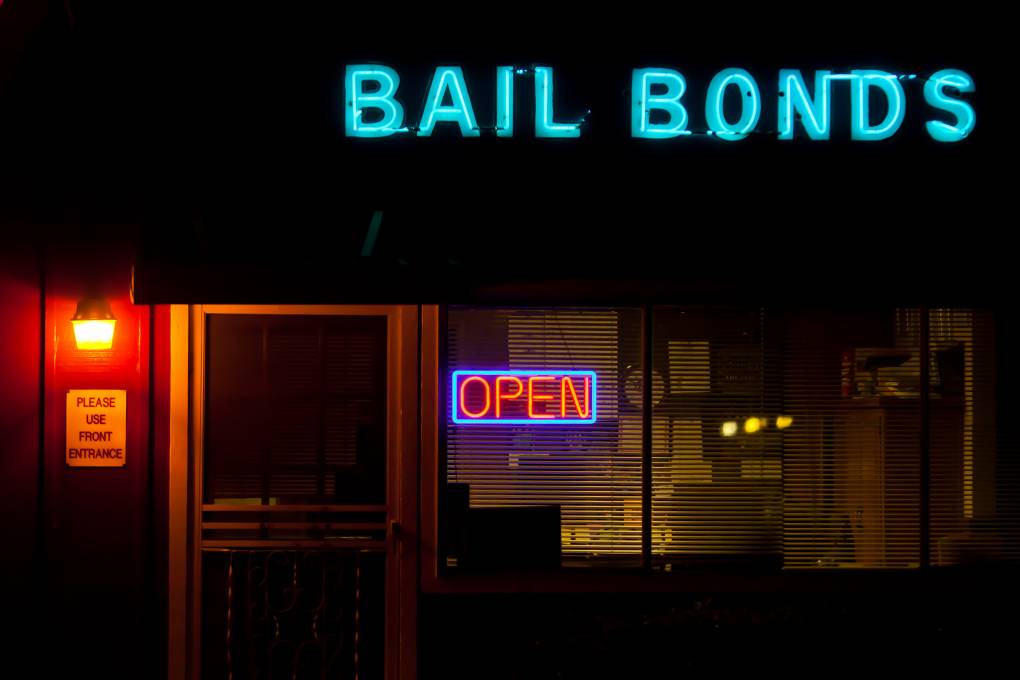
"caption": "If California voters approve Proposition 25, it would mean the end of cash bail in the state.",
"description": "If California voters approve Proposition 25, it would mean the end of cash bail in the state.",
"title": "4782382889_0bdc0a2a25_o",
"credit": "\u003ca href=\"https://www.flickr.com/photos/thomashawk/\">Thomas Hawk\u003c/a>/Flickr",
"status": "inherit",
"isLoading": false,
"fetchFailed": false
},
"news_11841206": {
"type": "attachments",
"id": "news_11841206",
"meta": {
"index": "attachments_1716263798",
"site": "news",
"id": "11841206",
"found": true
},
"parent": 11841201,
"imgSizes": {
"apple_news_ca_landscape_5_5": {
"file": "https://ww2.kqed.org/app/uploads/sites/10/2020/10/RS45237_029_KQED_SanFrancisco_VotingCenter_10052020-qut-1044x783.jpg",
"width": 1044,
"mimeType": "image/jpeg",
"height": 783
},
"apple_news_ca_square_4_0": {
"file": "https://ww2.kqed.org/app/uploads/sites/10/2020/10/RS45237_029_KQED_SanFrancisco_VotingCenter_10052020-qut-470x470.jpg",
"width": 470,
"mimeType": "image/jpeg",
"height": 470
},
"twentyfourteen-full-width": {
"file": "https://ww2.kqed.org/app/uploads/sites/10/2020/10/RS45237_029_KQED_SanFrancisco_VotingCenter_10052020-qut-1038x576.jpg",
"width": 1038,
"mimeType": "image/jpeg",
"height": 576
},
"thumbnail": {
"file": "https://ww2.kqed.org/app/uploads/sites/10/2020/10/RS45237_029_KQED_SanFrancisco_VotingCenter_10052020-qut-160x107.jpg",
"width": 160,
"mimeType": "image/jpeg",
"height": 107
},
"post-thumbnail": {
"file": "https://ww2.kqed.org/app/uploads/sites/10/2020/10/RS45237_029_KQED_SanFrancisco_VotingCenter_10052020-qut-672x372.jpg",
"width": 672,
"mimeType": "image/jpeg",
"height": 372
},
"kqedFullSize": {
"file": "https://ww2.kqed.org/app/uploads/sites/10/2020/10/RS45237_029_KQED_SanFrancisco_VotingCenter_10052020-qut.jpg",
"width": 1920,
"height": 1280
},
"apple_news_ca_landscape_4_7": {
"file": "https://ww2.kqed.org/app/uploads/sites/10/2020/10/RS45237_029_KQED_SanFrancisco_VotingCenter_10052020-qut-632x474.jpg",
"width": 632,
"mimeType": "image/jpeg",
"height": 474
},
"large": {
"file": "https://ww2.kqed.org/app/uploads/sites/10/2020/10/RS45237_029_KQED_SanFrancisco_VotingCenter_10052020-qut-1020x680.jpg",
"width": 1020,
"mimeType": "image/jpeg",
"height": 680
},
"apple_news_ca_landscape_4_0": {
"file": "https://ww2.kqed.org/app/uploads/sites/10/2020/10/RS45237_029_KQED_SanFrancisco_VotingCenter_10052020-qut-536x402.jpg",
"width": 536,
"mimeType": "image/jpeg",
"height": 402
},
"apple_news_ca_portrait_12_9": {
"file": "https://ww2.kqed.org/app/uploads/sites/10/2020/10/RS45237_029_KQED_SanFrancisco_VotingCenter_10052020-qut-1122x1280.jpg",
"width": 1122,
"mimeType": "image/jpeg",
"height": 1280
},
"medium": {
"file": "https://ww2.kqed.org/app/uploads/sites/10/2020/10/RS45237_029_KQED_SanFrancisco_VotingCenter_10052020-qut-800x533.jpg",
"width": 800,
"mimeType": "image/jpeg",
"height": 533
},
"apple_news_ca_portrait_4_0": {
"file": "https://ww2.kqed.org/app/uploads/sites/10/2020/10/RS45237_029_KQED_SanFrancisco_VotingCenter_10052020-qut-354x472.jpg",
"width": 354,
"mimeType": "image/jpeg",
"height": 472
},
"apple_news_ca_portrait_9_7": {
"file": "https://ww2.kqed.org/app/uploads/sites/10/2020/10/RS45237_029_KQED_SanFrancisco_VotingCenter_10052020-qut-840x1120.jpg",
"width": 840,
"mimeType": "image/jpeg",
"height": 1120
},
"apple_news_ca_landscape_12_9": {
"file": "https://ww2.kqed.org/app/uploads/sites/10/2020/10/RS45237_029_KQED_SanFrancisco_VotingCenter_10052020-qut-1832x1280.jpg",
"width": 1832,
"mimeType": "image/jpeg",
"height": 1280
},
"apple_news_ca_square_9_7": {
"file": "https://ww2.kqed.org/app/uploads/sites/10/2020/10/RS45237_029_KQED_SanFrancisco_VotingCenter_10052020-qut-1104x1104.jpg",
"width": 1104,
"mimeType": "image/jpeg",
"height": 1104
},
"1536x1536": {
"file": "https://ww2.kqed.org/app/uploads/sites/10/2020/10/RS45237_029_KQED_SanFrancisco_VotingCenter_10052020-qut-1536x1024.jpg",
"width": 1536,
"mimeType": "image/jpeg",
"height": 1024
},
"apple_news_ca_portrait_4_7": {
"file": "https://ww2.kqed.org/app/uploads/sites/10/2020/10/RS45237_029_KQED_SanFrancisco_VotingCenter_10052020-qut-414x552.jpg",
"width": 414,
"mimeType": "image/jpeg",
"height": 552
},
"apple_news_ca_square_12_9": {
"file": "https://ww2.kqed.org/app/uploads/sites/10/2020/10/RS45237_029_KQED_SanFrancisco_VotingCenter_10052020-qut-1472x1280.jpg",
"width": 1472,
"mimeType": "image/jpeg",
"height": 1280
},
"apple_news_ca_portrait_5_5": {
"file": "https://ww2.kqed.org/app/uploads/sites/10/2020/10/RS45237_029_KQED_SanFrancisco_VotingCenter_10052020-qut-687x916.jpg",
"width": 687,
"mimeType": "image/jpeg",
"height": 916
},
"apple_news_ca_square_4_7": {
"file": "https://ww2.kqed.org/app/uploads/sites/10/2020/10/RS45237_029_KQED_SanFrancisco_VotingCenter_10052020-qut-550x550.jpg",
"width": 550,
"mimeType": "image/jpeg",
"height": 550
},
"apple_news_ca_landscape_9_7": {
"file": "https://ww2.kqed.org/app/uploads/sites/10/2020/10/RS45237_029_KQED_SanFrancisco_VotingCenter_10052020-qut-1376x1032.jpg",
"width": 1376,
"mimeType": "image/jpeg",
"height": 1032
},
"apple_news_ca_square_5_5": {
"file": "https://ww2.kqed.org/app/uploads/sites/10/2020/10/RS45237_029_KQED_SanFrancisco_VotingCenter_10052020-qut-912x912.jpg",
"width": 912,
"mimeType": "image/jpeg",
"height": 912
}
},
"publishDate": 1602011203,
"modified": 1602098385,
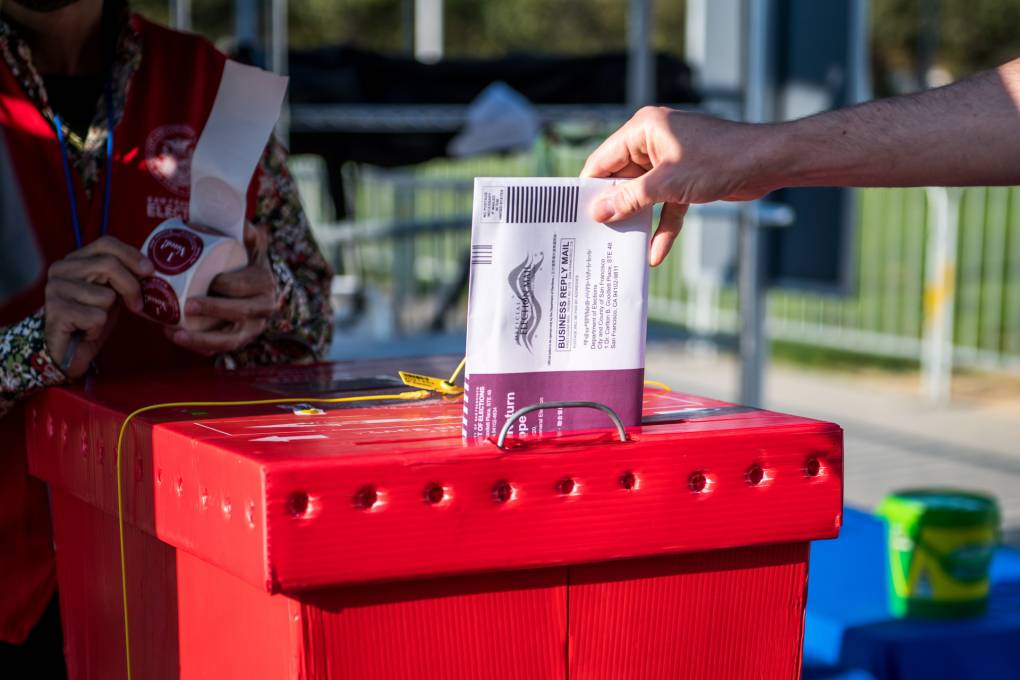
"caption": "A voter drops off a ballot at a new outdoor voting center near Civic Center Plaza in San Francisco on Oct. 5, 2020, the first day of early voting.",
"description": null,
"title": "ballotstatus",
"credit": "Beth LaBerge/KQED",
"status": "inherit",
"isLoading": false,
"fetchFailed": false
},
"news_11841306": {
"type": "attachments",
"id": "news_11841306",
"meta": {
"index": "attachments_1716263798",
"site": "news",
"id": "11841306",
"found": true
},
"parent": 11841212,
"imgSizes": {
"apple_news_ca_landscape_5_5": {
"file": "https://ww2.kqed.org/app/uploads/sites/10/2020/10/GettyImages-1278830427-1044x783.jpg",
"width": 1044,
"mimeType": "image/jpeg",
"height": 783
},
"apple_news_ca_square_4_0": {
"file": "https://ww2.kqed.org/app/uploads/sites/10/2020/10/GettyImages-1278830427-470x470.jpg",
"width": 470,
"mimeType": "image/jpeg",
"height": 470
},
"twentyfourteen-full-width": {
"file": "https://ww2.kqed.org/app/uploads/sites/10/2020/10/GettyImages-1278830427-1038x576.jpg",
"width": 1038,
"mimeType": "image/jpeg",
"height": 576
},
"thumbnail": {
"file": "https://ww2.kqed.org/app/uploads/sites/10/2020/10/GettyImages-1278830427-160x107.jpg",
"width": 160,
"mimeType": "image/jpeg",
"height": 107
},
"post-thumbnail": {
"file": "https://ww2.kqed.org/app/uploads/sites/10/2020/10/GettyImages-1278830427-672x372.jpg",
"width": 672,
"mimeType": "image/jpeg",
"height": 372
},
"kqedFullSize": {
"file": "https://ww2.kqed.org/app/uploads/sites/10/2020/10/GettyImages-1278830427.jpg",
"width": 1920,
"height": 1281
},
"apple_news_ca_landscape_4_7": {
"file": "https://ww2.kqed.org/app/uploads/sites/10/2020/10/GettyImages-1278830427-632x474.jpg",
"width": 632,
"mimeType": "image/jpeg",
"height": 474
},
"large": {
"file": "https://ww2.kqed.org/app/uploads/sites/10/2020/10/GettyImages-1278830427-1020x681.jpg",
"width": 1020,
"mimeType": "image/jpeg",
"height": 681
},
"apple_news_ca_landscape_4_0": {
"file": "https://ww2.kqed.org/app/uploads/sites/10/2020/10/GettyImages-1278830427-536x402.jpg",
"width": 536,
"mimeType": "image/jpeg",
"height": 402
},
"apple_news_ca_portrait_12_9": {
"file": "https://ww2.kqed.org/app/uploads/sites/10/2020/10/GettyImages-1278830427-1122x1281.jpg",
"width": 1122,
"mimeType": "image/jpeg",
"height": 1281
},
"medium": {
"file": "https://ww2.kqed.org/app/uploads/sites/10/2020/10/GettyImages-1278830427-800x534.jpg",
"width": 800,
"mimeType": "image/jpeg",
"height": 534
},
"apple_news_ca_portrait_4_0": {
"file": "https://ww2.kqed.org/app/uploads/sites/10/2020/10/GettyImages-1278830427-354x472.jpg",
"width": 354,
"mimeType": "image/jpeg",
"height": 472
},
"apple_news_ca_portrait_9_7": {
"file": "https://ww2.kqed.org/app/uploads/sites/10/2020/10/GettyImages-1278830427-840x1120.jpg",
"width": 840,
"mimeType": "image/jpeg",
"height": 1120
},
"apple_news_ca_landscape_12_9": {
"file": "https://ww2.kqed.org/app/uploads/sites/10/2020/10/GettyImages-1278830427-1832x1281.jpg",
"width": 1832,
"mimeType": "image/jpeg",
"height": 1281
},
"apple_news_ca_square_9_7": {
"file": "https://ww2.kqed.org/app/uploads/sites/10/2020/10/GettyImages-1278830427-1104x1104.jpg",
"width": 1104,
"mimeType": "image/jpeg",
"height": 1104
},
"1536x1536": {
"file": "https://ww2.kqed.org/app/uploads/sites/10/2020/10/GettyImages-1278830427-1536x1025.jpg",
"width": 1536,
"mimeType": "image/jpeg",
"height": 1025
},
"apple_news_ca_portrait_4_7": {
"file": "https://ww2.kqed.org/app/uploads/sites/10/2020/10/GettyImages-1278830427-414x552.jpg",
"width": 414,
"mimeType": "image/jpeg",
"height": 552
},
"apple_news_ca_square_12_9": {
"file": "https://ww2.kqed.org/app/uploads/sites/10/2020/10/GettyImages-1278830427-1472x1281.jpg",
"width": 1472,
"mimeType": "image/jpeg",
"height": 1281
},
"apple_news_ca_portrait_5_5": {
"file": "https://ww2.kqed.org/app/uploads/sites/10/2020/10/GettyImages-1278830427-687x916.jpg",
"width": 687,
"mimeType": "image/jpeg",
"height": 916
},
"apple_news_ca_square_4_7": {
"file": "https://ww2.kqed.org/app/uploads/sites/10/2020/10/GettyImages-1278830427-550x550.jpg",
"width": 550,
"mimeType": "image/jpeg",
"height": 550
},
"apple_news_ca_landscape_9_7": {
"file": "https://ww2.kqed.org/app/uploads/sites/10/2020/10/GettyImages-1278830427-1376x1032.jpg",
"width": 1376,
"mimeType": "image/jpeg",
"height": 1032
},
"apple_news_ca_square_5_5": {
"file": "https://ww2.kqed.org/app/uploads/sites/10/2020/10/GettyImages-1278830427-912x912.jpg",
"width": 912,
"mimeType": "image/jpeg",
"height": 912
}
},
"publishDate": 1602027351,
"modified": 1602027431,
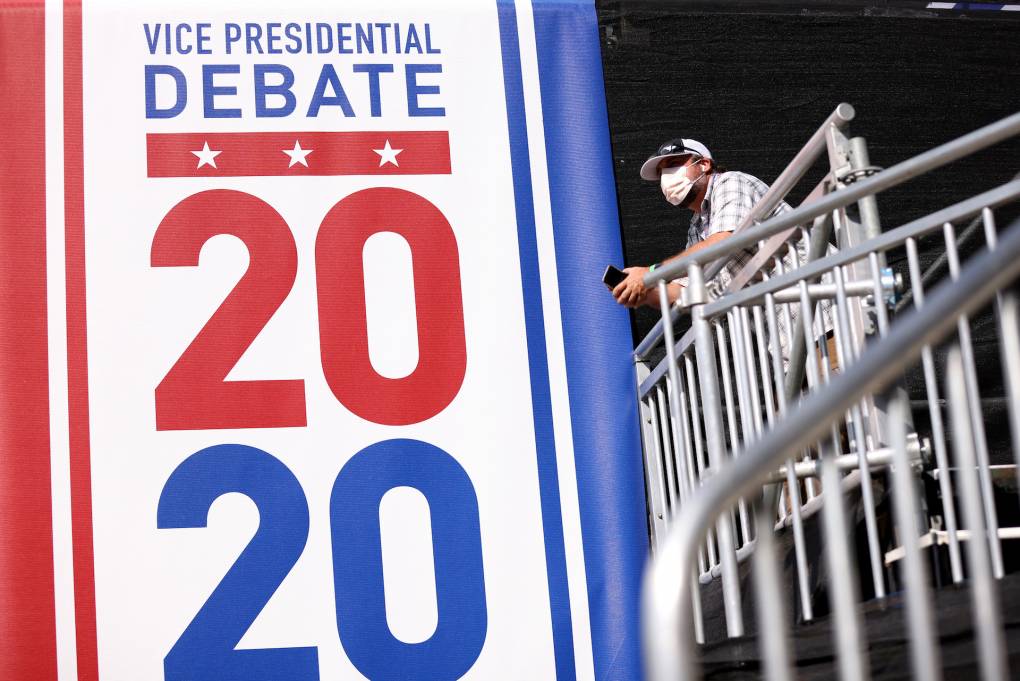
"caption": "A worker stands next to a sign outside of Kingsbury Hall ahead of the Vice Presidential debate at the University of Utah on October 06, 2020 in Salt Lake City, Utah.",
"description": "A worker stands next to a sign outside of Kingsbury Hall ahead of the Vice Presidential debate at the University of Utah on October 06, 2020 in Salt Lake City, Utah.",
"title": "Salt Lake City Prepares For Vice Presidential Debate",
"credit": "Justin Sullivan/Getty Images",
"status": "inherit",
"isLoading": false,
"fetchFailed": false
},
"news_11841188": {
"type": "attachments",
"id": "news_11841188",
"meta": {
"index": "attachments_1716263798",
"site": "news",
"id": "11841188",
"found": true
},
"parent": 11841059,
"imgSizes": {
"apple_news_ca_landscape_5_5": {
"file": "https://ww2.kqed.org/app/uploads/sites/10/2020/10/RS45239_031_KQED_SanFrancisco_VotingCenter_10052020-qut-1044x783.jpg",
"width": 1044,
"mimeType": "image/jpeg",
"height": 783
},
"apple_news_ca_square_4_0": {
"file": "https://ww2.kqed.org/app/uploads/sites/10/2020/10/RS45239_031_KQED_SanFrancisco_VotingCenter_10052020-qut-470x470.jpg",
"width": 470,
"mimeType": "image/jpeg",
"height": 470
},
"twentyfourteen-full-width": {
"file": "https://ww2.kqed.org/app/uploads/sites/10/2020/10/RS45239_031_KQED_SanFrancisco_VotingCenter_10052020-qut-1038x576.jpg",
"width": 1038,
"mimeType": "image/jpeg",
"height": 576
},
"thumbnail": {
"file": "https://ww2.kqed.org/app/uploads/sites/10/2020/10/RS45239_031_KQED_SanFrancisco_VotingCenter_10052020-qut-160x107.jpg",
"width": 160,
"mimeType": "image/jpeg",
"height": 107
},
"post-thumbnail": {
"file": "https://ww2.kqed.org/app/uploads/sites/10/2020/10/RS45239_031_KQED_SanFrancisco_VotingCenter_10052020-qut-672x372.jpg",
"width": 672,
"mimeType": "image/jpeg",
"height": 372
},
"kqedFullSize": {
"file": "https://ww2.kqed.org/app/uploads/sites/10/2020/10/RS45239_031_KQED_SanFrancisco_VotingCenter_10052020-qut.jpg",
"width": 1920,
"height": 1280
},
"apple_news_ca_landscape_4_7": {
"file": "https://ww2.kqed.org/app/uploads/sites/10/2020/10/RS45239_031_KQED_SanFrancisco_VotingCenter_10052020-qut-632x474.jpg",
"width": 632,
"mimeType": "image/jpeg",
"height": 474
},
"large": {
"file": "https://ww2.kqed.org/app/uploads/sites/10/2020/10/RS45239_031_KQED_SanFrancisco_VotingCenter_10052020-qut-1020x680.jpg",
"width": 1020,
"mimeType": "image/jpeg",
"height": 680
},
"apple_news_ca_landscape_4_0": {
"file": "https://ww2.kqed.org/app/uploads/sites/10/2020/10/RS45239_031_KQED_SanFrancisco_VotingCenter_10052020-qut-536x402.jpg",
"width": 536,
"mimeType": "image/jpeg",
"height": 402
},
"apple_news_ca_portrait_12_9": {
"file": "https://ww2.kqed.org/app/uploads/sites/10/2020/10/RS45239_031_KQED_SanFrancisco_VotingCenter_10052020-qut-1122x1280.jpg",
"width": 1122,
"mimeType": "image/jpeg",
"height": 1280
},
"medium": {
"file": "https://ww2.kqed.org/app/uploads/sites/10/2020/10/RS45239_031_KQED_SanFrancisco_VotingCenter_10052020-qut-800x533.jpg",
"width": 800,
"mimeType": "image/jpeg",
"height": 533
},
"apple_news_ca_portrait_4_0": {
"file": "https://ww2.kqed.org/app/uploads/sites/10/2020/10/RS45239_031_KQED_SanFrancisco_VotingCenter_10052020-qut-354x472.jpg",
"width": 354,
"mimeType": "image/jpeg",
"height": 472
},
"apple_news_ca_portrait_9_7": {
"file": "https://ww2.kqed.org/app/uploads/sites/10/2020/10/RS45239_031_KQED_SanFrancisco_VotingCenter_10052020-qut-840x1120.jpg",
"width": 840,
"mimeType": "image/jpeg",
"height": 1120
},
"apple_news_ca_landscape_12_9": {
"file": "https://ww2.kqed.org/app/uploads/sites/10/2020/10/RS45239_031_KQED_SanFrancisco_VotingCenter_10052020-qut-1832x1280.jpg",
"width": 1832,
"mimeType": "image/jpeg",
"height": 1280
},
"apple_news_ca_square_9_7": {
"file": "https://ww2.kqed.org/app/uploads/sites/10/2020/10/RS45239_031_KQED_SanFrancisco_VotingCenter_10052020-qut-1104x1104.jpg",
"width": 1104,
"mimeType": "image/jpeg",
"height": 1104
},
"1536x1536": {
"file": "https://ww2.kqed.org/app/uploads/sites/10/2020/10/RS45239_031_KQED_SanFrancisco_VotingCenter_10052020-qut-1536x1024.jpg",
"width": 1536,
"mimeType": "image/jpeg",
"height": 1024
},
"apple_news_ca_portrait_4_7": {
"file": "https://ww2.kqed.org/app/uploads/sites/10/2020/10/RS45239_031_KQED_SanFrancisco_VotingCenter_10052020-qut-414x552.jpg",
"width": 414,
"mimeType": "image/jpeg",
"height": 552
},
"apple_news_ca_square_12_9": {
"file": "https://ww2.kqed.org/app/uploads/sites/10/2020/10/RS45239_031_KQED_SanFrancisco_VotingCenter_10052020-qut-1472x1280.jpg",
"width": 1472,
"mimeType": "image/jpeg",
"height": 1280
},
"apple_news_ca_portrait_5_5": {
"file": "https://ww2.kqed.org/app/uploads/sites/10/2020/10/RS45239_031_KQED_SanFrancisco_VotingCenter_10052020-qut-687x916.jpg",
"width": 687,
"mimeType": "image/jpeg",
"height": 916
},
"apple_news_ca_square_4_7": {
"file": "https://ww2.kqed.org/app/uploads/sites/10/2020/10/RS45239_031_KQED_SanFrancisco_VotingCenter_10052020-qut-550x550.jpg",
"width": 550,
"mimeType": "image/jpeg",
"height": 550
},
"apple_news_ca_landscape_9_7": {
"file": "https://ww2.kqed.org/app/uploads/sites/10/2020/10/RS45239_031_KQED_SanFrancisco_VotingCenter_10052020-qut-1376x1032.jpg",
"width": 1376,
"mimeType": "image/jpeg",
"height": 1032
},
"apple_news_ca_square_5_5": {
"file": "https://ww2.kqed.org/app/uploads/sites/10/2020/10/RS45239_031_KQED_SanFrancisco_VotingCenter_10052020-qut-912x912.jpg",
"width": 912,
"mimeType": "image/jpeg",
"height": 912
}
},
"publishDate": 1602004450,
"modified": 1602535598,
"caption": "A voter receives an \"I Voted\" sticker at a new outdoor voting center near Civic Center Plaza in San Francisco on Oct. 5, 2020, the first day of early voting.",
"description": "A voter receives an \"I Voted\" sticker at a new outdoor voting center near Civic Center Plaza in San Francisco on Oct. 5, 2020, the first day of early voting.",
"title": "RS45239_031_KQED_SanFrancisco_VotingCenter_10052020-qut",
"credit": "Beth LaBerge/KQED",
"status": "inherit",
"isLoading": false,
"fetchFailed": false
},
"news_11841105": {
"type": "attachments",
"id": "news_11841105",
"meta": {
"index": "attachments_1716263798",
"site": "news",
"id": "11841105",
"found": true
},
"parent": 11841005,
"imgSizes": {
"apple_news_ca_landscape_5_5": {
"file": "https://ww2.kqed.org/app/uploads/sites/10/2020/10/iStock-538176790-1044x783.jpg",
"width": 1044,
"mimeType": "image/jpeg",
"height": 783
},
"apple_news_ca_square_4_0": {
"file": "https://ww2.kqed.org/app/uploads/sites/10/2020/10/iStock-538176790-470x470.jpg",
"width": 470,
"mimeType": "image/jpeg",
"height": 470
},
"twentyfourteen-full-width": {
"file": "https://ww2.kqed.org/app/uploads/sites/10/2020/10/iStock-538176790-1038x576.jpg",
"width": 1038,
"mimeType": "image/jpeg",
"height": 576
},
"thumbnail": {
"file": "https://ww2.kqed.org/app/uploads/sites/10/2020/10/iStock-538176790-160x107.jpg",
"width": 160,
"mimeType": "image/jpeg",
"height": 107
},
"post-thumbnail": {
"file": "https://ww2.kqed.org/app/uploads/sites/10/2020/10/iStock-538176790-672x372.jpg",
"width": 672,
"mimeType": "image/jpeg",
"height": 372
},
"kqedFullSize": {
"file": "https://ww2.kqed.org/app/uploads/sites/10/2020/10/iStock-538176790.jpg",
"width": 2120,
"height": 1414
},
"2048x2048": {
"file": "https://ww2.kqed.org/app/uploads/sites/10/2020/10/iStock-538176790-2048x1366.jpg",
"width": 2048,
"mimeType": "image/jpeg",
"height": 1366
},
"apple_news_ca_landscape_4_7": {
"file": "https://ww2.kqed.org/app/uploads/sites/10/2020/10/iStock-538176790-632x474.jpg",
"width": 632,
"mimeType": "image/jpeg",
"height": 474
},
"large": {
"file": "https://ww2.kqed.org/app/uploads/sites/10/2020/10/iStock-538176790-1020x680.jpg",
"width": 1020,
"mimeType": "image/jpeg",
"height": 680
},
"apple_news_ca_landscape_4_0": {
"file": "https://ww2.kqed.org/app/uploads/sites/10/2020/10/iStock-538176790-536x402.jpg",
"width": 536,
"mimeType": "image/jpeg",
"height": 402
},
"apple_news_ca_portrait_12_9": {
"file": "https://ww2.kqed.org/app/uploads/sites/10/2020/10/iStock-538176790-1122x1414.jpg",
"width": 1122,
"mimeType": "image/jpeg",
"height": 1414
},
"medium": {
"file": "https://ww2.kqed.org/app/uploads/sites/10/2020/10/iStock-538176790-800x534.jpg",
"width": 800,
"mimeType": "image/jpeg",
"height": 534
},
"apple_news_ca_portrait_4_0": {
"file": "https://ww2.kqed.org/app/uploads/sites/10/2020/10/iStock-538176790-354x472.jpg",
"width": 354,
"mimeType": "image/jpeg",
"height": 472
},
"apple_news_ca_portrait_9_7": {
"file": "https://ww2.kqed.org/app/uploads/sites/10/2020/10/iStock-538176790-840x1120.jpg",
"width": 840,
"mimeType": "image/jpeg",
"height": 1120
},
"apple_news_ca_landscape_12_9": {
"file": "https://ww2.kqed.org/app/uploads/sites/10/2020/10/iStock-538176790-1832x1374.jpg",
"width": 1832,
"mimeType": "image/jpeg",
"height": 1374
},
"apple_news_ca_square_9_7": {
"file": "https://ww2.kqed.org/app/uploads/sites/10/2020/10/iStock-538176790-1104x1104.jpg",
"width": 1104,
"mimeType": "image/jpeg",
"height": 1104
},
"1536x1536": {
"file": "https://ww2.kqed.org/app/uploads/sites/10/2020/10/iStock-538176790-1536x1024.jpg",
"width": 1536,
"mimeType": "image/jpeg",
"height": 1024
},
"apple_news_ca_portrait_4_7": {
"file": "https://ww2.kqed.org/app/uploads/sites/10/2020/10/iStock-538176790-414x552.jpg",
"width": 414,
"mimeType": "image/jpeg",
"height": 552
},
"apple_news_ca_square_12_9": {
"file": "https://ww2.kqed.org/app/uploads/sites/10/2020/10/iStock-538176790-1472x1414.jpg",
"width": 1472,
"mimeType": "image/jpeg",
"height": 1414
},
"apple_news_ca_portrait_5_5": {
"file": "https://ww2.kqed.org/app/uploads/sites/10/2020/10/iStock-538176790-687x916.jpg",
"width": 687,
"mimeType": "image/jpeg",
"height": 916
},
"full-width": {
"file": "https://ww2.kqed.org/app/uploads/sites/10/2020/10/iStock-538176790-1920x1281.jpg",
"width": 1920,
"mimeType": "image/jpeg",
"height": 1281
},
"apple_news_ca_square_4_7": {
"file": "https://ww2.kqed.org/app/uploads/sites/10/2020/10/iStock-538176790-550x550.jpg",
"width": 550,
"mimeType": "image/jpeg",
"height": 550
},
"apple_news_ca_landscape_9_7": {
"file": "https://ww2.kqed.org/app/uploads/sites/10/2020/10/iStock-538176790-1376x1032.jpg",
"width": 1376,
"mimeType": "image/jpeg",
"height": 1032
},
"apple_news_ca_square_5_5": {
"file": "https://ww2.kqed.org/app/uploads/sites/10/2020/10/iStock-538176790-912x912.jpg",
"width": 912,
"mimeType": "image/jpeg",
"height": 912
}
},
"publishDate": 1601938968,
"modified": 1601939275,
"caption": "In-home caregivers who provide care for a family member - largely women of color in California - would have been eligible for unemployment insurance under a new state bill vetoed by Gov. Gavin Newsom last week.",
"description": "In-home caregivers who provide care for a family member - largely women of color in California - would have been eligible for unemployment insurance under a new state bill vetoed by Gov. Gavin Newsom last week.",
"title": "Senior Woman Talking With Black Doctor In Hospice",
"credit": "Getty Images",
"status": "inherit",
"isLoading": false,
"fetchFailed": false
},
"news_11840710": {
"type": "attachments",
"id": "news_11840710",
"meta": {
"index": "attachments_1716263798",
"site": "news",
"id": "11840710",
"found": true
},
"parent": 11840409,
"imgSizes": {
"apple_news_ca_landscape_5_5": {
"file": "https://ww2.kqed.org/app/uploads/sites/10/2020/10/RS45176_GettyImages-1203411750-qut-1044x783.jpg",
"width": 1044,
"mimeType": "image/jpeg",
"height": 783
},
"apple_news_ca_square_4_0": {
"file": "https://ww2.kqed.org/app/uploads/sites/10/2020/10/RS45176_GettyImages-1203411750-qut-470x470.jpg",
"width": 470,
"mimeType": "image/jpeg",
"height": 470
},
"twentyfourteen-full-width": {
"file": "https://ww2.kqed.org/app/uploads/sites/10/2020/10/RS45176_GettyImages-1203411750-qut-1038x576.jpg",
"width": 1038,
"mimeType": "image/jpeg",
"height": 576
},
"thumbnail": {
"file": "https://ww2.kqed.org/app/uploads/sites/10/2020/10/RS45176_GettyImages-1203411750-qut-160x107.jpg",
"width": 160,
"mimeType": "image/jpeg",
"height": 107
},
"post-thumbnail": {
"file": "https://ww2.kqed.org/app/uploads/sites/10/2020/10/RS45176_GettyImages-1203411750-qut-672x372.jpg",
"width": 672,
"mimeType": "image/jpeg",
"height": 372
},
"kqedFullSize": {
"file": "https://ww2.kqed.org/app/uploads/sites/10/2020/10/RS45176_GettyImages-1203411750-qut.jpg",
"width": 1920,
"height": 1280
},
"apple_news_ca_landscape_4_7": {
"file": "https://ww2.kqed.org/app/uploads/sites/10/2020/10/RS45176_GettyImages-1203411750-qut-632x474.jpg",
"width": 632,
"mimeType": "image/jpeg",
"height": 474
},
"large": {
"file": "https://ww2.kqed.org/app/uploads/sites/10/2020/10/RS45176_GettyImages-1203411750-qut-1020x680.jpg",
"width": 1020,
"mimeType": "image/jpeg",
"height": 680
},
"apple_news_ca_landscape_4_0": {
"file": "https://ww2.kqed.org/app/uploads/sites/10/2020/10/RS45176_GettyImages-1203411750-qut-536x402.jpg",
"width": 536,
"mimeType": "image/jpeg",
"height": 402
},
"apple_news_ca_portrait_12_9": {
"file": "https://ww2.kqed.org/app/uploads/sites/10/2020/10/RS45176_GettyImages-1203411750-qut-1122x1280.jpg",
"width": 1122,
"mimeType": "image/jpeg",
"height": 1280
},
"medium": {
"file": "https://ww2.kqed.org/app/uploads/sites/10/2020/10/RS45176_GettyImages-1203411750-qut-800x533.jpg",
"width": 800,
"mimeType": "image/jpeg",
"height": 533
},
"apple_news_ca_portrait_4_0": {
"file": "https://ww2.kqed.org/app/uploads/sites/10/2020/10/RS45176_GettyImages-1203411750-qut-354x472.jpg",
"width": 354,
"mimeType": "image/jpeg",
"height": 472
},
"apple_news_ca_portrait_9_7": {
"file": "https://ww2.kqed.org/app/uploads/sites/10/2020/10/RS45176_GettyImages-1203411750-qut-840x1120.jpg",
"width": 840,
"mimeType": "image/jpeg",
"height": 1120
},
"apple_news_ca_landscape_12_9": {
"file": "https://ww2.kqed.org/app/uploads/sites/10/2020/10/RS45176_GettyImages-1203411750-qut-1832x1280.jpg",
"width": 1832,
"mimeType": "image/jpeg",
"height": 1280
},
"apple_news_ca_square_9_7": {
"file": "https://ww2.kqed.org/app/uploads/sites/10/2020/10/RS45176_GettyImages-1203411750-qut-1104x1104.jpg",
"width": 1104,
"mimeType": "image/jpeg",
"height": 1104
},
"1536x1536": {
"file": "https://ww2.kqed.org/app/uploads/sites/10/2020/10/RS45176_GettyImages-1203411750-qut-1536x1024.jpg",
"width": 1536,
"mimeType": "image/jpeg",
"height": 1024
},
"apple_news_ca_portrait_4_7": {
"file": "https://ww2.kqed.org/app/uploads/sites/10/2020/10/RS45176_GettyImages-1203411750-qut-414x552.jpg",
"width": 414,
"mimeType": "image/jpeg",
"height": 552
},
"apple_news_ca_square_12_9": {
"file": "https://ww2.kqed.org/app/uploads/sites/10/2020/10/RS45176_GettyImages-1203411750-qut-1472x1280.jpg",
"width": 1472,
"mimeType": "image/jpeg",
"height": 1280
},
"apple_news_ca_portrait_5_5": {
"file": "https://ww2.kqed.org/app/uploads/sites/10/2020/10/RS45176_GettyImages-1203411750-qut-687x916.jpg",
"width": 687,
"mimeType": "image/jpeg",
"height": 916
},
"apple_news_ca_square_4_7": {
"file": "https://ww2.kqed.org/app/uploads/sites/10/2020/10/RS45176_GettyImages-1203411750-qut-550x550.jpg",
"width": 550,
"mimeType": "image/jpeg",
"height": 550
},
"apple_news_ca_landscape_9_7": {
"file": "https://ww2.kqed.org/app/uploads/sites/10/2020/10/RS45176_GettyImages-1203411750-qut-1376x1032.jpg",
"width": 1376,
"mimeType": "image/jpeg",
"height": 1032
},
"apple_news_ca_square_5_5": {
"file": "https://ww2.kqed.org/app/uploads/sites/10/2020/10/RS45176_GettyImages-1203411750-qut-912x912.jpg",
"width": 912,
"mimeType": "image/jpeg",
"height": 912
}
},
"publishDate": 1601598475,
"modified": 1601680085,
"caption": "Visitors attend Disneyland Park on February 25, 2020 in Anaheim, California. Under Proposition 13, passed by voters in 1978, the value of commercial properties is only reassessed when a person or legal entity acquires more than 50% of the ownership interest. As a result, companies like Disneyland, Intel and Chevron are currently paying taxes based on property assessments from the 1970s.",
"description": "Visitors attend Disneyland Park on February 25, 2020 in Anaheim, California. Under Proposition 13, passed by voters in 1978, the value of commercial properties is only reassessed when a person or legal entity acquires more than 50% of the ownership interest. As a result, companies like Disneyland, Intel and Chevron are currently paying taxes based on property assessments from the 1970s.",
"title": "Visitors attend Disneyland Park on February 25, 2020 in Anaheim, California.",
"credit": "David McNew/Getty Images",
"status": "inherit",
"isLoading": false,
"fetchFailed": false
},
"news_11826079": {
"type": "attachments",
"id": "news_11826079",
"meta": {
"index": "attachments_1716263798",
"site": "news",
"id": "11826079",
"found": true
},
"parent": 11826042,
"imgSizes": {
"apple_news_ca_landscape_5_5": {
"file": "https://ww2.kqed.org/app/uploads/sites/10/2020/06/RS30257_GettyImages-941502788-qut-1044x783.jpg",
"width": 1044,
"mimeType": "image/jpeg",
"height": 783
},
"apple_news_ca_square_4_0": {
"file": "https://ww2.kqed.org/app/uploads/sites/10/2020/06/RS30257_GettyImages-941502788-qut-470x470.jpg",
"width": 470,
"mimeType": "image/jpeg",
"height": 470
},
"twentyfourteen-full-width": {
"file": "https://ww2.kqed.org/app/uploads/sites/10/2020/06/RS30257_GettyImages-941502788-qut-1038x576.jpg",
"width": 1038,
"mimeType": "image/jpeg",
"height": 576
},
"thumbnail": {
"file": "https://ww2.kqed.org/app/uploads/sites/10/2020/06/RS30257_GettyImages-941502788-qut-160x109.jpg",
"width": 160,
"mimeType": "image/jpeg",
"height": 109
},
"post-thumbnail": {
"file": "https://ww2.kqed.org/app/uploads/sites/10/2020/06/RS30257_GettyImages-941502788-qut-672x372.jpg",
"width": 672,
"mimeType": "image/jpeg",
"height": 372
},
"kqedFullSize": {
"file": "https://ww2.kqed.org/app/uploads/sites/10/2020/06/RS30257_GettyImages-941502788-qut.jpg",
"width": 1920,
"height": 1306
},
"apple_news_ca_landscape_4_7": {
"file": "https://ww2.kqed.org/app/uploads/sites/10/2020/06/RS30257_GettyImages-941502788-qut-632x474.jpg",
"width": 632,
"mimeType": "image/jpeg",
"height": 474
},
"large": {
"file": "https://ww2.kqed.org/app/uploads/sites/10/2020/06/RS30257_GettyImages-941502788-qut-1020x694.jpg",
"width": 1020,
"mimeType": "image/jpeg",
"height": 694
},
"apple_news_ca_landscape_4_0": {
"file": "https://ww2.kqed.org/app/uploads/sites/10/2020/06/RS30257_GettyImages-941502788-qut-536x402.jpg",
"width": 536,
"mimeType": "image/jpeg",
"height": 402
},
"apple_news_ca_portrait_12_9": {
"file": "https://ww2.kqed.org/app/uploads/sites/10/2020/06/RS30257_GettyImages-941502788-qut-1122x1306.jpg",
"width": 1122,
"mimeType": "image/jpeg",
"height": 1306
},
"medium": {
"file": "https://ww2.kqed.org/app/uploads/sites/10/2020/06/RS30257_GettyImages-941502788-qut-800x544.jpg",
"width": 800,
"mimeType": "image/jpeg",
"height": 544
},
"apple_news_ca_portrait_4_0": {
"file": "https://ww2.kqed.org/app/uploads/sites/10/2020/06/RS30257_GettyImages-941502788-qut-354x472.jpg",
"width": 354,
"mimeType": "image/jpeg",
"height": 472
},
"apple_news_ca_portrait_9_7": {
"file": "https://ww2.kqed.org/app/uploads/sites/10/2020/06/RS30257_GettyImages-941502788-qut-840x1120.jpg",
"width": 840,
"mimeType": "image/jpeg",
"height": 1120
},
"apple_news_ca_landscape_12_9": {
"file": "https://ww2.kqed.org/app/uploads/sites/10/2020/06/RS30257_GettyImages-941502788-qut-1832x1306.jpg",
"width": 1832,
"mimeType": "image/jpeg",
"height": 1306
},
"apple_news_ca_square_9_7": {
"file": "https://ww2.kqed.org/app/uploads/sites/10/2020/06/RS30257_GettyImages-941502788-qut-1104x1104.jpg",
"width": 1104,
"mimeType": "image/jpeg",
"height": 1104
},
"1536x1536": {
"file": "https://ww2.kqed.org/app/uploads/sites/10/2020/06/RS30257_GettyImages-941502788-qut-1536x1045.jpg",
"width": 1536,
"mimeType": "image/jpeg",
"height": 1045
},
"apple_news_ca_portrait_4_7": {
"file": "https://ww2.kqed.org/app/uploads/sites/10/2020/06/RS30257_GettyImages-941502788-qut-414x552.jpg",
"width": 414,
"mimeType": "image/jpeg",
"height": 552
},
"apple_news_ca_square_12_9": {
"file": "https://ww2.kqed.org/app/uploads/sites/10/2020/06/RS30257_GettyImages-941502788-qut-1472x1306.jpg",
"width": 1472,
"mimeType": "image/jpeg",
"height": 1306
},
"apple_news_ca_portrait_5_5": {
"file": "https://ww2.kqed.org/app/uploads/sites/10/2020/06/RS30257_GettyImages-941502788-qut-687x916.jpg",
"width": 687,
"mimeType": "image/jpeg",
"height": 916
},
"apple_news_ca_square_4_7": {
"file": "https://ww2.kqed.org/app/uploads/sites/10/2020/06/RS30257_GettyImages-941502788-qut-550x550.jpg",
"width": 550,
"mimeType": "image/jpeg",
"height": 550
},
"apple_news_ca_landscape_9_7": {
"file": "https://ww2.kqed.org/app/uploads/sites/10/2020/06/RS30257_GettyImages-941502788-qut-1376x1032.jpg",
"width": 1376,
"mimeType": "image/jpeg",
"height": 1032
},
"apple_news_ca_square_5_5": {
"file": "https://ww2.kqed.org/app/uploads/sites/10/2020/06/RS30257_GettyImages-941502788-qut-912x912.jpg",
"width": 912,
"mimeType": "image/jpeg",
"height": 912
}
},
"publishDate": 1593044619,
"modified": 1601683140,
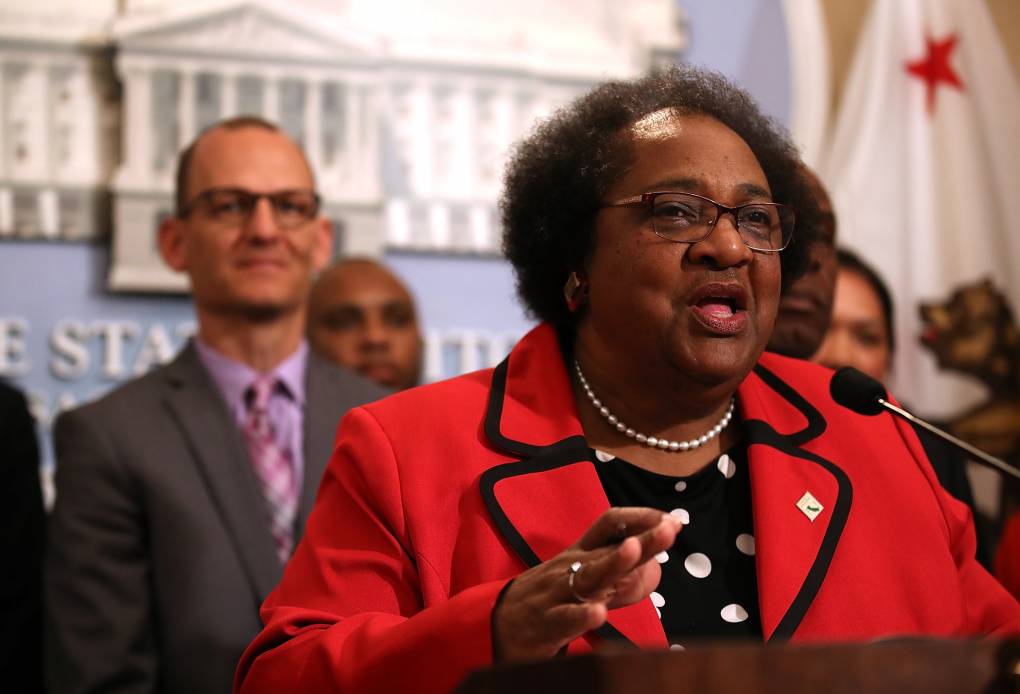
"caption": "Assemblywoman Shirley Weber (D-San Diego) authored Proposition 16, a measure that would overturn California's ban on affirmative action.",
"description": "Assemblywoman Shirley Weber (D-San Diego) authored Proposition 16, a measure that would overturn California's ban on affirmative action.",
"title": "California Lawmakers Announce Bill To Alter Police Use Of Lethal Force Policy",
"credit": "Justin Sullivan/Getty Images",
"status": "inherit",
"isLoading": false,
"fetchFailed": false
},
"news_11840823": {
"type": "attachments",
"id": "news_11840823",
"meta": {
"index": "attachments_1716263798",
"site": "news",
"id": "11840823",
"found": true
},
"parent": 11840343,
"imgSizes": {
"apple_news_ca_landscape_5_5": {
"file": "https://ww2.kqed.org/app/uploads/sites/10/2020/10/Joe-Raedle-Getty-1044x783.png",
"width": 1044,
"mimeType": "image/png",
"height": 783
},
"apple_news_ca_square_4_0": {
"file": "https://ww2.kqed.org/app/uploads/sites/10/2020/10/Joe-Raedle-Getty-470x470.png",
"width": 470,
"mimeType": "image/png",
"height": 470
},
"twentyfourteen-full-width": {
"file": "https://ww2.kqed.org/app/uploads/sites/10/2020/10/Joe-Raedle-Getty-1038x576.png",
"width": 1038,
"mimeType": "image/png",
"height": 576
},
"thumbnail": {
"file": "https://ww2.kqed.org/app/uploads/sites/10/2020/10/Joe-Raedle-Getty-160x107.png",
"width": 160,
"mimeType": "image/png",
"height": 107
},
"post-thumbnail": {
"file": "https://ww2.kqed.org/app/uploads/sites/10/2020/10/Joe-Raedle-Getty-672x372.png",
"width": 672,
"mimeType": "image/png",
"height": 372
},
"kqedFullSize": {
"file": "https://ww2.kqed.org/app/uploads/sites/10/2020/10/Joe-Raedle-Getty.png",
"width": 1900,
"height": 1267
},
"apple_news_ca_landscape_4_7": {
"file": "https://ww2.kqed.org/app/uploads/sites/10/2020/10/Joe-Raedle-Getty-632x474.png",
"width": 632,
"mimeType": "image/png",
"height": 474
},
"large": {
"file": "https://ww2.kqed.org/app/uploads/sites/10/2020/10/Joe-Raedle-Getty-1020x680.png",
"width": 1020,
"mimeType": "image/png",
"height": 680
},
"apple_news_ca_landscape_4_0": {
"file": "https://ww2.kqed.org/app/uploads/sites/10/2020/10/Joe-Raedle-Getty-536x402.png",
"width": 536,
"mimeType": "image/png",
"height": 402
},
"apple_news_ca_portrait_12_9": {
"file": "https://ww2.kqed.org/app/uploads/sites/10/2020/10/Joe-Raedle-Getty-1122x1267.png",
"width": 1122,
"mimeType": "image/png",
"height": 1267
},
"medium": {
"file": "https://ww2.kqed.org/app/uploads/sites/10/2020/10/Joe-Raedle-Getty-800x533.png",
"width": 800,
"mimeType": "image/png",
"height": 533
},
"apple_news_ca_portrait_4_0": {
"file": "https://ww2.kqed.org/app/uploads/sites/10/2020/10/Joe-Raedle-Getty-354x472.png",
"width": 354,
"mimeType": "image/png",
"height": 472
},
"apple_news_ca_portrait_9_7": {
"file": "https://ww2.kqed.org/app/uploads/sites/10/2020/10/Joe-Raedle-Getty-840x1120.png",
"width": 840,
"mimeType": "image/png",
"height": 1120
},
"apple_news_ca_landscape_12_9": {
"file": "https://ww2.kqed.org/app/uploads/sites/10/2020/10/Joe-Raedle-Getty-1832x1267.png",
"width": 1832,
"mimeType": "image/png",
"height": 1267
},
"apple_news_ca_square_9_7": {
"file": "https://ww2.kqed.org/app/uploads/sites/10/2020/10/Joe-Raedle-Getty-1104x1104.png",
"width": 1104,
"mimeType": "image/png",
"height": 1104
},
"1536x1536": {
"file": "https://ww2.kqed.org/app/uploads/sites/10/2020/10/Joe-Raedle-Getty-1536x1024.png",
"width": 1536,
"mimeType": "image/png",
"height": 1024
},
"apple_news_ca_portrait_4_7": {
"file": "https://ww2.kqed.org/app/uploads/sites/10/2020/10/Joe-Raedle-Getty-414x552.png",
"width": 414,
"mimeType": "image/png",
"height": 552
},
"apple_news_ca_square_12_9": {
"file": "https://ww2.kqed.org/app/uploads/sites/10/2020/10/Joe-Raedle-Getty-1472x1267.png",
"width": 1472,
"mimeType": "image/png",
"height": 1267
},
"apple_news_ca_portrait_5_5": {
"file": "https://ww2.kqed.org/app/uploads/sites/10/2020/10/Joe-Raedle-Getty-687x916.png",
"width": 687,
"mimeType": "image/png",
"height": 916
},
"apple_news_ca_square_4_7": {
"file": "https://ww2.kqed.org/app/uploads/sites/10/2020/10/Joe-Raedle-Getty-550x550.png",
"width": 550,
"mimeType": "image/png",
"height": 550
},
"apple_news_ca_landscape_9_7": {
"file": "https://ww2.kqed.org/app/uploads/sites/10/2020/10/Joe-Raedle-Getty-1376x1032.png",
"width": 1376,
"mimeType": "image/png",
"height": 1032
},
"apple_news_ca_square_5_5": {
"file": "https://ww2.kqed.org/app/uploads/sites/10/2020/10/Joe-Raedle-Getty-912x912.png",
"width": 912,
"mimeType": "image/png",
"height": 912
}
},
"publishDate": 1601667208,
"modified": 1602535030,
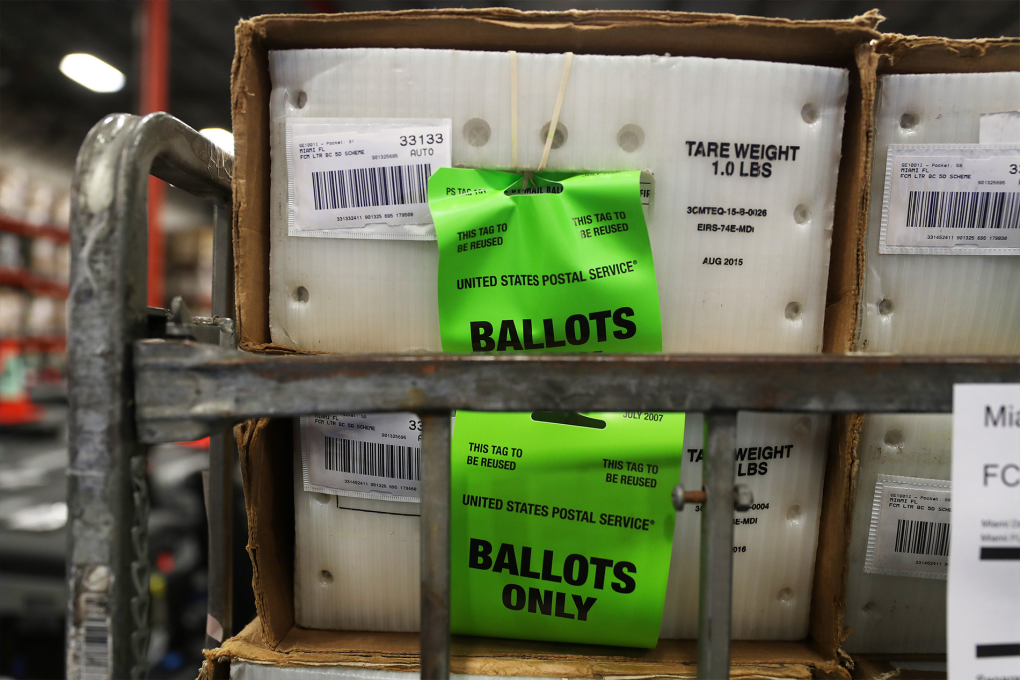
"caption": "The electoral system has failsafes in place to help you correct mistakes regarding your ballot",
"description": null,
"title": "ballot-status",
"credit": "Joe Raedle/Getty",
"status": "inherit",
"isLoading": false,
"fetchFailed": false
},
"news_11840492": {
"type": "attachments",
"id": "news_11840492",
"meta": {
"index": "attachments_1716263798",
"site": "news",
"id": "11840492",
"found": true
},
"parent": 11840465,
"imgSizes": {
"apple_news_ca_square_4_0": {
"file": "https://ww2.kqed.org/app/uploads/sites/10/2020/09/RS39211__M6A0746-qut-1038x576-1-470x470.jpg",
"width": 470,
"mimeType": "image/jpeg",
"height": 470
},
"thumbnail": {
"file": "https://ww2.kqed.org/app/uploads/sites/10/2020/09/RS39211__M6A0746-qut-1038x576-1-160x89.jpg",
"width": 160,
"mimeType": "image/jpeg",
"height": 89
},
"post-thumbnail": {
"file": "https://ww2.kqed.org/app/uploads/sites/10/2020/09/RS39211__M6A0746-qut-1038x576-1-672x372.jpg",
"width": 672,
"mimeType": "image/jpeg",
"height": 372
},
"kqedFullSize": {
"file": "https://ww2.kqed.org/app/uploads/sites/10/2020/09/RS39211__M6A0746-qut-1038x576-1.jpg",
"width": 1038,
"height": 576
},
"apple_news_ca_landscape_4_7": {
"file": "https://ww2.kqed.org/app/uploads/sites/10/2020/09/RS39211__M6A0746-qut-1038x576-1-632x474.jpg",
"width": 632,
"mimeType": "image/jpeg",
"height": 474
},
"large": {
"file": "https://ww2.kqed.org/app/uploads/sites/10/2020/09/RS39211__M6A0746-qut-1038x576-1-1020x566.jpg",
"width": 1020,
"mimeType": "image/jpeg",
"height": 566
},
"apple_news_ca_landscape_4_0": {
"file": "https://ww2.kqed.org/app/uploads/sites/10/2020/09/RS39211__M6A0746-qut-1038x576-1-536x402.jpg",
"width": 536,
"mimeType": "image/jpeg",
"height": 402
},
"medium": {
"file": "https://ww2.kqed.org/app/uploads/sites/10/2020/09/RS39211__M6A0746-qut-1038x576-1-800x444.jpg",
"width": 800,
"mimeType": "image/jpeg",
"height": 444
},
"apple_news_ca_portrait_4_0": {
"file": "https://ww2.kqed.org/app/uploads/sites/10/2020/09/RS39211__M6A0746-qut-1038x576-1-354x472.jpg",
"width": 354,
"mimeType": "image/jpeg",
"height": 472
},
"apple_news_ca_portrait_9_7": {
"file": "https://ww2.kqed.org/app/uploads/sites/10/2020/09/RS39211__M6A0746-qut-1038x576-1-840x576.jpg",
"width": 840,
"mimeType": "image/jpeg",
"height": 576
},
"apple_news_ca_portrait_4_7": {
"file": "https://ww2.kqed.org/app/uploads/sites/10/2020/09/RS39211__M6A0746-qut-1038x576-1-414x552.jpg",
"width": 414,
"mimeType": "image/jpeg",
"height": 552
},
"apple_news_ca_portrait_5_5": {
"file": "https://ww2.kqed.org/app/uploads/sites/10/2020/09/RS39211__M6A0746-qut-1038x576-1-687x576.jpg",
"width": 687,
"mimeType": "image/jpeg",
"height": 576
},
"apple_news_ca_square_4_7": {
"file": "https://ww2.kqed.org/app/uploads/sites/10/2020/09/RS39211__M6A0746-qut-1038x576-1-550x550.jpg",
"width": 550,
"mimeType": "image/jpeg",
"height": 550
},
"apple_news_ca_square_5_5": {
"file": "https://ww2.kqed.org/app/uploads/sites/10/2020/09/RS39211__M6A0746-qut-1038x576-1-912x576.jpg",
"width": 912,
"mimeType": "image/jpeg",
"height": 576
}
},
"publishDate": 1601513552,
"modified": 1601513808,
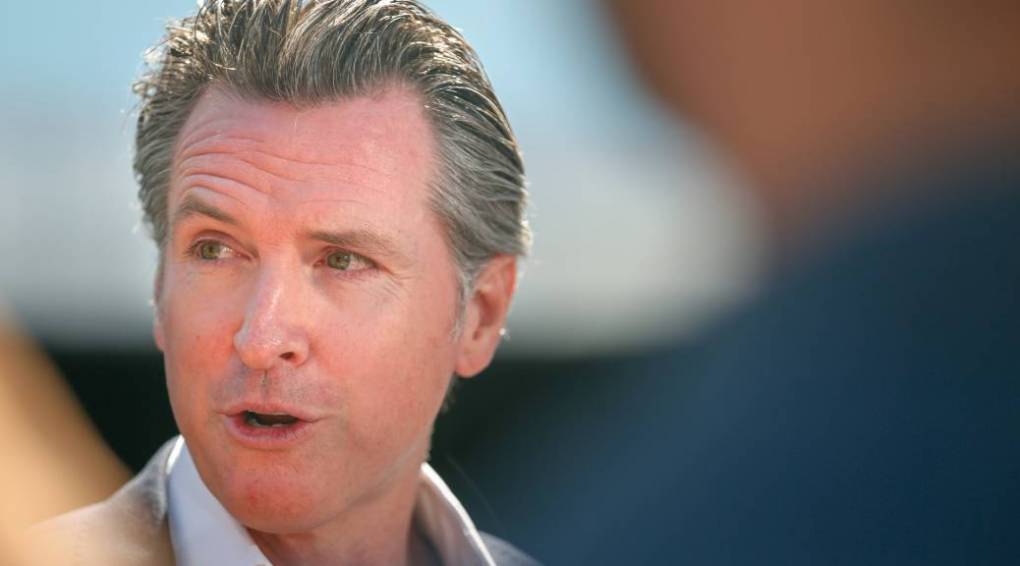
"caption": "Gov. Gavin Newsom signed a slew of bills today aimed at tackling systemic racism and making the criminal justice system more fair for all Californians",
"description": "Gov. Gavin Newsom signed a slew of bills today aimed at tackling systemic racism and making the criminal justice system more fair for all Californians",
"title": "RS39211__M6A0746-qut-1038x576",
"credit": "Sruti Mamidanna/KQED",
"status": "inherit",
"isLoading": false,
"fetchFailed": false
}
},
"audioPlayerReducer": {
"postId": "stream_live",
"isPaused": true,
"isPlaying": false,
"pfsActive": false,
"pledgeModalIsOpen": true,
"playerDrawerIsOpen": false,
"liveAudioPlayStartedAt": 0,
"liveAudioPlayContext": ""
},
"authorsReducer": {
"ohubertallen": {
"type": "authors",
"id": "102",
"meta": {
"index": "authors_1716337520",
"id": "102",
"found": true
},
"name": "Olivia Allen-Price",
"firstName": "Olivia",
"lastName": "Allen-Price",
"slug": "ohubertallen",
"email": "oallenprice@kqed.org",
"display_author_email": false,
"staff_mastheads": [
"news"
],
"title": "Senior Editor",
"bio": "Olivia Allen-Price is senior editor and host of the award-winning Bay Curious podcast. Prior to joining KQED in 2013, Olivia worked at The Baltimore Sun and The Virginian-Pilot in Norfolk, Va. She holds degrees in journalism and political science from Elon University. Her work has earned awards from the Society of Professional Journalists, the Hearst Foundation and Hearken. She loves to talk about running and curly hair.\r\n\r\nFollow: \u003ca href=\"https://twitter.com/oallenprice\">@oallenprice\u003c/a>\r\nEmail: \u003ca href=\"mailto:oallenprice@kqed.org\">oallenprice@kqed.org\u003c/a>",
"avatar": "https://secure.gravatar.com/avatar/07f7803c1f6be56f3be58ef276dfa64dce898502e0554408ef4858451a8294f7?s=600&d=blank&r=g",
"twitter": "oallenprice",
"bluesky": null,
"facebook": null,
"instagram": null,
"linkedin": null,
"sites": [
{
"site": "",
"roles": [
"editor"
]
},
{
"site": "arts",
"roles": [
"subscriber"
]
},
{
"site": "news",
"roles": [
"administrator"
]
},
{
"site": "pop",
"roles": [
"administrator"
]
},
{
"site": "bayareabites",
"roles": [
"contributor"
]
},
{
"site": "stateofhealth",
"roles": [
"administrator"
]
},
{
"site": "science",
"roles": [
"editor"
]
}
],
"headData": {
"title": "Olivia Allen-Price | KQED",
"description": "Senior Editor",
"ogImgSrc": "https://secure.gravatar.com/avatar/07f7803c1f6be56f3be58ef276dfa64dce898502e0554408ef4858451a8294f7?s=600&d=blank&r=g",
"twImgSrc": "https://secure.gravatar.com/avatar/07f7803c1f6be56f3be58ef276dfa64dce898502e0554408ef4858451a8294f7?s=600&d=blank&r=g"
},
"isLoading": false,
"link": "/author/ohubertallen"
},
"gmarzorati": {
"type": "authors",
"id": "227",
"meta": {
"index": "authors_1716337520",
"id": "227",
"found": true
},
"name": "Guy Marzorati",
"firstName": "Guy",
"lastName": "Marzorati",
"slug": "gmarzorati",
"email": "gmarzorati@KQED.org",
"display_author_email": true,
"staff_mastheads": [
"news"
],
"title": "Correspondent",
"bio": "Guy Marzorati is a correspondent on KQED's California Politics and Government Desk, based in San Jose. A graduate of Santa Clara University, Guy joined KQED in 2013. He reports on state and local politics and produces KQED's digital voter guide.",
"avatar": "https://secure.gravatar.com/avatar/e7038b8dbfd55b104369b76b1cd0b9de?s=600&d=blank&r=g",
"twitter": "guymarzorati",
"facebook": null,
"instagram": null,
"linkedin": null,
"sites": [
{
"site": "",
"roles": [
"editor"
]
},
{
"site": "news",
"roles": [
"editor"
]
},
{
"site": "science",
"roles": [
"editor"
]
},
{
"site": "forum",
"roles": [
"editor"
]
},
{
"site": "elections",
"roles": [
"editor"
]
},
{
"site": "liveblog",
"roles": [
"editor"
]
}
],
"headData": {
"title": "Guy Marzorati | KQED",
"description": "Correspondent",
"ogImgSrc": "https://secure.gravatar.com/avatar/e7038b8dbfd55b104369b76b1cd0b9de?s=600&d=blank&r=g",
"twImgSrc": "https://secure.gravatar.com/avatar/e7038b8dbfd55b104369b76b1cd0b9de?s=600&d=blank&r=g"
},
"isLoading": false,
"link": "/author/gmarzorati"
},
"scottshafer": {
"type": "authors",
"id": "255",
"meta": {
"index": "authors_1716337520",
"id": "255",
"found": true
},
"name": "Scott Shafer",
"firstName": "Scott",
"lastName": "Shafer",
"slug": "scottshafer",
"email": "sshafer@kqed.org",
"display_author_email": false,
"staff_mastheads": [
"news"
],
"title": "KQED Contributor",
"bio": "Scott Shafer is a senior editor with the KQED Politics and Government desk. He is co-host of Political Breakdown, the award-winning radio show and podcast with a personal take on the world of politics. Scott came to KQED in 1998 to host the statewide\u003cem> California Report\u003c/em>. Prior to that he had extended stints in politics and government\u003cem>.\u003c/em> He uses that inside experience at KQED in his, reporting, hosting and analysis for the politics desk. Scott collaborated \u003cem>Political Breakdown a\u003c/em>nd on \u003cem>The Political Mind of Jerry Brown, \u003c/em>an eight-part series about the life and extraordinary political career of the former governor. For fun, he plays water polo with the San Francisco Tsunami.",
"avatar": "https://secure.gravatar.com/avatar/a62ebae45b79d7aed1a39a0e3bf68104?s=600&d=blank&r=g",
"twitter": "scottshafer",
"bluesky": null,
"facebook": null,
"instagram": null,
"linkedin": null,
"sites": [
{
"site": "news",
"roles": [
"editor"
]
},
{
"site": "stateofhealth",
"roles": [
"author"
]
},
{
"site": "science",
"roles": [
"author"
]
},
{
"site": "forum",
"roles": [
"subscriber"
]
},
{
"site": "liveblog",
"roles": [
"author"
]
}
],
"headData": {
"title": "Scott Shafer | KQED",
"description": "KQED Contributor",
"ogImgSrc": "https://secure.gravatar.com/avatar/a62ebae45b79d7aed1a39a0e3bf68104?s=600&d=blank&r=g",
"twImgSrc": "https://secure.gravatar.com/avatar/a62ebae45b79d7aed1a39a0e3bf68104?s=600&d=blank&r=g"
},
"isLoading": false,
"link": "/author/scottshafer"
},
"markfiore": {
"type": "authors",
"id": "3236",
"meta": {
"index": "authors_1716337520",
"id": "3236",
"found": true
},
"name": "Mark Fiore",
"firstName": "Mark",
"lastName": "Fiore",
"slug": "markfiore",
"email": "mark@markfiore.com",
"display_author_email": false,
"staff_mastheads": [
"news"
],
"title": "KQED News Cartoonist",
"bio": "\u003ca href=\"http://www.MarkFiore.com\">MarkFiore.com\u003c/a> | \u003ca href=\"https://twitter.com/markfiore\">Follow on Twitter\u003c/a> | \u003ca href=\"https://www.facebook.com/pages/Mark-Fiore-Animated-Political-Cartoons/94451707396?ref=bookmarks\">Facebook\u003c/a> | \u003ca href=\"mailto:mark@markfiore.com\">email\u003c/a>\r\n\r\nPulitzer Prize-winner, Mark Fiore, who the Wall Street Journal has called “the undisputed guru of the form,” creates animated political cartoons in San Francisco, where his work has been featured regularly on the San Francisco Chronicle’s web site, SFGate.com. His work has appeared on Newsweek.com, Slate.com, CBSNews.com, MotherJones.com, DailyKos.com and NPR’s web site. Fiore’s political animation has appeared on CNN, Frontline, Bill Moyers Journal, Salon.com and cable and broadcast outlets across the globe.\r\n\r\nBeginning his professional life by drawing traditional political cartoons for newspapers, Fiore’s work appeared in publications ranging from the Washington Post to the Los Angeles Times. In the late 1990s, he began to experiment with animating political cartoons and, after a short stint at the San Jose Mercury News as their staff cartoonist, Fiore devoted all his energies to animation.\r\nGrowing up in California, Fiore also spent a good portion of his life in the backwoods of Idaho. It was this combination that shaped him politically. Mark majored in political science at Colorado College, where, in a perfect send-off for a cartoonist, he received his diploma in 1991 as commencement speaker Dick Cheney smiled approvingly.\r\nMark Fiore was awarded the Pulitzer Prize for political cartooning in 2010, a Robert F. Kennedy Journalism Award in 2004 and has twice received an Online Journalism Award for commentary from the Online News Association (2002, 2008). Fiore has received two awards for his work in new media from the National Cartoonists Society (2001, 2002), and in 2006 received The James Madison Freedom of Information Award from The Society of Professional Journalists.",
"avatar": "https://secure.gravatar.com/avatar/fc4e2a612b15b67bad0c6f0e1db4ca9b?s=600&d=blank&r=g",
"twitter": "MarkFiore",
"facebook": null,
"instagram": "https://www.instagram.com/markfiore/?hl=en",
"linkedin": null,
"sites": [
{
"site": "arts",
"roles": [
"contributor"
]
},
{
"site": "news",
"roles": [
"editor"
]
},
{
"site": "futureofyou",
"roles": [
"editor"
]
},
{
"site": "science",
"roles": [
"editor"
]
}
],
"headData": {
"title": "Mark Fiore | KQED",
"description": "KQED News Cartoonist",
"ogImgSrc": "https://secure.gravatar.com/avatar/fc4e2a612b15b67bad0c6f0e1db4ca9b?s=600&d=blank&r=g",
"twImgSrc": "https://secure.gravatar.com/avatar/fc4e2a612b15b67bad0c6f0e1db4ca9b?s=600&d=blank&r=g"
},
"isLoading": false,
"link": "/author/markfiore"
},
"mlagos": {
"type": "authors",
"id": "3239",
"meta": {
"index": "authors_1716337520",
"id": "3239",
"found": true
},
"name": "Marisa Lagos",
"firstName": "Marisa",
"lastName": "Lagos",
"slug": "mlagos",
"email": "mlagos@kqed.org",
"display_author_email": false,
"staff_mastheads": [
"news"
],
"title": "KQED Contributor",
"bio": "Marisa Lagos is a correspondent for KQED’s California Politics and Government Desk and co-hosts the award-winning show and podcast, Political Breakdown. At KQED, Lagos also conducts reporting, analysis and investigations into state, local and national politics for radio, TV, online and onstage. In 2022, she and co-host, Scott Shafer, moderated the only gubernatorial debate in California. In 2020, the \u003ci>Washington Post\u003c/i> named her one of the top political journalists in California; she was nominated for a Peabody and won several other awards for her work investigating the 2017 California wildfires. She has worked at the \u003ci>San Francisco Chronicle\u003c/i>, \u003ci>San Francisco Examiner\u003c/i> and \u003ci>Los Angeles Times\u003c/i>. A UC Santa Barbara graduate, she lives in San Francisco with her two sons and husband.",
"avatar": "https://secure.gravatar.com/avatar/a261a0d3696fc066871ef96b85b5e7d2?s=600&d=blank&r=g",
"twitter": "@mlagos",
"facebook": null,
"instagram": null,
"linkedin": null,
"sites": [
{
"site": "arts",
"roles": [
"author"
]
},
{
"site": "news",
"roles": [
"editor"
]
},
{
"site": "science",
"roles": [
"editor"
]
},
{
"site": "forum",
"roles": [
"author"
]
},
{
"site": "liveblog",
"roles": [
"author"
]
}
],
"headData": {
"title": "Marisa Lagos | KQED",
"description": "KQED Contributor",
"ogImgSrc": "https://secure.gravatar.com/avatar/a261a0d3696fc066871ef96b85b5e7d2?s=600&d=blank&r=g",
"twImgSrc": "https://secure.gravatar.com/avatar/a261a0d3696fc066871ef96b85b5e7d2?s=600&d=blank&r=g"
},
"isLoading": false,
"link": "/author/mlagos"
},
"carlysevern": {
"type": "authors",
"id": "3243",
"meta": {
"index": "authors_1716337520",
"id": "3243",
"found": true
},
"name": "Carly Severn",
"firstName": "Carly",
"lastName": "Severn",
"slug": "carlysevern",
"email": "csevern@kqed.org",
"display_author_email": false,
"staff_mastheads": [
"news"
],
"title": "Senior Editor, Audience News ",
"bio": "Carly is KQED's Senior Editor of Audience News on the Digital News team, and has reported for the California Report Magazine, Bay Curious and KQED Arts. She's formerly the host of \u003ca href=\"http://ww2.kqed.org/pop/category/the-cooler/\" rel=\"noopener noreferrer\">The Cooler\u003c/a> podcast.",
"avatar": "https://secure.gravatar.com/avatar/2d8d6765f186e64c798cf7f0c8088a41?s=600&d=blank&r=g",
"twitter": "teacupinthebay",
"facebook": null,
"instagram": null,
"linkedin": null,
"sites": [
{
"site": "",
"roles": [
"editor"
]
},
{
"site": "arts",
"roles": [
"editor"
]
},
{
"site": "news",
"roles": [
"administrator"
]
},
{
"site": "pop",
"roles": [
"editor"
]
},
{
"site": "futureofyou",
"roles": [
"editor"
]
},
{
"site": "about",
"roles": [
"administrator"
]
},
{
"site": "mindshift",
"roles": [
"editor"
]
},
{
"site": "bayareabites",
"roles": [
"editor"
]
},
{
"site": "stateofhealth",
"roles": [
"editor"
]
},
{
"site": "science",
"roles": [
"editor"
]
},
{
"site": "food",
"roles": [
"contributor"
]
},
{
"site": "forum",
"roles": [
"editor"
]
},
{
"site": "perspectives",
"roles": [
"administrator"
]
},
{
"site": "liveblog",
"roles": [
"editor"
]
}
],
"headData": {
"title": "Carly Severn | KQED",
"description": "Senior Editor, Audience News ",
"ogImgSrc": "https://secure.gravatar.com/avatar/2d8d6765f186e64c798cf7f0c8088a41?s=600&d=blank&r=g",
"twImgSrc": "https://secure.gravatar.com/avatar/2d8d6765f186e64c798cf7f0c8088a41?s=600&d=blank&r=g"
},
"isLoading": false,
"link": "/author/carlysevern"
},
"dkatayama": {
"type": "authors",
"id": "7240",
"meta": {
"index": "authors_1716337520",
"id": "7240",
"found": true
},
"name": "Devin Katayama",
"firstName": "Devin",
"lastName": "Katayama",
"slug": "dkatayama",
"email": "dkatayama@kqed.org",
"display_author_email": true,
"staff_mastheads": [
"news"
],
"title": "Editor of Talent and Development",
"bio": "Devin Katayama is former Editor of Talent and Development for KQED. He supported our internship program and on-call staff by looking for equitable opportunities to improve the newsroom.\r\n\r\nHe previously hosted The Bay and American Suburb podcasts from KQED News. Prior to returning to the Bay Area in 2015, Devin was the education reporter for WFPL in Louisville and worked as a producer with radio stations in Chicago and Portland, OR. His work has appeared on NPR’s \u003cem>Morning Edition, All Things Considered, The Takeaway\u003c/em> and \u003cem>Here and Now.\u003c/em>\r\n\r\nDevin earned his MA in Journalism from Columbia College Chicago, where he was a Follett Fellow and the recipient of the 2011 Studs Terkel Community Media Workshop Scholarship for his story on Chicago's homeless youth. He won WBUR's 2014 Daniel Schorr award and a regional RTNDA Edward R. Murrow Award for his documentary \"At Risk\" that looked at issues facing some of Louisville's students. Devin has also received numerous local awards from the Associated Press and the Society of Professional Journalists.",
"avatar": "https://secure.gravatar.com/avatar/d0d2978a31002fb2de107921a8e18405?s=600&d=blank&r=g",
"twitter": "RadioDevin",
"facebook": null,
"instagram": null,
"linkedin": null,
"sites": [
{
"site": "arts",
"roles": []
},
{
"site": "news",
"roles": [
"author"
]
},
{
"site": "stateofhealth",
"roles": [
"author"
]
},
{
"site": "forum",
"roles": [
"editor"
]
},
{
"site": "perspectives",
"roles": [
"editor"
]
}
],
"headData": {
"title": "Devin Katayama | KQED",
"description": "Editor of Talent and Development",
"ogImgSrc": "https://secure.gravatar.com/avatar/d0d2978a31002fb2de107921a8e18405?s=600&d=blank&r=g",
"twImgSrc": "https://secure.gravatar.com/avatar/d0d2978a31002fb2de107921a8e18405?s=600&d=blank&r=g"
},
"isLoading": false,
"link": "/author/dkatayama"
},
"korr": {
"type": "authors",
"id": "11200",
"meta": {
"index": "authors_1716337520",
"id": "11200",
"found": true
},
"name": "Katie Orr",
"firstName": "Katie",
"lastName": "Orr",
"slug": "korr",
"email": "korr@kqed.org",
"display_author_email": false,
"staff_mastheads": [],
"title": "KQED Contributor",
"bio": "Katie Orr was a Sacramento-based reporter for KQED's Politics and Government Desk, covering the state Capitol and a variety of issues including women in politics, voting and elections and legislation. Prior to joining KQED in 2016, Katie was state government reporter for Capital Public Radio in Sacramento. She's also worked for KPBS in San Diego, where she covered City Hall.\r\n\r\nKatie received her masters degree in political science from San Diego State University and holds a Bachelors degree in broadcast journalism from Arizona State University.\r\n\r\nIn 2015 Katie won a national Clarion Award for a series of stories she did on women in California politics. She's been honored by the Society for Professional Journalists and, in 2013, was named by \u003cem>The Washington Post\u003c/em> as one of the country's top state Capitol reporters. She's also reported for the award-winning documentary series \u003cem>The View from Here \u003c/em>and was part of the team that won national PRNDI and Gabriel Awards in 2015. She lives in Sacramento with her husband. Twitter: @1KatieOrr",
"avatar": "https://secure.gravatar.com/avatar/41a40b25845adc78f50808670860449e?s=600&d=blank&r=g",
"twitter": "1katieorr",
"facebook": null,
"instagram": null,
"linkedin": null,
"sites": [
{
"site": "news",
"roles": [
"subscriber"
]
},
{
"site": "stateofhealth",
"roles": [
"author"
]
},
{
"site": "forum",
"roles": [
"author"
]
}
],
"headData": {
"title": "Katie Orr | KQED",
"description": "KQED Contributor",
"ogImgSrc": "https://secure.gravatar.com/avatar/41a40b25845adc78f50808670860449e?s=600&d=blank&r=g",
"twImgSrc": "https://secure.gravatar.com/avatar/41a40b25845adc78f50808670860449e?s=600&d=blank&r=g"
},
"isLoading": false,
"link": "/author/korr"
},
"lsarah": {
"type": "authors",
"id": "11626",
"meta": {
"index": "authors_1716337520",
"id": "11626",
"found": true
},
"name": "Lakshmi Sarah",
"firstName": "Lakshmi",
"lastName": "Sarah",
"slug": "lsarah",
"email": "lsarah@kqed.org",
"display_author_email": false,
"staff_mastheads": [],
"title": "Digital Producer",
"bio": "Lakshmi Sarah is an educator, author and journalist with a focus on innovative storytelling. She has worked with newspapers, radio and magazines from Ahmedabad, India to Los Angeles, California. She has written and produced for Die Zeit, Global Voices, AJ+, KQED, Fusion Media Group and the New York Times.",
"avatar": "https://secure.gravatar.com/avatar/652dcaecd8b28826fc17a8b2d6bb4e93?s=600&d=blank&r=g",
"twitter": "lakitalki",
"facebook": null,
"instagram": "https://www.instagram.com/laki.talki/",
"linkedin": "https://www.linkedin.com/in/lakisarah/",
"sites": [
{
"site": "arts",
"roles": []
},
{
"site": "news",
"roles": []
},
{
"site": "bayareabites",
"roles": []
},
{
"site": "science",
"roles": []
}
],
"headData": {
"title": "Lakshmi Sarah | KQED",
"description": "Digital Producer",
"ogImgSrc": "https://secure.gravatar.com/avatar/652dcaecd8b28826fc17a8b2d6bb4e93?s=600&d=blank&r=g",
"twImgSrc": "https://secure.gravatar.com/avatar/652dcaecd8b28826fc17a8b2d6bb4e93?s=600&d=blank&r=g"
},
"isLoading": false,
"link": "/author/lsarah"
}
},
"pagesReducer": {
"news_tag_politics": {
"type": "terms",
"id": "news_17968",
"meta": {
"index": "terms_1716263798",
"site": "news",
"id": "17968",
"score": 8.003145
},
"name": "Politics",
"slug": "politics",
"taxonomy": "tag",
"description": null,
"featImg": null,
"headData": {
"title": "Politics | KQED News",
"description": null,
"ogTitle": null,
"ogDescription": null,
"ogImgId": null,
"twTitle": null,
"twDescription": null,
"twImgId": null
},
"ttid": 18002,
"isLoading": false,
"title": "Politics",
"pageMeta": {
"site": "news",
"WpPageTemplate": "page-topic-editorial",
"currentPage": 206
},
"blocks": [
{
"blockName": "kqed/post-list",
"attrs": {
"layout": "cardArticle2",
"query": "posts/news?tag=politics",
"seeMore": false,
"paginated": true,
"page": 206
}
},
{
"blockName": "kqed/ad"
}
]
}
},
"pfsSessionReducer": {},
"postsReducer": {
"stream_live": {
"type": "live",
"id": "stream_live",
"audioUrl": "https://streams.kqed.org/kqedradio",
"title": "Live Stream",
"excerpt": "Live Stream information currently unavailable.",
"link": "/radio",
"featImg": "",
"label": {
"name": "KQED Live",
"link": "/"
}
},
"stream_kqedNewscast": {
"type": "posts",
"id": "stream_kqedNewscast",
"audioUrl": "https://www.kqed.org/.stream/anon/radio/RDnews/newscast.mp3?_=1",
"title": "KQED Newscast",
"featImg": "",
"label": {
"name": "88.5 FM",
"link": "/"
}
},
"news_11841598": {
"type": "posts",
"id": "news_11841598",
"meta": {
"index": "posts_1716263798",
"site": "news",
"id": "11841598",
"score": null,
"sort": [
1602237631000
]
},
"parent": 0,
"labelTerm": {},
"blocks": [],
"publishDate": 1602237631,
"format": "audio",
"title": "A Bay Curious Guide to Statewide Propositions",
"headTitle": "A Bay Curious Guide to Statewide Propositions | KQED",
"content": "\u003cp>Bay Curious is exploring the 12 statewide ballot propositions with its Prop Fest series. Today, we’re sharing their guides to Propositions 16 and 17, which make big decisions on affirmative action and voting while on parole respectively.\u003c/p>\n\u003cp>\u003ci data-stringify-type=\"italic\">For more on Bay Curious’ Prop Fest, click \u003ca href=\"https://www.kqed.org/propfest\">\u003cstrong>here\u003c/strong>\u003c/a>. \u003c/i>\u003c/p>\n\u003cp>[ad fullwidth]\u003c/p>\u003cp>\u003c/p>\n",
"stats": {
"hasVideo": false,
"hasChartOrMap": false,
"hasAudio": false,
"hasPolis": false,
"wordCount": 52,
"hasGoogleForm": false,
"hasGallery": false,
"hasHearkenModule": false,
"iframeSrcs": [],
"paragraphCount": 4
},
"modified": 1700693857,
"excerpt": null,
"headData": {
"twImgId": "",
"twTitle": "",
"ogTitle": "",
"ogImgId": "",
"twDescription": "",
"description": "Bay Curious is exploring the 12 statewide ballot propositions with its Prop Fest series. Today, we're sharing their guides to Propositions 16 and 17, which make big decisions on affirmative action and voting while on parole respectively. For more on Bay Curious’ Prop Fest, click here. ",
"title": "A Bay Curious Guide to Statewide Propositions | KQED",
"ogDescription": "",
"schema": {
"@context": "https://schema.org",
"@type": "NewsArticle",
"headline": "A Bay Curious Guide to Statewide Propositions",
"datePublished": "2020-10-09T03:00:31-07:00",
"dateModified": "2023-11-22T14:57:37-08:00",
"image": "https://cdn.kqed.org/wp-content/uploads/2020/02/KQED-OG-Image@1x.png",
"isAccessibleForFree": "True",
"publisher": {
"@type": "NewsMediaOrganization",
"@id": "https://www.kqed.org/#organization",
"name": "KQED",
"logo": "https://cdn.kqed.org/wp-content/uploads/2020/02/KQED-OG-Image@1x.png",
"url": "https://www.kqed.org",
"sameAs": [
"https://www.facebook.com/KQED",
"https://twitter.com/KQED",
"https://www.instagram.com/kqed/",
"https://www.tiktok.com/@kqedofficial",
"https://www.linkedin.com/company/kqed",
"https://www.youtube.com/channel/UCeC0IOo7i1P_61zVUWbJ4nw"
]
}
}
},
"guestAuthors": [],
"slug": "a-bay-curious-guide-to-statewide-propositions",
"status": "publish",
"sourceUrl": "https://www.kqed.org/podcasts/thebay",
"audioUrl": "https://www.podtrac.com/pts/redirect.mp3/traffic.megaphone.fm/KQINC6755835065.mp3",
"source": "The Bay",
"path": "/news/11841598/a-bay-curious-guide-to-statewide-propositions",
"audioTrackLength": null,
"parsedContent": [
{
"type": "contentString",
"content": "\u003cdiv class=\"post-body\">\u003cp>\u003cp>Bay Curious is exploring the 12 statewide ballot propositions with its Prop Fest series. Today, we’re sharing their guides to Propositions 16 and 17, which make big decisions on affirmative action and voting while on parole respectively.\u003c/p>\n\u003cp>\u003ci data-stringify-type=\"italic\">For more on Bay Curious’ Prop Fest, click \u003ca href=\"https://www.kqed.org/propfest\">\u003cstrong>here\u003c/strong>\u003c/a>. \u003c/i>\u003c/p>\n\u003cp>\u003c/p>\u003c/div>",
"attributes": {
"named": {},
"numeric": []
}
},
{
"type": "component",
"content": "",
"name": "ad",
"attributes": {
"named": {
"label": "fullwidth"
},
"numeric": [
"fullwidth"
]
}
},
{
"type": "contentString",
"content": "\u003cdiv class=\"post-body\">\u003cp>\u003c/p>\u003cp>\u003c/p>\n\u003c/div>\u003c/p>",
"attributes": {
"named": {},
"numeric": []
}
}
],
"link": "/news/11841598/a-bay-curious-guide-to-statewide-propositions",
"authors": [
"7240",
"102"
],
"programs": [
"news_28779"
],
"categories": [
"news_8",
"news_33520"
],
"tags": [
"news_18426",
"news_17968",
"news_28645",
"news_22598"
],
"featImg": "news_11840826",
"label": "source_news_11841598"
},
"news_11841566": {
"type": "posts",
"id": "news_11841566",
"meta": {
"index": "posts_1716263798",
"site": "news",
"id": "11841566",
"score": null,
"sort": [
1602196262000
]
},
"guestAuthors": [],
"slug": "opposites-repel",
"title": "Opposites Repel",
"publishDate": 1602196262,
"format": "standard",
"headTitle": "Opposites Repel | KQED",
"labelTerm": {
"term": 18515,
"site": "news"
},
"content": "\u003cp>Following Sen. Kamala Harris’ performance in Wednesday night’s \u003ca href=\"http://bit.ly/fiorekamalapence\">vice presidential debate\u003c/a>, President Trump referred to her as a “monster” and a “communist.”\u003c/p>\n\u003cp>The fact that Trump refers to you as “this monster” and “totally unlikeable” would likely be considered a badge of honor by most people in the Bay Area.\u003c/p>\n\u003cp>Even though I was hoping the Oakland-born Harris would completely eviscerate Vice President Mike Pence onstage, she did a good job at highlighting some of the Trump administration’s failings.\u003c/p>\n\u003cp>Judging by the president’s \u003ca href=\"https://twitter.com/atrupar/status/1314186938417655808\">post-debate analysis\u003c/a>, Harris must have won the debate.\u003c/p>\n\u003cp>[ad fullwidth]\u003c/p>\n\u003cp>\u003c/p>\n",
"blocks": [],
"excerpt": "Following Sen. Kamala Harris' performance in Wednesday night's vice presidential debate, President Trump referred to her as a 'monster' and a 'communist.'",
"status": "publish",
"parent": 0,
"modified": 1721126986,
"stats": {
"hasAudio": false,
"hasVideo": false,
"hasChartOrMap": false,
"iframeSrcs": [],
"hasGoogleForm": false,
"hasGallery": false,
"hasHearkenModule": false,
"hasPolis": false,
"paragraphCount": 6,
"wordCount": 110
},
"headData": {
"title": "Opposites Repel | KQED",
"description": "Following Sen. Kamala Harris' performance in Wednesday night's vice presidential debate, President Trump referred to her as a 'monster' and a 'communist.'",
"ogTitle": "",
"ogDescription": "",
"ogImgId": "",
"twTitle": "",
"twDescription": "",
"twImgId": "",
"schema": {
"@context": "https://schema.org",
"@type": "NewsArticle",
"headline": "Opposites Repel",
"datePublished": "2020-10-08T15:31:02-07:00",
"dateModified": "2024-07-16T03:49:46-07:00",
"image": "https://cdn.kqed.org/wp-content/uploads/2020/02/KQED-OG-Image@1x.png",
"isAccessibleForFree": "True",
"publisher": {
"@type": "NewsMediaOrganization",
"@id": "https://www.kqed.org/#organization",
"name": "KQED",
"logo": "https://cdn.kqed.org/wp-content/uploads/2020/02/KQED-OG-Image@1x.png",
"url": "https://www.kqed.org",
"sameAs": [
"https://www.facebook.com/KQED",
"https://twitter.com/KQED",
"https://www.instagram.com/kqed/",
"https://www.tiktok.com/@kqedofficial",
"https://www.linkedin.com/company/kqed",
"https://www.youtube.com/channel/UCeC0IOo7i1P_61zVUWbJ4nw"
]
}
}
},
"sticky": false,
"path": "/news/11841566/opposites-repel",
"audioTrackLength": null,
"parsedContent": [
{
"type": "contentString",
"content": "\u003cdiv class=\"post-body\">\u003cp>\u003cp>Following Sen. Kamala Harris’ performance in Wednesday night’s \u003ca href=\"http://bit.ly/fiorekamalapence\">vice presidential debate\u003c/a>, President Trump referred to her as a “monster” and a “communist.”\u003c/p>\n\u003cp>The fact that Trump refers to you as “this monster” and “totally unlikeable” would likely be considered a badge of honor by most people in the Bay Area.\u003c/p>\n\u003cp>Even though I was hoping the Oakland-born Harris would completely eviscerate Vice President Mike Pence onstage, she did a good job at highlighting some of the Trump administration’s failings.\u003c/p>\n\u003cp>Judging by the president’s \u003ca href=\"https://twitter.com/atrupar/status/1314186938417655808\">post-debate analysis\u003c/a>, Harris must have won the debate.\u003c/p>\n\u003cp>\u003c/p>\u003c/div>",
"attributes": {
"named": {},
"numeric": []
}
},
{
"type": "component",
"content": "",
"name": "ad",
"attributes": {
"named": {
"label": "fullwidth"
},
"numeric": [
"fullwidth"
]
}
},
{
"type": "contentString",
"content": "\u003cdiv class=\"post-body\">\u003cp>\u003c/p>\n\u003cp>\u003c/p>\n\u003c/div>\u003c/p>",
"attributes": {
"named": {},
"numeric": []
}
}
],
"link": "/news/11841566/opposites-repel",
"authors": [
"3236"
],
"series": [
"news_18515"
],
"categories": [
"news_13"
],
"tags": [
"news_23095",
"news_717",
"news_61",
"news_20949",
"news_20010",
"news_17968"
],
"featImg": "news_11841572",
"label": "news_18515"
},
"news_11841514": {
"type": "posts",
"id": "news_11841514",
"meta": {
"index": "posts_1716263798",
"site": "news",
"id": "11841514",
"score": null,
"sort": [
1602132442000
]
},
"guestAuthors": [],
"slug": "four-takeaways-from-kamala-harris-vice-presidential-debate-performance",
"title": "Four Takeaways from Kamala Harris' Vice Presidential Debate Performance",
"publishDate": 1602132442,
"format": "image",
"headTitle": "Four Takeaways from Kamala Harris’ Vice Presidential Debate Performance | KQED",
"labelTerm": {
"site": "news"
},
"content": "\u003cp>California Sen. Kamala Harris and Vice President Mike Pence (and one pesky fly) shared the vice presidential debate stage on Wednesday night in Salt Lake City, Utah — trading barbs in a 90-minute debate moderated by Susan Page of USA Today.\u003c/p>\n\u003cp>Harris made her debut on the national debate stage last year, during her run for the Democratic presidential nomination. But her task on Wednesday night was different, as she honed attacks on the Trump administration and sought to bridge divides between her own record and Joe Biden’s platform.\u003c/p>\n\u003cp>Here are four takeaways from her performance:\u003c/p>\n\u003ch3>\u003cstrong>Starting Out on Offense\u003c/strong>\u003c/h3>\n\u003cp>Last week’s presidential debate between President Trump and Biden began with questions about the pending confirmation of Supreme Court nominee Judge Amy Coney Barrett. But after the president contracted the coronavirus and was hospitalized over the weekend, there was little doubt that Wednesday night’s debate would start with a focus on the pandemic.\u003c/p>\n\u003cp>Harris was ready. She tapped into the prosecutorial form that has garnered her acclaim during her time in the Senate, and calmly laid out the case against the Trump administration’s response.\u003c/p>\n\u003cp>“The American people have witnessed what is the greatest failure of any presidential administration in the history of our country,” Harris said.\u003c/p>\n\u003cp>https://twitter.com/NewsHour/status/1314011540560007169?s=20\u003c/p>\n\u003ch3>\u003cstrong>No Answer on ‘Court Packing’\u003c/strong>\u003c/h3>\n\u003cp>If Biden and Harris have made a decision on whether to increase the size of the Supreme Court if Democrats run the table, they’re keeping it close to the vest. When Pence pressed for her position on “court packing,” Harris veered uneasily between a history of judicial confirmations close to elections, an attack on Barrett’s nomination process and an examination of Trump’s lower court appointments.\u003c/p>\n\u003cp>https://twitter.com/NewsHour/status/1314031247308587008?s=20\u003c/p>\n\u003cp>Given that Biden was forced to perform similar rhetorical gymnastics on the same pommel horse last week, the campaign may want to articulate a position on the issue before the next presidential debate. Or not.\u003c/p>\n\u003ch3>\u003cstrong>Standing Up for Her Record \u003c/strong>\u003c/h3>\n\u003cp>Too often in her run for the Democratic nomination, Harris was caught between touting her lifelong experience as a prosecutor, and defending her role in a criminal justice system she acknowledged was full of systemic racism.\u003c/p>\n\u003cp>On Wednesday, Harris threaded the needle. She didn’t shy from her law enforcement credentials — repeatedly remarking that she would “not be lectured” by Pence on issues of criminal justice.\u003c/p>\n\u003cp>“I am the only one on this stage who has personally prosecuted everything from child sexual assault to homicide,” Harris said. “I am the only one on this stage who has prosecuted the big banks for taking advantage of homeowners. I am the only one on this stage who prosecuted for-profit colleges for taking advantage of our veterans.”\u003c/p>\n\u003cp>https://twitter.com/CBSEveningNews/status/1314034506463096832?s=20\u003c/p>\n\u003cp>And when Pence launched attacks on Harris’ record as District Attorney of San Francisco and Attorney General of California (“you did nothing on criminal justice reform in California,”) Harris pushed moderator Susan Page for a chance to respond.\u003c/p>\n\u003cp>“Having served as Attorney General of the state of California, the work that I did is a model of what our nation needs to do,” she said.\u003c/p>\n\u003cp>Many Democrats in California would disagree with that — and have — but don’t expect any to voice that now. [ad fullwidth]\u003c/p>\n\u003ch3>\u003cstrong>Civility and Speaking Time\u003c/strong>\u003c/h3>\n\u003cp>The night got off to a more civil start than last week’s presidential debate, as Pence thanked Harris for her well wishes toward the president’s health and offered her a moment of praise.\u003c/p>\n\u003cp>“I also want to congratulate you, as I did on that phone call, on the historic nature of your nomination,” Pence said. “I never expected to be on that stage four years ago, so I know the feeling.”\u003c/p>\n\u003cp>As the debate wore on, moderator Susan Page had increasing difficulty in cutting off Pence’s answers at the time limit.\u003c/p>\n\u003cp>https://twitter.com/NewsHour/status/1314025083799830529?s=20\u003c/p>\n\u003cp>But Harris was able to successfully press for more time in response, and though \u003ca href=\"https://www.cnn.com/politics/live-news/vp-debate-coverage-fact-check-10-07-20/h_193ba372b7272f1e62c18c93b3940835\" target=\"_blank\" rel=\"noopener noreferrer\">final\u003c/a> speaking \u003ca href=\"https://twitter.com/rickklein/status/1314032432769884160\" target=\"_blank\" rel=\"noopener noreferrer\">time\u003c/a> estimates vary, most show roughly equal time for the two candidates.\u003c/p>\n\u003cp>\u003c/p>\n",
"blocks": [],
"excerpt": "Sen. Harris and Vice President Mike Pence (and one pesky fly) shared the vice presidential debate stage on Wednesday night in Salt Lake City, Utah — trading barbs in a 90-minute debate moderated by Susan Page of USA Today.",
"status": "publish",
"parent": 0,
"modified": 1721752964,
"stats": {
"hasAudio": false,
"hasVideo": false,
"hasChartOrMap": false,
"iframeSrcs": [],
"hasGoogleForm": false,
"hasGallery": false,
"hasHearkenModule": false,
"hasPolis": false,
"paragraphCount": 19,
"wordCount": 729
},
"headData": {
"title": "Four Takeaways from Kamala Harris' Vice Presidential Debate Performance | KQED",
"description": "Sen. Harris and Vice President Mike Pence (and one pesky fly) shared the vice presidential debate stage on Wednesday night in Salt Lake City, Utah — trading barbs in a 90-minute debate moderated by Susan Page of USA Today.",
"ogTitle": "",
"ogDescription": "",
"ogImgId": "",
"twTitle": "",
"twDescription": "",
"twImgId": "",
"schema": {
"@context": "https://schema.org",
"@type": "NewsArticle",
"headline": "Four Takeaways from Kamala Harris' Vice Presidential Debate Performance",
"datePublished": "2020-10-07T21:47:22-07:00",
"dateModified": "2024-07-23T09:42:44-07:00",
"image": "https://cdn.kqed.org/wp-content/uploads/2020/02/KQED-OG-Image@1x.png",
"isAccessibleForFree": "True",
"publisher": {
"@type": "NewsMediaOrganization",
"@id": "https://www.kqed.org/#organization",
"name": "KQED",
"logo": "https://cdn.kqed.org/wp-content/uploads/2020/02/KQED-OG-Image@1x.png",
"url": "https://www.kqed.org",
"sameAs": [
"https://www.facebook.com/KQED",
"https://twitter.com/KQED",
"https://www.instagram.com/kqed/",
"https://www.tiktok.com/@kqedofficial",
"https://www.linkedin.com/company/kqed",
"https://www.youtube.com/channel/UCeC0IOo7i1P_61zVUWbJ4nw"
]
}
}
},
"sticky": false,
"excludeFromSiteSearch": "Include",
"articleAge": "0",
"path": "/news/11841514/four-takeaways-from-kamala-harris-vice-presidential-debate-performance",
"audioTrackLength": null,
"parsedContent": [
{
"type": "contentString",
"content": "\u003cdiv class=\"post-body\">\u003cp>\u003cp>California Sen. Kamala Harris and Vice President Mike Pence (and one pesky fly) shared the vice presidential debate stage on Wednesday night in Salt Lake City, Utah — trading barbs in a 90-minute debate moderated by Susan Page of USA Today.\u003c/p>\n\u003cp>Harris made her debut on the national debate stage last year, during her run for the Democratic presidential nomination. But her task on Wednesday night was different, as she honed attacks on the Trump administration and sought to bridge divides between her own record and Joe Biden’s platform.\u003c/p>\n\u003cp>Here are four takeaways from her performance:\u003c/p>\n\u003ch3>\u003cstrong>Starting Out on Offense\u003c/strong>\u003c/h3>\n\u003cp>Last week’s presidential debate between President Trump and Biden began with questions about the pending confirmation of Supreme Court nominee Judge Amy Coney Barrett. But after the president contracted the coronavirus and was hospitalized over the weekend, there was little doubt that Wednesday night’s debate would start with a focus on the pandemic.\u003c/p>\n\u003cp>Harris was ready. She tapped into the prosecutorial form that has garnered her acclaim during her time in the Senate, and calmly laid out the case against the Trump administration’s response.\u003c/p>\n\u003cp>“The American people have witnessed what is the greatest failure of any presidential administration in the history of our country,” Harris said.\u003c/p>\u003c/p>\u003c/div>",
"attributes": {
"named": {},
"numeric": []
}
},
{
"type": "component",
"content": "",
"name": "singleTwitterStatus",
"attributes": {
"named": {
"id": "1314011540560007169"
},
"numeric": []
}
},
{
"type": "contentString",
"content": "\u003cdiv class=\"post-body\">\u003cp>\n\u003ch3>\u003cstrong>No Answer on ‘Court Packing’\u003c/strong>\u003c/h3>\n\u003cp>If Biden and Harris have made a decision on whether to increase the size of the Supreme Court if Democrats run the table, they’re keeping it close to the vest. When Pence pressed for her position on “court packing,” Harris veered uneasily between a history of judicial confirmations close to elections, an attack on Barrett’s nomination process and an examination of Trump’s lower court appointments.\u003c/p>\u003c/p>\u003c/div>",
"attributes": {
"named": {},
"numeric": []
}
},
{
"type": "component",
"content": "",
"name": "singleTwitterStatus",
"attributes": {
"named": {
"id": "1314031247308587008"
},
"numeric": []
}
},
{
"type": "contentString",
"content": "\u003cdiv class=\"post-body\">\u003cp>\n\u003cp>Given that Biden was forced to perform similar rhetorical gymnastics on the same pommel horse last week, the campaign may want to articulate a position on the issue before the next presidential debate. Or not.\u003c/p>\n\u003ch3>\u003cstrong>Standing Up for Her Record \u003c/strong>\u003c/h3>\n\u003cp>Too often in her run for the Democratic nomination, Harris was caught between touting her lifelong experience as a prosecutor, and defending her role in a criminal justice system she acknowledged was full of systemic racism.\u003c/p>\n\u003cp>On Wednesday, Harris threaded the needle. She didn’t shy from her law enforcement credentials — repeatedly remarking that she would “not be lectured” by Pence on issues of criminal justice.\u003c/p>\n\u003cp>“I am the only one on this stage who has personally prosecuted everything from child sexual assault to homicide,” Harris said. “I am the only one on this stage who has prosecuted the big banks for taking advantage of homeowners. I am the only one on this stage who prosecuted for-profit colleges for taking advantage of our veterans.”\u003c/p>\u003c/p>\u003c/div>",
"attributes": {
"named": {},
"numeric": []
}
},
{
"type": "component",
"content": "",
"name": "singleTwitterStatus",
"attributes": {
"named": {
"id": "1314034506463096832"
},
"numeric": []
}
},
{
"type": "contentString",
"content": "\u003cdiv class=\"post-body\">\u003cp>\n\u003cp>And when Pence launched attacks on Harris’ record as District Attorney of San Francisco and Attorney General of California (“you did nothing on criminal justice reform in California,”) Harris pushed moderator Susan Page for a chance to respond.\u003c/p>\n\u003cp>“Having served as Attorney General of the state of California, the work that I did is a model of what our nation needs to do,” she said.\u003c/p>\n\u003cp>Many Democrats in California would disagree with that — and have — but don’t expect any to voice that now. \u003c/p>\u003c/div>",
"attributes": {
"named": {},
"numeric": []
}
},
{
"type": "component",
"content": "",
"name": "ad",
"attributes": {
"named": {
"label": "fullwidth"
},
"numeric": [
"fullwidth"
]
}
},
{
"type": "contentString",
"content": "\u003cdiv class=\"post-body\">\u003cp>\u003c/p>\n\u003ch3>\u003cstrong>Civility and Speaking Time\u003c/strong>\u003c/h3>\n\u003cp>The night got off to a more civil start than last week’s presidential debate, as Pence thanked Harris for her well wishes toward the president’s health and offered her a moment of praise.\u003c/p>\n\u003cp>“I also want to congratulate you, as I did on that phone call, on the historic nature of your nomination,” Pence said. “I never expected to be on that stage four years ago, so I know the feeling.”\u003c/p>\n\u003cp>As the debate wore on, moderator Susan Page had increasing difficulty in cutting off Pence’s answers at the time limit.\u003c/p>\u003c/p>\u003c/div>",
"attributes": {
"named": {},
"numeric": []
}
},
{
"type": "component",
"content": "",
"name": "singleTwitterStatus",
"attributes": {
"named": {
"id": "1314025083799830529"
},
"numeric": []
}
},
{
"type": "contentString",
"content": "\u003cdiv class=\"post-body\">\u003cp>\n\u003cp>But Harris was able to successfully press for more time in response, and though \u003ca href=\"https://www.cnn.com/politics/live-news/vp-debate-coverage-fact-check-10-07-20/h_193ba372b7272f1e62c18c93b3940835\" target=\"_blank\" rel=\"noopener noreferrer\">final\u003c/a> speaking \u003ca href=\"https://twitter.com/rickklein/status/1314032432769884160\" target=\"_blank\" rel=\"noopener noreferrer\">time\u003c/a> estimates vary, most show roughly equal time for the two candidates.\u003c/p>\n\u003cp>\u003c/p>\n\u003c/div>\u003c/p>",
"attributes": {
"named": {},
"numeric": []
}
}
],
"link": "/news/11841514/four-takeaways-from-kamala-harris-vice-presidential-debate-performance",
"authors": [
"227"
],
"categories": [
"news_8",
"news_13"
],
"tags": [
"news_28756",
"news_27626",
"news_61",
"news_20010",
"news_17968"
],
"featImg": "news_11841526",
"label": "news"
},
"news_11841209": {
"type": "posts",
"id": "news_11841209",
"meta": {
"index": "posts_1716263798",
"site": "news",
"id": "11841209",
"score": null,
"sort": [
1602112169000
]
},
"guestAuthors": [],
"slug": "proposition-25-would-end-cash-bail-so-why-are-some-progressive-groups-against-it",
"title": "Proposition 25 Would End Cash Bail. So Why Are Some Progressive Groups Against It?",
"publishDate": 1602112169,
"format": "standard",
"headTitle": "Proposition 25 Would End Cash Bail. So Why Are Some Progressive Groups Against It? | KQED",
"labelTerm": {
"site": "news"
},
"content": "\u003cp>When California lawmakers \u003ca href=\"https://www.kqed.org/news/11487659/bail-reform-bill-approved-by-senate-assembly-next-up\">began debating\u003c/a> whether to reform the state’s cash bail system more than three years ago, progressive groups supported the change.\u003c/p>\n\u003cp>But the \u003ca href=\"https://www.kqed.org/news/11689184/gov-brown-signs-bill-ending-cash-bail-in-california\">compromise legislation that emerged\u003c/a> following more than a year of debate in the state Capitol \u003ca href=\"https://www.kqed.org/news/11687273/bill-to-end-cash-bail-in-california-moves-forward-but-loses-some-support\">splintered the coalition on the left\u003c/a>. Now, state voters are being asked whether to uphold that law — \u003ca href=\"http://leginfo.legislature.ca.gov/faces/billNavClient.xhtml?bill_id=201720180SB10\">Senate Bill 10\u003c/a> — after the bail industry gathered enough signatures to put a referendum on it on this November’s ballot.\u003c/p>\n\u003cp>If passed, Proposition 25 would let SB 10 take effect — ending cash bail as a way for people accused of a crime to secure their release before a trial. But in a strange twist, some progressive civil rights groups are siding with the bail industry and law enforcement to effectively keep bail in place.\u003c/p>\n\u003cp>They worry that the new law will result in more, not fewer, people being kept behind bars as they await trial.\u003c/p>\n\u003cp>“I can’t predict what will happen, but I can say that the system they’ve set up is going to allow for expanded incarceration and expanded pretrial supervision including electronic monitoring, all of which is going to lead to more incarceration,” said John Raphling, a researcher for Human Rights Watch in Los Angeles.\u003c/p>\n\u003cp>[ad fullwidth]\u003c/p>\n\u003cp>Raphling wants voters to reject Proposition 25. Since the ballot measure is a referendum on SB 10, which was \u003ca href=\"https://www.kqed.org/news/11689184/gov-brown-signs-bill-ending-cash-bail-in-california\">signed by then-Gov. Jerry Brown\u003c/a> in 2018 — a “yes” vote will allow the legislation to take effect and a “no” vote would overturn the law. Under state law, a referendum puts a new law on hold until voters can weigh in — meaning the 2018 law never went into effect. If Proposition 25 passes, California would become the first state in the nation to completely outlaw money bail.\u003c/p>\n\u003cp>Proposition 25’s backers say Raphling and other opponents are wrong, and that the measure will actually lead to fewer people being held in jail pretrial, and make the system more fair.\u003c/p>\n\u003cp>John Bauters, budget advocacy director for the criminal justice reform group Californians for Safety and Justice, pointed to a study by the Public Policy Institute of California which found that the change would result in more than 142,000 people each year spending less time in jail.\u003c/p>\n\u003cp>Bauters said the new system that would be set up under Proposition 25 would ensure that people don’t lose their jobs, their homes or custody of their kids while they languish in jail.\u003c/p>\n\u003cp>“There’s tons of statistics and data about how people who are held pretrial are more likely to plead guilty to things they didn’t commit,” he said. “People who are released pretrial actually get a more pure form of justice.”\u003c/p>\n\u003ch3>What Does the Law Do?\u003c/h3>\n\u003cp>The 2018 bill, SB 10, made money bail illegal in California.\u003c/p>\n\u003cp>If voters decide to uphold SB 10 by passing Proposition 25, the state would replace bail with a system that generally requires people arrested for misdemeanors to be automatically let go before trial — and for those accused of violent felonies to be kept in jail.\u003c/p>\n\u003cp>Those accused of lower-level felonies would go before a judge who could keep them in jail or put conditions on their release. Those conditions could include things like mandatory drug treatment, or a weekly probation check-in. The judge’s decision would in part be based on the results of a risk assessment tool that would essentially measure a person’s likelihood of re-offending or skipping out on court.\u003c/p>\n\u003cp>Each county would have to adopt their own risk assessment tool.\u003c/p>\n\u003cp>Those tools — based on algorithms that ‘learn’ more about risk profiles as more data about criminal defendants is entered into them — have become one of the flash points for those opposed to the bail law and Proposition 25.\u003c/p>\n\u003ch3>Too Much Power for Algorithms and Judges?\u003c/h3>\n\u003cp>Raphling, for example, warns that these risk assessment tools could be biased or misleading themselves, noting that someone’s risk of being rearrested can be as much about policing decisions and the color of their skin as that person’s actual conduct.\u003c/p>\n\u003cp>[pullquote size=\"medium\" align=\"right\" citation=\"John Raphling, Human Rights Watch researcher\"]‘The bail bond industry is a parasite. They are bloodsuckers. But the blood wouldn’t be available to them if it wasn’t for judges and law enforcement.’[/pullquote]What Proposition 25 does, he said, is make these algorithms “the gatekeeper” to someone’s freedom before trial. And even more concerning, he and other opponents say, is that the entire system gives judges way too much power to decide who leaves and who stays in jail before a trial.\u003c/p>\n\u003cp>“If you’re low risk, then (under Prop. 25) you’re likely to get out — but the judges can always override any decision of risk assessment,” he said. “In my research, I’ve found that they overwhelmingly override in favor of locking people up … and there’s real questions about the accuracy of those (risk assessments).”\u003c/p>\n\u003cp>Insha Rahman, a former public defender who is now vice president of advocacy and initiatives at the Vera Institute of Justice in New York, agrees. She said there’s no reason to think that judges would behave differently because Proposition 25 still gives them the power to hold people in jail.\u003c/p>\n\u003cp>“When it comes to public safety, across the board, we tend to just use our discretion to detain. That’s what the system has historically done,” she said.\u003c/p>\n\u003ch3>Decreasing Racial Bias?\u003c/h3>\n\u003cp>But Santa Barbara Probation Chief Tanja Heitman, whose county has been experimenting with alternatives to money bail, said she believes risk assessments can actually help reduce racial disparities.\u003c/p>\n\u003cp>“I will never suggest that risk assessments are perfect. They are an evolving science and they continue to improve,’ she said. “As long as there’s over-policing in communities of color, as long as there is those inherent disparities in access to health care and educational employment opportunities, there’s going to be disparities in arrest rates that are then going to impact the criminal justice system.”\u003c/p>\n\u003cp>But in Santa Barbara County, she said, she has seen the risk assessments help erase racial biases in the juvenile criminal justice system. Youths of color are 2.6 times more likely to get arrested by law enforcement than white juveniles, she said; but their release rates were identical. The disparities among races reemerged when it came to charging decisions by prosecutors, she said.\u003c/p>\n\u003cp>“I think probation officers are just as likely to allow biases unintentionally to creep into their decision making if they don’t have an assessment tool to help guide them, if they don’t have an assessment tool to ground to them,” she said.\u003c/p>\n\u003cp>[aside label='Related Coverage' tag='bail']While many police and prosecutors groups oppose Proposition 25, Heitman and other probation officials believe it will make communities safer.\u003c/p>\n\u003cp>“We know that money bail doesn’t make us safe, but allowing people to stay connected to their families, to continue working (while they await trial) — that’s what’s going to enable them to be successful and improve our community overall,” she said.\u003c/p>\n\u003cp>Raphling, however, points out that Heitman and other probation departments have an incentive to support Proposition 25: They will gain power and funding because their responsibilities will be expanded to include more pretrial defendants under the measure.\u003c/p>\n\u003cp>The bail industry is funding the opposition. But Raphling said his opposition to Proposition 25 doesn’t mean he and others support that industry.\u003c/p>\n\u003cp>“The bail bond industry is a parasite. They are bloodsuckers. But the blood wouldn’t be available to them if it wasn’t for judges and law enforcement,” he said.\u003c/p>\n\u003cp>If voters reject Proposition 25 — and with it, the 2018 law — supporters believe that state lawmakers would be prohibited from taking up the question of completely eliminating bail again, ensuring that the industry will continue to operate in California.\u003c/p>\n\u003cp>But Raphling and others say the Legislature could still come up with an alternative system that would sideline the money bail industry without outlawing it altogether.\u003c/p>\n\u003cp>[ad floatright]\u003c/p>\n",
"blocks": [],
"excerpt": "In a strange twist, some progressive civil rights groups are siding with the bail industry and law enforcement to effectively keep bail in place.",
"status": "publish",
"parent": 0,
"modified": 1722892201,
"stats": {
"hasAudio": false,
"hasVideo": false,
"hasChartOrMap": false,
"iframeSrcs": [],
"hasGoogleForm": false,
"hasGallery": false,
"hasHearkenModule": false,
"hasPolis": false,
"paragraphCount": 33,
"wordCount": 1420
},
"headData": {
"title": "Proposition 25 Would End Cash Bail. So Why Are Some Progressive Groups Against It? | KQED",
"description": "In a strange twist, some progressive civil rights groups are siding with the bail industry and law enforcement to effectively keep bail in place.",
"ogTitle": "",
"ogDescription": "",
"ogImgId": "",
"twTitle": "",
"twDescription": "",
"twImgId": "",
"socialDescription": "In a strange twist, some progressive civil rights groups are siding with the bail industry and law enforcement to effectively keep bail in place.",
"schema": {
"@context": "https://schema.org",
"@type": "NewsArticle",
"headline": "Proposition 25 Would End Cash Bail. So Why Are Some Progressive Groups Against It?",
"datePublished": "2020-10-07T16:09:29-07:00",
"dateModified": "2024-08-05T14:10:01-07:00",
"image": "https://cdn.kqed.org/wp-content/uploads/2020/02/KQED-OG-Image@1x.png",
"isAccessibleForFree": "True",
"publisher": {
"@type": "NewsMediaOrganization",
"@id": "https://www.kqed.org/#organization",
"name": "KQED",
"logo": "https://cdn.kqed.org/wp-content/uploads/2020/02/KQED-OG-Image@1x.png",
"url": "https://www.kqed.org",
"sameAs": [
"https://www.facebook.com/KQED",
"https://twitter.com/KQED",
"https://www.instagram.com/kqed/",
"https://www.tiktok.com/@kqedofficial",
"https://www.linkedin.com/company/kqed",
"https://www.youtube.com/channel/UCeC0IOo7i1P_61zVUWbJ4nw"
]
}
}
},
"sticky": false,
"path": "/news/11841209/proposition-25-would-end-cash-bail-so-why-are-some-progressive-groups-against-it",
"audioTrackLength": null,
"parsedContent": [
{
"type": "contentString",
"content": "\u003cdiv class=\"post-body\">\u003cp>\u003cp>When California lawmakers \u003ca href=\"https://www.kqed.org/news/11487659/bail-reform-bill-approved-by-senate-assembly-next-up\">began debating\u003c/a> whether to reform the state’s cash bail system more than three years ago, progressive groups supported the change.\u003c/p>\n\u003cp>But the \u003ca href=\"https://www.kqed.org/news/11689184/gov-brown-signs-bill-ending-cash-bail-in-california\">compromise legislation that emerged\u003c/a> following more than a year of debate in the state Capitol \u003ca href=\"https://www.kqed.org/news/11687273/bill-to-end-cash-bail-in-california-moves-forward-but-loses-some-support\">splintered the coalition on the left\u003c/a>. Now, state voters are being asked whether to uphold that law — \u003ca href=\"http://leginfo.legislature.ca.gov/faces/billNavClient.xhtml?bill_id=201720180SB10\">Senate Bill 10\u003c/a> — after the bail industry gathered enough signatures to put a referendum on it on this November’s ballot.\u003c/p>\n\u003cp>If passed, Proposition 25 would let SB 10 take effect — ending cash bail as a way for people accused of a crime to secure their release before a trial. But in a strange twist, some progressive civil rights groups are siding with the bail industry and law enforcement to effectively keep bail in place.\u003c/p>\n\u003cp>They worry that the new law will result in more, not fewer, people being kept behind bars as they await trial.\u003c/p>\n\u003cp>“I can’t predict what will happen, but I can say that the system they’ve set up is going to allow for expanded incarceration and expanded pretrial supervision including electronic monitoring, all of which is going to lead to more incarceration,” said John Raphling, a researcher for Human Rights Watch in Los Angeles.\u003c/p>\n\u003cp>\u003c/p>\u003c/div>",
"attributes": {
"named": {},
"numeric": []
}
},
{
"type": "component",
"content": "",
"name": "ad",
"attributes": {
"named": {
"label": "fullwidth"
},
"numeric": [
"fullwidth"
]
}
},
{
"type": "contentString",
"content": "\u003cdiv class=\"post-body\">\u003cp>\u003c/p>\n\u003cp>Raphling wants voters to reject Proposition 25. Since the ballot measure is a referendum on SB 10, which was \u003ca href=\"https://www.kqed.org/news/11689184/gov-brown-signs-bill-ending-cash-bail-in-california\">signed by then-Gov. Jerry Brown\u003c/a> in 2018 — a “yes” vote will allow the legislation to take effect and a “no” vote would overturn the law. Under state law, a referendum puts a new law on hold until voters can weigh in — meaning the 2018 law never went into effect. If Proposition 25 passes, California would become the first state in the nation to completely outlaw money bail.\u003c/p>\n\u003cp>Proposition 25’s backers say Raphling and other opponents are wrong, and that the measure will actually lead to fewer people being held in jail pretrial, and make the system more fair.\u003c/p>\n\u003cp>John Bauters, budget advocacy director for the criminal justice reform group Californians for Safety and Justice, pointed to a study by the Public Policy Institute of California which found that the change would result in more than 142,000 people each year spending less time in jail.\u003c/p>\n\u003cp>Bauters said the new system that would be set up under Proposition 25 would ensure that people don’t lose their jobs, their homes or custody of their kids while they languish in jail.\u003c/p>\n\u003cp>“There’s tons of statistics and data about how people who are held pretrial are more likely to plead guilty to things they didn’t commit,” he said. “People who are released pretrial actually get a more pure form of justice.”\u003c/p>\n\u003ch3>What Does the Law Do?\u003c/h3>\n\u003cp>The 2018 bill, SB 10, made money bail illegal in California.\u003c/p>\n\u003cp>If voters decide to uphold SB 10 by passing Proposition 25, the state would replace bail with a system that generally requires people arrested for misdemeanors to be automatically let go before trial — and for those accused of violent felonies to be kept in jail.\u003c/p>\n\u003cp>Those accused of lower-level felonies would go before a judge who could keep them in jail or put conditions on their release. Those conditions could include things like mandatory drug treatment, or a weekly probation check-in. The judge’s decision would in part be based on the results of a risk assessment tool that would essentially measure a person’s likelihood of re-offending or skipping out on court.\u003c/p>\n\u003cp>Each county would have to adopt their own risk assessment tool.\u003c/p>\n\u003cp>Those tools — based on algorithms that ‘learn’ more about risk profiles as more data about criminal defendants is entered into them — have become one of the flash points for those opposed to the bail law and Proposition 25.\u003c/p>\n\u003ch3>Too Much Power for Algorithms and Judges?\u003c/h3>\n\u003cp>Raphling, for example, warns that these risk assessment tools could be biased or misleading themselves, noting that someone’s risk of being rearrested can be as much about policing decisions and the color of their skin as that person’s actual conduct.\u003c/p>\n\u003cp>\u003c/p>\u003c/div>",
"attributes": {
"named": {},
"numeric": []
}
},
{
"type": "component",
"content": "‘The bail bond industry is a parasite. They are bloodsuckers. But the blood wouldn’t be available to them if it wasn’t for judges and law enforcement.’",
"name": "pullquote",
"attributes": {
"named": {
"size": "medium",
"align": "right",
"citation": "John Raphling, Human Rights Watch researcher",
"label": ""
},
"numeric": []
}
},
{
"type": "contentString",
"content": "\u003cdiv class=\"post-body\">\u003cp>What Proposition 25 does, he said, is make these algorithms “the gatekeeper” to someone’s freedom before trial. And even more concerning, he and other opponents say, is that the entire system gives judges way too much power to decide who leaves and who stays in jail before a trial.\u003c/p>\n\u003cp>“If you’re low risk, then (under Prop. 25) you’re likely to get out — but the judges can always override any decision of risk assessment,” he said. “In my research, I’ve found that they overwhelmingly override in favor of locking people up … and there’s real questions about the accuracy of those (risk assessments).”\u003c/p>\n\u003cp>Insha Rahman, a former public defender who is now vice president of advocacy and initiatives at the Vera Institute of Justice in New York, agrees. She said there’s no reason to think that judges would behave differently because Proposition 25 still gives them the power to hold people in jail.\u003c/p>\n\u003cp>“When it comes to public safety, across the board, we tend to just use our discretion to detain. That’s what the system has historically done,” she said.\u003c/p>\n\u003ch3>Decreasing Racial Bias?\u003c/h3>\n\u003cp>But Santa Barbara Probation Chief Tanja Heitman, whose county has been experimenting with alternatives to money bail, said she believes risk assessments can actually help reduce racial disparities.\u003c/p>\n\u003cp>“I will never suggest that risk assessments are perfect. They are an evolving science and they continue to improve,’ she said. “As long as there’s over-policing in communities of color, as long as there is those inherent disparities in access to health care and educational employment opportunities, there’s going to be disparities in arrest rates that are then going to impact the criminal justice system.”\u003c/p>\n\u003cp>But in Santa Barbara County, she said, she has seen the risk assessments help erase racial biases in the juvenile criminal justice system. Youths of color are 2.6 times more likely to get arrested by law enforcement than white juveniles, she said; but their release rates were identical. The disparities among races reemerged when it came to charging decisions by prosecutors, she said.\u003c/p>\n\u003cp>“I think probation officers are just as likely to allow biases unintentionally to creep into their decision making if they don’t have an assessment tool to help guide them, if they don’t have an assessment tool to ground to them,” she said.\u003c/p>\n\u003cp>\u003c/p>\u003c/div>",
"attributes": {
"named": {},
"numeric": []
}
},
{
"type": "component",
"content": "",
"name": "aside",
"attributes": {
"named": {
"label": "Related Coverage ",
"tag": "bail"
},
"numeric": []
}
},
{
"type": "contentString",
"content": "\u003cdiv class=\"post-body\">\u003cp>While many police and prosecutors groups oppose Proposition 25, Heitman and other probation officials believe it will make communities safer.\u003c/p>\n\u003cp>“We know that money bail doesn’t make us safe, but allowing people to stay connected to their families, to continue working (while they await trial) — that’s what’s going to enable them to be successful and improve our community overall,” she said.\u003c/p>\n\u003cp>Raphling, however, points out that Heitman and other probation departments have an incentive to support Proposition 25: They will gain power and funding because their responsibilities will be expanded to include more pretrial defendants under the measure.\u003c/p>\n\u003cp>The bail industry is funding the opposition. But Raphling said his opposition to Proposition 25 doesn’t mean he and others support that industry.\u003c/p>\n\u003cp>“The bail bond industry is a parasite. They are bloodsuckers. But the blood wouldn’t be available to them if it wasn’t for judges and law enforcement,” he said.\u003c/p>\n\u003cp>If voters reject Proposition 25 — and with it, the 2018 law — supporters believe that state lawmakers would be prohibited from taking up the question of completely eliminating bail again, ensuring that the industry will continue to operate in California.\u003c/p>\n\u003cp>But Raphling and others say the Legislature could still come up with an alternative system that would sideline the money bail industry without outlawing it altogether.\u003c/p>\n\u003cp>\u003c/p>\u003c/div>",
"attributes": {
"named": {},
"numeric": []
}
},
{
"type": "component",
"content": "",
"name": "ad",
"attributes": {
"named": {
"label": "floatright"
},
"numeric": [
"floatright"
]
}
},
{
"type": "contentString",
"content": "\u003cdiv class=\"post-body\">\u003cp>\u003c/p>\n\u003c/div>\u003c/p>",
"attributes": {
"named": {},
"numeric": []
}
}
],
"link": "/news/11841209/proposition-25-would-end-cash-bail-so-why-are-some-progressive-groups-against-it",
"authors": [
"3239"
],
"categories": [
"news_6188",
"news_8",
"news_13"
],
"tags": [
"news_18821",
"news_24889",
"news_18862",
"news_18538",
"news_24036",
"news_28756",
"news_17968",
"news_145"
],
"featImg": "news_11841456",
"label": "news"
},
"news_11841201": {
"type": "posts",
"id": "news_11841201",
"meta": {
"index": "posts_1716263798",
"site": "news",
"id": "11841201",
"score": null,
"sort": [
1602097041000
]
},
"parent": 0,
"labelTerm": {
"site": "news"
},
"blocks": [],
"publishDate": 1602097041,
"format": "image",
"disqusTitle": "You Mailed Your Ballot. Where Does it Go, and When is it Counted?",
"title": "You Mailed Your Ballot. Where Does it Go, and When is it Counted?",
"headTitle": "KQED News",
"content": "\u003cp>\u003cem>This post was updated on Friday, Oct. 30 at 10:50 a.m.\u003c/em>\u003c/p>\n\u003cp>\u003cem>\u003cstrong>Remember: If you haven't submitted your ballot yet, at this stage it's recommended you submit it by hand at a drop box specifically for vote-by-mail ballots, rather than using a USPS collection box. You can also return your ballot in person to a drop-off location, your county election office or to any voting site up to Election Day at 8 p.m. \u003ca class=\"c-link\" href=\"https://www.kqed.org/news/11841059/how-to-find-your-early-voting-site-or-ballot-drop-off-location#find\" target=\"_blank\" rel=\"noopener noreferrer\" data-stringify-link=\"https://www.kqed.org/news/11841059/how-to-find-your-early-voting-site-or-ballot-drop-off-location#find\" data-sk=\"tooltip_parent\">Find your nearest drop box\u003c/a>.\u003c/strong>\u003c/em>\u003c/p>\n\u003cp>You’ve \u003ca href=\"https://www.kqed.org/news/11840343/how-to-make-sure-your-mail-in-ballot-isnt-rejected-in-california\" target=\"_blank\" rel=\"noopener noreferrer\">filled out your vote-by-mail ballot \u003c/a>for the 2020 election. You’ve read the instructions, used a blue or black pen, placed the ballot in its envelope, signed the back of it and \u003ca href=\"https://www.kqed.org/news/11841059/how-to-find-your-early-voting-site-or-ballot-drop-off-location\">returned it to a USPS mailbox, ballot drop-box or voting location\u003c/a>. You're even signed up to \u003ca href=\"https://www.kqed.org/news/11835370/wheres-my-ballot-track-your-mail-in-vote-with-new-tool\">track your ballot\u003c/a>.\u003c/p>\n\u003cp>What happens to your ballot now?\u003c/p>\n\u003ch3>1. Your Ballot Arrives\u003c/h3>\n\u003cp>The action starts when your ballot arrives at the county elections office.\u003c/p>\n\u003cp>\u003cspan style=\"font-weight: 400;\">[pullquote]Q. When is my ballot counted?\u003cbr>\n\u003cstrong>\u003cbr>\n\u003c/strong>A. Regardless of when you submit it, no ballots will be actually tallied until polls close on Election Day.[/pullquote]\u003c/span>\u003c/p>\n\u003cp>\"We begin processing thousands of vote by mail ballots as we receive them in the weeks before the election,\" wrote Napa County Registrar of Voters John Tuteur in a recent memo. \"It takes about two days from our receipt of a vote by mail ballot until it is entered into our database.\"\u003c/p>\n\u003cp>Election officials are expecting a record number of Californians to vote-by-mail this election. \u003ca href=\"https://www.kqed.org/news/11839465/whats-different-about-voting-in-california-this-year\">Every registered voter has been sent a ballot\u003c/a>, and every ballot envelope contains a unique barcode — to make sure each voter only casts a single ballot.\u003c/p>\n\u003cul>\n\u003cli>\u003cstrong>\u003ca href=\"#ask\">Ask us: What do you want to know about voting in the Bay Area for the 2020 election?\u003c/a>\u003c/strong>\u003c/li>\n\u003c/ul>\n\u003ch3>2. Your Signature is Verified\u003c/h3>\n\u003cp>Once a ballot arrives for processing, the signature on the ballot envelope is compared to the voter’s signature on file.\u003c/p>\n\u003cp>In smaller counties, like Amador and Calaveras, this is done manually, with an elections worker reviewing each ballot, according to\u003ca href=\"https://law.stanford.edu/publications/signature-verification-and-mail-ballots-guaranteeing-access-while-preserving-integrity/\"> a report published earlier this year by the Stanford Law School Law and Policy Lab\u003c/a>.\u003c/p>\n\u003cp>\u003cspan style=\"font-weight: 400;\">[aside postID=news_11841547,news_11841059,news_11839465,news_11840343]\u003c/span>\u003c/p>\n\u003cp>Most larger counties use machines to capture a photo of the voter signature. Some devices are able to grab an image of 100 ballots every minute.\u003c/p>\n\u003cp>In counties including Contra Costa, San Francisco, San Mateo and Santa Clara, election workers then review the envelope signature and database signature side-by-side to determine a match.\u003c/p>\n\u003cp>\"Human eyes — we’re looking at every single ballot and signature that comes in here,\" said Santa Clara County Registrar Shannon Bushey.\u003c/p>\n\u003cp>But in other counties, including Los Angeles, Marin and San Diego, the matching is also left to machines.\u003c/p>\n\u003cp>\"This is typically done using algorithms that look for a certain number of points of similarity between the compared signatures,\" the Stanford Law report found. \"If the signature meets a set confidence threshold — that is, if the algorithm determines it is similar enough to the signature on file — the ballot is marked as verified, eliminating the need for a manual review.\"\u003c/p>\n\u003cp>If the machines identify a mismatched signature, an elections official is required to add a human-layer of review. State law also prescribes \u003ca href=\"https://www.kqed.org/news/11840343/how-to-make-sure-your-mail-in-ballot-isnt-rejected-in-california#signature\">a process for election officials to “cure” these mismatched or missing signatures,\u003c/a> by following up with voters, even after Election Day, to offer an opportunity to correct the signature.\u003c/p>\n\u003cfigure id=\"attachment_11840823\" class=\"wp-caption alignnone\" style=\"max-width: 1900px\">\u003cimg class=\"size-full wp-image-11840823\" src=\"https://ww2.kqed.org/app/uploads/sites/10/2020/10/Joe-Raedle-Getty.png\" alt=\"\" width=\"1900\" height=\"1267\" srcset=\"https://ww2.kqed.org/app/uploads/sites/10/2020/10/Joe-Raedle-Getty.png 1900w, https://ww2.kqed.org/app/uploads/sites/10/2020/10/Joe-Raedle-Getty-800x533.png 800w, https://ww2.kqed.org/app/uploads/sites/10/2020/10/Joe-Raedle-Getty-1020x680.png 1020w, https://ww2.kqed.org/app/uploads/sites/10/2020/10/Joe-Raedle-Getty-160x107.png 160w, https://ww2.kqed.org/app/uploads/sites/10/2020/10/Joe-Raedle-Getty-1536x1024.png 1536w\" sizes=\"(max-width: 1900px) 100vw, 1900px\">\u003cfigcaption class=\"wp-caption-text\">The electoral system has failsafes in place to help you correct mistakes regarding your ballot \u003ccite>(Joe Raedle/Getty)\u003c/cite>\u003c/figcaption>\u003c/figure>\n\u003ch3>3. Your Ballot is Prepped\u003c/h3>\n\u003cp>Once your ballot makes it past the verification stage, it’s ready to be prepared for counting, though an actual tally of votes can’t happen until polls are closed on Election Day. It’s like the baked dish you prepare then keep in the refrigerator, waiting until guests are on their way before putting in the oven.\u003c/p>\n\u003cp>In years past, election officials had to wait until ten days before Election Day to begin processing ballots. This year, registrars can start that process now — a result of new changes to state law aimed at speeding up the vote counting process.\u003c/p>\n\u003cp>\u003cspan style=\"font-weight: 400;\">[pullquote]Q. Are all ballots verified by machines?\u003cbr>\n\u003cstrong>\u003cbr>\n\u003c/strong>A. In some counties, yes. In some smaller counties, it’s all done by humans instead. In others, it’s a pairing of humans and machines. But in all counties, an issue with your ballot envelope signature will be reviewed by an election worker.[/pullquote]\u003c/span>\u003c/p>\n\u003cp>The law allows election workers to open ballot envelopes and feed the ballots into counting machines, but the data captured from each ballot isn't totalled until polls close at 8 p.m. on November 3.\u003c/p>\n\u003cp>\"We can’t tally the votes, but we can cue those up in the system,\" said Tim Dupuis, the Alameda County Registrar of Voters.\u003c/p>\n\u003cp>Then when polls close, \"we can hit the tally button,\" Dupuis said.\u003c/p>\n\u003cp>This \u003ca href=\"https://www.ncsl.org/research/elections-and-campaigns/vopp-table-16-when-absentee-mail-ballot-processing-and-counting-can-begin.aspx\">early processing is not allowed in many states\u003c/a> — including jurisdictions viewed as swing-states in the 2020 presidential election. In Michigan, Pennsylvania and Wisconsin, vote-by-mail ballot processing cannot begin until Election Day, which could prolong the counting of ballots.\u003c/p>\n\u003cp>And early processing is not a silver bullet for getting faster election results. In Colorado, an all-mail ballot state that allows immediate processing of ballots, \u003ca href=\"https://www.kqed.org/news/11827275/smooth-vote-by-mail-elections-in-colorado-utah-provide-model-for-california\">just 60% of results were reported on the night of the state’s primary\u003c/a> in June, as mail ballots continued to arrive on Election Day. We should still expect a longer vote count than usual in California, given the increase in vote-by-mail.\u003c/p>\n\u003ch3>4. Your Ballot is Counted\u003c/h3>\n\u003cp>Once polls close, California counties begin releasing initial tallies of votes. These initial counts reflect mail ballots received in the weeks leading up to Election Day.\u003c/p>\n\u003cp>\u003cspan style=\"font-weight: 400;\">[pullquote]Q. Does mailing my ballot early mean my vote will be part of that first tally?\u003cbr>\n\u003cstrong>\u003cbr>\n\u003c/strong>A. Yes, because of how ballots are prepared to be counted: the earlier you vote, the more likely it is you’ll be part of those first results.[/pullquote]\u003c/span>\u003c/p>\n\u003cp>\"If you vote early, you’re very likely going to be part of the initial tally we post after 8 p.m.,\" Depuis said.\u003c/p>\n\u003cp>After Election Day, counties will continue to count ballots received by November 20, as long as the envelopes were postmarked by Election Day. (Remember, \u003ca href=\"https://www.kqed.org/news/11840343/how-to-make-sure-your-mail-in-ballot-isnt-rejected-in-california\">mailing a ballot too late\u003c/a> on Election Day itself — by placing it into a mailbox that's already had its last collection of the day, or taking it to a post office that's already closed — will mean that ballot is postmarked on the day \u003cem>after\u003c/em> Election Day, and therefore too late to be counted.)\u003c/p>\n\u003cp>Even in races with lopsided results, every valid vote will continue to be added to the tally.\u003c/p>\n\u003cp>[ad fullwidth]\u003c/p>\n\u003cp>\"We go until every single envelope is processed,\" said Santa Clara County Registrar Shannon Bushey.\u003c/p>\n\u003cp>Election workers will follow up with voters to correct any signature issues until November 25, and county registrars will certify the vote by December 3.\u003c/p>\n\u003ch3>\u003ca id=\"ask\">\u003c/a>Tell Us: What Else Do You Want to Know?\u003c/h3>\n\u003cp>[hearken id=\"6426\" src=\"https://modules.wearehearken.com/kqed/embed/6426.js\"]\u003c/p>\n\u003cp>[ad floatright]\u003c/p>\n",
"disqusIdentifier": "11841201 https://ww2.kqed.org/news/?p=11841201",
"disqusUrl": "https://ww2.kqed.org/news/2020/10/07/you-mailed-your-ballot-where-does-it-go-and-when-is-it-counted/",
"stats": {
"hasVideo": false,
"hasChartOrMap": false,
"hasAudio": false,
"hasPolis": false,
"wordCount": 1225,
"hasGoogleForm": false,
"hasGallery": false,
"hasHearkenModule": true,
"iframeSrcs": [],
"paragraphCount": 35
},
"modified": 1604085711,
"excerpt": "Wondering about your ballot status once you've mailed it? Learn what happens to your vote-by-mail ballot as it is reviewed, processed and counted. ",
"headData": {
"twImgId": "",
"twTitle": "",
"ogTitle": "",
"ogImgId": "",
"twDescription": "",
"description": "Wondering about your ballot status once you've mailed it? Learn what happens to your vote-by-mail ballot as it is reviewed, processed and counted.",
"title": "You Mailed Your Ballot. Where Does it Go, and When is it Counted? | KQED",
"ogDescription": "",
"schema": {
"@context": "https://schema.org",
"@type": "NewsArticle",
"headline": "You Mailed Your Ballot. Where Does it Go, and When is it Counted?",
"datePublished": "2020-10-07T11:57:21-07:00",
"dateModified": "2020-10-30T12:21:51-07:00",
"image": "https://cdn.kqed.org/wp-content/uploads/2020/02/KQED-OG-Image@1x.png",
"isAccessibleForFree": "True",
"publisher": {
"@type": "NewsMediaOrganization",
"@id": "https://www.kqed.org/#organization",
"name": "KQED",
"logo": "https://cdn.kqed.org/wp-content/uploads/2020/02/KQED-OG-Image@1x.png",
"url": "https://www.kqed.org",
"sameAs": [
"https://www.facebook.com/KQED",
"https://twitter.com/KQED",
"https://www.instagram.com/kqed/",
"https://www.tiktok.com/@kqedofficial",
"https://www.linkedin.com/company/kqed",
"https://www.youtube.com/channel/UCeC0IOo7i1P_61zVUWbJ4nw"
]
}
}
},
"guestAuthors": [],
"slug": "you-mailed-your-ballot-where-does-it-go-and-when-is-it-counted",
"status": "publish",
"path": "/news/11841201/you-mailed-your-ballot-where-does-it-go-and-when-is-it-counted",
"audioTrackLength": null,
"parsedContent": [
{
"type": "contentString",
"content": "\u003cdiv class=\"post-body\">\u003cp>\u003cp>\u003cem>This post was updated on Friday, Oct. 30 at 10:50 a.m.\u003c/em>\u003c/p>\n\u003cp>\u003cem>\u003cstrong>Remember: If you haven't submitted your ballot yet, at this stage it's recommended you submit it by hand at a drop box specifically for vote-by-mail ballots, rather than using a USPS collection box. You can also return your ballot in person to a drop-off location, your county election office or to any voting site up to Election Day at 8 p.m. \u003ca class=\"c-link\" href=\"https://www.kqed.org/news/11841059/how-to-find-your-early-voting-site-or-ballot-drop-off-location#find\" target=\"_blank\" rel=\"noopener noreferrer\" data-stringify-link=\"https://www.kqed.org/news/11841059/how-to-find-your-early-voting-site-or-ballot-drop-off-location#find\" data-sk=\"tooltip_parent\">Find your nearest drop box\u003c/a>.\u003c/strong>\u003c/em>\u003c/p>\n\u003cp>You’ve \u003ca href=\"https://www.kqed.org/news/11840343/how-to-make-sure-your-mail-in-ballot-isnt-rejected-in-california\" target=\"_blank\" rel=\"noopener noreferrer\">filled out your vote-by-mail ballot \u003c/a>for the 2020 election. You’ve read the instructions, used a blue or black pen, placed the ballot in its envelope, signed the back of it and \u003ca href=\"https://www.kqed.org/news/11841059/how-to-find-your-early-voting-site-or-ballot-drop-off-location\">returned it to a USPS mailbox, ballot drop-box or voting location\u003c/a>. You're even signed up to \u003ca href=\"https://www.kqed.org/news/11835370/wheres-my-ballot-track-your-mail-in-vote-with-new-tool\">track your ballot\u003c/a>.\u003c/p>\n\u003cp>What happens to your ballot now?\u003c/p>\n\u003ch3>1. Your Ballot Arrives\u003c/h3>\n\u003cp>The action starts when your ballot arrives at the county elections office.\u003c/p>\n\u003cp>\u003cspan style=\"font-weight: 400;\">\u003c/p>\u003c/div>",
"attributes": {
"named": {},
"numeric": []
}
},
{
"type": "component",
"content": "Q. When is my ballot counted?\u003cbr>\n\u003cstrong>\u003cbr>\n\u003c/strong>A. Regardless of when you submit it, no ballots will be actually tallied until polls close on Election Day.",
"name": "pullquote",
"attributes": {
"named": {
"label": ""
},
"numeric": []
}
},
{
"type": "contentString",
"content": "\u003cdiv class=\"post-body\">\u003cp>\u003c/span>\u003c/p>\n\u003cp>\"We begin processing thousands of vote by mail ballots as we receive them in the weeks before the election,\" wrote Napa County Registrar of Voters John Tuteur in a recent memo. \"It takes about two days from our receipt of a vote by mail ballot until it is entered into our database.\"\u003c/p>\n\u003cp>Election officials are expecting a record number of Californians to vote-by-mail this election. \u003ca href=\"https://www.kqed.org/news/11839465/whats-different-about-voting-in-california-this-year\">Every registered voter has been sent a ballot\u003c/a>, and every ballot envelope contains a unique barcode — to make sure each voter only casts a single ballot.\u003c/p>\n\u003cul>\n\u003cli>\u003cstrong>\u003ca href=\"#ask\">Ask us: What do you want to know about voting in the Bay Area for the 2020 election?\u003c/a>\u003c/strong>\u003c/li>\n\u003c/ul>\n\u003ch3>2. Your Signature is Verified\u003c/h3>\n\u003cp>Once a ballot arrives for processing, the signature on the ballot envelope is compared to the voter’s signature on file.\u003c/p>\n\u003cp>In smaller counties, like Amador and Calaveras, this is done manually, with an elections worker reviewing each ballot, according to\u003ca href=\"https://law.stanford.edu/publications/signature-verification-and-mail-ballots-guaranteeing-access-while-preserving-integrity/\"> a report published earlier this year by the Stanford Law School Law and Policy Lab\u003c/a>.\u003c/p>\n\u003cp>\u003cspan style=\"font-weight: 400;\">\u003c/p>\u003c/div>",
"attributes": {
"named": {},
"numeric": []
}
},
{
"type": "component",
"content": "",
"name": "aside",
"attributes": {
"named": {
"postid": "news_11841547,news_11841059,news_11839465,news_11840343",
"label": ""
},
"numeric": []
}
},
{
"type": "contentString",
"content": "\u003cdiv class=\"post-body\">\u003cp>\u003c/span>\u003c/p>\n\u003cp>Most larger counties use machines to capture a photo of the voter signature. Some devices are able to grab an image of 100 ballots every minute.\u003c/p>\n\u003cp>In counties including Contra Costa, San Francisco, San Mateo and Santa Clara, election workers then review the envelope signature and database signature side-by-side to determine a match.\u003c/p>\n\u003cp>\"Human eyes — we’re looking at every single ballot and signature that comes in here,\" said Santa Clara County Registrar Shannon Bushey.\u003c/p>\n\u003cp>But in other counties, including Los Angeles, Marin and San Diego, the matching is also left to machines.\u003c/p>\n\u003cp>\"This is typically done using algorithms that look for a certain number of points of similarity between the compared signatures,\" the Stanford Law report found. \"If the signature meets a set confidence threshold — that is, if the algorithm determines it is similar enough to the signature on file — the ballot is marked as verified, eliminating the need for a manual review.\"\u003c/p>\n\u003cp>If the machines identify a mismatched signature, an elections official is required to add a human-layer of review. State law also prescribes \u003ca href=\"https://www.kqed.org/news/11840343/how-to-make-sure-your-mail-in-ballot-isnt-rejected-in-california#signature\">a process for election officials to “cure” these mismatched or missing signatures,\u003c/a> by following up with voters, even after Election Day, to offer an opportunity to correct the signature.\u003c/p>\n\u003cfigure id=\"attachment_11840823\" class=\"wp-caption alignnone\" style=\"max-width: 1900px\">\u003cimg class=\"size-full wp-image-11840823\" src=\"https://ww2.kqed.org/app/uploads/sites/10/2020/10/Joe-Raedle-Getty.png\" alt=\"\" width=\"1900\" height=\"1267\" srcset=\"https://ww2.kqed.org/app/uploads/sites/10/2020/10/Joe-Raedle-Getty.png 1900w, https://ww2.kqed.org/app/uploads/sites/10/2020/10/Joe-Raedle-Getty-800x533.png 800w, https://ww2.kqed.org/app/uploads/sites/10/2020/10/Joe-Raedle-Getty-1020x680.png 1020w, https://ww2.kqed.org/app/uploads/sites/10/2020/10/Joe-Raedle-Getty-160x107.png 160w, https://ww2.kqed.org/app/uploads/sites/10/2020/10/Joe-Raedle-Getty-1536x1024.png 1536w\" sizes=\"(max-width: 1900px) 100vw, 1900px\">\u003cfigcaption class=\"wp-caption-text\">The electoral system has failsafes in place to help you correct mistakes regarding your ballot \u003ccite>(Joe Raedle/Getty)\u003c/cite>\u003c/figcaption>\u003c/figure>\n\u003ch3>3. Your Ballot is Prepped\u003c/h3>\n\u003cp>Once your ballot makes it past the verification stage, it’s ready to be prepared for counting, though an actual tally of votes can’t happen until polls are closed on Election Day. It’s like the baked dish you prepare then keep in the refrigerator, waiting until guests are on their way before putting in the oven.\u003c/p>\n\u003cp>In years past, election officials had to wait until ten days before Election Day to begin processing ballots. This year, registrars can start that process now — a result of new changes to state law aimed at speeding up the vote counting process.\u003c/p>\n\u003cp>\u003cspan style=\"font-weight: 400;\">\u003c/p>\u003c/div>",
"attributes": {
"named": {},
"numeric": []
}
},
{
"type": "component",
"content": "Q. Are all ballots verified by machines?\u003cbr>\n\u003cstrong>\u003cbr>\n\u003c/strong>A. In some counties, yes. In some smaller counties, it’s all done by humans instead. In others, it’s a pairing of humans and machines. But in all counties, an issue with your ballot envelope signature will be reviewed by an election worker.",
"name": "pullquote",
"attributes": {
"named": {
"label": ""
},
"numeric": []
}
},
{
"type": "contentString",
"content": "\u003cdiv class=\"post-body\">\u003cp>\u003c/span>\u003c/p>\n\u003cp>The law allows election workers to open ballot envelopes and feed the ballots into counting machines, but the data captured from each ballot isn't totalled until polls close at 8 p.m. on November 3.\u003c/p>\n\u003cp>\"We can’t tally the votes, but we can cue those up in the system,\" said Tim Dupuis, the Alameda County Registrar of Voters.\u003c/p>\n\u003cp>Then when polls close, \"we can hit the tally button,\" Dupuis said.\u003c/p>\n\u003cp>This \u003ca href=\"https://www.ncsl.org/research/elections-and-campaigns/vopp-table-16-when-absentee-mail-ballot-processing-and-counting-can-begin.aspx\">early processing is not allowed in many states\u003c/a> — including jurisdictions viewed as swing-states in the 2020 presidential election. In Michigan, Pennsylvania and Wisconsin, vote-by-mail ballot processing cannot begin until Election Day, which could prolong the counting of ballots.\u003c/p>\n\u003cp>And early processing is not a silver bullet for getting faster election results. In Colorado, an all-mail ballot state that allows immediate processing of ballots, \u003ca href=\"https://www.kqed.org/news/11827275/smooth-vote-by-mail-elections-in-colorado-utah-provide-model-for-california\">just 60% of results were reported on the night of the state’s primary\u003c/a> in June, as mail ballots continued to arrive on Election Day. We should still expect a longer vote count than usual in California, given the increase in vote-by-mail.\u003c/p>\n\u003ch3>4. Your Ballot is Counted\u003c/h3>\n\u003cp>Once polls close, California counties begin releasing initial tallies of votes. These initial counts reflect mail ballots received in the weeks leading up to Election Day.\u003c/p>\n\u003cp>\u003cspan style=\"font-weight: 400;\">\u003c/p>\u003c/div>",
"attributes": {
"named": {},
"numeric": []
}
},
{
"type": "component",
"content": "Q. Does mailing my ballot early mean my vote will be part of that first tally?\u003cbr>\n\u003cstrong>\u003cbr>\n\u003c/strong>A. Yes, because of how ballots are prepared to be counted: the earlier you vote, the more likely it is you’ll be part of those first results.",
"name": "pullquote",
"attributes": {
"named": {
"label": ""
},
"numeric": []
}
},
{
"type": "contentString",
"content": "\u003cdiv class=\"post-body\">\u003cp>\u003c/span>\u003c/p>\n\u003cp>\"If you vote early, you’re very likely going to be part of the initial tally we post after 8 p.m.,\" Depuis said.\u003c/p>\n\u003cp>After Election Day, counties will continue to count ballots received by November 20, as long as the envelopes were postmarked by Election Day. (Remember, \u003ca href=\"https://www.kqed.org/news/11840343/how-to-make-sure-your-mail-in-ballot-isnt-rejected-in-california\">mailing a ballot too late\u003c/a> on Election Day itself — by placing it into a mailbox that's already had its last collection of the day, or taking it to a post office that's already closed — will mean that ballot is postmarked on the day \u003cem>after\u003c/em> Election Day, and therefore too late to be counted.)\u003c/p>\n\u003cp>Even in races with lopsided results, every valid vote will continue to be added to the tally.\u003c/p>\n\u003cp>\u003c/p>\u003c/div>",
"attributes": {
"named": {},
"numeric": []
}
},
{
"type": "component",
"content": "",
"name": "ad",
"attributes": {
"named": {
"label": "fullwidth"
},
"numeric": [
"fullwidth"
]
}
},
{
"type": "contentString",
"content": "\u003cdiv class=\"post-body\">\u003cp>\u003c/p>\n\u003cp>\"We go until every single envelope is processed,\" said Santa Clara County Registrar Shannon Bushey.\u003c/p>\n\u003cp>Election workers will follow up with voters to correct any signature issues until November 25, and county registrars will certify the vote by December 3.\u003c/p>\n\u003ch3>\u003ca id=\"ask\">\u003c/a>Tell Us: What Else Do You Want to Know?\u003c/h3>\n\u003cp>\u003c/p>\u003c/div>",
"attributes": {
"named": {},
"numeric": []
}
},
{
"type": "component",
"content": "",
"name": "hearken",
"attributes": {
"named": {
"id": "6426",
"src": "https://modules.wearehearken.com/kqed/embed/6426.js",
"label": ""
},
"numeric": []
}
},
{
"type": "contentString",
"content": "\u003cdiv class=\"post-body\">\u003cp>\u003c/p>\n\u003cp>\u003c/p>\u003c/div>",
"attributes": {
"named": {},
"numeric": []
}
},
{
"type": "component",
"content": "",
"name": "ad",
"attributes": {
"named": {
"label": "floatright"
},
"numeric": [
"floatright"
]
}
},
{
"type": "contentString",
"content": "\u003cdiv class=\"post-body\">\u003cp>\u003c/p>\n\u003c/div>\u003c/p>",
"attributes": {
"named": {},
"numeric": []
}
}
],
"link": "/news/11841201/you-mailed-your-ballot-where-does-it-go-and-when-is-it-counted",
"authors": [
"227"
],
"categories": [
"news_8",
"news_13"
],
"tags": [
"news_27370",
"news_28639",
"news_28403",
"news_17968",
"news_2027"
],
"featImg": "news_11841206",
"label": "news"
},
"news_11841212": {
"type": "posts",
"id": "news_11841212",
"meta": {
"index": "posts_1716263798",
"site": "news",
"id": "11841212",
"score": null,
"sort": [
1602028079000
]
},
"guestAuthors": [],
"slug": "trumps-illness-and-bidens-age-give-special-importance-to-vp-debate",
"title": "Trump's Illness and Biden’s Age Give Special Importance to VP Debate",
"publishDate": 1602028079,
"format": "standard",
"headTitle": "Trump’s Illness and Biden’s Age Give Special Importance to VP Debate | KQED",
"labelTerm": {
"site": "news"
},
"content": "\u003cp>Debates between the Democratic and Republican candidates for vice president are typically the undercard of presidential campaigns, a relatively unimportant contest squeezed in between the main events.\u003c/p>\n\u003cp>But in this topsy turvy election year, President Donald Trump’s hospitalization for COVID-19 and Joe Biden’s age might give Wednesday night’s faceoff between Vice President Mike Pence and Sen. Kamala Harris an unusually large audience.\u003c/p>\n\u003cp>“This may be the most consequential vice presidential debate in American political history,” said Dan Schur, who teaches political science at USC and UC Berkeley. He acknowledges there’s not much competition for that title, since no VP debate in history has ever really resulted in more than memorable soundbites.\u003c/p>\n\u003cp>“The stakes are much higher now because, without sounding ghoulish, more and more Americans are going to be wondering whether either Donald Trump or Joe Biden would be able to serve for four full years.”\u003c/p>\n\u003cp>Schnur, who sat in on debate preparation for George W. Bush and Sen. John McCain, said the key is to try and plan for the unexpected, which by definition is hard to do. Former South Bend, Indiana Mayor Pete Buttigieg is playing the part of VP Pence in debate preparation for Harris.\u003c/p>\n\u003cp>“Debate preparation, if it’s done well, is usually less about content and more about presentation,” Schnur said. “If the candidates themselves do their job right, they’re going to be familiar with the substance of the types of policy matters that they’re going to get asked about in the debate.”\u003c/p>\n\u003cp>For Kamala Harris, the stakes are huge. A strong performance will help cement Joe Biden’s current advantage in the polls. If she slips up or looks shaky, it creates an opening for Trump to make her the issue.\u003c/p>\n\u003cp>[ad fullwidth]\u003c/p>\n\u003cp>Barbara O’Connor, an emeritus professor of communications at Cal State Sacramento, said Harris “has got to make herself believable and honest, answer questions and play by the rules in order to attract the suburban women that people say [have] still not made up their minds.”\u003c/p>\n\u003cp>O’Connor, who was a debate coach at USC, Georgetown and Cal State Sacramento, added that Harris has to debate in a way that doesn’t turn off undecided voters and suburban women. “I think coming off as an attack dog and being vicious, which she can be,” would be a mistake, O’Connor said. “We’ve all seen it. That would scare them.”\u003c/p>\n\u003cp>Suburban women are considered a key demographic Trump won in 2016 – but \u003ca href=\"https://www.washingtonpost.com/outlook/2020/10/01/president-trump-gets-suburbs-all-wrong/\">polls show he’s losing them now\u003c/a>.\u003c/p>\n\u003cp>Some of Harris’s most powerful moments have been as a member of the Senate Judiciary Committee, questioning Trump administration officials and Supreme Court nominees like Brett Kavanaugh. But Schnur said that prosecutorial style might not serve Harris well Wednesday night.\u003c/p>\n\u003cp>“As Barack Obama once noted, he always felt that he needed to be more restrained and less aggressive on the public stage, simply so he didn’t, in \u003ci>his\u003c/i> words, not mine, come across as an ‘angry Black man.’ And for Harris, both as a woman and a woman of color, that challenge may be even greater,” Schnur said.\u003c/p>\n\u003cp>[aside link1=\"https://www.npr.org/2020/10/06/919107935/pence-and-harris-debate-wednesday-heres-what-you-need-to-know,Pence And Harris Debate Wednesday. Here's What You Need To Know\" hero=\"https://media.npr.org/assets/img/2020/10/05/2020-10-5-pence-harris-faq-2_custom-e977bfc8f4781dbf13502d19333d348f1ea0d6fe-s1600-c85.jpg\"]\u003c/p>\n\u003cp>Cassandra Pye, a Republican consultant who previously worked for Arnold Schwarzenegger, said “I always worry in these situations about that phenomenon known as ‘running [for office] in heels.’ And now we’ll add a woman of color, you know.”\u003c/p>\n\u003cp>Pye notes that women candidates and officeholders often face a double standard.\u003c/p>\n\u003cp>“I don’t know what it will be in this case, but women do face the additional scrutiny that male candidates don’t typically face,” Pye said, adding that “if I never hear about Hillary Clinton’s pantsuits again, I’d be perfectly happy.”\u003c/p>\n\u003cp>Raphe Sonenshein of the Pat Brown Institute for Public Affairs at Cal State Los Angeles was on a panel of questioners for a U.S. Senate debate in 2016 with Harris and her general election opponent, Rep. Loretta Sanchez.\u003c/p>\n\u003cp>“I was only a few feet away and she was very much in command of her spot on the stage, let’s put it that way,” Sonenshein said.\u003c/p>\n\u003cp>[aside label='More Election Coverage' tag='election2020']Harris’s debate performance before the presidential primaries was often uneven, with moments that went viral but also answers that seemed wooden or unnatural. It left voters wondering who she really was.\u003c/p>\n\u003cp>Sonenshein said he hopes Harris communicates the kind of authenticity she showed on the campaign trail.\u003c/p>\n\u003cp>“She really generates a great deal of charisma and warmth and engagement. And some of that should be part of her presentation,” Sonenshein said.\u003c/p>\n\u003cp>Harris will be up against a steady and calm debater in Vice President Pence. As a former member of Congress and governor of Indiana, he’s used to debating and unlike President Trump, Pence will follow the rules and be polite.\u003c/p>\n\u003cp>“I think the problem is that he has to defend the president at all times, no matter what,” said Sonenshein.\u003c/p>\n\u003cp>The largest audience ever for a vice presidential debate was in 2008, when 70 million people watched Joe Biden debate Sarah Palin, who was relatively unknown and a curiosity to many voters.\u003c/p>\n\u003cp>Wednesday night’s event in Salt Lake City, Utah will surely be the largest audience Kamala Harris has ever had. Barbara O’Connor said Harris will be the main draw for voters who want to get a better sense of the person who could be eventually be president.\u003c/p>\n\u003cp>“Everyone’s wondering, you know, and I think people who are legitimately undecided will be watching with great interest,” O’Connor said.\u003c/p>\n\u003cp>With the two campaigns already in a \u003ca href=\"https://www.washingtonpost.com/politics/vp-debate-coronavirus-safety/2020/10/06/ee44fa00-07e7-11eb-a166-dc429b380d10_story.html\" target=\"_blank\" rel=\"noopener noreferrer\">disagreement\u003c/a> over the placement of plexiglass dividers at the debate came word Tuesday afternoon that Stephen Miller, one of President Trump’s top advisers and husband of Pence’s communications director, tested positive for COVID-19. That could further complicate a debate that already has a high level of drama.\u003c/p>\n\u003cp>[ad floatright]\u003c/p>\n",
"blocks": [],
"excerpt": "With an ailing president and a 77-year-old challenger, this could be the most consequential vice presidential debate ever.",
"status": "publish",
"parent": 0,
"modified": 1728430666,
"stats": {
"hasAudio": false,
"hasVideo": false,
"hasChartOrMap": false,
"iframeSrcs": [],
"hasGoogleForm": false,
"hasGallery": false,
"hasHearkenModule": false,
"hasPolis": false,
"paragraphCount": 29,
"wordCount": 1107
},
"headData": {
"title": "Trump's Illness and Biden’s Age Give Special Importance to VP Debate | KQED",
"description": "With an ailing president and a 77-year-old challenger, this could be the most consequential vice presidential debate ever.",
"ogTitle": "",
"ogDescription": "",
"ogImgId": "",
"twTitle": "",
"twDescription": "",
"twImgId": "",
"schema": {
"@context": "https://schema.org",
"@type": "NewsArticle",
"headline": "Trump's Illness and Biden’s Age Give Special Importance to VP Debate",
"datePublished": "2020-10-06T16:47:59-07:00",
"dateModified": "2024-10-08T16:37:46-07:00",
"image": "https://cdn.kqed.org/wp-content/uploads/2020/02/KQED-OG-Image@1x.png",
"isAccessibleForFree": "True",
"publisher": {
"@type": "NewsMediaOrganization",
"@id": "https://www.kqed.org/#organization",
"name": "KQED",
"logo": "https://cdn.kqed.org/wp-content/uploads/2020/02/KQED-OG-Image@1x.png",
"url": "https://www.kqed.org",
"sameAs": [
"https://www.facebook.com/KQED",
"https://twitter.com/KQED",
"https://www.instagram.com/kqed/",
"https://www.tiktok.com/@kqedofficial",
"https://www.linkedin.com/company/kqed",
"https://www.youtube.com/channel/UCeC0IOo7i1P_61zVUWbJ4nw"
]
}
}
},
"sticky": false,
"path": "/news/11841212/trumps-illness-and-bidens-age-give-special-importance-to-vp-debate",
"audioTrackLength": null,
"parsedContent": [
{
"type": "contentString",
"content": "\u003cdiv class=\"post-body\">\u003cp>\u003cp>Debates between the Democratic and Republican candidates for vice president are typically the undercard of presidential campaigns, a relatively unimportant contest squeezed in between the main events.\u003c/p>\n\u003cp>But in this topsy turvy election year, President Donald Trump’s hospitalization for COVID-19 and Joe Biden’s age might give Wednesday night’s faceoff between Vice President Mike Pence and Sen. Kamala Harris an unusually large audience.\u003c/p>\n\u003cp>“This may be the most consequential vice presidential debate in American political history,” said Dan Schur, who teaches political science at USC and UC Berkeley. He acknowledges there’s not much competition for that title, since no VP debate in history has ever really resulted in more than memorable soundbites.\u003c/p>\n\u003cp>“The stakes are much higher now because, without sounding ghoulish, more and more Americans are going to be wondering whether either Donald Trump or Joe Biden would be able to serve for four full years.”\u003c/p>\n\u003cp>Schnur, who sat in on debate preparation for George W. Bush and Sen. John McCain, said the key is to try and plan for the unexpected, which by definition is hard to do. Former South Bend, Indiana Mayor Pete Buttigieg is playing the part of VP Pence in debate preparation for Harris.\u003c/p>\n\u003cp>“Debate preparation, if it’s done well, is usually less about content and more about presentation,” Schnur said. “If the candidates themselves do their job right, they’re going to be familiar with the substance of the types of policy matters that they’re going to get asked about in the debate.”\u003c/p>\n\u003cp>For Kamala Harris, the stakes are huge. A strong performance will help cement Joe Biden’s current advantage in the polls. If she slips up or looks shaky, it creates an opening for Trump to make her the issue.\u003c/p>\n\u003cp>\u003c/p>\u003c/div>",
"attributes": {
"named": {},
"numeric": []
}
},
{
"type": "component",
"content": "",
"name": "ad",
"attributes": {
"named": {
"label": "fullwidth"
},
"numeric": [
"fullwidth"
]
}
},
{
"type": "contentString",
"content": "\u003cdiv class=\"post-body\">\u003cp>\u003c/p>\n\u003cp>Barbara O’Connor, an emeritus professor of communications at Cal State Sacramento, said Harris “has got to make herself believable and honest, answer questions and play by the rules in order to attract the suburban women that people say [have] still not made up their minds.”\u003c/p>\n\u003cp>O’Connor, who was a debate coach at USC, Georgetown and Cal State Sacramento, added that Harris has to debate in a way that doesn’t turn off undecided voters and suburban women. “I think coming off as an attack dog and being vicious, which she can be,” would be a mistake, O’Connor said. “We’ve all seen it. That would scare them.”\u003c/p>\n\u003cp>Suburban women are considered a key demographic Trump won in 2016 – but \u003ca href=\"https://www.washingtonpost.com/outlook/2020/10/01/president-trump-gets-suburbs-all-wrong/\">polls show he’s losing them now\u003c/a>.\u003c/p>\n\u003cp>Some of Harris’s most powerful moments have been as a member of the Senate Judiciary Committee, questioning Trump administration officials and Supreme Court nominees like Brett Kavanaugh. But Schnur said that prosecutorial style might not serve Harris well Wednesday night.\u003c/p>\n\u003cp>“As Barack Obama once noted, he always felt that he needed to be more restrained and less aggressive on the public stage, simply so he didn’t, in \u003ci>his\u003c/i> words, not mine, come across as an ‘angry Black man.’ And for Harris, both as a woman and a woman of color, that challenge may be even greater,” Schnur said.\u003c/p>\n\u003cp>\u003c/p>\u003c/div>",
"attributes": {
"named": {},
"numeric": []
}
},
{
"type": "component",
"content": "",
"name": "aside",
"attributes": {
"named": {
"link1": "https://www.npr.org/2020/10/06/919107935/pence-and-harris-debate-wednesday-heres-what-you-need-to-know,Pence And Harris Debate Wednesday. Here's What You Need To Know",
"hero": "https://media.npr.org/assets/img/2020/10/05/2020-10-5-pence-harris-faq-2_custom-e977bfc8f4781dbf13502d19333d348f1ea0d6fe-s1600-c85.jpg",
"label": ""
},
"numeric": []
}
},
{
"type": "contentString",
"content": "\u003cdiv class=\"post-body\">\u003cp>\u003c/p>\n\u003cp>Cassandra Pye, a Republican consultant who previously worked for Arnold Schwarzenegger, said “I always worry in these situations about that phenomenon known as ‘running [for office] in heels.’ And now we’ll add a woman of color, you know.”\u003c/p>\n\u003cp>Pye notes that women candidates and officeholders often face a double standard.\u003c/p>\n\u003cp>“I don’t know what it will be in this case, but women do face the additional scrutiny that male candidates don’t typically face,” Pye said, adding that “if I never hear about Hillary Clinton’s pantsuits again, I’d be perfectly happy.”\u003c/p>\n\u003cp>Raphe Sonenshein of the Pat Brown Institute for Public Affairs at Cal State Los Angeles was on a panel of questioners for a U.S. Senate debate in 2016 with Harris and her general election opponent, Rep. Loretta Sanchez.\u003c/p>\n\u003cp>“I was only a few feet away and she was very much in command of her spot on the stage, let’s put it that way,” Sonenshein said.\u003c/p>\n\u003cp>\u003c/p>\u003c/div>",
"attributes": {
"named": {},
"numeric": []
}
},
{
"type": "component",
"content": "",
"name": "aside",
"attributes": {
"named": {
"label": "More Election Coverage ",
"tag": "election2020"
},
"numeric": []
}
},
{
"type": "contentString",
"content": "\u003cdiv class=\"post-body\">\u003cp>Harris’s debate performance before the presidential primaries was often uneven, with moments that went viral but also answers that seemed wooden or unnatural. It left voters wondering who she really was.\u003c/p>\n\u003cp>Sonenshein said he hopes Harris communicates the kind of authenticity she showed on the campaign trail.\u003c/p>\n\u003cp>“She really generates a great deal of charisma and warmth and engagement. And some of that should be part of her presentation,” Sonenshein said.\u003c/p>\n\u003cp>Harris will be up against a steady and calm debater in Vice President Pence. As a former member of Congress and governor of Indiana, he’s used to debating and unlike President Trump, Pence will follow the rules and be polite.\u003c/p>\n\u003cp>“I think the problem is that he has to defend the president at all times, no matter what,” said Sonenshein.\u003c/p>\n\u003cp>The largest audience ever for a vice presidential debate was in 2008, when 70 million people watched Joe Biden debate Sarah Palin, who was relatively unknown and a curiosity to many voters.\u003c/p>\n\u003cp>Wednesday night’s event in Salt Lake City, Utah will surely be the largest audience Kamala Harris has ever had. Barbara O’Connor said Harris will be the main draw for voters who want to get a better sense of the person who could be eventually be president.\u003c/p>\n\u003cp>“Everyone’s wondering, you know, and I think people who are legitimately undecided will be watching with great interest,” O’Connor said.\u003c/p>\n\u003cp>With the two campaigns already in a \u003ca href=\"https://www.washingtonpost.com/politics/vp-debate-coronavirus-safety/2020/10/06/ee44fa00-07e7-11eb-a166-dc429b380d10_story.html\" target=\"_blank\" rel=\"noopener noreferrer\">disagreement\u003c/a> over the placement of plexiglass dividers at the debate came word Tuesday afternoon that Stephen Miller, one of President Trump’s top advisers and husband of Pence’s communications director, tested positive for COVID-19. That could further complicate a debate that already has a high level of drama.\u003c/p>\n\u003cp>\u003c/p>\u003c/div>",
"attributes": {
"named": {},
"numeric": []
}
},
{
"type": "component",
"content": "",
"name": "ad",
"attributes": {
"named": {
"label": "floatright"
},
"numeric": [
"floatright"
]
}
},
{
"type": "contentString",
"content": "\u003cdiv class=\"post-body\">\u003cp>\u003c/p>\n\u003c/div>\u003c/p>",
"attributes": {
"named": {},
"numeric": []
}
}
],
"link": "/news/11841212/trumps-illness-and-bidens-age-give-special-importance-to-vp-debate",
"authors": [
"255"
],
"categories": [
"news_8",
"news_13"
],
"tags": [
"news_28756",
"news_61",
"news_20010",
"news_17968"
],
"featImg": "news_11841306",
"label": "news"
},
"news_11841059": {
"type": "posts",
"id": "news_11841059",
"meta": {
"index": "posts_1716263798",
"site": "news",
"id": "11841059",
"score": null,
"sort": [
1602016642000
]
},
"parent": 0,
"labelTerm": {
"site": "news"
},
"blocks": [],
"publishDate": 1602016642,
"format": "standard",
"disqusTitle": "How to Find Your Early Voting Site or Ballot Drop-Off Location",
"title": "How to Find Your Early Voting Site or Ballot Drop-Off Location",
"headTitle": "KQED News",
"content": "\u003cp>\u003cem>This post was updated on Friday, Oct. 30 at 10:10 am. \u003c/em>\u003cstrong>\u003ca href=\"https://www.kqed.org/news/11842102/donde-entrego-mi-boleta-electoral-como-encontrar-su-centro-de-votacion\">\u003cem>Leer en español\u003c/em>\u003c/a>\u003c/strong>\u003c/p>\n\u003cp>In these last days of the 2020 election, are you wondering where to vote early in person this election? Or where to drop off your completed mail-in ballot in the Bay Area? Read on.\u003c/p>\n\u003cp>\u003cstrong>Skip straight to: \u003c/strong>\u003c/p>\n\u003cul>\n\u003cli>\u003ca href=\"#find\">How to find your early voting site or ballot drop-off location\u003c/a>\u003c/li>\n\u003cli>\u003ca href=\"#county\">See if your county permits you to vote at any voting location\u003c/a>\u003c/li>\n\u003c/ul>\n\u003ch3>Dropping Off Your Mail-In Ballot\u003c/h3>\n\u003cp>This year, because of the COVID-19 pandemic, \u003ca href=\"https://www.sos.ca.gov/elections/voter-registration/vote-mail/\">every registered voter in California received a mail-in ballot\u003c/a> without requesting it, in an attempt to avoid crowding at the polls.\u003c/p>\n\u003cp>\u003cstrong>If you haven't submitted your ballot yet, at this stage it's recommended you submit it by hand at a drop box specifically for vote-by-mail ballots. You can do that up to and including Election Day at 8 p.m. \u003ca href=\"#find\">Find your nearest drop box\u003c/a>.\u003c/strong>\u003c/p>\n\u003cp>You \u003cem>could\u003c/em> still mail your completed ballot via the United States Postal Service at any collection box — the envelope doesn't require a stamp, and it'll be counted as long as it's postmarked by Election Day. But because the United States Post Office is \u003ca href=\"https://www.kqed.org/news/11840343/how-to-make-sure-your-mail-in-ballot-isnt-rejected-in-california\">recommending mailing your ballot no less than one week before Election Day\u003c/a>, and that date has now passed, using a drop box is now the best way to really ensure your ballot reaches your county elections office in time to be counted.\u003c/p>\n\u003cp>\u003cspan style=\"font-weight: 400;\">[aside postID=news_11841547,news_11839465,news_11840343]\u003c/span>\u003c/p>\n\u003cp>You can also still \u003ca href=\"https://www.kqed.org/news/11835370/wheres-my-ballot-track-your-mail-in-vote-with-new-tool#signup\">sign up to track your ballot's progress\u003c/a>, and be reassured that it's on its way.\u003c/p>\n\u003ch3>When Is Early Voting Available in the Bay Area?\u003c/h3>\n\u003cp>Now! As of October 5, in-person voting became available at every county registrar's office in the Bay Area. More early voting locations will open across the Bay Area starting October 31 (or October 30 in Contra Costa County). \u003cstrong>\u003ca href=\"#find\">Find where to vote early in your county\u003c/a>.\u003c/strong>\u003c/p>\n\u003cp>Remember: Bring the ballot you were mailed along with you when you go to vote in person. (Why? People who opt to vote-by-mail \u003cem>always\u003c/em> have to bring their ballot with them if they decide to vote in person, as proof they didn't already mail it and aren't therefore voting twice — and this year, because all registered voters in California got a ballot in the mail , they all became mail-in voters by default.)\u003c/p>\n\u003cp>If you forget your ballot, or didn't receive one, you can still vote in person, but you may be required to vote provisionally (a vote that's subject to extra checks, i.e., that you're actually registered to vote in California, or that you didn't already complete and mail your ballot.) This extra layer of confirmation takes time, and therefore means your vote might not be counted on Election Day itself — although it'll eventually be counted.\u003c/p>\n\u003cp>The deadline to \u003ca href=\"https://www.sos.ca.gov/elections/voter-registration/\">register to vote online\u003c/a> was October 19. If you missed that deadline, don't worry: you can still register afterwards at one of these early voting locations via what's called \u003ca href=\"https://www.sos.ca.gov/elections/voter-registration/same-day-reg\">Same Day Voter Registration\u003c/a> (also known as Conditional Voter Registration.) You can then fill out and submit your ballot there and then.\u003c/p>\n\u003cp>In addition to voter registration, many voting locations also offer replacement ballots, accessible voting machines and language assistance for voters.\u003c/p>\n\u003cp>[ad fullwidth]\u003c/p>\n\u003ch3>\u003ca id=\"find\">\u003c/a>\u003cstrong>How to Find Your Early Voting Site or Ballot Drop-Off Location in California:\u003c/strong>\u003c/h3>\n\u003cul>\n\u003cli>Visit the \u003ca href=\"https://caearlyvoting.sos.ca.gov/\">State of California lookup tool\u003c/a>\u003c/li>\n\u003cli>Enter your county — adding your city or zip code will give more localized results, but it's optional\u003c/li>\n\u003cli>Check the \"Early Voting\" and/or \"Drop Off Location\" boxes\u003c/li>\n\u003cli>Hit \"Search\" to see all of the early voting and drop off locations in that specified area\u003c/li>\n\u003c/ul>\n\u003ch3>\u003ca id=\"county\">\u003c/a>What's Different About In-Person Voting for \u003cem>Your\u003c/em> County This Year?\u003c/h3>\n\u003cp>Under a new state law, California counties now have greater flexibility for how they plan to offer in-person voting this election. Here’s how Bay Area counties are planning to hold the vote.\u003c/p>\n\u003cp>\u003cb data-stringify-type=\"bold\">Alameda: \u003c/b>Alameda County is opening 100 voting locations, down from the 800 polling places opened in 2018. But the county is offering early voting at all locations starting October 31, and early voting is now available at the Registrar of Voters’ Office. And any voter in the county can vote at any voting location — there will be no assigned polling places.\u003c/p>\n\u003cp>\u003cb data-stringify-type=\"bold\">Contra Costa: \u003c/b>Contra Costa County is operating its polling places as usual this year, with each voter assigned to a polling place. Early voting is now available at the Registrar of Voters' Office, and will be available at more than a dozen locations starting October 30.\u003c/p>\n\u003cp>\u003cb data-stringify-type=\"bold\">Marin: \u003c/b>Marin County is opening fewer polling places than in years past. Early voting is now available at the Registrar of Voters' Office and all polling places will be open for early voting starting October 31. Each voter will still be assigned a specific polling place.\u003c/p>\n\u003cp>\u003cb data-stringify-type=\"bold\">Napa: \u003c/b>Napa County operates under the Voters Choice Act. That means they will continue to allow any voter in the county to vote at any voting location. Early voting is now available at the Registrar of Voters’ Office, and all locations will open for early voting on October 31st.\u003c/p>\n\u003cp>\u003cb data-stringify-type=\"bold\">San Francisco: \u003c/b>San Francisco is operating its polling places as usual this year, with each voter assigned to a polling place. Early voting is available now outside of Bill Graham Civic Auditorium throughout October.\u003c/p>\n\u003cp>\u003cb data-stringify-type=\"bold\">San Mateo: \u003c/b>San Mateo County operates under the Voters Choice Act. That means they will continue to allow any voter in the county to vote at any voting location. Early voting is available now at the Elections Division office, the County Clerk’s office, and the South San Francisco Main Library. All locations will open for early voting on October 31st.\u003c/p>\n\u003cp>\u003cb data-stringify-type=\"bold\">Santa Clara:\u003c/b> Santa Clara County operates under the Voters Choice Act. That means they will continue to allow any voter in the county to vote at any voting location. Early voting is now available at the Registrar of Voters’ Office, and all locations will open for early voting starting October 31.\u003c/p>\n\u003cp>\u003cb data-stringify-type=\"bold\">Solano:\u003c/b>\u003cb data-stringify-type=\"bold\"> \u003c/b>Solano County is operating its polling places as usual this year, with each voter assigned to a polling place. Early voting is now available at the Registrar of Voters’ Office.\u003c/p>\n\u003cp>\u003cb data-stringify-type=\"bold\">Sonoma: \u003c/b>Sonoma County is opening fewer voting locations than in years past. Early voting is now available at the Registrar of Voters’ Office, and all locations will open for early voting on October 31. Any voter in the county can vote at any voting location — there will be no assigned polling places.\u003c/p>\n\u003ch3>What Else Do You Want to Know About Voting This Year?\u003c/h3>\n\u003cp>[hearken id=\"6426\" src=\"https://modules.wearehearken.com/kqed/embed/6426.js\"]\u003c/p>\n\u003cp>[ad floatright]\u003c/p>\n",
"disqusIdentifier": "11841059 https://ww2.kqed.org/news/?p=11841059",
"disqusUrl": "https://ww2.kqed.org/news/2020/10/06/how-to-find-your-early-voting-site-or-ballot-drop-off-location/",
"stats": {
"hasVideo": false,
"hasChartOrMap": false,
"hasAudio": false,
"hasPolis": false,
"wordCount": 1151,
"hasGoogleForm": false,
"hasGallery": false,
"hasHearkenModule": true,
"iframeSrcs": [],
"paragraphCount": 26
},
"modified": 1604092356,
"excerpt": "Early voting in California has begun. Here's how to find your early voting location, or where to drop off your mail-in ballot.",
"headData": {
"twImgId": "",
"twTitle": "",
"ogTitle": "",
"ogImgId": "",
"twDescription": "",
"description": "Early voting in California has begun. Here's how to find your early voting location, or where to drop off your mail-in ballot.",
"title": "How to Find Your Early Voting Site or Ballot Drop-Off Location | KQED",
"ogDescription": "",
"schema": {
"@context": "https://schema.org",
"@type": "NewsArticle",
"headline": "How to Find Your Early Voting Site or Ballot Drop-Off Location",
"datePublished": "2020-10-06T13:37:22-07:00",
"dateModified": "2020-10-30T14:12:36-07:00",
"image": "https://cdn.kqed.org/wp-content/uploads/2020/02/KQED-OG-Image@1x.png",
"isAccessibleForFree": "True",
"publisher": {
"@type": "NewsMediaOrganization",
"@id": "https://www.kqed.org/#organization",
"name": "KQED",
"logo": "https://cdn.kqed.org/wp-content/uploads/2020/02/KQED-OG-Image@1x.png",
"url": "https://www.kqed.org",
"sameAs": [
"https://www.facebook.com/KQED",
"https://twitter.com/KQED",
"https://www.instagram.com/kqed/",
"https://www.tiktok.com/@kqedofficial",
"https://www.linkedin.com/company/kqed",
"https://www.youtube.com/channel/UCeC0IOo7i1P_61zVUWbJ4nw"
]
}
}
},
"guestAuthors": [],
"slug": "how-to-find-your-early-voting-site-or-ballot-drop-off-location",
"status": "publish",
"path": "/news/11841059/how-to-find-your-early-voting-site-or-ballot-drop-off-location",
"audioTrackLength": null,
"parsedContent": [
{
"type": "contentString",
"content": "\u003cdiv class=\"post-body\">\u003cp>\u003cp>\u003cem>This post was updated on Friday, Oct. 30 at 10:10 am. \u003c/em>\u003cstrong>\u003ca href=\"https://www.kqed.org/news/11842102/donde-entrego-mi-boleta-electoral-como-encontrar-su-centro-de-votacion\">\u003cem>Leer en español\u003c/em>\u003c/a>\u003c/strong>\u003c/p>\n\u003cp>In these last days of the 2020 election, are you wondering where to vote early in person this election? Or where to drop off your completed mail-in ballot in the Bay Area? Read on.\u003c/p>\n\u003cp>\u003cstrong>Skip straight to: \u003c/strong>\u003c/p>\n\u003cul>\n\u003cli>\u003ca href=\"#find\">How to find your early voting site or ballot drop-off location\u003c/a>\u003c/li>\n\u003cli>\u003ca href=\"#county\">See if your county permits you to vote at any voting location\u003c/a>\u003c/li>\n\u003c/ul>\n\u003ch3>Dropping Off Your Mail-In Ballot\u003c/h3>\n\u003cp>This year, because of the COVID-19 pandemic, \u003ca href=\"https://www.sos.ca.gov/elections/voter-registration/vote-mail/\">every registered voter in California received a mail-in ballot\u003c/a> without requesting it, in an attempt to avoid crowding at the polls.\u003c/p>\n\u003cp>\u003cstrong>If you haven't submitted your ballot yet, at this stage it's recommended you submit it by hand at a drop box specifically for vote-by-mail ballots. You can do that up to and including Election Day at 8 p.m. \u003ca href=\"#find\">Find your nearest drop box\u003c/a>.\u003c/strong>\u003c/p>\n\u003cp>You \u003cem>could\u003c/em> still mail your completed ballot via the United States Postal Service at any collection box — the envelope doesn't require a stamp, and it'll be counted as long as it's postmarked by Election Day. But because the United States Post Office is \u003ca href=\"https://www.kqed.org/news/11840343/how-to-make-sure-your-mail-in-ballot-isnt-rejected-in-california\">recommending mailing your ballot no less than one week before Election Day\u003c/a>, and that date has now passed, using a drop box is now the best way to really ensure your ballot reaches your county elections office in time to be counted.\u003c/p>\n\u003cp>\u003cspan style=\"font-weight: 400;\">\u003c/p>\u003c/div>",
"attributes": {
"named": {},
"numeric": []
}
},
{
"type": "component",
"content": "",
"name": "aside",
"attributes": {
"named": {
"postid": "news_11841547,news_11839465,news_11840343",
"label": ""
},
"numeric": []
}
},
{
"type": "contentString",
"content": "\u003cdiv class=\"post-body\">\u003cp>\u003c/span>\u003c/p>\n\u003cp>You can also still \u003ca href=\"https://www.kqed.org/news/11835370/wheres-my-ballot-track-your-mail-in-vote-with-new-tool#signup\">sign up to track your ballot's progress\u003c/a>, and be reassured that it's on its way.\u003c/p>\n\u003ch3>When Is Early Voting Available in the Bay Area?\u003c/h3>\n\u003cp>Now! As of October 5, in-person voting became available at every county registrar's office in the Bay Area. More early voting locations will open across the Bay Area starting October 31 (or October 30 in Contra Costa County). \u003cstrong>\u003ca href=\"#find\">Find where to vote early in your county\u003c/a>.\u003c/strong>\u003c/p>\n\u003cp>Remember: Bring the ballot you were mailed along with you when you go to vote in person. (Why? People who opt to vote-by-mail \u003cem>always\u003c/em> have to bring their ballot with them if they decide to vote in person, as proof they didn't already mail it and aren't therefore voting twice — and this year, because all registered voters in California got a ballot in the mail , they all became mail-in voters by default.)\u003c/p>\n\u003cp>If you forget your ballot, or didn't receive one, you can still vote in person, but you may be required to vote provisionally (a vote that's subject to extra checks, i.e., that you're actually registered to vote in California, or that you didn't already complete and mail your ballot.) This extra layer of confirmation takes time, and therefore means your vote might not be counted on Election Day itself — although it'll eventually be counted.\u003c/p>\n\u003cp>The deadline to \u003ca href=\"https://www.sos.ca.gov/elections/voter-registration/\">register to vote online\u003c/a> was October 19. If you missed that deadline, don't worry: you can still register afterwards at one of these early voting locations via what's called \u003ca href=\"https://www.sos.ca.gov/elections/voter-registration/same-day-reg\">Same Day Voter Registration\u003c/a> (also known as Conditional Voter Registration.) You can then fill out and submit your ballot there and then.\u003c/p>\n\u003cp>In addition to voter registration, many voting locations also offer replacement ballots, accessible voting machines and language assistance for voters.\u003c/p>\n\u003cp>\u003c/p>\u003c/div>",
"attributes": {
"named": {},
"numeric": []
}
},
{
"type": "component",
"content": "",
"name": "ad",
"attributes": {
"named": {
"label": "fullwidth"
},
"numeric": [
"fullwidth"
]
}
},
{
"type": "contentString",
"content": "\u003cdiv class=\"post-body\">\u003cp>\u003c/p>\n\u003ch3>\u003ca id=\"find\">\u003c/a>\u003cstrong>How to Find Your Early Voting Site or Ballot Drop-Off Location in California:\u003c/strong>\u003c/h3>\n\u003cul>\n\u003cli>Visit the \u003ca href=\"https://caearlyvoting.sos.ca.gov/\">State of California lookup tool\u003c/a>\u003c/li>\n\u003cli>Enter your county — adding your city or zip code will give more localized results, but it's optional\u003c/li>\n\u003cli>Check the \"Early Voting\" and/or \"Drop Off Location\" boxes\u003c/li>\n\u003cli>Hit \"Search\" to see all of the early voting and drop off locations in that specified area\u003c/li>\n\u003c/ul>\n\u003ch3>\u003ca id=\"county\">\u003c/a>What's Different About In-Person Voting for \u003cem>Your\u003c/em> County This Year?\u003c/h3>\n\u003cp>Under a new state law, California counties now have greater flexibility for how they plan to offer in-person voting this election. Here’s how Bay Area counties are planning to hold the vote.\u003c/p>\n\u003cp>\u003cb data-stringify-type=\"bold\">Alameda: \u003c/b>Alameda County is opening 100 voting locations, down from the 800 polling places opened in 2018. But the county is offering early voting at all locations starting October 31, and early voting is now available at the Registrar of Voters’ Office. And any voter in the county can vote at any voting location — there will be no assigned polling places.\u003c/p>\n\u003cp>\u003cb data-stringify-type=\"bold\">Contra Costa: \u003c/b>Contra Costa County is operating its polling places as usual this year, with each voter assigned to a polling place. Early voting is now available at the Registrar of Voters' Office, and will be available at more than a dozen locations starting October 30.\u003c/p>\n\u003cp>\u003cb data-stringify-type=\"bold\">Marin: \u003c/b>Marin County is opening fewer polling places than in years past. Early voting is now available at the Registrar of Voters' Office and all polling places will be open for early voting starting October 31. Each voter will still be assigned a specific polling place.\u003c/p>\n\u003cp>\u003cb data-stringify-type=\"bold\">Napa: \u003c/b>Napa County operates under the Voters Choice Act. That means they will continue to allow any voter in the county to vote at any voting location. Early voting is now available at the Registrar of Voters’ Office, and all locations will open for early voting on October 31st.\u003c/p>\n\u003cp>\u003cb data-stringify-type=\"bold\">San Francisco: \u003c/b>San Francisco is operating its polling places as usual this year, with each voter assigned to a polling place. Early voting is available now outside of Bill Graham Civic Auditorium throughout October.\u003c/p>\n\u003cp>\u003cb data-stringify-type=\"bold\">San Mateo: \u003c/b>San Mateo County operates under the Voters Choice Act. That means they will continue to allow any voter in the county to vote at any voting location. Early voting is available now at the Elections Division office, the County Clerk’s office, and the South San Francisco Main Library. All locations will open for early voting on October 31st.\u003c/p>\n\u003cp>\u003cb data-stringify-type=\"bold\">Santa Clara:\u003c/b> Santa Clara County operates under the Voters Choice Act. That means they will continue to allow any voter in the county to vote at any voting location. Early voting is now available at the Registrar of Voters’ Office, and all locations will open for early voting starting October 31.\u003c/p>\n\u003cp>\u003cb data-stringify-type=\"bold\">Solano:\u003c/b>\u003cb data-stringify-type=\"bold\"> \u003c/b>Solano County is operating its polling places as usual this year, with each voter assigned to a polling place. Early voting is now available at the Registrar of Voters’ Office.\u003c/p>\n\u003cp>\u003cb data-stringify-type=\"bold\">Sonoma: \u003c/b>Sonoma County is opening fewer voting locations than in years past. Early voting is now available at the Registrar of Voters’ Office, and all locations will open for early voting on October 31. Any voter in the county can vote at any voting location — there will be no assigned polling places.\u003c/p>\n\u003ch3>What Else Do You Want to Know About Voting This Year?\u003c/h3>\n\u003cp>\u003c/p>\u003c/div>",
"attributes": {
"named": {},
"numeric": []
}
},
{
"type": "component",
"content": "",
"name": "hearken",
"attributes": {
"named": {
"id": "6426",
"src": "https://modules.wearehearken.com/kqed/embed/6426.js",
"label": ""
},
"numeric": []
}
},
{
"type": "contentString",
"content": "\u003cdiv class=\"post-body\">\u003cp>\u003c/p>\n\u003cp>\u003c/p>\u003c/div>",
"attributes": {
"named": {},
"numeric": []
}
},
{
"type": "component",
"content": "",
"name": "ad",
"attributes": {
"named": {
"label": "floatright"
},
"numeric": [
"floatright"
]
}
},
{
"type": "contentString",
"content": "\u003cdiv class=\"post-body\">\u003cp>\u003c/p>\n\u003c/div>\u003c/p>",
"attributes": {
"named": {},
"numeric": []
}
}
],
"link": "/news/11841059/how-to-find-your-early-voting-site-or-ballot-drop-off-location",
"authors": [
"3243",
"227"
],
"categories": [
"news_8",
"news_13"
],
"tags": [
"news_18538",
"news_28632",
"news_27370",
"news_28639",
"news_27645",
"news_28403",
"news_17968",
"news_27808",
"news_2027"
],
"featImg": "news_11841188",
"label": "news"
},
"news_11841005": {
"type": "posts",
"id": "news_11841005",
"meta": {
"index": "posts_1716263798",
"site": "news",
"id": "11841005",
"score": null,
"sort": [
1601940614000
]
},
"guestAuthors": [],
"slug": "left-behind-newsom-vetoes-unemployment-benefits-for-family-caregivers",
"title": "'Left Behind': Newsom Vetoes Unemployment Benefits for Family Caregivers",
"publishDate": 1601940614,
"format": "standard",
"headTitle": "‘Left Behind’: Newsom Vetoes Unemployment Benefits for Family Caregivers | KQED",
"labelTerm": {
"site": "news"
},
"content": "\u003cp>Cathyleen Williams has been fighting for a financial safety net for California’s in-home caregivers since her own son, Caleb, died in 2016.\u003c/p>\n\u003cp>She took full-time care of Caleb for nearly 10 years after he was born with a heart defect, as he battled health complications and surgeries. Williams was paid minimum wage for that care through California’s In-Home Supportive Services (\u003ca href=\"https://www.cdss.ca.gov/in-home-supportive-services\">IHSS\u003c/a>) Program, which compensates an estimated 120,000 people statewide for providing in-home care to their elderly or disabled parents, spouses or children.\u003c/p>\n\u003cp>Williams was in her mid-40s when Caleb passed away. The loss was a deep and heavy weight, but what came after kept her fighting to ensure no other mother or caregiver would undergo the same experience: she lost not only her son, but her employment as well — and California doesn’t allow in-home family caregivers to collect unemployment benefits when the child, spouse or parent they’re caring for dies. Non-family caregivers in the IHSS program get state unemployment insurance in these situations — caregivers in the same family do not.\u003c/p>\n\u003cp>[pullquote size=\"medium\" align=\"right\" citation=\"Cathyleen Williams\"]‘I just feel like the governor turned his back… Who is going to take care of these mamas now? None of this makes sense to me.’[/pullquote]\u003c/p>\n\u003cp>Williams’ years-long fight culminated in \u003ca href=\"https://leginfo.legislature.ca.gov/faces/billTextClient.xhtml?bill_id=201920200AB1993\">Assembly Bill 1993\u003c/a>, which would have allowed caregivers to file for unemployment upon the death of the loved one they’d been caring for under the IHSS program. The provider population currently ineligible is approximately 22% of the state’s total IHSS provider population, according to the bill \u003ca href=\"https://leginfo.legislature.ca.gov/faces/billAnalysisClient.xhtml?bill_id=201920200AB1993\">analysis\u003c/a>.\u003c/p>\n\u003cp>Gov. Gavin Newsom vetoed AB 1993 last week.\u003c/p>\n\u003cp>[ad fullwidth]\u003c/p>\n\u003cp>In a veto \u003ca href=\"https://www.gov.ca.gov/wp-content/uploads/2020/09/AB-1993.pdf\">message\u003c/a>, Newsom blamed the “significant new borrowing of federal funds” which he said the bill would have required, and which would have “[increased] interest costs borne by the state General Fund that were not included in the 2020 Budget.” Newsom referenced the COVID-19 pandemic and said boosting protections and benefits for in-home caregivers “is critical” — but he insisted that any further protections “must be developed through the budget process.”\u003c/p>\n\u003cp>“I have not stopped since Caleb died,” Williams told KQED in the days after Newsom vetoed the bill. “It was bad when Caleb died, but at least I could seek employment. In the middle of a worldwide pandemic, I just feel like the governor turned his back … Who is going to take care of these mamas now? None of this makes sense to me.”\u003c/p>\n\u003cfigure id=\"attachment_11841008\" class=\"wp-caption alignright\" style=\"max-width: 800px\">\u003cimg loading=\"lazy\" decoding=\"async\" class=\"size-medium wp-image-11841008\" src=\"https://ww2.kqed.org/app/uploads/sites/10/2020/10/IMG_3068-800x1000.jpg\" alt=\"\" width=\"800\" height=\"1000\" srcset=\"https://cdn.kqed.org/wp-content/uploads/sites/10/2020/10/IMG_3068-800x1000.jpg 800w, https://cdn.kqed.org/wp-content/uploads/sites/10/2020/10/IMG_3068-1020x1275.jpg 1020w, https://cdn.kqed.org/wp-content/uploads/sites/10/2020/10/IMG_3068-160x200.jpg 160w, https://cdn.kqed.org/wp-content/uploads/sites/10/2020/10/IMG_3068.jpg 1080w\" sizes=\"(max-width: 800px) 100vw, 800px\">\u003cfigcaption class=\"wp-caption-text\">Cathyleen Williams cared for her son Caleb, who had a rare birth defect all of his life. \u003ccite>(Courtesy of Cathyleen Williams)\u003c/cite>\u003c/figcaption>\u003c/figure>\n\u003cp>Kristina Bas Hamilton, legislative director of United Domestic Workers of America (UDW)/AFSCME Local 3930, said 85% of the people doing this work across California are women of color.\u003c/p>\n\u003cp>“We’re supposed to be about California for all,” she said. “To exclude domestic workers and people working in homes dates back to slavery. There is no safety net.”\u003c/p>\n\u003cp>Assemblymember Sydney Kamlager (D-Los Angeles), who co-sponsored the bill, echoed Bas Hamilton.\u003c/p>\n\u003cp>Vetoing AB 1993 is a “missed an opportunity for California to right a historic wrong,” Kamlager said in a statement via email.\u003c/p>\n\u003cp>Kamlager added that “parent and spouse IHSS providers were excluded from basic worker protections long ago because labor performed by wives and mothers and especially labor performed by women of color was not valued by lawmakers.”\u003c/p>\n\u003cp>Providers are primarily “Black and brown wives and mothers who left careers outside the home to care for their disabled children and spouses,” Kamlager said. “They deserve the basic protection of unemployment, just like every other IHSS provider.”\u003c/p>\n\u003cp>Kamlager wrote a \u003ca href=\"https://medium.com/@skamlager/why-family-caregivers-need-a-safety-net-259c63fde68f\" target=\"_blank\" rel=\"noopener noreferrer\">Medium post\u003c/a> in May telling the story of another mother in El Dorado, California.\u003c/p>\n\u003cp>Caregivers working these jobs often earn just above minimum wage.\u003c/p>\n\u003cp>“Unemployment insurance has never been more important for frontline-working Californians like us,” said United Domestic Worker (UDW) president and IHSS provider Editha Adams in a statement.\u003c/p>\n\u003cp>Williams, who lost her son four years ago, said she will keep fighting. She’s started \u003ca href=\"https://www.babiessospecial.org/\" target=\"_blank\" rel=\"noopener noreferrer\">Babies So Special\u003c/a>, a nonprofit to help others going through similar situations to hers.\u003c/p>\n\u003cp>“We expected Governor Newsom to have the courage to lead by example and take action to break down systemic racism and sexism by signing AB 1993,” said Doug Moore, UDW executive director in a statement. “Instead he chose to leave caregivers behind.”\u003c/p>\n\u003ch3>Resources for Family In-Home Caregivers:\u003c/h3>\n\u003cp>Some IHSS workers may be able to \u003ca href=\"https://edd.ca.gov/about_edd/coronavirus-2019/pandemic-unemployment-assistance.htm\">file for Pandemic Unemployment Assistance (PUA)\u003c/a> if a child or spouse passes away due to the pandemic.\u003c/p>\n\u003cp>\u003ca href=\"https://www.babiessospecial.org/\" target=\"_blank\" rel=\"noopener noreferrer\">Babies So Special\u003c/a>, Williams’ nonprofit is working to bridge the gap for other parents in need.\u003c/p>\n\u003cp>\u003cem>KQED’s David Marks contributed to this story.\u003c/em>\u003c/p>\n\u003cp>\u003c/p>\n",
"blocks": [],
"excerpt": "Assemblymember Sydney Kamlager, who co-sponsored the vetoed bill, said it's a 'missed opportunity' for California to right a historic wrong.",
"status": "publish",
"parent": 0,
"modified": 1722643834,
"stats": {
"hasAudio": false,
"hasVideo": false,
"hasChartOrMap": false,
"iframeSrcs": [],
"hasGoogleForm": false,
"hasGallery": false,
"hasHearkenModule": false,
"hasPolis": false,
"paragraphCount": 24,
"wordCount": 837
},
"headData": {
"title": "'Left Behind': Newsom Vetoes Unemployment Benefits for Family Caregivers | KQED",
"description": "Assemblymember Sydney Kamlager, who co-sponsored the vetoed bill, said it's a 'missed opportunity' for California to right a historic wrong.",
"ogTitle": "",
"ogDescription": "",
"ogImgId": "",
"twTitle": "",
"twDescription": "",
"twImgId": "",
"schema": {
"@context": "https://schema.org",
"@type": "NewsArticle",
"headline": "'Left Behind': Newsom Vetoes Unemployment Benefits for Family Caregivers",
"datePublished": "2020-10-05T16:30:14-07:00",
"dateModified": "2024-08-02T17:10:34-07:00",
"image": "https://cdn.kqed.org/wp-content/uploads/2020/02/KQED-OG-Image@1x.png",
"isAccessibleForFree": "True",
"publisher": {
"@type": "NewsMediaOrganization",
"@id": "https://www.kqed.org/#organization",
"name": "KQED",
"logo": "https://cdn.kqed.org/wp-content/uploads/2020/02/KQED-OG-Image@1x.png",
"url": "https://www.kqed.org",
"sameAs": [
"https://www.facebook.com/KQED",
"https://twitter.com/KQED",
"https://www.instagram.com/kqed/",
"https://www.tiktok.com/@kqedofficial",
"https://www.linkedin.com/company/kqed",
"https://www.youtube.com/channel/UCeC0IOo7i1P_61zVUWbJ4nw"
]
}
}
},
"sticky": false,
"path": "/news/11841005/left-behind-newsom-vetoes-unemployment-benefits-for-family-caregivers",
"audioTrackLength": null,
"parsedContent": [
{
"type": "contentString",
"content": "\u003cdiv class=\"post-body\">\u003cp>\u003cp>Cathyleen Williams has been fighting for a financial safety net for California’s in-home caregivers since her own son, Caleb, died in 2016.\u003c/p>\n\u003cp>She took full-time care of Caleb for nearly 10 years after he was born with a heart defect, as he battled health complications and surgeries. Williams was paid minimum wage for that care through California’s In-Home Supportive Services (\u003ca href=\"https://www.cdss.ca.gov/in-home-supportive-services\">IHSS\u003c/a>) Program, which compensates an estimated 120,000 people statewide for providing in-home care to their elderly or disabled parents, spouses or children.\u003c/p>\n\u003cp>Williams was in her mid-40s when Caleb passed away. The loss was a deep and heavy weight, but what came after kept her fighting to ensure no other mother or caregiver would undergo the same experience: she lost not only her son, but her employment as well — and California doesn’t allow in-home family caregivers to collect unemployment benefits when the child, spouse or parent they’re caring for dies. Non-family caregivers in the IHSS program get state unemployment insurance in these situations — caregivers in the same family do not.\u003c/p>\n\u003cp>\u003c/p>\u003c/div>",
"attributes": {
"named": {},
"numeric": []
}
},
{
"type": "component",
"content": "‘I just feel like the governor turned his back… Who is going to take care of these mamas now? None of this makes sense to me.’",
"name": "pullquote",
"attributes": {
"named": {
"size": "medium",
"align": "right",
"citation": "Cathyleen Williams",
"label": ""
},
"numeric": []
}
},
{
"type": "contentString",
"content": "\u003cdiv class=\"post-body\">\u003cp>\u003c/p>\n\u003cp>Williams’ years-long fight culminated in \u003ca href=\"https://leginfo.legislature.ca.gov/faces/billTextClient.xhtml?bill_id=201920200AB1993\">Assembly Bill 1993\u003c/a>, which would have allowed caregivers to file for unemployment upon the death of the loved one they’d been caring for under the IHSS program. The provider population currently ineligible is approximately 22% of the state’s total IHSS provider population, according to the bill \u003ca href=\"https://leginfo.legislature.ca.gov/faces/billAnalysisClient.xhtml?bill_id=201920200AB1993\">analysis\u003c/a>.\u003c/p>\n\u003cp>Gov. Gavin Newsom vetoed AB 1993 last week.\u003c/p>\n\u003cp>\u003c/p>\u003c/div>",
"attributes": {
"named": {},
"numeric": []
}
},
{
"type": "component",
"content": "",
"name": "ad",
"attributes": {
"named": {
"label": "fullwidth"
},
"numeric": [
"fullwidth"
]
}
},
{
"type": "contentString",
"content": "\u003cdiv class=\"post-body\">\u003cp>\u003c/p>\n\u003cp>In a veto \u003ca href=\"https://www.gov.ca.gov/wp-content/uploads/2020/09/AB-1993.pdf\">message\u003c/a>, Newsom blamed the “significant new borrowing of federal funds” which he said the bill would have required, and which would have “[increased] interest costs borne by the state General Fund that were not included in the 2020 Budget.” Newsom referenced the COVID-19 pandemic and said boosting protections and benefits for in-home caregivers “is critical” — but he insisted that any further protections “must be developed through the budget process.”\u003c/p>\n\u003cp>“I have not stopped since Caleb died,” Williams told KQED in the days after Newsom vetoed the bill. “It was bad when Caleb died, but at least I could seek employment. In the middle of a worldwide pandemic, I just feel like the governor turned his back … Who is going to take care of these mamas now? None of this makes sense to me.”\u003c/p>\n\u003cfigure id=\"attachment_11841008\" class=\"wp-caption alignright\" style=\"max-width: 800px\">\u003cimg loading=\"lazy\" decoding=\"async\" class=\"size-medium wp-image-11841008\" src=\"https://ww2.kqed.org/app/uploads/sites/10/2020/10/IMG_3068-800x1000.jpg\" alt=\"\" width=\"800\" height=\"1000\" srcset=\"https://cdn.kqed.org/wp-content/uploads/sites/10/2020/10/IMG_3068-800x1000.jpg 800w, https://cdn.kqed.org/wp-content/uploads/sites/10/2020/10/IMG_3068-1020x1275.jpg 1020w, https://cdn.kqed.org/wp-content/uploads/sites/10/2020/10/IMG_3068-160x200.jpg 160w, https://cdn.kqed.org/wp-content/uploads/sites/10/2020/10/IMG_3068.jpg 1080w\" sizes=\"(max-width: 800px) 100vw, 800px\">\u003cfigcaption class=\"wp-caption-text\">Cathyleen Williams cared for her son Caleb, who had a rare birth defect all of his life. \u003ccite>(Courtesy of Cathyleen Williams)\u003c/cite>\u003c/figcaption>\u003c/figure>\n\u003cp>Kristina Bas Hamilton, legislative director of United Domestic Workers of America (UDW)/AFSCME Local 3930, said 85% of the people doing this work across California are women of color.\u003c/p>\n\u003cp>“We’re supposed to be about California for all,” she said. “To exclude domestic workers and people working in homes dates back to slavery. There is no safety net.”\u003c/p>\n\u003cp>Assemblymember Sydney Kamlager (D-Los Angeles), who co-sponsored the bill, echoed Bas Hamilton.\u003c/p>\n\u003cp>Vetoing AB 1993 is a “missed an opportunity for California to right a historic wrong,” Kamlager said in a statement via email.\u003c/p>\n\u003cp>Kamlager added that “parent and spouse IHSS providers were excluded from basic worker protections long ago because labor performed by wives and mothers and especially labor performed by women of color was not valued by lawmakers.”\u003c/p>\n\u003cp>Providers are primarily “Black and brown wives and mothers who left careers outside the home to care for their disabled children and spouses,” Kamlager said. “They deserve the basic protection of unemployment, just like every other IHSS provider.”\u003c/p>\n\u003cp>Kamlager wrote a \u003ca href=\"https://medium.com/@skamlager/why-family-caregivers-need-a-safety-net-259c63fde68f\" target=\"_blank\" rel=\"noopener noreferrer\">Medium post\u003c/a> in May telling the story of another mother in El Dorado, California.\u003c/p>\n\u003cp>Caregivers working these jobs often earn just above minimum wage.\u003c/p>\n\u003cp>“Unemployment insurance has never been more important for frontline-working Californians like us,” said United Domestic Worker (UDW) president and IHSS provider Editha Adams in a statement.\u003c/p>\n\u003cp>Williams, who lost her son four years ago, said she will keep fighting. She’s started \u003ca href=\"https://www.babiessospecial.org/\" target=\"_blank\" rel=\"noopener noreferrer\">Babies So Special\u003c/a>, a nonprofit to help others going through similar situations to hers.\u003c/p>\n\u003cp>“We expected Governor Newsom to have the courage to lead by example and take action to break down systemic racism and sexism by signing AB 1993,” said Doug Moore, UDW executive director in a statement. “Instead he chose to leave caregivers behind.”\u003c/p>\n\u003ch3>Resources for Family In-Home Caregivers:\u003c/h3>\n\u003cp>Some IHSS workers may be able to \u003ca href=\"https://edd.ca.gov/about_edd/coronavirus-2019/pandemic-unemployment-assistance.htm\">file for Pandemic Unemployment Assistance (PUA)\u003c/a> if a child or spouse passes away due to the pandemic.\u003c/p>\n\u003cp>\u003ca href=\"https://www.babiessospecial.org/\" target=\"_blank\" rel=\"noopener noreferrer\">Babies So Special\u003c/a>, Williams’ nonprofit is working to bridge the gap for other parents in need.\u003c/p>\n\u003cp>\u003cem>KQED’s David Marks contributed to this story.\u003c/em>\u003c/p>\n\u003cp>\u003c/p>\n\u003c/div>\u003c/p>",
"attributes": {
"named": {},
"numeric": []
}
}
],
"link": "/news/11841005/left-behind-newsom-vetoes-unemployment-benefits-for-family-caregivers",
"authors": [
"11626"
],
"categories": [
"news_1758",
"news_8",
"news_13"
],
"tags": [
"news_18538",
"news_16",
"news_19904",
"news_17968",
"news_19960",
"news_1631",
"news_631",
"news_27765"
],
"featImg": "news_11841105",
"label": "news"
},
"news_11840409": {
"type": "posts",
"id": "news_11840409",
"meta": {
"index": "posts_1716263798",
"site": "news",
"id": "11840409",
"score": null,
"sort": [
1601888420000
]
},
"guestAuthors": [],
"slug": "prop-15-would-close-a-corporate-tax-loophole-heres-how-it-got-there-in-the-first-place",
"title": "Prop. 15 Would Close a Corporate Tax Loophole. Here's How It Got There in the First Place",
"publishDate": 1601888420,
"format": "standard",
"headTitle": "Prop. 15 Would Close a Corporate Tax Loophole. Here’s How It Got There in the First Place | KQED",
"labelTerm": {
"site": "news"
},
"content": "\u003cp>When anti-tax crusader Howard Jarvis barnstormed across California for \u003ca href=\"https://lao.ca.gov/publications/report/3497\" target=\"_blank\" rel=\"noopener noreferrer\">Proposition 13\u003c/a> in 1978, he made it clear who the measure to slash property taxes was aimed at helping.\u003c/p>\n\u003cp>“The people that are being hurt are the elderly people on limited income who have spent all their life earning a home,” Jarvis said in a KQED debate that year. “And the state is kicking them out in droves. And this is what this is about.”\u003c/p>\n\u003cp>Voters overwhelmingly passed Prop. 13, but now, 42 years later, voters are being asked with Proposition 15 to undo a major loophole in that 1978 ballot measure which has allowed corporations to keep their property taxes artificially low for decades.\u003c/p>\n\u003cp>Jarvis was correct that with inflation pushing the value of homes in California through the roof in the 1970s, homeowners were seeing their property tax bills increase to the point where some couldn’t keep up.\u003c/p>\n\u003cp>“People were losing their homes because of property taxes. People on fixed incomes, Social Security, who suddenly had their taxes double and triple, couldn’t afford it. And it was causing a tax rebellion,” recalls Randy Goodwin, who ran the “Yes on Prop. 13” campaign.\u003c/p>\n\u003cp>[ad fullwidth]\u003c/p>\n\u003cp>Jarvis capitalized on voter anger and anxiety with Prop. 13, whose passage ushered in the “tax revolt” that swept across the country and helped elect Ronald Reagan president of the United States.\u003c/p>\n\u003cp>Prop. 13 did indeed roll back residential property taxes, setting the tax bill at 1% of the 1976 assessed value and capping annual tax increases at 2%.\u003c/p>\n\u003cp>But the proposition did not distinguish between residential, commercial, industrial or agricultural property. So \u003cem>all\u003c/em> property in California benefited from the measure.\u003c/p>\n\u003cp>It was a point the late San Francisco Assemblymember Leo McCarthy made during the same KQED debate with Jarvis.\u003c/p>\n\u003cp>“Pacific Telephone would have a $130 million cut. Standard Oil, $13 million. Southern Pacific, $12 million. They didn’t ask for the cut but Mr. Jarvis was kind enough to give them to them,” said McCarthy, who was Speaker of the Assembly at the time.\u003c/p>\n\u003cp>The question is, was the windfall to corporations — which saves them billions of dollars on property taxes — a kind of “Trojan horse” benefit deliberately snuck into the measure by pro-business groups?\u003c/p>\n\u003cp>Not according to Joel Fox, who was an assistant to Jarvis at the time and later became director of the Howard Jarvis Taxpayers Association.\u003c/p>\n\u003cp>“All property was taxed the same from 1850 onward. So in writing an amendment to the Constitution on property taxes, it was just simple to maintain what was already in the Constitution,” Fox said recently.\u003c/p>\n\u003cp>[pullquote size=\"medium\" align=\"right\" citation=\"Manuel Pastor, director of the Program for Environmental and Regional Equity at University of Southern California\"]‘The question is, are we the California that passed Prop. 13? Or are we the California that wants to reevaluate that and think about investments in young people?’[/pullquote]\u003c/p>\n\u003cp>In fact, the business community didn’t really support Prop. 13, at least not outwardly, remembers Prop. 13 campaign manager Randy Goodwin.\u003c/p>\n\u003cp>“Not only did they not participate in the drafting, they didn’t support Proposition 13. So that tells you a lot right there. They did not support Proposition 13. They gave no money to it,” Goodwin told KQED recently.\u003c/p>\n\u003cp>“The big corporations in California had a cozy relationship with the powers that ran the state government,” Goodwin said. “And they together paid for the opposition to Proposition 13. We didn’t have Chevron. We didn’t have AT&T. We didn’t have any of those big corporations supporting Proposition 13.”\u003c/p>\n\u003cp>“The argument that business would have the same treatment as residential property was in the ballot arguments. So voters were aware of it, and they had an alternative,” said Jarvis’ former assistant Fox.\u003c/p>\n\u003cp>That alternative was \u003ca href=\"https://ballotpedia.org/California_Proposition_8,_Tax_Rates_on_Owner-Occupied_Dwellings_(June_1978)\" target=\"_blank\" rel=\"noopener noreferrer\">Proposition 8\u003c/a>, another tax cutting measure placed on the same ballot by then-Gov. Jerry Brown and the Legislature in a futile attempt to prevent Prop. 13 from passing.\u003c/p>\n\u003cp>Prop. 13 was simply written and did not specify how it would be applied to commercial property. In fact, the implementation of Prop. 13 was left to the Legislature.\u003c/p>\n\u003cp>“I wrote the implementation process after it had been passed by the voters,” said former Assemblyman Willie Brown recently.\u003c/p>\n\u003cp>Brown chaired the that determined how and when commercial property would be reassessed with higher property taxes.\u003c/p>\n\u003cp>[aside tag=\"election-2020\" label=\"Election 2020 Coverage\"]\u003c/p>\n\u003cp>Under the current rules written back then, a reassessment is only triggered when a person or legal entity acquires more than 50% of the ownership interest. Companies have used that loophole to avoid property tax increases, by selling no more that 49% to any one person or entity.\u003c/p>\n\u003cp>As a result, companies like Disneyland, Intel and Chevron are currently paying taxes based on property assessments from the 1970s.\u003c/p>\n\u003cp>Willie Brown says now that the legislature blew it back then.\u003c/p>\n\u003cp>“We should have said anytime there is a change in the ownership of the property through any means, that constitutes a transfer for reassessment purposes,” Brown said recently.\u003c/p>\n\u003cp>“The legislature can do that. And that’s where it ought to be done,” said Brown, who opposes Prop. 15 and has received consulting fees from the “No on 15” campaign.\u003c/p>\n\u003cp>Whether the legislature “blew it” when it wrote the Prop. 13 implementation rules for commercial property or did it intentionally to please business interests is hard to know. One thing’s for sure: It’s much easier for lobbyists to influence legislation than ballot measures.\u003c/p>\n\u003cp>In fact, the Legislature \u003cem>tried\u003c/em> to revise the law to close the loophole and to reassess commercial property more often. In 2010, \u003ca href=\"http://leginfo.legislature.ca.gov/faces/billTextClient.xhtml?bill_id=200920100AB2492\" target=\"_blank\" rel=\"noopener noreferrer\">Assembly Bill 2492\u003c/a>, authored by former Assemblyman Tom Ammiano, would have defined a “change of ownership” as happening whether or not any one legal entity or person that is a party to the transaction acquires more than 50% of the ownership interests. The bill died in committee.\u003c/p>\n\u003cp>Prop. 15 would require that commercial and industrial properties be reassessed on a regular basis, with property taxes based on current market value, rather than what the property cost when it was purchased. According to the nonpartisan \u003ca href=\"https://lao.ca.gov/ballot/2020/Prop15-110320.pdf\">Legislative Analyst,\u003c/a> the measure would send $6.5 to $11.5 billion in new revenue annually to schools and local governments.\u003c/p>\n\u003cp>Residential and agricultural property along with commercial property worth less than $3 million would be exempted from the change.\u003c/p>\n\u003cp>Prop. 13 passed at a time when California was a much different place than it is today — more white, more conservative and less diverse. Manuel Pastor, director of University of Southern California’s Program for Environmental and Regional Equity, says that over the years, the measure has worked to exacerbate the wealth gap.\u003c/p>\n\u003cp>“You’ve got a system right now that is inequitable in terms of where the burden of the property taxes are more on residential folks and more on the most recent buyers who tend not to be the wealthiest, tend to be more people of color,” Pastor said.\u003c/p>\n\u003cp>He says the fate of this year’s Prop. 15 could indicate how much California has changed.\u003c/p>\n\u003cp>“The question is, are we the California that passed Prop. 13? Or are we the California that wants to reevaluate that and think about investments in young people?” Pastor asked.\u003c/p>\n\u003cp>[ad floatright]\u003c/p>\n\u003cp>\u003ca href=\"https://escholarship.org/uc/item/4cd2r446\" target=\"_blank\" rel=\"noopener noreferrer\">Polls\u003c/a> show Prop. 15 is close to the 50% support threshold needed for passage, but its fate is far from secure.\u003c/p>\n\n",
"blocks": [],
"excerpt": "Corporations have benefited from a property tax loophole for decades, but they say now is not the time to raise taxes.",
"status": "publish",
"parent": 0,
"modified": 1721122516,
"stats": {
"hasAudio": false,
"hasVideo": false,
"hasChartOrMap": false,
"iframeSrcs": [],
"hasGoogleForm": false,
"hasGallery": false,
"hasHearkenModule": false,
"hasPolis": false,
"paragraphCount": 39,
"wordCount": 1299
},
"headData": {
"title": "Prop. 15 Would Close a Corporate Tax Loophole. Here's How It Got There in the First Place | KQED",
"description": "Corporations have benefited from a property tax loophole for decades, but they say now is not the time to raise taxes.",
"ogTitle": "",
"ogDescription": "",
"ogImgId": "",
"twTitle": "",
"twDescription": "",
"twImgId": "",
"schema": {
"@context": "https://schema.org",
"@type": "NewsArticle",
"headline": "Prop. 15 Would Close a Corporate Tax Loophole. Here's How It Got There in the First Place",
"datePublished": "2020-10-05T02:00:20-07:00",
"dateModified": "2024-07-16T02:35:16-07:00",
"image": "https://cdn.kqed.org/wp-content/uploads/2020/02/KQED-OG-Image@1x.png",
"isAccessibleForFree": "True",
"publisher": {
"@type": "NewsMediaOrganization",
"@id": "https://www.kqed.org/#organization",
"name": "KQED",
"logo": "https://cdn.kqed.org/wp-content/uploads/2020/02/KQED-OG-Image@1x.png",
"url": "https://www.kqed.org",
"sameAs": [
"https://www.facebook.com/KQED",
"https://twitter.com/KQED",
"https://www.instagram.com/kqed/",
"https://www.tiktok.com/@kqedofficial",
"https://www.linkedin.com/company/kqed",
"https://www.youtube.com/channel/UCeC0IOo7i1P_61zVUWbJ4nw"
]
}
}
},
"sticky": false,
"subhead": "Corporations have used the loophole to keep their property taxes artificially low for decades.",
"path": "/news/11840409/prop-15-would-close-a-corporate-tax-loophole-heres-how-it-got-there-in-the-first-place",
"audioTrackLength": null,
"parsedContent": [
{
"type": "contentString",
"content": "\u003cdiv class=\"post-body\">\u003cp>\u003cp>When anti-tax crusader Howard Jarvis barnstormed across California for \u003ca href=\"https://lao.ca.gov/publications/report/3497\" target=\"_blank\" rel=\"noopener noreferrer\">Proposition 13\u003c/a> in 1978, he made it clear who the measure to slash property taxes was aimed at helping.\u003c/p>\n\u003cp>“The people that are being hurt are the elderly people on limited income who have spent all their life earning a home,” Jarvis said in a KQED debate that year. “And the state is kicking them out in droves. And this is what this is about.”\u003c/p>\n\u003cp>Voters overwhelmingly passed Prop. 13, but now, 42 years later, voters are being asked with Proposition 15 to undo a major loophole in that 1978 ballot measure which has allowed corporations to keep their property taxes artificially low for decades.\u003c/p>\n\u003cp>Jarvis was correct that with inflation pushing the value of homes in California through the roof in the 1970s, homeowners were seeing their property tax bills increase to the point where some couldn’t keep up.\u003c/p>\n\u003cp>“People were losing their homes because of property taxes. People on fixed incomes, Social Security, who suddenly had their taxes double and triple, couldn’t afford it. And it was causing a tax rebellion,” recalls Randy Goodwin, who ran the “Yes on Prop. 13” campaign.\u003c/p>\n\u003cp>\u003c/p>\u003c/div>",
"attributes": {
"named": {},
"numeric": []
}
},
{
"type": "component",
"content": "",
"name": "ad",
"attributes": {
"named": {
"label": "fullwidth"
},
"numeric": [
"fullwidth"
]
}
},
{
"type": "contentString",
"content": "\u003cdiv class=\"post-body\">\u003cp>\u003c/p>\n\u003cp>Jarvis capitalized on voter anger and anxiety with Prop. 13, whose passage ushered in the “tax revolt” that swept across the country and helped elect Ronald Reagan president of the United States.\u003c/p>\n\u003cp>Prop. 13 did indeed roll back residential property taxes, setting the tax bill at 1% of the 1976 assessed value and capping annual tax increases at 2%.\u003c/p>\n\u003cp>But the proposition did not distinguish between residential, commercial, industrial or agricultural property. So \u003cem>all\u003c/em> property in California benefited from the measure.\u003c/p>\n\u003cp>It was a point the late San Francisco Assemblymember Leo McCarthy made during the same KQED debate with Jarvis.\u003c/p>\n\u003cp>“Pacific Telephone would have a $130 million cut. Standard Oil, $13 million. Southern Pacific, $12 million. They didn’t ask for the cut but Mr. Jarvis was kind enough to give them to them,” said McCarthy, who was Speaker of the Assembly at the time.\u003c/p>\n\u003cp>The question is, was the windfall to corporations — which saves them billions of dollars on property taxes — a kind of “Trojan horse” benefit deliberately snuck into the measure by pro-business groups?\u003c/p>\n\u003cp>Not according to Joel Fox, who was an assistant to Jarvis at the time and later became director of the Howard Jarvis Taxpayers Association.\u003c/p>\n\u003cp>“All property was taxed the same from 1850 onward. So in writing an amendment to the Constitution on property taxes, it was just simple to maintain what was already in the Constitution,” Fox said recently.\u003c/p>\n\u003cp>\u003c/p>\u003c/div>",
"attributes": {
"named": {},
"numeric": []
}
},
{
"type": "component",
"content": "‘The question is, are we the California that passed Prop. 13? Or are we the California that wants to reevaluate that and think about investments in young people?’",
"name": "pullquote",
"attributes": {
"named": {
"size": "medium",
"align": "right",
"citation": "Manuel Pastor, director of the Program for Environmental and Regional Equity at University of Southern California",
"label": ""
},
"numeric": []
}
},
{
"type": "contentString",
"content": "\u003cdiv class=\"post-body\">\u003cp>\u003c/p>\n\u003cp>In fact, the business community didn’t really support Prop. 13, at least not outwardly, remembers Prop. 13 campaign manager Randy Goodwin.\u003c/p>\n\u003cp>“Not only did they not participate in the drafting, they didn’t support Proposition 13. So that tells you a lot right there. They did not support Proposition 13. They gave no money to it,” Goodwin told KQED recently.\u003c/p>\n\u003cp>“The big corporations in California had a cozy relationship with the powers that ran the state government,” Goodwin said. “And they together paid for the opposition to Proposition 13. We didn’t have Chevron. We didn’t have AT&T. We didn’t have any of those big corporations supporting Proposition 13.”\u003c/p>\n\u003cp>“The argument that business would have the same treatment as residential property was in the ballot arguments. So voters were aware of it, and they had an alternative,” said Jarvis’ former assistant Fox.\u003c/p>\n\u003cp>That alternative was \u003ca href=\"https://ballotpedia.org/California_Proposition_8,_Tax_Rates_on_Owner-Occupied_Dwellings_(June_1978)\" target=\"_blank\" rel=\"noopener noreferrer\">Proposition 8\u003c/a>, another tax cutting measure placed on the same ballot by then-Gov. Jerry Brown and the Legislature in a futile attempt to prevent Prop. 13 from passing.\u003c/p>\n\u003cp>Prop. 13 was simply written and did not specify how it would be applied to commercial property. In fact, the implementation of Prop. 13 was left to the Legislature.\u003c/p>\n\u003cp>“I wrote the implementation process after it had been passed by the voters,” said former Assemblyman Willie Brown recently.\u003c/p>\n\u003cp>Brown chaired the that determined how and when commercial property would be reassessed with higher property taxes.\u003c/p>\n\u003cp>\u003c/p>\u003c/div>",
"attributes": {
"named": {},
"numeric": []
}
},
{
"type": "component",
"content": "",
"name": "aside",
"attributes": {
"named": {
"tag": "election-2020",
"label": "Election 2020 Coverage "
},
"numeric": []
}
},
{
"type": "contentString",
"content": "\u003cdiv class=\"post-body\">\u003cp>\u003c/p>\n\u003cp>Under the current rules written back then, a reassessment is only triggered when a person or legal entity acquires more than 50% of the ownership interest. Companies have used that loophole to avoid property tax increases, by selling no more that 49% to any one person or entity.\u003c/p>\n\u003cp>As a result, companies like Disneyland, Intel and Chevron are currently paying taxes based on property assessments from the 1970s.\u003c/p>\n\u003cp>Willie Brown says now that the legislature blew it back then.\u003c/p>\n\u003cp>“We should have said anytime there is a change in the ownership of the property through any means, that constitutes a transfer for reassessment purposes,” Brown said recently.\u003c/p>\n\u003cp>“The legislature can do that. And that’s where it ought to be done,” said Brown, who opposes Prop. 15 and has received consulting fees from the “No on 15” campaign.\u003c/p>\n\u003cp>Whether the legislature “blew it” when it wrote the Prop. 13 implementation rules for commercial property or did it intentionally to please business interests is hard to know. One thing’s for sure: It’s much easier for lobbyists to influence legislation than ballot measures.\u003c/p>\n\u003cp>In fact, the Legislature \u003cem>tried\u003c/em> to revise the law to close the loophole and to reassess commercial property more often. In 2010, \u003ca href=\"http://leginfo.legislature.ca.gov/faces/billTextClient.xhtml?bill_id=200920100AB2492\" target=\"_blank\" rel=\"noopener noreferrer\">Assembly Bill 2492\u003c/a>, authored by former Assemblyman Tom Ammiano, would have defined a “change of ownership” as happening whether or not any one legal entity or person that is a party to the transaction acquires more than 50% of the ownership interests. The bill died in committee.\u003c/p>\n\u003cp>Prop. 15 would require that commercial and industrial properties be reassessed on a regular basis, with property taxes based on current market value, rather than what the property cost when it was purchased. According to the nonpartisan \u003ca href=\"https://lao.ca.gov/ballot/2020/Prop15-110320.pdf\">Legislative Analyst,\u003c/a> the measure would send $6.5 to $11.5 billion in new revenue annually to schools and local governments.\u003c/p>\n\u003cp>Residential and agricultural property along with commercial property worth less than $3 million would be exempted from the change.\u003c/p>\n\u003cp>Prop. 13 passed at a time when California was a much different place than it is today — more white, more conservative and less diverse. Manuel Pastor, director of University of Southern California’s Program for Environmental and Regional Equity, says that over the years, the measure has worked to exacerbate the wealth gap.\u003c/p>\n\u003cp>“You’ve got a system right now that is inequitable in terms of where the burden of the property taxes are more on residential folks and more on the most recent buyers who tend not to be the wealthiest, tend to be more people of color,” Pastor said.\u003c/p>\n\u003cp>He says the fate of this year’s Prop. 15 could indicate how much California has changed.\u003c/p>\n\u003cp>“The question is, are we the California that passed Prop. 13? Or are we the California that wants to reevaluate that and think about investments in young people?” Pastor asked.\u003c/p>\n\u003cp>\u003c/p>\u003c/div>",
"attributes": {
"named": {},
"numeric": []
}
},
{
"type": "component",
"content": "",
"name": "ad",
"attributes": {
"named": {
"label": "floatright"
},
"numeric": [
"floatright"
]
}
},
{
"type": "contentString",
"content": "\u003cdiv class=\"post-body\">\u003cp>\u003c/p>\n\u003cp>\u003ca href=\"https://escholarship.org/uc/item/4cd2r446\" target=\"_blank\" rel=\"noopener noreferrer\">Polls\u003c/a> show Prop. 15 is close to the 50% support threshold needed for passage, but its fate is far from secure.\u003c/p>\n\n\u003c/div>\u003c/p>",
"attributes": {
"named": {},
"numeric": []
}
}
],
"link": "/news/11840409/prop-15-would-close-a-corporate-tax-loophole-heres-how-it-got-there-in-the-first-place",
"authors": [
"255"
],
"categories": [
"news_6266",
"news_8",
"news_13"
],
"tags": [
"news_3921",
"news_28756",
"news_1775",
"news_17968",
"news_28263",
"news_423"
],
"featImg": "news_11840710",
"label": "news"
},
"news_11840639": {
"type": "posts",
"id": "news_11840639",
"meta": {
"index": "posts_1716263798",
"site": "news",
"id": "11840639",
"score": null,
"sort": [
1601830835000
]
},
"guestAuthors": [],
"slug": "many-californians-hesitant-to-end-states-affirmative-action-ban-poll-shows",
"title": "Many Californians Hesitant to End State's Affirmative Action Ban, Poll Shows",
"publishDate": 1601830835,
"format": "standard",
"headTitle": "Many Californians Hesitant to End State’s Affirmative Action Ban, Poll Shows | KQED",
"labelTerm": {
"site": "news"
},
"content": "\u003cp>The killing of George Floyd by Minneapolis police this past spring sparked protests across the country, including \u003ca href=\"https://www.kqed.org/news/tag/george-floyd/\">throughout the Bay Area\u003c/a>. Amidst the marches and emotion of an ongoing national reckoning over systemic racial injustice in the United States, California lawmakers saw an opportunity to harness public opinion in hopes of overturning the state’s ban on affirmative action in public education, hiring and contracting.\u003c/p>\n\u003cp>Assemblywoman Shirley Weber, D-San Diego, who chairs the Legislative Black Caucus, jumped at the chance. This past legislative session she introduced Proposition 16, a constitutional amendment to overturn Proposition 209, the 1996 ballot measure that banned affirmative action in the state.\u003c/p>\n\u003cp>“California’s regressive ban on equal opportunity programs, such as affirmative action, denies women and people of color a level playing field in the workplace and in education,” she said.\u003c/p>\n\u003cp>Affirmative action programs are designed to promote opportunities for certain under-represented groups which may have faced discrimination in the past. The ban passed by California voters prohibited the state from considering race, sex and ethnicity in public college admissions, hiring and contracting.\u003c/p>\n\u003cp>[pullquote size=\"medium\" align=\"right\" citation=\"Janelle Scott, UC Berkeley Graduate School of Education\"]‘It’s a hard campaign to convince people that maybe some of our systems … are actually leaving people out through no fault of their own.’[/pullquote]\u003c/p>\n\u003cp>\u003ca href=\"https://ballotpedia.org/California_Proposition_209,_Affirmative_Action_Initiative_(1996)\">Proposition 209\u003c/a> was one of several conservative measures backed by then-Gov. Pete Wilson in the 1990s. Those included \u003ca href=\"https://www.kqed.org/news/10346251/political-effects-linger-20-years-after-prop-187-targeted-illegal-immigration\" target=\"_blank\" rel=\"noopener noreferrer\">Proposition 187\u003c/a>, which sought to ban undocumented immigrants from accessing state services. That measure passed, but was later found to be unconstitutional. A third measure, Proposition 227, effectively banned bilingual education in the state. \u003ca href=\"https://www.kqed.org/news/tag/proposition-58\" target=\"_blank\" rel=\"noopener noreferrer\">Voters overturned that ban\u003c/a> in 2016.\u003c/p>\n\u003cp>The state Legislature easily approved placing Weber’s amendment ending the affirmative action ban on the November ballot. And what’s now known as Proposition 16 has drawn high-profile supporters, including Sen. Kamala Harris and Gov. Gavin Newsom. It also has a substantial war chest. Advocates have raised more than $16 million while opponents have raised about $1 million.\u003c/p>\n\u003cp>And yet, \u003ca href=\"https://www.kqed.org/news/11838267/poll-shows-affirmative-action-property-tax-ballot-measures-struggling\" target=\"_blank\" rel=\"noopener noreferrer\">recent polls\u003c/a> show it struggling, with just about one-third of voters saying they support the measure. The rest are either opposed or undecided.\u003c/p>\n\u003cp>[ad fullwidth]\u003c/p>\n\u003cp>Janelle Scott, a professor in UC Berkeley’s Graduate School of Education, said one of the reasons Proposition 16 is struggling is because Californians have gotten used to living with an affirmative action ban for so long.\u003c/p>\n\u003cp>“I think it’s a hard campaign to convince people that maybe some of our systems or processes are actually leaving people out through no fault of their own,” Scott said.\u003c/p>\n\u003cp>On the other hand, the recent college admission scandals demonstrate that some wealthy students get their own kind of preferential treatment.\u003c/p>\n\u003cp>As Scott notes, a recent state audit of the UC system \u003ca href=\"https://www.kqed.org/news/11839078/state-auditor-uc-wrongly-admitted-well-connected-students-42-at-berkeley\">singled out Berkeley for improperly admitting 55 students\u003c/a> who were connected to the UC Regents, major donors or staff.\u003c/p>\n\u003cp>“There’s been a different kind of affirmative action in place for wealthy people,” she said, “and, really, maybe some internal reckoning about people who have had access to preferential admissions through their wealth or political or social connection.”\u003c/p>\n\u003cp>There are conflicting studies, but \u003ca href=\"http://zacharybleemer.com/wp-content/uploads/2020/08/AA_Mismatch_Paper.pdf\">a recent study\u003c/a> commissioned by the University of California Office of the President found long-lasting effects from the affirmative action ban, including “[causing] UC’s 10,000 annual underrepresented minority (URM) freshman applicants to cascade into lower-quality public and private universities” from 1994-2002.\u003c/p>\n\u003cp>But Gail Heriot, a law professor at the private University of San Diego who works with the No on 16 campaign, dismisses that study. She points out much of the data used is not publicly available. She said race should not be a factor in college admissions.\u003c/p>\n\u003cp>“Standards can vary from school to school,” she said. “Some schools may look for pure academic talent. Other schools may take into consideration athletic talent, entrepreneurial talent, leadership talent. All of these things. Just not race.”\u003c/p>\n\u003cp>[aside tag=\"politics\" label=\"More Politics\"]\u003c/p>\n\u003cp>Backers of Proposition 16 know they have a tough road ahead.\u003c/p>\n\u003cp>Yes on 16 Campaign Consultant Nicole Derse said the measure can be confusing since it’s asking voters to overturn the 24-year-old proposition that initially enacted the ban (a “yes” vote on Proposition 16 is a rejection of the state’s ban on affirmative action).\u003c/p>\n\u003cp>“But our own internal polling shows that once voters learn what Prop. 16 is, once they understand that it’s a step to take action around systemic racism and gender discrimination, and to take action in state education, contracting and jobs and promotions, they come our way,” she said.\u003c/p>\n\u003cp>With the presidential election, a pandemic and 11 other statewide measures on the ballot, getting voters’ attention will be difficult.\u003c/p>\n\u003cp>Still, supporters of affirmative action are hoping they can capitalize on the moment and break through with voters.\u003c/p>\n\u003cp>\u003c/p>\n",
"blocks": [],
"excerpt": "Proposition 16, which would overturn California's ban on affirmative action, is struggling, polls show. About one-third of voters say they support the measure.",
"status": "publish",
"parent": 0,
"modified": 1722891860,
"stats": {
"hasAudio": false,
"hasVideo": false,
"hasChartOrMap": false,
"iframeSrcs": [],
"hasGoogleForm": false,
"hasGallery": false,
"hasHearkenModule": false,
"hasPolis": false,
"paragraphCount": 24,
"wordCount": 846
},
"headData": {
"title": "Many Californians Hesitant to End State's Affirmative Action Ban, Poll Shows | KQED",
"description": "Proposition 16, which would overturn California's ban on affirmative action, is struggling. About one-third of voters say they support the measure.",
"ogTitle": "",
"ogDescription": "",
"ogImgId": "",
"twTitle": "",
"twDescription": "",
"twImgId": "",
"socialDescription": "Proposition 16, which would overturn California's ban on affirmative action, is struggling. About one-third of voters say they support the measure.",
"schema": {
"@context": "https://schema.org",
"@type": "NewsArticle",
"headline": "Many Californians Hesitant to End State's Affirmative Action Ban, Poll Shows",
"datePublished": "2020-10-04T10:00:35-07:00",
"dateModified": "2024-08-05T14:04:20-07:00",
"image": "https://cdn.kqed.org/wp-content/uploads/2020/02/KQED-OG-Image@1x.png",
"isAccessibleForFree": "True",
"publisher": {
"@type": "NewsMediaOrganization",
"@id": "https://www.kqed.org/#organization",
"name": "KQED",
"logo": "https://cdn.kqed.org/wp-content/uploads/2020/02/KQED-OG-Image@1x.png",
"url": "https://www.kqed.org",
"sameAs": [
"https://www.facebook.com/KQED",
"https://twitter.com/KQED",
"https://www.instagram.com/kqed/",
"https://www.tiktok.com/@kqedofficial",
"https://www.linkedin.com/company/kqed",
"https://www.youtube.com/channel/UCeC0IOo7i1P_61zVUWbJ4nw"
]
}
}
},
"sticky": false,
"path": "/news/11840639/many-californians-hesitant-to-end-states-affirmative-action-ban-poll-shows",
"audioTrackLength": null,
"parsedContent": [
{
"type": "contentString",
"content": "\u003cdiv class=\"post-body\">\u003cp>\u003cp>The killing of George Floyd by Minneapolis police this past spring sparked protests across the country, including \u003ca href=\"https://www.kqed.org/news/tag/george-floyd/\">throughout the Bay Area\u003c/a>. Amidst the marches and emotion of an ongoing national reckoning over systemic racial injustice in the United States, California lawmakers saw an opportunity to harness public opinion in hopes of overturning the state’s ban on affirmative action in public education, hiring and contracting.\u003c/p>\n\u003cp>Assemblywoman Shirley Weber, D-San Diego, who chairs the Legislative Black Caucus, jumped at the chance. This past legislative session she introduced Proposition 16, a constitutional amendment to overturn Proposition 209, the 1996 ballot measure that banned affirmative action in the state.\u003c/p>\n\u003cp>“California’s regressive ban on equal opportunity programs, such as affirmative action, denies women and people of color a level playing field in the workplace and in education,” she said.\u003c/p>\n\u003cp>Affirmative action programs are designed to promote opportunities for certain under-represented groups which may have faced discrimination in the past. The ban passed by California voters prohibited the state from considering race, sex and ethnicity in public college admissions, hiring and contracting.\u003c/p>\n\u003cp>\u003c/p>\u003c/div>",
"attributes": {
"named": {},
"numeric": []
}
},
{
"type": "component",
"content": "‘It’s a hard campaign to convince people that maybe some of our systems … are actually leaving people out through no fault of their own.’",
"name": "pullquote",
"attributes": {
"named": {
"size": "medium",
"align": "right",
"citation": "Janelle Scott, UC Berkeley Graduate School of Education",
"label": ""
},
"numeric": []
}
},
{
"type": "contentString",
"content": "\u003cdiv class=\"post-body\">\u003cp>\u003c/p>\n\u003cp>\u003ca href=\"https://ballotpedia.org/California_Proposition_209,_Affirmative_Action_Initiative_(1996)\">Proposition 209\u003c/a> was one of several conservative measures backed by then-Gov. Pete Wilson in the 1990s. Those included \u003ca href=\"https://www.kqed.org/news/10346251/political-effects-linger-20-years-after-prop-187-targeted-illegal-immigration\" target=\"_blank\" rel=\"noopener noreferrer\">Proposition 187\u003c/a>, which sought to ban undocumented immigrants from accessing state services. That measure passed, but was later found to be unconstitutional. A third measure, Proposition 227, effectively banned bilingual education in the state. \u003ca href=\"https://www.kqed.org/news/tag/proposition-58\" target=\"_blank\" rel=\"noopener noreferrer\">Voters overturned that ban\u003c/a> in 2016.\u003c/p>\n\u003cp>The state Legislature easily approved placing Weber’s amendment ending the affirmative action ban on the November ballot. And what’s now known as Proposition 16 has drawn high-profile supporters, including Sen. Kamala Harris and Gov. Gavin Newsom. It also has a substantial war chest. Advocates have raised more than $16 million while opponents have raised about $1 million.\u003c/p>\n\u003cp>And yet, \u003ca href=\"https://www.kqed.org/news/11838267/poll-shows-affirmative-action-property-tax-ballot-measures-struggling\" target=\"_blank\" rel=\"noopener noreferrer\">recent polls\u003c/a> show it struggling, with just about one-third of voters saying they support the measure. The rest are either opposed or undecided.\u003c/p>\n\u003cp>\u003c/p>\u003c/div>",
"attributes": {
"named": {},
"numeric": []
}
},
{
"type": "component",
"content": "",
"name": "ad",
"attributes": {
"named": {
"label": "fullwidth"
},
"numeric": [
"fullwidth"
]
}
},
{
"type": "contentString",
"content": "\u003cdiv class=\"post-body\">\u003cp>\u003c/p>\n\u003cp>Janelle Scott, a professor in UC Berkeley’s Graduate School of Education, said one of the reasons Proposition 16 is struggling is because Californians have gotten used to living with an affirmative action ban for so long.\u003c/p>\n\u003cp>“I think it’s a hard campaign to convince people that maybe some of our systems or processes are actually leaving people out through no fault of their own,” Scott said.\u003c/p>\n\u003cp>On the other hand, the recent college admission scandals demonstrate that some wealthy students get their own kind of preferential treatment.\u003c/p>\n\u003cp>As Scott notes, a recent state audit of the UC system \u003ca href=\"https://www.kqed.org/news/11839078/state-auditor-uc-wrongly-admitted-well-connected-students-42-at-berkeley\">singled out Berkeley for improperly admitting 55 students\u003c/a> who were connected to the UC Regents, major donors or staff.\u003c/p>\n\u003cp>“There’s been a different kind of affirmative action in place for wealthy people,” she said, “and, really, maybe some internal reckoning about people who have had access to preferential admissions through their wealth or political or social connection.”\u003c/p>\n\u003cp>There are conflicting studies, but \u003ca href=\"http://zacharybleemer.com/wp-content/uploads/2020/08/AA_Mismatch_Paper.pdf\">a recent study\u003c/a> commissioned by the University of California Office of the President found long-lasting effects from the affirmative action ban, including “[causing] UC’s 10,000 annual underrepresented minority (URM) freshman applicants to cascade into lower-quality public and private universities” from 1994-2002.\u003c/p>\n\u003cp>But Gail Heriot, a law professor at the private University of San Diego who works with the No on 16 campaign, dismisses that study. She points out much of the data used is not publicly available. She said race should not be a factor in college admissions.\u003c/p>\n\u003cp>“Standards can vary from school to school,” she said. “Some schools may look for pure academic talent. Other schools may take into consideration athletic talent, entrepreneurial talent, leadership talent. All of these things. Just not race.”\u003c/p>\n\u003cp>\u003c/p>\u003c/div>",
"attributes": {
"named": {},
"numeric": []
}
},
{
"type": "component",
"content": "",
"name": "aside",
"attributes": {
"named": {
"tag": "politics",
"label": "More Politics "
},
"numeric": []
}
},
{
"type": "contentString",
"content": "\u003cdiv class=\"post-body\">\u003cp>\u003c/p>\n\u003cp>Backers of Proposition 16 know they have a tough road ahead.\u003c/p>\n\u003cp>Yes on 16 Campaign Consultant Nicole Derse said the measure can be confusing since it’s asking voters to overturn the 24-year-old proposition that initially enacted the ban (a “yes” vote on Proposition 16 is a rejection of the state’s ban on affirmative action).\u003c/p>\n\u003cp>“But our own internal polling shows that once voters learn what Prop. 16 is, once they understand that it’s a step to take action around systemic racism and gender discrimination, and to take action in state education, contracting and jobs and promotions, they come our way,” she said.\u003c/p>\n\u003cp>With the presidential election, a pandemic and 11 other statewide measures on the ballot, getting voters’ attention will be difficult.\u003c/p>\n\u003cp>Still, supporters of affirmative action are hoping they can capitalize on the moment and break through with voters.\u003c/p>\n\u003cp>\u003c/p>\n\u003c/div>\u003c/p>",
"attributes": {
"named": {},
"numeric": []
}
}
],
"link": "/news/11840639/many-californians-hesitant-to-end-states-affirmative-action-ban-poll-shows",
"authors": [
"11200"
],
"categories": [
"news_8",
"news_13"
],
"tags": [
"news_1895",
"news_18538",
"news_913",
"news_28756",
"news_17968",
"news_28626",
"news_25419"
],
"featImg": "news_11826079",
"label": "news"
},
"news_11840343": {
"type": "posts",
"id": "news_11840343",
"meta": {
"index": "posts_1716263798",
"site": "news",
"id": "11840343",
"score": null,
"sort": [
1601674234000
]
},
"guestAuthors": [],
"slug": "how-to-make-sure-your-mail-in-ballot-isnt-rejected-in-california",
"title": "How to Make Sure Your Mail-In Ballot Isn't Rejected in California",
"publishDate": 1601674234,
"format": "image",
"headTitle": "How to Make Sure Your Mail-In Ballot Isn’t Rejected in California | KQED",
"labelTerm": {
"site": "news"
},
"content": "\u003cp>\u003cem>This post was updated on Friday, Oct. 30 at 10:50 a.m.\u003c/em>\u003c/p>\n\u003cp>\u003cem>\u003cstrong>Remember: If you haven’t submitted your ballot yet, at this stage it’s recommended you submit it by hand at a drop box specifically for vote-by-mail ballots, rather than using a USPS collection box. You can also return your ballot in person to a drop-off location, your county election office or to any voting site up to Election Day at 8 p.m. \u003ca class=\"c-link\" href=\"https://www.kqed.org/news/11841059/how-to-find-your-early-voting-site-or-ballot-drop-off-location#find\" target=\"_blank\" rel=\"noopener noreferrer\" data-stringify-link=\"https://www.kqed.org/news/11841059/how-to-find-your-early-voting-site-or-ballot-drop-off-location#find\" data-sk=\"tooltip_parent\">Find your nearest drop box\u003c/a>.\u003c/strong>\u003c/em>\u003c/p>\n\u003cp>We know, you don’t need \u003cem>more\u003c/em> uncertainty in 2020.\u003c/p>\n\u003cp>But if you’re new to voting by mail, or just want to \u003ca href=\"https://www.kqed.org/news/11839465/whats-different-about-voting-in-california-this-year\">make extra-sure your vote is counted\u003c/a> in the 2020 election, you might be wondering how best to fill out your vote-by-mail ballot to make absolutely sure it gets counted — and isn’t rejected.\u003c/p>\n\u003cp>This year, because of the COVID-19 pandemic, \u003ca href=\"https://www.sos.ca.gov/elections/voter-registration/vote-mail/\">every registered voter in California received a mail-in ballot\u003c/a> without requesting it in an attempt to avoid crowding at the polls. And yes, \u003cem>sometimes\u003c/em> voters make mistakes filling out their ballots that lead to those ballots being initially rejected.\u003c/p>\n\u003cp>But the good news is that not only are those mistakes avoidable, but there’s an entire system designed to flag and help you rectify those mistakes quickly so that your ballot can be counted. You can even \u003ca href=\"https://www.kqed.org/news/11835370/wheres-my-ballot-track-your-mail-in-vote-with-new-tool#signup\">sign up to track your ballot’s progress\u003c/a> and be alerted to any problems.\u003c/p>\n\u003cp>\u003cstrong>Skip straight to:\u003c/strong>\u003c/p>\n\u003cul>\n\u003cli>\u003cstrong>\u003ca href=\"#signature\">Common signature errors\u003c/a>\u003c/strong>\u003c/li>\n\u003cli>\u003ca href=\"#mistake\">What if I make a mistake on my ballot?\u003c/a>\u003c/li>\n\u003cli>\u003cstrong>\u003ca href=\"#track\">My ballot isn’t here yet. When do I worry?\u003c/a>\u003c/strong>\u003c/li>\n\u003cli>\u003ca href=\"#county\">Find your county’s info\u003c/a>\u003c/li>\n\u003c/ul>\n\u003cp>We spoke with Kim Alexander, president of the nonpartisan \u003ca href=\"https://www.calvoter.org/\">California Voter Foundation\u003c/a>, about the errors to avoid when filling out your ballot so that you can get your vote on its way to being counted.\u003c/p>\n\u003cul>\n\u003cli>\u003cstrong>\u003ca href=\"#ask\">Ask us: What do you want to know about voting in the Bay Area for the 2020 election?\u003c/a>\u003c/strong>\u003c/li>\n\u003c/ul>\n\u003ch3>Plan to Send Your Ballot on Time\u003c/h3>\n\u003cp>Before we even talk about what’s on the ballot itself, you need to know this: The #1 reason that ballots get disqualified in California is because \u003cem>they aren’t mailed on time.\u003c/em>\u003c/p>\n\u003cp>\u003cspan style=\"font-weight: 400;\">[aside postID=news_11841547,news_11841059,news_11839465]\u003c/span>\u003c/p>\n\u003cp>In order to be counted, your ballot must be mailed and postmarked on Election Day at the latest — and the deadline for mail-in ballots to be received has been extended to Nov. 20 (from Nov. 6.) But, Kim Alexander says, the problem isn’t usually ballots arriving too late; it’s that they’re being postmarked too late. And it’s not necessarily a case of people sending them after Election Day.\u003c/p>\n\u003cp>The more likely problem is that some people are just sending them too late in the day \u003cem>on\u003c/em> Election Day itself, says Alexander. Officials know this, she says, because the majority of those ballots that have previously been too late to count have been postmarked on the day immediately after Election Day: “which tells us that people likely put their ballots inside mailboxes that had already been picked up, or took them to post offices that had already closed for the day,” she says.\u003c/p>\n\u003cfigure id=\"attachment_11840819\" class=\"wp-caption aligncenter\" style=\"max-width: 1900px\">\u003cimg loading=\"lazy\" decoding=\"async\" class=\"size-full wp-image-11840819\" src=\"https://ww2.kqed.org/app/uploads/sites/10/2020/10/Photo-by-Element5-Digital-from-Pexels.png\" alt=\"\" width=\"1900\" height=\"1267\" srcset=\"https://cdn.kqed.org/wp-content/uploads/sites/10/2020/10/Photo-by-Element5-Digital-from-Pexels.png 1900w, https://cdn.kqed.org/wp-content/uploads/sites/10/2020/10/Photo-by-Element5-Digital-from-Pexels-800x533.png 800w, https://cdn.kqed.org/wp-content/uploads/sites/10/2020/10/Photo-by-Element5-Digital-from-Pexels-1020x680.png 1020w, https://cdn.kqed.org/wp-content/uploads/sites/10/2020/10/Photo-by-Element5-Digital-from-Pexels-160x107.png 160w, https://cdn.kqed.org/wp-content/uploads/sites/10/2020/10/Photo-by-Element5-Digital-from-Pexels-1536x1024.png 1536w\" sizes=\"(max-width: 1900px) 100vw, 1900px\">\u003cfigcaption class=\"wp-caption-text\">Mailing or dropping off your ballot on time is of paramount importance. \u003ccite>(Element5 Digital/Pexels)\u003c/cite>\u003c/figcaption>\u003c/figure>\n\u003cp>The issue of lateness is exactly why it’s recommended that voters return their ballots early, Alexander says.\u003c/p>\n\u003cp>The United States Post Office recommended mailing your ballot no less than one week before Election Day — so if you’re reading this a few days before Nov. 3, and you \u003cem>haven’t\u003c/em> submitted your ballot yet, at this stage it’s recommended you submit it by hand at a drop box specifically for vote-by-mail ballots, rather than using a USPS collection box. You can also return your ballot in person to a drop-off location, your county election office or to any voting site up to Election Day at 8 p.m. \u003ca class=\"c-link\" href=\"https://www.kqed.org/news/11841059/how-to-find-your-early-voting-site-or-ballot-drop-off-location#find\" target=\"_blank\" rel=\"noopener noreferrer\" data-stringify-link=\"https://www.kqed.org/news/11841059/how-to-find-your-early-voting-site-or-ballot-drop-off-location#find\" data-sk=\"tooltip_parent\">Find your nearest drop box or voting location\u003c/a>.\u003c/p>\n\u003cp>Regardless of when you submit your ballot, it will be \u003ca href=\"https://www.kqed.org/news/11841201/you-mailed-your-ballot-where-does-it-go-and-when-is-it-counted\">counted only after polls close on Election Day.\u003c/a>\u003c/p>\n\u003ch3>Got Your Ballot? First, Read the Instructions\u003c/h3>\n\u003cp>No seriously, \u003cem>read the instructions\u003c/em>. From skim-reading the terms and conditions on your phone’s updates to sorta-just-guessing how to assemble IKEA furniture, we’re all sometimes guilty of skipping over information and instructions — but this is the time to take the extra minutes, and carefully read the instructions on your ballot. Even if you think you know them or remember them from last time, it’s worth it.\u003c/p>\n\u003cfigure id=\"attachment_11841491\" class=\"wp-caption alignnone\" style=\"max-width: 580px\">\u003cimg loading=\"lazy\" decoding=\"async\" class=\"size-full wp-image-11841491\" src=\"https://ww2.kqed.org/app/uploads/sites/10/2020/10/Instructions.png\" alt=\"\" width=\"580\" height=\"359\" srcset=\"https://cdn.kqed.org/wp-content/uploads/sites/10/2020/10/Instructions.png 580w, https://cdn.kqed.org/wp-content/uploads/sites/10/2020/10/Instructions-160x99.png 160w\" sizes=\"(max-width: 580px) 100vw, 580px\">\u003cfigcaption class=\"wp-caption-text\">The instructions on a San Francisco ballot — instructions vary county by county, so it’s important to check yours \u003ccite>(Lisa Pickoff-White/KQED)\u003c/cite>\u003c/figcaption>\u003c/figure>\n\u003cp>The instructions will remind you to:\u003c/p>\n\u003cul>\n\u003cli>Use the right pen (blue or black — no other colors)\u003c/li>\n\u003cli>Mark your votes in the correct places (within the designated oval)\u003c/li>\n\u003c/ul>\n\u003cp>Your ballot’s instructions will also tell you \u003ca href=\"https://www.kqed.org/news/11841547/i-made-a-mistake-on-my-ballot-how-do-i-fix-it\">how to correct a mistake on your ballot\u003c/a>. These guidelines can differ from county to county.\u003c/p>\n\u003ch3>\u003ca id=\"signature\">\u003c/a>Sign Your Ballot — Correctly\u003c/h3>\n\u003cp>When you’re done filling out your ballot, you must sign the envelope. But the two big mistakes people make with their signatures are:\u003c/p>\n\u003cul>\n\u003cli>Forgetting to sign their ballot entirely, or…\u003c/li>\n\u003cli>Making a signature that doesn’t match the signature they made when they registered to vote\u003c/li>\n\u003c/ul>\n\u003cp>Why wouldn’t your signature match the one on file? If you registered to vote at a young age, maybe your signature has changed over time. Or perhaps you registered to vote at the DMV and provided your signature on a screen with a stylus, which doesn’t \u003cem>quite\u003c/em> replicate how you’d make your signature with a pen, on paper.\u003c/p>\n\u003cp>If you registered this way, one simple way to avoid any signature problems is to take a quick glance at the signature that’s on your driver’s license or state I.D. — because that’s the one you want your ballot signature to match.\u003c/p>\n\u003cp>Even if you didn’t register at the DMV itself, that signature on your most recent license or state I.D. is still very likely the one to emulate. That’s because when you register to vote online, your county elections office electronically requests a copy of the signature the DMV \u003cem>currently\u003c/em> has for you, and this information is regularly updated.\u003c/p>\n\u003cp>To further set your mind at rest, know that California isn’t an “exact match” state, and doesn’t demand voters’ signatures 100% replicate the signature that’s on file. We’ve got even\u003ca href=\"https://www.kqed.org/news/11841547/i-made-a-mistake-on-my-ballot-how-do-i-fix-it\"> more information about signature matching here\u003c/a>.\u003c/p>\n\u003cfigure id=\"attachment_11841492\" class=\"wp-caption alignnone\" style=\"max-width: 580px\">\u003cimg loading=\"lazy\" decoding=\"async\" class=\"size-full wp-image-11841492\" src=\"https://ww2.kqed.org/app/uploads/sites/10/2020/10/Signature.png\" alt=\"\" width=\"580\" height=\"359\" srcset=\"https://cdn.kqed.org/wp-content/uploads/sites/10/2020/10/Signature.png 580w, https://cdn.kqed.org/wp-content/uploads/sites/10/2020/10/Signature-160x99.png 160w\" sizes=\"(max-width: 580px) 100vw, 580px\">\u003cfigcaption class=\"wp-caption-text\">The signature space on a San Francisco ballot — instructions vary county by county, so it’s important to check yours \u003ccite>(Lisa Pickoff-White/KQED)\u003c/cite>\u003c/figcaption>\u003c/figure>\n\u003cp>What if you still get it wrong?\u003c/p>\n\u003cp>Luckily, there’s a whole system in place to help you correct your mistake. If your county’s election office detects a signature mismatch on your ballot, they’ll reach back out to you via mail to verify and work with you to correct it, so that your ballot can be counted after all. (This system is also applied when it looks like a member of a voter’s family might have signed their ballot, instead of the voter.)\u003c/p>\n\u003cfigure id=\"attachment_11840822\" class=\"wp-caption aligncenter\" style=\"max-width: 1920px\">\u003cimg loading=\"lazy\" decoding=\"async\" class=\"size-full wp-image-11840822\" src=\"https://ww2.kqed.org/app/uploads/sites/10/2020/10/pexels-negative-space-34587.jpg\" alt=\"\" width=\"1920\" height=\"1280\" srcset=\"https://cdn.kqed.org/wp-content/uploads/sites/10/2020/10/pexels-negative-space-34587.jpg 1920w, https://cdn.kqed.org/wp-content/uploads/sites/10/2020/10/pexels-negative-space-34587-800x533.jpg 800w, https://cdn.kqed.org/wp-content/uploads/sites/10/2020/10/pexels-negative-space-34587-1020x680.jpg 1020w, https://cdn.kqed.org/wp-content/uploads/sites/10/2020/10/pexels-negative-space-34587-160x107.jpg 160w, https://cdn.kqed.org/wp-content/uploads/sites/10/2020/10/pexels-negative-space-34587-1536x1024.jpg 1536w\" sizes=\"(max-width: 1920px) 100vw, 1920px\">\u003cfigcaption class=\"wp-caption-text\">Using a blue or black pen to sign your signature — correctly — is key \u003ccite>(Negative Space/Pexels)\u003c/cite>\u003c/figcaption>\u003c/figure>\n\u003cp>There’s “actually quite a long period” allowed for this signature “curing process,” Alexander says. Counties have to contact voters at least six days before they certify their election results and give voters up until two days before they certify their election results to “cure” their signatures. And remember: \u003ca href=\"https://www.kqed.org/news/11835370/wheres-my-ballot-track-your-mail-in-vote-with-new-tool#signup\">sign up to track your ballot\u003c/a>, and you’ll find out about any issues with your ballot or your signature quickly.\u003c/p>\n\u003cp>By the way, here at KQED we’ve had several audience questions asking whether the date required on the signature section should be the date you signed your ballot, or your birthdate. It’s the first one: the date you signed it.\u003c/p>\n\u003ch3>Don’t Mail an Empty Envelope\u003c/h3>\n\u003cp>Sounds unlikely, maybe, but it happens. According to The Associated Press, \u003ca href=\"https://apnews.com/article/a45421048cd89938df7c882891a97db5\">more than 800 envelopes were mailed in California’s March primary without any ballots inside\u003c/a>.\u003c/p>\n\u003cp>Keeping your envelope and your ballot together in your home might be a helpful way of avoiding this problem. And of course, when you’re ready to mail your ballot, make sure it’s actually inside the envelope before you seal it.\u003c/p>\n\u003ch3>\u003ca id=\"mistake\">\u003c/a>What if You Make a Mistake on Your Ballot?\u003c/h3>\n\u003cp>First, don’t panic.\u003c/p>\n\u003cp>People make mistakes on ballots, and find good ways to correct them. Counties give different directions to voters about what to do if they make a mistake (remember: read the instructions!) but you can usually simply “X” out the choice you didn’t intend, Alexander says, and put in your correct choice. (\u003ca href=\"https://www.kqed.org/news/11841547/i-made-a-mistake-on-my-ballot-how-do-i-fix-it\">More information about correcting mistakes.\u003c/a>)\u003c/p>\n\u003cp>“Voters do all kinds of creative things with their ballots,” she says, and the job of county elections officials — once they’ve verified your signature — is to make sure your ballot can be read correctly. If that means that your corrections on your ballot have resulted in readability issues, officials working in teams of two will actually remake it for you according to the intent you’ve signaled with your corrections.\u003c/p>\n\u003cp>\u003cimg loading=\"lazy\" decoding=\"async\" class=\"alignnone size-full wp-image-11840826\" src=\"https://ww2.kqed.org/app/uploads/sites/10/2020/10/Photo-by-Element5-Digital-from-Pexels-2.png\" alt=\"\" width=\"1900\" height=\"1267\" srcset=\"https://cdn.kqed.org/wp-content/uploads/sites/10/2020/10/Photo-by-Element5-Digital-from-Pexels-2.png 1900w, https://cdn.kqed.org/wp-content/uploads/sites/10/2020/10/Photo-by-Element5-Digital-from-Pexels-2-800x533.png 800w, https://cdn.kqed.org/wp-content/uploads/sites/10/2020/10/Photo-by-Element5-Digital-from-Pexels-2-1020x680.png 1020w, https://cdn.kqed.org/wp-content/uploads/sites/10/2020/10/Photo-by-Element5-Digital-from-Pexels-2-160x107.png 160w, https://cdn.kqed.org/wp-content/uploads/sites/10/2020/10/Photo-by-Element5-Digital-from-Pexels-2-1536x1024.png 1536w\" sizes=\"(max-width: 1900px) 100vw, 1900px\">\u003c/p>\n\u003cp>What if you don’t feel you \u003cem>can\u003c/em> fix your mistake, or you’ve somehow damaged your ballot (or straight-up just spilled coffee on it?)\u003c/p>\n\u003cp>Alexander says you have multiple options:\u003c/p>\n\u003cul>\n\u003cli>Call your county elections office and ask them to cancel that ballot and issue a new one to you\u003c/li>\n\u003cli>Go to your county elections office with your spoiled ballot and vote right there at the counter during business hours\u003c/li>\n\u003cli>Take advantage of the \u003ca href=\"https://caearlyvoting.sos.ca.gov/\">early voting options\u003c/a> available in many counties\u003c/li>\n\u003cli>Go to a voting site on Election Day, turn in your spoiled ballot there and get a new ballot\u003c/li>\n\u003c/ul>\n\u003ch3>\u003ca id=\"track\">\u003c/a>What if You Didn’t Get a Ballot at All?\u003c/h3>\n\u003cp>If you aren’t registered to vote in California, you won’t be sent a ballot automatically. If you didn’t register and decide you want to vote in person, you can register via what’s called \u003ca href=\"https://www.sos.ca.gov/elections/voter-registration/same-day-reg\">Same Day Voter Registration\u003c/a> (also known as Conditional Voter Registration.) If you’re doing this on Election Day itself, you can register and vote at the same time at your polling place — \u003ca href=\"https://www.sos.ca.gov/elections/polling-place\">find your voting location here.\u003c/a> The deadline to \u003ca href=\"https://www.sos.ca.gov/elections/voter-registration/\">register online to vote\u003c/a> is October 19.\u003c/p>\n\u003cp>If you are registered to vote, ballots will be sent out in California by October 5 — so you should expect to receive your ballot by around October 15, Alexander says. This is another good reason to \u003ca href=\"https://www.kqed.org/news/11835370/wheres-my-ballot-track-your-mail-in-vote-with-new-tool#signup\">sign up to track your ballot’s progress\u003c/a>, and be reassured if it’s on the way.\u003c/p>\n\u003cp>What if there’s no sign of your ballot? Again, Alexander says, don’t panic, because “there are a lot of fail safes in the system.”\u003c/p>\n\u003cp>One helpful warning sign, Alexander says: “If you’re not getting anything about the election in the mail, you probably aren’t registered to vote at your current address.” \u003ca href=\"https://voterstatus.sos.ca.gov/\">Check your registration details \u003c/a>and address, and if they’re incorrect, update them ASAP before the voter registration deadline of October 19, 15 days before Election Day. Your county elections will then cancel any previous ballot mailed out so that it won’t be counted, and \u003ca href=\"https://www.sos.ca.gov/elections/voter-registration/vote-mail\">send you a new ballot\u003c/a>.\u003c/p>\n\u003cp>Your county election office won’t mail you a ballot six days or less before Election Day, because it can’t be sure it’ll reach you in time. So if you’re trying to get a ballot in the immediate run-up to November 3, go to your county elections office in person and request one at the counter. And remember, you always still have the option of \u003ca href=\"https://www.sos.ca.gov/elections/voter-registration/same-day-reg\">Same Day Voter Registration\u003c/a>, a.k.a Conditional Voter Registration at a voting location, where you can then fill out and submit your ballot, too.\u003c/p>\n\u003cp>[ad fullwidth]\u003c/p>\n\u003ch3>What if You Use Assistive Technology to Complete Forms?\u003c/h3>\n\u003cp>Remember, getting physical assistance with filling out your ballot from someone you trust is always fine, whether you’re voting at home or at a voting site. You just need to make sure your signature is your own, and matches the one you’re registered to vote with.\u003c/p>\n\u003cp>Voters with disabilities can also choose to use the \u003ca href=\"https://www.sos.ca.gov/elections/voting-resources/remote-accessible-vote-mail\">Remote Accessible Vote-By-Mail \u003c/a>system to vote privately and independently at home, using their usual assistive device on their home computer to fill out the ballot on their screen and then print and mail it. (This year, Remote Accessible Vote-By-Mail is actually available to all voters who need it, under emergency legislation passed earlier this year in light of COVID-19.)\u003c/p>\n\u003cp>Every voting location in California is also equipped with an accessible voting unit. Here, voters who are sight-impaired or have a disability that limits their dexterity will be able to use the assistive device of their choice that allows them to vote privately and independently.\u003c/p>\n\u003ch3>Tip: Look Out For the Young Voters in Your Life\u003c/h3>\n\u003cp>\u003ca href=\"https://www.kqed.org/news/11837810/study-finds-young-voters-more-likely-to-have-mail-ballots-rejected\">Young voters are the most likely to have their ballots rejected\u003c/a>, according to the data — and there are good reasons for that, Alexander says.\u003c/p>\n\u003cp>Most obviously, they’re newer to voting in general. But they’re also likely to be less familiar with how the U.S. Postal Service works, especially when it comes to issues like collection times and post office hours. Younger people are more likely to conduct a lot of their business online, and therefore have less familiarity with activities that require a written signature on paper, like writing checks.\u003c/p>\n\u003cp>\u003cb>\u003c/b>Younger voters, Alexander says, also get their ballots rejected more frequently than other voters due to signature mismatch. Why?\u003c/p>\n\u003cp>“We think that’s really stemming from the fact that many of them are pre-registering to vote, or registering at a very young age before they’ve actually formed a signature,” she says — especially if they’re making that signature with a stylus while registering at the DMV. Her advice, once again: Check the signature on your driver’s license or state I.D., and make sure it matches what you’re signing on your ballot.\u003c/p>\n\u003cfigure id=\"attachment_11840829\" class=\"wp-caption aligncenter\" style=\"max-width: 1920px\">\u003cimg loading=\"lazy\" decoding=\"async\" class=\"size-full wp-image-11840829\" src=\"https://ww2.kqed.org/app/uploads/sites/10/2020/10/pexels-daniel-xavier-1239291.jpg\" alt=\"\" width=\"1920\" height=\"1280\" srcset=\"https://cdn.kqed.org/wp-content/uploads/sites/10/2020/10/pexels-daniel-xavier-1239291.jpg 1920w, https://cdn.kqed.org/wp-content/uploads/sites/10/2020/10/pexels-daniel-xavier-1239291-800x533.jpg 800w, https://cdn.kqed.org/wp-content/uploads/sites/10/2020/10/pexels-daniel-xavier-1239291-1020x680.jpg 1020w, https://cdn.kqed.org/wp-content/uploads/sites/10/2020/10/pexels-daniel-xavier-1239291-160x107.jpg 160w, https://cdn.kqed.org/wp-content/uploads/sites/10/2020/10/pexels-daniel-xavier-1239291-1536x1024.jpg 1536w\" sizes=\"(max-width: 1920px) 100vw, 1920px\">\u003cfigcaption class=\"wp-caption-text\">Make sure the young voters in your life get the support they need this election season \u003ccite>(Daniel Xavier/Pexels)\u003c/cite>\u003c/figcaption>\u003c/figure>\n\u003cp>All this, Alexander says, means younger voters “have a knowledge gap there that they have to overcome.” So if you’re able to spend five minutes helping out a young person in your life who wants to vote this year, it’s time well spent. (Or just send them this article.)\u003c/p>\n\u003cp>And remember: if a 17-year-old will be 18 by Election Day, they \u003cem>can\u003c/em> vote in the 2020 election — because that’s when their vote is actually counted. Pre-registering to vote now (\u003ca href=\"https://www.sos.ca.gov/elections/pre-register-16-vote-18\">here\u003c/a>) will ensure their registration becomes active on their 18th birthday.\u003c/p>\n\u003ch3 class=\"p-rich_text_section\">\u003cb data-stringify-type=\"bold\">CHECKLIST: Before You Mail or Drop Off Your Ballot…\u003c/b>\u003c/h3>\n\u003cul class=\"p-rich_text_list p-rich_text_list__bullet\" data-stringify-type=\"unordered-list\" data-indent=\"0\">\n\u003cli>Have you clearly corrected any mistakes?\u003c/li>\n\u003cli>Have you signed it?\u003c/li>\n\u003cli>Does your signature match the one you’re registered with?\u003c/li>\n\u003cli>Have you put your ballot \u003ci data-stringify-type=\"italic\">in \u003c/i>the envelope?\u003c/li>\n\u003c/ul>\n\u003ch3>\u003ca id=\"county\">\u003c/a>Find Your County’s Info on Marking Your Ballot\u003c/h3>\n\u003cul>\n\u003cli>\u003ca href=\"https://sfelections.sfgov.org/marking-your-ballot\">San Francisco\u003c/a>\u003c/li>\n\u003cli>\u003ca href=\"http://www.co.alameda.ca.us/rov/faq.htm\">Alameda\u003c/a>\u003c/li>\n\u003cli>\u003ca href=\"https://www.sccgov.org/sites/rov/VBM/Pages/MarkVMB.aspx\">Santa Clara\u003c/a>\u003c/li>\n\u003cli>\u003ca href=\"https://www.cocovote.us/registration-and-voting-options/how-vote-by-mail-works/\">Contra Costa\u003c/a>\u003c/li>\n\u003cli>\u003ca href=\"https://www.solanocounty.com/depts/rov/voting_by_mail/default.asp\">Solano\u003c/a>\u003c/li>\n\u003cli>\u003ca href=\"https://www.smcacre.org/pod/how-mark-paper-ballot\">San Mateo\u003c/a>\u003c/li>\n\u003cli>\u003ca href=\"https://www.marincounty.org/depts/rv/voting-information/voting-by-mail/how-to-mark-your-ballot\">Marin\u003c/a>\u003c/li>\n\u003cli>\u003ca href=\"https://www.countyofnapa.org/2139/Current-Election\">Napa\u003c/a>\u003c/li>\n\u003cli>\u003ca href=\"https://sonomacounty.ca.gov/CRA/Registrar-of-Voters/Vote-by-Mail/\">Sonoma\u003c/a>\u003c/li>\n\u003c/ul>\n\u003ch3>\u003ca id=\"ask\">\u003c/a>Tell us: what else do you want to know?\u003c/h3>\n\u003cp>[hearken id=\"6426\" src=\"https://modules.wearehearken.com/kqed/embed/6426.js\"]\u003c/p>\n\u003cp>[ad floatright]\u003c/p>\n",
"blocks": [],
"excerpt": "Everyone gets a mail-in ballot in California this year. Here's how to fill it out correctly to be extra-sure it won't be rejected — plus, some common mistakes voters make.",
"status": "publish",
"parent": 0,
"modified": 1722891866,
"stats": {
"hasAudio": false,
"hasVideo": false,
"hasChartOrMap": false,
"iframeSrcs": [],
"hasGoogleForm": false,
"hasGallery": false,
"hasHearkenModule": true,
"hasPolis": false,
"paragraphCount": 52,
"wordCount": 2708
},
"headData": {
"title": "How to Make Sure Your Mail-In Ballot Isn't Rejected in California | KQED",
"description": "Everyone gets a mail-in ballot in California this year. Here's how to fill it out correctly to be sure it won't be rejected — plus, the common mistakes.",
"ogTitle": "",
"ogDescription": "",
"ogImgId": "",
"twTitle": "",
"twDescription": "",
"twImgId": "",
"socialDescription": "Everyone gets a mail-in ballot in California this year. Here's how to fill it out correctly to be sure it won't be rejected — plus, the common mistakes.",
"schema": {
"@context": "https://schema.org",
"@type": "NewsArticle",
"headline": "How to Make Sure Your Mail-In Ballot Isn't Rejected in California",
"datePublished": "2020-10-02T14:30:34-07:00",
"dateModified": "2024-08-05T14:04:26-07:00",
"image": "https://cdn.kqed.org/wp-content/uploads/2020/02/KQED-OG-Image@1x.png",
"isAccessibleForFree": "True",
"publisher": {
"@type": "NewsMediaOrganization",
"@id": "https://www.kqed.org/#organization",
"name": "KQED",
"logo": "https://cdn.kqed.org/wp-content/uploads/2020/02/KQED-OG-Image@1x.png",
"url": "https://www.kqed.org",
"sameAs": [
"https://www.facebook.com/KQED",
"https://twitter.com/KQED",
"https://www.instagram.com/kqed/",
"https://www.tiktok.com/@kqedofficial",
"https://www.linkedin.com/company/kqed",
"https://www.youtube.com/channel/UCeC0IOo7i1P_61zVUWbJ4nw"
]
}
}
},
"sticky": false,
"path": "/news/11840343/how-to-make-sure-your-mail-in-ballot-isnt-rejected-in-california",
"audioTrackLength": null,
"parsedContent": [
{
"type": "contentString",
"content": "\u003cdiv class=\"post-body\">\u003cp>\u003cp>\u003cem>This post was updated on Friday, Oct. 30 at 10:50 a.m.\u003c/em>\u003c/p>\n\u003cp>\u003cem>\u003cstrong>Remember: If you haven’t submitted your ballot yet, at this stage it’s recommended you submit it by hand at a drop box specifically for vote-by-mail ballots, rather than using a USPS collection box. You can also return your ballot in person to a drop-off location, your county election office or to any voting site up to Election Day at 8 p.m. \u003ca class=\"c-link\" href=\"https://www.kqed.org/news/11841059/how-to-find-your-early-voting-site-or-ballot-drop-off-location#find\" target=\"_blank\" rel=\"noopener noreferrer\" data-stringify-link=\"https://www.kqed.org/news/11841059/how-to-find-your-early-voting-site-or-ballot-drop-off-location#find\" data-sk=\"tooltip_parent\">Find your nearest drop box\u003c/a>.\u003c/strong>\u003c/em>\u003c/p>\n\u003cp>We know, you don’t need \u003cem>more\u003c/em> uncertainty in 2020.\u003c/p>\n\u003cp>But if you’re new to voting by mail, or just want to \u003ca href=\"https://www.kqed.org/news/11839465/whats-different-about-voting-in-california-this-year\">make extra-sure your vote is counted\u003c/a> in the 2020 election, you might be wondering how best to fill out your vote-by-mail ballot to make absolutely sure it gets counted — and isn’t rejected.\u003c/p>\n\u003cp>This year, because of the COVID-19 pandemic, \u003ca href=\"https://www.sos.ca.gov/elections/voter-registration/vote-mail/\">every registered voter in California received a mail-in ballot\u003c/a> without requesting it in an attempt to avoid crowding at the polls. And yes, \u003cem>sometimes\u003c/em> voters make mistakes filling out their ballots that lead to those ballots being initially rejected.\u003c/p>\n\u003cp>But the good news is that not only are those mistakes avoidable, but there’s an entire system designed to flag and help you rectify those mistakes quickly so that your ballot can be counted. You can even \u003ca href=\"https://www.kqed.org/news/11835370/wheres-my-ballot-track-your-mail-in-vote-with-new-tool#signup\">sign up to track your ballot’s progress\u003c/a> and be alerted to any problems.\u003c/p>\n\u003cp>\u003cstrong>Skip straight to:\u003c/strong>\u003c/p>\n\u003cul>\n\u003cli>\u003cstrong>\u003ca href=\"#signature\">Common signature errors\u003c/a>\u003c/strong>\u003c/li>\n\u003cli>\u003ca href=\"#mistake\">What if I make a mistake on my ballot?\u003c/a>\u003c/li>\n\u003cli>\u003cstrong>\u003ca href=\"#track\">My ballot isn’t here yet. When do I worry?\u003c/a>\u003c/strong>\u003c/li>\n\u003cli>\u003ca href=\"#county\">Find your county’s info\u003c/a>\u003c/li>\n\u003c/ul>\n\u003cp>We spoke with Kim Alexander, president of the nonpartisan \u003ca href=\"https://www.calvoter.org/\">California Voter Foundation\u003c/a>, about the errors to avoid when filling out your ballot so that you can get your vote on its way to being counted.\u003c/p>\n\u003cul>\n\u003cli>\u003cstrong>\u003ca href=\"#ask\">Ask us: What do you want to know about voting in the Bay Area for the 2020 election?\u003c/a>\u003c/strong>\u003c/li>\n\u003c/ul>\n\u003ch3>Plan to Send Your Ballot on Time\u003c/h3>\n\u003cp>Before we even talk about what’s on the ballot itself, you need to know this: The #1 reason that ballots get disqualified in California is because \u003cem>they aren’t mailed on time.\u003c/em>\u003c/p>\n\u003cp>\u003cspan style=\"font-weight: 400;\">\u003c/p>\u003c/div>",
"attributes": {
"named": {},
"numeric": []
}
},
{
"type": "component",
"content": "",
"name": "aside",
"attributes": {
"named": {
"postid": "news_11841547,news_11841059,news_11839465",
"label": ""
},
"numeric": []
}
},
{
"type": "contentString",
"content": "\u003cdiv class=\"post-body\">\u003cp>\u003c/span>\u003c/p>\n\u003cp>In order to be counted, your ballot must be mailed and postmarked on Election Day at the latest — and the deadline for mail-in ballots to be received has been extended to Nov. 20 (from Nov. 6.) But, Kim Alexander says, the problem isn’t usually ballots arriving too late; it’s that they’re being postmarked too late. And it’s not necessarily a case of people sending them after Election Day.\u003c/p>\n\u003cp>The more likely problem is that some people are just sending them too late in the day \u003cem>on\u003c/em> Election Day itself, says Alexander. Officials know this, she says, because the majority of those ballots that have previously been too late to count have been postmarked on the day immediately after Election Day: “which tells us that people likely put their ballots inside mailboxes that had already been picked up, or took them to post offices that had already closed for the day,” she says.\u003c/p>\n\u003cfigure id=\"attachment_11840819\" class=\"wp-caption aligncenter\" style=\"max-width: 1900px\">\u003cimg loading=\"lazy\" decoding=\"async\" class=\"size-full wp-image-11840819\" src=\"https://ww2.kqed.org/app/uploads/sites/10/2020/10/Photo-by-Element5-Digital-from-Pexels.png\" alt=\"\" width=\"1900\" height=\"1267\" srcset=\"https://cdn.kqed.org/wp-content/uploads/sites/10/2020/10/Photo-by-Element5-Digital-from-Pexels.png 1900w, https://cdn.kqed.org/wp-content/uploads/sites/10/2020/10/Photo-by-Element5-Digital-from-Pexels-800x533.png 800w, https://cdn.kqed.org/wp-content/uploads/sites/10/2020/10/Photo-by-Element5-Digital-from-Pexels-1020x680.png 1020w, https://cdn.kqed.org/wp-content/uploads/sites/10/2020/10/Photo-by-Element5-Digital-from-Pexels-160x107.png 160w, https://cdn.kqed.org/wp-content/uploads/sites/10/2020/10/Photo-by-Element5-Digital-from-Pexels-1536x1024.png 1536w\" sizes=\"(max-width: 1900px) 100vw, 1900px\">\u003cfigcaption class=\"wp-caption-text\">Mailing or dropping off your ballot on time is of paramount importance. \u003ccite>(Element5 Digital/Pexels)\u003c/cite>\u003c/figcaption>\u003c/figure>\n\u003cp>The issue of lateness is exactly why it’s recommended that voters return their ballots early, Alexander says.\u003c/p>\n\u003cp>The United States Post Office recommended mailing your ballot no less than one week before Election Day — so if you’re reading this a few days before Nov. 3, and you \u003cem>haven’t\u003c/em> submitted your ballot yet, at this stage it’s recommended you submit it by hand at a drop box specifically for vote-by-mail ballots, rather than using a USPS collection box. You can also return your ballot in person to a drop-off location, your county election office or to any voting site up to Election Day at 8 p.m. \u003ca class=\"c-link\" href=\"https://www.kqed.org/news/11841059/how-to-find-your-early-voting-site-or-ballot-drop-off-location#find\" target=\"_blank\" rel=\"noopener noreferrer\" data-stringify-link=\"https://www.kqed.org/news/11841059/how-to-find-your-early-voting-site-or-ballot-drop-off-location#find\" data-sk=\"tooltip_parent\">Find your nearest drop box or voting location\u003c/a>.\u003c/p>\n\u003cp>Regardless of when you submit your ballot, it will be \u003ca href=\"https://www.kqed.org/news/11841201/you-mailed-your-ballot-where-does-it-go-and-when-is-it-counted\">counted only after polls close on Election Day.\u003c/a>\u003c/p>\n\u003ch3>Got Your Ballot? First, Read the Instructions\u003c/h3>\n\u003cp>No seriously, \u003cem>read the instructions\u003c/em>. From skim-reading the terms and conditions on your phone’s updates to sorta-just-guessing how to assemble IKEA furniture, we’re all sometimes guilty of skipping over information and instructions — but this is the time to take the extra minutes, and carefully read the instructions on your ballot. Even if you think you know them or remember them from last time, it’s worth it.\u003c/p>\n\u003cfigure id=\"attachment_11841491\" class=\"wp-caption alignnone\" style=\"max-width: 580px\">\u003cimg loading=\"lazy\" decoding=\"async\" class=\"size-full wp-image-11841491\" src=\"https://ww2.kqed.org/app/uploads/sites/10/2020/10/Instructions.png\" alt=\"\" width=\"580\" height=\"359\" srcset=\"https://cdn.kqed.org/wp-content/uploads/sites/10/2020/10/Instructions.png 580w, https://cdn.kqed.org/wp-content/uploads/sites/10/2020/10/Instructions-160x99.png 160w\" sizes=\"(max-width: 580px) 100vw, 580px\">\u003cfigcaption class=\"wp-caption-text\">The instructions on a San Francisco ballot — instructions vary county by county, so it’s important to check yours \u003ccite>(Lisa Pickoff-White/KQED)\u003c/cite>\u003c/figcaption>\u003c/figure>\n\u003cp>The instructions will remind you to:\u003c/p>\n\u003cul>\n\u003cli>Use the right pen (blue or black — no other colors)\u003c/li>\n\u003cli>Mark your votes in the correct places (within the designated oval)\u003c/li>\n\u003c/ul>\n\u003cp>Your ballot’s instructions will also tell you \u003ca href=\"https://www.kqed.org/news/11841547/i-made-a-mistake-on-my-ballot-how-do-i-fix-it\">how to correct a mistake on your ballot\u003c/a>. These guidelines can differ from county to county.\u003c/p>\n\u003ch3>\u003ca id=\"signature\">\u003c/a>Sign Your Ballot — Correctly\u003c/h3>\n\u003cp>When you’re done filling out your ballot, you must sign the envelope. But the two big mistakes people make with their signatures are:\u003c/p>\n\u003cul>\n\u003cli>Forgetting to sign their ballot entirely, or…\u003c/li>\n\u003cli>Making a signature that doesn’t match the signature they made when they registered to vote\u003c/li>\n\u003c/ul>\n\u003cp>Why wouldn’t your signature match the one on file? If you registered to vote at a young age, maybe your signature has changed over time. Or perhaps you registered to vote at the DMV and provided your signature on a screen with a stylus, which doesn’t \u003cem>quite\u003c/em> replicate how you’d make your signature with a pen, on paper.\u003c/p>\n\u003cp>If you registered this way, one simple way to avoid any signature problems is to take a quick glance at the signature that’s on your driver’s license or state I.D. — because that’s the one you want your ballot signature to match.\u003c/p>\n\u003cp>Even if you didn’t register at the DMV itself, that signature on your most recent license or state I.D. is still very likely the one to emulate. That’s because when you register to vote online, your county elections office electronically requests a copy of the signature the DMV \u003cem>currently\u003c/em> has for you, and this information is regularly updated.\u003c/p>\n\u003cp>To further set your mind at rest, know that California isn’t an “exact match” state, and doesn’t demand voters’ signatures 100% replicate the signature that’s on file. We’ve got even\u003ca href=\"https://www.kqed.org/news/11841547/i-made-a-mistake-on-my-ballot-how-do-i-fix-it\"> more information about signature matching here\u003c/a>.\u003c/p>\n\u003cfigure id=\"attachment_11841492\" class=\"wp-caption alignnone\" style=\"max-width: 580px\">\u003cimg loading=\"lazy\" decoding=\"async\" class=\"size-full wp-image-11841492\" src=\"https://ww2.kqed.org/app/uploads/sites/10/2020/10/Signature.png\" alt=\"\" width=\"580\" height=\"359\" srcset=\"https://cdn.kqed.org/wp-content/uploads/sites/10/2020/10/Signature.png 580w, https://cdn.kqed.org/wp-content/uploads/sites/10/2020/10/Signature-160x99.png 160w\" sizes=\"(max-width: 580px) 100vw, 580px\">\u003cfigcaption class=\"wp-caption-text\">The signature space on a San Francisco ballot — instructions vary county by county, so it’s important to check yours \u003ccite>(Lisa Pickoff-White/KQED)\u003c/cite>\u003c/figcaption>\u003c/figure>\n\u003cp>What if you still get it wrong?\u003c/p>\n\u003cp>Luckily, there’s a whole system in place to help you correct your mistake. If your county’s election office detects a signature mismatch on your ballot, they’ll reach back out to you via mail to verify and work with you to correct it, so that your ballot can be counted after all. (This system is also applied when it looks like a member of a voter’s family might have signed their ballot, instead of the voter.)\u003c/p>\n\u003cfigure id=\"attachment_11840822\" class=\"wp-caption aligncenter\" style=\"max-width: 1920px\">\u003cimg loading=\"lazy\" decoding=\"async\" class=\"size-full wp-image-11840822\" src=\"https://ww2.kqed.org/app/uploads/sites/10/2020/10/pexels-negative-space-34587.jpg\" alt=\"\" width=\"1920\" height=\"1280\" srcset=\"https://cdn.kqed.org/wp-content/uploads/sites/10/2020/10/pexels-negative-space-34587.jpg 1920w, https://cdn.kqed.org/wp-content/uploads/sites/10/2020/10/pexels-negative-space-34587-800x533.jpg 800w, https://cdn.kqed.org/wp-content/uploads/sites/10/2020/10/pexels-negative-space-34587-1020x680.jpg 1020w, https://cdn.kqed.org/wp-content/uploads/sites/10/2020/10/pexels-negative-space-34587-160x107.jpg 160w, https://cdn.kqed.org/wp-content/uploads/sites/10/2020/10/pexels-negative-space-34587-1536x1024.jpg 1536w\" sizes=\"(max-width: 1920px) 100vw, 1920px\">\u003cfigcaption class=\"wp-caption-text\">Using a blue or black pen to sign your signature — correctly — is key \u003ccite>(Negative Space/Pexels)\u003c/cite>\u003c/figcaption>\u003c/figure>\n\u003cp>There’s “actually quite a long period” allowed for this signature “curing process,” Alexander says. Counties have to contact voters at least six days before they certify their election results and give voters up until two days before they certify their election results to “cure” their signatures. And remember: \u003ca href=\"https://www.kqed.org/news/11835370/wheres-my-ballot-track-your-mail-in-vote-with-new-tool#signup\">sign up to track your ballot\u003c/a>, and you’ll find out about any issues with your ballot or your signature quickly.\u003c/p>\n\u003cp>By the way, here at KQED we’ve had several audience questions asking whether the date required on the signature section should be the date you signed your ballot, or your birthdate. It’s the first one: the date you signed it.\u003c/p>\n\u003ch3>Don’t Mail an Empty Envelope\u003c/h3>\n\u003cp>Sounds unlikely, maybe, but it happens. According to The Associated Press, \u003ca href=\"https://apnews.com/article/a45421048cd89938df7c882891a97db5\">more than 800 envelopes were mailed in California’s March primary without any ballots inside\u003c/a>.\u003c/p>\n\u003cp>Keeping your envelope and your ballot together in your home might be a helpful way of avoiding this problem. And of course, when you’re ready to mail your ballot, make sure it’s actually inside the envelope before you seal it.\u003c/p>\n\u003ch3>\u003ca id=\"mistake\">\u003c/a>What if You Make a Mistake on Your Ballot?\u003c/h3>\n\u003cp>First, don’t panic.\u003c/p>\n\u003cp>People make mistakes on ballots, and find good ways to correct them. Counties give different directions to voters about what to do if they make a mistake (remember: read the instructions!) but you can usually simply “X” out the choice you didn’t intend, Alexander says, and put in your correct choice. (\u003ca href=\"https://www.kqed.org/news/11841547/i-made-a-mistake-on-my-ballot-how-do-i-fix-it\">More information about correcting mistakes.\u003c/a>)\u003c/p>\n\u003cp>“Voters do all kinds of creative things with their ballots,” she says, and the job of county elections officials — once they’ve verified your signature — is to make sure your ballot can be read correctly. If that means that your corrections on your ballot have resulted in readability issues, officials working in teams of two will actually remake it for you according to the intent you’ve signaled with your corrections.\u003c/p>\n\u003cp>\u003cimg loading=\"lazy\" decoding=\"async\" class=\"alignnone size-full wp-image-11840826\" src=\"https://ww2.kqed.org/app/uploads/sites/10/2020/10/Photo-by-Element5-Digital-from-Pexels-2.png\" alt=\"\" width=\"1900\" height=\"1267\" srcset=\"https://cdn.kqed.org/wp-content/uploads/sites/10/2020/10/Photo-by-Element5-Digital-from-Pexels-2.png 1900w, https://cdn.kqed.org/wp-content/uploads/sites/10/2020/10/Photo-by-Element5-Digital-from-Pexels-2-800x533.png 800w, https://cdn.kqed.org/wp-content/uploads/sites/10/2020/10/Photo-by-Element5-Digital-from-Pexels-2-1020x680.png 1020w, https://cdn.kqed.org/wp-content/uploads/sites/10/2020/10/Photo-by-Element5-Digital-from-Pexels-2-160x107.png 160w, https://cdn.kqed.org/wp-content/uploads/sites/10/2020/10/Photo-by-Element5-Digital-from-Pexels-2-1536x1024.png 1536w\" sizes=\"(max-width: 1900px) 100vw, 1900px\">\u003c/p>\n\u003cp>What if you don’t feel you \u003cem>can\u003c/em> fix your mistake, or you’ve somehow damaged your ballot (or straight-up just spilled coffee on it?)\u003c/p>\n\u003cp>Alexander says you have multiple options:\u003c/p>\n\u003cul>\n\u003cli>Call your county elections office and ask them to cancel that ballot and issue a new one to you\u003c/li>\n\u003cli>Go to your county elections office with your spoiled ballot and vote right there at the counter during business hours\u003c/li>\n\u003cli>Take advantage of the \u003ca href=\"https://caearlyvoting.sos.ca.gov/\">early voting options\u003c/a> available in many counties\u003c/li>\n\u003cli>Go to a voting site on Election Day, turn in your spoiled ballot there and get a new ballot\u003c/li>\n\u003c/ul>\n\u003ch3>\u003ca id=\"track\">\u003c/a>What if You Didn’t Get a Ballot at All?\u003c/h3>\n\u003cp>If you aren’t registered to vote in California, you won’t be sent a ballot automatically. If you didn’t register and decide you want to vote in person, you can register via what’s called \u003ca href=\"https://www.sos.ca.gov/elections/voter-registration/same-day-reg\">Same Day Voter Registration\u003c/a> (also known as Conditional Voter Registration.) If you’re doing this on Election Day itself, you can register and vote at the same time at your polling place — \u003ca href=\"https://www.sos.ca.gov/elections/polling-place\">find your voting location here.\u003c/a> The deadline to \u003ca href=\"https://www.sos.ca.gov/elections/voter-registration/\">register online to vote\u003c/a> is October 19.\u003c/p>\n\u003cp>If you are registered to vote, ballots will be sent out in California by October 5 — so you should expect to receive your ballot by around October 15, Alexander says. This is another good reason to \u003ca href=\"https://www.kqed.org/news/11835370/wheres-my-ballot-track-your-mail-in-vote-with-new-tool#signup\">sign up to track your ballot’s progress\u003c/a>, and be reassured if it’s on the way.\u003c/p>\n\u003cp>What if there’s no sign of your ballot? Again, Alexander says, don’t panic, because “there are a lot of fail safes in the system.”\u003c/p>\n\u003cp>One helpful warning sign, Alexander says: “If you’re not getting anything about the election in the mail, you probably aren’t registered to vote at your current address.” \u003ca href=\"https://voterstatus.sos.ca.gov/\">Check your registration details \u003c/a>and address, and if they’re incorrect, update them ASAP before the voter registration deadline of October 19, 15 days before Election Day. Your county elections will then cancel any previous ballot mailed out so that it won’t be counted, and \u003ca href=\"https://www.sos.ca.gov/elections/voter-registration/vote-mail\">send you a new ballot\u003c/a>.\u003c/p>\n\u003cp>Your county election office won’t mail you a ballot six days or less before Election Day, because it can’t be sure it’ll reach you in time. So if you’re trying to get a ballot in the immediate run-up to November 3, go to your county elections office in person and request one at the counter. And remember, you always still have the option of \u003ca href=\"https://www.sos.ca.gov/elections/voter-registration/same-day-reg\">Same Day Voter Registration\u003c/a>, a.k.a Conditional Voter Registration at a voting location, where you can then fill out and submit your ballot, too.\u003c/p>\n\u003cp>\u003c/p>\u003c/div>",
"attributes": {
"named": {},
"numeric": []
}
},
{
"type": "component",
"content": "",
"name": "ad",
"attributes": {
"named": {
"label": "fullwidth"
},
"numeric": [
"fullwidth"
]
}
},
{
"type": "contentString",
"content": "\u003cdiv class=\"post-body\">\u003cp>\u003c/p>\n\u003ch3>What if You Use Assistive Technology to Complete Forms?\u003c/h3>\n\u003cp>Remember, getting physical assistance with filling out your ballot from someone you trust is always fine, whether you’re voting at home or at a voting site. You just need to make sure your signature is your own, and matches the one you’re registered to vote with.\u003c/p>\n\u003cp>Voters with disabilities can also choose to use the \u003ca href=\"https://www.sos.ca.gov/elections/voting-resources/remote-accessible-vote-mail\">Remote Accessible Vote-By-Mail \u003c/a>system to vote privately and independently at home, using their usual assistive device on their home computer to fill out the ballot on their screen and then print and mail it. (This year, Remote Accessible Vote-By-Mail is actually available to all voters who need it, under emergency legislation passed earlier this year in light of COVID-19.)\u003c/p>\n\u003cp>Every voting location in California is also equipped with an accessible voting unit. Here, voters who are sight-impaired or have a disability that limits their dexterity will be able to use the assistive device of their choice that allows them to vote privately and independently.\u003c/p>\n\u003ch3>Tip: Look Out For the Young Voters in Your Life\u003c/h3>\n\u003cp>\u003ca href=\"https://www.kqed.org/news/11837810/study-finds-young-voters-more-likely-to-have-mail-ballots-rejected\">Young voters are the most likely to have their ballots rejected\u003c/a>, according to the data — and there are good reasons for that, Alexander says.\u003c/p>\n\u003cp>Most obviously, they’re newer to voting in general. But they’re also likely to be less familiar with how the U.S. Postal Service works, especially when it comes to issues like collection times and post office hours. Younger people are more likely to conduct a lot of their business online, and therefore have less familiarity with activities that require a written signature on paper, like writing checks.\u003c/p>\n\u003cp>\u003cb>\u003c/b>Younger voters, Alexander says, also get their ballots rejected more frequently than other voters due to signature mismatch. Why?\u003c/p>\n\u003cp>“We think that’s really stemming from the fact that many of them are pre-registering to vote, or registering at a very young age before they’ve actually formed a signature,” she says — especially if they’re making that signature with a stylus while registering at the DMV. Her advice, once again: Check the signature on your driver’s license or state I.D., and make sure it matches what you’re signing on your ballot.\u003c/p>\n\u003cfigure id=\"attachment_11840829\" class=\"wp-caption aligncenter\" style=\"max-width: 1920px\">\u003cimg loading=\"lazy\" decoding=\"async\" class=\"size-full wp-image-11840829\" src=\"https://ww2.kqed.org/app/uploads/sites/10/2020/10/pexels-daniel-xavier-1239291.jpg\" alt=\"\" width=\"1920\" height=\"1280\" srcset=\"https://cdn.kqed.org/wp-content/uploads/sites/10/2020/10/pexels-daniel-xavier-1239291.jpg 1920w, https://cdn.kqed.org/wp-content/uploads/sites/10/2020/10/pexels-daniel-xavier-1239291-800x533.jpg 800w, https://cdn.kqed.org/wp-content/uploads/sites/10/2020/10/pexels-daniel-xavier-1239291-1020x680.jpg 1020w, https://cdn.kqed.org/wp-content/uploads/sites/10/2020/10/pexels-daniel-xavier-1239291-160x107.jpg 160w, https://cdn.kqed.org/wp-content/uploads/sites/10/2020/10/pexels-daniel-xavier-1239291-1536x1024.jpg 1536w\" sizes=\"(max-width: 1920px) 100vw, 1920px\">\u003cfigcaption class=\"wp-caption-text\">Make sure the young voters in your life get the support they need this election season \u003ccite>(Daniel Xavier/Pexels)\u003c/cite>\u003c/figcaption>\u003c/figure>\n\u003cp>All this, Alexander says, means younger voters “have a knowledge gap there that they have to overcome.” So if you’re able to spend five minutes helping out a young person in your life who wants to vote this year, it’s time well spent. (Or just send them this article.)\u003c/p>\n\u003cp>And remember: if a 17-year-old will be 18 by Election Day, they \u003cem>can\u003c/em> vote in the 2020 election — because that’s when their vote is actually counted. Pre-registering to vote now (\u003ca href=\"https://www.sos.ca.gov/elections/pre-register-16-vote-18\">here\u003c/a>) will ensure their registration becomes active on their 18th birthday.\u003c/p>\n\u003ch3 class=\"p-rich_text_section\">\u003cb data-stringify-type=\"bold\">CHECKLIST: Before You Mail or Drop Off Your Ballot…\u003c/b>\u003c/h3>\n\u003cul class=\"p-rich_text_list p-rich_text_list__bullet\" data-stringify-type=\"unordered-list\" data-indent=\"0\">\n\u003cli>Have you clearly corrected any mistakes?\u003c/li>\n\u003cli>Have you signed it?\u003c/li>\n\u003cli>Does your signature match the one you’re registered with?\u003c/li>\n\u003cli>Have you put your ballot \u003ci data-stringify-type=\"italic\">in \u003c/i>the envelope?\u003c/li>\n\u003c/ul>\n\u003ch3>\u003ca id=\"county\">\u003c/a>Find Your County’s Info on Marking Your Ballot\u003c/h3>\n\u003cul>\n\u003cli>\u003ca href=\"https://sfelections.sfgov.org/marking-your-ballot\">San Francisco\u003c/a>\u003c/li>\n\u003cli>\u003ca href=\"http://www.co.alameda.ca.us/rov/faq.htm\">Alameda\u003c/a>\u003c/li>\n\u003cli>\u003ca href=\"https://www.sccgov.org/sites/rov/VBM/Pages/MarkVMB.aspx\">Santa Clara\u003c/a>\u003c/li>\n\u003cli>\u003ca href=\"https://www.cocovote.us/registration-and-voting-options/how-vote-by-mail-works/\">Contra Costa\u003c/a>\u003c/li>\n\u003cli>\u003ca href=\"https://www.solanocounty.com/depts/rov/voting_by_mail/default.asp\">Solano\u003c/a>\u003c/li>\n\u003cli>\u003ca href=\"https://www.smcacre.org/pod/how-mark-paper-ballot\">San Mateo\u003c/a>\u003c/li>\n\u003cli>\u003ca href=\"https://www.marincounty.org/depts/rv/voting-information/voting-by-mail/how-to-mark-your-ballot\">Marin\u003c/a>\u003c/li>\n\u003cli>\u003ca href=\"https://www.countyofnapa.org/2139/Current-Election\">Napa\u003c/a>\u003c/li>\n\u003cli>\u003ca href=\"https://sonomacounty.ca.gov/CRA/Registrar-of-Voters/Vote-by-Mail/\">Sonoma\u003c/a>\u003c/li>\n\u003c/ul>\n\u003ch3>\u003ca id=\"ask\">\u003c/a>Tell us: what else do you want to know?\u003c/h3>\n\u003cp>\u003c/p>\u003c/div>",
"attributes": {
"named": {},
"numeric": []
}
},
{
"type": "component",
"content": "",
"name": "hearken",
"attributes": {
"named": {
"id": "6426",
"src": "https://modules.wearehearken.com/kqed/embed/6426.js",
"label": ""
},
"numeric": []
}
},
{
"type": "contentString",
"content": "\u003cdiv class=\"post-body\">\u003cp>\u003c/p>\n\u003cp>\u003c/p>\u003c/div>",
"attributes": {
"named": {},
"numeric": []
}
},
{
"type": "component",
"content": "",
"name": "ad",
"attributes": {
"named": {
"label": "floatright"
},
"numeric": [
"floatright"
]
}
},
{
"type": "contentString",
"content": "\u003cdiv class=\"post-body\">\u003cp>\u003c/p>\n\u003c/div>\u003c/p>",
"attributes": {
"named": {},
"numeric": []
}
}
],
"link": "/news/11840343/how-to-make-sure-your-mail-in-ballot-isnt-rejected-in-california",
"authors": [
"3243"
],
"categories": [
"news_8",
"news_13"
],
"tags": [
"news_5915",
"news_18538",
"news_28639",
"news_28756",
"news_23394",
"news_28403",
"news_17968",
"news_27808",
"news_2027"
],
"featImg": "news_11840823",
"label": "news"
},
"news_11840465": {
"type": "posts",
"id": "news_11840465",
"meta": {
"index": "posts_1716263798",
"site": "news",
"id": "11840465",
"score": null,
"sort": [
1601513992000
]
},
"parent": 0,
"labelTerm": {
"site": "news"
},
"blocks": [],
"publishDate": 1601513992,
"format": "standard",
"disqusTitle": "Newsom Signs Bills to Study Slavery Reparations, Close State Youth Lockups",
"title": "Newsom Signs Bills to Study Slavery Reparations, Close State Youth Lockups",
"headTitle": "KQED News",
"content": "\u003cp>Gov. Gavin Newsom signed a slew of bills today aimed at tackling systemic racism and making the criminal justice system more fair for all Californians — in part by abolishing the state juvenile justice system and by creating \u003ca href=\"http://leginfo.legislature.ca.gov/faces/billNavClient.xhtml?bill_id=201920200AB3121\"> a task force aimed at considering reparations for slavery.\u003c/a>\u003c/p>\n\u003cp>Under one of the new laws, California will create a nine-member task force to document the institution of slavery and recommend the form of compensation that should be awarded and who it should be awarded to. Under a separate bill, the state will eventually abolish state juvenile justice detention centers, moving responsibility to the county level starting next summer.\u003c/p>\n\u003cp>[pullquote size='medium' align='right' citation='Gov. Gavin Newsom']'As a nation, we can only truly thrive when every one of us has the opportunity to thrive.'[/pullquote]\u003c/p>\n\u003cp>Newsom also signed into law bills that aim to tackle racism in the legal system by reducing discrimination in jury selection and another prohibiting the use of race, ethnicity or national origin when convicting someone of a crime. That bill, \u003ca href=\"http://leginfo.legislature.ca.gov/faces/billNavClient.xhtml?bill_id=201920200AB2542\">AB 2542\u003c/a> by San Jose Assemblyman Ash Kalra, will make it far easier to challenge past convictions where defendants believe that racial bias was a key factor.\u003c/p>\n\u003cp>The governor also signed a bill banning chokeholds, or carotid restraints, by police — a promise he made after George Floyd's death this summer. And he signed a measure requiring the state Attorney General to investigate fatal police shootings of unarmed people.\u003c/p>\n\u003cp>“As a nation, we can only truly thrive when every one of us has the opportunity to thrive,” Newsom said in a written statement after signing the reparations bill and several others. “Our painful history of slavery has evolved into structural racism and bias built into and permeating throughout our democratic and economic institutions.”\u003c/p>\n\u003cp>[aside tag=\"criminal-justice\" label=\"more coverage\"]\u003c/p>\n\u003cp>Newsom also signed a bill that builds on previous legislation requiring publicly held corporations to have at least one woman on their boards of directors. The \u003ca href=\"http://leginfo.legislature.ca.gov/faces/billNavClient.xhtml?bill_id=201920200AB979\">new law, by Pasadena Assemblyman Chris Holden\u003c/a>, will add a requirement for those boards to also include directors from underrepresented communities — defined as \"Black, African American, Hispanic, Latino, Asian, Pacific Islander, Native American, Native Hawaiian, or Alaska Native, or gay, lesbian, bisexual, or transgender.\"\u003c/p>\n\u003cp>Newsom called all the new laws “important steps in the right direction to building a more inclusive and equitable future for all.”\u003c/p>\n\u003cp>San Diego Assemblywoman Shirley Weber, who authored the reparations law as well as the bill \u003ca href=\"http://leginfo.legislature.ca.gov/faces/billNavClient.xhtml?bill_id=201920200AB3070\">barring the exclusion of jurors based on their race\u003c/a>, said that while “California has historically led the country on civil rights, we have not come to terms with our state's ugly past that allowed slaveholding within our borders and returned escaped slaves to their masters.”\u003c/p>\n\u003cp>She said the signing of both bills “once again demonstrates that our state is dedicated to leading the nation on confronting and addressing systemic injustice.”\u003c/p>\n\u003cp>[ad fullwidth]\u003c/p>\n\u003cp>Oakland Senator Nancy Skinner called \u003ca href=\"http://leginfo.legislature.ca.gov/faces/billNavClient.xhtml?bill_id=201920200SB823\">the Division of Juvenile Justice bill\u003c/a> “monumental,\" saying research has shown that youths need help, not punishment. Under the new law, the state DJJ will stop accepting new inmates after next July 1, and will eventually be shuttered entirely.\u003c/p>\n\u003cp>“This landmark reform recognizes what we’ve known for years: Youth are far better served with trauma-responsive behavioral programs rather than being treated as criminals,” Skinner said. “With SB 823, the era of youth prisons in California is over.”\u003c/p>\n\u003cp>\u003c/p>\n",
"disqusIdentifier": "11840465 https://ww2.kqed.org/news/?p=11840465",
"disqusUrl": "https://ww2.kqed.org/news/2020/09/30/newsom-signs-bills-to-study-slavery-reparations-close-state-youth-lockups/",
"stats": {
"hasVideo": false,
"hasChartOrMap": false,
"hasAudio": false,
"hasPolis": false,
"wordCount": 587,
"hasGoogleForm": false,
"hasGallery": false,
"hasHearkenModule": false,
"iframeSrcs": [],
"paragraphCount": 15
},
"modified": 1601572019,
"excerpt": "The governor also signed into law bills that aim to tackle racism in the legal system by reducing discrimination in jury selection and another prohibiting the use of race, ethnicity or national origin when convicting someone of a crime.",
"headData": {
"twImgId": "",
"twTitle": "",
"ogTitle": "",
"ogImgId": "",
"twDescription": "",
"description": "The governor also signed into law bills that aim to tackle racism in the legal system by reducing discrimination in jury selection and another prohibiting the use of race, ethnicity or national origin when convicting someone of a crime.",
"title": "Newsom Signs Bills to Study Slavery Reparations, Close State Youth Lockups | KQED",
"ogDescription": "",
"schema": {
"@context": "https://schema.org",
"@type": "NewsArticle",
"headline": "Newsom Signs Bills to Study Slavery Reparations, Close State Youth Lockups",
"datePublished": "2020-09-30T17:59:52-07:00",
"dateModified": "2020-10-01T10:06:59-07:00",
"image": "https://cdn.kqed.org/wp-content/uploads/2020/02/KQED-OG-Image@1x.png",
"isAccessibleForFree": "True",
"publisher": {
"@type": "NewsMediaOrganization",
"@id": "https://www.kqed.org/#organization",
"name": "KQED",
"logo": "https://cdn.kqed.org/wp-content/uploads/2020/02/KQED-OG-Image@1x.png",
"url": "https://www.kqed.org",
"sameAs": [
"https://www.facebook.com/KQED",
"https://twitter.com/KQED",
"https://www.instagram.com/kqed/",
"https://www.tiktok.com/@kqedofficial",
"https://www.linkedin.com/company/kqed",
"https://www.youtube.com/channel/UCeC0IOo7i1P_61zVUWbJ4nw"
]
}
}
},
"guestAuthors": [],
"slug": "newsom-signs-bills-to-study-slavery-reparations-close-state-youth-lockups",
"status": "publish",
"path": "/news/11840465/newsom-signs-bills-to-study-slavery-reparations-close-state-youth-lockups",
"audioTrackLength": null,
"parsedContent": [
{
"type": "contentString",
"content": "\u003cdiv class=\"post-body\">\u003cp>\u003cp>Gov. Gavin Newsom signed a slew of bills today aimed at tackling systemic racism and making the criminal justice system more fair for all Californians — in part by abolishing the state juvenile justice system and by creating \u003ca href=\"http://leginfo.legislature.ca.gov/faces/billNavClient.xhtml?bill_id=201920200AB3121\"> a task force aimed at considering reparations for slavery.\u003c/a>\u003c/p>\n\u003cp>Under one of the new laws, California will create a nine-member task force to document the institution of slavery and recommend the form of compensation that should be awarded and who it should be awarded to. Under a separate bill, the state will eventually abolish state juvenile justice detention centers, moving responsibility to the county level starting next summer.\u003c/p>\n\u003cp>\u003c/p>\u003c/div>",
"attributes": {
"named": {},
"numeric": []
}
},
{
"type": "component",
"content": "'As a nation, we can only truly thrive when every one of us has the opportunity to thrive.'",
"name": "pullquote",
"attributes": {
"named": {
"size": "medium",
"align": "right",
"citation": "Gov. Gavin Newsom",
"label": ""
},
"numeric": []
}
},
{
"type": "contentString",
"content": "\u003cdiv class=\"post-body\">\u003cp>\u003c/p>\n\u003cp>Newsom also signed into law bills that aim to tackle racism in the legal system by reducing discrimination in jury selection and another prohibiting the use of race, ethnicity or national origin when convicting someone of a crime. That bill, \u003ca href=\"http://leginfo.legislature.ca.gov/faces/billNavClient.xhtml?bill_id=201920200AB2542\">AB 2542\u003c/a> by San Jose Assemblyman Ash Kalra, will make it far easier to challenge past convictions where defendants believe that racial bias was a key factor.\u003c/p>\n\u003cp>The governor also signed a bill banning chokeholds, or carotid restraints, by police — a promise he made after George Floyd's death this summer. And he signed a measure requiring the state Attorney General to investigate fatal police shootings of unarmed people.\u003c/p>\n\u003cp>“As a nation, we can only truly thrive when every one of us has the opportunity to thrive,” Newsom said in a written statement after signing the reparations bill and several others. “Our painful history of slavery has evolved into structural racism and bias built into and permeating throughout our democratic and economic institutions.”\u003c/p>\n\u003cp>\u003c/p>\u003c/div>",
"attributes": {
"named": {},
"numeric": []
}
},
{
"type": "component",
"content": "",
"name": "aside",
"attributes": {
"named": {
"tag": "criminal-justice",
"label": "more coverage "
},
"numeric": []
}
},
{
"type": "contentString",
"content": "\u003cdiv class=\"post-body\">\u003cp>\u003c/p>\n\u003cp>Newsom also signed a bill that builds on previous legislation requiring publicly held corporations to have at least one woman on their boards of directors. The \u003ca href=\"http://leginfo.legislature.ca.gov/faces/billNavClient.xhtml?bill_id=201920200AB979\">new law, by Pasadena Assemblyman Chris Holden\u003c/a>, will add a requirement for those boards to also include directors from underrepresented communities — defined as \"Black, African American, Hispanic, Latino, Asian, Pacific Islander, Native American, Native Hawaiian, or Alaska Native, or gay, lesbian, bisexual, or transgender.\"\u003c/p>\n\u003cp>Newsom called all the new laws “important steps in the right direction to building a more inclusive and equitable future for all.”\u003c/p>\n\u003cp>San Diego Assemblywoman Shirley Weber, who authored the reparations law as well as the bill \u003ca href=\"http://leginfo.legislature.ca.gov/faces/billNavClient.xhtml?bill_id=201920200AB3070\">barring the exclusion of jurors based on their race\u003c/a>, said that while “California has historically led the country on civil rights, we have not come to terms with our state's ugly past that allowed slaveholding within our borders and returned escaped slaves to their masters.”\u003c/p>\n\u003cp>She said the signing of both bills “once again demonstrates that our state is dedicated to leading the nation on confronting and addressing systemic injustice.”\u003c/p>\n\u003cp>\u003c/p>\u003c/div>",
"attributes": {
"named": {},
"numeric": []
}
},
{
"type": "component",
"content": "",
"name": "ad",
"attributes": {
"named": {
"label": "fullwidth"
},
"numeric": [
"fullwidth"
]
}
},
{
"type": "contentString",
"content": "\u003cdiv class=\"post-body\">\u003cp>\u003c/p>\n\u003cp>Oakland Senator Nancy Skinner called \u003ca href=\"http://leginfo.legislature.ca.gov/faces/billNavClient.xhtml?bill_id=201920200SB823\">the Division of Juvenile Justice bill\u003c/a> “monumental,\" saying research has shown that youths need help, not punishment. Under the new law, the state DJJ will stop accepting new inmates after next July 1, and will eventually be shuttered entirely.\u003c/p>\n\u003cp>“This landmark reform recognizes what we’ve known for years: Youth are far better served with trauma-responsive behavioral programs rather than being treated as criminals,” Skinner said. “With SB 823, the era of youth prisons in California is over.”\u003c/p>\n\u003cp>\u003c/p>\n\u003c/div>\u003c/p>",
"attributes": {
"named": {},
"numeric": []
}
}
],
"link": "/news/11840465/newsom-signs-bills-to-study-slavery-reparations-close-state-youth-lockups",
"authors": [
"3239"
],
"categories": [
"news_6188",
"news_8",
"news_13"
],
"tags": [
"news_18538",
"news_17725",
"news_16",
"news_1107",
"news_17968",
"news_2923",
"news_22493"
],
"featImg": "news_11840492",
"label": "news"
}
},
"podcastsReducer": {
"isFetching": false,
"fetchFailed": false,
"hasFetched": false,
"podcasts": {}
},
"radioProgramsReducer": {
"isFetching": false,
"fetchFailed": false,
"hasFetched": false,
"radioPrograms": {}
},
"programsReducer": {
"all-things-considered": {
"id": "all-things-considered",
"title": "All Things Considered",
"info": "Every weekday, \u003cem>All Things Considered\u003c/em> hosts Robert Siegel, Audie Cornish, Ari Shapiro, and Kelly McEvers present the program's trademark mix of news, interviews, commentaries, reviews, and offbeat features. Michel Martin hosts on the weekends.",
"airtime": "MON-FRI 1pm-2pm, 4:30pm-6:30pm\u003cbr />SAT-SUN 5pm-6pm",
"imageSrc": "https://cdn.kqed.org/wp-content/uploads/2024/04/All-Things-Considered-Podcast-Tile-360x360-1.jpg",
"officialWebsiteLink": "https://www.npr.org/programs/all-things-considered/",
"meta": {
"site": "news",
"source": "npr"
},
"link": "/radio/program/all-things-considered"
},
"american-suburb-podcast": {
"id": "american-suburb-podcast",
"title": "American Suburb: The Podcast",
"tagline": "The flip side of gentrification, told through one town",
"info": "Gentrification is changing cities across America, forcing people from neighborhoods they have long called home. Call them the displaced. Now those priced out of the Bay Area are looking for a better life in an unlikely place. American Suburb follows this migration to one California town along the Delta, 45 miles from San Francisco. But is this once sleepy suburb ready for them?",
"imageSrc": "https://cdn.kqed.org/wp-content/uploads/2024/04/American-Suburb-Podcast-Tile-703x703-1.jpg",
"officialWebsiteLink": "/news/series/american-suburb-podcast",
"meta": {
"site": "news",
"source": "kqed",
"order": 19
},
"link": "/news/series/american-suburb-podcast/",
"subscribe": {
"npr": "https://rpb3r.app.goo.gl/RBrW",
"apple": "https://itunes.apple.com/WebObjects/MZStore.woa/wa/viewPodcast?mt=2&id=1287748328",
"tuneIn": "https://tunein.com/radio/American-Suburb-p1086805/",
"rss": "https://ww2.kqed.org/news/series/american-suburb-podcast/feed/podcast",
"google": "https://podcasts.google.com/feed/aHR0cHM6Ly9mZWVkcy5tZWdhcGhvbmUuZm0vS1FJTkMzMDExODgxNjA5"
}
},
"baycurious": {
"id": "baycurious",
"title": "Bay Curious",
"tagline": "Exploring the Bay Area, one question at a time",
"info": "KQED’s new podcast, Bay Curious, gets to the bottom of the mysteries — both profound and peculiar — that give the Bay Area its unique identity. And we’ll do it with your help! You ask the questions. You decide what Bay Curious investigates. And you join us on the journey to find the answers.",
"imageSrc": "https://cdn.kqed.org/wp-content/uploads/2024/04/Bay-Curious-Podcast-Tile-703x703-1.jpg",
"imageAlt": "KQED Bay Curious",
"officialWebsiteLink": "/news/series/baycurious",
"meta": {
"site": "news",
"source": "kqed",
"order": 3
},
"link": "/podcasts/baycurious",
"subscribe": {
"apple": "https://podcasts.apple.com/us/podcast/bay-curious/id1172473406",
"npr": "https://www.npr.org/podcasts/500557090/bay-curious",
"rss": "https://ww2.kqed.org/news/category/bay-curious-podcast/feed/podcast",
"amazon": "https://music.amazon.com/podcasts/9a90d476-aa04-455d-9a4c-0871ed6216d4/bay-curious",
"stitcher": "https://www.stitcher.com/podcast/kqed/bay-curious",
"spotify": "https://open.spotify.com/show/6O76IdmhixfijmhTZLIJ8k"
}
},
"bbc-world-service": {
"id": "bbc-world-service",
"title": "BBC World Service",
"info": "The day's top stories from BBC News compiled twice daily in the week, once at weekends.",
"airtime": "MON-FRI 9pm-10pm, TUE-FRI 1am-2am",
"imageSrc": "https://cdn.kqed.org/wp-content/uploads/2024/04/BBC-World-Service-Podcast-Tile-360x360-1.jpg",
"officialWebsiteLink": "https://www.bbc.co.uk/sounds/play/live:bbc_world_service",
"meta": {
"site": "news",
"source": "BBC World Service"
},
"link": "/radio/program/bbc-world-service",
"subscribe": {
"apple": "https://itunes.apple.com/us/podcast/global-news-podcast/id135067274?mt=2",
"tuneIn": "https://tunein.com/radio/BBC-World-Service-p455581/",
"rss": "https://podcasts.files.bbci.co.uk/p02nq0gn.rss"
}
},
"californiareport": {
"id": "californiareport",
"title": "The California Report",
"tagline": "California, day by day",
"info": "KQED’s statewide radio news program providing daily coverage of issues, trends and public policy decisions.",
"imageSrc": "https://cdn.kqed.org/wp-content/uploads/2024/04/The-California-Report-Podcast-Tile-703x703-1.jpg",
"imageAlt": "KQED The California Report",
"officialWebsiteLink": "/californiareport",
"meta": {
"site": "news",
"source": "kqed",
"order": 8
},
"link": "/californiareport",
"subscribe": {
"apple": "https://podcasts.apple.com/us/podcast/kqeds-the-california-report/id79681292",
"amazon": "https://music.amazon.com/podcasts/26099305-72af-4542-9dde-ac1807fe36d5/kqed-s-the-california-report",
"npr": "https://www.npr.org/podcasts/432285393/the-california-report",
"stitcher": "https://www.stitcher.com/podcast/kqedfm-kqeds-the-california-report-podcast-8838",
"rss": "https://ww2.kqed.org/news/tag/tcram/feed/podcast"
}
},
"californiareportmagazine": {
"id": "californiareportmagazine",
"title": "The California Report Magazine",
"tagline": "Your state, your stories",
"info": "Every week, The California Report Magazine takes you on a road trip for the ears: to visit the places and meet the people who make California unique. The in-depth storytelling podcast from the California Report.",
"airtime": "FRI 4:30pm-5pm, 6:30pm-7pm, 11pm-11:30pm",
"imageSrc": "https://cdn.kqed.org/wp-content/uploads/2024/04/The-California-Report-Magazine-Podcast-Tile-703x703-1.jpg",
"imageAlt": "KQED The California Report Magazine",
"officialWebsiteLink": "/californiareportmagazine",
"meta": {
"site": "news",
"source": "kqed",
"order": 10
},
"link": "/californiareportmagazine",
"subscribe": {
"apple": "https://podcasts.apple.com/us/podcast/the-california-report-magazine/id1314750545",
"google": "https://podcasts.google.com/feed/aHR0cHM6Ly9mZWVkcy5tZWdhcGhvbmUuZm0vS1FJTkM3NjkwNjk1OTAz",
"npr": "https://www.npr.org/podcasts/564733126/the-california-report-magazine",
"stitcher": "https://www.stitcher.com/podcast/kqed/the-california-report-magazine",
"rss": "https://ww2.kqed.org/news/tag/tcrmag/feed/podcast"
}
},
"city-arts": {
"id": "city-arts",
"title": "City Arts & Lectures",
"info": "A one-hour radio program to hear celebrated writers, artists and thinkers address contemporary ideas and values, often discussing the creative process. Please note: tapes or transcripts are not available",
"imageSrc": "https://ww2.kqed.org/radio/wp-content/uploads/sites/50/2018/05/cityartsandlecture-300x300.jpg",
"officialWebsiteLink": "https://www.cityarts.net/",
"airtime": "SUN 1pm-2pm, TUE 10pm, WED 1am",
"meta": {
"site": "news",
"source": "City Arts & Lectures"
},
"link": "https://www.cityarts.net",
"subscribe": {
"tuneIn": "https://tunein.com/radio/City-Arts-and-Lectures-p692/",
"rss": "https://www.cityarts.net/feed/"
}
},
"closealltabs": {
"id": "closealltabs",
"title": "Close All Tabs",
"tagline": "Your irreverent guide to the trends redefining our world",
"info": "Close All Tabs breaks down how digital culture shapes our world through thoughtful insights and irreverent humor.",
"imageSrc": "https://cdn.kqed.org/wp-content/uploads/2025/02/CAT_2_Tile-scaled.jpg",
"imageAlt": "KQED Close All Tabs",
"officialWebsiteLink": "/podcasts/closealltabs",
"meta": {
"site": "news",
"source": "kqed",
"order": 1
},
"link": "/podcasts/closealltabs",
"subscribe": {
"apple": "https://podcasts.apple.com/us/podcast/close-all-tabs/id214663465",
"rss": "https://feeds.megaphone.fm/KQINC6993880386",
"amazon": "https://music.amazon.com/podcasts/92d9d4ac-67a3-4eed-b10a-fb45d45b1ef2/close-all-tabs",
"spotify": "https://open.spotify.com/show/6LAJFHnGK1pYXYzv6SIol6?si=deb0cae19813417c"
}
},
"code-switch-life-kit": {
"id": "code-switch-life-kit",
"title": "Code Switch / Life Kit",
"info": "\u003cem>Code Switch\u003c/em>, which listeners will hear in the first part of the hour, has fearless and much-needed conversations about race. Hosted by journalists of color, the show tackles the subject of race head-on, exploring how it impacts every part of society — from politics and pop culture to history, sports and more.\u003cbr />\u003cbr />\u003cem>Life Kit\u003c/em>, which will be in the second part of the hour, guides you through spaces and feelings no one prepares you for — from finances to mental health, from workplace microaggressions to imposter syndrome, from relationships to parenting. The show features experts with real world experience and shares their knowledge. Because everyone needs a little help being human.\u003cbr />\u003cbr />\u003ca href=\"https://www.npr.org/podcasts/510312/codeswitch\">\u003cem>Code Switch\u003c/em> offical site and podcast\u003c/a>\u003cbr />\u003ca href=\"https://www.npr.org/lifekit\">\u003cem>Life Kit\u003c/em> offical site and podcast\u003c/a>\u003cbr />",
"airtime": "SUN 9pm-10pm",
"imageSrc": "https://cdn.kqed.org/wp-content/uploads/2024/04/Code-Switch-Life-Kit-Podcast-Tile-360x360-1.jpg",
"meta": {
"site": "radio",
"source": "npr"
},
"link": "/radio/program/code-switch-life-kit",
"subscribe": {
"apple": "https://podcasts.apple.com/podcast/1112190608?mt=2&at=11l79Y&ct=nprdirectory",
"google": "https://podcasts.google.com/feed/aHR0cHM6Ly93d3cubnByLm9yZy9yc3MvcG9kY2FzdC5waHA_aWQ9NTEwMzEy",
"spotify": "https://open.spotify.com/show/3bExJ9JQpkwNhoHvaIIuyV",
"rss": "https://feeds.npr.org/510312/podcast.xml"
}
},
"commonwealth-club": {
"id": "commonwealth-club",
"title": "Commonwealth Club of California Podcast",
"info": "The Commonwealth Club of California is the nation's oldest and largest public affairs forum. As a non-partisan forum, The Club brings to the public airwaves diverse viewpoints on important topics. The Club's weekly radio broadcast - the oldest in the U.S., dating back to 1924 - is carried across the nation on public radio stations and is now podcasting. Our website archive features audio of our recent programs, as well as selected speeches from our long and distinguished history. This podcast feed is usually updated twice a week and is always un-edited.",
"airtime": "THU 10pm, FRI 1am",
"imageSrc": "https://cdn.kqed.org/wp-content/uploads/2024/04/Commonwealth-Club-Podcast-Tile-360x360-1.jpg",
"officialWebsiteLink": "https://www.commonwealthclub.org/podcasts",
"meta": {
"site": "news",
"source": "Commonwealth Club of California"
},
"link": "/radio/program/commonwealth-club",
"subscribe": {
"apple": "https://itunes.apple.com/us/podcast/commonwealth-club-of-california-podcast/id976334034?mt=2",
"google": "https://podcasts.google.com/feed/aHR0cDovL3d3dy5jb21tb253ZWFsdGhjbHViLm9yZy9hdWRpby9wb2RjYXN0L3dlZWtseS54bWw",
"tuneIn": "https://tunein.com/radio/Commonwealth-Club-of-California-p1060/"
}
},
"forum": {
"id": "forum",
"title": "Forum",
"tagline": "The conversation starts here",
"info": "KQED’s live call-in program discussing local, state, national and international issues, as well as in-depth interviews.",
"airtime": "MON-FRI 9am-11am, 10pm-11pm",
"imageSrc": "https://cdn.kqed.org/wp-content/uploads/2024/04/Forum-Podcast-Tile-703x703-1.jpg",
"imageAlt": "KQED Forum with Mina Kim and Alexis Madrigal",
"officialWebsiteLink": "/forum",
"meta": {
"site": "news",
"source": "kqed",
"order": 9
},
"link": "/forum",
"subscribe": {
"apple": "https://podcasts.apple.com/us/podcast/kqeds-forum/id73329719",
"google": "https://podcasts.google.com/feed/aHR0cHM6Ly9mZWVkcy5tZWdhcGhvbmUuZm0vS1FJTkM5NTU3MzgxNjMz",
"npr": "https://www.npr.org/podcasts/432307980/forum",
"stitcher": "https://www.stitcher.com/podcast/kqedfm-kqeds-forum-podcast",
"rss": "https://feeds.megaphone.fm/KQINC9557381633"
}
},
"freakonomics-radio": {
"id": "freakonomics-radio",
"title": "Freakonomics Radio",
"info": "Freakonomics Radio is a one-hour award-winning podcast and public-radio project hosted by Stephen Dubner, with co-author Steve Levitt as a regular guest. It is produced in partnership with WNYC.",
"imageSrc": "https://ww2.kqed.org/news/wp-content/uploads/sites/10/2018/05/freakonomicsRadio.png",
"officialWebsiteLink": "http://freakonomics.com/",
"airtime": "SUN 1am-2am, SAT 3pm-4pm",
"meta": {
"site": "radio",
"source": "WNYC"
},
"link": "/radio/program/freakonomics-radio",
"subscribe": {
"npr": "https://rpb3r.app.goo.gl/4s8b",
"apple": "https://itunes.apple.com/us/podcast/freakonomics-radio/id354668519",
"tuneIn": "https://tunein.com/podcasts/WNYC-Podcasts/Freakonomics-Radio-p272293/",
"rss": "https://feeds.feedburner.com/freakonomicsradio"
}
},
"fresh-air": {
"id": "fresh-air",
"title": "Fresh Air",
"info": "Hosted by Terry Gross, \u003cem>Fresh Air from WHYY\u003c/em> is the Peabody Award-winning weekday magazine of contemporary arts and issues. One of public radio's most popular programs, Fresh Air features intimate conversations with today's biggest luminaries.",
"airtime": "MON-FRI 7pm-8pm",
"imageSrc": "https://cdn.kqed.org/wp-content/uploads/2024/04/Fresh-Air-Podcast-Tile-360x360-1.jpg",
"officialWebsiteLink": "https://www.npr.org/programs/fresh-air/",
"meta": {
"site": "radio",
"source": "npr"
},
"link": "/radio/program/fresh-air",
"subscribe": {
"npr": "https://rpb3r.app.goo.gl/4s8b",
"apple": "https://itunes.apple.com/WebObjects/MZStore.woa/wa/viewPodcast?s=143441&mt=2&id=214089682&at=11l79Y&ct=nprdirectory",
"tuneIn": "https://tunein.com/radio/Fresh-Air-p17/",
"rss": "https://feeds.npr.org/381444908/podcast.xml"
}
},
"here-and-now": {
"id": "here-and-now",
"title": "Here & Now",
"info": "A live production of NPR and WBUR Boston, in collaboration with stations across the country, Here & Now reflects the fluid world of news as it's happening in the middle of the day, with timely, in-depth news, interviews and conversation. Hosted by Robin Young, Jeremy Hobson and Tonya Mosley.",
"airtime": "MON-THU 11am-12pm",
"imageSrc": "https://cdn.kqed.org/wp-content/uploads/2024/04/Here-And-Now-Podcast-Tile-360x360-1.jpg",
"officialWebsiteLink": "http://www.wbur.org/hereandnow",
"meta": {
"site": "news",
"source": "npr"
},
"link": "/radio/program/here-and-now",
"subsdcribe": {
"apple": "https://itunes.apple.com/WebObjects/MZStore.woa/wa/viewPodcast?mt=2&id=426698661",
"tuneIn": "https://tunein.com/radio/Here--Now-p211/",
"rss": "https://feeds.npr.org/510051/podcast.xml"
}
},
"hidden-brain": {
"id": "hidden-brain",
"title": "Hidden Brain",
"info": "Shankar Vedantam uses science and storytelling to reveal the unconscious patterns that drive human behavior, shape our choices and direct our relationships.",
"imageSrc": "https://ww2.kqed.org/radio/wp-content/uploads/sites/50/2018/05/hiddenbrain.jpg",
"officialWebsiteLink": "https://www.npr.org/series/423302056/hidden-brain",
"airtime": "SUN 7pm-8pm",
"meta": {
"site": "news",
"source": "NPR"
},
"link": "/radio/program/hidden-brain",
"subscribe": {
"apple": "https://itunes.apple.com/us/podcast/hidden-brain/id1028908750?mt=2",
"tuneIn": "https://tunein.com/podcasts/Science-Podcasts/Hidden-Brain-p787503/",
"rss": "https://feeds.npr.org/510308/podcast.xml"
}
},
"how-i-built-this": {
"id": "how-i-built-this",
"title": "How I Built This with Guy Raz",
"info": "Guy Raz dives into the stories behind some of the world's best known companies. How I Built This weaves a narrative journey about innovators, entrepreneurs and idealists—and the movements they built.",
"imageSrc": "https://ww2.kqed.org/news/wp-content/uploads/sites/10/2018/05/howIBuiltThis.png",
"officialWebsiteLink": "https://www.npr.org/podcasts/510313/how-i-built-this",
"airtime": "SUN 7:30pm-8pm",
"meta": {
"site": "news",
"source": "npr"
},
"link": "/radio/program/how-i-built-this",
"subscribe": {
"npr": "https://rpb3r.app.goo.gl/3zxy",
"apple": "https://itunes.apple.com/us/podcast/how-i-built-this-with-guy-raz/id1150510297?mt=2",
"tuneIn": "https://tunein.com/podcasts/Arts--Culture-Podcasts/How-I-Built-This-p910896/",
"rss": "https://feeds.npr.org/510313/podcast.xml"
}
},
"hyphenacion": {
"id": "hyphenacion",
"title": "Hyphenación",
"tagline": "Where conversation and cultura meet",
"info": "What kind of no sabo word is Hyphenación? For us, it’s about living within a hyphenation. Like being a third-gen Mexican-American from the Texas border now living that Bay Area Chicano life. Like Xorje! Each week we bring together a couple of hyphenated Latinos to talk all about personal life choices: family, careers, relationships, belonging … everything is on the table. ",
"imageSrc": "https://cdn.kqed.org/wp-content/uploads/2025/03/Hyphenacion_FinalAssets_PodcastTile.png",
"imageAlt": "KQED Hyphenación",
"officialWebsiteLink": "/podcasts/hyphenacion",
"meta": {
"site": "news",
"source": "kqed",
"order": 15
},
"link": "/podcasts/hyphenacion",
"subscribe": {
"apple": "https://podcasts.apple.com/us/podcast/hyphenaci%C3%B3n/id1191591838",
"spotify": "https://open.spotify.com/show/2p3Fifq96nw9BPcmFdIq0o?si=39209f7b25774f38",
"youtube": "https://www.youtube.com/c/kqedarts",
"amazon": "https://music.amazon.com/podcasts/6c3dd23c-93fb-4aab-97ba-1725fa6315f1/hyphenaci%C3%B3n",
"rss": "https://feeds.megaphone.fm/KQINC2275451163"
}
},
"jerrybrown": {
"id": "jerrybrown",
"title": "The Political Mind of Jerry Brown",
"tagline": "Lessons from a lifetime in politics",
"info": "The Political Mind of Jerry Brown brings listeners the wisdom of the former Governor, Mayor, and presidential candidate. Scott Shafer interviewed Brown for more than 40 hours, covering the former governor's life and half-century in the political game – and Brown has some lessons he'd like to share. ",
"imageSrc": "https://cdn.kqed.org/wp-content/uploads/2024/04/The-Political-Mind-of-Jerry-Brown-Podcast-Tile-703x703-1.jpg",
"imageAlt": "KQED The Political Mind of Jerry Brown",
"officialWebsiteLink": "/podcasts/jerrybrown",
"meta": {
"site": "news",
"source": "kqed",
"order": 18
},
"link": "/podcasts/jerrybrown",
"subscribe": {
"npr": "https://www.npr.org/podcasts/790253322/the-political-mind-of-jerry-brown",
"apple": "https://itunes.apple.com/us/podcast/id1492194549",
"rss": "https://ww2.kqed.org/news/series/jerrybrown/feed/podcast/",
"tuneIn": "http://tun.in/pjGcK",
"stitcher": "https://www.stitcher.com/podcast/kqed/the-political-mind-of-jerry-brown",
"spotify": "https://open.spotify.com/show/54C1dmuyFyKMFttY6X2j6r?si=K8SgRCoISNK6ZbjpXrX5-w",
"amazon": "https://music.amazon.com/podcasts/44420f75-3b0e-4301-ab3b-16da6b09e543/the-political-mind-of-jerry-brown"
}
},
"latino-usa": {
"id": "latino-usa",
"title": "Latino USA",
"airtime": "MON 1am-2am, SUN 6pm-7pm",
"info": "Latino USA, the radio journal of news and culture, is the only national, English-language radio program produced from a Latino perspective.",
"imageSrc": "https://ww2.kqed.org/radio/wp-content/uploads/sites/50/2018/04/latinoUsa.jpg",
"officialWebsiteLink": "http://latinousa.org/",
"meta": {
"site": "news",
"source": "npr"
},
"link": "/radio/program/latino-usa",
"subscribe": {
"npr": "https://rpb3r.app.goo.gl/xtTd",
"apple": "https://itunes.apple.com/WebObjects/MZStore.woa/wa/viewPodcast?s=143441&mt=2&id=79681317&at=11l79Y&ct=nprdirectory",
"tuneIn": "https://tunein.com/radio/Latino-USA-p621/",
"rss": "https://feeds.npr.org/510016/podcast.xml"
}
},
"marketplace": {
"id": "marketplace",
"title": "Marketplace",
"info": "Our flagship program, helmed by Kai Ryssdal, examines what the day in money delivered, through stories, conversations, newsworthy numbers and more. Updated Monday through Friday at about 3:30 p.m. PT.",
"airtime": "MON-FRI 4pm-4:30pm, MON-WED 6:30pm-7pm",
"imageSrc": "https://cdn.kqed.org/wp-content/uploads/2024/04/Marketplace-Podcast-Tile-360x360-1.jpg",
"officialWebsiteLink": "https://www.marketplace.org/",
"meta": {
"site": "news",
"source": "American Public Media"
},
"link": "/radio/program/marketplace",
"subscribe": {
"apple": "https://itunes.apple.com/WebObjects/MZStore.woa/wa/viewPodcast?s=143441&mt=2&id=201853034&at=11l79Y&ct=nprdirectory",
"tuneIn": "https://tunein.com/radio/APM-Marketplace-p88/",
"rss": "https://feeds.publicradio.org/public_feeds/marketplace-pm/rss/rss"
}
},
"masters-of-scale": {
"id": "masters-of-scale",
"title": "Masters of Scale",
"info": "Masters of Scale is an original podcast in which LinkedIn co-founder and Greylock Partner Reid Hoffman sets out to describe and prove theories that explain how great entrepreneurs take their companies from zero to a gazillion in ingenious fashion.",
"airtime": "Every other Wednesday June 12 through October 16 at 8pm (repeats Thursdays at 2am)",
"imageSrc": "https://cdn.kqed.org/wp-content/uploads/2024/04/Masters-of-Scale-Podcast-Tile-360x360-1.jpg",
"officialWebsiteLink": "https://mastersofscale.com/",
"meta": {
"site": "radio",
"source": "WaitWhat"
},
"link": "/radio/program/masters-of-scale",
"subscribe": {
"apple": "http://mastersofscale.app.link/",
"rss": "https://rss.art19.com/masters-of-scale"
}
},
"mindshift": {
"id": "mindshift",
"title": "MindShift",
"tagline": "A podcast about the future of learning and how we raise our kids",
"info": "The MindShift podcast explores the innovations in education that are shaping how kids learn. Hosts Ki Sung and Katrina Schwartz introduce listeners to educators, researchers, parents and students who are developing effective ways to improve how kids learn. We cover topics like how fed-up administrators are developing surprising tactics to deal with classroom disruptions; how listening to podcasts are helping kids develop reading skills; the consequences of overparenting; and why interdisciplinary learning can engage students on all ends of the traditional achievement spectrum. This podcast is part of the MindShift education site, a division of KQED News. KQED is an NPR/PBS member station based in San Francisco. You can also visit the MindShift website for episodes and supplemental blog posts or tweet us \u003ca href=\"https://twitter.com/MindShiftKQED\">@MindShiftKQED\u003c/a> or visit us at \u003ca href=\"/mindshift\">MindShift.KQED.org\u003c/a>",
"imageSrc": "https://cdn.kqed.org/wp-content/uploads/2024/04/Mindshift-Podcast-Tile-703x703-1.jpg",
"imageAlt": "KQED MindShift: How We Will Learn",
"officialWebsiteLink": "/mindshift/",
"meta": {
"site": "news",
"source": "kqed",
"order": 12
},
"link": "/podcasts/mindshift",
"subscribe": {
"apple": "https://podcasts.apple.com/us/podcast/mindshift-podcast/id1078765985",
"google": "https://podcasts.google.com/feed/aHR0cHM6Ly9mZWVkcy5tZWdhcGhvbmUuZm0vS1FJTkM1NzY0NjAwNDI5",
"npr": "https://www.npr.org/podcasts/464615685/mind-shift-podcast",
"stitcher": "https://www.stitcher.com/podcast/kqed/stories-teachers-share",
"spotify": "https://open.spotify.com/show/0MxSpNYZKNprFLCl7eEtyx"
}
},
"morning-edition": {
"id": "morning-edition",
"title": "Morning Edition",
"info": "\u003cem>Morning Edition\u003c/em> takes listeners around the country and the world with multi-faceted stories and commentaries every weekday. Hosts Steve Inskeep, David Greene and Rachel Martin bring you the latest breaking news and features to prepare you for the day.",
"airtime": "MON-FRI 3am-9am",
"imageSrc": "https://cdn.kqed.org/wp-content/uploads/2024/04/Morning-Edition-Podcast-Tile-360x360-1.jpg",
"officialWebsiteLink": "https://www.npr.org/programs/morning-edition/",
"meta": {
"site": "news",
"source": "npr"
},
"link": "/radio/program/morning-edition"
},
"onourwatch": {
"id": "onourwatch",
"title": "On Our Watch",
"tagline": "Deeply-reported investigative journalism",
"info": "For decades, the process for how police police themselves has been inconsistent – if not opaque. In some states, like California, these proceedings were completely hidden. After a new police transparency law unsealed scores of internal affairs files, our reporters set out to examine these cases and the shadow world of police discipline. On Our Watch brings listeners into the rooms where officers are questioned and witnesses are interrogated to find out who this system is really protecting. Is it the officers, or the public they've sworn to serve?",
"imageSrc": "https://cdn.kqed.org/wp-content/uploads/2024/04/On-Our-Watch-Podcast-Tile-703x703-1.jpg",
"imageAlt": "On Our Watch from NPR and KQED",
"officialWebsiteLink": "/podcasts/onourwatch",
"meta": {
"site": "news",
"source": "kqed",
"order": 11
},
"link": "/podcasts/onourwatch",
"subscribe": {
"apple": "https://podcasts.apple.com/podcast/id1567098962",
"google": "https://podcasts.google.com/feed/aHR0cHM6Ly9mZWVkcy5ucHIub3JnLzUxMDM2MC9wb2RjYXN0LnhtbD9zYz1nb29nbGVwb2RjYXN0cw",
"npr": "https://rpb3r.app.goo.gl/onourwatch",
"spotify": "https://open.spotify.com/show/0OLWoyizopu6tY1XiuX70x",
"tuneIn": "https://tunein.com/radio/On-Our-Watch-p1436229/",
"stitcher": "https://www.stitcher.com/show/on-our-watch",
"rss": "https://feeds.npr.org/510360/podcast.xml"
}
},
"on-the-media": {
"id": "on-the-media",
"title": "On The Media",
"info": "Our weekly podcast explores how the media 'sausage' is made, casts an incisive eye on fluctuations in the marketplace of ideas, and examines threats to the freedom of information and expression in America and abroad. For one hour a week, the show tries to lift the veil from the process of \"making media,\" especially news media, because it's through that lens that we see the world and the world sees us",
"airtime": "SUN 2pm-3pm, MON 12am-1am",
"imageSrc": "https://ww2.kqed.org/radio/wp-content/uploads/sites/50/2018/04/onTheMedia.png",
"officialWebsiteLink": "https://www.wnycstudios.org/shows/otm",
"meta": {
"site": "news",
"source": "wnyc"
},
"link": "/radio/program/on-the-media",
"subscribe": {
"apple": "https://itunes.apple.com/us/podcast/on-the-media/id73330715?mt=2",
"tuneIn": "https://tunein.com/radio/On-the-Media-p69/",
"rss": "http://feeds.wnyc.org/onthemedia"
}
},
"pbs-newshour": {
"id": "pbs-newshour",
"title": "PBS NewsHour",
"info": "Analysis, background reports and updates from the PBS NewsHour putting today's news in context.",
"airtime": "MON-FRI 3pm-4pm",
"imageSrc": "https://cdn.kqed.org/wp-content/uploads/2024/04/PBS-News-Hour-Podcast-Tile-360x360-1.jpg",
"officialWebsiteLink": "https://www.pbs.org/newshour/",
"meta": {
"site": "news",
"source": "pbs"
},
"link": "/radio/program/pbs-newshour",
"subscribe": {
"apple": "https://itunes.apple.com/us/podcast/pbs-newshour-full-show/id394432287?mt=2",
"tuneIn": "https://tunein.com/radio/PBS-NewsHour---Full-Show-p425698/",
"rss": "https://www.pbs.org/newshour/feeds/rss/podcasts/show"
}
},
"perspectives": {
"id": "perspectives",
"title": "Perspectives",
"tagline": "KQED's series of daily listener commentaries since 1991",
"info": "KQED's series of daily listener commentaries since 1991.",
"imageSrc": "https://cdn.kqed.org/wp-content/uploads/2025/01/Perspectives_Tile_Final.jpg",
"imageAlt": "KQED Perspectives",
"officialWebsiteLink": "/perspectives/",
"meta": {
"site": "radio",
"source": "kqed",
"order": 14
},
"link": "/perspectives",
"subscribe": {
"apple": "https://podcasts.apple.com/us/podcast/id73801135",
"npr": "https://www.npr.org/podcasts/432309616/perspectives",
"rss": "https://ww2.kqed.org/perspectives/category/perspectives/feed/",
"google": "https://podcasts.google.com/feed/aHR0cHM6Ly93dzIua3FlZC5vcmcvcGVyc3BlY3RpdmVzL2NhdGVnb3J5L3BlcnNwZWN0aXZlcy9mZWVkLw"
}
},
"planet-money": {
"id": "planet-money",
"title": "Planet Money",
"info": "The economy explained. Imagine you could call up a friend and say, Meet me at the bar and tell me what's going on with the economy. Now imagine that's actually a fun evening.",
"airtime": "SUN 3pm-4pm",
"imageSrc": "https://ww2.kqed.org/radio/wp-content/uploads/sites/50/2018/04/planetmoney.jpg",
"officialWebsiteLink": "https://www.npr.org/sections/money/",
"meta": {
"site": "news",
"source": "npr"
},
"link": "/radio/program/planet-money",
"subscribe": {
"npr": "https://rpb3r.app.goo.gl/M4f5",
"apple": "https://itunes.apple.com/us/podcast/planet-money/id290783428?mt=2",
"tuneIn": "https://tunein.com/podcasts/Business--Economics-Podcasts/Planet-Money-p164680/",
"rss": "https://feeds.npr.org/510289/podcast.xml"
}
},
"politicalbreakdown": {
"id": "politicalbreakdown",
"title": "Political Breakdown",
"tagline": "Politics from a personal perspective",
"info": "Political Breakdown is a new series that explores the political intersection of California and the nation. Each week hosts Scott Shafer and Marisa Lagos are joined with a new special guest to unpack politics -- with personality — and offer an insider’s glimpse at how politics happens.",
"airtime": "THU 6:30pm-7pm",
"imageSrc": "https://cdn.kqed.org/wp-content/uploads/2024/04/Political-Breakdown-2024-Podcast-Tile-703x703-1.jpg",
"imageAlt": "KQED Political Breakdown",
"officialWebsiteLink": "/podcasts/politicalbreakdown",
"meta": {
"site": "radio",
"source": "kqed",
"order": 5
},
"link": "/podcasts/politicalbreakdown",
"subscribe": {
"apple": "https://podcasts.apple.com/us/podcast/political-breakdown/id1327641087",
"amazon": "https://music.amazon.com/podcasts/e0c2d153-ad36-4c8d-901d-f1da6a724824/political-breakdown",
"npr": "https://www.npr.org/podcasts/572155894/political-breakdown",
"stitcher": "https://www.stitcher.com/podcast/kqed/political-breakdown",
"spotify": "https://open.spotify.com/show/07RVyIjIdk2WDuVehvBMoN",
"rss": "https://ww2.kqed.org/news/tag/political-breakdown/feed/podcast"
}
},
"possible": {
"id": "possible",
"title": "Possible",
"info": "Possible is hosted by entrepreneur Reid Hoffman and writer Aria Finger. Together in Possible, Hoffman and Finger lead enlightening discussions about building a brighter collective future. The show features interviews with visionary guests like Trevor Noah, Sam Altman and Janette Sadik-Khan. Possible paints an optimistic portrait of the world we can create through science, policy, business, art and our shared humanity. It asks: What if everything goes right for once? How can we get there? Each episode also includes a short fiction story generated by advanced AI GPT-4, serving as a thought-provoking springboard to speculate how humanity could leverage technology for good.",
"airtime": "SUN 2pm",
"imageSrc": "https://cdn.kqed.org/wp-content/uploads/2024/04/Possible-Podcast-Tile-360x360-1.jpg",
"officialWebsiteLink": "https://www.possible.fm/",
"meta": {
"site": "news",
"source": "Possible"
},
"link": "/radio/program/possible",
"subscribe": {
"apple": "https://podcasts.apple.com/us/podcast/possible/id1677184070",
"spotify": "https://open.spotify.com/show/730YpdUSNlMyPQwNnyjp4k"
}
},
"pri-the-world": {
"id": "pri-the-world",
"title": "PRI's The World: Latest Edition",
"info": "Each weekday, host Marco Werman and his team of producers bring you the world's most interesting stories in an hour of radio that reminds us just how small our planet really is.",
"airtime": "MON-FRI 2pm-3pm",
"imageSrc": "https://cdn.kqed.org/wp-content/uploads/2024/04/The-World-Podcast-Tile-360x360-1.jpg",
"officialWebsiteLink": "https://www.pri.org/programs/the-world",
"meta": {
"site": "news",
"source": "PRI"
},
"link": "/radio/program/pri-the-world",
"subscribe": {
"apple": "https://itunes.apple.com/us/podcast/pris-the-world-latest-edition/id278196007?mt=2",
"tuneIn": "https://tunein.com/podcasts/News--Politics-Podcasts/PRIs-The-World-p24/",
"rss": "http://feeds.feedburner.com/pri/theworld"
}
},
"radiolab": {
"id": "radiolab",
"title": "Radiolab",
"info": "A two-time Peabody Award-winner, Radiolab is an investigation told through sounds and stories, and centered around one big idea. In the Radiolab world, information sounds like music and science and culture collide. Hosted by Jad Abumrad and Robert Krulwich, the show is designed for listeners who demand skepticism, but appreciate wonder. WNYC Studios is the producer of other leading podcasts including Freakonomics Radio, Death, Sex & Money, On the Media and many more.",
"airtime": "SUN 12am-1am, SAT 2pm-3pm",
"imageSrc": "https://ww2.kqed.org/radio/wp-content/uploads/sites/50/2018/04/radiolab1400.png",
"officialWebsiteLink": "https://www.wnycstudios.org/shows/radiolab/",
"meta": {
"site": "science",
"source": "WNYC"
},
"link": "/radio/program/radiolab",
"subscribe": {
"apple": "https://itunes.apple.com/us/podcast/radiolab/id152249110?mt=2",
"tuneIn": "https://tunein.com/radio/RadioLab-p68032/",
"rss": "https://feeds.wnyc.org/radiolab"
}
},
"reveal": {
"id": "reveal",
"title": "Reveal",
"info": "Created by The Center for Investigative Reporting and PRX, Reveal is public radios first one-hour weekly radio show and podcast dedicated to investigative reporting. Credible, fact based and without a partisan agenda, Reveal combines the power and artistry of driveway moment storytelling with data-rich reporting on critically important issues. The result is stories that inform and inspire, arming our listeners with information to right injustices, hold the powerful accountable and improve lives.Reveal is hosted by Al Letson and showcases the award-winning work of CIR and newsrooms large and small across the nation. In a radio and podcast market crowded with choices, Reveal focuses on important and often surprising stories that illuminate the world for our listeners.",
"airtime": "SAT 4pm-5pm",
"imageSrc": "https://ww2.kqed.org/radio/wp-content/uploads/sites/50/2018/04/reveal300px.png",
"officialWebsiteLink": "https://www.revealnews.org/episodes/",
"meta": {
"site": "news",
"source": "npr"
},
"link": "/radio/program/reveal",
"subscribe": {
"apple": "https://itunes.apple.com/us/podcast/reveal/id886009669",
"tuneIn": "https://tunein.com/radio/Reveal-p679597/",
"rss": "http://feeds.revealradio.org/revealpodcast"
}
},
"rightnowish": {
"id": "rightnowish",
"title": "Rightnowish",
"tagline": "Art is where you find it",
"info": "Rightnowish digs into life in the Bay Area right now… ish. Journalist Pendarvis Harshaw takes us to galleries painted on the sides of liquor stores in West Oakland. We'll dance in warehouses in the Bayview, make smoothies with kids in South Berkeley, and listen to classical music in a 1984 Cutlass Supreme in Richmond. Every week, Pen talks to movers and shakers about how the Bay Area shapes what they create, and how they shape the place we call home.",
"imageSrc": "https://cdn.kqed.org/wp-content/uploads/2024/04/Rightnowish-Podcast-Tile-500x500-1.jpg",
"imageAlt": "KQED Rightnowish with Pendarvis Harshaw",
"officialWebsiteLink": "/podcasts/rightnowish",
"meta": {
"site": "arts",
"source": "kqed",
"order": 16
},
"link": "/podcasts/rightnowish",
"subscribe": {
"npr": "https://www.npr.org/podcasts/721590300/rightnowish",
"rss": "https://ww2.kqed.org/arts/programs/rightnowish/feed/podcast",
"apple": "https://podcasts.apple.com/us/podcast/rightnowish/id1482187648",
"stitcher": "https://www.stitcher.com/podcast/kqed/rightnowish",
"google": "https://podcasts.google.com/feed/aHR0cHM6Ly9mZWVkcy5tZWdhcGhvbmUuZm0vS1FJTkMxMjU5MTY3NDc4",
"spotify": "https://open.spotify.com/show/7kEJuafTzTVan7B78ttz1I"
}
},
"science-friday": {
"id": "science-friday",
"title": "Science Friday",
"info": "Science Friday is a weekly science talk show, broadcast live over public radio stations nationwide. Each week, the show focuses on science topics that are in the news and tries to bring an educated, balanced discussion to bear on the scientific issues at hand. Panels of expert guests join host Ira Flatow, a veteran science journalist, to discuss science and to take questions from listeners during the call-in portion of the program.",
"airtime": "FRI 11am-1pm",
"imageSrc": "https://cdn.kqed.org/wp-content/uploads/2024/04/Science-Friday-Podcast-Tile-360x360-1.jpg",
"officialWebsiteLink": "https://www.wnycstudios.org/shows/science-friday",
"meta": {
"site": "news",
"source": "npr"
},
"link": "/radio/program/science-friday",
"subscribe": {
"apple": "https://itunes.apple.com/WebObjects/MZStore.woa/wa/viewPodcast?s=143441&mt=2&id=73329284&at=11l79Y&ct=nprdirectory",
"tuneIn": "https://tunein.com/radio/Science-Friday-p394/",
"rss": "http://feeds.wnyc.org/science-friday"
}
},
"snap-judgment": {
"id": "snap-judgment",
"title": "Snap Judgment",
"tagline": "Real stories with killer beats",
"info": "The Snap Judgment radio show and podcast mixes real stories with killer beats to produce cinematic, dramatic radio. Snap's musical brand of storytelling dares listeners to see the world through the eyes of another. This is storytelling... with a BEAT!! Snap first aired on public radio stations nationwide in July 2010. Today, Snap Judgment airs on over 450 public radio stations and is brought to the airwaves by KQED & PRX.",
"airtime": "SAT 1pm-2pm, 9pm-10pm",
"imageSrc": "https://cdn.kqed.org/wp-content/uploads/2024/05/Snap-Judgment-Podcast-Tile-703x703-1.jpg",
"imageAlt": "KQED Snap Judgment",
"officialWebsiteLink": "https://snapjudgment.org",
"meta": {
"site": "arts",
"source": "kqed",
"order": 4
},
"link": "https://snapjudgment.org",
"subscribe": {
"apple": "https://podcasts.apple.com/us/podcast/snap-judgment/id283657561",
"npr": "https://www.npr.org/podcasts/449018144/snap-judgment",
"stitcher": "https://www.pandora.com/podcast/snap-judgment/PC:241?source=stitcher-sunset",
"spotify": "https://open.spotify.com/show/3Cct7ZWmxHNAtLgBTqjC5v",
"rss": "https://snap.feed.snapjudgment.org/"
}
},
"soldout": {
"id": "soldout",
"title": "SOLD OUT: Rethinking Housing in America",
"tagline": "A new future for housing",
"info": "Sold Out: Rethinking Housing in America",
"imageSrc": "https://cdn.kqed.org/wp-content/uploads/2024/04/Sold-Out-Podcast-Tile-703x703-1.jpg",
"imageAlt": "KQED Sold Out: Rethinking Housing in America",
"officialWebsiteLink": "/podcasts/soldout",
"meta": {
"site": "news",
"source": "kqed",
"order": 13
},
"link": "/podcasts/soldout",
"subscribe": {
"npr": "https://www.npr.org/podcasts/911586047/s-o-l-d-o-u-t-a-new-future-for-housing",
"apple": "https://podcasts.apple.com/us/podcast/introducing-sold-out-rethinking-housing-in-america/id1531354937",
"rss": "https://feeds.megaphone.fm/soldout",
"spotify": "https://open.spotify.com/show/38dTBSk2ISFoPiyYNoKn1X",
"stitcher": "https://www.stitcher.com/podcast/kqed/sold-out-rethinking-housing-in-america",
"tunein": "https://tunein.com/radio/SOLD-OUT-Rethinking-Housing-in-America-p1365871/"
}
},
"spooked": {
"id": "spooked",
"title": "Spooked",
"tagline": "True-life supernatural stories",
"info": "",
"imageSrc": "https://cdn.kqed.org/wp-content/uploads/2024/10/Spooked-Podcast-Tile-703x703-1.jpg",
"imageAlt": "KQED Spooked",
"officialWebsiteLink": "https://spookedpodcast.org/",
"meta": {
"site": "news",
"source": "kqed",
"order": 7
},
"link": "https://spookedpodcast.org/",
"subscribe": {
"apple": "https://podcasts.apple.com/us/podcast/spooked/id1279361017",
"npr": "https://www.npr.org/podcasts/549547848/snap-judgment-presents-spooked",
"spotify": "https://open.spotify.com/show/76571Rfl3m7PLJQZKQIGCT",
"rss": "https://feeds.simplecast.com/TBotaapn"
}
},
"tech-nation": {
"id": "tech-nation",
"title": "Tech Nation Radio Podcast",
"info": "Tech Nation is a weekly public radio program, hosted by Dr. Moira Gunn. Founded in 1993, it has grown from a simple interview show to a multi-faceted production, featuring conversations with noted technology and science leaders, and a weekly science and technology-related commentary.",
"airtime": "FRI 10pm",
"imageSrc": "https://cdn.kqed.org/wp-content/uploads/2024/04/Tech-Nation-Radio-Podcast-Tile-360x360-1.jpg",
"officialWebsiteLink": "http://technation.podomatic.com/",
"meta": {
"site": "science",
"source": "Tech Nation Media"
},
"link": "/radio/program/tech-nation",
"subscribe": {
"rss": "https://technation.podomatic.com/rss2.xml"
}
},
"ted-radio-hour": {
"id": "ted-radio-hour",
"title": "TED Radio Hour",
"info": "The TED Radio Hour is a journey through fascinating ideas, astonishing inventions, fresh approaches to old problems, and new ways to think and create.",
"airtime": "SUN 3pm-4pm, SAT 10pm-11pm",
"imageSrc": "https://ww2.kqed.org/radio/wp-content/uploads/sites/50/2018/04/tedRadioHour.jpg",
"officialWebsiteLink": "https://www.npr.org/programs/ted-radio-hour/?showDate=2018-06-22",
"meta": {
"site": "news",
"source": "npr"
},
"link": "/radio/program/ted-radio-hour",
"subscribe": {
"npr": "https://rpb3r.app.goo.gl/8vsS",
"apple": "https://itunes.apple.com/WebObjects/MZStore.woa/wa/viewPodcast?s=143441&mt=2&id=523121474&at=11l79Y&ct=nprdirectory",
"tuneIn": "https://tunein.com/radio/TED-Radio-Hour-p418021/",
"rss": "https://feeds.npr.org/510298/podcast.xml"
}
},
"thebay": {
"id": "thebay",
"title": "The Bay",
"tagline": "Local news to keep you rooted",
"info": "Host Devin Katayama walks you through the biggest story of the day with reporters and newsmakers.",
"imageSrc": "https://cdn.kqed.org/wp-content/uploads/2024/04/The-Bay-Podcast-Tile-703x703-1.jpg",
"imageAlt": "KQED The Bay",
"officialWebsiteLink": "/podcasts/thebay",
"meta": {
"site": "radio",
"source": "kqed",
"order": 2
},
"link": "/podcasts/thebay",
"subscribe": {
"apple": "https://podcasts.apple.com/us/podcast/the-bay/id1350043452",
"amazon": "https://music.amazon.com/podcasts/d800ea4c-7a2c-42f2-b861-edaf78a5db0b/the-bay",
"npr": "https://www.npr.org/podcasts/586725995/the-bay",
"stitcher": "https://www.stitcher.com/podcast/kqed/the-bay",
"spotify": "https://open.spotify.com/show/4BIKBKIujizLHlIlBNaAqQ",
"rss": "https://feeds.megaphone.fm/KQINC8259786327"
}
},
"thelatest": {
"id": "thelatest",
"title": "The Latest",
"tagline": "Trusted local news in real time",
"info": "",
"imageSrc": "https://cdn.kqed.org/wp-content/uploads/2025/05/The-Latest-2025-Podcast-Tile-703x703-1.jpg",
"imageAlt": "KQED The Latest",
"officialWebsiteLink": "/thelatest",
"meta": {
"site": "news",
"source": "kqed",
"order": 6
},
"link": "/thelatest",
"subscribe": {
"apple": "https://podcasts.apple.com/us/podcast/the-latest-from-kqed/id1197721799",
"npr": "https://www.npr.org/podcasts/1257949365/the-latest-from-k-q-e-d",
"spotify": "https://open.spotify.com/show/5KIIXMgM9GTi5AepwOYvIZ?si=bd3053fec7244dba",
"rss": "https://feeds.megaphone.fm/KQINC9137121918"
}
},
"theleap": {
"id": "theleap",
"title": "The Leap",
"tagline": "What if you closed your eyes, and jumped?",
"info": "Stories about people making dramatic, risky changes, told by award-winning public radio reporter Judy Campbell.",
"imageSrc": "https://cdn.kqed.org/wp-content/uploads/2024/04/The-Leap-Podcast-Tile-703x703-1.jpg",
"imageAlt": "KQED The Leap",
"officialWebsiteLink": "/podcasts/theleap",
"meta": {
"site": "news",
"source": "kqed",
"order": 17
},
"link": "/podcasts/theleap",
"subscribe": {
"apple": "https://podcasts.apple.com/us/podcast/the-leap/id1046668171",
"npr": "https://www.npr.org/podcasts/447248267/the-leap",
"stitcher": "https://www.stitcher.com/podcast/kqed/the-leap",
"spotify": "https://open.spotify.com/show/3sSlVHHzU0ytLwuGs1SD1U",
"rss": "https://ww2.kqed.org/news/programs/the-leap/feed/podcast"
}
},
"the-moth-radio-hour": {
"id": "the-moth-radio-hour",
"title": "The Moth Radio Hour",
"info": "Since its launch in 1997, The Moth has presented thousands of true stories, told live and without notes, to standing-room-only crowds worldwide. Moth storytellers stand alone, under a spotlight, with only a microphone and a roomful of strangers. The storyteller and the audience embark on a high-wire act of shared experience which is both terrifying and exhilarating. Since 2008, The Moth podcast has featured many of our favorite stories told live on Moth stages around the country. For information on all of our programs and live events, visit themoth.org.",
"airtime": "SAT 8pm-9pm and SUN 11am-12pm",
"imageSrc": "https://ww2.kqed.org/radio/wp-content/uploads/sites/50/2018/04/theMoth.jpg",
"officialWebsiteLink": "https://themoth.org/",
"meta": {
"site": "arts",
"source": "prx"
},
"link": "/radio/program/the-moth-radio-hour",
"subscribe": {
"apple": "https://itunes.apple.com/us/podcast/the-moth-podcast/id275699983?mt=2",
"tuneIn": "https://tunein.com/radio/The-Moth-p273888/",
"rss": "http://feeds.themoth.org/themothpodcast"
}
},
"the-new-yorker-radio-hour": {
"id": "the-new-yorker-radio-hour",
"title": "The New Yorker Radio Hour",
"info": "The New Yorker Radio Hour is a weekly program presented by the magazine's editor, David Remnick, and produced by WNYC Studios and The New Yorker. Each episode features a diverse mix of interviews, profiles, storytelling, and an occasional burst of humor inspired by the magazine, and shaped by its writers, artists, and editors. This isn't a radio version of a magazine, but something all its own, reflecting the rich possibilities of audio storytelling and conversation. Theme music for the show was composed and performed by Merrill Garbus of tUnE-YArDs.",
"airtime": "SAT 10am-11am",
"imageSrc": "https://cdn.kqed.org/wp-content/uploads/2024/04/The-New-Yorker-Podcast-Tile-360x360-1.jpg",
"officialWebsiteLink": "https://www.wnycstudios.org/shows/tnyradiohour",
"meta": {
"site": "arts",
"source": "WNYC"
},
"link": "/radio/program/the-new-yorker-radio-hour",
"subscribe": {
"apple": "https://itunes.apple.com/us/podcast/id1050430296",
"tuneIn": "https://tunein.com/podcasts/WNYC-Podcasts/New-Yorker-Radio-Hour-p803804/",
"rss": "https://feeds.feedburner.com/newyorkerradiohour"
}
},
"the-sam-sanders-show": {
"id": "the-sam-sanders-show",
"title": "The Sam Sanders Show",
"info": "One of public radio's most dynamic voices, Sam Sanders helped launch The NPR Politics Podcast and hosted NPR's hit show It's Been A Minute. Now, the award-winning host returns with something brand new, The Sam Sanders Show. Every week, Sam Sanders and friends dig into the culture that shapes our lives: what's driving the biggest trends, how artists really think, and even the memes you can't stop scrolling past. Sam is beloved for his way of unpacking the world and bringing you up close to fresh currents and engaging conversations. The Sam Sanders Show is smart, funny and always a good time.",
"airtime": "FRI 12-1pm AND SAT 11am-12pm",
"imageSrc": "https://cdn.kqed.org/wp-content/uploads/2025/11/The-Sam-Sanders-Show-Podcast-Tile-400x400-1.jpg",
"officialWebsiteLink": "https://www.kcrw.com/shows/the-sam-sanders-show/latest",
"meta": {
"site": "arts",
"source": "KCRW"
},
"link": "https://www.kcrw.com/shows/the-sam-sanders-show/latest",
"subscribe": {
"rss": "https://feed.cdnstream1.com/zjb/feed/download/ac/28/59/ac28594c-e1d0-4231-8728-61865cdc80e8.xml"
}
},
"the-splendid-table": {
"id": "the-splendid-table",
"title": "The Splendid Table",
"info": "\u003cem>The Splendid Table\u003c/em> hosts our nation's conversations about cooking, sustainability and food culture.",
"imageSrc": "https://cdn.kqed.org/wp-content/uploads/2024/04/The-Splendid-Table-Podcast-Tile-360x360-1.jpg",
"officialWebsiteLink": "https://www.splendidtable.org/",
"airtime": "SUN 10-11 pm",
"meta": {
"site": "radio",
"source": "npr"
},
"link": "/radio/program/the-splendid-table"
},
"this-american-life": {
"id": "this-american-life",
"title": "This American Life",
"info": "This American Life is a weekly public radio show, heard by 2.2 million people on more than 500 stations. Another 2.5 million people download the weekly podcast. It is hosted by Ira Glass, produced in collaboration with Chicago Public Media, delivered to stations by PRX The Public Radio Exchange, and has won all of the major broadcasting awards.",
"airtime": "SAT 12pm-1pm, 7pm-8pm",
"imageSrc": "https://ww2.kqed.org/radio/wp-content/uploads/sites/50/2018/04/thisAmericanLife.png",
"officialWebsiteLink": "https://www.thisamericanlife.org/",
"meta": {
"site": "news",
"source": "wbez"
},
"link": "/radio/program/this-american-life",
"subscribe": {
"apple": "https://itunes.apple.com/WebObjects/MZStore.woa/wa/viewPodcast?s=143441&mt=2&id=201671138&at=11l79Y&ct=nprdirectory",
"rss": "https://www.thisamericanlife.org/podcast/rss.xml"
}
},
"tinydeskradio": {
"id": "tinydeskradio",
"title": "Tiny Desk Radio",
"info": "We're bringing the best of Tiny Desk to the airwaves, only on public radio.",
"airtime": "SUN 8pm and SAT 9pm",
"imageSrc": "https://cdn.kqed.org/wp-content/uploads/2025/04/300x300-For-Member-Station-Logo-Tiny-Desk-Radio-@2x.png",
"officialWebsiteLink": "https://www.npr.org/series/g-s1-52030/tiny-desk-radio",
"meta": {
"site": "news",
"source": "npr"
},
"link": "/radio/program/tinydeskradio",
"subscribe": {
"rss": "https://feeds.npr.org/g-s1-52030/rss.xml"
}
},
"wait-wait-dont-tell-me": {
"id": "wait-wait-dont-tell-me",
"title": "Wait Wait... Don't Tell Me!",
"info": "Peter Sagal and Bill Kurtis host the weekly NPR News quiz show alongside some of the best and brightest news and entertainment personalities.",
"airtime": "SUN 10am-11am, SAT 11am-12pm, SAT 6pm-7pm",
"imageSrc": "https://cdn.kqed.org/wp-content/uploads/2024/04/Wait-Wait-Podcast-Tile-300x300-1.jpg",
"officialWebsiteLink": "https://www.npr.org/programs/wait-wait-dont-tell-me/",
"meta": {
"site": "news",
"source": "npr"
},
"link": "/radio/program/wait-wait-dont-tell-me",
"subscribe": {
"npr": "https://rpb3r.app.goo.gl/Xogv",
"apple": "https://itunes.apple.com/WebObjects/MZStore.woa/wa/viewPodcast?s=143441&mt=2&id=121493804&at=11l79Y&ct=nprdirectory",
"tuneIn": "https://tunein.com/radio/Wait-Wait-Dont-Tell-Me-p46/",
"rss": "https://feeds.npr.org/344098539/podcast.xml"
}
},
"weekend-edition-saturday": {
"id": "weekend-edition-saturday",
"title": "Weekend Edition Saturday",
"info": "Weekend Edition Saturday wraps up the week's news and offers a mix of analysis and features on a wide range of topics, including arts, sports, entertainment, and human interest stories. The two-hour program is hosted by NPR's Peabody Award-winning Scott Simon.",
"airtime": "SAT 5am-10am",
"imageSrc": "https://cdn.kqed.org/wp-content/uploads/2024/04/Weekend-Edition-Podcast-Tile-360x360-1.jpg",
"officialWebsiteLink": "https://www.npr.org/programs/weekend-edition-saturday/",
"meta": {
"site": "news",
"source": "npr"
},
"link": "/radio/program/weekend-edition-saturday"
},
"weekend-edition-sunday": {
"id": "weekend-edition-sunday",
"title": "Weekend Edition Sunday",
"info": "Weekend Edition Sunday features interviews with newsmakers, artists, scientists, politicians, musicians, writers, theologians and historians. The program has covered news events from Nelson Mandela's 1990 release from a South African prison to the capture of Saddam Hussein.",
"airtime": "SUN 5am-10am",
"imageSrc": "https://cdn.kqed.org/wp-content/uploads/2024/04/Weekend-Edition-Podcast-Tile-360x360-1.jpg",
"officialWebsiteLink": "https://www.npr.org/programs/weekend-edition-sunday/",
"meta": {
"site": "news",
"source": "npr"
},
"link": "/radio/program/weekend-edition-sunday"
}
},
"racesReducer": {},
"racesGenElectionReducer": {},
"racesGenElection2026Reducer": {},
"radioSchedulesReducer": {},
"listsReducer": {
"posts/news?tag=politics": {
"isFetching": false,
"latestQuery": {
"from": 2460,
"size": 12
},
"vitalsOnly": false,
"totalRequested": 12,
"isLoading": false,
"isLoadingMore": true,
"total": {
"value": 3255,
"relation": "eq"
},
"items": [
"news_11841598",
"news_11841566",
"news_11841514",
"news_11841209",
"news_11841201",
"news_11841212",
"news_11841059",
"news_11841005",
"news_11840409",
"news_11840639",
"news_11840343",
"news_11840465"
],
"complete": true
}
},
"recallGuideReducer": {
"intros": {},
"policy": {},
"candidates": {}
},
"savedArticleReducer": {
"articles": [],
"status": {}
},
"newslettersReducer": {
"isFetching": false,
"fetchFailed": false,
"hasFetched": false,
"newsletters": {},
"isSubscribing": false,
"isUnsubscribing": false,
"subscribedNewsletters": {}
},
"termsReducer": {
"about": {
"name": "About",
"type": "terms",
"id": "about",
"slug": "about",
"link": "/about",
"taxonomy": "site"
},
"arts": {
"name": "Arts & Culture",
"grouping": [
"arts",
"pop",
"trulyca"
],
"description": "KQED Arts provides daily in-depth coverage of the Bay Area's music, art, film, performing arts, literature and arts news, as well as cultural commentary and criticism.",
"type": "terms",
"id": "arts",
"slug": "arts",
"link": "/arts",
"taxonomy": "site"
},
"artschool": {
"name": "Art School",
"parent": "arts",
"type": "terms",
"id": "artschool",
"slug": "artschool",
"link": "/artschool",
"taxonomy": "site"
},
"bayareabites": {
"name": "KQED food",
"grouping": [
"food",
"bayareabites",
"checkplease"
],
"parent": "food",
"type": "terms",
"id": "bayareabites",
"slug": "bayareabites",
"link": "/food",
"taxonomy": "site"
},
"bayareahiphop": {
"name": "Bay Area Hiphop",
"type": "terms",
"id": "bayareahiphop",
"slug": "bayareahiphop",
"link": "/bayareahiphop",
"taxonomy": "site"
},
"campaign21": {
"name": "Campaign 21",
"type": "terms",
"id": "campaign21",
"slug": "campaign21",
"link": "/campaign21",
"taxonomy": "site"
},
"careers": {
"name": "Careers",
"type": "terms",
"id": "careers",
"slug": "careers",
"link": "/careers",
"taxonomy": "site"
},
"checkplease": {
"name": "KQED food",
"grouping": [
"food",
"bayareabites",
"checkplease"
],
"parent": "food",
"type": "terms",
"id": "checkplease",
"slug": "checkplease",
"link": "/food",
"taxonomy": "site"
},
"education": {
"name": "Education",
"grouping": [
"education"
],
"type": "terms",
"id": "education",
"slug": "education",
"link": "/education",
"taxonomy": "site"
},
"elections": {
"name": "Elections",
"type": "terms",
"id": "elections",
"slug": "elections",
"link": "/elections",
"taxonomy": "site"
},
"events": {
"name": "Events",
"type": "terms",
"id": "events",
"slug": "events",
"link": "/events",
"taxonomy": "site"
},
"event": {
"name": "Event",
"alias": "events",
"type": "terms",
"id": "event",
"slug": "event",
"link": "/event",
"taxonomy": "site"
},
"filmschoolshorts": {
"name": "Film School Shorts",
"type": "terms",
"id": "filmschoolshorts",
"slug": "filmschoolshorts",
"link": "/filmschoolshorts",
"taxonomy": "site"
},
"food": {
"name": "KQED food",
"grouping": [
"food",
"bayareabites",
"checkplease"
],
"type": "terms",
"id": "food",
"slug": "food",
"link": "/food",
"taxonomy": "site"
},
"forum": {
"name": "Forum",
"relatedContentQuery": "posts/forum?",
"parent": "news",
"type": "terms",
"id": "forum",
"slug": "forum",
"link": "/forum",
"taxonomy": "site"
},
"futureofyou": {
"name": "Future of You",
"grouping": [
"science",
"futureofyou"
],
"parent": "science",
"type": "terms",
"id": "futureofyou",
"slug": "futureofyou",
"link": "/futureofyou",
"taxonomy": "site"
},
"jpepinheart": {
"name": "KQED food",
"relatedContentQuery": "posts/food,bayareabites,checkplease",
"parent": "food",
"type": "terms",
"id": "jpepinheart",
"slug": "jpepinheart",
"link": "/food",
"taxonomy": "site"
},
"liveblog": {
"name": "Live Blog",
"type": "terms",
"id": "liveblog",
"slug": "liveblog",
"link": "/liveblog",
"taxonomy": "site"
},
"livetv": {
"name": "Live TV",
"parent": "tv",
"type": "terms",
"id": "livetv",
"slug": "livetv",
"link": "/livetv",
"taxonomy": "site"
},
"lowdown": {
"name": "The Lowdown",
"relatedContentQuery": "posts/lowdown?",
"parent": "news",
"type": "terms",
"id": "lowdown",
"slug": "lowdown",
"link": "/lowdown",
"taxonomy": "site"
},
"mindshift": {
"name": "Mindshift",
"parent": "news",
"description": "MindShift explores the future of education by highlighting the innovative – and sometimes counterintuitive – ways educators and parents are helping all children succeed.",
"type": "terms",
"id": "mindshift",
"slug": "mindshift",
"link": "/mindshift",
"taxonomy": "site"
},
"news": {
"name": "News",
"grouping": [
"news",
"forum"
],
"type": "terms",
"id": "news",
"slug": "news",
"link": "/news",
"taxonomy": "site"
},
"newsletters": {
"name": "newsletters",
"type": "terms",
"id": "newsletters",
"slug": "newsletters",
"link": "/newsletters",
"taxonomy": "site"
},
"perspectives": {
"name": "Perspectives",
"parent": "radio",
"type": "terms",
"id": "perspectives",
"slug": "perspectives",
"link": "/perspectives",
"taxonomy": "site"
},
"podcasts": {
"name": "Podcasts",
"type": "terms",
"id": "podcasts",
"slug": "podcasts",
"link": "/podcasts",
"taxonomy": "site"
},
"pop": {
"name": "Pop",
"parent": "arts",
"type": "terms",
"id": "pop",
"slug": "pop",
"link": "/pop",
"taxonomy": "site"
},
"pressroom": {
"name": "Pressroom",
"type": "terms",
"id": "pressroom",
"slug": "pressroom",
"link": "/pressroom",
"taxonomy": "site"
},
"quest": {
"name": "Quest",
"parent": "science",
"type": "terms",
"id": "quest",
"slug": "quest",
"link": "/quest",
"taxonomy": "site"
},
"radio": {
"name": "Radio",
"grouping": [
"forum",
"perspectives"
],
"description": "Listen to KQED Public Radio – home of Forum and The California Report – on 88.5 FM in San Francisco, 89.3 FM in Sacramento, 88.3 FM in Santa Rosa and 88.1 FM in Martinez.",
"type": "terms",
"id": "radio",
"slug": "radio",
"link": "/radio",
"taxonomy": "site"
},
"root": {
"name": "KQED",
"image": "https://ww2.kqed.org/app/uploads/2020/02/KQED-OG-Image@1x.png",
"imageWidth": 1200,
"imageHeight": 630,
"headData": {
"title": "KQED | News, Radio, Podcasts, TV | Public Media for Northern California",
"description": "KQED provides public radio, television, and independent reporting on issues that matter to the Bay Area. We’re the NPR and PBS member station for Northern California."
},
"type": "terms",
"id": "root",
"slug": "root",
"link": "/root",
"taxonomy": "site"
},
"science": {
"name": "Science",
"grouping": [
"science",
"futureofyou"
],
"description": "KQED Science brings you award-winning science and environment coverage from the Bay Area and beyond.",
"type": "terms",
"id": "science",
"slug": "science",
"link": "/science",
"taxonomy": "site"
},
"stateofhealth": {
"name": "State of Health",
"parent": "science",
"type": "terms",
"id": "stateofhealth",
"slug": "stateofhealth",
"link": "/stateofhealth",
"taxonomy": "site"
},
"support": {
"name": "Support",
"type": "terms",
"id": "support",
"slug": "support",
"link": "/support",
"taxonomy": "site"
},
"thedolist": {
"name": "The Do List",
"parent": "arts",
"type": "terms",
"id": "thedolist",
"slug": "thedolist",
"link": "/thedolist",
"taxonomy": "site"
},
"trulyca": {
"name": "Truly CA",
"grouping": [
"arts",
"pop",
"trulyca"
],
"parent": "arts",
"type": "terms",
"id": "trulyca",
"slug": "trulyca",
"link": "/trulyca",
"taxonomy": "site"
},
"tv": {
"name": "TV",
"type": "terms",
"id": "tv",
"slug": "tv",
"link": "/tv",
"taxonomy": "site"
},
"voterguide": {
"name": "Voter Guide",
"parent": "elections",
"alias": "elections",
"type": "terms",
"id": "voterguide",
"slug": "voterguide",
"link": "/voterguide",
"taxonomy": "site"
},
"guiaelectoral": {
"name": "Guia Electoral",
"parent": "elections",
"alias": "elections",
"type": "terms",
"id": "guiaelectoral",
"slug": "guiaelectoral",
"link": "/guiaelectoral",
"taxonomy": "site"
},
"news_tag_politics": {
"isLoading": true
},
"news_17968": {
"type": "terms",
"id": "news_17968",
"meta": {
"index": "terms_1716263798",
"site": "news",
"id": "17968",
"found": true
},
"relationships": {},
"name": "Politics",
"slug": "politics",
"taxonomy": "tag",
"description": null,
"featImg": null,
"headData": {
"title": "Politics | KQED News",
"description": null,
"ogTitle": null,
"ogDescription": null,
"ogImgId": null,
"twTitle": null,
"twDescription": null,
"twImgId": null
},
"ttid": 18002,
"isLoading": false,
"link": "/news/tag/politics"
},
"source_news_11841598": {
"type": "terms",
"id": "source_news_11841598",
"meta": {
"override": true
},
"name": "The Bay",
"link": "https://www.kqed.org/podcasts/thebay",
"isLoading": false
},
"news_28779": {
"type": "terms",
"id": "news_28779",
"meta": {
"index": "terms_1716263798",
"site": "news",
"id": "28779",
"found": true
},
"relationships": {},
"featImg": null,
"name": "The Bay",
"description": null,
"taxonomy": "program",
"headData": {
"twImgId": null,
"twTitle": null,
"ogTitle": null,
"ogImgId": null,
"twDescription": null,
"description": "The Bay is a daily news and culture program from KQED that covers the latest headlines, trends, and stories that matter to the Bay Area.",
"title": "The Bay Area Archives | KQED",
"ogDescription": null
},
"ttid": 28796,
"slug": "the-bay",
"isLoading": false,
"link": "/news/program/the-bay"
},
"news_8": {
"type": "terms",
"id": "news_8",
"meta": {
"index": "terms_1716263798",
"site": "news",
"id": "8",
"found": true
},
"relationships": {},
"featImg": null,
"name": "News",
"description": null,
"taxonomy": "category",
"headData": {
"twImgId": null,
"twTitle": null,
"ogTitle": null,
"ogImgId": null,
"twDescription": null,
"description": null,
"title": "News Archives | KQED News",
"ogDescription": null
},
"ttid": 8,
"slug": "news",
"isLoading": false,
"link": "/news/category/news"
},
"news_33520": {
"type": "terms",
"id": "news_33520",
"meta": {
"index": "terms_1716263798",
"site": "news",
"id": "33520",
"found": true
},
"relationships": {},
"featImg": null,
"name": "Podcast",
"description": null,
"taxonomy": "category",
"headData": {
"twImgId": null,
"twTitle": null,
"ogTitle": null,
"ogImgId": null,
"twDescription": null,
"description": null,
"title": "Podcast Archives | KQED News",
"ogDescription": null
},
"ttid": 33537,
"slug": "podcast",
"isLoading": false,
"link": "/news/category/podcast"
},
"news_18426": {
"type": "terms",
"id": "news_18426",
"meta": {
"index": "terms_1716263798",
"site": "news",
"id": "18426",
"found": true
},
"relationships": {},
"featImg": null,
"name": "Bay Curious",
"description": null,
"taxonomy": "tag",
"headData": {
"twImgId": null,
"twTitle": null,
"ogTitle": null,
"ogImgId": null,
"twDescription": null,
"description": null,
"title": "Bay Curious Archives | KQED News",
"ogDescription": null
},
"ttid": 18460,
"slug": "bay-curious",
"isLoading": false,
"link": "/news/tag/bay-curious"
},
"news_28645": {
"type": "terms",
"id": "news_28645",
"meta": {
"index": "terms_1716263798",
"site": "news",
"id": "28645",
"found": true
},
"relationships": {},
"featImg": null,
"name": "prop fest",
"description": null,
"taxonomy": "tag",
"headData": {
"twImgId": null,
"twTitle": null,
"ogTitle": null,
"ogImgId": null,
"twDescription": null,
"description": null,
"title": "prop fest Archives | KQED News",
"ogDescription": null
},
"ttid": 28662,
"slug": "prop-fest",
"isLoading": false,
"link": "/news/tag/prop-fest"
},
"news_22598": {
"type": "terms",
"id": "news_22598",
"meta": {
"index": "terms_1716263798",
"site": "news",
"id": "22598",
"found": true
},
"relationships": {},
"featImg": null,
"name": "The Bay",
"description": "\u003cimg class=\"alignnone size-medium wp-image-11638190\" src=\"https://ww2.kqed.org/news/wp-content/uploads/sites/10/2018/02/TheBay_1200x6301.png\" alt=\"\" />\r\n\u003cbr/>\r\n\r\nEvery good story starts local. So that’s where we start. \u003ci>The Bay\u003c/i> is storytelling for daily news. KQED host Devin Katayama talks with reporters to help us make sense of what’s happening in the Bay Area. One story. One conversation. One idea.\r\n\r\n\u003cstrong>Subscribe to The Bay:\u003c/strong>\r\n\r\n\u003ca href=\"https://itunes.apple.com/us/podcast/the-bay/id1350043452?mt=2\">\u003cimg src=\"https://ww2.kqed.org/news/wp-content/uploads/sites/10/2018/01/Listen_on_Apple_Podcasts_sRGB_US-e1515635079510.png\" />\u003c/a>",
"taxonomy": "tag",
"headData": {
"twImgId": null,
"twTitle": null,
"ogTitle": null,
"ogImgId": null,
"twDescription": null,
"description": "Every good story starts local. So that’s where we start. The Bay is storytelling for daily news. KQED host Devin Katayama talks with reporters to help us make sense of what’s happening in the Bay Area. One story. One conversation. One idea. Subscribe to The Bay:",
"title": "The Bay Archives | KQED News",
"ogDescription": null
},
"ttid": 22615,
"slug": "the-bay",
"isLoading": false,
"link": "/news/tag/the-bay"
},
"news_18515": {
"type": "terms",
"id": "news_18515",
"meta": {
"index": "terms_1716263798",
"site": "news",
"id": "18515",
"found": true
},
"relationships": {},
"featImg": "https://ww2.kqed.org/app/uploads/sites/10/2015/09/DrawnBayHeader.jpg",
"name": "Mark Fiore: Drawn to the Bay",
"description": "\"Mark Fiore: Drawn to the Bay\" is a look at the Bay Area through the eyes of a longtime local cartoonist. Sometimes current, sometimes quirky, always interesting and engaging, you can find Drawn to the Bay here and on KQED’s Facebook, Twitter and Instagram feeds Monday through Friday. Mark Fiore is a Pulitzer Prize-winning political animator and cartoonist who hatched in California before the Intertubes were even invented.\r\n",
"taxonomy": "series",
"headData": {
"twImgId": null,
"twTitle": null,
"ogTitle": null,
"ogImgId": null,
"twDescription": null,
"description": "\"Mark Fiore: Drawn to the Bay\" is a look at the Bay Area through the eyes of a longtime local cartoonist. Sometimes current, sometimes quirky, always interesting and engaging, you can find Drawn to the Bay here and on KQED’s Facebook, Twitter and Instagram feeds Monday through Friday. Mark Fiore is a Pulitzer Prize-winning political animator and cartoonist who hatched in California before the Intertubes were even invented.",
"title": "Mark Fiore: Drawn to the Bay Archives | KQED News",
"ogDescription": null
},
"ttid": 18549,
"slug": "mark-fiore-drawn-to-the-bay",
"isLoading": false,
"link": "/news/series/mark-fiore-drawn-to-the-bay"
},
"news_13": {
"type": "terms",
"id": "news_13",
"meta": {
"index": "terms_1716263798",
"site": "news",
"id": "13",
"found": true
},
"relationships": {},
"name": "Politics",
"slug": "politics",
"taxonomy": "category",
"description": null,
"featImg": null,
"headData": {
"title": "Politics | KQED News",
"description": null,
"ogTitle": null,
"ogDescription": null,
"ogImgId": null,
"twTitle": null,
"twDescription": null,
"twImgId": null
},
"ttid": 13,
"isLoading": false,
"link": "/news/category/politics"
},
"news_23095": {
"type": "terms",
"id": "news_23095",
"meta": {
"index": "terms_1716263798",
"site": "news",
"id": "23095",
"found": true
},
"relationships": {},
"featImg": null,
"name": "debate",
"description": null,
"taxonomy": "tag",
"headData": {
"twImgId": null,
"twTitle": null,
"ogTitle": null,
"ogImgId": null,
"twDescription": null,
"description": null,
"title": "debate Archives | KQED News",
"ogDescription": null
},
"ttid": 23112,
"slug": "debate",
"isLoading": false,
"link": "/news/tag/debate"
},
"news_717": {
"type": "terms",
"id": "news_717",
"meta": {
"index": "terms_1716263798",
"site": "news",
"id": "717",
"found": true
},
"relationships": {},
"featImg": null,
"name": "Joe Biden",
"description": null,
"taxonomy": "tag",
"headData": {
"twImgId": null,
"twTitle": null,
"ogTitle": null,
"ogImgId": null,
"twDescription": null,
"description": null,
"title": "Joe Biden Archives | KQED News",
"ogDescription": null
},
"ttid": 726,
"slug": "joe-biden",
"isLoading": false,
"link": "/news/tag/joe-biden"
},
"news_61": {
"type": "terms",
"id": "news_61",
"meta": {
"index": "terms_1716263798",
"site": "news",
"id": "61",
"found": true
},
"relationships": {},
"name": "Kamala Harris",
"slug": "kamala-harris",
"taxonomy": "tag",
"description": "Browse all our stories on Vice President Kamala Harris, including archive coverage of her accomplishments — and controversies — during her time in Bay Area and California politics before 2020.\r\n\r\nThe Oakland-born, Berkeley-raised Harris was San Francisco district attorney from 2004–10, California attorney general from 2011–17 and United States senator for California from 2017–21. In 2020, she became the first woman, the first Black woman and the first South Asian woman to be elected to vice president.",
"featImg": null,
"headData": {
"title": "Kamala Harris Archives | KQED News",
"description": "Browse all our stories on Vice President Kamala Harris, including archive coverage of her accomplishments — and controversies — during her time in Bay Area and California politics before 2020. The Oakland-born, Berkeley-raised Harris was San Francisco district attorney from 2004–10, California attorney general from 2011–17 and United States senator for California from 2017–21. In 2020, she became the first woman, the first Black woman and the first South Asian woman to be elected to vice president.",
"ogTitle": null,
"ogDescription": null,
"ogImgId": null,
"twTitle": null,
"twDescription": null,
"twImgId": null
},
"ttid": 62,
"isLoading": false,
"link": "/news/tag/kamala-harris"
},
"news_20949": {
"type": "terms",
"id": "news_20949",
"meta": {
"index": "terms_1716263798",
"site": "news",
"id": "20949",
"found": true
},
"relationships": {},
"featImg": null,
"name": "mark-fiore-drawn-to-the-bay-featured",
"description": null,
"taxonomy": "tag",
"headData": {
"twImgId": null,
"twTitle": null,
"ogTitle": null,
"ogImgId": null,
"twDescription": null,
"description": null,
"title": "mark-fiore-drawn-to-the-bay-featured Archives | KQED News",
"ogDescription": null
},
"ttid": 20966,
"slug": "mark-fiore-drawn-to-the-bay-featured",
"isLoading": false,
"link": "/news/tag/mark-fiore-drawn-to-the-bay-featured"
},
"news_20010": {
"type": "terms",
"id": "news_20010",
"meta": {
"index": "terms_1716263798",
"site": "news",
"id": "20010",
"found": true
},
"relationships": {},
"featImg": null,
"name": "Mike Pence",
"description": null,
"taxonomy": "tag",
"headData": {
"twImgId": null,
"twTitle": null,
"ogTitle": null,
"ogImgId": null,
"twDescription": null,
"description": null,
"title": "Mike Pence Archives | KQED News",
"ogDescription": null
},
"ttid": 20027,
"slug": "mike-pence",
"isLoading": false,
"link": "/news/tag/mike-pence"
},
"news_28756": {
"type": "terms",
"id": "news_28756",
"meta": {
"index": "terms_1716263798",
"site": "news",
"id": "28756",
"found": true
},
"relationships": {},
"name": "Election 2020",
"slug": "election-2020",
"taxonomy": "tag",
"description": null,
"featImg": null,
"headData": {
"title": "Election 2020 | KQED News",
"description": null,
"ogTitle": null,
"ogDescription": null,
"ogImgId": null,
"twTitle": null,
"twDescription": null,
"twImgId": null
},
"ttid": 28773,
"isLoading": false,
"link": "/news/tag/election-2020"
},
"news_27626": {
"type": "terms",
"id": "news_27626",
"meta": {
"index": "terms_1716263798",
"site": "news",
"id": "27626",
"found": true
},
"relationships": {},
"featImg": null,
"name": "featured-news",
"description": null,
"taxonomy": "tag",
"headData": {
"twImgId": null,
"twTitle": null,
"ogTitle": null,
"ogImgId": null,
"twDescription": null,
"description": null,
"title": "featured-news Archives | KQED News",
"ogDescription": null
},
"ttid": 27643,
"slug": "featured-news",
"isLoading": false,
"link": "/news/tag/featured-news"
},
"news_6188": {
"type": "terms",
"id": "news_6188",
"meta": {
"index": "terms_1716263798",
"site": "news",
"id": "6188",
"found": true
},
"relationships": {},
"featImg": null,
"name": "Law and Justice",
"description": null,
"taxonomy": "category",
"headData": {
"twImgId": null,
"twTitle": null,
"ogTitle": null,
"ogImgId": null,
"twDescription": null,
"description": null,
"title": "Law and Justice Archives | KQED News",
"ogDescription": null
},
"ttid": 6212,
"slug": "law-and-justice",
"isLoading": false,
"link": "/news/category/law-and-justice"
},
"news_18821": {
"type": "terms",
"id": "news_18821",
"meta": {
"index": "terms_1716263798",
"site": "news",
"id": "18821",
"found": true
},
"relationships": {},
"featImg": null,
"name": "bail",
"description": null,
"taxonomy": "tag",
"headData": {
"twImgId": null,
"twTitle": null,
"ogTitle": null,
"ogImgId": null,
"twDescription": null,
"description": null,
"title": "bail Archives | KQED News",
"ogDescription": null
},
"ttid": 18838,
"slug": "bail",
"isLoading": false,
"link": "/news/tag/bail"
},
"news_24889": {
"type": "terms",
"id": "news_24889",
"meta": {
"index": "terms_1716263798",
"site": "news",
"id": "24889",
"found": true
},
"relationships": {},
"featImg": null,
"name": "bail reform",
"description": null,
"taxonomy": "tag",
"headData": {
"twImgId": null,
"twTitle": null,
"ogTitle": null,
"ogImgId": null,
"twDescription": null,
"description": null,
"title": "bail reform Archives | KQED News",
"ogDescription": null
},
"ttid": 24906,
"slug": "bail-reform",
"isLoading": false,
"link": "/news/tag/bail-reform"
},
"news_18862": {
"type": "terms",
"id": "news_18862",
"meta": {
"index": "terms_1716263798",
"site": "news",
"id": "18862",
"found": true
},
"relationships": {},
"featImg": null,
"name": "ballot measures",
"description": null,
"taxonomy": "tag",
"headData": {
"twImgId": null,
"twTitle": null,
"ogTitle": null,
"ogImgId": null,
"twDescription": null,
"description": null,
"title": "ballot measures Archives | KQED News",
"ogDescription": null
},
"ttid": 18879,
"slug": "ballot-measures",
"isLoading": false,
"link": "/news/tag/ballot-measures"
},
"news_18538": {
"type": "terms",
"id": "news_18538",
"meta": {
"index": "terms_1716263798",
"site": "news",
"id": "18538",
"found": true
},
"relationships": {},
"featImg": null,
"name": "California",
"description": null,
"taxonomy": "tag",
"headData": {
"twImgId": null,
"twTitle": null,
"ogTitle": null,
"ogImgId": null,
"twDescription": null,
"description": null,
"title": "California Archives | KQED News",
"ogDescription": null
},
"ttid": 31,
"slug": "california",
"isLoading": false,
"link": "/news/tag/california"
},
"news_24036": {
"type": "terms",
"id": "news_24036",
"meta": {
"index": "terms_1716263798",
"site": "news",
"id": "24036",
"found": true
},
"relationships": {},
"featImg": null,
"name": "cash bail",
"description": null,
"taxonomy": "tag",
"headData": {
"twImgId": null,
"twTitle": null,
"ogTitle": null,
"ogImgId": null,
"twDescription": null,
"description": null,
"title": "cash bail Archives | KQED News",
"ogDescription": null
},
"ttid": 24053,
"slug": "cash-bail",
"isLoading": false,
"link": "/news/tag/cash-bail"
},
"news_145": {
"type": "terms",
"id": "news_145",
"meta": {
"index": "terms_1716263798",
"site": "news",
"id": "145",
"found": true
},
"relationships": {},
"featImg": null,
"name": "Proposition 25",
"description": null,
"taxonomy": "tag",
"headData": {
"twImgId": null,
"twTitle": null,
"ogTitle": null,
"ogImgId": null,
"twDescription": null,
"description": null,
"title": "Proposition 25 Archives | KQED News",
"ogDescription": null
},
"ttid": 151,
"slug": "proposition-25",
"isLoading": false,
"link": "/news/tag/proposition-25"
},
"news_27370": {
"type": "terms",
"id": "news_27370",
"meta": {
"index": "terms_1716263798",
"site": "news",
"id": "27370",
"found": true
},
"relationships": {},
"name": "Election2020",
"slug": "election2020",
"taxonomy": "tag",
"description": null,
"featImg": null,
"headData": {
"title": "Election2020 | KQED News",
"description": null,
"ogTitle": null,
"ogDescription": null,
"ogImgId": null,
"twTitle": null,
"twDescription": null,
"twImgId": null
},
"ttid": 27387,
"isLoading": false,
"link": "/news/tag/election2020"
},
"news_28639": {
"type": "terms",
"id": "news_28639",
"meta": {
"index": "terms_1716263798",
"site": "news",
"id": "28639",
"found": true
},
"relationships": {},
"featImg": null,
"name": "Election Explainers",
"description": null,
"taxonomy": "tag",
"headData": {
"twImgId": null,
"twTitle": null,
"ogTitle": null,
"ogImgId": null,
"twDescription": null,
"description": null,
"title": "Election Explainers Archives | KQED News",
"ogDescription": null
},
"ttid": 28656,
"slug": "election-explainers",
"isLoading": false,
"link": "/news/tag/election-explainers"
},
"news_28403": {
"type": "terms",
"id": "news_28403",
"meta": {
"index": "terms_1716263798",
"site": "news",
"id": "28403",
"found": true
},
"relationships": {},
"featImg": null,
"name": "mail-in voting",
"description": null,
"taxonomy": "tag",
"headData": {
"twImgId": null,
"twTitle": null,
"ogTitle": null,
"ogImgId": null,
"twDescription": null,
"description": null,
"title": "mail-in voting Archives | KQED News",
"ogDescription": null
},
"ttid": 28420,
"slug": "mail-in-voting",
"isLoading": false,
"link": "/news/tag/mail-in-voting"
},
"news_2027": {
"type": "terms",
"id": "news_2027",
"meta": {
"index": "terms_1716263798",
"site": "news",
"id": "2027",
"found": true
},
"relationships": {},
"featImg": null,
"name": "voting",
"description": null,
"taxonomy": "tag",
"headData": {
"twImgId": null,
"twTitle": null,
"ogTitle": null,
"ogImgId": null,
"twDescription": null,
"description": null,
"title": "voting Archives | KQED News",
"ogDescription": null
},
"ttid": 2042,
"slug": "voting",
"isLoading": false,
"link": "/news/tag/voting"
},
"news_28632": {
"type": "terms",
"id": "news_28632",
"meta": {
"index": "terms_1716263798",
"site": "news",
"id": "28632",
"found": true
},
"relationships": {},
"featImg": null,
"name": "early voting",
"description": null,
"taxonomy": "tag",
"headData": {
"twImgId": null,
"twTitle": null,
"ogTitle": null,
"ogImgId": null,
"twDescription": null,
"description": null,
"title": "early voting Archives | KQED News",
"ogDescription": null
},
"ttid": 28649,
"slug": "early-voting",
"isLoading": false,
"link": "/news/tag/early-voting"
},
"news_27808": {
"type": "terms",
"id": "news_27808",
"meta": {
"index": "terms_1716263798",
"site": "news",
"id": "27808",
"found": true
},
"relationships": {},
"featImg": null,
"name": "resource",
"description": null,
"taxonomy": "tag",
"headData": {
"twImgId": null,
"twTitle": null,
"ogTitle": null,
"ogImgId": null,
"twDescription": null,
"description": null,
"title": "resource Archives | KQED News",
"ogDescription": null
},
"ttid": 27825,
"slug": "resource",
"isLoading": false,
"link": "/news/tag/resource"
},
"news_1758": {
"type": "terms",
"id": "news_1758",
"meta": {
"index": "terms_1716263798",
"site": "news",
"id": "1758",
"found": true
},
"relationships": {},
"featImg": null,
"name": "Economy",
"description": null,
"taxonomy": "category",
"headData": {
"twImgId": null,
"twTitle": null,
"ogTitle": null,
"ogImgId": null,
"twDescription": null,
"description": "Full coverage of the economy",
"title": "Economy Archives | KQED News",
"ogDescription": null
},
"ttid": 2648,
"slug": "economy",
"isLoading": false,
"link": "/news/category/economy"
},
"news_16": {
"type": "terms",
"id": "news_16",
"meta": {
"index": "terms_1716263798",
"site": "news",
"id": "16",
"found": true
},
"relationships": {},
"featImg": null,
"name": "Gavin Newsom",
"description": null,
"taxonomy": "tag",
"headData": {
"twImgId": null,
"twTitle": null,
"ogTitle": null,
"ogImgId": null,
"twDescription": null,
"description": null,
"title": "Gavin Newsom Archives | KQED News",
"ogDescription": null
},
"ttid": 16,
"slug": "gavin-newsom",
"isLoading": false,
"link": "/news/tag/gavin-newsom"
},
"news_19904": {
"type": "terms",
"id": "news_19904",
"meta": {
"index": "terms_1716263798",
"site": "news",
"id": "19904",
"found": true
},
"relationships": {},
"name": "Labor",
"slug": "labor",
"taxonomy": "tag",
"description": null,
"featImg": null,
"headData": {
"title": "Labor | KQED News",
"description": null,
"ogTitle": null,
"ogDescription": null,
"ogImgId": null,
"twTitle": null,
"twDescription": null,
"twImgId": null
},
"ttid": 19921,
"isLoading": false,
"link": "/news/tag/labor"
},
"news_19960": {
"type": "terms",
"id": "news_19960",
"meta": {
"index": "terms_1716263798",
"site": "news",
"id": "19960",
"found": true
},
"relationships": {},
"featImg": null,
"name": "public health",
"description": null,
"taxonomy": "tag",
"headData": {
"twImgId": null,
"twTitle": null,
"ogTitle": null,
"ogImgId": null,
"twDescription": null,
"description": null,
"title": "public health Archives | KQED News",
"ogDescription": null
},
"ttid": 19977,
"slug": "public-health",
"isLoading": false,
"link": "/news/tag/public-health"
},
"news_1631": {
"type": "terms",
"id": "news_1631",
"meta": {
"index": "terms_1716263798",
"site": "news",
"id": "1631",
"found": true
},
"relationships": {},
"name": "Technology",
"slug": "technology",
"taxonomy": "tag",
"description": null,
"featImg": null,
"headData": {
"title": "Technology | KQED News",
"description": null,
"ogTitle": null,
"ogDescription": null,
"ogImgId": null,
"twTitle": null,
"twDescription": null,
"twImgId": null
},
"ttid": 1643,
"isLoading": false,
"link": "/news/tag/technology"
},
"news_631": {
"type": "terms",
"id": "news_631",
"meta": {
"index": "terms_1716263798",
"site": "news",
"id": "631",
"found": true
},
"relationships": {},
"featImg": null,
"name": "unemployment",
"description": null,
"taxonomy": "tag",
"headData": {
"twImgId": null,
"twTitle": null,
"ogTitle": null,
"ogImgId": null,
"twDescription": null,
"description": null,
"title": "unemployment Archives | KQED News",
"ogDescription": null
},
"ttid": 640,
"slug": "unemployment",
"isLoading": false,
"link": "/news/tag/unemployment"
},
"news_27765": {
"type": "terms",
"id": "news_27765",
"meta": {
"index": "terms_1716263798",
"site": "news",
"id": "27765",
"found": true
},
"relationships": {},
"featImg": null,
"name": "unemployment insurance",
"description": null,
"taxonomy": "tag",
"headData": {
"twImgId": null,
"twTitle": null,
"ogTitle": null,
"ogImgId": null,
"twDescription": null,
"description": null,
"title": "unemployment insurance Archives | KQED News",
"ogDescription": null
},
"ttid": 27782,
"slug": "unemployment-insurance",
"isLoading": false,
"link": "/news/tag/unemployment-insurance"
},
"news_6266": {
"type": "terms",
"id": "news_6266",
"meta": {
"index": "terms_1716263798",
"site": "news",
"id": "6266",
"found": true
},
"relationships": {},
"featImg": null,
"name": "Housing",
"description": null,
"taxonomy": "category",
"headData": {
"twImgId": null,
"twTitle": null,
"ogTitle": null,
"ogImgId": null,
"twDescription": null,
"description": null,
"title": "Housing Archives | KQED News",
"ogDescription": null
},
"ttid": 6290,
"slug": "housing",
"isLoading": false,
"link": "/news/category/housing"
},
"news_3921": {
"type": "terms",
"id": "news_3921",
"meta": {
"index": "terms_1716263798",
"site": "news",
"id": "3921",
"found": true
},
"relationships": {},
"featImg": null,
"name": "affordable housing",
"description": null,
"taxonomy": "tag",
"headData": {
"twImgId": null,
"twTitle": null,
"ogTitle": null,
"ogImgId": null,
"twDescription": null,
"description": null,
"title": "affordable housing Archives | KQED News",
"ogDescription": null
},
"ttid": 3940,
"slug": "affordable-housing",
"isLoading": false,
"link": "/news/tag/affordable-housing"
},
"news_1775": {
"type": "terms",
"id": "news_1775",
"meta": {
"index": "terms_1716263798",
"site": "news",
"id": "1775",
"found": true
},
"relationships": {},
"featImg": null,
"name": "housing",
"description": null,
"taxonomy": "tag",
"headData": {
"twImgId": null,
"twTitle": null,
"ogTitle": null,
"ogImgId": null,
"twDescription": null,
"description": null,
"title": "housing Archives | KQED News",
"ogDescription": null
},
"ttid": 1790,
"slug": "housing",
"isLoading": false,
"link": "/news/tag/housing"
},
"news_28263": {
"type": "terms",
"id": "news_28263",
"meta": {
"index": "terms_1716263798",
"site": "news",
"id": "28263",
"found": true
},
"relationships": {},
"featImg": null,
"name": "Proposition 15",
"description": null,
"taxonomy": "tag",
"headData": {
"twImgId": null,
"twTitle": null,
"ogTitle": null,
"ogImgId": null,
"twDescription": null,
"description": null,
"title": "Proposition 15 Archives | KQED News",
"ogDescription": null
},
"ttid": 28280,
"slug": "proposition-15",
"isLoading": false,
"link": "/news/tag/proposition-15"
},
"news_423": {
"type": "terms",
"id": "news_423",
"meta": {
"index": "terms_1716263798",
"site": "news",
"id": "423",
"found": true
},
"relationships": {},
"featImg": null,
"name": "taxes",
"description": null,
"taxonomy": "tag",
"headData": {
"twImgId": null,
"twTitle": null,
"ogTitle": null,
"ogImgId": null,
"twDescription": null,
"description": null,
"title": "taxes Archives | KQED News",
"ogDescription": null
},
"ttid": 432,
"slug": "taxes",
"isLoading": false,
"link": "/news/tag/taxes"
},
"news_1895": {
"type": "terms",
"id": "news_1895",
"meta": {
"index": "terms_1716263798",
"site": "news",
"id": "1895",
"found": true
},
"relationships": {},
"featImg": null,
"name": "affirmative action",
"description": null,
"taxonomy": "tag",
"headData": {
"twImgId": null,
"twTitle": null,
"ogTitle": null,
"ogImgId": null,
"twDescription": null,
"description": null,
"title": "affirmative action Archives | KQED News",
"ogDescription": null
},
"ttid": 1910,
"slug": "affirmative-action",
"isLoading": false,
"link": "/news/tag/affirmative-action"
},
"news_913": {
"type": "terms",
"id": "news_913",
"meta": {
"index": "terms_1716263798",
"site": "news",
"id": "913",
"found": true
},
"relationships": {},
"featImg": null,
"name": "California Assembly",
"description": null,
"taxonomy": "tag",
"headData": {
"twImgId": null,
"twTitle": null,
"ogTitle": null,
"ogImgId": null,
"twDescription": null,
"description": null,
"title": "California Assembly Archives | KQED News",
"ogDescription": null
},
"ttid": 923,
"slug": "california-assembly",
"isLoading": false,
"link": "/news/tag/california-assembly"
},
"news_28626": {
"type": "terms",
"id": "news_28626",
"meta": {
"index": "terms_1716263798",
"site": "news",
"id": "28626",
"found": true
},
"relationships": {},
"featImg": null,
"name": "proposition 16",
"description": null,
"taxonomy": "tag",
"headData": {
"twImgId": null,
"twTitle": null,
"ogTitle": null,
"ogImgId": null,
"twDescription": null,
"description": null,
"title": "proposition 16 Archives | KQED News",
"ogDescription": null
},
"ttid": 28643,
"slug": "proposition-16",
"isLoading": false,
"link": "/news/tag/proposition-16"
},
"news_25419": {
"type": "terms",
"id": "news_25419",
"meta": {
"index": "terms_1716263798",
"site": "news",
"id": "25419",
"found": true
},
"relationships": {},
"featImg": null,
"name": "Shirley Weber",
"description": null,
"taxonomy": "tag",
"headData": {
"twImgId": null,
"twTitle": null,
"ogTitle": null,
"ogImgId": null,
"twDescription": null,
"description": null,
"title": "Shirley Weber Archives | KQED News",
"ogDescription": null
},
"ttid": 25436,
"slug": "shirley-weber",
"isLoading": false,
"link": "/news/tag/shirley-weber"
},
"news_5915": {
"type": "terms",
"id": "news_5915",
"meta": {
"index": "terms_1716263798",
"site": "news",
"id": "5915",
"found": true
},
"relationships": {},
"name": "Absentee voting",
"slug": "absentee-voting",
"taxonomy": "tag",
"description": null,
"featImg": null,
"headData": {
"title": "Absentee voting | KQED News",
"description": null,
"ogTitle": null,
"ogDescription": null,
"ogImgId": null,
"twTitle": null,
"twDescription": null,
"twImgId": null,
"metaRobotsNoIndex": "noindex"
},
"ttid": 5939,
"isLoading": false,
"link": "/news/tag/absentee-voting"
},
"news_23394": {
"type": "terms",
"id": "news_23394",
"meta": {
"index": "terms_1716263798",
"site": "news",
"id": "23394",
"found": true
},
"relationships": {},
"featImg": null,
"name": "elections",
"description": null,
"taxonomy": "tag",
"headData": {
"twImgId": null,
"twTitle": null,
"ogTitle": null,
"ogImgId": null,
"twDescription": null,
"description": null,
"title": "elections Archives | KQED News",
"ogDescription": null
},
"ttid": 23411,
"slug": "elections",
"isLoading": false,
"link": "/news/tag/elections"
},
"news_17725": {
"type": "terms",
"id": "news_17725",
"meta": {
"index": "terms_1716263798",
"site": "news",
"id": "17725",
"found": true
},
"relationships": {},
"featImg": null,
"name": "criminal justice",
"description": null,
"taxonomy": "tag",
"headData": {
"twImgId": null,
"twTitle": null,
"ogTitle": null,
"ogImgId": null,
"twDescription": null,
"description": null,
"title": "criminal justice Archives | KQED News",
"ogDescription": null
},
"ttid": 17759,
"slug": "criminal-justice",
"isLoading": false,
"link": "/news/tag/criminal-justice"
},
"news_1107": {
"type": "terms",
"id": "news_1107",
"meta": {
"index": "terms_1716263798",
"site": "news",
"id": "1107",
"found": true
},
"relationships": {},
"featImg": null,
"name": "juvenile justice",
"description": null,
"taxonomy": "tag",
"headData": {
"twImgId": null,
"twTitle": null,
"ogTitle": null,
"ogImgId": null,
"twDescription": null,
"description": null,
"title": "juvenile justice Archives | KQED News",
"ogDescription": null
},
"ttid": 1118,
"slug": "juvenile-justice",
"isLoading": false,
"link": "/news/tag/juvenile-justice"
},
"news_2923": {
"type": "terms",
"id": "news_2923",
"meta": {
"index": "terms_1716263798",
"site": "news",
"id": "2923",
"found": true
},
"relationships": {},
"featImg": null,
"name": "reparations",
"description": null,
"taxonomy": "tag",
"headData": {
"twImgId": null,
"twTitle": null,
"ogTitle": null,
"ogImgId": null,
"twDescription": null,
"description": null,
"title": "reparations Archives | KQED News",
"ogDescription": null
},
"ttid": 2941,
"slug": "reparations",
"isLoading": false,
"link": "/news/tag/reparations"
},
"news_22493": {
"type": "terms",
"id": "news_22493",
"meta": {
"index": "terms_1716263798",
"site": "news",
"id": "22493",
"found": true
},
"relationships": {},
"featImg": null,
"name": "Slavery",
"description": null,
"taxonomy": "tag",
"headData": {
"twImgId": null,
"twTitle": null,
"ogTitle": null,
"ogImgId": null,
"twDescription": null,
"description": null,
"title": "Slavery Archives | KQED News",
"ogDescription": null
},
"ttid": 22510,
"slug": "slavery",
"isLoading": false,
"link": "/news/tag/slavery"
}
},
"userPermissionsReducer": {
"wpLoggedIn": false
},
"eventsReducer": {},
"fssReducer": {},
"tvDailyScheduleReducer": {},
"tvWeeklyScheduleReducer": {},
"tvPrimetimeScheduleReducer": {},
"tvMonthlyScheduleReducer": {},
"userAccountReducer": {
"user": {
"email": null,
"emailStatus": "EMAIL_UNVALIDATED",
"loggedStatus": "LOGGED_OUT",
"loggingChecked": false,
"articles": [],
"firstName": null,
"lastName": null,
"phoneNumber": null,
"fetchingMembership": false,
"membershipError": false,
"memberships": [
{
"id": null,
"startDate": null,
"firstName": null,
"lastName": null,
"familyNumber": null,
"memberNumber": null,
"memberSince": null,
"expirationDate": null,
"pfsEligible": false,
"isSustaining": false,
"membershipLevel": "Prospect",
"membershipStatus": "Non Member",
"lastGiftDate": null,
"renewalDate": null,
"lastDonationAmount": null
}
]
},
"authModal": {
"isOpen": false,
"view": "LANDING_VIEW"
},
"error": null
},
"youthMediaReducer": {},
"checkPleaseReducer": {
"filterData": {
"region": {
"key": "Restaurant Region",
"filters": [
"Any Region"
]
},
"cuisine": {
"key": "Restaurant Cuisine",
"filters": [
"Any Cuisine"
]
}
},
"restaurantDataById": {},
"restaurantIdsSorted": [],
"error": null
},
"userAgentReducer": {
"userAgent": "Mozilla/5.0 AppleWebKit/537.36 (KHTML, like Gecko; compatible; ClaudeBot/1.0; +claudebot@anthropic.com)",
"isBot": true
}
}