window.__IS_SSR__=true
window.__INITIAL_STATE__={
"attachmentsReducer": {
"audio_0": {
"type": "attachments",
"id": "audio_0",
"imgSizes": {
"kqedFullSize": {
"file": "https://ww2.kqed.org/news/wp-content/themes/KQED-unified/img/audio_bgs/background0.jpg"
}
}
},
"audio_1": {
"type": "attachments",
"id": "audio_1",
"imgSizes": {
"kqedFullSize": {
"file": "https://ww2.kqed.org/news/wp-content/themes/KQED-unified/img/audio_bgs/background1.jpg"
}
}
},
"audio_2": {
"type": "attachments",
"id": "audio_2",
"imgSizes": {
"kqedFullSize": {
"file": "https://ww2.kqed.org/news/wp-content/themes/KQED-unified/img/audio_bgs/background2.jpg"
}
}
},
"audio_3": {
"type": "attachments",
"id": "audio_3",
"imgSizes": {
"kqedFullSize": {
"file": "https://ww2.kqed.org/news/wp-content/themes/KQED-unified/img/audio_bgs/background3.jpg"
}
}
},
"audio_4": {
"type": "attachments",
"id": "audio_4",
"imgSizes": {
"kqedFullSize": {
"file": "https://ww2.kqed.org/news/wp-content/themes/KQED-unified/img/audio_bgs/background4.jpg"
}
}
},
"placeholder": {
"type": "attachments",
"id": "placeholder",
"imgSizes": {
"thumbnail": {
"file": "https://cdn.kqed.org/wp-content/uploads/2024/12/KQED-Default-Image-816638274-2000x1333-1-160x107.jpg",
"width": 160,
"height": 107,
"mimeType": "image/jpeg"
},
"medium": {
"file": "https://cdn.kqed.org/wp-content/uploads/2024/12/KQED-Default-Image-816638274-2000x1333-1-800x533.jpg",
"width": 800,
"height": 533,
"mimeType": "image/jpeg"
},
"medium_large": {
"file": "https://cdn.kqed.org/wp-content/uploads/2024/12/KQED-Default-Image-816638274-2000x1333-1-768x512.jpg",
"width": 768,
"height": 512,
"mimeType": "image/jpeg"
},
"large": {
"file": "https://cdn.kqed.org/wp-content/uploads/2024/12/KQED-Default-Image-816638274-2000x1333-1-1020x680.jpg",
"width": 1020,
"height": 680,
"mimeType": "image/jpeg"
},
"1536x1536": {
"file": "https://cdn.kqed.org/wp-content/uploads/2024/12/KQED-Default-Image-816638274-2000x1333-1-1536x1024.jpg",
"width": 1536,
"height": 1024,
"mimeType": "image/jpeg"
},
"fd-lrg": {
"file": "https://cdn.kqed.org/wp-content/uploads/2024/12/KQED-Default-Image-816638274-2000x1333-1-1536x1024.jpg",
"width": 1536,
"height": 1024,
"mimeType": "image/jpeg"
},
"fd-med": {
"file": "https://cdn.kqed.org/wp-content/uploads/2024/12/KQED-Default-Image-816638274-2000x1333-1-1020x680.jpg",
"width": 1020,
"height": 680,
"mimeType": "image/jpeg"
},
"fd-sm": {
"file": "https://cdn.kqed.org/wp-content/uploads/2024/12/KQED-Default-Image-816638274-2000x1333-1-800x533.jpg",
"width": 800,
"height": 533,
"mimeType": "image/jpeg"
},
"post-thumbnail": {
"file": "https://cdn.kqed.org/wp-content/uploads/2024/12/KQED-Default-Image-816638274-2000x1333-1-672x372.jpg",
"width": 672,
"height": 372,
"mimeType": "image/jpeg"
},
"twentyfourteen-full-width": {
"file": "https://cdn.kqed.org/wp-content/uploads/2024/12/KQED-Default-Image-816638274-2000x1333-1-1038x576.jpg",
"width": 1038,
"height": 576,
"mimeType": "image/jpeg"
},
"xxsmall": {
"file": "https://cdn.kqed.org/wp-content/uploads/2024/12/KQED-Default-Image-816638274-2000x1333-1-160x107.jpg",
"width": 160,
"height": 107,
"mimeType": "image/jpeg"
},
"xsmall": {
"file": "https://cdn.kqed.org/wp-content/uploads/2024/12/KQED-Default-Image-816638274-2000x1333-1-672x372.jpg",
"width": 672,
"height": 372,
"mimeType": "image/jpeg"
},
"small": {
"file": "https://cdn.kqed.org/wp-content/uploads/2024/12/KQED-Default-Image-816638274-2000x1333-1-672x372.jpg",
"width": 672,
"height": 372,
"mimeType": "image/jpeg"
},
"xlarge": {
"file": "https://cdn.kqed.org/wp-content/uploads/2024/12/KQED-Default-Image-816638274-2000x1333-1-1020x680.jpg",
"width": 1020,
"height": 680,
"mimeType": "image/jpeg"
},
"full-width": {
"file": "https://cdn.kqed.org/wp-content/uploads/2024/12/KQED-Default-Image-816638274-2000x1333-1-1920x1280.jpg",
"width": 1920,
"height": 1280,
"mimeType": "image/jpeg"
},
"guest-author-32": {
"file": "https://cdn.kqed.org/wp-content/uploads/2025/01/KQED-Default-Image-816638274-1333x1333-1-160x160.jpg",
"width": 32,
"height": 32,
"mimeType": "image/jpeg"
},
"guest-author-50": {
"file": "https://cdn.kqed.org/wp-content/uploads/2025/01/KQED-Default-Image-816638274-1333x1333-1-160x160.jpg",
"width": 50,
"height": 50,
"mimeType": "image/jpeg"
},
"guest-author-64": {
"file": "https://cdn.kqed.org/wp-content/uploads/2025/01/KQED-Default-Image-816638274-1333x1333-1-160x160.jpg",
"width": 64,
"height": 64,
"mimeType": "image/jpeg"
},
"guest-author-96": {
"file": "https://cdn.kqed.org/wp-content/uploads/2025/01/KQED-Default-Image-816638274-1333x1333-1-160x160.jpg",
"width": 96,
"height": 96,
"mimeType": "image/jpeg"
},
"guest-author-128": {
"file": "https://cdn.kqed.org/wp-content/uploads/2025/01/KQED-Default-Image-816638274-1333x1333-1-160x160.jpg",
"width": 128,
"height": 128,
"mimeType": "image/jpeg"
},
"detail": {
"file": "https://cdn.kqed.org/wp-content/uploads/2025/01/KQED-Default-Image-816638274-1333x1333-1-160x160.jpg",
"width": 160,
"height": 160,
"mimeType": "image/jpeg"
},
"kqedFullSize": {
"file": "https://cdn.kqed.org/wp-content/uploads/2024/12/KQED-Default-Image-816638274-2000x1333-1.jpg",
"width": 2000,
"height": 1333
}
}
},
"news_11840345": {
"type": "attachments",
"id": "news_11840345",
"meta": {
"index": "attachments_1716263798",
"site": "news",
"id": "11840345",
"found": true
},
"parent": 11840318,
"imgSizes": {
"apple_news_ca_square_4_0": {
"file": "https://ww2.kqed.org/app/uploads/sites/10/2020/09/GettyImages-1228795594-1-470x470.jpg",
"width": 470,
"mimeType": "image/jpeg",
"height": 470
},
"twentyfourteen-full-width": {
"file": "https://ww2.kqed.org/app/uploads/sites/10/2020/09/GettyImages-1228795594-1-1024x576.jpg",
"width": 1024,
"mimeType": "image/jpeg",
"height": 576
},
"thumbnail": {
"file": "https://ww2.kqed.org/app/uploads/sites/10/2020/09/GettyImages-1228795594-1-160x107.jpg",
"width": 160,
"mimeType": "image/jpeg",
"height": 107
},
"post-thumbnail": {
"file": "https://ww2.kqed.org/app/uploads/sites/10/2020/09/GettyImages-1228795594-1-672x372.jpg",
"width": 672,
"mimeType": "image/jpeg",
"height": 372
},
"kqedFullSize": {
"file": "https://ww2.kqed.org/app/uploads/sites/10/2020/09/GettyImages-1228795594-1.jpg",
"width": 1024,
"height": 683
},
"apple_news_ca_landscape_4_7": {
"file": "https://ww2.kqed.org/app/uploads/sites/10/2020/09/GettyImages-1228795594-1-632x474.jpg",
"width": 632,
"mimeType": "image/jpeg",
"height": 474
},
"large": {
"file": "https://ww2.kqed.org/app/uploads/sites/10/2020/09/GettyImages-1228795594-1-1020x680.jpg",
"width": 1020,
"mimeType": "image/jpeg",
"height": 680
},
"apple_news_ca_landscape_4_0": {
"file": "https://ww2.kqed.org/app/uploads/sites/10/2020/09/GettyImages-1228795594-1-536x402.jpg",
"width": 536,
"mimeType": "image/jpeg",
"height": 402
},
"medium": {
"file": "https://ww2.kqed.org/app/uploads/sites/10/2020/09/GettyImages-1228795594-1-800x534.jpg",
"width": 800,
"mimeType": "image/jpeg",
"height": 534
},
"apple_news_ca_portrait_4_0": {
"file": "https://ww2.kqed.org/app/uploads/sites/10/2020/09/GettyImages-1228795594-1-354x472.jpg",
"width": 354,
"mimeType": "image/jpeg",
"height": 472
},
"apple_news_ca_portrait_9_7": {
"file": "https://ww2.kqed.org/app/uploads/sites/10/2020/09/GettyImages-1228795594-1-840x683.jpg",
"width": 840,
"mimeType": "image/jpeg",
"height": 683
},
"apple_news_ca_portrait_4_7": {
"file": "https://ww2.kqed.org/app/uploads/sites/10/2020/09/GettyImages-1228795594-1-414x552.jpg",
"width": 414,
"mimeType": "image/jpeg",
"height": 552
},
"apple_news_ca_portrait_5_5": {
"file": "https://ww2.kqed.org/app/uploads/sites/10/2020/09/GettyImages-1228795594-1-687x683.jpg",
"width": 687,
"mimeType": "image/jpeg",
"height": 683
},
"apple_news_ca_square_4_7": {
"file": "https://ww2.kqed.org/app/uploads/sites/10/2020/09/GettyImages-1228795594-1-550x550.jpg",
"width": 550,
"mimeType": "image/jpeg",
"height": 550
},
"apple_news_ca_square_5_5": {
"file": "https://ww2.kqed.org/app/uploads/sites/10/2020/09/GettyImages-1228795594-1-912x683.jpg",
"width": 912,
"mimeType": "image/jpeg",
"height": 683
}
},
"publishDate": 1601486962,
"modified": 1601487304,
"caption": "President Trump speaks during the first presidential debate against former Vice President and Democratic presidential nominee Joe Biden at the Health Education Campus of Case Western Reserve University in Cleveland on September 29, 2020.",
"description": null,
"title": "Donald Trump And Joe Biden Participate In First Presidential Debate",
"credit": "Morry Gash-Pool/Getty Images",
"status": "inherit",
"isLoading": false,
"fetchFailed": false
},
"news_11840247": {
"type": "attachments",
"id": "news_11840247",
"meta": {
"index": "attachments_1716263798",
"site": "news",
"id": "11840247",
"found": true
},
"parent": 11839743,
"imgSizes": {
"apple_news_ca_landscape_5_5": {
"file": "https://ww2.kqed.org/app/uploads/sites/10/2020/09/pjimage-3-1044x783.jpg",
"width": 1044,
"mimeType": "image/jpeg",
"height": 783
},
"apple_news_ca_square_4_0": {
"file": "https://ww2.kqed.org/app/uploads/sites/10/2020/09/pjimage-3-470x470.jpg",
"width": 470,
"mimeType": "image/jpeg",
"height": 470
},
"twentyfourteen-full-width": {
"file": "https://ww2.kqed.org/app/uploads/sites/10/2020/09/pjimage-3-1038x576.jpg",
"width": 1038,
"mimeType": "image/jpeg",
"height": 576
},
"thumbnail": {
"file": "https://ww2.kqed.org/app/uploads/sites/10/2020/09/pjimage-3-160x107.jpg",
"width": 160,
"mimeType": "image/jpeg",
"height": 107
},
"post-thumbnail": {
"file": "https://ww2.kqed.org/app/uploads/sites/10/2020/09/pjimage-3-672x372.jpg",
"width": 672,
"mimeType": "image/jpeg",
"height": 372
},
"kqedFullSize": {
"file": "https://ww2.kqed.org/app/uploads/sites/10/2020/09/pjimage-3.jpg",
"width": 1920,
"height": 1280
},
"apple_news_ca_landscape_4_7": {
"file": "https://ww2.kqed.org/app/uploads/sites/10/2020/09/pjimage-3-632x474.jpg",
"width": 632,
"mimeType": "image/jpeg",
"height": 474
},
"large": {
"file": "https://ww2.kqed.org/app/uploads/sites/10/2020/09/pjimage-3-1020x680.jpg",
"width": 1020,
"mimeType": "image/jpeg",
"height": 680
},
"apple_news_ca_landscape_4_0": {
"file": "https://ww2.kqed.org/app/uploads/sites/10/2020/09/pjimage-3-536x402.jpg",
"width": 536,
"mimeType": "image/jpeg",
"height": 402
},
"apple_news_ca_portrait_12_9": {
"file": "https://ww2.kqed.org/app/uploads/sites/10/2020/09/pjimage-3-1122x1280.jpg",
"width": 1122,
"mimeType": "image/jpeg",
"height": 1280
},
"medium": {
"file": "https://ww2.kqed.org/app/uploads/sites/10/2020/09/pjimage-3-800x533.jpg",
"width": 800,
"mimeType": "image/jpeg",
"height": 533
},
"apple_news_ca_portrait_4_0": {
"file": "https://ww2.kqed.org/app/uploads/sites/10/2020/09/pjimage-3-354x472.jpg",
"width": 354,
"mimeType": "image/jpeg",
"height": 472
},
"apple_news_ca_portrait_9_7": {
"file": "https://ww2.kqed.org/app/uploads/sites/10/2020/09/pjimage-3-840x1120.jpg",
"width": 840,
"mimeType": "image/jpeg",
"height": 1120
},
"apple_news_ca_landscape_12_9": {
"file": "https://ww2.kqed.org/app/uploads/sites/10/2020/09/pjimage-3-1832x1280.jpg",
"width": 1832,
"mimeType": "image/jpeg",
"height": 1280
},
"apple_news_ca_square_9_7": {
"file": "https://ww2.kqed.org/app/uploads/sites/10/2020/09/pjimage-3-1104x1104.jpg",
"width": 1104,
"mimeType": "image/jpeg",
"height": 1104
},
"1536x1536": {
"file": "https://ww2.kqed.org/app/uploads/sites/10/2020/09/pjimage-3-1536x1024.jpg",
"width": 1536,
"mimeType": "image/jpeg",
"height": 1024
},
"apple_news_ca_portrait_4_7": {
"file": "https://ww2.kqed.org/app/uploads/sites/10/2020/09/pjimage-3-414x552.jpg",
"width": 414,
"mimeType": "image/jpeg",
"height": 552
},
"apple_news_ca_square_12_9": {
"file": "https://ww2.kqed.org/app/uploads/sites/10/2020/09/pjimage-3-1472x1280.jpg",
"width": 1472,
"mimeType": "image/jpeg",
"height": 1280
},
"apple_news_ca_portrait_5_5": {
"file": "https://ww2.kqed.org/app/uploads/sites/10/2020/09/pjimage-3-687x916.jpg",
"width": 687,
"mimeType": "image/jpeg",
"height": 916
},
"apple_news_ca_square_4_7": {
"file": "https://ww2.kqed.org/app/uploads/sites/10/2020/09/pjimage-3-550x550.jpg",
"width": 550,
"mimeType": "image/jpeg",
"height": 550
},
"apple_news_ca_landscape_9_7": {
"file": "https://ww2.kqed.org/app/uploads/sites/10/2020/09/pjimage-3-1376x1032.jpg",
"width": 1376,
"mimeType": "image/jpeg",
"height": 1032
},
"apple_news_ca_square_5_5": {
"file": "https://ww2.kqed.org/app/uploads/sites/10/2020/09/pjimage-3-912x912.jpg",
"width": 912,
"mimeType": "image/jpeg",
"height": 912
}
},
"publishDate": 1601414870,
"modified": 1601415049,
"caption": "Republican David Valadao is running against Democratic incumbent TJ Cox in the race for the 21st Congressional District.",
"description": null,
"title": "pjimage-3",
"credit": "Alexandra Hall/KQED, Courtesy of TJ Cox for Congress",
"status": "inherit",
"isLoading": false,
"fetchFailed": false
},
"news_11839902": {
"type": "attachments",
"id": "news_11839902",
"meta": {
"index": "attachments_1716263798",
"site": "news",
"id": "11839902",
"found": true
},
"parent": 11839892,
"imgSizes": {
"apple_news_ca_landscape_5_5": {
"file": "https://ww2.kqed.org/app/uploads/sites/10/2020/09/010820_Prop13presser_AW_sized_05-1-1044x783.jpg",
"width": 1044,
"mimeType": "image/jpeg",
"height": 783
},
"apple_news_ca_square_4_0": {
"file": "https://ww2.kqed.org/app/uploads/sites/10/2020/09/010820_Prop13presser_AW_sized_05-1-470x470.jpg",
"width": 470,
"mimeType": "image/jpeg",
"height": 470
},
"twentyfourteen-full-width": {
"file": "https://ww2.kqed.org/app/uploads/sites/10/2020/09/010820_Prop13presser_AW_sized_05-1-1038x576.jpg",
"width": 1038,
"mimeType": "image/jpeg",
"height": 576
},
"thumbnail": {
"file": "https://ww2.kqed.org/app/uploads/sites/10/2020/09/010820_Prop13presser_AW_sized_05-1-160x107.jpg",
"width": 160,
"mimeType": "image/jpeg",
"height": 107
},
"post-thumbnail": {
"file": "https://ww2.kqed.org/app/uploads/sites/10/2020/09/010820_Prop13presser_AW_sized_05-1-672x372.jpg",
"width": 672,
"mimeType": "image/jpeg",
"height": 372
},
"kqedFullSize": {
"file": "https://ww2.kqed.org/app/uploads/sites/10/2020/09/010820_Prop13presser_AW_sized_05-1.jpg",
"width": 1500,
"height": 1000
},
"apple_news_ca_landscape_4_7": {
"file": "https://ww2.kqed.org/app/uploads/sites/10/2020/09/010820_Prop13presser_AW_sized_05-1-632x474.jpg",
"width": 632,
"mimeType": "image/jpeg",
"height": 474
},
"large": {
"file": "https://ww2.kqed.org/app/uploads/sites/10/2020/09/010820_Prop13presser_AW_sized_05-1-1020x680.jpg",
"width": 1020,
"mimeType": "image/jpeg",
"height": 680
},
"apple_news_ca_landscape_4_0": {
"file": "https://ww2.kqed.org/app/uploads/sites/10/2020/09/010820_Prop13presser_AW_sized_05-1-536x402.jpg",
"width": 536,
"mimeType": "image/jpeg",
"height": 402
},
"apple_news_ca_portrait_12_9": {
"file": "https://ww2.kqed.org/app/uploads/sites/10/2020/09/010820_Prop13presser_AW_sized_05-1-1122x1000.jpg",
"width": 1122,
"mimeType": "image/jpeg",
"height": 1000
},
"medium": {
"file": "https://ww2.kqed.org/app/uploads/sites/10/2020/09/010820_Prop13presser_AW_sized_05-1-800x533.jpg",
"width": 800,
"mimeType": "image/jpeg",
"height": 533
},
"apple_news_ca_portrait_4_0": {
"file": "https://ww2.kqed.org/app/uploads/sites/10/2020/09/010820_Prop13presser_AW_sized_05-1-354x472.jpg",
"width": 354,
"mimeType": "image/jpeg",
"height": 472
},
"apple_news_ca_portrait_9_7": {
"file": "https://ww2.kqed.org/app/uploads/sites/10/2020/09/010820_Prop13presser_AW_sized_05-1-840x1000.jpg",
"width": 840,
"mimeType": "image/jpeg",
"height": 1000
},
"apple_news_ca_square_9_7": {
"file": "https://ww2.kqed.org/app/uploads/sites/10/2020/09/010820_Prop13presser_AW_sized_05-1-1104x1000.jpg",
"width": 1104,
"mimeType": "image/jpeg",
"height": 1000
},
"apple_news_ca_portrait_4_7": {
"file": "https://ww2.kqed.org/app/uploads/sites/10/2020/09/010820_Prop13presser_AW_sized_05-1-414x552.jpg",
"width": 414,
"mimeType": "image/jpeg",
"height": 552
},
"apple_news_ca_square_12_9": {
"file": "https://ww2.kqed.org/app/uploads/sites/10/2020/09/010820_Prop13presser_AW_sized_05-1-1472x1000.jpg",
"width": 1472,
"mimeType": "image/jpeg",
"height": 1000
},
"apple_news_ca_portrait_5_5": {
"file": "https://ww2.kqed.org/app/uploads/sites/10/2020/09/010820_Prop13presser_AW_sized_05-1-687x916.jpg",
"width": 687,
"mimeType": "image/jpeg",
"height": 916
},
"apple_news_ca_square_4_7": {
"file": "https://ww2.kqed.org/app/uploads/sites/10/2020/09/010820_Prop13presser_AW_sized_05-1-550x550.jpg",
"width": 550,
"mimeType": "image/jpeg",
"height": 550
},
"apple_news_ca_landscape_9_7": {
"file": "https://ww2.kqed.org/app/uploads/sites/10/2020/09/010820_Prop13presser_AW_sized_05-1-1376x1000.jpg",
"width": 1376,
"mimeType": "image/jpeg",
"height": 1000
},
"apple_news_ca_square_5_5": {
"file": "https://ww2.kqed.org/app/uploads/sites/10/2020/09/010820_Prop13presser_AW_sized_05-1-912x912.jpg",
"width": 912,
"mimeType": "image/jpeg",
"height": 912
}
},
"publishDate": 1601152890,
"modified": 1601152935,
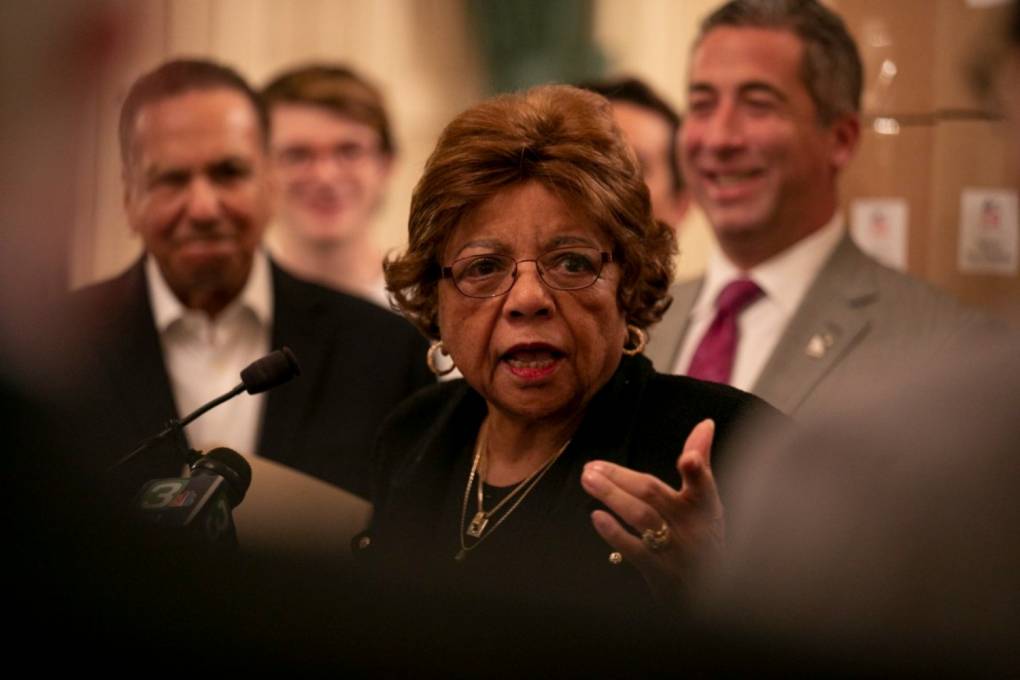
"caption": "Alice Huffman, a political consultant and president of the California NAACP, has been paid more than $1.2 million so far this year by ballot measure campaigns that have been endorsed by the state NAACP.",
"description": "Alice Huffman, a political consultant and president of the California NAACP, has been paid more than $1.2 million so far this year by ballot measure campaigns that have been endorsed by the state NAACP.",
"title": "010820_Prop13presser_AW_sized_05",
"credit": "Anne Wernikoff/CalMatters",
"status": "inherit",
"isLoading": false,
"fetchFailed": false
},
"news_11839736": {
"type": "attachments",
"id": "news_11839736",
"meta": {
"index": "attachments_1716263798",
"site": "news",
"id": "11839736",
"found": true
},
"parent": 11839689,
"imgSizes": {
"apple_news_ca_landscape_5_5": {
"file": "https://ww2.kqed.org/app/uploads/sites/10/2020/09/RS45073_GettyImages-1228709067-qut-1044x783.jpg",
"width": 1044,
"mimeType": "image/jpeg",
"height": 783
},
"apple_news_ca_square_4_0": {
"file": "https://ww2.kqed.org/app/uploads/sites/10/2020/09/RS45073_GettyImages-1228709067-qut-470x470.jpg",
"width": 470,
"mimeType": "image/jpeg",
"height": 470
},
"twentyfourteen-full-width": {
"file": "https://ww2.kqed.org/app/uploads/sites/10/2020/09/RS45073_GettyImages-1228709067-qut-1038x576.jpg",
"width": 1038,
"mimeType": "image/jpeg",
"height": 576
},
"thumbnail": {
"file": "https://ww2.kqed.org/app/uploads/sites/10/2020/09/RS45073_GettyImages-1228709067-qut-160x107.jpg",
"width": 160,
"mimeType": "image/jpeg",
"height": 107
},
"post-thumbnail": {
"file": "https://ww2.kqed.org/app/uploads/sites/10/2020/09/RS45073_GettyImages-1228709067-qut-672x372.jpg",
"width": 672,
"mimeType": "image/jpeg",
"height": 372
},
"kqedFullSize": {
"file": "https://ww2.kqed.org/app/uploads/sites/10/2020/09/RS45073_GettyImages-1228709067-qut.jpg",
"width": 1920,
"height": 1280
},
"apple_news_ca_landscape_4_7": {
"file": "https://ww2.kqed.org/app/uploads/sites/10/2020/09/RS45073_GettyImages-1228709067-qut-632x474.jpg",
"width": 632,
"mimeType": "image/jpeg",
"height": 474
},
"large": {
"file": "https://ww2.kqed.org/app/uploads/sites/10/2020/09/RS45073_GettyImages-1228709067-qut-1020x680.jpg",
"width": 1020,
"mimeType": "image/jpeg",
"height": 680
},
"apple_news_ca_landscape_4_0": {
"file": "https://ww2.kqed.org/app/uploads/sites/10/2020/09/RS45073_GettyImages-1228709067-qut-536x402.jpg",
"width": 536,
"mimeType": "image/jpeg",
"height": 402
},
"apple_news_ca_portrait_12_9": {
"file": "https://ww2.kqed.org/app/uploads/sites/10/2020/09/RS45073_GettyImages-1228709067-qut-1122x1280.jpg",
"width": 1122,
"mimeType": "image/jpeg",
"height": 1280
},
"medium": {
"file": "https://ww2.kqed.org/app/uploads/sites/10/2020/09/RS45073_GettyImages-1228709067-qut-800x533.jpg",
"width": 800,
"mimeType": "image/jpeg",
"height": 533
},
"apple_news_ca_portrait_4_0": {
"file": "https://ww2.kqed.org/app/uploads/sites/10/2020/09/RS45073_GettyImages-1228709067-qut-354x472.jpg",
"width": 354,
"mimeType": "image/jpeg",
"height": 472
},
"apple_news_ca_portrait_9_7": {
"file": "https://ww2.kqed.org/app/uploads/sites/10/2020/09/RS45073_GettyImages-1228709067-qut-840x1120.jpg",
"width": 840,
"mimeType": "image/jpeg",
"height": 1120
},
"apple_news_ca_landscape_12_9": {
"file": "https://ww2.kqed.org/app/uploads/sites/10/2020/09/RS45073_GettyImages-1228709067-qut-1832x1280.jpg",
"width": 1832,
"mimeType": "image/jpeg",
"height": 1280
},
"apple_news_ca_square_9_7": {
"file": "https://ww2.kqed.org/app/uploads/sites/10/2020/09/RS45073_GettyImages-1228709067-qut-1104x1104.jpg",
"width": 1104,
"mimeType": "image/jpeg",
"height": 1104
},
"1536x1536": {
"file": "https://ww2.kqed.org/app/uploads/sites/10/2020/09/RS45073_GettyImages-1228709067-qut-1536x1024.jpg",
"width": 1536,
"mimeType": "image/jpeg",
"height": 1024
},
"apple_news_ca_portrait_4_7": {
"file": "https://ww2.kqed.org/app/uploads/sites/10/2020/09/RS45073_GettyImages-1228709067-qut-414x552.jpg",
"width": 414,
"mimeType": "image/jpeg",
"height": 552
},
"apple_news_ca_square_12_9": {
"file": "https://ww2.kqed.org/app/uploads/sites/10/2020/09/RS45073_GettyImages-1228709067-qut-1472x1280.jpg",
"width": 1472,
"mimeType": "image/jpeg",
"height": 1280
},
"apple_news_ca_portrait_5_5": {
"file": "https://ww2.kqed.org/app/uploads/sites/10/2020/09/RS45073_GettyImages-1228709067-qut-687x916.jpg",
"width": 687,
"mimeType": "image/jpeg",
"height": 916
},
"apple_news_ca_square_4_7": {
"file": "https://ww2.kqed.org/app/uploads/sites/10/2020/09/RS45073_GettyImages-1228709067-qut-550x550.jpg",
"width": 550,
"mimeType": "image/jpeg",
"height": 550
},
"apple_news_ca_landscape_9_7": {
"file": "https://ww2.kqed.org/app/uploads/sites/10/2020/09/RS45073_GettyImages-1228709067-qut-1376x1032.jpg",
"width": 1376,
"mimeType": "image/jpeg",
"height": 1032
},
"apple_news_ca_square_5_5": {
"file": "https://ww2.kqed.org/app/uploads/sites/10/2020/09/RS45073_GettyImages-1228709067-qut-912x912.jpg",
"width": 912,
"mimeType": "image/jpeg",
"height": 912
}
},
"publishDate": 1601067567,
"modified": 1650031172,
"caption": null,
"description": "Sen. Dianne Feinstein pays her respects to the late Supreme Court Justice Ruth Bader Ginsburg as she lies in state in the Statuary Hall of the US Capitol, on Sept. 25, 2020.",
"title": "Justice Ruth Bader Ginsburg Lies In State At US Capitol Building",
"credit": "Erin Schaff/Getty Images",
"status": "inherit",
"altTag": "Sen. Dianne Feinstein pays her respects to the late Supreme Court Justice Ruth Bader Ginsburg as she lies in state in the Statuary Hall of the US Capitol, on Sept. 25, 2020.",
"isLoading": false,
"fetchFailed": false
},
"news_11839628": {
"type": "attachments",
"id": "news_11839628",
"meta": {
"index": "attachments_1716263798",
"site": "news",
"id": "11839628",
"found": true
},
"parent": 11839535,
"imgSizes": {
"apple_news_ca_landscape_5_5": {
"file": "https://ww2.kqed.org/app/uploads/sites/10/2020/09/1920GettyImages-1267511667-1044x783.jpg",
"width": 1044,
"mimeType": "image/jpeg",
"height": 783
},
"apple_news_ca_square_4_0": {
"file": "https://ww2.kqed.org/app/uploads/sites/10/2020/09/1920GettyImages-1267511667-470x470.jpg",
"width": 470,
"mimeType": "image/jpeg",
"height": 470
},
"twentyfourteen-full-width": {
"file": "https://ww2.kqed.org/app/uploads/sites/10/2020/09/1920GettyImages-1267511667-1038x576.jpg",
"width": 1038,
"mimeType": "image/jpeg",
"height": 576
},
"thumbnail": {
"file": "https://ww2.kqed.org/app/uploads/sites/10/2020/09/1920GettyImages-1267511667-160x90.jpg",
"width": 160,
"mimeType": "image/jpeg",
"height": 90
},
"post-thumbnail": {
"file": "https://ww2.kqed.org/app/uploads/sites/10/2020/09/1920GettyImages-1267511667-672x372.jpg",
"width": 672,
"mimeType": "image/jpeg",
"height": 372
},
"kqedFullSize": {
"file": "https://ww2.kqed.org/app/uploads/sites/10/2020/09/1920GettyImages-1267511667-scaled.jpg",
"width": 2560,
"height": 1440
},
"2048x2048": {
"file": "https://ww2.kqed.org/app/uploads/sites/10/2020/09/1920GettyImages-1267511667-2048x1152.jpg",
"width": 2048,
"mimeType": "image/jpeg",
"height": 1152
},
"apple_news_ca_landscape_4_7": {
"file": "https://ww2.kqed.org/app/uploads/sites/10/2020/09/1920GettyImages-1267511667-632x474.jpg",
"width": 632,
"mimeType": "image/jpeg",
"height": 474
},
"large": {
"file": "https://ww2.kqed.org/app/uploads/sites/10/2020/09/1920GettyImages-1267511667-1020x574.jpg",
"width": 1020,
"mimeType": "image/jpeg",
"height": 574
},
"apple_news_ca_landscape_4_0": {
"file": "https://ww2.kqed.org/app/uploads/sites/10/2020/09/1920GettyImages-1267511667-536x402.jpg",
"width": 536,
"mimeType": "image/jpeg",
"height": 402
},
"apple_news_ca_portrait_12_9": {
"file": "https://ww2.kqed.org/app/uploads/sites/10/2020/09/1920GettyImages-1267511667-1122x1496.jpg",
"width": 1122,
"mimeType": "image/jpeg",
"height": 1496
},
"medium": {
"file": "https://ww2.kqed.org/app/uploads/sites/10/2020/09/1920GettyImages-1267511667-800x450.jpg",
"width": 800,
"mimeType": "image/jpeg",
"height": 450
},
"apple_news_ca_portrait_4_0": {
"file": "https://ww2.kqed.org/app/uploads/sites/10/2020/09/1920GettyImages-1267511667-354x472.jpg",
"width": 354,
"mimeType": "image/jpeg",
"height": 472
},
"apple_news_ca_portrait_9_7": {
"file": "https://ww2.kqed.org/app/uploads/sites/10/2020/09/1920GettyImages-1267511667-840x1120.jpg",
"width": 840,
"mimeType": "image/jpeg",
"height": 1120
},
"apple_news_ca_landscape_12_9": {
"file": "https://ww2.kqed.org/app/uploads/sites/10/2020/09/1920GettyImages-1267511667-1832x1374.jpg",
"width": 1832,
"mimeType": "image/jpeg",
"height": 1374
},
"apple_news_ca_square_9_7": {
"file": "https://ww2.kqed.org/app/uploads/sites/10/2020/09/1920GettyImages-1267511667-1104x1104.jpg",
"width": 1104,
"mimeType": "image/jpeg",
"height": 1104
},
"1536x1536": {
"file": "https://ww2.kqed.org/app/uploads/sites/10/2020/09/1920GettyImages-1267511667-1536x864.jpg",
"width": 1536,
"mimeType": "image/jpeg",
"height": 864
},
"apple_news_ca_portrait_4_7": {
"file": "https://ww2.kqed.org/app/uploads/sites/10/2020/09/1920GettyImages-1267511667-414x552.jpg",
"width": 414,
"mimeType": "image/jpeg",
"height": 552
},
"apple_news_ca_square_12_9": {
"file": "https://ww2.kqed.org/app/uploads/sites/10/2020/09/1920GettyImages-1267511667-1472x1472.jpg",
"width": 1472,
"mimeType": "image/jpeg",
"height": 1472
},
"apple_news_ca_portrait_5_5": {
"file": "https://ww2.kqed.org/app/uploads/sites/10/2020/09/1920GettyImages-1267511667-687x916.jpg",
"width": 687,
"mimeType": "image/jpeg",
"height": 916
},
"full-width": {
"file": "https://ww2.kqed.org/app/uploads/sites/10/2020/09/1920GettyImages-1267511667-1920x1080.jpg",
"width": 1920,
"mimeType": "image/jpeg",
"height": 1080
},
"apple_news_ca_square_4_7": {
"file": "https://ww2.kqed.org/app/uploads/sites/10/2020/09/1920GettyImages-1267511667-550x550.jpg",
"width": 550,
"mimeType": "image/jpeg",
"height": 550
},
"apple_news_ca_landscape_9_7": {
"file": "https://ww2.kqed.org/app/uploads/sites/10/2020/09/1920GettyImages-1267511667-1376x1032.jpg",
"width": 1376,
"mimeType": "image/jpeg",
"height": 1032
},
"apple_news_ca_square_5_5": {
"file": "https://ww2.kqed.org/app/uploads/sites/10/2020/09/1920GettyImages-1267511667-912x912.jpg",
"width": 912,
"mimeType": "image/jpeg",
"height": 912
}
},
"publishDate": 1601002540,
"modified": 1601002723,
"caption": "Democratic presidential nominee Joe Biden and Democratic Vice Presidential nominee Kamala Harris confer on stage outside the Chase Center after Biden delivered his acceptance speech on August 20, 2020 in Wilmington, Delaware. ",
"description": null,
"title": "Joe Biden Accepts Party's Nomination For President In Delaware During Virtual DNC",
"credit": "Win McNamee/Getty Images",
"status": "inherit",
"isLoading": false,
"fetchFailed": false
},
"news_11839219": {
"type": "attachments",
"id": "news_11839219",
"meta": {
"index": "attachments_1716263798",
"site": "news",
"id": "11839219",
"found": true
},
"parent": 11839164,
"imgSizes": {
"apple_news_ca_landscape_5_5": {
"file": "https://ww2.kqed.org/app/uploads/sites/10/2020/09/RS16556_IMG_0695-qut-1044x783.jpg",
"width": 1044,
"mimeType": "image/jpeg",
"height": 783
},
"apple_news_ca_square_4_0": {
"file": "https://ww2.kqed.org/app/uploads/sites/10/2020/09/RS16556_IMG_0695-qut-470x470.jpg",
"width": 470,
"mimeType": "image/jpeg",
"height": 470
},
"twentyfourteen-full-width": {
"file": "https://ww2.kqed.org/app/uploads/sites/10/2020/09/RS16556_IMG_0695-qut-1038x576.jpg",
"width": 1038,
"mimeType": "image/jpeg",
"height": 576
},
"thumbnail": {
"file": "https://ww2.kqed.org/app/uploads/sites/10/2020/09/RS16556_IMG_0695-qut-160x91.jpg",
"width": 160,
"mimeType": "image/jpeg",
"height": 91
},
"post-thumbnail": {
"file": "https://ww2.kqed.org/app/uploads/sites/10/2020/09/RS16556_IMG_0695-qut-672x372.jpg",
"width": 672,
"mimeType": "image/jpeg",
"height": 372
},
"kqedFullSize": {
"file": "https://ww2.kqed.org/app/uploads/sites/10/2020/09/RS16556_IMG_0695-qut.jpg",
"width": 1920,
"height": 1086
},
"apple_news_ca_landscape_4_7": {
"file": "https://ww2.kqed.org/app/uploads/sites/10/2020/09/RS16556_IMG_0695-qut-632x474.jpg",
"width": 632,
"mimeType": "image/jpeg",
"height": 474
},
"large": {
"file": "https://ww2.kqed.org/app/uploads/sites/10/2020/09/RS16556_IMG_0695-qut-1020x577.jpg",
"width": 1020,
"mimeType": "image/jpeg",
"height": 577
},
"apple_news_ca_landscape_4_0": {
"file": "https://ww2.kqed.org/app/uploads/sites/10/2020/09/RS16556_IMG_0695-qut-536x402.jpg",
"width": 536,
"mimeType": "image/jpeg",
"height": 402
},
"apple_news_ca_portrait_12_9": {
"file": "https://ww2.kqed.org/app/uploads/sites/10/2020/09/RS16556_IMG_0695-qut-1122x1086.jpg",
"width": 1122,
"mimeType": "image/jpeg",
"height": 1086
},
"medium": {
"file": "https://ww2.kqed.org/app/uploads/sites/10/2020/09/RS16556_IMG_0695-qut-800x453.jpg",
"width": 800,
"mimeType": "image/jpeg",
"height": 453
},
"apple_news_ca_portrait_4_0": {
"file": "https://ww2.kqed.org/app/uploads/sites/10/2020/09/RS16556_IMG_0695-qut-354x472.jpg",
"width": 354,
"mimeType": "image/jpeg",
"height": 472
},
"apple_news_ca_portrait_9_7": {
"file": "https://ww2.kqed.org/app/uploads/sites/10/2020/09/RS16556_IMG_0695-qut-840x1086.jpg",
"width": 840,
"mimeType": "image/jpeg",
"height": 1086
},
"apple_news_ca_landscape_12_9": {
"file": "https://ww2.kqed.org/app/uploads/sites/10/2020/09/RS16556_IMG_0695-qut-1832x1086.jpg",
"width": 1832,
"mimeType": "image/jpeg",
"height": 1086
},
"apple_news_ca_square_9_7": {
"file": "https://ww2.kqed.org/app/uploads/sites/10/2020/09/RS16556_IMG_0695-qut-1104x1086.jpg",
"width": 1104,
"mimeType": "image/jpeg",
"height": 1086
},
"1536x1536": {
"file": "https://ww2.kqed.org/app/uploads/sites/10/2020/09/RS16556_IMG_0695-qut-1536x869.jpg",
"width": 1536,
"mimeType": "image/jpeg",
"height": 869
},
"apple_news_ca_portrait_4_7": {
"file": "https://ww2.kqed.org/app/uploads/sites/10/2020/09/RS16556_IMG_0695-qut-414x552.jpg",
"width": 414,
"mimeType": "image/jpeg",
"height": 552
},
"apple_news_ca_square_12_9": {
"file": "https://ww2.kqed.org/app/uploads/sites/10/2020/09/RS16556_IMG_0695-qut-1472x1086.jpg",
"width": 1472,
"mimeType": "image/jpeg",
"height": 1086
},
"apple_news_ca_portrait_5_5": {
"file": "https://ww2.kqed.org/app/uploads/sites/10/2020/09/RS16556_IMG_0695-qut-687x916.jpg",
"width": 687,
"mimeType": "image/jpeg",
"height": 916
},
"apple_news_ca_square_4_7": {
"file": "https://ww2.kqed.org/app/uploads/sites/10/2020/09/RS16556_IMG_0695-qut-550x550.jpg",
"width": 550,
"mimeType": "image/jpeg",
"height": 550
},
"apple_news_ca_landscape_9_7": {
"file": "https://ww2.kqed.org/app/uploads/sites/10/2020/09/RS16556_IMG_0695-qut-1376x1032.jpg",
"width": 1376,
"mimeType": "image/jpeg",
"height": 1032
},
"apple_news_ca_square_5_5": {
"file": "https://ww2.kqed.org/app/uploads/sites/10/2020/09/RS16556_IMG_0695-qut-912x912.jpg",
"width": 912,
"mimeType": "image/jpeg",
"height": 912
}
},
"publishDate": 1600827335,
"modified": 1600827416,
"caption": "A Lyft and Uber driver fiddles with his smartphone as he prepares to pick up a customer on Aug. 31, 2015.",
"description": null,
"title": "RS16556_IMG_0695-qut",
"credit": "Ericka Cruz Guevarra/KQED",
"status": "inherit",
"isLoading": false,
"fetchFailed": false
},
"news_11838872": {
"type": "attachments",
"id": "news_11838872",
"meta": {
"index": "attachments_1716263798",
"site": "news",
"id": "11838872",
"found": true
},
"parent": 11838859,
"imgSizes": {
"apple_news_ca_landscape_5_5": {
"file": "https://ww2.kqed.org/app/uploads/sites/10/2020/09/027_KQED_SanFrancisco_RGBVigil_09182020-1-1044x783.jpg",
"width": 1044,
"mimeType": "image/jpeg",
"height": 783
},
"apple_news_ca_square_4_0": {
"file": "https://ww2.kqed.org/app/uploads/sites/10/2020/09/027_KQED_SanFrancisco_RGBVigil_09182020-1-470x470.jpg",
"width": 470,
"mimeType": "image/jpeg",
"height": 470
},
"twentyfourteen-full-width": {
"file": "https://ww2.kqed.org/app/uploads/sites/10/2020/09/027_KQED_SanFrancisco_RGBVigil_09182020-1-1038x576.jpg",
"width": 1038,
"mimeType": "image/jpeg",
"height": 576
},
"thumbnail": {
"file": "https://ww2.kqed.org/app/uploads/sites/10/2020/09/027_KQED_SanFrancisco_RGBVigil_09182020-1-160x107.jpg",
"width": 160,
"mimeType": "image/jpeg",
"height": 107
},
"post-thumbnail": {
"file": "https://ww2.kqed.org/app/uploads/sites/10/2020/09/027_KQED_SanFrancisco_RGBVigil_09182020-1-672x372.jpg",
"width": 672,
"mimeType": "image/jpeg",
"height": 372
},
"kqedFullSize": {
"file": "https://ww2.kqed.org/app/uploads/sites/10/2020/09/027_KQED_SanFrancisco_RGBVigil_09182020-1.jpg",
"width": 1920,
"height": 1280
},
"apple_news_ca_landscape_4_7": {
"file": "https://ww2.kqed.org/app/uploads/sites/10/2020/09/027_KQED_SanFrancisco_RGBVigil_09182020-1-632x474.jpg",
"width": 632,
"mimeType": "image/jpeg",
"height": 474
},
"large": {
"file": "https://ww2.kqed.org/app/uploads/sites/10/2020/09/027_KQED_SanFrancisco_RGBVigil_09182020-1-1020x680.jpg",
"width": 1020,
"mimeType": "image/jpeg",
"height": 680
},
"apple_news_ca_landscape_4_0": {
"file": "https://ww2.kqed.org/app/uploads/sites/10/2020/09/027_KQED_SanFrancisco_RGBVigil_09182020-1-536x402.jpg",
"width": 536,
"mimeType": "image/jpeg",
"height": 402
},
"apple_news_ca_portrait_12_9": {
"file": "https://ww2.kqed.org/app/uploads/sites/10/2020/09/027_KQED_SanFrancisco_RGBVigil_09182020-1-1122x1280.jpg",
"width": 1122,
"mimeType": "image/jpeg",
"height": 1280
},
"medium": {
"file": "https://ww2.kqed.org/app/uploads/sites/10/2020/09/027_KQED_SanFrancisco_RGBVigil_09182020-1-800x533.jpg",
"width": 800,
"mimeType": "image/jpeg",
"height": 533
},
"apple_news_ca_portrait_4_0": {
"file": "https://ww2.kqed.org/app/uploads/sites/10/2020/09/027_KQED_SanFrancisco_RGBVigil_09182020-1-354x472.jpg",
"width": 354,
"mimeType": "image/jpeg",
"height": 472
},
"apple_news_ca_portrait_9_7": {
"file": "https://ww2.kqed.org/app/uploads/sites/10/2020/09/027_KQED_SanFrancisco_RGBVigil_09182020-1-840x1120.jpg",
"width": 840,
"mimeType": "image/jpeg",
"height": 1120
},
"apple_news_ca_landscape_12_9": {
"file": "https://ww2.kqed.org/app/uploads/sites/10/2020/09/027_KQED_SanFrancisco_RGBVigil_09182020-1-1832x1280.jpg",
"width": 1832,
"mimeType": "image/jpeg",
"height": 1280
},
"apple_news_ca_square_9_7": {
"file": "https://ww2.kqed.org/app/uploads/sites/10/2020/09/027_KQED_SanFrancisco_RGBVigil_09182020-1-1104x1104.jpg",
"width": 1104,
"mimeType": "image/jpeg",
"height": 1104
},
"1536x1536": {
"file": "https://ww2.kqed.org/app/uploads/sites/10/2020/09/027_KQED_SanFrancisco_RGBVigil_09182020-1-1536x1024.jpg",
"width": 1536,
"mimeType": "image/jpeg",
"height": 1024
},
"apple_news_ca_portrait_4_7": {
"file": "https://ww2.kqed.org/app/uploads/sites/10/2020/09/027_KQED_SanFrancisco_RGBVigil_09182020-1-414x552.jpg",
"width": 414,
"mimeType": "image/jpeg",
"height": 552
},
"apple_news_ca_square_12_9": {
"file": "https://ww2.kqed.org/app/uploads/sites/10/2020/09/027_KQED_SanFrancisco_RGBVigil_09182020-1-1472x1280.jpg",
"width": 1472,
"mimeType": "image/jpeg",
"height": 1280
},
"apple_news_ca_portrait_5_5": {
"file": "https://ww2.kqed.org/app/uploads/sites/10/2020/09/027_KQED_SanFrancisco_RGBVigil_09182020-1-687x916.jpg",
"width": 687,
"mimeType": "image/jpeg",
"height": 916
},
"apple_news_ca_square_4_7": {
"file": "https://ww2.kqed.org/app/uploads/sites/10/2020/09/027_KQED_SanFrancisco_RGBVigil_09182020-1-550x550.jpg",
"width": 550,
"mimeType": "image/jpeg",
"height": 550
},
"apple_news_ca_landscape_9_7": {
"file": "https://ww2.kqed.org/app/uploads/sites/10/2020/09/027_KQED_SanFrancisco_RGBVigil_09182020-1-1376x1032.jpg",
"width": 1376,
"mimeType": "image/jpeg",
"height": 1032
},
"apple_news_ca_square_5_5": {
"file": "https://ww2.kqed.org/app/uploads/sites/10/2020/09/027_KQED_SanFrancisco_RGBVigil_09182020-1-912x912.jpg",
"width": 912,
"mimeType": "image/jpeg",
"height": 912
}
},
"publishDate": 1600495594,
"modified": 1600712766,
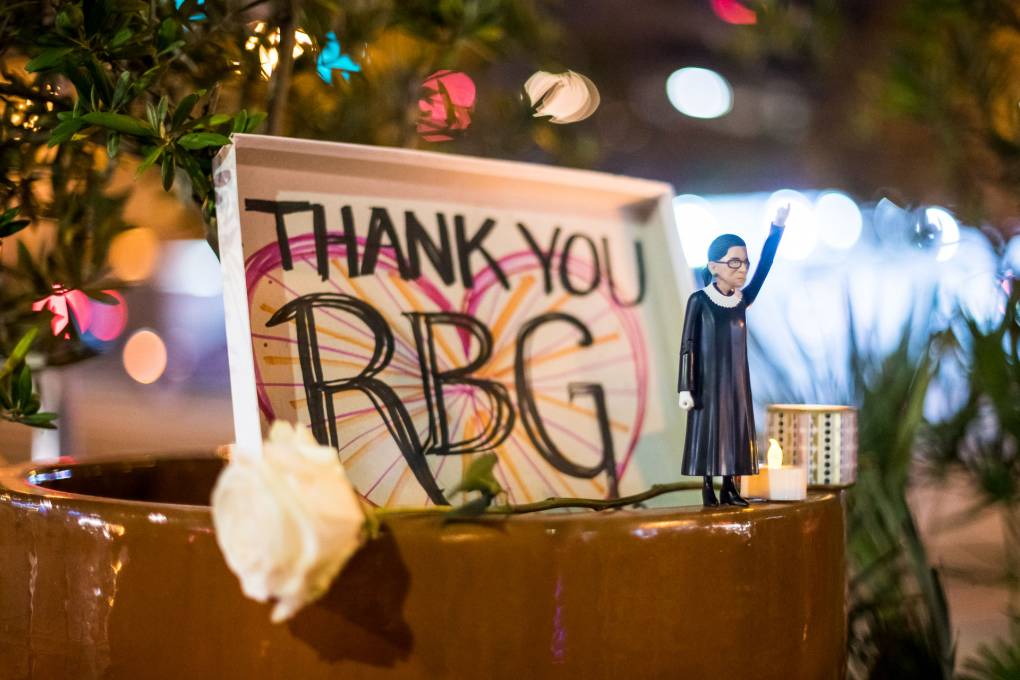
"caption": "Betty Doerr brought her Justice Ruth Bader Ginsburg figurine that she bought at Cliff's Variety to the candlelit vigil in Ginsburg's honor on Sept. 18, 2020. ",
"description": null,
"title": "027_KQED_SanFrancisco_RGBVigil_09182020-(1)",
"credit": "Beth LaBerge/KQED",
"status": "inherit",
"isLoading": false,
"fetchFailed": false
},
"news_11837881": {
"type": "attachments",
"id": "news_11837881",
"meta": {
"index": "attachments_1716263798",
"site": "news",
"id": "11837881",
"found": true
},
"parent": 11837810,
"imgSizes": {
"apple_news_ca_landscape_5_5": {
"file": "https://ww2.kqed.org/app/uploads/sites/10/2020/09/RS41418_019_KQED_RegistrarofVoters_SantaClara_02192020_3139-qut-1044x783.jpg",
"width": 1044,
"mimeType": "image/jpeg",
"height": 783
},
"apple_news_ca_square_4_0": {
"file": "https://ww2.kqed.org/app/uploads/sites/10/2020/09/RS41418_019_KQED_RegistrarofVoters_SantaClara_02192020_3139-qut-470x470.jpg",
"width": 470,
"mimeType": "image/jpeg",
"height": 470
},
"twentyfourteen-full-width": {
"file": "https://ww2.kqed.org/app/uploads/sites/10/2020/09/RS41418_019_KQED_RegistrarofVoters_SantaClara_02192020_3139-qut-1038x576.jpg",
"width": 1038,
"mimeType": "image/jpeg",
"height": 576
},
"thumbnail": {
"file": "https://ww2.kqed.org/app/uploads/sites/10/2020/09/RS41418_019_KQED_RegistrarofVoters_SantaClara_02192020_3139-qut-160x107.jpg",
"width": 160,
"mimeType": "image/jpeg",
"height": 107
},
"post-thumbnail": {
"file": "https://ww2.kqed.org/app/uploads/sites/10/2020/09/RS41418_019_KQED_RegistrarofVoters_SantaClara_02192020_3139-qut-672x372.jpg",
"width": 672,
"mimeType": "image/jpeg",
"height": 372
},
"kqedFullSize": {
"file": "https://ww2.kqed.org/app/uploads/sites/10/2020/09/RS41418_019_KQED_RegistrarofVoters_SantaClara_02192020_3139-qut.jpg",
"width": 1920,
"height": 1280
},
"apple_news_ca_landscape_4_7": {
"file": "https://ww2.kqed.org/app/uploads/sites/10/2020/09/RS41418_019_KQED_RegistrarofVoters_SantaClara_02192020_3139-qut-632x474.jpg",
"width": 632,
"mimeType": "image/jpeg",
"height": 474
},
"large": {
"file": "https://ww2.kqed.org/app/uploads/sites/10/2020/09/RS41418_019_KQED_RegistrarofVoters_SantaClara_02192020_3139-qut-1020x680.jpg",
"width": 1020,
"mimeType": "image/jpeg",
"height": 680
},
"apple_news_ca_landscape_4_0": {
"file": "https://ww2.kqed.org/app/uploads/sites/10/2020/09/RS41418_019_KQED_RegistrarofVoters_SantaClara_02192020_3139-qut-536x402.jpg",
"width": 536,
"mimeType": "image/jpeg",
"height": 402
},
"apple_news_ca_portrait_12_9": {
"file": "https://ww2.kqed.org/app/uploads/sites/10/2020/09/RS41418_019_KQED_RegistrarofVoters_SantaClara_02192020_3139-qut-1122x1280.jpg",
"width": 1122,
"mimeType": "image/jpeg",
"height": 1280
},
"medium": {
"file": "https://ww2.kqed.org/app/uploads/sites/10/2020/09/RS41418_019_KQED_RegistrarofVoters_SantaClara_02192020_3139-qut-800x533.jpg",
"width": 800,
"mimeType": "image/jpeg",
"height": 533
},
"apple_news_ca_portrait_4_0": {
"file": "https://ww2.kqed.org/app/uploads/sites/10/2020/09/RS41418_019_KQED_RegistrarofVoters_SantaClara_02192020_3139-qut-354x472.jpg",
"width": 354,
"mimeType": "image/jpeg",
"height": 472
},
"apple_news_ca_portrait_9_7": {
"file": "https://ww2.kqed.org/app/uploads/sites/10/2020/09/RS41418_019_KQED_RegistrarofVoters_SantaClara_02192020_3139-qut-840x1120.jpg",
"width": 840,
"mimeType": "image/jpeg",
"height": 1120
},
"apple_news_ca_landscape_12_9": {
"file": "https://ww2.kqed.org/app/uploads/sites/10/2020/09/RS41418_019_KQED_RegistrarofVoters_SantaClara_02192020_3139-qut-1832x1280.jpg",
"width": 1832,
"mimeType": "image/jpeg",
"height": 1280
},
"apple_news_ca_square_9_7": {
"file": "https://ww2.kqed.org/app/uploads/sites/10/2020/09/RS41418_019_KQED_RegistrarofVoters_SantaClara_02192020_3139-qut-1104x1104.jpg",
"width": 1104,
"mimeType": "image/jpeg",
"height": 1104
},
"1536x1536": {
"file": "https://ww2.kqed.org/app/uploads/sites/10/2020/09/RS41418_019_KQED_RegistrarofVoters_SantaClara_02192020_3139-qut-1536x1024.jpg",
"width": 1536,
"mimeType": "image/jpeg",
"height": 1024
},
"apple_news_ca_portrait_4_7": {
"file": "https://ww2.kqed.org/app/uploads/sites/10/2020/09/RS41418_019_KQED_RegistrarofVoters_SantaClara_02192020_3139-qut-414x552.jpg",
"width": 414,
"mimeType": "image/jpeg",
"height": 552
},
"apple_news_ca_square_12_9": {
"file": "https://ww2.kqed.org/app/uploads/sites/10/2020/09/RS41418_019_KQED_RegistrarofVoters_SantaClara_02192020_3139-qut-1472x1280.jpg",
"width": 1472,
"mimeType": "image/jpeg",
"height": 1280
},
"apple_news_ca_portrait_5_5": {
"file": "https://ww2.kqed.org/app/uploads/sites/10/2020/09/RS41418_019_KQED_RegistrarofVoters_SantaClara_02192020_3139-qut-687x916.jpg",
"width": 687,
"mimeType": "image/jpeg",
"height": 916
},
"apple_news_ca_square_4_7": {
"file": "https://ww2.kqed.org/app/uploads/sites/10/2020/09/RS41418_019_KQED_RegistrarofVoters_SantaClara_02192020_3139-qut-550x550.jpg",
"width": 550,
"mimeType": "image/jpeg",
"height": 550
},
"apple_news_ca_landscape_9_7": {
"file": "https://ww2.kqed.org/app/uploads/sites/10/2020/09/RS41418_019_KQED_RegistrarofVoters_SantaClara_02192020_3139-qut-1376x1032.jpg",
"width": 1376,
"mimeType": "image/jpeg",
"height": 1032
},
"apple_news_ca_square_5_5": {
"file": "https://ww2.kqed.org/app/uploads/sites/10/2020/09/RS41418_019_KQED_RegistrarofVoters_SantaClara_02192020_3139-qut-912x912.jpg",
"width": 912,
"mimeType": "image/jpeg",
"height": 912
}
},
"publishDate": 1600113529,
"modified": 1613570466,
"caption": null,
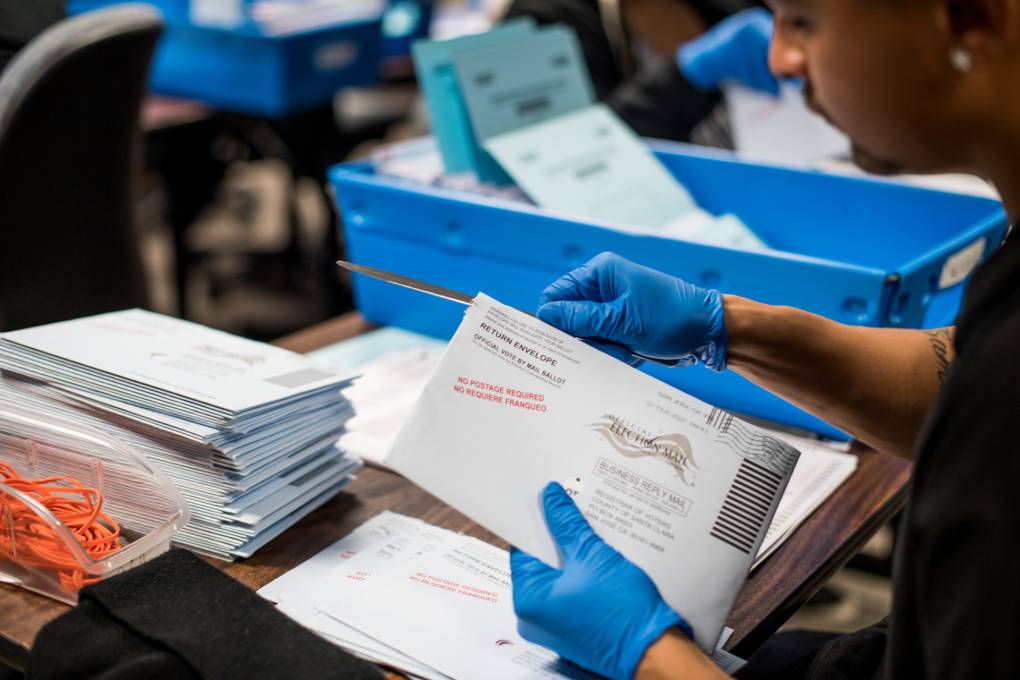
"description": "Isaac Brito opens and flattens mail-in ballots at the Santa Clara Registrar of Voters on Feb. 19, 2020.",
"title": "RS41418_019_KQED_RegistrarofVoters_SantaClara_02192020_3139-qut",
"credit": "Beth LaBerge/KQED",
"status": "inherit",
"altTag": null,
"isLoading": false,
"fetchFailed": false
},
"news_11838125": {
"type": "attachments",
"id": "news_11838125",
"meta": {
"index": "attachments_1716263798",
"site": "news",
"id": "11838125",
"found": true
},
"parent": 11838020,
"imgSizes": {
"apple_news_ca_landscape_5_5": {
"file": "https://ww2.kqed.org/app/uploads/sites/10/2020/09/IMG_0305-1044x783.jpg",
"width": 1044,
"mimeType": "image/jpeg",
"height": 783
},
"apple_news_ca_square_4_0": {
"file": "https://ww2.kqed.org/app/uploads/sites/10/2020/09/IMG_0305-470x470.jpg",
"width": 470,
"mimeType": "image/jpeg",
"height": 470
},
"twentyfourteen-full-width": {
"file": "https://ww2.kqed.org/app/uploads/sites/10/2020/09/IMG_0305-1038x576.jpg",
"width": 1038,
"mimeType": "image/jpeg",
"height": 576
},
"thumbnail": {
"file": "https://ww2.kqed.org/app/uploads/sites/10/2020/09/IMG_0305-160x120.jpg",
"width": 160,
"mimeType": "image/jpeg",
"height": 120
},
"post-thumbnail": {
"file": "https://ww2.kqed.org/app/uploads/sites/10/2020/09/IMG_0305-672x372.jpg",
"width": 672,
"mimeType": "image/jpeg",
"height": 372
},
"kqedFullSize": {
"file": "https://ww2.kqed.org/app/uploads/sites/10/2020/09/IMG_0305-scaled-e1600216201404.jpg",
"width": 1920,
"height": 1440
},
"2048x2048": {
"file": "https://ww2.kqed.org/app/uploads/sites/10/2020/09/IMG_0305-2048x1536.jpg",
"width": 2048,
"mimeType": "image/jpeg",
"height": 1536
},
"apple_news_ca_landscape_4_7": {
"file": "https://ww2.kqed.org/app/uploads/sites/10/2020/09/IMG_0305-632x474.jpg",
"width": 632,
"mimeType": "image/jpeg",
"height": 474
},
"large": {
"file": "https://ww2.kqed.org/app/uploads/sites/10/2020/09/IMG_0305-1020x765.jpg",
"width": 1020,
"mimeType": "image/jpeg",
"height": 765
},
"apple_news_ca_landscape_4_0": {
"file": "https://ww2.kqed.org/app/uploads/sites/10/2020/09/IMG_0305-536x402.jpg",
"width": 536,
"mimeType": "image/jpeg",
"height": 402
},
"apple_news_ca_portrait_12_9": {
"file": "https://ww2.kqed.org/app/uploads/sites/10/2020/09/IMG_0305-1122x1496.jpg",
"width": 1122,
"mimeType": "image/jpeg",
"height": 1496
},
"medium": {
"file": "https://ww2.kqed.org/app/uploads/sites/10/2020/09/IMG_0305-800x600.jpg",
"width": 800,
"mimeType": "image/jpeg",
"height": 600
},
"apple_news_ca_portrait_4_0": {
"file": "https://ww2.kqed.org/app/uploads/sites/10/2020/09/IMG_0305-354x472.jpg",
"width": 354,
"mimeType": "image/jpeg",
"height": 472
},
"apple_news_ca_portrait_9_7": {
"file": "https://ww2.kqed.org/app/uploads/sites/10/2020/09/IMG_0305-840x1120.jpg",
"width": 840,
"mimeType": "image/jpeg",
"height": 1120
},
"apple_news_ca_landscape_12_9": {
"file": "https://ww2.kqed.org/app/uploads/sites/10/2020/09/IMG_0305-1832x1374.jpg",
"width": 1832,
"mimeType": "image/jpeg",
"height": 1374
},
"apple_news_ca_square_9_7": {
"file": "https://ww2.kqed.org/app/uploads/sites/10/2020/09/IMG_0305-1104x1104.jpg",
"width": 1104,
"mimeType": "image/jpeg",
"height": 1104
},
"1536x1536": {
"file": "https://ww2.kqed.org/app/uploads/sites/10/2020/09/IMG_0305-1536x1152.jpg",
"width": 1536,
"mimeType": "image/jpeg",
"height": 1152
},
"apple_news_ca_portrait_4_7": {
"file": "https://ww2.kqed.org/app/uploads/sites/10/2020/09/IMG_0305-414x552.jpg",
"width": 414,
"mimeType": "image/jpeg",
"height": 552
},
"apple_news_ca_square_12_9": {
"file": "https://ww2.kqed.org/app/uploads/sites/10/2020/09/IMG_0305-1472x1472.jpg",
"width": 1472,
"mimeType": "image/jpeg",
"height": 1472
},
"apple_news_ca_portrait_5_5": {
"file": "https://ww2.kqed.org/app/uploads/sites/10/2020/09/IMG_0305-687x916.jpg",
"width": 687,
"mimeType": "image/jpeg",
"height": 916
},
"full-width": {
"file": "https://ww2.kqed.org/app/uploads/sites/10/2020/09/IMG_0305-1920x1440.jpg",
"width": 1920,
"mimeType": "image/jpeg",
"height": 1440
},
"apple_news_ca_square_4_7": {
"file": "https://ww2.kqed.org/app/uploads/sites/10/2020/09/IMG_0305-550x550.jpg",
"width": 550,
"mimeType": "image/jpeg",
"height": 550
},
"apple_news_ca_landscape_9_7": {
"file": "https://ww2.kqed.org/app/uploads/sites/10/2020/09/IMG_0305-1376x1032.jpg",
"width": 1376,
"mimeType": "image/jpeg",
"height": 1032
},
"apple_news_ca_square_5_5": {
"file": "https://ww2.kqed.org/app/uploads/sites/10/2020/09/IMG_0305-912x912.jpg",
"width": 912,
"mimeType": "image/jpeg",
"height": 912
}
},
"publishDate": 1600212648,
"modified": 1600218073,
"caption": "Vice presidential nominee Kamala Harris talks with Gov. Gavin Newsom near the Creek Fire burning outside Fresno on Sept. 15, 2020.",
"description": null,
"title": "Harris at the Creek Fire",
"credit": "Alex Hall/KQED",
"status": "inherit",
"isLoading": false,
"fetchFailed": false
},
"news_11637256": {
"type": "attachments",
"id": "news_11637256",
"meta": {
"index": "attachments_1716263798",
"site": "news",
"id": "11637256",
"found": true
},
"title": "ScottWiener",
"publishDate": 1513305232,
"status": "inherit",
"parent": 11637200,
"modified": 1721158462,
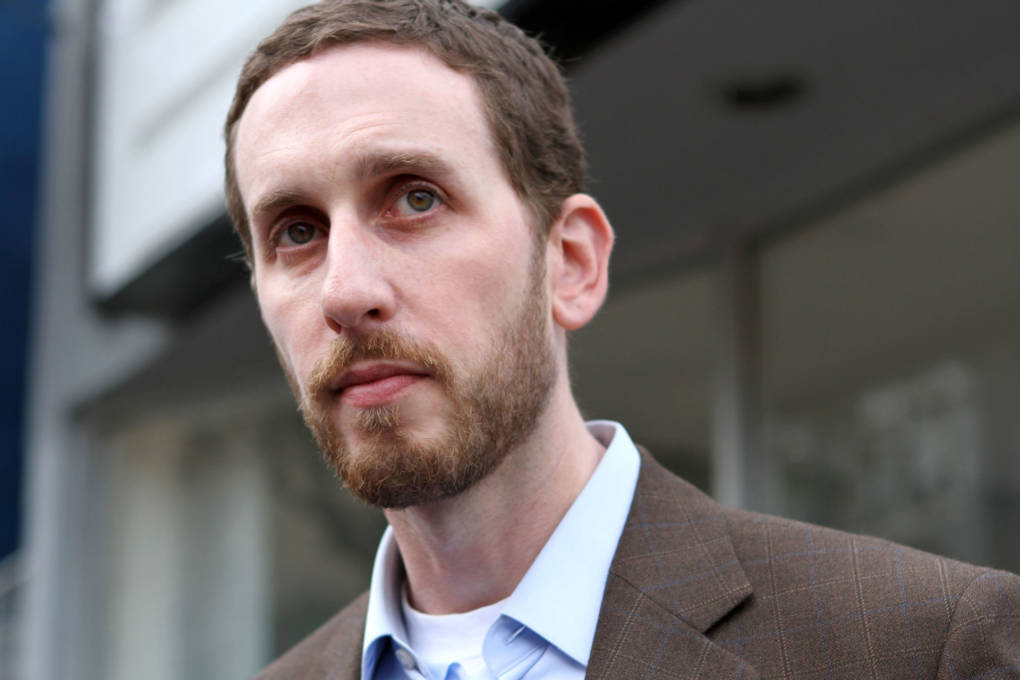
"caption": "Senate Bill 145, signed into law by Gov. Gavin Newsom in early September, is intended to reform the state’s sex offender registry to be fairer to young LGBT adults. The bill's author, state Sen. Scott Wiener, has received hundreds of death threats from people who believe the bill legalizes pedophilia in California.",
"credit": "Michelle Gachet/KQED",
"altTag": "Senate Bill 145, signed into law by Gov. Gavin Newsom in early September, is intended to reform the state’s sex offender registry to be fairer to young LGBT adults. The bill's author, state Sen. Scott Wiener, has received hundreds of death threats from people who believe the bill legalizes pedophilia in California.",
"description": "Senate Bill 145, signed into law by Gov. Gavin Newsom in early September, is intended to reform the state’s sex offender registry to be fairer to young LGBTQ adults. The bill's author, state Sen. Scott Wiener, has received hundreds of death threats from people who believe the bill legalizes pedophilia in California.",
"imgSizes": {
"thumbnail": {
"file": "https://cdn.kqed.org/wp-content/uploads/sites/10/2017/12/ScottWiener-160x107.jpg",
"width": 160,
"height": 107,
"mimeType": "image/jpeg"
},
"medium": {
"file": "https://cdn.kqed.org/wp-content/uploads/sites/10/2017/12/ScottWiener-800x533.jpg",
"width": 800,
"height": 533,
"mimeType": "image/jpeg"
},
"large": {
"file": "https://cdn.kqed.org/wp-content/uploads/sites/10/2017/12/ScottWiener-1020x680.jpg",
"width": 1020,
"height": 680,
"mimeType": "image/jpeg"
},
"fd-lrg": {
"file": "https://cdn.kqed.org/wp-content/uploads/sites/10/2017/12/ScottWiener-1920x1280.jpg",
"width": 1920,
"height": 1280,
"mimeType": "image/jpeg"
},
"fd-med": {
"file": "https://cdn.kqed.org/wp-content/uploads/sites/10/2017/12/ScottWiener-1180x787.jpg",
"width": 1180,
"height": 787,
"mimeType": "image/jpeg"
},
"fd-sm": {
"file": "https://cdn.kqed.org/wp-content/uploads/sites/10/2017/12/ScottWiener-960x640.jpg",
"width": 960,
"height": 640,
"mimeType": "image/jpeg"
},
"post-thumbnail": {
"file": "https://cdn.kqed.org/wp-content/uploads/sites/10/2017/12/ScottWiener-672x372.jpg",
"width": 672,
"height": 372,
"mimeType": "image/jpeg"
},
"twentyfourteen-full-width": {
"file": "https://cdn.kqed.org/wp-content/uploads/sites/10/2017/12/ScottWiener-1038x576.jpg",
"width": 1038,
"height": 576,
"mimeType": "image/jpeg"
},
"xxsmall": {
"file": "https://cdn.kqed.org/wp-content/uploads/sites/10/2017/12/ScottWiener-240x160.jpg",
"width": 240,
"height": 160,
"mimeType": "image/jpeg"
},
"xsmall": {
"file": "https://cdn.kqed.org/wp-content/uploads/sites/10/2017/12/ScottWiener-375x250.jpg",
"width": 375,
"height": 250,
"mimeType": "image/jpeg"
},
"small": {
"file": "https://cdn.kqed.org/wp-content/uploads/sites/10/2017/12/ScottWiener-520x347.jpg",
"width": 520,
"height": 347,
"mimeType": "image/jpeg"
},
"xlarge": {
"file": "https://cdn.kqed.org/wp-content/uploads/sites/10/2017/12/ScottWiener-1180x787.jpg",
"width": 1180,
"height": 787,
"mimeType": "image/jpeg"
},
"full-width": {
"file": "https://cdn.kqed.org/wp-content/uploads/sites/10/2017/12/ScottWiener-1920x1280.jpg",
"width": 1920,
"height": 1280,
"mimeType": "image/jpeg"
},
"guest-author-32": {
"file": "https://cdn.kqed.org/wp-content/uploads/sites/10/2017/12/ScottWiener-32x32.jpg",
"width": 32,
"height": 32,
"mimeType": "image/jpeg"
},
"guest-author-50": {
"file": "https://cdn.kqed.org/wp-content/uploads/sites/10/2017/12/ScottWiener-50x50.jpg",
"width": 50,
"height": 50,
"mimeType": "image/jpeg"
},
"guest-author-64": {
"file": "https://cdn.kqed.org/wp-content/uploads/sites/10/2017/12/ScottWiener-64x64.jpg",
"width": 64,
"height": 64,
"mimeType": "image/jpeg"
},
"guest-author-96": {
"file": "https://cdn.kqed.org/wp-content/uploads/sites/10/2017/12/ScottWiener-96x96.jpg",
"width": 96,
"height": 96,
"mimeType": "image/jpeg"
},
"guest-author-128": {
"file": "https://cdn.kqed.org/wp-content/uploads/sites/10/2017/12/ScottWiener-128x128.jpg",
"width": 128,
"height": 128,
"mimeType": "image/jpeg"
},
"detail": {
"file": "https://cdn.kqed.org/wp-content/uploads/sites/10/2017/12/ScottWiener-150x150.jpg",
"width": 150,
"height": 150,
"mimeType": "image/jpeg"
},
"kqedFullSize": {
"file": "https://cdn.kqed.org/wp-content/uploads/sites/10/2017/12/ScottWiener.jpg",
"width": 1920,
"height": 1280
}
},
"isLoading": false,
"fetchFailed": false
},
"news_11837807": {
"type": "attachments",
"id": "news_11837807",
"meta": {
"index": "attachments_1716263798",
"site": "news",
"id": "11837807",
"found": true
},
"parent": 11837787,
"imgSizes": {
"apple_news_ca_landscape_5_5": {
"file": "https://ww2.kqed.org/app/uploads/sites/10/2020/09/RS44791_005_KQED_SanFrancisco_OrangeSky_09092020-qut-1-1044x783.jpg",
"width": 1044,
"mimeType": "image/jpeg",
"height": 783
},
"apple_news_ca_square_4_0": {
"file": "https://ww2.kqed.org/app/uploads/sites/10/2020/09/RS44791_005_KQED_SanFrancisco_OrangeSky_09092020-qut-1-470x470.jpg",
"width": 470,
"mimeType": "image/jpeg",
"height": 470
},
"twentyfourteen-full-width": {
"file": "https://ww2.kqed.org/app/uploads/sites/10/2020/09/RS44791_005_KQED_SanFrancisco_OrangeSky_09092020-qut-1-1038x576.jpg",
"width": 1038,
"mimeType": "image/jpeg",
"height": 576
},
"thumbnail": {
"file": "https://ww2.kqed.org/app/uploads/sites/10/2020/09/RS44791_005_KQED_SanFrancisco_OrangeSky_09092020-qut-1-160x107.jpg",
"width": 160,
"mimeType": "image/jpeg",
"height": 107
},
"post-thumbnail": {
"file": "https://ww2.kqed.org/app/uploads/sites/10/2020/09/RS44791_005_KQED_SanFrancisco_OrangeSky_09092020-qut-1-672x372.jpg",
"width": 672,
"mimeType": "image/jpeg",
"height": 372
},
"kqedFullSize": {
"file": "https://ww2.kqed.org/app/uploads/sites/10/2020/09/RS44791_005_KQED_SanFrancisco_OrangeSky_09092020-qut-1.jpg",
"width": 1920,
"height": 1280
},
"apple_news_ca_landscape_4_7": {
"file": "https://ww2.kqed.org/app/uploads/sites/10/2020/09/RS44791_005_KQED_SanFrancisco_OrangeSky_09092020-qut-1-632x474.jpg",
"width": 632,
"mimeType": "image/jpeg",
"height": 474
},
"large": {
"file": "https://ww2.kqed.org/app/uploads/sites/10/2020/09/RS44791_005_KQED_SanFrancisco_OrangeSky_09092020-qut-1-1020x680.jpg",
"width": 1020,
"mimeType": "image/jpeg",
"height": 680
},
"apple_news_ca_landscape_4_0": {
"file": "https://ww2.kqed.org/app/uploads/sites/10/2020/09/RS44791_005_KQED_SanFrancisco_OrangeSky_09092020-qut-1-536x402.jpg",
"width": 536,
"mimeType": "image/jpeg",
"height": 402
},
"apple_news_ca_portrait_12_9": {
"file": "https://ww2.kqed.org/app/uploads/sites/10/2020/09/RS44791_005_KQED_SanFrancisco_OrangeSky_09092020-qut-1-1122x1280.jpg",
"width": 1122,
"mimeType": "image/jpeg",
"height": 1280
},
"medium": {
"file": "https://ww2.kqed.org/app/uploads/sites/10/2020/09/RS44791_005_KQED_SanFrancisco_OrangeSky_09092020-qut-1-800x533.jpg",
"width": 800,
"mimeType": "image/jpeg",
"height": 533
},
"apple_news_ca_portrait_4_0": {
"file": "https://ww2.kqed.org/app/uploads/sites/10/2020/09/RS44791_005_KQED_SanFrancisco_OrangeSky_09092020-qut-1-354x472.jpg",
"width": 354,
"mimeType": "image/jpeg",
"height": 472
},
"apple_news_ca_portrait_9_7": {
"file": "https://ww2.kqed.org/app/uploads/sites/10/2020/09/RS44791_005_KQED_SanFrancisco_OrangeSky_09092020-qut-1-840x1120.jpg",
"width": 840,
"mimeType": "image/jpeg",
"height": 1120
},
"apple_news_ca_landscape_12_9": {
"file": "https://ww2.kqed.org/app/uploads/sites/10/2020/09/RS44791_005_KQED_SanFrancisco_OrangeSky_09092020-qut-1-1832x1280.jpg",
"width": 1832,
"mimeType": "image/jpeg",
"height": 1280
},
"apple_news_ca_square_9_7": {
"file": "https://ww2.kqed.org/app/uploads/sites/10/2020/09/RS44791_005_KQED_SanFrancisco_OrangeSky_09092020-qut-1-1104x1104.jpg",
"width": 1104,
"mimeType": "image/jpeg",
"height": 1104
},
"1536x1536": {
"file": "https://ww2.kqed.org/app/uploads/sites/10/2020/09/RS44791_005_KQED_SanFrancisco_OrangeSky_09092020-qut-1-1536x1024.jpg",
"width": 1536,
"mimeType": "image/jpeg",
"height": 1024
},
"apple_news_ca_portrait_4_7": {
"file": "https://ww2.kqed.org/app/uploads/sites/10/2020/09/RS44791_005_KQED_SanFrancisco_OrangeSky_09092020-qut-1-414x552.jpg",
"width": 414,
"mimeType": "image/jpeg",
"height": 552
},
"apple_news_ca_square_12_9": {
"file": "https://ww2.kqed.org/app/uploads/sites/10/2020/09/RS44791_005_KQED_SanFrancisco_OrangeSky_09092020-qut-1-1472x1280.jpg",
"width": 1472,
"mimeType": "image/jpeg",
"height": 1280
},
"apple_news_ca_portrait_5_5": {
"file": "https://ww2.kqed.org/app/uploads/sites/10/2020/09/RS44791_005_KQED_SanFrancisco_OrangeSky_09092020-qut-1-687x916.jpg",
"width": 687,
"mimeType": "image/jpeg",
"height": 916
},
"apple_news_ca_square_4_7": {
"file": "https://ww2.kqed.org/app/uploads/sites/10/2020/09/RS44791_005_KQED_SanFrancisco_OrangeSky_09092020-qut-1-550x550.jpg",
"width": 550,
"mimeType": "image/jpeg",
"height": 550
},
"apple_news_ca_landscape_9_7": {
"file": "https://ww2.kqed.org/app/uploads/sites/10/2020/09/RS44791_005_KQED_SanFrancisco_OrangeSky_09092020-qut-1-1376x1032.jpg",
"width": 1376,
"mimeType": "image/jpeg",
"height": 1032
},
"apple_news_ca_square_5_5": {
"file": "https://ww2.kqed.org/app/uploads/sites/10/2020/09/RS44791_005_KQED_SanFrancisco_OrangeSky_09092020-qut-1-912x912.jpg",
"width": 912,
"mimeType": "image/jpeg",
"height": 912
}
},
"publishDate": 1600023143,
"modified": 1636520065,
"caption": "A view of the San Francisco skyline from Dolores Park on Sept. 9, 2020, when smoke from Northern California fires turned the sky dark orange.",
"description": null,
"title": "RS44791_005_KQED_SanFrancisco_OrangeSky_09092020-qut",
"credit": "Beth LaBerge/KQED",
"status": "inherit",
"altTag": "A view of the San Francisco skyline, with an orange sky.",
"isLoading": false,
"fetchFailed": false
}
},
"audioPlayerReducer": {
"postId": "stream_live",
"isPaused": true,
"isPlaying": false,
"pfsActive": false,
"pledgeModalIsOpen": true,
"playerDrawerIsOpen": false,
"liveAudioPlayStartedAt": 0,
"liveAudioPlayContext": ""
},
"authorsReducer": {
"byline_news_11839892": {
"type": "authors",
"id": "byline_news_11839892",
"meta": {
"override": true
},
"slug": "byline_news_11839892",
"name": "Laurel Rosenhall",
"isLoading": false
},
"gmarzorati": {
"type": "authors",
"id": "227",
"meta": {
"index": "authors_1716337520",
"id": "227",
"found": true
},
"name": "Guy Marzorati",
"firstName": "Guy",
"lastName": "Marzorati",
"slug": "gmarzorati",
"email": "gmarzorati@KQED.org",
"display_author_email": true,
"staff_mastheads": [
"news"
],
"title": "Correspondent",
"bio": "Guy Marzorati is a correspondent on KQED's California Politics and Government Desk, based in San Jose. A graduate of Santa Clara University, Guy joined KQED in 2013. He reports on state and local politics and produces KQED's digital voter guide.",
"avatar": "https://secure.gravatar.com/avatar/e7038b8dbfd55b104369b76b1cd0b9de?s=600&d=blank&r=g",
"twitter": "guymarzorati",
"facebook": null,
"instagram": null,
"linkedin": null,
"sites": [
{
"site": "",
"roles": [
"editor"
]
},
{
"site": "news",
"roles": [
"editor"
]
},
{
"site": "science",
"roles": [
"editor"
]
},
{
"site": "forum",
"roles": [
"editor"
]
},
{
"site": "elections",
"roles": [
"editor"
]
},
{
"site": "liveblog",
"roles": [
"editor"
]
}
],
"headData": {
"title": "Guy Marzorati | KQED",
"description": "Correspondent",
"ogImgSrc": "https://secure.gravatar.com/avatar/e7038b8dbfd55b104369b76b1cd0b9de?s=600&d=blank&r=g",
"twImgSrc": "https://secure.gravatar.com/avatar/e7038b8dbfd55b104369b76b1cd0b9de?s=600&d=blank&r=g"
},
"isLoading": false,
"link": "/author/gmarzorati"
},
"rachael-myrow": {
"type": "authors",
"id": "251",
"meta": {
"index": "authors_1716337520",
"id": "251",
"found": true
},
"name": "Rachael Myrow",
"firstName": "Rachael",
"lastName": "Myrow",
"slug": "rachael-myrow",
"email": "rmyrow@kqed.org",
"display_author_email": true,
"staff_mastheads": [
"news"
],
"title": "Senior Editor of KQED's Silicon Valley News Desk",
"bio": "• I write and edit stories about how Silicon Valley power and policies shape everyday life in California. I’m also passionate about making Bay Area history and culture more accessible to a broad public. • I’ve been a journalist for most of my life, starting in high school with The Franklin Press in Los Angeles, where I grew up. While earning my first degree in English at UC Berkeley, I got my start in public radio at KALX-FM. After completing a second degree in journalism at Cal, I landed my first professional job at Marketplace, then moved on to KPCC (now LAist), and then KQED, where I hosted The California Report for more than seven years. • My reporting has appeared on NPR, The World, WBUR’s \u003ci>Here & Now\u003c/i>, and the BBC. I also guest host for KQED’s \u003ci>Forum\u003c/i>, as well as the Commonwealth Club in San Francisco. • I speak periodically on media, democracy and technology issues, and do voiceover work for documentaries and educational video projects. • Outside of the studio, you'll find me hiking Bay Area trails and whipping up Insta-ready meals in my kitchen. • I do not accept gifts, money, or favors from anyone connected to my reporting, I don't pay people for information, and I do not support or donate to political causes. • I strive to treat the people I report on with fairness, honesty, and respect. I also recognize there are often multiple sides to a story and work to verify information through multiple sources and documentation. If I get something wrong, I correct it.",
"avatar": "https://secure.gravatar.com/avatar/3ed8a3c5f26025e4a805ba634cda8cd764906b97438a6d9ce216b044e340da4e?s=600&d=blank&r=g",
"twitter": "rachaelmyrow",
"bluesky": null,
"facebook": null,
"instagram": null,
"linkedin": "https://www.linkedin.com/in/rachaelmyrow/",
"sites": [
{
"site": "arts",
"roles": [
"administrator"
]
},
{
"site": "news",
"roles": [
"edit_others_posts",
"editor"
]
},
{
"site": "futureofyou",
"roles": [
"editor"
]
},
{
"site": "bayareabites",
"roles": [
"editor"
]
},
{
"site": "stateofhealth",
"roles": [
"editor"
]
},
{
"site": "science",
"roles": [
"editor"
]
},
{
"site": "food",
"roles": [
"editor"
]
},
{
"site": "forum",
"roles": [
"editor"
]
},
{
"site": "liveblog",
"roles": [
"author"
]
}
],
"headData": {
"title": "Rachael Myrow | KQED",
"description": "Senior Editor of KQED's Silicon Valley News Desk",
"ogImgSrc": "https://secure.gravatar.com/avatar/3ed8a3c5f26025e4a805ba634cda8cd764906b97438a6d9ce216b044e340da4e?s=600&d=blank&r=g",
"twImgSrc": "https://secure.gravatar.com/avatar/3ed8a3c5f26025e4a805ba634cda8cd764906b97438a6d9ce216b044e340da4e?s=600&d=blank&r=g"
},
"isLoading": false,
"link": "/author/rachael-myrow"
},
"scottshafer": {
"type": "authors",
"id": "255",
"meta": {
"index": "authors_1716337520",
"id": "255",
"found": true
},
"name": "Scott Shafer",
"firstName": "Scott",
"lastName": "Shafer",
"slug": "scottshafer",
"email": "sshafer@kqed.org",
"display_author_email": false,
"staff_mastheads": [
"news"
],
"title": "KQED Contributor",
"bio": "Scott Shafer is a senior editor with the KQED Politics and Government desk. He is co-host of Political Breakdown, the award-winning radio show and podcast with a personal take on the world of politics. Scott came to KQED in 1998 to host the statewide\u003cem> California Report\u003c/em>. Prior to that he had extended stints in politics and government\u003cem>.\u003c/em> He uses that inside experience at KQED in his, reporting, hosting and analysis for the politics desk. Scott collaborated \u003cem>Political Breakdown a\u003c/em>nd on \u003cem>The Political Mind of Jerry Brown, \u003c/em>an eight-part series about the life and extraordinary political career of the former governor. For fun, he plays water polo with the San Francisco Tsunami.",
"avatar": "https://secure.gravatar.com/avatar/a62ebae45b79d7aed1a39a0e3bf68104?s=600&d=blank&r=g",
"twitter": "scottshafer",
"bluesky": null,
"facebook": null,
"instagram": null,
"linkedin": null,
"sites": [
{
"site": "news",
"roles": [
"editor"
]
},
{
"site": "stateofhealth",
"roles": [
"author"
]
},
{
"site": "science",
"roles": [
"author"
]
},
{
"site": "forum",
"roles": [
"subscriber"
]
},
{
"site": "liveblog",
"roles": [
"author"
]
}
],
"headData": {
"title": "Scott Shafer | KQED",
"description": "KQED Contributor",
"ogImgSrc": "https://secure.gravatar.com/avatar/a62ebae45b79d7aed1a39a0e3bf68104?s=600&d=blank&r=g",
"twImgSrc": "https://secure.gravatar.com/avatar/a62ebae45b79d7aed1a39a0e3bf68104?s=600&d=blank&r=g"
},
"isLoading": false,
"link": "/author/scottshafer"
},
"mlagos": {
"type": "authors",
"id": "3239",
"meta": {
"index": "authors_1716337520",
"id": "3239",
"found": true
},
"name": "Marisa Lagos",
"firstName": "Marisa",
"lastName": "Lagos",
"slug": "mlagos",
"email": "mlagos@kqed.org",
"display_author_email": false,
"staff_mastheads": [
"news"
],
"title": "KQED Contributor",
"bio": "Marisa Lagos is a correspondent for KQED’s California Politics and Government Desk and co-hosts the award-winning show and podcast, Political Breakdown. At KQED, Lagos also conducts reporting, analysis and investigations into state, local and national politics for radio, TV, online and onstage. In 2022, she and co-host, Scott Shafer, moderated the only gubernatorial debate in California. In 2020, the \u003ci>Washington Post\u003c/i> named her one of the top political journalists in California; she was nominated for a Peabody and won several other awards for her work investigating the 2017 California wildfires. She has worked at the \u003ci>San Francisco Chronicle\u003c/i>, \u003ci>San Francisco Examiner\u003c/i> and \u003ci>Los Angeles Times\u003c/i>. A UC Santa Barbara graduate, she lives in San Francisco with her two sons and husband.",
"avatar": "https://secure.gravatar.com/avatar/a261a0d3696fc066871ef96b85b5e7d2?s=600&d=blank&r=g",
"twitter": "@mlagos",
"facebook": null,
"instagram": null,
"linkedin": null,
"sites": [
{
"site": "arts",
"roles": [
"author"
]
},
{
"site": "news",
"roles": [
"editor"
]
},
{
"site": "science",
"roles": [
"editor"
]
},
{
"site": "forum",
"roles": [
"author"
]
},
{
"site": "liveblog",
"roles": [
"author"
]
}
],
"headData": {
"title": "Marisa Lagos | KQED",
"description": "KQED Contributor",
"ogImgSrc": "https://secure.gravatar.com/avatar/a261a0d3696fc066871ef96b85b5e7d2?s=600&d=blank&r=g",
"twImgSrc": "https://secure.gravatar.com/avatar/a261a0d3696fc066871ef96b85b5e7d2?s=600&d=blank&r=g"
},
"isLoading": false,
"link": "/author/mlagos"
},
"korr": {
"type": "authors",
"id": "11200",
"meta": {
"index": "authors_1716337520",
"id": "11200",
"found": true
},
"name": "Katie Orr",
"firstName": "Katie",
"lastName": "Orr",
"slug": "korr",
"email": "korr@kqed.org",
"display_author_email": false,
"staff_mastheads": [],
"title": "KQED Contributor",
"bio": "Katie Orr was a Sacramento-based reporter for KQED's Politics and Government Desk, covering the state Capitol and a variety of issues including women in politics, voting and elections and legislation. Prior to joining KQED in 2016, Katie was state government reporter for Capital Public Radio in Sacramento. She's also worked for KPBS in San Diego, where she covered City Hall.\r\n\r\nKatie received her masters degree in political science from San Diego State University and holds a Bachelors degree in broadcast journalism from Arizona State University.\r\n\r\nIn 2015 Katie won a national Clarion Award for a series of stories she did on women in California politics. She's been honored by the Society for Professional Journalists and, in 2013, was named by \u003cem>The Washington Post\u003c/em> as one of the country's top state Capitol reporters. She's also reported for the award-winning documentary series \u003cem>The View from Here \u003c/em>and was part of the team that won national PRNDI and Gabriel Awards in 2015. She lives in Sacramento with her husband. Twitter: @1KatieOrr",
"avatar": "https://secure.gravatar.com/avatar/41a40b25845adc78f50808670860449e?s=600&d=blank&r=g",
"twitter": "1katieorr",
"facebook": null,
"instagram": null,
"linkedin": null,
"sites": [
{
"site": "news",
"roles": [
"subscriber"
]
},
{
"site": "stateofhealth",
"roles": [
"author"
]
},
{
"site": "forum",
"roles": [
"author"
]
}
],
"headData": {
"title": "Katie Orr | KQED",
"description": "KQED Contributor",
"ogImgSrc": "https://secure.gravatar.com/avatar/41a40b25845adc78f50808670860449e?s=600&d=blank&r=g",
"twImgSrc": "https://secure.gravatar.com/avatar/41a40b25845adc78f50808670860449e?s=600&d=blank&r=g"
},
"isLoading": false,
"link": "/author/korr"
},
"ahall": {
"type": "authors",
"id": "11490",
"meta": {
"index": "authors_1716337520",
"id": "11490",
"found": true
},
"name": "Alex Hall",
"firstName": "Alex",
"lastName": "Hall",
"slug": "ahall",
"email": "ahall@kqed.org",
"display_author_email": false,
"staff_mastheads": [
"news"
],
"title": "KQED Enterprise & Accountability Reporter",
"bio": "Alex Hall is KQED's Enterprise and Accountability Reporter. She previously covered the Central Valley for five years from KQED's bureau in Fresno. Before joining KQED, Alex was an investigative reporting fellow at Wisconsin Public Radio and the Wisconsin Center for Investigative Journalism. She has also worked as a bilingual producer for NPR's investigative unit and freelance video producer for Reuters TV on the Latin America desk. She got her start in journalism in South America, where she worked as a radio producer and Spanish-English translator for CNN Chile. Her documentary and investigation into the series of deadly COVID-19 outbreaks at Foster Farms won a national Edward R. Murrow award and was named an Investigative Reporters & Editors award finalist. Alex's reporting for Reveal on the Wisconsin dairy industry's reliance on undocumented immigrant labor was made into a film, Los Lecheros, which won a regional Edward R. Murrow award for best news documentary.",
"avatar": "https://secure.gravatar.com/avatar/defcbeb88b0bf591ff9af41f22644051?s=600&d=blank&r=g",
"twitter": "@chalexhall",
"facebook": null,
"instagram": null,
"linkedin": null,
"sites": [
{
"site": "news",
"roles": [
"editor"
]
},
{
"site": "liveblog",
"roles": [
"author"
]
}
],
"headData": {
"title": "Alex Hall | KQED",
"description": "KQED Enterprise & Accountability Reporter",
"ogImgSrc": "https://secure.gravatar.com/avatar/defcbeb88b0bf591ff9af41f22644051?s=600&d=blank&r=g",
"twImgSrc": "https://secure.gravatar.com/avatar/defcbeb88b0bf591ff9af41f22644051?s=600&d=blank&r=g"
},
"isLoading": false,
"link": "/author/ahall"
}
},
"pagesReducer": {
"news_tag_politics": {
"type": "terms",
"id": "news_17968",
"meta": {
"index": "terms_1716263798",
"site": "news",
"id": "17968",
"score": 8.003165
},
"name": "Politics",
"slug": "politics",
"taxonomy": "tag",
"description": null,
"featImg": null,
"headData": {
"title": "Politics | KQED News",
"description": null,
"ogTitle": null,
"ogDescription": null,
"ogImgId": null,
"twTitle": null,
"twDescription": null,
"twImgId": null
},
"ttid": 18002,
"isLoading": false,
"title": "Politics",
"pageMeta": {
"site": "news",
"WpPageTemplate": "page-topic-editorial",
"currentPage": 207
},
"blocks": [
{
"blockName": "kqed/post-list",
"attrs": {
"layout": "cardArticle2",
"query": "posts/news?tag=politics",
"seeMore": false,
"paginated": true,
"page": 207
}
},
{
"blockName": "kqed/ad"
}
]
}
},
"pfsSessionReducer": {},
"postsReducer": {
"stream_live": {
"type": "live",
"id": "stream_live",
"audioUrl": "https://streams.kqed.org/kqedradio",
"title": "Live Stream",
"excerpt": "Live Stream information currently unavailable.",
"link": "/radio",
"featImg": "",
"label": {
"name": "KQED Live",
"link": "/"
}
},
"stream_kqedNewscast": {
"type": "posts",
"id": "stream_kqedNewscast",
"audioUrl": "https://www.kqed.org/.stream/anon/radio/RDnews/newscast.mp3?_=1",
"title": "KQED Newscast",
"featImg": "",
"label": {
"name": "88.5 FM",
"link": "/"
}
},
"news_11840318": {
"type": "posts",
"id": "news_11840318",
"meta": {
"index": "posts_1716263798",
"site": "news",
"id": "11840318",
"score": null,
"sort": [
1601474635000
]
},
"guestAuthors": [],
"slug": "trump-contradicts-scientific-experts-and-his-own-policies-on-climate-change",
"title": "Trump Contradicts Climate Change Experts in First Debate With Biden",
"publishDate": 1601474635,
"format": "standard",
"headTitle": "Trump Contradicts Climate Change Experts in First Debate With Biden | KQED",
"labelTerm": {
"site": "news"
},
"content": "\u003cp>About an hour and 12 minutes into Tuesday night’s chaotic, disturbing and ultimately unsatisfying presidential debate, moderator Chris Wallace departed from his list of previously announced debate topics to acknowledge the environmental crisis facing California and other Western states.\u003c/p>\n\u003cp>“I’d like to talk about climate change,” Wallace said.\u003c/p>\n\u003cp>“So would I,” said former Vice President Joe Biden, who was no doubt grateful to move on after Trump interrupted his comments about his son, Beau, who died of brain cancer, to ruthlessly attack his other son, Hunter.\u003c/p>\n\u003cp>“The forest fires in the West are raging now. They have displaced hundreds of thousands of people,” Wallace said.\u003c/p>\n\u003cp>The Fox News anchor then referred to Trump’s recent visit to Sacramento.\u003c/p>\n\u003cp>[ad fullwidth]\u003c/p>\n\u003cp>“When state officials there blamed the fires on climate change, Mr. President, you said, ‘I don’t think the science knows.’ What do you believe about the science of climate change, and what will you do in the next four years to confront it?”\u003c/p>\n\u003cp>Trump initially deflected the question.\u003c/p>\n\u003cp>“I want crystal clean water and air. I want beautiful clean air. We have now the lowest carbon. If you look at our numbers right now, we are doing phenomenally,” Trump said, without citing any evidence.\u003c/p>\n\u003cp>Wallace pressed for an actual answer.\u003c/p>\n\u003cp>“What do you believe about the science of climate change, sir, and what will you do in the next four years to confront it?” he asked.\u003c/p>\n\u003cp>[pullquote align=\"right\" size=\"medium\" citation=\"President Trump\"]‘Every year I get the call: ‘California is burning! California is burning!’ If that was cleaned … if you had forest management, good forest management, you wouldn’t be getting those calls.’[/pullquote]\u003c/p>\n\u003cp>I believe that we have to do everything we can to have immaculate air, immaculate water and do whatever else we can. You know, we’re planting a billion trees,” Trump said.\u003c/p>\n\u003cp>When asked if he believes human-produced greenhouse gases contribute to the warming of planet, Trump gave a brief nod before pivoting to his favorite culprit, forest management.\u003c/p>\n\u003cp>“I think a lot of things do, but I think to an extent, yes. But I also think we have to do better management of our forests every year,” Trump said.\u003c/p>\n\u003cp>“Every year I get the call. ‘California is burning! California is burning!’ ” he said. “If that was cleaned … if you had forest management, good forest management, you wouldn’t be getting those calls.”\u003c/p>\n\u003cp>But as Gov. Gavin Newsom noted \u003ca href=\"https://calmatters.org/politics/2020/09/newsom-trump-california-meeting/\">when he met with Trump\u003c/a> earlier this month, 57% of the forests in California are under federal, not state, control — a point that surprisingly, no one brought up during the debate.\u003c/p>\n\u003cp>“In addition to everything else, the forest floors are loaded up with trees, dead trees that are years old and they’re like tinder and leaves and everything else. You drop a cigarette there, the whole forest burns down,” Trump said.\u003c/p>\n\u003cp>Newsom contradicted that notion in a \u003ca href=\"https://twitter.com/PolitiFact/status/1311128938744340480\" target=\"_blank\" rel=\"noopener noreferrer\">tweet\u003c/a> posted moments after Trump’s comments during the debate.\u003c/p>\n\u003cp>https://twitter.com/GavinNewsom/status/1311135283157454848\u003c/p>\n\u003cp>Trump also bragged about his pledge to remove the U.S. from the historic 2015 Paris climate agreement — signed by nearly every nation in the world — defying the overwhelming consensus of environmental scientists and climate change experts who consider the accord an important step to lowering global carbon emissions.\u003c/p>\n\u003cp>“If you look at the Paris accord, it was a disaster from our standpoint,” Trump said. “And people are actually very happy about what’s going on because our businesses are doing well.”\u003c/p>\n\u003cp>Wallace also reminded the president that he had rolled back Obama-era environmental regulations and initiatives aimed at reducing carbon emissions.\u003c/p>\n\u003cp>Trump also made a point during the debate of dismissing Newsom’s recent executive order requiring that all vehicles sold in California be emission free by 2035.\u003c/p>\n\u003cp>[aside label=\"related coverage\" tag=\"2020-election\"]“I’m okay with electric cars, too. I think I’m all for electric cars. I’ve given big incentives for electric cars. But what they’ve done in California is just crazy,” he said.\u003c/p>\n\u003cp>For his part, Biden promised to rejoin the Paris agreement if elected and stressed the need to move away from fossil fuels.\u003c/p>\n\u003cp>“Nobody is going to build another coal-fired plant in America. No one’s going to build another oil-fired plant in America. They’re going to move to renewable energy,” Biden said.\u003c/p>\n\u003cp>“We’re going to make sure that we are able to take the federal fleet and turn it into a fleet that’s run on, they’re electric vehicles, making sure we can do that,” he added. “We’re going to put 500,000 charging stations on all of the highways that we’re going to be building in the future.”\u003c/p>\n\u003cp>Biden also pledged to improve energy efficiency in buildings and new homes.\u003c/p>\n\u003cp>Although Biden’s response on climate issues was not his most coherent moment of the night — he stumbled over his position on the so-called Green New Deal, among other things — his statements underscored the stark differences between the two men on environmental policy.\u003c/p>\n\u003cp>“We are going to be in a position where we can create hard, hard, good jobs by making sure the environment is clean and we all are in better shape,” Biden said. “We spend billions of dollars now, billions of dollars on floods, hurricanes, rising seas. We’re in real trouble.\u003c/p>\n\u003cp>“Look what’s happened just in the Midwest with these storms that come through and wipe out entire sections and counties in Iowa. They didn’t happen before. They’re because of global warming. That’s why we have to get back into the Paris accord.”\u003c/p>\n\u003cp>\u003c/p>\n\u003cp>And with that, moderator Chris Wallace moved on to the important final topic of “election integrity,” ushering in another round of misinformation from the president regarding the security of mail-in ballots.\u003c/p>\n\n",
"blocks": [],
"excerpt": "It took more than an hour, but the issue of climate change and wildfires — one that's top of mind for many Californians — finally came up during the first, chaotic presidential debate between President Trump and former Vice President Joe Biden.",
"status": "publish",
"parent": 0,
"modified": 1726001101,
"stats": {
"hasAudio": false,
"hasVideo": false,
"hasChartOrMap": false,
"iframeSrcs": [],
"hasGoogleForm": false,
"hasGallery": false,
"hasHearkenModule": false,
"hasPolis": false,
"paragraphCount": 33,
"wordCount": 1059
},
"headData": {
"title": "Trump Contradicts Climate Change Experts in First Debate With Biden | KQED",
"description": "It took more than an hour, but the issue of climate change and wildfires — one that's top of mind for many Californians — finally came up during the first, chaotic presidential debate between President Trump and former Vice President Joe Biden.",
"ogTitle": "",
"ogDescription": "",
"ogImgId": "",
"twTitle": "",
"twDescription": "",
"twImgId": "",
"schema": {
"@context": "https://schema.org",
"@type": "NewsArticle",
"headline": "Trump Contradicts Climate Change Experts in First Debate With Biden",
"datePublished": "2020-09-30T07:03:55-07:00",
"dateModified": "2024-09-10T13:45:01-07:00",
"image": "https://cdn.kqed.org/wp-content/uploads/2020/02/KQED-OG-Image@1x.png",
"isAccessibleForFree": "True",
"publisher": {
"@type": "NewsMediaOrganization",
"@id": "https://www.kqed.org/#organization",
"name": "KQED",
"logo": "https://cdn.kqed.org/wp-content/uploads/2020/02/KQED-OG-Image@1x.png",
"url": "https://www.kqed.org",
"sameAs": [
"https://www.facebook.com/KQED",
"https://twitter.com/KQED",
"https://www.instagram.com/kqed/",
"https://www.tiktok.com/@kqedofficial",
"https://www.linkedin.com/company/kqed",
"https://www.youtube.com/channel/UCeC0IOo7i1P_61zVUWbJ4nw"
]
}
}
},
"sticky": false,
"subhead": "Trump says human behavior contributes \"to an extent\" to climate change.",
"path": "/news/11840318/trump-contradicts-scientific-experts-and-his-own-policies-on-climate-change",
"audioTrackLength": null,
"parsedContent": [
{
"type": "contentString",
"content": "\u003cdiv class=\"post-body\">\u003cp>\u003cp>About an hour and 12 minutes into Tuesday night’s chaotic, disturbing and ultimately unsatisfying presidential debate, moderator Chris Wallace departed from his list of previously announced debate topics to acknowledge the environmental crisis facing California and other Western states.\u003c/p>\n\u003cp>“I’d like to talk about climate change,” Wallace said.\u003c/p>\n\u003cp>“So would I,” said former Vice President Joe Biden, who was no doubt grateful to move on after Trump interrupted his comments about his son, Beau, who died of brain cancer, to ruthlessly attack his other son, Hunter.\u003c/p>\n\u003cp>“The forest fires in the West are raging now. They have displaced hundreds of thousands of people,” Wallace said.\u003c/p>\n\u003cp>The Fox News anchor then referred to Trump’s recent visit to Sacramento.\u003c/p>\n\u003cp>\u003c/p>\u003c/div>",
"attributes": {
"named": {},
"numeric": []
}
},
{
"type": "component",
"content": "",
"name": "ad",
"attributes": {
"named": {
"label": "fullwidth"
},
"numeric": [
"fullwidth"
]
}
},
{
"type": "contentString",
"content": "\u003cdiv class=\"post-body\">\u003cp>\u003c/p>\n\u003cp>“When state officials there blamed the fires on climate change, Mr. President, you said, ‘I don’t think the science knows.’ What do you believe about the science of climate change, and what will you do in the next four years to confront it?”\u003c/p>\n\u003cp>Trump initially deflected the question.\u003c/p>\n\u003cp>“I want crystal clean water and air. I want beautiful clean air. We have now the lowest carbon. If you look at our numbers right now, we are doing phenomenally,” Trump said, without citing any evidence.\u003c/p>\n\u003cp>Wallace pressed for an actual answer.\u003c/p>\n\u003cp>“What do you believe about the science of climate change, sir, and what will you do in the next four years to confront it?” he asked.\u003c/p>\n\u003cp>\u003c/p>\u003c/div>",
"attributes": {
"named": {},
"numeric": []
}
},
{
"type": "component",
"content": "‘Every year I get the call: ‘California is burning! California is burning!’ If that was cleaned … if you had forest management, good forest management, you wouldn’t be getting those calls.’",
"name": "pullquote",
"attributes": {
"named": {
"align": "right",
"size": "medium",
"citation": "President Trump",
"label": ""
},
"numeric": []
}
},
{
"type": "contentString",
"content": "\u003cdiv class=\"post-body\">\u003cp>\u003c/p>\n\u003cp>I believe that we have to do everything we can to have immaculate air, immaculate water and do whatever else we can. You know, we’re planting a billion trees,” Trump said.\u003c/p>\n\u003cp>When asked if he believes human-produced greenhouse gases contribute to the warming of planet, Trump gave a brief nod before pivoting to his favorite culprit, forest management.\u003c/p>\n\u003cp>“I think a lot of things do, but I think to an extent, yes. But I also think we have to do better management of our forests every year,” Trump said.\u003c/p>\n\u003cp>“Every year I get the call. ‘California is burning! California is burning!’ ” he said. “If that was cleaned … if you had forest management, good forest management, you wouldn’t be getting those calls.”\u003c/p>\n\u003cp>But as Gov. Gavin Newsom noted \u003ca href=\"https://calmatters.org/politics/2020/09/newsom-trump-california-meeting/\">when he met with Trump\u003c/a> earlier this month, 57% of the forests in California are under federal, not state, control — a point that surprisingly, no one brought up during the debate.\u003c/p>\n\u003cp>“In addition to everything else, the forest floors are loaded up with trees, dead trees that are years old and they’re like tinder and leaves and everything else. You drop a cigarette there, the whole forest burns down,” Trump said.\u003c/p>\n\u003cp>Newsom contradicted that notion in a \u003ca href=\"https://twitter.com/PolitiFact/status/1311128938744340480\" target=\"_blank\" rel=\"noopener noreferrer\">tweet\u003c/a> posted moments after Trump’s comments during the debate.\u003c/p>\u003c/p>\u003c/div>",
"attributes": {
"named": {},
"numeric": []
}
},
{
"type": "component",
"content": "",
"name": "singleTwitterStatus",
"attributes": {
"named": {
"id": "1311135283157454848"
},
"numeric": []
}
},
{
"type": "contentString",
"content": "\u003cdiv class=\"post-body\">\u003cp>\n\u003cp>Trump also bragged about his pledge to remove the U.S. from the historic 2015 Paris climate agreement — signed by nearly every nation in the world — defying the overwhelming consensus of environmental scientists and climate change experts who consider the accord an important step to lowering global carbon emissions.\u003c/p>\n\u003cp>“If you look at the Paris accord, it was a disaster from our standpoint,” Trump said. “And people are actually very happy about what’s going on because our businesses are doing well.”\u003c/p>\n\u003cp>Wallace also reminded the president that he had rolled back Obama-era environmental regulations and initiatives aimed at reducing carbon emissions.\u003c/p>\n\u003cp>Trump also made a point during the debate of dismissing Newsom’s recent executive order requiring that all vehicles sold in California be emission free by 2035.\u003c/p>\n\u003cp>\u003c/p>\u003c/div>",
"attributes": {
"named": {},
"numeric": []
}
},
{
"type": "component",
"content": "",
"name": "aside",
"attributes": {
"named": {
"label": "related coverage ",
"tag": "2020-election"
},
"numeric": []
}
},
{
"type": "contentString",
"content": "\u003cdiv class=\"post-body\">\u003cp>“I’m okay with electric cars, too. I think I’m all for electric cars. I’ve given big incentives for electric cars. But what they’ve done in California is just crazy,” he said.\u003c/p>\n\u003cp>For his part, Biden promised to rejoin the Paris agreement if elected and stressed the need to move away from fossil fuels.\u003c/p>\n\u003cp>“Nobody is going to build another coal-fired plant in America. No one’s going to build another oil-fired plant in America. They’re going to move to renewable energy,” Biden said.\u003c/p>\n\u003cp>“We’re going to make sure that we are able to take the federal fleet and turn it into a fleet that’s run on, they’re electric vehicles, making sure we can do that,” he added. “We’re going to put 500,000 charging stations on all of the highways that we’re going to be building in the future.”\u003c/p>\n\u003cp>Biden also pledged to improve energy efficiency in buildings and new homes.\u003c/p>\n\u003cp>Although Biden’s response on climate issues was not his most coherent moment of the night — he stumbled over his position on the so-called Green New Deal, among other things — his statements underscored the stark differences between the two men on environmental policy.\u003c/p>\n\u003cp>“We are going to be in a position where we can create hard, hard, good jobs by making sure the environment is clean and we all are in better shape,” Biden said. “We spend billions of dollars now, billions of dollars on floods, hurricanes, rising seas. We’re in real trouble.\u003c/p>\n\u003cp>“Look what’s happened just in the Midwest with these storms that come through and wipe out entire sections and counties in Iowa. They didn’t happen before. They’re because of global warming. That’s why we have to get back into the Paris accord.”\u003c/p>\n\u003cp>\u003c/p>\n\u003cp>And with that, moderator Chris Wallace moved on to the important final topic of “election integrity,” ushering in another round of misinformation from the president regarding the security of mail-in ballots.\u003c/p>\n\n\u003c/div>\u003c/p>",
"attributes": {
"named": {},
"numeric": []
}
}
],
"link": "/news/11840318/trump-contradicts-scientific-experts-and-his-own-policies-on-climate-change",
"authors": [
"255"
],
"categories": [
"news_34165",
"news_19906",
"news_8",
"news_13"
],
"tags": [
"news_255",
"news_23095",
"news_1323",
"news_28756",
"news_27626",
"news_717",
"news_17968",
"news_4463"
],
"featImg": "news_11840345",
"label": "news"
},
"news_11839743": {
"type": "posts",
"id": "news_11839743",
"meta": {
"index": "posts_1716263798",
"site": "news",
"id": "11839743",
"score": null,
"sort": [
1601414994000
]
},
"guestAuthors": [],
"slug": "congressional-rematch-pits-central-valley-democrat-against-the-republican-he-beat-in-2018",
"title": "Central Valley Congressman Runs Against Republican He Beat in 2018 — by Less Than 1,000 Votes",
"publishDate": 1601414994,
"format": "audio",
"headTitle": "Central Valley Congressman Runs Against Republican He Beat in 2018 — by Less Than 1,000 Votes | KQED",
"labelTerm": {
"site": "news"
},
"content": "\u003cp>Congressional District 21 is a rare swing district in California. For years, Republican Congressman David Valadao was able to win the seat, even though there are more registered Democrats than Republicans there. In 2016, voters still stuck with Valadao, even while choosing Democrat Hillary Clinton over Donald Trump.\u003c/p>\n\u003cp>But when Democrats flipped the U.S. House of Representatives in the 2018 midterm elections, the 21st Congressional District was one place they succeeded. Democrat TJ Cox \u003ca href=\"https://www.kqed.org/news/11735938/tj-cox-on-his-nail-biting-house-victory-the-green-new-deal-and-high-speed-rail\">unseated Valadao that year\u003c/a> by less than 1,000 votes.\u003c/p>\n\u003cfigure id=\"attachment_11840153\" class=\"wp-caption alignright\" style=\"max-width: 800px\">\u003cimg loading=\"lazy\" decoding=\"async\" class=\"size-medium wp-image-11840153\" src=\"https://ww2.kqed.org/app/uploads/sites/10/2020/09/IMG_3362-800x600.jpg\" alt=\"\" width=\"800\" height=\"600\" srcset=\"https://cdn.kqed.org/wp-content/uploads/sites/10/2020/09/IMG_3362-800x600.jpg 800w, https://cdn.kqed.org/wp-content/uploads/sites/10/2020/09/IMG_3362-1020x765.jpg 1020w, https://cdn.kqed.org/wp-content/uploads/sites/10/2020/09/IMG_3362-160x120.jpg 160w, https://cdn.kqed.org/wp-content/uploads/sites/10/2020/09/IMG_3362-1536x1152.jpg 1536w, https://cdn.kqed.org/wp-content/uploads/sites/10/2020/09/IMG_3362-1920x1440.jpg 1920w, https://cdn.kqed.org/wp-content/uploads/sites/10/2020/09/IMG_3362-1832x1374.jpg 1832w, https://cdn.kqed.org/wp-content/uploads/sites/10/2020/09/IMG_3362-1376x1032.jpg 1376w, https://cdn.kqed.org/wp-content/uploads/sites/10/2020/09/IMG_3362-1044x783.jpg 1044w, https://cdn.kqed.org/wp-content/uploads/sites/10/2020/09/IMG_3362-632x474.jpg 632w, https://cdn.kqed.org/wp-content/uploads/sites/10/2020/09/IMG_3362-536x402.jpg 536w, https://cdn.kqed.org/wp-content/uploads/sites/10/2020/09/IMG_3362.jpg 2016w\" sizes=\"(max-width: 800px) 100vw, 800px\">\u003cfigcaption class=\"wp-caption-text\">The Sacramento Bee mistakenly declared Republican David Valadao the winner in the 2018 midterm election.\u003c/figcaption>\u003c/figure>\n\u003cp>It was so close some newspapers initially declared Valadao the winner, but after all the votes were counted Cox squeaked out a victory. It was the very last House race in the nation to be called.\u003c/p>\n\u003cp>Now the two are facing off again in a district that includes all of Kings County and parts of Kern, Tulare and Fresno counties.\u003c/p>\n\u003cp>Valadao has name recognition throughout many corners of the district, including at Overland Stock Yard in Hanford, a 40-minute drive south of Fresno. Some at a cattle auction there recently, including walnut farmer Vicki Stanfield, knew him personally.\u003c/p>\n\u003cp>“He’s local … Hanford … kids went to Hanford High,” Stanfield said. “For that reason I think he would be the one I would vote for.”\u003c/p>\n\u003cp>Others, like Durbin Pedro, who works in the dairy industry, said he thinks Cox has done an “OK” job since coming into office, with a caveat.\u003c/p>\n\u003cp>“For the agricultural issues, I think he’s falling a little short,” Pedro said. “For this part of the Valley, we need somebody who’s more aggressive to get more water for our farmers and our communities.”\u003c/p>\n\u003cfigure id=\"attachment_11840287\" class=\"wp-caption alignnone\" style=\"max-width: 800px\">\u003cimg loading=\"lazy\" decoding=\"async\" class=\"size-medium wp-image-11840287\" src=\"https://ww2.kqed.org/app/uploads/sites/10/2020/09/CD21-Final-800x352.png\" alt=\"\" width=\"800\" height=\"352\" srcset=\"https://cdn.kqed.org/wp-content/uploads/sites/10/2020/09/CD21-Final-800x352.png 800w, https://cdn.kqed.org/wp-content/uploads/sites/10/2020/09/CD21-Final-1020x448.png 1020w, https://cdn.kqed.org/wp-content/uploads/sites/10/2020/09/CD21-Final-160x70.png 160w, https://cdn.kqed.org/wp-content/uploads/sites/10/2020/09/CD21-Final-1536x675.png 1536w, https://cdn.kqed.org/wp-content/uploads/sites/10/2020/09/CD21-Final.png 1800w\" sizes=\"(max-width: 800px) 100vw, 800px\">\u003cfigcaption class=\"wp-caption-text\">Congressional District 21 2018 election results, based on reporting from the Associated Press. \u003ccite>(Matthew Green/KQED)\u003c/cite>\u003c/figcaption>\u003c/figure>\n\u003ch3>\u003cstrong>Valadao’s ‘Trump Problem’\u003c/strong>\u003c/h3>\n\u003cp>Even though Trump himself was not on the ballot in 2018, the president still loomed large in the midterms. And political experts say Trump and his policies likely played a role in voters’ decisions about who they wanted representing them in Congress.\u003c/p>\n\u003cp>In Huron, a farmworker community about 30 miles west of Hanford, the vast majority of residents are Latino.\u003c/p>\n\u003cp>“TJ Cox is a Democrat and, well, because I am a Democrat, I’m going to vote for him,” said Luis Enrique Gutierrez, who works at a furniture store on Huron’s main drag. The store recently started selling toilet paper and hand sanitizer in order to stay open as an essential business.\u003c/p>\n\u003cp>[pullquote size=\"medium\" align=\"right\" citation=\"Tom Holyoke, a political science professor at California State University Fresno\"]‘A lot of voters who voted for Congressman Cox were doing so as a way to vote against the president. Mr. Valadao … I think he’s aware that he may have a Trump problem.’[/pullquote]\u003c/p>\n\u003cp>“Valadao is a Republican. He is a supporter of Trump,” Gutierrez said, adding that most voters in the area feel similarly.\u003c/p>\n\u003cp>“We don’t like Trump because of what he has said about us,” Gutierrez said. “Most of us are against him. If a candidate is a Democrat, the Democrats are against the Republicans who represent Donald Trump. And we are always going to be against the Republicans.”\u003c/p>\n\u003cp>In 2016, Valadao distanced himself from then-presidential candidate Donald Trump, telling Bakersfield FOX-TV affiliate KBAK in a June 2016 phone interview that he \u003ca href=\"https://bakersfieldnow.com/news/local/congressman-valadao-doesnt-support-trump-for-president\">would not support\u003c/a> either party’s candidate for president.\u003c/p>\n\u003cp>“I haven’t seen or heard anything that makes me want to come out and support [either one],” Valadao said. “So I’m just staying out of the race.”\u003c/p>\n\u003cp>Robert Jones, general consultant and lead strategist for the David Valadao for Congress campaign, said that when the former congressman was considering candidates for president in 2016, he disagreed with Trump on certain issues, including immigration.\u003c/p>\n\u003cp>“[Valadao’s] been a co-sponsor of the Dream Act and had a lot of concerns about the president’s rhetoric,” Jones said. “But ultimately supported his promises to deliver more water to the Central Valley and farmers.”\u003c/p>\n\u003cp>But this year, Valadao took a new approach.\u003c/p>\n\u003cp>[ad fullwidth]\u003c/p>\n\u003cp>When Trump \u003ca href=\"https://www.kqed.org/news/11802722/california-files-lawsuit-to-block-trump-administration-delta-water-rules\">came to Bakersfield\u003c/a> in February for an event where he talked about bringing more water to Central Valley farmers, the president called Valadao up on stage.\u003c/p>\n\u003cp>Meanwhile, in campaign ads, Valadao has portrayed himself as almost nonpartisan.\u003c/p>\n\u003cp>“David Valadao is different,” one television ad explained. “An independent problem solver, he worked with President Obama to bring more water to the Central Valley.”\u003c/p>\n\u003cp>Tom Holyoke, a political science professor at California State University Fresno, described Valadao’s situation this election as “between a rock and a hard place.”\u003c/p>\n\u003cp>“He needs to keep his base in that district — the hardcore Republicans and Trump supporters that have supported him in the past — he needs to keep that support and they want him to express support for the president,” Holyoke said. “But he also needs to capture some Democratic voters, something Valadao used to be pretty good at.”\u003c/p>\n\u003cp>Trump’s stance on immigration, and on Latinos and people of Latin American descent in general, soured many voters’ opinions on Trump and the Republican Party, which became political baggage for Valadao, Holyoke said.\u003c/p>\n\u003cp>“A lot of voters who voted for Congressman Cox were doing so as a way to vote against the president,” Holyoke said. “Mr. Valadao … I think he’s aware that he may have a Trump problem.”\u003c/p>\n\u003ch3>\u003cstrong>Volunteers Recall Candidates’ Troubled Histories\u003c/strong>\u003c/h3>\n\u003cp>Both Cox and Valadao have been embroiled in personal \u003ca href=\"https://www.visaliatimesdelta.com/story/news/2020/02/19/tj-cox-david-valadao-face-questions-business-dealings/4787198002/\">financial controversies, \u003c/a>and Cox has been painted as an outsider who ran unsuccessfully in another district before trying his hand in the 21st Congressional District.\u003c/p>\n\u003cp>“I wonder where he came from,” said Heather Oliveira, a volunteer with Valadao’s campaign for reelection.\u003c/p>\n\u003cp>“All of a sudden he was on the scene … he was running in the Modesto area, I think it was, for [former U.S. Representative] Radanovich’s spot and that didn’t materialize for him, and all of a sudden he was in our district. So I just don’t consider him a voice for my people and my area.”\u003c/p>\n\u003cp>Cathy Jorgensen, a volunteer with TJ Cox’s reelection campaign and chair of the Democratic Central Committee in Kings County, said the outcome of the 2016 presidential election spurred local volunteers into action.\u003c/p>\n\u003cp>Jorgensen said organizers felt then-Congressman Valadao didn’t listen to them when they urged him not to vote in support of repealing the Affordable Care Act. And that energy has carried into this year’s election, Jorgensen said.\u003c/p>\n\u003cp>[aside tag=\"2020-election\" label=\"related coverage\"]\u003c/p>\n\u003cp>“We have many people who are extremely motivated because of who is in the White House right now,” Jorgensen said. “When Valadao was in Congress, he did vote with the president 99% of the time, and people are remembering that. They are remembering that he was basically touting the party line instead of doing what was best for constituents.”\u003c/p>\n\u003cp>According to Paul Mitchell, Vice President of Political Data, Inc., a bipartisan voter information company, Democratic voter registration has gone up in the district, with one spike ahead of the primary. But that increase does not guarantee Cox will win again in November.\u003c/p>\n\u003cp>“There are people who are Democratic because of, maybe they’re a union member. Maybe they have just always been Democratic,” Mitchell said. “But being Democratic doesn’t mean that you’re for AOC and the Green New Deal when you’re living in the Central Valley.”\u003c/p>\n\u003cp>The nonpartisan Cook Political Report \u003ca href=\"https://cookpolitical.com/index.php/ratings/house-race-ratings\" target=\"_blank\" rel=\"noopener noreferrer\">lists the 21st district\u003c/a> as one of two congressional districts in the state rated as “toss ups,” meaning it will help determine whether Democrats can hold onto their majority.\u003c/p>\n\u003cp>[ad floatright]\u003c/p>\n",
"blocks": [],
"excerpt": "Republican David Valadao is attempting a rematch in a district Congressman TJ Cox won in 2018. The race was so close two years ago, it took weeks to determine the winner.",
"status": "publish",
"parent": 0,
"modified": 1722891892,
"stats": {
"hasAudio": false,
"hasVideo": false,
"hasChartOrMap": false,
"iframeSrcs": [],
"hasGoogleForm": false,
"hasGallery": false,
"hasHearkenModule": false,
"hasPolis": false,
"paragraphCount": 38,
"wordCount": 1378
},
"headData": {
"title": "Central Valley Congressman Runs Against Republican He Beat in 2018 — by Less Than 1,000 Votes | KQED",
"description": "Republican David Valadao is attempting a rematch in a district Congressman TJ Cox won in 2018. The race was so close two years ago, it took weeks to determine the winner.",
"ogTitle": "",
"ogDescription": "",
"ogImgId": "",
"twTitle": "",
"twDescription": "",
"twImgId": "",
"schema": {
"@context": "https://schema.org",
"@type": "NewsArticle",
"headline": "Central Valley Congressman Runs Against Republican He Beat in 2018 — by Less Than 1,000 Votes",
"datePublished": "2020-09-29T14:29:54-07:00",
"dateModified": "2024-08-05T14:04:52-07:00",
"image": "https://cdn.kqed.org/wp-content/uploads/2020/02/KQED-OG-Image@1x.png",
"isAccessibleForFree": "True",
"publisher": {
"@type": "NewsMediaOrganization",
"@id": "https://www.kqed.org/#organization",
"name": "KQED",
"logo": "https://cdn.kqed.org/wp-content/uploads/2020/02/KQED-OG-Image@1x.png",
"url": "https://www.kqed.org",
"sameAs": [
"https://www.facebook.com/KQED",
"https://twitter.com/KQED",
"https://www.instagram.com/kqed/",
"https://www.tiktok.com/@kqedofficial",
"https://www.linkedin.com/company/kqed",
"https://www.youtube.com/channel/UCeC0IOo7i1P_61zVUWbJ4nw"
]
}
}
},
"audioUrl": "https://traffic.omny.fm/d/clips/0af137ef-751e-4b19-a055-aaef00d2d578/ffca7e9f-6831-41c5-bcaf-aaef00f5a073/14231845-ca2e-495c-bc56-ac44010f64e5/audio.mp3",
"sticky": false,
"path": "/news/11839743/congressional-rematch-pits-central-valley-democrat-against-the-republican-he-beat-in-2018",
"audioTrackLength": null,
"parsedContent": [
{
"type": "contentString",
"content": "\u003cdiv class=\"post-body\">\u003cp>\u003cp>Congressional District 21 is a rare swing district in California. For years, Republican Congressman David Valadao was able to win the seat, even though there are more registered Democrats than Republicans there. In 2016, voters still stuck with Valadao, even while choosing Democrat Hillary Clinton over Donald Trump.\u003c/p>\n\u003cp>But when Democrats flipped the U.S. House of Representatives in the 2018 midterm elections, the 21st Congressional District was one place they succeeded. Democrat TJ Cox \u003ca href=\"https://www.kqed.org/news/11735938/tj-cox-on-his-nail-biting-house-victory-the-green-new-deal-and-high-speed-rail\">unseated Valadao that year\u003c/a> by less than 1,000 votes.\u003c/p>\n\u003cfigure id=\"attachment_11840153\" class=\"wp-caption alignright\" style=\"max-width: 800px\">\u003cimg loading=\"lazy\" decoding=\"async\" class=\"size-medium wp-image-11840153\" src=\"https://ww2.kqed.org/app/uploads/sites/10/2020/09/IMG_3362-800x600.jpg\" alt=\"\" width=\"800\" height=\"600\" srcset=\"https://cdn.kqed.org/wp-content/uploads/sites/10/2020/09/IMG_3362-800x600.jpg 800w, https://cdn.kqed.org/wp-content/uploads/sites/10/2020/09/IMG_3362-1020x765.jpg 1020w, https://cdn.kqed.org/wp-content/uploads/sites/10/2020/09/IMG_3362-160x120.jpg 160w, https://cdn.kqed.org/wp-content/uploads/sites/10/2020/09/IMG_3362-1536x1152.jpg 1536w, https://cdn.kqed.org/wp-content/uploads/sites/10/2020/09/IMG_3362-1920x1440.jpg 1920w, https://cdn.kqed.org/wp-content/uploads/sites/10/2020/09/IMG_3362-1832x1374.jpg 1832w, https://cdn.kqed.org/wp-content/uploads/sites/10/2020/09/IMG_3362-1376x1032.jpg 1376w, https://cdn.kqed.org/wp-content/uploads/sites/10/2020/09/IMG_3362-1044x783.jpg 1044w, https://cdn.kqed.org/wp-content/uploads/sites/10/2020/09/IMG_3362-632x474.jpg 632w, https://cdn.kqed.org/wp-content/uploads/sites/10/2020/09/IMG_3362-536x402.jpg 536w, https://cdn.kqed.org/wp-content/uploads/sites/10/2020/09/IMG_3362.jpg 2016w\" sizes=\"(max-width: 800px) 100vw, 800px\">\u003cfigcaption class=\"wp-caption-text\">The Sacramento Bee mistakenly declared Republican David Valadao the winner in the 2018 midterm election.\u003c/figcaption>\u003c/figure>\n\u003cp>It was so close some newspapers initially declared Valadao the winner, but after all the votes were counted Cox squeaked out a victory. It was the very last House race in the nation to be called.\u003c/p>\n\u003cp>Now the two are facing off again in a district that includes all of Kings County and parts of Kern, Tulare and Fresno counties.\u003c/p>\n\u003cp>Valadao has name recognition throughout many corners of the district, including at Overland Stock Yard in Hanford, a 40-minute drive south of Fresno. Some at a cattle auction there recently, including walnut farmer Vicki Stanfield, knew him personally.\u003c/p>\n\u003cp>“He’s local … Hanford … kids went to Hanford High,” Stanfield said. “For that reason I think he would be the one I would vote for.”\u003c/p>\n\u003cp>Others, like Durbin Pedro, who works in the dairy industry, said he thinks Cox has done an “OK” job since coming into office, with a caveat.\u003c/p>\n\u003cp>“For the agricultural issues, I think he’s falling a little short,” Pedro said. “For this part of the Valley, we need somebody who’s more aggressive to get more water for our farmers and our communities.”\u003c/p>\n\u003cfigure id=\"attachment_11840287\" class=\"wp-caption alignnone\" style=\"max-width: 800px\">\u003cimg loading=\"lazy\" decoding=\"async\" class=\"size-medium wp-image-11840287\" src=\"https://ww2.kqed.org/app/uploads/sites/10/2020/09/CD21-Final-800x352.png\" alt=\"\" width=\"800\" height=\"352\" srcset=\"https://cdn.kqed.org/wp-content/uploads/sites/10/2020/09/CD21-Final-800x352.png 800w, https://cdn.kqed.org/wp-content/uploads/sites/10/2020/09/CD21-Final-1020x448.png 1020w, https://cdn.kqed.org/wp-content/uploads/sites/10/2020/09/CD21-Final-160x70.png 160w, https://cdn.kqed.org/wp-content/uploads/sites/10/2020/09/CD21-Final-1536x675.png 1536w, https://cdn.kqed.org/wp-content/uploads/sites/10/2020/09/CD21-Final.png 1800w\" sizes=\"(max-width: 800px) 100vw, 800px\">\u003cfigcaption class=\"wp-caption-text\">Congressional District 21 2018 election results, based on reporting from the Associated Press. \u003ccite>(Matthew Green/KQED)\u003c/cite>\u003c/figcaption>\u003c/figure>\n\u003ch3>\u003cstrong>Valadao’s ‘Trump Problem’\u003c/strong>\u003c/h3>\n\u003cp>Even though Trump himself was not on the ballot in 2018, the president still loomed large in the midterms. And political experts say Trump and his policies likely played a role in voters’ decisions about who they wanted representing them in Congress.\u003c/p>\n\u003cp>In Huron, a farmworker community about 30 miles west of Hanford, the vast majority of residents are Latino.\u003c/p>\n\u003cp>“TJ Cox is a Democrat and, well, because I am a Democrat, I’m going to vote for him,” said Luis Enrique Gutierrez, who works at a furniture store on Huron’s main drag. The store recently started selling toilet paper and hand sanitizer in order to stay open as an essential business.\u003c/p>\n\u003cp>\u003c/p>\u003c/div>",
"attributes": {
"named": {},
"numeric": []
}
},
{
"type": "component",
"content": "‘A lot of voters who voted for Congressman Cox were doing so as a way to vote against the president. Mr. Valadao … I think he’s aware that he may have a Trump problem.’",
"name": "pullquote",
"attributes": {
"named": {
"size": "medium",
"align": "right",
"citation": "Tom Holyoke, a political science professor at California State University Fresno",
"label": ""
},
"numeric": []
}
},
{
"type": "contentString",
"content": "\u003cdiv class=\"post-body\">\u003cp>\u003c/p>\n\u003cp>“Valadao is a Republican. He is a supporter of Trump,” Gutierrez said, adding that most voters in the area feel similarly.\u003c/p>\n\u003cp>“We don’t like Trump because of what he has said about us,” Gutierrez said. “Most of us are against him. If a candidate is a Democrat, the Democrats are against the Republicans who represent Donald Trump. And we are always going to be against the Republicans.”\u003c/p>\n\u003cp>In 2016, Valadao distanced himself from then-presidential candidate Donald Trump, telling Bakersfield FOX-TV affiliate KBAK in a June 2016 phone interview that he \u003ca href=\"https://bakersfieldnow.com/news/local/congressman-valadao-doesnt-support-trump-for-president\">would not support\u003c/a> either party’s candidate for president.\u003c/p>\n\u003cp>“I haven’t seen or heard anything that makes me want to come out and support [either one],” Valadao said. “So I’m just staying out of the race.”\u003c/p>\n\u003cp>Robert Jones, general consultant and lead strategist for the David Valadao for Congress campaign, said that when the former congressman was considering candidates for president in 2016, he disagreed with Trump on certain issues, including immigration.\u003c/p>\n\u003cp>“[Valadao’s] been a co-sponsor of the Dream Act and had a lot of concerns about the president’s rhetoric,” Jones said. “But ultimately supported his promises to deliver more water to the Central Valley and farmers.”\u003c/p>\n\u003cp>But this year, Valadao took a new approach.\u003c/p>\n\u003cp>\u003c/p>\u003c/div>",
"attributes": {
"named": {},
"numeric": []
}
},
{
"type": "component",
"content": "",
"name": "ad",
"attributes": {
"named": {
"label": "fullwidth"
},
"numeric": [
"fullwidth"
]
}
},
{
"type": "contentString",
"content": "\u003cdiv class=\"post-body\">\u003cp>\u003c/p>\n\u003cp>When Trump \u003ca href=\"https://www.kqed.org/news/11802722/california-files-lawsuit-to-block-trump-administration-delta-water-rules\">came to Bakersfield\u003c/a> in February for an event where he talked about bringing more water to Central Valley farmers, the president called Valadao up on stage.\u003c/p>\n\u003cp>Meanwhile, in campaign ads, Valadao has portrayed himself as almost nonpartisan.\u003c/p>\n\u003cp>“David Valadao is different,” one television ad explained. “An independent problem solver, he worked with President Obama to bring more water to the Central Valley.”\u003c/p>\n\u003cp>Tom Holyoke, a political science professor at California State University Fresno, described Valadao’s situation this election as “between a rock and a hard place.”\u003c/p>\n\u003cp>“He needs to keep his base in that district — the hardcore Republicans and Trump supporters that have supported him in the past — he needs to keep that support and they want him to express support for the president,” Holyoke said. “But he also needs to capture some Democratic voters, something Valadao used to be pretty good at.”\u003c/p>\n\u003cp>Trump’s stance on immigration, and on Latinos and people of Latin American descent in general, soured many voters’ opinions on Trump and the Republican Party, which became political baggage for Valadao, Holyoke said.\u003c/p>\n\u003cp>“A lot of voters who voted for Congressman Cox were doing so as a way to vote against the president,” Holyoke said. “Mr. Valadao … I think he’s aware that he may have a Trump problem.”\u003c/p>\n\u003ch3>\u003cstrong>Volunteers Recall Candidates’ Troubled Histories\u003c/strong>\u003c/h3>\n\u003cp>Both Cox and Valadao have been embroiled in personal \u003ca href=\"https://www.visaliatimesdelta.com/story/news/2020/02/19/tj-cox-david-valadao-face-questions-business-dealings/4787198002/\">financial controversies, \u003c/a>and Cox has been painted as an outsider who ran unsuccessfully in another district before trying his hand in the 21st Congressional District.\u003c/p>\n\u003cp>“I wonder where he came from,” said Heather Oliveira, a volunteer with Valadao’s campaign for reelection.\u003c/p>\n\u003cp>“All of a sudden he was on the scene … he was running in the Modesto area, I think it was, for [former U.S. Representative] Radanovich’s spot and that didn’t materialize for him, and all of a sudden he was in our district. So I just don’t consider him a voice for my people and my area.”\u003c/p>\n\u003cp>Cathy Jorgensen, a volunteer with TJ Cox’s reelection campaign and chair of the Democratic Central Committee in Kings County, said the outcome of the 2016 presidential election spurred local volunteers into action.\u003c/p>\n\u003cp>Jorgensen said organizers felt then-Congressman Valadao didn’t listen to them when they urged him not to vote in support of repealing the Affordable Care Act. And that energy has carried into this year’s election, Jorgensen said.\u003c/p>\n\u003cp>\u003c/p>\u003c/div>",
"attributes": {
"named": {},
"numeric": []
}
},
{
"type": "component",
"content": "",
"name": "aside",
"attributes": {
"named": {
"tag": "2020-election",
"label": "related coverage "
},
"numeric": []
}
},
{
"type": "contentString",
"content": "\u003cdiv class=\"post-body\">\u003cp>\u003c/p>\n\u003cp>“We have many people who are extremely motivated because of who is in the White House right now,” Jorgensen said. “When Valadao was in Congress, he did vote with the president 99% of the time, and people are remembering that. They are remembering that he was basically touting the party line instead of doing what was best for constituents.”\u003c/p>\n\u003cp>According to Paul Mitchell, Vice President of Political Data, Inc., a bipartisan voter information company, Democratic voter registration has gone up in the district, with one spike ahead of the primary. But that increase does not guarantee Cox will win again in November.\u003c/p>\n\u003cp>“There are people who are Democratic because of, maybe they’re a union member. Maybe they have just always been Democratic,” Mitchell said. “But being Democratic doesn’t mean that you’re for AOC and the Green New Deal when you’re living in the Central Valley.”\u003c/p>\n\u003cp>The nonpartisan Cook Political Report \u003ca href=\"https://cookpolitical.com/index.php/ratings/house-race-ratings\" target=\"_blank\" rel=\"noopener noreferrer\">lists the 21st district\u003c/a> as one of two congressional districts in the state rated as “toss ups,” meaning it will help determine whether Democrats can hold onto their majority.\u003c/p>\n\u003cp>\u003c/p>\u003c/div>",
"attributes": {
"named": {},
"numeric": []
}
},
{
"type": "component",
"content": "",
"name": "ad",
"attributes": {
"named": {
"label": "floatright"
},
"numeric": [
"floatright"
]
}
},
{
"type": "contentString",
"content": "\u003cdiv class=\"post-body\">\u003cp>\u003c/p>\n\u003c/div>\u003c/p>",
"attributes": {
"named": {},
"numeric": []
}
}
],
"link": "/news/11839743/congressional-rematch-pits-central-valley-democrat-against-the-republican-he-beat-in-2018",
"authors": [
"11490"
],
"categories": [
"news_8",
"news_13"
],
"tags": [
"news_20717",
"news_28756",
"news_17968"
],
"featImg": "news_11840247",
"label": "news"
},
"news_11839892": {
"type": "posts",
"id": "news_11839892",
"meta": {
"index": "posts_1716263798",
"site": "news",
"id": "11839892",
"score": null,
"sort": [
1601154199000
]
},
"guestAuthors": [],
"slug": "california-naacp-president-aids-corporate-prop-campaigns-collects-1-2-million-and-counting",
"title": "California NAACP President Aids Corporate Prop Campaigns — Collects $1.2 Million and Counting",
"publishDate": 1601154199,
"format": "standard",
"headTitle": "California NAACP President Aids Corporate Prop Campaigns — Collects $1.2 Million and Counting | KQED",
"labelTerm": {},
"content": "\u003cp>Read through the voter handbook for California’s November election, and a name pops up over and over again: Alice Huffman. As leader of the California NAACP, Huffman has weighed in with positions that critics say run counter to the historic civil rights organization’s mission to advance racial equality in education, housing and criminal justice.\u003c/p>\n\u003cp>Should voters raise commercial property taxes to pour billions of dollars into schools? Should they make it easier for cities to pass rent control ordinances? Should California outlaw the use of cash bail?\u003c/p>\n\u003cp>No, no and no, Huffman argues in the \u003ca href=\"https://vig.cdn.sos.ca.gov/2020/general/pdf/complete-vig.pdf\">ballot handbook\u003c/a>, where she is repeatedly identified as president of the California State Conference of the NAACP (National Association for the Advancement of Colored People).\u003c/p>\n\u003cp>What the guide doesn’t tell voters is that Huffman’s \u003ca href=\"http://acpublicaffairs.com/\">political consulting firm\u003c/a> has been paid more than $1.2 million so far this year by ballot measure campaigns that she or the California NAACP has endorsed. She’s been paid by campaigns funded by commercial property owners fighting the tax increase, corporate landlords opposed to expanding rent control and bail bondsmen who want to keep the cash bail system.\u003c/p>\n\u003cp>Huffman’s dual roles as both a paid campaign consultant and leader of a vaunted civil rights group amount to an unusual — but legal — arrangement. Though she has held both positions for many years, Huffman was especially sought after this year, as political campaigns respond to the national reckoning over race and frame many of their messages with themes of justice and equity. The small firm Huffman runs with her sister is being paid by five ballot measure campaigns this year, public records show — more than it has taken on in previous elections. Many of them are funded by corporate interests at war with labor unions.\u003c/p>\n\u003cp>[ad fullwidth]\u003c/p>\n\u003cp>While it’s common for political campaigns to hire strategists to help them communicate with specific constituencies, those consultants usually do not come with a brand as well-known as the NAACP is for its work fighting discrimination over the last century. Huffman’s approach — making money from the campaigns that also wind up with an NAACP seal of approval — is stirring controversy in some Black communities. Critics say it appears the endorsement of the renowned civil rights organization is essentially up for sale.[aside tag=\"politics\" label=\"More political coverage\"]\u003c/p>\n\u003cp>“I feel like it’s a conflict of interest and I think it’s misleading to the public,” said Carroll Fife, an officer of the Oakland chapter of the NAACP who disagrees with the state organization on several ballot measure endorsements. “It’s unfortunate. Politics is gross.”\u003c/p>\n\u003cp>Fife works as the executive director of the Alliance of Californians for Community Empowerment, a nonprofit that is campaigning for \u003ca href=\"https://calmatters.org/election-2020-guide/proposition-15-property-tax-big-business/\">Proposition 15\u003c/a> to raise commercial property taxes and boost funding for schools. She also supports\u003ca href=\"https://calmatters.org/election-2020-guide/proposition-21-rent-control/\"> Prop. 21\u003c/a> to make it easier for cities to expand rent control, and says both measures would help California’s Black communities. Two-thirds of Black households in the state are renters, census data shows, and many Black students are \u003ca href=\"https://calmatters.org/explainers/achievement-gap-california-explainer-schools-education-disparities-explained/\">concentrated in high-poverty schools\u003c/a>.\u003c/p>\n\u003cp>Huffman declined to be interviewed for this article, as did other members of the California NAACP \u003ca href=\"http://www.ca-naacp.org/index.php/about/leadership\">executive board\u003c/a>.\u003c/p>\n\u003cp>In the ballot handbook, Huffman \u003ca href=\"https://vig.cdn.sos.ca.gov/2020/general/pdf/complete-vig.pdf\">argues the measures\u003c/a> would hurt low-income Californians because commercial property owners would pass their higher costs onto consumers and small-business tenants, and expanded rent control could shrink the supply of affordable housing. Huffman’s Sacramento-based firm, AC Public Affairs, has been paid $590,000 so far by the No on Prop. 15 campaign and $280,000 by the No on Prop. 21 campaign, \u003ca href=\"http://dbsearch.sos.ca.gov/ExpendCodeSearch.aspx\">public records show\u003c/a>.\u003c/p>\n\u003cp>“She has the right to make money as we all do,” said Anthony Thigpenn, a community organizer in Los Angeles who heads the California Calls advocacy group and supports Prop. 15. “But when it’s something that’s using a community-based organization’s brand, and particularly when it’s taking positions… that are not in the interest of the communities that organization has advocated for and championed, that is disappointing and sad.”\u003c/p>\n\u003cp>Thigpenn said he believes increasing commercial property taxes with the so-called “split-roll” approach in Prop. 15 is a matter of racial justice.\u003c/p>\n\u003cp>“Black communities in California suffer most from the lack of funding for schools and community colleges, which are typically gateways for people to have career paths and livable wages and good jobs,” he said.\u003c/p>\n\u003ch3>Sacramento insider\u003c/h3>\n\u003cp>Well-known in Sacramento as a political powerhouse with a \u003ca href=\"https://www.sacbee.com/news/politics-government/capitol-alert/article111682772.html\">career that’s spanned some 50 years\u003c/a>, Huffman worked for then-Gov. Jerry Brown in the 1970s. She became close with Willie Brown during the 1980s and 1990s, when he was Assembly speaker and she was a \u003ca href=\"https://www.latimes.com/archives/la-xpm-1991-06-24-mn-809-story.html\">lobbyist for the California Teachers Association\u003c/a>. She opened her public affairs firm in 1988, and \u003ca href=\"https://www.naacp.org/naacp-board-of-directors/alice-a-huffman/\">was elected president\u003c/a> of the California NAACP in 1999. Her firm helps political campaigns build coalitions and get their messages out through media, advertising and a newsletter called the “\u003ca href=\"http://acpublicaffairs.com/?page_id=52\">Minority News\u003c/a>.” Many of the messages \u003ca href=\"https://calmatters.org/wp-content/uploads/2020/09/Gmail-Prop-22.pdf\">feature Huffman\u003c/a> and her role with the NAACP.\u003c/p>\n\u003cp>Over the years, Huffman’s consulting business and the California NAACP’s endorsements have aligned many times. As she was paid by Indian tribes, \u003ca href=\"https://www.latimes.com/archives/la-xpm-2005-nov-04-me-pharma4-story.html\">pharmaceutical companies\u003c/a> and \u003ca href=\"https://www.latimes.com/archives/la-xpm-2006-oct-22-me-spokesmodel22-story.html\">cigarette makers\u003c/a> trying to pass or defeat ballot measures in the early 2000s, the California NAACP endorsed those campaigns. The same thing happened in 2018, when Huffman’s firm was paid nearly $900,000 \u003ca href=\"https://www.sfchronicle.com/politics/article/Rent-control-foes-hire-California-NAACP-leader-13144448.php\">by the campaign fighting a rent control measure\u003c/a>, and $90,000 by dialysis companies opposing an initiative that would have increased their cost of doing business.\u003c/p>\n\u003cp>Both measures failed in 2018 but are back on the ballot this year, and the campaigns trying to defeat them have again hired Huffman. Michael Bustamante, a spokesman for the campaign against the \u003ca href=\"https://calmatters.org/election-2020-guide/proposition-21-rent-control/\">Prop. 21\u003c/a> rent control measure, said Huffman is motivated by what’s best for Black Californians.\u003c/p>\n\u003cp>“In 2018, she was passionate in her opposition to Prop. 10 because of what it would do to the African American community,” he said, referring to opponents’ argument that more rent control would drive up the cost of housing by discouraging developers from building.\u003c/p>\n\u003cp>“Over and over again she talked about how homeownership… enables African American families to get a toehold to better their future.”\u003c/p>\n\u003cp>Bustamante, who is also a spokesperson for the campaign against raising commercial property taxes, said in a statement that “the NAACP took its position in opposition to Prop. 15 based on clear facts that they outlined in their March 2nd report,”\u003ca href=\"http://www.ca-naacp.org/images/Forms/NAACP_-Social_Justice_Study_two.pdf\"> which says\u003c/a> social justice advocates should be concerned that the measure would increase costs for consumers and doesn’t do enough to protect small businesses.[pullquote size=\"medium\" align=\"right\" citation=\"Carol Fife, Oakland NAACP officer\"]““I feel like it’s a conflict of interest and I think it’s misleading to the public.””[/pullquote]\u003c/p>\n\u003cp>Campaign finance records show the anti-Prop. 15 campaign made its first payment to Huffman’s firm, of $70,000, on Feb. 25.\u003c/p>\n\u003cp>The campaign funded by dialysis companies opposing an initiative that would require their clinics to have a doctor on site hired Huffman to educate African American voters “about the dangers of Prop. 23,” said campaign spokesperson Kathy Fairbanks.\u003c/p>\n\u003cp>“Prop. 23 is particularly dangerous for communities of color because they suffer from kidney disease and need dialysis at higher rates,” she said in a statement. “Prop. 23 would force the shutdown of many clinics, jeopardizing the life-saving dialysis patients need.”\u003c/p>\n\u003cp>Huffman has told reporters in the past that she only takes on political clients whose campaigns are aligned with the California NAACP’s positions. But it’s not clear how the organization arrives at endorsement decisions. Its website doesn’t explain a procedure and hasn’t posted ballot measure endorsements since the\u003ca href=\"http://www.ca-naacp.org/index.php/advocacy\"> 2016 election\u003c/a>. CalMatters contacted its six statewide executive committee members including Huffman; three of them declined interview requests and three did not return messages.\u003c/p>\n\u003cp>Fife, the Oakland NAACP officer, said her local chapter doesn’t know how the statewide conference decides what to endorse.\u003c/p>\n\u003cp>“It’s not transparent,” she said.\u003c/p>\n\u003cfigure id=\"attachment_11839896\" class=\"wp-caption alignnone\" style=\"max-width: 800px\">\u003cimg loading=\"lazy\" decoding=\"async\" class=\"size-medium wp-image-11839896\" src=\"https://ww2.kqed.org/app/uploads/sites/10/2020/09/092220_CarrollFife_AW_02_1-800x533.jpg\" alt=\"\" width=\"800\" height=\"533\" srcset=\"https://cdn.kqed.org/wp-content/uploads/sites/10/2020/09/092220_CarrollFife_AW_02_1-800x533.jpg 800w, https://cdn.kqed.org/wp-content/uploads/sites/10/2020/09/092220_CarrollFife_AW_02_1-1020x679.jpg 1020w, https://cdn.kqed.org/wp-content/uploads/sites/10/2020/09/092220_CarrollFife_AW_02_1-160x107.jpg 160w, https://cdn.kqed.org/wp-content/uploads/sites/10/2020/09/092220_CarrollFife_AW_02_1.jpg 1024w\" sizes=\"(max-width: 800px) 100vw, 800px\">\u003cfigcaption class=\"wp-caption-text\">Carroll Fife, housing advocate and officer for the Oakland chapter of the NAACP, supports Prop 15. \u003ccite>(Anne Wernikoff/CalMatters)\u003c/cite>\u003c/figcaption>\u003c/figure>\n\u003cp>The president of the San Jose chapter of the NAACP said he had been reprimanded by the state conference for recently writing an \u003ca href=\"https://www.mercurynews.com/2020/09/15/opinion-prop-15-will-build-a-better-future-for-california/\">op-ed supporting Prop. 15\u003c/a>, the split-roll property tax measure. Rev. Jethroe Moore II said he wrote the piece to express his personal opinion, and was surprised to see his affiliation with the San Jose NAACP included when it was published.\u003c/p>\n\u003cp>“These are my personal beliefs,” he said. “Alice is the president of the statewide NAACP and all the branches understand they have to support the positions that they take. I accept my responsibility for stepping out as an individual person in the community to take my stand as an American citizen.”\u003c/p>\n\u003cp>Huffman’s been re-elected president of the state conference several times, according to \u003ca href=\"https://naacp.org/naacp-board-of-directors/alice-a-huffman/\">her bio\u003c/a>. Delegates from local NAACP chapters vote for state officers every other year, \u003ca href=\"https://www.naacp.org/wp-content/uploads/2016/04/2014_Bylaws_for_Units.pdf\">the group’s bylaws state\u003c/a>.\u003c/p>\n\u003cp>The national office of the NAACP did not respond to several requests for comment. In the past, it has criticized state chapters for advocating for energy policies that benefit their corporate donors at the expense of the safety of Black neighborhoods. \u003ca href=\"https://www.nytimes.com/2020/01/05/business/energy-environment/naacp-utility-donations.html\">The New York Times cited\u003c/a> Huffman’s signature on a 2018 letter opposing a renewable energy program as part of a trend that led the NAACP national office to publish \u003ca href=\"https://live-naacp-site.pantheonsite.io/wp-content/uploads/2019/04/Fossil-Fueled-Foolery-An-Illustrated-Primer-on-the-Top-10-Manipulation-Tactics-of-the-Fossil-Fuel-Industry-FINAL-1.pdf\">a report\u003c/a> on the “Top 10 Manipulation Tactics of the Fossil Fuel Industry.”\u003c/p>\n\u003ch3>Celebrated endorsement\u003c/h3>\n\u003cp>Racial equity has emerged as a theme in several campaigns on the California ballot this fall, including some that the NAACP has not weighed in on. \u003ca href=\"https://calmatters.org/election-2020-guide/proposition-17-parole-vote/\">Prop. 17\u003c/a> would grant voting rights to people who are on parole following a prison sentence. Though it was \u003ca href=\"https://calmatters.org/projects/california-parolees-voting-rights-nunez-aca6/\">a priority for the Legislature’s Black caucus\u003c/a> — because African Americans make up 26% of the parole population but only 6% of California adults — the NAACP has not \u003ca href=\"https://yeson17.vote/endorsements-3/\">publicly endorsed\u003c/a> Prop. 17.\u003c/p>\n\u003cp>On the other hand, the NAACP has endorsed the campaign aiming to maintain the cash bail system that some advocates see as unfair to many people of color. The No on Prop. 25 campaign, funded by the bail bonds industry, is asking voters to overturn a law that would end the use of money in determining who goes free while awaiting trial. It has paid Huffman $45,000 so far this year.\u003c/p>\n\u003cp>State Sen. Steve Bradford, vice chair of the Black caucus, said he’s surprised both that the California NAACP is opposed to eliminating cash bail, and that it has not taken a position on whether parolees should have the right to vote.\u003c/p>\n\u003cp>“I would hope that in the next 40 days they would weigh in strongly because the NAACP was founded on securing the right to vote for people of color,” said Bradford, a Los Angeles Democrat who describes himself as a longtime NAACP member.\u003c/p>\n\u003cp>Bradford said he supports\u003ca href=\"https://calmatters.org/election-2020-guide/proposition-25-cash-bail/\"> Prop. 25\u003c/a> to eliminate cash bail because “it’s created somewhat of a debtors prison where poor folks are in jail, while rich folks can post bail for more serious crimes and be scot-free until their day in court.”\u003c/p>\n\u003cfigure id=\"attachment_11839897\" class=\"wp-caption alignnone\" style=\"max-width: 780px\">\u003cimg loading=\"lazy\" decoding=\"async\" class=\"size-full wp-image-11839897\" src=\"https://ww2.kqed.org/app/uploads/sites/10/2020/09/010820_Prop13Presser_AW_sized_02.jpg\" alt=\"\" width=\"780\" height=\"524\" srcset=\"https://cdn.kqed.org/wp-content/uploads/sites/10/2020/09/010820_Prop13Presser_AW_sized_02.jpg 780w, https://cdn.kqed.org/wp-content/uploads/sites/10/2020/09/010820_Prop13Presser_AW_sized_02-160x107.jpg 160w\" sizes=\"(max-width: 780px) 100vw, 780px\">\u003cfigcaption class=\"wp-caption-text\">Alice Huffman, President of the California State Conference of the NAACP, speaks as part of a coalition in support of proposition 13 at the California Capitol on January 8, 2020. \u003ccite>(Anne Wernikoff/CalMatters)\u003c/cite>\u003c/figcaption>\u003c/figure>\n\u003cp>Though ending the use of money bail has been a goal for progressives, the final version of the California law wound up \u003ca href=\"https://calmatters.org/politics/2018/08/california-bail-reform-splinters-left/\">splintering the left\u003c/a> because it leaves a lot of discretion to judges. In \u003ca href=\"https://vig.cdn.sos.ca.gov/2020/general/pdf/complete-vig.pdf\">the ballot argument\u003c/a> against Prop. 25, Huffman argues that the risk analysis that would replace bail in determining if someone has to be locked up before trial amounts to “computer profiling [that] has been shown to discriminate against minorities and people from neighborhoods with higher concentrations of immigrants and low-income residents.”\u003c/p>\n\u003cp>Huffman has also appeared in ads urging voters to support\u003ca href=\"https://calmatters.org/election-2020-guide/proposition-22-gig-workers-ab-5/\"> Prop. 22\u003c/a>, a campaign funded by Uber, Lyft and Doordash that seeks an exemption from state labor law allowing them to treat their drivers as independent contractors instead of employees. She was featured in\u003ca href=\"https://calmatters.org/wp-content/uploads/2020/09/Gmail-Prop-22.pdf\"> an email\u003c/a> Uber sent to its customers titled “Why communities of color support Prop. 22.” And she wrote an op-ed in the Observer, a Black newspaper in Southern California, saying the Legislature failed Black and Brown gig workers by passing the labor law that Prop. 22 seeks to change.\u003c/p>\n\u003cp>“In the face of such indifference to the economic wellbeing of people of color, the only response is action,” \u003ca href=\"https://ognsc.com/2020/09/08/white-collar-white-professionals-get-ab5-exemptions-why-dont-black-and-brown-app-based-drivers/\">she wrote\u003c/a>. “If the politicians won’t stand up for us, we have to stand up for ourselves by passing Prop. 22.”\u003c/p>\n\u003cp>Huffman’s public affairs firm has been paid $85,000 so far by the Yes on Prop. 22 campaign.\u003c/p>\n\u003cp>“Alice Huffman is working with the Yes on Prop. 22 campaign to support outreach efforts in communities of color because of the significant impact the loss of app-based rideshare and delivery services will have on Black and Brown Californians,” campaign spokesperson Geoff Vetter said by email.[pullquote size=\"large\" align=\"right\" citation=\"April D. Verrett, SEIU Local 2015 president\"]“As a Black woman, I know well that the Black community is not a monolith.”[/pullquote]\u003c/p>\n\u003cp>Though Huffman spent much of her career with the teachers union, her consulting work now consists largely of helping corporate campaigns that are fighting against organized labor. Unions are against changing the labor law \u003ca href=\"https://calmatters.org/election-2020-guide/proposition-22-gig-workers-ab-5/\">with Prop. 22\u003c/a>, and for raising commercial property taxes with Prop. 15, adding new requirements on dialysis clinics with Prop. 23 and ending cash bail with Prop. 25.\u003c/p>\n\u003cp>April D. Verrett, president of the SEIU Local 2015 union that represents nursing home workers, said she has never been involved with the NAACP and doesn’t expect all Black voters to see issues the same way.\u003c/p>\n\u003cp>“As a Black woman, I know well that the Black community is not a monolith,” she said.\u003c/p>\n\u003cp>Still, in her mind, several questions on the ballot — money for schools, overhauling the bail system, repealing the ban on affirmative action and granting voting rights to parolees — should galvanize voters who want to advance racial justice.\u003c/p>\n\u003cp>“All of these inequities disproportionately affect people of color,” Verrett said. “Our country seems to want to have a real conversation about race and inequities. This election in California gives us an opportunity to really begin changing things.”\u003c/p>\n\u003cp>But ballot measures can be confusing, and deciding how to vote on them is difficult for many voters, said Jessica Levinson, a professor at Loyola Law School of Los Angeles.\u003c/p>\n\u003cp>“Endorsements really matter because you can’t look at a living breathing candidate and assess them,” she said. “So voters use helpers to try to figure out (how to vote) — and a lot of voters just look to a couple of people or organizations that they trust and that is how they make their decision.”\u003c/p>\n\u003cp>[ad floatright]\u003c/p>\n\u003cp>While it’s legal for campaigns to pay for endorsements, Levinson said, voters should be told when that’s the case. Otherwise, she said, “it robs voters of a meaningful ability to assess how they’re going to vote, if these endorsements are just paid for.”\u003c/p>\n\n",
"blocks": [],
"excerpt": "A ranking member of the California NAACP's political consulting firm has been paid more than $1.2 million so far this year by ballot measure campaigns that she or the California NAACP has endorsed.",
"status": "publish",
"parent": 0,
"modified": 1725922916,
"stats": {
"hasAudio": false,
"hasVideo": false,
"hasChartOrMap": false,
"iframeSrcs": [],
"hasGoogleForm": false,
"hasGallery": false,
"hasHearkenModule": false,
"hasPolis": false,
"paragraphCount": 49,
"wordCount": 2681
},
"headData": {
"title": "California NAACP President Aids Corporate Prop Campaigns — Collects $1.2 Million and Counting | KQED",
"description": "A ranking member of the California NAACP's political consulting firm has been paid more than $1.2 million so far this year by ballot measure campaigns that she or the California NAACP has endorsed.",
"ogTitle": "",
"ogDescription": "",
"ogImgId": "",
"twTitle": "",
"twDescription": "",
"twImgId": "",
"schema": {
"@context": "https://schema.org",
"@type": "NewsArticle",
"headline": "California NAACP President Aids Corporate Prop Campaigns — Collects $1.2 Million and Counting",
"datePublished": "2020-09-26T14:03:19-07:00",
"dateModified": "2024-09-09T16:01:56-07:00",
"image": "https://cdn.kqed.org/wp-content/uploads/2020/02/KQED-OG-Image@1x.png",
"isAccessibleForFree": "True",
"publisher": {
"@type": "NewsMediaOrganization",
"@id": "https://www.kqed.org/#organization",
"name": "KQED",
"logo": "https://cdn.kqed.org/wp-content/uploads/2020/02/KQED-OG-Image@1x.png",
"url": "https://www.kqed.org",
"sameAs": [
"https://www.facebook.com/KQED",
"https://twitter.com/KQED",
"https://www.instagram.com/kqed/",
"https://www.tiktok.com/@kqedofficial",
"https://www.linkedin.com/company/kqed",
"https://www.youtube.com/channel/UCeC0IOo7i1P_61zVUWbJ4nw"
]
}
}
},
"source": "CalMatters",
"sourceUrl": "http://calmatters.org",
"sticky": false,
"nprByline": "Laurel Rosenhall",
"path": "/news/11839892/california-naacp-president-aids-corporate-prop-campaigns-collects-1-2-million-and-counting",
"audioTrackLength": null,
"parsedContent": [
{
"type": "contentString",
"content": "\u003cdiv class=\"post-body\">\u003cp>\u003cp>Read through the voter handbook for California’s November election, and a name pops up over and over again: Alice Huffman. As leader of the California NAACP, Huffman has weighed in with positions that critics say run counter to the historic civil rights organization’s mission to advance racial equality in education, housing and criminal justice.\u003c/p>\n\u003cp>Should voters raise commercial property taxes to pour billions of dollars into schools? Should they make it easier for cities to pass rent control ordinances? Should California outlaw the use of cash bail?\u003c/p>\n\u003cp>No, no and no, Huffman argues in the \u003ca href=\"https://vig.cdn.sos.ca.gov/2020/general/pdf/complete-vig.pdf\">ballot handbook\u003c/a>, where she is repeatedly identified as president of the California State Conference of the NAACP (National Association for the Advancement of Colored People).\u003c/p>\n\u003cp>What the guide doesn’t tell voters is that Huffman’s \u003ca href=\"http://acpublicaffairs.com/\">political consulting firm\u003c/a> has been paid more than $1.2 million so far this year by ballot measure campaigns that she or the California NAACP has endorsed. She’s been paid by campaigns funded by commercial property owners fighting the tax increase, corporate landlords opposed to expanding rent control and bail bondsmen who want to keep the cash bail system.\u003c/p>\n\u003cp>Huffman’s dual roles as both a paid campaign consultant and leader of a vaunted civil rights group amount to an unusual — but legal — arrangement. Though she has held both positions for many years, Huffman was especially sought after this year, as political campaigns respond to the national reckoning over race and frame many of their messages with themes of justice and equity. The small firm Huffman runs with her sister is being paid by five ballot measure campaigns this year, public records show — more than it has taken on in previous elections. Many of them are funded by corporate interests at war with labor unions.\u003c/p>\n\u003cp>\u003c/p>\u003c/div>",
"attributes": {
"named": {},
"numeric": []
}
},
{
"type": "component",
"content": "",
"name": "ad",
"attributes": {
"named": {
"label": "fullwidth"
},
"numeric": [
"fullwidth"
]
}
},
{
"type": "contentString",
"content": "\u003cdiv class=\"post-body\">\u003cp>\u003c/p>\n\u003cp>While it’s common for political campaigns to hire strategists to help them communicate with specific constituencies, those consultants usually do not come with a brand as well-known as the NAACP is for its work fighting discrimination over the last century. Huffman’s approach — making money from the campaigns that also wind up with an NAACP seal of approval — is stirring controversy in some Black communities. Critics say it appears the endorsement of the renowned civil rights organization is essentially up for sale.\u003c/p>\u003c/div>",
"attributes": {
"named": {},
"numeric": []
}
},
{
"type": "component",
"content": "",
"name": "aside",
"attributes": {
"named": {
"tag": "politics",
"label": "More political coverage "
},
"numeric": []
}
},
{
"type": "contentString",
"content": "\u003cdiv class=\"post-body\">\u003cp>\u003c/p>\n\u003cp>“I feel like it’s a conflict of interest and I think it’s misleading to the public,” said Carroll Fife, an officer of the Oakland chapter of the NAACP who disagrees with the state organization on several ballot measure endorsements. “It’s unfortunate. Politics is gross.”\u003c/p>\n\u003cp>Fife works as the executive director of the Alliance of Californians for Community Empowerment, a nonprofit that is campaigning for \u003ca href=\"https://calmatters.org/election-2020-guide/proposition-15-property-tax-big-business/\">Proposition 15\u003c/a> to raise commercial property taxes and boost funding for schools. She also supports\u003ca href=\"https://calmatters.org/election-2020-guide/proposition-21-rent-control/\"> Prop. 21\u003c/a> to make it easier for cities to expand rent control, and says both measures would help California’s Black communities. Two-thirds of Black households in the state are renters, census data shows, and many Black students are \u003ca href=\"https://calmatters.org/explainers/achievement-gap-california-explainer-schools-education-disparities-explained/\">concentrated in high-poverty schools\u003c/a>.\u003c/p>\n\u003cp>Huffman declined to be interviewed for this article, as did other members of the California NAACP \u003ca href=\"http://www.ca-naacp.org/index.php/about/leadership\">executive board\u003c/a>.\u003c/p>\n\u003cp>In the ballot handbook, Huffman \u003ca href=\"https://vig.cdn.sos.ca.gov/2020/general/pdf/complete-vig.pdf\">argues the measures\u003c/a> would hurt low-income Californians because commercial property owners would pass their higher costs onto consumers and small-business tenants, and expanded rent control could shrink the supply of affordable housing. Huffman’s Sacramento-based firm, AC Public Affairs, has been paid $590,000 so far by the No on Prop. 15 campaign and $280,000 by the No on Prop. 21 campaign, \u003ca href=\"http://dbsearch.sos.ca.gov/ExpendCodeSearch.aspx\">public records show\u003c/a>.\u003c/p>\n\u003cp>“She has the right to make money as we all do,” said Anthony Thigpenn, a community organizer in Los Angeles who heads the California Calls advocacy group and supports Prop. 15. “But when it’s something that’s using a community-based organization’s brand, and particularly when it’s taking positions… that are not in the interest of the communities that organization has advocated for and championed, that is disappointing and sad.”\u003c/p>\n\u003cp>Thigpenn said he believes increasing commercial property taxes with the so-called “split-roll” approach in Prop. 15 is a matter of racial justice.\u003c/p>\n\u003cp>“Black communities in California suffer most from the lack of funding for schools and community colleges, which are typically gateways for people to have career paths and livable wages and good jobs,” he said.\u003c/p>\n\u003ch3>Sacramento insider\u003c/h3>\n\u003cp>Well-known in Sacramento as a political powerhouse with a \u003ca href=\"https://www.sacbee.com/news/politics-government/capitol-alert/article111682772.html\">career that’s spanned some 50 years\u003c/a>, Huffman worked for then-Gov. Jerry Brown in the 1970s. She became close with Willie Brown during the 1980s and 1990s, when he was Assembly speaker and she was a \u003ca href=\"https://www.latimes.com/archives/la-xpm-1991-06-24-mn-809-story.html\">lobbyist for the California Teachers Association\u003c/a>. She opened her public affairs firm in 1988, and \u003ca href=\"https://www.naacp.org/naacp-board-of-directors/alice-a-huffman/\">was elected president\u003c/a> of the California NAACP in 1999. Her firm helps political campaigns build coalitions and get their messages out through media, advertising and a newsletter called the “\u003ca href=\"http://acpublicaffairs.com/?page_id=52\">Minority News\u003c/a>.” Many of the messages \u003ca href=\"https://calmatters.org/wp-content/uploads/2020/09/Gmail-Prop-22.pdf\">feature Huffman\u003c/a> and her role with the NAACP.\u003c/p>\n\u003cp>Over the years, Huffman’s consulting business and the California NAACP’s endorsements have aligned many times. As she was paid by Indian tribes, \u003ca href=\"https://www.latimes.com/archives/la-xpm-2005-nov-04-me-pharma4-story.html\">pharmaceutical companies\u003c/a> and \u003ca href=\"https://www.latimes.com/archives/la-xpm-2006-oct-22-me-spokesmodel22-story.html\">cigarette makers\u003c/a> trying to pass or defeat ballot measures in the early 2000s, the California NAACP endorsed those campaigns. The same thing happened in 2018, when Huffman’s firm was paid nearly $900,000 \u003ca href=\"https://www.sfchronicle.com/politics/article/Rent-control-foes-hire-California-NAACP-leader-13144448.php\">by the campaign fighting a rent control measure\u003c/a>, and $90,000 by dialysis companies opposing an initiative that would have increased their cost of doing business.\u003c/p>\n\u003cp>Both measures failed in 2018 but are back on the ballot this year, and the campaigns trying to defeat them have again hired Huffman. Michael Bustamante, a spokesman for the campaign against the \u003ca href=\"https://calmatters.org/election-2020-guide/proposition-21-rent-control/\">Prop. 21\u003c/a> rent control measure, said Huffman is motivated by what’s best for Black Californians.\u003c/p>\n\u003cp>“In 2018, she was passionate in her opposition to Prop. 10 because of what it would do to the African American community,” he said, referring to opponents’ argument that more rent control would drive up the cost of housing by discouraging developers from building.\u003c/p>\n\u003cp>“Over and over again she talked about how homeownership… enables African American families to get a toehold to better their future.”\u003c/p>\n\u003cp>Bustamante, who is also a spokesperson for the campaign against raising commercial property taxes, said in a statement that “the NAACP took its position in opposition to Prop. 15 based on clear facts that they outlined in their March 2nd report,”\u003ca href=\"http://www.ca-naacp.org/images/Forms/NAACP_-Social_Justice_Study_two.pdf\"> which says\u003c/a> social justice advocates should be concerned that the measure would increase costs for consumers and doesn’t do enough to protect small businesses.\u003c/p>\u003c/div>",
"attributes": {
"named": {},
"numeric": []
}
},
{
"type": "component",
"content": "““I feel like it’s a conflict of interest and I think it’s misleading to the public.””",
"name": "pullquote",
"attributes": {
"named": {
"size": "medium",
"align": "right",
"citation": "Carol Fife, Oakland NAACP officer",
"label": ""
},
"numeric": []
}
},
{
"type": "contentString",
"content": "\u003cdiv class=\"post-body\">\u003cp>\u003c/p>\n\u003cp>Campaign finance records show the anti-Prop. 15 campaign made its first payment to Huffman’s firm, of $70,000, on Feb. 25.\u003c/p>\n\u003cp>The campaign funded by dialysis companies opposing an initiative that would require their clinics to have a doctor on site hired Huffman to educate African American voters “about the dangers of Prop. 23,” said campaign spokesperson Kathy Fairbanks.\u003c/p>\n\u003cp>“Prop. 23 is particularly dangerous for communities of color because they suffer from kidney disease and need dialysis at higher rates,” she said in a statement. “Prop. 23 would force the shutdown of many clinics, jeopardizing the life-saving dialysis patients need.”\u003c/p>\n\u003cp>Huffman has told reporters in the past that she only takes on political clients whose campaigns are aligned with the California NAACP’s positions. But it’s not clear how the organization arrives at endorsement decisions. Its website doesn’t explain a procedure and hasn’t posted ballot measure endorsements since the\u003ca href=\"http://www.ca-naacp.org/index.php/advocacy\"> 2016 election\u003c/a>. CalMatters contacted its six statewide executive committee members including Huffman; three of them declined interview requests and three did not return messages.\u003c/p>\n\u003cp>Fife, the Oakland NAACP officer, said her local chapter doesn’t know how the statewide conference decides what to endorse.\u003c/p>\n\u003cp>“It’s not transparent,” she said.\u003c/p>\n\u003cfigure id=\"attachment_11839896\" class=\"wp-caption alignnone\" style=\"max-width: 800px\">\u003cimg loading=\"lazy\" decoding=\"async\" class=\"size-medium wp-image-11839896\" src=\"https://ww2.kqed.org/app/uploads/sites/10/2020/09/092220_CarrollFife_AW_02_1-800x533.jpg\" alt=\"\" width=\"800\" height=\"533\" srcset=\"https://cdn.kqed.org/wp-content/uploads/sites/10/2020/09/092220_CarrollFife_AW_02_1-800x533.jpg 800w, https://cdn.kqed.org/wp-content/uploads/sites/10/2020/09/092220_CarrollFife_AW_02_1-1020x679.jpg 1020w, https://cdn.kqed.org/wp-content/uploads/sites/10/2020/09/092220_CarrollFife_AW_02_1-160x107.jpg 160w, https://cdn.kqed.org/wp-content/uploads/sites/10/2020/09/092220_CarrollFife_AW_02_1.jpg 1024w\" sizes=\"(max-width: 800px) 100vw, 800px\">\u003cfigcaption class=\"wp-caption-text\">Carroll Fife, housing advocate and officer for the Oakland chapter of the NAACP, supports Prop 15. \u003ccite>(Anne Wernikoff/CalMatters)\u003c/cite>\u003c/figcaption>\u003c/figure>\n\u003cp>The president of the San Jose chapter of the NAACP said he had been reprimanded by the state conference for recently writing an \u003ca href=\"https://www.mercurynews.com/2020/09/15/opinion-prop-15-will-build-a-better-future-for-california/\">op-ed supporting Prop. 15\u003c/a>, the split-roll property tax measure. Rev. Jethroe Moore II said he wrote the piece to express his personal opinion, and was surprised to see his affiliation with the San Jose NAACP included when it was published.\u003c/p>\n\u003cp>“These are my personal beliefs,” he said. “Alice is the president of the statewide NAACP and all the branches understand they have to support the positions that they take. I accept my responsibility for stepping out as an individual person in the community to take my stand as an American citizen.”\u003c/p>\n\u003cp>Huffman’s been re-elected president of the state conference several times, according to \u003ca href=\"https://naacp.org/naacp-board-of-directors/alice-a-huffman/\">her bio\u003c/a>. Delegates from local NAACP chapters vote for state officers every other year, \u003ca href=\"https://www.naacp.org/wp-content/uploads/2016/04/2014_Bylaws_for_Units.pdf\">the group’s bylaws state\u003c/a>.\u003c/p>\n\u003cp>The national office of the NAACP did not respond to several requests for comment. In the past, it has criticized state chapters for advocating for energy policies that benefit their corporate donors at the expense of the safety of Black neighborhoods. \u003ca href=\"https://www.nytimes.com/2020/01/05/business/energy-environment/naacp-utility-donations.html\">The New York Times cited\u003c/a> Huffman’s signature on a 2018 letter opposing a renewable energy program as part of a trend that led the NAACP national office to publish \u003ca href=\"https://live-naacp-site.pantheonsite.io/wp-content/uploads/2019/04/Fossil-Fueled-Foolery-An-Illustrated-Primer-on-the-Top-10-Manipulation-Tactics-of-the-Fossil-Fuel-Industry-FINAL-1.pdf\">a report\u003c/a> on the “Top 10 Manipulation Tactics of the Fossil Fuel Industry.”\u003c/p>\n\u003ch3>Celebrated endorsement\u003c/h3>\n\u003cp>Racial equity has emerged as a theme in several campaigns on the California ballot this fall, including some that the NAACP has not weighed in on. \u003ca href=\"https://calmatters.org/election-2020-guide/proposition-17-parole-vote/\">Prop. 17\u003c/a> would grant voting rights to people who are on parole following a prison sentence. Though it was \u003ca href=\"https://calmatters.org/projects/california-parolees-voting-rights-nunez-aca6/\">a priority for the Legislature’s Black caucus\u003c/a> — because African Americans make up 26% of the parole population but only 6% of California adults — the NAACP has not \u003ca href=\"https://yeson17.vote/endorsements-3/\">publicly endorsed\u003c/a> Prop. 17.\u003c/p>\n\u003cp>On the other hand, the NAACP has endorsed the campaign aiming to maintain the cash bail system that some advocates see as unfair to many people of color. The No on Prop. 25 campaign, funded by the bail bonds industry, is asking voters to overturn a law that would end the use of money in determining who goes free while awaiting trial. It has paid Huffman $45,000 so far this year.\u003c/p>\n\u003cp>State Sen. Steve Bradford, vice chair of the Black caucus, said he’s surprised both that the California NAACP is opposed to eliminating cash bail, and that it has not taken a position on whether parolees should have the right to vote.\u003c/p>\n\u003cp>“I would hope that in the next 40 days they would weigh in strongly because the NAACP was founded on securing the right to vote for people of color,” said Bradford, a Los Angeles Democrat who describes himself as a longtime NAACP member.\u003c/p>\n\u003cp>Bradford said he supports\u003ca href=\"https://calmatters.org/election-2020-guide/proposition-25-cash-bail/\"> Prop. 25\u003c/a> to eliminate cash bail because “it’s created somewhat of a debtors prison where poor folks are in jail, while rich folks can post bail for more serious crimes and be scot-free until their day in court.”\u003c/p>\n\u003cfigure id=\"attachment_11839897\" class=\"wp-caption alignnone\" style=\"max-width: 780px\">\u003cimg loading=\"lazy\" decoding=\"async\" class=\"size-full wp-image-11839897\" src=\"https://ww2.kqed.org/app/uploads/sites/10/2020/09/010820_Prop13Presser_AW_sized_02.jpg\" alt=\"\" width=\"780\" height=\"524\" srcset=\"https://cdn.kqed.org/wp-content/uploads/sites/10/2020/09/010820_Prop13Presser_AW_sized_02.jpg 780w, https://cdn.kqed.org/wp-content/uploads/sites/10/2020/09/010820_Prop13Presser_AW_sized_02-160x107.jpg 160w\" sizes=\"(max-width: 780px) 100vw, 780px\">\u003cfigcaption class=\"wp-caption-text\">Alice Huffman, President of the California State Conference of the NAACP, speaks as part of a coalition in support of proposition 13 at the California Capitol on January 8, 2020. \u003ccite>(Anne Wernikoff/CalMatters)\u003c/cite>\u003c/figcaption>\u003c/figure>\n\u003cp>Though ending the use of money bail has been a goal for progressives, the final version of the California law wound up \u003ca href=\"https://calmatters.org/politics/2018/08/california-bail-reform-splinters-left/\">splintering the left\u003c/a> because it leaves a lot of discretion to judges. In \u003ca href=\"https://vig.cdn.sos.ca.gov/2020/general/pdf/complete-vig.pdf\">the ballot argument\u003c/a> against Prop. 25, Huffman argues that the risk analysis that would replace bail in determining if someone has to be locked up before trial amounts to “computer profiling [that] has been shown to discriminate against minorities and people from neighborhoods with higher concentrations of immigrants and low-income residents.”\u003c/p>\n\u003cp>Huffman has also appeared in ads urging voters to support\u003ca href=\"https://calmatters.org/election-2020-guide/proposition-22-gig-workers-ab-5/\"> Prop. 22\u003c/a>, a campaign funded by Uber, Lyft and Doordash that seeks an exemption from state labor law allowing them to treat their drivers as independent contractors instead of employees. She was featured in\u003ca href=\"https://calmatters.org/wp-content/uploads/2020/09/Gmail-Prop-22.pdf\"> an email\u003c/a> Uber sent to its customers titled “Why communities of color support Prop. 22.” And she wrote an op-ed in the Observer, a Black newspaper in Southern California, saying the Legislature failed Black and Brown gig workers by passing the labor law that Prop. 22 seeks to change.\u003c/p>\n\u003cp>“In the face of such indifference to the economic wellbeing of people of color, the only response is action,” \u003ca href=\"https://ognsc.com/2020/09/08/white-collar-white-professionals-get-ab5-exemptions-why-dont-black-and-brown-app-based-drivers/\">she wrote\u003c/a>. “If the politicians won’t stand up for us, we have to stand up for ourselves by passing Prop. 22.”\u003c/p>\n\u003cp>Huffman’s public affairs firm has been paid $85,000 so far by the Yes on Prop. 22 campaign.\u003c/p>\n\u003cp>“Alice Huffman is working with the Yes on Prop. 22 campaign to support outreach efforts in communities of color because of the significant impact the loss of app-based rideshare and delivery services will have on Black and Brown Californians,” campaign spokesperson Geoff Vetter said by email.\u003c/p>\u003c/div>",
"attributes": {
"named": {},
"numeric": []
}
},
{
"type": "component",
"content": "“As a Black woman, I know well that the Black community is not a monolith.”",
"name": "pullquote",
"attributes": {
"named": {
"size": "large",
"align": "right",
"citation": "April D. Verrett, SEIU Local 2015 president",
"label": ""
},
"numeric": []
}
},
{
"type": "contentString",
"content": "\u003cdiv class=\"post-body\">\u003cp>\u003c/p>\n\u003cp>Though Huffman spent much of her career with the teachers union, her consulting work now consists largely of helping corporate campaigns that are fighting against organized labor. Unions are against changing the labor law \u003ca href=\"https://calmatters.org/election-2020-guide/proposition-22-gig-workers-ab-5/\">with Prop. 22\u003c/a>, and for raising commercial property taxes with Prop. 15, adding new requirements on dialysis clinics with Prop. 23 and ending cash bail with Prop. 25.\u003c/p>\n\u003cp>April D. Verrett, president of the SEIU Local 2015 union that represents nursing home workers, said she has never been involved with the NAACP and doesn’t expect all Black voters to see issues the same way.\u003c/p>\n\u003cp>“As a Black woman, I know well that the Black community is not a monolith,” she said.\u003c/p>\n\u003cp>Still, in her mind, several questions on the ballot — money for schools, overhauling the bail system, repealing the ban on affirmative action and granting voting rights to parolees — should galvanize voters who want to advance racial justice.\u003c/p>\n\u003cp>“All of these inequities disproportionately affect people of color,” Verrett said. “Our country seems to want to have a real conversation about race and inequities. This election in California gives us an opportunity to really begin changing things.”\u003c/p>\n\u003cp>But ballot measures can be confusing, and deciding how to vote on them is difficult for many voters, said Jessica Levinson, a professor at Loyola Law School of Los Angeles.\u003c/p>\n\u003cp>“Endorsements really matter because you can’t look at a living breathing candidate and assess them,” she said. “So voters use helpers to try to figure out (how to vote) — and a lot of voters just look to a couple of people or organizations that they trust and that is how they make their decision.”\u003c/p>\n\u003cp>\u003c/p>\u003c/div>",
"attributes": {
"named": {},
"numeric": []
}
},
{
"type": "component",
"content": "",
"name": "ad",
"attributes": {
"named": {
"label": "floatright"
},
"numeric": [
"floatright"
]
}
},
{
"type": "contentString",
"content": "\u003cdiv class=\"post-body\">\u003cp>\u003c/p>\n\u003cp>While it’s legal for campaigns to pay for endorsements, Levinson said, voters should be told when that’s the case. Otherwise, she said, “it robs voters of a meaningful ability to assess how they’re going to vote, if these endorsements are just paid for.”\u003c/p>\n\n\u003c/div>\u003c/p>",
"attributes": {
"named": {},
"numeric": []
}
}
],
"link": "/news/11839892/california-naacp-president-aids-corporate-prop-campaigns-collects-1-2-million-and-counting",
"authors": [
"byline_news_11839892"
],
"categories": [
"news_6266",
"news_8",
"news_13"
],
"tags": [
"news_19522",
"news_23394",
"news_1775",
"news_22841",
"news_17968"
],
"featImg": "news_11839902",
"label": "source_news_11839892"
},
"news_11839689": {
"type": "posts",
"id": "news_11839689",
"meta": {
"index": "posts_1716263798",
"site": "news",
"id": "11839689",
"score": null,
"sort": [
1601067859000
]
},
"parent": 0,
"labelTerm": {
"site": "news"
},
"blocks": [],
"publishDate": 1601067859,
"format": "standard",
"disqusTitle": "Can Feinstein Lead Supreme Court Battle? Some Democrats Have Doubts",
"title": "Can Feinstein Lead Supreme Court Battle? Some Democrats Have Doubts",
"headTitle": "KQED News",
"content": "\u003cp>As the nation waits to see who President Trump will name to the U.S. Supreme Court seat vacated by the death of Justice Ruth Bader Ginsburg, there are whispers about whether Sen. Dianne Feinstein — the ranking Democrat on the Senate Judiciary Committee — is the right person to lead the fight against the confirmation.\u003c/p>\n\u003cp>Feinstein has long been to the right of many California Democrats, and over her decades in public service she's never been a favorite of the progressive wing of the party. In recent years, the 87-year-old senator has angered some for being too collegial and bipartisan at a time when many Democrats are ready to fight.\u003c/p>\n\u003cp>This week, Politico \u003ca href=\"https://www.politico.com/news/2020/09/23/dianne-feinstein-supreme-court-battle-420357\">published a story\u003c/a> citing more than a dozen unnamed Democratic sources expressing concern about whether Feinstein is “capable of leading the aggressive effort Democrats need” to fight whomever Trump names.\u003c/p>\n\u003cp>And while most people are reticent to challenge the powerful senior senator on the record, some progressive leaders in California did speak out this week when Feinstein said she would not support ending the filibuster — the arcane Senate rule that lets the minority party block legislation. Ending the filibuster is a long-term goal of progressive Democrats.\u003c/p>\n\u003cp>“Filibusters are a relic from the time of segregation,” said San Jose Assemblyman Ash Kalra.\u003c/p>\n\u003cp>As the first Indian American to serve in the state Legislature, Kalra is emblematic of the new face of the party. He supported former California Senate President Kevin de León in 2016 when the fellow Democrat unsuccessfully challenged Feinstein.\u003c/p>\n\u003cp>Kalra says it’s important for Democrats to make clear to Republicans that if they push through a nomination before the election — “go nuclear,” as he put it — that all options are on the table.\u003c/p>\n\u003cp>[ad fullwidth]\u003c/p>\n\u003cp>“For the senator to already say that, you know, she likes the filibuster because of some historic sense of attachment, I think is out of tune with where we need to be as a Democratic Party and certainly not in step with the fight that Californians are willing to put up right now,” Kalra said.\u003c/p>\n\u003cp>Loyola Law School Professor Jessica Levinson said practically speaking, the outcome of the Supreme Court nomination fight will be the same no matter how Feinstein performs in any confirmation hearings.\u003c/p>\n\u003cp>\"All of this is important, but probably doesn't matter because Republicans have the votes,” she said.\u003c/p>\n\u003cp>But politically?\u003c/p>\n\u003cp>“It does matter,” Levinson added. “I mean, how much is that going to swing the swing voters in the swing states? I don't know. But you certainly don't want to feed a narrative of the Democratic Party being controlled by people who are essentially too old to have the position.”\u003c/p>\n\u003cp>But not everyone on the party’s left flank is worried that Feinstein can’t handle the heat.\u003c/p>\n\u003cp>Congressman Ro Khanna, who co-chaired Bernie Sanders’ national campaign, also supported Feinstein’s opponent in 2016 and said she’s wrong on the filibuster question. But he believes she performed well during the last, contentious Supreme Court confirmation fight over now-Justice Brett Kavanaugh two years ago — despite the fact that some Democrats are still angry that she \u003ca href=\"https://www.washingtonpost.com/powerpost/why-didnt-she-bring-it-up-feinstein-under-scrutiny-for-handling-of-allegations-against-kavanaugh/2018/09/18/0ace9e24-bb78-11e8-9812-a389be6690af_story.html\">sat on sexual assault allegations against him for several weeks\u003c/a>.\u003c/p>\n\u003cp>“I think she's up for it,” Khanna said. “She was a vocal opponent of Kavanaugh and helped lead the strategy. She understands what is at stake. And I have confidence that she will fight this effectively.”\u003c/p>\n\u003cp>[aside label='Related Coverage' tag='u-s-supreme-court']Feinstein’s office did not make her available for an interview, but the senator spoke Thursday in a Judiciary Committee hearing about what’s at stake. And she expressed outrage at President Trump’s \u003ca href=\"https://www.nytimes.com/2020/09/23/us/politics/trump-power-transfer-2020-election.html\">refusal to commit to a peaceful transfer of power\u003c/a> should he lose the election.\u003c/p>\n\u003cp>“We lost Justice Ginsburg last Friday, just 46 days before the election. When there was a vacancy 10 months before the last election, the Senate refused to consider the nomination,” she said.\u003c/p>\n\u003cp>“So let me be clear. Neither this committee nor the Senate should consider a nomination at this time. I recognize I don't have the power to carry through, but I feel it very deeply. The next president, whether Joe Biden or Donald Trump, should make the decision who to nominate. If things move forward and a nominee is confirmed before a new president is inaugurated, it is deeply concerning.\"\u003c/p>\n\u003cp>\u003c/p>\n",
"disqusIdentifier": "11839689 https://ww2.kqed.org/news/?p=11839689",
"disqusUrl": "https://ww2.kqed.org/news/2020/09/25/can-feinstein-lead-supreme-court-battle-some-democrats-have-doubts/",
"stats": {
"hasVideo": false,
"hasChartOrMap": false,
"hasAudio": false,
"hasPolis": false,
"wordCount": 771,
"hasGoogleForm": false,
"hasGallery": false,
"hasHearkenModule": false,
"iframeSrcs": [],
"paragraphCount": 20
},
"modified": 1601068845,
"excerpt": "As the ranking Democrat on the Senate Judiciary Committee, Sen. Dianne Feinstein is facing questions about her ability to lead the charge against President Trump's Supreme Court nominee.",
"headData": {
"twImgId": "",
"twTitle": "",
"ogTitle": "",
"ogImgId": "",
"twDescription": "",
"description": "As the ranking Democrat on the Senate Judiciary Committee, Sen. Dianne Feinstein is facing questions about her ability to lead the charge against President Trump's Supreme Court nominee.",
"title": "Can Feinstein Lead Supreme Court Battle? Some Democrats Have Doubts | KQED",
"ogDescription": "",
"schema": {
"@context": "https://schema.org",
"@type": "NewsArticle",
"headline": "Can Feinstein Lead Supreme Court Battle? Some Democrats Have Doubts",
"datePublished": "2020-09-25T14:04:19-07:00",
"dateModified": "2020-09-25T14:20:45-07:00",
"image": "https://cdn.kqed.org/wp-content/uploads/2020/02/KQED-OG-Image@1x.png",
"isAccessibleForFree": "True",
"publisher": {
"@type": "NewsMediaOrganization",
"@id": "https://www.kqed.org/#organization",
"name": "KQED",
"logo": "https://cdn.kqed.org/wp-content/uploads/2020/02/KQED-OG-Image@1x.png",
"url": "https://www.kqed.org",
"sameAs": [
"https://www.facebook.com/KQED",
"https://twitter.com/KQED",
"https://www.instagram.com/kqed/",
"https://www.tiktok.com/@kqedofficial",
"https://www.linkedin.com/company/kqed",
"https://www.youtube.com/channel/UCeC0IOo7i1P_61zVUWbJ4nw"
]
}
}
},
"guestAuthors": [],
"slug": "can-feinstein-lead-supreme-court-battle-some-democrats-have-doubts",
"status": "publish",
"subhead": "Some wonder whether the 87-year-old senator is up to guiding Democrats' strategy.",
"path": "/news/11839689/can-feinstein-lead-supreme-court-battle-some-democrats-have-doubts",
"audioTrackLength": null,
"parsedContent": [
{
"type": "contentString",
"content": "\u003cdiv class=\"post-body\">\u003cp>\u003cp>As the nation waits to see who President Trump will name to the U.S. Supreme Court seat vacated by the death of Justice Ruth Bader Ginsburg, there are whispers about whether Sen. Dianne Feinstein — the ranking Democrat on the Senate Judiciary Committee — is the right person to lead the fight against the confirmation.\u003c/p>\n\u003cp>Feinstein has long been to the right of many California Democrats, and over her decades in public service she's never been a favorite of the progressive wing of the party. In recent years, the 87-year-old senator has angered some for being too collegial and bipartisan at a time when many Democrats are ready to fight.\u003c/p>\n\u003cp>This week, Politico \u003ca href=\"https://www.politico.com/news/2020/09/23/dianne-feinstein-supreme-court-battle-420357\">published a story\u003c/a> citing more than a dozen unnamed Democratic sources expressing concern about whether Feinstein is “capable of leading the aggressive effort Democrats need” to fight whomever Trump names.\u003c/p>\n\u003cp>And while most people are reticent to challenge the powerful senior senator on the record, some progressive leaders in California did speak out this week when Feinstein said she would not support ending the filibuster — the arcane Senate rule that lets the minority party block legislation. Ending the filibuster is a long-term goal of progressive Democrats.\u003c/p>\n\u003cp>“Filibusters are a relic from the time of segregation,” said San Jose Assemblyman Ash Kalra.\u003c/p>\n\u003cp>As the first Indian American to serve in the state Legislature, Kalra is emblematic of the new face of the party. He supported former California Senate President Kevin de León in 2016 when the fellow Democrat unsuccessfully challenged Feinstein.\u003c/p>\n\u003cp>Kalra says it’s important for Democrats to make clear to Republicans that if they push through a nomination before the election — “go nuclear,” as he put it — that all options are on the table.\u003c/p>\n\u003cp>\u003c/p>\u003c/div>",
"attributes": {
"named": {},
"numeric": []
}
},
{
"type": "component",
"content": "",
"name": "ad",
"attributes": {
"named": {
"label": "fullwidth"
},
"numeric": [
"fullwidth"
]
}
},
{
"type": "contentString",
"content": "\u003cdiv class=\"post-body\">\u003cp>\u003c/p>\n\u003cp>“For the senator to already say that, you know, she likes the filibuster because of some historic sense of attachment, I think is out of tune with where we need to be as a Democratic Party and certainly not in step with the fight that Californians are willing to put up right now,” Kalra said.\u003c/p>\n\u003cp>Loyola Law School Professor Jessica Levinson said practically speaking, the outcome of the Supreme Court nomination fight will be the same no matter how Feinstein performs in any confirmation hearings.\u003c/p>\n\u003cp>\"All of this is important, but probably doesn't matter because Republicans have the votes,” she said.\u003c/p>\n\u003cp>But politically?\u003c/p>\n\u003cp>“It does matter,” Levinson added. “I mean, how much is that going to swing the swing voters in the swing states? I don't know. But you certainly don't want to feed a narrative of the Democratic Party being controlled by people who are essentially too old to have the position.”\u003c/p>\n\u003cp>But not everyone on the party’s left flank is worried that Feinstein can’t handle the heat.\u003c/p>\n\u003cp>Congressman Ro Khanna, who co-chaired Bernie Sanders’ national campaign, also supported Feinstein’s opponent in 2016 and said she’s wrong on the filibuster question. But he believes she performed well during the last, contentious Supreme Court confirmation fight over now-Justice Brett Kavanaugh two years ago — despite the fact that some Democrats are still angry that she \u003ca href=\"https://www.washingtonpost.com/powerpost/why-didnt-she-bring-it-up-feinstein-under-scrutiny-for-handling-of-allegations-against-kavanaugh/2018/09/18/0ace9e24-bb78-11e8-9812-a389be6690af_story.html\">sat on sexual assault allegations against him for several weeks\u003c/a>.\u003c/p>\n\u003cp>“I think she's up for it,” Khanna said. “She was a vocal opponent of Kavanaugh and helped lead the strategy. She understands what is at stake. And I have confidence that she will fight this effectively.”\u003c/p>\n\u003cp>\u003c/p>\u003c/div>",
"attributes": {
"named": {},
"numeric": []
}
},
{
"type": "component",
"content": "",
"name": "aside",
"attributes": {
"named": {
"label": "Related Coverage ",
"tag": "u-s-supreme-court"
},
"numeric": []
}
},
{
"type": "contentString",
"content": "\u003cdiv class=\"post-body\">\u003cp>Feinstein’s office did not make her available for an interview, but the senator spoke Thursday in a Judiciary Committee hearing about what’s at stake. And she expressed outrage at President Trump’s \u003ca href=\"https://www.nytimes.com/2020/09/23/us/politics/trump-power-transfer-2020-election.html\">refusal to commit to a peaceful transfer of power\u003c/a> should he lose the election.\u003c/p>\n\u003cp>“We lost Justice Ginsburg last Friday, just 46 days before the election. When there was a vacancy 10 months before the last election, the Senate refused to consider the nomination,” she said.\u003c/p>\n\u003cp>“So let me be clear. Neither this committee nor the Senate should consider a nomination at this time. I recognize I don't have the power to carry through, but I feel it very deeply. The next president, whether Joe Biden or Donald Trump, should make the decision who to nominate. If things move forward and a nominee is confirmed before a new president is inaugurated, it is deeply concerning.\"\u003c/p>\n\u003cp>\u003c/p>\n\u003c/div>\u003c/p>",
"attributes": {
"named": {},
"numeric": []
}
}
],
"link": "/news/11839689/can-feinstein-lead-supreme-court-battle-some-democrats-have-doubts",
"authors": [
"3239"
],
"categories": [
"news_6188",
"news_8",
"news_13"
],
"tags": [
"news_18538",
"news_274",
"news_17968",
"news_22467",
"news_1172"
],
"featImg": "news_11839736",
"label": "news"
},
"news_11839535": {
"type": "posts",
"id": "news_11839535",
"meta": {
"index": "posts_1716263798",
"site": "news",
"id": "11839535",
"score": null,
"sort": [
1601035258000
]
},
"guestAuthors": [],
"slug": "poll-biden-leads-trump-by-39-points-in-california-ahead-in-every-region",
"title": "Poll: Biden Leads Trump by 39 Points in California; Ahead in Every Region",
"publishDate": 1601035258,
"format": "standard",
"headTitle": "Poll: Biden Leads Trump by 39 Points in California; Ahead in Every Region | KQED",
"labelTerm": {
"site": "news"
},
"content": "\u003cp>As President Donald Trump and former Vice President Joe Biden prepare to square off in their first debate next week, a new poll from the UC Berkeley Institute of Governmental Studies shows Biden leading Trump in California by 39 points, 67% to 28% with just 5% of voters saying they’re undecided.\u003c/p>\n\u003cp>That’s even more than the 62% to 32% margin Hillary Clinton beat Trump in California by four years ago.\u003c/p>\n\u003cp>Biden’s lead hasn’t changed much since July, before the presidential conventions and Biden’s selection of Sen. Kamala Harris to be his running mate. He currently leads the president in every region of the state, including the more conservative Central Valley where he’s ahead with likely voters by 55% to 40% and in the Inland Empire he’s winning by 59% to 37%.\u003c/p>\n\u003cfigure id=\"attachment_11839704\" class=\"wp-caption aligncenter\" style=\"max-width: 800px\">\u003ca href=\"https://ww2.kqed.org/app/uploads/sites/10/2020/09/Prefbyage_final.png\">\u003cimg loading=\"lazy\" decoding=\"async\" class=\"wp-image-11839704 size-medium\" src=\"https://ww2.kqed.org/app/uploads/sites/10/2020/09/Prefbyage_final-800x578.png\" alt=\"\" width=\"800\" height=\"578\" srcset=\"https://cdn.kqed.org/wp-content/uploads/sites/10/2020/09/Prefbyage_final-800x578.png 800w, https://cdn.kqed.org/wp-content/uploads/sites/10/2020/09/Prefbyage_final-1020x737.png 1020w, https://cdn.kqed.org/wp-content/uploads/sites/10/2020/09/Prefbyage_final-160x116.png 160w, https://cdn.kqed.org/wp-content/uploads/sites/10/2020/09/Prefbyage_final-1536x1110.png 1536w, https://cdn.kqed.org/wp-content/uploads/sites/10/2020/09/Prefbyage_final.png 1636w\" sizes=\"auto, (max-width: 800px) 100vw, 800px\">\u003c/a>\u003cfigcaption class=\"wp-caption-text\">Source: UC Berkeley Institute of Governmental Studies, September poll \u003ccite>(Matthew Green/KQED)\u003c/cite>\u003c/figcaption>\u003c/figure>\n\u003cp>While Democrats and Republicans overwhelmingly support their party’s nominee, nonpartisan or independent voters also prefer Biden over Trump by a wide margin, 76% to 18%.\u003c/p>\n\u003cp>Biden is preferred by all racial groups, including white, non-Hispanic voters who support him over Trump by two to one. Latino voters, with whom Biden has struggled in some parts of the nation, choose Biden over the president by 73% to 21% with 6% saying they’re undecided.\u003c/p>\n\u003cp>No matter who they’re supporting, likely voters say Trump is the main motivation for their preference: 63% of Trump supporters say they’re voting for the president because they like him, while just 15% of Biden’s supporters give that as their main reason. Just over half of the former vice president’s backers say their primary reason for preferring Biden is that they don’t like Trump.\u003c/p>\n\u003cfigure id=\"attachment_11839705\" class=\"wp-caption aligncenter\" style=\"max-width: 800px\">\u003ca href=\"https://ww2.kqed.org/app/uploads/sites/10/2020/09/PrefbyRace_final.png\">\u003cimg loading=\"lazy\" decoding=\"async\" class=\"wp-image-11839705 size-medium\" src=\"https://ww2.kqed.org/app/uploads/sites/10/2020/09/PrefbyRace_final-800x475.png\" alt=\"\" width=\"800\" height=\"475\" srcset=\"https://cdn.kqed.org/wp-content/uploads/sites/10/2020/09/PrefbyRace_final-800x475.png 800w, https://cdn.kqed.org/wp-content/uploads/sites/10/2020/09/PrefbyRace_final-1020x606.png 1020w, https://cdn.kqed.org/wp-content/uploads/sites/10/2020/09/PrefbyRace_final-160x95.png 160w, https://cdn.kqed.org/wp-content/uploads/sites/10/2020/09/PrefbyRace_final-1536x912.png 1536w, https://cdn.kqed.org/wp-content/uploads/sites/10/2020/09/PrefbyRace_final.png 1635w\" sizes=\"auto, (max-width: 800px) 100vw, 800px\">\u003c/a>\u003cfigcaption class=\"wp-caption-text\">Source: UC Berkeley Institute of Governmental Studies, September poll \u003ccite>(Matthew Green/KQED)\u003c/cite>\u003c/figcaption>\u003c/figure>\n\u003cp>Likely voters who support the Democratic nominee say the most important issue to them is that Biden will “bring the country together,” while large segments of his supporters also cite the economy, the coronavirus, climate change and Supreme Court nominations (the survey was taken before Justice Ruth Bader Ginsburg died) as reasons for choosing Biden.\u003c/p>\n\u003cp>The top issue for Trump voters by far was the economy, with 67% saying it was important to them followed by 28% who named “policing and criminal justice.”\u003cbr>\n[ad fullwidth]\u003c/p>\n\u003cp>In a sign of how emotionally charged the election is, 67% of Biden supporters say they’d feel angry — rather than just disappointed — if Trump were to win, while 38% of Trump supporters said they’d feel similarly if Biden were to win\u003c/p>\n\u003cfigure id=\"attachment_11839703\" class=\"wp-caption alignright\" style=\"max-width: 800px\">\u003ca href=\"https://ww2.kqed.org/app/uploads/sites/10/2020/09/Pref.byRegion_Final-1.png\">\u003cimg loading=\"lazy\" decoding=\"async\" class=\"size-medium wp-image-11839703\" src=\"https://ww2.kqed.org/app/uploads/sites/10/2020/09/Pref.byRegion_Final-1-800x888.png\" alt=\"\" width=\"800\" height=\"888\" srcset=\"https://cdn.kqed.org/wp-content/uploads/sites/10/2020/09/Pref.byRegion_Final-1-800x888.png 800w, https://cdn.kqed.org/wp-content/uploads/sites/10/2020/09/Pref.byRegion_Final-1-1020x1133.png 1020w, https://cdn.kqed.org/wp-content/uploads/sites/10/2020/09/Pref.byRegion_Final-1-160x178.png 160w, https://cdn.kqed.org/wp-content/uploads/sites/10/2020/09/Pref.byRegion_Final-1-1383x1536.png 1383w, https://cdn.kqed.org/wp-content/uploads/sites/10/2020/09/Pref.byRegion_Final-1.png 1640w\" sizes=\"auto, (max-width: 800px) 100vw, 800px\">\u003c/a>\u003cfigcaption class=\"wp-caption-text\">Source: UC Berkeley Institute of Governmental Studies, September poll \u003ccite>(Matthew Green/KQED)\u003c/cite>\u003c/figcaption>\u003c/figure>\n\u003cp>“The findings indicate the emotional toll that the November election is having on Californians,” said Cristina Mora, co-director of the Institute of Governmental Studies (IGS).\u003c/p>\n\u003cp>“That Biden supporters would be angry if he lost, but more relieved than excited if he won indicates that Democrats are thinking about the election as more than simply about their preferred candidate,” she said. “Biden supporters may well be thinking that the future of their democratic institutions is now on the line in this election.”\u003c/p>\n\u003cp>With Kamala Harris on the ballot as Vice President, this is the first time a California Democrat is on a presidential ticket, and 63% percent of Democrats say they’re “excited” by the pick, while another 31% say they’re “satisfied, but not excited.” Just 6% say they’re dissatisfied with Biden’s choice.\u003c/p>\n\u003cp>Overall, 57% of all likely voters say having a Californian as Vice President would be a positive thing for the state, while 24% say it would be very or somewhat negative.\u003c/p>\n\u003cp>The survey was completed between September 9 to 15, 2020 among 7,198 California registered voters, 5,942 of whom were considered likely to vote in the November presidential election.\u003c/p>\n\u003cp>\u003c/p>\n",
"blocks": [],
"excerpt": "Biden leads Trump in every part of California and among every subgroup except Evangelicals.",
"status": "publish",
"parent": 0,
"modified": 1738178913,
"stats": {
"hasAudio": false,
"hasVideo": false,
"hasChartOrMap": false,
"iframeSrcs": [],
"hasGoogleForm": false,
"hasGallery": false,
"hasHearkenModule": false,
"hasPolis": false,
"paragraphCount": 15,
"wordCount": 679
},
"headData": {
"title": "Poll: Biden Leads Trump by 39 Points in California; Ahead in Every Region | KQED",
"description": "Biden leads Trump in every part of California and among every subgroup except Evangelicals.",
"ogTitle": "",
"ogDescription": "",
"ogImgId": "",
"twTitle": "",
"twDescription": "",
"twImgId": "",
"schema": {
"@context": "https://schema.org",
"@type": "NewsArticle",
"headline": "Poll: Biden Leads Trump by 39 Points in California; Ahead in Every Region",
"datePublished": "2020-09-25T05:00:58-07:00",
"dateModified": "2025-01-29T11:28:33-08:00",
"image": "https://cdn.kqed.org/wp-content/uploads/2020/02/KQED-OG-Image@1x.png",
"isAccessibleForFree": "True",
"publisher": {
"@type": "NewsMediaOrganization",
"@id": "https://www.kqed.org/#organization",
"name": "KQED",
"logo": "https://cdn.kqed.org/wp-content/uploads/2020/02/KQED-OG-Image@1x.png",
"url": "https://www.kqed.org",
"sameAs": [
"https://www.facebook.com/KQED",
"https://twitter.com/KQED",
"https://www.instagram.com/kqed/",
"https://www.tiktok.com/@kqedofficial",
"https://www.linkedin.com/company/kqed",
"https://www.youtube.com/channel/UCeC0IOo7i1P_61zVUWbJ4nw"
]
}
}
},
"sticky": false,
"path": "/news/11839535/poll-biden-leads-trump-by-39-points-in-california-ahead-in-every-region",
"audioTrackLength": null,
"parsedContent": [
{
"type": "contentString",
"content": "\u003cdiv class=\"post-body\">\u003cp>\u003cp>As President Donald Trump and former Vice President Joe Biden prepare to square off in their first debate next week, a new poll from the UC Berkeley Institute of Governmental Studies shows Biden leading Trump in California by 39 points, 67% to 28% with just 5% of voters saying they’re undecided.\u003c/p>\n\u003cp>That’s even more than the 62% to 32% margin Hillary Clinton beat Trump in California by four years ago.\u003c/p>\n\u003cp>Biden’s lead hasn’t changed much since July, before the presidential conventions and Biden’s selection of Sen. Kamala Harris to be his running mate. He currently leads the president in every region of the state, including the more conservative Central Valley where he’s ahead with likely voters by 55% to 40% and in the Inland Empire he’s winning by 59% to 37%.\u003c/p>\n\u003cfigure id=\"attachment_11839704\" class=\"wp-caption aligncenter\" style=\"max-width: 800px\">\u003ca href=\"https://ww2.kqed.org/app/uploads/sites/10/2020/09/Prefbyage_final.png\">\u003cimg loading=\"lazy\" decoding=\"async\" class=\"wp-image-11839704 size-medium\" src=\"https://ww2.kqed.org/app/uploads/sites/10/2020/09/Prefbyage_final-800x578.png\" alt=\"\" width=\"800\" height=\"578\" srcset=\"https://cdn.kqed.org/wp-content/uploads/sites/10/2020/09/Prefbyage_final-800x578.png 800w, https://cdn.kqed.org/wp-content/uploads/sites/10/2020/09/Prefbyage_final-1020x737.png 1020w, https://cdn.kqed.org/wp-content/uploads/sites/10/2020/09/Prefbyage_final-160x116.png 160w, https://cdn.kqed.org/wp-content/uploads/sites/10/2020/09/Prefbyage_final-1536x1110.png 1536w, https://cdn.kqed.org/wp-content/uploads/sites/10/2020/09/Prefbyage_final.png 1636w\" sizes=\"auto, (max-width: 800px) 100vw, 800px\">\u003c/a>\u003cfigcaption class=\"wp-caption-text\">Source: UC Berkeley Institute of Governmental Studies, September poll \u003ccite>(Matthew Green/KQED)\u003c/cite>\u003c/figcaption>\u003c/figure>\n\u003cp>While Democrats and Republicans overwhelmingly support their party’s nominee, nonpartisan or independent voters also prefer Biden over Trump by a wide margin, 76% to 18%.\u003c/p>\n\u003cp>Biden is preferred by all racial groups, including white, non-Hispanic voters who support him over Trump by two to one. Latino voters, with whom Biden has struggled in some parts of the nation, choose Biden over the president by 73% to 21% with 6% saying they’re undecided.\u003c/p>\n\u003cp>No matter who they’re supporting, likely voters say Trump is the main motivation for their preference: 63% of Trump supporters say they’re voting for the president because they like him, while just 15% of Biden’s supporters give that as their main reason. Just over half of the former vice president’s backers say their primary reason for preferring Biden is that they don’t like Trump.\u003c/p>\n\u003cfigure id=\"attachment_11839705\" class=\"wp-caption aligncenter\" style=\"max-width: 800px\">\u003ca href=\"https://ww2.kqed.org/app/uploads/sites/10/2020/09/PrefbyRace_final.png\">\u003cimg loading=\"lazy\" decoding=\"async\" class=\"wp-image-11839705 size-medium\" src=\"https://ww2.kqed.org/app/uploads/sites/10/2020/09/PrefbyRace_final-800x475.png\" alt=\"\" width=\"800\" height=\"475\" srcset=\"https://cdn.kqed.org/wp-content/uploads/sites/10/2020/09/PrefbyRace_final-800x475.png 800w, https://cdn.kqed.org/wp-content/uploads/sites/10/2020/09/PrefbyRace_final-1020x606.png 1020w, https://cdn.kqed.org/wp-content/uploads/sites/10/2020/09/PrefbyRace_final-160x95.png 160w, https://cdn.kqed.org/wp-content/uploads/sites/10/2020/09/PrefbyRace_final-1536x912.png 1536w, https://cdn.kqed.org/wp-content/uploads/sites/10/2020/09/PrefbyRace_final.png 1635w\" sizes=\"auto, (max-width: 800px) 100vw, 800px\">\u003c/a>\u003cfigcaption class=\"wp-caption-text\">Source: UC Berkeley Institute of Governmental Studies, September poll \u003ccite>(Matthew Green/KQED)\u003c/cite>\u003c/figcaption>\u003c/figure>\n\u003cp>Likely voters who support the Democratic nominee say the most important issue to them is that Biden will “bring the country together,” while large segments of his supporters also cite the economy, the coronavirus, climate change and Supreme Court nominations (the survey was taken before Justice Ruth Bader Ginsburg died) as reasons for choosing Biden.\u003c/p>\n\u003cp>The top issue for Trump voters by far was the economy, with 67% saying it was important to them followed by 28% who named “policing and criminal justice.”\u003cbr>\n\u003c/p>\u003c/div>",
"attributes": {
"named": {},
"numeric": []
}
},
{
"type": "component",
"content": "",
"name": "ad",
"attributes": {
"named": {
"label": "fullwidth"
},
"numeric": [
"fullwidth"
]
}
},
{
"type": "contentString",
"content": "\u003cdiv class=\"post-body\">\u003cp>\u003c/p>\n\u003cp>In a sign of how emotionally charged the election is, 67% of Biden supporters say they’d feel angry — rather than just disappointed — if Trump were to win, while 38% of Trump supporters said they’d feel similarly if Biden were to win\u003c/p>\n\u003cfigure id=\"attachment_11839703\" class=\"wp-caption alignright\" style=\"max-width: 800px\">\u003ca href=\"https://ww2.kqed.org/app/uploads/sites/10/2020/09/Pref.byRegion_Final-1.png\">\u003cimg loading=\"lazy\" decoding=\"async\" class=\"size-medium wp-image-11839703\" src=\"https://ww2.kqed.org/app/uploads/sites/10/2020/09/Pref.byRegion_Final-1-800x888.png\" alt=\"\" width=\"800\" height=\"888\" srcset=\"https://cdn.kqed.org/wp-content/uploads/sites/10/2020/09/Pref.byRegion_Final-1-800x888.png 800w, https://cdn.kqed.org/wp-content/uploads/sites/10/2020/09/Pref.byRegion_Final-1-1020x1133.png 1020w, https://cdn.kqed.org/wp-content/uploads/sites/10/2020/09/Pref.byRegion_Final-1-160x178.png 160w, https://cdn.kqed.org/wp-content/uploads/sites/10/2020/09/Pref.byRegion_Final-1-1383x1536.png 1383w, https://cdn.kqed.org/wp-content/uploads/sites/10/2020/09/Pref.byRegion_Final-1.png 1640w\" sizes=\"auto, (max-width: 800px) 100vw, 800px\">\u003c/a>\u003cfigcaption class=\"wp-caption-text\">Source: UC Berkeley Institute of Governmental Studies, September poll \u003ccite>(Matthew Green/KQED)\u003c/cite>\u003c/figcaption>\u003c/figure>\n\u003cp>“The findings indicate the emotional toll that the November election is having on Californians,” said Cristina Mora, co-director of the Institute of Governmental Studies (IGS).\u003c/p>\n\u003cp>“That Biden supporters would be angry if he lost, but more relieved than excited if he won indicates that Democrats are thinking about the election as more than simply about their preferred candidate,” she said. “Biden supporters may well be thinking that the future of their democratic institutions is now on the line in this election.”\u003c/p>\n\u003cp>With Kamala Harris on the ballot as Vice President, this is the first time a California Democrat is on a presidential ticket, and 63% percent of Democrats say they’re “excited” by the pick, while another 31% say they’re “satisfied, but not excited.” Just 6% say they’re dissatisfied with Biden’s choice.\u003c/p>\n\u003cp>Overall, 57% of all likely voters say having a Californian as Vice President would be a positive thing for the state, while 24% say it would be very or somewhat negative.\u003c/p>\n\u003cp>The survey was completed between September 9 to 15, 2020 among 7,198 California registered voters, 5,942 of whom were considered likely to vote in the November presidential election.\u003c/p>\n\u003cp>\u003c/p>\n\u003c/div>\u003c/p>",
"attributes": {
"named": {},
"numeric": []
}
}
],
"link": "/news/11839535/poll-biden-leads-trump-by-39-points-in-california-ahead-in-every-region",
"authors": [
"255"
],
"categories": [
"news_8",
"news_13"
],
"tags": [
"news_1323",
"news_28756",
"news_717",
"news_17968"
],
"featImg": "news_11839628",
"label": "news"
},
"news_11839164": {
"type": "posts",
"id": "news_11839164",
"meta": {
"index": "posts_1716263798",
"site": "news",
"id": "11839164",
"score": null,
"sort": [
1600848046000
]
},
"guestAuthors": [],
"slug": "poll-voters-cool-to-measure-backed-by-uber-and-lyft",
"title": "Poll: Voters Cool to Measure Backed by Uber and Lyft",
"publishDate": 1600848046,
"format": "standard",
"headTitle": "Poll: Voters Cool to Measure Backed by Uber and Lyft | KQED",
"labelTerm": {
"site": "news"
},
"content": "\u003cp>A new\u003ca href=\"https://www.igs.berkeley.edu/research/berkeley-igs-poll\" target=\"_blank\" rel=\"noopener noreferrer\"> poll\u003c/a> finds that voters are closely divided on a November ballot measure that would allow companies like Uber, Lyft and DoorDash to continue treating their workers as contractors rather than employees, with the measure currently far short of the majority support it will need to pass.\u003c/p>\n\u003cp>The \u003ca href=\"https://www.igs.berkeley.edu/research/berkeley-igs-poll\">UC Berkeley Institute of Governmental Studies poll\u003c/a> finds that \u003ca href=\"https://voterguide.sos.ca.gov/propositions/22/\" target=\"_blank\" rel=\"noopener noreferrer\">Proposition 22\u003c/a> is favored by 39% of likely voters, while 36% oppose it and 25% are undecided.\u003c/p>\n\u003cp>“In general, a proposition like this, polling just 39% [support] … would probably be at least a slight underdog in terms of its chances for passage,” said IGS co-director Eric Schickler, a UC Berkeley political science professor.\u003c/p>\n\u003cp>If passed, companies with so-called “gig workers” could get around a recently enacted state law, \u003ca href=\"http://leginfo.legislature.ca.gov/faces/billHistoryClient.xhtml?bill_id=201920200AB5\" target=\"_blank\" rel=\"noopener noreferrer\">Assembly Bill 5\u003c/a>, which was crafted to comply with a 2018 \u003ca href=\"https://scocal.stanford.edu/opinion/dynamex-operations-west-inc-v-superior-court-34584\" target=\"_blank\" rel=\"noopener noreferrer\">ruling\u003c/a> from the California Supreme Court defining when workers could qualify as independent contractors rather than employees.\u003c/p>\n\u003cp>According to the poll, Democrats are more likely than Republicans to oppose Proposition 22, while no party preference voters are more evenly divided, with 41% in favor, 33% opposed and 26% undecided.\u003c/p>\n\u003cp>[ad fullwidth]\u003c/p>\n\u003cp>Support for the measure was lowest (31%) in the San Francisco Bay Area, which is home to many tech companies that support it. Support was highest in Orange and San Diego Counties, the Central Valley and the Inland Empire. The proposition was not supported by a majority of voters in any part of the state, the poll found, and about a quarter of voters in all regions are undecided.\u003c/p>\n\u003cp>The poll also found that the measure is, not surprisingly, strongly opposed by organized labor, which is hoping to unionize gig workers. Likely voters living in union households oppose the measure (32% yes, 44% no) more than those living in non-union households (41% yes, 34% no).\u003c/p>\n\u003cp>The poll found higher support among Black and Asian/Pacific Islander voters than among Latino or white voters, although for all groups, approval fell well short of 50%.\u003c/p>\n\u003cp>The Yes on 22 campaign has raised at least $184 million, including at least $30 million each from Uber, Lyft and Doordash. Two other companies — Instacart and Postmates — have also kicked in $10 million for the Yes campaign. Opponents, made up mostly of organized labor, have raised just $10 million.\u003c/p>\n\u003cp>The poll also found \u003ca href=\"https://voterguide.sos.ca.gov/propositions/15/\" target=\"_blank\" rel=\"noopener noreferrer\">Proposition 15\u003c/a>, which would raise taxes on commercial and industrial property worth $3 million or more, ahead 49% to 34% with 17% undecided.\u003c/p>\n\u003cfigure id=\"attachment_11839297\" class=\"wp-caption aligncenter\" style=\"max-width: 2049px\">\u003ca href=\"https://ww2.kqed.org/app/uploads/sites/10/2020/09/IDNEA-nbsp-nbsp-nbsp-nbsp-nbsp-nbsp-nbsp-nbsp-nbsp-nbsp-nbsp-nbsp-nbsp-voter-preferences-on-four-california-ballot-measures-in-november-nbsp-.png\">\u003cimg loading=\"lazy\" decoding=\"async\" class=\"size-full wp-image-11839297\" src=\"https://ww2.kqed.org/app/uploads/sites/10/2020/09/IDNEA-nbsp-nbsp-nbsp-nbsp-nbsp-nbsp-nbsp-nbsp-nbsp-nbsp-nbsp-nbsp-nbsp-voter-preferences-on-four-california-ballot-measures-in-november-nbsp-.png\" alt=\"\" width=\"2049\" height=\"833\" srcset=\"https://cdn.kqed.org/wp-content/uploads/sites/10/2020/09/IDNEA-nbsp-nbsp-nbsp-nbsp-nbsp-nbsp-nbsp-nbsp-nbsp-nbsp-nbsp-nbsp-nbsp-voter-preferences-on-four-california-ballot-measures-in-november-nbsp-.png 2049w, https://cdn.kqed.org/wp-content/uploads/sites/10/2020/09/IDNEA-nbsp-nbsp-nbsp-nbsp-nbsp-nbsp-nbsp-nbsp-nbsp-nbsp-nbsp-nbsp-nbsp-voter-preferences-on-four-california-ballot-measures-in-november-nbsp--800x325.png 800w, https://cdn.kqed.org/wp-content/uploads/sites/10/2020/09/IDNEA-nbsp-nbsp-nbsp-nbsp-nbsp-nbsp-nbsp-nbsp-nbsp-nbsp-nbsp-nbsp-nbsp-voter-preferences-on-four-california-ballot-measures-in-november-nbsp--1020x415.png 1020w, https://cdn.kqed.org/wp-content/uploads/sites/10/2020/09/IDNEA-nbsp-nbsp-nbsp-nbsp-nbsp-nbsp-nbsp-nbsp-nbsp-nbsp-nbsp-nbsp-nbsp-voter-preferences-on-four-california-ballot-measures-in-november-nbsp--160x65.png 160w, https://cdn.kqed.org/wp-content/uploads/sites/10/2020/09/IDNEA-nbsp-nbsp-nbsp-nbsp-nbsp-nbsp-nbsp-nbsp-nbsp-nbsp-nbsp-nbsp-nbsp-voter-preferences-on-four-california-ballot-measures-in-november-nbsp--1536x624.png 1536w, https://cdn.kqed.org/wp-content/uploads/sites/10/2020/09/IDNEA-nbsp-nbsp-nbsp-nbsp-nbsp-nbsp-nbsp-nbsp-nbsp-nbsp-nbsp-nbsp-nbsp-voter-preferences-on-four-california-ballot-measures-in-november-nbsp--1920x781.png 1920w\" sizes=\"(max-width: 2049px) 100vw, 2049px\">\u003c/a>\u003cfigcaption class=\"wp-caption-text\">Source: UC Berkeley Institute of Governmental Studies poll \u003ccite>(Matthew Green/KQED)\u003c/cite>\u003c/figcaption>\u003c/figure>\n\u003cp>Support was strongest among Democrats, renters and voters under the age of 50 who favor creating a so-called “split roll” that would separate commercial and industrial property from residential property and agricultural land, all of which are currently taxed based on original purchase price. Proposition 15 would require commercial and industrial property to be reassessed and taxed at market value, or what it could be sold for, rather than purchase price.\u003c/p>\n\u003cp>“As of now, the proposition is running ahead among no-party-preference voters. And so, I think if that coalition holds up, I think it’s in [a] good position to pass,” Schickler said.\u003c/p>\n\u003cp>Both campaigns have raised a significant amount of money, with supporters pulling in at least $40 million from labor unions and other left-leaning groups, while opponents have raised $29 million from business groups.\u003c/p>\n\u003cp>\u003ca href=\"https://voterguide.sos.ca.gov/propositions/16/\" target=\"_blank\" rel=\"noopener noreferrer\">Proposition 16\u003c/a>, which would reverse California’s ban on affirmative action in public education and hiring, is far behind with just 33% of registered voters supporting it and 41% opposed, while 26% are undecided, according to the poll.\u003c/p>\n\u003cp>[aside tag=\"politics\" label=\"More Related Stories\"]Voters are evenly divided on Proposition 21, which would expand local government’s authority to put rent control on residential properties in California that are more than 15 years old. In the poll, 37% of voters said they support the measure, while 37% are opposed and 26% are undecided.\u003c/p>\n\u003cp>Overall, the poll makes clear that with mail-in ballots expected to arrive within the next two weeks, a relatively high number of likely voters remain undecided on all four measures.\u003c/p>\n\u003cp>“It tends to be the case that undecided voters are more likely to vote no in the end,” Schickler said. “If you’re not sure about a proposition, I think more often than not, voters tend to decide to vote no.”\u003c/p>\n\u003cp>Schickler noted that with so much attention on the presidential race, “it’s hard for these propositions to break through and get the kind of attention that would really help voters decide where they stand.”\u003c/p>\n\u003cp>\u003c/p>\n\u003cp>The Berkeley IGS poll was administered in Spanish and English from Sept. 9-15 among 7,198 registered voters, 5,942 of whom were considered likely to vote. The results are accurate within plus or minus 2 percentage points.\u003c/p>\n\n",
"blocks": [],
"excerpt": "With the pandemic, wildfires and the presidential election attracting so much attention, ballot measures are finding it hard to break through.",
"status": "publish",
"parent": 0,
"modified": 1729028089,
"stats": {
"hasAudio": false,
"hasVideo": false,
"hasChartOrMap": false,
"iframeSrcs": [],
"hasGoogleForm": false,
"hasGallery": false,
"hasHearkenModule": false,
"hasPolis": false,
"paragraphCount": 21,
"wordCount": 825
},
"headData": {
"title": "Poll: Voters Cool to Measure Backed by Uber and Lyft | KQED",
"description": "With the pandemic, wildfires and the presidential election attracting so much attention, ballot measures are finding it hard to break through.",
"ogTitle": "",
"ogDescription": "",
"ogImgId": "",
"twTitle": "",
"twDescription": "",
"twImgId": "",
"schema": {
"@context": "https://schema.org",
"@type": "NewsArticle",
"headline": "Poll: Voters Cool to Measure Backed by Uber and Lyft",
"datePublished": "2020-09-23T01:00:46-07:00",
"dateModified": "2024-10-15T14:34:49-07:00",
"image": "https://cdn.kqed.org/wp-content/uploads/2020/02/KQED-OG-Image@1x.png",
"isAccessibleForFree": "True",
"publisher": {
"@type": "NewsMediaOrganization",
"@id": "https://www.kqed.org/#organization",
"name": "KQED",
"logo": "https://cdn.kqed.org/wp-content/uploads/2020/02/KQED-OG-Image@1x.png",
"url": "https://www.kqed.org",
"sameAs": [
"https://www.facebook.com/KQED",
"https://twitter.com/KQED",
"https://www.instagram.com/kqed/",
"https://www.tiktok.com/@kqedofficial",
"https://www.linkedin.com/company/kqed",
"https://www.youtube.com/channel/UCeC0IOo7i1P_61zVUWbJ4nw"
]
}
}
},
"sticky": false,
"path": "/news/11839164/poll-voters-cool-to-measure-backed-by-uber-and-lyft",
"audioTrackLength": null,
"parsedContent": [
{
"type": "contentString",
"content": "\u003cdiv class=\"post-body\">\u003cp>\u003cp>A new\u003ca href=\"https://www.igs.berkeley.edu/research/berkeley-igs-poll\" target=\"_blank\" rel=\"noopener noreferrer\"> poll\u003c/a> finds that voters are closely divided on a November ballot measure that would allow companies like Uber, Lyft and DoorDash to continue treating their workers as contractors rather than employees, with the measure currently far short of the majority support it will need to pass.\u003c/p>\n\u003cp>The \u003ca href=\"https://www.igs.berkeley.edu/research/berkeley-igs-poll\">UC Berkeley Institute of Governmental Studies poll\u003c/a> finds that \u003ca href=\"https://voterguide.sos.ca.gov/propositions/22/\" target=\"_blank\" rel=\"noopener noreferrer\">Proposition 22\u003c/a> is favored by 39% of likely voters, while 36% oppose it and 25% are undecided.\u003c/p>\n\u003cp>“In general, a proposition like this, polling just 39% [support] … would probably be at least a slight underdog in terms of its chances for passage,” said IGS co-director Eric Schickler, a UC Berkeley political science professor.\u003c/p>\n\u003cp>If passed, companies with so-called “gig workers” could get around a recently enacted state law, \u003ca href=\"http://leginfo.legislature.ca.gov/faces/billHistoryClient.xhtml?bill_id=201920200AB5\" target=\"_blank\" rel=\"noopener noreferrer\">Assembly Bill 5\u003c/a>, which was crafted to comply with a 2018 \u003ca href=\"https://scocal.stanford.edu/opinion/dynamex-operations-west-inc-v-superior-court-34584\" target=\"_blank\" rel=\"noopener noreferrer\">ruling\u003c/a> from the California Supreme Court defining when workers could qualify as independent contractors rather than employees.\u003c/p>\n\u003cp>According to the poll, Democrats are more likely than Republicans to oppose Proposition 22, while no party preference voters are more evenly divided, with 41% in favor, 33% opposed and 26% undecided.\u003c/p>\n\u003cp>\u003c/p>\u003c/div>",
"attributes": {
"named": {},
"numeric": []
}
},
{
"type": "component",
"content": "",
"name": "ad",
"attributes": {
"named": {
"label": "fullwidth"
},
"numeric": [
"fullwidth"
]
}
},
{
"type": "contentString",
"content": "\u003cdiv class=\"post-body\">\u003cp>\u003c/p>\n\u003cp>Support for the measure was lowest (31%) in the San Francisco Bay Area, which is home to many tech companies that support it. Support was highest in Orange and San Diego Counties, the Central Valley and the Inland Empire. The proposition was not supported by a majority of voters in any part of the state, the poll found, and about a quarter of voters in all regions are undecided.\u003c/p>\n\u003cp>The poll also found that the measure is, not surprisingly, strongly opposed by organized labor, which is hoping to unionize gig workers. Likely voters living in union households oppose the measure (32% yes, 44% no) more than those living in non-union households (41% yes, 34% no).\u003c/p>\n\u003cp>The poll found higher support among Black and Asian/Pacific Islander voters than among Latino or white voters, although for all groups, approval fell well short of 50%.\u003c/p>\n\u003cp>The Yes on 22 campaign has raised at least $184 million, including at least $30 million each from Uber, Lyft and Doordash. Two other companies — Instacart and Postmates — have also kicked in $10 million for the Yes campaign. Opponents, made up mostly of organized labor, have raised just $10 million.\u003c/p>\n\u003cp>The poll also found \u003ca href=\"https://voterguide.sos.ca.gov/propositions/15/\" target=\"_blank\" rel=\"noopener noreferrer\">Proposition 15\u003c/a>, which would raise taxes on commercial and industrial property worth $3 million or more, ahead 49% to 34% with 17% undecided.\u003c/p>\n\u003cfigure id=\"attachment_11839297\" class=\"wp-caption aligncenter\" style=\"max-width: 2049px\">\u003ca href=\"https://ww2.kqed.org/app/uploads/sites/10/2020/09/IDNEA-nbsp-nbsp-nbsp-nbsp-nbsp-nbsp-nbsp-nbsp-nbsp-nbsp-nbsp-nbsp-nbsp-voter-preferences-on-four-california-ballot-measures-in-november-nbsp-.png\">\u003cimg loading=\"lazy\" decoding=\"async\" class=\"size-full wp-image-11839297\" src=\"https://ww2.kqed.org/app/uploads/sites/10/2020/09/IDNEA-nbsp-nbsp-nbsp-nbsp-nbsp-nbsp-nbsp-nbsp-nbsp-nbsp-nbsp-nbsp-nbsp-voter-preferences-on-four-california-ballot-measures-in-november-nbsp-.png\" alt=\"\" width=\"2049\" height=\"833\" srcset=\"https://cdn.kqed.org/wp-content/uploads/sites/10/2020/09/IDNEA-nbsp-nbsp-nbsp-nbsp-nbsp-nbsp-nbsp-nbsp-nbsp-nbsp-nbsp-nbsp-nbsp-voter-preferences-on-four-california-ballot-measures-in-november-nbsp-.png 2049w, https://cdn.kqed.org/wp-content/uploads/sites/10/2020/09/IDNEA-nbsp-nbsp-nbsp-nbsp-nbsp-nbsp-nbsp-nbsp-nbsp-nbsp-nbsp-nbsp-nbsp-voter-preferences-on-four-california-ballot-measures-in-november-nbsp--800x325.png 800w, https://cdn.kqed.org/wp-content/uploads/sites/10/2020/09/IDNEA-nbsp-nbsp-nbsp-nbsp-nbsp-nbsp-nbsp-nbsp-nbsp-nbsp-nbsp-nbsp-nbsp-voter-preferences-on-four-california-ballot-measures-in-november-nbsp--1020x415.png 1020w, https://cdn.kqed.org/wp-content/uploads/sites/10/2020/09/IDNEA-nbsp-nbsp-nbsp-nbsp-nbsp-nbsp-nbsp-nbsp-nbsp-nbsp-nbsp-nbsp-nbsp-voter-preferences-on-four-california-ballot-measures-in-november-nbsp--160x65.png 160w, https://cdn.kqed.org/wp-content/uploads/sites/10/2020/09/IDNEA-nbsp-nbsp-nbsp-nbsp-nbsp-nbsp-nbsp-nbsp-nbsp-nbsp-nbsp-nbsp-nbsp-voter-preferences-on-four-california-ballot-measures-in-november-nbsp--1536x624.png 1536w, https://cdn.kqed.org/wp-content/uploads/sites/10/2020/09/IDNEA-nbsp-nbsp-nbsp-nbsp-nbsp-nbsp-nbsp-nbsp-nbsp-nbsp-nbsp-nbsp-nbsp-voter-preferences-on-four-california-ballot-measures-in-november-nbsp--1920x781.png 1920w\" sizes=\"(max-width: 2049px) 100vw, 2049px\">\u003c/a>\u003cfigcaption class=\"wp-caption-text\">Source: UC Berkeley Institute of Governmental Studies poll \u003ccite>(Matthew Green/KQED)\u003c/cite>\u003c/figcaption>\u003c/figure>\n\u003cp>Support was strongest among Democrats, renters and voters under the age of 50 who favor creating a so-called “split roll” that would separate commercial and industrial property from residential property and agricultural land, all of which are currently taxed based on original purchase price. Proposition 15 would require commercial and industrial property to be reassessed and taxed at market value, or what it could be sold for, rather than purchase price.\u003c/p>\n\u003cp>“As of now, the proposition is running ahead among no-party-preference voters. And so, I think if that coalition holds up, I think it’s in [a] good position to pass,” Schickler said.\u003c/p>\n\u003cp>Both campaigns have raised a significant amount of money, with supporters pulling in at least $40 million from labor unions and other left-leaning groups, while opponents have raised $29 million from business groups.\u003c/p>\n\u003cp>\u003ca href=\"https://voterguide.sos.ca.gov/propositions/16/\" target=\"_blank\" rel=\"noopener noreferrer\">Proposition 16\u003c/a>, which would reverse California’s ban on affirmative action in public education and hiring, is far behind with just 33% of registered voters supporting it and 41% opposed, while 26% are undecided, according to the poll.\u003c/p>\n\u003cp>\u003c/p>\u003c/div>",
"attributes": {
"named": {},
"numeric": []
}
},
{
"type": "component",
"content": "",
"name": "aside",
"attributes": {
"named": {
"tag": "politics",
"label": "More Related Stories "
},
"numeric": []
}
},
{
"type": "contentString",
"content": "\u003cdiv class=\"post-body\">\u003cp>Voters are evenly divided on Proposition 21, which would expand local government’s authority to put rent control on residential properties in California that are more than 15 years old. In the poll, 37% of voters said they support the measure, while 37% are opposed and 26% are undecided.\u003c/p>\n\u003cp>Overall, the poll makes clear that with mail-in ballots expected to arrive within the next two weeks, a relatively high number of likely voters remain undecided on all four measures.\u003c/p>\n\u003cp>“It tends to be the case that undecided voters are more likely to vote no in the end,” Schickler said. “If you’re not sure about a proposition, I think more often than not, voters tend to decide to vote no.”\u003c/p>\n\u003cp>Schickler noted that with so much attention on the presidential race, “it’s hard for these propositions to break through and get the kind of attention that would really help voters decide where they stand.”\u003c/p>\n\u003cp>\u003c/p>\n\u003cp>The Berkeley IGS poll was administered in Spanish and English from Sept. 9-15 among 7,198 registered voters, 5,942 of whom were considered likely to vote. The results are accurate within plus or minus 2 percentage points.\u003c/p>\n\n\u003c/div>\u003c/p>",
"attributes": {
"named": {},
"numeric": []
}
}
],
"link": "/news/11839164/poll-voters-cool-to-measure-backed-by-uber-and-lyft",
"authors": [
"255"
],
"categories": [
"news_8",
"news_13",
"news_248"
],
"tags": [
"news_18538",
"news_28756",
"news_17968",
"news_24473",
"news_28581",
"news_1631"
],
"featImg": "news_11839219",
"label": "news"
},
"news_11838883": {
"type": "posts",
"id": "news_11838883",
"meta": {
"index": "posts_1716263798",
"site": "news",
"id": "11838883",
"score": null,
"sort": [
1600606871000
]
},
"guestAuthors": [],
"slug": "ginsburgs-death-creates-a-political-minefield-for-the-u-s-senate",
"title": "Ginsburg's Death Scrambles 2020 Election Politics",
"publishDate": 1600606871,
"format": "audio",
"headTitle": "Ginsburg’s Death Scrambles 2020 Election Politics | KQED",
"labelTerm": {
"site": "news"
},
"content": "\u003cp>Replacing Supreme Court Justice Ruth Bader Ginsburg, a liberal icon, with a staunchly conservative justice has long been the wish of Republicans, including President Trump.\u003c/p>\n\u003cp>But the death of Ginsburg on Friday also creates a sudden and unexpected minefield for Republicans in the U.S. Senate, who are at risk of losing their narrow majority in the November election.\u003c/p>\n\u003cp>Democrats in general, and in California in particular, also have a lot riding on the outcome of what is sure to be an epic political battle with implications that could last decades. And it’s unclear who will benefit from the new campaign landscape.\u003c/p>\n\u003cp>Former California Democratic Sen. Barbara Boxer believes Republicans would be making a mistake to muscle through a nominee so close to the presidential election.\u003c/p>\n\u003cp>“This election already is insane and fraught with foreign interference and voter suppression and everything, and now it looks like my former Republican colleagues are going to push ahead and be hypocrites and push an appointment forward,” Boxer said. “And I think that will throw a torch into the Senate, literally. And I think it will change everything.”\u003c/p>\n\u003cp>[ad fullwidth]\u003c/p>\n\u003cp>Boxer, along with Sen. Dianne Feinstein, D-California, was elected in the 1992 “Year of the Woman” following the contentious confirmation of Justice Clarence Thomas to the Supreme Court.\u003c/p>\n\u003cp>She was also there in 2016 when Republicans blocked a vote on former President Barack Obama’s choice to fill a seat left vacant after the death of Justice Antonin Scalia, saying it was too close to the election — which at that point was more than eight months away.\u003c/p>\n\u003cp>“And they’re just being hypocrites and double dealers and everything else. You cannot do that. You cannot just change every other day because it suits your needs,” Boxer said.\u003c/p>\n\u003cp>On the other hand, Ginsburg’s death allows Trump to do something he desperately needs: change the subject. Every day he defends his handling of the pandemic or denies allegations published in books by former disgruntled former is a day he’s losing.\u003c/p>\n\u003cp>Trump and Senate Majority Leader Mitch McConnell, R-Kentucky, are vowing to vote on a Republican nominee in the coming weeks, even though the election is just over 40 days away. The timing of any hearings is not yet clear.\u003c/p>\n\u003cp>“If he does it before the election, it’s going to put his vulnerable senators in a very bad place,” Boxer said. But she added, “Either way, if he does it after the election, I think the Republican Party will be dead and buried.”\u003c/p>\n\u003cp>https://twitter.com/NPR/status/1307348835300188162\u003c/p>\n\u003cp>But it’s not really clear what a rushed confirmation would mean politically. And Democrats also have a lot riding on how the White House and McConnell proceed.\u003c/p>\n\u003cp>As a member of the Senate Judiciary Committee, Sen. Kamala Harris, D-California, could be pressed to leave the campaign trail if confirmation hearings are set before the election. This would give Harris, known for her sharp and politically polarizing questioning of Trump nominees, a high-profile role, but not one she would necessarily want or benefit from.\u003c/p>\n\u003cp>A confirmation battle could be a good organizing tool for Democrats. But if it consumes progressive interest groups’ time and money, it could also distract from the larger issue of getting Democrats out to vote for the Biden-Harris ticket and for the Democratic Senate candidates in states they’re hoping to flip.\u003c/p>\n\u003cp>[pullquote size=\"medium\" align=\"right\" citation=\"former California Sen. Barbara Boxer\"]“I think that will throw a torch into the Senate, literally. And I think it will change everything.”[/pullquote]\u003c/p>\n\u003cp>Politics aside, states like California have a lot riding on who replaces Ginsburg. Stanford Law School professor Pamela Karlan said issues involving consumer rights, for example, could more easily be wiped away by a more conservative court.\u003c/p>\n\u003cp>“California has a lot of progressive laws and there are conservatives who would like to challenge a lot of those laws,” Karlan said. “And Ruth Bader Ginsburg was somebody who was not going to find preemption of state consumer rights issues or preemption of a state’s right to go to court.”\u003c/p>\n\u003cp>Karlan also said that issues involving immigration and immigrants’ rights, so important in a state like California, would also be at higher risk if the court shifts further to the right.\u003c/p>\n\u003cp>Women’s groups worry about the court striking down Roe v. Wade, the landmark Supreme Court ruling establishing a woman’s right to an abortion and preventing states from banning the procedure outright. The future of LGBT rights, the fate of the Affordable Care Act and even potential legal issues emanating from the November election could also be determined by a sharply more conservative court.\u003c/p>\n\u003cp>UC Berkeley Law Professor Amanda Tyler clerked for Ginsburg and is writing a book based on an on-stage conversation with her last fall. Asked what kind of person she thought Ginsburg would want as a replacement, Tyler initially said, “It’s impossible to fill her shoes. She was a legend.”\u003c/p>\n\u003cp>But, Tyler added, “if she were able to speak to it, she would say probably that she would want somebody who believes that the Constitution was a document for all of us, that the story of our Constitution is a story of being ever more welcoming and inclusive. And that we have to constantly be vigilant about working to ensure that we are building a more perfect union.”\u003c/p>\n\u003cp>Tyler went on to say she was concerned about how a bitter confirmation process would affect the court.\u003c/p>\n\u003cp>“I think it’s important for the institution that is the Supreme Court that it not be the central issue in this election,” Tyler said. “I realize that with her passing, that is in some respects almost inevitable, that it will be a major issue. But I think that (Ginsburg), like all the justices, would prefer to keep the court as insulated as possible from politics. Again, that is also not entirely possible.”\u003c/p>\n\u003cp>Democratic presidential nominee Joe Biden echoed many Democrats Friday, including Harris, his running mate, and Feinstein, in saying no one should be nominated before the presidential inauguration in January. Biden chaired the Senate Judiciary Committee during the contentious confirmation hearings for Clarence Thomas.\u003c/p>\n\u003cp>https://twitter.com/KamalaHarris/status/1307328451343515648\u003c/p>\n\u003cp>In a tweet, President Trump, who recently released a list of potential court nominees he would choose from, pressured Biden to say who he would name if he won the presidency.[aside tag=\"politics\" label=\"More political coverage\"]Karlan, the Stanford law professor, thinks that’s a bad idea.\u003c/p>\n\u003cp>“It would be a mistake for him to say who he would nominate before (the election),” Karlan said. “You know, one of the things that’s really important, and we saw this with the Brett Kavanaugh hearings, you need to do some vetting, some serious vetting before you put somebody up,” she noted.\u003c/p>\n\u003cp>“And, you know, the FBI is not under Joe Biden’s control right now. It’s under Donald Trump’s control. So, he can’t do the kind of vetting that a president would want to do.”\u003c/p>\n\u003cp>Karlan also said that Biden’s nomination decision would be determined in part by whether Democrats control the Senate in 2021.\u003c/p>\n\u003cp>Boxer agrees.\u003c/p>\n\u003cp>“If I were advising Joe on this, and believe me, he has plenty of people who are, I would say, ‘Describe the type of human being you’d put on,’ ” she said. “And you know what? It should be someone like Ruth Bader Ginsburg who had a passion for justice, a passion for equality.”\u003c/p>\n\u003cp>Ginsburg’s death has roiled an already high-anxiety campaign season, leaving uncertain what impact it will have on the election.\u003c/p>\n\u003cp>Although Ginsburg’s death is a huge loss for liberals, Boxer sees the vacancy as ultimately being an advantage for Democrats.\u003c/p>\n\u003cp>[ad floatright]\u003c/p>\n\u003cp>“If the young voters, who really had an affection for Ruth and really understand that nothing’s happening (on things like) climate change, if they get themselves up and say 60% or 55% of them vote, I think they’ll be guaranteeing that we will have Joe Biden as president. I do,” Boxer said.\u003c/p>\n\n",
"blocks": [],
"excerpt": "The death of a Supreme Court icon makes an unsettled election even more fraught.",
"status": "publish",
"parent": 0,
"modified": 1722891913,
"stats": {
"hasAudio": false,
"hasVideo": false,
"hasChartOrMap": false,
"iframeSrcs": [],
"hasGoogleForm": false,
"hasGallery": false,
"hasHearkenModule": false,
"hasPolis": false,
"paragraphCount": 35,
"wordCount": 1423
},
"headData": {
"title": "Ginsburg's Death Scrambles 2020 Election Politics | KQED",
"description": "The death of a Supreme Court icon makes an unsettled election even more fraught.",
"ogTitle": "",
"ogDescription": "",
"ogImgId": "",
"twTitle": "",
"twDescription": "",
"twImgId": "",
"schema": {
"@context": "https://schema.org",
"@type": "NewsArticle",
"headline": "Ginsburg's Death Scrambles 2020 Election Politics",
"datePublished": "2020-09-20T06:01:11-07:00",
"dateModified": "2024-08-05T14:05:13-07:00",
"image": "https://cdn.kqed.org/wp-content/uploads/2020/02/KQED-OG-Image@1x.png",
"isAccessibleForFree": "True",
"publisher": {
"@type": "NewsMediaOrganization",
"@id": "https://www.kqed.org/#organization",
"name": "KQED",
"logo": "https://cdn.kqed.org/wp-content/uploads/2020/02/KQED-OG-Image@1x.png",
"url": "https://www.kqed.org",
"sameAs": [
"https://www.facebook.com/KQED",
"https://twitter.com/KQED",
"https://www.instagram.com/kqed/",
"https://www.tiktok.com/@kqedofficial",
"https://www.linkedin.com/company/kqed",
"https://www.youtube.com/channel/UCeC0IOo7i1P_61zVUWbJ4nw"
]
}
}
},
"audioUrl": "https://traffic.omny.fm/d/clips/0af137ef-751e-4b19-a055-aaef00d2d578/ffca7e9f-6831-41c5-bcaf-aaef00f5a073/244d5b26-9a52-49d2-a578-ac3d01286e31/audio.mp3",
"sticky": false,
"subhead": "Liberal Icon's Passing Could the Affect November Election — But How? ",
"path": "/news/11838883/ginsburgs-death-creates-a-political-minefield-for-the-u-s-senate",
"audioDuration": 416000,
"audioTrackLength": null,
"parsedContent": [
{
"type": "contentString",
"content": "\u003cdiv class=\"post-body\">\u003cp>\u003cp>Replacing Supreme Court Justice Ruth Bader Ginsburg, a liberal icon, with a staunchly conservative justice has long been the wish of Republicans, including President Trump.\u003c/p>\n\u003cp>But the death of Ginsburg on Friday also creates a sudden and unexpected minefield for Republicans in the U.S. Senate, who are at risk of losing their narrow majority in the November election.\u003c/p>\n\u003cp>Democrats in general, and in California in particular, also have a lot riding on the outcome of what is sure to be an epic political battle with implications that could last decades. And it’s unclear who will benefit from the new campaign landscape.\u003c/p>\n\u003cp>Former California Democratic Sen. Barbara Boxer believes Republicans would be making a mistake to muscle through a nominee so close to the presidential election.\u003c/p>\n\u003cp>“This election already is insane and fraught with foreign interference and voter suppression and everything, and now it looks like my former Republican colleagues are going to push ahead and be hypocrites and push an appointment forward,” Boxer said. “And I think that will throw a torch into the Senate, literally. And I think it will change everything.”\u003c/p>\n\u003cp>\u003c/p>\u003c/div>",
"attributes": {
"named": {},
"numeric": []
}
},
{
"type": "component",
"content": "",
"name": "ad",
"attributes": {
"named": {
"label": "fullwidth"
},
"numeric": [
"fullwidth"
]
}
},
{
"type": "contentString",
"content": "\u003cdiv class=\"post-body\">\u003cp>\u003c/p>\n\u003cp>Boxer, along with Sen. Dianne Feinstein, D-California, was elected in the 1992 “Year of the Woman” following the contentious confirmation of Justice Clarence Thomas to the Supreme Court.\u003c/p>\n\u003cp>She was also there in 2016 when Republicans blocked a vote on former President Barack Obama’s choice to fill a seat left vacant after the death of Justice Antonin Scalia, saying it was too close to the election — which at that point was more than eight months away.\u003c/p>\n\u003cp>“And they’re just being hypocrites and double dealers and everything else. You cannot do that. You cannot just change every other day because it suits your needs,” Boxer said.\u003c/p>\n\u003cp>On the other hand, Ginsburg’s death allows Trump to do something he desperately needs: change the subject. Every day he defends his handling of the pandemic or denies allegations published in books by former disgruntled former is a day he’s losing.\u003c/p>\n\u003cp>Trump and Senate Majority Leader Mitch McConnell, R-Kentucky, are vowing to vote on a Republican nominee in the coming weeks, even though the election is just over 40 days away. The timing of any hearings is not yet clear.\u003c/p>\n\u003cp>“If he does it before the election, it’s going to put his vulnerable senators in a very bad place,” Boxer said. But she added, “Either way, if he does it after the election, I think the Republican Party will be dead and buried.”\u003c/p>\u003c/p>\u003c/div>",
"attributes": {
"named": {},
"numeric": []
}
},
{
"type": "component",
"content": "",
"name": "singleTwitterStatus",
"attributes": {
"named": {
"id": "1307348835300188162"
},
"numeric": []
}
},
{
"type": "contentString",
"content": "\u003cdiv class=\"post-body\">\u003cp>\n\u003cp>But it’s not really clear what a rushed confirmation would mean politically. And Democrats also have a lot riding on how the White House and McConnell proceed.\u003c/p>\n\u003cp>As a member of the Senate Judiciary Committee, Sen. Kamala Harris, D-California, could be pressed to leave the campaign trail if confirmation hearings are set before the election. This would give Harris, known for her sharp and politically polarizing questioning of Trump nominees, a high-profile role, but not one she would necessarily want or benefit from.\u003c/p>\n\u003cp>A confirmation battle could be a good organizing tool for Democrats. But if it consumes progressive interest groups’ time and money, it could also distract from the larger issue of getting Democrats out to vote for the Biden-Harris ticket and for the Democratic Senate candidates in states they’re hoping to flip.\u003c/p>\n\u003cp>\u003c/p>\u003c/div>",
"attributes": {
"named": {},
"numeric": []
}
},
{
"type": "component",
"content": "“I think that will throw a torch into the Senate, literally. And I think it will change everything.”",
"name": "pullquote",
"attributes": {
"named": {
"size": "medium",
"align": "right",
"citation": "former California Sen. Barbara Boxer",
"label": ""
},
"numeric": []
}
},
{
"type": "contentString",
"content": "\u003cdiv class=\"post-body\">\u003cp>\u003c/p>\n\u003cp>Politics aside, states like California have a lot riding on who replaces Ginsburg. Stanford Law School professor Pamela Karlan said issues involving consumer rights, for example, could more easily be wiped away by a more conservative court.\u003c/p>\n\u003cp>“California has a lot of progressive laws and there are conservatives who would like to challenge a lot of those laws,” Karlan said. “And Ruth Bader Ginsburg was somebody who was not going to find preemption of state consumer rights issues or preemption of a state’s right to go to court.”\u003c/p>\n\u003cp>Karlan also said that issues involving immigration and immigrants’ rights, so important in a state like California, would also be at higher risk if the court shifts further to the right.\u003c/p>\n\u003cp>Women’s groups worry about the court striking down Roe v. Wade, the landmark Supreme Court ruling establishing a woman’s right to an abortion and preventing states from banning the procedure outright. The future of LGBT rights, the fate of the Affordable Care Act and even potential legal issues emanating from the November election could also be determined by a sharply more conservative court.\u003c/p>\n\u003cp>UC Berkeley Law Professor Amanda Tyler clerked for Ginsburg and is writing a book based on an on-stage conversation with her last fall. Asked what kind of person she thought Ginsburg would want as a replacement, Tyler initially said, “It’s impossible to fill her shoes. She was a legend.”\u003c/p>\n\u003cp>But, Tyler added, “if she were able to speak to it, she would say probably that she would want somebody who believes that the Constitution was a document for all of us, that the story of our Constitution is a story of being ever more welcoming and inclusive. And that we have to constantly be vigilant about working to ensure that we are building a more perfect union.”\u003c/p>\n\u003cp>Tyler went on to say she was concerned about how a bitter confirmation process would affect the court.\u003c/p>\n\u003cp>“I think it’s important for the institution that is the Supreme Court that it not be the central issue in this election,” Tyler said. “I realize that with her passing, that is in some respects almost inevitable, that it will be a major issue. But I think that (Ginsburg), like all the justices, would prefer to keep the court as insulated as possible from politics. Again, that is also not entirely possible.”\u003c/p>\n\u003cp>Democratic presidential nominee Joe Biden echoed many Democrats Friday, including Harris, his running mate, and Feinstein, in saying no one should be nominated before the presidential inauguration in January. Biden chaired the Senate Judiciary Committee during the contentious confirmation hearings for Clarence Thomas.\u003c/p>\u003c/p>\u003c/div>",
"attributes": {
"named": {},
"numeric": []
}
},
{
"type": "component",
"content": "",
"name": "singleTwitterStatus",
"attributes": {
"named": {
"id": "1307328451343515648"
},
"numeric": []
}
},
{
"type": "contentString",
"content": "\u003cdiv class=\"post-body\">\u003cp>\n\u003cp>In a tweet, President Trump, who recently released a list of potential court nominees he would choose from, pressured Biden to say who he would name if he won the presidency.\u003c/p>\u003c/div>",
"attributes": {
"named": {},
"numeric": []
}
},
{
"type": "component",
"content": "",
"name": "aside",
"attributes": {
"named": {
"tag": "politics",
"label": "More political coverage "
},
"numeric": []
}
},
{
"type": "contentString",
"content": "\u003cdiv class=\"post-body\">\u003cp>Karlan, the Stanford law professor, thinks that’s a bad idea.\u003c/p>\n\u003cp>“It would be a mistake for him to say who he would nominate before (the election),” Karlan said. “You know, one of the things that’s really important, and we saw this with the Brett Kavanaugh hearings, you need to do some vetting, some serious vetting before you put somebody up,” she noted.\u003c/p>\n\u003cp>“And, you know, the FBI is not under Joe Biden’s control right now. It’s under Donald Trump’s control. So, he can’t do the kind of vetting that a president would want to do.”\u003c/p>\n\u003cp>Karlan also said that Biden’s nomination decision would be determined in part by whether Democrats control the Senate in 2021.\u003c/p>\n\u003cp>Boxer agrees.\u003c/p>\n\u003cp>“If I were advising Joe on this, and believe me, he has plenty of people who are, I would say, ‘Describe the type of human being you’d put on,’ ” she said. “And you know what? It should be someone like Ruth Bader Ginsburg who had a passion for justice, a passion for equality.”\u003c/p>\n\u003cp>Ginsburg’s death has roiled an already high-anxiety campaign season, leaving uncertain what impact it will have on the election.\u003c/p>\n\u003cp>Although Ginsburg’s death is a huge loss for liberals, Boxer sees the vacancy as ultimately being an advantage for Democrats.\u003c/p>\n\u003cp>\u003c/p>\u003c/div>",
"attributes": {
"named": {},
"numeric": []
}
},
{
"type": "component",
"content": "",
"name": "ad",
"attributes": {
"named": {
"label": "floatright"
},
"numeric": [
"floatright"
]
}
},
{
"type": "contentString",
"content": "\u003cdiv class=\"post-body\">\u003cp>\u003c/p>\n\u003cp>“If the young voters, who really had an affection for Ruth and really understand that nothing’s happening (on things like) climate change, if they get themselves up and say 60% or 55% of them vote, I think they’ll be guaranteeing that we will have Joe Biden as president. I do,” Boxer said.\u003c/p>\n\n\u003c/div>\u003c/p>",
"attributes": {
"named": {},
"numeric": []
}
}
],
"link": "/news/11838883/ginsburgs-death-creates-a-political-minefield-for-the-u-s-senate",
"authors": [
"255"
],
"categories": [
"news_6188",
"news_8",
"news_13"
],
"tags": [
"news_34",
"news_18538",
"news_28756",
"news_27626",
"news_61",
"news_17968",
"news_22467",
"news_1172"
],
"featImg": "news_11838872",
"label": "news"
},
"news_11838267": {
"type": "posts",
"id": "news_11838267",
"meta": {
"index": "posts_1716263798",
"site": "news",
"id": "11838267",
"score": null,
"sort": [
1600315299000
]
},
"guestAuthors": [],
"slug": "poll-shows-affirmative-action-property-tax-ballot-measures-struggling",
"title": "Poll Shows Affirmative Action, Property Tax Ballot Measures Struggling",
"publishDate": 1600315299,
"format": "standard",
"headTitle": "Poll Shows Affirmative Action, Property Tax Ballot Measures Struggling | KQED",
"labelTerm": {},
"content": "\u003cp>A nationwide conversation on race and equality might not be enough for voters to reinstate affirmative action in California.\u003c/p>\n\u003cp>A new poll out from the Public Policy Institute of California finds just 31% of likely voters support Proposition 16. It would overturn a ban on affirmative action in government and public institutions that California voters approved in 1996.\u003c/p>\n\u003cp>Mark Baldassare, PPIC president and CEO, said that’s the most surprising finding from the poll.\u003c/p>\n\u003cp>“I would think that Prop. 16 would generate more support,” Baldassare said. “And at this point, two-thirds of the voters are either saying they don’t know or they would vote against it. And that’s including Democrats.”\u003c/p>\n\u003cp>Only 40% of likely voters in the Bay Area support the measure. Baldassare said the findings show Proposition 16 backers have a lot of work to do.\u003c/p>\n\u003cp>[ad fullwidth]\u003c/p>\n\u003cp>“Some of the more liberal parts of the state not moving immediately to the yes side suggests that people aren’t making a connection between Prop. 16 and what they’ve been hearing and reading about over the last few months,” he said.\u003c/p>\n\u003cp>An effort to revamp California’s controversial property tax system is also looking at a close race. A slight majority, 51% of likely voters, support Proposition 15. It would change how property taxes are assessed on commercial and industrial properties in the state.\u003c/p>\n\u003cp>Baldassare said voters are split on the issue.\u003c/p>\n\u003cp>“Californians are divided on Proposition 15, with Republicans and Democrats, younger and older voters, and renters and homeowners showing widely different support for this tax and spending initiative,” Baldassare said.\u003c/p>\n\u003cp>He said that the measure might be confusing to voters, which isn’t good news for its backers.\u003c/p>\n\u003cp>“Whenever it comes to tax and spending measures, it’s complicated for voters and sometimes confusing,” he said. “And it’s easy for people to say I’m going to take a pass on this and let the experts figure it out.” [aside tag=\"politics\" label=\"More Related Stories\"]\u003c/p>\n\u003cp>People are still concerned about COVID-19. The poll finds two-thirds of voters are worried about catching the virus and needing to be hospitalized.\u003c/p>\n\u003cp>“Californians continue to express concerns about getting sick from the coronavirus, and a slim majority say the worst is behind us,” Baldassare said.\u003c/p>\n\u003cp>But there appears to be more unity when it comes to support for Gov. Gavin Newsom, with 60% of likely voters approving of him. The same percentage support Democratic presidential candidate Joe Biden.\u003c/p>\n\u003cp>\u003c/p>\n\u003cp>And two-thirds of likely California voters are also confident in the state’s election system.\u003c/p>\n\n",
"blocks": [],
"excerpt": "Less than two months before Election Day, two high-profile California ballot propositions are facing tough races.",
"status": "publish",
"parent": 0,
"modified": 1728430706,
"stats": {
"hasAudio": false,
"hasVideo": false,
"hasChartOrMap": false,
"iframeSrcs": [],
"hasGoogleForm": false,
"hasGallery": false,
"hasHearkenModule": false,
"hasPolis": false,
"paragraphCount": 17,
"wordCount": 456
},
"headData": {
"title": "Poll Shows Affirmative Action, Property Tax Ballot Measures Struggling | KQED",
"description": "Less than two months before Election Day, two high-profile California ballot propositions are facing tough races.",
"ogTitle": "",
"ogDescription": "",
"ogImgId": "",
"twTitle": "",
"twDescription": "",
"twImgId": "",
"schema": {
"@context": "https://schema.org",
"@type": "NewsArticle",
"headline": "Poll Shows Affirmative Action, Property Tax Ballot Measures Struggling",
"datePublished": "2020-09-16T21:01:39-07:00",
"dateModified": "2024-10-08T16:38:26-07:00",
"image": "https://cdn.kqed.org/wp-content/uploads/2020/02/KQED-OG-Image@1x.png",
"isAccessibleForFree": "True",
"publisher": {
"@type": "NewsMediaOrganization",
"@id": "https://www.kqed.org/#organization",
"name": "KQED",
"logo": "https://cdn.kqed.org/wp-content/uploads/2020/02/KQED-OG-Image@1x.png",
"url": "https://www.kqed.org",
"sameAs": [
"https://www.facebook.com/KQED",
"https://twitter.com/KQED",
"https://www.instagram.com/kqed/",
"https://www.tiktok.com/@kqedofficial",
"https://www.linkedin.com/company/kqed",
"https://www.youtube.com/channel/UCeC0IOo7i1P_61zVUWbJ4nw"
]
}
}
},
"source": "News",
"sourceUrl": "http://kqed.org/",
"sticky": false,
"path": "/news/11838267/poll-shows-affirmative-action-property-tax-ballot-measures-struggling",
"audioTrackLength": null,
"parsedContent": [
{
"type": "contentString",
"content": "\u003cdiv class=\"post-body\">\u003cp>\u003cp>A nationwide conversation on race and equality might not be enough for voters to reinstate affirmative action in California.\u003c/p>\n\u003cp>A new poll out from the Public Policy Institute of California finds just 31% of likely voters support Proposition 16. It would overturn a ban on affirmative action in government and public institutions that California voters approved in 1996.\u003c/p>\n\u003cp>Mark Baldassare, PPIC president and CEO, said that’s the most surprising finding from the poll.\u003c/p>\n\u003cp>“I would think that Prop. 16 would generate more support,” Baldassare said. “And at this point, two-thirds of the voters are either saying they don’t know or they would vote against it. And that’s including Democrats.”\u003c/p>\n\u003cp>Only 40% of likely voters in the Bay Area support the measure. Baldassare said the findings show Proposition 16 backers have a lot of work to do.\u003c/p>\n\u003cp>\u003c/p>\u003c/div>",
"attributes": {
"named": {},
"numeric": []
}
},
{
"type": "component",
"content": "",
"name": "ad",
"attributes": {
"named": {
"label": "fullwidth"
},
"numeric": [
"fullwidth"
]
}
},
{
"type": "contentString",
"content": "\u003cdiv class=\"post-body\">\u003cp>\u003c/p>\n\u003cp>“Some of the more liberal parts of the state not moving immediately to the yes side suggests that people aren’t making a connection between Prop. 16 and what they’ve been hearing and reading about over the last few months,” he said.\u003c/p>\n\u003cp>An effort to revamp California’s controversial property tax system is also looking at a close race. A slight majority, 51% of likely voters, support Proposition 15. It would change how property taxes are assessed on commercial and industrial properties in the state.\u003c/p>\n\u003cp>Baldassare said voters are split on the issue.\u003c/p>\n\u003cp>“Californians are divided on Proposition 15, with Republicans and Democrats, younger and older voters, and renters and homeowners showing widely different support for this tax and spending initiative,” Baldassare said.\u003c/p>\n\u003cp>He said that the measure might be confusing to voters, which isn’t good news for its backers.\u003c/p>\n\u003cp>“Whenever it comes to tax and spending measures, it’s complicated for voters and sometimes confusing,” he said. “And it’s easy for people to say I’m going to take a pass on this and let the experts figure it out.” \u003c/p>\u003c/div>",
"attributes": {
"named": {},
"numeric": []
}
},
{
"type": "component",
"content": "",
"name": "aside",
"attributes": {
"named": {
"tag": "politics",
"label": "More Related Stories "
},
"numeric": []
}
},
{
"type": "contentString",
"content": "\u003cdiv class=\"post-body\">\u003cp>\u003c/p>\n\u003cp>People are still concerned about COVID-19. The poll finds two-thirds of voters are worried about catching the virus and needing to be hospitalized.\u003c/p>\n\u003cp>“Californians continue to express concerns about getting sick from the coronavirus, and a slim majority say the worst is behind us,” Baldassare said.\u003c/p>\n\u003cp>But there appears to be more unity when it comes to support for Gov. Gavin Newsom, with 60% of likely voters approving of him. The same percentage support Democratic presidential candidate Joe Biden.\u003c/p>\n\u003cp>\u003c/p>\n\u003cp>And two-thirds of likely California voters are also confident in the state’s election system.\u003c/p>\n\n\u003c/div>\u003c/p>",
"attributes": {
"named": {},
"numeric": []
}
}
],
"link": "/news/11838267/poll-shows-affirmative-action-property-tax-ballot-measures-struggling",
"authors": [
"11200"
],
"categories": [
"news_8",
"news_13"
],
"tags": [
"news_18862",
"news_27504",
"news_28756",
"news_17968",
"news_3211",
"news_347",
"news_23484",
"news_22362",
"news_423"
],
"featImg": "news_11837881",
"label": "source_news_11838267"
},
"news_11838020": {
"type": "posts",
"id": "news_11838020",
"meta": {
"index": "posts_1716263798",
"site": "news",
"id": "11838020",
"score": null,
"sort": [
1600257621000
]
},
"parent": 0,
"labelTerm": {
"site": "news"
},
"blocks": [],
"publishDate": 1600257621,
"format": "standard",
"disqusTitle": "'Won't Stand for It': Women of Color Prepare for Biased Attacks on Kamala Harris",
"title": "'Won't Stand for It': Women of Color Prepare for Biased Attacks on Kamala Harris",
"headTitle": "KQED News",
"content": "\u003cp>Days before Kamala Harris was announced as Joe Biden's running mate, a group called We Have Her Back sent a \u003ca href=\"https://assets.documentcloud.org/documents/7030967/Letter-to-Media-Final.pdf?utm_source=newsletter&utm_medium=email&utm_campaign=newsletter_axiosam&stream=top\">memo\u003c/a> to news directors, editors, reporters and others putting them on notice about their coverage of the vice presidential nominee.\u003c/p>\n\u003cp>\"Women have been subject to stereotypes and tropes about qualifications, leadership, looks, relationships and experience,\" they wrote. \"Those stereotypes are often amplified and weaponized for Black and Brown women.\"\u003c/p>\n\u003cp>Among the leaders of the group is Fatima Goss Graves, president and CEO of the \u003ca href=\"https://nwlc.org/\">National Women’s Law Center Action Fund\u003c/a>. She says their goal is to watchdog media coverage that relies on racial or gender stereotypes.\u003c/p>\n\u003cp>\"Every single day in this campaign, journalists and opinion editors should be reminded that they actually have a role to actively ensure that their reporting and their content commentary is not sexist, is not racist,\" Graves said.\u003c/p>\n\u003cp>She said unless gender and race-based stereotypes used by the media against Harris are called out, \"Then it becomes OK for a lot of other people. And that's why we had to name it for what it is and continue to say we have her back.\"\u003c/p>\n\u003cp>[pullquote size=\"medium\" align=\"right\" citation=\"Aimee Allison, founder of She the People\"]'When there's an attack on Kamala Harris, there's an attack on 38 million of us women of color, and we're not gonna stand for it.'[/pullquote]\u003c/p>\n\u003cp>Shortly after Biden announced Harris was his pick, President Trump portrayed her as an extreme liberal who would support what he called socialized medicine and huge tax increases, neither of which Harris has endorsed. And on Harris’ role questioning Supreme Court nominee Brett Kavanaugh as a member of the Senate Judiciary Committee, Trump said, \"She was nasty to a level that was just a horrible thing.\"\u003c/p>\n\u003cp>'Nasty' is a word Trump often uses to describe politicians and journalists, especially women of color.\u003c/p>\n\u003cp>Another offender, according to Graves, is conservative Fox News talk show host Tucker Carlson. In his commentary one night, Carlson said, \"America is indeed ready for a Black president. We elected one twice. But is America ready for a shallow and hectoring rich lady whose only real fans work at hedge funds and MSNBC?\"\u003c/p>\n\u003cp>In an interview with a Democratic campaign operative, Carlson also seemed to deliberately mispronounced Harris’ first name and argued that saying it correctly didn't matter. Graves notes that the deliberate mangling of \"Kamala\" — which Trump also does — is quite intentional.\u003c/p>\n\u003cp>\"I think that sort of mispronunciation is designed to 'other' her. It is designed to show that she is different,\" Graves said. \"And it is designed to disrespect her. It is for sure racist and sexist.\"\u003c/p>\n\u003cp>[ad fullwidth]\u003c/p>\n\u003cp>Graves said not correcting the mispronunciation would be a mistake.\u003c/p>\n\u003cp>\"It sends a message to other women who may run for office, it sends a message frankly, to young women of color,\" Graves said.\u003c/p>\n\u003cp>Aimee Allison, who founded \u003ca href=\"https://www.shethepeople.org\">She the People\u003c/a> to encourage women of color to enter politics, says the women who formed We Have Her Back realized those kinds of attacks are aimed at discouraging women from participating in politics.\u003c/p>\n\u003cp>\"When there's an attack on Kamala Harris, there's an attack on 38 million of us women of color, and we're not gonna stand for it,\" Allison said.\u003c/p>\n\u003cp>In any case, Allison said the purpose of We Have Her Back isn’t to change the minds of voters who doubt Harris' qualifications — it’s to boost turnout of Democrats. And defending Harris is also a way of encouraging other candidates like her, Allison added.\u003c/p>\n\u003cfigure id=\"attachment_11838132\" class=\"wp-caption alignnone\" style=\"max-width: 800px\">\u003cimg class=\"wp-image-11838132 size-medium\" src=\"https://ww2.kqed.org/app/uploads/sites/10/2020/09/IMG_0293-800x600.jpg\" alt=\"\" width=\"800\" height=\"600\">\u003cfigcaption class=\"wp-caption-text\">A group called We Have Her Back is warning against the media using gender and race-based stereotypes toward vice presidential nominee Kamala Harris. \u003ccite>(Alex Hall/KQED)\u003c/cite>\u003c/figcaption>\u003c/figure>\n\u003cp>That sentiment is shared by Alida Garcia, an activist in the Latina community who worked on Harris' 2010 campaign for attorney general.\u003c/p>\n\u003cp>Garcia notes that the Latinx community are often told to work hard, keep their head down and not be too ambitious. That charge of being \"too ambitious\" was leveled at Harris by some who didn't want Biden to choose her.\u003c/p>\n\u003cp>\"It feels like it's an opportunity for all of us, not just for her. It's an opportunity for generations of Americans to see what leadership looks like in a way that is new and is different,\" Garcia said.\u003c/p>\n\u003cp>None of this is to say all criticism of Harris is racist or sexist. Fairly critiquing or attacking her policy positions, her record as district attorney or attorney general are all fair game. In fact, Graves welcomes that kind of scrutiny and says her group is just asking for Harris and other women to be treated the way men are.\u003c/p>\n\u003cp>[aside tag=\"kamala-harris\" label=\"related coverage\"]\u003c/p>\n\u003cp>\"It’s actually not that big of an ask when covering women candidates, deal with the substance, don't deal with the assorted stereotypes and tropes about their looks or likability,\" Graves said.\u003c/p>\n\u003cp>There is a lot on the line in the November election and voter turnout is everything — who votes and who doesn’t, Allison said. After the 2016 election, she and her allies aren’t taking anything for granted.\u003c/p>\n\u003cp>\"In just over 50 days, women of color are going to turn out. And we're focused on having a conversation among each other about what that's going to take,\" Allison said. \"It's not going to be Election Day. It's election season.\"\u003c/p>\n\u003cp>She says the goal of groups like hers is to get women in their networks to vote by mid-October and spend the final two weeks making sure their friends and family do, too.\u003c/p>\n\u003cp>\u003c/p>\n",
"disqusIdentifier": "11838020 https://ww2.kqed.org/news/?p=11838020",
"disqusUrl": "https://ww2.kqed.org/news/2020/09/16/wont-stand-for-it-women-of-color-prepare-for-biased-attacks-on-kamala-harris/",
"stats": {
"hasVideo": false,
"hasChartOrMap": false,
"hasAudio": false,
"hasPolis": false,
"wordCount": 957,
"hasGoogleForm": false,
"hasGallery": false,
"hasHearkenModule": false,
"iframeSrcs": [],
"paragraphCount": 27
},
"modified": 1600440253,
"excerpt": "A group of women of color are putting the media on notice and promising to defend Kamala Harris from racist and sexist criticism. ",
"headData": {
"twImgId": "",
"twTitle": "",
"ogTitle": "",
"ogImgId": "",
"twDescription": "",
"description": "A group of women of color are putting the media on notice and promising to defend Kamala Harris from racist and sexist criticism. ",
"title": "'Won't Stand for It': Women of Color Prepare for Biased Attacks on Kamala Harris | KQED",
"ogDescription": "",
"schema": {
"@context": "https://schema.org",
"@type": "NewsArticle",
"headline": "'Won't Stand for It': Women of Color Prepare for Biased Attacks on Kamala Harris",
"datePublished": "2020-09-16T05:00:21-07:00",
"dateModified": "2020-09-18T07:44:13-07:00",
"image": "https://cdn.kqed.org/wp-content/uploads/2020/02/KQED-OG-Image@1x.png",
"isAccessibleForFree": "True",
"publisher": {
"@type": "NewsMediaOrganization",
"@id": "https://www.kqed.org/#organization",
"name": "KQED",
"logo": "https://cdn.kqed.org/wp-content/uploads/2020/02/KQED-OG-Image@1x.png",
"url": "https://www.kqed.org",
"sameAs": [
"https://www.facebook.com/KQED",
"https://twitter.com/KQED",
"https://www.instagram.com/kqed/",
"https://www.tiktok.com/@kqedofficial",
"https://www.linkedin.com/company/kqed",
"https://www.youtube.com/channel/UCeC0IOo7i1P_61zVUWbJ4nw"
]
}
}
},
"guestAuthors": [],
"slug": "wont-stand-for-it-women-of-color-prepare-for-biased-attacks-on-kamala-harris",
"status": "publish",
"path": "/news/11838020/wont-stand-for-it-women-of-color-prepare-for-biased-attacks-on-kamala-harris",
"audioTrackLength": null,
"parsedContent": [
{
"type": "contentString",
"content": "\u003cdiv class=\"post-body\">\u003cp>\u003cp>Days before Kamala Harris was announced as Joe Biden's running mate, a group called We Have Her Back sent a \u003ca href=\"https://assets.documentcloud.org/documents/7030967/Letter-to-Media-Final.pdf?utm_source=newsletter&utm_medium=email&utm_campaign=newsletter_axiosam&stream=top\">memo\u003c/a> to news directors, editors, reporters and others putting them on notice about their coverage of the vice presidential nominee.\u003c/p>\n\u003cp>\"Women have been subject to stereotypes and tropes about qualifications, leadership, looks, relationships and experience,\" they wrote. \"Those stereotypes are often amplified and weaponized for Black and Brown women.\"\u003c/p>\n\u003cp>Among the leaders of the group is Fatima Goss Graves, president and CEO of the \u003ca href=\"https://nwlc.org/\">National Women’s Law Center Action Fund\u003c/a>. She says their goal is to watchdog media coverage that relies on racial or gender stereotypes.\u003c/p>\n\u003cp>\"Every single day in this campaign, journalists and opinion editors should be reminded that they actually have a role to actively ensure that their reporting and their content commentary is not sexist, is not racist,\" Graves said.\u003c/p>\n\u003cp>She said unless gender and race-based stereotypes used by the media against Harris are called out, \"Then it becomes OK for a lot of other people. And that's why we had to name it for what it is and continue to say we have her back.\"\u003c/p>\n\u003cp>\u003c/p>\u003c/div>",
"attributes": {
"named": {},
"numeric": []
}
},
{
"type": "component",
"content": "'When there's an attack on Kamala Harris, there's an attack on 38 million of us women of color, and we're not gonna stand for it.'",
"name": "pullquote",
"attributes": {
"named": {
"size": "medium",
"align": "right",
"citation": "Aimee Allison, founder of She the People",
"label": ""
},
"numeric": []
}
},
{
"type": "contentString",
"content": "\u003cdiv class=\"post-body\">\u003cp>\u003c/p>\n\u003cp>Shortly after Biden announced Harris was his pick, President Trump portrayed her as an extreme liberal who would support what he called socialized medicine and huge tax increases, neither of which Harris has endorsed. And on Harris’ role questioning Supreme Court nominee Brett Kavanaugh as a member of the Senate Judiciary Committee, Trump said, \"She was nasty to a level that was just a horrible thing.\"\u003c/p>\n\u003cp>'Nasty' is a word Trump often uses to describe politicians and journalists, especially women of color.\u003c/p>\n\u003cp>Another offender, according to Graves, is conservative Fox News talk show host Tucker Carlson. In his commentary one night, Carlson said, \"America is indeed ready for a Black president. We elected one twice. But is America ready for a shallow and hectoring rich lady whose only real fans work at hedge funds and MSNBC?\"\u003c/p>\n\u003cp>In an interview with a Democratic campaign operative, Carlson also seemed to deliberately mispronounced Harris’ first name and argued that saying it correctly didn't matter. Graves notes that the deliberate mangling of \"Kamala\" — which Trump also does — is quite intentional.\u003c/p>\n\u003cp>\"I think that sort of mispronunciation is designed to 'other' her. It is designed to show that she is different,\" Graves said. \"And it is designed to disrespect her. It is for sure racist and sexist.\"\u003c/p>\n\u003cp>\u003c/p>\u003c/div>",
"attributes": {
"named": {},
"numeric": []
}
},
{
"type": "component",
"content": "",
"name": "ad",
"attributes": {
"named": {
"label": "fullwidth"
},
"numeric": [
"fullwidth"
]
}
},
{
"type": "contentString",
"content": "\u003cdiv class=\"post-body\">\u003cp>\u003c/p>\n\u003cp>Graves said not correcting the mispronunciation would be a mistake.\u003c/p>\n\u003cp>\"It sends a message to other women who may run for office, it sends a message frankly, to young women of color,\" Graves said.\u003c/p>\n\u003cp>Aimee Allison, who founded \u003ca href=\"https://www.shethepeople.org\">She the People\u003c/a> to encourage women of color to enter politics, says the women who formed We Have Her Back realized those kinds of attacks are aimed at discouraging women from participating in politics.\u003c/p>\n\u003cp>\"When there's an attack on Kamala Harris, there's an attack on 38 million of us women of color, and we're not gonna stand for it,\" Allison said.\u003c/p>\n\u003cp>In any case, Allison said the purpose of We Have Her Back isn’t to change the minds of voters who doubt Harris' qualifications — it’s to boost turnout of Democrats. And defending Harris is also a way of encouraging other candidates like her, Allison added.\u003c/p>\n\u003cfigure id=\"attachment_11838132\" class=\"wp-caption alignnone\" style=\"max-width: 800px\">\u003cimg class=\"wp-image-11838132 size-medium\" src=\"https://ww2.kqed.org/app/uploads/sites/10/2020/09/IMG_0293-800x600.jpg\" alt=\"\" width=\"800\" height=\"600\">\u003cfigcaption class=\"wp-caption-text\">A group called We Have Her Back is warning against the media using gender and race-based stereotypes toward vice presidential nominee Kamala Harris. \u003ccite>(Alex Hall/KQED)\u003c/cite>\u003c/figcaption>\u003c/figure>\n\u003cp>That sentiment is shared by Alida Garcia, an activist in the Latina community who worked on Harris' 2010 campaign for attorney general.\u003c/p>\n\u003cp>Garcia notes that the Latinx community are often told to work hard, keep their head down and not be too ambitious. That charge of being \"too ambitious\" was leveled at Harris by some who didn't want Biden to choose her.\u003c/p>\n\u003cp>\"It feels like it's an opportunity for all of us, not just for her. It's an opportunity for generations of Americans to see what leadership looks like in a way that is new and is different,\" Garcia said.\u003c/p>\n\u003cp>None of this is to say all criticism of Harris is racist or sexist. Fairly critiquing or attacking her policy positions, her record as district attorney or attorney general are all fair game. In fact, Graves welcomes that kind of scrutiny and says her group is just asking for Harris and other women to be treated the way men are.\u003c/p>\n\u003cp>\u003c/p>\u003c/div>",
"attributes": {
"named": {},
"numeric": []
}
},
{
"type": "component",
"content": "",
"name": "aside",
"attributes": {
"named": {
"tag": "kamala-harris",
"label": "related coverage "
},
"numeric": []
}
},
{
"type": "contentString",
"content": "\u003cdiv class=\"post-body\">\u003cp>\u003c/p>\n\u003cp>\"It’s actually not that big of an ask when covering women candidates, deal with the substance, don't deal with the assorted stereotypes and tropes about their looks or likability,\" Graves said.\u003c/p>\n\u003cp>There is a lot on the line in the November election and voter turnout is everything — who votes and who doesn’t, Allison said. After the 2016 election, she and her allies aren’t taking anything for granted.\u003c/p>\n\u003cp>\"In just over 50 days, women of color are going to turn out. And we're focused on having a conversation among each other about what that's going to take,\" Allison said. \"It's not going to be Election Day. It's election season.\"\u003c/p>\n\u003cp>She says the goal of groups like hers is to get women in their networks to vote by mid-October and spend the final two weeks making sure their friends and family do, too.\u003c/p>\n\u003cp>\u003c/p>\n\u003c/div>\u003c/p>",
"attributes": {
"named": {},
"numeric": []
}
}
],
"link": "/news/11838020/wont-stand-for-it-women-of-color-prepare-for-biased-attacks-on-kamala-harris",
"authors": [
"255"
],
"categories": [
"news_8",
"news_13"
],
"tags": [
"news_1323",
"news_61",
"news_17968",
"news_19216",
"news_20088"
],
"featImg": "news_11838125",
"label": "news"
},
"news_11837862": {
"type": "posts",
"id": "news_11837862",
"meta": {
"index": "posts_1716263798",
"site": "news",
"id": "11837862",
"score": null,
"sort": [
1600174842000
]
},
"guestAuthors": [],
"slug": "qanon-followers-attack-sfs-scott-wiener-over-sex-offender-law",
"title": "QAnon Followers Attack SF's Scott Wiener Over Sex Offender Law",
"publishDate": 1600174842,
"format": "audio",
"headTitle": "QAnon Followers Attack SF’s Scott Wiener Over Sex Offender Law | KQED",
"labelTerm": {
"site": "news"
},
"content": "\u003cp>You might think the claim that California has legalized pedophilia wouldn’t pass the smell test with most people. Not in 2020, when certain Republican politicians have seized on the passage of a law regarding sex offenders as an opportunity to rally QAnon believers, a growing and active group of conspiracy theorists.\u003c/p>\n\u003cp>First, a little back story.\u003c/p>\n\u003cp>Think about high school: Not all teen sex is pedophilia. Today, the average American loses their virginity around the age of 17. So California law provides for judicial review of certain cases as a backstop to overzealous prosecutors keen to put someone on a sex offender registry who possibly shouldn’t be there — like an 18 year old caught having consensual sex with a 16 year old.\u003c/p>\n\u003cp>But the penal code, which dates back to 1944, included only vaginal sex. \u003ca href=\"https://leginfo.legislature.ca.gov/faces/billNavClient.xhtml?bill_id=201920200SB145\">Senate Bill 145\u003c/a>, signed into law last week, extends the backstop to other forms of sex, including that which could happen between homosexual or transgender individuals.\u003c/p>\n\u003cp>The new law does not legalize statutory rape. It also does not give judges discretion to keep adults off the registry who victimized a child under the age of 14 or adults who engaged in sex with a teenager more than 10 years their junior.\u003c/p>\n\u003cp>[ad fullwidth]\u003c/p>\n\u003cp>“It is a righteous bill,” said its author, state Sen. Scott Wiener, a Democrat from San Francisco. “It is supported by civil rights organizations and law enforcement and sexual assault survivor organizations. And it’s a bill that will address an inequity that is destroying the lives of LGBTQ people.”\u003c/p>\n\u003cp>The bill was \u003cem>sponsored\u003c/em> by the Los Angeles County District Attorney’s Office. Nonetheless, state lawmakers on both sides of the aisle expressed concern the bill could make it easier for someone committing statutory rape to get away with it or face fewer consequences.\u003c/p>\n\u003cp>State Senate Minority Leader Shannon Grove, who represents parts of the Central Valley and High Desert, posted a series of tweets earlier this month that both politicized the bill and digitally winked at QAnon believers with the hashtag #SaveOurChildren.\u003c/p>\n\u003cp>https://twitter.com/ShannonGroveCA/status/1300956261454757888\u003c/p>\n\u003cp>Pedophilia is a triggering concept to most people, but for those who believe in QAnon, it lies at the heart of a loose collection of conspiracy theories clustered around the basic premise that President Trump is trying to save the nation from an elite ring of satanic pedophiles, many of whom are in positions of power, like in government.\u003c/p>\n\u003cp>Tag any post with #SaveTheChildren or #Pedo, and you blow a dog whistle to QAnon followers who are likely to be so appalled by the charge that they fail to investigate the credibility of the assertion. Given that a larger percentage of \u003ca href=\"https://civiqs.com/reports/2020/9/2/report-americans-pessimistic-on-time-frame-for-coronavirus-recovery\">QAnon believers identify as Republican\u003c/a>, tagging a Democrat as a pedophile can prove fruitful for right-leaning politicians and pundits. Grove was hardly the only Republican to take advantage of this fact.\u003c/p>\n\u003cp>https://twitter.com/DonaldJTrumpJr/status/1305488429745139713\u003c/p>\n\u003cp>Wiener quickly found himself on the receiving end of a wave of angry tweets, Instagram messages, death threats, doxxing (digital publication of his home address and similar information) and insulting memes.\u003c/p>\n\u003cp>“Democrats, liberals, anyone who disagrees with them, they proclaim a pedophile,” said Wiener, who along with his communications director has been posting some of the worst attacks he’s received on Twitter to publicize the fact he’s being targeted. These include \u003ca href=\"https://twitter.com/catrionastew/status/1301977918000701440\">luridly anti-Semitic memes (warning: this content may be upsetting)\u003c/a> designed to stoke a variety of prejudices, along with rage over pedophilia.\u003c/p>\n\u003cp>“The people who are spreading misinformation, people who are obsessed with fake conspiracy theories, they’re the ones with no boundaries. They don’t care. They’ll say anything about anyone,” said Wiener, who estimates he’s received more than 500 death threats since he introduced SB 145.\u003c/p>\n\u003cp>Wiener said one person threatened to decapitate him and send his head to his mother. Wiener said he informed law enforcement and contacted Instagram and Facebook to take down offending posts and accounts, but to little effect. \u003ca href=\"https://www.kqed.org/news/11702239/why-its-so-hard-to-scrub-hate-speech-off-social-media\">Hate speech policing\u003c/a> is a game of whack-a-mole, and in recent weeks, the threats have moved to Reddit.\u003c/p>\n\u003cp>https://twitter.com/Scott_Wiener/status/1291406903684157441\u003c/p>\n\u003cp>For that matter, fact-checking misinformation is also a game of whack-a-mole. Those likely to read a correction of the public discourse in \u003ca href=\"https://www.reuters.com/article/uk-factcheck-sb-145-does-not-legalize-pe/fact-check-california-bill-does-not-legalize-pedophilia-idUSKBN25V222\" target=\"_blank\" rel=\"noopener noreferrer\">Reuters\u003c/a> are unlikely to be the same people sharing or otherwise reacting to vitriolic attacks on social media platforms.\u003c/p>\n\u003cp>“An elected official — it’s sort of part and parcel of the job to be subjected to some form of critique. But severe harassment, threats of violence, death threats — in American society, that’s not something that we should learn to tolerate and accept,” said Seth Brysk, a regional director for the \u003ca href=\"https://www.adl.org\" target=\"_blank\" rel=\"noopener noreferrer\">Anti-Defamation League\u003c/a>, which closely follows all types of hate speech.\u003c/p>\n\u003cp>Brysk said Wiener would be a target of QAnon even if he weren’t a gay, Jewish Democrat running for reelection in San Francisco, although it does figure in to the heinous language and imagery aimed at Wiener online.\u003c/p>\n\u003cp>The larger problem, Brysk said, is the normalization of violence in political discourse.\u003c/p>\n\u003cp>\u003c/p>\n\u003cp>Wiener isn’t the first California lawmaker to find himself the target of weaponized misinformation. State Sen. Richard Pan of Sacramento was \u003ca href=\"https://www.kqed.org/news/11768991/anti-vaccine-activist-assaults-state-sen-richard-pan-posts-video-to-facebook\" target=\"_blank\" rel=\"noopener noreferrer\">attacked by anti-vaxxers\u003c/a> who resent his efforts to tighten vaccination mandates in recent years. Pan didn’t back down, and Wiener said he won’t either.\u003c/p>\n\n",
"blocks": [],
"excerpt": "State Sen. Scott Wiener’s bill doesn't legalize pedophilia, but conspiracy theorists are mischaracterizing it as such.",
"status": "publish",
"parent": 0,
"modified": 1729028096,
"stats": {
"hasAudio": false,
"hasVideo": false,
"hasChartOrMap": false,
"iframeSrcs": [],
"hasGoogleForm": false,
"hasGallery": false,
"hasHearkenModule": false,
"hasPolis": false,
"paragraphCount": 21,
"wordCount": 932
},
"headData": {
"title": "QAnon Followers Attack SF's Scott Wiener Over Sex Offender Law | KQED",
"description": "State Sen. Scott Wiener’s bill doesn't legalize pedophilia, but conspiracy theorists are mischaracterizing it as such.",
"ogTitle": "",
"ogDescription": "",
"ogImgId": "",
"twTitle": "",
"twDescription": "",
"twImgId": "",
"schema": {
"@context": "https://schema.org",
"@type": "NewsArticle",
"headline": "QAnon Followers Attack SF's Scott Wiener Over Sex Offender Law",
"datePublished": "2020-09-15T06:00:42-07:00",
"dateModified": "2024-10-15T14:34:56-07:00",
"image": "https://cdn.kqed.org/wp-content/uploads/2020/02/KQED-OG-Image@1x.png",
"isAccessibleForFree": "True",
"publisher": {
"@type": "NewsMediaOrganization",
"@id": "https://www.kqed.org/#organization",
"name": "KQED",
"logo": "https://cdn.kqed.org/wp-content/uploads/2020/02/KQED-OG-Image@1x.png",
"url": "https://www.kqed.org",
"sameAs": [
"https://www.facebook.com/KQED",
"https://twitter.com/KQED",
"https://www.instagram.com/kqed/",
"https://www.tiktok.com/@kqedofficial",
"https://www.linkedin.com/company/kqed",
"https://www.youtube.com/channel/UCeC0IOo7i1P_61zVUWbJ4nw"
]
}
}
},
"audioUrl": "https://traffic.omny.fm/d/clips/0af137ef-751e-4b19-a055-aaef00d2d578/ffca7e9f-6831-41c5-bcaf-aaef00f5a073/fed76214-28e2-4763-a4bd-ac3701102a9e/audio.mp3",
"sticky": false,
"path": "/news/11837862/qanon-followers-attack-sfs-scott-wiener-over-sex-offender-law",
"audioTrackLength": null,
"parsedContent": [
{
"type": "contentString",
"content": "\u003cdiv class=\"post-body\">\u003cp>\u003cp>You might think the claim that California has legalized pedophilia wouldn’t pass the smell test with most people. Not in 2020, when certain Republican politicians have seized on the passage of a law regarding sex offenders as an opportunity to rally QAnon believers, a growing and active group of conspiracy theorists.\u003c/p>\n\u003cp>First, a little back story.\u003c/p>\n\u003cp>Think about high school: Not all teen sex is pedophilia. Today, the average American loses their virginity around the age of 17. So California law provides for judicial review of certain cases as a backstop to overzealous prosecutors keen to put someone on a sex offender registry who possibly shouldn’t be there — like an 18 year old caught having consensual sex with a 16 year old.\u003c/p>\n\u003cp>But the penal code, which dates back to 1944, included only vaginal sex. \u003ca href=\"https://leginfo.legislature.ca.gov/faces/billNavClient.xhtml?bill_id=201920200SB145\">Senate Bill 145\u003c/a>, signed into law last week, extends the backstop to other forms of sex, including that which could happen between homosexual or transgender individuals.\u003c/p>\n\u003cp>The new law does not legalize statutory rape. It also does not give judges discretion to keep adults off the registry who victimized a child under the age of 14 or adults who engaged in sex with a teenager more than 10 years their junior.\u003c/p>\n\u003cp>\u003c/p>\u003c/div>",
"attributes": {
"named": {},
"numeric": []
}
},
{
"type": "component",
"content": "",
"name": "ad",
"attributes": {
"named": {
"label": "fullwidth"
},
"numeric": [
"fullwidth"
]
}
},
{
"type": "contentString",
"content": "\u003cdiv class=\"post-body\">\u003cp>\u003c/p>\n\u003cp>“It is a righteous bill,” said its author, state Sen. Scott Wiener, a Democrat from San Francisco. “It is supported by civil rights organizations and law enforcement and sexual assault survivor organizations. And it’s a bill that will address an inequity that is destroying the lives of LGBTQ people.”\u003c/p>\n\u003cp>The bill was \u003cem>sponsored\u003c/em> by the Los Angeles County District Attorney’s Office. Nonetheless, state lawmakers on both sides of the aisle expressed concern the bill could make it easier for someone committing statutory rape to get away with it or face fewer consequences.\u003c/p>\n\u003cp>State Senate Minority Leader Shannon Grove, who represents parts of the Central Valley and High Desert, posted a series of tweets earlier this month that both politicized the bill and digitally winked at QAnon believers with the hashtag #SaveOurChildren.\u003c/p>\u003c/p>\u003c/div>",
"attributes": {
"named": {},
"numeric": []
}
},
{
"type": "component",
"content": "",
"name": "singleTwitterStatus",
"attributes": {
"named": {
"id": "1300956261454757888"
},
"numeric": []
}
},
{
"type": "contentString",
"content": "\u003cdiv class=\"post-body\">\u003cp>\n\u003cp>Pedophilia is a triggering concept to most people, but for those who believe in QAnon, it lies at the heart of a loose collection of conspiracy theories clustered around the basic premise that President Trump is trying to save the nation from an elite ring of satanic pedophiles, many of whom are in positions of power, like in government.\u003c/p>\n\u003cp>Tag any post with #SaveTheChildren or #Pedo, and you blow a dog whistle to QAnon followers who are likely to be so appalled by the charge that they fail to investigate the credibility of the assertion. Given that a larger percentage of \u003ca href=\"https://civiqs.com/reports/2020/9/2/report-americans-pessimistic-on-time-frame-for-coronavirus-recovery\">QAnon believers identify as Republican\u003c/a>, tagging a Democrat as a pedophile can prove fruitful for right-leaning politicians and pundits. Grove was hardly the only Republican to take advantage of this fact.\u003c/p>\u003c/p>\u003c/div>",
"attributes": {
"named": {},
"numeric": []
}
},
{
"type": "component",
"content": "",
"name": "singleTwitterStatus",
"attributes": {
"named": {
"id": "1305488429745139713"
},
"numeric": []
}
},
{
"type": "contentString",
"content": "\u003cdiv class=\"post-body\">\u003cp>\n\u003cp>Wiener quickly found himself on the receiving end of a wave of angry tweets, Instagram messages, death threats, doxxing (digital publication of his home address and similar information) and insulting memes.\u003c/p>\n\u003cp>“Democrats, liberals, anyone who disagrees with them, they proclaim a pedophile,” said Wiener, who along with his communications director has been posting some of the worst attacks he’s received on Twitter to publicize the fact he’s being targeted. These include \u003ca href=\"https://twitter.com/catrionastew/status/1301977918000701440\">luridly anti-Semitic memes (warning: this content may be upsetting)\u003c/a> designed to stoke a variety of prejudices, along with rage over pedophilia.\u003c/p>\n\u003cp>“The people who are spreading misinformation, people who are obsessed with fake conspiracy theories, they’re the ones with no boundaries. They don’t care. They’ll say anything about anyone,” said Wiener, who estimates he’s received more than 500 death threats since he introduced SB 145.\u003c/p>\n\u003cp>Wiener said one person threatened to decapitate him and send his head to his mother. Wiener said he informed law enforcement and contacted Instagram and Facebook to take down offending posts and accounts, but to little effect. \u003ca href=\"https://www.kqed.org/news/11702239/why-its-so-hard-to-scrub-hate-speech-off-social-media\">Hate speech policing\u003c/a> is a game of whack-a-mole, and in recent weeks, the threats have moved to Reddit.\u003c/p>\u003c/p>\u003c/div>",
"attributes": {
"named": {},
"numeric": []
}
},
{
"type": "component",
"content": "",
"name": "singleTwitterStatus",
"attributes": {
"named": {
"id": "1291406903684157441"
},
"numeric": []
}
},
{
"type": "contentString",
"content": "\u003cdiv class=\"post-body\">\u003cp>\n\u003cp>For that matter, fact-checking misinformation is also a game of whack-a-mole. Those likely to read a correction of the public discourse in \u003ca href=\"https://www.reuters.com/article/uk-factcheck-sb-145-does-not-legalize-pe/fact-check-california-bill-does-not-legalize-pedophilia-idUSKBN25V222\" target=\"_blank\" rel=\"noopener noreferrer\">Reuters\u003c/a> are unlikely to be the same people sharing or otherwise reacting to vitriolic attacks on social media platforms.\u003c/p>\n\u003cp>“An elected official — it’s sort of part and parcel of the job to be subjected to some form of critique. But severe harassment, threats of violence, death threats — in American society, that’s not something that we should learn to tolerate and accept,” said Seth Brysk, a regional director for the \u003ca href=\"https://www.adl.org\" target=\"_blank\" rel=\"noopener noreferrer\">Anti-Defamation League\u003c/a>, which closely follows all types of hate speech.\u003c/p>\n\u003cp>Brysk said Wiener would be a target of QAnon even if he weren’t a gay, Jewish Democrat running for reelection in San Francisco, although it does figure in to the heinous language and imagery aimed at Wiener online.\u003c/p>\n\u003cp>The larger problem, Brysk said, is the normalization of violence in political discourse.\u003c/p>\n\u003cp>\u003c/p>\n\u003cp>Wiener isn’t the first California lawmaker to find himself the target of weaponized misinformation. State Sen. Richard Pan of Sacramento was \u003ca href=\"https://www.kqed.org/news/11768991/anti-vaccine-activist-assaults-state-sen-richard-pan-posts-video-to-facebook\" target=\"_blank\" rel=\"noopener noreferrer\">attacked by anti-vaxxers\u003c/a> who resent his efforts to tighten vaccination mandates in recent years. Pan didn’t back down, and Wiener said he won’t either.\u003c/p>\n\n\u003c/div>\u003c/p>",
"attributes": {
"named": {},
"numeric": []
}
}
],
"link": "/news/11837862/qanon-followers-attack-sfs-scott-wiener-over-sex-offender-law",
"authors": [
"251"
],
"categories": [
"news_8",
"news_13",
"news_248"
],
"tags": [
"news_24414",
"news_24276",
"news_1323",
"news_249",
"news_21319",
"news_2451",
"news_26264",
"news_17968",
"news_2011",
"news_3301",
"news_5831",
"news_38",
"news_1217",
"news_1631"
],
"featImg": "news_11637256",
"label": "news"
},
"news_11837810": {
"type": "posts",
"id": "news_11837810",
"meta": {
"index": "posts_1716263798",
"site": "news",
"id": "11837810",
"score": null,
"sort": [
1600123971000
]
},
"guestAuthors": [],
"slug": "study-finds-young-voters-more-likely-to-have-mail-ballots-rejected",
"title": "Study Finds Young Voters More Likely to Have Mail Ballots Rejected",
"publishDate": 1600123971,
"format": "standard",
"headTitle": "Study Finds Young Voters More Likely to Have Mail Ballots Rejected | KQED",
"labelTerm": {},
"content": "\u003cp>Young voters are more likely to have their mail ballots rejected than older voters, according to a study out Monday examining voting in Sacramento, San Mateo and Santa Clara counties in the 2018 general election.\u003c/p>\n\u003cp>The \u003ca href=\"https://www.calvoter.org/sites/default/files/cvf_rejected_ballots_report.pdf\" target=\"_blank\" rel=\"noopener noreferrer\">research published by the nonpartisan California Voter Foundation\u003c/a> highlights one of the greatest challenges for California’s shift towards expanded vote-by-mail this election: the number of ballots that are returned, but not counted because they were mailed too late or lacked an accurate voter signature.\u003c/p>\n\u003cp>“One of the big changes of vote-by-mail is it shifts the responsibility for getting it right when we vote from the poll worker to the voter,” said Kim Alexander, president of the California Voter Foundation.\u003c/p>\n\u003cp>Beginning next month, California counties will \u003ca href=\"https://www.kqed.org/news/11825137/state-legislature-approves-bill-to-mail-all-california-voters-a-ballot\" target=\"_blank\" rel=\"noopener noreferrer\">mail every voter a ballot\u003c/a>, and many counties are choosing to offer \u003ca href=\"https://www.kqed.org/news/11837095/how-covid-19-warped-californias-election-process\" target=\"_blank\" rel=\"noopener noreferrer\">fewer in-person voting opportunities\u003c/a> than in years past due largely to the COVID-19 pandemic.\u003c/p>\n\u003cp>There’s no evidence that expanding vote-by-mail will lead to widespread voter fraud, as vote-by-mail critics like President Trump have asserted.\u003c/p>\n\u003cp>But as many states shift to vote-by-mail to avoid the spread of coronavirus at the polls, ballot rejections are a growing concern. \u003ca href=\"https://www.npr.org/2020/08/22/904693468/more-than-550-000-primary-absentee-ballots-rejected-in-2020-far-outpacing-2016\" target=\"_blank\" rel=\"noopener noreferrer\">An NPR analysis found a sharp increase\u003c/a> in the number of rejected ballots in the 2020 primaries compared to levels in 2016. In California’s March primary, more than 100,000 ballots were rejected.\u003c/p>\n\u003cp>“The problem of ballot rejection is evidence of the fact that we don’t have widespread fraud,” Alexander said. “Ballots that aren’t postmarked by Election Day don’t get counted. People who forget to sign their envelopes, those ballots don’t get counted. Ballot rejection is evidence of the fact that we have election security.”[pullquote size=\"medium\" align=\"right\" citation=\"Kim Alexander, president of the California Voter Foundation\"]‘Ballots that aren’t postmarked by Election Day don’t get counted. People who forget to sign their envelopes, those ballots don’t get counted. Ballot rejection is evidence of the fact that we have election security.’[/pullquote]\u003c/p>\n\u003cp>The California Voter Foundation study found an average of 1.7% of vote-by-mail ballots were rejected each election over the last decade.\u003c/p>\n\u003cp>The study focused on rejected ballots in three northern California counties during the 2018 midterm election. That year, Sacramento and San Mateo counties mailed a ballot to all registered voters, while Santa Clara county sent ballots to voters who signed up to vote-by-mail.\u003c/p>\n\u003cp>As Sacramento and San Mateo counties shifted to mailing every voter a ballot, they saw a corresponding spike in the number of ballots rejected.\u003c/p>\n\u003cp>Young voters were especially likely to have their ballots left uncounted: Rejection rates for 18- to 24-year-olds in the counties were three times higher than the overall rejection rates.\u003c/p>\n\u003cp>In San Mateo, 3.5% of ballots cast by 18- to 24-year-olds were rejected, compared to 1.0% for all of the county’s voters. In Santa Clara County, young voters accounted for just 7.4% of vote-by-mail voters, but 25.5% of rejected ballots.\u003c/p>\n\u003cp>“Young voters have several factors working against them: They are new to voting, they are less familiar with using the U.S. mail and they’re not accustomed to using a signature,” Alexander said. “And all of those are really important factors when you want to cast a vote-by-mail ballot.”\u003c/p>\n\u003cp>Newly registered voters also had their ballots rejected at higher rates in all three counties.\u003cbr>\n[ad fullwidth]\u003c/p>\n\u003cp>The top reasons for rejection were lateness and ballot signatures that were either missing, or didn’t match the signature on file.\u003c/p>\n\u003cp>Lateness was the cause of 85% of ballot rejections for young voters in San Mateo County, and 79% of ballot rejections for young voters in Santa Clara County.\u003c/p>\n\u003cp>Those findings track with data from the secretary of state’s office, which tallied rejected ballots in all 58 counties during the March primary. Two-thirds of rejections among all voters were due to late ballots.\u003c/p>\n\u003cp>There are a variety of explanations for why ballots were rejected for lateness. They could have been mailed after Election Day or placed in mailboxes late on Election Day and not postmarked until the next day. Even ballots mailed and postmarked on time would not have been counted if they arrived more than three days after the election.\u003c/p>\n\u003cp>This year, the window for counties to receive ballots has been extended to 17 days to account for any delays in the U.S. Postal Service.\u003c/p>\n\u003cp>The report’s authors urged voters to use county drop-off sites in the last few days of the election, as nearly all the tardy ballots examined in the study were delivered by U.S mail.\u003c/p>\n\u003cp>“Voters who want to vote closer to Election Day should return their ballots in person to a drop box, voting site or their county election office,” said Cathy Darling Allen, the registrar of voters in Shasta County, and a California Voter Foundation board member, in a statement.[pullquote size=\"medium\" align=\"right\" citation=\"Cathy Darling Allen, Registrar of Voters, Shasta County\"]‘Voters who want to vote closer to Election Day should return their ballots in person to a drop box, voting site, or their county election office.’[/pullquote]\u003c/p>\n\u003cp>In Sacramento, the leading cause of rejection was issues with voter signatures.\u003c/p>\n\u003cp>The signature that voters scrawl on the envelope of a completed mail ballot must match the signature in the voter file — typically the same signature found on the back of a voter’s drivers license.\u003c/p>\n\u003cp>Nearly half of the ballot rejections among young voters in Sacramento were the result of a mismatched signature, while 9.1% of ballots were returned with no signature at all.\u003c/p>\n\u003cp>Unlike ballots rejected for lateness, mail ballots with signature issues can be corrected and counted. More than half of the ballots with initial signature issues in the three-county study were corrected after counties reached out to affected voters, avoiding rejection. [aside tag=\"voting, ballot\" label=\"More Related Stories\"]\u003c/p>\n\u003cp>Santa Clara County election officials saw a jump in their signature correction, or “cure” rate, after they began sending voters a second notice if their ballot signature had an issue.\u003c/p>\n\u003cp>“We found that when we sent out the form, it does get ignored,” said Pam Hamilton, election process supervisor for Santa Clara County. “So we started resending ones to the voters that did not reply. We found that after the second mailing, we started to get their attention.”\u003c/p>\n\u003cp>The signature correction process should be easier in 2020, with state law now requiring that all counties contact voters with missing and mismatched signatures and allow the voter a chance to submit a new signature in time for the vote to be counted.\u003c/p>\n\u003cp>[ad floatright]\u003c/p>\n",
"blocks": [],
"excerpt": "In Sacramento, San Mateo and Santa Clara, a study finds ballot rejection rates highest among young voters. ",
"status": "publish",
"parent": 0,
"modified": 1721126505,
"stats": {
"hasAudio": false,
"hasVideo": false,
"hasChartOrMap": false,
"iframeSrcs": [],
"hasGoogleForm": false,
"hasGallery": false,
"hasHearkenModule": false,
"hasPolis": false,
"paragraphCount": 29,
"wordCount": 1168
},
"headData": {
"title": "Study Finds Young Voters More Likely to Have Mail Ballots Rejected | KQED",
"description": "In Sacramento, San Mateo and Santa Clara, a study finds ballot rejection rates highest among young voters. ",
"ogTitle": "",
"ogDescription": "",
"ogImgId": "",
"twTitle": "",
"twDescription": "",
"twImgId": "",
"schema": {
"@context": "https://schema.org",
"@type": "NewsArticle",
"headline": "Study Finds Young Voters More Likely to Have Mail Ballots Rejected",
"datePublished": "2020-09-14T15:52:51-07:00",
"dateModified": "2024-07-16T03:41:45-07:00",
"image": "https://cdn.kqed.org/wp-content/uploads/2020/02/KQED-OG-Image@1x.png",
"isAccessibleForFree": "True",
"publisher": {
"@type": "NewsMediaOrganization",
"@id": "https://www.kqed.org/#organization",
"name": "KQED",
"logo": "https://cdn.kqed.org/wp-content/uploads/2020/02/KQED-OG-Image@1x.png",
"url": "https://www.kqed.org",
"sameAs": [
"https://www.facebook.com/KQED",
"https://twitter.com/KQED",
"https://www.instagram.com/kqed/",
"https://www.tiktok.com/@kqedofficial",
"https://www.linkedin.com/company/kqed",
"https://www.youtube.com/channel/UCeC0IOo7i1P_61zVUWbJ4nw"
]
}
}
},
"source": "News",
"sourceUrl": "http://kqed.org/",
"sticky": false,
"path": "/news/11837810/study-finds-young-voters-more-likely-to-have-mail-ballots-rejected",
"audioTrackLength": null,
"parsedContent": [
{
"type": "contentString",
"content": "\u003cdiv class=\"post-body\">\u003cp>\u003cp>Young voters are more likely to have their mail ballots rejected than older voters, according to a study out Monday examining voting in Sacramento, San Mateo and Santa Clara counties in the 2018 general election.\u003c/p>\n\u003cp>The \u003ca href=\"https://www.calvoter.org/sites/default/files/cvf_rejected_ballots_report.pdf\" target=\"_blank\" rel=\"noopener noreferrer\">research published by the nonpartisan California Voter Foundation\u003c/a> highlights one of the greatest challenges for California’s shift towards expanded vote-by-mail this election: the number of ballots that are returned, but not counted because they were mailed too late or lacked an accurate voter signature.\u003c/p>\n\u003cp>“One of the big changes of vote-by-mail is it shifts the responsibility for getting it right when we vote from the poll worker to the voter,” said Kim Alexander, president of the California Voter Foundation.\u003c/p>\n\u003cp>Beginning next month, California counties will \u003ca href=\"https://www.kqed.org/news/11825137/state-legislature-approves-bill-to-mail-all-california-voters-a-ballot\" target=\"_blank\" rel=\"noopener noreferrer\">mail every voter a ballot\u003c/a>, and many counties are choosing to offer \u003ca href=\"https://www.kqed.org/news/11837095/how-covid-19-warped-californias-election-process\" target=\"_blank\" rel=\"noopener noreferrer\">fewer in-person voting opportunities\u003c/a> than in years past due largely to the COVID-19 pandemic.\u003c/p>\n\u003cp>There’s no evidence that expanding vote-by-mail will lead to widespread voter fraud, as vote-by-mail critics like President Trump have asserted.\u003c/p>\n\u003cp>But as many states shift to vote-by-mail to avoid the spread of coronavirus at the polls, ballot rejections are a growing concern. \u003ca href=\"https://www.npr.org/2020/08/22/904693468/more-than-550-000-primary-absentee-ballots-rejected-in-2020-far-outpacing-2016\" target=\"_blank\" rel=\"noopener noreferrer\">An NPR analysis found a sharp increase\u003c/a> in the number of rejected ballots in the 2020 primaries compared to levels in 2016. In California’s March primary, more than 100,000 ballots were rejected.\u003c/p>\n\u003cp>“The problem of ballot rejection is evidence of the fact that we don’t have widespread fraud,” Alexander said. “Ballots that aren’t postmarked by Election Day don’t get counted. People who forget to sign their envelopes, those ballots don’t get counted. Ballot rejection is evidence of the fact that we have election security.”\u003c/p>\u003c/div>",
"attributes": {
"named": {},
"numeric": []
}
},
{
"type": "component",
"content": "‘Ballots that aren’t postmarked by Election Day don’t get counted. People who forget to sign their envelopes, those ballots don’t get counted. Ballot rejection is evidence of the fact that we have election security.’",
"name": "pullquote",
"attributes": {
"named": {
"size": "medium",
"align": "right",
"citation": "Kim Alexander, president of the California Voter Foundation",
"label": ""
},
"numeric": []
}
},
{
"type": "contentString",
"content": "\u003cdiv class=\"post-body\">\u003cp>\u003c/p>\n\u003cp>The California Voter Foundation study found an average of 1.7% of vote-by-mail ballots were rejected each election over the last decade.\u003c/p>\n\u003cp>The study focused on rejected ballots in three northern California counties during the 2018 midterm election. That year, Sacramento and San Mateo counties mailed a ballot to all registered voters, while Santa Clara county sent ballots to voters who signed up to vote-by-mail.\u003c/p>\n\u003cp>As Sacramento and San Mateo counties shifted to mailing every voter a ballot, they saw a corresponding spike in the number of ballots rejected.\u003c/p>\n\u003cp>Young voters were especially likely to have their ballots left uncounted: Rejection rates for 18- to 24-year-olds in the counties were three times higher than the overall rejection rates.\u003c/p>\n\u003cp>In San Mateo, 3.5% of ballots cast by 18- to 24-year-olds were rejected, compared to 1.0% for all of the county’s voters. In Santa Clara County, young voters accounted for just 7.4% of vote-by-mail voters, but 25.5% of rejected ballots.\u003c/p>\n\u003cp>“Young voters have several factors working against them: They are new to voting, they are less familiar with using the U.S. mail and they’re not accustomed to using a signature,” Alexander said. “And all of those are really important factors when you want to cast a vote-by-mail ballot.”\u003c/p>\n\u003cp>Newly registered voters also had their ballots rejected at higher rates in all three counties.\u003cbr>\n\u003c/p>\u003c/div>",
"attributes": {
"named": {},
"numeric": []
}
},
{
"type": "component",
"content": "",
"name": "ad",
"attributes": {
"named": {
"label": "fullwidth"
},
"numeric": [
"fullwidth"
]
}
},
{
"type": "contentString",
"content": "\u003cdiv class=\"post-body\">\u003cp>\u003c/p>\n\u003cp>The top reasons for rejection were lateness and ballot signatures that were either missing, or didn’t match the signature on file.\u003c/p>\n\u003cp>Lateness was the cause of 85% of ballot rejections for young voters in San Mateo County, and 79% of ballot rejections for young voters in Santa Clara County.\u003c/p>\n\u003cp>Those findings track with data from the secretary of state’s office, which tallied rejected ballots in all 58 counties during the March primary. Two-thirds of rejections among all voters were due to late ballots.\u003c/p>\n\u003cp>There are a variety of explanations for why ballots were rejected for lateness. They could have been mailed after Election Day or placed in mailboxes late on Election Day and not postmarked until the next day. Even ballots mailed and postmarked on time would not have been counted if they arrived more than three days after the election.\u003c/p>\n\u003cp>This year, the window for counties to receive ballots has been extended to 17 days to account for any delays in the U.S. Postal Service.\u003c/p>\n\u003cp>The report’s authors urged voters to use county drop-off sites in the last few days of the election, as nearly all the tardy ballots examined in the study were delivered by U.S mail.\u003c/p>\n\u003cp>“Voters who want to vote closer to Election Day should return their ballots in person to a drop box, voting site or their county election office,” said Cathy Darling Allen, the registrar of voters in Shasta County, and a California Voter Foundation board member, in a statement.\u003c/p>\u003c/div>",
"attributes": {
"named": {},
"numeric": []
}
},
{
"type": "component",
"content": "‘Voters who want to vote closer to Election Day should return their ballots in person to a drop box, voting site, or their county election office.’",
"name": "pullquote",
"attributes": {
"named": {
"size": "medium",
"align": "right",
"citation": "Cathy Darling Allen, Registrar of Voters, Shasta County",
"label": ""
},
"numeric": []
}
},
{
"type": "contentString",
"content": "\u003cdiv class=\"post-body\">\u003cp>\u003c/p>\n\u003cp>In Sacramento, the leading cause of rejection was issues with voter signatures.\u003c/p>\n\u003cp>The signature that voters scrawl on the envelope of a completed mail ballot must match the signature in the voter file — typically the same signature found on the back of a voter’s drivers license.\u003c/p>\n\u003cp>Nearly half of the ballot rejections among young voters in Sacramento were the result of a mismatched signature, while 9.1% of ballots were returned with no signature at all.\u003c/p>\n\u003cp>Unlike ballots rejected for lateness, mail ballots with signature issues can be corrected and counted. More than half of the ballots with initial signature issues in the three-county study were corrected after counties reached out to affected voters, avoiding rejection. \u003c/p>\u003c/div>",
"attributes": {
"named": {},
"numeric": []
}
},
{
"type": "component",
"content": "",
"name": "aside",
"attributes": {
"named": {
"tag": "voting, ballot",
"label": "More Related Stories "
},
"numeric": []
}
},
{
"type": "contentString",
"content": "\u003cdiv class=\"post-body\">\u003cp>\u003c/p>\n\u003cp>Santa Clara County election officials saw a jump in their signature correction, or “cure” rate, after they began sending voters a second notice if their ballot signature had an issue.\u003c/p>\n\u003cp>“We found that when we sent out the form, it does get ignored,” said Pam Hamilton, election process supervisor for Santa Clara County. “So we started resending ones to the voters that did not reply. We found that after the second mailing, we started to get their attention.”\u003c/p>\n\u003cp>The signature correction process should be easier in 2020, with state law now requiring that all counties contact voters with missing and mismatched signatures and allow the voter a chance to submit a new signature in time for the vote to be counted.\u003c/p>\n\u003cp>\u003c/p>\u003c/div>",
"attributes": {
"named": {},
"numeric": []
}
},
{
"type": "component",
"content": "",
"name": "ad",
"attributes": {
"named": {
"label": "floatright"
},
"numeric": [
"floatright"
]
}
},
{
"type": "contentString",
"content": "\u003cdiv class=\"post-body\">\u003cp>\u003c/p>\n\u003c/div>\u003c/p>",
"attributes": {
"named": {},
"numeric": []
}
}
],
"link": "/news/11837810/study-finds-young-voters-more-likely-to-have-mail-ballots-rejected",
"authors": [
"227"
],
"categories": [
"news_8",
"news_13"
],
"tags": [
"news_28756",
"news_27419",
"news_28404",
"news_28403",
"news_17968",
"news_2027"
],
"featImg": "news_11837881",
"label": "source_news_11837810"
},
"news_11837821": {
"type": "posts",
"id": "news_11837821",
"meta": {
"index": "posts_1716263798",
"site": "news",
"id": "11837821",
"score": null,
"sort": [
1600056383000
]
},
"guestAuthors": [],
"slug": "trump-to-visit-california-for-a-wildfire-briefing",
"title": "Trump to Visit California for a Wildfire Briefing",
"publishDate": 1600056383,
"format": "standard",
"headTitle": "Trump to Visit California for a Wildfire Briefing | KQED",
"labelTerm": {
"site": "news"
},
"content": "\u003cp>With California, Oregon and Washington battling deadly wildfires that have incinerated some five million acres and killed at least 24 people, President Trump will touch down in Sacramento Monday morning for what is expected to be a briefing by state and local officials on efforts to contain and manage a horrific natural disaster that is far from over.\u003c/p>\n\u003cp>Details of the visit were scarce as of Sunday afternoon, as officials with the governor’s office, Cal Fire and the state Office of Emergency Services all told KQED that they had not yet heard what was planned for the president’s visit. But Sunday night, the governor’s office confirmed that Gov. Gavin Newsom will join fire officials who will be briefing the president before heading off on his own to visit an active fire site.\u003c/p>\n\u003cp>Trump, who said little about the wildfires as they burned out of control for weeks, noted in a tweet over the weekend that he would touch down in California after a weekend of campaigning in Nevada. In addition to California, he also plans to visit Arizona on Monday.\u003c/p>\n\u003cp>https://twitter.com/realDonaldTrump/status/1304936291054710784\u003c/p>\n\u003cp>In a statement released to media over the weekend, Deputy White House Press Secretary Judd Deere said “the President continues to support those who are battling raging wildfires in a locally-executed, state-managed, and federally-supported emergency response.”\u003c/p>\n\u003cp>[ad fullwidth]\u003c/p>\n\u003cp>Trump’s silence as California and the West grappled with conditions described by some as apocalyptic has been widely criticized, especially by Democrats who complain that the president only seems to care about people living in states that voted for him in 2016.\u003c/p>\n\u003cp>That said, Newsom said last week he had spoken by phone with the president for 30 minutes to fill him in on the wildfires and California’s request for federal assistance. The governor has praised the federal government in the past for approving all disaster requests made by California.\u003c/p>\n\u003cp>Newsom has been clear he thinks climate change is mainly driving the wildfires, saying the devastation should be a wake-up call for the nation.\u003c/p>\n\u003cp>“California, folks, is America fast-forward,” Newsom said Friday. “What we’re experiencing right here is coming to communities all across the United States of America unless we get our act together on climate change — unless we disabuse ourselves of all the B.S. being spewed by a very small group of people that have an ideological reason to advance the cause of a nineteenth century framework.”\u003c/p>\n\u003cp>Trump and some Republicans continue to focus on what \u003cem>they\u003c/em> say is the primary culprit — lax management of forest lands.\u003c/p>\n\u003cp>\u003c/p>\n\u003cp>“I see again, the forest fires are starting. They’re starting again in California,” \u003ca href=\"https://www.youtube.com/watch?v=nN9mo_Zxdk0\">Trump said\u003c/a> at a campaign event in Pennsylvania last month. “And I said, you’ve got to clean your floors. You’ve got to clean your forests.”\u003c/p>\n\n",
"blocks": [],
"excerpt": "After weeks of silence, Trump will visit California to hear about efforts to contain the wildfires.",
"status": "publish",
"parent": 0,
"modified": 1726001113,
"stats": {
"hasAudio": false,
"hasVideo": false,
"hasChartOrMap": false,
"iframeSrcs": [],
"hasGoogleForm": false,
"hasGallery": false,
"hasHearkenModule": false,
"hasPolis": false,
"paragraphCount": 12,
"wordCount": 496
},
"headData": {
"title": "Trump to Visit California for a Wildfire Briefing | KQED",
"description": "After weeks of silence, Trump will visit California to hear about efforts to contain the wildfires.",
"ogTitle": "",
"ogDescription": "",
"ogImgId": "",
"twTitle": "",
"twDescription": "",
"twImgId": "",
"schema": {
"@context": "https://schema.org",
"@type": "NewsArticle",
"headline": "Trump to Visit California for a Wildfire Briefing",
"datePublished": "2020-09-13T21:06:23-07:00",
"dateModified": "2024-09-10T13:45:13-07:00",
"image": "https://cdn.kqed.org/wp-content/uploads/2020/02/KQED-OG-Image@1x.png",
"isAccessibleForFree": "True",
"publisher": {
"@type": "NewsMediaOrganization",
"@id": "https://www.kqed.org/#organization",
"name": "KQED",
"logo": "https://cdn.kqed.org/wp-content/uploads/2020/02/KQED-OG-Image@1x.png",
"url": "https://www.kqed.org",
"sameAs": [
"https://www.facebook.com/KQED",
"https://twitter.com/KQED",
"https://www.instagram.com/kqed/",
"https://www.tiktok.com/@kqedofficial",
"https://www.linkedin.com/company/kqed",
"https://www.youtube.com/channel/UCeC0IOo7i1P_61zVUWbJ4nw"
]
}
}
},
"sticky": false,
"subhead": "Despite public criticism, the president has approved most requests for federal assistance",
"path": "/news/11837821/trump-to-visit-california-for-a-wildfire-briefing",
"audioTrackLength": null,
"parsedContent": [
{
"type": "contentString",
"content": "\u003cdiv class=\"post-body\">\u003cp>\u003cp>With California, Oregon and Washington battling deadly wildfires that have incinerated some five million acres and killed at least 24 people, President Trump will touch down in Sacramento Monday morning for what is expected to be a briefing by state and local officials on efforts to contain and manage a horrific natural disaster that is far from over.\u003c/p>\n\u003cp>Details of the visit were scarce as of Sunday afternoon, as officials with the governor’s office, Cal Fire and the state Office of Emergency Services all told KQED that they had not yet heard what was planned for the president’s visit. But Sunday night, the governor’s office confirmed that Gov. Gavin Newsom will join fire officials who will be briefing the president before heading off on his own to visit an active fire site.\u003c/p>\n\u003cp>Trump, who said little about the wildfires as they burned out of control for weeks, noted in a tweet over the weekend that he would touch down in California after a weekend of campaigning in Nevada. In addition to California, he also plans to visit Arizona on Monday.\u003c/p>\u003c/p>\u003c/div>",
"attributes": {
"named": {},
"numeric": []
}
},
{
"type": "component",
"content": "",
"name": "singleTwitterStatus",
"attributes": {
"named": {
"id": "1304936291054710784"
},
"numeric": []
}
},
{
"type": "contentString",
"content": "\u003cdiv class=\"post-body\">\u003cp>\n\u003cp>In a statement released to media over the weekend, Deputy White House Press Secretary Judd Deere said “the President continues to support those who are battling raging wildfires in a locally-executed, state-managed, and federally-supported emergency response.”\u003c/p>\n\u003cp>\u003c/p>\u003c/div>",
"attributes": {
"named": {},
"numeric": []
}
},
{
"type": "component",
"content": "",
"name": "ad",
"attributes": {
"named": {
"label": "fullwidth"
},
"numeric": [
"fullwidth"
]
}
},
{
"type": "contentString",
"content": "\u003cdiv class=\"post-body\">\u003cp>\u003c/p>\n\u003cp>Trump’s silence as California and the West grappled with conditions described by some as apocalyptic has been widely criticized, especially by Democrats who complain that the president only seems to care about people living in states that voted for him in 2016.\u003c/p>\n\u003cp>That said, Newsom said last week he had spoken by phone with the president for 30 minutes to fill him in on the wildfires and California’s request for federal assistance. The governor has praised the federal government in the past for approving all disaster requests made by California.\u003c/p>\n\u003cp>Newsom has been clear he thinks climate change is mainly driving the wildfires, saying the devastation should be a wake-up call for the nation.\u003c/p>\n\u003cp>“California, folks, is America fast-forward,” Newsom said Friday. “What we’re experiencing right here is coming to communities all across the United States of America unless we get our act together on climate change — unless we disabuse ourselves of all the B.S. being spewed by a very small group of people that have an ideological reason to advance the cause of a nineteenth century framework.”\u003c/p>\n\u003cp>Trump and some Republicans continue to focus on what \u003cem>they\u003c/em> say is the primary culprit — lax management of forest lands.\u003c/p>\n\u003cp>\u003c/p>\n\u003cp>“I see again, the forest fires are starting. They’re starting again in California,” \u003ca href=\"https://www.youtube.com/watch?v=nN9mo_Zxdk0\">Trump said\u003c/a> at a campaign event in Pennsylvania last month. “And I said, you’ve got to clean your floors. You’ve got to clean your forests.”\u003c/p>\n\n\u003c/div>\u003c/p>",
"attributes": {
"named": {},
"numeric": []
}
}
],
"link": "/news/11837821/trump-to-visit-california-for-a-wildfire-briefing",
"authors": [
"255"
],
"categories": [
"news_34165",
"news_8",
"news_13"
],
"tags": [
"news_255",
"news_1323",
"news_27626",
"news_17968",
"news_4463"
],
"featImg": "news_11837807",
"label": "news"
}
},
"podcastsReducer": {
"isFetching": false,
"fetchFailed": false,
"hasFetched": false,
"podcasts": {}
},
"radioProgramsReducer": {
"isFetching": false,
"fetchFailed": false,
"hasFetched": false,
"radioPrograms": {}
},
"programsReducer": {
"all-things-considered": {
"id": "all-things-considered",
"title": "All Things Considered",
"info": "Every weekday, \u003cem>All Things Considered\u003c/em> hosts Robert Siegel, Audie Cornish, Ari Shapiro, and Kelly McEvers present the program's trademark mix of news, interviews, commentaries, reviews, and offbeat features. Michel Martin hosts on the weekends.",
"airtime": "MON-FRI 1pm-2pm, 4:30pm-6:30pm\u003cbr />SAT-SUN 5pm-6pm",
"imageSrc": "https://cdn.kqed.org/wp-content/uploads/2024/04/All-Things-Considered-Podcast-Tile-360x360-1.jpg",
"officialWebsiteLink": "https://www.npr.org/programs/all-things-considered/",
"meta": {
"site": "news",
"source": "npr"
},
"link": "/radio/program/all-things-considered"
},
"american-suburb-podcast": {
"id": "american-suburb-podcast",
"title": "American Suburb: The Podcast",
"tagline": "The flip side of gentrification, told through one town",
"info": "Gentrification is changing cities across America, forcing people from neighborhoods they have long called home. Call them the displaced. Now those priced out of the Bay Area are looking for a better life in an unlikely place. American Suburb follows this migration to one California town along the Delta, 45 miles from San Francisco. But is this once sleepy suburb ready for them?",
"imageSrc": "https://cdn.kqed.org/wp-content/uploads/2024/04/American-Suburb-Podcast-Tile-703x703-1.jpg",
"officialWebsiteLink": "/news/series/american-suburb-podcast",
"meta": {
"site": "news",
"source": "kqed",
"order": 19
},
"link": "/news/series/american-suburb-podcast/",
"subscribe": {
"npr": "https://rpb3r.app.goo.gl/RBrW",
"apple": "https://itunes.apple.com/WebObjects/MZStore.woa/wa/viewPodcast?mt=2&id=1287748328",
"tuneIn": "https://tunein.com/radio/American-Suburb-p1086805/",
"rss": "https://ww2.kqed.org/news/series/american-suburb-podcast/feed/podcast",
"google": "https://podcasts.google.com/feed/aHR0cHM6Ly9mZWVkcy5tZWdhcGhvbmUuZm0vS1FJTkMzMDExODgxNjA5"
}
},
"baycurious": {
"id": "baycurious",
"title": "Bay Curious",
"tagline": "Exploring the Bay Area, one question at a time",
"info": "KQED’s new podcast, Bay Curious, gets to the bottom of the mysteries — both profound and peculiar — that give the Bay Area its unique identity. And we’ll do it with your help! You ask the questions. You decide what Bay Curious investigates. And you join us on the journey to find the answers.",
"imageSrc": "https://cdn.kqed.org/wp-content/uploads/2024/04/Bay-Curious-Podcast-Tile-703x703-1.jpg",
"imageAlt": "KQED Bay Curious",
"officialWebsiteLink": "/news/series/baycurious",
"meta": {
"site": "news",
"source": "kqed",
"order": 3
},
"link": "/podcasts/baycurious",
"subscribe": {
"apple": "https://podcasts.apple.com/us/podcast/bay-curious/id1172473406",
"npr": "https://www.npr.org/podcasts/500557090/bay-curious",
"rss": "https://ww2.kqed.org/news/category/bay-curious-podcast/feed/podcast",
"amazon": "https://music.amazon.com/podcasts/9a90d476-aa04-455d-9a4c-0871ed6216d4/bay-curious",
"stitcher": "https://www.stitcher.com/podcast/kqed/bay-curious",
"spotify": "https://open.spotify.com/show/6O76IdmhixfijmhTZLIJ8k"
}
},
"bbc-world-service": {
"id": "bbc-world-service",
"title": "BBC World Service",
"info": "The day's top stories from BBC News compiled twice daily in the week, once at weekends.",
"airtime": "MON-FRI 9pm-10pm, TUE-FRI 1am-2am",
"imageSrc": "https://cdn.kqed.org/wp-content/uploads/2024/04/BBC-World-Service-Podcast-Tile-360x360-1.jpg",
"officialWebsiteLink": "https://www.bbc.co.uk/sounds/play/live:bbc_world_service",
"meta": {
"site": "news",
"source": "BBC World Service"
},
"link": "/radio/program/bbc-world-service",
"subscribe": {
"apple": "https://itunes.apple.com/us/podcast/global-news-podcast/id135067274?mt=2",
"tuneIn": "https://tunein.com/radio/BBC-World-Service-p455581/",
"rss": "https://podcasts.files.bbci.co.uk/p02nq0gn.rss"
}
},
"californiareport": {
"id": "californiareport",
"title": "The California Report",
"tagline": "California, day by day",
"info": "KQED’s statewide radio news program providing daily coverage of issues, trends and public policy decisions.",
"imageSrc": "https://cdn.kqed.org/wp-content/uploads/2024/04/The-California-Report-Podcast-Tile-703x703-1.jpg",
"imageAlt": "KQED The California Report",
"officialWebsiteLink": "/californiareport",
"meta": {
"site": "news",
"source": "kqed",
"order": 8
},
"link": "/californiareport",
"subscribe": {
"apple": "https://podcasts.apple.com/us/podcast/kqeds-the-california-report/id79681292",
"amazon": "https://music.amazon.com/podcasts/26099305-72af-4542-9dde-ac1807fe36d5/kqed-s-the-california-report",
"npr": "https://www.npr.org/podcasts/432285393/the-california-report",
"stitcher": "https://www.stitcher.com/podcast/kqedfm-kqeds-the-california-report-podcast-8838",
"rss": "https://ww2.kqed.org/news/tag/tcram/feed/podcast"
}
},
"californiareportmagazine": {
"id": "californiareportmagazine",
"title": "The California Report Magazine",
"tagline": "Your state, your stories",
"info": "Every week, The California Report Magazine takes you on a road trip for the ears: to visit the places and meet the people who make California unique. The in-depth storytelling podcast from the California Report.",
"airtime": "FRI 4:30pm-5pm, 6:30pm-7pm, 11pm-11:30pm",
"imageSrc": "https://cdn.kqed.org/wp-content/uploads/2024/04/The-California-Report-Magazine-Podcast-Tile-703x703-1.jpg",
"imageAlt": "KQED The California Report Magazine",
"officialWebsiteLink": "/californiareportmagazine",
"meta": {
"site": "news",
"source": "kqed",
"order": 10
},
"link": "/californiareportmagazine",
"subscribe": {
"apple": "https://podcasts.apple.com/us/podcast/the-california-report-magazine/id1314750545",
"google": "https://podcasts.google.com/feed/aHR0cHM6Ly9mZWVkcy5tZWdhcGhvbmUuZm0vS1FJTkM3NjkwNjk1OTAz",
"npr": "https://www.npr.org/podcasts/564733126/the-california-report-magazine",
"stitcher": "https://www.stitcher.com/podcast/kqed/the-california-report-magazine",
"rss": "https://ww2.kqed.org/news/tag/tcrmag/feed/podcast"
}
},
"city-arts": {
"id": "city-arts",
"title": "City Arts & Lectures",
"info": "A one-hour radio program to hear celebrated writers, artists and thinkers address contemporary ideas and values, often discussing the creative process. Please note: tapes or transcripts are not available",
"imageSrc": "https://ww2.kqed.org/radio/wp-content/uploads/sites/50/2018/05/cityartsandlecture-300x300.jpg",
"officialWebsiteLink": "https://www.cityarts.net/",
"airtime": "SUN 1pm-2pm, TUE 10pm, WED 1am",
"meta": {
"site": "news",
"source": "City Arts & Lectures"
},
"link": "https://www.cityarts.net",
"subscribe": {
"tuneIn": "https://tunein.com/radio/City-Arts-and-Lectures-p692/",
"rss": "https://www.cityarts.net/feed/"
}
},
"closealltabs": {
"id": "closealltabs",
"title": "Close All Tabs",
"tagline": "Your irreverent guide to the trends redefining our world",
"info": "Close All Tabs breaks down how digital culture shapes our world through thoughtful insights and irreverent humor.",
"imageSrc": "https://cdn.kqed.org/wp-content/uploads/2025/02/CAT_2_Tile-scaled.jpg",
"imageAlt": "KQED Close All Tabs",
"officialWebsiteLink": "/podcasts/closealltabs",
"meta": {
"site": "news",
"source": "kqed",
"order": 1
},
"link": "/podcasts/closealltabs",
"subscribe": {
"apple": "https://podcasts.apple.com/us/podcast/close-all-tabs/id214663465",
"rss": "https://feeds.megaphone.fm/KQINC6993880386",
"amazon": "https://music.amazon.com/podcasts/92d9d4ac-67a3-4eed-b10a-fb45d45b1ef2/close-all-tabs",
"spotify": "https://open.spotify.com/show/6LAJFHnGK1pYXYzv6SIol6?si=deb0cae19813417c"
}
},
"code-switch-life-kit": {
"id": "code-switch-life-kit",
"title": "Code Switch / Life Kit",
"info": "\u003cem>Code Switch\u003c/em>, which listeners will hear in the first part of the hour, has fearless and much-needed conversations about race. Hosted by journalists of color, the show tackles the subject of race head-on, exploring how it impacts every part of society — from politics and pop culture to history, sports and more.\u003cbr />\u003cbr />\u003cem>Life Kit\u003c/em>, which will be in the second part of the hour, guides you through spaces and feelings no one prepares you for — from finances to mental health, from workplace microaggressions to imposter syndrome, from relationships to parenting. The show features experts with real world experience and shares their knowledge. Because everyone needs a little help being human.\u003cbr />\u003cbr />\u003ca href=\"https://www.npr.org/podcasts/510312/codeswitch\">\u003cem>Code Switch\u003c/em> offical site and podcast\u003c/a>\u003cbr />\u003ca href=\"https://www.npr.org/lifekit\">\u003cem>Life Kit\u003c/em> offical site and podcast\u003c/a>\u003cbr />",
"airtime": "SUN 9pm-10pm",
"imageSrc": "https://cdn.kqed.org/wp-content/uploads/2024/04/Code-Switch-Life-Kit-Podcast-Tile-360x360-1.jpg",
"meta": {
"site": "radio",
"source": "npr"
},
"link": "/radio/program/code-switch-life-kit",
"subscribe": {
"apple": "https://podcasts.apple.com/podcast/1112190608?mt=2&at=11l79Y&ct=nprdirectory",
"google": "https://podcasts.google.com/feed/aHR0cHM6Ly93d3cubnByLm9yZy9yc3MvcG9kY2FzdC5waHA_aWQ9NTEwMzEy",
"spotify": "https://open.spotify.com/show/3bExJ9JQpkwNhoHvaIIuyV",
"rss": "https://feeds.npr.org/510312/podcast.xml"
}
},
"commonwealth-club": {
"id": "commonwealth-club",
"title": "Commonwealth Club of California Podcast",
"info": "The Commonwealth Club of California is the nation's oldest and largest public affairs forum. As a non-partisan forum, The Club brings to the public airwaves diverse viewpoints on important topics. The Club's weekly radio broadcast - the oldest in the U.S., dating back to 1924 - is carried across the nation on public radio stations and is now podcasting. Our website archive features audio of our recent programs, as well as selected speeches from our long and distinguished history. This podcast feed is usually updated twice a week and is always un-edited.",
"airtime": "THU 10pm, FRI 1am",
"imageSrc": "https://cdn.kqed.org/wp-content/uploads/2024/04/Commonwealth-Club-Podcast-Tile-360x360-1.jpg",
"officialWebsiteLink": "https://www.commonwealthclub.org/podcasts",
"meta": {
"site": "news",
"source": "Commonwealth Club of California"
},
"link": "/radio/program/commonwealth-club",
"subscribe": {
"apple": "https://itunes.apple.com/us/podcast/commonwealth-club-of-california-podcast/id976334034?mt=2",
"google": "https://podcasts.google.com/feed/aHR0cDovL3d3dy5jb21tb253ZWFsdGhjbHViLm9yZy9hdWRpby9wb2RjYXN0L3dlZWtseS54bWw",
"tuneIn": "https://tunein.com/radio/Commonwealth-Club-of-California-p1060/"
}
},
"forum": {
"id": "forum",
"title": "Forum",
"tagline": "The conversation starts here",
"info": "KQED’s live call-in program discussing local, state, national and international issues, as well as in-depth interviews.",
"airtime": "MON-FRI 9am-11am, 10pm-11pm",
"imageSrc": "https://cdn.kqed.org/wp-content/uploads/2024/04/Forum-Podcast-Tile-703x703-1.jpg",
"imageAlt": "KQED Forum with Mina Kim and Alexis Madrigal",
"officialWebsiteLink": "/forum",
"meta": {
"site": "news",
"source": "kqed",
"order": 9
},
"link": "/forum",
"subscribe": {
"apple": "https://podcasts.apple.com/us/podcast/kqeds-forum/id73329719",
"google": "https://podcasts.google.com/feed/aHR0cHM6Ly9mZWVkcy5tZWdhcGhvbmUuZm0vS1FJTkM5NTU3MzgxNjMz",
"npr": "https://www.npr.org/podcasts/432307980/forum",
"stitcher": "https://www.stitcher.com/podcast/kqedfm-kqeds-forum-podcast",
"rss": "https://feeds.megaphone.fm/KQINC9557381633"
}
},
"freakonomics-radio": {
"id": "freakonomics-radio",
"title": "Freakonomics Radio",
"info": "Freakonomics Radio is a one-hour award-winning podcast and public-radio project hosted by Stephen Dubner, with co-author Steve Levitt as a regular guest. It is produced in partnership with WNYC.",
"imageSrc": "https://ww2.kqed.org/news/wp-content/uploads/sites/10/2018/05/freakonomicsRadio.png",
"officialWebsiteLink": "http://freakonomics.com/",
"airtime": "SUN 1am-2am, SAT 3pm-4pm",
"meta": {
"site": "radio",
"source": "WNYC"
},
"link": "/radio/program/freakonomics-radio",
"subscribe": {
"npr": "https://rpb3r.app.goo.gl/4s8b",
"apple": "https://itunes.apple.com/us/podcast/freakonomics-radio/id354668519",
"tuneIn": "https://tunein.com/podcasts/WNYC-Podcasts/Freakonomics-Radio-p272293/",
"rss": "https://feeds.feedburner.com/freakonomicsradio"
}
},
"fresh-air": {
"id": "fresh-air",
"title": "Fresh Air",
"info": "Hosted by Terry Gross, \u003cem>Fresh Air from WHYY\u003c/em> is the Peabody Award-winning weekday magazine of contemporary arts and issues. One of public radio's most popular programs, Fresh Air features intimate conversations with today's biggest luminaries.",
"airtime": "MON-FRI 7pm-8pm",
"imageSrc": "https://cdn.kqed.org/wp-content/uploads/2024/04/Fresh-Air-Podcast-Tile-360x360-1.jpg",
"officialWebsiteLink": "https://www.npr.org/programs/fresh-air/",
"meta": {
"site": "radio",
"source": "npr"
},
"link": "/radio/program/fresh-air",
"subscribe": {
"npr": "https://rpb3r.app.goo.gl/4s8b",
"apple": "https://itunes.apple.com/WebObjects/MZStore.woa/wa/viewPodcast?s=143441&mt=2&id=214089682&at=11l79Y&ct=nprdirectory",
"tuneIn": "https://tunein.com/radio/Fresh-Air-p17/",
"rss": "https://feeds.npr.org/381444908/podcast.xml"
}
},
"here-and-now": {
"id": "here-and-now",
"title": "Here & Now",
"info": "A live production of NPR and WBUR Boston, in collaboration with stations across the country, Here & Now reflects the fluid world of news as it's happening in the middle of the day, with timely, in-depth news, interviews and conversation. Hosted by Robin Young, Jeremy Hobson and Tonya Mosley.",
"airtime": "MON-THU 11am-12pm",
"imageSrc": "https://cdn.kqed.org/wp-content/uploads/2024/04/Here-And-Now-Podcast-Tile-360x360-1.jpg",
"officialWebsiteLink": "http://www.wbur.org/hereandnow",
"meta": {
"site": "news",
"source": "npr"
},
"link": "/radio/program/here-and-now",
"subsdcribe": {
"apple": "https://itunes.apple.com/WebObjects/MZStore.woa/wa/viewPodcast?mt=2&id=426698661",
"tuneIn": "https://tunein.com/radio/Here--Now-p211/",
"rss": "https://feeds.npr.org/510051/podcast.xml"
}
},
"hidden-brain": {
"id": "hidden-brain",
"title": "Hidden Brain",
"info": "Shankar Vedantam uses science and storytelling to reveal the unconscious patterns that drive human behavior, shape our choices and direct our relationships.",
"imageSrc": "https://ww2.kqed.org/radio/wp-content/uploads/sites/50/2018/05/hiddenbrain.jpg",
"officialWebsiteLink": "https://www.npr.org/series/423302056/hidden-brain",
"airtime": "SUN 7pm-8pm",
"meta": {
"site": "news",
"source": "NPR"
},
"link": "/radio/program/hidden-brain",
"subscribe": {
"apple": "https://itunes.apple.com/us/podcast/hidden-brain/id1028908750?mt=2",
"tuneIn": "https://tunein.com/podcasts/Science-Podcasts/Hidden-Brain-p787503/",
"rss": "https://feeds.npr.org/510308/podcast.xml"
}
},
"how-i-built-this": {
"id": "how-i-built-this",
"title": "How I Built This with Guy Raz",
"info": "Guy Raz dives into the stories behind some of the world's best known companies. How I Built This weaves a narrative journey about innovators, entrepreneurs and idealists—and the movements they built.",
"imageSrc": "https://ww2.kqed.org/news/wp-content/uploads/sites/10/2018/05/howIBuiltThis.png",
"officialWebsiteLink": "https://www.npr.org/podcasts/510313/how-i-built-this",
"airtime": "SUN 7:30pm-8pm",
"meta": {
"site": "news",
"source": "npr"
},
"link": "/radio/program/how-i-built-this",
"subscribe": {
"npr": "https://rpb3r.app.goo.gl/3zxy",
"apple": "https://itunes.apple.com/us/podcast/how-i-built-this-with-guy-raz/id1150510297?mt=2",
"tuneIn": "https://tunein.com/podcasts/Arts--Culture-Podcasts/How-I-Built-This-p910896/",
"rss": "https://feeds.npr.org/510313/podcast.xml"
}
},
"hyphenacion": {
"id": "hyphenacion",
"title": "Hyphenación",
"tagline": "Where conversation and cultura meet",
"info": "What kind of no sabo word is Hyphenación? For us, it’s about living within a hyphenation. Like being a third-gen Mexican-American from the Texas border now living that Bay Area Chicano life. Like Xorje! Each week we bring together a couple of hyphenated Latinos to talk all about personal life choices: family, careers, relationships, belonging … everything is on the table. ",
"imageSrc": "https://cdn.kqed.org/wp-content/uploads/2025/03/Hyphenacion_FinalAssets_PodcastTile.png",
"imageAlt": "KQED Hyphenación",
"officialWebsiteLink": "/podcasts/hyphenacion",
"meta": {
"site": "news",
"source": "kqed",
"order": 15
},
"link": "/podcasts/hyphenacion",
"subscribe": {
"apple": "https://podcasts.apple.com/us/podcast/hyphenaci%C3%B3n/id1191591838",
"spotify": "https://open.spotify.com/show/2p3Fifq96nw9BPcmFdIq0o?si=39209f7b25774f38",
"youtube": "https://www.youtube.com/c/kqedarts",
"amazon": "https://music.amazon.com/podcasts/6c3dd23c-93fb-4aab-97ba-1725fa6315f1/hyphenaci%C3%B3n",
"rss": "https://feeds.megaphone.fm/KQINC2275451163"
}
},
"jerrybrown": {
"id": "jerrybrown",
"title": "The Political Mind of Jerry Brown",
"tagline": "Lessons from a lifetime in politics",
"info": "The Political Mind of Jerry Brown brings listeners the wisdom of the former Governor, Mayor, and presidential candidate. Scott Shafer interviewed Brown for more than 40 hours, covering the former governor's life and half-century in the political game – and Brown has some lessons he'd like to share. ",
"imageSrc": "https://cdn.kqed.org/wp-content/uploads/2024/04/The-Political-Mind-of-Jerry-Brown-Podcast-Tile-703x703-1.jpg",
"imageAlt": "KQED The Political Mind of Jerry Brown",
"officialWebsiteLink": "/podcasts/jerrybrown",
"meta": {
"site": "news",
"source": "kqed",
"order": 18
},
"link": "/podcasts/jerrybrown",
"subscribe": {
"npr": "https://www.npr.org/podcasts/790253322/the-political-mind-of-jerry-brown",
"apple": "https://itunes.apple.com/us/podcast/id1492194549",
"rss": "https://ww2.kqed.org/news/series/jerrybrown/feed/podcast/",
"tuneIn": "http://tun.in/pjGcK",
"stitcher": "https://www.stitcher.com/podcast/kqed/the-political-mind-of-jerry-brown",
"spotify": "https://open.spotify.com/show/54C1dmuyFyKMFttY6X2j6r?si=K8SgRCoISNK6ZbjpXrX5-w",
"amazon": "https://music.amazon.com/podcasts/44420f75-3b0e-4301-ab3b-16da6b09e543/the-political-mind-of-jerry-brown"
}
},
"latino-usa": {
"id": "latino-usa",
"title": "Latino USA",
"airtime": "MON 1am-2am, SUN 6pm-7pm",
"info": "Latino USA, the radio journal of news and culture, is the only national, English-language radio program produced from a Latino perspective.",
"imageSrc": "https://ww2.kqed.org/radio/wp-content/uploads/sites/50/2018/04/latinoUsa.jpg",
"officialWebsiteLink": "http://latinousa.org/",
"meta": {
"site": "news",
"source": "npr"
},
"link": "/radio/program/latino-usa",
"subscribe": {
"npr": "https://rpb3r.app.goo.gl/xtTd",
"apple": "https://itunes.apple.com/WebObjects/MZStore.woa/wa/viewPodcast?s=143441&mt=2&id=79681317&at=11l79Y&ct=nprdirectory",
"tuneIn": "https://tunein.com/radio/Latino-USA-p621/",
"rss": "https://feeds.npr.org/510016/podcast.xml"
}
},
"marketplace": {
"id": "marketplace",
"title": "Marketplace",
"info": "Our flagship program, helmed by Kai Ryssdal, examines what the day in money delivered, through stories, conversations, newsworthy numbers and more. Updated Monday through Friday at about 3:30 p.m. PT.",
"airtime": "MON-FRI 4pm-4:30pm, MON-WED 6:30pm-7pm",
"imageSrc": "https://cdn.kqed.org/wp-content/uploads/2024/04/Marketplace-Podcast-Tile-360x360-1.jpg",
"officialWebsiteLink": "https://www.marketplace.org/",
"meta": {
"site": "news",
"source": "American Public Media"
},
"link": "/radio/program/marketplace",
"subscribe": {
"apple": "https://itunes.apple.com/WebObjects/MZStore.woa/wa/viewPodcast?s=143441&mt=2&id=201853034&at=11l79Y&ct=nprdirectory",
"tuneIn": "https://tunein.com/radio/APM-Marketplace-p88/",
"rss": "https://feeds.publicradio.org/public_feeds/marketplace-pm/rss/rss"
}
},
"masters-of-scale": {
"id": "masters-of-scale",
"title": "Masters of Scale",
"info": "Masters of Scale is an original podcast in which LinkedIn co-founder and Greylock Partner Reid Hoffman sets out to describe and prove theories that explain how great entrepreneurs take their companies from zero to a gazillion in ingenious fashion.",
"airtime": "Every other Wednesday June 12 through October 16 at 8pm (repeats Thursdays at 2am)",
"imageSrc": "https://cdn.kqed.org/wp-content/uploads/2024/04/Masters-of-Scale-Podcast-Tile-360x360-1.jpg",
"officialWebsiteLink": "https://mastersofscale.com/",
"meta": {
"site": "radio",
"source": "WaitWhat"
},
"link": "/radio/program/masters-of-scale",
"subscribe": {
"apple": "http://mastersofscale.app.link/",
"rss": "https://rss.art19.com/masters-of-scale"
}
},
"mindshift": {
"id": "mindshift",
"title": "MindShift",
"tagline": "A podcast about the future of learning and how we raise our kids",
"info": "The MindShift podcast explores the innovations in education that are shaping how kids learn. Hosts Ki Sung and Katrina Schwartz introduce listeners to educators, researchers, parents and students who are developing effective ways to improve how kids learn. We cover topics like how fed-up administrators are developing surprising tactics to deal with classroom disruptions; how listening to podcasts are helping kids develop reading skills; the consequences of overparenting; and why interdisciplinary learning can engage students on all ends of the traditional achievement spectrum. This podcast is part of the MindShift education site, a division of KQED News. KQED is an NPR/PBS member station based in San Francisco. You can also visit the MindShift website for episodes and supplemental blog posts or tweet us \u003ca href=\"https://twitter.com/MindShiftKQED\">@MindShiftKQED\u003c/a> or visit us at \u003ca href=\"/mindshift\">MindShift.KQED.org\u003c/a>",
"imageSrc": "https://cdn.kqed.org/wp-content/uploads/2024/04/Mindshift-Podcast-Tile-703x703-1.jpg",
"imageAlt": "KQED MindShift: How We Will Learn",
"officialWebsiteLink": "/mindshift/",
"meta": {
"site": "news",
"source": "kqed",
"order": 12
},
"link": "/podcasts/mindshift",
"subscribe": {
"apple": "https://podcasts.apple.com/us/podcast/mindshift-podcast/id1078765985",
"google": "https://podcasts.google.com/feed/aHR0cHM6Ly9mZWVkcy5tZWdhcGhvbmUuZm0vS1FJTkM1NzY0NjAwNDI5",
"npr": "https://www.npr.org/podcasts/464615685/mind-shift-podcast",
"stitcher": "https://www.stitcher.com/podcast/kqed/stories-teachers-share",
"spotify": "https://open.spotify.com/show/0MxSpNYZKNprFLCl7eEtyx"
}
},
"morning-edition": {
"id": "morning-edition",
"title": "Morning Edition",
"info": "\u003cem>Morning Edition\u003c/em> takes listeners around the country and the world with multi-faceted stories and commentaries every weekday. Hosts Steve Inskeep, David Greene and Rachel Martin bring you the latest breaking news and features to prepare you for the day.",
"airtime": "MON-FRI 3am-9am",
"imageSrc": "https://cdn.kqed.org/wp-content/uploads/2024/04/Morning-Edition-Podcast-Tile-360x360-1.jpg",
"officialWebsiteLink": "https://www.npr.org/programs/morning-edition/",
"meta": {
"site": "news",
"source": "npr"
},
"link": "/radio/program/morning-edition"
},
"onourwatch": {
"id": "onourwatch",
"title": "On Our Watch",
"tagline": "Deeply-reported investigative journalism",
"info": "For decades, the process for how police police themselves has been inconsistent – if not opaque. In some states, like California, these proceedings were completely hidden. After a new police transparency law unsealed scores of internal affairs files, our reporters set out to examine these cases and the shadow world of police discipline. On Our Watch brings listeners into the rooms where officers are questioned and witnesses are interrogated to find out who this system is really protecting. Is it the officers, or the public they've sworn to serve?",
"imageSrc": "https://cdn.kqed.org/wp-content/uploads/2024/04/On-Our-Watch-Podcast-Tile-703x703-1.jpg",
"imageAlt": "On Our Watch from NPR and KQED",
"officialWebsiteLink": "/podcasts/onourwatch",
"meta": {
"site": "news",
"source": "kqed",
"order": 11
},
"link": "/podcasts/onourwatch",
"subscribe": {
"apple": "https://podcasts.apple.com/podcast/id1567098962",
"google": "https://podcasts.google.com/feed/aHR0cHM6Ly9mZWVkcy5ucHIub3JnLzUxMDM2MC9wb2RjYXN0LnhtbD9zYz1nb29nbGVwb2RjYXN0cw",
"npr": "https://rpb3r.app.goo.gl/onourwatch",
"spotify": "https://open.spotify.com/show/0OLWoyizopu6tY1XiuX70x",
"tuneIn": "https://tunein.com/radio/On-Our-Watch-p1436229/",
"stitcher": "https://www.stitcher.com/show/on-our-watch",
"rss": "https://feeds.npr.org/510360/podcast.xml"
}
},
"on-the-media": {
"id": "on-the-media",
"title": "On The Media",
"info": "Our weekly podcast explores how the media 'sausage' is made, casts an incisive eye on fluctuations in the marketplace of ideas, and examines threats to the freedom of information and expression in America and abroad. For one hour a week, the show tries to lift the veil from the process of \"making media,\" especially news media, because it's through that lens that we see the world and the world sees us",
"airtime": "SUN 2pm-3pm, MON 12am-1am",
"imageSrc": "https://ww2.kqed.org/radio/wp-content/uploads/sites/50/2018/04/onTheMedia.png",
"officialWebsiteLink": "https://www.wnycstudios.org/shows/otm",
"meta": {
"site": "news",
"source": "wnyc"
},
"link": "/radio/program/on-the-media",
"subscribe": {
"apple": "https://itunes.apple.com/us/podcast/on-the-media/id73330715?mt=2",
"tuneIn": "https://tunein.com/radio/On-the-Media-p69/",
"rss": "http://feeds.wnyc.org/onthemedia"
}
},
"pbs-newshour": {
"id": "pbs-newshour",
"title": "PBS NewsHour",
"info": "Analysis, background reports and updates from the PBS NewsHour putting today's news in context.",
"airtime": "MON-FRI 3pm-4pm",
"imageSrc": "https://cdn.kqed.org/wp-content/uploads/2024/04/PBS-News-Hour-Podcast-Tile-360x360-1.jpg",
"officialWebsiteLink": "https://www.pbs.org/newshour/",
"meta": {
"site": "news",
"source": "pbs"
},
"link": "/radio/program/pbs-newshour",
"subscribe": {
"apple": "https://itunes.apple.com/us/podcast/pbs-newshour-full-show/id394432287?mt=2",
"tuneIn": "https://tunein.com/radio/PBS-NewsHour---Full-Show-p425698/",
"rss": "https://www.pbs.org/newshour/feeds/rss/podcasts/show"
}
},
"perspectives": {
"id": "perspectives",
"title": "Perspectives",
"tagline": "KQED's series of daily listener commentaries since 1991",
"info": "KQED's series of daily listener commentaries since 1991.",
"imageSrc": "https://cdn.kqed.org/wp-content/uploads/2025/01/Perspectives_Tile_Final.jpg",
"imageAlt": "KQED Perspectives",
"officialWebsiteLink": "/perspectives/",
"meta": {
"site": "radio",
"source": "kqed",
"order": 14
},
"link": "/perspectives",
"subscribe": {
"apple": "https://podcasts.apple.com/us/podcast/id73801135",
"npr": "https://www.npr.org/podcasts/432309616/perspectives",
"rss": "https://ww2.kqed.org/perspectives/category/perspectives/feed/",
"google": "https://podcasts.google.com/feed/aHR0cHM6Ly93dzIua3FlZC5vcmcvcGVyc3BlY3RpdmVzL2NhdGVnb3J5L3BlcnNwZWN0aXZlcy9mZWVkLw"
}
},
"planet-money": {
"id": "planet-money",
"title": "Planet Money",
"info": "The economy explained. Imagine you could call up a friend and say, Meet me at the bar and tell me what's going on with the economy. Now imagine that's actually a fun evening.",
"airtime": "SUN 3pm-4pm",
"imageSrc": "https://ww2.kqed.org/radio/wp-content/uploads/sites/50/2018/04/planetmoney.jpg",
"officialWebsiteLink": "https://www.npr.org/sections/money/",
"meta": {
"site": "news",
"source": "npr"
},
"link": "/radio/program/planet-money",
"subscribe": {
"npr": "https://rpb3r.app.goo.gl/M4f5",
"apple": "https://itunes.apple.com/us/podcast/planet-money/id290783428?mt=2",
"tuneIn": "https://tunein.com/podcasts/Business--Economics-Podcasts/Planet-Money-p164680/",
"rss": "https://feeds.npr.org/510289/podcast.xml"
}
},
"politicalbreakdown": {
"id": "politicalbreakdown",
"title": "Political Breakdown",
"tagline": "Politics from a personal perspective",
"info": "Political Breakdown is a new series that explores the political intersection of California and the nation. Each week hosts Scott Shafer and Marisa Lagos are joined with a new special guest to unpack politics -- with personality — and offer an insider’s glimpse at how politics happens.",
"airtime": "THU 6:30pm-7pm",
"imageSrc": "https://cdn.kqed.org/wp-content/uploads/2024/04/Political-Breakdown-2024-Podcast-Tile-703x703-1.jpg",
"imageAlt": "KQED Political Breakdown",
"officialWebsiteLink": "/podcasts/politicalbreakdown",
"meta": {
"site": "radio",
"source": "kqed",
"order": 5
},
"link": "/podcasts/politicalbreakdown",
"subscribe": {
"apple": "https://podcasts.apple.com/us/podcast/political-breakdown/id1327641087",
"amazon": "https://music.amazon.com/podcasts/e0c2d153-ad36-4c8d-901d-f1da6a724824/political-breakdown",
"npr": "https://www.npr.org/podcasts/572155894/political-breakdown",
"stitcher": "https://www.stitcher.com/podcast/kqed/political-breakdown",
"spotify": "https://open.spotify.com/show/07RVyIjIdk2WDuVehvBMoN",
"rss": "https://ww2.kqed.org/news/tag/political-breakdown/feed/podcast"
}
},
"possible": {
"id": "possible",
"title": "Possible",
"info": "Possible is hosted by entrepreneur Reid Hoffman and writer Aria Finger. Together in Possible, Hoffman and Finger lead enlightening discussions about building a brighter collective future. The show features interviews with visionary guests like Trevor Noah, Sam Altman and Janette Sadik-Khan. Possible paints an optimistic portrait of the world we can create through science, policy, business, art and our shared humanity. It asks: What if everything goes right for once? How can we get there? Each episode also includes a short fiction story generated by advanced AI GPT-4, serving as a thought-provoking springboard to speculate how humanity could leverage technology for good.",
"airtime": "SUN 2pm",
"imageSrc": "https://cdn.kqed.org/wp-content/uploads/2024/04/Possible-Podcast-Tile-360x360-1.jpg",
"officialWebsiteLink": "https://www.possible.fm/",
"meta": {
"site": "news",
"source": "Possible"
},
"link": "/radio/program/possible",
"subscribe": {
"apple": "https://podcasts.apple.com/us/podcast/possible/id1677184070",
"spotify": "https://open.spotify.com/show/730YpdUSNlMyPQwNnyjp4k"
}
},
"pri-the-world": {
"id": "pri-the-world",
"title": "PRI's The World: Latest Edition",
"info": "Each weekday, host Marco Werman and his team of producers bring you the world's most interesting stories in an hour of radio that reminds us just how small our planet really is.",
"airtime": "MON-FRI 2pm-3pm",
"imageSrc": "https://cdn.kqed.org/wp-content/uploads/2024/04/The-World-Podcast-Tile-360x360-1.jpg",
"officialWebsiteLink": "https://www.pri.org/programs/the-world",
"meta": {
"site": "news",
"source": "PRI"
},
"link": "/radio/program/pri-the-world",
"subscribe": {
"apple": "https://itunes.apple.com/us/podcast/pris-the-world-latest-edition/id278196007?mt=2",
"tuneIn": "https://tunein.com/podcasts/News--Politics-Podcasts/PRIs-The-World-p24/",
"rss": "http://feeds.feedburner.com/pri/theworld"
}
},
"radiolab": {
"id": "radiolab",
"title": "Radiolab",
"info": "A two-time Peabody Award-winner, Radiolab is an investigation told through sounds and stories, and centered around one big idea. In the Radiolab world, information sounds like music and science and culture collide. Hosted by Jad Abumrad and Robert Krulwich, the show is designed for listeners who demand skepticism, but appreciate wonder. WNYC Studios is the producer of other leading podcasts including Freakonomics Radio, Death, Sex & Money, On the Media and many more.",
"airtime": "SUN 12am-1am, SAT 2pm-3pm",
"imageSrc": "https://ww2.kqed.org/radio/wp-content/uploads/sites/50/2018/04/radiolab1400.png",
"officialWebsiteLink": "https://www.wnycstudios.org/shows/radiolab/",
"meta": {
"site": "science",
"source": "WNYC"
},
"link": "/radio/program/radiolab",
"subscribe": {
"apple": "https://itunes.apple.com/us/podcast/radiolab/id152249110?mt=2",
"tuneIn": "https://tunein.com/radio/RadioLab-p68032/",
"rss": "https://feeds.wnyc.org/radiolab"
}
},
"reveal": {
"id": "reveal",
"title": "Reveal",
"info": "Created by The Center for Investigative Reporting and PRX, Reveal is public radios first one-hour weekly radio show and podcast dedicated to investigative reporting. Credible, fact based and without a partisan agenda, Reveal combines the power and artistry of driveway moment storytelling with data-rich reporting on critically important issues. The result is stories that inform and inspire, arming our listeners with information to right injustices, hold the powerful accountable and improve lives.Reveal is hosted by Al Letson and showcases the award-winning work of CIR and newsrooms large and small across the nation. In a radio and podcast market crowded with choices, Reveal focuses on important and often surprising stories that illuminate the world for our listeners.",
"airtime": "SAT 4pm-5pm",
"imageSrc": "https://ww2.kqed.org/radio/wp-content/uploads/sites/50/2018/04/reveal300px.png",
"officialWebsiteLink": "https://www.revealnews.org/episodes/",
"meta": {
"site": "news",
"source": "npr"
},
"link": "/radio/program/reveal",
"subscribe": {
"apple": "https://itunes.apple.com/us/podcast/reveal/id886009669",
"tuneIn": "https://tunein.com/radio/Reveal-p679597/",
"rss": "http://feeds.revealradio.org/revealpodcast"
}
},
"rightnowish": {
"id": "rightnowish",
"title": "Rightnowish",
"tagline": "Art is where you find it",
"info": "Rightnowish digs into life in the Bay Area right now… ish. Journalist Pendarvis Harshaw takes us to galleries painted on the sides of liquor stores in West Oakland. We'll dance in warehouses in the Bayview, make smoothies with kids in South Berkeley, and listen to classical music in a 1984 Cutlass Supreme in Richmond. Every week, Pen talks to movers and shakers about how the Bay Area shapes what they create, and how they shape the place we call home.",
"imageSrc": "https://cdn.kqed.org/wp-content/uploads/2024/04/Rightnowish-Podcast-Tile-500x500-1.jpg",
"imageAlt": "KQED Rightnowish with Pendarvis Harshaw",
"officialWebsiteLink": "/podcasts/rightnowish",
"meta": {
"site": "arts",
"source": "kqed",
"order": 16
},
"link": "/podcasts/rightnowish",
"subscribe": {
"npr": "https://www.npr.org/podcasts/721590300/rightnowish",
"rss": "https://ww2.kqed.org/arts/programs/rightnowish/feed/podcast",
"apple": "https://podcasts.apple.com/us/podcast/rightnowish/id1482187648",
"stitcher": "https://www.stitcher.com/podcast/kqed/rightnowish",
"google": "https://podcasts.google.com/feed/aHR0cHM6Ly9mZWVkcy5tZWdhcGhvbmUuZm0vS1FJTkMxMjU5MTY3NDc4",
"spotify": "https://open.spotify.com/show/7kEJuafTzTVan7B78ttz1I"
}
},
"science-friday": {
"id": "science-friday",
"title": "Science Friday",
"info": "Science Friday is a weekly science talk show, broadcast live over public radio stations nationwide. Each week, the show focuses on science topics that are in the news and tries to bring an educated, balanced discussion to bear on the scientific issues at hand. Panels of expert guests join host Ira Flatow, a veteran science journalist, to discuss science and to take questions from listeners during the call-in portion of the program.",
"airtime": "FRI 11am-1pm",
"imageSrc": "https://cdn.kqed.org/wp-content/uploads/2024/04/Science-Friday-Podcast-Tile-360x360-1.jpg",
"officialWebsiteLink": "https://www.wnycstudios.org/shows/science-friday",
"meta": {
"site": "news",
"source": "npr"
},
"link": "/radio/program/science-friday",
"subscribe": {
"apple": "https://itunes.apple.com/WebObjects/MZStore.woa/wa/viewPodcast?s=143441&mt=2&id=73329284&at=11l79Y&ct=nprdirectory",
"tuneIn": "https://tunein.com/radio/Science-Friday-p394/",
"rss": "http://feeds.wnyc.org/science-friday"
}
},
"snap-judgment": {
"id": "snap-judgment",
"title": "Snap Judgment",
"tagline": "Real stories with killer beats",
"info": "The Snap Judgment radio show and podcast mixes real stories with killer beats to produce cinematic, dramatic radio. Snap's musical brand of storytelling dares listeners to see the world through the eyes of another. This is storytelling... with a BEAT!! Snap first aired on public radio stations nationwide in July 2010. Today, Snap Judgment airs on over 450 public radio stations and is brought to the airwaves by KQED & PRX.",
"airtime": "SAT 1pm-2pm, 9pm-10pm",
"imageSrc": "https://cdn.kqed.org/wp-content/uploads/2024/05/Snap-Judgment-Podcast-Tile-703x703-1.jpg",
"imageAlt": "KQED Snap Judgment",
"officialWebsiteLink": "https://snapjudgment.org",
"meta": {
"site": "arts",
"source": "kqed",
"order": 4
},
"link": "https://snapjudgment.org",
"subscribe": {
"apple": "https://podcasts.apple.com/us/podcast/snap-judgment/id283657561",
"npr": "https://www.npr.org/podcasts/449018144/snap-judgment",
"stitcher": "https://www.pandora.com/podcast/snap-judgment/PC:241?source=stitcher-sunset",
"spotify": "https://open.spotify.com/show/3Cct7ZWmxHNAtLgBTqjC5v",
"rss": "https://snap.feed.snapjudgment.org/"
}
},
"soldout": {
"id": "soldout",
"title": "SOLD OUT: Rethinking Housing in America",
"tagline": "A new future for housing",
"info": "Sold Out: Rethinking Housing in America",
"imageSrc": "https://cdn.kqed.org/wp-content/uploads/2024/04/Sold-Out-Podcast-Tile-703x703-1.jpg",
"imageAlt": "KQED Sold Out: Rethinking Housing in America",
"officialWebsiteLink": "/podcasts/soldout",
"meta": {
"site": "news",
"source": "kqed",
"order": 13
},
"link": "/podcasts/soldout",
"subscribe": {
"npr": "https://www.npr.org/podcasts/911586047/s-o-l-d-o-u-t-a-new-future-for-housing",
"apple": "https://podcasts.apple.com/us/podcast/introducing-sold-out-rethinking-housing-in-america/id1531354937",
"rss": "https://feeds.megaphone.fm/soldout",
"spotify": "https://open.spotify.com/show/38dTBSk2ISFoPiyYNoKn1X",
"stitcher": "https://www.stitcher.com/podcast/kqed/sold-out-rethinking-housing-in-america",
"tunein": "https://tunein.com/radio/SOLD-OUT-Rethinking-Housing-in-America-p1365871/"
}
},
"spooked": {
"id": "spooked",
"title": "Spooked",
"tagline": "True-life supernatural stories",
"info": "",
"imageSrc": "https://cdn.kqed.org/wp-content/uploads/2024/10/Spooked-Podcast-Tile-703x703-1.jpg",
"imageAlt": "KQED Spooked",
"officialWebsiteLink": "https://spookedpodcast.org/",
"meta": {
"site": "news",
"source": "kqed",
"order": 7
},
"link": "https://spookedpodcast.org/",
"subscribe": {
"apple": "https://podcasts.apple.com/us/podcast/spooked/id1279361017",
"npr": "https://www.npr.org/podcasts/549547848/snap-judgment-presents-spooked",
"spotify": "https://open.spotify.com/show/76571Rfl3m7PLJQZKQIGCT",
"rss": "https://feeds.simplecast.com/TBotaapn"
}
},
"tech-nation": {
"id": "tech-nation",
"title": "Tech Nation Radio Podcast",
"info": "Tech Nation is a weekly public radio program, hosted by Dr. Moira Gunn. Founded in 1993, it has grown from a simple interview show to a multi-faceted production, featuring conversations with noted technology and science leaders, and a weekly science and technology-related commentary.",
"airtime": "FRI 10pm",
"imageSrc": "https://cdn.kqed.org/wp-content/uploads/2024/04/Tech-Nation-Radio-Podcast-Tile-360x360-1.jpg",
"officialWebsiteLink": "http://technation.podomatic.com/",
"meta": {
"site": "science",
"source": "Tech Nation Media"
},
"link": "/radio/program/tech-nation",
"subscribe": {
"rss": "https://technation.podomatic.com/rss2.xml"
}
},
"ted-radio-hour": {
"id": "ted-radio-hour",
"title": "TED Radio Hour",
"info": "The TED Radio Hour is a journey through fascinating ideas, astonishing inventions, fresh approaches to old problems, and new ways to think and create.",
"airtime": "SUN 3pm-4pm, SAT 10pm-11pm",
"imageSrc": "https://ww2.kqed.org/radio/wp-content/uploads/sites/50/2018/04/tedRadioHour.jpg",
"officialWebsiteLink": "https://www.npr.org/programs/ted-radio-hour/?showDate=2018-06-22",
"meta": {
"site": "news",
"source": "npr"
},
"link": "/radio/program/ted-radio-hour",
"subscribe": {
"npr": "https://rpb3r.app.goo.gl/8vsS",
"apple": "https://itunes.apple.com/WebObjects/MZStore.woa/wa/viewPodcast?s=143441&mt=2&id=523121474&at=11l79Y&ct=nprdirectory",
"tuneIn": "https://tunein.com/radio/TED-Radio-Hour-p418021/",
"rss": "https://feeds.npr.org/510298/podcast.xml"
}
},
"thebay": {
"id": "thebay",
"title": "The Bay",
"tagline": "Local news to keep you rooted",
"info": "Host Devin Katayama walks you through the biggest story of the day with reporters and newsmakers.",
"imageSrc": "https://cdn.kqed.org/wp-content/uploads/2024/04/The-Bay-Podcast-Tile-703x703-1.jpg",
"imageAlt": "KQED The Bay",
"officialWebsiteLink": "/podcasts/thebay",
"meta": {
"site": "radio",
"source": "kqed",
"order": 2
},
"link": "/podcasts/thebay",
"subscribe": {
"apple": "https://podcasts.apple.com/us/podcast/the-bay/id1350043452",
"amazon": "https://music.amazon.com/podcasts/d800ea4c-7a2c-42f2-b861-edaf78a5db0b/the-bay",
"npr": "https://www.npr.org/podcasts/586725995/the-bay",
"stitcher": "https://www.stitcher.com/podcast/kqed/the-bay",
"spotify": "https://open.spotify.com/show/4BIKBKIujizLHlIlBNaAqQ",
"rss": "https://feeds.megaphone.fm/KQINC8259786327"
}
},
"thelatest": {
"id": "thelatest",
"title": "The Latest",
"tagline": "Trusted local news in real time",
"info": "",
"imageSrc": "https://cdn.kqed.org/wp-content/uploads/2025/05/The-Latest-2025-Podcast-Tile-703x703-1.jpg",
"imageAlt": "KQED The Latest",
"officialWebsiteLink": "/thelatest",
"meta": {
"site": "news",
"source": "kqed",
"order": 6
},
"link": "/thelatest",
"subscribe": {
"apple": "https://podcasts.apple.com/us/podcast/the-latest-from-kqed/id1197721799",
"npr": "https://www.npr.org/podcasts/1257949365/the-latest-from-k-q-e-d",
"spotify": "https://open.spotify.com/show/5KIIXMgM9GTi5AepwOYvIZ?si=bd3053fec7244dba",
"rss": "https://feeds.megaphone.fm/KQINC9137121918"
}
},
"theleap": {
"id": "theleap",
"title": "The Leap",
"tagline": "What if you closed your eyes, and jumped?",
"info": "Stories about people making dramatic, risky changes, told by award-winning public radio reporter Judy Campbell.",
"imageSrc": "https://cdn.kqed.org/wp-content/uploads/2024/04/The-Leap-Podcast-Tile-703x703-1.jpg",
"imageAlt": "KQED The Leap",
"officialWebsiteLink": "/podcasts/theleap",
"meta": {
"site": "news",
"source": "kqed",
"order": 17
},
"link": "/podcasts/theleap",
"subscribe": {
"apple": "https://podcasts.apple.com/us/podcast/the-leap/id1046668171",
"npr": "https://www.npr.org/podcasts/447248267/the-leap",
"stitcher": "https://www.stitcher.com/podcast/kqed/the-leap",
"spotify": "https://open.spotify.com/show/3sSlVHHzU0ytLwuGs1SD1U",
"rss": "https://ww2.kqed.org/news/programs/the-leap/feed/podcast"
}
},
"the-moth-radio-hour": {
"id": "the-moth-radio-hour",
"title": "The Moth Radio Hour",
"info": "Since its launch in 1997, The Moth has presented thousands of true stories, told live and without notes, to standing-room-only crowds worldwide. Moth storytellers stand alone, under a spotlight, with only a microphone and a roomful of strangers. The storyteller and the audience embark on a high-wire act of shared experience which is both terrifying and exhilarating. Since 2008, The Moth podcast has featured many of our favorite stories told live on Moth stages around the country. For information on all of our programs and live events, visit themoth.org.",
"airtime": "SAT 8pm-9pm and SUN 11am-12pm",
"imageSrc": "https://ww2.kqed.org/radio/wp-content/uploads/sites/50/2018/04/theMoth.jpg",
"officialWebsiteLink": "https://themoth.org/",
"meta": {
"site": "arts",
"source": "prx"
},
"link": "/radio/program/the-moth-radio-hour",
"subscribe": {
"apple": "https://itunes.apple.com/us/podcast/the-moth-podcast/id275699983?mt=2",
"tuneIn": "https://tunein.com/radio/The-Moth-p273888/",
"rss": "http://feeds.themoth.org/themothpodcast"
}
},
"the-new-yorker-radio-hour": {
"id": "the-new-yorker-radio-hour",
"title": "The New Yorker Radio Hour",
"info": "The New Yorker Radio Hour is a weekly program presented by the magazine's editor, David Remnick, and produced by WNYC Studios and The New Yorker. Each episode features a diverse mix of interviews, profiles, storytelling, and an occasional burst of humor inspired by the magazine, and shaped by its writers, artists, and editors. This isn't a radio version of a magazine, but something all its own, reflecting the rich possibilities of audio storytelling and conversation. Theme music for the show was composed and performed by Merrill Garbus of tUnE-YArDs.",
"airtime": "SAT 10am-11am",
"imageSrc": "https://cdn.kqed.org/wp-content/uploads/2024/04/The-New-Yorker-Podcast-Tile-360x360-1.jpg",
"officialWebsiteLink": "https://www.wnycstudios.org/shows/tnyradiohour",
"meta": {
"site": "arts",
"source": "WNYC"
},
"link": "/radio/program/the-new-yorker-radio-hour",
"subscribe": {
"apple": "https://itunes.apple.com/us/podcast/id1050430296",
"tuneIn": "https://tunein.com/podcasts/WNYC-Podcasts/New-Yorker-Radio-Hour-p803804/",
"rss": "https://feeds.feedburner.com/newyorkerradiohour"
}
},
"the-sam-sanders-show": {
"id": "the-sam-sanders-show",
"title": "The Sam Sanders Show",
"info": "One of public radio's most dynamic voices, Sam Sanders helped launch The NPR Politics Podcast and hosted NPR's hit show It's Been A Minute. Now, the award-winning host returns with something brand new, The Sam Sanders Show. Every week, Sam Sanders and friends dig into the culture that shapes our lives: what's driving the biggest trends, how artists really think, and even the memes you can't stop scrolling past. Sam is beloved for his way of unpacking the world and bringing you up close to fresh currents and engaging conversations. The Sam Sanders Show is smart, funny and always a good time.",
"airtime": "FRI 12-1pm AND SAT 11am-12pm",
"imageSrc": "https://cdn.kqed.org/wp-content/uploads/2025/11/The-Sam-Sanders-Show-Podcast-Tile-400x400-1.jpg",
"officialWebsiteLink": "https://www.kcrw.com/shows/the-sam-sanders-show/latest",
"meta": {
"site": "arts",
"source": "KCRW"
},
"link": "https://www.kcrw.com/shows/the-sam-sanders-show/latest",
"subscribe": {
"rss": "https://feed.cdnstream1.com/zjb/feed/download/ac/28/59/ac28594c-e1d0-4231-8728-61865cdc80e8.xml"
}
},
"the-splendid-table": {
"id": "the-splendid-table",
"title": "The Splendid Table",
"info": "\u003cem>The Splendid Table\u003c/em> hosts our nation's conversations about cooking, sustainability and food culture.",
"imageSrc": "https://cdn.kqed.org/wp-content/uploads/2024/04/The-Splendid-Table-Podcast-Tile-360x360-1.jpg",
"officialWebsiteLink": "https://www.splendidtable.org/",
"airtime": "SUN 10-11 pm",
"meta": {
"site": "radio",
"source": "npr"
},
"link": "/radio/program/the-splendid-table"
},
"this-american-life": {
"id": "this-american-life",
"title": "This American Life",
"info": "This American Life is a weekly public radio show, heard by 2.2 million people on more than 500 stations. Another 2.5 million people download the weekly podcast. It is hosted by Ira Glass, produced in collaboration with Chicago Public Media, delivered to stations by PRX The Public Radio Exchange, and has won all of the major broadcasting awards.",
"airtime": "SAT 12pm-1pm, 7pm-8pm",
"imageSrc": "https://ww2.kqed.org/radio/wp-content/uploads/sites/50/2018/04/thisAmericanLife.png",
"officialWebsiteLink": "https://www.thisamericanlife.org/",
"meta": {
"site": "news",
"source": "wbez"
},
"link": "/radio/program/this-american-life",
"subscribe": {
"apple": "https://itunes.apple.com/WebObjects/MZStore.woa/wa/viewPodcast?s=143441&mt=2&id=201671138&at=11l79Y&ct=nprdirectory",
"rss": "https://www.thisamericanlife.org/podcast/rss.xml"
}
},
"tinydeskradio": {
"id": "tinydeskradio",
"title": "Tiny Desk Radio",
"info": "We're bringing the best of Tiny Desk to the airwaves, only on public radio.",
"airtime": "SUN 8pm and SAT 9pm",
"imageSrc": "https://cdn.kqed.org/wp-content/uploads/2025/04/300x300-For-Member-Station-Logo-Tiny-Desk-Radio-@2x.png",
"officialWebsiteLink": "https://www.npr.org/series/g-s1-52030/tiny-desk-radio",
"meta": {
"site": "news",
"source": "npr"
},
"link": "/radio/program/tinydeskradio",
"subscribe": {
"rss": "https://feeds.npr.org/g-s1-52030/rss.xml"
}
},
"wait-wait-dont-tell-me": {
"id": "wait-wait-dont-tell-me",
"title": "Wait Wait... Don't Tell Me!",
"info": "Peter Sagal and Bill Kurtis host the weekly NPR News quiz show alongside some of the best and brightest news and entertainment personalities.",
"airtime": "SUN 10am-11am, SAT 11am-12pm, SAT 6pm-7pm",
"imageSrc": "https://cdn.kqed.org/wp-content/uploads/2024/04/Wait-Wait-Podcast-Tile-300x300-1.jpg",
"officialWebsiteLink": "https://www.npr.org/programs/wait-wait-dont-tell-me/",
"meta": {
"site": "news",
"source": "npr"
},
"link": "/radio/program/wait-wait-dont-tell-me",
"subscribe": {
"npr": "https://rpb3r.app.goo.gl/Xogv",
"apple": "https://itunes.apple.com/WebObjects/MZStore.woa/wa/viewPodcast?s=143441&mt=2&id=121493804&at=11l79Y&ct=nprdirectory",
"tuneIn": "https://tunein.com/radio/Wait-Wait-Dont-Tell-Me-p46/",
"rss": "https://feeds.npr.org/344098539/podcast.xml"
}
},
"weekend-edition-saturday": {
"id": "weekend-edition-saturday",
"title": "Weekend Edition Saturday",
"info": "Weekend Edition Saturday wraps up the week's news and offers a mix of analysis and features on a wide range of topics, including arts, sports, entertainment, and human interest stories. The two-hour program is hosted by NPR's Peabody Award-winning Scott Simon.",
"airtime": "SAT 5am-10am",
"imageSrc": "https://cdn.kqed.org/wp-content/uploads/2024/04/Weekend-Edition-Podcast-Tile-360x360-1.jpg",
"officialWebsiteLink": "https://www.npr.org/programs/weekend-edition-saturday/",
"meta": {
"site": "news",
"source": "npr"
},
"link": "/radio/program/weekend-edition-saturday"
},
"weekend-edition-sunday": {
"id": "weekend-edition-sunday",
"title": "Weekend Edition Sunday",
"info": "Weekend Edition Sunday features interviews with newsmakers, artists, scientists, politicians, musicians, writers, theologians and historians. The program has covered news events from Nelson Mandela's 1990 release from a South African prison to the capture of Saddam Hussein.",
"airtime": "SUN 5am-10am",
"imageSrc": "https://cdn.kqed.org/wp-content/uploads/2024/04/Weekend-Edition-Podcast-Tile-360x360-1.jpg",
"officialWebsiteLink": "https://www.npr.org/programs/weekend-edition-sunday/",
"meta": {
"site": "news",
"source": "npr"
},
"link": "/radio/program/weekend-edition-sunday"
}
},
"racesReducer": {},
"racesGenElectionReducer": {},
"racesGenElection2026Reducer": {},
"radioSchedulesReducer": {},
"listsReducer": {
"posts/news?tag=politics": {
"isFetching": false,
"latestQuery": {
"from": 2472,
"size": 12
},
"vitalsOnly": false,
"totalRequested": 12,
"isLoading": false,
"isLoadingMore": true,
"total": {
"value": 3255,
"relation": "eq"
},
"items": [
"news_11840318",
"news_11839743",
"news_11839892",
"news_11839689",
"news_11839535",
"news_11839164",
"news_11838883",
"news_11838267",
"news_11838020",
"news_11837862",
"news_11837810",
"news_11837821"
],
"complete": true
}
},
"recallGuideReducer": {
"intros": {},
"policy": {},
"candidates": {}
},
"savedArticleReducer": {
"articles": [],
"status": {}
},
"newslettersReducer": {
"isFetching": false,
"fetchFailed": false,
"hasFetched": false,
"newsletters": {},
"isSubscribing": false,
"isUnsubscribing": false,
"subscribedNewsletters": {}
},
"termsReducer": {
"about": {
"name": "About",
"type": "terms",
"id": "about",
"slug": "about",
"link": "/about",
"taxonomy": "site"
},
"arts": {
"name": "Arts & Culture",
"grouping": [
"arts",
"pop",
"trulyca"
],
"description": "KQED Arts provides daily in-depth coverage of the Bay Area's music, art, film, performing arts, literature and arts news, as well as cultural commentary and criticism.",
"type": "terms",
"id": "arts",
"slug": "arts",
"link": "/arts",
"taxonomy": "site"
},
"artschool": {
"name": "Art School",
"parent": "arts",
"type": "terms",
"id": "artschool",
"slug": "artschool",
"link": "/artschool",
"taxonomy": "site"
},
"bayareabites": {
"name": "KQED food",
"grouping": [
"food",
"bayareabites",
"checkplease"
],
"parent": "food",
"type": "terms",
"id": "bayareabites",
"slug": "bayareabites",
"link": "/food",
"taxonomy": "site"
},
"bayareahiphop": {
"name": "Bay Area Hiphop",
"type": "terms",
"id": "bayareahiphop",
"slug": "bayareahiphop",
"link": "/bayareahiphop",
"taxonomy": "site"
},
"campaign21": {
"name": "Campaign 21",
"type": "terms",
"id": "campaign21",
"slug": "campaign21",
"link": "/campaign21",
"taxonomy": "site"
},
"careers": {
"name": "Careers",
"type": "terms",
"id": "careers",
"slug": "careers",
"link": "/careers",
"taxonomy": "site"
},
"checkplease": {
"name": "KQED food",
"grouping": [
"food",
"bayareabites",
"checkplease"
],
"parent": "food",
"type": "terms",
"id": "checkplease",
"slug": "checkplease",
"link": "/food",
"taxonomy": "site"
},
"education": {
"name": "Education",
"grouping": [
"education"
],
"type": "terms",
"id": "education",
"slug": "education",
"link": "/education",
"taxonomy": "site"
},
"elections": {
"name": "Elections",
"type": "terms",
"id": "elections",
"slug": "elections",
"link": "/elections",
"taxonomy": "site"
},
"events": {
"name": "Events",
"type": "terms",
"id": "events",
"slug": "events",
"link": "/events",
"taxonomy": "site"
},
"event": {
"name": "Event",
"alias": "events",
"type": "terms",
"id": "event",
"slug": "event",
"link": "/event",
"taxonomy": "site"
},
"filmschoolshorts": {
"name": "Film School Shorts",
"type": "terms",
"id": "filmschoolshorts",
"slug": "filmschoolshorts",
"link": "/filmschoolshorts",
"taxonomy": "site"
},
"food": {
"name": "KQED food",
"grouping": [
"food",
"bayareabites",
"checkplease"
],
"type": "terms",
"id": "food",
"slug": "food",
"link": "/food",
"taxonomy": "site"
},
"forum": {
"name": "Forum",
"relatedContentQuery": "posts/forum?",
"parent": "news",
"type": "terms",
"id": "forum",
"slug": "forum",
"link": "/forum",
"taxonomy": "site"
},
"futureofyou": {
"name": "Future of You",
"grouping": [
"science",
"futureofyou"
],
"parent": "science",
"type": "terms",
"id": "futureofyou",
"slug": "futureofyou",
"link": "/futureofyou",
"taxonomy": "site"
},
"jpepinheart": {
"name": "KQED food",
"relatedContentQuery": "posts/food,bayareabites,checkplease",
"parent": "food",
"type": "terms",
"id": "jpepinheart",
"slug": "jpepinheart",
"link": "/food",
"taxonomy": "site"
},
"liveblog": {
"name": "Live Blog",
"type": "terms",
"id": "liveblog",
"slug": "liveblog",
"link": "/liveblog",
"taxonomy": "site"
},
"livetv": {
"name": "Live TV",
"parent": "tv",
"type": "terms",
"id": "livetv",
"slug": "livetv",
"link": "/livetv",
"taxonomy": "site"
},
"lowdown": {
"name": "The Lowdown",
"relatedContentQuery": "posts/lowdown?",
"parent": "news",
"type": "terms",
"id": "lowdown",
"slug": "lowdown",
"link": "/lowdown",
"taxonomy": "site"
},
"mindshift": {
"name": "Mindshift",
"parent": "news",
"description": "MindShift explores the future of education by highlighting the innovative – and sometimes counterintuitive – ways educators and parents are helping all children succeed.",
"type": "terms",
"id": "mindshift",
"slug": "mindshift",
"link": "/mindshift",
"taxonomy": "site"
},
"news": {
"name": "News",
"grouping": [
"news",
"forum"
],
"type": "terms",
"id": "news",
"slug": "news",
"link": "/news",
"taxonomy": "site"
},
"newsletters": {
"name": "newsletters",
"type": "terms",
"id": "newsletters",
"slug": "newsletters",
"link": "/newsletters",
"taxonomy": "site"
},
"perspectives": {
"name": "Perspectives",
"parent": "radio",
"type": "terms",
"id": "perspectives",
"slug": "perspectives",
"link": "/perspectives",
"taxonomy": "site"
},
"podcasts": {
"name": "Podcasts",
"type": "terms",
"id": "podcasts",
"slug": "podcasts",
"link": "/podcasts",
"taxonomy": "site"
},
"pop": {
"name": "Pop",
"parent": "arts",
"type": "terms",
"id": "pop",
"slug": "pop",
"link": "/pop",
"taxonomy": "site"
},
"pressroom": {
"name": "Pressroom",
"type": "terms",
"id": "pressroom",
"slug": "pressroom",
"link": "/pressroom",
"taxonomy": "site"
},
"quest": {
"name": "Quest",
"parent": "science",
"type": "terms",
"id": "quest",
"slug": "quest",
"link": "/quest",
"taxonomy": "site"
},
"radio": {
"name": "Radio",
"grouping": [
"forum",
"perspectives"
],
"description": "Listen to KQED Public Radio – home of Forum and The California Report – on 88.5 FM in San Francisco, 89.3 FM in Sacramento, 88.3 FM in Santa Rosa and 88.1 FM in Martinez.",
"type": "terms",
"id": "radio",
"slug": "radio",
"link": "/radio",
"taxonomy": "site"
},
"root": {
"name": "KQED",
"image": "https://ww2.kqed.org/app/uploads/2020/02/KQED-OG-Image@1x.png",
"imageWidth": 1200,
"imageHeight": 630,
"headData": {
"title": "KQED | News, Radio, Podcasts, TV | Public Media for Northern California",
"description": "KQED provides public radio, television, and independent reporting on issues that matter to the Bay Area. We’re the NPR and PBS member station for Northern California."
},
"type": "terms",
"id": "root",
"slug": "root",
"link": "/root",
"taxonomy": "site"
},
"science": {
"name": "Science",
"grouping": [
"science",
"futureofyou"
],
"description": "KQED Science brings you award-winning science and environment coverage from the Bay Area and beyond.",
"type": "terms",
"id": "science",
"slug": "science",
"link": "/science",
"taxonomy": "site"
},
"stateofhealth": {
"name": "State of Health",
"parent": "science",
"type": "terms",
"id": "stateofhealth",
"slug": "stateofhealth",
"link": "/stateofhealth",
"taxonomy": "site"
},
"support": {
"name": "Support",
"type": "terms",
"id": "support",
"slug": "support",
"link": "/support",
"taxonomy": "site"
},
"thedolist": {
"name": "The Do List",
"parent": "arts",
"type": "terms",
"id": "thedolist",
"slug": "thedolist",
"link": "/thedolist",
"taxonomy": "site"
},
"trulyca": {
"name": "Truly CA",
"grouping": [
"arts",
"pop",
"trulyca"
],
"parent": "arts",
"type": "terms",
"id": "trulyca",
"slug": "trulyca",
"link": "/trulyca",
"taxonomy": "site"
},
"tv": {
"name": "TV",
"type": "terms",
"id": "tv",
"slug": "tv",
"link": "/tv",
"taxonomy": "site"
},
"voterguide": {
"name": "Voter Guide",
"parent": "elections",
"alias": "elections",
"type": "terms",
"id": "voterguide",
"slug": "voterguide",
"link": "/voterguide",
"taxonomy": "site"
},
"guiaelectoral": {
"name": "Guia Electoral",
"parent": "elections",
"alias": "elections",
"type": "terms",
"id": "guiaelectoral",
"slug": "guiaelectoral",
"link": "/guiaelectoral",
"taxonomy": "site"
},
"news_tag_politics": {
"isLoading": true
},
"news_17968": {
"type": "terms",
"id": "news_17968",
"meta": {
"index": "terms_1716263798",
"site": "news",
"id": "17968",
"found": true
},
"relationships": {},
"name": "Politics",
"slug": "politics",
"taxonomy": "tag",
"description": null,
"featImg": null,
"headData": {
"title": "Politics | KQED News",
"description": null,
"ogTitle": null,
"ogDescription": null,
"ogImgId": null,
"twTitle": null,
"twDescription": null,
"twImgId": null
},
"ttid": 18002,
"isLoading": false,
"link": "/news/tag/politics"
},
"source_news_11839892": {
"type": "terms",
"id": "source_news_11839892",
"meta": {
"override": true
},
"name": "CalMatters",
"link": "http://calmatters.org",
"isLoading": false
},
"source_news_11838267": {
"type": "terms",
"id": "source_news_11838267",
"meta": {
"override": true
},
"name": "News",
"link": "http://kqed.org/",
"isLoading": false
},
"source_news_11837810": {
"type": "terms",
"id": "source_news_11837810",
"meta": {
"override": true
},
"name": "News",
"link": "http://kqed.org/",
"isLoading": false
},
"news_34165": {
"type": "terms",
"id": "news_34165",
"meta": {
"index": "terms_1716263798",
"site": "news",
"id": "34165",
"found": true
},
"relationships": {},
"name": "Climate",
"slug": "climate",
"taxonomy": "category",
"description": null,
"featImg": null,
"headData": {
"title": "Climate Archives | KQED News",
"description": null,
"ogTitle": null,
"ogDescription": null,
"ogImgId": null,
"twTitle": null,
"twDescription": null,
"twImgId": null
},
"ttid": 34182,
"isLoading": false,
"link": "/news/category/climate"
},
"news_19906": {
"type": "terms",
"id": "news_19906",
"meta": {
"index": "terms_1716263798",
"site": "news",
"id": "19906",
"found": true
},
"relationships": {},
"featImg": null,
"name": "Environment",
"description": null,
"taxonomy": "category",
"headData": {
"twImgId": null,
"twTitle": null,
"ogTitle": null,
"ogImgId": null,
"twDescription": null,
"description": null,
"title": "Environment Archives | KQED News",
"ogDescription": null
},
"ttid": 19923,
"slug": "environment",
"isLoading": false,
"link": "/news/category/environment"
},
"news_8": {
"type": "terms",
"id": "news_8",
"meta": {
"index": "terms_1716263798",
"site": "news",
"id": "8",
"found": true
},
"relationships": {},
"featImg": null,
"name": "News",
"description": null,
"taxonomy": "category",
"headData": {
"twImgId": null,
"twTitle": null,
"ogTitle": null,
"ogImgId": null,
"twDescription": null,
"description": null,
"title": "News Archives | KQED News",
"ogDescription": null
},
"ttid": 8,
"slug": "news",
"isLoading": false,
"link": "/news/category/news"
},
"news_13": {
"type": "terms",
"id": "news_13",
"meta": {
"index": "terms_1716263798",
"site": "news",
"id": "13",
"found": true
},
"relationships": {},
"name": "Politics",
"slug": "politics",
"taxonomy": "category",
"description": null,
"featImg": null,
"headData": {
"title": "Politics | KQED News",
"description": null,
"ogTitle": null,
"ogDescription": null,
"ogImgId": null,
"twTitle": null,
"twDescription": null,
"twImgId": null
},
"ttid": 13,
"isLoading": false,
"link": "/news/category/politics"
},
"news_255": {
"type": "terms",
"id": "news_255",
"meta": {
"index": "terms_1716263798",
"site": "news",
"id": "255",
"found": true
},
"relationships": {},
"featImg": null,
"name": "climate change",
"description": null,
"taxonomy": "tag",
"headData": {
"twImgId": null,
"twTitle": null,
"ogTitle": null,
"ogImgId": null,
"twDescription": null,
"description": null,
"title": "climate change Archives | KQED News",
"ogDescription": null
},
"ttid": 263,
"slug": "climate-change",
"isLoading": false,
"link": "/news/tag/climate-change"
},
"news_23095": {
"type": "terms",
"id": "news_23095",
"meta": {
"index": "terms_1716263798",
"site": "news",
"id": "23095",
"found": true
},
"relationships": {},
"featImg": null,
"name": "debate",
"description": null,
"taxonomy": "tag",
"headData": {
"twImgId": null,
"twTitle": null,
"ogTitle": null,
"ogImgId": null,
"twDescription": null,
"description": null,
"title": "debate Archives | KQED News",
"ogDescription": null
},
"ttid": 23112,
"slug": "debate",
"isLoading": false,
"link": "/news/tag/debate"
},
"news_1323": {
"type": "terms",
"id": "news_1323",
"meta": {
"index": "terms_1716263798",
"site": "news",
"id": "1323",
"found": true
},
"relationships": {},
"featImg": null,
"name": "Donald Trump",
"description": null,
"taxonomy": "tag",
"headData": {
"twImgId": null,
"twTitle": null,
"ogTitle": null,
"ogImgId": null,
"twDescription": null,
"description": null,
"title": "Donald Trump Archives | KQED News",
"ogDescription": null
},
"ttid": 1335,
"slug": "donald-trump",
"isLoading": false,
"link": "/news/tag/donald-trump"
},
"news_28756": {
"type": "terms",
"id": "news_28756",
"meta": {
"index": "terms_1716263798",
"site": "news",
"id": "28756",
"found": true
},
"relationships": {},
"name": "Election 2020",
"slug": "election-2020",
"taxonomy": "tag",
"description": null,
"featImg": null,
"headData": {
"title": "Election 2020 | KQED News",
"description": null,
"ogTitle": null,
"ogDescription": null,
"ogImgId": null,
"twTitle": null,
"twDescription": null,
"twImgId": null
},
"ttid": 28773,
"isLoading": false,
"link": "/news/tag/election-2020"
},
"news_27626": {
"type": "terms",
"id": "news_27626",
"meta": {
"index": "terms_1716263798",
"site": "news",
"id": "27626",
"found": true
},
"relationships": {},
"featImg": null,
"name": "featured-news",
"description": null,
"taxonomy": "tag",
"headData": {
"twImgId": null,
"twTitle": null,
"ogTitle": null,
"ogImgId": null,
"twDescription": null,
"description": null,
"title": "featured-news Archives | KQED News",
"ogDescription": null
},
"ttid": 27643,
"slug": "featured-news",
"isLoading": false,
"link": "/news/tag/featured-news"
},
"news_717": {
"type": "terms",
"id": "news_717",
"meta": {
"index": "terms_1716263798",
"site": "news",
"id": "717",
"found": true
},
"relationships": {},
"featImg": null,
"name": "Joe Biden",
"description": null,
"taxonomy": "tag",
"headData": {
"twImgId": null,
"twTitle": null,
"ogTitle": null,
"ogImgId": null,
"twDescription": null,
"description": null,
"title": "Joe Biden Archives | KQED News",
"ogDescription": null
},
"ttid": 726,
"slug": "joe-biden",
"isLoading": false,
"link": "/news/tag/joe-biden"
},
"news_4463": {
"type": "terms",
"id": "news_4463",
"meta": {
"index": "terms_1716263798",
"site": "news",
"id": "4463",
"found": true
},
"relationships": {},
"featImg": null,
"name": "wildfires",
"description": null,
"taxonomy": "tag",
"headData": {
"twImgId": null,
"twTitle": null,
"ogTitle": null,
"ogImgId": null,
"twDescription": null,
"description": null,
"title": "wildfires Archives | KQED News",
"ogDescription": null
},
"ttid": 4482,
"slug": "wildfires",
"isLoading": false,
"link": "/news/tag/wildfires"
},
"news_20717": {
"type": "terms",
"id": "news_20717",
"meta": {
"index": "terms_1716263798",
"site": "news",
"id": "20717",
"found": true
},
"relationships": {},
"featImg": null,
"name": "David Valadao",
"description": null,
"taxonomy": "tag",
"headData": {
"twImgId": null,
"twTitle": null,
"ogTitle": null,
"ogImgId": null,
"twDescription": null,
"description": null,
"title": "David Valadao Archives | KQED News",
"ogDescription": null
},
"ttid": 20734,
"slug": "david-valadao",
"isLoading": false,
"link": "/news/tag/david-valadao"
},
"news_6266": {
"type": "terms",
"id": "news_6266",
"meta": {
"index": "terms_1716263798",
"site": "news",
"id": "6266",
"found": true
},
"relationships": {},
"featImg": null,
"name": "Housing",
"description": null,
"taxonomy": "category",
"headData": {
"twImgId": null,
"twTitle": null,
"ogTitle": null,
"ogImgId": null,
"twDescription": null,
"description": null,
"title": "Housing Archives | KQED News",
"ogDescription": null
},
"ttid": 6290,
"slug": "housing",
"isLoading": false,
"link": "/news/category/housing"
},
"news_19522": {
"type": "terms",
"id": "news_19522",
"meta": {
"index": "terms_1716263798",
"site": "news",
"id": "19522",
"found": true
},
"relationships": {},
"featImg": null,
"name": "corruption",
"description": null,
"taxonomy": "tag",
"headData": {
"twImgId": null,
"twTitle": null,
"ogTitle": null,
"ogImgId": null,
"twDescription": null,
"description": null,
"title": "corruption Archives | KQED News",
"ogDescription": null
},
"ttid": 19539,
"slug": "corruption",
"isLoading": false,
"link": "/news/tag/corruption"
},
"news_23394": {
"type": "terms",
"id": "news_23394",
"meta": {
"index": "terms_1716263798",
"site": "news",
"id": "23394",
"found": true
},
"relationships": {},
"featImg": null,
"name": "elections",
"description": null,
"taxonomy": "tag",
"headData": {
"twImgId": null,
"twTitle": null,
"ogTitle": null,
"ogImgId": null,
"twDescription": null,
"description": null,
"title": "elections Archives | KQED News",
"ogDescription": null
},
"ttid": 23411,
"slug": "elections",
"isLoading": false,
"link": "/news/tag/elections"
},
"news_1775": {
"type": "terms",
"id": "news_1775",
"meta": {
"index": "terms_1716263798",
"site": "news",
"id": "1775",
"found": true
},
"relationships": {},
"featImg": null,
"name": "housing",
"description": null,
"taxonomy": "tag",
"headData": {
"twImgId": null,
"twTitle": null,
"ogTitle": null,
"ogImgId": null,
"twDescription": null,
"description": null,
"title": "housing Archives | KQED News",
"ogDescription": null
},
"ttid": 1790,
"slug": "housing",
"isLoading": false,
"link": "/news/tag/housing"
},
"news_22841": {
"type": "terms",
"id": "news_22841",
"meta": {
"index": "terms_1716263798",
"site": "news",
"id": "22841",
"found": true
},
"relationships": {},
"featImg": null,
"name": "NAACP",
"description": null,
"taxonomy": "tag",
"headData": {
"twImgId": null,
"twTitle": null,
"ogTitle": null,
"ogImgId": null,
"twDescription": null,
"description": null,
"title": "NAACP Archives | KQED News",
"ogDescription": null
},
"ttid": 22858,
"slug": "naacp",
"isLoading": false,
"link": "/news/tag/naacp"
},
"news_6188": {
"type": "terms",
"id": "news_6188",
"meta": {
"index": "terms_1716263798",
"site": "news",
"id": "6188",
"found": true
},
"relationships": {},
"featImg": null,
"name": "Law and Justice",
"description": null,
"taxonomy": "category",
"headData": {
"twImgId": null,
"twTitle": null,
"ogTitle": null,
"ogImgId": null,
"twDescription": null,
"description": null,
"title": "Law and Justice Archives | KQED News",
"ogDescription": null
},
"ttid": 6212,
"slug": "law-and-justice",
"isLoading": false,
"link": "/news/category/law-and-justice"
},
"news_18538": {
"type": "terms",
"id": "news_18538",
"meta": {
"index": "terms_1716263798",
"site": "news",
"id": "18538",
"found": true
},
"relationships": {},
"featImg": null,
"name": "California",
"description": null,
"taxonomy": "tag",
"headData": {
"twImgId": null,
"twTitle": null,
"ogTitle": null,
"ogImgId": null,
"twDescription": null,
"description": null,
"title": "California Archives | KQED News",
"ogDescription": null
},
"ttid": 31,
"slug": "california",
"isLoading": false,
"link": "/news/tag/california"
},
"news_274": {
"type": "terms",
"id": "news_274",
"meta": {
"index": "terms_1716263798",
"site": "news",
"id": "274",
"found": true
},
"relationships": {},
"featImg": null,
"name": "Dianne Feinstein",
"description": null,
"taxonomy": "tag",
"headData": {
"twImgId": null,
"twTitle": null,
"ogTitle": null,
"ogImgId": null,
"twDescription": null,
"description": null,
"title": "Dianne Feinstein Archives | KQED News",
"ogDescription": null
},
"ttid": 282,
"slug": "dianne-feinstein",
"isLoading": false,
"link": "/news/tag/dianne-feinstein"
},
"news_22467": {
"type": "terms",
"id": "news_22467",
"meta": {
"index": "terms_1716263798",
"site": "news",
"id": "22467",
"found": true
},
"relationships": {},
"featImg": null,
"name": "Ruth Bader Ginsburg",
"description": null,
"taxonomy": "tag",
"headData": {
"twImgId": null,
"twTitle": null,
"ogTitle": null,
"ogImgId": null,
"twDescription": null,
"description": null,
"title": "Ruth Bader Ginsburg Archives | KQED News",
"ogDescription": null
},
"ttid": 22484,
"slug": "ruth-bader-ginsburg",
"isLoading": false,
"link": "/news/tag/ruth-bader-ginsburg"
},
"news_1172": {
"type": "terms",
"id": "news_1172",
"meta": {
"index": "terms_1716263798",
"site": "news",
"id": "1172",
"found": true
},
"relationships": {},
"featImg": null,
"name": "U.S. Supreme Court",
"description": null,
"taxonomy": "tag",
"headData": {
"twImgId": null,
"twTitle": null,
"ogTitle": null,
"ogImgId": null,
"twDescription": null,
"description": null,
"title": "U.S. Supreme Court Archives | KQED News",
"ogDescription": null
},
"ttid": 1183,
"slug": "u-s-supreme-court",
"isLoading": false,
"link": "/news/tag/u-s-supreme-court"
},
"news_248": {
"type": "terms",
"id": "news_248",
"meta": {
"index": "terms_1716263798",
"site": "news",
"id": "248",
"found": true
},
"relationships": {},
"featImg": null,
"name": "Technology",
"description": null,
"taxonomy": "category",
"headData": {
"twImgId": null,
"twTitle": null,
"ogTitle": null,
"ogImgId": null,
"twDescription": null,
"description": null,
"title": "Technology Archives | KQED News",
"ogDescription": null
},
"ttid": 256,
"slug": "technology",
"isLoading": false,
"link": "/news/category/technology"
},
"news_24473": {
"type": "terms",
"id": "news_24473",
"meta": {
"index": "terms_1716263798",
"site": "news",
"id": "24473",
"found": true
},
"relationships": {},
"featImg": null,
"name": "polls",
"description": null,
"taxonomy": "tag",
"headData": {
"twImgId": null,
"twTitle": null,
"ogTitle": null,
"ogImgId": null,
"twDescription": null,
"description": null,
"title": "polls Archives | KQED News",
"ogDescription": null
},
"ttid": 24490,
"slug": "polls",
"isLoading": false,
"link": "/news/tag/polls"
},
"news_28581": {
"type": "terms",
"id": "news_28581",
"meta": {
"index": "terms_1716263798",
"site": "news",
"id": "28581",
"found": true
},
"relationships": {},
"featImg": null,
"name": "prop 22",
"description": null,
"taxonomy": "tag",
"headData": {
"twImgId": null,
"twTitle": null,
"ogTitle": null,
"ogImgId": null,
"twDescription": null,
"description": null,
"title": "prop 22 Archives | KQED News",
"ogDescription": null
},
"ttid": 28598,
"slug": "prop-22",
"isLoading": false,
"link": "/news/tag/prop-22"
},
"news_1631": {
"type": "terms",
"id": "news_1631",
"meta": {
"index": "terms_1716263798",
"site": "news",
"id": "1631",
"found": true
},
"relationships": {},
"name": "Technology",
"slug": "technology",
"taxonomy": "tag",
"description": null,
"featImg": null,
"headData": {
"title": "Technology | KQED News",
"description": null,
"ogTitle": null,
"ogDescription": null,
"ogImgId": null,
"twTitle": null,
"twDescription": null,
"twImgId": null
},
"ttid": 1643,
"isLoading": false,
"link": "/news/tag/technology"
},
"news_34": {
"type": "terms",
"id": "news_34",
"meta": {
"index": "terms_1716263798",
"site": "news",
"id": "34",
"found": true
},
"relationships": {},
"featImg": null,
"name": "Barbara Boxer",
"description": null,
"taxonomy": "tag",
"headData": {
"twImgId": null,
"twTitle": null,
"ogTitle": null,
"ogImgId": null,
"twDescription": null,
"description": null,
"title": "Barbara Boxer Archives | KQED News",
"ogDescription": null
},
"ttid": 34,
"slug": "barbara-boxer",
"isLoading": false,
"link": "/news/tag/barbara-boxer"
},
"news_61": {
"type": "terms",
"id": "news_61",
"meta": {
"index": "terms_1716263798",
"site": "news",
"id": "61",
"found": true
},
"relationships": {},
"name": "Kamala Harris",
"slug": "kamala-harris",
"taxonomy": "tag",
"description": "Browse all our stories on Vice President Kamala Harris, including archive coverage of her accomplishments — and controversies — during her time in Bay Area and California politics before 2020.\r\n\r\nThe Oakland-born, Berkeley-raised Harris was San Francisco district attorney from 2004–10, California attorney general from 2011–17 and United States senator for California from 2017–21. In 2020, she became the first woman, the first Black woman and the first South Asian woman to be elected to vice president.",
"featImg": null,
"headData": {
"title": "Kamala Harris Archives | KQED News",
"description": "Browse all our stories on Vice President Kamala Harris, including archive coverage of her accomplishments — and controversies — during her time in Bay Area and California politics before 2020. The Oakland-born, Berkeley-raised Harris was San Francisco district attorney from 2004–10, California attorney general from 2011–17 and United States senator for California from 2017–21. In 2020, she became the first woman, the first Black woman and the first South Asian woman to be elected to vice president.",
"ogTitle": null,
"ogDescription": null,
"ogImgId": null,
"twTitle": null,
"twDescription": null,
"twImgId": null
},
"ttid": 62,
"isLoading": false,
"link": "/news/tag/kamala-harris"
},
"news_18862": {
"type": "terms",
"id": "news_18862",
"meta": {
"index": "terms_1716263798",
"site": "news",
"id": "18862",
"found": true
},
"relationships": {},
"featImg": null,
"name": "ballot measures",
"description": null,
"taxonomy": "tag",
"headData": {
"twImgId": null,
"twTitle": null,
"ogTitle": null,
"ogImgId": null,
"twDescription": null,
"description": null,
"title": "ballot measures Archives | KQED News",
"ogDescription": null
},
"ttid": 18879,
"slug": "ballot-measures",
"isLoading": false,
"link": "/news/tag/ballot-measures"
},
"news_27504": {
"type": "terms",
"id": "news_27504",
"meta": {
"index": "terms_1716263798",
"site": "news",
"id": "27504",
"found": true
},
"relationships": {},
"featImg": null,
"name": "covid-19",
"description": null,
"taxonomy": "tag",
"headData": {
"twImgId": null,
"twTitle": null,
"ogTitle": null,
"ogImgId": null,
"twDescription": null,
"description": null,
"title": "covid-19 Archives | KQED News",
"ogDescription": null
},
"ttid": 27521,
"slug": "covid-19",
"isLoading": false,
"link": "/news/tag/covid-19"
},
"news_3211": {
"type": "terms",
"id": "news_3211",
"meta": {
"index": "terms_1716263798",
"site": "news",
"id": "3211",
"found": true
},
"relationships": {},
"featImg": null,
"name": "poll",
"description": null,
"taxonomy": "tag",
"headData": {
"twImgId": null,
"twTitle": null,
"ogTitle": null,
"ogImgId": null,
"twDescription": null,
"description": null,
"title": "poll Archives | KQED News",
"ogDescription": null
},
"ttid": 3229,
"slug": "poll",
"isLoading": false,
"link": "/news/tag/poll"
},
"news_347": {
"type": "terms",
"id": "news_347",
"meta": {
"index": "terms_1716263798",
"site": "news",
"id": "347",
"found": true
},
"relationships": {},
"featImg": null,
"name": "PPIC",
"description": null,
"taxonomy": "tag",
"headData": {
"twImgId": null,
"twTitle": null,
"ogTitle": null,
"ogImgId": null,
"twDescription": null,
"description": null,
"title": "PPIC Archives | KQED News",
"ogDescription": null
},
"ttid": 355,
"slug": "ppic",
"isLoading": false,
"link": "/news/tag/ppic"
},
"news_23484": {
"type": "terms",
"id": "news_23484",
"meta": {
"index": "terms_1716263798",
"site": "news",
"id": "23484",
"found": true
},
"relationships": {},
"featImg": null,
"name": "Prop 13",
"description": null,
"taxonomy": "tag",
"headData": {
"twImgId": null,
"twTitle": null,
"ogTitle": null,
"ogImgId": null,
"twDescription": null,
"description": null,
"title": "Prop 13 Archives | KQED News",
"ogDescription": null
},
"ttid": 23501,
"slug": "prop-13",
"isLoading": false,
"link": "/news/tag/prop-13"
},
"news_22362": {
"type": "terms",
"id": "news_22362",
"meta": {
"index": "terms_1716263798",
"site": "news",
"id": "22362",
"found": true
},
"relationships": {},
"featImg": null,
"name": "Public Policy Institute of California",
"description": null,
"taxonomy": "tag",
"headData": {
"twImgId": null,
"twTitle": null,
"ogTitle": null,
"ogImgId": null,
"twDescription": null,
"description": null,
"title": "Public Policy Institute of California Archives | KQED News",
"ogDescription": null
},
"ttid": 22379,
"slug": "public-policy-institute-of-california",
"isLoading": false,
"link": "/news/tag/public-policy-institute-of-california"
},
"news_423": {
"type": "terms",
"id": "news_423",
"meta": {
"index": "terms_1716263798",
"site": "news",
"id": "423",
"found": true
},
"relationships": {},
"featImg": null,
"name": "taxes",
"description": null,
"taxonomy": "tag",
"headData": {
"twImgId": null,
"twTitle": null,
"ogTitle": null,
"ogImgId": null,
"twDescription": null,
"description": null,
"title": "taxes Archives | KQED News",
"ogDescription": null
},
"ttid": 432,
"slug": "taxes",
"isLoading": false,
"link": "/news/tag/taxes"
},
"news_19216": {
"type": "terms",
"id": "news_19216",
"meta": {
"index": "terms_1716263798",
"site": "news",
"id": "19216",
"found": true
},
"relationships": {},
"featImg": null,
"name": "racism",
"description": null,
"taxonomy": "tag",
"headData": {
"twImgId": null,
"twTitle": null,
"ogTitle": null,
"ogImgId": null,
"twDescription": null,
"description": null,
"title": "racism Archives | KQED News",
"ogDescription": null
},
"ttid": 19233,
"slug": "racism",
"isLoading": false,
"link": "/news/tag/racism"
},
"news_20088": {
"type": "terms",
"id": "news_20088",
"meta": {
"index": "terms_1716263798",
"site": "news",
"id": "20088",
"found": true
},
"relationships": {},
"featImg": null,
"name": "sexism",
"description": null,
"taxonomy": "tag",
"headData": {
"twImgId": null,
"twTitle": null,
"ogTitle": null,
"ogImgId": null,
"twDescription": null,
"description": null,
"title": "sexism Archives | KQED News",
"ogDescription": null
},
"ttid": 20105,
"slug": "sexism",
"isLoading": false,
"link": "/news/tag/sexism"
},
"news_24414": {
"type": "terms",
"id": "news_24414",
"meta": {
"index": "terms_1716263798",
"site": "news",
"id": "24414",
"found": true
},
"relationships": {},
"featImg": null,
"name": "Anti-Defamation League",
"description": null,
"taxonomy": "tag",
"headData": {
"twImgId": null,
"twTitle": null,
"ogTitle": null,
"ogImgId": null,
"twDescription": null,
"description": null,
"title": "Anti-Defamation League Archives | KQED News",
"ogDescription": null
},
"ttid": 24431,
"slug": "anti-defamation-league",
"isLoading": false,
"link": "/news/tag/anti-defamation-league"
},
"news_24276": {
"type": "terms",
"id": "news_24276",
"meta": {
"index": "terms_1716263798",
"site": "news",
"id": "24276",
"found": true
},
"relationships": {},
"featImg": null,
"name": "Anti-Semitism",
"description": null,
"taxonomy": "tag",
"headData": {
"twImgId": null,
"twTitle": null,
"ogTitle": null,
"ogImgId": null,
"twDescription": null,
"description": null,
"title": "Anti-Semitism Archives | KQED News",
"ogDescription": null
},
"ttid": 24293,
"slug": "anti-semitism",
"isLoading": false,
"link": "/news/tag/anti-semitism"
},
"news_249": {
"type": "terms",
"id": "news_249",
"meta": {
"index": "terms_1716263798",
"site": "news",
"id": "249",
"found": true
},
"relationships": {},
"featImg": null,
"name": "Facebook",
"description": null,
"taxonomy": "tag",
"headData": {
"twImgId": null,
"twTitle": null,
"ogTitle": null,
"ogImgId": null,
"twDescription": null,
"description": null,
"title": "Facebook Archives | KQED News",
"ogDescription": null
},
"ttid": 257,
"slug": "facebook",
"isLoading": false,
"link": "/news/tag/facebook"
},
"news_21319": {
"type": "terms",
"id": "news_21319",
"meta": {
"index": "terms_1716263798",
"site": "news",
"id": "21319",
"found": true
},
"relationships": {},
"featImg": null,
"name": "hate speech",
"description": null,
"taxonomy": "tag",
"headData": {
"twImgId": null,
"twTitle": null,
"ogTitle": null,
"ogImgId": null,
"twDescription": null,
"description": null,
"title": "hate speech Archives | KQED News",
"ogDescription": null
},
"ttid": 21336,
"slug": "hate-speech",
"isLoading": false,
"link": "/news/tag/hate-speech"
},
"news_2451": {
"type": "terms",
"id": "news_2451",
"meta": {
"index": "terms_1716263798",
"site": "news",
"id": "2451",
"found": true
},
"relationships": {},
"featImg": null,
"name": "Instagram",
"description": null,
"taxonomy": "tag",
"headData": {
"twImgId": null,
"twTitle": null,
"ogTitle": null,
"ogImgId": null,
"twDescription": null,
"description": null,
"title": "Instagram Archives | KQED News",
"ogDescription": null
},
"ttid": 2466,
"slug": "instagram",
"isLoading": false,
"link": "/news/tag/instagram"
},
"news_26264": {
"type": "terms",
"id": "news_26264",
"meta": {
"index": "terms_1716263798",
"site": "news",
"id": "26264",
"found": true
},
"relationships": {},
"featImg": null,
"name": "misinformation",
"description": null,
"taxonomy": "tag",
"headData": {
"twImgId": null,
"twTitle": null,
"ogTitle": null,
"ogImgId": null,
"twDescription": null,
"description": null,
"title": "misinformation Archives | KQED News",
"ogDescription": null
},
"ttid": 26281,
"slug": "misinformation",
"isLoading": false,
"link": "/news/tag/misinformation"
},
"news_2011": {
"type": "terms",
"id": "news_2011",
"meta": {
"index": "terms_1716263798",
"site": "news",
"id": "2011",
"found": true
},
"relationships": {},
"featImg": null,
"name": "Rachael Myrow",
"description": null,
"taxonomy": "tag",
"headData": {
"twImgId": null,
"twTitle": null,
"ogTitle": null,
"ogImgId": null,
"twDescription": null,
"description": null,
"title": "Rachael Myrow Archives | KQED News",
"ogDescription": null
},
"ttid": 2026,
"slug": "rachael-myrow-2",
"isLoading": false,
"link": "/news/tag/rachael-myrow-2"
},
"news_3301": {
"type": "terms",
"id": "news_3301",
"meta": {
"index": "terms_1716263798",
"site": "news",
"id": "3301",
"found": true
},
"relationships": {},
"featImg": null,
"name": "Reddit",
"description": null,
"taxonomy": "tag",
"headData": {
"twImgId": null,
"twTitle": null,
"ogTitle": null,
"ogImgId": null,
"twDescription": null,
"description": null,
"title": "Reddit Archives | KQED News",
"ogDescription": null
},
"ttid": 3319,
"slug": "reddit",
"isLoading": false,
"link": "/news/tag/reddit"
},
"news_5831": {
"type": "terms",
"id": "news_5831",
"meta": {
"index": "terms_1716263798",
"site": "news",
"id": "5831",
"found": true
},
"relationships": {},
"featImg": null,
"name": "Richard Pan",
"description": null,
"taxonomy": "tag",
"headData": {
"twImgId": null,
"twTitle": null,
"ogTitle": null,
"ogImgId": null,
"twDescription": null,
"description": null,
"title": "Richard Pan Archives | KQED News",
"ogDescription": null
},
"ttid": 5855,
"slug": "richard-pan",
"isLoading": false,
"link": "/news/tag/richard-pan"
},
"news_38": {
"type": "terms",
"id": "news_38",
"meta": {
"index": "terms_1716263798",
"site": "news",
"id": "38",
"found": true
},
"relationships": {},
"featImg": null,
"name": "San Francisco",
"description": null,
"taxonomy": "tag",
"headData": {
"twImgId": null,
"twTitle": null,
"ogTitle": null,
"ogImgId": null,
"twDescription": null,
"description": null,
"title": "San Francisco Archives | KQED News",
"ogDescription": null
},
"ttid": 58,
"slug": "san-francisco",
"isLoading": false,
"link": "/news/tag/san-francisco"
},
"news_1217": {
"type": "terms",
"id": "news_1217",
"meta": {
"index": "terms_1716263798",
"site": "news",
"id": "1217",
"found": true
},
"relationships": {},
"featImg": null,
"name": "Scott Wiener",
"description": null,
"taxonomy": "tag",
"headData": {
"twImgId": null,
"twTitle": null,
"ogTitle": null,
"ogImgId": null,
"twDescription": null,
"description": null,
"title": "Scott Wiener Archives | KQED News",
"ogDescription": null
},
"ttid": 1229,
"slug": "scott-wiener",
"isLoading": false,
"link": "/news/tag/scott-wiener"
},
"news_27419": {
"type": "terms",
"id": "news_27419",
"meta": {
"index": "terms_1716263798",
"site": "news",
"id": "27419",
"found": true
},
"relationships": {},
"featImg": null,
"name": "election2020-featured",
"description": null,
"taxonomy": "tag",
"headData": {
"twImgId": null,
"twTitle": null,
"ogTitle": null,
"ogImgId": null,
"twDescription": null,
"description": null,
"title": "election2020-featured Archives | KQED News",
"ogDescription": null
},
"ttid": 27436,
"slug": "election2020-featured",
"isLoading": false,
"link": "/news/tag/election2020-featured"
},
"news_28404": {
"type": "terms",
"id": "news_28404",
"meta": {
"index": "terms_1716263798",
"site": "news",
"id": "28404",
"found": true
},
"relationships": {},
"featImg": null,
"name": "mail-in ballots",
"description": null,
"taxonomy": "tag",
"headData": {
"twImgId": null,
"twTitle": null,
"ogTitle": null,
"ogImgId": null,
"twDescription": null,
"description": null,
"title": "mail-in ballots Archives | KQED News",
"ogDescription": null
},
"ttid": 28421,
"slug": "mail-in-ballots",
"isLoading": false,
"link": "/news/tag/mail-in-ballots"
},
"news_28403": {
"type": "terms",
"id": "news_28403",
"meta": {
"index": "terms_1716263798",
"site": "news",
"id": "28403",
"found": true
},
"relationships": {},
"featImg": null,
"name": "mail-in voting",
"description": null,
"taxonomy": "tag",
"headData": {
"twImgId": null,
"twTitle": null,
"ogTitle": null,
"ogImgId": null,
"twDescription": null,
"description": null,
"title": "mail-in voting Archives | KQED News",
"ogDescription": null
},
"ttid": 28420,
"slug": "mail-in-voting",
"isLoading": false,
"link": "/news/tag/mail-in-voting"
},
"news_2027": {
"type": "terms",
"id": "news_2027",
"meta": {
"index": "terms_1716263798",
"site": "news",
"id": "2027",
"found": true
},
"relationships": {},
"featImg": null,
"name": "voting",
"description": null,
"taxonomy": "tag",
"headData": {
"twImgId": null,
"twTitle": null,
"ogTitle": null,
"ogImgId": null,
"twDescription": null,
"description": null,
"title": "voting Archives | KQED News",
"ogDescription": null
},
"ttid": 2042,
"slug": "voting",
"isLoading": false,
"link": "/news/tag/voting"
}
},
"userPermissionsReducer": {
"wpLoggedIn": false
},
"eventsReducer": {},
"fssReducer": {},
"tvDailyScheduleReducer": {},
"tvWeeklyScheduleReducer": {},
"tvPrimetimeScheduleReducer": {},
"tvMonthlyScheduleReducer": {},
"userAccountReducer": {
"user": {
"email": null,
"emailStatus": "EMAIL_UNVALIDATED",
"loggedStatus": "LOGGED_OUT",
"loggingChecked": false,
"articles": [],
"firstName": null,
"lastName": null,
"phoneNumber": null,
"fetchingMembership": false,
"membershipError": false,
"memberships": [
{
"id": null,
"startDate": null,
"firstName": null,
"lastName": null,
"familyNumber": null,
"memberNumber": null,
"memberSince": null,
"expirationDate": null,
"pfsEligible": false,
"isSustaining": false,
"membershipLevel": "Prospect",
"membershipStatus": "Non Member",
"lastGiftDate": null,
"renewalDate": null,
"lastDonationAmount": null
}
]
},
"authModal": {
"isOpen": false,
"view": "LANDING_VIEW"
},
"error": null
},
"youthMediaReducer": {},
"checkPleaseReducer": {
"filterData": {
"region": {
"key": "Restaurant Region",
"filters": [
"Any Region"
]
},
"cuisine": {
"key": "Restaurant Cuisine",
"filters": [
"Any Cuisine"
]
}
},
"restaurantDataById": {},
"restaurantIdsSorted": [],
"error": null
},
"userAgentReducer": {
"userAgent": "Mozilla/5.0 AppleWebKit/537.36 (KHTML, like Gecko; compatible; ClaudeBot/1.0; +claudebot@anthropic.com)",
"isBot": true
}
}