window.__IS_SSR__=true
window.__INITIAL_STATE__={
"attachmentsReducer": {
"audio_0": {
"type": "attachments",
"id": "audio_0",
"imgSizes": {
"kqedFullSize": {
"file": "https://ww2.kqed.org/news/wp-content/themes/KQED-unified/img/audio_bgs/background0.jpg"
}
}
},
"audio_1": {
"type": "attachments",
"id": "audio_1",
"imgSizes": {
"kqedFullSize": {
"file": "https://ww2.kqed.org/news/wp-content/themes/KQED-unified/img/audio_bgs/background1.jpg"
}
}
},
"audio_2": {
"type": "attachments",
"id": "audio_2",
"imgSizes": {
"kqedFullSize": {
"file": "https://ww2.kqed.org/news/wp-content/themes/KQED-unified/img/audio_bgs/background2.jpg"
}
}
},
"audio_3": {
"type": "attachments",
"id": "audio_3",
"imgSizes": {
"kqedFullSize": {
"file": "https://ww2.kqed.org/news/wp-content/themes/KQED-unified/img/audio_bgs/background3.jpg"
}
}
},
"audio_4": {
"type": "attachments",
"id": "audio_4",
"imgSizes": {
"kqedFullSize": {
"file": "https://ww2.kqed.org/news/wp-content/themes/KQED-unified/img/audio_bgs/background4.jpg"
}
}
},
"placeholder": {
"type": "attachments",
"id": "placeholder",
"imgSizes": {
"thumbnail": {
"file": "https://cdn.kqed.org/wp-content/uploads/2024/12/KQED-Default-Image-816638274-2000x1333-1-160x107.jpg",
"width": 160,
"height": 107,
"mimeType": "image/jpeg"
},
"medium": {
"file": "https://cdn.kqed.org/wp-content/uploads/2024/12/KQED-Default-Image-816638274-2000x1333-1-800x533.jpg",
"width": 800,
"height": 533,
"mimeType": "image/jpeg"
},
"medium_large": {
"file": "https://cdn.kqed.org/wp-content/uploads/2024/12/KQED-Default-Image-816638274-2000x1333-1-768x512.jpg",
"width": 768,
"height": 512,
"mimeType": "image/jpeg"
},
"large": {
"file": "https://cdn.kqed.org/wp-content/uploads/2024/12/KQED-Default-Image-816638274-2000x1333-1-1020x680.jpg",
"width": 1020,
"height": 680,
"mimeType": "image/jpeg"
},
"1536x1536": {
"file": "https://cdn.kqed.org/wp-content/uploads/2024/12/KQED-Default-Image-816638274-2000x1333-1-1536x1024.jpg",
"width": 1536,
"height": 1024,
"mimeType": "image/jpeg"
},
"fd-lrg": {
"file": "https://cdn.kqed.org/wp-content/uploads/2024/12/KQED-Default-Image-816638274-2000x1333-1-1536x1024.jpg",
"width": 1536,
"height": 1024,
"mimeType": "image/jpeg"
},
"fd-med": {
"file": "https://cdn.kqed.org/wp-content/uploads/2024/12/KQED-Default-Image-816638274-2000x1333-1-1020x680.jpg",
"width": 1020,
"height": 680,
"mimeType": "image/jpeg"
},
"fd-sm": {
"file": "https://cdn.kqed.org/wp-content/uploads/2024/12/KQED-Default-Image-816638274-2000x1333-1-800x533.jpg",
"width": 800,
"height": 533,
"mimeType": "image/jpeg"
},
"post-thumbnail": {
"file": "https://cdn.kqed.org/wp-content/uploads/2024/12/KQED-Default-Image-816638274-2000x1333-1-672x372.jpg",
"width": 672,
"height": 372,
"mimeType": "image/jpeg"
},
"twentyfourteen-full-width": {
"file": "https://cdn.kqed.org/wp-content/uploads/2024/12/KQED-Default-Image-816638274-2000x1333-1-1038x576.jpg",
"width": 1038,
"height": 576,
"mimeType": "image/jpeg"
},
"xxsmall": {
"file": "https://cdn.kqed.org/wp-content/uploads/2024/12/KQED-Default-Image-816638274-2000x1333-1-160x107.jpg",
"width": 160,
"height": 107,
"mimeType": "image/jpeg"
},
"xsmall": {
"file": "https://cdn.kqed.org/wp-content/uploads/2024/12/KQED-Default-Image-816638274-2000x1333-1-672x372.jpg",
"width": 672,
"height": 372,
"mimeType": "image/jpeg"
},
"small": {
"file": "https://cdn.kqed.org/wp-content/uploads/2024/12/KQED-Default-Image-816638274-2000x1333-1-672x372.jpg",
"width": 672,
"height": 372,
"mimeType": "image/jpeg"
},
"xlarge": {
"file": "https://cdn.kqed.org/wp-content/uploads/2024/12/KQED-Default-Image-816638274-2000x1333-1-1020x680.jpg",
"width": 1020,
"height": 680,
"mimeType": "image/jpeg"
},
"full-width": {
"file": "https://cdn.kqed.org/wp-content/uploads/2024/12/KQED-Default-Image-816638274-2000x1333-1-1920x1280.jpg",
"width": 1920,
"height": 1280,
"mimeType": "image/jpeg"
},
"guest-author-32": {
"file": "https://cdn.kqed.org/wp-content/uploads/2025/01/KQED-Default-Image-816638274-1333x1333-1-160x160.jpg",
"width": 32,
"height": 32,
"mimeType": "image/jpeg"
},
"guest-author-50": {
"file": "https://cdn.kqed.org/wp-content/uploads/2025/01/KQED-Default-Image-816638274-1333x1333-1-160x160.jpg",
"width": 50,
"height": 50,
"mimeType": "image/jpeg"
},
"guest-author-64": {
"file": "https://cdn.kqed.org/wp-content/uploads/2025/01/KQED-Default-Image-816638274-1333x1333-1-160x160.jpg",
"width": 64,
"height": 64,
"mimeType": "image/jpeg"
},
"guest-author-96": {
"file": "https://cdn.kqed.org/wp-content/uploads/2025/01/KQED-Default-Image-816638274-1333x1333-1-160x160.jpg",
"width": 96,
"height": 96,
"mimeType": "image/jpeg"
},
"guest-author-128": {
"file": "https://cdn.kqed.org/wp-content/uploads/2025/01/KQED-Default-Image-816638274-1333x1333-1-160x160.jpg",
"width": 128,
"height": 128,
"mimeType": "image/jpeg"
},
"detail": {
"file": "https://cdn.kqed.org/wp-content/uploads/2025/01/KQED-Default-Image-816638274-1333x1333-1-160x160.jpg",
"width": 160,
"height": 160,
"mimeType": "image/jpeg"
},
"kqedFullSize": {
"file": "https://cdn.kqed.org/wp-content/uploads/2024/12/KQED-Default-Image-816638274-2000x1333-1.jpg",
"width": 2000,
"height": 1333
}
}
},
"news_11802781": {
"type": "attachments",
"id": "news_11802781",
"meta": {
"index": "attachments_1716263798",
"site": "news",
"id": "11802781",
"found": true
},
"parent": 11802722,
"imgSizes": {
"apple_news_ca_landscape_5_5": {
"file": "https://ww2.kqed.org/app/uploads/sites/10/2020/02/RS41454_TRUMP-2020-qut-1044x783.jpg",
"width": 1044,
"mimeType": "image/jpeg",
"height": 783
},
"apple_news_ca_square_4_0": {
"file": "https://ww2.kqed.org/app/uploads/sites/10/2020/02/RS41454_TRUMP-2020-qut-470x470.jpg",
"width": 470,
"mimeType": "image/jpeg",
"height": 470
},
"twentyfourteen-full-width": {
"file": "https://ww2.kqed.org/app/uploads/sites/10/2020/02/RS41454_TRUMP-2020-qut-1038x576.jpg",
"width": 1038,
"mimeType": "image/jpeg",
"height": 576
},
"thumbnail": {
"file": "https://ww2.kqed.org/app/uploads/sites/10/2020/02/RS41454_TRUMP-2020-qut-160x107.jpg",
"width": 160,
"mimeType": "image/jpeg",
"height": 107
},
"post-thumbnail": {
"file": "https://ww2.kqed.org/app/uploads/sites/10/2020/02/RS41454_TRUMP-2020-qut-672x372.jpg",
"width": 672,
"mimeType": "image/jpeg",
"height": 372
},
"kqedFullSize": {
"file": "https://ww2.kqed.org/app/uploads/sites/10/2020/02/RS41454_TRUMP-2020-qut.jpg",
"width": 1920,
"height": 1280
},
"apple_news_ca_landscape_4_7": {
"file": "https://ww2.kqed.org/app/uploads/sites/10/2020/02/RS41454_TRUMP-2020-qut-632x474.jpg",
"width": 632,
"mimeType": "image/jpeg",
"height": 474
},
"large": {
"file": "https://ww2.kqed.org/app/uploads/sites/10/2020/02/RS41454_TRUMP-2020-qut-1020x680.jpg",
"width": 1020,
"mimeType": "image/jpeg",
"height": 680
},
"apple_news_ca_landscape_4_0": {
"file": "https://ww2.kqed.org/app/uploads/sites/10/2020/02/RS41454_TRUMP-2020-qut-536x402.jpg",
"width": 536,
"mimeType": "image/jpeg",
"height": 402
},
"apple_news_ca_portrait_12_9": {
"file": "https://ww2.kqed.org/app/uploads/sites/10/2020/02/RS41454_TRUMP-2020-qut-1122x1280.jpg",
"width": 1122,
"mimeType": "image/jpeg",
"height": 1280
},
"medium": {
"file": "https://ww2.kqed.org/app/uploads/sites/10/2020/02/RS41454_TRUMP-2020-qut-800x533.jpg",
"width": 800,
"mimeType": "image/jpeg",
"height": 533
},
"apple_news_ca_portrait_4_0": {
"file": "https://ww2.kqed.org/app/uploads/sites/10/2020/02/RS41454_TRUMP-2020-qut-354x472.jpg",
"width": 354,
"mimeType": "image/jpeg",
"height": 472
},
"apple_news_ca_portrait_9_7": {
"file": "https://ww2.kqed.org/app/uploads/sites/10/2020/02/RS41454_TRUMP-2020-qut-840x1120.jpg",
"width": 840,
"mimeType": "image/jpeg",
"height": 1120
},
"apple_news_ca_landscape_12_9": {
"file": "https://ww2.kqed.org/app/uploads/sites/10/2020/02/RS41454_TRUMP-2020-qut-1832x1280.jpg",
"width": 1832,
"mimeType": "image/jpeg",
"height": 1280
},
"apple_news_ca_square_9_7": {
"file": "https://ww2.kqed.org/app/uploads/sites/10/2020/02/RS41454_TRUMP-2020-qut-1104x1104.jpg",
"width": 1104,
"mimeType": "image/jpeg",
"height": 1104
},
"apple_news_ca_portrait_4_7": {
"file": "https://ww2.kqed.org/app/uploads/sites/10/2020/02/RS41454_TRUMP-2020-qut-414x552.jpg",
"width": 414,
"mimeType": "image/jpeg",
"height": 552
},
"apple_news_ca_square_12_9": {
"file": "https://ww2.kqed.org/app/uploads/sites/10/2020/02/RS41454_TRUMP-2020-qut-1472x1280.jpg",
"width": 1472,
"mimeType": "image/jpeg",
"height": 1280
},
"apple_news_ca_portrait_5_5": {
"file": "https://ww2.kqed.org/app/uploads/sites/10/2020/02/RS41454_TRUMP-2020-qut-687x916.jpg",
"width": 687,
"mimeType": "image/jpeg",
"height": 916
},
"full-width": {
"file": "https://ww2.kqed.org/app/uploads/sites/10/2020/02/RS41454_TRUMP-2020-qut-1920x1280.jpg",
"width": 1920,
"mimeType": "image/jpeg",
"height": 1280
},
"apple_news_ca_square_4_7": {
"file": "https://ww2.kqed.org/app/uploads/sites/10/2020/02/RS41454_TRUMP-2020-qut-550x550.jpg",
"width": 550,
"mimeType": "image/jpeg",
"height": 550
},
"apple_news_ca_landscape_9_7": {
"file": "https://ww2.kqed.org/app/uploads/sites/10/2020/02/RS41454_TRUMP-2020-qut-1376x1032.jpg",
"width": 1376,
"mimeType": "image/jpeg",
"height": 1032
},
"apple_news_ca_square_5_5": {
"file": "https://ww2.kqed.org/app/uploads/sites/10/2020/02/RS41454_TRUMP-2020-qut-912x912.jpg",
"width": 912,
"mimeType": "image/jpeg",
"height": 912
}
},
"publishDate": 1582308128,
"modified": 1603145441,
"caption": "Supporters of President Trump came out to Meadows Field Airport in Bakersfield wearing Trump 2020 campaign swag.",
"description": "Supporters of President Donald Trump came out to Meadows Field Airport in Bakersfield wearing Trump 2020 campaign swag.",
"title": "RS41454_TRUMP 2020-qut",
"credit": "Alexandra Hall/KQED",
"status": "inherit",
"isLoading": false,
"fetchFailed": false
},
"news_11842681": {
"type": "attachments",
"id": "news_11842681",
"meta": {
"index": "attachments_1716263798",
"site": "news",
"id": "11842681",
"found": true
},
"parent": 11842679,
"imgSizes": {
"apple_news_ca_landscape_5_5": {
"file": "https://ww2.kqed.org/app/uploads/sites/10/2020/10/803_MARQUEE-1044x720.jpg",
"width": 1044,
"mimeType": "image/jpeg",
"height": 720
},
"apple_news_ca_square_4_0": {
"file": "https://ww2.kqed.org/app/uploads/sites/10/2020/10/803_MARQUEE-470x470.jpg",
"width": 470,
"mimeType": "image/jpeg",
"height": 470
},
"twentyfourteen-full-width": {
"file": "https://ww2.kqed.org/app/uploads/sites/10/2020/10/803_MARQUEE-1038x576.jpg",
"width": 1038,
"mimeType": "image/jpeg",
"height": 576
},
"thumbnail": {
"file": "https://ww2.kqed.org/app/uploads/sites/10/2020/10/803_MARQUEE-160x90.jpg",
"width": 160,
"mimeType": "image/jpeg",
"height": 90
},
"post-thumbnail": {
"file": "https://ww2.kqed.org/app/uploads/sites/10/2020/10/803_MARQUEE-672x372.jpg",
"width": 672,
"mimeType": "image/jpeg",
"height": 372
},
"kqedFullSize": {
"file": "https://ww2.kqed.org/app/uploads/sites/10/2020/10/803_MARQUEE.jpg",
"width": 1280,
"height": 720
},
"apple_news_ca_landscape_4_7": {
"file": "https://ww2.kqed.org/app/uploads/sites/10/2020/10/803_MARQUEE-632x474.jpg",
"width": 632,
"mimeType": "image/jpeg",
"height": 474
},
"large": {
"file": "https://ww2.kqed.org/app/uploads/sites/10/2020/10/803_MARQUEE-1020x574.jpg",
"width": 1020,
"mimeType": "image/jpeg",
"height": 574
},
"apple_news_ca_landscape_4_0": {
"file": "https://ww2.kqed.org/app/uploads/sites/10/2020/10/803_MARQUEE-536x402.jpg",
"width": 536,
"mimeType": "image/jpeg",
"height": 402
},
"apple_news_ca_portrait_12_9": {
"file": "https://ww2.kqed.org/app/uploads/sites/10/2020/10/803_MARQUEE-1122x720.jpg",
"width": 1122,
"mimeType": "image/jpeg",
"height": 720
},
"medium": {
"file": "https://ww2.kqed.org/app/uploads/sites/10/2020/10/803_MARQUEE-800x450.jpg",
"width": 800,
"mimeType": "image/jpeg",
"height": 450
},
"apple_news_ca_portrait_4_0": {
"file": "https://ww2.kqed.org/app/uploads/sites/10/2020/10/803_MARQUEE-354x472.jpg",
"width": 354,
"mimeType": "image/jpeg",
"height": 472
},
"apple_news_ca_portrait_9_7": {
"file": "https://ww2.kqed.org/app/uploads/sites/10/2020/10/803_MARQUEE-840x720.jpg",
"width": 840,
"mimeType": "image/jpeg",
"height": 720
},
"apple_news_ca_square_9_7": {
"file": "https://ww2.kqed.org/app/uploads/sites/10/2020/10/803_MARQUEE-1104x720.jpg",
"width": 1104,
"mimeType": "image/jpeg",
"height": 720
},
"apple_news_ca_portrait_4_7": {
"file": "https://ww2.kqed.org/app/uploads/sites/10/2020/10/803_MARQUEE-414x552.jpg",
"width": 414,
"mimeType": "image/jpeg",
"height": 552
},
"apple_news_ca_portrait_5_5": {
"file": "https://ww2.kqed.org/app/uploads/sites/10/2020/10/803_MARQUEE-687x720.jpg",
"width": 687,
"mimeType": "image/jpeg",
"height": 720
},
"apple_news_ca_square_4_7": {
"file": "https://ww2.kqed.org/app/uploads/sites/10/2020/10/803_MARQUEE-550x550.jpg",
"width": 550,
"mimeType": "image/jpeg",
"height": 550
},
"apple_news_ca_square_5_5": {
"file": "https://ww2.kqed.org/app/uploads/sites/10/2020/10/803_MARQUEE-912x720.jpg",
"width": 912,
"mimeType": "image/jpeg",
"height": 720
}
},
"publishDate": 1602881336,
"modified": 1602881336,
"caption": null,
"description": null,
"title": "803_MARQUEE",
"credit": null,
"status": "inherit",
"isLoading": false,
"fetchFailed": false
},
"news_11842662": {
"type": "attachments",
"id": "news_11842662",
"meta": {
"index": "attachments_1716263798",
"site": "news",
"id": "11842662",
"found": true
},
"parent": 11842658,
"imgSizes": {
"apple_news_ca_landscape_5_5": {
"file": "https://ww2.kqed.org/app/uploads/sites/10/2020/10/leadership_101620_final-1044x783.png",
"width": 1044,
"mimeType": "image/png",
"height": 783
},
"apple_news_ca_square_4_0": {
"file": "https://ww2.kqed.org/app/uploads/sites/10/2020/10/leadership_101620_final-470x470.png",
"width": 470,
"mimeType": "image/png",
"height": 470
},
"twentyfourteen-full-width": {
"file": "https://ww2.kqed.org/app/uploads/sites/10/2020/10/leadership_101620_final-1038x576.png",
"width": 1038,
"mimeType": "image/png",
"height": 576
},
"thumbnail": {
"file": "https://ww2.kqed.org/app/uploads/sites/10/2020/10/leadership_101620_final-160x97.png",
"width": 160,
"mimeType": "image/png",
"height": 97
},
"post-thumbnail": {
"file": "https://ww2.kqed.org/app/uploads/sites/10/2020/10/leadership_101620_final-672x372.png",
"width": 672,
"mimeType": "image/png",
"height": 372
},
"kqedFullSize": {
"file": "https://ww2.kqed.org/app/uploads/sites/10/2020/10/leadership_101620_final.png",
"width": 1920,
"height": 1159
},
"apple_news_ca_landscape_4_7": {
"file": "https://ww2.kqed.org/app/uploads/sites/10/2020/10/leadership_101620_final-632x474.png",
"width": 632,
"mimeType": "image/png",
"height": 474
},
"large": {
"file": "https://ww2.kqed.org/app/uploads/sites/10/2020/10/leadership_101620_final-1020x616.png",
"width": 1020,
"mimeType": "image/png",
"height": 616
},
"apple_news_ca_landscape_4_0": {
"file": "https://ww2.kqed.org/app/uploads/sites/10/2020/10/leadership_101620_final-536x402.png",
"width": 536,
"mimeType": "image/png",
"height": 402
},
"apple_news_ca_portrait_12_9": {
"file": "https://ww2.kqed.org/app/uploads/sites/10/2020/10/leadership_101620_final-1122x1159.png",
"width": 1122,
"mimeType": "image/png",
"height": 1159
},
"medium": {
"file": "https://ww2.kqed.org/app/uploads/sites/10/2020/10/leadership_101620_final-800x483.png",
"width": 800,
"mimeType": "image/png",
"height": 483
},
"apple_news_ca_portrait_4_0": {
"file": "https://ww2.kqed.org/app/uploads/sites/10/2020/10/leadership_101620_final-354x472.png",
"width": 354,
"mimeType": "image/png",
"height": 472
},
"apple_news_ca_portrait_9_7": {
"file": "https://ww2.kqed.org/app/uploads/sites/10/2020/10/leadership_101620_final-840x1120.png",
"width": 840,
"mimeType": "image/png",
"height": 1120
},
"apple_news_ca_landscape_12_9": {
"file": "https://ww2.kqed.org/app/uploads/sites/10/2020/10/leadership_101620_final-1832x1159.png",
"width": 1832,
"mimeType": "image/png",
"height": 1159
},
"apple_news_ca_square_9_7": {
"file": "https://ww2.kqed.org/app/uploads/sites/10/2020/10/leadership_101620_final-1104x1104.png",
"width": 1104,
"mimeType": "image/png",
"height": 1104
},
"1536x1536": {
"file": "https://ww2.kqed.org/app/uploads/sites/10/2020/10/leadership_101620_final-1536x927.png",
"width": 1536,
"mimeType": "image/png",
"height": 927
},
"apple_news_ca_portrait_4_7": {
"file": "https://ww2.kqed.org/app/uploads/sites/10/2020/10/leadership_101620_final-414x552.png",
"width": 414,
"mimeType": "image/png",
"height": 552
},
"apple_news_ca_square_12_9": {
"file": "https://ww2.kqed.org/app/uploads/sites/10/2020/10/leadership_101620_final-1472x1159.png",
"width": 1472,
"mimeType": "image/png",
"height": 1159
},
"apple_news_ca_portrait_5_5": {
"file": "https://ww2.kqed.org/app/uploads/sites/10/2020/10/leadership_101620_final-687x916.png",
"width": 687,
"mimeType": "image/png",
"height": 916
},
"apple_news_ca_square_4_7": {
"file": "https://ww2.kqed.org/app/uploads/sites/10/2020/10/leadership_101620_final-550x550.png",
"width": 550,
"mimeType": "image/png",
"height": 550
},
"apple_news_ca_landscape_9_7": {
"file": "https://ww2.kqed.org/app/uploads/sites/10/2020/10/leadership_101620_final-1376x1032.png",
"width": 1376,
"mimeType": "image/png",
"height": 1032
},
"apple_news_ca_square_5_5": {
"file": "https://ww2.kqed.org/app/uploads/sites/10/2020/10/leadership_101620_final-912x912.png",
"width": 912,
"mimeType": "image/png",
"height": 912
}
},
"publishDate": 1602880264,
"modified": 1602880317,
"caption": null,
"description": null,
"title": "leadership_101620_final",
"credit": null,
"status": "inherit",
"isLoading": false,
"fetchFailed": false
},
"news_11842377": {
"type": "attachments",
"id": "news_11842377",
"meta": {
"index": "attachments_1716263798",
"site": "news",
"id": "11842377",
"found": true
},
"parent": 11842376,
"imgSizes": {
"apple_news_ca_landscape_5_5": {
"file": "https://ww2.kqed.org/app/uploads/sites/10/2020/10/DeWayne-Cox-photo_DaVita-clinic-Van-Nuys_Oct-2020-1044x783.jpeg",
"width": 1044,
"mimeType": "image/jpeg",
"height": 783
},
"apple_news_ca_square_4_0": {
"file": "https://ww2.kqed.org/app/uploads/sites/10/2020/10/DeWayne-Cox-photo_DaVita-clinic-Van-Nuys_Oct-2020-470x470.jpeg",
"width": 470,
"mimeType": "image/jpeg",
"height": 470
},
"twentyfourteen-full-width": {
"file": "https://ww2.kqed.org/app/uploads/sites/10/2020/10/DeWayne-Cox-photo_DaVita-clinic-Van-Nuys_Oct-2020-1038x576.jpeg",
"width": 1038,
"mimeType": "image/jpeg",
"height": 576
},
"thumbnail": {
"file": "https://ww2.kqed.org/app/uploads/sites/10/2020/10/DeWayne-Cox-photo_DaVita-clinic-Van-Nuys_Oct-2020-160x90.jpeg",
"width": 160,
"mimeType": "image/jpeg",
"height": 90
},
"post-thumbnail": {
"file": "https://ww2.kqed.org/app/uploads/sites/10/2020/10/DeWayne-Cox-photo_DaVita-clinic-Van-Nuys_Oct-2020-672x372.jpeg",
"width": 672,
"mimeType": "image/jpeg",
"height": 372
},
"kqedFullSize": {
"file": "https://ww2.kqed.org/app/uploads/sites/10/2020/10/DeWayne-Cox-photo_DaVita-clinic-Van-Nuys_Oct-2020-e1602724129419.jpeg",
"width": 1918,
"height": 1080
},
"apple_news_ca_landscape_4_7": {
"file": "https://ww2.kqed.org/app/uploads/sites/10/2020/10/DeWayne-Cox-photo_DaVita-clinic-Van-Nuys_Oct-2020-632x474.jpeg",
"width": 632,
"mimeType": "image/jpeg",
"height": 474
},
"large": {
"file": "https://ww2.kqed.org/app/uploads/sites/10/2020/10/DeWayne-Cox-photo_DaVita-clinic-Van-Nuys_Oct-2020-1020x574.jpeg",
"width": 1020,
"mimeType": "image/jpeg",
"height": 574
},
"apple_news_ca_landscape_4_0": {
"file": "https://ww2.kqed.org/app/uploads/sites/10/2020/10/DeWayne-Cox-photo_DaVita-clinic-Van-Nuys_Oct-2020-536x402.jpeg",
"width": 536,
"mimeType": "image/jpeg",
"height": 402
},
"apple_news_ca_portrait_12_9": {
"file": "https://ww2.kqed.org/app/uploads/sites/10/2020/10/DeWayne-Cox-photo_DaVita-clinic-Van-Nuys_Oct-2020-1122x1080.jpeg",
"width": 1122,
"mimeType": "image/jpeg",
"height": 1080
},
"medium": {
"file": "https://ww2.kqed.org/app/uploads/sites/10/2020/10/DeWayne-Cox-photo_DaVita-clinic-Van-Nuys_Oct-2020-800x450.jpeg",
"width": 800,
"mimeType": "image/jpeg",
"height": 450
},
"apple_news_ca_portrait_4_0": {
"file": "https://ww2.kqed.org/app/uploads/sites/10/2020/10/DeWayne-Cox-photo_DaVita-clinic-Van-Nuys_Oct-2020-354x472.jpeg",
"width": 354,
"mimeType": "image/jpeg",
"height": 472
},
"apple_news_ca_portrait_9_7": {
"file": "https://ww2.kqed.org/app/uploads/sites/10/2020/10/DeWayne-Cox-photo_DaVita-clinic-Van-Nuys_Oct-2020-840x1080.jpeg",
"width": 840,
"mimeType": "image/jpeg",
"height": 1080
},
"apple_news_ca_landscape_12_9": {
"file": "https://ww2.kqed.org/app/uploads/sites/10/2020/10/DeWayne-Cox-photo_DaVita-clinic-Van-Nuys_Oct-2020-1832x1080.jpeg",
"width": 1832,
"mimeType": "image/jpeg",
"height": 1080
},
"apple_news_ca_square_9_7": {
"file": "https://ww2.kqed.org/app/uploads/sites/10/2020/10/DeWayne-Cox-photo_DaVita-clinic-Van-Nuys_Oct-2020-1104x1080.jpeg",
"width": 1104,
"mimeType": "image/jpeg",
"height": 1080
},
"1536x1536": {
"file": "https://ww2.kqed.org/app/uploads/sites/10/2020/10/DeWayne-Cox-photo_DaVita-clinic-Van-Nuys_Oct-2020-1536x865.jpeg",
"width": 1536,
"mimeType": "image/jpeg",
"height": 865
},
"apple_news_ca_portrait_4_7": {
"file": "https://ww2.kqed.org/app/uploads/sites/10/2020/10/DeWayne-Cox-photo_DaVita-clinic-Van-Nuys_Oct-2020-414x552.jpeg",
"width": 414,
"mimeType": "image/jpeg",
"height": 552
},
"apple_news_ca_square_12_9": {
"file": "https://ww2.kqed.org/app/uploads/sites/10/2020/10/DeWayne-Cox-photo_DaVita-clinic-Van-Nuys_Oct-2020-1472x1080.jpeg",
"width": 1472,
"mimeType": "image/jpeg",
"height": 1080
},
"apple_news_ca_portrait_5_5": {
"file": "https://ww2.kqed.org/app/uploads/sites/10/2020/10/DeWayne-Cox-photo_DaVita-clinic-Van-Nuys_Oct-2020-687x916.jpeg",
"width": 687,
"mimeType": "image/jpeg",
"height": 916
},
"apple_news_ca_square_4_7": {
"file": "https://ww2.kqed.org/app/uploads/sites/10/2020/10/DeWayne-Cox-photo_DaVita-clinic-Van-Nuys_Oct-2020-550x550.jpeg",
"width": 550,
"mimeType": "image/jpeg",
"height": 550
},
"apple_news_ca_landscape_9_7": {
"file": "https://ww2.kqed.org/app/uploads/sites/10/2020/10/DeWayne-Cox-photo_DaVita-clinic-Van-Nuys_Oct-2020-1376x1032.jpeg",
"width": 1376,
"mimeType": "image/jpeg",
"height": 1032
},
"apple_news_ca_square_5_5": {
"file": "https://ww2.kqed.org/app/uploads/sites/10/2020/10/DeWayne-Cox-photo_DaVita-clinic-Van-Nuys_Oct-2020-912x912.jpeg",
"width": 912,
"mimeType": "image/jpeg",
"height": 912
}
},
"publishDate": 1602724091,
"modified": 1602798053,
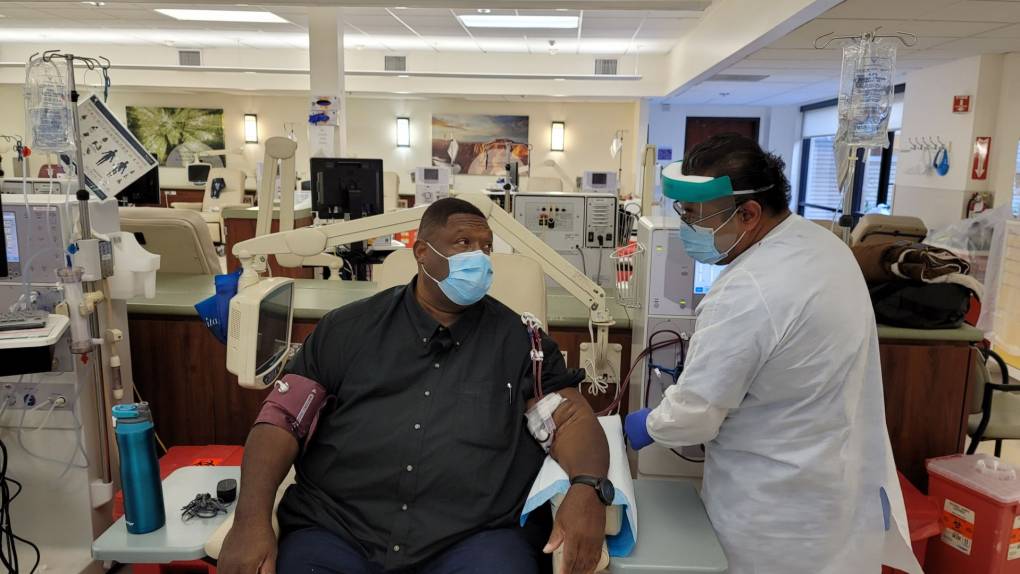
"caption": "DeWayne Cox gets dialysis at a DaVita clinic in Van Nuys three days a week. ",
"description": "DeWayne Cox gets dialysis at a DaVita clinic in Van Nuys three days a week. ",
"title": "DeWayne Cox photo_DaVita clinic Van Nuys_Oct 2020",
"credit": "Courtesy of DeWayne Cox",
"status": "inherit",
"isLoading": false,
"fetchFailed": false
},
"news_11842554": {
"type": "attachments",
"id": "news_11842554",
"meta": {
"index": "attachments_1716263798",
"site": "news",
"id": "11842554",
"found": true
},
"parent": 11842546,
"imgSizes": {
"apple_news_ca_landscape_5_5": {
"file": "https://ww2.kqed.org/app/uploads/sites/10/2020/10/going_101520_final-1044x783.png",
"width": 1044,
"mimeType": "image/png",
"height": 783
},
"apple_news_ca_square_4_0": {
"file": "https://ww2.kqed.org/app/uploads/sites/10/2020/10/going_101520_final-470x470.png",
"width": 470,
"mimeType": "image/png",
"height": 470
},
"twentyfourteen-full-width": {
"file": "https://ww2.kqed.org/app/uploads/sites/10/2020/10/going_101520_final-1038x576.png",
"width": 1038,
"mimeType": "image/png",
"height": 576
},
"thumbnail": {
"file": "https://ww2.kqed.org/app/uploads/sites/10/2020/10/going_101520_final-160x99.png",
"width": 160,
"mimeType": "image/png",
"height": 99
},
"post-thumbnail": {
"file": "https://ww2.kqed.org/app/uploads/sites/10/2020/10/going_101520_final-672x372.png",
"width": 672,
"mimeType": "image/png",
"height": 372
},
"kqedFullSize": {
"file": "https://ww2.kqed.org/app/uploads/sites/10/2020/10/going_101520_final.png",
"width": 1920,
"height": 1193
},
"apple_news_ca_landscape_4_7": {
"file": "https://ww2.kqed.org/app/uploads/sites/10/2020/10/going_101520_final-632x474.png",
"width": 632,
"mimeType": "image/png",
"height": 474
},
"large": {
"file": "https://ww2.kqed.org/app/uploads/sites/10/2020/10/going_101520_final-1020x634.png",
"width": 1020,
"mimeType": "image/png",
"height": 634
},
"apple_news_ca_landscape_4_0": {
"file": "https://ww2.kqed.org/app/uploads/sites/10/2020/10/going_101520_final-536x402.png",
"width": 536,
"mimeType": "image/png",
"height": 402
},
"apple_news_ca_portrait_12_9": {
"file": "https://ww2.kqed.org/app/uploads/sites/10/2020/10/going_101520_final-1122x1193.png",
"width": 1122,
"mimeType": "image/png",
"height": 1193
},
"medium": {
"file": "https://ww2.kqed.org/app/uploads/sites/10/2020/10/going_101520_final-800x497.png",
"width": 800,
"mimeType": "image/png",
"height": 497
},
"apple_news_ca_portrait_4_0": {
"file": "https://ww2.kqed.org/app/uploads/sites/10/2020/10/going_101520_final-354x472.png",
"width": 354,
"mimeType": "image/png",
"height": 472
},
"apple_news_ca_portrait_9_7": {
"file": "https://ww2.kqed.org/app/uploads/sites/10/2020/10/going_101520_final-840x1120.png",
"width": 840,
"mimeType": "image/png",
"height": 1120
},
"apple_news_ca_landscape_12_9": {
"file": "https://ww2.kqed.org/app/uploads/sites/10/2020/10/going_101520_final-1832x1193.png",
"width": 1832,
"mimeType": "image/png",
"height": 1193
},
"apple_news_ca_square_9_7": {
"file": "https://ww2.kqed.org/app/uploads/sites/10/2020/10/going_101520_final-1104x1104.png",
"width": 1104,
"mimeType": "image/png",
"height": 1104
},
"1536x1536": {
"file": "https://ww2.kqed.org/app/uploads/sites/10/2020/10/going_101520_final-1536x954.png",
"width": 1536,
"mimeType": "image/png",
"height": 954
},
"apple_news_ca_portrait_4_7": {
"file": "https://ww2.kqed.org/app/uploads/sites/10/2020/10/going_101520_final-414x552.png",
"width": 414,
"mimeType": "image/png",
"height": 552
},
"apple_news_ca_square_12_9": {
"file": "https://ww2.kqed.org/app/uploads/sites/10/2020/10/going_101520_final-1472x1193.png",
"width": 1472,
"mimeType": "image/png",
"height": 1193
},
"apple_news_ca_portrait_5_5": {
"file": "https://ww2.kqed.org/app/uploads/sites/10/2020/10/going_101520_final-687x916.png",
"width": 687,
"mimeType": "image/png",
"height": 916
},
"apple_news_ca_square_4_7": {
"file": "https://ww2.kqed.org/app/uploads/sites/10/2020/10/going_101520_final-550x550.png",
"width": 550,
"mimeType": "image/png",
"height": 550
},
"apple_news_ca_landscape_9_7": {
"file": "https://ww2.kqed.org/app/uploads/sites/10/2020/10/going_101520_final-1376x1032.png",
"width": 1376,
"mimeType": "image/png",
"height": 1032
},
"apple_news_ca_square_5_5": {
"file": "https://ww2.kqed.org/app/uploads/sites/10/2020/10/going_101520_final-912x912.png",
"width": 912,
"mimeType": "image/png",
"height": 912
}
},
"publishDate": 1602801544,
"modified": 1602801582,
"caption": null,
"description": null,
"title": "going_101520_final",
"credit": null,
"status": "inherit",
"isLoading": false,
"fetchFailed": false
},
"news_11223334": {
"type": "attachments",
"id": "news_11223334",
"meta": {
"index": "attachments_1716263798",
"site": "news",
"id": "11223334",
"found": true
},
"parent": 11221817,
"imgSizes": {
"small": {
"file": "https://ww2.kqed.org/app/uploads/sites/10/2016/12/ElectoralVotes-520x334.jpg",
"width": 520,
"mimeType": "image/jpeg",
"height": 334
},
"twentyfourteen-full-width": {
"file": "https://ww2.kqed.org/app/uploads/sites/10/2016/12/ElectoralVotes-1038x576.jpg",
"width": 1038,
"mimeType": "image/jpeg",
"height": 576
},
"thumbnail": {
"file": "https://ww2.kqed.org/app/uploads/sites/10/2016/12/ElectoralVotes-160x103.jpg",
"width": 160,
"mimeType": "image/jpeg",
"height": 103
},
"fd-sm": {
"file": "https://ww2.kqed.org/app/uploads/sites/10/2016/12/ElectoralVotes-960x617.jpg",
"width": 960,
"mimeType": "image/jpeg",
"height": 617
},
"post-thumbnail": {
"file": "https://ww2.kqed.org/app/uploads/sites/10/2016/12/ElectoralVotes-672x372.jpg",
"width": 672,
"mimeType": "image/jpeg",
"height": 372
},
"xsmall": {
"file": "https://ww2.kqed.org/app/uploads/sites/10/2016/12/ElectoralVotes-375x241.jpg",
"width": 375,
"mimeType": "image/jpeg",
"height": 241
},
"kqedFullSize": {
"file": "https://ww2.kqed.org/app/uploads/sites/10/2016/12/ElectoralVotes.jpg",
"width": 1920,
"height": 1233
},
"large": {
"file": "https://ww2.kqed.org/app/uploads/sites/10/2016/12/ElectoralVotes-1020x655.jpg",
"width": 1020,
"mimeType": "image/jpeg",
"height": 655
},
"xlarge": {
"file": "https://ww2.kqed.org/app/uploads/sites/10/2016/12/ElectoralVotes-1180x758.jpg",
"width": 1180,
"mimeType": "image/jpeg",
"height": 758
},
"guest-author-50": {
"file": "https://ww2.kqed.org/app/uploads/sites/10/2016/12/ElectoralVotes-50x50.jpg",
"width": 50,
"mimeType": "image/jpeg",
"height": 50
},
"guest-author-96": {
"file": "https://ww2.kqed.org/app/uploads/sites/10/2016/12/ElectoralVotes-96x96.jpg",
"width": 96,
"mimeType": "image/jpeg",
"height": 96
},
"medium": {
"file": "https://ww2.kqed.org/app/uploads/sites/10/2016/12/ElectoralVotes-800x514.jpg",
"width": 800,
"mimeType": "image/jpeg",
"height": 514
},
"guest-author-64": {
"file": "https://ww2.kqed.org/app/uploads/sites/10/2016/12/ElectoralVotes-64x64.jpg",
"width": 64,
"mimeType": "image/jpeg",
"height": 64
},
"guest-author-32": {
"file": "https://ww2.kqed.org/app/uploads/sites/10/2016/12/ElectoralVotes-32x32.jpg",
"width": 32,
"mimeType": "image/jpeg",
"height": 32
},
"jmtc-small-thumb": {
"file": "https://ww2.kqed.org/app/uploads/sites/10/2016/12/ElectoralVotes-280x150.jpg",
"width": 280,
"mimeType": "image/jpeg",
"height": 150
},
"fd-lrg": {
"file": "https://ww2.kqed.org/app/uploads/sites/10/2016/12/ElectoralVotes-1920x1233.jpg",
"width": 1920,
"mimeType": "image/jpeg",
"height": 1233
},
"fd-med": {
"file": "https://ww2.kqed.org/app/uploads/sites/10/2016/12/ElectoralVotes-1180x758.jpg",
"width": 1180,
"mimeType": "image/jpeg",
"height": 758
},
"full-width": {
"file": "https://ww2.kqed.org/app/uploads/sites/10/2016/12/ElectoralVotes-1920x1233.jpg",
"width": 1920,
"mimeType": "image/jpeg",
"height": 1233
},
"detail": {
"file": "https://ww2.kqed.org/app/uploads/sites/10/2016/12/ElectoralVotes-150x150.jpg",
"width": 150,
"mimeType": "image/jpeg",
"height": 150
},
"guest-author-128": {
"file": "https://ww2.kqed.org/app/uploads/sites/10/2016/12/ElectoralVotes-128x128.jpg",
"width": 128,
"mimeType": "image/jpeg",
"height": 128
},
"xxsmall": {
"file": "https://ww2.kqed.org/app/uploads/sites/10/2016/12/ElectoralVotes-240x154.jpg",
"width": 240,
"mimeType": "image/jpeg",
"height": 154
}
},
"publishDate": 1481920335,
"modified": 1481927537,
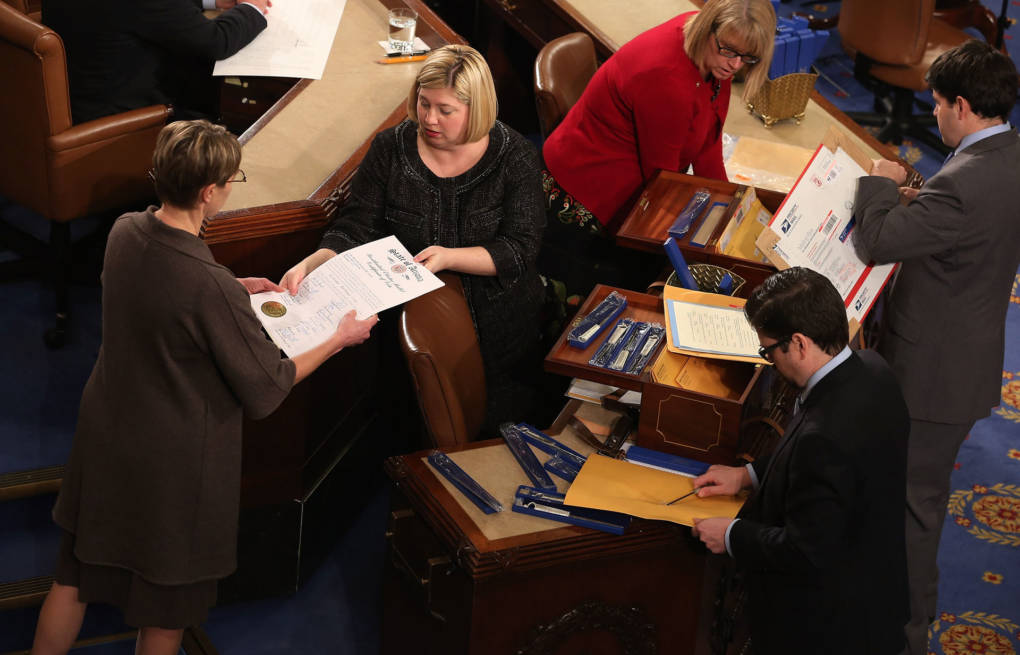
"caption": "Congressional clerks help unseal and organize the Electoral College votes from all 50 states in the U.S. House of Representatives on Jan. 4, 2013. ",
"description": "Congressional clerks help unseal and organize the Electoral College votes from all 50 states in the U.S. House of Representatives on January 4, 2013. ",
"title": "electoralvotes",
"credit": "Chip Somodevilla/Getty Images",
"status": "inherit",
"isLoading": false,
"fetchFailed": false
},
"news_11842248": {
"type": "attachments",
"id": "news_11842248",
"meta": {
"index": "attachments_1716263798",
"site": "news",
"id": "11842248",
"found": true
},
"parent": 11842237,
"imgSizes": {
"apple_news_ca_landscape_5_5": {
"file": "https://ww2.kqed.org/app/uploads/sites/10/2020/10/RS45342_001_KQED_SanFrancisco_Election2020_MailinBallot_10122020-qut-1044x783.jpg",
"width": 1044,
"mimeType": "image/jpeg",
"height": 783
},
"apple_news_ca_square_4_0": {
"file": "https://ww2.kqed.org/app/uploads/sites/10/2020/10/RS45342_001_KQED_SanFrancisco_Election2020_MailinBallot_10122020-qut-470x470.jpg",
"width": 470,
"mimeType": "image/jpeg",
"height": 470
},
"twentyfourteen-full-width": {
"file": "https://ww2.kqed.org/app/uploads/sites/10/2020/10/RS45342_001_KQED_SanFrancisco_Election2020_MailinBallot_10122020-qut-1038x576.jpg",
"width": 1038,
"mimeType": "image/jpeg",
"height": 576
},
"thumbnail": {
"file": "https://ww2.kqed.org/app/uploads/sites/10/2020/10/RS45342_001_KQED_SanFrancisco_Election2020_MailinBallot_10122020-qut-160x107.jpg",
"width": 160,
"mimeType": "image/jpeg",
"height": 107
},
"post-thumbnail": {
"file": "https://ww2.kqed.org/app/uploads/sites/10/2020/10/RS45342_001_KQED_SanFrancisco_Election2020_MailinBallot_10122020-qut-672x372.jpg",
"width": 672,
"mimeType": "image/jpeg",
"height": 372
},
"kqedFullSize": {
"file": "https://ww2.kqed.org/app/uploads/sites/10/2020/10/RS45342_001_KQED_SanFrancisco_Election2020_MailinBallot_10122020-qut.jpg",
"width": 1920,
"height": 1280
},
"apple_news_ca_landscape_4_7": {
"file": "https://ww2.kqed.org/app/uploads/sites/10/2020/10/RS45342_001_KQED_SanFrancisco_Election2020_MailinBallot_10122020-qut-632x474.jpg",
"width": 632,
"mimeType": "image/jpeg",
"height": 474
},
"large": {
"file": "https://ww2.kqed.org/app/uploads/sites/10/2020/10/RS45342_001_KQED_SanFrancisco_Election2020_MailinBallot_10122020-qut-1020x680.jpg",
"width": 1020,
"mimeType": "image/jpeg",
"height": 680
},
"apple_news_ca_landscape_4_0": {
"file": "https://ww2.kqed.org/app/uploads/sites/10/2020/10/RS45342_001_KQED_SanFrancisco_Election2020_MailinBallot_10122020-qut-536x402.jpg",
"width": 536,
"mimeType": "image/jpeg",
"height": 402
},
"apple_news_ca_portrait_12_9": {
"file": "https://ww2.kqed.org/app/uploads/sites/10/2020/10/RS45342_001_KQED_SanFrancisco_Election2020_MailinBallot_10122020-qut-1122x1280.jpg",
"width": 1122,
"mimeType": "image/jpeg",
"height": 1280
},
"medium": {
"file": "https://ww2.kqed.org/app/uploads/sites/10/2020/10/RS45342_001_KQED_SanFrancisco_Election2020_MailinBallot_10122020-qut-800x533.jpg",
"width": 800,
"mimeType": "image/jpeg",
"height": 533
},
"apple_news_ca_portrait_4_0": {
"file": "https://ww2.kqed.org/app/uploads/sites/10/2020/10/RS45342_001_KQED_SanFrancisco_Election2020_MailinBallot_10122020-qut-354x472.jpg",
"width": 354,
"mimeType": "image/jpeg",
"height": 472
},
"apple_news_ca_portrait_9_7": {
"file": "https://ww2.kqed.org/app/uploads/sites/10/2020/10/RS45342_001_KQED_SanFrancisco_Election2020_MailinBallot_10122020-qut-840x1120.jpg",
"width": 840,
"mimeType": "image/jpeg",
"height": 1120
},
"apple_news_ca_landscape_12_9": {
"file": "https://ww2.kqed.org/app/uploads/sites/10/2020/10/RS45342_001_KQED_SanFrancisco_Election2020_MailinBallot_10122020-qut-1832x1280.jpg",
"width": 1832,
"mimeType": "image/jpeg",
"height": 1280
},
"apple_news_ca_square_9_7": {
"file": "https://ww2.kqed.org/app/uploads/sites/10/2020/10/RS45342_001_KQED_SanFrancisco_Election2020_MailinBallot_10122020-qut-1104x1104.jpg",
"width": 1104,
"mimeType": "image/jpeg",
"height": 1104
},
"1536x1536": {
"file": "https://ww2.kqed.org/app/uploads/sites/10/2020/10/RS45342_001_KQED_SanFrancisco_Election2020_MailinBallot_10122020-qut-1536x1024.jpg",
"width": 1536,
"mimeType": "image/jpeg",
"height": 1024
},
"apple_news_ca_portrait_4_7": {
"file": "https://ww2.kqed.org/app/uploads/sites/10/2020/10/RS45342_001_KQED_SanFrancisco_Election2020_MailinBallot_10122020-qut-414x552.jpg",
"width": 414,
"mimeType": "image/jpeg",
"height": 552
},
"apple_news_ca_square_12_9": {
"file": "https://ww2.kqed.org/app/uploads/sites/10/2020/10/RS45342_001_KQED_SanFrancisco_Election2020_MailinBallot_10122020-qut-1472x1280.jpg",
"width": 1472,
"mimeType": "image/jpeg",
"height": 1280
},
"apple_news_ca_portrait_5_5": {
"file": "https://ww2.kqed.org/app/uploads/sites/10/2020/10/RS45342_001_KQED_SanFrancisco_Election2020_MailinBallot_10122020-qut-687x916.jpg",
"width": 687,
"mimeType": "image/jpeg",
"height": 916
},
"apple_news_ca_square_4_7": {
"file": "https://ww2.kqed.org/app/uploads/sites/10/2020/10/RS45342_001_KQED_SanFrancisco_Election2020_MailinBallot_10122020-qut-550x550.jpg",
"width": 550,
"mimeType": "image/jpeg",
"height": 550
},
"apple_news_ca_landscape_9_7": {
"file": "https://ww2.kqed.org/app/uploads/sites/10/2020/10/RS45342_001_KQED_SanFrancisco_Election2020_MailinBallot_10122020-qut-1376x1032.jpg",
"width": 1376,
"mimeType": "image/jpeg",
"height": 1032
},
"apple_news_ca_square_5_5": {
"file": "https://ww2.kqed.org/app/uploads/sites/10/2020/10/RS45342_001_KQED_SanFrancisco_Election2020_MailinBallot_10122020-qut-912x912.jpg",
"width": 912,
"mimeType": "image/jpeg",
"height": 912
}
},
"publishDate": 1602696091,
"modified": 1602696125,
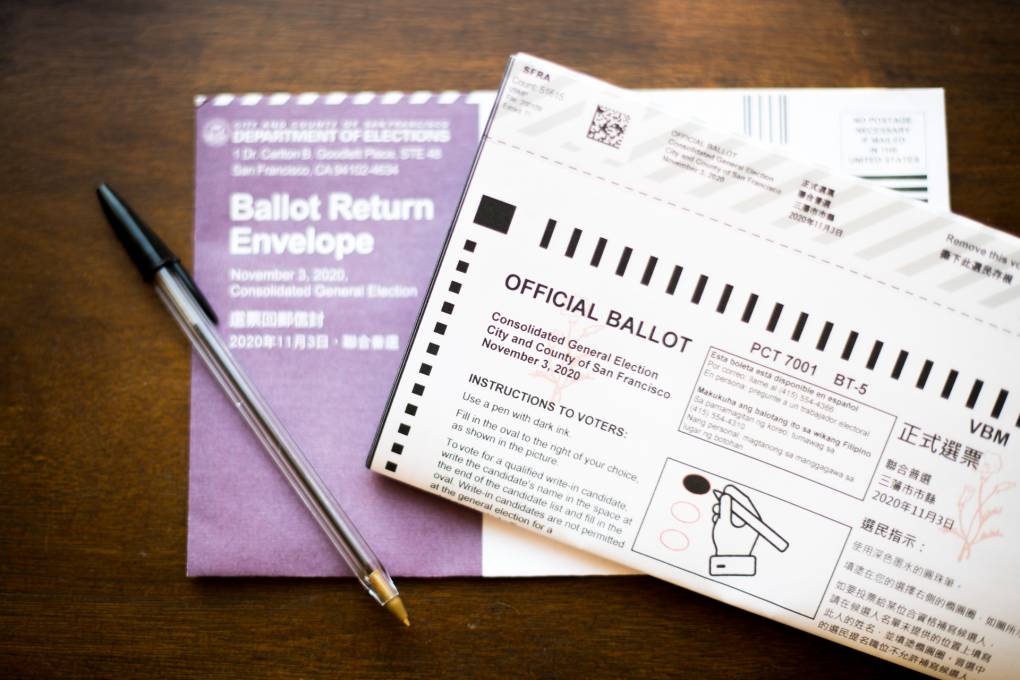
"caption": "An official mail-in ballot for the Nov. 3, 2020 election.",
"description": null,
"title": "A San Francisco official mail-in ballot for the Nov. 3, 2020 election.",
"credit": "Beth LaBerge/KQED",
"status": "inherit",
"isLoading": false,
"fetchFailed": false
},
"news_11689198": {
"type": "attachments",
"id": "news_11689198",
"meta": {
"index": "attachments_1716263798",
"site": "news",
"id": "11689198",
"found": true
},
"parent": 11689184,
"imgSizes": {
"small": {
"file": "https://ww2.kqed.org/app/uploads/sites/10/2018/08/BailBondsSign-520x375.jpg",
"width": 520,
"mimeType": "image/jpeg",
"height": 375
},
"twentyfourteen-full-width": {
"file": "https://ww2.kqed.org/app/uploads/sites/10/2018/08/BailBondsSign-1038x576.jpg",
"width": 1038,
"mimeType": "image/jpeg",
"height": 576
},
"thumbnail": {
"file": "https://ww2.kqed.org/app/uploads/sites/10/2018/08/BailBondsSign-160x115.jpg",
"width": 160,
"mimeType": "image/jpeg",
"height": 115
},
"fd-sm": {
"file": "https://ww2.kqed.org/app/uploads/sites/10/2018/08/BailBondsSign-960x692.jpg",
"width": 960,
"mimeType": "image/jpeg",
"height": 692
},
"post-thumbnail": {
"file": "https://ww2.kqed.org/app/uploads/sites/10/2018/08/BailBondsSign-672x372.jpg",
"width": 672,
"mimeType": "image/jpeg",
"height": 372
},
"xsmall": {
"file": "https://ww2.kqed.org/app/uploads/sites/10/2018/08/BailBondsSign-375x270.jpg",
"width": 375,
"mimeType": "image/jpeg",
"height": 270
},
"kqedFullSize": {
"file": "https://ww2.kqed.org/app/uploads/sites/10/2018/08/BailBondsSign.jpg",
"width": 1920,
"height": 1384
},
"large": {
"file": "https://ww2.kqed.org/app/uploads/sites/10/2018/08/BailBondsSign-1020x735.jpg",
"width": 1020,
"mimeType": "image/jpeg",
"height": 735
},
"xlarge": {
"file": "https://ww2.kqed.org/app/uploads/sites/10/2018/08/BailBondsSign-1180x851.jpg",
"width": 1180,
"mimeType": "image/jpeg",
"height": 851
},
"complete_open_graph": {
"file": "https://ww2.kqed.org/app/uploads/sites/10/2018/08/BailBondsSign-1200x865.jpg",
"width": 1200,
"mimeType": "image/jpeg",
"height": 865
},
"guest-author-50": {
"file": "https://ww2.kqed.org/app/uploads/sites/10/2018/08/BailBondsSign-50x50.jpg",
"width": 50,
"mimeType": "image/jpeg",
"height": 50
},
"guest-author-96": {
"file": "https://ww2.kqed.org/app/uploads/sites/10/2018/08/BailBondsSign-96x96.jpg",
"width": 96,
"mimeType": "image/jpeg",
"height": 96
},
"medium": {
"file": "https://ww2.kqed.org/app/uploads/sites/10/2018/08/BailBondsSign-800x577.jpg",
"width": 800,
"mimeType": "image/jpeg",
"height": 577
},
"guest-author-64": {
"file": "https://ww2.kqed.org/app/uploads/sites/10/2018/08/BailBondsSign-64x64.jpg",
"width": 64,
"mimeType": "image/jpeg",
"height": 64
},
"guest-author-32": {
"file": "https://ww2.kqed.org/app/uploads/sites/10/2018/08/BailBondsSign-32x32.jpg",
"width": 32,
"mimeType": "image/jpeg",
"height": 32
},
"fd-lrg": {
"file": "https://ww2.kqed.org/app/uploads/sites/10/2018/08/BailBondsSign-1920x1384.jpg",
"width": 1920,
"mimeType": "image/jpeg",
"height": 1384
},
"fd-med": {
"file": "https://ww2.kqed.org/app/uploads/sites/10/2018/08/BailBondsSign-1180x851.jpg",
"width": 1180,
"mimeType": "image/jpeg",
"height": 851
},
"full-width": {
"file": "https://ww2.kqed.org/app/uploads/sites/10/2018/08/BailBondsSign-1920x1384.jpg",
"width": 1920,
"mimeType": "image/jpeg",
"height": 1384
},
"detail": {
"file": "https://ww2.kqed.org/app/uploads/sites/10/2018/08/BailBondsSign-150x150.jpg",
"width": 150,
"mimeType": "image/jpeg",
"height": 150
},
"guest-author-128": {
"file": "https://ww2.kqed.org/app/uploads/sites/10/2018/08/BailBondsSign-128x128.jpg",
"width": 128,
"mimeType": "image/jpeg",
"height": 128
},
"xxsmall": {
"file": "https://ww2.kqed.org/app/uploads/sites/10/2018/08/BailBondsSign-240x173.jpg",
"width": 240,
"mimeType": "image/jpeg",
"height": 173
}
},
"publishDate": 1535492950,
"modified": 1602637326,
"caption": "A sign advertises a bail bonds company outside San Francisco's Hall of Justice. ",
"description": "A sign advertises a bail bonds company outside San Francisco's Hall of Justice. ",
"title": "BailBondsSign",
"credit": "Alex Emslie/KQED",
"status": "inherit",
"isLoading": false,
"fetchFailed": false
},
"news_11842142": {
"type": "attachments",
"id": "news_11842142",
"meta": {
"index": "attachments_1716263798",
"site": "news",
"id": "11842142",
"found": true
},
"parent": 11842137,
"imgSizes": {
"apple_news_ca_landscape_5_5": {
"file": "https://ww2.kqed.org/app/uploads/sites/10/2020/10/promise_101320_final-1044x783.png",
"width": 1044,
"mimeType": "image/png",
"height": 783
},
"apple_news_ca_square_4_0": {
"file": "https://ww2.kqed.org/app/uploads/sites/10/2020/10/promise_101320_final-470x470.png",
"width": 470,
"mimeType": "image/png",
"height": 470
},
"twentyfourteen-full-width": {
"file": "https://ww2.kqed.org/app/uploads/sites/10/2020/10/promise_101320_final-1038x576.png",
"width": 1038,
"mimeType": "image/png",
"height": 576
},
"thumbnail": {
"file": "https://ww2.kqed.org/app/uploads/sites/10/2020/10/promise_101320_final-160x105.png",
"width": 160,
"mimeType": "image/png",
"height": 105
},
"post-thumbnail": {
"file": "https://ww2.kqed.org/app/uploads/sites/10/2020/10/promise_101320_final-672x372.png",
"width": 672,
"mimeType": "image/png",
"height": 372
},
"kqedFullSize": {
"file": "https://ww2.kqed.org/app/uploads/sites/10/2020/10/promise_101320_final.png",
"width": 1920,
"height": 1265
},
"apple_news_ca_landscape_4_7": {
"file": "https://ww2.kqed.org/app/uploads/sites/10/2020/10/promise_101320_final-632x474.png",
"width": 632,
"mimeType": "image/png",
"height": 474
},
"large": {
"file": "https://ww2.kqed.org/app/uploads/sites/10/2020/10/promise_101320_final-1020x672.png",
"width": 1020,
"mimeType": "image/png",
"height": 672
},
"apple_news_ca_landscape_4_0": {
"file": "https://ww2.kqed.org/app/uploads/sites/10/2020/10/promise_101320_final-536x402.png",
"width": 536,
"mimeType": "image/png",
"height": 402
},
"apple_news_ca_portrait_12_9": {
"file": "https://ww2.kqed.org/app/uploads/sites/10/2020/10/promise_101320_final-1122x1265.png",
"width": 1122,
"mimeType": "image/png",
"height": 1265
},
"medium": {
"file": "https://ww2.kqed.org/app/uploads/sites/10/2020/10/promise_101320_final-800x527.png",
"width": 800,
"mimeType": "image/png",
"height": 527
},
"apple_news_ca_portrait_4_0": {
"file": "https://ww2.kqed.org/app/uploads/sites/10/2020/10/promise_101320_final-354x472.png",
"width": 354,
"mimeType": "image/png",
"height": 472
},
"apple_news_ca_portrait_9_7": {
"file": "https://ww2.kqed.org/app/uploads/sites/10/2020/10/promise_101320_final-840x1120.png",
"width": 840,
"mimeType": "image/png",
"height": 1120
},
"apple_news_ca_landscape_12_9": {
"file": "https://ww2.kqed.org/app/uploads/sites/10/2020/10/promise_101320_final-1832x1265.png",
"width": 1832,
"mimeType": "image/png",
"height": 1265
},
"apple_news_ca_square_9_7": {
"file": "https://ww2.kqed.org/app/uploads/sites/10/2020/10/promise_101320_final-1104x1104.png",
"width": 1104,
"mimeType": "image/png",
"height": 1104
},
"1536x1536": {
"file": "https://ww2.kqed.org/app/uploads/sites/10/2020/10/promise_101320_final-1536x1012.png",
"width": 1536,
"mimeType": "image/png",
"height": 1012
},
"apple_news_ca_portrait_4_7": {
"file": "https://ww2.kqed.org/app/uploads/sites/10/2020/10/promise_101320_final-414x552.png",
"width": 414,
"mimeType": "image/png",
"height": 552
},
"apple_news_ca_square_12_9": {
"file": "https://ww2.kqed.org/app/uploads/sites/10/2020/10/promise_101320_final-1472x1265.png",
"width": 1472,
"mimeType": "image/png",
"height": 1265
},
"apple_news_ca_portrait_5_5": {
"file": "https://ww2.kqed.org/app/uploads/sites/10/2020/10/promise_101320_final-687x916.png",
"width": 687,
"mimeType": "image/png",
"height": 916
},
"apple_news_ca_square_4_7": {
"file": "https://ww2.kqed.org/app/uploads/sites/10/2020/10/promise_101320_final-550x550.png",
"width": 550,
"mimeType": "image/png",
"height": 550
},
"apple_news_ca_landscape_9_7": {
"file": "https://ww2.kqed.org/app/uploads/sites/10/2020/10/promise_101320_final-1376x1032.png",
"width": 1376,
"mimeType": "image/png",
"height": 1032
},
"apple_news_ca_square_5_5": {
"file": "https://ww2.kqed.org/app/uploads/sites/10/2020/10/promise_101320_final-912x912.png",
"width": 912,
"mimeType": "image/png",
"height": 912
}
},
"publishDate": 1602624479,
"modified": 1602624522,
"caption": null,
"description": null,
"title": "promise_101320_final",
"credit": null,
"status": "inherit",
"isLoading": false,
"fetchFailed": false
},
"news_11842019": {
"type": "attachments",
"id": "news_11842019",
"meta": {
"index": "attachments_1716263798",
"site": "news",
"id": "11842019",
"found": true
},
"parent": 11841996,
"imgSizes": {
"apple_news_ca_landscape_5_5": {
"file": "https://ww2.kqed.org/app/uploads/sites/10/2020/10/RS45321_027_KQED_SanFrancisco_NoConfirmationBeforeInauguration_10122020-qut-1044x783.jpg",
"width": 1044,
"mimeType": "image/jpeg",
"height": 783
},
"apple_news_ca_square_4_0": {
"file": "https://ww2.kqed.org/app/uploads/sites/10/2020/10/RS45321_027_KQED_SanFrancisco_NoConfirmationBeforeInauguration_10122020-qut-470x470.jpg",
"width": 470,
"mimeType": "image/jpeg",
"height": 470
},
"twentyfourteen-full-width": {
"file": "https://ww2.kqed.org/app/uploads/sites/10/2020/10/RS45321_027_KQED_SanFrancisco_NoConfirmationBeforeInauguration_10122020-qut-1038x576.jpg",
"width": 1038,
"mimeType": "image/jpeg",
"height": 576
},
"thumbnail": {
"file": "https://ww2.kqed.org/app/uploads/sites/10/2020/10/RS45321_027_KQED_SanFrancisco_NoConfirmationBeforeInauguration_10122020-qut-160x107.jpg",
"width": 160,
"mimeType": "image/jpeg",
"height": 107
},
"post-thumbnail": {
"file": "https://ww2.kqed.org/app/uploads/sites/10/2020/10/RS45321_027_KQED_SanFrancisco_NoConfirmationBeforeInauguration_10122020-qut-672x372.jpg",
"width": 672,
"mimeType": "image/jpeg",
"height": 372
},
"kqedFullSize": {
"file": "https://ww2.kqed.org/app/uploads/sites/10/2020/10/RS45321_027_KQED_SanFrancisco_NoConfirmationBeforeInauguration_10122020-qut.jpg",
"width": 1920,
"height": 1278
},
"apple_news_ca_landscape_4_7": {
"file": "https://ww2.kqed.org/app/uploads/sites/10/2020/10/RS45321_027_KQED_SanFrancisco_NoConfirmationBeforeInauguration_10122020-qut-632x474.jpg",
"width": 632,
"mimeType": "image/jpeg",
"height": 474
},
"large": {
"file": "https://ww2.kqed.org/app/uploads/sites/10/2020/10/RS45321_027_KQED_SanFrancisco_NoConfirmationBeforeInauguration_10122020-qut-1020x679.jpg",
"width": 1020,
"mimeType": "image/jpeg",
"height": 679
},
"apple_news_ca_landscape_4_0": {
"file": "https://ww2.kqed.org/app/uploads/sites/10/2020/10/RS45321_027_KQED_SanFrancisco_NoConfirmationBeforeInauguration_10122020-qut-536x402.jpg",
"width": 536,
"mimeType": "image/jpeg",
"height": 402
},
"apple_news_ca_portrait_12_9": {
"file": "https://ww2.kqed.org/app/uploads/sites/10/2020/10/RS45321_027_KQED_SanFrancisco_NoConfirmationBeforeInauguration_10122020-qut-1122x1278.jpg",
"width": 1122,
"mimeType": "image/jpeg",
"height": 1278
},
"medium": {
"file": "https://ww2.kqed.org/app/uploads/sites/10/2020/10/RS45321_027_KQED_SanFrancisco_NoConfirmationBeforeInauguration_10122020-qut-800x533.jpg",
"width": 800,
"mimeType": "image/jpeg",
"height": 533
},
"apple_news_ca_portrait_4_0": {
"file": "https://ww2.kqed.org/app/uploads/sites/10/2020/10/RS45321_027_KQED_SanFrancisco_NoConfirmationBeforeInauguration_10122020-qut-354x472.jpg",
"width": 354,
"mimeType": "image/jpeg",
"height": 472
},
"apple_news_ca_portrait_9_7": {
"file": "https://ww2.kqed.org/app/uploads/sites/10/2020/10/RS45321_027_KQED_SanFrancisco_NoConfirmationBeforeInauguration_10122020-qut-840x1120.jpg",
"width": 840,
"mimeType": "image/jpeg",
"height": 1120
},
"apple_news_ca_landscape_12_9": {
"file": "https://ww2.kqed.org/app/uploads/sites/10/2020/10/RS45321_027_KQED_SanFrancisco_NoConfirmationBeforeInauguration_10122020-qut-1832x1278.jpg",
"width": 1832,
"mimeType": "image/jpeg",
"height": 1278
},
"apple_news_ca_square_9_7": {
"file": "https://ww2.kqed.org/app/uploads/sites/10/2020/10/RS45321_027_KQED_SanFrancisco_NoConfirmationBeforeInauguration_10122020-qut-1104x1104.jpg",
"width": 1104,
"mimeType": "image/jpeg",
"height": 1104
},
"1536x1536": {
"file": "https://ww2.kqed.org/app/uploads/sites/10/2020/10/RS45321_027_KQED_SanFrancisco_NoConfirmationBeforeInauguration_10122020-qut-1536x1022.jpg",
"width": 1536,
"mimeType": "image/jpeg",
"height": 1022
},
"apple_news_ca_portrait_4_7": {
"file": "https://ww2.kqed.org/app/uploads/sites/10/2020/10/RS45321_027_KQED_SanFrancisco_NoConfirmationBeforeInauguration_10122020-qut-414x552.jpg",
"width": 414,
"mimeType": "image/jpeg",
"height": 552
},
"apple_news_ca_square_12_9": {
"file": "https://ww2.kqed.org/app/uploads/sites/10/2020/10/RS45321_027_KQED_SanFrancisco_NoConfirmationBeforeInauguration_10122020-qut-1472x1278.jpg",
"width": 1472,
"mimeType": "image/jpeg",
"height": 1278
},
"apple_news_ca_portrait_5_5": {
"file": "https://ww2.kqed.org/app/uploads/sites/10/2020/10/RS45321_027_KQED_SanFrancisco_NoConfirmationBeforeInauguration_10122020-qut-687x916.jpg",
"width": 687,
"mimeType": "image/jpeg",
"height": 916
},
"apple_news_ca_square_4_7": {
"file": "https://ww2.kqed.org/app/uploads/sites/10/2020/10/RS45321_027_KQED_SanFrancisco_NoConfirmationBeforeInauguration_10122020-qut-550x550.jpg",
"width": 550,
"mimeType": "image/jpeg",
"height": 550
},
"apple_news_ca_landscape_9_7": {
"file": "https://ww2.kqed.org/app/uploads/sites/10/2020/10/RS45321_027_KQED_SanFrancisco_NoConfirmationBeforeInauguration_10122020-qut-1376x1032.jpg",
"width": 1376,
"mimeType": "image/jpeg",
"height": 1032
},
"apple_news_ca_square_5_5": {
"file": "https://ww2.kqed.org/app/uploads/sites/10/2020/10/RS45321_027_KQED_SanFrancisco_NoConfirmationBeforeInauguration_10122020-qut-912x912.jpg",
"width": 912,
"mimeType": "image/jpeg",
"height": 912
}
},
"publishDate": 1602546822,
"modified": 1602546996,
"caption": "Demonstrators hold up their fists during a protest outside Sen. Dianne Feinstein's office in San Francisco on Oct. 12, 2020, to demand that Senate Democrats refuse to hold hearings to confirm any new Supreme Court justice until after the presidential inauguration.",
"description": "Demonstrators hold up their fists during a protest outside Sen. Dianne Feinstein's office in San Francisco on Oct. 12, 2020, to demand that Senate Democrats refuse to hold hearings to confirm any new Supreme Court justice until after the presidential inauguration.",
"title": "RS45321_027_KQED_SanFrancisco_NoConfirmationBeforeInauguration_10122020-qut",
"credit": "Beth LaBerge/KQED",
"status": "inherit",
"isLoading": false,
"fetchFailed": false
},
"news_11841933": {
"type": "attachments",
"id": "news_11841933",
"meta": {
"index": "attachments_1716263798",
"site": "news",
"id": "11841933",
"found": true
},
"parent": 11841574,
"imgSizes": {
"apple_news_ca_landscape_5_5": {
"file": "https://ww2.kqed.org/app/uploads/sites/10/2020/10/RS26038_GettyImages-818802824-qut-1044x783.jpg",
"width": 1044,
"mimeType": "image/jpeg",
"height": 783
},
"apple_news_ca_square_4_0": {
"file": "https://ww2.kqed.org/app/uploads/sites/10/2020/10/RS26038_GettyImages-818802824-qut-470x470.jpg",
"width": 470,
"mimeType": "image/jpeg",
"height": 470
},
"twentyfourteen-full-width": {
"file": "https://ww2.kqed.org/app/uploads/sites/10/2020/10/RS26038_GettyImages-818802824-qut-1038x576.jpg",
"width": 1038,
"mimeType": "image/jpeg",
"height": 576
},
"thumbnail": {
"file": "https://ww2.kqed.org/app/uploads/sites/10/2020/10/RS26038_GettyImages-818802824-qut-160x107.jpg",
"width": 160,
"mimeType": "image/jpeg",
"height": 107
},
"post-thumbnail": {
"file": "https://ww2.kqed.org/app/uploads/sites/10/2020/10/RS26038_GettyImages-818802824-qut-672x372.jpg",
"width": 672,
"mimeType": "image/jpeg",
"height": 372
},
"kqedFullSize": {
"file": "https://ww2.kqed.org/app/uploads/sites/10/2020/10/RS26038_GettyImages-818802824-qut.jpg",
"width": 1920,
"height": 1280
},
"apple_news_ca_landscape_4_7": {
"file": "https://ww2.kqed.org/app/uploads/sites/10/2020/10/RS26038_GettyImages-818802824-qut-632x474.jpg",
"width": 632,
"mimeType": "image/jpeg",
"height": 474
},
"large": {
"file": "https://ww2.kqed.org/app/uploads/sites/10/2020/10/RS26038_GettyImages-818802824-qut-1020x680.jpg",
"width": 1020,
"mimeType": "image/jpeg",
"height": 680
},
"apple_news_ca_landscape_4_0": {
"file": "https://ww2.kqed.org/app/uploads/sites/10/2020/10/RS26038_GettyImages-818802824-qut-536x402.jpg",
"width": 536,
"mimeType": "image/jpeg",
"height": 402
},
"apple_news_ca_portrait_12_9": {
"file": "https://ww2.kqed.org/app/uploads/sites/10/2020/10/RS26038_GettyImages-818802824-qut-1122x1280.jpg",
"width": 1122,
"mimeType": "image/jpeg",
"height": 1280
},
"medium": {
"file": "https://ww2.kqed.org/app/uploads/sites/10/2020/10/RS26038_GettyImages-818802824-qut-800x533.jpg",
"width": 800,
"mimeType": "image/jpeg",
"height": 533
},
"apple_news_ca_portrait_4_0": {
"file": "https://ww2.kqed.org/app/uploads/sites/10/2020/10/RS26038_GettyImages-818802824-qut-354x472.jpg",
"width": 354,
"mimeType": "image/jpeg",
"height": 472
},
"apple_news_ca_portrait_9_7": {
"file": "https://ww2.kqed.org/app/uploads/sites/10/2020/10/RS26038_GettyImages-818802824-qut-840x1120.jpg",
"width": 840,
"mimeType": "image/jpeg",
"height": 1120
},
"apple_news_ca_landscape_12_9": {
"file": "https://ww2.kqed.org/app/uploads/sites/10/2020/10/RS26038_GettyImages-818802824-qut-1832x1280.jpg",
"width": 1832,
"mimeType": "image/jpeg",
"height": 1280
},
"apple_news_ca_square_9_7": {
"file": "https://ww2.kqed.org/app/uploads/sites/10/2020/10/RS26038_GettyImages-818802824-qut-1104x1104.jpg",
"width": 1104,
"mimeType": "image/jpeg",
"height": 1104
},
"1536x1536": {
"file": "https://ww2.kqed.org/app/uploads/sites/10/2020/10/RS26038_GettyImages-818802824-qut-1536x1024.jpg",
"width": 1536,
"mimeType": "image/jpeg",
"height": 1024
},
"apple_news_ca_portrait_4_7": {
"file": "https://ww2.kqed.org/app/uploads/sites/10/2020/10/RS26038_GettyImages-818802824-qut-414x552.jpg",
"width": 414,
"mimeType": "image/jpeg",
"height": 552
},
"apple_news_ca_square_12_9": {
"file": "https://ww2.kqed.org/app/uploads/sites/10/2020/10/RS26038_GettyImages-818802824-qut-1472x1280.jpg",
"width": 1472,
"mimeType": "image/jpeg",
"height": 1280
},
"apple_news_ca_portrait_5_5": {
"file": "https://ww2.kqed.org/app/uploads/sites/10/2020/10/RS26038_GettyImages-818802824-qut-687x916.jpg",
"width": 687,
"mimeType": "image/jpeg",
"height": 916
},
"apple_news_ca_square_4_7": {
"file": "https://ww2.kqed.org/app/uploads/sites/10/2020/10/RS26038_GettyImages-818802824-qut-550x550.jpg",
"width": 550,
"mimeType": "image/jpeg",
"height": 550
},
"apple_news_ca_landscape_9_7": {
"file": "https://ww2.kqed.org/app/uploads/sites/10/2020/10/RS26038_GettyImages-818802824-qut-1376x1032.jpg",
"width": 1376,
"mimeType": "image/jpeg",
"height": 1032
},
"apple_news_ca_square_5_5": {
"file": "https://ww2.kqed.org/app/uploads/sites/10/2020/10/RS26038_GettyImages-818802824-qut-912x912.jpg",
"width": 912,
"mimeType": "image/jpeg",
"height": 912
}
},
"publishDate": 1602521904,
"modified": 1602521964,
"caption": "California Secretary of State Alex Padilla speaks during a press conference in 2017.",
"description": "California Secretary of State Alex Padilla speaks during a press conference in 2017.",
"title": "The DNC's Commission To Protect American Democracy From The Trump Administration Holds News Conference",
"credit": "Joe Raedle/Getty Images",
"status": "inherit",
"isLoading": false,
"fetchFailed": false
},
"news_11841859": {
"type": "attachments",
"id": "news_11841859",
"meta": {
"index": "attachments_1716263798",
"site": "news",
"id": "11841859",
"found": true
},
"parent": 11841345,
"imgSizes": {
"apple_news_ca_landscape_5_5": {
"file": "https://ww2.kqed.org/app/uploads/sites/10/2020/10/RS45273_002_KQED_ElectionStockPhotos_JoshYule_10062020-qut-1044x783.jpg",
"width": 1044,
"mimeType": "image/jpeg",
"height": 783
},
"apple_news_ca_square_4_0": {
"file": "https://ww2.kqed.org/app/uploads/sites/10/2020/10/RS45273_002_KQED_ElectionStockPhotos_JoshYule_10062020-qut-470x470.jpg",
"width": 470,
"mimeType": "image/jpeg",
"height": 470
},
"twentyfourteen-full-width": {
"file": "https://ww2.kqed.org/app/uploads/sites/10/2020/10/RS45273_002_KQED_ElectionStockPhotos_JoshYule_10062020-qut-1038x576.jpg",
"width": 1038,
"mimeType": "image/jpeg",
"height": 576
},
"thumbnail": {
"file": "https://ww2.kqed.org/app/uploads/sites/10/2020/10/RS45273_002_KQED_ElectionStockPhotos_JoshYule_10062020-qut-160x107.jpg",
"width": 160,
"mimeType": "image/jpeg",
"height": 107
},
"post-thumbnail": {
"file": "https://ww2.kqed.org/app/uploads/sites/10/2020/10/RS45273_002_KQED_ElectionStockPhotos_JoshYule_10062020-qut-672x372.jpg",
"width": 672,
"mimeType": "image/jpeg",
"height": 372
},
"kqedFullSize": {
"file": "https://ww2.kqed.org/app/uploads/sites/10/2020/10/RS45273_002_KQED_ElectionStockPhotos_JoshYule_10062020-qut.jpg",
"width": 1920,
"height": 1280
},
"apple_news_ca_landscape_4_7": {
"file": "https://ww2.kqed.org/app/uploads/sites/10/2020/10/RS45273_002_KQED_ElectionStockPhotos_JoshYule_10062020-qut-632x474.jpg",
"width": 632,
"mimeType": "image/jpeg",
"height": 474
},
"large": {
"file": "https://ww2.kqed.org/app/uploads/sites/10/2020/10/RS45273_002_KQED_ElectionStockPhotos_JoshYule_10062020-qut-1020x680.jpg",
"width": 1020,
"mimeType": "image/jpeg",
"height": 680
},
"apple_news_ca_landscape_4_0": {
"file": "https://ww2.kqed.org/app/uploads/sites/10/2020/10/RS45273_002_KQED_ElectionStockPhotos_JoshYule_10062020-qut-536x402.jpg",
"width": 536,
"mimeType": "image/jpeg",
"height": 402
},
"apple_news_ca_portrait_12_9": {
"file": "https://ww2.kqed.org/app/uploads/sites/10/2020/10/RS45273_002_KQED_ElectionStockPhotos_JoshYule_10062020-qut-1122x1280.jpg",
"width": 1122,
"mimeType": "image/jpeg",
"height": 1280
},
"medium": {
"file": "https://ww2.kqed.org/app/uploads/sites/10/2020/10/RS45273_002_KQED_ElectionStockPhotos_JoshYule_10062020-qut-800x533.jpg",
"width": 800,
"mimeType": "image/jpeg",
"height": 533
},
"apple_news_ca_portrait_4_0": {
"file": "https://ww2.kqed.org/app/uploads/sites/10/2020/10/RS45273_002_KQED_ElectionStockPhotos_JoshYule_10062020-qut-354x472.jpg",
"width": 354,
"mimeType": "image/jpeg",
"height": 472
},
"apple_news_ca_portrait_9_7": {
"file": "https://ww2.kqed.org/app/uploads/sites/10/2020/10/RS45273_002_KQED_ElectionStockPhotos_JoshYule_10062020-qut-840x1120.jpg",
"width": 840,
"mimeType": "image/jpeg",
"height": 1120
},
"apple_news_ca_landscape_12_9": {
"file": "https://ww2.kqed.org/app/uploads/sites/10/2020/10/RS45273_002_KQED_ElectionStockPhotos_JoshYule_10062020-qut-1832x1280.jpg",
"width": 1832,
"mimeType": "image/jpeg",
"height": 1280
},
"apple_news_ca_square_9_7": {
"file": "https://ww2.kqed.org/app/uploads/sites/10/2020/10/RS45273_002_KQED_ElectionStockPhotos_JoshYule_10062020-qut-1104x1104.jpg",
"width": 1104,
"mimeType": "image/jpeg",
"height": 1104
},
"1536x1536": {
"file": "https://ww2.kqed.org/app/uploads/sites/10/2020/10/RS45273_002_KQED_ElectionStockPhotos_JoshYule_10062020-qut-1536x1024.jpg",
"width": 1536,
"mimeType": "image/jpeg",
"height": 1024
},
"apple_news_ca_portrait_4_7": {
"file": "https://ww2.kqed.org/app/uploads/sites/10/2020/10/RS45273_002_KQED_ElectionStockPhotos_JoshYule_10062020-qut-414x552.jpg",
"width": 414,
"mimeType": "image/jpeg",
"height": 552
},
"apple_news_ca_square_12_9": {
"file": "https://ww2.kqed.org/app/uploads/sites/10/2020/10/RS45273_002_KQED_ElectionStockPhotos_JoshYule_10062020-qut-1472x1280.jpg",
"width": 1472,
"mimeType": "image/jpeg",
"height": 1280
},
"apple_news_ca_portrait_5_5": {
"file": "https://ww2.kqed.org/app/uploads/sites/10/2020/10/RS45273_002_KQED_ElectionStockPhotos_JoshYule_10062020-qut-687x916.jpg",
"width": 687,
"mimeType": "image/jpeg",
"height": 916
},
"apple_news_ca_square_4_7": {
"file": "https://ww2.kqed.org/app/uploads/sites/10/2020/10/RS45273_002_KQED_ElectionStockPhotos_JoshYule_10062020-qut-550x550.jpg",
"width": 550,
"mimeType": "image/jpeg",
"height": 550
},
"apple_news_ca_landscape_9_7": {
"file": "https://ww2.kqed.org/app/uploads/sites/10/2020/10/RS45273_002_KQED_ElectionStockPhotos_JoshYule_10062020-qut-1376x1032.jpg",
"width": 1376,
"mimeType": "image/jpeg",
"height": 1032
},
"apple_news_ca_square_5_5": {
"file": "https://ww2.kqed.org/app/uploads/sites/10/2020/10/RS45273_002_KQED_ElectionStockPhotos_JoshYule_10062020-qut-912x912.jpg",
"width": 912,
"mimeType": "image/jpeg",
"height": 912
}
},
"publishDate": 1602357853,
"modified": 1602359096,
"caption": "A San Francisco resident drops off a mail-in ballot at a voting center near City Hall on Oct. 6, 2020.",
"description": null,
"title": "RS45273_002_KQED_ElectionStockPhotos_JoshYule_10062020-qut",
"credit": "Beth LaBerge/KQED",
"status": "inherit",
"isLoading": false,
"fetchFailed": false
}
},
"audioPlayerReducer": {
"postId": "stream_live",
"isPaused": true,
"isPlaying": false,
"pfsActive": false,
"pledgeModalIsOpen": true,
"playerDrawerIsOpen": false,
"liveAudioPlayStartedAt": 0,
"liveAudioPlayContext": ""
},
"authorsReducer": {
"gmarzorati": {
"type": "authors",
"id": "227",
"meta": {
"index": "authors_1716337520",
"id": "227",
"found": true
},
"name": "Guy Marzorati",
"firstName": "Guy",
"lastName": "Marzorati",
"slug": "gmarzorati",
"email": "gmarzorati@KQED.org",
"display_author_email": true,
"staff_mastheads": [
"news"
],
"title": "Correspondent",
"bio": "Guy Marzorati is a correspondent on KQED's California Politics and Government Desk, based in San Jose. A graduate of Santa Clara University, Guy joined KQED in 2013. He reports on state and local politics and produces KQED's digital voter guide.",
"avatar": "https://secure.gravatar.com/avatar/e7038b8dbfd55b104369b76b1cd0b9de?s=600&d=blank&r=g",
"twitter": "guymarzorati",
"facebook": null,
"instagram": null,
"linkedin": null,
"sites": [
{
"site": "",
"roles": [
"editor"
]
},
{
"site": "news",
"roles": [
"editor"
]
},
{
"site": "science",
"roles": [
"editor"
]
},
{
"site": "forum",
"roles": [
"editor"
]
},
{
"site": "elections",
"roles": [
"editor"
]
},
{
"site": "liveblog",
"roles": [
"editor"
]
}
],
"headData": {
"title": "Guy Marzorati | KQED",
"description": "Correspondent",
"ogImgSrc": "https://secure.gravatar.com/avatar/e7038b8dbfd55b104369b76b1cd0b9de?s=600&d=blank&r=g",
"twImgSrc": "https://secure.gravatar.com/avatar/e7038b8dbfd55b104369b76b1cd0b9de?s=600&d=blank&r=g"
},
"isLoading": false,
"link": "/author/gmarzorati"
},
"kqed": {
"type": "authors",
"id": "236",
"meta": {
"index": "authors_1716337520",
"id": "236",
"found": true
},
"name": "KQED News Staff",
"firstName": "KQED News Staff",
"lastName": null,
"slug": "kqed",
"email": "faq@kqed.org",
"display_author_email": false,
"staff_mastheads": [],
"title": null,
"bio": null,
"avatar": "https://secure.gravatar.com/avatar/ef0e801a68c4c54afa9180db14084167?s=600&d=blank&r=g",
"twitter": null,
"facebook": null,
"instagram": null,
"linkedin": null,
"sites": [
{
"site": "arts",
"roles": [
"contributor"
]
},
{
"site": "news",
"roles": [
"editor"
]
},
{
"site": "futureofyou",
"roles": [
"author"
]
}
],
"headData": {
"title": "KQED News Staff | KQED",
"description": null,
"ogImgSrc": "https://secure.gravatar.com/avatar/ef0e801a68c4c54afa9180db14084167?s=600&d=blank&r=g",
"twImgSrc": "https://secure.gravatar.com/avatar/ef0e801a68c4c54afa9180db14084167?s=600&d=blank&r=g"
},
"isLoading": false,
"link": "/author/kqed"
},
"kqednewsstaffandwires": {
"type": "authors",
"id": "237",
"meta": {
"index": "authors_1716337520",
"id": "237",
"found": true
},
"name": "KQED News Staff and Wires",
"firstName": "KQED News Staff and Wires",
"lastName": null,
"slug": "kqednewsstaffandwires",
"email": "onlinenewsstaff@kqed.org",
"display_author_email": false,
"staff_mastheads": [],
"title": null,
"bio": null,
"avatar": "https://secure.gravatar.com/avatar/72295af8ebbfbd19a4948f5271285664?s=600&d=blank&r=g",
"twitter": null,
"facebook": null,
"instagram": null,
"linkedin": null,
"sites": [
{
"site": "arts",
"roles": [
"contributor"
]
},
{
"site": "news",
"roles": [
"contributor"
]
},
{
"site": "lowdown",
"roles": [
"author"
]
},
{
"site": "stateofhealth",
"roles": [
"contributor"
]
},
{
"site": "food",
"roles": [
"author"
]
}
],
"headData": {
"title": "KQED News Staff and Wires | KQED",
"description": null,
"ogImgSrc": "https://secure.gravatar.com/avatar/72295af8ebbfbd19a4948f5271285664?s=600&d=blank&r=g",
"twImgSrc": "https://secure.gravatar.com/avatar/72295af8ebbfbd19a4948f5271285664?s=600&d=blank&r=g"
},
"isLoading": false,
"link": "/author/kqednewsstaffandwires"
},
"scottshafer": {
"type": "authors",
"id": "255",
"meta": {
"index": "authors_1716337520",
"id": "255",
"found": true
},
"name": "Scott Shafer",
"firstName": "Scott",
"lastName": "Shafer",
"slug": "scottshafer",
"email": "sshafer@kqed.org",
"display_author_email": false,
"staff_mastheads": [
"news"
],
"title": "KQED Contributor",
"bio": "Scott Shafer is a senior editor with the KQED Politics and Government desk. He is co-host of Political Breakdown, the award-winning radio show and podcast with a personal take on the world of politics. Scott came to KQED in 1998 to host the statewide\u003cem> California Report\u003c/em>. Prior to that he had extended stints in politics and government\u003cem>.\u003c/em> He uses that inside experience at KQED in his, reporting, hosting and analysis for the politics desk. Scott collaborated \u003cem>Political Breakdown a\u003c/em>nd on \u003cem>The Political Mind of Jerry Brown, \u003c/em>an eight-part series about the life and extraordinary political career of the former governor. For fun, he plays water polo with the San Francisco Tsunami.",
"avatar": "https://secure.gravatar.com/avatar/a62ebae45b79d7aed1a39a0e3bf68104?s=600&d=blank&r=g",
"twitter": "scottshafer",
"bluesky": null,
"facebook": null,
"instagram": null,
"linkedin": null,
"sites": [
{
"site": "news",
"roles": [
"editor"
]
},
{
"site": "stateofhealth",
"roles": [
"author"
]
},
{
"site": "science",
"roles": [
"author"
]
},
{
"site": "forum",
"roles": [
"subscriber"
]
},
{
"site": "liveblog",
"roles": [
"author"
]
}
],
"headData": {
"title": "Scott Shafer | KQED",
"description": "KQED Contributor",
"ogImgSrc": "https://secure.gravatar.com/avatar/a62ebae45b79d7aed1a39a0e3bf68104?s=600&d=blank&r=g",
"twImgSrc": "https://secure.gravatar.com/avatar/a62ebae45b79d7aed1a39a0e3bf68104?s=600&d=blank&r=g"
},
"isLoading": false,
"link": "/author/scottshafer"
},
"adembosky": {
"type": "authors",
"id": "3205",
"meta": {
"index": "authors_1716337520",
"id": "3205",
"found": true
},
"name": "April Dembosky",
"firstName": "April",
"lastName": "Dembosky",
"slug": "adembosky",
"email": "adembosky@kqed.org",
"display_author_email": false,
"staff_mastheads": [
"news",
"science"
],
"title": "KQED Health Correspondent",
"bio": "April Dembosky is the health correspondent for KQED News and a regular contributor to NPR. She specializes in covering altered states of mind, from postpartum depression to methamphetamine-induced psychosis to the insanity defense. Her investigative series on insurance companies sidestepping mental health laws won multiple awards, including first place in beat reporting from the national Association of Health Care Journalists. She is the recipient of numerous other prizes and fellowships, including a national Edward R. Murrow award for investigative reporting, a Society of Professional Journalists award for long-form storytelling, and a Carter Center Fellowship for Mental Health Journalism.\r\n\r\nDembosky reported and produced \u003cem>Soundtrack of Silence\u003c/em>, an audio documentary about music and memory that is currently being made into a feature film by Paramount Pictures.\r\n\r\nBefore joining KQED in 2013, Dembosky covered technology and Silicon Valley for \u003cem>The Financial Times of London,\u003c/em> and contributed business and arts stories to \u003cem>Marketplace \u003c/em>and \u003cem>The New York Times.\u003c/em> She got her undergraduate degree in philosophy from Smith College and her master's in journalism from the University of California, Berkeley. She is a classically trained violinist and proud alum of the first symphony orchestra at Burning Man.",
"avatar": "https://secure.gravatar.com/avatar/ef92999be4ceb9ea60701e7dc276f813?s=600&d=blank&r=g",
"twitter": "adembosky",
"facebook": null,
"instagram": null,
"linkedin": null,
"sites": [
{
"site": "arts",
"roles": [
"author"
]
},
{
"site": "news",
"roles": [
"editor"
]
},
{
"site": "futureofyou",
"roles": [
"author"
]
},
{
"site": "stateofhealth",
"roles": [
"editor"
]
},
{
"site": "science",
"roles": [
"editor"
]
},
{
"site": "forum",
"roles": [
"editor"
]
}
],
"headData": {
"title": "April Dembosky | KQED",
"description": "KQED Health Correspondent",
"ogImgSrc": "https://secure.gravatar.com/avatar/ef92999be4ceb9ea60701e7dc276f813?s=600&d=blank&r=g",
"twImgSrc": "https://secure.gravatar.com/avatar/ef92999be4ceb9ea60701e7dc276f813?s=600&d=blank&r=g"
},
"isLoading": false,
"link": "/author/adembosky"
},
"markfiore": {
"type": "authors",
"id": "3236",
"meta": {
"index": "authors_1716337520",
"id": "3236",
"found": true
},
"name": "Mark Fiore",
"firstName": "Mark",
"lastName": "Fiore",
"slug": "markfiore",
"email": "mark@markfiore.com",
"display_author_email": false,
"staff_mastheads": [
"news"
],
"title": "KQED News Cartoonist",
"bio": "\u003ca href=\"http://www.MarkFiore.com\">MarkFiore.com\u003c/a> | \u003ca href=\"https://twitter.com/markfiore\">Follow on Twitter\u003c/a> | \u003ca href=\"https://www.facebook.com/pages/Mark-Fiore-Animated-Political-Cartoons/94451707396?ref=bookmarks\">Facebook\u003c/a> | \u003ca href=\"mailto:mark@markfiore.com\">email\u003c/a>\r\n\r\nPulitzer Prize-winner, Mark Fiore, who the Wall Street Journal has called “the undisputed guru of the form,” creates animated political cartoons in San Francisco, where his work has been featured regularly on the San Francisco Chronicle’s web site, SFGate.com. His work has appeared on Newsweek.com, Slate.com, CBSNews.com, MotherJones.com, DailyKos.com and NPR’s web site. Fiore’s political animation has appeared on CNN, Frontline, Bill Moyers Journal, Salon.com and cable and broadcast outlets across the globe.\r\n\r\nBeginning his professional life by drawing traditional political cartoons for newspapers, Fiore’s work appeared in publications ranging from the Washington Post to the Los Angeles Times. In the late 1990s, he began to experiment with animating political cartoons and, after a short stint at the San Jose Mercury News as their staff cartoonist, Fiore devoted all his energies to animation.\r\nGrowing up in California, Fiore also spent a good portion of his life in the backwoods of Idaho. It was this combination that shaped him politically. Mark majored in political science at Colorado College, where, in a perfect send-off for a cartoonist, he received his diploma in 1991 as commencement speaker Dick Cheney smiled approvingly.\r\nMark Fiore was awarded the Pulitzer Prize for political cartooning in 2010, a Robert F. Kennedy Journalism Award in 2004 and has twice received an Online Journalism Award for commentary from the Online News Association (2002, 2008). Fiore has received two awards for his work in new media from the National Cartoonists Society (2001, 2002), and in 2006 received The James Madison Freedom of Information Award from The Society of Professional Journalists.",
"avatar": "https://secure.gravatar.com/avatar/fc4e2a612b15b67bad0c6f0e1db4ca9b?s=600&d=blank&r=g",
"twitter": "MarkFiore",
"facebook": null,
"instagram": "https://www.instagram.com/markfiore/?hl=en",
"linkedin": null,
"sites": [
{
"site": "arts",
"roles": [
"contributor"
]
},
{
"site": "news",
"roles": [
"editor"
]
},
{
"site": "futureofyou",
"roles": [
"editor"
]
},
{
"site": "science",
"roles": [
"editor"
]
}
],
"headData": {
"title": "Mark Fiore | KQED",
"description": "KQED News Cartoonist",
"ogImgSrc": "https://secure.gravatar.com/avatar/fc4e2a612b15b67bad0c6f0e1db4ca9b?s=600&d=blank&r=g",
"twImgSrc": "https://secure.gravatar.com/avatar/fc4e2a612b15b67bad0c6f0e1db4ca9b?s=600&d=blank&r=g"
},
"isLoading": false,
"link": "/author/markfiore"
},
"mlagos": {
"type": "authors",
"id": "3239",
"meta": {
"index": "authors_1716337520",
"id": "3239",
"found": true
},
"name": "Marisa Lagos",
"firstName": "Marisa",
"lastName": "Lagos",
"slug": "mlagos",
"email": "mlagos@kqed.org",
"display_author_email": false,
"staff_mastheads": [
"news"
],
"title": "KQED Contributor",
"bio": "Marisa Lagos is a correspondent for KQED’s California Politics and Government Desk and co-hosts the award-winning show and podcast, Political Breakdown. At KQED, Lagos also conducts reporting, analysis and investigations into state, local and national politics for radio, TV, online and onstage. In 2022, she and co-host, Scott Shafer, moderated the only gubernatorial debate in California. In 2020, the \u003ci>Washington Post\u003c/i> named her one of the top political journalists in California; she was nominated for a Peabody and won several other awards for her work investigating the 2017 California wildfires. She has worked at the \u003ci>San Francisco Chronicle\u003c/i>, \u003ci>San Francisco Examiner\u003c/i> and \u003ci>Los Angeles Times\u003c/i>. A UC Santa Barbara graduate, she lives in San Francisco with her two sons and husband.",
"avatar": "https://secure.gravatar.com/avatar/a261a0d3696fc066871ef96b85b5e7d2?s=600&d=blank&r=g",
"twitter": "@mlagos",
"facebook": null,
"instagram": null,
"linkedin": null,
"sites": [
{
"site": "arts",
"roles": [
"author"
]
},
{
"site": "news",
"roles": [
"editor"
]
},
{
"site": "science",
"roles": [
"editor"
]
},
{
"site": "forum",
"roles": [
"author"
]
},
{
"site": "liveblog",
"roles": [
"author"
]
}
],
"headData": {
"title": "Marisa Lagos | KQED",
"description": "KQED Contributor",
"ogImgSrc": "https://secure.gravatar.com/avatar/a261a0d3696fc066871ef96b85b5e7d2?s=600&d=blank&r=g",
"twImgSrc": "https://secure.gravatar.com/avatar/a261a0d3696fc066871ef96b85b5e7d2?s=600&d=blank&r=g"
},
"isLoading": false,
"link": "/author/mlagos"
},
"dkatayama": {
"type": "authors",
"id": "7240",
"meta": {
"index": "authors_1716337520",
"id": "7240",
"found": true
},
"name": "Devin Katayama",
"firstName": "Devin",
"lastName": "Katayama",
"slug": "dkatayama",
"email": "dkatayama@kqed.org",
"display_author_email": true,
"staff_mastheads": [
"news"
],
"title": "Editor of Talent and Development",
"bio": "Devin Katayama is former Editor of Talent and Development for KQED. He supported our internship program and on-call staff by looking for equitable opportunities to improve the newsroom.\r\n\r\nHe previously hosted The Bay and American Suburb podcasts from KQED News. Prior to returning to the Bay Area in 2015, Devin was the education reporter for WFPL in Louisville and worked as a producer with radio stations in Chicago and Portland, OR. His work has appeared on NPR’s \u003cem>Morning Edition, All Things Considered, The Takeaway\u003c/em> and \u003cem>Here and Now.\u003c/em>\r\n\r\nDevin earned his MA in Journalism from Columbia College Chicago, where he was a Follett Fellow and the recipient of the 2011 Studs Terkel Community Media Workshop Scholarship for his story on Chicago's homeless youth. He won WBUR's 2014 Daniel Schorr award and a regional RTNDA Edward R. Murrow Award for his documentary \"At Risk\" that looked at issues facing some of Louisville's students. Devin has also received numerous local awards from the Associated Press and the Society of Professional Journalists.",
"avatar": "https://secure.gravatar.com/avatar/d0d2978a31002fb2de107921a8e18405?s=600&d=blank&r=g",
"twitter": "RadioDevin",
"facebook": null,
"instagram": null,
"linkedin": null,
"sites": [
{
"site": "arts",
"roles": []
},
{
"site": "news",
"roles": [
"author"
]
},
{
"site": "stateofhealth",
"roles": [
"author"
]
},
{
"site": "forum",
"roles": [
"editor"
]
},
{
"site": "perspectives",
"roles": [
"editor"
]
}
],
"headData": {
"title": "Devin Katayama | KQED",
"description": "Editor of Talent and Development",
"ogImgSrc": "https://secure.gravatar.com/avatar/d0d2978a31002fb2de107921a8e18405?s=600&d=blank&r=g",
"twImgSrc": "https://secure.gravatar.com/avatar/d0d2978a31002fb2de107921a8e18405?s=600&d=blank&r=g"
},
"isLoading": false,
"link": "/author/dkatayama"
},
"ecruzguevarra": {
"type": "authors",
"id": "8654",
"meta": {
"index": "authors_1716337520",
"id": "8654",
"found": true
},
"name": "Ericka Cruz Guevarra",
"firstName": "Ericka",
"lastName": "Cruz Guevarra",
"slug": "ecruzguevarra",
"email": "ecruzguevarra@kqed.org",
"display_author_email": true,
"staff_mastheads": [
"news"
],
"title": "Producer, The Bay Podcast",
"bio": "Ericka Cruz Guevarra is host of \u003ca href=\"https://www.kqed.org/podcasts/thebay\">\u003cem>The Bay\u003c/em>\u003c/a> podcast at KQED. Before host, she was the show’s producer. Her work in that capacity includes a three-part reported series on policing in Vallejo, which won a 2020 excellence in journalism award from the Society of Professional Journalists. Ericka has worked as a breaking news reporter at Oregon Public Broadcasting, helped produce the Code Switch podcast, and was KQED’s inaugural Raul Ramirez Diversity Fund intern. She’s also an alumna of NPR’s Next Generation Radio program. Send her an email if you have strong feelings about whether Fairfield and Suisun City are the Bay. Ericka is represented by SAG-AFTRA.",
"avatar": "https://secure.gravatar.com/avatar/accefc1de4bafc7e234b69bcb9b6f6536c130fd84709bc3069ef11a78787e1bb?s=600&d=blank&r=g",
"twitter": "NotoriousECG",
"bluesky": null,
"facebook": null,
"instagram": null,
"linkedin": null,
"sites": [
{
"site": "arts",
"roles": [
"subscriber"
]
},
{
"site": "news",
"roles": [
"editor",
"manage_categories"
]
},
{
"site": "futureofyou",
"roles": [
"subscriber"
]
},
{
"site": "stateofhealth",
"roles": [
"subscriber"
]
},
{
"site": "science",
"roles": [
"editor"
]
},
{
"site": "forum",
"roles": [
"subscriber"
]
}
],
"headData": {
"title": "Ericka Cruz Guevarra | KQED",
"description": "Producer, The Bay Podcast",
"ogImgSrc": "https://secure.gravatar.com/avatar/accefc1de4bafc7e234b69bcb9b6f6536c130fd84709bc3069ef11a78787e1bb?s=600&d=blank&r=g",
"twImgSrc": "https://secure.gravatar.com/avatar/accefc1de4bafc7e234b69bcb9b6f6536c130fd84709bc3069ef11a78787e1bb?s=600&d=blank&r=g"
},
"isLoading": false,
"link": "/author/ecruzguevarra"
},
"korr": {
"type": "authors",
"id": "11200",
"meta": {
"index": "authors_1716337520",
"id": "11200",
"found": true
},
"name": "Katie Orr",
"firstName": "Katie",
"lastName": "Orr",
"slug": "korr",
"email": "korr@kqed.org",
"display_author_email": false,
"staff_mastheads": [],
"title": "KQED Contributor",
"bio": "Katie Orr was a Sacramento-based reporter for KQED's Politics and Government Desk, covering the state Capitol and a variety of issues including women in politics, voting and elections and legislation. Prior to joining KQED in 2016, Katie was state government reporter for Capital Public Radio in Sacramento. She's also worked for KPBS in San Diego, where she covered City Hall.\r\n\r\nKatie received her masters degree in political science from San Diego State University and holds a Bachelors degree in broadcast journalism from Arizona State University.\r\n\r\nIn 2015 Katie won a national Clarion Award for a series of stories she did on women in California politics. She's been honored by the Society for Professional Journalists and, in 2013, was named by \u003cem>The Washington Post\u003c/em> as one of the country's top state Capitol reporters. She's also reported for the award-winning documentary series \u003cem>The View from Here \u003c/em>and was part of the team that won national PRNDI and Gabriel Awards in 2015. She lives in Sacramento with her husband. Twitter: @1KatieOrr",
"avatar": "https://secure.gravatar.com/avatar/41a40b25845adc78f50808670860449e?s=600&d=blank&r=g",
"twitter": "1katieorr",
"facebook": null,
"instagram": null,
"linkedin": null,
"sites": [
{
"site": "news",
"roles": [
"subscriber"
]
},
{
"site": "stateofhealth",
"roles": [
"author"
]
},
{
"site": "forum",
"roles": [
"author"
]
}
],
"headData": {
"title": "Katie Orr | KQED",
"description": "KQED Contributor",
"ogImgSrc": "https://secure.gravatar.com/avatar/41a40b25845adc78f50808670860449e?s=600&d=blank&r=g",
"twImgSrc": "https://secure.gravatar.com/avatar/41a40b25845adc78f50808670860449e?s=600&d=blank&r=g"
},
"isLoading": false,
"link": "/author/korr"
},
"amontecillo": {
"type": "authors",
"id": "11649",
"meta": {
"index": "authors_1716337520",
"id": "11649",
"found": true
},
"name": "Alan Montecillo",
"firstName": "Alan",
"lastName": "Montecillo",
"slug": "amontecillo",
"email": "amontecillo@kqed.org",
"display_author_email": false,
"staff_mastheads": [
"news"
],
"title": "KQED Contributor",
"bio": "Alan Montecillo is the senior editor of \u003cem>\u003ca href=\"http://kqed.org/thebay\">The Bay\u003c/a>, \u003c/em> KQED's local news podcast. Before moving to the Bay Area, he worked as a senior talk show producer for WILL in Champaign-Urbana, Illinois and at Oregon Public Broadcasting in Portland, Oregon. He has won journalism awards from the Society of Professional Journalists Northern California, the Public Media Journalists Association, The Signal Awards, and has also received a regional Edward R. Murrow award. Alan is a Filipino American from Hong Kong and a graduate of Reed College.",
"avatar": "https://secure.gravatar.com/avatar/d5e4e7a76481969ccba76f4e2b5ccabc?s=600&d=blank&r=g",
"twitter": "alanmontecillo",
"facebook": null,
"instagram": null,
"linkedin": null,
"sites": [
{
"site": "",
"roles": [
"editor"
]
},
{
"site": "news",
"roles": [
"editor",
"manage_categories"
]
}
],
"headData": {
"title": "Alan Montecillo | KQED",
"description": "KQED Contributor",
"ogImgSrc": "https://secure.gravatar.com/avatar/d5e4e7a76481969ccba76f4e2b5ccabc?s=600&d=blank&r=g",
"twImgSrc": "https://secure.gravatar.com/avatar/d5e4e7a76481969ccba76f4e2b5ccabc?s=600&d=blank&r=g"
},
"isLoading": false,
"link": "/author/amontecillo"
}
},
"pagesReducer": {
"news_tag_politics": {
"type": "terms",
"id": "news_17968",
"meta": {
"index": "terms_1716263798",
"site": "news",
"id": "17968",
"score": 8.003165
},
"name": "Politics",
"slug": "politics",
"taxonomy": "tag",
"description": null,
"featImg": null,
"headData": {
"title": "Politics | KQED News",
"description": null,
"ogTitle": null,
"ogDescription": null,
"ogImgId": null,
"twTitle": null,
"twDescription": null,
"twImgId": null
},
"ttid": 18002,
"isLoading": false,
"title": "Politics",
"pageMeta": {
"site": "news",
"WpPageTemplate": "page-topic-editorial",
"currentPage": 205
},
"blocks": [
{
"blockName": "kqed/post-list",
"attrs": {
"layout": "cardArticle2",
"query": "posts/news?tag=politics",
"seeMore": false,
"paginated": true,
"page": 205
}
},
{
"blockName": "kqed/ad"
}
]
}
},
"pfsSessionReducer": {},
"postsReducer": {
"stream_live": {
"type": "live",
"id": "stream_live",
"audioUrl": "https://streams.kqed.org/kqedradio",
"title": "Live Stream",
"excerpt": "Live Stream information currently unavailable.",
"link": "/radio",
"featImg": "",
"label": {
"name": "KQED Live",
"link": "/"
}
},
"stream_kqedNewscast": {
"type": "posts",
"id": "stream_kqedNewscast",
"audioUrl": "https://www.kqed.org/.stream/anon/radio/RDnews/newscast.mp3?_=1",
"title": "KQED Newscast",
"featImg": "",
"label": {
"name": "88.5 FM",
"link": "/"
}
},
"news_11842657": {
"type": "posts",
"id": "news_11842657",
"meta": {
"index": "posts_1716263798",
"site": "news",
"id": "11842657",
"score": null,
"sort": [
1603143169000
]
},
"guestAuthors": [],
"slug": "trump-reaching-out-to-suburban-women",
"title": "In California, Suburban White Women Are Turning Away From Trump",
"publishDate": 1603143169,
"format": "audio",
"headTitle": "In California, Suburban White Women Are Turning Away From Trump | KQED",
"labelTerm": {
"term": 72,
"site": "news"
},
"content": "\u003cp>At a recent rally in Pennsylvania, President Trump appealed directly to the voting bloc he knows he needs.\u003c/p>\n\u003cp>“Suburban women, will you please like me?” he pleaded as the crowd cheered. “I saved your damn neighborhood!”\u003c/p>\n\u003cp>Trump was referring to his efforts to dismantle an Obama-era federal rule \u003ca href=\"https://www.npr.org/2020/07/23/894794169/president-trump-to-repeal-obama-era-fair-housing-rule-aimed-to-combat-racial-bia\">meant to combat housing segregation\u003c/a>. Trump said he’s helping to preserve “once thriving” suburbs and help homeowners, both of which are thinly-veiled ways to play up racial and economic divisions.\u003c/p>\n\u003cp>https://twitter.com/realDonaldTrump/status/1278136326647406593\u003c/p>\n\u003cp>But Bonnie Keller, a 64-year-old white woman who lives in a suburban area in Fresno, said she’s not swayed by Trump’s argument. Keller said she’s Christian and leans Republican, but Trump’s crude demeanor turns her off. She didn’t vote for him in 2016 and won’t vote for him now.\u003c/p>\n\u003cp>“I just wasn’t impressed from the get go,” Keller said. “That is just my complete distaste of his behavior. It is not professional in my book. He is not a leader who has qualities I respect and admire.”\u003c/p>\n\u003cp>In 2016, a lot of suburban, white women supported Trump. \u003ca href=\"https://www.cnn.com/election/2016/results/exit-polls\">Exit polls\u003c/a> from 2016 show that Trump won 49% of suburban voters, and 52% of all votes cast by white women. Historically, white, suburban women have supported the Republican nominee — something former Secretary of State Hillary Clinton \u003ca href=\"https://www.npr.org/2016/06/09/481433789/hillary-clinton-fights-to-win-over-her-own-demographic-white-women\">battled against\u003c/a> four years ago — which helps explain why Trump is so desperate to get those voters now.\u003c/p>\n\u003cp>But the numbers look different this time around.\u003c/p>\n\u003cp>“The polling is showing that Trump is losing support among women, period,” said Mindy Romero, director of the Center for Inclusive Democracy at University of Southern California. “Particularly when it comes to his demeanor. Some of the things that he said, the actions he’s taken with regard to the coronavirus, with race relations.”\u003c/p>\n\u003cp>[ad fullwidth]\u003c/p>\n\u003cp>State and national surveys back Romero’s assertion. A \u003ca href=\"https://www.ppic.org/wp-content/uploads/ppic-statewide-survey-californians-and-their-government-september-2020.pdf\">September poll\u003c/a> from the Public Policy Institute of California found that 65% of likely women voters support Democrat Joe Biden. And a \u003ca href=\"https://abcnews.go.com/Politics/powered-trust-pandemic-biden-leads-12-points-nationwide/story?id=73528233\">recent national poll\u003c/a> conducted for ABC and the Washington Post found that among likely women voters, 59% support Biden. That result includes 62% of all suburban women, and 54% of suburban white women. \u003ca href=\"https://cawp.rutgers.edu/presidential-poll-tracking-2020#GGN\">Other polls\u003c/a> find similar results.\u003c/p>\n\u003cp>[aside tag=\"election-2020\" label=\"MORE ELECTION COVERAGE\"]\u003c/p>\n\u003cp>Still, Trump thinks he’s tapped into what women voters are looking for. At the end of the day, he thinks that could overshadow any issues they have with his personality.\u003c/p>\n\u003cp>“You know what women want? More than anything else? They want safety, security and they want to be able to have their houses,” Trump said at a recent rally in North Carolina.\u003c/p>\n\u003cp>That message resonated with Chico resident Jenni Schaeffer, who is 56 years old, white and lives alone. She said Trump is a narcissist and drives her crazy. But she’s also worried about her safety and is planning to get a concealed carry permit.\u003c/p>\n\u003cp>“When it comes to policies and stuff, I don’t want someone taking my guns away,” Schaeffer said. “As a woman, that’s my only equalizer. And I think Biden and Harris will take that away from me.”\u003c/p>\n\u003cp>Schaeffer is also strongly anti-abortion, another policy she aligns with Trump on. So, while she doesn’t like his tweets or the things he says, she’ll likely vote to give him a second term. And as the election draws closer, Trump is hoping there are more women like her who back his policies, if not his persona.\u003c/p>\n\u003cp>\u003c/p>\n",
"blocks": [],
"excerpt": "Trump is openly courting the vote of suburban women, but a recent California poll found that 65% of likely women voters support Democrat Joe Biden.",
"status": "publish",
"parent": 0,
"modified": 1727475597,
"stats": {
"hasAudio": false,
"hasVideo": false,
"hasChartOrMap": false,
"iframeSrcs": [],
"hasGoogleForm": false,
"hasGallery": false,
"hasHearkenModule": false,
"hasPolis": false,
"paragraphCount": 17,
"wordCount": 634
},
"headData": {
"title": "In California, Suburban White Women Are Turning Away From Trump | KQED",
"description": "Trump is openly courting the vote of suburban women, but a recent California poll found that 65% of likely women voters support Democrat Joe Biden.",
"ogTitle": "",
"ogDescription": "",
"ogImgId": "",
"twTitle": "",
"twDescription": "",
"twImgId": "",
"schema": {
"@context": "https://schema.org",
"@type": "NewsArticle",
"headline": "In California, Suburban White Women Are Turning Away From Trump",
"datePublished": "2020-10-19T14:32:49-07:00",
"dateModified": "2024-09-27T15:19:57-07:00",
"image": "https://cdn.kqed.org/wp-content/uploads/2020/02/KQED-OG-Image@1x.png",
"isAccessibleForFree": "True",
"publisher": {
"@type": "NewsMediaOrganization",
"@id": "https://www.kqed.org/#organization",
"name": "KQED",
"logo": "https://cdn.kqed.org/wp-content/uploads/2020/02/KQED-OG-Image@1x.png",
"url": "https://www.kqed.org",
"sameAs": [
"https://www.facebook.com/KQED",
"https://twitter.com/KQED",
"https://www.instagram.com/kqed/",
"https://www.tiktok.com/@kqedofficial",
"https://www.linkedin.com/company/kqed",
"https://www.youtube.com/channel/UCeC0IOo7i1P_61zVUWbJ4nw"
]
}
}
},
"audioUrl": "https://traffic.omny.fm/d/clips/0af137ef-751e-4b19-a055-aaef00d2d578/ffca7e9f-6831-41c5-bcaf-aaef00f5a073/274b97d4-1068-466d-82d2-ac59010af1a6/audio.mp3",
"sticky": false,
"WpOldSlug": "trump-reaching-out-to-suburban-women__trashed",
"path": "/news/11842657/trump-reaching-out-to-suburban-women",
"audioTrackLength": null,
"parsedContent": [
{
"type": "contentString",
"content": "\u003cdiv class=\"post-body\">\u003cp>\u003cp>At a recent rally in Pennsylvania, President Trump appealed directly to the voting bloc he knows he needs.\u003c/p>\n\u003cp>“Suburban women, will you please like me?” he pleaded as the crowd cheered. “I saved your damn neighborhood!”\u003c/p>\n\u003cp>Trump was referring to his efforts to dismantle an Obama-era federal rule \u003ca href=\"https://www.npr.org/2020/07/23/894794169/president-trump-to-repeal-obama-era-fair-housing-rule-aimed-to-combat-racial-bia\">meant to combat housing segregation\u003c/a>. Trump said he’s helping to preserve “once thriving” suburbs and help homeowners, both of which are thinly-veiled ways to play up racial and economic divisions.\u003c/p>\u003c/p>\u003c/div>",
"attributes": {
"named": {},
"numeric": []
}
},
{
"type": "component",
"content": "",
"name": "singleTwitterStatus",
"attributes": {
"named": {
"id": "1278136326647406593"
},
"numeric": []
}
},
{
"type": "contentString",
"content": "\u003cdiv class=\"post-body\">\u003cp>\n\u003cp>But Bonnie Keller, a 64-year-old white woman who lives in a suburban area in Fresno, said she’s not swayed by Trump’s argument. Keller said she’s Christian and leans Republican, but Trump’s crude demeanor turns her off. She didn’t vote for him in 2016 and won’t vote for him now.\u003c/p>\n\u003cp>“I just wasn’t impressed from the get go,” Keller said. “That is just my complete distaste of his behavior. It is not professional in my book. He is not a leader who has qualities I respect and admire.”\u003c/p>\n\u003cp>In 2016, a lot of suburban, white women supported Trump. \u003ca href=\"https://www.cnn.com/election/2016/results/exit-polls\">Exit polls\u003c/a> from 2016 show that Trump won 49% of suburban voters, and 52% of all votes cast by white women. Historically, white, suburban women have supported the Republican nominee — something former Secretary of State Hillary Clinton \u003ca href=\"https://www.npr.org/2016/06/09/481433789/hillary-clinton-fights-to-win-over-her-own-demographic-white-women\">battled against\u003c/a> four years ago — which helps explain why Trump is so desperate to get those voters now.\u003c/p>\n\u003cp>But the numbers look different this time around.\u003c/p>\n\u003cp>“The polling is showing that Trump is losing support among women, period,” said Mindy Romero, director of the Center for Inclusive Democracy at University of Southern California. “Particularly when it comes to his demeanor. Some of the things that he said, the actions he’s taken with regard to the coronavirus, with race relations.”\u003c/p>\n\u003cp>\u003c/p>\u003c/div>",
"attributes": {
"named": {},
"numeric": []
}
},
{
"type": "component",
"content": "",
"name": "ad",
"attributes": {
"named": {
"label": "fullwidth"
},
"numeric": [
"fullwidth"
]
}
},
{
"type": "contentString",
"content": "\u003cdiv class=\"post-body\">\u003cp>\u003c/p>\n\u003cp>State and national surveys back Romero’s assertion. A \u003ca href=\"https://www.ppic.org/wp-content/uploads/ppic-statewide-survey-californians-and-their-government-september-2020.pdf\">September poll\u003c/a> from the Public Policy Institute of California found that 65% of likely women voters support Democrat Joe Biden. And a \u003ca href=\"https://abcnews.go.com/Politics/powered-trust-pandemic-biden-leads-12-points-nationwide/story?id=73528233\">recent national poll\u003c/a> conducted for ABC and the Washington Post found that among likely women voters, 59% support Biden. That result includes 62% of all suburban women, and 54% of suburban white women. \u003ca href=\"https://cawp.rutgers.edu/presidential-poll-tracking-2020#GGN\">Other polls\u003c/a> find similar results.\u003c/p>\n\u003cp>\u003c/p>\u003c/div>",
"attributes": {
"named": {},
"numeric": []
}
},
{
"type": "component",
"content": "",
"name": "aside",
"attributes": {
"named": {
"tag": "election-2020",
"label": "MORE ELECTION COVERAGE "
},
"numeric": []
}
},
{
"type": "contentString",
"content": "\u003cdiv class=\"post-body\">\u003cp>\u003c/p>\n\u003cp>Still, Trump thinks he’s tapped into what women voters are looking for. At the end of the day, he thinks that could overshadow any issues they have with his personality.\u003c/p>\n\u003cp>“You know what women want? More than anything else? They want safety, security and they want to be able to have their houses,” Trump said at a recent rally in North Carolina.\u003c/p>\n\u003cp>That message resonated with Chico resident Jenni Schaeffer, who is 56 years old, white and lives alone. She said Trump is a narcissist and drives her crazy. But she’s also worried about her safety and is planning to get a concealed carry permit.\u003c/p>\n\u003cp>“When it comes to policies and stuff, I don’t want someone taking my guns away,” Schaeffer said. “As a woman, that’s my only equalizer. And I think Biden and Harris will take that away from me.”\u003c/p>\n\u003cp>Schaeffer is also strongly anti-abortion, another policy she aligns with Trump on. So, while she doesn’t like his tweets or the things he says, she’ll likely vote to give him a second term. And as the election draws closer, Trump is hoping there are more women like her who back his policies, if not his persona.\u003c/p>\n\u003cp>\u003c/p>\n\u003c/div>\u003c/p>",
"attributes": {
"named": {},
"numeric": []
}
}
],
"link": "/news/11842657/trump-reaching-out-to-suburban-women",
"authors": [
"11200"
],
"programs": [
"news_72"
],
"categories": [
"news_6266",
"news_8",
"news_33520",
"news_13"
],
"tags": [
"news_1323",
"news_28756",
"news_1775",
"news_25329",
"news_17968"
],
"featImg": "news_11802781",
"label": "news_72"
},
"news_11842679": {
"type": "posts",
"id": "news_11842679",
"meta": {
"index": "posts_1716263798",
"site": "news",
"id": "11842679",
"score": null,
"sort": [
1602894741000
]
},
"guestAuthors": [],
"slug": "election-2020-and-the-youth-vote",
"title": "Election 2020 and the Youth Vote",
"publishDate": 1602894741,
"format": "video",
"headTitle": "Election 2020 and the Youth Vote | KQED",
"labelTerm": {
"term": 7052,
"site": "news"
},
"content": "\u003cp>\u003cb>Election 2020: Barrett, Presidential Race, Unofficial Ballot Boxes\u003cbr>\n\u003c/b>\u003cspan style=\"font-weight: 400\">Supreme Court nominee Amy Coney Barrett appeared before the Senate Judiciary Committee this week for her confirmation hearings to replace Justice Ruth Bader Ginsburg who died last month. Democratic members of the committee, including California Senators Dianne Feinstein and Kamala Harris, tried in vain to press Barrett for her opinions on abortion rights, the Affordable Care Act, presidential power limits and climate change. Republicans on the committee extolled her credentials and pushed ahead with scheduling a vote next week to advance her nomination despite Democrats’ objections. Also this week, the California Republican Party admitted to placing unofficial vote-by-mail drop boxes at churches, gun stores and other locations in Fresno, Orange and Los Angeles counties last weekend. Although party officials refused to comply with a cease-and-desist letter sent this week by California Attorney General Xavier Becerra, they agreed to enact safeguards for the collection of ballots and to deliver them within 72 hours, as required under state law. \u003c/span>\u003c/p>\n\u003cp>\u003cspan style=\"font-weight: 400\"> \u003c/span>\u003cb>Guests:\u003c/b>\u003c/p>\n\u003cul>\n\u003cli style=\"font-weight: 400\">\u003cspan style=\"font-weight: 400\">Scott Shafer, KQED senior editor of politics and government\u003c/span>\u003c/li>\n\u003cli style=\"font-weight: 400\">\u003cspan style=\"font-weight: 400\">Marisa Lagos, KQED politics and government correspondent \u003c/span>\u003c/li>\n\u003c/ul>\n\u003cp>\u003cb>Generation Z and the 2020 Election\u003cbr>\n\u003c/b>\u003cspan style=\"font-weight: 400\">Roughly 24 million members of Generation Z, people born after 1996, will be eligible to vote this November and comprise 10 percent of all voters, according to the Pew Research Center. They are more racially and ethnically diverse than other generations, including Millennials, with nearly one in four identifying as Latinx. Among the issues of greatest concern to Gen Z members are climate change, racism and income inequality, according to recent surveys. But the most digitally savvy generation may also be especially vulnerable to misinformation disseminated through social media platforms like YouTube, Instagram and Snapchat, which are popular with teens. \u003c/span>\u003c/p>\n\u003cp>\u003cb>Guests:\u003c/b>\u003c/p>\n\u003cul>\n\u003cli style=\"font-weight: 400\">\u003cspan style=\"font-weight: 400\">Samantha Ivey, senior, Skyline High School \u003c/span>\u003c/li>\n\u003cli style=\"font-weight: 400\">\u003cspan style=\"font-weight: 400\">Alexa Volland, multimedia reporter and teen fact-checking network editor, MediaWise \u003c/span>\u003c/li>\n\u003c/ul>\n\u003cp>\u003cb>Something Beautiful: Coyote Creek Parkway\u003cbr>\n\u003c/b>\u003cspan style=\"font-weight: 400\">We end the show this week with a visit to Coyote Creek Parkway, a popular destination in San Jose that stretches for 15 miles, replete with trails for hikers, bicyclists and birdwatchers spying song sparrows and other species residing in a riparian habitat teeming with wildlife. \u003c/span>\u003c/p>\n\u003cp>[ad fullwidth]\u003c/p>\u003cp>\u003c/p>\n",
"blocks": [],
"excerpt": null,
"status": "publish",
"parent": 0,
"modified": 1721127148,
"stats": {
"hasAudio": false,
"hasVideo": false,
"hasChartOrMap": false,
"iframeSrcs": [],
"hasGoogleForm": false,
"hasGallery": false,
"hasHearkenModule": false,
"hasPolis": false,
"paragraphCount": 6,
"wordCount": 371
},
"headData": {
"title": "Election 2020 and the Youth Vote | KQED",
"description": "Election 2020: Barrett, Presidential Race, Unofficial Ballot Boxes Supreme Court nominee Amy Coney Barrett appeared before the Senate Judiciary Committee this week for her confirmation hearings to replace Justice Ruth Bader Ginsburg who died last month. Democratic members of the committee, including California Senators Dianne Feinstein and Kamala Harris, tried in vain to press Barrett",
"ogTitle": "",
"ogDescription": "",
"ogImgId": "",
"twTitle": "",
"twDescription": "",
"twImgId": "",
"schema": {
"@context": "https://schema.org",
"@type": "NewsArticle",
"headline": "Election 2020 and the Youth Vote",
"datePublished": "2020-10-16T17:32:21-07:00",
"dateModified": "2024-07-16T03:52:28-07:00",
"image": "https://cdn.kqed.org/wp-content/uploads/2020/02/KQED-OG-Image@1x.png",
"isAccessibleForFree": "True",
"publisher": {
"@type": "NewsMediaOrganization",
"@id": "https://www.kqed.org/#organization",
"name": "KQED",
"logo": "https://cdn.kqed.org/wp-content/uploads/2020/02/KQED-OG-Image@1x.png",
"url": "https://www.kqed.org",
"sameAs": [
"https://www.facebook.com/KQED",
"https://twitter.com/KQED",
"https://www.instagram.com/kqed/",
"https://www.tiktok.com/@kqedofficial",
"https://www.linkedin.com/company/kqed",
"https://www.youtube.com/channel/UCeC0IOo7i1P_61zVUWbJ4nw"
]
}
}
},
"videoEmbed": "https://youtu.be/TEtwmeVyUEo ",
"sticky": false,
"path": "/news/11842679/election-2020-and-the-youth-vote",
"audioTrackLength": null,
"parsedContent": [
{
"type": "contentString",
"content": "\u003cdiv class=\"post-body\">\u003cp>\u003cp>\u003cb>Election 2020: Barrett, Presidential Race, Unofficial Ballot Boxes\u003cbr>\n\u003c/b>\u003cspan style=\"font-weight: 400\">Supreme Court nominee Amy Coney Barrett appeared before the Senate Judiciary Committee this week for her confirmation hearings to replace Justice Ruth Bader Ginsburg who died last month. Democratic members of the committee, including California Senators Dianne Feinstein and Kamala Harris, tried in vain to press Barrett for her opinions on abortion rights, the Affordable Care Act, presidential power limits and climate change. Republicans on the committee extolled her credentials and pushed ahead with scheduling a vote next week to advance her nomination despite Democrats’ objections. Also this week, the California Republican Party admitted to placing unofficial vote-by-mail drop boxes at churches, gun stores and other locations in Fresno, Orange and Los Angeles counties last weekend. Although party officials refused to comply with a cease-and-desist letter sent this week by California Attorney General Xavier Becerra, they agreed to enact safeguards for the collection of ballots and to deliver them within 72 hours, as required under state law. \u003c/span>\u003c/p>\n\u003cp>\u003cspan style=\"font-weight: 400\"> \u003c/span>\u003cb>Guests:\u003c/b>\u003c/p>\n\u003cul>\n\u003cli style=\"font-weight: 400\">\u003cspan style=\"font-weight: 400\">Scott Shafer, KQED senior editor of politics and government\u003c/span>\u003c/li>\n\u003cli style=\"font-weight: 400\">\u003cspan style=\"font-weight: 400\">Marisa Lagos, KQED politics and government correspondent \u003c/span>\u003c/li>\n\u003c/ul>\n\u003cp>\u003cb>Generation Z and the 2020 Election\u003cbr>\n\u003c/b>\u003cspan style=\"font-weight: 400\">Roughly 24 million members of Generation Z, people born after 1996, will be eligible to vote this November and comprise 10 percent of all voters, according to the Pew Research Center. They are more racially and ethnically diverse than other generations, including Millennials, with nearly one in four identifying as Latinx. Among the issues of greatest concern to Gen Z members are climate change, racism and income inequality, according to recent surveys. But the most digitally savvy generation may also be especially vulnerable to misinformation disseminated through social media platforms like YouTube, Instagram and Snapchat, which are popular with teens. \u003c/span>\u003c/p>\n\u003cp>\u003cb>Guests:\u003c/b>\u003c/p>\n\u003cul>\n\u003cli style=\"font-weight: 400\">\u003cspan style=\"font-weight: 400\">Samantha Ivey, senior, Skyline High School \u003c/span>\u003c/li>\n\u003cli style=\"font-weight: 400\">\u003cspan style=\"font-weight: 400\">Alexa Volland, multimedia reporter and teen fact-checking network editor, MediaWise \u003c/span>\u003c/li>\n\u003c/ul>\n\u003cp>\u003cb>Something Beautiful: Coyote Creek Parkway\u003cbr>\n\u003c/b>\u003cspan style=\"font-weight: 400\">We end the show this week with a visit to Coyote Creek Parkway, a popular destination in San Jose that stretches for 15 miles, replete with trails for hikers, bicyclists and birdwatchers spying song sparrows and other species residing in a riparian habitat teeming with wildlife. \u003c/span>\u003c/p>\n\u003cp>\u003c/p>\u003c/div>",
"attributes": {
"named": {},
"numeric": []
}
},
{
"type": "component",
"content": "",
"name": "ad",
"attributes": {
"named": {
"label": "fullwidth"
},
"numeric": [
"fullwidth"
]
}
},
{
"type": "contentString",
"content": "\u003cdiv class=\"post-body\">\u003cp>\u003c/p>\u003cp>\u003c/p>\n\u003c/div>\u003c/p>",
"attributes": {
"named": {},
"numeric": []
}
}
],
"link": "/news/11842679/election-2020-and-the-youth-vote",
"authors": [
"236"
],
"programs": [
"news_7052"
],
"categories": [
"news_457",
"news_28250",
"news_8",
"news_13"
],
"tags": [
"news_1323",
"news_28756",
"news_717",
"news_20297",
"news_19177",
"news_20562",
"news_17968",
"news_163",
"news_201",
"news_24431"
],
"featImg": "news_11842681",
"label": "news_7052"
},
"news_11842658": {
"type": "posts",
"id": "news_11842658",
"meta": {
"index": "posts_1716263798",
"site": "news",
"id": "11842658",
"score": null,
"sort": [
1602884173000
]
},
"guestAuthors": [],
"slug": "thanks-for-nothin",
"title": "Thanks for Nothin'",
"publishDate": 1602884173,
"format": "standard",
"headTitle": "Thanks for Nothin’ | KQED",
"labelTerm": {
"term": 18515,
"site": "news"
},
"content": "\u003cp>At the end of the confirmation hearings for Supreme Court nominee Amy Coney Barrett, Sen. Dianne Feinstein hugged Sen. Lindsey Graham and \u003ca href=\"http://bit.ly/fiorefeinsteinthanks\" target=\"_blank\" rel=\"noopener noreferrer\">praised his leadership\u003c/a>.\u003c/p>\n\u003cp>Feinstein appears to be desperately trying to will into existence the bipartisan days of yore.\u003c/p>\n\u003cp>The Senate Judiciary Committee, led by Chairman Lindsey Graham, had effectively just created a 6-3 conservative U.S. Supreme Court majority that will impact the future of the country for decades to come.\u003c/p>\n\u003cp>California’s senior senator didn’t just offer a courtesy thanks to Graham, she \u003ca href=\"https://twitter.com/sahilkapur/status/1316805807753879555\">thanked him profusely\u003c/a>.\u003c/p>\n\u003cp>Don’t get me started on Feinstein’s maskless hug of the Republican leader who \u003ca href=\"https://www.axios.com/lindsey-graham-refuses-to-take-covid-test-prior-to-sc-senate-debate-a57d9a48-a589-4f2c-908a-4d9465199f56.html\">refuses to get a COVID-19 test…\u003c/a>\u003c/p>\n\u003cp>[ad fullwidth]\u003c/p>\n\u003cp>\u003c/p>\n",
"blocks": [],
"excerpt": "At the end of the confirmation hearings for Amy Coney Barrett, Sen. Dianne Feinstein hugged Sen. Lindsey Graham and praised his leadership. ",
"status": "publish",
"parent": 0,
"modified": 1721127152,
"stats": {
"hasAudio": false,
"hasVideo": false,
"hasChartOrMap": false,
"iframeSrcs": [],
"hasGoogleForm": false,
"hasGallery": false,
"hasHearkenModule": false,
"hasPolis": false,
"paragraphCount": 7,
"wordCount": 120
},
"headData": {
"title": "Thanks for Nothin' | KQED",
"description": "At the end of the confirmation hearings for Amy Coney Barrett, Sen. Dianne Feinstein hugged Sen. Lindsey Graham and praised his leadership. ",
"ogTitle": "",
"ogDescription": "",
"ogImgId": "",
"twTitle": "",
"twDescription": "",
"twImgId": "",
"schema": {
"@context": "https://schema.org",
"@type": "NewsArticle",
"headline": "Thanks for Nothin'",
"datePublished": "2020-10-16T14:36:13-07:00",
"dateModified": "2024-07-16T03:52:32-07:00",
"image": "https://cdn.kqed.org/wp-content/uploads/2020/02/KQED-OG-Image@1x.png",
"isAccessibleForFree": "True",
"publisher": {
"@type": "NewsMediaOrganization",
"@id": "https://www.kqed.org/#organization",
"name": "KQED",
"logo": "https://cdn.kqed.org/wp-content/uploads/2020/02/KQED-OG-Image@1x.png",
"url": "https://www.kqed.org",
"sameAs": [
"https://www.facebook.com/KQED",
"https://twitter.com/KQED",
"https://www.instagram.com/kqed/",
"https://www.tiktok.com/@kqedofficial",
"https://www.linkedin.com/company/kqed",
"https://www.youtube.com/channel/UCeC0IOo7i1P_61zVUWbJ4nw"
]
}
}
},
"sticky": false,
"path": "/news/11842658/thanks-for-nothin",
"audioTrackLength": null,
"parsedContent": [
{
"type": "contentString",
"content": "\u003cdiv class=\"post-body\">\u003cp>\u003cp>At the end of the confirmation hearings for Supreme Court nominee Amy Coney Barrett, Sen. Dianne Feinstein hugged Sen. Lindsey Graham and \u003ca href=\"http://bit.ly/fiorefeinsteinthanks\" target=\"_blank\" rel=\"noopener noreferrer\">praised his leadership\u003c/a>.\u003c/p>\n\u003cp>Feinstein appears to be desperately trying to will into existence the bipartisan days of yore.\u003c/p>\n\u003cp>The Senate Judiciary Committee, led by Chairman Lindsey Graham, had effectively just created a 6-3 conservative U.S. Supreme Court majority that will impact the future of the country for decades to come.\u003c/p>\n\u003cp>California’s senior senator didn’t just offer a courtesy thanks to Graham, she \u003ca href=\"https://twitter.com/sahilkapur/status/1316805807753879555\">thanked him profusely\u003c/a>.\u003c/p>\n\u003cp>Don’t get me started on Feinstein’s maskless hug of the Republican leader who \u003ca href=\"https://www.axios.com/lindsey-graham-refuses-to-take-covid-test-prior-to-sc-senate-debate-a57d9a48-a589-4f2c-908a-4d9465199f56.html\">refuses to get a COVID-19 test…\u003c/a>\u003c/p>\n\u003cp>\u003c/p>\u003c/div>",
"attributes": {
"named": {},
"numeric": []
}
},
{
"type": "component",
"content": "",
"name": "ad",
"attributes": {
"named": {
"label": "fullwidth"
},
"numeric": [
"fullwidth"
]
}
},
{
"type": "contentString",
"content": "\u003cdiv class=\"post-body\">\u003cp>\u003c/p>\n\u003cp>\u003c/p>\n\u003c/div>\u003c/p>",
"attributes": {
"named": {},
"numeric": []
}
}
],
"link": "/news/11842658/thanks-for-nothin",
"authors": [
"3236"
],
"series": [
"news_18515"
],
"categories": [
"news_457",
"news_6188",
"news_13"
],
"tags": [
"news_274",
"news_20949",
"news_17968",
"news_201",
"news_24071",
"news_17628",
"news_1172"
],
"featImg": "news_11842662",
"label": "news_18515"
},
"news_11842376": {
"type": "posts",
"id": "news_11842376",
"meta": {
"index": "posts_1716263798",
"site": "news",
"id": "11842376",
"score": null,
"sort": [
1602849703000
]
},
"guestAuthors": [],
"slug": "kidney-failure-disproportionately-affects-people-of-color-will-proposition-23-improve-care",
"title": "Kidney Failure Disproportionately Affects People of Color. Will Proposition 23 Improve Care?",
"publishDate": 1602849703,
"format": "audio",
"headTitle": "Kidney Failure Disproportionately Affects People of Color. Will Proposition 23 Improve Care? | KQED",
"labelTerm": {
"site": "news"
},
"content": "\u003cp>Looking back now, DeWayne Cox says his path to kidney failure started in childhood. He lives in Los Angeles now, but he grew up on the South Side of Chicago.\u003c/p>\n\u003cp>“In the projects mostly, so I fought off gangs. I also had two parents that were both heroin addicts,” he says. “So there was lots of stress and a poor diet.” He was diagnosed with high blood pressure when he was 16, which he managed well with medications, but they made him tired and he had to pee all the time. That really became a problem in his 40s when he got a job with Barack Obama’s presidential campaign in 2008.\u003c/p>\n\u003cp>“Because I was out in the field and I always had to go to the bathroom,” he says. “And most of the volunteers were young kids. It meant I had to keep up with all the college students.”\u003c/p>\n\u003cp>So for three months, he stopped taking his medications. Even now, he says he would do it again, but it was a turning point in his health. In 2009, his doctor told him he had kidney failure and he would have to start dialysis.\u003c/p>\n\u003cp>“I, like most people, didn’t even know what my kidneys were, where they were or what they did,” he says.\u003c/p>\n\u003cp>But now, after going to dialysis for three-hour treatments three times a week for the last 10 years to have his blood cleaned, Cox is well versed in the science and policy of kidney disease.\u003c/p>\n\u003cp>He has taken a special interest in \u003ca href=\"https://ballotpedia.org/California_Proposition_23,_Dialysis_Clinic_Requirements_Initiative_(2020)\">Proposition 23\u003c/a>, the California ballot measure that would require all dialysis clinics in the state to have a doctor on site at all times patients are receiving treatment.\u003c/p>\n\u003cp>[ad fullwidth]\u003c/p>\n\u003ch3>Disproportionate Impact\u003c/h3>\n\u003cp>The measure has gotten attention from several minority health groups, including the California NAACP and the National Hispanic Medical Association, because of the disproportionate impact kidney disease has on communities of color — 57 percent of dialysis patients in California are African American or Latino, according to Medicare data.\u003c/p>\n\u003cp>In particular, African Americans like Cox are \u003ca href=\"https://www.niddk.nih.gov/health-information/health-statistics/kidney-disease\">almost four times more likely\u003c/a> to end up with kidney failure than whites.\u003c/p>\n\u003cp>[pullquote size=\"medium\" align=\"right\" citation=\"Magellan Handford, dialysis nurse\"]‘I grew up in South Central L.A., and when I was growing up, there was a liquor store on every corner. Now, there’s a dialysis clinic on every corner.’[/pullquote]\u003c/p>\n\u003cp>Various \u003ca href=\"https://jasn.asnjournals.org/content/27/9/2576\">socioeconomic\u003c/a> and \u003ca href=\"https://kidney360.asnjournals.org/content/1/1/58\">genetic\u003c/a> factors make African Americans more likely to develop high blood pressure or diabetes, the main conditions that cause kidney disease. And African Americans are less likely to have \u003ca href=\"https://www.ncbi.nlm.nih.gov/pmc/articles/PMC5418094/\">access to regular health care\u003c/a> to prevent these conditions from advancing to kidney failure.\u003c/p>\n\u003cp>But policies around care are drastically different once kidney failure sets in. In 1972, President Richard Nixon signed a law creating a special benefit under Medicare, requiring the government to cover the cost of all treatment for end-stage renal disease, regardless of age or income.\u003c/p>\n\u003cp>“Essentially, we have universal health care in this country — for one organ in the body,” is how comedian John Oliver described it in a \u003ca href=\"https://www.youtube.com/watch?v=yw_nqzVfxFQ&list=ULBgyqAD5Z6_A&index=203\">2017 episode\u003c/a> of Last Week Tonight. “It’s like your kidneys, and only your kidneys, are Canadian.”\u003c/p>\n\u003ch3>‘A Dialysis Clinic on Every Corner’\u003c/h3>\n\u003cp>In the beginning, the program paid for dialysis for about 10,000 patients. Now, there are \u003ca href=\"https://www.niddk.nih.gov/health-information/health-statistics/kidney-disease\">468,000 dialysis patients\u003c/a> in the U.S., and a massive industry has emerged to care for them. Nearly \u003ca href=\"https://healthcareappraisers.com/2020-outlook-dialysis-clinics-and-esrd/\">three quarters\u003c/a> of dialysis clinics in the U.S. are owned by two companies: \u003ca href=\"https://pressreleases.davita.com/2020-02-10-DaVita-Inc-4th-Quarter-2019-Results\">DaVita, Inc.\u003c/a> and \u003ca href=\"https://www.freseniusmedicalcare.com/fileadmin/data/com/pdf/About_us/Company_Profile/FME_Factsheet_2019_EN.pdf\">Fresenius Medical Care\u003c/a>. Together, they earned $2 billion in profits last year.\u003c/p>\n\u003cp>It’s a business built on the backs of people of color, says Magellan Handford, who has worked as a dialysis nurse for both companies over the last 20 years.\u003c/p>\n\u003cp>“I grew up in South Central L.A., and when I was growing up, there was a liquor store on every corner,” he says. “Now, there’s a dialysis clinic on every corner in L.A.”\u003c/p>\n\u003cp>[aside postID=news_11842100 hero='https://ww2.kqed.org/app/uploads/sites/10/2020/10/dialysis-1020x574.jpg']The companies don’t invest enough of their profits into care, Handford says, resulting in mice and roaches in clinics, “patients dripping blood all over the place,” and nurses and technicians that are so stretched and rushed, they are forced to take shortcuts and can’t follow proper infection control protocols.\u003c/p>\n\u003cp>“The industry is built on numbers,” he says. “We need to get patients in and we need to get patients out.”\u003c/p>\n\u003cp>This is why Handford has been trying to help unionize staff at California dialysis clinics, so they can have more say in clinic operations like this. But for the last four years, they haven’t succeeded. So they turned to the ballot box. SEIU-UHW, the health care workers union, put Proposition 23 on the ballot, it says, to force improvements in patient care the companies aren’t willing to make.\u003c/p>\n\u003cp>“Doing propositions is the only voice that we have as workers,” Handford says.\u003c/p>\n\u003ch3>Do More Doctors Mean Better Care?\u003c/h3>\n\u003cp>But it’s not clear the specific policies outlined in Proposition 23 can fix Handford’s complaints. There’s little evidence in medical literature that having doctors in clinics at all times will \u003ca href=\"https://jasn.asnjournals.org/content/29/12/2777\">improve patient health at all\u003c/a>.\u003c/p>\n\u003cp>Medicare tested this. In 2004, it reformed payment policies to incentivize doctors to visit their dialysis patients more often. Instead of one or two times a month, it pushed them to go four or more times a month. Then they studied which patients did better.\u003c/p>\n\u003cp>“Guess what? Doesn’t matter. It doesn’t affect outcomes,” says Jay Wish, a nephrologist at Indiana University. “So after a 13 year or so experiment in trying to bribe physicians to see the patients more often, they realize it doesn’t matter.”\u003c/p>\n\u003cp>Various studies found no difference in \u003ca href=\"https://pubmed.ncbi.nlm.nih.gov/16183416/\">health outcomes\u003c/a> or improvements in the \u003ca href=\"https://jasn.asnjournals.org/content/29/12/2777\">quality of care\u003c/a>. In fact, one study showed patients who were seen less often by their doctors had \u003ca href=\"https://www.ncbi.nlm.nih.gov/pmc/articles/PMC4500158/\">better survival rates\u003c/a>.\u003c/p>\n\u003cp>[pullquote size=\"medium\" align=\"right\" citation=\"Jay Wish, Indiana University\"]‘A doctor that knows nothing about dialysis — that’s dangerous. That’s even more dangerous than having nobody there.’[/pullquote]\u003ca href=\"https://www.ncbi.nlm.nih.gov/pmc/articles/PMC3877739/\">An international study\u003c/a> suggests countries like Germany or France have better mortality rates than the U.S. because doctors have a greater presence in dialysis clinics. But Wish says there are too many differences between the health systems and patient populations to draw any meaningful conclusions from the association.\u003c/p>\n\u003cp>“We dialyze a lot sicker patients than they do,” he says. “In France, you get dialyzed for eight hours, not four … and they serve you wine and cheese during the dialysis. So it really isn’t only about there being a doctor there. There’s just so many other variables that it’s inappropriate to make these comparisons.”\u003c/p>\n\u003cp>Wish says there could even be negative consequences of Proposition 23 because it doesn’t specify that the doctor has to be a kidney specialist. It can be any licensed physician.\u003c/p>\n\u003cp>“A doctor that knows nothing about dialysis — that’s dangerous. That’s even more dangerous than having nobody there,” Wish says.\u003c/p>\n\u003cp>This is why patient DeWayne Cox is against Proposition 23. He’s had his own experiences in the hospital, being cared for by general doctors who didn’t understand the complexities of his condition, prescribed the wrong medication, and made other mistakes.\u003c/p>\n\u003cp>But he’s scared that Proposition 23 sounds good on the surface and that voters won’t understand the nuances. He accuses the union backing the measure of not truly being interested in patients, but rather, of using the ballot box to gain leverage in its own labor disputes and advance its own agenda.\u003c/p>\n\u003cp>“When I see these propositions that are put before the voters, who have no idea what we go through and what’s necessary to keep us alive, it makes me angry,” he says. “They’re playing politics. But they’re putting patients like me in the middle of it.”\u003c/p>\n\u003cp>[ad floatright]\u003c/p>\n",
"blocks": [],
"excerpt": "Proposition 23 would require all California dialysis clinic to have a doctor on site whenever patients get treated. But will more doctors mean better care?",
"status": "publish",
"parent": 0,
"modified": 1726006853,
"stats": {
"hasAudio": false,
"hasVideo": false,
"hasChartOrMap": false,
"iframeSrcs": [],
"hasGoogleForm": false,
"hasGallery": false,
"hasHearkenModule": false,
"hasPolis": false,
"paragraphCount": 33,
"wordCount": 1425
},
"headData": {
"title": "Kidney Failure Disproportionately Affects People of Color. Will Proposition 23 Improve Care? | KQED",
"description": "Proposition 23 would require all California dialysis clinic to have a doctor on site whenever patients get treated. But will more doctors mean better care?",
"ogTitle": "",
"ogDescription": "",
"ogImgId": "",
"twTitle": "",
"twDescription": "",
"twImgId": "",
"schema": {
"@context": "https://schema.org",
"@type": "NewsArticle",
"headline": "Kidney Failure Disproportionately Affects People of Color. Will Proposition 23 Improve Care?",
"datePublished": "2020-10-16T05:01:43-07:00",
"dateModified": "2024-09-10T15:20:53-07:00",
"image": "https://cdn.kqed.org/wp-content/uploads/2020/02/KQED-OG-Image@1x.png",
"isAccessibleForFree": "True",
"publisher": {
"@type": "NewsMediaOrganization",
"@id": "https://www.kqed.org/#organization",
"name": "KQED",
"logo": "https://cdn.kqed.org/wp-content/uploads/2020/02/KQED-OG-Image@1x.png",
"url": "https://www.kqed.org",
"sameAs": [
"https://www.facebook.com/KQED",
"https://twitter.com/KQED",
"https://www.instagram.com/kqed/",
"https://www.tiktok.com/@kqedofficial",
"https://www.linkedin.com/company/kqed",
"https://www.youtube.com/channel/UCeC0IOo7i1P_61zVUWbJ4nw"
]
}
}
},
"audioUrl": "https://traffic.omny.fm/d/clips/0af137ef-751e-4b19-a055-aaef00d2d578/ffca7e9f-6831-41c5-bcaf-aaef00f5a073/1a04902e-4439-420f-9629-ac560161220a/audio.mp3",
"sticky": false,
"path": "/news/11842376/kidney-failure-disproportionately-affects-people-of-color-will-proposition-23-improve-care",
"audioTrackLength": null,
"parsedContent": [
{
"type": "contentString",
"content": "\u003cdiv class=\"post-body\">\u003cp>\u003cp>Looking back now, DeWayne Cox says his path to kidney failure started in childhood. He lives in Los Angeles now, but he grew up on the South Side of Chicago.\u003c/p>\n\u003cp>“In the projects mostly, so I fought off gangs. I also had two parents that were both heroin addicts,” he says. “So there was lots of stress and a poor diet.” He was diagnosed with high blood pressure when he was 16, which he managed well with medications, but they made him tired and he had to pee all the time. That really became a problem in his 40s when he got a job with Barack Obama’s presidential campaign in 2008.\u003c/p>\n\u003cp>“Because I was out in the field and I always had to go to the bathroom,” he says. “And most of the volunteers were young kids. It meant I had to keep up with all the college students.”\u003c/p>\n\u003cp>So for three months, he stopped taking his medications. Even now, he says he would do it again, but it was a turning point in his health. In 2009, his doctor told him he had kidney failure and he would have to start dialysis.\u003c/p>\n\u003cp>“I, like most people, didn’t even know what my kidneys were, where they were or what they did,” he says.\u003c/p>\n\u003cp>But now, after going to dialysis for three-hour treatments three times a week for the last 10 years to have his blood cleaned, Cox is well versed in the science and policy of kidney disease.\u003c/p>\n\u003cp>He has taken a special interest in \u003ca href=\"https://ballotpedia.org/California_Proposition_23,_Dialysis_Clinic_Requirements_Initiative_(2020)\">Proposition 23\u003c/a>, the California ballot measure that would require all dialysis clinics in the state to have a doctor on site at all times patients are receiving treatment.\u003c/p>\n\u003cp>\u003c/p>\u003c/div>",
"attributes": {
"named": {},
"numeric": []
}
},
{
"type": "component",
"content": "",
"name": "ad",
"attributes": {
"named": {
"label": "fullwidth"
},
"numeric": [
"fullwidth"
]
}
},
{
"type": "contentString",
"content": "\u003cdiv class=\"post-body\">\u003cp>\u003c/p>\n\u003ch3>Disproportionate Impact\u003c/h3>\n\u003cp>The measure has gotten attention from several minority health groups, including the California NAACP and the National Hispanic Medical Association, because of the disproportionate impact kidney disease has on communities of color — 57 percent of dialysis patients in California are African American or Latino, according to Medicare data.\u003c/p>\n\u003cp>In particular, African Americans like Cox are \u003ca href=\"https://www.niddk.nih.gov/health-information/health-statistics/kidney-disease\">almost four times more likely\u003c/a> to end up with kidney failure than whites.\u003c/p>\n\u003cp>\u003c/p>\u003c/div>",
"attributes": {
"named": {},
"numeric": []
}
},
{
"type": "component",
"content": "‘I grew up in South Central L.A., and when I was growing up, there was a liquor store on every corner. Now, there’s a dialysis clinic on every corner.’",
"name": "pullquote",
"attributes": {
"named": {
"size": "medium",
"align": "right",
"citation": "Magellan Handford, dialysis nurse",
"label": ""
},
"numeric": []
}
},
{
"type": "contentString",
"content": "\u003cdiv class=\"post-body\">\u003cp>\u003c/p>\n\u003cp>Various \u003ca href=\"https://jasn.asnjournals.org/content/27/9/2576\">socioeconomic\u003c/a> and \u003ca href=\"https://kidney360.asnjournals.org/content/1/1/58\">genetic\u003c/a> factors make African Americans more likely to develop high blood pressure or diabetes, the main conditions that cause kidney disease. And African Americans are less likely to have \u003ca href=\"https://www.ncbi.nlm.nih.gov/pmc/articles/PMC5418094/\">access to regular health care\u003c/a> to prevent these conditions from advancing to kidney failure.\u003c/p>\n\u003cp>But policies around care are drastically different once kidney failure sets in. In 1972, President Richard Nixon signed a law creating a special benefit under Medicare, requiring the government to cover the cost of all treatment for end-stage renal disease, regardless of age or income.\u003c/p>\n\u003cp>“Essentially, we have universal health care in this country — for one organ in the body,” is how comedian John Oliver described it in a \u003ca href=\"https://www.youtube.com/watch?v=yw_nqzVfxFQ&list=ULBgyqAD5Z6_A&index=203\">2017 episode\u003c/a> of Last Week Tonight. “It’s like your kidneys, and only your kidneys, are Canadian.”\u003c/p>\n\u003ch3>‘A Dialysis Clinic on Every Corner’\u003c/h3>\n\u003cp>In the beginning, the program paid for dialysis for about 10,000 patients. Now, there are \u003ca href=\"https://www.niddk.nih.gov/health-information/health-statistics/kidney-disease\">468,000 dialysis patients\u003c/a> in the U.S., and a massive industry has emerged to care for them. Nearly \u003ca href=\"https://healthcareappraisers.com/2020-outlook-dialysis-clinics-and-esrd/\">three quarters\u003c/a> of dialysis clinics in the U.S. are owned by two companies: \u003ca href=\"https://pressreleases.davita.com/2020-02-10-DaVita-Inc-4th-Quarter-2019-Results\">DaVita, Inc.\u003c/a> and \u003ca href=\"https://www.freseniusmedicalcare.com/fileadmin/data/com/pdf/About_us/Company_Profile/FME_Factsheet_2019_EN.pdf\">Fresenius Medical Care\u003c/a>. Together, they earned $2 billion in profits last year.\u003c/p>\n\u003cp>It’s a business built on the backs of people of color, says Magellan Handford, who has worked as a dialysis nurse for both companies over the last 20 years.\u003c/p>\n\u003cp>“I grew up in South Central L.A., and when I was growing up, there was a liquor store on every corner,” he says. “Now, there’s a dialysis clinic on every corner in L.A.”\u003c/p>\n\u003cp>\u003c/p>\u003c/div>",
"attributes": {
"named": {},
"numeric": []
}
},
{
"type": "component",
"content": "",
"name": "aside",
"attributes": {
"named": {
"postid": "news_11842100",
"hero": "https://ww2.kqed.org/app/uploads/sites/10/2020/10/dialysis-1020x574.jpg",
"label": ""
},
"numeric": []
}
},
{
"type": "contentString",
"content": "\u003cdiv class=\"post-body\">\u003cp>The companies don’t invest enough of their profits into care, Handford says, resulting in mice and roaches in clinics, “patients dripping blood all over the place,” and nurses and technicians that are so stretched and rushed, they are forced to take shortcuts and can’t follow proper infection control protocols.\u003c/p>\n\u003cp>“The industry is built on numbers,” he says. “We need to get patients in and we need to get patients out.”\u003c/p>\n\u003cp>This is why Handford has been trying to help unionize staff at California dialysis clinics, so they can have more say in clinic operations like this. But for the last four years, they haven’t succeeded. So they turned to the ballot box. SEIU-UHW, the health care workers union, put Proposition 23 on the ballot, it says, to force improvements in patient care the companies aren’t willing to make.\u003c/p>\n\u003cp>“Doing propositions is the only voice that we have as workers,” Handford says.\u003c/p>\n\u003ch3>Do More Doctors Mean Better Care?\u003c/h3>\n\u003cp>But it’s not clear the specific policies outlined in Proposition 23 can fix Handford’s complaints. There’s little evidence in medical literature that having doctors in clinics at all times will \u003ca href=\"https://jasn.asnjournals.org/content/29/12/2777\">improve patient health at all\u003c/a>.\u003c/p>\n\u003cp>Medicare tested this. In 2004, it reformed payment policies to incentivize doctors to visit their dialysis patients more often. Instead of one or two times a month, it pushed them to go four or more times a month. Then they studied which patients did better.\u003c/p>\n\u003cp>“Guess what? Doesn’t matter. It doesn’t affect outcomes,” says Jay Wish, a nephrologist at Indiana University. “So after a 13 year or so experiment in trying to bribe physicians to see the patients more often, they realize it doesn’t matter.”\u003c/p>\n\u003cp>Various studies found no difference in \u003ca href=\"https://pubmed.ncbi.nlm.nih.gov/16183416/\">health outcomes\u003c/a> or improvements in the \u003ca href=\"https://jasn.asnjournals.org/content/29/12/2777\">quality of care\u003c/a>. In fact, one study showed patients who were seen less often by their doctors had \u003ca href=\"https://www.ncbi.nlm.nih.gov/pmc/articles/PMC4500158/\">better survival rates\u003c/a>.\u003c/p>\n\u003cp>\u003c/p>\u003c/div>",
"attributes": {
"named": {},
"numeric": []
}
},
{
"type": "component",
"content": "‘A doctor that knows nothing about dialysis — that’s dangerous. That’s even more dangerous than having nobody there.’",
"name": "pullquote",
"attributes": {
"named": {
"size": "medium",
"align": "right",
"citation": "Jay Wish, Indiana University",
"label": ""
},
"numeric": []
}
},
{
"type": "contentString",
"content": "\u003cdiv class=\"post-body\">\u003cp>\u003ca href=\"https://www.ncbi.nlm.nih.gov/pmc/articles/PMC3877739/\">An international study\u003c/a> suggests countries like Germany or France have better mortality rates than the U.S. because doctors have a greater presence in dialysis clinics. But Wish says there are too many differences between the health systems and patient populations to draw any meaningful conclusions from the association.\u003c/p>\n\u003cp>“We dialyze a lot sicker patients than they do,” he says. “In France, you get dialyzed for eight hours, not four … and they serve you wine and cheese during the dialysis. So it really isn’t only about there being a doctor there. There’s just so many other variables that it’s inappropriate to make these comparisons.”\u003c/p>\n\u003cp>Wish says there could even be negative consequences of Proposition 23 because it doesn’t specify that the doctor has to be a kidney specialist. It can be any licensed physician.\u003c/p>\n\u003cp>“A doctor that knows nothing about dialysis — that’s dangerous. That’s even more dangerous than having nobody there,” Wish says.\u003c/p>\n\u003cp>This is why patient DeWayne Cox is against Proposition 23. He’s had his own experiences in the hospital, being cared for by general doctors who didn’t understand the complexities of his condition, prescribed the wrong medication, and made other mistakes.\u003c/p>\n\u003cp>But he’s scared that Proposition 23 sounds good on the surface and that voters won’t understand the nuances. He accuses the union backing the measure of not truly being interested in patients, but rather, of using the ballot box to gain leverage in its own labor disputes and advance its own agenda.\u003c/p>\n\u003cp>“When I see these propositions that are put before the voters, who have no idea what we go through and what’s necessary to keep us alive, it makes me angry,” he says. “They’re playing politics. But they’re putting patients like me in the middle of it.”\u003c/p>\n\u003cp>\u003c/p>\u003c/div>",
"attributes": {
"named": {},
"numeric": []
}
},
{
"type": "component",
"content": "",
"name": "ad",
"attributes": {
"named": {
"label": "floatright"
},
"numeric": [
"floatright"
]
}
},
{
"type": "contentString",
"content": "\u003cdiv class=\"post-body\">\u003cp>\u003c/p>\n\u003c/div>\u003c/p>",
"attributes": {
"named": {},
"numeric": []
}
}
],
"link": "/news/11842376/kidney-failure-disproportionately-affects-people-of-color-will-proposition-23-improve-care",
"authors": [
"3205"
],
"categories": [
"news_457",
"news_8",
"news_13"
],
"tags": [
"news_18538",
"news_23591",
"news_27626",
"news_18543",
"news_17968",
"news_124"
],
"featImg": "news_11842377",
"label": "news"
},
"news_11842546": {
"type": "posts",
"id": "news_11842546",
"meta": {
"index": "posts_1716263798",
"site": "news",
"id": "11842546",
"score": null,
"sort": [
1602801959000
]
},
"guestAuthors": [],
"slug": "counting-down-to-the-end-of-the-census-count",
"title": "Counting Down to the End of the Census Count",
"publishDate": 1602801959,
"format": "standard",
"headTitle": "Counting Down to the End of the Census Count | KQED",
"labelTerm": {
"term": 18515,
"site": "news"
},
"content": "\u003cp>The 2020 U.S. census is ending. Make sure you \u003ca href=\"https://my2020census.gov/\">get counted\u003c/a> before midnight tonight!\u003c/p>\n\u003cp>The census count determines \u003ca href=\"https://www.kqed.org/news/11842436/census-2020-deadline-count-beset-by-changes-accuracy-fears-ends-today\">how many Congressional seats each state gets\u003c/a> and divides the $1.5 trillion in annual federal spending among the states.\u003c/p>\n\u003cp>In other words, making sure every person in California is counted helps the state in many, many ways.\u003c/p>\n\u003cp>Minority groups are generally underrepresented in U.S. census counts and, surprise, surprise, the Trump administration has been fighting for months to end the count early.\u003c/p>\n\u003cp>[ad fullwidth]\u003c/p>\n\u003cp>\u003c/p>\n",
"blocks": [],
"excerpt": "The 2020 U.S. census is ending. Make sure you get counted before midnight tonight! ",
"status": "publish",
"parent": 0,
"modified": 1738180006,
"stats": {
"hasAudio": false,
"hasVideo": false,
"hasChartOrMap": false,
"iframeSrcs": [],
"hasGoogleForm": false,
"hasGallery": false,
"hasHearkenModule": false,
"hasPolis": false,
"paragraphCount": 6,
"wordCount": 85
},
"headData": {
"title": "Counting Down to the End of the Census Count | KQED",
"description": "The 2020 U.S. census is ending. Make sure you get counted before midnight tonight! ",
"ogTitle": "",
"ogDescription": "",
"ogImgId": "",
"twTitle": "",
"twDescription": "",
"twImgId": "",
"schema": {
"@context": "https://schema.org",
"@type": "NewsArticle",
"headline": "Counting Down to the End of the Census Count",
"datePublished": "2020-10-15T15:45:59-07:00",
"dateModified": "2025-01-29T11:46:46-08:00",
"image": "https://cdn.kqed.org/wp-content/uploads/2020/02/KQED-OG-Image@1x.png",
"isAccessibleForFree": "True",
"publisher": {
"@type": "NewsMediaOrganization",
"@id": "https://www.kqed.org/#organization",
"name": "KQED",
"logo": "https://cdn.kqed.org/wp-content/uploads/2020/02/KQED-OG-Image@1x.png",
"url": "https://www.kqed.org",
"sameAs": [
"https://www.facebook.com/KQED",
"https://twitter.com/KQED",
"https://www.instagram.com/kqed/",
"https://www.tiktok.com/@kqedofficial",
"https://www.linkedin.com/company/kqed",
"https://www.youtube.com/channel/UCeC0IOo7i1P_61zVUWbJ4nw"
]
}
}
},
"sticky": false,
"path": "/news/11842546/counting-down-to-the-end-of-the-census-count",
"audioTrackLength": null,
"parsedContent": [
{
"type": "contentString",
"content": "\u003cdiv class=\"post-body\">\u003cp>\u003cp>The 2020 U.S. census is ending. Make sure you \u003ca href=\"https://my2020census.gov/\">get counted\u003c/a> before midnight tonight!\u003c/p>\n\u003cp>The census count determines \u003ca href=\"https://www.kqed.org/news/11842436/census-2020-deadline-count-beset-by-changes-accuracy-fears-ends-today\">how many Congressional seats each state gets\u003c/a> and divides the $1.5 trillion in annual federal spending among the states.\u003c/p>\n\u003cp>In other words, making sure every person in California is counted helps the state in many, many ways.\u003c/p>\n\u003cp>Minority groups are generally underrepresented in U.S. census counts and, surprise, surprise, the Trump administration has been fighting for months to end the count early.\u003c/p>\n\u003cp>\u003c/p>\u003c/div>",
"attributes": {
"named": {},
"numeric": []
}
},
{
"type": "component",
"content": "",
"name": "ad",
"attributes": {
"named": {
"label": "fullwidth"
},
"numeric": [
"fullwidth"
]
}
},
{
"type": "contentString",
"content": "\u003cdiv class=\"post-body\">\u003cp>\u003c/p>\n\u003cp>\u003c/p>\n\u003c/div>\u003c/p>",
"attributes": {
"named": {},
"numeric": []
}
}
],
"link": "/news/11842546/counting-down-to-the-end-of-the-census-count",
"authors": [
"3236"
],
"series": [
"news_18515"
],
"categories": [
"news_6188",
"news_13"
],
"tags": [
"news_26244",
"news_1323",
"news_20949",
"news_17968"
],
"featImg": "news_11842554",
"label": "news_18515"
},
"news_11841961": {
"type": "posts",
"id": "news_11841961",
"meta": {
"index": "posts_1716263798",
"site": "news",
"id": "11841961",
"score": null,
"sort": [
1602714389000
]
},
"guestAuthors": [],
"slug": "what-role-would-california-play-if-the-election-outcome-gets-complicated",
"title": "What Role Would California Play if the Election Outcome Gets Complicated?",
"publishDate": 1602714389,
"format": "standard",
"headTitle": "What Role Would California Play if the Election Outcome Gets Complicated? | KQED",
"labelTerm": {
"term": 72,
"site": "news"
},
"content": "\u003cp>The presidential election is just weeks away, and it’s been a wild ride as COVID-19 has upended the traditional forms of campaigning.\u003c/p>\n\u003cp>Democratic nominee and former Vice President Joe Biden has opted for socially distanced and virtual events. He’s generally seen wearing a mask unless he’s speaking. By contrast, President Donald Trump moved forward with the large campaign rallies he prefers, often without wearing a mask. Earlier this month, \u003ca href=\"https://www.npr.org/sections/latest-updates-trump-covid-19-results/2020/10/03/919898777/timeline-what-we-know-of-president-trumps-covid-19-diagnosis\">Trump contracted COVID-19\u003c/a>, which resulted in a brief hospital stay.\u003c/p>\n\u003cp>While Trump maintains he’s recovered, and Biden has not had the virus, the president’s illness has raised questions about the health of both nominees, who are each well into their 70’s: What happens if the person who wins the election on November 3 passes away before they’re sworn into office? [aside tag=\"election-2020\" label=\"more election coverage\"]\u003c/p>\n\u003cp>According to Jessica Levinson, Loyola Law School professor and host of the podcast “Casting Judgement”, the election laws are a bit murky, but the answer largely depends on when the incident occurs.\u003c/p>\n\u003cp>The members of the Electoral College meet to cast their votes for president on December 14, 2020. Generally the party that won the popular vote in a state gets to pick that state’s electors. But, if the winning candidate dies before the members meet, Levinson said the candidate’s political party would choose a new nominee.\u003c/p>\n\u003cp>“Either the Democratic National Committee or the Republican National Committee have procedures in place and they would pick a new nominee. And then, the idea is that the members of the Electoral College — because they are party loyalists — would vote for that (nominee),” Levinson said.\u003c/p>\n\u003cp>But even once the Electoral College votes are cast, there’s still potential for uncertainty. That’s because Congress won’t formally certify the election results until January 6, 2021.\u003c/p>\n\u003cp>“It’s a mess in that period,” said Richard Hasen in an email. He’s a professor of law and political science at the University of California, Irvine, and has written about \u003ca href=\"https://www.cnn.com/2020/10/05/opinions/a-key-fix-for-an-unthinkable-election-disaster-hasen/index.html\">possible scenarios\u003c/a> should a candidate die.\u003c/p>\n\u003cp>There’s much more certainty about what happens if the candidate dies between when Congress certifies the election and when he’s sworn into office on January 20,2021. In that case, \u003ca href=\"https://constitutioncenter.org/interactive-constitution/amendment/amendment-xx\">under the 20th Amendment\u003c/a>, the vice president-elect will be sworn in as president.\u003c/p>\n\u003cp>Perhaps a more likely scenario this year is what would happen if the election results were contested in some states.\u003c/p>\n\u003cp>First, states have more than a month to count ballots, including the expected surge of mail-in ballots, and conduct recounts if necessary.\u003c/p>\n\u003cp>The courts will be mindful of when the electors meet in refereeing any disputes. For instance, during the 2000 election, the U.S. Supreme Court ultimately ended Florida’s vote recount, saying time had run out before electors were set to meet.\u003c/p>\n\u003cp>[aside tag=\"election-explainers\" label=\"related coverage\"]\u003c/p>\n\u003cp>If election issues still prevent a winner from being named, \u003ca href=\"https://constitutioncenter.org/interactive-constitution/amendment/amendment-xii\">the 12th Amendment kicks in\u003c/a>. Which says that, in that case, the House of Representatives elects the president and the Senate elects the vice president.\u003c/p>\n\u003cp>House members have to choose among the three people with the most electoral votes. Each state delegation gets one vote, and 26 votes are required to win. So California, with its 53-member delegation, has the same vote as Wyoming, which has one member.\u003c/p>\n\u003cp>In the Senate, the choice is between the top two electoral vote-getters and each senator gets a vote, with 51 votes required to win.\u003c/p>\n\u003cp>If there still isn’t a president elected by Inauguration Day, then the 20th Amendment once again applies and the vice president-elect takes over.\u003c/p>\n\u003cp>No vice-president elect? Well, then the \u003ca href=\"https://www.law.cornell.edu/uscode/text/3/19\">Presidential Succession Act\u003c/a> applies.\u003c/p>\n\u003cp>It says that the speaker of the House of Representatives, the Senate president or a Cabinet officer — in that order — would act as president until there’s a president or vice president.\u003c/p>\n\u003cp>While these scenarios may seem far-fetched, they do raise several questions about the Electoral College and how it works. We try to answer some below.\u003c/p>\n\u003cp>[ad fullwidth]\u003c/p>\n\u003ch3>\u003cstrong>Who Are California’s Electors?\u003c/strong>\u003c/h3>\n\u003cp>California gets 55 electoral votes, one for each of its U.S. senators and its 53 members of Congress. California has 55 electors, and they each get to cast two votes: one for president, one for vice president. The party whose candidate wins the popular vote in California gets to choose the electors, and \u003ca href=\"https://www.sos.ca.gov/elections/electoral-college/\" target=\"_blank\" rel=\"noopener noreferrer\">each has a different method\u003c/a>. \u003ca href=\"https://elections.cdn.sos.ca.gov/statewide-elections/2020-general/pres-elector-list.pdf\">Potential electors\u003c/a> must have been selected by October 1.\u003c/p>\n\u003ch3>\u003cstrong>Must Electors Vote for Whoever Won the Popular Vote in the State?\u003c/strong>\u003c/h3>\n\u003cp>California is among the 29 states and the District of Columbia that require electors to vote for the candidate who won the state’s popular vote.\u003c/p>\n\u003cp>Generally electors are party loyalists who tend to support the winning candidate. Still, \u003ca href=\"http://www.socratek.com/StateLaws.aspx?id=840543&title=Electionsode&showall=true\" target=\"_blank\" rel=\"noopener noreferrer\">state election code\u003c/a> does compel them to vote for the popular vote winner. It reads: “The electors, when convened, if both candidates are alive, shall vote by ballot for that person for President and that person for Vice President of the United States, who are, respectively, the candidates of the political party which they represent.” Since the electors all represent the winning party, this ensures the candidate who won the popular vote will receive all the electoral votes.\u003c/p>\n\u003cp>In 2016, a California elector \u003ca href=\"http://www.politico.com/story/2016/12/california-elector-files-suit-joins-anti-trump-electoral-college-push-232472\" target=\"_blank\" rel=\"noopener noreferrer\">challenged the law\u003c/a> requiring electors to follow the popular vote. The legal challenge was called a last-ditch effort to block Donald Trump from getting enough electoral votes to win the presidency. However, earlier this year, the US Supreme Court \u003ca href=\"https://www.npr.org/2020/07/06/885168480/supreme-court-rules-state-faithless-elector-laws-constitutional\">unanimously upheld\u003c/a> such laws.\u003c/p>\n\u003ch3>\u003cstrong>How Do Electors Cast their Votes?\u003c/strong>\u003c/h3>\n\u003cp>The state code requires the designated electors to meet in Sacramento, “at 2 o’ clock in the afternoon on the first Monday after the second Wednesday in December next following their election.”\u003c/p>\n\u003cp>The votes from all of the country’s electors will be counted in a joint session of Congress on Jan. 6.\u003c/p>\n\u003cp>\u003cem>The Associated Press contributed to this report.\u003c/em>\u003c/p>\n\u003cp>\u003c/p>\n",
"blocks": [],
"excerpt": "The president's recent illness has raised questions about the health of both nominees, who are each well into their 70's. So what would happen if the person who wins the election on November 3 passes away before they're sworn into office?",
"status": "publish",
"parent": 0,
"modified": 1721109486,
"stats": {
"hasAudio": false,
"hasVideo": false,
"hasChartOrMap": false,
"iframeSrcs": [],
"hasGoogleForm": false,
"hasGallery": false,
"hasHearkenModule": false,
"hasPolis": false,
"paragraphCount": 29,
"wordCount": 1046
},
"headData": {
"title": "What Role Would California Play if the Election Outcome Gets Complicated? | KQED",
"description": "The president's recent illness has raised questions about the health of both nominees, who are each well into their 70's. So what would happen if the person who wins the election on November 3 passes away before they're sworn into office?",
"ogTitle": "",
"ogDescription": "",
"ogImgId": "",
"twTitle": "",
"twDescription": "",
"twImgId": "",
"schema": {
"@context": "https://schema.org",
"@type": "NewsArticle",
"headline": "What Role Would California Play if the Election Outcome Gets Complicated?",
"datePublished": "2020-10-14T15:26:29-07:00",
"dateModified": "2024-07-15T22:58:06-07:00",
"image": "https://cdn.kqed.org/wp-content/uploads/2020/02/KQED-OG-Image@1x.png",
"isAccessibleForFree": "True",
"publisher": {
"@type": "NewsMediaOrganization",
"@id": "https://www.kqed.org/#organization",
"name": "KQED",
"logo": "https://cdn.kqed.org/wp-content/uploads/2020/02/KQED-OG-Image@1x.png",
"url": "https://www.kqed.org",
"sameAs": [
"https://www.facebook.com/KQED",
"https://twitter.com/KQED",
"https://www.instagram.com/kqed/",
"https://www.tiktok.com/@kqedofficial",
"https://www.linkedin.com/company/kqed",
"https://www.youtube.com/channel/UCeC0IOo7i1P_61zVUWbJ4nw"
]
}
}
},
"sticky": false,
"path": "/news/11841961/what-role-would-california-play-if-the-election-outcome-gets-complicated",
"audioTrackLength": null,
"parsedContent": [
{
"type": "contentString",
"content": "\u003cdiv class=\"post-body\">\u003cp>\u003cp>The presidential election is just weeks away, and it’s been a wild ride as COVID-19 has upended the traditional forms of campaigning.\u003c/p>\n\u003cp>Democratic nominee and former Vice President Joe Biden has opted for socially distanced and virtual events. He’s generally seen wearing a mask unless he’s speaking. By contrast, President Donald Trump moved forward with the large campaign rallies he prefers, often without wearing a mask. Earlier this month, \u003ca href=\"https://www.npr.org/sections/latest-updates-trump-covid-19-results/2020/10/03/919898777/timeline-what-we-know-of-president-trumps-covid-19-diagnosis\">Trump contracted COVID-19\u003c/a>, which resulted in a brief hospital stay.\u003c/p>\n\u003cp>While Trump maintains he’s recovered, and Biden has not had the virus, the president’s illness has raised questions about the health of both nominees, who are each well into their 70’s: What happens if the person who wins the election on November 3 passes away before they’re sworn into office? \u003c/p>\u003c/div>",
"attributes": {
"named": {},
"numeric": []
}
},
{
"type": "component",
"content": "",
"name": "aside",
"attributes": {
"named": {
"tag": "election-2020",
"label": "more election coverage "
},
"numeric": []
}
},
{
"type": "contentString",
"content": "\u003cdiv class=\"post-body\">\u003cp>\u003c/p>\n\u003cp>According to Jessica Levinson, Loyola Law School professor and host of the podcast “Casting Judgement”, the election laws are a bit murky, but the answer largely depends on when the incident occurs.\u003c/p>\n\u003cp>The members of the Electoral College meet to cast their votes for president on December 14, 2020. Generally the party that won the popular vote in a state gets to pick that state’s electors. But, if the winning candidate dies before the members meet, Levinson said the candidate’s political party would choose a new nominee.\u003c/p>\n\u003cp>“Either the Democratic National Committee or the Republican National Committee have procedures in place and they would pick a new nominee. And then, the idea is that the members of the Electoral College — because they are party loyalists — would vote for that (nominee),” Levinson said.\u003c/p>\n\u003cp>But even once the Electoral College votes are cast, there’s still potential for uncertainty. That’s because Congress won’t formally certify the election results until January 6, 2021.\u003c/p>\n\u003cp>“It’s a mess in that period,” said Richard Hasen in an email. He’s a professor of law and political science at the University of California, Irvine, and has written about \u003ca href=\"https://www.cnn.com/2020/10/05/opinions/a-key-fix-for-an-unthinkable-election-disaster-hasen/index.html\">possible scenarios\u003c/a> should a candidate die.\u003c/p>\n\u003cp>There’s much more certainty about what happens if the candidate dies between when Congress certifies the election and when he’s sworn into office on January 20,2021. In that case, \u003ca href=\"https://constitutioncenter.org/interactive-constitution/amendment/amendment-xx\">under the 20th Amendment\u003c/a>, the vice president-elect will be sworn in as president.\u003c/p>\n\u003cp>Perhaps a more likely scenario this year is what would happen if the election results were contested in some states.\u003c/p>\n\u003cp>First, states have more than a month to count ballots, including the expected surge of mail-in ballots, and conduct recounts if necessary.\u003c/p>\n\u003cp>The courts will be mindful of when the electors meet in refereeing any disputes. For instance, during the 2000 election, the U.S. Supreme Court ultimately ended Florida’s vote recount, saying time had run out before electors were set to meet.\u003c/p>\n\u003cp>\u003c/p>\u003c/div>",
"attributes": {
"named": {},
"numeric": []
}
},
{
"type": "component",
"content": "",
"name": "aside",
"attributes": {
"named": {
"tag": "election-explainers",
"label": "related coverage "
},
"numeric": []
}
},
{
"type": "contentString",
"content": "\u003cdiv class=\"post-body\">\u003cp>\u003c/p>\n\u003cp>If election issues still prevent a winner from being named, \u003ca href=\"https://constitutioncenter.org/interactive-constitution/amendment/amendment-xii\">the 12th Amendment kicks in\u003c/a>. Which says that, in that case, the House of Representatives elects the president and the Senate elects the vice president.\u003c/p>\n\u003cp>House members have to choose among the three people with the most electoral votes. Each state delegation gets one vote, and 26 votes are required to win. So California, with its 53-member delegation, has the same vote as Wyoming, which has one member.\u003c/p>\n\u003cp>In the Senate, the choice is between the top two electoral vote-getters and each senator gets a vote, with 51 votes required to win.\u003c/p>\n\u003cp>If there still isn’t a president elected by Inauguration Day, then the 20th Amendment once again applies and the vice president-elect takes over.\u003c/p>\n\u003cp>No vice-president elect? Well, then the \u003ca href=\"https://www.law.cornell.edu/uscode/text/3/19\">Presidential Succession Act\u003c/a> applies.\u003c/p>\n\u003cp>It says that the speaker of the House of Representatives, the Senate president or a Cabinet officer — in that order — would act as president until there’s a president or vice president.\u003c/p>\n\u003cp>While these scenarios may seem far-fetched, they do raise several questions about the Electoral College and how it works. We try to answer some below.\u003c/p>\n\u003cp>\u003c/p>\u003c/div>",
"attributes": {
"named": {},
"numeric": []
}
},
{
"type": "component",
"content": "",
"name": "ad",
"attributes": {
"named": {
"label": "fullwidth"
},
"numeric": [
"fullwidth"
]
}
},
{
"type": "contentString",
"content": "\u003cdiv class=\"post-body\">\u003cp>\u003c/p>\n\u003ch3>\u003cstrong>Who Are California’s Electors?\u003c/strong>\u003c/h3>\n\u003cp>California gets 55 electoral votes, one for each of its U.S. senators and its 53 members of Congress. California has 55 electors, and they each get to cast two votes: one for president, one for vice president. The party whose candidate wins the popular vote in California gets to choose the electors, and \u003ca href=\"https://www.sos.ca.gov/elections/electoral-college/\" target=\"_blank\" rel=\"noopener noreferrer\">each has a different method\u003c/a>. \u003ca href=\"https://elections.cdn.sos.ca.gov/statewide-elections/2020-general/pres-elector-list.pdf\">Potential electors\u003c/a> must have been selected by October 1.\u003c/p>\n\u003ch3>\u003cstrong>Must Electors Vote for Whoever Won the Popular Vote in the State?\u003c/strong>\u003c/h3>\n\u003cp>California is among the 29 states and the District of Columbia that require electors to vote for the candidate who won the state’s popular vote.\u003c/p>\n\u003cp>Generally electors are party loyalists who tend to support the winning candidate. Still, \u003ca href=\"http://www.socratek.com/StateLaws.aspx?id=840543&title=Electionsode&showall=true\" target=\"_blank\" rel=\"noopener noreferrer\">state election code\u003c/a> does compel them to vote for the popular vote winner. It reads: “The electors, when convened, if both candidates are alive, shall vote by ballot for that person for President and that person for Vice President of the United States, who are, respectively, the candidates of the political party which they represent.” Since the electors all represent the winning party, this ensures the candidate who won the popular vote will receive all the electoral votes.\u003c/p>\n\u003cp>In 2016, a California elector \u003ca href=\"http://www.politico.com/story/2016/12/california-elector-files-suit-joins-anti-trump-electoral-college-push-232472\" target=\"_blank\" rel=\"noopener noreferrer\">challenged the law\u003c/a> requiring electors to follow the popular vote. The legal challenge was called a last-ditch effort to block Donald Trump from getting enough electoral votes to win the presidency. However, earlier this year, the US Supreme Court \u003ca href=\"https://www.npr.org/2020/07/06/885168480/supreme-court-rules-state-faithless-elector-laws-constitutional\">unanimously upheld\u003c/a> such laws.\u003c/p>\n\u003ch3>\u003cstrong>How Do Electors Cast their Votes?\u003c/strong>\u003c/h3>\n\u003cp>The state code requires the designated electors to meet in Sacramento, “at 2 o’ clock in the afternoon on the first Monday after the second Wednesday in December next following their election.”\u003c/p>\n\u003cp>The votes from all of the country’s electors will be counted in a joint session of Congress on Jan. 6.\u003c/p>\n\u003cp>\u003cem>The Associated Press contributed to this report.\u003c/em>\u003c/p>\n\u003cp>\u003c/p>\n\u003c/div>\u003c/p>",
"attributes": {
"named": {},
"numeric": []
}
}
],
"link": "/news/11841961/what-role-would-california-play-if-the-election-outcome-gets-complicated",
"authors": [
"11200"
],
"programs": [
"news_6944",
"news_72"
],
"series": [
"news_19101"
],
"categories": [
"news_6188",
"news_8",
"news_13"
],
"tags": [
"news_1323",
"news_28756",
"news_717",
"news_17968",
"news_17286"
],
"featImg": "news_11223334",
"label": "news_72"
},
"news_11842237": {
"type": "posts",
"id": "news_11842237",
"meta": {
"index": "posts_1716263798",
"site": "news",
"id": "11842237",
"score": null,
"sort": [
1602705416000
]
},
"guestAuthors": [],
"slug": "battle-heats-up-over-legal-challenge-to-unofficial-gop-drop-boxes",
"title": "Battle Heats Up Over Legal Challenge to Unofficial GOP Drop Boxes",
"publishDate": 1602705416,
"format": "standard",
"headTitle": "Battle Heats Up Over Legal Challenge to Unofficial GOP Drop Boxes | KQED",
"labelTerm": {
"site": "news"
},
"content": "\u003cp>\u003cstrong>Update 7:35 p.m. Wednesday:\u003c/strong> An attorney for the California Republican Party sent a \u003ca href=\"https://www.documentcloud.org/documents/7231537-201014-Letter-to-SOS.html\">letter\u003c/a> Wednesday afternoon California to Secretary of State Alex Padilla and Attorney General Xavier Becerra asserting that the party’s ballot drop boxes are perfectly legal under the election laws enacted by Democrats in the state Legislature. The GOP letter says the party has no intention of removing the boxes as the state has ordered.\u003c/p>\n\u003cp>\u003cb>Original post, 12:30 p.m. Wednesday:\u003c/b> The political battle over the California Republican Party’s installation of unofficial vote-by-mail ballot drop boxes escalated on Wednesday, with Democratic congressional candidates crying foul over the practice, a day after President Trump encouraged the GOP to “fight hard” in court.\u003c/p>\n\u003cp>California Attorney General Xavier Becerra is threatening legal action against the state Republican Party and a handful of county GOP organizations for setting up private ballot collection boxes in some of the state’s most closely contested congressional districts — and labeling some as “official.” It’s the latest legal scuffle between California and its Republican Party over the state’s vote-by-mail rules, leading up to an election in which every Golden State voter has been mailed a ballot.\u003c/p>\n\u003cp>In response to the expected increase in the number of people voting by mail this year, county election officials have set up thousands of \u003cem>official\u003c/em> ballot drop boxes across the state. \u003ca href=\"https://www.kqed.org/news/11841059/how-to-find-your-early-voting-site-or-ballot-drop-off-location#find\" target=\"_blank\" rel=\"noopener noreferrer\">Here’s how to find drop-off locations near you.\u003c/a>\u003c/p>\n\u003cp>[aside label=\"More Ballot Coverage\" postID=news_11841201,news_11841547,news_11841059]The latest controversy \u003ca href=\"https://www.kqed.org/news/11842066/california-orders-gop-to-remove-unofficial-ballot-boxes\">surfaced over the weekend\u003c/a> after state election officials received reports of the Republican drop boxes at churches, gas stations and gun shops in Fresno, Los Angeles and Orange counties, all areas with very competitive U.S. House races. Democrats have blasted the use of the unofficial boxes as a violation of state law, saying they fear Republicans could use them to gather and discard ballots.\u003c/p>\n\u003cp>“My opponent and the GOP are clearly engaging in heinous and illegal acts of election fraud,” said U.S. Rep. Harley Rouda, D-Laguna Beach, who represents California’s 48th Congressional District, one of the areas where some of the GOP ballot boxes have been installed.\u003c/p>\n\u003cp>Two years ago, Rouda flipped the seat, which had been held by Republicans for 30 years, when he defeated longtime Rep. Dana Rohrabacher. He now faces a tight race with Republican challenger Michelle Steel.\u003c/p>\n\u003cp>Rouda spoke at a Wednesday morning press conference organized by the Democratic Congressional Campaign Committee, which also featured U.S. Rep. TJ Cox, D-Fresno, and state Assemblywoman Christy Smith, D-Santa Clarita, both running in swing districts where the GOP-operated drop boxes have also appeared.\u003c/p>\n\u003cp>“The way that none of our opponents are willing to stand up and speak out against this scheme is incredibly telling,” said Smith, who is vying to unseat U.S. Rep. Mike Garcia, R-Santa Clarita, in the 25th District, north of Los Angeles.\u003c/p>\n\u003cp>Cox is facing a challenge from former Republican Congressman David Valadao, who he narrowly defeated in 2018.\u003c/p>\n\u003cp>The \u003ca href=\"https://cookpolitical.com/ratings/house-race-ratings\" target=\"_blank\" rel=\"noopener noreferrer\">Cook Political Report rates\u003c/a> the Cox-Valadao and Garcia-Smith races as “toss ups,” while Rouda’s seat is rated “Lean Democrat.”\u003c/p>\n\u003cp>Republicans have argued that their ballot boxes are simply a form of “balloting harvesting” allowed under state law.\u003c/p>\n\u003cp>“The only thing heinous here are California Democrats including Harley Rouda, TJ Cox and Christy Smith doing their best to suppress the vote of Christian voters,” said National Republican Congressional Committee spokeswoman Torunn Sinclair, in a statement.\u003c/p>\n\u003cp>[ad fullwidth]In a Monday letter, California Secretary of State Alex Padilla and state Attorney General Xavier Becerra, both Democrats, accused the GOP of misrepresenting some of the boxes as “official,” even though they were not set up by county election officials and do not adhere to ballot security requirements.\u003c/p>\n\u003cp>Hector Barajas, spokesman for the California Republican Party, acknowledged earlier this week that the party “could have done a better job with the wording,” on the ballot box labels.\u003c/p>\n\u003cp>But the GOP has shown little interest in backing down from the program entirely, arguing that the votes in the private boxes should still be counted.\u003c/p>\n\u003cp>“The containers themselves and the boxes themselves still remain legal,” Barajas asserted.\u003c/p>\n\u003cp>California is \u003ca href=\"https://www.ncsl.org/research/elections-and-campaigns/vopp-table-10-who-can-collect-and-return-an-absentee-ballot-other-than-the-voter.aspx\" target=\"_blank\" rel=\"noopener noreferrer\">among the 26 states\u003c/a> that allow a voter to designate someone else to collect and return their ballot — also referred to as “ballot harvesting” — according to the National Conference of State Legislatures.\u003c/p>\n\u003cp>Republicans have opposed California’s ballot collection law, but now say they are only trying to compete on a level playing field.\u003c/p>\n\u003cp>Under \u003ca href=\"https://leginfo.legislature.ca.gov/faces/billNavClient.xhtml?bill_id=201520160AB1921\">Assembly Bill 1921\u003c/a>, passed by the state Legislature in 2016, voters can designate anyone they want to collect and deliver their mail-in ballots, an expansion of previous rules — which had only allowed family members or people living in the same household to do so.\u003c/p>\n\u003cp>State party officials, who have not disclosed how many boxes have been set up statewide and where they are located, argue that ballots left in their private boxes can still be legally counted without the signature of a ballot collector, and say there is little legal daylight between their program and ballot collections that take place face to face.\u003c/p>\n\u003cp>The party was encouraged on Tuesday evening by President Trump, \u003ca href=\"https://twitter.com/realDonaldTrump/status/1316181929440366592\" target=\"_blank\" rel=\"noopener noreferrer\">who tweeted,\u003c/a> “You mean only Democrats are allowed to do this? But haven’t the Dems been doing this for years? See you in court. Fight hard Republicans!”\u003c/p>\n\u003cp>https://twitter.com/realDonaldTrump/status/1316181929440366592\u003c/p>\n\u003cp>DCCC legal counsel Marc Elias said that simply relabeling the boxes, as some have suggested, is not enough.\u003c/p>\n\u003cp>“That’s not sufficient,” Elias said. “The fact is that California law is clear about the chain of custody that needs to be maintained in order for third-party lawful ballot collection to be undertaken.”\u003c/p>\n\u003cp>The state’s \u003ca href=\"https://files.constantcontact.com/c1d64240601/cf61386b-2497-47a3-8556-b5dba186f486.pdf\" target=\"_blank\" rel=\"noopener noreferrer\">cease-and-desist letter\u003c/a> gave the Republican Party a Thursday deadline to respond, and provide the names of voters who left their ballots in the private boxes. The letter said local election officials “will contact these individuals to advise them of their options to verify the return status of their vote-by-mail ballot.”\u003c/p>\n\u003cp>\u003cem>KQED’s Scott Shafer contributed to this report.\u003c/em>\u003c/p>\n\u003cp>\u003c/p>\n",
"blocks": [],
"excerpt": "The latest controversy surfaced over the weekend after state election officials received reports of Republican ballot drop boxes at churches, gas stations and gun shops in California counties with closely contested U.S. congressional races.",
"status": "publish",
"parent": 0,
"modified": 1728430645,
"stats": {
"hasAudio": false,
"hasVideo": false,
"hasChartOrMap": false,
"iframeSrcs": [],
"hasGoogleForm": false,
"hasGallery": false,
"hasHearkenModule": false,
"hasPolis": false,
"paragraphCount": 27,
"wordCount": 1074
},
"headData": {
"title": "Battle Heats Up Over Legal Challenge to Unofficial GOP Drop Boxes | KQED",
"description": "The latest controversy surfaced over the weekend after state election officials received reports of Republican ballot drop boxes at churches, gas stations and gun shops in California counties with closely contested U.S. congressional races.",
"ogTitle": "",
"ogDescription": "",
"ogImgId": "",
"twTitle": "",
"twDescription": "",
"twImgId": "",
"schema": {
"@context": "https://schema.org",
"@type": "NewsArticle",
"headline": "Battle Heats Up Over Legal Challenge to Unofficial GOP Drop Boxes",
"datePublished": "2020-10-14T12:56:56-07:00",
"dateModified": "2024-10-08T16:37:25-07:00",
"image": "https://cdn.kqed.org/wp-content/uploads/2020/02/KQED-OG-Image@1x.png",
"isAccessibleForFree": "True",
"publisher": {
"@type": "NewsMediaOrganization",
"@id": "https://www.kqed.org/#organization",
"name": "KQED",
"logo": "https://cdn.kqed.org/wp-content/uploads/2020/02/KQED-OG-Image@1x.png",
"url": "https://www.kqed.org",
"sameAs": [
"https://www.facebook.com/KQED",
"https://twitter.com/KQED",
"https://www.instagram.com/kqed/",
"https://www.tiktok.com/@kqedofficial",
"https://www.linkedin.com/company/kqed",
"https://www.youtube.com/channel/UCeC0IOo7i1P_61zVUWbJ4nw"
]
}
}
},
"sticky": false,
"path": "/news/11842237/battle-heats-up-over-legal-challenge-to-unofficial-gop-drop-boxes",
"audioTrackLength": null,
"parsedContent": [
{
"type": "contentString",
"content": "\u003cdiv class=\"post-body\">\u003cp>\u003cp>\u003cstrong>Update 7:35 p.m. Wednesday:\u003c/strong> An attorney for the California Republican Party sent a \u003ca href=\"https://www.documentcloud.org/documents/7231537-201014-Letter-to-SOS.html\">letter\u003c/a> Wednesday afternoon California to Secretary of State Alex Padilla and Attorney General Xavier Becerra asserting that the party’s ballot drop boxes are perfectly legal under the election laws enacted by Democrats in the state Legislature. The GOP letter says the party has no intention of removing the boxes as the state has ordered.\u003c/p>\n\u003cp>\u003cb>Original post, 12:30 p.m. Wednesday:\u003c/b> The political battle over the California Republican Party’s installation of unofficial vote-by-mail ballot drop boxes escalated on Wednesday, with Democratic congressional candidates crying foul over the practice, a day after President Trump encouraged the GOP to “fight hard” in court.\u003c/p>\n\u003cp>California Attorney General Xavier Becerra is threatening legal action against the state Republican Party and a handful of county GOP organizations for setting up private ballot collection boxes in some of the state’s most closely contested congressional districts — and labeling some as “official.” It’s the latest legal scuffle between California and its Republican Party over the state’s vote-by-mail rules, leading up to an election in which every Golden State voter has been mailed a ballot.\u003c/p>\n\u003cp>In response to the expected increase in the number of people voting by mail this year, county election officials have set up thousands of \u003cem>official\u003c/em> ballot drop boxes across the state. \u003ca href=\"https://www.kqed.org/news/11841059/how-to-find-your-early-voting-site-or-ballot-drop-off-location#find\" target=\"_blank\" rel=\"noopener noreferrer\">Here’s how to find drop-off locations near you.\u003c/a>\u003c/p>\n\u003cp>\u003c/p>\u003c/div>",
"attributes": {
"named": {},
"numeric": []
}
},
{
"type": "component",
"content": "",
"name": "aside",
"attributes": {
"named": {
"label": "More Ballot Coverage ",
"postid": "news_11841201,news_11841547,news_11841059"
},
"numeric": []
}
},
{
"type": "contentString",
"content": "\u003cdiv class=\"post-body\">\u003cp>The latest controversy \u003ca href=\"https://www.kqed.org/news/11842066/california-orders-gop-to-remove-unofficial-ballot-boxes\">surfaced over the weekend\u003c/a> after state election officials received reports of the Republican drop boxes at churches, gas stations and gun shops in Fresno, Los Angeles and Orange counties, all areas with very competitive U.S. House races. Democrats have blasted the use of the unofficial boxes as a violation of state law, saying they fear Republicans could use them to gather and discard ballots.\u003c/p>\n\u003cp>“My opponent and the GOP are clearly engaging in heinous and illegal acts of election fraud,” said U.S. Rep. Harley Rouda, D-Laguna Beach, who represents California’s 48th Congressional District, one of the areas where some of the GOP ballot boxes have been installed.\u003c/p>\n\u003cp>Two years ago, Rouda flipped the seat, which had been held by Republicans for 30 years, when he defeated longtime Rep. Dana Rohrabacher. He now faces a tight race with Republican challenger Michelle Steel.\u003c/p>\n\u003cp>Rouda spoke at a Wednesday morning press conference organized by the Democratic Congressional Campaign Committee, which also featured U.S. Rep. TJ Cox, D-Fresno, and state Assemblywoman Christy Smith, D-Santa Clarita, both running in swing districts where the GOP-operated drop boxes have also appeared.\u003c/p>\n\u003cp>“The way that none of our opponents are willing to stand up and speak out against this scheme is incredibly telling,” said Smith, who is vying to unseat U.S. Rep. Mike Garcia, R-Santa Clarita, in the 25th District, north of Los Angeles.\u003c/p>\n\u003cp>Cox is facing a challenge from former Republican Congressman David Valadao, who he narrowly defeated in 2018.\u003c/p>\n\u003cp>The \u003ca href=\"https://cookpolitical.com/ratings/house-race-ratings\" target=\"_blank\" rel=\"noopener noreferrer\">Cook Political Report rates\u003c/a> the Cox-Valadao and Garcia-Smith races as “toss ups,” while Rouda’s seat is rated “Lean Democrat.”\u003c/p>\n\u003cp>Republicans have argued that their ballot boxes are simply a form of “balloting harvesting” allowed under state law.\u003c/p>\n\u003cp>“The only thing heinous here are California Democrats including Harley Rouda, TJ Cox and Christy Smith doing their best to suppress the vote of Christian voters,” said National Republican Congressional Committee spokeswoman Torunn Sinclair, in a statement.\u003c/p>\n\u003cp>\u003c/p>\u003c/div>",
"attributes": {
"named": {},
"numeric": []
}
},
{
"type": "component",
"content": "",
"name": "ad",
"attributes": {
"named": {
"label": "fullwidth"
},
"numeric": [
"fullwidth"
]
}
},
{
"type": "contentString",
"content": "\u003cdiv class=\"post-body\">\u003cp>In a Monday letter, California Secretary of State Alex Padilla and state Attorney General Xavier Becerra, both Democrats, accused the GOP of misrepresenting some of the boxes as “official,” even though they were not set up by county election officials and do not adhere to ballot security requirements.\u003c/p>\n\u003cp>Hector Barajas, spokesman for the California Republican Party, acknowledged earlier this week that the party “could have done a better job with the wording,” on the ballot box labels.\u003c/p>\n\u003cp>But the GOP has shown little interest in backing down from the program entirely, arguing that the votes in the private boxes should still be counted.\u003c/p>\n\u003cp>“The containers themselves and the boxes themselves still remain legal,” Barajas asserted.\u003c/p>\n\u003cp>California is \u003ca href=\"https://www.ncsl.org/research/elections-and-campaigns/vopp-table-10-who-can-collect-and-return-an-absentee-ballot-other-than-the-voter.aspx\" target=\"_blank\" rel=\"noopener noreferrer\">among the 26 states\u003c/a> that allow a voter to designate someone else to collect and return their ballot — also referred to as “ballot harvesting” — according to the National Conference of State Legislatures.\u003c/p>\n\u003cp>Republicans have opposed California’s ballot collection law, but now say they are only trying to compete on a level playing field.\u003c/p>\n\u003cp>Under \u003ca href=\"https://leginfo.legislature.ca.gov/faces/billNavClient.xhtml?bill_id=201520160AB1921\">Assembly Bill 1921\u003c/a>, passed by the state Legislature in 2016, voters can designate anyone they want to collect and deliver their mail-in ballots, an expansion of previous rules — which had only allowed family members or people living in the same household to do so.\u003c/p>\n\u003cp>State party officials, who have not disclosed how many boxes have been set up statewide and where they are located, argue that ballots left in their private boxes can still be legally counted without the signature of a ballot collector, and say there is little legal daylight between their program and ballot collections that take place face to face.\u003c/p>\n\u003cp>The party was encouraged on Tuesday evening by President Trump, \u003ca href=\"https://twitter.com/realDonaldTrump/status/1316181929440366592\" target=\"_blank\" rel=\"noopener noreferrer\">who tweeted,\u003c/a> “You mean only Democrats are allowed to do this? But haven’t the Dems been doing this for years? See you in court. Fight hard Republicans!”\u003c/p>\u003c/p>\u003c/div>",
"attributes": {
"named": {},
"numeric": []
}
},
{
"type": "component",
"content": "",
"name": "singleTwitterStatus",
"attributes": {
"named": {
"id": "1316181929440366592"
},
"numeric": []
}
},
{
"type": "contentString",
"content": "\u003cdiv class=\"post-body\">\u003cp>\n\u003cp>DCCC legal counsel Marc Elias said that simply relabeling the boxes, as some have suggested, is not enough.\u003c/p>\n\u003cp>“That’s not sufficient,” Elias said. “The fact is that California law is clear about the chain of custody that needs to be maintained in order for third-party lawful ballot collection to be undertaken.”\u003c/p>\n\u003cp>The state’s \u003ca href=\"https://files.constantcontact.com/c1d64240601/cf61386b-2497-47a3-8556-b5dba186f486.pdf\" target=\"_blank\" rel=\"noopener noreferrer\">cease-and-desist letter\u003c/a> gave the Republican Party a Thursday deadline to respond, and provide the names of voters who left their ballots in the private boxes. The letter said local election officials “will contact these individuals to advise them of their options to verify the return status of their vote-by-mail ballot.”\u003c/p>\n\u003cp>\u003cem>KQED’s Scott Shafer contributed to this report.\u003c/em>\u003c/p>\n\u003cp>\u003c/p>\n\u003c/div>\u003c/p>",
"attributes": {
"named": {},
"numeric": []
}
}
],
"link": "/news/11842237/battle-heats-up-over-legal-challenge-to-unofficial-gop-drop-boxes",
"authors": [
"227"
],
"categories": [
"news_8",
"news_13"
],
"tags": [
"news_28756",
"news_27626",
"news_28404",
"news_17968"
],
"featImg": "news_11842248",
"label": "news"
},
"news_11842208": {
"type": "posts",
"id": "news_11842208",
"meta": {
"index": "posts_1716263798",
"site": "news",
"id": "11842208",
"score": null,
"sort": [
1602669626000
]
},
"guestAuthors": [],
"slug": "the-politics-behind-replacing-cash-bail-in-california",
"title": "Is Proposition 25 California's Best Chance to End Cash Bail?",
"publishDate": 1602669626,
"format": "audio",
"headTitle": "Is Proposition 25 California’s Best Chance to End Cash Bail? | KQED",
"labelTerm": {},
"content": "\u003cp>Proposition 25 is the culmination of a long fight over the bail system in California. A win for the “Yes” vote would uphold a law that abolishes cash bail and replaces it with a system that uses “risk assessment” algorithms to help judges decide whether to keep people locked up before trial. A win for the “No” vote would stop these changes and keep cash bail in place.\u003c/p>\n\u003cp>The bail industry is in the “No” camp, but so are some progressive groups \u003ca href=\"https://www.kqed.org/news/11841209/proposition-25-would-end-cash-bail-so-why-are-some-progressive-groups-against-it\">who think this new system would also be unjust\u003c/a> and want the state legislature to go back to the drawing board on bail reform. That’s why the campaign around Proposition 25 isn’t just about the merits of cash bail — it’s about whether or not this is the state’s best chance to end it for good.\u003c/p>\n\u003cp>\u003cstrong>Guest: \u003c/strong>Marisa Lagos, KQED politics correspondent and co-host of the Political Breakdown podcast\u003c/p>\n\u003cp>\u003cem>Click \u003ca href=\"https://www.kqed.org/voterguide\">\u003cstrong>here\u003c/strong>\u003c/a> to check out KQED’s California Voter Guide, which includes information on statewide propositions, local measures, and voting.\u003c/em>\u003c/p>\n\u003cp>[ad fullwidth]\u003c/p>\u003cp>\u003c/p>\n",
"blocks": [],
"excerpt": null,
"status": "publish",
"parent": 0,
"modified": 1721127167,
"stats": {
"hasAudio": false,
"hasVideo": false,
"hasChartOrMap": false,
"iframeSrcs": [],
"hasGoogleForm": false,
"hasGallery": false,
"hasHearkenModule": false,
"hasPolis": false,
"paragraphCount": 6,
"wordCount": 191
},
"headData": {
"title": "Is Proposition 25 California's Best Chance to End Cash Bail? | KQED",
"description": "Proposition 25 is the culmination of a long fight over the bail system in California. A win for the “Yes” vote would uphold a law that abolishes cash bail and replaces it with a system that uses “risk assessment” algorithms to help judges decide whether to keep people locked up before trial. A win for",
"ogTitle": "",
"ogDescription": "",
"ogImgId": "",
"twTitle": "",
"twDescription": "",
"twImgId": "",
"schema": {
"@context": "https://schema.org",
"@type": "NewsArticle",
"headline": "Is Proposition 25 California's Best Chance to End Cash Bail?",
"datePublished": "2020-10-14T03:00:26-07:00",
"dateModified": "2024-07-16T03:52:47-07:00",
"image": "https://cdn.kqed.org/wp-content/uploads/2020/02/KQED-OG-Image@1x.png",
"isAccessibleForFree": "True",
"publisher": {
"@type": "NewsMediaOrganization",
"@id": "https://www.kqed.org/#organization",
"name": "KQED",
"logo": "https://cdn.kqed.org/wp-content/uploads/2020/02/KQED-OG-Image@1x.png",
"url": "https://www.kqed.org",
"sameAs": [
"https://www.facebook.com/KQED",
"https://twitter.com/KQED",
"https://www.instagram.com/kqed/",
"https://www.tiktok.com/@kqedofficial",
"https://www.linkedin.com/company/kqed",
"https://www.youtube.com/channel/UCeC0IOo7i1P_61zVUWbJ4nw"
]
}
}
},
"source": "The Bay",
"sourceUrl": "https://www.kqed.org/podcasts/thebay",
"audioUrl": "https://www.podtrac.com/pts/redirect.mp3/traffic.megaphone.fm/KQINC9999686175.mp3",
"sticky": false,
"path": "/news/11842208/the-politics-behind-replacing-cash-bail-in-california",
"audioTrackLength": null,
"parsedContent": [
{
"type": "contentString",
"content": "\u003cdiv class=\"post-body\">\u003cp>\u003cp>Proposition 25 is the culmination of a long fight over the bail system in California. A win for the “Yes” vote would uphold a law that abolishes cash bail and replaces it with a system that uses “risk assessment” algorithms to help judges decide whether to keep people locked up before trial. A win for the “No” vote would stop these changes and keep cash bail in place.\u003c/p>\n\u003cp>The bail industry is in the “No” camp, but so are some progressive groups \u003ca href=\"https://www.kqed.org/news/11841209/proposition-25-would-end-cash-bail-so-why-are-some-progressive-groups-against-it\">who think this new system would also be unjust\u003c/a> and want the state legislature to go back to the drawing board on bail reform. That’s why the campaign around Proposition 25 isn’t just about the merits of cash bail — it’s about whether or not this is the state’s best chance to end it for good.\u003c/p>\n\u003cp>\u003cstrong>Guest: \u003c/strong>Marisa Lagos, KQED politics correspondent and co-host of the Political Breakdown podcast\u003c/p>\n\u003cp>\u003cem>Click \u003ca href=\"https://www.kqed.org/voterguide\">\u003cstrong>here\u003c/strong>\u003c/a> to check out KQED’s California Voter Guide, which includes information on statewide propositions, local measures, and voting.\u003c/em>\u003c/p>\n\u003cp>\u003c/p>\u003c/div>",
"attributes": {
"named": {},
"numeric": []
}
},
{
"type": "component",
"content": "",
"name": "ad",
"attributes": {
"named": {
"label": "fullwidth"
},
"numeric": [
"fullwidth"
]
}
},
{
"type": "contentString",
"content": "\u003cdiv class=\"post-body\">\u003cp>\u003c/p>\u003cp>\u003c/p>\n\u003c/div>\u003c/p>",
"attributes": {
"named": {},
"numeric": []
}
}
],
"link": "/news/11842208/the-politics-behind-replacing-cash-bail-in-california",
"authors": [
"7240",
"3239",
"8654",
"11649"
],
"programs": [
"news_28779"
],
"categories": [
"news_8",
"news_33520"
],
"tags": [
"news_18821",
"news_24036",
"news_17725",
"news_28756",
"news_17968",
"news_22598"
],
"featImg": "news_11689198",
"label": "source_news_11842208"
},
"news_11842137": {
"type": "posts",
"id": "news_11842137",
"meta": {
"index": "posts_1716263798",
"site": "news",
"id": "11842137",
"score": null,
"sort": [
1602625692000
]
},
"guestAuthors": [],
"slug": "about-those-unofficial-official-ballot-drop-boxes",
"title": "About Those Unofficial 'Official' Ballot Drop Boxes",
"publishDate": 1602625692,
"format": "standard",
"headTitle": "About Those Unofficial ‘Official’ Ballot Drop Boxes | KQED",
"labelTerm": {
"term": 18515,
"site": "news"
},
"content": "\u003cp>California’s attorney general ordered state Republicans to remove unofficial ballot drop boxes that had been placed at churches, gun shops and other locations and \u003ca href=\"http://bit.ly/fioregopballotboxes\">warned against “vote tampering.”\u003c/a>\u003c/p>\n\u003cp>State GOP leaders claimed perfect innocence and said they are just trying to get out the vote, while pinning blame on Democrats for expanding voting access.\u003c/p>\n\u003cp>No matter what you think about “ballot harvesting,” competing ballot boxes from counties and rival political parties is definitely not the way to go.\u003c/p>\n\u003cp>[ad fullwidth]\u003c/p>\n\u003cp>\u003c/p>\n",
"blocks": [],
"excerpt": "California's attorney general ordered state Republicans to remove unofficial ballot drop boxes that had been placed at churches, gun shops and other locations and warned against 'vote tampering.'",
"status": "publish",
"parent": 0,
"modified": 1728430652,
"stats": {
"hasAudio": false,
"hasVideo": false,
"hasChartOrMap": false,
"iframeSrcs": [],
"hasGoogleForm": false,
"hasGallery": false,
"hasHearkenModule": false,
"hasPolis": false,
"paragraphCount": 5,
"wordCount": 86
},
"headData": {
"title": "About Those Unofficial 'Official' Ballot Drop Boxes | KQED",
"description": "California's attorney general ordered state Republicans to remove unofficial ballot drop boxes that had been placed at churches, gun shops and other locations and warned against 'vote tampering.'",
"ogTitle": "",
"ogDescription": "",
"ogImgId": "",
"twTitle": "",
"twDescription": "",
"twImgId": "",
"schema": {
"@context": "https://schema.org",
"@type": "NewsArticle",
"headline": "About Those Unofficial 'Official' Ballot Drop Boxes",
"datePublished": "2020-10-13T14:48:12-07:00",
"dateModified": "2024-10-08T16:37:32-07:00",
"image": "https://cdn.kqed.org/wp-content/uploads/2020/02/KQED-OG-Image@1x.png",
"isAccessibleForFree": "True",
"publisher": {
"@type": "NewsMediaOrganization",
"@id": "https://www.kqed.org/#organization",
"name": "KQED",
"logo": "https://cdn.kqed.org/wp-content/uploads/2020/02/KQED-OG-Image@1x.png",
"url": "https://www.kqed.org",
"sameAs": [
"https://www.facebook.com/KQED",
"https://twitter.com/KQED",
"https://www.instagram.com/kqed/",
"https://www.tiktok.com/@kqedofficial",
"https://www.linkedin.com/company/kqed",
"https://www.youtube.com/channel/UCeC0IOo7i1P_61zVUWbJ4nw"
]
}
}
},
"sticky": false,
"path": "/news/11842137/about-those-unofficial-official-ballot-drop-boxes",
"audioTrackLength": null,
"parsedContent": [
{
"type": "contentString",
"content": "\u003cdiv class=\"post-body\">\u003cp>\u003cp>California’s attorney general ordered state Republicans to remove unofficial ballot drop boxes that had been placed at churches, gun shops and other locations and \u003ca href=\"http://bit.ly/fioregopballotboxes\">warned against “vote tampering.”\u003c/a>\u003c/p>\n\u003cp>State GOP leaders claimed perfect innocence and said they are just trying to get out the vote, while pinning blame on Democrats for expanding voting access.\u003c/p>\n\u003cp>No matter what you think about “ballot harvesting,” competing ballot boxes from counties and rival political parties is definitely not the way to go.\u003c/p>\n\u003cp>\u003c/p>\u003c/div>",
"attributes": {
"named": {},
"numeric": []
}
},
{
"type": "component",
"content": "",
"name": "ad",
"attributes": {
"named": {
"label": "fullwidth"
},
"numeric": [
"fullwidth"
]
}
},
{
"type": "contentString",
"content": "\u003cdiv class=\"post-body\">\u003cp>\u003c/p>\n\u003cp>\u003c/p>\n\u003c/div>\u003c/p>",
"attributes": {
"named": {},
"numeric": []
}
}
],
"link": "/news/11842137/about-those-unofficial-official-ballot-drop-boxes",
"authors": [
"3236"
],
"series": [
"news_18515"
],
"categories": [
"news_6188",
"news_13"
],
"tags": [
"news_19112",
"news_23177",
"news_28756",
"news_28404",
"news_20949",
"news_17968",
"news_20378"
],
"featImg": "news_11842142",
"label": "news_18515"
},
"news_11841996": {
"type": "posts",
"id": "news_11841996",
"meta": {
"index": "posts_1716263798",
"site": "news",
"id": "11841996",
"score": null,
"sort": [
1602555169000
]
},
"guestAuthors": [],
"slug": "as-supreme-court-hearings-begin-sf-activists-call-on-feinstein-to-reject-and-delay-them",
"title": "As Supreme Court Hearings Begin, SF Activists Call on Feinstein to Reject and Delay Them",
"publishDate": 1602555169,
"format": "standard",
"headTitle": "As Supreme Court Hearings Begin, SF Activists Call on Feinstein to Reject and Delay Them | KQED",
"labelTerm": {
"site": "news"
},
"content": "\u003cp>Activists rallied outside the San Francisco office of Sen. Dianne Feinstein on Monday, demanding that she and other Senate Democrats refuse to hold confirmation hearings for Amy Coney Barrett, President Donald Trump’s Supreme Court nominee, until after the presidential inauguration in January.\u003c/p>\n\u003cp>The hearings — which \u003ca href=\"https://www.npr.org/sections/live-amy-coney-barrett-supreme-court-confirmation\" target=\"_blank\" rel=\"noopener noreferrer\">began\u003c/a> in the Senate Judiciary Committee on Monday — could result in Barrett filling the seat left vacant following the death of Justice Ruth Bader Ginsburg on Sept. 18. If confirmed, Barrett’s appointment would result in a 6-3 conservative majority on the high court. [aside tag=\"supreme-court\" label=\"More Related Stories\"]\u003c/p>\n\u003cp>The Senate, led by Trump’s GOP allies, is pushing Barrett’s nomination to a quick vote before Election Day and ahead of the the latest challenge to the Affordable Care Act, which the Supreme Court is set to hear just one week after the election. Since Republicans have \u003ca href=\"https://www.politico.com/news/2020/09/22/romney-supports-holding-a-vote-on-next-supreme-court-nominee-419898\" target=\"_blank\" rel=\"noopener noreferrer\">all the votes they need\u003c/a> to move ahead with confirming Barrett, there’s little Democrats can do to stop it.\u003c/p>\n\u003cp>Republicans also hope to seat Barrett quickly enough to hear any legal challenges after the election. Several Democratic senators demanded that Barrett pledge not to take part in any election case. She has made no such commitment.\u003c/p>\n\u003cp>“We’re here to tell Sen. Feinstein and the Democrats that our eyes are on them – they must do everything in their power to stop Barrett’s nomination from moving forward,” activist and Richmond City Council member Melvin Willis said in a statement ahead of Monday’s protest.\u003c/p>\n\u003cp>[ad fullwidth]\u003c/p>\n\u003cp>“The president has refused to commit to a peaceful transfer of power if he loses the election, and Barrett’s nomination makes this scenario even more plausible. A court with Barrett will not protect our votes; it will protect Trump’s desire to stay in power. We’re calling on Democratic leaders to safeguard the American people’s right to choose our president by stopping this nomination,” Willis said.\u003c/p>\n\u003cfigure id=\"attachment_11842038\" class=\"wp-caption aligncenter\" style=\"max-width: 1920px\">\u003cimg loading=\"lazy\" decoding=\"async\" class=\"size-full wp-image-11842038\" src=\"https://ww2.kqed.org/app/uploads/sites/10/2020/10/RS45317_022_KQED_SanFrancisco_NoConfirmationBeforeInauguration_10122020-qut.jpg\" alt=\"Richmond City Councilmember Melvin Willis speaks during a protest outside Sen. Dianne Feinstein's office in San Francisco on Oct. 12, 2020.\" width=\"1920\" height=\"1278\" srcset=\"https://cdn.kqed.org/wp-content/uploads/sites/10/2020/10/RS45317_022_KQED_SanFrancisco_NoConfirmationBeforeInauguration_10122020-qut.jpg 1920w, https://cdn.kqed.org/wp-content/uploads/sites/10/2020/10/RS45317_022_KQED_SanFrancisco_NoConfirmationBeforeInauguration_10122020-qut-800x533.jpg 800w, https://cdn.kqed.org/wp-content/uploads/sites/10/2020/10/RS45317_022_KQED_SanFrancisco_NoConfirmationBeforeInauguration_10122020-qut-1020x679.jpg 1020w, https://cdn.kqed.org/wp-content/uploads/sites/10/2020/10/RS45317_022_KQED_SanFrancisco_NoConfirmationBeforeInauguration_10122020-qut-160x107.jpg 160w, https://cdn.kqed.org/wp-content/uploads/sites/10/2020/10/RS45317_022_KQED_SanFrancisco_NoConfirmationBeforeInauguration_10122020-qut-1536x1022.jpg 1536w\" sizes=\"(max-width: 1920px) 100vw, 1920px\">\u003cfigcaption class=\"wp-caption-text\">Richmond City Councilmember Melvin Willis speaks during a protest outside Sen. Dianne Feinstein’s office in San Francisco on Oct. 12, 2020. \u003ccite>(Beth LaBerge/KQED)\u003c/cite>\u003c/figcaption>\u003c/figure>\n\u003cp>In an opening \u003ca href=\"https://www.npr.org/sections/live-amy-coney-barrett-supreme-court-confirmation/2020/10/12/922444068/read-sen-feinsteins-opening-statement-on-amy-coney-barrett-s-nomination?utm_medium=RSS&utm_campaign=nprblogsliveamyconeybarrettssupremecourtconfirmation\" target=\"_blank\" rel=\"noopener noreferrer\">statement\u003c/a> at Monday’s confirmation hearing, Sen. Feinstein, who is the Senate Judiciary Committee’s top Democrat, said the Senate “should not be moving forward on this nomination” until the election is over and the next president has taken office. She did not indicate any intention to boycott or otherwise attempt to stymie this week’s hearings.\u003c/p>\n\u003cp>“Health care coverage for millions of Americans is at stake with this nomination,” Feinstein said.\u003c/p>\n\u003cp>Referencing critical comments Judge Barrett made about a previous ruling upholding the ACA, Feintein said “This well could mean that, if Judge Barrett is confirmed, Americans stand to lose the benefits that the ACA provides.” Addressing Barrett, she added, “I hope you will clarify that in this hearing.”\u003c/p>\n\u003cp>In recent years, 87 year-old Feinstein has angered some California progressives for being too collegial and bipartisan at a time when many Democrats are ready to fight. And some state Democrats \u003ca href=\"https://www.kqed.org/news/11839689/can-feinstein-lead-supreme-court-battle-some-democrats-have-doubts\" target=\"_blank\" rel=\"noopener noreferrer\">had doubts\u003c/a> about her ability to lead a fight against Barrett’s nomination.\u003c/p>\n\u003cp>“These Democrats are going to expect our blue votes for this state, we expect them to show up for us and act like the fighters that we need them to be,” said activist Tracey Corder at Monday’s protest. “We are demanding that Dianne Feinstein stand up, stop laying down for these Republicans. Stop acting like it’s business as usual and fight for us.”\u003c/p>\n\u003cfigure id=\"attachment_11842036\" class=\"wp-caption aligncenter\" style=\"max-width: 1920px\">\u003cimg loading=\"lazy\" decoding=\"async\" class=\"size-full wp-image-11842036\" src=\"https://ww2.kqed.org/app/uploads/sites/10/2020/10/RS45305_008_KQED_SanFrancisco_NoConfirmationBeforeInauguration_10122020-qut.jpg\" alt=\"\" width=\"1920\" height=\"1278\" srcset=\"https://cdn.kqed.org/wp-content/uploads/sites/10/2020/10/RS45305_008_KQED_SanFrancisco_NoConfirmationBeforeInauguration_10122020-qut.jpg 1920w, https://cdn.kqed.org/wp-content/uploads/sites/10/2020/10/RS45305_008_KQED_SanFrancisco_NoConfirmationBeforeInauguration_10122020-qut-800x533.jpg 800w, https://cdn.kqed.org/wp-content/uploads/sites/10/2020/10/RS45305_008_KQED_SanFrancisco_NoConfirmationBeforeInauguration_10122020-qut-1020x679.jpg 1020w, https://cdn.kqed.org/wp-content/uploads/sites/10/2020/10/RS45305_008_KQED_SanFrancisco_NoConfirmationBeforeInauguration_10122020-qut-160x107.jpg 160w, https://cdn.kqed.org/wp-content/uploads/sites/10/2020/10/RS45305_008_KQED_SanFrancisco_NoConfirmationBeforeInauguration_10122020-qut-1536x1022.jpg 1536w\" sizes=\"(max-width: 1920px) 100vw, 1920px\">\u003cfigcaption class=\"wp-caption-text\">Activist Tracey Corder holds a sign during a protest outside Sen. Dianne Feinstein’s office in San Francisco on Oct. 12, 2020, to demand that Senate Democrats refuse to hold hearings or confirm any new Supreme Court justice until after the presidential inauguration. \u003ccite>(Beth LaBerge/KQED)\u003c/cite>\u003c/figcaption>\u003c/figure>\n\u003cp>Willis called on Democratic Vice Presidential candidate Kamala Harris, who also sits on the Senate Judiciary Committee, to publicly reject the hearings and to use every “procedural block to jam processes and delay proceedings.”\u003c/p>\n\u003cp>Harris, in her own opening \u003ca href=\"https://www.npr.org/sections/live-amy-coney-barrett-supreme-court-confirmation\" target=\"_blank\" rel=\"noopener noreferrer\">statement\u003c/a>, also focused largely on the ACA and said Republicans “are trying to bypass the will of the voters and have the Supreme Court do their dirty work.”\u003c/p>\n\u003cp>“This is not business as usual — this is a power grab,” Willis said at Monday’s protest. “[Senate Republicans] are not thinking about the millions of people across this country that have been impacted by COVID, who have lost jobs, lost their housing and wages, and who have accumulated debt. We need to be talking about relief for our community members, not this Supreme Court nomination until inauguration.”\u003c/p>\n\u003cfigure id=\"attachment_11842029\" class=\"wp-caption aligncenter\" style=\"max-width: 1920px\">\u003cimg loading=\"lazy\" decoding=\"async\" class=\"size-full wp-image-11842029\" src=\"https://ww2.kqed.org/app/uploads/sites/10/2020/10/RS45314_018_KQED_SanFrancisco_NoConfirmationBeforeInauguration_10122020-qut.jpg\" alt=\"Jennifer Epps-Addison raises her fist\" width=\"1920\" height=\"1278\" srcset=\"https://cdn.kqed.org/wp-content/uploads/sites/10/2020/10/RS45314_018_KQED_SanFrancisco_NoConfirmationBeforeInauguration_10122020-qut.jpg 1920w, https://cdn.kqed.org/wp-content/uploads/sites/10/2020/10/RS45314_018_KQED_SanFrancisco_NoConfirmationBeforeInauguration_10122020-qut-800x533.jpg 800w, https://cdn.kqed.org/wp-content/uploads/sites/10/2020/10/RS45314_018_KQED_SanFrancisco_NoConfirmationBeforeInauguration_10122020-qut-1020x679.jpg 1020w, https://cdn.kqed.org/wp-content/uploads/sites/10/2020/10/RS45314_018_KQED_SanFrancisco_NoConfirmationBeforeInauguration_10122020-qut-160x107.jpg 160w, https://cdn.kqed.org/wp-content/uploads/sites/10/2020/10/RS45314_018_KQED_SanFrancisco_NoConfirmationBeforeInauguration_10122020-qut-1536x1022.jpg 1536w\" sizes=\"(max-width: 1920px) 100vw, 1920px\">\u003cfigcaption class=\"wp-caption-text\">Jennifer Epps-Addison with the Center for Popular Democracy speaks during a ‘No Confirmation Before Inauguration’ protest outside Sen. Dianne Feinstein’s office in San Francisco on Oct. 12, 2020. \u003ccite>(Beth LaBerge/KQED)\u003c/cite>\u003c/figcaption>\u003c/figure>\n\u003cp>Jennifer Epps-Addison, an activist with the Center for Popular Democracy, also took issue with the Senate’s focus on confirming Barrett versus taking up further economic relief for Americans impacted by the COVID-19 pandemic.\u003c/p>\n\u003cp>“It is outrageous that Republicans are moving this confirmation forward while tens of millions of people have lost their jobs,” she said. “But I’m not mad at Republicans because they are telling us exactly who they are. None of us are surprised. What I’m more upset about is Democrats who are treating this hearing as business as usual.”\u003c/p>\n\u003cp>\u003cem>KQED’s David Marks and The Associated Press contributed to this story.\u003c/em>\u003c/p>\n\u003cp>\u003c/p>\n",
"blocks": [],
"excerpt": "Activists rallied outside Sen. Dianne Feinstein's San Francisco office Monday, demanding that she and other Senate Democrats use every 'procedural block to jam processes and delay proceedings.'",
"status": "publish",
"parent": 0,
"modified": 1721127157,
"stats": {
"hasAudio": false,
"hasVideo": false,
"hasChartOrMap": false,
"iframeSrcs": [],
"hasGoogleForm": false,
"hasGallery": false,
"hasHearkenModule": false,
"hasPolis": false,
"paragraphCount": 19,
"wordCount": 964
},
"headData": {
"title": "As Supreme Court Hearings Begin, SF Activists Call on Feinstein to Reject and Delay Them | KQED",
"description": "Activists rallied outside Sen. Dianne Feinstein's San Francisco office Monday, demanding that she and other Senate Democrats use every 'procedural block to jam processes and delay proceedings.'",
"ogTitle": "",
"ogDescription": "",
"ogImgId": "",
"twTitle": "",
"twDescription": "",
"twImgId": "",
"schema": {
"@context": "https://schema.org",
"@type": "NewsArticle",
"headline": "As Supreme Court Hearings Begin, SF Activists Call on Feinstein to Reject and Delay Them",
"datePublished": "2020-10-12T19:12:49-07:00",
"dateModified": "2024-07-16T03:52:37-07:00",
"image": "https://cdn.kqed.org/wp-content/uploads/2020/02/KQED-OG-Image@1x.png",
"isAccessibleForFree": "True",
"publisher": {
"@type": "NewsMediaOrganization",
"@id": "https://www.kqed.org/#organization",
"name": "KQED",
"logo": "https://cdn.kqed.org/wp-content/uploads/2020/02/KQED-OG-Image@1x.png",
"url": "https://www.kqed.org",
"sameAs": [
"https://www.facebook.com/KQED",
"https://twitter.com/KQED",
"https://www.instagram.com/kqed/",
"https://www.tiktok.com/@kqedofficial",
"https://www.linkedin.com/company/kqed",
"https://www.youtube.com/channel/UCeC0IOo7i1P_61zVUWbJ4nw"
]
}
}
},
"sticky": false,
"path": "/news/11841996/as-supreme-court-hearings-begin-sf-activists-call-on-feinstein-to-reject-and-delay-them",
"audioTrackLength": null,
"parsedContent": [
{
"type": "contentString",
"content": "\u003cdiv class=\"post-body\">\u003cp>\u003cp>Activists rallied outside the San Francisco office of Sen. Dianne Feinstein on Monday, demanding that she and other Senate Democrats refuse to hold confirmation hearings for Amy Coney Barrett, President Donald Trump’s Supreme Court nominee, until after the presidential inauguration in January.\u003c/p>\n\u003cp>The hearings — which \u003ca href=\"https://www.npr.org/sections/live-amy-coney-barrett-supreme-court-confirmation\" target=\"_blank\" rel=\"noopener noreferrer\">began\u003c/a> in the Senate Judiciary Committee on Monday — could result in Barrett filling the seat left vacant following the death of Justice Ruth Bader Ginsburg on Sept. 18. If confirmed, Barrett’s appointment would result in a 6-3 conservative majority on the high court. \u003c/p>\u003c/div>",
"attributes": {
"named": {},
"numeric": []
}
},
{
"type": "component",
"content": "",
"name": "aside",
"attributes": {
"named": {
"tag": "supreme-court",
"label": "More Related Stories "
},
"numeric": []
}
},
{
"type": "contentString",
"content": "\u003cdiv class=\"post-body\">\u003cp>\u003c/p>\n\u003cp>The Senate, led by Trump’s GOP allies, is pushing Barrett’s nomination to a quick vote before Election Day and ahead of the the latest challenge to the Affordable Care Act, which the Supreme Court is set to hear just one week after the election. Since Republicans have \u003ca href=\"https://www.politico.com/news/2020/09/22/romney-supports-holding-a-vote-on-next-supreme-court-nominee-419898\" target=\"_blank\" rel=\"noopener noreferrer\">all the votes they need\u003c/a> to move ahead with confirming Barrett, there’s little Democrats can do to stop it.\u003c/p>\n\u003cp>Republicans also hope to seat Barrett quickly enough to hear any legal challenges after the election. Several Democratic senators demanded that Barrett pledge not to take part in any election case. She has made no such commitment.\u003c/p>\n\u003cp>“We’re here to tell Sen. Feinstein and the Democrats that our eyes are on them – they must do everything in their power to stop Barrett’s nomination from moving forward,” activist and Richmond City Council member Melvin Willis said in a statement ahead of Monday’s protest.\u003c/p>\n\u003cp>\u003c/p>\u003c/div>",
"attributes": {
"named": {},
"numeric": []
}
},
{
"type": "component",
"content": "",
"name": "ad",
"attributes": {
"named": {
"label": "fullwidth"
},
"numeric": [
"fullwidth"
]
}
},
{
"type": "contentString",
"content": "\u003cdiv class=\"post-body\">\u003cp>\u003c/p>\n\u003cp>“The president has refused to commit to a peaceful transfer of power if he loses the election, and Barrett’s nomination makes this scenario even more plausible. A court with Barrett will not protect our votes; it will protect Trump’s desire to stay in power. We’re calling on Democratic leaders to safeguard the American people’s right to choose our president by stopping this nomination,” Willis said.\u003c/p>\n\u003cfigure id=\"attachment_11842038\" class=\"wp-caption aligncenter\" style=\"max-width: 1920px\">\u003cimg loading=\"lazy\" decoding=\"async\" class=\"size-full wp-image-11842038\" src=\"https://ww2.kqed.org/app/uploads/sites/10/2020/10/RS45317_022_KQED_SanFrancisco_NoConfirmationBeforeInauguration_10122020-qut.jpg\" alt=\"Richmond City Councilmember Melvin Willis speaks during a protest outside Sen. Dianne Feinstein's office in San Francisco on Oct. 12, 2020.\" width=\"1920\" height=\"1278\" srcset=\"https://cdn.kqed.org/wp-content/uploads/sites/10/2020/10/RS45317_022_KQED_SanFrancisco_NoConfirmationBeforeInauguration_10122020-qut.jpg 1920w, https://cdn.kqed.org/wp-content/uploads/sites/10/2020/10/RS45317_022_KQED_SanFrancisco_NoConfirmationBeforeInauguration_10122020-qut-800x533.jpg 800w, https://cdn.kqed.org/wp-content/uploads/sites/10/2020/10/RS45317_022_KQED_SanFrancisco_NoConfirmationBeforeInauguration_10122020-qut-1020x679.jpg 1020w, https://cdn.kqed.org/wp-content/uploads/sites/10/2020/10/RS45317_022_KQED_SanFrancisco_NoConfirmationBeforeInauguration_10122020-qut-160x107.jpg 160w, https://cdn.kqed.org/wp-content/uploads/sites/10/2020/10/RS45317_022_KQED_SanFrancisco_NoConfirmationBeforeInauguration_10122020-qut-1536x1022.jpg 1536w\" sizes=\"(max-width: 1920px) 100vw, 1920px\">\u003cfigcaption class=\"wp-caption-text\">Richmond City Councilmember Melvin Willis speaks during a protest outside Sen. Dianne Feinstein’s office in San Francisco on Oct. 12, 2020. \u003ccite>(Beth LaBerge/KQED)\u003c/cite>\u003c/figcaption>\u003c/figure>\n\u003cp>In an opening \u003ca href=\"https://www.npr.org/sections/live-amy-coney-barrett-supreme-court-confirmation/2020/10/12/922444068/read-sen-feinsteins-opening-statement-on-amy-coney-barrett-s-nomination?utm_medium=RSS&utm_campaign=nprblogsliveamyconeybarrettssupremecourtconfirmation\" target=\"_blank\" rel=\"noopener noreferrer\">statement\u003c/a> at Monday’s confirmation hearing, Sen. Feinstein, who is the Senate Judiciary Committee’s top Democrat, said the Senate “should not be moving forward on this nomination” until the election is over and the next president has taken office. She did not indicate any intention to boycott or otherwise attempt to stymie this week’s hearings.\u003c/p>\n\u003cp>“Health care coverage for millions of Americans is at stake with this nomination,” Feinstein said.\u003c/p>\n\u003cp>Referencing critical comments Judge Barrett made about a previous ruling upholding the ACA, Feintein said “This well could mean that, if Judge Barrett is confirmed, Americans stand to lose the benefits that the ACA provides.” Addressing Barrett, she added, “I hope you will clarify that in this hearing.”\u003c/p>\n\u003cp>In recent years, 87 year-old Feinstein has angered some California progressives for being too collegial and bipartisan at a time when many Democrats are ready to fight. And some state Democrats \u003ca href=\"https://www.kqed.org/news/11839689/can-feinstein-lead-supreme-court-battle-some-democrats-have-doubts\" target=\"_blank\" rel=\"noopener noreferrer\">had doubts\u003c/a> about her ability to lead a fight against Barrett’s nomination.\u003c/p>\n\u003cp>“These Democrats are going to expect our blue votes for this state, we expect them to show up for us and act like the fighters that we need them to be,” said activist Tracey Corder at Monday’s protest. “We are demanding that Dianne Feinstein stand up, stop laying down for these Republicans. Stop acting like it’s business as usual and fight for us.”\u003c/p>\n\u003cfigure id=\"attachment_11842036\" class=\"wp-caption aligncenter\" style=\"max-width: 1920px\">\u003cimg loading=\"lazy\" decoding=\"async\" class=\"size-full wp-image-11842036\" src=\"https://ww2.kqed.org/app/uploads/sites/10/2020/10/RS45305_008_KQED_SanFrancisco_NoConfirmationBeforeInauguration_10122020-qut.jpg\" alt=\"\" width=\"1920\" height=\"1278\" srcset=\"https://cdn.kqed.org/wp-content/uploads/sites/10/2020/10/RS45305_008_KQED_SanFrancisco_NoConfirmationBeforeInauguration_10122020-qut.jpg 1920w, https://cdn.kqed.org/wp-content/uploads/sites/10/2020/10/RS45305_008_KQED_SanFrancisco_NoConfirmationBeforeInauguration_10122020-qut-800x533.jpg 800w, https://cdn.kqed.org/wp-content/uploads/sites/10/2020/10/RS45305_008_KQED_SanFrancisco_NoConfirmationBeforeInauguration_10122020-qut-1020x679.jpg 1020w, https://cdn.kqed.org/wp-content/uploads/sites/10/2020/10/RS45305_008_KQED_SanFrancisco_NoConfirmationBeforeInauguration_10122020-qut-160x107.jpg 160w, https://cdn.kqed.org/wp-content/uploads/sites/10/2020/10/RS45305_008_KQED_SanFrancisco_NoConfirmationBeforeInauguration_10122020-qut-1536x1022.jpg 1536w\" sizes=\"(max-width: 1920px) 100vw, 1920px\">\u003cfigcaption class=\"wp-caption-text\">Activist Tracey Corder holds a sign during a protest outside Sen. Dianne Feinstein’s office in San Francisco on Oct. 12, 2020, to demand that Senate Democrats refuse to hold hearings or confirm any new Supreme Court justice until after the presidential inauguration. \u003ccite>(Beth LaBerge/KQED)\u003c/cite>\u003c/figcaption>\u003c/figure>\n\u003cp>Willis called on Democratic Vice Presidential candidate Kamala Harris, who also sits on the Senate Judiciary Committee, to publicly reject the hearings and to use every “procedural block to jam processes and delay proceedings.”\u003c/p>\n\u003cp>Harris, in her own opening \u003ca href=\"https://www.npr.org/sections/live-amy-coney-barrett-supreme-court-confirmation\" target=\"_blank\" rel=\"noopener noreferrer\">statement\u003c/a>, also focused largely on the ACA and said Republicans “are trying to bypass the will of the voters and have the Supreme Court do their dirty work.”\u003c/p>\n\u003cp>“This is not business as usual — this is a power grab,” Willis said at Monday’s protest. “[Senate Republicans] are not thinking about the millions of people across this country that have been impacted by COVID, who have lost jobs, lost their housing and wages, and who have accumulated debt. We need to be talking about relief for our community members, not this Supreme Court nomination until inauguration.”\u003c/p>\n\u003cfigure id=\"attachment_11842029\" class=\"wp-caption aligncenter\" style=\"max-width: 1920px\">\u003cimg loading=\"lazy\" decoding=\"async\" class=\"size-full wp-image-11842029\" src=\"https://ww2.kqed.org/app/uploads/sites/10/2020/10/RS45314_018_KQED_SanFrancisco_NoConfirmationBeforeInauguration_10122020-qut.jpg\" alt=\"Jennifer Epps-Addison raises her fist\" width=\"1920\" height=\"1278\" srcset=\"https://cdn.kqed.org/wp-content/uploads/sites/10/2020/10/RS45314_018_KQED_SanFrancisco_NoConfirmationBeforeInauguration_10122020-qut.jpg 1920w, https://cdn.kqed.org/wp-content/uploads/sites/10/2020/10/RS45314_018_KQED_SanFrancisco_NoConfirmationBeforeInauguration_10122020-qut-800x533.jpg 800w, https://cdn.kqed.org/wp-content/uploads/sites/10/2020/10/RS45314_018_KQED_SanFrancisco_NoConfirmationBeforeInauguration_10122020-qut-1020x679.jpg 1020w, https://cdn.kqed.org/wp-content/uploads/sites/10/2020/10/RS45314_018_KQED_SanFrancisco_NoConfirmationBeforeInauguration_10122020-qut-160x107.jpg 160w, https://cdn.kqed.org/wp-content/uploads/sites/10/2020/10/RS45314_018_KQED_SanFrancisco_NoConfirmationBeforeInauguration_10122020-qut-1536x1022.jpg 1536w\" sizes=\"(max-width: 1920px) 100vw, 1920px\">\u003cfigcaption class=\"wp-caption-text\">Jennifer Epps-Addison with the Center for Popular Democracy speaks during a ‘No Confirmation Before Inauguration’ protest outside Sen. Dianne Feinstein’s office in San Francisco on Oct. 12, 2020. \u003ccite>(Beth LaBerge/KQED)\u003c/cite>\u003c/figcaption>\u003c/figure>\n\u003cp>Jennifer Epps-Addison, an activist with the Center for Popular Democracy, also took issue with the Senate’s focus on confirming Barrett versus taking up further economic relief for Americans impacted by the COVID-19 pandemic.\u003c/p>\n\u003cp>“It is outrageous that Republicans are moving this confirmation forward while tens of millions of people have lost their jobs,” she said. “But I’m not mad at Republicans because they are telling us exactly who they are. None of us are surprised. What I’m more upset about is Democrats who are treating this hearing as business as usual.”\u003c/p>\n\u003cp>\u003cem>KQED’s David Marks and The Associated Press contributed to this story.\u003c/em>\u003c/p>\n\u003cp>\u003c/p>\n\u003c/div>\u003c/p>",
"attributes": {
"named": {},
"numeric": []
}
}
],
"link": "/news/11841996/as-supreme-court-hearings-begin-sf-activists-call-on-feinstein-to-reject-and-delay-them",
"authors": [
"237"
],
"categories": [
"news_8",
"news_13"
],
"tags": [
"news_1386",
"news_274",
"news_1323",
"news_17968",
"news_38",
"news_1172"
],
"featImg": "news_11842019",
"label": "news"
},
"news_11841574": {
"type": "posts",
"id": "news_11841574",
"meta": {
"index": "posts_1716263798",
"site": "news",
"id": "11841574",
"score": null,
"sort": [
1602507637000
]
},
"guestAuthors": [],
"slug": "some-wonder-if-californias-election-chief-is-too-partisan",
"title": "Some Wonder If California's Election Chief Is Too Partisan",
"publishDate": 1602507637,
"format": "standard",
"headTitle": "Some Wonder If California’s Election Chief Is Too Partisan | KQED",
"labelTerm": {
"site": "news"
},
"content": "\u003cp>As the man overseeing a crucial presidential election in the middle of a pandemic that has necessitated sending every active voter in the state a mail-in ballot, Secretary of State Alex Padilla has a lot of responsibility on his plate.\u003c/p>\n\u003cp>Voters elected Democrat Padilla in 2014 and re-elected him four years later. Termed out in 2022, Padilla, like any career politician, is no doubt thinking about his next political move and is widely thought to be eyeing a U.S. Senate seat, like the one which would become available if Kamala Harris becomes vice president, earning her a spot in history in Washington, D.C.\u003c/p>\n\u003cp>While Padilla is widely considered to be pondering his climb up the political ladder, some are focusing on how that ambition may influence the job he’s doing now.\u003c/p>\n\u003cp>Some election watchdogs wonder if California would be better served by having a nonpartisan or appointed Secretary of State to remove any questions about partisan leanings or political decisions in what is fundamentally supposed to be a job free of politicking.\u003c/p>\n\u003cp>“We want a Secretary of State in a way to be more like a judge, to make decisions based on the law and the facts, to make decisions a little bit removed from political pressure,” said Loyola Law School professor Jessica Levinson.\u003c/p>\n\u003cp>[ad fullwidth]\u003c/p>\n\u003cp>She once chaired the Los Angeles Ethics Commission, and said it’s important for election officials to be one step removed from politics whenever possible “so that we know if there is a tough election-related call that it’s not made because of partisan affiliation.”\u003c/p>\n\u003cp>For decades the Secretary of State position was a sleepy job, largely beyond public scrutiny. That changed in 1970, when Jerry Brown won the office and used it as a platform to strengthen campaign finance disclosure and increase transparency in the electoral process.\u003c/p>\n\u003cp>[pullquote size=\"medium\" align=\"right\" citation=\" U.C. Irvine Law Professor Rick Hasen\"]‘If I had a few million dollars, I would try to qualify a measure for the California ballot that would make the Secretary of State’s position a nonpartisan office.’[/pullquote]Four years later, Brown rode the position into the governor’s office, winning the job at the age of 36. Ever since then politicians have seen the office as a potential launching pad to higher office.\u003c/p>\n\u003cp>“When the Secretary State’s office becomes a stepping stone to other office, it’s inevitable that it’s going to serve a kind of partisan purpose. And I think that that disserves the voters,” said U.C. Irvine Law Professor Rick Hasen, one of the nation’s leading election law experts. Hasen said the job should be above politics.\u003c/p>\n\u003cp>That does not describe the current Secretary of State. Padilla regularly endorses candidates for office and this year he has campaign committees to raise money for three statewide propositions, including ones to end the ban on affirmative action (Prop. 16) and another (Prop. 18) to allow 17-year-olds to vote in primary elections.\u003c/p>\n\u003cp>“[The Secretary of State] should be someone whose allegiance is first and foremost to the integrity of the election system. I certainly shouldn’t be endorsing candidates or serving on their committees,” Hasen said.\u003c/p>\n\u003cp>Indeed, Padilla has focused on lowering barriers to voting in California and has had to help implement a raft of new state laws doing just that. In the process, he’s been sued by Republicans who say he’s failed to rid voter rolls of dead or duplicated voters.\u003c/p>\n\u003cp>“So if you’re a Republican, you probably see Alex Padilla as really supporting Democratic causes. If you’re a Democrat, you probably see Alex Padilla is doing what he should be doing, which is expanding the ability of people to easily vote to make sure that the barriers to vote are very low,” said Loyola Law School’s Jessica Levinson.\u003c/p>\n\u003cp>In 2016 Padilla endorsed Hillary Clinton for president which she won over Sen. Bernie Sanders. At the Democratic National Convention in Philadelphia that year, supporters of Sanders were furious at Padilla — shouting him down at a delegation breakfast — and claimed he had disadvantaged Sanders in the California primary.[aside tag=\"politics\" label=\"More political coverage\"]\u003c/p>\n\u003cp>It is episodes like that one that make Hasen, the law professor, say he would like to see the Secretary of State nominated by the governor, rather than be elected on their own.\u003c/p>\n\u003cp>“If I had a few million dollars, I would try to qualify a measure for the California ballot that would make the Secretary of State’s position a nonpartisan office,” Hasen said.\u003c/p>\n\u003cp>“What I’d like to see is have the governor nominate someone who is above politics to run the election system and have that person confirmed by a two-thirds vote of the Senate and the Assembly. That way you would have bipartisan buy-in on that person.”\u003c/p>\n\u003cp>Kim Alexander, founder and president of the nonpartisan California Voter Foundation, has worked with Secretaries of State for more than 25 years. She says one thing, in particular, distinguishes the current office-holder from the rest.\u003c/p>\n\u003cp>“Most Secretaries of State that I’ve worked with have been and have operated in a rather nonpartisan way. And that’s changed under the current administration,” Alexander said.\u003c/p>\n\u003cp>We asked the Secretary of State’s Office to comment for this story, but they declined.\u003c/p>\n\u003cp>https://twitter.com/alexpadilla4ca/status/923620071162880000\u003c/p>\n\u003cp>Among the people Padilla has endorsed over the years is Gavin Newsom, who the Secretary of State supported in 2017, more than a year before the primary election for governor. And if things turn out as Democrats hope, Gov. Newsom will soon be choosing someone to serve out the remainder of Kamala Harris’s term in the U.S. Senate.\u003c/p>\n\u003cp>\u003c/p>\n\u003cp>Padilla says he’s honored to be mentioned as a possible U.S. Senator but he’s just focusing on overseeing the November election.\u003c/p>\n\n",
"blocks": [],
"excerpt": "Some election watchdogs say the secretary of state's job should be nonpartisan and above politics.",
"status": "publish",
"parent": 0,
"modified": 1722891817,
"stats": {
"hasAudio": false,
"hasVideo": false,
"hasChartOrMap": false,
"iframeSrcs": [],
"hasGoogleForm": false,
"hasGallery": false,
"hasHearkenModule": false,
"hasPolis": false,
"paragraphCount": 24,
"wordCount": 1030
},
"headData": {
"title": "Some Wonder If California's Election Chief Is Too Partisan | KQED",
"description": "Some election watchdogs say the secretary of state's job should be nonpartisan and above politics.",
"ogTitle": "",
"ogDescription": "",
"ogImgId": "",
"twTitle": "",
"twDescription": "",
"twImgId": "",
"schema": {
"@context": "https://schema.org",
"@type": "NewsArticle",
"headline": "Some Wonder If California's Election Chief Is Too Partisan",
"datePublished": "2020-10-12T06:00:37-07:00",
"dateModified": "2024-08-05T14:03:37-07:00",
"image": "https://cdn.kqed.org/wp-content/uploads/2020/02/KQED-OG-Image@1x.png",
"isAccessibleForFree": "True",
"publisher": {
"@type": "NewsMediaOrganization",
"@id": "https://www.kqed.org/#organization",
"name": "KQED",
"logo": "https://cdn.kqed.org/wp-content/uploads/2020/02/KQED-OG-Image@1x.png",
"url": "https://www.kqed.org",
"sameAs": [
"https://www.facebook.com/KQED",
"https://twitter.com/KQED",
"https://www.instagram.com/kqed/",
"https://www.tiktok.com/@kqedofficial",
"https://www.linkedin.com/company/kqed",
"https://www.youtube.com/channel/UCeC0IOo7i1P_61zVUWbJ4nw"
]
}
}
},
"sticky": false,
"path": "/news/11841574/some-wonder-if-californias-election-chief-is-too-partisan",
"audioTrackLength": null,
"parsedContent": [
{
"type": "contentString",
"content": "\u003cdiv class=\"post-body\">\u003cp>\u003cp>As the man overseeing a crucial presidential election in the middle of a pandemic that has necessitated sending every active voter in the state a mail-in ballot, Secretary of State Alex Padilla has a lot of responsibility on his plate.\u003c/p>\n\u003cp>Voters elected Democrat Padilla in 2014 and re-elected him four years later. Termed out in 2022, Padilla, like any career politician, is no doubt thinking about his next political move and is widely thought to be eyeing a U.S. Senate seat, like the one which would become available if Kamala Harris becomes vice president, earning her a spot in history in Washington, D.C.\u003c/p>\n\u003cp>While Padilla is widely considered to be pondering his climb up the political ladder, some are focusing on how that ambition may influence the job he’s doing now.\u003c/p>\n\u003cp>Some election watchdogs wonder if California would be better served by having a nonpartisan or appointed Secretary of State to remove any questions about partisan leanings or political decisions in what is fundamentally supposed to be a job free of politicking.\u003c/p>\n\u003cp>“We want a Secretary of State in a way to be more like a judge, to make decisions based on the law and the facts, to make decisions a little bit removed from political pressure,” said Loyola Law School professor Jessica Levinson.\u003c/p>\n\u003cp>\u003c/p>\u003c/div>",
"attributes": {
"named": {},
"numeric": []
}
},
{
"type": "component",
"content": "",
"name": "ad",
"attributes": {
"named": {
"label": "fullwidth"
},
"numeric": [
"fullwidth"
]
}
},
{
"type": "contentString",
"content": "\u003cdiv class=\"post-body\">\u003cp>\u003c/p>\n\u003cp>She once chaired the Los Angeles Ethics Commission, and said it’s important for election officials to be one step removed from politics whenever possible “so that we know if there is a tough election-related call that it’s not made because of partisan affiliation.”\u003c/p>\n\u003cp>For decades the Secretary of State position was a sleepy job, largely beyond public scrutiny. That changed in 1970, when Jerry Brown won the office and used it as a platform to strengthen campaign finance disclosure and increase transparency in the electoral process.\u003c/p>\n\u003cp>\u003c/p>\u003c/div>",
"attributes": {
"named": {},
"numeric": []
}
},
{
"type": "component",
"content": "‘If I had a few million dollars, I would try to qualify a measure for the California ballot that would make the Secretary of State’s position a nonpartisan office.’",
"name": "pullquote",
"attributes": {
"named": {
"size": "medium",
"align": "right",
"citation": " U.C. Irvine Law Professor Rick Hasen",
"label": ""
},
"numeric": []
}
},
{
"type": "contentString",
"content": "\u003cdiv class=\"post-body\">\u003cp>Four years later, Brown rode the position into the governor’s office, winning the job at the age of 36. Ever since then politicians have seen the office as a potential launching pad to higher office.\u003c/p>\n\u003cp>“When the Secretary State’s office becomes a stepping stone to other office, it’s inevitable that it’s going to serve a kind of partisan purpose. And I think that that disserves the voters,” said U.C. Irvine Law Professor Rick Hasen, one of the nation’s leading election law experts. Hasen said the job should be above politics.\u003c/p>\n\u003cp>That does not describe the current Secretary of State. Padilla regularly endorses candidates for office and this year he has campaign committees to raise money for three statewide propositions, including ones to end the ban on affirmative action (Prop. 16) and another (Prop. 18) to allow 17-year-olds to vote in primary elections.\u003c/p>\n\u003cp>“[The Secretary of State] should be someone whose allegiance is first and foremost to the integrity of the election system. I certainly shouldn’t be endorsing candidates or serving on their committees,” Hasen said.\u003c/p>\n\u003cp>Indeed, Padilla has focused on lowering barriers to voting in California and has had to help implement a raft of new state laws doing just that. In the process, he’s been sued by Republicans who say he’s failed to rid voter rolls of dead or duplicated voters.\u003c/p>\n\u003cp>“So if you’re a Republican, you probably see Alex Padilla as really supporting Democratic causes. If you’re a Democrat, you probably see Alex Padilla is doing what he should be doing, which is expanding the ability of people to easily vote to make sure that the barriers to vote are very low,” said Loyola Law School’s Jessica Levinson.\u003c/p>\n\u003cp>In 2016 Padilla endorsed Hillary Clinton for president which she won over Sen. Bernie Sanders. At the Democratic National Convention in Philadelphia that year, supporters of Sanders were furious at Padilla — shouting him down at a delegation breakfast — and claimed he had disadvantaged Sanders in the California primary.\u003c/p>\u003c/div>",
"attributes": {
"named": {},
"numeric": []
}
},
{
"type": "component",
"content": "",
"name": "aside",
"attributes": {
"named": {
"tag": "politics",
"label": "More political coverage "
},
"numeric": []
}
},
{
"type": "contentString",
"content": "\u003cdiv class=\"post-body\">\u003cp>\u003c/p>\n\u003cp>It is episodes like that one that make Hasen, the law professor, say he would like to see the Secretary of State nominated by the governor, rather than be elected on their own.\u003c/p>\n\u003cp>“If I had a few million dollars, I would try to qualify a measure for the California ballot that would make the Secretary of State’s position a nonpartisan office,” Hasen said.\u003c/p>\n\u003cp>“What I’d like to see is have the governor nominate someone who is above politics to run the election system and have that person confirmed by a two-thirds vote of the Senate and the Assembly. That way you would have bipartisan buy-in on that person.”\u003c/p>\n\u003cp>Kim Alexander, founder and president of the nonpartisan California Voter Foundation, has worked with Secretaries of State for more than 25 years. She says one thing, in particular, distinguishes the current office-holder from the rest.\u003c/p>\n\u003cp>“Most Secretaries of State that I’ve worked with have been and have operated in a rather nonpartisan way. And that’s changed under the current administration,” Alexander said.\u003c/p>\n\u003cp>We asked the Secretary of State’s Office to comment for this story, but they declined.\u003c/p>\u003c/p>\u003c/div>",
"attributes": {
"named": {},
"numeric": []
}
},
{
"type": "component",
"content": "",
"name": "singleTwitterStatus",
"attributes": {
"named": {
"id": "923620071162880000"
},
"numeric": []
}
},
{
"type": "contentString",
"content": "\u003cdiv class=\"post-body\">\u003cp>\n\u003cp>Among the people Padilla has endorsed over the years is Gavin Newsom, who the Secretary of State supported in 2017, more than a year before the primary election for governor. And if things turn out as Democrats hope, Gov. Newsom will soon be choosing someone to serve out the remainder of Kamala Harris’s term in the U.S. Senate.\u003c/p>\n\u003cp>\u003c/p>\n\u003cp>Padilla says he’s honored to be mentioned as a possible U.S. Senator but he’s just focusing on overseeing the November election.\u003c/p>\n\n\u003c/div>\u003c/p>",
"attributes": {
"named": {},
"numeric": []
}
}
],
"link": "/news/11841574/some-wonder-if-californias-election-chief-is-too-partisan",
"authors": [
"255"
],
"categories": [
"news_8",
"news_13"
],
"tags": [
"news_19112",
"news_28756",
"news_17968"
],
"featImg": "news_11841933",
"label": "news"
},
"news_11841345": {
"type": "posts",
"id": "news_11841345",
"meta": {
"index": "posts_1716263798",
"site": "news",
"id": "11841345",
"score": null,
"sort": [
1602489678000
]
},
"guestAuthors": [],
"slug": "proposition-17-and-the-history-of-voting-rights-for-formerly-incarcerated-californians",
"title": "Proposition 17 and the History of Voting Rights for Formerly Incarcerated Californians",
"publishDate": 1602489678,
"format": "audio",
"headTitle": "Proposition 17 and the History of Voting Rights for Formerly Incarcerated Californians | KQED",
"labelTerm": {
"site": "news"
},
"content": "\u003cp>Voting rights was a topic of spirited debate at California’s first Constitutional Convention.\u003c/p>\n\u003cp>The 48 delegates gathered in Monterey in the fall of 1849 argued over whether to extend the right to vote to former Mexican citizens and Indigenous people; how long gold-seeking migrants would need to reside in the state to cast a ballot; and whether dueling should be punished with the loss of the franchise — also known as the right to vote.\u003c/p>\n\u003cp>At that time, there was little discussion about the voting rights of Californians convicted of crimes. The issue was settled quickly and quietly, and the resolution would remain largely untouched for more than a century. [pullquote size=\"medium\" align=\"right\" citation=\"Assemblyman Kevin McCarty (D-Sacramento), the author of Proposition 17\"]‘If you look at the percentage of people who are on parole and can’t vote, they are people of color … California, for all our progressiveness, we’re really behind the curve on this.’ [/pullquote]\u003c/p>\n\u003cp>More recently, in the 60s and 70s, California’s courts and the electorate took a new look at the disenfranchisement of formerly incarcerated people, and in 1974, voting rights were extended to all Californians convicted of a felony, upon completion of their parole term.\u003c/p>\n\u003cp>Now, California voters are weighing whether to approve another change to voting rights for former prisoners. Proposition 17 on the November ballot would restore voting rights to parolees upon their release from state prison — before successfully completing their parole.\u003c/p>\n\u003cp>[ad fullwidth]\u003c/p>\n\u003cp>Its passage would mark the latest turn in the state’s winding history of voting rights for Californians in the criminal justice system — a history driven by oscillating views on what crimes, and which Californians, should be punished with the loss of the right to vote.\u003c/p>\n\u003cp>“Part of this back and forth, and the level of disagreement we still have about these issues, is rooted in this disagreement about what punishment is and what rehabilitation is,” said Pippa Holloway, professor of history at the University of Richmond, in Virginia.\u003c/p>\n\u003ch3>Infamous Crimes\u003c/h3>\n\u003cp>With little controversy, California’s constitutional delegates approved Article II, Section 5 of the state’s constitution in 1849, which stated that “No idiot or insane person, or person convicted of any infamous crime, shall be entitled to the privileges of an elector.”\u003c/p>\n\u003cp>But what was an \u003cem>infamous\u003c/em> crime?\u003c/p>\n\u003cp>The term was a hold-over from English law that made its way into many U.S. state constitutions, including California’s, said Holloway, author of “Living in Infamy: Felon Disfranchisement and the History of American Citizenship.”\u003c/p>\n\u003cfigure id=\"attachment_11841889\" class=\"wp-caption alignright\" style=\"max-width: 641px\">\u003cimg loading=\"lazy\" decoding=\"async\" class=\"size-full wp-image-11841889\" src=\"https://ww2.kqed.org/app/uploads/sites/10/2020/10/Stanley_Mosk.jpg\" alt=\"\" width=\"641\" height=\"800\" srcset=\"https://cdn.kqed.org/wp-content/uploads/sites/10/2020/10/Stanley_Mosk.jpg 641w, https://cdn.kqed.org/wp-content/uploads/sites/10/2020/10/Stanley_Mosk-160x200.jpg 160w\" sizes=\"(max-width: 641px) 100vw, 641px\">\u003cfigcaption class=\"wp-caption-text\">Stanley Mosk, Associate Justice of the California Supreme Court, 1964-2001. \u003ccite>(Courtesy of California State Library)\u003c/cite>\u003c/figcaption>\u003c/figure>\n\u003cp>‘Infamous’ could refer to the severity or social impact of the crime, but also to the severity of the resulting punishment, such as a branding or whipping that could leave a permanent mark on the prisoner.\u003c/p>\n\u003cp>In early American history, the impreciseness of the term led to some surprising applications of disenfranchisement.\u003c/p>\n\u003cp>“The really most obvious and jarring example of this is the crime of murder. Under historic American interpretations of the law, murder was not an infamous crime,” Holloway said. “And the belief was that murder, as well as other certain crimes of violence, were not infamous because there was a belief that a violent act might be kind of pure, that it didn’t evidence planning, it didn’t evidence a broader social malice.”\u003c/p>\n\u003cp>After the Civil War, lawmakers and judges in southern states used the flexibility of the term to exclude African American voters, by lowering the bar for crimes deemed ‘infamous.’\u003c/p>\n\u003cp>In California, application of the law varied. Most courts through the early 20th century equated an ‘infamous crime’ with a felony. But the legislature confused matters by specifying the loss of voting rights for embezzlement or \u003cspan style=\"font-weight: 400\">misappropriation \u003c/span>of public funds. As a result, interpretation was largely left to county clerks and election officials.\u003c/p>\n\u003ch3>\u003cstrong>A New Focus on the ‘Integrity of the Elective Process’ \u003c/strong>\u003c/h3>\n\u003cp>In the spring of 1966, the California Supreme Court issued a ruling that upended previous practices of felon disenfranchisement.\u003c/p>\n\u003cp>The case involved James Otsuka, a Los Angeles resident who lost his right to vote after he was imprisoned for being a conscientious objector to the second World War. He had served his sentence decades earlier, and petitioned the court for the right to vote.\u003c/p>\n\u003cp>The court not only sided with Otsuka, they also demanded that voting rights only be stripped of Californians convicted of crimes that directly threatened the election process, like voter fraud.\u003c/p>\n\u003cp>“\u003cspan style=\"font-weight: 400\">The unreasonableness of a classification disfranchising all former felons, regardless of their crime, is readily demonstrable,” wrote Justice Stanley Mosk, in \u003ca href=\"https://scocal.stanford.edu/opinion/otsuka-v-hite-27340#FFN_19\" target=\"_blank\" rel=\"noopener noreferrer\">the majority opinion\u003c/a>. \u003c/span>\u003c/p>\n\u003cp>“It raises the spectre of citizens automatically deprived of their right to vote upon conviction, for example, of seduction under promise of marriage…wife-beating…failure to provide family support…conduct which is but little detrimental to society at large and is totally unrelated to the goal of preservation of the integrity of the elective process.” [aside tag=\"election2020\" label=\"More Related Stories\"]\u003c/p>\n\u003cp>The 4-3 ruling in \u003cem>Otsuka v. Hite \u003c/em>left California with “a distinctly modern interpretation,” of infamous crimes, Holloway said — one judging that only threats to the ballot box should result in a loss of voting rights.\u003c/p>\n\u003cp>But as critics of the ruling predicted, the new standard of ‘infamous crimes’ was again difficult for local election officials to put into practice.\u003c/p>\n\u003cp>“By what standard is the Registrar of Voters to determine whether one convicted of crime is thereby branded as a ‘threat to the integrity of the elective process’?” wondered Justice Louis Burke, in his dissent. “For example, would murder qualify?”\u003c/p>\n\u003cp>Scattershot implementation of the ruling meant the decision to exclude Californians convicted of felonies would largely rest with county officials for the next decade.\u003c/p>\n\u003ch3>\u003cstrong>Voters End Confusion with Proposition 10\u003c/strong>\u003c/h3>\n\u003cp>A survey of California counties in 1972 found that voting rights for former inmates varied county by county. Some local election officials refused to restore voting rights to any former prisoner, others created a list of crimes resulting in permanent disenfranchisement — and still others considered each former inmates’ case separately.\u003c/p>\n\u003cp>Courts were also divided on the issue: the California Supreme Court ruled in 1973 that permanent voter exclusion following a conviction for an ‘infamous crime’ violated equal protections rights. A year later, the U.S. Supreme Court overturned that decision in \u003cem>Richardson v. Ramirez, \u003c/em>ruling that convicted felons had no constitutional right to vote. The decision justified the \u003ca href=\"https://www.ncsl.org/research/elections-and-campaigns/felon-voting-rights.aspx\" target=\"_blank\" rel=\"noopener noreferrer\">disenfranchisement laws\u003c/a> that now exist in dozens of states.\u003c/p>\n\u003cp>The issue was finally decided on the ballot. In 1974, the state Legislature put Proposition 10 before voters, which proposed to eliminate the “infamous crime” statue from the state constitution. In its place, it proposed the “disqualification of electors while mentally incompetent or imprisoned or on parole for the conviction of a felony.”\u003c/p>\n\u003cp>The measure was backed by Democrats, including San Francisco Sen. George Moscone and Los Angeles Assemblyman Julian Dixon. They argued against lifelong disenfranchisement, and sought to end the patchwork of county-level decisions on voting rights.\u003c/p>\n\u003cp>“The objective of reintegrating ex-felons into society is dramatically impeded by continued restriction of the right to vote,” they wrote in that year’s voter information guide.\u003c/p>\n\u003cp>The Los Angeles Times reported at the time that Proposition 10 was among the measures that “failed to cause much controversy during the fall election campaign.” And on Election Day, as California voters sent Jerry Brown to the governor’s office for the first time, Proposition 10 was approved with 56% of the vote.\u003c/p>\n\u003cp>That left California’s law on felon disenfranchisement as it exists today: voting rights can only be restored to those convicted of a felony upon completion of their parole term — a period of supervision following an inmates’ release from prison.\u003c/p>\n\u003cp>Democrats and groups like the League of Women Voters had succeeded in ending the uncertainty of the ‘infamous crime’ statute and moved the state away from lifetime disfranchisement of former inmates.\u003c/p>\n\u003cp>But as with so many California ballot measures, Proposition 10 carried an underlying consequence: by aligning disenfranchisement with any felony (instead of specific crimes that threatened the “\u003cspan style=\"font-weight: 400\">integrity of the elective process”\u003c/span>) it married suffrage to an expanding criminal justice system that disproportionately impacted Black and Latino Californians.\u003c/p>\n\u003ch3>\u003cstrong>A Modern ‘Poll Tax’? \u003c/strong>\u003c/h3>\n\u003cp>Over the ensuing decades, the number of Californians on parole for a felony skyrocketed. A \u003ca href=\"https://www.law.berkeley.edu/files/bccj/CA_in_Context_Policy_Brief_Sept_2012_Final.pdf\" target=\"_blank\" rel=\"noopener noreferrer\">report from the UC Berkeley School of Law\u003c/a> found an incredible 708% increase in the state’s parole population between 1980 and 2010 — among the largest jumps in the nation over that period.\u003c/p>\n\u003cp>Jose Gonzalez is among the Californians whose parole term is set for life. He spent nearly two decades in state prison for his involvement in a murder as a teenager.\u003c/p>\n\u003cp>“By the time I was 17, I was already sentenced and sitting in a state maximum security adult facility,” Gonzalez said.\u003c/p>\n\u003cp>After his release, Gonzalez got a degree and is now working and raising his son, but his lifetime parole term prevents him from voting.\u003c/p>\n\u003cp>“As a taxpayer, as a regular person, you want to have a say,” Gonzalez said. “And if you feel like you don’t, then at the worst you’re not invested in your community. You don’t have that attachment.”\u003c/p>\n\u003cp>Black and Latino Californians are disproportionately represented among parolees, \u003ca href=\"https://www.ppic.org/publication/californias-changing-parole-population/\" target=\"_blank\" rel=\"noopener noreferrer\">according to a study from the Public Policy Institute of California\u003c/a>. By the end of 2016, Black Californians accounted for 6% of the state’s adult population, but 26% of the state’s parole population. And Latinos made up 35% of the adult population, but 40% of those on parole.\u003c/p>\n\u003cp>Assemblyman Kevin McCarty (D-Sacramento), the author of Proposition 17 on this year’s ballot, said the racial makeup of the state’s parole population makes the current punishment of disenfranchisement “really kind of like poll taxes.”\u003c/p>\n\u003cp>\u003cb>\u003c/b>\u003cem>“\u003c/em>If you look at the percentage of people who are on parole and can’t vote, they are people of color,” McCarty said. “California, for all our progressiveness, we’re really behind the curve on this\u003ci>.” \u003c/i>\u003c/p>\n\u003cp>Progressives seeking to expand voting rights for formerly incarcerated Californians have chosen not to go as far as the arguments of the 1960s and 1970s, when jurists questioned the very premise of stripping voting rights for crimes that have no relation to the electoral process.\u003c/p>\n\u003cp>Instead, they have slowly chipped away at a declining population of disqualified voters. Recent criminal justice reforms have nearly cut the state’s parole population in half over the last decade. And a 2016 law restored the right to vote for those convicted of a felony who are serving time in county jail or in county post-release supervision programs.\u003c/p>\n\u003cp>Proposition 17, placed on the ballot by the state legislature this summer, is the latest move to regain the vote for those formerly incarcerated. It would join California with 17 other states that already allow parolees to vote.\u003c/p>\n\u003cp>Republicans in the legislature were nearly unified in opposition — arguing that disenfranchisement is a fitting punishment for the state’s remaining parole population.\u003c/p>\n\u003cp>“We’re dealing with murderers and rapists, not low-level offenders but utmost serious offenders,” said Senator Jim Nielsen (R-Tehama). \u003ci>“\u003c/i>With the franchise to vote, they become more full participants in society — society that they’ve already shown their disdain for.”\u003cb>\u003c/b>\u003c/p>\n\u003cp>The decision to reopen the voting rights debate to the relatively limited group of 40,000 parolees is ultimately a political compromise, said James Binnall, professor of Law, Criminology, and Criminal Justice at California State University, Long Beach.\u003c/p>\n\u003cp>But the conversation about voting rights in California could urge a re-examination, and not for the first time, of the premise for removing civic rights from those in the criminal justice system.\u003c/p>\n\u003cp>Supporters of Proposition 17 say they are not looking ahead to any larger enfranchisement push beyond California parolees. But Maine and Vermont have already gone further, and never strip voting rights for a felony conviction so that even inmates can vote.\u003c/p>\n\u003cp>[ad floatright]\u003c/p>\n\u003cp>“Having that discussion about why we draw lines and why reform efforts aim at certain people and leave others behind” is a “good thing,” Binnall said. “And [questioning] what that does to the folks you leave behind. Are you solidifying their ‘badness’ by not aiming a reform effort at them?”\u003c/p>\n\n",
"blocks": [],
"excerpt": "The passage of Proposition 17 would mark the latest turn in the state's winding history of voting rights for Californians in the criminal justice system.",
"status": "publish",
"parent": 0,
"modified": 1721127094,
"stats": {
"hasAudio": false,
"hasVideo": false,
"hasChartOrMap": false,
"iframeSrcs": [],
"hasGoogleForm": false,
"hasGallery": false,
"hasHearkenModule": false,
"hasPolis": false,
"paragraphCount": 52,
"wordCount": 2172
},
"headData": {
"title": "Proposition 17 and the History of Voting Rights for Formerly Incarcerated Californians | KQED",
"description": "The passage of Proposition 17 would mark the latest turn in the state's winding history of voting rights for Californians in the criminal justice system.",
"ogTitle": "",
"ogDescription": "",
"ogImgId": "",
"twTitle": "",
"twDescription": "",
"twImgId": "",
"schema": {
"@context": "https://schema.org",
"@type": "NewsArticle",
"headline": "Proposition 17 and the History of Voting Rights for Formerly Incarcerated Californians",
"datePublished": "2020-10-12T01:01:18-07:00",
"dateModified": "2024-07-16T03:51:34-07:00",
"image": "https://cdn.kqed.org/wp-content/uploads/2020/02/KQED-OG-Image@1x.png",
"isAccessibleForFree": "True",
"publisher": {
"@type": "NewsMediaOrganization",
"@id": "https://www.kqed.org/#organization",
"name": "KQED",
"logo": "https://cdn.kqed.org/wp-content/uploads/2020/02/KQED-OG-Image@1x.png",
"url": "https://www.kqed.org",
"sameAs": [
"https://www.facebook.com/KQED",
"https://twitter.com/KQED",
"https://www.instagram.com/kqed/",
"https://www.tiktok.com/@kqedofficial",
"https://www.linkedin.com/company/kqed",
"https://www.youtube.com/channel/UCeC0IOo7i1P_61zVUWbJ4nw"
]
}
}
},
"audioUrl": "https://traffic.omny.fm/d/clips/0af137ef-751e-4b19-a055-aaef00d2d578/ffca7e9f-6831-41c5-bcaf-aaef00f5a073/a825414f-0ffc-490d-bc19-ac52010e6dd8/audio.mp3",
"sticky": false,
"path": "/news/11841345/proposition-17-and-the-history-of-voting-rights-for-formerly-incarcerated-californians",
"audioDuration": 206000,
"audioTrackLength": null,
"parsedContent": [
{
"type": "contentString",
"content": "\u003cdiv class=\"post-body\">\u003cp>\u003cp>Voting rights was a topic of spirited debate at California’s first Constitutional Convention.\u003c/p>\n\u003cp>The 48 delegates gathered in Monterey in the fall of 1849 argued over whether to extend the right to vote to former Mexican citizens and Indigenous people; how long gold-seeking migrants would need to reside in the state to cast a ballot; and whether dueling should be punished with the loss of the franchise — also known as the right to vote.\u003c/p>\n\u003cp>At that time, there was little discussion about the voting rights of Californians convicted of crimes. The issue was settled quickly and quietly, and the resolution would remain largely untouched for more than a century. \u003c/p>\u003c/div>",
"attributes": {
"named": {},
"numeric": []
}
},
{
"type": "component",
"content": "‘If you look at the percentage of people who are on parole and can’t vote, they are people of color … California, for all our progressiveness, we’re really behind the curve on this.’ ",
"name": "pullquote",
"attributes": {
"named": {
"size": "medium",
"align": "right",
"citation": "Assemblyman Kevin McCarty (D-Sacramento), the author of Proposition 17",
"label": ""
},
"numeric": []
}
},
{
"type": "contentString",
"content": "\u003cdiv class=\"post-body\">\u003cp>\u003c/p>\n\u003cp>More recently, in the 60s and 70s, California’s courts and the electorate took a new look at the disenfranchisement of formerly incarcerated people, and in 1974, voting rights were extended to all Californians convicted of a felony, upon completion of their parole term.\u003c/p>\n\u003cp>Now, California voters are weighing whether to approve another change to voting rights for former prisoners. Proposition 17 on the November ballot would restore voting rights to parolees upon their release from state prison — before successfully completing their parole.\u003c/p>\n\u003cp>\u003c/p>\u003c/div>",
"attributes": {
"named": {},
"numeric": []
}
},
{
"type": "component",
"content": "",
"name": "ad",
"attributes": {
"named": {
"label": "fullwidth"
},
"numeric": [
"fullwidth"
]
}
},
{
"type": "contentString",
"content": "\u003cdiv class=\"post-body\">\u003cp>\u003c/p>\n\u003cp>Its passage would mark the latest turn in the state’s winding history of voting rights for Californians in the criminal justice system — a history driven by oscillating views on what crimes, and which Californians, should be punished with the loss of the right to vote.\u003c/p>\n\u003cp>“Part of this back and forth, and the level of disagreement we still have about these issues, is rooted in this disagreement about what punishment is and what rehabilitation is,” said Pippa Holloway, professor of history at the University of Richmond, in Virginia.\u003c/p>\n\u003ch3>Infamous Crimes\u003c/h3>\n\u003cp>With little controversy, California’s constitutional delegates approved Article II, Section 5 of the state’s constitution in 1849, which stated that “No idiot or insane person, or person convicted of any infamous crime, shall be entitled to the privileges of an elector.”\u003c/p>\n\u003cp>But what was an \u003cem>infamous\u003c/em> crime?\u003c/p>\n\u003cp>The term was a hold-over from English law that made its way into many U.S. state constitutions, including California’s, said Holloway, author of “Living in Infamy: Felon Disfranchisement and the History of American Citizenship.”\u003c/p>\n\u003cfigure id=\"attachment_11841889\" class=\"wp-caption alignright\" style=\"max-width: 641px\">\u003cimg loading=\"lazy\" decoding=\"async\" class=\"size-full wp-image-11841889\" src=\"https://ww2.kqed.org/app/uploads/sites/10/2020/10/Stanley_Mosk.jpg\" alt=\"\" width=\"641\" height=\"800\" srcset=\"https://cdn.kqed.org/wp-content/uploads/sites/10/2020/10/Stanley_Mosk.jpg 641w, https://cdn.kqed.org/wp-content/uploads/sites/10/2020/10/Stanley_Mosk-160x200.jpg 160w\" sizes=\"(max-width: 641px) 100vw, 641px\">\u003cfigcaption class=\"wp-caption-text\">Stanley Mosk, Associate Justice of the California Supreme Court, 1964-2001. \u003ccite>(Courtesy of California State Library)\u003c/cite>\u003c/figcaption>\u003c/figure>\n\u003cp>‘Infamous’ could refer to the severity or social impact of the crime, but also to the severity of the resulting punishment, such as a branding or whipping that could leave a permanent mark on the prisoner.\u003c/p>\n\u003cp>In early American history, the impreciseness of the term led to some surprising applications of disenfranchisement.\u003c/p>\n\u003cp>“The really most obvious and jarring example of this is the crime of murder. Under historic American interpretations of the law, murder was not an infamous crime,” Holloway said. “And the belief was that murder, as well as other certain crimes of violence, were not infamous because there was a belief that a violent act might be kind of pure, that it didn’t evidence planning, it didn’t evidence a broader social malice.”\u003c/p>\n\u003cp>After the Civil War, lawmakers and judges in southern states used the flexibility of the term to exclude African American voters, by lowering the bar for crimes deemed ‘infamous.’\u003c/p>\n\u003cp>In California, application of the law varied. Most courts through the early 20th century equated an ‘infamous crime’ with a felony. But the legislature confused matters by specifying the loss of voting rights for embezzlement or \u003cspan style=\"font-weight: 400\">misappropriation \u003c/span>of public funds. As a result, interpretation was largely left to county clerks and election officials.\u003c/p>\n\u003ch3>\u003cstrong>A New Focus on the ‘Integrity of the Elective Process’ \u003c/strong>\u003c/h3>\n\u003cp>In the spring of 1966, the California Supreme Court issued a ruling that upended previous practices of felon disenfranchisement.\u003c/p>\n\u003cp>The case involved James Otsuka, a Los Angeles resident who lost his right to vote after he was imprisoned for being a conscientious objector to the second World War. He had served his sentence decades earlier, and petitioned the court for the right to vote.\u003c/p>\n\u003cp>The court not only sided with Otsuka, they also demanded that voting rights only be stripped of Californians convicted of crimes that directly threatened the election process, like voter fraud.\u003c/p>\n\u003cp>“\u003cspan style=\"font-weight: 400\">The unreasonableness of a classification disfranchising all former felons, regardless of their crime, is readily demonstrable,” wrote Justice Stanley Mosk, in \u003ca href=\"https://scocal.stanford.edu/opinion/otsuka-v-hite-27340#FFN_19\" target=\"_blank\" rel=\"noopener noreferrer\">the majority opinion\u003c/a>. \u003c/span>\u003c/p>\n\u003cp>“It raises the spectre of citizens automatically deprived of their right to vote upon conviction, for example, of seduction under promise of marriage…wife-beating…failure to provide family support…conduct which is but little detrimental to society at large and is totally unrelated to the goal of preservation of the integrity of the elective process.” \u003c/p>\u003c/div>",
"attributes": {
"named": {},
"numeric": []
}
},
{
"type": "component",
"content": "",
"name": "aside",
"attributes": {
"named": {
"tag": "election2020",
"label": "More Related Stories "
},
"numeric": []
}
},
{
"type": "contentString",
"content": "\u003cdiv class=\"post-body\">\u003cp>\u003c/p>\n\u003cp>The 4-3 ruling in \u003cem>Otsuka v. Hite \u003c/em>left California with “a distinctly modern interpretation,” of infamous crimes, Holloway said — one judging that only threats to the ballot box should result in a loss of voting rights.\u003c/p>\n\u003cp>But as critics of the ruling predicted, the new standard of ‘infamous crimes’ was again difficult for local election officials to put into practice.\u003c/p>\n\u003cp>“By what standard is the Registrar of Voters to determine whether one convicted of crime is thereby branded as a ‘threat to the integrity of the elective process’?” wondered Justice Louis Burke, in his dissent. “For example, would murder qualify?”\u003c/p>\n\u003cp>Scattershot implementation of the ruling meant the decision to exclude Californians convicted of felonies would largely rest with county officials for the next decade.\u003c/p>\n\u003ch3>\u003cstrong>Voters End Confusion with Proposition 10\u003c/strong>\u003c/h3>\n\u003cp>A survey of California counties in 1972 found that voting rights for former inmates varied county by county. Some local election officials refused to restore voting rights to any former prisoner, others created a list of crimes resulting in permanent disenfranchisement — and still others considered each former inmates’ case separately.\u003c/p>\n\u003cp>Courts were also divided on the issue: the California Supreme Court ruled in 1973 that permanent voter exclusion following a conviction for an ‘infamous crime’ violated equal protections rights. A year later, the U.S. Supreme Court overturned that decision in \u003cem>Richardson v. Ramirez, \u003c/em>ruling that convicted felons had no constitutional right to vote. The decision justified the \u003ca href=\"https://www.ncsl.org/research/elections-and-campaigns/felon-voting-rights.aspx\" target=\"_blank\" rel=\"noopener noreferrer\">disenfranchisement laws\u003c/a> that now exist in dozens of states.\u003c/p>\n\u003cp>The issue was finally decided on the ballot. In 1974, the state Legislature put Proposition 10 before voters, which proposed to eliminate the “infamous crime” statue from the state constitution. In its place, it proposed the “disqualification of electors while mentally incompetent or imprisoned or on parole for the conviction of a felony.”\u003c/p>\n\u003cp>The measure was backed by Democrats, including San Francisco Sen. George Moscone and Los Angeles Assemblyman Julian Dixon. They argued against lifelong disenfranchisement, and sought to end the patchwork of county-level decisions on voting rights.\u003c/p>\n\u003cp>“The objective of reintegrating ex-felons into society is dramatically impeded by continued restriction of the right to vote,” they wrote in that year’s voter information guide.\u003c/p>\n\u003cp>The Los Angeles Times reported at the time that Proposition 10 was among the measures that “failed to cause much controversy during the fall election campaign.” And on Election Day, as California voters sent Jerry Brown to the governor’s office for the first time, Proposition 10 was approved with 56% of the vote.\u003c/p>\n\u003cp>That left California’s law on felon disenfranchisement as it exists today: voting rights can only be restored to those convicted of a felony upon completion of their parole term — a period of supervision following an inmates’ release from prison.\u003c/p>\n\u003cp>Democrats and groups like the League of Women Voters had succeeded in ending the uncertainty of the ‘infamous crime’ statute and moved the state away from lifetime disfranchisement of former inmates.\u003c/p>\n\u003cp>But as with so many California ballot measures, Proposition 10 carried an underlying consequence: by aligning disenfranchisement with any felony (instead of specific crimes that threatened the “\u003cspan style=\"font-weight: 400\">integrity of the elective process”\u003c/span>) it married suffrage to an expanding criminal justice system that disproportionately impacted Black and Latino Californians.\u003c/p>\n\u003ch3>\u003cstrong>A Modern ‘Poll Tax’? \u003c/strong>\u003c/h3>\n\u003cp>Over the ensuing decades, the number of Californians on parole for a felony skyrocketed. A \u003ca href=\"https://www.law.berkeley.edu/files/bccj/CA_in_Context_Policy_Brief_Sept_2012_Final.pdf\" target=\"_blank\" rel=\"noopener noreferrer\">report from the UC Berkeley School of Law\u003c/a> found an incredible 708% increase in the state’s parole population between 1980 and 2010 — among the largest jumps in the nation over that period.\u003c/p>\n\u003cp>Jose Gonzalez is among the Californians whose parole term is set for life. He spent nearly two decades in state prison for his involvement in a murder as a teenager.\u003c/p>\n\u003cp>“By the time I was 17, I was already sentenced and sitting in a state maximum security adult facility,” Gonzalez said.\u003c/p>\n\u003cp>After his release, Gonzalez got a degree and is now working and raising his son, but his lifetime parole term prevents him from voting.\u003c/p>\n\u003cp>“As a taxpayer, as a regular person, you want to have a say,” Gonzalez said. “And if you feel like you don’t, then at the worst you’re not invested in your community. You don’t have that attachment.”\u003c/p>\n\u003cp>Black and Latino Californians are disproportionately represented among parolees, \u003ca href=\"https://www.ppic.org/publication/californias-changing-parole-population/\" target=\"_blank\" rel=\"noopener noreferrer\">according to a study from the Public Policy Institute of California\u003c/a>. By the end of 2016, Black Californians accounted for 6% of the state’s adult population, but 26% of the state’s parole population. And Latinos made up 35% of the adult population, but 40% of those on parole.\u003c/p>\n\u003cp>Assemblyman Kevin McCarty (D-Sacramento), the author of Proposition 17 on this year’s ballot, said the racial makeup of the state’s parole population makes the current punishment of disenfranchisement “really kind of like poll taxes.”\u003c/p>\n\u003cp>\u003cb>\u003c/b>\u003cem>“\u003c/em>If you look at the percentage of people who are on parole and can’t vote, they are people of color,” McCarty said. “California, for all our progressiveness, we’re really behind the curve on this\u003ci>.” \u003c/i>\u003c/p>\n\u003cp>Progressives seeking to expand voting rights for formerly incarcerated Californians have chosen not to go as far as the arguments of the 1960s and 1970s, when jurists questioned the very premise of stripping voting rights for crimes that have no relation to the electoral process.\u003c/p>\n\u003cp>Instead, they have slowly chipped away at a declining population of disqualified voters. Recent criminal justice reforms have nearly cut the state’s parole population in half over the last decade. And a 2016 law restored the right to vote for those convicted of a felony who are serving time in county jail or in county post-release supervision programs.\u003c/p>\n\u003cp>Proposition 17, placed on the ballot by the state legislature this summer, is the latest move to regain the vote for those formerly incarcerated. It would join California with 17 other states that already allow parolees to vote.\u003c/p>\n\u003cp>Republicans in the legislature were nearly unified in opposition — arguing that disenfranchisement is a fitting punishment for the state’s remaining parole population.\u003c/p>\n\u003cp>“We’re dealing with murderers and rapists, not low-level offenders but utmost serious offenders,” said Senator Jim Nielsen (R-Tehama). \u003ci>“\u003c/i>With the franchise to vote, they become more full participants in society — society that they’ve already shown their disdain for.”\u003cb>\u003c/b>\u003c/p>\n\u003cp>The decision to reopen the voting rights debate to the relatively limited group of 40,000 parolees is ultimately a political compromise, said James Binnall, professor of Law, Criminology, and Criminal Justice at California State University, Long Beach.\u003c/p>\n\u003cp>But the conversation about voting rights in California could urge a re-examination, and not for the first time, of the premise for removing civic rights from those in the criminal justice system.\u003c/p>\n\u003cp>Supporters of Proposition 17 say they are not looking ahead to any larger enfranchisement push beyond California parolees. But Maine and Vermont have already gone further, and never strip voting rights for a felony conviction so that even inmates can vote.\u003c/p>\n\u003cp>\u003c/p>\u003c/div>",
"attributes": {
"named": {},
"numeric": []
}
},
{
"type": "component",
"content": "",
"name": "ad",
"attributes": {
"named": {
"label": "floatright"
},
"numeric": [
"floatright"
]
}
},
{
"type": "contentString",
"content": "\u003cdiv class=\"post-body\">\u003cp>\u003c/p>\n\u003cp>“Having that discussion about why we draw lines and why reform efforts aim at certain people and leave others behind” is a “good thing,” Binnall said. “And [questioning] what that does to the folks you leave behind. Are you solidifying their ‘badness’ by not aiming a reform effort at them?”\u003c/p>\n\n\u003c/div>\u003c/p>",
"attributes": {
"named": {},
"numeric": []
}
}
],
"link": "/news/11841345/proposition-17-and-the-history-of-voting-rights-for-formerly-incarcerated-californians",
"authors": [
"227"
],
"categories": [
"news_6188",
"news_8",
"news_13"
],
"tags": [
"news_18538",
"news_17725",
"news_28756",
"news_27626",
"news_28654",
"news_17968"
],
"featImg": "news_11841859",
"label": "news"
}
},
"podcastsReducer": {
"isFetching": false,
"fetchFailed": false,
"hasFetched": false,
"podcasts": {}
},
"radioProgramsReducer": {
"isFetching": false,
"fetchFailed": false,
"hasFetched": false,
"radioPrograms": {}
},
"programsReducer": {
"all-things-considered": {
"id": "all-things-considered",
"title": "All Things Considered",
"info": "Every weekday, \u003cem>All Things Considered\u003c/em> hosts Robert Siegel, Audie Cornish, Ari Shapiro, and Kelly McEvers present the program's trademark mix of news, interviews, commentaries, reviews, and offbeat features. Michel Martin hosts on the weekends.",
"airtime": "MON-FRI 1pm-2pm, 4:30pm-6:30pm\u003cbr />SAT-SUN 5pm-6pm",
"imageSrc": "https://cdn.kqed.org/wp-content/uploads/2024/04/All-Things-Considered-Podcast-Tile-360x360-1.jpg",
"officialWebsiteLink": "https://www.npr.org/programs/all-things-considered/",
"meta": {
"site": "news",
"source": "npr"
},
"link": "/radio/program/all-things-considered"
},
"american-suburb-podcast": {
"id": "american-suburb-podcast",
"title": "American Suburb: The Podcast",
"tagline": "The flip side of gentrification, told through one town",
"info": "Gentrification is changing cities across America, forcing people from neighborhoods they have long called home. Call them the displaced. Now those priced out of the Bay Area are looking for a better life in an unlikely place. American Suburb follows this migration to one California town along the Delta, 45 miles from San Francisco. But is this once sleepy suburb ready for them?",
"imageSrc": "https://cdn.kqed.org/wp-content/uploads/2024/04/American-Suburb-Podcast-Tile-703x703-1.jpg",
"officialWebsiteLink": "/news/series/american-suburb-podcast",
"meta": {
"site": "news",
"source": "kqed",
"order": 19
},
"link": "/news/series/american-suburb-podcast/",
"subscribe": {
"npr": "https://rpb3r.app.goo.gl/RBrW",
"apple": "https://itunes.apple.com/WebObjects/MZStore.woa/wa/viewPodcast?mt=2&id=1287748328",
"tuneIn": "https://tunein.com/radio/American-Suburb-p1086805/",
"rss": "https://ww2.kqed.org/news/series/american-suburb-podcast/feed/podcast",
"google": "https://podcasts.google.com/feed/aHR0cHM6Ly9mZWVkcy5tZWdhcGhvbmUuZm0vS1FJTkMzMDExODgxNjA5"
}
},
"baycurious": {
"id": "baycurious",
"title": "Bay Curious",
"tagline": "Exploring the Bay Area, one question at a time",
"info": "KQED’s new podcast, Bay Curious, gets to the bottom of the mysteries — both profound and peculiar — that give the Bay Area its unique identity. And we’ll do it with your help! You ask the questions. You decide what Bay Curious investigates. And you join us on the journey to find the answers.",
"imageSrc": "https://cdn.kqed.org/wp-content/uploads/2024/04/Bay-Curious-Podcast-Tile-703x703-1.jpg",
"imageAlt": "KQED Bay Curious",
"officialWebsiteLink": "/news/series/baycurious",
"meta": {
"site": "news",
"source": "kqed",
"order": 3
},
"link": "/podcasts/baycurious",
"subscribe": {
"apple": "https://podcasts.apple.com/us/podcast/bay-curious/id1172473406",
"npr": "https://www.npr.org/podcasts/500557090/bay-curious",
"rss": "https://ww2.kqed.org/news/category/bay-curious-podcast/feed/podcast",
"amazon": "https://music.amazon.com/podcasts/9a90d476-aa04-455d-9a4c-0871ed6216d4/bay-curious",
"stitcher": "https://www.stitcher.com/podcast/kqed/bay-curious",
"spotify": "https://open.spotify.com/show/6O76IdmhixfijmhTZLIJ8k"
}
},
"bbc-world-service": {
"id": "bbc-world-service",
"title": "BBC World Service",
"info": "The day's top stories from BBC News compiled twice daily in the week, once at weekends.",
"airtime": "MON-FRI 9pm-10pm, TUE-FRI 1am-2am",
"imageSrc": "https://cdn.kqed.org/wp-content/uploads/2024/04/BBC-World-Service-Podcast-Tile-360x360-1.jpg",
"officialWebsiteLink": "https://www.bbc.co.uk/sounds/play/live:bbc_world_service",
"meta": {
"site": "news",
"source": "BBC World Service"
},
"link": "/radio/program/bbc-world-service",
"subscribe": {
"apple": "https://itunes.apple.com/us/podcast/global-news-podcast/id135067274?mt=2",
"tuneIn": "https://tunein.com/radio/BBC-World-Service-p455581/",
"rss": "https://podcasts.files.bbci.co.uk/p02nq0gn.rss"
}
},
"californiareport": {
"id": "californiareport",
"title": "The California Report",
"tagline": "California, day by day",
"info": "KQED’s statewide radio news program providing daily coverage of issues, trends and public policy decisions.",
"imageSrc": "https://cdn.kqed.org/wp-content/uploads/2024/04/The-California-Report-Podcast-Tile-703x703-1.jpg",
"imageAlt": "KQED The California Report",
"officialWebsiteLink": "/californiareport",
"meta": {
"site": "news",
"source": "kqed",
"order": 8
},
"link": "/californiareport",
"subscribe": {
"apple": "https://podcasts.apple.com/us/podcast/kqeds-the-california-report/id79681292",
"amazon": "https://music.amazon.com/podcasts/26099305-72af-4542-9dde-ac1807fe36d5/kqed-s-the-california-report",
"npr": "https://www.npr.org/podcasts/432285393/the-california-report",
"stitcher": "https://www.stitcher.com/podcast/kqedfm-kqeds-the-california-report-podcast-8838",
"rss": "https://ww2.kqed.org/news/tag/tcram/feed/podcast"
}
},
"californiareportmagazine": {
"id": "californiareportmagazine",
"title": "The California Report Magazine",
"tagline": "Your state, your stories",
"info": "Every week, The California Report Magazine takes you on a road trip for the ears: to visit the places and meet the people who make California unique. The in-depth storytelling podcast from the California Report.",
"airtime": "FRI 4:30pm-5pm, 6:30pm-7pm, 11pm-11:30pm",
"imageSrc": "https://cdn.kqed.org/wp-content/uploads/2024/04/The-California-Report-Magazine-Podcast-Tile-703x703-1.jpg",
"imageAlt": "KQED The California Report Magazine",
"officialWebsiteLink": "/californiareportmagazine",
"meta": {
"site": "news",
"source": "kqed",
"order": 10
},
"link": "/californiareportmagazine",
"subscribe": {
"apple": "https://podcasts.apple.com/us/podcast/the-california-report-magazine/id1314750545",
"google": "https://podcasts.google.com/feed/aHR0cHM6Ly9mZWVkcy5tZWdhcGhvbmUuZm0vS1FJTkM3NjkwNjk1OTAz",
"npr": "https://www.npr.org/podcasts/564733126/the-california-report-magazine",
"stitcher": "https://www.stitcher.com/podcast/kqed/the-california-report-magazine",
"rss": "https://ww2.kqed.org/news/tag/tcrmag/feed/podcast"
}
},
"city-arts": {
"id": "city-arts",
"title": "City Arts & Lectures",
"info": "A one-hour radio program to hear celebrated writers, artists and thinkers address contemporary ideas and values, often discussing the creative process. Please note: tapes or transcripts are not available",
"imageSrc": "https://ww2.kqed.org/radio/wp-content/uploads/sites/50/2018/05/cityartsandlecture-300x300.jpg",
"officialWebsiteLink": "https://www.cityarts.net/",
"airtime": "SUN 1pm-2pm, TUE 10pm, WED 1am",
"meta": {
"site": "news",
"source": "City Arts & Lectures"
},
"link": "https://www.cityarts.net",
"subscribe": {
"tuneIn": "https://tunein.com/radio/City-Arts-and-Lectures-p692/",
"rss": "https://www.cityarts.net/feed/"
}
},
"closealltabs": {
"id": "closealltabs",
"title": "Close All Tabs",
"tagline": "Your irreverent guide to the trends redefining our world",
"info": "Close All Tabs breaks down how digital culture shapes our world through thoughtful insights and irreverent humor.",
"imageSrc": "https://cdn.kqed.org/wp-content/uploads/2025/02/CAT_2_Tile-scaled.jpg",
"imageAlt": "KQED Close All Tabs",
"officialWebsiteLink": "/podcasts/closealltabs",
"meta": {
"site": "news",
"source": "kqed",
"order": 1
},
"link": "/podcasts/closealltabs",
"subscribe": {
"apple": "https://podcasts.apple.com/us/podcast/close-all-tabs/id214663465",
"rss": "https://feeds.megaphone.fm/KQINC6993880386",
"amazon": "https://music.amazon.com/podcasts/92d9d4ac-67a3-4eed-b10a-fb45d45b1ef2/close-all-tabs",
"spotify": "https://open.spotify.com/show/6LAJFHnGK1pYXYzv6SIol6?si=deb0cae19813417c"
}
},
"code-switch-life-kit": {
"id": "code-switch-life-kit",
"title": "Code Switch / Life Kit",
"info": "\u003cem>Code Switch\u003c/em>, which listeners will hear in the first part of the hour, has fearless and much-needed conversations about race. Hosted by journalists of color, the show tackles the subject of race head-on, exploring how it impacts every part of society — from politics and pop culture to history, sports and more.\u003cbr />\u003cbr />\u003cem>Life Kit\u003c/em>, which will be in the second part of the hour, guides you through spaces and feelings no one prepares you for — from finances to mental health, from workplace microaggressions to imposter syndrome, from relationships to parenting. The show features experts with real world experience and shares their knowledge. Because everyone needs a little help being human.\u003cbr />\u003cbr />\u003ca href=\"https://www.npr.org/podcasts/510312/codeswitch\">\u003cem>Code Switch\u003c/em> offical site and podcast\u003c/a>\u003cbr />\u003ca href=\"https://www.npr.org/lifekit\">\u003cem>Life Kit\u003c/em> offical site and podcast\u003c/a>\u003cbr />",
"airtime": "SUN 9pm-10pm",
"imageSrc": "https://cdn.kqed.org/wp-content/uploads/2024/04/Code-Switch-Life-Kit-Podcast-Tile-360x360-1.jpg",
"meta": {
"site": "radio",
"source": "npr"
},
"link": "/radio/program/code-switch-life-kit",
"subscribe": {
"apple": "https://podcasts.apple.com/podcast/1112190608?mt=2&at=11l79Y&ct=nprdirectory",
"google": "https://podcasts.google.com/feed/aHR0cHM6Ly93d3cubnByLm9yZy9yc3MvcG9kY2FzdC5waHA_aWQ9NTEwMzEy",
"spotify": "https://open.spotify.com/show/3bExJ9JQpkwNhoHvaIIuyV",
"rss": "https://feeds.npr.org/510312/podcast.xml"
}
},
"commonwealth-club": {
"id": "commonwealth-club",
"title": "Commonwealth Club of California Podcast",
"info": "The Commonwealth Club of California is the nation's oldest and largest public affairs forum. As a non-partisan forum, The Club brings to the public airwaves diverse viewpoints on important topics. The Club's weekly radio broadcast - the oldest in the U.S., dating back to 1924 - is carried across the nation on public radio stations and is now podcasting. Our website archive features audio of our recent programs, as well as selected speeches from our long and distinguished history. This podcast feed is usually updated twice a week and is always un-edited.",
"airtime": "THU 10pm, FRI 1am",
"imageSrc": "https://cdn.kqed.org/wp-content/uploads/2024/04/Commonwealth-Club-Podcast-Tile-360x360-1.jpg",
"officialWebsiteLink": "https://www.commonwealthclub.org/podcasts",
"meta": {
"site": "news",
"source": "Commonwealth Club of California"
},
"link": "/radio/program/commonwealth-club",
"subscribe": {
"apple": "https://itunes.apple.com/us/podcast/commonwealth-club-of-california-podcast/id976334034?mt=2",
"google": "https://podcasts.google.com/feed/aHR0cDovL3d3dy5jb21tb253ZWFsdGhjbHViLm9yZy9hdWRpby9wb2RjYXN0L3dlZWtseS54bWw",
"tuneIn": "https://tunein.com/radio/Commonwealth-Club-of-California-p1060/"
}
},
"forum": {
"id": "forum",
"title": "Forum",
"tagline": "The conversation starts here",
"info": "KQED’s live call-in program discussing local, state, national and international issues, as well as in-depth interviews.",
"airtime": "MON-FRI 9am-11am, 10pm-11pm",
"imageSrc": "https://cdn.kqed.org/wp-content/uploads/2024/04/Forum-Podcast-Tile-703x703-1.jpg",
"imageAlt": "KQED Forum with Mina Kim and Alexis Madrigal",
"officialWebsiteLink": "/forum",
"meta": {
"site": "news",
"source": "kqed",
"order": 9
},
"link": "/forum",
"subscribe": {
"apple": "https://podcasts.apple.com/us/podcast/kqeds-forum/id73329719",
"google": "https://podcasts.google.com/feed/aHR0cHM6Ly9mZWVkcy5tZWdhcGhvbmUuZm0vS1FJTkM5NTU3MzgxNjMz",
"npr": "https://www.npr.org/podcasts/432307980/forum",
"stitcher": "https://www.stitcher.com/podcast/kqedfm-kqeds-forum-podcast",
"rss": "https://feeds.megaphone.fm/KQINC9557381633"
}
},
"freakonomics-radio": {
"id": "freakonomics-radio",
"title": "Freakonomics Radio",
"info": "Freakonomics Radio is a one-hour award-winning podcast and public-radio project hosted by Stephen Dubner, with co-author Steve Levitt as a regular guest. It is produced in partnership with WNYC.",
"imageSrc": "https://ww2.kqed.org/news/wp-content/uploads/sites/10/2018/05/freakonomicsRadio.png",
"officialWebsiteLink": "http://freakonomics.com/",
"airtime": "SUN 1am-2am, SAT 3pm-4pm",
"meta": {
"site": "radio",
"source": "WNYC"
},
"link": "/radio/program/freakonomics-radio",
"subscribe": {
"npr": "https://rpb3r.app.goo.gl/4s8b",
"apple": "https://itunes.apple.com/us/podcast/freakonomics-radio/id354668519",
"tuneIn": "https://tunein.com/podcasts/WNYC-Podcasts/Freakonomics-Radio-p272293/",
"rss": "https://feeds.feedburner.com/freakonomicsradio"
}
},
"fresh-air": {
"id": "fresh-air",
"title": "Fresh Air",
"info": "Hosted by Terry Gross, \u003cem>Fresh Air from WHYY\u003c/em> is the Peabody Award-winning weekday magazine of contemporary arts and issues. One of public radio's most popular programs, Fresh Air features intimate conversations with today's biggest luminaries.",
"airtime": "MON-FRI 7pm-8pm",
"imageSrc": "https://cdn.kqed.org/wp-content/uploads/2024/04/Fresh-Air-Podcast-Tile-360x360-1.jpg",
"officialWebsiteLink": "https://www.npr.org/programs/fresh-air/",
"meta": {
"site": "radio",
"source": "npr"
},
"link": "/radio/program/fresh-air",
"subscribe": {
"npr": "https://rpb3r.app.goo.gl/4s8b",
"apple": "https://itunes.apple.com/WebObjects/MZStore.woa/wa/viewPodcast?s=143441&mt=2&id=214089682&at=11l79Y&ct=nprdirectory",
"tuneIn": "https://tunein.com/radio/Fresh-Air-p17/",
"rss": "https://feeds.npr.org/381444908/podcast.xml"
}
},
"here-and-now": {
"id": "here-and-now",
"title": "Here & Now",
"info": "A live production of NPR and WBUR Boston, in collaboration with stations across the country, Here & Now reflects the fluid world of news as it's happening in the middle of the day, with timely, in-depth news, interviews and conversation. Hosted by Robin Young, Jeremy Hobson and Tonya Mosley.",
"airtime": "MON-THU 11am-12pm",
"imageSrc": "https://cdn.kqed.org/wp-content/uploads/2024/04/Here-And-Now-Podcast-Tile-360x360-1.jpg",
"officialWebsiteLink": "http://www.wbur.org/hereandnow",
"meta": {
"site": "news",
"source": "npr"
},
"link": "/radio/program/here-and-now",
"subsdcribe": {
"apple": "https://itunes.apple.com/WebObjects/MZStore.woa/wa/viewPodcast?mt=2&id=426698661",
"tuneIn": "https://tunein.com/radio/Here--Now-p211/",
"rss": "https://feeds.npr.org/510051/podcast.xml"
}
},
"hidden-brain": {
"id": "hidden-brain",
"title": "Hidden Brain",
"info": "Shankar Vedantam uses science and storytelling to reveal the unconscious patterns that drive human behavior, shape our choices and direct our relationships.",
"imageSrc": "https://ww2.kqed.org/radio/wp-content/uploads/sites/50/2018/05/hiddenbrain.jpg",
"officialWebsiteLink": "https://www.npr.org/series/423302056/hidden-brain",
"airtime": "SUN 7pm-8pm",
"meta": {
"site": "news",
"source": "NPR"
},
"link": "/radio/program/hidden-brain",
"subscribe": {
"apple": "https://itunes.apple.com/us/podcast/hidden-brain/id1028908750?mt=2",
"tuneIn": "https://tunein.com/podcasts/Science-Podcasts/Hidden-Brain-p787503/",
"rss": "https://feeds.npr.org/510308/podcast.xml"
}
},
"how-i-built-this": {
"id": "how-i-built-this",
"title": "How I Built This with Guy Raz",
"info": "Guy Raz dives into the stories behind some of the world's best known companies. How I Built This weaves a narrative journey about innovators, entrepreneurs and idealists—and the movements they built.",
"imageSrc": "https://ww2.kqed.org/news/wp-content/uploads/sites/10/2018/05/howIBuiltThis.png",
"officialWebsiteLink": "https://www.npr.org/podcasts/510313/how-i-built-this",
"airtime": "SUN 7:30pm-8pm",
"meta": {
"site": "news",
"source": "npr"
},
"link": "/radio/program/how-i-built-this",
"subscribe": {
"npr": "https://rpb3r.app.goo.gl/3zxy",
"apple": "https://itunes.apple.com/us/podcast/how-i-built-this-with-guy-raz/id1150510297?mt=2",
"tuneIn": "https://tunein.com/podcasts/Arts--Culture-Podcasts/How-I-Built-This-p910896/",
"rss": "https://feeds.npr.org/510313/podcast.xml"
}
},
"hyphenacion": {
"id": "hyphenacion",
"title": "Hyphenación",
"tagline": "Where conversation and cultura meet",
"info": "What kind of no sabo word is Hyphenación? For us, it’s about living within a hyphenation. Like being a third-gen Mexican-American from the Texas border now living that Bay Area Chicano life. Like Xorje! Each week we bring together a couple of hyphenated Latinos to talk all about personal life choices: family, careers, relationships, belonging … everything is on the table. ",
"imageSrc": "https://cdn.kqed.org/wp-content/uploads/2025/03/Hyphenacion_FinalAssets_PodcastTile.png",
"imageAlt": "KQED Hyphenación",
"officialWebsiteLink": "/podcasts/hyphenacion",
"meta": {
"site": "news",
"source": "kqed",
"order": 15
},
"link": "/podcasts/hyphenacion",
"subscribe": {
"apple": "https://podcasts.apple.com/us/podcast/hyphenaci%C3%B3n/id1191591838",
"spotify": "https://open.spotify.com/show/2p3Fifq96nw9BPcmFdIq0o?si=39209f7b25774f38",
"youtube": "https://www.youtube.com/c/kqedarts",
"amazon": "https://music.amazon.com/podcasts/6c3dd23c-93fb-4aab-97ba-1725fa6315f1/hyphenaci%C3%B3n",
"rss": "https://feeds.megaphone.fm/KQINC2275451163"
}
},
"jerrybrown": {
"id": "jerrybrown",
"title": "The Political Mind of Jerry Brown",
"tagline": "Lessons from a lifetime in politics",
"info": "The Political Mind of Jerry Brown brings listeners the wisdom of the former Governor, Mayor, and presidential candidate. Scott Shafer interviewed Brown for more than 40 hours, covering the former governor's life and half-century in the political game – and Brown has some lessons he'd like to share. ",
"imageSrc": "https://cdn.kqed.org/wp-content/uploads/2024/04/The-Political-Mind-of-Jerry-Brown-Podcast-Tile-703x703-1.jpg",
"imageAlt": "KQED The Political Mind of Jerry Brown",
"officialWebsiteLink": "/podcasts/jerrybrown",
"meta": {
"site": "news",
"source": "kqed",
"order": 18
},
"link": "/podcasts/jerrybrown",
"subscribe": {
"npr": "https://www.npr.org/podcasts/790253322/the-political-mind-of-jerry-brown",
"apple": "https://itunes.apple.com/us/podcast/id1492194549",
"rss": "https://ww2.kqed.org/news/series/jerrybrown/feed/podcast/",
"tuneIn": "http://tun.in/pjGcK",
"stitcher": "https://www.stitcher.com/podcast/kqed/the-political-mind-of-jerry-brown",
"spotify": "https://open.spotify.com/show/54C1dmuyFyKMFttY6X2j6r?si=K8SgRCoISNK6ZbjpXrX5-w",
"amazon": "https://music.amazon.com/podcasts/44420f75-3b0e-4301-ab3b-16da6b09e543/the-political-mind-of-jerry-brown"
}
},
"latino-usa": {
"id": "latino-usa",
"title": "Latino USA",
"airtime": "MON 1am-2am, SUN 6pm-7pm",
"info": "Latino USA, the radio journal of news and culture, is the only national, English-language radio program produced from a Latino perspective.",
"imageSrc": "https://ww2.kqed.org/radio/wp-content/uploads/sites/50/2018/04/latinoUsa.jpg",
"officialWebsiteLink": "http://latinousa.org/",
"meta": {
"site": "news",
"source": "npr"
},
"link": "/radio/program/latino-usa",
"subscribe": {
"npr": "https://rpb3r.app.goo.gl/xtTd",
"apple": "https://itunes.apple.com/WebObjects/MZStore.woa/wa/viewPodcast?s=143441&mt=2&id=79681317&at=11l79Y&ct=nprdirectory",
"tuneIn": "https://tunein.com/radio/Latino-USA-p621/",
"rss": "https://feeds.npr.org/510016/podcast.xml"
}
},
"marketplace": {
"id": "marketplace",
"title": "Marketplace",
"info": "Our flagship program, helmed by Kai Ryssdal, examines what the day in money delivered, through stories, conversations, newsworthy numbers and more. Updated Monday through Friday at about 3:30 p.m. PT.",
"airtime": "MON-FRI 4pm-4:30pm, MON-WED 6:30pm-7pm",
"imageSrc": "https://cdn.kqed.org/wp-content/uploads/2024/04/Marketplace-Podcast-Tile-360x360-1.jpg",
"officialWebsiteLink": "https://www.marketplace.org/",
"meta": {
"site": "news",
"source": "American Public Media"
},
"link": "/radio/program/marketplace",
"subscribe": {
"apple": "https://itunes.apple.com/WebObjects/MZStore.woa/wa/viewPodcast?s=143441&mt=2&id=201853034&at=11l79Y&ct=nprdirectory",
"tuneIn": "https://tunein.com/radio/APM-Marketplace-p88/",
"rss": "https://feeds.publicradio.org/public_feeds/marketplace-pm/rss/rss"
}
},
"masters-of-scale": {
"id": "masters-of-scale",
"title": "Masters of Scale",
"info": "Masters of Scale is an original podcast in which LinkedIn co-founder and Greylock Partner Reid Hoffman sets out to describe and prove theories that explain how great entrepreneurs take their companies from zero to a gazillion in ingenious fashion.",
"airtime": "Every other Wednesday June 12 through October 16 at 8pm (repeats Thursdays at 2am)",
"imageSrc": "https://cdn.kqed.org/wp-content/uploads/2024/04/Masters-of-Scale-Podcast-Tile-360x360-1.jpg",
"officialWebsiteLink": "https://mastersofscale.com/",
"meta": {
"site": "radio",
"source": "WaitWhat"
},
"link": "/radio/program/masters-of-scale",
"subscribe": {
"apple": "http://mastersofscale.app.link/",
"rss": "https://rss.art19.com/masters-of-scale"
}
},
"mindshift": {
"id": "mindshift",
"title": "MindShift",
"tagline": "A podcast about the future of learning and how we raise our kids",
"info": "The MindShift podcast explores the innovations in education that are shaping how kids learn. Hosts Ki Sung and Katrina Schwartz introduce listeners to educators, researchers, parents and students who are developing effective ways to improve how kids learn. We cover topics like how fed-up administrators are developing surprising tactics to deal with classroom disruptions; how listening to podcasts are helping kids develop reading skills; the consequences of overparenting; and why interdisciplinary learning can engage students on all ends of the traditional achievement spectrum. This podcast is part of the MindShift education site, a division of KQED News. KQED is an NPR/PBS member station based in San Francisco. You can also visit the MindShift website for episodes and supplemental blog posts or tweet us \u003ca href=\"https://twitter.com/MindShiftKQED\">@MindShiftKQED\u003c/a> or visit us at \u003ca href=\"/mindshift\">MindShift.KQED.org\u003c/a>",
"imageSrc": "https://cdn.kqed.org/wp-content/uploads/2024/04/Mindshift-Podcast-Tile-703x703-1.jpg",
"imageAlt": "KQED MindShift: How We Will Learn",
"officialWebsiteLink": "/mindshift/",
"meta": {
"site": "news",
"source": "kqed",
"order": 12
},
"link": "/podcasts/mindshift",
"subscribe": {
"apple": "https://podcasts.apple.com/us/podcast/mindshift-podcast/id1078765985",
"google": "https://podcasts.google.com/feed/aHR0cHM6Ly9mZWVkcy5tZWdhcGhvbmUuZm0vS1FJTkM1NzY0NjAwNDI5",
"npr": "https://www.npr.org/podcasts/464615685/mind-shift-podcast",
"stitcher": "https://www.stitcher.com/podcast/kqed/stories-teachers-share",
"spotify": "https://open.spotify.com/show/0MxSpNYZKNprFLCl7eEtyx"
}
},
"morning-edition": {
"id": "morning-edition",
"title": "Morning Edition",
"info": "\u003cem>Morning Edition\u003c/em> takes listeners around the country and the world with multi-faceted stories and commentaries every weekday. Hosts Steve Inskeep, David Greene and Rachel Martin bring you the latest breaking news and features to prepare you for the day.",
"airtime": "MON-FRI 3am-9am",
"imageSrc": "https://cdn.kqed.org/wp-content/uploads/2024/04/Morning-Edition-Podcast-Tile-360x360-1.jpg",
"officialWebsiteLink": "https://www.npr.org/programs/morning-edition/",
"meta": {
"site": "news",
"source": "npr"
},
"link": "/radio/program/morning-edition"
},
"onourwatch": {
"id": "onourwatch",
"title": "On Our Watch",
"tagline": "Deeply-reported investigative journalism",
"info": "For decades, the process for how police police themselves has been inconsistent – if not opaque. In some states, like California, these proceedings were completely hidden. After a new police transparency law unsealed scores of internal affairs files, our reporters set out to examine these cases and the shadow world of police discipline. On Our Watch brings listeners into the rooms where officers are questioned and witnesses are interrogated to find out who this system is really protecting. Is it the officers, or the public they've sworn to serve?",
"imageSrc": "https://cdn.kqed.org/wp-content/uploads/2024/04/On-Our-Watch-Podcast-Tile-703x703-1.jpg",
"imageAlt": "On Our Watch from NPR and KQED",
"officialWebsiteLink": "/podcasts/onourwatch",
"meta": {
"site": "news",
"source": "kqed",
"order": 11
},
"link": "/podcasts/onourwatch",
"subscribe": {
"apple": "https://podcasts.apple.com/podcast/id1567098962",
"google": "https://podcasts.google.com/feed/aHR0cHM6Ly9mZWVkcy5ucHIub3JnLzUxMDM2MC9wb2RjYXN0LnhtbD9zYz1nb29nbGVwb2RjYXN0cw",
"npr": "https://rpb3r.app.goo.gl/onourwatch",
"spotify": "https://open.spotify.com/show/0OLWoyizopu6tY1XiuX70x",
"tuneIn": "https://tunein.com/radio/On-Our-Watch-p1436229/",
"stitcher": "https://www.stitcher.com/show/on-our-watch",
"rss": "https://feeds.npr.org/510360/podcast.xml"
}
},
"on-the-media": {
"id": "on-the-media",
"title": "On The Media",
"info": "Our weekly podcast explores how the media 'sausage' is made, casts an incisive eye on fluctuations in the marketplace of ideas, and examines threats to the freedom of information and expression in America and abroad. For one hour a week, the show tries to lift the veil from the process of \"making media,\" especially news media, because it's through that lens that we see the world and the world sees us",
"airtime": "SUN 2pm-3pm, MON 12am-1am",
"imageSrc": "https://ww2.kqed.org/radio/wp-content/uploads/sites/50/2018/04/onTheMedia.png",
"officialWebsiteLink": "https://www.wnycstudios.org/shows/otm",
"meta": {
"site": "news",
"source": "wnyc"
},
"link": "/radio/program/on-the-media",
"subscribe": {
"apple": "https://itunes.apple.com/us/podcast/on-the-media/id73330715?mt=2",
"tuneIn": "https://tunein.com/radio/On-the-Media-p69/",
"rss": "http://feeds.wnyc.org/onthemedia"
}
},
"pbs-newshour": {
"id": "pbs-newshour",
"title": "PBS NewsHour",
"info": "Analysis, background reports and updates from the PBS NewsHour putting today's news in context.",
"airtime": "MON-FRI 3pm-4pm",
"imageSrc": "https://cdn.kqed.org/wp-content/uploads/2024/04/PBS-News-Hour-Podcast-Tile-360x360-1.jpg",
"officialWebsiteLink": "https://www.pbs.org/newshour/",
"meta": {
"site": "news",
"source": "pbs"
},
"link": "/radio/program/pbs-newshour",
"subscribe": {
"apple": "https://itunes.apple.com/us/podcast/pbs-newshour-full-show/id394432287?mt=2",
"tuneIn": "https://tunein.com/radio/PBS-NewsHour---Full-Show-p425698/",
"rss": "https://www.pbs.org/newshour/feeds/rss/podcasts/show"
}
},
"perspectives": {
"id": "perspectives",
"title": "Perspectives",
"tagline": "KQED's series of daily listener commentaries since 1991",
"info": "KQED's series of daily listener commentaries since 1991.",
"imageSrc": "https://cdn.kqed.org/wp-content/uploads/2025/01/Perspectives_Tile_Final.jpg",
"imageAlt": "KQED Perspectives",
"officialWebsiteLink": "/perspectives/",
"meta": {
"site": "radio",
"source": "kqed",
"order": 14
},
"link": "/perspectives",
"subscribe": {
"apple": "https://podcasts.apple.com/us/podcast/id73801135",
"npr": "https://www.npr.org/podcasts/432309616/perspectives",
"rss": "https://ww2.kqed.org/perspectives/category/perspectives/feed/",
"google": "https://podcasts.google.com/feed/aHR0cHM6Ly93dzIua3FlZC5vcmcvcGVyc3BlY3RpdmVzL2NhdGVnb3J5L3BlcnNwZWN0aXZlcy9mZWVkLw"
}
},
"planet-money": {
"id": "planet-money",
"title": "Planet Money",
"info": "The economy explained. Imagine you could call up a friend and say, Meet me at the bar and tell me what's going on with the economy. Now imagine that's actually a fun evening.",
"airtime": "SUN 3pm-4pm",
"imageSrc": "https://ww2.kqed.org/radio/wp-content/uploads/sites/50/2018/04/planetmoney.jpg",
"officialWebsiteLink": "https://www.npr.org/sections/money/",
"meta": {
"site": "news",
"source": "npr"
},
"link": "/radio/program/planet-money",
"subscribe": {
"npr": "https://rpb3r.app.goo.gl/M4f5",
"apple": "https://itunes.apple.com/us/podcast/planet-money/id290783428?mt=2",
"tuneIn": "https://tunein.com/podcasts/Business--Economics-Podcasts/Planet-Money-p164680/",
"rss": "https://feeds.npr.org/510289/podcast.xml"
}
},
"politicalbreakdown": {
"id": "politicalbreakdown",
"title": "Political Breakdown",
"tagline": "Politics from a personal perspective",
"info": "Political Breakdown is a new series that explores the political intersection of California and the nation. Each week hosts Scott Shafer and Marisa Lagos are joined with a new special guest to unpack politics -- with personality — and offer an insider’s glimpse at how politics happens.",
"airtime": "THU 6:30pm-7pm",
"imageSrc": "https://cdn.kqed.org/wp-content/uploads/2024/04/Political-Breakdown-2024-Podcast-Tile-703x703-1.jpg",
"imageAlt": "KQED Political Breakdown",
"officialWebsiteLink": "/podcasts/politicalbreakdown",
"meta": {
"site": "radio",
"source": "kqed",
"order": 5
},
"link": "/podcasts/politicalbreakdown",
"subscribe": {
"apple": "https://podcasts.apple.com/us/podcast/political-breakdown/id1327641087",
"amazon": "https://music.amazon.com/podcasts/e0c2d153-ad36-4c8d-901d-f1da6a724824/political-breakdown",
"npr": "https://www.npr.org/podcasts/572155894/political-breakdown",
"stitcher": "https://www.stitcher.com/podcast/kqed/political-breakdown",
"spotify": "https://open.spotify.com/show/07RVyIjIdk2WDuVehvBMoN",
"rss": "https://ww2.kqed.org/news/tag/political-breakdown/feed/podcast"
}
},
"possible": {
"id": "possible",
"title": "Possible",
"info": "Possible is hosted by entrepreneur Reid Hoffman and writer Aria Finger. Together in Possible, Hoffman and Finger lead enlightening discussions about building a brighter collective future. The show features interviews with visionary guests like Trevor Noah, Sam Altman and Janette Sadik-Khan. Possible paints an optimistic portrait of the world we can create through science, policy, business, art and our shared humanity. It asks: What if everything goes right for once? How can we get there? Each episode also includes a short fiction story generated by advanced AI GPT-4, serving as a thought-provoking springboard to speculate how humanity could leverage technology for good.",
"airtime": "SUN 2pm",
"imageSrc": "https://cdn.kqed.org/wp-content/uploads/2024/04/Possible-Podcast-Tile-360x360-1.jpg",
"officialWebsiteLink": "https://www.possible.fm/",
"meta": {
"site": "news",
"source": "Possible"
},
"link": "/radio/program/possible",
"subscribe": {
"apple": "https://podcasts.apple.com/us/podcast/possible/id1677184070",
"spotify": "https://open.spotify.com/show/730YpdUSNlMyPQwNnyjp4k"
}
},
"pri-the-world": {
"id": "pri-the-world",
"title": "PRI's The World: Latest Edition",
"info": "Each weekday, host Marco Werman and his team of producers bring you the world's most interesting stories in an hour of radio that reminds us just how small our planet really is.",
"airtime": "MON-FRI 2pm-3pm",
"imageSrc": "https://cdn.kqed.org/wp-content/uploads/2024/04/The-World-Podcast-Tile-360x360-1.jpg",
"officialWebsiteLink": "https://www.pri.org/programs/the-world",
"meta": {
"site": "news",
"source": "PRI"
},
"link": "/radio/program/pri-the-world",
"subscribe": {
"apple": "https://itunes.apple.com/us/podcast/pris-the-world-latest-edition/id278196007?mt=2",
"tuneIn": "https://tunein.com/podcasts/News--Politics-Podcasts/PRIs-The-World-p24/",
"rss": "http://feeds.feedburner.com/pri/theworld"
}
},
"radiolab": {
"id": "radiolab",
"title": "Radiolab",
"info": "A two-time Peabody Award-winner, Radiolab is an investigation told through sounds and stories, and centered around one big idea. In the Radiolab world, information sounds like music and science and culture collide. Hosted by Jad Abumrad and Robert Krulwich, the show is designed for listeners who demand skepticism, but appreciate wonder. WNYC Studios is the producer of other leading podcasts including Freakonomics Radio, Death, Sex & Money, On the Media and many more.",
"airtime": "SUN 12am-1am, SAT 2pm-3pm",
"imageSrc": "https://ww2.kqed.org/radio/wp-content/uploads/sites/50/2018/04/radiolab1400.png",
"officialWebsiteLink": "https://www.wnycstudios.org/shows/radiolab/",
"meta": {
"site": "science",
"source": "WNYC"
},
"link": "/radio/program/radiolab",
"subscribe": {
"apple": "https://itunes.apple.com/us/podcast/radiolab/id152249110?mt=2",
"tuneIn": "https://tunein.com/radio/RadioLab-p68032/",
"rss": "https://feeds.wnyc.org/radiolab"
}
},
"reveal": {
"id": "reveal",
"title": "Reveal",
"info": "Created by The Center for Investigative Reporting and PRX, Reveal is public radios first one-hour weekly radio show and podcast dedicated to investigative reporting. Credible, fact based and without a partisan agenda, Reveal combines the power and artistry of driveway moment storytelling with data-rich reporting on critically important issues. The result is stories that inform and inspire, arming our listeners with information to right injustices, hold the powerful accountable and improve lives.Reveal is hosted by Al Letson and showcases the award-winning work of CIR and newsrooms large and small across the nation. In a radio and podcast market crowded with choices, Reveal focuses on important and often surprising stories that illuminate the world for our listeners.",
"airtime": "SAT 4pm-5pm",
"imageSrc": "https://ww2.kqed.org/radio/wp-content/uploads/sites/50/2018/04/reveal300px.png",
"officialWebsiteLink": "https://www.revealnews.org/episodes/",
"meta": {
"site": "news",
"source": "npr"
},
"link": "/radio/program/reveal",
"subscribe": {
"apple": "https://itunes.apple.com/us/podcast/reveal/id886009669",
"tuneIn": "https://tunein.com/radio/Reveal-p679597/",
"rss": "http://feeds.revealradio.org/revealpodcast"
}
},
"rightnowish": {
"id": "rightnowish",
"title": "Rightnowish",
"tagline": "Art is where you find it",
"info": "Rightnowish digs into life in the Bay Area right now… ish. Journalist Pendarvis Harshaw takes us to galleries painted on the sides of liquor stores in West Oakland. We'll dance in warehouses in the Bayview, make smoothies with kids in South Berkeley, and listen to classical music in a 1984 Cutlass Supreme in Richmond. Every week, Pen talks to movers and shakers about how the Bay Area shapes what they create, and how they shape the place we call home.",
"imageSrc": "https://cdn.kqed.org/wp-content/uploads/2024/04/Rightnowish-Podcast-Tile-500x500-1.jpg",
"imageAlt": "KQED Rightnowish with Pendarvis Harshaw",
"officialWebsiteLink": "/podcasts/rightnowish",
"meta": {
"site": "arts",
"source": "kqed",
"order": 16
},
"link": "/podcasts/rightnowish",
"subscribe": {
"npr": "https://www.npr.org/podcasts/721590300/rightnowish",
"rss": "https://ww2.kqed.org/arts/programs/rightnowish/feed/podcast",
"apple": "https://podcasts.apple.com/us/podcast/rightnowish/id1482187648",
"stitcher": "https://www.stitcher.com/podcast/kqed/rightnowish",
"google": "https://podcasts.google.com/feed/aHR0cHM6Ly9mZWVkcy5tZWdhcGhvbmUuZm0vS1FJTkMxMjU5MTY3NDc4",
"spotify": "https://open.spotify.com/show/7kEJuafTzTVan7B78ttz1I"
}
},
"science-friday": {
"id": "science-friday",
"title": "Science Friday",
"info": "Science Friday is a weekly science talk show, broadcast live over public radio stations nationwide. Each week, the show focuses on science topics that are in the news and tries to bring an educated, balanced discussion to bear on the scientific issues at hand. Panels of expert guests join host Ira Flatow, a veteran science journalist, to discuss science and to take questions from listeners during the call-in portion of the program.",
"airtime": "FRI 11am-1pm",
"imageSrc": "https://cdn.kqed.org/wp-content/uploads/2024/04/Science-Friday-Podcast-Tile-360x360-1.jpg",
"officialWebsiteLink": "https://www.wnycstudios.org/shows/science-friday",
"meta": {
"site": "news",
"source": "npr"
},
"link": "/radio/program/science-friday",
"subscribe": {
"apple": "https://itunes.apple.com/WebObjects/MZStore.woa/wa/viewPodcast?s=143441&mt=2&id=73329284&at=11l79Y&ct=nprdirectory",
"tuneIn": "https://tunein.com/radio/Science-Friday-p394/",
"rss": "http://feeds.wnyc.org/science-friday"
}
},
"snap-judgment": {
"id": "snap-judgment",
"title": "Snap Judgment",
"tagline": "Real stories with killer beats",
"info": "The Snap Judgment radio show and podcast mixes real stories with killer beats to produce cinematic, dramatic radio. Snap's musical brand of storytelling dares listeners to see the world through the eyes of another. This is storytelling... with a BEAT!! Snap first aired on public radio stations nationwide in July 2010. Today, Snap Judgment airs on over 450 public radio stations and is brought to the airwaves by KQED & PRX.",
"airtime": "SAT 1pm-2pm, 9pm-10pm",
"imageSrc": "https://cdn.kqed.org/wp-content/uploads/2024/05/Snap-Judgment-Podcast-Tile-703x703-1.jpg",
"imageAlt": "KQED Snap Judgment",
"officialWebsiteLink": "https://snapjudgment.org",
"meta": {
"site": "arts",
"source": "kqed",
"order": 4
},
"link": "https://snapjudgment.org",
"subscribe": {
"apple": "https://podcasts.apple.com/us/podcast/snap-judgment/id283657561",
"npr": "https://www.npr.org/podcasts/449018144/snap-judgment",
"stitcher": "https://www.pandora.com/podcast/snap-judgment/PC:241?source=stitcher-sunset",
"spotify": "https://open.spotify.com/show/3Cct7ZWmxHNAtLgBTqjC5v",
"rss": "https://snap.feed.snapjudgment.org/"
}
},
"soldout": {
"id": "soldout",
"title": "SOLD OUT: Rethinking Housing in America",
"tagline": "A new future for housing",
"info": "Sold Out: Rethinking Housing in America",
"imageSrc": "https://cdn.kqed.org/wp-content/uploads/2024/04/Sold-Out-Podcast-Tile-703x703-1.jpg",
"imageAlt": "KQED Sold Out: Rethinking Housing in America",
"officialWebsiteLink": "/podcasts/soldout",
"meta": {
"site": "news",
"source": "kqed",
"order": 13
},
"link": "/podcasts/soldout",
"subscribe": {
"npr": "https://www.npr.org/podcasts/911586047/s-o-l-d-o-u-t-a-new-future-for-housing",
"apple": "https://podcasts.apple.com/us/podcast/introducing-sold-out-rethinking-housing-in-america/id1531354937",
"rss": "https://feeds.megaphone.fm/soldout",
"spotify": "https://open.spotify.com/show/38dTBSk2ISFoPiyYNoKn1X",
"stitcher": "https://www.stitcher.com/podcast/kqed/sold-out-rethinking-housing-in-america",
"tunein": "https://tunein.com/radio/SOLD-OUT-Rethinking-Housing-in-America-p1365871/"
}
},
"spooked": {
"id": "spooked",
"title": "Spooked",
"tagline": "True-life supernatural stories",
"info": "",
"imageSrc": "https://cdn.kqed.org/wp-content/uploads/2024/10/Spooked-Podcast-Tile-703x703-1.jpg",
"imageAlt": "KQED Spooked",
"officialWebsiteLink": "https://spookedpodcast.org/",
"meta": {
"site": "news",
"source": "kqed",
"order": 7
},
"link": "https://spookedpodcast.org/",
"subscribe": {
"apple": "https://podcasts.apple.com/us/podcast/spooked/id1279361017",
"npr": "https://www.npr.org/podcasts/549547848/snap-judgment-presents-spooked",
"spotify": "https://open.spotify.com/show/76571Rfl3m7PLJQZKQIGCT",
"rss": "https://feeds.simplecast.com/TBotaapn"
}
},
"tech-nation": {
"id": "tech-nation",
"title": "Tech Nation Radio Podcast",
"info": "Tech Nation is a weekly public radio program, hosted by Dr. Moira Gunn. Founded in 1993, it has grown from a simple interview show to a multi-faceted production, featuring conversations with noted technology and science leaders, and a weekly science and technology-related commentary.",
"airtime": "FRI 10pm",
"imageSrc": "https://cdn.kqed.org/wp-content/uploads/2024/04/Tech-Nation-Radio-Podcast-Tile-360x360-1.jpg",
"officialWebsiteLink": "http://technation.podomatic.com/",
"meta": {
"site": "science",
"source": "Tech Nation Media"
},
"link": "/radio/program/tech-nation",
"subscribe": {
"rss": "https://technation.podomatic.com/rss2.xml"
}
},
"ted-radio-hour": {
"id": "ted-radio-hour",
"title": "TED Radio Hour",
"info": "The TED Radio Hour is a journey through fascinating ideas, astonishing inventions, fresh approaches to old problems, and new ways to think and create.",
"airtime": "SUN 3pm-4pm, SAT 10pm-11pm",
"imageSrc": "https://ww2.kqed.org/radio/wp-content/uploads/sites/50/2018/04/tedRadioHour.jpg",
"officialWebsiteLink": "https://www.npr.org/programs/ted-radio-hour/?showDate=2018-06-22",
"meta": {
"site": "news",
"source": "npr"
},
"link": "/radio/program/ted-radio-hour",
"subscribe": {
"npr": "https://rpb3r.app.goo.gl/8vsS",
"apple": "https://itunes.apple.com/WebObjects/MZStore.woa/wa/viewPodcast?s=143441&mt=2&id=523121474&at=11l79Y&ct=nprdirectory",
"tuneIn": "https://tunein.com/radio/TED-Radio-Hour-p418021/",
"rss": "https://feeds.npr.org/510298/podcast.xml"
}
},
"thebay": {
"id": "thebay",
"title": "The Bay",
"tagline": "Local news to keep you rooted",
"info": "Host Devin Katayama walks you through the biggest story of the day with reporters and newsmakers.",
"imageSrc": "https://cdn.kqed.org/wp-content/uploads/2024/04/The-Bay-Podcast-Tile-703x703-1.jpg",
"imageAlt": "KQED The Bay",
"officialWebsiteLink": "/podcasts/thebay",
"meta": {
"site": "radio",
"source": "kqed",
"order": 2
},
"link": "/podcasts/thebay",
"subscribe": {
"apple": "https://podcasts.apple.com/us/podcast/the-bay/id1350043452",
"amazon": "https://music.amazon.com/podcasts/d800ea4c-7a2c-42f2-b861-edaf78a5db0b/the-bay",
"npr": "https://www.npr.org/podcasts/586725995/the-bay",
"stitcher": "https://www.stitcher.com/podcast/kqed/the-bay",
"spotify": "https://open.spotify.com/show/4BIKBKIujizLHlIlBNaAqQ",
"rss": "https://feeds.megaphone.fm/KQINC8259786327"
}
},
"thelatest": {
"id": "thelatest",
"title": "The Latest",
"tagline": "Trusted local news in real time",
"info": "",
"imageSrc": "https://cdn.kqed.org/wp-content/uploads/2025/05/The-Latest-2025-Podcast-Tile-703x703-1.jpg",
"imageAlt": "KQED The Latest",
"officialWebsiteLink": "/thelatest",
"meta": {
"site": "news",
"source": "kqed",
"order": 6
},
"link": "/thelatest",
"subscribe": {
"apple": "https://podcasts.apple.com/us/podcast/the-latest-from-kqed/id1197721799",
"npr": "https://www.npr.org/podcasts/1257949365/the-latest-from-k-q-e-d",
"spotify": "https://open.spotify.com/show/5KIIXMgM9GTi5AepwOYvIZ?si=bd3053fec7244dba",
"rss": "https://feeds.megaphone.fm/KQINC9137121918"
}
},
"theleap": {
"id": "theleap",
"title": "The Leap",
"tagline": "What if you closed your eyes, and jumped?",
"info": "Stories about people making dramatic, risky changes, told by award-winning public radio reporter Judy Campbell.",
"imageSrc": "https://cdn.kqed.org/wp-content/uploads/2024/04/The-Leap-Podcast-Tile-703x703-1.jpg",
"imageAlt": "KQED The Leap",
"officialWebsiteLink": "/podcasts/theleap",
"meta": {
"site": "news",
"source": "kqed",
"order": 17
},
"link": "/podcasts/theleap",
"subscribe": {
"apple": "https://podcasts.apple.com/us/podcast/the-leap/id1046668171",
"npr": "https://www.npr.org/podcasts/447248267/the-leap",
"stitcher": "https://www.stitcher.com/podcast/kqed/the-leap",
"spotify": "https://open.spotify.com/show/3sSlVHHzU0ytLwuGs1SD1U",
"rss": "https://ww2.kqed.org/news/programs/the-leap/feed/podcast"
}
},
"the-moth-radio-hour": {
"id": "the-moth-radio-hour",
"title": "The Moth Radio Hour",
"info": "Since its launch in 1997, The Moth has presented thousands of true stories, told live and without notes, to standing-room-only crowds worldwide. Moth storytellers stand alone, under a spotlight, with only a microphone and a roomful of strangers. The storyteller and the audience embark on a high-wire act of shared experience which is both terrifying and exhilarating. Since 2008, The Moth podcast has featured many of our favorite stories told live on Moth stages around the country. For information on all of our programs and live events, visit themoth.org.",
"airtime": "SAT 8pm-9pm and SUN 11am-12pm",
"imageSrc": "https://ww2.kqed.org/radio/wp-content/uploads/sites/50/2018/04/theMoth.jpg",
"officialWebsiteLink": "https://themoth.org/",
"meta": {
"site": "arts",
"source": "prx"
},
"link": "/radio/program/the-moth-radio-hour",
"subscribe": {
"apple": "https://itunes.apple.com/us/podcast/the-moth-podcast/id275699983?mt=2",
"tuneIn": "https://tunein.com/radio/The-Moth-p273888/",
"rss": "http://feeds.themoth.org/themothpodcast"
}
},
"the-new-yorker-radio-hour": {
"id": "the-new-yorker-radio-hour",
"title": "The New Yorker Radio Hour",
"info": "The New Yorker Radio Hour is a weekly program presented by the magazine's editor, David Remnick, and produced by WNYC Studios and The New Yorker. Each episode features a diverse mix of interviews, profiles, storytelling, and an occasional burst of humor inspired by the magazine, and shaped by its writers, artists, and editors. This isn't a radio version of a magazine, but something all its own, reflecting the rich possibilities of audio storytelling and conversation. Theme music for the show was composed and performed by Merrill Garbus of tUnE-YArDs.",
"airtime": "SAT 10am-11am",
"imageSrc": "https://cdn.kqed.org/wp-content/uploads/2024/04/The-New-Yorker-Podcast-Tile-360x360-1.jpg",
"officialWebsiteLink": "https://www.wnycstudios.org/shows/tnyradiohour",
"meta": {
"site": "arts",
"source": "WNYC"
},
"link": "/radio/program/the-new-yorker-radio-hour",
"subscribe": {
"apple": "https://itunes.apple.com/us/podcast/id1050430296",
"tuneIn": "https://tunein.com/podcasts/WNYC-Podcasts/New-Yorker-Radio-Hour-p803804/",
"rss": "https://feeds.feedburner.com/newyorkerradiohour"
}
},
"the-sam-sanders-show": {
"id": "the-sam-sanders-show",
"title": "The Sam Sanders Show",
"info": "One of public radio's most dynamic voices, Sam Sanders helped launch The NPR Politics Podcast and hosted NPR's hit show It's Been A Minute. Now, the award-winning host returns with something brand new, The Sam Sanders Show. Every week, Sam Sanders and friends dig into the culture that shapes our lives: what's driving the biggest trends, how artists really think, and even the memes you can't stop scrolling past. Sam is beloved for his way of unpacking the world and bringing you up close to fresh currents and engaging conversations. The Sam Sanders Show is smart, funny and always a good time.",
"airtime": "FRI 12-1pm AND SAT 11am-12pm",
"imageSrc": "https://cdn.kqed.org/wp-content/uploads/2025/11/The-Sam-Sanders-Show-Podcast-Tile-400x400-1.jpg",
"officialWebsiteLink": "https://www.kcrw.com/shows/the-sam-sanders-show/latest",
"meta": {
"site": "arts",
"source": "KCRW"
},
"link": "https://www.kcrw.com/shows/the-sam-sanders-show/latest",
"subscribe": {
"rss": "https://feed.cdnstream1.com/zjb/feed/download/ac/28/59/ac28594c-e1d0-4231-8728-61865cdc80e8.xml"
}
},
"the-splendid-table": {
"id": "the-splendid-table",
"title": "The Splendid Table",
"info": "\u003cem>The Splendid Table\u003c/em> hosts our nation's conversations about cooking, sustainability and food culture.",
"imageSrc": "https://cdn.kqed.org/wp-content/uploads/2024/04/The-Splendid-Table-Podcast-Tile-360x360-1.jpg",
"officialWebsiteLink": "https://www.splendidtable.org/",
"airtime": "SUN 10-11 pm",
"meta": {
"site": "radio",
"source": "npr"
},
"link": "/radio/program/the-splendid-table"
},
"this-american-life": {
"id": "this-american-life",
"title": "This American Life",
"info": "This American Life is a weekly public radio show, heard by 2.2 million people on more than 500 stations. Another 2.5 million people download the weekly podcast. It is hosted by Ira Glass, produced in collaboration with Chicago Public Media, delivered to stations by PRX The Public Radio Exchange, and has won all of the major broadcasting awards.",
"airtime": "SAT 12pm-1pm, 7pm-8pm",
"imageSrc": "https://ww2.kqed.org/radio/wp-content/uploads/sites/50/2018/04/thisAmericanLife.png",
"officialWebsiteLink": "https://www.thisamericanlife.org/",
"meta": {
"site": "news",
"source": "wbez"
},
"link": "/radio/program/this-american-life",
"subscribe": {
"apple": "https://itunes.apple.com/WebObjects/MZStore.woa/wa/viewPodcast?s=143441&mt=2&id=201671138&at=11l79Y&ct=nprdirectory",
"rss": "https://www.thisamericanlife.org/podcast/rss.xml"
}
},
"tinydeskradio": {
"id": "tinydeskradio",
"title": "Tiny Desk Radio",
"info": "We're bringing the best of Tiny Desk to the airwaves, only on public radio.",
"airtime": "SUN 8pm and SAT 9pm",
"imageSrc": "https://cdn.kqed.org/wp-content/uploads/2025/04/300x300-For-Member-Station-Logo-Tiny-Desk-Radio-@2x.png",
"officialWebsiteLink": "https://www.npr.org/series/g-s1-52030/tiny-desk-radio",
"meta": {
"site": "news",
"source": "npr"
},
"link": "/radio/program/tinydeskradio",
"subscribe": {
"rss": "https://feeds.npr.org/g-s1-52030/rss.xml"
}
},
"wait-wait-dont-tell-me": {
"id": "wait-wait-dont-tell-me",
"title": "Wait Wait... Don't Tell Me!",
"info": "Peter Sagal and Bill Kurtis host the weekly NPR News quiz show alongside some of the best and brightest news and entertainment personalities.",
"airtime": "SUN 10am-11am, SAT 11am-12pm, SAT 6pm-7pm",
"imageSrc": "https://cdn.kqed.org/wp-content/uploads/2024/04/Wait-Wait-Podcast-Tile-300x300-1.jpg",
"officialWebsiteLink": "https://www.npr.org/programs/wait-wait-dont-tell-me/",
"meta": {
"site": "news",
"source": "npr"
},
"link": "/radio/program/wait-wait-dont-tell-me",
"subscribe": {
"npr": "https://rpb3r.app.goo.gl/Xogv",
"apple": "https://itunes.apple.com/WebObjects/MZStore.woa/wa/viewPodcast?s=143441&mt=2&id=121493804&at=11l79Y&ct=nprdirectory",
"tuneIn": "https://tunein.com/radio/Wait-Wait-Dont-Tell-Me-p46/",
"rss": "https://feeds.npr.org/344098539/podcast.xml"
}
},
"weekend-edition-saturday": {
"id": "weekend-edition-saturday",
"title": "Weekend Edition Saturday",
"info": "Weekend Edition Saturday wraps up the week's news and offers a mix of analysis and features on a wide range of topics, including arts, sports, entertainment, and human interest stories. The two-hour program is hosted by NPR's Peabody Award-winning Scott Simon.",
"airtime": "SAT 5am-10am",
"imageSrc": "https://cdn.kqed.org/wp-content/uploads/2024/04/Weekend-Edition-Podcast-Tile-360x360-1.jpg",
"officialWebsiteLink": "https://www.npr.org/programs/weekend-edition-saturday/",
"meta": {
"site": "news",
"source": "npr"
},
"link": "/radio/program/weekend-edition-saturday"
},
"weekend-edition-sunday": {
"id": "weekend-edition-sunday",
"title": "Weekend Edition Sunday",
"info": "Weekend Edition Sunday features interviews with newsmakers, artists, scientists, politicians, musicians, writers, theologians and historians. The program has covered news events from Nelson Mandela's 1990 release from a South African prison to the capture of Saddam Hussein.",
"airtime": "SUN 5am-10am",
"imageSrc": "https://cdn.kqed.org/wp-content/uploads/2024/04/Weekend-Edition-Podcast-Tile-360x360-1.jpg",
"officialWebsiteLink": "https://www.npr.org/programs/weekend-edition-sunday/",
"meta": {
"site": "news",
"source": "npr"
},
"link": "/radio/program/weekend-edition-sunday"
}
},
"racesReducer": {},
"racesGenElectionReducer": {},
"racesGenElection2026Reducer": {},
"radioSchedulesReducer": {},
"listsReducer": {
"posts/news?tag=politics": {
"isFetching": false,
"latestQuery": {
"from": 2448,
"size": 12
},
"vitalsOnly": false,
"totalRequested": 12,
"isLoading": false,
"isLoadingMore": true,
"total": {
"value": 3255,
"relation": "eq"
},
"items": [
"news_11842657",
"news_11842679",
"news_11842658",
"news_11842376",
"news_11842546",
"news_11841961",
"news_11842237",
"news_11842208",
"news_11842137",
"news_11841996",
"news_11841574",
"news_11841345"
],
"complete": true
}
},
"recallGuideReducer": {
"intros": {},
"policy": {},
"candidates": {}
},
"savedArticleReducer": {
"articles": [],
"status": {}
},
"newslettersReducer": {
"isFetching": false,
"fetchFailed": false,
"hasFetched": false,
"newsletters": {},
"isSubscribing": false,
"isUnsubscribing": false,
"subscribedNewsletters": {}
},
"termsReducer": {
"about": {
"name": "About",
"type": "terms",
"id": "about",
"slug": "about",
"link": "/about",
"taxonomy": "site"
},
"arts": {
"name": "Arts & Culture",
"grouping": [
"arts",
"pop",
"trulyca"
],
"description": "KQED Arts provides daily in-depth coverage of the Bay Area's music, art, film, performing arts, literature and arts news, as well as cultural commentary and criticism.",
"type": "terms",
"id": "arts",
"slug": "arts",
"link": "/arts",
"taxonomy": "site"
},
"artschool": {
"name": "Art School",
"parent": "arts",
"type": "terms",
"id": "artschool",
"slug": "artschool",
"link": "/artschool",
"taxonomy": "site"
},
"bayareabites": {
"name": "KQED food",
"grouping": [
"food",
"bayareabites",
"checkplease"
],
"parent": "food",
"type": "terms",
"id": "bayareabites",
"slug": "bayareabites",
"link": "/food",
"taxonomy": "site"
},
"bayareahiphop": {
"name": "Bay Area Hiphop",
"type": "terms",
"id": "bayareahiphop",
"slug": "bayareahiphop",
"link": "/bayareahiphop",
"taxonomy": "site"
},
"campaign21": {
"name": "Campaign 21",
"type": "terms",
"id": "campaign21",
"slug": "campaign21",
"link": "/campaign21",
"taxonomy": "site"
},
"careers": {
"name": "Careers",
"type": "terms",
"id": "careers",
"slug": "careers",
"link": "/careers",
"taxonomy": "site"
},
"checkplease": {
"name": "KQED food",
"grouping": [
"food",
"bayareabites",
"checkplease"
],
"parent": "food",
"type": "terms",
"id": "checkplease",
"slug": "checkplease",
"link": "/food",
"taxonomy": "site"
},
"education": {
"name": "Education",
"grouping": [
"education"
],
"type": "terms",
"id": "education",
"slug": "education",
"link": "/education",
"taxonomy": "site"
},
"elections": {
"name": "Elections",
"type": "terms",
"id": "elections",
"slug": "elections",
"link": "/elections",
"taxonomy": "site"
},
"events": {
"name": "Events",
"type": "terms",
"id": "events",
"slug": "events",
"link": "/events",
"taxonomy": "site"
},
"event": {
"name": "Event",
"alias": "events",
"type": "terms",
"id": "event",
"slug": "event",
"link": "/event",
"taxonomy": "site"
},
"filmschoolshorts": {
"name": "Film School Shorts",
"type": "terms",
"id": "filmschoolshorts",
"slug": "filmschoolshorts",
"link": "/filmschoolshorts",
"taxonomy": "site"
},
"food": {
"name": "KQED food",
"grouping": [
"food",
"bayareabites",
"checkplease"
],
"type": "terms",
"id": "food",
"slug": "food",
"link": "/food",
"taxonomy": "site"
},
"forum": {
"name": "Forum",
"relatedContentQuery": "posts/forum?",
"parent": "news",
"type": "terms",
"id": "forum",
"slug": "forum",
"link": "/forum",
"taxonomy": "site"
},
"futureofyou": {
"name": "Future of You",
"grouping": [
"science",
"futureofyou"
],
"parent": "science",
"type": "terms",
"id": "futureofyou",
"slug": "futureofyou",
"link": "/futureofyou",
"taxonomy": "site"
},
"jpepinheart": {
"name": "KQED food",
"relatedContentQuery": "posts/food,bayareabites,checkplease",
"parent": "food",
"type": "terms",
"id": "jpepinheart",
"slug": "jpepinheart",
"link": "/food",
"taxonomy": "site"
},
"liveblog": {
"name": "Live Blog",
"type": "terms",
"id": "liveblog",
"slug": "liveblog",
"link": "/liveblog",
"taxonomy": "site"
},
"livetv": {
"name": "Live TV",
"parent": "tv",
"type": "terms",
"id": "livetv",
"slug": "livetv",
"link": "/livetv",
"taxonomy": "site"
},
"lowdown": {
"name": "The Lowdown",
"relatedContentQuery": "posts/lowdown?",
"parent": "news",
"type": "terms",
"id": "lowdown",
"slug": "lowdown",
"link": "/lowdown",
"taxonomy": "site"
},
"mindshift": {
"name": "Mindshift",
"parent": "news",
"description": "MindShift explores the future of education by highlighting the innovative – and sometimes counterintuitive – ways educators and parents are helping all children succeed.",
"type": "terms",
"id": "mindshift",
"slug": "mindshift",
"link": "/mindshift",
"taxonomy": "site"
},
"news": {
"name": "News",
"grouping": [
"news",
"forum"
],
"type": "terms",
"id": "news",
"slug": "news",
"link": "/news",
"taxonomy": "site"
},
"newsletters": {
"name": "newsletters",
"type": "terms",
"id": "newsletters",
"slug": "newsletters",
"link": "/newsletters",
"taxonomy": "site"
},
"perspectives": {
"name": "Perspectives",
"parent": "radio",
"type": "terms",
"id": "perspectives",
"slug": "perspectives",
"link": "/perspectives",
"taxonomy": "site"
},
"podcasts": {
"name": "Podcasts",
"type": "terms",
"id": "podcasts",
"slug": "podcasts",
"link": "/podcasts",
"taxonomy": "site"
},
"pop": {
"name": "Pop",
"parent": "arts",
"type": "terms",
"id": "pop",
"slug": "pop",
"link": "/pop",
"taxonomy": "site"
},
"pressroom": {
"name": "Pressroom",
"type": "terms",
"id": "pressroom",
"slug": "pressroom",
"link": "/pressroom",
"taxonomy": "site"
},
"quest": {
"name": "Quest",
"parent": "science",
"type": "terms",
"id": "quest",
"slug": "quest",
"link": "/quest",
"taxonomy": "site"
},
"radio": {
"name": "Radio",
"grouping": [
"forum",
"perspectives"
],
"description": "Listen to KQED Public Radio – home of Forum and The California Report – on 88.5 FM in San Francisco, 89.3 FM in Sacramento, 88.3 FM in Santa Rosa and 88.1 FM in Martinez.",
"type": "terms",
"id": "radio",
"slug": "radio",
"link": "/radio",
"taxonomy": "site"
},
"root": {
"name": "KQED",
"image": "https://ww2.kqed.org/app/uploads/2020/02/KQED-OG-Image@1x.png",
"imageWidth": 1200,
"imageHeight": 630,
"headData": {
"title": "KQED | News, Radio, Podcasts, TV | Public Media for Northern California",
"description": "KQED provides public radio, television, and independent reporting on issues that matter to the Bay Area. We’re the NPR and PBS member station for Northern California."
},
"type": "terms",
"id": "root",
"slug": "root",
"link": "/root",
"taxonomy": "site"
},
"science": {
"name": "Science",
"grouping": [
"science",
"futureofyou"
],
"description": "KQED Science brings you award-winning science and environment coverage from the Bay Area and beyond.",
"type": "terms",
"id": "science",
"slug": "science",
"link": "/science",
"taxonomy": "site"
},
"stateofhealth": {
"name": "State of Health",
"parent": "science",
"type": "terms",
"id": "stateofhealth",
"slug": "stateofhealth",
"link": "/stateofhealth",
"taxonomy": "site"
},
"support": {
"name": "Support",
"type": "terms",
"id": "support",
"slug": "support",
"link": "/support",
"taxonomy": "site"
},
"thedolist": {
"name": "The Do List",
"parent": "arts",
"type": "terms",
"id": "thedolist",
"slug": "thedolist",
"link": "/thedolist",
"taxonomy": "site"
},
"trulyca": {
"name": "Truly CA",
"grouping": [
"arts",
"pop",
"trulyca"
],
"parent": "arts",
"type": "terms",
"id": "trulyca",
"slug": "trulyca",
"link": "/trulyca",
"taxonomy": "site"
},
"tv": {
"name": "TV",
"type": "terms",
"id": "tv",
"slug": "tv",
"link": "/tv",
"taxonomy": "site"
},
"voterguide": {
"name": "Voter Guide",
"parent": "elections",
"alias": "elections",
"type": "terms",
"id": "voterguide",
"slug": "voterguide",
"link": "/voterguide",
"taxonomy": "site"
},
"guiaelectoral": {
"name": "Guia Electoral",
"parent": "elections",
"alias": "elections",
"type": "terms",
"id": "guiaelectoral",
"slug": "guiaelectoral",
"link": "/guiaelectoral",
"taxonomy": "site"
},
"news_tag_politics": {
"isLoading": true
},
"news_17968": {
"type": "terms",
"id": "news_17968",
"meta": {
"index": "terms_1716263798",
"site": "news",
"id": "17968",
"found": true
},
"relationships": {},
"name": "Politics",
"slug": "politics",
"taxonomy": "tag",
"description": null,
"featImg": null,
"headData": {
"title": "Politics | KQED News",
"description": null,
"ogTitle": null,
"ogDescription": null,
"ogImgId": null,
"twTitle": null,
"twDescription": null,
"twImgId": null
},
"ttid": 18002,
"isLoading": false,
"link": "/news/tag/politics"
},
"source_news_11842208": {
"type": "terms",
"id": "source_news_11842208",
"meta": {
"override": true
},
"name": "The Bay",
"link": "https://www.kqed.org/podcasts/thebay",
"isLoading": false
},
"news_72": {
"type": "terms",
"id": "news_72",
"meta": {
"index": "terms_1716263798",
"site": "news",
"id": "72",
"found": true
},
"relationships": {},
"featImg": "https://ww2.kqed.org/app/uploads/sites/10/2014/10/TCR-2-Logo-Web-Banners-03.png",
"name": "The California Report",
"description": null,
"taxonomy": "program",
"headData": {
"twImgId": null,
"twTitle": null,
"ogTitle": null,
"ogImgId": null,
"twDescription": null,
"description": null,
"title": "The California Report Archives | KQED News",
"ogDescription": null
},
"ttid": 6969,
"slug": "the-california-report",
"isLoading": false,
"link": "/news/program/the-california-report"
},
"news_6266": {
"type": "terms",
"id": "news_6266",
"meta": {
"index": "terms_1716263798",
"site": "news",
"id": "6266",
"found": true
},
"relationships": {},
"featImg": null,
"name": "Housing",
"description": null,
"taxonomy": "category",
"headData": {
"twImgId": null,
"twTitle": null,
"ogTitle": null,
"ogImgId": null,
"twDescription": null,
"description": null,
"title": "Housing Archives | KQED News",
"ogDescription": null
},
"ttid": 6290,
"slug": "housing",
"isLoading": false,
"link": "/news/category/housing"
},
"news_8": {
"type": "terms",
"id": "news_8",
"meta": {
"index": "terms_1716263798",
"site": "news",
"id": "8",
"found": true
},
"relationships": {},
"featImg": null,
"name": "News",
"description": null,
"taxonomy": "category",
"headData": {
"twImgId": null,
"twTitle": null,
"ogTitle": null,
"ogImgId": null,
"twDescription": null,
"description": null,
"title": "News Archives | KQED News",
"ogDescription": null
},
"ttid": 8,
"slug": "news",
"isLoading": false,
"link": "/news/category/news"
},
"news_33520": {
"type": "terms",
"id": "news_33520",
"meta": {
"index": "terms_1716263798",
"site": "news",
"id": "33520",
"found": true
},
"relationships": {},
"featImg": null,
"name": "Podcast",
"description": null,
"taxonomy": "category",
"headData": {
"twImgId": null,
"twTitle": null,
"ogTitle": null,
"ogImgId": null,
"twDescription": null,
"description": null,
"title": "Podcast Archives | KQED News",
"ogDescription": null
},
"ttid": 33537,
"slug": "podcast",
"isLoading": false,
"link": "/news/category/podcast"
},
"news_13": {
"type": "terms",
"id": "news_13",
"meta": {
"index": "terms_1716263798",
"site": "news",
"id": "13",
"found": true
},
"relationships": {},
"name": "Politics",
"slug": "politics",
"taxonomy": "category",
"description": null,
"featImg": null,
"headData": {
"title": "Politics | KQED News",
"description": null,
"ogTitle": null,
"ogDescription": null,
"ogImgId": null,
"twTitle": null,
"twDescription": null,
"twImgId": null
},
"ttid": 13,
"isLoading": false,
"link": "/news/category/politics"
},
"news_1323": {
"type": "terms",
"id": "news_1323",
"meta": {
"index": "terms_1716263798",
"site": "news",
"id": "1323",
"found": true
},
"relationships": {},
"featImg": null,
"name": "Donald Trump",
"description": null,
"taxonomy": "tag",
"headData": {
"twImgId": null,
"twTitle": null,
"ogTitle": null,
"ogImgId": null,
"twDescription": null,
"description": null,
"title": "Donald Trump Archives | KQED News",
"ogDescription": null
},
"ttid": 1335,
"slug": "donald-trump",
"isLoading": false,
"link": "/news/tag/donald-trump"
},
"news_28756": {
"type": "terms",
"id": "news_28756",
"meta": {
"index": "terms_1716263798",
"site": "news",
"id": "28756",
"found": true
},
"relationships": {},
"name": "Election 2020",
"slug": "election-2020",
"taxonomy": "tag",
"description": null,
"featImg": null,
"headData": {
"title": "Election 2020 | KQED News",
"description": null,
"ogTitle": null,
"ogDescription": null,
"ogImgId": null,
"twTitle": null,
"twDescription": null,
"twImgId": null
},
"ttid": 28773,
"isLoading": false,
"link": "/news/tag/election-2020"
},
"news_1775": {
"type": "terms",
"id": "news_1775",
"meta": {
"index": "terms_1716263798",
"site": "news",
"id": "1775",
"found": true
},
"relationships": {},
"featImg": null,
"name": "housing",
"description": null,
"taxonomy": "tag",
"headData": {
"twImgId": null,
"twTitle": null,
"ogTitle": null,
"ogImgId": null,
"twDescription": null,
"description": null,
"title": "housing Archives | KQED News",
"ogDescription": null
},
"ttid": 1790,
"slug": "housing",
"isLoading": false,
"link": "/news/tag/housing"
},
"news_25329": {
"type": "terms",
"id": "news_25329",
"meta": {
"index": "terms_1716263798",
"site": "news",
"id": "25329",
"found": true
},
"relationships": {},
"featImg": null,
"name": "housing discrimination",
"description": null,
"taxonomy": "tag",
"headData": {
"twImgId": null,
"twTitle": null,
"ogTitle": null,
"ogImgId": null,
"twDescription": null,
"description": null,
"title": "housing discrimination Archives | KQED News",
"ogDescription": null
},
"ttid": 25346,
"slug": "housing-discrimination",
"isLoading": false,
"link": "/news/tag/housing-discrimination"
},
"news_7052": {
"type": "terms",
"id": "news_7052",
"meta": {
"index": "terms_1716263798",
"site": "news",
"id": "7052",
"found": true
},
"relationships": {
"ogImgId": {
"data": {
"type": "attachments",
"id": "news_117396"
}
}
},
"featImg": "https://ww2.kqed.org/app/uploads/sites/10/2014/10/KQED-Newsroom-Logo-Web-Banners-051.png",
"name": "KQED Newsroom",
"description": null,
"taxonomy": "program",
"headData": {
"twImgId": null,
"twTitle": null,
"ogTitle": "KQED Newsroom",
"ogImgId": "news_117396",
"twDescription": null,
"description": "KQED Newsroom airs every Friday on KQED-9",
"title": "KQED Newsroom | KQED Arts",
"ogDescription": "KQED Newsroom is our weekly show highlighting the issues that matter most to the people of Northern California."
},
"ttid": 7078,
"slug": "kqed-newsroom",
"isLoading": false,
"link": "/news/program/kqed-newsroom"
},
"news_457": {
"type": "terms",
"id": "news_457",
"meta": {
"index": "terms_1716263798",
"site": "news",
"id": "457",
"found": true
},
"relationships": {},
"featImg": null,
"name": "Health",
"description": null,
"taxonomy": "category",
"headData": {
"twImgId": null,
"twTitle": null,
"ogTitle": null,
"ogImgId": null,
"twDescription": null,
"description": null,
"title": "Health Archives | KQED News",
"ogDescription": null
},
"ttid": 16998,
"slug": "health",
"isLoading": false,
"link": "/news/category/health"
},
"news_28250": {
"type": "terms",
"id": "news_28250",
"meta": {
"index": "terms_1716263798",
"site": "news",
"id": "28250",
"found": true
},
"relationships": {},
"featImg": null,
"name": "Local",
"description": null,
"taxonomy": "category",
"headData": {
"twImgId": null,
"twTitle": null,
"ogTitle": null,
"ogImgId": null,
"twDescription": null,
"description": null,
"title": "Local Archives | KQED News",
"ogDescription": null
},
"ttid": 28267,
"slug": "local",
"isLoading": false,
"link": "/news/category/local"
},
"news_717": {
"type": "terms",
"id": "news_717",
"meta": {
"index": "terms_1716263798",
"site": "news",
"id": "717",
"found": true
},
"relationships": {},
"featImg": null,
"name": "Joe Biden",
"description": null,
"taxonomy": "tag",
"headData": {
"twImgId": null,
"twTitle": null,
"ogTitle": null,
"ogImgId": null,
"twDescription": null,
"description": null,
"title": "Joe Biden Archives | KQED News",
"ogDescription": null
},
"ttid": 726,
"slug": "joe-biden",
"isLoading": false,
"link": "/news/tag/joe-biden"
},
"news_20297": {
"type": "terms",
"id": "news_20297",
"meta": {
"index": "terms_1716263798",
"site": "news",
"id": "20297",
"found": true
},
"relationships": {},
"featImg": "https://ww2.kqed.org/app/uploads/sites/10/2014/10/KQED-Newsroom-Logo-Web-Banners-051.png",
"name": "KQED Newsroom Full Episodes",
"description": null,
"taxonomy": "tag",
"headData": {
"twImgId": null,
"twTitle": null,
"ogTitle": null,
"ogImgId": null,
"twDescription": null,
"description": null,
"title": "KQED Newsroom Full Episodes Archives | KQED News",
"ogDescription": null
},
"ttid": 20314,
"slug": "kqed-newsroom-episode",
"isLoading": false,
"link": "/news/tag/kqed-newsroom-episode"
},
"news_19177": {
"type": "terms",
"id": "news_19177",
"meta": {
"index": "terms_1716263798",
"site": "news",
"id": "19177",
"found": true
},
"relationships": {},
"featImg": null,
"name": "kqed-newsroom-featured",
"description": null,
"taxonomy": "tag",
"headData": {
"twImgId": null,
"twTitle": null,
"ogTitle": null,
"ogImgId": null,
"twDescription": null,
"description": null,
"title": "kqed-newsroom-featured Archives | KQED News",
"ogDescription": null
},
"ttid": 19194,
"slug": "kqed-newsroom-featured",
"isLoading": false,
"link": "/news/tag/kqed-newsroom-featured"
},
"news_20562": {
"type": "terms",
"id": "news_20562",
"meta": {
"index": "terms_1716263798",
"site": "news",
"id": "20562",
"found": true
},
"relationships": {},
"featImg": null,
"name": "Marisa Lagos",
"description": null,
"taxonomy": "tag",
"headData": {
"twImgId": null,
"twTitle": null,
"ogTitle": null,
"ogImgId": null,
"twDescription": null,
"description": null,
"title": "Marisa Lagos Archives | KQED News",
"ogDescription": null
},
"ttid": 20579,
"slug": "marisa-lagos",
"isLoading": false,
"link": "/news/tag/marisa-lagos"
},
"news_163": {
"type": "terms",
"id": "news_163",
"meta": {
"index": "terms_1716263798",
"site": "news",
"id": "163",
"found": true
},
"relationships": {},
"featImg": null,
"name": "Scott Shafer",
"description": null,
"taxonomy": "tag",
"headData": {
"twImgId": null,
"twTitle": null,
"ogTitle": null,
"ogImgId": null,
"twDescription": null,
"description": null,
"title": "Scott Shafer Archives | KQED News",
"ogDescription": null
},
"ttid": 170,
"slug": "scott-shafer",
"isLoading": false,
"link": "/news/tag/scott-shafer"
},
"news_201": {
"type": "terms",
"id": "news_201",
"meta": {
"index": "terms_1716263798",
"site": "news",
"id": "201",
"found": true
},
"relationships": {},
"featImg": null,
"name": "SCOTUS",
"description": null,
"taxonomy": "tag",
"headData": {
"twImgId": null,
"twTitle": null,
"ogTitle": null,
"ogImgId": null,
"twDescription": null,
"description": null,
"title": "SCOTUS Archives | KQED News",
"ogDescription": null
},
"ttid": 209,
"slug": "scotus",
"isLoading": false,
"link": "/news/tag/scotus"
},
"news_24431": {
"type": "terms",
"id": "news_24431",
"meta": {
"index": "terms_1716263798",
"site": "news",
"id": "24431",
"found": true
},
"relationships": {},
"featImg": null,
"name": "youth vote",
"description": null,
"taxonomy": "tag",
"headData": {
"twImgId": null,
"twTitle": null,
"ogTitle": null,
"ogImgId": null,
"twDescription": null,
"description": null,
"title": "youth vote Archives | KQED News",
"ogDescription": null
},
"ttid": 24448,
"slug": "youth-vote",
"isLoading": false,
"link": "/news/tag/youth-vote"
},
"news_18515": {
"type": "terms",
"id": "news_18515",
"meta": {
"index": "terms_1716263798",
"site": "news",
"id": "18515",
"found": true
},
"relationships": {},
"featImg": "https://ww2.kqed.org/app/uploads/sites/10/2015/09/DrawnBayHeader.jpg",
"name": "Mark Fiore: Drawn to the Bay",
"description": "\"Mark Fiore: Drawn to the Bay\" is a look at the Bay Area through the eyes of a longtime local cartoonist. Sometimes current, sometimes quirky, always interesting and engaging, you can find Drawn to the Bay here and on KQED’s Facebook, Twitter and Instagram feeds Monday through Friday. Mark Fiore is a Pulitzer Prize-winning political animator and cartoonist who hatched in California before the Intertubes were even invented.\r\n",
"taxonomy": "series",
"headData": {
"twImgId": null,
"twTitle": null,
"ogTitle": null,
"ogImgId": null,
"twDescription": null,
"description": "\"Mark Fiore: Drawn to the Bay\" is a look at the Bay Area through the eyes of a longtime local cartoonist. Sometimes current, sometimes quirky, always interesting and engaging, you can find Drawn to the Bay here and on KQED’s Facebook, Twitter and Instagram feeds Monday through Friday. Mark Fiore is a Pulitzer Prize-winning political animator and cartoonist who hatched in California before the Intertubes were even invented.",
"title": "Mark Fiore: Drawn to the Bay Archives | KQED News",
"ogDescription": null
},
"ttid": 18549,
"slug": "mark-fiore-drawn-to-the-bay",
"isLoading": false,
"link": "/news/series/mark-fiore-drawn-to-the-bay"
},
"news_6188": {
"type": "terms",
"id": "news_6188",
"meta": {
"index": "terms_1716263798",
"site": "news",
"id": "6188",
"found": true
},
"relationships": {},
"featImg": null,
"name": "Law and Justice",
"description": null,
"taxonomy": "category",
"headData": {
"twImgId": null,
"twTitle": null,
"ogTitle": null,
"ogImgId": null,
"twDescription": null,
"description": null,
"title": "Law and Justice Archives | KQED News",
"ogDescription": null
},
"ttid": 6212,
"slug": "law-and-justice",
"isLoading": false,
"link": "/news/category/law-and-justice"
},
"news_274": {
"type": "terms",
"id": "news_274",
"meta": {
"index": "terms_1716263798",
"site": "news",
"id": "274",
"found": true
},
"relationships": {},
"featImg": null,
"name": "Dianne Feinstein",
"description": null,
"taxonomy": "tag",
"headData": {
"twImgId": null,
"twTitle": null,
"ogTitle": null,
"ogImgId": null,
"twDescription": null,
"description": null,
"title": "Dianne Feinstein Archives | KQED News",
"ogDescription": null
},
"ttid": 282,
"slug": "dianne-feinstein",
"isLoading": false,
"link": "/news/tag/dianne-feinstein"
},
"news_20949": {
"type": "terms",
"id": "news_20949",
"meta": {
"index": "terms_1716263798",
"site": "news",
"id": "20949",
"found": true
},
"relationships": {},
"featImg": null,
"name": "mark-fiore-drawn-to-the-bay-featured",
"description": null,
"taxonomy": "tag",
"headData": {
"twImgId": null,
"twTitle": null,
"ogTitle": null,
"ogImgId": null,
"twDescription": null,
"description": null,
"title": "mark-fiore-drawn-to-the-bay-featured Archives | KQED News",
"ogDescription": null
},
"ttid": 20966,
"slug": "mark-fiore-drawn-to-the-bay-featured",
"isLoading": false,
"link": "/news/tag/mark-fiore-drawn-to-the-bay-featured"
},
"news_24071": {
"type": "terms",
"id": "news_24071",
"meta": {
"index": "terms_1716263798",
"site": "news",
"id": "24071",
"found": true
},
"relationships": {},
"featImg": null,
"name": "Sen. Dianne Feinstein",
"description": null,
"taxonomy": "tag",
"headData": {
"twImgId": null,
"twTitle": null,
"ogTitle": null,
"ogImgId": null,
"twDescription": null,
"description": null,
"title": "Sen. Dianne Feinstein Archives | KQED News",
"ogDescription": null
},
"ttid": 24088,
"slug": "sen-dianne-feinstein",
"isLoading": false,
"link": "/news/tag/sen-dianne-feinstein"
},
"news_17628": {
"type": "terms",
"id": "news_17628",
"meta": {
"index": "terms_1716263798",
"site": "news",
"id": "17628",
"found": true
},
"relationships": {},
"featImg": null,
"name": "U.S. Senate",
"description": null,
"taxonomy": "tag",
"headData": {
"twImgId": null,
"twTitle": null,
"ogTitle": null,
"ogImgId": null,
"twDescription": null,
"description": null,
"title": "U.S. Senate Archives | KQED News",
"ogDescription": null
},
"ttid": 17662,
"slug": "u-s-senate",
"isLoading": false,
"link": "/news/tag/u-s-senate"
},
"news_1172": {
"type": "terms",
"id": "news_1172",
"meta": {
"index": "terms_1716263798",
"site": "news",
"id": "1172",
"found": true
},
"relationships": {},
"featImg": null,
"name": "U.S. Supreme Court",
"description": null,
"taxonomy": "tag",
"headData": {
"twImgId": null,
"twTitle": null,
"ogTitle": null,
"ogImgId": null,
"twDescription": null,
"description": null,
"title": "U.S. Supreme Court Archives | KQED News",
"ogDescription": null
},
"ttid": 1183,
"slug": "u-s-supreme-court",
"isLoading": false,
"link": "/news/tag/u-s-supreme-court"
},
"news_18538": {
"type": "terms",
"id": "news_18538",
"meta": {
"index": "terms_1716263798",
"site": "news",
"id": "18538",
"found": true
},
"relationships": {},
"featImg": null,
"name": "California",
"description": null,
"taxonomy": "tag",
"headData": {
"twImgId": null,
"twTitle": null,
"ogTitle": null,
"ogImgId": null,
"twDescription": null,
"description": null,
"title": "California Archives | KQED News",
"ogDescription": null
},
"ttid": 31,
"slug": "california",
"isLoading": false,
"link": "/news/tag/california"
},
"news_23591": {
"type": "terms",
"id": "news_23591",
"meta": {
"index": "terms_1716263798",
"site": "news",
"id": "23591",
"found": true
},
"relationships": {},
"featImg": null,
"name": "dialysis",
"description": null,
"taxonomy": "tag",
"headData": {
"twImgId": null,
"twTitle": null,
"ogTitle": null,
"ogImgId": null,
"twDescription": null,
"description": null,
"title": "dialysis Archives | KQED News",
"ogDescription": null
},
"ttid": 23608,
"slug": "dialysis",
"isLoading": false,
"link": "/news/tag/dialysis"
},
"news_27626": {
"type": "terms",
"id": "news_27626",
"meta": {
"index": "terms_1716263798",
"site": "news",
"id": "27626",
"found": true
},
"relationships": {},
"featImg": null,
"name": "featured-news",
"description": null,
"taxonomy": "tag",
"headData": {
"twImgId": null,
"twTitle": null,
"ogTitle": null,
"ogImgId": null,
"twDescription": null,
"description": null,
"title": "featured-news Archives | KQED News",
"ogDescription": null
},
"ttid": 27643,
"slug": "featured-news",
"isLoading": false,
"link": "/news/tag/featured-news"
},
"news_18543": {
"type": "terms",
"id": "news_18543",
"meta": {
"index": "terms_1716263798",
"site": "news",
"id": "18543",
"found": true
},
"relationships": {},
"featImg": null,
"name": "Health",
"description": null,
"taxonomy": "tag",
"headData": {
"twImgId": null,
"twTitle": null,
"ogTitle": null,
"ogImgId": null,
"twDescription": null,
"description": null,
"title": "Health Archives | KQED News",
"ogDescription": null
},
"ttid": 466,
"slug": "health",
"isLoading": false,
"link": "/news/tag/health"
},
"news_124": {
"type": "terms",
"id": "news_124",
"meta": {
"index": "terms_1716263798",
"site": "news",
"id": "124",
"found": true
},
"relationships": {},
"featImg": null,
"name": "Proposition 23",
"description": null,
"taxonomy": "tag",
"headData": {
"twImgId": null,
"twTitle": null,
"ogTitle": null,
"ogImgId": null,
"twDescription": null,
"description": null,
"title": "Proposition 23 Archives | KQED News",
"ogDescription": null
},
"ttid": 128,
"slug": "proposition-23",
"isLoading": false,
"link": "/news/tag/proposition-23"
},
"news_26244": {
"type": "terms",
"id": "news_26244",
"meta": {
"index": "terms_1716263798",
"site": "news",
"id": "26244",
"found": true
},
"relationships": {},
"name": "2020 census",
"slug": "2020-census",
"taxonomy": "tag",
"description": null,
"featImg": null,
"headData": {
"title": "2020 census | KQED News",
"description": null,
"ogTitle": null,
"ogDescription": null,
"ogImgId": null,
"twTitle": null,
"twDescription": null,
"twImgId": null,
"metaRobotsNoIndex": "noindex"
},
"ttid": 26261,
"isLoading": false,
"link": "/news/tag/2020-census"
},
"news_6944": {
"type": "terms",
"id": "news_6944",
"meta": {
"index": "terms_1716263798",
"site": "news",
"id": "6944",
"found": true
},
"relationships": {},
"featImg": "https://ww2.kqed.org/app/uploads/sites/10/2014/10/News-Fix-Logo-Web-Banners-04.png",
"name": "News Fix",
"description": null,
"taxonomy": "program",
"headData": {
"twImgId": null,
"twTitle": null,
"ogTitle": null,
"ogImgId": null,
"twDescription": null,
"description": "The News Fix is a daily news podcast from KQED that breaks down the latest headlines and provides in-depth analysis of the stories that matter to the Bay Area.",
"title": "News Fix - Daily Dose of Bay Area News | KQED",
"ogDescription": null
},
"ttid": 6968,
"slug": "news-fix",
"isLoading": false,
"link": "/news/program/news-fix"
},
"news_19101": {
"type": "terms",
"id": "news_19101",
"meta": {
"index": "terms_1716263798",
"site": "news",
"id": "19101",
"found": true
},
"relationships": {},
"featImg": "https://ww2.kqed.org/app/uploads/sites/10/2016/04/election2016_hor.png",
"name": "Election 2016",
"description": null,
"taxonomy": "series",
"headData": {
"twImgId": null,
"twTitle": null,
"ogTitle": null,
"ogImgId": null,
"twDescription": null,
"description": null,
"title": "Election 2016 Archives | KQED News",
"ogDescription": null
},
"ttid": 19118,
"slug": "election-2016",
"isLoading": false,
"link": "/news/series/election-2016"
},
"news_17286": {
"type": "terms",
"id": "news_17286",
"meta": {
"index": "terms_1716263798",
"site": "news",
"id": "17286",
"found": true
},
"relationships": {},
"featImg": null,
"name": "tcr",
"description": null,
"taxonomy": "tag",
"headData": {
"twImgId": null,
"twTitle": null,
"ogTitle": null,
"ogImgId": null,
"twDescription": null,
"description": null,
"title": "tcr Archives | KQED News",
"ogDescription": null
},
"ttid": 17318,
"slug": "tcr",
"isLoading": false,
"link": "/news/tag/tcr"
},
"news_28404": {
"type": "terms",
"id": "news_28404",
"meta": {
"index": "terms_1716263798",
"site": "news",
"id": "28404",
"found": true
},
"relationships": {},
"featImg": null,
"name": "mail-in ballots",
"description": null,
"taxonomy": "tag",
"headData": {
"twImgId": null,
"twTitle": null,
"ogTitle": null,
"ogImgId": null,
"twDescription": null,
"description": null,
"title": "mail-in ballots Archives | KQED News",
"ogDescription": null
},
"ttid": 28421,
"slug": "mail-in-ballots",
"isLoading": false,
"link": "/news/tag/mail-in-ballots"
},
"news_28779": {
"type": "terms",
"id": "news_28779",
"meta": {
"index": "terms_1716263798",
"site": "news",
"id": "28779",
"found": true
},
"relationships": {},
"featImg": null,
"name": "The Bay",
"description": null,
"taxonomy": "program",
"headData": {
"twImgId": null,
"twTitle": null,
"ogTitle": null,
"ogImgId": null,
"twDescription": null,
"description": "The Bay is a daily news and culture program from KQED that covers the latest headlines, trends, and stories that matter to the Bay Area.",
"title": "The Bay Area Archives | KQED",
"ogDescription": null
},
"ttid": 28796,
"slug": "the-bay",
"isLoading": false,
"link": "/news/program/the-bay"
},
"news_18821": {
"type": "terms",
"id": "news_18821",
"meta": {
"index": "terms_1716263798",
"site": "news",
"id": "18821",
"found": true
},
"relationships": {},
"featImg": null,
"name": "bail",
"description": null,
"taxonomy": "tag",
"headData": {
"twImgId": null,
"twTitle": null,
"ogTitle": null,
"ogImgId": null,
"twDescription": null,
"description": null,
"title": "bail Archives | KQED News",
"ogDescription": null
},
"ttid": 18838,
"slug": "bail",
"isLoading": false,
"link": "/news/tag/bail"
},
"news_24036": {
"type": "terms",
"id": "news_24036",
"meta": {
"index": "terms_1716263798",
"site": "news",
"id": "24036",
"found": true
},
"relationships": {},
"featImg": null,
"name": "cash bail",
"description": null,
"taxonomy": "tag",
"headData": {
"twImgId": null,
"twTitle": null,
"ogTitle": null,
"ogImgId": null,
"twDescription": null,
"description": null,
"title": "cash bail Archives | KQED News",
"ogDescription": null
},
"ttid": 24053,
"slug": "cash-bail",
"isLoading": false,
"link": "/news/tag/cash-bail"
},
"news_17725": {
"type": "terms",
"id": "news_17725",
"meta": {
"index": "terms_1716263798",
"site": "news",
"id": "17725",
"found": true
},
"relationships": {},
"featImg": null,
"name": "criminal justice",
"description": null,
"taxonomy": "tag",
"headData": {
"twImgId": null,
"twTitle": null,
"ogTitle": null,
"ogImgId": null,
"twDescription": null,
"description": null,
"title": "criminal justice Archives | KQED News",
"ogDescription": null
},
"ttid": 17759,
"slug": "criminal-justice",
"isLoading": false,
"link": "/news/tag/criminal-justice"
},
"news_22598": {
"type": "terms",
"id": "news_22598",
"meta": {
"index": "terms_1716263798",
"site": "news",
"id": "22598",
"found": true
},
"relationships": {},
"featImg": null,
"name": "The Bay",
"description": "\u003cimg class=\"alignnone size-medium wp-image-11638190\" src=\"https://ww2.kqed.org/news/wp-content/uploads/sites/10/2018/02/TheBay_1200x6301.png\" alt=\"\" />\r\n\u003cbr/>\r\n\r\nEvery good story starts local. So that’s where we start. \u003ci>The Bay\u003c/i> is storytelling for daily news. KQED host Devin Katayama talks with reporters to help us make sense of what’s happening in the Bay Area. One story. One conversation. One idea.\r\n\r\n\u003cstrong>Subscribe to The Bay:\u003c/strong>\r\n\r\n\u003ca href=\"https://itunes.apple.com/us/podcast/the-bay/id1350043452?mt=2\">\u003cimg src=\"https://ww2.kqed.org/news/wp-content/uploads/sites/10/2018/01/Listen_on_Apple_Podcasts_sRGB_US-e1515635079510.png\" />\u003c/a>",
"taxonomy": "tag",
"headData": {
"twImgId": null,
"twTitle": null,
"ogTitle": null,
"ogImgId": null,
"twDescription": null,
"description": "Every good story starts local. So that’s where we start. The Bay is storytelling for daily news. KQED host Devin Katayama talks with reporters to help us make sense of what’s happening in the Bay Area. One story. One conversation. One idea. Subscribe to The Bay:",
"title": "The Bay Archives | KQED News",
"ogDescription": null
},
"ttid": 22615,
"slug": "the-bay",
"isLoading": false,
"link": "/news/tag/the-bay"
},
"news_19112": {
"type": "terms",
"id": "news_19112",
"meta": {
"index": "terms_1716263798",
"site": "news",
"id": "19112",
"found": true
},
"relationships": {},
"featImg": null,
"name": "Alex Padilla",
"description": null,
"taxonomy": "tag",
"headData": {
"twImgId": null,
"twTitle": null,
"ogTitle": null,
"ogImgId": null,
"twDescription": null,
"description": null,
"title": "Alex Padilla Archives | KQED News",
"ogDescription": null
},
"ttid": 19129,
"slug": "alex-padilla",
"isLoading": false,
"link": "/news/tag/alex-padilla"
},
"news_23177": {
"type": "terms",
"id": "news_23177",
"meta": {
"index": "terms_1716263798",
"site": "news",
"id": "23177",
"found": true
},
"relationships": {},
"featImg": null,
"name": "California Republican Party",
"description": null,
"taxonomy": "tag",
"headData": {
"twImgId": null,
"twTitle": null,
"ogTitle": null,
"ogImgId": null,
"twDescription": null,
"description": null,
"title": "California Republican Party Archives | KQED News",
"ogDescription": null
},
"ttid": 23194,
"slug": "california-republican-party",
"isLoading": false,
"link": "/news/tag/california-republican-party"
},
"news_20378": {
"type": "terms",
"id": "news_20378",
"meta": {
"index": "terms_1716263798",
"site": "news",
"id": "20378",
"found": true
},
"relationships": {},
"featImg": null,
"name": "Xavier Becerra",
"description": null,
"taxonomy": "tag",
"headData": {
"twImgId": null,
"twTitle": null,
"ogTitle": null,
"ogImgId": null,
"twDescription": null,
"description": null,
"title": "Xavier Becerra Archives | KQED News",
"ogDescription": null
},
"ttid": 20395,
"slug": "xavier-becerra",
"isLoading": false,
"link": "/news/tag/xavier-becerra"
},
"news_1386": {
"type": "terms",
"id": "news_1386",
"meta": {
"index": "terms_1716263798",
"site": "news",
"id": "1386",
"found": true
},
"relationships": {},
"featImg": null,
"name": "Bay Area",
"description": null,
"taxonomy": "tag",
"headData": {
"twImgId": null,
"twTitle": null,
"ogTitle": null,
"ogImgId": null,
"twDescription": null,
"description": null,
"title": "Bay Area Archives | KQED News",
"ogDescription": null
},
"ttid": 1398,
"slug": "bay-area",
"isLoading": false,
"link": "/news/tag/bay-area"
},
"news_38": {
"type": "terms",
"id": "news_38",
"meta": {
"index": "terms_1716263798",
"site": "news",
"id": "38",
"found": true
},
"relationships": {},
"featImg": null,
"name": "San Francisco",
"description": null,
"taxonomy": "tag",
"headData": {
"twImgId": null,
"twTitle": null,
"ogTitle": null,
"ogImgId": null,
"twDescription": null,
"description": null,
"title": "San Francisco Archives | KQED News",
"ogDescription": null
},
"ttid": 58,
"slug": "san-francisco",
"isLoading": false,
"link": "/news/tag/san-francisco"
},
"news_28654": {
"type": "terms",
"id": "news_28654",
"meta": {
"index": "terms_1716263798",
"site": "news",
"id": "28654",
"found": true
},
"relationships": {},
"featImg": null,
"name": "incarcerated",
"description": null,
"taxonomy": "tag",
"headData": {
"twImgId": null,
"twTitle": null,
"ogTitle": null,
"ogImgId": null,
"twDescription": null,
"description": null,
"title": "incarcerated Archives | KQED News",
"ogDescription": null
},
"ttid": 28671,
"slug": "incarcerated",
"isLoading": false,
"link": "/news/tag/incarcerated"
}
},
"userPermissionsReducer": {
"wpLoggedIn": false
},
"eventsReducer": {},
"fssReducer": {},
"tvDailyScheduleReducer": {},
"tvWeeklyScheduleReducer": {},
"tvPrimetimeScheduleReducer": {},
"tvMonthlyScheduleReducer": {},
"userAccountReducer": {
"user": {
"email": null,
"emailStatus": "EMAIL_UNVALIDATED",
"loggedStatus": "LOGGED_OUT",
"loggingChecked": false,
"articles": [],
"firstName": null,
"lastName": null,
"phoneNumber": null,
"fetchingMembership": false,
"membershipError": false,
"memberships": [
{
"id": null,
"startDate": null,
"firstName": null,
"lastName": null,
"familyNumber": null,
"memberNumber": null,
"memberSince": null,
"expirationDate": null,
"pfsEligible": false,
"isSustaining": false,
"membershipLevel": "Prospect",
"membershipStatus": "Non Member",
"lastGiftDate": null,
"renewalDate": null,
"lastDonationAmount": null
}
]
},
"authModal": {
"isOpen": false,
"view": "LANDING_VIEW"
},
"error": null
},
"youthMediaReducer": {},
"checkPleaseReducer": {
"filterData": {
"region": {
"key": "Restaurant Region",
"filters": [
"Any Region"
]
},
"cuisine": {
"key": "Restaurant Cuisine",
"filters": [
"Any Cuisine"
]
}
},
"restaurantDataById": {},
"restaurantIdsSorted": [],
"error": null
},
"userAgentReducer": {
"userAgent": "Mozilla/5.0 AppleWebKit/537.36 (KHTML, like Gecko; compatible; ClaudeBot/1.0; +claudebot@anthropic.com)",
"isBot": true
}
}