window.__IS_SSR__=true
window.__INITIAL_STATE__={
"attachmentsReducer": {
"audio_0": {
"type": "attachments",
"id": "audio_0",
"imgSizes": {
"kqedFullSize": {
"file": "https://ww2.kqed.org/news/wp-content/themes/KQED-unified/img/audio_bgs/background0.jpg"
}
}
},
"audio_1": {
"type": "attachments",
"id": "audio_1",
"imgSizes": {
"kqedFullSize": {
"file": "https://ww2.kqed.org/news/wp-content/themes/KQED-unified/img/audio_bgs/background1.jpg"
}
}
},
"audio_2": {
"type": "attachments",
"id": "audio_2",
"imgSizes": {
"kqedFullSize": {
"file": "https://ww2.kqed.org/news/wp-content/themes/KQED-unified/img/audio_bgs/background2.jpg"
}
}
},
"audio_3": {
"type": "attachments",
"id": "audio_3",
"imgSizes": {
"kqedFullSize": {
"file": "https://ww2.kqed.org/news/wp-content/themes/KQED-unified/img/audio_bgs/background3.jpg"
}
}
},
"audio_4": {
"type": "attachments",
"id": "audio_4",
"imgSizes": {
"kqedFullSize": {
"file": "https://ww2.kqed.org/news/wp-content/themes/KQED-unified/img/audio_bgs/background4.jpg"
}
}
},
"placeholder": {
"type": "attachments",
"id": "placeholder",
"imgSizes": {
"thumbnail": {
"file": "https://cdn.kqed.org/wp-content/uploads/2024/12/KQED-Default-Image-816638274-2000x1333-1-160x107.jpg",
"width": 160,
"height": 107,
"mimeType": "image/jpeg"
},
"medium": {
"file": "https://cdn.kqed.org/wp-content/uploads/2024/12/KQED-Default-Image-816638274-2000x1333-1-800x533.jpg",
"width": 800,
"height": 533,
"mimeType": "image/jpeg"
},
"medium_large": {
"file": "https://cdn.kqed.org/wp-content/uploads/2024/12/KQED-Default-Image-816638274-2000x1333-1-768x512.jpg",
"width": 768,
"height": 512,
"mimeType": "image/jpeg"
},
"large": {
"file": "https://cdn.kqed.org/wp-content/uploads/2024/12/KQED-Default-Image-816638274-2000x1333-1-1020x680.jpg",
"width": 1020,
"height": 680,
"mimeType": "image/jpeg"
},
"1536x1536": {
"file": "https://cdn.kqed.org/wp-content/uploads/2024/12/KQED-Default-Image-816638274-2000x1333-1-1536x1024.jpg",
"width": 1536,
"height": 1024,
"mimeType": "image/jpeg"
},
"fd-lrg": {
"file": "https://cdn.kqed.org/wp-content/uploads/2024/12/KQED-Default-Image-816638274-2000x1333-1-1536x1024.jpg",
"width": 1536,
"height": 1024,
"mimeType": "image/jpeg"
},
"fd-med": {
"file": "https://cdn.kqed.org/wp-content/uploads/2024/12/KQED-Default-Image-816638274-2000x1333-1-1020x680.jpg",
"width": 1020,
"height": 680,
"mimeType": "image/jpeg"
},
"fd-sm": {
"file": "https://cdn.kqed.org/wp-content/uploads/2024/12/KQED-Default-Image-816638274-2000x1333-1-800x533.jpg",
"width": 800,
"height": 533,
"mimeType": "image/jpeg"
},
"post-thumbnail": {
"file": "https://cdn.kqed.org/wp-content/uploads/2024/12/KQED-Default-Image-816638274-2000x1333-1-672x372.jpg",
"width": 672,
"height": 372,
"mimeType": "image/jpeg"
},
"twentyfourteen-full-width": {
"file": "https://cdn.kqed.org/wp-content/uploads/2024/12/KQED-Default-Image-816638274-2000x1333-1-1038x576.jpg",
"width": 1038,
"height": 576,
"mimeType": "image/jpeg"
},
"xxsmall": {
"file": "https://cdn.kqed.org/wp-content/uploads/2024/12/KQED-Default-Image-816638274-2000x1333-1-160x107.jpg",
"width": 160,
"height": 107,
"mimeType": "image/jpeg"
},
"xsmall": {
"file": "https://cdn.kqed.org/wp-content/uploads/2024/12/KQED-Default-Image-816638274-2000x1333-1-672x372.jpg",
"width": 672,
"height": 372,
"mimeType": "image/jpeg"
},
"small": {
"file": "https://cdn.kqed.org/wp-content/uploads/2024/12/KQED-Default-Image-816638274-2000x1333-1-672x372.jpg",
"width": 672,
"height": 372,
"mimeType": "image/jpeg"
},
"xlarge": {
"file": "https://cdn.kqed.org/wp-content/uploads/2024/12/KQED-Default-Image-816638274-2000x1333-1-1020x680.jpg",
"width": 1020,
"height": 680,
"mimeType": "image/jpeg"
},
"full-width": {
"file": "https://cdn.kqed.org/wp-content/uploads/2024/12/KQED-Default-Image-816638274-2000x1333-1-1920x1280.jpg",
"width": 1920,
"height": 1280,
"mimeType": "image/jpeg"
},
"guest-author-32": {
"file": "https://cdn.kqed.org/wp-content/uploads/2025/01/KQED-Default-Image-816638274-1333x1333-1-160x160.jpg",
"width": 32,
"height": 32,
"mimeType": "image/jpeg"
},
"guest-author-50": {
"file": "https://cdn.kqed.org/wp-content/uploads/2025/01/KQED-Default-Image-816638274-1333x1333-1-160x160.jpg",
"width": 50,
"height": 50,
"mimeType": "image/jpeg"
},
"guest-author-64": {
"file": "https://cdn.kqed.org/wp-content/uploads/2025/01/KQED-Default-Image-816638274-1333x1333-1-160x160.jpg",
"width": 64,
"height": 64,
"mimeType": "image/jpeg"
},
"guest-author-96": {
"file": "https://cdn.kqed.org/wp-content/uploads/2025/01/KQED-Default-Image-816638274-1333x1333-1-160x160.jpg",
"width": 96,
"height": 96,
"mimeType": "image/jpeg"
},
"guest-author-128": {
"file": "https://cdn.kqed.org/wp-content/uploads/2025/01/KQED-Default-Image-816638274-1333x1333-1-160x160.jpg",
"width": 128,
"height": 128,
"mimeType": "image/jpeg"
},
"detail": {
"file": "https://cdn.kqed.org/wp-content/uploads/2025/01/KQED-Default-Image-816638274-1333x1333-1-160x160.jpg",
"width": 160,
"height": 160,
"mimeType": "image/jpeg"
},
"kqedFullSize": {
"file": "https://cdn.kqed.org/wp-content/uploads/2024/12/KQED-Default-Image-816638274-2000x1333-1.jpg",
"width": 2000,
"height": 1333
}
}
},
"news_11869460": {
"type": "attachments",
"id": "news_11869460",
"meta": {
"index": "attachments_1716263798",
"site": "news",
"id": "11869460",
"found": true
},
"parent": 11869457,
"imgSizes": {
"twentyfourteen-full-width": {
"file": "https://ww2.kqed.org/app/uploads/sites/10/2021/04/RS47297_021_SanJose_MaritzaMaldonado_02162021-qut-1038x576.jpg",
"width": 1038,
"mimeType": "image/jpeg",
"height": 576
},
"thumbnail": {
"file": "https://ww2.kqed.org/app/uploads/sites/10/2021/04/RS47297_021_SanJose_MaritzaMaldonado_02162021-qut-160x107.jpg",
"width": 160,
"mimeType": "image/jpeg",
"height": 107
},
"post-thumbnail": {
"file": "https://ww2.kqed.org/app/uploads/sites/10/2021/04/RS47297_021_SanJose_MaritzaMaldonado_02162021-qut-672x372.jpg",
"width": 672,
"mimeType": "image/jpeg",
"height": 372
},
"kqedFullSize": {
"file": "https://ww2.kqed.org/app/uploads/sites/10/2021/04/RS47297_021_SanJose_MaritzaMaldonado_02162021-qut.jpg",
"width": 1920,
"height": 1280
},
"large": {
"file": "https://ww2.kqed.org/app/uploads/sites/10/2021/04/RS47297_021_SanJose_MaritzaMaldonado_02162021-qut-1020x680.jpg",
"width": 1020,
"mimeType": "image/jpeg",
"height": 680
},
"1536x1536": {
"file": "https://ww2.kqed.org/app/uploads/sites/10/2021/04/RS47297_021_SanJose_MaritzaMaldonado_02162021-qut-1536x1024.jpg",
"width": 1536,
"mimeType": "image/jpeg",
"height": 1024
},
"medium": {
"file": "https://ww2.kqed.org/app/uploads/sites/10/2021/04/RS47297_021_SanJose_MaritzaMaldonado_02162021-qut-800x533.jpg",
"width": 800,
"mimeType": "image/jpeg",
"height": 533
}
},
"publishDate": 1618429532,
"modified": 1618431336,
"caption": "Maritza Maldonado holds a photo of her sister Miriam (left), who died from COVID-19 complications last May.",
"description": null,
"title": "RS47297_021_SanJose_MaritzaMaldonado_02162021-qut",
"credit": "Beth LaBerge/KQED",
"status": "inherit",
"altTag": null,
"isLoading": false,
"fetchFailed": false
},
"news_11869381": {
"type": "attachments",
"id": "news_11869381",
"meta": {
"index": "attachments_1716263798",
"site": "news",
"id": "11869381",
"found": true
},
"title": "ICE-Holds-Immigrants-At-Adelanto-Detention-Facility",
"publishDate": 1618373261,
"status": "inherit",
"parent": 11869046,
"modified": 1618422196,
"caption": "The Adelanto Detention Facility is the largest U.S. Immigration and Customs Enforcement detention center in California. The facility is managed by the private GEO Group. Organizers signal that distrust of for-profit prison operators like GEO Group and Core Civic among detained migrants could complicate the process to vaccinate this population.",
"credit": "John Moore/Getty Images",
"altTag": null,
"description": "A family member walks into the Adelanto Detention Facility on November 15, 2013 in Adelanto, California. The facility is the largest Immigration and Customs Enforcement (ICE) detention center in California.",
"imgSizes": {
"medium": {
"file": "https://cdn.kqed.org/wp-content/uploads/sites/10/2021/04/GettyImages-450371267-1-800x533.jpg",
"width": 800,
"height": 533,
"mimeType": "image/jpeg"
},
"large": {
"file": "https://cdn.kqed.org/wp-content/uploads/sites/10/2021/04/GettyImages-450371267-1-1020x680.jpg",
"width": 1020,
"height": 680,
"mimeType": "image/jpeg"
},
"thumbnail": {
"file": "https://cdn.kqed.org/wp-content/uploads/sites/10/2021/04/GettyImages-450371267-1-160x107.jpg",
"width": 160,
"height": 107,
"mimeType": "image/jpeg"
},
"1536x1536": {
"file": "https://cdn.kqed.org/wp-content/uploads/sites/10/2021/04/GettyImages-450371267-1-1536x1024.jpg",
"width": 1536,
"height": 1024,
"mimeType": "image/jpeg"
},
"2048x2048": {
"file": "https://cdn.kqed.org/wp-content/uploads/sites/10/2021/04/GettyImages-450371267-1-2048x1365.jpg",
"width": 2048,
"height": 1365,
"mimeType": "image/jpeg"
},
"post-thumbnail": {
"file": "https://cdn.kqed.org/wp-content/uploads/sites/10/2021/04/GettyImages-450371267-1-672x372.jpg",
"width": 672,
"height": 372,
"mimeType": "image/jpeg"
},
"twentyfourteen-full-width": {
"file": "https://cdn.kqed.org/wp-content/uploads/sites/10/2021/04/GettyImages-450371267-1-1038x576.jpg",
"width": 1038,
"height": 576,
"mimeType": "image/jpeg"
},
"full-width": {
"file": "https://cdn.kqed.org/wp-content/uploads/sites/10/2021/04/GettyImages-450371267-1-1920x1280.jpg",
"width": 1920,
"height": 1280,
"mimeType": "image/jpeg"
},
"kqedFullSize": {
"file": "https://cdn.kqed.org/wp-content/uploads/sites/10/2021/04/GettyImages-450371267-1-scaled-e1778784968650.jpg",
"width": 2000,
"height": 1334
}
},
"isLoading": false,
"fetchFailed": false
},
"news_11852386": {
"type": "attachments",
"id": "news_11852386",
"meta": {
"index": "attachments_1716263798",
"site": "news",
"id": "11852386",
"found": true
},
"parent": 11844742,
"imgSizes": {
"apple_news_ca_square_4_0": {
"file": "https://ww2.kqed.org/app/uploads/sites/10/2020/12/LUNA-featured-edit-1020x574-1-470x470.jpg",
"width": 470,
"mimeType": "image/jpeg",
"height": 470
},
"thumbnail": {
"file": "https://ww2.kqed.org/app/uploads/sites/10/2020/12/LUNA-featured-edit-1020x574-1-160x90.jpg",
"width": 160,
"mimeType": "image/jpeg",
"height": 90
},
"post-thumbnail": {
"file": "https://ww2.kqed.org/app/uploads/sites/10/2020/12/LUNA-featured-edit-1020x574-1-672x372.jpg",
"width": 672,
"mimeType": "image/jpeg",
"height": 372
},
"kqedFullSize": {
"file": "https://ww2.kqed.org/app/uploads/sites/10/2020/12/LUNA-featured-edit-1020x574-1.jpg",
"width": 1020,
"height": 574
},
"apple_news_ca_landscape_4_7": {
"file": "https://ww2.kqed.org/app/uploads/sites/10/2020/12/LUNA-featured-edit-1020x574-1-632x474.jpg",
"width": 632,
"mimeType": "image/jpeg",
"height": 474
},
"apple_news_ca_landscape_4_0": {
"file": "https://ww2.kqed.org/app/uploads/sites/10/2020/12/LUNA-featured-edit-1020x574-1-536x402.jpg",
"width": 536,
"mimeType": "image/jpeg",
"height": 402
},
"medium": {
"file": "https://ww2.kqed.org/app/uploads/sites/10/2020/12/LUNA-featured-edit-1020x574-1-800x450.jpg",
"width": 800,
"mimeType": "image/jpeg",
"height": 450
},
"apple_news_ca_portrait_4_0": {
"file": "https://ww2.kqed.org/app/uploads/sites/10/2020/12/LUNA-featured-edit-1020x574-1-354x472.jpg",
"width": 354,
"mimeType": "image/jpeg",
"height": 472
},
"apple_news_ca_portrait_9_7": {
"file": "https://ww2.kqed.org/app/uploads/sites/10/2020/12/LUNA-featured-edit-1020x574-1-840x574.jpg",
"width": 840,
"mimeType": "image/jpeg",
"height": 574
},
"apple_news_ca_portrait_4_7": {
"file": "https://ww2.kqed.org/app/uploads/sites/10/2020/12/LUNA-featured-edit-1020x574-1-414x552.jpg",
"width": 414,
"mimeType": "image/jpeg",
"height": 552
},
"apple_news_ca_portrait_5_5": {
"file": "https://ww2.kqed.org/app/uploads/sites/10/2020/12/LUNA-featured-edit-1020x574-1-687x574.jpg",
"width": 687,
"mimeType": "image/jpeg",
"height": 574
},
"apple_news_ca_square_4_7": {
"file": "https://ww2.kqed.org/app/uploads/sites/10/2020/12/LUNA-featured-edit-1020x574-1-550x550.jpg",
"width": 550,
"mimeType": "image/jpeg",
"height": 550
},
"apple_news_ca_square_5_5": {
"file": "https://ww2.kqed.org/app/uploads/sites/10/2020/12/LUNA-featured-edit-1020x574-1-912x574.jpg",
"width": 912,
"mimeType": "image/jpeg",
"height": 574
}
},
"publishDate": 1608619592,
"modified": 1608620055,
"caption": "Luna Guzmán left Guatemala four years ago with the goal of reaching California. She had to face violence and sexual harassment while she was detained in a migrant detention center near San Diego and was later infected with COVID-19 while she waited for her asylum process in Tijuana.",
"description": "Luna Guzmán left Guatemala four years ago with the goal of reaching California. She had to face violence and sexual harassment while she was detained in a migrant detention center near San Diego and was later infected with COVID-19 while she waited for her asylum process in Tijuana.",
"title": "LUNA-featured-edit-1020x574",
"credit": "Courtest of Luna Guzmán",
"status": "inherit",
"altTag": null,
"isLoading": false,
"fetchFailed": false
},
"news_11868594": {
"type": "attachments",
"id": "news_11868594",
"meta": {
"index": "attachments_1716263798",
"site": "news",
"id": "11868594",
"found": true
},
"title": "The administration has struggled to house young migrants at Customs and Border Protection facilities like this one in Donna, Texas.",
"publishDate": 1617900415,
"status": "inherit",
"parent": 11868593,
"modified": 1617900981,
"caption": "Young migrants lie down inside a pod at a Department of Homeland Security holding facility in Donna, Texas, the main detention center for unaccompanied children in the Rio Grande Valley, on March 30, 2021. The minors are housed by the hundreds in eight pods that are about 3,200 square feet in size. Many of the pods have more than 500 children in them.",
"credit": "Dario Lopez-Mills/AP/Pool",
"altTag": null,
"description": null,
"imgSizes": {
"medium": {
"file": "https://cdn.kqed.org/wp-content/uploads/sites/10/2021/04/ap21089772775412-a8735e2cecb75d66dc4f6b59c06f7845a07e1342-800x600.jpg",
"width": 800,
"height": 600,
"mimeType": "image/jpeg"
},
"large": {
"file": "https://cdn.kqed.org/wp-content/uploads/sites/10/2021/04/ap21089772775412-a8735e2cecb75d66dc4f6b59c06f7845a07e1342-1020x765.jpg",
"width": 1020,
"height": 765,
"mimeType": "image/jpeg"
},
"thumbnail": {
"file": "https://cdn.kqed.org/wp-content/uploads/sites/10/2021/04/ap21089772775412-a8735e2cecb75d66dc4f6b59c06f7845a07e1342-160x120.jpg",
"width": 160,
"height": 120,
"mimeType": "image/jpeg"
},
"1536x1536": {
"file": "https://cdn.kqed.org/wp-content/uploads/sites/10/2021/04/ap21089772775412-a8735e2cecb75d66dc4f6b59c06f7845a07e1342-1536x1152.jpg",
"width": 1536,
"height": 1152,
"mimeType": "image/jpeg"
},
"2048x2048": {
"file": "https://cdn.kqed.org/wp-content/uploads/sites/10/2021/04/ap21089772775412-a8735e2cecb75d66dc4f6b59c06f7845a07e1342-2048x1536.jpg",
"width": 2048,
"height": 1536,
"mimeType": "image/jpeg"
},
"post-thumbnail": {
"file": "https://cdn.kqed.org/wp-content/uploads/sites/10/2021/04/ap21089772775412-a8735e2cecb75d66dc4f6b59c06f7845a07e1342-672x372.jpg",
"width": 672,
"height": 372,
"mimeType": "image/jpeg"
},
"twentyfourteen-full-width": {
"file": "https://cdn.kqed.org/wp-content/uploads/sites/10/2021/04/ap21089772775412-a8735e2cecb75d66dc4f6b59c06f7845a07e1342-1038x576.jpg",
"width": 1038,
"height": 576,
"mimeType": "image/jpeg"
},
"full-width": {
"file": "https://cdn.kqed.org/wp-content/uploads/sites/10/2021/04/ap21089772775412-a8735e2cecb75d66dc4f6b59c06f7845a07e1342-1920x1440.jpg",
"width": 1920,
"height": 1440,
"mimeType": "image/jpeg"
},
"kqedFullSize": {
"file": "https://cdn.kqed.org/wp-content/uploads/sites/10/2021/04/ap21089772775412-a8735e2cecb75d66dc4f6b59c06f7845a07e1342-scaled-e1760642201475.jpg",
"width": 2000,
"height": 1500
}
},
"isLoading": false,
"fetchFailed": false
},
"news_11868476": {
"type": "attachments",
"id": "news_11868476",
"meta": {
"index": "attachments_1716263798",
"site": "news",
"id": "11868476",
"found": true
},
"parent": 11868475,
"imgSizes": {
"twentyfourteen-full-width": {
"file": "https://ww2.kqed.org/app/uploads/sites/10/2021/04/ap_19276669107972-768175ba15960fafa81b51575f1b0122fd513bf8-1038x576.jpg",
"width": 1038,
"mimeType": "image/jpeg",
"height": 576
},
"thumbnail": {
"file": "https://ww2.kqed.org/app/uploads/sites/10/2021/04/ap_19276669107972-768175ba15960fafa81b51575f1b0122fd513bf8-160x120.jpg",
"width": 160,
"mimeType": "image/jpeg",
"height": 120
},
"post-thumbnail": {
"file": "https://ww2.kqed.org/app/uploads/sites/10/2021/04/ap_19276669107972-768175ba15960fafa81b51575f1b0122fd513bf8-672x372.jpg",
"width": 672,
"mimeType": "image/jpeg",
"height": 372
},
"kqedFullSize": {
"file": "https://ww2.kqed.org/app/uploads/sites/10/2021/04/ap_19276669107972-768175ba15960fafa81b51575f1b0122fd513bf8-e1617831728798.jpg",
"width": 1920,
"height": 1438
},
"2048x2048": {
"file": "https://ww2.kqed.org/app/uploads/sites/10/2021/04/ap_19276669107972-768175ba15960fafa81b51575f1b0122fd513bf8-2048x1533.jpg",
"width": 2048,
"mimeType": "image/jpeg",
"height": 1533
},
"large": {
"file": "https://ww2.kqed.org/app/uploads/sites/10/2021/04/ap_19276669107972-768175ba15960fafa81b51575f1b0122fd513bf8-1020x764.jpg",
"width": 1020,
"mimeType": "image/jpeg",
"height": 764
},
"1536x1536": {
"file": "https://ww2.kqed.org/app/uploads/sites/10/2021/04/ap_19276669107972-768175ba15960fafa81b51575f1b0122fd513bf8-1536x1150.jpg",
"width": 1536,
"mimeType": "image/jpeg",
"height": 1150
},
"full-width": {
"file": "https://ww2.kqed.org/app/uploads/sites/10/2021/04/ap_19276669107972-768175ba15960fafa81b51575f1b0122fd513bf8-1920x1438.jpg",
"width": 1920,
"mimeType": "image/jpeg",
"height": 1438
},
"medium": {
"file": "https://ww2.kqed.org/app/uploads/sites/10/2021/04/ap_19276669107972-768175ba15960fafa81b51575f1b0122fd513bf8-800x599.jpg",
"width": 800,
"mimeType": "image/jpeg",
"height": 599
}
},
"publishDate": 1617831342,
"modified": 1617840281,
"caption": "Children line up in February 2018 to enter a tent at the Homestead Temporary Shelter for Unaccompanied Children in Homestead, Florida. Many of these kids were taken from their parents after crossing the border illegally.",
"description": "Children line up in February 2018 to enter a tent at the Homestead Temporary Shelter for Unaccompanied Children in Homestead, Fla. Many of these kids were taken from their parents after crossing the border illegally.",
"title": "Children line up in February 2018 to enter a tent at the Homestead Temporary Shelter for Unaccompanied Children in Homestead, Fla. Many of these kids were taken from their parents after crossing the border illegally.",
"credit": "Wilfredo Lee/AP",
"status": "inherit",
"altTag": null,
"isLoading": false,
"fetchFailed": false
},
"news_11867938": {
"type": "attachments",
"id": "news_11867938",
"meta": {
"index": "attachments_1716263798",
"site": "news",
"id": "11867938",
"found": true
},
"parent": 11867877,
"imgSizes": {
"twentyfourteen-full-width": {
"file": "https://ww2.kqed.org/app/uploads/sites/10/2021/04/MARQUEE_823-1038x576.jpg",
"width": 1038,
"mimeType": "image/jpeg",
"height": 576
},
"thumbnail": {
"file": "https://ww2.kqed.org/app/uploads/sites/10/2021/04/MARQUEE_823-160x90.jpg",
"width": 160,
"mimeType": "image/jpeg",
"height": 90
},
"post-thumbnail": {
"file": "https://ww2.kqed.org/app/uploads/sites/10/2021/04/MARQUEE_823-672x372.jpg",
"width": 672,
"mimeType": "image/jpeg",
"height": 372
},
"kqedFullSize": {
"file": "https://ww2.kqed.org/app/uploads/sites/10/2021/04/MARQUEE_823.jpg",
"width": 1920,
"height": 1080
},
"large": {
"file": "https://ww2.kqed.org/app/uploads/sites/10/2021/04/MARQUEE_823-1020x574.jpg",
"width": 1020,
"mimeType": "image/jpeg",
"height": 574
},
"1536x1536": {
"file": "https://ww2.kqed.org/app/uploads/sites/10/2021/04/MARQUEE_823-1536x864.jpg",
"width": 1536,
"mimeType": "image/jpeg",
"height": 864
},
"medium": {
"file": "https://ww2.kqed.org/app/uploads/sites/10/2021/04/MARQUEE_823-800x450.jpg",
"width": 800,
"mimeType": "image/jpeg",
"height": 450
}
},
"publishDate": 1617410534,
"modified": 1617410534,
"caption": null,
"description": null,
"title": "MARQUEE_823",
"credit": null,
"status": "inherit",
"altTag": null,
"isLoading": false,
"fetchFailed": false
},
"news_11867583": {
"type": "attachments",
"id": "news_11867583",
"meta": {
"index": "attachments_1716263798",
"site": "news",
"id": "11867583",
"found": true
},
"parent": 11867582,
"imgSizes": {
"twentyfourteen-full-width": {
"file": "https://ww2.kqed.org/app/uploads/sites/10/2021/04/gettyimages-1231458573-mayorkas-family-separation_wide-46f939e4f90b41bdb87b1c05dda7867e7ddb1afa-1038x576.jpg",
"width": 1038,
"mimeType": "image/jpeg",
"height": 576
},
"thumbnail": {
"file": "https://ww2.kqed.org/app/uploads/sites/10/2021/04/gettyimages-1231458573-mayorkas-family-separation_wide-46f939e4f90b41bdb87b1c05dda7867e7ddb1afa-160x90.jpg",
"width": 160,
"mimeType": "image/jpeg",
"height": 90
},
"post-thumbnail": {
"file": "https://ww2.kqed.org/app/uploads/sites/10/2021/04/gettyimages-1231458573-mayorkas-family-separation_wide-46f939e4f90b41bdb87b1c05dda7867e7ddb1afa-672x372.jpg",
"width": 672,
"mimeType": "image/jpeg",
"height": 372
},
"kqedFullSize": {
"file": "https://ww2.kqed.org/app/uploads/sites/10/2021/04/gettyimages-1231458573-mayorkas-family-separation_wide-46f939e4f90b41bdb87b1c05dda7867e7ddb1afa-scaled.jpg",
"width": 2560,
"height": 1440
},
"2048x2048": {
"file": "https://ww2.kqed.org/app/uploads/sites/10/2021/04/gettyimages-1231458573-mayorkas-family-separation_wide-46f939e4f90b41bdb87b1c05dda7867e7ddb1afa-2048x1152.jpg",
"width": 2048,
"mimeType": "image/jpeg",
"height": 1152
},
"large": {
"file": "https://ww2.kqed.org/app/uploads/sites/10/2021/04/gettyimages-1231458573-mayorkas-family-separation_wide-46f939e4f90b41bdb87b1c05dda7867e7ddb1afa-1020x574.jpg",
"width": 1020,
"mimeType": "image/jpeg",
"height": 574
},
"1536x1536": {
"file": "https://ww2.kqed.org/app/uploads/sites/10/2021/04/gettyimages-1231458573-mayorkas-family-separation_wide-46f939e4f90b41bdb87b1c05dda7867e7ddb1afa-1536x864.jpg",
"width": 1536,
"mimeType": "image/jpeg",
"height": 864
},
"full-width": {
"file": "https://ww2.kqed.org/app/uploads/sites/10/2021/04/gettyimages-1231458573-mayorkas-family-separation_wide-46f939e4f90b41bdb87b1c05dda7867e7ddb1afa-1920x1080.jpg",
"width": 1920,
"mimeType": "image/jpeg",
"height": 1080
},
"medium": {
"file": "https://ww2.kqed.org/app/uploads/sites/10/2021/04/gettyimages-1231458573-mayorkas-family-separation_wide-46f939e4f90b41bdb87b1c05dda7867e7ddb1afa-800x450.jpg",
"width": 800,
"mimeType": "image/jpeg",
"height": 450
}
},
"publishDate": 1617301070,
"modified": 1617310097,
"caption": "Secretary of Homeland Security Alejandro Mayorkas speaks during the daily press briefing at the White House on March 1, 2021 in Washington, D.C. Mayorkas discussed the Biden administration's plans for overhauling immigration policy. ",
"description": "Secretary of Homeland Security Alejandro Mayorkas speaks during the daily press briefing at the White House on March 1, 2021 in Washington, DC. Mayorkas discussed the Biden administration's plans for overhauling immigration policy. ",
"title": "Homeland Security Secretary Alejandro Mayorkas speaks at the White House on March 1. He has pledged to reduce the processing of many asylum cases from \"years to months.\"",
"credit": "Drew Angerer/Getty Images",
"status": "inherit",
"altTag": null,
"isLoading": false,
"fetchFailed": false
},
"news_11866534": {
"type": "attachments",
"id": "news_11866534",
"meta": {
"index": "attachments_1716263798",
"site": "news",
"id": "11866534",
"found": true
},
"parent": 11866519,
"imgSizes": {
"twentyfourteen-full-width": {
"file": "https://ww2.kqed.org/app/uploads/sites/10/2021/03/RS48095_Carrillo-2-qut-1038x576.jpg",
"width": 1038,
"mimeType": "image/jpeg",
"height": 576
},
"thumbnail": {
"file": "https://ww2.kqed.org/app/uploads/sites/10/2021/03/RS48095_Carrillo-2-qut-160x107.jpg",
"width": 160,
"mimeType": "image/jpeg",
"height": 107
},
"post-thumbnail": {
"file": "https://ww2.kqed.org/app/uploads/sites/10/2021/03/RS48095_Carrillo-2-qut-672x372.jpg",
"width": 672,
"mimeType": "image/jpeg",
"height": 372
},
"kqedFullSize": {
"file": "https://ww2.kqed.org/app/uploads/sites/10/2021/03/RS48095_Carrillo-2-qut.jpg",
"width": 1920,
"height": 1280
},
"large": {
"file": "https://ww2.kqed.org/app/uploads/sites/10/2021/03/RS48095_Carrillo-2-qut-1020x680.jpg",
"width": 1020,
"mimeType": "image/jpeg",
"height": 680
},
"1536x1536": {
"file": "https://ww2.kqed.org/app/uploads/sites/10/2021/03/RS48095_Carrillo-2-qut-1536x1024.jpg",
"width": 1536,
"mimeType": "image/jpeg",
"height": 1024
},
"medium": {
"file": "https://ww2.kqed.org/app/uploads/sites/10/2021/03/RS48095_Carrillo-2-qut-800x533.jpg",
"width": 800,
"mimeType": "image/jpeg",
"height": 533
}
},
"publishDate": 1616712271,
"modified": 1616721206,
"caption": "Yoni Carrillo harvests mandarins in an orchard west of Fresno. He and thousands of other undocumented farmworkers could gain legal status under the Farm Workforce Modernization Act, a bill recently approved by the U.S. House of Representatives.",
"description": "Yoni Carrillo harvests mandarins in an orchard west of Fresno. He and thousands of other undocumented farmworkers could gain legal status under the Farm Workforce Modernization Act, a bill recently approved by the U.S. House of Representatives.",
"title": "RS48095_Carrillo 2-qut",
"credit": "Alex Hall/KQED",
"status": "inherit",
"altTag": null,
"isLoading": false,
"fetchFailed": false
},
"news_11866061": {
"type": "attachments",
"id": "news_11866061",
"meta": {
"index": "attachments_1716263798",
"site": "news",
"id": "11866061",
"found": true
},
"parent": 11866029,
"imgSizes": {
"twentyfourteen-full-width": {
"file": "https://ww2.kqed.org/app/uploads/sites/10/2021/03/1000w_q95-1-1000x576.jpg",
"width": 1000,
"mimeType": "image/jpeg",
"height": 576
},
"thumbnail": {
"file": "https://ww2.kqed.org/app/uploads/sites/10/2021/03/1000w_q95-1-160x107.jpg",
"width": 160,
"mimeType": "image/jpeg",
"height": 107
},
"post-thumbnail": {
"file": "https://ww2.kqed.org/app/uploads/sites/10/2021/03/1000w_q95-1-672x372.jpg",
"width": 672,
"mimeType": "image/jpeg",
"height": 372
},
"kqedFullSize": {
"file": "https://ww2.kqed.org/app/uploads/sites/10/2021/03/1000w_q95-1.jpg",
"width": 1000,
"height": 667
},
"medium": {
"file": "https://ww2.kqed.org/app/uploads/sites/10/2021/03/1000w_q95-1-800x534.jpg",
"width": 800,
"mimeType": "image/jpeg",
"height": 534
}
},
"publishDate": 1616537005,
"modified": 1616537536,
"caption": "One of the photos U.S. Customs and Border Protection released this Tuesday, showing the conditions inside the temporary processing facilities in Donna, Texas on February 25, 2021.",
"description": "One of the photos U.S. Customs and Border Protection released this Tuesday, showing the conditions inside the temporary processing facilities in Donna, Texas on February 25, 2021. What appears to be a mother and child sit and wait on a blue chair, their faces turned away from the camera. Immigration agents stand together at a nearby table.",
"title": "1000w_q95 (1)",
"credit": "Jerry Glaser/U.S. Customs and Border Protection",
"status": "inherit",
"altTag": null,
"isLoading": false,
"fetchFailed": false
},
"news_11865509": {
"type": "attachments",
"id": "news_11865509",
"meta": {
"index": "attachments_1716263798",
"site": "news",
"id": "11865509",
"found": true
},
"parent": 11865506,
"imgSizes": {
"twentyfourteen-full-width": {
"file": "https://ww2.kqed.org/app/uploads/sites/10/2021/03/RS47877_GettyImages-1307774233-qut-1038x576.jpg",
"width": 1038,
"mimeType": "image/jpeg",
"height": 576
},
"thumbnail": {
"file": "https://ww2.kqed.org/app/uploads/sites/10/2021/03/RS47877_GettyImages-1307774233-qut-160x111.jpg",
"width": 160,
"mimeType": "image/jpeg",
"height": 111
},
"post-thumbnail": {
"file": "https://ww2.kqed.org/app/uploads/sites/10/2021/03/RS47877_GettyImages-1307774233-qut-672x372.jpg",
"width": 672,
"mimeType": "image/jpeg",
"height": 372
},
"kqedFullSize": {
"file": "https://ww2.kqed.org/app/uploads/sites/10/2021/03/RS47877_GettyImages-1307774233-qut.jpg",
"width": 1920,
"height": 1336
},
"large": {
"file": "https://ww2.kqed.org/app/uploads/sites/10/2021/03/RS47877_GettyImages-1307774233-qut-1020x710.jpg",
"width": 1020,
"mimeType": "image/jpeg",
"height": 710
},
"1536x1536": {
"file": "https://ww2.kqed.org/app/uploads/sites/10/2021/03/RS47877_GettyImages-1307774233-qut-1536x1069.jpg",
"width": 1536,
"mimeType": "image/jpeg",
"height": 1069
},
"medium": {
"file": "https://ww2.kqed.org/app/uploads/sites/10/2021/03/RS47877_GettyImages-1307774233-qut-800x557.jpg",
"width": 800,
"mimeType": "image/jpeg",
"height": 557
}
},
"publishDate": 1616106046,
"modified": 1616106090,
"caption": "U.S. Speaker of the House Nancy Pelosi speaks during a press conference on immigration at the U.S. Capitol March 18, 2021 in Washington, DC. ",
"description": "U.S. Speaker of the House Nancy Pelosi speaks during a press conference on immigration at the U.S. Capitol March 18, 2021 in Washington, DC. ",
"title": "Speaker Pelosi Holds News Conference On Immigration With Hispanic Caucus",
"credit": "Win McNamee/Getty Images",
"status": "inherit",
"altTag": null,
"isLoading": false,
"fetchFailed": false
},
"news_11858663": {
"type": "attachments",
"id": "news_11858663",
"meta": {
"index": "attachments_1716263798",
"site": "news",
"id": "11858663",
"found": true
},
"parent": 11858627,
"imgSizes": {
"apple_news_ca_landscape_5_5": {
"file": "https://ww2.kqed.org/app/uploads/sites/10/2021/02/Honduras-Road-Main-1044x783.jpg",
"width": 1044,
"mimeType": "image/jpeg",
"height": 783
},
"apple_news_ca_square_4_0": {
"file": "https://ww2.kqed.org/app/uploads/sites/10/2021/02/Honduras-Road-Main-470x470.jpg",
"width": 470,
"mimeType": "image/jpeg",
"height": 470
},
"twentyfourteen-full-width": {
"file": "https://ww2.kqed.org/app/uploads/sites/10/2021/02/Honduras-Road-Main-1038x576.jpg",
"width": 1038,
"mimeType": "image/jpeg",
"height": 576
},
"thumbnail": {
"file": "https://ww2.kqed.org/app/uploads/sites/10/2021/02/Honduras-Road-Main-160x91.jpg",
"width": 160,
"mimeType": "image/jpeg",
"height": 91
},
"post-thumbnail": {
"file": "https://ww2.kqed.org/app/uploads/sites/10/2021/02/Honduras-Road-Main-672x372.jpg",
"width": 672,
"mimeType": "image/jpeg",
"height": 372
},
"kqedFullSize": {
"file": "https://ww2.kqed.org/app/uploads/sites/10/2021/02/Honduras-Road-Main.jpg",
"width": 1920,
"height": 1094
},
"apple_news_ca_landscape_4_7": {
"file": "https://ww2.kqed.org/app/uploads/sites/10/2021/02/Honduras-Road-Main-632x474.jpg",
"width": 632,
"mimeType": "image/jpeg",
"height": 474
},
"large": {
"file": "https://ww2.kqed.org/app/uploads/sites/10/2021/02/Honduras-Road-Main-1020x581.jpg",
"width": 1020,
"mimeType": "image/jpeg",
"height": 581
},
"apple_news_ca_landscape_4_0": {
"file": "https://ww2.kqed.org/app/uploads/sites/10/2021/02/Honduras-Road-Main-536x402.jpg",
"width": 536,
"mimeType": "image/jpeg",
"height": 402
},
"apple_news_ca_portrait_12_9": {
"file": "https://ww2.kqed.org/app/uploads/sites/10/2021/02/Honduras-Road-Main-1122x1094.jpg",
"width": 1122,
"mimeType": "image/jpeg",
"height": 1094
},
"medium": {
"file": "https://ww2.kqed.org/app/uploads/sites/10/2021/02/Honduras-Road-Main-800x456.jpg",
"width": 800,
"mimeType": "image/jpeg",
"height": 456
},
"apple_news_ca_portrait_4_0": {
"file": "https://ww2.kqed.org/app/uploads/sites/10/2021/02/Honduras-Road-Main-354x472.jpg",
"width": 354,
"mimeType": "image/jpeg",
"height": 472
},
"apple_news_ca_portrait_9_7": {
"file": "https://ww2.kqed.org/app/uploads/sites/10/2021/02/Honduras-Road-Main-840x1094.jpg",
"width": 840,
"mimeType": "image/jpeg",
"height": 1094
},
"apple_news_ca_landscape_12_9": {
"file": "https://ww2.kqed.org/app/uploads/sites/10/2021/02/Honduras-Road-Main-1832x1094.jpg",
"width": 1832,
"mimeType": "image/jpeg",
"height": 1094
},
"apple_news_ca_square_9_7": {
"file": "https://ww2.kqed.org/app/uploads/sites/10/2021/02/Honduras-Road-Main-1104x1094.jpg",
"width": 1104,
"mimeType": "image/jpeg",
"height": 1094
},
"1536x1536": {
"file": "https://ww2.kqed.org/app/uploads/sites/10/2021/02/Honduras-Road-Main-1536x875.jpg",
"width": 1536,
"mimeType": "image/jpeg",
"height": 875
},
"apple_news_ca_portrait_4_7": {
"file": "https://ww2.kqed.org/app/uploads/sites/10/2021/02/Honduras-Road-Main-414x552.jpg",
"width": 414,
"mimeType": "image/jpeg",
"height": 552
},
"apple_news_ca_square_12_9": {
"file": "https://ww2.kqed.org/app/uploads/sites/10/2021/02/Honduras-Road-Main-1472x1094.jpg",
"width": 1472,
"mimeType": "image/jpeg",
"height": 1094
},
"apple_news_ca_portrait_5_5": {
"file": "https://ww2.kqed.org/app/uploads/sites/10/2021/02/Honduras-Road-Main-687x916.jpg",
"width": 687,
"mimeType": "image/jpeg",
"height": 916
},
"apple_news_ca_square_4_7": {
"file": "https://ww2.kqed.org/app/uploads/sites/10/2021/02/Honduras-Road-Main-550x550.jpg",
"width": 550,
"mimeType": "image/jpeg",
"height": 550
},
"apple_news_ca_landscape_9_7": {
"file": "https://ww2.kqed.org/app/uploads/sites/10/2021/02/Honduras-Road-Main-1376x1032.jpg",
"width": 1376,
"mimeType": "image/jpeg",
"height": 1032
},
"apple_news_ca_square_5_5": {
"file": "https://ww2.kqed.org/app/uploads/sites/10/2021/02/Honduras-Road-Main-912x912.jpg",
"width": 912,
"mimeType": "image/jpeg",
"height": 912
}
},
"publishDate": 1612467240,
"modified": 1612467277,
"caption": "Attorney Dora Melara drives through a small town in Honduras, looking for a father who was separated from his teenage son at the U.S.-Mexico border in 2018. ",
"description": "Attorney Dora Melara drives through a small town in Honduras, looking for a father who was separated from his teenage son at the U.S.-Mexico border in 2018. ",
"title": "Honduras-Road-Main",
"credit": "Courtesy of Dora Melara",
"status": "inherit",
"altTag": "Small town in Honduras, view from car windshield",
"isLoading": false,
"fetchFailed": false
},
"news_11864420": {
"type": "attachments",
"id": "news_11864420",
"meta": {
"index": "attachments_1716263798",
"site": "news",
"id": "11864420",
"found": true
},
"parent": 11864249,
"imgSizes": {
"twentyfourteen-full-width": {
"file": "https://ww2.kqed.org/app/uploads/sites/10/2021/03/RS47638_GettyImages-978180210-qut-1038x576.jpg",
"width": 1038,
"mimeType": "image/jpeg",
"height": 576
},
"thumbnail": {
"file": "https://ww2.kqed.org/app/uploads/sites/10/2021/03/RS47638_GettyImages-978180210-qut-160x107.jpg",
"width": 160,
"mimeType": "image/jpeg",
"height": 107
},
"post-thumbnail": {
"file": "https://ww2.kqed.org/app/uploads/sites/10/2021/03/RS47638_GettyImages-978180210-qut-672x372.jpg",
"width": 672,
"mimeType": "image/jpeg",
"height": 372
},
"kqedFullSize": {
"file": "https://ww2.kqed.org/app/uploads/sites/10/2021/03/RS47638_GettyImages-978180210-qut.jpg",
"width": 1920,
"height": 1287
},
"large": {
"file": "https://ww2.kqed.org/app/uploads/sites/10/2021/03/RS47638_GettyImages-978180210-qut-1020x684.jpg",
"width": 1020,
"mimeType": "image/jpeg",
"height": 684
},
"1536x1536": {
"file": "https://ww2.kqed.org/app/uploads/sites/10/2021/03/RS47638_GettyImages-978180210-qut-1536x1030.jpg",
"width": 1536,
"mimeType": "image/jpeg",
"height": 1030
},
"medium": {
"file": "https://ww2.kqed.org/app/uploads/sites/10/2021/03/RS47638_GettyImages-978180210-qut-800x536.jpg",
"width": 800,
"mimeType": "image/jpeg",
"height": 536
}
},
"publishDate": 1615511684,
"modified": 1615511812,
"caption": "Protesters demonstrate on June 18, 2018 in Los Angeles against the separation of migrant children from their families, in front of clothes and shoes representing the children.",
"description": null,
"title": "Activists In L.A. Protest Separation Of Migrant Children From Families",
"credit": "Mario Tama/Getty Images",
"status": "inherit",
"altTag": null,
"isLoading": false,
"fetchFailed": false
}
},
"audioPlayerReducer": {
"postId": "stream_live",
"isPaused": true,
"isPlaying": false,
"pfsActive": false,
"pledgeModalIsOpen": true,
"playerDrawerIsOpen": false,
"liveAudioPlayStartedAt": 0,
"liveAudioPlayContext": ""
},
"authorsReducer": {
"byline_news_11844742": {
"type": "authors",
"id": "byline_news_11844742",
"meta": {
"override": true
},
"slug": "byline_news_11844742",
"name": "\u003ca href=\"https://www.kqed.org/author/sasha-khokha\">Sasha Khokha\u003c/a> and \u003ca href=\"http://erin-mcintyre.com/\">Erin Siegal McIntyre\u003c/a>",
"isLoading": false
},
"byline_news_11868593": {
"type": "authors",
"id": "byline_news_11868593",
"meta": {
"override": true
},
"slug": "byline_news_11868593",
"name": "Franco Ordoñez",
"isLoading": false
},
"byline_news_11868475": {
"type": "authors",
"id": "byline_news_11868475",
"meta": {
"override": true
},
"slug": "byline_news_11868475",
"name": "\u003ca href=\"https://www.npr.org/people/729411445/franco-ordonez\">Franco Ordoñez\u003c/a>",
"isLoading": false
},
"byline_news_11867582": {
"type": "authors",
"id": "byline_news_11867582",
"meta": {
"override": true
},
"slug": "byline_news_11867582",
"name": "\u003ca href=\"https://www.npr.org/people/729411445/franco-ordonez\">Franco Ordoñez\u003c/a>",
"isLoading": false
},
"byline_news_11866029": {
"type": "authors",
"id": "byline_news_11866029",
"meta": {
"override": true
},
"slug": "byline_news_11866029",
"name": "\u003ca href=\"https://www.npr.org/people/131724812/scott-neuman\">Scott Neuman\u003c/a>",
"isLoading": false
},
"byline_news_11865506": {
"type": "authors",
"id": "byline_news_11865506",
"meta": {
"override": true
},
"slug": "byline_news_11865506",
"name": "Alan Fram\u003cbr />Associated Press",
"isLoading": false
},
"kqed": {
"type": "authors",
"id": "236",
"meta": {
"index": "authors_1716337520",
"id": "236",
"found": true
},
"name": "KQED News Staff",
"firstName": "KQED News Staff",
"lastName": null,
"slug": "kqed",
"email": "faq@kqed.org",
"display_author_email": false,
"staff_mastheads": [],
"title": null,
"bio": null,
"avatar": "https://secure.gravatar.com/avatar/ef0e801a68c4c54afa9180db14084167?s=600&d=blank&r=g",
"twitter": null,
"facebook": null,
"instagram": null,
"linkedin": null,
"sites": [
{
"site": "arts",
"roles": [
"contributor"
]
},
{
"site": "news",
"roles": [
"editor"
]
},
{
"site": "futureofyou",
"roles": [
"author"
]
}
],
"headData": {
"title": "KQED News Staff | KQED",
"description": null,
"ogImgSrc": "https://secure.gravatar.com/avatar/ef0e801a68c4c54afa9180db14084167?s=600&d=blank&r=g",
"twImgSrc": "https://secure.gravatar.com/avatar/ef0e801a68c4c54afa9180db14084167?s=600&d=blank&r=g"
},
"isLoading": false,
"link": "/author/kqed"
},
"fjhabvala": {
"type": "authors",
"id": "8659",
"meta": {
"index": "authors_1716337520",
"id": "8659",
"found": true
},
"name": "Farida Jhabvala Romero",
"firstName": "Farida",
"lastName": "Jhabvala Romero",
"slug": "fjhabvala",
"email": "fjhabvala@kqed.org",
"display_author_email": true,
"staff_mastheads": [
"news"
],
"title": "KQED Contributor",
"bio": "\u003cspan style=\"font-weight: 400;\">Farida Jhabvala Romero is a Labor Correspondent for KQED. She previously covered immigration. Farida was \u003ca href=\"https://www.ccnma.org/2022-most-influential-latina-journalists\">named\u003c/a> one of the 10 Most Influential Latina Journalists in California in 2022 by the California Chicano News Media Association. Her work has won awards from the Society of Professional Journalists (Northern California), as well as a national and regional Edward M. Murrow Award for the collaborative reporting projects “Dangerous Air” and “Graying California.” \u003c/span>\u003cspan style=\"font-weight: 400;\">Before joining KQED, Farida worked as a producer at Radio Bilingüe, a national public radio network. Farida earned her master’s degree in journalism from Stanford University.\u003c/span>",
"avatar": "https://secure.gravatar.com/avatar/c3ab27c5554b67b478f80971e515aa02?s=600&d=blank&r=g",
"twitter": "FaridaJhabvala",
"facebook": null,
"instagram": null,
"linkedin": "https://www.linkedin.com/in/faridajhabvala/",
"sites": [
{
"site": "news",
"roles": [
"editor"
]
},
{
"site": "stateofhealth",
"roles": [
"author"
]
}
],
"headData": {
"title": "Farida Jhabvala Romero | KQED",
"description": "KQED Contributor",
"ogImgSrc": "https://secure.gravatar.com/avatar/c3ab27c5554b67b478f80971e515aa02?s=600&d=blank&r=g",
"twImgSrc": "https://secure.gravatar.com/avatar/c3ab27c5554b67b478f80971e515aa02?s=600&d=blank&r=g"
},
"isLoading": false,
"link": "/author/fjhabvala"
},
"ahall": {
"type": "authors",
"id": "11490",
"meta": {
"index": "authors_1716337520",
"id": "11490",
"found": true
},
"name": "Alex Hall",
"firstName": "Alex",
"lastName": "Hall",
"slug": "ahall",
"email": "ahall@kqed.org",
"display_author_email": false,
"staff_mastheads": [
"news"
],
"title": "KQED Enterprise & Accountability Reporter",
"bio": "Alex Hall is KQED's Enterprise and Accountability Reporter. She previously covered the Central Valley for five years from KQED's bureau in Fresno. Before joining KQED, Alex was an investigative reporting fellow at Wisconsin Public Radio and the Wisconsin Center for Investigative Journalism. She has also worked as a bilingual producer for NPR's investigative unit and freelance video producer for Reuters TV on the Latin America desk. She got her start in journalism in South America, where she worked as a radio producer and Spanish-English translator for CNN Chile. Her documentary and investigation into the series of deadly COVID-19 outbreaks at Foster Farms won a national Edward R. Murrow award and was named an Investigative Reporters & Editors award finalist. Alex's reporting for Reveal on the Wisconsin dairy industry's reliance on undocumented immigrant labor was made into a film, Los Lecheros, which won a regional Edward R. Murrow award for best news documentary.",
"avatar": "https://secure.gravatar.com/avatar/defcbeb88b0bf591ff9af41f22644051?s=600&d=blank&r=g",
"twitter": "@chalexhall",
"facebook": null,
"instagram": null,
"linkedin": null,
"sites": [
{
"site": "news",
"roles": [
"editor"
]
},
{
"site": "liveblog",
"roles": [
"author"
]
}
],
"headData": {
"title": "Alex Hall | KQED",
"description": "KQED Enterprise & Accountability Reporter",
"ogImgSrc": "https://secure.gravatar.com/avatar/defcbeb88b0bf591ff9af41f22644051?s=600&d=blank&r=g",
"twImgSrc": "https://secure.gravatar.com/avatar/defcbeb88b0bf591ff9af41f22644051?s=600&d=blank&r=g"
},
"isLoading": false,
"link": "/author/ahall"
},
"mwiley": {
"type": "authors",
"id": "11526",
"meta": {
"index": "authors_1716337520",
"id": "11526",
"found": true
},
"name": "Michelle Wiley",
"firstName": "Michelle",
"lastName": "Wiley",
"slug": "mwiley",
"email": "mwiley@KQED.org",
"display_author_email": true,
"staff_mastheads": [],
"title": null,
"bio": "Michelle Wiley was the senior editor of weekends.",
"avatar": "https://secure.gravatar.com/avatar/3b897d82a09e8587e8e73fa69fbcc635?s=600&d=blank&r=g",
"twitter": "michelleewiley",
"facebook": null,
"instagram": null,
"linkedin": null,
"sites": [
{
"site": "",
"roles": [
"editor"
]
},
{
"site": "arts",
"roles": [
"editor"
]
},
{
"site": "news",
"roles": [
"subscriber"
]
},
{
"site": "lowdown",
"roles": [
"editor"
]
},
{
"site": "science",
"roles": [
"editor"
]
},
{
"site": "podcasts",
"roles": [
"editor"
]
}
],
"headData": {
"title": "Michelle Wiley | KQED",
"description": null,
"ogImgSrc": "https://secure.gravatar.com/avatar/3b897d82a09e8587e8e73fa69fbcc635?s=600&d=blank&r=g",
"twImgSrc": "https://secure.gravatar.com/avatar/3b897d82a09e8587e8e73fa69fbcc635?s=600&d=blank&r=g"
},
"isLoading": false,
"link": "/author/mwiley"
}
},
"pagesReducer": {
"news_tag_immigration": {
"type": "terms",
"id": "news_20202",
"meta": {
"index": "terms_1716263798",
"site": "news",
"id": "20202",
"score": 6.9038835
},
"featImg": null,
"name": "immigration",
"description": null,
"taxonomy": "tag",
"headData": {
"twImgId": null,
"twTitle": null,
"ogTitle": null,
"ogImgId": null,
"twDescription": null,
"description": null,
"title": "immigration Archives | KQED News",
"ogDescription": null
},
"ttid": 20219,
"slug": "immigration",
"isLoading": false,
"title": "immigration",
"pageMeta": {
"site": "news",
"WpPageTemplate": "page-topic-editorial",
"currentPage": 56
},
"blocks": [
{
"blockName": "kqed/post-list",
"attrs": {
"layout": "cardArticle2",
"query": "posts/news?tag=immigration",
"seeMore": false,
"paginated": true,
"page": 56
}
},
{
"blockName": "kqed/ad"
}
]
}
},
"pfsSessionReducer": {},
"postsReducer": {
"stream_live": {
"type": "live",
"id": "stream_live",
"audioUrl": "https://streams.kqed.org/kqedradio",
"title": "Live Stream",
"excerpt": "Live Stream information currently unavailable.",
"link": "/radio",
"featImg": "",
"label": {
"name": "KQED Live",
"link": "/"
}
},
"stream_kqedNewscast": {
"type": "posts",
"id": "stream_kqedNewscast",
"audioUrl": "https://www.kqed.org/.stream/anon/radio/RDnews/newscast.mp3?_=1",
"title": "KQED Newscast",
"featImg": "",
"label": {
"name": "88.5 FM",
"link": "/"
}
},
"news_11869457": {
"type": "posts",
"id": "news_11869457",
"meta": {
"index": "posts_1716263798",
"site": "news",
"id": "11869457",
"score": null,
"sort": [
1618441596000
]
},
"guestAuthors": [],
"slug": "femas-covid-19-funeral-assistance-phone-message-could-scare-off-applicants-who-need-help-most-advocates-say",
"title": "FEMA's COVID-19 Funeral Assistance Phone Message Could Scare Off Applicants Who Need Help Most, Advocates Say",
"publishDate": 1618441596,
"format": "standard",
"headTitle": "FEMA’s COVID-19 Funeral Assistance Phone Message Could Scare Off Applicants Who Need Help Most, Advocates Say | KQED",
"labelTerm": {
"site": "news"
},
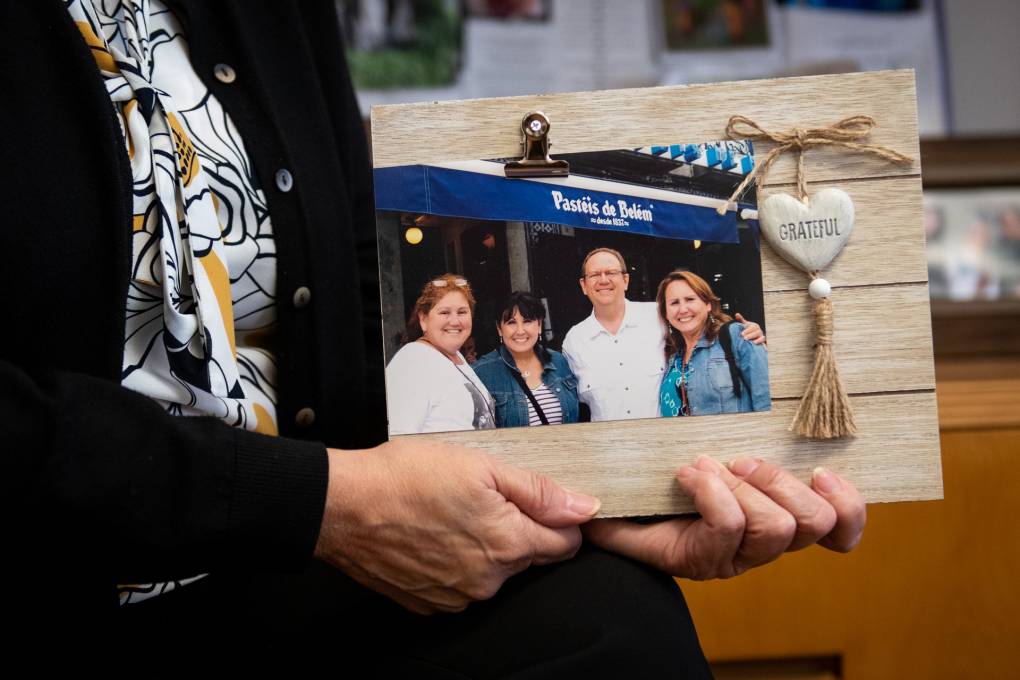
"content": "\u003cp>A new federal program offering help with funeral expenses to families who have lost loved ones to COVID-19 may not reach some of those who need it most, advocates say. They believe many eligible people, particularly in California’s hard-hit Latino communities, might be reluctant to apply out of fear their information will be shared with immigration authorities.\u003c/p>\n\u003cp>[pullquote align=\"right\" size=\"medium\" citation=\"Maritza Maldonado, executive director of Amigos de Guadalupe Center for Justice and Empowerment\"]‘The problem is that our folks who need it the most won’t access that [aid], period. People are fearful of the government.’[/pullquote]\u003c/p>\n\u003cp>Starting this week, U.S. citizens and some lawful immigrants can apply to the Federal Emergency Management Agency for reimbursements of \u003ca href=\"https://www.fema.gov/disasters/coronavirus/economic/funeral-assistance\">up to $9,000\u003c/a> for each COVID-related funeral.\u003c/p>\n\u003cp>But when applicants call an agency phone line to request the aid, they first hear a prerecorded message on eligibility requirements warning that the information they provide may be shared with the U.S. Department of Homeland Security, along with other government agencies.\u003c/p>\n\u003cp>“FEMA may share your information with these partners to make sure you receive all disaster assistance available to you, prevent duplicating benefits or to prevent future disaster losses,” states the COVID-19 Funeral Assistance helpline.\u003c/p>\n\u003cp>[ad fullwidth]\u003c/p>\n\u003cp>Potential applicants from immigrant families who get that message before they are able to speak with an agency representative will likely hang up, even if they are eligible for the funds, predicts Maritza Maldonado, who heads a nonprofit serving a largely Latino neighborhood in East San Jose. Her group, \u003ca href=\"https://www.amigoscenter.com/\">Amigos de Guadalupe Center for Justice and Empowerment\u003c/a>, has helped local families, including immigrants, pay for coronavirus funerals.\u003c/p>\n\u003cp>“I just think it was intimidating, it was also scary,” said Maldonado, after listening to the helpline. “The problem is that our folks who need it the most won’t access that [aid], period. People are fearful of the government.”\u003c/p>\n\u003cp>In California, Latinos are \u003ca href=\"https://www.kqed.org/news/11866749/californias-working-age-latinos-are-disproportionately-dying-of-covid-19\">disproportionately dying\u003c/a> from the coronavirus. Latinos account for nearly half of all COVID-19 deaths in the state, even though they represent only 39% of the population, according to California Department of Public Health \u003ca href=\"https://www.cdph.ca.gov/Programs/CID/DCDC/Pages/COVID-19/Race-Ethnicity.aspx\">figures\u003c/a>.\u003c/p>\n\u003cp>Funeral expenses can add up to more than $10,000, often prompting relatives struggling to pay those costs to seek donations through community groups or on crowd-funding social media sites.\u003c/p>\n\u003cp>The automated FEMA message also advises applicants that they must authorize the agency to obtain their personal information from financial and other institutions. For Maldonado, who \u003ca href=\"https://www.kqed.org/news/11862305/in-the-heart-of-the-pandemic-covid-19-deaths-loom-large-in-east-san-jose\">lost a sister\u003c/a> to the coronavirus last May, that raises another red flag about privacy concerns.\u003c/p>\n\u003cp>“I was born in this country … and I would never do anything like this, or tell my nieces who buried their mother to even attempt to do this,” said Maldonado, 60. “I think it violates your own freedoms.”\u003c/p>\n\u003cp>[aside label=\"related coverage\" tag=\"immigration\"]Undocumented immigrants and those who hold temporary visas, such as for work or study in the U.S., are \u003ca href=\"https://www.fema.gov/disasters/coronavirus/economic/funeral-assistance/faq\">not eligible\u003c/a> for FEMA’s funeral assistance.\u003c/p>\n\u003cp>The agency did not directly respond to a request for comment on concerns that its prerecorded message could discourage eligible applicants from requesting the funds. But Rebecca Kelly, a FEMA spokesperson, said the most important goal of the program is to help those who lost someone due to COVID-19, which she called a “very personal and emotional issue.”\u003c/p>\n\u003cp>“Using a call center guarantees that applicants already experiencing loss and grief can speak to people who are specifically trained to walk them through the application process and ensure they know the next steps to take,” Kelly said in an email.\u003c/p>\n\u003cp>FEMA’s COVID-19 Funeral Assistance program has had a rocky start for other reasons as well. When the application period began Monday morning, thousands of people flooded the helpline, causing technical issues and delaying some callers from reaching a representative, the agency said. The only way \u003ca href=\"https://www.kqed.org/coronavirusliveupdates/news/11869179/fema-opens-application-for-covid-19-funeral-cost-assistance\">to apply\u003c/a> for the aid is by phone; online requests are not accepted.\u003c/p>\n\u003cp>\u003c/p>\n\u003cp>A spokesperson for Rep. Barbara Lee, D-Oakland, who pushed for the FEMA funeral assistance benefit, did not immediately comment on concerns over the agency’s prerecorded message, but said Lee’s office is looking into how the agency is addressing technical challenges.\u003c/p>\n\n",
"blocks": [],
"excerpt": "Advocates worry that eligible potential applicants in California's hard-hit Latino communities could be scared off by a prerecorded message on FEMA's COVID-19 Funeral Assistance helpline, stating that their personal information may be shared with federal authorities.",
"status": "publish",
"parent": 0,
"modified": 1721156608,
"stats": {
"hasAudio": false,
"hasVideo": false,
"hasChartOrMap": false,
"iframeSrcs": [],
"hasGoogleForm": false,
"hasGallery": false,
"hasHearkenModule": false,
"hasPolis": false,
"paragraphCount": 18,
"wordCount": 730
},
"headData": {
"title": "FEMA's COVID-19 Funeral Assistance Phone Message Could Scare Off Applicants Who Need Help Most, Advocates Say | KQED",
"description": "Advocates worry that eligible potential applicants in California's hard-hit Latino communities could be scared off by a prerecorded message on FEMA's COVID-19 Funeral Assistance helpline, stating that their personal information may be shared with federal authorities.",
"ogTitle": "",
"ogDescription": "",
"ogImgId": "",
"twTitle": "",
"twDescription": "",
"twImgId": "",
"schema": {
"@context": "https://schema.org",
"@type": "NewsArticle",
"headline": "FEMA's COVID-19 Funeral Assistance Phone Message Could Scare Off Applicants Who Need Help Most, Advocates Say",
"datePublished": "2021-04-14T16:06:36-07:00",
"dateModified": "2024-07-16T12:03:28-07:00",
"image": "https://cdn.kqed.org/wp-content/uploads/2020/02/KQED-OG-Image@1x.png",
"isAccessibleForFree": "True",
"publisher": {
"@type": "NewsMediaOrganization",
"@id": "https://www.kqed.org/#organization",
"name": "KQED",
"logo": "https://cdn.kqed.org/wp-content/uploads/2020/02/KQED-OG-Image@1x.png",
"url": "https://www.kqed.org",
"sameAs": [
"https://www.facebook.com/KQED",
"https://twitter.com/KQED",
"https://www.instagram.com/kqed/",
"https://www.tiktok.com/@kqedofficial",
"https://www.linkedin.com/company/kqed",
"https://www.youtube.com/channel/UCeC0IOo7i1P_61zVUWbJ4nw"
]
}
}
},
"audioUrl": "https://www.kqed.org/.stream/anon/radio/RDnews/2021/04/RomeroCOVID19FuneralAssistance20210414.mp3",
"sticky": false,
"path": "/news/11869457/femas-covid-19-funeral-assistance-phone-message-could-scare-off-applicants-who-need-help-most-advocates-say",
"audioTrackLength": null,
"parsedContent": [
{
"type": "contentString",
"content": "\u003cdiv class=\"post-body\">\u003cp>\u003cp>A new federal program offering help with funeral expenses to families who have lost loved ones to COVID-19 may not reach some of those who need it most, advocates say. They believe many eligible people, particularly in California’s hard-hit Latino communities, might be reluctant to apply out of fear their information will be shared with immigration authorities.\u003c/p>\n\u003cp>\u003c/p>\u003c/div>",
"attributes": {
"named": {},
"numeric": []
}
},
{
"type": "component",
"content": "‘The problem is that our folks who need it the most won’t access that [aid], period. People are fearful of the government.’",
"name": "pullquote",
"attributes": {
"named": {
"align": "right",
"size": "medium",
"citation": "Maritza Maldonado, executive director of Amigos de Guadalupe Center for Justice and Empowerment",
"label": ""
},
"numeric": []
}
},
{
"type": "contentString",
"content": "\u003cdiv class=\"post-body\">\u003cp>\u003c/p>\n\u003cp>Starting this week, U.S. citizens and some lawful immigrants can apply to the Federal Emergency Management Agency for reimbursements of \u003ca href=\"https://www.fema.gov/disasters/coronavirus/economic/funeral-assistance\">up to $9,000\u003c/a> for each COVID-related funeral.\u003c/p>\n\u003cp>But when applicants call an agency phone line to request the aid, they first hear a prerecorded message on eligibility requirements warning that the information they provide may be shared with the U.S. Department of Homeland Security, along with other government agencies.\u003c/p>\n\u003cp>“FEMA may share your information with these partners to make sure you receive all disaster assistance available to you, prevent duplicating benefits or to prevent future disaster losses,” states the COVID-19 Funeral Assistance helpline.\u003c/p>\n\u003cp>\u003c/p>\u003c/div>",
"attributes": {
"named": {},
"numeric": []
}
},
{
"type": "component",
"content": "",
"name": "ad",
"attributes": {
"named": {
"label": "fullwidth"
},
"numeric": [
"fullwidth"
]
}
},
{
"type": "contentString",
"content": "\u003cdiv class=\"post-body\">\u003cp>\u003c/p>\n\u003cp>Potential applicants from immigrant families who get that message before they are able to speak with an agency representative will likely hang up, even if they are eligible for the funds, predicts Maritza Maldonado, who heads a nonprofit serving a largely Latino neighborhood in East San Jose. Her group, \u003ca href=\"https://www.amigoscenter.com/\">Amigos de Guadalupe Center for Justice and Empowerment\u003c/a>, has helped local families, including immigrants, pay for coronavirus funerals.\u003c/p>\n\u003cp>“I just think it was intimidating, it was also scary,” said Maldonado, after listening to the helpline. “The problem is that our folks who need it the most won’t access that [aid], period. People are fearful of the government.”\u003c/p>\n\u003cp>In California, Latinos are \u003ca href=\"https://www.kqed.org/news/11866749/californias-working-age-latinos-are-disproportionately-dying-of-covid-19\">disproportionately dying\u003c/a> from the coronavirus. Latinos account for nearly half of all COVID-19 deaths in the state, even though they represent only 39% of the population, according to California Department of Public Health \u003ca href=\"https://www.cdph.ca.gov/Programs/CID/DCDC/Pages/COVID-19/Race-Ethnicity.aspx\">figures\u003c/a>.\u003c/p>\n\u003cp>Funeral expenses can add up to more than $10,000, often prompting relatives struggling to pay those costs to seek donations through community groups or on crowd-funding social media sites.\u003c/p>\n\u003cp>The automated FEMA message also advises applicants that they must authorize the agency to obtain their personal information from financial and other institutions. For Maldonado, who \u003ca href=\"https://www.kqed.org/news/11862305/in-the-heart-of-the-pandemic-covid-19-deaths-loom-large-in-east-san-jose\">lost a sister\u003c/a> to the coronavirus last May, that raises another red flag about privacy concerns.\u003c/p>\n\u003cp>“I was born in this country … and I would never do anything like this, or tell my nieces who buried their mother to even attempt to do this,” said Maldonado, 60. “I think it violates your own freedoms.”\u003c/p>\n\u003cp>\u003c/p>\u003c/div>",
"attributes": {
"named": {},
"numeric": []
}
},
{
"type": "component",
"content": "",
"name": "aside",
"attributes": {
"named": {
"label": "related coverage ",
"tag": "immigration"
},
"numeric": []
}
},
{
"type": "contentString",
"content": "\u003cdiv class=\"post-body\">\u003cp>Undocumented immigrants and those who hold temporary visas, such as for work or study in the U.S., are \u003ca href=\"https://www.fema.gov/disasters/coronavirus/economic/funeral-assistance/faq\">not eligible\u003c/a> for FEMA’s funeral assistance.\u003c/p>\n\u003cp>The agency did not directly respond to a request for comment on concerns that its prerecorded message could discourage eligible applicants from requesting the funds. But Rebecca Kelly, a FEMA spokesperson, said the most important goal of the program is to help those who lost someone due to COVID-19, which she called a “very personal and emotional issue.”\u003c/p>\n\u003cp>“Using a call center guarantees that applicants already experiencing loss and grief can speak to people who are specifically trained to walk them through the application process and ensure they know the next steps to take,” Kelly said in an email.\u003c/p>\n\u003cp>FEMA’s COVID-19 Funeral Assistance program has had a rocky start for other reasons as well. When the application period began Monday morning, thousands of people flooded the helpline, causing technical issues and delaying some callers from reaching a representative, the agency said. The only way \u003ca href=\"https://www.kqed.org/coronavirusliveupdates/news/11869179/fema-opens-application-for-covid-19-funeral-cost-assistance\">to apply\u003c/a> for the aid is by phone; online requests are not accepted.\u003c/p>\n\u003cp>\u003c/p>\n\u003cp>A spokesperson for Rep. Barbara Lee, D-Oakland, who pushed for the FEMA funeral assistance benefit, did not immediately comment on concerns over the agency’s prerecorded message, but said Lee’s office is looking into how the agency is addressing technical challenges.\u003c/p>\n\n\u003c/div>\u003c/p>",
"attributes": {
"named": {},
"numeric": []
}
}
],
"link": "/news/11869457/femas-covid-19-funeral-assistance-phone-message-could-scare-off-applicants-who-need-help-most-advocates-say",
"authors": [
"8659"
],
"categories": [
"news_1169",
"news_8"
],
"tags": [
"news_27504",
"news_21917",
"news_20202"
],
"featImg": "news_11869460",
"label": "news"
},
"news_11869046": {
"type": "posts",
"id": "news_11869046",
"meta": {
"index": "posts_1716263798",
"site": "news",
"id": "11869046",
"score": null,
"sort": [
1618405258000
]
},
"parent": 0,
"labelTerm": {
"site": "news"
},
"blocks": [],
"publishDate": 1618405258,
"format": "standard",
"disqusTitle": "Advocates Work to Combat Vaccine Distrust in ICE Detention Facilities",
"title": "Advocates Work to Combat Vaccine Distrust in ICE Detention Facilities",
"headTitle": "KQED News",
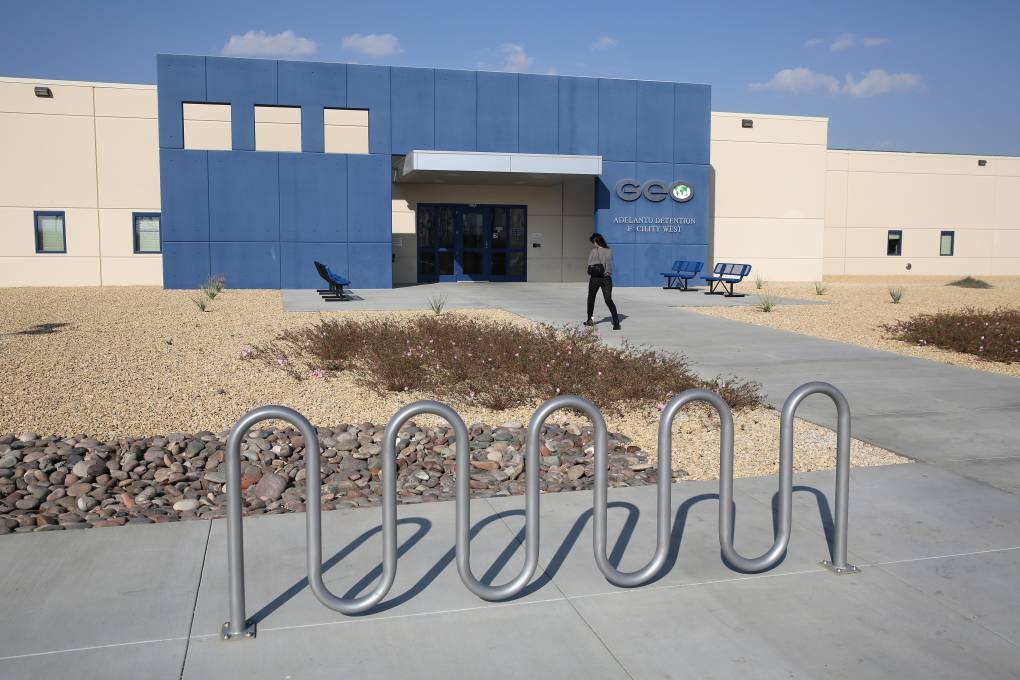
"content": "\u003cp>Immigrant advocates are pushing state officials to increase outreach at facilities where U.S. Immigration and Customs Enforcement detainees are being held, to combat distrust over the COVID-19 vaccine.\u003c/p>\n\u003cp>\"Immigrants inside were saying, 'Hey, they're offering us a vaccine, but we have no information. We have no idea what it's about, if there are any side effects,' \" said Edwin Carmona-Cruz, director of community engagement at the California Collaborative for Immigrant Justice, a coalition of pro-bono legal service providers that offer support to immigrants in detention facilities.\u003c/p>\n\u003cp>While federal, state and local officials have engaged in a public outreach campaign for months to ensure that residents are aware of the facts about the vaccine, advocates say similar efforts have not been made within detention facilities.\u003c/p>\n\u003cp>[pullquote align=\"right\" size=\"medium\" citation=\"Joaquin Arambula, state Assemblymember, D-Fresno\"]'Individuals in detention harbor serious fears and mistrust towards detention operators, and as a result may not feel safe accepting vaccines from these operators.'[/pullquote]And even when information is provided by ICE — or the subcontractors that run their facilities — there is often widespread distrust. There have been \u003ca href=\"https://news.usc.edu/180906/covid-19-suicide-and-substandard-medical-care-driving-high-rate-of-death-among-ice-detainees/\">numerous reports\u003c/a> of the substandard health care provided at ICE facilities, and advocates say detainees may be skeptical of what immigration officials are telling them.\u003c/p>\n\u003cp>\"Individuals in detention harbor serious fears and mistrust toward detention operators, and as a result may not feel safe accepting vaccines from these operators,\" said state Assemblymember Joaquin Arambula, D-Fresno, at a press conference on Monday.\u003c/p>\n\u003cp>\"Given these serious challenges around trust towards detention operators, it is clear that the public health officials and the community can play a vital role with respect to how vaccinations and information are presented and shared with individuals inside these facilities.\"\u003c/p>\n\u003cp>Arambula has introduced \u003ca href=\"https://leginfo.legislature.ca.gov/faces/billNavClient.xhtml?bill_id=202120220AB263\">Assembly Bill 263\u003c/a>, which would \"require a private detention facility operator to comply with, and adhere to, all local and state public health orders and occupational safety and health regulations.\"\u003c/p>\n\u003cp>\"There is no trust — and there's mistrust — in both ICE and for-profit prison operators like GEO Group and Core Civic,\" Carmona-Cruz said. \"How are they going to believe that the information that they're giving to them is true when ... the medical care and medical negligence that happens in these facilities runs rampant.\"\u003c/p>\n\u003cp>[aside postID=\"news_11856995\" hero=\"https://ww2.kqed.org/app/uploads/sites/10/2021/01/Herrera-1020x771.jpg\"]After hearing these concerns from detainees, Carmona-Cruz and others took on another approach. For three weeks, they've operated a hotline — staffed by health care professionals — that people in ICE detention could call to get any of their questions answered.\u003c/p>\n\u003cp>So far, the program has only been in place at a few facilities: the Yuba County Jail, Golden State Annex and the Mesa Verde ICE Processing Facility. But advocates say it's the state's responsibility to expand these efforts.\u003c/p>\n\u003cp>Dr. Daniel Turner-Lloveras, a physician at Harbor-UCLA Medical Center, is one of the health care providers who's been staffing these calls. He says a systematic approach is needed to address \"medical mistrust\" in detention facilities, since any infection hot spots will \"contribute to the spread of COVID-19.\"\u003c/p>\n\u003cp>\"We must try our best to counteract this misinformation by educating our patients in a way that they're going to understand, in a cultural and linguistically appropriate, patient-centered fashion,\" Turner-Lloveras said.\u003c/p>\n\u003cp>In a statement, a spokesperson for CoreCivic — which runs the Otay Mesa Detention Center in San Diego — said it has \"rigorously followed the guidance of local, state and federal health authorities, as well as our government partners.\"\u003c/p>\n\u003cp>The Management & Training Corporation, which operates the Imperial Regional Detention Facility in Calexico, said it is providing the vaccine to \"all detainees who have expressed their desire to be vaccinated,\" and is providing informational sessions and documents about the vaccine in English, Spanish and other languages.\u003c/p>\n\u003cp>[pullquote align=\"right\" size=\"medium\" citation=\"Jackie Gonzalez, policy director of Immigrant Defense Advocates\"]'Report after report came out that the federal government and the state government essentially played a game of hot potato.'[/pullquote]In a statement, ICE said it is \"firmly committed to the health and welfare of all those in its custody.\"\u003c/p>\n\u003cp>People in immigration detention facilities became eligible for the vaccine back in March. Advocates said there were \u003ca href=\"https://www.kqed.org/news/11857822/advocates-fear-immigrant-detainees-could-be-left-out-of-vaccination-plans\">months of back and forth\u003c/a> over who was responsible for providing the vaccine — the state or the federal government.\u003c/p>\n\u003cp>\"Report after report came out that the federal government and the state government essentially played a game of hot potato,\" said Jackie Gonzalez, policy director of Immigrant Defense Advocates.\u003c/p>\n\u003cp>This caused widespread concerns among advocates that detainees would be left out.\u003c/p>\n\u003cp>[aside tag=\"mesa-verde\" label=\"more coverage\"]Eventually, on March 11, \u003ca href=\"https://www.kqed.org/news/11864820/ice-detainees-in-california-now-eligible-for-covid-19-vaccine\">state officials opted to include the immigrant detention centers\u003c/a> in their March 15 rollout of the vaccine — since they are considered to be in high-risk congregate care facilities. This meant that the state would provide vaccine doses for detainees to county health departments, who would in turn provide them to detention centers to administer to the people held there.\u003c/p>\n\u003cp>Overall, Carmona-Cruz said, California should recognize that vaccinating people in detention will ultimately help the state achieve its goals.\u003c/p>\n\u003cp>\"Immigrants in detention are also our neighbors, our friends, our family members, [they're] residents of the state. And they're also contributing to the success of how the state does. So we definitely need to consider and characterize it that way,\" he said.\u003c/p>\n\u003cp>As of April 12, 777 people in ICE detention in California have contracted the coronavirus since the pandemic started.\u003cbr>\n[ad fullwidth]\u003c/p>\n\u003cp>\u003c/p>\n",
"disqusIdentifier": "11869046 https://ww2.kqed.org/news/?p=11869046",
"disqusUrl": "https://ww2.kqed.org/news/2021/04/14/advocates-work-to-combat-vaccine-distrust-in-ice-detention-facilities/",
"stats": {
"hasVideo": false,
"hasChartOrMap": false,
"hasAudio": false,
"hasPolis": false,
"wordCount": 951,
"hasGoogleForm": false,
"hasGallery": false,
"hasHearkenModule": false,
"iframeSrcs": [],
"paragraphCount": 23
},
"modified": 1618422200,
"excerpt": "California currently provides COVID-19 vaccines to immigrants detained in ICE detention centers. Advocates argue that authorities are not doing enough to provide adequate information about the vaccine to this vulnerable group.",
"headData": {
"twImgId": "",
"twTitle": "",
"ogTitle": "",
"ogImgId": "",
"twDescription": "",
"description": "California currently provides COVID-19 vaccines to immigrants detained in ICE detention centers. Advocates argue that authorities are not doing enough to provide adequate information about the vaccine to this vulnerable group.",
"title": "Advocates Work to Combat Vaccine Distrust in ICE Detention Facilities | KQED",
"ogDescription": "",
"schema": {
"@context": "https://schema.org",
"@type": "NewsArticle",
"headline": "Advocates Work to Combat Vaccine Distrust in ICE Detention Facilities",
"datePublished": "2021-04-14T06:00:58-07:00",
"dateModified": "2021-04-14T10:43:20-07:00",
"image": "https://cdn.kqed.org/wp-content/uploads/2020/02/KQED-OG-Image@1x.png",
"isAccessibleForFree": "True",
"publisher": {
"@type": "NewsMediaOrganization",
"@id": "https://www.kqed.org/#organization",
"name": "KQED",
"logo": "https://cdn.kqed.org/wp-content/uploads/2020/02/KQED-OG-Image@1x.png",
"url": "https://www.kqed.org",
"sameAs": [
"https://www.facebook.com/KQED",
"https://twitter.com/KQED",
"https://www.instagram.com/kqed/",
"https://www.tiktok.com/@kqedofficial",
"https://www.linkedin.com/company/kqed",
"https://www.youtube.com/channel/UCeC0IOo7i1P_61zVUWbJ4nw"
]
}
}
},
"guestAuthors": [],
"slug": "advocates-work-to-combat-vaccine-distrust-in-ice-detention-facilities",
"status": "publish",
"path": "/news/11869046/advocates-work-to-combat-vaccine-distrust-in-ice-detention-facilities",
"audioTrackLength": null,
"parsedContent": [
{
"type": "contentString",
"content": "\u003cdiv class=\"post-body\">\u003cp>\u003cp>Immigrant advocates are pushing state officials to increase outreach at facilities where U.S. Immigration and Customs Enforcement detainees are being held, to combat distrust over the COVID-19 vaccine.\u003c/p>\n\u003cp>\"Immigrants inside were saying, 'Hey, they're offering us a vaccine, but we have no information. We have no idea what it's about, if there are any side effects,' \" said Edwin Carmona-Cruz, director of community engagement at the California Collaborative for Immigrant Justice, a coalition of pro-bono legal service providers that offer support to immigrants in detention facilities.\u003c/p>\n\u003cp>While federal, state and local officials have engaged in a public outreach campaign for months to ensure that residents are aware of the facts about the vaccine, advocates say similar efforts have not been made within detention facilities.\u003c/p>\n\u003cp>\u003c/p>\u003c/div>",
"attributes": {
"named": {},
"numeric": []
}
},
{
"type": "component",
"content": "'Individuals in detention harbor serious fears and mistrust towards detention operators, and as a result may not feel safe accepting vaccines from these operators.'",
"name": "pullquote",
"attributes": {
"named": {
"align": "right",
"size": "medium",
"citation": "Joaquin Arambula, state Assemblymember, D-Fresno",
"label": ""
},
"numeric": []
}
},
{
"type": "contentString",
"content": "\u003cdiv class=\"post-body\">\u003cp>And even when information is provided by ICE — or the subcontractors that run their facilities — there is often widespread distrust. There have been \u003ca href=\"https://news.usc.edu/180906/covid-19-suicide-and-substandard-medical-care-driving-high-rate-of-death-among-ice-detainees/\">numerous reports\u003c/a> of the substandard health care provided at ICE facilities, and advocates say detainees may be skeptical of what immigration officials are telling them.\u003c/p>\n\u003cp>\"Individuals in detention harbor serious fears and mistrust toward detention operators, and as a result may not feel safe accepting vaccines from these operators,\" said state Assemblymember Joaquin Arambula, D-Fresno, at a press conference on Monday.\u003c/p>\n\u003cp>\"Given these serious challenges around trust towards detention operators, it is clear that the public health officials and the community can play a vital role with respect to how vaccinations and information are presented and shared with individuals inside these facilities.\"\u003c/p>\n\u003cp>Arambula has introduced \u003ca href=\"https://leginfo.legislature.ca.gov/faces/billNavClient.xhtml?bill_id=202120220AB263\">Assembly Bill 263\u003c/a>, which would \"require a private detention facility operator to comply with, and adhere to, all local and state public health orders and occupational safety and health regulations.\"\u003c/p>\n\u003cp>\"There is no trust — and there's mistrust — in both ICE and for-profit prison operators like GEO Group and Core Civic,\" Carmona-Cruz said. \"How are they going to believe that the information that they're giving to them is true when ... the medical care and medical negligence that happens in these facilities runs rampant.\"\u003c/p>\n\u003cp>\u003c/p>\u003c/div>",
"attributes": {
"named": {},
"numeric": []
}
},
{
"type": "component",
"content": "",
"name": "aside",
"attributes": {
"named": {
"postid": "news_11856995",
"hero": "https://ww2.kqed.org/app/uploads/sites/10/2021/01/Herrera-1020x771.jpg",
"label": ""
},
"numeric": []
}
},
{
"type": "contentString",
"content": "\u003cdiv class=\"post-body\">\u003cp>After hearing these concerns from detainees, Carmona-Cruz and others took on another approach. For three weeks, they've operated a hotline — staffed by health care professionals — that people in ICE detention could call to get any of their questions answered.\u003c/p>\n\u003cp>So far, the program has only been in place at a few facilities: the Yuba County Jail, Golden State Annex and the Mesa Verde ICE Processing Facility. But advocates say it's the state's responsibility to expand these efforts.\u003c/p>\n\u003cp>Dr. Daniel Turner-Lloveras, a physician at Harbor-UCLA Medical Center, is one of the health care providers who's been staffing these calls. He says a systematic approach is needed to address \"medical mistrust\" in detention facilities, since any infection hot spots will \"contribute to the spread of COVID-19.\"\u003c/p>\n\u003cp>\"We must try our best to counteract this misinformation by educating our patients in a way that they're going to understand, in a cultural and linguistically appropriate, patient-centered fashion,\" Turner-Lloveras said.\u003c/p>\n\u003cp>In a statement, a spokesperson for CoreCivic — which runs the Otay Mesa Detention Center in San Diego — said it has \"rigorously followed the guidance of local, state and federal health authorities, as well as our government partners.\"\u003c/p>\n\u003cp>The Management & Training Corporation, which operates the Imperial Regional Detention Facility in Calexico, said it is providing the vaccine to \"all detainees who have expressed their desire to be vaccinated,\" and is providing informational sessions and documents about the vaccine in English, Spanish and other languages.\u003c/p>\n\u003cp>\u003c/p>\u003c/div>",
"attributes": {
"named": {},
"numeric": []
}
},
{
"type": "component",
"content": "'Report after report came out that the federal government and the state government essentially played a game of hot potato.'",
"name": "pullquote",
"attributes": {
"named": {
"align": "right",
"size": "medium",
"citation": "Jackie Gonzalez, policy director of Immigrant Defense Advocates",
"label": ""
},
"numeric": []
}
},
{
"type": "contentString",
"content": "\u003cdiv class=\"post-body\">\u003cp>In a statement, ICE said it is \"firmly committed to the health and welfare of all those in its custody.\"\u003c/p>\n\u003cp>People in immigration detention facilities became eligible for the vaccine back in March. Advocates said there were \u003ca href=\"https://www.kqed.org/news/11857822/advocates-fear-immigrant-detainees-could-be-left-out-of-vaccination-plans\">months of back and forth\u003c/a> over who was responsible for providing the vaccine — the state or the federal government.\u003c/p>\n\u003cp>\"Report after report came out that the federal government and the state government essentially played a game of hot potato,\" said Jackie Gonzalez, policy director of Immigrant Defense Advocates.\u003c/p>\n\u003cp>This caused widespread concerns among advocates that detainees would be left out.\u003c/p>\n\u003cp>\u003c/p>\u003c/div>",
"attributes": {
"named": {},
"numeric": []
}
},
{
"type": "component",
"content": "",
"name": "aside",
"attributes": {
"named": {
"tag": "mesa-verde",
"label": "more coverage "
},
"numeric": []
}
},
{
"type": "contentString",
"content": "\u003cdiv class=\"post-body\">\u003cp>Eventually, on March 11, \u003ca href=\"https://www.kqed.org/news/11864820/ice-detainees-in-california-now-eligible-for-covid-19-vaccine\">state officials opted to include the immigrant detention centers\u003c/a> in their March 15 rollout of the vaccine — since they are considered to be in high-risk congregate care facilities. This meant that the state would provide vaccine doses for detainees to county health departments, who would in turn provide them to detention centers to administer to the people held there.\u003c/p>\n\u003cp>Overall, Carmona-Cruz said, California should recognize that vaccinating people in detention will ultimately help the state achieve its goals.\u003c/p>\n\u003cp>\"Immigrants in detention are also our neighbors, our friends, our family members, [they're] residents of the state. And they're also contributing to the success of how the state does. So we definitely need to consider and characterize it that way,\" he said.\u003c/p>\n\u003cp>As of April 12, 777 people in ICE detention in California have contracted the coronavirus since the pandemic started.\u003cbr>\n\u003c/p>\u003c/div>",
"attributes": {
"named": {},
"numeric": []
}
},
{
"type": "component",
"content": "",
"name": "ad",
"attributes": {
"named": {
"label": "fullwidth"
},
"numeric": [
"fullwidth"
]
}
},
{
"type": "contentString",
"content": "\u003cdiv class=\"post-body\">\u003cp>\u003c/p>\n\u003cp>\u003c/p>\n\u003c/div>\u003c/p>",
"attributes": {
"named": {},
"numeric": []
}
}
],
"link": "/news/11869046/advocates-work-to-combat-vaccine-distrust-in-ice-detention-facilities",
"authors": [
"11526"
],
"categories": [
"news_457",
"news_1169",
"news_8"
],
"tags": [
"news_27240",
"news_21027",
"news_6884",
"news_17708",
"news_20202",
"news_27797",
"news_20529"
],
"featImg": "news_11869381",
"label": "news"
},
"news_11844742": {
"type": "posts",
"id": "news_11844742",
"meta": {
"index": "posts_1716263798",
"site": "news",
"id": "11844742",
"score": null,
"sort": [
1618011040000
]
},
"guestAuthors": [],
"slug": "a-butterfly-with-my-wings-cut-off-a-transgender-asylum-seekers-quest-to-come-to-california",
"title": "‘A Butterfly With My Wings Cut Off’: A Transgender Asylum Seeker’s Quest to Come to California",
"publishDate": 1618011040,
"format": "audio",
"headTitle": "‘A Butterfly With My Wings Cut Off’: A Transgender Asylum Seeker’s Quest to Come to California | KQED",
"labelTerm": {
"term": 26731,
"site": "news"
},
"content": "\u003cp>\u003ca href=\"https://www.kqed.org/news/11852044/una-mariposa-con-las-alas-rotas-la-busqueda-de-una-solicitante-de-asilo-transgenera-para-llegar-a-california\">\u003cem>Leer en español\u003c/em>\u003c/a>\u003c/p>\n\u003cp>\u003cem>Since \u003ca href=\"https://podcasts.apple.com/us/podcast/the-california-report-magazine/id1314750545?mt=2\">The California Report Magazine\u003c/a> first aired this documentary in December 2020, dozens of listeners reached out to help Luna Guzmán with messages of encouragement and support. In May, 2021, Luna was \u003ca href=\"https://www.kqed.org/news/11876583/living-my-dream-after-years-transgender-asylum-seeker-finally-makes-it-to-the-us\">finally able to make it to the US\u003c/a>, where she is now waiting for another chance to go before an immigration judge and ask for protection.\u003c/em>\u003c/p>\n\u003cp>[dropcap]W[/dropcap]hen she turned 15, like so many girls in her town in Guatemala, Luna Guzmán celebrated with a quinceañera.\u003c/p>\n\u003cp>“My friend lent me the dress because she saw the way I used to cry every time we passed the dress shop on the way to school, with all those beautiful dresses,” she said in Spanish. “I would just press my hand up against the glass and stare at them for a long time.”\u003c/p>\n\u003cp>The dress she borrowed was turquoise, with a long skirt. She took off her tennies, put on heels and a tiara, and danced with her friends.\u003c/p>\n\u003cp>There was a cake, bottles of champagne and chambelanes, boys who dressed up in suits to escort her into the secret party at a friend’s house. No one was there from Luna’s family, because they couldn’t fathom her as a transgender girl.\u003c/p>\n\u003cp>[pullquote size=\"medium\" align=\"right\" citation=\"Luna Guzmán\"]‘The teacher would always ask my mom, ‘Listen, can’t you change your son? Can you take him to a psychologist? A psychiatrist? It’s making my school look bad.’[/pullquote]Moments from that birthday party still linger in Luna’s memory as a time when she truly felt delight and freedom. It was something to be savored again and again as the next decade began to unfold, even as she put back on her soccer jerseys and tried to look like the boy she knew she wasn’t inside. Even as she dealt with brutal violence and decided to take a tremendous risk and leave everything behind in Guatemala to try to find a life in California. The memories were one place in the world where she could imagine being safe, being herself.\u003c/p>\n\u003cp>We first met Luna two years ago at a migrant shelter in Tijuana and have stayed in touch with her as she’s journeyed across the border, spent months in U.S. Immigration and Customs Enforcement detention, and sought shelter in Mexico. We’ve spent weeks frantically trying to reach her in an intensive care unit, after she left a voice message that she had been diagnosed with a severe case of COVID-19. “Thank you for telling my story,” she rasped through labored breaths, her voice barely recognizable. “If I die, I hope that one day people will remember something about me.”\u003c/p>\n\u003cp>https://www.youtube.com/watch?v=8-aYksXNNUA\u003c/p>\n\u003ch3>\u003cstrong>‘Can’t You Change Your Son?’\u003c/strong>\u003c/h3>\n\u003cp>Luna grew up on the outskirts of a small city in Central Guatemala, in a house cobbled together from sticks and newspaper. Her mom sold french fries from a cart, and Luna helped care for her three siblings, including a brother with developmental disabilities. Her dad wasn’t part of her life.\u003c/p>\n\u003cp>She said she was a voracious reader, spending hours in the town library. At school she would play dress up with the other girls. Luna would transform into a butterfly, her wings made from pieces of cardboard she scavenged on the street.\u003c/p>\n\u003cp>“The teacher would always ask my mom, ‘Listen, can’t you change your son? Can you take him to a psychologist? A psychiatrist? It’s making my school look bad,’ ” she recalled.\u003c/p>\n\u003cp>[ad fullwidth]\u003c/p>\n\u003cp>Luna said her mom defended her at first. When she came out as gay at age 14, her mom gave a toast with some agua de jamaica. But as Luna got older, she said her mom disapproved of the dresses and the heels. Her son, dressing like a woman? For her, that went against nature. So Luna put back on the soccer jerseys and shorts.\u003c/p>\n\u003cp>“The hurtful things she said to me, I understand them better now,” said Luna. “She just wanted to protect me.”\u003c/p>\n\u003cfigure id=\"attachment_11849344\" class=\"wp-caption alignnone\" style=\"max-width: 800px\">\u003cimg loading=\"lazy\" decoding=\"async\" class=\"size-medium wp-image-11849344\" src=\"https://ww2.kqed.org/app/uploads/sites/10/2020/12/RS45761__MG_2008_crop-qut_v2-800x613.jpg\" alt=\"Luna Guzmán has spent most of her life fighting to be accepted as a transgender woman. She said she has often experienced brutal violence when she expresses her true gender identity as a woman.\" width=\"800\" height=\"613\" srcset=\"https://cdn.kqed.org/wp-content/uploads/sites/10/2020/12/RS45761__MG_2008_crop-qut_v2-800x613.jpg 800w, https://cdn.kqed.org/wp-content/uploads/sites/10/2020/12/RS45761__MG_2008_crop-qut_v2-1020x781.jpg 1020w, https://cdn.kqed.org/wp-content/uploads/sites/10/2020/12/RS45761__MG_2008_crop-qut_v2-160x123.jpg 160w, https://cdn.kqed.org/wp-content/uploads/sites/10/2020/12/RS45761__MG_2008_crop-qut_v2-1536x1177.jpg 1536w, https://cdn.kqed.org/wp-content/uploads/sites/10/2020/12/RS45761__MG_2008_crop-qut_v2.jpg 1856w\" sizes=\"auto, (max-width: 800px) 100vw, 800px\">\u003cfigcaption class=\"wp-caption-text\">Luna Guzmán has spent most of her life fighting to be accepted as a transgender woman. She said she has often experienced brutal violence when she expresses her true gender identity as a woman. \u003ccite>(Erin Siegal McIntyre)\u003c/cite>\u003c/figcaption>\u003c/figure>\n\u003cp>\u003cstrong>October 2007\u003c/strong>\u003c/p>\n\u003cp>When Luna was 13, just on the cusp of adolescence, she said she was raped by an older man who was a neighbor.\u003c/p>\n\u003cp>“I would ask, why me? Tell me — if anyone is up there — explain it to me,” she sighed. “I still haven’t gotten an answer to this day.”\u003c/p>\n\u003cp>Soon after, Luna said she was trafficked into prostitution. Some powerful men in her town forced her into a trafficking ring. The clients? Older men who would pay hundreds of U.S. dollars to sleep with young boys and transgender girls.\u003c/p>\n\u003cp>\u003ca href=\"https://www.reuters.com/article/us-guatemala-humantrafficking/guatemala-closes-its-eyes-to-rampant-child-sex-trafficking-u-n-idUSKCN0YU29V\">Sex trafficking is rampant in Guatemala\u003c/a>, and the United Nations has denounced the shocking number of children forced into trafficking rings because of poverty.\u003c/p>\n\u003cp>But there was no one to help. The traffickers, Luna said, had connections with the police and top public officials in town. “If anyone tried to denounce them or file a complaint, they’d throw it in the trash,” she said.\u003c/p>\n\u003cp>Many of the kids trafficked in the ring, she said, were infected with sexually transmitted diseases. When she was 16, Luna said she found out she was HIV-positive. Harassment from people in town, who had already thrown rocks at her and told her to stay away from their children, intensified. Once, she remembered, some people beat her up so badly they broke her collarbone, telling her they wanted her to behave like a “real man.”\u003c/p>\n\u003cp>“My town is so small, there was no information about sexual orientation or HIV,” Luna said. “No information about anything. It’s so close-minded.”\u003c/p>\n\u003cp>When she turned 19, she said, she was still occasionally forced into sex work. But as she reached adulthood, she started to take some small steps to wrest back control of her life. She signed up for a training course to become a volunteer firefighter.\u003c/p>\n\u003cfigure id=\"attachment_11849342\" class=\"wp-caption alignnone\" style=\"max-width: 800px\">\u003cimg loading=\"lazy\" decoding=\"async\" class=\"size-medium wp-image-11849342\" src=\"https://ww2.kqed.org/app/uploads/sites/10/2020/12/IMG_0768_v3-800x450.jpg\" alt=\"Luna Guzmán worked as a fire fighter in her home town. She said she left the department after experiencing harassment and homophobic threats.\" width=\"800\" height=\"450\" srcset=\"https://cdn.kqed.org/wp-content/uploads/sites/10/2020/12/IMG_0768_v3-800x450.jpg 800w, https://cdn.kqed.org/wp-content/uploads/sites/10/2020/12/IMG_0768_v3-1020x574.jpg 1020w, https://cdn.kqed.org/wp-content/uploads/sites/10/2020/12/IMG_0768_v3-160x90.jpg 160w, https://cdn.kqed.org/wp-content/uploads/sites/10/2020/12/IMG_0768_v3.jpg 1500w\" sizes=\"auto, (max-width: 800px) 100vw, 800px\">\u003cfigcaption class=\"wp-caption-text\">Luna Guzmán worked as a firefighter in her hometown. She said she left the department after experiencing harassment and homophobic threats. \u003ccite>(Cortesía de Luna Guzmán )\u003c/cite>\u003c/figcaption>\u003c/figure>\n\u003cp>\u003cstrong>November 2014\u003c/strong>\u003c/p>\n\u003cp>Luna graduated from the firefighting program. She felt powerful rescuing people from car accidents and hosing down burning buildings.\u003c/p>\n\u003cp>But then, she said, the other firefighters found out she was HIV-positive, and began taunting her with homophobic slurs.\u003c/p>\n\u003cp>She dreamed about a way out and set her sights on California. She’d seen videos of San Francisco’s massive pride parade. She knew in California she couldn’t be fired or evicted for being transgender, would have the right to get an ID in the name she wants to use, and use the restroom that matches her gender identity. She also hoped it was a place where she could earn enough money to pay for her transition.\u003c/p>\n\u003cp>\u003cstrong>January 2017 \u003c/strong>\u003c/p>\n\u003cp>Luna left her family, the fire department, the neighbors, the pimps. She was 22 years old.\u003c/p>\n\u003cp>She leaped onto that famous train migrants call \u003ca href=\"https://www.npr.org/sections/parallels/2014/06/05/318905712/riding-the-beast-across-mexico-to-the-u-s-border\">La Bestia\u003c/a>, or “the beast,” which travels north from Mexico’s southern border. She didn’t wear dresses on the journey. As she’s done for most of her life, she kept her hair short and wore men’s T-shirts and shorts, for safety.\u003c/p>\n\u003cfigure id=\"attachment_11849343\" class=\"wp-caption alignnone\" style=\"max-width: 694px\">\u003cimg loading=\"lazy\" decoding=\"async\" class=\"size-full wp-image-11849343\" src=\"https://ww2.kqed.org/app/uploads/sites/10/2020/12/LUNA-TRAIN-2019-03-30-12-57-30_cropped_v2.jpg\" alt=\"Luna Guzmán rides a train heading from Guatemala through Mexico in 2017. She traveled with several other LGBTQ migrants and said that at one point they were attacked by men armed with machetes. \" width=\"694\" height=\"390\" srcset=\"https://cdn.kqed.org/wp-content/uploads/sites/10/2020/12/LUNA-TRAIN-2019-03-30-12-57-30_cropped_v2.jpg 694w, https://cdn.kqed.org/wp-content/uploads/sites/10/2020/12/LUNA-TRAIN-2019-03-30-12-57-30_cropped_v2-160x90.jpg 160w\" sizes=\"auto, (max-width: 694px) 100vw, 694px\">\u003cfigcaption class=\"wp-caption-text\">Luna Guzmán rides a train heading from Guatemala through Mexico in 2017. She traveled with several other LGBTQ migrants and said that at one point they were attacked by men armed with machetes. \u003ccite>(Cortesía de Luna Guzmán)\u003c/cite>\u003c/figcaption>\u003c/figure>\n\u003ch3>\u003cstrong>\u003cstrong>Crossing the Border But Not Finding Safety \u003c/strong> \u003c/strong>\u003c/h3>\n\u003cp>\u003cstrong>August 2017\u003c/strong>\u003c/p>\n\u003cp>When Luna reached the U.S.-Mexico border crossing at Otay Mesa near San Diego, she told an officer she was running away from homophobic violence in Guatemala and was requesting asylum. But her hopes that she would feel protected as soon as she crossed into the U.S. vanished.\u003c/p>\n\u003cp>“They took me into some offices. About 30 minutes later, they arrested me. Put chains on my hands, my feet, my waist,” she recalled. “They treat you like a criminal, just for asking for help. It feels horrible, like you’re nothing.”\u003c/p>\n\u003cp>Border officials don’t decide on asylum requests — that happens later — but they are responsible for the transfer of detainees to ICE custody, where they’ll eventually speak with an asylum officer. However, border officials didn’t check the box on Luna’s intake form indicating that she identified as LGBT, nor the box indicating that she could be at increased risk of sexual abuse in detention.\u003c/p>\n\u003cfigure id=\"attachment_11846822\" class=\"wp-caption alignnone\" style=\"max-width: 800px\">\u003cimg loading=\"lazy\" decoding=\"async\" class=\"size-medium wp-image-11846822\" src=\"https://ww2.kqed.org/app/uploads/sites/10/2020/11/Detainee-Assess-Form-screen-shot-800x490.png\" alt=\"U.S. Customs and Border Patrol “Detainee Assessment” form dated Aug. 9, 2017. Although Luna Guzmán clearly told officials she feared homophobic violence, they did not check the box noting that she identified as LGBTQ. \" width=\"800\" height=\"490\" srcset=\"https://cdn.kqed.org/wp-content/uploads/sites/10/2020/11/Detainee-Assess-Form-screen-shot-800x490.png 800w, https://cdn.kqed.org/wp-content/uploads/sites/10/2020/11/Detainee-Assess-Form-screen-shot-1020x624.png 1020w, https://cdn.kqed.org/wp-content/uploads/sites/10/2020/11/Detainee-Assess-Form-screen-shot-160x98.png 160w, https://cdn.kqed.org/wp-content/uploads/sites/10/2020/11/Detainee-Assess-Form-screen-shot.png 1428w\" sizes=\"auto, (max-width: 800px) 100vw, 800px\">\u003cfigcaption class=\"wp-caption-text\">U.S. Customs and Border Protection ‘Detainee Assessment’ form dated Aug. 9, 2017. Although Luna Guzmán clearly told officials she feared homophobic violence, they did not check the box noting that she identified as LGBTQ. \u003ccite>(Solicitud de información bajo la Ley por la Libertad de la Información)\u003c/cite>\u003c/figcaption>\u003c/figure>\n\u003cp>That’s where things started to go wrong for her. ICE eventually assigned Luna a bed in a crowded men’s unit at the Otay Mesa Detention Center.\u003c/p>\n\u003cp>Ten days after she arrived at the border asking for help, an asylum officer with U.S. Citizenship and Immigration Services conducted a “credible fear” interview. That’s when Luna told her she also dressed as a woman at times. The officer found her story credible.\u003c/p>\n\u003cp>A few weeks later, a transgender Latina organization based near Los Angeles called \u003ca href=\"https://www.facebook.com/LasCrisantemas/?ref=page_internal\">Las Crisantemas\u003c/a> sent a letter of support to the immigration court identifying Luna as a trans woman.\u003c/p>\n\u003cp>But Luna was never moved to a special detention unit for transgender women, despite the fact that in 2015 ICE had agreed to \u003ca href=\"https://www.ice.gov/news/releases/ice-issues-new-guidance-care-transgender-individuals-custody\">improve standards for transgender detainees\u003c/a>, including access to separate detention units away from the general population.\u003c/p>\n\u003cp>[pullquote size=\"medium\" align=\"right\" citation=\"Luna Guzmán\"]‘They treat you like a criminal, just for asking for help. It feels horrible, like you’re nothing.’[/pullquote]\u003c/p>\n\u003cp>“They did not put her into the protective custody that is required by their own standards,” said Allegra Love, an attorney with the \u003ca href=\"http://www.santafedreamersproject.org/transdetention\">Santa Fe Dreamers Project\u003c/a>, which has represented hundreds of transgender women in detention over the last few years. She was never Luna’s lawyer, but we asked her to review Luna’s case after KQED sued ICE to obtain her immigration records.\u003c/p>\n\u003cp>“If someone expresses to them, ‘Hey, look, I am trans, I have gender dysphoria. I am not the gender you think I am,’ then the government has this responsibility acknowledged by their own hand to take that seriously and protect people from heightened danger,” said Love.\u003c/p>\n\u003cp>But Luna would spend months in the men’s unit before her asylum case could be fully heard — months when she said she was repeatedly harassed and belittled by the other detainees.\u003c/p>\n\u003cfigure id=\"attachment_11846829\" class=\"wp-caption alignnone\" style=\"max-width: 800px\">\u003cimg loading=\"lazy\" decoding=\"async\" class=\"size-medium wp-image-11846829\" src=\"https://ww2.kqed.org/app/uploads/sites/10/2020/11/RS45759__MG_0162-qut-800x533.jpg\" alt=\"Layers of security fencing at Otay Mesa immigration Detention Facility just east of San Diego, where Luna Guzmán was held for eight months while waiting to present her asylum claim.\" width=\"800\" height=\"533\" srcset=\"https://cdn.kqed.org/wp-content/uploads/sites/10/2020/11/RS45759__MG_0162-qut-800x533.jpg 800w, https://cdn.kqed.org/wp-content/uploads/sites/10/2020/11/RS45759__MG_0162-qut-1020x680.jpg 1020w, https://cdn.kqed.org/wp-content/uploads/sites/10/2020/11/RS45759__MG_0162-qut-160x107.jpg 160w, https://cdn.kqed.org/wp-content/uploads/sites/10/2020/11/RS45759__MG_0162-qut-1536x1024.jpg 1536w, https://cdn.kqed.org/wp-content/uploads/sites/10/2020/11/RS45759__MG_0162-qut.jpg 1920w\" sizes=\"auto, (max-width: 800px) 100vw, 800px\">\u003cfigcaption class=\"wp-caption-text\">Layers of security fencing at Otay Mesa Detention Center just east of San Diego, where Luna Guzmán was held for eight months while waiting to present her asylum claim. \u003ccite>(Erin Siegal McIntyre)\u003c/cite>\u003c/figcaption>\u003c/figure>\n\u003ch3>\u003cstrong>Backlogged Immigration Court, Long Months in Detention\u003c/strong>\u003c/h3>\n\u003cp>\u003cstrong>November 2017\u003c/strong>\u003c/p>\n\u003cp>Luna appeared before immigration Judge Olga Attia, appointed to the immigration court in 2017 by former Attorney General Jeff Sessions. Luna was assigned an interpreter, but no lawyer. If she had wanted one, she would have had to find and pay for one herself.\u003c/p>\n\u003cp>In the audio recordings of her hearings at the immigration court, Luna told the judge she was worried about being detained for so long.\u003c/p>\n\u003cp>“I don’t always get the medicine I need for my chronic condition [HIV],” she said.\u003c/p>\n\u003cp>“Unfortunately, I don’t have jurisdiction over such matters,” Attia told her. “You need to bring this to the attention of the detention officers.”\u003c/p>\n\u003cp>\u003cstrong>January 2018\u003c/strong>\u003c/p>\n\u003cp>Luna was in detention for five months before she was able to officially present her asylum application to Judge Attia. Then the judge informed her there were no available appointments to hear the merits of her case for another five months.\u003c/p>\n\u003cp>\u003cstrong>February 2018\u003c/strong>\u003c/p>\n\u003cp>After six months in detention, Luna was eligible to get out on bond. ICE attorneys didn’t object as she had no criminal history. The judge set the bond at $4,500, but like many asylum seekers, she had no way to pay that kind of money.\u003c/p>\n\u003cp>Luna pleaded with the judge. “It’s hurting me, psychologically,” she said. “I’ve never been locked up, your honor.”\u003c/p>\n\u003cp>\u003cstrong>March 2018\u003c/strong>\u003c/p>\n\u003cp>Unable to tolerate being in detention in a men’s unit any longer, Luna did something she never expected to do. She gave up on her asylum case and asked to be deported right away.\u003c/p>\n\u003cp>“It’s been eight months since I was detained at the detention center, your honor,” she said through an interpreter. “I feel alone. I don’t have the words to explain to you.”\u003c/p>\n\u003cp>Even as Attia accepted the withdrawal of Luna’s asylum application, it wasn’t clear that the judge understood that Luna was transgender. Even after the interpreter explained that Luna was referring to herself in the feminine pronoun, Attia kept calling Luna “sir.”\u003c/p>\n\u003cp>“I can only imagine the loss of hope that someone experiences when they’re fleeing a country where the reason their life is in danger is because their institutions refuse to acknowledge who they are,” said Love, the attorney who has represented dozens of transgender detainees from Central America. “Then to arrive with a hopeful feeling in a place where they think they are going to have a different treatment, and then to have law enforcement officers and judges — officers of the court — immediately reject them as well.”\u003c/p>\n\u003cp>Even if Luna had decided to stay in detention and pursue her asylum claim, the odds were against her, especially without a lawyer. During the last year of the Obama administration, 55% of all asylum applications were denied. Under the Trump administration, those numbers jumped to a record high of 72% in 2020, according to data from \u003ca href=\"https://trac.syr.edu/whatsnew/email.201028.html\">Syracuse University’s TRAC project\u003c/a>.\u003c/p>\n\u003cp>For asylum seekers from Guatemala, the rate is even higher: 85.8% of those applications are denied.\u003c/p>\n\u003cp>\u003cstrong>April 2018\u003c/strong>\u003c/p>\n\u003cp>On the plane ICE chartered to transport Luna and other detainees back to Guatemala, she recalled, she had a panic attack, shaking so badly she could barely walk onto the tarmac when she landed in Guatemala City.\u003c/p>\n\u003cp>She said she went to stay with her sister, who had married an evangelical Christian. After a few days, however, she said her sister gave her some money and asked her to leave.\u003c/p>\n\u003cp>“You don’t have a home with me as a sister,” Luna remembered her saying. “Only as a brother.”\u003c/p>\n\u003cp>\u003cstrong>November 2018\u003c/strong>\u003c/p>\n\u003cp>Luna had left Guatemala and had gradually made her way back to the U.S.-Mexico border, hoping to find her way to California again. We met Luna while she was staying at \u003ca href=\"https://www.facebook.com/CasadelMigranteTijuana/\">Casa del Migrante\u003c/a>, a migrant shelter in Tijuana.\u003c/p>\n\u003cp>[pullquote size=\"medium\" align=\"right\" citation=\"Luna Guzmán\"]‘I am a transgender woman. I’m not going to live dressed as a boy my whole life. One day soon I want everyone who knows me to say, “Luna made it. She fought for her dreams and they came true.”‘[/pullquote]\u003c/p>\n\u003cp>She said she was trying to make it as a dishwasher in a restaurant where the owner kept making homophobic comments. She was also scrambling to find a clinic to get her HIV medication without a Mexican ID.\u003c/p>\n\u003cp>The soles of her tennis shoes were wearing thin, and she was wearing a soccer jersey, her hair buzzed short.\u003c/p>\n\u003cp>“I am a transgender woman. I’m not going to live dressed as a boy my whole life,” Luna told us. “One day soon I want everyone who knows me to say, ‘Luna made it. She fought for her dreams and they came true.’ ”\u003c/p>\n\u003cfigure id=\"attachment_11846832\" class=\"wp-caption alignnone\" style=\"max-width: 800px\">\u003cimg loading=\"lazy\" decoding=\"async\" class=\"size-medium wp-image-11846832\" src=\"https://ww2.kqed.org/app/uploads/sites/10/2020/11/RS45762__MG_2087-qut-800x533.jpg\" alt=\"Luna Guzmán stands in front of a mural in Tijuana. As a child, she often dressed up as a butterfly. In detention, she said she felt like a “butterfly with its wings cut off.”\" width=\"800\" height=\"533\" srcset=\"https://cdn.kqed.org/wp-content/uploads/sites/10/2020/11/RS45762__MG_2087-qut-800x533.jpg 800w, https://cdn.kqed.org/wp-content/uploads/sites/10/2020/11/RS45762__MG_2087-qut-1020x680.jpg 1020w, https://cdn.kqed.org/wp-content/uploads/sites/10/2020/11/RS45762__MG_2087-qut-160x107.jpg 160w, https://cdn.kqed.org/wp-content/uploads/sites/10/2020/11/RS45762__MG_2087-qut-1536x1024.jpg 1536w, https://cdn.kqed.org/wp-content/uploads/sites/10/2020/11/RS45762__MG_2087-qut.jpg 1920w\" sizes=\"auto, (max-width: 800px) 100vw, 800px\">\u003cfigcaption class=\"wp-caption-text\">Luna Guzmán stands in front of a mural in Tijuana. As a child, she often dressed up as a butterfly. In detention, she said she felt like a “butterfly with its wings cut off.” \u003ccite>(Erin Siegal McIntyre)\u003c/cite>\u003c/figcaption>\u003c/figure>\n\u003cp>\u003cstrong>January 2019\u003c/strong>\u003c/p>\n\u003cp>A month later, Luna messaged via WhatsApp to say she knew her dream of coming to California was probably over, because she had given up her asylum case the year before.\u003c/p>\n\u003cp>But then, a few weeks later, she sent a video of herself standing someplace windy, with the border wall far behind her.\u003c/p>\n\u003cp>“Look!” she exclaimed. “I crossed! I’ll see you in San Francisco, by the Golden Gate bridge, for a coffee.”\u003c/p>\n\u003cp>Then the WhatsApp feed went quiet for weeks.\u003c/p>\n\u003cp>\u003cstrong>February 2019\u003c/strong>\u003c/p>\n\u003cp>Finally, we got a collect call from Otay Mesa Detention Center. Over the scratchy phone line, Luna said she was in the same cell and the same bed where she had stayed the year before.\u003c/p>\n\u003cp>“I feel like a butterfly who’s had her wings cut off,” she said.\u003c/p>\n\u003ch3>\u003cstrong>‘I’ve Been a Prisoner in My Own Body, Now I’m a Prisoner Here’\u003c/strong>\u003c/h3>\n\u003cp>\u003cstrong>March 12, 2019\u003c/strong>\u003c/p>\n\u003cp>After Luna had been detained for about six weeks, ICE granted us permission to interview her in person at Otay Mesa.\u003c/p>\n\u003cp>We followed a guard to a waiting room with other families. A sign above one guard’s gray metal desk proclaimed “Hope is the anchor for the soul. Be grateful.”\u003c/p>\n\u003cp>When they called our names, we walked down past a heavy door, to where Luna sat in a tiny room. She wore blue crocs, brown socks and a blue uniform with “detainee” emblazoned on the back in white letters.\u003c/p>\n\u003cfigure id=\"attachment_11846827\" class=\"wp-caption alignnone\" style=\"max-width: 800px\">\u003cimg loading=\"lazy\" decoding=\"async\" class=\"size-medium wp-image-11846827\" src=\"https://ww2.kqed.org/app/uploads/sites/10/2020/11/RS45757__MG_0143-qut-800x533.jpg\" alt=\"The California Report’s Sasha Khokha interviews Luna Guzmán inside Otay Mesa Detention Center in March 2019. \" width=\"800\" height=\"533\" srcset=\"https://cdn.kqed.org/wp-content/uploads/sites/10/2020/11/RS45757__MG_0143-qut-800x533.jpg 800w, https://cdn.kqed.org/wp-content/uploads/sites/10/2020/11/RS45757__MG_0143-qut-1020x680.jpg 1020w, https://cdn.kqed.org/wp-content/uploads/sites/10/2020/11/RS45757__MG_0143-qut-160x107.jpg 160w, https://cdn.kqed.org/wp-content/uploads/sites/10/2020/11/RS45757__MG_0143-qut-1536x1024.jpg 1536w, https://cdn.kqed.org/wp-content/uploads/sites/10/2020/11/RS45757__MG_0143-qut.jpg 1920w\" sizes=\"auto, (max-width: 800px) 100vw, 800px\">\u003cfigcaption class=\"wp-caption-text\">The California Report’s Sasha Khokha interviews Luna Guzmán inside Otay Mesa Detention Center in March 2019. \u003ccite>(Erin Siegal McIntyre.)\u003c/cite>\u003c/figcaption>\u003c/figure>\n\u003cp>She looked gaunt and exhausted, but her eyes were still bright. Her hair was shorn super-short. She had to cut it all off after a bully hacked off a chunk of it with a razor, she said.\u003c/p>\n\u003cp>“He told me he couldn’t stand homosexuals and whipped out the razor,” she said. “He told me if I complained to the guards, it would be worse.”\u003c/p>\n\u003cp>Luna said that happened at the Metropolitan Correctional Facility, a federal jail in San Diego, where she had been held for about a week after Border Patrol agents picked her up. She was charged there with the federal crime of illegally reentering the U.S., after President Trump ramped up prosecutions under a “zero tolerance” policy.\u003c/p>\n\u003cp>But the sexual harassment at the ICE detention facility, she said, was even worse.\u003c/p>\n\u003cp>“Some people here, they touch your butt, your breasts, they look at you when you’re taking a shower,” she said. “They flash us. I don’t want to be here anymore. I know if I complain they won’t listen to me.”\u003c/p>\n\u003cp>Luna told us she couldn’t afford to buy shampoo or snacks from the detention center commissary. She said other inmates offered to buy them for her, in exchange for sexual favors.\u003c/p>\n\u003cp>“I’m not going to do something I don’t want to do for a cup of soup that costs 60 cents,” she said. “I’m not going to have sex with anyone here. There’s discrimination on the outside. But here, it’s a different world. It’s worse. … You have nowhere to go to get away from it. You’re trapped.”\u003c/p>\n\u003cp>A \u003ca href=\"https://www.americanprogress.org/issues/lgbtq-rights/news/2018/05/30/451294/ices-rejection-rules-placing-lgbt-immigrants-severe-risk-sexual-abuse/\">2018 study \u003c/a>found that LGBT immigrants are nearly 100 times more likely to be sexually harassed or assaulted in ICE detention.\u003c/p>\n\u003cp>“I’ve been a prisoner in my own body, I’m now a prisoner here,” Luna said.\u003c/p>\n\u003cp>She told us she didn’t want to cry in front of us. She wanted to be the strong person who had impressed us with her courage and tenacity when we met her in Tijuana four months earlier.\u003c/p>\n\u003cp>But after our interview, we peeked back through a window of the tiny room. Her head was on the table, and she was sobbing.\u003c/p>\n\u003cfigure id=\"attachment_11846828\" class=\"wp-caption alignnone\" style=\"max-width: 800px\">\u003cimg loading=\"lazy\" decoding=\"async\" class=\"size-medium wp-image-11846828\" src=\"https://ww2.kqed.org/app/uploads/sites/10/2020/11/RS45758__MG_0156-qut-800x533.jpg\" alt=\"Luna Guzmán puts her head down and cries after her interview with reporters Sasha Khokha and Erin Siegal McIntyre. \" width=\"800\" height=\"533\" srcset=\"https://cdn.kqed.org/wp-content/uploads/sites/10/2020/11/RS45758__MG_0156-qut-800x533.jpg 800w, https://cdn.kqed.org/wp-content/uploads/sites/10/2020/11/RS45758__MG_0156-qut-1020x680.jpg 1020w, https://cdn.kqed.org/wp-content/uploads/sites/10/2020/11/RS45758__MG_0156-qut-160x107.jpg 160w, https://cdn.kqed.org/wp-content/uploads/sites/10/2020/11/RS45758__MG_0156-qut-1536x1024.jpg 1536w, https://cdn.kqed.org/wp-content/uploads/sites/10/2020/11/RS45758__MG_0156-qut.jpg 1920w\" sizes=\"auto, (max-width: 800px) 100vw, 800px\">\u003cfigcaption class=\"wp-caption-text\">Luna Guzmán puts her head down and cries after her interview with reporters Sasha Khokha and Erin Siegal McIntyre. \u003ccite>(Erin Siegal McIntyre. )\u003c/cite>\u003c/figcaption>\u003c/figure>\n\u003cp>Luna’s second stint in detention only lasted a couple months. ICE moved to deport her as soon as possible: She had re-entered the U.S. by climbing the border fence and violated the five-year bar on re-entry imposed on her when she was deported the first time. Now, she was barred from returning to the U.S. for 20 years.\u003c/p>\n\u003cp>This was her second time in detention, and she still had no lawyer. No one to tell her about an alternative to asylum — something called “\u003ca href=\"https://www.justia.com/lgbtq/immigration/transgender-rights/\">withholding of removal,\u003c/a>” which has allowed some transgender women from Central America to stay in the U.S.\u003c/p>\n\u003cp>“If she had partnered with a skilled asylum lawyer, we would be having a really different conversation right now about her,” said Love. “We might be talking about her now in 2020, enrolling in community college or, you know, getting her first apartment or, in fact, getting her legal permanent residence in the United States and having a green card. But instead, she was not provided with the due process that she was owed.”\u003c/p>\n\u003cp> \u003c/p>\n\u003ch3>\u003cstrong>‘It’s Not Safe For You To Stay in Guatemala’\u003c/strong>\u003c/h3>\n\u003cp>\u003cstrong>March 27, 2019\u003c/strong>\u003c/p>\n\u003cp>Luna was deported a second time to Guatemala City. KQED hired a film crew to meet her when she got off the plane.\u003c/p>\n\u003cp>She counted out four U.S. dollar bills from a plastic bag marked “personal property” — money she said she earned working in the laundry at the detention center. She brushed her hand over her face, as if to make it all go away.\u003c/p>\n\u003cp>Then she headed to \u003ca href=\"https://asociacionlambda.com/\">Asociación Lambda\u003c/a>, an LGBT organization in Guatemala City that helps deportees, but after hearing her story, an intake worker told Luna it was unsafe for her to stay in Guatemala.\u003c/p>\n\u003cp>“Your profile is very high risk,” he said.\u003c/p>\n\u003cp>He didn’t need to remind her about the \u003ca href=\"https://www.pri.org/stories/2020-02-13/ice-deported-trans-asylum-seeker-she-was-killed-el-salvador\">trans women who’ve been murdered\u003c/a> recently after being deported back to Central America. He also said he worried the traffickers from her hometown might have connections in Guatemala City and could track her down.\u003c/p>\n\u003cp>He arranged for a safe house in a secret location, but Luna decided to leave after just one night there. She refused to feel locked up again.\u003c/p>\n\u003cp>By now we’d been reporting on Luna’s story for five months. Some transgender California Report listeners in Modesto who heard one of the stories even reached out to her and sent her $80, money that helped her get out of Guatemala again and start another journey back to the border. They also put together a drag performance that they dedicated to her.\u003c/p>\n\u003cp>https://www.youtube.com/embed/XkR9vHtM9T8\u003c/p>\n\u003cp>\u003cstrong>April-July 2019\u003c/strong>\u003c/p>\n\u003cp>After a few more months, Luna found her way out of Guatemala and back to Mexico. She applied for a humanitarian visa to stay temporarily and found a job making tortillas in a restaurant in Tapachula. She met some new friends, other transgender migrants.\u003c/p>\n\u003cp>Soon, emboldened by her new friends, she decided to dress as a woman again, for dinner with them at a local cafe.\u003c/p>\n\u003cp>Then she called at 6 a.m. the next morning, crying. She said she had been raped by five armed men, who abducted her while she was waiting alone for a taxi after dinner. She said they beat her, kicking her in the kidneys, where she was recovering from a recent infection.\u003c/p>\n\u003cp>“Why is that every time I show the person I really am, does it go so wrong?” she sobbed. “Why is life so hard?”\u003c/p>\n\u003cp>She said she was too afraid to file a complaint with the Mexican police, that they would probably do nothing but laugh at her and say homophobic things. She sent me a Facebook post about the \u003ca href=\"https://www.diariodelsur.com.mx/local/gobierno-de-chiapas-complice-en-crimenes-de-odio-y-violencia-activistas-3949418.html\">death of a gay activist, Juan Ruiz Nicolas\u003c/a>, who was assassinated in Tapachula, the town where she was staying near the Guatemala border.\u003c/p>\n\u003cp>[pullquote size=\"small\" align=\"right\" citation=\"Allegra Love, attorney with Santa Fe Dreamers Project\"]‘If [Luna] had partnered with a skilled asylum lawyer, we would be having a really different conversation right now about her. We might be talking about her now in 2020, enrolling in community college … getting her first apartment or, in fact, getting her legal permanent residence in the United States.’[/pullquote]\u003c/p>\n\u003cp>Because she didn’t report the rape to anyone, it’s hard to confirm that Luna was assaulted. This is part of the paradox for asylum seekers. They’re expected to document and prove the horrible things that have happened to them, but all too often, the act of reporting these abuses could put them in more danger.\u003c/p>\n\u003cp>Of course, as journalists, we’ve done our best to vet her story. KQED even sued the Department of Homeland Security to obtain Luna’s records. But when it comes to what happened to Luna in Guatemala or Mexico, there’s no way to prove the trafficking and the violence. She’s been in transit so long, living on the street and in shelters, that she has little documentation of her life. Still, Luna’s story is consistent with what advocates and investigations into the treatment of transgender and \u003ca href=\"https://www.rollcall.com/2020/09/24/house-report-medical-neglect-falsified-records-harmed-detained-immigrants/\">HIV-positive immigration detainees\u003c/a> have found. Much of it is also echoed in her asylum application and in her health records.\u003c/p>\n\u003cp>Luna eventually received a temporary humanitarian visa and Mexican identification card, good for one year. The Mexican government sent her back to Tijuana, to a safe house for LGBT refugees called \u003ca href=\"https://casaarcoiris.org/en/\">Casa Arcoiris\u003c/a>, or rainbow house.\u003c/p>\n\u003cfigure id=\"attachment_11846833\" class=\"wp-caption alignnone\" style=\"max-width: 800px\">\u003cimg loading=\"lazy\" decoding=\"async\" class=\"size-medium wp-image-11846833\" src=\"https://ww2.kqed.org/app/uploads/sites/10/2020/11/RS45763__MG_2127-qut-800x533.jpg\" alt=\"Luna Guzmán walks through Tijuana with friends from Casa Arco Iris, a shelter for LGBTQ refugees from around the world waiting in Mexico to seek asylum in the U.S.\" width=\"800\" height=\"533\" srcset=\"https://cdn.kqed.org/wp-content/uploads/sites/10/2020/11/RS45763__MG_2127-qut-800x533.jpg 800w, https://cdn.kqed.org/wp-content/uploads/sites/10/2020/11/RS45763__MG_2127-qut-1020x680.jpg 1020w, https://cdn.kqed.org/wp-content/uploads/sites/10/2020/11/RS45763__MG_2127-qut-160x107.jpg 160w, https://cdn.kqed.org/wp-content/uploads/sites/10/2020/11/RS45763__MG_2127-qut-1536x1024.jpg 1536w, https://cdn.kqed.org/wp-content/uploads/sites/10/2020/11/RS45763__MG_2127-qut.jpg 1920w\" sizes=\"auto, (max-width: 800px) 100vw, 800px\">\u003cfigcaption class=\"wp-caption-text\">Luna Guzmán walks through Tijuana with friends from Casa Arcoiris, a shelter for LGBTQ refugees from around the world waiting in Mexico to seek asylum in the U.S. \u003ccite>(Erin Siegal McIntyre)\u003c/cite>\u003c/figcaption>\u003c/figure>\n\u003cp>\u003cstrong>October 2019\u003c/strong>\u003c/p>\n\u003cp>In October, we decided to visit her again in Tijuana to see how she was doing. But we couldn’t meet her at the safe house where she was staying, because they wanted to keep the location secret.\u003c/p>\n\u003cp>Instead, we met up with Luna and some of her new shelter-mates at a huge supermarket where they were shopping for dried beans, carrots and cabbage. They each took turns cooking a meal from their home country for the other residents.\u003c/p>\n\u003cp>One nonbinary friend from Honduras, who didn’t want to give their name for safety, said Luna is beloved in the house.\u003c/p>\n\u003cp>“Everybody loves her. She’s shared her history, so much we have in common,” they said. “We’ve become like family.”\u003c/p>\n\u003cp>That community, that stability, had changed things for Luna. She was wearing dresses and lipstick more often, laughing more with her new friends.\u003c/p>\n\u003cfigure id=\"attachment_11846825\" class=\"wp-caption alignnone\" style=\"max-width: 800px\">\u003cimg loading=\"lazy\" decoding=\"async\" class=\"size-medium wp-image-11846825\" src=\"https://ww2.kqed.org/app/uploads/sites/10/2020/11/Luna_diptych-800x632.jpg\" alt=\"In Tijuana, Luna Guzmán has been able to express and explore her gender identity more openly.\" width=\"800\" height=\"632\" srcset=\"https://cdn.kqed.org/wp-content/uploads/sites/10/2020/11/Luna_diptych-800x632.jpg 800w, https://cdn.kqed.org/wp-content/uploads/sites/10/2020/11/Luna_diptych-1020x805.jpg 1020w, https://cdn.kqed.org/wp-content/uploads/sites/10/2020/11/Luna_diptych-160x126.jpg 160w, https://cdn.kqed.org/wp-content/uploads/sites/10/2020/11/Luna_diptych.jpg 1368w\" sizes=\"auto, (max-width: 800px) 100vw, 800px\">\u003cfigcaption class=\"wp-caption-text\">In Tijuana, Luna Guzmán has been able to express and explore her gender identity more openly. \u003ccite>(Courtesy of Luna Guzmán)\u003c/cite>\u003c/figcaption>\u003c/figure>\n\u003cp>But she got serious again when she took us to see the section of border fence where she crossed the last time she came to California. She pointed to squirrels and dragonflies flitting between the slats of the fence, between countries, without even knowing it.\u003c/p>\n\u003cp>“It’s only we humans that don’t have that freedom,” she said.\u003c/p>\n\u003cp>We asked what she thought about as she gazed through the bars of the fence to California.\u003c/p>\n\u003cp>“This wall kills your dreams. It takes away everything,” she said. “I told myself that when I climbed over this wall. I would leave my past behind. I would be reborn. That’s California, but I can’t get there. One day I will. It might be 2050, or 2100, but I will get there.”\u003c/p>\n\u003cfigure id=\"attachment_11846830\" class=\"wp-caption alignnone\" style=\"max-width: 800px\">\u003cimg loading=\"lazy\" decoding=\"async\" class=\"size-medium wp-image-11846830\" src=\"https://ww2.kqed.org/app/uploads/sites/10/2020/11/RS45760__MG_1096-qut-800x533.jpg\" alt=\"Luna Guzmán stands at the border fence in Tijuana, at the section she had climbed across in January 2019 during her second attempt to immigrate to California. She had been deported the year before after giving up her asylum claim, unable to withstand long months of detention and sexual harassment at the detention center.\" width=\"800\" height=\"533\" srcset=\"https://cdn.kqed.org/wp-content/uploads/sites/10/2020/11/RS45760__MG_1096-qut-800x533.jpg 800w, https://cdn.kqed.org/wp-content/uploads/sites/10/2020/11/RS45760__MG_1096-qut-1020x680.jpg 1020w, https://cdn.kqed.org/wp-content/uploads/sites/10/2020/11/RS45760__MG_1096-qut-160x107.jpg 160w, https://cdn.kqed.org/wp-content/uploads/sites/10/2020/11/RS45760__MG_1096-qut-1536x1024.jpg 1536w, https://cdn.kqed.org/wp-content/uploads/sites/10/2020/11/RS45760__MG_1096-qut.jpg 1920w\" sizes=\"auto, (max-width: 800px) 100vw, 800px\">\u003cfigcaption class=\"wp-caption-text\">Luna Guzmán stands at the border fence in Tijuana, at the section she had climbed across in January 2019 during her second attempt to immigrate to California. She had been deported the year before after giving up her asylum claim, unable to withstand long months of detention and sexual harassment at the detention center. \u003ccite>(Erin Siegal McIntyre)\u003c/cite>\u003c/figcaption>\u003c/figure>\n\u003ch3>‘Thank You for Telling My Story’\u003c/h3>\n\u003cp>\u003cstrong>March 2020\u003c/strong>\u003c/p>\n\u003cp>When the COVID-19 outbreak arrived in Mexico, Luna left us a voicemail that she planned to shelter in place with a friend outside of Ensenada.\u003c/p>\n\u003cp>We talked about her relief that she was far away from the Otay Mesa Detention Center, which turned out to have one of the \u003ca href=\"https://www.kqed.org/news/11816707/man-dies-of-covid-19-in-san-diego-ice-detention-center-lawyers-say\">biggest outbreaks of COVID-19\u003c/a>. That, ironically, being deported may have saved her life.\u003c/p>\n\u003cp>On the other hand, if she had still been in detention, she might have been released to a sponsor in the U.S. — as some other transgender detainees have been — to avoid the risk of getting coronavirus.\u003c/p>\n\u003cp>But a month later, in April, Luna left a voice memo. Her breathing was so heavy and ragged it was hard to understand. She said she was in the ICU at the public hospital in Tijuana, sick with COVID-19. They were about to put her on a respirator.\u003c/p>\n\u003cp>“Thank you for everything,” she rasped. “For wanting to tell my story. Hopefully people will remember a little bit about me.”\u003c/p>\n\u003cp>Then, as has happened so many times over the last two years, the WhatsApp feed with Luna went quiet for weeks.\u003c/p>\n\u003cp>Finally, after several weeks in the hospital, Luna left another message from her hospital bed.\u003c/p>\n\u003cp>They had taken her off the ventilator.\u003c/p>\n\u003cp>“Oh God, I thought I was gonna die,” she breathed. “But nope, Luna, she’s still here, resisting everything. I’ve got a lot more life in me. A lot I still want to say.”\u003c/p>\n\u003cp>\u003cstrong>November 2020\u003c/strong>\u003c/p>\n\u003cp>Luna left us a voice message, saying the Mexican government just extended her humanitarian visa for another year. Still, it’s been difficult for her to work and pay her rent in Tijuana. She has lingering symptoms from COVID-19, including fatigue, difficulty breathing and sore vocal cords. Her immune system is also struggling to fight HIV. She’s worried her body isn’t strong enough to fight off another virus, so is staying at home as much as possible to avoid getting reinfected with COVID-19.\u003c/p>\n\u003cp>Luna also said she and other migrants are celebrating Joe Biden’s win and hoping that he will make good on his campaign pledge to “end President Trump’s detrimental asylum policies,” which included making it harder for LGBTQ migrants to seek protection.\u003c/p>\n\u003cp>Luna said she’s ready to try for asylum in the U.S. again if things change with the new administration.\u003c/p>\n\u003cp>“We’re warriors, and we’ve gotten through a lot of tough situations,” Luna said.\u003c/p>\n\u003cp>\u003cstrong>April 2021\u003c/strong>\u003c/p>\n\u003cp>Luna is still dealing with the after-effects of COVID-19. She gets out of breath easily and has to use an inhaler.\u003c/p>\n\u003cp>With the help of donations from listeners, she’s been able to find stable housing in Tijuana, where she’s working part time as a dishwasher. On April 8, Luna proudly graduated from a 12-week course in gardening, nutrition and cooking for migrants on the border.\u003c/p>\n\u003cp>https://twitter.com/Lareinaluna31/status/1380357337186140162?s=20\u003c/p>\n\u003cp>She’s sitting tight, waiting for a chance to work with an immigration lawyer to try to reopen her case. She said as more asylum seekers waiting at the border are getting a chance to present their claims, she’s hopeful the transgender migrants among them will find conditions in detention improved under the Biden administration.\u003c/p>\n\u003cp>\u003cstrong>May 2021\u003c/strong>\u003c/p>\n\u003cp>Luna calls and leaves a voice message, nearly shrieking with excitement. \u003c/p>\n\u003cp>“I am in the US! I am in San Diego. I was able to cross yesterday!”\u003c/p>\n\u003cp>This time, she had the help of an attorney, from the Oakland-based Transgender Law Center, who helped her with an application for humanitarian parole. And it was approved, allowing her to come into the United States while she waits for another chance to go in front of an immigration judge and ask for protection. \u003c/p>\n\u003cp>[aside postID=news_11876583 hero='https://ww2.kqed.org/app/uploads/sites/10/2021/06/Luna-Times-Square-1-1020x876.jpg']The Queer Detainee Empowerment Project in New York City agreed to sponsor Luna. They are helping her with housing, medical care and finding a lawyer to represent her in immigration court. \u003c/p>\n\u003cp>They sent her a plane ticket for travel from San Diego to JFK – and she boarded a flight May 17 after quarantining at a hotel in San Diego and taking a COVID test. \u003c/p>\n\u003cp>When she arrived in New York, a volunteer took her to a shelter that houses transgender women in Jamaica, Queens. She’ll eventually be able to get her own apartment, through a program in New York City that guarantees housing for people living with HIV. With her humanitarian parole status, Luna is eligible for Medicaid in New York, which can help her get HIV meds, hormones or eventually, gender-affirming surgery. QDEP can help her with English-language classes and mental health services, too. \u003c/p>\n\u003cp>She’ll still have to present her case in front of an immigration judge in New York. But this time, she’ll have a lawyer to represent her. With the pandemic, the backlog of immigration cases could take many months – even years to resolve.\u003c/p>\n\u003cp>While Luna is waiting, she can start to live the life she’s dreamed about. She’s been sending us videos of her dancing to street musicians in Times Square, and wearing her new pink high tops to take the subway.\u003c/p>\n\u003cp>“I’m living my dream, right?” Luna said in a recent voice message. “I may not be in California, but I am in New York. I know the universe will bring good things, and I’m going to be OK.”\u003c/p>\n\u003cp>\u003cem>This story was originally published on Dec. 4, 2020 and last updated on June 4, 2021.\u003c/em>\u003c/p>\n\u003cp>\u003cem>This project was supported by a grant from the \u003ca href=\"https://www.iwmf.org/\">International Women’s Media Foundation\u003c/a>. Their Reporting Grants for Women’s Stories Program is funded by the Secular Society. Luna Guzmán’s voice in English in the audio documentary was performed by pioneering transgender actress \u003ca href=\"https://www.imdb.com/name/nm10656367/\">Zoey Luna.\u003c/a>\u003c/em>\u003c/p>\n\u003cp>[ad floatright]\u003c/p>\n",
"blocks": [],
"excerpt": "We spent two years following Luna Guzmán’s harrowing journey as she fights for her dream of coming to California.",
"status": "publish",
"parent": 0,
"modified": 1739493737,
"stats": {
"hasAudio": false,
"hasVideo": true,
"hasChartOrMap": false,
"iframeSrcs": [],
"hasGoogleForm": false,
"hasGallery": false,
"hasHearkenModule": false,
"hasPolis": false,
"paragraphCount": 155,
"wordCount": 5986
},
"headData": {
"title": "‘A Butterfly With My Wings Cut Off’: A Transgender Asylum Seeker’s Quest to Come to California | KQED",
"description": "We spent two years following Luna Guzmán’s harrowing journey as she fights for her dream of coming to California.",
"ogTitle": "",
"ogDescription": "",
"ogImgId": "",
"twTitle": "",
"twDescription": "",
"twImgId": "",
"schema": {
"@context": "https://schema.org",
"@type": "NewsArticle",
"headline": "‘A Butterfly With My Wings Cut Off’: A Transgender Asylum Seeker’s Quest to Come to California",
"datePublished": "2021-04-09T16:30:40-07:00",
"dateModified": "2025-02-13T16:42:17-08:00",
"image": "https://cdn.kqed.org/wp-content/uploads/2020/02/KQED-OG-Image@1x.png",
"isAccessibleForFree": "True",
"publisher": {
"@type": "NewsMediaOrganization",
"@id": "https://www.kqed.org/#organization",
"name": "KQED",
"logo": "https://cdn.kqed.org/wp-content/uploads/2020/02/KQED-OG-Image@1x.png",
"url": "https://www.kqed.org",
"sameAs": [
"https://www.facebook.com/KQED",
"https://twitter.com/KQED",
"https://www.instagram.com/kqed/",
"https://www.tiktok.com/@kqedofficial",
"https://www.linkedin.com/company/kqed",
"https://www.youtube.com/channel/UCeC0IOo7i1P_61zVUWbJ4nw"
]
}
}
},
"audioUrl": "https://www.podtrac.com/pts/redirect.mp3/traffic.megaphone.fm/KQINC9472731956.mp3",
"sticky": false,
"nprByline": "\u003ca href=\"https://www.kqed.org/author/sasha-khokha\">Sasha Khokha\u003c/a> and \u003ca href=\"http://erin-mcintyre.com/\">Erin Siegal McIntyre\u003c/a>",
"path": "/news/11844742/a-butterfly-with-my-wings-cut-off-a-transgender-asylum-seekers-quest-to-come-to-california",
"audioDuration": 2518000,
"audioTrackLength": null,
"parsedContent": [
{
"type": "contentString",
"content": "\u003cdiv class=\"post-body\">\u003cp>\u003cp>\u003ca href=\"https://www.kqed.org/news/11852044/una-mariposa-con-las-alas-rotas-la-busqueda-de-una-solicitante-de-asilo-transgenera-para-llegar-a-california\">\u003cem>Leer en español\u003c/em>\u003c/a>\u003c/p>\n\u003cp>\u003cem>Since \u003ca href=\"https://podcasts.apple.com/us/podcast/the-california-report-magazine/id1314750545?mt=2\">The California Report Magazine\u003c/a> first aired this documentary in December 2020, dozens of listeners reached out to help Luna Guzmán with messages of encouragement and support. In May, 2021, Luna was \u003ca href=\"https://www.kqed.org/news/11876583/living-my-dream-after-years-transgender-asylum-seeker-finally-makes-it-to-the-us\">finally able to make it to the US\u003c/a>, where she is now waiting for another chance to go before an immigration judge and ask for protection.\u003c/em>\u003c/p>\n\u003cp>\u003c/p>\u003cp>\u003cspan class=\"utils-parseShortcode-shortcodes-__dropcapShortcode__dropcap\">W\u003c/span>\u003c/p>\u003cp>hen she turned 15, like so many girls in her town in Guatemala, Luna Guzmán celebrated with a quinceañera.\u003c/p>\n\u003cp>“My friend lent me the dress because she saw the way I used to cry every time we passed the dress shop on the way to school, with all those beautiful dresses,” she said in Spanish. “I would just press my hand up against the glass and stare at them for a long time.”\u003c/p>\n\u003cp>The dress she borrowed was turquoise, with a long skirt. She took off her tennies, put on heels and a tiara, and danced with her friends.\u003c/p>\n\u003cp>There was a cake, bottles of champagne and chambelanes, boys who dressed up in suits to escort her into the secret party at a friend’s house. No one was there from Luna’s family, because they couldn’t fathom her as a transgender girl.\u003c/p>\n\u003cp>\u003c/p>\u003c/div>",
"attributes": {
"named": {},
"numeric": []
}
},
{
"type": "component",
"content": "‘The teacher would always ask my mom, ‘Listen, can’t you change your son? Can you take him to a psychologist? A psychiatrist? It’s making my school look bad.’",
"name": "pullquote",
"attributes": {
"named": {
"size": "medium",
"align": "right",
"citation": "Luna Guzmán",
"label": ""
},
"numeric": []
}
},
{
"type": "contentString",
"content": "\u003cdiv class=\"post-body\">\u003cp>Moments from that birthday party still linger in Luna’s memory as a time when she truly felt delight and freedom. It was something to be savored again and again as the next decade began to unfold, even as she put back on her soccer jerseys and tried to look like the boy she knew she wasn’t inside. Even as she dealt with brutal violence and decided to take a tremendous risk and leave everything behind in Guatemala to try to find a life in California. The memories were one place in the world where she could imagine being safe, being herself.\u003c/p>\n\u003cp>We first met Luna two years ago at a migrant shelter in Tijuana and have stayed in touch with her as she’s journeyed across the border, spent months in U.S. Immigration and Customs Enforcement detention, and sought shelter in Mexico. We’ve spent weeks frantically trying to reach her in an intensive care unit, after she left a voice message that she had been diagnosed with a severe case of COVID-19. “Thank you for telling my story,” she rasped through labored breaths, her voice barely recognizable. “If I die, I hope that one day people will remember something about me.”\u003c/p>\u003c/p>\u003cp>\u003cspan class='utils-parseShortcode-shortcodes-__youtubeShortcode__embedYoutube'>\n \u003cspan class='utils-parseShortcode-shortcodes-__youtubeShortcode__embedYoutubeInside'>\n \u003ciframe\n loading='lazy'\n class='utils-parseShortcode-shortcodes-__youtubeShortcode__youtubePlayer'\n type='text/html'\n src='//www.youtube.com/embed/8-aYksXNNUA'\n title='//www.youtube.com/embed/8-aYksXNNUA'\n allowfullscreen='true'\n style='border:0;'>\u003c/iframe>\n \u003c/span>\n \u003c/span>\u003c/p>\u003cp>\u003ch3>\u003cstrong>‘Can’t You Change Your Son?’\u003c/strong>\u003c/h3>\n\u003cp>Luna grew up on the outskirts of a small city in Central Guatemala, in a house cobbled together from sticks and newspaper. Her mom sold french fries from a cart, and Luna helped care for her three siblings, including a brother with developmental disabilities. Her dad wasn’t part of her life.\u003c/p>\n\u003cp>She said she was a voracious reader, spending hours in the town library. At school she would play dress up with the other girls. Luna would transform into a butterfly, her wings made from pieces of cardboard she scavenged on the street.\u003c/p>\n\u003cp>“The teacher would always ask my mom, ‘Listen, can’t you change your son? Can you take him to a psychologist? A psychiatrist? It’s making my school look bad,’ ” she recalled.\u003c/p>\n\u003cp>\u003c/p>\u003c/div>",
"attributes": {
"named": {},
"numeric": []
}
},
{
"type": "component",
"content": "",
"name": "ad",
"attributes": {
"named": {
"label": "fullwidth"
},
"numeric": [
"fullwidth"
]
}
},
{
"type": "contentString",
"content": "\u003cdiv class=\"post-body\">\u003cp>\u003c/p>\n\u003cp>Luna said her mom defended her at first. When she came out as gay at age 14, her mom gave a toast with some agua de jamaica. But as Luna got older, she said her mom disapproved of the dresses and the heels. Her son, dressing like a woman? For her, that went against nature. So Luna put back on the soccer jerseys and shorts.\u003c/p>\n\u003cp>“The hurtful things she said to me, I understand them better now,” said Luna. “She just wanted to protect me.”\u003c/p>\n\u003cfigure id=\"attachment_11849344\" class=\"wp-caption alignnone\" style=\"max-width: 800px\">\u003cimg loading=\"lazy\" decoding=\"async\" class=\"size-medium wp-image-11849344\" src=\"https://ww2.kqed.org/app/uploads/sites/10/2020/12/RS45761__MG_2008_crop-qut_v2-800x613.jpg\" alt=\"Luna Guzmán has spent most of her life fighting to be accepted as a transgender woman. She said she has often experienced brutal violence when she expresses her true gender identity as a woman.\" width=\"800\" height=\"613\" srcset=\"https://cdn.kqed.org/wp-content/uploads/sites/10/2020/12/RS45761__MG_2008_crop-qut_v2-800x613.jpg 800w, https://cdn.kqed.org/wp-content/uploads/sites/10/2020/12/RS45761__MG_2008_crop-qut_v2-1020x781.jpg 1020w, https://cdn.kqed.org/wp-content/uploads/sites/10/2020/12/RS45761__MG_2008_crop-qut_v2-160x123.jpg 160w, https://cdn.kqed.org/wp-content/uploads/sites/10/2020/12/RS45761__MG_2008_crop-qut_v2-1536x1177.jpg 1536w, https://cdn.kqed.org/wp-content/uploads/sites/10/2020/12/RS45761__MG_2008_crop-qut_v2.jpg 1856w\" sizes=\"auto, (max-width: 800px) 100vw, 800px\">\u003cfigcaption class=\"wp-caption-text\">Luna Guzmán has spent most of her life fighting to be accepted as a transgender woman. She said she has often experienced brutal violence when she expresses her true gender identity as a woman. \u003ccite>(Erin Siegal McIntyre)\u003c/cite>\u003c/figcaption>\u003c/figure>\n\u003cp>\u003cstrong>October 2007\u003c/strong>\u003c/p>\n\u003cp>When Luna was 13, just on the cusp of adolescence, she said she was raped by an older man who was a neighbor.\u003c/p>\n\u003cp>“I would ask, why me? Tell me — if anyone is up there — explain it to me,” she sighed. “I still haven’t gotten an answer to this day.”\u003c/p>\n\u003cp>Soon after, Luna said she was trafficked into prostitution. Some powerful men in her town forced her into a trafficking ring. The clients? Older men who would pay hundreds of U.S. dollars to sleep with young boys and transgender girls.\u003c/p>\n\u003cp>\u003ca href=\"https://www.reuters.com/article/us-guatemala-humantrafficking/guatemala-closes-its-eyes-to-rampant-child-sex-trafficking-u-n-idUSKCN0YU29V\">Sex trafficking is rampant in Guatemala\u003c/a>, and the United Nations has denounced the shocking number of children forced into trafficking rings because of poverty.\u003c/p>\n\u003cp>But there was no one to help. The traffickers, Luna said, had connections with the police and top public officials in town. “If anyone tried to denounce them or file a complaint, they’d throw it in the trash,” she said.\u003c/p>\n\u003cp>Many of the kids trafficked in the ring, she said, were infected with sexually transmitted diseases. When she was 16, Luna said she found out she was HIV-positive. Harassment from people in town, who had already thrown rocks at her and told her to stay away from their children, intensified. Once, she remembered, some people beat her up so badly they broke her collarbone, telling her they wanted her to behave like a “real man.”\u003c/p>\n\u003cp>“My town is so small, there was no information about sexual orientation or HIV,” Luna said. “No information about anything. It’s so close-minded.”\u003c/p>\n\u003cp>When she turned 19, she said, she was still occasionally forced into sex work. But as she reached adulthood, she started to take some small steps to wrest back control of her life. She signed up for a training course to become a volunteer firefighter.\u003c/p>\n\u003cfigure id=\"attachment_11849342\" class=\"wp-caption alignnone\" style=\"max-width: 800px\">\u003cimg loading=\"lazy\" decoding=\"async\" class=\"size-medium wp-image-11849342\" src=\"https://ww2.kqed.org/app/uploads/sites/10/2020/12/IMG_0768_v3-800x450.jpg\" alt=\"Luna Guzmán worked as a fire fighter in her home town. She said she left the department after experiencing harassment and homophobic threats.\" width=\"800\" height=\"450\" srcset=\"https://cdn.kqed.org/wp-content/uploads/sites/10/2020/12/IMG_0768_v3-800x450.jpg 800w, https://cdn.kqed.org/wp-content/uploads/sites/10/2020/12/IMG_0768_v3-1020x574.jpg 1020w, https://cdn.kqed.org/wp-content/uploads/sites/10/2020/12/IMG_0768_v3-160x90.jpg 160w, https://cdn.kqed.org/wp-content/uploads/sites/10/2020/12/IMG_0768_v3.jpg 1500w\" sizes=\"auto, (max-width: 800px) 100vw, 800px\">\u003cfigcaption class=\"wp-caption-text\">Luna Guzmán worked as a firefighter in her hometown. She said she left the department after experiencing harassment and homophobic threats. \u003ccite>(Cortesía de Luna Guzmán )\u003c/cite>\u003c/figcaption>\u003c/figure>\n\u003cp>\u003cstrong>November 2014\u003c/strong>\u003c/p>\n\u003cp>Luna graduated from the firefighting program. She felt powerful rescuing people from car accidents and hosing down burning buildings.\u003c/p>\n\u003cp>But then, she said, the other firefighters found out she was HIV-positive, and began taunting her with homophobic slurs.\u003c/p>\n\u003cp>She dreamed about a way out and set her sights on California. She’d seen videos of San Francisco’s massive pride parade. She knew in California she couldn’t be fired or evicted for being transgender, would have the right to get an ID in the name she wants to use, and use the restroom that matches her gender identity. She also hoped it was a place where she could earn enough money to pay for her transition.\u003c/p>\n\u003cp>\u003cstrong>January 2017 \u003c/strong>\u003c/p>\n\u003cp>Luna left her family, the fire department, the neighbors, the pimps. She was 22 years old.\u003c/p>\n\u003cp>She leaped onto that famous train migrants call \u003ca href=\"https://www.npr.org/sections/parallels/2014/06/05/318905712/riding-the-beast-across-mexico-to-the-u-s-border\">La Bestia\u003c/a>, or “the beast,” which travels north from Mexico’s southern border. She didn’t wear dresses on the journey. As she’s done for most of her life, she kept her hair short and wore men’s T-shirts and shorts, for safety.\u003c/p>\n\u003cfigure id=\"attachment_11849343\" class=\"wp-caption alignnone\" style=\"max-width: 694px\">\u003cimg loading=\"lazy\" decoding=\"async\" class=\"size-full wp-image-11849343\" src=\"https://ww2.kqed.org/app/uploads/sites/10/2020/12/LUNA-TRAIN-2019-03-30-12-57-30_cropped_v2.jpg\" alt=\"Luna Guzmán rides a train heading from Guatemala through Mexico in 2017. She traveled with several other LGBTQ migrants and said that at one point they were attacked by men armed with machetes. \" width=\"694\" height=\"390\" srcset=\"https://cdn.kqed.org/wp-content/uploads/sites/10/2020/12/LUNA-TRAIN-2019-03-30-12-57-30_cropped_v2.jpg 694w, https://cdn.kqed.org/wp-content/uploads/sites/10/2020/12/LUNA-TRAIN-2019-03-30-12-57-30_cropped_v2-160x90.jpg 160w\" sizes=\"auto, (max-width: 694px) 100vw, 694px\">\u003cfigcaption class=\"wp-caption-text\">Luna Guzmán rides a train heading from Guatemala through Mexico in 2017. She traveled with several other LGBTQ migrants and said that at one point they were attacked by men armed with machetes. \u003ccite>(Cortesía de Luna Guzmán)\u003c/cite>\u003c/figcaption>\u003c/figure>\n\u003ch3>\u003cstrong>\u003cstrong>Crossing the Border But Not Finding Safety \u003c/strong> \u003c/strong>\u003c/h3>\n\u003cp>\u003cstrong>August 2017\u003c/strong>\u003c/p>\n\u003cp>When Luna reached the U.S.-Mexico border crossing at Otay Mesa near San Diego, she told an officer she was running away from homophobic violence in Guatemala and was requesting asylum. But her hopes that she would feel protected as soon as she crossed into the U.S. vanished.\u003c/p>\n\u003cp>“They took me into some offices. About 30 minutes later, they arrested me. Put chains on my hands, my feet, my waist,” she recalled. “They treat you like a criminal, just for asking for help. It feels horrible, like you’re nothing.”\u003c/p>\n\u003cp>Border officials don’t decide on asylum requests — that happens later — but they are responsible for the transfer of detainees to ICE custody, where they’ll eventually speak with an asylum officer. However, border officials didn’t check the box on Luna’s intake form indicating that she identified as LGBT, nor the box indicating that she could be at increased risk of sexual abuse in detention.\u003c/p>\n\u003cfigure id=\"attachment_11846822\" class=\"wp-caption alignnone\" style=\"max-width: 800px\">\u003cimg loading=\"lazy\" decoding=\"async\" class=\"size-medium wp-image-11846822\" src=\"https://ww2.kqed.org/app/uploads/sites/10/2020/11/Detainee-Assess-Form-screen-shot-800x490.png\" alt=\"U.S. Customs and Border Patrol “Detainee Assessment” form dated Aug. 9, 2017. Although Luna Guzmán clearly told officials she feared homophobic violence, they did not check the box noting that she identified as LGBTQ. \" width=\"800\" height=\"490\" srcset=\"https://cdn.kqed.org/wp-content/uploads/sites/10/2020/11/Detainee-Assess-Form-screen-shot-800x490.png 800w, https://cdn.kqed.org/wp-content/uploads/sites/10/2020/11/Detainee-Assess-Form-screen-shot-1020x624.png 1020w, https://cdn.kqed.org/wp-content/uploads/sites/10/2020/11/Detainee-Assess-Form-screen-shot-160x98.png 160w, https://cdn.kqed.org/wp-content/uploads/sites/10/2020/11/Detainee-Assess-Form-screen-shot.png 1428w\" sizes=\"auto, (max-width: 800px) 100vw, 800px\">\u003cfigcaption class=\"wp-caption-text\">U.S. Customs and Border Protection ‘Detainee Assessment’ form dated Aug. 9, 2017. Although Luna Guzmán clearly told officials she feared homophobic violence, they did not check the box noting that she identified as LGBTQ. \u003ccite>(Solicitud de información bajo la Ley por la Libertad de la Información)\u003c/cite>\u003c/figcaption>\u003c/figure>\n\u003cp>That’s where things started to go wrong for her. ICE eventually assigned Luna a bed in a crowded men’s unit at the Otay Mesa Detention Center.\u003c/p>\n\u003cp>Ten days after she arrived at the border asking for help, an asylum officer with U.S. Citizenship and Immigration Services conducted a “credible fear” interview. That’s when Luna told her she also dressed as a woman at times. The officer found her story credible.\u003c/p>\n\u003cp>A few weeks later, a transgender Latina organization based near Los Angeles called \u003ca href=\"https://www.facebook.com/LasCrisantemas/?ref=page_internal\">Las Crisantemas\u003c/a> sent a letter of support to the immigration court identifying Luna as a trans woman.\u003c/p>\n\u003cp>But Luna was never moved to a special detention unit for transgender women, despite the fact that in 2015 ICE had agreed to \u003ca href=\"https://www.ice.gov/news/releases/ice-issues-new-guidance-care-transgender-individuals-custody\">improve standards for transgender detainees\u003c/a>, including access to separate detention units away from the general population.\u003c/p>\n\u003cp>\u003c/p>\u003c/div>",
"attributes": {
"named": {},
"numeric": []
}
},
{
"type": "component",
"content": "‘They treat you like a criminal, just for asking for help. It feels horrible, like you’re nothing.’",
"name": "pullquote",
"attributes": {
"named": {
"size": "medium",
"align": "right",
"citation": "Luna Guzmán",
"label": ""
},
"numeric": []
}
},
{
"type": "contentString",
"content": "\u003cdiv class=\"post-body\">\u003cp>\u003c/p>\n\u003cp>“They did not put her into the protective custody that is required by their own standards,” said Allegra Love, an attorney with the \u003ca href=\"http://www.santafedreamersproject.org/transdetention\">Santa Fe Dreamers Project\u003c/a>, which has represented hundreds of transgender women in detention over the last few years. She was never Luna’s lawyer, but we asked her to review Luna’s case after KQED sued ICE to obtain her immigration records.\u003c/p>\n\u003cp>“If someone expresses to them, ‘Hey, look, I am trans, I have gender dysphoria. I am not the gender you think I am,’ then the government has this responsibility acknowledged by their own hand to take that seriously and protect people from heightened danger,” said Love.\u003c/p>\n\u003cp>But Luna would spend months in the men’s unit before her asylum case could be fully heard — months when she said she was repeatedly harassed and belittled by the other detainees.\u003c/p>\n\u003cfigure id=\"attachment_11846829\" class=\"wp-caption alignnone\" style=\"max-width: 800px\">\u003cimg loading=\"lazy\" decoding=\"async\" class=\"size-medium wp-image-11846829\" src=\"https://ww2.kqed.org/app/uploads/sites/10/2020/11/RS45759__MG_0162-qut-800x533.jpg\" alt=\"Layers of security fencing at Otay Mesa immigration Detention Facility just east of San Diego, where Luna Guzmán was held for eight months while waiting to present her asylum claim.\" width=\"800\" height=\"533\" srcset=\"https://cdn.kqed.org/wp-content/uploads/sites/10/2020/11/RS45759__MG_0162-qut-800x533.jpg 800w, https://cdn.kqed.org/wp-content/uploads/sites/10/2020/11/RS45759__MG_0162-qut-1020x680.jpg 1020w, https://cdn.kqed.org/wp-content/uploads/sites/10/2020/11/RS45759__MG_0162-qut-160x107.jpg 160w, https://cdn.kqed.org/wp-content/uploads/sites/10/2020/11/RS45759__MG_0162-qut-1536x1024.jpg 1536w, https://cdn.kqed.org/wp-content/uploads/sites/10/2020/11/RS45759__MG_0162-qut.jpg 1920w\" sizes=\"auto, (max-width: 800px) 100vw, 800px\">\u003cfigcaption class=\"wp-caption-text\">Layers of security fencing at Otay Mesa Detention Center just east of San Diego, where Luna Guzmán was held for eight months while waiting to present her asylum claim. \u003ccite>(Erin Siegal McIntyre)\u003c/cite>\u003c/figcaption>\u003c/figure>\n\u003ch3>\u003cstrong>Backlogged Immigration Court, Long Months in Detention\u003c/strong>\u003c/h3>\n\u003cp>\u003cstrong>November 2017\u003c/strong>\u003c/p>\n\u003cp>Luna appeared before immigration Judge Olga Attia, appointed to the immigration court in 2017 by former Attorney General Jeff Sessions. Luna was assigned an interpreter, but no lawyer. If she had wanted one, she would have had to find and pay for one herself.\u003c/p>\n\u003cp>In the audio recordings of her hearings at the immigration court, Luna told the judge she was worried about being detained for so long.\u003c/p>\n\u003cp>“I don’t always get the medicine I need for my chronic condition [HIV],” she said.\u003c/p>\n\u003cp>“Unfortunately, I don’t have jurisdiction over such matters,” Attia told her. “You need to bring this to the attention of the detention officers.”\u003c/p>\n\u003cp>\u003cstrong>January 2018\u003c/strong>\u003c/p>\n\u003cp>Luna was in detention for five months before she was able to officially present her asylum application to Judge Attia. Then the judge informed her there were no available appointments to hear the merits of her case for another five months.\u003c/p>\n\u003cp>\u003cstrong>February 2018\u003c/strong>\u003c/p>\n\u003cp>After six months in detention, Luna was eligible to get out on bond. ICE attorneys didn’t object as she had no criminal history. The judge set the bond at $4,500, but like many asylum seekers, she had no way to pay that kind of money.\u003c/p>\n\u003cp>Luna pleaded with the judge. “It’s hurting me, psychologically,” she said. “I’ve never been locked up, your honor.”\u003c/p>\n\u003cp>\u003cstrong>March 2018\u003c/strong>\u003c/p>\n\u003cp>Unable to tolerate being in detention in a men’s unit any longer, Luna did something she never expected to do. She gave up on her asylum case and asked to be deported right away.\u003c/p>\n\u003cp>“It’s been eight months since I was detained at the detention center, your honor,” she said through an interpreter. “I feel alone. I don’t have the words to explain to you.”\u003c/p>\n\u003cp>Even as Attia accepted the withdrawal of Luna’s asylum application, it wasn’t clear that the judge understood that Luna was transgender. Even after the interpreter explained that Luna was referring to herself in the feminine pronoun, Attia kept calling Luna “sir.”\u003c/p>\n\u003cp>“I can only imagine the loss of hope that someone experiences when they’re fleeing a country where the reason their life is in danger is because their institutions refuse to acknowledge who they are,” said Love, the attorney who has represented dozens of transgender detainees from Central America. “Then to arrive with a hopeful feeling in a place where they think they are going to have a different treatment, and then to have law enforcement officers and judges — officers of the court — immediately reject them as well.”\u003c/p>\n\u003cp>Even if Luna had decided to stay in detention and pursue her asylum claim, the odds were against her, especially without a lawyer. During the last year of the Obama administration, 55% of all asylum applications were denied. Under the Trump administration, those numbers jumped to a record high of 72% in 2020, according to data from \u003ca href=\"https://trac.syr.edu/whatsnew/email.201028.html\">Syracuse University’s TRAC project\u003c/a>.\u003c/p>\n\u003cp>For asylum seekers from Guatemala, the rate is even higher: 85.8% of those applications are denied.\u003c/p>\n\u003cp>\u003cstrong>April 2018\u003c/strong>\u003c/p>\n\u003cp>On the plane ICE chartered to transport Luna and other detainees back to Guatemala, she recalled, she had a panic attack, shaking so badly she could barely walk onto the tarmac when she landed in Guatemala City.\u003c/p>\n\u003cp>She said she went to stay with her sister, who had married an evangelical Christian. After a few days, however, she said her sister gave her some money and asked her to leave.\u003c/p>\n\u003cp>“You don’t have a home with me as a sister,” Luna remembered her saying. “Only as a brother.”\u003c/p>\n\u003cp>\u003cstrong>November 2018\u003c/strong>\u003c/p>\n\u003cp>Luna had left Guatemala and had gradually made her way back to the U.S.-Mexico border, hoping to find her way to California again. We met Luna while she was staying at \u003ca href=\"https://www.facebook.com/CasadelMigranteTijuana/\">Casa del Migrante\u003c/a>, a migrant shelter in Tijuana.\u003c/p>\n\u003cp>\u003c/p>\u003c/div>",
"attributes": {
"named": {},
"numeric": []
}
},
{
"type": "component",
"content": "‘I am a transgender woman. I’m not going to live dressed as a boy my whole life. One day soon I want everyone who knows me to say, “Luna made it. She fought for her dreams and they came true.”‘",
"name": "pullquote",
"attributes": {
"named": {
"size": "medium",
"align": "right",
"citation": "Luna Guzmán",
"label": ""
},
"numeric": []
}
},
{
"type": "contentString",
"content": "\u003cdiv class=\"post-body\">\u003cp>\u003c/p>\n\u003cp>She said she was trying to make it as a dishwasher in a restaurant where the owner kept making homophobic comments. She was also scrambling to find a clinic to get her HIV medication without a Mexican ID.\u003c/p>\n\u003cp>The soles of her tennis shoes were wearing thin, and she was wearing a soccer jersey, her hair buzzed short.\u003c/p>\n\u003cp>“I am a transgender woman. I’m not going to live dressed as a boy my whole life,” Luna told us. “One day soon I want everyone who knows me to say, ‘Luna made it. She fought for her dreams and they came true.’ ”\u003c/p>\n\u003cfigure id=\"attachment_11846832\" class=\"wp-caption alignnone\" style=\"max-width: 800px\">\u003cimg loading=\"lazy\" decoding=\"async\" class=\"size-medium wp-image-11846832\" src=\"https://ww2.kqed.org/app/uploads/sites/10/2020/11/RS45762__MG_2087-qut-800x533.jpg\" alt=\"Luna Guzmán stands in front of a mural in Tijuana. As a child, she often dressed up as a butterfly. In detention, she said she felt like a “butterfly with its wings cut off.”\" width=\"800\" height=\"533\" srcset=\"https://cdn.kqed.org/wp-content/uploads/sites/10/2020/11/RS45762__MG_2087-qut-800x533.jpg 800w, https://cdn.kqed.org/wp-content/uploads/sites/10/2020/11/RS45762__MG_2087-qut-1020x680.jpg 1020w, https://cdn.kqed.org/wp-content/uploads/sites/10/2020/11/RS45762__MG_2087-qut-160x107.jpg 160w, https://cdn.kqed.org/wp-content/uploads/sites/10/2020/11/RS45762__MG_2087-qut-1536x1024.jpg 1536w, https://cdn.kqed.org/wp-content/uploads/sites/10/2020/11/RS45762__MG_2087-qut.jpg 1920w\" sizes=\"auto, (max-width: 800px) 100vw, 800px\">\u003cfigcaption class=\"wp-caption-text\">Luna Guzmán stands in front of a mural in Tijuana. As a child, she often dressed up as a butterfly. In detention, she said she felt like a “butterfly with its wings cut off.” \u003ccite>(Erin Siegal McIntyre)\u003c/cite>\u003c/figcaption>\u003c/figure>\n\u003cp>\u003cstrong>January 2019\u003c/strong>\u003c/p>\n\u003cp>A month later, Luna messaged via WhatsApp to say she knew her dream of coming to California was probably over, because she had given up her asylum case the year before.\u003c/p>\n\u003cp>But then, a few weeks later, she sent a video of herself standing someplace windy, with the border wall far behind her.\u003c/p>\n\u003cp>“Look!” she exclaimed. “I crossed! I’ll see you in San Francisco, by the Golden Gate bridge, for a coffee.”\u003c/p>\n\u003cp>Then the WhatsApp feed went quiet for weeks.\u003c/p>\n\u003cp>\u003cstrong>February 2019\u003c/strong>\u003c/p>\n\u003cp>Finally, we got a collect call from Otay Mesa Detention Center. Over the scratchy phone line, Luna said she was in the same cell and the same bed where she had stayed the year before.\u003c/p>\n\u003cp>“I feel like a butterfly who’s had her wings cut off,” she said.\u003c/p>\n\u003ch3>\u003cstrong>‘I’ve Been a Prisoner in My Own Body, Now I’m a Prisoner Here’\u003c/strong>\u003c/h3>\n\u003cp>\u003cstrong>March 12, 2019\u003c/strong>\u003c/p>\n\u003cp>After Luna had been detained for about six weeks, ICE granted us permission to interview her in person at Otay Mesa.\u003c/p>\n\u003cp>We followed a guard to a waiting room with other families. A sign above one guard’s gray metal desk proclaimed “Hope is the anchor for the soul. Be grateful.”\u003c/p>\n\u003cp>When they called our names, we walked down past a heavy door, to where Luna sat in a tiny room. She wore blue crocs, brown socks and a blue uniform with “detainee” emblazoned on the back in white letters.\u003c/p>\n\u003cfigure id=\"attachment_11846827\" class=\"wp-caption alignnone\" style=\"max-width: 800px\">\u003cimg loading=\"lazy\" decoding=\"async\" class=\"size-medium wp-image-11846827\" src=\"https://ww2.kqed.org/app/uploads/sites/10/2020/11/RS45757__MG_0143-qut-800x533.jpg\" alt=\"The California Report’s Sasha Khokha interviews Luna Guzmán inside Otay Mesa Detention Center in March 2019. \" width=\"800\" height=\"533\" srcset=\"https://cdn.kqed.org/wp-content/uploads/sites/10/2020/11/RS45757__MG_0143-qut-800x533.jpg 800w, https://cdn.kqed.org/wp-content/uploads/sites/10/2020/11/RS45757__MG_0143-qut-1020x680.jpg 1020w, https://cdn.kqed.org/wp-content/uploads/sites/10/2020/11/RS45757__MG_0143-qut-160x107.jpg 160w, https://cdn.kqed.org/wp-content/uploads/sites/10/2020/11/RS45757__MG_0143-qut-1536x1024.jpg 1536w, https://cdn.kqed.org/wp-content/uploads/sites/10/2020/11/RS45757__MG_0143-qut.jpg 1920w\" sizes=\"auto, (max-width: 800px) 100vw, 800px\">\u003cfigcaption class=\"wp-caption-text\">The California Report’s Sasha Khokha interviews Luna Guzmán inside Otay Mesa Detention Center in March 2019. \u003ccite>(Erin Siegal McIntyre.)\u003c/cite>\u003c/figcaption>\u003c/figure>\n\u003cp>She looked gaunt and exhausted, but her eyes were still bright. Her hair was shorn super-short. She had to cut it all off after a bully hacked off a chunk of it with a razor, she said.\u003c/p>\n\u003cp>“He told me he couldn’t stand homosexuals and whipped out the razor,” she said. “He told me if I complained to the guards, it would be worse.”\u003c/p>\n\u003cp>Luna said that happened at the Metropolitan Correctional Facility, a federal jail in San Diego, where she had been held for about a week after Border Patrol agents picked her up. She was charged there with the federal crime of illegally reentering the U.S., after President Trump ramped up prosecutions under a “zero tolerance” policy.\u003c/p>\n\u003cp>But the sexual harassment at the ICE detention facility, she said, was even worse.\u003c/p>\n\u003cp>“Some people here, they touch your butt, your breasts, they look at you when you’re taking a shower,” she said. “They flash us. I don’t want to be here anymore. I know if I complain they won’t listen to me.”\u003c/p>\n\u003cp>Luna told us she couldn’t afford to buy shampoo or snacks from the detention center commissary. She said other inmates offered to buy them for her, in exchange for sexual favors.\u003c/p>\n\u003cp>“I’m not going to do something I don’t want to do for a cup of soup that costs 60 cents,” she said. “I’m not going to have sex with anyone here. There’s discrimination on the outside. But here, it’s a different world. It’s worse. … You have nowhere to go to get away from it. You’re trapped.”\u003c/p>\n\u003cp>A \u003ca href=\"https://www.americanprogress.org/issues/lgbtq-rights/news/2018/05/30/451294/ices-rejection-rules-placing-lgbt-immigrants-severe-risk-sexual-abuse/\">2018 study \u003c/a>found that LGBT immigrants are nearly 100 times more likely to be sexually harassed or assaulted in ICE detention.\u003c/p>\n\u003cp>“I’ve been a prisoner in my own body, I’m now a prisoner here,” Luna said.\u003c/p>\n\u003cp>She told us she didn’t want to cry in front of us. She wanted to be the strong person who had impressed us with her courage and tenacity when we met her in Tijuana four months earlier.\u003c/p>\n\u003cp>But after our interview, we peeked back through a window of the tiny room. Her head was on the table, and she was sobbing.\u003c/p>\n\u003cfigure id=\"attachment_11846828\" class=\"wp-caption alignnone\" style=\"max-width: 800px\">\u003cimg loading=\"lazy\" decoding=\"async\" class=\"size-medium wp-image-11846828\" src=\"https://ww2.kqed.org/app/uploads/sites/10/2020/11/RS45758__MG_0156-qut-800x533.jpg\" alt=\"Luna Guzmán puts her head down and cries after her interview with reporters Sasha Khokha and Erin Siegal McIntyre. \" width=\"800\" height=\"533\" srcset=\"https://cdn.kqed.org/wp-content/uploads/sites/10/2020/11/RS45758__MG_0156-qut-800x533.jpg 800w, https://cdn.kqed.org/wp-content/uploads/sites/10/2020/11/RS45758__MG_0156-qut-1020x680.jpg 1020w, https://cdn.kqed.org/wp-content/uploads/sites/10/2020/11/RS45758__MG_0156-qut-160x107.jpg 160w, https://cdn.kqed.org/wp-content/uploads/sites/10/2020/11/RS45758__MG_0156-qut-1536x1024.jpg 1536w, https://cdn.kqed.org/wp-content/uploads/sites/10/2020/11/RS45758__MG_0156-qut.jpg 1920w\" sizes=\"auto, (max-width: 800px) 100vw, 800px\">\u003cfigcaption class=\"wp-caption-text\">Luna Guzmán puts her head down and cries after her interview with reporters Sasha Khokha and Erin Siegal McIntyre. \u003ccite>(Erin Siegal McIntyre. )\u003c/cite>\u003c/figcaption>\u003c/figure>\n\u003cp>Luna’s second stint in detention only lasted a couple months. ICE moved to deport her as soon as possible: She had re-entered the U.S. by climbing the border fence and violated the five-year bar on re-entry imposed on her when she was deported the first time. Now, she was barred from returning to the U.S. for 20 years.\u003c/p>\n\u003cp>This was her second time in detention, and she still had no lawyer. No one to tell her about an alternative to asylum — something called “\u003ca href=\"https://www.justia.com/lgbtq/immigration/transgender-rights/\">withholding of removal,\u003c/a>” which has allowed some transgender women from Central America to stay in the U.S.\u003c/p>\n\u003cp>“If she had partnered with a skilled asylum lawyer, we would be having a really different conversation right now about her,” said Love. “We might be talking about her now in 2020, enrolling in community college or, you know, getting her first apartment or, in fact, getting her legal permanent residence in the United States and having a green card. But instead, she was not provided with the due process that she was owed.”\u003c/p>\n\u003cp> \u003c/p>\n\u003ch3>\u003cstrong>‘It’s Not Safe For You To Stay in Guatemala’\u003c/strong>\u003c/h3>\n\u003cp>\u003cstrong>March 27, 2019\u003c/strong>\u003c/p>\n\u003cp>Luna was deported a second time to Guatemala City. KQED hired a film crew to meet her when she got off the plane.\u003c/p>\n\u003cp>She counted out four U.S. dollar bills from a plastic bag marked “personal property” — money she said she earned working in the laundry at the detention center. She brushed her hand over her face, as if to make it all go away.\u003c/p>\n\u003cp>Then she headed to \u003ca href=\"https://asociacionlambda.com/\">Asociación Lambda\u003c/a>, an LGBT organization in Guatemala City that helps deportees, but after hearing her story, an intake worker told Luna it was unsafe for her to stay in Guatemala.\u003c/p>\n\u003cp>“Your profile is very high risk,” he said.\u003c/p>\n\u003cp>He didn’t need to remind her about the \u003ca href=\"https://www.pri.org/stories/2020-02-13/ice-deported-trans-asylum-seeker-she-was-killed-el-salvador\">trans women who’ve been murdered\u003c/a> recently after being deported back to Central America. He also said he worried the traffickers from her hometown might have connections in Guatemala City and could track her down.\u003c/p>\n\u003cp>He arranged for a safe house in a secret location, but Luna decided to leave after just one night there. She refused to feel locked up again.\u003c/p>\n\u003cp>By now we’d been reporting on Luna’s story for five months. Some transgender California Report listeners in Modesto who heard one of the stories even reached out to her and sent her $80, money that helped her get out of Guatemala again and start another journey back to the border. They also put together a drag performance that they dedicated to her.\u003c/p>\u003c/p>\u003cp>\u003cspan class='utils-parseShortcode-shortcodes-__youtubeShortcode__embedYoutube'>\n \u003cspan class='utils-parseShortcode-shortcodes-__youtubeShortcode__embedYoutubeInside'>\n \u003ciframe\n loading='lazy'\n class='utils-parseShortcode-shortcodes-__youtubeShortcode__youtubePlayer'\n type='text/html'\n src='//www.youtube.com/embed/XkR9vHtM9T8'\n title='//www.youtube.com/embed/XkR9vHtM9T8'\n allowfullscreen='true'\n style='border:0;'>\u003c/iframe>\n \u003c/span>\n \u003c/span>\u003c/p>\u003cp>\u003cp>\u003cstrong>April-July 2019\u003c/strong>\u003c/p>\n\u003cp>After a few more months, Luna found her way out of Guatemala and back to Mexico. She applied for a humanitarian visa to stay temporarily and found a job making tortillas in a restaurant in Tapachula. She met some new friends, other transgender migrants.\u003c/p>\n\u003cp>Soon, emboldened by her new friends, she decided to dress as a woman again, for dinner with them at a local cafe.\u003c/p>\n\u003cp>Then she called at 6 a.m. the next morning, crying. She said she had been raped by five armed men, who abducted her while she was waiting alone for a taxi after dinner. She said they beat her, kicking her in the kidneys, where she was recovering from a recent infection.\u003c/p>\n\u003cp>“Why is that every time I show the person I really am, does it go so wrong?” she sobbed. “Why is life so hard?”\u003c/p>\n\u003cp>She said she was too afraid to file a complaint with the Mexican police, that they would probably do nothing but laugh at her and say homophobic things. She sent me a Facebook post about the \u003ca href=\"https://www.diariodelsur.com.mx/local/gobierno-de-chiapas-complice-en-crimenes-de-odio-y-violencia-activistas-3949418.html\">death of a gay activist, Juan Ruiz Nicolas\u003c/a>, who was assassinated in Tapachula, the town where she was staying near the Guatemala border.\u003c/p>\n\u003cp>\u003c/p>\u003c/div>",
"attributes": {
"named": {},
"numeric": []
}
},
{
"type": "component",
"content": "‘If [Luna] had partnered with a skilled asylum lawyer, we would be having a really different conversation right now about her. We might be talking about her now in 2020, enrolling in community college … getting her first apartment or, in fact, getting her legal permanent residence in the United States.’",
"name": "pullquote",
"attributes": {
"named": {
"size": "small",
"align": "right",
"citation": "Allegra Love, attorney with Santa Fe Dreamers Project",
"label": ""
},
"numeric": []
}
},
{
"type": "contentString",
"content": "\u003cdiv class=\"post-body\">\u003cp>\u003c/p>\n\u003cp>Because she didn’t report the rape to anyone, it’s hard to confirm that Luna was assaulted. This is part of the paradox for asylum seekers. They’re expected to document and prove the horrible things that have happened to them, but all too often, the act of reporting these abuses could put them in more danger.\u003c/p>\n\u003cp>Of course, as journalists, we’ve done our best to vet her story. KQED even sued the Department of Homeland Security to obtain Luna’s records. But when it comes to what happened to Luna in Guatemala or Mexico, there’s no way to prove the trafficking and the violence. She’s been in transit so long, living on the street and in shelters, that she has little documentation of her life. Still, Luna’s story is consistent with what advocates and investigations into the treatment of transgender and \u003ca href=\"https://www.rollcall.com/2020/09/24/house-report-medical-neglect-falsified-records-harmed-detained-immigrants/\">HIV-positive immigration detainees\u003c/a> have found. Much of it is also echoed in her asylum application and in her health records.\u003c/p>\n\u003cp>Luna eventually received a temporary humanitarian visa and Mexican identification card, good for one year. The Mexican government sent her back to Tijuana, to a safe house for LGBT refugees called \u003ca href=\"https://casaarcoiris.org/en/\">Casa Arcoiris\u003c/a>, or rainbow house.\u003c/p>\n\u003cfigure id=\"attachment_11846833\" class=\"wp-caption alignnone\" style=\"max-width: 800px\">\u003cimg loading=\"lazy\" decoding=\"async\" class=\"size-medium wp-image-11846833\" src=\"https://ww2.kqed.org/app/uploads/sites/10/2020/11/RS45763__MG_2127-qut-800x533.jpg\" alt=\"Luna Guzmán walks through Tijuana with friends from Casa Arco Iris, a shelter for LGBTQ refugees from around the world waiting in Mexico to seek asylum in the U.S.\" width=\"800\" height=\"533\" srcset=\"https://cdn.kqed.org/wp-content/uploads/sites/10/2020/11/RS45763__MG_2127-qut-800x533.jpg 800w, https://cdn.kqed.org/wp-content/uploads/sites/10/2020/11/RS45763__MG_2127-qut-1020x680.jpg 1020w, https://cdn.kqed.org/wp-content/uploads/sites/10/2020/11/RS45763__MG_2127-qut-160x107.jpg 160w, https://cdn.kqed.org/wp-content/uploads/sites/10/2020/11/RS45763__MG_2127-qut-1536x1024.jpg 1536w, https://cdn.kqed.org/wp-content/uploads/sites/10/2020/11/RS45763__MG_2127-qut.jpg 1920w\" sizes=\"auto, (max-width: 800px) 100vw, 800px\">\u003cfigcaption class=\"wp-caption-text\">Luna Guzmán walks through Tijuana with friends from Casa Arcoiris, a shelter for LGBTQ refugees from around the world waiting in Mexico to seek asylum in the U.S. \u003ccite>(Erin Siegal McIntyre)\u003c/cite>\u003c/figcaption>\u003c/figure>\n\u003cp>\u003cstrong>October 2019\u003c/strong>\u003c/p>\n\u003cp>In October, we decided to visit her again in Tijuana to see how she was doing. But we couldn’t meet her at the safe house where she was staying, because they wanted to keep the location secret.\u003c/p>\n\u003cp>Instead, we met up with Luna and some of her new shelter-mates at a huge supermarket where they were shopping for dried beans, carrots and cabbage. They each took turns cooking a meal from their home country for the other residents.\u003c/p>\n\u003cp>One nonbinary friend from Honduras, who didn’t want to give their name for safety, said Luna is beloved in the house.\u003c/p>\n\u003cp>“Everybody loves her. She’s shared her history, so much we have in common,” they said. “We’ve become like family.”\u003c/p>\n\u003cp>That community, that stability, had changed things for Luna. She was wearing dresses and lipstick more often, laughing more with her new friends.\u003c/p>\n\u003cfigure id=\"attachment_11846825\" class=\"wp-caption alignnone\" style=\"max-width: 800px\">\u003cimg loading=\"lazy\" decoding=\"async\" class=\"size-medium wp-image-11846825\" src=\"https://ww2.kqed.org/app/uploads/sites/10/2020/11/Luna_diptych-800x632.jpg\" alt=\"In Tijuana, Luna Guzmán has been able to express and explore her gender identity more openly.\" width=\"800\" height=\"632\" srcset=\"https://cdn.kqed.org/wp-content/uploads/sites/10/2020/11/Luna_diptych-800x632.jpg 800w, https://cdn.kqed.org/wp-content/uploads/sites/10/2020/11/Luna_diptych-1020x805.jpg 1020w, https://cdn.kqed.org/wp-content/uploads/sites/10/2020/11/Luna_diptych-160x126.jpg 160w, https://cdn.kqed.org/wp-content/uploads/sites/10/2020/11/Luna_diptych.jpg 1368w\" sizes=\"auto, (max-width: 800px) 100vw, 800px\">\u003cfigcaption class=\"wp-caption-text\">In Tijuana, Luna Guzmán has been able to express and explore her gender identity more openly. \u003ccite>(Courtesy of Luna Guzmán)\u003c/cite>\u003c/figcaption>\u003c/figure>\n\u003cp>But she got serious again when she took us to see the section of border fence where she crossed the last time she came to California. She pointed to squirrels and dragonflies flitting between the slats of the fence, between countries, without even knowing it.\u003c/p>\n\u003cp>“It’s only we humans that don’t have that freedom,” she said.\u003c/p>\n\u003cp>We asked what she thought about as she gazed through the bars of the fence to California.\u003c/p>\n\u003cp>“This wall kills your dreams. It takes away everything,” she said. “I told myself that when I climbed over this wall. I would leave my past behind. I would be reborn. That’s California, but I can’t get there. One day I will. It might be 2050, or 2100, but I will get there.”\u003c/p>\n\u003cfigure id=\"attachment_11846830\" class=\"wp-caption alignnone\" style=\"max-width: 800px\">\u003cimg loading=\"lazy\" decoding=\"async\" class=\"size-medium wp-image-11846830\" src=\"https://ww2.kqed.org/app/uploads/sites/10/2020/11/RS45760__MG_1096-qut-800x533.jpg\" alt=\"Luna Guzmán stands at the border fence in Tijuana, at the section she had climbed across in January 2019 during her second attempt to immigrate to California. She had been deported the year before after giving up her asylum claim, unable to withstand long months of detention and sexual harassment at the detention center.\" width=\"800\" height=\"533\" srcset=\"https://cdn.kqed.org/wp-content/uploads/sites/10/2020/11/RS45760__MG_1096-qut-800x533.jpg 800w, https://cdn.kqed.org/wp-content/uploads/sites/10/2020/11/RS45760__MG_1096-qut-1020x680.jpg 1020w, https://cdn.kqed.org/wp-content/uploads/sites/10/2020/11/RS45760__MG_1096-qut-160x107.jpg 160w, https://cdn.kqed.org/wp-content/uploads/sites/10/2020/11/RS45760__MG_1096-qut-1536x1024.jpg 1536w, https://cdn.kqed.org/wp-content/uploads/sites/10/2020/11/RS45760__MG_1096-qut.jpg 1920w\" sizes=\"auto, (max-width: 800px) 100vw, 800px\">\u003cfigcaption class=\"wp-caption-text\">Luna Guzmán stands at the border fence in Tijuana, at the section she had climbed across in January 2019 during her second attempt to immigrate to California. She had been deported the year before after giving up her asylum claim, unable to withstand long months of detention and sexual harassment at the detention center. \u003ccite>(Erin Siegal McIntyre)\u003c/cite>\u003c/figcaption>\u003c/figure>\n\u003ch3>‘Thank You for Telling My Story’\u003c/h3>\n\u003cp>\u003cstrong>March 2020\u003c/strong>\u003c/p>\n\u003cp>When the COVID-19 outbreak arrived in Mexico, Luna left us a voicemail that she planned to shelter in place with a friend outside of Ensenada.\u003c/p>\n\u003cp>We talked about her relief that she was far away from the Otay Mesa Detention Center, which turned out to have one of the \u003ca href=\"https://www.kqed.org/news/11816707/man-dies-of-covid-19-in-san-diego-ice-detention-center-lawyers-say\">biggest outbreaks of COVID-19\u003c/a>. That, ironically, being deported may have saved her life.\u003c/p>\n\u003cp>On the other hand, if she had still been in detention, she might have been released to a sponsor in the U.S. — as some other transgender detainees have been — to avoid the risk of getting coronavirus.\u003c/p>\n\u003cp>But a month later, in April, Luna left a voice memo. Her breathing was so heavy and ragged it was hard to understand. She said she was in the ICU at the public hospital in Tijuana, sick with COVID-19. They were about to put her on a respirator.\u003c/p>\n\u003cp>“Thank you for everything,” she rasped. “For wanting to tell my story. Hopefully people will remember a little bit about me.”\u003c/p>\n\u003cp>Then, as has happened so many times over the last two years, the WhatsApp feed with Luna went quiet for weeks.\u003c/p>\n\u003cp>Finally, after several weeks in the hospital, Luna left another message from her hospital bed.\u003c/p>\n\u003cp>They had taken her off the ventilator.\u003c/p>\n\u003cp>“Oh God, I thought I was gonna die,” she breathed. “But nope, Luna, she’s still here, resisting everything. I’ve got a lot more life in me. A lot I still want to say.”\u003c/p>\n\u003cp>\u003cstrong>November 2020\u003c/strong>\u003c/p>\n\u003cp>Luna left us a voice message, saying the Mexican government just extended her humanitarian visa for another year. Still, it’s been difficult for her to work and pay her rent in Tijuana. She has lingering symptoms from COVID-19, including fatigue, difficulty breathing and sore vocal cords. Her immune system is also struggling to fight HIV. She’s worried her body isn’t strong enough to fight off another virus, so is staying at home as much as possible to avoid getting reinfected with COVID-19.\u003c/p>\n\u003cp>Luna also said she and other migrants are celebrating Joe Biden’s win and hoping that he will make good on his campaign pledge to “end President Trump’s detrimental asylum policies,” which included making it harder for LGBTQ migrants to seek protection.\u003c/p>\n\u003cp>Luna said she’s ready to try for asylum in the U.S. again if things change with the new administration.\u003c/p>\n\u003cp>“We’re warriors, and we’ve gotten through a lot of tough situations,” Luna said.\u003c/p>\n\u003cp>\u003cstrong>April 2021\u003c/strong>\u003c/p>\n\u003cp>Luna is still dealing with the after-effects of COVID-19. She gets out of breath easily and has to use an inhaler.\u003c/p>\n\u003cp>With the help of donations from listeners, she’s been able to find stable housing in Tijuana, where she’s working part time as a dishwasher. On April 8, Luna proudly graduated from a 12-week course in gardening, nutrition and cooking for migrants on the border.\u003c/p>\u003c/p>\u003c/div>",
"attributes": {
"named": {},
"numeric": []
}
},
{
"type": "component",
"content": "",
"name": "singleTwitterStatus",
"attributes": {
"named": {
"id": "1380357337186140162"
},
"numeric": []
}
},
{
"type": "contentString",
"content": "\u003cdiv class=\"post-body\">\u003cp>\n\u003cp>She’s sitting tight, waiting for a chance to work with an immigration lawyer to try to reopen her case. She said as more asylum seekers waiting at the border are getting a chance to present their claims, she’s hopeful the transgender migrants among them will find conditions in detention improved under the Biden administration.\u003c/p>\n\u003cp>\u003cstrong>May 2021\u003c/strong>\u003c/p>\n\u003cp>Luna calls and leaves a voice message, nearly shrieking with excitement. \u003c/p>\n\u003cp>“I am in the US! I am in San Diego. I was able to cross yesterday!”\u003c/p>\n\u003cp>This time, she had the help of an attorney, from the Oakland-based Transgender Law Center, who helped her with an application for humanitarian parole. And it was approved, allowing her to come into the United States while she waits for another chance to go in front of an immigration judge and ask for protection. \u003c/p>\n\u003cp>\u003c/p>\u003c/div>",
"attributes": {
"named": {},
"numeric": []
}
},
{
"type": "component",
"content": "",
"name": "aside",
"attributes": {
"named": {
"postid": "news_11876583",
"hero": "https://ww2.kqed.org/app/uploads/sites/10/2021/06/Luna-Times-Square-1-1020x876.jpg",
"label": ""
},
"numeric": []
}
},
{
"type": "contentString",
"content": "\u003cdiv class=\"post-body\">\u003cp>The Queer Detainee Empowerment Project in New York City agreed to sponsor Luna. They are helping her with housing, medical care and finding a lawyer to represent her in immigration court. \u003c/p>\n\u003cp>They sent her a plane ticket for travel from San Diego to JFK – and she boarded a flight May 17 after quarantining at a hotel in San Diego and taking a COVID test. \u003c/p>\n\u003cp>When she arrived in New York, a volunteer took her to a shelter that houses transgender women in Jamaica, Queens. She’ll eventually be able to get her own apartment, through a program in New York City that guarantees housing for people living with HIV. With her humanitarian parole status, Luna is eligible for Medicaid in New York, which can help her get HIV meds, hormones or eventually, gender-affirming surgery. QDEP can help her with English-language classes and mental health services, too. \u003c/p>\n\u003cp>She’ll still have to present her case in front of an immigration judge in New York. But this time, she’ll have a lawyer to represent her. With the pandemic, the backlog of immigration cases could take many months – even years to resolve.\u003c/p>\n\u003cp>While Luna is waiting, she can start to live the life she’s dreamed about. She’s been sending us videos of her dancing to street musicians in Times Square, and wearing her new pink high tops to take the subway.\u003c/p>\n\u003cp>“I’m living my dream, right?” Luna said in a recent voice message. “I may not be in California, but I am in New York. I know the universe will bring good things, and I’m going to be OK.”\u003c/p>\n\u003cp>\u003cem>This story was originally published on Dec. 4, 2020 and last updated on June 4, 2021.\u003c/em>\u003c/p>\n\u003cp>\u003cem>This project was supported by a grant from the \u003ca href=\"https://www.iwmf.org/\">International Women’s Media Foundation\u003c/a>. Their Reporting Grants for Women’s Stories Program is funded by the Secular Society. Luna Guzmán’s voice in English in the audio documentary was performed by pioneering transgender actress \u003ca href=\"https://www.imdb.com/name/nm10656367/\">Zoey Luna.\u003c/a>\u003c/em>\u003c/p>\n\u003cp>\u003c/p>\u003c/div>",
"attributes": {
"named": {},
"numeric": []
}
},
{
"type": "component",
"content": "",
"name": "ad",
"attributes": {
"named": {
"label": "floatright"
},
"numeric": [
"floatright"
]
}
},
{
"type": "contentString",
"content": "\u003cdiv class=\"post-body\">\u003cp>\u003c/p>\n\u003c/div>\u003c/p>",
"attributes": {
"named": {},
"numeric": []
}
}
],
"link": "/news/11844742/a-butterfly-with-my-wings-cut-off-a-transgender-asylum-seekers-quest-to-come-to-california",
"authors": [
"byline_news_11844742"
],
"programs": [
"news_26731"
],
"categories": [
"news_457",
"news_1169",
"news_8"
],
"tags": [
"news_23087",
"news_23653",
"news_20458",
"news_18538",
"news_20575",
"news_24253",
"news_27626",
"news_21691",
"news_21027",
"news_20202",
"news_20004",
"news_1435",
"news_23797",
"news_24942",
"news_2486",
"news_244"
],
"featImg": "news_11852386",
"label": "news_26731"
},
"news_11868593": {
"type": "posts",
"id": "news_11868593",
"meta": {
"index": "posts_1716263798",
"site": "news",
"id": "11868593",
"score": null,
"sort": [
1617901753000
]
},
"parent": 0,
"labelTerm": {},
"blocks": [],
"publishDate": 1617901753,
"format": "standard",
"disqusTitle": "Almost 19,000 Migrant Children Were Stopped at US Border in March, Most Ever in a Month",
"title": "Almost 19,000 Migrant Children Were Stopped at US Border in March, Most Ever in a Month",
"headTitle": "KQED News",
"content": "\u003cp>The number of migrants encountered at the U.S.-Mexico border in March was the most in at least 15 years.\u003c/p>\n\u003cp>[aside label=\"related coverage\" tag=\"us-mexico-border\"]Agents for U.S. Customs and Border Protection apprehended nearly 172,000 people, according to Biden administration officials. This included nearly 19,000 children and teenagers traveling without a parent — double the number from February, and the most ever in a single month.\u003c/p>\n\u003cp>The overall surge in March — a 71% spike over February's figures — illustrates the scope of the ongoing challenge President Biden faces as he seeks to protect the border while overhauling the nation's asylum rules.\u003c/p>\n\u003cp>Administration officials said CBP turns adult migrants back 60% of the time because of Title 42, the health order \u003ca href=\"https://www.npr.org/sections/coronavirus-live-updates/2020/03/20/818969256/trump-administration-says-u-s-border-with-mexico-to-close-to-nonessential-travel\">implemented \u003c/a>by the Trump administration aimed at limiting the spread of the coronavirus.\u003c/p>\n\u003cp>\"The levels of flows pose a challenge to Border Patrol, but the high level of recidivism means that we can't look at those flows as individual people. It's often the same people coming back through,\" an official told reporters.\u003c/p>\n\u003cp>The administration has been struggling to handle the influx of children, who are not being turned away at the border. Facilities run by CBP are not designed to house children and teens. By the end of March, an average of 507 children a day were being transferred out of CBP facilities, up from 276 per day a month earlier.\u003c/p>\n\u003cp>\"We are moving in the right direction, but we know we know we have a lot of work ahead,\" the official said, noting the administration has increased the number of emergency shelter beds.\u003cbr>\n[ad fullwidth]\u003c/p>\n\u003cdiv class=\"fullattribution\">\u003cem>Copyright 2021 NPR. To see more, visit https://www.npr.org.\u003cimg src=\"https://www.google-analytics.com/__utm.gif?utmac=UA-5828686-4&utmdt=Almost+19%2C000+Migrant+Children+Stopped+At+U.S.+Border+in+March%2C+Most+Ever+In+A+Month+&utme=8(APIKey)9(MDAxOTAwOTE4MDEyMTkxMDAzNjczZDljZA004)\">\u003c/em>\u003c/div>\n\u003cp>\u003c/p>\n",
"disqusIdentifier": "11868593 https://ww2.kqed.org/news/?p=11868593",
"disqusUrl": "https://ww2.kqed.org/news/2021/04/08/almost-19000-migrant-children-stopped-at-u-s-border-in-march-most-ever-in-a-month/",
"stats": {
"hasVideo": false,
"hasChartOrMap": false,
"hasAudio": false,
"hasPolis": false,
"wordCount": 289,
"hasGoogleForm": false,
"hasGallery": false,
"hasHearkenModule": false,
"iframeSrcs": [],
"paragraphCount": 8
},
"modified": 1617911279,
"excerpt": "U.S. Customs and Border Protection agents encountered nearly 172,000 migrants at the border in March, up 71% from February. The increase included a record number of unaccompanied minors.",
"headData": {
"twImgId": "",
"twTitle": "",
"ogTitle": "",
"ogImgId": "",
"twDescription": "",
"description": "U.S. Customs and Border Protection agents encountered nearly 172,000 migrants at the border in March, up 71% from February. The increase included a record number of unaccompanied minors.",
"title": "Almost 19,000 Migrant Children Were Stopped at US Border in March, Most Ever in a Month | KQED",
"ogDescription": "",
"schema": {
"@context": "https://schema.org",
"@type": "NewsArticle",
"headline": "Almost 19,000 Migrant Children Were Stopped at US Border in March, Most Ever in a Month",
"datePublished": "2021-04-08T10:09:13-07:00",
"dateModified": "2021-04-08T12:47:59-07:00",
"image": "https://cdn.kqed.org/wp-content/uploads/2020/02/KQED-OG-Image@1x.png",
"isAccessibleForFree": "True",
"publisher": {
"@type": "NewsMediaOrganization",
"@id": "https://www.kqed.org/#organization",
"name": "KQED",
"logo": "https://cdn.kqed.org/wp-content/uploads/2020/02/KQED-OG-Image@1x.png",
"url": "https://www.kqed.org",
"sameAs": [
"https://www.facebook.com/KQED",
"https://twitter.com/KQED",
"https://www.instagram.com/kqed/",
"https://www.tiktok.com/@kqedofficial",
"https://www.linkedin.com/company/kqed",
"https://www.youtube.com/channel/UCeC0IOo7i1P_61zVUWbJ4nw"
]
}
}
},
"guestAuthors": [],
"slug": "almost-19000-migrant-children-stopped-at-u-s-border-in-march-most-ever-in-a-month",
"status": "publish",
"sourceUrl": "https://www.npr.org/",
"nprApiLink": "http://api.npr.org/query?id=985296354&apiKey=MDAxOTAwOTE4MDEyMTkxMDAzNjczZDljZA004",
"nprByline": "Franco Ordoñez",
"nprStoryDate": "Thu, 08 Apr 2021 10:00:54 -0400",
"nprLastModifiedDate": "Thu, 08 Apr 2021 11:58:50 -0400",
"nprHtmlLink": "https://www.npr.org/2021/04/08/985296354/almost-19-000-migrant-children-stopped-at-u-s-border-in-march-most-ever-in-a-mon?ft=nprml&f=985296354",
"nprImageAgency": "AP",
"nprImageCredit": "Dario Lopez-Mills",
"source": "NPR",
"nprStoryId": "985296354",
"nprRetrievedStory": "1",
"nprPubDate": "Thu, 08 Apr 2021 11:58:00 -0400",
"path": "/news/11868593/almost-19000-migrant-children-stopped-at-u-s-border-in-march-most-ever-in-a-month",
"audioTrackLength": null,
"parsedContent": [
{
"type": "contentString",
"content": "\u003cdiv class=\"post-body\">\u003cp>\u003cp>The number of migrants encountered at the U.S.-Mexico border in March was the most in at least 15 years.\u003c/p>\n\u003cp>\u003c/p>\u003c/div>",
"attributes": {
"named": {},
"numeric": []
}
},
{
"type": "component",
"content": "",
"name": "aside",
"attributes": {
"named": {
"label": "related coverage ",
"tag": "us-mexico-border"
},
"numeric": []
}
},
{
"type": "contentString",
"content": "\u003cdiv class=\"post-body\">\u003cp>Agents for U.S. Customs and Border Protection apprehended nearly 172,000 people, according to Biden administration officials. This included nearly 19,000 children and teenagers traveling without a parent — double the number from February, and the most ever in a single month.\u003c/p>\n\u003cp>The overall surge in March — a 71% spike over February's figures — illustrates the scope of the ongoing challenge President Biden faces as he seeks to protect the border while overhauling the nation's asylum rules.\u003c/p>\n\u003cp>Administration officials said CBP turns adult migrants back 60% of the time because of Title 42, the health order \u003ca href=\"https://www.npr.org/sections/coronavirus-live-updates/2020/03/20/818969256/trump-administration-says-u-s-border-with-mexico-to-close-to-nonessential-travel\">implemented \u003c/a>by the Trump administration aimed at limiting the spread of the coronavirus.\u003c/p>\n\u003cp>\"The levels of flows pose a challenge to Border Patrol, but the high level of recidivism means that we can't look at those flows as individual people. It's often the same people coming back through,\" an official told reporters.\u003c/p>\n\u003cp>The administration has been struggling to handle the influx of children, who are not being turned away at the border. Facilities run by CBP are not designed to house children and teens. By the end of March, an average of 507 children a day were being transferred out of CBP facilities, up from 276 per day a month earlier.\u003c/p>\n\u003cp>\"We are moving in the right direction, but we know we know we have a lot of work ahead,\" the official said, noting the administration has increased the number of emergency shelter beds.\u003cbr>\n\u003c/p>\u003c/div>",
"attributes": {
"named": {},
"numeric": []
}
},
{
"type": "component",
"content": "",
"name": "ad",
"attributes": {
"named": {
"label": "fullwidth"
},
"numeric": [
"fullwidth"
]
}
},
{
"type": "contentString",
"content": "\u003cdiv class=\"post-body\">\u003cp>\u003c/p>\n\u003cdiv class=\"fullattribution\">\u003cem>Copyright 2021 NPR. To see more, visit https://www.npr.org.\u003cimg src=\"https://www.google-analytics.com/__utm.gif?utmac=UA-5828686-4&utmdt=Almost+19%2C000+Migrant+Children+Stopped+At+U.S.+Border+in+March%2C+Most+Ever+In+A+Month+&utme=8(APIKey)9(MDAxOTAwOTE4MDEyMTkxMDAzNjczZDljZA004)\">\u003c/em>\u003c/div>\n\u003cp>\u003c/p>\n\u003c/div>\u003c/p>",
"attributes": {
"named": {},
"numeric": []
}
}
],
"link": "/news/11868593/almost-19000-migrant-children-stopped-at-u-s-border-in-march-most-ever-in-a-month",
"authors": [
"byline_news_11868593"
],
"categories": [
"news_1169",
"news_8"
],
"tags": [
"news_29052",
"news_24082",
"news_21200",
"news_3716",
"news_20202",
"news_21038"
],
"featImg": "news_11868594",
"label": "source_news_11868593"
},
"news_11868475": {
"type": "posts",
"id": "news_11868475",
"meta": {
"index": "posts_1716263798",
"site": "news",
"id": "11868475",
"score": null,
"sort": [
1617832034000
]
},
"guestAuthors": [],
"slug": "task-force-investigates-whether-trump-separated-families-earlier-than-known",
"title": "Task Force Investigates Whether Trump Separated Families Earlier Than Known",
"publishDate": 1617832034,
"format": "standard",
"headTitle": "Task Force Investigates Whether Trump Separated Families Earlier Than Known | KQED",
"labelTerm": {},
"content": "\u003cp>President Biden’s family separation task force is scouring through thousands of unreviewed files to determine whether the Trump administration began separating families within the first six months of coming into office. \u003c/p>\n\u003cp>The task force uncovered 5,600 files from the Department of Health and Human Services’ Office of Refugee Resettlement from Jan. 20, 2017, the day Donald Trump was sworn in as president, to July 2017. A DHS official acknowledged the task force has yet to reunite families but noted it remains committed to that goal.\u003c/p>\n\u003cp>“We’ve begun a process for reviewing and cross-checking those files,” said the DHS official, who spoke to reporters on condition of anonymity. “This is a manual process, manually going through each file, looking for clues. And it’s our hope and expectation that this process will review only a few additional families. But it’s important to look through them and make sure.” \u003c/p>\n\u003cp>Concerns that the Trump administration started separating families within the first months of taking office have grown since the Justice Department’s Office of the Inspector General found that children had been separated from their parents during a pilot program before the Trump administration’s “zero tolerance” policy, which was first implemented in mid-2018. \u003c/p>\n\u003cp>[ad fullwidth]\u003c/p>\n\u003cp>Lee Gelernt, deputy director of the American Civil Liberties Union’s Immigrants’ Rights Project, pointed to the OIG report and reports by lawyers that there may have been separations “in significant numbers” during the first few months of the Trump administration. \u003c/p>\n\u003cp>“Given the magnitude of the Trump administration’s family separation practice, I am not going to be shocked if there were dozens or possibly hundreds of separations in the first six months,” said Gelernt, who is the lead attorney in the ACLU lawsuit.\u003c/p>\n\u003cp>[aside label='Related Coverage' tag='family-separation']The Trump administration separated as many as 5,500 children from their parents. More than 1,400 parents were ultimately without their children, according to immigrant advocates. \u003c/p>\n\u003cp>The total number that remain separated is unclear, but immigration advocates estimate at least 500 children still remain separated from their parents. \u003c/p>\n\u003cp>Last month, the Biden administration \u003ca href=\"https://www.kqed.org/news/11858316/biden-signs-immigration-executive-orders-establishes-task-force-to-reunite-separated-families\">formed a multi-agency task force\u003c/a> to help reunite parents and children who remain separated. The DHS official said the task force has yet to reunite any of those families but is committed to the goal. \u003c/p>\n\u003cp>“We have been working every day to address the tragedy that occurred when the previous administration intentionally separated families,” the official said. \u003c/p>\n\u003cp>Gelernt said the slow start is concerning but noted there has been progress. \u003c/p>\n\u003cp>“We would hope that the task force would be up and running immediately and the families would have already been reunited,” he said. “But we are pleased that there has been progress in the past week. It’s going to be essential that that progress continue.” \u003c/p>\n\u003cdiv class=\"fullattribution\">Copyright 2021 NPR. To see more, visit \u003ca href=\"https://www.npr.org\">NPR.org\u003c/a>.\u003cimg decoding=\"async\" src=\"https://www.google-analytics.com/__utm.gif?utmac=UA-5828686-4&utmdt=Task+Force+Investigates+Whether+Trump+Separated+Families+Earlier+Than+Known&utme=8(APIKey)9(MDAxOTAwOTE4MDEyMTkxMDAzNjczZDljZA004)\">\u003c/div>\n\u003cp>\u003c/p>\n",
"blocks": [],
"excerpt": "The Biden task force is examining whether the Trump administration began separating migrant families at the border in the early days of Donald Trump's term.",
"status": "publish",
"parent": 0,
"modified": 1739475356,
"stats": {
"hasAudio": false,
"hasVideo": false,
"hasChartOrMap": false,
"iframeSrcs": [],
"hasGoogleForm": false,
"hasGallery": false,
"hasHearkenModule": false,
"hasPolis": false,
"paragraphCount": 14,
"wordCount": 507
},
"headData": {
"title": "Task Force Investigates Whether Trump Separated Families Earlier Than Known | KQED",
"description": "The Biden task force is examining whether the Trump administration began separating migrant families at the border in the early days of Donald Trump's term.",
"ogTitle": "",
"ogDescription": "",
"ogImgId": "",
"twTitle": "",
"twDescription": "",
"twImgId": "",
"schema": {
"@context": "https://schema.org",
"@type": "NewsArticle",
"headline": "Task Force Investigates Whether Trump Separated Families Earlier Than Known",
"datePublished": "2021-04-07T14:47:14-07:00",
"dateModified": "2025-02-13T11:35:56-08:00",
"image": "https://cdn.kqed.org/wp-content/uploads/2020/02/KQED-OG-Image@1x.png",
"isAccessibleForFree": "True",
"publisher": {
"@type": "NewsMediaOrganization",
"@id": "https://www.kqed.org/#organization",
"name": "KQED",
"logo": "https://cdn.kqed.org/wp-content/uploads/2020/02/KQED-OG-Image@1x.png",
"url": "https://www.kqed.org",
"sameAs": [
"https://www.facebook.com/KQED",
"https://twitter.com/KQED",
"https://www.instagram.com/kqed/",
"https://www.tiktok.com/@kqedofficial",
"https://www.linkedin.com/company/kqed",
"https://www.youtube.com/channel/UCeC0IOo7i1P_61zVUWbJ4nw"
]
}
}
},
"source": "NPR",
"sourceUrl": "https://www.npr.org/",
"sticky": false,
"nprImageCredit": "Wilfredo Lee",
"nprByline": "\u003ca href=\"https://www.npr.org/people/729411445/franco-ordonez\">Franco Ordoñez\u003c/a>",
"nprImageAgency": "AP",
"nprStoryId": "985105660",
"nprApiLink": "http://api.npr.org/query?id=985105660&apiKey=MDAxOTAwOTE4MDEyMTkxMDAzNjczZDljZA004",
"nprHtmlLink": "https://www.npr.org/2021/04/07/985105660/task-force-investigates-whether-trump-separated-families-earlier-than-known?ft=nprml&f=985105660",
"nprRetrievedStory": "1",
"nprPubDate": "Wed, 07 Apr 2021 17:08:00 -0400",
"nprStoryDate": "Wed, 07 Apr 2021 15:38:06 -0400",
"nprLastModifiedDate": "Wed, 07 Apr 2021 17:08:42 -0400",
"path": "/news/11868475/task-force-investigates-whether-trump-separated-families-earlier-than-known",
"audioTrackLength": null,
"parsedContent": [
{
"type": "contentString",
"content": "\u003cdiv class=\"post-body\">\u003cp>\u003cp>President Biden’s family separation task force is scouring through thousands of unreviewed files to determine whether the Trump administration began separating families within the first six months of coming into office. \u003c/p>\n\u003cp>The task force uncovered 5,600 files from the Department of Health and Human Services’ Office of Refugee Resettlement from Jan. 20, 2017, the day Donald Trump was sworn in as president, to July 2017. A DHS official acknowledged the task force has yet to reunite families but noted it remains committed to that goal.\u003c/p>\n\u003cp>“We’ve begun a process for reviewing and cross-checking those files,” said the DHS official, who spoke to reporters on condition of anonymity. “This is a manual process, manually going through each file, looking for clues. And it’s our hope and expectation that this process will review only a few additional families. But it’s important to look through them and make sure.” \u003c/p>\n\u003cp>Concerns that the Trump administration started separating families within the first months of taking office have grown since the Justice Department’s Office of the Inspector General found that children had been separated from their parents during a pilot program before the Trump administration’s “zero tolerance” policy, which was first implemented in mid-2018. \u003c/p>\n\u003cp>\u003c/p>\u003c/div>",
"attributes": {
"named": {},
"numeric": []
}
},
{
"type": "component",
"content": "",
"name": "ad",
"attributes": {
"named": {
"label": "fullwidth"
},
"numeric": [
"fullwidth"
]
}
},
{
"type": "contentString",
"content": "\u003cdiv class=\"post-body\">\u003cp>\u003c/p>\n\u003cp>Lee Gelernt, deputy director of the American Civil Liberties Union’s Immigrants’ Rights Project, pointed to the OIG report and reports by lawyers that there may have been separations “in significant numbers” during the first few months of the Trump administration. \u003c/p>\n\u003cp>“Given the magnitude of the Trump administration’s family separation practice, I am not going to be shocked if there were dozens or possibly hundreds of separations in the first six months,” said Gelernt, who is the lead attorney in the ACLU lawsuit.\u003c/p>\n\u003cp>\u003c/p>\u003c/div>",
"attributes": {
"named": {},
"numeric": []
}
},
{
"type": "component",
"content": "",
"name": "aside",
"attributes": {
"named": {
"label": "Related Coverage ",
"tag": "family-separation"
},
"numeric": []
}
},
{
"type": "contentString",
"content": "\u003cdiv class=\"post-body\">\u003cp>The Trump administration separated as many as 5,500 children from their parents. More than 1,400 parents were ultimately without their children, according to immigrant advocates. \u003c/p>\n\u003cp>The total number that remain separated is unclear, but immigration advocates estimate at least 500 children still remain separated from their parents. \u003c/p>\n\u003cp>Last month, the Biden administration \u003ca href=\"https://www.kqed.org/news/11858316/biden-signs-immigration-executive-orders-establishes-task-force-to-reunite-separated-families\">formed a multi-agency task force\u003c/a> to help reunite parents and children who remain separated. The DHS official said the task force has yet to reunite any of those families but is committed to the goal. \u003c/p>\n\u003cp>“We have been working every day to address the tragedy that occurred when the previous administration intentionally separated families,” the official said. \u003c/p>\n\u003cp>Gelernt said the slow start is concerning but noted there has been progress. \u003c/p>\n\u003cp>“We would hope that the task force would be up and running immediately and the families would have already been reunited,” he said. “But we are pleased that there has been progress in the past week. It’s going to be essential that that progress continue.” \u003c/p>\n\u003cdiv class=\"fullattribution\">Copyright 2021 NPR. To see more, visit \u003ca href=\"https://www.npr.org\">NPR.org\u003c/a>.\u003cimg decoding=\"async\" src=\"https://www.google-analytics.com/__utm.gif?utmac=UA-5828686-4&utmdt=Task+Force+Investigates+Whether+Trump+Separated+Families+Earlier+Than+Known&utme=8(APIKey)9(MDAxOTAwOTE4MDEyMTkxMDAzNjczZDljZA004)\">\u003c/div>\n\u003cp>\u003c/p>\n\u003c/div>\u003c/p>",
"attributes": {
"named": {},
"numeric": []
}
}
],
"link": "/news/11868475/task-force-investigates-whether-trump-separated-families-earlier-than-known",
"authors": [
"byline_news_11868475"
],
"categories": [
"news_1169",
"news_6188",
"news_8",
"news_13"
],
"tags": [
"news_18538",
"news_1323",
"news_23456",
"news_20202",
"news_717"
],
"featImg": "news_11868476",
"label": "source_news_11868475"
},
"news_11867877": {
"type": "posts",
"id": "news_11867877",
"meta": {
"index": "posts_1716263798",
"site": "news",
"id": "11867877",
"score": null,
"sort": [
1617410561000
]
},
"guestAuthors": [],
"slug": "searching-for-exoplanets-this-week-in-california-politics",
"title": "Searching for Exoplanets | This Week in California Politics",
"publishDate": 1617410561,
"format": "video",
"headTitle": "Searching for Exoplanets | This Week in California Politics | KQED",
"labelTerm": {
"term": 7052,
"site": "news"
},
"content": "\u003cp>\u003cb>This Week in California Politics\u003cbr>\n\u003c/b>\u003cspan style=\"font-weight: 400;\">The state is reopening its economy as it opens up vaccinations for more and more residents. Meanwhile, a new poll from the Public Policy Institute of California indicated that Gov. Gavin Newsom could beat back a recall if an election was held now: 40% said they’re in favor of kicking him out, but 56% said they’d vote to keep him in office.\u003c/span>\u003c/p>\n\u003cp>\u003cspan style=\"font-weight: 400;\">Guests:\u003c/span>\u003c/p>\n\u003cul>\n\u003cli style=\"font-weight: 400;\">\u003cspan style=\"font-weight: 400;\">Joe Garofoli, San Francisco Chronicle senior political writer\u003c/span>\u003c/li>\n\u003cli style=\"font-weight: 400;\">\u003cspan style=\"font-weight: 400;\">Carla Marinucci, POLITICO senior writer\u003c/span>\u003c/li>\n\u003c/ul>\n\u003cp>\u003cb>Searching for Exoplanets\u003cbr>\n\u003c/b>\u003cspan style=\"font-weight: 400;\">Astrophysicist and astrobiologist Natalie Batalha studies exoplanets — planets outside our solar system. When she began in the mid-’90s, there were only a few known exoplanets, but as a leader on the recent Kepler Mission, she and her team discovered more than 4,000 additional exoplanets, some of them potentially harboring life. \u003c/span>\u003c/p>\n\u003cp>\u003cspan style=\"font-weight: 400;\">Her daughter, Natasha Batalha, is following in her footsteps as a NASA Ames research scientist working on the James Webb Telescope Space project. When it’s launched into space this fall, it will be the largest telescope yet created.\u003c/span>\u003c/p>\n\u003cp>\u003cspan style=\"font-weight: 400;\">Guests:\u003c/span>\u003c/p>\n\u003cul>\n\u003cli style=\"font-weight: 400;\">\u003cspan style=\"font-weight: 400;\">Natalie Batalha, professor of astrophysics and director of the Astrobiology Initiative, UC Santa Cruz\u003c/span>\u003c/li>\n\u003cli style=\"font-weight: 400;\">\u003cspan style=\"font-weight: 400;\">Natasha Batalha, NASA Ames research scientist\u003c/span>\u003c/li>\n\u003c/ul>\n\u003cp>\u003cb>Something Beautiful: KQED Headquarters\u003cbr>\n\u003c/b>\u003cspan style=\"font-weight: 400;\">For this week’s look at something beautiful, we bring you a glimpse of our building as it undergoes renovation — from architectural renderings of the new design to the current progress of construction.\u003c/span>\u003c/p>\n\u003cp>[ad fullwidth]\u003c/p>\n\u003cp>\u003c/p>\n\u003cp>\u003cb>A Program Note\u003cbr>\n\u003c/b>\u003cspan style=\"font-weight: 400;\">KQED Newsroom is going to be on a temporary hiatus as we prepare to move back into our headquarters, which are currently being renovated. That means we’ll be off air after April 2 through the end of July. Our new season will launch in August.\u003c/span>\u003c/p>\n\n",
"blocks": [],
"excerpt": null,
"status": "publish",
"parent": 0,
"modified": 1721753521,
"stats": {
"hasAudio": false,
"hasVideo": false,
"hasChartOrMap": false,
"iframeSrcs": [],
"hasGoogleForm": false,
"hasGallery": false,
"hasHearkenModule": false,
"hasPolis": false,
"paragraphCount": 9,
"wordCount": 295
},
"headData": {
"title": "Searching for Exoplanets | This Week in California Politics | KQED",
"description": "This Week in California Politics The state is reopening its economy as it opens up vaccinations for more and more residents. Meanwhile, a new poll from the Public Policy Institute of California indicated that Gov. Gavin Newsom could beat back a recall if an election was held now: 40% said they’re in favor of kicking him out, but 56% said they’d vote to keep him in office. Guests: Joe Garofoli, San Francisco Chronicle senior political writer Carla Marinucci, POLITICO senior writer Searching for Exoplanets Astrophysicist and astrobiologist Natalie Batalha studies exoplanets — planets outside our solar system. When she began",
"ogTitle": "",
"ogDescription": "",
"ogImgId": "",
"twTitle": "",
"twDescription": "",
"twImgId": "",
"schema": {
"@context": "https://schema.org",
"@type": "NewsArticle",
"headline": "Searching for Exoplanets | This Week in California Politics",
"datePublished": "2021-04-02T17:42:41-07:00",
"dateModified": "2024-07-23T09:52:01-07:00",
"image": "https://cdn.kqed.org/wp-content/uploads/2020/02/KQED-OG-Image@1x.png",
"isAccessibleForFree": "True",
"publisher": {
"@type": "NewsMediaOrganization",
"@id": "https://www.kqed.org/#organization",
"name": "KQED",
"logo": "https://cdn.kqed.org/wp-content/uploads/2020/02/KQED-OG-Image@1x.png",
"url": "https://www.kqed.org",
"sameAs": [
"https://www.facebook.com/KQED",
"https://twitter.com/KQED",
"https://www.instagram.com/kqed/",
"https://www.tiktok.com/@kqedofficial",
"https://www.linkedin.com/company/kqed",
"https://www.youtube.com/channel/UCeC0IOo7i1P_61zVUWbJ4nw"
]
}
}
},
"videoEmbed": "https://youtu.be/HD_02wsYlyU ",
"sticky": false,
"excludeFromSiteSearch": "Include",
"articleAge": "0",
"path": "/news/11867877/searching-for-exoplanets-this-week-in-california-politics",
"audioTrackLength": null,
"parsedContent": [
{
"type": "contentString",
"content": "\u003cdiv class=\"post-body\">\u003cp>\u003cp>\u003cb>This Week in California Politics\u003cbr>\n\u003c/b>\u003cspan style=\"font-weight: 400;\">The state is reopening its economy as it opens up vaccinations for more and more residents. Meanwhile, a new poll from the Public Policy Institute of California indicated that Gov. Gavin Newsom could beat back a recall if an election was held now: 40% said they’re in favor of kicking him out, but 56% said they’d vote to keep him in office.\u003c/span>\u003c/p>\n\u003cp>\u003cspan style=\"font-weight: 400;\">Guests:\u003c/span>\u003c/p>\n\u003cul>\n\u003cli style=\"font-weight: 400;\">\u003cspan style=\"font-weight: 400;\">Joe Garofoli, San Francisco Chronicle senior political writer\u003c/span>\u003c/li>\n\u003cli style=\"font-weight: 400;\">\u003cspan style=\"font-weight: 400;\">Carla Marinucci, POLITICO senior writer\u003c/span>\u003c/li>\n\u003c/ul>\n\u003cp>\u003cb>Searching for Exoplanets\u003cbr>\n\u003c/b>\u003cspan style=\"font-weight: 400;\">Astrophysicist and astrobiologist Natalie Batalha studies exoplanets — planets outside our solar system. When she began in the mid-’90s, there were only a few known exoplanets, but as a leader on the recent Kepler Mission, she and her team discovered more than 4,000 additional exoplanets, some of them potentially harboring life. \u003c/span>\u003c/p>\n\u003cp>\u003cspan style=\"font-weight: 400;\">Her daughter, Natasha Batalha, is following in her footsteps as a NASA Ames research scientist working on the James Webb Telescope Space project. When it’s launched into space this fall, it will be the largest telescope yet created.\u003c/span>\u003c/p>\n\u003cp>\u003cspan style=\"font-weight: 400;\">Guests:\u003c/span>\u003c/p>\n\u003cul>\n\u003cli style=\"font-weight: 400;\">\u003cspan style=\"font-weight: 400;\">Natalie Batalha, professor of astrophysics and director of the Astrobiology Initiative, UC Santa Cruz\u003c/span>\u003c/li>\n\u003cli style=\"font-weight: 400;\">\u003cspan style=\"font-weight: 400;\">Natasha Batalha, NASA Ames research scientist\u003c/span>\u003c/li>\n\u003c/ul>\n\u003cp>\u003cb>Something Beautiful: KQED Headquarters\u003cbr>\n\u003c/b>\u003cspan style=\"font-weight: 400;\">For this week’s look at something beautiful, we bring you a glimpse of our building as it undergoes renovation — from architectural renderings of the new design to the current progress of construction.\u003c/span>\u003c/p>\n\u003cp>\u003c/p>\u003c/div>",
"attributes": {
"named": {},
"numeric": []
}
},
{
"type": "component",
"content": "",
"name": "ad",
"attributes": {
"named": {
"label": "fullwidth"
},
"numeric": [
"fullwidth"
]
}
},
{
"type": "contentString",
"content": "\u003cdiv class=\"post-body\">\u003cp>\u003c/p>\n\u003cp>\u003c/p>\n\u003cp>\u003cb>A Program Note\u003cbr>\n\u003c/b>\u003cspan style=\"font-weight: 400;\">KQED Newsroom is going to be on a temporary hiatus as we prepare to move back into our headquarters, which are currently being renovated. That means we’ll be off air after April 2 through the end of July. Our new season will launch in August.\u003c/span>\u003c/p>\n\n\u003c/div>\u003c/p>",
"attributes": {
"named": {},
"numeric": []
}
}
],
"link": "/news/11867877/searching-for-exoplanets-this-week-in-california-politics",
"authors": [
"236"
],
"programs": [
"news_7052"
],
"categories": [
"news_6188",
"news_28250",
"news_8",
"news_13",
"news_356"
],
"tags": [
"news_262",
"news_16",
"news_20202",
"news_3682",
"news_61",
"news_20297",
"news_19177",
"news_565",
"news_28988",
"news_1770",
"news_25682"
],
"featImg": "news_11867938",
"label": "news_7052"
},
"news_11867582": {
"type": "posts",
"id": "news_11867582",
"meta": {
"index": "posts_1716263798",
"site": "news",
"id": "11867582",
"score": null,
"sort": [
1617309502000
]
},
"parent": 0,
"labelTerm": {},
"blocks": [],
"publishDate": 1617309502,
"format": "standard",
"disqusTitle": "Biden Administration Considers Overhaul of Asylum System at Southern Border",
"title": "Biden Administration Considers Overhaul of Asylum System at Southern Border",
"headTitle": "KQED News",
"content": "\u003cp>\u003cem>Updated April 1, 2021 at 11:43 AM ET\u003c/em>\u003c/p>\n\u003cp>President Biden's top advisers promise \"long-needed systemic reforms\" to address a backlog of more than 1 million asylum cases in the immigration court system, which often keeps people applying for asylum waiting years to resolve their cases. That could mean some big changes to how asylum cases are processed at the southern border.\u003c/p>\n\u003cp>The plan the Biden administration is considering to speed up the process would take some asylum cases from the southern border out of the hands of the overloaded immigration courts under the Department of Justice. Instead, it would handle them under the purview of the Department of Homeland Security, where asylum officers already process tens of thousands of cases a year, two people familiar with the discussions who were not authorized to speak about administration plans told NPR exclusively.\u003c/p>\n\u003cp>Those familiar with the discussions say one outcome of this plan could be to discourage unauthorized migration. That's because currently those who can argue for a certain fear of persecution are able to gain temporary residence and often a work permit as they wait out their cases. [aside tag=\"immigration\" label=\"more coverage\"]\u003c/p>\n\u003cp>\"The big flaw in the system right now is your family comes in, they're going to process you, you may end up with an ankle bracelet and an asylum hearing in three years,\" said a source familiar with the discussions. \"And so it's really hard to explain to the country that it's not just an open door.\"\u003c/p>\n\u003cp>Homeland Security Secretary Alejandro Mayorkas seemed to tease the plan earlier this month, promising to reengineer the asylum system.\u003c/p>\n\u003cp>\"We will shorten from years to months the time it takes to adjudicate an asylum claim while ensuring procedural safeguards and enhancing access to counsel,\" Mayorkas said in a statement.\u003c/p>\n\u003cp>There are currently about \u003ca href=\"https://www.justice.gov/eoir/page/file/1242156/download\">530 judges\u003c/a> in the immigration courts that handle a caseload that is now backed up \u003ca href=\"https://www.justice.gov/eoir/page/file/1242166/download\">to more than 1.2 million cases\u003c/a>, according to the Justice Department. Meanwhile, the asylum office that could take on some of those cases under this plan has about 860 officers and a pending caseload of about 350,000, \u003ca href=\"https://www.dhs.gov/sites/default/files/publications/20_0630_cisomb-2020-annual-report-to-congress.pdf\">according to the Department of Homeland Security.\u003c/a>\u003c/p>\n\u003cp>\"So it's a much more flexible system,\" said Doris Meissner, a former commissioner of the Immigration and Naturalization Service during the Clinton administration.\u003c/p>\n\u003cp>The plan the Biden administration is considering \u003ca href=\"https://www.migrationpolicy.org/research/us-asylum-system-crisis-charting-way-forward\">is based largely on the one\u003c/a> authored by Meissner, who is now a senior fellow at the Migration Policy Institute. Biden endorsed the plan when he was running for president.\u003c/p>\n\u003cp>Meissner says the majority of Central Americans who arrive at the border are not going to be eligible for asylum, but some percentage will be eligible.\u003c/p>\n\u003cp>\"And so that means that they would be able to get the protection they need in a prompt fashion, get on with their lives,\" Meissner said. \"And then, of course, it's the responsibility of the government to return those people who are not eligible unless that migrant wants to appeal.\"\u003c/p>\n\u003cp>She says the administration could dramatically reduce the caseload by making a regulatory change to allow cases along the border to be handled by asylum officers in the Department of Homeland Security instead of the immigration courts.\u003c/p>\n\u003cp>Meissner and her colleagues say problems with the system were exacerbated by the Trump administration, which expanded controversial programs that fast-tracked the return of asylum-seekers at the southern border. [ad fullwidth]\u003c/p>\n\u003cp>The number of cases in the immigration courts has exploded over the past decade \u003ca href=\"https://www.justice.gov/eoir/page/file/1242166/download\">from more than 262,000 in 2010 to 1.26 million in 2020\u003c/a>. Meanwhile, just over 231,000 cases were completed in 2020.\u003c/p>\n\u003cp>Currently, asylum officers for border cases are in charge of making credible-fear decisions, but then refer the cases to immigration courts.\u003c/p>\n\u003cp>However, Meissner points out that asylum officers are already doing fuller reviews, including granting asylum for tens of thousands of people who already are in the United States.\u003c/p>\n\u003cp>\"Asylum officers do exactly this work for cases that arise in other parts of the country, except at the southern border, because of this way that the statutes were written that didn't anticipate cases across the southern border,\" she said.\u003c/p>\n\u003cp>In 2019, asylum officers granted asylum to nearly 30,000 applicants from places such as Venezuela, China, Egypt, Turkey and Russia.\u003c/p>\n\u003cp>This included grants of asylum to more than 3,200 applicants from Mexico, Guatemala, El Salvador and Honduras who were already in the U.S. when they applied.\u003c/p>\n\u003cp>Advocates say they welcome a more efficient system, provided changes are not used as a way to expedite removals as the Trump administration did.\u003c/p>\n\u003cp>[pullquote size='medium' align='right' citation='Eleanor Acer, Human Rights First']'The massive backlog must be dealt with ... But the answer to that problem is not to deprive asylum-seekers of due process and a fair hearing, or to weaponize the asylum process to try to deter other people from seeking U.S. protection.'[/pullquote]\u003c/p>\n\u003cp>Eleanor Acer of Human Rights First says there are a host of reasons to allow asylum officers to conduct the first set of interviews and reduce the numbers, but she says it's important that applicants have a chance to appeal to the court before being removed.\u003c/p>\n\u003cp>\"The massive backlog must be dealt with,\" she said. \"But the answer to that problem is not to deprive asylum-seekers of due process and a fair hearing, or to weaponize the asylum process to try to deter other people from seeking U.S. protection.\"\u003c/p>\n\u003cp>The Biden administration has already ended two of the Trump administration's programs, the Prompt Asylum Case Review and the Humanitarian Asylum Review Program, that were designed to quickly return Mexican and Central American asylum-seekers suspected of having invalid claims.\u003c/p>\n\u003cp>Department of Homeland Security officials declined to discuss plans to shift border cases to the asylum division.\u003c/p>\n\u003cp>But an administration official said last week they are now working on a number of policies and regulations to create \"a better functioning asylum system.\"\u003c/p>\n\u003cp>That includes establishing refugee processing in the region and strengthening other countries' asylum systems.\u003c/p>\n\u003cp>Biden also resurrected the Central American Minors program that reunited children with parents who are in the United States legally.\u003c/p>\n\u003cp>The Biden administration is now seeking to \"pick up the pieces\" after the Trump administration, with a different set of policies that abide by U.S. law but also international obligations, Meissner said.\u003c/p>\n\u003cp>\"We need to have access to asylum,\" Meissner said, \"but it needs to be done in a way that can be prompt and fair, not in a way that leads to waits of years and years and court backlogs.\"\u003c/p>\n\u003cdiv class=\"fullattribution\">Copyright 2021 NPR. To see more, visit https://www.npr.org.\u003cimg src=\"https://www.google-analytics.com/__utm.gif?utmac=UA-5828686-4&utmdt=Biden+Administration+Considers+Overhaul+Of+Asylum+System+At+Southern+Border&utme=8(APIKey)9(MDAxOTAwOTE4MDEyMTkxMDAzNjczZDljZA004)\">\u003c/div>\n\u003cp>[ad floatright]\u003c/p>\n",
"disqusIdentifier": "11867582 https://ww2.kqed.org/news/?p=11867582",
"disqusUrl": "https://ww2.kqed.org/news/2021/04/01/biden-administration-considers-overhaul-of-asylum-system-at-southern-border/",
"stats": {
"hasVideo": false,
"hasChartOrMap": false,
"hasAudio": false,
"hasPolis": false,
"wordCount": 1129,
"hasGoogleForm": false,
"hasGallery": false,
"hasHearkenModule": false,
"iframeSrcs": [],
"paragraphCount": 32
},
"modified": 1617311764,
"excerpt": "Officials are trying to shrink the timetable for many asylum cases from 'years to months.' That could benefit people with legitimate asylum claims and discourage some unauthorized migration.",
"headData": {
"twImgId": "",
"twTitle": "",
"ogTitle": "",
"ogImgId": "",
"twDescription": "",
"description": "Officials are trying to shrink the timetable for many asylum cases from 'years to months.' That could benefit people with legitimate asylum claims and discourage some unauthorized migration.",
"title": "Biden Administration Considers Overhaul of Asylum System at Southern Border | KQED",
"ogDescription": "",
"schema": {
"@context": "https://schema.org",
"@type": "NewsArticle",
"headline": "Biden Administration Considers Overhaul of Asylum System at Southern Border",
"datePublished": "2021-04-01T13:38:22-07:00",
"dateModified": "2021-04-01T14:16:04-07:00",
"image": "https://cdn.kqed.org/wp-content/uploads/2020/02/KQED-OG-Image@1x.png",
"isAccessibleForFree": "True",
"publisher": {
"@type": "NewsMediaOrganization",
"@id": "https://www.kqed.org/#organization",
"name": "KQED",
"logo": "https://cdn.kqed.org/wp-content/uploads/2020/02/KQED-OG-Image@1x.png",
"url": "https://www.kqed.org",
"sameAs": [
"https://www.facebook.com/KQED",
"https://twitter.com/KQED",
"https://www.instagram.com/kqed/",
"https://www.tiktok.com/@kqedofficial",
"https://www.linkedin.com/company/kqed",
"https://www.youtube.com/channel/UCeC0IOo7i1P_61zVUWbJ4nw"
]
}
}
},
"guestAuthors": [],
"slug": "biden-administration-considers-overhaul-of-asylum-system-at-southern-border",
"status": "publish",
"sourceUrl": "https://www.npr.org",
"nprApiLink": "http://api.npr.org/query?id=982795844&apiKey=MDAxOTAwOTE4MDEyMTkxMDAzNjczZDljZA004",
"nprByline": "\u003ca href=\"https://www.npr.org/people/729411445/franco-ordonez\">Franco Ordoñez\u003c/a>",
"nprStoryDate": "Thu, 01 Apr 2021 08:00:54 -0400",
"nprLastModifiedDate": "Thu, 01 Apr 2021 11:44:16 -0400",
"nprHtmlLink": "https://www.npr.org/2021/04/01/982795844/biden-administration-considers-overhaul-of-asylum-system-at-southern-border?ft=nprml&f=982795844",
"nprImageAgency": "Getty Images",
"nprImageCredit": "Drew Angerer",
"source": "NPR",
"nprStoryId": "982795844",
"nprRetrievedStory": "1",
"nprPubDate": "Thu, 01 Apr 2021 11:44:00 -0400",
"path": "/news/11867582/biden-administration-considers-overhaul-of-asylum-system-at-southern-border",
"audioTrackLength": null,
"parsedContent": [
{
"type": "contentString",
"content": "\u003cdiv class=\"post-body\">\u003cp>\u003cp>\u003cem>Updated April 1, 2021 at 11:43 AM ET\u003c/em>\u003c/p>\n\u003cp>President Biden's top advisers promise \"long-needed systemic reforms\" to address a backlog of more than 1 million asylum cases in the immigration court system, which often keeps people applying for asylum waiting years to resolve their cases. That could mean some big changes to how asylum cases are processed at the southern border.\u003c/p>\n\u003cp>The plan the Biden administration is considering to speed up the process would take some asylum cases from the southern border out of the hands of the overloaded immigration courts under the Department of Justice. Instead, it would handle them under the purview of the Department of Homeland Security, where asylum officers already process tens of thousands of cases a year, two people familiar with the discussions who were not authorized to speak about administration plans told NPR exclusively.\u003c/p>\n\u003cp>Those familiar with the discussions say one outcome of this plan could be to discourage unauthorized migration. That's because currently those who can argue for a certain fear of persecution are able to gain temporary residence and often a work permit as they wait out their cases. \u003c/p>\u003c/div>",
"attributes": {
"named": {},
"numeric": []
}
},
{
"type": "component",
"content": "",
"name": "aside",
"attributes": {
"named": {
"tag": "immigration",
"label": "more coverage "
},
"numeric": []
}
},
{
"type": "contentString",
"content": "\u003cdiv class=\"post-body\">\u003cp>\u003c/p>\n\u003cp>\"The big flaw in the system right now is your family comes in, they're going to process you, you may end up with an ankle bracelet and an asylum hearing in three years,\" said a source familiar with the discussions. \"And so it's really hard to explain to the country that it's not just an open door.\"\u003c/p>\n\u003cp>Homeland Security Secretary Alejandro Mayorkas seemed to tease the plan earlier this month, promising to reengineer the asylum system.\u003c/p>\n\u003cp>\"We will shorten from years to months the time it takes to adjudicate an asylum claim while ensuring procedural safeguards and enhancing access to counsel,\" Mayorkas said in a statement.\u003c/p>\n\u003cp>There are currently about \u003ca href=\"https://www.justice.gov/eoir/page/file/1242156/download\">530 judges\u003c/a> in the immigration courts that handle a caseload that is now backed up \u003ca href=\"https://www.justice.gov/eoir/page/file/1242166/download\">to more than 1.2 million cases\u003c/a>, according to the Justice Department. Meanwhile, the asylum office that could take on some of those cases under this plan has about 860 officers and a pending caseload of about 350,000, \u003ca href=\"https://www.dhs.gov/sites/default/files/publications/20_0630_cisomb-2020-annual-report-to-congress.pdf\">according to the Department of Homeland Security.\u003c/a>\u003c/p>\n\u003cp>\"So it's a much more flexible system,\" said Doris Meissner, a former commissioner of the Immigration and Naturalization Service during the Clinton administration.\u003c/p>\n\u003cp>The plan the Biden administration is considering \u003ca href=\"https://www.migrationpolicy.org/research/us-asylum-system-crisis-charting-way-forward\">is based largely on the one\u003c/a> authored by Meissner, who is now a senior fellow at the Migration Policy Institute. Biden endorsed the plan when he was running for president.\u003c/p>\n\u003cp>Meissner says the majority of Central Americans who arrive at the border are not going to be eligible for asylum, but some percentage will be eligible.\u003c/p>\n\u003cp>\"And so that means that they would be able to get the protection they need in a prompt fashion, get on with their lives,\" Meissner said. \"And then, of course, it's the responsibility of the government to return those people who are not eligible unless that migrant wants to appeal.\"\u003c/p>\n\u003cp>She says the administration could dramatically reduce the caseload by making a regulatory change to allow cases along the border to be handled by asylum officers in the Department of Homeland Security instead of the immigration courts.\u003c/p>\n\u003cp>Meissner and her colleagues say problems with the system were exacerbated by the Trump administration, which expanded controversial programs that fast-tracked the return of asylum-seekers at the southern border. \u003c/p>\u003c/div>",
"attributes": {
"named": {},
"numeric": []
}
},
{
"type": "component",
"content": "",
"name": "ad",
"attributes": {
"named": {
"label": "fullwidth"
},
"numeric": [
"fullwidth"
]
}
},
{
"type": "contentString",
"content": "\u003cdiv class=\"post-body\">\u003cp>\u003c/p>\n\u003cp>The number of cases in the immigration courts has exploded over the past decade \u003ca href=\"https://www.justice.gov/eoir/page/file/1242166/download\">from more than 262,000 in 2010 to 1.26 million in 2020\u003c/a>. Meanwhile, just over 231,000 cases were completed in 2020.\u003c/p>\n\u003cp>Currently, asylum officers for border cases are in charge of making credible-fear decisions, but then refer the cases to immigration courts.\u003c/p>\n\u003cp>However, Meissner points out that asylum officers are already doing fuller reviews, including granting asylum for tens of thousands of people who already are in the United States.\u003c/p>\n\u003cp>\"Asylum officers do exactly this work for cases that arise in other parts of the country, except at the southern border, because of this way that the statutes were written that didn't anticipate cases across the southern border,\" she said.\u003c/p>\n\u003cp>In 2019, asylum officers granted asylum to nearly 30,000 applicants from places such as Venezuela, China, Egypt, Turkey and Russia.\u003c/p>\n\u003cp>This included grants of asylum to more than 3,200 applicants from Mexico, Guatemala, El Salvador and Honduras who were already in the U.S. when they applied.\u003c/p>\n\u003cp>Advocates say they welcome a more efficient system, provided changes are not used as a way to expedite removals as the Trump administration did.\u003c/p>\n\u003cp>\u003c/p>\u003c/div>",
"attributes": {
"named": {},
"numeric": []
}
},
{
"type": "component",
"content": "'The massive backlog must be dealt with ... But the answer to that problem is not to deprive asylum-seekers of due process and a fair hearing, or to weaponize the asylum process to try to deter other people from seeking U.S. protection.'",
"name": "pullquote",
"attributes": {
"named": {
"size": "medium",
"align": "right",
"citation": "Eleanor Acer, Human Rights First",
"label": ""
},
"numeric": []
}
},
{
"type": "contentString",
"content": "\u003cdiv class=\"post-body\">\u003cp>\u003c/p>\n\u003cp>Eleanor Acer of Human Rights First says there are a host of reasons to allow asylum officers to conduct the first set of interviews and reduce the numbers, but she says it's important that applicants have a chance to appeal to the court before being removed.\u003c/p>\n\u003cp>\"The massive backlog must be dealt with,\" she said. \"But the answer to that problem is not to deprive asylum-seekers of due process and a fair hearing, or to weaponize the asylum process to try to deter other people from seeking U.S. protection.\"\u003c/p>\n\u003cp>The Biden administration has already ended two of the Trump administration's programs, the Prompt Asylum Case Review and the Humanitarian Asylum Review Program, that were designed to quickly return Mexican and Central American asylum-seekers suspected of having invalid claims.\u003c/p>\n\u003cp>Department of Homeland Security officials declined to discuss plans to shift border cases to the asylum division.\u003c/p>\n\u003cp>But an administration official said last week they are now working on a number of policies and regulations to create \"a better functioning asylum system.\"\u003c/p>\n\u003cp>That includes establishing refugee processing in the region and strengthening other countries' asylum systems.\u003c/p>\n\u003cp>Biden also resurrected the Central American Minors program that reunited children with parents who are in the United States legally.\u003c/p>\n\u003cp>The Biden administration is now seeking to \"pick up the pieces\" after the Trump administration, with a different set of policies that abide by U.S. law but also international obligations, Meissner said.\u003c/p>\n\u003cp>\"We need to have access to asylum,\" Meissner said, \"but it needs to be done in a way that can be prompt and fair, not in a way that leads to waits of years and years and court backlogs.\"\u003c/p>\n\u003cdiv class=\"fullattribution\">Copyright 2021 NPR. To see more, visit https://www.npr.org.\u003cimg src=\"https://www.google-analytics.com/__utm.gif?utmac=UA-5828686-4&utmdt=Biden+Administration+Considers+Overhaul+Of+Asylum+System+At+Southern+Border&utme=8(APIKey)9(MDAxOTAwOTE4MDEyMTkxMDAzNjczZDljZA004)\">\u003c/div>\n\u003cp>\u003c/p>\u003c/div>",
"attributes": {
"named": {},
"numeric": []
}
},
{
"type": "component",
"content": "",
"name": "ad",
"attributes": {
"named": {
"label": "floatright"
},
"numeric": [
"floatright"
]
}
},
{
"type": "contentString",
"content": "\u003cdiv class=\"post-body\">\u003cp>\u003c/p>\n\u003c/div>\u003c/p>",
"attributes": {
"named": {},
"numeric": []
}
}
],
"link": "/news/11867582/biden-administration-considers-overhaul-of-asylum-system-at-southern-border",
"authors": [
"byline_news_11867582"
],
"categories": [
"news_1169",
"news_8"
],
"tags": [
"news_23087",
"news_26233",
"news_23653",
"news_20202",
"news_21038"
],
"featImg": "news_11867583",
"label": "source_news_11867582"
},
"news_11866519": {
"type": "posts",
"id": "news_11866519",
"meta": {
"index": "posts_1716263798",
"site": "news",
"id": "11866519",
"score": null,
"sort": [
1616767283000
]
},
"parent": 0,
"labelTerm": {
"site": "news",
"term": 72
},
"blocks": [],
"publishDate": 1616767283,
"format": "audio",
"disqusTitle": "Nearly Half a Million California Farmworkers Could Gain Legal Status Under New Bill",
"title": "Nearly Half a Million California Farmworkers Could Gain Legal Status Under New Bill",
"headTitle": "The California Report | KQED News",
"content": "\u003cp>On a recent afternoon in a citrus orchard west of Fresno, 34-year-old Yoni Carrillo used clippers to swiftly cut mandarins from a branch and drop them into a large canvas bag strapped to his waist. Other workers climbed ladders to reach higher fruit and made conversation between the treetops.\u003c/p>\n\u003cp>“The truth is, we all need (legal status). Because now with the pandemic, we can’t shelter at home,” Carrillo said. “Who does the work? We do.”\u003c/p>\n\u003cp>For every large plastic bin he can fill with mandarins, Carrillo will make $53. He and the other workers are out in the orchard, or in another field, nearly every day, he said. [pullquote size='medium' align='right' citation='Yoni Carrillo']'If we shelter in place, the crop goes to waste. Who harvests it? The food, the vegetables ... who is going to put it on the table, if not us?'[/pullquote]\u003c/p>\n\u003cp>“We don’t stop unless it rains,” Carrillo said. “If we shelter in place, the crop goes to waste. Who harvests it? The food, the vegetables ... who is going to put it on the table, if not us?”\u003c/p>\n\u003cp>Carrillo has worked on U.S. farms, without legal status, for five years, he said. Another man nearby said he has worked in the country for 18 years. When asked about a bill to grant legal status to undocumented farmworkers, Carrillo said the law should already exist.\u003c/p>\n\u003cp>“I don’t know why they are delaying,” he said. “It’s not just in California. In every state you see immigrant farmworkers.”\u003c/p>\n\u003cp>Under a bipartisan bill now headed to the Senate, more than a million \u003ca href=\"https://www.ers.usda.gov/topics/farm-economy/farm-labor/#size\">undocumented farmworkers\u003c/a> like Carrillo, almost half a million in California, could gain legal status in the U.S. — and, eventually, a path to citizenship.\u003c/p>\n\u003cp>The \u003ca href=\"https://www.congress.gov/bill/117th-congress/house-bill/1603\">Farm Workforce Modernization Act\u003c/a> passed in the U.S. House of Representatives last week — with 30 Republicans joining and all but one Democrat voting yes. It’s the latest attempt in a decades-long effort to stabilize the agricultural workforce.\u003c/p>\n\u003cfigure id=\"attachment_11866535\" class=\"wp-caption alignnone\" style=\"max-width: 1920px\">\u003cimg class=\"wp-image-11866535 size-full\" src=\"https://ww2.kqed.org/app/uploads/sites/10/2021/03/RS48100_Box-1-qut.jpg\" alt=\"\" width=\"1920\" height=\"1280\" srcset=\"https://ww2.kqed.org/app/uploads/sites/10/2021/03/RS48100_Box-1-qut.jpg 1920w, https://ww2.kqed.org/app/uploads/sites/10/2021/03/RS48100_Box-1-qut-800x533.jpg 800w, https://ww2.kqed.org/app/uploads/sites/10/2021/03/RS48100_Box-1-qut-1020x680.jpg 1020w, https://ww2.kqed.org/app/uploads/sites/10/2021/03/RS48100_Box-1-qut-160x107.jpg 160w, https://ww2.kqed.org/app/uploads/sites/10/2021/03/RS48100_Box-1-qut-1536x1024.jpg 1536w\" sizes=\"(max-width: 1920px) 100vw, 1920px\">\u003cfigcaption class=\"wp-caption-text\">For every large plastic bin he can fill with mandarins, Carrillo will make $53, he said. (Alex Hall/KQED)\u003c/figcaption>\u003c/figure>\n\u003cp>Under the bill, farmworkers who have lived in the U.S. without authorization and worked in agriculture for years, could qualify for green cards. The legislation would also reform the visa program for agricultural \u003ca href=\"https://www.dol.gov/agencies/eta/foreign-labor/programs/h-2a\">guest workers\u003c/a> and eventually require all agricultural employers to use \u003ca href=\"https://www.e-verify.gov/\">E-Verify\u003c/a>, an electronic system for checking authorization to work in the U.S., when hiring.\u003c/p>\n\u003cp>Compared to other immigration bills in Congress, the Farm Workforce Modernization bill has significant support from Republicans. By contrast, the American Dream and Promise Act, which would create a path to citizenship for undocumented immigrants brought to the U.S. as children, passed in the House on the same day with support from just nine Republican representatives.\u003c/p>\n\u003cp>But the farm workforce bill still faces an uphill battle. Democratic Sen. Michael Bennet of Colorado and Republican Sen. Mike Crapo of Idaho are expected to introduce a companion bill in the Senate soon. But they’ll need support from at least nine other Republican senators to avoid a filibuster and move the legislation forward. [aside tag=\"farmworkers\" label=\"more coverage\"]\u003c/p>\n\u003cp>Hundreds of farm labor and agricultural businesses \u003ca href=\"https://newhouse.house.gov/sites/newhouse.house.gov/files/Letter%20of%20Support%20for%20Farm%20Workforce%20Modernization%20Act%20.pdf\">have backed\u003c/a> the legislation. Many consider the bill to be an overdue compromise necessary for keeping the country’s farms running and eliminating the fear of deportation for workers and their employers. Backers include Farmworker Justice and the United Farm Workers union, in addition to numerous county and state farm bureaus, including that of California — the country’s leading producer of milk, fruits, nuts and vegetables.\u003c/p>\n\u003cp>“It really is the first agriculture immigration comprehensive reform bill to come out of the House in over 30 years,” said Jamie Johansson, president of the California Farm Bureau Federation. “So we’re excited that first and foremost it takes care of our existing workforce but also begins the work on a future flow program for those labor needs that agriculture’s going to need in the future.” [ad fullwidth]\u003c/p>\n\u003ch3>\u003cstrong>'We Have to Make Sure It’s Something That Functions for Our Farmers'\u003c/strong>\u003c/h3>\n\u003cp>Democrats supporting the bill have highlighted the importance of farmworkers, even those who lack legal status, as essential workers in the past year.\u003c/p>\n\u003cp>During debate on the House floor last week, California Democratic Rep. Zoe Lofgren, who introduced the bill, pointed out how throughout the pandemic Americans were still able to find food at the grocery store.\u003c/p>\n\u003cp>“And for that, we need to thank the farmers of this country, but we also need to thank the farmworkers of this country — a majority of whom are undocumented, a majority of whom have been here more than 10 years,” Lofgren said.\u003c/p>\n\u003cp>Some Republicans argued that the bill would only encourage more migrants to come to the U.S.\u003c/p>\n\u003cp>“Now we have a piece of legislation that says just come work on a farm and we’re gonna give you amnesty!” said Republican U.S. Rep. Jody Hice of Georgia. “1.5 million people are going to become citizens for working minimal time on farms.”\u003c/p>\n\u003cp>In fact, only people already working in agriculture would qualify for legal status under the bill. To be eligible for citizenship, they’d need to remain in agriculture for a number of years.\u003c/p>\n\u003cp>“Making sure that people actually understand what’s a part of the bill is the most important part of getting support for it,” said Republican Congressman David Valadao, who represents California’s 21st District, not far from the citrus grove where Carrillo was working. Valadao is a key co-sponsor of the bill who’s working to bring other Republicans on board — specifically, senators from large agriculture-producing states.\u003c/p>\n\u003cp>“There’s a lot of states with Republican senators that have a lot of ag. I mean you’ve got Florida, you’ve got South Carolina, you’ve got North Carolina,” Valadao said.\u003c/p>\n\u003cfigure id=\"attachment_11866561\" class=\"wp-caption aligncenter\" style=\"max-width: 1914px\">\u003cimg class=\"wp-image-11866561 size-full\" src=\"https://ww2.kqed.org/app/uploads/sites/10/2021/03/RS48121_Lofgren-qut.jpg\" alt=\"\" width=\"1914\" height=\"1022\" srcset=\"https://ww2.kqed.org/app/uploads/sites/10/2021/03/RS48121_Lofgren-qut.jpg 1914w, https://ww2.kqed.org/app/uploads/sites/10/2021/03/RS48121_Lofgren-qut-800x427.jpg 800w, https://ww2.kqed.org/app/uploads/sites/10/2021/03/RS48121_Lofgren-qut-1020x545.jpg 1020w, https://ww2.kqed.org/app/uploads/sites/10/2021/03/RS48121_Lofgren-qut-160x85.jpg 160w, https://ww2.kqed.org/app/uploads/sites/10/2021/03/RS48121_Lofgren-qut-1536x820.jpg 1536w\" sizes=\"(max-width: 1914px) 100vw, 1914px\">\u003cfigcaption class=\"wp-caption-text\">California Democratic Congresswoman Zoe Lofgren, who introduced the Farm Workforce Modernization Act, delivers comments during debate over the bill on the floor of the U.S. House of Representatives. (C-SPAN)\u003c/figcaption>\u003c/figure>\n\u003cp>Under the bill, farmworkers who have worked on U.S. farms for \u003ca href=\"https://www.congress.gov/bill/117th-congress/house-bill/1603/text#HDE84527D71D3470D8159CF0778D46B83\">at least six months\u003c/a> over the past two years could apply for “Certified Agricultural Worker” status, a 5.5-year work permit that could be extended.\u003c/p>\n\u003cp>Workers’ spouses and children could also obtain legal status, and workers could leave the country to travel home.\u003c/p>\n\u003cp>Farmworkers who have lived, unauthorized, in the U.S. for at least 10 years would be eligible for a green card if they continued working on farms for another four. Those with less than 10 years work history would need to put in eight more years in agriculture to get a green card.\u003c/p>\n\u003cp>The bill also seeks to streamline the H-2A guest worker visa, a program that’s long been criticized by growers as too expensive and burdensome. Under the proposal, employers would apply to hire guest workers through an online system, and a certain number of H-2A visas would be available for workers to fill year-round jobs, such as those in the dairy industry. [pullquote size='medium' align='right' citation='Allison Crittenden, director of congressional relations for the American Farm Bureau Federation']'We cannot achieve a lasting solution without addressing both the seasonal and year-round needs of all agriculture.'[/pullquote]\u003c/p>\n\u003cp>The U.S. Department of Homeland Security would also pilot a program allowing H-2A workers to look for work on a different farm after finishing their first contract, rather than requiring them to leave the country.\u003c/p>\n\u003cp>Valadao said he hopes the Senate can adjust the bill to make the H-2A visa program even more business-friendly.\u003c/p>\n\u003cp>“Especially when you come to smaller farms, they don’t have the ability to hire the office personnel needed to get through the regulatory process of hiring H-2A folks,” Valadao said. “You also have some of the regulations when it comes to housing, transportation. We have to make sure it’s something that functions for our farmers.\u003c/p>\n\u003cp>\"The whole H-2A component, they do modernize it a little bit in this bill. I don’t believe it goes far enough and I hope that in the Senate that there are some Republicans that will help make that more doable for our farming community,” Valadao said.\u003c/p>\n\u003cfigure id=\"attachment_11866616\" class=\"wp-caption aligncenter\" style=\"max-width: 1920px\">\u003cimg class=\"wp-image-11866616 size-full\" src=\"https://ww2.kqed.org/app/uploads/sites/10/2021/03/RS48097_Workers-2-qut-1.jpg\" alt=\"\" width=\"1920\" height=\"1280\" srcset=\"https://ww2.kqed.org/app/uploads/sites/10/2021/03/RS48097_Workers-2-qut-1.jpg 1920w, https://ww2.kqed.org/app/uploads/sites/10/2021/03/RS48097_Workers-2-qut-1-800x533.jpg 800w, https://ww2.kqed.org/app/uploads/sites/10/2021/03/RS48097_Workers-2-qut-1-1020x680.jpg 1020w, https://ww2.kqed.org/app/uploads/sites/10/2021/03/RS48097_Workers-2-qut-1-160x107.jpg 160w, https://ww2.kqed.org/app/uploads/sites/10/2021/03/RS48097_Workers-2-qut-1-1536x1024.jpg 1536w\" sizes=\"(max-width: 1920px) 100vw, 1920px\">\u003cfigcaption class=\"wp-caption-text\">A mandarin orchard west of Fresno. \u003ccite>(Alex Hall/KQED)\u003c/cite>\u003c/figcaption>\u003c/figure>\n\u003ch3>\u003cstrong>'It Eliminates the Fear'\u003c/strong>\u003c/h3>\n\u003cp>Despite support from farm labor and business groups, the bill has critics on both sides.\u003c/p>\n\u003cp>The American Farm Bureau Federation has raised concerns the bill won't allow enough guest workers for year-round jobs. Under the bill, a maximum of 20,000 H-2A visas for year-round employment would be granted to workers each year for the first three years. Half would be reserved for dairy farms.\u003c/p>\n\u003cp>“We cannot achieve a lasting solution without addressing both the seasonal and year-round needs of all agriculture,” said Allison Crittenden, director of congressional relations for the American Farm Bureau Federation. “We already experience a labor shortage, and unfortunately, the FWMA cap on year-round visas would limit program access for growers with employment needs after the cap is met.”\u003c/p>\n\u003cp>Some employer advocates also fear the required wage rate for guest workers will be too high for farmers to remain competitive.\u003cbr>\nMeanwhile, some labor groups say the bill doesn’t go far enough to protect workers.\u003c/p>\n\u003cp>Ildi Carlisle-Cummins, executive director of the California Institute for Rural Studies, called the bill “problematic.” [aside tag=\"immigration\" label=\"more immigration coverage\"]\u003c/p>\n\u003cp>“It forces existing workers to work a very long [eight] years (in a physically demanding industry) before citizenship is an option and it trades away rights for farmworkers who are here in exchange for the rights of future workers who will be imported through the H-2A program,” Carlisle-Cummins said. “Farmworkers who feed us all deserve much better immigration reform.”\u003c/p>\n\u003cp>For Pat Ricchiuti, a third-generation Central Valley farmer of olives, grapes and fruit and nut trees, the bill makes sense because it allows growers to legalize their existing workforce.\u003c/p>\n\u003cp>“The reality is there aren’t many people that will actually do the labor that’s required in agriculture,” Ricchiuti said.\u003c/p>\n\u003cp>Ricchiuti now uses E-verify, after he got caught employing undocumented workers, so he knows all of his workers are legally employed. But he says many other farmers in the Central Valley would benefit from the legalization bill.\u003c/p>\n\u003cp>“It eliminates the fear for them to not have a workforce,” he said. “They want to do the right thing ... for their workers. We depend on each other. We work side by side. I would not have them do something I wouldn’t do myself.”\u003c/p>\n\u003cp>[ad floatright]\u003c/p>\n",
"disqusIdentifier": "11866519 https://ww2.kqed.org/news/?p=11866519",
"disqusUrl": "https://ww2.kqed.org/news/2021/03/26/nearly-half-a-million-california-farmworkers-could-gain-legal-status-under-new-bill/",
"stats": {
"hasVideo": false,
"hasChartOrMap": false,
"hasAudio": false,
"hasPolis": false,
"wordCount": 1871,
"hasGoogleForm": false,
"hasGallery": false,
"hasHearkenModule": false,
"iframeSrcs": [],
"paragraphCount": 40
},
"modified": 1616788351,
"excerpt": "The bill creates a path to permanent residency for workers and their families and aims to improve a guest worker visa program that’s been long criticized as too expensive and cumbersome for agricultural employers.",
"headData": {
"twImgId": "",
"twTitle": "",
"ogTitle": "",
"ogImgId": "",
"twDescription": "",
"description": "The bill creates a path to permanent residency for workers and their families and aims to improve a guest worker visa program that’s been long criticized as too expensive and cumbersome for agricultural employers.",
"title": "Nearly Half a Million California Farmworkers Could Gain Legal Status Under New Bill | KQED",
"ogDescription": "",
"schema": {
"@context": "https://schema.org",
"@type": "NewsArticle",
"headline": "Nearly Half a Million California Farmworkers Could Gain Legal Status Under New Bill",
"datePublished": "2021-03-26T07:01:23-07:00",
"dateModified": "2021-03-26T12:52:31-07:00",
"image": "https://cdn.kqed.org/wp-content/uploads/2020/02/KQED-OG-Image@1x.png",
"isAccessibleForFree": "True",
"publisher": {
"@type": "NewsMediaOrganization",
"@id": "https://www.kqed.org/#organization",
"name": "KQED",
"logo": "https://cdn.kqed.org/wp-content/uploads/2020/02/KQED-OG-Image@1x.png",
"url": "https://www.kqed.org",
"sameAs": [
"https://www.facebook.com/KQED",
"https://twitter.com/KQED",
"https://www.instagram.com/kqed/",
"https://www.tiktok.com/@kqedofficial",
"https://www.linkedin.com/company/kqed",
"https://www.youtube.com/channel/UCeC0IOo7i1P_61zVUWbJ4nw"
]
}
}
},
"guestAuthors": [],
"slug": "nearly-half-a-million-california-farmworkers-could-gain-legal-status-under-new-bill",
"status": "publish",
"audioUrl": "https://traffic.omny.fm/d/clips/0af137ef-751e-4b19-a055-aaef00d2d578/ffca7e9f-6831-41c5-bcaf-aaef00f5a073/9bcf91ac-f7b0-4f21-88bf-acf60106a805/audio.mp3",
"path": "/news/11866519/nearly-half-a-million-california-farmworkers-could-gain-legal-status-under-new-bill",
"audioDuration": 263000,
"audioTrackLength": null,
"parsedContent": [
{
"type": "contentString",
"content": "\u003cdiv class=\"post-body\">\u003cp>\u003cp>On a recent afternoon in a citrus orchard west of Fresno, 34-year-old Yoni Carrillo used clippers to swiftly cut mandarins from a branch and drop them into a large canvas bag strapped to his waist. Other workers climbed ladders to reach higher fruit and made conversation between the treetops.\u003c/p>\n\u003cp>“The truth is, we all need (legal status). Because now with the pandemic, we can’t shelter at home,” Carrillo said. “Who does the work? We do.”\u003c/p>\n\u003cp>For every large plastic bin he can fill with mandarins, Carrillo will make $53. He and the other workers are out in the orchard, or in another field, nearly every day, he said. \u003c/p>\u003c/div>",
"attributes": {
"named": {},
"numeric": []
}
},
{
"type": "component",
"content": "'If we shelter in place, the crop goes to waste. Who harvests it? The food, the vegetables ... who is going to put it on the table, if not us?'",
"name": "pullquote",
"attributes": {
"named": {
"size": "medium",
"align": "right",
"citation": "Yoni Carrillo",
"label": ""
},
"numeric": []
}
},
{
"type": "contentString",
"content": "\u003cdiv class=\"post-body\">\u003cp>\u003c/p>\n\u003cp>“We don’t stop unless it rains,” Carrillo said. “If we shelter in place, the crop goes to waste. Who harvests it? The food, the vegetables ... who is going to put it on the table, if not us?”\u003c/p>\n\u003cp>Carrillo has worked on U.S. farms, without legal status, for five years, he said. Another man nearby said he has worked in the country for 18 years. When asked about a bill to grant legal status to undocumented farmworkers, Carrillo said the law should already exist.\u003c/p>\n\u003cp>“I don’t know why they are delaying,” he said. “It’s not just in California. In every state you see immigrant farmworkers.”\u003c/p>\n\u003cp>Under a bipartisan bill now headed to the Senate, more than a million \u003ca href=\"https://www.ers.usda.gov/topics/farm-economy/farm-labor/#size\">undocumented farmworkers\u003c/a> like Carrillo, almost half a million in California, could gain legal status in the U.S. — and, eventually, a path to citizenship.\u003c/p>\n\u003cp>The \u003ca href=\"https://www.congress.gov/bill/117th-congress/house-bill/1603\">Farm Workforce Modernization Act\u003c/a> passed in the U.S. House of Representatives last week — with 30 Republicans joining and all but one Democrat voting yes. It’s the latest attempt in a decades-long effort to stabilize the agricultural workforce.\u003c/p>\n\u003cfigure id=\"attachment_11866535\" class=\"wp-caption alignnone\" style=\"max-width: 1920px\">\u003cimg class=\"wp-image-11866535 size-full\" src=\"https://ww2.kqed.org/app/uploads/sites/10/2021/03/RS48100_Box-1-qut.jpg\" alt=\"\" width=\"1920\" height=\"1280\" srcset=\"https://ww2.kqed.org/app/uploads/sites/10/2021/03/RS48100_Box-1-qut.jpg 1920w, https://ww2.kqed.org/app/uploads/sites/10/2021/03/RS48100_Box-1-qut-800x533.jpg 800w, https://ww2.kqed.org/app/uploads/sites/10/2021/03/RS48100_Box-1-qut-1020x680.jpg 1020w, https://ww2.kqed.org/app/uploads/sites/10/2021/03/RS48100_Box-1-qut-160x107.jpg 160w, https://ww2.kqed.org/app/uploads/sites/10/2021/03/RS48100_Box-1-qut-1536x1024.jpg 1536w\" sizes=\"(max-width: 1920px) 100vw, 1920px\">\u003cfigcaption class=\"wp-caption-text\">For every large plastic bin he can fill with mandarins, Carrillo will make $53, he said. (Alex Hall/KQED)\u003c/figcaption>\u003c/figure>\n\u003cp>Under the bill, farmworkers who have lived in the U.S. without authorization and worked in agriculture for years, could qualify for green cards. The legislation would also reform the visa program for agricultural \u003ca href=\"https://www.dol.gov/agencies/eta/foreign-labor/programs/h-2a\">guest workers\u003c/a> and eventually require all agricultural employers to use \u003ca href=\"https://www.e-verify.gov/\">E-Verify\u003c/a>, an electronic system for checking authorization to work in the U.S., when hiring.\u003c/p>\n\u003cp>Compared to other immigration bills in Congress, the Farm Workforce Modernization bill has significant support from Republicans. By contrast, the American Dream and Promise Act, which would create a path to citizenship for undocumented immigrants brought to the U.S. as children, passed in the House on the same day with support from just nine Republican representatives.\u003c/p>\n\u003cp>But the farm workforce bill still faces an uphill battle. Democratic Sen. Michael Bennet of Colorado and Republican Sen. Mike Crapo of Idaho are expected to introduce a companion bill in the Senate soon. But they’ll need support from at least nine other Republican senators to avoid a filibuster and move the legislation forward. \u003c/p>\u003c/div>",
"attributes": {
"named": {},
"numeric": []
}
},
{
"type": "component",
"content": "",
"name": "aside",
"attributes": {
"named": {
"tag": "farmworkers",
"label": "more coverage "
},
"numeric": []
}
},
{
"type": "contentString",
"content": "\u003cdiv class=\"post-body\">\u003cp>\u003c/p>\n\u003cp>Hundreds of farm labor and agricultural businesses \u003ca href=\"https://newhouse.house.gov/sites/newhouse.house.gov/files/Letter%20of%20Support%20for%20Farm%20Workforce%20Modernization%20Act%20.pdf\">have backed\u003c/a> the legislation. Many consider the bill to be an overdue compromise necessary for keeping the country’s farms running and eliminating the fear of deportation for workers and their employers. Backers include Farmworker Justice and the United Farm Workers union, in addition to numerous county and state farm bureaus, including that of California — the country’s leading producer of milk, fruits, nuts and vegetables.\u003c/p>\n\u003cp>“It really is the first agriculture immigration comprehensive reform bill to come out of the House in over 30 years,” said Jamie Johansson, president of the California Farm Bureau Federation. “So we’re excited that first and foremost it takes care of our existing workforce but also begins the work on a future flow program for those labor needs that agriculture’s going to need in the future.” \u003c/p>\u003c/div>",
"attributes": {
"named": {},
"numeric": []
}
},
{
"type": "component",
"content": "",
"name": "ad",
"attributes": {
"named": {
"label": "fullwidth"
},
"numeric": [
"fullwidth"
]
}
},
{
"type": "contentString",
"content": "\u003cdiv class=\"post-body\">\u003cp>\u003c/p>\n\u003ch3>\u003cstrong>'We Have to Make Sure It’s Something That Functions for Our Farmers'\u003c/strong>\u003c/h3>\n\u003cp>Democrats supporting the bill have highlighted the importance of farmworkers, even those who lack legal status, as essential workers in the past year.\u003c/p>\n\u003cp>During debate on the House floor last week, California Democratic Rep. Zoe Lofgren, who introduced the bill, pointed out how throughout the pandemic Americans were still able to find food at the grocery store.\u003c/p>\n\u003cp>“And for that, we need to thank the farmers of this country, but we also need to thank the farmworkers of this country — a majority of whom are undocumented, a majority of whom have been here more than 10 years,” Lofgren said.\u003c/p>\n\u003cp>Some Republicans argued that the bill would only encourage more migrants to come to the U.S.\u003c/p>\n\u003cp>“Now we have a piece of legislation that says just come work on a farm and we’re gonna give you amnesty!” said Republican U.S. Rep. Jody Hice of Georgia. “1.5 million people are going to become citizens for working minimal time on farms.”\u003c/p>\n\u003cp>In fact, only people already working in agriculture would qualify for legal status under the bill. To be eligible for citizenship, they’d need to remain in agriculture for a number of years.\u003c/p>\n\u003cp>“Making sure that people actually understand what’s a part of the bill is the most important part of getting support for it,” said Republican Congressman David Valadao, who represents California’s 21st District, not far from the citrus grove where Carrillo was working. Valadao is a key co-sponsor of the bill who’s working to bring other Republicans on board — specifically, senators from large agriculture-producing states.\u003c/p>\n\u003cp>“There’s a lot of states with Republican senators that have a lot of ag. I mean you’ve got Florida, you’ve got South Carolina, you’ve got North Carolina,” Valadao said.\u003c/p>\n\u003cfigure id=\"attachment_11866561\" class=\"wp-caption aligncenter\" style=\"max-width: 1914px\">\u003cimg class=\"wp-image-11866561 size-full\" src=\"https://ww2.kqed.org/app/uploads/sites/10/2021/03/RS48121_Lofgren-qut.jpg\" alt=\"\" width=\"1914\" height=\"1022\" srcset=\"https://ww2.kqed.org/app/uploads/sites/10/2021/03/RS48121_Lofgren-qut.jpg 1914w, https://ww2.kqed.org/app/uploads/sites/10/2021/03/RS48121_Lofgren-qut-800x427.jpg 800w, https://ww2.kqed.org/app/uploads/sites/10/2021/03/RS48121_Lofgren-qut-1020x545.jpg 1020w, https://ww2.kqed.org/app/uploads/sites/10/2021/03/RS48121_Lofgren-qut-160x85.jpg 160w, https://ww2.kqed.org/app/uploads/sites/10/2021/03/RS48121_Lofgren-qut-1536x820.jpg 1536w\" sizes=\"(max-width: 1914px) 100vw, 1914px\">\u003cfigcaption class=\"wp-caption-text\">California Democratic Congresswoman Zoe Lofgren, who introduced the Farm Workforce Modernization Act, delivers comments during debate over the bill on the floor of the U.S. House of Representatives. (C-SPAN)\u003c/figcaption>\u003c/figure>\n\u003cp>Under the bill, farmworkers who have worked on U.S. farms for \u003ca href=\"https://www.congress.gov/bill/117th-congress/house-bill/1603/text#HDE84527D71D3470D8159CF0778D46B83\">at least six months\u003c/a> over the past two years could apply for “Certified Agricultural Worker” status, a 5.5-year work permit that could be extended.\u003c/p>\n\u003cp>Workers’ spouses and children could also obtain legal status, and workers could leave the country to travel home.\u003c/p>\n\u003cp>Farmworkers who have lived, unauthorized, in the U.S. for at least 10 years would be eligible for a green card if they continued working on farms for another four. Those with less than 10 years work history would need to put in eight more years in agriculture to get a green card.\u003c/p>\n\u003cp>The bill also seeks to streamline the H-2A guest worker visa, a program that’s long been criticized by growers as too expensive and burdensome. Under the proposal, employers would apply to hire guest workers through an online system, and a certain number of H-2A visas would be available for workers to fill year-round jobs, such as those in the dairy industry. \u003c/p>\u003c/div>",
"attributes": {
"named": {},
"numeric": []
}
},
{
"type": "component",
"content": "'We cannot achieve a lasting solution without addressing both the seasonal and year-round needs of all agriculture.'",
"name": "pullquote",
"attributes": {
"named": {
"size": "medium",
"align": "right",
"citation": "Allison Crittenden, director of congressional relations for the American Farm Bureau Federation",
"label": ""
},
"numeric": []
}
},
{
"type": "contentString",
"content": "\u003cdiv class=\"post-body\">\u003cp>\u003c/p>\n\u003cp>The U.S. Department of Homeland Security would also pilot a program allowing H-2A workers to look for work on a different farm after finishing their first contract, rather than requiring them to leave the country.\u003c/p>\n\u003cp>Valadao said he hopes the Senate can adjust the bill to make the H-2A visa program even more business-friendly.\u003c/p>\n\u003cp>“Especially when you come to smaller farms, they don’t have the ability to hire the office personnel needed to get through the regulatory process of hiring H-2A folks,” Valadao said. “You also have some of the regulations when it comes to housing, transportation. We have to make sure it’s something that functions for our farmers.\u003c/p>\n\u003cp>\"The whole H-2A component, they do modernize it a little bit in this bill. I don’t believe it goes far enough and I hope that in the Senate that there are some Republicans that will help make that more doable for our farming community,” Valadao said.\u003c/p>\n\u003cfigure id=\"attachment_11866616\" class=\"wp-caption aligncenter\" style=\"max-width: 1920px\">\u003cimg class=\"wp-image-11866616 size-full\" src=\"https://ww2.kqed.org/app/uploads/sites/10/2021/03/RS48097_Workers-2-qut-1.jpg\" alt=\"\" width=\"1920\" height=\"1280\" srcset=\"https://ww2.kqed.org/app/uploads/sites/10/2021/03/RS48097_Workers-2-qut-1.jpg 1920w, https://ww2.kqed.org/app/uploads/sites/10/2021/03/RS48097_Workers-2-qut-1-800x533.jpg 800w, https://ww2.kqed.org/app/uploads/sites/10/2021/03/RS48097_Workers-2-qut-1-1020x680.jpg 1020w, https://ww2.kqed.org/app/uploads/sites/10/2021/03/RS48097_Workers-2-qut-1-160x107.jpg 160w, https://ww2.kqed.org/app/uploads/sites/10/2021/03/RS48097_Workers-2-qut-1-1536x1024.jpg 1536w\" sizes=\"(max-width: 1920px) 100vw, 1920px\">\u003cfigcaption class=\"wp-caption-text\">A mandarin orchard west of Fresno. \u003ccite>(Alex Hall/KQED)\u003c/cite>\u003c/figcaption>\u003c/figure>\n\u003ch3>\u003cstrong>'It Eliminates the Fear'\u003c/strong>\u003c/h3>\n\u003cp>Despite support from farm labor and business groups, the bill has critics on both sides.\u003c/p>\n\u003cp>The American Farm Bureau Federation has raised concerns the bill won't allow enough guest workers for year-round jobs. Under the bill, a maximum of 20,000 H-2A visas for year-round employment would be granted to workers each year for the first three years. Half would be reserved for dairy farms.\u003c/p>\n\u003cp>“We cannot achieve a lasting solution without addressing both the seasonal and year-round needs of all agriculture,” said Allison Crittenden, director of congressional relations for the American Farm Bureau Federation. “We already experience a labor shortage, and unfortunately, the FWMA cap on year-round visas would limit program access for growers with employment needs after the cap is met.”\u003c/p>\n\u003cp>Some employer advocates also fear the required wage rate for guest workers will be too high for farmers to remain competitive.\u003cbr>\nMeanwhile, some labor groups say the bill doesn’t go far enough to protect workers.\u003c/p>\n\u003cp>Ildi Carlisle-Cummins, executive director of the California Institute for Rural Studies, called the bill “problematic.” \u003c/p>\u003c/div>",
"attributes": {
"named": {},
"numeric": []
}
},
{
"type": "component",
"content": "",
"name": "aside",
"attributes": {
"named": {
"tag": "immigration",
"label": "more immigration coverage "
},
"numeric": []
}
},
{
"type": "contentString",
"content": "\u003cdiv class=\"post-body\">\u003cp>\u003c/p>\n\u003cp>“It forces existing workers to work a very long [eight] years (in a physically demanding industry) before citizenship is an option and it trades away rights for farmworkers who are here in exchange for the rights of future workers who will be imported through the H-2A program,” Carlisle-Cummins said. “Farmworkers who feed us all deserve much better immigration reform.”\u003c/p>\n\u003cp>For Pat Ricchiuti, a third-generation Central Valley farmer of olives, grapes and fruit and nut trees, the bill makes sense because it allows growers to legalize their existing workforce.\u003c/p>\n\u003cp>“The reality is there aren’t many people that will actually do the labor that’s required in agriculture,” Ricchiuti said.\u003c/p>\n\u003cp>Ricchiuti now uses E-verify, after he got caught employing undocumented workers, so he knows all of his workers are legally employed. But he says many other farmers in the Central Valley would benefit from the legalization bill.\u003c/p>\n\u003cp>“It eliminates the fear for them to not have a workforce,” he said. “They want to do the right thing ... for their workers. We depend on each other. We work side by side. I would not have them do something I wouldn’t do myself.”\u003c/p>\n\u003cp>\u003c/p>\u003c/div>",
"attributes": {
"named": {},
"numeric": []
}
},
{
"type": "component",
"content": "",
"name": "ad",
"attributes": {
"named": {
"label": "floatright"
},
"numeric": [
"floatright"
]
}
},
{
"type": "contentString",
"content": "\u003cdiv class=\"post-body\">\u003cp>\u003c/p>\n\u003c/div>\u003c/p>",
"attributes": {
"named": {},
"numeric": []
}
}
],
"link": "/news/11866519/nearly-half-a-million-california-farmworkers-could-gain-legal-status-under-new-bill",
"authors": [
"11490"
],
"programs": [
"news_72"
],
"categories": [
"news_1169",
"news_8"
],
"tags": [
"news_4092",
"news_311",
"news_18269",
"news_20202"
],
"featImg": "news_11866534",
"label": "news_72"
},
"news_11866029": {
"type": "posts",
"id": "news_11866029",
"meta": {
"index": "posts_1716263798",
"site": "news",
"id": "11866029",
"score": null,
"sort": [
1616540659000
]
},
"parent": 0,
"labelTerm": {},
"blocks": [],
"publishDate": 1616540659,
"format": "standard",
"disqusTitle": "Biden Administration on the Defensive Over Conditions at Border Detention Centers",
"title": "Biden Administration on the Defensive Over Conditions at Border Detention Centers",
"headTitle": "NPR | KQED News",
"content": "\u003cp>U.S. Customs and Border Protection on Tuesday released photos and video of South Texas immigrant processing centers that have become a renewed focus of criticism for continued poor conditions despite President Biden's \u003ca href=\"https://www.npr.org/2020/09/14/912060869/biden-pledges-to-dismantle-trumps-sweeping-immigration-changes-but-can-he-do-tha\">promises to fix Trump-era problems\u003c/a>.\u003c/p>\n\u003cp>The \u003ca href=\"https://www.dvidshub.net/image/6566913/temporary-processing-facilities\">images appear\u003c/a> partly in response to photos released by Rep. Henry Cuellar and \u003ca href=\"https://www.axios.com/photos-overcrowded-border-patrol-migrant-tents-0525a96b-0dc8-473f-b59c-38b0b3e52760.html\">published by Axios\u003c/a> on Monday showing migrants crammed into \"pods\" divided only by plastic sheathing. Cuellar, a Democrat who represents the border town of Laredo, Texas, said he recently witnessed \"terrible conditions for the children\" at the Donna Processing Center.\u003c/p>\n\u003cfigure id=\"attachment_11866032\" class=\"wp-caption alignnone\" style=\"max-width: 1404px\">\u003cimg class=\"wp-image-11866032 size-full\" src=\"https://ww2.kqed.org/app/uploads/sites/10/2021/03/6566898-edit_custom-f2755c4f91fdb7308eba9a226dae5f7f74331cd8-s1600-c85.jpg\" alt=\"\" width=\"1404\" height=\"936\" srcset=\"https://ww2.kqed.org/app/uploads/sites/10/2021/03/6566898-edit_custom-f2755c4f91fdb7308eba9a226dae5f7f74331cd8-s1600-c85.jpg 1404w, https://ww2.kqed.org/app/uploads/sites/10/2021/03/6566898-edit_custom-f2755c4f91fdb7308eba9a226dae5f7f74331cd8-s1600-c85-800x533.jpg 800w, https://ww2.kqed.org/app/uploads/sites/10/2021/03/6566898-edit_custom-f2755c4f91fdb7308eba9a226dae5f7f74331cd8-s1600-c85-1020x680.jpg 1020w, https://ww2.kqed.org/app/uploads/sites/10/2021/03/6566898-edit_custom-f2755c4f91fdb7308eba9a226dae5f7f74331cd8-s1600-c85-160x107.jpg 160w\" sizes=\"(max-width: 1404px) 100vw, 1404px\">\u003cfigcaption class=\"wp-caption-text\">One of the photos released by Customs and Border Protection (CBP) shows detained families and unaccompanied children sit in areas divided by plastic sheathing at a temporary processing facility in Donna, Texas. \u003ccite>(Office of Congressman Henry Cuellar via AP)\u003c/cite>\u003c/figcaption>\u003c/figure>\n\u003cp>Cuellar said the \"pods\" were meant to house 260 individuals, but that one of them held more than 400 unaccompanied male minors. He said the children needed to be quickly moved from the facility into the care of the Department of Health and Human Services.\u003c/p>\n\u003cp>\"We ought to take care of those kids like they're our own kids,\" he said.\u003c/p>\n\u003cp>The controversy comes barely two months into the Biden presidency, amid a surge in migrants coming to the U.S. from Central America that began late last year. The new administration says it sees ending a Trump-era policy of forcing migrants to remain in Mexico while their cases adjudicated as \"a moral imperative.\"\u003c/p>\n\u003cblockquote class=\"twitter-tweet\">\n\u003cp dir=\"ltr\" lang=\"en\">More has to be done to address this growing humanitarian crisis.\u003c/p>\n\u003cp>These migrant children need our help right now. Not later. \u003ca href=\"https://t.co/hbeLnfIxNF\">https://t.co/hbeLnfIxNF\u003c/a>\u003c/p>\n\u003cp>— Rep. Henry Cuellar (@RepCuellar) \u003ca href=\"https://twitter.com/RepCuellar/status/1374090306392580097?ref_src=twsrc%5Etfw\">March 22, 2021\u003c/a>\u003c/p>\u003c/blockquote>\n\u003cp>Cuellar said one reason he released the photos was because the Biden administration had refused media access to the facility in Donna, Texas.\u003c/p>\n\u003cp>The new White House says the Trump administration handed it a crumbling immigration and asylum system.\u003c/p>\n\u003cfigure id=\"attachment_11866047\" class=\"wp-caption alignnone\" style=\"max-width: 1600px\">\u003cimg class=\"wp-image-11866047 size-full\" src=\"https://ww2.kqed.org/app/uploads/sites/10/2021/03/ap21081535252917-ae89aa29f0df959b069a3eadecd501bafb6b6007-s1600-c85.jpg\" alt=\"\" width=\"1600\" height=\"1066\" srcset=\"https://ww2.kqed.org/app/uploads/sites/10/2021/03/ap21081535252917-ae89aa29f0df959b069a3eadecd501bafb6b6007-s1600-c85.jpg 1600w, https://ww2.kqed.org/app/uploads/sites/10/2021/03/ap21081535252917-ae89aa29f0df959b069a3eadecd501bafb6b6007-s1600-c85-800x533.jpg 800w, https://ww2.kqed.org/app/uploads/sites/10/2021/03/ap21081535252917-ae89aa29f0df959b069a3eadecd501bafb6b6007-s1600-c85-1020x680.jpg 1020w, https://ww2.kqed.org/app/uploads/sites/10/2021/03/ap21081535252917-ae89aa29f0df959b069a3eadecd501bafb6b6007-s1600-c85-160x107.jpg 160w, https://ww2.kqed.org/app/uploads/sites/10/2021/03/ap21081535252917-ae89aa29f0df959b069a3eadecd501bafb6b6007-s1600-c85-1536x1023.jpg 1536w\" sizes=\"(max-width: 1600px) 100vw, 1600px\">\u003cfigcaption class=\"wp-caption-text\">Texas Rep. Henry Cuellar (D) released a series of photos this Monday that show migrant families and unaccompanied minors detained in a temporary overflow facility in Donna, Texas on March 20, 2021. Cuellar has said the some spaces were meant to house 260 individuals, but that one of them held more than 400 unaccompanied male minors. \u003ccite>(Courtesy of the Office of Congressman Henry Cuellar via AP)\u003c/cite>\u003c/figcaption>\u003c/figure>\n\u003cp>The images appear to show migrants undergoing processing and general living conditions, such as rows of migrants sleeping on mattresses on the ground, covered in silver emergency blankets. Other images show unaccompanied minors and families in line for processing or to receive meals.\u003c/p>\n\u003cp>In a brief statement accompanying their release, Customs and Border Protection said it \"continues to transfer unaccompanied minors to the U.S. Department of Health and Human Services (HHS) as quickly and efficiently as possible after they are apprehended on the Southwest Border.\"\u003c/p>\n\u003cp>[pullquote align=\"right\" size=\"medium\" citation=\"Sen. Chris Murphy, D-Connecticut\"]'The rise in children coming to the border has happened so quickly that it has been difficult to move them out of these detention facilities in under three days.'[/pullquote]In apparent response to journalists being denied access to the facilities, CBP said that in order \"to protect the health and safety of our workforce and those in our care we continue to discourage external visitors in our facilities.\"\u003c/p>\n\u003cp>Secretary of Homeland Security Alejandro Mayorkas, appearing on NBC's Meet the Press on Sunday, blamed COVID-19 for restricting access by the news media. \"Let's be clear here, we are in the midst of a pandemic,\" he said.\u003c/p>\n\u003cp>Last week, \u003ca href=\"https://www.npr.org/2021/03/18/979014713/hundreds-of-migrant-children-held-in-border-detention-for-more-than-10-days\">NPR reported\u003c/a> that a DHS document indicated more than 500 unaccompanied migrant children and teens had been held in detention centers for more than 10 days in violation of a policy that says they should be moved within 72 hours. \u003c/p>\n\u003cfigure id=\"attachment_11866049\" class=\"wp-caption alignnone\" style=\"max-width: 1599px\">\u003cimg class=\"size-full wp-image-11866049\" src=\"https://ww2.kqed.org/app/uploads/sites/10/2021/03/6566900-edit_custom-23e65f4c7da67889850a9eda3dee2fbb692b06da-s1600-c85.jpg\" alt=\"\" width=\"1599\" height=\"1067\" srcset=\"https://ww2.kqed.org/app/uploads/sites/10/2021/03/6566900-edit_custom-23e65f4c7da67889850a9eda3dee2fbb692b06da-s1600-c85.jpg 1599w, https://ww2.kqed.org/app/uploads/sites/10/2021/03/6566900-edit_custom-23e65f4c7da67889850a9eda3dee2fbb692b06da-s1600-c85-800x534.jpg 800w, https://ww2.kqed.org/app/uploads/sites/10/2021/03/6566900-edit_custom-23e65f4c7da67889850a9eda3dee2fbb692b06da-s1600-c85-1020x681.jpg 1020w, https://ww2.kqed.org/app/uploads/sites/10/2021/03/6566900-edit_custom-23e65f4c7da67889850a9eda3dee2fbb692b06da-s1600-c85-160x107.jpg 160w, https://ww2.kqed.org/app/uploads/sites/10/2021/03/6566900-edit_custom-23e65f4c7da67889850a9eda3dee2fbb692b06da-s1600-c85-1536x1025.jpg 1536w\" sizes=\"(max-width: 1599px) 100vw, 1599px\">\u003cfigcaption class=\"wp-caption-text\">Unaccompanied minors and families wait in line for processing at the temporary processing facilities in Donna, Texas on March 17, 2021. \u003ccite>(Jaime Rodriguez Sr/U.S. Customs and Border Protection)\u003c/cite>\u003c/figcaption>\u003c/figure>\n\u003cp>Asked about the report, Connecticut Democratic Sen. Chris Murphy, \u003ca href=\"https://www.npr.org/2021/03/20/979491354/senators-visit-southern-border-amidst-increase-of-unaccompanied-minors\">speaking on NPR's Weekend Edition Saturday\u003c/a>, defended the administration's efforts to address the problems at facilities and to speed up the processing of minors.\u003c/p>\n\u003cp>\"The rise in children coming to the border has happened so quickly that it has been difficult to move them out of these detention facilities in under three days,\" said Murphy, who recently returned from a visit to the Southern border.\u003c/p>\n\u003cp>\"Right now, as we speak, they are building new capacity to help house these children and filling new slots in the HHS system,\" he added.\u003c/p>\n\u003cp>Murphy said that the Biden administration had \"inherited an absolute mess and wreck\" of an immigration system from the Trump administration.\u003c/p>\n\u003cp>Asked about conditions in the facilities, Murphy said they are \"better than what we saw in 2019.\"\u003c/p>\n\u003cfigure id=\"attachment_11866051\" class=\"wp-caption alignnone\" style=\"max-width: 1347px\">\u003cimg class=\"size-full wp-image-11866051\" src=\"https://ww2.kqed.org/app/uploads/sites/10/2021/03/6566912-edit_wide-07ed586d2c56bce79b623b033676fa35bcaad59c-s1600-c85.jpg\" alt=\"\" width=\"1347\" height=\"899\" srcset=\"https://ww2.kqed.org/app/uploads/sites/10/2021/03/6566912-edit_wide-07ed586d2c56bce79b623b033676fa35bcaad59c-s1600-c85.jpg 1347w, https://ww2.kqed.org/app/uploads/sites/10/2021/03/6566912-edit_wide-07ed586d2c56bce79b623b033676fa35bcaad59c-s1600-c85-800x534.jpg 800w, https://ww2.kqed.org/app/uploads/sites/10/2021/03/6566912-edit_wide-07ed586d2c56bce79b623b033676fa35bcaad59c-s1600-c85-1020x681.jpg 1020w, https://ww2.kqed.org/app/uploads/sites/10/2021/03/6566912-edit_wide-07ed586d2c56bce79b623b033676fa35bcaad59c-s1600-c85-160x107.jpg 160w\" sizes=\"(max-width: 1347px) 100vw, 1347px\">\u003cfigcaption class=\"wp-caption-text\">Children and families arrive at a temporary processing facility in Donna, Texas, on March 17. \u003ccite>(Jaime Rodríguez Sr./U.S. Customs and Border Protection)\u003c/cite>\u003c/figcaption>\u003c/figure>\n\u003cp>[aside label ='Related Coverage' tag='immigration']\"These are not kids in so-called cages. They are not being separated from their family at the border,\" he said, acknowledging, \"But these are facilities that you wouldn't want your child in for more than 10 minutes. They are big rooms. Kids are sleeping on thin mattresses on the floor. They are sort of bunched about six inches to a foot from each other.\"\u003c/p>\n\u003cp>Republicans have been quick to blame Biden for the rise in migrants at the border, saying his promise to end Trump-era policies invited a massive influx.\u003c/p>\n\u003cp>After visiting the border earlier this month, Rep. John Katko, R-New York, the ranking member on the House Homeland Security Committee, \u003ca href=\"https://katko.house.gov/media-center/press-releases/katko-mccarthy-lead-delegation-southern-border\">said in a statement\u003c/a> that his experience as a federal prosecutor of organized crime taught him \"that the cartels know when to exploit the southern border, and they're doing it now masterfully. They're doing it because President Biden rolled back a lot of the orders of the previous administration that were working.\"\u003cbr>\n[ad fullwidth]\u003c/p>\n\u003cp>\u003c/p>\n",
"disqusIdentifier": "11866029 https://ww2.kqed.org/news/?p=11866029",
"disqusUrl": "https://ww2.kqed.org/news/2021/03/23/biden-administration-on-the-defensive-over-conditions-at-border-detention-centers/",
"stats": {
"hasVideo": false,
"hasChartOrMap": false,
"hasAudio": false,
"hasPolis": false,
"wordCount": 1006,
"hasGoogleForm": false,
"hasGallery": false,
"hasHearkenModule": false,
"iframeSrcs": [],
"paragraphCount": 23
},
"modified": 1616542442,
"excerpt": "Criticism of the Biden administration's immigration policy is growing louder as new images show the conditions of the processing centers migrant families and minors are kept in.",
"headData": {
"twImgId": "",
"twTitle": "",
"ogTitle": "",
"ogImgId": "",
"twDescription": "",
"description": "Criticism of the Biden administration's immigration policy is growing louder as new images show the conditions of the processing centers migrant families and minors are kept in.",
"title": "Biden Administration on the Defensive Over Conditions at Border Detention Centers | KQED",
"ogDescription": "",
"schema": {
"@context": "https://schema.org",
"@type": "NewsArticle",
"headline": "Biden Administration on the Defensive Over Conditions at Border Detention Centers",
"datePublished": "2021-03-23T16:04:19-07:00",
"dateModified": "2021-03-23T16:34:02-07:00",
"image": "https://cdn.kqed.org/wp-content/uploads/2020/02/KQED-OG-Image@1x.png",
"isAccessibleForFree": "True",
"publisher": {
"@type": "NewsMediaOrganization",
"@id": "https://www.kqed.org/#organization",
"name": "KQED",
"logo": "https://cdn.kqed.org/wp-content/uploads/2020/02/KQED-OG-Image@1x.png",
"url": "https://www.kqed.org",
"sameAs": [
"https://www.facebook.com/KQED",
"https://twitter.com/KQED",
"https://www.instagram.com/kqed/",
"https://www.tiktok.com/@kqedofficial",
"https://www.linkedin.com/company/kqed",
"https://www.youtube.com/channel/UCeC0IOo7i1P_61zVUWbJ4nw"
]
}
}
},
"guestAuthors": [],
"slug": "biden-administration-on-the-defensive-over-conditions-at-border-detention-centers",
"status": "publish",
"sourceUrl": "https://www.npr.org/",
"nprByline": "\u003ca href=\"https://www.npr.org/people/131724812/scott-neuman\">Scott Neuman\u003c/a>",
"source": "NPR",
"path": "/news/11866029/biden-administration-on-the-defensive-over-conditions-at-border-detention-centers",
"audioTrackLength": null,
"parsedContent": [
{
"type": "contentString",
"content": "\u003cdiv class=\"post-body\">\u003cp>\u003cp>U.S. Customs and Border Protection on Tuesday released photos and video of South Texas immigrant processing centers that have become a renewed focus of criticism for continued poor conditions despite President Biden's \u003ca href=\"https://www.npr.org/2020/09/14/912060869/biden-pledges-to-dismantle-trumps-sweeping-immigration-changes-but-can-he-do-tha\">promises to fix Trump-era problems\u003c/a>.\u003c/p>\n\u003cp>The \u003ca href=\"https://www.dvidshub.net/image/6566913/temporary-processing-facilities\">images appear\u003c/a> partly in response to photos released by Rep. Henry Cuellar and \u003ca href=\"https://www.axios.com/photos-overcrowded-border-patrol-migrant-tents-0525a96b-0dc8-473f-b59c-38b0b3e52760.html\">published by Axios\u003c/a> on Monday showing migrants crammed into \"pods\" divided only by plastic sheathing. Cuellar, a Democrat who represents the border town of Laredo, Texas, said he recently witnessed \"terrible conditions for the children\" at the Donna Processing Center.\u003c/p>\n\u003cfigure id=\"attachment_11866032\" class=\"wp-caption alignnone\" style=\"max-width: 1404px\">\u003cimg class=\"wp-image-11866032 size-full\" src=\"https://ww2.kqed.org/app/uploads/sites/10/2021/03/6566898-edit_custom-f2755c4f91fdb7308eba9a226dae5f7f74331cd8-s1600-c85.jpg\" alt=\"\" width=\"1404\" height=\"936\" srcset=\"https://ww2.kqed.org/app/uploads/sites/10/2021/03/6566898-edit_custom-f2755c4f91fdb7308eba9a226dae5f7f74331cd8-s1600-c85.jpg 1404w, https://ww2.kqed.org/app/uploads/sites/10/2021/03/6566898-edit_custom-f2755c4f91fdb7308eba9a226dae5f7f74331cd8-s1600-c85-800x533.jpg 800w, https://ww2.kqed.org/app/uploads/sites/10/2021/03/6566898-edit_custom-f2755c4f91fdb7308eba9a226dae5f7f74331cd8-s1600-c85-1020x680.jpg 1020w, https://ww2.kqed.org/app/uploads/sites/10/2021/03/6566898-edit_custom-f2755c4f91fdb7308eba9a226dae5f7f74331cd8-s1600-c85-160x107.jpg 160w\" sizes=\"(max-width: 1404px) 100vw, 1404px\">\u003cfigcaption class=\"wp-caption-text\">One of the photos released by Customs and Border Protection (CBP) shows detained families and unaccompanied children sit in areas divided by plastic sheathing at a temporary processing facility in Donna, Texas. \u003ccite>(Office of Congressman Henry Cuellar via AP)\u003c/cite>\u003c/figcaption>\u003c/figure>\n\u003cp>Cuellar said the \"pods\" were meant to house 260 individuals, but that one of them held more than 400 unaccompanied male minors. He said the children needed to be quickly moved from the facility into the care of the Department of Health and Human Services.\u003c/p>\n\u003cp>\"We ought to take care of those kids like they're our own kids,\" he said.\u003c/p>\n\u003cp>The controversy comes barely two months into the Biden presidency, amid a surge in migrants coming to the U.S. from Central America that began late last year. The new administration says it sees ending a Trump-era policy of forcing migrants to remain in Mexico while their cases adjudicated as \"a moral imperative.\"\u003c/p>\n\u003cblockquote class=\"twitter-tweet\">\n\u003cp dir=\"ltr\" lang=\"en\">More has to be done to address this growing humanitarian crisis.\u003c/p>\n\u003cp>These migrant children need our help right now. Not later. \u003ca href=\"https://t.co/hbeLnfIxNF\">https://t.co/hbeLnfIxNF\u003c/a>\u003c/p>\n\u003cp>— Rep. Henry Cuellar (@RepCuellar) \u003ca href=\"https://twitter.com/RepCuellar/status/1374090306392580097?ref_src=twsrc%5Etfw\">March 22, 2021\u003c/a>\u003c/p>\u003c/blockquote>\n\u003cp>Cuellar said one reason he released the photos was because the Biden administration had refused media access to the facility in Donna, Texas.\u003c/p>\n\u003cp>The new White House says the Trump administration handed it a crumbling immigration and asylum system.\u003c/p>\n\u003cfigure id=\"attachment_11866047\" class=\"wp-caption alignnone\" style=\"max-width: 1600px\">\u003cimg class=\"wp-image-11866047 size-full\" src=\"https://ww2.kqed.org/app/uploads/sites/10/2021/03/ap21081535252917-ae89aa29f0df959b069a3eadecd501bafb6b6007-s1600-c85.jpg\" alt=\"\" width=\"1600\" height=\"1066\" srcset=\"https://ww2.kqed.org/app/uploads/sites/10/2021/03/ap21081535252917-ae89aa29f0df959b069a3eadecd501bafb6b6007-s1600-c85.jpg 1600w, https://ww2.kqed.org/app/uploads/sites/10/2021/03/ap21081535252917-ae89aa29f0df959b069a3eadecd501bafb6b6007-s1600-c85-800x533.jpg 800w, https://ww2.kqed.org/app/uploads/sites/10/2021/03/ap21081535252917-ae89aa29f0df959b069a3eadecd501bafb6b6007-s1600-c85-1020x680.jpg 1020w, https://ww2.kqed.org/app/uploads/sites/10/2021/03/ap21081535252917-ae89aa29f0df959b069a3eadecd501bafb6b6007-s1600-c85-160x107.jpg 160w, https://ww2.kqed.org/app/uploads/sites/10/2021/03/ap21081535252917-ae89aa29f0df959b069a3eadecd501bafb6b6007-s1600-c85-1536x1023.jpg 1536w\" sizes=\"(max-width: 1600px) 100vw, 1600px\">\u003cfigcaption class=\"wp-caption-text\">Texas Rep. Henry Cuellar (D) released a series of photos this Monday that show migrant families and unaccompanied minors detained in a temporary overflow facility in Donna, Texas on March 20, 2021. Cuellar has said the some spaces were meant to house 260 individuals, but that one of them held more than 400 unaccompanied male minors. \u003ccite>(Courtesy of the Office of Congressman Henry Cuellar via AP)\u003c/cite>\u003c/figcaption>\u003c/figure>\n\u003cp>The images appear to show migrants undergoing processing and general living conditions, such as rows of migrants sleeping on mattresses on the ground, covered in silver emergency blankets. Other images show unaccompanied minors and families in line for processing or to receive meals.\u003c/p>\n\u003cp>In a brief statement accompanying their release, Customs and Border Protection said it \"continues to transfer unaccompanied minors to the U.S. Department of Health and Human Services (HHS) as quickly and efficiently as possible after they are apprehended on the Southwest Border.\"\u003c/p>\n\u003cp>\u003c/p>\u003c/div>",
"attributes": {
"named": {},
"numeric": []
}
},
{
"type": "component",
"content": "'The rise in children coming to the border has happened so quickly that it has been difficult to move them out of these detention facilities in under three days.'",
"name": "pullquote",
"attributes": {
"named": {
"align": "right",
"size": "medium",
"citation": "Sen. Chris Murphy, D-Connecticut",
"label": ""
},
"numeric": []
}
},
{
"type": "contentString",
"content": "\u003cdiv class=\"post-body\">\u003cp>In apparent response to journalists being denied access to the facilities, CBP said that in order \"to protect the health and safety of our workforce and those in our care we continue to discourage external visitors in our facilities.\"\u003c/p>\n\u003cp>Secretary of Homeland Security Alejandro Mayorkas, appearing on NBC's Meet the Press on Sunday, blamed COVID-19 for restricting access by the news media. \"Let's be clear here, we are in the midst of a pandemic,\" he said.\u003c/p>\n\u003cp>Last week, \u003ca href=\"https://www.npr.org/2021/03/18/979014713/hundreds-of-migrant-children-held-in-border-detention-for-more-than-10-days\">NPR reported\u003c/a> that a DHS document indicated more than 500 unaccompanied migrant children and teens had been held in detention centers for more than 10 days in violation of a policy that says they should be moved within 72 hours. \u003c/p>\n\u003cfigure id=\"attachment_11866049\" class=\"wp-caption alignnone\" style=\"max-width: 1599px\">\u003cimg class=\"size-full wp-image-11866049\" src=\"https://ww2.kqed.org/app/uploads/sites/10/2021/03/6566900-edit_custom-23e65f4c7da67889850a9eda3dee2fbb692b06da-s1600-c85.jpg\" alt=\"\" width=\"1599\" height=\"1067\" srcset=\"https://ww2.kqed.org/app/uploads/sites/10/2021/03/6566900-edit_custom-23e65f4c7da67889850a9eda3dee2fbb692b06da-s1600-c85.jpg 1599w, https://ww2.kqed.org/app/uploads/sites/10/2021/03/6566900-edit_custom-23e65f4c7da67889850a9eda3dee2fbb692b06da-s1600-c85-800x534.jpg 800w, https://ww2.kqed.org/app/uploads/sites/10/2021/03/6566900-edit_custom-23e65f4c7da67889850a9eda3dee2fbb692b06da-s1600-c85-1020x681.jpg 1020w, https://ww2.kqed.org/app/uploads/sites/10/2021/03/6566900-edit_custom-23e65f4c7da67889850a9eda3dee2fbb692b06da-s1600-c85-160x107.jpg 160w, https://ww2.kqed.org/app/uploads/sites/10/2021/03/6566900-edit_custom-23e65f4c7da67889850a9eda3dee2fbb692b06da-s1600-c85-1536x1025.jpg 1536w\" sizes=\"(max-width: 1599px) 100vw, 1599px\">\u003cfigcaption class=\"wp-caption-text\">Unaccompanied minors and families wait in line for processing at the temporary processing facilities in Donna, Texas on March 17, 2021. \u003ccite>(Jaime Rodriguez Sr/U.S. Customs and Border Protection)\u003c/cite>\u003c/figcaption>\u003c/figure>\n\u003cp>Asked about the report, Connecticut Democratic Sen. Chris Murphy, \u003ca href=\"https://www.npr.org/2021/03/20/979491354/senators-visit-southern-border-amidst-increase-of-unaccompanied-minors\">speaking on NPR's Weekend Edition Saturday\u003c/a>, defended the administration's efforts to address the problems at facilities and to speed up the processing of minors.\u003c/p>\n\u003cp>\"The rise in children coming to the border has happened so quickly that it has been difficult to move them out of these detention facilities in under three days,\" said Murphy, who recently returned from a visit to the Southern border.\u003c/p>\n\u003cp>\"Right now, as we speak, they are building new capacity to help house these children and filling new slots in the HHS system,\" he added.\u003c/p>\n\u003cp>Murphy said that the Biden administration had \"inherited an absolute mess and wreck\" of an immigration system from the Trump administration.\u003c/p>\n\u003cp>Asked about conditions in the facilities, Murphy said they are \"better than what we saw in 2019.\"\u003c/p>\n\u003cfigure id=\"attachment_11866051\" class=\"wp-caption alignnone\" style=\"max-width: 1347px\">\u003cimg class=\"size-full wp-image-11866051\" src=\"https://ww2.kqed.org/app/uploads/sites/10/2021/03/6566912-edit_wide-07ed586d2c56bce79b623b033676fa35bcaad59c-s1600-c85.jpg\" alt=\"\" width=\"1347\" height=\"899\" srcset=\"https://ww2.kqed.org/app/uploads/sites/10/2021/03/6566912-edit_wide-07ed586d2c56bce79b623b033676fa35bcaad59c-s1600-c85.jpg 1347w, https://ww2.kqed.org/app/uploads/sites/10/2021/03/6566912-edit_wide-07ed586d2c56bce79b623b033676fa35bcaad59c-s1600-c85-800x534.jpg 800w, https://ww2.kqed.org/app/uploads/sites/10/2021/03/6566912-edit_wide-07ed586d2c56bce79b623b033676fa35bcaad59c-s1600-c85-1020x681.jpg 1020w, https://ww2.kqed.org/app/uploads/sites/10/2021/03/6566912-edit_wide-07ed586d2c56bce79b623b033676fa35bcaad59c-s1600-c85-160x107.jpg 160w\" sizes=\"(max-width: 1347px) 100vw, 1347px\">\u003cfigcaption class=\"wp-caption-text\">Children and families arrive at a temporary processing facility in Donna, Texas, on March 17. \u003ccite>(Jaime Rodríguez Sr./U.S. Customs and Border Protection)\u003c/cite>\u003c/figcaption>\u003c/figure>\n\u003cp>\u003c/p>\u003c/div>",
"attributes": {
"named": {},
"numeric": []
}
},
{
"type": "component",
"content": "",
"name": "aside",
"attributes": {
"named": {
"label": "Related Coverage ",
"tag": "immigration"
},
"numeric": []
}
},
{
"type": "contentString",
"content": "\u003cdiv class=\"post-body\">\u003cp>\"These are not kids in so-called cages. They are not being separated from their family at the border,\" he said, acknowledging, \"But these are facilities that you wouldn't want your child in for more than 10 minutes. They are big rooms. Kids are sleeping on thin mattresses on the floor. They are sort of bunched about six inches to a foot from each other.\"\u003c/p>\n\u003cp>Republicans have been quick to blame Biden for the rise in migrants at the border, saying his promise to end Trump-era policies invited a massive influx.\u003c/p>\n\u003cp>After visiting the border earlier this month, Rep. John Katko, R-New York, the ranking member on the House Homeland Security Committee, \u003ca href=\"https://katko.house.gov/media-center/press-releases/katko-mccarthy-lead-delegation-southern-border\">said in a statement\u003c/a> that his experience as a federal prosecutor of organized crime taught him \"that the cartels know when to exploit the southern border, and they're doing it now masterfully. They're doing it because President Biden rolled back a lot of the orders of the previous administration that were working.\"\u003cbr>\n\u003c/p>\u003c/div>",
"attributes": {
"named": {},
"numeric": []
}
},
{
"type": "component",
"content": "",
"name": "ad",
"attributes": {
"named": {
"label": "fullwidth"
},
"numeric": [
"fullwidth"
]
}
},
{
"type": "contentString",
"content": "\u003cdiv class=\"post-body\">\u003cp>\u003c/p>\n\u003cp>\u003c/p>\n\u003c/div>\u003c/p>",
"attributes": {
"named": {},
"numeric": []
}
}
],
"link": "/news/11866029/biden-administration-on-the-defensive-over-conditions-at-border-detention-centers",
"authors": [
"byline_news_11866029"
],
"categories": [
"news_1169",
"news_8"
],
"tags": [
"news_29052",
"news_25969",
"news_23629",
"news_20595",
"news_29275",
"news_27240",
"news_21027",
"news_22215",
"news_20202",
"news_21540",
"news_6886"
],
"affiliates": [
"news_253"
],
"featImg": "news_11866061",
"label": "source_news_11866029"
},
"news_11865506": {
"type": "posts",
"id": "news_11865506",
"meta": {
"index": "posts_1716263798",
"site": "news",
"id": "11865506",
"score": null,
"sort": [
1616108767000
]
},
"parent": 0,
"labelTerm": {
"site": "news"
},
"blocks": [],
"publishDate": 1616108767,
"format": "audio",
"disqusTitle": "House Passes Dems' Bills Offering Legal Status to 'Dreamers,' Farmworkers",
"title": "House Passes Dems' Bills Offering Legal Status to 'Dreamers,' Farmworkers",
"headTitle": "KQED News",
"content": "\u003cp>\u003cem>This story has been updated.\u003c/em>\u003c/p>\n\u003cp>The House voted Thursday to unlatch a gateway to citizenship for young Dreamers, migrant farmworkers and immigrants who’ve fled war or natural disasters, giving Democrats wins in the year’s first votes on an issue that once again faces an uphill climb to make progress in the Senate.\u003c/p>\n\u003cp>On a near party-line 228-197 vote, lawmakers approved one bill offering legal status to around 2 million Dreamers, brought to the U.S. illegally as children, and hundreds of thousands of other migrants from a dozen troubled countries.\u003c/p>\n\u003cp>Immigrants known as “Dreamers” acquired the name based on never-passed proposals in Congress called the DREAM Act.\u003c/p>\n\u003cp>They then voted 247-174 for a second measure creating similar protections for 1 million farmworkers who have worked in the U.S. illegally; the government estimates they comprise half the nation's agricultural laborers. [aside tag=\"immigration\" label=\"more coverage\"]\u003c/p>\n\u003cp>Both bills hit a \u003ca href=\"https://apnews.com/article/joe-biden-donald-trump-ap-top-news-immigration-coronavirus-pandemic-4dcf287375d1a1563deb737988b84dd4\">wall of opposition from Republicans\u003c/a> insistent that any immigration legislation bolster security at \u003ca href=\"https://apnews.com/article/is-us-mexico-border-in-crisis-explained-aea57dde734f5cccb920e0d5d6111e65\">the U.S.-Mexico border\u003c/a>, which waves of migrants have tried breaching in recent weeks. The GOP has accused congressional Democrats of ignoring that problem and President Biden of fueling it by erasing former President Donald Trump's restrictive policies, even though that surge began while Trump was still in office.\u003c/p>\n\u003cp>While Dreamers win wide public support and migrant farmworkers are a backbone of the agriculture industry, both House bills face gloomy prospects in the evenly split Senate. That chamber's 50 Democrats will need at least 10 GOP supporters to break Republican filibusters.\u003c/p>\n\u003cp>The outlook was even grimmer for Biden's more ambitious goal of legislation making citizenship possible for all 11 million immigrants in the U.S. illegally, easing visa restrictions, improving border security technology and spending billions in Central America to ease problems that prompt people to leave.\u003c/p>\n\u003cp>Congress has deadlocked over immigration for years, and the issue once again seemed headed toward becoming political ammunition. Republicans could use it to rally conservative voters in upcoming elections, while Democrats could add it to a stack of House-passed measures languishing in the Senate to build support for abolishing that chamber's bill-killing filibusters.\u003c/p>\n\u003cp>Democrats said their measures were aimed not at border security but at addressing groups of immigrants who deserve to be helped.\u003c/p>\n\u003cp>\"They're so much of our country,\" House Speaker Nancy Pelosi, said of Dreamers, who like many immigrants have held front-line jobs during the pandemic. \"These immigrant communities strengthen, enrich and ennoble our nation, and they must be allowed to stay.\"\u003c/p>\n\u003cp>Neither House measure would directly affect those trying to cross the boundary from Mexico. Republicans criticized them anyway for lacking border security provisions and turned the debate into an opportunity to lambast Biden, who's ridden a wave of popularity since taking office and winning a massive COVID-19 relief package.\u003c/p>\n\u003cp>[pullquote size='medium' align='right' citation='House Speaker Nancy Pelosi']'They're so much of our country ... These immigrant communities strengthen, enrich and ennoble our nation, and they must be allowed to stay.'[/pullquote]\u003c/p>\n\u003cp>\"It is a Biden border crisis, and it is spinning out of control,\" said House Minority Leader Kevin McCarthy, R-California.\u003c/p>\n\u003cp>While the number of migrants caught trying to cross the border from Mexico has been rising since April, the 100,441 encountered last month was the highest figure since March 2019. \u003ca href=\"https://apnews.com/article/9da3a0c7cb6e20dd5fc441a2bd90658e\">Homeland Security Secretary Alejandro Mayorkas\u003c/a> has said the number is tracking toward a 20-year high.\u003c/p>\n\u003cp>Democrats were making that problem worse, Republicans said, with bills they said entice smugglers to sneak more immigrants into the U.S. and provide amnesty to immigrants who break laws to enter and live in the country.\u003c/p>\n\u003cp>\"We don't know who these people are, we don't know what their intentions are,\" Rep. Jody Hice, R-Georgia, said of immigrant farmworkers who might seek legal status. He added, \"It's frightening, it's irresponsible, it's endangering American lives.\"\u003c/p>\n\u003cp>During earlier debate on the Dreamers' bill, Democrats said Republicans were going too far.\u003c/p>\n\u003cp>\"Sometimes I stand in this chamber and I feel like I'm in the Twilight Zone, listening to a number of my Republican colleagues espouse white supremacist ideology to denigrate our Dreamers,\" said Rep. Mondaire Jones, D-New York.\u003c/p>\n\u003cp>The group of immigrants became referred to as \"Dreamers\" based on never-passed proposals in Congress called the DREAM Act.\u003c/p>\n\u003cp>The House approved similar versions of the Dreamer and farm worker bills in 2019. Seven Republicans voted for the “Dreamers” bill and 34 backed the farmworkers measure that year.\u003c/p>\n\u003cp>Both 2019 measures died in what was a Republican-run Senate. Neither would have been signed by Trump, who spent his four years as president constricting legal and illegal immigration.\u003c/p>\n\u003cp>In contrast, Biden has suspended work on Trump’s wall along the Mexican border, ended his separation of young children from migrant families and allowed apprehended minors to stay in the U.S. as officials decide if they can legally remain. He has also turned away most single adults and families. [ad fullwidth]\u003c/p>\n\u003cp>White House press secretary Jen Psaki told reporters that Biden supports both bills as “critical milestones toward much needed relief for the millions of individuals who call the United States home.\"\u003c/p>\n\u003cp>The Dreamer bill would grant conditional legal status for 10 years to many immigrants up to age 18 who were brought into the U.S. illegally before this year. They'd have to graduate from high school or have equivalent educational credentials, not have serious criminal records and meet other conditions.\u003c/p>\n\u003cp>To attain legal permanent residence, often called a green card, they'd have to obtain a higher education degree, serve in the military or be employed for at least three years. Like all others with green cards, they could then apply for citizenship after five years.\u003c/p>\n\u003cp>The measure would also grant green cards to an estimated 400,000 immigrants with temporary protected status, which allows temporary residence to people who have fled violence or natural disasters in a dozen countries.\u003c/p>\n\u003cp>Nine largely moderate Republicans joined all Democrats in backing the Dreamers bill.\u003c/p>\n\u003cp>The other bill would let immigrant farmworkers who've worked in the country illegally over the past two years — along their spouses and children — get certified agriculture worker status. That would let them remain in the U.S. for renewable 5 1/2-year periods.\u003c/p>\n\u003cp>To earn green cards, they would have to pay a $1,000 fine and work for up to an additional eight years, depending on how long they've already held farm jobs.\u003c/p>\n\u003cp>The legislation would also cap wage increases, streamline the process for employers to get H-2A visas that let immigrants work legally on farm jobs and phase in a mandatory system for electronically verifying that agriculture workers are in the U.S. legally.\u003c/p>\n\u003cp>[ad floatright]\u003c/p>\n",
"disqusIdentifier": "11865506 https://ww2.kqed.org/news/?p=11865506",
"disqusUrl": "https://ww2.kqed.org/news/2021/03/18/house-passes-dems-bill-offering-legal-status-to-dreamer-immigrants/",
"stats": {
"hasVideo": false,
"hasChartOrMap": false,
"hasAudio": false,
"hasPolis": false,
"wordCount": 1155,
"hasGoogleForm": false,
"hasGallery": false,
"hasHearkenModule": false,
"iframeSrcs": [],
"paragraphCount": 32
},
"modified": 1616177290,
"excerpt": "One bill offers legal status to around 2 million Dreamers who were brought to the U.S. illegally as children, and to others. A second measure offers legal status to 1 million immigrant farmworkers, about half the nation's agricultural labor force.",
"headData": {
"twImgId": "",
"twTitle": "",
"ogTitle": "",
"ogImgId": "",
"twDescription": "",
"description": "One bill offers legal status to around 2 million Dreamers who were brought to the U.S. illegally as children, and to others. A second measure offers legal status to 1 million immigrant farmworkers, about half the nation's agricultural labor force.",
"title": "House Passes Dems' Bills Offering Legal Status to 'Dreamers,' Farmworkers | KQED",
"ogDescription": "",
"schema": {
"@context": "https://schema.org",
"@type": "NewsArticle",
"headline": "House Passes Dems' Bills Offering Legal Status to 'Dreamers,' Farmworkers",
"datePublished": "2021-03-18T16:06:07-07:00",
"dateModified": "2021-03-19T11:08:10-07:00",
"image": "https://cdn.kqed.org/wp-content/uploads/2020/02/KQED-OG-Image@1x.png",
"isAccessibleForFree": "True",
"publisher": {
"@type": "NewsMediaOrganization",
"@id": "https://www.kqed.org/#organization",
"name": "KQED",
"logo": "https://cdn.kqed.org/wp-content/uploads/2020/02/KQED-OG-Image@1x.png",
"url": "https://www.kqed.org",
"sameAs": [
"https://www.facebook.com/KQED",
"https://twitter.com/KQED",
"https://www.instagram.com/kqed/",
"https://www.tiktok.com/@kqedofficial",
"https://www.linkedin.com/company/kqed",
"https://www.youtube.com/channel/UCeC0IOo7i1P_61zVUWbJ4nw"
]
}
}
},
"guestAuthors": [],
"slug": "house-passes-dems-bill-offering-legal-status-to-dreamer-immigrants",
"status": "publish",
"audioUrl": "https://www.kqed.org/.stream/anon/radio//2021/03/Newscast530PM3182021.mp3",
"nprByline": "Alan Fram\u003cbr />Associated Press",
"path": "/news/11865506/house-passes-dems-bill-offering-legal-status-to-dreamer-immigrants",
"audioTrackLength": null,
"parsedContent": [
{
"type": "contentString",
"content": "\u003cdiv class=\"post-body\">\u003cp>\u003cp>\u003cem>This story has been updated.\u003c/em>\u003c/p>\n\u003cp>The House voted Thursday to unlatch a gateway to citizenship for young Dreamers, migrant farmworkers and immigrants who’ve fled war or natural disasters, giving Democrats wins in the year’s first votes on an issue that once again faces an uphill climb to make progress in the Senate.\u003c/p>\n\u003cp>On a near party-line 228-197 vote, lawmakers approved one bill offering legal status to around 2 million Dreamers, brought to the U.S. illegally as children, and hundreds of thousands of other migrants from a dozen troubled countries.\u003c/p>\n\u003cp>Immigrants known as “Dreamers” acquired the name based on never-passed proposals in Congress called the DREAM Act.\u003c/p>\n\u003cp>They then voted 247-174 for a second measure creating similar protections for 1 million farmworkers who have worked in the U.S. illegally; the government estimates they comprise half the nation's agricultural laborers. \u003c/p>\u003c/div>",
"attributes": {
"named": {},
"numeric": []
}
},
{
"type": "component",
"content": "",
"name": "aside",
"attributes": {
"named": {
"tag": "immigration",
"label": "more coverage "
},
"numeric": []
}
},
{
"type": "contentString",
"content": "\u003cdiv class=\"post-body\">\u003cp>\u003c/p>\n\u003cp>Both bills hit a \u003ca href=\"https://apnews.com/article/joe-biden-donald-trump-ap-top-news-immigration-coronavirus-pandemic-4dcf287375d1a1563deb737988b84dd4\">wall of opposition from Republicans\u003c/a> insistent that any immigration legislation bolster security at \u003ca href=\"https://apnews.com/article/is-us-mexico-border-in-crisis-explained-aea57dde734f5cccb920e0d5d6111e65\">the U.S.-Mexico border\u003c/a>, which waves of migrants have tried breaching in recent weeks. The GOP has accused congressional Democrats of ignoring that problem and President Biden of fueling it by erasing former President Donald Trump's restrictive policies, even though that surge began while Trump was still in office.\u003c/p>\n\u003cp>While Dreamers win wide public support and migrant farmworkers are a backbone of the agriculture industry, both House bills face gloomy prospects in the evenly split Senate. That chamber's 50 Democrats will need at least 10 GOP supporters to break Republican filibusters.\u003c/p>\n\u003cp>The outlook was even grimmer for Biden's more ambitious goal of legislation making citizenship possible for all 11 million immigrants in the U.S. illegally, easing visa restrictions, improving border security technology and spending billions in Central America to ease problems that prompt people to leave.\u003c/p>\n\u003cp>Congress has deadlocked over immigration for years, and the issue once again seemed headed toward becoming political ammunition. Republicans could use it to rally conservative voters in upcoming elections, while Democrats could add it to a stack of House-passed measures languishing in the Senate to build support for abolishing that chamber's bill-killing filibusters.\u003c/p>\n\u003cp>Democrats said their measures were aimed not at border security but at addressing groups of immigrants who deserve to be helped.\u003c/p>\n\u003cp>\"They're so much of our country,\" House Speaker Nancy Pelosi, said of Dreamers, who like many immigrants have held front-line jobs during the pandemic. \"These immigrant communities strengthen, enrich and ennoble our nation, and they must be allowed to stay.\"\u003c/p>\n\u003cp>Neither House measure would directly affect those trying to cross the boundary from Mexico. Republicans criticized them anyway for lacking border security provisions and turned the debate into an opportunity to lambast Biden, who's ridden a wave of popularity since taking office and winning a massive COVID-19 relief package.\u003c/p>\n\u003cp>\u003c/p>\u003c/div>",
"attributes": {
"named": {},
"numeric": []
}
},
{
"type": "component",
"content": "'They're so much of our country ... These immigrant communities strengthen, enrich and ennoble our nation, and they must be allowed to stay.'",
"name": "pullquote",
"attributes": {
"named": {
"size": "medium",
"align": "right",
"citation": "House Speaker Nancy Pelosi",
"label": ""
},
"numeric": []
}
},
{
"type": "contentString",
"content": "\u003cdiv class=\"post-body\">\u003cp>\u003c/p>\n\u003cp>\"It is a Biden border crisis, and it is spinning out of control,\" said House Minority Leader Kevin McCarthy, R-California.\u003c/p>\n\u003cp>While the number of migrants caught trying to cross the border from Mexico has been rising since April, the 100,441 encountered last month was the highest figure since March 2019. \u003ca href=\"https://apnews.com/article/9da3a0c7cb6e20dd5fc441a2bd90658e\">Homeland Security Secretary Alejandro Mayorkas\u003c/a> has said the number is tracking toward a 20-year high.\u003c/p>\n\u003cp>Democrats were making that problem worse, Republicans said, with bills they said entice smugglers to sneak more immigrants into the U.S. and provide amnesty to immigrants who break laws to enter and live in the country.\u003c/p>\n\u003cp>\"We don't know who these people are, we don't know what their intentions are,\" Rep. Jody Hice, R-Georgia, said of immigrant farmworkers who might seek legal status. He added, \"It's frightening, it's irresponsible, it's endangering American lives.\"\u003c/p>\n\u003cp>During earlier debate on the Dreamers' bill, Democrats said Republicans were going too far.\u003c/p>\n\u003cp>\"Sometimes I stand in this chamber and I feel like I'm in the Twilight Zone, listening to a number of my Republican colleagues espouse white supremacist ideology to denigrate our Dreamers,\" said Rep. Mondaire Jones, D-New York.\u003c/p>\n\u003cp>The group of immigrants became referred to as \"Dreamers\" based on never-passed proposals in Congress called the DREAM Act.\u003c/p>\n\u003cp>The House approved similar versions of the Dreamer and farm worker bills in 2019. Seven Republicans voted for the “Dreamers” bill and 34 backed the farmworkers measure that year.\u003c/p>\n\u003cp>Both 2019 measures died in what was a Republican-run Senate. Neither would have been signed by Trump, who spent his four years as president constricting legal and illegal immigration.\u003c/p>\n\u003cp>In contrast, Biden has suspended work on Trump’s wall along the Mexican border, ended his separation of young children from migrant families and allowed apprehended minors to stay in the U.S. as officials decide if they can legally remain. He has also turned away most single adults and families. \u003c/p>\u003c/div>",
"attributes": {
"named": {},
"numeric": []
}
},
{
"type": "component",
"content": "",
"name": "ad",
"attributes": {
"named": {
"label": "fullwidth"
},
"numeric": [
"fullwidth"
]
}
},
{
"type": "contentString",
"content": "\u003cdiv class=\"post-body\">\u003cp>\u003c/p>\n\u003cp>White House press secretary Jen Psaki told reporters that Biden supports both bills as “critical milestones toward much needed relief for the millions of individuals who call the United States home.\"\u003c/p>\n\u003cp>The Dreamer bill would grant conditional legal status for 10 years to many immigrants up to age 18 who were brought into the U.S. illegally before this year. They'd have to graduate from high school or have equivalent educational credentials, not have serious criminal records and meet other conditions.\u003c/p>\n\u003cp>To attain legal permanent residence, often called a green card, they'd have to obtain a higher education degree, serve in the military or be employed for at least three years. Like all others with green cards, they could then apply for citizenship after five years.\u003c/p>\n\u003cp>The measure would also grant green cards to an estimated 400,000 immigrants with temporary protected status, which allows temporary residence to people who have fled violence or natural disasters in a dozen countries.\u003c/p>\n\u003cp>Nine largely moderate Republicans joined all Democrats in backing the Dreamers bill.\u003c/p>\n\u003cp>The other bill would let immigrant farmworkers who've worked in the country illegally over the past two years — along their spouses and children — get certified agriculture worker status. That would let them remain in the U.S. for renewable 5 1/2-year periods.\u003c/p>\n\u003cp>To earn green cards, they would have to pay a $1,000 fine and work for up to an additional eight years, depending on how long they've already held farm jobs.\u003c/p>\n\u003cp>The legislation would also cap wage increases, streamline the process for employers to get H-2A visas that let immigrants work legally on farm jobs and phase in a mandatory system for electronically verifying that agriculture workers are in the U.S. legally.\u003c/p>\n\u003cp>\u003c/p>\u003c/div>",
"attributes": {
"named": {},
"numeric": []
}
},
{
"type": "component",
"content": "",
"name": "ad",
"attributes": {
"named": {
"label": "floatright"
},
"numeric": [
"floatright"
]
}
},
{
"type": "contentString",
"content": "\u003cdiv class=\"post-body\">\u003cp>\u003c/p>\n\u003c/div>\u003c/p>",
"attributes": {
"named": {},
"numeric": []
}
}
],
"link": "/news/11865506/house-passes-dems-bill-offering-legal-status-to-dreamer-immigrants",
"authors": [
"byline_news_11865506"
],
"categories": [
"news_1169",
"news_8"
],
"tags": [
"news_278",
"news_20415",
"news_20202"
],
"featImg": "news_11865509",
"label": "news"
},
"news_11858627": {
"type": "posts",
"id": "news_11858627",
"meta": {
"index": "posts_1716263798",
"site": "news",
"id": "11858627",
"score": null,
"sort": [
1615590026000
]
},
"guestAuthors": [],
"slug": "the-winding-journey-to-reunite-families-separated-at-the-u-s-border",
"title": "In Honduras, a Lawyer's Winding Journey to Reunite Families Separated at the US Border",
"publishDate": 1615590026,
"format": "image",
"headTitle": "In Honduras, a Lawyer’s Winding Journey to Reunite Families Separated at the US Border | KQED",
"labelTerm": {
"term": 26731,
"site": "news"
},
"content": "\u003cp>\u003ca href=\"https://www.kqed.org/news/11859436/el-arduo-camino-de-una-abogada-hondurena-para-reunir-a-las-familias-separadas-en-la-frontera-sur-de-los-ee-uu\">\u003cem>Leer en español\u003c/em>\u003c/a>\u003c/p>\n\u003cp>It’s 10 p.m. Sunday, Jan. 17, in San Pedro Sula, Honduras, and 42-year-old Dora Melara is packing a bag. She grabs some clothes and important documents, and then makes some sandwiches.\u003c/p>\n\u003cp>In the morning, she will begin her search for a Honduran father who was separated from his teenage son at the U.S.-Mexico border in 2018. Their names are being withheld because the case is sensitive and still in legal limbo.\u003c/p>\n\u003cp>It’s unclear how long Melara may be away from home — one night, perhaps more. She has learned that this work is unpredictable.\u003c/p>\n\u003cp>\u003ca href=\"https://www.kqed.org/news/11831289/how-covid-19-has-impacted-the-search-for-separated-families\">Melara\u003c/a> is an attorney working for \u003ca href=\"https://www.guidestar.org/profile/72-1597864\">Justice in Motion\u003c/a>, a U.S.-based nonprofit that has been tasked with trying to find and reunify families. They work in tandem with the American Civil Liberties Union and other immigrant advocacy organizations as part of a \u003ca href=\"https://www.aclu.org/legal-document/ms-l-v-ice-complaint\">class-action lawsuit\u003c/a> filed against the federal government in response to the Trump administration’s family separation policy. This week, the ACLU and the Biden administration agreed to \u003ca href=\"https://www.kqed.org/news/11864249/family-separations-lawsuit-u-s-and-aclu-start-settlement-talks\">enter settlement negotiations\u003c/a> in the lawsuit.\u003c/p>\n\u003cp>[ad fullwidth]\u003c/p>\n\u003cp>So far, much of the burden of finding the parents of separated children has been on nonprofits and lawyers coordinating across borders, particularly in Honduras and Guatemala, the home countries of many of the families.\u003c/p>\n\u003cp>In January, President Biden signed an executive order to \u003ca href=\"https://www.kqed.org/news/11858316/biden-signs-immigration-executive-orders-establishes-task-force-to-reunite-separated-families\">establish a task force\u003c/a> focused on reunifying families separated by the Trump administration. But the details are still being worked out.\u003c/p>\n\u003cp>At a press briefing on March 1, Homeland Security Secretary Alejandro Mayorkas said that parents may be able to choose to reunite with their children either in their country of origin or in the United States.\u003c/p>\n\u003cp>“If in fact, they seek to reunite here in the United States, we will explore lawful pathways for them to remain in the United States and to address the family needs,” he said.\u003c/p>\n\u003cp>But so far, federal officials have not laid out concrete policy changes.\u003c/p>\n\u003cp>Until they act, it’s up to people like Melara to make these trips, looking for people who were separated from their children and then deported by the U.S. government. Melara focuses on cases close to home, in Honduras.\u003c/p>\n\u003ch3>Day One\u003c/h3>\n\u003cp>It’s 5 a.m. Monday, and Melara and a colleague who usually accompanies her on these searches head out. Their destination is a mountain town near the border with Guatemala. The drive should take four hours, on a good day. But today, it’s rainy and cold, and the traffic is piling up with everyone heading to work. It’s slowing things down.\u003c/p>\n\u003cp>This is Melara’s second time making this trip in the past four months. Since 2019, she has performed more than three dozen searches, many of them successful. She said the harm done to people who sought asylum in the U.S. motivates her to do this work.\u003c/p>\n\u003cfigure id=\"attachment_11858652\" class=\"wp-caption alignright\" style=\"max-width: 720px\">\u003cimg loading=\"lazy\" decoding=\"async\" class=\"size-full wp-image-11858652\" src=\"https://ww2.kqed.org/app/uploads/sites/10/2021/02/Photo-5.jpeg\" alt=\"\" width=\"720\" height=\"1280\" srcset=\"https://cdn.kqed.org/wp-content/uploads/sites/10/2021/02/Photo-5.jpeg 720w, https://cdn.kqed.org/wp-content/uploads/sites/10/2021/02/Photo-5-160x284.jpeg 160w\" sizes=\"auto, (max-width: 720px) 100vw, 720px\">\u003cfigcaption class=\"wp-caption-text\">Dora Melara stops to get gas during her trip. \u003ccite>(Courtesy of Dora Melara)\u003c/cite>\u003c/figcaption>\u003c/figure>\n\u003cp>“There were people who were humiliated, who had their rights violated,” Melara said. “They have the opportunity to know that they can have justice for everything they’ve lived through.”\u003c/p>\n\u003cp>She’s also a parent herself. The work can be personal.\u003c/p>\n\u003cp>“Every interview and story I hear from the parents is sad, and it moves me,” she said. “As parents, we want to protect [our children].”\u003c/p>\n\u003cp>The Trump administration \u003ca href=\"https://www.washingtonpost.com/world/the_americas/family-separations-biden-trump-honduras/2021/01/31/f6b815cc-6198-11eb-9430-e7c77b5b0297_story.html\">separated more than 5,500 children from their parents\u003c/a>. And while a majority of families have been reunited, hundreds of parents are still unaccounted for. That’s in part because the administration did not keep track of where the parents went. And contact information for them is often outdated or incomplete.\u003c/p>\n\u003cp>When Melara begins these searches, she usually has very little information — a name, maybe a location. Often, she finds that families have moved, or the information was inaccurate, and searching through government documents and online can only take her so far.\u003c/p>\n\u003cp>She has to rely on the kindness of strangers — family members of the parent, or their neighbors — to point her in the right direction. But getting this information requires building trust, in person.\u003c/p>\n\u003cp>That’s why she drives long distances for even the slimmest chance of finding parents, despite any challenges — and there have been many. She has performed searches during the coronavirus pandemic. Later, government-enforced curfews prevented her from traveling. It was only in August that she was able to restart the searches in person, but fears of contracting the coronavirus have made building trust more challenging.\u003c/p>\n\u003cp>Then, in November, two deadly hurricanes — Eta and Iota — swept through Honduras, \u003ca href=\"https://www.nytimes.com/2020/12/04/world/americas/guatemala-hurricanes-mudslide-migration.html\">leaving more than 150,000 people displaced and hundreds dead\u003c/a>.\u003c/p>\n\u003cp>The damage from the hurricanes has touched Melara directly. Her home in San Pedro Sula was hit by heavy floods, and while it wasn’t destroyed, nearly everything inside of it was.\u003c/p>\n\u003cp>“The house can’t be entered right now — it’s filled with mud,” she said.\u003c/p>\n\u003cp>Since then, she has stayed with relatives.\u003c/p>\n\u003cp>Just two hours into her drive, Melara has already counted four rockslides.\u003c/p>\n\u003cp>“There are warnings on the road that the roads are damaged and that we must drive with caution,” she said. “There are homemade signs that people have put up themselves.”\u003c/p>\n\u003cp>They brake often to avoid large potholes.\u003c/p>\n\u003cfigure id=\"attachment_11858654\" class=\"wp-caption aligncenter\" style=\"max-width: 1280px\">\u003cimg loading=\"lazy\" decoding=\"async\" class=\"size-full wp-image-11858654\" src=\"https://ww2.kqed.org/app/uploads/sites/10/2021/02/Photo-6.jpeg\" alt=\"\" width=\"1280\" height=\"720\" srcset=\"https://cdn.kqed.org/wp-content/uploads/sites/10/2021/02/Photo-6.jpeg 1280w, https://cdn.kqed.org/wp-content/uploads/sites/10/2021/02/Photo-6-800x450.jpeg 800w, https://cdn.kqed.org/wp-content/uploads/sites/10/2021/02/Photo-6-1020x574.jpeg 1020w, https://cdn.kqed.org/wp-content/uploads/sites/10/2021/02/Photo-6-160x90.jpeg 160w\" sizes=\"auto, (max-width: 1280px) 100vw, 1280px\">\u003cfigcaption class=\"wp-caption-text\">One of the numerous rockslides Melara has to navigate around on her journey. They were caused in part by hurricanes that devastated parts of Honduras in 2020. \u003ccite>(Courtesy of Dora Melara)\u003c/cite>\u003c/figcaption>\u003c/figure>\n\u003cp>Around noon, she finally arrives at the first town. With the bad weather and damaged roads, Melara’s trying to make this trip go quickly since driving can be dangerous after dark.\u003c/p>\n\u003cp>A \u003ca href=\"https://www.hrw.org/world-report/2021/country-chapters/honduras#34b6ed\">2021 report from Human Rights Watch\u003c/a> found that “violent organized crime continues to disrupt Honduran society,” and has pushed many to attempt to leave the country. According to a \u003ca href=\"https://documents-dds-ny.un.org/doc/UNDOC/GEN/G19/005/53/PDF/G1900553.pdf?OpenElement\">2018 report\u003c/a> from a United Nations special rapporteur, human rights defenders and lawyers are some of the most at-risk of that violence, with the vast majority “unable to work in a safe, supportive environment.”\u003c/p>\n\u003cp>Mindful that night will fall soon, she meets with local community leaders. She tells them the father’s name and explains why she is looking for him. They say the only people they know with that surname are in another town, about 40 minutes away.\u003c/p>\n\u003cp>Yet she has no address or contact there. So, once she arrives at the next town, she tracks down local leaders, once again. They tell her to go check yet another town, two hours away.\u003c/p>\n\u003cp>But now, the sun is getting low and the weather is bad.\u003c/p>\n\u003cp>“We’re going to need to stay the night here,” she said. “The rain won’t stop, and the fog is thick. The road isn’t good right now, parts of it have washed away because of the hurricanes.”\u003c/p>\n\u003cp>There’s nothing left to do but sleep and hope for more luck in the morning..\u003c/p>\n\u003ch3>Day Two\u003c/h3>\n\u003cp>Melara wakes up early, checks out of the hotel and hits the road.\u003c/p>\n\u003cp>When she gets to the new town — the third in two days — she, again, meets with local officials to explain her mission.\u003c/p>\n\u003cp>But this time, she’s in luck: Someone knows the area the father is living in.\u003c/p>\n\u003cp>“We have an address!” Melara said.\u003c/p>\n\u003cp>But the final road is steep and covered with mud. Eventually, Melara has to ditch her car and continue by foot.\u003c/p>\n\u003cp>When she gets to the top of the hill, there’s a cluster of small homes. A young boy runs up to greet her. He’s curious about why she’s there, and Melara explains.\u003c/p>\n\u003cp>Then, finally — after two days of searching — a man steps out of one of the homes. It’s the father.\u003c/p>\n\u003cfigure id=\"attachment_11858659\" class=\"wp-caption aligncenter\" style=\"max-width: 1280px\">\u003cimg loading=\"lazy\" decoding=\"async\" class=\"size-full wp-image-11858659\" src=\"https://ww2.kqed.org/app/uploads/sites/10/2021/02/Photo-10.jpeg\" alt=\"\" width=\"1280\" height=\"720\" srcset=\"https://cdn.kqed.org/wp-content/uploads/sites/10/2021/02/Photo-10.jpeg 1280w, https://cdn.kqed.org/wp-content/uploads/sites/10/2021/02/Photo-10-800x450.jpeg 800w, https://cdn.kqed.org/wp-content/uploads/sites/10/2021/02/Photo-10-1020x574.jpeg 1020w, https://cdn.kqed.org/wp-content/uploads/sites/10/2021/02/Photo-10-160x90.jpeg 160w\" sizes=\"auto, (max-width: 1280px) 100vw, 1280px\">\u003cfigcaption class=\"wp-caption-text\">The weather is bad on her trip, with dense fog and rain. Making the drive even more dangerous. \u003ccite>(Courtesy of Dora Melara)\u003c/cite>\u003c/figcaption>\u003c/figure>\n\u003ch3>Lost and Found\u003c/h3>\n\u003cp>At first, when she meets the father, he’s surprised to see her.\u003c/p>\n\u003cp>“He was completely unaware that we were looking for him,” Melara said.\u003c/p>\n\u003cp>[pullquote size=\"medium\" align=\"right\" citation=\"Dora Melara\"]‘There are parents who’ve told me, ‘I felt the desire to die. I felt a desire not to return to my land. I was ashamed to see my wife and know that I took my son and returned without him.”[/pullquote]After a while, and some explanation, he relaxes and invites her to sit. She asks if he knows where his son is and if he has any contact with him.\u003c/p>\n\u003cp>“He has an idea of where his son is, but he is not in contact with him,” she said.\u003c/p>\n\u003cp>According to Melara, that’s not uncommon. Parents might not have a phone, or have to walk long distances to get a cell signal.\u003c/p>\n\u003cp>In the end, Melara and the father talk for more than an hour. She listens to his story, they talk about his son and exchange information. She hopes they will remain in touch.\u003c/p>\n\u003cp>A few days later, Melara reflects on what parents have told her about being turned back at the U.S.-Mexico border without their kids. She says some parents feel shame. Some don’t want to go home at all to face their spouses without their children.\u003c/p>\n\u003cp>“There are parents who’ve told me, ‘I felt the desire to die. I felt a desire not to return to my land. I was ashamed to see my wife and know that I took my son and returned without him. What will my wife think of me?’ ” she said.\u003c/p>\n\u003cp>Even if she cannot change anything right away, Melara said that meeting the parents, listening to them, can be meaningful. When they talk, she said, parents know that someone cares about their family, perhaps brings them some hope — and acknowledgment — of what happened to them.\u003c/p>\n\u003cp>“They don’t feel so alone,” she said.\u003c/p>\n\u003cfigure id=\"attachment_11858657\" class=\"wp-caption aligncenter\" style=\"max-width: 1280px\">\u003cimg loading=\"lazy\" decoding=\"async\" class=\"size-full wp-image-11858657\" src=\"https://ww2.kqed.org/app/uploads/sites/10/2021/02/Photo-8.jpeg\" alt=\"\" width=\"1280\" height=\"958\" srcset=\"https://cdn.kqed.org/wp-content/uploads/sites/10/2021/02/Photo-8.jpeg 1280w, https://cdn.kqed.org/wp-content/uploads/sites/10/2021/02/Photo-8-800x599.jpeg 800w, https://cdn.kqed.org/wp-content/uploads/sites/10/2021/02/Photo-8-1020x763.jpeg 1020w, https://cdn.kqed.org/wp-content/uploads/sites/10/2021/02/Photo-8-160x120.jpeg 160w, https://cdn.kqed.org/wp-content/uploads/sites/10/2021/02/Photo-8-632x474.jpeg 632w, https://cdn.kqed.org/wp-content/uploads/sites/10/2021/02/Photo-8-536x402.jpeg 536w\" sizes=\"auto, (max-width: 1280px) 100vw, 1280px\">\u003cfigcaption class=\"wp-caption-text\">A church stands in one of the areas that Dora Melara searched for the father. \u003ccite>(Courtesy of Dora Melara)\u003c/cite>\u003c/figcaption>\u003c/figure>\n\u003ch3>‘He Needs Me With Him’\u003c/h3>\n\u003cp>One father said that when lawyers from Justice in Motion found him, it came as a surprise.\u003c/p>\n\u003cp>The man, whose name we’re not using due to threats against this life, fled to the United States in April 2018, seeking asylum with his 5-year-old son. Gangs in the area had recently killed someone close to him and were targeting him.\u003c/p>\n\u003cp>“[I fled] because of fear,” he said through a translator. “I was very scared because they had killed my cousin, he was like my brother, and my friend. So, I didn’t want that to happen to us.”\u003c/p>\n\u003cp>When he crossed over into the U.S., border agents took him and his son to the hielera, a cold room where people seeking asylum were often held. The man said immigration officials told him they would take him to court and that he would likely be deported, but his son would be staying behind.\u003c/p>\n\u003cp>“I asked him, ‘Please, deport me with my child.’ The officer said, ‘No, your child will stay here in this country and you’ll be deported,’ ” he said.\u003c/p>\n\u003cp>The officer told the man that his son would make it to his sister’s, where the two intended to stay, but that he would not be able to join him.\u003c/p>\n\u003cp>His son was taken from him while he appeared in court. The father said he never got a chance to say goodbye. It was 20 days before he knew where his son was, and it wasn’t until he was deported back to Central America that he was able to make contact with him.\u003c/p>\n\u003cp>Attorneys said that when the boy’s mother found out he had been taken from his father, she was so desperate to get him back that she journeyed to the border and crossed into the U.S. herself, to be with her child.\u003c/p>\n\u003cp>The boy is now 7 years old and living with his mother and an aunt. The father said when they talk on the phone, his son often asks why he isn’t there with him.\u003c/p>\n\u003cp>“He misses me a lot,” he said. “He talks to me, and he is always asking me when I’m going to get there, and he has told me that I’m a bad father because I abandoned him in the U.S.”\u003c/p>\n\u003cp>And sometimes, the father thinks so, too.\u003c/p>\n\u003cp>[aside postID=news_11831289 hero='https://ww2.kqed.org/app/uploads/sites/10/2020/09/child-separations4-1038x576.jpg']Despite the fact that the U.S. government is responsible for the conditions of their separation, and that he did everything he could to prevent it, the man still feels like it’s his fault.\u003c/p>\n\u003cp>“To be honest, I felt and I still feel sometimes like I failed as a father,” he said.\u003c/p>\n\u003cp>He tried to adjust to this new life, with the pain of loss in the backdrop.\u003c/p>\n\u003cp>Then, a little more than a year ago, an attorney called.\u003c/p>\n\u003cp>“I was not expecting anything. I really did not know what was happening,” he said.\u003c/p>\n\u003cp>The attorney explained who they were working with and his possible options. They helped put him in touch with Justice in Motion and Melara who has been working on his case.\u003c/p>\n\u003cp>“It was very, very great to hear from her because it’s only, really, a few people helping and I am still very thankful to her,” he said.\u003c/p>\n\u003cp>It was because of this meeting that the man eventually got connected to \u003ca href=\"https://www.immigrationadvocates.org/nonprofit/jobs/item.9742-Staff_Attorney_Al_Otro_Lado#:~:text=Al%20Otro%20Lado%20is%20a,violate%20the%20rights%20of%20migrants.&text=Current%20litigation%20includes%20Al%20Otro%20Lado%20v.\">Al Otro Lado,\u003c/a> a California-based binational advocacy and legal organization that is currently helping him pursue asylum. While he waits, he is in hiding in Central America.\u003c/p>\n\u003cp>Biden’s \u003ca href=\"https://www.whitehouse.gov/briefing-room/presidential-actions/2021/02/02/executive-order-the-establishment-of-interagency-task-force-on-the-reunification-of-families/\">executive order aims\u003c/a> to address some of the harm caused by separating families.\u003c/p>\n\u003cp>[aside label='Related Coverage' tag='family-separation']But advocates say the order \u003ca href=\"https://www.nbcnews.com/politics/immigration/biden-effort-reunite-migrant-families-separated-under-trump-not-enough-n1256495\">doesn’t go far enough\u003c/a>. The order focuses mainly on reunifying families who are still separated. It doesn’t specifically address remedies for parents who were pressured to accept deportation with their child rather than being separated.\u003c/p>\n\u003cp>And, they say, some families may be wary of interacting again with the U.S. government.\u003c/p>\n\u003cp>“They don’t have any reason to believe the U.S. government is going to do anything to help them. Why should they, right?” said Cathleen Caron, founder and executive director of Justice in Motion. She says the government should rely on people like Melara, who’ve already established connections and trust in the communities, and make sure they take the family’s preferences into account.\u003c/p>\n\u003cp>Biden’s order also does not guarantee any legal immigration status for those affected or ensure social services will be provided, though it does recommend the task force look into these issues.\u003c/p>\n\u003cp>When it comes to the father’s case that Melara is working on — the issue of legal status is especially pressing.\u003c/p>\n\u003cp>Melissa Flores, communications manager at Al Otro Lado, said that without a guarantee of protection, the father could risk applying for asylum and being turned away again, “resulting in a doubly traumatic re-separation from his child.”\u003c/p>\n\u003cp>Still, the father said — with the help he now has from Al Otro Lado and others — he can imagine a future where his family is together again.\u003c/p>\n\u003cp>“I hope to be able to reunify with my son because he’s so little, and he needs me with him,” he said.\u003c/p>\n\u003cp>\u003cem>The World’s Monica Campbell contributed to this story.\u003c/em>\u003c/p>\n\u003cp>[ad floatright]\u003c/p>\n\u003cp>\u003cem>This story was updated March 12. It was originally published on Feb. 4, 2021.\u003c/em>\u003c/p>\n\n",
"blocks": [],
"excerpt": "Much of the burden of finding families outside the U.S. has fallen on nonprofits and lawyers like Dora Melara, who often starts with scant information and must rely on the kindness of strangers to track people down.",
"status": "publish",
"parent": 0,
"modified": 1739475058,
"stats": {
"hasAudio": false,
"hasVideo": false,
"hasChartOrMap": false,
"iframeSrcs": [],
"hasGoogleForm": false,
"hasGallery": false,
"hasHearkenModule": false,
"hasPolis": false,
"paragraphCount": 83,
"wordCount": 2731
},
"headData": {
"title": "In Honduras, a Lawyer's Winding Journey to Reunite Families Separated at the US Border | KQED",
"description": "Much of the burden of finding families outside the U.S. has fallen on nonprofits and lawyers like Dora Melara, who often starts with scant information and must rely on the kindness of strangers to track people down.",
"ogTitle": "",
"ogDescription": "",
"ogImgId": "",
"twTitle": "",
"twDescription": "",
"twImgId": "",
"schema": {
"@context": "https://schema.org",
"@type": "NewsArticle",
"headline": "In Honduras, a Lawyer's Winding Journey to Reunite Families Separated at the US Border",
"datePublished": "2021-03-12T15:00:26-08:00",
"dateModified": "2025-02-13T11:30:58-08:00",
"image": "https://cdn.kqed.org/wp-content/uploads/2020/02/KQED-OG-Image@1x.png",
"isAccessibleForFree": "True",
"publisher": {
"@type": "NewsMediaOrganization",
"@id": "https://www.kqed.org/#organization",
"name": "KQED",
"logo": "https://cdn.kqed.org/wp-content/uploads/2020/02/KQED-OG-Image@1x.png",
"url": "https://www.kqed.org",
"sameAs": [
"https://www.facebook.com/KQED",
"https://twitter.com/KQED",
"https://www.instagram.com/kqed/",
"https://www.tiktok.com/@kqedofficial",
"https://www.linkedin.com/company/kqed",
"https://www.youtube.com/channel/UCeC0IOo7i1P_61zVUWbJ4nw"
]
}
}
},
"audioUrl": "https://www.podtrac.com/pts/redirect.mp3/traffic.megaphone.fm/KQINC4768124517.mp3",
"sticky": false,
"path": "/news/11858627/the-winding-journey-to-reunite-families-separated-at-the-u-s-border",
"audioTrackLength": null,
"parsedContent": [
{
"type": "contentString",
"content": "\u003cdiv class=\"post-body\">\u003cp>\u003cp>\u003ca href=\"https://www.kqed.org/news/11859436/el-arduo-camino-de-una-abogada-hondurena-para-reunir-a-las-familias-separadas-en-la-frontera-sur-de-los-ee-uu\">\u003cem>Leer en español\u003c/em>\u003c/a>\u003c/p>\n\u003cp>It’s 10 p.m. Sunday, Jan. 17, in San Pedro Sula, Honduras, and 42-year-old Dora Melara is packing a bag. She grabs some clothes and important documents, and then makes some sandwiches.\u003c/p>\n\u003cp>In the morning, she will begin her search for a Honduran father who was separated from his teenage son at the U.S.-Mexico border in 2018. Their names are being withheld because the case is sensitive and still in legal limbo.\u003c/p>\n\u003cp>It’s unclear how long Melara may be away from home — one night, perhaps more. She has learned that this work is unpredictable.\u003c/p>\n\u003cp>\u003ca href=\"https://www.kqed.org/news/11831289/how-covid-19-has-impacted-the-search-for-separated-families\">Melara\u003c/a> is an attorney working for \u003ca href=\"https://www.guidestar.org/profile/72-1597864\">Justice in Motion\u003c/a>, a U.S.-based nonprofit that has been tasked with trying to find and reunify families. They work in tandem with the American Civil Liberties Union and other immigrant advocacy organizations as part of a \u003ca href=\"https://www.aclu.org/legal-document/ms-l-v-ice-complaint\">class-action lawsuit\u003c/a> filed against the federal government in response to the Trump administration’s family separation policy. This week, the ACLU and the Biden administration agreed to \u003ca href=\"https://www.kqed.org/news/11864249/family-separations-lawsuit-u-s-and-aclu-start-settlement-talks\">enter settlement negotiations\u003c/a> in the lawsuit.\u003c/p>\n\u003cp>\u003c/p>\u003c/div>",
"attributes": {
"named": {},
"numeric": []
}
},
{
"type": "component",
"content": "",
"name": "ad",
"attributes": {
"named": {
"label": "fullwidth"
},
"numeric": [
"fullwidth"
]
}
},
{
"type": "contentString",
"content": "\u003cdiv class=\"post-body\">\u003cp>\u003c/p>\n\u003cp>So far, much of the burden of finding the parents of separated children has been on nonprofits and lawyers coordinating across borders, particularly in Honduras and Guatemala, the home countries of many of the families.\u003c/p>\n\u003cp>In January, President Biden signed an executive order to \u003ca href=\"https://www.kqed.org/news/11858316/biden-signs-immigration-executive-orders-establishes-task-force-to-reunite-separated-families\">establish a task force\u003c/a> focused on reunifying families separated by the Trump administration. But the details are still being worked out.\u003c/p>\n\u003cp>At a press briefing on March 1, Homeland Security Secretary Alejandro Mayorkas said that parents may be able to choose to reunite with their children either in their country of origin or in the United States.\u003c/p>\n\u003cp>“If in fact, they seek to reunite here in the United States, we will explore lawful pathways for them to remain in the United States and to address the family needs,” he said.\u003c/p>\n\u003cp>But so far, federal officials have not laid out concrete policy changes.\u003c/p>\n\u003cp>Until they act, it’s up to people like Melara to make these trips, looking for people who were separated from their children and then deported by the U.S. government. Melara focuses on cases close to home, in Honduras.\u003c/p>\n\u003ch3>Day One\u003c/h3>\n\u003cp>It’s 5 a.m. Monday, and Melara and a colleague who usually accompanies her on these searches head out. Their destination is a mountain town near the border with Guatemala. The drive should take four hours, on a good day. But today, it’s rainy and cold, and the traffic is piling up with everyone heading to work. It’s slowing things down.\u003c/p>\n\u003cp>This is Melara’s second time making this trip in the past four months. Since 2019, she has performed more than three dozen searches, many of them successful. She said the harm done to people who sought asylum in the U.S. motivates her to do this work.\u003c/p>\n\u003cfigure id=\"attachment_11858652\" class=\"wp-caption alignright\" style=\"max-width: 720px\">\u003cimg loading=\"lazy\" decoding=\"async\" class=\"size-full wp-image-11858652\" src=\"https://ww2.kqed.org/app/uploads/sites/10/2021/02/Photo-5.jpeg\" alt=\"\" width=\"720\" height=\"1280\" srcset=\"https://cdn.kqed.org/wp-content/uploads/sites/10/2021/02/Photo-5.jpeg 720w, https://cdn.kqed.org/wp-content/uploads/sites/10/2021/02/Photo-5-160x284.jpeg 160w\" sizes=\"auto, (max-width: 720px) 100vw, 720px\">\u003cfigcaption class=\"wp-caption-text\">Dora Melara stops to get gas during her trip. \u003ccite>(Courtesy of Dora Melara)\u003c/cite>\u003c/figcaption>\u003c/figure>\n\u003cp>“There were people who were humiliated, who had their rights violated,” Melara said. “They have the opportunity to know that they can have justice for everything they’ve lived through.”\u003c/p>\n\u003cp>She’s also a parent herself. The work can be personal.\u003c/p>\n\u003cp>“Every interview and story I hear from the parents is sad, and it moves me,” she said. “As parents, we want to protect [our children].”\u003c/p>\n\u003cp>The Trump administration \u003ca href=\"https://www.washingtonpost.com/world/the_americas/family-separations-biden-trump-honduras/2021/01/31/f6b815cc-6198-11eb-9430-e7c77b5b0297_story.html\">separated more than 5,500 children from their parents\u003c/a>. And while a majority of families have been reunited, hundreds of parents are still unaccounted for. That’s in part because the administration did not keep track of where the parents went. And contact information for them is often outdated or incomplete.\u003c/p>\n\u003cp>When Melara begins these searches, she usually has very little information — a name, maybe a location. Often, she finds that families have moved, or the information was inaccurate, and searching through government documents and online can only take her so far.\u003c/p>\n\u003cp>She has to rely on the kindness of strangers — family members of the parent, or their neighbors — to point her in the right direction. But getting this information requires building trust, in person.\u003c/p>\n\u003cp>That’s why she drives long distances for even the slimmest chance of finding parents, despite any challenges — and there have been many. She has performed searches during the coronavirus pandemic. Later, government-enforced curfews prevented her from traveling. It was only in August that she was able to restart the searches in person, but fears of contracting the coronavirus have made building trust more challenging.\u003c/p>\n\u003cp>Then, in November, two deadly hurricanes — Eta and Iota — swept through Honduras, \u003ca href=\"https://www.nytimes.com/2020/12/04/world/americas/guatemala-hurricanes-mudslide-migration.html\">leaving more than 150,000 people displaced and hundreds dead\u003c/a>.\u003c/p>\n\u003cp>The damage from the hurricanes has touched Melara directly. Her home in San Pedro Sula was hit by heavy floods, and while it wasn’t destroyed, nearly everything inside of it was.\u003c/p>\n\u003cp>“The house can’t be entered right now — it’s filled with mud,” she said.\u003c/p>\n\u003cp>Since then, she has stayed with relatives.\u003c/p>\n\u003cp>Just two hours into her drive, Melara has already counted four rockslides.\u003c/p>\n\u003cp>“There are warnings on the road that the roads are damaged and that we must drive with caution,” she said. “There are homemade signs that people have put up themselves.”\u003c/p>\n\u003cp>They brake often to avoid large potholes.\u003c/p>\n\u003cfigure id=\"attachment_11858654\" class=\"wp-caption aligncenter\" style=\"max-width: 1280px\">\u003cimg loading=\"lazy\" decoding=\"async\" class=\"size-full wp-image-11858654\" src=\"https://ww2.kqed.org/app/uploads/sites/10/2021/02/Photo-6.jpeg\" alt=\"\" width=\"1280\" height=\"720\" srcset=\"https://cdn.kqed.org/wp-content/uploads/sites/10/2021/02/Photo-6.jpeg 1280w, https://cdn.kqed.org/wp-content/uploads/sites/10/2021/02/Photo-6-800x450.jpeg 800w, https://cdn.kqed.org/wp-content/uploads/sites/10/2021/02/Photo-6-1020x574.jpeg 1020w, https://cdn.kqed.org/wp-content/uploads/sites/10/2021/02/Photo-6-160x90.jpeg 160w\" sizes=\"auto, (max-width: 1280px) 100vw, 1280px\">\u003cfigcaption class=\"wp-caption-text\">One of the numerous rockslides Melara has to navigate around on her journey. They were caused in part by hurricanes that devastated parts of Honduras in 2020. \u003ccite>(Courtesy of Dora Melara)\u003c/cite>\u003c/figcaption>\u003c/figure>\n\u003cp>Around noon, she finally arrives at the first town. With the bad weather and damaged roads, Melara’s trying to make this trip go quickly since driving can be dangerous after dark.\u003c/p>\n\u003cp>A \u003ca href=\"https://www.hrw.org/world-report/2021/country-chapters/honduras#34b6ed\">2021 report from Human Rights Watch\u003c/a> found that “violent organized crime continues to disrupt Honduran society,” and has pushed many to attempt to leave the country. According to a \u003ca href=\"https://documents-dds-ny.un.org/doc/UNDOC/GEN/G19/005/53/PDF/G1900553.pdf?OpenElement\">2018 report\u003c/a> from a United Nations special rapporteur, human rights defenders and lawyers are some of the most at-risk of that violence, with the vast majority “unable to work in a safe, supportive environment.”\u003c/p>\n\u003cp>Mindful that night will fall soon, she meets with local community leaders. She tells them the father’s name and explains why she is looking for him. They say the only people they know with that surname are in another town, about 40 minutes away.\u003c/p>\n\u003cp>Yet she has no address or contact there. So, once she arrives at the next town, she tracks down local leaders, once again. They tell her to go check yet another town, two hours away.\u003c/p>\n\u003cp>But now, the sun is getting low and the weather is bad.\u003c/p>\n\u003cp>“We’re going to need to stay the night here,” she said. “The rain won’t stop, and the fog is thick. The road isn’t good right now, parts of it have washed away because of the hurricanes.”\u003c/p>\n\u003cp>There’s nothing left to do but sleep and hope for more luck in the morning..\u003c/p>\n\u003ch3>Day Two\u003c/h3>\n\u003cp>Melara wakes up early, checks out of the hotel and hits the road.\u003c/p>\n\u003cp>When she gets to the new town — the third in two days — she, again, meets with local officials to explain her mission.\u003c/p>\n\u003cp>But this time, she’s in luck: Someone knows the area the father is living in.\u003c/p>\n\u003cp>“We have an address!” Melara said.\u003c/p>\n\u003cp>But the final road is steep and covered with mud. Eventually, Melara has to ditch her car and continue by foot.\u003c/p>\n\u003cp>When she gets to the top of the hill, there’s a cluster of small homes. A young boy runs up to greet her. He’s curious about why she’s there, and Melara explains.\u003c/p>\n\u003cp>Then, finally — after two days of searching — a man steps out of one of the homes. It’s the father.\u003c/p>\n\u003cfigure id=\"attachment_11858659\" class=\"wp-caption aligncenter\" style=\"max-width: 1280px\">\u003cimg loading=\"lazy\" decoding=\"async\" class=\"size-full wp-image-11858659\" src=\"https://ww2.kqed.org/app/uploads/sites/10/2021/02/Photo-10.jpeg\" alt=\"\" width=\"1280\" height=\"720\" srcset=\"https://cdn.kqed.org/wp-content/uploads/sites/10/2021/02/Photo-10.jpeg 1280w, https://cdn.kqed.org/wp-content/uploads/sites/10/2021/02/Photo-10-800x450.jpeg 800w, https://cdn.kqed.org/wp-content/uploads/sites/10/2021/02/Photo-10-1020x574.jpeg 1020w, https://cdn.kqed.org/wp-content/uploads/sites/10/2021/02/Photo-10-160x90.jpeg 160w\" sizes=\"auto, (max-width: 1280px) 100vw, 1280px\">\u003cfigcaption class=\"wp-caption-text\">The weather is bad on her trip, with dense fog and rain. Making the drive even more dangerous. \u003ccite>(Courtesy of Dora Melara)\u003c/cite>\u003c/figcaption>\u003c/figure>\n\u003ch3>Lost and Found\u003c/h3>\n\u003cp>At first, when she meets the father, he’s surprised to see her.\u003c/p>\n\u003cp>“He was completely unaware that we were looking for him,” Melara said.\u003c/p>\n\u003cp>\u003c/p>\u003c/div>",
"attributes": {
"named": {},
"numeric": []
}
},
{
"type": "component",
"content": "‘There are parents who’ve told me, ‘I felt the desire to die. I felt a desire not to return to my land. I was ashamed to see my wife and know that I took my son and returned without him.”",
"name": "pullquote",
"attributes": {
"named": {
"size": "medium",
"align": "right",
"citation": "Dora Melara",
"label": ""
},
"numeric": []
}
},
{
"type": "contentString",
"content": "\u003cdiv class=\"post-body\">\u003cp>After a while, and some explanation, he relaxes and invites her to sit. She asks if he knows where his son is and if he has any contact with him.\u003c/p>\n\u003cp>“He has an idea of where his son is, but he is not in contact with him,” she said.\u003c/p>\n\u003cp>According to Melara, that’s not uncommon. Parents might not have a phone, or have to walk long distances to get a cell signal.\u003c/p>\n\u003cp>In the end, Melara and the father talk for more than an hour. She listens to his story, they talk about his son and exchange information. She hopes they will remain in touch.\u003c/p>\n\u003cp>A few days later, Melara reflects on what parents have told her about being turned back at the U.S.-Mexico border without their kids. She says some parents feel shame. Some don’t want to go home at all to face their spouses without their children.\u003c/p>\n\u003cp>“There are parents who’ve told me, ‘I felt the desire to die. I felt a desire not to return to my land. I was ashamed to see my wife and know that I took my son and returned without him. What will my wife think of me?’ ” she said.\u003c/p>\n\u003cp>Even if she cannot change anything right away, Melara said that meeting the parents, listening to them, can be meaningful. When they talk, she said, parents know that someone cares about their family, perhaps brings them some hope — and acknowledgment — of what happened to them.\u003c/p>\n\u003cp>“They don’t feel so alone,” she said.\u003c/p>\n\u003cfigure id=\"attachment_11858657\" class=\"wp-caption aligncenter\" style=\"max-width: 1280px\">\u003cimg loading=\"lazy\" decoding=\"async\" class=\"size-full wp-image-11858657\" src=\"https://ww2.kqed.org/app/uploads/sites/10/2021/02/Photo-8.jpeg\" alt=\"\" width=\"1280\" height=\"958\" srcset=\"https://cdn.kqed.org/wp-content/uploads/sites/10/2021/02/Photo-8.jpeg 1280w, https://cdn.kqed.org/wp-content/uploads/sites/10/2021/02/Photo-8-800x599.jpeg 800w, https://cdn.kqed.org/wp-content/uploads/sites/10/2021/02/Photo-8-1020x763.jpeg 1020w, https://cdn.kqed.org/wp-content/uploads/sites/10/2021/02/Photo-8-160x120.jpeg 160w, https://cdn.kqed.org/wp-content/uploads/sites/10/2021/02/Photo-8-632x474.jpeg 632w, https://cdn.kqed.org/wp-content/uploads/sites/10/2021/02/Photo-8-536x402.jpeg 536w\" sizes=\"auto, (max-width: 1280px) 100vw, 1280px\">\u003cfigcaption class=\"wp-caption-text\">A church stands in one of the areas that Dora Melara searched for the father. \u003ccite>(Courtesy of Dora Melara)\u003c/cite>\u003c/figcaption>\u003c/figure>\n\u003ch3>‘He Needs Me With Him’\u003c/h3>\n\u003cp>One father said that when lawyers from Justice in Motion found him, it came as a surprise.\u003c/p>\n\u003cp>The man, whose name we’re not using due to threats against this life, fled to the United States in April 2018, seeking asylum with his 5-year-old son. Gangs in the area had recently killed someone close to him and were targeting him.\u003c/p>\n\u003cp>“[I fled] because of fear,” he said through a translator. “I was very scared because they had killed my cousin, he was like my brother, and my friend. So, I didn’t want that to happen to us.”\u003c/p>\n\u003cp>When he crossed over into the U.S., border agents took him and his son to the hielera, a cold room where people seeking asylum were often held. The man said immigration officials told him they would take him to court and that he would likely be deported, but his son would be staying behind.\u003c/p>\n\u003cp>“I asked him, ‘Please, deport me with my child.’ The officer said, ‘No, your child will stay here in this country and you’ll be deported,’ ” he said.\u003c/p>\n\u003cp>The officer told the man that his son would make it to his sister’s, where the two intended to stay, but that he would not be able to join him.\u003c/p>\n\u003cp>His son was taken from him while he appeared in court. The father said he never got a chance to say goodbye. It was 20 days before he knew where his son was, and it wasn’t until he was deported back to Central America that he was able to make contact with him.\u003c/p>\n\u003cp>Attorneys said that when the boy’s mother found out he had been taken from his father, she was so desperate to get him back that she journeyed to the border and crossed into the U.S. herself, to be with her child.\u003c/p>\n\u003cp>The boy is now 7 years old and living with his mother and an aunt. The father said when they talk on the phone, his son often asks why he isn’t there with him.\u003c/p>\n\u003cp>“He misses me a lot,” he said. “He talks to me, and he is always asking me when I’m going to get there, and he has told me that I’m a bad father because I abandoned him in the U.S.”\u003c/p>\n\u003cp>And sometimes, the father thinks so, too.\u003c/p>\n\u003cp>\u003c/p>\u003c/div>",
"attributes": {
"named": {},
"numeric": []
}
},
{
"type": "component",
"content": "",
"name": "aside",
"attributes": {
"named": {
"postid": "news_11831289",
"hero": "https://ww2.kqed.org/app/uploads/sites/10/2020/09/child-separations4-1038x576.jpg",
"label": ""
},
"numeric": []
}
},
{
"type": "contentString",
"content": "\u003cdiv class=\"post-body\">\u003cp>Despite the fact that the U.S. government is responsible for the conditions of their separation, and that he did everything he could to prevent it, the man still feels like it’s his fault.\u003c/p>\n\u003cp>“To be honest, I felt and I still feel sometimes like I failed as a father,” he said.\u003c/p>\n\u003cp>He tried to adjust to this new life, with the pain of loss in the backdrop.\u003c/p>\n\u003cp>Then, a little more than a year ago, an attorney called.\u003c/p>\n\u003cp>“I was not expecting anything. I really did not know what was happening,” he said.\u003c/p>\n\u003cp>The attorney explained who they were working with and his possible options. They helped put him in touch with Justice in Motion and Melara who has been working on his case.\u003c/p>\n\u003cp>“It was very, very great to hear from her because it’s only, really, a few people helping and I am still very thankful to her,” he said.\u003c/p>\n\u003cp>It was because of this meeting that the man eventually got connected to \u003ca href=\"https://www.immigrationadvocates.org/nonprofit/jobs/item.9742-Staff_Attorney_Al_Otro_Lado#:~:text=Al%20Otro%20Lado%20is%20a,violate%20the%20rights%20of%20migrants.&text=Current%20litigation%20includes%20Al%20Otro%20Lado%20v.\">Al Otro Lado,\u003c/a> a California-based binational advocacy and legal organization that is currently helping him pursue asylum. While he waits, he is in hiding in Central America.\u003c/p>\n\u003cp>Biden’s \u003ca href=\"https://www.whitehouse.gov/briefing-room/presidential-actions/2021/02/02/executive-order-the-establishment-of-interagency-task-force-on-the-reunification-of-families/\">executive order aims\u003c/a> to address some of the harm caused by separating families.\u003c/p>\n\u003cp>\u003c/p>\u003c/div>",
"attributes": {
"named": {},
"numeric": []
}
},
{
"type": "component",
"content": "",
"name": "aside",
"attributes": {
"named": {
"label": "Related Coverage ",
"tag": "family-separation"
},
"numeric": []
}
},
{
"type": "contentString",
"content": "\u003cdiv class=\"post-body\">\u003cp>But advocates say the order \u003ca href=\"https://www.nbcnews.com/politics/immigration/biden-effort-reunite-migrant-families-separated-under-trump-not-enough-n1256495\">doesn’t go far enough\u003c/a>. The order focuses mainly on reunifying families who are still separated. It doesn’t specifically address remedies for parents who were pressured to accept deportation with their child rather than being separated.\u003c/p>\n\u003cp>And, they say, some families may be wary of interacting again with the U.S. government.\u003c/p>\n\u003cp>“They don’t have any reason to believe the U.S. government is going to do anything to help them. Why should they, right?” said Cathleen Caron, founder and executive director of Justice in Motion. She says the government should rely on people like Melara, who’ve already established connections and trust in the communities, and make sure they take the family’s preferences into account.\u003c/p>\n\u003cp>Biden’s order also does not guarantee any legal immigration status for those affected or ensure social services will be provided, though it does recommend the task force look into these issues.\u003c/p>\n\u003cp>When it comes to the father’s case that Melara is working on — the issue of legal status is especially pressing.\u003c/p>\n\u003cp>Melissa Flores, communications manager at Al Otro Lado, said that without a guarantee of protection, the father could risk applying for asylum and being turned away again, “resulting in a doubly traumatic re-separation from his child.”\u003c/p>\n\u003cp>Still, the father said — with the help he now has from Al Otro Lado and others — he can imagine a future where his family is together again.\u003c/p>\n\u003cp>“I hope to be able to reunify with my son because he’s so little, and he needs me with him,” he said.\u003c/p>\n\u003cp>\u003cem>The World’s Monica Campbell contributed to this story.\u003c/em>\u003c/p>\n\u003cp>\u003c/p>\u003c/div>",
"attributes": {
"named": {},
"numeric": []
}
},
{
"type": "component",
"content": "",
"name": "ad",
"attributes": {
"named": {
"label": "floatright"
},
"numeric": [
"floatright"
]
}
},
{
"type": "contentString",
"content": "\u003cdiv class=\"post-body\">\u003cp>\u003c/p>\n\u003cp>\u003cem>This story was updated March 12. It was originally published on Feb. 4, 2021.\u003c/em>\u003c/p>\n\n\u003c/div>\u003c/p>",
"attributes": {
"named": {},
"numeric": []
}
}
],
"link": "/news/11858627/the-winding-journey-to-reunite-families-separated-at-the-u-s-border",
"authors": [
"11526"
],
"programs": [
"news_72",
"news_26731"
],
"categories": [
"news_1169",
"news_8",
"news_33520"
],
"tags": [
"news_18538",
"news_23456",
"news_27626",
"news_20202"
],
"featImg": "news_11858663",
"label": "news_26731"
},
"news_11864249": {
"type": "posts",
"id": "news_11864249",
"meta": {
"index": "posts_1716263798",
"site": "news",
"id": "11864249",
"score": null,
"sort": [
1615511896000
]
},
"guestAuthors": [],
"slug": "family-separations-lawsuit-u-s-and-aclu-start-settlement-talks",
"title": "Family Separations Lawsuit: US and ACLU Start Settlement Talks",
"publishDate": 1615511896,
"format": "audio",
"headTitle": "Family Separations Lawsuit: US and ACLU Start Settlement Talks | KQED",
"labelTerm": {
"site": "news"
},
"content": "\u003cp>In a court filing late Wednesday, the American Civil Liberties Union and the federal government announced the start of settlement negotiations in the longstanding lawsuit over the forced separation of immigrant families trying to enter the United States.\u003c/p>\n\u003cp>Lee Gelernt, deputy director of the ACLU’s Immigrants’ Rights Project, who has been representing the separated families in court for the past three years, says the government recently reached out to begin talks to conclude the litigation.\u003c/p>\n\u003cp>“We are welcoming any chance to talk about how to get these families reunited as quickly as possible, so we will talk to the government,” he said. “Obviously our patience will run out at some point if we can’t reach agreement.”\u003c/p>\n\u003cp>The class action lawsuit began in 2018 and has been the primary mechanism for court oversight of the family separations case, \u003ca href=\"https://www.aclu.org/legal-document/ms-l-v-ice-complaint\">Ms. L v. U.S. Immigration and Customs Enforcement\u003c/a>.\u003c/p>\n\u003cp>According to the filing, both parties hope that the settlement agreement and the work of President Biden’s \u003ca href=\"https://www.kqed.org/news/11858316/biden-signs-immigration-executive-orders-establishes-task-force-to-reunite-separated-families\">family separations task force\u003c/a> “will eventually resolve many or all of the outstanding issues in litigation” — most notably, the ongoing effort to reunite families.\u003c/p>\n\u003cp>[ad fullwidth]\u003c/p>\n\u003cp>In a February conference between the two parties, attorneys for the families said they have successfully located 112 parents who were separated from their children by U.S. immigration authorities between 2017 and 2018 as part of the Trump administration’s immigration enforcement policies.\u003c/p>\n\u003cp>https://twitter.com/MichelleEWiley/status/1369847730965606408?s=20\u003c/p>\n\u003cp>Attorneys and advocates are still searching for the parents of 499 children, many of whom are believed to have been deported to Central America.\u003c/p>\n\u003cp>Gelernt said one critical aspect of the settlement is that Biden’s task force, established in January, will continue to work independently to reunite families while negotiations with the government continue.\u003c/p>\n\u003cp>[aside label=\"related coverage\" tag=\"family-separations\"]\u003ca href=\"https://www.kqed.org/news/11847093/the-pain-of-family-separations-is-still-being-felt-what-could-biden-do\">Immigrant advocates have asked\u003c/a> that Biden include some kind of permanent status for separated parents, along with mental health services, as one way of addressing the harm done. According to Gelernt, many of these issues could be addressed by the task force, but the ACLU is open to addressing them as part of the settlement negotiation as well.\u003c/p>\n\u003cp>So far, the task force has not made any concrete promises on what they will provide beyond reunification. Earlier this month, Alejandro Mayorkas, the newly appointed Department of Homeland Security secretary, \u003ca href=\"https://www.youtube.com/watch?v=rcQGfsLqJ8Y\">said the government is hoping to reunite families\u003c/a> “either here or in the country of origin,” and will “explore lawful pathways for them to remain in the United States and to address the family needs.”\u003c/p>\n\u003cp>Attorneys for the separated families are pushing for the government to act on that intention as quickly as possible.\u003c/p>\n\u003cp>“We’ve now been talking with the Biden administration for … nearly two months, I think it’s time for us to see concrete actions,” Gelernt said.\u003c/p>\n\u003cp>In an order issued Thursday, U.S. District Court Judge Dana Sabraw agreed to stay all pending deadlines in the case at the request of the ACLU and the federal government.\u003c/p>\n\u003cp>\u003c/p>\n\u003cp>The two sides plan to reach out to U.S. Magistrate Judge Mitchell Dembin to set an initial settlement conference as soon as possible, according to the filing.\u003c/p>\n\n",
"blocks": [],
"excerpt": "According to the filing, both parties hope the settlement agreement and the work of President Biden's family separations task force 'will eventually resolve many or all of the outstanding issues in litigation' — most notably, the ongoing effort to reunite families.",
"status": "publish",
"parent": 0,
"modified": 1739475358,
"stats": {
"hasAudio": false,
"hasVideo": false,
"hasChartOrMap": false,
"iframeSrcs": [],
"hasGoogleForm": false,
"hasGallery": false,
"hasHearkenModule": false,
"hasPolis": false,
"paragraphCount": 16,
"wordCount": 556
},
"headData": {
"title": "Family Separations Lawsuit: US and ACLU Start Settlement Talks | KQED",
"description": "According to the filing, both parties hope the settlement agreement and the work of President Biden's family separations task force 'will eventually resolve many or all of the outstanding issues in litigation' — most notably, the ongoing effort to reunite families.",
"ogTitle": "",
"ogDescription": "",
"ogImgId": "",
"twTitle": "",
"twDescription": "",
"twImgId": "",
"schema": {
"@context": "https://schema.org",
"@type": "NewsArticle",
"headline": "Family Separations Lawsuit: US and ACLU Start Settlement Talks",
"datePublished": "2021-03-11T17:18:16-08:00",
"dateModified": "2025-02-13T11:35:58-08:00",
"image": "https://cdn.kqed.org/wp-content/uploads/2020/02/KQED-OG-Image@1x.png",
"isAccessibleForFree": "True",
"publisher": {
"@type": "NewsMediaOrganization",
"@id": "https://www.kqed.org/#organization",
"name": "KQED",
"logo": "https://cdn.kqed.org/wp-content/uploads/2020/02/KQED-OG-Image@1x.png",
"url": "https://www.kqed.org",
"sameAs": [
"https://www.facebook.com/KQED",
"https://twitter.com/KQED",
"https://www.instagram.com/kqed/",
"https://www.tiktok.com/@kqedofficial",
"https://www.linkedin.com/company/kqed",
"https://www.youtube.com/channel/UCeC0IOo7i1P_61zVUWbJ4nw"
]
}
}
},
"audioUrl": "https://www.kqed.org/.stream/anon/radio/RDnews/2021/03/WileyFamilySeparationsSettlement.mp3",
"sticky": false,
"path": "/news/11864249/family-separations-lawsuit-u-s-and-aclu-start-settlement-talks",
"audioTrackLength": null,
"parsedContent": [
{
"type": "contentString",
"content": "\u003cdiv class=\"post-body\">\u003cp>\u003cp>In a court filing late Wednesday, the American Civil Liberties Union and the federal government announced the start of settlement negotiations in the longstanding lawsuit over the forced separation of immigrant families trying to enter the United States.\u003c/p>\n\u003cp>Lee Gelernt, deputy director of the ACLU’s Immigrants’ Rights Project, who has been representing the separated families in court for the past three years, says the government recently reached out to begin talks to conclude the litigation.\u003c/p>\n\u003cp>“We are welcoming any chance to talk about how to get these families reunited as quickly as possible, so we will talk to the government,” he said. “Obviously our patience will run out at some point if we can’t reach agreement.”\u003c/p>\n\u003cp>The class action lawsuit began in 2018 and has been the primary mechanism for court oversight of the family separations case, \u003ca href=\"https://www.aclu.org/legal-document/ms-l-v-ice-complaint\">Ms. L v. U.S. Immigration and Customs Enforcement\u003c/a>.\u003c/p>\n\u003cp>According to the filing, both parties hope that the settlement agreement and the work of President Biden’s \u003ca href=\"https://www.kqed.org/news/11858316/biden-signs-immigration-executive-orders-establishes-task-force-to-reunite-separated-families\">family separations task force\u003c/a> “will eventually resolve many or all of the outstanding issues in litigation” — most notably, the ongoing effort to reunite families.\u003c/p>\n\u003cp>\u003c/p>\u003c/div>",
"attributes": {
"named": {},
"numeric": []
}
},
{
"type": "component",
"content": "",
"name": "ad",
"attributes": {
"named": {
"label": "fullwidth"
},
"numeric": [
"fullwidth"
]
}
},
{
"type": "contentString",
"content": "\u003cdiv class=\"post-body\">\u003cp>\u003c/p>\n\u003cp>In a February conference between the two parties, attorneys for the families said they have successfully located 112 parents who were separated from their children by U.S. immigration authorities between 2017 and 2018 as part of the Trump administration’s immigration enforcement policies.\u003c/p>\u003c/p>\u003c/div>",
"attributes": {
"named": {},
"numeric": []
}
},
{
"type": "component",
"content": "",
"name": "singleTwitterStatus",
"attributes": {
"named": {
"id": "1369847730965606408"
},
"numeric": []
}
},
{
"type": "contentString",
"content": "\u003cdiv class=\"post-body\">\u003cp>\n\u003cp>Attorneys and advocates are still searching for the parents of 499 children, many of whom are believed to have been deported to Central America.\u003c/p>\n\u003cp>Gelernt said one critical aspect of the settlement is that Biden’s task force, established in January, will continue to work independently to reunite families while negotiations with the government continue.\u003c/p>\n\u003cp>\u003c/p>\u003c/div>",
"attributes": {
"named": {},
"numeric": []
}
},
{
"type": "component",
"content": "",
"name": "aside",
"attributes": {
"named": {
"label": "related coverage ",
"tag": "family-separations"
},
"numeric": []
}
},
{
"type": "contentString",
"content": "\u003cdiv class=\"post-body\">\u003cp>\u003ca href=\"https://www.kqed.org/news/11847093/the-pain-of-family-separations-is-still-being-felt-what-could-biden-do\">Immigrant advocates have asked\u003c/a> that Biden include some kind of permanent status for separated parents, along with mental health services, as one way of addressing the harm done. According to Gelernt, many of these issues could be addressed by the task force, but the ACLU is open to addressing them as part of the settlement negotiation as well.\u003c/p>\n\u003cp>So far, the task force has not made any concrete promises on what they will provide beyond reunification. Earlier this month, Alejandro Mayorkas, the newly appointed Department of Homeland Security secretary, \u003ca href=\"https://www.youtube.com/watch?v=rcQGfsLqJ8Y\">said the government is hoping to reunite families\u003c/a> “either here or in the country of origin,” and will “explore lawful pathways for them to remain in the United States and to address the family needs.”\u003c/p>\n\u003cp>Attorneys for the separated families are pushing for the government to act on that intention as quickly as possible.\u003c/p>\n\u003cp>“We’ve now been talking with the Biden administration for … nearly two months, I think it’s time for us to see concrete actions,” Gelernt said.\u003c/p>\n\u003cp>In an order issued Thursday, U.S. District Court Judge Dana Sabraw agreed to stay all pending deadlines in the case at the request of the ACLU and the federal government.\u003c/p>\n\u003cp>\u003c/p>\n\u003cp>The two sides plan to reach out to U.S. Magistrate Judge Mitchell Dembin to set an initial settlement conference as soon as possible, according to the filing.\u003c/p>\n\n\u003c/div>\u003c/p>",
"attributes": {
"named": {},
"numeric": []
}
}
],
"link": "/news/11864249/family-separations-lawsuit-u-s-and-aclu-start-settlement-talks",
"authors": [
"11526"
],
"categories": [
"news_1169",
"news_8"
],
"tags": [
"news_1323",
"news_23456",
"news_20202",
"news_717"
],
"featImg": "news_11864420",
"label": "news"
}
},
"podcastsReducer": {
"isFetching": false,
"fetchFailed": false,
"hasFetched": false,
"podcasts": {}
},
"radioProgramsReducer": {
"isFetching": false,
"fetchFailed": false,
"hasFetched": false,
"radioPrograms": {}
},
"programsReducer": {
"all-things-considered": {
"id": "all-things-considered",
"title": "All Things Considered",
"info": "Every weekday, \u003cem>All Things Considered\u003c/em> hosts Robert Siegel, Audie Cornish, Ari Shapiro, and Kelly McEvers present the program's trademark mix of news, interviews, commentaries, reviews, and offbeat features. Michel Martin hosts on the weekends.",
"airtime": "MON-FRI 1pm-2pm, 4:30pm-6:30pm\u003cbr />SAT-SUN 5pm-6pm",
"imageSrc": "https://cdn.kqed.org/wp-content/uploads/2024/04/All-Things-Considered-Podcast-Tile-360x360-1.jpg",
"officialWebsiteLink": "https://www.npr.org/programs/all-things-considered/",
"meta": {
"site": "news",
"source": "npr"
},
"link": "/radio/program/all-things-considered"
},
"american-suburb-podcast": {
"id": "american-suburb-podcast",
"title": "American Suburb: The Podcast",
"tagline": "The flip side of gentrification, told through one town",
"info": "Gentrification is changing cities across America, forcing people from neighborhoods they have long called home. Call them the displaced. Now those priced out of the Bay Area are looking for a better life in an unlikely place. American Suburb follows this migration to one California town along the Delta, 45 miles from San Francisco. But is this once sleepy suburb ready for them?",
"imageSrc": "https://cdn.kqed.org/wp-content/uploads/2024/04/American-Suburb-Podcast-Tile-703x703-1.jpg",
"officialWebsiteLink": "/news/series/american-suburb-podcast",
"meta": {
"site": "news",
"source": "kqed",
"order": 19
},
"link": "/news/series/american-suburb-podcast/",
"subscribe": {
"npr": "https://rpb3r.app.goo.gl/RBrW",
"apple": "https://itunes.apple.com/WebObjects/MZStore.woa/wa/viewPodcast?mt=2&id=1287748328",
"tuneIn": "https://tunein.com/radio/American-Suburb-p1086805/",
"rss": "https://ww2.kqed.org/news/series/american-suburb-podcast/feed/podcast",
"google": "https://podcasts.google.com/feed/aHR0cHM6Ly9mZWVkcy5tZWdhcGhvbmUuZm0vS1FJTkMzMDExODgxNjA5"
}
},
"baycurious": {
"id": "baycurious",
"title": "Bay Curious",
"tagline": "Exploring the Bay Area, one question at a time",
"info": "KQED’s new podcast, Bay Curious, gets to the bottom of the mysteries — both profound and peculiar — that give the Bay Area its unique identity. And we’ll do it with your help! You ask the questions. You decide what Bay Curious investigates. And you join us on the journey to find the answers.",
"imageSrc": "https://cdn.kqed.org/wp-content/uploads/2024/04/Bay-Curious-Podcast-Tile-703x703-1.jpg",
"imageAlt": "KQED Bay Curious",
"officialWebsiteLink": "/news/series/baycurious",
"meta": {
"site": "news",
"source": "kqed",
"order": 3
},
"link": "/podcasts/baycurious",
"subscribe": {
"apple": "https://podcasts.apple.com/us/podcast/bay-curious/id1172473406",
"npr": "https://www.npr.org/podcasts/500557090/bay-curious",
"rss": "https://ww2.kqed.org/news/category/bay-curious-podcast/feed/podcast",
"amazon": "https://music.amazon.com/podcasts/9a90d476-aa04-455d-9a4c-0871ed6216d4/bay-curious",
"stitcher": "https://www.stitcher.com/podcast/kqed/bay-curious",
"spotify": "https://open.spotify.com/show/6O76IdmhixfijmhTZLIJ8k"
}
},
"bbc-world-service": {
"id": "bbc-world-service",
"title": "BBC World Service",
"info": "The day's top stories from BBC News compiled twice daily in the week, once at weekends.",
"airtime": "MON-FRI 9pm-10pm, TUE-FRI 1am-2am",
"imageSrc": "https://cdn.kqed.org/wp-content/uploads/2024/04/BBC-World-Service-Podcast-Tile-360x360-1.jpg",
"officialWebsiteLink": "https://www.bbc.co.uk/sounds/play/live:bbc_world_service",
"meta": {
"site": "news",
"source": "BBC World Service"
},
"link": "/radio/program/bbc-world-service",
"subscribe": {
"apple": "https://itunes.apple.com/us/podcast/global-news-podcast/id135067274?mt=2",
"tuneIn": "https://tunein.com/radio/BBC-World-Service-p455581/",
"rss": "https://podcasts.files.bbci.co.uk/p02nq0gn.rss"
}
},
"californiareport": {
"id": "californiareport",
"title": "The California Report",
"tagline": "California, day by day",
"info": "KQED’s statewide radio news program providing daily coverage of issues, trends and public policy decisions.",
"imageSrc": "https://cdn.kqed.org/wp-content/uploads/2024/04/The-California-Report-Podcast-Tile-703x703-1.jpg",
"imageAlt": "KQED The California Report",
"officialWebsiteLink": "/californiareport",
"meta": {
"site": "news",
"source": "kqed",
"order": 8
},
"link": "/californiareport",
"subscribe": {
"apple": "https://podcasts.apple.com/us/podcast/kqeds-the-california-report/id79681292",
"amazon": "https://music.amazon.com/podcasts/26099305-72af-4542-9dde-ac1807fe36d5/kqed-s-the-california-report",
"npr": "https://www.npr.org/podcasts/432285393/the-california-report",
"stitcher": "https://www.stitcher.com/podcast/kqedfm-kqeds-the-california-report-podcast-8838",
"rss": "https://ww2.kqed.org/news/tag/tcram/feed/podcast"
}
},
"californiareportmagazine": {
"id": "californiareportmagazine",
"title": "The California Report Magazine",
"tagline": "Your state, your stories",
"info": "Every week, The California Report Magazine takes you on a road trip for the ears: to visit the places and meet the people who make California unique. The in-depth storytelling podcast from the California Report.",
"airtime": "FRI 4:30pm-5pm, 6:30pm-7pm, 11pm-11:30pm",
"imageSrc": "https://cdn.kqed.org/wp-content/uploads/2024/04/The-California-Report-Magazine-Podcast-Tile-703x703-1.jpg",
"imageAlt": "KQED The California Report Magazine",
"officialWebsiteLink": "/californiareportmagazine",
"meta": {
"site": "news",
"source": "kqed",
"order": 10
},
"link": "/californiareportmagazine",
"subscribe": {
"apple": "https://podcasts.apple.com/us/podcast/the-california-report-magazine/id1314750545",
"google": "https://podcasts.google.com/feed/aHR0cHM6Ly9mZWVkcy5tZWdhcGhvbmUuZm0vS1FJTkM3NjkwNjk1OTAz",
"npr": "https://www.npr.org/podcasts/564733126/the-california-report-magazine",
"stitcher": "https://www.stitcher.com/podcast/kqed/the-california-report-magazine",
"rss": "https://ww2.kqed.org/news/tag/tcrmag/feed/podcast"
}
},
"city-arts": {
"id": "city-arts",
"title": "City Arts & Lectures",
"info": "A one-hour radio program to hear celebrated writers, artists and thinkers address contemporary ideas and values, often discussing the creative process. Please note: tapes or transcripts are not available",
"imageSrc": "https://ww2.kqed.org/radio/wp-content/uploads/sites/50/2018/05/cityartsandlecture-300x300.jpg",
"officialWebsiteLink": "https://www.cityarts.net/",
"airtime": "SUN 1pm-2pm, TUE 10pm, WED 1am",
"meta": {
"site": "news",
"source": "City Arts & Lectures"
},
"link": "https://www.cityarts.net",
"subscribe": {
"tuneIn": "https://tunein.com/radio/City-Arts-and-Lectures-p692/",
"rss": "https://www.cityarts.net/feed/"
}
},
"closealltabs": {
"id": "closealltabs",
"title": "Close All Tabs",
"tagline": "Your irreverent guide to the trends redefining our world",
"info": "Close All Tabs breaks down how digital culture shapes our world through thoughtful insights and irreverent humor.",
"imageSrc": "https://cdn.kqed.org/wp-content/uploads/2025/02/CAT_2_Tile-scaled.jpg",
"imageAlt": "KQED Close All Tabs",
"officialWebsiteLink": "/podcasts/closealltabs",
"meta": {
"site": "news",
"source": "kqed",
"order": 1
},
"link": "/podcasts/closealltabs",
"subscribe": {
"apple": "https://podcasts.apple.com/us/podcast/close-all-tabs/id214663465",
"rss": "https://feeds.megaphone.fm/KQINC6993880386",
"amazon": "https://music.amazon.com/podcasts/92d9d4ac-67a3-4eed-b10a-fb45d45b1ef2/close-all-tabs",
"spotify": "https://open.spotify.com/show/6LAJFHnGK1pYXYzv6SIol6?si=deb0cae19813417c"
}
},
"code-switch-life-kit": {
"id": "code-switch-life-kit",
"title": "Code Switch / Life Kit",
"info": "\u003cem>Code Switch\u003c/em>, which listeners will hear in the first part of the hour, has fearless and much-needed conversations about race. Hosted by journalists of color, the show tackles the subject of race head-on, exploring how it impacts every part of society — from politics and pop culture to history, sports and more.\u003cbr />\u003cbr />\u003cem>Life Kit\u003c/em>, which will be in the second part of the hour, guides you through spaces and feelings no one prepares you for — from finances to mental health, from workplace microaggressions to imposter syndrome, from relationships to parenting. The show features experts with real world experience and shares their knowledge. Because everyone needs a little help being human.\u003cbr />\u003cbr />\u003ca href=\"https://www.npr.org/podcasts/510312/codeswitch\">\u003cem>Code Switch\u003c/em> offical site and podcast\u003c/a>\u003cbr />\u003ca href=\"https://www.npr.org/lifekit\">\u003cem>Life Kit\u003c/em> offical site and podcast\u003c/a>\u003cbr />",
"airtime": "SUN 9pm-10pm",
"imageSrc": "https://cdn.kqed.org/wp-content/uploads/2024/04/Code-Switch-Life-Kit-Podcast-Tile-360x360-1.jpg",
"meta": {
"site": "radio",
"source": "npr"
},
"link": "/radio/program/code-switch-life-kit",
"subscribe": {
"apple": "https://podcasts.apple.com/podcast/1112190608?mt=2&at=11l79Y&ct=nprdirectory",
"google": "https://podcasts.google.com/feed/aHR0cHM6Ly93d3cubnByLm9yZy9yc3MvcG9kY2FzdC5waHA_aWQ9NTEwMzEy",
"spotify": "https://open.spotify.com/show/3bExJ9JQpkwNhoHvaIIuyV",
"rss": "https://feeds.npr.org/510312/podcast.xml"
}
},
"commonwealth-club": {
"id": "commonwealth-club",
"title": "Commonwealth Club of California Podcast",
"info": "The Commonwealth Club of California is the nation's oldest and largest public affairs forum. As a non-partisan forum, The Club brings to the public airwaves diverse viewpoints on important topics. The Club's weekly radio broadcast - the oldest in the U.S., dating back to 1924 - is carried across the nation on public radio stations and is now podcasting. Our website archive features audio of our recent programs, as well as selected speeches from our long and distinguished history. This podcast feed is usually updated twice a week and is always un-edited.",
"airtime": "THU 10pm, FRI 1am",
"imageSrc": "https://cdn.kqed.org/wp-content/uploads/2024/04/Commonwealth-Club-Podcast-Tile-360x360-1.jpg",
"officialWebsiteLink": "https://www.commonwealthclub.org/podcasts",
"meta": {
"site": "news",
"source": "Commonwealth Club of California"
},
"link": "/radio/program/commonwealth-club",
"subscribe": {
"apple": "https://itunes.apple.com/us/podcast/commonwealth-club-of-california-podcast/id976334034?mt=2",
"google": "https://podcasts.google.com/feed/aHR0cDovL3d3dy5jb21tb253ZWFsdGhjbHViLm9yZy9hdWRpby9wb2RjYXN0L3dlZWtseS54bWw",
"tuneIn": "https://tunein.com/radio/Commonwealth-Club-of-California-p1060/"
}
},
"forum": {
"id": "forum",
"title": "Forum",
"tagline": "The conversation starts here",
"info": "KQED’s live call-in program discussing local, state, national and international issues, as well as in-depth interviews.",
"airtime": "MON-FRI 9am-11am, 10pm-11pm",
"imageSrc": "https://cdn.kqed.org/wp-content/uploads/2024/04/Forum-Podcast-Tile-703x703-1.jpg",
"imageAlt": "KQED Forum with Mina Kim and Alexis Madrigal",
"officialWebsiteLink": "/forum",
"meta": {
"site": "news",
"source": "kqed",
"order": 9
},
"link": "/forum",
"subscribe": {
"apple": "https://podcasts.apple.com/us/podcast/kqeds-forum/id73329719",
"google": "https://podcasts.google.com/feed/aHR0cHM6Ly9mZWVkcy5tZWdhcGhvbmUuZm0vS1FJTkM5NTU3MzgxNjMz",
"npr": "https://www.npr.org/podcasts/432307980/forum",
"stitcher": "https://www.stitcher.com/podcast/kqedfm-kqeds-forum-podcast",
"rss": "https://feeds.megaphone.fm/KQINC9557381633"
}
},
"freakonomics-radio": {
"id": "freakonomics-radio",
"title": "Freakonomics Radio",
"info": "Freakonomics Radio is a one-hour award-winning podcast and public-radio project hosted by Stephen Dubner, with co-author Steve Levitt as a regular guest. It is produced in partnership with WNYC.",
"imageSrc": "https://ww2.kqed.org/news/wp-content/uploads/sites/10/2018/05/freakonomicsRadio.png",
"officialWebsiteLink": "http://freakonomics.com/",
"airtime": "SUN 1am-2am, SAT 3pm-4pm",
"meta": {
"site": "radio",
"source": "WNYC"
},
"link": "/radio/program/freakonomics-radio",
"subscribe": {
"npr": "https://rpb3r.app.goo.gl/4s8b",
"apple": "https://itunes.apple.com/us/podcast/freakonomics-radio/id354668519",
"tuneIn": "https://tunein.com/podcasts/WNYC-Podcasts/Freakonomics-Radio-p272293/",
"rss": "https://feeds.feedburner.com/freakonomicsradio"
}
},
"fresh-air": {
"id": "fresh-air",
"title": "Fresh Air",
"info": "Hosted by Terry Gross, \u003cem>Fresh Air from WHYY\u003c/em> is the Peabody Award-winning weekday magazine of contemporary arts and issues. One of public radio's most popular programs, Fresh Air features intimate conversations with today's biggest luminaries.",
"airtime": "MON-FRI 7pm-8pm",
"imageSrc": "https://cdn.kqed.org/wp-content/uploads/2024/04/Fresh-Air-Podcast-Tile-360x360-1.jpg",
"officialWebsiteLink": "https://www.npr.org/programs/fresh-air/",
"meta": {
"site": "radio",
"source": "npr"
},
"link": "/radio/program/fresh-air",
"subscribe": {
"npr": "https://rpb3r.app.goo.gl/4s8b",
"apple": "https://itunes.apple.com/WebObjects/MZStore.woa/wa/viewPodcast?s=143441&mt=2&id=214089682&at=11l79Y&ct=nprdirectory",
"tuneIn": "https://tunein.com/radio/Fresh-Air-p17/",
"rss": "https://feeds.npr.org/381444908/podcast.xml"
}
},
"here-and-now": {
"id": "here-and-now",
"title": "Here & Now",
"info": "A live production of NPR and WBUR Boston, in collaboration with stations across the country, Here & Now reflects the fluid world of news as it's happening in the middle of the day, with timely, in-depth news, interviews and conversation. Hosted by Robin Young, Jeremy Hobson and Tonya Mosley.",
"airtime": "MON-THU 11am-12pm",
"imageSrc": "https://cdn.kqed.org/wp-content/uploads/2024/04/Here-And-Now-Podcast-Tile-360x360-1.jpg",
"officialWebsiteLink": "http://www.wbur.org/hereandnow",
"meta": {
"site": "news",
"source": "npr"
},
"link": "/radio/program/here-and-now",
"subsdcribe": {
"apple": "https://itunes.apple.com/WebObjects/MZStore.woa/wa/viewPodcast?mt=2&id=426698661",
"tuneIn": "https://tunein.com/radio/Here--Now-p211/",
"rss": "https://feeds.npr.org/510051/podcast.xml"
}
},
"hidden-brain": {
"id": "hidden-brain",
"title": "Hidden Brain",
"info": "Shankar Vedantam uses science and storytelling to reveal the unconscious patterns that drive human behavior, shape our choices and direct our relationships.",
"imageSrc": "https://ww2.kqed.org/radio/wp-content/uploads/sites/50/2018/05/hiddenbrain.jpg",
"officialWebsiteLink": "https://www.npr.org/series/423302056/hidden-brain",
"airtime": "SUN 7pm-8pm",
"meta": {
"site": "news",
"source": "NPR"
},
"link": "/radio/program/hidden-brain",
"subscribe": {
"apple": "https://itunes.apple.com/us/podcast/hidden-brain/id1028908750?mt=2",
"tuneIn": "https://tunein.com/podcasts/Science-Podcasts/Hidden-Brain-p787503/",
"rss": "https://feeds.npr.org/510308/podcast.xml"
}
},
"how-i-built-this": {
"id": "how-i-built-this",
"title": "How I Built This with Guy Raz",
"info": "Guy Raz dives into the stories behind some of the world's best known companies. How I Built This weaves a narrative journey about innovators, entrepreneurs and idealists—and the movements they built.",
"imageSrc": "https://ww2.kqed.org/news/wp-content/uploads/sites/10/2018/05/howIBuiltThis.png",
"officialWebsiteLink": "https://www.npr.org/podcasts/510313/how-i-built-this",
"airtime": "SUN 7:30pm-8pm",
"meta": {
"site": "news",
"source": "npr"
},
"link": "/radio/program/how-i-built-this",
"subscribe": {
"npr": "https://rpb3r.app.goo.gl/3zxy",
"apple": "https://itunes.apple.com/us/podcast/how-i-built-this-with-guy-raz/id1150510297?mt=2",
"tuneIn": "https://tunein.com/podcasts/Arts--Culture-Podcasts/How-I-Built-This-p910896/",
"rss": "https://feeds.npr.org/510313/podcast.xml"
}
},
"hyphenacion": {
"id": "hyphenacion",
"title": "Hyphenación",
"tagline": "Where conversation and cultura meet",
"info": "What kind of no sabo word is Hyphenación? For us, it’s about living within a hyphenation. Like being a third-gen Mexican-American from the Texas border now living that Bay Area Chicano life. Like Xorje! Each week we bring together a couple of hyphenated Latinos to talk all about personal life choices: family, careers, relationships, belonging … everything is on the table. ",
"imageSrc": "https://cdn.kqed.org/wp-content/uploads/2025/03/Hyphenacion_FinalAssets_PodcastTile.png",
"imageAlt": "KQED Hyphenación",
"officialWebsiteLink": "/podcasts/hyphenacion",
"meta": {
"site": "news",
"source": "kqed",
"order": 15
},
"link": "/podcasts/hyphenacion",
"subscribe": {
"apple": "https://podcasts.apple.com/us/podcast/hyphenaci%C3%B3n/id1191591838",
"spotify": "https://open.spotify.com/show/2p3Fifq96nw9BPcmFdIq0o?si=39209f7b25774f38",
"youtube": "https://www.youtube.com/c/kqedarts",
"amazon": "https://music.amazon.com/podcasts/6c3dd23c-93fb-4aab-97ba-1725fa6315f1/hyphenaci%C3%B3n",
"rss": "https://feeds.megaphone.fm/KQINC2275451163"
}
},
"jerrybrown": {
"id": "jerrybrown",
"title": "The Political Mind of Jerry Brown",
"tagline": "Lessons from a lifetime in politics",
"info": "The Political Mind of Jerry Brown brings listeners the wisdom of the former Governor, Mayor, and presidential candidate. Scott Shafer interviewed Brown for more than 40 hours, covering the former governor's life and half-century in the political game – and Brown has some lessons he'd like to share. ",
"imageSrc": "https://cdn.kqed.org/wp-content/uploads/2024/04/The-Political-Mind-of-Jerry-Brown-Podcast-Tile-703x703-1.jpg",
"imageAlt": "KQED The Political Mind of Jerry Brown",
"officialWebsiteLink": "/podcasts/jerrybrown",
"meta": {
"site": "news",
"source": "kqed",
"order": 18
},
"link": "/podcasts/jerrybrown",
"subscribe": {
"npr": "https://www.npr.org/podcasts/790253322/the-political-mind-of-jerry-brown",
"apple": "https://itunes.apple.com/us/podcast/id1492194549",
"rss": "https://ww2.kqed.org/news/series/jerrybrown/feed/podcast/",
"tuneIn": "http://tun.in/pjGcK",
"stitcher": "https://www.stitcher.com/podcast/kqed/the-political-mind-of-jerry-brown",
"spotify": "https://open.spotify.com/show/54C1dmuyFyKMFttY6X2j6r?si=K8SgRCoISNK6ZbjpXrX5-w",
"amazon": "https://music.amazon.com/podcasts/44420f75-3b0e-4301-ab3b-16da6b09e543/the-political-mind-of-jerry-brown"
}
},
"latino-usa": {
"id": "latino-usa",
"title": "Latino USA",
"airtime": "MON 1am-2am, SUN 6pm-7pm",
"info": "Latino USA, the radio journal of news and culture, is the only national, English-language radio program produced from a Latino perspective.",
"imageSrc": "https://ww2.kqed.org/radio/wp-content/uploads/sites/50/2018/04/latinoUsa.jpg",
"officialWebsiteLink": "http://latinousa.org/",
"meta": {
"site": "news",
"source": "npr"
},
"link": "/radio/program/latino-usa",
"subscribe": {
"npr": "https://rpb3r.app.goo.gl/xtTd",
"apple": "https://itunes.apple.com/WebObjects/MZStore.woa/wa/viewPodcast?s=143441&mt=2&id=79681317&at=11l79Y&ct=nprdirectory",
"tuneIn": "https://tunein.com/radio/Latino-USA-p621/",
"rss": "https://feeds.npr.org/510016/podcast.xml"
}
},
"marketplace": {
"id": "marketplace",
"title": "Marketplace",
"info": "Our flagship program, helmed by Kai Ryssdal, examines what the day in money delivered, through stories, conversations, newsworthy numbers and more. Updated Monday through Friday at about 3:30 p.m. PT.",
"airtime": "MON-FRI 4pm-4:30pm, MON-WED 6:30pm-7pm",
"imageSrc": "https://cdn.kqed.org/wp-content/uploads/2024/04/Marketplace-Podcast-Tile-360x360-1.jpg",
"officialWebsiteLink": "https://www.marketplace.org/",
"meta": {
"site": "news",
"source": "American Public Media"
},
"link": "/radio/program/marketplace",
"subscribe": {
"apple": "https://itunes.apple.com/WebObjects/MZStore.woa/wa/viewPodcast?s=143441&mt=2&id=201853034&at=11l79Y&ct=nprdirectory",
"tuneIn": "https://tunein.com/radio/APM-Marketplace-p88/",
"rss": "https://feeds.publicradio.org/public_feeds/marketplace-pm/rss/rss"
}
},
"masters-of-scale": {
"id": "masters-of-scale",
"title": "Masters of Scale",
"info": "Masters of Scale is an original podcast in which LinkedIn co-founder and Greylock Partner Reid Hoffman sets out to describe and prove theories that explain how great entrepreneurs take their companies from zero to a gazillion in ingenious fashion.",
"airtime": "Every other Wednesday June 12 through October 16 at 8pm (repeats Thursdays at 2am)",
"imageSrc": "https://cdn.kqed.org/wp-content/uploads/2024/04/Masters-of-Scale-Podcast-Tile-360x360-1.jpg",
"officialWebsiteLink": "https://mastersofscale.com/",
"meta": {
"site": "radio",
"source": "WaitWhat"
},
"link": "/radio/program/masters-of-scale",
"subscribe": {
"apple": "http://mastersofscale.app.link/",
"rss": "https://rss.art19.com/masters-of-scale"
}
},
"mindshift": {
"id": "mindshift",
"title": "MindShift",
"tagline": "A podcast about the future of learning and how we raise our kids",
"info": "The MindShift podcast explores the innovations in education that are shaping how kids learn. Hosts Ki Sung and Katrina Schwartz introduce listeners to educators, researchers, parents and students who are developing effective ways to improve how kids learn. We cover topics like how fed-up administrators are developing surprising tactics to deal with classroom disruptions; how listening to podcasts are helping kids develop reading skills; the consequences of overparenting; and why interdisciplinary learning can engage students on all ends of the traditional achievement spectrum. This podcast is part of the MindShift education site, a division of KQED News. KQED is an NPR/PBS member station based in San Francisco. You can also visit the MindShift website for episodes and supplemental blog posts or tweet us \u003ca href=\"https://twitter.com/MindShiftKQED\">@MindShiftKQED\u003c/a> or visit us at \u003ca href=\"/mindshift\">MindShift.KQED.org\u003c/a>",
"imageSrc": "https://cdn.kqed.org/wp-content/uploads/2024/04/Mindshift-Podcast-Tile-703x703-1.jpg",
"imageAlt": "KQED MindShift: How We Will Learn",
"officialWebsiteLink": "/mindshift/",
"meta": {
"site": "news",
"source": "kqed",
"order": 12
},
"link": "/podcasts/mindshift",
"subscribe": {
"apple": "https://podcasts.apple.com/us/podcast/mindshift-podcast/id1078765985",
"google": "https://podcasts.google.com/feed/aHR0cHM6Ly9mZWVkcy5tZWdhcGhvbmUuZm0vS1FJTkM1NzY0NjAwNDI5",
"npr": "https://www.npr.org/podcasts/464615685/mind-shift-podcast",
"stitcher": "https://www.stitcher.com/podcast/kqed/stories-teachers-share",
"spotify": "https://open.spotify.com/show/0MxSpNYZKNprFLCl7eEtyx"
}
},
"morning-edition": {
"id": "morning-edition",
"title": "Morning Edition",
"info": "\u003cem>Morning Edition\u003c/em> takes listeners around the country and the world with multi-faceted stories and commentaries every weekday. Hosts Steve Inskeep, David Greene and Rachel Martin bring you the latest breaking news and features to prepare you for the day.",
"airtime": "MON-FRI 3am-9am",
"imageSrc": "https://cdn.kqed.org/wp-content/uploads/2024/04/Morning-Edition-Podcast-Tile-360x360-1.jpg",
"officialWebsiteLink": "https://www.npr.org/programs/morning-edition/",
"meta": {
"site": "news",
"source": "npr"
},
"link": "/radio/program/morning-edition"
},
"onourwatch": {
"id": "onourwatch",
"title": "On Our Watch",
"tagline": "Deeply-reported investigative journalism",
"info": "For decades, the process for how police police themselves has been inconsistent – if not opaque. In some states, like California, these proceedings were completely hidden. After a new police transparency law unsealed scores of internal affairs files, our reporters set out to examine these cases and the shadow world of police discipline. On Our Watch brings listeners into the rooms where officers are questioned and witnesses are interrogated to find out who this system is really protecting. Is it the officers, or the public they've sworn to serve?",
"imageSrc": "https://cdn.kqed.org/wp-content/uploads/2024/04/On-Our-Watch-Podcast-Tile-703x703-1.jpg",
"imageAlt": "On Our Watch from NPR and KQED",
"officialWebsiteLink": "/podcasts/onourwatch",
"meta": {
"site": "news",
"source": "kqed",
"order": 11
},
"link": "/podcasts/onourwatch",
"subscribe": {
"apple": "https://podcasts.apple.com/podcast/id1567098962",
"google": "https://podcasts.google.com/feed/aHR0cHM6Ly9mZWVkcy5ucHIub3JnLzUxMDM2MC9wb2RjYXN0LnhtbD9zYz1nb29nbGVwb2RjYXN0cw",
"npr": "https://rpb3r.app.goo.gl/onourwatch",
"spotify": "https://open.spotify.com/show/0OLWoyizopu6tY1XiuX70x",
"tuneIn": "https://tunein.com/radio/On-Our-Watch-p1436229/",
"stitcher": "https://www.stitcher.com/show/on-our-watch",
"rss": "https://feeds.npr.org/510360/podcast.xml"
}
},
"on-the-media": {
"id": "on-the-media",
"title": "On The Media",
"info": "Our weekly podcast explores how the media 'sausage' is made, casts an incisive eye on fluctuations in the marketplace of ideas, and examines threats to the freedom of information and expression in America and abroad. For one hour a week, the show tries to lift the veil from the process of \"making media,\" especially news media, because it's through that lens that we see the world and the world sees us",
"airtime": "SUN 2pm-3pm, MON 12am-1am",
"imageSrc": "https://ww2.kqed.org/radio/wp-content/uploads/sites/50/2018/04/onTheMedia.png",
"officialWebsiteLink": "https://www.wnycstudios.org/shows/otm",
"meta": {
"site": "news",
"source": "wnyc"
},
"link": "/radio/program/on-the-media",
"subscribe": {
"apple": "https://itunes.apple.com/us/podcast/on-the-media/id73330715?mt=2",
"tuneIn": "https://tunein.com/radio/On-the-Media-p69/",
"rss": "http://feeds.wnyc.org/onthemedia"
}
},
"pbs-newshour": {
"id": "pbs-newshour",
"title": "PBS NewsHour",
"info": "Analysis, background reports and updates from the PBS NewsHour putting today's news in context.",
"airtime": "MON-FRI 3pm-4pm",
"imageSrc": "https://cdn.kqed.org/wp-content/uploads/2024/04/PBS-News-Hour-Podcast-Tile-360x360-1.jpg",
"officialWebsiteLink": "https://www.pbs.org/newshour/",
"meta": {
"site": "news",
"source": "pbs"
},
"link": "/radio/program/pbs-newshour",
"subscribe": {
"apple": "https://itunes.apple.com/us/podcast/pbs-newshour-full-show/id394432287?mt=2",
"tuneIn": "https://tunein.com/radio/PBS-NewsHour---Full-Show-p425698/",
"rss": "https://www.pbs.org/newshour/feeds/rss/podcasts/show"
}
},
"perspectives": {
"id": "perspectives",
"title": "Perspectives",
"tagline": "KQED's series of daily listener commentaries since 1991",
"info": "KQED's series of daily listener commentaries since 1991.",
"imageSrc": "https://cdn.kqed.org/wp-content/uploads/2025/01/Perspectives_Tile_Final.jpg",
"imageAlt": "KQED Perspectives",
"officialWebsiteLink": "/perspectives/",
"meta": {
"site": "radio",
"source": "kqed",
"order": 14
},
"link": "/perspectives",
"subscribe": {
"apple": "https://podcasts.apple.com/us/podcast/id73801135",
"npr": "https://www.npr.org/podcasts/432309616/perspectives",
"rss": "https://ww2.kqed.org/perspectives/category/perspectives/feed/",
"google": "https://podcasts.google.com/feed/aHR0cHM6Ly93dzIua3FlZC5vcmcvcGVyc3BlY3RpdmVzL2NhdGVnb3J5L3BlcnNwZWN0aXZlcy9mZWVkLw"
}
},
"planet-money": {
"id": "planet-money",
"title": "Planet Money",
"info": "The economy explained. Imagine you could call up a friend and say, Meet me at the bar and tell me what's going on with the economy. Now imagine that's actually a fun evening.",
"airtime": "SUN 3pm-4pm",
"imageSrc": "https://ww2.kqed.org/radio/wp-content/uploads/sites/50/2018/04/planetmoney.jpg",
"officialWebsiteLink": "https://www.npr.org/sections/money/",
"meta": {
"site": "news",
"source": "npr"
},
"link": "/radio/program/planet-money",
"subscribe": {
"npr": "https://rpb3r.app.goo.gl/M4f5",
"apple": "https://itunes.apple.com/us/podcast/planet-money/id290783428?mt=2",
"tuneIn": "https://tunein.com/podcasts/Business--Economics-Podcasts/Planet-Money-p164680/",
"rss": "https://feeds.npr.org/510289/podcast.xml"
}
},
"politicalbreakdown": {
"id": "politicalbreakdown",
"title": "Political Breakdown",
"tagline": "Politics from a personal perspective",
"info": "Political Breakdown is a new series that explores the political intersection of California and the nation. Each week hosts Scott Shafer and Marisa Lagos are joined with a new special guest to unpack politics -- with personality — and offer an insider’s glimpse at how politics happens.",
"airtime": "THU 6:30pm-7pm",
"imageSrc": "https://cdn.kqed.org/wp-content/uploads/2024/04/Political-Breakdown-2024-Podcast-Tile-703x703-1.jpg",
"imageAlt": "KQED Political Breakdown",
"officialWebsiteLink": "/podcasts/politicalbreakdown",
"meta": {
"site": "radio",
"source": "kqed",
"order": 5
},
"link": "/podcasts/politicalbreakdown",
"subscribe": {
"apple": "https://podcasts.apple.com/us/podcast/political-breakdown/id1327641087",
"amazon": "https://music.amazon.com/podcasts/e0c2d153-ad36-4c8d-901d-f1da6a724824/political-breakdown",
"npr": "https://www.npr.org/podcasts/572155894/political-breakdown",
"stitcher": "https://www.stitcher.com/podcast/kqed/political-breakdown",
"spotify": "https://open.spotify.com/show/07RVyIjIdk2WDuVehvBMoN",
"rss": "https://ww2.kqed.org/news/tag/political-breakdown/feed/podcast"
}
},
"possible": {
"id": "possible",
"title": "Possible",
"info": "Possible is hosted by entrepreneur Reid Hoffman and writer Aria Finger. Together in Possible, Hoffman and Finger lead enlightening discussions about building a brighter collective future. The show features interviews with visionary guests like Trevor Noah, Sam Altman and Janette Sadik-Khan. Possible paints an optimistic portrait of the world we can create through science, policy, business, art and our shared humanity. It asks: What if everything goes right for once? How can we get there? Each episode also includes a short fiction story generated by advanced AI GPT-4, serving as a thought-provoking springboard to speculate how humanity could leverage technology for good.",
"airtime": "SUN 2pm",
"imageSrc": "https://cdn.kqed.org/wp-content/uploads/2024/04/Possible-Podcast-Tile-360x360-1.jpg",
"officialWebsiteLink": "https://www.possible.fm/",
"meta": {
"site": "news",
"source": "Possible"
},
"link": "/radio/program/possible",
"subscribe": {
"apple": "https://podcasts.apple.com/us/podcast/possible/id1677184070",
"spotify": "https://open.spotify.com/show/730YpdUSNlMyPQwNnyjp4k"
}
},
"pri-the-world": {
"id": "pri-the-world",
"title": "PRI's The World: Latest Edition",
"info": "Each weekday, host Marco Werman and his team of producers bring you the world's most interesting stories in an hour of radio that reminds us just how small our planet really is.",
"airtime": "MON-FRI 2pm-3pm",
"imageSrc": "https://cdn.kqed.org/wp-content/uploads/2024/04/The-World-Podcast-Tile-360x360-1.jpg",
"officialWebsiteLink": "https://www.pri.org/programs/the-world",
"meta": {
"site": "news",
"source": "PRI"
},
"link": "/radio/program/pri-the-world",
"subscribe": {
"apple": "https://itunes.apple.com/us/podcast/pris-the-world-latest-edition/id278196007?mt=2",
"tuneIn": "https://tunein.com/podcasts/News--Politics-Podcasts/PRIs-The-World-p24/",
"rss": "http://feeds.feedburner.com/pri/theworld"
}
},
"radiolab": {
"id": "radiolab",
"title": "Radiolab",
"info": "A two-time Peabody Award-winner, Radiolab is an investigation told through sounds and stories, and centered around one big idea. In the Radiolab world, information sounds like music and science and culture collide. Hosted by Jad Abumrad and Robert Krulwich, the show is designed for listeners who demand skepticism, but appreciate wonder. WNYC Studios is the producer of other leading podcasts including Freakonomics Radio, Death, Sex & Money, On the Media and many more.",
"airtime": "SUN 12am-1am, SAT 2pm-3pm",
"imageSrc": "https://ww2.kqed.org/radio/wp-content/uploads/sites/50/2018/04/radiolab1400.png",
"officialWebsiteLink": "https://www.wnycstudios.org/shows/radiolab/",
"meta": {
"site": "science",
"source": "WNYC"
},
"link": "/radio/program/radiolab",
"subscribe": {
"apple": "https://itunes.apple.com/us/podcast/radiolab/id152249110?mt=2",
"tuneIn": "https://tunein.com/radio/RadioLab-p68032/",
"rss": "https://feeds.wnyc.org/radiolab"
}
},
"reveal": {
"id": "reveal",
"title": "Reveal",
"info": "Created by The Center for Investigative Reporting and PRX, Reveal is public radios first one-hour weekly radio show and podcast dedicated to investigative reporting. Credible, fact based and without a partisan agenda, Reveal combines the power and artistry of driveway moment storytelling with data-rich reporting on critically important issues. The result is stories that inform and inspire, arming our listeners with information to right injustices, hold the powerful accountable and improve lives.Reveal is hosted by Al Letson and showcases the award-winning work of CIR and newsrooms large and small across the nation. In a radio and podcast market crowded with choices, Reveal focuses on important and often surprising stories that illuminate the world for our listeners.",
"airtime": "SAT 4pm-5pm",
"imageSrc": "https://ww2.kqed.org/radio/wp-content/uploads/sites/50/2018/04/reveal300px.png",
"officialWebsiteLink": "https://www.revealnews.org/episodes/",
"meta": {
"site": "news",
"source": "npr"
},
"link": "/radio/program/reveal",
"subscribe": {
"apple": "https://itunes.apple.com/us/podcast/reveal/id886009669",
"tuneIn": "https://tunein.com/radio/Reveal-p679597/",
"rss": "http://feeds.revealradio.org/revealpodcast"
}
},
"rightnowish": {
"id": "rightnowish",
"title": "Rightnowish",
"tagline": "Art is where you find it",
"info": "Rightnowish digs into life in the Bay Area right now… ish. Journalist Pendarvis Harshaw takes us to galleries painted on the sides of liquor stores in West Oakland. We'll dance in warehouses in the Bayview, make smoothies with kids in South Berkeley, and listen to classical music in a 1984 Cutlass Supreme in Richmond. Every week, Pen talks to movers and shakers about how the Bay Area shapes what they create, and how they shape the place we call home.",
"imageSrc": "https://cdn.kqed.org/wp-content/uploads/2024/04/Rightnowish-Podcast-Tile-500x500-1.jpg",
"imageAlt": "KQED Rightnowish with Pendarvis Harshaw",
"officialWebsiteLink": "/podcasts/rightnowish",
"meta": {
"site": "arts",
"source": "kqed",
"order": 16
},
"link": "/podcasts/rightnowish",
"subscribe": {
"npr": "https://www.npr.org/podcasts/721590300/rightnowish",
"rss": "https://ww2.kqed.org/arts/programs/rightnowish/feed/podcast",
"apple": "https://podcasts.apple.com/us/podcast/rightnowish/id1482187648",
"stitcher": "https://www.stitcher.com/podcast/kqed/rightnowish",
"google": "https://podcasts.google.com/feed/aHR0cHM6Ly9mZWVkcy5tZWdhcGhvbmUuZm0vS1FJTkMxMjU5MTY3NDc4",
"spotify": "https://open.spotify.com/show/7kEJuafTzTVan7B78ttz1I"
}
},
"science-friday": {
"id": "science-friday",
"title": "Science Friday",
"info": "Science Friday is a weekly science talk show, broadcast live over public radio stations nationwide. Each week, the show focuses on science topics that are in the news and tries to bring an educated, balanced discussion to bear on the scientific issues at hand. Panels of expert guests join host Ira Flatow, a veteran science journalist, to discuss science and to take questions from listeners during the call-in portion of the program.",
"airtime": "FRI 11am-1pm",
"imageSrc": "https://cdn.kqed.org/wp-content/uploads/2024/04/Science-Friday-Podcast-Tile-360x360-1.jpg",
"officialWebsiteLink": "https://www.wnycstudios.org/shows/science-friday",
"meta": {
"site": "news",
"source": "npr"
},
"link": "/radio/program/science-friday",
"subscribe": {
"apple": "https://itunes.apple.com/WebObjects/MZStore.woa/wa/viewPodcast?s=143441&mt=2&id=73329284&at=11l79Y&ct=nprdirectory",
"tuneIn": "https://tunein.com/radio/Science-Friday-p394/",
"rss": "http://feeds.wnyc.org/science-friday"
}
},
"snap-judgment": {
"id": "snap-judgment",
"title": "Snap Judgment",
"tagline": "Real stories with killer beats",
"info": "The Snap Judgment radio show and podcast mixes real stories with killer beats to produce cinematic, dramatic radio. Snap's musical brand of storytelling dares listeners to see the world through the eyes of another. This is storytelling... with a BEAT!! Snap first aired on public radio stations nationwide in July 2010. Today, Snap Judgment airs on over 450 public radio stations and is brought to the airwaves by KQED & PRX.",
"airtime": "SAT 1pm-2pm, 9pm-10pm",
"imageSrc": "https://cdn.kqed.org/wp-content/uploads/2024/05/Snap-Judgment-Podcast-Tile-703x703-1.jpg",
"imageAlt": "KQED Snap Judgment",
"officialWebsiteLink": "https://snapjudgment.org",
"meta": {
"site": "arts",
"source": "kqed",
"order": 4
},
"link": "https://snapjudgment.org",
"subscribe": {
"apple": "https://podcasts.apple.com/us/podcast/snap-judgment/id283657561",
"npr": "https://www.npr.org/podcasts/449018144/snap-judgment",
"stitcher": "https://www.pandora.com/podcast/snap-judgment/PC:241?source=stitcher-sunset",
"spotify": "https://open.spotify.com/show/3Cct7ZWmxHNAtLgBTqjC5v",
"rss": "https://snap.feed.snapjudgment.org/"
}
},
"soldout": {
"id": "soldout",
"title": "SOLD OUT: Rethinking Housing in America",
"tagline": "A new future for housing",
"info": "Sold Out: Rethinking Housing in America",
"imageSrc": "https://cdn.kqed.org/wp-content/uploads/2024/04/Sold-Out-Podcast-Tile-703x703-1.jpg",
"imageAlt": "KQED Sold Out: Rethinking Housing in America",
"officialWebsiteLink": "/podcasts/soldout",
"meta": {
"site": "news",
"source": "kqed",
"order": 13
},
"link": "/podcasts/soldout",
"subscribe": {
"npr": "https://www.npr.org/podcasts/911586047/s-o-l-d-o-u-t-a-new-future-for-housing",
"apple": "https://podcasts.apple.com/us/podcast/introducing-sold-out-rethinking-housing-in-america/id1531354937",
"rss": "https://feeds.megaphone.fm/soldout",
"spotify": "https://open.spotify.com/show/38dTBSk2ISFoPiyYNoKn1X",
"stitcher": "https://www.stitcher.com/podcast/kqed/sold-out-rethinking-housing-in-america",
"tunein": "https://tunein.com/radio/SOLD-OUT-Rethinking-Housing-in-America-p1365871/"
}
},
"spooked": {
"id": "spooked",
"title": "Spooked",
"tagline": "True-life supernatural stories",
"info": "",
"imageSrc": "https://cdn.kqed.org/wp-content/uploads/2024/10/Spooked-Podcast-Tile-703x703-1.jpg",
"imageAlt": "KQED Spooked",
"officialWebsiteLink": "https://spookedpodcast.org/",
"meta": {
"site": "news",
"source": "kqed",
"order": 7
},
"link": "https://spookedpodcast.org/",
"subscribe": {
"apple": "https://podcasts.apple.com/us/podcast/spooked/id1279361017",
"npr": "https://www.npr.org/podcasts/549547848/snap-judgment-presents-spooked",
"spotify": "https://open.spotify.com/show/76571Rfl3m7PLJQZKQIGCT",
"rss": "https://feeds.simplecast.com/TBotaapn"
}
},
"tech-nation": {
"id": "tech-nation",
"title": "Tech Nation Radio Podcast",
"info": "Tech Nation is a weekly public radio program, hosted by Dr. Moira Gunn. Founded in 1993, it has grown from a simple interview show to a multi-faceted production, featuring conversations with noted technology and science leaders, and a weekly science and technology-related commentary.",
"airtime": "FRI 10pm",
"imageSrc": "https://cdn.kqed.org/wp-content/uploads/2024/04/Tech-Nation-Radio-Podcast-Tile-360x360-1.jpg",
"officialWebsiteLink": "http://technation.podomatic.com/",
"meta": {
"site": "science",
"source": "Tech Nation Media"
},
"link": "/radio/program/tech-nation",
"subscribe": {
"rss": "https://technation.podomatic.com/rss2.xml"
}
},
"ted-radio-hour": {
"id": "ted-radio-hour",
"title": "TED Radio Hour",
"info": "The TED Radio Hour is a journey through fascinating ideas, astonishing inventions, fresh approaches to old problems, and new ways to think and create.",
"airtime": "SUN 3pm-4pm, SAT 10pm-11pm",
"imageSrc": "https://ww2.kqed.org/radio/wp-content/uploads/sites/50/2018/04/tedRadioHour.jpg",
"officialWebsiteLink": "https://www.npr.org/programs/ted-radio-hour/?showDate=2018-06-22",
"meta": {
"site": "news",
"source": "npr"
},
"link": "/radio/program/ted-radio-hour",
"subscribe": {
"npr": "https://rpb3r.app.goo.gl/8vsS",
"apple": "https://itunes.apple.com/WebObjects/MZStore.woa/wa/viewPodcast?s=143441&mt=2&id=523121474&at=11l79Y&ct=nprdirectory",
"tuneIn": "https://tunein.com/radio/TED-Radio-Hour-p418021/",
"rss": "https://feeds.npr.org/510298/podcast.xml"
}
},
"thebay": {
"id": "thebay",
"title": "The Bay",
"tagline": "Local news to keep you rooted",
"info": "Host Devin Katayama walks you through the biggest story of the day with reporters and newsmakers.",
"imageSrc": "https://cdn.kqed.org/wp-content/uploads/2024/04/The-Bay-Podcast-Tile-703x703-1.jpg",
"imageAlt": "KQED The Bay",
"officialWebsiteLink": "/podcasts/thebay",
"meta": {
"site": "radio",
"source": "kqed",
"order": 2
},
"link": "/podcasts/thebay",
"subscribe": {
"apple": "https://podcasts.apple.com/us/podcast/the-bay/id1350043452",
"amazon": "https://music.amazon.com/podcasts/d800ea4c-7a2c-42f2-b861-edaf78a5db0b/the-bay",
"npr": "https://www.npr.org/podcasts/586725995/the-bay",
"stitcher": "https://www.stitcher.com/podcast/kqed/the-bay",
"spotify": "https://open.spotify.com/show/4BIKBKIujizLHlIlBNaAqQ",
"rss": "https://feeds.megaphone.fm/KQINC8259786327"
}
},
"thelatest": {
"id": "thelatest",
"title": "The Latest",
"tagline": "Trusted local news in real time",
"info": "",
"imageSrc": "https://cdn.kqed.org/wp-content/uploads/2025/05/The-Latest-2025-Podcast-Tile-703x703-1.jpg",
"imageAlt": "KQED The Latest",
"officialWebsiteLink": "/thelatest",
"meta": {
"site": "news",
"source": "kqed",
"order": 6
},
"link": "/thelatest",
"subscribe": {
"apple": "https://podcasts.apple.com/us/podcast/the-latest-from-kqed/id1197721799",
"npr": "https://www.npr.org/podcasts/1257949365/the-latest-from-k-q-e-d",
"spotify": "https://open.spotify.com/show/5KIIXMgM9GTi5AepwOYvIZ?si=bd3053fec7244dba",
"rss": "https://feeds.megaphone.fm/KQINC9137121918"
}
},
"theleap": {
"id": "theleap",
"title": "The Leap",
"tagline": "What if you closed your eyes, and jumped?",
"info": "Stories about people making dramatic, risky changes, told by award-winning public radio reporter Judy Campbell.",
"imageSrc": "https://cdn.kqed.org/wp-content/uploads/2024/04/The-Leap-Podcast-Tile-703x703-1.jpg",
"imageAlt": "KQED The Leap",
"officialWebsiteLink": "/podcasts/theleap",
"meta": {
"site": "news",
"source": "kqed",
"order": 17
},
"link": "/podcasts/theleap",
"subscribe": {
"apple": "https://podcasts.apple.com/us/podcast/the-leap/id1046668171",
"npr": "https://www.npr.org/podcasts/447248267/the-leap",
"stitcher": "https://www.stitcher.com/podcast/kqed/the-leap",
"spotify": "https://open.spotify.com/show/3sSlVHHzU0ytLwuGs1SD1U",
"rss": "https://ww2.kqed.org/news/programs/the-leap/feed/podcast"
}
},
"the-moth-radio-hour": {
"id": "the-moth-radio-hour",
"title": "The Moth Radio Hour",
"info": "Since its launch in 1997, The Moth has presented thousands of true stories, told live and without notes, to standing-room-only crowds worldwide. Moth storytellers stand alone, under a spotlight, with only a microphone and a roomful of strangers. The storyteller and the audience embark on a high-wire act of shared experience which is both terrifying and exhilarating. Since 2008, The Moth podcast has featured many of our favorite stories told live on Moth stages around the country. For information on all of our programs and live events, visit themoth.org.",
"airtime": "SAT 8pm-9pm and SUN 11am-12pm",
"imageSrc": "https://ww2.kqed.org/radio/wp-content/uploads/sites/50/2018/04/theMoth.jpg",
"officialWebsiteLink": "https://themoth.org/",
"meta": {
"site": "arts",
"source": "prx"
},
"link": "/radio/program/the-moth-radio-hour",
"subscribe": {
"apple": "https://itunes.apple.com/us/podcast/the-moth-podcast/id275699983?mt=2",
"tuneIn": "https://tunein.com/radio/The-Moth-p273888/",
"rss": "http://feeds.themoth.org/themothpodcast"
}
},
"the-new-yorker-radio-hour": {
"id": "the-new-yorker-radio-hour",
"title": "The New Yorker Radio Hour",
"info": "The New Yorker Radio Hour is a weekly program presented by the magazine's editor, David Remnick, and produced by WNYC Studios and The New Yorker. Each episode features a diverse mix of interviews, profiles, storytelling, and an occasional burst of humor inspired by the magazine, and shaped by its writers, artists, and editors. This isn't a radio version of a magazine, but something all its own, reflecting the rich possibilities of audio storytelling and conversation. Theme music for the show was composed and performed by Merrill Garbus of tUnE-YArDs.",
"airtime": "SAT 10am-11am",
"imageSrc": "https://cdn.kqed.org/wp-content/uploads/2024/04/The-New-Yorker-Podcast-Tile-360x360-1.jpg",
"officialWebsiteLink": "https://www.wnycstudios.org/shows/tnyradiohour",
"meta": {
"site": "arts",
"source": "WNYC"
},
"link": "/radio/program/the-new-yorker-radio-hour",
"subscribe": {
"apple": "https://itunes.apple.com/us/podcast/id1050430296",
"tuneIn": "https://tunein.com/podcasts/WNYC-Podcasts/New-Yorker-Radio-Hour-p803804/",
"rss": "https://feeds.feedburner.com/newyorkerradiohour"
}
},
"the-sam-sanders-show": {
"id": "the-sam-sanders-show",
"title": "The Sam Sanders Show",
"info": "One of public radio's most dynamic voices, Sam Sanders helped launch The NPR Politics Podcast and hosted NPR's hit show It's Been A Minute. Now, the award-winning host returns with something brand new, The Sam Sanders Show. Every week, Sam Sanders and friends dig into the culture that shapes our lives: what's driving the biggest trends, how artists really think, and even the memes you can't stop scrolling past. Sam is beloved for his way of unpacking the world and bringing you up close to fresh currents and engaging conversations. The Sam Sanders Show is smart, funny and always a good time.",
"airtime": "FRI 12-1pm AND SAT 11am-12pm",
"imageSrc": "https://cdn.kqed.org/wp-content/uploads/2025/11/The-Sam-Sanders-Show-Podcast-Tile-400x400-1.jpg",
"officialWebsiteLink": "https://www.kcrw.com/shows/the-sam-sanders-show/latest",
"meta": {
"site": "arts",
"source": "KCRW"
},
"link": "https://www.kcrw.com/shows/the-sam-sanders-show/latest",
"subscribe": {
"rss": "https://feed.cdnstream1.com/zjb/feed/download/ac/28/59/ac28594c-e1d0-4231-8728-61865cdc80e8.xml"
}
},
"the-splendid-table": {
"id": "the-splendid-table",
"title": "The Splendid Table",
"info": "\u003cem>The Splendid Table\u003c/em> hosts our nation's conversations about cooking, sustainability and food culture.",
"imageSrc": "https://cdn.kqed.org/wp-content/uploads/2024/04/The-Splendid-Table-Podcast-Tile-360x360-1.jpg",
"officialWebsiteLink": "https://www.splendidtable.org/",
"airtime": "SUN 10-11 pm",
"meta": {
"site": "radio",
"source": "npr"
},
"link": "/radio/program/the-splendid-table"
},
"this-american-life": {
"id": "this-american-life",
"title": "This American Life",
"info": "This American Life is a weekly public radio show, heard by 2.2 million people on more than 500 stations. Another 2.5 million people download the weekly podcast. It is hosted by Ira Glass, produced in collaboration with Chicago Public Media, delivered to stations by PRX The Public Radio Exchange, and has won all of the major broadcasting awards.",
"airtime": "SAT 12pm-1pm, 7pm-8pm",
"imageSrc": "https://ww2.kqed.org/radio/wp-content/uploads/sites/50/2018/04/thisAmericanLife.png",
"officialWebsiteLink": "https://www.thisamericanlife.org/",
"meta": {
"site": "news",
"source": "wbez"
},
"link": "/radio/program/this-american-life",
"subscribe": {
"apple": "https://itunes.apple.com/WebObjects/MZStore.woa/wa/viewPodcast?s=143441&mt=2&id=201671138&at=11l79Y&ct=nprdirectory",
"rss": "https://www.thisamericanlife.org/podcast/rss.xml"
}
},
"tinydeskradio": {
"id": "tinydeskradio",
"title": "Tiny Desk Radio",
"info": "We're bringing the best of Tiny Desk to the airwaves, only on public radio.",
"airtime": "SUN 8pm and SAT 9pm",
"imageSrc": "https://cdn.kqed.org/wp-content/uploads/2025/04/300x300-For-Member-Station-Logo-Tiny-Desk-Radio-@2x.png",
"officialWebsiteLink": "https://www.npr.org/series/g-s1-52030/tiny-desk-radio",
"meta": {
"site": "news",
"source": "npr"
},
"link": "/radio/program/tinydeskradio",
"subscribe": {
"rss": "https://feeds.npr.org/g-s1-52030/rss.xml"
}
},
"wait-wait-dont-tell-me": {
"id": "wait-wait-dont-tell-me",
"title": "Wait Wait... Don't Tell Me!",
"info": "Peter Sagal and Bill Kurtis host the weekly NPR News quiz show alongside some of the best and brightest news and entertainment personalities.",
"airtime": "SUN 10am-11am, SAT 11am-12pm, SAT 6pm-7pm",
"imageSrc": "https://cdn.kqed.org/wp-content/uploads/2024/04/Wait-Wait-Podcast-Tile-300x300-1.jpg",
"officialWebsiteLink": "https://www.npr.org/programs/wait-wait-dont-tell-me/",
"meta": {
"site": "news",
"source": "npr"
},
"link": "/radio/program/wait-wait-dont-tell-me",
"subscribe": {
"npr": "https://rpb3r.app.goo.gl/Xogv",
"apple": "https://itunes.apple.com/WebObjects/MZStore.woa/wa/viewPodcast?s=143441&mt=2&id=121493804&at=11l79Y&ct=nprdirectory",
"tuneIn": "https://tunein.com/radio/Wait-Wait-Dont-Tell-Me-p46/",
"rss": "https://feeds.npr.org/344098539/podcast.xml"
}
},
"weekend-edition-saturday": {
"id": "weekend-edition-saturday",
"title": "Weekend Edition Saturday",
"info": "Weekend Edition Saturday wraps up the week's news and offers a mix of analysis and features on a wide range of topics, including arts, sports, entertainment, and human interest stories. The two-hour program is hosted by NPR's Peabody Award-winning Scott Simon.",
"airtime": "SAT 5am-10am",
"imageSrc": "https://cdn.kqed.org/wp-content/uploads/2024/04/Weekend-Edition-Podcast-Tile-360x360-1.jpg",
"officialWebsiteLink": "https://www.npr.org/programs/weekend-edition-saturday/",
"meta": {
"site": "news",
"source": "npr"
},
"link": "/radio/program/weekend-edition-saturday"
},
"weekend-edition-sunday": {
"id": "weekend-edition-sunday",
"title": "Weekend Edition Sunday",
"info": "Weekend Edition Sunday features interviews with newsmakers, artists, scientists, politicians, musicians, writers, theologians and historians. The program has covered news events from Nelson Mandela's 1990 release from a South African prison to the capture of Saddam Hussein.",
"airtime": "SUN 5am-10am",
"imageSrc": "https://cdn.kqed.org/wp-content/uploads/2024/04/Weekend-Edition-Podcast-Tile-360x360-1.jpg",
"officialWebsiteLink": "https://www.npr.org/programs/weekend-edition-sunday/",
"meta": {
"site": "news",
"source": "npr"
},
"link": "/radio/program/weekend-edition-sunday"
}
},
"racesReducer": {},
"racesGenElectionReducer": {},
"racesGenElection2026Reducer": {},
"radioSchedulesReducer": {},
"listsReducer": {
"posts/news?tag=immigration": {
"isFetching": false,
"latestQuery": {
"from": 660,
"size": 12
},
"vitalsOnly": false,
"totalRequested": 12,
"isLoading": false,
"isLoadingMore": true,
"total": {
"value": 1098,
"relation": "eq"
},
"items": [
"news_11869457",
"news_11869046",
"news_11844742",
"news_11868593",
"news_11868475",
"news_11867877",
"news_11867582",
"news_11866519",
"news_11866029",
"news_11865506",
"news_11858627",
"news_11864249"
],
"complete": true
}
},
"recallGuideReducer": {
"intros": {},
"policy": {},
"candidates": {}
},
"savedArticleReducer": {
"articles": [],
"status": {}
},
"newslettersReducer": {
"isFetching": false,
"fetchFailed": false,
"hasFetched": false,
"newsletters": {},
"isSubscribing": false,
"isUnsubscribing": false,
"subscribedNewsletters": {}
},
"termsReducer": {
"about": {
"name": "About",
"type": "terms",
"id": "about",
"slug": "about",
"link": "/about",
"taxonomy": "site"
},
"arts": {
"name": "Arts & Culture",
"grouping": [
"arts",
"pop",
"trulyca"
],
"description": "KQED Arts provides daily in-depth coverage of the Bay Area's music, art, film, performing arts, literature and arts news, as well as cultural commentary and criticism.",
"type": "terms",
"id": "arts",
"slug": "arts",
"link": "/arts",
"taxonomy": "site"
},
"artschool": {
"name": "Art School",
"parent": "arts",
"type": "terms",
"id": "artschool",
"slug": "artschool",
"link": "/artschool",
"taxonomy": "site"
},
"bayareabites": {
"name": "KQED food",
"grouping": [
"food",
"bayareabites",
"checkplease"
],
"parent": "food",
"type": "terms",
"id": "bayareabites",
"slug": "bayareabites",
"link": "/food",
"taxonomy": "site"
},
"bayareahiphop": {
"name": "Bay Area Hiphop",
"type": "terms",
"id": "bayareahiphop",
"slug": "bayareahiphop",
"link": "/bayareahiphop",
"taxonomy": "site"
},
"campaign21": {
"name": "Campaign 21",
"type": "terms",
"id": "campaign21",
"slug": "campaign21",
"link": "/campaign21",
"taxonomy": "site"
},
"careers": {
"name": "Careers",
"type": "terms",
"id": "careers",
"slug": "careers",
"link": "/careers",
"taxonomy": "site"
},
"checkplease": {
"name": "KQED food",
"grouping": [
"food",
"bayareabites",
"checkplease"
],
"parent": "food",
"type": "terms",
"id": "checkplease",
"slug": "checkplease",
"link": "/food",
"taxonomy": "site"
},
"education": {
"name": "Education",
"grouping": [
"education"
],
"type": "terms",
"id": "education",
"slug": "education",
"link": "/education",
"taxonomy": "site"
},
"elections": {
"name": "Elections",
"type": "terms",
"id": "elections",
"slug": "elections",
"link": "/elections",
"taxonomy": "site"
},
"events": {
"name": "Events",
"type": "terms",
"id": "events",
"slug": "events",
"link": "/events",
"taxonomy": "site"
},
"event": {
"name": "Event",
"alias": "events",
"type": "terms",
"id": "event",
"slug": "event",
"link": "/event",
"taxonomy": "site"
},
"filmschoolshorts": {
"name": "Film School Shorts",
"type": "terms",
"id": "filmschoolshorts",
"slug": "filmschoolshorts",
"link": "/filmschoolshorts",
"taxonomy": "site"
},
"food": {
"name": "KQED food",
"grouping": [
"food",
"bayareabites",
"checkplease"
],
"type": "terms",
"id": "food",
"slug": "food",
"link": "/food",
"taxonomy": "site"
},
"forum": {
"name": "Forum",
"relatedContentQuery": "posts/forum?",
"parent": "news",
"type": "terms",
"id": "forum",
"slug": "forum",
"link": "/forum",
"taxonomy": "site"
},
"futureofyou": {
"name": "Future of You",
"grouping": [
"science",
"futureofyou"
],
"parent": "science",
"type": "terms",
"id": "futureofyou",
"slug": "futureofyou",
"link": "/futureofyou",
"taxonomy": "site"
},
"jpepinheart": {
"name": "KQED food",
"relatedContentQuery": "posts/food,bayareabites,checkplease",
"parent": "food",
"type": "terms",
"id": "jpepinheart",
"slug": "jpepinheart",
"link": "/food",
"taxonomy": "site"
},
"liveblog": {
"name": "Live Blog",
"type": "terms",
"id": "liveblog",
"slug": "liveblog",
"link": "/liveblog",
"taxonomy": "site"
},
"livetv": {
"name": "Live TV",
"parent": "tv",
"type": "terms",
"id": "livetv",
"slug": "livetv",
"link": "/livetv",
"taxonomy": "site"
},
"lowdown": {
"name": "The Lowdown",
"relatedContentQuery": "posts/lowdown?",
"parent": "news",
"type": "terms",
"id": "lowdown",
"slug": "lowdown",
"link": "/lowdown",
"taxonomy": "site"
},
"mindshift": {
"name": "Mindshift",
"parent": "news",
"description": "MindShift explores the future of education by highlighting the innovative – and sometimes counterintuitive – ways educators and parents are helping all children succeed.",
"type": "terms",
"id": "mindshift",
"slug": "mindshift",
"link": "/mindshift",
"taxonomy": "site"
},
"news": {
"name": "News",
"grouping": [
"news",
"forum"
],
"type": "terms",
"id": "news",
"slug": "news",
"link": "/news",
"taxonomy": "site"
},
"newsletters": {
"name": "newsletters",
"type": "terms",
"id": "newsletters",
"slug": "newsletters",
"link": "/newsletters",
"taxonomy": "site"
},
"perspectives": {
"name": "Perspectives",
"parent": "radio",
"type": "terms",
"id": "perspectives",
"slug": "perspectives",
"link": "/perspectives",
"taxonomy": "site"
},
"podcasts": {
"name": "Podcasts",
"type": "terms",
"id": "podcasts",
"slug": "podcasts",
"link": "/podcasts",
"taxonomy": "site"
},
"pop": {
"name": "Pop",
"parent": "arts",
"type": "terms",
"id": "pop",
"slug": "pop",
"link": "/pop",
"taxonomy": "site"
},
"pressroom": {
"name": "Pressroom",
"type": "terms",
"id": "pressroom",
"slug": "pressroom",
"link": "/pressroom",
"taxonomy": "site"
},
"quest": {
"name": "Quest",
"parent": "science",
"type": "terms",
"id": "quest",
"slug": "quest",
"link": "/quest",
"taxonomy": "site"
},
"radio": {
"name": "Radio",
"grouping": [
"forum",
"perspectives"
],
"description": "Listen to KQED Public Radio – home of Forum and The California Report – on 88.5 FM in San Francisco, 89.3 FM in Sacramento, 88.3 FM in Santa Rosa and 88.1 FM in Martinez.",
"type": "terms",
"id": "radio",
"slug": "radio",
"link": "/radio",
"taxonomy": "site"
},
"root": {
"name": "KQED",
"image": "https://ww2.kqed.org/app/uploads/2020/02/KQED-OG-Image@1x.png",
"imageWidth": 1200,
"imageHeight": 630,
"headData": {
"title": "KQED | News, Radio, Podcasts, TV | Public Media for Northern California",
"description": "KQED provides public radio, television, and independent reporting on issues that matter to the Bay Area. We’re the NPR and PBS member station for Northern California."
},
"type": "terms",
"id": "root",
"slug": "root",
"link": "/root",
"taxonomy": "site"
},
"science": {
"name": "Science",
"grouping": [
"science",
"futureofyou"
],
"description": "KQED Science brings you award-winning science and environment coverage from the Bay Area and beyond.",
"type": "terms",
"id": "science",
"slug": "science",
"link": "/science",
"taxonomy": "site"
},
"stateofhealth": {
"name": "State of Health",
"parent": "science",
"type": "terms",
"id": "stateofhealth",
"slug": "stateofhealth",
"link": "/stateofhealth",
"taxonomy": "site"
},
"support": {
"name": "Support",
"type": "terms",
"id": "support",
"slug": "support",
"link": "/support",
"taxonomy": "site"
},
"thedolist": {
"name": "The Do List",
"parent": "arts",
"type": "terms",
"id": "thedolist",
"slug": "thedolist",
"link": "/thedolist",
"taxonomy": "site"
},
"trulyca": {
"name": "Truly CA",
"grouping": [
"arts",
"pop",
"trulyca"
],
"parent": "arts",
"type": "terms",
"id": "trulyca",
"slug": "trulyca",
"link": "/trulyca",
"taxonomy": "site"
},
"tv": {
"name": "TV",
"type": "terms",
"id": "tv",
"slug": "tv",
"link": "/tv",
"taxonomy": "site"
},
"voterguide": {
"name": "Voter Guide",
"parent": "elections",
"alias": "elections",
"type": "terms",
"id": "voterguide",
"slug": "voterguide",
"link": "/voterguide",
"taxonomy": "site"
},
"guiaelectoral": {
"name": "Guia Electoral",
"parent": "elections",
"alias": "elections",
"type": "terms",
"id": "guiaelectoral",
"slug": "guiaelectoral",
"link": "/guiaelectoral",
"taxonomy": "site"
},
"news_tag_immigration": {
"isLoading": true
},
"news_20202": {
"type": "terms",
"id": "news_20202",
"meta": {
"index": "terms_1716263798",
"site": "news",
"id": "20202",
"found": true
},
"relationships": {},
"featImg": null,
"name": "immigration",
"description": null,
"taxonomy": "tag",
"headData": {
"twImgId": null,
"twTitle": null,
"ogTitle": null,
"ogImgId": null,
"twDescription": null,
"description": null,
"title": "immigration Archives | KQED News",
"ogDescription": null
},
"ttid": 20219,
"slug": "immigration",
"isLoading": false,
"link": "/news/tag/immigration"
},
"source_news_11868593": {
"type": "terms",
"id": "source_news_11868593",
"meta": {
"override": true
},
"name": "NPR",
"link": "https://www.npr.org/",
"isLoading": false
},
"source_news_11868475": {
"type": "terms",
"id": "source_news_11868475",
"meta": {
"override": true
},
"name": "NPR",
"link": "https://www.npr.org/",
"isLoading": false
},
"source_news_11867582": {
"type": "terms",
"id": "source_news_11867582",
"meta": {
"override": true
},
"name": "NPR",
"link": "https://www.npr.org",
"isLoading": false
},
"source_news_11866029": {
"type": "terms",
"id": "source_news_11866029",
"meta": {
"override": true
},
"name": "NPR",
"link": "https://www.npr.org/",
"isLoading": false
},
"news_1169": {
"type": "terms",
"id": "news_1169",
"meta": {
"index": "terms_1716263798",
"site": "news",
"id": "1169",
"found": true
},
"relationships": {},
"featImg": null,
"name": "Immigration",
"description": null,
"taxonomy": "category",
"headData": {
"twImgId": null,
"twTitle": null,
"ogTitle": null,
"ogImgId": null,
"twDescription": null,
"description": null,
"title": "Immigration Archives | KQED News",
"ogDescription": null
},
"ttid": 1180,
"slug": "immigration",
"isLoading": false,
"link": "/news/category/immigration"
},
"news_8": {
"type": "terms",
"id": "news_8",
"meta": {
"index": "terms_1716263798",
"site": "news",
"id": "8",
"found": true
},
"relationships": {},
"featImg": null,
"name": "News",
"description": null,
"taxonomy": "category",
"headData": {
"twImgId": null,
"twTitle": null,
"ogTitle": null,
"ogImgId": null,
"twDescription": null,
"description": null,
"title": "News Archives | KQED News",
"ogDescription": null
},
"ttid": 8,
"slug": "news",
"isLoading": false,
"link": "/news/category/news"
},
"news_27504": {
"type": "terms",
"id": "news_27504",
"meta": {
"index": "terms_1716263798",
"site": "news",
"id": "27504",
"found": true
},
"relationships": {},
"featImg": null,
"name": "covid-19",
"description": null,
"taxonomy": "tag",
"headData": {
"twImgId": null,
"twTitle": null,
"ogTitle": null,
"ogImgId": null,
"twDescription": null,
"description": null,
"title": "covid-19 Archives | KQED News",
"ogDescription": null
},
"ttid": 27521,
"slug": "covid-19",
"isLoading": false,
"link": "/news/tag/covid-19"
},
"news_21917": {
"type": "terms",
"id": "news_21917",
"meta": {
"index": "terms_1716263798",
"site": "news",
"id": "21917",
"found": true
},
"relationships": {},
"featImg": null,
"name": "FEMA",
"description": null,
"taxonomy": "tag",
"headData": {
"twImgId": null,
"twTitle": null,
"ogTitle": null,
"ogImgId": null,
"twDescription": null,
"description": null,
"title": "FEMA Archives | KQED News",
"ogDescription": null
},
"ttid": 21934,
"slug": "fema",
"isLoading": false,
"link": "/news/tag/fema"
},
"news_457": {
"type": "terms",
"id": "news_457",
"meta": {
"index": "terms_1716263798",
"site": "news",
"id": "457",
"found": true
},
"relationships": {},
"featImg": null,
"name": "Health",
"description": null,
"taxonomy": "category",
"headData": {
"twImgId": null,
"twTitle": null,
"ogTitle": null,
"ogImgId": null,
"twDescription": null,
"description": null,
"title": "Health Archives | KQED News",
"ogDescription": null
},
"ttid": 16998,
"slug": "health",
"isLoading": false,
"link": "/news/category/health"
},
"news_27240": {
"type": "terms",
"id": "news_27240",
"meta": {
"index": "terms_1716263798",
"site": "news",
"id": "27240",
"found": true
},
"relationships": {},
"featImg": null,
"name": "detention centers",
"description": null,
"taxonomy": "tag",
"headData": {
"twImgId": null,
"twTitle": null,
"ogTitle": null,
"ogImgId": null,
"twDescription": null,
"description": null,
"title": "detention centers Archives | KQED News",
"ogDescription": null
},
"ttid": 27257,
"slug": "detention-centers",
"isLoading": false,
"link": "/news/tag/detention-centers"
},
"news_21027": {
"type": "terms",
"id": "news_21027",
"meta": {
"index": "terms_1716263798",
"site": "news",
"id": "21027",
"found": true
},
"relationships": {},
"featImg": null,
"name": "ICE",
"description": null,
"taxonomy": "tag",
"headData": {
"twImgId": null,
"twTitle": null,
"ogTitle": null,
"ogImgId": null,
"twDescription": null,
"description": null,
"title": "ICE Archives | KQED News",
"ogDescription": null
},
"ttid": 21044,
"slug": "ice",
"isLoading": false,
"link": "/news/tag/ice"
},
"news_6884": {
"type": "terms",
"id": "news_6884",
"meta": {
"index": "terms_1716263798",
"site": "news",
"id": "6884",
"found": true
},
"relationships": {},
"featImg": null,
"name": "ICE detention",
"description": null,
"taxonomy": "tag",
"headData": {
"twImgId": null,
"twTitle": null,
"ogTitle": null,
"ogImgId": null,
"twDescription": null,
"description": null,
"title": "ICE detention Archives | KQED News",
"ogDescription": null
},
"ttid": 6908,
"slug": "ice-detention",
"isLoading": false,
"link": "/news/tag/ice-detention"
},
"news_17708": {
"type": "terms",
"id": "news_17708",
"meta": {
"index": "terms_1716263798",
"site": "news",
"id": "17708",
"found": true
},
"relationships": {},
"featImg": null,
"name": "immigrants",
"description": null,
"taxonomy": "tag",
"headData": {
"twImgId": null,
"twTitle": null,
"ogTitle": null,
"ogImgId": null,
"twDescription": null,
"description": null,
"title": "immigrants Archives | KQED News",
"ogDescription": null
},
"ttid": 17742,
"slug": "immigrants",
"isLoading": false,
"link": "/news/tag/immigrants"
},
"news_27797": {
"type": "terms",
"id": "news_27797",
"meta": {
"index": "terms_1716263798",
"site": "news",
"id": "27797",
"found": true
},
"relationships": {},
"featImg": null,
"name": "Mesa Verde",
"description": null,
"taxonomy": "tag",
"headData": {
"twImgId": null,
"twTitle": null,
"ogTitle": null,
"ogImgId": null,
"twDescription": null,
"description": null,
"title": "Mesa Verde Archives | KQED News",
"ogDescription": null
},
"ttid": 27814,
"slug": "mesa-verde",
"isLoading": false,
"link": "/news/tag/mesa-verde"
},
"news_20529": {
"type": "terms",
"id": "news_20529",
"meta": {
"index": "terms_1716263798",
"site": "news",
"id": "20529",
"found": true
},
"relationships": {},
"featImg": null,
"name": "U.S. Immigration and Customs Enforcement",
"description": null,
"taxonomy": "tag",
"headData": {
"twImgId": null,
"twTitle": null,
"ogTitle": null,
"ogImgId": null,
"twDescription": null,
"description": null,
"title": "U.S. Immigration and Customs Enforcement Archives | KQED News",
"ogDescription": null
},
"ttid": 20546,
"slug": "u-s-immigration-and-customs-enforcement",
"isLoading": false,
"link": "/news/tag/u-s-immigration-and-customs-enforcement"
},
"news_26731": {
"type": "terms",
"id": "news_26731",
"meta": {
"index": "terms_1716263798",
"site": "news",
"id": "26731",
"found": true
},
"relationships": {},
"featImg": null,
"name": "The California Report Magazine",
"description": null,
"taxonomy": "program",
"headData": {
"twImgId": null,
"twTitle": null,
"ogTitle": null,
"ogImgId": null,
"twDescription": null,
"description": null,
"title": "The California Report Magazine Archives | KQED News",
"ogDescription": null
},
"ttid": 26748,
"slug": "the-california-report-magazine",
"isLoading": false,
"link": "/news/program/the-california-report-magazine"
},
"news_23087": {
"type": "terms",
"id": "news_23087",
"meta": {
"index": "terms_1716263798",
"site": "news",
"id": "23087",
"found": true
},
"relationships": {},
"featImg": null,
"name": "Asylum",
"description": null,
"taxonomy": "tag",
"headData": {
"twImgId": null,
"twTitle": null,
"ogTitle": null,
"ogImgId": null,
"twDescription": null,
"description": null,
"title": "Asylum Archives | KQED News",
"ogDescription": null
},
"ttid": 23104,
"slug": "asylum",
"isLoading": false,
"link": "/news/tag/asylum"
},
"news_23653": {
"type": "terms",
"id": "news_23653",
"meta": {
"index": "terms_1716263798",
"site": "news",
"id": "23653",
"found": true
},
"relationships": {},
"featImg": null,
"name": "Asylum-seekers",
"description": null,
"taxonomy": "tag",
"headData": {
"twImgId": null,
"twTitle": null,
"ogTitle": null,
"ogImgId": null,
"twDescription": null,
"description": null,
"title": "Asylum-seekers Archives | KQED News",
"ogDescription": null
},
"ttid": 23670,
"slug": "asylum-seekers",
"isLoading": false,
"link": "/news/tag/asylum-seekers"
},
"news_20458": {
"type": "terms",
"id": "news_20458",
"meta": {
"index": "terms_1716263798",
"site": "news",
"id": "20458",
"found": true
},
"relationships": {},
"featImg": null,
"name": "border",
"description": null,
"taxonomy": "tag",
"headData": {
"twImgId": null,
"twTitle": null,
"ogTitle": null,
"ogImgId": null,
"twDescription": null,
"description": null,
"title": "border Archives | KQED News",
"ogDescription": null
},
"ttid": 20475,
"slug": "border",
"isLoading": false,
"link": "/news/tag/border"
},
"news_18538": {
"type": "terms",
"id": "news_18538",
"meta": {
"index": "terms_1716263798",
"site": "news",
"id": "18538",
"found": true
},
"relationships": {},
"featImg": null,
"name": "California",
"description": null,
"taxonomy": "tag",
"headData": {
"twImgId": null,
"twTitle": null,
"ogTitle": null,
"ogImgId": null,
"twDescription": null,
"description": null,
"title": "California Archives | KQED News",
"ogDescription": null
},
"ttid": 31,
"slug": "california",
"isLoading": false,
"link": "/news/tag/california"
},
"news_20575": {
"type": "terms",
"id": "news_20575",
"meta": {
"index": "terms_1716263798",
"site": "news",
"id": "20575",
"found": true
},
"relationships": {},
"featImg": null,
"name": "Central America",
"description": null,
"taxonomy": "tag",
"headData": {
"twImgId": null,
"twTitle": null,
"ogTitle": null,
"ogImgId": null,
"twDescription": null,
"description": null,
"title": "Central America Archives | KQED News",
"ogDescription": null
},
"ttid": 20592,
"slug": "central-america",
"isLoading": false,
"link": "/news/tag/central-america"
},
"news_24253": {
"type": "terms",
"id": "news_24253",
"meta": {
"index": "terms_1716263798",
"site": "news",
"id": "24253",
"found": true
},
"relationships": {},
"featImg": null,
"name": "detention",
"description": null,
"taxonomy": "tag",
"headData": {
"twImgId": null,
"twTitle": null,
"ogTitle": null,
"ogImgId": null,
"twDescription": null,
"description": null,
"title": "detention Archives | KQED News",
"ogDescription": null
},
"ttid": 24270,
"slug": "detention",
"isLoading": false,
"link": "/news/tag/detention"
},
"news_27626": {
"type": "terms",
"id": "news_27626",
"meta": {
"index": "terms_1716263798",
"site": "news",
"id": "27626",
"found": true
},
"relationships": {},
"featImg": null,
"name": "featured-news",
"description": null,
"taxonomy": "tag",
"headData": {
"twImgId": null,
"twTitle": null,
"ogTitle": null,
"ogImgId": null,
"twDescription": null,
"description": null,
"title": "featured-news Archives | KQED News",
"ogDescription": null
},
"ttid": 27643,
"slug": "featured-news",
"isLoading": false,
"link": "/news/tag/featured-news"
},
"news_21691": {
"type": "terms",
"id": "news_21691",
"meta": {
"index": "terms_1716263798",
"site": "news",
"id": "21691",
"found": true
},
"relationships": {},
"featImg": null,
"name": "Guatemala",
"description": null,
"taxonomy": "tag",
"headData": {
"twImgId": null,
"twTitle": null,
"ogTitle": null,
"ogImgId": null,
"twDescription": null,
"description": null,
"title": "Guatemala Archives | KQED News",
"ogDescription": null
},
"ttid": 21708,
"slug": "guatemala",
"isLoading": false,
"link": "/news/tag/guatemala"
},
"news_20004": {
"type": "terms",
"id": "news_20004",
"meta": {
"index": "terms_1716263798",
"site": "news",
"id": "20004",
"found": true
},
"relationships": {},
"featImg": null,
"name": "LGBTQ",
"description": null,
"taxonomy": "tag",
"headData": {
"twImgId": null,
"twTitle": null,
"ogTitle": null,
"ogImgId": null,
"twDescription": null,
"description": null,
"title": "LGBTQ Archives | KQED News",
"ogDescription": null
},
"ttid": 20021,
"slug": "lgbtq",
"isLoading": false,
"link": "/news/tag/lgbtq"
},
"news_1435": {
"type": "terms",
"id": "news_1435",
"meta": {
"index": "terms_1716263798",
"site": "news",
"id": "1435",
"found": true
},
"relationships": {},
"featImg": null,
"name": "Modesto",
"description": null,
"taxonomy": "tag",
"headData": {
"twImgId": null,
"twTitle": null,
"ogTitle": null,
"ogImgId": null,
"twDescription": null,
"description": null,
"title": "Modesto Archives | KQED News",
"ogDescription": null
},
"ttid": 1447,
"slug": "modesto",
"isLoading": false,
"link": "/news/tag/modesto"
},
"news_23797": {
"type": "terms",
"id": "news_23797",
"meta": {
"index": "terms_1716263798",
"site": "news",
"id": "23797",
"found": true
},
"relationships": {},
"featImg": null,
"name": "Otay Mesa",
"description": null,
"taxonomy": "tag",
"headData": {
"twImgId": null,
"twTitle": null,
"ogTitle": null,
"ogImgId": null,
"twDescription": null,
"description": null,
"title": "Otay Mesa Archives | KQED News",
"ogDescription": null
},
"ttid": 23814,
"slug": "otay-mesa",
"isLoading": false,
"link": "/news/tag/otay-mesa"
},
"news_24942": {
"type": "terms",
"id": "news_24942",
"meta": {
"index": "terms_1716263798",
"site": "news",
"id": "24942",
"found": true
},
"relationships": {},
"featImg": null,
"name": "San Diego-Tijuana Border",
"description": null,
"taxonomy": "tag",
"headData": {
"twImgId": null,
"twTitle": null,
"ogTitle": null,
"ogImgId": null,
"twDescription": null,
"description": null,
"title": "San Diego-Tijuana Border Archives | KQED News",
"ogDescription": null
},
"ttid": 24959,
"slug": "san-diego-tijuana-border",
"isLoading": false,
"link": "/news/tag/san-diego-tijuana-border"
},
"news_2486": {
"type": "terms",
"id": "news_2486",
"meta": {
"index": "terms_1716263798",
"site": "news",
"id": "2486",
"found": true
},
"relationships": {},
"featImg": null,
"name": "transgender",
"description": null,
"taxonomy": "tag",
"headData": {
"twImgId": null,
"twTitle": null,
"ogTitle": null,
"ogImgId": null,
"twDescription": null,
"description": null,
"title": "transgender Archives | KQED News",
"ogDescription": null
},
"ttid": 2501,
"slug": "transgender",
"isLoading": false,
"link": "/news/tag/transgender"
},
"news_244": {
"type": "terms",
"id": "news_244",
"meta": {
"index": "terms_1716263798",
"site": "news",
"id": "244",
"found": true
},
"relationships": {},
"featImg": null,
"name": "undocumented immigrants",
"description": null,
"taxonomy": "tag",
"headData": {
"twImgId": null,
"twTitle": null,
"ogTitle": null,
"ogImgId": null,
"twDescription": null,
"description": null,
"title": "undocumented immigrants Archives | KQED News",
"ogDescription": null
},
"ttid": 252,
"slug": "undocumented-immigrants",
"isLoading": false,
"link": "/news/tag/undocumented-immigrants"
},
"news_29052": {
"type": "terms",
"id": "news_29052",
"meta": {
"index": "terms_1716263798",
"site": "news",
"id": "29052",
"found": true
},
"relationships": {},
"featImg": null,
"name": "biden administration",
"description": null,
"taxonomy": "tag",
"headData": {
"twImgId": null,
"twTitle": null,
"ogTitle": null,
"ogImgId": null,
"twDescription": null,
"description": null,
"title": "biden administration Archives | KQED News",
"ogDescription": null
},
"ttid": 29069,
"slug": "biden-administration",
"isLoading": false,
"link": "/news/tag/biden-administration"
},
"news_24082": {
"type": "terms",
"id": "news_24082",
"meta": {
"index": "terms_1716263798",
"site": "news",
"id": "24082",
"found": true
},
"relationships": {},
"featImg": null,
"name": "child migrants",
"description": null,
"taxonomy": "tag",
"headData": {
"twImgId": null,
"twTitle": null,
"ogTitle": null,
"ogImgId": null,
"twDescription": null,
"description": null,
"title": "child migrants Archives | KQED News",
"ogDescription": null
},
"ttid": 24099,
"slug": "child-migrants",
"isLoading": false,
"link": "/news/tag/child-migrants"
},
"news_21200": {
"type": "terms",
"id": "news_21200",
"meta": {
"index": "terms_1716263798",
"site": "news",
"id": "21200",
"found": true
},
"relationships": {},
"featImg": null,
"name": "Customs and Border Protection",
"description": null,
"taxonomy": "tag",
"headData": {
"twImgId": null,
"twTitle": null,
"ogTitle": null,
"ogImgId": null,
"twDescription": null,
"description": null,
"title": "Customs and Border Protection Archives | KQED News",
"ogDescription": null
},
"ttid": 21217,
"slug": "customs-and-border-protection",
"isLoading": false,
"link": "/news/tag/customs-and-border-protection"
},
"news_3716": {
"type": "terms",
"id": "news_3716",
"meta": {
"index": "terms_1716263798",
"site": "news",
"id": "3716",
"found": true
},
"relationships": {},
"featImg": null,
"name": "Department of Homeland Security",
"description": null,
"taxonomy": "tag",
"headData": {
"twImgId": null,
"twTitle": null,
"ogTitle": null,
"ogImgId": null,
"twDescription": null,
"description": null,
"title": "Department of Homeland Security Archives | KQED News",
"ogDescription": null
},
"ttid": 3734,
"slug": "department-of-homeland-security",
"isLoading": false,
"link": "/news/tag/department-of-homeland-security"
},
"news_21038": {
"type": "terms",
"id": "news_21038",
"meta": {
"index": "terms_1716263798",
"site": "news",
"id": "21038",
"found": true
},
"relationships": {},
"featImg": null,
"name": "U.S. Mexico border",
"description": null,
"taxonomy": "tag",
"headData": {
"twImgId": null,
"twTitle": null,
"ogTitle": null,
"ogImgId": null,
"twDescription": null,
"description": null,
"title": "U.S. Mexico border Archives | KQED News",
"ogDescription": null
},
"ttid": 21055,
"slug": "u-s-mexico-border",
"isLoading": false,
"link": "/news/tag/u-s-mexico-border"
},
"news_6188": {
"type": "terms",
"id": "news_6188",
"meta": {
"index": "terms_1716263798",
"site": "news",
"id": "6188",
"found": true
},
"relationships": {},
"featImg": null,
"name": "Law and Justice",
"description": null,
"taxonomy": "category",
"headData": {
"twImgId": null,
"twTitle": null,
"ogTitle": null,
"ogImgId": null,
"twDescription": null,
"description": null,
"title": "Law and Justice Archives | KQED News",
"ogDescription": null
},
"ttid": 6212,
"slug": "law-and-justice",
"isLoading": false,
"link": "/news/category/law-and-justice"
},
"news_13": {
"type": "terms",
"id": "news_13",
"meta": {
"index": "terms_1716263798",
"site": "news",
"id": "13",
"found": true
},
"relationships": {},
"name": "Politics",
"slug": "politics",
"taxonomy": "category",
"description": null,
"featImg": null,
"headData": {
"title": "Politics | KQED News",
"description": null,
"ogTitle": null,
"ogDescription": null,
"ogImgId": null,
"twTitle": null,
"twDescription": null,
"twImgId": null
},
"ttid": 13,
"isLoading": false,
"link": "/news/category/politics"
},
"news_1323": {
"type": "terms",
"id": "news_1323",
"meta": {
"index": "terms_1716263798",
"site": "news",
"id": "1323",
"found": true
},
"relationships": {},
"featImg": null,
"name": "Donald Trump",
"description": null,
"taxonomy": "tag",
"headData": {
"twImgId": null,
"twTitle": null,
"ogTitle": null,
"ogImgId": null,
"twDescription": null,
"description": null,
"title": "Donald Trump Archives | KQED News",
"ogDescription": null
},
"ttid": 1335,
"slug": "donald-trump",
"isLoading": false,
"link": "/news/tag/donald-trump"
},
"news_23456": {
"type": "terms",
"id": "news_23456",
"meta": {
"index": "terms_1716263798",
"site": "news",
"id": "23456",
"found": true
},
"relationships": {},
"featImg": null,
"name": "family separation",
"description": null,
"taxonomy": "tag",
"headData": {
"twImgId": null,
"twTitle": null,
"ogTitle": null,
"ogImgId": null,
"twDescription": null,
"description": null,
"title": "family separation Archives | KQED News",
"ogDescription": null
},
"ttid": 23473,
"slug": "family-separation",
"isLoading": false,
"link": "/news/tag/family-separation"
},
"news_717": {
"type": "terms",
"id": "news_717",
"meta": {
"index": "terms_1716263798",
"site": "news",
"id": "717",
"found": true
},
"relationships": {},
"featImg": null,
"name": "Joe Biden",
"description": null,
"taxonomy": "tag",
"headData": {
"twImgId": null,
"twTitle": null,
"ogTitle": null,
"ogImgId": null,
"twDescription": null,
"description": null,
"title": "Joe Biden Archives | KQED News",
"ogDescription": null
},
"ttid": 726,
"slug": "joe-biden",
"isLoading": false,
"link": "/news/tag/joe-biden"
},
"news_7052": {
"type": "terms",
"id": "news_7052",
"meta": {
"index": "terms_1716263798",
"site": "news",
"id": "7052",
"found": true
},
"relationships": {
"ogImgId": {
"data": {
"type": "attachments",
"id": "news_117396"
}
}
},
"featImg": "https://ww2.kqed.org/app/uploads/sites/10/2014/10/KQED-Newsroom-Logo-Web-Banners-051.png",
"name": "KQED Newsroom",
"description": null,
"taxonomy": "program",
"headData": {
"twImgId": null,
"twTitle": null,
"ogTitle": "KQED Newsroom",
"ogImgId": "news_117396",
"twDescription": null,
"description": "KQED Newsroom airs every Friday on KQED-9",
"title": "KQED Newsroom | KQED Arts",
"ogDescription": "KQED Newsroom is our weekly show highlighting the issues that matter most to the people of Northern California."
},
"ttid": 7078,
"slug": "kqed-newsroom",
"isLoading": false,
"link": "/news/program/kqed-newsroom"
},
"news_28250": {
"type": "terms",
"id": "news_28250",
"meta": {
"index": "terms_1716263798",
"site": "news",
"id": "28250",
"found": true
},
"relationships": {},
"featImg": null,
"name": "Local",
"description": null,
"taxonomy": "category",
"headData": {
"twImgId": null,
"twTitle": null,
"ogTitle": null,
"ogImgId": null,
"twDescription": null,
"description": null,
"title": "Local Archives | KQED News",
"ogDescription": null
},
"ttid": 28267,
"slug": "local",
"isLoading": false,
"link": "/news/category/local"
},
"news_356": {
"type": "terms",
"id": "news_356",
"meta": {
"index": "terms_1716263798",
"site": "news",
"id": "356",
"found": true
},
"relationships": {},
"featImg": null,
"name": "Science",
"description": null,
"taxonomy": "category",
"headData": {
"twImgId": null,
"twTitle": null,
"ogTitle": null,
"ogImgId": null,
"twDescription": null,
"description": null,
"title": "Science Archives | KQED News",
"ogDescription": null
},
"ttid": 364,
"slug": "science",
"isLoading": false,
"link": "/news/category/science"
},
"news_262": {
"type": "terms",
"id": "news_262",
"meta": {
"index": "terms_1716263798",
"site": "news",
"id": "262",
"found": true
},
"relationships": {},
"featImg": null,
"name": "Carla Marinucci",
"description": null,
"taxonomy": "tag",
"headData": {
"twImgId": null,
"twTitle": null,
"ogTitle": null,
"ogImgId": null,
"twDescription": null,
"description": null,
"title": "Carla Marinucci Archives | KQED News",
"ogDescription": null
},
"ttid": 270,
"slug": "carla-marinucci",
"isLoading": false,
"link": "/news/tag/carla-marinucci"
},
"news_16": {
"type": "terms",
"id": "news_16",
"meta": {
"index": "terms_1716263798",
"site": "news",
"id": "16",
"found": true
},
"relationships": {},
"featImg": null,
"name": "Gavin Newsom",
"description": null,
"taxonomy": "tag",
"headData": {
"twImgId": null,
"twTitle": null,
"ogTitle": null,
"ogImgId": null,
"twDescription": null,
"description": null,
"title": "Gavin Newsom Archives | KQED News",
"ogDescription": null
},
"ttid": 16,
"slug": "gavin-newsom",
"isLoading": false,
"link": "/news/tag/gavin-newsom"
},
"news_3682": {
"type": "terms",
"id": "news_3682",
"meta": {
"index": "terms_1716263798",
"site": "news",
"id": "3682",
"found": true
},
"relationships": {},
"featImg": null,
"name": "Joe Garofoli",
"description": null,
"taxonomy": "tag",
"headData": {
"twImgId": null,
"twTitle": null,
"ogTitle": null,
"ogImgId": null,
"twDescription": null,
"description": null,
"title": "Joe Garofoli Archives | KQED News",
"ogDescription": null
},
"ttid": 3700,
"slug": "joe-garofoli",
"isLoading": false,
"link": "/news/tag/joe-garofoli"
},
"news_61": {
"type": "terms",
"id": "news_61",
"meta": {
"index": "terms_1716263798",
"site": "news",
"id": "61",
"found": true
},
"relationships": {},
"name": "Kamala Harris",
"slug": "kamala-harris",
"taxonomy": "tag",
"description": "Browse all our stories on Vice President Kamala Harris, including archive coverage of her accomplishments — and controversies — during her time in Bay Area and California politics before 2020.\r\n\r\nThe Oakland-born, Berkeley-raised Harris was San Francisco district attorney from 2004–10, California attorney general from 2011–17 and United States senator for California from 2017–21. In 2020, she became the first woman, the first Black woman and the first South Asian woman to be elected to vice president.",
"featImg": null,
"headData": {
"title": "Kamala Harris Archives | KQED News",
"description": "Browse all our stories on Vice President Kamala Harris, including archive coverage of her accomplishments — and controversies — during her time in Bay Area and California politics before 2020. The Oakland-born, Berkeley-raised Harris was San Francisco district attorney from 2004–10, California attorney general from 2011–17 and United States senator for California from 2017–21. In 2020, she became the first woman, the first Black woman and the first South Asian woman to be elected to vice president.",
"ogTitle": null,
"ogDescription": null,
"ogImgId": null,
"twTitle": null,
"twDescription": null,
"twImgId": null
},
"ttid": 62,
"isLoading": false,
"link": "/news/tag/kamala-harris"
},
"news_20297": {
"type": "terms",
"id": "news_20297",
"meta": {
"index": "terms_1716263798",
"site": "news",
"id": "20297",
"found": true
},
"relationships": {},
"featImg": "https://ww2.kqed.org/app/uploads/sites/10/2014/10/KQED-Newsroom-Logo-Web-Banners-051.png",
"name": "KQED Newsroom Full Episodes",
"description": null,
"taxonomy": "tag",
"headData": {
"twImgId": null,
"twTitle": null,
"ogTitle": null,
"ogImgId": null,
"twDescription": null,
"description": null,
"title": "KQED Newsroom Full Episodes Archives | KQED News",
"ogDescription": null
},
"ttid": 20314,
"slug": "kqed-newsroom-episode",
"isLoading": false,
"link": "/news/tag/kqed-newsroom-episode"
},
"news_19177": {
"type": "terms",
"id": "news_19177",
"meta": {
"index": "terms_1716263798",
"site": "news",
"id": "19177",
"found": true
},
"relationships": {},
"featImg": null,
"name": "kqed-newsroom-featured",
"description": null,
"taxonomy": "tag",
"headData": {
"twImgId": null,
"twTitle": null,
"ogTitle": null,
"ogImgId": null,
"twDescription": null,
"description": null,
"title": "kqed-newsroom-featured Archives | KQED News",
"ogDescription": null
},
"ttid": 19194,
"slug": "kqed-newsroom-featured",
"isLoading": false,
"link": "/news/tag/kqed-newsroom-featured"
},
"news_565": {
"type": "terms",
"id": "news_565",
"meta": {
"index": "terms_1716263798",
"site": "news",
"id": "565",
"found": true
},
"relationships": {},
"featImg": null,
"name": "NASA Ames",
"description": null,
"taxonomy": "tag",
"headData": {
"twImgId": null,
"twTitle": null,
"ogTitle": null,
"ogImgId": null,
"twDescription": null,
"description": null,
"title": "NASA Ames Archives | KQED News",
"ogDescription": null
},
"ttid": 574,
"slug": "nasa-ames",
"isLoading": false,
"link": "/news/tag/nasa-ames"
},
"news_28988": {
"type": "terms",
"id": "news_28988",
"meta": {
"index": "terms_1716263798",
"site": "news",
"id": "28988",
"found": true
},
"relationships": {},
"featImg": null,
"name": "Newsom Recall",
"description": "KQED's coverage of the 2021 recall election.",
"taxonomy": "tag",
"headData": {
"twImgId": null,
"twTitle": null,
"ogTitle": null,
"ogImgId": null,
"twDescription": null,
"description": "KQED's coverage of the 2021 recall election.",
"title": "Newsom Recall Archives | KQED News",
"ogDescription": null
},
"ttid": 29005,
"slug": "newsom-recall",
"isLoading": false,
"link": "/news/tag/newsom-recall"
},
"news_1770": {
"type": "terms",
"id": "news_1770",
"meta": {
"index": "terms_1716263798",
"site": "news",
"id": "1770",
"found": true
},
"relationships": {},
"featImg": null,
"name": "space",
"description": null,
"taxonomy": "tag",
"headData": {
"twImgId": null,
"twTitle": null,
"ogTitle": null,
"ogImgId": null,
"twDescription": null,
"description": null,
"title": "space Archives | KQED News",
"ogDescription": null
},
"ttid": 1785,
"slug": "space",
"isLoading": false,
"link": "/news/tag/space"
},
"news_25682": {
"type": "terms",
"id": "news_25682",
"meta": {
"index": "terms_1716263798",
"site": "news",
"id": "25682",
"found": true
},
"relationships": {},
"featImg": null,
"name": "UC Santa Cruz",
"description": null,
"taxonomy": "tag",
"headData": {
"twImgId": null,
"twTitle": null,
"ogTitle": null,
"ogImgId": null,
"twDescription": null,
"description": null,
"title": "UC Santa Cruz Archives | KQED News",
"ogDescription": null
},
"ttid": 25699,
"slug": "uc-santa-cruz",
"isLoading": false,
"link": "/news/tag/uc-santa-cruz"
},
"news_26233": {
"type": "terms",
"id": "news_26233",
"meta": {
"index": "terms_1716263798",
"site": "news",
"id": "26233",
"found": true
},
"relationships": {},
"featImg": null,
"name": "asylum seeker",
"description": null,
"taxonomy": "tag",
"headData": {
"twImgId": null,
"twTitle": null,
"ogTitle": null,
"ogImgId": null,
"twDescription": null,
"description": null,
"title": "asylum seeker Archives | KQED News",
"ogDescription": null
},
"ttid": 26250,
"slug": "asylum-seeker",
"isLoading": false,
"link": "/news/tag/asylum-seeker"
},
"news_72": {
"type": "terms",
"id": "news_72",
"meta": {
"index": "terms_1716263798",
"site": "news",
"id": "72",
"found": true
},
"relationships": {},
"featImg": "https://ww2.kqed.org/app/uploads/sites/10/2014/10/TCR-2-Logo-Web-Banners-03.png",
"name": "The California Report",
"description": null,
"taxonomy": "program",
"headData": {
"twImgId": null,
"twTitle": null,
"ogTitle": null,
"ogImgId": null,
"twDescription": null,
"description": null,
"title": "The California Report Archives | KQED News",
"ogDescription": null
},
"ttid": 6969,
"slug": "the-california-report",
"isLoading": false,
"link": "/news/program/the-california-report"
},
"news_4092": {
"type": "terms",
"id": "news_4092",
"meta": {
"index": "terms_1716263798",
"site": "news",
"id": "4092",
"found": true
},
"relationships": {},
"featImg": null,
"name": "agriculture",
"description": null,
"taxonomy": "tag",
"headData": {
"twImgId": null,
"twTitle": null,
"ogTitle": null,
"ogImgId": null,
"twDescription": null,
"description": null,
"title": "agriculture Archives | KQED News",
"ogDescription": null
},
"ttid": 4111,
"slug": "agriculture-2",
"isLoading": false,
"link": "/news/tag/agriculture-2"
},
"news_311": {
"type": "terms",
"id": "news_311",
"meta": {
"index": "terms_1716263798",
"site": "news",
"id": "311",
"found": true
},
"relationships": {},
"featImg": null,
"name": "Central Valley",
"description": null,
"taxonomy": "tag",
"headData": {
"twImgId": null,
"twTitle": null,
"ogTitle": null,
"ogImgId": null,
"twDescription": null,
"description": null,
"title": "Central Valley Archives | KQED News",
"ogDescription": null
},
"ttid": 319,
"slug": "central-valley",
"isLoading": false,
"link": "/news/tag/central-valley"
},
"news_18269": {
"type": "terms",
"id": "news_18269",
"meta": {
"index": "terms_1716263798",
"site": "news",
"id": "18269",
"found": true
},
"relationships": {},
"featImg": null,
"name": "farmworkers",
"description": null,
"taxonomy": "tag",
"headData": {
"twImgId": null,
"twTitle": null,
"ogTitle": null,
"ogImgId": null,
"twDescription": null,
"description": null,
"title": "farmworkers Archives | KQED News",
"ogDescription": null
},
"ttid": 18303,
"slug": "farmworkers",
"isLoading": false,
"link": "/news/tag/farmworkers"
},
"news_25969": {
"type": "terms",
"id": "news_25969",
"meta": {
"index": "terms_1716263798",
"site": "news",
"id": "25969",
"found": true
},
"relationships": {},
"featImg": null,
"name": "border crisis",
"description": null,
"taxonomy": "tag",
"headData": {
"twImgId": null,
"twTitle": null,
"ogTitle": null,
"ogImgId": null,
"twDescription": null,
"description": null,
"title": "border crisis Archives | KQED News",
"ogDescription": null
},
"ttid": 25986,
"slug": "border-crisis",
"isLoading": false,
"link": "/news/tag/border-crisis"
},
"news_23629": {
"type": "terms",
"id": "news_23629",
"meta": {
"index": "terms_1716263798",
"site": "news",
"id": "23629",
"found": true
},
"relationships": {},
"featImg": null,
"name": "border crossings",
"description": null,
"taxonomy": "tag",
"headData": {
"twImgId": null,
"twTitle": null,
"ogTitle": null,
"ogImgId": null,
"twDescription": null,
"description": null,
"title": "border crossings Archives | KQED News",
"ogDescription": null
},
"ttid": 23646,
"slug": "border-crossings",
"isLoading": false,
"link": "/news/tag/border-crossings"
},
"news_20595": {
"type": "terms",
"id": "news_20595",
"meta": {
"index": "terms_1716263798",
"site": "news",
"id": "20595",
"found": true
},
"relationships": {},
"featImg": null,
"name": "border patrol",
"description": null,
"taxonomy": "tag",
"headData": {
"twImgId": null,
"twTitle": null,
"ogTitle": null,
"ogImgId": null,
"twDescription": null,
"description": null,
"title": "border patrol Archives | KQED News",
"ogDescription": null
},
"ttid": 20612,
"slug": "border-patrol",
"isLoading": false,
"link": "/news/tag/border-patrol"
},
"news_22215": {
"type": "terms",
"id": "news_22215",
"meta": {
"index": "terms_1716263798",
"site": "news",
"id": "22215",
"found": true
},
"relationships": {},
"featImg": null,
"name": "immigrant detention centers",
"description": null,
"taxonomy": "tag",
"headData": {
"twImgId": null,
"twTitle": null,
"ogTitle": null,
"ogImgId": null,
"twDescription": null,
"description": null,
"title": "immigrant detention centers Archives | KQED News",
"ogDescription": null
},
"ttid": 22232,
"slug": "immigrant-detention-centers",
"isLoading": false,
"link": "/news/tag/immigrant-detention-centers"
},
"news_21540": {
"type": "terms",
"id": "news_21540",
"meta": {
"index": "terms_1716263798",
"site": "news",
"id": "21540",
"found": true
},
"relationships": {},
"featImg": null,
"name": "Texas",
"description": null,
"taxonomy": "tag",
"headData": {
"twImgId": null,
"twTitle": null,
"ogTitle": null,
"ogImgId": null,
"twDescription": null,
"description": null,
"title": "Texas Archives | KQED News",
"ogDescription": null
},
"ttid": 21557,
"slug": "texas",
"isLoading": false,
"link": "/news/tag/texas"
},
"news_6886": {
"type": "terms",
"id": "news_6886",
"meta": {
"index": "terms_1716263798",
"site": "news",
"id": "6886",
"found": true
},
"relationships": {},
"featImg": null,
"name": "unaccompanied minors",
"description": null,
"taxonomy": "tag",
"headData": {
"twImgId": null,
"twTitle": null,
"ogTitle": null,
"ogImgId": null,
"twDescription": null,
"description": null,
"title": "unaccompanied minors Archives | KQED News",
"ogDescription": null
},
"ttid": 6910,
"slug": "unaccompanied-minors",
"isLoading": false,
"link": "/news/tag/unaccompanied-minors"
},
"news_253": {
"type": "terms",
"id": "news_253",
"meta": {
"index": "terms_1716263798",
"site": "news",
"id": "253",
"found": true
},
"relationships": {},
"featImg": null,
"name": "NPR",
"description": null,
"taxonomy": "affiliate",
"headData": {
"twImgId": null,
"twTitle": null,
"ogTitle": null,
"ogImgId": null,
"twDescription": null,
"description": "KQED is the NPR station for the Bay Area, providing award-winning news, programming, and community engagement.",
"title": "NPR Archives - Get the Latest News and Reports from California | KQED",
"ogDescription": null
},
"ttid": 7083,
"slug": "npr",
"isLoading": false,
"link": "/news/affiliate/npr"
},
"news_278": {
"type": "terms",
"id": "news_278",
"meta": {
"index": "terms_1716263798",
"site": "news",
"id": "278",
"found": true
},
"relationships": {},
"featImg": null,
"name": "DREAM Act",
"description": null,
"taxonomy": "tag",
"headData": {
"twImgId": null,
"twTitle": null,
"ogTitle": null,
"ogImgId": null,
"twDescription": null,
"description": null,
"title": "DREAM Act Archives | KQED News",
"ogDescription": null
},
"ttid": 286,
"slug": "dream-act",
"isLoading": false,
"link": "/news/tag/dream-act"
},
"news_20415": {
"type": "terms",
"id": "news_20415",
"meta": {
"index": "terms_1716263798",
"site": "news",
"id": "20415",
"found": true
},
"relationships": {},
"featImg": null,
"name": "dreamers",
"description": null,
"taxonomy": "tag",
"headData": {
"twImgId": null,
"twTitle": null,
"ogTitle": null,
"ogImgId": null,
"twDescription": null,
"description": null,
"title": "dreamers Archives | KQED News",
"ogDescription": null
},
"ttid": 20432,
"slug": "dreamers",
"isLoading": false,
"link": "/news/tag/dreamers"
},
"news_33520": {
"type": "terms",
"id": "news_33520",
"meta": {
"index": "terms_1716263798",
"site": "news",
"id": "33520",
"found": true
},
"relationships": {},
"featImg": null,
"name": "Podcast",
"description": null,
"taxonomy": "category",
"headData": {
"twImgId": null,
"twTitle": null,
"ogTitle": null,
"ogImgId": null,
"twDescription": null,
"description": null,
"title": "Podcast Archives | KQED News",
"ogDescription": null
},
"ttid": 33537,
"slug": "podcast",
"isLoading": false,
"link": "/news/category/podcast"
}
},
"userPermissionsReducer": {
"wpLoggedIn": false
},
"eventsReducer": {},
"fssReducer": {},
"tvDailyScheduleReducer": {},
"tvWeeklyScheduleReducer": {},
"tvPrimetimeScheduleReducer": {},
"tvMonthlyScheduleReducer": {},
"userAccountReducer": {
"user": {
"email": null,
"emailStatus": "EMAIL_UNVALIDATED",
"loggedStatus": "LOGGED_OUT",
"loggingChecked": false,
"articles": [],
"firstName": null,
"lastName": null,
"phoneNumber": null,
"fetchingMembership": false,
"membershipError": false,
"memberships": [
{
"id": null,
"startDate": null,
"firstName": null,
"lastName": null,
"familyNumber": null,
"memberNumber": null,
"memberSince": null,
"expirationDate": null,
"pfsEligible": false,
"isSustaining": false,
"membershipLevel": "Prospect",
"membershipStatus": "Non Member",
"lastGiftDate": null,
"renewalDate": null,
"lastDonationAmount": null
}
]
},
"authModal": {
"isOpen": false,
"view": "LANDING_VIEW"
},
"error": null
},
"youthMediaReducer": {},
"checkPleaseReducer": {
"filterData": {
"region": {
"key": "Restaurant Region",
"filters": [
"Any Region"
]
},
"cuisine": {
"key": "Restaurant Cuisine",
"filters": [
"Any Cuisine"
]
}
},
"restaurantDataById": {},
"restaurantIdsSorted": [],
"error": null
},
"userAgentReducer": {
"userAgent": "Mozilla/5.0 AppleWebKit/537.36 (KHTML, like Gecko; compatible; ClaudeBot/1.0; +claudebot@anthropic.com)",
"isBot": true
}
}