window.__IS_SSR__=true
window.__INITIAL_STATE__={
"attachmentsReducer": {
"audio_0": {
"type": "attachments",
"id": "audio_0",
"imgSizes": {
"kqedFullSize": {
"file": "https://ww2.kqed.org/news/wp-content/themes/KQED-unified/img/audio_bgs/background0.jpg"
}
}
},
"audio_1": {
"type": "attachments",
"id": "audio_1",
"imgSizes": {
"kqedFullSize": {
"file": "https://ww2.kqed.org/news/wp-content/themes/KQED-unified/img/audio_bgs/background1.jpg"
}
}
},
"audio_2": {
"type": "attachments",
"id": "audio_2",
"imgSizes": {
"kqedFullSize": {
"file": "https://ww2.kqed.org/news/wp-content/themes/KQED-unified/img/audio_bgs/background2.jpg"
}
}
},
"audio_3": {
"type": "attachments",
"id": "audio_3",
"imgSizes": {
"kqedFullSize": {
"file": "https://ww2.kqed.org/news/wp-content/themes/KQED-unified/img/audio_bgs/background3.jpg"
}
}
},
"audio_4": {
"type": "attachments",
"id": "audio_4",
"imgSizes": {
"kqedFullSize": {
"file": "https://ww2.kqed.org/news/wp-content/themes/KQED-unified/img/audio_bgs/background4.jpg"
}
}
},
"placeholder": {
"type": "attachments",
"id": "placeholder",
"imgSizes": {
"thumbnail": {
"file": "https://cdn.kqed.org/wp-content/uploads/2024/12/KQED-Default-Image-816638274-2000x1333-1-160x107.jpg",
"width": 160,
"height": 107,
"mimeType": "image/jpeg"
},
"medium": {
"file": "https://cdn.kqed.org/wp-content/uploads/2024/12/KQED-Default-Image-816638274-2000x1333-1-800x533.jpg",
"width": 800,
"height": 533,
"mimeType": "image/jpeg"
},
"medium_large": {
"file": "https://cdn.kqed.org/wp-content/uploads/2024/12/KQED-Default-Image-816638274-2000x1333-1-768x512.jpg",
"width": 768,
"height": 512,
"mimeType": "image/jpeg"
},
"large": {
"file": "https://cdn.kqed.org/wp-content/uploads/2024/12/KQED-Default-Image-816638274-2000x1333-1-1020x680.jpg",
"width": 1020,
"height": 680,
"mimeType": "image/jpeg"
},
"1536x1536": {
"file": "https://cdn.kqed.org/wp-content/uploads/2024/12/KQED-Default-Image-816638274-2000x1333-1-1536x1024.jpg",
"width": 1536,
"height": 1024,
"mimeType": "image/jpeg"
},
"fd-lrg": {
"file": "https://cdn.kqed.org/wp-content/uploads/2024/12/KQED-Default-Image-816638274-2000x1333-1-1536x1024.jpg",
"width": 1536,
"height": 1024,
"mimeType": "image/jpeg"
},
"fd-med": {
"file": "https://cdn.kqed.org/wp-content/uploads/2024/12/KQED-Default-Image-816638274-2000x1333-1-1020x680.jpg",
"width": 1020,
"height": 680,
"mimeType": "image/jpeg"
},
"fd-sm": {
"file": "https://cdn.kqed.org/wp-content/uploads/2024/12/KQED-Default-Image-816638274-2000x1333-1-800x533.jpg",
"width": 800,
"height": 533,
"mimeType": "image/jpeg"
},
"post-thumbnail": {
"file": "https://cdn.kqed.org/wp-content/uploads/2024/12/KQED-Default-Image-816638274-2000x1333-1-672x372.jpg",
"width": 672,
"height": 372,
"mimeType": "image/jpeg"
},
"twentyfourteen-full-width": {
"file": "https://cdn.kqed.org/wp-content/uploads/2024/12/KQED-Default-Image-816638274-2000x1333-1-1038x576.jpg",
"width": 1038,
"height": 576,
"mimeType": "image/jpeg"
},
"xxsmall": {
"file": "https://cdn.kqed.org/wp-content/uploads/2024/12/KQED-Default-Image-816638274-2000x1333-1-160x107.jpg",
"width": 160,
"height": 107,
"mimeType": "image/jpeg"
},
"xsmall": {
"file": "https://cdn.kqed.org/wp-content/uploads/2024/12/KQED-Default-Image-816638274-2000x1333-1-672x372.jpg",
"width": 672,
"height": 372,
"mimeType": "image/jpeg"
},
"small": {
"file": "https://cdn.kqed.org/wp-content/uploads/2024/12/KQED-Default-Image-816638274-2000x1333-1-672x372.jpg",
"width": 672,
"height": 372,
"mimeType": "image/jpeg"
},
"xlarge": {
"file": "https://cdn.kqed.org/wp-content/uploads/2024/12/KQED-Default-Image-816638274-2000x1333-1-1020x680.jpg",
"width": 1020,
"height": 680,
"mimeType": "image/jpeg"
},
"full-width": {
"file": "https://cdn.kqed.org/wp-content/uploads/2024/12/KQED-Default-Image-816638274-2000x1333-1-1920x1280.jpg",
"width": 1920,
"height": 1280,
"mimeType": "image/jpeg"
},
"guest-author-32": {
"file": "https://cdn.kqed.org/wp-content/uploads/2025/01/KQED-Default-Image-816638274-1333x1333-1-160x160.jpg",
"width": 32,
"height": 32,
"mimeType": "image/jpeg"
},
"guest-author-50": {
"file": "https://cdn.kqed.org/wp-content/uploads/2025/01/KQED-Default-Image-816638274-1333x1333-1-160x160.jpg",
"width": 50,
"height": 50,
"mimeType": "image/jpeg"
},
"guest-author-64": {
"file": "https://cdn.kqed.org/wp-content/uploads/2025/01/KQED-Default-Image-816638274-1333x1333-1-160x160.jpg",
"width": 64,
"height": 64,
"mimeType": "image/jpeg"
},
"guest-author-96": {
"file": "https://cdn.kqed.org/wp-content/uploads/2025/01/KQED-Default-Image-816638274-1333x1333-1-160x160.jpg",
"width": 96,
"height": 96,
"mimeType": "image/jpeg"
},
"guest-author-128": {
"file": "https://cdn.kqed.org/wp-content/uploads/2025/01/KQED-Default-Image-816638274-1333x1333-1-160x160.jpg",
"width": 128,
"height": 128,
"mimeType": "image/jpeg"
},
"detail": {
"file": "https://cdn.kqed.org/wp-content/uploads/2025/01/KQED-Default-Image-816638274-1333x1333-1-160x160.jpg",
"width": 160,
"height": 160,
"mimeType": "image/jpeg"
},
"kqedFullSize": {
"file": "https://cdn.kqed.org/wp-content/uploads/2024/12/KQED-Default-Image-816638274-2000x1333-1.jpg",
"width": 2000,
"height": 1333
}
}
},
"news_11876240": {
"type": "attachments",
"id": "news_11876240",
"meta": {
"index": "attachments_1716263798",
"site": "news",
"id": "11876240",
"found": true
},
"parent": 11876226,
"imgSizes": {
"twentyfourteen-full-width": {
"file": "https://ww2.kqed.org/app/uploads/sites/10/2021/06/GettyImages-1233008043-1024x576.jpg",
"width": 1024,
"mimeType": "image/jpeg",
"height": 576
},
"thumbnail": {
"file": "https://ww2.kqed.org/app/uploads/sites/10/2021/06/GettyImages-1233008043-160x107.jpg",
"width": 160,
"mimeType": "image/jpeg",
"height": 107
},
"post-thumbnail": {
"file": "https://ww2.kqed.org/app/uploads/sites/10/2021/06/GettyImages-1233008043-672x372.jpg",
"width": 672,
"mimeType": "image/jpeg",
"height": 372
},
"kqedFullSize": {
"file": "https://ww2.kqed.org/app/uploads/sites/10/2021/06/GettyImages-1233008043.jpg",
"width": 1024,
"height": 683
},
"large": {
"file": "https://ww2.kqed.org/app/uploads/sites/10/2021/06/GettyImages-1233008043-1020x680.jpg",
"width": 1020,
"mimeType": "image/jpeg",
"height": 680
},
"medium": {
"file": "https://ww2.kqed.org/app/uploads/sites/10/2021/06/GettyImages-1233008043-800x534.jpg",
"width": 800,
"mimeType": "image/jpeg",
"height": 534
}
},
"publishDate": 1622588130,
"modified": 1622591636,
"caption": "Cruz Estuardo Tunpumay, left, a 32-year-old migrant from Guatemala, stands among other asylum-seekers on May 20, 2021, at a Mexican government facility in Tijuana, just before crossing to the United States for his asylum process. Cruz left Guatemala in March 2019 and is heading to Los Angeles where he hopes to find a job as soon as authorities allow him to, so he can send money back to his family.",
"description": null,
"title": "MEXICO-GUATEMALA-US-MIGRATION-ASYLUM",
"credit": "Guillermo Arias/AFP via Getty Images",
"status": "inherit",
"altTag": null,
"isLoading": false,
"fetchFailed": false
},
"news_11875950": {
"type": "attachments",
"id": "news_11875950",
"meta": {
"index": "attachments_1716263798",
"site": "news",
"id": "11875950",
"found": true
},
"parent": 11875913,
"imgSizes": {
"twentyfourteen-full-width": {
"file": "https://ww2.kqed.org/app/uploads/sites/10/2021/05/GettyImages-1318956214-1024x576.jpg",
"width": 1024,
"mimeType": "image/jpeg",
"height": 576
},
"thumbnail": {
"file": "https://ww2.kqed.org/app/uploads/sites/10/2021/05/GettyImages-1318956214-160x107.jpg",
"width": 160,
"mimeType": "image/jpeg",
"height": 107
},
"post-thumbnail": {
"file": "https://ww2.kqed.org/app/uploads/sites/10/2021/05/GettyImages-1318956214-672x372.jpg",
"width": 672,
"mimeType": "image/jpeg",
"height": 372
},
"kqedFullSize": {
"file": "https://ww2.kqed.org/app/uploads/sites/10/2021/05/GettyImages-1318956214.jpg",
"width": 1024,
"height": 687
},
"large": {
"file": "https://ww2.kqed.org/app/uploads/sites/10/2021/05/GettyImages-1318956214-1020x684.jpg",
"width": 1020,
"mimeType": "image/jpeg",
"height": 684
},
"medium": {
"file": "https://ww2.kqed.org/app/uploads/sites/10/2021/05/GettyImages-1318956214-800x537.jpg",
"width": 800,
"mimeType": "image/jpeg",
"height": 537
}
},
"publishDate": 1622236105,
"modified": 1622236400,
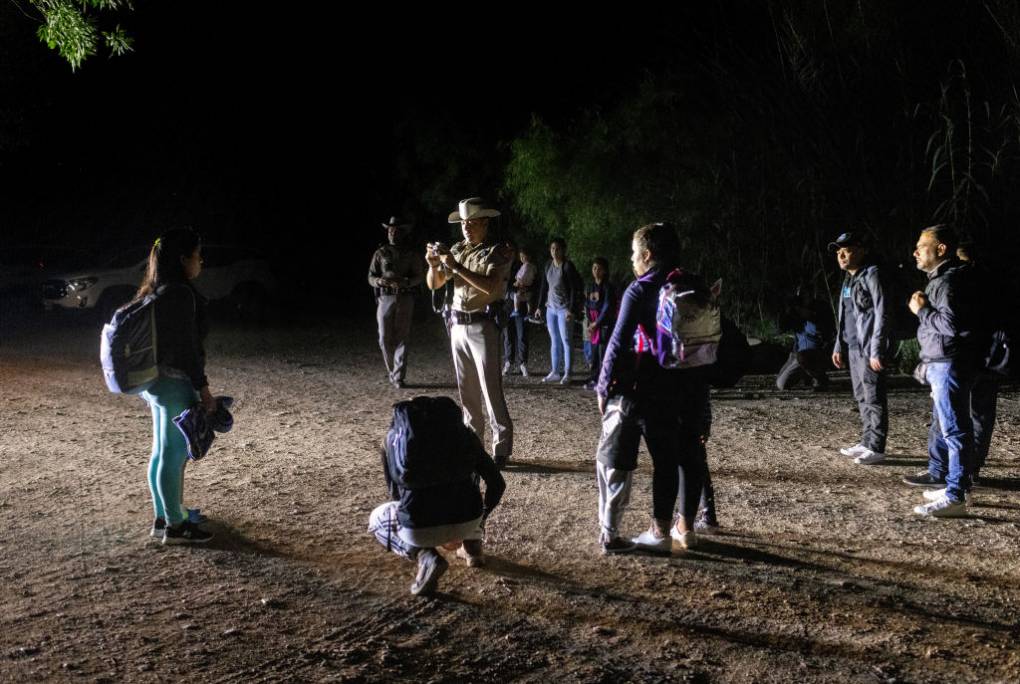
"caption": "A group of migrants who have just crossed the Rio Grande from Mexico to seek political asylum in the United States are apprehended on May 19, 2021 in Del Rio, Texas, before being taken into custody by U.S. Border Patrol agents. ",
"description": null,
"title": "Undocumented Immigrants Attempt To Cross Into U.S. Near Del Rio, Texas",
"credit": "John Moore/Getty Images",
"status": "inherit",
"altTag": null,
"isLoading": false,
"fetchFailed": false
},
"news_11874800": {
"type": "attachments",
"id": "news_11874800",
"meta": {
"index": "attachments_1716263798",
"site": "news",
"id": "11874800",
"found": true
},
"parent": 11874691,
"imgSizes": {
"twentyfourteen-full-width": {
"file": "https://ww2.kqed.org/app/uploads/sites/10/2021/05/RS48973_028_Hayward_Promotoras_05102021-1038x576.jpg",
"width": 1038,
"mimeType": "image/jpeg",
"height": 576
},
"thumbnail": {
"file": "https://ww2.kqed.org/app/uploads/sites/10/2021/05/RS48973_028_Hayward_Promotoras_05102021-160x107.jpg",
"width": 160,
"mimeType": "image/jpeg",
"height": 107
},
"post-thumbnail": {
"file": "https://ww2.kqed.org/app/uploads/sites/10/2021/05/RS48973_028_Hayward_Promotoras_05102021-672x372.jpg",
"width": 672,
"mimeType": "image/jpeg",
"height": 372
},
"kqedFullSize": {
"file": "https://ww2.kqed.org/app/uploads/sites/10/2021/05/RS48973_028_Hayward_Promotoras_05102021.jpg",
"width": 1920,
"height": 1280
},
"large": {
"file": "https://ww2.kqed.org/app/uploads/sites/10/2021/05/RS48973_028_Hayward_Promotoras_05102021-1020x680.jpg",
"width": 1020,
"mimeType": "image/jpeg",
"height": 680
},
"1536x1536": {
"file": "https://ww2.kqed.org/app/uploads/sites/10/2021/05/RS48973_028_Hayward_Promotoras_05102021-1536x1024.jpg",
"width": 1536,
"mimeType": "image/jpeg",
"height": 1024
},
"medium": {
"file": "https://ww2.kqed.org/app/uploads/sites/10/2021/05/RS48973_028_Hayward_Promotoras_05102021-800x533.jpg",
"width": 800,
"mimeType": "image/jpeg",
"height": 533
}
},
"publishDate": 1621631894,
"modified": 1621632180,
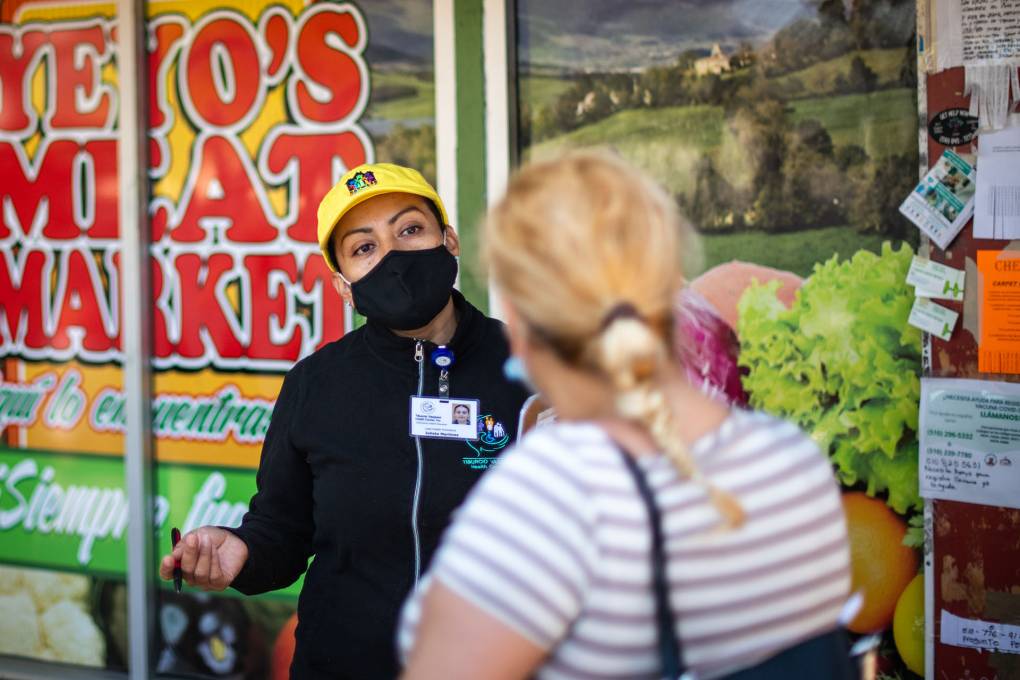
"caption": "Community health worker, or promotora, Julieta Martinez speaks with a customer at Yeyo’s Meat Market about the COVID-19 vaccine during an outreach event in South Hayward on May 10, 2021.",
"description": "Community health worker, or promotora, Julieta Martinez speaks with a customer at Yeyo’s Meat Market about the COVID-19 vaccine during an outreach event in South Hayward on May 10, 2021.",
"title": "RS48973_028_Hayward_Promotoras_05102021",
"credit": "Beth LaBerge/KQED",
"status": "inherit",
"altTag": null,
"isLoading": false,
"fetchFailed": false
},
"news_11873354": {
"type": "attachments",
"id": "news_11873354",
"meta": {
"index": "attachments_1716263798",
"site": "news",
"id": "11873354",
"found": true
},
"parent": 11873099,
"imgSizes": {
"twentyfourteen-full-width": {
"file": "https://ww2.kqed.org/app/uploads/sites/10/2021/05/unemployment-tax-filing-1020x687-1-1020x576.jpg",
"width": 1020,
"mimeType": "image/jpeg",
"height": 576
},
"thumbnail": {
"file": "https://ww2.kqed.org/app/uploads/sites/10/2021/05/unemployment-tax-filing-1020x687-1-160x108.jpg",
"width": 160,
"mimeType": "image/jpeg",
"height": 108
},
"post-thumbnail": {
"file": "https://ww2.kqed.org/app/uploads/sites/10/2021/05/unemployment-tax-filing-1020x687-1-672x372.jpg",
"width": 672,
"mimeType": "image/jpeg",
"height": 372
},
"kqedFullSize": {
"file": "https://ww2.kqed.org/app/uploads/sites/10/2021/05/unemployment-tax-filing-1020x687-1.jpg",
"width": 1020,
"height": 687
},
"medium": {
"file": "https://ww2.kqed.org/app/uploads/sites/10/2021/05/unemployment-tax-filing-1020x687-1-800x539.jpg",
"width": 800,
"mimeType": "image/jpeg",
"height": 539
}
},
"publishDate": 1620849075,
"modified": 1620849148,
"caption": "La fecha límite del IRS de 2021 para presentar sus impuestos ha sido extendido hasta el 17 de mayo. Si el año pasado declaró ingresos de desempleo, le decimos qué debe saber y dónde puede encontrar ayuda gratuita o de bajo costo.",
"description": "La fecha límite del IRS de 2021 para presentar sus impuestos ha sido extendido hasta el 17 de mayo. Si el año pasado declaró ingresos de desempleo, le decimos qué debe saber y dónde puede encontrar ayuda gratuita o de bajo costo.",
"title": "unemployment-tax-filing-1020x687",
"credit": "Liza Summer/Pexels",
"status": "inherit",
"altTag": "Mujer usando una computadora.",
"isLoading": false,
"fetchFailed": false
},
"news_11863601": {
"type": "attachments",
"id": "news_11863601",
"meta": {
"index": "attachments_1716263798",
"site": "news",
"id": "11863601",
"found": true
},
"parent": 11862122,
"imgSizes": {
"apple_news_ca_landscape_5_5": {
"file": "https://ww2.kqed.org/app/uploads/sites/10/2021/03/RS47577_iStock-915488206-qut-1044x783.jpg",
"width": 1044,
"mimeType": "image/jpeg",
"height": 783
},
"apple_news_ca_square_4_0": {
"file": "https://ww2.kqed.org/app/uploads/sites/10/2021/03/RS47577_iStock-915488206-qut-470x470.jpg",
"width": 470,
"mimeType": "image/jpeg",
"height": 470
},
"twentyfourteen-full-width": {
"file": "https://ww2.kqed.org/app/uploads/sites/10/2021/03/RS47577_iStock-915488206-qut-1038x576.jpg",
"width": 1038,
"mimeType": "image/jpeg",
"height": 576
},
"thumbnail": {
"file": "https://ww2.kqed.org/app/uploads/sites/10/2021/03/RS47577_iStock-915488206-qut-160x84.jpg",
"width": 160,
"mimeType": "image/jpeg",
"height": 84
},
"post-thumbnail": {
"file": "https://ww2.kqed.org/app/uploads/sites/10/2021/03/RS47577_iStock-915488206-qut-672x372.jpg",
"width": 672,
"mimeType": "image/jpeg",
"height": 372
},
"kqedFullSize": {
"file": "https://ww2.kqed.org/app/uploads/sites/10/2021/03/RS47577_iStock-915488206-qut.jpg",
"width": 1920,
"height": 1012
},
"apple_news_ca_landscape_4_7": {
"file": "https://ww2.kqed.org/app/uploads/sites/10/2021/03/RS47577_iStock-915488206-qut-632x474.jpg",
"width": 632,
"mimeType": "image/jpeg",
"height": 474
},
"large": {
"file": "https://ww2.kqed.org/app/uploads/sites/10/2021/03/RS47577_iStock-915488206-qut-1020x538.jpg",
"width": 1020,
"mimeType": "image/jpeg",
"height": 538
},
"apple_news_ca_landscape_4_0": {
"file": "https://ww2.kqed.org/app/uploads/sites/10/2021/03/RS47577_iStock-915488206-qut-536x402.jpg",
"width": 536,
"mimeType": "image/jpeg",
"height": 402
},
"apple_news_ca_portrait_12_9": {
"file": "https://ww2.kqed.org/app/uploads/sites/10/2021/03/RS47577_iStock-915488206-qut-1122x1012.jpg",
"width": 1122,
"mimeType": "image/jpeg",
"height": 1012
},
"medium": {
"file": "https://ww2.kqed.org/app/uploads/sites/10/2021/03/RS47577_iStock-915488206-qut-800x422.jpg",
"width": 800,
"mimeType": "image/jpeg",
"height": 422
},
"apple_news_ca_portrait_4_0": {
"file": "https://ww2.kqed.org/app/uploads/sites/10/2021/03/RS47577_iStock-915488206-qut-354x472.jpg",
"width": 354,
"mimeType": "image/jpeg",
"height": 472
},
"apple_news_ca_portrait_9_7": {
"file": "https://ww2.kqed.org/app/uploads/sites/10/2021/03/RS47577_iStock-915488206-qut-840x1012.jpg",
"width": 840,
"mimeType": "image/jpeg",
"height": 1012
},
"apple_news_ca_landscape_12_9": {
"file": "https://ww2.kqed.org/app/uploads/sites/10/2021/03/RS47577_iStock-915488206-qut-1832x1012.jpg",
"width": 1832,
"mimeType": "image/jpeg",
"height": 1012
},
"apple_news_ca_square_9_7": {
"file": "https://ww2.kqed.org/app/uploads/sites/10/2021/03/RS47577_iStock-915488206-qut-1104x1012.jpg",
"width": 1104,
"mimeType": "image/jpeg",
"height": 1012
},
"1536x1536": {
"file": "https://ww2.kqed.org/app/uploads/sites/10/2021/03/RS47577_iStock-915488206-qut-1536x810.jpg",
"width": 1536,
"mimeType": "image/jpeg",
"height": 810
},
"apple_news_ca_portrait_4_7": {
"file": "https://ww2.kqed.org/app/uploads/sites/10/2021/03/RS47577_iStock-915488206-qut-414x552.jpg",
"width": 414,
"mimeType": "image/jpeg",
"height": 552
},
"apple_news_ca_square_12_9": {
"file": "https://ww2.kqed.org/app/uploads/sites/10/2021/03/RS47577_iStock-915488206-qut-1472x1012.jpg",
"width": 1472,
"mimeType": "image/jpeg",
"height": 1012
},
"apple_news_ca_portrait_5_5": {
"file": "https://ww2.kqed.org/app/uploads/sites/10/2021/03/RS47577_iStock-915488206-qut-687x916.jpg",
"width": 687,
"mimeType": "image/jpeg",
"height": 916
},
"apple_news_ca_square_4_7": {
"file": "https://ww2.kqed.org/app/uploads/sites/10/2021/03/RS47577_iStock-915488206-qut-550x550.jpg",
"width": 550,
"mimeType": "image/jpeg",
"height": 550
},
"apple_news_ca_landscape_9_7": {
"file": "https://ww2.kqed.org/app/uploads/sites/10/2021/03/RS47577_iStock-915488206-qut-1376x1012.jpg",
"width": 1376,
"mimeType": "image/jpeg",
"height": 1012
},
"apple_news_ca_square_5_5": {
"file": "https://ww2.kqed.org/app/uploads/sites/10/2021/03/RS47577_iStock-915488206-qut-912x912.jpg",
"width": 912,
"mimeType": "image/jpeg",
"height": 912
}
},
"publishDate": 1614991589,
"modified": 1614991927,
"caption": null,
"description": null,
"title": "Elderly Woman Using Calculator For Taxes And Budget At Home",
"credit": "Getty Images",
"status": "inherit",
"altTag": "woman doing taxes with calculator",
"isLoading": false,
"fetchFailed": false
},
"news_11872636": {
"type": "attachments",
"id": "news_11872636",
"meta": {
"index": "attachments_1716263798",
"site": "news",
"id": "11872636",
"found": true
},
"parent": 11872571,
"imgSizes": {
"twentyfourteen-full-width": {
"file": "https://ww2.kqed.org/app/uploads/sites/10/2021/05/courtesy_tiktok_01-1020x673-1-1010x576.jpeg",
"width": 1010,
"mimeType": "image/jpeg",
"height": 576
},
"thumbnail": {
"file": "https://ww2.kqed.org/app/uploads/sites/10/2021/05/courtesy_tiktok_01-1020x673-1-160x107.jpeg",
"width": 160,
"mimeType": "image/jpeg",
"height": 107
},
"post-thumbnail": {
"file": "https://ww2.kqed.org/app/uploads/sites/10/2021/05/courtesy_tiktok_01-1020x673-1-672x372.jpeg",
"width": 672,
"mimeType": "image/jpeg",
"height": 372
},
"kqedFullSize": {
"file": "https://ww2.kqed.org/app/uploads/sites/10/2021/05/courtesy_tiktok_01-1020x673-1.jpeg",
"width": 1010,
"height": 673
},
"medium": {
"file": "https://ww2.kqed.org/app/uploads/sites/10/2021/05/courtesy_tiktok_01-1020x673-1-800x533.jpeg",
"width": 800,
"mimeType": "image/jpeg",
"height": 533
}
},
"publishDate": 1620339965,
"modified": 1620340474,
"caption": "Jesús Morales, influencer de TikTok, ha proporcionado más de $90 mil a vendedores ambulantes en el sur de California desde que comienzó la pandemia.",
"description": "Una imagen de Jesús Morales, influencer de TikTok, y un vendedor ambulante. El vendedor lleva puesto un sombrero para protegerse del sol y en sus manos unos billetes que Morales le dio.",
"title": "courtesy_tiktok_01-1020x673",
"credit": "Cortesía de Jesús Morales",
"status": "inherit",
"altTag": "Una imagen de Jesús Morales, influencer de TikTok, y un vendedor ambulante. El vendedor lleva puesto un sombrero para protegerse del sol y en sus manos unos billetes que Morales le dio.",
"isLoading": false,
"fetchFailed": false
},
"news_11872154": {
"type": "attachments",
"id": "news_11872154",
"meta": {
"index": "attachments_1716263798",
"site": "news",
"id": "11872154",
"found": true
},
"parent": 11872153,
"imgSizes": {
"twentyfourteen-full-width": {
"file": "https://ww2.kqed.org/app/uploads/sites/10/2021/05/ap_21110132743458_wide-4ab6be2af26bbff91959c44ce8fff1793be9427c-1038x576.jpg",
"width": 1038,
"mimeType": "image/jpeg",
"height": 576
},
"thumbnail": {
"file": "https://ww2.kqed.org/app/uploads/sites/10/2021/05/ap_21110132743458_wide-4ab6be2af26bbff91959c44ce8fff1793be9427c-160x90.jpg",
"width": 160,
"mimeType": "image/jpeg",
"height": 90
},
"post-thumbnail": {
"file": "https://ww2.kqed.org/app/uploads/sites/10/2021/05/ap_21110132743458_wide-4ab6be2af26bbff91959c44ce8fff1793be9427c-672x372.jpg",
"width": 672,
"mimeType": "image/jpeg",
"height": 372
},
"kqedFullSize": {
"file": "https://ww2.kqed.org/app/uploads/sites/10/2021/05/ap_21110132743458_wide-4ab6be2af26bbff91959c44ce8fff1793be9427c-scaled.jpg",
"width": 2560,
"height": 1440
},
"2048x2048": {
"file": "https://ww2.kqed.org/app/uploads/sites/10/2021/05/ap_21110132743458_wide-4ab6be2af26bbff91959c44ce8fff1793be9427c-2048x1152.jpg",
"width": 2048,
"mimeType": "image/jpeg",
"height": 1152
},
"large": {
"file": "https://ww2.kqed.org/app/uploads/sites/10/2021/05/ap_21110132743458_wide-4ab6be2af26bbff91959c44ce8fff1793be9427c-1020x574.jpg",
"width": 1020,
"mimeType": "image/jpeg",
"height": 574
},
"1536x1536": {
"file": "https://ww2.kqed.org/app/uploads/sites/10/2021/05/ap_21110132743458_wide-4ab6be2af26bbff91959c44ce8fff1793be9427c-1536x864.jpg",
"width": 1536,
"mimeType": "image/jpeg",
"height": 864
},
"full-width": {
"file": "https://ww2.kqed.org/app/uploads/sites/10/2021/05/ap_21110132743458_wide-4ab6be2af26bbff91959c44ce8fff1793be9427c-1920x1080.jpg",
"width": 1920,
"mimeType": "image/jpeg",
"height": 1080
},
"medium": {
"file": "https://ww2.kqed.org/app/uploads/sites/10/2021/05/ap_21110132743458_wide-4ab6be2af26bbff91959c44ce8fff1793be9427c-800x450.jpg",
"width": 800,
"mimeType": "image/jpeg",
"height": 450
}
},
"publishDate": 1620149905,
"modified": 1620154096,
"caption": "President Biden, in a file photo, speaking in the East Room of the White House on April 15. Biden on Monday said his administration would significantly raise refugee admission caps. ",
"description": null,
"title": "President Biden, here at the White House on April 15, announced Monday that his administration is lifting the ceiling on the number of refugees who can be admitted into the country this fiscal year.",
"credit": "Andrew Harnik/AP",
"status": "inherit",
"altTag": null,
"isLoading": false,
"fetchFailed": false
},
"news_11872004": {
"type": "attachments",
"id": "news_11872004",
"meta": {
"index": "attachments_1716263798",
"site": "news",
"id": "11872004",
"found": true
},
"parent": 11872003,
"imgSizes": {
"twentyfourteen-full-width": {
"file": "https://ww2.kqed.org/app/uploads/sites/10/2021/05/ap21123159092833_wide-61079d044d9312bc2af3df1891be03a6fed3afa6-1038x576.jpg",
"width": 1038,
"mimeType": "image/jpeg",
"height": 576
},
"thumbnail": {
"file": "https://ww2.kqed.org/app/uploads/sites/10/2021/05/ap21123159092833_wide-61079d044d9312bc2af3df1891be03a6fed3afa6-160x90.jpg",
"width": 160,
"mimeType": "image/jpeg",
"height": 90
},
"post-thumbnail": {
"file": "https://ww2.kqed.org/app/uploads/sites/10/2021/05/ap21123159092833_wide-61079d044d9312bc2af3df1891be03a6fed3afa6-672x372.jpg",
"width": 672,
"mimeType": "image/jpeg",
"height": 372
},
"kqedFullSize": {
"file": "https://ww2.kqed.org/app/uploads/sites/10/2021/05/ap21123159092833_wide-61079d044d9312bc2af3df1891be03a6fed3afa6-scaled-e1620064719334.jpg",
"width": 1920,
"height": 1080
},
"2048x2048": {
"file": "https://ww2.kqed.org/app/uploads/sites/10/2021/05/ap21123159092833_wide-61079d044d9312bc2af3df1891be03a6fed3afa6-2048x1152.jpg",
"width": 2048,
"mimeType": "image/jpeg",
"height": 1152
},
"large": {
"file": "https://ww2.kqed.org/app/uploads/sites/10/2021/05/ap21123159092833_wide-61079d044d9312bc2af3df1891be03a6fed3afa6-1020x574.jpg",
"width": 1020,
"mimeType": "image/jpeg",
"height": 574
},
"1536x1536": {
"file": "https://ww2.kqed.org/app/uploads/sites/10/2021/05/ap21123159092833_wide-61079d044d9312bc2af3df1891be03a6fed3afa6-1536x864.jpg",
"width": 1536,
"mimeType": "image/jpeg",
"height": 864
},
"full-width": {
"file": "https://ww2.kqed.org/app/uploads/sites/10/2021/05/ap21123159092833_wide-61079d044d9312bc2af3df1891be03a6fed3afa6-1920x1080.jpg",
"width": 1920,
"mimeType": "image/jpeg",
"height": 1080
},
"medium": {
"file": "https://ww2.kqed.org/app/uploads/sites/10/2021/05/ap21123159092833_wide-61079d044d9312bc2af3df1891be03a6fed3afa6-800x450.jpg",
"width": 800,
"mimeType": "image/jpeg",
"height": 450
}
},
"publishDate": 1620062739,
"modified": 1620071552,
"caption": "Homeland Security Secretary Alejandro Mayorkas speaks during a news conference at the White House in Washington, D.C. The Biden administration says four families who were separated at the Mexico border during Donald Trump’s presidency would be reunited in the U.S during the first week of May, the first of what Mayorkas calls 'just the beginning' of a broader effort.",
"description": "FILE - In this March 1, 2021, file photo, Homeland Security Secretary Alejandro Mayorkas speaks during a news conference at the White House in Washington. The Biden administration says four families who were separated at the Mexico border during Donald Trump’s presidency would be reunited in the United States during the first week of May, the first of what Mayorkas calls “just the beginning” of a broader effort. (AP Photo/Andrew Harnik, File)",
"title": "Homeland Security Secretary Alejandro Mayorkas speaks during a March 1 news conference at the White House. The Biden administration says four families that were separated at the Mexico border during the Trump administration would be reunited in the U.S. during the first week of May. It's the first of what Mayorkas calls \"just the beginning\" of a broader effort.",
"credit": "AP Photo/Andrew Harnik, File",
"status": "inherit",
"altTag": null,
"isLoading": false,
"fetchFailed": false
},
"news_11871561": {
"type": "attachments",
"id": "news_11871561",
"meta": {
"index": "attachments_1716263798",
"site": "news",
"id": "11871561",
"found": true
},
"parent": 11871547,
"imgSizes": {
"twentyfourteen-full-width": {
"file": "https://ww2.kqed.org/app/uploads/sites/10/2021/04/1920_GettyImages-1232544831-1038x576.jpg",
"width": 1038,
"mimeType": "image/jpeg",
"height": 576
},
"thumbnail": {
"file": "https://ww2.kqed.org/app/uploads/sites/10/2021/04/1920_GettyImages-1232544831-160x90.jpg",
"width": 160,
"mimeType": "image/jpeg",
"height": 90
},
"post-thumbnail": {
"file": "https://ww2.kqed.org/app/uploads/sites/10/2021/04/1920_GettyImages-1232544831-672x372.jpg",
"width": 672,
"mimeType": "image/jpeg",
"height": 372
},
"kqedFullSize": {
"file": "https://ww2.kqed.org/app/uploads/sites/10/2021/04/1920_GettyImages-1232544831-scaled.jpg",
"width": 2560,
"height": 1440
},
"2048x2048": {
"file": "https://ww2.kqed.org/app/uploads/sites/10/2021/04/1920_GettyImages-1232544831-2048x1152.jpg",
"width": 2048,
"mimeType": "image/jpeg",
"height": 1152
},
"large": {
"file": "https://ww2.kqed.org/app/uploads/sites/10/2021/04/1920_GettyImages-1232544831-1020x574.jpg",
"width": 1020,
"mimeType": "image/jpeg",
"height": 574
},
"1536x1536": {
"file": "https://ww2.kqed.org/app/uploads/sites/10/2021/04/1920_GettyImages-1232544831-1536x864.jpg",
"width": 1536,
"mimeType": "image/jpeg",
"height": 864
},
"full-width": {
"file": "https://ww2.kqed.org/app/uploads/sites/10/2021/04/1920_GettyImages-1232544831-1920x1080.jpg",
"width": 1920,
"mimeType": "image/jpeg",
"height": 1080
},
"medium": {
"file": "https://ww2.kqed.org/app/uploads/sites/10/2021/04/1920_GettyImages-1232544831-800x450.jpg",
"width": 800,
"mimeType": "image/jpeg",
"height": 450
}
},
"publishDate": 1619651732,
"modified": 1619654648,
"caption": "In a letter to Attorney General Merrick Garland, some attorneys and advocates requested he use his authority to get rid of five Trump policies, including one by then-Attorney General Jeff Sessions that reversed a 2014 precedent establishing that women fleeing domestic violence could qualify for asylum. File photo of U.S. Attorney General Merrick Garland on April 26, 2021 in Washington, D.C.",
"description": null,
"title": "Attorney General Merrick Garland Announces Justice Department Will Begin Investigation Into The Practices of the Louisville Police Department",
"credit": "Mandel Ngan-Pool/Getty Images",
"status": "inherit",
"altTag": null,
"isLoading": false,
"fetchFailed": false
},
"news_11871438": {
"type": "attachments",
"id": "news_11871438",
"meta": {
"index": "attachments_1716263798",
"site": "news",
"id": "11871438",
"found": true
},
"parent": 11871426,
"imgSizes": {
"twentyfourteen-full-width": {
"file": "https://ww2.kqed.org/app/uploads/sites/10/2021/04/RS40416_Photo-2-1038x576.jpg",
"width": 1038,
"mimeType": "image/jpeg",
"height": 576
},
"thumbnail": {
"file": "https://ww2.kqed.org/app/uploads/sites/10/2021/04/RS40416_Photo-2-160x120.jpg",
"width": 160,
"mimeType": "image/jpeg",
"height": 120
},
"post-thumbnail": {
"file": "https://ww2.kqed.org/app/uploads/sites/10/2021/04/RS40416_Photo-2-672x372.jpg",
"width": 672,
"mimeType": "image/jpeg",
"height": 372
},
"kqedFullSize": {
"file": "https://ww2.kqed.org/app/uploads/sites/10/2021/04/RS40416_Photo-2-scaled.jpg",
"width": 2560,
"height": 1920
},
"2048x2048": {
"file": "https://ww2.kqed.org/app/uploads/sites/10/2021/04/RS40416_Photo-2-2048x1536.jpg",
"width": 2048,
"mimeType": "image/jpeg",
"height": 1536
},
"large": {
"file": "https://ww2.kqed.org/app/uploads/sites/10/2021/04/RS40416_Photo-2-1020x765.jpg",
"width": 1020,
"mimeType": "image/jpeg",
"height": 765
},
"1536x1536": {
"file": "https://ww2.kqed.org/app/uploads/sites/10/2021/04/RS40416_Photo-2-1536x1152.jpg",
"width": 1536,
"mimeType": "image/jpeg",
"height": 1152
},
"full-width": {
"file": "https://ww2.kqed.org/app/uploads/sites/10/2021/04/RS40416_Photo-2-1920x1440.jpg",
"width": 1920,
"mimeType": "image/jpeg",
"height": 1440
},
"medium": {
"file": "https://ww2.kqed.org/app/uploads/sites/10/2021/04/RS40416_Photo-2-800x600.jpg",
"width": 800,
"mimeType": "image/jpeg",
"height": 600
}
},
"publishDate": 1619577908,
"modified": 1619578399,
"caption": "International Rescue Committee staffer Saeideh Mahdavisefat leads a job interview workshop for refugees at the resettlement agency's offices in San Jose on Oct. 16, 2019. The organization shut down its refugee resettlement program for new arrivals in San Jose during the Trump administration, but continued job training and other services.",
"description": null,
"title": "RS40416_Photo 2",
"credit": "Farida Jhabvala Romero/KQED",
"status": "inherit",
"altTag": null,
"isLoading": false,
"fetchFailed": false
},
"news_11870363": {
"type": "attachments",
"id": "news_11870363",
"meta": {
"index": "attachments_1716263798",
"site": "news",
"id": "11870363",
"found": true
},
"parent": 11870362,
"imgSizes": {
"twentyfourteen-full-width": {
"file": "https://ww2.kqed.org/app/uploads/sites/10/2021/04/20210324-0254-ice-protest_custom-71809a6d418b114aeeea23846fd8a57e00f3be66-1038x576.jpg",
"width": 1038,
"mimeType": "image/jpeg",
"height": 576
},
"thumbnail": {
"file": "https://ww2.kqed.org/app/uploads/sites/10/2021/04/20210324-0254-ice-protest_custom-71809a6d418b114aeeea23846fd8a57e00f3be66-160x108.jpg",
"width": 160,
"mimeType": "image/jpeg",
"height": 108
},
"post-thumbnail": {
"file": "https://ww2.kqed.org/app/uploads/sites/10/2021/04/20210324-0254-ice-protest_custom-71809a6d418b114aeeea23846fd8a57e00f3be66-672x372.jpg",
"width": 672,
"mimeType": "image/jpeg",
"height": 372
},
"kqedFullSize": {
"file": "https://ww2.kqed.org/app/uploads/sites/10/2021/04/20210324-0254-ice-protest_custom-71809a6d418b114aeeea23846fd8a57e00f3be66-scaled-e1618946550920.jpg",
"width": 1920,
"height": 1294
},
"2048x2048": {
"file": "https://ww2.kqed.org/app/uploads/sites/10/2021/04/20210324-0254-ice-protest_custom-71809a6d418b114aeeea23846fd8a57e00f3be66-2048x1380.jpg",
"width": 2048,
"mimeType": "image/jpeg",
"height": 1380
},
"large": {
"file": "https://ww2.kqed.org/app/uploads/sites/10/2021/04/20210324-0254-ice-protest_custom-71809a6d418b114aeeea23846fd8a57e00f3be66-1020x687.jpg",
"width": 1020,
"mimeType": "image/jpeg",
"height": 687
},
"1536x1536": {
"file": "https://ww2.kqed.org/app/uploads/sites/10/2021/04/20210324-0254-ice-protest_custom-71809a6d418b114aeeea23846fd8a57e00f3be66-1536x1035.jpg",
"width": 1536,
"mimeType": "image/jpeg",
"height": 1035
},
"full-width": {
"file": "https://ww2.kqed.org/app/uploads/sites/10/2021/04/20210324-0254-ice-protest_custom-71809a6d418b114aeeea23846fd8a57e00f3be66-1920x1294.jpg",
"width": 1920,
"mimeType": "image/jpeg",
"height": 1294
},
"medium": {
"file": "https://ww2.kqed.org/app/uploads/sites/10/2021/04/20210324-0254-ice-protest_custom-71809a6d418b114aeeea23846fd8a57e00f3be66-800x539.jpg",
"width": 800,
"mimeType": "image/jpeg",
"height": 539
}
},
"publishDate": 1618944109,
"modified": 1619047512,
"caption": "Sulma Franco, an organizer with Mujeres Luchadoras and Grassroots Leadership and an LGBT activist from Guatemala, leads protesters to the entrance of the T. Don Hutto Residential Center in Taylor, Texas, on March 24 where U.S. Immigration and Customs Enforcement contracts for the detention of migrant women.",
"description": "Sulma Franco, an organizer with Mujeres Luchadoras and Grassroots Leadership and an LGBT activist from Guatemala, leads protesters to the entrance of the T. Don Hutto Residential Center in Taylor, Texas on March 24 where U.S. Immigration and Customs Enforcement contracts for the detention of migrant women.\nProtestors are demanding the closure of the facility, which recently renewed a 10-year federal contract, claiming the conditions inside are inhumane.",
"title": "Sulma Franco, an organizer with Mujeres Luchadoras and Grassroots Leadership and an LGBT activist from Guatemala, leads protestors to the entrance of the T. Don Hutto Residential Center in Taylor, Texas on March 24 where U.S. Immigration and Customs Enforcement contracts for the detention of migrant women.",
"credit": "Julia Robinson/NPR",
"status": "inherit",
"altTag": null,
"isLoading": false,
"fetchFailed": false
},
"news_11870073": {
"type": "attachments",
"id": "news_11870073",
"meta": {
"index": "attachments_1716263798",
"site": "news",
"id": "11870073",
"found": true
},
"parent": 11870072,
"imgSizes": {
"twentyfourteen-full-width": {
"file": "https://ww2.kqed.org/app/uploads/sites/10/2021/04/ap21038079522650_custom-674a7354d9a98288f268243a5d48704a86c8de83-1038x576.jpg",
"width": 1038,
"mimeType": "image/jpeg",
"height": 576
},
"thumbnail": {
"file": "https://ww2.kqed.org/app/uploads/sites/10/2021/04/ap21038079522650_custom-674a7354d9a98288f268243a5d48704a86c8de83-160x103.jpg",
"width": 160,
"mimeType": "image/jpeg",
"height": 103
},
"post-thumbnail": {
"file": "https://ww2.kqed.org/app/uploads/sites/10/2021/04/ap21038079522650_custom-674a7354d9a98288f268243a5d48704a86c8de83-672x372.jpg",
"width": 672,
"mimeType": "image/jpeg",
"height": 372
},
"kqedFullSize": {
"file": "https://ww2.kqed.org/app/uploads/sites/10/2021/04/ap21038079522650_custom-674a7354d9a98288f268243a5d48704a86c8de83-scaled.jpg",
"width": 2560,
"height": 1648
},
"2048x2048": {
"file": "https://ww2.kqed.org/app/uploads/sites/10/2021/04/ap21038079522650_custom-674a7354d9a98288f268243a5d48704a86c8de83-2048x1319.jpg",
"width": 2048,
"mimeType": "image/jpeg",
"height": 1319
},
"large": {
"file": "https://ww2.kqed.org/app/uploads/sites/10/2021/04/ap21038079522650_custom-674a7354d9a98288f268243a5d48704a86c8de83-1020x657.jpg",
"width": 1020,
"mimeType": "image/jpeg",
"height": 657
},
"1536x1536": {
"file": "https://ww2.kqed.org/app/uploads/sites/10/2021/04/ap21038079522650_custom-674a7354d9a98288f268243a5d48704a86c8de83-1536x989.jpg",
"width": 1536,
"mimeType": "image/jpeg",
"height": 989
},
"full-width": {
"file": "https://ww2.kqed.org/app/uploads/sites/10/2021/04/ap21038079522650_custom-674a7354d9a98288f268243a5d48704a86c8de83-1920x1236.jpg",
"width": 1920,
"mimeType": "image/jpeg",
"height": 1236
},
"medium": {
"file": "https://ww2.kqed.org/app/uploads/sites/10/2021/04/ap21038079522650_custom-674a7354d9a98288f268243a5d48704a86c8de83-800x515.jpg",
"width": 800,
"mimeType": "image/jpeg",
"height": 515
}
},
"publishDate": 1618864809,
"modified": 1618865174,
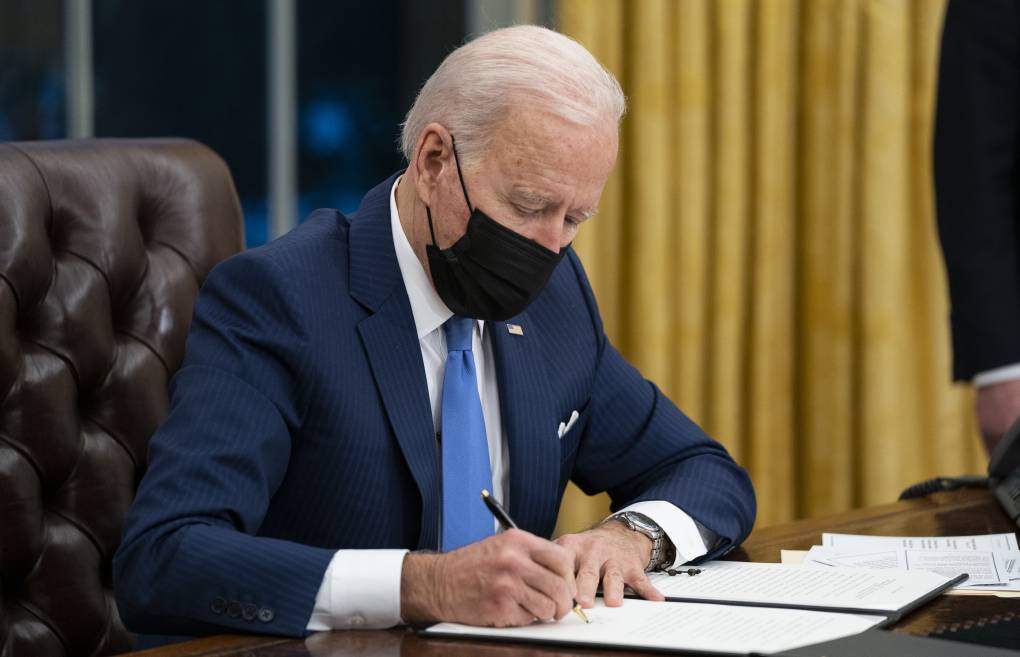
"caption": "President Biden signs an executive order on immigration in February in the Oval Office.",
"description": "President Biden signs an executive order on immigration in February in the Oval Office.",
"title": "President Biden signs an executive order on immigration in February in the Oval Office.",
"credit": "Evan Vucci/AP",
"status": "inherit",
"altTag": null,
"isLoading": false,
"fetchFailed": false
}
},
"audioPlayerReducer": {
"postId": "stream_live",
"isPaused": true,
"isPlaying": false,
"pfsActive": false,
"pledgeModalIsOpen": true,
"playerDrawerIsOpen": false,
"liveAudioPlayStartedAt": 0,
"liveAudioPlayContext": ""
},
"authorsReducer": {
"byline_news_11876226": {
"type": "authors",
"id": "byline_news_11876226",
"meta": {
"override": true
},
"slug": "byline_news_11876226",
"name": "Associated Press",
"isLoading": false
},
"byline_news_11875913": {
"type": "authors",
"id": "byline_news_11875913",
"meta": {
"override": true
},
"slug": "byline_news_11875913",
"name": "Amy Taxin and Elliot Spagat\u003cbr>Associated Press",
"isLoading": false
},
"byline_news_11872571": {
"type": "authors",
"id": "byline_news_11872571",
"meta": {
"override": true
},
"slug": "byline_news_11872571",
"name": "\u003ca href=\"https://calmatters.org/author/jacqueline-garcia/\">Jacqueline García\u003c/a>",
"isLoading": false
},
"byline_news_11872153": {
"type": "authors",
"id": "byline_news_11872153",
"meta": {
"override": true
},
"slug": "byline_news_11872153",
"name": "Dana Farrington and Alana Wise",
"isLoading": false
},
"byline_news_11872003": {
"type": "authors",
"id": "byline_news_11872003",
"meta": {
"override": true
},
"slug": "byline_news_11872003",
"name": "Joel Rose",
"isLoading": false
},
"byline_news_11870362": {
"type": "authors",
"id": "byline_news_11870362",
"meta": {
"override": true
},
"slug": "byline_news_11870362",
"name": "John Burnett",
"isLoading": false
},
"byline_news_11870072": {
"type": "authors",
"id": "byline_news_11870072",
"meta": {
"override": true
},
"slug": "byline_news_11870072",
"name": "\u003ca href=\"https://www.npr.org/people/159989569/joel-rose\">Joel Rose\u003c/a>",
"isLoading": false
},
"fjhabvala": {
"type": "authors",
"id": "8659",
"meta": {
"index": "authors_1716337520",
"id": "8659",
"found": true
},
"name": "Farida Jhabvala Romero",
"firstName": "Farida",
"lastName": "Jhabvala Romero",
"slug": "fjhabvala",
"email": "fjhabvala@kqed.org",
"display_author_email": true,
"staff_mastheads": [
"news"
],
"title": "KQED Contributor",
"bio": "\u003cspan style=\"font-weight: 400;\">Farida Jhabvala Romero is a Labor Correspondent for KQED. She previously covered immigration. Farida was \u003ca href=\"https://www.ccnma.org/2022-most-influential-latina-journalists\">named\u003c/a> one of the 10 Most Influential Latina Journalists in California in 2022 by the California Chicano News Media Association. Her work has won awards from the Society of Professional Journalists (Northern California), as well as a national and regional Edward M. Murrow Award for the collaborative reporting projects “Dangerous Air” and “Graying California.” \u003c/span>\u003cspan style=\"font-weight: 400;\">Before joining KQED, Farida worked as a producer at Radio Bilingüe, a national public radio network. Farida earned her master’s degree in journalism from Stanford University.\u003c/span>",
"avatar": "https://secure.gravatar.com/avatar/c3ab27c5554b67b478f80971e515aa02?s=600&d=blank&r=g",
"twitter": "FaridaJhabvala",
"facebook": null,
"instagram": null,
"linkedin": "https://www.linkedin.com/in/faridajhabvala/",
"sites": [
{
"site": "news",
"roles": [
"editor"
]
},
{
"site": "stateofhealth",
"roles": [
"author"
]
}
],
"headData": {
"title": "Farida Jhabvala Romero | KQED",
"description": "KQED Contributor",
"ogImgSrc": "https://secure.gravatar.com/avatar/c3ab27c5554b67b478f80971e515aa02?s=600&d=blank&r=g",
"twImgSrc": "https://secure.gravatar.com/avatar/c3ab27c5554b67b478f80971e515aa02?s=600&d=blank&r=g"
},
"isLoading": false,
"link": "/author/fjhabvala"
},
"mfharvin": {
"type": "authors",
"id": "11583",
"meta": {
"index": "authors_1716337520",
"id": "11583",
"found": true
},
"name": "Mary Franklin Harvin",
"firstName": "Mary Franklin",
"lastName": "Harvin",
"slug": "mfharvin",
"email": "mfharvin@KQED.org",
"display_author_email": false,
"staff_mastheads": [
"news"
],
"title": "KQED Contributor",
"bio": null,
"avatar": "https://secure.gravatar.com/avatar/0e53510a7d48cfbdebfc9b11357d845f?s=600&d=blank&r=g",
"twitter": "EmEffHarvin",
"facebook": null,
"instagram": null,
"linkedin": null,
"sites": [
{
"site": "news",
"roles": [
"author",
"edit_others_posts"
]
},
{
"site": "science",
"roles": [
"editor"
]
}
],
"headData": {
"title": "Mary Franklin Harvin | KQED",
"description": "KQED Contributor",
"ogImgSrc": "https://secure.gravatar.com/avatar/0e53510a7d48cfbdebfc9b11357d845f?s=600&d=blank&r=g",
"twImgSrc": "https://secure.gravatar.com/avatar/0e53510a7d48cfbdebfc9b11357d845f?s=600&d=blank&r=g"
},
"isLoading": false,
"link": "/author/mfharvin"
},
"ccabreralomeli": {
"type": "authors",
"id": "11708",
"meta": {
"index": "authors_1716337520",
"id": "11708",
"found": true
},
"name": "Carlos Cabrera-Lomelí",
"firstName": "Carlos",
"lastName": "Cabrera-Lomelí",
"slug": "ccabreralomeli",
"email": "ccabreralomeli@KQED.org",
"display_author_email": true,
"staff_mastheads": [
"news"
],
"title": "Community Reporter",
"bio": "Carlos Cabrera-Lomelí is a community reporter with KQED's digital engagement team. He also reports and co-produces for KQED's bilingual news hub KQED en Español. He grew up in San Francisco's Mission District and has previously worked with Univision, 48 Hills and REFORMA in Mexico City.",
"avatar": "https://secure.gravatar.com/avatar/e95ff80bb2eaf18a8f2af4dcf7ffb54b?s=600&d=mm&r=g",
"twitter": "@LomeliCabrera",
"facebook": null,
"instagram": null,
"linkedin": null,
"sites": [
{
"site": "arts",
"roles": [
"editor"
]
},
{
"site": "news",
"roles": [
"editor"
]
},
{
"site": "about",
"roles": [
"editor"
]
},
{
"site": "science",
"roles": [
"editor"
]
},
{
"site": "perspectives",
"roles": [
"editor"
]
},
{
"site": "elections",
"roles": [
"editor"
]
},
{
"site": "liveblog",
"roles": [
"contributor"
]
}
],
"headData": {
"title": "Carlos Cabrera-Lomelí | KQED",
"description": "Community Reporter",
"ogImgSrc": "https://secure.gravatar.com/avatar/e95ff80bb2eaf18a8f2af4dcf7ffb54b?s=600&d=mm&r=g",
"twImgSrc": "https://secure.gravatar.com/avatar/e95ff80bb2eaf18a8f2af4dcf7ffb54b?s=600&d=mm&r=g"
},
"isLoading": false,
"link": "/author/ccabreralomeli"
}
},
"pagesReducer": {
"news_tag_immigration": {
"type": "terms",
"id": "news_20202",
"meta": {
"index": "terms_1716263798",
"site": "news",
"id": "20202",
"score": 6.9038835
},
"featImg": null,
"name": "immigration",
"description": null,
"taxonomy": "tag",
"headData": {
"twImgId": null,
"twTitle": null,
"ogTitle": null,
"ogImgId": null,
"twDescription": null,
"description": null,
"title": "immigration Archives | KQED News",
"ogDescription": null
},
"ttid": 20219,
"slug": "immigration",
"isLoading": false,
"title": "immigration",
"pageMeta": {
"site": "news",
"WpPageTemplate": "page-topic-editorial",
"currentPage": 55
},
"blocks": [
{
"blockName": "kqed/post-list",
"attrs": {
"layout": "cardArticle2",
"query": "posts/news?tag=immigration",
"seeMore": false,
"paginated": true,
"page": 55
}
},
{
"blockName": "kqed/ad"
}
]
}
},
"pfsSessionReducer": {},
"postsReducer": {
"stream_live": {
"type": "live",
"id": "stream_live",
"audioUrl": "https://streams.kqed.org/kqedradio",
"title": "Live Stream",
"excerpt": "Live Stream information currently unavailable.",
"link": "/radio",
"featImg": "",
"label": {
"name": "KQED Live",
"link": "/"
}
},
"stream_kqedNewscast": {
"type": "posts",
"id": "stream_kqedNewscast",
"audioUrl": "https://www.kqed.org/.stream/anon/radio/RDnews/newscast.mp3?_=1",
"title": "KQED Newscast",
"featImg": "",
"label": {
"name": "88.5 FM",
"link": "/"
}
},
"news_11876226": {
"type": "posts",
"id": "news_11876226",
"meta": {
"index": "posts_1716263798",
"site": "news",
"id": "11876226",
"score": null,
"sort": [
1622588615000
]
},
"parent": 0,
"labelTerm": {
"site": "news"
},
"blocks": [],
"publishDate": 1622588615,
"format": "standard",
"disqusTitle": "US Formally Ends Policy Requiring Asylum-Seekers to Wait in Mexico",
"title": "US Formally Ends Policy Requiring Asylum-Seekers to Wait in Mexico",
"headTitle": "KQED News",
"content": "\u003cp>The Biden administration on Tuesday formally ended a Trump-era immigration policy that forced asylum-seekers to wait in Mexico for hearings in U.S. immigration court.\u003c/p>\n\u003cp>A \u003ca href=\"https://www.dhs.gov/sites/default/files/publications/21_0601_termination_of_mpp_program.pdf\">seven-page memo\u003c/a> by Homeland Security Secretary Alejandro Mayorkas marked the end of the “Migrant Protection Protocols,” which returned about 70,000 asylum-seekers to Mexico since its implementation in January 2019.\u003c/p>\n\u003cp>[aside label=\"related coverage\" tag=\"asylum-seekers\"]The announcement appeared to be a foregone conclusion after President Biden promised as a candidate to end the policy, known informally as “Remain in Mexico,” and halted it on his first day in office. But he left a window open by ordering a review before shutting it down permanently.\u003c/p>\n\u003cp>In the memo, Mayorkas said keeping the policy intact or modifying it “would not be consistent with this Administration’s vision and values and would be a poor use of the Department’s resources,” and its costs would far outweigh any benefits.\u003c/p>\n\u003cp>The policy coincided with a sharp decline of asylum-seekers at the border, but critics noted that people seeking entry into the U.S. were hampered by violent conditions in Mexico, lack of access to lawyers and difficulty making it to court. Mayorkas acknowledged those concerns by noting the high rate of denied claims for failing to appear in court and the lack of housing, income and safety in Mexico.\u003c/p>\n\u003cp>Since Feb. 19 of this year, about 11,200 people with active cases have been allowed to return to the United States to wait for a ruling, a process that can take years in the backlogged court system. The administration has yet to say if tens of thousands more whose cases were either dismissed or denied will get another chance.\u003c/p>\n\u003cp>The administration has largely kept in place pandemic-related powers introduced by former President Donald Trump in March 2020, to expel people to Mexico without an opportunity to seek asylum, which he justified on grounds of protecting public health. Mayorkas acknowledged planning for those pandemic-related powers to be lifted but was light on specifics.\u003c/p>\n\u003cp>The secretary pointed \u003ca href=\"https://apnews.com/article/ny-state-wire-immigration-health-coronavirus-pandemic-302d94dcf7b8823525e2cdd9132c758c\">to a new docket\u003c/a> in immigration court announced Friday that aims to decide asylum cases at the border within 300 days. He promised “additional anticipated regulatory and policy changes,\" but did not elaborate.[ad fullwidth]\u003c/p>\n\u003cp>\u003c/p>\n",
"disqusIdentifier": "11876226 https://ww2.kqed.org/news/?p=11876226",
"disqusUrl": "https://ww2.kqed.org/news/2021/06/01/us-formally-ends-policy-requiring-asylum-seekers-to-wait-in-mexico/",
"stats": {
"hasVideo": false,
"hasChartOrMap": false,
"hasAudio": false,
"hasPolis": false,
"wordCount": 392,
"hasGoogleForm": false,
"hasGallery": false,
"hasHearkenModule": false,
"iframeSrcs": [],
"paragraphCount": 9
},
"modified": 1622591657,
"excerpt": "A memo by Homeland Security Secretary Alejandro Mayorkas marked the end of the Trump administration's 'Migrant Protection Protocols,' which returned about 70,000 asylum-seekers to Mexico since its implementation in January 2019. ",
"headData": {
"twImgId": "",
"twTitle": "",
"ogTitle": "",
"ogImgId": "",
"twDescription": "",
"description": "A memo by Homeland Security Secretary Alejandro Mayorkas marked the end of the Trump administration's 'Migrant Protection Protocols,' which returned about 70,000 asylum-seekers to Mexico since its implementation in January 2019. ",
"title": "US Formally Ends Policy Requiring Asylum-Seekers to Wait in Mexico | KQED",
"ogDescription": "",
"schema": {
"@context": "https://schema.org",
"@type": "NewsArticle",
"headline": "US Formally Ends Policy Requiring Asylum-Seekers to Wait in Mexico",
"datePublished": "2021-06-01T16:03:35-07:00",
"dateModified": "2021-06-01T16:54:17-07:00",
"image": "https://cdn.kqed.org/wp-content/uploads/2020/02/KQED-OG-Image@1x.png",
"isAccessibleForFree": "True",
"publisher": {
"@type": "NewsMediaOrganization",
"@id": "https://www.kqed.org/#organization",
"name": "KQED",
"logo": "https://cdn.kqed.org/wp-content/uploads/2020/02/KQED-OG-Image@1x.png",
"url": "https://www.kqed.org",
"sameAs": [
"https://www.facebook.com/KQED",
"https://twitter.com/KQED",
"https://www.instagram.com/kqed/",
"https://www.tiktok.com/@kqedofficial",
"https://www.linkedin.com/company/kqed",
"https://www.youtube.com/channel/UCeC0IOo7i1P_61zVUWbJ4nw"
]
}
}
},
"guestAuthors": [],
"slug": "us-formally-ends-policy-requiring-asylum-seekers-to-wait-in-mexico",
"status": "publish",
"nprByline": "Associated Press",
"path": "/news/11876226/us-formally-ends-policy-requiring-asylum-seekers-to-wait-in-mexico",
"audioTrackLength": null,
"parsedContent": [
{
"type": "contentString",
"content": "\u003cdiv class=\"post-body\">\u003cp>\u003cp>The Biden administration on Tuesday formally ended a Trump-era immigration policy that forced asylum-seekers to wait in Mexico for hearings in U.S. immigration court.\u003c/p>\n\u003cp>A \u003ca href=\"https://www.dhs.gov/sites/default/files/publications/21_0601_termination_of_mpp_program.pdf\">seven-page memo\u003c/a> by Homeland Security Secretary Alejandro Mayorkas marked the end of the “Migrant Protection Protocols,” which returned about 70,000 asylum-seekers to Mexico since its implementation in January 2019.\u003c/p>\n\u003cp>\u003c/p>\u003c/div>",
"attributes": {
"named": {},
"numeric": []
}
},
{
"type": "component",
"content": "",
"name": "aside",
"attributes": {
"named": {
"label": "related coverage ",
"tag": "asylum-seekers"
},
"numeric": []
}
},
{
"type": "contentString",
"content": "\u003cdiv class=\"post-body\">\u003cp>The announcement appeared to be a foregone conclusion after President Biden promised as a candidate to end the policy, known informally as “Remain in Mexico,” and halted it on his first day in office. But he left a window open by ordering a review before shutting it down permanently.\u003c/p>\n\u003cp>In the memo, Mayorkas said keeping the policy intact or modifying it “would not be consistent with this Administration’s vision and values and would be a poor use of the Department’s resources,” and its costs would far outweigh any benefits.\u003c/p>\n\u003cp>The policy coincided with a sharp decline of asylum-seekers at the border, but critics noted that people seeking entry into the U.S. were hampered by violent conditions in Mexico, lack of access to lawyers and difficulty making it to court. Mayorkas acknowledged those concerns by noting the high rate of denied claims for failing to appear in court and the lack of housing, income and safety in Mexico.\u003c/p>\n\u003cp>Since Feb. 19 of this year, about 11,200 people with active cases have been allowed to return to the United States to wait for a ruling, a process that can take years in the backlogged court system. The administration has yet to say if tens of thousands more whose cases were either dismissed or denied will get another chance.\u003c/p>\n\u003cp>The administration has largely kept in place pandemic-related powers introduced by former President Donald Trump in March 2020, to expel people to Mexico without an opportunity to seek asylum, which he justified on grounds of protecting public health. Mayorkas acknowledged planning for those pandemic-related powers to be lifted but was light on specifics.\u003c/p>\n\u003cp>The secretary pointed \u003ca href=\"https://apnews.com/article/ny-state-wire-immigration-health-coronavirus-pandemic-302d94dcf7b8823525e2cdd9132c758c\">to a new docket\u003c/a> in immigration court announced Friday that aims to decide asylum cases at the border within 300 days. He promised “additional anticipated regulatory and policy changes,\" but did not elaborate.\u003c/p>\u003c/div>",
"attributes": {
"named": {},
"numeric": []
}
},
{
"type": "component",
"content": "",
"name": "ad",
"attributes": {
"named": {
"label": "fullwidth"
},
"numeric": [
"fullwidth"
]
}
},
{
"type": "contentString",
"content": "\u003cdiv class=\"post-body\">\u003cp>\u003c/p>\n\u003cp>\u003c/p>\n\u003c/div>\u003c/p>",
"attributes": {
"named": {},
"numeric": []
}
}
],
"link": "/news/11876226/us-formally-ends-policy-requiring-asylum-seekers-to-wait-in-mexico",
"authors": [
"byline_news_11876226"
],
"categories": [
"news_1169",
"news_8"
],
"tags": [
"news_23653",
"news_29052",
"news_20458",
"news_18123",
"news_20202"
],
"featImg": "news_11876240",
"label": "news"
},
"news_11875913": {
"type": "posts",
"id": "news_11875913",
"meta": {
"index": "posts_1716263798",
"site": "news",
"id": "11875913",
"score": null,
"sort": [
1622236508000
]
},
"parent": 0,
"labelTerm": {
"site": "news"
},
"blocks": [],
"publishDate": 1622236508,
"format": "standard",
"disqusTitle": "US to Expedite Immigration Cases of Families Arriving at Southern Border",
"title": "US to Expedite Immigration Cases of Families Arriving at Southern Border",
"headTitle": "KQED News",
"content": "\u003cp>Families arriving at the U.S. border with Mexico will have their cases fast-tracked in immigration court, the Biden administration said Friday, less than two weeks after it said it was easing pandemic-related restrictions on seeking asylum.\u003c/p>\n\u003cp>Under the plan, which goes into effect Friday, families stopped on the border could be placed in expedited proceedings aimed at determining whether they can remain in the United States. Immigration judges would generally decide these cases within 300 days of an initial hearing in one of 10 cities including New York, Los Angeles and border communities such as El Paso, Texas, and San Diego, according to a joint statement from the U.S. Department of Justice and Homeland Security.\u003c/p>\n\u003cp>It isn't the first time U.S. officials have sought to expedite the immigration cases of families arriving on the Southwest border. The Trump and Obama administrations previously created dockets aimed at quickly deciding these cases in immigration courts, which are notoriously backlogged; cases can take years to resolve.\u003c/p>\n\u003cp>The latest iteration, which the administration is calling a “dedicated docket,” lets judges grant continuances “for good cause,” according to \u003ca href=\"https://www.justice.gov/eoir/book/file/1399361/download\">instructions\u003c/a> sent by the Justice Department. It calls the 300-day timeline “an internal goal.”\u003c/p>\n\u003cp>The \u003ca href=\"https://www.justice.gov/eoir/book/file/1399361/download\">announcement \u003c/a>comes as President Biden is under mounting pressure to lift pandemic-related restrictions on seeking asylum at the border that were put in place by the Trump administration in March 2020. Under the rules, citizens of Mexico, Guatemala, Honduras and El Salvador are typically expelled to Mexico within two hours without any opportunity to seek asylum or other humanitarian protections.\u003c/p>\n\u003cp>[ad fullwidth]\u003c/p>\n\u003cp>Biden exempted unaccompanied children, but about a third of people who arrive with their families are still subject to them, as is nearly every single adult. Last week, the administration took steps to ease the rules and agreed to eventually allow 250 people a day through border crossings to seek refuge in the U.S.\u003c/p>\n\u003cp>But immigrant advocates said creating dockets to speed asylum seekers through the courts isn't fair and in the past has created delays for other migrants already waiting years for their cases to be heard.\u003c/p>\n\u003cp>Eleanor Acer, senior director for refugee protection at Human Rights First, urged Biden to roll back Trump administration measures that make it difficult for Central American migrants fleeing violence to qualify for humanitarian protection in the U.S.\u003c/p>\n\u003cp>“U.S. asylum proceedings cannot be considered fair when the Biden administration continues to blatantly violate U.S. refugee laws and treaties,” she said in a statement.\u003c/p>\n\u003cp>[aside label=\"related coverage\" tag=\"asylum\"]The U.S. Border Patrol had more than 170,000 encounters in April, its highest tally since March 2001, including 50,000 with people traveling in families. Many are repeat crossers because getting expelled carries no legal consequences.\u003c/p>\n\u003cp>Friday's announcement gives families at the border a higher priority than other cases in an immigration court system with about 1.3 million pending cases. Attorney General Merrick Garland said the effort aligns with his goal of immigration courts deciding cases “promptly and fairly.”\u003c/p>\n\u003cp>The National Association of Immigration Judges is studying the proposal, said Dana Marks, an immigration judge and the group's executive vice president. She said the group was not consulted about the plan.\u003c/p>\n\u003cp>Immigrants were issued deportation orders in more than 90% of the cases that were decided in the Trump administration’s family unit dockets, according to statistics from the Justice Department's Executive Office for Immigration Review, which runs immigration courts.\u003c/p>\n\u003cp>Aaron Reichlin-Melnick, policy counsel at American Immigration Council, a pro-immigration group, said the new plan appears to give judges more discretion to grant continuances in families' cases. But he said he's concerned because many asylum seekers placed in these special dockets during the last two administrations wound up representing themselves in court.\u003c/p>\n\u003cp>“We are very skeptical about yet another attempt to create a ‘rocket docket’ and continued to believe rushed justice is no justice at all,” he said.\u003c/p>\n\u003cp>\u003c/p>\n\u003cp>In addition to courts in New York, Los Angeles, San Diego and El Paso, the docket is also being introduced in Denver; Detroit; Miami; Newark, New Jersey; San Francisco and Seattle.\u003c/p>\n\n",
"disqusIdentifier": "11875913 https://ww2.kqed.org/news/?p=11875913",
"disqusUrl": "https://ww2.kqed.org/news/2021/05/28/us-to-expedite-immigration-cases-of-families-arriving-at-southern-border/",
"stats": {
"hasVideo": false,
"hasChartOrMap": false,
"hasAudio": false,
"hasPolis": false,
"wordCount": 715,
"hasGoogleForm": false,
"hasGallery": false,
"hasHearkenModule": false,
"iframeSrcs": [],
"paragraphCount": 18
},
"modified": 1622238778,
"excerpt": "The move comes as President Biden is under mounting pressure to lift pandemic-related restrictions on seeking asylum at the border that the Trump administration put in place in March 2020.",
"headData": {
"twImgId": "",
"twTitle": "",
"ogTitle": "",
"ogImgId": "",
"twDescription": "",
"description": "The move comes as President Biden is under mounting pressure to lift pandemic-related restrictions on seeking asylum at the border that the Trump administration put in place in March 2020.",
"title": "US to Expedite Immigration Cases of Families Arriving at Southern Border | KQED",
"ogDescription": "",
"schema": {
"@context": "https://schema.org",
"@type": "NewsArticle",
"headline": "US to Expedite Immigration Cases of Families Arriving at Southern Border",
"datePublished": "2021-05-28T14:15:08-07:00",
"dateModified": "2021-05-28T14:52:58-07:00",
"image": "https://cdn.kqed.org/wp-content/uploads/2020/02/KQED-OG-Image@1x.png",
"isAccessibleForFree": "True",
"publisher": {
"@type": "NewsMediaOrganization",
"@id": "https://www.kqed.org/#organization",
"name": "KQED",
"logo": "https://cdn.kqed.org/wp-content/uploads/2020/02/KQED-OG-Image@1x.png",
"url": "https://www.kqed.org",
"sameAs": [
"https://www.facebook.com/KQED",
"https://twitter.com/KQED",
"https://www.instagram.com/kqed/",
"https://www.tiktok.com/@kqedofficial",
"https://www.linkedin.com/company/kqed",
"https://www.youtube.com/channel/UCeC0IOo7i1P_61zVUWbJ4nw"
]
}
}
},
"guestAuthors": [],
"slug": "us-to-expedite-immigration-cases-of-families-arriving-at-southern-border",
"status": "publish",
"nprByline": "Amy Taxin and Elliot Spagat\u003cbr>Associated Press",
"path": "/news/11875913/us-to-expedite-immigration-cases-of-families-arriving-at-southern-border",
"audioTrackLength": null,
"parsedContent": [
{
"type": "contentString",
"content": "\u003cdiv class=\"post-body\">\u003cp>\u003cp>Families arriving at the U.S. border with Mexico will have their cases fast-tracked in immigration court, the Biden administration said Friday, less than two weeks after it said it was easing pandemic-related restrictions on seeking asylum.\u003c/p>\n\u003cp>Under the plan, which goes into effect Friday, families stopped on the border could be placed in expedited proceedings aimed at determining whether they can remain in the United States. Immigration judges would generally decide these cases within 300 days of an initial hearing in one of 10 cities including New York, Los Angeles and border communities such as El Paso, Texas, and San Diego, according to a joint statement from the U.S. Department of Justice and Homeland Security.\u003c/p>\n\u003cp>It isn't the first time U.S. officials have sought to expedite the immigration cases of families arriving on the Southwest border. The Trump and Obama administrations previously created dockets aimed at quickly deciding these cases in immigration courts, which are notoriously backlogged; cases can take years to resolve.\u003c/p>\n\u003cp>The latest iteration, which the administration is calling a “dedicated docket,” lets judges grant continuances “for good cause,” according to \u003ca href=\"https://www.justice.gov/eoir/book/file/1399361/download\">instructions\u003c/a> sent by the Justice Department. It calls the 300-day timeline “an internal goal.”\u003c/p>\n\u003cp>The \u003ca href=\"https://www.justice.gov/eoir/book/file/1399361/download\">announcement \u003c/a>comes as President Biden is under mounting pressure to lift pandemic-related restrictions on seeking asylum at the border that were put in place by the Trump administration in March 2020. Under the rules, citizens of Mexico, Guatemala, Honduras and El Salvador are typically expelled to Mexico within two hours without any opportunity to seek asylum or other humanitarian protections.\u003c/p>\n\u003cp>\u003c/p>\u003c/div>",
"attributes": {
"named": {},
"numeric": []
}
},
{
"type": "component",
"content": "",
"name": "ad",
"attributes": {
"named": {
"label": "fullwidth"
},
"numeric": [
"fullwidth"
]
}
},
{
"type": "contentString",
"content": "\u003cdiv class=\"post-body\">\u003cp>\u003c/p>\n\u003cp>Biden exempted unaccompanied children, but about a third of people who arrive with their families are still subject to them, as is nearly every single adult. Last week, the administration took steps to ease the rules and agreed to eventually allow 250 people a day through border crossings to seek refuge in the U.S.\u003c/p>\n\u003cp>But immigrant advocates said creating dockets to speed asylum seekers through the courts isn't fair and in the past has created delays for other migrants already waiting years for their cases to be heard.\u003c/p>\n\u003cp>Eleanor Acer, senior director for refugee protection at Human Rights First, urged Biden to roll back Trump administration measures that make it difficult for Central American migrants fleeing violence to qualify for humanitarian protection in the U.S.\u003c/p>\n\u003cp>“U.S. asylum proceedings cannot be considered fair when the Biden administration continues to blatantly violate U.S. refugee laws and treaties,” she said in a statement.\u003c/p>\n\u003cp>\u003c/p>\u003c/div>",
"attributes": {
"named": {},
"numeric": []
}
},
{
"type": "component",
"content": "",
"name": "aside",
"attributes": {
"named": {
"label": "related coverage ",
"tag": "asylum"
},
"numeric": []
}
},
{
"type": "contentString",
"content": "\u003cdiv class=\"post-body\">\u003cp>The U.S. Border Patrol had more than 170,000 encounters in April, its highest tally since March 2001, including 50,000 with people traveling in families. Many are repeat crossers because getting expelled carries no legal consequences.\u003c/p>\n\u003cp>Friday's announcement gives families at the border a higher priority than other cases in an immigration court system with about 1.3 million pending cases. Attorney General Merrick Garland said the effort aligns with his goal of immigration courts deciding cases “promptly and fairly.”\u003c/p>\n\u003cp>The National Association of Immigration Judges is studying the proposal, said Dana Marks, an immigration judge and the group's executive vice president. She said the group was not consulted about the plan.\u003c/p>\n\u003cp>Immigrants were issued deportation orders in more than 90% of the cases that were decided in the Trump administration’s family unit dockets, according to statistics from the Justice Department's Executive Office for Immigration Review, which runs immigration courts.\u003c/p>\n\u003cp>Aaron Reichlin-Melnick, policy counsel at American Immigration Council, a pro-immigration group, said the new plan appears to give judges more discretion to grant continuances in families' cases. But he said he's concerned because many asylum seekers placed in these special dockets during the last two administrations wound up representing themselves in court.\u003c/p>\n\u003cp>“We are very skeptical about yet another attempt to create a ‘rocket docket’ and continued to believe rushed justice is no justice at all,” he said.\u003c/p>\n\u003cp>\u003c/p>\n\u003cp>In addition to courts in New York, Los Angeles, San Diego and El Paso, the docket is also being introduced in Denver; Detroit; Miami; Newark, New Jersey; San Francisco and Seattle.\u003c/p>\n\n\u003c/div>\u003c/p>",
"attributes": {
"named": {},
"numeric": []
}
}
],
"link": "/news/11875913/us-to-expedite-immigration-cases-of-families-arriving-at-southern-border",
"authors": [
"byline_news_11875913"
],
"categories": [
"news_1169",
"news_8"
],
"tags": [
"news_23087",
"news_23653",
"news_29052",
"news_23629",
"news_20595",
"news_18123",
"news_6884",
"news_20202",
"news_6883",
"news_22361",
"news_2240"
],
"featImg": "news_11875950",
"label": "news"
},
"news_11874691": {
"type": "posts",
"id": "news_11874691",
"meta": {
"index": "posts_1716263798",
"site": "news",
"id": "11874691",
"score": null,
"sort": [
1621632431000
]
},
"guestAuthors": [],
"slug": "in-hardest-hit-parts-of-alameda-county-residents-need-more-vaccine-info-access",
"title": "In Hardest-Hit Parts of Alameda County, Residents Need More Vaccine Info, Access",
"publishDate": 1621632431,
"format": "standard",
"headTitle": "In Hardest-Hit Parts of Alameda County, Residents Need More Vaccine Info, Access | KQED",
"labelTerm": {
"site": "news"
},
"content": "\u003cp>In the parking lot of a small supermarket in South Hayward, a handful of volunteers with the Tiburcio Vasquez Health Center asked shoppers in Spanish if they had received the COVID-19 vaccine, and if not, encouraged them to book an appointment.\u003c/p>\n\u003cp>One of the community health workers — known among Latino immigrants as \u003cem>promotoras\u003c/em> — struck up a conversation with a woman who got out of a pickup truck holding a baby and a toddler dressed in pajamas.\u003c/p>\n\u003cp>[pullquote size=\"medium\" align=\"right\" citation=\"Guadalupe Perez, Tiburcio Vasquez Health Center promotora\"]‘Some people say, ‘No, I don’t want to go in, especially because I heard somebody got sick. So I don’t want to get sick and miss work.’’[/pullquote]The woman, Mayra Contreras, said she was still deciding whether to get the shot, and needed more information. But she said her hands are full working as a babysitter and helping her own children keep up with virtual school at home.\u003c/p>\n\u003cp>“I’m going to think about it,” said Contreras, 36, after accepting a bilingual flyer dispelling \u003ca href=\"https://www.cdc.gov/coronavirus/2019-ncov/vaccines/facts.html\">common myths\u003c/a> about the vaccine and explaining how to sign up. “It’s also because of time. Life is just stressful with kids.”\u003c/p>\n\u003cp>Contreras is one of tens of thousands of residents in ZIP Code 94544 who don’t yet have the shot against the deadly disease. South Hayward, as well as East Oakland and other working-class neighborhoods along the I-880 highway, are lagging behind the rest of Alameda County in \u003ca href=\"https://covid-19.acgov.org/data.page\">vaccination rates\u003c/a> even though they are the very places where people have suffered the highest rates of illness and death from COVID-19.\u003c/p>\n\u003cp>As demand for doses dwindled at mega vaccination sites such as at the Oakland Coliseum, which is \u003ca href=\"https://covid-19.acgov.org/covid19-assets/docs/press/press-release-2021.05.05.pdf\">set to close\u003c/a> on Sunday, Bay Area public health officials are shifting strategies to target communities where a greater proportion of eligible people remain unvaccinated.\u003c/p>\n\u003cp>[ad fullwidth]\u003c/p>\n\u003cp>In South Hayward, health workers say, some adults are holding out because of unreliable information they got from friends or social media. But others are busy with two jobs, trying to make up income they lost earlier in the pandemic, and find it challenging to take time off to get the shot and recover from possible \u003ca href=\"https://www.cdc.gov/coronavirus/2019-ncov/vaccines/expect/after.html\">side effects\u003c/a>, said Guadalupe Perez, a long-time \u003cem>promotora\u003c/em> with the Tiburcio Vasquez clinic.\u003c/p>\n\u003cp>“Some people say, ‘No, I don’t want to go in, especially because I heard somebody got sick. So I don’t want to get sick and miss work,’ ” said Perez. She recommends they weigh the risks of getting seriously ill from the coronavirus versus the short-term tiredness and chills they might feel from the vaccine.\u003c/p>\n\u003cfigure id=\"attachment_11874708\" class=\"wp-caption aligncenter\" style=\"max-width: 1920px\">\u003cimg loading=\"lazy\" decoding=\"async\" class=\"size-full wp-image-11874708\" src=\"https://ww2.kqed.org/app/uploads/sites/10/2021/05/RS48958_012_Hayward_Promotoras_05102021-qut.jpg\" alt=\"\" width=\"1920\" height=\"1280\" srcset=\"https://cdn.kqed.org/wp-content/uploads/sites/10/2021/05/RS48958_012_Hayward_Promotoras_05102021-qut.jpg 1920w, https://cdn.kqed.org/wp-content/uploads/sites/10/2021/05/RS48958_012_Hayward_Promotoras_05102021-qut-800x533.jpg 800w, https://cdn.kqed.org/wp-content/uploads/sites/10/2021/05/RS48958_012_Hayward_Promotoras_05102021-qut-1020x680.jpg 1020w, https://cdn.kqed.org/wp-content/uploads/sites/10/2021/05/RS48958_012_Hayward_Promotoras_05102021-qut-160x107.jpg 160w, https://cdn.kqed.org/wp-content/uploads/sites/10/2021/05/RS48958_012_Hayward_Promotoras_05102021-qut-1536x1024.jpg 1536w\" sizes=\"auto, (max-width: 1920px) 100vw, 1920px\">\u003cfigcaption class=\"wp-caption-text\">Health outreach worker Guadalupe Perez speaks with a customer at Yeyo’s Meat Market about the COVID-19 vaccine in South Hayward on May 10, 2021. \u003ccite>(Beth LaBerge/KQED)\u003c/cite>\u003c/figcaption>\u003c/figure>\n\u003cp>In California, all employees who work for more than 30 days in a year for the same employer are entitled to up to 24 hours of \u003ca href=\"https://www.dir.ca.gov/covid/paid-sick-leave.html\">paid sick leave\u003c/a> they can use to get vaccinated and recover, regardless of their immigration status.\u003c/p>\n\u003cp>The state has mandated COVID-19-related sick leave of \u003ca href=\"https://www.dir.ca.gov/dlse/COVID19Resources/FAQ-for-SPSL-2021.html\">up to 80 hours\u003c/a> for larger employers through September. But many low-wage and front-line workers don’t know they have that right, or they fear retaliation if they assert it, according to a recent \u003ca href=\"https://www.kqed.org/news/11870797/low-wage-workers-lack-covid-protections-fear-retaliation-california-survey-shows\">survey\u003c/a> of hundreds of workers in the restaurant, home health care, janitorial and additional industries.\u003c/p>\n\u003cp>Others who are eligible for the COVID-19 vaccine have delayed it because of lingering medical questions.\u003c/p>\n\u003cp>Norma Bernabe, a tortilla factory worker, said she and her family want to get vaccinated, but they are unsure of when to do it safely. She was very ill with the coronavirus in March, she said, and her husband and 13-year-old son were also sick.\u003c/p>\n\u003cp>[aside postID=news_11866749 hero='https://ww2.kqed.org/app/uploads/sites/10/2021/03/LatinoCovidDeaths-1020x689.jpg']“My husband heard we had to wait 90 days, but I don’t know,” said Bernabe, who also lives in South Hayward, before entering Yeyo’s Meat Market on Gading Road. “That’s why we haven’t made an appointment.”\u003c/p>\n\u003cp>The Centers for Disease Control and Prevention \u003ca href=\"https://covid-19.acgov.org/vaccines-faq#medical\">recommends\u003c/a> most infected people get vaccinated as soon as they finish their isolation period and COVID-19 symptoms disappear, but those who were treated with monoclonal antibodies or convalescent plasma should wait 90 days.\u003c/p>\n\u003cp>Perez, the \u003cem>promotora\u003c/em>, suggested Bernabe check with her doctor first, and then sign up for the shot.\u003c/p>\n\u003cp>As of late last month, 121 people residing in ZIP code 94544 had died due to the virus, more than in any other ZIP code in the county, according to the Alameda County Health Department.\u003c/p>\n\u003cp>The next ZIP code over, 94541, which includes the Cherryland neighborhood, registered the second highest number of COVID-19 fatalities in the county: 107. Both of the populous ZIP codes — where more than 40% of residents identify as Latino and more than a third are immigrants — also had the county’s highest rates of coronavirus deaths per capita.\u003c/p>\n\u003cp>Most of those who died were elderly, including residents at more than a dozen long-term care facilities in those ZIP codes. But many of the younger victims were front-line workers — including an airline mechanic, a butcher, a cook, a dishwasher, a registered nurse and a street sweeper, according to county death records obtained by KQED and the \u003ca href=\"https://documentingcovid19.io/\" target=\"_blank\" rel=\"noopener noreferrer\">Documenting COVID-19\u003c/a> project at Columbia University’s Brown Institute for Media Innovation.\u003c/p>\n\u003cp>[aside tag=\"latinos\" label=\"More Latino coverage\"]Despite the death toll in 94544 and 94541, barely half of the residents 16 and older there are fully vaccinated as of this week, compared to nearly 60% for the entire county, and closer to 80% in wealthier ZIP codes in the Berkeley and Oakland hills.\u003c/p>\n\u003cp>“We have a ways to go,” said Dr. Nicholas Moss, Alameda County health officer. “And it’s compounded by the fact that these are often communities that, because of COVID restrictions and the economic impacts, were in a very difficult spot going into the vaccination campaign.”\u003c/p>\n\u003cp>Latinos in the county got a later start getting vaccinated, he said, because they tend to be younger and fewer of them work in health care jobs, so they didn’t qualify for the early tiers of eligibility. In addition, residents who are not fluent in English or face technology barriers, had a harder time signing up for appointments when vaccine supply was limited, he said.\u003c/p>\n\u003cp>“It’s been a confusing process,” said Moss. “The information has been confusing about when you’re eligible and how to sign up and where we go.”\u003c/p>\n\u003cp>But now that there are enough doses and everyone age 12 and older is eligible, county health officials are focusing on building up the vaccination efforts of community clinics, private health care providers and pharmacies in areas officials consider high priority.\u003c/p>\n\u003cfigure id=\"attachment_11874784\" class=\"wp-caption alignnone\" style=\"max-width: 800px\">\u003cimg loading=\"lazy\" decoding=\"async\" class=\"size-medium wp-image-11874784\" src=\"https://ww2.kqed.org/app/uploads/sites/10/2021/05/RS48963_017_Hayward_Promotoras_05102021-qut-800x533.jpg\" alt=\"\" width=\"800\" height=\"533\" srcset=\"https://cdn.kqed.org/wp-content/uploads/sites/10/2021/05/RS48963_017_Hayward_Promotoras_05102021-qut-800x533.jpg 800w, https://cdn.kqed.org/wp-content/uploads/sites/10/2021/05/RS48963_017_Hayward_Promotoras_05102021-qut-1020x680.jpg 1020w, https://cdn.kqed.org/wp-content/uploads/sites/10/2021/05/RS48963_017_Hayward_Promotoras_05102021-qut-160x107.jpg 160w, https://cdn.kqed.org/wp-content/uploads/sites/10/2021/05/RS48963_017_Hayward_Promotoras_05102021-qut-1536x1024.jpg 1536w, https://cdn.kqed.org/wp-content/uploads/sites/10/2021/05/RS48963_017_Hayward_Promotoras_05102021-qut.jpg 1920w\" sizes=\"auto, (max-width: 800px) 100vw, 800px\">\u003cfigcaption class=\"wp-caption-text\">Community health workers, or promotoras, explain how to sign up for the COVID-19 vaccine and dispel common myths at Yeyo’s Meat Market in South Hayward on May 10, 2021. \u003ccite>(Beth LaBerge/KQED)\u003c/cite>\u003c/figcaption>\u003c/figure>\n\u003cp>To protect more people living in 94544, the county plans to launch a new vaccination site there that will stay open after hours and on Sundays, said Kimi Watkins-Tartt, who directs the Alameda County Public Health Department. That will supplement vaccine clinics at local health centers, like Tiburcio Vasquez, where shots are offered mostly during the work day and on Saturdays.\u003c/p>\n\u003cp>[pullquote size=\"medium\" align=\"right\" citation=\"Dr. Nicholas Moss, Alameda County health officer\"]‘These are often communities that, because of COVID restrictions and the economic impacts, were in a very difficult spot going into the vaccination campaign.’[/pullquote]The county also plans to hold several pop-up clinics at events, schools and businesses, said Watkins-Tartt, to give people more opportunities to get their questions answered and feel comfortable about the vaccine.\u003c/p>\n\u003cp>“We are adding to what’s already there,” she said. “We also just want to be in the community and wait for people to get ready, because even though we want people to get vaccinated as quickly as possible, we also know that a lot of this is also building trust.”\u003c/p>\n\u003cp>The county has already opened an inoculation site at the Hayward Adult School, in ZIP code 94541, and held pop-up clinics at local assisted living centers and other housing facilities, as well as at the Muhajireen Mosque in 94544 — all of which have helped to push up vaccination rates, said health officials.\u003c/p>\n\u003cp>With the virus still circulating as the state prepares to fully reopen next month and remove most mask mandates and social distancing requirements for people who are fully vaccinated, county officials plan to be in South Hayward and other impacted neighborhoods “indefinitely,” said Moss, the county health officer.\u003c/p>\n\u003cp>“I’ve come to believe that COVID is not going away any time soon, that people are going to get vaccinated or they’ll get COVID,” he said. “I don’t think people are going to be able to avoid it and avoid vaccination.”\u003c/p>\n\u003cp>[ad floatright]\u003c/p>\n",
"blocks": [],
"excerpt": "South Hayward, East Oakland and other working-class neighborhoods along the I-880 highway are lagging behind the rest of Alameda County in vaccination rates, even though they are the very places where people have suffered the highest rates of illness and death from COVID-19.",
"status": "publish",
"parent": 0,
"modified": 1740699681,
"stats": {
"hasAudio": false,
"hasVideo": false,
"hasChartOrMap": false,
"iframeSrcs": [],
"hasGoogleForm": false,
"hasGallery": false,
"hasHearkenModule": false,
"hasPolis": false,
"paragraphCount": 31,
"wordCount": 1585
},
"headData": {
"title": "In Hardest-Hit Parts of Alameda County, Residents Need More Vaccine Info, Access | KQED",
"description": "South Hayward, East Oakland and other working-class neighborhoods along the I-880 highway are lagging behind the rest of Alameda County in vaccination rates, even though they are the very places where people have suffered the highest rates of illness and death from COVID-19.",
"ogTitle": "",
"ogDescription": "",
"ogImgId": "",
"twTitle": "",
"twDescription": "",
"twImgId": "",
"schema": {
"@context": "https://schema.org",
"@type": "NewsArticle",
"headline": "In Hardest-Hit Parts of Alameda County, Residents Need More Vaccine Info, Access",
"datePublished": "2021-05-21T14:27:11-07:00",
"dateModified": "2025-02-27T15:41:21-08:00",
"image": "https://cdn.kqed.org/wp-content/uploads/2020/02/KQED-OG-Image@1x.png",
"isAccessibleForFree": "True",
"publisher": {
"@type": "NewsMediaOrganization",
"@id": "https://www.kqed.org/#organization",
"name": "KQED",
"logo": "https://cdn.kqed.org/wp-content/uploads/2020/02/KQED-OG-Image@1x.png",
"url": "https://www.kqed.org",
"sameAs": [
"https://www.facebook.com/KQED",
"https://twitter.com/KQED",
"https://www.instagram.com/kqed/",
"https://www.tiktok.com/@kqedofficial",
"https://www.linkedin.com/company/kqed",
"https://www.youtube.com/channel/UCeC0IOo7i1P_61zVUWbJ4nw"
]
}
}
},
"audioUrl": "https://traffic.omny.fm/d/clips/0af137ef-751e-4b19-a055-aaef00d2d578/ffca7e9f-6831-4[…]f-aaef00f5a073/e7b34460-3e7f-439b-afde-ad2e0123260f/audio.mp3",
"sticky": false,
"path": "/news/11874691/in-hardest-hit-parts-of-alameda-county-residents-need-more-vaccine-info-access",
"audioTrackLength": null,
"parsedContent": [
{
"type": "contentString",
"content": "\u003cdiv class=\"post-body\">\u003cp>\u003cp>In the parking lot of a small supermarket in South Hayward, a handful of volunteers with the Tiburcio Vasquez Health Center asked shoppers in Spanish if they had received the COVID-19 vaccine, and if not, encouraged them to book an appointment.\u003c/p>\n\u003cp>One of the community health workers — known among Latino immigrants as \u003cem>promotoras\u003c/em> — struck up a conversation with a woman who got out of a pickup truck holding a baby and a toddler dressed in pajamas.\u003c/p>\n\u003cp>\u003c/p>\u003c/div>",
"attributes": {
"named": {},
"numeric": []
}
},
{
"type": "component",
"content": "‘Some people say, ‘No, I don’t want to go in, especially because I heard somebody got sick. So I don’t want to get sick and miss work.’’",
"name": "pullquote",
"attributes": {
"named": {
"size": "medium",
"align": "right",
"citation": "Guadalupe Perez, Tiburcio Vasquez Health Center promotora",
"label": ""
},
"numeric": []
}
},
{
"type": "contentString",
"content": "\u003cdiv class=\"post-body\">\u003cp>The woman, Mayra Contreras, said she was still deciding whether to get the shot, and needed more information. But she said her hands are full working as a babysitter and helping her own children keep up with virtual school at home.\u003c/p>\n\u003cp>“I’m going to think about it,” said Contreras, 36, after accepting a bilingual flyer dispelling \u003ca href=\"https://www.cdc.gov/coronavirus/2019-ncov/vaccines/facts.html\">common myths\u003c/a> about the vaccine and explaining how to sign up. “It’s also because of time. Life is just stressful with kids.”\u003c/p>\n\u003cp>Contreras is one of tens of thousands of residents in ZIP Code 94544 who don’t yet have the shot against the deadly disease. South Hayward, as well as East Oakland and other working-class neighborhoods along the I-880 highway, are lagging behind the rest of Alameda County in \u003ca href=\"https://covid-19.acgov.org/data.page\">vaccination rates\u003c/a> even though they are the very places where people have suffered the highest rates of illness and death from COVID-19.\u003c/p>\n\u003cp>As demand for doses dwindled at mega vaccination sites such as at the Oakland Coliseum, which is \u003ca href=\"https://covid-19.acgov.org/covid19-assets/docs/press/press-release-2021.05.05.pdf\">set to close\u003c/a> on Sunday, Bay Area public health officials are shifting strategies to target communities where a greater proportion of eligible people remain unvaccinated.\u003c/p>\n\u003cp>\u003c/p>\u003c/div>",
"attributes": {
"named": {},
"numeric": []
}
},
{
"type": "component",
"content": "",
"name": "ad",
"attributes": {
"named": {
"label": "fullwidth"
},
"numeric": [
"fullwidth"
]
}
},
{
"type": "contentString",
"content": "\u003cdiv class=\"post-body\">\u003cp>\u003c/p>\n\u003cp>In South Hayward, health workers say, some adults are holding out because of unreliable information they got from friends or social media. But others are busy with two jobs, trying to make up income they lost earlier in the pandemic, and find it challenging to take time off to get the shot and recover from possible \u003ca href=\"https://www.cdc.gov/coronavirus/2019-ncov/vaccines/expect/after.html\">side effects\u003c/a>, said Guadalupe Perez, a long-time \u003cem>promotora\u003c/em> with the Tiburcio Vasquez clinic.\u003c/p>\n\u003cp>“Some people say, ‘No, I don’t want to go in, especially because I heard somebody got sick. So I don’t want to get sick and miss work,’ ” said Perez. She recommends they weigh the risks of getting seriously ill from the coronavirus versus the short-term tiredness and chills they might feel from the vaccine.\u003c/p>\n\u003cfigure id=\"attachment_11874708\" class=\"wp-caption aligncenter\" style=\"max-width: 1920px\">\u003cimg loading=\"lazy\" decoding=\"async\" class=\"size-full wp-image-11874708\" src=\"https://ww2.kqed.org/app/uploads/sites/10/2021/05/RS48958_012_Hayward_Promotoras_05102021-qut.jpg\" alt=\"\" width=\"1920\" height=\"1280\" srcset=\"https://cdn.kqed.org/wp-content/uploads/sites/10/2021/05/RS48958_012_Hayward_Promotoras_05102021-qut.jpg 1920w, https://cdn.kqed.org/wp-content/uploads/sites/10/2021/05/RS48958_012_Hayward_Promotoras_05102021-qut-800x533.jpg 800w, https://cdn.kqed.org/wp-content/uploads/sites/10/2021/05/RS48958_012_Hayward_Promotoras_05102021-qut-1020x680.jpg 1020w, https://cdn.kqed.org/wp-content/uploads/sites/10/2021/05/RS48958_012_Hayward_Promotoras_05102021-qut-160x107.jpg 160w, https://cdn.kqed.org/wp-content/uploads/sites/10/2021/05/RS48958_012_Hayward_Promotoras_05102021-qut-1536x1024.jpg 1536w\" sizes=\"auto, (max-width: 1920px) 100vw, 1920px\">\u003cfigcaption class=\"wp-caption-text\">Health outreach worker Guadalupe Perez speaks with a customer at Yeyo’s Meat Market about the COVID-19 vaccine in South Hayward on May 10, 2021. \u003ccite>(Beth LaBerge/KQED)\u003c/cite>\u003c/figcaption>\u003c/figure>\n\u003cp>In California, all employees who work for more than 30 days in a year for the same employer are entitled to up to 24 hours of \u003ca href=\"https://www.dir.ca.gov/covid/paid-sick-leave.html\">paid sick leave\u003c/a> they can use to get vaccinated and recover, regardless of their immigration status.\u003c/p>\n\u003cp>The state has mandated COVID-19-related sick leave of \u003ca href=\"https://www.dir.ca.gov/dlse/COVID19Resources/FAQ-for-SPSL-2021.html\">up to 80 hours\u003c/a> for larger employers through September. But many low-wage and front-line workers don’t know they have that right, or they fear retaliation if they assert it, according to a recent \u003ca href=\"https://www.kqed.org/news/11870797/low-wage-workers-lack-covid-protections-fear-retaliation-california-survey-shows\">survey\u003c/a> of hundreds of workers in the restaurant, home health care, janitorial and additional industries.\u003c/p>\n\u003cp>Others who are eligible for the COVID-19 vaccine have delayed it because of lingering medical questions.\u003c/p>\n\u003cp>Norma Bernabe, a tortilla factory worker, said she and her family want to get vaccinated, but they are unsure of when to do it safely. She was very ill with the coronavirus in March, she said, and her husband and 13-year-old son were also sick.\u003c/p>\n\u003cp>\u003c/p>\u003c/div>",
"attributes": {
"named": {},
"numeric": []
}
},
{
"type": "component",
"content": "",
"name": "aside",
"attributes": {
"named": {
"postid": "news_11866749",
"hero": "https://ww2.kqed.org/app/uploads/sites/10/2021/03/LatinoCovidDeaths-1020x689.jpg",
"label": ""
},
"numeric": []
}
},
{
"type": "contentString",
"content": "\u003cdiv class=\"post-body\">\u003cp>“My husband heard we had to wait 90 days, but I don’t know,” said Bernabe, who also lives in South Hayward, before entering Yeyo’s Meat Market on Gading Road. “That’s why we haven’t made an appointment.”\u003c/p>\n\u003cp>The Centers for Disease Control and Prevention \u003ca href=\"https://covid-19.acgov.org/vaccines-faq#medical\">recommends\u003c/a> most infected people get vaccinated as soon as they finish their isolation period and COVID-19 symptoms disappear, but those who were treated with monoclonal antibodies or convalescent plasma should wait 90 days.\u003c/p>\n\u003cp>Perez, the \u003cem>promotora\u003c/em>, suggested Bernabe check with her doctor first, and then sign up for the shot.\u003c/p>\n\u003cp>As of late last month, 121 people residing in ZIP code 94544 had died due to the virus, more than in any other ZIP code in the county, according to the Alameda County Health Department.\u003c/p>\n\u003cp>The next ZIP code over, 94541, which includes the Cherryland neighborhood, registered the second highest number of COVID-19 fatalities in the county: 107. Both of the populous ZIP codes — where more than 40% of residents identify as Latino and more than a third are immigrants — also had the county’s highest rates of coronavirus deaths per capita.\u003c/p>\n\u003cp>Most of those who died were elderly, including residents at more than a dozen long-term care facilities in those ZIP codes. But many of the younger victims were front-line workers — including an airline mechanic, a butcher, a cook, a dishwasher, a registered nurse and a street sweeper, according to county death records obtained by KQED and the \u003ca href=\"https://documentingcovid19.io/\" target=\"_blank\" rel=\"noopener noreferrer\">Documenting COVID-19\u003c/a> project at Columbia University’s Brown Institute for Media Innovation.\u003c/p>\n\u003cp>\u003c/p>\u003c/div>",
"attributes": {
"named": {},
"numeric": []
}
},
{
"type": "component",
"content": "",
"name": "aside",
"attributes": {
"named": {
"tag": "latinos",
"label": "More Latino coverage "
},
"numeric": []
}
},
{
"type": "contentString",
"content": "\u003cdiv class=\"post-body\">\u003cp>Despite the death toll in 94544 and 94541, barely half of the residents 16 and older there are fully vaccinated as of this week, compared to nearly 60% for the entire county, and closer to 80% in wealthier ZIP codes in the Berkeley and Oakland hills.\u003c/p>\n\u003cp>“We have a ways to go,” said Dr. Nicholas Moss, Alameda County health officer. “And it’s compounded by the fact that these are often communities that, because of COVID restrictions and the economic impacts, were in a very difficult spot going into the vaccination campaign.”\u003c/p>\n\u003cp>Latinos in the county got a later start getting vaccinated, he said, because they tend to be younger and fewer of them work in health care jobs, so they didn’t qualify for the early tiers of eligibility. In addition, residents who are not fluent in English or face technology barriers, had a harder time signing up for appointments when vaccine supply was limited, he said.\u003c/p>\n\u003cp>“It’s been a confusing process,” said Moss. “The information has been confusing about when you’re eligible and how to sign up and where we go.”\u003c/p>\n\u003cp>But now that there are enough doses and everyone age 12 and older is eligible, county health officials are focusing on building up the vaccination efforts of community clinics, private health care providers and pharmacies in areas officials consider high priority.\u003c/p>\n\u003cfigure id=\"attachment_11874784\" class=\"wp-caption alignnone\" style=\"max-width: 800px\">\u003cimg loading=\"lazy\" decoding=\"async\" class=\"size-medium wp-image-11874784\" src=\"https://ww2.kqed.org/app/uploads/sites/10/2021/05/RS48963_017_Hayward_Promotoras_05102021-qut-800x533.jpg\" alt=\"\" width=\"800\" height=\"533\" srcset=\"https://cdn.kqed.org/wp-content/uploads/sites/10/2021/05/RS48963_017_Hayward_Promotoras_05102021-qut-800x533.jpg 800w, https://cdn.kqed.org/wp-content/uploads/sites/10/2021/05/RS48963_017_Hayward_Promotoras_05102021-qut-1020x680.jpg 1020w, https://cdn.kqed.org/wp-content/uploads/sites/10/2021/05/RS48963_017_Hayward_Promotoras_05102021-qut-160x107.jpg 160w, https://cdn.kqed.org/wp-content/uploads/sites/10/2021/05/RS48963_017_Hayward_Promotoras_05102021-qut-1536x1024.jpg 1536w, https://cdn.kqed.org/wp-content/uploads/sites/10/2021/05/RS48963_017_Hayward_Promotoras_05102021-qut.jpg 1920w\" sizes=\"auto, (max-width: 800px) 100vw, 800px\">\u003cfigcaption class=\"wp-caption-text\">Community health workers, or promotoras, explain how to sign up for the COVID-19 vaccine and dispel common myths at Yeyo’s Meat Market in South Hayward on May 10, 2021. \u003ccite>(Beth LaBerge/KQED)\u003c/cite>\u003c/figcaption>\u003c/figure>\n\u003cp>To protect more people living in 94544, the county plans to launch a new vaccination site there that will stay open after hours and on Sundays, said Kimi Watkins-Tartt, who directs the Alameda County Public Health Department. That will supplement vaccine clinics at local health centers, like Tiburcio Vasquez, where shots are offered mostly during the work day and on Saturdays.\u003c/p>\n\u003cp>\u003c/p>\u003c/div>",
"attributes": {
"named": {},
"numeric": []
}
},
{
"type": "component",
"content": "‘These are often communities that, because of COVID restrictions and the economic impacts, were in a very difficult spot going into the vaccination campaign.’",
"name": "pullquote",
"attributes": {
"named": {
"size": "medium",
"align": "right",
"citation": "Dr. Nicholas Moss, Alameda County health officer",
"label": ""
},
"numeric": []
}
},
{
"type": "contentString",
"content": "\u003cdiv class=\"post-body\">\u003cp>The county also plans to hold several pop-up clinics at events, schools and businesses, said Watkins-Tartt, to give people more opportunities to get their questions answered and feel comfortable about the vaccine.\u003c/p>\n\u003cp>“We are adding to what’s already there,” she said. “We also just want to be in the community and wait for people to get ready, because even though we want people to get vaccinated as quickly as possible, we also know that a lot of this is also building trust.”\u003c/p>\n\u003cp>The county has already opened an inoculation site at the Hayward Adult School, in ZIP code 94541, and held pop-up clinics at local assisted living centers and other housing facilities, as well as at the Muhajireen Mosque in 94544 — all of which have helped to push up vaccination rates, said health officials.\u003c/p>\n\u003cp>With the virus still circulating as the state prepares to fully reopen next month and remove most mask mandates and social distancing requirements for people who are fully vaccinated, county officials plan to be in South Hayward and other impacted neighborhoods “indefinitely,” said Moss, the county health officer.\u003c/p>\n\u003cp>“I’ve come to believe that COVID is not going away any time soon, that people are going to get vaccinated or they’ll get COVID,” he said. “I don’t think people are going to be able to avoid it and avoid vaccination.”\u003c/p>\n\u003cp>\u003c/p>\u003c/div>",
"attributes": {
"named": {},
"numeric": []
}
},
{
"type": "component",
"content": "",
"name": "ad",
"attributes": {
"named": {
"label": "floatright"
},
"numeric": [
"floatright"
]
}
},
{
"type": "contentString",
"content": "\u003cdiv class=\"post-body\">\u003cp>\u003c/p>\n\u003c/div>\u003c/p>",
"attributes": {
"named": {},
"numeric": []
}
}
],
"link": "/news/11874691/in-hardest-hit-parts-of-alameda-county-residents-need-more-vaccine-info-access",
"authors": [
"8659"
],
"categories": [
"news_457",
"news_1169",
"news_8"
],
"tags": [
"news_260",
"news_27350",
"news_27504",
"news_21405",
"news_27626",
"news_18543",
"news_20202",
"news_18142",
"news_3228",
"news_981"
],
"featImg": "news_11874800",
"label": "news"
},
"news_11873099": {
"type": "posts",
"id": "news_11873099",
"meta": {
"index": "posts_1716263798",
"site": "news",
"id": "11873099",
"score": null,
"sort": [
1620862945000
]
},
"guestAuthors": [],
"slug": "como-declarar-sus-impuestos-si-recibio-beneficios-por-desempleo-que-saber-y-donde-encontrar-ayuda",
"title": "Cómo declarar sus impuestos si recibió beneficios por desempleo: Qué saber y dónde encontrar ayuda",
"publishDate": 1620862945,
"format": "standard",
"headTitle": "Cómo declarar sus impuestos si recibió beneficios por desempleo: Qué saber y dónde encontrar ayuda | KQED",
"labelTerm": {},
"content": "\u003cp>\u003cem>Esta publicación \u003ca href=\"#correccion\">ha sido corregida\u003c/a>.\u003c/em>\u003c/p>\n\u003cp>\u003ca href=\"https://www.kqed.org/news/11870566/filing-your-taxes-if-you-claimed-unemployment-benefits-what-to-know-where-to-find-help\">Read in English\u003c/a>\u003c/p>\n\u003cp>\u003cem>\u003cspan style=\"font-weight: 400\">Ir directamente a:\u003c/span>\u003c/em>\u003c/p>\n\u003cul>\n\u003cli>\u003ca href=\"#donde\">¿\u003cstrong>Dónde encontrar ayuda gratuita o recursos de bajo costo en línea para tramitar sus impuestos\u003c/strong>\u003c/a>\u003c/li>\n\u003c/ul>\n\u003cp>\u003cspan style=\"font-weight: 400\">La fecha límite del Departamento de Rentas Internas (IRS, por sus siglas en inglés) del 2021 para presentar sus impuestos se ha extendido hasta el 17 de mayo para dar a la población más tiempo para organizarse a consecuencia de la pandemia de COVID-19.\u003c/span>\u003c/p>\n\u003cp>\u003cspan style=\"font-weight: 400\">Incluso con este tiempo adicional, es probable que su situación sea aún más complicada si ha estado sin empleo durante el transcurso de la pandemia, ya que tiene que pagar impuestos sobre los ingresos de desempleo federal si ganó más de una cierta cantidad en beneficios.\u003c/span>\u003c/p>\n\u003cp>\u003cspan style=\"font-weight: 400\">Con la nueva fecha límite a pocos días de vencerse, le decimos que es lo que necesita saber sobre cómo presentar sus impuestos si ha reclamado beneficios de desempleo este año, y dónde puede encontrar ayuda gratuita o de bajo costo para la preparación de los impuestos, incluso después de que muchos de estos servicios de apoyo cerraron desde el plazo original del 15 de abril del IRS.\u003c/span>\u003c/p>\n\u003ch3>\u003cb>Recibí prestaciones por desempleo en 2020. ¿Cómo aplican el impuesto?\u003c/b>\u003c/h3>\n\u003cp>\u003cspan style=\"font-weight: 400\">A diferencia de muchos otros estados,\u003c/span>\u003ca href=\"https://www.ftb.ca.gov/file/personal/income-types/unemployment.html\"> \u003cspan style=\"font-weight: 400\">los californianos no tienen que pagar impuestos estatales sobre lo que reciben de las prestaciones de desempleo\u003c/span>\u003c/a>\u003cspan style=\"font-weight: 400\">.\u003c/span>\u003c/p>\n\u003cp>\u003cspan style=\"font-weight: 400\">Sin embargo, \u003ca href=\"https://www.irs.gov/es/taxtopics/tc418\">sí se debe pagar impuestos federales sobre las prestaciones por desempleo\u003c/a>,\u003c/span>\u003cspan style=\"font-weight: 400\"> pero gracias al Plan de Rescate Estadounidense, existen \u003c/span>\u003ca href=\"https://www.irs.gov/es/e-file-providers/definition-of-adjusted-gross-income\">\u003cspan style=\"font-weight: 400\">nuevos umbrales que definen qué se debe de cobrar\u003c/span>\u003c/a>\u003cspan style=\"font-weight: 400\">. \u003c/span>\u003c/p>\n\u003cp>Si su \u003ca href=\"https://www.irs.gov/es/e-file-providers/definition-of-adjusted-gross-income\">ingreso bruto ajustado\u003c/a> (o AGI por sus siglas en inglés) es menos de $150,000 para solteros o parejas que declaran por separado, no debe de pagar impuestos sobre los primeros $10,200 dólares de las prestaciones por desempleo de 2020 que recibió. Para personas casadas que presentaron una declaración conjunta, si ambas personas recibieron el desempleo, esta exención aplica a los primeros $10,200 dólares de las prestaciociones que ambos recibieron.\u003c/p>\n\u003cp>Si su AGI, luego de ser modificado, equivale a $150,000 o más, usted no califica para esta exención. Y este límite aplica para cada situación y estado civil. Si usted está casado y presentó una declaración conjunta, el límite no subirá a $300,000.\u003c/p>\n\u003cp>\u003cspan style=\"font-weight: 400\">Si usted presenta el formulario 1040-NR o\u003c/span>\u003ca href=\"https://www.irs.gov/forms-pubs/about-form-1040-nr\"> \u003cspan style=\"font-weight: 400\">declaración de impuestos para extranjeros no residentes en los Estados Unidos\u003c/span>\u003c/a>\u003cspan style=\"font-weight: 400\">, (solo en inglés), el IRS dice que su cónyuge no es elegible para la reducción de impuestos en los primeros 10 mil 200 dólares de beneficios.\u003c/span>\u003c/p>\n\u003cp>\u003cspan style=\"font-weight: 400\">Según el Departamento de Desarrollo del Empleo (EDD por sus siglas en inglés), la\u003c/span>\u003ca href=\"https://www.edd.ca.gov/unemployment/Get_Tax_Information_(Form_1099G)_with_UI_Online_Espanol.htm\"> \u003cspan style=\"font-weight: 400\">Compensación Adicional por la Pandemia,\u003c/span>\u003c/a>\u003cspan style=\"font-weight: 400\"> esa bonificación federal extra de $600 dólares que la gente recibió desde marzo hasta finales de julio, y la bonificación federal adicional de $300 dólares que la población empezó a recibir a finales de diciembre, es sujeto a impuestos y debe incluirse en sus ingresos brutos. Sin embargo, no hay que confundir este dinero con los cheques de estímulo del gobierno estadounidense (el más reciente de $1,400 dólares), los cuales no están sujetos a impuestos.\u003c/span>\u003ca href=\"https://www.kqed.org/news/11867087\"> \u003cspan style=\"font-weight: 400\">Lee más sobre las prestaciones federales por pandemia si solicita el desempleo en California\u003c/span>\u003c/a>\u003cspan style=\"font-weight: 400\"> (sólo disponible en inglés).\u003c/span>\u003cbr>\n[ad fullwidth]\u003c/p>\n\u003ch3>\u003cb>¿Qué tipo de documentación de desempleo necesito para declarar mis impuestos?\u003c/b>\u003c/h3>\n\u003cp>\u003cspan style=\"font-weight: 400\">Si recibió beneficios de desempleo en 2020, el EDD ya debería haberle enviado su formulario 1099G, que es un registro del total de los ingresos que la dependencia le ha otorgado durante el año natural. \u003c/span>\u003c/p>\n\u003cp>\u003cspan style=\"font-weight: 400\">Si no ha recibido este formulario por alguna razón, puede imprimir uno o solicitar una copia en papel a través de su cuenta de\u003c/span>\u003ca href=\"https://edd.ca.gov/Unemployment/UI_Online_Espanol.htm\"> \u003cspan style=\"font-weight: 400\">UI Online\u003c/span>\u003c/a>\u003cspan style=\"font-weight: 400\"> en el sitio web del EDD.\u003c/span>\u003c/p>\n\u003cp>\u003cspan style=\"font-weight: 400\">El Departamento de Desarrollo del Empleo recomienda que si su formulario 1099G muestra una cantidad de $0, debe llamar al 1-866-401-2849 (de lunes a viernes, de 8 a.m. a 12 p.m.). \u003c/span>\u003cspan style=\"font-weight: 400\">También puede reportar problemas con los formularios en línea.\u003c/span>\u003c/p>\n\u003ch3>\u003cb>¿Qué pasa si no recibí prestaciones por desempleo en 2020, pero aún así he recibido el formulario 1099G?\u003c/b>\u003c/h3>\n\u003cp>\u003cspan style=\"font-weight: 400\">Teniendo en cuenta que el EDD ya ha confirmado que ha pagado más de 10 mil millones de dólares en reclamaciones fraudulentas, sin duda habrá formularios de impuestos que se enviarán a las personas cuyas identidades se han utilizado para presentar reclamos falsos.\u003c/span>\u003c/p>\n\u003cp>\u003cspan style=\"font-weight: 400\">Si usted recibe un formulario que documenta fondos que nunca recibió, el EDD dice que llame al 1-866-401-2849, pero “yo exhortaría a la gente a utilizar la herramienta en línea en lugar de tratar de llamar”, dijo Amy Spivey, directora de la\u003c/span>\u003ca href=\"https://tax.uchastings.edu/litc/\"> \u003cspan style=\"font-weight: 400\">Clínica de Contribuyentes de Bajos Ingresos\u003c/span>\u003c/a>\u003cspan style=\"font-weight: 400\"> (sólo en inglés) de la Facultad de Derecho de Hastings de la Universidad de California en San Francisco.\u003c/span>\u003c/p>\n\u003cp>\u003cspan style=\"font-weight: 400\">Usted puede reportar\u003c/span>\u003ca href=\"https://askedd.edd.ca.gov/AskEDD/s/form?cat=Form_1099G&catN=Form_1099G&scat=Form%201099G&scatN=Form_1099G&ttitle=Report%20Fraud%20%20%E2%80%93%20Form%201099G%20Stolen%20Address&topicid=ka0t0000000Li5YAAS&parentSubCat=false\"> \u003cspan style=\"font-weight: 400\">posible fraude en su formulario 1099G\u003c/span>\u003c/a>\u003cspan style=\"font-weight: 400\"> en el\u003c/span>\u003ca href=\"https://askedd.edd.ca.gov/AskEDD/s/\"> \u003cspan style=\"font-weight: 400\">sitio del EDD\u003c/span>\u003c/a>\u003cspan style=\"font-weight: 400\"> (sólo en inglés). Sólo tiene que seguir las casillas de los temas.\u003c/span>\u003c/p>\n\u003cfigure id=\"attachment_11870636\" class=\"wp-caption alignnone\" style=\"max-width: 800px\">\u003cimg loading=\"lazy\" decoding=\"async\" class=\"wp-image-11870636 size-medium\" src=\"https://ww2.kqed.org/app/uploads/sites/10/2021/04/edd-screenshot-800x539.jpg\" alt=\"\" width=\"800\" height=\"539\" srcset=\"https://cdn.kqed.org/wp-content/uploads/sites/10/2021/04/edd-screenshot-800x539.jpg 800w, https://cdn.kqed.org/wp-content/uploads/sites/10/2021/04/edd-screenshot-1020x687.jpg 1020w, https://cdn.kqed.org/wp-content/uploads/sites/10/2021/04/edd-screenshot-160x108.jpg 160w, https://cdn.kqed.org/wp-content/uploads/sites/10/2021/04/edd-screenshot-1536x1035.jpg 1536w, https://cdn.kqed.org/wp-content/uploads/sites/10/2021/04/edd-screenshot.jpg 1900w\" sizes=\"(max-width: 800px) 100vw, 800px\">\u003cfigcaption class=\"wp-caption-text\">Una reproducción de imagen de la pantalla del sitio web del EDD, que muestra varias opciones para cuestionar problemas con su formulario 1099G. \u003ccite>(EDD)\u003c/cite>\u003c/figcaption>\u003c/figure>\n\u003cp>\u003cspan style=\"font-weight: 400\">Si usted cree que hay un error en su formulario 1099G y no puede obtener uno enmendado del EDD antes de la fecha límite, asegúrese de \u003c/span>\u003ci>\u003cspan style=\"font-weight: 400\">no\u003c/span>\u003c/i>\u003cspan style=\"font-weight: 400\"> reportar este ingreso cuando presente sus impuestos.\u003c/span>\u003c/p>\n\u003cp>\u003cspan style=\"font-weight: 400\">Según Spivey, si hay una contradicción entre los ingresos en su declaración y el 1099G que el IRS tiene de usted en su sistema, es probable que reciba una notificación sobre los ingresos no declarados. “Y entonces, en ese momento, también podría responder directamente al IRS”, aconsejó Spivey. La desventaja de esto dice, es que, si usted es elegible para un reembolso, este podría demorarse.\u003c/span>\u003c/p>\n\u003ch3>\u003cb>¿Cómo funcionan las retenciones con los ingresos por desempleo?\u003c/b>\u003c/h3>\n\u003cp>\u003cspan style=\"font-weight: 400\">“No está obligado a hacer ninguna retención de impuestos de lo que recibió del desempleo”, dijo Spivey, pero anteriormente podría haber optado por una retención fija del 10%.\u003c/span>\u003c/p>\n\u003cp>\u003cspan style=\"font-weight: 400\">Spivey dijo que la mayoría de las personas que ha ayudado a través de su trabajo no han tenido retenciones en sus beneficios de desempleo. “Yo ya sabía que esto podría ser un gran reto para la temporada de impuestos 2020”, dijo Spivey, “pero al final, creo que no ha sido tan grande el problema”.\u003c/span>\u003c/p>\n\u003cp>\u003cspan style=\"font-weight: 400\">Ella atribuyó eso a los umbrales de exención puestos a través del Plan de Rescate Estadounidense.\u003c/span>\u003cbr>\n[aside label ='Más en español' tag='kqed-en-espanol']\u003c/p>\n\u003ch3>\u003cb>¿Será que solicito una prórroga para presentar mis impuestos?\u003c/b>\u003c/h3>\n\u003cp>\u003cspan style=\"font-weight: 400\">Spivey dijo que anticipa “un número significativo de personas que no harán [sus impuestos] este año, y luego se les cobrarán intereses y multas”. A veces la gente pasa por una vivencia que desencadena una “bola de nieve”, dijo. “No presentan un año y entonces les causa ansiedad, y luego simplemente los dejan de presentar durante un par de años”.\u003c/span>\u003c/p>\n\u003cp>\u003cspan style=\"font-weight: 400\">Spivey recomienda encarecidamente a la gente a presentar sus impuestos para evitar ser arrastrados por este ciclo. Si necesita más tiempo, la\u003c/span>\u003ca href=\"https://www.irs.gov/es/forms-pubs/extension-of-time-to-file-your-tax-return\"> \u003cspan style=\"font-weight: 400\">presentación de una prórroga a través del formulario 4868\u003c/span>\u003c/a>\u003cspan style=\"font-weight: 400\"> le dará hasta el 15 de octubre para presentar su declaración de impuestos.\u003c/span>\u003c/p>\n\u003cp>\u003cspan style=\"font-weight: 400\">Si prevé que necesitará ayuda para presentar la declaración, recuerde que presentarla después de la fecha límite oficial significará que muchas de las opciones gratuitas y de bajo costo para la preparación de los impuestos que habrían estado disponibles antes de esa fecha ya no lo estarán. Y hablando de ayuda fiscal…\u003c/span>\u003c/p>\n\u003ch3>\u003ca id=\"donde\">\u003c/a>¿Dónde puedo encontrar ayuda gratuita o de bajo costo para presentar mis impuestos, y cuándo estará disponible?\u003c/h3>\n\u003cp>\u003cspan style=\"font-weight: 400\">Spivey dijo que una de las principales preguntas que recibe últimamente es: “¿Quién puede ayudarme todavía?”\u003c/span>\u003c/p>\n\u003cp>\u003cspan style=\"font-weight: 400\">Esto se debe a que una parte de los servicios de ayuda gratuitos y de bajo costo cerraron sus puertas el 15 de abril, a pesar de la ampliación del plazo hasta el 17 de mayo.\u003c/span>\u003c/p>\n\u003cp>\u003cspan style=\"font-weight: 400\">Existe ayuda fiscal durante todo el año a través de grupos como\u003c/span>\u003ca href=\"https://tax-aid.org/necesita-ayuda-con-los-impuestos/\"> \u003cspan style=\"font-weight: 400\">Tax-Aid\u003c/span>\u003c/a>\u003cspan style=\"font-weight: 400\">. Y aunque según Spivey no hay garantías, es posible que encuentre ayuda en persona en los próximos meses tomando en cuenta que el estado de California planea reabrir su economía a mediados de junio después de más de un año de restricciones por COVID-19\u003c/span>\u003c/p>\n\u003ch3>\u003cb>Ayuda gratuita en línea para la declaración de impuestos\u003c/b>\u003c/h3>\n\u003cul>\n\u003cli>\u003ca href=\"https://www.irs.gov/es/filing/free-file-do-your-federal-taxes-for-free\">\u003cspan style=\"font-weight: 400\">Free File: Presente sus impuestos federales in línea gratuitamente\u003c/span>\u003c/a>\u003c/li>\n\u003cli>\u003ca href=\"https://www.getyourrefund.org/es\">\u003cspan style=\"font-weight: 400\">Obtenga su reembolso\u003c/span>\u003c/a>\u003c/li>\n\u003cli>\u003ca href=\"https://irs.treasury.gov/freetaxprep/\">\u003cspan style=\"font-weight: 400\">IRS Free Tax Prep\u003c/span>\u003c/a>\u003cspan style=\"font-weight: 400\"> (sólo en inglés, tenga en cuenta que algunas de estas clínicas vencieron el 15 de abril, pero todavía vale la pena revisar)\u003c/span>\u003c/li>\n\u003cli>\u003ca href=\"https://www.211ca.org/search?taxonomyCode=DT-8800\">\u003cspan style=\"font-weight: 400\">Asistencia para la preparación de impuestos a través de la página en internet del servicio 211\u003c/span>\u003c/a>\u003c/li>\n\u003cli>\u003cspan style=\"font-weight: 400\">Llame directamente al 211 si no tiene acceso constante al Internet\u003c/span>\u003c/li>\n\u003c/ul>\n\u003cp>\u003ca id=\"correccion\">\u003c/a>\u003cem>\u003cbr>\n\u003cem>Este artículo fue traducido por la periodista, \u003ca href=\"https://twitter.com/soytapatia\">María Peña\u003c/a> y editado por el periodista \u003ca href=\"https://www.kqed.org/author/ccabreralomeli\">Carlos Cabrera-Lomelí\u003c/a>.\u003c/em>13 de septiembre: Esta publicación ha sido corregida para actualizar la cantidad máxima en que los ingresos recibidos a través de los beneficios de desempleo están exentos. Esta exención aplica para personas solteras y parejas casadas que presentaron sus impuestos de manera separada y que ganaron menos de $150,000. Esta publicación previamente decía que el límite era de $75,000 para personas solteras y quienes han presentado sus impuestso de manera separada.\u003c/em>\u003cbr>\n[ad fullwidth]\u003c/p>\n\u003cp>[ad floatright]\u003c/p>\n",
"blocks": [],
"excerpt": "Faltan pocos días para que llegue la fecha límite para pagar sus impuestos. Si perdió su trabajo y recibió beneficios por desempleo durante la pandemia, ponga atención a esto cuando llene sus impuestos.",
"status": "publish",
"parent": 0,
"modified": 1721129526,
"stats": {
"hasAudio": false,
"hasVideo": false,
"hasChartOrMap": false,
"iframeSrcs": [],
"hasGoogleForm": false,
"hasGallery": false,
"hasHearkenModule": false,
"hasPolis": false,
"paragraphCount": 31,
"wordCount": 1854
},
"headData": {
"title": "Cómo declarar sus impuestos si recibió beneficios por desempleo: Qué saber y dónde encontrar ayuda | KQED",
"description": "Con la nueva fecha límite a pocos días de vencerse, le decimos que es lo que necesita saber sobre cómo presentar sus impuestos si ha reclamado beneficios de desempleo este año.",
"ogTitle": "",
"ogDescription": "",
"ogImgId": "",
"twTitle": "",
"twDescription": "",
"twImgId": "",
"socialDescription": "Con la nueva fecha límite a pocos días de vencerse, le decimos que es lo que necesita saber sobre cómo presentar sus impuestos si ha reclamado beneficios de desempleo este año.",
"schema": {
"@context": "https://schema.org",
"@type": "NewsArticle",
"headline": "Cómo declarar sus impuestos si recibió beneficios por desempleo: Qué saber y dónde encontrar ayuda",
"datePublished": "2021-05-12T16:42:25-07:00",
"dateModified": "2024-07-16T04:32:06-07:00",
"image": "https://cdn.kqed.org/wp-content/uploads/2020/02/KQED-OG-Image@1x.png",
"isAccessibleForFree": "True",
"publisher": {
"@type": "NewsMediaOrganization",
"@id": "https://www.kqed.org/#organization",
"name": "KQED",
"logo": "https://cdn.kqed.org/wp-content/uploads/2020/02/KQED-OG-Image@1x.png",
"url": "https://www.kqed.org",
"sameAs": [
"https://www.facebook.com/KQED",
"https://twitter.com/KQED",
"https://www.instagram.com/kqed/",
"https://www.tiktok.com/@kqedofficial",
"https://www.linkedin.com/company/kqed",
"https://www.youtube.com/channel/UCeC0IOo7i1P_61zVUWbJ4nw"
]
}
}
},
"source": "KQED en Español",
"sourceUrl": "https://www.kqed.org/kqedenespanol",
"sticky": false,
"path": "/news/11873099/como-declarar-sus-impuestos-si-recibio-beneficios-por-desempleo-que-saber-y-donde-encontrar-ayuda",
"audioTrackLength": null,
"parsedContent": [
{
"type": "contentString",
"content": "\u003cdiv class=\"post-body\">\u003cp>\u003cp>\u003cem>Esta publicación \u003ca href=\"#correccion\">ha sido corregida\u003c/a>.\u003c/em>\u003c/p>\n\u003cp>\u003ca href=\"https://www.kqed.org/news/11870566/filing-your-taxes-if-you-claimed-unemployment-benefits-what-to-know-where-to-find-help\">Read in English\u003c/a>\u003c/p>\n\u003cp>\u003cem>\u003cspan style=\"font-weight: 400\">Ir directamente a:\u003c/span>\u003c/em>\u003c/p>\n\u003cul>\n\u003cli>\u003ca href=\"#donde\">¿\u003cstrong>Dónde encontrar ayuda gratuita o recursos de bajo costo en línea para tramitar sus impuestos\u003c/strong>\u003c/a>\u003c/li>\n\u003c/ul>\n\u003cp>\u003cspan style=\"font-weight: 400\">La fecha límite del Departamento de Rentas Internas (IRS, por sus siglas en inglés) del 2021 para presentar sus impuestos se ha extendido hasta el 17 de mayo para dar a la población más tiempo para organizarse a consecuencia de la pandemia de COVID-19.\u003c/span>\u003c/p>\n\u003cp>\u003cspan style=\"font-weight: 400\">Incluso con este tiempo adicional, es probable que su situación sea aún más complicada si ha estado sin empleo durante el transcurso de la pandemia, ya que tiene que pagar impuestos sobre los ingresos de desempleo federal si ganó más de una cierta cantidad en beneficios.\u003c/span>\u003c/p>\n\u003cp>\u003cspan style=\"font-weight: 400\">Con la nueva fecha límite a pocos días de vencerse, le decimos que es lo que necesita saber sobre cómo presentar sus impuestos si ha reclamado beneficios de desempleo este año, y dónde puede encontrar ayuda gratuita o de bajo costo para la preparación de los impuestos, incluso después de que muchos de estos servicios de apoyo cerraron desde el plazo original del 15 de abril del IRS.\u003c/span>\u003c/p>\n\u003ch3>\u003cb>Recibí prestaciones por desempleo en 2020. ¿Cómo aplican el impuesto?\u003c/b>\u003c/h3>\n\u003cp>\u003cspan style=\"font-weight: 400\">A diferencia de muchos otros estados,\u003c/span>\u003ca href=\"https://www.ftb.ca.gov/file/personal/income-types/unemployment.html\"> \u003cspan style=\"font-weight: 400\">los californianos no tienen que pagar impuestos estatales sobre lo que reciben de las prestaciones de desempleo\u003c/span>\u003c/a>\u003cspan style=\"font-weight: 400\">.\u003c/span>\u003c/p>\n\u003cp>\u003cspan style=\"font-weight: 400\">Sin embargo, \u003ca href=\"https://www.irs.gov/es/taxtopics/tc418\">sí se debe pagar impuestos federales sobre las prestaciones por desempleo\u003c/a>,\u003c/span>\u003cspan style=\"font-weight: 400\"> pero gracias al Plan de Rescate Estadounidense, existen \u003c/span>\u003ca href=\"https://www.irs.gov/es/e-file-providers/definition-of-adjusted-gross-income\">\u003cspan style=\"font-weight: 400\">nuevos umbrales que definen qué se debe de cobrar\u003c/span>\u003c/a>\u003cspan style=\"font-weight: 400\">. \u003c/span>\u003c/p>\n\u003cp>Si su \u003ca href=\"https://www.irs.gov/es/e-file-providers/definition-of-adjusted-gross-income\">ingreso bruto ajustado\u003c/a> (o AGI por sus siglas en inglés) es menos de $150,000 para solteros o parejas que declaran por separado, no debe de pagar impuestos sobre los primeros $10,200 dólares de las prestaciones por desempleo de 2020 que recibió. Para personas casadas que presentaron una declaración conjunta, si ambas personas recibieron el desempleo, esta exención aplica a los primeros $10,200 dólares de las prestaciociones que ambos recibieron.\u003c/p>\n\u003cp>Si su AGI, luego de ser modificado, equivale a $150,000 o más, usted no califica para esta exención. Y este límite aplica para cada situación y estado civil. Si usted está casado y presentó una declaración conjunta, el límite no subirá a $300,000.\u003c/p>\n\u003cp>\u003cspan style=\"font-weight: 400\">Si usted presenta el formulario 1040-NR o\u003c/span>\u003ca href=\"https://www.irs.gov/forms-pubs/about-form-1040-nr\"> \u003cspan style=\"font-weight: 400\">declaración de impuestos para extranjeros no residentes en los Estados Unidos\u003c/span>\u003c/a>\u003cspan style=\"font-weight: 400\">, (solo en inglés), el IRS dice que su cónyuge no es elegible para la reducción de impuestos en los primeros 10 mil 200 dólares de beneficios.\u003c/span>\u003c/p>\n\u003cp>\u003cspan style=\"font-weight: 400\">Según el Departamento de Desarrollo del Empleo (EDD por sus siglas en inglés), la\u003c/span>\u003ca href=\"https://www.edd.ca.gov/unemployment/Get_Tax_Information_(Form_1099G)_with_UI_Online_Espanol.htm\"> \u003cspan style=\"font-weight: 400\">Compensación Adicional por la Pandemia,\u003c/span>\u003c/a>\u003cspan style=\"font-weight: 400\"> esa bonificación federal extra de $600 dólares que la gente recibió desde marzo hasta finales de julio, y la bonificación federal adicional de $300 dólares que la población empezó a recibir a finales de diciembre, es sujeto a impuestos y debe incluirse en sus ingresos brutos. Sin embargo, no hay que confundir este dinero con los cheques de estímulo del gobierno estadounidense (el más reciente de $1,400 dólares), los cuales no están sujetos a impuestos.\u003c/span>\u003ca href=\"https://www.kqed.org/news/11867087\"> \u003cspan style=\"font-weight: 400\">Lee más sobre las prestaciones federales por pandemia si solicita el desempleo en California\u003c/span>\u003c/a>\u003cspan style=\"font-weight: 400\"> (sólo disponible en inglés).\u003c/span>\u003cbr>\n\u003c/p>\u003c/div>",
"attributes": {
"named": {},
"numeric": []
}
},
{
"type": "component",
"content": "",
"name": "ad",
"attributes": {
"named": {
"label": "fullwidth"
},
"numeric": [
"fullwidth"
]
}
},
{
"type": "contentString",
"content": "\u003cdiv class=\"post-body\">\u003cp>\u003c/p>\n\u003ch3>\u003cb>¿Qué tipo de documentación de desempleo necesito para declarar mis impuestos?\u003c/b>\u003c/h3>\n\u003cp>\u003cspan style=\"font-weight: 400\">Si recibió beneficios de desempleo en 2020, el EDD ya debería haberle enviado su formulario 1099G, que es un registro del total de los ingresos que la dependencia le ha otorgado durante el año natural. \u003c/span>\u003c/p>\n\u003cp>\u003cspan style=\"font-weight: 400\">Si no ha recibido este formulario por alguna razón, puede imprimir uno o solicitar una copia en papel a través de su cuenta de\u003c/span>\u003ca href=\"https://edd.ca.gov/Unemployment/UI_Online_Espanol.htm\"> \u003cspan style=\"font-weight: 400\">UI Online\u003c/span>\u003c/a>\u003cspan style=\"font-weight: 400\"> en el sitio web del EDD.\u003c/span>\u003c/p>\n\u003cp>\u003cspan style=\"font-weight: 400\">El Departamento de Desarrollo del Empleo recomienda que si su formulario 1099G muestra una cantidad de $0, debe llamar al 1-866-401-2849 (de lunes a viernes, de 8 a.m. a 12 p.m.). \u003c/span>\u003cspan style=\"font-weight: 400\">También puede reportar problemas con los formularios en línea.\u003c/span>\u003c/p>\n\u003ch3>\u003cb>¿Qué pasa si no recibí prestaciones por desempleo en 2020, pero aún así he recibido el formulario 1099G?\u003c/b>\u003c/h3>\n\u003cp>\u003cspan style=\"font-weight: 400\">Teniendo en cuenta que el EDD ya ha confirmado que ha pagado más de 10 mil millones de dólares en reclamaciones fraudulentas, sin duda habrá formularios de impuestos que se enviarán a las personas cuyas identidades se han utilizado para presentar reclamos falsos.\u003c/span>\u003c/p>\n\u003cp>\u003cspan style=\"font-weight: 400\">Si usted recibe un formulario que documenta fondos que nunca recibió, el EDD dice que llame al 1-866-401-2849, pero “yo exhortaría a la gente a utilizar la herramienta en línea en lugar de tratar de llamar”, dijo Amy Spivey, directora de la\u003c/span>\u003ca href=\"https://tax.uchastings.edu/litc/\"> \u003cspan style=\"font-weight: 400\">Clínica de Contribuyentes de Bajos Ingresos\u003c/span>\u003c/a>\u003cspan style=\"font-weight: 400\"> (sólo en inglés) de la Facultad de Derecho de Hastings de la Universidad de California en San Francisco.\u003c/span>\u003c/p>\n\u003cp>\u003cspan style=\"font-weight: 400\">Usted puede reportar\u003c/span>\u003ca href=\"https://askedd.edd.ca.gov/AskEDD/s/form?cat=Form_1099G&catN=Form_1099G&scat=Form%201099G&scatN=Form_1099G&ttitle=Report%20Fraud%20%20%E2%80%93%20Form%201099G%20Stolen%20Address&topicid=ka0t0000000Li5YAAS&parentSubCat=false\"> \u003cspan style=\"font-weight: 400\">posible fraude en su formulario 1099G\u003c/span>\u003c/a>\u003cspan style=\"font-weight: 400\"> en el\u003c/span>\u003ca href=\"https://askedd.edd.ca.gov/AskEDD/s/\"> \u003cspan style=\"font-weight: 400\">sitio del EDD\u003c/span>\u003c/a>\u003cspan style=\"font-weight: 400\"> (sólo en inglés). Sólo tiene que seguir las casillas de los temas.\u003c/span>\u003c/p>\n\u003cfigure id=\"attachment_11870636\" class=\"wp-caption alignnone\" style=\"max-width: 800px\">\u003cimg loading=\"lazy\" decoding=\"async\" class=\"wp-image-11870636 size-medium\" src=\"https://ww2.kqed.org/app/uploads/sites/10/2021/04/edd-screenshot-800x539.jpg\" alt=\"\" width=\"800\" height=\"539\" srcset=\"https://cdn.kqed.org/wp-content/uploads/sites/10/2021/04/edd-screenshot-800x539.jpg 800w, https://cdn.kqed.org/wp-content/uploads/sites/10/2021/04/edd-screenshot-1020x687.jpg 1020w, https://cdn.kqed.org/wp-content/uploads/sites/10/2021/04/edd-screenshot-160x108.jpg 160w, https://cdn.kqed.org/wp-content/uploads/sites/10/2021/04/edd-screenshot-1536x1035.jpg 1536w, https://cdn.kqed.org/wp-content/uploads/sites/10/2021/04/edd-screenshot.jpg 1900w\" sizes=\"(max-width: 800px) 100vw, 800px\">\u003cfigcaption class=\"wp-caption-text\">Una reproducción de imagen de la pantalla del sitio web del EDD, que muestra varias opciones para cuestionar problemas con su formulario 1099G. \u003ccite>(EDD)\u003c/cite>\u003c/figcaption>\u003c/figure>\n\u003cp>\u003cspan style=\"font-weight: 400\">Si usted cree que hay un error en su formulario 1099G y no puede obtener uno enmendado del EDD antes de la fecha límite, asegúrese de \u003c/span>\u003ci>\u003cspan style=\"font-weight: 400\">no\u003c/span>\u003c/i>\u003cspan style=\"font-weight: 400\"> reportar este ingreso cuando presente sus impuestos.\u003c/span>\u003c/p>\n\u003cp>\u003cspan style=\"font-weight: 400\">Según Spivey, si hay una contradicción entre los ingresos en su declaración y el 1099G que el IRS tiene de usted en su sistema, es probable que reciba una notificación sobre los ingresos no declarados. “Y entonces, en ese momento, también podría responder directamente al IRS”, aconsejó Spivey. La desventaja de esto dice, es que, si usted es elegible para un reembolso, este podría demorarse.\u003c/span>\u003c/p>\n\u003ch3>\u003cb>¿Cómo funcionan las retenciones con los ingresos por desempleo?\u003c/b>\u003c/h3>\n\u003cp>\u003cspan style=\"font-weight: 400\">“No está obligado a hacer ninguna retención de impuestos de lo que recibió del desempleo”, dijo Spivey, pero anteriormente podría haber optado por una retención fija del 10%.\u003c/span>\u003c/p>\n\u003cp>\u003cspan style=\"font-weight: 400\">Spivey dijo que la mayoría de las personas que ha ayudado a través de su trabajo no han tenido retenciones en sus beneficios de desempleo. “Yo ya sabía que esto podría ser un gran reto para la temporada de impuestos 2020”, dijo Spivey, “pero al final, creo que no ha sido tan grande el problema”.\u003c/span>\u003c/p>\n\u003cp>\u003cspan style=\"font-weight: 400\">Ella atribuyó eso a los umbrales de exención puestos a través del Plan de Rescate Estadounidense.\u003c/span>\u003cbr>\n\u003c/p>\u003c/div>",
"attributes": {
"named": {},
"numeric": []
}
},
{
"type": "component",
"content": "",
"name": "aside",
"attributes": {
"named": {
"label": "Más en español ",
"tag": "kqed-en-espanol"
},
"numeric": []
}
},
{
"type": "contentString",
"content": "\u003cdiv class=\"post-body\">\u003cp>\u003c/p>\n\u003ch3>\u003cb>¿Será que solicito una prórroga para presentar mis impuestos?\u003c/b>\u003c/h3>\n\u003cp>\u003cspan style=\"font-weight: 400\">Spivey dijo que anticipa “un número significativo de personas que no harán [sus impuestos] este año, y luego se les cobrarán intereses y multas”. A veces la gente pasa por una vivencia que desencadena una “bola de nieve”, dijo. “No presentan un año y entonces les causa ansiedad, y luego simplemente los dejan de presentar durante un par de años”.\u003c/span>\u003c/p>\n\u003cp>\u003cspan style=\"font-weight: 400\">Spivey recomienda encarecidamente a la gente a presentar sus impuestos para evitar ser arrastrados por este ciclo. Si necesita más tiempo, la\u003c/span>\u003ca href=\"https://www.irs.gov/es/forms-pubs/extension-of-time-to-file-your-tax-return\"> \u003cspan style=\"font-weight: 400\">presentación de una prórroga a través del formulario 4868\u003c/span>\u003c/a>\u003cspan style=\"font-weight: 400\"> le dará hasta el 15 de octubre para presentar su declaración de impuestos.\u003c/span>\u003c/p>\n\u003cp>\u003cspan style=\"font-weight: 400\">Si prevé que necesitará ayuda para presentar la declaración, recuerde que presentarla después de la fecha límite oficial significará que muchas de las opciones gratuitas y de bajo costo para la preparación de los impuestos que habrían estado disponibles antes de esa fecha ya no lo estarán. Y hablando de ayuda fiscal…\u003c/span>\u003c/p>\n\u003ch3>\u003ca id=\"donde\">\u003c/a>¿Dónde puedo encontrar ayuda gratuita o de bajo costo para presentar mis impuestos, y cuándo estará disponible?\u003c/h3>\n\u003cp>\u003cspan style=\"font-weight: 400\">Spivey dijo que una de las principales preguntas que recibe últimamente es: “¿Quién puede ayudarme todavía?”\u003c/span>\u003c/p>\n\u003cp>\u003cspan style=\"font-weight: 400\">Esto se debe a que una parte de los servicios de ayuda gratuitos y de bajo costo cerraron sus puertas el 15 de abril, a pesar de la ampliación del plazo hasta el 17 de mayo.\u003c/span>\u003c/p>\n\u003cp>\u003cspan style=\"font-weight: 400\">Existe ayuda fiscal durante todo el año a través de grupos como\u003c/span>\u003ca href=\"https://tax-aid.org/necesita-ayuda-con-los-impuestos/\"> \u003cspan style=\"font-weight: 400\">Tax-Aid\u003c/span>\u003c/a>\u003cspan style=\"font-weight: 400\">. Y aunque según Spivey no hay garantías, es posible que encuentre ayuda en persona en los próximos meses tomando en cuenta que el estado de California planea reabrir su economía a mediados de junio después de más de un año de restricciones por COVID-19\u003c/span>\u003c/p>\n\u003ch3>\u003cb>Ayuda gratuita en línea para la declaración de impuestos\u003c/b>\u003c/h3>\n\u003cul>\n\u003cli>\u003ca href=\"https://www.irs.gov/es/filing/free-file-do-your-federal-taxes-for-free\">\u003cspan style=\"font-weight: 400\">Free File: Presente sus impuestos federales in línea gratuitamente\u003c/span>\u003c/a>\u003c/li>\n\u003cli>\u003ca href=\"https://www.getyourrefund.org/es\">\u003cspan style=\"font-weight: 400\">Obtenga su reembolso\u003c/span>\u003c/a>\u003c/li>\n\u003cli>\u003ca href=\"https://irs.treasury.gov/freetaxprep/\">\u003cspan style=\"font-weight: 400\">IRS Free Tax Prep\u003c/span>\u003c/a>\u003cspan style=\"font-weight: 400\"> (sólo en inglés, tenga en cuenta que algunas de estas clínicas vencieron el 15 de abril, pero todavía vale la pena revisar)\u003c/span>\u003c/li>\n\u003cli>\u003ca href=\"https://www.211ca.org/search?taxonomyCode=DT-8800\">\u003cspan style=\"font-weight: 400\">Asistencia para la preparación de impuestos a través de la página en internet del servicio 211\u003c/span>\u003c/a>\u003c/li>\n\u003cli>\u003cspan style=\"font-weight: 400\">Llame directamente al 211 si no tiene acceso constante al Internet\u003c/span>\u003c/li>\n\u003c/ul>\n\u003cp>\u003ca id=\"correccion\">\u003c/a>\u003cem>\u003cbr>\n\u003cem>Este artículo fue traducido por la periodista, \u003ca href=\"https://twitter.com/soytapatia\">María Peña\u003c/a> y editado por el periodista \u003ca href=\"https://www.kqed.org/author/ccabreralomeli\">Carlos Cabrera-Lomelí\u003c/a>.\u003c/em>13 de septiembre: Esta publicación ha sido corregida para actualizar la cantidad máxima en que los ingresos recibidos a través de los beneficios de desempleo están exentos. Esta exención aplica para personas solteras y parejas casadas que presentaron sus impuestos de manera separada y que ganaron menos de $150,000. Esta publicación previamente decía que el límite era de $75,000 para personas solteras y quienes han presentado sus impuestso de manera separada.\u003c/em>\u003cbr>\n\u003c/p>\u003c/div>",
"attributes": {
"named": {},
"numeric": []
}
},
{
"type": "component",
"content": "",
"name": "ad",
"attributes": {
"named": {
"label": "fullwidth"
},
"numeric": [
"fullwidth"
]
}
},
{
"type": "contentString",
"content": "\u003cdiv class=\"post-body\">\u003cp>\u003c/p>\n\u003cp>\u003c/p>\u003c/div>",
"attributes": {
"named": {},
"numeric": []
}
},
{
"type": "component",
"content": "",
"name": "ad",
"attributes": {
"named": {
"label": "floatright"
},
"numeric": [
"floatright"
]
}
},
{
"type": "contentString",
"content": "\u003cdiv class=\"post-body\">\u003cp>\u003c/p>\n\u003c/div>\u003c/p>",
"attributes": {
"named": {},
"numeric": []
}
}
],
"link": "/news/11873099/como-declarar-sus-impuestos-si-recibio-beneficios-por-desempleo-que-saber-y-donde-encontrar-ayuda",
"authors": [
"11583"
],
"categories": [
"news_28523"
],
"tags": [
"news_28339",
"news_27735",
"news_28586",
"news_20202",
"news_25694",
"news_27775",
"news_28444",
"news_2679",
"news_423",
"news_631"
],
"featImg": "news_11873354",
"label": "source_news_11873099"
},
"news_11862122": {
"type": "posts",
"id": "news_11862122",
"meta": {
"index": "posts_1716263798",
"site": "news",
"id": "11862122",
"score": null,
"sort": [
1620688246000
]
},
"parent": 0,
"labelTerm": {
"site": "news"
},
"blocks": [],
"publishDate": 1620688246,
"format": "standard",
"disqusTitle": "How to Get Your California Stimulus Check — and Other Tax Credits You're Entitled To",
"title": "How to Get Your California Stimulus Check — and Other Tax Credits You're Entitled To",
"headTitle": "KQED News",
"content": "\u003cp>With just one week left until the May 17 tax deadline, Gov. Gavin Newsom on Monday proposed a major expansion of California's economic stimulus plan – making it all the more important to make sure you file your taxes on time to get the financial help you're entitled to.\u003c/p>\n\u003cp>Back in February, Newsom \u003ca href=\"https://www.kqed.org/news/11861667/gov-newsom-signs-7-6-billion-stimulus-package\">approved a $7.6 billion plan\u003c/a> known as the Golden State Stimulus, which promised a one-time payment of $600 for anyone who earned less than $30,000 last year. The state also offered an additional $600 ($1,200 in total) to low-income folks, including undocumented immigrants who file their taxes with an Individual Taxpayer Identification Number. Additionally, the federal government’s third stimulus package delivers $1,400 to individuals who earned less than $75,000 last year. \u003cem>(\u003ca href=\"#whenstim\">Find out how long you're likely to wait to receive your payment\u003c/a>).\u003c/em>\u003c/p>\n\u003cp>On Monday, Newsom \u003ca href=\"https://www.kqed.org/news/11872910/flush-with-cash-california-set-to-send-billions-in-rebates-to-taxpayers\">announced a proposal\u003c/a> that would essentially expand the the Golden State Stimulus to households with adjusted gross incomes of up to $75,000. The new, higher income cap would mean two-thirds of the state’s taxpayers would be eligible to receive a $600 check, Newsom said at a press conference in Oakland. The proposal is part of a larger $100 billion California Comeback Plan, which will need approval from the Legislature.\u003c/p>\n\u003cp>While such stimulus efforts are meant to benefit families that have been hit hard by the pandemic, a report released in early April \u003ca href=\"https://www.kqed.org/coronavirusliveupdates/news/11868453/millions-of-californians-entitled-to-stimulus-payments-may-not-be-getting-them-heres-how-to-make-sure-you-do\">showed it wasn't reaching those most in need\u003c/a>.[aside postID=\"news_11870566\"]\u003c/p>\n\u003cp>“We estimate that 2.2 million low-income Californians who are on safety net programs like CalFresh or CalWORKs are missing out on $5.7 billion in stimulus payments,” said Aparna Ramesh, senior research manager with the California Policy Lab and co-author of the report, last month.\u003c/p>\n\u003cp>Why? In order to send payments quickly, the federal and state governments used previous years' tax filings as indicators for need. But that overlooked folks who weren't required to file taxes at all because they had little to no income and didn't owe money to the IRS.\u003c/p>\n\u003cp>There’s also folks who made more than $30,000 in 2019 and saw their income drop below the cutoff in 2020. But without your 2020 taxes filed, the state government will use your 2019 information to decide whether you qualify for a stimulus payment.\u003c/p>\n\u003cp>So, the most dependable way to ensure you get the payments you are due is to file your taxes for 2020 – even if you’re not required to, and even if you have no income to report from the last year.\u003c/p>\n\u003cp>In this guide, we’ve collected essential information to help you make sure you get the aid you're entitled to, ranging from local tax credit programs like the San Francisco Working Families Credit (which grants up to $500 to eligible families) to the Golden State Stimulus plan.\u003c/p>\n\u003cp>We've also included relevant information for undocumented and mixed-status families, who \u003ca href=\"https://calmatters.org/california-divide/2021/02/california-600-stimulus-checks-undocumented-workers/\">may also qualify for an additional $600 from the state\u003c/a> this year.\u003c/p>\n\u003cp>Related: \u003ca href=\"https://www.kqed.org/news/11870566/filing-your-taxes-if-you-claimed-unemployment-benefits-what-to-know-where-to-find-help\">read our guide to filing your taxes if you claimed unemployment benefits.\u003c/a>\u003c/p>\n\u003cp>\u003cstrong>Click on the links below to skip to a specific section:\u003c/strong>\u003c/p>\n\u003cul>\n\u003cli>\u003cstrong>\u003ca href=\"#qualify\">I Earned Between $30,000 and $75,000. Do I Qualify for the Stimulus?\u003c/a>\u003c/strong>\u003c/li>\n\u003cli>\u003ca href=\"#automatic\">What You're Automatically Eligible for When You File\u003c/a>\u003c/li>\n\u003cli>\u003cstrong>\u003ca href=\"#eitc\">Keeping Track of the California Earned Income Tax Credit\u003c/a>\u003c/strong>\u003c/li>\n\u003cli>\u003ca href=\"#whenstim\">When Will I Get My California Stimulus Payment?\u003c/a>\u003c/li>\n\u003cli>\u003cstrong>\u003ca href=\"#wfc\">Applying for San Francisco’s Working Families Credit\u003c/a>\u003c/strong>\u003c/li>\n\u003cli>\u003ca href=\"#itin\">How to Request an ITIN\u003c/a>\u003c/li>\n\u003cli>\u003cstrong>\u003ca href=\"#orgs\">Organizations Offering Free Tax Assistance in the Bay Area\u003c/a>\u003c/strong>\u003c/li>\n\u003c/ul>\n\u003ch3>\u003ca id=\"qualify\">\u003c/a>My Household Earned Between $30,000 and $75,000. Do I Qualify for the Golden State Stimulus?\u003c/h3>\n\u003cp>Not \u003cem>yet\u003c/em>.\u003c/p>\n\u003cp>The proposal Newsom \u003ca href=\"https://www.kqed.org/news/11872910/flush-with-cash-california-set-to-send-billions-in-rebates-to-taxpayers\">announced on Monday\u003c/a>, part of a larger $10 billion \"California Comeback Plan,\" is a major expansion of the state’s stimulus package from February and would include households earning between $30,000 and $75,000 per year in a new round of $600 checks.\u003c/p>\n\u003cp>“We need to provide direct relief to people in the middle class,” Newsom said at a press conference Monday.\u003c/p>\n\u003cp>But the package still needs the Legislature’s approval. Several legislators have already expressed their support for Newsom’s expansion – but don’t expect a check in the mail just yet if your family earned between $30,000 and $75,000 last year.\u003c/p>\n\u003cp>Taxpayers with dependents would also see an additional $500. So, if you already received your $600 check, you could expect the extra $500 to arrive later on (the governor’s office hasn’t released a timeline yet of when the $500 would be sent out).\u003c/p>\n\u003cp>The governor also said he plans to add an extra $2 billion to the state’s rent relief program, an amount he believes could cover 100% of back-rent for tenants who have fallen behind in their rent payments during the pandemic. \u003cem>(\u003ca href=\"https://www.kqed.org/news/11864513/rent-relief-in-california-how-to-apply-and-what-you-could-get\">Find out how to apply for California’s rent relief program\u003c/a>).\u003c/em>\u003c/p>\n\u003ch3>\u003ca id=\"automatic\">\u003c/a>What You're Automatically Eligible for When You File\u003c/h3>\n\u003cp>The first step can sometimes be the hardest. But if you don’t file your taxes on time, you may miss out on the money you're entitled to, regardless of your income.\u003c/p>\n\u003cp>“The goal of the $600 checks is to help those facing the greatest economic challenges due to COVID-19,” said Yolanda López, financial capability coordinator with the \u003ca href=\"https://unitycouncil.org/\">Unity Council\u003c/a>, a nonprofit organization in Oakland that offers free tax assistance.\u003c/p>\n\u003cp>“By simply filing your taxes you will then be eligible to receive this aid through direct deposit to the account you used when filing your taxes, or [money] will be sent as a physical check to the address provided in your filing,” López added.\u003c/p>\n\u003cp>[aside postID=news_11864244 hero='https://ww2.kqed.org/app/uploads/sites/10/2021/03/iStock_daycare_01-1020x680.jpeg']Not reporting your earnings may also put you at risk of missing out on everything you could receive from the third stimulus package.\u003c/p>\n\u003cp>The federal government calculates your eligibility based on your most recent tax filing. So if you didn't file your 2020 taxes before the \u003ca href=\"https://www.npr.org/2021/03/10/975030323/house-gives-final-approval-to-1-9-trillion-covid-19-relief-package\">most recent stimulus\u003c/a> was signed by President Biden on March 11, your eligibility will be calculated based on your 2019 earnings. So if you made more than $75,000 in 2019 — but less than that in 2020 — you may not qualify for these checks, despite seeing your income drop during the pandemic.\u003c/p>\n\u003cp>But if you didn't receive a check from the first or second stimulus packages even though you may have qualified, you can claim these payments in your taxes through something called a Recovery Rebate Credit. The IRS \u003ca href=\"https://www.irs.gov/newsroom/recovery-rebate-credit\">provides instructions on how to include this credit in your taxes\u003c/a> (note: you'll need to look for a letter the IRS sent out to those who didn't receive a check called a 1444 Notice).\u003c/p>\n\u003cp>In the case of undocumented workers, López pointed out that California calculates their eligibility for state aid using their state tax returns, information linked to their \u003ca href=\"https://www.irs.gov/individuals/individual-taxpayer-identification-number\">Individual Taxpayer Identification Number\u003c/a>.\u003c/p>\n\u003cp>An ITIN is a number created by the IRS for taxpayers who don’t have a Social Security number due to their immigration status. While an ITIN helps navigate taxation, it doesn’t provide any privileges or protections. \u003ca href=\"#itin\">Learn more\u003c/a> about how to apply for an ITIN.\u003c/p>\n\u003cp>[ad fullwidth]\u003c/p>\n\u003ch3>\u003ca id=\"eitc\">\u003c/a>Keeping Track of the California Earned Income Tax Credit\u003c/h3>\n\u003cp>For the first time ever, undocumented workers will also be eligible for the California Earned Income Tax Credit this year. This rebate – for Californians who earn up to $30,000 – can provide as much as $3,027 depending on the number of children you have.\u003c/p>\n\u003cp>“This will also be included in your state taxes. Qualifying for the EITC means you qualify for the Golden State Stimulus,” López said. Households that get the state EITC will also be eligible for that one-time $600 pandemic stimulus payment.\u003c/p>\n\u003cp>But to be eligible, make sure you include the California Earned Income Tax Credit FTB 3514 form in your filing, or make sure to ask your tax preparer. Learn more about organizations offering free tax assistance in the Bay Area \u003ca href=\"#orgs\">here\u003c/a>.\u003c/p>\n\u003cp>[aside postID=news_11861667 hero='https://ww2.kqed.org/app/uploads/sites/10/2021/01/RS42402_047_KQED_BethLaBerge_BloomEnergy_Newsom_03282020-qut-1020x680.jpg']In the case of families with mixed status, where the head of household is undocumented and the spouse or children have a legal immigration status, “that is not an obstacle any more to receive the California EITC. If the taxpayer has a valid ITIN number and makes under $30,000, they should qualify,” López pointed out.\u003c/p>\n\u003cp>While ITIN holders qualify for the California EITC, they still are ineligible for the federal earned income tax credit.\u003c/p>\n\u003cp>López also highlighted how important it is to distinguish between government aid — like stimulus checks and rebates — and taxable benefits like unemployment.\u003c/p>\n\u003cp>\"You have to report what you got from unemployment as part of your income,\" she said, while clarifying that stimulus checks – either from the state or federal government – are not taxable.\u003c/p>\n\u003ch3>\u003ca id=\"whenstim\">\u003c/a>When Will I Get My California Stimulus Payment?\u003c/h3>\n\u003cp>While California \u003ca href=\"https://www.kqed.org/news/11861667/gov-newsom-signs-7-6-billion-stimulus-package\">approved the Golden State Stimulus plan back in February\u003c/a>, which includes a one-time payment of $600 for anyone who earned less than $30,000 last year, many residents are still waiting on their money after having filed their 2020 taxes.\u003c/p>\n\u003cp>The original timeline provided by the Department of Finance in March specified that eligible taxpayers who filed their 2020 taxes with direct deposit should expect to receive their rebate within a period of up to 45 days, while those without direct deposit may have to wait up to 60 days. That timeline is still accurate, according to the state.\u003c/p>\n\u003cp>On top of that $600 stimulus check, Californians receiving \u003ca href=\"https://www.ssa.gov/pubs/EN-05-11125.pdf\">Supplemental Security Income (SSI)\u003c/a> qualify for additional $600 grants. Originally, the state intended to send this aid as a separate payment, but after Gov. Gavin Newsom \u003ca href=\"https://leginfo.legislature.ca.gov/faces/billTextClient.xhtml?bill_id=202120220SB86\">signed SB 86\u003c/a> on April 16, the money will be added to each recipient’s monthly SSI check.\u003c/p>\n\u003cp>“With that now enacted, the grant payments should be received by individuals in the next six to eight weeks,” said H.D. Palmer, deputy director of external affairs for California’s Department of Finance, on April 16. According to that timeline, those receiving SSI should see the extra $600 added their benefits by mid-June.\u003c/p>\n\u003cp>Palmer also provided an update on the status of the state's additional $600 grant payments to families receiving CalWORKs, the state’s aid program for families with scarce resources. “All eligible CalWORKs families have received their Golden State Grant payment,” he said.\u003c/p>\n\u003cp>All CalWORKs Golden State grants were processed on March 27 and April 2, and the Department of Social Services sent out a voice notification to eligible families to confirm the status of the payments. According to the voice notification, families who receive their monthly CalWORKS aid by check will receive the additional $600 in the mail by the end of April.\u003c/p>\n\u003cp>If you receive CalWORKs benefits and have questions about the eligibility requirements for the CalWORKs Golden State grant, \u003ca href=\"mailto:GSG@dss.ca.gov\">send an email to the Department of Social Services\u003c/a>.\u003c/p>\n\u003ch3>\u003ca id=\"wfc\">\u003c/a>Applying for San Francisco’s Working Families Credit\u003c/h3>\n\u003cp>While you don't need to do anything more than file your taxes to qualify for state rebates, applying for San Francisco’s Working Families Credit requires a little more work.\u003c/p>\n\u003cp>Taxpayers must have already filed their 2020 taxes before filling out a separate WFC application, explained Chandra Johnson, communications director of the San Francisco Human Services Agency (SFHSA), the office that’s managing the application process for this aid.\u003c/p>\n\u003cp>“We’re encouraging all families with low- to moderate-income to apply,” Johnson said. “While they are working on preparing their taxes either individually or working with San Francisco’s free tax assistance centers, we want to make sure that they know that this credit is available for them,” she added.\u003c/p>\n\u003cp>If you applied for and received this credit for your 2019 taxes, you'll automatically get a COVID-19 relief payment of $250 this year, no application required. But you'll have to apply again after filing your 2020 taxes to get this year's $250 credit (in addition to the automatic pandemic relief payment). SFHSA estimates about 4,000 families will be eligible for that $500 total combined credit.\u003c/p>\n\u003cp>“It’s something we haven’t done before. It’s something designed to be a local stimulus,” Johnson said. “We know families that received the credit last year are already some of the lowest-income working families here in the city. So in many instances, they’re continuing to face economic disparities that have worsened.”\u003c/p>\n\u003cp>To be considered for the WFC, a taxpayer must claim at least one dependent child. And while the income cap for legal residents to qualify is $56,844, the maximum is much lower for undocumented workers — $30,000 — as it’s based on California EITC parameters. This is the first year the WFC is being made available to taxpayers who file with an ITIN, such as undocumented workers.\u003c/p>\n\u003cp>Get started on your WFC application (available in six languages) and find organizations that can help you complete it, either virtually or in person, by going \u003ca href=\"https://www.sfhsa.org/services/jobs-money/free-tax-help/how-get-working-families-credit-wfc\">here\u003c/a>.\u003c/p>\n\u003ch3>\u003ca id=\"itin\">\u003c/a>How to Request an ITIN\u003c/h3>\n\u003cp>If you do not have a Social Security number, you'll need to file your taxes with an \u003ca href=\"https://www.irs.gov/individuals/individual-taxpayer-identification-number\">Individual Taxpayer Identification Number\u003c/a>. The only agency that can grant an ITIN is the IRS. But an organization or person trained and authorized by the IRS – a certifying acceptance agent (CAA) – can help you request an ITIN.\u003c/p>\n\u003cp>When you apply for an ITIN, whether by yourself or with the help of a CAA, you’ll need to print, fill out and mail \u003ca href=\"https://www.irs.gov/forms-pubs/about-form-w-7\">a W-7 form\u003c/a>, which requires supporting documentation to verify your identity and foreign status.\u003c/p>\n\u003cp>[aside label ='Immigration Coverage' tag='immigration']While documents like a driver’s license (U.S. or foreign), a birth certificate or medical records can be used for either category, your passport checks off both boxes, as long as it’s valid and has a date of entry into the country marked by U.S. immigration authorities.\u003c/p>\n\u003cp>If you complete the W-7 form by yourself, keep in mind that you will have to mail the IRS your passport or other documentation you’ll be using – and you won’t get them back until the IRS makes its decision about granting you an ITIN number.\u003c/p>\n\u003cp>But if you apply with the help of a CAA, you can keep your documents throughout the process.\u003c/p>\n\u003cp>“As a CAA, we certify the documents the IRS asks for, and this way folks don’t need to be without their documentation for an extended period of time,” the \u003ca href=\"https://unitycouncil.org/\">Unity Council's\u003c/a> Yolanda López explained.\u003c/p>\n\u003cp>“As an organization, it’s not us that gives someone their ITIN, all we do is help throughout the process,” she said, pointing out that if someone seeks the help of a CAA, they should make sure that the person or organization has been recognized by the IRS.\u003c/p>\n\u003cp>The Unity Council has been helping folks get their ITIN for this tax season since the end of last year, as hearing back from the IRS can take several weeks. If you’re planning to request an ITIN for this year, López said it’s best to start as soon as possible.\u003c/p>\n\u003ch3>\u003ca id=\"orgs\">\u003c/a>Organizations Offering Free Tax Assistance in the Bay Area\u003c/h3>\n\u003cp>\u003cstrong>Alameda County\u003c/strong>\u003c/p>\n\u003cul>\n\u003cli>In Oakland, the \u003ca href=\"https://unitycouncil.org/\">Unity Council\u003c/a> offers in-person appointments for tax and ITIN assistance in English, Mandarin and Spanish. Appointments available on Monday, Tuesday, Thursday and Friday from 9:30 a.m. to 4:30 p.m. To set up a time, call (510) 535-6101\u003c/li>\n\u003cli>Also in Oakland, the \u003ca href=\"https://www.actsfullgospel.org/home\">Acts Full Gospel Church\u003c/a> offers tax assistance through drop-off services at its 1034 66th Ave. location on some Saturdays. No appointment required. For more information, call (510) 567-1300\u003c/li>\n\u003cli>In Hayward, the \u003ca href=\"http://www.getyourrefund.org/4cs/\">Community Child Care Coordinating Council\u003c/a> has partnered with VITA (Volunteer Income Tax Assistance) to provide virtual tax assistance through its website. For more information, call (510) 690-2141\u003c/li>\n\u003cli>For a full list of tax assistance centers, visit \u003ca href=\"https://uwba.org/tax-help/\">United Way Bay Area’s website\u003c/a> or call 211\u003c/li>\n\u003c/ul>\n\u003cp>\u003cstrong>Contra Costa County\u003c/strong>\u003c/p>\n\u003cul>\n\u003cli>In San Pablo, \u003ca href=\"http://www.sanpabloedc.org/business/lao-family-community-development\">Lao Family Community Development\u003c/a> offers tax assistance through drop-off services at 1865 Rumrill Blvd. (Suite B) on weekdays from 9 a.m. to 4 p.m. No appointment required. For more information, call (510) 215 1220. Help available in English and Spanish\u003c/li>\n\u003cli>In Bay Point, the \u003ca href=\"https://www.ambroserec.org/bay-point-works-community-career-center\">Bay Point Works Community Career Center\u003c/a> offers drop-off tax assistance at 3105 Willows Pass Rd. on weekdays from 9:30 a.m. to 4 p.m. No appointment required but due to high demand, call (925) 252-2331 when you have arrived at the office. Help available in English, Tongan and Spanish\u003c/li>\n\u003cli>For a full list of tax assistance centers, visit \u003ca href=\"https://uwba.org/tax-help/\">United Way Bay Area’s website\u003c/a> or call 211\u003c/li>\n\u003c/ul>\n\u003cp>\u003cstrong>Marin County\u003c/strong>\u003c/p>\n\u003cul>\n\u003cli>In San Rafael, \u003ca href=\"https://canalalliance.org/resources\">Canal Alliance\u003c/a> offers virtual appointments every Saturday from 10 a.m. to 4 p.m. until April 10. By appointment only. In English and Spanish. To set up a time, call (415) 526-7500\u003c/li>\n\u003cli>Also in San Rafael, \u003ca href=\"https://camarin.org/\">Community Action Marin\u003c/a> offers drop-off tax assistance services and virtual appointments in English and Spanish. To set up an appointment, call (707) 395-0938. Assistance is only available to those that make less than $60,000 per year\u003c/li>\n\u003cli>To locate other tax assistance centers, call 211 or check out the \u003ca href=\"https://irs.treasury.gov/freetaxprep/\">IRS VITA locator tool\u003c/a>\u003c/li>\n\u003c/ul>\n\u003cp>\u003cstrong>Napa County\u003c/strong>\u003c/p>\n\u003cul>\n\u003cli>In Napa, \u003ca href=\"https://www.puertasabiertasnapa.org/\">Puertas Abiertas Community Resource Center\u003c/a> offers both walk-ins and appointments for assistance in the ITIN process in English and Spanish. In-person help is available at 952 Napa St. from 9:30 a.m. to 5 p.m. To schedule an appointment call (707) 224-1786\u003c/li>\n\u003cli>In St. Helena and Calistoga, \u003ca href=\"http://upvalleyfamilycenters.org/economic-success-and-adult-education/\">UpValley Family Centers\u003c/a> offer in-person tax and ITIN assistance in English and Spanish. In-person help is available at 1500 Cedar St. in Calistoga and 1440 Spring St. in St. Helena. Appointments are required and are available on Tuesdays, Thursdays and select Saturdays. To schedule a time, call (707) 965-5010\u003c/li>\n\u003cli>For a full list of tax assistance centers, visit \u003ca href=\"https://uwba.org/tax-help/\">United Way Bay Area’s website\u003c/a> or call 211\u003c/li>\n\u003c/ul>\n\u003cp>\u003cstrong>San Francisco\u003c/strong>\u003c/p>\n\u003cul>\n\u003cli>\u003ca href=\"https://medasf.org/programs/free-tax-preparation/\">Mission Economic Development Agency\u003c/a> (MEDA) offers both walk-ins and appointments for assistance in the ITIN process in English and Spanish. In-person help is available at 701 Alabama St. every Thursday from 10 a.m. to 5 p.m. Call (415) 612-2014 for more information\u003c/li>\n\u003cli>\u003ca href=\"http://www.sfcec.org/\">San Francisco Community Empowerment Center\u003c/a> offers virtual and in-person appointments in English, Cantonese and Vietnamese. Call (415) 467-1929 to make an appointment from 10 a.m. to 3 p.m. on Mondays, Wednesdays and Fridays\u003c/li>\n\u003cli>\u003ca href=\"https://chinesenewcomers.org/en/volunteer-income-tax-assistance-program-vita/\">Chinese Newcomers Service Center\u003c/a> offers virtual appointments in English, Mandarin, Cantonese and Vietnamese. Call (415) 421-2111 to make an appointment from 9 a.m. to 4 p.m.\u003c/li>\n\u003cli>For a full list of tax assistance centers, visit \u003ca href=\"https://uwba.org/tax-help/\">United Way Bay Area’s website\u003c/a> or call 211\u003c/li>\n\u003c/ul>\n\u003cp>\u003cstrong>San Mateo County\u003c/strong>\u003c/p>\n\u003cul>\n\u003cli>In Redwood City, the Fair Oaks Community Center offers virtual appointments and drop off services in English and Spanish. To set up a time, call (415) 229-9240 or (650) 780-7500\u003c/li>\n\u003cli>In East Palo Alto, the Renaissance Entrepreneurship Center provides virtual appointments in English and Spanish. To set up a time and find out if you qualify, call (650) 321-2193\u003c/li>\n\u003cli>In San Mateo, \u003ca href=\"https://collegeofsanmateo.edu/sparkpoint/vita.asp\">SparkPoint\u003c/a> and VITA (Volunteer Income Tax Assistance) offer virtual appointments for College of San Mateo students and residents who filed their taxes at this VITA site last year. To find out if you qualify and to make an appointment, email \u003ca href=\"mailto:vita@smccd.edu\">vita@smccd.edu\u003c/a>\u003c/li>\n\u003cli>For a full list of tax assistance centers, visit \u003ca href=\"https://uwba.org/tax-help/\">United Way Bay Area’s website\u003c/a> or call 211\u003c/li>\n\u003c/ul>\n\u003cp>\u003cstrong>Santa Clara County\u003c/strong>\u003c/p>\n\u003cul>\n\u003cli>In San Jose, \u003ca href=\"https://sacredheartcs.org/programs/\">Sacred Heart Community Service\u003c/a> offers drop-off services where taxpayers can schedule a time to drop off required documents. For times, call (408) 715-1951 or email \u003ca href=\"mailto:taxhelp@sacredheartcs.org\">taxhelp@sacredheartcs.org\u003c/a>. Assistance is only offered to those who made less than $66,000 in 2020\u003c/li>\n\u003cli>The \u003ca href=\"https://www.sjpl.org/blog/2021-tax-help-san-jose-public-libraries\">San Jose Public Library\u003c/a> has partnered with VITA (Volunteer Income Tax Assistance) to provide in-person assistance at the Hillview Branch every Saturday until April 10 from 2 p.m. to 5 p.m. in English, Vietnamese and Thai. No walk-ins accepted. To make an appointment, call (408) 729-9512. Assistance is only offered to those who made less than $57,000 in 2020\u003c/li>\n\u003cli>For a full list of tax assistance centers, visit \u003ca href=\"https://uwba.org/tax-help/\">United Way Bay Area’s website\u003c/a> or call 211\u003c/li>\n\u003c/ul>\n\u003cp>\u003cstrong>Solano County\u003c/strong>\u003c/p>\n\u003cul>\n\u003cli>In Benicia, the \u003ca href=\"https://www.bencac.com/\">Benicia Community Action Council\u003c/a> offers drop-off services where taxpayers can schedule a time to drop off required documents. For times, call (707) 745-0900 on weekdays from 10 a.m. to 4 p.m.\u003c/li>\n\u003cli>To locate other tax assistance centers you can call 211 or check out the \u003ca href=\"https://irs.treasury.gov/freetaxprep/\">IRS VITA locator tool\u003c/a>\u003c/li>\n\u003c/ul>\n\u003cp>\u003cstrong>Sonoma County\u003c/strong>\u003c/p>\n\u003cul>\n\u003cli>In Santa Rosa, the \u003ca href=\"https://www.capsonoma.org/vita-tax-program/\">Community Action Partnership\u003c/a> of Sonoma County offers drop-off services. To pick up a package and schedule a drop-off time, call (707) 544-6911 from 9 a.m. to 4 p.m. on weekdays. Assistance is only available to those that make less than $66,000 per year\u003c/li>\n\u003cli>In Healdsburg, \u003ca href=\"https://www.corazonhealdsburg.org/\">Corazón Healdsburg\u003c/a> offers drop-off tax assistance services on Mondays and Fridays in English and Spanish. To set up a time to drop off your tax information, call (707) 395-0938. Assistance is only available to those that make less than $60,000 per year\u003c/li>\n\u003cli>To locate other tax assistance centers you can call 211 or check out the \u003ca href=\"https://irs.treasury.gov/freetaxprep/\">IRS VITA locator tool\u003c/a>.\u003c/li>\n\u003c/ul>\n\u003cp>\u003cem>A version of this story was originally published on March 8. This story includes reporting from KQED's Mary Franklin Harvin.\u003c/em>\u003c/p>\n\u003cp>[ad floatright]\u003c/p>\n",
"disqusIdentifier": "11862122 https://ww2.kqed.org/news/?p=11862122",
"disqusUrl": "https://ww2.kqed.org/news/2021/05/10/how-to-get-your-california-stimulus-check-and-other-tax-credits-youre-entitled-to/",
"stats": {
"hasVideo": false,
"hasChartOrMap": false,
"hasAudio": false,
"hasPolis": false,
"wordCount": 3749,
"hasGoogleForm": false,
"hasGallery": false,
"hasHearkenModule": false,
"iframeSrcs": [],
"paragraphCount": 67
},
"modified": 1620691126,
"excerpt": "The Golden State Stimulus plan provides $600 to low-income Californians including undocumented immigrants, in addition to other available aid — but you need to file your taxes to get it.",
"headData": {
"twImgId": "",
"twTitle": "",
"ogTitle": "",
"ogImgId": "",
"twDescription": "",
"description": "The Golden State Stimulus plan provides $600 to low-income Californians including undocumented immigrants, in addition to other available aid — but you need to file your taxes to get it.",
"title": "How to Get Your California Stimulus Check — and Other Tax Credits You're Entitled To | KQED",
"ogDescription": "",
"schema": {
"@context": "https://schema.org",
"@type": "NewsArticle",
"headline": "How to Get Your California Stimulus Check — and Other Tax Credits You're Entitled To",
"datePublished": "2021-05-10T16:10:46-07:00",
"dateModified": "2021-05-10T16:58:46-07:00",
"image": "https://cdn.kqed.org/wp-content/uploads/2020/02/KQED-OG-Image@1x.png",
"isAccessibleForFree": "True",
"publisher": {
"@type": "NewsMediaOrganization",
"@id": "https://www.kqed.org/#organization",
"name": "KQED",
"logo": "https://cdn.kqed.org/wp-content/uploads/2020/02/KQED-OG-Image@1x.png",
"url": "https://www.kqed.org",
"sameAs": [
"https://www.facebook.com/KQED",
"https://twitter.com/KQED",
"https://www.instagram.com/kqed/",
"https://www.tiktok.com/@kqedofficial",
"https://www.linkedin.com/company/kqed",
"https://www.youtube.com/channel/UCeC0IOo7i1P_61zVUWbJ4nw"
]
}
}
},
"guestAuthors": [],
"slug": "how-to-get-your-california-stimulus-check-and-other-tax-credits-youre-entitled-to",
"status": "publish",
"path": "/news/11862122/how-to-get-your-california-stimulus-check-and-other-tax-credits-youre-entitled-to",
"audioTrackLength": null,
"parsedContent": [
{
"type": "contentString",
"content": "\u003cdiv class=\"post-body\">\u003cp>\u003cp>With just one week left until the May 17 tax deadline, Gov. Gavin Newsom on Monday proposed a major expansion of California's economic stimulus plan – making it all the more important to make sure you file your taxes on time to get the financial help you're entitled to.\u003c/p>\n\u003cp>Back in February, Newsom \u003ca href=\"https://www.kqed.org/news/11861667/gov-newsom-signs-7-6-billion-stimulus-package\">approved a $7.6 billion plan\u003c/a> known as the Golden State Stimulus, which promised a one-time payment of $600 for anyone who earned less than $30,000 last year. The state also offered an additional $600 ($1,200 in total) to low-income folks, including undocumented immigrants who file their taxes with an Individual Taxpayer Identification Number. Additionally, the federal government’s third stimulus package delivers $1,400 to individuals who earned less than $75,000 last year. \u003cem>(\u003ca href=\"#whenstim\">Find out how long you're likely to wait to receive your payment\u003c/a>).\u003c/em>\u003c/p>\n\u003cp>On Monday, Newsom \u003ca href=\"https://www.kqed.org/news/11872910/flush-with-cash-california-set-to-send-billions-in-rebates-to-taxpayers\">announced a proposal\u003c/a> that would essentially expand the the Golden State Stimulus to households with adjusted gross incomes of up to $75,000. The new, higher income cap would mean two-thirds of the state’s taxpayers would be eligible to receive a $600 check, Newsom said at a press conference in Oakland. The proposal is part of a larger $100 billion California Comeback Plan, which will need approval from the Legislature.\u003c/p>\n\u003cp>While such stimulus efforts are meant to benefit families that have been hit hard by the pandemic, a report released in early April \u003ca href=\"https://www.kqed.org/coronavirusliveupdates/news/11868453/millions-of-californians-entitled-to-stimulus-payments-may-not-be-getting-them-heres-how-to-make-sure-you-do\">showed it wasn't reaching those most in need\u003c/a>.\u003c/p>\u003c/div>",
"attributes": {
"named": {},
"numeric": []
}
},
{
"type": "component",
"content": "",
"name": "aside",
"attributes": {
"named": {
"postid": "news_11870566",
"label": ""
},
"numeric": []
}
},
{
"type": "contentString",
"content": "\u003cdiv class=\"post-body\">\u003cp>\u003c/p>\n\u003cp>“We estimate that 2.2 million low-income Californians who are on safety net programs like CalFresh or CalWORKs are missing out on $5.7 billion in stimulus payments,” said Aparna Ramesh, senior research manager with the California Policy Lab and co-author of the report, last month.\u003c/p>\n\u003cp>Why? In order to send payments quickly, the federal and state governments used previous years' tax filings as indicators for need. But that overlooked folks who weren't required to file taxes at all because they had little to no income and didn't owe money to the IRS.\u003c/p>\n\u003cp>There’s also folks who made more than $30,000 in 2019 and saw their income drop below the cutoff in 2020. But without your 2020 taxes filed, the state government will use your 2019 information to decide whether you qualify for a stimulus payment.\u003c/p>\n\u003cp>So, the most dependable way to ensure you get the payments you are due is to file your taxes for 2020 – even if you’re not required to, and even if you have no income to report from the last year.\u003c/p>\n\u003cp>In this guide, we’ve collected essential information to help you make sure you get the aid you're entitled to, ranging from local tax credit programs like the San Francisco Working Families Credit (which grants up to $500 to eligible families) to the Golden State Stimulus plan.\u003c/p>\n\u003cp>We've also included relevant information for undocumented and mixed-status families, who \u003ca href=\"https://calmatters.org/california-divide/2021/02/california-600-stimulus-checks-undocumented-workers/\">may also qualify for an additional $600 from the state\u003c/a> this year.\u003c/p>\n\u003cp>Related: \u003ca href=\"https://www.kqed.org/news/11870566/filing-your-taxes-if-you-claimed-unemployment-benefits-what-to-know-where-to-find-help\">read our guide to filing your taxes if you claimed unemployment benefits.\u003c/a>\u003c/p>\n\u003cp>\u003cstrong>Click on the links below to skip to a specific section:\u003c/strong>\u003c/p>\n\u003cul>\n\u003cli>\u003cstrong>\u003ca href=\"#qualify\">I Earned Between $30,000 and $75,000. Do I Qualify for the Stimulus?\u003c/a>\u003c/strong>\u003c/li>\n\u003cli>\u003ca href=\"#automatic\">What You're Automatically Eligible for When You File\u003c/a>\u003c/li>\n\u003cli>\u003cstrong>\u003ca href=\"#eitc\">Keeping Track of the California Earned Income Tax Credit\u003c/a>\u003c/strong>\u003c/li>\n\u003cli>\u003ca href=\"#whenstim\">When Will I Get My California Stimulus Payment?\u003c/a>\u003c/li>\n\u003cli>\u003cstrong>\u003ca href=\"#wfc\">Applying for San Francisco’s Working Families Credit\u003c/a>\u003c/strong>\u003c/li>\n\u003cli>\u003ca href=\"#itin\">How to Request an ITIN\u003c/a>\u003c/li>\n\u003cli>\u003cstrong>\u003ca href=\"#orgs\">Organizations Offering Free Tax Assistance in the Bay Area\u003c/a>\u003c/strong>\u003c/li>\n\u003c/ul>\n\u003ch3>\u003ca id=\"qualify\">\u003c/a>My Household Earned Between $30,000 and $75,000. Do I Qualify for the Golden State Stimulus?\u003c/h3>\n\u003cp>Not \u003cem>yet\u003c/em>.\u003c/p>\n\u003cp>The proposal Newsom \u003ca href=\"https://www.kqed.org/news/11872910/flush-with-cash-california-set-to-send-billions-in-rebates-to-taxpayers\">announced on Monday\u003c/a>, part of a larger $10 billion \"California Comeback Plan,\" is a major expansion of the state’s stimulus package from February and would include households earning between $30,000 and $75,000 per year in a new round of $600 checks.\u003c/p>\n\u003cp>“We need to provide direct relief to people in the middle class,” Newsom said at a press conference Monday.\u003c/p>\n\u003cp>But the package still needs the Legislature’s approval. Several legislators have already expressed their support for Newsom’s expansion – but don’t expect a check in the mail just yet if your family earned between $30,000 and $75,000 last year.\u003c/p>\n\u003cp>Taxpayers with dependents would also see an additional $500. So, if you already received your $600 check, you could expect the extra $500 to arrive later on (the governor’s office hasn’t released a timeline yet of when the $500 would be sent out).\u003c/p>\n\u003cp>The governor also said he plans to add an extra $2 billion to the state’s rent relief program, an amount he believes could cover 100% of back-rent for tenants who have fallen behind in their rent payments during the pandemic. \u003cem>(\u003ca href=\"https://www.kqed.org/news/11864513/rent-relief-in-california-how-to-apply-and-what-you-could-get\">Find out how to apply for California’s rent relief program\u003c/a>).\u003c/em>\u003c/p>\n\u003ch3>\u003ca id=\"automatic\">\u003c/a>What You're Automatically Eligible for When You File\u003c/h3>\n\u003cp>The first step can sometimes be the hardest. But if you don’t file your taxes on time, you may miss out on the money you're entitled to, regardless of your income.\u003c/p>\n\u003cp>“The goal of the $600 checks is to help those facing the greatest economic challenges due to COVID-19,” said Yolanda López, financial capability coordinator with the \u003ca href=\"https://unitycouncil.org/\">Unity Council\u003c/a>, a nonprofit organization in Oakland that offers free tax assistance.\u003c/p>\n\u003cp>“By simply filing your taxes you will then be eligible to receive this aid through direct deposit to the account you used when filing your taxes, or [money] will be sent as a physical check to the address provided in your filing,” López added.\u003c/p>\n\u003cp>\u003c/p>\u003c/div>",
"attributes": {
"named": {},
"numeric": []
}
},
{
"type": "component",
"content": "",
"name": "aside",
"attributes": {
"named": {
"postid": "news_11864244",
"hero": "https://ww2.kqed.org/app/uploads/sites/10/2021/03/iStock_daycare_01-1020x680.jpeg",
"label": ""
},
"numeric": []
}
},
{
"type": "contentString",
"content": "\u003cdiv class=\"post-body\">\u003cp>Not reporting your earnings may also put you at risk of missing out on everything you could receive from the third stimulus package.\u003c/p>\n\u003cp>The federal government calculates your eligibility based on your most recent tax filing. So if you didn't file your 2020 taxes before the \u003ca href=\"https://www.npr.org/2021/03/10/975030323/house-gives-final-approval-to-1-9-trillion-covid-19-relief-package\">most recent stimulus\u003c/a> was signed by President Biden on March 11, your eligibility will be calculated based on your 2019 earnings. So if you made more than $75,000 in 2019 — but less than that in 2020 — you may not qualify for these checks, despite seeing your income drop during the pandemic.\u003c/p>\n\u003cp>But if you didn't receive a check from the first or second stimulus packages even though you may have qualified, you can claim these payments in your taxes through something called a Recovery Rebate Credit. The IRS \u003ca href=\"https://www.irs.gov/newsroom/recovery-rebate-credit\">provides instructions on how to include this credit in your taxes\u003c/a> (note: you'll need to look for a letter the IRS sent out to those who didn't receive a check called a 1444 Notice).\u003c/p>\n\u003cp>In the case of undocumented workers, López pointed out that California calculates their eligibility for state aid using their state tax returns, information linked to their \u003ca href=\"https://www.irs.gov/individuals/individual-taxpayer-identification-number\">Individual Taxpayer Identification Number\u003c/a>.\u003c/p>\n\u003cp>An ITIN is a number created by the IRS for taxpayers who don’t have a Social Security number due to their immigration status. While an ITIN helps navigate taxation, it doesn’t provide any privileges or protections. \u003ca href=\"#itin\">Learn more\u003c/a> about how to apply for an ITIN.\u003c/p>\n\u003cp>\u003c/p>\u003c/div>",
"attributes": {
"named": {},
"numeric": []
}
},
{
"type": "component",
"content": "",
"name": "ad",
"attributes": {
"named": {
"label": "fullwidth"
},
"numeric": [
"fullwidth"
]
}
},
{
"type": "contentString",
"content": "\u003cdiv class=\"post-body\">\u003cp>\u003c/p>\n\u003ch3>\u003ca id=\"eitc\">\u003c/a>Keeping Track of the California Earned Income Tax Credit\u003c/h3>\n\u003cp>For the first time ever, undocumented workers will also be eligible for the California Earned Income Tax Credit this year. This rebate – for Californians who earn up to $30,000 – can provide as much as $3,027 depending on the number of children you have.\u003c/p>\n\u003cp>“This will also be included in your state taxes. Qualifying for the EITC means you qualify for the Golden State Stimulus,” López said. Households that get the state EITC will also be eligible for that one-time $600 pandemic stimulus payment.\u003c/p>\n\u003cp>But to be eligible, make sure you include the California Earned Income Tax Credit FTB 3514 form in your filing, or make sure to ask your tax preparer. Learn more about organizations offering free tax assistance in the Bay Area \u003ca href=\"#orgs\">here\u003c/a>.\u003c/p>\n\u003cp>\u003c/p>\u003c/div>",
"attributes": {
"named": {},
"numeric": []
}
},
{
"type": "component",
"content": "",
"name": "aside",
"attributes": {
"named": {
"postid": "news_11861667",
"hero": "https://ww2.kqed.org/app/uploads/sites/10/2021/01/RS42402_047_KQED_BethLaBerge_BloomEnergy_Newsom_03282020-qut-1020x680.jpg",
"label": ""
},
"numeric": []
}
},
{
"type": "contentString",
"content": "\u003cdiv class=\"post-body\">\u003cp>In the case of families with mixed status, where the head of household is undocumented and the spouse or children have a legal immigration status, “that is not an obstacle any more to receive the California EITC. If the taxpayer has a valid ITIN number and makes under $30,000, they should qualify,” López pointed out.\u003c/p>\n\u003cp>While ITIN holders qualify for the California EITC, they still are ineligible for the federal earned income tax credit.\u003c/p>\n\u003cp>López also highlighted how important it is to distinguish between government aid — like stimulus checks and rebates — and taxable benefits like unemployment.\u003c/p>\n\u003cp>\"You have to report what you got from unemployment as part of your income,\" she said, while clarifying that stimulus checks – either from the state or federal government – are not taxable.\u003c/p>\n\u003ch3>\u003ca id=\"whenstim\">\u003c/a>When Will I Get My California Stimulus Payment?\u003c/h3>\n\u003cp>While California \u003ca href=\"https://www.kqed.org/news/11861667/gov-newsom-signs-7-6-billion-stimulus-package\">approved the Golden State Stimulus plan back in February\u003c/a>, which includes a one-time payment of $600 for anyone who earned less than $30,000 last year, many residents are still waiting on their money after having filed their 2020 taxes.\u003c/p>\n\u003cp>The original timeline provided by the Department of Finance in March specified that eligible taxpayers who filed their 2020 taxes with direct deposit should expect to receive their rebate within a period of up to 45 days, while those without direct deposit may have to wait up to 60 days. That timeline is still accurate, according to the state.\u003c/p>\n\u003cp>On top of that $600 stimulus check, Californians receiving \u003ca href=\"https://www.ssa.gov/pubs/EN-05-11125.pdf\">Supplemental Security Income (SSI)\u003c/a> qualify for additional $600 grants. Originally, the state intended to send this aid as a separate payment, but after Gov. Gavin Newsom \u003ca href=\"https://leginfo.legislature.ca.gov/faces/billTextClient.xhtml?bill_id=202120220SB86\">signed SB 86\u003c/a> on April 16, the money will be added to each recipient’s monthly SSI check.\u003c/p>\n\u003cp>“With that now enacted, the grant payments should be received by individuals in the next six to eight weeks,” said H.D. Palmer, deputy director of external affairs for California’s Department of Finance, on April 16. According to that timeline, those receiving SSI should see the extra $600 added their benefits by mid-June.\u003c/p>\n\u003cp>Palmer also provided an update on the status of the state's additional $600 grant payments to families receiving CalWORKs, the state’s aid program for families with scarce resources. “All eligible CalWORKs families have received their Golden State Grant payment,” he said.\u003c/p>\n\u003cp>All CalWORKs Golden State grants were processed on March 27 and April 2, and the Department of Social Services sent out a voice notification to eligible families to confirm the status of the payments. According to the voice notification, families who receive their monthly CalWORKS aid by check will receive the additional $600 in the mail by the end of April.\u003c/p>\n\u003cp>If you receive CalWORKs benefits and have questions about the eligibility requirements for the CalWORKs Golden State grant, \u003ca href=\"mailto:GSG@dss.ca.gov\">send an email to the Department of Social Services\u003c/a>.\u003c/p>\n\u003ch3>\u003ca id=\"wfc\">\u003c/a>Applying for San Francisco’s Working Families Credit\u003c/h3>\n\u003cp>While you don't need to do anything more than file your taxes to qualify for state rebates, applying for San Francisco’s Working Families Credit requires a little more work.\u003c/p>\n\u003cp>Taxpayers must have already filed their 2020 taxes before filling out a separate WFC application, explained Chandra Johnson, communications director of the San Francisco Human Services Agency (SFHSA), the office that’s managing the application process for this aid.\u003c/p>\n\u003cp>“We’re encouraging all families with low- to moderate-income to apply,” Johnson said. “While they are working on preparing their taxes either individually or working with San Francisco’s free tax assistance centers, we want to make sure that they know that this credit is available for them,” she added.\u003c/p>\n\u003cp>If you applied for and received this credit for your 2019 taxes, you'll automatically get a COVID-19 relief payment of $250 this year, no application required. But you'll have to apply again after filing your 2020 taxes to get this year's $250 credit (in addition to the automatic pandemic relief payment). SFHSA estimates about 4,000 families will be eligible for that $500 total combined credit.\u003c/p>\n\u003cp>“It’s something we haven’t done before. It’s something designed to be a local stimulus,” Johnson said. “We know families that received the credit last year are already some of the lowest-income working families here in the city. So in many instances, they’re continuing to face economic disparities that have worsened.”\u003c/p>\n\u003cp>To be considered for the WFC, a taxpayer must claim at least one dependent child. And while the income cap for legal residents to qualify is $56,844, the maximum is much lower for undocumented workers — $30,000 — as it’s based on California EITC parameters. This is the first year the WFC is being made available to taxpayers who file with an ITIN, such as undocumented workers.\u003c/p>\n\u003cp>Get started on your WFC application (available in six languages) and find organizations that can help you complete it, either virtually or in person, by going \u003ca href=\"https://www.sfhsa.org/services/jobs-money/free-tax-help/how-get-working-families-credit-wfc\">here\u003c/a>.\u003c/p>\n\u003ch3>\u003ca id=\"itin\">\u003c/a>How to Request an ITIN\u003c/h3>\n\u003cp>If you do not have a Social Security number, you'll need to file your taxes with an \u003ca href=\"https://www.irs.gov/individuals/individual-taxpayer-identification-number\">Individual Taxpayer Identification Number\u003c/a>. The only agency that can grant an ITIN is the IRS. But an organization or person trained and authorized by the IRS – a certifying acceptance agent (CAA) – can help you request an ITIN.\u003c/p>\n\u003cp>When you apply for an ITIN, whether by yourself or with the help of a CAA, you’ll need to print, fill out and mail \u003ca href=\"https://www.irs.gov/forms-pubs/about-form-w-7\">a W-7 form\u003c/a>, which requires supporting documentation to verify your identity and foreign status.\u003c/p>\n\u003cp>\u003c/p>\u003c/div>",
"attributes": {
"named": {},
"numeric": []
}
},
{
"type": "component",
"content": "",
"name": "aside",
"attributes": {
"named": {
"label": "Immigration Coverage ",
"tag": "immigration"
},
"numeric": []
}
},
{
"type": "contentString",
"content": "\u003cdiv class=\"post-body\">\u003cp>While documents like a driver’s license (U.S. or foreign), a birth certificate or medical records can be used for either category, your passport checks off both boxes, as long as it’s valid and has a date of entry into the country marked by U.S. immigration authorities.\u003c/p>\n\u003cp>If you complete the W-7 form by yourself, keep in mind that you will have to mail the IRS your passport or other documentation you’ll be using – and you won’t get them back until the IRS makes its decision about granting you an ITIN number.\u003c/p>\n\u003cp>But if you apply with the help of a CAA, you can keep your documents throughout the process.\u003c/p>\n\u003cp>“As a CAA, we certify the documents the IRS asks for, and this way folks don’t need to be without their documentation for an extended period of time,” the \u003ca href=\"https://unitycouncil.org/\">Unity Council's\u003c/a> Yolanda López explained.\u003c/p>\n\u003cp>“As an organization, it’s not us that gives someone their ITIN, all we do is help throughout the process,” she said, pointing out that if someone seeks the help of a CAA, they should make sure that the person or organization has been recognized by the IRS.\u003c/p>\n\u003cp>The Unity Council has been helping folks get their ITIN for this tax season since the end of last year, as hearing back from the IRS can take several weeks. If you’re planning to request an ITIN for this year, López said it’s best to start as soon as possible.\u003c/p>\n\u003ch3>\u003ca id=\"orgs\">\u003c/a>Organizations Offering Free Tax Assistance in the Bay Area\u003c/h3>\n\u003cp>\u003cstrong>Alameda County\u003c/strong>\u003c/p>\n\u003cul>\n\u003cli>In Oakland, the \u003ca href=\"https://unitycouncil.org/\">Unity Council\u003c/a> offers in-person appointments for tax and ITIN assistance in English, Mandarin and Spanish. Appointments available on Monday, Tuesday, Thursday and Friday from 9:30 a.m. to 4:30 p.m. To set up a time, call (510) 535-6101\u003c/li>\n\u003cli>Also in Oakland, the \u003ca href=\"https://www.actsfullgospel.org/home\">Acts Full Gospel Church\u003c/a> offers tax assistance through drop-off services at its 1034 66th Ave. location on some Saturdays. No appointment required. For more information, call (510) 567-1300\u003c/li>\n\u003cli>In Hayward, the \u003ca href=\"http://www.getyourrefund.org/4cs/\">Community Child Care Coordinating Council\u003c/a> has partnered with VITA (Volunteer Income Tax Assistance) to provide virtual tax assistance through its website. For more information, call (510) 690-2141\u003c/li>\n\u003cli>For a full list of tax assistance centers, visit \u003ca href=\"https://uwba.org/tax-help/\">United Way Bay Area’s website\u003c/a> or call 211\u003c/li>\n\u003c/ul>\n\u003cp>\u003cstrong>Contra Costa County\u003c/strong>\u003c/p>\n\u003cul>\n\u003cli>In San Pablo, \u003ca href=\"http://www.sanpabloedc.org/business/lao-family-community-development\">Lao Family Community Development\u003c/a> offers tax assistance through drop-off services at 1865 Rumrill Blvd. (Suite B) on weekdays from 9 a.m. to 4 p.m. No appointment required. For more information, call (510) 215 1220. Help available in English and Spanish\u003c/li>\n\u003cli>In Bay Point, the \u003ca href=\"https://www.ambroserec.org/bay-point-works-community-career-center\">Bay Point Works Community Career Center\u003c/a> offers drop-off tax assistance at 3105 Willows Pass Rd. on weekdays from 9:30 a.m. to 4 p.m. No appointment required but due to high demand, call (925) 252-2331 when you have arrived at the office. Help available in English, Tongan and Spanish\u003c/li>\n\u003cli>For a full list of tax assistance centers, visit \u003ca href=\"https://uwba.org/tax-help/\">United Way Bay Area’s website\u003c/a> or call 211\u003c/li>\n\u003c/ul>\n\u003cp>\u003cstrong>Marin County\u003c/strong>\u003c/p>\n\u003cul>\n\u003cli>In San Rafael, \u003ca href=\"https://canalalliance.org/resources\">Canal Alliance\u003c/a> offers virtual appointments every Saturday from 10 a.m. to 4 p.m. until April 10. By appointment only. In English and Spanish. To set up a time, call (415) 526-7500\u003c/li>\n\u003cli>Also in San Rafael, \u003ca href=\"https://camarin.org/\">Community Action Marin\u003c/a> offers drop-off tax assistance services and virtual appointments in English and Spanish. To set up an appointment, call (707) 395-0938. Assistance is only available to those that make less than $60,000 per year\u003c/li>\n\u003cli>To locate other tax assistance centers, call 211 or check out the \u003ca href=\"https://irs.treasury.gov/freetaxprep/\">IRS VITA locator tool\u003c/a>\u003c/li>\n\u003c/ul>\n\u003cp>\u003cstrong>Napa County\u003c/strong>\u003c/p>\n\u003cul>\n\u003cli>In Napa, \u003ca href=\"https://www.puertasabiertasnapa.org/\">Puertas Abiertas Community Resource Center\u003c/a> offers both walk-ins and appointments for assistance in the ITIN process in English and Spanish. In-person help is available at 952 Napa St. from 9:30 a.m. to 5 p.m. To schedule an appointment call (707) 224-1786\u003c/li>\n\u003cli>In St. Helena and Calistoga, \u003ca href=\"http://upvalleyfamilycenters.org/economic-success-and-adult-education/\">UpValley Family Centers\u003c/a> offer in-person tax and ITIN assistance in English and Spanish. In-person help is available at 1500 Cedar St. in Calistoga and 1440 Spring St. in St. Helena. Appointments are required and are available on Tuesdays, Thursdays and select Saturdays. To schedule a time, call (707) 965-5010\u003c/li>\n\u003cli>For a full list of tax assistance centers, visit \u003ca href=\"https://uwba.org/tax-help/\">United Way Bay Area’s website\u003c/a> or call 211\u003c/li>\n\u003c/ul>\n\u003cp>\u003cstrong>San Francisco\u003c/strong>\u003c/p>\n\u003cul>\n\u003cli>\u003ca href=\"https://medasf.org/programs/free-tax-preparation/\">Mission Economic Development Agency\u003c/a> (MEDA) offers both walk-ins and appointments for assistance in the ITIN process in English and Spanish. In-person help is available at 701 Alabama St. every Thursday from 10 a.m. to 5 p.m. Call (415) 612-2014 for more information\u003c/li>\n\u003cli>\u003ca href=\"http://www.sfcec.org/\">San Francisco Community Empowerment Center\u003c/a> offers virtual and in-person appointments in English, Cantonese and Vietnamese. Call (415) 467-1929 to make an appointment from 10 a.m. to 3 p.m. on Mondays, Wednesdays and Fridays\u003c/li>\n\u003cli>\u003ca href=\"https://chinesenewcomers.org/en/volunteer-income-tax-assistance-program-vita/\">Chinese Newcomers Service Center\u003c/a> offers virtual appointments in English, Mandarin, Cantonese and Vietnamese. Call (415) 421-2111 to make an appointment from 9 a.m. to 4 p.m.\u003c/li>\n\u003cli>For a full list of tax assistance centers, visit \u003ca href=\"https://uwba.org/tax-help/\">United Way Bay Area’s website\u003c/a> or call 211\u003c/li>\n\u003c/ul>\n\u003cp>\u003cstrong>San Mateo County\u003c/strong>\u003c/p>\n\u003cul>\n\u003cli>In Redwood City, the Fair Oaks Community Center offers virtual appointments and drop off services in English and Spanish. To set up a time, call (415) 229-9240 or (650) 780-7500\u003c/li>\n\u003cli>In East Palo Alto, the Renaissance Entrepreneurship Center provides virtual appointments in English and Spanish. To set up a time and find out if you qualify, call (650) 321-2193\u003c/li>\n\u003cli>In San Mateo, \u003ca href=\"https://collegeofsanmateo.edu/sparkpoint/vita.asp\">SparkPoint\u003c/a> and VITA (Volunteer Income Tax Assistance) offer virtual appointments for College of San Mateo students and residents who filed their taxes at this VITA site last year. To find out if you qualify and to make an appointment, email \u003ca href=\"mailto:vita@smccd.edu\">vita@smccd.edu\u003c/a>\u003c/li>\n\u003cli>For a full list of tax assistance centers, visit \u003ca href=\"https://uwba.org/tax-help/\">United Way Bay Area’s website\u003c/a> or call 211\u003c/li>\n\u003c/ul>\n\u003cp>\u003cstrong>Santa Clara County\u003c/strong>\u003c/p>\n\u003cul>\n\u003cli>In San Jose, \u003ca href=\"https://sacredheartcs.org/programs/\">Sacred Heart Community Service\u003c/a> offers drop-off services where taxpayers can schedule a time to drop off required documents. For times, call (408) 715-1951 or email \u003ca href=\"mailto:taxhelp@sacredheartcs.org\">taxhelp@sacredheartcs.org\u003c/a>. Assistance is only offered to those who made less than $66,000 in 2020\u003c/li>\n\u003cli>The \u003ca href=\"https://www.sjpl.org/blog/2021-tax-help-san-jose-public-libraries\">San Jose Public Library\u003c/a> has partnered with VITA (Volunteer Income Tax Assistance) to provide in-person assistance at the Hillview Branch every Saturday until April 10 from 2 p.m. to 5 p.m. in English, Vietnamese and Thai. No walk-ins accepted. To make an appointment, call (408) 729-9512. Assistance is only offered to those who made less than $57,000 in 2020\u003c/li>\n\u003cli>For a full list of tax assistance centers, visit \u003ca href=\"https://uwba.org/tax-help/\">United Way Bay Area’s website\u003c/a> or call 211\u003c/li>\n\u003c/ul>\n\u003cp>\u003cstrong>Solano County\u003c/strong>\u003c/p>\n\u003cul>\n\u003cli>In Benicia, the \u003ca href=\"https://www.bencac.com/\">Benicia Community Action Council\u003c/a> offers drop-off services where taxpayers can schedule a time to drop off required documents. For times, call (707) 745-0900 on weekdays from 10 a.m. to 4 p.m.\u003c/li>\n\u003cli>To locate other tax assistance centers you can call 211 or check out the \u003ca href=\"https://irs.treasury.gov/freetaxprep/\">IRS VITA locator tool\u003c/a>\u003c/li>\n\u003c/ul>\n\u003cp>\u003cstrong>Sonoma County\u003c/strong>\u003c/p>\n\u003cul>\n\u003cli>In Santa Rosa, the \u003ca href=\"https://www.capsonoma.org/vita-tax-program/\">Community Action Partnership\u003c/a> of Sonoma County offers drop-off services. To pick up a package and schedule a drop-off time, call (707) 544-6911 from 9 a.m. to 4 p.m. on weekdays. Assistance is only available to those that make less than $66,000 per year\u003c/li>\n\u003cli>In Healdsburg, \u003ca href=\"https://www.corazonhealdsburg.org/\">Corazón Healdsburg\u003c/a> offers drop-off tax assistance services on Mondays and Fridays in English and Spanish. To set up a time to drop off your tax information, call (707) 395-0938. Assistance is only available to those that make less than $60,000 per year\u003c/li>\n\u003cli>To locate other tax assistance centers you can call 211 or check out the \u003ca href=\"https://irs.treasury.gov/freetaxprep/\">IRS VITA locator tool\u003c/a>.\u003c/li>\n\u003c/ul>\n\u003cp>\u003cem>A version of this story was originally published on March 8. This story includes reporting from KQED's Mary Franklin Harvin.\u003c/em>\u003c/p>\n\u003cp>\u003c/p>\u003c/div>",
"attributes": {
"named": {},
"numeric": []
}
},
{
"type": "component",
"content": "",
"name": "ad",
"attributes": {
"named": {
"label": "floatright"
},
"numeric": [
"floatright"
]
}
},
{
"type": "contentString",
"content": "\u003cdiv class=\"post-body\">\u003cp>\u003c/p>\n\u003c/div>\u003c/p>",
"attributes": {
"named": {},
"numeric": []
}
}
],
"link": "/news/11862122/how-to-get-your-california-stimulus-check-and-other-tax-credits-youre-entitled-to",
"authors": [
"11708"
],
"categories": [
"news_1758",
"news_1169",
"news_8"
],
"tags": [
"news_18538",
"news_29029",
"news_27698",
"news_20202",
"news_25694",
"news_29213",
"news_397",
"news_423",
"news_244",
"news_29214"
],
"featImg": "news_11863601",
"label": "news"
},
"news_11872571": {
"type": "posts",
"id": "news_11872571",
"meta": {
"index": "posts_1716263798",
"site": "news",
"id": "11872571",
"score": null,
"sort": [
1620342287000
]
},
"guestAuthors": [],
"slug": "conoce-al-angel-de-tiktok-de-los-vendedores-ambulantes",
"title": "Conoce al ángel de TikTok de los vendedores ambulantes",
"publishDate": 1620342287,
"format": "standard",
"headTitle": "Conoce al ángel de TikTok de los vendedores ambulantes | KQED",
"labelTerm": {},
"content": "\u003cp>\u003cem>\u003ca href=\"https://www.kqed.org/news/11872529/meet-the-tiktok-angel-of-street-vendors\">Read in English\u003c/a>\u003c/em>\u003c/p>\n\u003cp>Cuando TikTok comenzó a ganar popularidad, Jesús Morales, como muchos otros jóvenes, decidió crear contenido original para publicar en esa plataforma.[pullquote size=\"right\" align=\"right\" citation=\"Jesús Morales, @Juixxe en Tiktok \"]‘Nunca en mi vida me hubiera imaginado que estaría haciendo TikTok para sobrevivir…la interacción con los vendedores no tarda mucho y puedo editar el vídeo en unos 20 o 30 minutos.’[/pullquote]\u003c/p>\n\u003cp>Lo que no esperaba es que en muy poco tiempo se convertiría en \u003cem>influencer\u003c/em> y ángel de la guarda para muchos vendedores ambulantes en California.\u003c/p>\n\u003cp>El joven de 24 años dijo que después de ser despedido de su trabajo a principios de la pandemia en el 2020, decidió usar su tiempo libre para crear vídeos divertidos. El número de sus seguidores aumentó, pero los resultados realmente no lo hicieron feliz. Sintió que faltaba algo.\u003c/p>\n\u003cp>Luego comenzó a ver otros vídeos de TikTok con un propósito: personas que dejaban grandes cantidades de propinas en restaurantes y otro vídeo que mostraba a una joven dando dinero a los vendedores ambulantes. Los influencers indicaron que el dinero provenía principalmente de donaciones de sus seguidores.\u003c/p>\n\u003cp>“Hice un vídeo pidiendo donaciones para ayudar a las personas sin hogar”, dijo Morales, cuyo nombre en las redes sociales es \u003ca href=\"https://www.tiktok.com/@juixxe\">@Juixxe\u003c/a>, un juego de palabras de su apodo ‘Juice’.\u003c/p>\n\u003cfigure id=\"attachment_11872641\" class=\"wp-caption alignnone\" style=\"max-width: 861px\">\u003cimg loading=\"lazy\" decoding=\"async\" class=\"size-full wp-image-11872641\" src=\"https://ww2.kqed.org/app/uploads/sites/10/2021/05/courtesy_tiktok_02-1020x574-1.jpg\" alt=\"Una imagen de Jesús Morales, parado ante la cámara, portando un abrigo de color negro.\" width=\"861\" height=\"574\" srcset=\"https://cdn.kqed.org/wp-content/uploads/sites/10/2021/05/courtesy_tiktok_02-1020x574-1.jpg 861w, https://cdn.kqed.org/wp-content/uploads/sites/10/2021/05/courtesy_tiktok_02-1020x574-1-800x533.jpg 800w, https://cdn.kqed.org/wp-content/uploads/sites/10/2021/05/courtesy_tiktok_02-1020x574-1-160x107.jpg 160w\" sizes=\"(max-width: 861px) 100vw, 861px\">\u003cfigcaption class=\"wp-caption-text\">Jesús Morales, quien se hace llamar Juixxe en TikTok, recauda donaciones de seguidores que comparte con vendedores ambulantes en Los Ángeles. \u003ccite>(Cortesía de Jesus Morales)\u003c/cite>\u003c/figcaption>\u003c/figure>\n\u003cp>Y funcionó. Recibió algunas donaciones, que utilizó para comprar comida y agua para las personas sin hogar.[aside label ='Historias Relacionadas' tag='kqed-en-espanol']\u003c/p>\n\u003cp>Su objetivo, sin embargo, era la comunidad de inmigrantes latinos.\u003c/p>\n\u003cp>Morales, hijo de inmigrantes mexicanos, nació y se crió en Illinois y se mudó a San Diego hace unos años. Vivió en Los Ángeles durante un año y notó una gran cantidad de vendedores ambulantes.\u003c/p>\n\u003cp>La mayoría de ellos son mayores de edad e indocumentados, recordó Morales. Esto realmente lo impacto a un nivel personal al recordar las luchas diarias de sus padres.\u003c/p>\n\u003cp>“Mi papá tenía varios trabajos y mi mamá era mesera y me decía que a veces la gente le daba unos centavos como propina”, dijo Morales.\u003c/p>\n\u003cp>Para honrar el arduo trabajo de los inmigrantes, comenzó a producir vídeos con un propósito: el dinero recaudado de sus seguidores se lo daría a vendedores ambulantes que encontraría en las calles al azar.\u003c/p>\n\u003cblockquote class=\"tiktok-embed\" style=\"max-width: 605px;min-width: 325px\" cite=\"https://www.tiktok.com/@juixxe/video/6895084234248162566\" data-video-id=\"6895084234248162566\">\n\u003csection>\u003ca title=\"@juixxe\" href=\"https://www.tiktok.com/@juixxe\" target=\"_blank\" rel=\"noopener noreferrer\">@juixxe\u003c/a>Always supporting our street vendors! 🙏🏽 \u003ca title=\"juixxe\" href=\"https://www.tiktok.com/tag/juixxe\" target=\"_blank\" rel=\"noopener noreferrer\">#Juixxe\u003c/a> \u003ca title=\"streetvendor\" href=\"https://www.tiktok.com/tag/streetvendor\" target=\"_blank\" rel=\"noopener noreferrer\">#StreetVendor\u003c/a> \u003ca title=\"giveback\" href=\"https://www.tiktok.com/tag/giveback\" target=\"_blank\" rel=\"noopener noreferrer\">#Giveback\u003c/a>\u003ca title=\"♬ original sound - Jesús\" href=\"https://www.tiktok.com/music/original-sound-6895084249473469190\" target=\"_blank\" rel=\"noopener noreferrer\">♬ original sound – Jesús\u003c/a>\u003c/section>\n\u003c/blockquote>\n\u003cp>[tiktok]\u003cbr>\n\u003cem>Un vídeo de la cuenta deTikTok de Jesús Morales, o ‘@juixxe’, que demuestra una interacción entre Morales y un vendedor ambulante. La descripción del vídeo dice, “¡Siempre apoyando a nuestros vendedores ambulantes!”.\u003c/em>\u003c/p>\n\u003ch3>Bendiciones de desconocidos\u003c/h3>\n\u003cp>Morales ha distribuido más de $90 mil en donaciones a vendedores ambulantes en todo California, pero principalmente en Los Ángeles. Dijo que sus seguidores han donado desde unos pocos dólares hasta mil dólares en una sola transacción.\u003c/p>\n\u003cp>Juixxe distribuye el dinero una o dos veces por semana, dependiendo de la cantidad que logre recaudar.\u003c/p>\n\u003cp>Tiene una forma peculiar de entregar el dinero. Pide comprar toda su mercancía o comida que venden y cuando los vendedores aceptan, Morales les ofrece dinero. Por lo general, les entrega mil dólares en un sobre y les dice que se queden con la mercancía.\u003c/p>\n\u003cp>Es muy común ver en los vídeos a vendedores ambulantes impactados con la noticia, eventualmente agradeciéndole el gesto y enviando bendiciones a sus seguidores.\u003c/p>\n\u003cp>Algunos incluso se arrodillan asombrados.\u003c/p>\n\u003cp>Morales dijo que este tipo de vídeos lo han llenado de una alegría inexplicable.\u003c/p>\n\u003cp>“No conozco (a los vendedores) ni sé por lo que están pasando”, dijo Morales, “no diría que vengo en un momento perfecto, pero es una visita con un propósito”.\u003c/p>\n\u003cblockquote class=\"tiktok-embed\" style=\"max-width: 605px;min-width: 325px\" cite=\"https://www.tiktok.com/@juixxe/video/6921152988044070150\" data-video-id=\"6921152988044070150\">\n\u003csection>\u003ca title=\"@juixxe\" href=\"https://www.tiktok.com/@juixxe\" target=\"_blank\" rel=\"noopener noreferrer\">@juixxe\u003c/a>They were only expecting $8 🥺 \u003ca title=\"juixxe\" href=\"https://www.tiktok.com/tag/juixxe\" target=\"_blank\" rel=\"noopener noreferrer\">#juixxe\u003c/a>\u003ca title=\"♬ оригинальный звук - nlaims\" href=\"https://www.tiktok.com/music/%D0%BE%D1%80%D0%B8%D0%B3%D0%B8%D0%BD%D0%B0%D0%BB%D1%8C%D0%BD%D1%8B%D0%B9-%D0%B7%D0%B2%D1%83%D0%BA-6865193361293216517\" target=\"_blank\" rel=\"noopener noreferrer\">♬ оригинальный звук – nlaims\u003c/a>\u003c/section>\n\u003c/blockquote>\n\u003cp>[tiktok]\u003cbr>\n\u003cem>Otro vídeo de la cuenta de TikTok de Jesús Morales, o ‘@juixxe’, que demuestra una interacción entre Morales y una pareja que vende churros en la calle. La descripción del vídeo dice, “Sólo esperaban recibir $8”.\u003c/em>\u003cbr>\n[ad fullwidth]\u003c/p>\n\u003ch3>Un trabajo de tiempo completo\u003c/h3>\n\u003cp>Unos meses después de crear su primer vídeo de TikTok, Juixxe convirtió su labor en las redes sociales en su trabajo de tiempo completo. Ahora tiene más de un millón de seguidores y sus vídeos tienen miles de visitas. A causa de tantas reproducciones de sus vídeos, Morales recibe un salario, así como de patrocinadores.\u003c/p>\n\u003cp>“Nunca en mi vida me hubiera imaginado que estaría haciendo TikTok para sobrevivir”, dijo Morales. “La interacción con los vendedores no tarda mucho y puedo editar el vídeo en unos 20 o 30 minutos”.\u003c/p>\n\u003cp>[aside tag=\"tiktok\" label=\"Cobertura relacionada en inglés\"]Morales dijo que después de entregar la donación a los vendedores, espera unos días o semanas para publicar el vídeo en las redes sociales. También se asegura de tapar los rostros de los vendedores ambulantes que aparecen en los vídeos. Todo esto se hace por su seguridad.\u003c/p>\n\u003cp>“Odiaría que cualquier vendedor ambulante fuera atacado y robado”, dijo Juixxe, quien viaja una o dos veces por semana desde San Diego a Los Ángeles para entregar los fondos a los más necesitados.\u003c/p>\n\u003cp>Morales siempre ha querido hacer este tipo de vídeos pero tuvo que superar su miedo al fracaso.\u003c/p>\n\u003cp>“Sabes que tienes que fracasar para tener éxito”, dijo, “y he fracasado muchas veces en mi vida. Esto es lo único que puedo decir que no he fallado “.\u003c/p>\n\u003chr>\n\u003cp>\u003cem>Este artículo forma parte de \u003ca href=\"https://calmatters.org/projects/california-divide/\">California Divide\u003c/a>, una colaboración entre redacciones que examina la desigualdad de ingresos y la supervivencia económica en California.\u003c/em>\u003c/p>\n\u003cp>\u003cem>\u003ca href=\"https://calmatters.org/\">CalMatters.org\u003c/a> es una organización de medios de comunicación sin fines de lucro, no partidista, que explica las políticas públicas y los temas políticos de California.\u003c/em>\u003cbr>\n[ad fullwidth]\u003c/p>\n\u003cp>[ad floatright]\u003c/p>\n",
"blocks": [],
"excerpt": "Un joven latino ayuda a decenas de vendedores ambulantes en el sur de California, usando a TikTok para recaudar donaciones para regalar a quienes venden en la calle.",
"status": "publish",
"parent": 0,
"modified": 1721156203,
"stats": {
"hasAudio": false,
"hasVideo": false,
"hasChartOrMap": false,
"iframeSrcs": [],
"hasGoogleForm": false,
"hasGallery": false,
"hasHearkenModule": false,
"hasPolis": false,
"paragraphCount": 30,
"wordCount": 1194
},
"headData": {
"title": "Conoce al ángel de TikTok de los vendedores ambulantes | KQED",
"description": "Un joven latino ayuda a decenas de vendedores ambulantes en el sur de California, usando a TikTok para recaudar donaciones para regalar a quienes venden en la calle.",
"ogTitle": "",
"ogDescription": "",
"ogImgId": "",
"twTitle": "",
"twDescription": "",
"twImgId": "",
"schema": {
"@context": "https://schema.org",
"@type": "NewsArticle",
"headline": "Conoce al ángel de TikTok de los vendedores ambulantes",
"datePublished": "2021-05-06T16:04:47-07:00",
"dateModified": "2024-07-16T11:56:43-07:00",
"image": "https://cdn.kqed.org/wp-content/uploads/2020/02/KQED-OG-Image@1x.png",
"isAccessibleForFree": "True",
"publisher": {
"@type": "NewsMediaOrganization",
"@id": "https://www.kqed.org/#organization",
"name": "KQED",
"logo": "https://cdn.kqed.org/wp-content/uploads/2020/02/KQED-OG-Image@1x.png",
"url": "https://www.kqed.org",
"sameAs": [
"https://www.facebook.com/KQED",
"https://twitter.com/KQED",
"https://www.instagram.com/kqed/",
"https://www.tiktok.com/@kqedofficial",
"https://www.linkedin.com/company/kqed",
"https://www.youtube.com/channel/UCeC0IOo7i1P_61zVUWbJ4nw"
]
}
}
},
"source": "KQED en Español",
"sourceUrl": "https://www.kqed.org/kqedenespanol",
"sticky": false,
"nprByline": "\u003ca href=\"https://calmatters.org/author/jacqueline-garcia/\">Jacqueline García\u003c/a>",
"path": "/news/11872571/conoce-al-angel-de-tiktok-de-los-vendedores-ambulantes",
"audioTrackLength": null,
"parsedContent": [
{
"type": "contentString",
"content": "\u003cdiv class=\"post-body\">\u003cp>\u003cp>\u003cem>\u003ca href=\"https://www.kqed.org/news/11872529/meet-the-tiktok-angel-of-street-vendors\">Read in English\u003c/a>\u003c/em>\u003c/p>\n\u003cp>Cuando TikTok comenzó a ganar popularidad, Jesús Morales, como muchos otros jóvenes, decidió crear contenido original para publicar en esa plataforma.\u003c/p>\u003c/div>",
"attributes": {
"named": {},
"numeric": []
}
},
{
"type": "component",
"content": "‘Nunca en mi vida me hubiera imaginado que estaría haciendo TikTok para sobrevivir…la interacción con los vendedores no tarda mucho y puedo editar el vídeo en unos 20 o 30 minutos.’",
"name": "pullquote",
"attributes": {
"named": {
"size": "right",
"align": "right",
"citation": "Jesús Morales, @Juixxe en Tiktok ",
"label": ""
},
"numeric": []
}
},
{
"type": "contentString",
"content": "\u003cdiv class=\"post-body\">\u003cp>\u003c/p>\n\u003cp>Lo que no esperaba es que en muy poco tiempo se convertiría en \u003cem>influencer\u003c/em> y ángel de la guarda para muchos vendedores ambulantes en California.\u003c/p>\n\u003cp>El joven de 24 años dijo que después de ser despedido de su trabajo a principios de la pandemia en el 2020, decidió usar su tiempo libre para crear vídeos divertidos. El número de sus seguidores aumentó, pero los resultados realmente no lo hicieron feliz. Sintió que faltaba algo.\u003c/p>\n\u003cp>Luego comenzó a ver otros vídeos de TikTok con un propósito: personas que dejaban grandes cantidades de propinas en restaurantes y otro vídeo que mostraba a una joven dando dinero a los vendedores ambulantes. Los influencers indicaron que el dinero provenía principalmente de donaciones de sus seguidores.\u003c/p>\n\u003cp>“Hice un vídeo pidiendo donaciones para ayudar a las personas sin hogar”, dijo Morales, cuyo nombre en las redes sociales es \u003ca href=\"https://www.tiktok.com/@juixxe\">@Juixxe\u003c/a>, un juego de palabras de su apodo ‘Juice’.\u003c/p>\n\u003cfigure id=\"attachment_11872641\" class=\"wp-caption alignnone\" style=\"max-width: 861px\">\u003cimg loading=\"lazy\" decoding=\"async\" class=\"size-full wp-image-11872641\" src=\"https://ww2.kqed.org/app/uploads/sites/10/2021/05/courtesy_tiktok_02-1020x574-1.jpg\" alt=\"Una imagen de Jesús Morales, parado ante la cámara, portando un abrigo de color negro.\" width=\"861\" height=\"574\" srcset=\"https://cdn.kqed.org/wp-content/uploads/sites/10/2021/05/courtesy_tiktok_02-1020x574-1.jpg 861w, https://cdn.kqed.org/wp-content/uploads/sites/10/2021/05/courtesy_tiktok_02-1020x574-1-800x533.jpg 800w, https://cdn.kqed.org/wp-content/uploads/sites/10/2021/05/courtesy_tiktok_02-1020x574-1-160x107.jpg 160w\" sizes=\"(max-width: 861px) 100vw, 861px\">\u003cfigcaption class=\"wp-caption-text\">Jesús Morales, quien se hace llamar Juixxe en TikTok, recauda donaciones de seguidores que comparte con vendedores ambulantes en Los Ángeles. \u003ccite>(Cortesía de Jesus Morales)\u003c/cite>\u003c/figcaption>\u003c/figure>\n\u003cp>Y funcionó. Recibió algunas donaciones, que utilizó para comprar comida y agua para las personas sin hogar.\u003c/p>\u003c/div>",
"attributes": {
"named": {},
"numeric": []
}
},
{
"type": "component",
"content": "",
"name": "aside",
"attributes": {
"named": {
"label": "Historias Relacionadas ",
"tag": "kqed-en-espanol"
},
"numeric": []
}
},
{
"type": "contentString",
"content": "\u003cdiv class=\"post-body\">\u003cp>\u003c/p>\n\u003cp>Su objetivo, sin embargo, era la comunidad de inmigrantes latinos.\u003c/p>\n\u003cp>Morales, hijo de inmigrantes mexicanos, nació y se crió en Illinois y se mudó a San Diego hace unos años. Vivió en Los Ángeles durante un año y notó una gran cantidad de vendedores ambulantes.\u003c/p>\n\u003cp>La mayoría de ellos son mayores de edad e indocumentados, recordó Morales. Esto realmente lo impacto a un nivel personal al recordar las luchas diarias de sus padres.\u003c/p>\n\u003cp>“Mi papá tenía varios trabajos y mi mamá era mesera y me decía que a veces la gente le daba unos centavos como propina”, dijo Morales.\u003c/p>\n\u003cp>Para honrar el arduo trabajo de los inmigrantes, comenzó a producir vídeos con un propósito: el dinero recaudado de sus seguidores se lo daría a vendedores ambulantes que encontraría en las calles al azar.\u003c/p>\n\u003cblockquote class=\"tiktok-embed\" style=\"max-width: 605px;min-width: 325px\" cite=\"https://www.tiktok.com/@juixxe/video/6895084234248162566\" data-video-id=\"6895084234248162566\">\n\u003csection>\u003ca title=\"@juixxe\" href=\"https://www.tiktok.com/@juixxe\" target=\"_blank\" rel=\"noopener noreferrer\">@juixxe\u003c/a>Always supporting our street vendors! 🙏🏽 \u003ca title=\"juixxe\" href=\"https://www.tiktok.com/tag/juixxe\" target=\"_blank\" rel=\"noopener noreferrer\">#Juixxe\u003c/a> \u003ca title=\"streetvendor\" href=\"https://www.tiktok.com/tag/streetvendor\" target=\"_blank\" rel=\"noopener noreferrer\">#StreetVendor\u003c/a> \u003ca title=\"giveback\" href=\"https://www.tiktok.com/tag/giveback\" target=\"_blank\" rel=\"noopener noreferrer\">#Giveback\u003c/a>\u003ca title=\"♬ original sound - Jesús\" href=\"https://www.tiktok.com/music/original-sound-6895084249473469190\" target=\"_blank\" rel=\"noopener noreferrer\">♬ original sound – Jesús\u003c/a>\u003c/section>\n\u003c/blockquote>\n\u003cp>\u003c/p>\u003c/div>",
"attributes": {
"named": {},
"numeric": []
}
},
{
"type": "component",
"content": "",
"name": "tiktok",
"attributes": {
"named": {
"label": ""
},
"numeric": []
}
},
{
"type": "contentString",
"content": "\u003cdiv class=\"post-body\">\u003cp>\u003cbr>\n\u003cem>Un vídeo de la cuenta deTikTok de Jesús Morales, o ‘@juixxe’, que demuestra una interacción entre Morales y un vendedor ambulante. La descripción del vídeo dice, “¡Siempre apoyando a nuestros vendedores ambulantes!”.\u003c/em>\u003c/p>\n\u003ch3>Bendiciones de desconocidos\u003c/h3>\n\u003cp>Morales ha distribuido más de $90 mil en donaciones a vendedores ambulantes en todo California, pero principalmente en Los Ángeles. Dijo que sus seguidores han donado desde unos pocos dólares hasta mil dólares en una sola transacción.\u003c/p>\n\u003cp>Juixxe distribuye el dinero una o dos veces por semana, dependiendo de la cantidad que logre recaudar.\u003c/p>\n\u003cp>Tiene una forma peculiar de entregar el dinero. Pide comprar toda su mercancía o comida que venden y cuando los vendedores aceptan, Morales les ofrece dinero. Por lo general, les entrega mil dólares en un sobre y les dice que se queden con la mercancía.\u003c/p>\n\u003cp>Es muy común ver en los vídeos a vendedores ambulantes impactados con la noticia, eventualmente agradeciéndole el gesto y enviando bendiciones a sus seguidores.\u003c/p>\n\u003cp>Algunos incluso se arrodillan asombrados.\u003c/p>\n\u003cp>Morales dijo que este tipo de vídeos lo han llenado de una alegría inexplicable.\u003c/p>\n\u003cp>“No conozco (a los vendedores) ni sé por lo que están pasando”, dijo Morales, “no diría que vengo en un momento perfecto, pero es una visita con un propósito”.\u003c/p>\n\u003cblockquote class=\"tiktok-embed\" style=\"max-width: 605px;min-width: 325px\" cite=\"https://www.tiktok.com/@juixxe/video/6921152988044070150\" data-video-id=\"6921152988044070150\">\n\u003csection>\u003ca title=\"@juixxe\" href=\"https://www.tiktok.com/@juixxe\" target=\"_blank\" rel=\"noopener noreferrer\">@juixxe\u003c/a>They were only expecting $8 🥺 \u003ca title=\"juixxe\" href=\"https://www.tiktok.com/tag/juixxe\" target=\"_blank\" rel=\"noopener noreferrer\">#juixxe\u003c/a>\u003ca title=\"♬ оригинальный звук - nlaims\" href=\"https://www.tiktok.com/music/%D0%BE%D1%80%D0%B8%D0%B3%D0%B8%D0%BD%D0%B0%D0%BB%D1%8C%D0%BD%D1%8B%D0%B9-%D0%B7%D0%B2%D1%83%D0%BA-6865193361293216517\" target=\"_blank\" rel=\"noopener noreferrer\">♬ оригинальный звук – nlaims\u003c/a>\u003c/section>\n\u003c/blockquote>\n\u003cp>\u003c/p>\u003c/div>",
"attributes": {
"named": {},
"numeric": []
}
},
{
"type": "component",
"content": "",
"name": "tiktok",
"attributes": {
"named": {
"label": ""
},
"numeric": []
}
},
{
"type": "contentString",
"content": "\u003cdiv class=\"post-body\">\u003cp>\u003cbr>\n\u003cem>Otro vídeo de la cuenta de TikTok de Jesús Morales, o ‘@juixxe’, que demuestra una interacción entre Morales y una pareja que vende churros en la calle. La descripción del vídeo dice, “Sólo esperaban recibir $8”.\u003c/em>\u003cbr>\n\u003c/p>\u003c/div>",
"attributes": {
"named": {},
"numeric": []
}
},
{
"type": "component",
"content": "",
"name": "ad",
"attributes": {
"named": {
"label": "fullwidth"
},
"numeric": [
"fullwidth"
]
}
},
{
"type": "contentString",
"content": "\u003cdiv class=\"post-body\">\u003cp>\u003c/p>\n\u003ch3>Un trabajo de tiempo completo\u003c/h3>\n\u003cp>Unos meses después de crear su primer vídeo de TikTok, Juixxe convirtió su labor en las redes sociales en su trabajo de tiempo completo. Ahora tiene más de un millón de seguidores y sus vídeos tienen miles de visitas. A causa de tantas reproducciones de sus vídeos, Morales recibe un salario, así como de patrocinadores.\u003c/p>\n\u003cp>“Nunca en mi vida me hubiera imaginado que estaría haciendo TikTok para sobrevivir”, dijo Morales. “La interacción con los vendedores no tarda mucho y puedo editar el vídeo en unos 20 o 30 minutos”.\u003c/p>\n\u003cp>\u003c/p>\u003c/div>",
"attributes": {
"named": {},
"numeric": []
}
},
{
"type": "component",
"content": "",
"name": "aside",
"attributes": {
"named": {
"tag": "tiktok",
"label": "Cobertura relacionada en inglés "
},
"numeric": []
}
},
{
"type": "contentString",
"content": "\u003cdiv class=\"post-body\">\u003cp>Morales dijo que después de entregar la donación a los vendedores, espera unos días o semanas para publicar el vídeo en las redes sociales. También se asegura de tapar los rostros de los vendedores ambulantes que aparecen en los vídeos. Todo esto se hace por su seguridad.\u003c/p>\n\u003cp>“Odiaría que cualquier vendedor ambulante fuera atacado y robado”, dijo Juixxe, quien viaja una o dos veces por semana desde San Diego a Los Ángeles para entregar los fondos a los más necesitados.\u003c/p>\n\u003cp>Morales siempre ha querido hacer este tipo de vídeos pero tuvo que superar su miedo al fracaso.\u003c/p>\n\u003cp>“Sabes que tienes que fracasar para tener éxito”, dijo, “y he fracasado muchas veces en mi vida. Esto es lo único que puedo decir que no he fallado “.\u003c/p>\n\u003chr>\n\u003cp>\u003cem>Este artículo forma parte de \u003ca href=\"https://calmatters.org/projects/california-divide/\">California Divide\u003c/a>, una colaboración entre redacciones que examina la desigualdad de ingresos y la supervivencia económica en California.\u003c/em>\u003c/p>\n\u003cp>\u003cem>\u003ca href=\"https://calmatters.org/\">CalMatters.org\u003c/a> es una organización de medios de comunicación sin fines de lucro, no partidista, que explica las políticas públicas y los temas políticos de California.\u003c/em>\u003cbr>\n\u003c/p>\u003c/div>",
"attributes": {
"named": {},
"numeric": []
}
},
{
"type": "component",
"content": "",
"name": "ad",
"attributes": {
"named": {
"label": "fullwidth"
},
"numeric": [
"fullwidth"
]
}
},
{
"type": "contentString",
"content": "\u003cdiv class=\"post-body\">\u003cp>\u003c/p>\n\u003cp>\u003c/p>\u003c/div>",
"attributes": {
"named": {},
"numeric": []
}
},
{
"type": "component",
"content": "",
"name": "ad",
"attributes": {
"named": {
"label": "floatright"
},
"numeric": [
"floatright"
]
}
},
{
"type": "contentString",
"content": "\u003cdiv class=\"post-body\">\u003cp>\u003c/p>\n\u003c/div>\u003c/p>",
"attributes": {
"named": {},
"numeric": []
}
}
],
"link": "/news/11872571/conoce-al-angel-de-tiktok-de-los-vendedores-ambulantes",
"authors": [
"byline_news_11872571"
],
"categories": [
"news_28523"
],
"tags": [
"news_18538",
"news_27735",
"news_28586",
"news_20202",
"news_28535",
"news_27775",
"news_28444",
"news_19904",
"news_4",
"news_28508",
"news_29435"
],
"featImg": "news_11872636",
"label": "source_news_11872571"
},
"news_11872153": {
"type": "posts",
"id": "news_11872153",
"meta": {
"index": "posts_1716263798",
"site": "news",
"id": "11872153",
"score": null,
"sort": [
1620154299000
]
},
"guestAuthors": [],
"slug": "biden-raises-refugee-cap-to-62500-after-earlier-criticism",
"title": "Biden Raises Refugee Cap to 62,500 After Earlier Criticism",
"publishDate": 1620154299,
"format": "standard",
"headTitle": "Biden Raises Refugee Cap to 62,500 After Earlier Criticism | KQED",
"labelTerm": {},
"content": "\u003cp>\u003cstrong>Updated May 3, 2021 at 5:22 PM ET\u003c/strong>\u003c/p>\n\u003cp>President Biden on Monday announced his administration is raising the cap on refugee admissions to 62,500 for this fiscal year, far above the 15,000 limit set by the Trump administration, but below his earlier campaign promise.\u003c/p>\n\u003cp>“It is important to take this action today to remove any lingering doubt in the minds of refugees around the world who have suffered so much, and who are anxiously waiting for their new lives to begin,” Biden said in a \u003ca href=\"https://www.whitehouse.gov/briefing-room/statements-releases/2021/05/03/statement-by-president-joe-biden-on-refugee-admissions/\">statement\u003c/a>.\u003c/p>\n\u003cp>Biden said the Trump cap “did not reflect America’s values as a nation” and the United States had a “commitment to protect the most vulnerable.”\u003c/p>\n\u003cp>The move comes after the administration \u003ca href=\"https://www.npr.org/2021/04/16/988004786/lawmakers-call-on-biden-to-formally-raise-refugee-cap-after-delays\">faced criticism from fellow Democrats\u003c/a> last month when it announced plans to retain former President Donald Trump’s low ceiling, contrary to Biden’s campaign promise to allow more refugees into the country this year.\u003c/p>\n\u003cp>[ad fullwidth]\u003c/p>\n\u003cp>Even with the cap of 15,000 in place so far, only about 2,000 refugees had been let in as of the end of March, during the first half of fiscal year 2021, \u003ca href=\"https://www.wrapsnet.org/admissions-and-arrivals/\">according to the Refugee Processing Center\u003c/a>.\u003c/p>\n\u003cp>Biden acknowledged in his Monday statement that the 62,500 threshold will not actually be met this year, blaming his predecessor for delaying that goal.\u003c/p>\n\u003cp>\u003c!-- iframe plugin v.4.3 wordpress.org/plugins/iframe/ -->\u003cbr>\n\u003ciframe loading=\"lazy\" title=\"Biden boosts refugee admissions\" aria-label=\"Interactive line chart\" id=\"datawrapper-chart-lYKGC\" src=\"https://interactives.ap.org/embeds/lYKGC/5/\" scrolling=\"no\" width=\"100%\" style=\"border:none\" height=\"450\" class=\"iframe-class\" frameborder=\"0\">\u003c/iframe>\u003c/p>\n\u003cp>\u003cem>(Map by the Associated Press) \u003c/em>\u003c/p>\n\u003cp>“The sad truth is that we will not achieve 62,500 admissions this [fiscal] year. We are working quickly to undo the damage of the last four years. It will take some time, but that work is already underway,” Biden said.\u003c/p>\n\u003cp>Biden vowed to aim to reach his campaign goal of 125,000 refugee admissions next fiscal year, which begins in October. “That goal will still be hard to hit. We might not make it the first year. But we are going to use every tool available to help these fully vetted refugees fleeing horrific conditions in their home countries.”\u003c/p>\n\u003cp>[aside label=\"related coverage\" tag=\"refugee\"]Under current allocations, the United States will be able to accept some 22,000 refugees from Africa, who will make up the largest group.\u003c/p>\n\u003cp>Oxfam, the humanitarian organization, praised the Biden administration for raising the cap but criticized both Biden and Trump for time lost in assisting in the global refugee crises.\u003c/p>\n\u003cp>\u003c/p>\n\u003cp>“We are relieved that the Biden administration has, after a long and unnecessary delay, kept its promise to raise the refugee admissions cap for this year to 62,500,” Noah Gottschalk, Oxfam America’s global policy lead, said in a statement. “This announcement means the United States can finally begin to rebuild the life-saving refugee resettlement program and welcome the tens of thousands of people who have been left stranded by four years of the Trump administration’s xenophobic policies and three months of the Biden administration’s inaction.”\u003c/p>\n\u003cdiv class=\"fullattribution\">Copyright 2021 NPR. To see more, visit https://www.npr.org.\u003cimg decoding=\"async\" src=\"https://www.google-analytics.com/__utm.gif?utmac=UA-5828686-4&utmdt=Biden+Raises+Refugee+Cap+To+62%2C500+After+Earlier+Criticism&utme=8(APIKey)9(MDAxOTAwOTE4MDEyMTkxMDAzNjczZDljZA004)\">\u003c/div>\n\n",
"blocks": [],
"excerpt": "The new ceiling for refugee admissions will be 62,500 — far above former President Donald Trump's cap of 15,000. Advocates had been concerned President Biden was not moving fast enough on his campaign promise to raise the historically low cap set by his predecessor.",
"status": "publish",
"parent": 0,
"modified": 1721113026,
"stats": {
"hasAudio": false,
"hasVideo": false,
"hasChartOrMap": true,
"iframeSrcs": [
"https://interactives.ap.org/embeds/lYKGC/5/"
],
"hasGoogleForm": false,
"hasGallery": false,
"hasHearkenModule": false,
"hasPolis": false,
"paragraphCount": 16,
"wordCount": 507
},
"headData": {
"title": "Biden Raises Refugee Cap to 62,500 After Earlier Criticism | KQED",
"description": "The new ceiling for refugee admissions will be 62,500 — far above former President Donald Trump's cap of 15,000. Advocates had been concerned President Biden was not moving fast enough on his campaign promise to raise the historically low cap set by his predecessor.",
"ogTitle": "",
"ogDescription": "",
"ogImgId": "",
"twTitle": "",
"twDescription": "",
"twImgId": "",
"schema": {
"@context": "https://schema.org",
"@type": "NewsArticle",
"headline": "Biden Raises Refugee Cap to 62,500 After Earlier Criticism",
"datePublished": "2021-05-04T11:51:39-07:00",
"dateModified": "2024-07-15T23:57:06-07:00",
"image": "https://cdn.kqed.org/wp-content/uploads/2020/02/KQED-OG-Image@1x.png",
"isAccessibleForFree": "True",
"publisher": {
"@type": "NewsMediaOrganization",
"@id": "https://www.kqed.org/#organization",
"name": "KQED",
"logo": "https://cdn.kqed.org/wp-content/uploads/2020/02/KQED-OG-Image@1x.png",
"url": "https://www.kqed.org",
"sameAs": [
"https://www.facebook.com/KQED",
"https://twitter.com/KQED",
"https://www.instagram.com/kqed/",
"https://www.tiktok.com/@kqedofficial",
"https://www.linkedin.com/company/kqed",
"https://www.youtube.com/channel/UCeC0IOo7i1P_61zVUWbJ4nw"
]
}
}
},
"source": "NPR",
"sourceUrl": "https://www.npr.org/",
"sticky": false,
"nprImageCredit": "Andrew Harnik",
"nprByline": "Dana Farrington and Alana Wise",
"nprImageAgency": "AP",
"nprStoryId": "993216680",
"nprApiLink": "http://api.npr.org/query?id=993216680&apiKey=MDAxOTAwOTE4MDEyMTkxMDAzNjczZDljZA004",
"nprHtmlLink": "https://www.npr.org/2021/05/03/993216680/biden-raises-refugee-cap-to-62-500-after-earlier-criticism?ft=nprml&f=993216680",
"nprRetrievedStory": "1",
"nprPubDate": "Mon, 03 May 2021 17:51:00 -0400",
"nprStoryDate": "Mon, 03 May 2021 16:30:45 -0400",
"nprLastModifiedDate": "Mon, 03 May 2021 17:51:45 -0400",
"path": "/news/11872153/biden-raises-refugee-cap-to-62500-after-earlier-criticism",
"audioTrackLength": null,
"parsedContent": [
{
"type": "contentString",
"content": "\u003cdiv class=\"post-body\">\u003cp>\u003cp>\u003cstrong>Updated May 3, 2021 at 5:22 PM ET\u003c/strong>\u003c/p>\n\u003cp>President Biden on Monday announced his administration is raising the cap on refugee admissions to 62,500 for this fiscal year, far above the 15,000 limit set by the Trump administration, but below his earlier campaign promise.\u003c/p>\n\u003cp>“It is important to take this action today to remove any lingering doubt in the minds of refugees around the world who have suffered so much, and who are anxiously waiting for their new lives to begin,” Biden said in a \u003ca href=\"https://www.whitehouse.gov/briefing-room/statements-releases/2021/05/03/statement-by-president-joe-biden-on-refugee-admissions/\">statement\u003c/a>.\u003c/p>\n\u003cp>Biden said the Trump cap “did not reflect America’s values as a nation” and the United States had a “commitment to protect the most vulnerable.”\u003c/p>\n\u003cp>The move comes after the administration \u003ca href=\"https://www.npr.org/2021/04/16/988004786/lawmakers-call-on-biden-to-formally-raise-refugee-cap-after-delays\">faced criticism from fellow Democrats\u003c/a> last month when it announced plans to retain former President Donald Trump’s low ceiling, contrary to Biden’s campaign promise to allow more refugees into the country this year.\u003c/p>\n\u003cp>\u003c/p>\u003c/div>",
"attributes": {
"named": {},
"numeric": []
}
},
{
"type": "component",
"content": "",
"name": "ad",
"attributes": {
"named": {
"label": "fullwidth"
},
"numeric": [
"fullwidth"
]
}
},
{
"type": "contentString",
"content": "\u003cdiv class=\"post-body\">\u003cp>\u003c/p>\n\u003cp>Even with the cap of 15,000 in place so far, only about 2,000 refugees had been let in as of the end of March, during the first half of fiscal year 2021, \u003ca href=\"https://www.wrapsnet.org/admissions-and-arrivals/\">according to the Refugee Processing Center\u003c/a>.\u003c/p>\n\u003cp>Biden acknowledged in his Monday statement that the 62,500 threshold will not actually be met this year, blaming his predecessor for delaying that goal.\u003c/p>\n\u003cp>\u003c!-- iframe plugin v.4.3 wordpress.org/plugins/iframe/ -->\u003cbr>\n\u003ciframe loading=\"lazy\" title=\"Biden boosts refugee admissions\" aria-label=\"Interactive line chart\" id=\"datawrapper-chart-lYKGC\" src=\"https://interactives.ap.org/embeds/lYKGC/5/\" scrolling=\"no\" width=\"100%\" style=\"border:none\" height=\"450\" class=\"iframe-class\" frameborder=\"0\">\u003c/iframe>\u003c/p>\n\u003cp>\u003cem>(Map by the Associated Press) \u003c/em>\u003c/p>\n\u003cp>“The sad truth is that we will not achieve 62,500 admissions this [fiscal] year. We are working quickly to undo the damage of the last four years. It will take some time, but that work is already underway,” Biden said.\u003c/p>\n\u003cp>Biden vowed to aim to reach his campaign goal of 125,000 refugee admissions next fiscal year, which begins in October. “That goal will still be hard to hit. We might not make it the first year. But we are going to use every tool available to help these fully vetted refugees fleeing horrific conditions in their home countries.”\u003c/p>\n\u003cp>\u003c/p>\u003c/div>",
"attributes": {
"named": {},
"numeric": []
}
},
{
"type": "component",
"content": "",
"name": "aside",
"attributes": {
"named": {
"label": "related coverage ",
"tag": "refugee"
},
"numeric": []
}
},
{
"type": "contentString",
"content": "\u003cdiv class=\"post-body\">\u003cp>Under current allocations, the United States will be able to accept some 22,000 refugees from Africa, who will make up the largest group.\u003c/p>\n\u003cp>Oxfam, the humanitarian organization, praised the Biden administration for raising the cap but criticized both Biden and Trump for time lost in assisting in the global refugee crises.\u003c/p>\n\u003cp>\u003c/p>\n\u003cp>“We are relieved that the Biden administration has, after a long and unnecessary delay, kept its promise to raise the refugee admissions cap for this year to 62,500,” Noah Gottschalk, Oxfam America’s global policy lead, said in a statement. “This announcement means the United States can finally begin to rebuild the life-saving refugee resettlement program and welcome the tens of thousands of people who have been left stranded by four years of the Trump administration’s xenophobic policies and three months of the Biden administration’s inaction.”\u003c/p>\n\u003cdiv class=\"fullattribution\">Copyright 2021 NPR. To see more, visit https://www.npr.org.\u003cimg decoding=\"async\" src=\"https://www.google-analytics.com/__utm.gif?utmac=UA-5828686-4&utmdt=Biden+Raises+Refugee+Cap+To+62%2C500+After+Earlier+Criticism&utme=8(APIKey)9(MDAxOTAwOTE4MDEyMTkxMDAzNjczZDljZA004)\">\u003c/div>\n\n\u003c/div>\u003c/p>",
"attributes": {
"named": {},
"numeric": []
}
}
],
"link": "/news/11872153/biden-raises-refugee-cap-to-62500-after-earlier-criticism",
"authors": [
"byline_news_11872153"
],
"categories": [
"news_1169",
"news_8"
],
"tags": [
"news_20202",
"news_19006"
],
"featImg": "news_11872154",
"label": "source_news_11872153"
},
"news_11872003": {
"type": "posts",
"id": "news_11872003",
"meta": {
"index": "posts_1716263798",
"site": "news",
"id": "11872003",
"score": null,
"sort": [
1620064041000
]
},
"guestAuthors": [],
"slug": "biden-task-force-reunifies-handful-of-families-separated-at-u-s-border",
"title": "Biden Task Force Reunifies Handful of Families Separated at US Border",
"publishDate": 1620064041,
"format": "standard",
"headTitle": "Biden Task Force Reunifies Handful of Families Separated at US Border | KQED",
"labelTerm": {},
"content": "\u003cp>A handful of migrant families that were separated at the border by the Trump administration will be allowed to reunify in the United States this week, Homeland Security Secretary Alejandro Mayorkas announced Monday.\u003c/p>\n\u003cp>The four families will be the first to be reunified through a task force that was created by President Biden shortly after taking office in January.\u003c/p>\n\u003cp>The decision to allow migrant parents into the U.S. to reunify with their children here marks a sharp break with the Trump administration, which resisted allowing parents who were previously deported to return.\u003c/p>\n\u003cp>“Our team is dedicated to finding every family and giving them an opportunity to reunite and heal,” Mayorkas told reporters Sunday. He did not explain how DHS selected the first four families.[pullquote align=\"right\" size=\"medium\" citation=\"Homeland Security Secretary Alejandro Mayorkas\"]‘Our team is dedicated to finding every family and giving them an opportunity to reunite and heal.’[/pullquote]The families came from Honduras and Mexico, and some had been separated as far back as 2017 — months before the Trump administration formally announced its “zero tolerance” policy that led to the separation of thousands of families.\u003c/p>\n\u003cp>“They are children who were 3 years old at the time of separation. They are teenagers who have had to live without their parents during their most formative years,” Mayorkas said. “They are mothers who fled extremely dangerous situations in their home countries, who remained in dangerous environments in Mexico, holding out hope to reunite with their children.”\u003c/p>\n\u003cp>[ad fullwidth]\u003c/p>\n\u003cp>Immigrant advocates welcomed the announcement but expressed frustration at the slow pace of reunification.\u003c/p>\n\u003cp>“We are thrilled for the four families that are going to be reunited this week, but we are not feeling like this is a time for celebration,” said Lee Gelernt, deputy director of the ACLU’s Immigrants’ Rights Project, who fought the Trump administration over family separation in court. “Having been doing this for four years, we know how much work is left to be done. We assume and I hope the Biden administration recognizes that as well.”\u003c/p>\n\u003cp>[aside label=\"related coverage\" tag=\"immigration\"]The announcement on family reunification comes as the Biden administration faces mounting criticism about its handling of the southern border — from both sides of the political spectrum. Hardliners blame the administration for encouraging a surge of unauthorized migration at the border by relaxing some of former President Donald Trump’s immigration policies. Immigrant advocates say the Biden administration continues to send asylum-seekers back to danger in Mexico under an order put in place by his predecessor more than a year ago.\u003c/p>\n\u003cp>Michelle Brané, executive director of the family reunification task force and a longtime human rights advocate, said the parents would be given temporary permission to enter the U.S. through a process known as humanitarian parole. Brané said more than 1,000 families have yet to be reunited, although incomplete record-keeping by the Trump administration has made it difficult to give a precise number.\u003c/p>\n\u003cp>Immigrant advocates believe the Trump administration originally separated more than 5,500 families. A federal judge forced the Trump administration to reunite thousands of families in 2018, but that ruling did not help many parents who were deported before the case was filed. The ACLU is in settlement talks with the administration that would cover all of the separated families, Gelernt, of the ACLU, said in an interview. Immigrant rights groups have also urged the Biden administration to provide permanent legal status, as well as support services and potential financial compensation for families that were separated.\u003c/p>\n\u003cp>Brané said she could not detail any settlement negotiations.\u003c/p>\n\u003cp>\u003c/p>\n\u003cp>“The one thing we did agree on is that we will continue to reunify those where we can as we move forward in those negotiations,” she said. “So we hope that in the coming weeks and months, reunifications will continue until a larger formal process is announced.”\u003c/p>\n\u003cdiv class=\"fullattribution\">Copyright 2021 NPR. To see more, visit https://www.npr.org.\u003cimg decoding=\"async\" src=\"https://www.google-analytics.com/__utm.gif?utmac=UA-5828686-4&utmdt=Separated+Families+To+Reunite+In+The+U.S.+As+Immigrant+Advocates+Push+For+More&utme=8(APIKey)9(MDAxOTAwOTE4MDEyMTkxMDAzNjczZDljZA004)\">\u003c/div>\n\n",
"blocks": [],
"excerpt": "Four migrant families that were separated at the border by the Trump administration will be allowed to reunify in the U.S. this week, the secretary of Homeland Security announced. Immigrant rights advocates are pushing for many more reunifications.",
"status": "publish",
"parent": 0,
"modified": 1739475047,
"stats": {
"hasAudio": false,
"hasVideo": false,
"hasChartOrMap": false,
"iframeSrcs": [],
"hasGoogleForm": false,
"hasGallery": false,
"hasHearkenModule": false,
"hasPolis": false,
"paragraphCount": 14,
"wordCount": 685
},
"headData": {
"title": "Biden Task Force Reunifies Handful of Families Separated at US Border | KQED",
"description": "Four migrant families that were separated at the border by the Trump administration will be allowed to reunify in the U.S. this week, the secretary of Homeland Security announced. Immigrant rights advocates are pushing for many more reunifications.",
"ogTitle": "",
"ogDescription": "",
"ogImgId": "",
"twTitle": "",
"twDescription": "",
"twImgId": "",
"schema": {
"@context": "https://schema.org",
"@type": "NewsArticle",
"headline": "Biden Task Force Reunifies Handful of Families Separated at US Border",
"datePublished": "2021-05-03T10:47:21-07:00",
"dateModified": "2025-02-13T11:30:47-08:00",
"image": "https://cdn.kqed.org/wp-content/uploads/2020/02/KQED-OG-Image@1x.png",
"isAccessibleForFree": "True",
"publisher": {
"@type": "NewsMediaOrganization",
"@id": "https://www.kqed.org/#organization",
"name": "KQED",
"logo": "https://cdn.kqed.org/wp-content/uploads/2020/02/KQED-OG-Image@1x.png",
"url": "https://www.kqed.org",
"sameAs": [
"https://www.facebook.com/KQED",
"https://twitter.com/KQED",
"https://www.instagram.com/kqed/",
"https://www.tiktok.com/@kqedofficial",
"https://www.linkedin.com/company/kqed",
"https://www.youtube.com/channel/UCeC0IOo7i1P_61zVUWbJ4nw"
]
}
}
},
"source": "NPR",
"sourceUrl": "https://www.npr.org",
"sticky": false,
"nprImageCredit": "Andrew Harnik",
"nprByline": "Joel Rose",
"nprImageAgency": "AP",
"nprStoryId": "992961005",
"nprApiLink": "http://api.npr.org/query?id=992961005&apiKey=MDAxOTAwOTE4MDEyMTkxMDAzNjczZDljZA004",
"nprHtmlLink": "https://www.npr.org/2021/05/03/992961005/separated-families-to-reunite-in-the-u-s-as-immigrant-advocates-push-for-more?ft=nprml&f=992961005",
"nprRetrievedStory": "1",
"nprPubDate": "Mon, 03 May 2021 12:50:00 -0400",
"nprStoryDate": "Mon, 03 May 2021 05:10:00 -0400",
"nprLastModifiedDate": "Mon, 03 May 2021 12:50:13 -0400",
"nprAudio": "https://ondemand.npr.org/anon.npr-mp3/npr/me/2021/05/20210503_me_separated_families_to_reunite_in_the_us_as_immigrant_advocates_push_for_more.mp3?orgId=1&topicId=1003&d=226&p=3&story=992961005&ft=nprml&f=992961005",
"nprAudioM3u": "http://api.npr.org/m3u/1993001516-3a272f.m3u?orgId=1&topicId=1003&d=226&p=3&story=992961005&ft=nprml&f=992961005",
"path": "/news/11872003/biden-task-force-reunifies-handful-of-families-separated-at-u-s-border",
"audioUrl": "https://ondemand.npr.org/anon.npr-mp3/npr/me/2021/05/20210503_me_separated_families_to_reunite_in_the_us_as_immigrant_advocates_push_for_more.mp3?orgId=1&topicId=1003&d=226&p=3&story=992961005&ft=nprml&f=992961005",
"audioTrackLength": null,
"parsedContent": [
{
"type": "contentString",
"content": "\u003cdiv class=\"post-body\">\u003cp>\u003cp>A handful of migrant families that were separated at the border by the Trump administration will be allowed to reunify in the United States this week, Homeland Security Secretary Alejandro Mayorkas announced Monday.\u003c/p>\n\u003cp>The four families will be the first to be reunified through a task force that was created by President Biden shortly after taking office in January.\u003c/p>\n\u003cp>The decision to allow migrant parents into the U.S. to reunify with their children here marks a sharp break with the Trump administration, which resisted allowing parents who were previously deported to return.\u003c/p>\n\u003cp>“Our team is dedicated to finding every family and giving them an opportunity to reunite and heal,” Mayorkas told reporters Sunday. He did not explain how DHS selected the first four families.\u003c/p>\u003c/div>",
"attributes": {
"named": {},
"numeric": []
}
},
{
"type": "component",
"content": "‘Our team is dedicated to finding every family and giving them an opportunity to reunite and heal.’",
"name": "pullquote",
"attributes": {
"named": {
"align": "right",
"size": "medium",
"citation": "Homeland Security Secretary Alejandro Mayorkas",
"label": ""
},
"numeric": []
}
},
{
"type": "contentString",
"content": "\u003cdiv class=\"post-body\">\u003cp>The families came from Honduras and Mexico, and some had been separated as far back as 2017 — months before the Trump administration formally announced its “zero tolerance” policy that led to the separation of thousands of families.\u003c/p>\n\u003cp>“They are children who were 3 years old at the time of separation. They are teenagers who have had to live without their parents during their most formative years,” Mayorkas said. “They are mothers who fled extremely dangerous situations in their home countries, who remained in dangerous environments in Mexico, holding out hope to reunite with their children.”\u003c/p>\n\u003cp>\u003c/p>\u003c/div>",
"attributes": {
"named": {},
"numeric": []
}
},
{
"type": "component",
"content": "",
"name": "ad",
"attributes": {
"named": {
"label": "fullwidth"
},
"numeric": [
"fullwidth"
]
}
},
{
"type": "contentString",
"content": "\u003cdiv class=\"post-body\">\u003cp>\u003c/p>\n\u003cp>Immigrant advocates welcomed the announcement but expressed frustration at the slow pace of reunification.\u003c/p>\n\u003cp>“We are thrilled for the four families that are going to be reunited this week, but we are not feeling like this is a time for celebration,” said Lee Gelernt, deputy director of the ACLU’s Immigrants’ Rights Project, who fought the Trump administration over family separation in court. “Having been doing this for four years, we know how much work is left to be done. We assume and I hope the Biden administration recognizes that as well.”\u003c/p>\n\u003cp>\u003c/p>\u003c/div>",
"attributes": {
"named": {},
"numeric": []
}
},
{
"type": "component",
"content": "",
"name": "aside",
"attributes": {
"named": {
"label": "related coverage ",
"tag": "immigration"
},
"numeric": []
}
},
{
"type": "contentString",
"content": "\u003cdiv class=\"post-body\">\u003cp>The announcement on family reunification comes as the Biden administration faces mounting criticism about its handling of the southern border — from both sides of the political spectrum. Hardliners blame the administration for encouraging a surge of unauthorized migration at the border by relaxing some of former President Donald Trump’s immigration policies. Immigrant advocates say the Biden administration continues to send asylum-seekers back to danger in Mexico under an order put in place by his predecessor more than a year ago.\u003c/p>\n\u003cp>Michelle Brané, executive director of the family reunification task force and a longtime human rights advocate, said the parents would be given temporary permission to enter the U.S. through a process known as humanitarian parole. Brané said more than 1,000 families have yet to be reunited, although incomplete record-keeping by the Trump administration has made it difficult to give a precise number.\u003c/p>\n\u003cp>Immigrant advocates believe the Trump administration originally separated more than 5,500 families. A federal judge forced the Trump administration to reunite thousands of families in 2018, but that ruling did not help many parents who were deported before the case was filed. The ACLU is in settlement talks with the administration that would cover all of the separated families, Gelernt, of the ACLU, said in an interview. Immigrant rights groups have also urged the Biden administration to provide permanent legal status, as well as support services and potential financial compensation for families that were separated.\u003c/p>\n\u003cp>Brané said she could not detail any settlement negotiations.\u003c/p>\n\u003cp>\u003c/p>\n\u003cp>“The one thing we did agree on is that we will continue to reunify those where we can as we move forward in those negotiations,” she said. “So we hope that in the coming weeks and months, reunifications will continue until a larger formal process is announced.”\u003c/p>\n\u003cdiv class=\"fullattribution\">Copyright 2021 NPR. To see more, visit https://www.npr.org.\u003cimg decoding=\"async\" src=\"https://www.google-analytics.com/__utm.gif?utmac=UA-5828686-4&utmdt=Separated+Families+To+Reunite+In+The+U.S.+As+Immigrant+Advocates+Push+For+More&utme=8(APIKey)9(MDAxOTAwOTE4MDEyMTkxMDAzNjczZDljZA004)\">\u003c/div>\n\n\u003c/div>\u003c/p>",
"attributes": {
"named": {},
"numeric": []
}
}
],
"link": "/news/11872003/biden-task-force-reunifies-handful-of-families-separated-at-u-s-border",
"authors": [
"byline_news_11872003"
],
"categories": [
"news_1169",
"news_8"
],
"tags": [
"news_3716",
"news_23720",
"news_23456",
"news_20202"
],
"featImg": "news_11872004",
"label": "source_news_11872003"
},
"news_11871547": {
"type": "posts",
"id": "news_11871547",
"meta": {
"index": "posts_1716263798",
"site": "news",
"id": "11871547",
"score": null,
"sort": [
1619653386000
]
},
"guestAuthors": [],
"slug": "immigrant-advocates-urge-biden-administration-to-end-trump-bar-on-asylum-for-domestic-violence-victims",
"title": "Immigrant Advocates Urge Biden Administration to End Trump Restrictions on Asylum for Domestic Violence Victims",
"publishDate": 1619653386,
"format": "standard",
"headTitle": "Immigrant Advocates Urge Biden Administration to End Trump Restrictions on Asylum for Domestic Violence Victims | KQED",
"labelTerm": {
"site": "news"
},
"content": "\u003cp>Immigrant advocates and law professors in the Bay Area are urging the Biden administration to immediately revoke Trump-era restrictions on asylum that they say have led the U.S. to send back to danger thousands of immigrant women and families fleeing domestic violence or gang brutality.\u003c/p>\n\u003cp>Within weeks of taking office, President Biden \u003ca href=\"https://www.whitehouse.gov/briefing-room/presidential-actions/2021/02/02/executive-order-creating-a-comprehensive-regional-framework-to-address-the-causes-of-migration-to-manage-migration-throughout-north-and-central-america-and-to-provide-safe-and-orderly-processing/#:~:text=Briefing%20Room-,Executive%20Order%20on%20Creating%20a%20Comprehensive%20Regional%20Framework%20to%20Address,at%20the%20United%20States%20Border\" target=\"_blank\" rel=\"noopener noreferrer\">ordered\u003c/a> the U.S. attorney general and the Homeland Security secretary to take steps to review and restore an asylum system he said was “badly damaged” by policies under the Trump administration. But the agencies are not expected to issue regulations related to victims of domestic and gang violence until late summer or fall.\u003c/p>\n\u003cp>In the meantime, the U.S. attorney general, who oversees immigration courts, should vacate orders by his Trump-era predecessors that dramatically limited who was eligible for asylum protection, said Karen Musalo, director of the Center for Gender and Refugee Studies at UC Hastings in San Francisco. [pullquote size=\"medium\" align=\"right\" citation=\"Blanca, an advocate with Mujeres Unidas y Activas\"]‘The government has the responsibility to protect our lives even when the aggressor is our spouse … To live free of violence is a right we all have as human beings, but we women have been suppressed by both abusers and the government.’[/pullquote]\u003c/p>\n\u003cp>“People’s fates are in the balance,” said Musalo, a law professor. “Every day that these decisions remain in place means that individuals who have deserving claims for protection and whose lives are really at risk are being denied and sent back to the countries they fled.”\u003c/p>\n\u003cp>In a \u003ca href=\"https://cgrs.uchastings.edu/sites/default/files/Request%20for%20Vacatur%20of%20AB%20ACAA%20LEA_2021.04.13.pdf\" target=\"_blank\" rel=\"noopener noreferrer\">letter\u003c/a> this month to Attorney General Merrick Garland, Musalo and attorneys with other litigation and advocacy organizations requested he use his authority to get rid of five Trump policies, including one by then-Attorney General Jeff Sessions that reversed a 2014 precedent establishing that women fleeing domestic violence could qualify for asylum.\u003c/p>\n\u003cp>[ad fullwidth]\u003c/p>\n\u003cp>The Department of Justice did not return KQED’s requests for comment.\u003c/p>\n\u003cp>An immigration judge may grant asylum to people with a well-founded fear of persecution in their home countries because of their race, religion, nationality, political opinion or membership in a particular social group.\u003c/p>\n\u003cp>In 2018, Sessions rejected the claim of a Salvadoran mother of three who had suffered nearly 15 years of physical and sexual violence at the hands of her ex-husband. The woman, known in court documents as A.B., was represented by Musalo.\u003c/p>\n\u003cp>In his Matter of A-B- \u003ca href=\"https://www.justice.gov/eoir/page/file/1070866/download\" target=\"_blank\" rel=\"noopener noreferrer\">decision\u003c/a>, Sessions concluded that domestic violence is a private or personal crime, not a form of persecution deserving of asylum on account of membership in a particular group.\u003c/p>\n\u003cp>But there is overwhelming evidence that domestic violence is rooted in the subordination of women by men and caused by a society’s gender conditioning, said Nancy Lemon, a UC Berkeley law professor who wrote the textbook “Domestic Violence Law.” She called the Matter of A-B- ruling “an affront to women’s rights.” [aside tag=\"domestic-abuse, asylum\" label=\"More Related Stories\"]\u003c/p>\n\u003cp>“Former Attorney General Sessions’ view of domestic violence is not only incredibly antiquated and dangerous, it also absolves government of any role in addressing the problem,” said Lemon during a call with reporters. “This sort of backwards rhetoric is very harmful and has set back many decades of progress in women’s rights at home and abroad.”\u003c/p>\n\u003cp>Applicants often face a very difficult road to win asylum, especially if they lack legal counsel, and the share of denials significantly increased during the Trump administration. Judges nationwide denied nearly 55% of asylum claims in 2016, the last year of the Obama administration, but the rate of denials climbed to 72% in 2020, according to \u003ca href=\"https://trac.syr.edu/immigration/reports/630/\" target=\"_blank\" rel=\"noopener noreferrer\">figures\u003c/a> compiled by researchers at Syracuse University.\u003c/p>\n\u003cp>A Bay Area woman named Blanca, who won asylum in the U.S. and asked for her last name to be withheld, spoke at a press conference Tuesday, calling on the Biden administration to reverse the Matter of A-B- ruling and other asylum restrictions. She said she fled severe beatings and emotional abuse by the father of her three children in Guatemala after the local police and government failed to enforce a restraining order or help protect her and her kids.\u003c/p>\n\u003cp>Now, Blanca has become an advocate with the Bay Area nonprofit Mujeres Unidas y Activas, speaking up for other women and children who, she said, deserve similar protections.\u003c/p>\n\u003cp>\u003c/p>\n\u003cp>“Domestic violence is not a private matter, as Jeff Sessions said in 2018,” said Blanca, in Spanish. “The government has the responsibility to protect our lives even when the aggressor is our spouse … To live free of violence is a right we all have as human beings, but we women have been suppressed by both abusers and the government.”\u003c/p>\n\n",
"blocks": [],
"excerpt": "The Trump-era restrictions on asylum have led the U.S. to send back to danger thousands of immigrant women and families fleeing domestic violence or gang brutality, say law professors and advocates. ",
"status": "publish",
"parent": 0,
"modified": 1721128994,
"stats": {
"hasAudio": false,
"hasVideo": false,
"hasChartOrMap": false,
"iframeSrcs": [],
"hasGoogleForm": false,
"hasGallery": false,
"hasHearkenModule": false,
"hasPolis": false,
"paragraphCount": 17,
"wordCount": 818
},
"headData": {
"title": "Immigrant Advocates Urge Biden Administration to End Trump Restrictions on Asylum for Domestic Violence Victims | KQED",
"description": "The Trump-era restrictions on asylum have led the U.S. to send back to danger thousands of immigrant women and families fleeing domestic violence or gang brutality, say law professors and advocates. ",
"ogTitle": "",
"ogDescription": "",
"ogImgId": "",
"twTitle": "",
"twDescription": "",
"twImgId": "",
"schema": {
"@context": "https://schema.org",
"@type": "NewsArticle",
"headline": "Immigrant Advocates Urge Biden Administration to End Trump Restrictions on Asylum for Domestic Violence Victims",
"datePublished": "2021-04-28T16:43:06-07:00",
"dateModified": "2024-07-16T04:23:14-07:00",
"image": "https://cdn.kqed.org/wp-content/uploads/2020/02/KQED-OG-Image@1x.png",
"isAccessibleForFree": "True",
"publisher": {
"@type": "NewsMediaOrganization",
"@id": "https://www.kqed.org/#organization",
"name": "KQED",
"logo": "https://cdn.kqed.org/wp-content/uploads/2020/02/KQED-OG-Image@1x.png",
"url": "https://www.kqed.org",
"sameAs": [
"https://www.facebook.com/KQED",
"https://twitter.com/KQED",
"https://www.instagram.com/kqed/",
"https://www.tiktok.com/@kqedofficial",
"https://www.linkedin.com/company/kqed",
"https://www.youtube.com/channel/UCeC0IOo7i1P_61zVUWbJ4nw"
]
}
}
},
"audioUrl": "https://traffic.omny.fm/d/clips/0af137ef-751e-4b19-a055-aaef00d2d578/ffca7e9f-6831-4[…]f-aaef00f5a073/7eed7ccb-ecc5-447a-a455-ad180115df54/audio.mp3",
"sticky": false,
"path": "/news/11871547/immigrant-advocates-urge-biden-administration-to-end-trump-bar-on-asylum-for-domestic-violence-victims",
"audioTrackLength": null,
"parsedContent": [
{
"type": "contentString",
"content": "\u003cdiv class=\"post-body\">\u003cp>\u003cp>Immigrant advocates and law professors in the Bay Area are urging the Biden administration to immediately revoke Trump-era restrictions on asylum that they say have led the U.S. to send back to danger thousands of immigrant women and families fleeing domestic violence or gang brutality.\u003c/p>\n\u003cp>Within weeks of taking office, President Biden \u003ca href=\"https://www.whitehouse.gov/briefing-room/presidential-actions/2021/02/02/executive-order-creating-a-comprehensive-regional-framework-to-address-the-causes-of-migration-to-manage-migration-throughout-north-and-central-america-and-to-provide-safe-and-orderly-processing/#:~:text=Briefing%20Room-,Executive%20Order%20on%20Creating%20a%20Comprehensive%20Regional%20Framework%20to%20Address,at%20the%20United%20States%20Border\" target=\"_blank\" rel=\"noopener noreferrer\">ordered\u003c/a> the U.S. attorney general and the Homeland Security secretary to take steps to review and restore an asylum system he said was “badly damaged” by policies under the Trump administration. But the agencies are not expected to issue regulations related to victims of domestic and gang violence until late summer or fall.\u003c/p>\n\u003cp>In the meantime, the U.S. attorney general, who oversees immigration courts, should vacate orders by his Trump-era predecessors that dramatically limited who was eligible for asylum protection, said Karen Musalo, director of the Center for Gender and Refugee Studies at UC Hastings in San Francisco. \u003c/p>\u003c/div>",
"attributes": {
"named": {},
"numeric": []
}
},
{
"type": "component",
"content": "‘The government has the responsibility to protect our lives even when the aggressor is our spouse … To live free of violence is a right we all have as human beings, but we women have been suppressed by both abusers and the government.’",
"name": "pullquote",
"attributes": {
"named": {
"size": "medium",
"align": "right",
"citation": "Blanca, an advocate with Mujeres Unidas y Activas",
"label": ""
},
"numeric": []
}
},
{
"type": "contentString",
"content": "\u003cdiv class=\"post-body\">\u003cp>\u003c/p>\n\u003cp>“People’s fates are in the balance,” said Musalo, a law professor. “Every day that these decisions remain in place means that individuals who have deserving claims for protection and whose lives are really at risk are being denied and sent back to the countries they fled.”\u003c/p>\n\u003cp>In a \u003ca href=\"https://cgrs.uchastings.edu/sites/default/files/Request%20for%20Vacatur%20of%20AB%20ACAA%20LEA_2021.04.13.pdf\" target=\"_blank\" rel=\"noopener noreferrer\">letter\u003c/a> this month to Attorney General Merrick Garland, Musalo and attorneys with other litigation and advocacy organizations requested he use his authority to get rid of five Trump policies, including one by then-Attorney General Jeff Sessions that reversed a 2014 precedent establishing that women fleeing domestic violence could qualify for asylum.\u003c/p>\n\u003cp>\u003c/p>\u003c/div>",
"attributes": {
"named": {},
"numeric": []
}
},
{
"type": "component",
"content": "",
"name": "ad",
"attributes": {
"named": {
"label": "fullwidth"
},
"numeric": [
"fullwidth"
]
}
},
{
"type": "contentString",
"content": "\u003cdiv class=\"post-body\">\u003cp>\u003c/p>\n\u003cp>The Department of Justice did not return KQED’s requests for comment.\u003c/p>\n\u003cp>An immigration judge may grant asylum to people with a well-founded fear of persecution in their home countries because of their race, religion, nationality, political opinion or membership in a particular social group.\u003c/p>\n\u003cp>In 2018, Sessions rejected the claim of a Salvadoran mother of three who had suffered nearly 15 years of physical and sexual violence at the hands of her ex-husband. The woman, known in court documents as A.B., was represented by Musalo.\u003c/p>\n\u003cp>In his Matter of A-B- \u003ca href=\"https://www.justice.gov/eoir/page/file/1070866/download\" target=\"_blank\" rel=\"noopener noreferrer\">decision\u003c/a>, Sessions concluded that domestic violence is a private or personal crime, not a form of persecution deserving of asylum on account of membership in a particular group.\u003c/p>\n\u003cp>But there is overwhelming evidence that domestic violence is rooted in the subordination of women by men and caused by a society’s gender conditioning, said Nancy Lemon, a UC Berkeley law professor who wrote the textbook “Domestic Violence Law.” She called the Matter of A-B- ruling “an affront to women’s rights.” \u003c/p>\u003c/div>",
"attributes": {
"named": {},
"numeric": []
}
},
{
"type": "component",
"content": "",
"name": "aside",
"attributes": {
"named": {
"tag": "domestic-abuse, asylum",
"label": "More Related Stories "
},
"numeric": []
}
},
{
"type": "contentString",
"content": "\u003cdiv class=\"post-body\">\u003cp>\u003c/p>\n\u003cp>“Former Attorney General Sessions’ view of domestic violence is not only incredibly antiquated and dangerous, it also absolves government of any role in addressing the problem,” said Lemon during a call with reporters. “This sort of backwards rhetoric is very harmful and has set back many decades of progress in women’s rights at home and abroad.”\u003c/p>\n\u003cp>Applicants often face a very difficult road to win asylum, especially if they lack legal counsel, and the share of denials significantly increased during the Trump administration. Judges nationwide denied nearly 55% of asylum claims in 2016, the last year of the Obama administration, but the rate of denials climbed to 72% in 2020, according to \u003ca href=\"https://trac.syr.edu/immigration/reports/630/\" target=\"_blank\" rel=\"noopener noreferrer\">figures\u003c/a> compiled by researchers at Syracuse University.\u003c/p>\n\u003cp>A Bay Area woman named Blanca, who won asylum in the U.S. and asked for her last name to be withheld, spoke at a press conference Tuesday, calling on the Biden administration to reverse the Matter of A-B- ruling and other asylum restrictions. She said she fled severe beatings and emotional abuse by the father of her three children in Guatemala after the local police and government failed to enforce a restraining order or help protect her and her kids.\u003c/p>\n\u003cp>Now, Blanca has become an advocate with the Bay Area nonprofit Mujeres Unidas y Activas, speaking up for other women and children who, she said, deserve similar protections.\u003c/p>\n\u003cp>\u003c/p>\n\u003cp>“Domestic violence is not a private matter, as Jeff Sessions said in 2018,” said Blanca, in Spanish. “The government has the responsibility to protect our lives even when the aggressor is our spouse … To live free of violence is a right we all have as human beings, but we women have been suppressed by both abusers and the government.”\u003c/p>\n\n\u003c/div>\u003c/p>",
"attributes": {
"named": {},
"numeric": []
}
}
],
"link": "/news/11871547/immigrant-advocates-urge-biden-administration-to-end-trump-bar-on-asylum-for-domestic-violence-victims",
"authors": [
"8659"
],
"categories": [
"news_1169",
"news_8"
],
"tags": [
"news_23087",
"news_29052",
"news_18283",
"news_17759",
"news_20202",
"news_25296",
"news_38"
],
"featImg": "news_11871561",
"label": "news"
},
"news_11871426": {
"type": "posts",
"id": "news_11871426",
"meta": {
"index": "posts_1716263798",
"site": "news",
"id": "11871426",
"score": null,
"sort": [
1619629180000
]
},
"guestAuthors": [],
"slug": "biden-delay-on-refugee-cap-complicates-efforts-for-bay-area-resettlement-agencies",
"title": "Biden Delay on Refugee Cap Complicates Efforts for Bay Area Resettlement Agencies",
"publishDate": 1619629180,
"format": "standard",
"headTitle": "Biden Delay on Refugee Cap Complicates Efforts for Bay Area Resettlement Agencies | KQED",
"labelTerm": {
"site": "news"
},
"content": "\u003cp>As President Biden is poised to increase historically low admission limits on refugees in coming weeks, resettlement agencies in the Bay Area are scrambling to prepare for a potential influx of people who have fled persecution from around the world.\u003c/p>\n\u003cp>But uncertainty abounds, complicating plans for the nonprofits trying to rebuild refugee resettlement programs that essentially collapsed during the Trump administration.\u003c/p>\n\u003cp>“We’ve been really actively planning and discussing and engaging with communities, preparing for a surge in new arrivals,” said Sarah Terlouw, executive director of the International Rescue Committee in Northern California. “But we’ve just had to hold back from kind of pulling the trigger on doing anything concretely because we are waiting for this presidential proclamation.” [pullquote size=\"medium\" align=\"right\" citation=\"Nanette Diaz Barragán, D-San Pedro\"]‘As a nation of immigrants built on the principles of freedom and opportunity, we cannot turn our back on refugees.’[/pullquote] \u003c/p>\n\u003cp>In February, Biden said he intended to raise the cap to 62,500 refugees for the remainder of this year — and 125,000 for the year following. Then on April 16, Biden backpedaled and announced that the cap would remain for now at the record-low 15,000 established last year by then-President Donald Trump. But later that day, faced with swift backlash, administration officials signaled that Biden could raise it higher with an announcement due in May.\u003c/p>\n\u003cp>Agencies like IRC receive some federal funds to help refugee clients establish a new life here — picking them up at the airport, and assisting them to secure housing, learn English, apply for Social Security cards and enroll their children in school.\u003c/p>\n\u003cp>[ad fullwidth]\u003c/p>\n\u003cp>But that funding dried up under the Trump administration, as the number of \u003ca href=\"https://immigrationforum.org/article/fact-sheet-u-s-refugee-resettlement/\" target=\"_blank\" rel=\"noopener noreferrer\">refugees admitted\u003c/a> plummeted from 85,000 in 2016 to less than 12,000 last year nationwide, effectively strangling local refugee resettlement operations.\u003c/p>\n\u003cp>Nonprofit agencies laid off case managers, interpreters and other staffers. The IRC shut down its San Jose resettlement operations completely after the number of new refugee arrivals there dropped from 94 in 2016 to just over a dozen in 2019, said Terlouw. Across Northern California, the organization, which also has offices in Oakland, Sacramento, Turlock and Modesto, assisted just 40 refugee families so far this year, down from 900 refugees in 2016.\u003c/p>\n\u003cp>Terlouw said trying to raise funds and rebuild resettlement operations, sometimes from scratch as in San Jose, is a huge challenge in itself. But the lack of certainty as to how many more refugees the federal government plans to admit and from what countries makes taking those steps even more difficult.\u003c/p>\n\u003cp>“We have to hire staff, we have to train them,” said Terlouw. “If we’re going to receive refugees, we also need to have housing options planned in advance, we need to talk to school districts.”\u003c/p>\n\u003cp>And in order to hire interpreters, Terlouw added, she needs to know whether she’ll need staff who speak the languages of Eritrea or other countries, such as in the former Soviet Union.\u003c/p>\n\u003cp>Meanwhile, about\u003ca href=\"https://www.rescue.org/press-release/irc-deeply-disappointed-biden-administration-decision-maintain-trump-era-refugee-cap\" target=\"_blank\" rel=\"noopener noreferrer\"> 30,000 refugees\u003c/a> abroad have been cleared by the U.S. government to come to this country, but they remain stranded until Biden lifts the ceiling on admissions, according to IRC.\u003c/p>\n\u003cp>Biden’s postponement forced the State Department to cancel flights it had booked for more than 700 refugees, the New York Times \u003ca href=\"https://www.nytimes.com/2021/03/12/us/refugees-biden.html\" target=\"_blank\" rel=\"noopener noreferrer\">reported\u003c/a>.\u003c/p>\n\u003cp>Refugees must go through an exhaustive vetting process that can take years before they are approved for entry to the U.S. Many await that determination in difficult and often dangerous conditions, said Fouzia Azizi, who leads the resettlement program at Jewish Family and Community Services East Bay, and is a former refugee herself.\u003c/p>\n\u003cp>“I lived that life. I have been in their shoes and I know how hard it is,” said Azizi, who fled sectarian violence in her native Afghanistan when she was 17 years old, and applied for refugee status from Pakistan. “I know how frustrating and terrifying it is to not be able to sleep because you are just worried about your family. You’re worried about ‘Am I going to make it?’ ”\u003c/p>\n\u003cp>Azizi had big hopes for Biden, who promised in his campaign to admit up to 125,000 refugees next year, and she is frustrated that the administration has moved slower than expected.\u003c/p>\n\u003cp>“It’s extremely disappointing,” said Azizi, now 46. “He is talking about the moral responsibility of Americans for refugee programs, but unfortunately has failed to back his words with action.\u003c/p>\n\u003cp>Her organization has resettled only one refugee from Australia since December and has had to let go most of its case managers for resettlement services, she said.\u003c/p>\n\u003cp>In his April 16 \u003ca href=\"https://www.whitehouse.gov/briefing-room/presidential-actions/2021/04/16/memorandum-for-the-secretary-of-state-on-the-emergency-presidential-determination-on-refugee-admissions-for-fiscal-year-2021/\" target=\"_blank\" rel=\"noopener noreferrer\">directive\u003c/a> to the Secretary of State, Biden said Trump’s admission limit of 15,000 refugees remained “justified,” which dismayed refugee advocates and some members of Congress. The cap is the lowest since former President Jimmy Carter signed the 1980 Refugee Act, which then-Sen. Biden had co-sponsored. [aside tag=\"refugee, immigration\" label=\"More Related Stories\"]\u003c/p>\n\u003cp>The withering criticism from advocates was so intense that White House press secretary Jen Psaki stated hours later that Biden was expected to raise the refugee cap by May 15. But Psaki \u003ca href=\"https://www.whitehouse.gov/briefing-room/statements-releases/2021/04/16/statement-by-press-secretary-jen-psaki-on-the-emergency-presidential-determination-on-refugee-admissions-for-fiscal-year-2021/\" target=\"_blank\" rel=\"noopener noreferrer\">said\u003c/a> the president’s initial goal of 62,500 seemed unlikely, “given the decimated refugee admissions program we inherited.”\u003c/p>\n\u003cp>A spokesperson for the State Department said the Trump administration had “hollowed out” the processing infrastructure of the U.S. Refugee Admissions Program, which the agency was now taking steps to rebuild.\u003c/p>\n\u003cp>“We are restoring this beacon of hope for people fleeing persecution, to promote stability in regions experiencing crisis, and foster international cooperation to address the global refugee crisis,” said the spokesperson in a statement. “However, rebuilding USRAP will take time given the multiple stakeholders involved, the significant actions and resources required, and the operational constraints such as those posed by COVID-19.”\u003c/p>\n\u003cp>California Congresswoman Nanette Diaz Barragán, D-San Pedro, is one of the dozens of lawmakers who say it’s urgent for Biden to raise the refugee cap to 62,500 for the fiscal year ending Sept. 30, as he initially proposed.\u003c/p>\n\u003cp>[ad floatright]\u003c/p>\n\u003cp>“As a nation of immigrants built on the principles of freedom and opportunity, we cannot turn our back on refugees,” Barragán said in a statement. “Many have already been through the process and are anxiously waiting to come to the United States.”\u003c/p>\n\n",
"blocks": [],
"excerpt": "As President Biden is poised to increase historically low admission limits on refugees in coming weeks, resettlement agencies in the Bay Area face uncertainty while scrambling to prepare for a potential influx of people who have fled persecution from around the world. ",
"status": "publish",
"parent": 0,
"modified": 1721110374,
"stats": {
"hasAudio": false,
"hasVideo": false,
"hasChartOrMap": false,
"iframeSrcs": [],
"hasGoogleForm": false,
"hasGallery": false,
"hasHearkenModule": false,
"hasPolis": false,
"paragraphCount": 25,
"wordCount": 1119
},
"headData": {
"title": "Biden Delay on Refugee Cap Complicates Efforts for Bay Area Resettlement Agencies | KQED",
"description": "As President Biden is poised to increase historically low admission limits on refugees in coming weeks, resettlement agencies in the Bay Area face uncertainty while scrambling to prepare for a potential influx of people who have fled persecution from around the world. ",
"ogTitle": "",
"ogDescription": "",
"ogImgId": "",
"twTitle": "",
"twDescription": "",
"twImgId": "",
"schema": {
"@context": "https://schema.org",
"@type": "NewsArticle",
"headline": "Biden Delay on Refugee Cap Complicates Efforts for Bay Area Resettlement Agencies",
"datePublished": "2021-04-28T09:59:40-07:00",
"dateModified": "2024-07-15T23:12:54-07:00",
"image": "https://cdn.kqed.org/wp-content/uploads/2020/02/KQED-OG-Image@1x.png",
"isAccessibleForFree": "True",
"publisher": {
"@type": "NewsMediaOrganization",
"@id": "https://www.kqed.org/#organization",
"name": "KQED",
"logo": "https://cdn.kqed.org/wp-content/uploads/2020/02/KQED-OG-Image@1x.png",
"url": "https://www.kqed.org",
"sameAs": [
"https://www.facebook.com/KQED",
"https://twitter.com/KQED",
"https://www.instagram.com/kqed/",
"https://www.tiktok.com/@kqedofficial",
"https://www.linkedin.com/company/kqed",
"https://www.youtube.com/channel/UCeC0IOo7i1P_61zVUWbJ4nw"
]
}
}
},
"audioUrl": "https://traffic.omny.fm/d/clips/0af137ef-751e-4b19-a055-aaef00d2d578/ffca7e9f-6831-4[…]f-aaef00f5a073/7bd35963-e6ba-47db-bacf-ad160121eb00/audio.mp3",
"sticky": false,
"path": "/news/11871426/biden-delay-on-refugee-cap-complicates-efforts-for-bay-area-resettlement-agencies",
"audioTrackLength": null,
"parsedContent": [
{
"type": "contentString",
"content": "\u003cdiv class=\"post-body\">\u003cp>\u003cp>As President Biden is poised to increase historically low admission limits on refugees in coming weeks, resettlement agencies in the Bay Area are scrambling to prepare for a potential influx of people who have fled persecution from around the world.\u003c/p>\n\u003cp>But uncertainty abounds, complicating plans for the nonprofits trying to rebuild refugee resettlement programs that essentially collapsed during the Trump administration.\u003c/p>\n\u003cp>“We’ve been really actively planning and discussing and engaging with communities, preparing for a surge in new arrivals,” said Sarah Terlouw, executive director of the International Rescue Committee in Northern California. “But we’ve just had to hold back from kind of pulling the trigger on doing anything concretely because we are waiting for this presidential proclamation.” \u003c/p>\u003c/div>",
"attributes": {
"named": {},
"numeric": []
}
},
{
"type": "component",
"content": "‘As a nation of immigrants built on the principles of freedom and opportunity, we cannot turn our back on refugees.’",
"name": "pullquote",
"attributes": {
"named": {
"size": "medium",
"align": "right",
"citation": "Nanette Diaz Barragán, D-San Pedro",
"label": ""
},
"numeric": []
}
},
{
"type": "contentString",
"content": "\u003cdiv class=\"post-body\">\u003cp> \u003c/p>\n\u003cp>In February, Biden said he intended to raise the cap to 62,500 refugees for the remainder of this year — and 125,000 for the year following. Then on April 16, Biden backpedaled and announced that the cap would remain for now at the record-low 15,000 established last year by then-President Donald Trump. But later that day, faced with swift backlash, administration officials signaled that Biden could raise it higher with an announcement due in May.\u003c/p>\n\u003cp>Agencies like IRC receive some federal funds to help refugee clients establish a new life here — picking them up at the airport, and assisting them to secure housing, learn English, apply for Social Security cards and enroll their children in school.\u003c/p>\n\u003cp>\u003c/p>\u003c/div>",
"attributes": {
"named": {},
"numeric": []
}
},
{
"type": "component",
"content": "",
"name": "ad",
"attributes": {
"named": {
"label": "fullwidth"
},
"numeric": [
"fullwidth"
]
}
},
{
"type": "contentString",
"content": "\u003cdiv class=\"post-body\">\u003cp>\u003c/p>\n\u003cp>But that funding dried up under the Trump administration, as the number of \u003ca href=\"https://immigrationforum.org/article/fact-sheet-u-s-refugee-resettlement/\" target=\"_blank\" rel=\"noopener noreferrer\">refugees admitted\u003c/a> plummeted from 85,000 in 2016 to less than 12,000 last year nationwide, effectively strangling local refugee resettlement operations.\u003c/p>\n\u003cp>Nonprofit agencies laid off case managers, interpreters and other staffers. The IRC shut down its San Jose resettlement operations completely after the number of new refugee arrivals there dropped from 94 in 2016 to just over a dozen in 2019, said Terlouw. Across Northern California, the organization, which also has offices in Oakland, Sacramento, Turlock and Modesto, assisted just 40 refugee families so far this year, down from 900 refugees in 2016.\u003c/p>\n\u003cp>Terlouw said trying to raise funds and rebuild resettlement operations, sometimes from scratch as in San Jose, is a huge challenge in itself. But the lack of certainty as to how many more refugees the federal government plans to admit and from what countries makes taking those steps even more difficult.\u003c/p>\n\u003cp>“We have to hire staff, we have to train them,” said Terlouw. “If we’re going to receive refugees, we also need to have housing options planned in advance, we need to talk to school districts.”\u003c/p>\n\u003cp>And in order to hire interpreters, Terlouw added, she needs to know whether she’ll need staff who speak the languages of Eritrea or other countries, such as in the former Soviet Union.\u003c/p>\n\u003cp>Meanwhile, about\u003ca href=\"https://www.rescue.org/press-release/irc-deeply-disappointed-biden-administration-decision-maintain-trump-era-refugee-cap\" target=\"_blank\" rel=\"noopener noreferrer\"> 30,000 refugees\u003c/a> abroad have been cleared by the U.S. government to come to this country, but they remain stranded until Biden lifts the ceiling on admissions, according to IRC.\u003c/p>\n\u003cp>Biden’s postponement forced the State Department to cancel flights it had booked for more than 700 refugees, the New York Times \u003ca href=\"https://www.nytimes.com/2021/03/12/us/refugees-biden.html\" target=\"_blank\" rel=\"noopener noreferrer\">reported\u003c/a>.\u003c/p>\n\u003cp>Refugees must go through an exhaustive vetting process that can take years before they are approved for entry to the U.S. Many await that determination in difficult and often dangerous conditions, said Fouzia Azizi, who leads the resettlement program at Jewish Family and Community Services East Bay, and is a former refugee herself.\u003c/p>\n\u003cp>“I lived that life. I have been in their shoes and I know how hard it is,” said Azizi, who fled sectarian violence in her native Afghanistan when she was 17 years old, and applied for refugee status from Pakistan. “I know how frustrating and terrifying it is to not be able to sleep because you are just worried about your family. You’re worried about ‘Am I going to make it?’ ”\u003c/p>\n\u003cp>Azizi had big hopes for Biden, who promised in his campaign to admit up to 125,000 refugees next year, and she is frustrated that the administration has moved slower than expected.\u003c/p>\n\u003cp>“It’s extremely disappointing,” said Azizi, now 46. “He is talking about the moral responsibility of Americans for refugee programs, but unfortunately has failed to back his words with action.\u003c/p>\n\u003cp>Her organization has resettled only one refugee from Australia since December and has had to let go most of its case managers for resettlement services, she said.\u003c/p>\n\u003cp>In his April 16 \u003ca href=\"https://www.whitehouse.gov/briefing-room/presidential-actions/2021/04/16/memorandum-for-the-secretary-of-state-on-the-emergency-presidential-determination-on-refugee-admissions-for-fiscal-year-2021/\" target=\"_blank\" rel=\"noopener noreferrer\">directive\u003c/a> to the Secretary of State, Biden said Trump’s admission limit of 15,000 refugees remained “justified,” which dismayed refugee advocates and some members of Congress. The cap is the lowest since former President Jimmy Carter signed the 1980 Refugee Act, which then-Sen. Biden had co-sponsored. \u003c/p>\u003c/div>",
"attributes": {
"named": {},
"numeric": []
}
},
{
"type": "component",
"content": "",
"name": "aside",
"attributes": {
"named": {
"tag": "refugee, immigration",
"label": "More Related Stories "
},
"numeric": []
}
},
{
"type": "contentString",
"content": "\u003cdiv class=\"post-body\">\u003cp>\u003c/p>\n\u003cp>The withering criticism from advocates was so intense that White House press secretary Jen Psaki stated hours later that Biden was expected to raise the refugee cap by May 15. But Psaki \u003ca href=\"https://www.whitehouse.gov/briefing-room/statements-releases/2021/04/16/statement-by-press-secretary-jen-psaki-on-the-emergency-presidential-determination-on-refugee-admissions-for-fiscal-year-2021/\" target=\"_blank\" rel=\"noopener noreferrer\">said\u003c/a> the president’s initial goal of 62,500 seemed unlikely, “given the decimated refugee admissions program we inherited.”\u003c/p>\n\u003cp>A spokesperson for the State Department said the Trump administration had “hollowed out” the processing infrastructure of the U.S. Refugee Admissions Program, which the agency was now taking steps to rebuild.\u003c/p>\n\u003cp>“We are restoring this beacon of hope for people fleeing persecution, to promote stability in regions experiencing crisis, and foster international cooperation to address the global refugee crisis,” said the spokesperson in a statement. “However, rebuilding USRAP will take time given the multiple stakeholders involved, the significant actions and resources required, and the operational constraints such as those posed by COVID-19.”\u003c/p>\n\u003cp>California Congresswoman Nanette Diaz Barragán, D-San Pedro, is one of the dozens of lawmakers who say it’s urgent for Biden to raise the refugee cap to 62,500 for the fiscal year ending Sept. 30, as he initially proposed.\u003c/p>\n\u003cp>\u003c/p>\u003c/div>",
"attributes": {
"named": {},
"numeric": []
}
},
{
"type": "component",
"content": "",
"name": "ad",
"attributes": {
"named": {
"label": "floatright"
},
"numeric": [
"floatright"
]
}
},
{
"type": "contentString",
"content": "\u003cdiv class=\"post-body\">\u003cp>\u003c/p>\n\u003cp>“As a nation of immigrants built on the principles of freedom and opportunity, we cannot turn our back on refugees,” Barragán said in a statement. “Many have already been through the process and are anxiously waiting to come to the United States.”\u003c/p>\n\n\u003c/div>\u003c/p>",
"attributes": {
"named": {},
"numeric": []
}
}
],
"link": "/news/11871426/biden-delay-on-refugee-cap-complicates-efforts-for-bay-area-resettlement-agencies",
"authors": [
"8659"
],
"categories": [
"news_1169",
"news_8"
],
"tags": [
"news_20202",
"news_25296",
"news_20463"
],
"featImg": "news_11871438",
"label": "news"
},
"news_11870362": {
"type": "posts",
"id": "news_11870362",
"meta": {
"index": "posts_1716263798",
"site": "news",
"id": "11870362",
"score": null,
"sort": [
1619045130000
]
},
"guestAuthors": [],
"slug": "state-legislatures-weigh-bills-to-close-private-prisons-as-opposition-to-immigration-jails-grows",
"title": "State Legislatures Weigh Bills to Close Private Prisons as Opposition to Immigration Jails Grows",
"publishDate": 1619045130,
"format": "standard",
"headTitle": "State Legislatures Weigh Bills to Close Private Prisons as Opposition to Immigration Jails Grows | KQED",
"labelTerm": {
"site": "news"
},
"content": "\u003cp>A dozen Central Americans in T-shirts that read \u003cem>Mujeres Luchadores \u003c/em>— Fighting Women — marched through a small Texas town last month toward the gates of an imposing private detention center where they all used to be incarcerated.\u003c/p>\n\u003cp>“Biden, hear us! Shut down Hutto!” they chanted.\u003c/p>\n\u003cp>They’re referring to T. Don Hutto Residential Center, the former state prison in Taylor — just northeast of Austin — named after the founder of the private prison company that holds the contract with U.S. Immigration and Customs Enforcement.\u003c/p>\n\u003cp>“These corporations are profiting off of our suffering,” former Guatemalan detainee Sulma Franco says into a bullhorn. “We want all the cages shut down now!”\u003c/p>\n\u003cp>Demonstrations like this are part of a growing grassroots resistance to privately run immigrant jails across the country.\u003c/p>\n\u003cp>[ad fullwidth]\u003c/p>\n\u003cp>\u003ca href=\"https://immigrantjustice.org/sites/default/files/content-type/research-item/documents/2020-04/Justice-Free%20Zones_Immigrant_Detention_Report_ACLU-HRW-NIJC_April-2020.pdf\">The Trump administration dramatically expanded the detention network\u003c/a> — often over local objections — and private prison companies were riding high. Under Trump, ICE detained a record 56,000 migrants, asserting they had to be locked up or they would abscond once they lost their immigration cases.\u003c/p>\n\u003cp>But the political winds have shifted. These days, privately run immigrant jails are facing mounting public opposition, state legislatures are considering measures to shut them down, and the prison industry has fallen out of favor with the new administration in Washington, D.C.\u003c/p>\n\u003ch3>\u003cstrong>Phasing out private prisons\u003c/strong>\u003c/h3>\n\u003cp>President Biden has instructed the Justice Department to phase out private prisons that incarcerate federal offenders, ordered ICE to arrest fewer immigrants and signaled an interest in alternatives to immigrant detention.\u003c/p>\n\u003cp>Opponents to detention for profit believe migrants who have committed no crime and who came to the U.S. seeking asylum should not be incarcerated while their cases are pending.\u003c/p>\n\u003cp>Critics also say private operators prioritize profits over the well-being of detainees. Former President Donald Trump’s separation of families, which led to mothers being locked up in facilities like Hutto, further inflamed opponents.\u003c/p>\n\u003cp>Meanwhile, major banks have stopped lending to the two publicly traded prison companies, \u003ca href=\"https://www.corecivic.com/\" target=\"_blank\" rel=\"noopener noreferrer\">CoreCivic\u003c/a> and \u003ca href=\"https://www.geogroup.com/\" target=\"_blank\" rel=\"noopener noreferrer\">GEO Group\u003c/a>. And last month, Wall Street further lowered their bond ratings, citing large debt repayments and hostile operating conditions under the new Biden administration. [pullquote size=\"medium\" align=\"right\" citation=\"Mark Fleming, National Immigrant Justice Center\"]‘The private prison companies are certainly facing some headwinds here. They are definitely increasingly unpopular in the public sphere.’[/pullquote]\u003c/p>\n\u003cp>To try to counter the souring public mood, the four largest prison companies, including GEO and CoreCivic, formed a trade group called \u003ca href=\"https://day1alliance.org/\" target=\"_blank\" rel=\"noopener noreferrer\">Day 1 Alliance\u003c/a>.\u003c/p>\n\u003cp>“There’s been a multitude of misinformation out there, and so I really wouldn’t look to public sentiment for that because there are so many mistruths out there about the industry,” says Alexandra Wilkes, national spokeswoman for the alliance.\u003c/p>\n\u003cp>But Mark Fleming, associate director of litigation at the National Immigrant Justice Center, which works against the industry, says: “The private prison companies are certainly facing some headwinds here. They are definitely increasingly unpopular in the public sphere.”\u003c/p>\n\u003ch3>\u003cstrong>Finding ways to keep doing business\u003c/strong>\u003c/h3>\n\u003cp>Hutto, which opened in 2006, was troubled from the beginning. There was a successful ACLU lawsuit over substandard living conditions, and later, allegations of sexual assaults.\u003c/p>\n\u003cp>In Taylor, as in many places that have private prisons, the locality acts as a middleman between ICE and the detention company, so there is a forum for public complaints.\u003c/p>\n\u003cp>In Williamson County, where Taylor is located, immigrant advocates asked the commissioners to sever the contract with Hutto. And in 2018, they got their way when the commissioners voted to wind down the contract.\u003c/p>\n\u003cp>But the celebration was only temporary. Last year, ICE and CoreCivic — the company that runs Hutto — signed a 10-year contract that bypasses Williamson County and public opposition altogether. Hutto stayed open.\u003c/p>\n\u003cp>Prison companies “have found ways to keep doing business,” Fleming says. “They have proven over the years that they are resourceful and resilient.”\u003c/p>\n\u003cp>As elected bodies in prison towns are becoming more responsive to angry citizens, ICE has increasingly relied on this workaround — the agency contracts directly with a prison operator and avoids messy public meetings. ICE says it has to have a place to detain deportable immigrants, about one-third of whom have criminal charges.\u003c/p>\n\u003cp>The same thing happened on an even larger scale in California. Two weeks before a sweeping state law that would have phased out for-profit detention went into effect last year, ICE quietly \u003ca href=\"https://www.desertsun.com/story/news/2019/12/20/ice-signs-long-term-contracts-private-detention-centers-two-weeks-ahead-state-law/2713910001/\" target=\"_blank\" rel=\"noopener noreferrer\">signed long-term contracts \u003c/a>with three companies to keep their facilities open.\u003c/p>\n\u003cp>ICE also tried this tactic in Ionia, Michigan, but now the outcome is uncertain.\u003c/p>\n\u003cp>In 2019, the agency announced its intention to open a 600-bed detention facility in that town between Grand Rapids and Lansing. \u003ca href=\"https://www.freep.com/story/news/local/michigan/2020/06/07/ice-proposes-new-immigration-prison-ionia-michigan/3123925001/\" target=\"_blank\" rel=\"noopener noreferrer\">But local opposition quickly formed\u003c/a>, the governor came out against it and even the all-GOP Ionia County Board of Commissioners gave it a thumbs down.\u003c/p>\n\u003cp>“We took that as really good news that the proposal was shut down so quickly,” says J.R. Martin, with No Detention Centers in Michigan. “We learned that pretty much as soon as that decision had been made, ICE was working on whatever they could do to go around it and to find some other way of establishing a new facility in that area.”\u003c/p>\n\u003cp>ICE sidestepped the naysayers and began the process to contract directly with a detention company to build a brand-new, 150,000-square-foot jail in Ionia.\u003c/p>\n\u003ch3>\u003cstrong>A lot has changed\u003c/strong>\u003c/h3>\n\u003cp>But since then, a lot has changed. The population of ICE detainees has plunged from a peak of more than 56,000 to about 15,000 today because of concerns over COVID-19 contagion in living quarters.\u003c/p>\n\u003cp>Ron Vitiello, acting ICE director for 10 months in 2018 and 2019, said there’s no longer a need to expand detention after the release of detainees because of the pandemic and because many migrants are still turned back at the border under a Trump-era health order. Vitiello also noted Democrats now control Congress.\u003c/p>\n\u003cp>“There’s no need for an increase in bed space. They don’t need more detention space for more adult immigrants who are getting expelled under Title 42,” he said. “Congress isn’t about to add money for ICE detention — not with this crowd. I just don’t see it.”\u003c/p>\n\u003cp>The contract in Ionia has apparently gone cold. A spokesman for Immigration Centers of America, the company interested in the Ionia contract, tells NPR that ICE has stopped moving forward with all three detention contracts the company was pursing — in Michigan, Illinois and Maryland.\u003c/p>\n\u003cp>ICE has confirmed that it \u003ca href=\"https://chicago.suntimes.com/2020/8/11/21364132/chicago-immigration-deportation-dwight-facility-contract\" target=\"_blank\" rel=\"noopener noreferrer\">dropped its plans to build a new detention facility near Chicago\u003c/a>.\u003c/p>\n\u003cp>This is happening at a time when hostility to for-profit immigrant jails is swelling. California, Illinois and Nevada have all taken steps to restrict the business of privately operated jails. Now, New Jersey, New Mexico, Washington state and Maryland \u003ca href=\"https://www.detentionwatchnetwork.org/pressroom/releases/2021/local-communities-advance-state-legislation-reduce-immigration-detention\" target=\"_blank\" rel=\"noopener noreferrer\">are considering doing the same.\u003c/a>\u003c/p>\n\u003cp>“More and more the movement has begun to see that shutting down immigration detention centers was a key part of stopping the deportation machine,” says Silky Shah, executive director of Detention Watch Network. [aside tag=\"ice, immigration\" label=\"More Related Stories\"]\u003c/p>\n\u003cp>Asked about growing public and political opposition, an ICE spokesperson responded in an email that “cooperation by local officials and the community at large is an indispensable component of promoting public safety.”\u003c/p>\n\u003cp>As for the stalled contracts announced under Trump to expand the detention network, the spokesperson said: “ICE is continually reviewing its detention requirements and exploring options that will afford the agency the operational flexibility needed to house the full range of individuals that may be in the agency’s custody.”\u003c/p>\n\u003cp>Wilkes, the spokeswoman for the industry alliance, says that conditions inside contracted lockups are not as terrible as detainees say and that the facilities are cheaper than government-run jails.\u003c/p>\n\u003cp>“I would also challenge activists to come up with a solution other than contractor-operated facilities,” she says.\u003c/p>\n\u003cp>[ad floatright]\u003c/p>\n\u003cp>The industry depends on contracts with ICE, which \u003ca href=\"https://www.npr.org/2021/04/01/982815269/beyond-the-border-fewer-immigrants-being-locked-up-but-ice-still-pays-for-empty-\" target=\"_blank\" rel=\"noopener noreferrer\">guarantees it will pay for a minimum\u003c/a> of about 29,000 beds in the system regardless of how many detainees are filling them.\u003c/p>\n\u003cdiv class=\"fullattribution\">Copyright 2021 NPR. To see more, visit https://www.npr.org.\u003cimg decoding=\"async\" src=\"https://www.google-analytics.com/__utm.gif?utmac=UA-5828686-4&utmdt=Immigrant+Detention+For+Profit+Faces+Resistance+After+Big+Expansion+Under+Trump&utme=8(APIKey)9(MDAxOTAwOTE4MDEyMTkxMDAzNjczZDljZA004)\">\u003c/div>\n\n",
"blocks": [],
"excerpt": "A grassroots movement opposing privately run immigrant jails across the country, which grew under former President Trump, has continued and found a more receptive audience under President Biden.",
"status": "publish",
"parent": 0,
"modified": 1721157170,
"stats": {
"hasAudio": false,
"hasVideo": false,
"hasChartOrMap": false,
"iframeSrcs": [],
"hasGoogleForm": false,
"hasGallery": false,
"hasHearkenModule": false,
"hasPolis": false,
"paragraphCount": 39,
"wordCount": 1413
},
"headData": {
"title": "State Legislatures Weigh Bills to Close Private Prisons as Opposition to Immigration Jails Grows | KQED",
"description": "A grassroots movement opposing privately run immigrant jails across the country, which grew under former President Trump, has continued and found a more receptive audience under President Biden.",
"ogTitle": "",
"ogDescription": "",
"ogImgId": "",
"twTitle": "",
"twDescription": "",
"twImgId": "",
"schema": {
"@context": "https://schema.org",
"@type": "NewsArticle",
"headline": "State Legislatures Weigh Bills to Close Private Prisons as Opposition to Immigration Jails Grows",
"datePublished": "2021-04-21T15:45:30-07:00",
"dateModified": "2024-07-16T12:12:50-07:00",
"image": "https://cdn.kqed.org/wp-content/uploads/2020/02/KQED-OG-Image@1x.png",
"isAccessibleForFree": "True",
"publisher": {
"@type": "NewsMediaOrganization",
"@id": "https://www.kqed.org/#organization",
"name": "KQED",
"logo": "https://cdn.kqed.org/wp-content/uploads/2020/02/KQED-OG-Image@1x.png",
"url": "https://www.kqed.org",
"sameAs": [
"https://www.facebook.com/KQED",
"https://twitter.com/KQED",
"https://www.instagram.com/kqed/",
"https://www.tiktok.com/@kqedofficial",
"https://www.linkedin.com/company/kqed",
"https://www.youtube.com/channel/UCeC0IOo7i1P_61zVUWbJ4nw"
]
}
}
},
"sticky": false,
"nprByline": "John Burnett",
"nprImageAgency": "Julia Robinson",
"nprStoryId": "987808302",
"nprApiLink": "http://api.npr.org/query?id=987808302&apiKey=MDAxOTAwOTE4MDEyMTkxMDAzNjczZDljZA004",
"nprHtmlLink": "https://www.npr.org/2021/04/20/987808302/immigrant-detention-for-profit-faces-growing-resistance-after-big-expansion-unde?ft=nprml&f=987808302",
"nprRetrievedStory": "1",
"nprPubDate": "Tue, 20 Apr 2021 11:50:00 -0400",
"nprStoryDate": "Tue, 20 Apr 2021 05:00:00 -0400",
"nprLastModifiedDate": "Tue, 20 Apr 2021 07:32:10 -0400",
"nprAudio": "https://ondemand.npr.org/anon.npr-mp3/npr/me/2021/04/20210420_me_detaining_immigrants_for_profit.mp3?orgId=1&topicId=1003&d=415&p=3&story=987808302&ft=nprml&f=987808302",
"nprAudioM3u": "http://api.npr.org/m3u/1989034768-b27cae.m3u?orgId=1&topicId=1003&d=415&p=3&story=987808302&ft=nprml&f=987808302",
"path": "/news/11870362/state-legislatures-weigh-bills-to-close-private-prisons-as-opposition-to-immigration-jails-grows",
"audioUrl": "https://ondemand.npr.org/anon.npr-mp3/npr/me/2021/04/20210420_me_detaining_immigrants_for_profit.mp3?orgId=1&topicId=1003&d=415&p=3&story=987808302&ft=nprml&f=987808302",
"audioTrackLength": null,
"parsedContent": [
{
"type": "contentString",
"content": "\u003cdiv class=\"post-body\">\u003cp>\u003cp>A dozen Central Americans in T-shirts that read \u003cem>Mujeres Luchadores \u003c/em>— Fighting Women — marched through a small Texas town last month toward the gates of an imposing private detention center where they all used to be incarcerated.\u003c/p>\n\u003cp>“Biden, hear us! Shut down Hutto!” they chanted.\u003c/p>\n\u003cp>They’re referring to T. Don Hutto Residential Center, the former state prison in Taylor — just northeast of Austin — named after the founder of the private prison company that holds the contract with U.S. Immigration and Customs Enforcement.\u003c/p>\n\u003cp>“These corporations are profiting off of our suffering,” former Guatemalan detainee Sulma Franco says into a bullhorn. “We want all the cages shut down now!”\u003c/p>\n\u003cp>Demonstrations like this are part of a growing grassroots resistance to privately run immigrant jails across the country.\u003c/p>\n\u003cp>\u003c/p>\u003c/div>",
"attributes": {
"named": {},
"numeric": []
}
},
{
"type": "component",
"content": "",
"name": "ad",
"attributes": {
"named": {
"label": "fullwidth"
},
"numeric": [
"fullwidth"
]
}
},
{
"type": "contentString",
"content": "\u003cdiv class=\"post-body\">\u003cp>\u003c/p>\n\u003cp>\u003ca href=\"https://immigrantjustice.org/sites/default/files/content-type/research-item/documents/2020-04/Justice-Free%20Zones_Immigrant_Detention_Report_ACLU-HRW-NIJC_April-2020.pdf\">The Trump administration dramatically expanded the detention network\u003c/a> — often over local objections — and private prison companies were riding high. Under Trump, ICE detained a record 56,000 migrants, asserting they had to be locked up or they would abscond once they lost their immigration cases.\u003c/p>\n\u003cp>But the political winds have shifted. These days, privately run immigrant jails are facing mounting public opposition, state legislatures are considering measures to shut them down, and the prison industry has fallen out of favor with the new administration in Washington, D.C.\u003c/p>\n\u003ch3>\u003cstrong>Phasing out private prisons\u003c/strong>\u003c/h3>\n\u003cp>President Biden has instructed the Justice Department to phase out private prisons that incarcerate federal offenders, ordered ICE to arrest fewer immigrants and signaled an interest in alternatives to immigrant detention.\u003c/p>\n\u003cp>Opponents to detention for profit believe migrants who have committed no crime and who came to the U.S. seeking asylum should not be incarcerated while their cases are pending.\u003c/p>\n\u003cp>Critics also say private operators prioritize profits over the well-being of detainees. Former President Donald Trump’s separation of families, which led to mothers being locked up in facilities like Hutto, further inflamed opponents.\u003c/p>\n\u003cp>Meanwhile, major banks have stopped lending to the two publicly traded prison companies, \u003ca href=\"https://www.corecivic.com/\" target=\"_blank\" rel=\"noopener noreferrer\">CoreCivic\u003c/a> and \u003ca href=\"https://www.geogroup.com/\" target=\"_blank\" rel=\"noopener noreferrer\">GEO Group\u003c/a>. And last month, Wall Street further lowered their bond ratings, citing large debt repayments and hostile operating conditions under the new Biden administration. \u003c/p>\u003c/div>",
"attributes": {
"named": {},
"numeric": []
}
},
{
"type": "component",
"content": "‘The private prison companies are certainly facing some headwinds here. They are definitely increasingly unpopular in the public sphere.’",
"name": "pullquote",
"attributes": {
"named": {
"size": "medium",
"align": "right",
"citation": "Mark Fleming, National Immigrant Justice Center",
"label": ""
},
"numeric": []
}
},
{
"type": "contentString",
"content": "\u003cdiv class=\"post-body\">\u003cp>\u003c/p>\n\u003cp>To try to counter the souring public mood, the four largest prison companies, including GEO and CoreCivic, formed a trade group called \u003ca href=\"https://day1alliance.org/\" target=\"_blank\" rel=\"noopener noreferrer\">Day 1 Alliance\u003c/a>.\u003c/p>\n\u003cp>“There’s been a multitude of misinformation out there, and so I really wouldn’t look to public sentiment for that because there are so many mistruths out there about the industry,” says Alexandra Wilkes, national spokeswoman for the alliance.\u003c/p>\n\u003cp>But Mark Fleming, associate director of litigation at the National Immigrant Justice Center, which works against the industry, says: “The private prison companies are certainly facing some headwinds here. They are definitely increasingly unpopular in the public sphere.”\u003c/p>\n\u003ch3>\u003cstrong>Finding ways to keep doing business\u003c/strong>\u003c/h3>\n\u003cp>Hutto, which opened in 2006, was troubled from the beginning. There was a successful ACLU lawsuit over substandard living conditions, and later, allegations of sexual assaults.\u003c/p>\n\u003cp>In Taylor, as in many places that have private prisons, the locality acts as a middleman between ICE and the detention company, so there is a forum for public complaints.\u003c/p>\n\u003cp>In Williamson County, where Taylor is located, immigrant advocates asked the commissioners to sever the contract with Hutto. And in 2018, they got their way when the commissioners voted to wind down the contract.\u003c/p>\n\u003cp>But the celebration was only temporary. Last year, ICE and CoreCivic — the company that runs Hutto — signed a 10-year contract that bypasses Williamson County and public opposition altogether. Hutto stayed open.\u003c/p>\n\u003cp>Prison companies “have found ways to keep doing business,” Fleming says. “They have proven over the years that they are resourceful and resilient.”\u003c/p>\n\u003cp>As elected bodies in prison towns are becoming more responsive to angry citizens, ICE has increasingly relied on this workaround — the agency contracts directly with a prison operator and avoids messy public meetings. ICE says it has to have a place to detain deportable immigrants, about one-third of whom have criminal charges.\u003c/p>\n\u003cp>The same thing happened on an even larger scale in California. Two weeks before a sweeping state law that would have phased out for-profit detention went into effect last year, ICE quietly \u003ca href=\"https://www.desertsun.com/story/news/2019/12/20/ice-signs-long-term-contracts-private-detention-centers-two-weeks-ahead-state-law/2713910001/\" target=\"_blank\" rel=\"noopener noreferrer\">signed long-term contracts \u003c/a>with three companies to keep their facilities open.\u003c/p>\n\u003cp>ICE also tried this tactic in Ionia, Michigan, but now the outcome is uncertain.\u003c/p>\n\u003cp>In 2019, the agency announced its intention to open a 600-bed detention facility in that town between Grand Rapids and Lansing. \u003ca href=\"https://www.freep.com/story/news/local/michigan/2020/06/07/ice-proposes-new-immigration-prison-ionia-michigan/3123925001/\" target=\"_blank\" rel=\"noopener noreferrer\">But local opposition quickly formed\u003c/a>, the governor came out against it and even the all-GOP Ionia County Board of Commissioners gave it a thumbs down.\u003c/p>\n\u003cp>“We took that as really good news that the proposal was shut down so quickly,” says J.R. Martin, with No Detention Centers in Michigan. “We learned that pretty much as soon as that decision had been made, ICE was working on whatever they could do to go around it and to find some other way of establishing a new facility in that area.”\u003c/p>\n\u003cp>ICE sidestepped the naysayers and began the process to contract directly with a detention company to build a brand-new, 150,000-square-foot jail in Ionia.\u003c/p>\n\u003ch3>\u003cstrong>A lot has changed\u003c/strong>\u003c/h3>\n\u003cp>But since then, a lot has changed. The population of ICE detainees has plunged from a peak of more than 56,000 to about 15,000 today because of concerns over COVID-19 contagion in living quarters.\u003c/p>\n\u003cp>Ron Vitiello, acting ICE director for 10 months in 2018 and 2019, said there’s no longer a need to expand detention after the release of detainees because of the pandemic and because many migrants are still turned back at the border under a Trump-era health order. Vitiello also noted Democrats now control Congress.\u003c/p>\n\u003cp>“There’s no need for an increase in bed space. They don’t need more detention space for more adult immigrants who are getting expelled under Title 42,” he said. “Congress isn’t about to add money for ICE detention — not with this crowd. I just don’t see it.”\u003c/p>\n\u003cp>The contract in Ionia has apparently gone cold. A spokesman for Immigration Centers of America, the company interested in the Ionia contract, tells NPR that ICE has stopped moving forward with all three detention contracts the company was pursing — in Michigan, Illinois and Maryland.\u003c/p>\n\u003cp>ICE has confirmed that it \u003ca href=\"https://chicago.suntimes.com/2020/8/11/21364132/chicago-immigration-deportation-dwight-facility-contract\" target=\"_blank\" rel=\"noopener noreferrer\">dropped its plans to build a new detention facility near Chicago\u003c/a>.\u003c/p>\n\u003cp>This is happening at a time when hostility to for-profit immigrant jails is swelling. California, Illinois and Nevada have all taken steps to restrict the business of privately operated jails. Now, New Jersey, New Mexico, Washington state and Maryland \u003ca href=\"https://www.detentionwatchnetwork.org/pressroom/releases/2021/local-communities-advance-state-legislation-reduce-immigration-detention\" target=\"_blank\" rel=\"noopener noreferrer\">are considering doing the same.\u003c/a>\u003c/p>\n\u003cp>“More and more the movement has begun to see that shutting down immigration detention centers was a key part of stopping the deportation machine,” says Silky Shah, executive director of Detention Watch Network. \u003c/p>\u003c/div>",
"attributes": {
"named": {},
"numeric": []
}
},
{
"type": "component",
"content": "",
"name": "aside",
"attributes": {
"named": {
"tag": "ice, immigration",
"label": "More Related Stories "
},
"numeric": []
}
},
{
"type": "contentString",
"content": "\u003cdiv class=\"post-body\">\u003cp>\u003c/p>\n\u003cp>Asked about growing public and political opposition, an ICE spokesperson responded in an email that “cooperation by local officials and the community at large is an indispensable component of promoting public safety.”\u003c/p>\n\u003cp>As for the stalled contracts announced under Trump to expand the detention network, the spokesperson said: “ICE is continually reviewing its detention requirements and exploring options that will afford the agency the operational flexibility needed to house the full range of individuals that may be in the agency’s custody.”\u003c/p>\n\u003cp>Wilkes, the spokeswoman for the industry alliance, says that conditions inside contracted lockups are not as terrible as detainees say and that the facilities are cheaper than government-run jails.\u003c/p>\n\u003cp>“I would also challenge activists to come up with a solution other than contractor-operated facilities,” she says.\u003c/p>\n\u003cp>\u003c/p>\u003c/div>",
"attributes": {
"named": {},
"numeric": []
}
},
{
"type": "component",
"content": "",
"name": "ad",
"attributes": {
"named": {
"label": "floatright"
},
"numeric": [
"floatright"
]
}
},
{
"type": "contentString",
"content": "\u003cdiv class=\"post-body\">\u003cp>\u003c/p>\n\u003cp>The industry depends on contracts with ICE, which \u003ca href=\"https://www.npr.org/2021/04/01/982815269/beyond-the-border-fewer-immigrants-being-locked-up-but-ice-still-pays-for-empty-\" target=\"_blank\" rel=\"noopener noreferrer\">guarantees it will pay for a minimum\u003c/a> of about 29,000 beds in the system regardless of how many detainees are filling them.\u003c/p>\n\u003cdiv class=\"fullattribution\">Copyright 2021 NPR. To see more, visit https://www.npr.org.\u003cimg decoding=\"async\" src=\"https://www.google-analytics.com/__utm.gif?utmac=UA-5828686-4&utmdt=Immigrant+Detention+For+Profit+Faces+Resistance+After+Big+Expansion+Under+Trump&utme=8(APIKey)9(MDAxOTAwOTE4MDEyMTkxMDAzNjczZDljZA004)\">\u003c/div>\n\n\u003c/div>\u003c/p>",
"attributes": {
"named": {},
"numeric": []
}
}
],
"link": "/news/11870362/state-legislatures-weigh-bills-to-close-private-prisons-as-opposition-to-immigration-jails-grows",
"authors": [
"byline_news_11870362"
],
"categories": [
"news_8"
],
"tags": [
"news_24253",
"news_21027",
"news_20202",
"news_2728"
],
"featImg": "news_11870363",
"label": "news"
},
"news_11870072": {
"type": "posts",
"id": "news_11870072",
"meta": {
"index": "posts_1716263798",
"site": "news",
"id": "11870072",
"score": null,
"sort": [
1618865566000
]
},
"guestAuthors": [],
"slug": "immigration-agencies-ordered-not-to-use-term-illegal-alien-under-new-biden-policy",
"title": "Immigration Agencies Ordered Not to Use Term 'Illegal Alien' Under New Biden Policy",
"publishDate": 1618865566,
"format": "standard",
"headTitle": "Immigration Agencies Ordered Not to Use Term ‘Illegal Alien’ Under New Biden Policy | KQED",
"labelTerm": {},
"content": "\u003cp>The Biden administration is ordering U.S. immigration enforcement agencies to change how they talk about immigrants.\u003c/p>\n\u003cp>The terms “illegal alien” and “assimilation” are out — replaced by “undocumented noncitizen” and “integration.”\u003c/p>\n\u003cp>The new guidance is laid out in a pair of detailed memos sent Monday by the heads of U.S. Immigration and Customs Enforcement and Customs and Border Protection, part of a broader effort by the Biden administration to roll back the previous administration’s hard-line policies and build what they call a more “humane” immigration system.\u003c/p>\n\u003cp>“We set a tone and example for our country and partners across the world,” Troy Miller, the top official at Customs and Border Protection, said in his memo. “We enforce our nation’s laws while also maintaining the dignity of every individual with whom we interact. The words we use matter and will serve to further confer that dignity to those in our custody.”\u003c/p>\n\u003cp>The new guidance mirrors an earlier change in language at U.S Citizenship and Immigration Services, the agency in charge of legal immigration. \u003c/p>\n\u003cp>The word “alien” is used throughout U.S. immigration law. But the White House is seeking to replace it as part of \u003ca href=\"https://www.npr.org/sections/inauguration-day-live-updates/2021/01/20/958626092/on-immigration-biden-goes-big-in-opening-bid-to-congress\">a sweeping overhaul bill\u003c/a> it sent to Congress. \u003c/p>\n\u003cp>[ad fullwidth]\u003c/p>\n\u003cp>The new guidance acknowledges that immigration authorities may still use the term when filling out required forms. But both memos emphasize that agents and officers should begin using the new terminology in internal communications and external correspondence immediately. \u003c/p>\n\u003cp>Under former President Donald Trump, ICE officers and agents had wide latitude to arrest anyone they encountered living in the country illegally, spreading fear and confusion in immigrant communities. \u003c/p>\n\u003cp>[aside label='Immigration Coverage' tag='immigration']The Biden administration \u003ca href=\"https://www.npr.org/2021/02/18/969083367/biden-tells-ice-to-chill-new-rules-limit-who-immigration-agents-target-for-arres\">has placed sharp new limits\u003c/a> on whom ICE can arrest, detain and deport. \u003c/p>\n\u003cp>“As an essential steward of a more secure and humane immigration system, ICE will set a tone and example for our country for years,” wrote Tae Johnson, ICE’s acting director in his memo announcing the new language guidance. \u003c/p>\n\u003cp>“The way that we choose to communicate is critical to enforcing the nation’s laws while respecting the humanity and dignity of those individuals with whom we interact.” \u003c/p>\n\u003cdiv class=\"fullattribution\">Copyright 2021 NPR. To see more, visit \u003ca href=\"https://www.npr.org\">NPR.org\u003c/a>.\u003cimg decoding=\"async\" src=\"https://www.google-analytics.com/__utm.gif?utmac=UA-5828686-4&utmdt=Immigration+Agencies+Ordered+Not+To+Use+Term+%27Illegal+Alien%27+Under+New+Biden+Policy&utme=8(APIKey)9(MDAxOTAwOTE4MDEyMTkxMDAzNjczZDljZA004)\">\u003c/div>\n\u003cp>\u003c/p>\n",
"blocks": [],
"excerpt": "The Biden administration is ordering U.S. immigration enforcement agencies to change how they talk about immigrants, part of a broader effort to build a more 'humane' immigration system.",
"status": "publish",
"parent": 0,
"modified": 1738715369,
"stats": {
"hasAudio": false,
"hasVideo": false,
"hasChartOrMap": false,
"iframeSrcs": [],
"hasGoogleForm": false,
"hasGallery": false,
"hasHearkenModule": false,
"hasPolis": false,
"paragraphCount": 13,
"wordCount": 398
},
"headData": {
"title": "Immigration Agencies Ordered Not to Use Term 'Illegal Alien' Under New Biden Policy | KQED",
"description": "The Biden administration is ordering U.S. immigration enforcement agencies to change how they talk about immigrants, part of a broader effort to build a more 'humane' immigration system.",
"ogTitle": "",
"ogDescription": "",
"ogImgId": "",
"twTitle": "",
"twDescription": "",
"twImgId": "",
"schema": {
"@context": "https://schema.org",
"@type": "NewsArticle",
"headline": "Immigration Agencies Ordered Not to Use Term 'Illegal Alien' Under New Biden Policy",
"datePublished": "2021-04-19T13:52:46-07:00",
"dateModified": "2025-02-04T16:29:29-08:00",
"image": "https://cdn.kqed.org/wp-content/uploads/2020/02/KQED-OG-Image@1x.png",
"isAccessibleForFree": "True",
"publisher": {
"@type": "NewsMediaOrganization",
"@id": "https://www.kqed.org/#organization",
"name": "KQED",
"logo": "https://cdn.kqed.org/wp-content/uploads/2020/02/KQED-OG-Image@1x.png",
"url": "https://www.kqed.org",
"sameAs": [
"https://www.facebook.com/KQED",
"https://twitter.com/KQED",
"https://www.instagram.com/kqed/",
"https://www.tiktok.com/@kqedofficial",
"https://www.linkedin.com/company/kqed",
"https://www.youtube.com/channel/UCeC0IOo7i1P_61zVUWbJ4nw"
]
}
}
},
"source": "NPR",
"sourceUrl": "https://www.npr.org/",
"sticky": false,
"nprImageCredit": "Evan Vucci",
"nprByline": "\u003ca href=\"https://www.npr.org/people/159989569/joel-rose\">Joel Rose\u003c/a>",
"nprImageAgency": "AP",
"nprStoryId": "988789487",
"nprApiLink": "http://api.npr.org/query?id=988789487&apiKey=MDAxOTAwOTE4MDEyMTkxMDAzNjczZDljZA004",
"nprHtmlLink": "https://www.npr.org/2021/04/19/988789487/immigration-agencies-ordered-not-to-use-term-illegal-alien-under-new-biden-polic?ft=nprml&f=988789487",
"nprRetrievedStory": "1",
"nprPubDate": "Mon, 19 Apr 2021 16:28:00 -0400",
"nprStoryDate": "Mon, 19 Apr 2021 14:51:08 -0400",
"nprLastModifiedDate": "Mon, 19 Apr 2021 16:28:35 -0400",
"path": "/news/11870072/immigration-agencies-ordered-not-to-use-term-illegal-alien-under-new-biden-policy",
"audioTrackLength": null,
"parsedContent": [
{
"type": "contentString",
"content": "\u003cdiv class=\"post-body\">\u003cp>\u003cp>The Biden administration is ordering U.S. immigration enforcement agencies to change how they talk about immigrants.\u003c/p>\n\u003cp>The terms “illegal alien” and “assimilation” are out — replaced by “undocumented noncitizen” and “integration.”\u003c/p>\n\u003cp>The new guidance is laid out in a pair of detailed memos sent Monday by the heads of U.S. Immigration and Customs Enforcement and Customs and Border Protection, part of a broader effort by the Biden administration to roll back the previous administration’s hard-line policies and build what they call a more “humane” immigration system.\u003c/p>\n\u003cp>“We set a tone and example for our country and partners across the world,” Troy Miller, the top official at Customs and Border Protection, said in his memo. “We enforce our nation’s laws while also maintaining the dignity of every individual with whom we interact. The words we use matter and will serve to further confer that dignity to those in our custody.”\u003c/p>\n\u003cp>The new guidance mirrors an earlier change in language at U.S Citizenship and Immigration Services, the agency in charge of legal immigration. \u003c/p>\n\u003cp>The word “alien” is used throughout U.S. immigration law. But the White House is seeking to replace it as part of \u003ca href=\"https://www.npr.org/sections/inauguration-day-live-updates/2021/01/20/958626092/on-immigration-biden-goes-big-in-opening-bid-to-congress\">a sweeping overhaul bill\u003c/a> it sent to Congress. \u003c/p>\n\u003cp>\u003c/p>\u003c/div>",
"attributes": {
"named": {},
"numeric": []
}
},
{
"type": "component",
"content": "",
"name": "ad",
"attributes": {
"named": {
"label": "fullwidth"
},
"numeric": [
"fullwidth"
]
}
},
{
"type": "contentString",
"content": "\u003cdiv class=\"post-body\">\u003cp>\u003c/p>\n\u003cp>The new guidance acknowledges that immigration authorities may still use the term when filling out required forms. But both memos emphasize that agents and officers should begin using the new terminology in internal communications and external correspondence immediately. \u003c/p>\n\u003cp>Under former President Donald Trump, ICE officers and agents had wide latitude to arrest anyone they encountered living in the country illegally, spreading fear and confusion in immigrant communities. \u003c/p>\n\u003cp>\u003c/p>\u003c/div>",
"attributes": {
"named": {},
"numeric": []
}
},
{
"type": "component",
"content": "",
"name": "aside",
"attributes": {
"named": {
"label": "Immigration Coverage ",
"tag": "immigration"
},
"numeric": []
}
},
{
"type": "contentString",
"content": "\u003cdiv class=\"post-body\">\u003cp>The Biden administration \u003ca href=\"https://www.npr.org/2021/02/18/969083367/biden-tells-ice-to-chill-new-rules-limit-who-immigration-agents-target-for-arres\">has placed sharp new limits\u003c/a> on whom ICE can arrest, detain and deport. \u003c/p>\n\u003cp>“As an essential steward of a more secure and humane immigration system, ICE will set a tone and example for our country for years,” wrote Tae Johnson, ICE’s acting director in his memo announcing the new language guidance. \u003c/p>\n\u003cp>“The way that we choose to communicate is critical to enforcing the nation’s laws while respecting the humanity and dignity of those individuals with whom we interact.” \u003c/p>\n\u003cdiv class=\"fullattribution\">Copyright 2021 NPR. To see more, visit \u003ca href=\"https://www.npr.org\">NPR.org\u003c/a>.\u003cimg decoding=\"async\" src=\"https://www.google-analytics.com/__utm.gif?utmac=UA-5828686-4&utmdt=Immigration+Agencies+Ordered+Not+To+Use+Term+%27Illegal+Alien%27+Under+New+Biden+Policy&utme=8(APIKey)9(MDAxOTAwOTE4MDEyMTkxMDAzNjczZDljZA004)\">\u003c/div>\n\u003cp>\u003c/p>\n\u003c/div>\u003c/p>",
"attributes": {
"named": {},
"numeric": []
}
}
],
"link": "/news/11870072/immigration-agencies-ordered-not-to-use-term-illegal-alien-under-new-biden-policy",
"authors": [
"byline_news_11870072"
],
"categories": [
"news_1169",
"news_6188",
"news_8",
"news_13"
],
"tags": [
"news_18538",
"news_20202",
"news_717",
"news_17968",
"news_25305",
"news_244"
],
"featImg": "news_11870073",
"label": "source_news_11870072"
}
},
"podcastsReducer": {
"isFetching": false,
"fetchFailed": false,
"hasFetched": false,
"podcasts": {}
},
"radioProgramsReducer": {
"isFetching": false,
"fetchFailed": false,
"hasFetched": false,
"radioPrograms": {}
},
"programsReducer": {
"all-things-considered": {
"id": "all-things-considered",
"title": "All Things Considered",
"info": "Every weekday, \u003cem>All Things Considered\u003c/em> hosts Robert Siegel, Audie Cornish, Ari Shapiro, and Kelly McEvers present the program's trademark mix of news, interviews, commentaries, reviews, and offbeat features. Michel Martin hosts on the weekends.",
"airtime": "MON-FRI 1pm-2pm, 4:30pm-6:30pm\u003cbr />SAT-SUN 5pm-6pm",
"imageSrc": "https://cdn.kqed.org/wp-content/uploads/2024/04/All-Things-Considered-Podcast-Tile-360x360-1.jpg",
"officialWebsiteLink": "https://www.npr.org/programs/all-things-considered/",
"meta": {
"site": "news",
"source": "npr"
},
"link": "/radio/program/all-things-considered"
},
"american-suburb-podcast": {
"id": "american-suburb-podcast",
"title": "American Suburb: The Podcast",
"tagline": "The flip side of gentrification, told through one town",
"info": "Gentrification is changing cities across America, forcing people from neighborhoods they have long called home. Call them the displaced. Now those priced out of the Bay Area are looking for a better life in an unlikely place. American Suburb follows this migration to one California town along the Delta, 45 miles from San Francisco. But is this once sleepy suburb ready for them?",
"imageSrc": "https://cdn.kqed.org/wp-content/uploads/2024/04/American-Suburb-Podcast-Tile-703x703-1.jpg",
"officialWebsiteLink": "/news/series/american-suburb-podcast",
"meta": {
"site": "news",
"source": "kqed",
"order": 19
},
"link": "/news/series/american-suburb-podcast/",
"subscribe": {
"npr": "https://rpb3r.app.goo.gl/RBrW",
"apple": "https://itunes.apple.com/WebObjects/MZStore.woa/wa/viewPodcast?mt=2&id=1287748328",
"tuneIn": "https://tunein.com/radio/American-Suburb-p1086805/",
"rss": "https://ww2.kqed.org/news/series/american-suburb-podcast/feed/podcast",
"google": "https://podcasts.google.com/feed/aHR0cHM6Ly9mZWVkcy5tZWdhcGhvbmUuZm0vS1FJTkMzMDExODgxNjA5"
}
},
"baycurious": {
"id": "baycurious",
"title": "Bay Curious",
"tagline": "Exploring the Bay Area, one question at a time",
"info": "KQED’s new podcast, Bay Curious, gets to the bottom of the mysteries — both profound and peculiar — that give the Bay Area its unique identity. And we’ll do it with your help! You ask the questions. You decide what Bay Curious investigates. And you join us on the journey to find the answers.",
"imageSrc": "https://cdn.kqed.org/wp-content/uploads/2024/04/Bay-Curious-Podcast-Tile-703x703-1.jpg",
"imageAlt": "KQED Bay Curious",
"officialWebsiteLink": "/news/series/baycurious",
"meta": {
"site": "news",
"source": "kqed",
"order": 3
},
"link": "/podcasts/baycurious",
"subscribe": {
"apple": "https://podcasts.apple.com/us/podcast/bay-curious/id1172473406",
"npr": "https://www.npr.org/podcasts/500557090/bay-curious",
"rss": "https://ww2.kqed.org/news/category/bay-curious-podcast/feed/podcast",
"amazon": "https://music.amazon.com/podcasts/9a90d476-aa04-455d-9a4c-0871ed6216d4/bay-curious",
"stitcher": "https://www.stitcher.com/podcast/kqed/bay-curious",
"spotify": "https://open.spotify.com/show/6O76IdmhixfijmhTZLIJ8k"
}
},
"bbc-world-service": {
"id": "bbc-world-service",
"title": "BBC World Service",
"info": "The day's top stories from BBC News compiled twice daily in the week, once at weekends.",
"airtime": "MON-FRI 9pm-10pm, TUE-FRI 1am-2am",
"imageSrc": "https://cdn.kqed.org/wp-content/uploads/2024/04/BBC-World-Service-Podcast-Tile-360x360-1.jpg",
"officialWebsiteLink": "https://www.bbc.co.uk/sounds/play/live:bbc_world_service",
"meta": {
"site": "news",
"source": "BBC World Service"
},
"link": "/radio/program/bbc-world-service",
"subscribe": {
"apple": "https://itunes.apple.com/us/podcast/global-news-podcast/id135067274?mt=2",
"tuneIn": "https://tunein.com/radio/BBC-World-Service-p455581/",
"rss": "https://podcasts.files.bbci.co.uk/p02nq0gn.rss"
}
},
"californiareport": {
"id": "californiareport",
"title": "The California Report",
"tagline": "California, day by day",
"info": "KQED’s statewide radio news program providing daily coverage of issues, trends and public policy decisions.",
"imageSrc": "https://cdn.kqed.org/wp-content/uploads/2024/04/The-California-Report-Podcast-Tile-703x703-1.jpg",
"imageAlt": "KQED The California Report",
"officialWebsiteLink": "/californiareport",
"meta": {
"site": "news",
"source": "kqed",
"order": 8
},
"link": "/californiareport",
"subscribe": {
"apple": "https://podcasts.apple.com/us/podcast/kqeds-the-california-report/id79681292",
"amazon": "https://music.amazon.com/podcasts/26099305-72af-4542-9dde-ac1807fe36d5/kqed-s-the-california-report",
"npr": "https://www.npr.org/podcasts/432285393/the-california-report",
"stitcher": "https://www.stitcher.com/podcast/kqedfm-kqeds-the-california-report-podcast-8838",
"rss": "https://ww2.kqed.org/news/tag/tcram/feed/podcast"
}
},
"californiareportmagazine": {
"id": "californiareportmagazine",
"title": "The California Report Magazine",
"tagline": "Your state, your stories",
"info": "Every week, The California Report Magazine takes you on a road trip for the ears: to visit the places and meet the people who make California unique. The in-depth storytelling podcast from the California Report.",
"airtime": "FRI 4:30pm-5pm, 6:30pm-7pm, 11pm-11:30pm",
"imageSrc": "https://cdn.kqed.org/wp-content/uploads/2024/04/The-California-Report-Magazine-Podcast-Tile-703x703-1.jpg",
"imageAlt": "KQED The California Report Magazine",
"officialWebsiteLink": "/californiareportmagazine",
"meta": {
"site": "news",
"source": "kqed",
"order": 10
},
"link": "/californiareportmagazine",
"subscribe": {
"apple": "https://podcasts.apple.com/us/podcast/the-california-report-magazine/id1314750545",
"google": "https://podcasts.google.com/feed/aHR0cHM6Ly9mZWVkcy5tZWdhcGhvbmUuZm0vS1FJTkM3NjkwNjk1OTAz",
"npr": "https://www.npr.org/podcasts/564733126/the-california-report-magazine",
"stitcher": "https://www.stitcher.com/podcast/kqed/the-california-report-magazine",
"rss": "https://ww2.kqed.org/news/tag/tcrmag/feed/podcast"
}
},
"city-arts": {
"id": "city-arts",
"title": "City Arts & Lectures",
"info": "A one-hour radio program to hear celebrated writers, artists and thinkers address contemporary ideas and values, often discussing the creative process. Please note: tapes or transcripts are not available",
"imageSrc": "https://ww2.kqed.org/radio/wp-content/uploads/sites/50/2018/05/cityartsandlecture-300x300.jpg",
"officialWebsiteLink": "https://www.cityarts.net/",
"airtime": "SUN 1pm-2pm, TUE 10pm, WED 1am",
"meta": {
"site": "news",
"source": "City Arts & Lectures"
},
"link": "https://www.cityarts.net",
"subscribe": {
"tuneIn": "https://tunein.com/radio/City-Arts-and-Lectures-p692/",
"rss": "https://www.cityarts.net/feed/"
}
},
"closealltabs": {
"id": "closealltabs",
"title": "Close All Tabs",
"tagline": "Your irreverent guide to the trends redefining our world",
"info": "Close All Tabs breaks down how digital culture shapes our world through thoughtful insights and irreverent humor.",
"imageSrc": "https://cdn.kqed.org/wp-content/uploads/2025/02/CAT_2_Tile-scaled.jpg",
"imageAlt": "KQED Close All Tabs",
"officialWebsiteLink": "/podcasts/closealltabs",
"meta": {
"site": "news",
"source": "kqed",
"order": 1
},
"link": "/podcasts/closealltabs",
"subscribe": {
"apple": "https://podcasts.apple.com/us/podcast/close-all-tabs/id214663465",
"rss": "https://feeds.megaphone.fm/KQINC6993880386",
"amazon": "https://music.amazon.com/podcasts/92d9d4ac-67a3-4eed-b10a-fb45d45b1ef2/close-all-tabs",
"spotify": "https://open.spotify.com/show/6LAJFHnGK1pYXYzv6SIol6?si=deb0cae19813417c"
}
},
"code-switch-life-kit": {
"id": "code-switch-life-kit",
"title": "Code Switch / Life Kit",
"info": "\u003cem>Code Switch\u003c/em>, which listeners will hear in the first part of the hour, has fearless and much-needed conversations about race. Hosted by journalists of color, the show tackles the subject of race head-on, exploring how it impacts every part of society — from politics and pop culture to history, sports and more.\u003cbr />\u003cbr />\u003cem>Life Kit\u003c/em>, which will be in the second part of the hour, guides you through spaces and feelings no one prepares you for — from finances to mental health, from workplace microaggressions to imposter syndrome, from relationships to parenting. The show features experts with real world experience and shares their knowledge. Because everyone needs a little help being human.\u003cbr />\u003cbr />\u003ca href=\"https://www.npr.org/podcasts/510312/codeswitch\">\u003cem>Code Switch\u003c/em> offical site and podcast\u003c/a>\u003cbr />\u003ca href=\"https://www.npr.org/lifekit\">\u003cem>Life Kit\u003c/em> offical site and podcast\u003c/a>\u003cbr />",
"airtime": "SUN 9pm-10pm",
"imageSrc": "https://cdn.kqed.org/wp-content/uploads/2024/04/Code-Switch-Life-Kit-Podcast-Tile-360x360-1.jpg",
"meta": {
"site": "radio",
"source": "npr"
},
"link": "/radio/program/code-switch-life-kit",
"subscribe": {
"apple": "https://podcasts.apple.com/podcast/1112190608?mt=2&at=11l79Y&ct=nprdirectory",
"google": "https://podcasts.google.com/feed/aHR0cHM6Ly93d3cubnByLm9yZy9yc3MvcG9kY2FzdC5waHA_aWQ9NTEwMzEy",
"spotify": "https://open.spotify.com/show/3bExJ9JQpkwNhoHvaIIuyV",
"rss": "https://feeds.npr.org/510312/podcast.xml"
}
},
"commonwealth-club": {
"id": "commonwealth-club",
"title": "Commonwealth Club of California Podcast",
"info": "The Commonwealth Club of California is the nation's oldest and largest public affairs forum. As a non-partisan forum, The Club brings to the public airwaves diverse viewpoints on important topics. The Club's weekly radio broadcast - the oldest in the U.S., dating back to 1924 - is carried across the nation on public radio stations and is now podcasting. Our website archive features audio of our recent programs, as well as selected speeches from our long and distinguished history. This podcast feed is usually updated twice a week and is always un-edited.",
"airtime": "THU 10pm, FRI 1am",
"imageSrc": "https://cdn.kqed.org/wp-content/uploads/2024/04/Commonwealth-Club-Podcast-Tile-360x360-1.jpg",
"officialWebsiteLink": "https://www.commonwealthclub.org/podcasts",
"meta": {
"site": "news",
"source": "Commonwealth Club of California"
},
"link": "/radio/program/commonwealth-club",
"subscribe": {
"apple": "https://itunes.apple.com/us/podcast/commonwealth-club-of-california-podcast/id976334034?mt=2",
"google": "https://podcasts.google.com/feed/aHR0cDovL3d3dy5jb21tb253ZWFsdGhjbHViLm9yZy9hdWRpby9wb2RjYXN0L3dlZWtseS54bWw",
"tuneIn": "https://tunein.com/radio/Commonwealth-Club-of-California-p1060/"
}
},
"forum": {
"id": "forum",
"title": "Forum",
"tagline": "The conversation starts here",
"info": "KQED’s live call-in program discussing local, state, national and international issues, as well as in-depth interviews.",
"airtime": "MON-FRI 9am-11am, 10pm-11pm",
"imageSrc": "https://cdn.kqed.org/wp-content/uploads/2024/04/Forum-Podcast-Tile-703x703-1.jpg",
"imageAlt": "KQED Forum with Mina Kim and Alexis Madrigal",
"officialWebsiteLink": "/forum",
"meta": {
"site": "news",
"source": "kqed",
"order": 9
},
"link": "/forum",
"subscribe": {
"apple": "https://podcasts.apple.com/us/podcast/kqeds-forum/id73329719",
"google": "https://podcasts.google.com/feed/aHR0cHM6Ly9mZWVkcy5tZWdhcGhvbmUuZm0vS1FJTkM5NTU3MzgxNjMz",
"npr": "https://www.npr.org/podcasts/432307980/forum",
"stitcher": "https://www.stitcher.com/podcast/kqedfm-kqeds-forum-podcast",
"rss": "https://feeds.megaphone.fm/KQINC9557381633"
}
},
"freakonomics-radio": {
"id": "freakonomics-radio",
"title": "Freakonomics Radio",
"info": "Freakonomics Radio is a one-hour award-winning podcast and public-radio project hosted by Stephen Dubner, with co-author Steve Levitt as a regular guest. It is produced in partnership with WNYC.",
"imageSrc": "https://ww2.kqed.org/news/wp-content/uploads/sites/10/2018/05/freakonomicsRadio.png",
"officialWebsiteLink": "http://freakonomics.com/",
"airtime": "SUN 1am-2am, SAT 3pm-4pm",
"meta": {
"site": "radio",
"source": "WNYC"
},
"link": "/radio/program/freakonomics-radio",
"subscribe": {
"npr": "https://rpb3r.app.goo.gl/4s8b",
"apple": "https://itunes.apple.com/us/podcast/freakonomics-radio/id354668519",
"tuneIn": "https://tunein.com/podcasts/WNYC-Podcasts/Freakonomics-Radio-p272293/",
"rss": "https://feeds.feedburner.com/freakonomicsradio"
}
},
"fresh-air": {
"id": "fresh-air",
"title": "Fresh Air",
"info": "Hosted by Terry Gross, \u003cem>Fresh Air from WHYY\u003c/em> is the Peabody Award-winning weekday magazine of contemporary arts and issues. One of public radio's most popular programs, Fresh Air features intimate conversations with today's biggest luminaries.",
"airtime": "MON-FRI 7pm-8pm",
"imageSrc": "https://cdn.kqed.org/wp-content/uploads/2024/04/Fresh-Air-Podcast-Tile-360x360-1.jpg",
"officialWebsiteLink": "https://www.npr.org/programs/fresh-air/",
"meta": {
"site": "radio",
"source": "npr"
},
"link": "/radio/program/fresh-air",
"subscribe": {
"npr": "https://rpb3r.app.goo.gl/4s8b",
"apple": "https://itunes.apple.com/WebObjects/MZStore.woa/wa/viewPodcast?s=143441&mt=2&id=214089682&at=11l79Y&ct=nprdirectory",
"tuneIn": "https://tunein.com/radio/Fresh-Air-p17/",
"rss": "https://feeds.npr.org/381444908/podcast.xml"
}
},
"here-and-now": {
"id": "here-and-now",
"title": "Here & Now",
"info": "A live production of NPR and WBUR Boston, in collaboration with stations across the country, Here & Now reflects the fluid world of news as it's happening in the middle of the day, with timely, in-depth news, interviews and conversation. Hosted by Robin Young, Jeremy Hobson and Tonya Mosley.",
"airtime": "MON-THU 11am-12pm",
"imageSrc": "https://cdn.kqed.org/wp-content/uploads/2024/04/Here-And-Now-Podcast-Tile-360x360-1.jpg",
"officialWebsiteLink": "http://www.wbur.org/hereandnow",
"meta": {
"site": "news",
"source": "npr"
},
"link": "/radio/program/here-and-now",
"subsdcribe": {
"apple": "https://itunes.apple.com/WebObjects/MZStore.woa/wa/viewPodcast?mt=2&id=426698661",
"tuneIn": "https://tunein.com/radio/Here--Now-p211/",
"rss": "https://feeds.npr.org/510051/podcast.xml"
}
},
"hidden-brain": {
"id": "hidden-brain",
"title": "Hidden Brain",
"info": "Shankar Vedantam uses science and storytelling to reveal the unconscious patterns that drive human behavior, shape our choices and direct our relationships.",
"imageSrc": "https://ww2.kqed.org/radio/wp-content/uploads/sites/50/2018/05/hiddenbrain.jpg",
"officialWebsiteLink": "https://www.npr.org/series/423302056/hidden-brain",
"airtime": "SUN 7pm-8pm",
"meta": {
"site": "news",
"source": "NPR"
},
"link": "/radio/program/hidden-brain",
"subscribe": {
"apple": "https://itunes.apple.com/us/podcast/hidden-brain/id1028908750?mt=2",
"tuneIn": "https://tunein.com/podcasts/Science-Podcasts/Hidden-Brain-p787503/",
"rss": "https://feeds.npr.org/510308/podcast.xml"
}
},
"how-i-built-this": {
"id": "how-i-built-this",
"title": "How I Built This with Guy Raz",
"info": "Guy Raz dives into the stories behind some of the world's best known companies. How I Built This weaves a narrative journey about innovators, entrepreneurs and idealists—and the movements they built.",
"imageSrc": "https://ww2.kqed.org/news/wp-content/uploads/sites/10/2018/05/howIBuiltThis.png",
"officialWebsiteLink": "https://www.npr.org/podcasts/510313/how-i-built-this",
"airtime": "SUN 7:30pm-8pm",
"meta": {
"site": "news",
"source": "npr"
},
"link": "/radio/program/how-i-built-this",
"subscribe": {
"npr": "https://rpb3r.app.goo.gl/3zxy",
"apple": "https://itunes.apple.com/us/podcast/how-i-built-this-with-guy-raz/id1150510297?mt=2",
"tuneIn": "https://tunein.com/podcasts/Arts--Culture-Podcasts/How-I-Built-This-p910896/",
"rss": "https://feeds.npr.org/510313/podcast.xml"
}
},
"hyphenacion": {
"id": "hyphenacion",
"title": "Hyphenación",
"tagline": "Where conversation and cultura meet",
"info": "What kind of no sabo word is Hyphenación? For us, it’s about living within a hyphenation. Like being a third-gen Mexican-American from the Texas border now living that Bay Area Chicano life. Like Xorje! Each week we bring together a couple of hyphenated Latinos to talk all about personal life choices: family, careers, relationships, belonging … everything is on the table. ",
"imageSrc": "https://cdn.kqed.org/wp-content/uploads/2025/03/Hyphenacion_FinalAssets_PodcastTile.png",
"imageAlt": "KQED Hyphenación",
"officialWebsiteLink": "/podcasts/hyphenacion",
"meta": {
"site": "news",
"source": "kqed",
"order": 15
},
"link": "/podcasts/hyphenacion",
"subscribe": {
"apple": "https://podcasts.apple.com/us/podcast/hyphenaci%C3%B3n/id1191591838",
"spotify": "https://open.spotify.com/show/2p3Fifq96nw9BPcmFdIq0o?si=39209f7b25774f38",
"youtube": "https://www.youtube.com/c/kqedarts",
"amazon": "https://music.amazon.com/podcasts/6c3dd23c-93fb-4aab-97ba-1725fa6315f1/hyphenaci%C3%B3n",
"rss": "https://feeds.megaphone.fm/KQINC2275451163"
}
},
"jerrybrown": {
"id": "jerrybrown",
"title": "The Political Mind of Jerry Brown",
"tagline": "Lessons from a lifetime in politics",
"info": "The Political Mind of Jerry Brown brings listeners the wisdom of the former Governor, Mayor, and presidential candidate. Scott Shafer interviewed Brown for more than 40 hours, covering the former governor's life and half-century in the political game – and Brown has some lessons he'd like to share. ",
"imageSrc": "https://cdn.kqed.org/wp-content/uploads/2024/04/The-Political-Mind-of-Jerry-Brown-Podcast-Tile-703x703-1.jpg",
"imageAlt": "KQED The Political Mind of Jerry Brown",
"officialWebsiteLink": "/podcasts/jerrybrown",
"meta": {
"site": "news",
"source": "kqed",
"order": 18
},
"link": "/podcasts/jerrybrown",
"subscribe": {
"npr": "https://www.npr.org/podcasts/790253322/the-political-mind-of-jerry-brown",
"apple": "https://itunes.apple.com/us/podcast/id1492194549",
"rss": "https://ww2.kqed.org/news/series/jerrybrown/feed/podcast/",
"tuneIn": "http://tun.in/pjGcK",
"stitcher": "https://www.stitcher.com/podcast/kqed/the-political-mind-of-jerry-brown",
"spotify": "https://open.spotify.com/show/54C1dmuyFyKMFttY6X2j6r?si=K8SgRCoISNK6ZbjpXrX5-w",
"amazon": "https://music.amazon.com/podcasts/44420f75-3b0e-4301-ab3b-16da6b09e543/the-political-mind-of-jerry-brown"
}
},
"latino-usa": {
"id": "latino-usa",
"title": "Latino USA",
"airtime": "MON 1am-2am, SUN 6pm-7pm",
"info": "Latino USA, the radio journal of news and culture, is the only national, English-language radio program produced from a Latino perspective.",
"imageSrc": "https://ww2.kqed.org/radio/wp-content/uploads/sites/50/2018/04/latinoUsa.jpg",
"officialWebsiteLink": "http://latinousa.org/",
"meta": {
"site": "news",
"source": "npr"
},
"link": "/radio/program/latino-usa",
"subscribe": {
"npr": "https://rpb3r.app.goo.gl/xtTd",
"apple": "https://itunes.apple.com/WebObjects/MZStore.woa/wa/viewPodcast?s=143441&mt=2&id=79681317&at=11l79Y&ct=nprdirectory",
"tuneIn": "https://tunein.com/radio/Latino-USA-p621/",
"rss": "https://feeds.npr.org/510016/podcast.xml"
}
},
"marketplace": {
"id": "marketplace",
"title": "Marketplace",
"info": "Our flagship program, helmed by Kai Ryssdal, examines what the day in money delivered, through stories, conversations, newsworthy numbers and more. Updated Monday through Friday at about 3:30 p.m. PT.",
"airtime": "MON-FRI 4pm-4:30pm, MON-WED 6:30pm-7pm",
"imageSrc": "https://cdn.kqed.org/wp-content/uploads/2024/04/Marketplace-Podcast-Tile-360x360-1.jpg",
"officialWebsiteLink": "https://www.marketplace.org/",
"meta": {
"site": "news",
"source": "American Public Media"
},
"link": "/radio/program/marketplace",
"subscribe": {
"apple": "https://itunes.apple.com/WebObjects/MZStore.woa/wa/viewPodcast?s=143441&mt=2&id=201853034&at=11l79Y&ct=nprdirectory",
"tuneIn": "https://tunein.com/radio/APM-Marketplace-p88/",
"rss": "https://feeds.publicradio.org/public_feeds/marketplace-pm/rss/rss"
}
},
"masters-of-scale": {
"id": "masters-of-scale",
"title": "Masters of Scale",
"info": "Masters of Scale is an original podcast in which LinkedIn co-founder and Greylock Partner Reid Hoffman sets out to describe and prove theories that explain how great entrepreneurs take their companies from zero to a gazillion in ingenious fashion.",
"airtime": "Every other Wednesday June 12 through October 16 at 8pm (repeats Thursdays at 2am)",
"imageSrc": "https://cdn.kqed.org/wp-content/uploads/2024/04/Masters-of-Scale-Podcast-Tile-360x360-1.jpg",
"officialWebsiteLink": "https://mastersofscale.com/",
"meta": {
"site": "radio",
"source": "WaitWhat"
},
"link": "/radio/program/masters-of-scale",
"subscribe": {
"apple": "http://mastersofscale.app.link/",
"rss": "https://rss.art19.com/masters-of-scale"
}
},
"mindshift": {
"id": "mindshift",
"title": "MindShift",
"tagline": "A podcast about the future of learning and how we raise our kids",
"info": "The MindShift podcast explores the innovations in education that are shaping how kids learn. Hosts Ki Sung and Katrina Schwartz introduce listeners to educators, researchers, parents and students who are developing effective ways to improve how kids learn. We cover topics like how fed-up administrators are developing surprising tactics to deal with classroom disruptions; how listening to podcasts are helping kids develop reading skills; the consequences of overparenting; and why interdisciplinary learning can engage students on all ends of the traditional achievement spectrum. This podcast is part of the MindShift education site, a division of KQED News. KQED is an NPR/PBS member station based in San Francisco. You can also visit the MindShift website for episodes and supplemental blog posts or tweet us \u003ca href=\"https://twitter.com/MindShiftKQED\">@MindShiftKQED\u003c/a> or visit us at \u003ca href=\"/mindshift\">MindShift.KQED.org\u003c/a>",
"imageSrc": "https://cdn.kqed.org/wp-content/uploads/2024/04/Mindshift-Podcast-Tile-703x703-1.jpg",
"imageAlt": "KQED MindShift: How We Will Learn",
"officialWebsiteLink": "/mindshift/",
"meta": {
"site": "news",
"source": "kqed",
"order": 12
},
"link": "/podcasts/mindshift",
"subscribe": {
"apple": "https://podcasts.apple.com/us/podcast/mindshift-podcast/id1078765985",
"google": "https://podcasts.google.com/feed/aHR0cHM6Ly9mZWVkcy5tZWdhcGhvbmUuZm0vS1FJTkM1NzY0NjAwNDI5",
"npr": "https://www.npr.org/podcasts/464615685/mind-shift-podcast",
"stitcher": "https://www.stitcher.com/podcast/kqed/stories-teachers-share",
"spotify": "https://open.spotify.com/show/0MxSpNYZKNprFLCl7eEtyx"
}
},
"morning-edition": {
"id": "morning-edition",
"title": "Morning Edition",
"info": "\u003cem>Morning Edition\u003c/em> takes listeners around the country and the world with multi-faceted stories and commentaries every weekday. Hosts Steve Inskeep, David Greene and Rachel Martin bring you the latest breaking news and features to prepare you for the day.",
"airtime": "MON-FRI 3am-9am",
"imageSrc": "https://cdn.kqed.org/wp-content/uploads/2024/04/Morning-Edition-Podcast-Tile-360x360-1.jpg",
"officialWebsiteLink": "https://www.npr.org/programs/morning-edition/",
"meta": {
"site": "news",
"source": "npr"
},
"link": "/radio/program/morning-edition"
},
"onourwatch": {
"id": "onourwatch",
"title": "On Our Watch",
"tagline": "Deeply-reported investigative journalism",
"info": "For decades, the process for how police police themselves has been inconsistent – if not opaque. In some states, like California, these proceedings were completely hidden. After a new police transparency law unsealed scores of internal affairs files, our reporters set out to examine these cases and the shadow world of police discipline. On Our Watch brings listeners into the rooms where officers are questioned and witnesses are interrogated to find out who this system is really protecting. Is it the officers, or the public they've sworn to serve?",
"imageSrc": "https://cdn.kqed.org/wp-content/uploads/2024/04/On-Our-Watch-Podcast-Tile-703x703-1.jpg",
"imageAlt": "On Our Watch from NPR and KQED",
"officialWebsiteLink": "/podcasts/onourwatch",
"meta": {
"site": "news",
"source": "kqed",
"order": 11
},
"link": "/podcasts/onourwatch",
"subscribe": {
"apple": "https://podcasts.apple.com/podcast/id1567098962",
"google": "https://podcasts.google.com/feed/aHR0cHM6Ly9mZWVkcy5ucHIub3JnLzUxMDM2MC9wb2RjYXN0LnhtbD9zYz1nb29nbGVwb2RjYXN0cw",
"npr": "https://rpb3r.app.goo.gl/onourwatch",
"spotify": "https://open.spotify.com/show/0OLWoyizopu6tY1XiuX70x",
"tuneIn": "https://tunein.com/radio/On-Our-Watch-p1436229/",
"stitcher": "https://www.stitcher.com/show/on-our-watch",
"rss": "https://feeds.npr.org/510360/podcast.xml"
}
},
"on-the-media": {
"id": "on-the-media",
"title": "On The Media",
"info": "Our weekly podcast explores how the media 'sausage' is made, casts an incisive eye on fluctuations in the marketplace of ideas, and examines threats to the freedom of information and expression in America and abroad. For one hour a week, the show tries to lift the veil from the process of \"making media,\" especially news media, because it's through that lens that we see the world and the world sees us",
"airtime": "SUN 2pm-3pm, MON 12am-1am",
"imageSrc": "https://ww2.kqed.org/radio/wp-content/uploads/sites/50/2018/04/onTheMedia.png",
"officialWebsiteLink": "https://www.wnycstudios.org/shows/otm",
"meta": {
"site": "news",
"source": "wnyc"
},
"link": "/radio/program/on-the-media",
"subscribe": {
"apple": "https://itunes.apple.com/us/podcast/on-the-media/id73330715?mt=2",
"tuneIn": "https://tunein.com/radio/On-the-Media-p69/",
"rss": "http://feeds.wnyc.org/onthemedia"
}
},
"pbs-newshour": {
"id": "pbs-newshour",
"title": "PBS NewsHour",
"info": "Analysis, background reports and updates from the PBS NewsHour putting today's news in context.",
"airtime": "MON-FRI 3pm-4pm",
"imageSrc": "https://cdn.kqed.org/wp-content/uploads/2024/04/PBS-News-Hour-Podcast-Tile-360x360-1.jpg",
"officialWebsiteLink": "https://www.pbs.org/newshour/",
"meta": {
"site": "news",
"source": "pbs"
},
"link": "/radio/program/pbs-newshour",
"subscribe": {
"apple": "https://itunes.apple.com/us/podcast/pbs-newshour-full-show/id394432287?mt=2",
"tuneIn": "https://tunein.com/radio/PBS-NewsHour---Full-Show-p425698/",
"rss": "https://www.pbs.org/newshour/feeds/rss/podcasts/show"
}
},
"perspectives": {
"id": "perspectives",
"title": "Perspectives",
"tagline": "KQED's series of daily listener commentaries since 1991",
"info": "KQED's series of daily listener commentaries since 1991.",
"imageSrc": "https://cdn.kqed.org/wp-content/uploads/2025/01/Perspectives_Tile_Final.jpg",
"imageAlt": "KQED Perspectives",
"officialWebsiteLink": "/perspectives/",
"meta": {
"site": "radio",
"source": "kqed",
"order": 14
},
"link": "/perspectives",
"subscribe": {
"apple": "https://podcasts.apple.com/us/podcast/id73801135",
"npr": "https://www.npr.org/podcasts/432309616/perspectives",
"rss": "https://ww2.kqed.org/perspectives/category/perspectives/feed/",
"google": "https://podcasts.google.com/feed/aHR0cHM6Ly93dzIua3FlZC5vcmcvcGVyc3BlY3RpdmVzL2NhdGVnb3J5L3BlcnNwZWN0aXZlcy9mZWVkLw"
}
},
"planet-money": {
"id": "planet-money",
"title": "Planet Money",
"info": "The economy explained. Imagine you could call up a friend and say, Meet me at the bar and tell me what's going on with the economy. Now imagine that's actually a fun evening.",
"airtime": "SUN 3pm-4pm",
"imageSrc": "https://ww2.kqed.org/radio/wp-content/uploads/sites/50/2018/04/planetmoney.jpg",
"officialWebsiteLink": "https://www.npr.org/sections/money/",
"meta": {
"site": "news",
"source": "npr"
},
"link": "/radio/program/planet-money",
"subscribe": {
"npr": "https://rpb3r.app.goo.gl/M4f5",
"apple": "https://itunes.apple.com/us/podcast/planet-money/id290783428?mt=2",
"tuneIn": "https://tunein.com/podcasts/Business--Economics-Podcasts/Planet-Money-p164680/",
"rss": "https://feeds.npr.org/510289/podcast.xml"
}
},
"politicalbreakdown": {
"id": "politicalbreakdown",
"title": "Political Breakdown",
"tagline": "Politics from a personal perspective",
"info": "Political Breakdown is a new series that explores the political intersection of California and the nation. Each week hosts Scott Shafer and Marisa Lagos are joined with a new special guest to unpack politics -- with personality — and offer an insider’s glimpse at how politics happens.",
"airtime": "THU 6:30pm-7pm",
"imageSrc": "https://cdn.kqed.org/wp-content/uploads/2024/04/Political-Breakdown-2024-Podcast-Tile-703x703-1.jpg",
"imageAlt": "KQED Political Breakdown",
"officialWebsiteLink": "/podcasts/politicalbreakdown",
"meta": {
"site": "radio",
"source": "kqed",
"order": 5
},
"link": "/podcasts/politicalbreakdown",
"subscribe": {
"apple": "https://podcasts.apple.com/us/podcast/political-breakdown/id1327641087",
"amazon": "https://music.amazon.com/podcasts/e0c2d153-ad36-4c8d-901d-f1da6a724824/political-breakdown",
"npr": "https://www.npr.org/podcasts/572155894/political-breakdown",
"stitcher": "https://www.stitcher.com/podcast/kqed/political-breakdown",
"spotify": "https://open.spotify.com/show/07RVyIjIdk2WDuVehvBMoN",
"rss": "https://ww2.kqed.org/news/tag/political-breakdown/feed/podcast"
}
},
"possible": {
"id": "possible",
"title": "Possible",
"info": "Possible is hosted by entrepreneur Reid Hoffman and writer Aria Finger. Together in Possible, Hoffman and Finger lead enlightening discussions about building a brighter collective future. The show features interviews with visionary guests like Trevor Noah, Sam Altman and Janette Sadik-Khan. Possible paints an optimistic portrait of the world we can create through science, policy, business, art and our shared humanity. It asks: What if everything goes right for once? How can we get there? Each episode also includes a short fiction story generated by advanced AI GPT-4, serving as a thought-provoking springboard to speculate how humanity could leverage technology for good.",
"airtime": "SUN 2pm",
"imageSrc": "https://cdn.kqed.org/wp-content/uploads/2024/04/Possible-Podcast-Tile-360x360-1.jpg",
"officialWebsiteLink": "https://www.possible.fm/",
"meta": {
"site": "news",
"source": "Possible"
},
"link": "/radio/program/possible",
"subscribe": {
"apple": "https://podcasts.apple.com/us/podcast/possible/id1677184070",
"spotify": "https://open.spotify.com/show/730YpdUSNlMyPQwNnyjp4k"
}
},
"pri-the-world": {
"id": "pri-the-world",
"title": "PRI's The World: Latest Edition",
"info": "Each weekday, host Marco Werman and his team of producers bring you the world's most interesting stories in an hour of radio that reminds us just how small our planet really is.",
"airtime": "MON-FRI 2pm-3pm",
"imageSrc": "https://cdn.kqed.org/wp-content/uploads/2024/04/The-World-Podcast-Tile-360x360-1.jpg",
"officialWebsiteLink": "https://www.pri.org/programs/the-world",
"meta": {
"site": "news",
"source": "PRI"
},
"link": "/radio/program/pri-the-world",
"subscribe": {
"apple": "https://itunes.apple.com/us/podcast/pris-the-world-latest-edition/id278196007?mt=2",
"tuneIn": "https://tunein.com/podcasts/News--Politics-Podcasts/PRIs-The-World-p24/",
"rss": "http://feeds.feedburner.com/pri/theworld"
}
},
"radiolab": {
"id": "radiolab",
"title": "Radiolab",
"info": "A two-time Peabody Award-winner, Radiolab is an investigation told through sounds and stories, and centered around one big idea. In the Radiolab world, information sounds like music and science and culture collide. Hosted by Jad Abumrad and Robert Krulwich, the show is designed for listeners who demand skepticism, but appreciate wonder. WNYC Studios is the producer of other leading podcasts including Freakonomics Radio, Death, Sex & Money, On the Media and many more.",
"airtime": "SUN 12am-1am, SAT 2pm-3pm",
"imageSrc": "https://ww2.kqed.org/radio/wp-content/uploads/sites/50/2018/04/radiolab1400.png",
"officialWebsiteLink": "https://www.wnycstudios.org/shows/radiolab/",
"meta": {
"site": "science",
"source": "WNYC"
},
"link": "/radio/program/radiolab",
"subscribe": {
"apple": "https://itunes.apple.com/us/podcast/radiolab/id152249110?mt=2",
"tuneIn": "https://tunein.com/radio/RadioLab-p68032/",
"rss": "https://feeds.wnyc.org/radiolab"
}
},
"reveal": {
"id": "reveal",
"title": "Reveal",
"info": "Created by The Center for Investigative Reporting and PRX, Reveal is public radios first one-hour weekly radio show and podcast dedicated to investigative reporting. Credible, fact based and without a partisan agenda, Reveal combines the power and artistry of driveway moment storytelling with data-rich reporting on critically important issues. The result is stories that inform and inspire, arming our listeners with information to right injustices, hold the powerful accountable and improve lives.Reveal is hosted by Al Letson and showcases the award-winning work of CIR and newsrooms large and small across the nation. In a radio and podcast market crowded with choices, Reveal focuses on important and often surprising stories that illuminate the world for our listeners.",
"airtime": "SAT 4pm-5pm",
"imageSrc": "https://ww2.kqed.org/radio/wp-content/uploads/sites/50/2018/04/reveal300px.png",
"officialWebsiteLink": "https://www.revealnews.org/episodes/",
"meta": {
"site": "news",
"source": "npr"
},
"link": "/radio/program/reveal",
"subscribe": {
"apple": "https://itunes.apple.com/us/podcast/reveal/id886009669",
"tuneIn": "https://tunein.com/radio/Reveal-p679597/",
"rss": "http://feeds.revealradio.org/revealpodcast"
}
},
"rightnowish": {
"id": "rightnowish",
"title": "Rightnowish",
"tagline": "Art is where you find it",
"info": "Rightnowish digs into life in the Bay Area right now… ish. Journalist Pendarvis Harshaw takes us to galleries painted on the sides of liquor stores in West Oakland. We'll dance in warehouses in the Bayview, make smoothies with kids in South Berkeley, and listen to classical music in a 1984 Cutlass Supreme in Richmond. Every week, Pen talks to movers and shakers about how the Bay Area shapes what they create, and how they shape the place we call home.",
"imageSrc": "https://cdn.kqed.org/wp-content/uploads/2024/04/Rightnowish-Podcast-Tile-500x500-1.jpg",
"imageAlt": "KQED Rightnowish with Pendarvis Harshaw",
"officialWebsiteLink": "/podcasts/rightnowish",
"meta": {
"site": "arts",
"source": "kqed",
"order": 16
},
"link": "/podcasts/rightnowish",
"subscribe": {
"npr": "https://www.npr.org/podcasts/721590300/rightnowish",
"rss": "https://ww2.kqed.org/arts/programs/rightnowish/feed/podcast",
"apple": "https://podcasts.apple.com/us/podcast/rightnowish/id1482187648",
"stitcher": "https://www.stitcher.com/podcast/kqed/rightnowish",
"google": "https://podcasts.google.com/feed/aHR0cHM6Ly9mZWVkcy5tZWdhcGhvbmUuZm0vS1FJTkMxMjU5MTY3NDc4",
"spotify": "https://open.spotify.com/show/7kEJuafTzTVan7B78ttz1I"
}
},
"science-friday": {
"id": "science-friday",
"title": "Science Friday",
"info": "Science Friday is a weekly science talk show, broadcast live over public radio stations nationwide. Each week, the show focuses on science topics that are in the news and tries to bring an educated, balanced discussion to bear on the scientific issues at hand. Panels of expert guests join host Ira Flatow, a veteran science journalist, to discuss science and to take questions from listeners during the call-in portion of the program.",
"airtime": "FRI 11am-1pm",
"imageSrc": "https://cdn.kqed.org/wp-content/uploads/2024/04/Science-Friday-Podcast-Tile-360x360-1.jpg",
"officialWebsiteLink": "https://www.wnycstudios.org/shows/science-friday",
"meta": {
"site": "news",
"source": "npr"
},
"link": "/radio/program/science-friday",
"subscribe": {
"apple": "https://itunes.apple.com/WebObjects/MZStore.woa/wa/viewPodcast?s=143441&mt=2&id=73329284&at=11l79Y&ct=nprdirectory",
"tuneIn": "https://tunein.com/radio/Science-Friday-p394/",
"rss": "http://feeds.wnyc.org/science-friday"
}
},
"snap-judgment": {
"id": "snap-judgment",
"title": "Snap Judgment",
"tagline": "Real stories with killer beats",
"info": "The Snap Judgment radio show and podcast mixes real stories with killer beats to produce cinematic, dramatic radio. Snap's musical brand of storytelling dares listeners to see the world through the eyes of another. This is storytelling... with a BEAT!! Snap first aired on public radio stations nationwide in July 2010. Today, Snap Judgment airs on over 450 public radio stations and is brought to the airwaves by KQED & PRX.",
"airtime": "SAT 1pm-2pm, 9pm-10pm",
"imageSrc": "https://cdn.kqed.org/wp-content/uploads/2024/05/Snap-Judgment-Podcast-Tile-703x703-1.jpg",
"imageAlt": "KQED Snap Judgment",
"officialWebsiteLink": "https://snapjudgment.org",
"meta": {
"site": "arts",
"source": "kqed",
"order": 4
},
"link": "https://snapjudgment.org",
"subscribe": {
"apple": "https://podcasts.apple.com/us/podcast/snap-judgment/id283657561",
"npr": "https://www.npr.org/podcasts/449018144/snap-judgment",
"stitcher": "https://www.pandora.com/podcast/snap-judgment/PC:241?source=stitcher-sunset",
"spotify": "https://open.spotify.com/show/3Cct7ZWmxHNAtLgBTqjC5v",
"rss": "https://snap.feed.snapjudgment.org/"
}
},
"soldout": {
"id": "soldout",
"title": "SOLD OUT: Rethinking Housing in America",
"tagline": "A new future for housing",
"info": "Sold Out: Rethinking Housing in America",
"imageSrc": "https://cdn.kqed.org/wp-content/uploads/2024/04/Sold-Out-Podcast-Tile-703x703-1.jpg",
"imageAlt": "KQED Sold Out: Rethinking Housing in America",
"officialWebsiteLink": "/podcasts/soldout",
"meta": {
"site": "news",
"source": "kqed",
"order": 13
},
"link": "/podcasts/soldout",
"subscribe": {
"npr": "https://www.npr.org/podcasts/911586047/s-o-l-d-o-u-t-a-new-future-for-housing",
"apple": "https://podcasts.apple.com/us/podcast/introducing-sold-out-rethinking-housing-in-america/id1531354937",
"rss": "https://feeds.megaphone.fm/soldout",
"spotify": "https://open.spotify.com/show/38dTBSk2ISFoPiyYNoKn1X",
"stitcher": "https://www.stitcher.com/podcast/kqed/sold-out-rethinking-housing-in-america",
"tunein": "https://tunein.com/radio/SOLD-OUT-Rethinking-Housing-in-America-p1365871/"
}
},
"spooked": {
"id": "spooked",
"title": "Spooked",
"tagline": "True-life supernatural stories",
"info": "",
"imageSrc": "https://cdn.kqed.org/wp-content/uploads/2024/10/Spooked-Podcast-Tile-703x703-1.jpg",
"imageAlt": "KQED Spooked",
"officialWebsiteLink": "https://spookedpodcast.org/",
"meta": {
"site": "news",
"source": "kqed",
"order": 7
},
"link": "https://spookedpodcast.org/",
"subscribe": {
"apple": "https://podcasts.apple.com/us/podcast/spooked/id1279361017",
"npr": "https://www.npr.org/podcasts/549547848/snap-judgment-presents-spooked",
"spotify": "https://open.spotify.com/show/76571Rfl3m7PLJQZKQIGCT",
"rss": "https://feeds.simplecast.com/TBotaapn"
}
},
"tech-nation": {
"id": "tech-nation",
"title": "Tech Nation Radio Podcast",
"info": "Tech Nation is a weekly public radio program, hosted by Dr. Moira Gunn. Founded in 1993, it has grown from a simple interview show to a multi-faceted production, featuring conversations with noted technology and science leaders, and a weekly science and technology-related commentary.",
"airtime": "FRI 10pm",
"imageSrc": "https://cdn.kqed.org/wp-content/uploads/2024/04/Tech-Nation-Radio-Podcast-Tile-360x360-1.jpg",
"officialWebsiteLink": "http://technation.podomatic.com/",
"meta": {
"site": "science",
"source": "Tech Nation Media"
},
"link": "/radio/program/tech-nation",
"subscribe": {
"rss": "https://technation.podomatic.com/rss2.xml"
}
},
"ted-radio-hour": {
"id": "ted-radio-hour",
"title": "TED Radio Hour",
"info": "The TED Radio Hour is a journey through fascinating ideas, astonishing inventions, fresh approaches to old problems, and new ways to think and create.",
"airtime": "SUN 3pm-4pm, SAT 10pm-11pm",
"imageSrc": "https://ww2.kqed.org/radio/wp-content/uploads/sites/50/2018/04/tedRadioHour.jpg",
"officialWebsiteLink": "https://www.npr.org/programs/ted-radio-hour/?showDate=2018-06-22",
"meta": {
"site": "news",
"source": "npr"
},
"link": "/radio/program/ted-radio-hour",
"subscribe": {
"npr": "https://rpb3r.app.goo.gl/8vsS",
"apple": "https://itunes.apple.com/WebObjects/MZStore.woa/wa/viewPodcast?s=143441&mt=2&id=523121474&at=11l79Y&ct=nprdirectory",
"tuneIn": "https://tunein.com/radio/TED-Radio-Hour-p418021/",
"rss": "https://feeds.npr.org/510298/podcast.xml"
}
},
"thebay": {
"id": "thebay",
"title": "The Bay",
"tagline": "Local news to keep you rooted",
"info": "Host Devin Katayama walks you through the biggest story of the day with reporters and newsmakers.",
"imageSrc": "https://cdn.kqed.org/wp-content/uploads/2024/04/The-Bay-Podcast-Tile-703x703-1.jpg",
"imageAlt": "KQED The Bay",
"officialWebsiteLink": "/podcasts/thebay",
"meta": {
"site": "radio",
"source": "kqed",
"order": 2
},
"link": "/podcasts/thebay",
"subscribe": {
"apple": "https://podcasts.apple.com/us/podcast/the-bay/id1350043452",
"amazon": "https://music.amazon.com/podcasts/d800ea4c-7a2c-42f2-b861-edaf78a5db0b/the-bay",
"npr": "https://www.npr.org/podcasts/586725995/the-bay",
"stitcher": "https://www.stitcher.com/podcast/kqed/the-bay",
"spotify": "https://open.spotify.com/show/4BIKBKIujizLHlIlBNaAqQ",
"rss": "https://feeds.megaphone.fm/KQINC8259786327"
}
},
"thelatest": {
"id": "thelatest",
"title": "The Latest",
"tagline": "Trusted local news in real time",
"info": "",
"imageSrc": "https://cdn.kqed.org/wp-content/uploads/2025/05/The-Latest-2025-Podcast-Tile-703x703-1.jpg",
"imageAlt": "KQED The Latest",
"officialWebsiteLink": "/thelatest",
"meta": {
"site": "news",
"source": "kqed",
"order": 6
},
"link": "/thelatest",
"subscribe": {
"apple": "https://podcasts.apple.com/us/podcast/the-latest-from-kqed/id1197721799",
"npr": "https://www.npr.org/podcasts/1257949365/the-latest-from-k-q-e-d",
"spotify": "https://open.spotify.com/show/5KIIXMgM9GTi5AepwOYvIZ?si=bd3053fec7244dba",
"rss": "https://feeds.megaphone.fm/KQINC9137121918"
}
},
"theleap": {
"id": "theleap",
"title": "The Leap",
"tagline": "What if you closed your eyes, and jumped?",
"info": "Stories about people making dramatic, risky changes, told by award-winning public radio reporter Judy Campbell.",
"imageSrc": "https://cdn.kqed.org/wp-content/uploads/2024/04/The-Leap-Podcast-Tile-703x703-1.jpg",
"imageAlt": "KQED The Leap",
"officialWebsiteLink": "/podcasts/theleap",
"meta": {
"site": "news",
"source": "kqed",
"order": 17
},
"link": "/podcasts/theleap",
"subscribe": {
"apple": "https://podcasts.apple.com/us/podcast/the-leap/id1046668171",
"npr": "https://www.npr.org/podcasts/447248267/the-leap",
"stitcher": "https://www.stitcher.com/podcast/kqed/the-leap",
"spotify": "https://open.spotify.com/show/3sSlVHHzU0ytLwuGs1SD1U",
"rss": "https://ww2.kqed.org/news/programs/the-leap/feed/podcast"
}
},
"the-moth-radio-hour": {
"id": "the-moth-radio-hour",
"title": "The Moth Radio Hour",
"info": "Since its launch in 1997, The Moth has presented thousands of true stories, told live and without notes, to standing-room-only crowds worldwide. Moth storytellers stand alone, under a spotlight, with only a microphone and a roomful of strangers. The storyteller and the audience embark on a high-wire act of shared experience which is both terrifying and exhilarating. Since 2008, The Moth podcast has featured many of our favorite stories told live on Moth stages around the country. For information on all of our programs and live events, visit themoth.org.",
"airtime": "SAT 8pm-9pm and SUN 11am-12pm",
"imageSrc": "https://ww2.kqed.org/radio/wp-content/uploads/sites/50/2018/04/theMoth.jpg",
"officialWebsiteLink": "https://themoth.org/",
"meta": {
"site": "arts",
"source": "prx"
},
"link": "/radio/program/the-moth-radio-hour",
"subscribe": {
"apple": "https://itunes.apple.com/us/podcast/the-moth-podcast/id275699983?mt=2",
"tuneIn": "https://tunein.com/radio/The-Moth-p273888/",
"rss": "http://feeds.themoth.org/themothpodcast"
}
},
"the-new-yorker-radio-hour": {
"id": "the-new-yorker-radio-hour",
"title": "The New Yorker Radio Hour",
"info": "The New Yorker Radio Hour is a weekly program presented by the magazine's editor, David Remnick, and produced by WNYC Studios and The New Yorker. Each episode features a diverse mix of interviews, profiles, storytelling, and an occasional burst of humor inspired by the magazine, and shaped by its writers, artists, and editors. This isn't a radio version of a magazine, but something all its own, reflecting the rich possibilities of audio storytelling and conversation. Theme music for the show was composed and performed by Merrill Garbus of tUnE-YArDs.",
"airtime": "SAT 10am-11am",
"imageSrc": "https://cdn.kqed.org/wp-content/uploads/2024/04/The-New-Yorker-Podcast-Tile-360x360-1.jpg",
"officialWebsiteLink": "https://www.wnycstudios.org/shows/tnyradiohour",
"meta": {
"site": "arts",
"source": "WNYC"
},
"link": "/radio/program/the-new-yorker-radio-hour",
"subscribe": {
"apple": "https://itunes.apple.com/us/podcast/id1050430296",
"tuneIn": "https://tunein.com/podcasts/WNYC-Podcasts/New-Yorker-Radio-Hour-p803804/",
"rss": "https://feeds.feedburner.com/newyorkerradiohour"
}
},
"the-sam-sanders-show": {
"id": "the-sam-sanders-show",
"title": "The Sam Sanders Show",
"info": "One of public radio's most dynamic voices, Sam Sanders helped launch The NPR Politics Podcast and hosted NPR's hit show It's Been A Minute. Now, the award-winning host returns with something brand new, The Sam Sanders Show. Every week, Sam Sanders and friends dig into the culture that shapes our lives: what's driving the biggest trends, how artists really think, and even the memes you can't stop scrolling past. Sam is beloved for his way of unpacking the world and bringing you up close to fresh currents and engaging conversations. The Sam Sanders Show is smart, funny and always a good time.",
"airtime": "FRI 12-1pm AND SAT 11am-12pm",
"imageSrc": "https://cdn.kqed.org/wp-content/uploads/2025/11/The-Sam-Sanders-Show-Podcast-Tile-400x400-1.jpg",
"officialWebsiteLink": "https://www.kcrw.com/shows/the-sam-sanders-show/latest",
"meta": {
"site": "arts",
"source": "KCRW"
},
"link": "https://www.kcrw.com/shows/the-sam-sanders-show/latest",
"subscribe": {
"rss": "https://feed.cdnstream1.com/zjb/feed/download/ac/28/59/ac28594c-e1d0-4231-8728-61865cdc80e8.xml"
}
},
"the-splendid-table": {
"id": "the-splendid-table",
"title": "The Splendid Table",
"info": "\u003cem>The Splendid Table\u003c/em> hosts our nation's conversations about cooking, sustainability and food culture.",
"imageSrc": "https://cdn.kqed.org/wp-content/uploads/2024/04/The-Splendid-Table-Podcast-Tile-360x360-1.jpg",
"officialWebsiteLink": "https://www.splendidtable.org/",
"airtime": "SUN 10-11 pm",
"meta": {
"site": "radio",
"source": "npr"
},
"link": "/radio/program/the-splendid-table"
},
"this-american-life": {
"id": "this-american-life",
"title": "This American Life",
"info": "This American Life is a weekly public radio show, heard by 2.2 million people on more than 500 stations. Another 2.5 million people download the weekly podcast. It is hosted by Ira Glass, produced in collaboration with Chicago Public Media, delivered to stations by PRX The Public Radio Exchange, and has won all of the major broadcasting awards.",
"airtime": "SAT 12pm-1pm, 7pm-8pm",
"imageSrc": "https://ww2.kqed.org/radio/wp-content/uploads/sites/50/2018/04/thisAmericanLife.png",
"officialWebsiteLink": "https://www.thisamericanlife.org/",
"meta": {
"site": "news",
"source": "wbez"
},
"link": "/radio/program/this-american-life",
"subscribe": {
"apple": "https://itunes.apple.com/WebObjects/MZStore.woa/wa/viewPodcast?s=143441&mt=2&id=201671138&at=11l79Y&ct=nprdirectory",
"rss": "https://www.thisamericanlife.org/podcast/rss.xml"
}
},
"tinydeskradio": {
"id": "tinydeskradio",
"title": "Tiny Desk Radio",
"info": "We're bringing the best of Tiny Desk to the airwaves, only on public radio.",
"airtime": "SUN 8pm and SAT 9pm",
"imageSrc": "https://cdn.kqed.org/wp-content/uploads/2025/04/300x300-For-Member-Station-Logo-Tiny-Desk-Radio-@2x.png",
"officialWebsiteLink": "https://www.npr.org/series/g-s1-52030/tiny-desk-radio",
"meta": {
"site": "news",
"source": "npr"
},
"link": "/radio/program/tinydeskradio",
"subscribe": {
"rss": "https://feeds.npr.org/g-s1-52030/rss.xml"
}
},
"wait-wait-dont-tell-me": {
"id": "wait-wait-dont-tell-me",
"title": "Wait Wait... Don't Tell Me!",
"info": "Peter Sagal and Bill Kurtis host the weekly NPR News quiz show alongside some of the best and brightest news and entertainment personalities.",
"airtime": "SUN 10am-11am, SAT 11am-12pm, SAT 6pm-7pm",
"imageSrc": "https://cdn.kqed.org/wp-content/uploads/2024/04/Wait-Wait-Podcast-Tile-300x300-1.jpg",
"officialWebsiteLink": "https://www.npr.org/programs/wait-wait-dont-tell-me/",
"meta": {
"site": "news",
"source": "npr"
},
"link": "/radio/program/wait-wait-dont-tell-me",
"subscribe": {
"npr": "https://rpb3r.app.goo.gl/Xogv",
"apple": "https://itunes.apple.com/WebObjects/MZStore.woa/wa/viewPodcast?s=143441&mt=2&id=121493804&at=11l79Y&ct=nprdirectory",
"tuneIn": "https://tunein.com/radio/Wait-Wait-Dont-Tell-Me-p46/",
"rss": "https://feeds.npr.org/344098539/podcast.xml"
}
},
"weekend-edition-saturday": {
"id": "weekend-edition-saturday",
"title": "Weekend Edition Saturday",
"info": "Weekend Edition Saturday wraps up the week's news and offers a mix of analysis and features on a wide range of topics, including arts, sports, entertainment, and human interest stories. The two-hour program is hosted by NPR's Peabody Award-winning Scott Simon.",
"airtime": "SAT 5am-10am",
"imageSrc": "https://cdn.kqed.org/wp-content/uploads/2024/04/Weekend-Edition-Podcast-Tile-360x360-1.jpg",
"officialWebsiteLink": "https://www.npr.org/programs/weekend-edition-saturday/",
"meta": {
"site": "news",
"source": "npr"
},
"link": "/radio/program/weekend-edition-saturday"
},
"weekend-edition-sunday": {
"id": "weekend-edition-sunday",
"title": "Weekend Edition Sunday",
"info": "Weekend Edition Sunday features interviews with newsmakers, artists, scientists, politicians, musicians, writers, theologians and historians. The program has covered news events from Nelson Mandela's 1990 release from a South African prison to the capture of Saddam Hussein.",
"airtime": "SUN 5am-10am",
"imageSrc": "https://cdn.kqed.org/wp-content/uploads/2024/04/Weekend-Edition-Podcast-Tile-360x360-1.jpg",
"officialWebsiteLink": "https://www.npr.org/programs/weekend-edition-sunday/",
"meta": {
"site": "news",
"source": "npr"
},
"link": "/radio/program/weekend-edition-sunday"
}
},
"racesReducer": {},
"racesGenElectionReducer": {},
"racesGenElection2026Reducer": {},
"radioSchedulesReducer": {},
"listsReducer": {
"posts/news?tag=immigration": {
"isFetching": false,
"latestQuery": {
"from": 648,
"size": 12
},
"vitalsOnly": false,
"totalRequested": 12,
"isLoading": false,
"isLoadingMore": true,
"total": {
"value": 1098,
"relation": "eq"
},
"items": [
"news_11876226",
"news_11875913",
"news_11874691",
"news_11873099",
"news_11862122",
"news_11872571",
"news_11872153",
"news_11872003",
"news_11871547",
"news_11871426",
"news_11870362",
"news_11870072"
],
"complete": true
}
},
"recallGuideReducer": {
"intros": {},
"policy": {},
"candidates": {}
},
"savedArticleReducer": {
"articles": [],
"status": {}
},
"newslettersReducer": {
"isFetching": false,
"fetchFailed": false,
"hasFetched": false,
"newsletters": {},
"isSubscribing": false,
"isUnsubscribing": false,
"subscribedNewsletters": {}
},
"termsReducer": {
"about": {
"name": "About",
"type": "terms",
"id": "about",
"slug": "about",
"link": "/about",
"taxonomy": "site"
},
"arts": {
"name": "Arts & Culture",
"grouping": [
"arts",
"pop",
"trulyca"
],
"description": "KQED Arts provides daily in-depth coverage of the Bay Area's music, art, film, performing arts, literature and arts news, as well as cultural commentary and criticism.",
"type": "terms",
"id": "arts",
"slug": "arts",
"link": "/arts",
"taxonomy": "site"
},
"artschool": {
"name": "Art School",
"parent": "arts",
"type": "terms",
"id": "artschool",
"slug": "artschool",
"link": "/artschool",
"taxonomy": "site"
},
"bayareabites": {
"name": "KQED food",
"grouping": [
"food",
"bayareabites",
"checkplease"
],
"parent": "food",
"type": "terms",
"id": "bayareabites",
"slug": "bayareabites",
"link": "/food",
"taxonomy": "site"
},
"bayareahiphop": {
"name": "Bay Area Hiphop",
"type": "terms",
"id": "bayareahiphop",
"slug": "bayareahiphop",
"link": "/bayareahiphop",
"taxonomy": "site"
},
"campaign21": {
"name": "Campaign 21",
"type": "terms",
"id": "campaign21",
"slug": "campaign21",
"link": "/campaign21",
"taxonomy": "site"
},
"careers": {
"name": "Careers",
"type": "terms",
"id": "careers",
"slug": "careers",
"link": "/careers",
"taxonomy": "site"
},
"checkplease": {
"name": "KQED food",
"grouping": [
"food",
"bayareabites",
"checkplease"
],
"parent": "food",
"type": "terms",
"id": "checkplease",
"slug": "checkplease",
"link": "/food",
"taxonomy": "site"
},
"education": {
"name": "Education",
"grouping": [
"education"
],
"type": "terms",
"id": "education",
"slug": "education",
"link": "/education",
"taxonomy": "site"
},
"elections": {
"name": "Elections",
"type": "terms",
"id": "elections",
"slug": "elections",
"link": "/elections",
"taxonomy": "site"
},
"events": {
"name": "Events",
"type": "terms",
"id": "events",
"slug": "events",
"link": "/events",
"taxonomy": "site"
},
"event": {
"name": "Event",
"alias": "events",
"type": "terms",
"id": "event",
"slug": "event",
"link": "/event",
"taxonomy": "site"
},
"filmschoolshorts": {
"name": "Film School Shorts",
"type": "terms",
"id": "filmschoolshorts",
"slug": "filmschoolshorts",
"link": "/filmschoolshorts",
"taxonomy": "site"
},
"food": {
"name": "KQED food",
"grouping": [
"food",
"bayareabites",
"checkplease"
],
"type": "terms",
"id": "food",
"slug": "food",
"link": "/food",
"taxonomy": "site"
},
"forum": {
"name": "Forum",
"relatedContentQuery": "posts/forum?",
"parent": "news",
"type": "terms",
"id": "forum",
"slug": "forum",
"link": "/forum",
"taxonomy": "site"
},
"futureofyou": {
"name": "Future of You",
"grouping": [
"science",
"futureofyou"
],
"parent": "science",
"type": "terms",
"id": "futureofyou",
"slug": "futureofyou",
"link": "/futureofyou",
"taxonomy": "site"
},
"jpepinheart": {
"name": "KQED food",
"relatedContentQuery": "posts/food,bayareabites,checkplease",
"parent": "food",
"type": "terms",
"id": "jpepinheart",
"slug": "jpepinheart",
"link": "/food",
"taxonomy": "site"
},
"liveblog": {
"name": "Live Blog",
"type": "terms",
"id": "liveblog",
"slug": "liveblog",
"link": "/liveblog",
"taxonomy": "site"
},
"livetv": {
"name": "Live TV",
"parent": "tv",
"type": "terms",
"id": "livetv",
"slug": "livetv",
"link": "/livetv",
"taxonomy": "site"
},
"lowdown": {
"name": "The Lowdown",
"relatedContentQuery": "posts/lowdown?",
"parent": "news",
"type": "terms",
"id": "lowdown",
"slug": "lowdown",
"link": "/lowdown",
"taxonomy": "site"
},
"mindshift": {
"name": "Mindshift",
"parent": "news",
"description": "MindShift explores the future of education by highlighting the innovative – and sometimes counterintuitive – ways educators and parents are helping all children succeed.",
"type": "terms",
"id": "mindshift",
"slug": "mindshift",
"link": "/mindshift",
"taxonomy": "site"
},
"news": {
"name": "News",
"grouping": [
"news",
"forum"
],
"type": "terms",
"id": "news",
"slug": "news",
"link": "/news",
"taxonomy": "site"
},
"newsletters": {
"name": "newsletters",
"type": "terms",
"id": "newsletters",
"slug": "newsletters",
"link": "/newsletters",
"taxonomy": "site"
},
"perspectives": {
"name": "Perspectives",
"parent": "radio",
"type": "terms",
"id": "perspectives",
"slug": "perspectives",
"link": "/perspectives",
"taxonomy": "site"
},
"podcasts": {
"name": "Podcasts",
"type": "terms",
"id": "podcasts",
"slug": "podcasts",
"link": "/podcasts",
"taxonomy": "site"
},
"pop": {
"name": "Pop",
"parent": "arts",
"type": "terms",
"id": "pop",
"slug": "pop",
"link": "/pop",
"taxonomy": "site"
},
"pressroom": {
"name": "Pressroom",
"type": "terms",
"id": "pressroom",
"slug": "pressroom",
"link": "/pressroom",
"taxonomy": "site"
},
"quest": {
"name": "Quest",
"parent": "science",
"type": "terms",
"id": "quest",
"slug": "quest",
"link": "/quest",
"taxonomy": "site"
},
"radio": {
"name": "Radio",
"grouping": [
"forum",
"perspectives"
],
"description": "Listen to KQED Public Radio – home of Forum and The California Report – on 88.5 FM in San Francisco, 89.3 FM in Sacramento, 88.3 FM in Santa Rosa and 88.1 FM in Martinez.",
"type": "terms",
"id": "radio",
"slug": "radio",
"link": "/radio",
"taxonomy": "site"
},
"root": {
"name": "KQED",
"image": "https://ww2.kqed.org/app/uploads/2020/02/KQED-OG-Image@1x.png",
"imageWidth": 1200,
"imageHeight": 630,
"headData": {
"title": "KQED | News, Radio, Podcasts, TV | Public Media for Northern California",
"description": "KQED provides public radio, television, and independent reporting on issues that matter to the Bay Area. We’re the NPR and PBS member station for Northern California."
},
"type": "terms",
"id": "root",
"slug": "root",
"link": "/root",
"taxonomy": "site"
},
"science": {
"name": "Science",
"grouping": [
"science",
"futureofyou"
],
"description": "KQED Science brings you award-winning science and environment coverage from the Bay Area and beyond.",
"type": "terms",
"id": "science",
"slug": "science",
"link": "/science",
"taxonomy": "site"
},
"stateofhealth": {
"name": "State of Health",
"parent": "science",
"type": "terms",
"id": "stateofhealth",
"slug": "stateofhealth",
"link": "/stateofhealth",
"taxonomy": "site"
},
"support": {
"name": "Support",
"type": "terms",
"id": "support",
"slug": "support",
"link": "/support",
"taxonomy": "site"
},
"thedolist": {
"name": "The Do List",
"parent": "arts",
"type": "terms",
"id": "thedolist",
"slug": "thedolist",
"link": "/thedolist",
"taxonomy": "site"
},
"trulyca": {
"name": "Truly CA",
"grouping": [
"arts",
"pop",
"trulyca"
],
"parent": "arts",
"type": "terms",
"id": "trulyca",
"slug": "trulyca",
"link": "/trulyca",
"taxonomy": "site"
},
"tv": {
"name": "TV",
"type": "terms",
"id": "tv",
"slug": "tv",
"link": "/tv",
"taxonomy": "site"
},
"voterguide": {
"name": "Voter Guide",
"parent": "elections",
"alias": "elections",
"type": "terms",
"id": "voterguide",
"slug": "voterguide",
"link": "/voterguide",
"taxonomy": "site"
},
"guiaelectoral": {
"name": "Guia Electoral",
"parent": "elections",
"alias": "elections",
"type": "terms",
"id": "guiaelectoral",
"slug": "guiaelectoral",
"link": "/guiaelectoral",
"taxonomy": "site"
},
"news_tag_immigration": {
"isLoading": true
},
"news_20202": {
"type": "terms",
"id": "news_20202",
"meta": {
"index": "terms_1716263798",
"site": "news",
"id": "20202",
"found": true
},
"relationships": {},
"featImg": null,
"name": "immigration",
"description": null,
"taxonomy": "tag",
"headData": {
"twImgId": null,
"twTitle": null,
"ogTitle": null,
"ogImgId": null,
"twDescription": null,
"description": null,
"title": "immigration Archives | KQED News",
"ogDescription": null
},
"ttid": 20219,
"slug": "immigration",
"isLoading": false,
"link": "/news/tag/immigration"
},
"source_news_11873099": {
"type": "terms",
"id": "source_news_11873099",
"meta": {
"override": true
},
"name": "KQED en Español",
"link": "https://www.kqed.org/kqedenespanol",
"isLoading": false
},
"source_news_11872571": {
"type": "terms",
"id": "source_news_11872571",
"meta": {
"override": true
},
"name": "KQED en Español",
"link": "https://www.kqed.org/kqedenespanol",
"isLoading": false
},
"source_news_11872153": {
"type": "terms",
"id": "source_news_11872153",
"meta": {
"override": true
},
"name": "NPR",
"link": "https://www.npr.org/",
"isLoading": false
},
"source_news_11872003": {
"type": "terms",
"id": "source_news_11872003",
"meta": {
"override": true
},
"name": "NPR",
"link": "https://www.npr.org",
"isLoading": false
},
"source_news_11870072": {
"type": "terms",
"id": "source_news_11870072",
"meta": {
"override": true
},
"name": "NPR",
"link": "https://www.npr.org/",
"isLoading": false
},
"news_1169": {
"type": "terms",
"id": "news_1169",
"meta": {
"index": "terms_1716263798",
"site": "news",
"id": "1169",
"found": true
},
"relationships": {},
"featImg": null,
"name": "Immigration",
"description": null,
"taxonomy": "category",
"headData": {
"twImgId": null,
"twTitle": null,
"ogTitle": null,
"ogImgId": null,
"twDescription": null,
"description": null,
"title": "Immigration Archives | KQED News",
"ogDescription": null
},
"ttid": 1180,
"slug": "immigration",
"isLoading": false,
"link": "/news/category/immigration"
},
"news_8": {
"type": "terms",
"id": "news_8",
"meta": {
"index": "terms_1716263798",
"site": "news",
"id": "8",
"found": true
},
"relationships": {},
"featImg": null,
"name": "News",
"description": null,
"taxonomy": "category",
"headData": {
"twImgId": null,
"twTitle": null,
"ogTitle": null,
"ogImgId": null,
"twDescription": null,
"description": null,
"title": "News Archives | KQED News",
"ogDescription": null
},
"ttid": 8,
"slug": "news",
"isLoading": false,
"link": "/news/category/news"
},
"news_23653": {
"type": "terms",
"id": "news_23653",
"meta": {
"index": "terms_1716263798",
"site": "news",
"id": "23653",
"found": true
},
"relationships": {},
"featImg": null,
"name": "Asylum-seekers",
"description": null,
"taxonomy": "tag",
"headData": {
"twImgId": null,
"twTitle": null,
"ogTitle": null,
"ogImgId": null,
"twDescription": null,
"description": null,
"title": "Asylum-seekers Archives | KQED News",
"ogDescription": null
},
"ttid": 23670,
"slug": "asylum-seekers",
"isLoading": false,
"link": "/news/tag/asylum-seekers"
},
"news_29052": {
"type": "terms",
"id": "news_29052",
"meta": {
"index": "terms_1716263798",
"site": "news",
"id": "29052",
"found": true
},
"relationships": {},
"featImg": null,
"name": "biden administration",
"description": null,
"taxonomy": "tag",
"headData": {
"twImgId": null,
"twTitle": null,
"ogTitle": null,
"ogImgId": null,
"twDescription": null,
"description": null,
"title": "biden administration Archives | KQED News",
"ogDescription": null
},
"ttid": 29069,
"slug": "biden-administration",
"isLoading": false,
"link": "/news/tag/biden-administration"
},
"news_20458": {
"type": "terms",
"id": "news_20458",
"meta": {
"index": "terms_1716263798",
"site": "news",
"id": "20458",
"found": true
},
"relationships": {},
"featImg": null,
"name": "border",
"description": null,
"taxonomy": "tag",
"headData": {
"twImgId": null,
"twTitle": null,
"ogTitle": null,
"ogImgId": null,
"twDescription": null,
"description": null,
"title": "border Archives | KQED News",
"ogDescription": null
},
"ttid": 20475,
"slug": "border",
"isLoading": false,
"link": "/news/tag/border"
},
"news_18123": {
"type": "terms",
"id": "news_18123",
"meta": {
"index": "terms_1716263798",
"site": "news",
"id": "18123",
"found": true
},
"relationships": {},
"featImg": null,
"name": "deportation",
"description": null,
"taxonomy": "tag",
"headData": {
"twImgId": null,
"twTitle": null,
"ogTitle": null,
"ogImgId": null,
"twDescription": null,
"description": null,
"title": "deportation Archives | KQED News",
"ogDescription": null
},
"ttid": 18157,
"slug": "deportation",
"isLoading": false,
"link": "/news/tag/deportation"
},
"news_23087": {
"type": "terms",
"id": "news_23087",
"meta": {
"index": "terms_1716263798",
"site": "news",
"id": "23087",
"found": true
},
"relationships": {},
"featImg": null,
"name": "Asylum",
"description": null,
"taxonomy": "tag",
"headData": {
"twImgId": null,
"twTitle": null,
"ogTitle": null,
"ogImgId": null,
"twDescription": null,
"description": null,
"title": "Asylum Archives | KQED News",
"ogDescription": null
},
"ttid": 23104,
"slug": "asylum",
"isLoading": false,
"link": "/news/tag/asylum"
},
"news_23629": {
"type": "terms",
"id": "news_23629",
"meta": {
"index": "terms_1716263798",
"site": "news",
"id": "23629",
"found": true
},
"relationships": {},
"featImg": null,
"name": "border crossings",
"description": null,
"taxonomy": "tag",
"headData": {
"twImgId": null,
"twTitle": null,
"ogTitle": null,
"ogImgId": null,
"twDescription": null,
"description": null,
"title": "border crossings Archives | KQED News",
"ogDescription": null
},
"ttid": 23646,
"slug": "border-crossings",
"isLoading": false,
"link": "/news/tag/border-crossings"
},
"news_20595": {
"type": "terms",
"id": "news_20595",
"meta": {
"index": "terms_1716263798",
"site": "news",
"id": "20595",
"found": true
},
"relationships": {},
"featImg": null,
"name": "border patrol",
"description": null,
"taxonomy": "tag",
"headData": {
"twImgId": null,
"twTitle": null,
"ogTitle": null,
"ogImgId": null,
"twDescription": null,
"description": null,
"title": "border patrol Archives | KQED News",
"ogDescription": null
},
"ttid": 20612,
"slug": "border-patrol",
"isLoading": false,
"link": "/news/tag/border-patrol"
},
"news_6884": {
"type": "terms",
"id": "news_6884",
"meta": {
"index": "terms_1716263798",
"site": "news",
"id": "6884",
"found": true
},
"relationships": {},
"featImg": null,
"name": "ICE detention",
"description": null,
"taxonomy": "tag",
"headData": {
"twImgId": null,
"twTitle": null,
"ogTitle": null,
"ogImgId": null,
"twDescription": null,
"description": null,
"title": "ICE detention Archives | KQED News",
"ogDescription": null
},
"ttid": 6908,
"slug": "ice-detention",
"isLoading": false,
"link": "/news/tag/ice-detention"
},
"news_6883": {
"type": "terms",
"id": "news_6883",
"meta": {
"index": "terms_1716263798",
"site": "news",
"id": "6883",
"found": true
},
"relationships": {},
"featImg": null,
"name": "immigration courts",
"description": null,
"taxonomy": "tag",
"headData": {
"twImgId": null,
"twTitle": null,
"ogTitle": null,
"ogImgId": null,
"twDescription": null,
"description": null,
"title": "immigration courts Archives | KQED News",
"ogDescription": null
},
"ttid": 6907,
"slug": "immigration-courts",
"isLoading": false,
"link": "/news/tag/immigration-courts"
},
"news_22361": {
"type": "terms",
"id": "news_22361",
"meta": {
"index": "terms_1716263798",
"site": "news",
"id": "22361",
"found": true
},
"relationships": {},
"featImg": null,
"name": "Immigration reform",
"description": null,
"taxonomy": "tag",
"headData": {
"twImgId": null,
"twTitle": null,
"ogTitle": null,
"ogImgId": null,
"twDescription": null,
"description": null,
"title": "Immigration reform Archives | KQED News",
"ogDescription": null
},
"ttid": 22378,
"slug": "immigration-reform",
"isLoading": false,
"link": "/news/tag/immigration-reform"
},
"news_2240": {
"type": "terms",
"id": "news_2240",
"meta": {
"index": "terms_1716263798",
"site": "news",
"id": "2240",
"found": true
},
"relationships": {},
"featImg": null,
"name": "Justice Department",
"description": null,
"taxonomy": "tag",
"headData": {
"twImgId": null,
"twTitle": null,
"ogTitle": null,
"ogImgId": null,
"twDescription": null,
"description": null,
"title": "Justice Department Archives | KQED News",
"ogDescription": null
},
"ttid": 2255,
"slug": "justice-department",
"isLoading": false,
"link": "/news/tag/justice-department"
},
"news_457": {
"type": "terms",
"id": "news_457",
"meta": {
"index": "terms_1716263798",
"site": "news",
"id": "457",
"found": true
},
"relationships": {},
"featImg": null,
"name": "Health",
"description": null,
"taxonomy": "category",
"headData": {
"twImgId": null,
"twTitle": null,
"ogTitle": null,
"ogImgId": null,
"twDescription": null,
"description": null,
"title": "Health Archives | KQED News",
"ogDescription": null
},
"ttid": 16998,
"slug": "health",
"isLoading": false,
"link": "/news/category/health"
},
"news_260": {
"type": "terms",
"id": "news_260",
"meta": {
"index": "terms_1716263798",
"site": "news",
"id": "260",
"found": true
},
"relationships": {},
"featImg": null,
"name": "Alameda County",
"description": null,
"taxonomy": "tag",
"headData": {
"twImgId": null,
"twTitle": null,
"ogTitle": null,
"ogImgId": null,
"twDescription": null,
"description": null,
"title": "Alameda County Archives | KQED News",
"ogDescription": null
},
"ttid": 268,
"slug": "alameda-county",
"isLoading": false,
"link": "/news/tag/alameda-county"
},
"news_27350": {
"type": "terms",
"id": "news_27350",
"meta": {
"index": "terms_1716263798",
"site": "news",
"id": "27350",
"found": true
},
"relationships": {},
"featImg": null,
"name": "coronavirus",
"description": null,
"taxonomy": "tag",
"headData": {
"twImgId": null,
"twTitle": null,
"ogTitle": null,
"ogImgId": null,
"twDescription": null,
"description": null,
"title": "coronavirus Archives | KQED News",
"ogDescription": null
},
"ttid": 27367,
"slug": "coronavirus",
"isLoading": false,
"link": "/news/tag/coronavirus"
},
"news_27504": {
"type": "terms",
"id": "news_27504",
"meta": {
"index": "terms_1716263798",
"site": "news",
"id": "27504",
"found": true
},
"relationships": {},
"featImg": null,
"name": "covid-19",
"description": null,
"taxonomy": "tag",
"headData": {
"twImgId": null,
"twTitle": null,
"ogTitle": null,
"ogImgId": null,
"twDescription": null,
"description": null,
"title": "covid-19 Archives | KQED News",
"ogDescription": null
},
"ttid": 27521,
"slug": "covid-19",
"isLoading": false,
"link": "/news/tag/covid-19"
},
"news_21405": {
"type": "terms",
"id": "news_21405",
"meta": {
"index": "terms_1716263798",
"site": "news",
"id": "21405",
"found": true
},
"relationships": {},
"featImg": null,
"name": "equity",
"description": null,
"taxonomy": "tag",
"headData": {
"twImgId": null,
"twTitle": null,
"ogTitle": null,
"ogImgId": null,
"twDescription": null,
"description": null,
"title": "equity Archives | KQED News",
"ogDescription": null
},
"ttid": 21422,
"slug": "equity",
"isLoading": false,
"link": "/news/tag/equity"
},
"news_27626": {
"type": "terms",
"id": "news_27626",
"meta": {
"index": "terms_1716263798",
"site": "news",
"id": "27626",
"found": true
},
"relationships": {},
"featImg": null,
"name": "featured-news",
"description": null,
"taxonomy": "tag",
"headData": {
"twImgId": null,
"twTitle": null,
"ogTitle": null,
"ogImgId": null,
"twDescription": null,
"description": null,
"title": "featured-news Archives | KQED News",
"ogDescription": null
},
"ttid": 27643,
"slug": "featured-news",
"isLoading": false,
"link": "/news/tag/featured-news"
},
"news_18543": {
"type": "terms",
"id": "news_18543",
"meta": {
"index": "terms_1716263798",
"site": "news",
"id": "18543",
"found": true
},
"relationships": {},
"featImg": null,
"name": "Health",
"description": null,
"taxonomy": "tag",
"headData": {
"twImgId": null,
"twTitle": null,
"ogTitle": null,
"ogImgId": null,
"twDescription": null,
"description": null,
"title": "Health Archives | KQED News",
"ogDescription": null
},
"ttid": 466,
"slug": "health",
"isLoading": false,
"link": "/news/tag/health"
},
"news_18142": {
"type": "terms",
"id": "news_18142",
"meta": {
"index": "terms_1716263798",
"site": "news",
"id": "18142",
"found": true
},
"relationships": {},
"featImg": null,
"name": "Latinos",
"description": null,
"taxonomy": "tag",
"headData": {
"twImgId": null,
"twTitle": null,
"ogTitle": null,
"ogImgId": null,
"twDescription": null,
"description": null,
"title": "Latinos Archives | KQED News",
"ogDescription": null
},
"ttid": 18176,
"slug": "latinos",
"isLoading": false,
"link": "/news/tag/latinos"
},
"news_3228": {
"type": "terms",
"id": "news_3228",
"meta": {
"index": "terms_1716263798",
"site": "news",
"id": "3228",
"found": true
},
"relationships": {},
"featImg": null,
"name": "vaccination",
"description": null,
"taxonomy": "tag",
"headData": {
"twImgId": null,
"twTitle": null,
"ogTitle": null,
"ogImgId": null,
"twDescription": null,
"description": null,
"title": "vaccination Archives | KQED News",
"ogDescription": null
},
"ttid": 3246,
"slug": "vaccination",
"isLoading": false,
"link": "/news/tag/vaccination"
},
"news_981": {
"type": "terms",
"id": "news_981",
"meta": {
"index": "terms_1716263798",
"site": "news",
"id": "981",
"found": true
},
"relationships": {},
"name": "Vaccines",
"slug": "vaccines",
"taxonomy": "tag",
"description": null,
"featImg": null,
"headData": {
"title": "Vaccines | KQED News",
"description": null,
"ogTitle": null,
"ogDescription": null,
"ogImgId": null,
"twTitle": null,
"twDescription": null,
"twImgId": null
},
"ttid": 991,
"isLoading": false,
"link": "/news/tag/vaccines"
},
"news_28523": {
"type": "terms",
"id": "news_28523",
"meta": {
"index": "terms_1716263798",
"site": "news",
"id": "28523",
"found": true
},
"relationships": {},
"featImg": null,
"name": "KQED en Español",
"description": null,
"taxonomy": "category",
"headData": {
"twImgId": null,
"twTitle": null,
"ogTitle": null,
"ogImgId": null,
"twDescription": null,
"description": null,
"title": "KQED en Español Archives | KQED News",
"ogDescription": null
},
"ttid": 28540,
"slug": "kqed-en-espanol",
"isLoading": false,
"link": "/news/category/kqed-en-espanol"
},
"news_28339": {
"type": "terms",
"id": "news_28339",
"meta": {
"index": "terms_1716263798",
"site": "news",
"id": "28339",
"found": true
},
"relationships": {},
"featImg": null,
"name": "EDD",
"description": null,
"taxonomy": "tag",
"headData": {
"twImgId": null,
"twTitle": null,
"ogTitle": null,
"ogImgId": null,
"twDescription": null,
"description": null,
"title": "EDD Archives | KQED News",
"ogDescription": null
},
"ttid": 28356,
"slug": "edd",
"isLoading": false,
"link": "/news/tag/edd"
},
"news_27735": {
"type": "terms",
"id": "news_27735",
"meta": {
"index": "terms_1716263798",
"site": "news",
"id": "27735",
"found": true
},
"relationships": {},
"featImg": null,
"name": "elcoronavirus",
"description": null,
"taxonomy": "tag",
"headData": {
"twImgId": null,
"twTitle": null,
"ogTitle": null,
"ogImgId": null,
"twDescription": null,
"description": null,
"title": "elcoronavirus Archives | KQED News",
"ogDescription": null
},
"ttid": 27752,
"slug": "elcoronavirus",
"isLoading": false,
"link": "/news/tag/elcoronavirus"
},
"news_28586": {
"type": "terms",
"id": "news_28586",
"meta": {
"index": "terms_1716263798",
"site": "news",
"id": "28586",
"found": true
},
"relationships": {},
"featImg": null,
"name": "en español",
"description": null,
"taxonomy": "tag",
"headData": {
"twImgId": null,
"twTitle": null,
"ogTitle": null,
"ogImgId": null,
"twDescription": null,
"description": null,
"title": "en español Archives | KQED News",
"ogDescription": null
},
"ttid": 28603,
"slug": "en-espanol",
"isLoading": false,
"link": "/news/tag/en-espanol"
},
"news_25694": {
"type": "terms",
"id": "news_25694",
"meta": {
"index": "terms_1716263798",
"site": "news",
"id": "25694",
"found": true
},
"relationships": {},
"featImg": null,
"name": "income taxes",
"description": null,
"taxonomy": "tag",
"headData": {
"twImgId": null,
"twTitle": null,
"ogTitle": null,
"ogImgId": null,
"twDescription": null,
"description": null,
"title": "income taxes Archives | KQED News",
"ogDescription": null
},
"ttid": 25711,
"slug": "income-taxes",
"isLoading": false,
"link": "/news/tag/income-taxes"
},
"news_27775": {
"type": "terms",
"id": "news_27775",
"meta": {
"index": "terms_1716263798",
"site": "news",
"id": "27775",
"found": true
},
"relationships": {},
"featImg": null,
"name": "kqed en español",
"description": null,
"taxonomy": "tag",
"headData": {
"twImgId": null,
"twTitle": null,
"ogTitle": null,
"ogImgId": null,
"twDescription": null,
"description": null,
"title": "kqed en español Archives | KQED News",
"ogDescription": null
},
"ttid": 27792,
"slug": "kqed-en-espanol",
"isLoading": false,
"link": "/news/tag/kqed-en-espanol"
},
"news_28444": {
"type": "terms",
"id": "news_28444",
"meta": {
"index": "terms_1716263798",
"site": "news",
"id": "28444",
"found": true
},
"relationships": {},
"featImg": null,
"name": "kqedenespanol",
"description": null,
"taxonomy": "tag",
"headData": {
"twImgId": null,
"twTitle": null,
"ogTitle": null,
"ogImgId": null,
"twDescription": null,
"description": null,
"title": "kqedenespanol Archives | KQED News",
"ogDescription": null
},
"ttid": 28461,
"slug": "kqedenespanol",
"isLoading": false,
"link": "/news/tag/kqedenespanol"
},
"news_2679": {
"type": "terms",
"id": "news_2679",
"meta": {
"index": "terms_1716263798",
"site": "news",
"id": "2679",
"found": true
},
"relationships": {},
"featImg": null,
"name": "tax",
"description": null,
"taxonomy": "tag",
"headData": {
"twImgId": null,
"twTitle": null,
"ogTitle": null,
"ogImgId": null,
"twDescription": null,
"description": null,
"title": "tax Archives | KQED News",
"ogDescription": null
},
"ttid": 2696,
"slug": "tax",
"isLoading": false,
"link": "/news/tag/tax"
},
"news_423": {
"type": "terms",
"id": "news_423",
"meta": {
"index": "terms_1716263798",
"site": "news",
"id": "423",
"found": true
},
"relationships": {},
"featImg": null,
"name": "taxes",
"description": null,
"taxonomy": "tag",
"headData": {
"twImgId": null,
"twTitle": null,
"ogTitle": null,
"ogImgId": null,
"twDescription": null,
"description": null,
"title": "taxes Archives | KQED News",
"ogDescription": null
},
"ttid": 432,
"slug": "taxes",
"isLoading": false,
"link": "/news/tag/taxes"
},
"news_631": {
"type": "terms",
"id": "news_631",
"meta": {
"index": "terms_1716263798",
"site": "news",
"id": "631",
"found": true
},
"relationships": {},
"featImg": null,
"name": "unemployment",
"description": null,
"taxonomy": "tag",
"headData": {
"twImgId": null,
"twTitle": null,
"ogTitle": null,
"ogImgId": null,
"twDescription": null,
"description": null,
"title": "unemployment Archives | KQED News",
"ogDescription": null
},
"ttid": 640,
"slug": "unemployment",
"isLoading": false,
"link": "/news/tag/unemployment"
},
"news_1758": {
"type": "terms",
"id": "news_1758",
"meta": {
"index": "terms_1716263798",
"site": "news",
"id": "1758",
"found": true
},
"relationships": {},
"featImg": null,
"name": "Economy",
"description": null,
"taxonomy": "category",
"headData": {
"twImgId": null,
"twTitle": null,
"ogTitle": null,
"ogImgId": null,
"twDescription": null,
"description": "Full coverage of the economy",
"title": "Economy Archives | KQED News",
"ogDescription": null
},
"ttid": 2648,
"slug": "economy",
"isLoading": false,
"link": "/news/category/economy"
},
"news_18538": {
"type": "terms",
"id": "news_18538",
"meta": {
"index": "terms_1716263798",
"site": "news",
"id": "18538",
"found": true
},
"relationships": {},
"featImg": null,
"name": "California",
"description": null,
"taxonomy": "tag",
"headData": {
"twImgId": null,
"twTitle": null,
"ogTitle": null,
"ogImgId": null,
"twDescription": null,
"description": null,
"title": "California Archives | KQED News",
"ogDescription": null
},
"ttid": 31,
"slug": "california",
"isLoading": false,
"link": "/news/tag/california"
},
"news_29029": {
"type": "terms",
"id": "news_29029",
"meta": {
"index": "terms_1716263798",
"site": "news",
"id": "29029",
"found": true
},
"relationships": {},
"featImg": null,
"name": "Coronavirus Resources and Explainers",
"description": null,
"taxonomy": "tag",
"headData": {
"twImgId": null,
"twTitle": null,
"ogTitle": null,
"ogImgId": null,
"twDescription": null,
"description": null,
"title": "Coronavirus Resources and Explainers Archives | KQED News",
"ogDescription": null
},
"ttid": 29046,
"slug": "coronavirus-resources-and-explainers",
"isLoading": false,
"link": "/news/tag/coronavirus-resources-and-explainers"
},
"news_27698": {
"type": "terms",
"id": "news_27698",
"meta": {
"index": "terms_1716263798",
"site": "news",
"id": "27698",
"found": true
},
"relationships": {},
"featImg": null,
"name": "essential workers",
"description": null,
"taxonomy": "tag",
"headData": {
"twImgId": null,
"twTitle": null,
"ogTitle": null,
"ogImgId": null,
"twDescription": null,
"description": null,
"title": "essential workers Archives | KQED News",
"ogDescription": null
},
"ttid": 27715,
"slug": "essential-workers",
"isLoading": false,
"link": "/news/tag/essential-workers"
},
"news_397": {
"type": "terms",
"id": "news_397",
"meta": {
"index": "terms_1716263798",
"site": "news",
"id": "397",
"found": true
},
"relationships": {},
"featImg": null,
"name": "stimulus",
"description": null,
"taxonomy": "tag",
"headData": {
"twImgId": null,
"twTitle": null,
"ogTitle": null,
"ogImgId": null,
"twDescription": null,
"description": null,
"title": "stimulus Archives | KQED News",
"ogDescription": null
},
"ttid": 405,
"slug": "stimulus",
"isLoading": false,
"link": "/news/tag/stimulus"
},
"news_244": {
"type": "terms",
"id": "news_244",
"meta": {
"index": "terms_1716263798",
"site": "news",
"id": "244",
"found": true
},
"relationships": {},
"featImg": null,
"name": "undocumented immigrants",
"description": null,
"taxonomy": "tag",
"headData": {
"twImgId": null,
"twTitle": null,
"ogTitle": null,
"ogImgId": null,
"twDescription": null,
"description": null,
"title": "undocumented immigrants Archives | KQED News",
"ogDescription": null
},
"ttid": 252,
"slug": "undocumented-immigrants",
"isLoading": false,
"link": "/news/tag/undocumented-immigrants"
},
"news_28535": {
"type": "terms",
"id": "news_28535",
"meta": {
"index": "terms_1716263798",
"site": "news",
"id": "28535",
"found": true
},
"relationships": {},
"featImg": null,
"name": "inmigración",
"description": null,
"taxonomy": "tag",
"headData": {
"twImgId": null,
"twTitle": null,
"ogTitle": null,
"ogImgId": null,
"twDescription": null,
"description": null,
"title": "inmigración Archives | KQED News",
"ogDescription": null
},
"ttid": 28552,
"slug": "inmigracion",
"isLoading": false,
"link": "/news/tag/inmigracion"
},
"news_19904": {
"type": "terms",
"id": "news_19904",
"meta": {
"index": "terms_1716263798",
"site": "news",
"id": "19904",
"found": true
},
"relationships": {},
"name": "Labor",
"slug": "labor",
"taxonomy": "tag",
"description": null,
"featImg": null,
"headData": {
"title": "Labor | KQED News",
"description": null,
"ogTitle": null,
"ogDescription": null,
"ogImgId": null,
"twTitle": null,
"twDescription": null,
"twImgId": null
},
"ttid": 19921,
"isLoading": false,
"link": "/news/tag/labor"
},
"news_4": {
"type": "terms",
"id": "news_4",
"meta": {
"index": "terms_1716263798",
"site": "news",
"id": "4",
"found": true
},
"relationships": {},
"featImg": null,
"name": "los angeles",
"description": null,
"taxonomy": "tag",
"headData": {
"twImgId": null,
"twTitle": null,
"ogTitle": null,
"ogImgId": null,
"twDescription": null,
"description": null,
"title": "los angeles Archives | KQED News",
"ogDescription": null
},
"ttid": 4,
"slug": "los-angeles",
"isLoading": false,
"link": "/news/tag/los-angeles"
},
"news_28508": {
"type": "terms",
"id": "news_28508",
"meta": {
"index": "terms_1716263798",
"site": "news",
"id": "28508",
"found": true
},
"relationships": {},
"featImg": null,
"name": "mutual aid",
"description": null,
"taxonomy": "tag",
"headData": {
"twImgId": null,
"twTitle": null,
"ogTitle": null,
"ogImgId": null,
"twDescription": null,
"description": null,
"title": "mutual aid Archives | KQED News",
"ogDescription": null
},
"ttid": 28525,
"slug": "mutual-aid",
"isLoading": false,
"link": "/news/tag/mutual-aid"
},
"news_29435": {
"type": "terms",
"id": "news_29435",
"meta": {
"index": "terms_1716263798",
"site": "news",
"id": "29435",
"found": true
},
"relationships": {},
"featImg": null,
"name": "tiktok",
"description": null,
"taxonomy": "tag",
"headData": {
"twImgId": null,
"twTitle": null,
"ogTitle": null,
"ogImgId": null,
"twDescription": null,
"description": null,
"title": "tiktok Archives | KQED News",
"ogDescription": null
},
"ttid": 29452,
"slug": "tiktok",
"isLoading": false,
"link": "/news/tag/tiktok"
},
"news_19006": {
"type": "terms",
"id": "news_19006",
"meta": {
"index": "terms_1716263798",
"site": "news",
"id": "19006",
"found": true
},
"relationships": {},
"featImg": null,
"name": "refugees",
"description": null,
"taxonomy": "tag",
"headData": {
"twImgId": null,
"twTitle": null,
"ogTitle": null,
"ogImgId": null,
"twDescription": null,
"description": null,
"title": "refugees Archives | KQED News",
"ogDescription": null
},
"ttid": 19023,
"slug": "refugees",
"isLoading": false,
"link": "/news/tag/refugees"
},
"news_3716": {
"type": "terms",
"id": "news_3716",
"meta": {
"index": "terms_1716263798",
"site": "news",
"id": "3716",
"found": true
},
"relationships": {},
"featImg": null,
"name": "Department of Homeland Security",
"description": null,
"taxonomy": "tag",
"headData": {
"twImgId": null,
"twTitle": null,
"ogTitle": null,
"ogImgId": null,
"twDescription": null,
"description": null,
"title": "Department of Homeland Security Archives | KQED News",
"ogDescription": null
},
"ttid": 3734,
"slug": "department-of-homeland-security",
"isLoading": false,
"link": "/news/tag/department-of-homeland-security"
},
"news_23720": {
"type": "terms",
"id": "news_23720",
"meta": {
"index": "terms_1716263798",
"site": "news",
"id": "23720",
"found": true
},
"relationships": {},
"featImg": null,
"name": "family reunification",
"description": null,
"taxonomy": "tag",
"headData": {
"twImgId": null,
"twTitle": null,
"ogTitle": null,
"ogImgId": null,
"twDescription": null,
"description": null,
"title": "family reunification Archives | KQED News",
"ogDescription": null
},
"ttid": 23737,
"slug": "family-reunification",
"isLoading": false,
"link": "/news/tag/family-reunification"
},
"news_23456": {
"type": "terms",
"id": "news_23456",
"meta": {
"index": "terms_1716263798",
"site": "news",
"id": "23456",
"found": true
},
"relationships": {},
"featImg": null,
"name": "family separation",
"description": null,
"taxonomy": "tag",
"headData": {
"twImgId": null,
"twTitle": null,
"ogTitle": null,
"ogImgId": null,
"twDescription": null,
"description": null,
"title": "family separation Archives | KQED News",
"ogDescription": null
},
"ttid": 23473,
"slug": "family-separation",
"isLoading": false,
"link": "/news/tag/family-separation"
},
"news_18283": {
"type": "terms",
"id": "news_18283",
"meta": {
"index": "terms_1716263798",
"site": "news",
"id": "18283",
"found": true
},
"relationships": {},
"featImg": null,
"name": "domestic abuse",
"description": null,
"taxonomy": "tag",
"headData": {
"twImgId": null,
"twTitle": null,
"ogTitle": null,
"ogImgId": null,
"twDescription": null,
"description": null,
"title": "domestic abuse Archives | KQED News",
"ogDescription": null
},
"ttid": 18317,
"slug": "domestic-abuse",
"isLoading": false,
"link": "/news/tag/domestic-abuse"
},
"news_17759": {
"type": "terms",
"id": "news_17759",
"meta": {
"index": "terms_1716263798",
"site": "news",
"id": "17759",
"found": true
},
"relationships": {},
"featImg": null,
"name": "domestic violence",
"description": null,
"taxonomy": "tag",
"headData": {
"twImgId": null,
"twTitle": null,
"ogTitle": null,
"ogImgId": null,
"twDescription": null,
"description": null,
"title": "domestic violence Archives | KQED News",
"ogDescription": null
},
"ttid": 17793,
"slug": "domestic-violence",
"isLoading": false,
"link": "/news/tag/domestic-violence"
},
"news_25296": {
"type": "terms",
"id": "news_25296",
"meta": {
"index": "terms_1716263798",
"site": "news",
"id": "25296",
"found": true
},
"relationships": {},
"featImg": null,
"name": "migration",
"description": null,
"taxonomy": "tag",
"headData": {
"twImgId": null,
"twTitle": null,
"ogTitle": null,
"ogImgId": null,
"twDescription": null,
"description": null,
"title": "migration Archives | KQED News",
"ogDescription": null
},
"ttid": 25313,
"slug": "migration",
"isLoading": false,
"link": "/news/tag/migration"
},
"news_38": {
"type": "terms",
"id": "news_38",
"meta": {
"index": "terms_1716263798",
"site": "news",
"id": "38",
"found": true
},
"relationships": {},
"featImg": null,
"name": "San Francisco",
"description": null,
"taxonomy": "tag",
"headData": {
"twImgId": null,
"twTitle": null,
"ogTitle": null,
"ogImgId": null,
"twDescription": null,
"description": null,
"title": "San Francisco Archives | KQED News",
"ogDescription": null
},
"ttid": 58,
"slug": "san-francisco",
"isLoading": false,
"link": "/news/tag/san-francisco"
},
"news_20463": {
"type": "terms",
"id": "news_20463",
"meta": {
"index": "terms_1716263798",
"site": "news",
"id": "20463",
"found": true
},
"relationships": {},
"featImg": null,
"name": "refugee",
"description": null,
"taxonomy": "tag",
"headData": {
"twImgId": null,
"twTitle": null,
"ogTitle": null,
"ogImgId": null,
"twDescription": null,
"description": null,
"title": "refugee Archives | KQED News",
"ogDescription": null
},
"ttid": 20480,
"slug": "refugee",
"isLoading": false,
"link": "/news/tag/refugee"
},
"news_24253": {
"type": "terms",
"id": "news_24253",
"meta": {
"index": "terms_1716263798",
"site": "news",
"id": "24253",
"found": true
},
"relationships": {},
"featImg": null,
"name": "detention",
"description": null,
"taxonomy": "tag",
"headData": {
"twImgId": null,
"twTitle": null,
"ogTitle": null,
"ogImgId": null,
"twDescription": null,
"description": null,
"title": "detention Archives | KQED News",
"ogDescription": null
},
"ttid": 24270,
"slug": "detention",
"isLoading": false,
"link": "/news/tag/detention"
},
"news_21027": {
"type": "terms",
"id": "news_21027",
"meta": {
"index": "terms_1716263798",
"site": "news",
"id": "21027",
"found": true
},
"relationships": {},
"featImg": null,
"name": "ICE",
"description": null,
"taxonomy": "tag",
"headData": {
"twImgId": null,
"twTitle": null,
"ogTitle": null,
"ogImgId": null,
"twDescription": null,
"description": null,
"title": "ICE Archives | KQED News",
"ogDescription": null
},
"ttid": 21044,
"slug": "ice",
"isLoading": false,
"link": "/news/tag/ice"
},
"news_2728": {
"type": "terms",
"id": "news_2728",
"meta": {
"index": "terms_1716263798",
"site": "news",
"id": "2728",
"found": true
},
"relationships": {},
"featImg": null,
"name": "private prisons",
"description": null,
"taxonomy": "tag",
"headData": {
"twImgId": null,
"twTitle": null,
"ogTitle": null,
"ogImgId": null,
"twDescription": null,
"description": null,
"title": "private prisons Archives | KQED News",
"ogDescription": null
},
"ttid": 2746,
"slug": "private-prisons",
"isLoading": false,
"link": "/news/tag/private-prisons"
},
"news_6188": {
"type": "terms",
"id": "news_6188",
"meta": {
"index": "terms_1716263798",
"site": "news",
"id": "6188",
"found": true
},
"relationships": {},
"featImg": null,
"name": "Law and Justice",
"description": null,
"taxonomy": "category",
"headData": {
"twImgId": null,
"twTitle": null,
"ogTitle": null,
"ogImgId": null,
"twDescription": null,
"description": null,
"title": "Law and Justice Archives | KQED News",
"ogDescription": null
},
"ttid": 6212,
"slug": "law-and-justice",
"isLoading": false,
"link": "/news/category/law-and-justice"
},
"news_13": {
"type": "terms",
"id": "news_13",
"meta": {
"index": "terms_1716263798",
"site": "news",
"id": "13",
"found": true
},
"relationships": {},
"name": "Politics",
"slug": "politics",
"taxonomy": "category",
"description": null,
"featImg": null,
"headData": {
"title": "Politics | KQED News",
"description": null,
"ogTitle": null,
"ogDescription": null,
"ogImgId": null,
"twTitle": null,
"twDescription": null,
"twImgId": null
},
"ttid": 13,
"isLoading": false,
"link": "/news/category/politics"
},
"news_717": {
"type": "terms",
"id": "news_717",
"meta": {
"index": "terms_1716263798",
"site": "news",
"id": "717",
"found": true
},
"relationships": {},
"featImg": null,
"name": "Joe Biden",
"description": null,
"taxonomy": "tag",
"headData": {
"twImgId": null,
"twTitle": null,
"ogTitle": null,
"ogImgId": null,
"twDescription": null,
"description": null,
"title": "Joe Biden Archives | KQED News",
"ogDescription": null
},
"ttid": 726,
"slug": "joe-biden",
"isLoading": false,
"link": "/news/tag/joe-biden"
},
"news_17968": {
"type": "terms",
"id": "news_17968",
"meta": {
"index": "terms_1716263798",
"site": "news",
"id": "17968",
"found": true
},
"relationships": {},
"name": "Politics",
"slug": "politics",
"taxonomy": "tag",
"description": null,
"featImg": null,
"headData": {
"title": "Politics | KQED News",
"description": null,
"ogTitle": null,
"ogDescription": null,
"ogImgId": null,
"twTitle": null,
"twDescription": null,
"twImgId": null
},
"ttid": 18002,
"isLoading": false,
"link": "/news/tag/politics"
},
"news_25305": {
"type": "terms",
"id": "news_25305",
"meta": {
"index": "terms_1716263798",
"site": "news",
"id": "25305",
"found": true
},
"relationships": {},
"featImg": null,
"name": "undocumented immigrant",
"description": null,
"taxonomy": "tag",
"headData": {
"twImgId": null,
"twTitle": null,
"ogTitle": null,
"ogImgId": null,
"twDescription": null,
"description": null,
"title": "undocumented immigrant Archives | KQED News",
"ogDescription": null
},
"ttid": 25322,
"slug": "undocumented-immigrant",
"isLoading": false,
"link": "/news/tag/undocumented-immigrant"
}
},
"userPermissionsReducer": {
"wpLoggedIn": false
},
"eventsReducer": {},
"fssReducer": {},
"tvDailyScheduleReducer": {},
"tvWeeklyScheduleReducer": {},
"tvPrimetimeScheduleReducer": {},
"tvMonthlyScheduleReducer": {},
"userAccountReducer": {
"user": {
"email": null,
"emailStatus": "EMAIL_UNVALIDATED",
"loggedStatus": "LOGGED_OUT",
"loggingChecked": false,
"articles": [],
"firstName": null,
"lastName": null,
"phoneNumber": null,
"fetchingMembership": false,
"membershipError": false,
"memberships": [
{
"id": null,
"startDate": null,
"firstName": null,
"lastName": null,
"familyNumber": null,
"memberNumber": null,
"memberSince": null,
"expirationDate": null,
"pfsEligible": false,
"isSustaining": false,
"membershipLevel": "Prospect",
"membershipStatus": "Non Member",
"lastGiftDate": null,
"renewalDate": null,
"lastDonationAmount": null
}
]
},
"authModal": {
"isOpen": false,
"view": "LANDING_VIEW"
},
"error": null
},
"youthMediaReducer": {},
"checkPleaseReducer": {
"filterData": {
"region": {
"key": "Restaurant Region",
"filters": [
"Any Region"
]
},
"cuisine": {
"key": "Restaurant Cuisine",
"filters": [
"Any Cuisine"
]
}
},
"restaurantDataById": {},
"restaurantIdsSorted": [],
"error": null
},
"userAgentReducer": {
"userAgent": "Mozilla/5.0 AppleWebKit/537.36 (KHTML, like Gecko; compatible; ClaudeBot/1.0; +claudebot@anthropic.com)",
"isBot": true
}
}