'So Thankful': California to Offer Medi-Cal to 235,000 Undocumented Adults
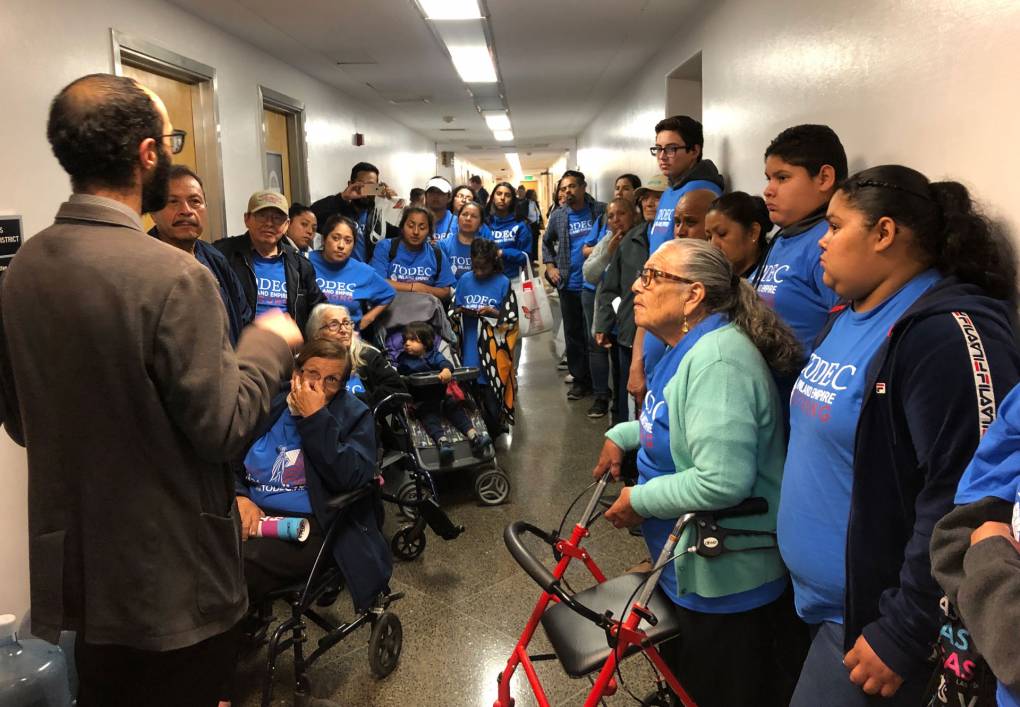
California Poised to Offer Public Health Care to Undocumented Elders in 'Historic Moment'
Separated at the Border, a Father Reunites With His Son in California. But Struggles Remain
Senate Democrats Rally for 'Dreamers' Bill, Facing Stiff GOP Opposition
Una 'brecha' del estímulo económico: Por qué muchos inmigrantes indocumentados no han podido recibir el alivio financiero de California que les corresponde
‘Reunification Alone Is Not Enough’: Biden Task Force Finds 2,100 Children May Still Be Separated From Parents
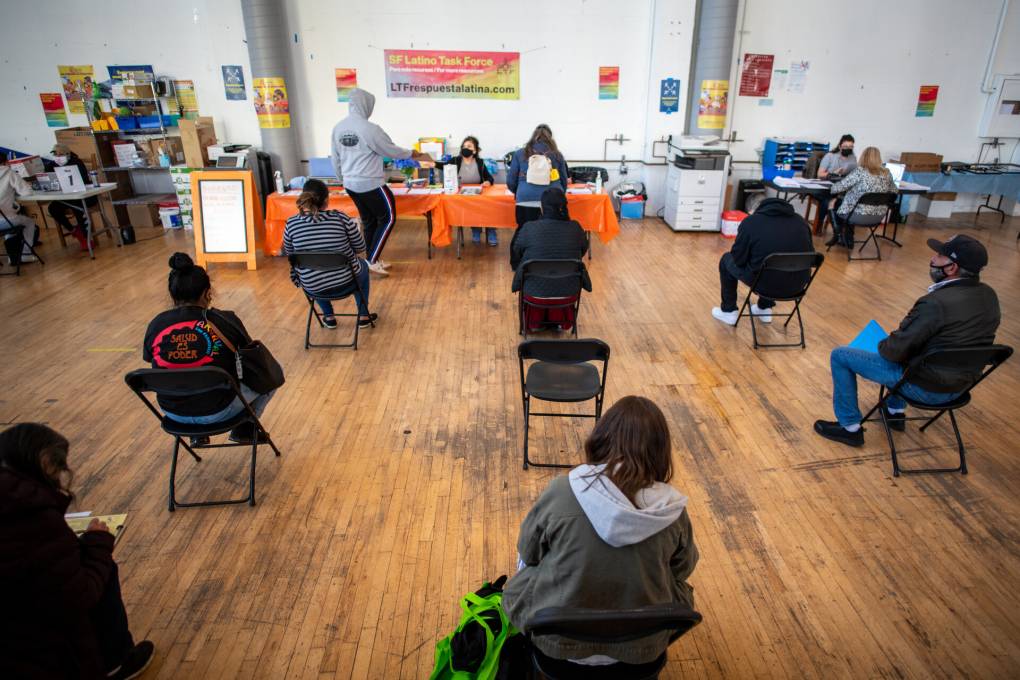
The ‘Golden State Stimulus’ Includes Undocumented Californians, But Many Can’t Access Their Checks
‘Essential for Everyone’: Food Aid Bill for Undocumented Californians Gains Momentum
'Living My Dream': After Years, Transgender Asylum Seeker Finally Makes it to the US
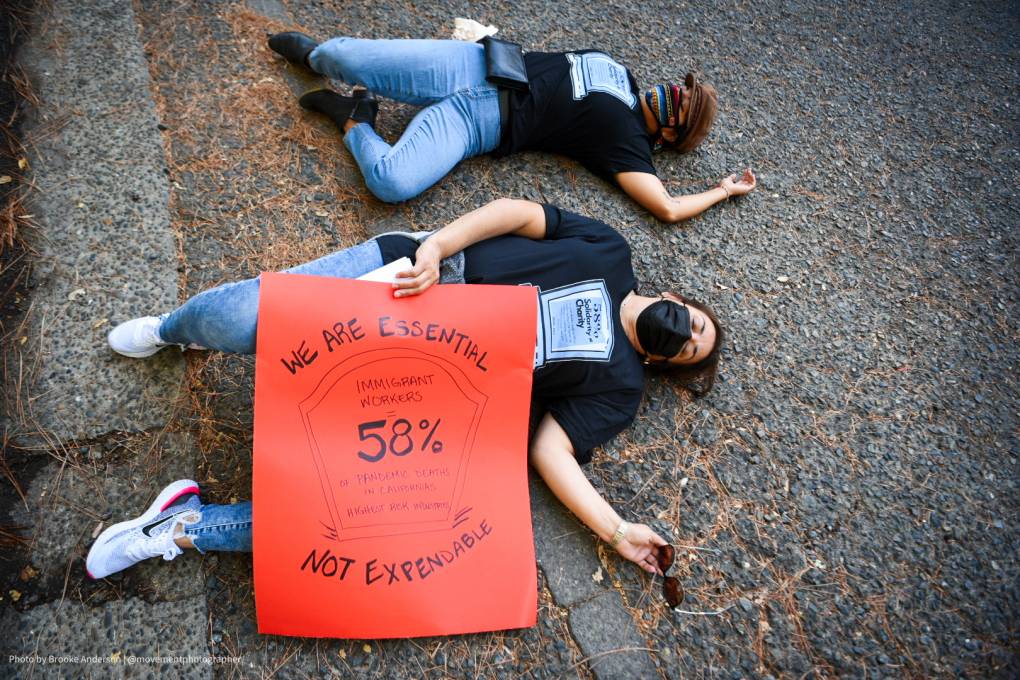
Activists Stage 'Die-in' at Newsom Residence to Demand More Relief for Immigrant Workers
'Minimal to Non-Existent': Safety Inspector Shortage Worsened in Pandemic, Leaving California Workers Vulnerable
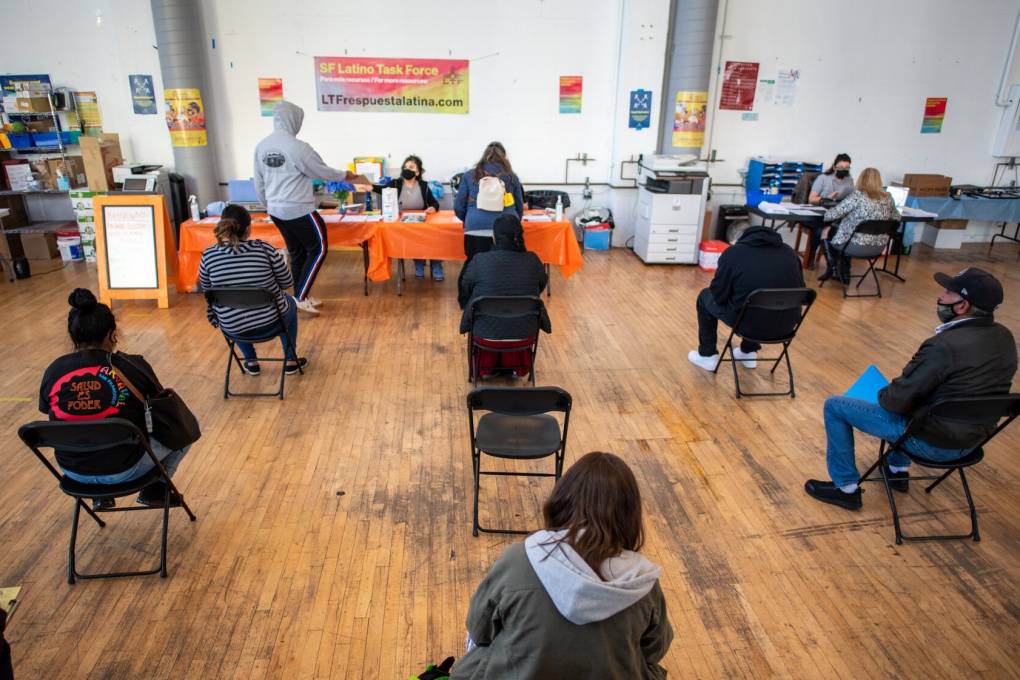
A ‘Stimulus Gap’: Why Many Undocumented Californians Are Missing Out on Pandemic Aid Meant for Them
window.__IS_SSR__=true
window.__INITIAL_STATE__={
"attachmentsReducer": {
"audio_0": {
"type": "attachments",
"id": "audio_0",
"imgSizes": {
"kqedFullSize": {
"file": "https://ww2.kqed.org/news/wp-content/themes/KQED-unified/img/audio_bgs/background0.jpg"
}
}
},
"audio_1": {
"type": "attachments",
"id": "audio_1",
"imgSizes": {
"kqedFullSize": {
"file": "https://ww2.kqed.org/news/wp-content/themes/KQED-unified/img/audio_bgs/background1.jpg"
}
}
},
"audio_2": {
"type": "attachments",
"id": "audio_2",
"imgSizes": {
"kqedFullSize": {
"file": "https://ww2.kqed.org/news/wp-content/themes/KQED-unified/img/audio_bgs/background2.jpg"
}
}
},
"audio_3": {
"type": "attachments",
"id": "audio_3",
"imgSizes": {
"kqedFullSize": {
"file": "https://ww2.kqed.org/news/wp-content/themes/KQED-unified/img/audio_bgs/background3.jpg"
}
}
},
"audio_4": {
"type": "attachments",
"id": "audio_4",
"imgSizes": {
"kqedFullSize": {
"file": "https://ww2.kqed.org/news/wp-content/themes/KQED-unified/img/audio_bgs/background4.jpg"
}
}
},
"placeholder": {
"type": "attachments",
"id": "placeholder",
"imgSizes": {
"thumbnail": {
"file": "https://cdn.kqed.org/wp-content/uploads/2024/12/KQED-Default-Image-816638274-2000x1333-1-160x107.jpg",
"width": 160,
"height": 107,
"mimeType": "image/jpeg"
},
"medium": {
"file": "https://cdn.kqed.org/wp-content/uploads/2024/12/KQED-Default-Image-816638274-2000x1333-1-800x533.jpg",
"width": 800,
"height": 533,
"mimeType": "image/jpeg"
},
"medium_large": {
"file": "https://cdn.kqed.org/wp-content/uploads/2024/12/KQED-Default-Image-816638274-2000x1333-1-768x512.jpg",
"width": 768,
"height": 512,
"mimeType": "image/jpeg"
},
"large": {
"file": "https://cdn.kqed.org/wp-content/uploads/2024/12/KQED-Default-Image-816638274-2000x1333-1-1020x680.jpg",
"width": 1020,
"height": 680,
"mimeType": "image/jpeg"
},
"1536x1536": {
"file": "https://cdn.kqed.org/wp-content/uploads/2024/12/KQED-Default-Image-816638274-2000x1333-1-1536x1024.jpg",
"width": 1536,
"height": 1024,
"mimeType": "image/jpeg"
},
"fd-lrg": {
"file": "https://cdn.kqed.org/wp-content/uploads/2024/12/KQED-Default-Image-816638274-2000x1333-1-1536x1024.jpg",
"width": 1536,
"height": 1024,
"mimeType": "image/jpeg"
},
"fd-med": {
"file": "https://cdn.kqed.org/wp-content/uploads/2024/12/KQED-Default-Image-816638274-2000x1333-1-1020x680.jpg",
"width": 1020,
"height": 680,
"mimeType": "image/jpeg"
},
"fd-sm": {
"file": "https://cdn.kqed.org/wp-content/uploads/2024/12/KQED-Default-Image-816638274-2000x1333-1-800x533.jpg",
"width": 800,
"height": 533,
"mimeType": "image/jpeg"
},
"post-thumbnail": {
"file": "https://cdn.kqed.org/wp-content/uploads/2024/12/KQED-Default-Image-816638274-2000x1333-1-672x372.jpg",
"width": 672,
"height": 372,
"mimeType": "image/jpeg"
},
"twentyfourteen-full-width": {
"file": "https://cdn.kqed.org/wp-content/uploads/2024/12/KQED-Default-Image-816638274-2000x1333-1-1038x576.jpg",
"width": 1038,
"height": 576,
"mimeType": "image/jpeg"
},
"xxsmall": {
"file": "https://cdn.kqed.org/wp-content/uploads/2024/12/KQED-Default-Image-816638274-2000x1333-1-160x107.jpg",
"width": 160,
"height": 107,
"mimeType": "image/jpeg"
},
"xsmall": {
"file": "https://cdn.kqed.org/wp-content/uploads/2024/12/KQED-Default-Image-816638274-2000x1333-1-672x372.jpg",
"width": 672,
"height": 372,
"mimeType": "image/jpeg"
},
"small": {
"file": "https://cdn.kqed.org/wp-content/uploads/2024/12/KQED-Default-Image-816638274-2000x1333-1-672x372.jpg",
"width": 672,
"height": 372,
"mimeType": "image/jpeg"
},
"xlarge": {
"file": "https://cdn.kqed.org/wp-content/uploads/2024/12/KQED-Default-Image-816638274-2000x1333-1-1020x680.jpg",
"width": 1020,
"height": 680,
"mimeType": "image/jpeg"
},
"full-width": {
"file": "https://cdn.kqed.org/wp-content/uploads/2024/12/KQED-Default-Image-816638274-2000x1333-1-1920x1280.jpg",
"width": 1920,
"height": 1280,
"mimeType": "image/jpeg"
},
"guest-author-32": {
"file": "https://cdn.kqed.org/wp-content/uploads/2025/01/KQED-Default-Image-816638274-1333x1333-1-160x160.jpg",
"width": 32,
"height": 32,
"mimeType": "image/jpeg"
},
"guest-author-50": {
"file": "https://cdn.kqed.org/wp-content/uploads/2025/01/KQED-Default-Image-816638274-1333x1333-1-160x160.jpg",
"width": 50,
"height": 50,
"mimeType": "image/jpeg"
},
"guest-author-64": {
"file": "https://cdn.kqed.org/wp-content/uploads/2025/01/KQED-Default-Image-816638274-1333x1333-1-160x160.jpg",
"width": 64,
"height": 64,
"mimeType": "image/jpeg"
},
"guest-author-96": {
"file": "https://cdn.kqed.org/wp-content/uploads/2025/01/KQED-Default-Image-816638274-1333x1333-1-160x160.jpg",
"width": 96,
"height": 96,
"mimeType": "image/jpeg"
},
"guest-author-128": {
"file": "https://cdn.kqed.org/wp-content/uploads/2025/01/KQED-Default-Image-816638274-1333x1333-1-160x160.jpg",
"width": 128,
"height": 128,
"mimeType": "image/jpeg"
},
"detail": {
"file": "https://cdn.kqed.org/wp-content/uploads/2025/01/KQED-Default-Image-816638274-1333x1333-1-160x160.jpg",
"width": 160,
"height": 160,
"mimeType": "image/jpeg"
},
"kqedFullSize": {
"file": "https://cdn.kqed.org/wp-content/uploads/2024/12/KQED-Default-Image-816638274-2000x1333-1.jpg",
"width": 2000,
"height": 1333
}
}
},
"news_11879843": {
"type": "attachments",
"id": "news_11879843",
"meta": {
"index": "attachments_1716263798",
"site": "news",
"id": "11879843",
"found": true
},
"parent": 11879724,
"imgSizes": {
"twentyfourteen-full-width": {
"file": "https://ww2.kqed.org/app/uploads/sites/10/2021/06/RS50190_GettyImages-1310021506-qut-1038x576.jpg",
"width": 1038,
"mimeType": "image/jpeg",
"height": 576
},
"thumbnail": {
"file": "https://ww2.kqed.org/app/uploads/sites/10/2021/06/RS50190_GettyImages-1310021506-qut-160x105.jpg",
"width": 160,
"mimeType": "image/jpeg",
"height": 105
},
"post-thumbnail": {
"file": "https://ww2.kqed.org/app/uploads/sites/10/2021/06/RS50190_GettyImages-1310021506-qut-672x372.jpg",
"width": 672,
"mimeType": "image/jpeg",
"height": 372
},
"kqedFullSize": {
"file": "https://ww2.kqed.org/app/uploads/sites/10/2021/06/RS50190_GettyImages-1310021506-qut.jpg",
"width": 1920,
"height": 1257
},
"large": {
"file": "https://ww2.kqed.org/app/uploads/sites/10/2021/06/RS50190_GettyImages-1310021506-qut-1020x668.jpg",
"width": 1020,
"mimeType": "image/jpeg",
"height": 668
},
"1536x1536": {
"file": "https://ww2.kqed.org/app/uploads/sites/10/2021/06/RS50190_GettyImages-1310021506-qut-1536x1006.jpg",
"width": 1536,
"mimeType": "image/jpeg",
"height": 1006
},
"medium": {
"file": "https://ww2.kqed.org/app/uploads/sites/10/2021/06/RS50190_GettyImages-1310021506-qut-800x524.jpg",
"width": 800,
"mimeType": "image/jpeg",
"height": 524
}
},
"publishDate": 1625008489,
"modified": 1625008728,
"caption": "TODEC Executive Director Luz Gallegos holds a sign reading ‘COVID-19 Vaccine’ before conducting a vaccine information clinic for farmworkers on March 30, 2021 in Winchester, California. TODEC is an immigrant advocacy organization which has been traveling to agricultural sites to educate farmworkers while dispelling myths about the vaccines. She called the expansion of Medi-Cal benefits to undocumented elders 'a historic moment' for California.",
"description": "TODEC Executive Director Luz Gallegos holds a sign reading ‘COVID-19 Vaccine’ before conducting a vaccine information clinic for farmworkers on March 30, 2021 in Winchester, California. TODEC is an immigrant advocacy organization which has been traveling to agricultural sites to educate farmworkers while dispelling myths about the vaccines. She called the expansion of Medi-Cal benefits to undocumented elders 'a historic moment' for California.",
"title": "Aid Group Spreads Word On COVID-19 Vaccines To Farm Workers In California",
"credit": "Mario Tama/Getty Images",
"status": "inherit",
"altTag": null,
"isLoading": false,
"fetchFailed": false
},
"news_11879270": {
"type": "attachments",
"id": "news_11879270",
"meta": {
"index": "attachments_1716263798",
"site": "news",
"id": "11879270",
"found": true
},
"parent": 11879266,
"imgSizes": {
"twentyfourteen-full-width": {
"file": "https://ww2.kqed.org/app/uploads/sites/10/2021/06/TODEChallway-1038x576.jpg",
"width": 1038,
"mimeType": "image/jpeg",
"height": 576
},
"thumbnail": {
"file": "https://ww2.kqed.org/app/uploads/sites/10/2021/06/TODEChallway-160x111.jpg",
"width": 160,
"mimeType": "image/jpeg",
"height": 111
},
"post-thumbnail": {
"file": "https://ww2.kqed.org/app/uploads/sites/10/2021/06/TODEChallway-672x372.jpg",
"width": 672,
"mimeType": "image/jpeg",
"height": 372
},
"kqedFullSize": {
"file": "https://ww2.kqed.org/app/uploads/sites/10/2021/06/TODEChallway.jpg",
"width": 1920,
"height": 1331
},
"large": {
"file": "https://ww2.kqed.org/app/uploads/sites/10/2021/06/TODEChallway-1020x707.jpg",
"width": 1020,
"mimeType": "image/jpeg",
"height": 707
},
"1536x1536": {
"file": "https://ww2.kqed.org/app/uploads/sites/10/2021/06/TODEChallway-1536x1065.jpg",
"width": 1536,
"mimeType": "image/jpeg",
"height": 1065
},
"medium": {
"file": "https://ww2.kqed.org/app/uploads/sites/10/2021/06/TODEChallway-800x555.jpg",
"width": 800,
"mimeType": "image/jpeg",
"height": 555
}
},
"publishDate": 1624579492,
"modified": 1624580612,
"caption": "Members of TODEC, a legal center and immigrant justice organization, listen to a staffer with Assemblymember Eloise Reyes' office in Sacramento in 2019. The group traveled to the Capitol to advocate for Medi-Cal expansion to undocumented seniors.",
"description": "Members of TODEC, a legal center and immigrant justice organization, listen to a staffer with Assemblymember Eloise Reyes' office in Sacramento in 2019. The group traveled to the Capitol to advocate for Medi-Cal expansion to undocumented seniors.",
"title": "TODEChallway",
"credit": "Courtesy TODEC",
"status": "inherit",
"altTag": null,
"isLoading": false,
"fetchFailed": false
},
"news_11878927": {
"type": "attachments",
"id": "news_11878927",
"meta": {
"index": "attachments_1716263798",
"site": "news",
"id": "11878927",
"found": true
},
"parent": 11878926,
"imgSizes": {
"twentyfourteen-full-width": {
"file": "https://ww2.kqed.org/app/uploads/sites/10/2021/06/c5d_2709-edit_custom-75c88cba370469aa5a9079c20e1553aeb840673e-1038x576.jpg",
"width": 1038,
"mimeType": "image/jpeg",
"height": 576
},
"thumbnail": {
"file": "https://ww2.kqed.org/app/uploads/sites/10/2021/06/c5d_2709-edit_custom-75c88cba370469aa5a9079c20e1553aeb840673e-160x114.jpg",
"width": 160,
"mimeType": "image/jpeg",
"height": 114
},
"post-thumbnail": {
"file": "https://ww2.kqed.org/app/uploads/sites/10/2021/06/c5d_2709-edit_custom-75c88cba370469aa5a9079c20e1553aeb840673e-672x372.jpg",
"width": 672,
"mimeType": "image/jpeg",
"height": 372
},
"kqedFullSize": {
"file": "https://ww2.kqed.org/app/uploads/sites/10/2021/06/c5d_2709-edit_custom-75c88cba370469aa5a9079c20e1553aeb840673e-scaled-e1624391822888.jpg",
"width": 1920,
"height": 1372
},
"2048x2048": {
"file": "https://ww2.kqed.org/app/uploads/sites/10/2021/06/c5d_2709-edit_custom-75c88cba370469aa5a9079c20e1553aeb840673e-2048x1463.jpg",
"width": 2048,
"mimeType": "image/jpeg",
"height": 1463
},
"large": {
"file": "https://ww2.kqed.org/app/uploads/sites/10/2021/06/c5d_2709-edit_custom-75c88cba370469aa5a9079c20e1553aeb840673e-1020x729.jpg",
"width": 1020,
"mimeType": "image/jpeg",
"height": 729
},
"1536x1536": {
"file": "https://ww2.kqed.org/app/uploads/sites/10/2021/06/c5d_2709-edit_custom-75c88cba370469aa5a9079c20e1553aeb840673e-1536x1097.jpg",
"width": 1536,
"mimeType": "image/jpeg",
"height": 1097
},
"full-width": {
"file": "https://ww2.kqed.org/app/uploads/sites/10/2021/06/c5d_2709-edit_custom-75c88cba370469aa5a9079c20e1553aeb840673e-1920x1372.jpg",
"width": 1920,
"mimeType": "image/jpeg",
"height": 1372
},
"medium": {
"file": "https://ww2.kqed.org/app/uploads/sites/10/2021/06/c5d_2709-edit_custom-75c88cba370469aa5a9079c20e1553aeb840673e-800x571.jpg",
"width": 800,
"mimeType": "image/jpeg",
"height": 571
}
},
"publishDate": 1624390884,
"modified": 1624469907,
"caption": "Melvin and his son, Néstor, were one family that was separated under former President Donald Trump's zero-tolerance immigration policy. Néstor says he would have frequent nightmares about the separation.",
"description": "Melvin and his son, Néstor, were one family that was separated under former President Trump's zero-tolerance immigration policy. Néstor says he would have frequent nightmares about the separation.",
"title": "Melvin and his son, Néstor, were one family that was separated under former President Trump's zero-tolerance immigration policy. Néstor says he would have frequent nightmares about the separation.",
"credit": "Jessica Pons/NPR",
"status": "inherit",
"altTag": null,
"isLoading": false,
"fetchFailed": false
},
"news_11878241": {
"type": "attachments",
"id": "news_11878241",
"meta": {
"index": "attachments_1716263798",
"site": "news",
"id": "11878241",
"found": true
},
"parent": 11878192,
"imgSizes": {
"twentyfourteen-full-width": {
"file": "https://ww2.kqed.org/app/uploads/sites/10/2021/06/GettyImages-1232609803-1024x576.jpg",
"width": 1024,
"mimeType": "image/jpeg",
"height": 576
},
"thumbnail": {
"file": "https://ww2.kqed.org/app/uploads/sites/10/2021/06/GettyImages-1232609803-160x107.jpg",
"width": 160,
"mimeType": "image/jpeg",
"height": 107
},
"post-thumbnail": {
"file": "https://ww2.kqed.org/app/uploads/sites/10/2021/06/GettyImages-1232609803-672x372.jpg",
"width": 672,
"mimeType": "image/jpeg",
"height": 372
},
"kqedFullSize": {
"file": "https://ww2.kqed.org/app/uploads/sites/10/2021/06/GettyImages-1232609803.jpg",
"width": 1024,
"height": 683
},
"large": {
"file": "https://ww2.kqed.org/app/uploads/sites/10/2021/06/GettyImages-1232609803-1020x680.jpg",
"width": 1020,
"mimeType": "image/jpeg",
"height": 680
},
"medium": {
"file": "https://ww2.kqed.org/app/uploads/sites/10/2021/06/GettyImages-1232609803-800x534.jpg",
"width": 800,
"mimeType": "image/jpeg",
"height": 534
}
},
"publishDate": 1623872044,
"modified": 1623883880,
"caption": "Activists from migrant advocate groups Cosecha (Harvest) and TPS Alliance march near the White House on April 30, 2021, to demand President Biden push the Senate to approve legislation giving a path to citizenship to recipients of Temporary Protected Status and Deferred Action for Childhood Arrivals.",
"description": null,
"title": "US-POLITICS-IMMIGRATION-PROTEST",
"credit": "Nicholas Kamm/AFP via Getty Images",
"status": "inherit",
"altTag": null,
"isLoading": false,
"fetchFailed": false
},
"news_11877671": {
"type": "attachments",
"id": "news_11877671",
"meta": {
"index": "attachments_1716263798",
"site": "news",
"id": "11877671",
"found": true
},
"parent": 11877669,
"imgSizes": {
"twentyfourteen-full-width": {
"file": "https://ww2.kqed.org/app/uploads/sites/10/2021/06/RS49132_013_SanFrancisco_MEDADairoRomero_05192021-qut-1-1038x576.jpg",
"width": 1038,
"mimeType": "image/jpeg",
"height": 576
},
"thumbnail": {
"file": "https://ww2.kqed.org/app/uploads/sites/10/2021/06/RS49132_013_SanFrancisco_MEDADairoRomero_05192021-qut-1-160x107.jpg",
"width": 160,
"mimeType": "image/jpeg",
"height": 107
},
"post-thumbnail": {
"file": "https://ww2.kqed.org/app/uploads/sites/10/2021/06/RS49132_013_SanFrancisco_MEDADairoRomero_05192021-qut-1-672x372.jpg",
"width": 672,
"mimeType": "image/jpeg",
"height": 372
},
"kqedFullSize": {
"file": "https://ww2.kqed.org/app/uploads/sites/10/2021/06/RS49132_013_SanFrancisco_MEDADairoRomero_05192021-qut-1.jpg",
"width": 1682,
"height": 1121
},
"large": {
"file": "https://ww2.kqed.org/app/uploads/sites/10/2021/06/RS49132_013_SanFrancisco_MEDADairoRomero_05192021-qut-1-1020x680.jpg",
"width": 1020,
"mimeType": "image/jpeg",
"height": 680
},
"1536x1536": {
"file": "https://ww2.kqed.org/app/uploads/sites/10/2021/06/RS49132_013_SanFrancisco_MEDADairoRomero_05192021-qut-1-1536x1024.jpg",
"width": 1536,
"mimeType": "image/jpeg",
"height": 1024
},
"medium": {
"file": "https://ww2.kqed.org/app/uploads/sites/10/2021/06/RS49132_013_SanFrancisco_MEDADairoRomero_05192021-qut-1-800x533.jpg",
"width": 800,
"mimeType": "image/jpeg",
"height": 533
}
},
"publishDate": 1623399309,
"modified": 1623400117,
"caption": "El 'Mission Resource Hub' en San Francisco ha ayudado a cientos de familias a presentar sus impuestos y calificar para la ayuda del programa estatal 'Golden State Stimulus'. Pero muchos inmigrantes sin números de Seguro Social han enfrentado grandes obstáculos al intentar presentar la solicitud por primera vez.",
"description": "El 'Mission Resource Hub' en San Francisco ha ayudado a cientos de familias a presentar sus impuestos y calificar para la ayuda del programa estatal 'Golden State Stimulus'. Pero muchos inmigrantes sin números de Seguro Social han enfrentado grandes obstáculos al intentar presentar la solicitud por primera vez.",
"title": "RS49132_013_SanFrancisco_MEDADairoRomero_05192021-qut (1)",
"credit": "Beth LaBerge/KQED",
"status": "inherit",
"altTag": "Varias personas esperan sentadas en sillas para que las atiendan.",
"isLoading": false,
"fetchFailed": false
},
"news_11877202": {
"type": "attachments",
"id": "news_11877202",
"meta": {
"index": "attachments_1716263798",
"site": "news",
"id": "11877202",
"found": true
},
"title": "US-MAYDAY-RALLY",
"publishDate": 1623184946,
"status": "inherit",
"parent": 11877128,
"modified": 1749679480,
"caption": "A woman protests family separations at the border as a coalition of activist groups and labor unions participates in a May Day march in Los Angeles for workers and human rights in 2021.",
"credit": "David McNew/AFP via Getty Images",
"altTag": null,
"description": null,
"imgSizes": {
"medium": {
"file": "https://cdn.kqed.org/wp-content/uploads/sites/10/2021/06/GettyImages-1232636077-800x534.jpg",
"width": 800,
"height": 534,
"mimeType": "image/jpeg"
},
"large": {
"file": "https://cdn.kqed.org/wp-content/uploads/sites/10/2021/06/GettyImages-1232636077-1020x680.jpg",
"width": 1020,
"height": 680,
"mimeType": "image/jpeg"
},
"thumbnail": {
"file": "https://cdn.kqed.org/wp-content/uploads/sites/10/2021/06/GettyImages-1232636077-160x107.jpg",
"width": 160,
"height": 107,
"mimeType": "image/jpeg"
},
"post-thumbnail": {
"file": "https://cdn.kqed.org/wp-content/uploads/sites/10/2021/06/GettyImages-1232636077-672x372.jpg",
"width": 672,
"height": 372,
"mimeType": "image/jpeg"
},
"twentyfourteen-full-width": {
"file": "https://cdn.kqed.org/wp-content/uploads/sites/10/2021/06/GettyImages-1232636077-1024x576.jpg",
"width": 1024,
"height": 576,
"mimeType": "image/jpeg"
},
"kqedFullSize": {
"file": "https://cdn.kqed.org/wp-content/uploads/sites/10/2021/06/GettyImages-1232636077.jpg",
"width": 1024,
"height": 683
}
},
"isLoading": false,
"fetchFailed": false
},
"news_11876122": {
"type": "attachments",
"id": "news_11876122",
"meta": {
"index": "attachments_1716263798",
"site": "news",
"id": "11876122",
"found": true
},
"parent": 11874637,
"imgSizes": {
"twentyfourteen-full-width": {
"file": "https://ww2.kqed.org/app/uploads/sites/10/2021/06/RS49123_004_SanFrancisco_MEDADairoRomero_05192021-qut-1038x576.jpg",
"width": 1038,
"mimeType": "image/jpeg",
"height": 576
},
"thumbnail": {
"file": "https://ww2.kqed.org/app/uploads/sites/10/2021/06/RS49123_004_SanFrancisco_MEDADairoRomero_05192021-qut-160x107.jpg",
"width": 160,
"mimeType": "image/jpeg",
"height": 107
},
"post-thumbnail": {
"file": "https://ww2.kqed.org/app/uploads/sites/10/2021/06/RS49123_004_SanFrancisco_MEDADairoRomero_05192021-qut-672x372.jpg",
"width": 672,
"mimeType": "image/jpeg",
"height": 372
},
"kqedFullSize": {
"file": "https://ww2.kqed.org/app/uploads/sites/10/2021/06/RS49123_004_SanFrancisco_MEDADairoRomero_05192021-qut.jpg",
"width": 1920,
"height": 1280
},
"large": {
"file": "https://ww2.kqed.org/app/uploads/sites/10/2021/06/RS49123_004_SanFrancisco_MEDADairoRomero_05192021-qut-1020x680.jpg",
"width": 1020,
"mimeType": "image/jpeg",
"height": 680
},
"1536x1536": {
"file": "https://ww2.kqed.org/app/uploads/sites/10/2021/06/RS49123_004_SanFrancisco_MEDADairoRomero_05192021-qut-1536x1024.jpg",
"width": 1536,
"mimeType": "image/jpeg",
"height": 1024
},
"medium": {
"file": "https://ww2.kqed.org/app/uploads/sites/10/2021/06/RS49123_004_SanFrancisco_MEDADairoRomero_05192021-qut-800x533.jpg",
"width": 800,
"mimeType": "image/jpeg",
"height": 533
}
},
"publishDate": 1622541047,
"modified": 1622541460,
"caption": "When Leydi needed help requesting an emergency appointment with the Mexican consulate in San Francisco, she turned to Dairo Romero, community initiatives manager at MEDA, for help. He was able to write her a letter explaining her family's situation and need for passports. Romero helps another person file their taxes on the second floor of the Mission Food Hub in San Francisco on May 19, 2021.",
"description": "Dairo Romero helps another person file their taxes on the second floor of the Mission Food Hub in San Francisco on May 19, 2021.",
"title": "RS49123_004_SanFrancisco_MEDADairoRomero_05192021-qut",
"credit": "Beth LaBerge/KQED",
"status": "inherit",
"altTag": "Dairo Romero, community initiatives manager at MEDA, sits at a table as he helps out a person file their taxes.",
"isLoading": false,
"fetchFailed": false
},
"news_11876780": {
"type": "attachments",
"id": "news_11876780",
"meta": {
"index": "attachments_1716263798",
"site": "news",
"id": "11876780",
"found": true
},
"parent": 11876704,
"imgSizes": {
"thumbnail": {
"file": "https://ww2.kqed.org/app/uploads/sites/10/2021/06/GettyImages-1232601824-160x86.jpg",
"width": 160,
"mimeType": "image/jpeg",
"height": 86
},
"post-thumbnail": {
"file": "https://ww2.kqed.org/app/uploads/sites/10/2021/06/GettyImages-1232601824-672x372.jpg",
"width": 672,
"mimeType": "image/jpeg",
"height": 372
},
"kqedFullSize": {
"file": "https://ww2.kqed.org/app/uploads/sites/10/2021/06/GettyImages-1232601824.jpg",
"width": 1024,
"height": 550
},
"large": {
"file": "https://ww2.kqed.org/app/uploads/sites/10/2021/06/GettyImages-1232601824-1020x548.jpg",
"width": 1020,
"mimeType": "image/jpeg",
"height": 548
},
"medium": {
"file": "https://ww2.kqed.org/app/uploads/sites/10/2021/06/GettyImages-1232601824-800x430.jpg",
"width": 800,
"mimeType": "image/jpeg",
"height": 430
}
},
"publishDate": 1622845458,
"modified": 1622845533,
"caption": "Los Angeles County Regional Food Bank workers help distribute food to some 2,000 vehicles expected to arrive in Willowbrook on April 29, 2021, part of an ongoing effort to help people affected by the coronavirus pandemic.",
"description": null,
"title": "US-HEALTH-VIRUS-FOOD",
"credit": "Frederic J. Brown/AFP via Getty Images",
"status": "inherit",
"altTag": null,
"isLoading": false,
"fetchFailed": false
},
"news_11876812": {
"type": "attachments",
"id": "news_11876812",
"meta": {
"index": "attachments_1716263798",
"site": "news",
"id": "11876812",
"found": true
},
"parent": 11876583,
"imgSizes": {
"twentyfourteen-full-width": {
"file": "https://ww2.kqed.org/app/uploads/sites/10/2021/06/Luna-Times-Square-1-1038x576.jpg",
"width": 1038,
"mimeType": "image/jpeg",
"height": 576
},
"thumbnail": {
"file": "https://ww2.kqed.org/app/uploads/sites/10/2021/06/Luna-Times-Square-1-160x137.jpg",
"width": 160,
"mimeType": "image/jpeg",
"height": 137
},
"post-thumbnail": {
"file": "https://ww2.kqed.org/app/uploads/sites/10/2021/06/Luna-Times-Square-1-672x372.jpg",
"width": 672,
"mimeType": "image/jpeg",
"height": 372
},
"kqedFullSize": {
"file": "https://ww2.kqed.org/app/uploads/sites/10/2021/06/Luna-Times-Square-1.jpg",
"width": 1920,
"height": 1649
},
"large": {
"file": "https://ww2.kqed.org/app/uploads/sites/10/2021/06/Luna-Times-Square-1-1020x876.jpg",
"width": 1020,
"mimeType": "image/jpeg",
"height": 876
},
"1536x1536": {
"file": "https://ww2.kqed.org/app/uploads/sites/10/2021/06/Luna-Times-Square-1-1536x1319.jpg",
"width": 1536,
"mimeType": "image/jpeg",
"height": 1319
},
"medium": {
"file": "https://ww2.kqed.org/app/uploads/sites/10/2021/06/Luna-Times-Square-1-800x687.jpg",
"width": 800,
"mimeType": "image/jpeg",
"height": 687
}
},
"publishDate": 1622849237,
"modified": 1622849275,
"caption": "Luna Guzmán poses in New York City's Times Square. After years of struggling to make it to California from Guatemala, Luna has been granted humanitarian parole, and allowed to wait for her asylum court date in New York City.",
"description": null,
"title": "Luna-Times-Square",
"credit": "Courtesy Luna Guzmán",
"status": "inherit",
"altTag": null,
"isLoading": false,
"fetchFailed": false
},
"news_11876313": {
"type": "attachments",
"id": "news_11876313",
"meta": {
"index": "attachments_1716263798",
"site": "news",
"id": "11876313",
"found": true
},
"parent": 11876312,
"imgSizes": {
"twentyfourteen-full-width": {
"file": "https://ww2.kqed.org/app/uploads/sites/10/2021/06/IMG_1938-1038x576.jpeg",
"width": 1038,
"mimeType": "image/jpeg",
"height": 576
},
"thumbnail": {
"file": "https://ww2.kqed.org/app/uploads/sites/10/2021/06/IMG_1938-160x107.jpeg",
"width": 160,
"mimeType": "image/jpeg",
"height": 107
},
"post-thumbnail": {
"file": "https://ww2.kqed.org/app/uploads/sites/10/2021/06/IMG_1938-672x372.jpeg",
"width": 672,
"mimeType": "image/jpeg",
"height": 372
},
"kqedFullSize": {
"file": "https://ww2.kqed.org/app/uploads/sites/10/2021/06/IMG_1938.jpeg",
"width": 1620,
"height": 1080
},
"large": {
"file": "https://ww2.kqed.org/app/uploads/sites/10/2021/06/IMG_1938-1020x680.jpeg",
"width": 1020,
"mimeType": "image/jpeg",
"height": 680
},
"1536x1536": {
"file": "https://ww2.kqed.org/app/uploads/sites/10/2021/06/IMG_1938-1536x1024.jpeg",
"width": 1536,
"mimeType": "image/jpeg",
"height": 1024
},
"medium": {
"file": "https://ww2.kqed.org/app/uploads/sites/10/2021/06/IMG_1938-800x533.jpeg",
"width": 800,
"mimeType": "image/jpeg",
"height": 533
}
},
"publishDate": 1622658997,
"modified": 1622659296,
"caption": "Activists from across California staged a 'die-in' at Gov. Gavin Newsom's home to bring attention to what they see as a lack of equitable COVID-19 relief for immigrant workers.",
"description": null,
"title": "IMG_1938",
"credit": "Courtesy of Brooke Anderson (@MovementPhotographer)",
"status": "inherit",
"altTag": null,
"isLoading": false,
"fetchFailed": false
},
"news_11876348": {
"type": "attachments",
"id": "news_11876348",
"meta": {
"index": "attachments_1716263798",
"site": "news",
"id": "11876348",
"found": true
},
"parent": 11875988,
"imgSizes": {
"twentyfourteen-full-width": {
"file": "https://ww2.kqed.org/app/uploads/sites/10/2021/06/RS49630_GettyImages-1231067411-qut-1038x576.jpg",
"width": 1038,
"mimeType": "image/jpeg",
"height": 576
},
"thumbnail": {
"file": "https://ww2.kqed.org/app/uploads/sites/10/2021/06/RS49630_GettyImages-1231067411-qut-160x94.jpg",
"width": 160,
"mimeType": "image/jpeg",
"height": 94
},
"post-thumbnail": {
"file": "https://ww2.kqed.org/app/uploads/sites/10/2021/06/RS49630_GettyImages-1231067411-qut-672x372.jpg",
"width": 672,
"mimeType": "image/jpeg",
"height": 372
},
"kqedFullSize": {
"file": "https://ww2.kqed.org/app/uploads/sites/10/2021/06/RS49630_GettyImages-1231067411-qut.jpg",
"width": 1920,
"height": 1130
},
"large": {
"file": "https://ww2.kqed.org/app/uploads/sites/10/2021/06/RS49630_GettyImages-1231067411-qut-1020x600.jpg",
"width": 1020,
"mimeType": "image/jpeg",
"height": 600
},
"1536x1536": {
"file": "https://ww2.kqed.org/app/uploads/sites/10/2021/06/RS49630_GettyImages-1231067411-qut-1536x904.jpg",
"width": 1536,
"mimeType": "image/jpeg",
"height": 904
},
"medium": {
"file": "https://ww2.kqed.org/app/uploads/sites/10/2021/06/RS49630_GettyImages-1231067411-qut-800x471.jpg",
"width": 800,
"mimeType": "image/jpeg",
"height": 471
}
},
"publishDate": 1622665917,
"modified": 1622666197,
"caption": "A demonstrator joins fast-food workers and their supporters on Feb. 9, 2021 in Los Angeles to protest unsafe working conditions and campaigns of intimidation against workers who call out their employers due to job safety concerns during the coronavirus pandemic. ",
"description": "A demonstrator joins fast-food workers and their supporters on Feb. 9, 2021 in Los Angeles to protest unsafe working conditions and campaigns of intimidation against workers who call out their employers due to job safety concerns during the coronavirus pandemic. ",
"title": "US-HEALTH-VIRUS-STRIKE",
"credit": "FREDERIC J. BROWN/AFP via Getty Images",
"status": "inherit",
"altTag": null,
"isLoading": false,
"fetchFailed": false
},
"news_11874638": {
"type": "attachments",
"id": "news_11874638",
"meta": {
"index": "attachments_1716263798",
"site": "news",
"id": "11874638",
"found": true
},
"parent": 11874637,
"imgSizes": {
"twentyfourteen-full-width": {
"file": "https://ww2.kqed.org/app/uploads/sites/10/2021/05/RS49132_013_SanFrancisco_MEDADairoRomero_05192021-qut-1038x576.jpg",
"width": 1038,
"mimeType": "image/jpeg",
"height": 576
},
"thumbnail": {
"file": "https://ww2.kqed.org/app/uploads/sites/10/2021/05/RS49132_013_SanFrancisco_MEDADairoRomero_05192021-qut-160x107.jpg",
"width": 160,
"mimeType": "image/jpeg",
"height": 107
},
"post-thumbnail": {
"file": "https://ww2.kqed.org/app/uploads/sites/10/2021/05/RS49132_013_SanFrancisco_MEDADairoRomero_05192021-qut-672x372.jpg",
"width": 672,
"mimeType": "image/jpeg",
"height": 372
},
"kqedFullSize": {
"file": "https://ww2.kqed.org/app/uploads/sites/10/2021/05/RS49132_013_SanFrancisco_MEDADairoRomero_05192021-qut.jpg",
"width": 1920,
"height": 1280
},
"large": {
"file": "https://ww2.kqed.org/app/uploads/sites/10/2021/05/RS49132_013_SanFrancisco_MEDADairoRomero_05192021-qut-1020x680.jpg",
"width": 1020,
"mimeType": "image/jpeg",
"height": 680
},
"1536x1536": {
"file": "https://ww2.kqed.org/app/uploads/sites/10/2021/05/RS49132_013_SanFrancisco_MEDADairoRomero_05192021-qut-1536x1024.jpg",
"width": 1536,
"mimeType": "image/jpeg",
"height": 1024
},
"medium": {
"file": "https://ww2.kqed.org/app/uploads/sites/10/2021/05/RS49132_013_SanFrancisco_MEDADairoRomero_05192021-qut-800x533.jpg",
"width": 800,
"mimeType": "image/jpeg",
"height": 533
}
},
"publishDate": 1621611959,
"modified": 1622608689,
"caption": "The Mission Resource Hub in San Francisco has helped hundreds of families file their taxes and qualify for Golden State Stimulus program aid. But many immigrants without Social Security numbers have run into major obstacles trying to file for the first time.",
"description": "People wait for tax help at the Mission Food Hub in San Francisco on May 19, 2021.",
"title": "RS49132_013_SanFrancisco_MEDADairoRomero_05192021-qut",
"credit": "Beth LaBerge/KQED",
"status": "inherit",
"altTag": "People wait for tax help at the Mission Food Hub in San Francisco on May 19, 2021.",
"isLoading": false,
"fetchFailed": false
}
},
"audioPlayerReducer": {
"postId": "stream_live",
"isPaused": true,
"isPlaying": false,
"pfsActive": false,
"pledgeModalIsOpen": true,
"playerDrawerIsOpen": false,
"liveAudioPlayStartedAt": 0,
"liveAudioPlayContext": ""
},
"authorsReducer": {
"byline_news_11878926": {
"type": "authors",
"id": "byline_news_11878926",
"meta": {
"override": true
},
"slug": "byline_news_11878926",
"name": "\u003ca href=\"https://www.npr.org/people/896256272/lilly-quiroz\">Lilly Quiroz\u003c/a>, \u003ca href=\"https://www.npr.org/people/128649543/rachel-martin\">Rachel Martin\u003c/a> and \u003ca href=\"https://www.npr.org/people/757442538/catherine-whelan\">Catherine Whelan\u003c/a>",
"isLoading": false
},
"sasha-khokha": {
"type": "authors",
"id": "254",
"meta": {
"index": "authors_1716337520",
"id": "254",
"found": true
},
"name": "Sasha Khokha",
"firstName": "Sasha",
"lastName": "Khokha",
"slug": "sasha-khokha",
"email": "skhokha@kqed.org",
"display_author_email": true,
"staff_mastheads": [
"news"
],
"title": "Host, The California Report Magazine",
"bio": "Sasha Khokha is the host of \u003cem>The California Report's \u003c/em> weekly magazine program, which takes listeners on sound-rich excursions to meet the people that make the Golden State unique -- through audio documentaries and long-form stories. As \u003cem>The California Report's\u003c/em> Central Valley Bureau Chief based in Fresno for nearly a dozen years, Sasha brought the lives and concerns of rural Californians to listeners around the state. Her reporting helped expose the hidden price immigrant women janitors and farmworkers may pay to keep their jobs: sexual assault at work. It inspired two new California laws to protect them from sexual harassment. She was a key member of the reporting team for the Frontline film \u003cem>Rape on the Night Shift, \u003c/em>which was nominated for two national Emmys. Sasha has also won a national Edward R. Murrow and a national PRNDI award for investigative reporting, as well as multiple prizes from the Society for Professional Journalists. Sasha is a proud alum of the UC Berkeley Graduate School of Journalism and Brown University and a member of the South Asian Journalists Association.",
"avatar": "https://secure.gravatar.com/avatar/e4b5e1541aaeea2aa356aa1fb2a68950?s=600&d=blank&r=g",
"twitter": "KQEDSashaKhokha",
"facebook": null,
"instagram": null,
"linkedin": null,
"sites": [
{
"site": "news",
"roles": [
"editor"
]
},
{
"site": "stateofhealth",
"roles": [
"author"
]
},
{
"site": "science",
"roles": [
"author"
]
},
{
"site": "quest",
"roles": [
"subscriber"
]
}
],
"headData": {
"title": "Sasha Khokha | KQED",
"description": "Host, The California Report Magazine",
"ogImgSrc": "https://secure.gravatar.com/avatar/e4b5e1541aaeea2aa356aa1fb2a68950?s=600&d=blank&r=g",
"twImgSrc": "https://secure.gravatar.com/avatar/e4b5e1541aaeea2aa356aa1fb2a68950?s=600&d=blank&r=g"
},
"isLoading": false,
"link": "/author/sasha-khokha"
},
"tychehendricks": {
"type": "authors",
"id": "259",
"meta": {
"index": "authors_1716337520",
"id": "259",
"found": true
},
"name": "Tyche Hendricks",
"firstName": "Tyche",
"lastName": "Hendricks",
"slug": "tychehendricks",
"email": "thendricks@kqed.org",
"display_author_email": true,
"staff_mastheads": [
"news"
],
"title": "KQED Senior Editor, Immigration",
"bio": "\u003cspan style=\"font-weight: 400;\">Tyche Hendricks is KQED’s senior editor for immigration, leading coverage of the policy and politics that affect California’s immigrant communities. Her work for KQED’s radio and online audiences is also carried on NPR and other national outlets. She has been recognized with awards from the Radio and Television News Directors Association, the Society for Professional Journalists; the Education Writers Association; the Best of the West and the National Federation of Community Broadcasters. Before joining KQED in 2010, Tyche spent more than a dozen years as a newspaper reporter, notably at the \u003c/span>\u003ci>\u003cspan style=\"font-weight: 400;\">San Francisco Chronicle\u003c/span>\u003c/i>\u003cspan style=\"font-weight: 400;\">. At different times she has covered criminal justice, government and politics and urban planning. Tyche has taught in the MFA Creative Writing program at the University of San Francisco and at UC Berkeley’s Graduate School of Journalism, where she was co-director of a national immigration symposium for professional journalists. She is the author of \u003c/span>\u003ci>\u003cspan style=\"font-weight: 400;\">The Wind Doesn't Need a Passport: Stories from the U.S.-Mexico Borderlands\u003c/span>\u003c/i>\u003cspan style=\"font-weight: 400;\"> (University of California Press). \u003c/span>",
"avatar": "https://secure.gravatar.com/avatar/b8ee458e2731c2d43df86882ce17267e?s=600&d=blank&r=g",
"twitter": "tychehendricks",
"facebook": null,
"instagram": null,
"linkedin": null,
"sites": [
{
"site": "news",
"roles": [
"editor"
]
},
{
"site": "stateofhealth",
"roles": [
"editor"
]
}
],
"headData": {
"title": "Tyche Hendricks | KQED",
"description": "KQED Senior Editor, Immigration",
"ogImgSrc": "https://secure.gravatar.com/avatar/b8ee458e2731c2d43df86882ce17267e?s=600&d=blank&r=g",
"twImgSrc": "https://secure.gravatar.com/avatar/b8ee458e2731c2d43df86882ce17267e?s=600&d=blank&r=g"
},
"isLoading": false,
"link": "/author/tychehendricks"
},
"dkatayama": {
"type": "authors",
"id": "7240",
"meta": {
"index": "authors_1716337520",
"id": "7240",
"found": true
},
"name": "Devin Katayama",
"firstName": "Devin",
"lastName": "Katayama",
"slug": "dkatayama",
"email": "dkatayama@kqed.org",
"display_author_email": true,
"staff_mastheads": [
"news"
],
"title": "Editor of Talent and Development",
"bio": "Devin Katayama is former Editor of Talent and Development for KQED. He supported our internship program and on-call staff by looking for equitable opportunities to improve the newsroom.\r\n\r\nHe previously hosted The Bay and American Suburb podcasts from KQED News. Prior to returning to the Bay Area in 2015, Devin was the education reporter for WFPL in Louisville and worked as a producer with radio stations in Chicago and Portland, OR. His work has appeared on NPR’s \u003cem>Morning Edition, All Things Considered, The Takeaway\u003c/em> and \u003cem>Here and Now.\u003c/em>\r\n\r\nDevin earned his MA in Journalism from Columbia College Chicago, where he was a Follett Fellow and the recipient of the 2011 Studs Terkel Community Media Workshop Scholarship for his story on Chicago's homeless youth. He won WBUR's 2014 Daniel Schorr award and a regional RTNDA Edward R. Murrow Award for his documentary \"At Risk\" that looked at issues facing some of Louisville's students. Devin has also received numerous local awards from the Associated Press and the Society of Professional Journalists.",
"avatar": "https://secure.gravatar.com/avatar/d0d2978a31002fb2de107921a8e18405?s=600&d=blank&r=g",
"twitter": "RadioDevin",
"facebook": null,
"instagram": null,
"linkedin": null,
"sites": [
{
"site": "arts",
"roles": []
},
{
"site": "news",
"roles": [
"author"
]
},
{
"site": "stateofhealth",
"roles": [
"author"
]
},
{
"site": "forum",
"roles": [
"editor"
]
},
{
"site": "perspectives",
"roles": [
"editor"
]
}
],
"headData": {
"title": "Devin Katayama | KQED",
"description": "Editor of Talent and Development",
"ogImgSrc": "https://secure.gravatar.com/avatar/d0d2978a31002fb2de107921a8e18405?s=600&d=blank&r=g",
"twImgSrc": "https://secure.gravatar.com/avatar/d0d2978a31002fb2de107921a8e18405?s=600&d=blank&r=g"
},
"isLoading": false,
"link": "/author/dkatayama"
},
"ecruzguevarra": {
"type": "authors",
"id": "8654",
"meta": {
"index": "authors_1716337520",
"id": "8654",
"found": true
},
"name": "Ericka Cruz Guevarra",
"firstName": "Ericka",
"lastName": "Cruz Guevarra",
"slug": "ecruzguevarra",
"email": "ecruzguevarra@kqed.org",
"display_author_email": true,
"staff_mastheads": [
"news"
],
"title": "Producer, The Bay Podcast",
"bio": "Ericka Cruz Guevarra is host of \u003ca href=\"https://www.kqed.org/podcasts/thebay\">\u003cem>The Bay\u003c/em>\u003c/a> podcast at KQED. Before host, she was the show’s producer. Her work in that capacity includes a three-part reported series on policing in Vallejo, which won a 2020 excellence in journalism award from the Society of Professional Journalists. Ericka has worked as a breaking news reporter at Oregon Public Broadcasting, helped produce the Code Switch podcast, and was KQED’s inaugural Raul Ramirez Diversity Fund intern. She’s also an alumna of NPR’s Next Generation Radio program. Send her an email if you have strong feelings about whether Fairfield and Suisun City are the Bay. Ericka is represented by SAG-AFTRA.",
"avatar": "https://secure.gravatar.com/avatar/25e5ab8d3d53fad2dcc7bb2b5c506b1a?s=600&d=blank&r=g",
"twitter": "NotoriousECG",
"facebook": null,
"instagram": null,
"linkedin": null,
"sites": [
{
"site": "arts",
"roles": [
"subscriber"
]
},
{
"site": "news",
"roles": [
"editor",
"manage_categories"
]
},
{
"site": "futureofyou",
"roles": [
"subscriber"
]
},
{
"site": "stateofhealth",
"roles": [
"subscriber"
]
},
{
"site": "science",
"roles": [
"editor"
]
},
{
"site": "forum",
"roles": [
"subscriber"
]
}
],
"headData": {
"title": "Ericka Cruz Guevarra | KQED",
"description": "Producer, The Bay Podcast",
"ogImgSrc": "https://secure.gravatar.com/avatar/25e5ab8d3d53fad2dcc7bb2b5c506b1a?s=600&d=blank&r=g",
"twImgSrc": "https://secure.gravatar.com/avatar/25e5ab8d3d53fad2dcc7bb2b5c506b1a?s=600&d=blank&r=g"
},
"isLoading": false,
"link": "/author/ecruzguevarra"
},
"fjhabvala": {
"type": "authors",
"id": "8659",
"meta": {
"index": "authors_1716337520",
"id": "8659",
"found": true
},
"name": "Farida Jhabvala Romero",
"firstName": "Farida",
"lastName": "Jhabvala Romero",
"slug": "fjhabvala",
"email": "fjhabvala@kqed.org",
"display_author_email": true,
"staff_mastheads": [
"news"
],
"title": "KQED Contributor",
"bio": "\u003cspan style=\"font-weight: 400;\">Farida Jhabvala Romero is a Labor Correspondent for KQED. She previously covered immigration. Farida was \u003ca href=\"https://www.ccnma.org/2022-most-influential-latina-journalists\">named\u003c/a> one of the 10 Most Influential Latina Journalists in California in 2022 by the California Chicano News Media Association. Her work has won awards from the Society of Professional Journalists (Northern California), as well as a national and regional Edward M. Murrow Award for the collaborative reporting projects “Dangerous Air” and “Graying California.” \u003c/span>\u003cspan style=\"font-weight: 400;\">Before joining KQED, Farida worked as a producer at Radio Bilingüe, a national public radio network. Farida earned her master’s degree in journalism from Stanford University.\u003c/span>",
"avatar": "https://secure.gravatar.com/avatar/c3ab27c5554b67b478f80971e515aa02?s=600&d=blank&r=g",
"twitter": "FaridaJhabvala",
"facebook": null,
"instagram": null,
"linkedin": "https://www.linkedin.com/in/faridajhabvala/",
"sites": [
{
"site": "news",
"roles": [
"editor"
]
},
{
"site": "stateofhealth",
"roles": [
"author"
]
}
],
"headData": {
"title": "Farida Jhabvala Romero | KQED",
"description": "KQED Contributor",
"ogImgSrc": "https://secure.gravatar.com/avatar/c3ab27c5554b67b478f80971e515aa02?s=600&d=blank&r=g",
"twImgSrc": "https://secure.gravatar.com/avatar/c3ab27c5554b67b478f80971e515aa02?s=600&d=blank&r=g"
},
"isLoading": false,
"link": "/author/fjhabvala"
},
"mwiley": {
"type": "authors",
"id": "11526",
"meta": {
"index": "authors_1716337520",
"id": "11526",
"found": true
},
"name": "Michelle Wiley",
"firstName": "Michelle",
"lastName": "Wiley",
"slug": "mwiley",
"email": "mwiley@KQED.org",
"display_author_email": true,
"staff_mastheads": [],
"title": null,
"bio": "Michelle Wiley was the senior editor of weekends.",
"avatar": "https://secure.gravatar.com/avatar/3b897d82a09e8587e8e73fa69fbcc635?s=600&d=blank&r=g",
"twitter": "michelleewiley",
"facebook": null,
"instagram": null,
"linkedin": null,
"sites": [
{
"site": "",
"roles": [
"editor"
]
},
{
"site": "arts",
"roles": [
"editor"
]
},
{
"site": "news",
"roles": [
"subscriber"
]
},
{
"site": "lowdown",
"roles": [
"editor"
]
},
{
"site": "science",
"roles": [
"editor"
]
},
{
"site": "podcasts",
"roles": [
"editor"
]
}
],
"headData": {
"title": "Michelle Wiley | KQED",
"description": null,
"ogImgSrc": "https://secure.gravatar.com/avatar/3b897d82a09e8587e8e73fa69fbcc635?s=600&d=blank&r=g",
"twImgSrc": "https://secure.gravatar.com/avatar/3b897d82a09e8587e8e73fa69fbcc635?s=600&d=blank&r=g"
},
"isLoading": false,
"link": "/author/mwiley"
},
"lsarah": {
"type": "authors",
"id": "11626",
"meta": {
"index": "authors_1716337520",
"id": "11626",
"found": true
},
"name": "Lakshmi Sarah",
"firstName": "Lakshmi",
"lastName": "Sarah",
"slug": "lsarah",
"email": "lsarah@kqed.org",
"display_author_email": false,
"staff_mastheads": [],
"title": "Digital Producer",
"bio": "Lakshmi Sarah is an educator, author and journalist with a focus on innovative storytelling. She has worked with newspapers, radio and magazines from Ahmedabad, India to Los Angeles, California. She has written and produced for Die Zeit, Global Voices, AJ+, KQED, Fusion Media Group and the New York Times.",
"avatar": "https://secure.gravatar.com/avatar/652dcaecd8b28826fc17a8b2d6bb4e93?s=600&d=blank&r=g",
"twitter": "lakitalki",
"facebook": null,
"instagram": "https://www.instagram.com/laki.talki/",
"linkedin": "https://www.linkedin.com/in/lakisarah/",
"sites": [
{
"site": "arts",
"roles": []
},
{
"site": "news",
"roles": []
},
{
"site": "bayareabites",
"roles": []
},
{
"site": "science",
"roles": []
}
],
"headData": {
"title": "Lakshmi Sarah | KQED",
"description": "Digital Producer",
"ogImgSrc": "https://secure.gravatar.com/avatar/652dcaecd8b28826fc17a8b2d6bb4e93?s=600&d=blank&r=g",
"twImgSrc": "https://secure.gravatar.com/avatar/652dcaecd8b28826fc17a8b2d6bb4e93?s=600&d=blank&r=g"
},
"isLoading": false,
"link": "/author/lsarah"
},
"amontecillo": {
"type": "authors",
"id": "11649",
"meta": {
"index": "authors_1716337520",
"id": "11649",
"found": true
},
"name": "Alan Montecillo",
"firstName": "Alan",
"lastName": "Montecillo",
"slug": "amontecillo",
"email": "amontecillo@kqed.org",
"display_author_email": false,
"staff_mastheads": [
"news"
],
"title": "KQED Contributor",
"bio": "Alan Montecillo is the senior editor of \u003cem>\u003ca href=\"http://kqed.org/thebay\">The Bay\u003c/a>, \u003c/em> KQED's local news podcast. Before moving to the Bay Area, he worked as a senior talk show producer for WILL in Champaign-Urbana, Illinois and at Oregon Public Broadcasting in Portland, Oregon. He has won journalism awards from the Society of Professional Journalists Northern California, the Public Media Journalists Association, The Signal Awards, and has also received a regional Edward R. Murrow award. Alan is a Filipino American from Hong Kong and a graduate of Reed College.",
"avatar": "https://secure.gravatar.com/avatar/d5e4e7a76481969ccba76f4e2b5ccabc?s=600&d=blank&r=g",
"twitter": "alanmontecillo",
"facebook": null,
"instagram": null,
"linkedin": null,
"sites": [
{
"site": "",
"roles": [
"editor"
]
},
{
"site": "news",
"roles": [
"editor",
"manage_categories"
]
}
],
"headData": {
"title": "Alan Montecillo | KQED",
"description": "KQED Contributor",
"ogImgSrc": "https://secure.gravatar.com/avatar/d5e4e7a76481969ccba76f4e2b5ccabc?s=600&d=blank&r=g",
"twImgSrc": "https://secure.gravatar.com/avatar/d5e4e7a76481969ccba76f4e2b5ccabc?s=600&d=blank&r=g"
},
"isLoading": false,
"link": "/author/amontecillo"
},
"ccabreralomeli": {
"type": "authors",
"id": "11708",
"meta": {
"index": "authors_1716337520",
"id": "11708",
"found": true
},
"name": "Carlos Cabrera-Lomelí",
"firstName": "Carlos",
"lastName": "Cabrera-Lomelí",
"slug": "ccabreralomeli",
"email": "ccabreralomeli@KQED.org",
"display_author_email": true,
"staff_mastheads": [
"news"
],
"title": "Community Reporter",
"bio": "Carlos Cabrera-Lomelí is a community reporter with KQED's digital engagement team. He also reports and co-produces for KQED's bilingual news hub KQED en Español. He grew up in San Francisco's Mission District and has previously worked with Univision, 48 Hills and REFORMA in Mexico City.",
"avatar": "https://secure.gravatar.com/avatar/e95ff80bb2eaf18a8f2af4dcf7ffb54b?s=600&d=mm&r=g",
"twitter": "@LomeliCabrera",
"facebook": null,
"instagram": null,
"linkedin": null,
"sites": [
{
"site": "arts",
"roles": [
"editor"
]
},
{
"site": "news",
"roles": [
"editor"
]
},
{
"site": "about",
"roles": [
"editor"
]
},
{
"site": "science",
"roles": [
"editor"
]
},
{
"site": "perspectives",
"roles": [
"editor"
]
},
{
"site": "elections",
"roles": [
"editor"
]
},
{
"site": "liveblog",
"roles": [
"contributor"
]
}
],
"headData": {
"title": "Carlos Cabrera-Lomelí | KQED",
"description": "Community Reporter",
"ogImgSrc": "https://secure.gravatar.com/avatar/e95ff80bb2eaf18a8f2af4dcf7ffb54b?s=600&d=mm&r=g",
"twImgSrc": "https://secure.gravatar.com/avatar/e95ff80bb2eaf18a8f2af4dcf7ffb54b?s=600&d=mm&r=g"
},
"isLoading": false,
"link": "/author/ccabreralomeli"
}
},
"pagesReducer": {
"news_tag_immigration": {
"type": "terms",
"id": "news_20202",
"meta": {
"index": "terms_1716263798",
"site": "news",
"id": "20202",
"score": 6.9038835
},
"featImg": null,
"name": "immigration",
"description": null,
"taxonomy": "tag",
"headData": {
"twImgId": null,
"twTitle": null,
"ogTitle": null,
"ogImgId": null,
"twDescription": null,
"description": null,
"title": "immigration Archives | KQED News",
"ogDescription": null
},
"ttid": 20219,
"slug": "immigration",
"isLoading": false,
"title": "immigration",
"pageMeta": {
"site": "news",
"WpPageTemplate": "page-topic-editorial",
"currentPage": 54
},
"blocks": [
{
"blockName": "kqed/post-list",
"attrs": {
"layout": "cardArticle2",
"query": "posts/news?tag=immigration",
"seeMore": false,
"paginated": true,
"page": 54
}
},
{
"blockName": "kqed/ad"
}
]
}
},
"pfsSessionReducer": {},
"postsReducer": {
"stream_live": {
"type": "live",
"id": "stream_live",
"audioUrl": "https://streams.kqed.org/kqedradio",
"title": "Live Stream",
"excerpt": "Live Stream information currently unavailable.",
"link": "/radio",
"featImg": "",
"label": {
"name": "KQED Live",
"link": "/"
}
},
"stream_kqedNewscast": {
"type": "posts",
"id": "stream_kqedNewscast",
"audioUrl": "https://www.kqed.org/.stream/anon/radio/RDnews/newscast.mp3?_=1",
"title": "KQED Newscast",
"featImg": "",
"label": {
"name": "88.5 FM",
"link": "/"
}
},
"news_11879724": {
"type": "posts",
"id": "news_11879724",
"meta": {
"index": "posts_1716263798",
"site": "news",
"id": "11879724",
"score": null,
"sort": [
1625009945000
]
},
"guestAuthors": [],
"slug": "so-thankful-california-to-offer-medi-cal-to-235000-undocumented-californians",
"title": "'So Thankful': California to Offer Medi-Cal to 235,000 Undocumented Adults",
"publishDate": 1625009945,
"format": "audio",
"headTitle": "‘So Thankful’: California to Offer Medi-Cal to 235,000 Undocumented Adults | KQED",
"labelTerm": {
"term": 72,
"site": "news"
},
"content": "\u003cp>Nearly a quarter of a million undocumented adults and seniors in California – many of whom are or have been essential workers – will gain access to low-cost or free medical services as early as next year under a groundbreaking budget deal approved Monday by the Legislature.\u003c/p>\n\u003cp>California is now positioned to officially become the first state in the nation to offer public health insurance to low-income, undocumented residents ages 50 and older, a highly vulnerable population which has been made even more vulnerable by the deadly COVID-19 pandemic.\u003c/p>\n\u003cp>Gov. Gavin Newsom is expected to sign the agreement into law before July 1.\u003c/p>\n\u003cp>State Insurance Commissioner Ricardo Lara, who as senator introduced the first (unsuccessful) \u003ca href=\"https://leginfo.legislature.ca.gov/faces/billTextClient.xhtml?bill_id=201320140SB1005\">bill\u003c/a> in 2014 to end the exclusion of undocumented immigrants from full Medi-Cal benefits, applauded the news as “a dream come true.”\u003c/p>\n\u003cp>“California’s immigrants have given so much to our state and now they’ll have the dignity of accessing health care,” Lara said. “Today the state Legislature and the governor will be erasing a vestige of discrimination against our immigrant communities that so many of us have fought for years to overcome.”\u003c/p>\n\u003cp>The whopping $262.6 billion state budget deal includes spending on a range of programs with an eye toward social equity, including other projects like universal transitional kindergarten, enhanced after-school and summer learning programs and an effort to make the state’s top public universities more accessible to in-state students.\u003c/p>\n\u003cp>[pullquote size=\"medium\" align=\"right\" citation=\"Isabel, 76-year-old farmworker\"]‘I am so thankful. I’m very excited. We worked so much in the fields and we never got any benefits.’[/pullquote]Assembly Budget Chair Phil Ting, D-San Francisco, said the record-breaking budget presents a once-in-a-lifetime opportunity.\u003c/p>\n\u003cp>“This is a budget that really demonstrates that our values are protecting the most vulnerable families, the families who need our help the most in the time of the pandemic. But also well into the future,” Ting said.\u003c/p>\n\u003cp>[ad fullwidth]\u003c/p>\n\u003cp>One of the \u003ca href=\"https://lao.ca.gov/Publications/Report/4423\">estimated 235,000 undocumented immigrants\u003c/a> who could benefit from low or no-cost health care is Isabel, a 76-year-old former farmworker who did not want her last name used because of her immigration status.\u003c/p>\n\u003cp>“I am so thankful. I’m very excited,” she said, her voice breaking. “We worked so much in the fields and we never got any benefits.”\u003c/p>\n\u003cp>Isabel, who picked crops for more than three decades, said she feared for her life after she became seriously ill with COVID-19. But she did not seek medical care because she lacked insurance and worried about the cost of seeing a doctor, she said in Spanish.\u003c/p>\n\u003cp>“It was very, very difficult,” said Isabel, adding that her daughter, who lives with her, also got sick with the virus. “When we went to sleep, we thought we wouldn’t rise in the morning.”\u003c/p>\n\u003cp>Nearly 1.5 million unauthorized immigrants lacked health insurance last year, the largest group of uninsured in the state, according to a \u003ca href=\"https://laborcenter.berkeley.edu/ca-coverage-gains-to-erode-without-further-state-action/\">report\u003c/a> by the UC Berkeley Labor Center.\u003c/p>\n\u003cp>Undocumented immigrants in the United States \u003ca href=\"https://www.americanimmigrationcouncil.org/topics/tax-contributions\">pay billions of dollars in taxes\u003c/a> and often do \u003ca href=\"https://www.fwd.us/news/immigrant-essential-workers/\">essential work\u003c/a> in agriculture, food services, health care and other industries. But they are excluded from the Affordable Care Act and they cannot purchase subsidized coverage through Covered California, the state’s ACA health exchange.\u003c/p>\n\u003cp>In recent years, the state began offering full-scope Medi-Cal – covering doctor’s visits, prescriptions, eye and dental care and other services – to low-income undocumented children and young adults up to age 26. But older immigrants have only been eligible for limited Medi-Cal, which only covers prenatal care and health emergencies.\u003c/p>\n\u003cp>The earliest newly eligible seniors and older adults could access full coverage is May 2022, according to state Sen. María Elena Durazo, D-Los Angeles, who championed the program’s expansion. It will cost up to $1.3 billion per year, once the changes are fully established, according to the \u003ca href=\"https://abgt.assembly.ca.gov/sites/abgt.assembly.ca.gov/files/Floor%20Report%20of%20the%202021-22%20Budget%20-%20%28June%2028%2C%202021%20Version%29.pdf\">budget agreement\u003c/a>.\u003c/p>\n\u003cp>Durazo and other advocates stressed that because most undocumented adults ages 50 and older are already enrolled in restricted Medi-Cal, the state is responsible for paying the cost of emergency room visits, which are much more expensive than preventive care.\u003c/p>\n\u003cp>“That’s not a smart use of our funds,” said Durazo. “It’s much better to use our funds for preventative, primary health care. And that really matters not only to the individuals, but it matters in terms of dollars and cents.”\u003c/p>\n\u003cp>[aside label='Related Coverage' tag='undocumented-immigrants']The budget deal also includes resources to begin offering regular food assistance benefits to low-income residents, regardless of immigration status.\u003c/p>\n\u003cp>Lawmakers approved funds – up to $280 million by 2023 – to expand the \u003ca href=\"https://www.kqed.org/news/11876704/essential-for-everyone-food-aid-bill-for-undocumented-californians-gains-momentum\">California Food Assistance Program\u003c/a>. CFAP currently provides food aid to thousands of legal immigrants and refugees who have been excluded from federally funded food stamps.\u003c/p>\n\u003cp>“We are grateful to state leaders for seizing this historic opportunity to take tangible steps toward ensuring that undocumented immigrants – our neighbors, friends, colleagues, and important members of our California communities – are no longer denied basic food assistance,” said Jared Call, senior policy advocate with Nourish California, in a statement.\u003c/p>\n\u003cp>Call, whose organization co-leads the Food for All campaign, said California is set to become the first state to offer food assistance to undocumented immigrants via a permanent program.\u003c/p>\n\u003cp>Even before the COVID pandemic in California, children in families that include undocumented immigrants were three to four times more likely to grow up with unmet basic needs compared to children in non-immigrant families, according to a \u003ca href=\"https://calbudgetcenter.org/resources/state-policymakers-can-provide-food-support-to-undocumented-and-mixed-status-california-families-blocked-by-federal-policies/\">report\u003c/a> by the California Budget and Policy Center.\u003c/p>\n\u003cp>Advocates say that the process for newly eligible undocumented people to sign up for state-funded health coverage or food aid will be no different than for others applying for Medi-Cal or CalFresh. Enrollment for food assistance benefits is set to start in 2023.\u003c/p>\n\u003cp>\u003cem>This story includes reporting from KQED’s Katie Orr.\u003c/em>\u003c/p>\n\u003cp>\u003c/p>\n",
"blocks": [],
"excerpt": "Under a groundbreaking budget deal approved Monday by the Legislature, California is set to expand Medi-Cal benefits to low-income, undocumented residents ages 50 and older.",
"status": "publish",
"parent": 0,
"modified": 1726006304,
"stats": {
"hasAudio": false,
"hasVideo": false,
"hasChartOrMap": false,
"iframeSrcs": [],
"hasGoogleForm": false,
"hasGallery": false,
"hasHearkenModule": false,
"hasPolis": false,
"paragraphCount": 27,
"wordCount": 1042
},
"headData": {
"title": "'So Thankful': California to Offer Medi-Cal to 235,000 Undocumented Adults | KQED",
"description": "Under a groundbreaking budget deal approved Monday by the Legislature, California is set to expand Medi-Cal benefits to low-income, undocumented residents ages 50 and older.",
"ogTitle": "",
"ogDescription": "",
"ogImgId": "",
"twTitle": "",
"twDescription": "",
"twImgId": "",
"schema": {
"@context": "https://schema.org",
"@type": "NewsArticle",
"headline": "'So Thankful': California to Offer Medi-Cal to 235,000 Undocumented Adults",
"datePublished": "2021-06-29T16:39:05-07:00",
"dateModified": "2024-09-10T15:11:44-07:00",
"image": "https://cdn.kqed.org/wp-content/uploads/2020/02/KQED-OG-Image@1x.png",
"isAccessibleForFree": "True",
"publisher": {
"@type": "NewsMediaOrganization",
"@id": "https://www.kqed.org/#organization",
"name": "KQED",
"logo": "https://cdn.kqed.org/wp-content/uploads/2020/02/KQED-OG-Image@1x.png",
"url": "https://www.kqed.org",
"sameAs": [
"https://www.facebook.com/KQED",
"https://twitter.com/KQED",
"https://www.instagram.com/kqed/",
"https://www.tiktok.com/@kqedofficial",
"https://www.linkedin.com/company/kqed",
"https://www.youtube.com/channel/UCeC0IOo7i1P_61zVUWbJ4nw"
]
}
}
},
"audioUrl": "https://traffic.omny.fm/d/clips/0af137ef-751e-4b19-a055-aaef00d2d578/ffca7e9f-6831-41c5-bcaf-aaef00f5a073/ed7cd5f0-d68c-4bca-ab70-ad560150cf6f/audio.mp3",
"sticky": false,
"excludeFromSiteSearch": "Include",
"path": "/news/11879724/so-thankful-california-to-offer-medi-cal-to-235000-undocumented-californians",
"audioDuration": 83000,
"audioTrackLength": null,
"parsedContent": [
{
"type": "contentString",
"content": "\u003cdiv class=\"post-body\">\u003cp>\u003cp>Nearly a quarter of a million undocumented adults and seniors in California – many of whom are or have been essential workers – will gain access to low-cost or free medical services as early as next year under a groundbreaking budget deal approved Monday by the Legislature.\u003c/p>\n\u003cp>California is now positioned to officially become the first state in the nation to offer public health insurance to low-income, undocumented residents ages 50 and older, a highly vulnerable population which has been made even more vulnerable by the deadly COVID-19 pandemic.\u003c/p>\n\u003cp>Gov. Gavin Newsom is expected to sign the agreement into law before July 1.\u003c/p>\n\u003cp>State Insurance Commissioner Ricardo Lara, who as senator introduced the first (unsuccessful) \u003ca href=\"https://leginfo.legislature.ca.gov/faces/billTextClient.xhtml?bill_id=201320140SB1005\">bill\u003c/a> in 2014 to end the exclusion of undocumented immigrants from full Medi-Cal benefits, applauded the news as “a dream come true.”\u003c/p>\n\u003cp>“California’s immigrants have given so much to our state and now they’ll have the dignity of accessing health care,” Lara said. “Today the state Legislature and the governor will be erasing a vestige of discrimination against our immigrant communities that so many of us have fought for years to overcome.”\u003c/p>\n\u003cp>The whopping $262.6 billion state budget deal includes spending on a range of programs with an eye toward social equity, including other projects like universal transitional kindergarten, enhanced after-school and summer learning programs and an effort to make the state’s top public universities more accessible to in-state students.\u003c/p>\n\u003cp>\u003c/p>\u003c/div>",
"attributes": {
"named": {},
"numeric": []
}
},
{
"type": "component",
"content": "‘I am so thankful. I’m very excited. We worked so much in the fields and we never got any benefits.’",
"name": "pullquote",
"attributes": {
"named": {
"size": "medium",
"align": "right",
"citation": "Isabel, 76-year-old farmworker",
"label": ""
},
"numeric": []
}
},
{
"type": "contentString",
"content": "\u003cdiv class=\"post-body\">\u003cp>Assembly Budget Chair Phil Ting, D-San Francisco, said the record-breaking budget presents a once-in-a-lifetime opportunity.\u003c/p>\n\u003cp>“This is a budget that really demonstrates that our values are protecting the most vulnerable families, the families who need our help the most in the time of the pandemic. But also well into the future,” Ting said.\u003c/p>\n\u003cp>\u003c/p>\u003c/div>",
"attributes": {
"named": {},
"numeric": []
}
},
{
"type": "component",
"content": "",
"name": "ad",
"attributes": {
"named": {
"label": "fullwidth"
},
"numeric": [
"fullwidth"
]
}
},
{
"type": "contentString",
"content": "\u003cdiv class=\"post-body\">\u003cp>\u003c/p>\n\u003cp>One of the \u003ca href=\"https://lao.ca.gov/Publications/Report/4423\">estimated 235,000 undocumented immigrants\u003c/a> who could benefit from low or no-cost health care is Isabel, a 76-year-old former farmworker who did not want her last name used because of her immigration status.\u003c/p>\n\u003cp>“I am so thankful. I’m very excited,” she said, her voice breaking. “We worked so much in the fields and we never got any benefits.”\u003c/p>\n\u003cp>Isabel, who picked crops for more than three decades, said she feared for her life after she became seriously ill with COVID-19. But she did not seek medical care because she lacked insurance and worried about the cost of seeing a doctor, she said in Spanish.\u003c/p>\n\u003cp>“It was very, very difficult,” said Isabel, adding that her daughter, who lives with her, also got sick with the virus. “When we went to sleep, we thought we wouldn’t rise in the morning.”\u003c/p>\n\u003cp>Nearly 1.5 million unauthorized immigrants lacked health insurance last year, the largest group of uninsured in the state, according to a \u003ca href=\"https://laborcenter.berkeley.edu/ca-coverage-gains-to-erode-without-further-state-action/\">report\u003c/a> by the UC Berkeley Labor Center.\u003c/p>\n\u003cp>Undocumented immigrants in the United States \u003ca href=\"https://www.americanimmigrationcouncil.org/topics/tax-contributions\">pay billions of dollars in taxes\u003c/a> and often do \u003ca href=\"https://www.fwd.us/news/immigrant-essential-workers/\">essential work\u003c/a> in agriculture, food services, health care and other industries. But they are excluded from the Affordable Care Act and they cannot purchase subsidized coverage through Covered California, the state’s ACA health exchange.\u003c/p>\n\u003cp>In recent years, the state began offering full-scope Medi-Cal – covering doctor’s visits, prescriptions, eye and dental care and other services – to low-income undocumented children and young adults up to age 26. But older immigrants have only been eligible for limited Medi-Cal, which only covers prenatal care and health emergencies.\u003c/p>\n\u003cp>The earliest newly eligible seniors and older adults could access full coverage is May 2022, according to state Sen. María Elena Durazo, D-Los Angeles, who championed the program’s expansion. It will cost up to $1.3 billion per year, once the changes are fully established, according to the \u003ca href=\"https://abgt.assembly.ca.gov/sites/abgt.assembly.ca.gov/files/Floor%20Report%20of%20the%202021-22%20Budget%20-%20%28June%2028%2C%202021%20Version%29.pdf\">budget agreement\u003c/a>.\u003c/p>\n\u003cp>Durazo and other advocates stressed that because most undocumented adults ages 50 and older are already enrolled in restricted Medi-Cal, the state is responsible for paying the cost of emergency room visits, which are much more expensive than preventive care.\u003c/p>\n\u003cp>“That’s not a smart use of our funds,” said Durazo. “It’s much better to use our funds for preventative, primary health care. And that really matters not only to the individuals, but it matters in terms of dollars and cents.”\u003c/p>\n\u003cp>\u003c/p>\u003c/div>",
"attributes": {
"named": {},
"numeric": []
}
},
{
"type": "component",
"content": "",
"name": "aside",
"attributes": {
"named": {
"label": "Related Coverage ",
"tag": "undocumented-immigrants"
},
"numeric": []
}
},
{
"type": "contentString",
"content": "\u003cdiv class=\"post-body\">\u003cp>The budget deal also includes resources to begin offering regular food assistance benefits to low-income residents, regardless of immigration status.\u003c/p>\n\u003cp>Lawmakers approved funds – up to $280 million by 2023 – to expand the \u003ca href=\"https://www.kqed.org/news/11876704/essential-for-everyone-food-aid-bill-for-undocumented-californians-gains-momentum\">California Food Assistance Program\u003c/a>. CFAP currently provides food aid to thousands of legal immigrants and refugees who have been excluded from federally funded food stamps.\u003c/p>\n\u003cp>“We are grateful to state leaders for seizing this historic opportunity to take tangible steps toward ensuring that undocumented immigrants – our neighbors, friends, colleagues, and important members of our California communities – are no longer denied basic food assistance,” said Jared Call, senior policy advocate with Nourish California, in a statement.\u003c/p>\n\u003cp>Call, whose organization co-leads the Food for All campaign, said California is set to become the first state to offer food assistance to undocumented immigrants via a permanent program.\u003c/p>\n\u003cp>Even before the COVID pandemic in California, children in families that include undocumented immigrants were three to four times more likely to grow up with unmet basic needs compared to children in non-immigrant families, according to a \u003ca href=\"https://calbudgetcenter.org/resources/state-policymakers-can-provide-food-support-to-undocumented-and-mixed-status-california-families-blocked-by-federal-policies/\">report\u003c/a> by the California Budget and Policy Center.\u003c/p>\n\u003cp>Advocates say that the process for newly eligible undocumented people to sign up for state-funded health coverage or food aid will be no different than for others applying for Medi-Cal or CalFresh. Enrollment for food assistance benefits is set to start in 2023.\u003c/p>\n\u003cp>\u003cem>This story includes reporting from KQED’s Katie Orr.\u003c/em>\u003c/p>\n\u003cp>\u003c/p>\n\u003c/div>\u003c/p>",
"attributes": {
"named": {},
"numeric": []
}
}
],
"link": "/news/11879724/so-thankful-california-to-offer-medi-cal-to-235000-undocumented-californians",
"authors": [
"8659"
],
"programs": [
"news_72"
],
"categories": [
"news_457",
"news_1169",
"news_8",
"news_13"
],
"tags": [
"news_18538",
"news_18543",
"news_20202",
"news_2605",
"news_17968",
"news_244"
],
"featImg": "news_11879843",
"label": "news_72"
},
"news_11879266": {
"type": "posts",
"id": "news_11879266",
"meta": {
"index": "posts_1716263798",
"site": "news",
"id": "11879266",
"score": null,
"sort": [
1624608115000
]
},
"guestAuthors": [],
"slug": "california-poised-to-offer-public-health-care-to-undocumented-elders-in-historic-moment",
"title": "California Poised to Offer Public Health Care to Undocumented Elders in 'Historic Moment'",
"publishDate": 1624608115,
"format": "standard",
"headTitle": "California Poised to Offer Public Health Care to Undocumented Elders in ‘Historic Moment’ | KQED",
"labelTerm": {
"site": "news"
},
"content": "\u003cp>Laura, 76, has not seen a doctor for years.\u003c/p>\n\u003cp>The former farmworker, who did not want her last name used because of her immigration status, said she is losing her eyesight and her feet are often swollen and in pain.\u003c/p>\n\u003cp>A grandmother, Laura also suffers from headaches and shortness of breath, months after she became seriously ill with COVID-19 during the winter surge. Through it all, she has relied on home remedies and not sought medical care because she lacks health insurance, she said, in Spanish.\u003c/p>\n\u003cp>“I don’t have any money. And at my age, there’s no work,” said Laura, who picked watermelon, zucchini, pumpkin and other crops for more than 20 years in fields in Southern California.\u003c/p>\n\u003cp>But Laura may soon get access to the medical services she desperately needs, at little or no cost.\u003c/p>\n\u003cp>California is on the verge of a historic step to offer public health insurance to low-income undocumented older adults — a population that has been particularly vulnerable during the COVID-19 pandemic but left out of federal assistance programs and other safety nets.\u003c/p>\n\u003cp>Gov. Gavin Newsom and legislative leaders are expected to announce an expansion to the Medi-Cal program in the coming days as part of a final deal on the state budget, according to advocates and legislative aides.\u003c/p>\n\u003cp>[ad fullwidth]\u003c/p>\n\u003cp>The most recent negotiations in Sacramento have centered on the lower age limit for those who will be newly eligible: 50 and older, as lawmakers have previously proposed; 60 and older, as Newsom offered; or somewhere in between.\u003c/p>\n\u003cp>“We are as certain as we can be that there will be something that comes into the final budget,” said Sarah Dar, who directs health and public benefits policy at the California Immigrant Policy Center. “And it’s really just a matter of ‘What’s the age they land on?‘”\u003c/p>\n\u003cp>[pullquote size=\"medium\" align=\"right\" citation=\"Luz Gallegos, director of TODEC, a legal center and immigrant justice organization\"]‘California continues to step up and defend all Californians, especially those who are most vulnerable, who don’t have any access to safety nets, but who contribute to our state economy, have been paying taxes… and have seen nothing in return.’[/pullquote]\u003c/p>\n\u003cp>In 2014, then-state Sen. Ricardo Lara introduced the first (unsuccessful) \u003ca href=\"https://leginfo.legislature.ca.gov/faces/billAnalysisClient.xhtml?bill_id=201320140SB1005\">bill\u003c/a> to make undocumented immigrants eligible for public health coverage.\u003c/p>\n\u003cp>Since then, California has enrolled undocumented children in full-scope Medi-Cal, offering free or low-cost preventative care, doctor visits, prescriptions, dental care, vision care and other services. Last year, the state became the first in the nation to offer health coverage to undocumented young adults through age 25.\u003c/p>\n\u003cp>But more than 1.3 million undocumented Californians are projected to lack health insurance next year, remaining the largest uninsured group in the state, according to a \u003ca href=\"https://laborcenter.berkeley.edu/undocumented-californians-projected-to-remain-the-largest-group-of-uninsured-in-the-state-in-2022/\">report\u003c/a> by the UC Berkeley Labor Center.\u003c/p>\n\u003cp>Estimates vary, but depending on the final age cutoff that Newsom and legislative leaders decide for this year’s budget, roughly 80,000 to more than 200,000 undocumented Californians could gain access to Medi-Cal, including many who have worked essential jobs that are key to the state’s economy.\u003c/p>\n\u003cp>Immigrant and health advocates who have pushed California for years to extend health coverage to undocumented immigrants savored the realization that finally, older adults will most likely be eligible for coverage.\u003c/p>\n\u003cp>“At last, justice does prevail. We are in a historic moment as Californians,” said Luz Gallegos, the executive director of TODEC, a legal center and immigrant justice organization in the Inland Empire and Coachella Valley.\u003c/p>\n\u003cp>“California continues to step up and defend all Californians, especially those who are most vulnerable, who don’t have any access to safety nets, but who contribute to our state economy, have been paying taxes … and have seen nothing in return,” she added.\u003c/p>\n\u003cfigure id=\"attachment_11879325\" class=\"wp-caption aligncenter\" style=\"max-width: 1242px\">\u003cimg loading=\"lazy\" decoding=\"async\" class=\"size-full wp-image-11879325\" src=\"https://ww2.kqed.org/app/uploads/sites/10/2021/06/Gallegos.jpg\" alt=\"\" width=\"1242\" height=\"806\" srcset=\"https://cdn.kqed.org/wp-content/uploads/sites/10/2021/06/Gallegos.jpg 1242w, https://cdn.kqed.org/wp-content/uploads/sites/10/2021/06/Gallegos-800x519.jpg 800w, https://cdn.kqed.org/wp-content/uploads/sites/10/2021/06/Gallegos-1020x662.jpg 1020w, https://cdn.kqed.org/wp-content/uploads/sites/10/2021/06/Gallegos-160x104.jpg 160w\" sizes=\"auto, (max-width: 1242px) 100vw, 1242px\">\u003cfigcaption class=\"wp-caption-text\">Luz Gallegos works on COVID-19 vaccine outreach for farmworkers in Thermal, Calif. this spring. \u003ccite>(Courtesy TODEC)\u003c/cite>\u003c/figcaption>\u003c/figure>\n\u003cp>The governor’s budget \u003ca href=\"http://www.ebudget.ca.gov/2021-22/pdf/Revised/BudgetSummary/HealthandHumanServices.pdf\">revision\u003c/a> from May includes nearly $860 million in annual state funds to expand Medi-Cal to low-income undocumented adults age 60 and older, with some of that funding available next year. The Legislature’s \u003ca href=\"https://abgt.assembly.ca.gov/sites/abgt.assembly.ca.gov/files/Floor%20Report%20of%20the%202021-22%20Budget%20-%20%28June%2011%2C%202021%20Version%29.pdf\">proposal\u003c/a> dedicates $1.3 billion in annual funds to cover undocumented adults age 50 and older once the program is fully established.\u003c/p>\n\u003cp>[aside label='Related Coverage' tag='undocumented-immigrants']Gallegos, who was born in the U.S. to farmworker immigrant parents, said this likely win is personal for her. In recent years, her undocumented uncle died from cancer, she said, after he delayed seeking medical care because he was uninsured. During the pandemic, farmworkers she knows died from COVID-19 while several others became ill with the virus.\u003c/p>\n\u003cp>“We honor their lives by continuing the struggle so we don’t see no more lives taken away from our communities,” said Gallegos, her voice breaking.\u003c/p>\n\u003cp>Currently, low-income undocumented immigrants who are 26 and older are eligible for limited Medi-Cal, which only covers health care emergencies or prenatal care if they are pregnant. Undocumented immigrants are excluded from the Affordable Care Act, and cannot purchase coverage through Covered California, the state’s ACA health exchange.\u003c/p>\n\u003cp>If they are not insured by an employer or able to purchase a private plan, they must generally rely on county health programs, which vary greatly throughout the state.\u003c/p>\n\u003cp>Last year, Gov. Newsom \u003ca href=\"https://www.kqed.org/news/11814885/as-pandemic-batters-californias-economy-plan-to-insure-undocumented-seniors-in-doubt\">proposed\u003c/a> offering full-scope Medi-Cal to undocumented seniors age 65 and older. But the plan didn’t go through, as the state projected a severe economic downturn and tax losses in the billions of dollars.\u003c/p>\n\u003cp>But the financial picture for California is starkly different this year, with the state logging an eye-popping budget surplus of \u003ca href=\"https://www.kqed.org/news/11874125/californias-historic-budget-surplus-is-it-76-billion-or-38-billion\">$76 billion\u003c/a>. In addition, the pandemic highlighted how “interconnected” public health really is, with all of us having to think about whether people around us wore masks, stood far enough apart, or were vaccinated, said Dar, with the California Immigrant Policy Center.\u003c/p>\n\u003cp>“And so to give health care access to this community would mean a healthier and stronger state for all Californians,” said Dar. “Increased productivity, better health outcomes, better public health.”\u003c/p>\n\u003cp>Some opponents have argued that funds to provide health coverage to undocumented people would be better spent on other needs, such as helping struggling U.S. citizens afford their own health insurance.\u003c/p>\n\u003cp>About two in three Californians support the idea of providing health coverage to undocumented immigrants, according to a \u003ca href=\"https://www.ppic.org/wp-content/uploads/ppic-statewide-survey-californians-and-their-government-march-2021.pdf\">recent survey\u003c/a> by the Public Policy Institute of California. But many Republicans oppose it, with nearly eight in 10 saying that they are not in favor.\u003c/p>\n\u003cp>This year, Illinois became the \u003ca href=\"https://www.povertylaw.org/article/health-coverage-available-to-undocumented-seniors-in-illinois/#:~:text=Fortunately%2C%20Illinois%20has%20become%20the,citizens%20age%2065%20or%20older.\">first state\u003c/a> to extend health insurance to undocumented seniors age 65 and older.\u003c/p>\n\u003cp>Former farmworker Laura hopes she will gain access to health coverage — and low-cost medical care — in California, where she has lived since the late 1980s, most recently in Riverside county.\u003c/p>\n\u003cp>“It would help me a lot to go to the doctor and get my eyes checked out,” Laura said. “It would be the best.”\u003c/p>\n\u003cp>[ad floatright]\u003c/p>\n",
"blocks": [],
"excerpt": "Gov. Newsom and legislative leaders are expected to announce an expansion to Medi-Cal in coming days as part of a final deal on the state budget, according to advocates and legislative aides.",
"status": "publish",
"parent": 0,
"modified": 1739493723,
"stats": {
"hasAudio": false,
"hasVideo": false,
"hasChartOrMap": false,
"iframeSrcs": [],
"hasGoogleForm": false,
"hasGallery": false,
"hasHearkenModule": false,
"hasPolis": false,
"paragraphCount": 32,
"wordCount": 1213
},
"headData": {
"title": "California Poised to Offer Public Health Care to Undocumented Elders in 'Historic Moment' | KQED",
"description": "Gov. Newsom and legislative leaders are expected to announce an expansion to Medi-Cal in coming days as part of a final deal on the state budget, according to advocates and legislative aides.",
"ogTitle": "",
"ogDescription": "",
"ogImgId": "",
"twTitle": "",
"twDescription": "",
"twImgId": "",
"schema": {
"@context": "https://schema.org",
"@type": "NewsArticle",
"headline": "California Poised to Offer Public Health Care to Undocumented Elders in 'Historic Moment'",
"datePublished": "2021-06-25T01:01:55-07:00",
"dateModified": "2025-02-13T16:42:03-08:00",
"image": "https://cdn.kqed.org/wp-content/uploads/2020/02/KQED-OG-Image@1x.png",
"isAccessibleForFree": "True",
"publisher": {
"@type": "NewsMediaOrganization",
"@id": "https://www.kqed.org/#organization",
"name": "KQED",
"logo": "https://cdn.kqed.org/wp-content/uploads/2020/02/KQED-OG-Image@1x.png",
"url": "https://www.kqed.org",
"sameAs": [
"https://www.facebook.com/KQED",
"https://twitter.com/KQED",
"https://www.instagram.com/kqed/",
"https://www.tiktok.com/@kqedofficial",
"https://www.linkedin.com/company/kqed",
"https://www.youtube.com/channel/UCeC0IOo7i1P_61zVUWbJ4nw"
]
}
}
},
"audioUrl": "https://traffic.omny.fm/d/clips/0af137ef-751e-4b19-a055-aaef00d2d578/ffca7e9f-6831-41c5-bcaf-aaef00f5a073/6b9ff4f7-cdd8-4da3-874c-ad52010f7700/audio.mp3",
"sticky": false,
"path": "/news/11879266/california-poised-to-offer-public-health-care-to-undocumented-elders-in-historic-moment",
"audioTrackLength": null,
"parsedContent": [
{
"type": "contentString",
"content": "\u003cdiv class=\"post-body\">\u003cp>\u003cp>Laura, 76, has not seen a doctor for years.\u003c/p>\n\u003cp>The former farmworker, who did not want her last name used because of her immigration status, said she is losing her eyesight and her feet are often swollen and in pain.\u003c/p>\n\u003cp>A grandmother, Laura also suffers from headaches and shortness of breath, months after she became seriously ill with COVID-19 during the winter surge. Through it all, she has relied on home remedies and not sought medical care because she lacks health insurance, she said, in Spanish.\u003c/p>\n\u003cp>“I don’t have any money. And at my age, there’s no work,” said Laura, who picked watermelon, zucchini, pumpkin and other crops for more than 20 years in fields in Southern California.\u003c/p>\n\u003cp>But Laura may soon get access to the medical services she desperately needs, at little or no cost.\u003c/p>\n\u003cp>California is on the verge of a historic step to offer public health insurance to low-income undocumented older adults — a population that has been particularly vulnerable during the COVID-19 pandemic but left out of federal assistance programs and other safety nets.\u003c/p>\n\u003cp>Gov. Gavin Newsom and legislative leaders are expected to announce an expansion to the Medi-Cal program in the coming days as part of a final deal on the state budget, according to advocates and legislative aides.\u003c/p>\n\u003cp>\u003c/p>\u003c/div>",
"attributes": {
"named": {},
"numeric": []
}
},
{
"type": "component",
"content": "",
"name": "ad",
"attributes": {
"named": {
"label": "fullwidth"
},
"numeric": [
"fullwidth"
]
}
},
{
"type": "contentString",
"content": "\u003cdiv class=\"post-body\">\u003cp>\u003c/p>\n\u003cp>The most recent negotiations in Sacramento have centered on the lower age limit for those who will be newly eligible: 50 and older, as lawmakers have previously proposed; 60 and older, as Newsom offered; or somewhere in between.\u003c/p>\n\u003cp>“We are as certain as we can be that there will be something that comes into the final budget,” said Sarah Dar, who directs health and public benefits policy at the California Immigrant Policy Center. “And it’s really just a matter of ‘What’s the age they land on?‘”\u003c/p>\n\u003cp>\u003c/p>\u003c/div>",
"attributes": {
"named": {},
"numeric": []
}
},
{
"type": "component",
"content": "‘California continues to step up and defend all Californians, especially those who are most vulnerable, who don’t have any access to safety nets, but who contribute to our state economy, have been paying taxes… and have seen nothing in return.’",
"name": "pullquote",
"attributes": {
"named": {
"size": "medium",
"align": "right",
"citation": "Luz Gallegos, director of TODEC, a legal center and immigrant justice organization",
"label": ""
},
"numeric": []
}
},
{
"type": "contentString",
"content": "\u003cdiv class=\"post-body\">\u003cp>\u003c/p>\n\u003cp>In 2014, then-state Sen. Ricardo Lara introduced the first (unsuccessful) \u003ca href=\"https://leginfo.legislature.ca.gov/faces/billAnalysisClient.xhtml?bill_id=201320140SB1005\">bill\u003c/a> to make undocumented immigrants eligible for public health coverage.\u003c/p>\n\u003cp>Since then, California has enrolled undocumented children in full-scope Medi-Cal, offering free or low-cost preventative care, doctor visits, prescriptions, dental care, vision care and other services. Last year, the state became the first in the nation to offer health coverage to undocumented young adults through age 25.\u003c/p>\n\u003cp>But more than 1.3 million undocumented Californians are projected to lack health insurance next year, remaining the largest uninsured group in the state, according to a \u003ca href=\"https://laborcenter.berkeley.edu/undocumented-californians-projected-to-remain-the-largest-group-of-uninsured-in-the-state-in-2022/\">report\u003c/a> by the UC Berkeley Labor Center.\u003c/p>\n\u003cp>Estimates vary, but depending on the final age cutoff that Newsom and legislative leaders decide for this year’s budget, roughly 80,000 to more than 200,000 undocumented Californians could gain access to Medi-Cal, including many who have worked essential jobs that are key to the state’s economy.\u003c/p>\n\u003cp>Immigrant and health advocates who have pushed California for years to extend health coverage to undocumented immigrants savored the realization that finally, older adults will most likely be eligible for coverage.\u003c/p>\n\u003cp>“At last, justice does prevail. We are in a historic moment as Californians,” said Luz Gallegos, the executive director of TODEC, a legal center and immigrant justice organization in the Inland Empire and Coachella Valley.\u003c/p>\n\u003cp>“California continues to step up and defend all Californians, especially those who are most vulnerable, who don’t have any access to safety nets, but who contribute to our state economy, have been paying taxes … and have seen nothing in return,” she added.\u003c/p>\n\u003cfigure id=\"attachment_11879325\" class=\"wp-caption aligncenter\" style=\"max-width: 1242px\">\u003cimg loading=\"lazy\" decoding=\"async\" class=\"size-full wp-image-11879325\" src=\"https://ww2.kqed.org/app/uploads/sites/10/2021/06/Gallegos.jpg\" alt=\"\" width=\"1242\" height=\"806\" srcset=\"https://cdn.kqed.org/wp-content/uploads/sites/10/2021/06/Gallegos.jpg 1242w, https://cdn.kqed.org/wp-content/uploads/sites/10/2021/06/Gallegos-800x519.jpg 800w, https://cdn.kqed.org/wp-content/uploads/sites/10/2021/06/Gallegos-1020x662.jpg 1020w, https://cdn.kqed.org/wp-content/uploads/sites/10/2021/06/Gallegos-160x104.jpg 160w\" sizes=\"auto, (max-width: 1242px) 100vw, 1242px\">\u003cfigcaption class=\"wp-caption-text\">Luz Gallegos works on COVID-19 vaccine outreach for farmworkers in Thermal, Calif. this spring. \u003ccite>(Courtesy TODEC)\u003c/cite>\u003c/figcaption>\u003c/figure>\n\u003cp>The governor’s budget \u003ca href=\"http://www.ebudget.ca.gov/2021-22/pdf/Revised/BudgetSummary/HealthandHumanServices.pdf\">revision\u003c/a> from May includes nearly $860 million in annual state funds to expand Medi-Cal to low-income undocumented adults age 60 and older, with some of that funding available next year. The Legislature’s \u003ca href=\"https://abgt.assembly.ca.gov/sites/abgt.assembly.ca.gov/files/Floor%20Report%20of%20the%202021-22%20Budget%20-%20%28June%2011%2C%202021%20Version%29.pdf\">proposal\u003c/a> dedicates $1.3 billion in annual funds to cover undocumented adults age 50 and older once the program is fully established.\u003c/p>\n\u003cp>\u003c/p>\u003c/div>",
"attributes": {
"named": {},
"numeric": []
}
},
{
"type": "component",
"content": "",
"name": "aside",
"attributes": {
"named": {
"label": "Related Coverage ",
"tag": "undocumented-immigrants"
},
"numeric": []
}
},
{
"type": "contentString",
"content": "\u003cdiv class=\"post-body\">\u003cp>Gallegos, who was born in the U.S. to farmworker immigrant parents, said this likely win is personal for her. In recent years, her undocumented uncle died from cancer, she said, after he delayed seeking medical care because he was uninsured. During the pandemic, farmworkers she knows died from COVID-19 while several others became ill with the virus.\u003c/p>\n\u003cp>“We honor their lives by continuing the struggle so we don’t see no more lives taken away from our communities,” said Gallegos, her voice breaking.\u003c/p>\n\u003cp>Currently, low-income undocumented immigrants who are 26 and older are eligible for limited Medi-Cal, which only covers health care emergencies or prenatal care if they are pregnant. Undocumented immigrants are excluded from the Affordable Care Act, and cannot purchase coverage through Covered California, the state’s ACA health exchange.\u003c/p>\n\u003cp>If they are not insured by an employer or able to purchase a private plan, they must generally rely on county health programs, which vary greatly throughout the state.\u003c/p>\n\u003cp>Last year, Gov. Newsom \u003ca href=\"https://www.kqed.org/news/11814885/as-pandemic-batters-californias-economy-plan-to-insure-undocumented-seniors-in-doubt\">proposed\u003c/a> offering full-scope Medi-Cal to undocumented seniors age 65 and older. But the plan didn’t go through, as the state projected a severe economic downturn and tax losses in the billions of dollars.\u003c/p>\n\u003cp>But the financial picture for California is starkly different this year, with the state logging an eye-popping budget surplus of \u003ca href=\"https://www.kqed.org/news/11874125/californias-historic-budget-surplus-is-it-76-billion-or-38-billion\">$76 billion\u003c/a>. In addition, the pandemic highlighted how “interconnected” public health really is, with all of us having to think about whether people around us wore masks, stood far enough apart, or were vaccinated, said Dar, with the California Immigrant Policy Center.\u003c/p>\n\u003cp>“And so to give health care access to this community would mean a healthier and stronger state for all Californians,” said Dar. “Increased productivity, better health outcomes, better public health.”\u003c/p>\n\u003cp>Some opponents have argued that funds to provide health coverage to undocumented people would be better spent on other needs, such as helping struggling U.S. citizens afford their own health insurance.\u003c/p>\n\u003cp>About two in three Californians support the idea of providing health coverage to undocumented immigrants, according to a \u003ca href=\"https://www.ppic.org/wp-content/uploads/ppic-statewide-survey-californians-and-their-government-march-2021.pdf\">recent survey\u003c/a> by the Public Policy Institute of California. But many Republicans oppose it, with nearly eight in 10 saying that they are not in favor.\u003c/p>\n\u003cp>This year, Illinois became the \u003ca href=\"https://www.povertylaw.org/article/health-coverage-available-to-undocumented-seniors-in-illinois/#:~:text=Fortunately%2C%20Illinois%20has%20become%20the,citizens%20age%2065%20or%20older.\">first state\u003c/a> to extend health insurance to undocumented seniors age 65 and older.\u003c/p>\n\u003cp>Former farmworker Laura hopes she will gain access to health coverage — and low-cost medical care — in California, where she has lived since the late 1980s, most recently in Riverside county.\u003c/p>\n\u003cp>“It would help me a lot to go to the doctor and get my eyes checked out,” Laura said. “It would be the best.”\u003c/p>\n\u003cp>\u003c/p>\u003c/div>",
"attributes": {
"named": {},
"numeric": []
}
},
{
"type": "component",
"content": "",
"name": "ad",
"attributes": {
"named": {
"label": "floatright"
},
"numeric": [
"floatright"
]
}
},
{
"type": "contentString",
"content": "\u003cdiv class=\"post-body\">\u003cp>\u003c/p>\n\u003c/div>\u003c/p>",
"attributes": {
"named": {},
"numeric": []
}
}
],
"link": "/news/11879266/california-poised-to-offer-public-health-care-to-undocumented-elders-in-historic-moment",
"authors": [
"8659"
],
"categories": [
"news_457",
"news_1169",
"news_34551",
"news_8",
"news_13"
],
"tags": [
"news_18538",
"news_27350",
"news_18269",
"news_27626",
"news_18543",
"news_20202",
"news_19904",
"news_2605",
"news_2081",
"news_244"
],
"featImg": "news_11879270",
"label": "news"
},
"news_11878926": {
"type": "posts",
"id": "news_11878926",
"meta": {
"index": "posts_1716263798",
"site": "news",
"id": "11878926",
"score": null,
"sort": [
1624394077000
]
},
"guestAuthors": [],
"slug": "separated-at-the-border-a-father-reunites-with-his-son-in-california-but-struggles-remain",
"title": "Separated at the Border, a Father Reunites With His Son in California. But Struggles Remain",
"publishDate": 1624394077,
"format": "standard",
"headTitle": "Separated at the Border, a Father Reunites With His Son in California. But Struggles Remain | KQED",
"labelTerm": {},
"content": "\u003cp>“Coming here, we lost it all.” \u003c/p>\n\u003cp>That’s what Néstor, 14, says now about his journey to the United States three years ago. \u003c/p>\n\u003cp>His father, Melvin, says he received death threats from local gang members and leaving El Salvador was his best shot to protect his family. Néstor’s mother was pregnant at the time, and so just father and son made the journey north. Néstor still hasn’t had the opportunity to meet his new brother. “Whenever I think about that,” Néstor says in Spanish, “I feel like crying.”\u003c/p>\n\u003cp>Families who migrate to the U.S. from Central and South America to seek asylum know they will be leaving behind loved ones. What roughly 5,500 of those families didn’t know is that if they made it all the way to the U.S.-Mexico border, they would also be separated. \u003c/p>\n\u003cp>[pullquote size=\"medium\" align=\"right\" citation=\"Melvin, on being separated from his son\"]‘The most difficult part was not knowing anything about him, not even knowing where he was, not having any communication.’[/pullquote]Néstor and Melvin — they asked not to use their last name to protect their anonymity and safety as they apply for asylum — are among the families who were split apart by the Trump administration’s zero-tolerance policy in 2018. The policy was part of a strategy meant to curb legal and illegal immigration, but it’s been widely criticized by immigration advocates for being psychologically traumatic.\u003c/p>\n\u003cp>Melvin, 33, and Néstor shared with NPR some of the details of their story as they continue to process what happened to them and their asylum case makes its way through the courts.\u003c/p>\n\u003ch3>Parents Begged Detention Center Officials for Information\u003c/h3>\n\u003cp>Melvin and Néstor left their home in El Salvador on May 26, 2018. Néstor’s mom, pregnant with her third son, felt unable to make the dangerous journey. \u003c/p>\n\u003cp>“That is when I made the decision to bring [Néstor] because he was the oldest one,” Melvin says in Spanish.\u003c/p>\n\u003cp>[ad fullwidth]\u003c/p>\n\u003cp>He and his dad covered over 1,000 miles as they made their way to the U.S. by car, raft and foot. Melvin sometimes carried his son, exhausted from the journey, in his arms and on his back. They say the journey was terrifying — navigating police extortion, death threats and physical suffering. They passed over the Rio Grande on a makeshift raft, scared for their lives. \u003c/p>\n\u003cp>When Melvin and Néstor reached the U.S. border on June 5 — a few months after then-Attorney General Jeff Sessions formally announced \u003ca href=\"https://www.npr.org/2021/01/27/961048895/justice-department-rescinds-trumps-zero-tolerance-immigration-policy\">the zero-tolerance policy\u003c/a> — they hoped their journey was over and could begin the process of applying for asylum. Unaware they would be separated, they turned themselves in at the Port Isabel checkpoint in Texas and got in vans headed for detention centers.\u003c/p>\n\u003cp>They were taken to separate facilities. \u003c/p>\n\u003cp>[aside postID=news_11877128 hero='https://ww2.kqed.org/app/uploads/sites/10/2021/06/GettyImages-1232636077-1020x680.jpg']Néstor recalls being put in a van with other separated children and driven to a place he says looked like a prison. There were no cloth blankets. The children were given Mylar wraps to keep warm. Néstor doesn’t know how many days he was there. He lost count. He didn’t know where his father was. \u003c/p>\n\u003cp>” ‘And the children? And the children?” Melvin says he and other parents begged detention center officials to tell them where their children were, but he says officials wouldn’t say. \u003c/p>\n\u003cp>A new \u003ca href=\"https://www.kqed.org/news/11877128/reunification-alone-is-not-enough-biden-task-force-finds-2100-children-may-still-be-separated-from-parents\">Biden administration-era task force\u003c/a> has found that the strategy was so unclear, it might have been that even those officials didn’t know.\u003c/p>\n\u003cp>“[I’d] cry at night, feel sad, and not know what the future would be, because for me, every day what they told me was ‘No, they’re going to deport you. They’re going to send you back and your kids are going to stay here. They’re going to get adopted.’ I would say, ‘No, how are you going to take away my son? That’s my son, he’s mine. You can’t, you can’t,” Melvin says. \u003c/p>\n\u003cp>Meanwhile, Néstor was also asking for his father. He says the adults caring for him always said “soon,” but soon never came. \u003c/p>\n\u003cfigure id=\"attachment_11878929\" class=\"wp-caption aligncenter\" style=\"max-width: 1920px\">\u003cimg loading=\"lazy\" decoding=\"async\" src=\"https://ww2.kqed.org/app/uploads/sites/10/2021/06/c5d_2914-edit_custom-6cc5a8ed5d4b8ca48d3c5b0eef75bdaf5b881613-scaled-e1624391955465.jpg\" alt=\"\" width=\"1920\" height=\"1372\" class=\"size-full wp-image-11878929\">\u003cfigcaption class=\"wp-caption-text\">Melvin (left) shows the notes his son, Néstor, wrote while they were separated. \u003ccite>(Jessica Pons/NPR)\u003c/cite>\u003c/figcaption>\u003c/figure>\n\u003cp>Eventually, officials transferred Néstor north, more than 1,000 miles away from his father in Texas, to New York to stay with a foster mom. \u003c/p>\n\u003cp>He says he cried at night, worried he had lost his whole family forever.\u003c/p>\n\u003cp>That fear was not unfounded. NPR’s immigration team \u003ca href=\"https://www.npr.org/2021/06/08/1004205868/bidens-task-force-has-reunited-36-migrant-families-with-hundreds-to-go\">has reported\u003c/a> that immigrant advocates believe at least 1,000 children remain separated from their parents. The Department of Homeland Security says it cannot find a record of reunification for at least 2,100 children, but that is partly due to poor record keeping.\u003c/p>\n\u003cp>“The most difficult part was not knowing anything about him, not even knowing where he was, not having any communication,” Melvin says. \u003c/p>\n\u003ch3>They’re Reunited, But There’s Still Fear\u003c/h3>\n\u003cp>On June 26, 2018, \u003ca href=\"https://www.npr.org/2018/07/19/630463522/5-things-to-know-about-migrant-family-reunification\">a federal judge ordered the government\u003c/a> to reunify separated families. Exactly two months later, Néstor and Melvin were reunited.\u003c/p>\n\u003cp>Néstor had been apart from his dad for about two and a half months when a man came to New York to pick him up from his foster home and escort him to the airport to fly to California, where his dad was living.\u003c/p>\n\u003cfigure id=\"attachment_11878928\" class=\"wp-caption aligncenter\" style=\"max-width: 1920px\">\u003cimg loading=\"lazy\" decoding=\"async\" src=\"https://ww2.kqed.org/app/uploads/sites/10/2021/06/c5d_2748-edit_custom-f5d106c8704a2fd81aa9353f92e641601020a008-scaled-e1624392037467.jpg\" alt=\"\" width=\"1920\" height=\"1482\" class=\"size-full wp-image-11878928\">\u003cfigcaption class=\"wp-caption-text\">Néstor (left) and his father Melvin left their home in El Salvador in 2018. They covered over 1,000 miles by car, raft and foot, and then they were taken to separate facilities when they reached the U.S. border. \u003ccite>(Jessica Pons/NPR)\u003c/cite>\u003c/figcaption>\u003c/figure>\n\u003cp>Néstor says he gathered what little possessions he had — mostly notes he’d been writing to his father to try to maintain their connection — and he boarded a plane to Los Angeles. He recalls this next moment with an audible smile: When he saw his dad at the airport, he ran into his arms and instantly cried. \u003c/p>\n\u003cp>“There were mixed emotions, something unexplainable in that moment to see him arrive,” Melvin remembers. “After so much uncertainty of not knowing what would happen or know anything about him, it was something beautiful after so much pain.”\u003c/p>\n\u003cp>It was a joyous moment, but Néstor has struggled in many ways since. As the months passed, there were times when Néstor didn’t want to leave the house or play sports. He’s had nightmares. Melvin says he watched his son withdraw and feel unmotivated — something many separated children feel, says Melissa Tith, a therapist and a program supervisor at Seneca Family of Agencies, a nonprofit organization working to get free mental health support to people like Néstor. \u003c/p>\n\u003cfigure id=\"attachment_11878930\" class=\"wp-caption aligncenter\" style=\"max-width: 1920px\">\u003cimg loading=\"lazy\" decoding=\"async\" src=\"https://ww2.kqed.org/app/uploads/sites/10/2021/06/c5d_3096-edit_custom-49463e598f578c3ba4c6d1c1005e5f553618b515-scaled-e1624393197470.jpg\" alt=\"\" width=\"1920\" height=\"1372\" class=\"size-full wp-image-11878930\">\u003cfigcaption class=\"wp-caption-text\">Melvin and Néstor are reunited and currently live together in Southern California as they wait for their asylum case to be processed. \u003ccite>(Jessica Pons/NPR)\u003c/cite>\u003c/figcaption>\u003c/figure>\n\u003cp>Néstor and Melvin are living in Southern California while they wait for their asylum case to be processed. But as NPR has reported, \u003ca href=\"https://www.npr.org/2021/04/01/982795844/biden-administration-considers-overhaul-of-asylum-system-at-southern-border\">that could take years\u003c/a>. And there is no guarantee they’ll get to stay. The Biden administration says it’s helping affected families with free therapy and is negotiating with immigration advocates about doing more. That could include granting legal status to families separated under zero tolerance, but there are no firm public commitments yet.\u003c/p>\n\u003cp>Since October 2020, Néstor has been seeing a therapist weekly through Seneca. He says it’s helping. It’s a slow process of untangling the feelings and fear he experienced while separated and it may be a lifelong effort, Tith says.\u003c/p>\n\u003cp>“I hardly have any more nightmares,” he says. He’s just graduated middle school and he’s excited to start high school. He says he wants to grow up to become a surgeon in the United States.\u003c/p>\n\u003cp>They both imagine a life in the U.S., but that future is far from certain. \u003c/p>\n\u003cp>“The most valuable thing is to have our family together and have good health,” Melvin says. \u003c/p>\n\u003cp>\u003cem>Joel Rose contributed to and Heidi Glenn edited the digital story. \u003c/em> \u003c/p>\n\u003cdiv class=\"fullattribution\">Copyright 2021 NPR. To see more, visit \u003ca href=\"https://www.npr.org/\">NPR.org\u003c/a>.\u003cimg decoding=\"async\" src=\"https://www.google-analytics.com/__utm.gif?utmac=UA-5828686-4&utmdt=Separated+At+The+Border%2C+A+Father+Reunites+With+His+Son.+But+Struggles+Remain&utme=8(APIKey)9(MDAxOTAwOTE4MDEyMTkxMDAzNjczZDljZA004)\">\u003c/div>\n\u003cp>[ad floatright]\u003c/p>\n",
"blocks": [],
"excerpt": "Néstor was 11 when he and his dad, Melvin, left El Salvador and crossed into Texas in 2018. They were separated for over two months, split apart by the Trump administration's zero-tolerance policy.",
"status": "publish",
"parent": 0,
"modified": 1739475345,
"stats": {
"hasAudio": false,
"hasVideo": false,
"hasChartOrMap": false,
"iframeSrcs": [],
"hasGoogleForm": false,
"hasGallery": false,
"hasHearkenModule": false,
"hasPolis": false,
"paragraphCount": 33,
"wordCount": 1483
},
"headData": {
"title": "Separated at the Border, a Father Reunites With His Son in California. But Struggles Remain | KQED",
"description": "Néstor was 11 when he and his dad, Melvin, left El Salvador and crossed into Texas in 2018. They were separated for over two months, split apart by the Trump administration's zero-tolerance policy.",
"ogTitle": "",
"ogDescription": "",
"ogImgId": "",
"twTitle": "",
"twDescription": "",
"twImgId": "",
"schema": {
"@context": "https://schema.org",
"@type": "NewsArticle",
"headline": "Separated at the Border, a Father Reunites With His Son in California. But Struggles Remain",
"datePublished": "2021-06-22T13:34:37-07:00",
"dateModified": "2025-02-13T11:35:45-08:00",
"image": "https://cdn.kqed.org/wp-content/uploads/2020/02/KQED-OG-Image@1x.png",
"isAccessibleForFree": "True",
"publisher": {
"@type": "NewsMediaOrganization",
"@id": "https://www.kqed.org/#organization",
"name": "KQED",
"logo": "https://cdn.kqed.org/wp-content/uploads/2020/02/KQED-OG-Image@1x.png",
"url": "https://www.kqed.org",
"sameAs": [
"https://www.facebook.com/KQED",
"https://twitter.com/KQED",
"https://www.instagram.com/kqed/",
"https://www.tiktok.com/@kqedofficial",
"https://www.linkedin.com/company/kqed",
"https://www.youtube.com/channel/UCeC0IOo7i1P_61zVUWbJ4nw"
]
}
}
},
"source": "NPR",
"sourceUrl": "https://www.npr.org/",
"sticky": false,
"nprByline": "\u003ca href=\"https://www.npr.org/people/896256272/lilly-quiroz\">Lilly Quiroz\u003c/a>, \u003ca href=\"https://www.npr.org/people/128649543/rachel-martin\">Rachel Martin\u003c/a> and \u003ca href=\"https://www.npr.org/people/757442538/catherine-whelan\">Catherine Whelan\u003c/a>",
"nprImageAgency": "Jessica Pons for NPR",
"nprStoryId": "1006477931",
"nprApiLink": "http://api.npr.org/query?id=1006477931&apiKey=MDAxOTAwOTE4MDEyMTkxMDAzNjczZDljZA004",
"nprHtmlLink": "https://www.npr.org/2021/06/15/1006477931/how-families-separated-at-the-border-by-trump-policies-are-coping?ft=nprml&f=1006477931",
"nprRetrievedStory": "1",
"nprPubDate": "Tue, 22 Jun 2021 09:34:00 -0400",
"nprStoryDate": "Tue, 15 Jun 2021 05:07:00 -0400",
"nprLastModifiedDate": "Tue, 22 Jun 2021 09:34:26 -0400",
"nprAudio": "https://ondemand.npr.org/anon.npr-mp3/npr/me/2021/06/20210615_me_separated_families_trauma.mp3?orgId=1&topicId=1127&d=680&p=3&story=1006477931&ft=nprml&f=1006477931",
"nprAudioM3u": "http://api.npr.org/m3u/11006477932-d9d264.m3u?orgId=1&topicId=1127&d=680&p=3&story=1006477931&ft=nprml&f=1006477931",
"path": "/news/11878926/separated-at-the-border-a-father-reunites-with-his-son-in-california-but-struggles-remain",
"audioUrl": "https://ondemand.npr.org/anon.npr-mp3/npr/me/2021/06/20210615_me_separated_families_trauma.mp3?orgId=1&topicId=1127&d=680&p=3&story=1006477931&ft=nprml&f=1006477931",
"audioTrackLength": null,
"parsedContent": [
{
"type": "contentString",
"content": "\u003cdiv class=\"post-body\">\u003cp>\u003cp>“Coming here, we lost it all.” \u003c/p>\n\u003cp>That’s what Néstor, 14, says now about his journey to the United States three years ago. \u003c/p>\n\u003cp>His father, Melvin, says he received death threats from local gang members and leaving El Salvador was his best shot to protect his family. Néstor’s mother was pregnant at the time, and so just father and son made the journey north. Néstor still hasn’t had the opportunity to meet his new brother. “Whenever I think about that,” Néstor says in Spanish, “I feel like crying.”\u003c/p>\n\u003cp>Families who migrate to the U.S. from Central and South America to seek asylum know they will be leaving behind loved ones. What roughly 5,500 of those families didn’t know is that if they made it all the way to the U.S.-Mexico border, they would also be separated. \u003c/p>\n\u003cp>\u003c/p>\u003c/div>",
"attributes": {
"named": {},
"numeric": []
}
},
{
"type": "component",
"content": "‘The most difficult part was not knowing anything about him, not even knowing where he was, not having any communication.’",
"name": "pullquote",
"attributes": {
"named": {
"size": "medium",
"align": "right",
"citation": "Melvin, on being separated from his son",
"label": ""
},
"numeric": []
}
},
{
"type": "contentString",
"content": "\u003cdiv class=\"post-body\">\u003cp>Néstor and Melvin — they asked not to use their last name to protect their anonymity and safety as they apply for asylum — are among the families who were split apart by the Trump administration’s zero-tolerance policy in 2018. The policy was part of a strategy meant to curb legal and illegal immigration, but it’s been widely criticized by immigration advocates for being psychologically traumatic.\u003c/p>\n\u003cp>Melvin, 33, and Néstor shared with NPR some of the details of their story as they continue to process what happened to them and their asylum case makes its way through the courts.\u003c/p>\n\u003ch3>Parents Begged Detention Center Officials for Information\u003c/h3>\n\u003cp>Melvin and Néstor left their home in El Salvador on May 26, 2018. Néstor’s mom, pregnant with her third son, felt unable to make the dangerous journey. \u003c/p>\n\u003cp>“That is when I made the decision to bring [Néstor] because he was the oldest one,” Melvin says in Spanish.\u003c/p>\n\u003cp>\u003c/p>\u003c/div>",
"attributes": {
"named": {},
"numeric": []
}
},
{
"type": "component",
"content": "",
"name": "ad",
"attributes": {
"named": {
"label": "fullwidth"
},
"numeric": [
"fullwidth"
]
}
},
{
"type": "contentString",
"content": "\u003cdiv class=\"post-body\">\u003cp>\u003c/p>\n\u003cp>He and his dad covered over 1,000 miles as they made their way to the U.S. by car, raft and foot. Melvin sometimes carried his son, exhausted from the journey, in his arms and on his back. They say the journey was terrifying — navigating police extortion, death threats and physical suffering. They passed over the Rio Grande on a makeshift raft, scared for their lives. \u003c/p>\n\u003cp>When Melvin and Néstor reached the U.S. border on June 5 — a few months after then-Attorney General Jeff Sessions formally announced \u003ca href=\"https://www.npr.org/2021/01/27/961048895/justice-department-rescinds-trumps-zero-tolerance-immigration-policy\">the zero-tolerance policy\u003c/a> — they hoped their journey was over and could begin the process of applying for asylum. Unaware they would be separated, they turned themselves in at the Port Isabel checkpoint in Texas and got in vans headed for detention centers.\u003c/p>\n\u003cp>They were taken to separate facilities. \u003c/p>\n\u003cp>\u003c/p>\u003c/div>",
"attributes": {
"named": {},
"numeric": []
}
},
{
"type": "component",
"content": "",
"name": "aside",
"attributes": {
"named": {
"postid": "news_11877128",
"hero": "https://ww2.kqed.org/app/uploads/sites/10/2021/06/GettyImages-1232636077-1020x680.jpg",
"label": ""
},
"numeric": []
}
},
{
"type": "contentString",
"content": "\u003cdiv class=\"post-body\">\u003cp>Néstor recalls being put in a van with other separated children and driven to a place he says looked like a prison. There were no cloth blankets. The children were given Mylar wraps to keep warm. Néstor doesn’t know how many days he was there. He lost count. He didn’t know where his father was. \u003c/p>\n\u003cp>” ‘And the children? And the children?” Melvin says he and other parents begged detention center officials to tell them where their children were, but he says officials wouldn’t say. \u003c/p>\n\u003cp>A new \u003ca href=\"https://www.kqed.org/news/11877128/reunification-alone-is-not-enough-biden-task-force-finds-2100-children-may-still-be-separated-from-parents\">Biden administration-era task force\u003c/a> has found that the strategy was so unclear, it might have been that even those officials didn’t know.\u003c/p>\n\u003cp>“[I’d] cry at night, feel sad, and not know what the future would be, because for me, every day what they told me was ‘No, they’re going to deport you. They’re going to send you back and your kids are going to stay here. They’re going to get adopted.’ I would say, ‘No, how are you going to take away my son? That’s my son, he’s mine. You can’t, you can’t,” Melvin says. \u003c/p>\n\u003cp>Meanwhile, Néstor was also asking for his father. He says the adults caring for him always said “soon,” but soon never came. \u003c/p>\n\u003cfigure id=\"attachment_11878929\" class=\"wp-caption aligncenter\" style=\"max-width: 1920px\">\u003cimg loading=\"lazy\" decoding=\"async\" src=\"https://ww2.kqed.org/app/uploads/sites/10/2021/06/c5d_2914-edit_custom-6cc5a8ed5d4b8ca48d3c5b0eef75bdaf5b881613-scaled-e1624391955465.jpg\" alt=\"\" width=\"1920\" height=\"1372\" class=\"size-full wp-image-11878929\">\u003cfigcaption class=\"wp-caption-text\">Melvin (left) shows the notes his son, Néstor, wrote while they were separated. \u003ccite>(Jessica Pons/NPR)\u003c/cite>\u003c/figcaption>\u003c/figure>\n\u003cp>Eventually, officials transferred Néstor north, more than 1,000 miles away from his father in Texas, to New York to stay with a foster mom. \u003c/p>\n\u003cp>He says he cried at night, worried he had lost his whole family forever.\u003c/p>\n\u003cp>That fear was not unfounded. NPR’s immigration team \u003ca href=\"https://www.npr.org/2021/06/08/1004205868/bidens-task-force-has-reunited-36-migrant-families-with-hundreds-to-go\">has reported\u003c/a> that immigrant advocates believe at least 1,000 children remain separated from their parents. The Department of Homeland Security says it cannot find a record of reunification for at least 2,100 children, but that is partly due to poor record keeping.\u003c/p>\n\u003cp>“The most difficult part was not knowing anything about him, not even knowing where he was, not having any communication,” Melvin says. \u003c/p>\n\u003ch3>They’re Reunited, But There’s Still Fear\u003c/h3>\n\u003cp>On June 26, 2018, \u003ca href=\"https://www.npr.org/2018/07/19/630463522/5-things-to-know-about-migrant-family-reunification\">a federal judge ordered the government\u003c/a> to reunify separated families. Exactly two months later, Néstor and Melvin were reunited.\u003c/p>\n\u003cp>Néstor had been apart from his dad for about two and a half months when a man came to New York to pick him up from his foster home and escort him to the airport to fly to California, where his dad was living.\u003c/p>\n\u003cfigure id=\"attachment_11878928\" class=\"wp-caption aligncenter\" style=\"max-width: 1920px\">\u003cimg loading=\"lazy\" decoding=\"async\" src=\"https://ww2.kqed.org/app/uploads/sites/10/2021/06/c5d_2748-edit_custom-f5d106c8704a2fd81aa9353f92e641601020a008-scaled-e1624392037467.jpg\" alt=\"\" width=\"1920\" height=\"1482\" class=\"size-full wp-image-11878928\">\u003cfigcaption class=\"wp-caption-text\">Néstor (left) and his father Melvin left their home in El Salvador in 2018. They covered over 1,000 miles by car, raft and foot, and then they were taken to separate facilities when they reached the U.S. border. \u003ccite>(Jessica Pons/NPR)\u003c/cite>\u003c/figcaption>\u003c/figure>\n\u003cp>Néstor says he gathered what little possessions he had — mostly notes he’d been writing to his father to try to maintain their connection — and he boarded a plane to Los Angeles. He recalls this next moment with an audible smile: When he saw his dad at the airport, he ran into his arms and instantly cried. \u003c/p>\n\u003cp>“There were mixed emotions, something unexplainable in that moment to see him arrive,” Melvin remembers. “After so much uncertainty of not knowing what would happen or know anything about him, it was something beautiful after so much pain.”\u003c/p>\n\u003cp>It was a joyous moment, but Néstor has struggled in many ways since. As the months passed, there were times when Néstor didn’t want to leave the house or play sports. He’s had nightmares. Melvin says he watched his son withdraw and feel unmotivated — something many separated children feel, says Melissa Tith, a therapist and a program supervisor at Seneca Family of Agencies, a nonprofit organization working to get free mental health support to people like Néstor. \u003c/p>\n\u003cfigure id=\"attachment_11878930\" class=\"wp-caption aligncenter\" style=\"max-width: 1920px\">\u003cimg loading=\"lazy\" decoding=\"async\" src=\"https://ww2.kqed.org/app/uploads/sites/10/2021/06/c5d_3096-edit_custom-49463e598f578c3ba4c6d1c1005e5f553618b515-scaled-e1624393197470.jpg\" alt=\"\" width=\"1920\" height=\"1372\" class=\"size-full wp-image-11878930\">\u003cfigcaption class=\"wp-caption-text\">Melvin and Néstor are reunited and currently live together in Southern California as they wait for their asylum case to be processed. \u003ccite>(Jessica Pons/NPR)\u003c/cite>\u003c/figcaption>\u003c/figure>\n\u003cp>Néstor and Melvin are living in Southern California while they wait for their asylum case to be processed. But as NPR has reported, \u003ca href=\"https://www.npr.org/2021/04/01/982795844/biden-administration-considers-overhaul-of-asylum-system-at-southern-border\">that could take years\u003c/a>. And there is no guarantee they’ll get to stay. The Biden administration says it’s helping affected families with free therapy and is negotiating with immigration advocates about doing more. That could include granting legal status to families separated under zero tolerance, but there are no firm public commitments yet.\u003c/p>\n\u003cp>Since October 2020, Néstor has been seeing a therapist weekly through Seneca. He says it’s helping. It’s a slow process of untangling the feelings and fear he experienced while separated and it may be a lifelong effort, Tith says.\u003c/p>\n\u003cp>“I hardly have any more nightmares,” he says. He’s just graduated middle school and he’s excited to start high school. He says he wants to grow up to become a surgeon in the United States.\u003c/p>\n\u003cp>They both imagine a life in the U.S., but that future is far from certain. \u003c/p>\n\u003cp>“The most valuable thing is to have our family together and have good health,” Melvin says. \u003c/p>\n\u003cp>\u003cem>Joel Rose contributed to and Heidi Glenn edited the digital story. \u003c/em> \u003c/p>\n\u003cdiv class=\"fullattribution\">Copyright 2021 NPR. To see more, visit \u003ca href=\"https://www.npr.org/\">NPR.org\u003c/a>.\u003cimg decoding=\"async\" src=\"https://www.google-analytics.com/__utm.gif?utmac=UA-5828686-4&utmdt=Separated+At+The+Border%2C+A+Father+Reunites+With+His+Son.+But+Struggles+Remain&utme=8(APIKey)9(MDAxOTAwOTE4MDEyMTkxMDAzNjczZDljZA004)\">\u003c/div>\n\u003cp>\u003c/p>\u003c/div>",
"attributes": {
"named": {},
"numeric": []
}
},
{
"type": "component",
"content": "",
"name": "ad",
"attributes": {
"named": {
"label": "floatright"
},
"numeric": [
"floatright"
]
}
},
{
"type": "contentString",
"content": "\u003cdiv class=\"post-body\">\u003cp>\u003c/p>\n\u003c/div>\u003c/p>",
"attributes": {
"named": {},
"numeric": []
}
}
],
"link": "/news/11878926/separated-at-the-border-a-father-reunites-with-his-son-in-california-but-struggles-remain",
"authors": [
"byline_news_11878926"
],
"categories": [
"news_1169",
"news_6188",
"news_8",
"news_13"
],
"tags": [
"news_18538",
"news_1323",
"news_23456",
"news_20202"
],
"featImg": "news_11878927",
"label": "source_news_11878926"
},
"news_11878192": {
"type": "posts",
"id": "news_11878192",
"meta": {
"index": "posts_1716263798",
"site": "news",
"id": "11878192",
"score": null,
"sort": [
1623876596000
]
},
"parent": 0,
"labelTerm": {
"site": "news",
"term": 72
},
"blocks": [],
"publishDate": 1623876596,
"format": "standard",
"disqusTitle": "Senate Democrats Rally for 'Dreamers' Bill, Facing Stiff GOP Opposition",
"title": "Senate Democrats Rally for 'Dreamers' Bill, Facing Stiff GOP Opposition",
"headTitle": "The California Report | KQED News",
"content": "\u003cp>A bill that would offer a pathway to citizenship to millions of so-called Dreamers and other immigrants with temporary protections was widely opposed by Republican senators during a hearing at the U.S. Capitol Tuesday, many of whom staunchly advocated instead for stronger border security.\u003c/p>\n\u003cp>The hearing, held on the ninth anniversary of the Deferred Action for Childhood Arrivals program (DACA), which has protected nearly \u003ca href=\"https://www.uscis.gov/sites/default/files/document/data/DACA_performancedata_fy2021_qtr1.pdf\">830,000\u003c/a> immigrants brought to the U.S. as children from being deported, highlighted the steep hurdles this legislation — and other efforts to offer legal status to undocumented immigrants — faces in a sharply divided Senate.\u003c/p>\n\u003cp>[pullquote align=\"right\" size=\"medium\" citation=\"California Sen. Alex Padilla\"]'These immigrants have put their own health and their family's health on the line to keep America running.'[/pullquote]Under the \u003ca href=\"https://www.congress.gov/bill/117th-congress/house-bill/6\">American Dream and Promise Act\u003c/a>, which the U.S. House passed in March, 2.7 million Dreamers and nearly 400,000 people eligible for Temporary Protected Status (TPS) and other humanitarian protections could apply for permanent residency, \u003ca href=\"https://www.migrationpolicy.org/content/american-dream-and-promise-act-2021-eligibility\">according to a study\u003c/a> by the Migration Policy Institute (MPI). About 24% of them live in California.\u003c/p>\n\u003cp>“No state has more at stake in passing a solution for these individuals than California,” said Sen. Alex Padilla, D-California, chair of the Senate Immigration Subcommittee, who co-led Tuesday's Judiciary Committee hearing.\u003c/p>\n\u003cp>Padilla and other Democrats at the hearing strove to highlight the economic and social contributions of the immigrants who would benefit from the proposed legislation.\u003c/p>\n\u003cp>[ad fullwidth]\u003c/p>\n\u003cp>An estimated 40,000 health care workers with DACA or TPS status risked their lives during the COVID-19 pandemic but don't have the certainty of permanent residency in the U.S. and could still be deported, Padilla said.\u003c/p>\n\u003cp>“These immigrants have put their own health and their family's health on the line to keep America running,” he added.\u003c/p>\n\u003cp>Two immigrants who have cared for COVID-19 patients testified at the hearing: Rony Ponthieux, a TPS holder who works as a nurse in Miami and is the father of a U.S.-born son in the Army; and Manuel Bernal Mejia, a DACA recipient who is an emergency room physician in Chicago.\u003c/p>\n\u003cp>“I'm honored to serve my community during this pandemic and to help save lives when our country has collectively experienced great loss, even as I face my own uncertain future,” said Bernal Mejia, who grew up in Tennessee. “And while it is true that most Dreamers are not doctors, we all contribute to this country in our own special way. America is our home.”\u003c/p>\n\u003cp>The Judiciary Committee has not yet scheduled a vote on the American Dream and Promise Act yet, an aide to Padilla said.\u003c/p>\n\u003cp>Congress created \u003ca href=\"https://www.uscis.gov/humanitarian/temporary-protected-status\">TPS\u003c/a> in 1990 to provide relief to immigrants in the U.S. who could not return safely to their home countries because of natural disasters, armed conflict or other conditions.\u003c/p>\n\u003cp>DACA recipients must apply to renew their permits to live and work in the U.S. every two years, while TPS permits typically last \u003ca href=\"https://www.uscis.gov/humanitarian/temporary-protected-status\">six to 18 months\u003c/a>, before the Department of Homeland Security decides whether to extend them. Immigrants from El Salvador and Nicaragua have been eligible for TPS more than 15 years.\u003c/p>\n\u003cp>The Trump administration took multiple steps to terminate \u003ca href=\"https://www.kqed.org/news/11823165/weight-back-on-my-shoulders-young-daca-doctor-awaits-supreme-court-ruling\">DACA\u003c/a>, as well as \u003ca href=\"https://www.kqed.org/news/11714388/california-teen-leads-suit-to-keep-hundreds-of-thousands-of-immigrants-in-u-s\">TPS for most holders\u003c/a>, but was halted by the courts. A case challenging DACA's legality is still pending in a Texas district court, injecting more uncertainty into the future of current recipients.\u003c/p>\n\u003cp>Over the last 20 years, several versions of the DREAM Act failed to get the 60 votes needed to pass in the Senate. Meanwhile, public support for immigrants brought to the U.S. illegally as children has grown, with about \u003ca href=\"https://www.pewresearch.org/fact-tank/2020/06/17/americans-broadly-support-legal-status-for-immigrants-brought-to-the-u-s-illegally-as-children/\">three-quarters\u003c/a> of Americans in favor of granting permanent legal status to Dreamers, according to the Pew Research Center.\u003c/p>\n\u003cp>At Tuesday's three-hour hearing, some Republican senators expressed sympathy, especially for DACA holders, but seemed unwilling to move forward on a deal without beefing up border security measures and narrowing the scope of who would be eligible for legalization.\u003c/p>\n\u003cp>[aside label=\"related coverage\" tag=\"immigration\"]“If we want to provide legal status for Dreamers, we must secure our border so that we don't find ourselves in the same situation again 20 or 30 years from now,” said Sen. Chuck Grassley, R-Iowa, the ranking member of the Judiciary Committee.\u003c/p>\n\u003cp>Several GOP lawmakers also criticized the bill as a broad “amnesty,” that they believed would incentivize illegal immigration at a time when unlawful border crossing efforts have spiked.\u003c/p>\n\u003cp>In May, U.S. Customs and Border Protection encountered more than \u003ca href=\"https://www.cbp.gov/newsroom/stats/southwest-land-border-encounters\">180,000\u003c/a> immigrants along the southern border, 56% more than in January when President Biden took office. Republican senators linked that increase to the Biden administration's decisions to halt Trump-era restrictive policies such as the \u003ca href=\"https://www.dhs.gov/sites/default/files/publications/21_0601_termination_of_mpp_program.pdf\">Migrant Protection Protocols\u003c/a> and construction of the border wall.\u003c/p>\n\u003cp>But immigration experts say extreme violence and poverty in Central America are the main factors pushing migrants to flee north, not U.S. immigration policies. During the Trump administration, they note, CBP arrests at the southern border nearly tripled, from 304,000 in 2017 to 851,000 in 2019, according to agency \u003ca href=\"https://www.cbp.gov/sites/default/files/assets/documents/2020-Jan/U.S.%20Border%20Patrol%20Fiscal%20Year%20Southwest%20Border%20Sector%20Apprehensions%20%28FY%201960%20-%20FY%202019%29_0.pdf\">data\u003c/a>.\u003c/p>\n\u003cp>Senate Judiciary Committee Chair Dick Durbin, D-Illinois, added that immigration authorities under Biden have expelled 74% of undocumented migrants arrested at the southern border.\u003c/p>\n\u003cp>“So the Biden administration is up against large numbers, but they are clearly not welcoming and opening the door to everyone,” he said.\u003c/p>\n\u003cp>Durbin, who introduced the first DREAM Act in the Senate two decades ago, said he would continue bipartisan discussions on legislation to offer Dreamers and TPS holders U.S. citizenship, as well as come up with a border security bill.\u003c/p>\n\u003cp>“I think we can find justice for people who are eligible under TPS and the DREAM Act without suggesting that the door is open and anyone can come to this country without any kind of scrutiny whatsoever,” he said. “And I can assure you that the battle will continue.”\u003c/p>\n\u003cp>\u003c/p>\n\u003cp>Another bill that aims to offer legal status to undocumented farmworkers, the \u003ca href=\"https://www.kqed.org/news/11866519/nearly-half-a-million-california-farmworkers-could-gain-legal-status-under-new-bill\">Farm Workforce Modernization Act\u003c/a>, was also passed by the House in March but is still awaiting a hearing in the Senate.\u003c/p>\n\n",
"disqusIdentifier": "11878192 https://ww2.kqed.org/news/?p=11878192",
"disqusUrl": "https://ww2.kqed.org/news/2021/06/16/senate-democrats-rally-for-dreamers-bill-facing-stiff-gop-opposition/",
"stats": {
"hasVideo": false,
"hasChartOrMap": false,
"hasAudio": false,
"hasPolis": false,
"wordCount": 1061,
"hasGoogleForm": false,
"hasGallery": false,
"hasHearkenModule": false,
"iframeSrcs": [],
"paragraphCount": 26
},
"modified": 1623883982,
"excerpt": "'No state has more at stake in passing a solution for these individuals than California,' said California Sen. Alex Padilla, who co-led the Judiciary Committee hearing Tuesday on a bill that would offer a path to citizenship to more than 3 million immigrants.",
"headData": {
"twImgId": "",
"twTitle": "",
"ogTitle": "",
"ogImgId": "",
"twDescription": "",
"description": "'No state has more at stake in passing a solution for these individuals than California,' said California Sen. Alex Padilla, who co-led the Judiciary Committee hearing Tuesday on a bill that would offer a path to citizenship to more than 3 million immigrants.",
"title": "Senate Democrats Rally for 'Dreamers' Bill, Facing Stiff GOP Opposition | KQED",
"ogDescription": "",
"schema": {
"@context": "https://schema.org",
"@type": "NewsArticle",
"headline": "Senate Democrats Rally for 'Dreamers' Bill, Facing Stiff GOP Opposition",
"datePublished": "2021-06-16T13:49:56-07:00",
"dateModified": "2021-06-16T15:53:02-07:00",
"image": "https://cdn.kqed.org/wp-content/uploads/2020/02/KQED-OG-Image@1x.png",
"isAccessibleForFree": "True",
"publisher": {
"@type": "NewsMediaOrganization",
"@id": "https://www.kqed.org/#organization",
"name": "KQED",
"logo": "https://cdn.kqed.org/wp-content/uploads/2020/02/KQED-OG-Image@1x.png",
"url": "https://www.kqed.org",
"sameAs": [
"https://www.facebook.com/KQED",
"https://twitter.com/KQED",
"https://www.instagram.com/kqed/",
"https://www.tiktok.com/@kqedofficial",
"https://www.linkedin.com/company/kqed",
"https://www.youtube.com/channel/UCeC0IOo7i1P_61zVUWbJ4nw"
]
}
}
},
"guestAuthors": [],
"slug": "senate-democrats-rally-for-dreamers-bill-facing-stiff-gop-opposition",
"status": "publish",
"audioUrl": "https://traffic.omny.fm/d/clips/0af137ef-751e-4b19-a055-aaef00d2d578/ffca7e9f-6831-4[…]f-aaef00f5a073/95402523-ecdf-4f23-a9fa-ad49011390a2/audio.mp3",
"path": "/news/11878192/senate-democrats-rally-for-dreamers-bill-facing-stiff-gop-opposition",
"audioTrackLength": null,
"parsedContent": [
{
"type": "contentString",
"content": "\u003cdiv class=\"post-body\">\u003cp>\u003cp>A bill that would offer a pathway to citizenship to millions of so-called Dreamers and other immigrants with temporary protections was widely opposed by Republican senators during a hearing at the U.S. Capitol Tuesday, many of whom staunchly advocated instead for stronger border security.\u003c/p>\n\u003cp>The hearing, held on the ninth anniversary of the Deferred Action for Childhood Arrivals program (DACA), which has protected nearly \u003ca href=\"https://www.uscis.gov/sites/default/files/document/data/DACA_performancedata_fy2021_qtr1.pdf\">830,000\u003c/a> immigrants brought to the U.S. as children from being deported, highlighted the steep hurdles this legislation — and other efforts to offer legal status to undocumented immigrants — faces in a sharply divided Senate.\u003c/p>\n\u003cp>\u003c/p>\u003c/div>",
"attributes": {
"named": {},
"numeric": []
}
},
{
"type": "component",
"content": "'These immigrants have put their own health and their family's health on the line to keep America running.'",
"name": "pullquote",
"attributes": {
"named": {
"align": "right",
"size": "medium",
"citation": "California Sen. Alex Padilla",
"label": ""
},
"numeric": []
}
},
{
"type": "contentString",
"content": "\u003cdiv class=\"post-body\">\u003cp>Under the \u003ca href=\"https://www.congress.gov/bill/117th-congress/house-bill/6\">American Dream and Promise Act\u003c/a>, which the U.S. House passed in March, 2.7 million Dreamers and nearly 400,000 people eligible for Temporary Protected Status (TPS) and other humanitarian protections could apply for permanent residency, \u003ca href=\"https://www.migrationpolicy.org/content/american-dream-and-promise-act-2021-eligibility\">according to a study\u003c/a> by the Migration Policy Institute (MPI). About 24% of them live in California.\u003c/p>\n\u003cp>“No state has more at stake in passing a solution for these individuals than California,” said Sen. Alex Padilla, D-California, chair of the Senate Immigration Subcommittee, who co-led Tuesday's Judiciary Committee hearing.\u003c/p>\n\u003cp>Padilla and other Democrats at the hearing strove to highlight the economic and social contributions of the immigrants who would benefit from the proposed legislation.\u003c/p>\n\u003cp>\u003c/p>\u003c/div>",
"attributes": {
"named": {},
"numeric": []
}
},
{
"type": "component",
"content": "",
"name": "ad",
"attributes": {
"named": {
"label": "fullwidth"
},
"numeric": [
"fullwidth"
]
}
},
{
"type": "contentString",
"content": "\u003cdiv class=\"post-body\">\u003cp>\u003c/p>\n\u003cp>An estimated 40,000 health care workers with DACA or TPS status risked their lives during the COVID-19 pandemic but don't have the certainty of permanent residency in the U.S. and could still be deported, Padilla said.\u003c/p>\n\u003cp>“These immigrants have put their own health and their family's health on the line to keep America running,” he added.\u003c/p>\n\u003cp>Two immigrants who have cared for COVID-19 patients testified at the hearing: Rony Ponthieux, a TPS holder who works as a nurse in Miami and is the father of a U.S.-born son in the Army; and Manuel Bernal Mejia, a DACA recipient who is an emergency room physician in Chicago.\u003c/p>\n\u003cp>“I'm honored to serve my community during this pandemic and to help save lives when our country has collectively experienced great loss, even as I face my own uncertain future,” said Bernal Mejia, who grew up in Tennessee. “And while it is true that most Dreamers are not doctors, we all contribute to this country in our own special way. America is our home.”\u003c/p>\n\u003cp>The Judiciary Committee has not yet scheduled a vote on the American Dream and Promise Act yet, an aide to Padilla said.\u003c/p>\n\u003cp>Congress created \u003ca href=\"https://www.uscis.gov/humanitarian/temporary-protected-status\">TPS\u003c/a> in 1990 to provide relief to immigrants in the U.S. who could not return safely to their home countries because of natural disasters, armed conflict or other conditions.\u003c/p>\n\u003cp>DACA recipients must apply to renew their permits to live and work in the U.S. every two years, while TPS permits typically last \u003ca href=\"https://www.uscis.gov/humanitarian/temporary-protected-status\">six to 18 months\u003c/a>, before the Department of Homeland Security decides whether to extend them. Immigrants from El Salvador and Nicaragua have been eligible for TPS more than 15 years.\u003c/p>\n\u003cp>The Trump administration took multiple steps to terminate \u003ca href=\"https://www.kqed.org/news/11823165/weight-back-on-my-shoulders-young-daca-doctor-awaits-supreme-court-ruling\">DACA\u003c/a>, as well as \u003ca href=\"https://www.kqed.org/news/11714388/california-teen-leads-suit-to-keep-hundreds-of-thousands-of-immigrants-in-u-s\">TPS for most holders\u003c/a>, but was halted by the courts. A case challenging DACA's legality is still pending in a Texas district court, injecting more uncertainty into the future of current recipients.\u003c/p>\n\u003cp>Over the last 20 years, several versions of the DREAM Act failed to get the 60 votes needed to pass in the Senate. Meanwhile, public support for immigrants brought to the U.S. illegally as children has grown, with about \u003ca href=\"https://www.pewresearch.org/fact-tank/2020/06/17/americans-broadly-support-legal-status-for-immigrants-brought-to-the-u-s-illegally-as-children/\">three-quarters\u003c/a> of Americans in favor of granting permanent legal status to Dreamers, according to the Pew Research Center.\u003c/p>\n\u003cp>At Tuesday's three-hour hearing, some Republican senators expressed sympathy, especially for DACA holders, but seemed unwilling to move forward on a deal without beefing up border security measures and narrowing the scope of who would be eligible for legalization.\u003c/p>\n\u003cp>\u003c/p>\u003c/div>",
"attributes": {
"named": {},
"numeric": []
}
},
{
"type": "component",
"content": "",
"name": "aside",
"attributes": {
"named": {
"label": "related coverage ",
"tag": "immigration"
},
"numeric": []
}
},
{
"type": "contentString",
"content": "\u003cdiv class=\"post-body\">\u003cp>“If we want to provide legal status for Dreamers, we must secure our border so that we don't find ourselves in the same situation again 20 or 30 years from now,” said Sen. Chuck Grassley, R-Iowa, the ranking member of the Judiciary Committee.\u003c/p>\n\u003cp>Several GOP lawmakers also criticized the bill as a broad “amnesty,” that they believed would incentivize illegal immigration at a time when unlawful border crossing efforts have spiked.\u003c/p>\n\u003cp>In May, U.S. Customs and Border Protection encountered more than \u003ca href=\"https://www.cbp.gov/newsroom/stats/southwest-land-border-encounters\">180,000\u003c/a> immigrants along the southern border, 56% more than in January when President Biden took office. Republican senators linked that increase to the Biden administration's decisions to halt Trump-era restrictive policies such as the \u003ca href=\"https://www.dhs.gov/sites/default/files/publications/21_0601_termination_of_mpp_program.pdf\">Migrant Protection Protocols\u003c/a> and construction of the border wall.\u003c/p>\n\u003cp>But immigration experts say extreme violence and poverty in Central America are the main factors pushing migrants to flee north, not U.S. immigration policies. During the Trump administration, they note, CBP arrests at the southern border nearly tripled, from 304,000 in 2017 to 851,000 in 2019, according to agency \u003ca href=\"https://www.cbp.gov/sites/default/files/assets/documents/2020-Jan/U.S.%20Border%20Patrol%20Fiscal%20Year%20Southwest%20Border%20Sector%20Apprehensions%20%28FY%201960%20-%20FY%202019%29_0.pdf\">data\u003c/a>.\u003c/p>\n\u003cp>Senate Judiciary Committee Chair Dick Durbin, D-Illinois, added that immigration authorities under Biden have expelled 74% of undocumented migrants arrested at the southern border.\u003c/p>\n\u003cp>“So the Biden administration is up against large numbers, but they are clearly not welcoming and opening the door to everyone,” he said.\u003c/p>\n\u003cp>Durbin, who introduced the first DREAM Act in the Senate two decades ago, said he would continue bipartisan discussions on legislation to offer Dreamers and TPS holders U.S. citizenship, as well as come up with a border security bill.\u003c/p>\n\u003cp>“I think we can find justice for people who are eligible under TPS and the DREAM Act without suggesting that the door is open and anyone can come to this country without any kind of scrutiny whatsoever,” he said. “And I can assure you that the battle will continue.”\u003c/p>\n\u003cp>\u003c/p>\n\u003cp>Another bill that aims to offer legal status to undocumented farmworkers, the \u003ca href=\"https://www.kqed.org/news/11866519/nearly-half-a-million-california-farmworkers-could-gain-legal-status-under-new-bill\">Farm Workforce Modernization Act\u003c/a>, was also passed by the House in March but is still awaiting a hearing in the Senate.\u003c/p>\n\n\u003c/div>\u003c/p>",
"attributes": {
"named": {},
"numeric": []
}
}
],
"link": "/news/11878192/senate-democrats-rally-for-dreamers-bill-facing-stiff-gop-opposition",
"authors": [
"8659"
],
"programs": [
"news_72"
],
"categories": [
"news_1169",
"news_8"
],
"tags": [
"news_19112",
"news_18538",
"news_20226",
"news_278",
"news_20415",
"news_20202",
"news_21246",
"news_24242",
"news_20529"
],
"featImg": "news_11878241",
"label": "news_72"
},
"news_11877669": {
"type": "posts",
"id": "news_11877669",
"meta": {
"index": "posts_1716263798",
"site": "news",
"id": "11877669",
"score": null,
"sort": [
1623698104000
]
},
"guestAuthors": [],
"slug": "una-brecha-del-estimulo-economico-por-que-muchos-inmigrantes-indocumentados-no-han-podido-recibir-el-alivio-financiero-de-california-que-les-corresponde",
"title": "Una 'brecha' del estímulo económico: Por qué muchos inmigrantes indocumentados no han podido recibir el alivio financiero de California que les corresponde",
"publishDate": 1623698104,
"format": "standard",
"headTitle": "Una ‘brecha’ del estímulo económico: Por qué muchos inmigrantes indocumentados no han podido recibir el alivio financiero de California que les corresponde | KQED",
"labelTerm": {},
"content": "\u003cp>\u003ca href=\"https://www.kqed.org/news/11874637/the-stimulus-gap-why-many-undocumented-immigrants-arent-getting-the-golden-state-stimulus-theyre-entitled-to\">Read in English\u003c/a>\u003c/p>\n\u003cul>\n\u003cli>\u003cem>\u003ca href=\"#recursos\">\u003cstrong>Pase a la sección de sitios en el Área de la Bahía que siguen ofreciendo asistencia gratuita para presentar sus impuestos\u003c/strong>\u003c/a>\u003c/em>\u003c/li>\n\u003c/ul>\n\u003cp>Leydi estaba preocupada.\u003c/p>\n\u003cp>Ya era abril y todavía no había pagado sus impuestos.\u003c/p>\n\u003cp>Aunque ella quería hacerlo, no podía.\u003c/p>\n\u003cp>Leydi y su familia son inmigrantes indocumentados que viven en California (y por esa razón sólo usaremos sus nombres sin apellido para identificarlos).\u003c/p>\n\u003cp>Ellos califican para recibir hasta $2,400 en ayuda económica como parte del \u003cem>Golden State Stimulus\u003c/em> (o el Estímulo del Estado Dorado). El plan de alrededor de \u003ca href=\"https://calmatters.org/calmatters-en-espanol/2021/02/california-considera-estimulo-para-trabajadores-indocumentados-excluidos-de-la-ayuda-federal/\">$7.6 mil millones\u003c/a> fue aprobado por el gobernador Gavin Newsom el pasado mes de febrero y ofrece cheques de $600 a contribuyentes que ganaron menos de $30,000 en 2020 y $600 adicionales a trabajadores indocumentados.\u003c/p>\n\u003cp>El año pasado fue extremadamente difícil para la familia de Leydi, que vive en el distrito de la Misión en San Francisco. Ella y su esposo se quedaron sin empleo y por esa razón, esta ayuda, de las pocas que califican a causa de su estatus migratorio, podría aliviar un poco el estrés financiero de la familia.\u003c/p>\n\u003cp>Pero para recibir este monto, Leydi y su marido Jorge, tienen que presentar sus impuestos. En el caso de los trabajadores indocumentados, se requiere tener un \u003ca href=\"https://www.irs.gov/es/individuals/individual-taxpayer-identification-number\">número de identificación personal del contribuyente\u003c/a>, o ITIN por sus siglas en inglés. Sólo el Servicio de Impuestos Internos (o mejor conocido como el IRS en inglés) da este dato, el cual requiere que el solicitante verifique su identidad y estatus como extranjero. Normalmente la dependencia acepta documentos como una acta de nacimiento o pasaporte para cumplir este requisito.\u003c/p>\n\u003cp>[pullquote align=\"right\" size=\"medium\" citation=\"Jorge, un inmigrante indocumentado de México viviendo en San Francisco\"]‘Dos meses, así estuve llamando … No me contestaban, no entraba la llamada, o estaba ocupado.’[/pullquote]Ahí es cuando se comenzaron complicaron las cosas para Leydi. Tanto su marido como su hijo no tienen un pasaporte vigente de México, su país de origen. En California, sólo un consulado mexicano puede concederles ese documento, pero ya por varias semanas, habían llamado sin éxito a \u003ca href=\"https://consulmex.sre.gob.mx/denver/index.php/citas/mexitel\">Mexitel\u003c/a>, la línea telefónica del gobierno mexicano para agendar una cita.\u003c/p>\n\u003cp>“Me comencé a desesperar porque solamente era el pasaporte de él que nos hacía falta y realmente nos estamos atrasando para realizar todo esto”, dijo Leydi.\u003c/p>\n\u003cp>“Dos meses, así estuve llamando,” dijo Jorge, y agregó, “No me contestaban, no entraba la llamada, o estaba ocupado…casi todos los días estaba intentando llamar”.\u003c/p>\n\u003cp>En Estados Unidos, existen 50 consulados mexicanos que atienden a unos 11 millones de ciudadanos mexicanos en los Estados Unidos. Dos de estos consulados se encuentran en el Área de la Bahía, en San Francisco y San José, ambos sitios requieren que uno llame a Mexitel para agendar una cita.\u003c/p>\n\u003cp>Jorge dijo que llamó a Mexitel tantas veces que hasta se aprendió de memoria el horario de los operadores. “Yo marcaba a veces a las 10 a.m. y sólo sonaba y no me contestaban porque comienzan a contestar las llamadas a partir de las 2 p.m. de aquí”, explicó él.\u003c/p>\n\u003cp>Cuando por fin le atendieron su llamada, las únicas citas que le ofrecieron eran para varios meses después o en otros consulados lejos del Área de la Bahía.\u003c/p>\n\u003cp>En aquel momento, Leydi y Jorge justo acababan de encontrar un poco de trabajo otra vez. Faltar uno o dos días para viajar a Sacramento o Los Ángeles podrían perder lo poca fuente de ingresos que su familia necesitaba con urgencia.\u003c/p>\n\u003cp>“Es un poco complicado de un día para el otro realizar un viaje repentino”, dijo Leydi.\u003c/p>\n\u003cp>Faltaban pocas semanas para la fecha límite del 17 de mayo y la familia tenía pocas opciones. Decidieron ir directamente al consulado de San Francisco para pedir en persona una cita. No se les permitió entrar, pero insistieron en que se iban a quedar hasta que fueran atendidos.\u003c/p>\n\u003cp>Alguien del personal del consulado por fin salió y les dijo que si traían una carta de una organización comunitaria o un abogado que confirmara que necesitaban los pasaportes de manera urgente, podrían agendar una cita de emergencia.\u003c/p>\n\u003cp>Al no tener los recursos para contratar a un abogado, acudieron por ayuda a \u003cem>Mission Economic Development Agency\u003c/em> (en español, la ‘Agencia de Desarrollo Económico de la Misión’ o mejor conocido como \u003ca href=\"https://medasf.org/\">MEDA\u003c/a> por sus siglas en inglés).\u003c/p>\n\u003cp>Dairo Romero es el director de las iniciativas comunitarias para MEDA, y a lo largo de este año, ha ayudado a decenas de familias, muchas de ellas indocumentadas, a presentar sus impuestos por primera vez.\u003c/p>\n\u003cfigure id=\"attachment_11877674\" class=\"wp-caption alignnone\" style=\"max-width: 1920px\">\u003cimg loading=\"lazy\" decoding=\"async\" class=\"size-full wp-image-11877674\" src=\"https://ww2.kqed.org/app/uploads/sites/10/2021/06/RS49123_004_SanFrancisco_MEDADairoRomero_05192021-qut-2.jpg\" alt=\"Dairo Romero, de MEDA, sentado con una persona en una mesa, platicando y con varios papeles a la mano.\" width=\"1920\" height=\"1280\" srcset=\"https://cdn.kqed.org/wp-content/uploads/sites/10/2021/06/RS49123_004_SanFrancisco_MEDADairoRomero_05192021-qut-2.jpg 1920w, https://cdn.kqed.org/wp-content/uploads/sites/10/2021/06/RS49123_004_SanFrancisco_MEDADairoRomero_05192021-qut-2-800x533.jpg 800w, https://cdn.kqed.org/wp-content/uploads/sites/10/2021/06/RS49123_004_SanFrancisco_MEDADairoRomero_05192021-qut-2-1020x680.jpg 1020w, https://cdn.kqed.org/wp-content/uploads/sites/10/2021/06/RS49123_004_SanFrancisco_MEDADairoRomero_05192021-qut-2-160x107.jpg 160w, https://cdn.kqed.org/wp-content/uploads/sites/10/2021/06/RS49123_004_SanFrancisco_MEDADairoRomero_05192021-qut-2-1536x1024.jpg 1536w\" sizes=\"(max-width: 1920px) 100vw, 1920px\">\u003cfigcaption class=\"wp-caption-text\">Dairo Romero de MEDA, ayuda a un miembro de la comunidad a presentar impuestos el 19 de mayo de 2021 en un espacio del banco de alimentos ‘Mission Food Hub’ en San Francisco. \u003ccite>(Beth LaBerge/KQED)\u003c/cite>\u003c/figcaption>\u003c/figure>\n\u003cp>Romero aceptó escribir una carta, en la cual él explicó que Leydi y su familia necesitaban los pasaportes lo más pronto posible, lo que permitió que la pareja por fin recibiera una cita.\u003c/p>\n\u003cp>“Nos sentimos más tranquilos”, dijo Jorge, con su pasaporte por fin en su mano.\u003c/p>\n\u003cp>Sin embargo, Romero indica que este método tiene sus límites.\u003c/p>\n\u003cp>“Ya he hecho como unas 6 cartas diciendo que para el proceso de vivienda o para su declaración de impuestos se necesita el consulado para que le den prioridad y puedan expedir su pasaporte” explicó Romero.\u003c/p>\n\u003cp>Pero agregó, “No quiero promover eso porque ya me están llamando para que le haga cartas a todo el mundo y hay personas que ni conozco y me están llamando para pedirme cartas”.\u003cbr>\n[ad fullwidth]\u003c/p>\n\u003ch3>‘Una brecha’\u003c/h3>\n\u003cp>Romero ha intentado ayudar a otras familias que están pasando por situaciones similares y muchas de ellas provienen de El Salvador y Guatemala, los países que representan el segundo y tercer grupo de inmigrantes latinoamericanos más grandes en California, después de México.\u003c/p>\n\u003cp>Lo que le preocupa a él es que podría haber muchos más inmigrantes indocumentados que de otra manera calificarían para recibir los cheques de ayuda económica del estado, pero enfrentan bastantes dificultades al navegar el sistema consular.\u003c/p>\n\u003cp>Actualmente existen pocos datos de cuántos inmigrantes indocumentados que califican para recibir el \u003cem>Golden State Stimulus\u003c/em> están perdiendo este beneficio.\u003c/p>\n\u003cp>[aside postID=\"news_11865309\" hero=\"https://ww2.kqed.org/app/uploads/sites/10/2021/03/RS46311_031_KQED_SanFrancisco_COVIDShutdown_12062020-qut.jpg\"]Pero un \u003ca href=\"https://www.capolicylab.org/the-stimulus-gap-2-2-million-californians-could-miss-5-7-billion-in-federal-stimulus-payments/\">estudio de abril\u003c/a> del California Policy Lab puede proporcionar algunas pistas. El informe encontró que 2.2 millones de californianos de bajos ingresos pueden estar perdiendo $5.7 mil millones en cheques de estímulo federal, algo que los investigadores consideran como una “brecha” del estímulo económico. Esa cifra no incluye a los inmigrantes indocumentados, que quedan automáticamente excluidos de la ayuda federal.\u003c/p>\n\u003cp>Sin embargo, entre esos 2.2 millones de californianos, el estudio identificó 360,000 dependientes que son ciudadanos estadounidenses pero que también son hijos de padres indocumentados que no han logrado presentar sus impuestos.\u003c/p>\n\u003cp>La tercera ronda de cheques de estímulo económico, bajo la administración del presidente Joe Biden, permitió a las familias de estatus mixto, si los niños son ciudadanos, recibir parte de este monto.\u003c/p>\n\u003cp>Pero, si los padres indocumentados no pueden declarar sus impuestos, sus hijos no recibirán esa ayuda aunque sean ciudadanos.\u003c/p>\n\u003cp>“Se ha hablado mucho … sobre cómo estos créditos van a ayudar a la gente a salir de la pobreza”, dijo Aparna Ramesh, gerente de investigaciones en el centro \u003cem>California Policy Lab\u003c/em> (o ‘Laboratorio de políticas de California’) y uno de los autores del reporte. “Es cierto eso. Pero yo creo que a fin de cuentas, sólo podrán ser de ayuda siempre y cuando la gente reciba este alivio”.\u003c/p>\n\u003cp>Romero, de MEDA, recalca que tan importante es un ITIN para que una persona indocumentada solicite ayuda financiera durante la pandemia, pero cuando este proceso se complica, la espera para recibir ayuda esencial puede prolongarse aún más.\u003c/p>\n\u003cp>“Por la pandemia, sí es muy común estos casos”, dijo Romero, indicando que muchos consulados han visto sus operaciones reducidas durante la pandemia debido a las restricciones de salud y agregó, “el proceso de dar el pasaporte es muy fácil, pero el problema es que no están dando citas”.\u003c/p>\n\u003cfigure id=\"attachment_11877675\" class=\"wp-caption alignnone\" style=\"max-width: 1920px\">\u003cimg loading=\"lazy\" decoding=\"async\" class=\"size-full wp-image-11877675\" src=\"https://ww2.kqed.org/app/uploads/sites/10/2021/06/RS49133_014_SanFrancisco_MEDADairoRomero_05192021-qut-1.jpg\" alt=\"Dairo Romero de MEDA, parado enfrente del edificio del grupo 'Mission Food Hub'.\" width=\"1920\" height=\"1280\" srcset=\"https://cdn.kqed.org/wp-content/uploads/sites/10/2021/06/RS49133_014_SanFrancisco_MEDADairoRomero_05192021-qut-1.jpg 1920w, https://cdn.kqed.org/wp-content/uploads/sites/10/2021/06/RS49133_014_SanFrancisco_MEDADairoRomero_05192021-qut-1-800x533.jpg 800w, https://cdn.kqed.org/wp-content/uploads/sites/10/2021/06/RS49133_014_SanFrancisco_MEDADairoRomero_05192021-qut-1-1020x680.jpg 1020w, https://cdn.kqed.org/wp-content/uploads/sites/10/2021/06/RS49133_014_SanFrancisco_MEDADairoRomero_05192021-qut-1-160x107.jpg 160w, https://cdn.kqed.org/wp-content/uploads/sites/10/2021/06/RS49133_014_SanFrancisco_MEDADairoRomero_05192021-qut-1-1536x1024.jpg 1536w\" sizes=\"(max-width: 1920px) 100vw, 1920px\">\u003cfigcaption class=\"wp-caption-text\">Dairo Romero de MEDA ha escrito varias cartas en nombre de familias que necesitan una carta para seguir adelante con su proceso de ITIN pero recalca que esto no es una solución sustentable. “Hay personas que ni conozco y me están llamando para pedirme cartas”, dijo Romero.\u003c/figcaption>\u003c/figure>\n\u003ch3>‘Nunca estaremos al día’\u003c/h3>\n\u003cp>Nelda De León, una inmigrante guatemalteca que vive en San Francisco, pasó días tratando de agendar una cita con el consulado de Guatemala en San Francisco para procesar el trámite de doble ciudadanía para su sobrina. Cuando por fin le respondieron, la primera cita disponible era hasta diciembre.\u003c/p>\n\u003cp>“No es algo fácil, pero uno con la necesidad que tiene lo tiene que hacer, pero no es justo, ese tiempo no debería de estar allí”, dijo ella.\u003c/p>\n\u003cp>De León insistió repetidamente que el centro de llamadas la conectaran directamente al consulado guatemalteco en San Francisco, y cuando finalmente lo hicieron, logrò agendar una cita para la siguiente semana.\u003c/p>\n\u003cp>[pullquote align=\"right\" size=\"medium\" citation=\"Nelda De León, inmigrante de Guatemala\"]‘No es algo fácil, pero uno con la necesidad que tiene lo tiene que hacer, pero no es justo, ese tiempo no debería de estar allí.’[/pullquote]Ella dice que algunas de sus amistades intentaron agendar citas para procesar su pasaporte para su solicitud del ITIN, pero no les tocó una que fuera antes de la fecha límite para presentar los impuestos, y ahora están haciendo todo lo que pueden para ubicar otros tipos de documentación que el IRS acepte.\u003c/p>\n\u003cp>“Entiendo el malestar de los guatemaltecos que dicen, ‘ay, nunca contestan’, dijo Sylvia Wohlers Gomar de Meie, cónsul general de Guatemala en San Francisco.\u003c/p>\n\u003cp>Desde hace dos años, Wohlers dirige este consulado y se ha enfocado en ampliar sus operaciones para responder a las necesidades de la población guatemalteca en el norte de California y Nevada, la cual sigue creciendo año tras año. Pero indica que pese a que ella y su personal conocen muy bien los costos que conlleva manejar un consulado, ellos no tienen control sobre el presupuesto otorgado al consulado.\u003c/p>\n\u003cp>Esa decisión se toma a miles de millas de distancia, en Ciudad de Guatemala.\u003c/p>\n\u003cfigure id=\"attachment_11877676\" class=\"wp-caption alignnone\" style=\"max-width: 2560px\">\u003cimg loading=\"lazy\" decoding=\"async\" class=\"size-full wp-image-11877676\" src=\"https://ww2.kqed.org/app/uploads/sites/10/2021/06/194808269_139313008259625_4534454110953541825_n-1-scaled.jpg\" alt=\"Sylvia Wohlers Gomar de Meie, cónsul general de Guatemala en San Francisco, sentada enfrente de su computadora en su oficina.\" width=\"2560\" height=\"1708\" srcset=\"https://cdn.kqed.org/wp-content/uploads/sites/10/2021/06/194808269_139313008259625_4534454110953541825_n-1-scaled.jpg 2560w, https://cdn.kqed.org/wp-content/uploads/sites/10/2021/06/194808269_139313008259625_4534454110953541825_n-1-800x534.jpg 800w, https://cdn.kqed.org/wp-content/uploads/sites/10/2021/06/194808269_139313008259625_4534454110953541825_n-1-1020x681.jpg 1020w, https://cdn.kqed.org/wp-content/uploads/sites/10/2021/06/194808269_139313008259625_4534454110953541825_n-1-160x107.jpg 160w, https://cdn.kqed.org/wp-content/uploads/sites/10/2021/06/194808269_139313008259625_4534454110953541825_n-1-1536x1025.jpg 1536w, https://cdn.kqed.org/wp-content/uploads/sites/10/2021/06/194808269_139313008259625_4534454110953541825_n-1-2048x1367.jpg 2048w, https://cdn.kqed.org/wp-content/uploads/sites/10/2021/06/194808269_139313008259625_4534454110953541825_n-1-1920x1281.jpg 1920w\" sizes=\"(max-width: 2560px) 100vw, 2560px\">\u003cfigcaption class=\"wp-caption-text\">Sylvia Wohlers Gomar de Meie, cónsul general de Guatemala en San Francisco, reconoce que la necesidad de servicios consulares de la población guatemalteca en el Área de la Bahía es mucho mayor que la capacidad de su oficina. Y aunque le gustaría traer más personal, indica que hacerlo requeriría la autorización de las autoridades guatemaltecas. \u003ccite>(Carlos Cabrera-Lomelí/KQED)\u003c/cite>\u003c/figcaption>\u003c/figure>\n\u003cp>“En Guatemala, pasó lo mismo que lo que han pasado en otros países por esta pandemia y los ingresos se redujeron enormemente, se redujeron, no hay comercio exterior”, explicó Wohlers y agregó que, “nosotros tenemos que tener mucho cuidado con los fondos que nosotros administramos y que nosotros recibimos”.\u003c/p>\n\u003cp>[pullquote align=\"right\" size=\"medium\" citation=\"Sylvia Wohlers Gomar de Meie, cónsul general de Guatemala en San Francisco\"]‘El crecimiento de la población que requiere una atención es cada vez mayor. Estamos luchando por estar a la par pero es difícil lograrlo.’[/pullquote]Durante la pandemia, la demanda de los servicios consulares sólo ha incrementado pero la Cónsul menciona que esto ocurre a la misma vez que su oficina opera con una capacidad limitada a causa de las restricciones de salud por el COVID-19.\u003c/p>\n\u003cp>“Es una carrera contra el tiempo”, dijo Wohlers, haciendo referencia al hecho de que si ella quiere contratar a más personal o pagar horas extras a sus empleados que ya tiene, ella debe esperar hasta recibir permiso del Ministerio de Relaciones Exteriores de Guatemala.\u003c/p>\n\u003cp>“Nunca vamos a estar al día. Nunca. Porque el crecimiento de la población que requiere una atención es cada vez mayor. Estamos luchando por estar a la par pero es difícil lograrlo”, dijo Wohlers, e indicó que su oficina espera hacer disponible más citas a partir del 15 de junio, fecha cuando California planea remover gran parte de las restricciones de salud.\u003c/p>\n\u003cp>A través de comunicados separados, los consulados mexicanos en San Francisco y San José afirmaron que su capacidad para hacer citas durante la pandemia ha sido limitada por las pautas de salud.\u003c/p>\n\u003cp>[aside label ='Más en español' tag='kqed-en-espanol']Alejandra Bologna Zubikarai, la cónsul general de México en San José expresó en un comunicado que su oficina “trabaja casi al 100% de su capacidad” y que alrededor de mil citas se agendan cada semana para expeditar pasaportes y otros documentos.\u003c/p>\n\u003cp>Sin embargo, una visita a la página de Mexitel el 26 de mayo demostró que no había ninguna cita disponible en las siguientes dos semanas, el único plazo de tiempo en el que el portal comparte información, tanto en el consulado de San Francisco como en el de San José.\u003c/p>\n\u003cp>Bologna informó que el consulado sí ofrece citas de emergencia en caso que alguien necesite una consulta de manera urgente. Pero quienes escojan esta opción tendrán que pagar un 30% adicional de lo que cuesta procesar un pasaporte.\u003c/p>\n\u003cp>Cuando Leydi y Jorge lograron encontrar una cita de emergencia para el trámite de pasaporte, se sorprendieron al saber que ellos tendrían que pagar este costo extra. “Muchos [inmigrantes] no pueden pagar cuando les cobran un 30% extra”, dijo Jorge.\u003c/p>\n\u003cp>KQED también intentó contactar al consulado salvadoreño en San Francisco varias veces para realizar una entrevista pero nunca recibió una respuesta. Llamamos varias veces en abril y mayo al número telefónico indicado para hacer una cita, pero en cada llamada siempre se podía escuchar la misma grabación, la cual decía que en ese momento, todos los agentes están ocupados y que llame más al rato.\u003c/p>\n\u003cp>Ramón Cardona es director del \u003ca href=\"https://centro-latino-cuscatlan.business.site/\">Centro Latino Cuzcatlán\u003c/a>, un centro de servicios migratorios en la ciudad de El Cerrito, y trabaja con varias familias salvadoreñas. Él mismo es un inmigrante salvadoreño quien ha trabajado en el sector migratorio por varias décadas.\u003c/p>\n\u003cp>“Me han dicho gente que han estado llamando días, días para que por fin alguien les responda … porque es puras máquinas, puras máquinas y nadie en vivo te responde. A veces te responden y te mandan a otro centro y pasas lo mismo, llama y llama”, dijo Cardona.\u003c/p>\n\u003cp>[pullquote align=\"right\" size=\"medium\" citation=\"Ramón Cardona, director del Centro Latino Cuzcatlán\"]‘Me han dicho gente que han estado llamando días, días para que por fin alguien les responda … porque es puras máquinas.’[/pullquote]Como Romero, Cardona ha escrito múltiples cartas para familias que necesitan una cita. Ha conocido a inmigrantes salvadoreños que han llegado a San Francisco de lugares tan remotos como Oregón y Utah, sólo para llegar y ser decepcionados cuando se dan cuenta que no podrán entrar al consulado sin cita.\u003c/p>\n\u003cp>Cardona sugiere que los consulados comuniquen claramente cómo programar una cita de la manera más eficaz, especialmente en casos urgentes.\u003c/p>\n\u003cp>El laberinto de llamadas que un inmigrante debe de navegar no sólo podría afectar el trámite para recibir un ITIN, sino también podría atrasar un proceso migratorio, menciona Cardona, ya que para muchos, los trámites migratorios requieren que uno esté al día con sus obligaciones tributarias.\u003c/p>\n\u003cp>“Un proceso migratorio lleva años”, dijo él y agregó que, “por un momento, que tu consulado no te puede dar el pasaporte a tiempo por todos estos obstáculos en este momento [tendrías] que recalendarizar.”\u003c/p>\n\u003cp>\u003ca id=\"recursos\">\u003c/a>\u003c/p>\n\u003ch3>Recursos disponibles para quienes todavía no han presentado sus impuestos\u003c/h3>\n\u003cp>Si aún no ha pagado sus impuestos o busca ayuda para solicitar un ITIN, todavía hay varias opciones disponibles. Cuando esté preparando sus impuestos, puede avisar a la persona que le ayude en este proceso que aún no ha recibido su cheque de estímulo del estado de California.\u003c/p>\n\u003cp>El IRS sigue aceptando solicitudes de ITIN. El sitio web de la agencia dice que toma alrededor de siete semanas para que alguien reciba su número luego de mandar su solicitud.\u003c/p>\n\u003cp>Hay algunas organizaciones que todavía ofrecen asistencia para llenar los impuestos de manera gratuita y además ayuda con la aplicación del ITIN (pero cabe recalcar que sólo el IRS puede proveer un ITIN).\u003c/p>\n\u003cp>\u003cstrong>Condado de Alameda:\u003c/strong>\u003c/p>\n\u003cul>\n\u003cli>La organización \u003ca href=\"https://irs.treasury.gov/freetaxprep/jsp/direction.jsp?id=11873&lng=-122.236562&lat=37.785067\">\u003cem>San Antonio CDC\u003c/em>\u003c/a> ofrece citas y asistencia a distancia a lo largo del año excepto durante julio y las fiestas decembrinas. Lo pueden atender en inglés, español, cantonés o mandarín. Normalmente hay citas disponibles de lunes a viernes. Puede llamar al (510) 536-5179 para agendar una cita.\u003c/li>\n\u003c/ul>\n\u003cp>\u003cstrong>Condado de Contra Costa\u003c/strong>\u003c/p>\n\u003cul>\n\u003cli>La organización \u003cem>SparkPoint/\u003ca href=\"https://www.ambroserec.org/bay-point-works-community-career-center\">Bay Point Works ECC\u003c/a>\u003c/em> ofrecerá asistencia virtual/a distancia para presentar los impuestos y también para solicitar un ITIN a partir del 2 de junio. Lo pueden atender en inglés o español. Antes de dejar su información, por favor llame al (925) 252-2331 después de las 9:30 a.m.\u003c/li>\n\u003c/ul>\n\u003cp>\u003cstrong>San Francisco\u003c/strong>\u003c/p>\n\u003cul>\n\u003cli>La organización \u003ca href=\"https://medasf.org/programs/free-tax-preparation/\">\u003cem>Mission Economic Development Agency\u003c/em>\u003c/a> (MEDA) ofrece asistencia en persona por cita o sin cita para presentar los impuestos o para solicitar el ITIN, en inglés o español. Llame al (415) 612-2014, extensión 6 para agendar una cita.\u003c/li>\n\u003cli>El centro comunitario \u003ca href=\"https://chinesenewcomers.org/en/volunteer-income-tax-assistance-program-vita/\">\u003cem>Chinese Newcomers Service Center\u003c/em>\u003c/a> tiene citas virtuales disponibles en inglés, mandarín, cantonés y vietnamita. Llame al (415) 421-2111 para agendar una cita, entre las 9 a.m. a las 4 p.m.\u003c/li>\n\u003c/ul>\n\u003cp>\u003cstrong>Condado de Solano:\u003c/strong>\u003c/p>\n\u003cul>\n\u003cli>El grupo comunitario \u003ca href=\"https://www.bencac.com/\">\u003cem>Benicia Community Action Council\u003c/em>\u003c/a> ofrece asistencia virtual/a distancia hasta el 30 de octubre. Sólo lo pueden atender en inglés. Se recomiende que antes de dejar su información en las oficinas de la organización, llame al (707) 745-0900. Puede llamar de martes a jueves.\u003c/li>\n\u003c/ul>\n\u003cp>\u003cem>Este artículo fue traducido por el autor y la traducción fue editada por la periodista \u003ca href=\"https://twitter.com/soytapatia\">María Peña\u003c/a>.\u003c/em>\u003c/p>\n\u003cp>[ad floatright]\u003c/p>\n",
"blocks": [],
"excerpt": "California promote cheques de estímulo económico a los inmigrantes indocumentados pero para recibir esta ayuda, se requiere presentar los impuestos. Pero antes de eso, un inmigrante indocumentado debe de solicitar un número ITIN del IRS y eso conlleva varios obstáculos adicionales.",
"status": "publish",
"parent": 0,
"modified": 1721129513,
"stats": {
"hasAudio": false,
"hasVideo": false,
"hasChartOrMap": false,
"iframeSrcs": [],
"hasGoogleForm": false,
"hasGallery": false,
"hasHearkenModule": false,
"hasPolis": false,
"paragraphCount": 68,
"wordCount": 3498
},
"headData": {
"title": "Una 'brecha' del estímulo económico: Por qué muchos inmigrantes indocumentados no han podido recibir el alivio financiero de California que les corresponde | KQED",
"description": "California promote cheques de estímulo económico a los inmigrantes indocumentados pero para recibir esta ayuda, se requiere presentar los impuestos. Pero antes de eso, un inmigrante indocumentado debe de solicitar un número ITIN del IRS y eso conlleva varios obstáculos adicionales.",
"ogTitle": "",
"ogDescription": "",
"ogImgId": "",
"twTitle": "",
"twDescription": "",
"twImgId": "",
"schema": {
"@context": "https://schema.org",
"@type": "NewsArticle",
"headline": "Una 'brecha' del estímulo económico: Por qué muchos inmigrantes indocumentados no han podido recibir el alivio financiero de California que les corresponde",
"datePublished": "2021-06-14T12:15:04-07:00",
"dateModified": "2024-07-16T04:31:53-07:00",
"image": "https://cdn.kqed.org/wp-content/uploads/2020/02/KQED-OG-Image@1x.png",
"isAccessibleForFree": "True",
"publisher": {
"@type": "NewsMediaOrganization",
"@id": "https://www.kqed.org/#organization",
"name": "KQED",
"logo": "https://cdn.kqed.org/wp-content/uploads/2020/02/KQED-OG-Image@1x.png",
"url": "https://www.kqed.org",
"sameAs": [
"https://www.facebook.com/KQED",
"https://twitter.com/KQED",
"https://www.instagram.com/kqed/",
"https://www.tiktok.com/@kqedofficial",
"https://www.linkedin.com/company/kqed",
"https://www.youtube.com/channel/UCeC0IOo7i1P_61zVUWbJ4nw"
]
}
}
},
"source": "KQED en Español",
"sourceUrl": "https://www.kqed.org/kqedenespanol",
"sticky": false,
"path": "/news/11877669/una-brecha-del-estimulo-economico-por-que-muchos-inmigrantes-indocumentados-no-han-podido-recibir-el-alivio-financiero-de-california-que-les-corresponde",
"audioTrackLength": null,
"parsedContent": [
{
"type": "contentString",
"content": "\u003cdiv class=\"post-body\">\u003cp>\u003cp>\u003ca href=\"https://www.kqed.org/news/11874637/the-stimulus-gap-why-many-undocumented-immigrants-arent-getting-the-golden-state-stimulus-theyre-entitled-to\">Read in English\u003c/a>\u003c/p>\n\u003cul>\n\u003cli>\u003cem>\u003ca href=\"#recursos\">\u003cstrong>Pase a la sección de sitios en el Área de la Bahía que siguen ofreciendo asistencia gratuita para presentar sus impuestos\u003c/strong>\u003c/a>\u003c/em>\u003c/li>\n\u003c/ul>\n\u003cp>Leydi estaba preocupada.\u003c/p>\n\u003cp>Ya era abril y todavía no había pagado sus impuestos.\u003c/p>\n\u003cp>Aunque ella quería hacerlo, no podía.\u003c/p>\n\u003cp>Leydi y su familia son inmigrantes indocumentados que viven en California (y por esa razón sólo usaremos sus nombres sin apellido para identificarlos).\u003c/p>\n\u003cp>Ellos califican para recibir hasta $2,400 en ayuda económica como parte del \u003cem>Golden State Stimulus\u003c/em> (o el Estímulo del Estado Dorado). El plan de alrededor de \u003ca href=\"https://calmatters.org/calmatters-en-espanol/2021/02/california-considera-estimulo-para-trabajadores-indocumentados-excluidos-de-la-ayuda-federal/\">$7.6 mil millones\u003c/a> fue aprobado por el gobernador Gavin Newsom el pasado mes de febrero y ofrece cheques de $600 a contribuyentes que ganaron menos de $30,000 en 2020 y $600 adicionales a trabajadores indocumentados.\u003c/p>\n\u003cp>El año pasado fue extremadamente difícil para la familia de Leydi, que vive en el distrito de la Misión en San Francisco. Ella y su esposo se quedaron sin empleo y por esa razón, esta ayuda, de las pocas que califican a causa de su estatus migratorio, podría aliviar un poco el estrés financiero de la familia.\u003c/p>\n\u003cp>Pero para recibir este monto, Leydi y su marido Jorge, tienen que presentar sus impuestos. En el caso de los trabajadores indocumentados, se requiere tener un \u003ca href=\"https://www.irs.gov/es/individuals/individual-taxpayer-identification-number\">número de identificación personal del contribuyente\u003c/a>, o ITIN por sus siglas en inglés. Sólo el Servicio de Impuestos Internos (o mejor conocido como el IRS en inglés) da este dato, el cual requiere que el solicitante verifique su identidad y estatus como extranjero. Normalmente la dependencia acepta documentos como una acta de nacimiento o pasaporte para cumplir este requisito.\u003c/p>\n\u003cp>\u003c/p>\u003c/div>",
"attributes": {
"named": {},
"numeric": []
}
},
{
"type": "component",
"content": "‘Dos meses, así estuve llamando … No me contestaban, no entraba la llamada, o estaba ocupado.’",
"name": "pullquote",
"attributes": {
"named": {
"align": "right",
"size": "medium",
"citation": "Jorge, un inmigrante indocumentado de México viviendo en San Francisco",
"label": ""
},
"numeric": []
}
},
{
"type": "contentString",
"content": "\u003cdiv class=\"post-body\">\u003cp>Ahí es cuando se comenzaron complicaron las cosas para Leydi. Tanto su marido como su hijo no tienen un pasaporte vigente de México, su país de origen. En California, sólo un consulado mexicano puede concederles ese documento, pero ya por varias semanas, habían llamado sin éxito a \u003ca href=\"https://consulmex.sre.gob.mx/denver/index.php/citas/mexitel\">Mexitel\u003c/a>, la línea telefónica del gobierno mexicano para agendar una cita.\u003c/p>\n\u003cp>“Me comencé a desesperar porque solamente era el pasaporte de él que nos hacía falta y realmente nos estamos atrasando para realizar todo esto”, dijo Leydi.\u003c/p>\n\u003cp>“Dos meses, así estuve llamando,” dijo Jorge, y agregó, “No me contestaban, no entraba la llamada, o estaba ocupado…casi todos los días estaba intentando llamar”.\u003c/p>\n\u003cp>En Estados Unidos, existen 50 consulados mexicanos que atienden a unos 11 millones de ciudadanos mexicanos en los Estados Unidos. Dos de estos consulados se encuentran en el Área de la Bahía, en San Francisco y San José, ambos sitios requieren que uno llame a Mexitel para agendar una cita.\u003c/p>\n\u003cp>Jorge dijo que llamó a Mexitel tantas veces que hasta se aprendió de memoria el horario de los operadores. “Yo marcaba a veces a las 10 a.m. y sólo sonaba y no me contestaban porque comienzan a contestar las llamadas a partir de las 2 p.m. de aquí”, explicó él.\u003c/p>\n\u003cp>Cuando por fin le atendieron su llamada, las únicas citas que le ofrecieron eran para varios meses después o en otros consulados lejos del Área de la Bahía.\u003c/p>\n\u003cp>En aquel momento, Leydi y Jorge justo acababan de encontrar un poco de trabajo otra vez. Faltar uno o dos días para viajar a Sacramento o Los Ángeles podrían perder lo poca fuente de ingresos que su familia necesitaba con urgencia.\u003c/p>\n\u003cp>“Es un poco complicado de un día para el otro realizar un viaje repentino”, dijo Leydi.\u003c/p>\n\u003cp>Faltaban pocas semanas para la fecha límite del 17 de mayo y la familia tenía pocas opciones. Decidieron ir directamente al consulado de San Francisco para pedir en persona una cita. No se les permitió entrar, pero insistieron en que se iban a quedar hasta que fueran atendidos.\u003c/p>\n\u003cp>Alguien del personal del consulado por fin salió y les dijo que si traían una carta de una organización comunitaria o un abogado que confirmara que necesitaban los pasaportes de manera urgente, podrían agendar una cita de emergencia.\u003c/p>\n\u003cp>Al no tener los recursos para contratar a un abogado, acudieron por ayuda a \u003cem>Mission Economic Development Agency\u003c/em> (en español, la ‘Agencia de Desarrollo Económico de la Misión’ o mejor conocido como \u003ca href=\"https://medasf.org/\">MEDA\u003c/a> por sus siglas en inglés).\u003c/p>\n\u003cp>Dairo Romero es el director de las iniciativas comunitarias para MEDA, y a lo largo de este año, ha ayudado a decenas de familias, muchas de ellas indocumentadas, a presentar sus impuestos por primera vez.\u003c/p>\n\u003cfigure id=\"attachment_11877674\" class=\"wp-caption alignnone\" style=\"max-width: 1920px\">\u003cimg loading=\"lazy\" decoding=\"async\" class=\"size-full wp-image-11877674\" src=\"https://ww2.kqed.org/app/uploads/sites/10/2021/06/RS49123_004_SanFrancisco_MEDADairoRomero_05192021-qut-2.jpg\" alt=\"Dairo Romero, de MEDA, sentado con una persona en una mesa, platicando y con varios papeles a la mano.\" width=\"1920\" height=\"1280\" srcset=\"https://cdn.kqed.org/wp-content/uploads/sites/10/2021/06/RS49123_004_SanFrancisco_MEDADairoRomero_05192021-qut-2.jpg 1920w, https://cdn.kqed.org/wp-content/uploads/sites/10/2021/06/RS49123_004_SanFrancisco_MEDADairoRomero_05192021-qut-2-800x533.jpg 800w, https://cdn.kqed.org/wp-content/uploads/sites/10/2021/06/RS49123_004_SanFrancisco_MEDADairoRomero_05192021-qut-2-1020x680.jpg 1020w, https://cdn.kqed.org/wp-content/uploads/sites/10/2021/06/RS49123_004_SanFrancisco_MEDADairoRomero_05192021-qut-2-160x107.jpg 160w, https://cdn.kqed.org/wp-content/uploads/sites/10/2021/06/RS49123_004_SanFrancisco_MEDADairoRomero_05192021-qut-2-1536x1024.jpg 1536w\" sizes=\"(max-width: 1920px) 100vw, 1920px\">\u003cfigcaption class=\"wp-caption-text\">Dairo Romero de MEDA, ayuda a un miembro de la comunidad a presentar impuestos el 19 de mayo de 2021 en un espacio del banco de alimentos ‘Mission Food Hub’ en San Francisco. \u003ccite>(Beth LaBerge/KQED)\u003c/cite>\u003c/figcaption>\u003c/figure>\n\u003cp>Romero aceptó escribir una carta, en la cual él explicó que Leydi y su familia necesitaban los pasaportes lo más pronto posible, lo que permitió que la pareja por fin recibiera una cita.\u003c/p>\n\u003cp>“Nos sentimos más tranquilos”, dijo Jorge, con su pasaporte por fin en su mano.\u003c/p>\n\u003cp>Sin embargo, Romero indica que este método tiene sus límites.\u003c/p>\n\u003cp>“Ya he hecho como unas 6 cartas diciendo que para el proceso de vivienda o para su declaración de impuestos se necesita el consulado para que le den prioridad y puedan expedir su pasaporte” explicó Romero.\u003c/p>\n\u003cp>Pero agregó, “No quiero promover eso porque ya me están llamando para que le haga cartas a todo el mundo y hay personas que ni conozco y me están llamando para pedirme cartas”.\u003cbr>\n\u003c/p>\u003c/div>",
"attributes": {
"named": {},
"numeric": []
}
},
{
"type": "component",
"content": "",
"name": "ad",
"attributes": {
"named": {
"label": "fullwidth"
},
"numeric": [
"fullwidth"
]
}
},
{
"type": "contentString",
"content": "\u003cdiv class=\"post-body\">\u003cp>\u003c/p>\n\u003ch3>‘Una brecha’\u003c/h3>\n\u003cp>Romero ha intentado ayudar a otras familias que están pasando por situaciones similares y muchas de ellas provienen de El Salvador y Guatemala, los países que representan el segundo y tercer grupo de inmigrantes latinoamericanos más grandes en California, después de México.\u003c/p>\n\u003cp>Lo que le preocupa a él es que podría haber muchos más inmigrantes indocumentados que de otra manera calificarían para recibir los cheques de ayuda económica del estado, pero enfrentan bastantes dificultades al navegar el sistema consular.\u003c/p>\n\u003cp>Actualmente existen pocos datos de cuántos inmigrantes indocumentados que califican para recibir el \u003cem>Golden State Stimulus\u003c/em> están perdiendo este beneficio.\u003c/p>\n\u003cp>\u003c/p>\u003c/div>",
"attributes": {
"named": {},
"numeric": []
}
},
{
"type": "component",
"content": "",
"name": "aside",
"attributes": {
"named": {
"postid": "news_11865309",
"hero": "https://ww2.kqed.org/app/uploads/sites/10/2021/03/RS46311_031_KQED_SanFrancisco_COVIDShutdown_12062020-qut.jpg",
"label": ""
},
"numeric": []
}
},
{
"type": "contentString",
"content": "\u003cdiv class=\"post-body\">\u003cp>Pero un \u003ca href=\"https://www.capolicylab.org/the-stimulus-gap-2-2-million-californians-could-miss-5-7-billion-in-federal-stimulus-payments/\">estudio de abril\u003c/a> del California Policy Lab puede proporcionar algunas pistas. El informe encontró que 2.2 millones de californianos de bajos ingresos pueden estar perdiendo $5.7 mil millones en cheques de estímulo federal, algo que los investigadores consideran como una “brecha” del estímulo económico. Esa cifra no incluye a los inmigrantes indocumentados, que quedan automáticamente excluidos de la ayuda federal.\u003c/p>\n\u003cp>Sin embargo, entre esos 2.2 millones de californianos, el estudio identificó 360,000 dependientes que son ciudadanos estadounidenses pero que también son hijos de padres indocumentados que no han logrado presentar sus impuestos.\u003c/p>\n\u003cp>La tercera ronda de cheques de estímulo económico, bajo la administración del presidente Joe Biden, permitió a las familias de estatus mixto, si los niños son ciudadanos, recibir parte de este monto.\u003c/p>\n\u003cp>Pero, si los padres indocumentados no pueden declarar sus impuestos, sus hijos no recibirán esa ayuda aunque sean ciudadanos.\u003c/p>\n\u003cp>“Se ha hablado mucho … sobre cómo estos créditos van a ayudar a la gente a salir de la pobreza”, dijo Aparna Ramesh, gerente de investigaciones en el centro \u003cem>California Policy Lab\u003c/em> (o ‘Laboratorio de políticas de California’) y uno de los autores del reporte. “Es cierto eso. Pero yo creo que a fin de cuentas, sólo podrán ser de ayuda siempre y cuando la gente reciba este alivio”.\u003c/p>\n\u003cp>Romero, de MEDA, recalca que tan importante es un ITIN para que una persona indocumentada solicite ayuda financiera durante la pandemia, pero cuando este proceso se complica, la espera para recibir ayuda esencial puede prolongarse aún más.\u003c/p>\n\u003cp>“Por la pandemia, sí es muy común estos casos”, dijo Romero, indicando que muchos consulados han visto sus operaciones reducidas durante la pandemia debido a las restricciones de salud y agregó, “el proceso de dar el pasaporte es muy fácil, pero el problema es que no están dando citas”.\u003c/p>\n\u003cfigure id=\"attachment_11877675\" class=\"wp-caption alignnone\" style=\"max-width: 1920px\">\u003cimg loading=\"lazy\" decoding=\"async\" class=\"size-full wp-image-11877675\" src=\"https://ww2.kqed.org/app/uploads/sites/10/2021/06/RS49133_014_SanFrancisco_MEDADairoRomero_05192021-qut-1.jpg\" alt=\"Dairo Romero de MEDA, parado enfrente del edificio del grupo 'Mission Food Hub'.\" width=\"1920\" height=\"1280\" srcset=\"https://cdn.kqed.org/wp-content/uploads/sites/10/2021/06/RS49133_014_SanFrancisco_MEDADairoRomero_05192021-qut-1.jpg 1920w, https://cdn.kqed.org/wp-content/uploads/sites/10/2021/06/RS49133_014_SanFrancisco_MEDADairoRomero_05192021-qut-1-800x533.jpg 800w, https://cdn.kqed.org/wp-content/uploads/sites/10/2021/06/RS49133_014_SanFrancisco_MEDADairoRomero_05192021-qut-1-1020x680.jpg 1020w, https://cdn.kqed.org/wp-content/uploads/sites/10/2021/06/RS49133_014_SanFrancisco_MEDADairoRomero_05192021-qut-1-160x107.jpg 160w, https://cdn.kqed.org/wp-content/uploads/sites/10/2021/06/RS49133_014_SanFrancisco_MEDADairoRomero_05192021-qut-1-1536x1024.jpg 1536w\" sizes=\"(max-width: 1920px) 100vw, 1920px\">\u003cfigcaption class=\"wp-caption-text\">Dairo Romero de MEDA ha escrito varias cartas en nombre de familias que necesitan una carta para seguir adelante con su proceso de ITIN pero recalca que esto no es una solución sustentable. “Hay personas que ni conozco y me están llamando para pedirme cartas”, dijo Romero.\u003c/figcaption>\u003c/figure>\n\u003ch3>‘Nunca estaremos al día’\u003c/h3>\n\u003cp>Nelda De León, una inmigrante guatemalteca que vive en San Francisco, pasó días tratando de agendar una cita con el consulado de Guatemala en San Francisco para procesar el trámite de doble ciudadanía para su sobrina. Cuando por fin le respondieron, la primera cita disponible era hasta diciembre.\u003c/p>\n\u003cp>“No es algo fácil, pero uno con la necesidad que tiene lo tiene que hacer, pero no es justo, ese tiempo no debería de estar allí”, dijo ella.\u003c/p>\n\u003cp>De León insistió repetidamente que el centro de llamadas la conectaran directamente al consulado guatemalteco en San Francisco, y cuando finalmente lo hicieron, logrò agendar una cita para la siguiente semana.\u003c/p>\n\u003cp>\u003c/p>\u003c/div>",
"attributes": {
"named": {},
"numeric": []
}
},
{
"type": "component",
"content": "‘No es algo fácil, pero uno con la necesidad que tiene lo tiene que hacer, pero no es justo, ese tiempo no debería de estar allí.’",
"name": "pullquote",
"attributes": {
"named": {
"align": "right",
"size": "medium",
"citation": "Nelda De León, inmigrante de Guatemala",
"label": ""
},
"numeric": []
}
},
{
"type": "contentString",
"content": "\u003cdiv class=\"post-body\">\u003cp>Ella dice que algunas de sus amistades intentaron agendar citas para procesar su pasaporte para su solicitud del ITIN, pero no les tocó una que fuera antes de la fecha límite para presentar los impuestos, y ahora están haciendo todo lo que pueden para ubicar otros tipos de documentación que el IRS acepte.\u003c/p>\n\u003cp>“Entiendo el malestar de los guatemaltecos que dicen, ‘ay, nunca contestan’, dijo Sylvia Wohlers Gomar de Meie, cónsul general de Guatemala en San Francisco.\u003c/p>\n\u003cp>Desde hace dos años, Wohlers dirige este consulado y se ha enfocado en ampliar sus operaciones para responder a las necesidades de la población guatemalteca en el norte de California y Nevada, la cual sigue creciendo año tras año. Pero indica que pese a que ella y su personal conocen muy bien los costos que conlleva manejar un consulado, ellos no tienen control sobre el presupuesto otorgado al consulado.\u003c/p>\n\u003cp>Esa decisión se toma a miles de millas de distancia, en Ciudad de Guatemala.\u003c/p>\n\u003cfigure id=\"attachment_11877676\" class=\"wp-caption alignnone\" style=\"max-width: 2560px\">\u003cimg loading=\"lazy\" decoding=\"async\" class=\"size-full wp-image-11877676\" src=\"https://ww2.kqed.org/app/uploads/sites/10/2021/06/194808269_139313008259625_4534454110953541825_n-1-scaled.jpg\" alt=\"Sylvia Wohlers Gomar de Meie, cónsul general de Guatemala en San Francisco, sentada enfrente de su computadora en su oficina.\" width=\"2560\" height=\"1708\" srcset=\"https://cdn.kqed.org/wp-content/uploads/sites/10/2021/06/194808269_139313008259625_4534454110953541825_n-1-scaled.jpg 2560w, https://cdn.kqed.org/wp-content/uploads/sites/10/2021/06/194808269_139313008259625_4534454110953541825_n-1-800x534.jpg 800w, https://cdn.kqed.org/wp-content/uploads/sites/10/2021/06/194808269_139313008259625_4534454110953541825_n-1-1020x681.jpg 1020w, https://cdn.kqed.org/wp-content/uploads/sites/10/2021/06/194808269_139313008259625_4534454110953541825_n-1-160x107.jpg 160w, https://cdn.kqed.org/wp-content/uploads/sites/10/2021/06/194808269_139313008259625_4534454110953541825_n-1-1536x1025.jpg 1536w, https://cdn.kqed.org/wp-content/uploads/sites/10/2021/06/194808269_139313008259625_4534454110953541825_n-1-2048x1367.jpg 2048w, https://cdn.kqed.org/wp-content/uploads/sites/10/2021/06/194808269_139313008259625_4534454110953541825_n-1-1920x1281.jpg 1920w\" sizes=\"(max-width: 2560px) 100vw, 2560px\">\u003cfigcaption class=\"wp-caption-text\">Sylvia Wohlers Gomar de Meie, cónsul general de Guatemala en San Francisco, reconoce que la necesidad de servicios consulares de la población guatemalteca en el Área de la Bahía es mucho mayor que la capacidad de su oficina. Y aunque le gustaría traer más personal, indica que hacerlo requeriría la autorización de las autoridades guatemaltecas. \u003ccite>(Carlos Cabrera-Lomelí/KQED)\u003c/cite>\u003c/figcaption>\u003c/figure>\n\u003cp>“En Guatemala, pasó lo mismo que lo que han pasado en otros países por esta pandemia y los ingresos se redujeron enormemente, se redujeron, no hay comercio exterior”, explicó Wohlers y agregó que, “nosotros tenemos que tener mucho cuidado con los fondos que nosotros administramos y que nosotros recibimos”.\u003c/p>\n\u003cp>\u003c/p>\u003c/div>",
"attributes": {
"named": {},
"numeric": []
}
},
{
"type": "component",
"content": "‘El crecimiento de la población que requiere una atención es cada vez mayor. Estamos luchando por estar a la par pero es difícil lograrlo.’",
"name": "pullquote",
"attributes": {
"named": {
"align": "right",
"size": "medium",
"citation": "Sylvia Wohlers Gomar de Meie, cónsul general de Guatemala en San Francisco",
"label": ""
},
"numeric": []
}
},
{
"type": "contentString",
"content": "\u003cdiv class=\"post-body\">\u003cp>Durante la pandemia, la demanda de los servicios consulares sólo ha incrementado pero la Cónsul menciona que esto ocurre a la misma vez que su oficina opera con una capacidad limitada a causa de las restricciones de salud por el COVID-19.\u003c/p>\n\u003cp>“Es una carrera contra el tiempo”, dijo Wohlers, haciendo referencia al hecho de que si ella quiere contratar a más personal o pagar horas extras a sus empleados que ya tiene, ella debe esperar hasta recibir permiso del Ministerio de Relaciones Exteriores de Guatemala.\u003c/p>\n\u003cp>“Nunca vamos a estar al día. Nunca. Porque el crecimiento de la población que requiere una atención es cada vez mayor. Estamos luchando por estar a la par pero es difícil lograrlo”, dijo Wohlers, e indicó que su oficina espera hacer disponible más citas a partir del 15 de junio, fecha cuando California planea remover gran parte de las restricciones de salud.\u003c/p>\n\u003cp>A través de comunicados separados, los consulados mexicanos en San Francisco y San José afirmaron que su capacidad para hacer citas durante la pandemia ha sido limitada por las pautas de salud.\u003c/p>\n\u003cp>\u003c/p>\u003c/div>",
"attributes": {
"named": {},
"numeric": []
}
},
{
"type": "component",
"content": "",
"name": "aside",
"attributes": {
"named": {
"label": "Más en español ",
"tag": "kqed-en-espanol"
},
"numeric": []
}
},
{
"type": "contentString",
"content": "\u003cdiv class=\"post-body\">\u003cp>Alejandra Bologna Zubikarai, la cónsul general de México en San José expresó en un comunicado que su oficina “trabaja casi al 100% de su capacidad” y que alrededor de mil citas se agendan cada semana para expeditar pasaportes y otros documentos.\u003c/p>\n\u003cp>Sin embargo, una visita a la página de Mexitel el 26 de mayo demostró que no había ninguna cita disponible en las siguientes dos semanas, el único plazo de tiempo en el que el portal comparte información, tanto en el consulado de San Francisco como en el de San José.\u003c/p>\n\u003cp>Bologna informó que el consulado sí ofrece citas de emergencia en caso que alguien necesite una consulta de manera urgente. Pero quienes escojan esta opción tendrán que pagar un 30% adicional de lo que cuesta procesar un pasaporte.\u003c/p>\n\u003cp>Cuando Leydi y Jorge lograron encontrar una cita de emergencia para el trámite de pasaporte, se sorprendieron al saber que ellos tendrían que pagar este costo extra. “Muchos [inmigrantes] no pueden pagar cuando les cobran un 30% extra”, dijo Jorge.\u003c/p>\n\u003cp>KQED también intentó contactar al consulado salvadoreño en San Francisco varias veces para realizar una entrevista pero nunca recibió una respuesta. Llamamos varias veces en abril y mayo al número telefónico indicado para hacer una cita, pero en cada llamada siempre se podía escuchar la misma grabación, la cual decía que en ese momento, todos los agentes están ocupados y que llame más al rato.\u003c/p>\n\u003cp>Ramón Cardona es director del \u003ca href=\"https://centro-latino-cuscatlan.business.site/\">Centro Latino Cuzcatlán\u003c/a>, un centro de servicios migratorios en la ciudad de El Cerrito, y trabaja con varias familias salvadoreñas. Él mismo es un inmigrante salvadoreño quien ha trabajado en el sector migratorio por varias décadas.\u003c/p>\n\u003cp>“Me han dicho gente que han estado llamando días, días para que por fin alguien les responda … porque es puras máquinas, puras máquinas y nadie en vivo te responde. A veces te responden y te mandan a otro centro y pasas lo mismo, llama y llama”, dijo Cardona.\u003c/p>\n\u003cp>\u003c/p>\u003c/div>",
"attributes": {
"named": {},
"numeric": []
}
},
{
"type": "component",
"content": "‘Me han dicho gente que han estado llamando días, días para que por fin alguien les responda … porque es puras máquinas.’",
"name": "pullquote",
"attributes": {
"named": {
"align": "right",
"size": "medium",
"citation": "Ramón Cardona, director del Centro Latino Cuzcatlán",
"label": ""
},
"numeric": []
}
},
{
"type": "contentString",
"content": "\u003cdiv class=\"post-body\">\u003cp>Como Romero, Cardona ha escrito múltiples cartas para familias que necesitan una cita. Ha conocido a inmigrantes salvadoreños que han llegado a San Francisco de lugares tan remotos como Oregón y Utah, sólo para llegar y ser decepcionados cuando se dan cuenta que no podrán entrar al consulado sin cita.\u003c/p>\n\u003cp>Cardona sugiere que los consulados comuniquen claramente cómo programar una cita de la manera más eficaz, especialmente en casos urgentes.\u003c/p>\n\u003cp>El laberinto de llamadas que un inmigrante debe de navegar no sólo podría afectar el trámite para recibir un ITIN, sino también podría atrasar un proceso migratorio, menciona Cardona, ya que para muchos, los trámites migratorios requieren que uno esté al día con sus obligaciones tributarias.\u003c/p>\n\u003cp>“Un proceso migratorio lleva años”, dijo él y agregó que, “por un momento, que tu consulado no te puede dar el pasaporte a tiempo por todos estos obstáculos en este momento [tendrías] que recalendarizar.”\u003c/p>\n\u003cp>\u003ca id=\"recursos\">\u003c/a>\u003c/p>\n\u003ch3>Recursos disponibles para quienes todavía no han presentado sus impuestos\u003c/h3>\n\u003cp>Si aún no ha pagado sus impuestos o busca ayuda para solicitar un ITIN, todavía hay varias opciones disponibles. Cuando esté preparando sus impuestos, puede avisar a la persona que le ayude en este proceso que aún no ha recibido su cheque de estímulo del estado de California.\u003c/p>\n\u003cp>El IRS sigue aceptando solicitudes de ITIN. El sitio web de la agencia dice que toma alrededor de siete semanas para que alguien reciba su número luego de mandar su solicitud.\u003c/p>\n\u003cp>Hay algunas organizaciones que todavía ofrecen asistencia para llenar los impuestos de manera gratuita y además ayuda con la aplicación del ITIN (pero cabe recalcar que sólo el IRS puede proveer un ITIN).\u003c/p>\n\u003cp>\u003cstrong>Condado de Alameda:\u003c/strong>\u003c/p>\n\u003cul>\n\u003cli>La organización \u003ca href=\"https://irs.treasury.gov/freetaxprep/jsp/direction.jsp?id=11873&lng=-122.236562&lat=37.785067\">\u003cem>San Antonio CDC\u003c/em>\u003c/a> ofrece citas y asistencia a distancia a lo largo del año excepto durante julio y las fiestas decembrinas. Lo pueden atender en inglés, español, cantonés o mandarín. Normalmente hay citas disponibles de lunes a viernes. Puede llamar al (510) 536-5179 para agendar una cita.\u003c/li>\n\u003c/ul>\n\u003cp>\u003cstrong>Condado de Contra Costa\u003c/strong>\u003c/p>\n\u003cul>\n\u003cli>La organización \u003cem>SparkPoint/\u003ca href=\"https://www.ambroserec.org/bay-point-works-community-career-center\">Bay Point Works ECC\u003c/a>\u003c/em> ofrecerá asistencia virtual/a distancia para presentar los impuestos y también para solicitar un ITIN a partir del 2 de junio. Lo pueden atender en inglés o español. Antes de dejar su información, por favor llame al (925) 252-2331 después de las 9:30 a.m.\u003c/li>\n\u003c/ul>\n\u003cp>\u003cstrong>San Francisco\u003c/strong>\u003c/p>\n\u003cul>\n\u003cli>La organización \u003ca href=\"https://medasf.org/programs/free-tax-preparation/\">\u003cem>Mission Economic Development Agency\u003c/em>\u003c/a> (MEDA) ofrece asistencia en persona por cita o sin cita para presentar los impuestos o para solicitar el ITIN, en inglés o español. Llame al (415) 612-2014, extensión 6 para agendar una cita.\u003c/li>\n\u003cli>El centro comunitario \u003ca href=\"https://chinesenewcomers.org/en/volunteer-income-tax-assistance-program-vita/\">\u003cem>Chinese Newcomers Service Center\u003c/em>\u003c/a> tiene citas virtuales disponibles en inglés, mandarín, cantonés y vietnamita. Llame al (415) 421-2111 para agendar una cita, entre las 9 a.m. a las 4 p.m.\u003c/li>\n\u003c/ul>\n\u003cp>\u003cstrong>Condado de Solano:\u003c/strong>\u003c/p>\n\u003cul>\n\u003cli>El grupo comunitario \u003ca href=\"https://www.bencac.com/\">\u003cem>Benicia Community Action Council\u003c/em>\u003c/a> ofrece asistencia virtual/a distancia hasta el 30 de octubre. Sólo lo pueden atender en inglés. Se recomiende que antes de dejar su información en las oficinas de la organización, llame al (707) 745-0900. Puede llamar de martes a jueves.\u003c/li>\n\u003c/ul>\n\u003cp>\u003cem>Este artículo fue traducido por el autor y la traducción fue editada por la periodista \u003ca href=\"https://twitter.com/soytapatia\">María Peña\u003c/a>.\u003c/em>\u003c/p>\n\u003cp>\u003c/p>\u003c/div>",
"attributes": {
"named": {},
"numeric": []
}
},
{
"type": "component",
"content": "",
"name": "ad",
"attributes": {
"named": {
"label": "floatright"
},
"numeric": [
"floatright"
]
}
},
{
"type": "contentString",
"content": "\u003cdiv class=\"post-body\">\u003cp>\u003c/p>\n\u003c/div>\u003c/p>",
"attributes": {
"named": {},
"numeric": []
}
}
],
"link": "/news/11877669/una-brecha-del-estimulo-economico-por-que-muchos-inmigrantes-indocumentados-no-han-podido-recibir-el-alivio-financiero-de-california-que-les-corresponde",
"authors": [
"11708"
],
"categories": [
"news_1169",
"news_28523"
],
"tags": [
"news_18538",
"news_27350",
"news_27735",
"news_28586",
"news_29525",
"news_20202",
"news_28535",
"news_28790",
"news_28640",
"news_27775",
"news_28444",
"news_423"
],
"featImg": "news_11877671",
"label": "source_news_11877669"
},
"news_11877128": {
"type": "posts",
"id": "news_11877128",
"meta": {
"index": "posts_1716263798",
"site": "news",
"id": "11877128",
"score": null,
"sort": [
1623185294000
]
},
"guestAuthors": [],
"slug": "reunification-alone-is-not-enough-biden-task-force-finds-2100-children-may-still-be-separated-from-parents",
"title": "‘Reunification Alone Is Not Enough’: Biden Task Force Finds 2,100 Children May Still Be Separated From Parents",
"publishDate": 1623185294,
"format": "standard",
"headTitle": "‘Reunification Alone Is Not Enough’: Biden Task Force Finds 2,100 Children May Still Be Separated From Parents | KQED",
"labelTerm": {
"site": "news"
},
"content": "\u003cp>A \u003ca href=\"https://www.dhs.gov/sites/default/files/publications/21_0602_s1_family-reunification-task-force-120-day-progress-report.pdf\">new report\u003c/a> released Tuesday from the Biden administration’s Family Reunification Task Force identifies 2,127 children who may still be separated from their parents as a result of the Trump administration’s “zero tolerance” policy at the U.S.-Mexico border.\u003c/p>\n\u003cp>That total number includes families who fall into two distinct groups, according to American Civil Liberties Union attorney Lee Gelernt, who’s representing parents in a \u003ca href=\"https://www.kqed.org/news/11864249/family-separations-lawsuit-u-s-and-aclu-start-settlement-talks\">class-action lawsuit\u003c/a> over the forcible separations.\u003c/p>\n\u003cp>[pullquote align=\"right\" size=\"medium\" citation=\"Lee Gelernt, ACLU attorney\"]‘When the president of the United States says that something is an historic moral stain on the country, then I think all red tape needs to go.’[/pullquote]The first group is comprised of parents — those of 391 children — who have not been located by the ACLU and other groups through ongoing reunification efforts initiated as part of the lawsuit, according to the most recent report.\u003c/p>\n\u003cp>“The other group are families who have been contacted by us, but were not reunited because the Trump administration only gave them two brutal choices: remain permanently separated from your child, or have your child come back to your home country and back to the very danger from which they fled,” Gelernt said. “So those are families who’ve been found — we know they’re separated — but they need to be reunited now. And fortunately the Biden administration has agreed to reunite them.”\u003c/p>\n\u003cp>Gelernt also said he believes the government’s latest tally actually undercounts the total number of families in the second group that have already been reunified as a result of the lawsuit.\u003c/p>\n\u003cp>[ad fullwidth]\u003c/p>\n\u003cp>“We do not believe those numbers accurately reflect what’s happened, and we will be sharing additional information with the administration,” he said. “We believe that many more people actually have been reunited. The precise figures are still something we’re trying to work out.”\u003c/p>\n\u003cp>The government’s report also notes that some family members in this tally could have found their way back together on their own, and that an absence of separation records from the Trump administration has hindered some of the task force’s efforts.\u003c/p>\n\u003cp>The 22-page report was the first update issued by the task force as part of its mandate to identify and reunify separated children with their families. To date, the federal government has reunified just seven children with their parents in the U.S., a pace many advocates have criticized as too slow.\u003c/p>\n\u003cp>The report said the task force plans to reunify 29 more families in the coming weeks and expects “the pace of reunifications will increase over the next few months.”\u003c/p>\n\u003cp>In a press call Tuesday morning, Gelernt said he’s optimistic that the task force will proceed more rapidly now that it has established a reunification process.\u003c/p>\n\u003cp>“When the president of the United States says that something is an historic moral stain on the country, then I think all red tape needs to go,” he said. “There can’t be any bureaucratic slowness. We just need to get this done. And hopefully that’s where the administration is now, that they are going to move at a rapid pace.”\u003c/p>\n\u003cp>[aside label=\"related coverage\" tag=\"family-separations\"]Under the task force’s current process, family members — including parents or other household members of a separated child, like siblings — can apply for humanitarian parole from U.S. Citizenship and Immigration Services, even if they have been previously deported. The agency then screens applicants for public safety or national security threats.\u003c/p>\n\u003cp>Attorneys with the ACLU also believe that parole process could be available to families who were initially separated and then reunified outside the U.S.\u003c/p>\n\u003cp>Once the parole request has been granted by USCIS, the government will facilitate the family’s travel to a U.S. port of entry, according to the task force. There, family members are screened again by a U.S. Customs and Border Protection official, who can authorize parole for up to three years. While parole is a temporary status, it allows recipients to apply for work authorization and potentially restart an asylum application.\u003c/p>\n\u003cp>On the ACLU press call Tuesday, Gelernt said the ACLU is negotiating, as part of the settlement talks, for permanent legal status and compensation for the harm and suffering inflicted on the separated families.\u003c/p>\n\u003cp>The task force is also exploring continued support for the families, including ongoing case management services and referrals to clinical behavioral treatment services, and intends over the next two months to determine the scope of those services and find a “durable funding source,” according to the report.\u003c/p>\n\u003cp>“The Task Force seeks to implement needed holistic support and services for reunified families so that they may benefit from behavioral health assessment and treatment,” the report states. “Needed services will include housing, employment, security, legal status, food insecurity, income, language skills and interpretation, the asylum-seeking process, and discrimination.”\u003c/p>\n\u003cp>In a joint statement, House Judiciary Committee Chairman Jerry Nadler, D-New York, and Rep. Zoe Lofgren, D-San Jose, who chairs the committee’s Immigration and Citizenship Subcommittee, praised the progress the task force has made. But they said, “much more must be done to ensure that every child is swiftly reunited with their parent or legal guardian in the United States,” and noted that for many families “reunification alone is not enough.”\u003c/p>\n\u003cp>Currently, the task force is only focused on separations that were a direct result of the Trump administration’s zero tolerance policy, or similar initiatives. It has not yet taken up the cases of \u003ca href=\"https://www.kqed.org/news/11775527/more-than-1000-families-have-been-separated-at-the-border-despite-court-order\">more than 1,000 separated children\u003c/a> whose parents were deemed “unfit” by border agents because they had criminal convictions on their record, those who were “apprehended in the interior” or parents who had a communicable disease. According to the report, the task force is reviewing these cases to see if they fall under the scope of its mandate.\u003c/p>\n\u003cp>The next report is due in 60 days.\u003c/p>\n\u003cp>\u003c/p>\n\u003cp>\u003cem>\u003ca href=\"https://www.dhs.gov/sites/default/files/publications/21_0602_s1_family-reunification-task-force-120-day-progress-report.pdf\">Read the full report here.\u003c/a> \u003c/em>\u003c/p>\n\n",
"blocks": [],
"excerpt": "The Biden administration's Family Reunification Task Force identifies 2,127 children who may still be separated from their parents as a result of the Trump administration's 'zero tolerance' policy at the U.S.-Mexico border.",
"status": "publish",
"parent": 0,
"modified": 1739475351,
"stats": {
"hasAudio": false,
"hasVideo": false,
"hasChartOrMap": false,
"iframeSrcs": [],
"hasGoogleForm": false,
"hasGallery": false,
"hasHearkenModule": false,
"hasPolis": false,
"paragraphCount": 23,
"wordCount": 1051
},
"headData": {
"title": "‘Reunification Alone Is Not Enough’: Biden Task Force Finds 2,100 Children May Still Be Separated From Parents | KQED",
"description": "The Biden administration's Family Reunification Task Force identifies 2,127 children who may still be separated from their parents as a result of the Trump administration's 'zero tolerance' policy at the U.S.-Mexico border.",
"ogTitle": "",
"ogDescription": "",
"ogImgId": "",
"twTitle": "",
"twDescription": "",
"twImgId": "",
"schema": {
"@context": "https://schema.org",
"@type": "NewsArticle",
"headline": "‘Reunification Alone Is Not Enough’: Biden Task Force Finds 2,100 Children May Still Be Separated From Parents",
"datePublished": "2021-06-08T13:48:14-07:00",
"dateModified": "2025-02-13T11:35:51-08:00",
"image": "https://cdn.kqed.org/wp-content/uploads/2020/02/KQED-OG-Image@1x.png",
"isAccessibleForFree": "True",
"publisher": {
"@type": "NewsMediaOrganization",
"@id": "https://www.kqed.org/#organization",
"name": "KQED",
"logo": "https://cdn.kqed.org/wp-content/uploads/2020/02/KQED-OG-Image@1x.png",
"url": "https://www.kqed.org",
"sameAs": [
"https://www.facebook.com/KQED",
"https://twitter.com/KQED",
"https://www.instagram.com/kqed/",
"https://www.tiktok.com/@kqedofficial",
"https://www.linkedin.com/company/kqed",
"https://www.youtube.com/channel/UCeC0IOo7i1P_61zVUWbJ4nw"
]
}
}
},
"sticky": false,
"path": "/news/11877128/reunification-alone-is-not-enough-biden-task-force-finds-2100-children-may-still-be-separated-from-parents",
"audioTrackLength": null,
"parsedContent": [
{
"type": "contentString",
"content": "\u003cdiv class=\"post-body\">\u003cp>\u003cp>A \u003ca href=\"https://www.dhs.gov/sites/default/files/publications/21_0602_s1_family-reunification-task-force-120-day-progress-report.pdf\">new report\u003c/a> released Tuesday from the Biden administration’s Family Reunification Task Force identifies 2,127 children who may still be separated from their parents as a result of the Trump administration’s “zero tolerance” policy at the U.S.-Mexico border.\u003c/p>\n\u003cp>That total number includes families who fall into two distinct groups, according to American Civil Liberties Union attorney Lee Gelernt, who’s representing parents in a \u003ca href=\"https://www.kqed.org/news/11864249/family-separations-lawsuit-u-s-and-aclu-start-settlement-talks\">class-action lawsuit\u003c/a> over the forcible separations.\u003c/p>\n\u003cp>\u003c/p>\u003c/div>",
"attributes": {
"named": {},
"numeric": []
}
},
{
"type": "component",
"content": "‘When the president of the United States says that something is an historic moral stain on the country, then I think all red tape needs to go.’",
"name": "pullquote",
"attributes": {
"named": {
"align": "right",
"size": "medium",
"citation": "Lee Gelernt, ACLU attorney",
"label": ""
},
"numeric": []
}
},
{
"type": "contentString",
"content": "\u003cdiv class=\"post-body\">\u003cp>The first group is comprised of parents — those of 391 children — who have not been located by the ACLU and other groups through ongoing reunification efforts initiated as part of the lawsuit, according to the most recent report.\u003c/p>\n\u003cp>“The other group are families who have been contacted by us, but were not reunited because the Trump administration only gave them two brutal choices: remain permanently separated from your child, or have your child come back to your home country and back to the very danger from which they fled,” Gelernt said. “So those are families who’ve been found — we know they’re separated — but they need to be reunited now. And fortunately the Biden administration has agreed to reunite them.”\u003c/p>\n\u003cp>Gelernt also said he believes the government’s latest tally actually undercounts the total number of families in the second group that have already been reunified as a result of the lawsuit.\u003c/p>\n\u003cp>\u003c/p>\u003c/div>",
"attributes": {
"named": {},
"numeric": []
}
},
{
"type": "component",
"content": "",
"name": "ad",
"attributes": {
"named": {
"label": "fullwidth"
},
"numeric": [
"fullwidth"
]
}
},
{
"type": "contentString",
"content": "\u003cdiv class=\"post-body\">\u003cp>\u003c/p>\n\u003cp>“We do not believe those numbers accurately reflect what’s happened, and we will be sharing additional information with the administration,” he said. “We believe that many more people actually have been reunited. The precise figures are still something we’re trying to work out.”\u003c/p>\n\u003cp>The government’s report also notes that some family members in this tally could have found their way back together on their own, and that an absence of separation records from the Trump administration has hindered some of the task force’s efforts.\u003c/p>\n\u003cp>The 22-page report was the first update issued by the task force as part of its mandate to identify and reunify separated children with their families. To date, the federal government has reunified just seven children with their parents in the U.S., a pace many advocates have criticized as too slow.\u003c/p>\n\u003cp>The report said the task force plans to reunify 29 more families in the coming weeks and expects “the pace of reunifications will increase over the next few months.”\u003c/p>\n\u003cp>In a press call Tuesday morning, Gelernt said he’s optimistic that the task force will proceed more rapidly now that it has established a reunification process.\u003c/p>\n\u003cp>“When the president of the United States says that something is an historic moral stain on the country, then I think all red tape needs to go,” he said. “There can’t be any bureaucratic slowness. We just need to get this done. And hopefully that’s where the administration is now, that they are going to move at a rapid pace.”\u003c/p>\n\u003cp>\u003c/p>\u003c/div>",
"attributes": {
"named": {},
"numeric": []
}
},
{
"type": "component",
"content": "",
"name": "aside",
"attributes": {
"named": {
"label": "related coverage ",
"tag": "family-separations"
},
"numeric": []
}
},
{
"type": "contentString",
"content": "\u003cdiv class=\"post-body\">\u003cp>Under the task force’s current process, family members — including parents or other household members of a separated child, like siblings — can apply for humanitarian parole from U.S. Citizenship and Immigration Services, even if they have been previously deported. The agency then screens applicants for public safety or national security threats.\u003c/p>\n\u003cp>Attorneys with the ACLU also believe that parole process could be available to families who were initially separated and then reunified outside the U.S.\u003c/p>\n\u003cp>Once the parole request has been granted by USCIS, the government will facilitate the family’s travel to a U.S. port of entry, according to the task force. There, family members are screened again by a U.S. Customs and Border Protection official, who can authorize parole for up to three years. While parole is a temporary status, it allows recipients to apply for work authorization and potentially restart an asylum application.\u003c/p>\n\u003cp>On the ACLU press call Tuesday, Gelernt said the ACLU is negotiating, as part of the settlement talks, for permanent legal status and compensation for the harm and suffering inflicted on the separated families.\u003c/p>\n\u003cp>The task force is also exploring continued support for the families, including ongoing case management services and referrals to clinical behavioral treatment services, and intends over the next two months to determine the scope of those services and find a “durable funding source,” according to the report.\u003c/p>\n\u003cp>“The Task Force seeks to implement needed holistic support and services for reunified families so that they may benefit from behavioral health assessment and treatment,” the report states. “Needed services will include housing, employment, security, legal status, food insecurity, income, language skills and interpretation, the asylum-seeking process, and discrimination.”\u003c/p>\n\u003cp>In a joint statement, House Judiciary Committee Chairman Jerry Nadler, D-New York, and Rep. Zoe Lofgren, D-San Jose, who chairs the committee’s Immigration and Citizenship Subcommittee, praised the progress the task force has made. But they said, “much more must be done to ensure that every child is swiftly reunited with their parent or legal guardian in the United States,” and noted that for many families “reunification alone is not enough.”\u003c/p>\n\u003cp>Currently, the task force is only focused on separations that were a direct result of the Trump administration’s zero tolerance policy, or similar initiatives. It has not yet taken up the cases of \u003ca href=\"https://www.kqed.org/news/11775527/more-than-1000-families-have-been-separated-at-the-border-despite-court-order\">more than 1,000 separated children\u003c/a> whose parents were deemed “unfit” by border agents because they had criminal convictions on their record, those who were “apprehended in the interior” or parents who had a communicable disease. According to the report, the task force is reviewing these cases to see if they fall under the scope of its mandate.\u003c/p>\n\u003cp>The next report is due in 60 days.\u003c/p>\n\u003cp>\u003c/p>\n\u003cp>\u003cem>\u003ca href=\"https://www.dhs.gov/sites/default/files/publications/21_0602_s1_family-reunification-task-force-120-day-progress-report.pdf\">Read the full report here.\u003c/a> \u003c/em>\u003c/p>\n\n\u003c/div>\u003c/p>",
"attributes": {
"named": {},
"numeric": []
}
}
],
"link": "/news/11877128/reunification-alone-is-not-enough-biden-task-force-finds-2100-children-may-still-be-separated-from-parents",
"authors": [
"11526"
],
"categories": [
"news_1169",
"news_8"
],
"tags": [
"news_29052",
"news_1323",
"news_23456",
"news_27626",
"news_20202"
],
"featImg": "news_11877202",
"label": "news"
},
"news_11876727": {
"type": "posts",
"id": "news_11876727",
"meta": {
"index": "posts_1716263798",
"site": "news",
"id": "11876727",
"score": null,
"sort": [
1623060051000
]
},
"parent": 0,
"labelTerm": {},
"blocks": [],
"publishDate": 1623060051,
"format": "audio",
"title": "The ‘Golden State Stimulus’ Includes Undocumented Californians, But Many Can’t Access Their Checks",
"headTitle": "The ‘Golden State Stimulus’ Includes Undocumented Californians, But Many Can’t Access Their Checks | KQED",
"content": "\u003cp>Undocumented Californians have been mostly shut out of three rounds of federal stimulus checks. So when the ‘Golden State Stimulus’ was approved in February by the State Legislature and signed into law by Gov. Gavin Newsom, undocumented immigrants were hopeful that they’d finally receive some direct relief. But bureaucratic hoops have prevented many people from accessing this money in a timely fashion.\u003c/p>\n\u003cp>\u003cb>Guest\u003c/b>: Carlos Cabrera-Lomelí, reporter for \u003ca href=\"https://www.instagram.com/kqedenespanol/\">KQED en Español\u003c/a>\u003c/p>\n\u003cp>\u003ci>Episode transcript \u003ca href=\"https://bit.ly/3z3N3uQ\">here\u003c/a>. Subscribe to our weekly newsletter \u003c/i>\u003ca href=\"https://docs.google.com/forms/d/e/1FAIpQLSfeiQTfCnzwvOkxyTf8kUNPHsaoishgMkbMpQ25W5UpHOn9bw/viewform\">\u003ci>here\u003c/i>\u003c/a>\u003ci>.\u003c/i>\u003c/p>\n\u003cp id=\"embed-code\" class=\"inconsolata\">\n\u003c!-- iframe plugin v.4.3 wordpress.org/plugins/iframe/ -->\u003cbr>\n\u003ciframe loading=\"lazy\" frameborder=\"0\" height=\"200\" scrolling=\"no\" src=\"https://playlist.megaphone.fm?e=KQINC9423508870\" width=\"100%\" class=\"iframe-class\">\u003c/iframe>\n\u003c/p>\n\u003cp>\u003ci>Follow \u003c/i>\u003ca href=\"https://www.kqed.org/news/tag/the-bay\">\u003ci>The Bay\u003c/i>\u003c/a>\u003ci> to hear more local Bay Area stories like this one. New episodes are released Monday, Wednesday and Friday at 3 a.m. Find The Bay on \u003c/i>\u003ca href=\"https://podcasts.apple.com/us/podcast/the-bay/id1350043452?mt=2\">\u003ci>Apple Podcasts\u003c/i>\u003c/a>\u003ci>, \u003c/i>\u003ca href=\"https://open.spotify.com/show/4BIKBKIujizLHlIlBNaAqQ\">\u003ci>Spotify\u003c/i>\u003c/a>\u003ci>, \u003c/i>\u003ca href=\"https://www.stitcher.com/podcast/kqed/the-bay\">\u003ci>Stitcher\u003c/i>\u003c/a>\u003ci>, NPR One or via \u003c/i>\u003ca href=\"https://www.amazon.com/KQED-The-Bay-Flash-Briefing/dp/B07H6YYV23\">\u003ci>Alexa\u003c/i>\u003c/a>.\u003c/p>\n\u003cp>[ad fullwidth]\u003c/p>\u003cp>\u003c/p>\n",
"stats": {
"hasVideo": false,
"hasChartOrMap": false,
"hasAudio": true,
"hasPolis": false,
"wordCount": 127,
"hasGoogleForm": false,
"hasGallery": false,
"hasHearkenModule": false,
"iframeSrcs": [],
"paragraphCount": 6
},
"modified": 1700692863,
"excerpt": null,
"headData": {
"twImgId": "",
"twTitle": "",
"ogTitle": "",
"ogImgId": "",
"twDescription": "",
"description": "Undocumented Californians have been mostly shut out of three rounds of federal stimulus checks. So when the ‘Golden State Stimulus’ was approved in February by the State Legislature and signed into law by Gov. Gavin Newsom, undocumented immigrants were hopeful that they’d finally receive some direct relief. But bureaucratic hoops have prevented many people from",
"title": "The ‘Golden State Stimulus’ Includes Undocumented Californians, But Many Can’t Access Their Checks | KQED",
"ogDescription": "",
"schema": {
"@context": "https://schema.org",
"@type": "NewsArticle",
"headline": "The ‘Golden State Stimulus’ Includes Undocumented Californians, But Many Can’t Access Their Checks",
"datePublished": "2021-06-07T03:00:51-07:00",
"dateModified": "2023-11-22T14:41:03-08:00",
"image": "https://cdn.kqed.org/wp-content/uploads/2020/02/KQED-OG-Image@1x.png",
"isAccessibleForFree": "True",
"publisher": {
"@type": "NewsMediaOrganization",
"@id": "https://www.kqed.org/#organization",
"name": "KQED",
"logo": "https://cdn.kqed.org/wp-content/uploads/2020/02/KQED-OG-Image@1x.png",
"url": "https://www.kqed.org",
"sameAs": [
"https://www.facebook.com/KQED",
"https://twitter.com/KQED",
"https://www.instagram.com/kqed/",
"https://www.tiktok.com/@kqedofficial",
"https://www.linkedin.com/company/kqed",
"https://www.youtube.com/channel/UCeC0IOo7i1P_61zVUWbJ4nw"
]
}
}
},
"guestAuthors": [],
"slug": "the-golden-state-stimulus-includes-undocumented-californians-but-many-cant-access-their-checks",
"status": "publish",
"sourceUrl": "https://www.kqed.org/podcasts/thebay",
"audioUrl": "https://www.podtrac.com/pts/redirect.mp3/traffic.megaphone.fm/KQINC9423508870.mp3?updated=1622845056",
"source": "The Bay",
"path": "/news/11876727/the-golden-state-stimulus-includes-undocumented-californians-but-many-cant-access-their-checks",
"audioTrackLength": null,
"parsedContent": [
{
"type": "contentString",
"content": "\u003cdiv class=\"post-body\">\u003cp>\u003cp>Undocumented Californians have been mostly shut out of three rounds of federal stimulus checks. So when the ‘Golden State Stimulus’ was approved in February by the State Legislature and signed into law by Gov. Gavin Newsom, undocumented immigrants were hopeful that they’d finally receive some direct relief. But bureaucratic hoops have prevented many people from accessing this money in a timely fashion.\u003c/p>\n\u003cp>\u003cb>Guest\u003c/b>: Carlos Cabrera-Lomelí, reporter for \u003ca href=\"https://www.instagram.com/kqedenespanol/\">KQED en Español\u003c/a>\u003c/p>\n\u003cp>\u003ci>Episode transcript \u003ca href=\"https://bit.ly/3z3N3uQ\">here\u003c/a>. Subscribe to our weekly newsletter \u003c/i>\u003ca href=\"https://docs.google.com/forms/d/e/1FAIpQLSfeiQTfCnzwvOkxyTf8kUNPHsaoishgMkbMpQ25W5UpHOn9bw/viewform\">\u003ci>here\u003c/i>\u003c/a>\u003ci>.\u003c/i>\u003c/p>\n\u003cp id=\"embed-code\" class=\"inconsolata\">\n\u003c!-- iframe plugin v.4.3 wordpress.org/plugins/iframe/ -->\u003cbr>\n\u003ciframe loading=\"lazy\" frameborder=\"0\" height=\"200\" scrolling=\"no\" src=\"https://playlist.megaphone.fm?e=KQINC9423508870\" width=\"100%\" class=\"iframe-class\">\u003c/iframe>\n\u003c/p>\n\u003cp>\u003ci>Follow \u003c/i>\u003ca href=\"https://www.kqed.org/news/tag/the-bay\">\u003ci>The Bay\u003c/i>\u003c/a>\u003ci> to hear more local Bay Area stories like this one. New episodes are released Monday, Wednesday and Friday at 3 a.m. Find The Bay on \u003c/i>\u003ca href=\"https://podcasts.apple.com/us/podcast/the-bay/id1350043452?mt=2\">\u003ci>Apple Podcasts\u003c/i>\u003c/a>\u003ci>, \u003c/i>\u003ca href=\"https://open.spotify.com/show/4BIKBKIujizLHlIlBNaAqQ\">\u003ci>Spotify\u003c/i>\u003c/a>\u003ci>, \u003c/i>\u003ca href=\"https://www.stitcher.com/podcast/kqed/the-bay\">\u003ci>Stitcher\u003c/i>\u003c/a>\u003ci>, NPR One or via \u003c/i>\u003ca href=\"https://www.amazon.com/KQED-The-Bay-Flash-Briefing/dp/B07H6YYV23\">\u003ci>Alexa\u003c/i>\u003c/a>.\u003c/p>\n\u003cp>\u003c/p>\u003c/div>",
"attributes": {
"named": {},
"numeric": []
}
},
{
"type": "component",
"content": "",
"name": "ad",
"attributes": {
"named": {
"label": "fullwidth"
},
"numeric": [
"fullwidth"
]
}
},
{
"type": "contentString",
"content": "\u003cdiv class=\"post-body\">\u003cp>\u003c/p>\u003cp>\u003c/p>\n\u003c/div>\u003c/p>",
"attributes": {
"named": {},
"numeric": []
}
}
],
"link": "/news/11876727/the-golden-state-stimulus-includes-undocumented-californians-but-many-cant-access-their-checks",
"authors": [
"7240",
"11708",
"8654",
"11649"
],
"programs": [
"news_28779"
],
"categories": [
"news_8",
"news_33520"
],
"tags": [
"news_29525",
"news_20202",
"news_22598"
],
"featImg": "news_11876122",
"label": "source_news_11876727"
},
"news_11876704": {
"type": "posts",
"id": "news_11876704",
"meta": {
"index": "posts_1716263798",
"site": "news",
"id": "11876704",
"score": null,
"sort": [
1622850002000
]
},
"guestAuthors": [],
"slug": "essential-for-everyone-food-aid-bill-for-undocumented-californians-gains-momentum",
"title": "‘Essential for Everyone’: Food Aid Bill for Undocumented Californians Gains Momentum",
"publishDate": 1622850002,
"format": "standard",
"headTitle": "‘Essential for Everyone’: Food Aid Bill for Undocumented Californians Gains Momentum | KQED",
"labelTerm": {},
"content": "\u003cp>A bill to offer food assistance benefits to undocumented immigrants gained momentum in the California Legislature this week, and its backers are now hoping funds for the initiative survive the budget negotiations underway between lawmakers and Gov. Gavin Newsom.\u003c/p>\n\u003cp>The bill, known as the Food For All Act (\u003ca href=\"https://leginfo.legislature.ca.gov/faces/billTextClient.xhtml?bill_id=202120220SB464\">SB 464\u003c/a>), would benefit low-income unauthorized immigrants and others who don’t qualify for federally funded \u003ca href=\"https://www.cdss.ca.gov/inforesources/calfresh\">CalFresh\u003c/a> food aid because of their immigration status.[pullquote align=\"right\" size=\"medium\" citation=\"State Sen. Melissa Hurtado, D-Sanger\"]‘It’s beyond time that we do the right thing and make sure that food is accessible to all.’[/pullquote]Advocates say as many as 1 million California residents could qualify, including immigrants with humanitarian protections such as Deferred Action for Childhood Arrivals (DACA) or Temporary Protected Status (TPS). And, they say, many undocumented immigrants are essential workers who should be recognized for their contributions to the state during the COVID-19 pandemic.\u003c/p>\n\u003cp>Benyamin Chao, public benefits policy coordinator with the California Immigrant Policy Center, said the bill is especially important because the number of families facing hunger spiked during the pandemic, amid devastating job losses and a lack of universally available public assistance.\u003c/p>\n\u003cp>“The bottom line is that food is essential for everyone,” said Chao. “It’s essential for Californians to live a full and healthy life, regardless of your income, your race or ethnicity, or your immigration status.”\u003c/p>\n\u003cp>Chao, 25, whose family came to the U.S. from the Southeast Asian nation of Brunei when he was a small child, was once an undocumented immigrant himself — and he said he knows firsthand why expanded food aid is needed.\u003c/p>\n\u003cp>[ad fullwidth]\u003c/p>\n\u003cp>Although he eventually became a legal permanent resident after marrying a U.S. citizen, Chao said the rest of his family is still undocumented.\u003c/p>\n\u003cp>“My family was always at risk of food insecurity,” he said. “I have a single mother. She had to work extra hard to put food on the table. … She’s a caregiver for the elderly. It’s very hard work, working seven days a week.”\u003c/p>\n\u003cp>After college, when Chao was still looking for a job, his partner applied for CalFresh and received a $200-a-month benefit. Chao said the security it gave them was a game-changer, allowing him to spend a little more on clothing and transportation for job interviews.\u003c/p>\n\u003cp>“It helped me invest in myself because I wasn’t focused so much on spending money on food,” he said. “I was able to invest in ways where I could begin to not just survive, but to thrive.”\u003c/p>\n\u003cp>Chao celebrated on Tuesday when the state Senate passed SB 464 on a party-line vote of 31 to 9. The same day, Democratic leaders in both houses included funding for the program in their joint budget package — with $5 million for the upcoming 2021-22 budget year, and a proposal to steadily increase that funding to $550 million within three years.\u003c/p>\n\u003cp>The bill and the funding would expand the \u003ca href=\"http://calfresh.guide/california-food-assistance-program-cfap/\">California Food Assistance Program\u003c/a>, which provides food aid to roughly 35,000 legal immigrants and refugees who have been excluded from receiving federal food stamps since the passage of a 1990s federal welfare reform law.\u003c/p>\n\u003cp>Meanwhile, as of June 2020, \u003ca href=\"https://www.ppic.org/publication/the-calfresh-food-assistance-program/\">4.8 million Californians\u003c/a> received assistance from CalFresh, the state’s primary food stamp program, which is funded by the federal government. That’s a nearly 20% increase from just before the pandemic, according to the Public Policy Institute of California.\u003c/p>\n\u003cp>The Senate’s analysis of the bill said the combined effects of the pandemic, wildfires and other disasters “have had a staggering effect on food security across the state.” It cited a U.S. Census Bureau finding that, as of February, nearly 30% of California households with children were food insecure.\u003c/p>\n\u003cp>[aside label=\"related coverage\" tag=\"food-assistance\"]Several Republican state senators contacted by KQED did not respond to a request for comment about their opposition to the bill, but the state Republican Party, \u003ca href=\"https://cagop.my.salesforce.com/sfc/p/#3i000000CsCG/a/3i000000CcJw/n51HS0ybBBUItXs68wA_ydonniApC3HK0BlfOmBXDLM\">as it states in its platform\u003c/a>, opposes giving any social benefits to people who do not have a legal right to be in the state.\u003c/p>\n\u003cp>State Sen. Melissa Hurtado, D-Sanger, who sponsored the bill, said immigrant farmworkers in her Central Valley district — many of them undocumented — have long faced hunger and poverty. But seeing them risk their health during the pandemic to harvest food for other people, she said, pushed her to take action to expand the social safety net to all Californians.\u003c/p>\n\u003cp>“Food security is not just about someone’s legal status,” said Hurtado. “It’s about mankind, and making sure that we protect one another in a time of challenges.”\u003c/p>\n\u003cp>The state Assembly also passed a related bill this week, \u003ca href=\"https://leginfo.legislature.ca.gov/faces/billTextClient.xhtml?bill_id=202120220AB221\">AB 221\u003c/a>, by an overwhelming majority. And Hurtado said she is encouraged that leaders in both houses are backing expanded food aid, even as Newsom did not include funding for it in his May budget proposal.\u003c/p>\n\u003cp>So, as lawmakers begin negotiating with the governor to work out a final agreement before the Legislature’s June 15 deadline to pass a budget, Hurtado said she’ll be speaking out to make her case for why Newsom should support the expansion.\u003c/p>\n\u003cp>\u003c/p>\n\u003cp>“It shows that we’re compassionate and we’re leading the nation,” she said. “It’s about good health. And it’s also about prosperity and opportunity. And we all deserve a shot at that. It’s beyond time that we do the right thing and make sure that food is accessible to all.”\u003c/p>\n\n",
"blocks": [],
"excerpt": "With state budget negotiations underway, 'Food For All' advocates are pushing the governor to expand food aid programs to all residents in need, regardless of immigration status.",
"status": "publish",
"parent": 0,
"modified": 1721156008,
"stats": {
"hasAudio": false,
"hasVideo": false,
"hasChartOrMap": false,
"iframeSrcs": [],
"hasGoogleForm": false,
"hasGallery": false,
"hasHearkenModule": false,
"hasPolis": false,
"paragraphCount": 21,
"wordCount": 969
},
"headData": {
"title": "‘Essential for Everyone’: Food Aid Bill for Undocumented Californians Gains Momentum | KQED",
"description": "With state budget negotiations underway, 'Food For All' advocates are pushing the governor to expand food aid programs to all residents in need, regardless of immigration status.",
"ogTitle": "",
"ogDescription": "",
"ogImgId": "",
"twTitle": "",
"twDescription": "",
"twImgId": "",
"schema": {
"@context": "https://schema.org",
"@type": "NewsArticle",
"headline": "‘Essential for Everyone’: Food Aid Bill for Undocumented Californians Gains Momentum",
"datePublished": "2021-06-04T16:40:02-07:00",
"dateModified": "2024-07-16T11:53:28-07:00",
"image": "https://cdn.kqed.org/wp-content/uploads/2020/02/KQED-OG-Image@1x.png",
"isAccessibleForFree": "True",
"publisher": {
"@type": "NewsMediaOrganization",
"@id": "https://www.kqed.org/#organization",
"name": "KQED",
"logo": "https://cdn.kqed.org/wp-content/uploads/2020/02/KQED-OG-Image@1x.png",
"url": "https://www.kqed.org",
"sameAs": [
"https://www.facebook.com/KQED",
"https://twitter.com/KQED",
"https://www.instagram.com/kqed/",
"https://www.tiktok.com/@kqedofficial",
"https://www.linkedin.com/company/kqed",
"https://www.youtube.com/channel/UCeC0IOo7i1P_61zVUWbJ4nw"
]
}
}
},
"source": "Food",
"sourceUrl": "/food/",
"audioUrl": "https://traffic.omny.fm/d/clips/0af137ef-751e-4b19-a055-aaef00d2d578/ffca7e9f-6831-4[…]f-aaef00f5a073/5aa5505a-6ee6-4af2-936c-ad3c010ef1c5/audio.mp3",
"sticky": false,
"path": "/news/11876704/essential-for-everyone-food-aid-bill-for-undocumented-californians-gains-momentum",
"audioTrackLength": null,
"parsedContent": [
{
"type": "contentString",
"content": "\u003cdiv class=\"post-body\">\u003cp>\u003cp>A bill to offer food assistance benefits to undocumented immigrants gained momentum in the California Legislature this week, and its backers are now hoping funds for the initiative survive the budget negotiations underway between lawmakers and Gov. Gavin Newsom.\u003c/p>\n\u003cp>The bill, known as the Food For All Act (\u003ca href=\"https://leginfo.legislature.ca.gov/faces/billTextClient.xhtml?bill_id=202120220SB464\">SB 464\u003c/a>), would benefit low-income unauthorized immigrants and others who don’t qualify for federally funded \u003ca href=\"https://www.cdss.ca.gov/inforesources/calfresh\">CalFresh\u003c/a> food aid because of their immigration status.\u003c/p>\u003c/div>",
"attributes": {
"named": {},
"numeric": []
}
},
{
"type": "component",
"content": "‘It’s beyond time that we do the right thing and make sure that food is accessible to all.’",
"name": "pullquote",
"attributes": {
"named": {
"align": "right",
"size": "medium",
"citation": "State Sen. Melissa Hurtado, D-Sanger",
"label": ""
},
"numeric": []
}
},
{
"type": "contentString",
"content": "\u003cdiv class=\"post-body\">\u003cp>Advocates say as many as 1 million California residents could qualify, including immigrants with humanitarian protections such as Deferred Action for Childhood Arrivals (DACA) or Temporary Protected Status (TPS). And, they say, many undocumented immigrants are essential workers who should be recognized for their contributions to the state during the COVID-19 pandemic.\u003c/p>\n\u003cp>Benyamin Chao, public benefits policy coordinator with the California Immigrant Policy Center, said the bill is especially important because the number of families facing hunger spiked during the pandemic, amid devastating job losses and a lack of universally available public assistance.\u003c/p>\n\u003cp>“The bottom line is that food is essential for everyone,” said Chao. “It’s essential for Californians to live a full and healthy life, regardless of your income, your race or ethnicity, or your immigration status.”\u003c/p>\n\u003cp>Chao, 25, whose family came to the U.S. from the Southeast Asian nation of Brunei when he was a small child, was once an undocumented immigrant himself — and he said he knows firsthand why expanded food aid is needed.\u003c/p>\n\u003cp>\u003c/p>\u003c/div>",
"attributes": {
"named": {},
"numeric": []
}
},
{
"type": "component",
"content": "",
"name": "ad",
"attributes": {
"named": {
"label": "fullwidth"
},
"numeric": [
"fullwidth"
]
}
},
{
"type": "contentString",
"content": "\u003cdiv class=\"post-body\">\u003cp>\u003c/p>\n\u003cp>Although he eventually became a legal permanent resident after marrying a U.S. citizen, Chao said the rest of his family is still undocumented.\u003c/p>\n\u003cp>“My family was always at risk of food insecurity,” he said. “I have a single mother. She had to work extra hard to put food on the table. … She’s a caregiver for the elderly. It’s very hard work, working seven days a week.”\u003c/p>\n\u003cp>After college, when Chao was still looking for a job, his partner applied for CalFresh and received a $200-a-month benefit. Chao said the security it gave them was a game-changer, allowing him to spend a little more on clothing and transportation for job interviews.\u003c/p>\n\u003cp>“It helped me invest in myself because I wasn’t focused so much on spending money on food,” he said. “I was able to invest in ways where I could begin to not just survive, but to thrive.”\u003c/p>\n\u003cp>Chao celebrated on Tuesday when the state Senate passed SB 464 on a party-line vote of 31 to 9. The same day, Democratic leaders in both houses included funding for the program in their joint budget package — with $5 million for the upcoming 2021-22 budget year, and a proposal to steadily increase that funding to $550 million within three years.\u003c/p>\n\u003cp>The bill and the funding would expand the \u003ca href=\"http://calfresh.guide/california-food-assistance-program-cfap/\">California Food Assistance Program\u003c/a>, which provides food aid to roughly 35,000 legal immigrants and refugees who have been excluded from receiving federal food stamps since the passage of a 1990s federal welfare reform law.\u003c/p>\n\u003cp>Meanwhile, as of June 2020, \u003ca href=\"https://www.ppic.org/publication/the-calfresh-food-assistance-program/\">4.8 million Californians\u003c/a> received assistance from CalFresh, the state’s primary food stamp program, which is funded by the federal government. That’s a nearly 20% increase from just before the pandemic, according to the Public Policy Institute of California.\u003c/p>\n\u003cp>The Senate’s analysis of the bill said the combined effects of the pandemic, wildfires and other disasters “have had a staggering effect on food security across the state.” It cited a U.S. Census Bureau finding that, as of February, nearly 30% of California households with children were food insecure.\u003c/p>\n\u003cp>\u003c/p>\u003c/div>",
"attributes": {
"named": {},
"numeric": []
}
},
{
"type": "component",
"content": "",
"name": "aside",
"attributes": {
"named": {
"label": "related coverage ",
"tag": "food-assistance"
},
"numeric": []
}
},
{
"type": "contentString",
"content": "\u003cdiv class=\"post-body\">\u003cp>Several Republican state senators contacted by KQED did not respond to a request for comment about their opposition to the bill, but the state Republican Party, \u003ca href=\"https://cagop.my.salesforce.com/sfc/p/#3i000000CsCG/a/3i000000CcJw/n51HS0ybBBUItXs68wA_ydonniApC3HK0BlfOmBXDLM\">as it states in its platform\u003c/a>, opposes giving any social benefits to people who do not have a legal right to be in the state.\u003c/p>\n\u003cp>State Sen. Melissa Hurtado, D-Sanger, who sponsored the bill, said immigrant farmworkers in her Central Valley district — many of them undocumented — have long faced hunger and poverty. But seeing them risk their health during the pandemic to harvest food for other people, she said, pushed her to take action to expand the social safety net to all Californians.\u003c/p>\n\u003cp>“Food security is not just about someone’s legal status,” said Hurtado. “It’s about mankind, and making sure that we protect one another in a time of challenges.”\u003c/p>\n\u003cp>The state Assembly also passed a related bill this week, \u003ca href=\"https://leginfo.legislature.ca.gov/faces/billTextClient.xhtml?bill_id=202120220AB221\">AB 221\u003c/a>, by an overwhelming majority. And Hurtado said she is encouraged that leaders in both houses are backing expanded food aid, even as Newsom did not include funding for it in his May budget proposal.\u003c/p>\n\u003cp>So, as lawmakers begin negotiating with the governor to work out a final agreement before the Legislature’s June 15 deadline to pass a budget, Hurtado said she’ll be speaking out to make her case for why Newsom should support the expansion.\u003c/p>\n\u003cp>\u003c/p>\n\u003cp>“It shows that we’re compassionate and we’re leading the nation,” she said. “It’s about good health. And it’s also about prosperity and opportunity. And we all deserve a shot at that. It’s beyond time that we do the right thing and make sure that food is accessible to all.”\u003c/p>\n\n\u003c/div>\u003c/p>",
"attributes": {
"named": {},
"numeric": []
}
}
],
"link": "/news/11876704/essential-for-everyone-food-aid-bill-for-undocumented-californians-gains-momentum",
"authors": [
"259"
],
"categories": [
"news_24114",
"news_1169",
"news_8",
"news_13"
],
"tags": [
"news_22578",
"news_2704",
"news_27698",
"news_23122",
"news_19994",
"news_16",
"news_20202",
"news_27660",
"news_244"
],
"featImg": "news_11876780",
"label": "source_news_11876704"
},
"news_11876583": {
"type": "posts",
"id": "news_11876583",
"meta": {
"index": "posts_1716263798",
"site": "news",
"id": "11876583",
"score": null,
"sort": [
1622848245000
]
},
"guestAuthors": [],
"slug": "living-my-dream-after-years-transgender-asylum-seeker-finally-makes-it-to-the-us",
"title": "'Living My Dream': After Years, Transgender Asylum Seeker Finally Makes it to the US",
"publishDate": 1622848245,
"format": "audio",
"headTitle": "‘Living My Dream’: After Years, Transgender Asylum Seeker Finally Makes it to the US | KQED",
"labelTerm": {
"term": 26731,
"site": "news"
},
"content": "\u003cp>Luna Guzmán lived through years of brutal abuse and discrimination in her hometown in Guatemala, and has long dreamed of seeking asylum in California. When \u003ca href=\"https://podcasts.apple.com/us/podcast/the-california-report-magazine/id1314750545?mt=2\">The California Report Magazine\u003c/a> produced an \u003ca href=\"https://www.kqed.org/news/11844742/a-butterfly-with-my-wings-cut-off-a-transgender-asylum-seekers-quest-to-come-to-california\">audio documentary\u003c/a> about her last December, though, it seemed those dreams might be on hold indefinitely. \u003c/p>\n\u003cp>We followed Luna, now 27, for more than two years, from a migrant shelter in Tijuana to an ICE detention center near San Diego, even tracking her down when she was sick with COVID, fighting for her life in the ICU.\u003c/p>\n\u003cp>When we first met her at the migrant shelter in November of 2018, she was wearing men’s clothes in order to protect herself from harassment. She told us she was desperate to live in place where she could fully express her gender identity.\u003c/p>\n\u003cp>“One day soon I want everyone who knows me to say, ‘Luna made it. She fought for her dreams and they came true,’ ” she said.\u003c/p>\n\u003cp>[aside postID=news_11844742 hero='https://ww2.kqed.org/app/uploads/sites/10/2020/12/LUNA-featured-edit-1020x574-1.jpg']Luna has survived so much; from sexual violence to learning she was HIV positive as a teenager. Her story and her courage inspired some of our listeners, who sent her money to help her with housing in Tijuana. Some even did a tribute performance for her at a tiny drag bar in Modesto. \u003c/p>\n\u003cp>But until recently, it seemed like Luna’s chances of coming to the United States were over. She had been held in ICE detention and deported twice without a real chance to plead her asylum case.\u003c/p>\n\u003cp>Then, a couple weeks ago, we got a voicemail from Luna. Her excitement pulsed through the phone as she exclaimed, “I am in the US! I am in San Diego. I was able to cross yesterday!”\u003c/p>\n\u003cfigure id=\"attachment_11876593\" class=\"wp-caption aligncenter\" style=\"max-width: 800px\">\u003ca href=\"https://ww2.kqed.org/app/uploads/sites/10/2021/06/Luna-At-Border.jpg\">\u003cimg loading=\"lazy\" decoding=\"async\" class=\"size-medium wp-image-11876593\" src=\"https://ww2.kqed.org/app/uploads/sites/10/2021/06/Luna-At-Border-800x600.jpg\" alt=\"\" width=\"800\" height=\"600\" srcset=\"https://cdn.kqed.org/wp-content/uploads/sites/10/2021/06/Luna-At-Border-800x600.jpg 800w, https://cdn.kqed.org/wp-content/uploads/sites/10/2021/06/Luna-At-Border-1020x765.jpg 1020w, https://cdn.kqed.org/wp-content/uploads/sites/10/2021/06/Luna-At-Border-160x120.jpg 160w, https://cdn.kqed.org/wp-content/uploads/sites/10/2021/06/Luna-At-Border.jpg 1024w\" sizes=\"(max-width: 800px) 100vw, 800px\">\u003c/a>\u003cfigcaption class=\"wp-caption-text\">Luna Guzmán arrives at the US-Mexico border on May 9, 2021 to ask for humanitarian parole. \u003ccite>(Courtesy of Luna Guzmán)\u003c/cite>\u003c/figcaption>\u003c/figure>\n\u003cp>This time, she had the help of an attorney, from the Oakland-based \u003ca href=\"https://transgenderlawcenter.org/\">Transgender Law Center\u003c/a>, who helped her with an application for humanitarian parole. It was approved, allowing her to come into the US while she waits for another chance to go in front of an immigration judge and ask for protection.\u003c/p>\n\u003cp>An organization in New York City, called the \u003ca href=\"http://www.qdep.org/\">Queer Detainee Empowerment Project\u003c/a>, agreed to sponsor Luna and help her with housing, medical care and finding a lawyer to represent her in immigration court. They sent her a plane ticket from San Diego to JFK.\u003c/p>\n\u003cfigure id=\"attachment_11876601\" class=\"wp-caption aligncenter\" style=\"max-width: 800px\">\u003ca href=\"https://ww2.kqed.org/app/uploads/sites/10/2021/06/Luna-in-Airport.jpg\">\u003cimg loading=\"lazy\" decoding=\"async\" class=\"size-medium wp-image-11876601\" src=\"https://ww2.kqed.org/app/uploads/sites/10/2021/06/Luna-in-Airport-800x815.jpg\" alt=\"\" width=\"800\" height=\"815\" srcset=\"https://cdn.kqed.org/wp-content/uploads/sites/10/2021/06/Luna-in-Airport-800x815.jpg 800w, https://cdn.kqed.org/wp-content/uploads/sites/10/2021/06/Luna-in-Airport-1020x1039.jpg 1020w, https://cdn.kqed.org/wp-content/uploads/sites/10/2021/06/Luna-in-Airport-160x163.jpg 160w, https://cdn.kqed.org/wp-content/uploads/sites/10/2021/06/Luna-in-Airport.jpg 1200w\" sizes=\"(max-width: 800px) 100vw, 800px\">\u003c/a>\u003cfigcaption class=\"wp-caption-text\">Luna Guzmán arrives at JFK Airport in New York City on May 18, 2021. \u003ccite>(Courtesy of Luna Guzmán)\u003c/cite>\u003c/figcaption>\u003c/figure>\n\u003cp>When she arrived in New York, a volunteer took her to a shelter that houses transgender women in Jamaica, Queens. She’ll eventually be able to get her own apartment, through a program in New York City that guarantees housing for people living with HIV. With her humanitarian parole status, Luna is eligible for Medicaid in New York, which can help her get HIV meds, hormones or eventually, gender-affirming surgery. And QDEP can help her with English-language classes and mental health services, too. She was also able to finally get a COVID-19 vaccine, which had been difficult to access in Tijuana.\u003c/p>\n\u003cp>[ad fullwidth]\u003c/p>\n\u003cp>It almost sounds too good to be true – like some kind of fairy godmother swooped in and gave Luna a start at a new life. We confirmed it all with QDEP’s co-director, Ian Zdanowicz, himself a trans immigrant from Poland. He said his organization helps with services, but they also give trans migrants and former detainees like Luna a sense of community.\u003c/p>\n\u003cfigure id=\"attachment_11876600\" class=\"wp-caption alignright\" style=\"max-width: 800px\">\u003ca href=\"https://ww2.kqed.org/app/uploads/sites/10/2021/06/Lunas-Pink-Sneakers.jpg\">\u003cimg loading=\"lazy\" decoding=\"async\" class=\"size-medium wp-image-11876600\" src=\"https://ww2.kqed.org/app/uploads/sites/10/2021/06/Lunas-Pink-Sneakers-800x865.jpg\" alt=\"\" width=\"800\" height=\"865\" srcset=\"https://cdn.kqed.org/wp-content/uploads/sites/10/2021/06/Lunas-Pink-Sneakers-800x865.jpg 800w, https://cdn.kqed.org/wp-content/uploads/sites/10/2021/06/Lunas-Pink-Sneakers-160x173.jpg 160w, https://cdn.kqed.org/wp-content/uploads/sites/10/2021/06/Lunas-Pink-Sneakers.jpg 968w\" sizes=\"(max-width: 800px) 100vw, 800px\">\u003c/a>\u003cfigcaption class=\"wp-caption-text\">Luna Guzmán shows off her new pink high-top sneakers in her room at a shelter that houses transgender women in Queens. Being in New York and being around other trans women has given her the freedom to start to express her gender identity more freely, she said. \u003ccite>(Courtesy of Luna Guzmán)\u003c/cite>\u003c/figcaption>\u003c/figure>\n\u003cp>“I really want to make people’s experience of those first few months or years in new place as bearable and, if possible, as joyful as we can,” said Zdanowicz. “Because I think we went through so much trauma in our life and now just painful experiences… It just helps to to go through those experiences together and support each other in that.”\u003c/p>\n\u003cp>In April and May, Zdanowicz said QDEP – in partnership with the Transgender Law Center and the Santa Fe Dreamers Project – has been able to sponsor 15 LGBTQ migrants from the border for humanitarian parole, bringing them to New York City, including Luna. There’s no guarantee border officials will grant humanitarian parole, though, so with each migrant, Zdanowicz said he’s holding his breath until they finally get across the border.\u003c/p>\n\u003cp>“Our organization is not super trusting of Biden’s administration,” he said. “I was really surprised that they let them through, gave them parole without detention. Other parts of the country are still detaining people. For example, in Juarez, they let some people in with parole, but they give everyone an ankle bracelet. So it’s very messy.”\u003c/p>\n\u003cp>Luna will still have to present her case in front of an immigration judge in New York. But this time, she’ll have a lawyer to represent her. With the pandemic, the backlog of immigration cases could take many months, even years to resolve.\u003c/p>\n\u003cfigure id=\"attachment_11876599\" class=\"wp-caption alignnone\" style=\"max-width: 800px\">\u003ca href=\"https://ww2.kqed.org/app/uploads/sites/10/2021/06/Luna-in-Subway.jpg\">\u003cimg loading=\"lazy\" decoding=\"async\" class=\"size-medium wp-image-11876599\" src=\"https://ww2.kqed.org/app/uploads/sites/10/2021/06/Luna-in-Subway-800x760.jpg\" alt=\"\" width=\"800\" height=\"760\" srcset=\"https://cdn.kqed.org/wp-content/uploads/sites/10/2021/06/Luna-in-Subway-800x760.jpg 800w, https://cdn.kqed.org/wp-content/uploads/sites/10/2021/06/Luna-in-Subway-1020x969.jpg 1020w, https://cdn.kqed.org/wp-content/uploads/sites/10/2021/06/Luna-in-Subway-160x152.jpg 160w, https://cdn.kqed.org/wp-content/uploads/sites/10/2021/06/Luna-in-Subway.jpg 1200w\" sizes=\"(max-width: 800px) 100vw, 800px\">\u003c/a>\u003cfigcaption class=\"wp-caption-text\">Luna Guzmán rides the subway in NYC. \u003ccite>(Courtesy of Luna Guzmán)\u003c/cite>\u003c/figcaption>\u003c/figure>\n\u003cp>While Luna is waiting, she can start to live the life she’s dreamed about. She’s been sending us videos of her dancing to street musicians in Times Square, and wearing her new pink high tops to take the subway.\u003c/p>\n\u003cp>“I’m living my dream, right?” Luna said in a recent voice message. “I may not be in California, but I am in New York. I know the universe will bring good things, and I’m going to be OK.”\u003c/p>\n\u003cp>\u003c/p>\n",
"blocks": [],
"excerpt": "Luna Guzmán lived through brutal abuse in Guatemala, and has tried for years to seek asylum in the US, being detained by ICE and battling COVID along the way.",
"status": "publish",
"parent": 0,
"modified": 1721129725,
"stats": {
"hasAudio": false,
"hasVideo": false,
"hasChartOrMap": false,
"iframeSrcs": [],
"hasGoogleForm": false,
"hasGallery": false,
"hasHearkenModule": false,
"hasPolis": false,
"paragraphCount": 19,
"wordCount": 1042
},
"headData": {
"title": "'Living My Dream': After Years, Transgender Asylum Seeker Finally Makes it to the US | KQED",
"description": "Luna Guzmán lived through brutal abuse in Guatemala, and has tried for years to seek asylum in the US, being detained by ICE and battling COVID along the way.",
"ogTitle": "",
"ogDescription": "",
"ogImgId": "",
"twTitle": "",
"twDescription": "",
"twImgId": "",
"schema": {
"@context": "https://schema.org",
"@type": "NewsArticle",
"headline": "'Living My Dream': After Years, Transgender Asylum Seeker Finally Makes it to the US",
"datePublished": "2021-06-04T16:10:45-07:00",
"dateModified": "2024-07-16T04:35:25-07:00",
"image": "https://cdn.kqed.org/wp-content/uploads/2020/02/KQED-OG-Image@1x.png",
"isAccessibleForFree": "True",
"publisher": {
"@type": "NewsMediaOrganization",
"@id": "https://www.kqed.org/#organization",
"name": "KQED",
"logo": "https://cdn.kqed.org/wp-content/uploads/2020/02/KQED-OG-Image@1x.png",
"url": "https://www.kqed.org",
"sameAs": [
"https://www.facebook.com/KQED",
"https://twitter.com/KQED",
"https://www.instagram.com/kqed/",
"https://www.tiktok.com/@kqedofficial",
"https://www.linkedin.com/company/kqed",
"https://www.youtube.com/channel/UCeC0IOo7i1P_61zVUWbJ4nw"
]
}
}
},
"audioUrl": "https://traffic.omny.fm/d/clips/0af137ef-751e-4b19-a055-aaef00d2d578/ffca7e9f-6831-41c5-bcaf-aaef00f5a073/5c0c3573-f0b4-41a0-be2c-ad3d0168750d/audio.mp3",
"sticky": false,
"path": "/news/11876583/living-my-dream-after-years-transgender-asylum-seeker-finally-makes-it-to-the-us",
"audioTrackLength": null,
"parsedContent": [
{
"type": "contentString",
"content": "\u003cdiv class=\"post-body\">\u003cp>\u003cp>Luna Guzmán lived through years of brutal abuse and discrimination in her hometown in Guatemala, and has long dreamed of seeking asylum in California. When \u003ca href=\"https://podcasts.apple.com/us/podcast/the-california-report-magazine/id1314750545?mt=2\">The California Report Magazine\u003c/a> produced an \u003ca href=\"https://www.kqed.org/news/11844742/a-butterfly-with-my-wings-cut-off-a-transgender-asylum-seekers-quest-to-come-to-california\">audio documentary\u003c/a> about her last December, though, it seemed those dreams might be on hold indefinitely. \u003c/p>\n\u003cp>We followed Luna, now 27, for more than two years, from a migrant shelter in Tijuana to an ICE detention center near San Diego, even tracking her down when she was sick with COVID, fighting for her life in the ICU.\u003c/p>\n\u003cp>When we first met her at the migrant shelter in November of 2018, she was wearing men’s clothes in order to protect herself from harassment. She told us she was desperate to live in place where she could fully express her gender identity.\u003c/p>\n\u003cp>“One day soon I want everyone who knows me to say, ‘Luna made it. She fought for her dreams and they came true,’ ” she said.\u003c/p>\n\u003cp>\u003c/p>\u003c/div>",
"attributes": {
"named": {},
"numeric": []
}
},
{
"type": "component",
"content": "",
"name": "aside",
"attributes": {
"named": {
"postid": "news_11844742",
"hero": "https://ww2.kqed.org/app/uploads/sites/10/2020/12/LUNA-featured-edit-1020x574-1.jpg",
"label": ""
},
"numeric": []
}
},
{
"type": "contentString",
"content": "\u003cdiv class=\"post-body\">\u003cp>Luna has survived so much; from sexual violence to learning she was HIV positive as a teenager. Her story and her courage inspired some of our listeners, who sent her money to help her with housing in Tijuana. Some even did a tribute performance for her at a tiny drag bar in Modesto. \u003c/p>\n\u003cp>But until recently, it seemed like Luna’s chances of coming to the United States were over. She had been held in ICE detention and deported twice without a real chance to plead her asylum case.\u003c/p>\n\u003cp>Then, a couple weeks ago, we got a voicemail from Luna. Her excitement pulsed through the phone as she exclaimed, “I am in the US! I am in San Diego. I was able to cross yesterday!”\u003c/p>\n\u003cfigure id=\"attachment_11876593\" class=\"wp-caption aligncenter\" style=\"max-width: 800px\">\u003ca href=\"https://ww2.kqed.org/app/uploads/sites/10/2021/06/Luna-At-Border.jpg\">\u003cimg loading=\"lazy\" decoding=\"async\" class=\"size-medium wp-image-11876593\" src=\"https://ww2.kqed.org/app/uploads/sites/10/2021/06/Luna-At-Border-800x600.jpg\" alt=\"\" width=\"800\" height=\"600\" srcset=\"https://cdn.kqed.org/wp-content/uploads/sites/10/2021/06/Luna-At-Border-800x600.jpg 800w, https://cdn.kqed.org/wp-content/uploads/sites/10/2021/06/Luna-At-Border-1020x765.jpg 1020w, https://cdn.kqed.org/wp-content/uploads/sites/10/2021/06/Luna-At-Border-160x120.jpg 160w, https://cdn.kqed.org/wp-content/uploads/sites/10/2021/06/Luna-At-Border.jpg 1024w\" sizes=\"(max-width: 800px) 100vw, 800px\">\u003c/a>\u003cfigcaption class=\"wp-caption-text\">Luna Guzmán arrives at the US-Mexico border on May 9, 2021 to ask for humanitarian parole. \u003ccite>(Courtesy of Luna Guzmán)\u003c/cite>\u003c/figcaption>\u003c/figure>\n\u003cp>This time, she had the help of an attorney, from the Oakland-based \u003ca href=\"https://transgenderlawcenter.org/\">Transgender Law Center\u003c/a>, who helped her with an application for humanitarian parole. It was approved, allowing her to come into the US while she waits for another chance to go in front of an immigration judge and ask for protection.\u003c/p>\n\u003cp>An organization in New York City, called the \u003ca href=\"http://www.qdep.org/\">Queer Detainee Empowerment Project\u003c/a>, agreed to sponsor Luna and help her with housing, medical care and finding a lawyer to represent her in immigration court. They sent her a plane ticket from San Diego to JFK.\u003c/p>\n\u003cfigure id=\"attachment_11876601\" class=\"wp-caption aligncenter\" style=\"max-width: 800px\">\u003ca href=\"https://ww2.kqed.org/app/uploads/sites/10/2021/06/Luna-in-Airport.jpg\">\u003cimg loading=\"lazy\" decoding=\"async\" class=\"size-medium wp-image-11876601\" src=\"https://ww2.kqed.org/app/uploads/sites/10/2021/06/Luna-in-Airport-800x815.jpg\" alt=\"\" width=\"800\" height=\"815\" srcset=\"https://cdn.kqed.org/wp-content/uploads/sites/10/2021/06/Luna-in-Airport-800x815.jpg 800w, https://cdn.kqed.org/wp-content/uploads/sites/10/2021/06/Luna-in-Airport-1020x1039.jpg 1020w, https://cdn.kqed.org/wp-content/uploads/sites/10/2021/06/Luna-in-Airport-160x163.jpg 160w, https://cdn.kqed.org/wp-content/uploads/sites/10/2021/06/Luna-in-Airport.jpg 1200w\" sizes=\"(max-width: 800px) 100vw, 800px\">\u003c/a>\u003cfigcaption class=\"wp-caption-text\">Luna Guzmán arrives at JFK Airport in New York City on May 18, 2021. \u003ccite>(Courtesy of Luna Guzmán)\u003c/cite>\u003c/figcaption>\u003c/figure>\n\u003cp>When she arrived in New York, a volunteer took her to a shelter that houses transgender women in Jamaica, Queens. She’ll eventually be able to get her own apartment, through a program in New York City that guarantees housing for people living with HIV. With her humanitarian parole status, Luna is eligible for Medicaid in New York, which can help her get HIV meds, hormones or eventually, gender-affirming surgery. And QDEP can help her with English-language classes and mental health services, too. She was also able to finally get a COVID-19 vaccine, which had been difficult to access in Tijuana.\u003c/p>\n\u003cp>\u003c/p>\u003c/div>",
"attributes": {
"named": {},
"numeric": []
}
},
{
"type": "component",
"content": "",
"name": "ad",
"attributes": {
"named": {
"label": "fullwidth"
},
"numeric": [
"fullwidth"
]
}
},
{
"type": "contentString",
"content": "\u003cdiv class=\"post-body\">\u003cp>\u003c/p>\n\u003cp>It almost sounds too good to be true – like some kind of fairy godmother swooped in and gave Luna a start at a new life. We confirmed it all with QDEP’s co-director, Ian Zdanowicz, himself a trans immigrant from Poland. He said his organization helps with services, but they also give trans migrants and former detainees like Luna a sense of community.\u003c/p>\n\u003cfigure id=\"attachment_11876600\" class=\"wp-caption alignright\" style=\"max-width: 800px\">\u003ca href=\"https://ww2.kqed.org/app/uploads/sites/10/2021/06/Lunas-Pink-Sneakers.jpg\">\u003cimg loading=\"lazy\" decoding=\"async\" class=\"size-medium wp-image-11876600\" src=\"https://ww2.kqed.org/app/uploads/sites/10/2021/06/Lunas-Pink-Sneakers-800x865.jpg\" alt=\"\" width=\"800\" height=\"865\" srcset=\"https://cdn.kqed.org/wp-content/uploads/sites/10/2021/06/Lunas-Pink-Sneakers-800x865.jpg 800w, https://cdn.kqed.org/wp-content/uploads/sites/10/2021/06/Lunas-Pink-Sneakers-160x173.jpg 160w, https://cdn.kqed.org/wp-content/uploads/sites/10/2021/06/Lunas-Pink-Sneakers.jpg 968w\" sizes=\"(max-width: 800px) 100vw, 800px\">\u003c/a>\u003cfigcaption class=\"wp-caption-text\">Luna Guzmán shows off her new pink high-top sneakers in her room at a shelter that houses transgender women in Queens. Being in New York and being around other trans women has given her the freedom to start to express her gender identity more freely, she said. \u003ccite>(Courtesy of Luna Guzmán)\u003c/cite>\u003c/figcaption>\u003c/figure>\n\u003cp>“I really want to make people’s experience of those first few months or years in new place as bearable and, if possible, as joyful as we can,” said Zdanowicz. “Because I think we went through so much trauma in our life and now just painful experiences… It just helps to to go through those experiences together and support each other in that.”\u003c/p>\n\u003cp>In April and May, Zdanowicz said QDEP – in partnership with the Transgender Law Center and the Santa Fe Dreamers Project – has been able to sponsor 15 LGBTQ migrants from the border for humanitarian parole, bringing them to New York City, including Luna. There’s no guarantee border officials will grant humanitarian parole, though, so with each migrant, Zdanowicz said he’s holding his breath until they finally get across the border.\u003c/p>\n\u003cp>“Our organization is not super trusting of Biden’s administration,” he said. “I was really surprised that they let them through, gave them parole without detention. Other parts of the country are still detaining people. For example, in Juarez, they let some people in with parole, but they give everyone an ankle bracelet. So it’s very messy.”\u003c/p>\n\u003cp>Luna will still have to present her case in front of an immigration judge in New York. But this time, she’ll have a lawyer to represent her. With the pandemic, the backlog of immigration cases could take many months, even years to resolve.\u003c/p>\n\u003cfigure id=\"attachment_11876599\" class=\"wp-caption alignnone\" style=\"max-width: 800px\">\u003ca href=\"https://ww2.kqed.org/app/uploads/sites/10/2021/06/Luna-in-Subway.jpg\">\u003cimg loading=\"lazy\" decoding=\"async\" class=\"size-medium wp-image-11876599\" src=\"https://ww2.kqed.org/app/uploads/sites/10/2021/06/Luna-in-Subway-800x760.jpg\" alt=\"\" width=\"800\" height=\"760\" srcset=\"https://cdn.kqed.org/wp-content/uploads/sites/10/2021/06/Luna-in-Subway-800x760.jpg 800w, https://cdn.kqed.org/wp-content/uploads/sites/10/2021/06/Luna-in-Subway-1020x969.jpg 1020w, https://cdn.kqed.org/wp-content/uploads/sites/10/2021/06/Luna-in-Subway-160x152.jpg 160w, https://cdn.kqed.org/wp-content/uploads/sites/10/2021/06/Luna-in-Subway.jpg 1200w\" sizes=\"(max-width: 800px) 100vw, 800px\">\u003c/a>\u003cfigcaption class=\"wp-caption-text\">Luna Guzmán rides the subway in NYC. \u003ccite>(Courtesy of Luna Guzmán)\u003c/cite>\u003c/figcaption>\u003c/figure>\n\u003cp>While Luna is waiting, she can start to live the life she’s dreamed about. She’s been sending us videos of her dancing to street musicians in Times Square, and wearing her new pink high tops to take the subway.\u003c/p>\n\u003cp>“I’m living my dream, right?” Luna said in a recent voice message. “I may not be in California, but I am in New York. I know the universe will bring good things, and I’m going to be OK.”\u003c/p>\n\u003cp>\u003c/p>\n\u003c/div>\u003c/p>",
"attributes": {
"named": {},
"numeric": []
}
}
],
"link": "/news/11876583/living-my-dream-after-years-transgender-asylum-seeker-finally-makes-it-to-the-us",
"authors": [
"254"
],
"programs": [
"news_26731"
],
"categories": [
"news_1169",
"news_8"
],
"tags": [
"news_23087",
"news_26233",
"news_24253",
"news_20202",
"news_27775",
"news_20004",
"news_34073",
"news_23797",
"news_4486",
"news_2486"
],
"featImg": "news_11876812",
"label": "news_26731"
},
"news_11876312": {
"type": "posts",
"id": "news_11876312",
"meta": {
"index": "posts_1716263798",
"site": "news",
"id": "11876312",
"score": null,
"sort": [
1622679459000
]
},
"guestAuthors": [],
"slug": "activists-stage-die-in-at-newsom-residence-to-demand-more-relief-for-immigrant-workers",
"title": "Activists Stage 'Die-in' at Newsom Residence to Demand More Relief for Immigrant Workers",
"publishDate": 1622679459,
"format": "standard",
"headTitle": "Activists Stage ‘Die-in’ at Newsom Residence to Demand More Relief for Immigrant Workers | KQED",
"labelTerm": {
"site": "news"
},
"content": "\u003cp>Activists held a die-in on the street in front of Gov. Gavin Newsom’s Sacramento home early Wednesday to demand COVID-19 relief for undocumented workers who they say are largely excluded from unemployment benefits.\u003c/p>\n\u003cp>Fifty-eight people, mostly immigrant workers and activists from across California, laid down in the street to bring attention to the disproportionate share of pandemic-related deaths borne by workers and their families in sectors the state identified as the most high-risk for COVID-19 spread, including agriculture, warehouses and restaurants.\u003c/p>\n\u003cp>In 10 industries in California, the first 10 months of the pandemic \u003ca href=\"https://clc.ucmerced.edu/sites/clc.ucmerced.edu/files/page/documents/fact_sheet_-_the_pandemics_toll_on_california_workers_in_high_risk_industries.pdf\">saw a 30% increase in deaths\u003c/a> of essential workers in those industries compared to the previous year, according to a study from the UC Merced Community and Labor Center.\u003c/p>\n\u003cp>[pullquote size=\"medium\" align=\"right\" citation=\"Mirna Bueso, undocumented worker\"]‘We are not asking for charity, we are asking to get back what we have given to this state.’[/pullquote]\u003c/p>\n\u003cp>“As an immigrant, I’ve seen how we’ve been excluded from all the benefits the government has provided to workers,” said Mirna Bueso, 45, who worked two part-time jobs, one at a warehouse and one at a restaurant before losing both jobs during the pandemic. Bueso, who lives in San Francisco, was unemployed for eight months but did not qualify for assistance because she is undocumented. Through an employment agency she was eventually able to find work a couple of days a week, but work is still unstable.\u003c/p>\n\u003cp>Bueso said she is not afraid of identifying herself as undocumented, because she contributes to the state and federal governments by paying her taxes.\u003c/p>\n\u003cp>“We are also part of this state. We pay taxes. We pay them in each of our paychecks,” she said. “Even if they don’t let us qualify for certain benefits.”\u003c/p>\n\u003cp>“Every week, charges are taxed on our income for unemployment, disability benefits and social security … but we don’t get to see that. We are not asking for charity, we are asking to get back what we have given to this state.”\u003c/p>\n\u003cp>[ad fullwidth]\u003c/p>\n\u003cp>Bueso has been volunteering at food banks as a way to feed her family. Last year, she received $1,000 from a nonprofit organization providing assistance to undocumented immigrant workers, but given the cost of living in San Francisco, the money hasn’t gone far.\u003c/p>\n\u003cp>“We [essential immigrant workers] should not be feeling so unprotected as we are now. We don’t have a guarantee … if we lose our employment, we are practically left with nothing, in the streets, because many of us have been evicted from the places we live because we owe more than eight months in rent,” Bueso said.\u003c/p>\n\u003cp>The state Legislature is currently in the final stages of deciding how to spend a $75 billion budget surplus. Some believe the surplus should include more support for immigrant workers.\u003c/p>\n\u003cp>“The issue of political will is always a question, but financially it’s viable,” said Lucas Zucker, policy and communications director for Central Coast Alliance United for a Sustainable Economy, which organized the protest. “The rich have gotten richer in this pandemic.”\u003c/p>\n\u003cp>[aside postID=news_11862122]Zucker said the state of New York has shown leadership on the issue with its establishment of an \u003ca href=\"https://access.nyc.gov/programs/excluded-workers-fund/\" target=\"_blank\" rel=\"noopener noreferrer\">excluded workers fund\u003c/a>, which is a direct payment for low-income workers who don’t qualify for other benefits. Zucker said he’d like to see that same kind of leadership in California.\u003c/p>\n\u003cp>“In terms of the recovery, California’s recovery won’t be complete if families are still left behind,” he said.\u003c/p>\n\u003cp>Bueso said that through today’s action, she would like to see the inclusion of immigrant workers in the state budget “because we are essential parts in the state’s economy.” The current plan doesn’t include workers like Bueso, she said, even though “we are a fundamental part of the state’s economy.”\u003c/p>\n\u003cp>Gov. Gavin Newsom’s office did not respond to a request for comment.\u003c/p>\n\u003cp>This year, undocumented workers were for the first time eligible for the California Earned Income Tax Credit, a tax credit for Californians who earn up to $30,000 and which may provide as much as $3,027 depending on the number of dependents in a family. But since those benefits are dependent on an undocumented worker filing taxes with an Individual Taxpayer Identification Number (ITIN), and since getting one \u003ca href=\"https://www.kqed.org/news/11874637/the-stimulus-gap-why-many-undocumented-immigrants-arent-getting-the-golden-state-stimulus-theyre-entitled-to\">can itself be an ordeal\u003c/a>, advocates say this means an unknown number of undocumented workers are still left out of California’s current stimulus plan.\u003c/p>\n\u003cp>“Too many of our families lost our entire life savings, went thousands of dollars in debt, or risked our lives in deadly jobs to make ends meet, while the rich continued to get richer,” said Jennifer Alejo of Trabajadores Unidos Workers United, who helped lead the die-in.\u003c/p>\n\u003cp>\u003c/p>\n",
"blocks": [],
"excerpt": "'We pay taxes ... We are not asking for charity, we are asking to get back what we have given to this state,' said one undocumented worker.",
"status": "publish",
"parent": 0,
"modified": 1739493729,
"stats": {
"hasAudio": false,
"hasVideo": false,
"hasChartOrMap": false,
"iframeSrcs": [],
"hasGoogleForm": false,
"hasGallery": false,
"hasHearkenModule": false,
"hasPolis": false,
"paragraphCount": 20,
"wordCount": 849
},
"headData": {
"title": "Activists Stage 'Die-in' at Newsom Residence to Demand More Relief for Immigrant Workers | KQED",
"description": "'We pay taxes ... We are not asking for charity, we are asking to get back what we have given to this state,' said one undocumented worker.",
"ogTitle": "",
"ogDescription": "",
"ogImgId": "",
"twTitle": "",
"twDescription": "",
"twImgId": "",
"schema": {
"@context": "https://schema.org",
"@type": "NewsArticle",
"headline": "Activists Stage 'Die-in' at Newsom Residence to Demand More Relief for Immigrant Workers",
"datePublished": "2021-06-02T17:17:39-07:00",
"dateModified": "2025-02-13T16:42:09-08:00",
"image": "https://cdn.kqed.org/wp-content/uploads/2020/02/KQED-OG-Image@1x.png",
"isAccessibleForFree": "True",
"publisher": {
"@type": "NewsMediaOrganization",
"@id": "https://www.kqed.org/#organization",
"name": "KQED",
"logo": "https://cdn.kqed.org/wp-content/uploads/2020/02/KQED-OG-Image@1x.png",
"url": "https://www.kqed.org",
"sameAs": [
"https://www.facebook.com/KQED",
"https://twitter.com/KQED",
"https://www.instagram.com/kqed/",
"https://www.tiktok.com/@kqedofficial",
"https://www.linkedin.com/company/kqed",
"https://www.youtube.com/channel/UCeC0IOo7i1P_61zVUWbJ4nw"
]
}
}
},
"sticky": false,
"path": "/news/11876312/activists-stage-die-in-at-newsom-residence-to-demand-more-relief-for-immigrant-workers",
"audioTrackLength": null,
"parsedContent": [
{
"type": "contentString",
"content": "\u003cdiv class=\"post-body\">\u003cp>\u003cp>Activists held a die-in on the street in front of Gov. Gavin Newsom’s Sacramento home early Wednesday to demand COVID-19 relief for undocumented workers who they say are largely excluded from unemployment benefits.\u003c/p>\n\u003cp>Fifty-eight people, mostly immigrant workers and activists from across California, laid down in the street to bring attention to the disproportionate share of pandemic-related deaths borne by workers and their families in sectors the state identified as the most high-risk for COVID-19 spread, including agriculture, warehouses and restaurants.\u003c/p>\n\u003cp>In 10 industries in California, the first 10 months of the pandemic \u003ca href=\"https://clc.ucmerced.edu/sites/clc.ucmerced.edu/files/page/documents/fact_sheet_-_the_pandemics_toll_on_california_workers_in_high_risk_industries.pdf\">saw a 30% increase in deaths\u003c/a> of essential workers in those industries compared to the previous year, according to a study from the UC Merced Community and Labor Center.\u003c/p>\n\u003cp>\u003c/p>\u003c/div>",
"attributes": {
"named": {},
"numeric": []
}
},
{
"type": "component",
"content": "‘We are not asking for charity, we are asking to get back what we have given to this state.’",
"name": "pullquote",
"attributes": {
"named": {
"size": "medium",
"align": "right",
"citation": "Mirna Bueso, undocumented worker",
"label": ""
},
"numeric": []
}
},
{
"type": "contentString",
"content": "\u003cdiv class=\"post-body\">\u003cp>\u003c/p>\n\u003cp>“As an immigrant, I’ve seen how we’ve been excluded from all the benefits the government has provided to workers,” said Mirna Bueso, 45, who worked two part-time jobs, one at a warehouse and one at a restaurant before losing both jobs during the pandemic. Bueso, who lives in San Francisco, was unemployed for eight months but did not qualify for assistance because she is undocumented. Through an employment agency she was eventually able to find work a couple of days a week, but work is still unstable.\u003c/p>\n\u003cp>Bueso said she is not afraid of identifying herself as undocumented, because she contributes to the state and federal governments by paying her taxes.\u003c/p>\n\u003cp>“We are also part of this state. We pay taxes. We pay them in each of our paychecks,” she said. “Even if they don’t let us qualify for certain benefits.”\u003c/p>\n\u003cp>“Every week, charges are taxed on our income for unemployment, disability benefits and social security … but we don’t get to see that. We are not asking for charity, we are asking to get back what we have given to this state.”\u003c/p>\n\u003cp>\u003c/p>\u003c/div>",
"attributes": {
"named": {},
"numeric": []
}
},
{
"type": "component",
"content": "",
"name": "ad",
"attributes": {
"named": {
"label": "fullwidth"
},
"numeric": [
"fullwidth"
]
}
},
{
"type": "contentString",
"content": "\u003cdiv class=\"post-body\">\u003cp>\u003c/p>\n\u003cp>Bueso has been volunteering at food banks as a way to feed her family. Last year, she received $1,000 from a nonprofit organization providing assistance to undocumented immigrant workers, but given the cost of living in San Francisco, the money hasn’t gone far.\u003c/p>\n\u003cp>“We [essential immigrant workers] should not be feeling so unprotected as we are now. We don’t have a guarantee … if we lose our employment, we are practically left with nothing, in the streets, because many of us have been evicted from the places we live because we owe more than eight months in rent,” Bueso said.\u003c/p>\n\u003cp>The state Legislature is currently in the final stages of deciding how to spend a $75 billion budget surplus. Some believe the surplus should include more support for immigrant workers.\u003c/p>\n\u003cp>“The issue of political will is always a question, but financially it’s viable,” said Lucas Zucker, policy and communications director for Central Coast Alliance United for a Sustainable Economy, which organized the protest. “The rich have gotten richer in this pandemic.”\u003c/p>\n\u003cp>\u003c/p>\u003c/div>",
"attributes": {
"named": {},
"numeric": []
}
},
{
"type": "component",
"content": "",
"name": "aside",
"attributes": {
"named": {
"postid": "news_11862122",
"label": ""
},
"numeric": []
}
},
{
"type": "contentString",
"content": "\u003cdiv class=\"post-body\">\u003cp>Zucker said the state of New York has shown leadership on the issue with its establishment of an \u003ca href=\"https://access.nyc.gov/programs/excluded-workers-fund/\" target=\"_blank\" rel=\"noopener noreferrer\">excluded workers fund\u003c/a>, which is a direct payment for low-income workers who don’t qualify for other benefits. Zucker said he’d like to see that same kind of leadership in California.\u003c/p>\n\u003cp>“In terms of the recovery, California’s recovery won’t be complete if families are still left behind,” he said.\u003c/p>\n\u003cp>Bueso said that through today’s action, she would like to see the inclusion of immigrant workers in the state budget “because we are essential parts in the state’s economy.” The current plan doesn’t include workers like Bueso, she said, even though “we are a fundamental part of the state’s economy.”\u003c/p>\n\u003cp>Gov. Gavin Newsom’s office did not respond to a request for comment.\u003c/p>\n\u003cp>This year, undocumented workers were for the first time eligible for the California Earned Income Tax Credit, a tax credit for Californians who earn up to $30,000 and which may provide as much as $3,027 depending on the number of dependents in a family. But since those benefits are dependent on an undocumented worker filing taxes with an Individual Taxpayer Identification Number (ITIN), and since getting one \u003ca href=\"https://www.kqed.org/news/11874637/the-stimulus-gap-why-many-undocumented-immigrants-arent-getting-the-golden-state-stimulus-theyre-entitled-to\">can itself be an ordeal\u003c/a>, advocates say this means an unknown number of undocumented workers are still left out of California’s current stimulus plan.\u003c/p>\n\u003cp>“Too many of our families lost our entire life savings, went thousands of dollars in debt, or risked our lives in deadly jobs to make ends meet, while the rich continued to get richer,” said Jennifer Alejo of Trabajadores Unidos Workers United, who helped lead the die-in.\u003c/p>\n\u003cp>\u003c/p>\n\u003c/div>\u003c/p>",
"attributes": {
"named": {},
"numeric": []
}
}
],
"link": "/news/11876312/activists-stage-die-in-at-newsom-residence-to-demand-more-relief-for-immigrant-workers",
"authors": [
"11626",
"11708"
],
"categories": [
"news_1758",
"news_457",
"news_1169",
"news_34551",
"news_8",
"news_13"
],
"tags": [
"news_18538",
"news_27350",
"news_27504",
"news_16",
"news_20611",
"news_20202",
"news_19904",
"news_17968",
"news_244",
"news_631"
],
"featImg": "news_11876313",
"label": "news"
},
"news_11875988": {
"type": "posts",
"id": "news_11875988",
"meta": {
"index": "posts_1716263798",
"site": "news",
"id": "11875988",
"score": null,
"sort": [
1622667528000
]
},
"guestAuthors": [],
"slug": "minimal-to-non-existent-safety-inspector-shortage-worsened-in-pandemic-leaving-california-workers-vulnerable",
"title": "'Minimal to Non-Existent': Safety Inspector Shortage Worsened in Pandemic, Leaving California Workers Vulnerable",
"publishDate": 1622667528,
"format": "audio",
"headTitle": "‘Minimal to Non-Existent’: Safety Inspector Shortage Worsened in Pandemic, Leaving California Workers Vulnerable | KQED",
"labelTerm": {
"term": 72,
"site": "news"
},
"content": "\u003cp>Last summer, Imelda Arroyo and a co-worker at an Oakland fast food restaurant filed a complaint with the California agency in charge of enforcing health and safety regulations in the workplace. Colleagues had been diagnosed with COVID-19, but their boss hadn’t notified staff and had failed to ensure all employees and customers wore face masks, Arroyo said.\u003c/p>\n\u003cp>“I felt like they were putting us and customers at too great of a risk,” she said, in Spanish. “I was afraid. I knew that at any moment I could get sick at work, and get my family sick.”\u003c/p>\n\u003cp>The mother of three worried about bringing the coronavirus home to her kids and a diabetic sister with a higher risk of severe illness. Arroyo wanted state inspectors from Cal/OSHA to come investigate quickly and make her workplace safer.\u003c/p>\n\u003cp>But in the months that followed, her employers at the restaurant still failed to follow state \u003ca href=\"https://www.dir.ca.gov/dosh/dosh_publications/COVIDOnePageFS.pdf\">rules\u003c/a> to prevent exposure to the virus, and more co-workers got infected, she said.\u003c/p>\n\u003cp>[pullquote size=\"medium\" align=\"right\" citation=\"Imelda Arroyo, Oakland fast food worker\"]‘I was asking for protection. But they didn’t listen to me, and they took too long.’[/pullquote]“I was asking for protection,” Arroyo said. She submitted her complaint to Cal/OSHA in June 2020 after trying unsuccessfully to get her manager to address the concerns. “But they didn’t listen to me, and they took too long.”\u003c/p>\n\u003cp>When Arroyo finally heard back from Cal/OSHA nine months later, on Feb. 22, 2021, officials said their inspection had found no violations at the restaurant. Yet no Cal/OSHA inspector had ever interviewed her, she said.\u003c/p>\n\u003cp>For years, Cal/OSHA, more formally known as the Division of Occupational Safety and Health, has been understaffed. But vacancies in the ranks of field inspectors, who conduct investigations, only worsened during the pandemic, crippling the agency’s ability to protect millions of workers who faced new risks from COVID-19.\u003c/p>\n\u003cp>Now, as the head of Cal/OSHA and the state’s labor secretary are in line for top positions in the Biden administration, the lack of enforcement in California is facing new scrutiny.\u003c/p>\n\u003cp>“Enforcement of health and safety regulations has been minimal to non-existent due to the lack of occupational health inspectors,” staffers of a California Senate committee wrote in a February 2021 \u003ca href=\"https://assets.documentcloud.org/documents/20792875/02252021_sub-5-agenda-final.pdf\">report on Cal/OSHA\u003c/a>. “As a result, workers in California continue to be exposed to COVID-related and other health hazards, and sustain serious illnesses and injuries, including death.”\u003c/p>\n\u003cp>[ad fullwidth]\u003c/p>\n\u003cp>The federal government has also identified deficiencies. The U.S. Occupational Safety and Health Administration has long criticized low staffing levels at Cal/OSHA which have resulted in delays in issuing citations for violations, according to the same report by the California Senate Committee on Budget and Fiscal Review.\u003c/p>\n\u003cp>As COVID-19 cases, and deaths, spiked across the state last fall and winter, Cal/OSHA received thousands of worker complaints related to the virus. Yet the vacancy rate for field inspectors doubled to 26% as of late February, compared to 13% two years earlier.\u003c/p>\n\u003cp>[pullquote size=\"medium\" align=\"right\" citation=\"Garrett Brown, former Cal/OSHA field inspector\"]‘It’s a very sad situation. It has never been this bad.’[/pullquote]In recent months, the agency has hired some new inspectors, but others have left, and 52 positions — 22% of the total — remained vacant statewide as of April 30, according to officials with the Department of Industrial Relations, which oversees Cal/OSHA.\u003c/p>\n\u003cp>“It’s a very sad situation. It has never been this bad,” said Garrett Brown, a former field inspector who worked for more than two decades at Cal/OSHA, and who has been \u003ca href=\"https://insidecalosha.org/staffing/\">tracking\u003c/a> low staffing levels at the agency since the 1990s. “And it has just a tremendously adverse, harmful impact on the health, safety and rights of workers in California.”\u003c/p>\n\u003cp>Since the pandemic began, Cal/OSHA has received 13,000 complaints related to COVID-19, out of about 18,500 complaints overall. The agency conducted on-site, workplace inspections in 18% of the coronavirus cases, while responding to the rest with letters requiring employers to address safety and health concerns. As of May 20, the agency had issued \u003ca href=\"https://www.dir.ca.gov/dosh/COVID19citations.html\">citations\u003c/a> for 550 violations, assessing $5.1 million in proposed penalties.\u003c/p>\n\u003cp>A spokeswoman with the Department of Industrial Relations said both agencies “have been working hard” to find qualified candidates for field inspector positions.\u003c/p>\n\u003cp>“Over the past several months, we have conducted a nationwide recruitment campaign in order to fill industrial hygienist and safety engineer positions,” DIR spokeswoman Erika Monterroza said, in a statement. “Cal/OSHA’s goal is to fill all enforcement positions as quickly as possible.”\u003c/p>\n\u003cp>But for most of the last two years, the hiring process has been slower than normal, in part because the Department of Industrial Relations lost its authority to make hires directly due to a nepotism \u003ca href=\"https://www.sfchronicle.com/business/networth/article/Major-California-labor-official-accused-of-13728257.php\">scandal\u003c/a> involving former director Christine Baker, who retired in 2018. From April 2019 to March 2021, DIR required pre-approval from the California Human Resources Department to hire staffers, Monterroza said.\u003c/p>\n\u003cp>[aside label='Related Coverage' tag='calosha']Brown, the former Cal/OSHA inspector, said the dysfunction in hiring dates back many years. He faulted the current agency director, Doug Parker, and especially state Labor Secretary Julie Su, who previously served as state \u003ca href=\"https://www.dir.ca.gov/dlse/\">labor commissioner\u003c/a>, for not doing more to solve it. Both officials could soon leave their positions, Parker to head federal OSHA and Su to become deputy secretary at the U.S. Department of Labor.\u003c/p>\n\u003cp>“It’s very disappointing, is all I can say,” said Brown. “Julie Su had quite a successful record of protecting worker rights as labor commissioner, but as labor secretary, she presided over the hollowing out of Cal/OSHA.”\u003c/p>\n\u003cp>Through her special assistant, Colton Stadtmiller, Su declined to comment.\u003c/p>\n\u003cp>But Assemblymember Ash Kalra, D-San Jose, who heads the state Assembly Committee on Labor and Employment, was less critical of Su and Parker.\u003c/p>\n\u003cp>“I don’t think this falls necessarily with one individual including the department heads, I think this is something that has been long-standing,” said Kalra.\u003c/p>\n\u003cp>Kalra said the pandemic has made hiring a challenge for all sorts of employers, and it’s difficult to recruit qualified personnel to inspector positions. But he is hopeful that Cal/OSHA can begin to do a better job of enforcing safety and health regulations, because worker protection is getting fresh attention from the governor.\u003c/p>\n\u003cp>Gov. Gavin Newsom has \u003ca href=\"https://esd.dof.ca.gov/Documents/bcp/2122/FY2122_ORG7350_BCP4475.pdf\">proposed\u003c/a> to increase funding for the agency to create 70 new positions, including 33 inspectors, with potentially more in coming years.\u003c/p>\n\u003cp>“That’s a great sign,” Kalra said. “If that’s the governor’s intention…I think it gives us momentum to fill these positions.”\u003c/p>\n\u003cp>As Cal/OSHA staffs up, he said, it should hire inspectors who speak different languages, because many of the state’s nearly 6 million frontline workers are immigrants.\u003c/p>\n\u003cp>[ad floatright]\u003c/p>\n",
"blocks": [],
"excerpt": "Cal/OSHA got thousands of worker complaints as COVID deaths spiked last year, but it had fewer field inspectors than just two years earlier.",
"status": "publish",
"parent": 0,
"modified": 1740182309,
"stats": {
"hasAudio": false,
"hasVideo": false,
"hasChartOrMap": false,
"iframeSrcs": [],
"hasGoogleForm": false,
"hasGallery": false,
"hasHearkenModule": false,
"hasPolis": false,
"paragraphCount": 28,
"wordCount": 1209
},
"headData": {
"title": "'Minimal to Non-Existent': Safety Inspector Shortage Worsened in Pandemic, Leaving California Workers Vulnerable | KQED",
"description": "Cal/OSHA got thousands of worker complaints as COVID deaths spiked last year – but it had fewer field inspectors than just two years earlier.",
"ogTitle": "",
"ogDescription": "",
"ogImgId": "",
"twTitle": "",
"twDescription": "",
"twImgId": "",
"socialDescription": "Cal/OSHA got thousands of worker complaints as COVID deaths spiked last year – but it had fewer field inspectors than just two years earlier.",
"schema": {
"@context": "https://schema.org",
"@type": "NewsArticle",
"headline": "'Minimal to Non-Existent': Safety Inspector Shortage Worsened in Pandemic, Leaving California Workers Vulnerable",
"datePublished": "2021-06-02T13:58:48-07:00",
"dateModified": "2025-02-21T15:58:29-08:00",
"image": "https://cdn.kqed.org/wp-content/uploads/2020/02/KQED-OG-Image@1x.png",
"isAccessibleForFree": "True",
"publisher": {
"@type": "NewsMediaOrganization",
"@id": "https://www.kqed.org/#organization",
"name": "KQED",
"logo": "https://cdn.kqed.org/wp-content/uploads/2020/02/KQED-OG-Image@1x.png",
"url": "https://www.kqed.org",
"sameAs": [
"https://www.facebook.com/KQED",
"https://twitter.com/KQED",
"https://www.instagram.com/kqed/",
"https://www.tiktok.com/@kqedofficial",
"https://www.linkedin.com/company/kqed",
"https://www.youtube.com/channel/UCeC0IOo7i1P_61zVUWbJ4nw"
]
}
}
},
"audioUrl": "https://traffic.omny.fm/d/clips/0af137ef-751e-4b19-a055-aaef00d2d578/ffca7e9f-6831-41c5-bcaf-aaef00f5a073/64b85073-0479-4a62-a7b4-ad3b0100ec66/audio.mp3",
"sticky": false,
"path": "/news/11875988/minimal-to-non-existent-safety-inspector-shortage-worsened-in-pandemic-leaving-california-workers-vulnerable",
"audioTrackLength": null,
"parsedContent": [
{
"type": "contentString",
"content": "\u003cdiv class=\"post-body\">\u003cp>\u003cp>Last summer, Imelda Arroyo and a co-worker at an Oakland fast food restaurant filed a complaint with the California agency in charge of enforcing health and safety regulations in the workplace. Colleagues had been diagnosed with COVID-19, but their boss hadn’t notified staff and had failed to ensure all employees and customers wore face masks, Arroyo said.\u003c/p>\n\u003cp>“I felt like they were putting us and customers at too great of a risk,” she said, in Spanish. “I was afraid. I knew that at any moment I could get sick at work, and get my family sick.”\u003c/p>\n\u003cp>The mother of three worried about bringing the coronavirus home to her kids and a diabetic sister with a higher risk of severe illness. Arroyo wanted state inspectors from Cal/OSHA to come investigate quickly and make her workplace safer.\u003c/p>\n\u003cp>But in the months that followed, her employers at the restaurant still failed to follow state \u003ca href=\"https://www.dir.ca.gov/dosh/dosh_publications/COVIDOnePageFS.pdf\">rules\u003c/a> to prevent exposure to the virus, and more co-workers got infected, she said.\u003c/p>\n\u003cp>\u003c/p>\u003c/div>",
"attributes": {
"named": {},
"numeric": []
}
},
{
"type": "component",
"content": "‘I was asking for protection. But they didn’t listen to me, and they took too long.’",
"name": "pullquote",
"attributes": {
"named": {
"size": "medium",
"align": "right",
"citation": "Imelda Arroyo, Oakland fast food worker",
"label": ""
},
"numeric": []
}
},
{
"type": "contentString",
"content": "\u003cdiv class=\"post-body\">\u003cp>“I was asking for protection,” Arroyo said. She submitted her complaint to Cal/OSHA in June 2020 after trying unsuccessfully to get her manager to address the concerns. “But they didn’t listen to me, and they took too long.”\u003c/p>\n\u003cp>When Arroyo finally heard back from Cal/OSHA nine months later, on Feb. 22, 2021, officials said their inspection had found no violations at the restaurant. Yet no Cal/OSHA inspector had ever interviewed her, she said.\u003c/p>\n\u003cp>For years, Cal/OSHA, more formally known as the Division of Occupational Safety and Health, has been understaffed. But vacancies in the ranks of field inspectors, who conduct investigations, only worsened during the pandemic, crippling the agency’s ability to protect millions of workers who faced new risks from COVID-19.\u003c/p>\n\u003cp>Now, as the head of Cal/OSHA and the state’s labor secretary are in line for top positions in the Biden administration, the lack of enforcement in California is facing new scrutiny.\u003c/p>\n\u003cp>“Enforcement of health and safety regulations has been minimal to non-existent due to the lack of occupational health inspectors,” staffers of a California Senate committee wrote in a February 2021 \u003ca href=\"https://assets.documentcloud.org/documents/20792875/02252021_sub-5-agenda-final.pdf\">report on Cal/OSHA\u003c/a>. “As a result, workers in California continue to be exposed to COVID-related and other health hazards, and sustain serious illnesses and injuries, including death.”\u003c/p>\n\u003cp>\u003c/p>\u003c/div>",
"attributes": {
"named": {},
"numeric": []
}
},
{
"type": "component",
"content": "",
"name": "ad",
"attributes": {
"named": {
"label": "fullwidth"
},
"numeric": [
"fullwidth"
]
}
},
{
"type": "contentString",
"content": "\u003cdiv class=\"post-body\">\u003cp>\u003c/p>\n\u003cp>The federal government has also identified deficiencies. The U.S. Occupational Safety and Health Administration has long criticized low staffing levels at Cal/OSHA which have resulted in delays in issuing citations for violations, according to the same report by the California Senate Committee on Budget and Fiscal Review.\u003c/p>\n\u003cp>As COVID-19 cases, and deaths, spiked across the state last fall and winter, Cal/OSHA received thousands of worker complaints related to the virus. Yet the vacancy rate for field inspectors doubled to 26% as of late February, compared to 13% two years earlier.\u003c/p>\n\u003cp>\u003c/p>\u003c/div>",
"attributes": {
"named": {},
"numeric": []
}
},
{
"type": "component",
"content": "‘It’s a very sad situation. It has never been this bad.’",
"name": "pullquote",
"attributes": {
"named": {
"size": "medium",
"align": "right",
"citation": "Garrett Brown, former Cal/OSHA field inspector",
"label": ""
},
"numeric": []
}
},
{
"type": "contentString",
"content": "\u003cdiv class=\"post-body\">\u003cp>In recent months, the agency has hired some new inspectors, but others have left, and 52 positions — 22% of the total — remained vacant statewide as of April 30, according to officials with the Department of Industrial Relations, which oversees Cal/OSHA.\u003c/p>\n\u003cp>“It’s a very sad situation. It has never been this bad,” said Garrett Brown, a former field inspector who worked for more than two decades at Cal/OSHA, and who has been \u003ca href=\"https://insidecalosha.org/staffing/\">tracking\u003c/a> low staffing levels at the agency since the 1990s. “And it has just a tremendously adverse, harmful impact on the health, safety and rights of workers in California.”\u003c/p>\n\u003cp>Since the pandemic began, Cal/OSHA has received 13,000 complaints related to COVID-19, out of about 18,500 complaints overall. The agency conducted on-site, workplace inspections in 18% of the coronavirus cases, while responding to the rest with letters requiring employers to address safety and health concerns. As of May 20, the agency had issued \u003ca href=\"https://www.dir.ca.gov/dosh/COVID19citations.html\">citations\u003c/a> for 550 violations, assessing $5.1 million in proposed penalties.\u003c/p>\n\u003cp>A spokeswoman with the Department of Industrial Relations said both agencies “have been working hard” to find qualified candidates for field inspector positions.\u003c/p>\n\u003cp>“Over the past several months, we have conducted a nationwide recruitment campaign in order to fill industrial hygienist and safety engineer positions,” DIR spokeswoman Erika Monterroza said, in a statement. “Cal/OSHA’s goal is to fill all enforcement positions as quickly as possible.”\u003c/p>\n\u003cp>But for most of the last two years, the hiring process has been slower than normal, in part because the Department of Industrial Relations lost its authority to make hires directly due to a nepotism \u003ca href=\"https://www.sfchronicle.com/business/networth/article/Major-California-labor-official-accused-of-13728257.php\">scandal\u003c/a> involving former director Christine Baker, who retired in 2018. From April 2019 to March 2021, DIR required pre-approval from the California Human Resources Department to hire staffers, Monterroza said.\u003c/p>\n\u003cp>\u003c/p>\u003c/div>",
"attributes": {
"named": {},
"numeric": []
}
},
{
"type": "component",
"content": "",
"name": "aside",
"attributes": {
"named": {
"label": "Related Coverage ",
"tag": "calosha"
},
"numeric": []
}
},
{
"type": "contentString",
"content": "\u003cdiv class=\"post-body\">\u003cp>Brown, the former Cal/OSHA inspector, said the dysfunction in hiring dates back many years. He faulted the current agency director, Doug Parker, and especially state Labor Secretary Julie Su, who previously served as state \u003ca href=\"https://www.dir.ca.gov/dlse/\">labor commissioner\u003c/a>, for not doing more to solve it. Both officials could soon leave their positions, Parker to head federal OSHA and Su to become deputy secretary at the U.S. Department of Labor.\u003c/p>\n\u003cp>“It’s very disappointing, is all I can say,” said Brown. “Julie Su had quite a successful record of protecting worker rights as labor commissioner, but as labor secretary, she presided over the hollowing out of Cal/OSHA.”\u003c/p>\n\u003cp>Through her special assistant, Colton Stadtmiller, Su declined to comment.\u003c/p>\n\u003cp>But Assemblymember Ash Kalra, D-San Jose, who heads the state Assembly Committee on Labor and Employment, was less critical of Su and Parker.\u003c/p>\n\u003cp>“I don’t think this falls necessarily with one individual including the department heads, I think this is something that has been long-standing,” said Kalra.\u003c/p>\n\u003cp>Kalra said the pandemic has made hiring a challenge for all sorts of employers, and it’s difficult to recruit qualified personnel to inspector positions. But he is hopeful that Cal/OSHA can begin to do a better job of enforcing safety and health regulations, because worker protection is getting fresh attention from the governor.\u003c/p>\n\u003cp>Gov. Gavin Newsom has \u003ca href=\"https://esd.dof.ca.gov/Documents/bcp/2122/FY2122_ORG7350_BCP4475.pdf\">proposed\u003c/a> to increase funding for the agency to create 70 new positions, including 33 inspectors, with potentially more in coming years.\u003c/p>\n\u003cp>“That’s a great sign,” Kalra said. “If that’s the governor’s intention…I think it gives us momentum to fill these positions.”\u003c/p>\n\u003cp>As Cal/OSHA staffs up, he said, it should hire inspectors who speak different languages, because many of the state’s nearly 6 million frontline workers are immigrants.\u003c/p>\n\u003cp>\u003c/p>\u003c/div>",
"attributes": {
"named": {},
"numeric": []
}
},
{
"type": "component",
"content": "",
"name": "ad",
"attributes": {
"named": {
"label": "floatright"
},
"numeric": [
"floatright"
]
}
},
{
"type": "contentString",
"content": "\u003cdiv class=\"post-body\">\u003cp>\u003c/p>\n\u003c/div>\u003c/p>",
"attributes": {
"named": {},
"numeric": []
}
}
],
"link": "/news/11875988/minimal-to-non-existent-safety-inspector-shortage-worsened-in-pandemic-leaving-california-workers-vulnerable",
"authors": [
"8659"
],
"programs": [
"news_72"
],
"categories": [
"news_457",
"news_1169",
"news_34551",
"news_8",
"news_33520"
],
"tags": [
"news_6145",
"news_18538",
"news_5043",
"news_27350",
"news_27626",
"news_20202",
"news_19904",
"news_23063"
],
"featImg": "news_11876348",
"label": "news_72"
},
"news_11874637": {
"type": "posts",
"id": "news_11874637",
"meta": {
"index": "posts_1716263798",
"site": "news",
"id": "11874637",
"score": null,
"sort": [
1622638853000
]
},
"parent": 0,
"labelTerm": {
"site": "news"
},
"blocks": [],
"publishDate": 1622638853,
"format": "standard",
"disqusTitle": "A ‘Stimulus Gap’: Why Many Undocumented Californians Are Missing Out on Pandemic Aid Meant for Them",
"title": "A ‘Stimulus Gap’: Why Many Undocumented Californians Are Missing Out on Pandemic Aid Meant for Them",
"headTitle": "KQED News",
"content": "\u003cp>\u003cem>Updated 3:15 p.m. on Monday, June 14.\u003c/em>\u003c/p>\n\u003cp>\u003ca href=\"https://www.kqed.org/news/11877669/una-brecha-del-estimulo-economico-por-que-muchos-inmigrantes-indocumentados-no-han-podido-recibir-el-alivio-financiero-de-california-que-les-corresponde\">Leer en español\u003c/a>\u003c/p>\n\u003cul>\n\u003cli>\u003ca href=\"#finding\">\u003cem>\u003cstrong>Skip straight to tax assistance resources\u003c/strong>\u003c/em>\u003c/a>\u003c/li>\n\u003c/ul>\n\u003cp>Leydi was worried.\u003c/p>\n\u003cp>It was April and she hadn’t filed her taxes yet.\u003c/p>\n\u003cp>Not because she didn’t want to, but because she couldn’t. Leydi and her family are undocumented immigrants living in California (only their first names are being used in this story due to their immigration status).\u003c/p>\n\u003cp>They are eligible to receive a rebate of up to $2,400 as part of the Golden State Stimulus. The \u003ca href=\"https://calmatters.org/california-divide/2021/02/california-600-stimulus-checks-undocumented-workers/\">$7.6 billion plan\u003c/a>, approved by Gov. Gavin Newsom in February, offers a one-time payment of $600 to taxpayers who earned less than $30,000 in 2020, and an additional $600 to undocumented workers.\u003c/p>\n\u003cp>Last year was extremely difficult financially for Leydi’s family, who live in San Francisco’s Mission District. She and her husband lost their jobs, so this aid, one of the few government assistance programs they qualify for, would make a big difference.\u003c/p>\n\u003cp>But to get the rebate, Leydi and her husband, Jorge, have to file their taxes. And for undocumented immigrants without Social Security numbers, that requires getting an \u003ca href=\"https://www.irs.gov/individuals/individual-taxpayer-identification-number\">Individual Taxpayer Identification Number\u003c/a> (ITIN) from the Internal Revenue Service. To request one, applicants need to confirm their identities and foreign status by providing documentation like a birth certificate, driver’s license or passport.\u003c/p>\n\u003cp>[pullquote align=\"right\" size=\"medium\" citation=\"Jorge, an undocumented immigrant from Mexico living in San Francisco\"]'For about two months, I was calling every day. Sometimes I would not get a response, other times the call would not go through.'[/pullquote]That’s where Leydi’s troubles began. Both her husband and son did not have a valid passport from Mexico, where they’re from. Only the Mexican consulate could grant them one, and for weeks, they had been trying, unsuccessfully, to book an appointment through \u003ca href=\"https://consulmex.sre.gob.mx/denver/index.php/citas/mexitel\">Mexitel\u003c/a>, the government’s helpline.\u003c/p>\n\u003cp>“I started to get really desperate because we were only missing the passports and we were falling behind in this process,” Leydi said, in Spanish.\u003c/p>\n\u003cp>“For about two months, I was calling every day. Sometimes I would not get a response, other times the call would not go through or all the lines were busy,” Jorge added, in Spanish.\u003c/p>\n\u003cp>Across the country, there are 50 Mexican consulates serving roughly 11 million Mexican citizens in the United States. Two of these consulates are in the Bay Area — in San Francisco and San Jose — and both sites request appointments be made through Mexitel.\u003c/p>\n\u003cp>Jorge says he called so many times he even figured out the schedule of the operators at the other end of the line. “I would start calling at 10 a.m. and only hear the line ring and no one would pick up my call till 2 p.m.,” he said.\u003c/p>\n\u003cp>When he did finally connect with an operator, the only available appointments he was offered were months away or at other consulates far from the Bay Area.\u003cbr>\n[ad fullwidth]\u003cbr>\nAt the time, Leydi and Jorge had just started working again, and missing a day or two to travel to consulates in Sacramento or Los Angeles would mean losing out on possible income their family sorely needed.\u003c/p>\n\u003cp>“It’s complicated for us to plan a trip like this out of the blue,” Leydi said.\u003c/p>\n\u003cp>Running out of options and with the May 17 filing deadline fast approaching, they went directly to the San Francisco consulate to personally request an appointment. When they were not let in the building, they insisted on waiting outside until they received some kind of response.\u003c/p>\n\u003cp>One of the staffers finally came out and told them if they brought a letter from an advocacy organization or lawyer affirming that they urgently needed the passports, they could book an emergency appointment.\u003c/p>\n\u003cp>Unable to afford a lawyer, they reached out to the \u003ca href=\"https://medasf.org/\">Mission Economic Development Agency\u003c/a> (MEDA) in San Francisco for help.\u003c/p>\n\u003cp>Dairo Romero is the community initiatives manager at MEDA, and this year he has helped dozens of families, many of whom are undocumented, file their taxes for the first time.\u003c/p>\n\u003cfigure id=\"attachment_11876122\" class=\"wp-caption aligncenter\" style=\"max-width: 1920px\">\u003cimg class=\"wp-image-11876122 size-full\" src=\"https://ww2.kqed.org/app/uploads/sites/10/2021/06/RS49123_004_SanFrancisco_MEDADairoRomero_05192021-qut.jpg\" alt=\"Dairo Romero, community initiatives manager at MEDA, sits at a table as he helps out a person file their taxes.\" width=\"1920\" height=\"1280\" srcset=\"https://ww2.kqed.org/app/uploads/sites/10/2021/06/RS49123_004_SanFrancisco_MEDADairoRomero_05192021-qut.jpg 1920w, https://ww2.kqed.org/app/uploads/sites/10/2021/06/RS49123_004_SanFrancisco_MEDADairoRomero_05192021-qut-800x533.jpg 800w, https://ww2.kqed.org/app/uploads/sites/10/2021/06/RS49123_004_SanFrancisco_MEDADairoRomero_05192021-qut-1020x680.jpg 1020w, https://ww2.kqed.org/app/uploads/sites/10/2021/06/RS49123_004_SanFrancisco_MEDADairoRomero_05192021-qut-160x107.jpg 160w, https://ww2.kqed.org/app/uploads/sites/10/2021/06/RS49123_004_SanFrancisco_MEDADairoRomero_05192021-qut-1536x1024.jpg 1536w\" sizes=\"(max-width: 1920px) 100vw, 1920px\">\u003cfigcaption class=\"wp-caption-text\">Dairo Romero, right, with the Mission Economic Development Agency, helps an undocumented immigrant file taxes on May 19, 2021, at the Mission Food Hub in San Francisco. \u003ccite>(Beth LaBerge/KQED)\u003c/cite>\u003c/figcaption>\u003c/figure>\n\u003cp>Romero agreed to write a letter vouching for Leydi, explaining that they urgently needed the passports, which allowed them to finally book an appointment at the consulate.\u003c/p>\n\u003cp>“We felt so much more relieved,” said Jorge, holding on tightly to his passport.\u003c/p>\n\u003cp>But Romero points out that this method has its limitations.\u003c/p>\n\u003cp>“I’ve written about six letters explaining why the consulate needs to prioritize the passport process, because it’s a document that will be needed later on in processes like filing taxes or applying for affordable housing,” he said.\u003c/p>\n\u003cp>Romero added, “But I don’t want to promote the letters because I’ve gotten so many calls, even from people I don’t know, asking for me to write letters for them.”\u003c/p>\n\u003ch3>A ‘Stimulus Gap’\u003c/h3>\n\u003cp>Romero has tried to help many other families going through similar situations, including ones from El Salvador and Guatemala, where California's second and third largest Latin American immigrant populations are from, after Mexico.\u003c/p>\n\u003cp>He says he's concerned many undocumented immigrants who would otherwise qualify to receive the state’s rebate checks are missing out because of difficulties navigating the consular system.\u003c/p>\n\u003cp>Little data is available on how many eligible undocumented immigrants are missing out on the Golden State Stimulus.\u003c/p>\n\u003cp>But an \u003ca href=\"https://www.capolicylab.org/the-stimulus-gap-2-2-million-californians-could-miss-5-7-billion-in-federal-stimulus-payments/\">April study\u003c/a> from the California Policy Lab may provide some clues. The report found that 2.2 million low-income Californians may be missing out on $5.7 billion in federal stimulus checks, a disparity it labels the “stimulus gap.” That figure does not include undocumented immigrants, who are automatically excluded from federal aid.\u003c/p>\n\u003cp>However, among those 2.2 million Californians, the study identified 360,000 dependents who are U.S. citizens but are children of undocumented parents who have not filed taxes.\u003c/p>\n\u003cp>The third round of federal stimulus checks, under the Biden administration, permitted mixed status families — if the children are citizens — to receive some assistance.\u003c/p>\n\u003cp>But, if undocumented parents are unable to file their taxes, their kids won’t get the aid they’re entitled to.\u003c/p>\n\u003cp>[aside postID=\"news_11860924\" hero=\"https://ww2.kqed.org/app/uploads/sites/10/2021/02/RS47239_001_SanFrancisco_HenryZhang_02162021-qut-1020x680.jpg\"]“There's been a lot of focus … about how these credits are going to lift people out of poverty,” said Aparna Ramesh, a senior research manager at California Policy Lab and a co-author of the report. “That's certainly true. But I think the bottom line is they're only going to lift people out of poverty if people actually receive the credits.”\u003c/p>\n\u003cp>Romero, from MEDA, emphasized how critical an Individual Taxpayer Identification Number can be for an undocumented person navigating aid programs during the pandemic, and how the complicated process of getting one can often drag things out even further.\u003c/p>\n\u003cp>“Because of the pandemic, these cases are fairly common,” Romero said, noting that many consulates limited their services due to health restrictions. “The process itself of receiving a passport is fairly easy but the problem is that there are no available appointments.”\u003c/p>\n\u003ch3>’We’ll Never Be up to Date’\u003c/h3>\n\u003cp>Nelda De León, an immigrant from Guatemala who lives in San Francisco, spent days trying to make an appointment with the Guatemalan consulate in San Francisco to secure a dual citizenship for her niece. When she finally got a response, the earliest available appointment was December.\u003c/p>\n\u003cp>“It’s not easy, but this is something we need to do. It’s not fair because this amount of time should not be spent this way,” she said in Spanish.\u003c/p>\n\u003cp>De León repeatedly insisted that the call center connect her directly with the Guatemalan consulate in San Francisco, and when they finally did, she managed to book an appointment the following week.\u003c/p>\n\u003cp>[pullquote align=\"right\" size=\"medium\" citation=\"Nelda De León, Immigrant from Guatemala\"]'It’s not easy but this is something we need to do. It’s not fair because this amount of time should not be spent this way.'[/pullquote]She says some of her friends tried to find an appointment to get their passport for their ITIN application, but weren’t able to find a time before the federal tax deadline, and are now scrambling to find the other types of accepted documentation.\u003c/p>\n\u003cp>“I understand the distress Guatemalans feel when they say no one is picking up,” said Sylvia Wohlers Gomar de Meie, the Guatemalan consul general in San Francisco.\u003c/p>\n\u003cp>Wohlers started running the San Francisco consulate two years ago and has pushed for her office to expand its operations to meet the needs of the growing Guatemalan population she tries to serve in Northern California and Nevada. But she points out that while she and her staff are intimately familiar with the costs of running their consulate, they do not control their office’s budget.\u003c/p>\n\u003cp>That amount is calculated thousands of miles away in Guatemala City.\u003c/p>\n\u003cfigure id=\"attachment_11876118\" class=\"wp-caption alignnone\" style=\"max-width: 1920px\">\u003cimg class=\"wp-image-11876118\" src=\"https://ww2.kqed.org/app/uploads/sites/10/2021/06/194808269_139313008259625_4534454110953541825_n-scaled.jpg\" alt=\"Sylvia Wohlers Gomar de Meie, the Guatemalan consul general in San Francisco, types on her computer in her office. She is wearing glasses and a blue facemask.\" width=\"1920\" height=\"1281\" srcset=\"https://ww2.kqed.org/app/uploads/sites/10/2021/06/194808269_139313008259625_4534454110953541825_n-scaled.jpg 2560w, https://ww2.kqed.org/app/uploads/sites/10/2021/06/194808269_139313008259625_4534454110953541825_n-800x534.jpg 800w, https://ww2.kqed.org/app/uploads/sites/10/2021/06/194808269_139313008259625_4534454110953541825_n-1020x681.jpg 1020w, https://ww2.kqed.org/app/uploads/sites/10/2021/06/194808269_139313008259625_4534454110953541825_n-160x107.jpg 160w, https://ww2.kqed.org/app/uploads/sites/10/2021/06/194808269_139313008259625_4534454110953541825_n-1536x1025.jpg 1536w, https://ww2.kqed.org/app/uploads/sites/10/2021/06/194808269_139313008259625_4534454110953541825_n-2048x1367.jpg 2048w, https://ww2.kqed.org/app/uploads/sites/10/2021/06/194808269_139313008259625_4534454110953541825_n-1920x1281.jpg 1920w\" sizes=\"(max-width: 1920px) 100vw, 1920px\">\u003cfigcaption class=\"wp-caption-text\">Sylvia Wohlers Gomar de Meie, the Guatemalan consul general in San Francisco, acknowledges that the need for consular services in the Bay Area is much greater than her office's capacity. And while she'd like to bring in more staff, she says doing so would require authorization from Guatemalan authorities. \u003ccite>(Carlos Cabrera-Lomelí/KQED)\u003c/cite>\u003c/figcaption>\u003c/figure>\n\u003cp>“In Guatemala, the same thing has happened as other countries during the pandemic. Economic activity has gone down tremendously,” she said. “So we have to be extremely careful with the funds that we operate with.”\u003c/p>\n\u003cp>At the same time, Wohlers explains, the need for consular services has significantly increased during the pandemic, even as her office has only been able to operate at limited capacity.\u003c/p>\n\u003cp>“It’s a race against time,” she said, noting that if she wants to hire more staffers or even pay for more hours for existing employees, she needs to get approval from Guatemala’s Ministry of Foreign Affairs.\u003c/p>\n\u003cp>“We’ll never be up to date. Never. Because the need of the population we serve is greater every time. We’re fighting to catch up, but it’s difficult doing so,” Wohlers said, noting that her office hopes to open up additional appointments starting on June 15, when California eases pandemic restrictions.\u003c/p>\n\u003cp>Through separate statements, the Mexican consulates in San Francisco and San Jose both said their capacity to offer appointments during the pandemic has also been limited due to health restrictions.\u003c/p>\n\u003cp>[pullquote align=\"right\" size=\"medium\" citation=\"Sylvia Wohlers Gomar de Meie, Guatemalan consul general in San Francisco\"]'The need of the population we serve is greater every time. We’re fighting to catch up, but it’s difficult doing so.'[/pullquote]Alejandra Bologna Zubikarai, the Mexican consul general in San Jose, said in a statement in Spanish that her office “works at almost 100% capacity,” with some 1,000 appointments booked each week for passports and other identification documents.\u003c/p>\n\u003cp>A visit to the Mexitel website on May 26 showed there were no available appointments to file for a passport over the next two weeks — the only period that the website shares information for — at either the San Francisco or San Jose consulates.\u003c/p>\n\u003cp>Bologna pointed out that the consulate does offer emergency appointments in case someone can’t wait for the next available slot. But those who use this option must pay an extra 30% in fees to process a passport.\u003c/p>\n\u003cp>When Leydi and Jorge managed to get an emergency appointment for their passports, they were surprised when they saw this additional charge. “Many [immigrants] just can’t pay that extra 30%,” Jorge said.\u003c/p>\n\u003cp>KQED reached out to the Salvadoran consulate for an interview multiple times but did not get an official response. Several calls were made during April and May to the phone number listed on the consulate’s Facebook page for booking an appointment. Each time, the automatic recording said all operators were busy and to call back later.\u003c/p>\n\u003cp>Ramón Cardona, director of Centro Latino Cuzcatlan, an immigration and naturalization legal services center in El Cerrito, works with several Salvadoran families. He’s a Salvadoran immigrant himself and has worked in immigration advocacy for several decades.\u003c/p>\n\u003cp>“Folks tell me that they are calling for days and days for someone to finally respond … but it is always the automatic recording, and no real person ever seems to respond. On the occasion a person responds, you’re transferred to another call center and it’s the same thing all over again, calling, calling and calling,” Cardona said, in Spanish.\u003c/p>\n\u003cp>[pullquote align=\"right\" size=\"medium\" citation=\"Ramón Cardona, director of Centro Latino Cuzcatlan\"]'Folks tell me that they are calling for days and days for someone to finally respond … but it is always the automatic recording.'[/pullquote]Like Romero, Cardona has also written multiple letters for families in need of an appointment. He’s met Salvadoran immigrants who have traveled to San Francisco from places as far away as Oregon and Utah, only to be turned down at the doors of the consulate because they did not have an appointment.\u003c/p>\n\u003cp>Cardona suggests consulates should clearly communicate how to most effectively schedule an appointment, especially when the need for one is urgent.\u003c/p>\n\u003cp>The labyrinth of calls someone may have to go through may not just impact their Individual Taxpayer Identification Number process, but could also seriously delay immigration proceedings, Cardona pointed out.\u003c/p>\n\u003cp>“An immigration process takes years,” he said. “And it could take even longer just because your consulate is not able to give you a passport.”\u003c/p>\n\u003ch3>\u003ca id=\"finding\">\u003c/a>Resources for People Still Trying to File Their Taxes\u003c/h3>\n\u003cp>If you haven’t filed your taxes yet or are looking to apply for an Individual Taxpayer Identification Number, there are several options still available. When filing, you can let your preparer know you have not received your Golden State Stimulus check yet.\u003c/p>\n\u003cp>The IRS is still accepting ITIN applications. The agency website says that it takes about seven weeks for an applicant to receive one.\u003c/p>\n\u003cp>There are a few organizations in the Bay Area that still offer free tax aid, as well as help applying for an ITIN (although only the IRS can actually provide an ITIN).\u003c/p>\n\u003cp>\u003cstrong>Alameda County:\u003c/strong>\u003c/p>\n\u003cul>\n\u003cli>\u003ca href=\"https://irs.treasury.gov/freetaxprep/jsp/direction.jsp?id=11873&lng=-122.236562&lat=37.785067\">San Antonio CDC\u003c/a> offers appointments and drop-off filing services all year round except during July and December holidays. Assistance is available in English, Spanish, Cantonese and Mandarin. Appointments are usually available from Monday through Friday. Call (510) 536-5179 to set up a time.\u003c/li>\n\u003c/ul>\n\u003cp>\u003cstrong>Contra Costa County:\u003c/strong>\u003c/p>\n\u003cul>\n\u003cli>SparkPoint/\u003ca href=\"https://www.ambroserec.org/bay-point-works-community-career-center\">Bay Point Works ECC\u003c/a> starts offering drop-off filing services and ITIN assistance starting June 2. Support is available in English and Spanish. Before dropping off, call (925) 252-2331 after 9:30 a.m.\u003c/li>\n\u003c/ul>\n\u003cp>\u003cstrong>San Francisco:\u003c/strong>\u003c/p>\n\u003cul>\n\u003cli>\u003ca href=\"https://medasf.org/programs/free-tax-preparation/\">Mission Economic Development Agency\u003c/a> (MEDA) will offer both walk-ins and appointments for assistance in the ITIN process in English and Spanish. Call (415) 612-2014 to check availability.\u003c/li>\n\u003cli>\u003ca href=\"https://chinesenewcomers.org/en/volunteer-income-tax-assistance-program-vita/\">The Chinese Newcomers Service Center\u003c/a> offers virtual appointments in English, Mandarin, Cantonese and Vietnamese. Call (415) 421-2111 to make an appointment from 9 a.m. to 4 p.m.\u003c/li>\n\u003c/ul>\n\u003cp>\u003cstrong>Solano County:\u003c/strong>\u003c/p>\n\u003cul>\n\u003cli>\u003ca href=\"https://www.bencac.com/\">Benicia Community Action Council\u003c/a> offers drop-off tax aid until October 30. Assistance is only available in English. The best times to drop off tax information are between Tuesday and Thursday. For more, call (707) 745-0900.\u003c/li>\n\u003c/ul>\n\u003cp>\u003cem>\u003ca href=\"https://www.kqed.org/author/mfharvin\">Mary Franklin Harvin\u003c/a> and \u003ca href=\"https://www.kqed.org/author/csevern\">Carly Severn\u003c/a> contributed to this post.\u003c/em>\u003cbr>\n[ad fullwidth]\u003c/p>\n\u003cp>[ad floatright]\u003c/p>\n",
"disqusIdentifier": "11874637 https://ww2.kqed.org/news/?p=11874637",
"disqusUrl": "https://ww2.kqed.org/news/2021/06/02/the-stimulus-gap-why-many-undocumented-immigrants-arent-getting-the-golden-state-stimulus-theyre-entitled-to/",
"stats": {
"hasVideo": false,
"hasChartOrMap": false,
"hasAudio": false,
"hasPolis": false,
"wordCount": 2692,
"hasGoogleForm": false,
"hasGallery": false,
"hasHearkenModule": false,
"iframeSrcs": [],
"paragraphCount": 66
},
"modified": 1623709016,
"excerpt": "The Golden State Stimulus includes financial aid to undocumented immigrants. But to receive it, they must file their taxes using an Individual Taxpayer Identification Number, and getting one often requires going through bureaucratic hurdles many don't know how to navigate.",
"headData": {
"twImgId": "",
"twTitle": "",
"ogTitle": "",
"ogImgId": "",
"twDescription": "",
"description": "The Golden State Stimulus includes financial aid to undocumented immigrants. But to receive it, they must file their taxes using an Individual Taxpayer Identification Number, and getting one often requires going through bureaucratic hurdles many don't know how to navigate.",
"title": "A ‘Stimulus Gap’: Why Many Undocumented Californians Are Missing Out on Pandemic Aid Meant for Them | KQED",
"ogDescription": "",
"schema": {
"@context": "https://schema.org",
"@type": "NewsArticle",
"headline": "A ‘Stimulus Gap’: Why Many Undocumented Californians Are Missing Out on Pandemic Aid Meant for Them",
"datePublished": "2021-06-02T06:00:53-07:00",
"dateModified": "2021-06-14T15:16:56-07:00",
"image": "https://cdn.kqed.org/wp-content/uploads/2020/02/KQED-OG-Image@1x.png",
"isAccessibleForFree": "True",
"publisher": {
"@type": "NewsMediaOrganization",
"@id": "https://www.kqed.org/#organization",
"name": "KQED",
"logo": "https://cdn.kqed.org/wp-content/uploads/2020/02/KQED-OG-Image@1x.png",
"url": "https://www.kqed.org",
"sameAs": [
"https://www.facebook.com/KQED",
"https://twitter.com/KQED",
"https://www.instagram.com/kqed/",
"https://www.tiktok.com/@kqedofficial",
"https://www.linkedin.com/company/kqed",
"https://www.youtube.com/channel/UCeC0IOo7i1P_61zVUWbJ4nw"
]
}
}
},
"guestAuthors": [],
"slug": "the-stimulus-gap-why-many-undocumented-immigrants-arent-getting-the-golden-state-stimulus-theyre-entitled-to",
"status": "publish",
"path": "/news/11874637/the-stimulus-gap-why-many-undocumented-immigrants-arent-getting-the-golden-state-stimulus-theyre-entitled-to",
"audioTrackLength": null,
"parsedContent": [
{
"type": "contentString",
"content": "\u003cdiv class=\"post-body\">\u003cp>\u003cp>\u003cem>Updated 3:15 p.m. on Monday, June 14.\u003c/em>\u003c/p>\n\u003cp>\u003ca href=\"https://www.kqed.org/news/11877669/una-brecha-del-estimulo-economico-por-que-muchos-inmigrantes-indocumentados-no-han-podido-recibir-el-alivio-financiero-de-california-que-les-corresponde\">Leer en español\u003c/a>\u003c/p>\n\u003cul>\n\u003cli>\u003ca href=\"#finding\">\u003cem>\u003cstrong>Skip straight to tax assistance resources\u003c/strong>\u003c/em>\u003c/a>\u003c/li>\n\u003c/ul>\n\u003cp>Leydi was worried.\u003c/p>\n\u003cp>It was April and she hadn’t filed her taxes yet.\u003c/p>\n\u003cp>Not because she didn’t want to, but because she couldn’t. Leydi and her family are undocumented immigrants living in California (only their first names are being used in this story due to their immigration status).\u003c/p>\n\u003cp>They are eligible to receive a rebate of up to $2,400 as part of the Golden State Stimulus. The \u003ca href=\"https://calmatters.org/california-divide/2021/02/california-600-stimulus-checks-undocumented-workers/\">$7.6 billion plan\u003c/a>, approved by Gov. Gavin Newsom in February, offers a one-time payment of $600 to taxpayers who earned less than $30,000 in 2020, and an additional $600 to undocumented workers.\u003c/p>\n\u003cp>Last year was extremely difficult financially for Leydi’s family, who live in San Francisco’s Mission District. She and her husband lost their jobs, so this aid, one of the few government assistance programs they qualify for, would make a big difference.\u003c/p>\n\u003cp>But to get the rebate, Leydi and her husband, Jorge, have to file their taxes. And for undocumented immigrants without Social Security numbers, that requires getting an \u003ca href=\"https://www.irs.gov/individuals/individual-taxpayer-identification-number\">Individual Taxpayer Identification Number\u003c/a> (ITIN) from the Internal Revenue Service. To request one, applicants need to confirm their identities and foreign status by providing documentation like a birth certificate, driver’s license or passport.\u003c/p>\n\u003cp>\u003c/p>\u003c/div>",
"attributes": {
"named": {},
"numeric": []
}
},
{
"type": "component",
"content": "'For about two months, I was calling every day. Sometimes I would not get a response, other times the call would not go through.'",
"name": "pullquote",
"attributes": {
"named": {
"align": "right",
"size": "medium",
"citation": "Jorge, an undocumented immigrant from Mexico living in San Francisco",
"label": ""
},
"numeric": []
}
},
{
"type": "contentString",
"content": "\u003cdiv class=\"post-body\">\u003cp>That’s where Leydi’s troubles began. Both her husband and son did not have a valid passport from Mexico, where they’re from. Only the Mexican consulate could grant them one, and for weeks, they had been trying, unsuccessfully, to book an appointment through \u003ca href=\"https://consulmex.sre.gob.mx/denver/index.php/citas/mexitel\">Mexitel\u003c/a>, the government’s helpline.\u003c/p>\n\u003cp>“I started to get really desperate because we were only missing the passports and we were falling behind in this process,” Leydi said, in Spanish.\u003c/p>\n\u003cp>“For about two months, I was calling every day. Sometimes I would not get a response, other times the call would not go through or all the lines were busy,” Jorge added, in Spanish.\u003c/p>\n\u003cp>Across the country, there are 50 Mexican consulates serving roughly 11 million Mexican citizens in the United States. Two of these consulates are in the Bay Area — in San Francisco and San Jose — and both sites request appointments be made through Mexitel.\u003c/p>\n\u003cp>Jorge says he called so many times he even figured out the schedule of the operators at the other end of the line. “I would start calling at 10 a.m. and only hear the line ring and no one would pick up my call till 2 p.m.,” he said.\u003c/p>\n\u003cp>When he did finally connect with an operator, the only available appointments he was offered were months away or at other consulates far from the Bay Area.\u003cbr>\n\u003c/p>\u003c/div>",
"attributes": {
"named": {},
"numeric": []
}
},
{
"type": "component",
"content": "",
"name": "ad",
"attributes": {
"named": {
"label": "fullwidth"
},
"numeric": [
"fullwidth"
]
}
},
{
"type": "contentString",
"content": "\u003cdiv class=\"post-body\">\u003cp>\u003cbr>\nAt the time, Leydi and Jorge had just started working again, and missing a day or two to travel to consulates in Sacramento or Los Angeles would mean losing out on possible income their family sorely needed.\u003c/p>\n\u003cp>“It’s complicated for us to plan a trip like this out of the blue,” Leydi said.\u003c/p>\n\u003cp>Running out of options and with the May 17 filing deadline fast approaching, they went directly to the San Francisco consulate to personally request an appointment. When they were not let in the building, they insisted on waiting outside until they received some kind of response.\u003c/p>\n\u003cp>One of the staffers finally came out and told them if they brought a letter from an advocacy organization or lawyer affirming that they urgently needed the passports, they could book an emergency appointment.\u003c/p>\n\u003cp>Unable to afford a lawyer, they reached out to the \u003ca href=\"https://medasf.org/\">Mission Economic Development Agency\u003c/a> (MEDA) in San Francisco for help.\u003c/p>\n\u003cp>Dairo Romero is the community initiatives manager at MEDA, and this year he has helped dozens of families, many of whom are undocumented, file their taxes for the first time.\u003c/p>\n\u003cfigure id=\"attachment_11876122\" class=\"wp-caption aligncenter\" style=\"max-width: 1920px\">\u003cimg class=\"wp-image-11876122 size-full\" src=\"https://ww2.kqed.org/app/uploads/sites/10/2021/06/RS49123_004_SanFrancisco_MEDADairoRomero_05192021-qut.jpg\" alt=\"Dairo Romero, community initiatives manager at MEDA, sits at a table as he helps out a person file their taxes.\" width=\"1920\" height=\"1280\" srcset=\"https://ww2.kqed.org/app/uploads/sites/10/2021/06/RS49123_004_SanFrancisco_MEDADairoRomero_05192021-qut.jpg 1920w, https://ww2.kqed.org/app/uploads/sites/10/2021/06/RS49123_004_SanFrancisco_MEDADairoRomero_05192021-qut-800x533.jpg 800w, https://ww2.kqed.org/app/uploads/sites/10/2021/06/RS49123_004_SanFrancisco_MEDADairoRomero_05192021-qut-1020x680.jpg 1020w, https://ww2.kqed.org/app/uploads/sites/10/2021/06/RS49123_004_SanFrancisco_MEDADairoRomero_05192021-qut-160x107.jpg 160w, https://ww2.kqed.org/app/uploads/sites/10/2021/06/RS49123_004_SanFrancisco_MEDADairoRomero_05192021-qut-1536x1024.jpg 1536w\" sizes=\"(max-width: 1920px) 100vw, 1920px\">\u003cfigcaption class=\"wp-caption-text\">Dairo Romero, right, with the Mission Economic Development Agency, helps an undocumented immigrant file taxes on May 19, 2021, at the Mission Food Hub in San Francisco. \u003ccite>(Beth LaBerge/KQED)\u003c/cite>\u003c/figcaption>\u003c/figure>\n\u003cp>Romero agreed to write a letter vouching for Leydi, explaining that they urgently needed the passports, which allowed them to finally book an appointment at the consulate.\u003c/p>\n\u003cp>“We felt so much more relieved,” said Jorge, holding on tightly to his passport.\u003c/p>\n\u003cp>But Romero points out that this method has its limitations.\u003c/p>\n\u003cp>“I’ve written about six letters explaining why the consulate needs to prioritize the passport process, because it’s a document that will be needed later on in processes like filing taxes or applying for affordable housing,” he said.\u003c/p>\n\u003cp>Romero added, “But I don’t want to promote the letters because I’ve gotten so many calls, even from people I don’t know, asking for me to write letters for them.”\u003c/p>\n\u003ch3>A ‘Stimulus Gap’\u003c/h3>\n\u003cp>Romero has tried to help many other families going through similar situations, including ones from El Salvador and Guatemala, where California's second and third largest Latin American immigrant populations are from, after Mexico.\u003c/p>\n\u003cp>He says he's concerned many undocumented immigrants who would otherwise qualify to receive the state’s rebate checks are missing out because of difficulties navigating the consular system.\u003c/p>\n\u003cp>Little data is available on how many eligible undocumented immigrants are missing out on the Golden State Stimulus.\u003c/p>\n\u003cp>But an \u003ca href=\"https://www.capolicylab.org/the-stimulus-gap-2-2-million-californians-could-miss-5-7-billion-in-federal-stimulus-payments/\">April study\u003c/a> from the California Policy Lab may provide some clues. The report found that 2.2 million low-income Californians may be missing out on $5.7 billion in federal stimulus checks, a disparity it labels the “stimulus gap.” That figure does not include undocumented immigrants, who are automatically excluded from federal aid.\u003c/p>\n\u003cp>However, among those 2.2 million Californians, the study identified 360,000 dependents who are U.S. citizens but are children of undocumented parents who have not filed taxes.\u003c/p>\n\u003cp>The third round of federal stimulus checks, under the Biden administration, permitted mixed status families — if the children are citizens — to receive some assistance.\u003c/p>\n\u003cp>But, if undocumented parents are unable to file their taxes, their kids won’t get the aid they’re entitled to.\u003c/p>\n\u003cp>\u003c/p>\u003c/div>",
"attributes": {
"named": {},
"numeric": []
}
},
{
"type": "component",
"content": "",
"name": "aside",
"attributes": {
"named": {
"postid": "news_11860924",
"hero": "https://ww2.kqed.org/app/uploads/sites/10/2021/02/RS47239_001_SanFrancisco_HenryZhang_02162021-qut-1020x680.jpg",
"label": ""
},
"numeric": []
}
},
{
"type": "contentString",
"content": "\u003cdiv class=\"post-body\">\u003cp>“There's been a lot of focus … about how these credits are going to lift people out of poverty,” said Aparna Ramesh, a senior research manager at California Policy Lab and a co-author of the report. “That's certainly true. But I think the bottom line is they're only going to lift people out of poverty if people actually receive the credits.”\u003c/p>\n\u003cp>Romero, from MEDA, emphasized how critical an Individual Taxpayer Identification Number can be for an undocumented person navigating aid programs during the pandemic, and how the complicated process of getting one can often drag things out even further.\u003c/p>\n\u003cp>“Because of the pandemic, these cases are fairly common,” Romero said, noting that many consulates limited their services due to health restrictions. “The process itself of receiving a passport is fairly easy but the problem is that there are no available appointments.”\u003c/p>\n\u003ch3>’We’ll Never Be up to Date’\u003c/h3>\n\u003cp>Nelda De León, an immigrant from Guatemala who lives in San Francisco, spent days trying to make an appointment with the Guatemalan consulate in San Francisco to secure a dual citizenship for her niece. When she finally got a response, the earliest available appointment was December.\u003c/p>\n\u003cp>“It’s not easy, but this is something we need to do. It’s not fair because this amount of time should not be spent this way,” she said in Spanish.\u003c/p>\n\u003cp>De León repeatedly insisted that the call center connect her directly with the Guatemalan consulate in San Francisco, and when they finally did, she managed to book an appointment the following week.\u003c/p>\n\u003cp>\u003c/p>\u003c/div>",
"attributes": {
"named": {},
"numeric": []
}
},
{
"type": "component",
"content": "'It’s not easy but this is something we need to do. It’s not fair because this amount of time should not be spent this way.'",
"name": "pullquote",
"attributes": {
"named": {
"align": "right",
"size": "medium",
"citation": "Nelda De León, Immigrant from Guatemala",
"label": ""
},
"numeric": []
}
},
{
"type": "contentString",
"content": "\u003cdiv class=\"post-body\">\u003cp>She says some of her friends tried to find an appointment to get their passport for their ITIN application, but weren’t able to find a time before the federal tax deadline, and are now scrambling to find the other types of accepted documentation.\u003c/p>\n\u003cp>“I understand the distress Guatemalans feel when they say no one is picking up,” said Sylvia Wohlers Gomar de Meie, the Guatemalan consul general in San Francisco.\u003c/p>\n\u003cp>Wohlers started running the San Francisco consulate two years ago and has pushed for her office to expand its operations to meet the needs of the growing Guatemalan population she tries to serve in Northern California and Nevada. But she points out that while she and her staff are intimately familiar with the costs of running their consulate, they do not control their office’s budget.\u003c/p>\n\u003cp>That amount is calculated thousands of miles away in Guatemala City.\u003c/p>\n\u003cfigure id=\"attachment_11876118\" class=\"wp-caption alignnone\" style=\"max-width: 1920px\">\u003cimg class=\"wp-image-11876118\" src=\"https://ww2.kqed.org/app/uploads/sites/10/2021/06/194808269_139313008259625_4534454110953541825_n-scaled.jpg\" alt=\"Sylvia Wohlers Gomar de Meie, the Guatemalan consul general in San Francisco, types on her computer in her office. She is wearing glasses and a blue facemask.\" width=\"1920\" height=\"1281\" srcset=\"https://ww2.kqed.org/app/uploads/sites/10/2021/06/194808269_139313008259625_4534454110953541825_n-scaled.jpg 2560w, https://ww2.kqed.org/app/uploads/sites/10/2021/06/194808269_139313008259625_4534454110953541825_n-800x534.jpg 800w, https://ww2.kqed.org/app/uploads/sites/10/2021/06/194808269_139313008259625_4534454110953541825_n-1020x681.jpg 1020w, https://ww2.kqed.org/app/uploads/sites/10/2021/06/194808269_139313008259625_4534454110953541825_n-160x107.jpg 160w, https://ww2.kqed.org/app/uploads/sites/10/2021/06/194808269_139313008259625_4534454110953541825_n-1536x1025.jpg 1536w, https://ww2.kqed.org/app/uploads/sites/10/2021/06/194808269_139313008259625_4534454110953541825_n-2048x1367.jpg 2048w, https://ww2.kqed.org/app/uploads/sites/10/2021/06/194808269_139313008259625_4534454110953541825_n-1920x1281.jpg 1920w\" sizes=\"(max-width: 1920px) 100vw, 1920px\">\u003cfigcaption class=\"wp-caption-text\">Sylvia Wohlers Gomar de Meie, the Guatemalan consul general in San Francisco, acknowledges that the need for consular services in the Bay Area is much greater than her office's capacity. And while she'd like to bring in more staff, she says doing so would require authorization from Guatemalan authorities. \u003ccite>(Carlos Cabrera-Lomelí/KQED)\u003c/cite>\u003c/figcaption>\u003c/figure>\n\u003cp>“In Guatemala, the same thing has happened as other countries during the pandemic. Economic activity has gone down tremendously,” she said. “So we have to be extremely careful with the funds that we operate with.”\u003c/p>\n\u003cp>At the same time, Wohlers explains, the need for consular services has significantly increased during the pandemic, even as her office has only been able to operate at limited capacity.\u003c/p>\n\u003cp>“It’s a race against time,” she said, noting that if she wants to hire more staffers or even pay for more hours for existing employees, she needs to get approval from Guatemala’s Ministry of Foreign Affairs.\u003c/p>\n\u003cp>“We’ll never be up to date. Never. Because the need of the population we serve is greater every time. We’re fighting to catch up, but it’s difficult doing so,” Wohlers said, noting that her office hopes to open up additional appointments starting on June 15, when California eases pandemic restrictions.\u003c/p>\n\u003cp>Through separate statements, the Mexican consulates in San Francisco and San Jose both said their capacity to offer appointments during the pandemic has also been limited due to health restrictions.\u003c/p>\n\u003cp>\u003c/p>\u003c/div>",
"attributes": {
"named": {},
"numeric": []
}
},
{
"type": "component",
"content": "'The need of the population we serve is greater every time. We’re fighting to catch up, but it’s difficult doing so.'",
"name": "pullquote",
"attributes": {
"named": {
"align": "right",
"size": "medium",
"citation": "Sylvia Wohlers Gomar de Meie, Guatemalan consul general in San Francisco",
"label": ""
},
"numeric": []
}
},
{
"type": "contentString",
"content": "\u003cdiv class=\"post-body\">\u003cp>Alejandra Bologna Zubikarai, the Mexican consul general in San Jose, said in a statement in Spanish that her office “works at almost 100% capacity,” with some 1,000 appointments booked each week for passports and other identification documents.\u003c/p>\n\u003cp>A visit to the Mexitel website on May 26 showed there were no available appointments to file for a passport over the next two weeks — the only period that the website shares information for — at either the San Francisco or San Jose consulates.\u003c/p>\n\u003cp>Bologna pointed out that the consulate does offer emergency appointments in case someone can’t wait for the next available slot. But those who use this option must pay an extra 30% in fees to process a passport.\u003c/p>\n\u003cp>When Leydi and Jorge managed to get an emergency appointment for their passports, they were surprised when they saw this additional charge. “Many [immigrants] just can’t pay that extra 30%,” Jorge said.\u003c/p>\n\u003cp>KQED reached out to the Salvadoran consulate for an interview multiple times but did not get an official response. Several calls were made during April and May to the phone number listed on the consulate’s Facebook page for booking an appointment. Each time, the automatic recording said all operators were busy and to call back later.\u003c/p>\n\u003cp>Ramón Cardona, director of Centro Latino Cuzcatlan, an immigration and naturalization legal services center in El Cerrito, works with several Salvadoran families. He’s a Salvadoran immigrant himself and has worked in immigration advocacy for several decades.\u003c/p>\n\u003cp>“Folks tell me that they are calling for days and days for someone to finally respond … but it is always the automatic recording, and no real person ever seems to respond. On the occasion a person responds, you’re transferred to another call center and it’s the same thing all over again, calling, calling and calling,” Cardona said, in Spanish.\u003c/p>\n\u003cp>\u003c/p>\u003c/div>",
"attributes": {
"named": {},
"numeric": []
}
},
{
"type": "component",
"content": "'Folks tell me that they are calling for days and days for someone to finally respond … but it is always the automatic recording.'",
"name": "pullquote",
"attributes": {
"named": {
"align": "right",
"size": "medium",
"citation": "Ramón Cardona, director of Centro Latino Cuzcatlan",
"label": ""
},
"numeric": []
}
},
{
"type": "contentString",
"content": "\u003cdiv class=\"post-body\">\u003cp>Like Romero, Cardona has also written multiple letters for families in need of an appointment. He’s met Salvadoran immigrants who have traveled to San Francisco from places as far away as Oregon and Utah, only to be turned down at the doors of the consulate because they did not have an appointment.\u003c/p>\n\u003cp>Cardona suggests consulates should clearly communicate how to most effectively schedule an appointment, especially when the need for one is urgent.\u003c/p>\n\u003cp>The labyrinth of calls someone may have to go through may not just impact their Individual Taxpayer Identification Number process, but could also seriously delay immigration proceedings, Cardona pointed out.\u003c/p>\n\u003cp>“An immigration process takes years,” he said. “And it could take even longer just because your consulate is not able to give you a passport.”\u003c/p>\n\u003ch3>\u003ca id=\"finding\">\u003c/a>Resources for People Still Trying to File Their Taxes\u003c/h3>\n\u003cp>If you haven’t filed your taxes yet or are looking to apply for an Individual Taxpayer Identification Number, there are several options still available. When filing, you can let your preparer know you have not received your Golden State Stimulus check yet.\u003c/p>\n\u003cp>The IRS is still accepting ITIN applications. The agency website says that it takes about seven weeks for an applicant to receive one.\u003c/p>\n\u003cp>There are a few organizations in the Bay Area that still offer free tax aid, as well as help applying for an ITIN (although only the IRS can actually provide an ITIN).\u003c/p>\n\u003cp>\u003cstrong>Alameda County:\u003c/strong>\u003c/p>\n\u003cul>\n\u003cli>\u003ca href=\"https://irs.treasury.gov/freetaxprep/jsp/direction.jsp?id=11873&lng=-122.236562&lat=37.785067\">San Antonio CDC\u003c/a> offers appointments and drop-off filing services all year round except during July and December holidays. Assistance is available in English, Spanish, Cantonese and Mandarin. Appointments are usually available from Monday through Friday. Call (510) 536-5179 to set up a time.\u003c/li>\n\u003c/ul>\n\u003cp>\u003cstrong>Contra Costa County:\u003c/strong>\u003c/p>\n\u003cul>\n\u003cli>SparkPoint/\u003ca href=\"https://www.ambroserec.org/bay-point-works-community-career-center\">Bay Point Works ECC\u003c/a> starts offering drop-off filing services and ITIN assistance starting June 2. Support is available in English and Spanish. Before dropping off, call (925) 252-2331 after 9:30 a.m.\u003c/li>\n\u003c/ul>\n\u003cp>\u003cstrong>San Francisco:\u003c/strong>\u003c/p>\n\u003cul>\n\u003cli>\u003ca href=\"https://medasf.org/programs/free-tax-preparation/\">Mission Economic Development Agency\u003c/a> (MEDA) will offer both walk-ins and appointments for assistance in the ITIN process in English and Spanish. Call (415) 612-2014 to check availability.\u003c/li>\n\u003cli>\u003ca href=\"https://chinesenewcomers.org/en/volunteer-income-tax-assistance-program-vita/\">The Chinese Newcomers Service Center\u003c/a> offers virtual appointments in English, Mandarin, Cantonese and Vietnamese. Call (415) 421-2111 to make an appointment from 9 a.m. to 4 p.m.\u003c/li>\n\u003c/ul>\n\u003cp>\u003cstrong>Solano County:\u003c/strong>\u003c/p>\n\u003cul>\n\u003cli>\u003ca href=\"https://www.bencac.com/\">Benicia Community Action Council\u003c/a> offers drop-off tax aid until October 30. Assistance is only available in English. The best times to drop off tax information are between Tuesday and Thursday. For more, call (707) 745-0900.\u003c/li>\n\u003c/ul>\n\u003cp>\u003cem>\u003ca href=\"https://www.kqed.org/author/mfharvin\">Mary Franklin Harvin\u003c/a> and \u003ca href=\"https://www.kqed.org/author/csevern\">Carly Severn\u003c/a> contributed to this post.\u003c/em>\u003cbr>\n\u003c/p>\u003c/div>",
"attributes": {
"named": {},
"numeric": []
}
},
{
"type": "component",
"content": "",
"name": "ad",
"attributes": {
"named": {
"label": "fullwidth"
},
"numeric": [
"fullwidth"
]
}
},
{
"type": "contentString",
"content": "\u003cdiv class=\"post-body\">\u003cp>\u003c/p>\n\u003cp>\u003c/p>\u003c/div>",
"attributes": {
"named": {},
"numeric": []
}
},
{
"type": "component",
"content": "",
"name": "ad",
"attributes": {
"named": {
"label": "floatright"
},
"numeric": [
"floatright"
]
}
},
{
"type": "contentString",
"content": "\u003cdiv class=\"post-body\">\u003cp>\u003c/p>\n\u003c/div>\u003c/p>",
"attributes": {
"named": {},
"numeric": []
}
}
],
"link": "/news/11874637/the-stimulus-gap-why-many-undocumented-immigrants-arent-getting-the-golden-state-stimulus-theyre-entitled-to",
"authors": [
"11708"
],
"categories": [
"news_1758",
"news_457",
"news_1169",
"news_8"
],
"tags": [
"news_18538",
"news_27350",
"news_27626",
"news_29525",
"news_20202",
"news_423",
"news_244"
],
"featImg": "news_11874638",
"label": "news"
}
},
"podcastsReducer": {
"isFetching": false,
"fetchFailed": false,
"hasFetched": false,
"podcasts": {}
},
"radioProgramsReducer": {
"isFetching": false,
"fetchFailed": false,
"hasFetched": false,
"radioPrograms": {}
},
"programsReducer": {
"all-things-considered": {
"id": "all-things-considered",
"title": "All Things Considered",
"info": "Every weekday, \u003cem>All Things Considered\u003c/em> hosts Robert Siegel, Audie Cornish, Ari Shapiro, and Kelly McEvers present the program's trademark mix of news, interviews, commentaries, reviews, and offbeat features. Michel Martin hosts on the weekends.",
"airtime": "MON-FRI 1pm-2pm, 4:30pm-6:30pm\u003cbr />SAT-SUN 5pm-6pm",
"imageSrc": "https://cdn.kqed.org/wp-content/uploads/2024/04/All-Things-Considered-Podcast-Tile-360x360-1.jpg",
"officialWebsiteLink": "https://www.npr.org/programs/all-things-considered/",
"meta": {
"site": "news",
"source": "npr"
},
"link": "/radio/program/all-things-considered"
},
"american-suburb-podcast": {
"id": "american-suburb-podcast",
"title": "American Suburb: The Podcast",
"tagline": "The flip side of gentrification, told through one town",
"info": "Gentrification is changing cities across America, forcing people from neighborhoods they have long called home. Call them the displaced. Now those priced out of the Bay Area are looking for a better life in an unlikely place. American Suburb follows this migration to one California town along the Delta, 45 miles from San Francisco. But is this once sleepy suburb ready for them?",
"imageSrc": "https://cdn.kqed.org/wp-content/uploads/2024/04/American-Suburb-Podcast-Tile-703x703-1.jpg",
"officialWebsiteLink": "/news/series/american-suburb-podcast",
"meta": {
"site": "news",
"source": "kqed",
"order": 19
},
"link": "/news/series/american-suburb-podcast/",
"subscribe": {
"npr": "https://rpb3r.app.goo.gl/RBrW",
"apple": "https://itunes.apple.com/WebObjects/MZStore.woa/wa/viewPodcast?mt=2&id=1287748328",
"tuneIn": "https://tunein.com/radio/American-Suburb-p1086805/",
"rss": "https://ww2.kqed.org/news/series/american-suburb-podcast/feed/podcast",
"google": "https://podcasts.google.com/feed/aHR0cHM6Ly9mZWVkcy5tZWdhcGhvbmUuZm0vS1FJTkMzMDExODgxNjA5"
}
},
"baycurious": {
"id": "baycurious",
"title": "Bay Curious",
"tagline": "Exploring the Bay Area, one question at a time",
"info": "KQED’s new podcast, Bay Curious, gets to the bottom of the mysteries — both profound and peculiar — that give the Bay Area its unique identity. And we’ll do it with your help! You ask the questions. You decide what Bay Curious investigates. And you join us on the journey to find the answers.",
"imageSrc": "https://cdn.kqed.org/wp-content/uploads/2024/04/Bay-Curious-Podcast-Tile-703x703-1.jpg",
"imageAlt": "KQED Bay Curious",
"officialWebsiteLink": "/news/series/baycurious",
"meta": {
"site": "news",
"source": "kqed",
"order": 3
},
"link": "/podcasts/baycurious",
"subscribe": {
"apple": "https://podcasts.apple.com/us/podcast/bay-curious/id1172473406",
"npr": "https://www.npr.org/podcasts/500557090/bay-curious",
"rss": "https://ww2.kqed.org/news/category/bay-curious-podcast/feed/podcast",
"amazon": "https://music.amazon.com/podcasts/9a90d476-aa04-455d-9a4c-0871ed6216d4/bay-curious",
"stitcher": "https://www.stitcher.com/podcast/kqed/bay-curious",
"spotify": "https://open.spotify.com/show/6O76IdmhixfijmhTZLIJ8k"
}
},
"bbc-world-service": {
"id": "bbc-world-service",
"title": "BBC World Service",
"info": "The day's top stories from BBC News compiled twice daily in the week, once at weekends.",
"airtime": "MON-FRI 9pm-10pm, TUE-FRI 1am-2am",
"imageSrc": "https://cdn.kqed.org/wp-content/uploads/2024/04/BBC-World-Service-Podcast-Tile-360x360-1.jpg",
"officialWebsiteLink": "https://www.bbc.co.uk/sounds/play/live:bbc_world_service",
"meta": {
"site": "news",
"source": "BBC World Service"
},
"link": "/radio/program/bbc-world-service",
"subscribe": {
"apple": "https://itunes.apple.com/us/podcast/global-news-podcast/id135067274?mt=2",
"tuneIn": "https://tunein.com/radio/BBC-World-Service-p455581/",
"rss": "https://podcasts.files.bbci.co.uk/p02nq0gn.rss"
}
},
"californiareport": {
"id": "californiareport",
"title": "The California Report",
"tagline": "California, day by day",
"info": "KQED’s statewide radio news program providing daily coverage of issues, trends and public policy decisions.",
"imageSrc": "https://cdn.kqed.org/wp-content/uploads/2024/04/The-California-Report-Podcast-Tile-703x703-1.jpg",
"imageAlt": "KQED The California Report",
"officialWebsiteLink": "/californiareport",
"meta": {
"site": "news",
"source": "kqed",
"order": 8
},
"link": "/californiareport",
"subscribe": {
"apple": "https://podcasts.apple.com/us/podcast/kqeds-the-california-report/id79681292",
"amazon": "https://music.amazon.com/podcasts/26099305-72af-4542-9dde-ac1807fe36d5/kqed-s-the-california-report",
"npr": "https://www.npr.org/podcasts/432285393/the-california-report",
"stitcher": "https://www.stitcher.com/podcast/kqedfm-kqeds-the-california-report-podcast-8838",
"rss": "https://ww2.kqed.org/news/tag/tcram/feed/podcast"
}
},
"californiareportmagazine": {
"id": "californiareportmagazine",
"title": "The California Report Magazine",
"tagline": "Your state, your stories",
"info": "Every week, The California Report Magazine takes you on a road trip for the ears: to visit the places and meet the people who make California unique. The in-depth storytelling podcast from the California Report.",
"airtime": "FRI 4:30pm-5pm, 6:30pm-7pm, 11pm-11:30pm",
"imageSrc": "https://cdn.kqed.org/wp-content/uploads/2024/04/The-California-Report-Magazine-Podcast-Tile-703x703-1.jpg",
"imageAlt": "KQED The California Report Magazine",
"officialWebsiteLink": "/californiareportmagazine",
"meta": {
"site": "news",
"source": "kqed",
"order": 10
},
"link": "/californiareportmagazine",
"subscribe": {
"apple": "https://podcasts.apple.com/us/podcast/the-california-report-magazine/id1314750545",
"google": "https://podcasts.google.com/feed/aHR0cHM6Ly9mZWVkcy5tZWdhcGhvbmUuZm0vS1FJTkM3NjkwNjk1OTAz",
"npr": "https://www.npr.org/podcasts/564733126/the-california-report-magazine",
"stitcher": "https://www.stitcher.com/podcast/kqed/the-california-report-magazine",
"rss": "https://ww2.kqed.org/news/tag/tcrmag/feed/podcast"
}
},
"city-arts": {
"id": "city-arts",
"title": "City Arts & Lectures",
"info": "A one-hour radio program to hear celebrated writers, artists and thinkers address contemporary ideas and values, often discussing the creative process. Please note: tapes or transcripts are not available",
"imageSrc": "https://ww2.kqed.org/radio/wp-content/uploads/sites/50/2018/05/cityartsandlecture-300x300.jpg",
"officialWebsiteLink": "https://www.cityarts.net/",
"airtime": "SUN 1pm-2pm, TUE 10pm, WED 1am",
"meta": {
"site": "news",
"source": "City Arts & Lectures"
},
"link": "https://www.cityarts.net",
"subscribe": {
"tuneIn": "https://tunein.com/radio/City-Arts-and-Lectures-p692/",
"rss": "https://www.cityarts.net/feed/"
}
},
"closealltabs": {
"id": "closealltabs",
"title": "Close All Tabs",
"tagline": "Your irreverent guide to the trends redefining our world",
"info": "Close All Tabs breaks down how digital culture shapes our world through thoughtful insights and irreverent humor.",
"imageSrc": "https://cdn.kqed.org/wp-content/uploads/2025/02/CAT_2_Tile-scaled.jpg",
"imageAlt": "KQED Close All Tabs",
"officialWebsiteLink": "/podcasts/closealltabs",
"meta": {
"site": "news",
"source": "kqed",
"order": 1
},
"link": "/podcasts/closealltabs",
"subscribe": {
"apple": "https://podcasts.apple.com/us/podcast/close-all-tabs/id214663465",
"rss": "https://feeds.megaphone.fm/KQINC6993880386",
"amazon": "https://music.amazon.com/podcasts/92d9d4ac-67a3-4eed-b10a-fb45d45b1ef2/close-all-tabs",
"spotify": "https://open.spotify.com/show/6LAJFHnGK1pYXYzv6SIol6?si=deb0cae19813417c"
}
},
"code-switch-life-kit": {
"id": "code-switch-life-kit",
"title": "Code Switch / Life Kit",
"info": "\u003cem>Code Switch\u003c/em>, which listeners will hear in the first part of the hour, has fearless and much-needed conversations about race. Hosted by journalists of color, the show tackles the subject of race head-on, exploring how it impacts every part of society — from politics and pop culture to history, sports and more.\u003cbr />\u003cbr />\u003cem>Life Kit\u003c/em>, which will be in the second part of the hour, guides you through spaces and feelings no one prepares you for — from finances to mental health, from workplace microaggressions to imposter syndrome, from relationships to parenting. The show features experts with real world experience and shares their knowledge. Because everyone needs a little help being human.\u003cbr />\u003cbr />\u003ca href=\"https://www.npr.org/podcasts/510312/codeswitch\">\u003cem>Code Switch\u003c/em> offical site and podcast\u003c/a>\u003cbr />\u003ca href=\"https://www.npr.org/lifekit\">\u003cem>Life Kit\u003c/em> offical site and podcast\u003c/a>\u003cbr />",
"airtime": "SUN 9pm-10pm",
"imageSrc": "https://cdn.kqed.org/wp-content/uploads/2024/04/Code-Switch-Life-Kit-Podcast-Tile-360x360-1.jpg",
"meta": {
"site": "radio",
"source": "npr"
},
"link": "/radio/program/code-switch-life-kit",
"subscribe": {
"apple": "https://podcasts.apple.com/podcast/1112190608?mt=2&at=11l79Y&ct=nprdirectory",
"google": "https://podcasts.google.com/feed/aHR0cHM6Ly93d3cubnByLm9yZy9yc3MvcG9kY2FzdC5waHA_aWQ9NTEwMzEy",
"spotify": "https://open.spotify.com/show/3bExJ9JQpkwNhoHvaIIuyV",
"rss": "https://feeds.npr.org/510312/podcast.xml"
}
},
"commonwealth-club": {
"id": "commonwealth-club",
"title": "Commonwealth Club of California Podcast",
"info": "The Commonwealth Club of California is the nation's oldest and largest public affairs forum. As a non-partisan forum, The Club brings to the public airwaves diverse viewpoints on important topics. The Club's weekly radio broadcast - the oldest in the U.S., dating back to 1924 - is carried across the nation on public radio stations and is now podcasting. Our website archive features audio of our recent programs, as well as selected speeches from our long and distinguished history. This podcast feed is usually updated twice a week and is always un-edited.",
"airtime": "THU 10pm, FRI 1am",
"imageSrc": "https://cdn.kqed.org/wp-content/uploads/2024/04/Commonwealth-Club-Podcast-Tile-360x360-1.jpg",
"officialWebsiteLink": "https://www.commonwealthclub.org/podcasts",
"meta": {
"site": "news",
"source": "Commonwealth Club of California"
},
"link": "/radio/program/commonwealth-club",
"subscribe": {
"apple": "https://itunes.apple.com/us/podcast/commonwealth-club-of-california-podcast/id976334034?mt=2",
"google": "https://podcasts.google.com/feed/aHR0cDovL3d3dy5jb21tb253ZWFsdGhjbHViLm9yZy9hdWRpby9wb2RjYXN0L3dlZWtseS54bWw",
"tuneIn": "https://tunein.com/radio/Commonwealth-Club-of-California-p1060/"
}
},
"forum": {
"id": "forum",
"title": "Forum",
"tagline": "The conversation starts here",
"info": "KQED’s live call-in program discussing local, state, national and international issues, as well as in-depth interviews.",
"airtime": "MON-FRI 9am-11am, 10pm-11pm",
"imageSrc": "https://cdn.kqed.org/wp-content/uploads/2024/04/Forum-Podcast-Tile-703x703-1.jpg",
"imageAlt": "KQED Forum with Mina Kim and Alexis Madrigal",
"officialWebsiteLink": "/forum",
"meta": {
"site": "news",
"source": "kqed",
"order": 9
},
"link": "/forum",
"subscribe": {
"apple": "https://podcasts.apple.com/us/podcast/kqeds-forum/id73329719",
"google": "https://podcasts.google.com/feed/aHR0cHM6Ly9mZWVkcy5tZWdhcGhvbmUuZm0vS1FJTkM5NTU3MzgxNjMz",
"npr": "https://www.npr.org/podcasts/432307980/forum",
"stitcher": "https://www.stitcher.com/podcast/kqedfm-kqeds-forum-podcast",
"rss": "https://feeds.megaphone.fm/KQINC9557381633"
}
},
"freakonomics-radio": {
"id": "freakonomics-radio",
"title": "Freakonomics Radio",
"info": "Freakonomics Radio is a one-hour award-winning podcast and public-radio project hosted by Stephen Dubner, with co-author Steve Levitt as a regular guest. It is produced in partnership with WNYC.",
"imageSrc": "https://ww2.kqed.org/news/wp-content/uploads/sites/10/2018/05/freakonomicsRadio.png",
"officialWebsiteLink": "http://freakonomics.com/",
"airtime": "SUN 1am-2am, SAT 3pm-4pm",
"meta": {
"site": "radio",
"source": "WNYC"
},
"link": "/radio/program/freakonomics-radio",
"subscribe": {
"npr": "https://rpb3r.app.goo.gl/4s8b",
"apple": "https://itunes.apple.com/us/podcast/freakonomics-radio/id354668519",
"tuneIn": "https://tunein.com/podcasts/WNYC-Podcasts/Freakonomics-Radio-p272293/",
"rss": "https://feeds.feedburner.com/freakonomicsradio"
}
},
"fresh-air": {
"id": "fresh-air",
"title": "Fresh Air",
"info": "Hosted by Terry Gross, \u003cem>Fresh Air from WHYY\u003c/em> is the Peabody Award-winning weekday magazine of contemporary arts and issues. One of public radio's most popular programs, Fresh Air features intimate conversations with today's biggest luminaries.",
"airtime": "MON-FRI 7pm-8pm",
"imageSrc": "https://cdn.kqed.org/wp-content/uploads/2024/04/Fresh-Air-Podcast-Tile-360x360-1.jpg",
"officialWebsiteLink": "https://www.npr.org/programs/fresh-air/",
"meta": {
"site": "radio",
"source": "npr"
},
"link": "/radio/program/fresh-air",
"subscribe": {
"npr": "https://rpb3r.app.goo.gl/4s8b",
"apple": "https://itunes.apple.com/WebObjects/MZStore.woa/wa/viewPodcast?s=143441&mt=2&id=214089682&at=11l79Y&ct=nprdirectory",
"tuneIn": "https://tunein.com/radio/Fresh-Air-p17/",
"rss": "https://feeds.npr.org/381444908/podcast.xml"
}
},
"here-and-now": {
"id": "here-and-now",
"title": "Here & Now",
"info": "A live production of NPR and WBUR Boston, in collaboration with stations across the country, Here & Now reflects the fluid world of news as it's happening in the middle of the day, with timely, in-depth news, interviews and conversation. Hosted by Robin Young, Jeremy Hobson and Tonya Mosley.",
"airtime": "MON-THU 11am-12pm",
"imageSrc": "https://cdn.kqed.org/wp-content/uploads/2024/04/Here-And-Now-Podcast-Tile-360x360-1.jpg",
"officialWebsiteLink": "http://www.wbur.org/hereandnow",
"meta": {
"site": "news",
"source": "npr"
},
"link": "/radio/program/here-and-now",
"subsdcribe": {
"apple": "https://itunes.apple.com/WebObjects/MZStore.woa/wa/viewPodcast?mt=2&id=426698661",
"tuneIn": "https://tunein.com/radio/Here--Now-p211/",
"rss": "https://feeds.npr.org/510051/podcast.xml"
}
},
"hidden-brain": {
"id": "hidden-brain",
"title": "Hidden Brain",
"info": "Shankar Vedantam uses science and storytelling to reveal the unconscious patterns that drive human behavior, shape our choices and direct our relationships.",
"imageSrc": "https://ww2.kqed.org/radio/wp-content/uploads/sites/50/2018/05/hiddenbrain.jpg",
"officialWebsiteLink": "https://www.npr.org/series/423302056/hidden-brain",
"airtime": "SUN 7pm-8pm",
"meta": {
"site": "news",
"source": "NPR"
},
"link": "/radio/program/hidden-brain",
"subscribe": {
"apple": "https://itunes.apple.com/us/podcast/hidden-brain/id1028908750?mt=2",
"tuneIn": "https://tunein.com/podcasts/Science-Podcasts/Hidden-Brain-p787503/",
"rss": "https://feeds.npr.org/510308/podcast.xml"
}
},
"how-i-built-this": {
"id": "how-i-built-this",
"title": "How I Built This with Guy Raz",
"info": "Guy Raz dives into the stories behind some of the world's best known companies. How I Built This weaves a narrative journey about innovators, entrepreneurs and idealists—and the movements they built.",
"imageSrc": "https://ww2.kqed.org/news/wp-content/uploads/sites/10/2018/05/howIBuiltThis.png",
"officialWebsiteLink": "https://www.npr.org/podcasts/510313/how-i-built-this",
"airtime": "SUN 7:30pm-8pm",
"meta": {
"site": "news",
"source": "npr"
},
"link": "/radio/program/how-i-built-this",
"subscribe": {
"npr": "https://rpb3r.app.goo.gl/3zxy",
"apple": "https://itunes.apple.com/us/podcast/how-i-built-this-with-guy-raz/id1150510297?mt=2",
"tuneIn": "https://tunein.com/podcasts/Arts--Culture-Podcasts/How-I-Built-This-p910896/",
"rss": "https://feeds.npr.org/510313/podcast.xml"
}
},
"hyphenacion": {
"id": "hyphenacion",
"title": "Hyphenación",
"tagline": "Where conversation and cultura meet",
"info": "What kind of no sabo word is Hyphenación? For us, it’s about living within a hyphenation. Like being a third-gen Mexican-American from the Texas border now living that Bay Area Chicano life. Like Xorje! Each week we bring together a couple of hyphenated Latinos to talk all about personal life choices: family, careers, relationships, belonging … everything is on the table. ",
"imageSrc": "https://cdn.kqed.org/wp-content/uploads/2025/03/Hyphenacion_FinalAssets_PodcastTile.png",
"imageAlt": "KQED Hyphenación",
"officialWebsiteLink": "/podcasts/hyphenacion",
"meta": {
"site": "news",
"source": "kqed",
"order": 15
},
"link": "/podcasts/hyphenacion",
"subscribe": {
"apple": "https://podcasts.apple.com/us/podcast/hyphenaci%C3%B3n/id1191591838",
"spotify": "https://open.spotify.com/show/2p3Fifq96nw9BPcmFdIq0o?si=39209f7b25774f38",
"youtube": "https://www.youtube.com/c/kqedarts",
"amazon": "https://music.amazon.com/podcasts/6c3dd23c-93fb-4aab-97ba-1725fa6315f1/hyphenaci%C3%B3n",
"rss": "https://feeds.megaphone.fm/KQINC2275451163"
}
},
"jerrybrown": {
"id": "jerrybrown",
"title": "The Political Mind of Jerry Brown",
"tagline": "Lessons from a lifetime in politics",
"info": "The Political Mind of Jerry Brown brings listeners the wisdom of the former Governor, Mayor, and presidential candidate. Scott Shafer interviewed Brown for more than 40 hours, covering the former governor's life and half-century in the political game – and Brown has some lessons he'd like to share. ",
"imageSrc": "https://cdn.kqed.org/wp-content/uploads/2024/04/The-Political-Mind-of-Jerry-Brown-Podcast-Tile-703x703-1.jpg",
"imageAlt": "KQED The Political Mind of Jerry Brown",
"officialWebsiteLink": "/podcasts/jerrybrown",
"meta": {
"site": "news",
"source": "kqed",
"order": 18
},
"link": "/podcasts/jerrybrown",
"subscribe": {
"npr": "https://www.npr.org/podcasts/790253322/the-political-mind-of-jerry-brown",
"apple": "https://itunes.apple.com/us/podcast/id1492194549",
"rss": "https://ww2.kqed.org/news/series/jerrybrown/feed/podcast/",
"tuneIn": "http://tun.in/pjGcK",
"stitcher": "https://www.stitcher.com/podcast/kqed/the-political-mind-of-jerry-brown",
"spotify": "https://open.spotify.com/show/54C1dmuyFyKMFttY6X2j6r?si=K8SgRCoISNK6ZbjpXrX5-w",
"amazon": "https://music.amazon.com/podcasts/44420f75-3b0e-4301-ab3b-16da6b09e543/the-political-mind-of-jerry-brown"
}
},
"latino-usa": {
"id": "latino-usa",
"title": "Latino USA",
"airtime": "MON 1am-2am, SUN 6pm-7pm",
"info": "Latino USA, the radio journal of news and culture, is the only national, English-language radio program produced from a Latino perspective.",
"imageSrc": "https://ww2.kqed.org/radio/wp-content/uploads/sites/50/2018/04/latinoUsa.jpg",
"officialWebsiteLink": "http://latinousa.org/",
"meta": {
"site": "news",
"source": "npr"
},
"link": "/radio/program/latino-usa",
"subscribe": {
"npr": "https://rpb3r.app.goo.gl/xtTd",
"apple": "https://itunes.apple.com/WebObjects/MZStore.woa/wa/viewPodcast?s=143441&mt=2&id=79681317&at=11l79Y&ct=nprdirectory",
"tuneIn": "https://tunein.com/radio/Latino-USA-p621/",
"rss": "https://feeds.npr.org/510016/podcast.xml"
}
},
"marketplace": {
"id": "marketplace",
"title": "Marketplace",
"info": "Our flagship program, helmed by Kai Ryssdal, examines what the day in money delivered, through stories, conversations, newsworthy numbers and more. Updated Monday through Friday at about 3:30 p.m. PT.",
"airtime": "MON-FRI 4pm-4:30pm, MON-WED 6:30pm-7pm",
"imageSrc": "https://cdn.kqed.org/wp-content/uploads/2024/04/Marketplace-Podcast-Tile-360x360-1.jpg",
"officialWebsiteLink": "https://www.marketplace.org/",
"meta": {
"site": "news",
"source": "American Public Media"
},
"link": "/radio/program/marketplace",
"subscribe": {
"apple": "https://itunes.apple.com/WebObjects/MZStore.woa/wa/viewPodcast?s=143441&mt=2&id=201853034&at=11l79Y&ct=nprdirectory",
"tuneIn": "https://tunein.com/radio/APM-Marketplace-p88/",
"rss": "https://feeds.publicradio.org/public_feeds/marketplace-pm/rss/rss"
}
},
"masters-of-scale": {
"id": "masters-of-scale",
"title": "Masters of Scale",
"info": "Masters of Scale is an original podcast in which LinkedIn co-founder and Greylock Partner Reid Hoffman sets out to describe and prove theories that explain how great entrepreneurs take their companies from zero to a gazillion in ingenious fashion.",
"airtime": "Every other Wednesday June 12 through October 16 at 8pm (repeats Thursdays at 2am)",
"imageSrc": "https://cdn.kqed.org/wp-content/uploads/2024/04/Masters-of-Scale-Podcast-Tile-360x360-1.jpg",
"officialWebsiteLink": "https://mastersofscale.com/",
"meta": {
"site": "radio",
"source": "WaitWhat"
},
"link": "/radio/program/masters-of-scale",
"subscribe": {
"apple": "http://mastersofscale.app.link/",
"rss": "https://rss.art19.com/masters-of-scale"
}
},
"mindshift": {
"id": "mindshift",
"title": "MindShift",
"tagline": "A podcast about the future of learning and how we raise our kids",
"info": "The MindShift podcast explores the innovations in education that are shaping how kids learn. Hosts Ki Sung and Katrina Schwartz introduce listeners to educators, researchers, parents and students who are developing effective ways to improve how kids learn. We cover topics like how fed-up administrators are developing surprising tactics to deal with classroom disruptions; how listening to podcasts are helping kids develop reading skills; the consequences of overparenting; and why interdisciplinary learning can engage students on all ends of the traditional achievement spectrum. This podcast is part of the MindShift education site, a division of KQED News. KQED is an NPR/PBS member station based in San Francisco. You can also visit the MindShift website for episodes and supplemental blog posts or tweet us \u003ca href=\"https://twitter.com/MindShiftKQED\">@MindShiftKQED\u003c/a> or visit us at \u003ca href=\"/mindshift\">MindShift.KQED.org\u003c/a>",
"imageSrc": "https://cdn.kqed.org/wp-content/uploads/2024/04/Mindshift-Podcast-Tile-703x703-1.jpg",
"imageAlt": "KQED MindShift: How We Will Learn",
"officialWebsiteLink": "/mindshift/",
"meta": {
"site": "news",
"source": "kqed",
"order": 12
},
"link": "/podcasts/mindshift",
"subscribe": {
"apple": "https://podcasts.apple.com/us/podcast/mindshift-podcast/id1078765985",
"google": "https://podcasts.google.com/feed/aHR0cHM6Ly9mZWVkcy5tZWdhcGhvbmUuZm0vS1FJTkM1NzY0NjAwNDI5",
"npr": "https://www.npr.org/podcasts/464615685/mind-shift-podcast",
"stitcher": "https://www.stitcher.com/podcast/kqed/stories-teachers-share",
"spotify": "https://open.spotify.com/show/0MxSpNYZKNprFLCl7eEtyx"
}
},
"morning-edition": {
"id": "morning-edition",
"title": "Morning Edition",
"info": "\u003cem>Morning Edition\u003c/em> takes listeners around the country and the world with multi-faceted stories and commentaries every weekday. Hosts Steve Inskeep, David Greene and Rachel Martin bring you the latest breaking news and features to prepare you for the day.",
"airtime": "MON-FRI 3am-9am",
"imageSrc": "https://cdn.kqed.org/wp-content/uploads/2024/04/Morning-Edition-Podcast-Tile-360x360-1.jpg",
"officialWebsiteLink": "https://www.npr.org/programs/morning-edition/",
"meta": {
"site": "news",
"source": "npr"
},
"link": "/radio/program/morning-edition"
},
"onourwatch": {
"id": "onourwatch",
"title": "On Our Watch",
"tagline": "Deeply-reported investigative journalism",
"info": "For decades, the process for how police police themselves has been inconsistent – if not opaque. In some states, like California, these proceedings were completely hidden. After a new police transparency law unsealed scores of internal affairs files, our reporters set out to examine these cases and the shadow world of police discipline. On Our Watch brings listeners into the rooms where officers are questioned and witnesses are interrogated to find out who this system is really protecting. Is it the officers, or the public they've sworn to serve?",
"imageSrc": "https://cdn.kqed.org/wp-content/uploads/2024/04/On-Our-Watch-Podcast-Tile-703x703-1.jpg",
"imageAlt": "On Our Watch from NPR and KQED",
"officialWebsiteLink": "/podcasts/onourwatch",
"meta": {
"site": "news",
"source": "kqed",
"order": 11
},
"link": "/podcasts/onourwatch",
"subscribe": {
"apple": "https://podcasts.apple.com/podcast/id1567098962",
"google": "https://podcasts.google.com/feed/aHR0cHM6Ly9mZWVkcy5ucHIub3JnLzUxMDM2MC9wb2RjYXN0LnhtbD9zYz1nb29nbGVwb2RjYXN0cw",
"npr": "https://rpb3r.app.goo.gl/onourwatch",
"spotify": "https://open.spotify.com/show/0OLWoyizopu6tY1XiuX70x",
"tuneIn": "https://tunein.com/radio/On-Our-Watch-p1436229/",
"stitcher": "https://www.stitcher.com/show/on-our-watch",
"rss": "https://feeds.npr.org/510360/podcast.xml"
}
},
"on-the-media": {
"id": "on-the-media",
"title": "On The Media",
"info": "Our weekly podcast explores how the media 'sausage' is made, casts an incisive eye on fluctuations in the marketplace of ideas, and examines threats to the freedom of information and expression in America and abroad. For one hour a week, the show tries to lift the veil from the process of \"making media,\" especially news media, because it's through that lens that we see the world and the world sees us",
"airtime": "SUN 2pm-3pm, MON 12am-1am",
"imageSrc": "https://ww2.kqed.org/radio/wp-content/uploads/sites/50/2018/04/onTheMedia.png",
"officialWebsiteLink": "https://www.wnycstudios.org/shows/otm",
"meta": {
"site": "news",
"source": "wnyc"
},
"link": "/radio/program/on-the-media",
"subscribe": {
"apple": "https://itunes.apple.com/us/podcast/on-the-media/id73330715?mt=2",
"tuneIn": "https://tunein.com/radio/On-the-Media-p69/",
"rss": "http://feeds.wnyc.org/onthemedia"
}
},
"pbs-newshour": {
"id": "pbs-newshour",
"title": "PBS NewsHour",
"info": "Analysis, background reports and updates from the PBS NewsHour putting today's news in context.",
"airtime": "MON-FRI 3pm-4pm",
"imageSrc": "https://cdn.kqed.org/wp-content/uploads/2024/04/PBS-News-Hour-Podcast-Tile-360x360-1.jpg",
"officialWebsiteLink": "https://www.pbs.org/newshour/",
"meta": {
"site": "news",
"source": "pbs"
},
"link": "/radio/program/pbs-newshour",
"subscribe": {
"apple": "https://itunes.apple.com/us/podcast/pbs-newshour-full-show/id394432287?mt=2",
"tuneIn": "https://tunein.com/radio/PBS-NewsHour---Full-Show-p425698/",
"rss": "https://www.pbs.org/newshour/feeds/rss/podcasts/show"
}
},
"perspectives": {
"id": "perspectives",
"title": "Perspectives",
"tagline": "KQED's series of daily listener commentaries since 1991",
"info": "KQED's series of daily listener commentaries since 1991.",
"imageSrc": "https://cdn.kqed.org/wp-content/uploads/2025/01/Perspectives_Tile_Final.jpg",
"imageAlt": "KQED Perspectives",
"officialWebsiteLink": "/perspectives/",
"meta": {
"site": "radio",
"source": "kqed",
"order": 14
},
"link": "/perspectives",
"subscribe": {
"apple": "https://podcasts.apple.com/us/podcast/id73801135",
"npr": "https://www.npr.org/podcasts/432309616/perspectives",
"rss": "https://ww2.kqed.org/perspectives/category/perspectives/feed/",
"google": "https://podcasts.google.com/feed/aHR0cHM6Ly93dzIua3FlZC5vcmcvcGVyc3BlY3RpdmVzL2NhdGVnb3J5L3BlcnNwZWN0aXZlcy9mZWVkLw"
}
},
"planet-money": {
"id": "planet-money",
"title": "Planet Money",
"info": "The economy explained. Imagine you could call up a friend and say, Meet me at the bar and tell me what's going on with the economy. Now imagine that's actually a fun evening.",
"airtime": "SUN 3pm-4pm",
"imageSrc": "https://ww2.kqed.org/radio/wp-content/uploads/sites/50/2018/04/planetmoney.jpg",
"officialWebsiteLink": "https://www.npr.org/sections/money/",
"meta": {
"site": "news",
"source": "npr"
},
"link": "/radio/program/planet-money",
"subscribe": {
"npr": "https://rpb3r.app.goo.gl/M4f5",
"apple": "https://itunes.apple.com/us/podcast/planet-money/id290783428?mt=2",
"tuneIn": "https://tunein.com/podcasts/Business--Economics-Podcasts/Planet-Money-p164680/",
"rss": "https://feeds.npr.org/510289/podcast.xml"
}
},
"politicalbreakdown": {
"id": "politicalbreakdown",
"title": "Political Breakdown",
"tagline": "Politics from a personal perspective",
"info": "Political Breakdown is a new series that explores the political intersection of California and the nation. Each week hosts Scott Shafer and Marisa Lagos are joined with a new special guest to unpack politics -- with personality — and offer an insider’s glimpse at how politics happens.",
"airtime": "THU 6:30pm-7pm",
"imageSrc": "https://cdn.kqed.org/wp-content/uploads/2024/04/Political-Breakdown-2024-Podcast-Tile-703x703-1.jpg",
"imageAlt": "KQED Political Breakdown",
"officialWebsiteLink": "/podcasts/politicalbreakdown",
"meta": {
"site": "radio",
"source": "kqed",
"order": 5
},
"link": "/podcasts/politicalbreakdown",
"subscribe": {
"apple": "https://podcasts.apple.com/us/podcast/political-breakdown/id1327641087",
"amazon": "https://music.amazon.com/podcasts/e0c2d153-ad36-4c8d-901d-f1da6a724824/political-breakdown",
"npr": "https://www.npr.org/podcasts/572155894/political-breakdown",
"stitcher": "https://www.stitcher.com/podcast/kqed/political-breakdown",
"spotify": "https://open.spotify.com/show/07RVyIjIdk2WDuVehvBMoN",
"rss": "https://ww2.kqed.org/news/tag/political-breakdown/feed/podcast"
}
},
"possible": {
"id": "possible",
"title": "Possible",
"info": "Possible is hosted by entrepreneur Reid Hoffman and writer Aria Finger. Together in Possible, Hoffman and Finger lead enlightening discussions about building a brighter collective future. The show features interviews with visionary guests like Trevor Noah, Sam Altman and Janette Sadik-Khan. Possible paints an optimistic portrait of the world we can create through science, policy, business, art and our shared humanity. It asks: What if everything goes right for once? How can we get there? Each episode also includes a short fiction story generated by advanced AI GPT-4, serving as a thought-provoking springboard to speculate how humanity could leverage technology for good.",
"airtime": "SUN 2pm",
"imageSrc": "https://cdn.kqed.org/wp-content/uploads/2024/04/Possible-Podcast-Tile-360x360-1.jpg",
"officialWebsiteLink": "https://www.possible.fm/",
"meta": {
"site": "news",
"source": "Possible"
},
"link": "/radio/program/possible",
"subscribe": {
"apple": "https://podcasts.apple.com/us/podcast/possible/id1677184070",
"spotify": "https://open.spotify.com/show/730YpdUSNlMyPQwNnyjp4k"
}
},
"pri-the-world": {
"id": "pri-the-world",
"title": "PRI's The World: Latest Edition",
"info": "Each weekday, host Marco Werman and his team of producers bring you the world's most interesting stories in an hour of radio that reminds us just how small our planet really is.",
"airtime": "MON-FRI 2pm-3pm",
"imageSrc": "https://cdn.kqed.org/wp-content/uploads/2024/04/The-World-Podcast-Tile-360x360-1.jpg",
"officialWebsiteLink": "https://www.pri.org/programs/the-world",
"meta": {
"site": "news",
"source": "PRI"
},
"link": "/radio/program/pri-the-world",
"subscribe": {
"apple": "https://itunes.apple.com/us/podcast/pris-the-world-latest-edition/id278196007?mt=2",
"tuneIn": "https://tunein.com/podcasts/News--Politics-Podcasts/PRIs-The-World-p24/",
"rss": "http://feeds.feedburner.com/pri/theworld"
}
},
"radiolab": {
"id": "radiolab",
"title": "Radiolab",
"info": "A two-time Peabody Award-winner, Radiolab is an investigation told through sounds and stories, and centered around one big idea. In the Radiolab world, information sounds like music and science and culture collide. Hosted by Jad Abumrad and Robert Krulwich, the show is designed for listeners who demand skepticism, but appreciate wonder. WNYC Studios is the producer of other leading podcasts including Freakonomics Radio, Death, Sex & Money, On the Media and many more.",
"airtime": "SUN 12am-1am, SAT 2pm-3pm",
"imageSrc": "https://ww2.kqed.org/radio/wp-content/uploads/sites/50/2018/04/radiolab1400.png",
"officialWebsiteLink": "https://www.wnycstudios.org/shows/radiolab/",
"meta": {
"site": "science",
"source": "WNYC"
},
"link": "/radio/program/radiolab",
"subscribe": {
"apple": "https://itunes.apple.com/us/podcast/radiolab/id152249110?mt=2",
"tuneIn": "https://tunein.com/radio/RadioLab-p68032/",
"rss": "https://feeds.wnyc.org/radiolab"
}
},
"reveal": {
"id": "reveal",
"title": "Reveal",
"info": "Created by The Center for Investigative Reporting and PRX, Reveal is public radios first one-hour weekly radio show and podcast dedicated to investigative reporting. Credible, fact based and without a partisan agenda, Reveal combines the power and artistry of driveway moment storytelling with data-rich reporting on critically important issues. The result is stories that inform and inspire, arming our listeners with information to right injustices, hold the powerful accountable and improve lives.Reveal is hosted by Al Letson and showcases the award-winning work of CIR and newsrooms large and small across the nation. In a radio and podcast market crowded with choices, Reveal focuses on important and often surprising stories that illuminate the world for our listeners.",
"airtime": "SAT 4pm-5pm",
"imageSrc": "https://ww2.kqed.org/radio/wp-content/uploads/sites/50/2018/04/reveal300px.png",
"officialWebsiteLink": "https://www.revealnews.org/episodes/",
"meta": {
"site": "news",
"source": "npr"
},
"link": "/radio/program/reveal",
"subscribe": {
"apple": "https://itunes.apple.com/us/podcast/reveal/id886009669",
"tuneIn": "https://tunein.com/radio/Reveal-p679597/",
"rss": "http://feeds.revealradio.org/revealpodcast"
}
},
"rightnowish": {
"id": "rightnowish",
"title": "Rightnowish",
"tagline": "Art is where you find it",
"info": "Rightnowish digs into life in the Bay Area right now… ish. Journalist Pendarvis Harshaw takes us to galleries painted on the sides of liquor stores in West Oakland. We'll dance in warehouses in the Bayview, make smoothies with kids in South Berkeley, and listen to classical music in a 1984 Cutlass Supreme in Richmond. Every week, Pen talks to movers and shakers about how the Bay Area shapes what they create, and how they shape the place we call home.",
"imageSrc": "https://cdn.kqed.org/wp-content/uploads/2024/04/Rightnowish-Podcast-Tile-500x500-1.jpg",
"imageAlt": "KQED Rightnowish with Pendarvis Harshaw",
"officialWebsiteLink": "/podcasts/rightnowish",
"meta": {
"site": "arts",
"source": "kqed",
"order": 16
},
"link": "/podcasts/rightnowish",
"subscribe": {
"npr": "https://www.npr.org/podcasts/721590300/rightnowish",
"rss": "https://ww2.kqed.org/arts/programs/rightnowish/feed/podcast",
"apple": "https://podcasts.apple.com/us/podcast/rightnowish/id1482187648",
"stitcher": "https://www.stitcher.com/podcast/kqed/rightnowish",
"google": "https://podcasts.google.com/feed/aHR0cHM6Ly9mZWVkcy5tZWdhcGhvbmUuZm0vS1FJTkMxMjU5MTY3NDc4",
"spotify": "https://open.spotify.com/show/7kEJuafTzTVan7B78ttz1I"
}
},
"science-friday": {
"id": "science-friday",
"title": "Science Friday",
"info": "Science Friday is a weekly science talk show, broadcast live over public radio stations nationwide. Each week, the show focuses on science topics that are in the news and tries to bring an educated, balanced discussion to bear on the scientific issues at hand. Panels of expert guests join host Ira Flatow, a veteran science journalist, to discuss science and to take questions from listeners during the call-in portion of the program.",
"airtime": "FRI 11am-1pm",
"imageSrc": "https://cdn.kqed.org/wp-content/uploads/2024/04/Science-Friday-Podcast-Tile-360x360-1.jpg",
"officialWebsiteLink": "https://www.wnycstudios.org/shows/science-friday",
"meta": {
"site": "news",
"source": "npr"
},
"link": "/radio/program/science-friday",
"subscribe": {
"apple": "https://itunes.apple.com/WebObjects/MZStore.woa/wa/viewPodcast?s=143441&mt=2&id=73329284&at=11l79Y&ct=nprdirectory",
"tuneIn": "https://tunein.com/radio/Science-Friday-p394/",
"rss": "http://feeds.wnyc.org/science-friday"
}
},
"snap-judgment": {
"id": "snap-judgment",
"title": "Snap Judgment",
"tagline": "Real stories with killer beats",
"info": "The Snap Judgment radio show and podcast mixes real stories with killer beats to produce cinematic, dramatic radio. Snap's musical brand of storytelling dares listeners to see the world through the eyes of another. This is storytelling... with a BEAT!! Snap first aired on public radio stations nationwide in July 2010. Today, Snap Judgment airs on over 450 public radio stations and is brought to the airwaves by KQED & PRX.",
"airtime": "SAT 1pm-2pm, 9pm-10pm",
"imageSrc": "https://cdn.kqed.org/wp-content/uploads/2024/05/Snap-Judgment-Podcast-Tile-703x703-1.jpg",
"imageAlt": "KQED Snap Judgment",
"officialWebsiteLink": "https://snapjudgment.org",
"meta": {
"site": "arts",
"source": "kqed",
"order": 4
},
"link": "https://snapjudgment.org",
"subscribe": {
"apple": "https://podcasts.apple.com/us/podcast/snap-judgment/id283657561",
"npr": "https://www.npr.org/podcasts/449018144/snap-judgment",
"stitcher": "https://www.pandora.com/podcast/snap-judgment/PC:241?source=stitcher-sunset",
"spotify": "https://open.spotify.com/show/3Cct7ZWmxHNAtLgBTqjC5v",
"rss": "https://snap.feed.snapjudgment.org/"
}
},
"soldout": {
"id": "soldout",
"title": "SOLD OUT: Rethinking Housing in America",
"tagline": "A new future for housing",
"info": "Sold Out: Rethinking Housing in America",
"imageSrc": "https://cdn.kqed.org/wp-content/uploads/2024/04/Sold-Out-Podcast-Tile-703x703-1.jpg",
"imageAlt": "KQED Sold Out: Rethinking Housing in America",
"officialWebsiteLink": "/podcasts/soldout",
"meta": {
"site": "news",
"source": "kqed",
"order": 13
},
"link": "/podcasts/soldout",
"subscribe": {
"npr": "https://www.npr.org/podcasts/911586047/s-o-l-d-o-u-t-a-new-future-for-housing",
"apple": "https://podcasts.apple.com/us/podcast/introducing-sold-out-rethinking-housing-in-america/id1531354937",
"rss": "https://feeds.megaphone.fm/soldout",
"spotify": "https://open.spotify.com/show/38dTBSk2ISFoPiyYNoKn1X",
"stitcher": "https://www.stitcher.com/podcast/kqed/sold-out-rethinking-housing-in-america",
"tunein": "https://tunein.com/radio/SOLD-OUT-Rethinking-Housing-in-America-p1365871/"
}
},
"spooked": {
"id": "spooked",
"title": "Spooked",
"tagline": "True-life supernatural stories",
"info": "",
"imageSrc": "https://cdn.kqed.org/wp-content/uploads/2024/10/Spooked-Podcast-Tile-703x703-1.jpg",
"imageAlt": "KQED Spooked",
"officialWebsiteLink": "https://spookedpodcast.org/",
"meta": {
"site": "news",
"source": "kqed",
"order": 7
},
"link": "https://spookedpodcast.org/",
"subscribe": {
"apple": "https://podcasts.apple.com/us/podcast/spooked/id1279361017",
"npr": "https://www.npr.org/podcasts/549547848/snap-judgment-presents-spooked",
"spotify": "https://open.spotify.com/show/76571Rfl3m7PLJQZKQIGCT",
"rss": "https://feeds.simplecast.com/TBotaapn"
}
},
"tech-nation": {
"id": "tech-nation",
"title": "Tech Nation Radio Podcast",
"info": "Tech Nation is a weekly public radio program, hosted by Dr. Moira Gunn. Founded in 1993, it has grown from a simple interview show to a multi-faceted production, featuring conversations with noted technology and science leaders, and a weekly science and technology-related commentary.",
"airtime": "FRI 10pm",
"imageSrc": "https://cdn.kqed.org/wp-content/uploads/2024/04/Tech-Nation-Radio-Podcast-Tile-360x360-1.jpg",
"officialWebsiteLink": "http://technation.podomatic.com/",
"meta": {
"site": "science",
"source": "Tech Nation Media"
},
"link": "/radio/program/tech-nation",
"subscribe": {
"rss": "https://technation.podomatic.com/rss2.xml"
}
},
"ted-radio-hour": {
"id": "ted-radio-hour",
"title": "TED Radio Hour",
"info": "The TED Radio Hour is a journey through fascinating ideas, astonishing inventions, fresh approaches to old problems, and new ways to think and create.",
"airtime": "SUN 3pm-4pm, SAT 10pm-11pm",
"imageSrc": "https://ww2.kqed.org/radio/wp-content/uploads/sites/50/2018/04/tedRadioHour.jpg",
"officialWebsiteLink": "https://www.npr.org/programs/ted-radio-hour/?showDate=2018-06-22",
"meta": {
"site": "news",
"source": "npr"
},
"link": "/radio/program/ted-radio-hour",
"subscribe": {
"npr": "https://rpb3r.app.goo.gl/8vsS",
"apple": "https://itunes.apple.com/WebObjects/MZStore.woa/wa/viewPodcast?s=143441&mt=2&id=523121474&at=11l79Y&ct=nprdirectory",
"tuneIn": "https://tunein.com/radio/TED-Radio-Hour-p418021/",
"rss": "https://feeds.npr.org/510298/podcast.xml"
}
},
"thebay": {
"id": "thebay",
"title": "The Bay",
"tagline": "Local news to keep you rooted",
"info": "Host Devin Katayama walks you through the biggest story of the day with reporters and newsmakers.",
"imageSrc": "https://cdn.kqed.org/wp-content/uploads/2024/04/The-Bay-Podcast-Tile-703x703-1.jpg",
"imageAlt": "KQED The Bay",
"officialWebsiteLink": "/podcasts/thebay",
"meta": {
"site": "radio",
"source": "kqed",
"order": 2
},
"link": "/podcasts/thebay",
"subscribe": {
"apple": "https://podcasts.apple.com/us/podcast/the-bay/id1350043452",
"amazon": "https://music.amazon.com/podcasts/d800ea4c-7a2c-42f2-b861-edaf78a5db0b/the-bay",
"npr": "https://www.npr.org/podcasts/586725995/the-bay",
"stitcher": "https://www.stitcher.com/podcast/kqed/the-bay",
"spotify": "https://open.spotify.com/show/4BIKBKIujizLHlIlBNaAqQ",
"rss": "https://feeds.megaphone.fm/KQINC8259786327"
}
},
"thelatest": {
"id": "thelatest",
"title": "The Latest",
"tagline": "Trusted local news in real time",
"info": "",
"imageSrc": "https://cdn.kqed.org/wp-content/uploads/2025/05/The-Latest-2025-Podcast-Tile-703x703-1.jpg",
"imageAlt": "KQED The Latest",
"officialWebsiteLink": "/thelatest",
"meta": {
"site": "news",
"source": "kqed",
"order": 6
},
"link": "/thelatest",
"subscribe": {
"apple": "https://podcasts.apple.com/us/podcast/the-latest-from-kqed/id1197721799",
"npr": "https://www.npr.org/podcasts/1257949365/the-latest-from-k-q-e-d",
"spotify": "https://open.spotify.com/show/5KIIXMgM9GTi5AepwOYvIZ?si=bd3053fec7244dba",
"rss": "https://feeds.megaphone.fm/KQINC9137121918"
}
},
"theleap": {
"id": "theleap",
"title": "The Leap",
"tagline": "What if you closed your eyes, and jumped?",
"info": "Stories about people making dramatic, risky changes, told by award-winning public radio reporter Judy Campbell.",
"imageSrc": "https://cdn.kqed.org/wp-content/uploads/2024/04/The-Leap-Podcast-Tile-703x703-1.jpg",
"imageAlt": "KQED The Leap",
"officialWebsiteLink": "/podcasts/theleap",
"meta": {
"site": "news",
"source": "kqed",
"order": 17
},
"link": "/podcasts/theleap",
"subscribe": {
"apple": "https://podcasts.apple.com/us/podcast/the-leap/id1046668171",
"npr": "https://www.npr.org/podcasts/447248267/the-leap",
"stitcher": "https://www.stitcher.com/podcast/kqed/the-leap",
"spotify": "https://open.spotify.com/show/3sSlVHHzU0ytLwuGs1SD1U",
"rss": "https://ww2.kqed.org/news/programs/the-leap/feed/podcast"
}
},
"the-moth-radio-hour": {
"id": "the-moth-radio-hour",
"title": "The Moth Radio Hour",
"info": "Since its launch in 1997, The Moth has presented thousands of true stories, told live and without notes, to standing-room-only crowds worldwide. Moth storytellers stand alone, under a spotlight, with only a microphone and a roomful of strangers. The storyteller and the audience embark on a high-wire act of shared experience which is both terrifying and exhilarating. Since 2008, The Moth podcast has featured many of our favorite stories told live on Moth stages around the country. For information on all of our programs and live events, visit themoth.org.",
"airtime": "SAT 8pm-9pm and SUN 11am-12pm",
"imageSrc": "https://ww2.kqed.org/radio/wp-content/uploads/sites/50/2018/04/theMoth.jpg",
"officialWebsiteLink": "https://themoth.org/",
"meta": {
"site": "arts",
"source": "prx"
},
"link": "/radio/program/the-moth-radio-hour",
"subscribe": {
"apple": "https://itunes.apple.com/us/podcast/the-moth-podcast/id275699983?mt=2",
"tuneIn": "https://tunein.com/radio/The-Moth-p273888/",
"rss": "http://feeds.themoth.org/themothpodcast"
}
},
"the-new-yorker-radio-hour": {
"id": "the-new-yorker-radio-hour",
"title": "The New Yorker Radio Hour",
"info": "The New Yorker Radio Hour is a weekly program presented by the magazine's editor, David Remnick, and produced by WNYC Studios and The New Yorker. Each episode features a diverse mix of interviews, profiles, storytelling, and an occasional burst of humor inspired by the magazine, and shaped by its writers, artists, and editors. This isn't a radio version of a magazine, but something all its own, reflecting the rich possibilities of audio storytelling and conversation. Theme music for the show was composed and performed by Merrill Garbus of tUnE-YArDs.",
"airtime": "SAT 10am-11am",
"imageSrc": "https://cdn.kqed.org/wp-content/uploads/2024/04/The-New-Yorker-Podcast-Tile-360x360-1.jpg",
"officialWebsiteLink": "https://www.wnycstudios.org/shows/tnyradiohour",
"meta": {
"site": "arts",
"source": "WNYC"
},
"link": "/radio/program/the-new-yorker-radio-hour",
"subscribe": {
"apple": "https://itunes.apple.com/us/podcast/id1050430296",
"tuneIn": "https://tunein.com/podcasts/WNYC-Podcasts/New-Yorker-Radio-Hour-p803804/",
"rss": "https://feeds.feedburner.com/newyorkerradiohour"
}
},
"the-sam-sanders-show": {
"id": "the-sam-sanders-show",
"title": "The Sam Sanders Show",
"info": "One of public radio's most dynamic voices, Sam Sanders helped launch The NPR Politics Podcast and hosted NPR's hit show It's Been A Minute. Now, the award-winning host returns with something brand new, The Sam Sanders Show. Every week, Sam Sanders and friends dig into the culture that shapes our lives: what's driving the biggest trends, how artists really think, and even the memes you can't stop scrolling past. Sam is beloved for his way of unpacking the world and bringing you up close to fresh currents and engaging conversations. The Sam Sanders Show is smart, funny and always a good time.",
"airtime": "FRI 12-1pm AND SAT 11am-12pm",
"imageSrc": "https://cdn.kqed.org/wp-content/uploads/2025/11/The-Sam-Sanders-Show-Podcast-Tile-400x400-1.jpg",
"officialWebsiteLink": "https://www.kcrw.com/shows/the-sam-sanders-show/latest",
"meta": {
"site": "arts",
"source": "KCRW"
},
"link": "https://www.kcrw.com/shows/the-sam-sanders-show/latest",
"subscribe": {
"rss": "https://feed.cdnstream1.com/zjb/feed/download/ac/28/59/ac28594c-e1d0-4231-8728-61865cdc80e8.xml"
}
},
"the-splendid-table": {
"id": "the-splendid-table",
"title": "The Splendid Table",
"info": "\u003cem>The Splendid Table\u003c/em> hosts our nation's conversations about cooking, sustainability and food culture.",
"imageSrc": "https://cdn.kqed.org/wp-content/uploads/2024/04/The-Splendid-Table-Podcast-Tile-360x360-1.jpg",
"officialWebsiteLink": "https://www.splendidtable.org/",
"airtime": "SUN 10-11 pm",
"meta": {
"site": "radio",
"source": "npr"
},
"link": "/radio/program/the-splendid-table"
},
"this-american-life": {
"id": "this-american-life",
"title": "This American Life",
"info": "This American Life is a weekly public radio show, heard by 2.2 million people on more than 500 stations. Another 2.5 million people download the weekly podcast. It is hosted by Ira Glass, produced in collaboration with Chicago Public Media, delivered to stations by PRX The Public Radio Exchange, and has won all of the major broadcasting awards.",
"airtime": "SAT 12pm-1pm, 7pm-8pm",
"imageSrc": "https://ww2.kqed.org/radio/wp-content/uploads/sites/50/2018/04/thisAmericanLife.png",
"officialWebsiteLink": "https://www.thisamericanlife.org/",
"meta": {
"site": "news",
"source": "wbez"
},
"link": "/radio/program/this-american-life",
"subscribe": {
"apple": "https://itunes.apple.com/WebObjects/MZStore.woa/wa/viewPodcast?s=143441&mt=2&id=201671138&at=11l79Y&ct=nprdirectory",
"rss": "https://www.thisamericanlife.org/podcast/rss.xml"
}
},
"tinydeskradio": {
"id": "tinydeskradio",
"title": "Tiny Desk Radio",
"info": "We're bringing the best of Tiny Desk to the airwaves, only on public radio.",
"airtime": "SUN 8pm and SAT 9pm",
"imageSrc": "https://cdn.kqed.org/wp-content/uploads/2025/04/300x300-For-Member-Station-Logo-Tiny-Desk-Radio-@2x.png",
"officialWebsiteLink": "https://www.npr.org/series/g-s1-52030/tiny-desk-radio",
"meta": {
"site": "news",
"source": "npr"
},
"link": "/radio/program/tinydeskradio",
"subscribe": {
"rss": "https://feeds.npr.org/g-s1-52030/rss.xml"
}
},
"wait-wait-dont-tell-me": {
"id": "wait-wait-dont-tell-me",
"title": "Wait Wait... Don't Tell Me!",
"info": "Peter Sagal and Bill Kurtis host the weekly NPR News quiz show alongside some of the best and brightest news and entertainment personalities.",
"airtime": "SUN 10am-11am, SAT 11am-12pm, SAT 6pm-7pm",
"imageSrc": "https://cdn.kqed.org/wp-content/uploads/2024/04/Wait-Wait-Podcast-Tile-300x300-1.jpg",
"officialWebsiteLink": "https://www.npr.org/programs/wait-wait-dont-tell-me/",
"meta": {
"site": "news",
"source": "npr"
},
"link": "/radio/program/wait-wait-dont-tell-me",
"subscribe": {
"npr": "https://rpb3r.app.goo.gl/Xogv",
"apple": "https://itunes.apple.com/WebObjects/MZStore.woa/wa/viewPodcast?s=143441&mt=2&id=121493804&at=11l79Y&ct=nprdirectory",
"tuneIn": "https://tunein.com/radio/Wait-Wait-Dont-Tell-Me-p46/",
"rss": "https://feeds.npr.org/344098539/podcast.xml"
}
},
"weekend-edition-saturday": {
"id": "weekend-edition-saturday",
"title": "Weekend Edition Saturday",
"info": "Weekend Edition Saturday wraps up the week's news and offers a mix of analysis and features on a wide range of topics, including arts, sports, entertainment, and human interest stories. The two-hour program is hosted by NPR's Peabody Award-winning Scott Simon.",
"airtime": "SAT 5am-10am",
"imageSrc": "https://cdn.kqed.org/wp-content/uploads/2024/04/Weekend-Edition-Podcast-Tile-360x360-1.jpg",
"officialWebsiteLink": "https://www.npr.org/programs/weekend-edition-saturday/",
"meta": {
"site": "news",
"source": "npr"
},
"link": "/radio/program/weekend-edition-saturday"
},
"weekend-edition-sunday": {
"id": "weekend-edition-sunday",
"title": "Weekend Edition Sunday",
"info": "Weekend Edition Sunday features interviews with newsmakers, artists, scientists, politicians, musicians, writers, theologians and historians. The program has covered news events from Nelson Mandela's 1990 release from a South African prison to the capture of Saddam Hussein.",
"airtime": "SUN 5am-10am",
"imageSrc": "https://cdn.kqed.org/wp-content/uploads/2024/04/Weekend-Edition-Podcast-Tile-360x360-1.jpg",
"officialWebsiteLink": "https://www.npr.org/programs/weekend-edition-sunday/",
"meta": {
"site": "news",
"source": "npr"
},
"link": "/radio/program/weekend-edition-sunday"
}
},
"racesReducer": {},
"racesGenElectionReducer": {},
"racesGenElection2026Reducer": {},
"radioSchedulesReducer": {},
"listsReducer": {
"posts/news?tag=immigration": {
"isFetching": false,
"latestQuery": {
"from": 636,
"size": 12
},
"vitalsOnly": false,
"totalRequested": 12,
"isLoading": false,
"isLoadingMore": true,
"total": {
"value": 1098,
"relation": "eq"
},
"items": [
"news_11879724",
"news_11879266",
"news_11878926",
"news_11878192",
"news_11877669",
"news_11877128",
"news_11876727",
"news_11876704",
"news_11876583",
"news_11876312",
"news_11875988",
"news_11874637"
],
"complete": true
}
},
"recallGuideReducer": {
"intros": {},
"policy": {},
"candidates": {}
},
"savedArticleReducer": {
"articles": [],
"status": {}
},
"newslettersReducer": {
"isFetching": false,
"fetchFailed": false,
"hasFetched": false,
"newsletters": {},
"isSubscribing": false,
"isUnsubscribing": false,
"subscribedNewsletters": {}
},
"termsReducer": {
"about": {
"name": "About",
"type": "terms",
"id": "about",
"slug": "about",
"link": "/about",
"taxonomy": "site"
},
"arts": {
"name": "Arts & Culture",
"grouping": [
"arts",
"pop",
"trulyca"
],
"description": "KQED Arts provides daily in-depth coverage of the Bay Area's music, art, film, performing arts, literature and arts news, as well as cultural commentary and criticism.",
"type": "terms",
"id": "arts",
"slug": "arts",
"link": "/arts",
"taxonomy": "site"
},
"artschool": {
"name": "Art School",
"parent": "arts",
"type": "terms",
"id": "artschool",
"slug": "artschool",
"link": "/artschool",
"taxonomy": "site"
},
"bayareabites": {
"name": "KQED food",
"grouping": [
"food",
"bayareabites",
"checkplease"
],
"parent": "food",
"type": "terms",
"id": "bayareabites",
"slug": "bayareabites",
"link": "/food",
"taxonomy": "site"
},
"bayareahiphop": {
"name": "Bay Area Hiphop",
"type": "terms",
"id": "bayareahiphop",
"slug": "bayareahiphop",
"link": "/bayareahiphop",
"taxonomy": "site"
},
"campaign21": {
"name": "Campaign 21",
"type": "terms",
"id": "campaign21",
"slug": "campaign21",
"link": "/campaign21",
"taxonomy": "site"
},
"careers": {
"name": "Careers",
"type": "terms",
"id": "careers",
"slug": "careers",
"link": "/careers",
"taxonomy": "site"
},
"checkplease": {
"name": "KQED food",
"grouping": [
"food",
"bayareabites",
"checkplease"
],
"parent": "food",
"type": "terms",
"id": "checkplease",
"slug": "checkplease",
"link": "/food",
"taxonomy": "site"
},
"education": {
"name": "Education",
"grouping": [
"education"
],
"type": "terms",
"id": "education",
"slug": "education",
"link": "/education",
"taxonomy": "site"
},
"elections": {
"name": "Elections",
"type": "terms",
"id": "elections",
"slug": "elections",
"link": "/elections",
"taxonomy": "site"
},
"events": {
"name": "Events",
"type": "terms",
"id": "events",
"slug": "events",
"link": "/events",
"taxonomy": "site"
},
"event": {
"name": "Event",
"alias": "events",
"type": "terms",
"id": "event",
"slug": "event",
"link": "/event",
"taxonomy": "site"
},
"filmschoolshorts": {
"name": "Film School Shorts",
"type": "terms",
"id": "filmschoolshorts",
"slug": "filmschoolshorts",
"link": "/filmschoolshorts",
"taxonomy": "site"
},
"food": {
"name": "KQED food",
"grouping": [
"food",
"bayareabites",
"checkplease"
],
"type": "terms",
"id": "food",
"slug": "food",
"link": "/food",
"taxonomy": "site"
},
"forum": {
"name": "Forum",
"relatedContentQuery": "posts/forum?",
"parent": "news",
"type": "terms",
"id": "forum",
"slug": "forum",
"link": "/forum",
"taxonomy": "site"
},
"futureofyou": {
"name": "Future of You",
"grouping": [
"science",
"futureofyou"
],
"parent": "science",
"type": "terms",
"id": "futureofyou",
"slug": "futureofyou",
"link": "/futureofyou",
"taxonomy": "site"
},
"jpepinheart": {
"name": "KQED food",
"relatedContentQuery": "posts/food,bayareabites,checkplease",
"parent": "food",
"type": "terms",
"id": "jpepinheart",
"slug": "jpepinheart",
"link": "/food",
"taxonomy": "site"
},
"liveblog": {
"name": "Live Blog",
"type": "terms",
"id": "liveblog",
"slug": "liveblog",
"link": "/liveblog",
"taxonomy": "site"
},
"livetv": {
"name": "Live TV",
"parent": "tv",
"type": "terms",
"id": "livetv",
"slug": "livetv",
"link": "/livetv",
"taxonomy": "site"
},
"lowdown": {
"name": "The Lowdown",
"relatedContentQuery": "posts/lowdown?",
"parent": "news",
"type": "terms",
"id": "lowdown",
"slug": "lowdown",
"link": "/lowdown",
"taxonomy": "site"
},
"mindshift": {
"name": "Mindshift",
"parent": "news",
"description": "MindShift explores the future of education by highlighting the innovative – and sometimes counterintuitive – ways educators and parents are helping all children succeed.",
"type": "terms",
"id": "mindshift",
"slug": "mindshift",
"link": "/mindshift",
"taxonomy": "site"
},
"news": {
"name": "News",
"grouping": [
"news",
"forum"
],
"type": "terms",
"id": "news",
"slug": "news",
"link": "/news",
"taxonomy": "site"
},
"newsletters": {
"name": "newsletters",
"type": "terms",
"id": "newsletters",
"slug": "newsletters",
"link": "/newsletters",
"taxonomy": "site"
},
"perspectives": {
"name": "Perspectives",
"parent": "radio",
"type": "terms",
"id": "perspectives",
"slug": "perspectives",
"link": "/perspectives",
"taxonomy": "site"
},
"podcasts": {
"name": "Podcasts",
"type": "terms",
"id": "podcasts",
"slug": "podcasts",
"link": "/podcasts",
"taxonomy": "site"
},
"pop": {
"name": "Pop",
"parent": "arts",
"type": "terms",
"id": "pop",
"slug": "pop",
"link": "/pop",
"taxonomy": "site"
},
"pressroom": {
"name": "Pressroom",
"type": "terms",
"id": "pressroom",
"slug": "pressroom",
"link": "/pressroom",
"taxonomy": "site"
},
"quest": {
"name": "Quest",
"parent": "science",
"type": "terms",
"id": "quest",
"slug": "quest",
"link": "/quest",
"taxonomy": "site"
},
"radio": {
"name": "Radio",
"grouping": [
"forum",
"perspectives"
],
"description": "Listen to KQED Public Radio – home of Forum and The California Report – on 88.5 FM in San Francisco, 89.3 FM in Sacramento, 88.3 FM in Santa Rosa and 88.1 FM in Martinez.",
"type": "terms",
"id": "radio",
"slug": "radio",
"link": "/radio",
"taxonomy": "site"
},
"root": {
"name": "KQED",
"image": "https://ww2.kqed.org/app/uploads/2020/02/KQED-OG-Image@1x.png",
"imageWidth": 1200,
"imageHeight": 630,
"headData": {
"title": "KQED | News, Radio, Podcasts, TV | Public Media for Northern California",
"description": "KQED provides public radio, television, and independent reporting on issues that matter to the Bay Area. We’re the NPR and PBS member station for Northern California."
},
"type": "terms",
"id": "root",
"slug": "root",
"link": "/root",
"taxonomy": "site"
},
"science": {
"name": "Science",
"grouping": [
"science",
"futureofyou"
],
"description": "KQED Science brings you award-winning science and environment coverage from the Bay Area and beyond.",
"type": "terms",
"id": "science",
"slug": "science",
"link": "/science",
"taxonomy": "site"
},
"stateofhealth": {
"name": "State of Health",
"parent": "science",
"type": "terms",
"id": "stateofhealth",
"slug": "stateofhealth",
"link": "/stateofhealth",
"taxonomy": "site"
},
"support": {
"name": "Support",
"type": "terms",
"id": "support",
"slug": "support",
"link": "/support",
"taxonomy": "site"
},
"thedolist": {
"name": "The Do List",
"parent": "arts",
"type": "terms",
"id": "thedolist",
"slug": "thedolist",
"link": "/thedolist",
"taxonomy": "site"
},
"trulyca": {
"name": "Truly CA",
"grouping": [
"arts",
"pop",
"trulyca"
],
"parent": "arts",
"type": "terms",
"id": "trulyca",
"slug": "trulyca",
"link": "/trulyca",
"taxonomy": "site"
},
"tv": {
"name": "TV",
"type": "terms",
"id": "tv",
"slug": "tv",
"link": "/tv",
"taxonomy": "site"
},
"voterguide": {
"name": "Voter Guide",
"parent": "elections",
"alias": "elections",
"type": "terms",
"id": "voterguide",
"slug": "voterguide",
"link": "/voterguide",
"taxonomy": "site"
},
"guiaelectoral": {
"name": "Guia Electoral",
"parent": "elections",
"alias": "elections",
"type": "terms",
"id": "guiaelectoral",
"slug": "guiaelectoral",
"link": "/guiaelectoral",
"taxonomy": "site"
},
"news_tag_immigration": {
"isLoading": true
},
"news_20202": {
"type": "terms",
"id": "news_20202",
"meta": {
"index": "terms_1716263798",
"site": "news",
"id": "20202",
"found": true
},
"relationships": {},
"featImg": null,
"name": "immigration",
"description": null,
"taxonomy": "tag",
"headData": {
"twImgId": null,
"twTitle": null,
"ogTitle": null,
"ogImgId": null,
"twDescription": null,
"description": null,
"title": "immigration Archives | KQED News",
"ogDescription": null
},
"ttid": 20219,
"slug": "immigration",
"isLoading": false,
"link": "/news/tag/immigration"
},
"source_news_11878926": {
"type": "terms",
"id": "source_news_11878926",
"meta": {
"override": true
},
"name": "NPR",
"link": "https://www.npr.org/",
"isLoading": false
},
"source_news_11877669": {
"type": "terms",
"id": "source_news_11877669",
"meta": {
"override": true
},
"name": "KQED en Español",
"link": "https://www.kqed.org/kqedenespanol",
"isLoading": false
},
"source_news_11876727": {
"type": "terms",
"id": "source_news_11876727",
"meta": {
"override": true
},
"name": "The Bay",
"link": "https://www.kqed.org/podcasts/thebay",
"isLoading": false
},
"source_news_11876704": {
"type": "terms",
"id": "source_news_11876704",
"meta": {
"override": true
},
"name": "Food",
"link": "/food/",
"isLoading": false
},
"news_72": {
"type": "terms",
"id": "news_72",
"meta": {
"index": "terms_1716263798",
"site": "news",
"id": "72",
"found": true
},
"relationships": {},
"featImg": "https://ww2.kqed.org/app/uploads/sites/10/2014/10/TCR-2-Logo-Web-Banners-03.png",
"name": "The California Report",
"description": null,
"taxonomy": "program",
"headData": {
"twImgId": null,
"twTitle": null,
"ogTitle": null,
"ogImgId": null,
"twDescription": null,
"description": null,
"title": "The California Report Archives | KQED News",
"ogDescription": null
},
"ttid": 6969,
"slug": "the-california-report",
"isLoading": false,
"link": "/news/program/the-california-report"
},
"news_457": {
"type": "terms",
"id": "news_457",
"meta": {
"index": "terms_1716263798",
"site": "news",
"id": "457",
"found": true
},
"relationships": {},
"featImg": null,
"name": "Health",
"description": null,
"taxonomy": "category",
"headData": {
"twImgId": null,
"twTitle": null,
"ogTitle": null,
"ogImgId": null,
"twDescription": null,
"description": null,
"title": "Health Archives | KQED News",
"ogDescription": null
},
"ttid": 16998,
"slug": "health",
"isLoading": false,
"link": "/news/category/health"
},
"news_1169": {
"type": "terms",
"id": "news_1169",
"meta": {
"index": "terms_1716263798",
"site": "news",
"id": "1169",
"found": true
},
"relationships": {},
"featImg": null,
"name": "Immigration",
"description": null,
"taxonomy": "category",
"headData": {
"twImgId": null,
"twTitle": null,
"ogTitle": null,
"ogImgId": null,
"twDescription": null,
"description": null,
"title": "Immigration Archives | KQED News",
"ogDescription": null
},
"ttid": 1180,
"slug": "immigration",
"isLoading": false,
"link": "/news/category/immigration"
},
"news_8": {
"type": "terms",
"id": "news_8",
"meta": {
"index": "terms_1716263798",
"site": "news",
"id": "8",
"found": true
},
"relationships": {},
"featImg": null,
"name": "News",
"description": null,
"taxonomy": "category",
"headData": {
"twImgId": null,
"twTitle": null,
"ogTitle": null,
"ogImgId": null,
"twDescription": null,
"description": null,
"title": "News Archives | KQED News",
"ogDescription": null
},
"ttid": 8,
"slug": "news",
"isLoading": false,
"link": "/news/category/news"
},
"news_13": {
"type": "terms",
"id": "news_13",
"meta": {
"index": "terms_1716263798",
"site": "news",
"id": "13",
"found": true
},
"relationships": {},
"name": "Politics",
"slug": "politics",
"taxonomy": "category",
"description": null,
"featImg": null,
"headData": {
"title": "Politics | KQED News",
"description": null,
"ogTitle": null,
"ogDescription": null,
"ogImgId": null,
"twTitle": null,
"twDescription": null,
"twImgId": null
},
"ttid": 13,
"isLoading": false,
"link": "/news/category/politics"
},
"news_18538": {
"type": "terms",
"id": "news_18538",
"meta": {
"index": "terms_1716263798",
"site": "news",
"id": "18538",
"found": true
},
"relationships": {},
"featImg": null,
"name": "California",
"description": null,
"taxonomy": "tag",
"headData": {
"twImgId": null,
"twTitle": null,
"ogTitle": null,
"ogImgId": null,
"twDescription": null,
"description": null,
"title": "California Archives | KQED News",
"ogDescription": null
},
"ttid": 31,
"slug": "california",
"isLoading": false,
"link": "/news/tag/california"
},
"news_18543": {
"type": "terms",
"id": "news_18543",
"meta": {
"index": "terms_1716263798",
"site": "news",
"id": "18543",
"found": true
},
"relationships": {},
"featImg": null,
"name": "Health",
"description": null,
"taxonomy": "tag",
"headData": {
"twImgId": null,
"twTitle": null,
"ogTitle": null,
"ogImgId": null,
"twDescription": null,
"description": null,
"title": "Health Archives | KQED News",
"ogDescription": null
},
"ttid": 466,
"slug": "health",
"isLoading": false,
"link": "/news/tag/health"
},
"news_2605": {
"type": "terms",
"id": "news_2605",
"meta": {
"index": "terms_1716263798",
"site": "news",
"id": "2605",
"found": true
},
"relationships": {},
"featImg": null,
"name": "Medi-Cal",
"description": null,
"taxonomy": "tag",
"headData": {
"twImgId": null,
"twTitle": null,
"ogTitle": null,
"ogImgId": null,
"twDescription": null,
"description": null,
"title": "Medi-Cal Archives | KQED News",
"ogDescription": null
},
"ttid": 2621,
"slug": "medi-cal",
"isLoading": false,
"link": "/news/tag/medi-cal"
},
"news_17968": {
"type": "terms",
"id": "news_17968",
"meta": {
"index": "terms_1716263798",
"site": "news",
"id": "17968",
"found": true
},
"relationships": {},
"name": "Politics",
"slug": "politics",
"taxonomy": "tag",
"description": null,
"featImg": null,
"headData": {
"title": "Politics | KQED News",
"description": null,
"ogTitle": null,
"ogDescription": null,
"ogImgId": null,
"twTitle": null,
"twDescription": null,
"twImgId": null
},
"ttid": 18002,
"isLoading": false,
"link": "/news/tag/politics"
},
"news_244": {
"type": "terms",
"id": "news_244",
"meta": {
"index": "terms_1716263798",
"site": "news",
"id": "244",
"found": true
},
"relationships": {},
"featImg": null,
"name": "undocumented immigrants",
"description": null,
"taxonomy": "tag",
"headData": {
"twImgId": null,
"twTitle": null,
"ogTitle": null,
"ogImgId": null,
"twDescription": null,
"description": null,
"title": "undocumented immigrants Archives | KQED News",
"ogDescription": null
},
"ttid": 252,
"slug": "undocumented-immigrants",
"isLoading": false,
"link": "/news/tag/undocumented-immigrants"
},
"news_34551": {
"type": "terms",
"id": "news_34551",
"meta": {
"index": "terms_1716263798",
"site": "news",
"id": "34551",
"found": true
},
"relationships": {},
"name": "Labor",
"slug": "labor",
"taxonomy": "category",
"description": "We examine worker safety, workplace regulation, employment trends and union organizing.",
"featImg": null,
"headData": {
"title": "Labor | KQED News",
"description": "We examine worker safety, workplace regulation, employment trends and union organizing.",
"ogTitle": null,
"ogDescription": null,
"ogImgId": null,
"twTitle": null,
"twDescription": null,
"twImgId": null
},
"ttid": 34568,
"isLoading": false,
"link": "/news/category/labor"
},
"news_27350": {
"type": "terms",
"id": "news_27350",
"meta": {
"index": "terms_1716263798",
"site": "news",
"id": "27350",
"found": true
},
"relationships": {},
"featImg": null,
"name": "coronavirus",
"description": null,
"taxonomy": "tag",
"headData": {
"twImgId": null,
"twTitle": null,
"ogTitle": null,
"ogImgId": null,
"twDescription": null,
"description": null,
"title": "coronavirus Archives | KQED News",
"ogDescription": null
},
"ttid": 27367,
"slug": "coronavirus",
"isLoading": false,
"link": "/news/tag/coronavirus"
},
"news_18269": {
"type": "terms",
"id": "news_18269",
"meta": {
"index": "terms_1716263798",
"site": "news",
"id": "18269",
"found": true
},
"relationships": {},
"featImg": null,
"name": "farmworkers",
"description": null,
"taxonomy": "tag",
"headData": {
"twImgId": null,
"twTitle": null,
"ogTitle": null,
"ogImgId": null,
"twDescription": null,
"description": null,
"title": "farmworkers Archives | KQED News",
"ogDescription": null
},
"ttid": 18303,
"slug": "farmworkers",
"isLoading": false,
"link": "/news/tag/farmworkers"
},
"news_27626": {
"type": "terms",
"id": "news_27626",
"meta": {
"index": "terms_1716263798",
"site": "news",
"id": "27626",
"found": true
},
"relationships": {},
"featImg": null,
"name": "featured-news",
"description": null,
"taxonomy": "tag",
"headData": {
"twImgId": null,
"twTitle": null,
"ogTitle": null,
"ogImgId": null,
"twDescription": null,
"description": null,
"title": "featured-news Archives | KQED News",
"ogDescription": null
},
"ttid": 27643,
"slug": "featured-news",
"isLoading": false,
"link": "/news/tag/featured-news"
},
"news_19904": {
"type": "terms",
"id": "news_19904",
"meta": {
"index": "terms_1716263798",
"site": "news",
"id": "19904",
"found": true
},
"relationships": {},
"name": "Labor",
"slug": "labor",
"taxonomy": "tag",
"description": null,
"featImg": null,
"headData": {
"title": "Labor | KQED News",
"description": null,
"ogTitle": null,
"ogDescription": null,
"ogImgId": null,
"twTitle": null,
"twDescription": null,
"twImgId": null
},
"ttid": 19921,
"isLoading": false,
"link": "/news/tag/labor"
},
"news_2081": {
"type": "terms",
"id": "news_2081",
"meta": {
"index": "terms_1716263798",
"site": "news",
"id": "2081",
"found": true
},
"relationships": {},
"featImg": null,
"name": "Seniors",
"description": null,
"taxonomy": "tag",
"headData": {
"twImgId": null,
"twTitle": null,
"ogTitle": null,
"ogImgId": null,
"twDescription": null,
"description": null,
"title": "Seniors Archives | KQED News",
"ogDescription": null
},
"ttid": 2096,
"slug": "seniors",
"isLoading": false,
"link": "/news/tag/seniors"
},
"news_6188": {
"type": "terms",
"id": "news_6188",
"meta": {
"index": "terms_1716263798",
"site": "news",
"id": "6188",
"found": true
},
"relationships": {},
"featImg": null,
"name": "Law and Justice",
"description": null,
"taxonomy": "category",
"headData": {
"twImgId": null,
"twTitle": null,
"ogTitle": null,
"ogImgId": null,
"twDescription": null,
"description": null,
"title": "Law and Justice Archives | KQED News",
"ogDescription": null
},
"ttid": 6212,
"slug": "law-and-justice",
"isLoading": false,
"link": "/news/category/law-and-justice"
},
"news_1323": {
"type": "terms",
"id": "news_1323",
"meta": {
"index": "terms_1716263798",
"site": "news",
"id": "1323",
"found": true
},
"relationships": {},
"featImg": null,
"name": "Donald Trump",
"description": null,
"taxonomy": "tag",
"headData": {
"twImgId": null,
"twTitle": null,
"ogTitle": null,
"ogImgId": null,
"twDescription": null,
"description": null,
"title": "Donald Trump Archives | KQED News",
"ogDescription": null
},
"ttid": 1335,
"slug": "donald-trump",
"isLoading": false,
"link": "/news/tag/donald-trump"
},
"news_23456": {
"type": "terms",
"id": "news_23456",
"meta": {
"index": "terms_1716263798",
"site": "news",
"id": "23456",
"found": true
},
"relationships": {},
"featImg": null,
"name": "family separation",
"description": null,
"taxonomy": "tag",
"headData": {
"twImgId": null,
"twTitle": null,
"ogTitle": null,
"ogImgId": null,
"twDescription": null,
"description": null,
"title": "family separation Archives | KQED News",
"ogDescription": null
},
"ttid": 23473,
"slug": "family-separation",
"isLoading": false,
"link": "/news/tag/family-separation"
},
"news_19112": {
"type": "terms",
"id": "news_19112",
"meta": {
"index": "terms_1716263798",
"site": "news",
"id": "19112",
"found": true
},
"relationships": {},
"featImg": null,
"name": "Alex Padilla",
"description": null,
"taxonomy": "tag",
"headData": {
"twImgId": null,
"twTitle": null,
"ogTitle": null,
"ogImgId": null,
"twDescription": null,
"description": null,
"title": "Alex Padilla Archives | KQED News",
"ogDescription": null
},
"ttid": 19129,
"slug": "alex-padilla",
"isLoading": false,
"link": "/news/tag/alex-padilla"
},
"news_20226": {
"type": "terms",
"id": "news_20226",
"meta": {
"index": "terms_1716263798",
"site": "news",
"id": "20226",
"found": true
},
"relationships": {},
"featImg": null,
"name": "DACA",
"description": null,
"taxonomy": "tag",
"headData": {
"twImgId": null,
"twTitle": null,
"ogTitle": null,
"ogImgId": null,
"twDescription": null,
"description": null,
"title": "DACA Archives | KQED News",
"ogDescription": null
},
"ttid": 20243,
"slug": "daca",
"isLoading": false,
"link": "/news/tag/daca"
},
"news_278": {
"type": "terms",
"id": "news_278",
"meta": {
"index": "terms_1716263798",
"site": "news",
"id": "278",
"found": true
},
"relationships": {},
"featImg": null,
"name": "DREAM Act",
"description": null,
"taxonomy": "tag",
"headData": {
"twImgId": null,
"twTitle": null,
"ogTitle": null,
"ogImgId": null,
"twDescription": null,
"description": null,
"title": "DREAM Act Archives | KQED News",
"ogDescription": null
},
"ttid": 286,
"slug": "dream-act",
"isLoading": false,
"link": "/news/tag/dream-act"
},
"news_20415": {
"type": "terms",
"id": "news_20415",
"meta": {
"index": "terms_1716263798",
"site": "news",
"id": "20415",
"found": true
},
"relationships": {},
"featImg": null,
"name": "dreamers",
"description": null,
"taxonomy": "tag",
"headData": {
"twImgId": null,
"twTitle": null,
"ogTitle": null,
"ogImgId": null,
"twDescription": null,
"description": null,
"title": "dreamers Archives | KQED News",
"ogDescription": null
},
"ttid": 20432,
"slug": "dreamers",
"isLoading": false,
"link": "/news/tag/dreamers"
},
"news_21246": {
"type": "terms",
"id": "news_21246",
"meta": {
"index": "terms_1716263798",
"site": "news",
"id": "21246",
"found": true
},
"relationships": {},
"featImg": null,
"name": "Senate Judiciary Committee",
"description": null,
"taxonomy": "tag",
"headData": {
"twImgId": null,
"twTitle": null,
"ogTitle": null,
"ogImgId": null,
"twDescription": null,
"description": null,
"title": "Senate Judiciary Committee Archives | KQED News",
"ogDescription": null
},
"ttid": 21263,
"slug": "senate-judiciary-committee",
"isLoading": false,
"link": "/news/tag/senate-judiciary-committee"
},
"news_24242": {
"type": "terms",
"id": "news_24242",
"meta": {
"index": "terms_1716263798",
"site": "news",
"id": "24242",
"found": true
},
"relationships": {},
"featImg": null,
"name": "tps",
"description": null,
"taxonomy": "tag",
"headData": {
"twImgId": null,
"twTitle": null,
"ogTitle": null,
"ogImgId": null,
"twDescription": null,
"description": null,
"title": "tps Archives | KQED News",
"ogDescription": null
},
"ttid": 24259,
"slug": "tps",
"isLoading": false,
"link": "/news/tag/tps"
},
"news_20529": {
"type": "terms",
"id": "news_20529",
"meta": {
"index": "terms_1716263798",
"site": "news",
"id": "20529",
"found": true
},
"relationships": {},
"featImg": null,
"name": "U.S. Immigration and Customs Enforcement",
"description": null,
"taxonomy": "tag",
"headData": {
"twImgId": null,
"twTitle": null,
"ogTitle": null,
"ogImgId": null,
"twDescription": null,
"description": null,
"title": "U.S. Immigration and Customs Enforcement Archives | KQED News",
"ogDescription": null
},
"ttid": 20546,
"slug": "u-s-immigration-and-customs-enforcement",
"isLoading": false,
"link": "/news/tag/u-s-immigration-and-customs-enforcement"
},
"news_28523": {
"type": "terms",
"id": "news_28523",
"meta": {
"index": "terms_1716263798",
"site": "news",
"id": "28523",
"found": true
},
"relationships": {},
"featImg": null,
"name": "KQED en Español",
"description": null,
"taxonomy": "category",
"headData": {
"twImgId": null,
"twTitle": null,
"ogTitle": null,
"ogImgId": null,
"twDescription": null,
"description": null,
"title": "KQED en Español Archives | KQED News",
"ogDescription": null
},
"ttid": 28540,
"slug": "kqed-en-espanol",
"isLoading": false,
"link": "/news/category/kqed-en-espanol"
},
"news_27735": {
"type": "terms",
"id": "news_27735",
"meta": {
"index": "terms_1716263798",
"site": "news",
"id": "27735",
"found": true
},
"relationships": {},
"featImg": null,
"name": "elcoronavirus",
"description": null,
"taxonomy": "tag",
"headData": {
"twImgId": null,
"twTitle": null,
"ogTitle": null,
"ogImgId": null,
"twDescription": null,
"description": null,
"title": "elcoronavirus Archives | KQED News",
"ogDescription": null
},
"ttid": 27752,
"slug": "elcoronavirus",
"isLoading": false,
"link": "/news/tag/elcoronavirus"
},
"news_28586": {
"type": "terms",
"id": "news_28586",
"meta": {
"index": "terms_1716263798",
"site": "news",
"id": "28586",
"found": true
},
"relationships": {},
"featImg": null,
"name": "en español",
"description": null,
"taxonomy": "tag",
"headData": {
"twImgId": null,
"twTitle": null,
"ogTitle": null,
"ogImgId": null,
"twDescription": null,
"description": null,
"title": "en español Archives | KQED News",
"ogDescription": null
},
"ttid": 28603,
"slug": "en-espanol",
"isLoading": false,
"link": "/news/tag/en-espanol"
},
"news_29525": {
"type": "terms",
"id": "news_29525",
"meta": {
"index": "terms_1716263798",
"site": "news",
"id": "29525",
"found": true
},
"relationships": {},
"featImg": null,
"name": "golden state stimulus",
"description": null,
"taxonomy": "tag",
"headData": {
"twImgId": null,
"twTitle": null,
"ogTitle": null,
"ogImgId": null,
"twDescription": null,
"description": null,
"title": "golden state stimulus Archives | KQED News",
"ogDescription": null
},
"ttid": 29542,
"slug": "golden-state-stimulus",
"isLoading": false,
"link": "/news/tag/golden-state-stimulus"
},
"news_28535": {
"type": "terms",
"id": "news_28535",
"meta": {
"index": "terms_1716263798",
"site": "news",
"id": "28535",
"found": true
},
"relationships": {},
"featImg": null,
"name": "inmigración",
"description": null,
"taxonomy": "tag",
"headData": {
"twImgId": null,
"twTitle": null,
"ogTitle": null,
"ogImgId": null,
"twDescription": null,
"description": null,
"title": "inmigración Archives | KQED News",
"ogDescription": null
},
"ttid": 28552,
"slug": "inmigracion",
"isLoading": false,
"link": "/news/tag/inmigracion"
},
"news_28790": {
"type": "terms",
"id": "news_28790",
"meta": {
"index": "terms_1716263798",
"site": "news",
"id": "28790",
"found": true
},
"relationships": {},
"featImg": null,
"name": "inmigrantes",
"description": null,
"taxonomy": "tag",
"headData": {
"twImgId": null,
"twTitle": null,
"ogTitle": null,
"ogImgId": null,
"twDescription": null,
"description": null,
"title": "inmigrantes Archives | KQED News",
"ogDescription": null
},
"ttid": 28807,
"slug": "inmigrantes",
"isLoading": false,
"link": "/news/tag/inmigrantes"
},
"news_28640": {
"type": "terms",
"id": "news_28640",
"meta": {
"index": "terms_1716263798",
"site": "news",
"id": "28640",
"found": true
},
"relationships": {},
"featImg": null,
"name": "inmigrantes indocumentados",
"description": null,
"taxonomy": "tag",
"headData": {
"twImgId": null,
"twTitle": null,
"ogTitle": null,
"ogImgId": null,
"twDescription": null,
"description": null,
"title": "inmigrantes indocumentados Archives | KQED News",
"ogDescription": null
},
"ttid": 28657,
"slug": "inmigrantes-indocumentados",
"isLoading": false,
"link": "/news/tag/inmigrantes-indocumentados"
},
"news_27775": {
"type": "terms",
"id": "news_27775",
"meta": {
"index": "terms_1716263798",
"site": "news",
"id": "27775",
"found": true
},
"relationships": {},
"featImg": null,
"name": "kqed en español",
"description": null,
"taxonomy": "tag",
"headData": {
"twImgId": null,
"twTitle": null,
"ogTitle": null,
"ogImgId": null,
"twDescription": null,
"description": null,
"title": "kqed en español Archives | KQED News",
"ogDescription": null
},
"ttid": 27792,
"slug": "kqed-en-espanol",
"isLoading": false,
"link": "/news/tag/kqed-en-espanol"
},
"news_28444": {
"type": "terms",
"id": "news_28444",
"meta": {
"index": "terms_1716263798",
"site": "news",
"id": "28444",
"found": true
},
"relationships": {},
"featImg": null,
"name": "kqedenespanol",
"description": null,
"taxonomy": "tag",
"headData": {
"twImgId": null,
"twTitle": null,
"ogTitle": null,
"ogImgId": null,
"twDescription": null,
"description": null,
"title": "kqedenespanol Archives | KQED News",
"ogDescription": null
},
"ttid": 28461,
"slug": "kqedenespanol",
"isLoading": false,
"link": "/news/tag/kqedenespanol"
},
"news_423": {
"type": "terms",
"id": "news_423",
"meta": {
"index": "terms_1716263798",
"site": "news",
"id": "423",
"found": true
},
"relationships": {},
"featImg": null,
"name": "taxes",
"description": null,
"taxonomy": "tag",
"headData": {
"twImgId": null,
"twTitle": null,
"ogTitle": null,
"ogImgId": null,
"twDescription": null,
"description": null,
"title": "taxes Archives | KQED News",
"ogDescription": null
},
"ttid": 432,
"slug": "taxes",
"isLoading": false,
"link": "/news/tag/taxes"
},
"news_29052": {
"type": "terms",
"id": "news_29052",
"meta": {
"index": "terms_1716263798",
"site": "news",
"id": "29052",
"found": true
},
"relationships": {},
"featImg": null,
"name": "biden administration",
"description": null,
"taxonomy": "tag",
"headData": {
"twImgId": null,
"twTitle": null,
"ogTitle": null,
"ogImgId": null,
"twDescription": null,
"description": null,
"title": "biden administration Archives | KQED News",
"ogDescription": null
},
"ttid": 29069,
"slug": "biden-administration",
"isLoading": false,
"link": "/news/tag/biden-administration"
},
"news_28779": {
"type": "terms",
"id": "news_28779",
"meta": {
"index": "terms_1716263798",
"site": "news",
"id": "28779",
"found": true
},
"relationships": {},
"featImg": null,
"name": "The Bay",
"description": null,
"taxonomy": "program",
"headData": {
"twImgId": null,
"twTitle": null,
"ogTitle": null,
"ogImgId": null,
"twDescription": null,
"description": "The Bay is a daily news and culture program from KQED that covers the latest headlines, trends, and stories that matter to the Bay Area.",
"title": "The Bay Area Archives | KQED",
"ogDescription": null
},
"ttid": 28796,
"slug": "the-bay",
"isLoading": false,
"link": "/news/program/the-bay"
},
"news_33520": {
"type": "terms",
"id": "news_33520",
"meta": {
"index": "terms_1716263798",
"site": "news",
"id": "33520",
"found": true
},
"relationships": {},
"featImg": null,
"name": "Podcast",
"description": null,
"taxonomy": "category",
"headData": {
"twImgId": null,
"twTitle": null,
"ogTitle": null,
"ogImgId": null,
"twDescription": null,
"description": null,
"title": "Podcast Archives | KQED News",
"ogDescription": null
},
"ttid": 33537,
"slug": "podcast",
"isLoading": false,
"link": "/news/category/podcast"
},
"news_22598": {
"type": "terms",
"id": "news_22598",
"meta": {
"index": "terms_1716263798",
"site": "news",
"id": "22598",
"found": true
},
"relationships": {},
"featImg": null,
"name": "The Bay",
"description": "\u003cimg class=\"alignnone size-medium wp-image-11638190\" src=\"https://ww2.kqed.org/news/wp-content/uploads/sites/10/2018/02/TheBay_1200x6301.png\" alt=\"\" />\r\n\u003cbr/>\r\n\r\nEvery good story starts local. So that’s where we start. \u003ci>The Bay\u003c/i> is storytelling for daily news. KQED host Devin Katayama talks with reporters to help us make sense of what’s happening in the Bay Area. One story. One conversation. One idea.\r\n\r\n\u003cstrong>Subscribe to The Bay:\u003c/strong>\r\n\r\n\u003ca href=\"https://itunes.apple.com/us/podcast/the-bay/id1350043452?mt=2\">\u003cimg src=\"https://ww2.kqed.org/news/wp-content/uploads/sites/10/2018/01/Listen_on_Apple_Podcasts_sRGB_US-e1515635079510.png\" />\u003c/a>",
"taxonomy": "tag",
"headData": {
"twImgId": null,
"twTitle": null,
"ogTitle": null,
"ogImgId": null,
"twDescription": null,
"description": "Every good story starts local. So that’s where we start. The Bay is storytelling for daily news. KQED host Devin Katayama talks with reporters to help us make sense of what’s happening in the Bay Area. One story. One conversation. One idea. Subscribe to The Bay:",
"title": "The Bay Archives | KQED News",
"ogDescription": null
},
"ttid": 22615,
"slug": "the-bay",
"isLoading": false,
"link": "/news/tag/the-bay"
},
"news_24114": {
"type": "terms",
"id": "news_24114",
"meta": {
"index": "terms_1716263798",
"site": "news",
"id": "24114",
"found": true
},
"relationships": {},
"featImg": null,
"name": "Food",
"description": null,
"taxonomy": "category",
"headData": {
"twImgId": null,
"twTitle": null,
"ogTitle": null,
"ogImgId": null,
"twDescription": null,
"description": null,
"title": "Food Archives | KQED News",
"ogDescription": null
},
"ttid": 24131,
"slug": "food",
"isLoading": false,
"link": "/news/category/food"
},
"news_22578": {
"type": "terms",
"id": "news_22578",
"meta": {
"index": "terms_1716263798",
"site": "news",
"id": "22578",
"found": true
},
"relationships": {},
"featImg": null,
"name": "CalFresh",
"description": null,
"taxonomy": "tag",
"headData": {
"twImgId": null,
"twTitle": null,
"ogTitle": null,
"ogImgId": null,
"twDescription": null,
"description": null,
"title": "CalFresh Archives | KQED News",
"ogDescription": null
},
"ttid": 22595,
"slug": "calfresh",
"isLoading": false,
"link": "/news/tag/calfresh"
},
"news_2704": {
"type": "terms",
"id": "news_2704",
"meta": {
"index": "terms_1716263798",
"site": "news",
"id": "2704",
"found": true
},
"relationships": {},
"featImg": null,
"name": "California Legislature",
"description": null,
"taxonomy": "tag",
"headData": {
"twImgId": null,
"twTitle": null,
"ogTitle": null,
"ogImgId": null,
"twDescription": null,
"description": null,
"title": "California Legislature Archives | KQED News",
"ogDescription": null
},
"ttid": 2722,
"slug": "california-legislature",
"isLoading": false,
"link": "/news/tag/california-legislature"
},
"news_27698": {
"type": "terms",
"id": "news_27698",
"meta": {
"index": "terms_1716263798",
"site": "news",
"id": "27698",
"found": true
},
"relationships": {},
"featImg": null,
"name": "essential workers",
"description": null,
"taxonomy": "tag",
"headData": {
"twImgId": null,
"twTitle": null,
"ogTitle": null,
"ogImgId": null,
"twDescription": null,
"description": null,
"title": "essential workers Archives | KQED News",
"ogDescription": null
},
"ttid": 27715,
"slug": "essential-workers",
"isLoading": false,
"link": "/news/tag/essential-workers"
},
"news_23122": {
"type": "terms",
"id": "news_23122",
"meta": {
"index": "terms_1716263798",
"site": "news",
"id": "23122",
"found": true
},
"relationships": {},
"featImg": null,
"name": "food assistance",
"description": null,
"taxonomy": "tag",
"headData": {
"twImgId": null,
"twTitle": null,
"ogTitle": null,
"ogImgId": null,
"twDescription": null,
"description": null,
"title": "food assistance Archives | KQED News",
"ogDescription": null
},
"ttid": 23139,
"slug": "food-assistance",
"isLoading": false,
"link": "/news/tag/food-assistance"
},
"news_19994": {
"type": "terms",
"id": "news_19994",
"meta": {
"index": "terms_1716263798",
"site": "news",
"id": "19994",
"found": true
},
"relationships": {},
"featImg": null,
"name": "food stamps",
"description": null,
"taxonomy": "tag",
"headData": {
"twImgId": null,
"twTitle": null,
"ogTitle": null,
"ogImgId": null,
"twDescription": null,
"description": null,
"title": "food stamps Archives | KQED News",
"ogDescription": null
},
"ttid": 20011,
"slug": "food-stamps",
"isLoading": false,
"link": "/news/tag/food-stamps"
},
"news_16": {
"type": "terms",
"id": "news_16",
"meta": {
"index": "terms_1716263798",
"site": "news",
"id": "16",
"found": true
},
"relationships": {},
"featImg": null,
"name": "Gavin Newsom",
"description": null,
"taxonomy": "tag",
"headData": {
"twImgId": null,
"twTitle": null,
"ogTitle": null,
"ogImgId": null,
"twDescription": null,
"description": null,
"title": "Gavin Newsom Archives | KQED News",
"ogDescription": null
},
"ttid": 16,
"slug": "gavin-newsom",
"isLoading": false,
"link": "/news/tag/gavin-newsom"
},
"news_27660": {
"type": "terms",
"id": "news_27660",
"meta": {
"index": "terms_1716263798",
"site": "news",
"id": "27660",
"found": true
},
"relationships": {},
"featImg": null,
"name": "pandemic",
"description": null,
"taxonomy": "tag",
"headData": {
"twImgId": null,
"twTitle": null,
"ogTitle": null,
"ogImgId": null,
"twDescription": null,
"description": null,
"title": "pandemic Archives | KQED News",
"ogDescription": null
},
"ttid": 27677,
"slug": "pandemic",
"isLoading": false,
"link": "/news/tag/pandemic"
},
"news_26731": {
"type": "terms",
"id": "news_26731",
"meta": {
"index": "terms_1716263798",
"site": "news",
"id": "26731",
"found": true
},
"relationships": {},
"featImg": null,
"name": "The California Report Magazine",
"description": null,
"taxonomy": "program",
"headData": {
"twImgId": null,
"twTitle": null,
"ogTitle": null,
"ogImgId": null,
"twDescription": null,
"description": null,
"title": "The California Report Magazine Archives | KQED News",
"ogDescription": null
},
"ttid": 26748,
"slug": "the-california-report-magazine",
"isLoading": false,
"link": "/news/program/the-california-report-magazine"
},
"news_23087": {
"type": "terms",
"id": "news_23087",
"meta": {
"index": "terms_1716263798",
"site": "news",
"id": "23087",
"found": true
},
"relationships": {},
"featImg": null,
"name": "Asylum",
"description": null,
"taxonomy": "tag",
"headData": {
"twImgId": null,
"twTitle": null,
"ogTitle": null,
"ogImgId": null,
"twDescription": null,
"description": null,
"title": "Asylum Archives | KQED News",
"ogDescription": null
},
"ttid": 23104,
"slug": "asylum",
"isLoading": false,
"link": "/news/tag/asylum"
},
"news_26233": {
"type": "terms",
"id": "news_26233",
"meta": {
"index": "terms_1716263798",
"site": "news",
"id": "26233",
"found": true
},
"relationships": {},
"featImg": null,
"name": "asylum seeker",
"description": null,
"taxonomy": "tag",
"headData": {
"twImgId": null,
"twTitle": null,
"ogTitle": null,
"ogImgId": null,
"twDescription": null,
"description": null,
"title": "asylum seeker Archives | KQED News",
"ogDescription": null
},
"ttid": 26250,
"slug": "asylum-seeker",
"isLoading": false,
"link": "/news/tag/asylum-seeker"
},
"news_24253": {
"type": "terms",
"id": "news_24253",
"meta": {
"index": "terms_1716263798",
"site": "news",
"id": "24253",
"found": true
},
"relationships": {},
"featImg": null,
"name": "detention",
"description": null,
"taxonomy": "tag",
"headData": {
"twImgId": null,
"twTitle": null,
"ogTitle": null,
"ogImgId": null,
"twDescription": null,
"description": null,
"title": "detention Archives | KQED News",
"ogDescription": null
},
"ttid": 24270,
"slug": "detention",
"isLoading": false,
"link": "/news/tag/detention"
},
"news_20004": {
"type": "terms",
"id": "news_20004",
"meta": {
"index": "terms_1716263798",
"site": "news",
"id": "20004",
"found": true
},
"relationships": {},
"featImg": null,
"name": "LGBTQ",
"description": null,
"taxonomy": "tag",
"headData": {
"twImgId": null,
"twTitle": null,
"ogTitle": null,
"ogImgId": null,
"twDescription": null,
"description": null,
"title": "LGBTQ Archives | KQED News",
"ogDescription": null
},
"ttid": 20021,
"slug": "lgbtq",
"isLoading": false,
"link": "/news/tag/lgbtq"
},
"news_34073": {
"type": "terms",
"id": "news_34073",
"meta": {
"index": "terms_1716263798",
"site": "news",
"id": "34073",
"found": true
},
"relationships": {},
"featImg": null,
"name": "national",
"description": null,
"taxonomy": "tag",
"headData": {
"twImgId": null,
"twTitle": null,
"ogTitle": null,
"ogImgId": null,
"twDescription": null,
"description": null,
"title": "national Archives | KQED News",
"ogDescription": null
},
"ttid": 34090,
"slug": "national",
"isLoading": false,
"link": "/news/tag/national"
},
"news_23797": {
"type": "terms",
"id": "news_23797",
"meta": {
"index": "terms_1716263798",
"site": "news",
"id": "23797",
"found": true
},
"relationships": {},
"featImg": null,
"name": "Otay Mesa",
"description": null,
"taxonomy": "tag",
"headData": {
"twImgId": null,
"twTitle": null,
"ogTitle": null,
"ogImgId": null,
"twDescription": null,
"description": null,
"title": "Otay Mesa Archives | KQED News",
"ogDescription": null
},
"ttid": 23814,
"slug": "otay-mesa",
"isLoading": false,
"link": "/news/tag/otay-mesa"
},
"news_4486": {
"type": "terms",
"id": "news_4486",
"meta": {
"index": "terms_1716263798",
"site": "news",
"id": "4486",
"found": true
},
"relationships": {},
"featImg": null,
"name": "San Diego",
"description": null,
"taxonomy": "tag",
"headData": {
"twImgId": null,
"twTitle": null,
"ogTitle": null,
"ogImgId": null,
"twDescription": null,
"description": null,
"title": "San Diego Archives | KQED News",
"ogDescription": null
},
"ttid": 4505,
"slug": "san-diego",
"isLoading": false,
"link": "/news/tag/san-diego"
},
"news_2486": {
"type": "terms",
"id": "news_2486",
"meta": {
"index": "terms_1716263798",
"site": "news",
"id": "2486",
"found": true
},
"relationships": {},
"featImg": null,
"name": "transgender",
"description": null,
"taxonomy": "tag",
"headData": {
"twImgId": null,
"twTitle": null,
"ogTitle": null,
"ogImgId": null,
"twDescription": null,
"description": null,
"title": "transgender Archives | KQED News",
"ogDescription": null
},
"ttid": 2501,
"slug": "transgender",
"isLoading": false,
"link": "/news/tag/transgender"
},
"news_1758": {
"type": "terms",
"id": "news_1758",
"meta": {
"index": "terms_1716263798",
"site": "news",
"id": "1758",
"found": true
},
"relationships": {},
"featImg": null,
"name": "Economy",
"description": null,
"taxonomy": "category",
"headData": {
"twImgId": null,
"twTitle": null,
"ogTitle": null,
"ogImgId": null,
"twDescription": null,
"description": "Full coverage of the economy",
"title": "Economy Archives | KQED News",
"ogDescription": null
},
"ttid": 2648,
"slug": "economy",
"isLoading": false,
"link": "/news/category/economy"
},
"news_27504": {
"type": "terms",
"id": "news_27504",
"meta": {
"index": "terms_1716263798",
"site": "news",
"id": "27504",
"found": true
},
"relationships": {},
"featImg": null,
"name": "covid-19",
"description": null,
"taxonomy": "tag",
"headData": {
"twImgId": null,
"twTitle": null,
"ogTitle": null,
"ogImgId": null,
"twDescription": null,
"description": null,
"title": "covid-19 Archives | KQED News",
"ogDescription": null
},
"ttid": 27521,
"slug": "covid-19",
"isLoading": false,
"link": "/news/tag/covid-19"
},
"news_20611": {
"type": "terms",
"id": "news_20611",
"meta": {
"index": "terms_1716263798",
"site": "news",
"id": "20611",
"found": true
},
"relationships": {},
"featImg": null,
"name": "immigrant",
"description": null,
"taxonomy": "tag",
"headData": {
"twImgId": null,
"twTitle": null,
"ogTitle": null,
"ogImgId": null,
"twDescription": null,
"description": null,
"title": "immigrant Archives | KQED News",
"ogDescription": null
},
"ttid": 20628,
"slug": "immigrant",
"isLoading": false,
"link": "/news/tag/immigrant"
},
"news_631": {
"type": "terms",
"id": "news_631",
"meta": {
"index": "terms_1716263798",
"site": "news",
"id": "631",
"found": true
},
"relationships": {},
"featImg": null,
"name": "unemployment",
"description": null,
"taxonomy": "tag",
"headData": {
"twImgId": null,
"twTitle": null,
"ogTitle": null,
"ogImgId": null,
"twDescription": null,
"description": null,
"title": "unemployment Archives | KQED News",
"ogDescription": null
},
"ttid": 640,
"slug": "unemployment",
"isLoading": false,
"link": "/news/tag/unemployment"
},
"news_6145": {
"type": "terms",
"id": "news_6145",
"meta": {
"index": "terms_1716263798",
"site": "news",
"id": "6145",
"found": true
},
"relationships": {},
"featImg": null,
"name": "Cal-OSHA",
"description": null,
"taxonomy": "tag",
"headData": {
"twImgId": null,
"twTitle": null,
"ogTitle": null,
"ogImgId": null,
"twDescription": null,
"description": null,
"title": "Cal-OSHA Archives | KQED News",
"ogDescription": null
},
"ttid": 6169,
"slug": "cal-osha",
"isLoading": false,
"link": "/news/tag/cal-osha"
},
"news_5043": {
"type": "terms",
"id": "news_5043",
"meta": {
"index": "terms_1716263798",
"site": "news",
"id": "5043",
"found": true
},
"relationships": {},
"featImg": null,
"name": "CalOSHA",
"description": null,
"taxonomy": "tag",
"headData": {
"twImgId": null,
"twTitle": null,
"ogTitle": null,
"ogImgId": null,
"twDescription": null,
"description": null,
"title": "CalOSHA Archives | KQED News",
"ogDescription": null
},
"ttid": 5063,
"slug": "calosha",
"isLoading": false,
"link": "/news/tag/calosha"
},
"news_23063": {
"type": "terms",
"id": "news_23063",
"meta": {
"index": "terms_1716263798",
"site": "news",
"id": "23063",
"found": true
},
"relationships": {},
"featImg": null,
"name": "workplace safety",
"description": null,
"taxonomy": "tag",
"headData": {
"twImgId": null,
"twTitle": null,
"ogTitle": null,
"ogImgId": null,
"twDescription": null,
"description": null,
"title": "workplace safety Archives | KQED News",
"ogDescription": null
},
"ttid": 23080,
"slug": "workplace-safety",
"isLoading": false,
"link": "/news/tag/workplace-safety"
}
},
"userPermissionsReducer": {
"wpLoggedIn": false
},
"eventsReducer": {},
"fssReducer": {},
"tvDailyScheduleReducer": {},
"tvWeeklyScheduleReducer": {},
"tvPrimetimeScheduleReducer": {},
"tvMonthlyScheduleReducer": {},
"userAccountReducer": {
"user": {
"email": null,
"emailStatus": "EMAIL_UNVALIDATED",
"loggedStatus": "LOGGED_OUT",
"loggingChecked": false,
"articles": [],
"firstName": null,
"lastName": null,
"phoneNumber": null,
"fetchingMembership": false,
"membershipError": false,
"memberships": [
{
"id": null,
"startDate": null,
"firstName": null,
"lastName": null,
"familyNumber": null,
"memberNumber": null,
"memberSince": null,
"expirationDate": null,
"pfsEligible": false,
"isSustaining": false,
"membershipLevel": "Prospect",
"membershipStatus": "Non Member",
"lastGiftDate": null,
"renewalDate": null,
"lastDonationAmount": null
}
]
},
"authModal": {
"isOpen": false,
"view": "LANDING_VIEW"
},
"error": null
},
"youthMediaReducer": {},
"checkPleaseReducer": {
"filterData": {
"region": {
"key": "Restaurant Region",
"filters": [
"Any Region"
]
},
"cuisine": {
"key": "Restaurant Cuisine",
"filters": [
"Any Cuisine"
]
}
},
"restaurantDataById": {},
"restaurantIdsSorted": [],
"error": null
},
"userAgentReducer": {
"userAgent": "Mozilla/5.0 AppleWebKit/537.36 (KHTML, like Gecko; compatible; ClaudeBot/1.0; +claudebot@anthropic.com)",
"isBot": true
}
}