window.__IS_SSR__=true
window.__INITIAL_STATE__={
"attachmentsReducer": {
"audio_0": {
"type": "attachments",
"id": "audio_0",
"imgSizes": {
"kqedFullSize": {
"file": "https://ww2.kqed.org/news/wp-content/themes/KQED-unified/img/audio_bgs/background0.jpg"
}
}
},
"audio_1": {
"type": "attachments",
"id": "audio_1",
"imgSizes": {
"kqedFullSize": {
"file": "https://ww2.kqed.org/news/wp-content/themes/KQED-unified/img/audio_bgs/background1.jpg"
}
}
},
"audio_2": {
"type": "attachments",
"id": "audio_2",
"imgSizes": {
"kqedFullSize": {
"file": "https://ww2.kqed.org/news/wp-content/themes/KQED-unified/img/audio_bgs/background2.jpg"
}
}
},
"audio_3": {
"type": "attachments",
"id": "audio_3",
"imgSizes": {
"kqedFullSize": {
"file": "https://ww2.kqed.org/news/wp-content/themes/KQED-unified/img/audio_bgs/background3.jpg"
}
}
},
"audio_4": {
"type": "attachments",
"id": "audio_4",
"imgSizes": {
"kqedFullSize": {
"file": "https://ww2.kqed.org/news/wp-content/themes/KQED-unified/img/audio_bgs/background4.jpg"
}
}
},
"placeholder": {
"type": "attachments",
"id": "placeholder",
"imgSizes": {
"thumbnail": {
"file": "https://cdn.kqed.org/wp-content/uploads/2024/12/KQED-Default-Image-816638274-2000x1333-1-160x107.jpg",
"width": 160,
"height": 107,
"mimeType": "image/jpeg"
},
"medium": {
"file": "https://cdn.kqed.org/wp-content/uploads/2024/12/KQED-Default-Image-816638274-2000x1333-1-800x533.jpg",
"width": 800,
"height": 533,
"mimeType": "image/jpeg"
},
"medium_large": {
"file": "https://cdn.kqed.org/wp-content/uploads/2024/12/KQED-Default-Image-816638274-2000x1333-1-768x512.jpg",
"width": 768,
"height": 512,
"mimeType": "image/jpeg"
},
"large": {
"file": "https://cdn.kqed.org/wp-content/uploads/2024/12/KQED-Default-Image-816638274-2000x1333-1-1020x680.jpg",
"width": 1020,
"height": 680,
"mimeType": "image/jpeg"
},
"1536x1536": {
"file": "https://cdn.kqed.org/wp-content/uploads/2024/12/KQED-Default-Image-816638274-2000x1333-1-1536x1024.jpg",
"width": 1536,
"height": 1024,
"mimeType": "image/jpeg"
},
"fd-lrg": {
"file": "https://cdn.kqed.org/wp-content/uploads/2024/12/KQED-Default-Image-816638274-2000x1333-1-1536x1024.jpg",
"width": 1536,
"height": 1024,
"mimeType": "image/jpeg"
},
"fd-med": {
"file": "https://cdn.kqed.org/wp-content/uploads/2024/12/KQED-Default-Image-816638274-2000x1333-1-1020x680.jpg",
"width": 1020,
"height": 680,
"mimeType": "image/jpeg"
},
"fd-sm": {
"file": "https://cdn.kqed.org/wp-content/uploads/2024/12/KQED-Default-Image-816638274-2000x1333-1-800x533.jpg",
"width": 800,
"height": 533,
"mimeType": "image/jpeg"
},
"post-thumbnail": {
"file": "https://cdn.kqed.org/wp-content/uploads/2024/12/KQED-Default-Image-816638274-2000x1333-1-672x372.jpg",
"width": 672,
"height": 372,
"mimeType": "image/jpeg"
},
"twentyfourteen-full-width": {
"file": "https://cdn.kqed.org/wp-content/uploads/2024/12/KQED-Default-Image-816638274-2000x1333-1-1038x576.jpg",
"width": 1038,
"height": 576,
"mimeType": "image/jpeg"
},
"xxsmall": {
"file": "https://cdn.kqed.org/wp-content/uploads/2024/12/KQED-Default-Image-816638274-2000x1333-1-160x107.jpg",
"width": 160,
"height": 107,
"mimeType": "image/jpeg"
},
"xsmall": {
"file": "https://cdn.kqed.org/wp-content/uploads/2024/12/KQED-Default-Image-816638274-2000x1333-1-672x372.jpg",
"width": 672,
"height": 372,
"mimeType": "image/jpeg"
},
"small": {
"file": "https://cdn.kqed.org/wp-content/uploads/2024/12/KQED-Default-Image-816638274-2000x1333-1-672x372.jpg",
"width": 672,
"height": 372,
"mimeType": "image/jpeg"
},
"xlarge": {
"file": "https://cdn.kqed.org/wp-content/uploads/2024/12/KQED-Default-Image-816638274-2000x1333-1-1020x680.jpg",
"width": 1020,
"height": 680,
"mimeType": "image/jpeg"
},
"full-width": {
"file": "https://cdn.kqed.org/wp-content/uploads/2024/12/KQED-Default-Image-816638274-2000x1333-1-1920x1280.jpg",
"width": 1920,
"height": 1280,
"mimeType": "image/jpeg"
},
"guest-author-32": {
"file": "https://cdn.kqed.org/wp-content/uploads/2025/01/KQED-Default-Image-816638274-1333x1333-1-160x160.jpg",
"width": 32,
"height": 32,
"mimeType": "image/jpeg"
},
"guest-author-50": {
"file": "https://cdn.kqed.org/wp-content/uploads/2025/01/KQED-Default-Image-816638274-1333x1333-1-160x160.jpg",
"width": 50,
"height": 50,
"mimeType": "image/jpeg"
},
"guest-author-64": {
"file": "https://cdn.kqed.org/wp-content/uploads/2025/01/KQED-Default-Image-816638274-1333x1333-1-160x160.jpg",
"width": 64,
"height": 64,
"mimeType": "image/jpeg"
},
"guest-author-96": {
"file": "https://cdn.kqed.org/wp-content/uploads/2025/01/KQED-Default-Image-816638274-1333x1333-1-160x160.jpg",
"width": 96,
"height": 96,
"mimeType": "image/jpeg"
},
"guest-author-128": {
"file": "https://cdn.kqed.org/wp-content/uploads/2025/01/KQED-Default-Image-816638274-1333x1333-1-160x160.jpg",
"width": 128,
"height": 128,
"mimeType": "image/jpeg"
},
"detail": {
"file": "https://cdn.kqed.org/wp-content/uploads/2025/01/KQED-Default-Image-816638274-1333x1333-1-160x160.jpg",
"width": 160,
"height": 160,
"mimeType": "image/jpeg"
},
"kqedFullSize": {
"file": "https://cdn.kqed.org/wp-content/uploads/2024/12/KQED-Default-Image-816638274-2000x1333-1.jpg",
"width": 2000,
"height": 1333
}
}
},
"news_11884113": {
"type": "attachments",
"id": "news_11884113",
"meta": {
"index": "attachments_1716263798",
"site": "news",
"id": "11884113",
"found": true
},
"parent": 11884106,
"imgSizes": {
"twentyfourteen-full-width": {
"file": "https://ww2.kqed.org/app/uploads/sites/10/2021/08/GirlsMural-1440x1052-1-1038x576.jpg",
"width": 1038,
"mimeType": "image/jpeg",
"height": 576
},
"thumbnail": {
"file": "https://ww2.kqed.org/app/uploads/sites/10/2021/08/GirlsMural-1440x1052-1-160x117.jpg",
"width": 160,
"mimeType": "image/jpeg",
"height": 117
},
"post-thumbnail": {
"file": "https://ww2.kqed.org/app/uploads/sites/10/2021/08/GirlsMural-1440x1052-1-672x372.jpg",
"width": 672,
"mimeType": "image/jpeg",
"height": 372
},
"kqedFullSize": {
"file": "https://ww2.kqed.org/app/uploads/sites/10/2021/08/GirlsMural-1440x1052-1.jpg",
"width": 1440,
"height": 1052
},
"large": {
"file": "https://ww2.kqed.org/app/uploads/sites/10/2021/08/GirlsMural-1440x1052-1-1020x745.jpg",
"width": 1020,
"mimeType": "image/jpeg",
"height": 745
},
"medium": {
"file": "https://ww2.kqed.org/app/uploads/sites/10/2021/08/GirlsMural-1440x1052-1-800x584.jpg",
"width": 800,
"mimeType": "image/jpeg",
"height": 584
}
},
"publishDate": 1628270099,
"modified": 1628270167,
"caption": "Anhelica Perez, Melanie Retuda and Larissa Portillo (L-R) in front of a mural in downtown Delano featuring Philip Vera Cruz, Cesar Chavez and Larry Itliong. ",
"description": null,
"title": "GirlsMural-1440x1052",
"credit": "Lisa Morehouse/KQED",
"status": "inherit",
"altTag": null,
"isLoading": false,
"fetchFailed": false
},
"news_11883464": {
"type": "attachments",
"id": "news_11883464",
"meta": {
"index": "attachments_1716263798",
"site": "news",
"id": "11883464",
"found": true
},
"parent": 11883463,
"imgSizes": {
"twentyfourteen-full-width": {
"file": "https://ww2.kqed.org/app/uploads/sites/10/2021/08/ap-8c3a7eabf7a8d5aad389199dd806be57bf56c97c-1038x576.jpg",
"width": 1038,
"mimeType": "image/jpeg",
"height": 576
},
"thumbnail": {
"file": "https://ww2.kqed.org/app/uploads/sites/10/2021/08/ap-8c3a7eabf7a8d5aad389199dd806be57bf56c97c-160x120.jpg",
"width": 160,
"mimeType": "image/jpeg",
"height": 120
},
"post-thumbnail": {
"file": "https://ww2.kqed.org/app/uploads/sites/10/2021/08/ap-8c3a7eabf7a8d5aad389199dd806be57bf56c97c-672x372.jpg",
"width": 672,
"mimeType": "image/jpeg",
"height": 372
},
"kqedFullSize": {
"file": "https://ww2.kqed.org/app/uploads/sites/10/2021/08/ap-8c3a7eabf7a8d5aad389199dd806be57bf56c97c-scaled.jpg",
"width": 2560,
"height": 1920
},
"2048x2048": {
"file": "https://ww2.kqed.org/app/uploads/sites/10/2021/08/ap-8c3a7eabf7a8d5aad389199dd806be57bf56c97c-2048x1536.jpg",
"width": 2048,
"mimeType": "image/jpeg",
"height": 1536
},
"large": {
"file": "https://ww2.kqed.org/app/uploads/sites/10/2021/08/ap-8c3a7eabf7a8d5aad389199dd806be57bf56c97c-1020x765.jpg",
"width": 1020,
"mimeType": "image/jpeg",
"height": 765
},
"1536x1536": {
"file": "https://ww2.kqed.org/app/uploads/sites/10/2021/08/ap-8c3a7eabf7a8d5aad389199dd806be57bf56c97c-1536x1152.jpg",
"width": 1536,
"mimeType": "image/jpeg",
"height": 1152
},
"full-width": {
"file": "https://ww2.kqed.org/app/uploads/sites/10/2021/08/ap-8c3a7eabf7a8d5aad389199dd806be57bf56c97c-1920x1440.jpg",
"width": 1920,
"mimeType": "image/jpeg",
"height": 1440
},
"medium": {
"file": "https://ww2.kqed.org/app/uploads/sites/10/2021/08/ap-8c3a7eabf7a8d5aad389199dd806be57bf56c97c-800x600.jpg",
"width": 800,
"mimeType": "image/jpeg",
"height": 600
}
},
"publishDate": 1627945601,
"modified": 1627947097,
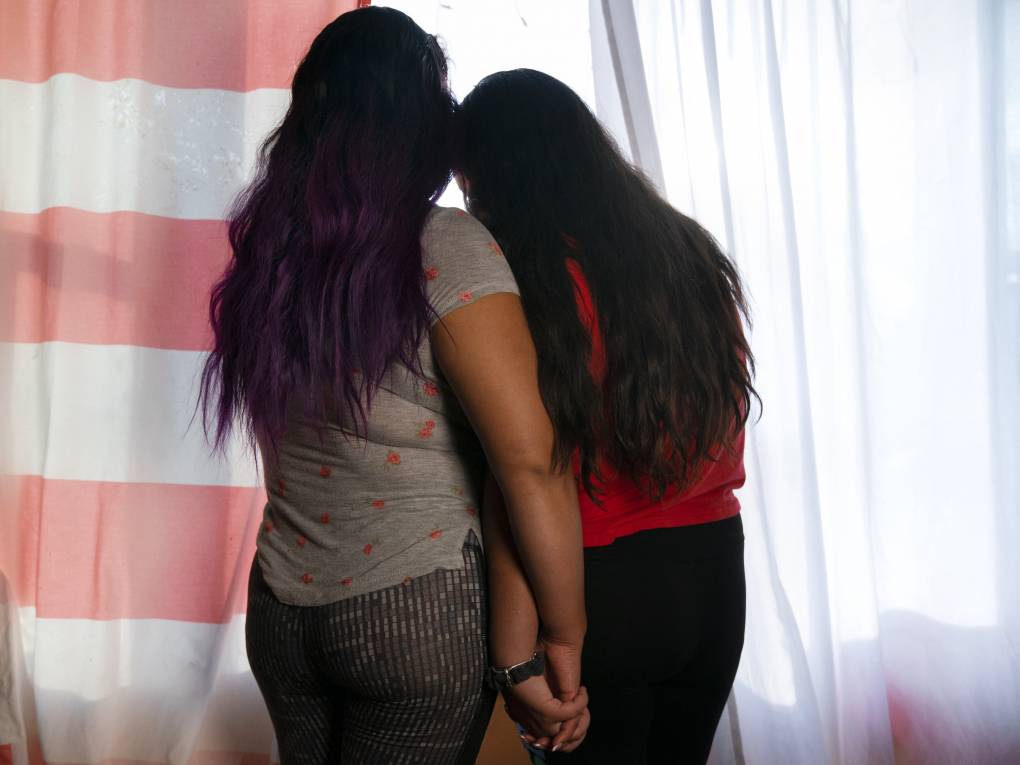
"caption": "Jacqueline Flores, left, holds hands with her daughter Nicky at their home in Virginia on Wednesday, July 14, 2021. Flores, a member of the Asylum Seeker Advocacy Project, is asking President Biden to end Title 42 and allow her family from El Salvador, along with other migrants, to ask for asylum at the border. Flores' aunt and cousin were recently expelled to Mexico at the U.S. border under the public health rule that allows border agents to turn away migrants during the pandemic.",
"description": null,
"title": "Jacqueline Flores (left) with daughter Nicky at their home in Virginia last month. They are part of the Asylum Seeker Advocacy Project, a group calling for an end to Title 42 so their family members can seek asylum.",
"credit": "Jacquelyn Martin/AP",
"status": "inherit",
"altTag": null,
"isLoading": false,
"fetchFailed": false
},
"news_11883280": {
"type": "attachments",
"id": "news_11883280",
"meta": {
"index": "attachments_1716263798",
"site": "news",
"id": "11883280",
"found": true
},
"parent": 11883227,
"imgSizes": {
"twentyfourteen-full-width": {
"file": "https://ww2.kqed.org/app/uploads/sites/10/2021/07/GettyImages-1150824330-1038x576.jpg",
"width": 1038,
"mimeType": "image/jpeg",
"height": 576
},
"thumbnail": {
"file": "https://ww2.kqed.org/app/uploads/sites/10/2021/07/GettyImages-1150824330-160x107.jpg",
"width": 160,
"mimeType": "image/jpeg",
"height": 107
},
"post-thumbnail": {
"file": "https://ww2.kqed.org/app/uploads/sites/10/2021/07/GettyImages-1150824330-672x372.jpg",
"width": 672,
"mimeType": "image/jpeg",
"height": 372
},
"kqedFullSize": {
"file": "https://ww2.kqed.org/app/uploads/sites/10/2021/07/GettyImages-1150824330-scaled.jpg",
"width": 2560,
"height": 1708
},
"2048x2048": {
"file": "https://ww2.kqed.org/app/uploads/sites/10/2021/07/GettyImages-1150824330-2048x1366.jpg",
"width": 2048,
"mimeType": "image/jpeg",
"height": 1366
},
"large": {
"file": "https://ww2.kqed.org/app/uploads/sites/10/2021/07/GettyImages-1150824330-1020x680.jpg",
"width": 1020,
"mimeType": "image/jpeg",
"height": 680
},
"1536x1536": {
"file": "https://ww2.kqed.org/app/uploads/sites/10/2021/07/GettyImages-1150824330-1536x1025.jpg",
"width": 1536,
"mimeType": "image/jpeg",
"height": 1025
},
"full-width": {
"file": "https://ww2.kqed.org/app/uploads/sites/10/2021/07/GettyImages-1150824330-1920x1281.jpg",
"width": 1920,
"mimeType": "image/jpeg",
"height": 1281
},
"medium": {
"file": "https://ww2.kqed.org/app/uploads/sites/10/2021/07/GettyImages-1150824330-800x534.jpg",
"width": 800,
"mimeType": "image/jpeg",
"height": 534
}
},
"publishDate": 1627692250,
"modified": 1627692453,
"caption": "Migrants who are seeking asylum in the United States get out of vans that brought them to the Richard C. White Federal Buidling in downtown El Paso, Texas on June 12, 2019. \n",
"description": "Migrants who are seeking asylum in the United States get out of vans that brought them to the Richard C. White Federal Buidling in downtown El Paso on June 12, 2019. \n",
"title": "US-MEXICO-IMMIGRATION-YOLANDA-RIGHTS",
"credit": "Paul Ratje/AFP/Getty Images",
"status": "inherit",
"altTag": "Migrants outside of a van at a federal building in El Paso, Texas",
"isLoading": false,
"fetchFailed": false
},
"news_11883148": {
"type": "attachments",
"id": "news_11883148",
"meta": {
"index": "attachments_1716263798",
"site": "news",
"id": "11883148",
"found": true
},
"parent": 11883013,
"imgSizes": {
"twentyfourteen-full-width": {
"file": "https://ww2.kqed.org/app/uploads/sites/10/2021/07/d0b2231f-687b-4f47-9415-d2623ab798d2-Luis_Grijalva_2-980x576.jpeg",
"width": 980,
"mimeType": "image/jpeg",
"height": 576
},
"thumbnail": {
"file": "https://ww2.kqed.org/app/uploads/sites/10/2021/07/d0b2231f-687b-4f47-9415-d2623ab798d2-Luis_Grijalva_2-160x104.jpeg",
"width": 160,
"mimeType": "image/jpeg",
"height": 104
},
"post-thumbnail": {
"file": "https://ww2.kqed.org/app/uploads/sites/10/2021/07/d0b2231f-687b-4f47-9415-d2623ab798d2-Luis_Grijalva_2-672x372.jpeg",
"width": 672,
"mimeType": "image/jpeg",
"height": 372
},
"kqedFullSize": {
"file": "https://ww2.kqed.org/app/uploads/sites/10/2021/07/d0b2231f-687b-4f47-9415-d2623ab798d2-Luis_Grijalva_2.jpeg",
"width": 980,
"height": 640
},
"medium": {
"file": "https://ww2.kqed.org/app/uploads/sites/10/2021/07/d0b2231f-687b-4f47-9415-d2623ab798d2-Luis_Grijalva_2-800x522.jpeg",
"width": 800,
"mimeType": "image/jpeg",
"height": 522
}
},
"publishDate": 1627672006,
"modified": 1627672518,
"caption": "Luis Grijalva, a senior at Northern Arizona University, leading the pack in a recent track race.",
"description": null,
"title": "d0b2231f-687b-4f47-9415-d2623ab798d2-Luis_Grijalva_2",
"credit": "Courtesy Northern Arizona University Athletics",
"status": "inherit",
"altTag": null,
"isLoading": false,
"fetchFailed": false
},
"news_11882903": {
"type": "attachments",
"id": "news_11882903",
"meta": {
"index": "attachments_1716263798",
"site": "news",
"id": "11882903",
"found": true
},
"parent": 11882852,
"imgSizes": {
"twentyfourteen-full-width": {
"file": "https://ww2.kqed.org/app/uploads/sites/10/2021/07/GettyImages-1231929300-1-1038x576.jpg",
"width": 1038,
"mimeType": "image/jpeg",
"height": 576
},
"thumbnail": {
"file": "https://ww2.kqed.org/app/uploads/sites/10/2021/07/GettyImages-1231929300-1-160x107.jpg",
"width": 160,
"mimeType": "image/jpeg",
"height": 107
},
"post-thumbnail": {
"file": "https://ww2.kqed.org/app/uploads/sites/10/2021/07/GettyImages-1231929300-1-672x372.jpg",
"width": 672,
"mimeType": "image/jpeg",
"height": 372
},
"kqedFullSize": {
"file": "https://ww2.kqed.org/app/uploads/sites/10/2021/07/GettyImages-1231929300-1-scaled.jpg",
"width": 2560,
"height": 1707
},
"2048x2048": {
"file": "https://ww2.kqed.org/app/uploads/sites/10/2021/07/GettyImages-1231929300-1-2048x1365.jpg",
"width": 2048,
"mimeType": "image/jpeg",
"height": 1365
},
"large": {
"file": "https://ww2.kqed.org/app/uploads/sites/10/2021/07/GettyImages-1231929300-1-1020x680.jpg",
"width": 1020,
"mimeType": "image/jpeg",
"height": 680
},
"1536x1536": {
"file": "https://ww2.kqed.org/app/uploads/sites/10/2021/07/GettyImages-1231929300-1-1536x1024.jpg",
"width": 1536,
"mimeType": "image/jpeg",
"height": 1024
},
"full-width": {
"file": "https://ww2.kqed.org/app/uploads/sites/10/2021/07/GettyImages-1231929300-1-1920x1280.jpg",
"width": 1920,
"mimeType": "image/jpeg",
"height": 1280
},
"medium": {
"file": "https://ww2.kqed.org/app/uploads/sites/10/2021/07/GettyImages-1231929300-1-800x533.jpg",
"width": 800,
"mimeType": "image/jpeg",
"height": 533
}
},
"publishDate": 1627520588,
"modified": 1627520632,
"caption": "A nurse administers a COVID-19 vaccine to a woman at a vaccine rollout targeting immigrants and the undocumented organized by the St. John's Well Child and Family Center in Los Angeles on March 25, 2021. Undocumented immigrants 50 or older will soon be eligible for Medi-Cal, thanks to a legislation signed by Gov. Gavin Newsom this Tuesday.",
"description": "A nurse administers a COVID-19 vaccine to a woman at a vaccine rollout targeting immigrants and the undocumented organized by the St. John's Well Child and Family Center in Los Angeles on March 25, 2021.",
"title": "US-HEALTH-VIRUS-IMMIGRATION",
"credit": "Frederic J. Brown/AFP via Getty Images",
"status": "inherit",
"altTag": "A nurse wearing glasses with their hair tied up administers a vaccine into a person's left arm.",
"isLoading": false,
"fetchFailed": false
},
"news_11882831": {
"type": "attachments",
"id": "news_11882831",
"meta": {
"index": "attachments_1716263798",
"site": "news",
"id": "11882831",
"found": true
},
"parent": 11882829,
"imgSizes": {
"twentyfourteen-full-width": {
"file": "https://ww2.kqed.org/app/uploads/sites/10/2021/07/gettyimages-1316117823-9785a1244672d5f43cda9117af525aa5bf6a225e-1-1038x576.jpg",
"width": 1038,
"mimeType": "image/jpeg",
"height": 576
},
"thumbnail": {
"file": "https://ww2.kqed.org/app/uploads/sites/10/2021/07/gettyimages-1316117823-9785a1244672d5f43cda9117af525aa5bf6a225e-1-160x120.jpg",
"width": 160,
"mimeType": "image/jpeg",
"height": 120
},
"post-thumbnail": {
"file": "https://ww2.kqed.org/app/uploads/sites/10/2021/07/gettyimages-1316117823-9785a1244672d5f43cda9117af525aa5bf6a225e-1-672x372.jpg",
"width": 672,
"mimeType": "image/jpeg",
"height": 372
},
"kqedFullSize": {
"file": "https://ww2.kqed.org/app/uploads/sites/10/2021/07/gettyimages-1316117823-9785a1244672d5f43cda9117af525aa5bf6a225e-1-scaled.jpg",
"width": 2560,
"height": 1920
},
"2048x2048": {
"file": "https://ww2.kqed.org/app/uploads/sites/10/2021/07/gettyimages-1316117823-9785a1244672d5f43cda9117af525aa5bf6a225e-1-2048x1536.jpg",
"width": 2048,
"mimeType": "image/jpeg",
"height": 1536
},
"large": {
"file": "https://ww2.kqed.org/app/uploads/sites/10/2021/07/gettyimages-1316117823-9785a1244672d5f43cda9117af525aa5bf6a225e-1-1020x765.jpg",
"width": 1020,
"mimeType": "image/jpeg",
"height": 765
},
"1536x1536": {
"file": "https://ww2.kqed.org/app/uploads/sites/10/2021/07/gettyimages-1316117823-9785a1244672d5f43cda9117af525aa5bf6a225e-1-1536x1152.jpg",
"width": 1536,
"mimeType": "image/jpeg",
"height": 1152
},
"full-width": {
"file": "https://ww2.kqed.org/app/uploads/sites/10/2021/07/gettyimages-1316117823-9785a1244672d5f43cda9117af525aa5bf6a225e-1-1920x1440.jpg",
"width": 1920,
"mimeType": "image/jpeg",
"height": 1440
},
"medium": {
"file": "https://ww2.kqed.org/app/uploads/sites/10/2021/07/gettyimages-1316117823-9785a1244672d5f43cda9117af525aa5bf6a225e-1-800x600.jpg",
"width": 800,
"mimeType": "image/jpeg",
"height": 600
}
},
"publishDate": 1627508481,
"modified": 1627511225,
"caption": "Luis Grijalva of the Northern Arizona Lumberjacks finishes in ninth place during the Division I Men's and Women's Cross Country Championships held at the OSU Cross Country Course on March 15, 2021 in Stillwater, Oklahoma.",
"description": "STILLWATER, OK - MARCH 15: Luis Grijalva of the Northern Arizona Lumberjacks finishes in ninth place during the Division I Men's and Women's Cross Country Championships held at the OSU Cross Country Course on March 15, 2021 in Stillwater, Oklahoma. (Photo by Shane Bevel/NCAA Photos via Getty Images)",
"title": "Luis Grijalva, a student at Northern Arizona University, has qualified to compete at the Tokyo Olympics and represent his home country of Guatemala. But as a DACA recipient he couldn't leave the United States without special permission.",
"credit": "Shane Bevel/NCAA Photos via Getty Images",
"status": "inherit",
"altTag": null,
"isLoading": false,
"fetchFailed": false
},
"news_11882784": {
"type": "attachments",
"id": "news_11882784",
"meta": {
"index": "attachments_1716263798",
"site": "news",
"id": "11882784",
"found": true
},
"parent": 11882773,
"imgSizes": {
"twentyfourteen-full-width": {
"file": "https://ww2.kqed.org/app/uploads/sites/10/2021/07/GettyImages-1330157179-1024x576.jpg",
"width": 1024,
"mimeType": "image/jpeg",
"height": 576
},
"thumbnail": {
"file": "https://ww2.kqed.org/app/uploads/sites/10/2021/07/GettyImages-1330157179-160x106.jpg",
"width": 160,
"mimeType": "image/jpeg",
"height": 106
},
"post-thumbnail": {
"file": "https://ww2.kqed.org/app/uploads/sites/10/2021/07/GettyImages-1330157179-672x372.jpg",
"width": 672,
"mimeType": "image/jpeg",
"height": 372
},
"kqedFullSize": {
"file": "https://ww2.kqed.org/app/uploads/sites/10/2021/07/GettyImages-1330157179.jpg",
"width": 1024,
"height": 681
},
"large": {
"file": "https://ww2.kqed.org/app/uploads/sites/10/2021/07/GettyImages-1330157179-1020x678.jpg",
"width": 1020,
"mimeType": "image/jpeg",
"height": 678
},
"medium": {
"file": "https://ww2.kqed.org/app/uploads/sites/10/2021/07/GettyImages-1330157179-800x532.jpg",
"width": 800,
"mimeType": "image/jpeg",
"height": 532
}
},
"publishDate": 1627500361,
"modified": 1627501925,
"caption": "The sun begins to set beyond the U.S.-Mexico border barrier running into the Pacific Ocean on July 22, 2021 in Tijuana, Mexico. While the Biden administration has haltingly restarted the asylum system along the southwest border, only a small number of asylum-seekers whose situations are considered the most urgent have been allowed to cross the border with Title 42 exceptions. Thousands of asylum-seekers remain stuck in Tijuana in precarious conditions.",
"description": null,
"title": "Migrants Huddle In Camps And Shelters In Tijuana Waiting To Cross Into U.S.",
"credit": "Mario Tama/Getty Images",
"status": "inherit",
"altTag": null,
"isLoading": false,
"fetchFailed": false
},
"news_11882451": {
"type": "attachments",
"id": "news_11882451",
"meta": {
"index": "attachments_1716263798",
"site": "news",
"id": "11882451",
"found": true
},
"parent": 11882438,
"imgSizes": {
"twentyfourteen-full-width": {
"file": "https://ww2.kqed.org/app/uploads/sites/10/2021/07/GettyImages-1330156267-1038x576.jpg",
"width": 1038,
"mimeType": "image/jpeg",
"height": 576
},
"thumbnail": {
"file": "https://ww2.kqed.org/app/uploads/sites/10/2021/07/GettyImages-1330156267-160x90.jpg",
"width": 160,
"mimeType": "image/jpeg",
"height": 90
},
"post-thumbnail": {
"file": "https://ww2.kqed.org/app/uploads/sites/10/2021/07/GettyImages-1330156267-672x372.jpg",
"width": 672,
"mimeType": "image/jpeg",
"height": 372
},
"kqedFullSize": {
"file": "https://ww2.kqed.org/app/uploads/sites/10/2021/07/GettyImages-1330156267.jpg",
"width": 1920,
"height": 1080
},
"large": {
"file": "https://ww2.kqed.org/app/uploads/sites/10/2021/07/GettyImages-1330156267-1020x574.jpg",
"width": 1020,
"mimeType": "image/jpeg",
"height": 574
},
"1536x1536": {
"file": "https://ww2.kqed.org/app/uploads/sites/10/2021/07/GettyImages-1330156267-1536x864.jpg",
"width": 1536,
"mimeType": "image/jpeg",
"height": 864
},
"medium": {
"file": "https://ww2.kqed.org/app/uploads/sites/10/2021/07/GettyImages-1330156267-800x450.jpg",
"width": 800,
"mimeType": "image/jpeg",
"height": 450
}
},
"publishDate": 1627333769,
"modified": 1627338271,
"caption": "Musicians play on July 22, 2021 in Tijuana, Mexico, for beachgoers near the U.S.-Mexico border barrier painted with a mural (R) depicting people who arrived in the U.S. illegally as children and were deported as adults.",
"description": null,
"title": "GettyImages-1330156267",
"credit": "Mario Tama/Getty Images",
"status": "inherit",
"altTag": null,
"isLoading": false,
"fetchFailed": false
},
"news_11881919": {
"type": "attachments",
"id": "news_11881919",
"meta": {
"index": "attachments_1716263798",
"site": "news",
"id": "11881919",
"found": true
},
"parent": 11881855,
"imgSizes": {
"twentyfourteen-full-width": {
"file": "https://ww2.kqed.org/app/uploads/sites/10/2021/07/RS50311_005_JuHong_A59A8788-qut-1038x576.jpg",
"width": 1038,
"mimeType": "image/jpeg",
"height": 576
},
"thumbnail": {
"file": "https://ww2.kqed.org/app/uploads/sites/10/2021/07/RS50311_005_JuHong_A59A8788-qut-160x107.jpg",
"width": 160,
"mimeType": "image/jpeg",
"height": 107
},
"post-thumbnail": {
"file": "https://ww2.kqed.org/app/uploads/sites/10/2021/07/RS50311_005_JuHong_A59A8788-qut-672x372.jpg",
"width": 672,
"mimeType": "image/jpeg",
"height": 372
},
"kqedFullSize": {
"file": "https://ww2.kqed.org/app/uploads/sites/10/2021/07/RS50311_005_JuHong_A59A8788-qut.jpg",
"width": 1279,
"height": 853
},
"large": {
"file": "https://ww2.kqed.org/app/uploads/sites/10/2021/07/RS50311_005_JuHong_A59A8788-qut-1020x680.jpg",
"width": 1020,
"mimeType": "image/jpeg",
"height": 680
},
"medium": {
"file": "https://ww2.kqed.org/app/uploads/sites/10/2021/07/RS50311_005_JuHong_A59A8788-qut-800x534.jpg",
"width": 800,
"mimeType": "image/jpeg",
"height": 534
}
},
"publishDate": 1626888053,
"modified": 1626888090,
"caption": "Ju Hong, 31, who has been able to lawfully work for years under Deferred Action for Childhood Arrivals, saw his permit expire after the federal government failed to renew it on time. ",
"description": null,
"title": "RS50311_005_JuHong_A59A8788-qut",
"credit": "Courtesy of Ju Hong",
"status": "inherit",
"altTag": "Ju Hong smiles for the camera",
"isLoading": false,
"fetchFailed": false
},
"news_11881807": {
"type": "attachments",
"id": "news_11881807",
"meta": {
"index": "attachments_1716263798",
"site": "news",
"id": "11881807",
"found": true
},
"parent": 11881668,
"imgSizes": {
"twentyfourteen-full-width": {
"file": "https://ww2.kqed.org/app/uploads/sites/10/2021/07/GettyImages-1329563989-1038x576.jpg",
"width": 1038,
"mimeType": "image/jpeg",
"height": 576
},
"thumbnail": {
"file": "https://ww2.kqed.org/app/uploads/sites/10/2021/07/GettyImages-1329563989-160x107.jpg",
"width": 160,
"mimeType": "image/jpeg",
"height": 107
},
"post-thumbnail": {
"file": "https://ww2.kqed.org/app/uploads/sites/10/2021/07/GettyImages-1329563989-672x372.jpg",
"width": 672,
"mimeType": "image/jpeg",
"height": 372
},
"kqedFullSize": {
"file": "https://ww2.kqed.org/app/uploads/sites/10/2021/07/GettyImages-1329563989-scaled.jpg",
"width": 2560,
"height": 1706
},
"2048x2048": {
"file": "https://ww2.kqed.org/app/uploads/sites/10/2021/07/GettyImages-1329563989-2048x1365.jpg",
"width": 2048,
"mimeType": "image/jpeg",
"height": 1365
},
"large": {
"file": "https://ww2.kqed.org/app/uploads/sites/10/2021/07/GettyImages-1329563989-1020x680.jpg",
"width": 1020,
"mimeType": "image/jpeg",
"height": 680
},
"1536x1536": {
"file": "https://ww2.kqed.org/app/uploads/sites/10/2021/07/GettyImages-1329563989-1536x1024.jpg",
"width": 1536,
"mimeType": "image/jpeg",
"height": 1024
},
"full-width": {
"file": "https://ww2.kqed.org/app/uploads/sites/10/2021/07/GettyImages-1329563989-1920x1280.jpg",
"width": 1920,
"mimeType": "image/jpeg",
"height": 1280
},
"medium": {
"file": "https://ww2.kqed.org/app/uploads/sites/10/2021/07/GettyImages-1329563989-800x533.jpg",
"width": 800,
"mimeType": "image/jpeg",
"height": 533
}
},
"publishDate": 1626817968,
"modified": 1626818150,
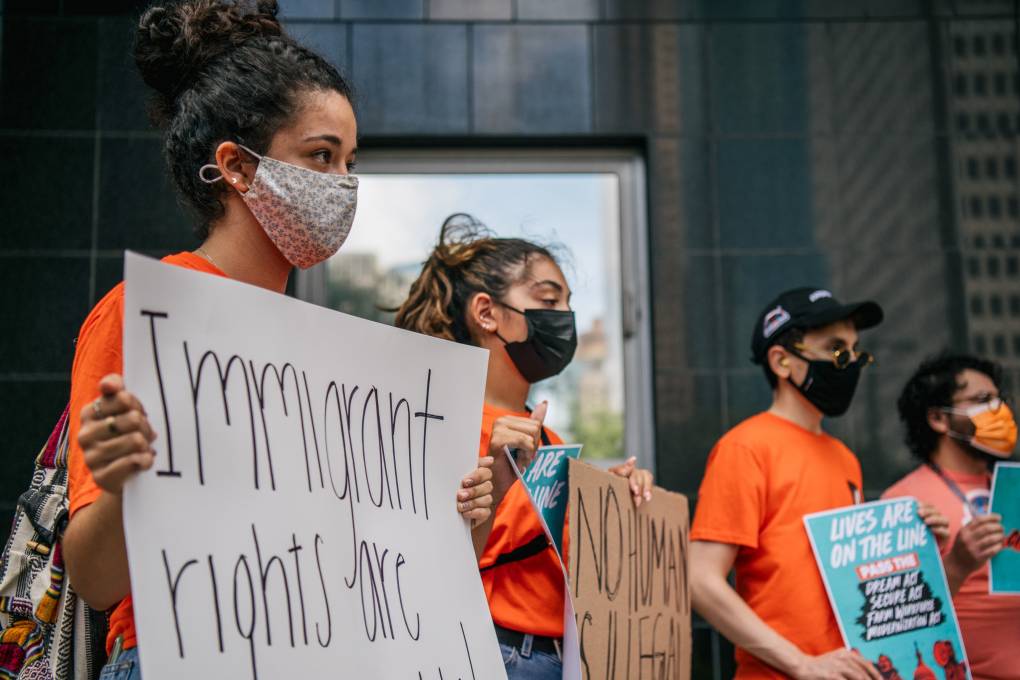
"caption": "Members of the United We Dream organization participate in a demonstration outside of the U.S. District Courthouse on July 19, 2021 in Houston, Texas. The demonstration was held in response to Texas District Judge Andrew Hanen's ordering of the U.S. government to block new Deferred Action for Childhood Arrivals (DACA) applicants. Hanen issued the ruling stating that the Obama administration did not have legal authority in 2012 to create the program. ",
"description": "Members of the United We Dream organization participate in a demonstration outside of the U.S. District Courthouse on July 19, 2021 in Houston, Texas. The demonstration was held in response to Texas District Judge Andrew Hanen's ordering of the U.S. government to block new Deferred Action for Childhood Arrivals (DACA) applicants. Hanen issued the ruling stating that the Obama administration did not have legal authority in 2012 to create the program. ",
"title": "Rally Held At U.S. District Court In Support Of DACA Applicants",
"credit": " Brandon Bell/Getty Images",
"status": "inherit",
"altTag": "A group of youth wearing orange shirts and facemasks hold up several signs that read 'Immigrant rights are human rights.'",
"isLoading": false,
"fetchFailed": false
},
"news_11881374": {
"type": "attachments",
"id": "news_11881374",
"meta": {
"index": "attachments_1716263798",
"site": "news",
"id": "11881374",
"found": true
},
"parent": 11881322,
"imgSizes": {
"twentyfourteen-full-width": {
"file": "https://ww2.kqed.org/app/uploads/sites/10/2021/07/GettyImages-1233493045-1-1038x576.jpg",
"width": 1038,
"mimeType": "image/jpeg",
"height": 576
},
"thumbnail": {
"file": "https://ww2.kqed.org/app/uploads/sites/10/2021/07/GettyImages-1233493045-1-160x107.jpg",
"width": 160,
"mimeType": "image/jpeg",
"height": 107
},
"post-thumbnail": {
"file": "https://ww2.kqed.org/app/uploads/sites/10/2021/07/GettyImages-1233493045-1-672x372.jpg",
"width": 672,
"mimeType": "image/jpeg",
"height": 372
},
"kqedFullSize": {
"file": "https://ww2.kqed.org/app/uploads/sites/10/2021/07/GettyImages-1233493045-1.jpg",
"width": 1920,
"height": 1281
},
"large": {
"file": "https://ww2.kqed.org/app/uploads/sites/10/2021/07/GettyImages-1233493045-1-1020x681.jpg",
"width": 1020,
"mimeType": "image/jpeg",
"height": 681
},
"1536x1536": {
"file": "https://ww2.kqed.org/app/uploads/sites/10/2021/07/GettyImages-1233493045-1-1536x1025.jpg",
"width": 1536,
"mimeType": "image/jpeg",
"height": 1025
},
"medium": {
"file": "https://ww2.kqed.org/app/uploads/sites/10/2021/07/GettyImages-1233493045-1-800x534.jpg",
"width": 800,
"mimeType": "image/jpeg",
"height": 534
}
},
"publishDate": 1626393645,
"modified": 1626458757,
"caption": "U.S. Sen. Alex Padilla, D-California, waits for a meeting with Senate Majority Leader Chuck Schumer, D-New York, and Senate Budget Committee Democrats to begin in the Mansfield Room at the U.S. Capitol building on June 16, 2021 in Washington, D.C. Padilla, a member of the Senate Budget Committee, is pushing to pass a pathway to citizenship for essential workers, Dreamers and other undocumented immigrants as part of a spending bill.",
"description": "U.S. Sen. Alex Padilla (D-CA) waits for meeting with Senate Majority Leader Chuck Schumer (D-NY) and Senate Budget Committee Democrats to begin in the Mansfield Room at the U.S. Capitol building on June 16, 2021 in Washington, DC. Padilla, a member of the Senate Budget Committee, is pushing to pass a pathway to citizenship for essential workers, Dreamers and other undocumented immigrants as part of a spending bill.",
"title": "GettyImages-1233493045 (1)",
"credit": "Samuel Corum/Getty Images",
"status": "inherit",
"altTag": null,
"isLoading": false,
"fetchFailed": false
},
"news_11880758": {
"type": "attachments",
"id": "news_11880758",
"meta": {
"index": "attachments_1716263798",
"site": "news",
"id": "11880758",
"found": true
},
"parent": 11880745,
"imgSizes": {
"twentyfourteen-full-width": {
"file": "https://ww2.kqed.org/app/uploads/sites/10/2021/07/GettyImages-450371273-1-1038x576.jpg",
"width": 1038,
"mimeType": "image/jpeg",
"height": 576
},
"thumbnail": {
"file": "https://ww2.kqed.org/app/uploads/sites/10/2021/07/GettyImages-450371273-1-160x107.jpg",
"width": 160,
"mimeType": "image/jpeg",
"height": 107
},
"post-thumbnail": {
"file": "https://ww2.kqed.org/app/uploads/sites/10/2021/07/GettyImages-450371273-1-672x372.jpg",
"width": 672,
"mimeType": "image/jpeg",
"height": 372
},
"kqedFullSize": {
"file": "https://ww2.kqed.org/app/uploads/sites/10/2021/07/GettyImages-450371273-1.jpg",
"width": 1280,
"height": 853
},
"large": {
"file": "https://ww2.kqed.org/app/uploads/sites/10/2021/07/GettyImages-450371273-1-1020x680.jpg",
"width": 1020,
"mimeType": "image/jpeg",
"height": 680
},
"medium": {
"file": "https://ww2.kqed.org/app/uploads/sites/10/2021/07/GettyImages-450371273-1-800x533.jpg",
"width": 800,
"mimeType": "image/jpeg",
"height": 533
}
},
"publishDate": 1625864792,
"modified": 1626109915,
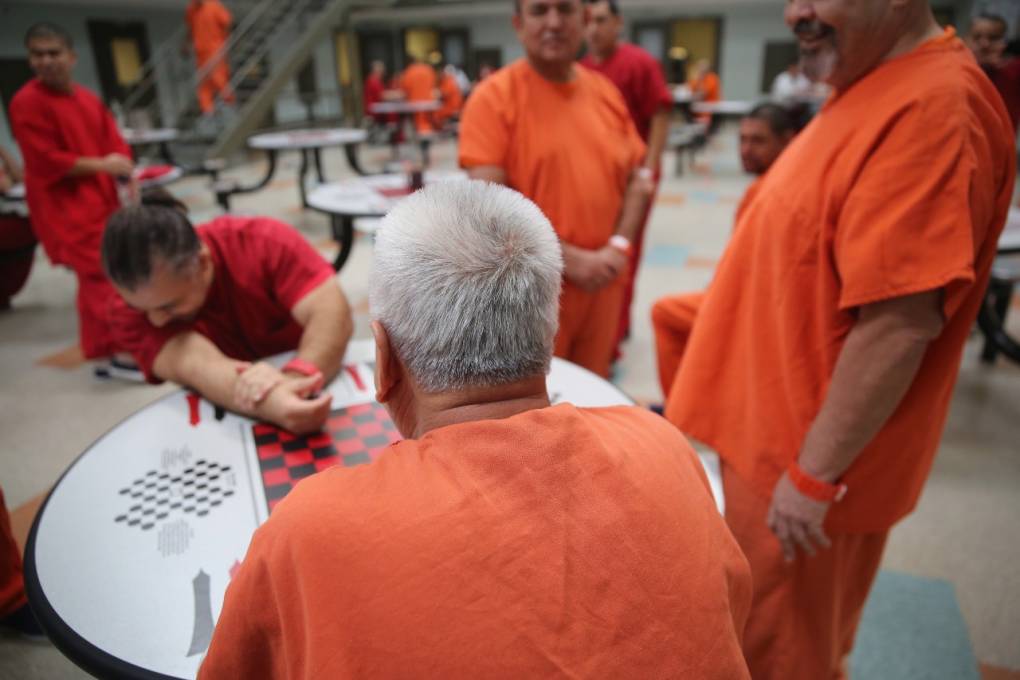
"caption": "Immigrant detainees talk while in a general population block at the Adelanto Detention Facility on Nov. 15, 2013 in Adelanto, California. The facility, one of the largest Immigration and Customs Enforcement (ICE) detention centers in California, can house up to 1,940 detainees. It is managed by the private GEO Group.",
"description": null,
"title": "GettyImages-450371273 (1)",
"credit": "John Moore/Getty Images",
"status": "inherit",
"altTag": "Detainees in orange jumpsuits gather around a table.",
"isLoading": false,
"fetchFailed": false
}
},
"audioPlayerReducer": {
"postId": "stream_live",
"isPaused": true,
"isPlaying": false,
"pfsActive": false,
"pledgeModalIsOpen": true,
"playerDrawerIsOpen": false,
"liveAudioPlayStartedAt": 0,
"liveAudioPlayContext": ""
},
"authorsReducer": {
"byline_news_11883463": {
"type": "authors",
"id": "byline_news_11883463",
"meta": {
"override": true
},
"slug": "byline_news_11883463",
"name": "Franco Ordoñez",
"isLoading": false
},
"byline_news_11882829": {
"type": "authors",
"id": "byline_news_11882829",
"meta": {
"override": true
},
"slug": "byline_news_11882829",
"name": "Deepa Shivaram\u003cbr>NPR",
"isLoading": false
},
"byline_news_11882773": {
"type": "authors",
"id": "byline_news_11882773",
"meta": {
"override": true
},
"slug": "byline_news_11882773",
"name": "Franco Ordoñez\u003cbr>NPR",
"isLoading": false
},
"byline_news_11882438": {
"type": "authors",
"id": "byline_news_11882438",
"meta": {
"override": true
},
"slug": "byline_news_11882438",
"name": "Franco Ordoñez",
"isLoading": false
},
"kqed": {
"type": "authors",
"id": "236",
"meta": {
"index": "authors_1716337520",
"id": "236",
"found": true
},
"name": "KQED News Staff",
"firstName": "KQED News Staff",
"lastName": null,
"slug": "kqed",
"email": "faq@kqed.org",
"display_author_email": false,
"staff_mastheads": [],
"title": null,
"bio": null,
"avatar": "https://secure.gravatar.com/avatar/ef0e801a68c4c54afa9180db14084167?s=600&d=blank&r=g",
"twitter": null,
"facebook": null,
"instagram": null,
"linkedin": null,
"sites": [
{
"site": "arts",
"roles": [
"contributor"
]
},
{
"site": "news",
"roles": [
"editor"
]
},
{
"site": "futureofyou",
"roles": [
"author"
]
}
],
"headData": {
"title": "KQED News Staff | KQED",
"description": null,
"ogImgSrc": "https://secure.gravatar.com/avatar/ef0e801a68c4c54afa9180db14084167?s=600&d=blank&r=g",
"twImgSrc": "https://secure.gravatar.com/avatar/ef0e801a68c4c54afa9180db14084167?s=600&d=blank&r=g"
},
"isLoading": false,
"link": "/author/kqed"
},
"kqednewsstaffandwires": {
"type": "authors",
"id": "237",
"meta": {
"index": "authors_1716337520",
"id": "237",
"found": true
},
"name": "KQED News Staff and Wires",
"firstName": "KQED News Staff and Wires",
"lastName": null,
"slug": "kqednewsstaffandwires",
"email": "onlinenewsstaff@kqed.org",
"display_author_email": false,
"staff_mastheads": [],
"title": null,
"bio": null,
"avatar": "https://secure.gravatar.com/avatar/72295af8ebbfbd19a4948f5271285664?s=600&d=blank&r=g",
"twitter": null,
"facebook": null,
"instagram": null,
"linkedin": null,
"sites": [
{
"site": "arts",
"roles": [
"contributor"
]
},
{
"site": "news",
"roles": [
"contributor"
]
},
{
"site": "lowdown",
"roles": [
"author"
]
},
{
"site": "stateofhealth",
"roles": [
"contributor"
]
},
{
"site": "food",
"roles": [
"author"
]
}
],
"headData": {
"title": "KQED News Staff and Wires | KQED",
"description": null,
"ogImgSrc": "https://secure.gravatar.com/avatar/72295af8ebbfbd19a4948f5271285664?s=600&d=blank&r=g",
"twImgSrc": "https://secure.gravatar.com/avatar/72295af8ebbfbd19a4948f5271285664?s=600&d=blank&r=g"
},
"isLoading": false,
"link": "/author/kqednewsstaffandwires"
},
"minakim": {
"type": "authors",
"id": "243",
"meta": {
"index": "authors_1716337520",
"id": "243",
"found": true
},
"name": "Mina Kim",
"firstName": "Mina",
"lastName": "Kim",
"slug": "minakim",
"email": "mkim@kqed.org",
"display_author_email": false,
"staff_mastheads": [
"news"
],
"title": "Host, Forum",
"bio": "Mina Kim is host of the 10 a.m. statewide hour of Forum; a live daily talk show for curious Californians on issues that matter to the state and nation, with a particular emphasis on race and equity.\r\n\r\nBefore joining the Forum team, Mina was KQED’s evening news anchor, and health reporter for The California Report. Her award-winning work has included natural disasters in Napa and gun violence in Oakland. Mina grew up in St. John’s, Newfoundland.",
"avatar": "https://secure.gravatar.com/avatar/145ce657a2d08cb86d93686beb958982?s=600&d=blank&r=g",
"twitter": "mkimreporter",
"facebook": null,
"instagram": null,
"linkedin": null,
"sites": [
{
"site": "news",
"roles": [
"contributor"
]
},
{
"site": "stateofhealth",
"roles": [
"author"
]
},
{
"site": "forum",
"roles": [
"editor"
]
}
],
"headData": {
"title": "Mina Kim | KQED",
"description": "Host, Forum",
"ogImgSrc": "https://secure.gravatar.com/avatar/145ce657a2d08cb86d93686beb958982?s=600&d=blank&r=g",
"twImgSrc": "https://secure.gravatar.com/avatar/145ce657a2d08cb86d93686beb958982?s=600&d=blank&r=g"
},
"isLoading": false,
"link": "/author/minakim"
},
"tychehendricks": {
"type": "authors",
"id": "259",
"meta": {
"index": "authors_1716337520",
"id": "259",
"found": true
},
"name": "Tyche Hendricks",
"firstName": "Tyche",
"lastName": "Hendricks",
"slug": "tychehendricks",
"email": "thendricks@kqed.org",
"display_author_email": true,
"staff_mastheads": [
"news"
],
"title": "KQED Senior Editor, Immigration",
"bio": "\u003cspan style=\"font-weight: 400;\">Tyche Hendricks is KQED’s senior editor for immigration, leading coverage of the policy and politics that affect California’s immigrant communities. Her work for KQED’s radio and online audiences is also carried on NPR and other national outlets. She has been recognized with awards from the Radio and Television News Directors Association, the Society for Professional Journalists; the Education Writers Association; the Best of the West and the National Federation of Community Broadcasters. Before joining KQED in 2010, Tyche spent more than a dozen years as a newspaper reporter, notably at the \u003c/span>\u003ci>\u003cspan style=\"font-weight: 400;\">San Francisco Chronicle\u003c/span>\u003c/i>\u003cspan style=\"font-weight: 400;\">. At different times she has covered criminal justice, government and politics and urban planning. Tyche has taught in the MFA Creative Writing program at the University of San Francisco and at UC Berkeley’s Graduate School of Journalism, where she was co-director of a national immigration symposium for professional journalists. She is the author of \u003c/span>\u003ci>\u003cspan style=\"font-weight: 400;\">The Wind Doesn't Need a Passport: Stories from the U.S.-Mexico Borderlands\u003c/span>\u003c/i>\u003cspan style=\"font-weight: 400;\"> (University of California Press). \u003c/span>",
"avatar": "https://secure.gravatar.com/avatar/b8ee458e2731c2d43df86882ce17267e?s=600&d=blank&r=g",
"twitter": "tychehendricks",
"facebook": null,
"instagram": null,
"linkedin": null,
"sites": [
{
"site": "news",
"roles": [
"editor"
]
},
{
"site": "stateofhealth",
"roles": [
"editor"
]
}
],
"headData": {
"title": "Tyche Hendricks | KQED",
"description": "KQED Senior Editor, Immigration",
"ogImgSrc": "https://secure.gravatar.com/avatar/b8ee458e2731c2d43df86882ce17267e?s=600&d=blank&r=g",
"twImgSrc": "https://secure.gravatar.com/avatar/b8ee458e2731c2d43df86882ce17267e?s=600&d=blank&r=g"
},
"isLoading": false,
"link": "/author/tychehendricks"
},
"fjhabvala": {
"type": "authors",
"id": "8659",
"meta": {
"index": "authors_1716337520",
"id": "8659",
"found": true
},
"name": "Farida Jhabvala Romero",
"firstName": "Farida",
"lastName": "Jhabvala Romero",
"slug": "fjhabvala",
"email": "fjhabvala@kqed.org",
"display_author_email": true,
"staff_mastheads": [
"news"
],
"title": "KQED Contributor",
"bio": "\u003cspan style=\"font-weight: 400;\">Farida Jhabvala Romero is a Labor Correspondent for KQED. She previously covered immigration. Farida was \u003ca href=\"https://www.ccnma.org/2022-most-influential-latina-journalists\">named\u003c/a> one of the 10 Most Influential Latina Journalists in California in 2022 by the California Chicano News Media Association. Her work has won awards from the Society of Professional Journalists (Northern California), as well as a national and regional Edward M. Murrow Award for the collaborative reporting projects “Dangerous Air” and “Graying California.” \u003c/span>\u003cspan style=\"font-weight: 400;\">Before joining KQED, Farida worked as a producer at Radio Bilingüe, a national public radio network. Farida earned her master’s degree in journalism from Stanford University.\u003c/span>",
"avatar": "https://secure.gravatar.com/avatar/c3ab27c5554b67b478f80971e515aa02?s=600&d=blank&r=g",
"twitter": "FaridaJhabvala",
"facebook": null,
"instagram": null,
"linkedin": "https://www.linkedin.com/in/faridajhabvala/",
"sites": [
{
"site": "news",
"roles": [
"editor"
]
},
{
"site": "stateofhealth",
"roles": [
"author"
]
}
],
"headData": {
"title": "Farida Jhabvala Romero | KQED",
"description": "KQED Contributor",
"ogImgSrc": "https://secure.gravatar.com/avatar/c3ab27c5554b67b478f80971e515aa02?s=600&d=blank&r=g",
"twImgSrc": "https://secure.gravatar.com/avatar/c3ab27c5554b67b478f80971e515aa02?s=600&d=blank&r=g"
},
"isLoading": false,
"link": "/author/fjhabvala"
},
"lsarah": {
"type": "authors",
"id": "11626",
"meta": {
"index": "authors_1716337520",
"id": "11626",
"found": true
},
"name": "Lakshmi Sarah",
"firstName": "Lakshmi",
"lastName": "Sarah",
"slug": "lsarah",
"email": "lsarah@kqed.org",
"display_author_email": false,
"staff_mastheads": [],
"title": "Digital Producer",
"bio": "Lakshmi Sarah is an educator, author and journalist with a focus on innovative storytelling. She has worked with newspapers, radio and magazines from Ahmedabad, India to Los Angeles, California. She has written and produced for Die Zeit, Global Voices, AJ+, KQED, Fusion Media Group and the New York Times.",
"avatar": "https://secure.gravatar.com/avatar/652dcaecd8b28826fc17a8b2d6bb4e93?s=600&d=blank&r=g",
"twitter": "lakitalki",
"facebook": null,
"instagram": "https://www.instagram.com/laki.talki/",
"linkedin": "https://www.linkedin.com/in/lakisarah/",
"sites": [
{
"site": "arts",
"roles": []
},
{
"site": "news",
"roles": []
},
{
"site": "bayareabites",
"roles": []
},
{
"site": "science",
"roles": []
}
],
"headData": {
"title": "Lakshmi Sarah | KQED",
"description": "Digital Producer",
"ogImgSrc": "https://secure.gravatar.com/avatar/652dcaecd8b28826fc17a8b2d6bb4e93?s=600&d=blank&r=g",
"twImgSrc": "https://secure.gravatar.com/avatar/652dcaecd8b28826fc17a8b2d6bb4e93?s=600&d=blank&r=g"
},
"isLoading": false,
"link": "/author/lsarah"
},
"ccabreralomeli": {
"type": "authors",
"id": "11708",
"meta": {
"index": "authors_1716337520",
"id": "11708",
"found": true
},
"name": "Carlos Cabrera-Lomelí",
"firstName": "Carlos",
"lastName": "Cabrera-Lomelí",
"slug": "ccabreralomeli",
"email": "ccabreralomeli@KQED.org",
"display_author_email": true,
"staff_mastheads": [
"news"
],
"title": "Community Reporter",
"bio": "Carlos Cabrera-Lomelí is a community reporter with KQED's digital engagement team. He also reports and co-produces for KQED's bilingual news hub KQED en Español. He grew up in San Francisco's Mission District and has previously worked with Univision, 48 Hills and REFORMA in Mexico City.",
"avatar": "https://secure.gravatar.com/avatar/e95ff80bb2eaf18a8f2af4dcf7ffb54b?s=600&d=mm&r=g",
"twitter": "@LomeliCabrera",
"facebook": null,
"instagram": null,
"linkedin": null,
"sites": [
{
"site": "arts",
"roles": [
"editor"
]
},
{
"site": "news",
"roles": [
"editor"
]
},
{
"site": "about",
"roles": [
"editor"
]
},
{
"site": "science",
"roles": [
"editor"
]
},
{
"site": "perspectives",
"roles": [
"editor"
]
},
{
"site": "elections",
"roles": [
"editor"
]
},
{
"site": "liveblog",
"roles": [
"contributor"
]
}
],
"headData": {
"title": "Carlos Cabrera-Lomelí | KQED",
"description": "Community Reporter",
"ogImgSrc": "https://secure.gravatar.com/avatar/e95ff80bb2eaf18a8f2af4dcf7ffb54b?s=600&d=mm&r=g",
"twImgSrc": "https://secure.gravatar.com/avatar/e95ff80bb2eaf18a8f2af4dcf7ffb54b?s=600&d=mm&r=g"
},
"isLoading": false,
"link": "/author/ccabreralomeli"
}
},
"pagesReducer": {
"news_tag_immigration": {
"type": "terms",
"id": "news_20202",
"meta": {
"index": "terms_1716263798",
"site": "news",
"id": "20202",
"score": 6.9038835
},
"featImg": null,
"name": "immigration",
"description": null,
"taxonomy": "tag",
"headData": {
"twImgId": null,
"twTitle": null,
"ogTitle": null,
"ogImgId": null,
"twDescription": null,
"description": null,
"title": "immigration Archives | KQED News",
"ogDescription": null
},
"ttid": 20219,
"slug": "immigration",
"isLoading": false,
"title": "immigration",
"pageMeta": {
"site": "news",
"WpPageTemplate": "page-topic-editorial",
"currentPage": 53
},
"blocks": [
{
"blockName": "kqed/post-list",
"attrs": {
"layout": "cardArticle2",
"query": "posts/news?tag=immigration",
"seeMore": false,
"paginated": true,
"page": 53
}
},
{
"blockName": "kqed/ad"
}
]
}
},
"pfsSessionReducer": {},
"postsReducer": {
"stream_live": {
"type": "live",
"id": "stream_live",
"audioUrl": "https://streams.kqed.org/kqedradio",
"title": "Live Stream",
"excerpt": "Live Stream information currently unavailable.",
"link": "/radio",
"featImg": "",
"label": {
"name": "KQED Live",
"link": "/"
}
},
"stream_kqedNewscast": {
"type": "posts",
"id": "stream_kqedNewscast",
"audioUrl": "https://www.kqed.org/.stream/anon/radio/RDnews/newscast.mp3?_=1",
"title": "KQED Newscast",
"featImg": "",
"label": {
"name": "88.5 FM",
"link": "/"
}
},
"news_11884106": {
"type": "posts",
"id": "news_11884106",
"meta": {
"index": "posts_1716263798",
"site": "news",
"id": "11884106",
"score": null,
"sort": [
1628292783000
]
},
"guestAuthors": [],
"slug": "california-history-you-probably-didnt-learn-in-school",
"title": "California History You Probably Didn't Learn in School",
"publishDate": 1628292783,
"format": "standard",
"headTitle": "California History You Probably Didn’t Learn in School | KQED",
"labelTerm": {},
"content": "\u003cp>\u003cem>\u003ca href=\"http://itunes.apple.com/us/podcast/the-california-report-magazine/id1314750545?mt=2\" target=\"_blank\" rel=\"noopener noreferrer\">Listen to this and more in-depth storytelling by subscribing to The California Report Magazine podcast.\u003c/a>\u003c/em>\u003c/p>\n\u003cp>\u003cem>\u003cspan style=\"font-weight: 400\">Right now there are debates going on across the country about history: who gets to write and tell our stories, and who gets left out. This week, we feature some of our favorite California \u003c/span>\u003cspan style=\"font-weight: 400\">history stories from The California Report Magazine archive. They explore some of the historical injustices against immigrants and communities of color in our state, but they also highlight acts of courage and resilience \u003c/span>\u003cspan style=\"font-weight: 400\">you might not have learned about in history class.\u003c/span>\u003c/em>\u003c/p>\n\u003ch2 class=\"routes-Site-routes-Post-components-Post-components-PostTitle-___PostTitle__title\">\u003ca href=\"https://www.kqed.org/news/10666155/50-years-later-the-forgotten-origins-of-the-historic-delano-grape-strike\">The Forgotten Filipino-Americans Who Led the ’65 Delano Grape Strike\u003c/a>\u003c/h2>\n\u003cp>Today, grapes in the grocery store don’t seem that controversial. But back in 1965, a historic strike in California’s Central Valley vineyards set in motion the most significant campaign in modern labor history: the farmworker movement. While the United Farm Workers and Cesar Chavez are widely known for running the Delano Grape Strike and prompting an international boycott of table grapes, the contributions of Filipino workers and labor leader Larry Itliong are often overlooked. But without them the UFW wouldn’t exist. Reporter Lisa Morehouse brought us this story in 2015.\u003c/p>\n\u003ch2 class=\"routes-Site-routes-Post-components-Post-components-PostTitle-___PostTitle__title\">\u003ca href=\"https://www.kqed.org/news/11691765/breaking-the-silence-on-angel-islands-immigration-station\">Breaking the Silence on Angel Island’s Immigration Station\u003c/a>\u003c/h2>\n\u003cp>Angel Island State Park is just a short ferry ride away from San Francisco’s wharf. Most visitors make the trip to bike, picnic and catch a stunning glimpse of the Golden Gate Bridge. But hidden in plain sight is a remnant of a time when California wasn’t so welcoming to immigrants. It’s a historic landmark that many Bay Area residents and visitors don’t realize exists on the scenic island: \u003cspan style=\"font-weight: 400\">one of the oldest immigration detention facilities in the nation. Marisol Medina-Cadena visited Angel Island for this story in 2018. \u003c/span>\u003c/p>\n\u003ch2 class=\"routes-Site-routes-Post-components-Post-components-PostTitle-___PostTitle__title\">\u003ca href=\"https://www.kqed.org/news/11832103/the-forgotten-occupation-of-catalina-island\">The Occupation of Catalina Island\u003c/a>\u003c/h2>\n\u003cp>\u003cspan style=\"font-weight: 400\">And now we’re going to head to another island — one activists occupied nearly 50 years ago in an effort to reclaim it. In August 1972, a Chicano rights group called the Brown Berets camped out on \u003c/span>\u003cspan style=\"font-weight: 400\">Catalina Island\u003c/span>\u003cspan style=\"font-weight: 400\"> for three weeks. They were demanding that unused land be turned into housing. Reporter Ariella Markowitz grew up on Catalina, but she only learned about this part of the island’s history when she brought us this story last summer.\u003c/span>\u003c/p>\n\u003cp>[ad fullwidth]\u003c/p>\n\u003cp>\u003c/p>\n",
"blocks": [],
"excerpt": "Exploring some of California's forgotten histories of resistance, from Catalina Island to Delano. ",
"status": "publish",
"parent": 0,
"modified": 1721157609,
"stats": {
"hasAudio": false,
"hasVideo": false,
"hasChartOrMap": false,
"iframeSrcs": [],
"hasGoogleForm": false,
"hasGallery": false,
"hasHearkenModule": false,
"hasPolis": false,
"paragraphCount": 7,
"wordCount": 402
},
"headData": {
"title": "California History You Probably Didn't Learn in School | KQED",
"description": "Exploring some of California's forgotten histories of resistance, from Catalina Island to Delano. ",
"ogTitle": "",
"ogDescription": "",
"ogImgId": "",
"twTitle": "",
"twDescription": "",
"twImgId": "",
"schema": {
"@context": "https://schema.org",
"@type": "NewsArticle",
"headline": "California History You Probably Didn't Learn in School",
"datePublished": "2021-08-06T16:33:03-07:00",
"dateModified": "2024-07-16T12:20:09-07:00",
"image": "https://cdn.kqed.org/wp-content/uploads/2020/02/KQED-OG-Image@1x.png",
"isAccessibleForFree": "True",
"publisher": {
"@type": "NewsMediaOrganization",
"@id": "https://www.kqed.org/#organization",
"name": "KQED",
"logo": "https://cdn.kqed.org/wp-content/uploads/2020/02/KQED-OG-Image@1x.png",
"url": "https://www.kqed.org",
"sameAs": [
"https://www.facebook.com/KQED",
"https://twitter.com/KQED",
"https://www.instagram.com/kqed/",
"https://www.tiktok.com/@kqedofficial",
"https://www.linkedin.com/company/kqed",
"https://www.youtube.com/channel/UCeC0IOo7i1P_61zVUWbJ4nw"
]
}
}
},
"source": "The California Report Magazine",
"sourceUrl": "https://www.kqed.org/news/tag/tcrmag/",
"audioUrl": "https://www.podtrac.com/pts/redirect.mp3/traffic.megaphone.fm/KQINC2326728337.mp3?updated=1628279128",
"sticky": false,
"path": "/news/11884106/california-history-you-probably-didnt-learn-in-school",
"audioTrackLength": null,
"parsedContent": [
{
"type": "contentString",
"content": "\u003cdiv class=\"post-body\">\u003cp>\u003cp>\u003cem>\u003ca href=\"http://itunes.apple.com/us/podcast/the-california-report-magazine/id1314750545?mt=2\" target=\"_blank\" rel=\"noopener noreferrer\">Listen to this and more in-depth storytelling by subscribing to The California Report Magazine podcast.\u003c/a>\u003c/em>\u003c/p>\n\u003cp>\u003cem>\u003cspan style=\"font-weight: 400\">Right now there are debates going on across the country about history: who gets to write and tell our stories, and who gets left out. This week, we feature some of our favorite California \u003c/span>\u003cspan style=\"font-weight: 400\">history stories from The California Report Magazine archive. They explore some of the historical injustices against immigrants and communities of color in our state, but they also highlight acts of courage and resilience \u003c/span>\u003cspan style=\"font-weight: 400\">you might not have learned about in history class.\u003c/span>\u003c/em>\u003c/p>\n\u003ch2 class=\"routes-Site-routes-Post-components-Post-components-PostTitle-___PostTitle__title\">\u003ca href=\"https://www.kqed.org/news/10666155/50-years-later-the-forgotten-origins-of-the-historic-delano-grape-strike\">The Forgotten Filipino-Americans Who Led the ’65 Delano Grape Strike\u003c/a>\u003c/h2>\n\u003cp>Today, grapes in the grocery store don’t seem that controversial. But back in 1965, a historic strike in California’s Central Valley vineyards set in motion the most significant campaign in modern labor history: the farmworker movement. While the United Farm Workers and Cesar Chavez are widely known for running the Delano Grape Strike and prompting an international boycott of table grapes, the contributions of Filipino workers and labor leader Larry Itliong are often overlooked. But without them the UFW wouldn’t exist. Reporter Lisa Morehouse brought us this story in 2015.\u003c/p>\n\u003ch2 class=\"routes-Site-routes-Post-components-Post-components-PostTitle-___PostTitle__title\">\u003ca href=\"https://www.kqed.org/news/11691765/breaking-the-silence-on-angel-islands-immigration-station\">Breaking the Silence on Angel Island’s Immigration Station\u003c/a>\u003c/h2>\n\u003cp>Angel Island State Park is just a short ferry ride away from San Francisco’s wharf. Most visitors make the trip to bike, picnic and catch a stunning glimpse of the Golden Gate Bridge. But hidden in plain sight is a remnant of a time when California wasn’t so welcoming to immigrants. It’s a historic landmark that many Bay Area residents and visitors don’t realize exists on the scenic island: \u003cspan style=\"font-weight: 400\">one of the oldest immigration detention facilities in the nation. Marisol Medina-Cadena visited Angel Island for this story in 2018. \u003c/span>\u003c/p>\n\u003ch2 class=\"routes-Site-routes-Post-components-Post-components-PostTitle-___PostTitle__title\">\u003ca href=\"https://www.kqed.org/news/11832103/the-forgotten-occupation-of-catalina-island\">The Occupation of Catalina Island\u003c/a>\u003c/h2>\n\u003cp>\u003cspan style=\"font-weight: 400\">And now we’re going to head to another island — one activists occupied nearly 50 years ago in an effort to reclaim it. In August 1972, a Chicano rights group called the Brown Berets camped out on \u003c/span>\u003cspan style=\"font-weight: 400\">Catalina Island\u003c/span>\u003cspan style=\"font-weight: 400\"> for three weeks. They were demanding that unused land be turned into housing. Reporter Ariella Markowitz grew up on Catalina, but she only learned about this part of the island’s history when she brought us this story last summer.\u003c/span>\u003c/p>\n\u003cp>\u003c/p>\u003c/div>",
"attributes": {
"named": {},
"numeric": []
}
},
{
"type": "component",
"content": "",
"name": "ad",
"attributes": {
"named": {
"label": "fullwidth"
},
"numeric": [
"fullwidth"
]
}
},
{
"type": "contentString",
"content": "\u003cdiv class=\"post-body\">\u003cp>\u003c/p>\n\u003cp>\u003c/p>\n\u003c/div>\u003c/p>",
"attributes": {
"named": {},
"numeric": []
}
}
],
"link": "/news/11884106/california-history-you-probably-didnt-learn-in-school",
"authors": [
"236"
],
"programs": [
"news_72",
"news_26731"
],
"categories": [
"news_1169",
"news_8"
],
"tags": [
"news_28025",
"news_18538",
"news_20397",
"news_18269",
"news_20202"
],
"featImg": "news_11884113",
"label": "source_news_11884106"
},
"news_11883463": {
"type": "posts",
"id": "news_11883463",
"meta": {
"index": "posts_1716263798",
"site": "news",
"id": "11883463",
"score": null,
"sort": [
1627947758000
]
},
"parent": 0,
"labelTerm": {
"site": "news"
},
"blocks": [],
"publishDate": 1627947758,
"format": "standard",
"disqusTitle": "Immigration Advocates Go Back to Court in Bid to End Trump COVID Measure Blocking Asylum-Seekers",
"title": "Immigration Advocates Go Back to Court in Bid to End Trump COVID Measure Blocking Asylum-Seekers",
"headTitle": "KQED News",
"content": "\u003cp>\u003cstrong>Updated Aug. 2, 2021 at 3:34 PM PT\u003c/strong>\u003c/p>\n\u003cp>Immigration advocates who had been negotiating with the Biden administration to end a Trump-era rule that blocks most migrants from entering the United States have given up waiting.\u003c/p>\n\u003cp>The American Civil Liberties Union and other groups are going back to court. They plan to file a preliminary injunction to stop the continued use of the Title 42 public health law that has allowed border agents to swiftly remove tens of thousands of migrants and asylum-seekers arriving at the southern border.\u003c/p>\n\u003cp>\"The Biden administration has left us no choice but to go back to court. It's been seven months, and Title 42 is still in place,\" Lee Gelernt, a lawyer for the ACLU, told NPR. \"We believe this is our only option.\"\u003c/p>\n\u003cp>The Biden administration has kept the policy in place, citing concerns about the pandemic, including the explosion of cases of the contagious delta variant of the coronavirus. The new wave of cases also led the administration to extend restrictions on international tourists from many countries and impose new vaccine requirements for federal workers.\u003c/p>\n\u003cp>[ad fullwidth]\u003c/p>\n\u003cp>White House Press Secretary Jen Psaki said Monday that the administration is deferring to the Centers for Disease Control and Prevention on whether the policy is necessary.\u003c/p>\n\u003cp>\"The president views it as a public health measure where the CDC is going to continue to provide guidance on how long it needs to be in place,\" she said during Monday's briefing. \"We have not given a timeline on when ... they will lift Title 42, but we will look for them to provide us that guidance.\"\u003c/p>\n\u003ch3>CDC Say Migrants Pose Risk of Spreading the Virus\u003c/h3>\n\u003cp>The CDC issued a statement a few hours later saying that it would keep the order in place for now, and review it every 60 days. It cited the variants and risks of COVID-19 spreading in places like border stations.\u003c/p>\n\u003cp>\"Introduction of such non-citizens, regardless of their country of origin, migrating through Canada and Mexico into the United States creates a serious danger of the introduction of COVID-19 into the United States,\" the CDC statement said. \"The danger is so increased by the introduction of such non-citizens that a temporary suspension is necessary to protect the public health.\"\u003c/p>\n\u003cp>[aside label=\"related coverage\" tag=\"immigration\"]But advocates for migrants — including the Texas Civil Rights Project, RAICES, the Center for Gender and Refugee Studies, and Oxfam — argue the rule is being misused to illegally block vulnerable people from seeking humanitarian protection in the United States.\u003c/p>\n\u003cp>Spokespersons for the U.S. Justice Department and Homeland Security departments did not immediately respond to requests for comment.\u003c/p>\n\u003ch3>Advocacy Groups Say Rule Is Being Used as Excuse\u003c/h3>\n\u003cp>Groups that have pushed to end the program have long argued the administration is using Title 42 less as a way to control the spread of the coronavirus — and more to curb migration and mitigate political pressure from Republicans.\u003c/p>\n\u003cp>The Trump administration first invoked Title 42, a section of the Public Health Safety Act, early in the pandemic, arguing it was justified to block entry of certain groups \"in the interest of public health.\"\u003c/p>\n\u003cp>The groups sued the Trump administration over its use of the measure last year but put the case on hold when Biden took office, pending negotiations. Those talks are at an impasse. Gelernt, from the ACLU, said the groups now plan to seek an immediate preliminary injunction to stop the practice.\u003c/p>\n\u003cp>\"The Biden administration asked for some time to fix what it said were problems created by the prior administration. We gave them more than sufficient time,\" he said.\u003c/p>\n\u003ch3>Biden Reversed Other Trump Measures But Not This One\u003c/h3>\n\u003cp>When Biden took office, he quickly reversed several of Trump's harshest immigration policies, pledging a more \"humane\" system. But the new administration kept using Title 42 to shut out most people seeking asylum, to the consternation of advocates who had sued the U.S. government to stop it. The administration made exceptions for unaccompanied children and some families.\u003c/p>\n\u003cp>The use of Title 42 gave the Biden administration additional time to grapple with the largest surge of migrants to the border in recent history. According to U.S. Customs and Border Protection, border officials encountered migrants 188,829 times in June, the highest single month total in years.\u003c/p>\n\u003cp>https://twitter.com/OxfamAmerica/status/1418941579734233092\u003c/p>\n\u003cp>The Biden administration has pushed back on criticism that it would use Title 42 for any reason other than to protect the public health of Americans and U.S. residents. In March, Homeland Security Secretary Alejandro Mayorkas said: \"We are using it as the Title 42 authority was intended and not as a bludgeoning tool under immigration law that the prior president used.\"\u003c/p>\n\u003cp>Some advocates had expected the Biden administration to begin phasing out the program as early as last month, but the administration has since begun taking more aggressive steps against the delta variant. Gelernt said that's not a good enough reason to retain the practice.\u003c/p>\n\u003cp>\"We do not believe that the delta variant is a basis for expelling people without a hearing,\" he said. \"The country is in a much better position than when we filed the lawsuit, given the availability of vaccines and testing.\"\u003c/p>\n\u003ch3>Polls Show Concern Over Biden's Handling of Migration Surge\u003c/h3>\n\u003cp>Political opponents have used the surge in migration to attack Biden, and many Republicans see the issue as a potent weapon to use for the midterm elections next year. While Biden has high approval ratings for the way he has handled the pandemic, \u003ca href=\"https://www.npr.org/2021/03/30/982434413/npr-marist-poll-biden-gets-high-marks-on-covid-19-its-not-the-case-on-immigratio\">polls show concern about immigration\u003c/a>.\u003c/p>\n\u003cp>Biden has repeatedly defended himself against criticism of the border surge by explaining that the vast number of migrants were being returned — a defense made possible largely because of Title 42.\u003c/p>\n\u003cp>https://twitter.com/RepBarryMoore/status/1419686163426721800\u003c/p>\n\u003cp>\"Thousands, tens of thousands of people who are over 18 years of age and single, people, one at a time coming, have been sent back, sent home,\" Biden said during a March 25 news conference.\u003c/p>\n\u003cp>Out of the more than 900,000 encounters border officials have had with migrants between January and June, the public health measure has been used more than 575,000 times to return migrants back across the border. The Biden administration has made an exception for children traveling without their parents and some families.\u003c/p>\n\u003cp>Advocates for migrants have charged that the Biden administration's use of Title 42 was an extension of the Trump administration's efforts to unfairly deny asylum rights.\u003c/p>\n\u003cp>[ad floatright]\u003c/p>\n\u003cp>\"There was a lot of damage done during the Trump administration,\" said Dylan Corbett, executive director of the Hope Border Institute. \"We have to climb back from that. That means things like making sure that we are rebuilding our refugee system to receive refugees from around the world, that we are taking positive steps to receive asylum-seekers and restore the process of asylum at the border. But we've seen that politics can interfere with it.\"\u003c/p>\n\u003cdiv class=\"fullattribution\">Copyright 2021 NPR. To see more, visit https://www.npr.org.\u003cimg src=\"https://www.google-analytics.com/__utm.gif?utmac=UA-5828686-4&utmdt=Title+42+Foes+Go+Back+To+Court+To+Try+To+End+COVID+Measure+Blocking+Asylum-Seekers&utme=8(APIKey)9(MDAxOTAwOTE4MDEyMTkxMDAzNjczZDljZA004)\">\u003c/div>\n\n",
"disqusIdentifier": "11883463 https://ww2.kqed.org/news/?p=11883463",
"disqusUrl": "https://ww2.kqed.org/news/2021/08/02/immigration-advocates-go-back-to-court-in-bid-to-end-trump-covid-measure-blocking-asylum-seekers/",
"stats": {
"hasVideo": false,
"hasChartOrMap": false,
"hasAudio": false,
"hasPolis": false,
"wordCount": 1187,
"hasGoogleForm": false,
"hasGallery": false,
"hasHearkenModule": false,
"iframeSrcs": [],
"paragraphCount": 28
},
"modified": 1627952284,
"excerpt": "Advocates had put their lawsuit on hold to give the Biden administration time to phase out the Trump-era Title 42 measure. But they say they're tired of waiting.",
"headData": {
"twImgId": "",
"twTitle": "",
"ogTitle": "",
"ogImgId": "",
"twDescription": "",
"description": "Advocates had put their lawsuit on hold to give the Biden administration time to phase out the Trump-era Title 42 measure. But they say they're tired of waiting.",
"title": "Immigration Advocates Go Back to Court in Bid to End Trump COVID Measure Blocking Asylum-Seekers | KQED",
"ogDescription": "",
"schema": {
"@context": "https://schema.org",
"@type": "NewsArticle",
"headline": "Immigration Advocates Go Back to Court in Bid to End Trump COVID Measure Blocking Asylum-Seekers",
"datePublished": "2021-08-02T16:42:38-07:00",
"dateModified": "2021-08-02T17:58:04-07:00",
"image": "https://cdn.kqed.org/wp-content/uploads/2020/02/KQED-OG-Image@1x.png",
"isAccessibleForFree": "True",
"publisher": {
"@type": "NewsMediaOrganization",
"@id": "https://www.kqed.org/#organization",
"name": "KQED",
"logo": "https://cdn.kqed.org/wp-content/uploads/2020/02/KQED-OG-Image@1x.png",
"url": "https://www.kqed.org",
"sameAs": [
"https://www.facebook.com/KQED",
"https://twitter.com/KQED",
"https://www.instagram.com/kqed/",
"https://www.tiktok.com/@kqedofficial",
"https://www.linkedin.com/company/kqed",
"https://www.youtube.com/channel/UCeC0IOo7i1P_61zVUWbJ4nw"
]
}
}
},
"guestAuthors": [],
"slug": "immigration-advocates-go-back-to-court-in-bid-to-end-trump-covid-measure-blocking-asylum-seekers",
"status": "publish",
"nprApiLink": "http://api.npr.org/query?id=1023187217&apiKey=MDAxOTAwOTE4MDEyMTkxMDAzNjczZDljZA004",
"nprByline": "Franco Ordoñez",
"nprStoryDate": "Mon, 02 Aug 2021 13:05:30 -0400",
"nprLastModifiedDate": "Mon, 02 Aug 2021 18:35:34 -0400",
"nprHtmlLink": "https://www.npr.org/2021/08/02/1023187217/title-42-foes-go-back-to-court-to-try-to-end-covid-measure-blocking-asylum-seeke?ft=nprml&f=1023187217",
"nprAudio": "https://ondemand.npr.org/anon.npr-mp3/npr/atc/2021/08/20210802_atc_title_42_challenges.mp3?orgId=1&topicId=1014&d=215&p=2&story=1023187217&ft=nprml&f=1023187217",
"nprImageAgency": "AP",
"nprImageCredit": "Jacquelyn Martin",
"nprAudioM3u": "http://api.npr.org/m3u/11023948983-dc2df7.m3u?orgId=1&topicId=1014&d=215&p=2&story=1023187217&ft=nprml&f=1023187217",
"nprStoryId": "1023187217",
"nprRetrievedStory": "1",
"nprPubDate": "Mon, 02 Aug 2021 18:36:00 -0400",
"path": "/news/11883463/immigration-advocates-go-back-to-court-in-bid-to-end-trump-covid-measure-blocking-asylum-seekers",
"audioUrl": "https://ondemand.npr.org/anon.npr-mp3/npr/atc/2021/08/20210802_atc_title_42_challenges.mp3?orgId=1&topicId=1014&d=215&p=2&story=1023187217&ft=nprml&f=1023187217",
"audioTrackLength": null,
"parsedContent": [
{
"type": "contentString",
"content": "\u003cdiv class=\"post-body\">\u003cp>\u003cp>\u003cstrong>Updated Aug. 2, 2021 at 3:34 PM PT\u003c/strong>\u003c/p>\n\u003cp>Immigration advocates who had been negotiating with the Biden administration to end a Trump-era rule that blocks most migrants from entering the United States have given up waiting.\u003c/p>\n\u003cp>The American Civil Liberties Union and other groups are going back to court. They plan to file a preliminary injunction to stop the continued use of the Title 42 public health law that has allowed border agents to swiftly remove tens of thousands of migrants and asylum-seekers arriving at the southern border.\u003c/p>\n\u003cp>\"The Biden administration has left us no choice but to go back to court. It's been seven months, and Title 42 is still in place,\" Lee Gelernt, a lawyer for the ACLU, told NPR. \"We believe this is our only option.\"\u003c/p>\n\u003cp>The Biden administration has kept the policy in place, citing concerns about the pandemic, including the explosion of cases of the contagious delta variant of the coronavirus. The new wave of cases also led the administration to extend restrictions on international tourists from many countries and impose new vaccine requirements for federal workers.\u003c/p>\n\u003cp>\u003c/p>\u003c/div>",
"attributes": {
"named": {},
"numeric": []
}
},
{
"type": "component",
"content": "",
"name": "ad",
"attributes": {
"named": {
"label": "fullwidth"
},
"numeric": [
"fullwidth"
]
}
},
{
"type": "contentString",
"content": "\u003cdiv class=\"post-body\">\u003cp>\u003c/p>\n\u003cp>White House Press Secretary Jen Psaki said Monday that the administration is deferring to the Centers for Disease Control and Prevention on whether the policy is necessary.\u003c/p>\n\u003cp>\"The president views it as a public health measure where the CDC is going to continue to provide guidance on how long it needs to be in place,\" she said during Monday's briefing. \"We have not given a timeline on when ... they will lift Title 42, but we will look for them to provide us that guidance.\"\u003c/p>\n\u003ch3>CDC Say Migrants Pose Risk of Spreading the Virus\u003c/h3>\n\u003cp>The CDC issued a statement a few hours later saying that it would keep the order in place for now, and review it every 60 days. It cited the variants and risks of COVID-19 spreading in places like border stations.\u003c/p>\n\u003cp>\"Introduction of such non-citizens, regardless of their country of origin, migrating through Canada and Mexico into the United States creates a serious danger of the introduction of COVID-19 into the United States,\" the CDC statement said. \"The danger is so increased by the introduction of such non-citizens that a temporary suspension is necessary to protect the public health.\"\u003c/p>\n\u003cp>\u003c/p>\u003c/div>",
"attributes": {
"named": {},
"numeric": []
}
},
{
"type": "component",
"content": "",
"name": "aside",
"attributes": {
"named": {
"label": "related coverage ",
"tag": "immigration"
},
"numeric": []
}
},
{
"type": "contentString",
"content": "\u003cdiv class=\"post-body\">\u003cp>But advocates for migrants — including the Texas Civil Rights Project, RAICES, the Center for Gender and Refugee Studies, and Oxfam — argue the rule is being misused to illegally block vulnerable people from seeking humanitarian protection in the United States.\u003c/p>\n\u003cp>Spokespersons for the U.S. Justice Department and Homeland Security departments did not immediately respond to requests for comment.\u003c/p>\n\u003ch3>Advocacy Groups Say Rule Is Being Used as Excuse\u003c/h3>\n\u003cp>Groups that have pushed to end the program have long argued the administration is using Title 42 less as a way to control the spread of the coronavirus — and more to curb migration and mitigate political pressure from Republicans.\u003c/p>\n\u003cp>The Trump administration first invoked Title 42, a section of the Public Health Safety Act, early in the pandemic, arguing it was justified to block entry of certain groups \"in the interest of public health.\"\u003c/p>\n\u003cp>The groups sued the Trump administration over its use of the measure last year but put the case on hold when Biden took office, pending negotiations. Those talks are at an impasse. Gelernt, from the ACLU, said the groups now plan to seek an immediate preliminary injunction to stop the practice.\u003c/p>\n\u003cp>\"The Biden administration asked for some time to fix what it said were problems created by the prior administration. We gave them more than sufficient time,\" he said.\u003c/p>\n\u003ch3>Biden Reversed Other Trump Measures But Not This One\u003c/h3>\n\u003cp>When Biden took office, he quickly reversed several of Trump's harshest immigration policies, pledging a more \"humane\" system. But the new administration kept using Title 42 to shut out most people seeking asylum, to the consternation of advocates who had sued the U.S. government to stop it. The administration made exceptions for unaccompanied children and some families.\u003c/p>\n\u003cp>The use of Title 42 gave the Biden administration additional time to grapple with the largest surge of migrants to the border in recent history. According to U.S. Customs and Border Protection, border officials encountered migrants 188,829 times in June, the highest single month total in years.\u003c/p>\u003c/p>\u003c/div>",
"attributes": {
"named": {},
"numeric": []
}
},
{
"type": "component",
"content": "",
"name": "singleTwitterStatus",
"attributes": {
"named": {
"id": "1418941579734233092"
},
"numeric": []
}
},
{
"type": "contentString",
"content": "\u003cdiv class=\"post-body\">\u003cp>\n\u003cp>The Biden administration has pushed back on criticism that it would use Title 42 for any reason other than to protect the public health of Americans and U.S. residents. In March, Homeland Security Secretary Alejandro Mayorkas said: \"We are using it as the Title 42 authority was intended and not as a bludgeoning tool under immigration law that the prior president used.\"\u003c/p>\n\u003cp>Some advocates had expected the Biden administration to begin phasing out the program as early as last month, but the administration has since begun taking more aggressive steps against the delta variant. Gelernt said that's not a good enough reason to retain the practice.\u003c/p>\n\u003cp>\"We do not believe that the delta variant is a basis for expelling people without a hearing,\" he said. \"The country is in a much better position than when we filed the lawsuit, given the availability of vaccines and testing.\"\u003c/p>\n\u003ch3>Polls Show Concern Over Biden's Handling of Migration Surge\u003c/h3>\n\u003cp>Political opponents have used the surge in migration to attack Biden, and many Republicans see the issue as a potent weapon to use for the midterm elections next year. While Biden has high approval ratings for the way he has handled the pandemic, \u003ca href=\"https://www.npr.org/2021/03/30/982434413/npr-marist-poll-biden-gets-high-marks-on-covid-19-its-not-the-case-on-immigratio\">polls show concern about immigration\u003c/a>.\u003c/p>\n\u003cp>Biden has repeatedly defended himself against criticism of the border surge by explaining that the vast number of migrants were being returned — a defense made possible largely because of Title 42.\u003c/p>\u003c/p>\u003c/div>",
"attributes": {
"named": {},
"numeric": []
}
},
{
"type": "component",
"content": "",
"name": "singleTwitterStatus",
"attributes": {
"named": {
"id": "1419686163426721800"
},
"numeric": []
}
},
{
"type": "contentString",
"content": "\u003cdiv class=\"post-body\">\u003cp>\n\u003cp>\"Thousands, tens of thousands of people who are over 18 years of age and single, people, one at a time coming, have been sent back, sent home,\" Biden said during a March 25 news conference.\u003c/p>\n\u003cp>Out of the more than 900,000 encounters border officials have had with migrants between January and June, the public health measure has been used more than 575,000 times to return migrants back across the border. The Biden administration has made an exception for children traveling without their parents and some families.\u003c/p>\n\u003cp>Advocates for migrants have charged that the Biden administration's use of Title 42 was an extension of the Trump administration's efforts to unfairly deny asylum rights.\u003c/p>\n\u003cp>\u003c/p>\u003c/div>",
"attributes": {
"named": {},
"numeric": []
}
},
{
"type": "component",
"content": "",
"name": "ad",
"attributes": {
"named": {
"label": "floatright"
},
"numeric": [
"floatright"
]
}
},
{
"type": "contentString",
"content": "\u003cdiv class=\"post-body\">\u003cp>\u003c/p>\n\u003cp>\"There was a lot of damage done during the Trump administration,\" said Dylan Corbett, executive director of the Hope Border Institute. \"We have to climb back from that. That means things like making sure that we are rebuilding our refugee system to receive refugees from around the world, that we are taking positive steps to receive asylum-seekers and restore the process of asylum at the border. But we've seen that politics can interfere with it.\"\u003c/p>\n\u003cdiv class=\"fullattribution\">Copyright 2021 NPR. To see more, visit https://www.npr.org.\u003cimg src=\"https://www.google-analytics.com/__utm.gif?utmac=UA-5828686-4&utmdt=Title+42+Foes+Go+Back+To+Court+To+Try+To+End+COVID+Measure+Blocking+Asylum-Seekers&utme=8(APIKey)9(MDAxOTAwOTE4MDEyMTkxMDAzNjczZDljZA004)\">\u003c/div>\n\n\u003c/div>\u003c/p>",
"attributes": {
"named": {},
"numeric": []
}
}
],
"link": "/news/11883463/immigration-advocates-go-back-to-court-in-bid-to-end-trump-covid-measure-blocking-asylum-seekers",
"authors": [
"byline_news_11883463"
],
"categories": [
"news_1169",
"news_8"
],
"tags": [
"news_23653",
"news_20595",
"news_20202",
"news_717"
],
"featImg": "news_11883464",
"label": "news"
},
"news_11883227": {
"type": "posts",
"id": "news_11883227",
"meta": {
"index": "posts_1716263798",
"site": "news",
"id": "11883227",
"score": null,
"sort": [
1627747217000
]
},
"guestAuthors": [],
"slug": "backlogged-immigration-courts-could-get-help-from-biden-plan-but-some-want-a-total-overhaul",
"title": "Backlogged Immigration Courts Could Get Help From Biden Plan, But Some Want a Total Overhaul",
"publishDate": 1627747217,
"format": "audio",
"headTitle": "Backlogged Immigration Courts Could Get Help From Biden Plan, But Some Want a Total Overhaul | KQED",
"labelTerm": {
"site": "news"
},
"content": "\u003cp>If you are an immigrant requesting asylum or fighting deportation before the federal immigration court in San Francisco, it’s likely to take nearly three years for your case to be resolved — the \u003ca href=\"https://trac.syr.edu/phptools/immigration/court_backlog/court_proctime_outcome.php\">average processing time\u003c/a>, as of June, was 1,057 days.\u003c/p>\n\u003cp>That’s because the San Francisco court’s 26 judges are working their way through close to 76,000 cases — the third highest \u003ca href=\"https://trac.syr.edu/phptools/immigration/court_backlog/\">number of pending cases\u003c/a> in the country, after New York and Miami. Nationwide, the backlog has grown to an unprecedented 1.3 million cases, more than twice what it was when President Donald Trump took office.\u003c/p>\n\u003cp>What’s at stake, says Doris Meissner, a senior fellow at the Migration Policy Institute in Washington DC, is the credibility of the entire immigration system — both for the individuals whose futures are on the line, and for broader public confidence.\u003c/p>\n\u003cp>[ad fullwidth]\u003c/p>\n\u003cp>“It’s a system that is pretty badly broken,” said Meissner, who ran the former Immigration and Naturalization Service under President Bill Clinton. “So people who are waiting for decisions can be waiting for years at a time. The degree to which those decisions are delayed means that the full functioning of immigration as a system has an incredibly weak link.”\u003c/p>\n\u003cp>[pullquote size='medium' align='right' citation=\"Doris Meissner, Migration Policy Institute\"]‘It’s a system that is pretty badly broken. So people who are waiting for decisions can be waiting for years at a time.’[/pullquote]\u003c/p>\n\u003cp>But the nation’s immigration courts may soon be in for some big changes that not only address the backlog but could also tackle the very structure of how justice is delivered to millions of immigrants fighting for the right to live legally in the United States.\u003c/p>\n\u003cp>In recent weeks, U.S. Attorney General Merrick Garland reversed several Trump-era decisions that had made winning asylum nearly impossible, especially for victims of domestic violence or gang violence. He also overturned a policy of former Attorney General Jeff Sessions that had stripped discretion from immigration judges over how they handle the flow of cases on their dockets.\u003c/p>\n\u003cp>And this week, in a \u003ca href=\"https://www.whitehouse.gov/briefing-room/statements-releases/2021/07/27/fact-sheet-the-biden-administration-blueprint-for-a-fair-orderly-and-humane-immigration-system/\">“blueprint”\u003c/a> for managing migration, President Joe Biden outlined a focus for improving the functioning of the immigration courts — especially the way asylum cases are decided.\u003c/p>\n\u003cp>\u003cstrong>Pandemic compounds backlog\u003c/strong>\u003c/p>\n\u003cp>The epic case backlog results from a convergence of factors.\u003c/p>\n\u003cp>Immigration enforcement, which had increased under President Barack Obama, \u003ca href=\"https://www.justice.gov/eoir/page/file/1242166/download\">ballooned\u003c/a> during the presidency of Donald Trump. Trump ended Obama-era prosecution priorities that focused on immigrants with serious criminal histories, and instead pursued deportation of any undocumented immigrant. As of last December, \u003ca href=\"https://trac.syr.edu/immigration/reports/637/\">more than 98%\u003c/a> of the cases in immigration court were for people whose only charge was an immigration violation, according to an analysis by the Transactional Records Access Clearinghouse at Syracuse University.\u003c/p>\n\u003cp>Also in the past several years, a much larger share of the migrants arriving at the U.S.-Mexico border are people requesting asylum, rather than trying to evade border authorities to come work or join family in the U.S. And if migrants can establish a “credible fear” of persecution in a screening interview with an asylum officer, they can’t be quickly removed from the country. Instead, \u003ca href=\"https://www.justice.gov/eoir/page/file/1106366/download\">their cases\u003c/a> go straight into the immigration court system.\u003c/p>\n\u003cp>[aside label=\"Related Stories\" tag=\"immigration-courts\"]\u003c/p>\n\u003cp>But that court system is chronically underfunded, with not enough judges or support staff, according to a \u003ca href=\"https://www.americanbar.org/content/dam/aba/publications/commission_on_immigration/2019_reforming_the_immigration_system_volume_2.pdf\">2019 report\u003c/a> by the American Bar Association. While the Trump administration hired more judges and imposed a case completion quota on judges meant to speed up their work, neither made a dent in the backlog. Meanwhile the ABA report found that hiring practices became politicized and the administration’s policies threatened due process.\u003c/p>\n\u003cp>On top of all of that came the COVID-19 pandemic, which led to months of closed courts, suspended hearings and delayed processing.\u003c/p>\n\u003cp>While many state and federal courts moved quickly to conduct hearings over video conference calls, the Executive Office of Immigration Review, as the immigration court system is known, was behind the curve, according to longtime San Francisco immigration judge, Dana Leigh Marks, who is the executive vice president of the National Association of Immigration Judges.\u003c/p>\n\u003cp>“What the pandemic and quarantine restrictions revealed is just how abysmally prepared EOIR has been from the technology aspect,” said Marks, speaking in her role with the NAIJ, the judge’s union. “And we do not have universal electronic filing… so there’s roughly a million cases or more that are still paper-based. And that really makes hearings from a judge’s home much more problematic.”\u003c/p>\n\u003cp>\u003cstrong>More judges, plus asylum officers who can decide claims\u003c/strong>\u003c/p>\n\u003cp>Biden has proposed increasing the budget to hire an additional 100 immigration judges, above the current 539, as well as more support staff. He would increase legal representation for immigrants, and create a dedicated court docket for asylum cases. But the biggest change would be to empower asylum officers to decide asylum claims that are currently handled by immigration judges.\u003c/p>\n\u003cp>The \u003ca href=\"https://www.uscis.gov/sites/default/files/document/foia/USCIS_asylum_officers-Representative_Biggs.pdf\">nearly 800 asylum officers\u003c/a>, who work for U.S. Citizenship and Immigration Services, a part of the Department of Homeland Security, already conduct those initial credible fear screenings at the border. And they adjudicate the cases of people who claim asylum while already present in the U.S. But under the current system, if someone asks for asylum as they’re entering the country at a border, they have to make their case before an immigration judge.\u003c/p>\n\u003cp>[aside label=\"More Coverage\" tag=\"immigration\"]\u003c/p>\n\u003cp>A third to a half of all the new cases in immigration court in the last few years have been asylum applications. Transferring those to asylum officers could make a big difference in reducing the court backlog, says Meissner, who has been advocating for such a change. And, she says, there are other advantages.\u003c/p>\n\u003cp>“It’s an interview process rather than a courtroom process… and it is more suitable for asylum seekers to be able to lay out their case and the reasons,” she said. “And asylum officers do only asylum cases, so that’s their full training. They’re very well trained.”\u003c/p>\n\u003cp>And if a person’s case is denied by an asylum officer, they still have the right to appeal to an immigration judge.\u003c/p>\n\u003cp>Meissner said she expects the administration will soon issue a proposed new rule to make this change.\u003c/p>\n\u003cp>Advocates for asylum seekers are also looking forward to seeing new regulations from the Biden administration in another area: establishing clear eligibility standards for asylum so as to prevent future instances where an attorney general can override decades of case law, as Sessions did in the case of a Salvadoran woman fleeing domestic violence, known as the \u003ca href=\"https://www.kqed.org/news/11871547/immigrant-advocates-urge-biden-administration-to-end-trump-bar-on-asylum-for-domestic-violence-victims\">Matter of A-B-\u003c/a>.\u003c/p>\n\u003cp>Karen Musalo, director of the Center on Gender and Refugee Studies at UC Hastings in San Francisco, said she was relieved when Garland reversed that ruling in June, but she called that just a first step in restoring fairness to the asylum system.\u003c/p>\n\u003cp>“What is much more important is asylum regulations that specifically look at aligning U.S. law with international norms,” she said. “We need to get the law back on track.”\u003c/p>\n\u003cp>[pullquote size='medium' align='right' citation=\"Karen Musalo, Center on Gender and Refugee Studies at UC Hastings\"]‘What is much more important is asylum regulations that specifically look at aligning U.S. law with international norms. We need to get the law back on track.’[/pullquote]\u003c/p>\n\u003cp>That regulation is being drafted jointly by the departments of Justice and Homeland Security and is expected by late October, she said.\u003c/p>\n\u003cp>Musalo also called on the Biden administration to improve training and oversight for immigration judges, who are appointed to the bench by the U.S. attorney general. The fact that asylum grant rates vary wildly between judges suggests that rulings can be influenced by political leanings more than an impartial application of the law, she said.\u003c/p>\n\u003cp>“You could have very good rules and laws, but if you don’t have fair, unbiased, competent, professional individuals applying the rules in the law, you don’t solve the problems,” she said. “How can you have a fair game when the referee is unfair?”\u003c/p>\n\u003cp>\u003cstrong>Overhauling the entire immigration court system?\u003c/strong>\u003c/p>\n\u003cp>Some say the need for change goes beyond better staffing and training, and beyond measures to reduce the case backlog. They say the very structure of the immigration court system undermines its independence and compromises justice for immigrants.\u003c/p>\n\u003cp>The court agency, EOIR, is a branch of the Department of Justice, which is a law enforcement agency and part of the executive branch, not the judicial branch where federal civil and criminal courts are located. Immigration courts are part of an administrative law system, more like the one that handles appeals of Social Security decisions, for example. The federal rules of evidence don’t apply in immigration court. And though immigrants have the right to be represented by a lawyer, they don’t have the right to counsel at government expense if they can’t afford their own lawyer, the way a criminal defendant does.\u003c/p>\n\u003cp>[pullquote size='medium' align='right' citation=\"Dana Leigh Marks, National Association of Immigration Judges\"]‘It’s an uncomfortable and inappropriate placement for a neutral court system. And that’s the inherent structural flaw that we need Congress to fix.’[/pullquote]\u003c/p>\n\u003cp>Legal organizations including the American Bar Association, the American Immigration Lawyers Association and NAIJ, the judges’ union, have long called on Congress to overhaul the immigration courts by taking them out of the Department of Justice altogether. And this summer there’s a move to do just that.\u003c/p>\n\u003cp>Rep. Zoe Lofgren, D-San Jose, the chair of the House immigration subcommittee, will soon introduce a bill to make the immigration court system a so-called Article I court, akin to federal tax court or bankruptcy court. Staff involved in drafting the bill say the new system would better protect due process of law and would be shielded from political pressure from presidents, be they Democratic or Republican.\u003c/p>\n\u003cp>Some observers, including Meissner and Musalo, say such a change is needed but they aren’t convinced the bill could win enough support to pass.\u003c/p>\n\u003cp>But Marks, the immigration judge, says the current dysfunction shows how badly the immigration courts are compromised and how urgently they need independence from the Department of Justice.\u003c/p>\n\u003cp>“It’s an uncomfortable and inappropriate placement for a neutral court system. And that’s the inherent structural flaw that we need Congress to fix,” she said. “I really feel like it is an idea whose time has come… now.”\u003c/p>\n\u003cp>[ad floatright]\u003c/p>\n",
"blocks": [],
"excerpt": "A Biden plan to empower asylum officers could help reduce an unprecedented case backlog. But some say the dysfunction in immigration courts goes deeper, and San Jose Rep. Zoe Lofgren is drafting a bill to make the courts truly independent.",
"status": "publish",
"parent": 0,
"modified": 1721157571,
"stats": {
"hasAudio": false,
"hasVideo": false,
"hasChartOrMap": false,
"iframeSrcs": [],
"hasGoogleForm": false,
"hasGallery": false,
"hasHearkenModule": false,
"hasPolis": false,
"paragraphCount": 43,
"wordCount": 1836
},
"headData": {
"title": "Backlogged Immigration Courts Could Get Help From Biden Plan, But Some Want a Total Overhaul | KQED",
"description": "A Biden plan to empower asylum officers could help reduce an unprecedented case backlog. But some say the dysfunction in immigration courts goes deeper, and San Jose Rep. Zoe Lofgren is drafting a bill to make the courts truly independent.",
"ogTitle": "",
"ogDescription": "",
"ogImgId": "",
"twTitle": "",
"twDescription": "",
"twImgId": "",
"schema": {
"@context": "https://schema.org",
"@type": "NewsArticle",
"headline": "Backlogged Immigration Courts Could Get Help From Biden Plan, But Some Want a Total Overhaul",
"datePublished": "2021-07-31T09:00:17-07:00",
"dateModified": "2024-07-16T12:19:31-07:00",
"image": "https://cdn.kqed.org/wp-content/uploads/2020/02/KQED-OG-Image@1x.png",
"isAccessibleForFree": "True",
"publisher": {
"@type": "NewsMediaOrganization",
"@id": "https://www.kqed.org/#organization",
"name": "KQED",
"logo": "https://cdn.kqed.org/wp-content/uploads/2020/02/KQED-OG-Image@1x.png",
"url": "https://www.kqed.org",
"sameAs": [
"https://www.facebook.com/KQED",
"https://twitter.com/KQED",
"https://www.instagram.com/kqed/",
"https://www.tiktok.com/@kqedofficial",
"https://www.linkedin.com/company/kqed",
"https://www.youtube.com/channel/UCeC0IOo7i1P_61zVUWbJ4nw"
]
}
}
},
"audioUrl": "https://traffic.omny.fm/d/clips/0af137ef-751e-4b19-a055-aaef00d2d578/ffca7e9f-6831-4[…]f-aaef00f5a073/354e6a2f-59a9-4aae-b6db-ad75011ce789/audio.mp3",
"sticky": false,
"path": "/news/11883227/backlogged-immigration-courts-could-get-help-from-biden-plan-but-some-want-a-total-overhaul",
"audioTrackLength": null,
"parsedContent": [
{
"type": "contentString",
"content": "\u003cdiv class=\"post-body\">\u003cp>\u003cp>If you are an immigrant requesting asylum or fighting deportation before the federal immigration court in San Francisco, it’s likely to take nearly three years for your case to be resolved — the \u003ca href=\"https://trac.syr.edu/phptools/immigration/court_backlog/court_proctime_outcome.php\">average processing time\u003c/a>, as of June, was 1,057 days.\u003c/p>\n\u003cp>That’s because the San Francisco court’s 26 judges are working their way through close to 76,000 cases — the third highest \u003ca href=\"https://trac.syr.edu/phptools/immigration/court_backlog/\">number of pending cases\u003c/a> in the country, after New York and Miami. Nationwide, the backlog has grown to an unprecedented 1.3 million cases, more than twice what it was when President Donald Trump took office.\u003c/p>\n\u003cp>What’s at stake, says Doris Meissner, a senior fellow at the Migration Policy Institute in Washington DC, is the credibility of the entire immigration system — both for the individuals whose futures are on the line, and for broader public confidence.\u003c/p>\n\u003cp>\u003c/p>\u003c/div>",
"attributes": {
"named": {},
"numeric": []
}
},
{
"type": "component",
"content": "",
"name": "ad",
"attributes": {
"named": {
"label": "fullwidth"
},
"numeric": [
"fullwidth"
]
}
},
{
"type": "contentString",
"content": "\u003cdiv class=\"post-body\">\u003cp>\u003c/p>\n\u003cp>“It’s a system that is pretty badly broken,” said Meissner, who ran the former Immigration and Naturalization Service under President Bill Clinton. “So people who are waiting for decisions can be waiting for years at a time. The degree to which those decisions are delayed means that the full functioning of immigration as a system has an incredibly weak link.”\u003c/p>\n\u003cp>\u003c/p>\u003c/div>",
"attributes": {
"named": {},
"numeric": []
}
},
{
"type": "component",
"content": "‘It’s a system that is pretty badly broken. So people who are waiting for decisions can be waiting for years at a time.’",
"name": "pullquote",
"attributes": {
"named": {
"size": "medium",
"align": "right",
"citation": "Doris Meissner, Migration Policy Institute",
"label": ""
},
"numeric": []
}
},
{
"type": "contentString",
"content": "\u003cdiv class=\"post-body\">\u003cp>\u003c/p>\n\u003cp>But the nation’s immigration courts may soon be in for some big changes that not only address the backlog but could also tackle the very structure of how justice is delivered to millions of immigrants fighting for the right to live legally in the United States.\u003c/p>\n\u003cp>In recent weeks, U.S. Attorney General Merrick Garland reversed several Trump-era decisions that had made winning asylum nearly impossible, especially for victims of domestic violence or gang violence. He also overturned a policy of former Attorney General Jeff Sessions that had stripped discretion from immigration judges over how they handle the flow of cases on their dockets.\u003c/p>\n\u003cp>And this week, in a \u003ca href=\"https://www.whitehouse.gov/briefing-room/statements-releases/2021/07/27/fact-sheet-the-biden-administration-blueprint-for-a-fair-orderly-and-humane-immigration-system/\">“blueprint”\u003c/a> for managing migration, President Joe Biden outlined a focus for improving the functioning of the immigration courts — especially the way asylum cases are decided.\u003c/p>\n\u003cp>\u003cstrong>Pandemic compounds backlog\u003c/strong>\u003c/p>\n\u003cp>The epic case backlog results from a convergence of factors.\u003c/p>\n\u003cp>Immigration enforcement, which had increased under President Barack Obama, \u003ca href=\"https://www.justice.gov/eoir/page/file/1242166/download\">ballooned\u003c/a> during the presidency of Donald Trump. Trump ended Obama-era prosecution priorities that focused on immigrants with serious criminal histories, and instead pursued deportation of any undocumented immigrant. As of last December, \u003ca href=\"https://trac.syr.edu/immigration/reports/637/\">more than 98%\u003c/a> of the cases in immigration court were for people whose only charge was an immigration violation, according to an analysis by the Transactional Records Access Clearinghouse at Syracuse University.\u003c/p>\n\u003cp>Also in the past several years, a much larger share of the migrants arriving at the U.S.-Mexico border are people requesting asylum, rather than trying to evade border authorities to come work or join family in the U.S. And if migrants can establish a “credible fear” of persecution in a screening interview with an asylum officer, they can’t be quickly removed from the country. Instead, \u003ca href=\"https://www.justice.gov/eoir/page/file/1106366/download\">their cases\u003c/a> go straight into the immigration court system.\u003c/p>\n\u003cp>\u003c/p>\u003c/div>",
"attributes": {
"named": {},
"numeric": []
}
},
{
"type": "component",
"content": "",
"name": "aside",
"attributes": {
"named": {
"label": "Related Stories ",
"tag": "immigration-courts"
},
"numeric": []
}
},
{
"type": "contentString",
"content": "\u003cdiv class=\"post-body\">\u003cp>\u003c/p>\n\u003cp>But that court system is chronically underfunded, with not enough judges or support staff, according to a \u003ca href=\"https://www.americanbar.org/content/dam/aba/publications/commission_on_immigration/2019_reforming_the_immigration_system_volume_2.pdf\">2019 report\u003c/a> by the American Bar Association. While the Trump administration hired more judges and imposed a case completion quota on judges meant to speed up their work, neither made a dent in the backlog. Meanwhile the ABA report found that hiring practices became politicized and the administration’s policies threatened due process.\u003c/p>\n\u003cp>On top of all of that came the COVID-19 pandemic, which led to months of closed courts, suspended hearings and delayed processing.\u003c/p>\n\u003cp>While many state and federal courts moved quickly to conduct hearings over video conference calls, the Executive Office of Immigration Review, as the immigration court system is known, was behind the curve, according to longtime San Francisco immigration judge, Dana Leigh Marks, who is the executive vice president of the National Association of Immigration Judges.\u003c/p>\n\u003cp>“What the pandemic and quarantine restrictions revealed is just how abysmally prepared EOIR has been from the technology aspect,” said Marks, speaking in her role with the NAIJ, the judge’s union. “And we do not have universal electronic filing… so there’s roughly a million cases or more that are still paper-based. And that really makes hearings from a judge’s home much more problematic.”\u003c/p>\n\u003cp>\u003cstrong>More judges, plus asylum officers who can decide claims\u003c/strong>\u003c/p>\n\u003cp>Biden has proposed increasing the budget to hire an additional 100 immigration judges, above the current 539, as well as more support staff. He would increase legal representation for immigrants, and create a dedicated court docket for asylum cases. But the biggest change would be to empower asylum officers to decide asylum claims that are currently handled by immigration judges.\u003c/p>\n\u003cp>The \u003ca href=\"https://www.uscis.gov/sites/default/files/document/foia/USCIS_asylum_officers-Representative_Biggs.pdf\">nearly 800 asylum officers\u003c/a>, who work for U.S. Citizenship and Immigration Services, a part of the Department of Homeland Security, already conduct those initial credible fear screenings at the border. And they adjudicate the cases of people who claim asylum while already present in the U.S. But under the current system, if someone asks for asylum as they’re entering the country at a border, they have to make their case before an immigration judge.\u003c/p>\n\u003cp>\u003c/p>\u003c/div>",
"attributes": {
"named": {},
"numeric": []
}
},
{
"type": "component",
"content": "",
"name": "aside",
"attributes": {
"named": {
"label": "More Coverage ",
"tag": "immigration"
},
"numeric": []
}
},
{
"type": "contentString",
"content": "\u003cdiv class=\"post-body\">\u003cp>\u003c/p>\n\u003cp>A third to a half of all the new cases in immigration court in the last few years have been asylum applications. Transferring those to asylum officers could make a big difference in reducing the court backlog, says Meissner, who has been advocating for such a change. And, she says, there are other advantages.\u003c/p>\n\u003cp>“It’s an interview process rather than a courtroom process… and it is more suitable for asylum seekers to be able to lay out their case and the reasons,” she said. “And asylum officers do only asylum cases, so that’s their full training. They’re very well trained.”\u003c/p>\n\u003cp>And if a person’s case is denied by an asylum officer, they still have the right to appeal to an immigration judge.\u003c/p>\n\u003cp>Meissner said she expects the administration will soon issue a proposed new rule to make this change.\u003c/p>\n\u003cp>Advocates for asylum seekers are also looking forward to seeing new regulations from the Biden administration in another area: establishing clear eligibility standards for asylum so as to prevent future instances where an attorney general can override decades of case law, as Sessions did in the case of a Salvadoran woman fleeing domestic violence, known as the \u003ca href=\"https://www.kqed.org/news/11871547/immigrant-advocates-urge-biden-administration-to-end-trump-bar-on-asylum-for-domestic-violence-victims\">Matter of A-B-\u003c/a>.\u003c/p>\n\u003cp>Karen Musalo, director of the Center on Gender and Refugee Studies at UC Hastings in San Francisco, said she was relieved when Garland reversed that ruling in June, but she called that just a first step in restoring fairness to the asylum system.\u003c/p>\n\u003cp>“What is much more important is asylum regulations that specifically look at aligning U.S. law with international norms,” she said. “We need to get the law back on track.”\u003c/p>\n\u003cp>\u003c/p>\u003c/div>",
"attributes": {
"named": {},
"numeric": []
}
},
{
"type": "component",
"content": "‘What is much more important is asylum regulations that specifically look at aligning U.S. law with international norms. We need to get the law back on track.’",
"name": "pullquote",
"attributes": {
"named": {
"size": "medium",
"align": "right",
"citation": "Karen Musalo, Center on Gender and Refugee Studies at UC Hastings",
"label": ""
},
"numeric": []
}
},
{
"type": "contentString",
"content": "\u003cdiv class=\"post-body\">\u003cp>\u003c/p>\n\u003cp>That regulation is being drafted jointly by the departments of Justice and Homeland Security and is expected by late October, she said.\u003c/p>\n\u003cp>Musalo also called on the Biden administration to improve training and oversight for immigration judges, who are appointed to the bench by the U.S. attorney general. The fact that asylum grant rates vary wildly between judges suggests that rulings can be influenced by political leanings more than an impartial application of the law, she said.\u003c/p>\n\u003cp>“You could have very good rules and laws, but if you don’t have fair, unbiased, competent, professional individuals applying the rules in the law, you don’t solve the problems,” she said. “How can you have a fair game when the referee is unfair?”\u003c/p>\n\u003cp>\u003cstrong>Overhauling the entire immigration court system?\u003c/strong>\u003c/p>\n\u003cp>Some say the need for change goes beyond better staffing and training, and beyond measures to reduce the case backlog. They say the very structure of the immigration court system undermines its independence and compromises justice for immigrants.\u003c/p>\n\u003cp>The court agency, EOIR, is a branch of the Department of Justice, which is a law enforcement agency and part of the executive branch, not the judicial branch where federal civil and criminal courts are located. Immigration courts are part of an administrative law system, more like the one that handles appeals of Social Security decisions, for example. The federal rules of evidence don’t apply in immigration court. And though immigrants have the right to be represented by a lawyer, they don’t have the right to counsel at government expense if they can’t afford their own lawyer, the way a criminal defendant does.\u003c/p>\n\u003cp>\u003c/p>\u003c/div>",
"attributes": {
"named": {},
"numeric": []
}
},
{
"type": "component",
"content": "‘It’s an uncomfortable and inappropriate placement for a neutral court system. And that’s the inherent structural flaw that we need Congress to fix.’",
"name": "pullquote",
"attributes": {
"named": {
"size": "medium",
"align": "right",
"citation": "Dana Leigh Marks, National Association of Immigration Judges",
"label": ""
},
"numeric": []
}
},
{
"type": "contentString",
"content": "\u003cdiv class=\"post-body\">\u003cp>\u003c/p>\n\u003cp>Legal organizations including the American Bar Association, the American Immigration Lawyers Association and NAIJ, the judges’ union, have long called on Congress to overhaul the immigration courts by taking them out of the Department of Justice altogether. And this summer there’s a move to do just that.\u003c/p>\n\u003cp>Rep. Zoe Lofgren, D-San Jose, the chair of the House immigration subcommittee, will soon introduce a bill to make the immigration court system a so-called Article I court, akin to federal tax court or bankruptcy court. Staff involved in drafting the bill say the new system would better protect due process of law and would be shielded from political pressure from presidents, be they Democratic or Republican.\u003c/p>\n\u003cp>Some observers, including Meissner and Musalo, say such a change is needed but they aren’t convinced the bill could win enough support to pass.\u003c/p>\n\u003cp>But Marks, the immigration judge, says the current dysfunction shows how badly the immigration courts are compromised and how urgently they need independence from the Department of Justice.\u003c/p>\n\u003cp>“It’s an uncomfortable and inappropriate placement for a neutral court system. And that’s the inherent structural flaw that we need Congress to fix,” she said. “I really feel like it is an idea whose time has come… now.”\u003c/p>\n\u003cp>\u003c/p>\u003c/div>",
"attributes": {
"named": {},
"numeric": []
}
},
{
"type": "component",
"content": "",
"name": "ad",
"attributes": {
"named": {
"label": "floatright"
},
"numeric": [
"floatright"
]
}
},
{
"type": "contentString",
"content": "\u003cdiv class=\"post-body\">\u003cp>\u003c/p>\n\u003c/div>\u003c/p>",
"attributes": {
"named": {},
"numeric": []
}
}
],
"link": "/news/11883227/backlogged-immigration-courts-could-get-help-from-biden-plan-but-some-want-a-total-overhaul",
"authors": [
"259"
],
"categories": [
"news_1169",
"news_6188",
"news_8"
],
"tags": [
"news_23087",
"news_20202",
"news_6883",
"news_20377",
"news_22226",
"news_20058",
"news_26537"
],
"featImg": "news_11883280",
"label": "news"
},
"news_11883013": {
"type": "posts",
"id": "news_11883013",
"meta": {
"index": "posts_1716263798",
"site": "news",
"id": "11883013",
"score": null,
"sort": [
1627687653000
]
},
"parent": 0,
"labelTerm": {
"site": "news"
},
"blocks": [],
"publishDate": 1627687653,
"format": "audio",
"disqusTitle": "‘An Important Day for Dreamers’: DACA Recipient Luis Grijalva Heads to the Olympics",
"title": "‘An Important Day for Dreamers’: DACA Recipient Luis Grijalva Heads to the Olympics",
"headTitle": "KQED News",
"content": "\u003cp>Luis Grijalva — the first known DACA recipient to qualify for the Olympics — headed to Tokyo Friday to compete in next week's 5,000 meter-race, representing Guatemala.\u003c/p>\n\u003cp>At this time last week, the \u003ca href=\"https://nauathletics.com/sports/cross-country/roster/luis-grijalva/4953\">Northern Arizona University track star\u003c/a> wasn’t sure if U.S. immigration authorities would grant him permission to travel, despite qualifying for the race last month at the NCAA Outdoor Track and Field Championships, where \u003ca href=\"https://nauathletics.com/news/2021/6/11/track-field-grijalva-grabs-second-garners-first-team-all-american-honors-in-ncaa-mens-5k.aspx\">he ran\u003c/a> an impressive 13:13.14. Only on Monday was Grijalva granted emergency permission to leave the country, after showing up in person with his attorney at the U.S. Immigration and Customs Enforcement office in Phoenix. [pullquote size=\"medium\" align=\"right\" citation=\"Luis Grijalva, student at Northern Arizona University\"]'My advice to people who are in similar situations as I am, is to keep believing. Keep fighting, because even though it might seem like a big step forward ... keep working hard and believing in yourself.’[/pullquote]\u003c/p>\n\u003cp>“Being able to represent Guatemala and where I was born and started — and to represent my family and generations of families born in Guatemala is pretty awesome,” said Grijalva, who came to the United States with his family when he was still a baby.\u003c/p>\n\u003cp>Grijalva lived in New York before moving to Fairfield, California at age three. He has fond memories of running throughout the Bay Area as a member of the track team at Armijo High School, and has dreamed of competing in the Olympics ever since joining the team his freshman year, in 2013.\u003c/p>\n\u003cp>“Palo Alto, Stanford, Cal Berkeley — all these different places as a high schooler. It’s awesome, just thinking about it,” Grijalva told KQED this week.\u003c/p>\n\u003cp>Growing up in the Bay Area was “pretty special,” he said. Currently a senior at Northern Arizona University, he plans to eventually move back to the Bay Area.\u003c/p>\n\u003cp>The dilemma: As a DACA recipient, Grijalva would technically be considered as self-deporting if he were to leave the U.S. without a special permit, and would likely not be allowed to come back. But the process of obtaining the necessary permissions, known as advance parole, can take months.\u003c/p>\n\u003cp>News of Grijalva’s situation was first reported last week by the \u003ca href=\"https://www.visaliatimesdelta.com/story/news/2021/07/23/why-luis-grijalva-may-not-make-olympics-despite-qualifying/8065828002/\">Visalia Times Delta\u003c/a>.\u003c/p>\n\u003cfigure id=\"attachment_11882831\" class=\"wp-caption aligncenter\" style=\"max-width: 2560px\">\u003ca href=\"https://ww2.kqed.org/app/uploads/sites/10/2021/07/gettyimages-1316117823-9785a1244672d5f43cda9117af525aa5bf6a225e-1-scaled.jpg\">\u003cimg class=\"size-full wp-image-11882831\" src=\"https://ww2.kqed.org/app/uploads/sites/10/2021/07/gettyimages-1316117823-9785a1244672d5f43cda9117af525aa5bf6a225e-1-scaled.jpg\" alt=\"\" width=\"2560\" height=\"1920\" srcset=\"https://ww2.kqed.org/app/uploads/sites/10/2021/07/gettyimages-1316117823-9785a1244672d5f43cda9117af525aa5bf6a225e-1-scaled.jpg 2560w, https://ww2.kqed.org/app/uploads/sites/10/2021/07/gettyimages-1316117823-9785a1244672d5f43cda9117af525aa5bf6a225e-1-800x600.jpg 800w, https://ww2.kqed.org/app/uploads/sites/10/2021/07/gettyimages-1316117823-9785a1244672d5f43cda9117af525aa5bf6a225e-1-1020x765.jpg 1020w, https://ww2.kqed.org/app/uploads/sites/10/2021/07/gettyimages-1316117823-9785a1244672d5f43cda9117af525aa5bf6a225e-1-160x120.jpg 160w, https://ww2.kqed.org/app/uploads/sites/10/2021/07/gettyimages-1316117823-9785a1244672d5f43cda9117af525aa5bf6a225e-1-1536x1152.jpg 1536w, https://ww2.kqed.org/app/uploads/sites/10/2021/07/gettyimages-1316117823-9785a1244672d5f43cda9117af525aa5bf6a225e-1-2048x1536.jpg 2048w, https://ww2.kqed.org/app/uploads/sites/10/2021/07/gettyimages-1316117823-9785a1244672d5f43cda9117af525aa5bf6a225e-1-1920x1440.jpg 1920w\" sizes=\"(max-width: 2560px) 100vw, 2560px\">\u003c/a>\u003cfigcaption class=\"wp-caption-text\">Luis Grijalva of the Northern Arizona Lumberjacks finishes in ninth place during the Division I Men's and Women's Cross Country Championships held at the OSU Cross Country Course on March 15, 2021 in Stillwater, Oklahoma. \u003ccite>(Shane Bevel/NCAA Photos via Getty Images)\u003c/cite>\u003c/figcaption>\u003c/figure>\n\u003cp>Jessica Smith Bobadilla, Grijalva’s Fresno-based attorney, helped make his Olympic trip possible.\u003c/p>\n\u003cp>Bobadilla, who has been representing immigrants and refugees for over 20 years, said Grijalva came to her for help in June.\u003c/p>\n\u003cp>“We quickly filed as soon as we had the paperwork from his coaches and from the delegation,” she said, noting the emergency process they needed to go through to expedite his application.\u003c/p>\n\u003cp>But when they hadn’t heard anything by late June, Bobadilla decided she needed to do everything she could to push his application forward. Even though they didn’t have an appointment, she flew to Phoenix to show up in person at the immigration office in an effort to ensure Grijalva could make it to Tokyo in time for his qualifying race on August 3.\u003c/p>\n\u003cp>“We almost were not allowed in,” Bobadilla said. But after contacting the offices of U.S. Sen. Mark Kelly and Rep. Tom O’Halleran — both Arizona Democrats — for help, Bobadilla said she and Grijalva were eventually able to enter the building, and after several hours, were granted the advance parole.\u003c/p>\n\u003cp>The future of DACA was once again put in jeopardy after a federal district judge in Texas earlier this month \u003ca href=\"https://www.kqed.org/news/11881668/after-texas-court-ruling-whats-the-future-for-young-immigrants-and-daca-recipients\" target=\"_blank\" rel=\"noopener noreferrer\">ruled the program \u003c/a>unlawful.\u003c/p>\n\u003cp>https://www.instagram.com/p/CRzgof2nI8P/\u003c/p>\n\u003cp>There are currently \u003ca href=\"https://www.migrationpolicy.org/programs/data-hub/deferred-action-childhood-arrivals-daca-profiles\">more than 650,000\u003c/a> DACA recipients in the U.S.\u003c/p>\n\u003cp>“My advice to people who are in similar situations as I am, is to keep believing,” Grijalva said. “Keep fighting, because even though it might seem like a big step forward ... keep working hard and believing in yourself.”\u003c/p>\n\u003cp>[aside tag=\"olympics, daca\" label=\"Related Stories\"]Grijalva hopes the Biden administration will be able to secure a pathway to citizenship or legal residency, allowing those in his situation to travel freely in and out of the country.\u003c/p>\n\u003cp>“I'm only 22 years old. I still see myself running at the next games in Paris and then after that in L.A. in 2028,” he told KQED earlier this week. “It's special and I have a lot of gratitude towards everyone who helped me get here in this process.”\u003c/p>\n\u003cp>Grijalva already been sponsored by Hoka One, a sneaker brand, and has received an outpouring of support on social media.\u003c/p>\n\u003cp>For Bobadilla, who has been enmeshed in the DACA struggle since the program was first established by the Obama administration in 2012, Grijalva’s case underscores the urgent need for immigration reform, particularly as it applies to Dreamers.\u003c/p>\n\u003cp>“This is a really important day for DACA and for Dreamers and also an illustration, and maybe yet another reason why Congress has to act on this issue effectively,” she said. “We're missing out on future Olympians and scientists and exceptional people in so many ways.”\u003cbr>\n[ad fullwidth]\u003c/p>\n\u003cp>\u003c/p>\n",
"disqusIdentifier": "11883013 https://ww2.kqed.org/news/?p=11883013",
"disqusUrl": "https://ww2.kqed.org/news/2021/07/30/an-important-day-for-dreamers-daca-recipient-luis-grijalva-heads-to-the-olympics/",
"stats": {
"hasVideo": false,
"hasChartOrMap": false,
"hasAudio": false,
"hasPolis": false,
"wordCount": 913,
"hasGoogleForm": false,
"hasGallery": false,
"hasHearkenModule": false,
"iframeSrcs": [],
"paragraphCount": 22
},
"modified": 1627937365,
"excerpt": "'I'm only 22 years old. I still see myself running at the next games in Paris and then after that in LA in 2028,' the track star told KQED this week. Born in Guatemala, Grijalva grew up and fell in love with running in Fairfield, California.",
"headData": {
"twImgId": "",
"twTitle": "",
"ogTitle": "",
"ogImgId": "",
"twDescription": "",
"description": "'I'm only 22 years old. I still see myself running at the next games in Paris and then after that in LA in 2028,' the track star told KQED this week. Born in Guatemala, Grijalva grew up and fell in love with running in Fairfield, California.",
"title": "‘An Important Day for Dreamers’: DACA Recipient Luis Grijalva Heads to the Olympics | KQED",
"ogDescription": "",
"schema": {
"@context": "https://schema.org",
"@type": "NewsArticle",
"headline": "‘An Important Day for Dreamers’: DACA Recipient Luis Grijalva Heads to the Olympics",
"datePublished": "2021-07-30T16:27:33-07:00",
"dateModified": "2021-08-02T13:49:25-07:00",
"image": "https://cdn.kqed.org/wp-content/uploads/2020/02/KQED-OG-Image@1x.png",
"isAccessibleForFree": "True",
"publisher": {
"@type": "NewsMediaOrganization",
"@id": "https://www.kqed.org/#organization",
"name": "KQED",
"logo": "https://cdn.kqed.org/wp-content/uploads/2020/02/KQED-OG-Image@1x.png",
"url": "https://www.kqed.org",
"sameAs": [
"https://www.facebook.com/KQED",
"https://twitter.com/KQED",
"https://www.instagram.com/kqed/",
"https://www.tiktok.com/@kqedofficial",
"https://www.linkedin.com/company/kqed",
"https://www.youtube.com/channel/UCeC0IOo7i1P_61zVUWbJ4nw"
]
}
}
},
"guestAuthors": [],
"slug": "an-important-day-for-dreamers-daca-recipient-luis-grijalva-heads-to-the-olympics",
"status": "publish",
"audioUrl": "https://www.kqed.org/.stream/anon/radio/RDnews/2021/08/DACARunnerSarah.mp3",
"path": "/news/11883013/an-important-day-for-dreamers-daca-recipient-luis-grijalva-heads-to-the-olympics",
"audioTrackLength": null,
"parsedContent": [
{
"type": "contentString",
"content": "\u003cdiv class=\"post-body\">\u003cp>\u003cp>Luis Grijalva — the first known DACA recipient to qualify for the Olympics — headed to Tokyo Friday to compete in next week's 5,000 meter-race, representing Guatemala.\u003c/p>\n\u003cp>At this time last week, the \u003ca href=\"https://nauathletics.com/sports/cross-country/roster/luis-grijalva/4953\">Northern Arizona University track star\u003c/a> wasn’t sure if U.S. immigration authorities would grant him permission to travel, despite qualifying for the race last month at the NCAA Outdoor Track and Field Championships, where \u003ca href=\"https://nauathletics.com/news/2021/6/11/track-field-grijalva-grabs-second-garners-first-team-all-american-honors-in-ncaa-mens-5k.aspx\">he ran\u003c/a> an impressive 13:13.14. Only on Monday was Grijalva granted emergency permission to leave the country, after showing up in person with his attorney at the U.S. Immigration and Customs Enforcement office in Phoenix. \u003c/p>\u003c/div>",
"attributes": {
"named": {},
"numeric": []
}
},
{
"type": "component",
"content": "'My advice to people who are in similar situations as I am, is to keep believing. Keep fighting, because even though it might seem like a big step forward ... keep working hard and believing in yourself.’",
"name": "pullquote",
"attributes": {
"named": {
"size": "medium",
"align": "right",
"citation": "Luis Grijalva, student at Northern Arizona University",
"label": ""
},
"numeric": []
}
},
{
"type": "contentString",
"content": "\u003cdiv class=\"post-body\">\u003cp>\u003c/p>\n\u003cp>“Being able to represent Guatemala and where I was born and started — and to represent my family and generations of families born in Guatemala is pretty awesome,” said Grijalva, who came to the United States with his family when he was still a baby.\u003c/p>\n\u003cp>Grijalva lived in New York before moving to Fairfield, California at age three. He has fond memories of running throughout the Bay Area as a member of the track team at Armijo High School, and has dreamed of competing in the Olympics ever since joining the team his freshman year, in 2013.\u003c/p>\n\u003cp>“Palo Alto, Stanford, Cal Berkeley — all these different places as a high schooler. It’s awesome, just thinking about it,” Grijalva told KQED this week.\u003c/p>\n\u003cp>Growing up in the Bay Area was “pretty special,” he said. Currently a senior at Northern Arizona University, he plans to eventually move back to the Bay Area.\u003c/p>\n\u003cp>The dilemma: As a DACA recipient, Grijalva would technically be considered as self-deporting if he were to leave the U.S. without a special permit, and would likely not be allowed to come back. But the process of obtaining the necessary permissions, known as advance parole, can take months.\u003c/p>\n\u003cp>News of Grijalva’s situation was first reported last week by the \u003ca href=\"https://www.visaliatimesdelta.com/story/news/2021/07/23/why-luis-grijalva-may-not-make-olympics-despite-qualifying/8065828002/\">Visalia Times Delta\u003c/a>.\u003c/p>\n\u003cfigure id=\"attachment_11882831\" class=\"wp-caption aligncenter\" style=\"max-width: 2560px\">\u003ca href=\"https://ww2.kqed.org/app/uploads/sites/10/2021/07/gettyimages-1316117823-9785a1244672d5f43cda9117af525aa5bf6a225e-1-scaled.jpg\">\u003cimg class=\"size-full wp-image-11882831\" src=\"https://ww2.kqed.org/app/uploads/sites/10/2021/07/gettyimages-1316117823-9785a1244672d5f43cda9117af525aa5bf6a225e-1-scaled.jpg\" alt=\"\" width=\"2560\" height=\"1920\" srcset=\"https://ww2.kqed.org/app/uploads/sites/10/2021/07/gettyimages-1316117823-9785a1244672d5f43cda9117af525aa5bf6a225e-1-scaled.jpg 2560w, https://ww2.kqed.org/app/uploads/sites/10/2021/07/gettyimages-1316117823-9785a1244672d5f43cda9117af525aa5bf6a225e-1-800x600.jpg 800w, https://ww2.kqed.org/app/uploads/sites/10/2021/07/gettyimages-1316117823-9785a1244672d5f43cda9117af525aa5bf6a225e-1-1020x765.jpg 1020w, https://ww2.kqed.org/app/uploads/sites/10/2021/07/gettyimages-1316117823-9785a1244672d5f43cda9117af525aa5bf6a225e-1-160x120.jpg 160w, https://ww2.kqed.org/app/uploads/sites/10/2021/07/gettyimages-1316117823-9785a1244672d5f43cda9117af525aa5bf6a225e-1-1536x1152.jpg 1536w, https://ww2.kqed.org/app/uploads/sites/10/2021/07/gettyimages-1316117823-9785a1244672d5f43cda9117af525aa5bf6a225e-1-2048x1536.jpg 2048w, https://ww2.kqed.org/app/uploads/sites/10/2021/07/gettyimages-1316117823-9785a1244672d5f43cda9117af525aa5bf6a225e-1-1920x1440.jpg 1920w\" sizes=\"(max-width: 2560px) 100vw, 2560px\">\u003c/a>\u003cfigcaption class=\"wp-caption-text\">Luis Grijalva of the Northern Arizona Lumberjacks finishes in ninth place during the Division I Men's and Women's Cross Country Championships held at the OSU Cross Country Course on March 15, 2021 in Stillwater, Oklahoma. \u003ccite>(Shane Bevel/NCAA Photos via Getty Images)\u003c/cite>\u003c/figcaption>\u003c/figure>\n\u003cp>Jessica Smith Bobadilla, Grijalva’s Fresno-based attorney, helped make his Olympic trip possible.\u003c/p>\n\u003cp>Bobadilla, who has been representing immigrants and refugees for over 20 years, said Grijalva came to her for help in June.\u003c/p>\n\u003cp>“We quickly filed as soon as we had the paperwork from his coaches and from the delegation,” she said, noting the emergency process they needed to go through to expedite his application.\u003c/p>\n\u003cp>But when they hadn’t heard anything by late June, Bobadilla decided she needed to do everything she could to push his application forward. Even though they didn’t have an appointment, she flew to Phoenix to show up in person at the immigration office in an effort to ensure Grijalva could make it to Tokyo in time for his qualifying race on August 3.\u003c/p>\n\u003cp>“We almost were not allowed in,” Bobadilla said. But after contacting the offices of U.S. Sen. Mark Kelly and Rep. Tom O’Halleran — both Arizona Democrats — for help, Bobadilla said she and Grijalva were eventually able to enter the building, and after several hours, were granted the advance parole.\u003c/p>\n\u003cp>The future of DACA was once again put in jeopardy after a federal district judge in Texas earlier this month \u003ca href=\"https://www.kqed.org/news/11881668/after-texas-court-ruling-whats-the-future-for-young-immigrants-and-daca-recipients\" target=\"_blank\" rel=\"noopener noreferrer\">ruled the program \u003c/a>unlawful.\u003c/p>\u003c/p>\u003c/div>",
"attributes": {
"named": {},
"numeric": []
}
},
{
"type": "component",
"content": "",
"name": "instagramLink",
"attributes": {
"named": {
"instagramUrl": "https://www.instagram.com/p/CRzgof2nI8P/"
},
"numeric": []
}
},
{
"type": "contentString",
"content": "\u003cdiv class=\"post-body\">\u003cp>\u003cp>There are currently \u003ca href=\"https://www.migrationpolicy.org/programs/data-hub/deferred-action-childhood-arrivals-daca-profiles\">more than 650,000\u003c/a> DACA recipients in the U.S.\u003c/p>\n\u003cp>“My advice to people who are in similar situations as I am, is to keep believing,” Grijalva said. “Keep fighting, because even though it might seem like a big step forward ... keep working hard and believing in yourself.”\u003c/p>\n\u003cp>\u003c/p>\u003c/div>",
"attributes": {
"named": {},
"numeric": []
}
},
{
"type": "component",
"content": "",
"name": "aside",
"attributes": {
"named": {
"tag": "olympics, daca",
"label": "Related Stories "
},
"numeric": []
}
},
{
"type": "contentString",
"content": "\u003cdiv class=\"post-body\">\u003cp>Grijalva hopes the Biden administration will be able to secure a pathway to citizenship or legal residency, allowing those in his situation to travel freely in and out of the country.\u003c/p>\n\u003cp>“I'm only 22 years old. I still see myself running at the next games in Paris and then after that in L.A. in 2028,” he told KQED earlier this week. “It's special and I have a lot of gratitude towards everyone who helped me get here in this process.”\u003c/p>\n\u003cp>Grijalva already been sponsored by Hoka One, a sneaker brand, and has received an outpouring of support on social media.\u003c/p>\n\u003cp>For Bobadilla, who has been enmeshed in the DACA struggle since the program was first established by the Obama administration in 2012, Grijalva’s case underscores the urgent need for immigration reform, particularly as it applies to Dreamers.\u003c/p>\n\u003cp>“This is a really important day for DACA and for Dreamers and also an illustration, and maybe yet another reason why Congress has to act on this issue effectively,” she said. “We're missing out on future Olympians and scientists and exceptional people in so many ways.”\u003cbr>\n\u003c/p>\u003c/div>",
"attributes": {
"named": {},
"numeric": []
}
},
{
"type": "component",
"content": "",
"name": "ad",
"attributes": {
"named": {
"label": "fullwidth"
},
"numeric": [
"fullwidth"
]
}
},
{
"type": "contentString",
"content": "\u003cdiv class=\"post-body\">\u003cp>\u003c/p>\n\u003cp>\u003c/p>\n\u003c/div>\u003c/p>",
"attributes": {
"named": {},
"numeric": []
}
}
],
"link": "/news/11883013/an-important-day-for-dreamers-daca-recipient-luis-grijalva-heads-to-the-olympics",
"authors": [
"11626"
],
"categories": [
"news_1169",
"news_6188",
"news_28250",
"news_8",
"news_10"
],
"tags": [
"news_20226",
"news_27626",
"news_20202",
"news_29726",
"news_29725",
"news_2808"
],
"featImg": "news_11883148",
"label": "news"
},
"news_11882852": {
"type": "posts",
"id": "news_11882852",
"meta": {
"index": "posts_1716263798",
"site": "news",
"id": "11882852",
"score": null,
"sort": [
1627520108000
]
},
"guestAuthors": [],
"slug": "how-california-will-expand-medi-cal-to-include-more-low-income-immigrants",
"title": "How California Will Expand Medi-Cal to Include More Low-Income Immigrants",
"publishDate": 1627520108,
"format": "standard",
"headTitle": "How California Will Expand Medi-Cal to Include More Low-Income Immigrants | KQED",
"labelTerm": {
"site": "news"
},
"content": "\u003cp>Californians who are at least 50 and living in the country without permission are newly eligible for state health care coverage under legislation signed by Gov. Gavin Newsom on Tuesday, part of a record state budget that includes major investments in mental health, homelessness and housing.\u003c/p>\n\u003cp>The legislation to expand Medi-Cal coverage to low-income adults regardless of immigration status builds upon proposals pushed by Democrats to extend the state’s version of federal Medicaid to children in 2016 and to young adults under 26 in 2020.\u003c/p>\n\u003cp>Around 235,000 people are expected to benefit from this legislation.\u003c/p>\n\u003cul>\n\u003cli>\u003ca href=\"https://www.coveredca.com/health/medi-cal/\">\u003cstrong>Information on who qualifies for Medi-Cal and what are the steps needed to apply.\u003c/strong>\u003c/a>\u003c/li>\n\u003c/ul>\n\u003cp>“It’s a point of pride, it’s a point of principle, and it’s what marks our values here in the state of California,” Newsom said at the Clinica Sierra Vista Elm Community Health Center in Fresno.\u003c/p>\n\u003cp>“We believe in living together, and advancing and prospering together across every conceivable difference.”\u003c/p>\n\u003cp>The program will begin in May 2022. The income threshold to qualify for Medi-Cal is 138% of the federal poverty level or lower. To be eligible, individuals must earn less than $17,609 a year and $36,100 for a family of four.\u003c/p>\n\u003cp>Newsom added that the expansion will have an initial cost of $48 million and eventually cost $1.3 billion per year when the program is fully up and running\u003c/p>\n\u003cp>[pullquote align=\"right\" size=\"medium\" citation=\"Beatriz Hernandez, California Immigrant Policy Center\"]‘We all need this access to health care now and when we recover from the pandemic … we all contribute to the social fabric of this state.’[/pullquote]About 3.2 million people in the state of nearly 40 million are projected to not have health insurance next year, according to the Labor Center at the University of California, Berkeley. Roughly 1.5 million are unauthorized immigrants, making them \u003ca href=\"https://laborcenter.berkeley.edu/ca-coverage-gains-to-erode-without-further-state-action/\">the largest uninsured group in the state\u003c/a>.\u003c/p>\n\u003cp>California is among a small, but growing, group of states that are expanding health coverage to immigrants without legal status. Advocates of expanded coverage say that health care is a basic need and that the coronavirus pandemic underscored just how essential immigrants are in agriculture, food processing and other critical industries.\u003c/p>\n\u003cp>Detractors say taxpayer money should not be spent on unauthorized immigrants.\u003c/p>\n\u003cp>But immigrants residing without authorization in the United States \u003ca href=\"https://www.americanimmigrationcouncil.org/topics/tax-contributions\">pay billions of dollars in taxes\u003c/a> and often do \u003ca href=\"https://www.fwd.us/news/immigrant-essential-workers/\">essential work\u003c/a> in agriculture, food services, health care and other industries.\u003c/p>\n\u003cp>This population is also excluded from the Affordable Care Act and many \u003ca href=\"https://www.kqed.org/news/11874637/the-stimulus-gap-why-many-undocumented-immigrants-arent-getting-the-golden-state-stimulus-theyre-entitled-to\">missed out on pandemic-related stimulus checks\u003c/a> because they file federal taxes using what’s called an Individual Taxpayer Identification Number and not through a Social Security number.\u003c/p>\n\u003cp>Advocates also \u003ca href=\"https://www.kqed.org/news/11876312/activists-stage-die-in-at-newsom-residence-to-demand-more-relief-for-immigrant-workers\">point out\u003c/a> that throughout the pandemic, immigrants residing in the country without authorization, many of them above 50, have served in essential occupations that put them at greater risk of contracting COVID-19.\u003c/p>\n\u003cp>[aside label ='Related Coverage' tag='immigration']In recent years, the state began offering full-scope Medi-Cal — covering doctor’s visits, prescriptions, eye and dental care and other services — to low-income undocumented children and young adults up to age 26. But older immigrants have only been eligible for limited Medi-Cal, which only covers prenatal care and health emergencies.\u003c/p>\n\u003cp>Beatriz Hernandez, a fellow with the California Immigrant Policy Center, said at the signing event that she is undocumented and knows what it feels like to be denied health care. She is grateful for the new policy.\u003c/p>\n\u003cp>“We all need this access to health care now and when we recover from the pandemic. It doesn’t matter the color of our skin, or where we were born. We all deserve this, and we all contribute to the social fabric of this state,” she said.\u003c/p>\n\u003cp>\u003cem>While this specific Medi-Cal expansion does not begin till May 2022, you can review how to apply for Medi-Cal through the Covered California website in \u003ca href=\"https://www.coveredca.com/health/medi-cal/\">English\u003c/a>, \u003ca href=\"https://www.coveredca.com/espanol/health/medi-cal/\">Spanish\u003c/a>, \u003ca href=\"https://www.coveredca.com/chinese/\">Chinese\u003c/a> and \u003ca href=\"https://www.coveredca.com/tagalog/\">Tagalog\u003c/a>. Other languages are also available.\u003c/em>\u003c/p>\n\u003chr>\n\u003cp>\u003cem>This post includes reporting by KQED’s \u003ca href=\"https://www.kqed.org/author/fjhabvala\">Farida Jhabvala Romero\u003c/a> and The Associated Press.\u003c/em>\u003cbr>\n[ad fullwidth]\u003c/p>\n\u003cp>\u003c/p>\n",
"blocks": [],
"excerpt": "Undocumented immigrants over 50 will be eligible for Medi-Cal starting spring of 2022, which could benefit hundreds of thousands of seniors that meet the income requirements.",
"status": "publish",
"parent": 0,
"modified": 1738185393,
"stats": {
"hasAudio": false,
"hasVideo": false,
"hasChartOrMap": false,
"iframeSrcs": [],
"hasGoogleForm": false,
"hasGallery": false,
"hasHearkenModule": false,
"hasPolis": false,
"paragraphCount": 19,
"wordCount": 711
},
"headData": {
"title": "How California Will Expand Medi-Cal to Include More Low-Income Immigrants | KQED",
"description": "Undocumented immigrants over 50 will be eligible for Medi-Cal starting spring of 2022, which could benefit hundreds of thousands of seniors that meet the income requirements.",
"ogTitle": "",
"ogDescription": "",
"ogImgId": "news_11882903",
"twTitle": "",
"twDescription": "",
"twImgId": "news_11882903",
"schema": {
"@context": "https://schema.org",
"@type": "NewsArticle",
"headline": "How California Will Expand Medi-Cal to Include More Low-Income Immigrants",
"datePublished": "2021-07-28T17:55:08-07:00",
"dateModified": "2025-01-29T13:16:33-08:00",
"image": "https://cdn.kqed.org/wp-content/uploads/2020/02/KQED-OG-Image@1x.png",
"isAccessibleForFree": "True",
"publisher": {
"@type": "NewsMediaOrganization",
"@id": "https://www.kqed.org/#organization",
"name": "KQED",
"logo": "https://cdn.kqed.org/wp-content/uploads/2020/02/KQED-OG-Image@1x.png",
"url": "https://www.kqed.org",
"sameAs": [
"https://www.facebook.com/KQED",
"https://twitter.com/KQED",
"https://www.instagram.com/kqed/",
"https://www.tiktok.com/@kqedofficial",
"https://www.linkedin.com/company/kqed",
"https://www.youtube.com/channel/UCeC0IOo7i1P_61zVUWbJ4nw"
]
}
}
},
"sticky": false,
"path": "/news/11882852/how-california-will-expand-medi-cal-to-include-more-low-income-immigrants",
"audioTrackLength": null,
"parsedContent": [
{
"type": "contentString",
"content": "\u003cdiv class=\"post-body\">\u003cp>\u003cp>Californians who are at least 50 and living in the country without permission are newly eligible for state health care coverage under legislation signed by Gov. Gavin Newsom on Tuesday, part of a record state budget that includes major investments in mental health, homelessness and housing.\u003c/p>\n\u003cp>The legislation to expand Medi-Cal coverage to low-income adults regardless of immigration status builds upon proposals pushed by Democrats to extend the state’s version of federal Medicaid to children in 2016 and to young adults under 26 in 2020.\u003c/p>\n\u003cp>Around 235,000 people are expected to benefit from this legislation.\u003c/p>\n\u003cul>\n\u003cli>\u003ca href=\"https://www.coveredca.com/health/medi-cal/\">\u003cstrong>Information on who qualifies for Medi-Cal and what are the steps needed to apply.\u003c/strong>\u003c/a>\u003c/li>\n\u003c/ul>\n\u003cp>“It’s a point of pride, it’s a point of principle, and it’s what marks our values here in the state of California,” Newsom said at the Clinica Sierra Vista Elm Community Health Center in Fresno.\u003c/p>\n\u003cp>“We believe in living together, and advancing and prospering together across every conceivable difference.”\u003c/p>\n\u003cp>The program will begin in May 2022. The income threshold to qualify for Medi-Cal is 138% of the federal poverty level or lower. To be eligible, individuals must earn less than $17,609 a year and $36,100 for a family of four.\u003c/p>\n\u003cp>Newsom added that the expansion will have an initial cost of $48 million and eventually cost $1.3 billion per year when the program is fully up and running\u003c/p>\n\u003cp>\u003c/p>\u003c/div>",
"attributes": {
"named": {},
"numeric": []
}
},
{
"type": "component",
"content": "‘We all need this access to health care now and when we recover from the pandemic … we all contribute to the social fabric of this state.’",
"name": "pullquote",
"attributes": {
"named": {
"align": "right",
"size": "medium",
"citation": "Beatriz Hernandez, California Immigrant Policy Center",
"label": ""
},
"numeric": []
}
},
{
"type": "contentString",
"content": "\u003cdiv class=\"post-body\">\u003cp>About 3.2 million people in the state of nearly 40 million are projected to not have health insurance next year, according to the Labor Center at the University of California, Berkeley. Roughly 1.5 million are unauthorized immigrants, making them \u003ca href=\"https://laborcenter.berkeley.edu/ca-coverage-gains-to-erode-without-further-state-action/\">the largest uninsured group in the state\u003c/a>.\u003c/p>\n\u003cp>California is among a small, but growing, group of states that are expanding health coverage to immigrants without legal status. Advocates of expanded coverage say that health care is a basic need and that the coronavirus pandemic underscored just how essential immigrants are in agriculture, food processing and other critical industries.\u003c/p>\n\u003cp>Detractors say taxpayer money should not be spent on unauthorized immigrants.\u003c/p>\n\u003cp>But immigrants residing without authorization in the United States \u003ca href=\"https://www.americanimmigrationcouncil.org/topics/tax-contributions\">pay billions of dollars in taxes\u003c/a> and often do \u003ca href=\"https://www.fwd.us/news/immigrant-essential-workers/\">essential work\u003c/a> in agriculture, food services, health care and other industries.\u003c/p>\n\u003cp>This population is also excluded from the Affordable Care Act and many \u003ca href=\"https://www.kqed.org/news/11874637/the-stimulus-gap-why-many-undocumented-immigrants-arent-getting-the-golden-state-stimulus-theyre-entitled-to\">missed out on pandemic-related stimulus checks\u003c/a> because they file federal taxes using what’s called an Individual Taxpayer Identification Number and not through a Social Security number.\u003c/p>\n\u003cp>Advocates also \u003ca href=\"https://www.kqed.org/news/11876312/activists-stage-die-in-at-newsom-residence-to-demand-more-relief-for-immigrant-workers\">point out\u003c/a> that throughout the pandemic, immigrants residing in the country without authorization, many of them above 50, have served in essential occupations that put them at greater risk of contracting COVID-19.\u003c/p>\n\u003cp>\u003c/p>\u003c/div>",
"attributes": {
"named": {},
"numeric": []
}
},
{
"type": "component",
"content": "",
"name": "aside",
"attributes": {
"named": {
"label": "Related Coverage ",
"tag": "immigration"
},
"numeric": []
}
},
{
"type": "contentString",
"content": "\u003cdiv class=\"post-body\">\u003cp>In recent years, the state began offering full-scope Medi-Cal — covering doctor’s visits, prescriptions, eye and dental care and other services — to low-income undocumented children and young adults up to age 26. But older immigrants have only been eligible for limited Medi-Cal, which only covers prenatal care and health emergencies.\u003c/p>\n\u003cp>Beatriz Hernandez, a fellow with the California Immigrant Policy Center, said at the signing event that she is undocumented and knows what it feels like to be denied health care. She is grateful for the new policy.\u003c/p>\n\u003cp>“We all need this access to health care now and when we recover from the pandemic. It doesn’t matter the color of our skin, or where we were born. We all deserve this, and we all contribute to the social fabric of this state,” she said.\u003c/p>\n\u003cp>\u003cem>While this specific Medi-Cal expansion does not begin till May 2022, you can review how to apply for Medi-Cal through the Covered California website in \u003ca href=\"https://www.coveredca.com/health/medi-cal/\">English\u003c/a>, \u003ca href=\"https://www.coveredca.com/espanol/health/medi-cal/\">Spanish\u003c/a>, \u003ca href=\"https://www.coveredca.com/chinese/\">Chinese\u003c/a> and \u003ca href=\"https://www.coveredca.com/tagalog/\">Tagalog\u003c/a>. Other languages are also available.\u003c/em>\u003c/p>\n\u003chr>\n\u003cp>\u003cem>This post includes reporting by KQED’s \u003ca href=\"https://www.kqed.org/author/fjhabvala\">Farida Jhabvala Romero\u003c/a> and The Associated Press.\u003c/em>\u003cbr>\n\u003c/p>\u003c/div>",
"attributes": {
"named": {},
"numeric": []
}
},
{
"type": "component",
"content": "",
"name": "ad",
"attributes": {
"named": {
"label": "fullwidth"
},
"numeric": [
"fullwidth"
]
}
},
{
"type": "contentString",
"content": "\u003cdiv class=\"post-body\">\u003cp>\u003c/p>\n\u003cp>\u003c/p>\n\u003c/div>\u003c/p>",
"attributes": {
"named": {},
"numeric": []
}
}
],
"link": "/news/11882852/how-california-will-expand-medi-cal-to-include-more-low-income-immigrants",
"authors": [
"237"
],
"categories": [
"news_457",
"news_1169",
"news_8"
],
"tags": [
"news_27350",
"news_16",
"news_18543",
"news_20202",
"news_2605",
"news_244"
],
"featImg": "news_11882903",
"label": "news"
},
"news_11882829": {
"type": "posts",
"id": "news_11882829",
"meta": {
"index": "posts_1716263798",
"site": "news",
"id": "11882829",
"score": null,
"sort": [
1627511348000
]
},
"parent": 0,
"labelTerm": {},
"blocks": [],
"publishDate": 1627511348,
"format": "standard",
"disqusTitle": "His DACA Status Almost Dashed His Olympic Hopes. He Just Got The All-Clear",
"title": "His DACA Status Almost Dashed His Olympic Hopes. He Just Got The All-Clear",
"headTitle": "KQED News",
"content": "\u003cp>Luis Grijalva was running against the clock — but this time it wasn't on a track.\u003c/p>\n\u003cp>The Northern Arizona University track star qualified in June to run at the Tokyo Olympics representing his home country of Guatemala. But leaving the United States to compete abroad wasn't an option.\u003c/p>\n\u003cp>If he left the U.S. without a special permit from U.S. Citizenship and Immigration Services, he would technically be self-deporting and would not be allowed back. But the process of obtaining a permit, known as advance parole, can take months.\u003c/p>\n\u003cp>Grijalva is a recipient of DACA, or Deferred Action for Childhood Arrivals. He was born in Guatemala but came to the U.S. at the age of 1. He first settled in New York with his parents and two brothers before moving to Fairfield, California, when he was 3 years old, he told \u003ca href=\"https://www.nytimes.com/2021/07/26/sports/luis-grijalva-runner-guatemala-daca-olympics.html?partner=slack&smid=sl-share\" target=\"_blank\" rel=\"noopener noreferrer\">the New York Times\u003c/a>.\u003c/p>\n\u003cfigure id=\"attachment_11882850\" class=\"wp-caption aligncenter\" style=\"max-width: 800px\">\u003ca href=\"https://ww2.kqed.org/app/uploads/sites/10/2021/07/gettyimages-1231737777-b5aeabef2cd7b24b6022d82b555d943f4bf464a1-s800-c85.jpg\">\u003cimg class=\"size-full wp-image-11882850\" src=\"https://ww2.kqed.org/app/uploads/sites/10/2021/07/gettyimages-1231737777-b5aeabef2cd7b24b6022d82b555d943f4bf464a1-s800-c85.jpg\" alt=\"\" width=\"800\" height=\"599\" srcset=\"https://ww2.kqed.org/app/uploads/sites/10/2021/07/gettyimages-1231737777-b5aeabef2cd7b24b6022d82b555d943f4bf464a1-s800-c85.jpg 800w, https://ww2.kqed.org/app/uploads/sites/10/2021/07/gettyimages-1231737777-b5aeabef2cd7b24b6022d82b555d943f4bf464a1-s800-c85-160x120.jpg 160w\" sizes=\"(max-width: 800px) 100vw, 800px\">\u003c/a>\u003cfigcaption class=\"wp-caption-text\">Luis Grijalva relaxes with his Northern Arizona University teammates after winning the team championship at the Division I Men's and Women's Cross Country Championships on March 15, 2021 in Stillwater, Oklahoma. \u003ccite>(Shane Bevel/NCAA Photos via Getty Images)\u003c/cite>\u003c/figcaption>\u003c/figure>\n\u003cp>It was there that he fell in love with running, and began competing in school. He eventually earned a full scholarship to Northern Arizona University, where the senior has now won three NCAA cross-country championships.\u003c/p>\n\u003cp>[ad fullwidth]\u003c/p>\n\u003cp>News of Grijalva’s dilemma was first reported last week by the \u003ca href=\"https://www.visaliatimesdelta.com/story/news/2021/07/23/why-luis-grijalva-may-not-make-olympics-despite-qualifying/8065828002/\">Visalia Times Delta\u003c/a>.\u003c/p>\n\u003cp>\"Even though my roots started in Guatemala in some ways I feel as American as anybody else who was born here,\" \u003ca href=\"https://www.instagram.com/p/CRxyyYWnZyB/\">he posted\u003c/a> on Instagram. \"DACA takes away my freedom of ever leaving the country and be able to come back in.\"\u003c/p>\n\u003cp>\"It would be an honor and a privilege to represent my home country but also be able to be a voice and represent over 600,000 Dreamers like me,\" Grijalva added.\u003c/p>\n\u003cp>https://www.instagram.com/p/CRxyyYWnZyB/?utm_source=ig_web_copy_link\u003c/p>\n\u003cp>He also said he was making one last effort to get the USCIS office in Phoenix to grant him advance parole.\u003c/p>\n\u003cp>On Monday, Grijalva and his immigration lawyer Jessica Smith Bobadilla were successful.\u003c/p>\n\u003cp>[aside label=\"related coverage\" tag=\"daca\"]\"I just couldn't believe it just because we've been working so hard at it,\" Grijalva told\u003ca href=\"https://www.wbur.org/hereandnow/2021/07/27/luis-grijalva-daca-olympics\"> NPR's \u003cem>Here & Now.\u003c/em>\u003c/a> \"It seemed like a small dream a couple of months ago, but it actually became a reality.\"\u003c/p>\n\u003cp>Now, he heads to Tokyo.\u003c/p>\n\u003cp>\u003c/p>\n\u003cp>\"It feels awesome ... to be able to represent my mom, dad, family and generations of [my] family in Guatemala,\" Grijalva said. \"So [it's] pretty special, representing 15 million people of Guatemala. It's an honor and a privilege to run for Guatemala and just run for my people.\"\u003c/p>\n\u003cdiv class=\"fullattribution\">Copyright 2021 NPR. To see more, visit https://www.npr.org.\u003cimg src=\"https://www.google-analytics.com/__utm.gif?utmac=UA-5828686-4&utmdt=His+DACA+Status+Almost+Dashed+His+Olympic+Hopes.+He+Just+Got+The+All-Clear+&utme=8(APIKey)9(MDAxOTAwOTE4MDEyMTkxMDAzNjczZDljZA004)\">\u003c/div>\n\n",
"disqusIdentifier": "11882829 https://ww2.kqed.org/news/?p=11882829",
"disqusUrl": "https://ww2.kqed.org/news/2021/07/28/his-daca-status-almost-dashed-his-olympic-hopes-he-just-got-the-all-clear/",
"stats": {
"hasVideo": false,
"hasChartOrMap": false,
"hasAudio": false,
"hasPolis": false,
"wordCount": 470,
"hasGoogleForm": false,
"hasGallery": false,
"hasHearkenModule": false,
"iframeSrcs": [],
"paragraphCount": 15
},
"modified": 1627513884,
"excerpt": "Luis Grijalva qualified to run track for his home country of Guatemala. But, being a DACA recipient, the college student who grew up in Fairfield needed a special permit to leave the United States in order to return.",
"headData": {
"twImgId": "",
"twTitle": "",
"ogTitle": "",
"ogImgId": "",
"twDescription": "",
"description": "Luis Grijalva qualified to run track for his home country of Guatemala. But, being a DACA recipient, the college student who grew up in Fairfield needed a special permit to leave the United States in order to return.",
"title": "His DACA Status Almost Dashed His Olympic Hopes. He Just Got The All-Clear | KQED",
"ogDescription": "",
"schema": {
"@context": "https://schema.org",
"@type": "NewsArticle",
"headline": "His DACA Status Almost Dashed His Olympic Hopes. He Just Got The All-Clear",
"datePublished": "2021-07-28T15:29:08-07:00",
"dateModified": "2021-07-28T16:11:24-07:00",
"image": "https://cdn.kqed.org/wp-content/uploads/2020/02/KQED-OG-Image@1x.png",
"isAccessibleForFree": "True",
"publisher": {
"@type": "NewsMediaOrganization",
"@id": "https://www.kqed.org/#organization",
"name": "KQED",
"logo": "https://cdn.kqed.org/wp-content/uploads/2020/02/KQED-OG-Image@1x.png",
"url": "https://www.kqed.org",
"sameAs": [
"https://www.facebook.com/KQED",
"https://twitter.com/KQED",
"https://www.instagram.com/kqed/",
"https://www.tiktok.com/@kqedofficial",
"https://www.linkedin.com/company/kqed",
"https://www.youtube.com/channel/UCeC0IOo7i1P_61zVUWbJ4nw"
]
}
}
},
"guestAuthors": [],
"slug": "his-daca-status-almost-dashed-his-olympic-hopes-he-just-got-the-all-clear",
"status": "publish",
"sourceUrl": "https://www.npr.org",
"nprApiLink": "http://api.npr.org/query?id=1021794835&apiKey=MDAxOTAwOTE4MDEyMTkxMDAzNjczZDljZA004",
"nprByline": "Deepa Shivaram\u003cbr>NPR",
"nprStoryDate": "Wed, 28 Jul 2021 15:13:04 -0400",
"nprLastModifiedDate": "Wed, 28 Jul 2021 15:42:49 -0400",
"nprHtmlLink": "https://www.npr.org/sections/tokyo-olympics-live-updates/2021/07/28/1021794835/tokyo-olympics-daca-runner-luis-grijalva-guatemala?ft=nprml&f=1021794835",
"nprImageAgency": "NCAA Photos via Getty Images",
"nprImageCredit": "Shane Bevel",
"source": "NPR",
"nprStoryId": "1021794835",
"nprRetrievedStory": "1",
"nprPubDate": "Wed, 28 Jul 2021 15:42:00 -0400",
"path": "/news/11882829/his-daca-status-almost-dashed-his-olympic-hopes-he-just-got-the-all-clear",
"audioTrackLength": null,
"parsedContent": [
{
"type": "contentString",
"content": "\u003cdiv class=\"post-body\">\u003cp>\u003cp>Luis Grijalva was running against the clock — but this time it wasn't on a track.\u003c/p>\n\u003cp>The Northern Arizona University track star qualified in June to run at the Tokyo Olympics representing his home country of Guatemala. But leaving the United States to compete abroad wasn't an option.\u003c/p>\n\u003cp>If he left the U.S. without a special permit from U.S. Citizenship and Immigration Services, he would technically be self-deporting and would not be allowed back. But the process of obtaining a permit, known as advance parole, can take months.\u003c/p>\n\u003cp>Grijalva is a recipient of DACA, or Deferred Action for Childhood Arrivals. He was born in Guatemala but came to the U.S. at the age of 1. He first settled in New York with his parents and two brothers before moving to Fairfield, California, when he was 3 years old, he told \u003ca href=\"https://www.nytimes.com/2021/07/26/sports/luis-grijalva-runner-guatemala-daca-olympics.html?partner=slack&smid=sl-share\" target=\"_blank\" rel=\"noopener noreferrer\">the New York Times\u003c/a>.\u003c/p>\n\u003cfigure id=\"attachment_11882850\" class=\"wp-caption aligncenter\" style=\"max-width: 800px\">\u003ca href=\"https://ww2.kqed.org/app/uploads/sites/10/2021/07/gettyimages-1231737777-b5aeabef2cd7b24b6022d82b555d943f4bf464a1-s800-c85.jpg\">\u003cimg class=\"size-full wp-image-11882850\" src=\"https://ww2.kqed.org/app/uploads/sites/10/2021/07/gettyimages-1231737777-b5aeabef2cd7b24b6022d82b555d943f4bf464a1-s800-c85.jpg\" alt=\"\" width=\"800\" height=\"599\" srcset=\"https://ww2.kqed.org/app/uploads/sites/10/2021/07/gettyimages-1231737777-b5aeabef2cd7b24b6022d82b555d943f4bf464a1-s800-c85.jpg 800w, https://ww2.kqed.org/app/uploads/sites/10/2021/07/gettyimages-1231737777-b5aeabef2cd7b24b6022d82b555d943f4bf464a1-s800-c85-160x120.jpg 160w\" sizes=\"(max-width: 800px) 100vw, 800px\">\u003c/a>\u003cfigcaption class=\"wp-caption-text\">Luis Grijalva relaxes with his Northern Arizona University teammates after winning the team championship at the Division I Men's and Women's Cross Country Championships on March 15, 2021 in Stillwater, Oklahoma. \u003ccite>(Shane Bevel/NCAA Photos via Getty Images)\u003c/cite>\u003c/figcaption>\u003c/figure>\n\u003cp>It was there that he fell in love with running, and began competing in school. He eventually earned a full scholarship to Northern Arizona University, where the senior has now won three NCAA cross-country championships.\u003c/p>\n\u003cp>\u003c/p>\u003c/div>",
"attributes": {
"named": {},
"numeric": []
}
},
{
"type": "component",
"content": "",
"name": "ad",
"attributes": {
"named": {
"label": "fullwidth"
},
"numeric": [
"fullwidth"
]
}
},
{
"type": "contentString",
"content": "\u003cdiv class=\"post-body\">\u003cp>\u003c/p>\n\u003cp>News of Grijalva’s dilemma was first reported last week by the \u003ca href=\"https://www.visaliatimesdelta.com/story/news/2021/07/23/why-luis-grijalva-may-not-make-olympics-despite-qualifying/8065828002/\">Visalia Times Delta\u003c/a>.\u003c/p>\n\u003cp>\"Even though my roots started in Guatemala in some ways I feel as American as anybody else who was born here,\" \u003ca href=\"https://www.instagram.com/p/CRxyyYWnZyB/\">he posted\u003c/a> on Instagram. \"DACA takes away my freedom of ever leaving the country and be able to come back in.\"\u003c/p>\n\u003cp>\"It would be an honor and a privilege to represent my home country but also be able to be a voice and represent over 600,000 Dreamers like me,\" Grijalva added.\u003c/p>\u003c/p>\u003c/div>",
"attributes": {
"named": {},
"numeric": []
}
},
{
"type": "component",
"content": "",
"name": "instagramLink",
"attributes": {
"named": {
"instagramUrl": "https://www.instagram.com/p/CRxyyYWnZyB/?utm_source=ig_web_copy_link"
},
"numeric": []
}
},
{
"type": "contentString",
"content": "\u003cdiv class=\"post-body\">\u003cp>\u003cp>He also said he was making one last effort to get the USCIS office in Phoenix to grant him advance parole.\u003c/p>\n\u003cp>On Monday, Grijalva and his immigration lawyer Jessica Smith Bobadilla were successful.\u003c/p>\n\u003cp>\u003c/p>\u003c/div>",
"attributes": {
"named": {},
"numeric": []
}
},
{
"type": "component",
"content": "",
"name": "aside",
"attributes": {
"named": {
"label": "related coverage ",
"tag": "daca"
},
"numeric": []
}
},
{
"type": "contentString",
"content": "\u003cdiv class=\"post-body\">\u003cp>\"I just couldn't believe it just because we've been working so hard at it,\" Grijalva told\u003ca href=\"https://www.wbur.org/hereandnow/2021/07/27/luis-grijalva-daca-olympics\"> NPR's \u003cem>Here & Now.\u003c/em>\u003c/a> \"It seemed like a small dream a couple of months ago, but it actually became a reality.\"\u003c/p>\n\u003cp>Now, he heads to Tokyo.\u003c/p>\n\u003cp>\u003c/p>\n\u003cp>\"It feels awesome ... to be able to represent my mom, dad, family and generations of [my] family in Guatemala,\" Grijalva said. \"So [it's] pretty special, representing 15 million people of Guatemala. It's an honor and a privilege to run for Guatemala and just run for my people.\"\u003c/p>\n\u003cdiv class=\"fullattribution\">Copyright 2021 NPR. To see more, visit https://www.npr.org.\u003cimg src=\"https://www.google-analytics.com/__utm.gif?utmac=UA-5828686-4&utmdt=His+DACA+Status+Almost+Dashed+His+Olympic+Hopes.+He+Just+Got+The+All-Clear+&utme=8(APIKey)9(MDAxOTAwOTE4MDEyMTkxMDAzNjczZDljZA004)\">\u003c/div>\n\n\u003c/div>\u003c/p>",
"attributes": {
"named": {},
"numeric": []
}
}
],
"link": "/news/11882829/his-daca-status-almost-dashed-his-olympic-hopes-he-just-got-the-all-clear",
"authors": [
"byline_news_11882829"
],
"categories": [
"news_1169",
"news_8"
],
"tags": [
"news_20226",
"news_20202",
"news_2808"
],
"featImg": "news_11882831",
"label": "source_news_11882829"
},
"news_11882773": {
"type": "posts",
"id": "news_11882773",
"meta": {
"index": "posts_1716263798",
"site": "news",
"id": "11882773",
"score": null,
"sort": [
1627501090000
]
},
"parent": 0,
"labelTerm": {},
"blocks": [],
"publishDate": 1627501090,
"format": "standard",
"disqusTitle": "Biden Plan Aims to Speed Up Consideration of Many Asylum Claims",
"title": "Biden Plan Aims to Speed Up Consideration of Many Asylum Claims",
"headTitle": "KQED News",
"content": "\u003cp>The White House is moving forward on a plan to have Department of Homeland Security asylum officers take over cases on the southern United States border, a change that would shift future asylum cases out of backlogged immigration courts.\u003c/p>\n\u003cp>The Biden administration's \u003ca href=\"https://www.reginfo.gov/public/do/eAgendaViewRule?pubId=202104&RIN=1125-AB20\">measure\u003c/a> is one of a series of moves to speed up consideration of asylum claims, steps it says would reduce the backlog and make the immigration system more orderly and fair.\u003c/p>\n\u003cp>As NPR \u003ca href=\"https://www.npr.org/2021/04/01/982795844/biden-administration-considers-overhaul-of-asylum-system-at-southern-border\">reported this spring\u003c/a>, the asylum officer move has been under consideration since before President Biden took office.\u003c/p>\n\u003cp>\"The administration is committed to fairly and efficiently considering asylum claims. Asylum and other legal migration pathways should remain available to those seeking protection. But those not seeking protection or who don't qualify will be returned to their country of origin,\" the White House said in a \u003ca href=\"https://www.whitehouse.gov/briefing-room/statements-releases/2021/07/27/fact-sheet-the-biden-administration-blueprint-for-a-fair-orderly-and-humane-immigration-system/\">statement\u003c/a> Tuesday.\u003c/p>\n\u003cp>Currently, asylum-seekers are turned away at the border because of Title 42, a public health order put in place by the Trump administration during the pandemic. But normally, asylum-seekers who can show what's known as \"credible fear\" are allowed to enter the country and await a court date, which can take years.\u003c/p>\n\u003cp>[ad fullwidth]\u003c/p>\n\u003cp>The new measure would vastly expand the number of officers who can determine whether a migrant at the southern U.S. border is eligible for asylum.\u003c/p>\n\u003cp>[aside label=\"related coverage\" tag=\"immigration\"]Right now, there are only \u003ca href=\"https://www.justice.gov/eoir/page/file/1242156/download\">about 540 immigration judges\u003c/a> handling nearly 1.3 million cases.\u003c/p>\n\u003cp>\"The system that we have now, which was built decades ago during the Cold War, is not functioning,\" said Cecilia Muñoz, who served as President Barack Obama's top immigration adviser and worked on the Biden transition team.\u003c/p>\n\u003cp>\"The notion that you can wait so long before you even have a chance to make your case, it kind of makes a mockery of what it is that we're trying to do,\" she said.\u003c/p>\n\u003cp>The plan the Biden administration is pursuing \u003ca href=\"https://www.migrationpolicy.org/research/us-asylum-system-crisis-charting-way-forward\">is based largely on the one\u003c/a> authored by Doris Meissner, a former commissioner of what was then called the Immigration and Naturalization Service, during the Clinton administration. Biden endorsed the plan when he was running for president.\u003c/p>\n\u003cp>\"The facts on the ground right now are if you get here, you'll be able to stay,\" Meissner said. \"That's not what our system allows for. That is not to say that people are not leaving for good reasons. There are reasons why people leave that are very sympathetic, but that does not necessarily translate into their being eligible for asylum status in the United States.\"\u003c/p>\n\u003cp>The number of pending cases in the immigration court system has exploded over the past decade, \u003ca href=\"https://www.justice.gov/eoir/page/file/1242166/download\">from more than 262,000 in 2010 to 1.26 million in 2020\u003c/a>.\u003c/p>\n\u003cp>Currently asylum officers on the border handle credible fear decisions, but then refer the cases to immigration courts.\u003c/p>\n\u003cp>https://youtu.be/mQnem4VxlBQ\u003c/p>\n\u003cp>But Meissner, who is now a senior fellow at the Migration Policy Institute, notes there are many more asylum officers with a much smaller caseload.\u003c/p>\n\u003cp>And she added they're doing this kind of work for non-border cases, including granting asylum for tens of thousands of people who are already in the U.S.\u003c/p>\n\u003cp>In 2019, asylum officers granted asylum to nearly 30,000 applicants from places such as Venezuela, China, Egypt, Turkey and Russia. This included grants of asylum to more than 3,200 applicants from Mexico, Guatemala, El Salvador and Honduras who were already in the U.S. when they applied.\u003c/p>\n\u003cp>There are concerns with the new plan. Some advocates fear it could be used in a way to speed up deportations without due process.\u003c/p>\n\u003cp>Meissner agrees that asylum-seekers' rights must be protected, including having access to legal advice and the ability to appeal.\u003c/p>\n\u003cp>\u003c/p>\n\u003cp>But she said it must be done \"in a timely fashion, within a couple of months rather than years into the future. So that they can get on with their lives if they're approved for asylum, but they're returned to their countries if they're not.\"\u003c/p>\n\u003cdiv class=\"fullattribution\">Copyright 2021 NPR. To see more, visit https://www.npr.org.\u003cimg src=\"https://www.google-analytics.com/__utm.gif?utmac=UA-5828686-4&utmdt=A+White+House+Plan+Aims+To+Speed+Up+Consideration+Of+Many+Asylum+Claims&utme=8(APIKey)9(MDAxOTAwOTE4MDEyMTkxMDAzNjczZDljZA004)\">\u003c/div>\n\n",
"disqusIdentifier": "11882773 https://ww2.kqed.org/news/?p=11882773",
"disqusUrl": "https://ww2.kqed.org/news/2021/07/28/biden-plan-aims-to-speed-up-consideration-of-many-asylum-claims/",
"stats": {
"hasVideo": false,
"hasChartOrMap": false,
"hasAudio": false,
"hasPolis": false,
"wordCount": 693,
"hasGoogleForm": false,
"hasGallery": false,
"hasHearkenModule": false,
"iframeSrcs": [],
"paragraphCount": 21
},
"modified": 1627502531,
"excerpt": "The new measure would vastly expand the number of officers who can determine whether a migrant at the southern U.S. border is eligible for asylum.",
"headData": {
"twImgId": "",
"twTitle": "",
"ogTitle": "",
"ogImgId": "",
"twDescription": "",
"description": "The new measure would vastly expand the number of officers who can determine whether a migrant at the southern U.S. border is eligible for asylum.",
"title": "Biden Plan Aims to Speed Up Consideration of Many Asylum Claims | KQED",
"ogDescription": "",
"schema": {
"@context": "https://schema.org",
"@type": "NewsArticle",
"headline": "Biden Plan Aims to Speed Up Consideration of Many Asylum Claims",
"datePublished": "2021-07-28T12:38:10-07:00",
"dateModified": "2021-07-28T13:02:11-07:00",
"image": "https://cdn.kqed.org/wp-content/uploads/2020/02/KQED-OG-Image@1x.png",
"isAccessibleForFree": "True",
"publisher": {
"@type": "NewsMediaOrganization",
"@id": "https://www.kqed.org/#organization",
"name": "KQED",
"logo": "https://cdn.kqed.org/wp-content/uploads/2020/02/KQED-OG-Image@1x.png",
"url": "https://www.kqed.org",
"sameAs": [
"https://www.facebook.com/KQED",
"https://twitter.com/KQED",
"https://www.instagram.com/kqed/",
"https://www.tiktok.com/@kqedofficial",
"https://www.linkedin.com/company/kqed",
"https://www.youtube.com/channel/UCeC0IOo7i1P_61zVUWbJ4nw"
]
}
}
},
"guestAuthors": [],
"slug": "biden-plan-aims-to-speed-up-consideration-of-many-asylum-claims",
"status": "publish",
"nprApiLink": "http://api.npr.org/query?id=1021459810&apiKey=MDAxOTAwOTE4MDEyMTkxMDAzNjczZDljZA004",
"nprStoryDate": "Wed, 28 Jul 2021 05:00:00 -0400",
"nprLastModifiedDate": "Wed, 28 Jul 2021 06:49:28 -0400",
"nprHtmlLink": "https://www.npr.org/2021/07/28/1021459810/a-white-house-plan-aims-to-speed-up-consideration-of-many-asylum-claims?ft=nprml&f=1021459810",
"nprAudio": "https://ondemand.npr.org/anon.npr-mp3/npr/me/2021/07/20210728_me_a_white_house_plan_aims_to_speed_up_consideration_of_many_asylum_claims.mp3?orgId=1&topicId=1014&d=124&p=3&story=1021459810&ft=nprml&f=1021459810",
"nprImageAgency": "CNP/Bloomberg via Getty Images",
"source": "NPR",
"nprAudioM3u": "http://api.npr.org/m3u/11021600497-30fd9e.m3u?orgId=1&topicId=1014&d=124&p=3&story=1021459810&ft=nprml&f=1021459810",
"nprStoryId": "1021459810",
"sourceUrl": "https://www.npr.org",
"nprByline": "Franco Ordoñez\u003cbr>NPR",
"nprImageCredit": "Alex Edelman",
"nprRetrievedStory": "1",
"nprPubDate": "Wed, 28 Jul 2021 08:36:00 -0400",
"path": "/news/11882773/biden-plan-aims-to-speed-up-consideration-of-many-asylum-claims",
"audioUrl": "https://ondemand.npr.org/anon.npr-mp3/npr/me/2021/07/20210728_me_a_white_house_plan_aims_to_speed_up_consideration_of_many_asylum_claims.mp3?orgId=1&topicId=1014&d=124&p=3&story=1021459810&ft=nprml&f=1021459810",
"audioTrackLength": null,
"parsedContent": [
{
"type": "contentString",
"content": "\u003cdiv class=\"post-body\">\u003cp>\u003cp>The White House is moving forward on a plan to have Department of Homeland Security asylum officers take over cases on the southern United States border, a change that would shift future asylum cases out of backlogged immigration courts.\u003c/p>\n\u003cp>The Biden administration's \u003ca href=\"https://www.reginfo.gov/public/do/eAgendaViewRule?pubId=202104&RIN=1125-AB20\">measure\u003c/a> is one of a series of moves to speed up consideration of asylum claims, steps it says would reduce the backlog and make the immigration system more orderly and fair.\u003c/p>\n\u003cp>As NPR \u003ca href=\"https://www.npr.org/2021/04/01/982795844/biden-administration-considers-overhaul-of-asylum-system-at-southern-border\">reported this spring\u003c/a>, the asylum officer move has been under consideration since before President Biden took office.\u003c/p>\n\u003cp>\"The administration is committed to fairly and efficiently considering asylum claims. Asylum and other legal migration pathways should remain available to those seeking protection. But those not seeking protection or who don't qualify will be returned to their country of origin,\" the White House said in a \u003ca href=\"https://www.whitehouse.gov/briefing-room/statements-releases/2021/07/27/fact-sheet-the-biden-administration-blueprint-for-a-fair-orderly-and-humane-immigration-system/\">statement\u003c/a> Tuesday.\u003c/p>\n\u003cp>Currently, asylum-seekers are turned away at the border because of Title 42, a public health order put in place by the Trump administration during the pandemic. But normally, asylum-seekers who can show what's known as \"credible fear\" are allowed to enter the country and await a court date, which can take years.\u003c/p>\n\u003cp>\u003c/p>\u003c/div>",
"attributes": {
"named": {},
"numeric": []
}
},
{
"type": "component",
"content": "",
"name": "ad",
"attributes": {
"named": {
"label": "fullwidth"
},
"numeric": [
"fullwidth"
]
}
},
{
"type": "contentString",
"content": "\u003cdiv class=\"post-body\">\u003cp>\u003c/p>\n\u003cp>The new measure would vastly expand the number of officers who can determine whether a migrant at the southern U.S. border is eligible for asylum.\u003c/p>\n\u003cp>\u003c/p>\u003c/div>",
"attributes": {
"named": {},
"numeric": []
}
},
{
"type": "component",
"content": "",
"name": "aside",
"attributes": {
"named": {
"label": "related coverage ",
"tag": "immigration"
},
"numeric": []
}
},
{
"type": "contentString",
"content": "\u003cdiv class=\"post-body\">\u003cp>Right now, there are only \u003ca href=\"https://www.justice.gov/eoir/page/file/1242156/download\">about 540 immigration judges\u003c/a> handling nearly 1.3 million cases.\u003c/p>\n\u003cp>\"The system that we have now, which was built decades ago during the Cold War, is not functioning,\" said Cecilia Muñoz, who served as President Barack Obama's top immigration adviser and worked on the Biden transition team.\u003c/p>\n\u003cp>\"The notion that you can wait so long before you even have a chance to make your case, it kind of makes a mockery of what it is that we're trying to do,\" she said.\u003c/p>\n\u003cp>The plan the Biden administration is pursuing \u003ca href=\"https://www.migrationpolicy.org/research/us-asylum-system-crisis-charting-way-forward\">is based largely on the one\u003c/a> authored by Doris Meissner, a former commissioner of what was then called the Immigration and Naturalization Service, during the Clinton administration. Biden endorsed the plan when he was running for president.\u003c/p>\n\u003cp>\"The facts on the ground right now are if you get here, you'll be able to stay,\" Meissner said. \"That's not what our system allows for. That is not to say that people are not leaving for good reasons. There are reasons why people leave that are very sympathetic, but that does not necessarily translate into their being eligible for asylum status in the United States.\"\u003c/p>\n\u003cp>The number of pending cases in the immigration court system has exploded over the past decade, \u003ca href=\"https://www.justice.gov/eoir/page/file/1242166/download\">from more than 262,000 in 2010 to 1.26 million in 2020\u003c/a>.\u003c/p>\n\u003cp>Currently asylum officers on the border handle credible fear decisions, but then refer the cases to immigration courts.\u003c/p>\u003c/p>\u003cp>\u003cspan class='utils-parseShortcode-shortcodes-__youtubeShortcode__embedYoutube'>\n \u003cspan class='utils-parseShortcode-shortcodes-__youtubeShortcode__embedYoutubeInside'>\n \u003ciframe\n loading='lazy'\n class='utils-parseShortcode-shortcodes-__youtubeShortcode__youtubePlayer'\n type='text/html'\n src='//www.youtube.com/embed/mQnem4VxlBQ'\n title='//www.youtube.com/embed/mQnem4VxlBQ'\n allowfullscreen='true'\n style='border:0;'>\u003c/iframe>\n \u003c/span>\n \u003c/span>\u003c/p>\u003cp>\u003cp>But Meissner, who is now a senior fellow at the Migration Policy Institute, notes there are many more asylum officers with a much smaller caseload.\u003c/p>\n\u003cp>And she added they're doing this kind of work for non-border cases, including granting asylum for tens of thousands of people who are already in the U.S.\u003c/p>\n\u003cp>In 2019, asylum officers granted asylum to nearly 30,000 applicants from places such as Venezuela, China, Egypt, Turkey and Russia. This included grants of asylum to more than 3,200 applicants from Mexico, Guatemala, El Salvador and Honduras who were already in the U.S. when they applied.\u003c/p>\n\u003cp>There are concerns with the new plan. Some advocates fear it could be used in a way to speed up deportations without due process.\u003c/p>\n\u003cp>Meissner agrees that asylum-seekers' rights must be protected, including having access to legal advice and the ability to appeal.\u003c/p>\n\u003cp>\u003c/p>\n\u003cp>But she said it must be done \"in a timely fashion, within a couple of months rather than years into the future. So that they can get on with their lives if they're approved for asylum, but they're returned to their countries if they're not.\"\u003c/p>\n\u003cdiv class=\"fullattribution\">Copyright 2021 NPR. To see more, visit https://www.npr.org.\u003cimg src=\"https://www.google-analytics.com/__utm.gif?utmac=UA-5828686-4&utmdt=A+White+House+Plan+Aims+To+Speed+Up+Consideration+Of+Many+Asylum+Claims&utme=8(APIKey)9(MDAxOTAwOTE4MDEyMTkxMDAzNjczZDljZA004)\">\u003c/div>\n\n\u003c/div>\u003c/p>",
"attributes": {
"named": {},
"numeric": []
}
}
],
"link": "/news/11882773/biden-plan-aims-to-speed-up-consideration-of-many-asylum-claims",
"authors": [
"byline_news_11882773"
],
"categories": [
"news_1169",
"news_8"
],
"tags": [
"news_23087",
"news_23653",
"news_29052",
"news_20202"
],
"featImg": "news_11882784",
"label": "source_news_11882773"
},
"news_11882438": {
"type": "posts",
"id": "news_11882438",
"meta": {
"index": "posts_1716263798",
"site": "news",
"id": "11882438",
"score": null,
"sort": [
1627334132000
]
},
"guestAuthors": [],
"slug": "pressure-is-building-on-biden-to-do-more-for-asylum-seekers-and-migrants",
"title": "Pressure Is Building on Biden to Do More for Asylum-Seekers and Migrants",
"publishDate": 1627334132,
"format": "standard",
"headTitle": "Pressure Is Building on Biden to Do More for Asylum-Seekers and Migrants | KQED",
"labelTerm": {},
"content": "\u003cp>President Biden is in a tough place on immigration.\u003c/p>\n\u003cp>On the one side, he faces growing pressure from supporters who want his administration to stop turning away asylum-seekers — and to invest more political capital on creating a pathway to citizenship for the nation’s 11 million undocumented immigrants.\u003c/p>\n\u003cp>On the other side, critics want him to do more to stop what has turned into the largest wave of migrants arriving at the border in recent history, with border agents averaging 6,000 encounters with migrants every day last month. [pullquote size=\"medium\" align=\"right\" citation=\"Dylan Corbett, executive director of the Hope Border Institute\"]‘One of the most damaging legacies from the Trump administration is the goal posts were moved in such a way that we further limited the rights of asylum-seekers and migrants at the border.’[/pullquote]\u003c/p>\n\u003cp>It’s against this backdrop that Biden is set to give remarks on Monday to the nation’s largest Latino advocacy organization, UnidosUS. But some of Biden’s supporters hope his speech is directed more broadly to the American people — particularly to swing voters who are concerned about migration yet recognize the value of immigrants in their communities, and not just his base.\u003c/p>\n\u003cp>“This has to be a speech to suburban families, to rural families,” said Ali Noorani of the National Immigration Forum, “who are asking questions of, ‘OK, as a nation, are we going to be safe and secure under the Biden administration? And are we going to be able to treat the immigrants who I’ve come to know and love through church, through work, through school — are we going to treat them compassionately?’ ”\u003c/p>\n\u003cp>[ad fullwidth]\u003c/p>\n\u003cp>Noorani said Biden needs the backing of a much broader swath of Americans if he wants to build the support he needs to address immigration issues.\u003c/p>\n\u003ch3>Supporters Want More Action on Immigration Promises\u003c/h3>\n\u003cp>Since taking office, Biden has followed through on several campaign promises, including stopping construction on the border wall. He ended a Trump administration program that required asylum-seekers to remain in Mexico as they waited for their cases to be heard. And he created a task force to reunite immigrant children and parents who were separated at the U.S.-Mexico border.\u003c/p>\n\u003cp>But legislation to create a pathway to citizenship for the 11 million undocumented immigrants has gone almost nowhere. Smaller legislative packages that protected farmworkers and younger immigrants brought to the country illegally as children have also stalled.\u003c/p>\n\u003cp>Finding a way to protect those younger immigrants has become even more important to Biden’s supporters after a federal judge in Texas ruled this month that the program created to protect them was unconstitutional.\u003c/p>\n\u003cp>The administration has \u003ca href=\"https://www.npr.org/2021/07/16/987132269/federal-judge-rules-daca-unlawful-but-current-recipients-safe-for-now\" target=\"_blank\" rel=\"noopener noreferrer\">vowed to appeal the decision\u003c/a> and also supports efforts by Democratic lawmakers to try fold the issue into a massive budget reconciliation package this summer.\u003c/p>\n\u003cp>In the past week, however, Biden has twice questioned whether the Senate rules would allow such a move.\u003c/p>\n\u003ch3>Supporters Want the Asylum System Restored\u003c/h3>\n\u003cp>Biden’s prerecorded remarks to the virtual conference are not expected to be lengthy. And it’s unlikely he will address the fate of a Trump-era pandemic rule that has been kept in place, allowing his administration to quickly turn away tens of thousands of people seeking asylum.\u003c/p>\n\u003cp>That rule, known as Title 42, has angered some supporters who see it less as a public health measure and more of a convenient way to deter migration and keep political opponents at bay.\u003c/p>\n\u003cp>“One of the most damaging legacies from the Trump administration is the goal posts were moved in such a way that we further limited the rights of asylum-seekers and migrants at the border,” said Dylan Corbett, executive director of the Hope Border Institute.\u003c/p>\n\u003cp>“And if we don’t have the political courage to at least restore the modicum of rights that asylum-seekers have at the border, the moving of those goal posts and the eroding of those rights will be the new normal,” he said.\u003c/p>\n\u003ch3>Pandemic Relief Likely to Be a Focus\u003c/h3>\n\u003cp>Those attending the virtual conference will, of course, be interested in what Biden has to say about pandemic relief as well. The pandemic has had a disproportionate impact on Latino families, said Clarissa Martinez De Castro, deputy vice president of policy and advocacy at UnidosUS.[aside tag=\"immigration, migration\" label=\"More Related Stories\"] \u003c/p>\n\u003cp>“While immigration packs a powerful punch and it is incredibly important for Latinos, we care deeply about the economy and jobs,” Martinez said. “We care deeply about how we’re going to recover from the pandemic and about health care, particularly the cost of health care, and all of those things are interconnected and they also intersect with the most vulnerable among us who are immigrants and the undocumented.” \u003c/p>\n\u003cp>There are obvious political reasons to address the fastest-growing population in the country.\u003c/p>\n\u003cp>Matt Barreto, a Democratic pollster who advised the Biden campaign, said political parties need to engage with the community well ahead of elections, noting the large number of first-time voters who are Latino.\u003c/p>\n\u003cp>\u003c/p>\n\u003cp>“Because of that churn of new citizens and young people, you can’t take the Latino vote for granted,” he said.\u003c/p>\n\u003cdiv class=\"fullattribution\">Copyright 2021 NPR. To see more, visit https://www.npr.org.\u003cimg decoding=\"async\" src=\"https://www.google-analytics.com/__utm.gif?utmac=UA-5828686-4&utmdt=Pressure+Is+Building+On+Biden+To+Do+More+For+Asylum-Seekers+And+Migrants&utme=8(APIKey)9(MDAxOTAwOTE4MDEyMTkxMDAzNjczZDljZA004)\">\u003c/div>\n\n",
"blocks": [],
"excerpt": "President Biden will give remarks Monday to the nation's largest Latino civil rights group. He's under pressure to make good on his promises to fix the immigration system.",
"status": "publish",
"parent": 0,
"modified": 1722644885,
"stats": {
"hasAudio": false,
"hasVideo": false,
"hasChartOrMap": false,
"iframeSrcs": [],
"hasGoogleForm": false,
"hasGallery": false,
"hasHearkenModule": false,
"hasPolis": false,
"paragraphCount": 22,
"wordCount": 908
},
"headData": {
"title": "Pressure Is Building on Biden to Do More for Asylum-Seekers and Migrants | KQED",
"description": "President Biden will give remarks Monday to the nation's largest Latino civil rights group. He's under pressure to make good on his promises to fix the immigration system.",
"ogTitle": "",
"ogDescription": "",
"ogImgId": "",
"twTitle": "",
"twDescription": "",
"twImgId": "",
"schema": {
"@context": "https://schema.org",
"@type": "NewsArticle",
"headline": "Pressure Is Building on Biden to Do More for Asylum-Seekers and Migrants",
"datePublished": "2021-07-26T14:15:32-07:00",
"dateModified": "2024-08-02T17:28:05-07:00",
"image": "https://cdn.kqed.org/wp-content/uploads/2020/02/KQED-OG-Image@1x.png",
"isAccessibleForFree": "True",
"publisher": {
"@type": "NewsMediaOrganization",
"@id": "https://www.kqed.org/#organization",
"name": "KQED",
"logo": "https://cdn.kqed.org/wp-content/uploads/2020/02/KQED-OG-Image@1x.png",
"url": "https://www.kqed.org",
"sameAs": [
"https://www.facebook.com/KQED",
"https://twitter.com/KQED",
"https://www.instagram.com/kqed/",
"https://www.tiktok.com/@kqedofficial",
"https://www.linkedin.com/company/kqed",
"https://www.youtube.com/channel/UCeC0IOo7i1P_61zVUWbJ4nw"
]
}
}
},
"source": "NPR",
"sourceUrl": "https://www.npr.org/",
"sticky": false,
"nprImageCredit": "Susan Walsh",
"nprByline": "Franco Ordoñez",
"nprImageAgency": "AP",
"nprStoryId": "1019791575",
"nprApiLink": "http://api.npr.org/query?id=1019791575&apiKey=MDAxOTAwOTE4MDEyMTkxMDAzNjczZDljZA004",
"nprHtmlLink": "https://www.npr.org/2021/07/26/1019791575/pressure-is-building-on-biden-to-do-more-for-asylum-seekers-and-migrants?ft=nprml&f=1019791575",
"nprRetrievedStory": "1",
"nprPubDate": "Mon, 26 Jul 2021 11:48:00 -0400",
"nprStoryDate": "Mon, 26 Jul 2021 05:00:00 -0400",
"nprLastModifiedDate": "Mon, 26 Jul 2021 06:50:42 -0400",
"nprAudio": "https://ondemand.npr.org/anon.npr-mp3/npr/me/2021/07/20210726_me_pressure_is_building_on_biden_to_do_more_for_asylum-seekers_and_migrants.mp3?orgId=1&topicId=1014&d=233&p=3&story=1019791575&ft=nprml&f=1019791575",
"nprAudioM3u": "http://api.npr.org/m3u/11020612187-81a02a.m3u?orgId=1&topicId=1014&d=233&p=3&story=1019791575&ft=nprml&f=1019791575",
"path": "/news/11882438/pressure-is-building-on-biden-to-do-more-for-asylum-seekers-and-migrants",
"audioUrl": "https://ondemand.npr.org/anon.npr-mp3/npr/me/2021/07/20210726_me_pressure_is_building_on_biden_to_do_more_for_asylum-seekers_and_migrants.mp3?orgId=1&topicId=1014&d=233&p=3&story=1019791575&ft=nprml&f=1019791575",
"audioTrackLength": null,
"parsedContent": [
{
"type": "contentString",
"content": "\u003cdiv class=\"post-body\">\u003cp>\u003cp>President Biden is in a tough place on immigration.\u003c/p>\n\u003cp>On the one side, he faces growing pressure from supporters who want his administration to stop turning away asylum-seekers — and to invest more political capital on creating a pathway to citizenship for the nation’s 11 million undocumented immigrants.\u003c/p>\n\u003cp>On the other side, critics want him to do more to stop what has turned into the largest wave of migrants arriving at the border in recent history, with border agents averaging 6,000 encounters with migrants every day last month. \u003c/p>\u003c/div>",
"attributes": {
"named": {},
"numeric": []
}
},
{
"type": "component",
"content": "‘One of the most damaging legacies from the Trump administration is the goal posts were moved in such a way that we further limited the rights of asylum-seekers and migrants at the border.’",
"name": "pullquote",
"attributes": {
"named": {
"size": "medium",
"align": "right",
"citation": "Dylan Corbett, executive director of the Hope Border Institute",
"label": ""
},
"numeric": []
}
},
{
"type": "contentString",
"content": "\u003cdiv class=\"post-body\">\u003cp>\u003c/p>\n\u003cp>It’s against this backdrop that Biden is set to give remarks on Monday to the nation’s largest Latino advocacy organization, UnidosUS. But some of Biden’s supporters hope his speech is directed more broadly to the American people — particularly to swing voters who are concerned about migration yet recognize the value of immigrants in their communities, and not just his base.\u003c/p>\n\u003cp>“This has to be a speech to suburban families, to rural families,” said Ali Noorani of the National Immigration Forum, “who are asking questions of, ‘OK, as a nation, are we going to be safe and secure under the Biden administration? And are we going to be able to treat the immigrants who I’ve come to know and love through church, through work, through school — are we going to treat them compassionately?’ ”\u003c/p>\n\u003cp>\u003c/p>\u003c/div>",
"attributes": {
"named": {},
"numeric": []
}
},
{
"type": "component",
"content": "",
"name": "ad",
"attributes": {
"named": {
"label": "fullwidth"
},
"numeric": [
"fullwidth"
]
}
},
{
"type": "contentString",
"content": "\u003cdiv class=\"post-body\">\u003cp>\u003c/p>\n\u003cp>Noorani said Biden needs the backing of a much broader swath of Americans if he wants to build the support he needs to address immigration issues.\u003c/p>\n\u003ch3>Supporters Want More Action on Immigration Promises\u003c/h3>\n\u003cp>Since taking office, Biden has followed through on several campaign promises, including stopping construction on the border wall. He ended a Trump administration program that required asylum-seekers to remain in Mexico as they waited for their cases to be heard. And he created a task force to reunite immigrant children and parents who were separated at the U.S.-Mexico border.\u003c/p>\n\u003cp>But legislation to create a pathway to citizenship for the 11 million undocumented immigrants has gone almost nowhere. Smaller legislative packages that protected farmworkers and younger immigrants brought to the country illegally as children have also stalled.\u003c/p>\n\u003cp>Finding a way to protect those younger immigrants has become even more important to Biden’s supporters after a federal judge in Texas ruled this month that the program created to protect them was unconstitutional.\u003c/p>\n\u003cp>The administration has \u003ca href=\"https://www.npr.org/2021/07/16/987132269/federal-judge-rules-daca-unlawful-but-current-recipients-safe-for-now\" target=\"_blank\" rel=\"noopener noreferrer\">vowed to appeal the decision\u003c/a> and also supports efforts by Democratic lawmakers to try fold the issue into a massive budget reconciliation package this summer.\u003c/p>\n\u003cp>In the past week, however, Biden has twice questioned whether the Senate rules would allow such a move.\u003c/p>\n\u003ch3>Supporters Want the Asylum System Restored\u003c/h3>\n\u003cp>Biden’s prerecorded remarks to the virtual conference are not expected to be lengthy. And it’s unlikely he will address the fate of a Trump-era pandemic rule that has been kept in place, allowing his administration to quickly turn away tens of thousands of people seeking asylum.\u003c/p>\n\u003cp>That rule, known as Title 42, has angered some supporters who see it less as a public health measure and more of a convenient way to deter migration and keep political opponents at bay.\u003c/p>\n\u003cp>“One of the most damaging legacies from the Trump administration is the goal posts were moved in such a way that we further limited the rights of asylum-seekers and migrants at the border,” said Dylan Corbett, executive director of the Hope Border Institute.\u003c/p>\n\u003cp>“And if we don’t have the political courage to at least restore the modicum of rights that asylum-seekers have at the border, the moving of those goal posts and the eroding of those rights will be the new normal,” he said.\u003c/p>\n\u003ch3>Pandemic Relief Likely to Be a Focus\u003c/h3>\n\u003cp>Those attending the virtual conference will, of course, be interested in what Biden has to say about pandemic relief as well. The pandemic has had a disproportionate impact on Latino families, said Clarissa Martinez De Castro, deputy vice president of policy and advocacy at UnidosUS.\u003c/p>\u003c/div>",
"attributes": {
"named": {},
"numeric": []
}
},
{
"type": "component",
"content": "",
"name": "aside",
"attributes": {
"named": {
"tag": "immigration, migration",
"label": "More Related Stories "
},
"numeric": []
}
},
{
"type": "contentString",
"content": "\u003cdiv class=\"post-body\">\u003cp> \u003c/p>\n\u003cp>“While immigration packs a powerful punch and it is incredibly important for Latinos, we care deeply about the economy and jobs,” Martinez said. “We care deeply about how we’re going to recover from the pandemic and about health care, particularly the cost of health care, and all of those things are interconnected and they also intersect with the most vulnerable among us who are immigrants and the undocumented.” \u003c/p>\n\u003cp>There are obvious political reasons to address the fastest-growing population in the country.\u003c/p>\n\u003cp>Matt Barreto, a Democratic pollster who advised the Biden campaign, said political parties need to engage with the community well ahead of elections, noting the large number of first-time voters who are Latino.\u003c/p>\n\u003cp>\u003c/p>\n\u003cp>“Because of that churn of new citizens and young people, you can’t take the Latino vote for granted,” he said.\u003c/p>\n\u003cdiv class=\"fullattribution\">Copyright 2021 NPR. To see more, visit https://www.npr.org.\u003cimg decoding=\"async\" src=\"https://www.google-analytics.com/__utm.gif?utmac=UA-5828686-4&utmdt=Pressure+Is+Building+On+Biden+To+Do+More+For+Asylum-Seekers+And+Migrants&utme=8(APIKey)9(MDAxOTAwOTE4MDEyMTkxMDAzNjczZDljZA004)\">\u003c/div>\n\n\u003c/div>\u003c/p>",
"attributes": {
"named": {},
"numeric": []
}
}
],
"link": "/news/11882438/pressure-is-building-on-biden-to-do-more-for-asylum-seekers-and-migrants",
"authors": [
"byline_news_11882438"
],
"categories": [
"news_1169",
"news_6188",
"news_8",
"news_13"
],
"tags": [
"news_23087",
"news_20202",
"news_717",
"news_25296"
],
"featImg": "news_11882451",
"label": "source_news_11882438"
},
"news_11881855": {
"type": "posts",
"id": "news_11881855",
"meta": {
"index": "posts_1716263798",
"site": "news",
"id": "11881855",
"score": null,
"sort": [
1626897646000
]
},
"parent": 0,
"labelTerm": {
"site": "news"
},
"blocks": [],
"publishDate": 1626897646,
"format": "standard",
"disqusTitle": "'Tired of Living in This Limbo': DACA Application Backlog Puts Immigrant Lives On Hold",
"title": "'Tired of Living in This Limbo': DACA Application Backlog Puts Immigrant Lives On Hold",
"headTitle": "KQED News",
"content": "\u003cp>Overnight, Ju Hong found himself with no job, no health insurance and a rising panic over the fact that he was basically undocumented again.\u003c/p>\n\u003cp>The Hayward resident had applied more than four months before to renew the two-year permit that protects him — and hundreds of thousands of other immigrants who first arrived in the U.S. as children — from deportation and allows them to lawfully work.\u003c/p>\n\u003cp>But unlike in previous years, the federal agency in charge of processing requests for Deferred Action for Childhood Arrivals, or DACA, failed to renew Hong’s employment authorization by the time it expired on July 7. The next day, Hong lost his job as a contracts administrator for Alameda County.\u003c/p>\n\u003cp>\"I’m really worried and concerned, and desperately asking for help,\" said Hong, 31.\u003c/p>\n\u003cp>In contrast to former President Donald Trump, who tried to end DACA, the Biden administration has pledged to \u003ca href=\"https://www.whitehouse.gov/briefing-room/presidential-actions/2021/01/20/preserving-and-fortifying-deferred-action-for-childhood-arrivals-daca/\">strengthen\u003c/a> the program. But in recent months, processing delays at U.S. Citizenship and Immigration Services have caused a crisis for people who've lapsed out of the protections through no fault of their own, according to advocates in California and other states.\u003c/p>\n\u003cp>The backlog has become so severe that a group of U.S. Senators, including California’s Sen. Alex Padilla, wrote to USCIS last month to demand a fix for what they called an \"unacceptable slow rate\" of processing that hurts not only impacted individuals but their employers and families as well.\u003c/p>\n\u003cp>The delays also mean that tens of thousands of first-time applicants — who had been prevented from applying previously by a Trump administration policy — are now shut out of the program. That’s because their applications were still pending last week when a \u003ca href=\"https://www.kqed.org/news/11881668/after-texas-court-ruling-whats-the-future-for-young-immigrants-and-daca-recipients\">federal judge in Texas issued an order blocking USCIS from granting the protections to new applicants\u003c/a>.\u003c/p>\n\u003cp>\"Thousands of new applications have once more to be put on hold, and livelihoods put on hold,\" said DACA recipient Dulce Garcia, a San Diego immigration attorney. \"DACA allowed so many of us to apply for opportunities we never even imagined … and I want the younger folks to have that.\"\u003c/p>\n\u003cp>[pullquote size='medium' align='right' citation=\"Dulce Garcia, DACA recipient and San Diego immigration attorney\"]'Thousands of new applications have once more to be put on hold, and livelihoods put on hold.'[/pullquote]\u003c/p>\n\u003cp>In his ruling Friday, U.S. District Judge Andrew Hanen declared DACA unlawful, but he stopped short of terminating the program immediately, a recognition that hundreds of thousands of individuals have relied on the program for almost a decade.\u003c/p>\n\u003cp>While Hanen’s \u003ca href=\"https://www.maldef.org/2021/07/maldef-statement-on-texas-federal-court-daca-ruling/\">order\u003c/a> does not currently impact the roughly 616,000 people enrolled in the program, it bars the federal government from granting the protections to anyone else.\u003c/p>\n\u003cfigure id=\"attachment_11881926\" class=\"wp-caption aligncenter\" style=\"max-width: 937px\">\u003cimg class=\"size-full wp-image-11881926\" src=\"https://ww2.kqed.org/app/uploads/sites/10/2021/07/RS50309_003_JuHong_10417514_10204589555832315_5276461009059970377_n-qut.jpg\" alt=\"Ju Hong talking with a participant at an immigration rally.\" width=\"937\" height=\"621\" srcset=\"https://ww2.kqed.org/app/uploads/sites/10/2021/07/RS50309_003_JuHong_10417514_10204589555832315_5276461009059970377_n-qut.jpg 937w, https://ww2.kqed.org/app/uploads/sites/10/2021/07/RS50309_003_JuHong_10417514_10204589555832315_5276461009059970377_n-qut-800x530.jpg 800w, https://ww2.kqed.org/app/uploads/sites/10/2021/07/RS50309_003_JuHong_10417514_10204589555832315_5276461009059970377_n-qut-160x106.jpg 160w\" sizes=\"(max-width: 937px) 100vw, 937px\">\u003cfigcaption class=\"wp-caption-text\">Ju Hong speaks with attendees at an immigration protest rally. \u003ccite>(Diego Lozano)\u003c/cite>\u003c/figcaption>\u003c/figure>\n\u003cp>Nearly 100,000 people had DACA requests pending by the end of March, including 55,500 first-time applicants, according to USCIS \u003ca href=\"https://www.uscis.gov/sites/default/files/document/reports/DACA_performancedata_fy2021_qtr2.pdf\">figures\u003c/a>.\u003c/p>\n\u003cp>As of May 31, the agency had received more than 62,600 initial requests, but adjudicated only over 1,900, according to USCIS Acting Director Tracy Renaud, who responded to a \u003ca href=\"https://www.cortezmasto.senate.gov/news/press-releases/on-9th-anniversary-of-daca-cortez-masto-leads-call-to-fix-daca-program-address-delays\">letter\u003c/a> by U.S. Senators concerned about the delays.\u003c/p>\n\u003cp>She added that while the agency’s goal is to decide renewal applications within 120 days, 13,000 of those requests had been pending longer than that as of late last month.\u003c/p>\n\u003cp>[aside label=\"Related Stories\" tag=\"daca\"]\u003c/p>\n\u003cp>The agency was working diligently to ensure a swift resolution for the applications that had been pending for more than four months, Renaud told the Senators. But she acknowledged USCIS had had to deal with a technical problem and had shifted resources to address a staffing shortage.\u003c/p>\n\u003cp>An agency spokeswoman told KQED that an additional challenge was the much higher demand from first-time DACA applicants. After a three-year hiatus, the agency resumed accepting those requests last December under orders from another federal judge.\u003c/p>\n\u003cp>\"USCIS knows that policies and procedures have a direct impact on the lives of DACA recipients and we are committed to minimizing processing delays to help facilitate access to benefits and restore confidence in the system,\" said spokeswoman Sharon Rummery, in a statement.\u003c/p>\n\u003cp>Ju Hong, a Hayward resident, signed up for DACA in 2012 when the program first started.\u003c/p>\n\u003cp>\"It changed my life,\" said Hong, who was born in South Korea and grew up undocumented since age 11 in the city of Alameda.\u003c/p>\n\u003cp>Hong earned a master’s degree in public administration at San Francisco State University and achieved his life-long dream of a career in government. At his latest job at the Alameda County Public Health Department, Hong oversaw contracts with nonprofit organizations providing mental health and substance abuse treatment services.\u003c/p>\n\u003cfigure id=\"attachment_11881924\" class=\"wp-caption aligncenter\" style=\"max-width: 1920px\">\u003cimg class=\"size-full wp-image-11881924\" src=\"https://ww2.kqed.org/app/uploads/sites/10/2021/07/RS50307_001_JuHong_IMG_0119-qut.jpg\" alt=\"A photo ID for Ju Hong\" width=\"1920\" height=\"1440\" srcset=\"https://ww2.kqed.org/app/uploads/sites/10/2021/07/RS50307_001_JuHong_IMG_0119-qut.jpg 1920w, https://ww2.kqed.org/app/uploads/sites/10/2021/07/RS50307_001_JuHong_IMG_0119-qut-800x600.jpg 800w, https://ww2.kqed.org/app/uploads/sites/10/2021/07/RS50307_001_JuHong_IMG_0119-qut-1020x765.jpg 1020w, https://ww2.kqed.org/app/uploads/sites/10/2021/07/RS50307_001_JuHong_IMG_0119-qut-160x120.jpg 160w, https://ww2.kqed.org/app/uploads/sites/10/2021/07/RS50307_001_JuHong_IMG_0119-qut-1536x1152.jpg 1536w\" sizes=\"(max-width: 1920px) 100vw, 1920px\">\u003cfigcaption class=\"wp-caption-text\">A card identifies Ju Hong as an employee of the Alameda County Health Care Services Agency, which includes the Public Health Department. \u003ccite>(Courtesy of Ju Hong)\u003c/cite>\u003c/figcaption>\u003c/figure>\n\u003cp>He had never had any problems renewing the two-year DACA permit, he said, until this month. After losing his job and health coverage, Hong said he felt anguished over how to cover his mortgage payments and the expensive medical treatment he needs for an auto-immune disease.\u003c/p>\n\u003cp>He was so frustrated, he said, that he went public with his story and contacted elected representatives, including Sen. Padilla’s office, for help to speed up his request. In the process, he heard from other immigrants in a similar situation as his, who feared losing their jobs and facing the risk of deportation, he said.\u003c/p>\n\u003cp>\"Going back to completely out of status, it’s a scary thing. You're going back to square one,\" said Hong, who also serves on the leadership council at the nonprofit Immigrants Rising. \"I’m really tired of living in this limbo.\"\u003c/p>\n\u003cp>[pullquote size='medium' align='right' citation=\"Ju Hong, DACA recipient\"]'I’m really tired of living in this limbo.'[/pullquote]\u003c/p>\n\u003cp>On July 14, Hong said he got a call from USCIS that his permit was finally approved, and relief washed over him. He said his employer told him he can have his job back, but not until Hong holds the actual work permit in hand, which he expects in the mail this week.\u003c/p>\n\u003cp>\"Very excited and thankful [that] because of the community work and organizing this actually happened,\" said Hong. \"But I shouldn't even have to go through this, and no one's life should depend on the USCIS backlog, it is affecting a lot of people.\"\u003c/p>\n\u003cp>Hong and advocates said that Hanen’s ruling, along with the current delays at USCIS, point to the need for more permanent protections for DACA recipients and other so-called Dreamers. They are pinning their hopes on Democrats including a pathway to citizenship for them as part of a \u003ca href=\"https://www.kqed.org/news/11881322/can-democrats-immigration-reform-plan-succeed-through-budget-reconciliation\">budget reconciliation plan\u003c/a> in the Senate.\u003c/p>\n\u003cp>[ad fullwidth]\u003c/p>\n\u003cp>[ad floatright]\u003c/p>\n",
"disqusIdentifier": "11881855 https://ww2.kqed.org/news/?p=11881855",
"disqusUrl": "https://ww2.kqed.org/news/2021/07/21/tired-of-living-in-limbo-daca-application-backlog-puts-immigrant-lives-on-hold/",
"stats": {
"hasVideo": false,
"hasChartOrMap": false,
"hasAudio": false,
"hasPolis": false,
"wordCount": 1150,
"hasGoogleForm": false,
"hasGallery": false,
"hasHearkenModule": false,
"iframeSrcs": [],
"paragraphCount": 30
},
"modified": 1662486685,
"excerpt": "In recent months, processing delays at U.S. Citizenship and Immigration Services have caused a crisis for people who’ve lapsed out of the protections through no fault of their own, according to advocates in California and other states.",
"headData": {
"twImgId": "",
"twTitle": "",
"ogTitle": "",
"ogImgId": "",
"twDescription": "",
"description": "In recent months, processing delays at U.S. Citizenship and Immigration Services have caused a crisis for people who’ve lapsed out of the protections through no fault of their own, according to advocates in California and other states.",
"title": "'Tired of Living in This Limbo': DACA Application Backlog Puts Immigrant Lives On Hold | KQED",
"ogDescription": "",
"schema": {
"@context": "https://schema.org",
"@type": "NewsArticle",
"headline": "'Tired of Living in This Limbo': DACA Application Backlog Puts Immigrant Lives On Hold",
"datePublished": "2021-07-21T13:00:46-07:00",
"dateModified": "2022-09-06T10:51:25-07:00",
"image": "https://cdn.kqed.org/wp-content/uploads/2020/02/KQED-OG-Image@1x.png",
"isAccessibleForFree": "True",
"publisher": {
"@type": "NewsMediaOrganization",
"@id": "https://www.kqed.org/#organization",
"name": "KQED",
"logo": "https://cdn.kqed.org/wp-content/uploads/2020/02/KQED-OG-Image@1x.png",
"url": "https://www.kqed.org",
"sameAs": [
"https://www.facebook.com/KQED",
"https://twitter.com/KQED",
"https://www.instagram.com/kqed/",
"https://www.tiktok.com/@kqedofficial",
"https://www.linkedin.com/company/kqed",
"https://www.youtube.com/channel/UCeC0IOo7i1P_61zVUWbJ4nw"
]
}
}
},
"guestAuthors": [],
"slug": "tired-of-living-in-limbo-daca-application-backlog-puts-immigrant-lives-on-hold",
"status": "publish",
"audioUrl": "https://traffic.omny.fm/d/clips/0af137ef-751e-4b19-a055-aaef00d2d578/ffca7e9f-6831-4[…]f-aaef00f5a073/dc45bb05-a1bc-49ec-ab54-ad6b0137473d/audio.mp3",
"path": "/news/11881855/tired-of-living-in-limbo-daca-application-backlog-puts-immigrant-lives-on-hold",
"audioTrackLength": null,
"parsedContent": [
{
"type": "contentString",
"content": "\u003cdiv class=\"post-body\">\u003cp>\u003cp>Overnight, Ju Hong found himself with no job, no health insurance and a rising panic over the fact that he was basically undocumented again.\u003c/p>\n\u003cp>The Hayward resident had applied more than four months before to renew the two-year permit that protects him — and hundreds of thousands of other immigrants who first arrived in the U.S. as children — from deportation and allows them to lawfully work.\u003c/p>\n\u003cp>But unlike in previous years, the federal agency in charge of processing requests for Deferred Action for Childhood Arrivals, or DACA, failed to renew Hong’s employment authorization by the time it expired on July 7. The next day, Hong lost his job as a contracts administrator for Alameda County.\u003c/p>\n\u003cp>\"I’m really worried and concerned, and desperately asking for help,\" said Hong, 31.\u003c/p>\n\u003cp>In contrast to former President Donald Trump, who tried to end DACA, the Biden administration has pledged to \u003ca href=\"https://www.whitehouse.gov/briefing-room/presidential-actions/2021/01/20/preserving-and-fortifying-deferred-action-for-childhood-arrivals-daca/\">strengthen\u003c/a> the program. But in recent months, processing delays at U.S. Citizenship and Immigration Services have caused a crisis for people who've lapsed out of the protections through no fault of their own, according to advocates in California and other states.\u003c/p>\n\u003cp>The backlog has become so severe that a group of U.S. Senators, including California’s Sen. Alex Padilla, wrote to USCIS last month to demand a fix for what they called an \"unacceptable slow rate\" of processing that hurts not only impacted individuals but their employers and families as well.\u003c/p>\n\u003cp>The delays also mean that tens of thousands of first-time applicants — who had been prevented from applying previously by a Trump administration policy — are now shut out of the program. That’s because their applications were still pending last week when a \u003ca href=\"https://www.kqed.org/news/11881668/after-texas-court-ruling-whats-the-future-for-young-immigrants-and-daca-recipients\">federal judge in Texas issued an order blocking USCIS from granting the protections to new applicants\u003c/a>.\u003c/p>\n\u003cp>\"Thousands of new applications have once more to be put on hold, and livelihoods put on hold,\" said DACA recipient Dulce Garcia, a San Diego immigration attorney. \"DACA allowed so many of us to apply for opportunities we never even imagined … and I want the younger folks to have that.\"\u003c/p>\n\u003cp>\u003c/p>\u003c/div>",
"attributes": {
"named": {},
"numeric": []
}
},
{
"type": "component",
"content": "'Thousands of new applications have once more to be put on hold, and livelihoods put on hold.'",
"name": "pullquote",
"attributes": {
"named": {
"size": "medium",
"align": "right",
"citation": "Dulce Garcia, DACA recipient and San Diego immigration attorney",
"label": ""
},
"numeric": []
}
},
{
"type": "contentString",
"content": "\u003cdiv class=\"post-body\">\u003cp>\u003c/p>\n\u003cp>In his ruling Friday, U.S. District Judge Andrew Hanen declared DACA unlawful, but he stopped short of terminating the program immediately, a recognition that hundreds of thousands of individuals have relied on the program for almost a decade.\u003c/p>\n\u003cp>While Hanen’s \u003ca href=\"https://www.maldef.org/2021/07/maldef-statement-on-texas-federal-court-daca-ruling/\">order\u003c/a> does not currently impact the roughly 616,000 people enrolled in the program, it bars the federal government from granting the protections to anyone else.\u003c/p>\n\u003cfigure id=\"attachment_11881926\" class=\"wp-caption aligncenter\" style=\"max-width: 937px\">\u003cimg class=\"size-full wp-image-11881926\" src=\"https://ww2.kqed.org/app/uploads/sites/10/2021/07/RS50309_003_JuHong_10417514_10204589555832315_5276461009059970377_n-qut.jpg\" alt=\"Ju Hong talking with a participant at an immigration rally.\" width=\"937\" height=\"621\" srcset=\"https://ww2.kqed.org/app/uploads/sites/10/2021/07/RS50309_003_JuHong_10417514_10204589555832315_5276461009059970377_n-qut.jpg 937w, https://ww2.kqed.org/app/uploads/sites/10/2021/07/RS50309_003_JuHong_10417514_10204589555832315_5276461009059970377_n-qut-800x530.jpg 800w, https://ww2.kqed.org/app/uploads/sites/10/2021/07/RS50309_003_JuHong_10417514_10204589555832315_5276461009059970377_n-qut-160x106.jpg 160w\" sizes=\"(max-width: 937px) 100vw, 937px\">\u003cfigcaption class=\"wp-caption-text\">Ju Hong speaks with attendees at an immigration protest rally. \u003ccite>(Diego Lozano)\u003c/cite>\u003c/figcaption>\u003c/figure>\n\u003cp>Nearly 100,000 people had DACA requests pending by the end of March, including 55,500 first-time applicants, according to USCIS \u003ca href=\"https://www.uscis.gov/sites/default/files/document/reports/DACA_performancedata_fy2021_qtr2.pdf\">figures\u003c/a>.\u003c/p>\n\u003cp>As of May 31, the agency had received more than 62,600 initial requests, but adjudicated only over 1,900, according to USCIS Acting Director Tracy Renaud, who responded to a \u003ca href=\"https://www.cortezmasto.senate.gov/news/press-releases/on-9th-anniversary-of-daca-cortez-masto-leads-call-to-fix-daca-program-address-delays\">letter\u003c/a> by U.S. Senators concerned about the delays.\u003c/p>\n\u003cp>She added that while the agency’s goal is to decide renewal applications within 120 days, 13,000 of those requests had been pending longer than that as of late last month.\u003c/p>\n\u003cp>\u003c/p>\u003c/div>",
"attributes": {
"named": {},
"numeric": []
}
},
{
"type": "component",
"content": "",
"name": "aside",
"attributes": {
"named": {
"label": "Related Stories ",
"tag": "daca"
},
"numeric": []
}
},
{
"type": "contentString",
"content": "\u003cdiv class=\"post-body\">\u003cp>\u003c/p>\n\u003cp>The agency was working diligently to ensure a swift resolution for the applications that had been pending for more than four months, Renaud told the Senators. But she acknowledged USCIS had had to deal with a technical problem and had shifted resources to address a staffing shortage.\u003c/p>\n\u003cp>An agency spokeswoman told KQED that an additional challenge was the much higher demand from first-time DACA applicants. After a three-year hiatus, the agency resumed accepting those requests last December under orders from another federal judge.\u003c/p>\n\u003cp>\"USCIS knows that policies and procedures have a direct impact on the lives of DACA recipients and we are committed to minimizing processing delays to help facilitate access to benefits and restore confidence in the system,\" said spokeswoman Sharon Rummery, in a statement.\u003c/p>\n\u003cp>Ju Hong, a Hayward resident, signed up for DACA in 2012 when the program first started.\u003c/p>\n\u003cp>\"It changed my life,\" said Hong, who was born in South Korea and grew up undocumented since age 11 in the city of Alameda.\u003c/p>\n\u003cp>Hong earned a master’s degree in public administration at San Francisco State University and achieved his life-long dream of a career in government. At his latest job at the Alameda County Public Health Department, Hong oversaw contracts with nonprofit organizations providing mental health and substance abuse treatment services.\u003c/p>\n\u003cfigure id=\"attachment_11881924\" class=\"wp-caption aligncenter\" style=\"max-width: 1920px\">\u003cimg class=\"size-full wp-image-11881924\" src=\"https://ww2.kqed.org/app/uploads/sites/10/2021/07/RS50307_001_JuHong_IMG_0119-qut.jpg\" alt=\"A photo ID for Ju Hong\" width=\"1920\" height=\"1440\" srcset=\"https://ww2.kqed.org/app/uploads/sites/10/2021/07/RS50307_001_JuHong_IMG_0119-qut.jpg 1920w, https://ww2.kqed.org/app/uploads/sites/10/2021/07/RS50307_001_JuHong_IMG_0119-qut-800x600.jpg 800w, https://ww2.kqed.org/app/uploads/sites/10/2021/07/RS50307_001_JuHong_IMG_0119-qut-1020x765.jpg 1020w, https://ww2.kqed.org/app/uploads/sites/10/2021/07/RS50307_001_JuHong_IMG_0119-qut-160x120.jpg 160w, https://ww2.kqed.org/app/uploads/sites/10/2021/07/RS50307_001_JuHong_IMG_0119-qut-1536x1152.jpg 1536w\" sizes=\"(max-width: 1920px) 100vw, 1920px\">\u003cfigcaption class=\"wp-caption-text\">A card identifies Ju Hong as an employee of the Alameda County Health Care Services Agency, which includes the Public Health Department. \u003ccite>(Courtesy of Ju Hong)\u003c/cite>\u003c/figcaption>\u003c/figure>\n\u003cp>He had never had any problems renewing the two-year DACA permit, he said, until this month. After losing his job and health coverage, Hong said he felt anguished over how to cover his mortgage payments and the expensive medical treatment he needs for an auto-immune disease.\u003c/p>\n\u003cp>He was so frustrated, he said, that he went public with his story and contacted elected representatives, including Sen. Padilla’s office, for help to speed up his request. In the process, he heard from other immigrants in a similar situation as his, who feared losing their jobs and facing the risk of deportation, he said.\u003c/p>\n\u003cp>\"Going back to completely out of status, it’s a scary thing. You're going back to square one,\" said Hong, who also serves on the leadership council at the nonprofit Immigrants Rising. \"I’m really tired of living in this limbo.\"\u003c/p>\n\u003cp>\u003c/p>\u003c/div>",
"attributes": {
"named": {},
"numeric": []
}
},
{
"type": "component",
"content": "'I’m really tired of living in this limbo.'",
"name": "pullquote",
"attributes": {
"named": {
"size": "medium",
"align": "right",
"citation": "Ju Hong, DACA recipient",
"label": ""
},
"numeric": []
}
},
{
"type": "contentString",
"content": "\u003cdiv class=\"post-body\">\u003cp>\u003c/p>\n\u003cp>On July 14, Hong said he got a call from USCIS that his permit was finally approved, and relief washed over him. He said his employer told him he can have his job back, but not until Hong holds the actual work permit in hand, which he expects in the mail this week.\u003c/p>\n\u003cp>\"Very excited and thankful [that] because of the community work and organizing this actually happened,\" said Hong. \"But I shouldn't even have to go through this, and no one's life should depend on the USCIS backlog, it is affecting a lot of people.\"\u003c/p>\n\u003cp>Hong and advocates said that Hanen’s ruling, along with the current delays at USCIS, point to the need for more permanent protections for DACA recipients and other so-called Dreamers. They are pinning their hopes on Democrats including a pathway to citizenship for them as part of a \u003ca href=\"https://www.kqed.org/news/11881322/can-democrats-immigration-reform-plan-succeed-through-budget-reconciliation\">budget reconciliation plan\u003c/a> in the Senate.\u003c/p>\n\u003cp>\u003c/p>\u003c/div>",
"attributes": {
"named": {},
"numeric": []
}
},
{
"type": "component",
"content": "",
"name": "ad",
"attributes": {
"named": {
"label": "fullwidth"
},
"numeric": [
"fullwidth"
]
}
},
{
"type": "contentString",
"content": "\u003cdiv class=\"post-body\">\u003cp>\u003c/p>\n\u003cp>\u003c/p>\u003c/div>",
"attributes": {
"named": {},
"numeric": []
}
},
{
"type": "component",
"content": "",
"name": "ad",
"attributes": {
"named": {
"label": "floatright"
},
"numeric": [
"floatright"
]
}
},
{
"type": "contentString",
"content": "\u003cdiv class=\"post-body\">\u003cp>\u003c/p>\n\u003c/div>\u003c/p>",
"attributes": {
"named": {},
"numeric": []
}
}
],
"link": "/news/11881855/tired-of-living-in-limbo-daca-application-backlog-puts-immigrant-lives-on-hold",
"authors": [
"8659"
],
"categories": [
"news_1169",
"news_8"
],
"tags": [
"news_20226",
"news_20202",
"news_25409",
"news_26537"
],
"featImg": "news_11881919",
"label": "news"
},
"news_11881668": {
"type": "posts",
"id": "news_11881668",
"meta": {
"index": "posts_1716263798",
"site": "news",
"id": "11881668",
"score": null,
"sort": [
1626884144000
]
},
"parent": 0,
"labelTerm": {
"site": "news"
},
"blocks": [],
"publishDate": 1626884144,
"format": "audio",
"disqusTitle": "After Texas Court Ruling, What’s the Future for Young Immigrants and DACA Recipients?",
"title": "After Texas Court Ruling, What’s the Future for Young Immigrants and DACA Recipients?",
"headTitle": "KQED News",
"content": "\u003cp>Hundreds of thousands of immigrants in the U.S. are in limbo, after U.S. District Judge Andrew Hanen ruled last Friday against the Deferred Action for Childhood Arrivals (DACA) program launched in 2012 by former President Barack Obama. The program provides temporary protection from deportation, and work authorization, to undocumented immigrants who came to the U.S. as children. Hanen, based in Texas, argued that DACA was created illegally.\u003c/p>\n\u003cp>The decision does not end legal protections for the roughly 616,000 current DACA participants. However, the legal decision does suspend approvals of new applications and leaves the door open for DACA to be terminated in the future.\u003c/p>\n\u003cp>President Biden has \u003ca href=\"https://www.whitehouse.gov/briefing-room/statements-releases/2021/07/17/statement-by-president-joe-biden-on-daca-and-legislation-for-dreamers/\" target=\"_blank\" rel=\"noopener noreferrer\">pledged to appeal the ruling\u003c/a> and called on Congress to protect so-called Dreamers and create a path to citizenship for millions of people who lack legal status in the United States.\u003c/p>\n\u003cp>On July 19, KQED Forum host Mina Kim spoke with the following guests to get an overview of the legal decision and what happens next, and also to hear from immigrants who could be affected:\u003c/p>\n\u003cul>\n\u003cli>\u003cstrong>\u003ca href=\"https://polisci.ucsd.edu/people/faculty/faculty-directory/currently-active-faculty/wong-profile.html\">Tom K. Wong\u003c/a>, \u003c/strong>associate professor of political science and founding director of the U.S. Immigration Policy Center at UC San Diego.\u003c/li>\n\u003cli>\u003cstrong>\u003ca href=\"https://www.borderangels.org/dulce-garcia.html\">Dulce García\u003c/a>, \u003c/strong>immigration attorney, executive director of Border Angels and a DACA recipient.\u003c/li>\n\u003cli>\u003cstrong>\u003ca href=\"https://immigrantsrising.org/story/denea-joseph-i-am-my-grandmothers-child/\">Denea Joseph\u003c/a>, \u003c/strong>immigrants rights advocate and DACA recipient.\u003c/li>\n\u003cli>\u003cstrong>\u003ca href=\"https://immigrantsrising.org/leadership-council/ju-hong/\">Ju Hong\u003c/a>, \u003c/strong>DACA recipient and member of Immigrants Rising, an organization that helps undocumented young people achieve educational and career goals.\u003c/li>\n\u003c/ul>\n\u003cp>\u003cem>The following interview has been edited for length and clarity.\u003c/em>\u003c/p>\n\u003ch3>Understanding the Ruling\u003c/h3>\n\u003cp>\u003cem>What was the basis Judge Andrew Hanen used in ruling that the creation of DACA was unlawful?\u003c/em>\u003c/p>\n\u003cp>\u003cstrong>Tom K. Wong\u003c/strong>: Judge Hanen ruled that DACA is unlawful because the creation of DACA violated the Administrative Procedure Act (APA), which requires public comment before changing policy.\u003c/p>\n\u003cp>The ruling by Hanen based on the APA is a bit ironic because the last several years of the battle over DACA in the courts saw DACA being preserved mostly because of the APA as well. The Trump administration tried to end (DACA). DACA advocates [then] made a legal argument that the way that the Trump administration tried to end DACA violated the APA. Therefore, district courts all the way up to the Supreme Court said that DACA should stay. And now we have Judge Hanen relying on the same Administrative Procedure Act to essentially rule that DACA is illegal.\u003c/p>\n\u003cp>\u003cem>What is the immediate impact of this decision?\u003c/em>\u003c/p>\n\u003cp>\u003cstrong>Tom K. Wong\u003c/strong>: The immediate impact is already being felt. Those who are first-time applicants, they should have received text notification from USCIS saying that biometrics appointments are now canceled. So part of applying for DACA not only includes a paper application, but once that's received by U.S. Citizenship and Immigration Services (USCIS), then individuals go in for biometrics, for example, to provide their fingerprints. So those appointments are already being canceled.\u003c/p>\n\u003cp>For the approximately 600,000 active DACA recipients, this means more uncertainty and more limbo. We essentially had four years of uncertainty over DACA under the Trump administration. And this particular ruling — although it does not say that current active DACA recipients will lose their status — adds to the sort of uncertainty that the recipients are living with on a day to day [basis] and makes more vivid the importance of a permanent legislative solution for not just DACA recipients, but for undocumented immigrants more generally.\u003cbr>\n[ad fullwidth]\u003c/p>\n\u003ch3>The Experiences of DACA Recipients\u003c/h3>\n\u003cp>\u003cem>What was your reaction to the ruling?\u003c/em>\u003c/p>\n\u003cp>[pullquote align=\"right\" size=\"medium\" citation=\"Ju Hong, DACA recipient and member of Immigrants Rising\"]'I'm really tired and I cannot live like this anymore with this fear ... I'm 31 years old and I want to have peace of mind.'[/pullquote]\u003cstrong>Ju Hong: \u003c/strong> When I heard the news, I was devastated and frustrated and honestly, I was sick and tired. I was tired of hearing this news all over again. I just had to let out the frustration with other DACA recipients who are applying for it, and they all felt frustrated and angry, and this gave another affirmation that DACA is temporary and we cannot live in this limbo every two years.\u003c/p>\n\u003cp>Honestly, I'm really tired and I cannot live like this anymore with this fear and this anxiety and the stress, I think enough is enough. I've had DACA since 2012. I've been undocumented since 2001. And I'm 31 years old and I want to have peace of mind and live a normal life.\u003c/p>\n\u003cp>\u003cstrong>Dulce García:\u003c/strong> Sad, tired, frustrated and exhausted. All of these attacks in our communities have taken a toll on us physically and emotionally. The last few years have been very difficult. We were physically at the steps of the Supreme Court and we celebrated a victory last year when we received the opinion of the Supreme Court.\u003c/p>\n\u003cp>We thought with the change of administration, perhaps there was new hope renewed. This takes us back. It's unbelievable that we're in this place yet again where our livelihoods are compromised, where the uncertainty is still there and our lives are still very much in limbo.\u003c/p>\n\u003cp>DACA allowed so many of us to apply for opportunities we never even imagined. As an attorney, I'm able to step into ... immigration courts and represent clients.\u003c/p>\n\u003cp>\u003cem>What are the impacts that are often less known on DACA recipients?\u003c/em>\u003c/p>\n\u003cp>\u003cstrong>Dulce García:\u003c/strong> The emotional toll that we have every time that we have to send our application, and hope that it gets processed in time before we lose our jobs, is a big one. When I applied in 2014, I was hesitant. I didn't trust the government. I wasn't sure whether it would be approved and we would be turning over all of our information, that on its own is a little bit scary to apply for the first time.\u003c/p>\n\u003cp>I understand why some folks hesitated to apply. Once you apply, we know that the program can be destroyed at any moment, as it was during the Trump administration.\u003c/p>\n\u003cp>When I applied in 2014, they told me it would be political suicide for anyone to attack the program. Yet here we are. Where not only the prior administration attacked it and we had to step up and sue the federal government ourselves, but now the state of Texas is doing its own lawsuit and we don't know what's going to happen with the program yet.\u003c/p>\n\u003cfigure id=\"attachment_11881810\" class=\"wp-caption alignnone\" style=\"max-width: 2560px\">\u003cimg class=\"size-full wp-image-11881810\" src=\"https://ww2.kqed.org/app/uploads/sites/10/2021/07/GettyImages-1329566422-scaled.jpg\" alt=\"Two people wearing facemasks hold up signs that say, 'Immigrant rights are human rights!' and 'No human is illegal. Protect DACA.'\" width=\"2560\" height=\"1707\" srcset=\"https://ww2.kqed.org/app/uploads/sites/10/2021/07/GettyImages-1329566422-scaled.jpg 2560w, https://ww2.kqed.org/app/uploads/sites/10/2021/07/GettyImages-1329566422-800x533.jpg 800w, https://ww2.kqed.org/app/uploads/sites/10/2021/07/GettyImages-1329566422-1020x680.jpg 1020w, https://ww2.kqed.org/app/uploads/sites/10/2021/07/GettyImages-1329566422-160x107.jpg 160w, https://ww2.kqed.org/app/uploads/sites/10/2021/07/GettyImages-1329566422-1536x1024.jpg 1536w, https://ww2.kqed.org/app/uploads/sites/10/2021/07/GettyImages-1329566422-2048x1365.jpg 2048w, https://ww2.kqed.org/app/uploads/sites/10/2021/07/GettyImages-1329566422-1920x1280.jpg 1920w\" sizes=\"(max-width: 2560px) 100vw, 2560px\">\u003cfigcaption class=\"wp-caption-text\">Jasmine Parish Moreno, 20, and Fiama Vilagrana-Ocasio, 20, participate in a demonstration outside of the U.S. District Courthouse on July 19, 2021 in Houston, Texas. \u003ccite>(Brandon Bell/Getty Images)\u003c/cite>\u003c/figcaption>\u003c/figure>\n\u003ch3>Possible Paths Forward\u003c/h3>\n\u003cp>\u003cem>Why was DACA was established the way it was in 2012?\u003c/em>\u003c/p>\n\u003cp>\u003cstrong>Tom K. Wong:\u003c/strong> If folks think back to 2010, the DREAM Act was in Congress. It narrowly failed, not because of Republicans who typically are opposed to legal status for undocumented immigrants, but because the Democratic caucus couldn't hold the line. And so the failure of the DREAM Act in 2010, followed by a looming reelection of President Obama in early 2012, combined with potential Republican DREAM Act legislation being introduced by then-Republican presidential hopeful Marco Rubio. That was the political backdrop for the announcement of DACA.\u003c/p>\n\u003cp>[aside label ='Related Coverage' tag='immigration'][Budget reconciliation] seems to be the most viable path forward right now. We know that there are 50 Democrats in the Senate and 50 Republicans. With Vice President (Kamala) Harris being the tiebreaker. The filibuster makes it difficult to imagine getting 60 votes, which is needed to invoke cloture, which ends a filibuster. So it's hard to imagine 60 votes for something like legal status, even for undocumented young people.\u003c/p>\n\u003cp>If we're going to see any action from Congress on immigration, [we should look for] something before the end of summer, before August recess, or if there is some kind of continuing resolution which kind of punts the ball a few months down the road, then the next opportunity would be in fall.\u003c/p>\n\u003cp>\u003cem>To get something into a budget reconciliation bill, you're required to show that DACA has more than incidental budgetary impact. What's the status of that? Is there a strong argument there?\u003c/em>\u003c/p>\n\u003cp>[pullquote align=\"right\" size=\"medium\" citation=\"Tom K. Wong, U.S. Immigration Policy Center at UC San Diego\"]'DACA recipients are in fact, exceptional ... What we see in the data, DACA recipients are using their education to make tremendous contributions to the economy.'[/pullquote]\u003cstrong>Tom K. Wong:\u003c/strong> My colleagues and I at the Center for American Progress, the National Immigration Law Center and United We Dream, have been surveying recipients like Dulce and Ju — sometimes with the help of Dulce and Ju — since the inception of DACA. What we've been able to show are DACA's fiscal and economic impacts and they are overwhelmingly positive.\u003c/p>\n\u003cp>We have asked DACA recipients to be exceptional based on the requirements for receiving DACA in the first place. And our survey data show that DACA recipients are, in fact, exceptional. Part of what we are seeing is that DACA recipients are among the most educated subgroup of the population in the United States, and part of DACA requires at least a high school diploma, GED or equivalent.\u003c/p>\n\u003cp>What we see in the data, DACA recipients are using their education to make tremendous contributions to the economy. We see that 63% have moved to a job with a better pay post-DACA, that 53% have moved to jobs with better working conditions.\u003c/p>\n\u003cp>Similar percentages report moving to jobs that better fit their education and training and their long-term career goals. We have seen 110% in our latest 2020 survey increase in hourly wages because of DACA. With those hourly wages, we're seeing increased tax contributions both at federal, state and local levels.\u003c/p>\n\u003ch3>The Experiences of Black Dreamers\u003c/h3>\n\u003cp>\u003cem>Some advocates point out that Dreamers are not often seen as Black or Asian. Why is it important for Black Dreamers to be more visible?\u003c/em>\u003c/p>\n\u003cp>[pullquote align=\"right\" size=\"medium\" citation=\"Denea Joseph, Immigrants rights advocate and DACA recipient\"]'It's important that we highlight the intersectionality of being both Black and undocumented.'[/pullquote]\u003cstrong>Denea Joseph:\u003c/strong> Black undocumented people in the United States of America, out of the 11.5 million undocumented people that exist in this country, only 619,000 that we know of are actually undocumented and Black. And the reason that that number matters is it might not completely be accurate.\u003c/p>\n\u003cp>In order for you to be counted, you must first have a seat at the table. And for many Black immigrants, [they] tend not to want to share their stories because of a fear of what might happen if we do share our stories. It took me more than a decade in order to share my own.\u003c/p>\n\u003cp>It's important that we highlight the intersectionality of being both Black and undocumented because of the way in which Black immigrants are disproportionately impacted by this immigration system.\u003c/p>\n\u003cp>By a \u003ca href=\"https://www.raicestexas.org/2020/07/22/black-immigrant-lives-are-under-attack/\">RAICES count\u003c/a>, Black immigrants tend to have a 50% higher bond when placed in detention centers, not to mention more susceptible to deportation as a result of their status. We saw a letter come out of the T. Don Hutto (Detention Center) around last year by Cameroonian women in which they spoke about the \u003ca href=\"https://www.texasobserver.org/following-a-protest-ice-transfers-dozens-of-asylum-seekers-to-an-isolated-laredo-facility/\">horrid conditions they were facing\u003c/a> at the hands of people who were detaining them. So they're more susceptible to violence as a result, not only of status, but as a result of our race and our ethnicities.\u003c/p>\n\u003ch3>Supporting Dreamers\u003c/h3>\n\u003cp>\u003cem>How can someone help individuals directly affected by the ruling?\u003c/em>\u003c/p>\n\u003cp>\u003cstrong>Denea Joseph:\u003c/strong> I would say check out organizations like the \u003ca href=\"https://baji.org/\">Black Alliance for Just Immigration\u003c/a>, \u003ca href=\"https://haitianbridge.org/\">Haitian Bridge Alliance\u003c/a>, Inc, \u003ca href=\"https://immigrantsrising.org/\">Immigrants Rising\u003c/a> and the incredible work that they're doing in order to support undocumented entrepreneurs who might not now be given the opportunity to work by way of their employment authorization cards.\u003c/p>\n\u003cp>In the decision to support organizations, I think it's crucial if you see a way for you to support monetarily by way of giving to the mutual aid funds that you might have within your community.\u003c/p>\n\u003cp>\u003cem>Listen to \u003ca href=\"https://www.kqed.org/forum/2010101884494/after-texas-court-ruling-whats-the-future-for-young-immigrants-and-daca-recipients\">KQED Forum\u003c/a> to hear the full episode.\u003c/em>\u003c/p>\n\u003cp>[ad floatright]\u003c/p>\n",
"disqusIdentifier": "11881668 https://ww2.kqed.org/news/?p=11881668",
"disqusUrl": "https://ww2.kqed.org/news/2021/07/21/after-texas-court-ruling-whats-the-future-for-young-immigrants-and-daca-recipients/",
"stats": {
"hasVideo": false,
"hasChartOrMap": false,
"hasAudio": false,
"hasPolis": false,
"wordCount": 2066,
"hasGoogleForm": false,
"hasGallery": false,
"hasHearkenModule": false,
"iframeSrcs": [],
"paragraphCount": 40
},
"modified": 1626898953,
"excerpt": "A court ruling against DACA does not end legal protections for current DACA participants. But it does suspend approvals of new applications and leaves the door open for DACA to be terminated in the future.",
"headData": {
"twImgId": "",
"twTitle": "",
"ogTitle": "",
"ogImgId": "",
"twDescription": "",
"description": "A court ruling against DACA does not end legal protections for current DACA participants. But it does suspend approvals of new applications and leaves the door open for DACA to be terminated in the future.",
"title": "After Texas Court Ruling, What’s the Future for Young Immigrants and DACA Recipients? | KQED",
"ogDescription": "",
"schema": {
"@context": "https://schema.org",
"@type": "NewsArticle",
"headline": "After Texas Court Ruling, What’s the Future for Young Immigrants and DACA Recipients?",
"datePublished": "2021-07-21T09:15:44-07:00",
"dateModified": "2021-07-21T13:22:33-07:00",
"image": "https://cdn.kqed.org/wp-content/uploads/2020/02/KQED-OG-Image@1x.png",
"isAccessibleForFree": "True",
"publisher": {
"@type": "NewsMediaOrganization",
"@id": "https://www.kqed.org/#organization",
"name": "KQED",
"logo": "https://cdn.kqed.org/wp-content/uploads/2020/02/KQED-OG-Image@1x.png",
"url": "https://www.kqed.org",
"sameAs": [
"https://www.facebook.com/KQED",
"https://twitter.com/KQED",
"https://www.instagram.com/kqed/",
"https://www.tiktok.com/@kqedofficial",
"https://www.linkedin.com/company/kqed",
"https://www.youtube.com/channel/UCeC0IOo7i1P_61zVUWbJ4nw"
]
}
}
},
"guestAuthors": [],
"slug": "after-texas-court-ruling-whats-the-future-for-young-immigrants-and-daca-recipients",
"status": "publish",
"audioUrl": "https://www.podtrac.com/pts/redirect.mp3/traffic.megaphone.fm/KQINC5153126894.mp3",
"path": "/news/11881668/after-texas-court-ruling-whats-the-future-for-young-immigrants-and-daca-recipients",
"audioTrackLength": null,
"parsedContent": [
{
"type": "contentString",
"content": "\u003cdiv class=\"post-body\">\u003cp>\u003cp>Hundreds of thousands of immigrants in the U.S. are in limbo, after U.S. District Judge Andrew Hanen ruled last Friday against the Deferred Action for Childhood Arrivals (DACA) program launched in 2012 by former President Barack Obama. The program provides temporary protection from deportation, and work authorization, to undocumented immigrants who came to the U.S. as children. Hanen, based in Texas, argued that DACA was created illegally.\u003c/p>\n\u003cp>The decision does not end legal protections for the roughly 616,000 current DACA participants. However, the legal decision does suspend approvals of new applications and leaves the door open for DACA to be terminated in the future.\u003c/p>\n\u003cp>President Biden has \u003ca href=\"https://www.whitehouse.gov/briefing-room/statements-releases/2021/07/17/statement-by-president-joe-biden-on-daca-and-legislation-for-dreamers/\" target=\"_blank\" rel=\"noopener noreferrer\">pledged to appeal the ruling\u003c/a> and called on Congress to protect so-called Dreamers and create a path to citizenship for millions of people who lack legal status in the United States.\u003c/p>\n\u003cp>On July 19, KQED Forum host Mina Kim spoke with the following guests to get an overview of the legal decision and what happens next, and also to hear from immigrants who could be affected:\u003c/p>\n\u003cul>\n\u003cli>\u003cstrong>\u003ca href=\"https://polisci.ucsd.edu/people/faculty/faculty-directory/currently-active-faculty/wong-profile.html\">Tom K. Wong\u003c/a>, \u003c/strong>associate professor of political science and founding director of the U.S. Immigration Policy Center at UC San Diego.\u003c/li>\n\u003cli>\u003cstrong>\u003ca href=\"https://www.borderangels.org/dulce-garcia.html\">Dulce García\u003c/a>, \u003c/strong>immigration attorney, executive director of Border Angels and a DACA recipient.\u003c/li>\n\u003cli>\u003cstrong>\u003ca href=\"https://immigrantsrising.org/story/denea-joseph-i-am-my-grandmothers-child/\">Denea Joseph\u003c/a>, \u003c/strong>immigrants rights advocate and DACA recipient.\u003c/li>\n\u003cli>\u003cstrong>\u003ca href=\"https://immigrantsrising.org/leadership-council/ju-hong/\">Ju Hong\u003c/a>, \u003c/strong>DACA recipient and member of Immigrants Rising, an organization that helps undocumented young people achieve educational and career goals.\u003c/li>\n\u003c/ul>\n\u003cp>\u003cem>The following interview has been edited for length and clarity.\u003c/em>\u003c/p>\n\u003ch3>Understanding the Ruling\u003c/h3>\n\u003cp>\u003cem>What was the basis Judge Andrew Hanen used in ruling that the creation of DACA was unlawful?\u003c/em>\u003c/p>\n\u003cp>\u003cstrong>Tom K. Wong\u003c/strong>: Judge Hanen ruled that DACA is unlawful because the creation of DACA violated the Administrative Procedure Act (APA), which requires public comment before changing policy.\u003c/p>\n\u003cp>The ruling by Hanen based on the APA is a bit ironic because the last several years of the battle over DACA in the courts saw DACA being preserved mostly because of the APA as well. The Trump administration tried to end (DACA). DACA advocates [then] made a legal argument that the way that the Trump administration tried to end DACA violated the APA. Therefore, district courts all the way up to the Supreme Court said that DACA should stay. And now we have Judge Hanen relying on the same Administrative Procedure Act to essentially rule that DACA is illegal.\u003c/p>\n\u003cp>\u003cem>What is the immediate impact of this decision?\u003c/em>\u003c/p>\n\u003cp>\u003cstrong>Tom K. Wong\u003c/strong>: The immediate impact is already being felt. Those who are first-time applicants, they should have received text notification from USCIS saying that biometrics appointments are now canceled. So part of applying for DACA not only includes a paper application, but once that's received by U.S. Citizenship and Immigration Services (USCIS), then individuals go in for biometrics, for example, to provide their fingerprints. So those appointments are already being canceled.\u003c/p>\n\u003cp>For the approximately 600,000 active DACA recipients, this means more uncertainty and more limbo. We essentially had four years of uncertainty over DACA under the Trump administration. And this particular ruling — although it does not say that current active DACA recipients will lose their status — adds to the sort of uncertainty that the recipients are living with on a day to day [basis] and makes more vivid the importance of a permanent legislative solution for not just DACA recipients, but for undocumented immigrants more generally.\u003cbr>\n\u003c/p>\u003c/div>",
"attributes": {
"named": {},
"numeric": []
}
},
{
"type": "component",
"content": "",
"name": "ad",
"attributes": {
"named": {
"label": "fullwidth"
},
"numeric": [
"fullwidth"
]
}
},
{
"type": "contentString",
"content": "\u003cdiv class=\"post-body\">\u003cp>\u003c/p>\n\u003ch3>The Experiences of DACA Recipients\u003c/h3>\n\u003cp>\u003cem>What was your reaction to the ruling?\u003c/em>\u003c/p>\n\u003cp>\u003c/p>\u003c/div>",
"attributes": {
"named": {},
"numeric": []
}
},
{
"type": "component",
"content": "'I'm really tired and I cannot live like this anymore with this fear ... I'm 31 years old and I want to have peace of mind.'",
"name": "pullquote",
"attributes": {
"named": {
"align": "right",
"size": "medium",
"citation": "Ju Hong, DACA recipient and member of Immigrants Rising",
"label": ""
},
"numeric": []
}
},
{
"type": "contentString",
"content": "\u003cdiv class=\"post-body\">\u003cp>\u003cstrong>Ju Hong: \u003c/strong> When I heard the news, I was devastated and frustrated and honestly, I was sick and tired. I was tired of hearing this news all over again. I just had to let out the frustration with other DACA recipients who are applying for it, and they all felt frustrated and angry, and this gave another affirmation that DACA is temporary and we cannot live in this limbo every two years.\u003c/p>\n\u003cp>Honestly, I'm really tired and I cannot live like this anymore with this fear and this anxiety and the stress, I think enough is enough. I've had DACA since 2012. I've been undocumented since 2001. And I'm 31 years old and I want to have peace of mind and live a normal life.\u003c/p>\n\u003cp>\u003cstrong>Dulce García:\u003c/strong> Sad, tired, frustrated and exhausted. All of these attacks in our communities have taken a toll on us physically and emotionally. The last few years have been very difficult. We were physically at the steps of the Supreme Court and we celebrated a victory last year when we received the opinion of the Supreme Court.\u003c/p>\n\u003cp>We thought with the change of administration, perhaps there was new hope renewed. This takes us back. It's unbelievable that we're in this place yet again where our livelihoods are compromised, where the uncertainty is still there and our lives are still very much in limbo.\u003c/p>\n\u003cp>DACA allowed so many of us to apply for opportunities we never even imagined. As an attorney, I'm able to step into ... immigration courts and represent clients.\u003c/p>\n\u003cp>\u003cem>What are the impacts that are often less known on DACA recipients?\u003c/em>\u003c/p>\n\u003cp>\u003cstrong>Dulce García:\u003c/strong> The emotional toll that we have every time that we have to send our application, and hope that it gets processed in time before we lose our jobs, is a big one. When I applied in 2014, I was hesitant. I didn't trust the government. I wasn't sure whether it would be approved and we would be turning over all of our information, that on its own is a little bit scary to apply for the first time.\u003c/p>\n\u003cp>I understand why some folks hesitated to apply. Once you apply, we know that the program can be destroyed at any moment, as it was during the Trump administration.\u003c/p>\n\u003cp>When I applied in 2014, they told me it would be political suicide for anyone to attack the program. Yet here we are. Where not only the prior administration attacked it and we had to step up and sue the federal government ourselves, but now the state of Texas is doing its own lawsuit and we don't know what's going to happen with the program yet.\u003c/p>\n\u003cfigure id=\"attachment_11881810\" class=\"wp-caption alignnone\" style=\"max-width: 2560px\">\u003cimg class=\"size-full wp-image-11881810\" src=\"https://ww2.kqed.org/app/uploads/sites/10/2021/07/GettyImages-1329566422-scaled.jpg\" alt=\"Two people wearing facemasks hold up signs that say, 'Immigrant rights are human rights!' and 'No human is illegal. Protect DACA.'\" width=\"2560\" height=\"1707\" srcset=\"https://ww2.kqed.org/app/uploads/sites/10/2021/07/GettyImages-1329566422-scaled.jpg 2560w, https://ww2.kqed.org/app/uploads/sites/10/2021/07/GettyImages-1329566422-800x533.jpg 800w, https://ww2.kqed.org/app/uploads/sites/10/2021/07/GettyImages-1329566422-1020x680.jpg 1020w, https://ww2.kqed.org/app/uploads/sites/10/2021/07/GettyImages-1329566422-160x107.jpg 160w, https://ww2.kqed.org/app/uploads/sites/10/2021/07/GettyImages-1329566422-1536x1024.jpg 1536w, https://ww2.kqed.org/app/uploads/sites/10/2021/07/GettyImages-1329566422-2048x1365.jpg 2048w, https://ww2.kqed.org/app/uploads/sites/10/2021/07/GettyImages-1329566422-1920x1280.jpg 1920w\" sizes=\"(max-width: 2560px) 100vw, 2560px\">\u003cfigcaption class=\"wp-caption-text\">Jasmine Parish Moreno, 20, and Fiama Vilagrana-Ocasio, 20, participate in a demonstration outside of the U.S. District Courthouse on July 19, 2021 in Houston, Texas. \u003ccite>(Brandon Bell/Getty Images)\u003c/cite>\u003c/figcaption>\u003c/figure>\n\u003ch3>Possible Paths Forward\u003c/h3>\n\u003cp>\u003cem>Why was DACA was established the way it was in 2012?\u003c/em>\u003c/p>\n\u003cp>\u003cstrong>Tom K. Wong:\u003c/strong> If folks think back to 2010, the DREAM Act was in Congress. It narrowly failed, not because of Republicans who typically are opposed to legal status for undocumented immigrants, but because the Democratic caucus couldn't hold the line. And so the failure of the DREAM Act in 2010, followed by a looming reelection of President Obama in early 2012, combined with potential Republican DREAM Act legislation being introduced by then-Republican presidential hopeful Marco Rubio. That was the political backdrop for the announcement of DACA.\u003c/p>\n\u003cp>\u003c/p>\u003c/div>",
"attributes": {
"named": {},
"numeric": []
}
},
{
"type": "component",
"content": "",
"name": "aside",
"attributes": {
"named": {
"label": "Related Coverage ",
"tag": "immigration"
},
"numeric": []
}
},
{
"type": "contentString",
"content": "\u003cdiv class=\"post-body\">\u003cp>[Budget reconciliation] seems to be the most viable path forward right now. We know that there are 50 Democrats in the Senate and 50 Republicans. With Vice President (Kamala) Harris being the tiebreaker. The filibuster makes it difficult to imagine getting 60 votes, which is needed to invoke cloture, which ends a filibuster. So it's hard to imagine 60 votes for something like legal status, even for undocumented young people.\u003c/p>\n\u003cp>If we're going to see any action from Congress on immigration, [we should look for] something before the end of summer, before August recess, or if there is some kind of continuing resolution which kind of punts the ball a few months down the road, then the next opportunity would be in fall.\u003c/p>\n\u003cp>\u003cem>To get something into a budget reconciliation bill, you're required to show that DACA has more than incidental budgetary impact. What's the status of that? Is there a strong argument there?\u003c/em>\u003c/p>\n\u003cp>\u003c/p>\u003c/div>",
"attributes": {
"named": {},
"numeric": []
}
},
{
"type": "component",
"content": "'DACA recipients are in fact, exceptional ... What we see in the data, DACA recipients are using their education to make tremendous contributions to the economy.'",
"name": "pullquote",
"attributes": {
"named": {
"align": "right",
"size": "medium",
"citation": "Tom K. Wong, U.S. Immigration Policy Center at UC San Diego",
"label": ""
},
"numeric": []
}
},
{
"type": "contentString",
"content": "\u003cdiv class=\"post-body\">\u003cp>\u003cstrong>Tom K. Wong:\u003c/strong> My colleagues and I at the Center for American Progress, the National Immigration Law Center and United We Dream, have been surveying recipients like Dulce and Ju — sometimes with the help of Dulce and Ju — since the inception of DACA. What we've been able to show are DACA's fiscal and economic impacts and they are overwhelmingly positive.\u003c/p>\n\u003cp>We have asked DACA recipients to be exceptional based on the requirements for receiving DACA in the first place. And our survey data show that DACA recipients are, in fact, exceptional. Part of what we are seeing is that DACA recipients are among the most educated subgroup of the population in the United States, and part of DACA requires at least a high school diploma, GED or equivalent.\u003c/p>\n\u003cp>What we see in the data, DACA recipients are using their education to make tremendous contributions to the economy. We see that 63% have moved to a job with a better pay post-DACA, that 53% have moved to jobs with better working conditions.\u003c/p>\n\u003cp>Similar percentages report moving to jobs that better fit their education and training and their long-term career goals. We have seen 110% in our latest 2020 survey increase in hourly wages because of DACA. With those hourly wages, we're seeing increased tax contributions both at federal, state and local levels.\u003c/p>\n\u003ch3>The Experiences of Black Dreamers\u003c/h3>\n\u003cp>\u003cem>Some advocates point out that Dreamers are not often seen as Black or Asian. Why is it important for Black Dreamers to be more visible?\u003c/em>\u003c/p>\n\u003cp>\u003c/p>\u003c/div>",
"attributes": {
"named": {},
"numeric": []
}
},
{
"type": "component",
"content": "'It's important that we highlight the intersectionality of being both Black and undocumented.'",
"name": "pullquote",
"attributes": {
"named": {
"align": "right",
"size": "medium",
"citation": "Denea Joseph, Immigrants rights advocate and DACA recipient",
"label": ""
},
"numeric": []
}
},
{
"type": "contentString",
"content": "\u003cdiv class=\"post-body\">\u003cp>\u003cstrong>Denea Joseph:\u003c/strong> Black undocumented people in the United States of America, out of the 11.5 million undocumented people that exist in this country, only 619,000 that we know of are actually undocumented and Black. And the reason that that number matters is it might not completely be accurate.\u003c/p>\n\u003cp>In order for you to be counted, you must first have a seat at the table. And for many Black immigrants, [they] tend not to want to share their stories because of a fear of what might happen if we do share our stories. It took me more than a decade in order to share my own.\u003c/p>\n\u003cp>It's important that we highlight the intersectionality of being both Black and undocumented because of the way in which Black immigrants are disproportionately impacted by this immigration system.\u003c/p>\n\u003cp>By a \u003ca href=\"https://www.raicestexas.org/2020/07/22/black-immigrant-lives-are-under-attack/\">RAICES count\u003c/a>, Black immigrants tend to have a 50% higher bond when placed in detention centers, not to mention more susceptible to deportation as a result of their status. We saw a letter come out of the T. Don Hutto (Detention Center) around last year by Cameroonian women in which they spoke about the \u003ca href=\"https://www.texasobserver.org/following-a-protest-ice-transfers-dozens-of-asylum-seekers-to-an-isolated-laredo-facility/\">horrid conditions they were facing\u003c/a> at the hands of people who were detaining them. So they're more susceptible to violence as a result, not only of status, but as a result of our race and our ethnicities.\u003c/p>\n\u003ch3>Supporting Dreamers\u003c/h3>\n\u003cp>\u003cem>How can someone help individuals directly affected by the ruling?\u003c/em>\u003c/p>\n\u003cp>\u003cstrong>Denea Joseph:\u003c/strong> I would say check out organizations like the \u003ca href=\"https://baji.org/\">Black Alliance for Just Immigration\u003c/a>, \u003ca href=\"https://haitianbridge.org/\">Haitian Bridge Alliance\u003c/a>, Inc, \u003ca href=\"https://immigrantsrising.org/\">Immigrants Rising\u003c/a> and the incredible work that they're doing in order to support undocumented entrepreneurs who might not now be given the opportunity to work by way of their employment authorization cards.\u003c/p>\n\u003cp>In the decision to support organizations, I think it's crucial if you see a way for you to support monetarily by way of giving to the mutual aid funds that you might have within your community.\u003c/p>\n\u003cp>\u003cem>Listen to \u003ca href=\"https://www.kqed.org/forum/2010101884494/after-texas-court-ruling-whats-the-future-for-young-immigrants-and-daca-recipients\">KQED Forum\u003c/a> to hear the full episode.\u003c/em>\u003c/p>\n\u003cp>\u003c/p>\u003c/div>",
"attributes": {
"named": {},
"numeric": []
}
},
{
"type": "component",
"content": "",
"name": "ad",
"attributes": {
"named": {
"label": "floatright"
},
"numeric": [
"floatright"
]
}
},
{
"type": "contentString",
"content": "\u003cdiv class=\"post-body\">\u003cp>\u003c/p>\n\u003c/div>\u003c/p>",
"attributes": {
"named": {},
"numeric": []
}
}
],
"link": "/news/11881668/after-texas-court-ruling-whats-the-future-for-young-immigrants-and-daca-recipients",
"authors": [
"243",
"11626",
"11708"
],
"categories": [
"news_1758",
"news_1169",
"news_6188",
"news_8",
"news_13"
],
"tags": [
"news_18538",
"news_20226",
"news_21021",
"news_15",
"news_20202",
"news_25296",
"news_932",
"news_21540"
],
"featImg": "news_11881807",
"label": "news"
},
"news_11881322": {
"type": "posts",
"id": "news_11881322",
"meta": {
"index": "posts_1716263798",
"site": "news",
"id": "11881322",
"score": null,
"sort": [
1626396632000
]
},
"parent": 0,
"labelTerm": {
"site": "news"
},
"blocks": [],
"publishDate": 1626396632,
"format": "standard",
"disqusTitle": "Can Democrats' Immigration Reform Plan Succeed Through Budget Reconciliation?",
"title": "Can Democrats' Immigration Reform Plan Succeed Through Budget Reconciliation?",
"headTitle": "KQED News",
"content": "\u003cp>As part of their ambitious $3.5 trillion budget plan to support families and spur job growth, top Senate Democrats included an immigration reform provision that could potentially offer a pathway to citizenship to millions of undocumented immigrants.\u003c/p>\n\u003cp>The lawmakers hope to pass the massive spending framework through a budget process called \u003ca href=\"https://www.cbpp.org/research/federal-budget/introduction-to-budget-reconciliation\">reconciliation\u003c/a>, which only needs a simple majority in the evenly split Senate. But some observers question whether a citizenship bill could be enacted through a procedure that skirts the possibility of a filibuster in that chamber.\u003c/p>\n\u003cp>The current plan, supported by the White House, would pay for clean energy projects to fight climate change, as well as “human infrastructure” programs including universal pre-kindergarten, community college grants and an expansion of health care for seniors.\u003c/p>\n\u003cp>Supporters of including immigration provisions in what is primarily a budget package argue that obtaining legal status is a key that opens opportunities for undocumented people, who are often low-income essential workers.\u003c/p>\n\u003cp>[pullquote size=\"medium\" align=\"right\" citation=\"Lorella Praeli, We Are Home co-chair\"]'We will make sure that every elected official knows they will be judged at the voting booth on whether they deliver citizenship for millions this year.’[/pullquote]\u003c/p>\n\u003cp>“Citizenship is essential infrastructure for immigrant families. For many, it's a gateway to a driver's license, to health care, to higher education,” said Sen. Alex Padilla, D-California, during a call with reporters.\u003c/p>\n\u003cp>Padilla, a member of the Senate Budget Committee, is pushing to pass a pathway to citizenship for essential workers, \"Dreamers\" and other undocumented immigrants as part of the spending bill — a move he said would benefit all Americans.\u003c/p>\n\u003cp>“Creating new paths to citizenship will grow our economy and improve workplaces for all. And that's exactly the purpose of the infrastructure investments that we are developing,” Padilla said.\u003c/p>\n\u003cp>The broad budget deal includes about $120 billion to grant green cards to immigrants and fund border management, according to a staffer in Padilla’s office. But details will still be worked out in coming months by the senator and other members of the Judiciary Committee, which oversees immigration policy.\u003c/p>\n\u003cp>[ad fullwidth]\u003c/p>\n\u003cp>This comes after bills to legalize more than 4 million \u003ca href=\"https://www.kqed.org/news/11866519/nearly-half-a-million-california-farmworkers-could-gain-legal-status-under-new-bill\">farmworkers\u003c/a>, \"\u003ca href=\"https://www.kqed.org/news/11878192/senate-democrats-rally-for-dreamers-bill-facing-stiff-gop-opposition\">Dreamers\u003c/a>\" and immigrants eligible for temporary humanitarian protections were approved in the U.S. House of Representatives earlier this year. But those measures would need at least 60 votes to succeed in the Senate, where they face a wall of opposition by Republicans.\u003c/p>\n\u003cp>That’s why for months now, immigrant advocates have pressured Democrats to use reconciliation to adopt immigration reforms that have proven elusive for decades.\u003c/p>\n\u003cp>“This is our year. We expect — and demand — the inclusion of citizenship for undocumented youth, TPS holders, farmworkers and essential workers in the reconciliation package,” said Lorella Praeli, co-chair of the \u003ca href=\"https://www.wearehome.us/about\">We Are Home\u003c/a> campaign.\u003cbr>\n[aside tag=\"immigration\" label=\"More immigration coverage\"]\u003c/p>\n\u003cp>“And, we will make sure that every elected official knows they will be judged at the voting booth on whether they deliver citizenship for millions this year,” warned Praeli, a formerly undocumented immigrant, adding that Democrats will lose credibility among Latino and immigrant voters if they don’t enact promised reforms.\u003c/p>\n\u003cp>A legalization program would create jobs and increase wages, with major economic benefits to the U.S., according to a recent \u003ca href=\"https://www.americanprogress.org/issues/immigration/news/2021/07/01/501212/pathway-citizenship-economic-growth-budget-reconciliation/\">study\u003c/a> by researchers at UC Davis and the left-leaning Center for American Progress.\u003c/p>\n\u003cp>But Bill Hoagland, a senior vice president with the Bipartisan Policy Center in Washington, D.C., said reconciliation is reserved for policies that have a direct budgetary impact — increasing or lowering the federal government’s tax revenue and spending. And the procedure is not intended to make major policy changes, he said.\u003c/p>\n\u003cp>“It would be a stretch to use this process that was set up to set a fiscal blueprint to take on and make major changes in immigration policy,” said Hoagland, a former staff director of the Senate Budget Committee. “I'm not arguing we shouldn't do it. I'm just saying this is not the tool to use.”\u003c/p>\n\u003cp>Whether immigration and other Democratic policy ambitions meet the strict requirements of reconciliation will be largely up to Senate \u003ca href=\"https://www.npr.org/2021/02/26/971793277/who-the-senate-parliamentarian-who-ruled-against-a-minimum-wage-increase\">Parliamentarian\u003c/a> Elizabeth MacDonough, whose job it is to interpret chamber rules.\u003c/p>\n\u003cp>https://twitter.com/SenAlexPadilla/status/1415415818444316676\u003c/p>\n\u003cp>\u003ca href=\"https://www.vox.com/policy-and-politics/2021/2/4/22264074/poll-undocumented-immigrants-citizenship-stimulus-biden\">Polls\u003c/a> show a majority of likely voters support a pathway to citizenship for unauthorized immigrants. An even greater proportion of Americans say \u003ca href=\"https://www.pewresearch.org/fact-tank/2020/06/17/americans-broadly-support-legal-status-for-immigrants-brought-to-the-u-s-illegally-as-children/\">they favor\u003c/a> providing a permanent legal status for \"Dreamers\" — people who have lived in the U.S. since they were children and who acquired the name base on a never-passed legalization bill called the DREAM Act.\u003c/p>\n\u003cp>If a carefully crafted immigration measure makes it into a final budget bill, it’s an open question whether all 50 Democratic senators would back it, particularly those from battleground states such as West Virginia and Arizona, said Muzaffar Chishti, a senior fellow at the Migration Policy Institute.\u003c/p>\n\u003cp>“It is such a narrow margin that if two Democratic senators in toss-up, contested states are concerned that they may be seen as pro-amnesty, you could see they may not support it,” Chishti.\u003c/p>\n\u003cp>Still, with strong Republican opposition to a broad immigration reform, he said this budget process is the only viable strategy Democrats and immigrant advocates have this year.\u003c/p>\n\u003cp>\u003c/p>\n",
"disqusIdentifier": "11881322 https://ww2.kqed.org/news/?p=11881322",
"disqusUrl": "https://ww2.kqed.org/news/2021/07/15/can-democrats-immigration-reform-plan-succeed-through-budget-reconciliation/",
"stats": {
"hasVideo": false,
"hasChartOrMap": false,
"hasAudio": false,
"hasPolis": false,
"wordCount": 905,
"hasGoogleForm": false,
"hasGallery": false,
"hasHearkenModule": false,
"iframeSrcs": [],
"paragraphCount": 23
},
"modified": 1626460811,
"excerpt": "California Sen. Alex Padilla, a member of the Senate Budget Committee, is pushing to include a pathway to citizenship for essential workers, 'Dreamers' and other undocumented immigrants as part of a Senate budget package that could pass with a simple majority and avoid a filibuster.",
"headData": {
"twImgId": "",
"twTitle": "",
"ogTitle": "",
"ogImgId": "",
"twDescription": "",
"description": "California Sen. Alex Padilla, a member of the Senate Budget Committee, is pushing to include a pathway to citizenship for essential workers, 'Dreamers' and other undocumented immigrants as part of a Senate budget package that could pass with a simple majority and avoid a filibuster.",
"title": "Can Democrats' Immigration Reform Plan Succeed Through Budget Reconciliation? | KQED",
"ogDescription": "",
"schema": {
"@context": "https://schema.org",
"@type": "NewsArticle",
"headline": "Can Democrats' Immigration Reform Plan Succeed Through Budget Reconciliation?",
"datePublished": "2021-07-15T17:50:32-07:00",
"dateModified": "2021-07-16T11:40:11-07:00",
"image": "https://cdn.kqed.org/wp-content/uploads/2020/02/KQED-OG-Image@1x.png",
"isAccessibleForFree": "True",
"publisher": {
"@type": "NewsMediaOrganization",
"@id": "https://www.kqed.org/#organization",
"name": "KQED",
"logo": "https://cdn.kqed.org/wp-content/uploads/2020/02/KQED-OG-Image@1x.png",
"url": "https://www.kqed.org",
"sameAs": [
"https://www.facebook.com/KQED",
"https://twitter.com/KQED",
"https://www.instagram.com/kqed/",
"https://www.tiktok.com/@kqedofficial",
"https://www.linkedin.com/company/kqed",
"https://www.youtube.com/channel/UCeC0IOo7i1P_61zVUWbJ4nw"
]
}
}
},
"guestAuthors": [],
"slug": "can-democrats-immigration-reform-plan-succeed-through-budget-reconciliation",
"status": "publish",
"audioUrl": "https://traffic.omny.fm/d/clips/0af137ef-751e-4b19-a055-aaef00d2d578/ffca7e9f-6831-4[…]f-aaef00f5a073/62474a3f-ebf8-4a7f-8103-ad6601136bcb/audio.mp3",
"path": "/news/11881322/can-democrats-immigration-reform-plan-succeed-through-budget-reconciliation",
"audioTrackLength": null,
"parsedContent": [
{
"type": "contentString",
"content": "\u003cdiv class=\"post-body\">\u003cp>\u003cp>As part of their ambitious $3.5 trillion budget plan to support families and spur job growth, top Senate Democrats included an immigration reform provision that could potentially offer a pathway to citizenship to millions of undocumented immigrants.\u003c/p>\n\u003cp>The lawmakers hope to pass the massive spending framework through a budget process called \u003ca href=\"https://www.cbpp.org/research/federal-budget/introduction-to-budget-reconciliation\">reconciliation\u003c/a>, which only needs a simple majority in the evenly split Senate. But some observers question whether a citizenship bill could be enacted through a procedure that skirts the possibility of a filibuster in that chamber.\u003c/p>\n\u003cp>The current plan, supported by the White House, would pay for clean energy projects to fight climate change, as well as “human infrastructure” programs including universal pre-kindergarten, community college grants and an expansion of health care for seniors.\u003c/p>\n\u003cp>Supporters of including immigration provisions in what is primarily a budget package argue that obtaining legal status is a key that opens opportunities for undocumented people, who are often low-income essential workers.\u003c/p>\n\u003cp>\u003c/p>\u003c/div>",
"attributes": {
"named": {},
"numeric": []
}
},
{
"type": "component",
"content": "'We will make sure that every elected official knows they will be judged at the voting booth on whether they deliver citizenship for millions this year.’",
"name": "pullquote",
"attributes": {
"named": {
"size": "medium",
"align": "right",
"citation": "Lorella Praeli, We Are Home co-chair",
"label": ""
},
"numeric": []
}
},
{
"type": "contentString",
"content": "\u003cdiv class=\"post-body\">\u003cp>\u003c/p>\n\u003cp>“Citizenship is essential infrastructure for immigrant families. For many, it's a gateway to a driver's license, to health care, to higher education,” said Sen. Alex Padilla, D-California, during a call with reporters.\u003c/p>\n\u003cp>Padilla, a member of the Senate Budget Committee, is pushing to pass a pathway to citizenship for essential workers, \"Dreamers\" and other undocumented immigrants as part of the spending bill — a move he said would benefit all Americans.\u003c/p>\n\u003cp>“Creating new paths to citizenship will grow our economy and improve workplaces for all. And that's exactly the purpose of the infrastructure investments that we are developing,” Padilla said.\u003c/p>\n\u003cp>The broad budget deal includes about $120 billion to grant green cards to immigrants and fund border management, according to a staffer in Padilla’s office. But details will still be worked out in coming months by the senator and other members of the Judiciary Committee, which oversees immigration policy.\u003c/p>\n\u003cp>\u003c/p>\u003c/div>",
"attributes": {
"named": {},
"numeric": []
}
},
{
"type": "component",
"content": "",
"name": "ad",
"attributes": {
"named": {
"label": "fullwidth"
},
"numeric": [
"fullwidth"
]
}
},
{
"type": "contentString",
"content": "\u003cdiv class=\"post-body\">\u003cp>\u003c/p>\n\u003cp>This comes after bills to legalize more than 4 million \u003ca href=\"https://www.kqed.org/news/11866519/nearly-half-a-million-california-farmworkers-could-gain-legal-status-under-new-bill\">farmworkers\u003c/a>, \"\u003ca href=\"https://www.kqed.org/news/11878192/senate-democrats-rally-for-dreamers-bill-facing-stiff-gop-opposition\">Dreamers\u003c/a>\" and immigrants eligible for temporary humanitarian protections were approved in the U.S. House of Representatives earlier this year. But those measures would need at least 60 votes to succeed in the Senate, where they face a wall of opposition by Republicans.\u003c/p>\n\u003cp>That’s why for months now, immigrant advocates have pressured Democrats to use reconciliation to adopt immigration reforms that have proven elusive for decades.\u003c/p>\n\u003cp>“This is our year. We expect — and demand — the inclusion of citizenship for undocumented youth, TPS holders, farmworkers and essential workers in the reconciliation package,” said Lorella Praeli, co-chair of the \u003ca href=\"https://www.wearehome.us/about\">We Are Home\u003c/a> campaign.\u003cbr>\n\u003c/p>\u003c/div>",
"attributes": {
"named": {},
"numeric": []
}
},
{
"type": "component",
"content": "",
"name": "aside",
"attributes": {
"named": {
"tag": "immigration",
"label": "More immigration coverage "
},
"numeric": []
}
},
{
"type": "contentString",
"content": "\u003cdiv class=\"post-body\">\u003cp>\u003c/p>\n\u003cp>“And, we will make sure that every elected official knows they will be judged at the voting booth on whether they deliver citizenship for millions this year,” warned Praeli, a formerly undocumented immigrant, adding that Democrats will lose credibility among Latino and immigrant voters if they don’t enact promised reforms.\u003c/p>\n\u003cp>A legalization program would create jobs and increase wages, with major economic benefits to the U.S., according to a recent \u003ca href=\"https://www.americanprogress.org/issues/immigration/news/2021/07/01/501212/pathway-citizenship-economic-growth-budget-reconciliation/\">study\u003c/a> by researchers at UC Davis and the left-leaning Center for American Progress.\u003c/p>\n\u003cp>But Bill Hoagland, a senior vice president with the Bipartisan Policy Center in Washington, D.C., said reconciliation is reserved for policies that have a direct budgetary impact — increasing or lowering the federal government’s tax revenue and spending. And the procedure is not intended to make major policy changes, he said.\u003c/p>\n\u003cp>“It would be a stretch to use this process that was set up to set a fiscal blueprint to take on and make major changes in immigration policy,” said Hoagland, a former staff director of the Senate Budget Committee. “I'm not arguing we shouldn't do it. I'm just saying this is not the tool to use.”\u003c/p>\n\u003cp>Whether immigration and other Democratic policy ambitions meet the strict requirements of reconciliation will be largely up to Senate \u003ca href=\"https://www.npr.org/2021/02/26/971793277/who-the-senate-parliamentarian-who-ruled-against-a-minimum-wage-increase\">Parliamentarian\u003c/a> Elizabeth MacDonough, whose job it is to interpret chamber rules.\u003c/p>\u003c/p>\u003c/div>",
"attributes": {
"named": {},
"numeric": []
}
},
{
"type": "component",
"content": "",
"name": "singleTwitterStatus",
"attributes": {
"named": {
"id": "1415415818444316676"
},
"numeric": []
}
},
{
"type": "contentString",
"content": "\u003cdiv class=\"post-body\">\u003cp>\n\u003cp>\u003ca href=\"https://www.vox.com/policy-and-politics/2021/2/4/22264074/poll-undocumented-immigrants-citizenship-stimulus-biden\">Polls\u003c/a> show a majority of likely voters support a pathway to citizenship for unauthorized immigrants. An even greater proportion of Americans say \u003ca href=\"https://www.pewresearch.org/fact-tank/2020/06/17/americans-broadly-support-legal-status-for-immigrants-brought-to-the-u-s-illegally-as-children/\">they favor\u003c/a> providing a permanent legal status for \"Dreamers\" — people who have lived in the U.S. since they were children and who acquired the name base on a never-passed legalization bill called the DREAM Act.\u003c/p>\n\u003cp>If a carefully crafted immigration measure makes it into a final budget bill, it’s an open question whether all 50 Democratic senators would back it, particularly those from battleground states such as West Virginia and Arizona, said Muzaffar Chishti, a senior fellow at the Migration Policy Institute.\u003c/p>\n\u003cp>“It is such a narrow margin that if two Democratic senators in toss-up, contested states are concerned that they may be seen as pro-amnesty, you could see they may not support it,” Chishti.\u003c/p>\n\u003cp>Still, with strong Republican opposition to a broad immigration reform, he said this budget process is the only viable strategy Democrats and immigrant advocates have this year.\u003c/p>\n\u003cp>\u003c/p>\n\u003c/div>\u003c/p>",
"attributes": {
"named": {},
"numeric": []
}
}
],
"link": "/news/11881322/can-democrats-immigration-reform-plan-succeed-through-budget-reconciliation",
"authors": [
"8659"
],
"categories": [
"news_1169",
"news_8",
"news_13"
],
"tags": [
"news_19112",
"news_1759",
"news_22883",
"news_20415",
"news_20202",
"news_22361",
"news_17968"
],
"featImg": "news_11881374",
"label": "news"
},
"news_11880745": {
"type": "posts",
"id": "news_11880745",
"meta": {
"index": "posts_1716263798",
"site": "news",
"id": "11880745",
"score": null,
"sort": [
1625873419000
]
},
"parent": 0,
"labelTerm": {
"site": "news"
},
"blocks": [],
"publishDate": 1625873419,
"format": "standard",
"disqusTitle": "Will California’s Ban on For-Profit Immigration Detention and Prisons Survive Biden Opposition?",
"title": "Will California’s Ban on For-Profit Immigration Detention and Prisons Survive Biden Opposition?",
"headTitle": "KQED News",
"content": "\u003cp>After complaining of pain over the course of a year, a 44-year-old man bled to death while detained by U.S. Immigration and Customs Enforcement at a facility near Adelanto, California. He hadn’t been seen by a doctor until a month before he died at a hospital, with “widespread” signs of cancer.\u003c/p>\n\u003cp>A gay man reported enduring sexual harassment by guards, including during showers, at an ICE detention center near San Diego, which has one of the highest numbers of sexual assault complaints in the country.\u003c/p>\n\u003cp>And at an ICE facility near Bakersfield, an asylum seeker suffered a miscarriage after falling on her stomach while shackled at her feet and hands. She didn’t receive any gynecological or mental health care after she lost her baby, she said.\u003c/p>\n\u003cp>The incidents all happened at immigration detention centers run by for-profit companies, according to court records submitted by supporters of a recent California law that aims to phase out the use of privately operated prisons and immigration detention facilities across the state.\u003c/p>\n\u003cp>President Biden has \u003ca href=\"https://joebiden.com/immigration/\">pledged\u003c/a> to end for-profit detention in the U.S., arguing that businesses should not profit from people’s suffering. But his administration has fought the California law in court, pursuing a legal challenge filed by the Trump administration days after the law, Assembly Bill 32, went into effect last year.\u003c/p>\n\u003cp>[ad fullwidth]\u003c/p>\n\u003cp>Nearly all ICE detainees in California are jailed at facilities run by three prison companies: the GEO Group, CoreCivic, and Management & Training Corporation.\u003c/p>\n\u003cp>The GEO Group has also sued to invalidate the state law. GEO estimates it could lose more than $4 billion in capital investment and future revenue under \u003ca href=\"https://leginfo.legislature.ca.gov/faces/billTextClient.xhtml?bill_id=201920200AB32\">AB 32\u003c/a>, which outlaws the operation of private detention facilities in California after their current contracts expire.\u003c/p>\n\u003cp>If the first-of-its-kind California ban survives in court, it could be a model that transforms the private prison and immigration detention business in other states as well, said California Attorney General Rob Bonta.\u003c/p>\n\u003cp>“This is a case with a lot of national significance,” said Bonta, who authored AB 32 as a state assemblymember.\u003c/p>\n\u003cp>[pullquote size='medium' align='right' citation=\"Rob Bonta, California attorney general\"]'It was always the hope that others would replicate what California has done and also ban for-profit private prisons and detention centers, which are inhumane, unjust, unsafe, unfair, and which allow for literally Wall Street-owned corporations to profiteer on the backs of people.'[/pullquote]\u003c/p>\n\u003cp>“It was always the hope that others would replicate what California has done and also ban for-profit private prisons and detention centers, which are inhumane, unjust, unsafe, unfair, and which allow for literally Wall Street-owned corporations to profiteer on the backs of people,” he added.\u003c/p>\n\u003cp>California argues that privately run facilities pose an “unacceptable danger” to detainees and that the state has the right to protect the safety and well-being of its residents.\u003c/p>\n\u003cp>Last fall, a district judge in San Diego largely upheld AB 32, with an \u003ca href=\"https://www.ilrc.org/major-defeat-ice-geo-court-upholds-ab-32\">exception\u003c/a> for the U.S. Marshals Service.\u003c/p>\n\u003cp>The GEO Group and the U.S. Department of Justice appealed U.S. District Judge Janis Sammartino’s ruling, stating that AB 32 cripples the federal government’s authority to house federal inmates and immigrant detainees in California.\u003c/p>\n\u003cp>“The Supreme Court, this court and other courts have held that restrictions on the government's ability to carry out its operations using contractors are impermissible when they are far less intrusive than this case,” U.S. Department of Justice attorney Mark Stern told a three-judge panel at the 9th U.S. Circuit Court of Appeals in Pasadena last month.\u003c/p>\n\u003cp>A few days after the hearing, Southern California Rep. Norma Torres, D-Pomona, and two dozen other members of Congress urged U.S. Attorney General Merrick Garland to abandon the legal challenge against AB 32.\u003c/p>\n\u003cp>Continuing the appeal puts the U.S. Department of Justice “in the way of President Biden’s stated goal to ensure that the federal government does not use private facilities for incarceration,” the lawmakers wrote in their \u003ca href=\"https://torres.house.gov/sites/torres.house.gov/files/documents/Letter%20to%20DOJ%20on%20AB32.pdf\">letter\u003c/a>.\u003c/p>\n\u003cp>“It’s important for me to stand in support of the California law and the wishes of our state,” Torres told KQED. “They should immediately drop this lawsuit ... Biden very much campaigned against this very issue.”\u003c/p>\n\u003cp>At a rally in Georgia to celebrate his first 100 days in office, Biden reiterated his campaign pledge after protesters interrupted his speech screaming, “End detention now! End detention now!”\u003c/p>\n\u003cp>“There should be no private prisons, period,” Biden told the crowd. “That's what they're talking about — private detention centers. They should not exist. And we are working to close all of them.”\u003c/p>\n\u003cp>[aside label=\"Related Stories\" tag=\"for-profit-prisons\"]\u003c/p>\n\u003cp>The president has \u003ca href=\"https://www.whitehouse.gov/briefing-room/presidential-actions/2021/01/26/executive-order-reforming-our-incarceration-system-to-eliminate-the-use-of-privately-operated-criminal-detention-facilities/\">ordered\u003c/a> the U.S. Department of Justice to phase out its use of private prisons for criminal offenders, but he left out for-profit immigration detention centers, which account for \u003ca href=\"https://www.npr.org/2021/04/01/982815269/beyond-the-border-fewer-immigrants-being-locked-up-but-ice-still-pays-for-empty-\">roughly 80%\u003c/a> of ICE’s detention beds.\u003c/p>\n\u003cp>Meanwhile, the Biden administration has requested Congress appropriate \u003ca href=\"https://www.dhs.gov/sites/default/files/publications/dhs_bib_-_web_version_-_final_508.pdf\">$1.8 billion\u003c/a> for ICE to keep 32,500 detention beds nationwide, just 4% fewer than what was enacted last year under former President Donald Trump.\u003c/p>\n\u003cp>“This ensures apprehended noncitizens subject to removal from the United States are held in safe and secure facilities pending their immigration proceedings,” said the budget summary by the Department of Homeland Security, which oversees ICE.\u003c/p>\n\u003cp>As of July 8, ICE detained more than 27,200 people nationwide, nearly double the number locked up when Biden took office. More than four out of five of those immigrants do not have a criminal conviction, according to the most recent agency \u003ca href=\"https://www.ice.gov/detain/detention-management\">figures\u003c/a>.\u003c/p>\n\u003cp>Biden’s seeming lack of action so far to dismantle the private immigration detention system worries AB 32 supporters like Jackie Gonzalez, who directs policy for Immigrant Defense Advocates in Sacramento.\u003c/p>\n\u003cp>“He has the opportunity to reverse course. But thus far, his behavior has been a betrayal for the immigrant community,” said Gonzalez, whose organization pushed for the passage of AB 32. “His decision to side with private prison companies by continuing to pursue Trump's litigation against the state of California, and failing to make good on his campaign promises is something that no one is going to forget.”\u003c/p>\n\u003cp>Congresswoman Torres and state Attorney General Bonta said it’s still early in the president’s tenure. They hope the Biden administration will work with California on this issue and consider more alternatives — such as \u003ca href=\"https://www.vera.org/publications/appearance-assistance-program-fact-sheet\">case management\u003c/a> programs and ankle monitors — to jailing immigrants for the civil violation of not having valid immigration papers.\u003c/p>\n\u003cp>“These are civil cases, and folks don't need to be detained at all,” said Bonta. “They can come to all of their hearings and go through whatever process is part of their individualized case without being detained and without taxpayers wasting resources on locking people up in cages.”\u003c/p>\n\u003cp>Immigration authorities contend that the use of private contractors provides ICE needed flexibility to increase or decrease detention space, as the population of detainees can fluctuate greatly.\u003c/p>\n\u003cp>During the COVID-19 pandemic, the number of people immigration authorities jailed dropped significantly, as ICE officials and immigration judges ordered the release of thousands of people nationwide, in part because of the high risk of virus transmission at detention centers.\u003c/p>\n\u003cp>In August 2019, the Trump administration locked up more than 55,000 immigrants nationwide on any given day, an all-time high. But that number fell to about 15,000 at the end of Trump’s term.\u003c/p>\n\u003cp>[pullquote size='medium' align='right' citation=\"Jackie Gonzalez, Immigrant Defense Advocates\"]'Biden's decision to side with private prison companies by continuing to pursue Trump's litigation against the state of California, and failing to make good on his campaign promises is something that no one is going to forget.'[/pullquote]\u003c/p>\n\u003cp>“ICE is continually reviewing its detention requirements and exploring options that afford the agency the operational flexibility needed to house the full range of individuals that may be in the agency’s custody,” said an ICE spokesperson in a statement.\u003c/p>\n\u003cp>The White House and the U.S. Department of Justice did not return requests for comment.\u003c/p>\n\u003cp>Since Gov. Gavin Newsom signed AB 32 into law in the fall of 2019, ICE’s capacity to detain immigrants at privately run facilities has increased in California by about 45% to nearly 7,200 beds.\u003c/p>\n\u003cp>That’s because, in the less than three months before the law went into effect, ICE issued a solicitation for several “turnkey” facilities and awarded contracts to for-profit companies totaling \u003ca href=\"https://www.kqed.org/news/11792302/ice-poised-to-sign-new-for-profit-detention-contracts-before-californias-ban-begins\">$6.5 billion.\u003c/a> The contracts also extend for as long as 15 years, much longer than typical immigration detention agreements.\u003c/p>\n\u003cp>Then-Sen. Kamala Harris and other members of Congress wrote to the agency questioning whether those contracts violated federal procurement laws, which are designed to protect taxpayer dollars by promoting competition among potential vendors.\u003c/p>\n\u003cp>[ad floatright]\u003c/p>\n\u003cp>Vice President Harris’ office did not return requests for comment for this story.\u003c/p>\n\n",
"disqusIdentifier": "11880745 https://ww2.kqed.org/news/?p=11880745",
"disqusUrl": "https://ww2.kqed.org/news/2021/07/09/will-californias-ban-on-for-profit-immigration-detention-and-prisons-survive-biden-legal-challenge/",
"stats": {
"hasVideo": false,
"hasChartOrMap": false,
"hasAudio": false,
"hasPolis": false,
"wordCount": 1547,
"hasGoogleForm": false,
"hasGallery": false,
"hasHearkenModule": false,
"iframeSrcs": [],
"paragraphCount": 41
},
"modified": 1626113550,
"excerpt": "President Biden has pledged to end for-profit detention in the U.S., arguing that businesses should not profit from people’s suffering. But his administration is pursuing a legal challenge to a California law that aims to phase out the use of privately operated prisons and immigration detention facilities across the state. ",
"headData": {
"twImgId": "",
"twTitle": "",
"ogTitle": "",
"ogImgId": "",
"twDescription": "",
"description": "President Biden has pledged to end for-profit detention in the U.S., arguing that businesses should not profit from people’s suffering. But his administration is pursuing a legal challenge to a California law that aims to phase out the use of privately operated prisons and immigration detention facilities across the state. ",
"title": "Will California’s Ban on For-Profit Immigration Detention and Prisons Survive Biden Opposition? | KQED",
"ogDescription": "",
"schema": {
"@context": "https://schema.org",
"@type": "NewsArticle",
"headline": "Will California’s Ban on For-Profit Immigration Detention and Prisons Survive Biden Opposition?",
"datePublished": "2021-07-09T16:30:19-07:00",
"dateModified": "2021-07-12T11:12:30-07:00",
"image": "https://cdn.kqed.org/wp-content/uploads/2020/02/KQED-OG-Image@1x.png",
"isAccessibleForFree": "True",
"publisher": {
"@type": "NewsMediaOrganization",
"@id": "https://www.kqed.org/#organization",
"name": "KQED",
"logo": "https://cdn.kqed.org/wp-content/uploads/2020/02/KQED-OG-Image@1x.png",
"url": "https://www.kqed.org",
"sameAs": [
"https://www.facebook.com/KQED",
"https://twitter.com/KQED",
"https://www.instagram.com/kqed/",
"https://www.tiktok.com/@kqedofficial",
"https://www.linkedin.com/company/kqed",
"https://www.youtube.com/channel/UCeC0IOo7i1P_61zVUWbJ4nw"
]
}
}
},
"guestAuthors": [],
"slug": "will-californias-ban-on-for-profit-immigration-detention-and-prisons-survive-biden-legal-challenge",
"status": "publish",
"audioUrl": "https://traffic.omny.fm/d/clips/0af137ef-751e-4b19-a055-aaef00d2d578/ffca7e9f-6831-4[…]f-aaef00f5a073/eaccde60-4a9d-416d-8466-ad5e010f3015/audio.mp3",
"path": "/news/11880745/will-californias-ban-on-for-profit-immigration-detention-and-prisons-survive-biden-legal-challenge",
"audioTrackLength": null,
"parsedContent": [
{
"type": "contentString",
"content": "\u003cdiv class=\"post-body\">\u003cp>\u003cp>After complaining of pain over the course of a year, a 44-year-old man bled to death while detained by U.S. Immigration and Customs Enforcement at a facility near Adelanto, California. He hadn’t been seen by a doctor until a month before he died at a hospital, with “widespread” signs of cancer.\u003c/p>\n\u003cp>A gay man reported enduring sexual harassment by guards, including during showers, at an ICE detention center near San Diego, which has one of the highest numbers of sexual assault complaints in the country.\u003c/p>\n\u003cp>And at an ICE facility near Bakersfield, an asylum seeker suffered a miscarriage after falling on her stomach while shackled at her feet and hands. She didn’t receive any gynecological or mental health care after she lost her baby, she said.\u003c/p>\n\u003cp>The incidents all happened at immigration detention centers run by for-profit companies, according to court records submitted by supporters of a recent California law that aims to phase out the use of privately operated prisons and immigration detention facilities across the state.\u003c/p>\n\u003cp>President Biden has \u003ca href=\"https://joebiden.com/immigration/\">pledged\u003c/a> to end for-profit detention in the U.S., arguing that businesses should not profit from people’s suffering. But his administration has fought the California law in court, pursuing a legal challenge filed by the Trump administration days after the law, Assembly Bill 32, went into effect last year.\u003c/p>\n\u003cp>\u003c/p>\u003c/div>",
"attributes": {
"named": {},
"numeric": []
}
},
{
"type": "component",
"content": "",
"name": "ad",
"attributes": {
"named": {
"label": "fullwidth"
},
"numeric": [
"fullwidth"
]
}
},
{
"type": "contentString",
"content": "\u003cdiv class=\"post-body\">\u003cp>\u003c/p>\n\u003cp>Nearly all ICE detainees in California are jailed at facilities run by three prison companies: the GEO Group, CoreCivic, and Management & Training Corporation.\u003c/p>\n\u003cp>The GEO Group has also sued to invalidate the state law. GEO estimates it could lose more than $4 billion in capital investment and future revenue under \u003ca href=\"https://leginfo.legislature.ca.gov/faces/billTextClient.xhtml?bill_id=201920200AB32\">AB 32\u003c/a>, which outlaws the operation of private detention facilities in California after their current contracts expire.\u003c/p>\n\u003cp>If the first-of-its-kind California ban survives in court, it could be a model that transforms the private prison and immigration detention business in other states as well, said California Attorney General Rob Bonta.\u003c/p>\n\u003cp>“This is a case with a lot of national significance,” said Bonta, who authored AB 32 as a state assemblymember.\u003c/p>\n\u003cp>\u003c/p>\u003c/div>",
"attributes": {
"named": {},
"numeric": []
}
},
{
"type": "component",
"content": "'It was always the hope that others would replicate what California has done and also ban for-profit private prisons and detention centers, which are inhumane, unjust, unsafe, unfair, and which allow for literally Wall Street-owned corporations to profiteer on the backs of people.'",
"name": "pullquote",
"attributes": {
"named": {
"size": "medium",
"align": "right",
"citation": "Rob Bonta, California attorney general",
"label": ""
},
"numeric": []
}
},
{
"type": "contentString",
"content": "\u003cdiv class=\"post-body\">\u003cp>\u003c/p>\n\u003cp>“It was always the hope that others would replicate what California has done and also ban for-profit private prisons and detention centers, which are inhumane, unjust, unsafe, unfair, and which allow for literally Wall Street-owned corporations to profiteer on the backs of people,” he added.\u003c/p>\n\u003cp>California argues that privately run facilities pose an “unacceptable danger” to detainees and that the state has the right to protect the safety and well-being of its residents.\u003c/p>\n\u003cp>Last fall, a district judge in San Diego largely upheld AB 32, with an \u003ca href=\"https://www.ilrc.org/major-defeat-ice-geo-court-upholds-ab-32\">exception\u003c/a> for the U.S. Marshals Service.\u003c/p>\n\u003cp>The GEO Group and the U.S. Department of Justice appealed U.S. District Judge Janis Sammartino’s ruling, stating that AB 32 cripples the federal government’s authority to house federal inmates and immigrant detainees in California.\u003c/p>\n\u003cp>“The Supreme Court, this court and other courts have held that restrictions on the government's ability to carry out its operations using contractors are impermissible when they are far less intrusive than this case,” U.S. Department of Justice attorney Mark Stern told a three-judge panel at the 9th U.S. Circuit Court of Appeals in Pasadena last month.\u003c/p>\n\u003cp>A few days after the hearing, Southern California Rep. Norma Torres, D-Pomona, and two dozen other members of Congress urged U.S. Attorney General Merrick Garland to abandon the legal challenge against AB 32.\u003c/p>\n\u003cp>Continuing the appeal puts the U.S. Department of Justice “in the way of President Biden’s stated goal to ensure that the federal government does not use private facilities for incarceration,” the lawmakers wrote in their \u003ca href=\"https://torres.house.gov/sites/torres.house.gov/files/documents/Letter%20to%20DOJ%20on%20AB32.pdf\">letter\u003c/a>.\u003c/p>\n\u003cp>“It’s important for me to stand in support of the California law and the wishes of our state,” Torres told KQED. “They should immediately drop this lawsuit ... Biden very much campaigned against this very issue.”\u003c/p>\n\u003cp>At a rally in Georgia to celebrate his first 100 days in office, Biden reiterated his campaign pledge after protesters interrupted his speech screaming, “End detention now! End detention now!”\u003c/p>\n\u003cp>“There should be no private prisons, period,” Biden told the crowd. “That's what they're talking about — private detention centers. They should not exist. And we are working to close all of them.”\u003c/p>\n\u003cp>\u003c/p>\u003c/div>",
"attributes": {
"named": {},
"numeric": []
}
},
{
"type": "component",
"content": "",
"name": "aside",
"attributes": {
"named": {
"label": "Related Stories ",
"tag": "for-profit-prisons"
},
"numeric": []
}
},
{
"type": "contentString",
"content": "\u003cdiv class=\"post-body\">\u003cp>\u003c/p>\n\u003cp>The president has \u003ca href=\"https://www.whitehouse.gov/briefing-room/presidential-actions/2021/01/26/executive-order-reforming-our-incarceration-system-to-eliminate-the-use-of-privately-operated-criminal-detention-facilities/\">ordered\u003c/a> the U.S. Department of Justice to phase out its use of private prisons for criminal offenders, but he left out for-profit immigration detention centers, which account for \u003ca href=\"https://www.npr.org/2021/04/01/982815269/beyond-the-border-fewer-immigrants-being-locked-up-but-ice-still-pays-for-empty-\">roughly 80%\u003c/a> of ICE’s detention beds.\u003c/p>\n\u003cp>Meanwhile, the Biden administration has requested Congress appropriate \u003ca href=\"https://www.dhs.gov/sites/default/files/publications/dhs_bib_-_web_version_-_final_508.pdf\">$1.8 billion\u003c/a> for ICE to keep 32,500 detention beds nationwide, just 4% fewer than what was enacted last year under former President Donald Trump.\u003c/p>\n\u003cp>“This ensures apprehended noncitizens subject to removal from the United States are held in safe and secure facilities pending their immigration proceedings,” said the budget summary by the Department of Homeland Security, which oversees ICE.\u003c/p>\n\u003cp>As of July 8, ICE detained more than 27,200 people nationwide, nearly double the number locked up when Biden took office. More than four out of five of those immigrants do not have a criminal conviction, according to the most recent agency \u003ca href=\"https://www.ice.gov/detain/detention-management\">figures\u003c/a>.\u003c/p>\n\u003cp>Biden’s seeming lack of action so far to dismantle the private immigration detention system worries AB 32 supporters like Jackie Gonzalez, who directs policy for Immigrant Defense Advocates in Sacramento.\u003c/p>\n\u003cp>“He has the opportunity to reverse course. But thus far, his behavior has been a betrayal for the immigrant community,” said Gonzalez, whose organization pushed for the passage of AB 32. “His decision to side with private prison companies by continuing to pursue Trump's litigation against the state of California, and failing to make good on his campaign promises is something that no one is going to forget.”\u003c/p>\n\u003cp>Congresswoman Torres and state Attorney General Bonta said it’s still early in the president’s tenure. They hope the Biden administration will work with California on this issue and consider more alternatives — such as \u003ca href=\"https://www.vera.org/publications/appearance-assistance-program-fact-sheet\">case management\u003c/a> programs and ankle monitors — to jailing immigrants for the civil violation of not having valid immigration papers.\u003c/p>\n\u003cp>“These are civil cases, and folks don't need to be detained at all,” said Bonta. “They can come to all of their hearings and go through whatever process is part of their individualized case without being detained and without taxpayers wasting resources on locking people up in cages.”\u003c/p>\n\u003cp>Immigration authorities contend that the use of private contractors provides ICE needed flexibility to increase or decrease detention space, as the population of detainees can fluctuate greatly.\u003c/p>\n\u003cp>During the COVID-19 pandemic, the number of people immigration authorities jailed dropped significantly, as ICE officials and immigration judges ordered the release of thousands of people nationwide, in part because of the high risk of virus transmission at detention centers.\u003c/p>\n\u003cp>In August 2019, the Trump administration locked up more than 55,000 immigrants nationwide on any given day, an all-time high. But that number fell to about 15,000 at the end of Trump’s term.\u003c/p>\n\u003cp>\u003c/p>\u003c/div>",
"attributes": {
"named": {},
"numeric": []
}
},
{
"type": "component",
"content": "'Biden's decision to side with private prison companies by continuing to pursue Trump's litigation against the state of California, and failing to make good on his campaign promises is something that no one is going to forget.'",
"name": "pullquote",
"attributes": {
"named": {
"size": "medium",
"align": "right",
"citation": "Jackie Gonzalez, Immigrant Defense Advocates",
"label": ""
},
"numeric": []
}
},
{
"type": "contentString",
"content": "\u003cdiv class=\"post-body\">\u003cp>\u003c/p>\n\u003cp>“ICE is continually reviewing its detention requirements and exploring options that afford the agency the operational flexibility needed to house the full range of individuals that may be in the agency’s custody,” said an ICE spokesperson in a statement.\u003c/p>\n\u003cp>The White House and the U.S. Department of Justice did not return requests for comment.\u003c/p>\n\u003cp>Since Gov. Gavin Newsom signed AB 32 into law in the fall of 2019, ICE’s capacity to detain immigrants at privately run facilities has increased in California by about 45% to nearly 7,200 beds.\u003c/p>\n\u003cp>That’s because, in the less than three months before the law went into effect, ICE issued a solicitation for several “turnkey” facilities and awarded contracts to for-profit companies totaling \u003ca href=\"https://www.kqed.org/news/11792302/ice-poised-to-sign-new-for-profit-detention-contracts-before-californias-ban-begins\">$6.5 billion.\u003c/a> The contracts also extend for as long as 15 years, much longer than typical immigration detention agreements.\u003c/p>\n\u003cp>Then-Sen. Kamala Harris and other members of Congress wrote to the agency questioning whether those contracts violated federal procurement laws, which are designed to protect taxpayer dollars by promoting competition among potential vendors.\u003c/p>\n\u003cp>\u003c/p>\u003c/div>",
"attributes": {
"named": {},
"numeric": []
}
},
{
"type": "component",
"content": "",
"name": "ad",
"attributes": {
"named": {
"label": "floatright"
},
"numeric": [
"floatright"
]
}
},
{
"type": "contentString",
"content": "\u003cdiv class=\"post-body\">\u003cp>\u003c/p>\n\u003cp>Vice President Harris’ office did not return requests for comment for this story.\u003c/p>\n\n\u003c/div>\u003c/p>",
"attributes": {
"named": {},
"numeric": []
}
}
],
"link": "/news/11880745/will-californias-ban-on-for-profit-immigration-detention-and-prisons-survive-biden-legal-challenge",
"authors": [
"8659"
],
"categories": [
"news_1169",
"news_6188",
"news_8"
],
"tags": [
"news_26724",
"news_20202",
"news_20584"
],
"featImg": "news_11880758",
"label": "news"
}
},
"podcastsReducer": {
"isFetching": false,
"fetchFailed": false,
"hasFetched": false,
"podcasts": {}
},
"radioProgramsReducer": {
"isFetching": false,
"fetchFailed": false,
"hasFetched": false,
"radioPrograms": {}
},
"programsReducer": {
"all-things-considered": {
"id": "all-things-considered",
"title": "All Things Considered",
"info": "Every weekday, \u003cem>All Things Considered\u003c/em> hosts Robert Siegel, Audie Cornish, Ari Shapiro, and Kelly McEvers present the program's trademark mix of news, interviews, commentaries, reviews, and offbeat features. Michel Martin hosts on the weekends.",
"airtime": "MON-FRI 1pm-2pm, 4:30pm-6:30pm\u003cbr />SAT-SUN 5pm-6pm",
"imageSrc": "https://cdn.kqed.org/wp-content/uploads/2024/04/All-Things-Considered-Podcast-Tile-360x360-1.jpg",
"officialWebsiteLink": "https://www.npr.org/programs/all-things-considered/",
"meta": {
"site": "news",
"source": "npr"
},
"link": "/radio/program/all-things-considered"
},
"american-suburb-podcast": {
"id": "american-suburb-podcast",
"title": "American Suburb: The Podcast",
"tagline": "The flip side of gentrification, told through one town",
"info": "Gentrification is changing cities across America, forcing people from neighborhoods they have long called home. Call them the displaced. Now those priced out of the Bay Area are looking for a better life in an unlikely place. American Suburb follows this migration to one California town along the Delta, 45 miles from San Francisco. But is this once sleepy suburb ready for them?",
"imageSrc": "https://cdn.kqed.org/wp-content/uploads/2024/04/American-Suburb-Podcast-Tile-703x703-1.jpg",
"officialWebsiteLink": "/news/series/american-suburb-podcast",
"meta": {
"site": "news",
"source": "kqed",
"order": 19
},
"link": "/news/series/american-suburb-podcast/",
"subscribe": {
"npr": "https://rpb3r.app.goo.gl/RBrW",
"apple": "https://itunes.apple.com/WebObjects/MZStore.woa/wa/viewPodcast?mt=2&id=1287748328",
"tuneIn": "https://tunein.com/radio/American-Suburb-p1086805/",
"rss": "https://ww2.kqed.org/news/series/american-suburb-podcast/feed/podcast",
"google": "https://podcasts.google.com/feed/aHR0cHM6Ly9mZWVkcy5tZWdhcGhvbmUuZm0vS1FJTkMzMDExODgxNjA5"
}
},
"baycurious": {
"id": "baycurious",
"title": "Bay Curious",
"tagline": "Exploring the Bay Area, one question at a time",
"info": "KQED’s new podcast, Bay Curious, gets to the bottom of the mysteries — both profound and peculiar — that give the Bay Area its unique identity. And we’ll do it with your help! You ask the questions. You decide what Bay Curious investigates. And you join us on the journey to find the answers.",
"imageSrc": "https://cdn.kqed.org/wp-content/uploads/2024/04/Bay-Curious-Podcast-Tile-703x703-1.jpg",
"imageAlt": "KQED Bay Curious",
"officialWebsiteLink": "/news/series/baycurious",
"meta": {
"site": "news",
"source": "kqed",
"order": 3
},
"link": "/podcasts/baycurious",
"subscribe": {
"apple": "https://podcasts.apple.com/us/podcast/bay-curious/id1172473406",
"npr": "https://www.npr.org/podcasts/500557090/bay-curious",
"rss": "https://ww2.kqed.org/news/category/bay-curious-podcast/feed/podcast",
"amazon": "https://music.amazon.com/podcasts/9a90d476-aa04-455d-9a4c-0871ed6216d4/bay-curious",
"stitcher": "https://www.stitcher.com/podcast/kqed/bay-curious",
"spotify": "https://open.spotify.com/show/6O76IdmhixfijmhTZLIJ8k"
}
},
"bbc-world-service": {
"id": "bbc-world-service",
"title": "BBC World Service",
"info": "The day's top stories from BBC News compiled twice daily in the week, once at weekends.",
"airtime": "MON-FRI 9pm-10pm, TUE-FRI 1am-2am",
"imageSrc": "https://cdn.kqed.org/wp-content/uploads/2024/04/BBC-World-Service-Podcast-Tile-360x360-1.jpg",
"officialWebsiteLink": "https://www.bbc.co.uk/sounds/play/live:bbc_world_service",
"meta": {
"site": "news",
"source": "BBC World Service"
},
"link": "/radio/program/bbc-world-service",
"subscribe": {
"apple": "https://itunes.apple.com/us/podcast/global-news-podcast/id135067274?mt=2",
"tuneIn": "https://tunein.com/radio/BBC-World-Service-p455581/",
"rss": "https://podcasts.files.bbci.co.uk/p02nq0gn.rss"
}
},
"californiareport": {
"id": "californiareport",
"title": "The California Report",
"tagline": "California, day by day",
"info": "KQED’s statewide radio news program providing daily coverage of issues, trends and public policy decisions.",
"imageSrc": "https://cdn.kqed.org/wp-content/uploads/2024/04/The-California-Report-Podcast-Tile-703x703-1.jpg",
"imageAlt": "KQED The California Report",
"officialWebsiteLink": "/californiareport",
"meta": {
"site": "news",
"source": "kqed",
"order": 8
},
"link": "/californiareport",
"subscribe": {
"apple": "https://podcasts.apple.com/us/podcast/kqeds-the-california-report/id79681292",
"amazon": "https://music.amazon.com/podcasts/26099305-72af-4542-9dde-ac1807fe36d5/kqed-s-the-california-report",
"npr": "https://www.npr.org/podcasts/432285393/the-california-report",
"stitcher": "https://www.stitcher.com/podcast/kqedfm-kqeds-the-california-report-podcast-8838",
"rss": "https://ww2.kqed.org/news/tag/tcram/feed/podcast"
}
},
"californiareportmagazine": {
"id": "californiareportmagazine",
"title": "The California Report Magazine",
"tagline": "Your state, your stories",
"info": "Every week, The California Report Magazine takes you on a road trip for the ears: to visit the places and meet the people who make California unique. The in-depth storytelling podcast from the California Report.",
"airtime": "FRI 4:30pm-5pm, 6:30pm-7pm, 11pm-11:30pm",
"imageSrc": "https://cdn.kqed.org/wp-content/uploads/2024/04/The-California-Report-Magazine-Podcast-Tile-703x703-1.jpg",
"imageAlt": "KQED The California Report Magazine",
"officialWebsiteLink": "/californiareportmagazine",
"meta": {
"site": "news",
"source": "kqed",
"order": 10
},
"link": "/californiareportmagazine",
"subscribe": {
"apple": "https://podcasts.apple.com/us/podcast/the-california-report-magazine/id1314750545",
"google": "https://podcasts.google.com/feed/aHR0cHM6Ly9mZWVkcy5tZWdhcGhvbmUuZm0vS1FJTkM3NjkwNjk1OTAz",
"npr": "https://www.npr.org/podcasts/564733126/the-california-report-magazine",
"stitcher": "https://www.stitcher.com/podcast/kqed/the-california-report-magazine",
"rss": "https://ww2.kqed.org/news/tag/tcrmag/feed/podcast"
}
},
"city-arts": {
"id": "city-arts",
"title": "City Arts & Lectures",
"info": "A one-hour radio program to hear celebrated writers, artists and thinkers address contemporary ideas and values, often discussing the creative process. Please note: tapes or transcripts are not available",
"imageSrc": "https://ww2.kqed.org/radio/wp-content/uploads/sites/50/2018/05/cityartsandlecture-300x300.jpg",
"officialWebsiteLink": "https://www.cityarts.net/",
"airtime": "SUN 1pm-2pm, TUE 10pm, WED 1am",
"meta": {
"site": "news",
"source": "City Arts & Lectures"
},
"link": "https://www.cityarts.net",
"subscribe": {
"tuneIn": "https://tunein.com/radio/City-Arts-and-Lectures-p692/",
"rss": "https://www.cityarts.net/feed/"
}
},
"closealltabs": {
"id": "closealltabs",
"title": "Close All Tabs",
"tagline": "Your irreverent guide to the trends redefining our world",
"info": "Close All Tabs breaks down how digital culture shapes our world through thoughtful insights and irreverent humor.",
"imageSrc": "https://cdn.kqed.org/wp-content/uploads/2025/02/CAT_2_Tile-scaled.jpg",
"imageAlt": "KQED Close All Tabs",
"officialWebsiteLink": "/podcasts/closealltabs",
"meta": {
"site": "news",
"source": "kqed",
"order": 1
},
"link": "/podcasts/closealltabs",
"subscribe": {
"apple": "https://podcasts.apple.com/us/podcast/close-all-tabs/id214663465",
"rss": "https://feeds.megaphone.fm/KQINC6993880386",
"amazon": "https://music.amazon.com/podcasts/92d9d4ac-67a3-4eed-b10a-fb45d45b1ef2/close-all-tabs",
"spotify": "https://open.spotify.com/show/6LAJFHnGK1pYXYzv6SIol6?si=deb0cae19813417c"
}
},
"code-switch-life-kit": {
"id": "code-switch-life-kit",
"title": "Code Switch / Life Kit",
"info": "\u003cem>Code Switch\u003c/em>, which listeners will hear in the first part of the hour, has fearless and much-needed conversations about race. Hosted by journalists of color, the show tackles the subject of race head-on, exploring how it impacts every part of society — from politics and pop culture to history, sports and more.\u003cbr />\u003cbr />\u003cem>Life Kit\u003c/em>, which will be in the second part of the hour, guides you through spaces and feelings no one prepares you for — from finances to mental health, from workplace microaggressions to imposter syndrome, from relationships to parenting. The show features experts with real world experience and shares their knowledge. Because everyone needs a little help being human.\u003cbr />\u003cbr />\u003ca href=\"https://www.npr.org/podcasts/510312/codeswitch\">\u003cem>Code Switch\u003c/em> offical site and podcast\u003c/a>\u003cbr />\u003ca href=\"https://www.npr.org/lifekit\">\u003cem>Life Kit\u003c/em> offical site and podcast\u003c/a>\u003cbr />",
"airtime": "SUN 9pm-10pm",
"imageSrc": "https://cdn.kqed.org/wp-content/uploads/2024/04/Code-Switch-Life-Kit-Podcast-Tile-360x360-1.jpg",
"meta": {
"site": "radio",
"source": "npr"
},
"link": "/radio/program/code-switch-life-kit",
"subscribe": {
"apple": "https://podcasts.apple.com/podcast/1112190608?mt=2&at=11l79Y&ct=nprdirectory",
"google": "https://podcasts.google.com/feed/aHR0cHM6Ly93d3cubnByLm9yZy9yc3MvcG9kY2FzdC5waHA_aWQ9NTEwMzEy",
"spotify": "https://open.spotify.com/show/3bExJ9JQpkwNhoHvaIIuyV",
"rss": "https://feeds.npr.org/510312/podcast.xml"
}
},
"commonwealth-club": {
"id": "commonwealth-club",
"title": "Commonwealth Club of California Podcast",
"info": "The Commonwealth Club of California is the nation's oldest and largest public affairs forum. As a non-partisan forum, The Club brings to the public airwaves diverse viewpoints on important topics. The Club's weekly radio broadcast - the oldest in the U.S., dating back to 1924 - is carried across the nation on public radio stations and is now podcasting. Our website archive features audio of our recent programs, as well as selected speeches from our long and distinguished history. This podcast feed is usually updated twice a week and is always un-edited.",
"airtime": "THU 10pm, FRI 1am",
"imageSrc": "https://cdn.kqed.org/wp-content/uploads/2024/04/Commonwealth-Club-Podcast-Tile-360x360-1.jpg",
"officialWebsiteLink": "https://www.commonwealthclub.org/podcasts",
"meta": {
"site": "news",
"source": "Commonwealth Club of California"
},
"link": "/radio/program/commonwealth-club",
"subscribe": {
"apple": "https://itunes.apple.com/us/podcast/commonwealth-club-of-california-podcast/id976334034?mt=2",
"google": "https://podcasts.google.com/feed/aHR0cDovL3d3dy5jb21tb253ZWFsdGhjbHViLm9yZy9hdWRpby9wb2RjYXN0L3dlZWtseS54bWw",
"tuneIn": "https://tunein.com/radio/Commonwealth-Club-of-California-p1060/"
}
},
"forum": {
"id": "forum",
"title": "Forum",
"tagline": "The conversation starts here",
"info": "KQED’s live call-in program discussing local, state, national and international issues, as well as in-depth interviews.",
"airtime": "MON-FRI 9am-11am, 10pm-11pm",
"imageSrc": "https://cdn.kqed.org/wp-content/uploads/2024/04/Forum-Podcast-Tile-703x703-1.jpg",
"imageAlt": "KQED Forum with Mina Kim and Alexis Madrigal",
"officialWebsiteLink": "/forum",
"meta": {
"site": "news",
"source": "kqed",
"order": 9
},
"link": "/forum",
"subscribe": {
"apple": "https://podcasts.apple.com/us/podcast/kqeds-forum/id73329719",
"google": "https://podcasts.google.com/feed/aHR0cHM6Ly9mZWVkcy5tZWdhcGhvbmUuZm0vS1FJTkM5NTU3MzgxNjMz",
"npr": "https://www.npr.org/podcasts/432307980/forum",
"stitcher": "https://www.stitcher.com/podcast/kqedfm-kqeds-forum-podcast",
"rss": "https://feeds.megaphone.fm/KQINC9557381633"
}
},
"freakonomics-radio": {
"id": "freakonomics-radio",
"title": "Freakonomics Radio",
"info": "Freakonomics Radio is a one-hour award-winning podcast and public-radio project hosted by Stephen Dubner, with co-author Steve Levitt as a regular guest. It is produced in partnership with WNYC.",
"imageSrc": "https://ww2.kqed.org/news/wp-content/uploads/sites/10/2018/05/freakonomicsRadio.png",
"officialWebsiteLink": "http://freakonomics.com/",
"airtime": "SUN 1am-2am, SAT 3pm-4pm",
"meta": {
"site": "radio",
"source": "WNYC"
},
"link": "/radio/program/freakonomics-radio",
"subscribe": {
"npr": "https://rpb3r.app.goo.gl/4s8b",
"apple": "https://itunes.apple.com/us/podcast/freakonomics-radio/id354668519",
"tuneIn": "https://tunein.com/podcasts/WNYC-Podcasts/Freakonomics-Radio-p272293/",
"rss": "https://feeds.feedburner.com/freakonomicsradio"
}
},
"fresh-air": {
"id": "fresh-air",
"title": "Fresh Air",
"info": "Hosted by Terry Gross, \u003cem>Fresh Air from WHYY\u003c/em> is the Peabody Award-winning weekday magazine of contemporary arts and issues. One of public radio's most popular programs, Fresh Air features intimate conversations with today's biggest luminaries.",
"airtime": "MON-FRI 7pm-8pm",
"imageSrc": "https://cdn.kqed.org/wp-content/uploads/2024/04/Fresh-Air-Podcast-Tile-360x360-1.jpg",
"officialWebsiteLink": "https://www.npr.org/programs/fresh-air/",
"meta": {
"site": "radio",
"source": "npr"
},
"link": "/radio/program/fresh-air",
"subscribe": {
"npr": "https://rpb3r.app.goo.gl/4s8b",
"apple": "https://itunes.apple.com/WebObjects/MZStore.woa/wa/viewPodcast?s=143441&mt=2&id=214089682&at=11l79Y&ct=nprdirectory",
"tuneIn": "https://tunein.com/radio/Fresh-Air-p17/",
"rss": "https://feeds.npr.org/381444908/podcast.xml"
}
},
"here-and-now": {
"id": "here-and-now",
"title": "Here & Now",
"info": "A live production of NPR and WBUR Boston, in collaboration with stations across the country, Here & Now reflects the fluid world of news as it's happening in the middle of the day, with timely, in-depth news, interviews and conversation. Hosted by Robin Young, Jeremy Hobson and Tonya Mosley.",
"airtime": "MON-THU 11am-12pm",
"imageSrc": "https://cdn.kqed.org/wp-content/uploads/2024/04/Here-And-Now-Podcast-Tile-360x360-1.jpg",
"officialWebsiteLink": "http://www.wbur.org/hereandnow",
"meta": {
"site": "news",
"source": "npr"
},
"link": "/radio/program/here-and-now",
"subsdcribe": {
"apple": "https://itunes.apple.com/WebObjects/MZStore.woa/wa/viewPodcast?mt=2&id=426698661",
"tuneIn": "https://tunein.com/radio/Here--Now-p211/",
"rss": "https://feeds.npr.org/510051/podcast.xml"
}
},
"hidden-brain": {
"id": "hidden-brain",
"title": "Hidden Brain",
"info": "Shankar Vedantam uses science and storytelling to reveal the unconscious patterns that drive human behavior, shape our choices and direct our relationships.",
"imageSrc": "https://ww2.kqed.org/radio/wp-content/uploads/sites/50/2018/05/hiddenbrain.jpg",
"officialWebsiteLink": "https://www.npr.org/series/423302056/hidden-brain",
"airtime": "SUN 7pm-8pm",
"meta": {
"site": "news",
"source": "NPR"
},
"link": "/radio/program/hidden-brain",
"subscribe": {
"apple": "https://itunes.apple.com/us/podcast/hidden-brain/id1028908750?mt=2",
"tuneIn": "https://tunein.com/podcasts/Science-Podcasts/Hidden-Brain-p787503/",
"rss": "https://feeds.npr.org/510308/podcast.xml"
}
},
"how-i-built-this": {
"id": "how-i-built-this",
"title": "How I Built This with Guy Raz",
"info": "Guy Raz dives into the stories behind some of the world's best known companies. How I Built This weaves a narrative journey about innovators, entrepreneurs and idealists—and the movements they built.",
"imageSrc": "https://ww2.kqed.org/news/wp-content/uploads/sites/10/2018/05/howIBuiltThis.png",
"officialWebsiteLink": "https://www.npr.org/podcasts/510313/how-i-built-this",
"airtime": "SUN 7:30pm-8pm",
"meta": {
"site": "news",
"source": "npr"
},
"link": "/radio/program/how-i-built-this",
"subscribe": {
"npr": "https://rpb3r.app.goo.gl/3zxy",
"apple": "https://itunes.apple.com/us/podcast/how-i-built-this-with-guy-raz/id1150510297?mt=2",
"tuneIn": "https://tunein.com/podcasts/Arts--Culture-Podcasts/How-I-Built-This-p910896/",
"rss": "https://feeds.npr.org/510313/podcast.xml"
}
},
"hyphenacion": {
"id": "hyphenacion",
"title": "Hyphenación",
"tagline": "Where conversation and cultura meet",
"info": "What kind of no sabo word is Hyphenación? For us, it’s about living within a hyphenation. Like being a third-gen Mexican-American from the Texas border now living that Bay Area Chicano life. Like Xorje! Each week we bring together a couple of hyphenated Latinos to talk all about personal life choices: family, careers, relationships, belonging … everything is on the table. ",
"imageSrc": "https://cdn.kqed.org/wp-content/uploads/2025/03/Hyphenacion_FinalAssets_PodcastTile.png",
"imageAlt": "KQED Hyphenación",
"officialWebsiteLink": "/podcasts/hyphenacion",
"meta": {
"site": "news",
"source": "kqed",
"order": 15
},
"link": "/podcasts/hyphenacion",
"subscribe": {
"apple": "https://podcasts.apple.com/us/podcast/hyphenaci%C3%B3n/id1191591838",
"spotify": "https://open.spotify.com/show/2p3Fifq96nw9BPcmFdIq0o?si=39209f7b25774f38",
"youtube": "https://www.youtube.com/c/kqedarts",
"amazon": "https://music.amazon.com/podcasts/6c3dd23c-93fb-4aab-97ba-1725fa6315f1/hyphenaci%C3%B3n",
"rss": "https://feeds.megaphone.fm/KQINC2275451163"
}
},
"jerrybrown": {
"id": "jerrybrown",
"title": "The Political Mind of Jerry Brown",
"tagline": "Lessons from a lifetime in politics",
"info": "The Political Mind of Jerry Brown brings listeners the wisdom of the former Governor, Mayor, and presidential candidate. Scott Shafer interviewed Brown for more than 40 hours, covering the former governor's life and half-century in the political game – and Brown has some lessons he'd like to share. ",
"imageSrc": "https://cdn.kqed.org/wp-content/uploads/2024/04/The-Political-Mind-of-Jerry-Brown-Podcast-Tile-703x703-1.jpg",
"imageAlt": "KQED The Political Mind of Jerry Brown",
"officialWebsiteLink": "/podcasts/jerrybrown",
"meta": {
"site": "news",
"source": "kqed",
"order": 18
},
"link": "/podcasts/jerrybrown",
"subscribe": {
"npr": "https://www.npr.org/podcasts/790253322/the-political-mind-of-jerry-brown",
"apple": "https://itunes.apple.com/us/podcast/id1492194549",
"rss": "https://ww2.kqed.org/news/series/jerrybrown/feed/podcast/",
"tuneIn": "http://tun.in/pjGcK",
"stitcher": "https://www.stitcher.com/podcast/kqed/the-political-mind-of-jerry-brown",
"spotify": "https://open.spotify.com/show/54C1dmuyFyKMFttY6X2j6r?si=K8SgRCoISNK6ZbjpXrX5-w",
"amazon": "https://music.amazon.com/podcasts/44420f75-3b0e-4301-ab3b-16da6b09e543/the-political-mind-of-jerry-brown"
}
},
"latino-usa": {
"id": "latino-usa",
"title": "Latino USA",
"airtime": "MON 1am-2am, SUN 6pm-7pm",
"info": "Latino USA, the radio journal of news and culture, is the only national, English-language radio program produced from a Latino perspective.",
"imageSrc": "https://ww2.kqed.org/radio/wp-content/uploads/sites/50/2018/04/latinoUsa.jpg",
"officialWebsiteLink": "http://latinousa.org/",
"meta": {
"site": "news",
"source": "npr"
},
"link": "/radio/program/latino-usa",
"subscribe": {
"npr": "https://rpb3r.app.goo.gl/xtTd",
"apple": "https://itunes.apple.com/WebObjects/MZStore.woa/wa/viewPodcast?s=143441&mt=2&id=79681317&at=11l79Y&ct=nprdirectory",
"tuneIn": "https://tunein.com/radio/Latino-USA-p621/",
"rss": "https://feeds.npr.org/510016/podcast.xml"
}
},
"marketplace": {
"id": "marketplace",
"title": "Marketplace",
"info": "Our flagship program, helmed by Kai Ryssdal, examines what the day in money delivered, through stories, conversations, newsworthy numbers and more. Updated Monday through Friday at about 3:30 p.m. PT.",
"airtime": "MON-FRI 4pm-4:30pm, MON-WED 6:30pm-7pm",
"imageSrc": "https://cdn.kqed.org/wp-content/uploads/2024/04/Marketplace-Podcast-Tile-360x360-1.jpg",
"officialWebsiteLink": "https://www.marketplace.org/",
"meta": {
"site": "news",
"source": "American Public Media"
},
"link": "/radio/program/marketplace",
"subscribe": {
"apple": "https://itunes.apple.com/WebObjects/MZStore.woa/wa/viewPodcast?s=143441&mt=2&id=201853034&at=11l79Y&ct=nprdirectory",
"tuneIn": "https://tunein.com/radio/APM-Marketplace-p88/",
"rss": "https://feeds.publicradio.org/public_feeds/marketplace-pm/rss/rss"
}
},
"masters-of-scale": {
"id": "masters-of-scale",
"title": "Masters of Scale",
"info": "Masters of Scale is an original podcast in which LinkedIn co-founder and Greylock Partner Reid Hoffman sets out to describe and prove theories that explain how great entrepreneurs take their companies from zero to a gazillion in ingenious fashion.",
"airtime": "Every other Wednesday June 12 through October 16 at 8pm (repeats Thursdays at 2am)",
"imageSrc": "https://cdn.kqed.org/wp-content/uploads/2024/04/Masters-of-Scale-Podcast-Tile-360x360-1.jpg",
"officialWebsiteLink": "https://mastersofscale.com/",
"meta": {
"site": "radio",
"source": "WaitWhat"
},
"link": "/radio/program/masters-of-scale",
"subscribe": {
"apple": "http://mastersofscale.app.link/",
"rss": "https://rss.art19.com/masters-of-scale"
}
},
"mindshift": {
"id": "mindshift",
"title": "MindShift",
"tagline": "A podcast about the future of learning and how we raise our kids",
"info": "The MindShift podcast explores the innovations in education that are shaping how kids learn. Hosts Ki Sung and Katrina Schwartz introduce listeners to educators, researchers, parents and students who are developing effective ways to improve how kids learn. We cover topics like how fed-up administrators are developing surprising tactics to deal with classroom disruptions; how listening to podcasts are helping kids develop reading skills; the consequences of overparenting; and why interdisciplinary learning can engage students on all ends of the traditional achievement spectrum. This podcast is part of the MindShift education site, a division of KQED News. KQED is an NPR/PBS member station based in San Francisco. You can also visit the MindShift website for episodes and supplemental blog posts or tweet us \u003ca href=\"https://twitter.com/MindShiftKQED\">@MindShiftKQED\u003c/a> or visit us at \u003ca href=\"/mindshift\">MindShift.KQED.org\u003c/a>",
"imageSrc": "https://cdn.kqed.org/wp-content/uploads/2024/04/Mindshift-Podcast-Tile-703x703-1.jpg",
"imageAlt": "KQED MindShift: How We Will Learn",
"officialWebsiteLink": "/mindshift/",
"meta": {
"site": "news",
"source": "kqed",
"order": 12
},
"link": "/podcasts/mindshift",
"subscribe": {
"apple": "https://podcasts.apple.com/us/podcast/mindshift-podcast/id1078765985",
"google": "https://podcasts.google.com/feed/aHR0cHM6Ly9mZWVkcy5tZWdhcGhvbmUuZm0vS1FJTkM1NzY0NjAwNDI5",
"npr": "https://www.npr.org/podcasts/464615685/mind-shift-podcast",
"stitcher": "https://www.stitcher.com/podcast/kqed/stories-teachers-share",
"spotify": "https://open.spotify.com/show/0MxSpNYZKNprFLCl7eEtyx"
}
},
"morning-edition": {
"id": "morning-edition",
"title": "Morning Edition",
"info": "\u003cem>Morning Edition\u003c/em> takes listeners around the country and the world with multi-faceted stories and commentaries every weekday. Hosts Steve Inskeep, David Greene and Rachel Martin bring you the latest breaking news and features to prepare you for the day.",
"airtime": "MON-FRI 3am-9am",
"imageSrc": "https://cdn.kqed.org/wp-content/uploads/2024/04/Morning-Edition-Podcast-Tile-360x360-1.jpg",
"officialWebsiteLink": "https://www.npr.org/programs/morning-edition/",
"meta": {
"site": "news",
"source": "npr"
},
"link": "/radio/program/morning-edition"
},
"onourwatch": {
"id": "onourwatch",
"title": "On Our Watch",
"tagline": "Deeply-reported investigative journalism",
"info": "For decades, the process for how police police themselves has been inconsistent – if not opaque. In some states, like California, these proceedings were completely hidden. After a new police transparency law unsealed scores of internal affairs files, our reporters set out to examine these cases and the shadow world of police discipline. On Our Watch brings listeners into the rooms where officers are questioned and witnesses are interrogated to find out who this system is really protecting. Is it the officers, or the public they've sworn to serve?",
"imageSrc": "https://cdn.kqed.org/wp-content/uploads/2024/04/On-Our-Watch-Podcast-Tile-703x703-1.jpg",
"imageAlt": "On Our Watch from NPR and KQED",
"officialWebsiteLink": "/podcasts/onourwatch",
"meta": {
"site": "news",
"source": "kqed",
"order": 11
},
"link": "/podcasts/onourwatch",
"subscribe": {
"apple": "https://podcasts.apple.com/podcast/id1567098962",
"google": "https://podcasts.google.com/feed/aHR0cHM6Ly9mZWVkcy5ucHIub3JnLzUxMDM2MC9wb2RjYXN0LnhtbD9zYz1nb29nbGVwb2RjYXN0cw",
"npr": "https://rpb3r.app.goo.gl/onourwatch",
"spotify": "https://open.spotify.com/show/0OLWoyizopu6tY1XiuX70x",
"tuneIn": "https://tunein.com/radio/On-Our-Watch-p1436229/",
"stitcher": "https://www.stitcher.com/show/on-our-watch",
"rss": "https://feeds.npr.org/510360/podcast.xml"
}
},
"on-the-media": {
"id": "on-the-media",
"title": "On The Media",
"info": "Our weekly podcast explores how the media 'sausage' is made, casts an incisive eye on fluctuations in the marketplace of ideas, and examines threats to the freedom of information and expression in America and abroad. For one hour a week, the show tries to lift the veil from the process of \"making media,\" especially news media, because it's through that lens that we see the world and the world sees us",
"airtime": "SUN 2pm-3pm, MON 12am-1am",
"imageSrc": "https://ww2.kqed.org/radio/wp-content/uploads/sites/50/2018/04/onTheMedia.png",
"officialWebsiteLink": "https://www.wnycstudios.org/shows/otm",
"meta": {
"site": "news",
"source": "wnyc"
},
"link": "/radio/program/on-the-media",
"subscribe": {
"apple": "https://itunes.apple.com/us/podcast/on-the-media/id73330715?mt=2",
"tuneIn": "https://tunein.com/radio/On-the-Media-p69/",
"rss": "http://feeds.wnyc.org/onthemedia"
}
},
"pbs-newshour": {
"id": "pbs-newshour",
"title": "PBS NewsHour",
"info": "Analysis, background reports and updates from the PBS NewsHour putting today's news in context.",
"airtime": "MON-FRI 3pm-4pm",
"imageSrc": "https://cdn.kqed.org/wp-content/uploads/2024/04/PBS-News-Hour-Podcast-Tile-360x360-1.jpg",
"officialWebsiteLink": "https://www.pbs.org/newshour/",
"meta": {
"site": "news",
"source": "pbs"
},
"link": "/radio/program/pbs-newshour",
"subscribe": {
"apple": "https://itunes.apple.com/us/podcast/pbs-newshour-full-show/id394432287?mt=2",
"tuneIn": "https://tunein.com/radio/PBS-NewsHour---Full-Show-p425698/",
"rss": "https://www.pbs.org/newshour/feeds/rss/podcasts/show"
}
},
"perspectives": {
"id": "perspectives",
"title": "Perspectives",
"tagline": "KQED's series of daily listener commentaries since 1991",
"info": "KQED's series of daily listener commentaries since 1991.",
"imageSrc": "https://cdn.kqed.org/wp-content/uploads/2025/01/Perspectives_Tile_Final.jpg",
"imageAlt": "KQED Perspectives",
"officialWebsiteLink": "/perspectives/",
"meta": {
"site": "radio",
"source": "kqed",
"order": 14
},
"link": "/perspectives",
"subscribe": {
"apple": "https://podcasts.apple.com/us/podcast/id73801135",
"npr": "https://www.npr.org/podcasts/432309616/perspectives",
"rss": "https://ww2.kqed.org/perspectives/category/perspectives/feed/",
"google": "https://podcasts.google.com/feed/aHR0cHM6Ly93dzIua3FlZC5vcmcvcGVyc3BlY3RpdmVzL2NhdGVnb3J5L3BlcnNwZWN0aXZlcy9mZWVkLw"
}
},
"planet-money": {
"id": "planet-money",
"title": "Planet Money",
"info": "The economy explained. Imagine you could call up a friend and say, Meet me at the bar and tell me what's going on with the economy. Now imagine that's actually a fun evening.",
"airtime": "SUN 3pm-4pm",
"imageSrc": "https://ww2.kqed.org/radio/wp-content/uploads/sites/50/2018/04/planetmoney.jpg",
"officialWebsiteLink": "https://www.npr.org/sections/money/",
"meta": {
"site": "news",
"source": "npr"
},
"link": "/radio/program/planet-money",
"subscribe": {
"npr": "https://rpb3r.app.goo.gl/M4f5",
"apple": "https://itunes.apple.com/us/podcast/planet-money/id290783428?mt=2",
"tuneIn": "https://tunein.com/podcasts/Business--Economics-Podcasts/Planet-Money-p164680/",
"rss": "https://feeds.npr.org/510289/podcast.xml"
}
},
"politicalbreakdown": {
"id": "politicalbreakdown",
"title": "Political Breakdown",
"tagline": "Politics from a personal perspective",
"info": "Political Breakdown is a new series that explores the political intersection of California and the nation. Each week hosts Scott Shafer and Marisa Lagos are joined with a new special guest to unpack politics -- with personality — and offer an insider’s glimpse at how politics happens.",
"airtime": "THU 6:30pm-7pm",
"imageSrc": "https://cdn.kqed.org/wp-content/uploads/2024/04/Political-Breakdown-2024-Podcast-Tile-703x703-1.jpg",
"imageAlt": "KQED Political Breakdown",
"officialWebsiteLink": "/podcasts/politicalbreakdown",
"meta": {
"site": "radio",
"source": "kqed",
"order": 5
},
"link": "/podcasts/politicalbreakdown",
"subscribe": {
"apple": "https://podcasts.apple.com/us/podcast/political-breakdown/id1327641087",
"amazon": "https://music.amazon.com/podcasts/e0c2d153-ad36-4c8d-901d-f1da6a724824/political-breakdown",
"npr": "https://www.npr.org/podcasts/572155894/political-breakdown",
"stitcher": "https://www.stitcher.com/podcast/kqed/political-breakdown",
"spotify": "https://open.spotify.com/show/07RVyIjIdk2WDuVehvBMoN",
"rss": "https://ww2.kqed.org/news/tag/political-breakdown/feed/podcast"
}
},
"possible": {
"id": "possible",
"title": "Possible",
"info": "Possible is hosted by entrepreneur Reid Hoffman and writer Aria Finger. Together in Possible, Hoffman and Finger lead enlightening discussions about building a brighter collective future. The show features interviews with visionary guests like Trevor Noah, Sam Altman and Janette Sadik-Khan. Possible paints an optimistic portrait of the world we can create through science, policy, business, art and our shared humanity. It asks: What if everything goes right for once? How can we get there? Each episode also includes a short fiction story generated by advanced AI GPT-4, serving as a thought-provoking springboard to speculate how humanity could leverage technology for good.",
"airtime": "SUN 2pm",
"imageSrc": "https://cdn.kqed.org/wp-content/uploads/2024/04/Possible-Podcast-Tile-360x360-1.jpg",
"officialWebsiteLink": "https://www.possible.fm/",
"meta": {
"site": "news",
"source": "Possible"
},
"link": "/radio/program/possible",
"subscribe": {
"apple": "https://podcasts.apple.com/us/podcast/possible/id1677184070",
"spotify": "https://open.spotify.com/show/730YpdUSNlMyPQwNnyjp4k"
}
},
"pri-the-world": {
"id": "pri-the-world",
"title": "PRI's The World: Latest Edition",
"info": "Each weekday, host Marco Werman and his team of producers bring you the world's most interesting stories in an hour of radio that reminds us just how small our planet really is.",
"airtime": "MON-FRI 2pm-3pm",
"imageSrc": "https://cdn.kqed.org/wp-content/uploads/2024/04/The-World-Podcast-Tile-360x360-1.jpg",
"officialWebsiteLink": "https://www.pri.org/programs/the-world",
"meta": {
"site": "news",
"source": "PRI"
},
"link": "/radio/program/pri-the-world",
"subscribe": {
"apple": "https://itunes.apple.com/us/podcast/pris-the-world-latest-edition/id278196007?mt=2",
"tuneIn": "https://tunein.com/podcasts/News--Politics-Podcasts/PRIs-The-World-p24/",
"rss": "http://feeds.feedburner.com/pri/theworld"
}
},
"radiolab": {
"id": "radiolab",
"title": "Radiolab",
"info": "A two-time Peabody Award-winner, Radiolab is an investigation told through sounds and stories, and centered around one big idea. In the Radiolab world, information sounds like music and science and culture collide. Hosted by Jad Abumrad and Robert Krulwich, the show is designed for listeners who demand skepticism, but appreciate wonder. WNYC Studios is the producer of other leading podcasts including Freakonomics Radio, Death, Sex & Money, On the Media and many more.",
"airtime": "SUN 12am-1am, SAT 2pm-3pm",
"imageSrc": "https://ww2.kqed.org/radio/wp-content/uploads/sites/50/2018/04/radiolab1400.png",
"officialWebsiteLink": "https://www.wnycstudios.org/shows/radiolab/",
"meta": {
"site": "science",
"source": "WNYC"
},
"link": "/radio/program/radiolab",
"subscribe": {
"apple": "https://itunes.apple.com/us/podcast/radiolab/id152249110?mt=2",
"tuneIn": "https://tunein.com/radio/RadioLab-p68032/",
"rss": "https://feeds.wnyc.org/radiolab"
}
},
"reveal": {
"id": "reveal",
"title": "Reveal",
"info": "Created by The Center for Investigative Reporting and PRX, Reveal is public radios first one-hour weekly radio show and podcast dedicated to investigative reporting. Credible, fact based and without a partisan agenda, Reveal combines the power and artistry of driveway moment storytelling with data-rich reporting on critically important issues. The result is stories that inform and inspire, arming our listeners with information to right injustices, hold the powerful accountable and improve lives.Reveal is hosted by Al Letson and showcases the award-winning work of CIR and newsrooms large and small across the nation. In a radio and podcast market crowded with choices, Reveal focuses on important and often surprising stories that illuminate the world for our listeners.",
"airtime": "SAT 4pm-5pm",
"imageSrc": "https://ww2.kqed.org/radio/wp-content/uploads/sites/50/2018/04/reveal300px.png",
"officialWebsiteLink": "https://www.revealnews.org/episodes/",
"meta": {
"site": "news",
"source": "npr"
},
"link": "/radio/program/reveal",
"subscribe": {
"apple": "https://itunes.apple.com/us/podcast/reveal/id886009669",
"tuneIn": "https://tunein.com/radio/Reveal-p679597/",
"rss": "http://feeds.revealradio.org/revealpodcast"
}
},
"rightnowish": {
"id": "rightnowish",
"title": "Rightnowish",
"tagline": "Art is where you find it",
"info": "Rightnowish digs into life in the Bay Area right now… ish. Journalist Pendarvis Harshaw takes us to galleries painted on the sides of liquor stores in West Oakland. We'll dance in warehouses in the Bayview, make smoothies with kids in South Berkeley, and listen to classical music in a 1984 Cutlass Supreme in Richmond. Every week, Pen talks to movers and shakers about how the Bay Area shapes what they create, and how they shape the place we call home.",
"imageSrc": "https://cdn.kqed.org/wp-content/uploads/2024/04/Rightnowish-Podcast-Tile-500x500-1.jpg",
"imageAlt": "KQED Rightnowish with Pendarvis Harshaw",
"officialWebsiteLink": "/podcasts/rightnowish",
"meta": {
"site": "arts",
"source": "kqed",
"order": 16
},
"link": "/podcasts/rightnowish",
"subscribe": {
"npr": "https://www.npr.org/podcasts/721590300/rightnowish",
"rss": "https://ww2.kqed.org/arts/programs/rightnowish/feed/podcast",
"apple": "https://podcasts.apple.com/us/podcast/rightnowish/id1482187648",
"stitcher": "https://www.stitcher.com/podcast/kqed/rightnowish",
"google": "https://podcasts.google.com/feed/aHR0cHM6Ly9mZWVkcy5tZWdhcGhvbmUuZm0vS1FJTkMxMjU5MTY3NDc4",
"spotify": "https://open.spotify.com/show/7kEJuafTzTVan7B78ttz1I"
}
},
"science-friday": {
"id": "science-friday",
"title": "Science Friday",
"info": "Science Friday is a weekly science talk show, broadcast live over public radio stations nationwide. Each week, the show focuses on science topics that are in the news and tries to bring an educated, balanced discussion to bear on the scientific issues at hand. Panels of expert guests join host Ira Flatow, a veteran science journalist, to discuss science and to take questions from listeners during the call-in portion of the program.",
"airtime": "FRI 11am-1pm",
"imageSrc": "https://cdn.kqed.org/wp-content/uploads/2024/04/Science-Friday-Podcast-Tile-360x360-1.jpg",
"officialWebsiteLink": "https://www.wnycstudios.org/shows/science-friday",
"meta": {
"site": "news",
"source": "npr"
},
"link": "/radio/program/science-friday",
"subscribe": {
"apple": "https://itunes.apple.com/WebObjects/MZStore.woa/wa/viewPodcast?s=143441&mt=2&id=73329284&at=11l79Y&ct=nprdirectory",
"tuneIn": "https://tunein.com/radio/Science-Friday-p394/",
"rss": "http://feeds.wnyc.org/science-friday"
}
},
"snap-judgment": {
"id": "snap-judgment",
"title": "Snap Judgment",
"tagline": "Real stories with killer beats",
"info": "The Snap Judgment radio show and podcast mixes real stories with killer beats to produce cinematic, dramatic radio. Snap's musical brand of storytelling dares listeners to see the world through the eyes of another. This is storytelling... with a BEAT!! Snap first aired on public radio stations nationwide in July 2010. Today, Snap Judgment airs on over 450 public radio stations and is brought to the airwaves by KQED & PRX.",
"airtime": "SAT 1pm-2pm, 9pm-10pm",
"imageSrc": "https://cdn.kqed.org/wp-content/uploads/2024/05/Snap-Judgment-Podcast-Tile-703x703-1.jpg",
"imageAlt": "KQED Snap Judgment",
"officialWebsiteLink": "https://snapjudgment.org",
"meta": {
"site": "arts",
"source": "kqed",
"order": 4
},
"link": "https://snapjudgment.org",
"subscribe": {
"apple": "https://podcasts.apple.com/us/podcast/snap-judgment/id283657561",
"npr": "https://www.npr.org/podcasts/449018144/snap-judgment",
"stitcher": "https://www.pandora.com/podcast/snap-judgment/PC:241?source=stitcher-sunset",
"spotify": "https://open.spotify.com/show/3Cct7ZWmxHNAtLgBTqjC5v",
"rss": "https://snap.feed.snapjudgment.org/"
}
},
"soldout": {
"id": "soldout",
"title": "SOLD OUT: Rethinking Housing in America",
"tagline": "A new future for housing",
"info": "Sold Out: Rethinking Housing in America",
"imageSrc": "https://cdn.kqed.org/wp-content/uploads/2024/04/Sold-Out-Podcast-Tile-703x703-1.jpg",
"imageAlt": "KQED Sold Out: Rethinking Housing in America",
"officialWebsiteLink": "/podcasts/soldout",
"meta": {
"site": "news",
"source": "kqed",
"order": 13
},
"link": "/podcasts/soldout",
"subscribe": {
"npr": "https://www.npr.org/podcasts/911586047/s-o-l-d-o-u-t-a-new-future-for-housing",
"apple": "https://podcasts.apple.com/us/podcast/introducing-sold-out-rethinking-housing-in-america/id1531354937",
"rss": "https://feeds.megaphone.fm/soldout",
"spotify": "https://open.spotify.com/show/38dTBSk2ISFoPiyYNoKn1X",
"stitcher": "https://www.stitcher.com/podcast/kqed/sold-out-rethinking-housing-in-america",
"tunein": "https://tunein.com/radio/SOLD-OUT-Rethinking-Housing-in-America-p1365871/"
}
},
"spooked": {
"id": "spooked",
"title": "Spooked",
"tagline": "True-life supernatural stories",
"info": "",
"imageSrc": "https://cdn.kqed.org/wp-content/uploads/2024/10/Spooked-Podcast-Tile-703x703-1.jpg",
"imageAlt": "KQED Spooked",
"officialWebsiteLink": "https://spookedpodcast.org/",
"meta": {
"site": "news",
"source": "kqed",
"order": 7
},
"link": "https://spookedpodcast.org/",
"subscribe": {
"apple": "https://podcasts.apple.com/us/podcast/spooked/id1279361017",
"npr": "https://www.npr.org/podcasts/549547848/snap-judgment-presents-spooked",
"spotify": "https://open.spotify.com/show/76571Rfl3m7PLJQZKQIGCT",
"rss": "https://feeds.simplecast.com/TBotaapn"
}
},
"tech-nation": {
"id": "tech-nation",
"title": "Tech Nation Radio Podcast",
"info": "Tech Nation is a weekly public radio program, hosted by Dr. Moira Gunn. Founded in 1993, it has grown from a simple interview show to a multi-faceted production, featuring conversations with noted technology and science leaders, and a weekly science and technology-related commentary.",
"airtime": "FRI 10pm",
"imageSrc": "https://cdn.kqed.org/wp-content/uploads/2024/04/Tech-Nation-Radio-Podcast-Tile-360x360-1.jpg",
"officialWebsiteLink": "http://technation.podomatic.com/",
"meta": {
"site": "science",
"source": "Tech Nation Media"
},
"link": "/radio/program/tech-nation",
"subscribe": {
"rss": "https://technation.podomatic.com/rss2.xml"
}
},
"ted-radio-hour": {
"id": "ted-radio-hour",
"title": "TED Radio Hour",
"info": "The TED Radio Hour is a journey through fascinating ideas, astonishing inventions, fresh approaches to old problems, and new ways to think and create.",
"airtime": "SUN 3pm-4pm, SAT 10pm-11pm",
"imageSrc": "https://ww2.kqed.org/radio/wp-content/uploads/sites/50/2018/04/tedRadioHour.jpg",
"officialWebsiteLink": "https://www.npr.org/programs/ted-radio-hour/?showDate=2018-06-22",
"meta": {
"site": "news",
"source": "npr"
},
"link": "/radio/program/ted-radio-hour",
"subscribe": {
"npr": "https://rpb3r.app.goo.gl/8vsS",
"apple": "https://itunes.apple.com/WebObjects/MZStore.woa/wa/viewPodcast?s=143441&mt=2&id=523121474&at=11l79Y&ct=nprdirectory",
"tuneIn": "https://tunein.com/radio/TED-Radio-Hour-p418021/",
"rss": "https://feeds.npr.org/510298/podcast.xml"
}
},
"thebay": {
"id": "thebay",
"title": "The Bay",
"tagline": "Local news to keep you rooted",
"info": "Host Devin Katayama walks you through the biggest story of the day with reporters and newsmakers.",
"imageSrc": "https://cdn.kqed.org/wp-content/uploads/2024/04/The-Bay-Podcast-Tile-703x703-1.jpg",
"imageAlt": "KQED The Bay",
"officialWebsiteLink": "/podcasts/thebay",
"meta": {
"site": "radio",
"source": "kqed",
"order": 2
},
"link": "/podcasts/thebay",
"subscribe": {
"apple": "https://podcasts.apple.com/us/podcast/the-bay/id1350043452",
"amazon": "https://music.amazon.com/podcasts/d800ea4c-7a2c-42f2-b861-edaf78a5db0b/the-bay",
"npr": "https://www.npr.org/podcasts/586725995/the-bay",
"stitcher": "https://www.stitcher.com/podcast/kqed/the-bay",
"spotify": "https://open.spotify.com/show/4BIKBKIujizLHlIlBNaAqQ",
"rss": "https://feeds.megaphone.fm/KQINC8259786327"
}
},
"thelatest": {
"id": "thelatest",
"title": "The Latest",
"tagline": "Trusted local news in real time",
"info": "",
"imageSrc": "https://cdn.kqed.org/wp-content/uploads/2025/05/The-Latest-2025-Podcast-Tile-703x703-1.jpg",
"imageAlt": "KQED The Latest",
"officialWebsiteLink": "/thelatest",
"meta": {
"site": "news",
"source": "kqed",
"order": 6
},
"link": "/thelatest",
"subscribe": {
"apple": "https://podcasts.apple.com/us/podcast/the-latest-from-kqed/id1197721799",
"npr": "https://www.npr.org/podcasts/1257949365/the-latest-from-k-q-e-d",
"spotify": "https://open.spotify.com/show/5KIIXMgM9GTi5AepwOYvIZ?si=bd3053fec7244dba",
"rss": "https://feeds.megaphone.fm/KQINC9137121918"
}
},
"theleap": {
"id": "theleap",
"title": "The Leap",
"tagline": "What if you closed your eyes, and jumped?",
"info": "Stories about people making dramatic, risky changes, told by award-winning public radio reporter Judy Campbell.",
"imageSrc": "https://cdn.kqed.org/wp-content/uploads/2024/04/The-Leap-Podcast-Tile-703x703-1.jpg",
"imageAlt": "KQED The Leap",
"officialWebsiteLink": "/podcasts/theleap",
"meta": {
"site": "news",
"source": "kqed",
"order": 17
},
"link": "/podcasts/theleap",
"subscribe": {
"apple": "https://podcasts.apple.com/us/podcast/the-leap/id1046668171",
"npr": "https://www.npr.org/podcasts/447248267/the-leap",
"stitcher": "https://www.stitcher.com/podcast/kqed/the-leap",
"spotify": "https://open.spotify.com/show/3sSlVHHzU0ytLwuGs1SD1U",
"rss": "https://ww2.kqed.org/news/programs/the-leap/feed/podcast"
}
},
"the-moth-radio-hour": {
"id": "the-moth-radio-hour",
"title": "The Moth Radio Hour",
"info": "Since its launch in 1997, The Moth has presented thousands of true stories, told live and without notes, to standing-room-only crowds worldwide. Moth storytellers stand alone, under a spotlight, with only a microphone and a roomful of strangers. The storyteller and the audience embark on a high-wire act of shared experience which is both terrifying and exhilarating. Since 2008, The Moth podcast has featured many of our favorite stories told live on Moth stages around the country. For information on all of our programs and live events, visit themoth.org.",
"airtime": "SAT 8pm-9pm and SUN 11am-12pm",
"imageSrc": "https://ww2.kqed.org/radio/wp-content/uploads/sites/50/2018/04/theMoth.jpg",
"officialWebsiteLink": "https://themoth.org/",
"meta": {
"site": "arts",
"source": "prx"
},
"link": "/radio/program/the-moth-radio-hour",
"subscribe": {
"apple": "https://itunes.apple.com/us/podcast/the-moth-podcast/id275699983?mt=2",
"tuneIn": "https://tunein.com/radio/The-Moth-p273888/",
"rss": "http://feeds.themoth.org/themothpodcast"
}
},
"the-new-yorker-radio-hour": {
"id": "the-new-yorker-radio-hour",
"title": "The New Yorker Radio Hour",
"info": "The New Yorker Radio Hour is a weekly program presented by the magazine's editor, David Remnick, and produced by WNYC Studios and The New Yorker. Each episode features a diverse mix of interviews, profiles, storytelling, and an occasional burst of humor inspired by the magazine, and shaped by its writers, artists, and editors. This isn't a radio version of a magazine, but something all its own, reflecting the rich possibilities of audio storytelling and conversation. Theme music for the show was composed and performed by Merrill Garbus of tUnE-YArDs.",
"airtime": "SAT 10am-11am",
"imageSrc": "https://cdn.kqed.org/wp-content/uploads/2024/04/The-New-Yorker-Podcast-Tile-360x360-1.jpg",
"officialWebsiteLink": "https://www.wnycstudios.org/shows/tnyradiohour",
"meta": {
"site": "arts",
"source": "WNYC"
},
"link": "/radio/program/the-new-yorker-radio-hour",
"subscribe": {
"apple": "https://itunes.apple.com/us/podcast/id1050430296",
"tuneIn": "https://tunein.com/podcasts/WNYC-Podcasts/New-Yorker-Radio-Hour-p803804/",
"rss": "https://feeds.feedburner.com/newyorkerradiohour"
}
},
"the-sam-sanders-show": {
"id": "the-sam-sanders-show",
"title": "The Sam Sanders Show",
"info": "One of public radio's most dynamic voices, Sam Sanders helped launch The NPR Politics Podcast and hosted NPR's hit show It's Been A Minute. Now, the award-winning host returns with something brand new, The Sam Sanders Show. Every week, Sam Sanders and friends dig into the culture that shapes our lives: what's driving the biggest trends, how artists really think, and even the memes you can't stop scrolling past. Sam is beloved for his way of unpacking the world and bringing you up close to fresh currents and engaging conversations. The Sam Sanders Show is smart, funny and always a good time.",
"airtime": "FRI 12-1pm AND SAT 11am-12pm",
"imageSrc": "https://cdn.kqed.org/wp-content/uploads/2025/11/The-Sam-Sanders-Show-Podcast-Tile-400x400-1.jpg",
"officialWebsiteLink": "https://www.kcrw.com/shows/the-sam-sanders-show/latest",
"meta": {
"site": "arts",
"source": "KCRW"
},
"link": "https://www.kcrw.com/shows/the-sam-sanders-show/latest",
"subscribe": {
"rss": "https://feed.cdnstream1.com/zjb/feed/download/ac/28/59/ac28594c-e1d0-4231-8728-61865cdc80e8.xml"
}
},
"the-splendid-table": {
"id": "the-splendid-table",
"title": "The Splendid Table",
"info": "\u003cem>The Splendid Table\u003c/em> hosts our nation's conversations about cooking, sustainability and food culture.",
"imageSrc": "https://cdn.kqed.org/wp-content/uploads/2024/04/The-Splendid-Table-Podcast-Tile-360x360-1.jpg",
"officialWebsiteLink": "https://www.splendidtable.org/",
"airtime": "SUN 10-11 pm",
"meta": {
"site": "radio",
"source": "npr"
},
"link": "/radio/program/the-splendid-table"
},
"this-american-life": {
"id": "this-american-life",
"title": "This American Life",
"info": "This American Life is a weekly public radio show, heard by 2.2 million people on more than 500 stations. Another 2.5 million people download the weekly podcast. It is hosted by Ira Glass, produced in collaboration with Chicago Public Media, delivered to stations by PRX The Public Radio Exchange, and has won all of the major broadcasting awards.",
"airtime": "SAT 12pm-1pm, 7pm-8pm",
"imageSrc": "https://ww2.kqed.org/radio/wp-content/uploads/sites/50/2018/04/thisAmericanLife.png",
"officialWebsiteLink": "https://www.thisamericanlife.org/",
"meta": {
"site": "news",
"source": "wbez"
},
"link": "/radio/program/this-american-life",
"subscribe": {
"apple": "https://itunes.apple.com/WebObjects/MZStore.woa/wa/viewPodcast?s=143441&mt=2&id=201671138&at=11l79Y&ct=nprdirectory",
"rss": "https://www.thisamericanlife.org/podcast/rss.xml"
}
},
"tinydeskradio": {
"id": "tinydeskradio",
"title": "Tiny Desk Radio",
"info": "We're bringing the best of Tiny Desk to the airwaves, only on public radio.",
"airtime": "SUN 8pm and SAT 9pm",
"imageSrc": "https://cdn.kqed.org/wp-content/uploads/2025/04/300x300-For-Member-Station-Logo-Tiny-Desk-Radio-@2x.png",
"officialWebsiteLink": "https://www.npr.org/series/g-s1-52030/tiny-desk-radio",
"meta": {
"site": "news",
"source": "npr"
},
"link": "/radio/program/tinydeskradio",
"subscribe": {
"rss": "https://feeds.npr.org/g-s1-52030/rss.xml"
}
},
"wait-wait-dont-tell-me": {
"id": "wait-wait-dont-tell-me",
"title": "Wait Wait... Don't Tell Me!",
"info": "Peter Sagal and Bill Kurtis host the weekly NPR News quiz show alongside some of the best and brightest news and entertainment personalities.",
"airtime": "SUN 10am-11am, SAT 11am-12pm, SAT 6pm-7pm",
"imageSrc": "https://cdn.kqed.org/wp-content/uploads/2024/04/Wait-Wait-Podcast-Tile-300x300-1.jpg",
"officialWebsiteLink": "https://www.npr.org/programs/wait-wait-dont-tell-me/",
"meta": {
"site": "news",
"source": "npr"
},
"link": "/radio/program/wait-wait-dont-tell-me",
"subscribe": {
"npr": "https://rpb3r.app.goo.gl/Xogv",
"apple": "https://itunes.apple.com/WebObjects/MZStore.woa/wa/viewPodcast?s=143441&mt=2&id=121493804&at=11l79Y&ct=nprdirectory",
"tuneIn": "https://tunein.com/radio/Wait-Wait-Dont-Tell-Me-p46/",
"rss": "https://feeds.npr.org/344098539/podcast.xml"
}
},
"weekend-edition-saturday": {
"id": "weekend-edition-saturday",
"title": "Weekend Edition Saturday",
"info": "Weekend Edition Saturday wraps up the week's news and offers a mix of analysis and features on a wide range of topics, including arts, sports, entertainment, and human interest stories. The two-hour program is hosted by NPR's Peabody Award-winning Scott Simon.",
"airtime": "SAT 5am-10am",
"imageSrc": "https://cdn.kqed.org/wp-content/uploads/2024/04/Weekend-Edition-Podcast-Tile-360x360-1.jpg",
"officialWebsiteLink": "https://www.npr.org/programs/weekend-edition-saturday/",
"meta": {
"site": "news",
"source": "npr"
},
"link": "/radio/program/weekend-edition-saturday"
},
"weekend-edition-sunday": {
"id": "weekend-edition-sunday",
"title": "Weekend Edition Sunday",
"info": "Weekend Edition Sunday features interviews with newsmakers, artists, scientists, politicians, musicians, writers, theologians and historians. The program has covered news events from Nelson Mandela's 1990 release from a South African prison to the capture of Saddam Hussein.",
"airtime": "SUN 5am-10am",
"imageSrc": "https://cdn.kqed.org/wp-content/uploads/2024/04/Weekend-Edition-Podcast-Tile-360x360-1.jpg",
"officialWebsiteLink": "https://www.npr.org/programs/weekend-edition-sunday/",
"meta": {
"site": "news",
"source": "npr"
},
"link": "/radio/program/weekend-edition-sunday"
}
},
"racesReducer": {},
"racesGenElectionReducer": {},
"racesGenElection2026Reducer": {},
"radioSchedulesReducer": {},
"listsReducer": {
"posts/news?tag=immigration": {
"isFetching": false,
"latestQuery": {
"from": 624,
"size": 12
},
"vitalsOnly": false,
"totalRequested": 12,
"isLoading": false,
"isLoadingMore": true,
"total": {
"value": 1098,
"relation": "eq"
},
"items": [
"news_11884106",
"news_11883463",
"news_11883227",
"news_11883013",
"news_11882852",
"news_11882829",
"news_11882773",
"news_11882438",
"news_11881855",
"news_11881668",
"news_11881322",
"news_11880745"
],
"complete": true
}
},
"recallGuideReducer": {
"intros": {},
"policy": {},
"candidates": {}
},
"savedArticleReducer": {
"articles": [],
"status": {}
},
"newslettersReducer": {
"isFetching": false,
"fetchFailed": false,
"hasFetched": false,
"newsletters": {},
"isSubscribing": false,
"isUnsubscribing": false,
"subscribedNewsletters": {}
},
"termsReducer": {
"about": {
"name": "About",
"type": "terms",
"id": "about",
"slug": "about",
"link": "/about",
"taxonomy": "site"
},
"arts": {
"name": "Arts & Culture",
"grouping": [
"arts",
"pop",
"trulyca"
],
"description": "KQED Arts provides daily in-depth coverage of the Bay Area's music, art, film, performing arts, literature and arts news, as well as cultural commentary and criticism.",
"type": "terms",
"id": "arts",
"slug": "arts",
"link": "/arts",
"taxonomy": "site"
},
"artschool": {
"name": "Art School",
"parent": "arts",
"type": "terms",
"id": "artschool",
"slug": "artschool",
"link": "/artschool",
"taxonomy": "site"
},
"bayareabites": {
"name": "KQED food",
"grouping": [
"food",
"bayareabites",
"checkplease"
],
"parent": "food",
"type": "terms",
"id": "bayareabites",
"slug": "bayareabites",
"link": "/food",
"taxonomy": "site"
},
"bayareahiphop": {
"name": "Bay Area Hiphop",
"type": "terms",
"id": "bayareahiphop",
"slug": "bayareahiphop",
"link": "/bayareahiphop",
"taxonomy": "site"
},
"campaign21": {
"name": "Campaign 21",
"type": "terms",
"id": "campaign21",
"slug": "campaign21",
"link": "/campaign21",
"taxonomy": "site"
},
"careers": {
"name": "Careers",
"type": "terms",
"id": "careers",
"slug": "careers",
"link": "/careers",
"taxonomy": "site"
},
"checkplease": {
"name": "KQED food",
"grouping": [
"food",
"bayareabites",
"checkplease"
],
"parent": "food",
"type": "terms",
"id": "checkplease",
"slug": "checkplease",
"link": "/food",
"taxonomy": "site"
},
"education": {
"name": "Education",
"grouping": [
"education"
],
"type": "terms",
"id": "education",
"slug": "education",
"link": "/education",
"taxonomy": "site"
},
"elections": {
"name": "Elections",
"type": "terms",
"id": "elections",
"slug": "elections",
"link": "/elections",
"taxonomy": "site"
},
"events": {
"name": "Events",
"type": "terms",
"id": "events",
"slug": "events",
"link": "/events",
"taxonomy": "site"
},
"event": {
"name": "Event",
"alias": "events",
"type": "terms",
"id": "event",
"slug": "event",
"link": "/event",
"taxonomy": "site"
},
"filmschoolshorts": {
"name": "Film School Shorts",
"type": "terms",
"id": "filmschoolshorts",
"slug": "filmschoolshorts",
"link": "/filmschoolshorts",
"taxonomy": "site"
},
"food": {
"name": "KQED food",
"grouping": [
"food",
"bayareabites",
"checkplease"
],
"type": "terms",
"id": "food",
"slug": "food",
"link": "/food",
"taxonomy": "site"
},
"forum": {
"name": "Forum",
"relatedContentQuery": "posts/forum?",
"parent": "news",
"type": "terms",
"id": "forum",
"slug": "forum",
"link": "/forum",
"taxonomy": "site"
},
"futureofyou": {
"name": "Future of You",
"grouping": [
"science",
"futureofyou"
],
"parent": "science",
"type": "terms",
"id": "futureofyou",
"slug": "futureofyou",
"link": "/futureofyou",
"taxonomy": "site"
},
"jpepinheart": {
"name": "KQED food",
"relatedContentQuery": "posts/food,bayareabites,checkplease",
"parent": "food",
"type": "terms",
"id": "jpepinheart",
"slug": "jpepinheart",
"link": "/food",
"taxonomy": "site"
},
"liveblog": {
"name": "Live Blog",
"type": "terms",
"id": "liveblog",
"slug": "liveblog",
"link": "/liveblog",
"taxonomy": "site"
},
"livetv": {
"name": "Live TV",
"parent": "tv",
"type": "terms",
"id": "livetv",
"slug": "livetv",
"link": "/livetv",
"taxonomy": "site"
},
"lowdown": {
"name": "The Lowdown",
"relatedContentQuery": "posts/lowdown?",
"parent": "news",
"type": "terms",
"id": "lowdown",
"slug": "lowdown",
"link": "/lowdown",
"taxonomy": "site"
},
"mindshift": {
"name": "Mindshift",
"parent": "news",
"description": "MindShift explores the future of education by highlighting the innovative – and sometimes counterintuitive – ways educators and parents are helping all children succeed.",
"type": "terms",
"id": "mindshift",
"slug": "mindshift",
"link": "/mindshift",
"taxonomy": "site"
},
"news": {
"name": "News",
"grouping": [
"news",
"forum"
],
"type": "terms",
"id": "news",
"slug": "news",
"link": "/news",
"taxonomy": "site"
},
"newsletters": {
"name": "newsletters",
"type": "terms",
"id": "newsletters",
"slug": "newsletters",
"link": "/newsletters",
"taxonomy": "site"
},
"perspectives": {
"name": "Perspectives",
"parent": "radio",
"type": "terms",
"id": "perspectives",
"slug": "perspectives",
"link": "/perspectives",
"taxonomy": "site"
},
"podcasts": {
"name": "Podcasts",
"type": "terms",
"id": "podcasts",
"slug": "podcasts",
"link": "/podcasts",
"taxonomy": "site"
},
"pop": {
"name": "Pop",
"parent": "arts",
"type": "terms",
"id": "pop",
"slug": "pop",
"link": "/pop",
"taxonomy": "site"
},
"pressroom": {
"name": "Pressroom",
"type": "terms",
"id": "pressroom",
"slug": "pressroom",
"link": "/pressroom",
"taxonomy": "site"
},
"quest": {
"name": "Quest",
"parent": "science",
"type": "terms",
"id": "quest",
"slug": "quest",
"link": "/quest",
"taxonomy": "site"
},
"radio": {
"name": "Radio",
"grouping": [
"forum",
"perspectives"
],
"description": "Listen to KQED Public Radio – home of Forum and The California Report – on 88.5 FM in San Francisco, 89.3 FM in Sacramento, 88.3 FM in Santa Rosa and 88.1 FM in Martinez.",
"type": "terms",
"id": "radio",
"slug": "radio",
"link": "/radio",
"taxonomy": "site"
},
"root": {
"name": "KQED",
"image": "https://ww2.kqed.org/app/uploads/2020/02/KQED-OG-Image@1x.png",
"imageWidth": 1200,
"imageHeight": 630,
"headData": {
"title": "KQED | News, Radio, Podcasts, TV | Public Media for Northern California",
"description": "KQED provides public radio, television, and independent reporting on issues that matter to the Bay Area. We’re the NPR and PBS member station for Northern California."
},
"type": "terms",
"id": "root",
"slug": "root",
"link": "/root",
"taxonomy": "site"
},
"science": {
"name": "Science",
"grouping": [
"science",
"futureofyou"
],
"description": "KQED Science brings you award-winning science and environment coverage from the Bay Area and beyond.",
"type": "terms",
"id": "science",
"slug": "science",
"link": "/science",
"taxonomy": "site"
},
"stateofhealth": {
"name": "State of Health",
"parent": "science",
"type": "terms",
"id": "stateofhealth",
"slug": "stateofhealth",
"link": "/stateofhealth",
"taxonomy": "site"
},
"support": {
"name": "Support",
"type": "terms",
"id": "support",
"slug": "support",
"link": "/support",
"taxonomy": "site"
},
"thedolist": {
"name": "The Do List",
"parent": "arts",
"type": "terms",
"id": "thedolist",
"slug": "thedolist",
"link": "/thedolist",
"taxonomy": "site"
},
"trulyca": {
"name": "Truly CA",
"grouping": [
"arts",
"pop",
"trulyca"
],
"parent": "arts",
"type": "terms",
"id": "trulyca",
"slug": "trulyca",
"link": "/trulyca",
"taxonomy": "site"
},
"tv": {
"name": "TV",
"type": "terms",
"id": "tv",
"slug": "tv",
"link": "/tv",
"taxonomy": "site"
},
"voterguide": {
"name": "Voter Guide",
"parent": "elections",
"alias": "elections",
"type": "terms",
"id": "voterguide",
"slug": "voterguide",
"link": "/voterguide",
"taxonomy": "site"
},
"guiaelectoral": {
"name": "Guia Electoral",
"parent": "elections",
"alias": "elections",
"type": "terms",
"id": "guiaelectoral",
"slug": "guiaelectoral",
"link": "/guiaelectoral",
"taxonomy": "site"
},
"news_tag_immigration": {
"isLoading": true
},
"news_20202": {
"type": "terms",
"id": "news_20202",
"meta": {
"index": "terms_1716263798",
"site": "news",
"id": "20202",
"found": true
},
"relationships": {},
"featImg": null,
"name": "immigration",
"description": null,
"taxonomy": "tag",
"headData": {
"twImgId": null,
"twTitle": null,
"ogTitle": null,
"ogImgId": null,
"twDescription": null,
"description": null,
"title": "immigration Archives | KQED News",
"ogDescription": null
},
"ttid": 20219,
"slug": "immigration",
"isLoading": false,
"link": "/news/tag/immigration"
},
"source_news_11884106": {
"type": "terms",
"id": "source_news_11884106",
"meta": {
"override": true
},
"name": "The California Report Magazine",
"link": "https://www.kqed.org/news/tag/tcrmag/",
"isLoading": false
},
"source_news_11882829": {
"type": "terms",
"id": "source_news_11882829",
"meta": {
"override": true
},
"name": "NPR",
"link": "https://www.npr.org",
"isLoading": false
},
"source_news_11882773": {
"type": "terms",
"id": "source_news_11882773",
"meta": {
"override": true
},
"name": "NPR",
"link": "https://www.npr.org",
"isLoading": false
},
"source_news_11882438": {
"type": "terms",
"id": "source_news_11882438",
"meta": {
"override": true
},
"name": "NPR",
"link": "https://www.npr.org/",
"isLoading": false
},
"news_72": {
"type": "terms",
"id": "news_72",
"meta": {
"index": "terms_1716263798",
"site": "news",
"id": "72",
"found": true
},
"relationships": {},
"featImg": "https://ww2.kqed.org/app/uploads/sites/10/2014/10/TCR-2-Logo-Web-Banners-03.png",
"name": "The California Report",
"description": null,
"taxonomy": "program",
"headData": {
"twImgId": null,
"twTitle": null,
"ogTitle": null,
"ogImgId": null,
"twDescription": null,
"description": null,
"title": "The California Report Archives | KQED News",
"ogDescription": null
},
"ttid": 6969,
"slug": "the-california-report",
"isLoading": false,
"link": "/news/program/the-california-report"
},
"news_26731": {
"type": "terms",
"id": "news_26731",
"meta": {
"index": "terms_1716263798",
"site": "news",
"id": "26731",
"found": true
},
"relationships": {},
"featImg": null,
"name": "The California Report Magazine",
"description": null,
"taxonomy": "program",
"headData": {
"twImgId": null,
"twTitle": null,
"ogTitle": null,
"ogImgId": null,
"twDescription": null,
"description": null,
"title": "The California Report Magazine Archives | KQED News",
"ogDescription": null
},
"ttid": 26748,
"slug": "the-california-report-magazine",
"isLoading": false,
"link": "/news/program/the-california-report-magazine"
},
"news_1169": {
"type": "terms",
"id": "news_1169",
"meta": {
"index": "terms_1716263798",
"site": "news",
"id": "1169",
"found": true
},
"relationships": {},
"featImg": null,
"name": "Immigration",
"description": null,
"taxonomy": "category",
"headData": {
"twImgId": null,
"twTitle": null,
"ogTitle": null,
"ogImgId": null,
"twDescription": null,
"description": null,
"title": "Immigration Archives | KQED News",
"ogDescription": null
},
"ttid": 1180,
"slug": "immigration",
"isLoading": false,
"link": "/news/category/immigration"
},
"news_8": {
"type": "terms",
"id": "news_8",
"meta": {
"index": "terms_1716263798",
"site": "news",
"id": "8",
"found": true
},
"relationships": {},
"featImg": null,
"name": "News",
"description": null,
"taxonomy": "category",
"headData": {
"twImgId": null,
"twTitle": null,
"ogTitle": null,
"ogImgId": null,
"twDescription": null,
"description": null,
"title": "News Archives | KQED News",
"ogDescription": null
},
"ttid": 8,
"slug": "news",
"isLoading": false,
"link": "/news/category/news"
},
"news_28025": {
"type": "terms",
"id": "news_28025",
"meta": {
"index": "terms_1716263798",
"site": "news",
"id": "28025",
"found": true
},
"relationships": {},
"featImg": null,
"name": "Angel Island",
"description": null,
"taxonomy": "tag",
"headData": {
"twImgId": null,
"twTitle": null,
"ogTitle": null,
"ogImgId": null,
"twDescription": null,
"description": null,
"title": "Angel Island Archives | KQED News",
"ogDescription": null
},
"ttid": 28042,
"slug": "angel-island",
"isLoading": false,
"link": "/news/tag/angel-island"
},
"news_18538": {
"type": "terms",
"id": "news_18538",
"meta": {
"index": "terms_1716263798",
"site": "news",
"id": "18538",
"found": true
},
"relationships": {},
"featImg": null,
"name": "California",
"description": null,
"taxonomy": "tag",
"headData": {
"twImgId": null,
"twTitle": null,
"ogTitle": null,
"ogImgId": null,
"twDescription": null,
"description": null,
"title": "California Archives | KQED News",
"ogDescription": null
},
"ttid": 31,
"slug": "california",
"isLoading": false,
"link": "/news/tag/california"
},
"news_20397": {
"type": "terms",
"id": "news_20397",
"meta": {
"index": "terms_1716263798",
"site": "news",
"id": "20397",
"found": true
},
"relationships": {},
"featImg": null,
"name": "California history",
"description": null,
"taxonomy": "tag",
"headData": {
"twImgId": null,
"twTitle": null,
"ogTitle": null,
"ogImgId": null,
"twDescription": null,
"description": null,
"title": "California history Archives | KQED News",
"ogDescription": null
},
"ttid": 20414,
"slug": "california-history",
"isLoading": false,
"link": "/news/tag/california-history"
},
"news_18269": {
"type": "terms",
"id": "news_18269",
"meta": {
"index": "terms_1716263798",
"site": "news",
"id": "18269",
"found": true
},
"relationships": {},
"featImg": null,
"name": "farmworkers",
"description": null,
"taxonomy": "tag",
"headData": {
"twImgId": null,
"twTitle": null,
"ogTitle": null,
"ogImgId": null,
"twDescription": null,
"description": null,
"title": "farmworkers Archives | KQED News",
"ogDescription": null
},
"ttid": 18303,
"slug": "farmworkers",
"isLoading": false,
"link": "/news/tag/farmworkers"
},
"news_23653": {
"type": "terms",
"id": "news_23653",
"meta": {
"index": "terms_1716263798",
"site": "news",
"id": "23653",
"found": true
},
"relationships": {},
"featImg": null,
"name": "Asylum-seekers",
"description": null,
"taxonomy": "tag",
"headData": {
"twImgId": null,
"twTitle": null,
"ogTitle": null,
"ogImgId": null,
"twDescription": null,
"description": null,
"title": "Asylum-seekers Archives | KQED News",
"ogDescription": null
},
"ttid": 23670,
"slug": "asylum-seekers",
"isLoading": false,
"link": "/news/tag/asylum-seekers"
},
"news_20595": {
"type": "terms",
"id": "news_20595",
"meta": {
"index": "terms_1716263798",
"site": "news",
"id": "20595",
"found": true
},
"relationships": {},
"featImg": null,
"name": "border patrol",
"description": null,
"taxonomy": "tag",
"headData": {
"twImgId": null,
"twTitle": null,
"ogTitle": null,
"ogImgId": null,
"twDescription": null,
"description": null,
"title": "border patrol Archives | KQED News",
"ogDescription": null
},
"ttid": 20612,
"slug": "border-patrol",
"isLoading": false,
"link": "/news/tag/border-patrol"
},
"news_717": {
"type": "terms",
"id": "news_717",
"meta": {
"index": "terms_1716263798",
"site": "news",
"id": "717",
"found": true
},
"relationships": {},
"featImg": null,
"name": "Joe Biden",
"description": null,
"taxonomy": "tag",
"headData": {
"twImgId": null,
"twTitle": null,
"ogTitle": null,
"ogImgId": null,
"twDescription": null,
"description": null,
"title": "Joe Biden Archives | KQED News",
"ogDescription": null
},
"ttid": 726,
"slug": "joe-biden",
"isLoading": false,
"link": "/news/tag/joe-biden"
},
"news_6188": {
"type": "terms",
"id": "news_6188",
"meta": {
"index": "terms_1716263798",
"site": "news",
"id": "6188",
"found": true
},
"relationships": {},
"featImg": null,
"name": "Law and Justice",
"description": null,
"taxonomy": "category",
"headData": {
"twImgId": null,
"twTitle": null,
"ogTitle": null,
"ogImgId": null,
"twDescription": null,
"description": null,
"title": "Law and Justice Archives | KQED News",
"ogDescription": null
},
"ttid": 6212,
"slug": "law-and-justice",
"isLoading": false,
"link": "/news/category/law-and-justice"
},
"news_23087": {
"type": "terms",
"id": "news_23087",
"meta": {
"index": "terms_1716263798",
"site": "news",
"id": "23087",
"found": true
},
"relationships": {},
"featImg": null,
"name": "Asylum",
"description": null,
"taxonomy": "tag",
"headData": {
"twImgId": null,
"twTitle": null,
"ogTitle": null,
"ogImgId": null,
"twDescription": null,
"description": null,
"title": "Asylum Archives | KQED News",
"ogDescription": null
},
"ttid": 23104,
"slug": "asylum",
"isLoading": false,
"link": "/news/tag/asylum"
},
"news_6883": {
"type": "terms",
"id": "news_6883",
"meta": {
"index": "terms_1716263798",
"site": "news",
"id": "6883",
"found": true
},
"relationships": {},
"featImg": null,
"name": "immigration courts",
"description": null,
"taxonomy": "tag",
"headData": {
"twImgId": null,
"twTitle": null,
"ogTitle": null,
"ogImgId": null,
"twDescription": null,
"description": null,
"title": "immigration courts Archives | KQED News",
"ogDescription": null
},
"ttid": 6907,
"slug": "immigration-courts",
"isLoading": false,
"link": "/news/tag/immigration-courts"
},
"news_20377": {
"type": "terms",
"id": "news_20377",
"meta": {
"index": "terms_1716263798",
"site": "news",
"id": "20377",
"found": true
},
"relationships": {},
"featImg": null,
"name": "jeff sessions",
"description": null,
"taxonomy": "tag",
"headData": {
"twImgId": null,
"twTitle": null,
"ogTitle": null,
"ogImgId": null,
"twDescription": null,
"description": null,
"title": "jeff sessions Archives | KQED News",
"ogDescription": null
},
"ttid": 20394,
"slug": "jeff-sessions",
"isLoading": false,
"link": "/news/tag/jeff-sessions"
},
"news_22226": {
"type": "terms",
"id": "news_22226",
"meta": {
"index": "terms_1716263798",
"site": "news",
"id": "22226",
"found": true
},
"relationships": {},
"featImg": null,
"name": "U.S. Department of Homeland Security",
"description": null,
"taxonomy": "tag",
"headData": {
"twImgId": null,
"twTitle": null,
"ogTitle": null,
"ogImgId": null,
"twDescription": null,
"description": null,
"title": "U.S. Department of Homeland Security Archives | KQED News",
"ogDescription": null
},
"ttid": 22243,
"slug": "u-s-department-of-homeland-security",
"isLoading": false,
"link": "/news/tag/u-s-department-of-homeland-security"
},
"news_20058": {
"type": "terms",
"id": "news_20058",
"meta": {
"index": "terms_1716263798",
"site": "news",
"id": "20058",
"found": true
},
"relationships": {},
"featImg": null,
"name": "U.S. Department of Justice",
"description": null,
"taxonomy": "tag",
"headData": {
"twImgId": null,
"twTitle": null,
"ogTitle": null,
"ogImgId": null,
"twDescription": null,
"description": null,
"title": "U.S. Department of Justice Archives | KQED News",
"ogDescription": null
},
"ttid": 20075,
"slug": "u-s-department-of-justice",
"isLoading": false,
"link": "/news/tag/u-s-department-of-justice"
},
"news_26537": {
"type": "terms",
"id": "news_26537",
"meta": {
"index": "terms_1716263798",
"site": "news",
"id": "26537",
"found": true
},
"relationships": {},
"featImg": null,
"name": "USCIS",
"description": null,
"taxonomy": "tag",
"headData": {
"twImgId": null,
"twTitle": null,
"ogTitle": null,
"ogImgId": null,
"twDescription": null,
"description": null,
"title": "USCIS Archives | KQED News",
"ogDescription": null
},
"ttid": 26554,
"slug": "uscis",
"isLoading": false,
"link": "/news/tag/uscis"
},
"news_28250": {
"type": "terms",
"id": "news_28250",
"meta": {
"index": "terms_1716263798",
"site": "news",
"id": "28250",
"found": true
},
"relationships": {},
"featImg": null,
"name": "Local",
"description": null,
"taxonomy": "category",
"headData": {
"twImgId": null,
"twTitle": null,
"ogTitle": null,
"ogImgId": null,
"twDescription": null,
"description": null,
"title": "Local Archives | KQED News",
"ogDescription": null
},
"ttid": 28267,
"slug": "local",
"isLoading": false,
"link": "/news/category/local"
},
"news_10": {
"type": "terms",
"id": "news_10",
"meta": {
"index": "terms_1716263798",
"site": "news",
"id": "10",
"found": true
},
"relationships": {},
"featImg": null,
"name": "Sports",
"description": null,
"taxonomy": "category",
"headData": {
"twImgId": null,
"twTitle": null,
"ogTitle": null,
"ogImgId": null,
"twDescription": null,
"description": null,
"title": "Sports Archives | KQED News",
"ogDescription": null
},
"ttid": 10,
"slug": "sports",
"isLoading": false,
"link": "/news/category/sports"
},
"news_20226": {
"type": "terms",
"id": "news_20226",
"meta": {
"index": "terms_1716263798",
"site": "news",
"id": "20226",
"found": true
},
"relationships": {},
"featImg": null,
"name": "DACA",
"description": null,
"taxonomy": "tag",
"headData": {
"twImgId": null,
"twTitle": null,
"ogTitle": null,
"ogImgId": null,
"twDescription": null,
"description": null,
"title": "DACA Archives | KQED News",
"ogDescription": null
},
"ttid": 20243,
"slug": "daca",
"isLoading": false,
"link": "/news/tag/daca"
},
"news_27626": {
"type": "terms",
"id": "news_27626",
"meta": {
"index": "terms_1716263798",
"site": "news",
"id": "27626",
"found": true
},
"relationships": {},
"featImg": null,
"name": "featured-news",
"description": null,
"taxonomy": "tag",
"headData": {
"twImgId": null,
"twTitle": null,
"ogTitle": null,
"ogImgId": null,
"twDescription": null,
"description": null,
"title": "featured-news Archives | KQED News",
"ogDescription": null
},
"ttid": 27643,
"slug": "featured-news",
"isLoading": false,
"link": "/news/tag/featured-news"
},
"news_2808": {
"type": "terms",
"id": "news_2808",
"meta": {
"index": "terms_1716263798",
"site": "news",
"id": "2808",
"found": true
},
"relationships": {},
"featImg": null,
"name": "Olympics",
"description": null,
"taxonomy": "tag",
"headData": {
"twImgId": null,
"twTitle": null,
"ogTitle": null,
"ogImgId": null,
"twDescription": null,
"description": null,
"title": "Olympics Archives | KQED News",
"ogDescription": null
},
"ttid": 2826,
"slug": "olympics",
"isLoading": false,
"link": "/news/tag/olympics"
},
"news_457": {
"type": "terms",
"id": "news_457",
"meta": {
"index": "terms_1716263798",
"site": "news",
"id": "457",
"found": true
},
"relationships": {},
"featImg": null,
"name": "Health",
"description": null,
"taxonomy": "category",
"headData": {
"twImgId": null,
"twTitle": null,
"ogTitle": null,
"ogImgId": null,
"twDescription": null,
"description": null,
"title": "Health Archives | KQED News",
"ogDescription": null
},
"ttid": 16998,
"slug": "health",
"isLoading": false,
"link": "/news/category/health"
},
"news_27350": {
"type": "terms",
"id": "news_27350",
"meta": {
"index": "terms_1716263798",
"site": "news",
"id": "27350",
"found": true
},
"relationships": {},
"featImg": null,
"name": "coronavirus",
"description": null,
"taxonomy": "tag",
"headData": {
"twImgId": null,
"twTitle": null,
"ogTitle": null,
"ogImgId": null,
"twDescription": null,
"description": null,
"title": "coronavirus Archives | KQED News",
"ogDescription": null
},
"ttid": 27367,
"slug": "coronavirus",
"isLoading": false,
"link": "/news/tag/coronavirus"
},
"news_16": {
"type": "terms",
"id": "news_16",
"meta": {
"index": "terms_1716263798",
"site": "news",
"id": "16",
"found": true
},
"relationships": {},
"featImg": null,
"name": "Gavin Newsom",
"description": null,
"taxonomy": "tag",
"headData": {
"twImgId": null,
"twTitle": null,
"ogTitle": null,
"ogImgId": null,
"twDescription": null,
"description": null,
"title": "Gavin Newsom Archives | KQED News",
"ogDescription": null
},
"ttid": 16,
"slug": "gavin-newsom",
"isLoading": false,
"link": "/news/tag/gavin-newsom"
},
"news_18543": {
"type": "terms",
"id": "news_18543",
"meta": {
"index": "terms_1716263798",
"site": "news",
"id": "18543",
"found": true
},
"relationships": {},
"featImg": null,
"name": "Health",
"description": null,
"taxonomy": "tag",
"headData": {
"twImgId": null,
"twTitle": null,
"ogTitle": null,
"ogImgId": null,
"twDescription": null,
"description": null,
"title": "Health Archives | KQED News",
"ogDescription": null
},
"ttid": 466,
"slug": "health",
"isLoading": false,
"link": "/news/tag/health"
},
"news_2605": {
"type": "terms",
"id": "news_2605",
"meta": {
"index": "terms_1716263798",
"site": "news",
"id": "2605",
"found": true
},
"relationships": {},
"featImg": null,
"name": "Medi-Cal",
"description": null,
"taxonomy": "tag",
"headData": {
"twImgId": null,
"twTitle": null,
"ogTitle": null,
"ogImgId": null,
"twDescription": null,
"description": null,
"title": "Medi-Cal Archives | KQED News",
"ogDescription": null
},
"ttid": 2621,
"slug": "medi-cal",
"isLoading": false,
"link": "/news/tag/medi-cal"
},
"news_244": {
"type": "terms",
"id": "news_244",
"meta": {
"index": "terms_1716263798",
"site": "news",
"id": "244",
"found": true
},
"relationships": {},
"featImg": null,
"name": "undocumented immigrants",
"description": null,
"taxonomy": "tag",
"headData": {
"twImgId": null,
"twTitle": null,
"ogTitle": null,
"ogImgId": null,
"twDescription": null,
"description": null,
"title": "undocumented immigrants Archives | KQED News",
"ogDescription": null
},
"ttid": 252,
"slug": "undocumented-immigrants",
"isLoading": false,
"link": "/news/tag/undocumented-immigrants"
},
"news_29052": {
"type": "terms",
"id": "news_29052",
"meta": {
"index": "terms_1716263798",
"site": "news",
"id": "29052",
"found": true
},
"relationships": {},
"featImg": null,
"name": "biden administration",
"description": null,
"taxonomy": "tag",
"headData": {
"twImgId": null,
"twTitle": null,
"ogTitle": null,
"ogImgId": null,
"twDescription": null,
"description": null,
"title": "biden administration Archives | KQED News",
"ogDescription": null
},
"ttid": 29069,
"slug": "biden-administration",
"isLoading": false,
"link": "/news/tag/biden-administration"
},
"news_13": {
"type": "terms",
"id": "news_13",
"meta": {
"index": "terms_1716263798",
"site": "news",
"id": "13",
"found": true
},
"relationships": {},
"name": "Politics",
"slug": "politics",
"taxonomy": "category",
"description": null,
"featImg": null,
"headData": {
"title": "Politics | KQED News",
"description": null,
"ogTitle": null,
"ogDescription": null,
"ogImgId": null,
"twTitle": null,
"twDescription": null,
"twImgId": null
},
"ttid": 13,
"isLoading": false,
"link": "/news/category/politics"
},
"news_25296": {
"type": "terms",
"id": "news_25296",
"meta": {
"index": "terms_1716263798",
"site": "news",
"id": "25296",
"found": true
},
"relationships": {},
"featImg": null,
"name": "migration",
"description": null,
"taxonomy": "tag",
"headData": {
"twImgId": null,
"twTitle": null,
"ogTitle": null,
"ogImgId": null,
"twDescription": null,
"description": null,
"title": "migration Archives | KQED News",
"ogDescription": null
},
"ttid": 25313,
"slug": "migration",
"isLoading": false,
"link": "/news/tag/migration"
},
"news_25409": {
"type": "terms",
"id": "news_25409",
"meta": {
"index": "terms_1716263798",
"site": "news",
"id": "25409",
"found": true
},
"relationships": {},
"featImg": null,
"name": "Latinx",
"description": null,
"taxonomy": "tag",
"headData": {
"twImgId": null,
"twTitle": null,
"ogTitle": null,
"ogImgId": null,
"twDescription": null,
"description": null,
"title": "Latinx Archives | KQED News",
"ogDescription": null
},
"ttid": 25426,
"slug": "latinx",
"isLoading": false,
"link": "/news/tag/latinx"
},
"news_1758": {
"type": "terms",
"id": "news_1758",
"meta": {
"index": "terms_1716263798",
"site": "news",
"id": "1758",
"found": true
},
"relationships": {},
"featImg": null,
"name": "Economy",
"description": null,
"taxonomy": "category",
"headData": {
"twImgId": null,
"twTitle": null,
"ogTitle": null,
"ogImgId": null,
"twDescription": null,
"description": "Full coverage of the economy",
"title": "Economy Archives | KQED News",
"ogDescription": null
},
"ttid": 2648,
"slug": "economy",
"isLoading": false,
"link": "/news/category/economy"
},
"news_21021": {
"type": "terms",
"id": "news_21021",
"meta": {
"index": "terms_1716263798",
"site": "news",
"id": "21021",
"found": true
},
"relationships": {},
"featImg": null,
"name": "Deferred Action for Childhood Arrivals",
"description": null,
"taxonomy": "tag",
"headData": {
"twImgId": null,
"twTitle": null,
"ogTitle": null,
"ogImgId": null,
"twDescription": null,
"description": null,
"title": "Deferred Action for Childhood Arrivals Archives | KQED News",
"ogDescription": null
},
"ttid": 21038,
"slug": "deferred-action-for-childhood-arrivals",
"isLoading": false,
"link": "/news/tag/deferred-action-for-childhood-arrivals"
},
"news_15": {
"type": "terms",
"id": "news_15",
"meta": {
"index": "terms_1716263798",
"site": "news",
"id": "15",
"found": true
},
"relationships": {},
"featImg": null,
"name": "Forum",
"description": null,
"taxonomy": "tag",
"headData": {
"twImgId": null,
"twTitle": null,
"ogTitle": null,
"ogImgId": null,
"twDescription": null,
"description": null,
"title": "Forum Archives | KQED News",
"ogDescription": null
},
"ttid": 15,
"slug": "forum",
"isLoading": false,
"link": "/news/tag/forum"
},
"news_932": {
"type": "terms",
"id": "news_932",
"meta": {
"index": "terms_1716263798",
"site": "news",
"id": "932",
"found": true
},
"relationships": {},
"featImg": null,
"name": "supreme court",
"description": null,
"taxonomy": "tag",
"headData": {
"twImgId": null,
"twTitle": null,
"ogTitle": null,
"ogImgId": null,
"twDescription": null,
"description": null,
"title": "supreme court Archives | KQED News",
"ogDescription": null
},
"ttid": 942,
"slug": "supreme-court",
"isLoading": false,
"link": "/news/tag/supreme-court"
},
"news_21540": {
"type": "terms",
"id": "news_21540",
"meta": {
"index": "terms_1716263798",
"site": "news",
"id": "21540",
"found": true
},
"relationships": {},
"featImg": null,
"name": "Texas",
"description": null,
"taxonomy": "tag",
"headData": {
"twImgId": null,
"twTitle": null,
"ogTitle": null,
"ogImgId": null,
"twDescription": null,
"description": null,
"title": "Texas Archives | KQED News",
"ogDescription": null
},
"ttid": 21557,
"slug": "texas",
"isLoading": false,
"link": "/news/tag/texas"
},
"news_19112": {
"type": "terms",
"id": "news_19112",
"meta": {
"index": "terms_1716263798",
"site": "news",
"id": "19112",
"found": true
},
"relationships": {},
"featImg": null,
"name": "Alex Padilla",
"description": null,
"taxonomy": "tag",
"headData": {
"twImgId": null,
"twTitle": null,
"ogTitle": null,
"ogImgId": null,
"twDescription": null,
"description": null,
"title": "Alex Padilla Archives | KQED News",
"ogDescription": null
},
"ttid": 19129,
"slug": "alex-padilla",
"isLoading": false,
"link": "/news/tag/alex-padilla"
},
"news_1759": {
"type": "terms",
"id": "news_1759",
"meta": {
"index": "terms_1716263798",
"site": "news",
"id": "1759",
"found": true
},
"relationships": {},
"featImg": null,
"name": "budget",
"description": null,
"taxonomy": "tag",
"headData": {
"twImgId": null,
"twTitle": null,
"ogTitle": null,
"ogImgId": null,
"twDescription": null,
"description": null,
"title": "budget Archives | KQED News",
"ogDescription": null
},
"ttid": 1772,
"slug": "budget",
"isLoading": false,
"link": "/news/tag/budget"
},
"news_22883": {
"type": "terms",
"id": "news_22883",
"meta": {
"index": "terms_1716263798",
"site": "news",
"id": "22883",
"found": true
},
"relationships": {},
"featImg": null,
"name": "citizenship",
"description": null,
"taxonomy": "tag",
"headData": {
"twImgId": null,
"twTitle": null,
"ogTitle": null,
"ogImgId": null,
"twDescription": null,
"description": null,
"title": "citizenship Archives | KQED News",
"ogDescription": null
},
"ttid": 22900,
"slug": "citizenship",
"isLoading": false,
"link": "/news/tag/citizenship"
},
"news_20415": {
"type": "terms",
"id": "news_20415",
"meta": {
"index": "terms_1716263798",
"site": "news",
"id": "20415",
"found": true
},
"relationships": {},
"featImg": null,
"name": "dreamers",
"description": null,
"taxonomy": "tag",
"headData": {
"twImgId": null,
"twTitle": null,
"ogTitle": null,
"ogImgId": null,
"twDescription": null,
"description": null,
"title": "dreamers Archives | KQED News",
"ogDescription": null
},
"ttid": 20432,
"slug": "dreamers",
"isLoading": false,
"link": "/news/tag/dreamers"
},
"news_22361": {
"type": "terms",
"id": "news_22361",
"meta": {
"index": "terms_1716263798",
"site": "news",
"id": "22361",
"found": true
},
"relationships": {},
"featImg": null,
"name": "Immigration reform",
"description": null,
"taxonomy": "tag",
"headData": {
"twImgId": null,
"twTitle": null,
"ogTitle": null,
"ogImgId": null,
"twDescription": null,
"description": null,
"title": "Immigration reform Archives | KQED News",
"ogDescription": null
},
"ttid": 22378,
"slug": "immigration-reform",
"isLoading": false,
"link": "/news/tag/immigration-reform"
},
"news_17968": {
"type": "terms",
"id": "news_17968",
"meta": {
"index": "terms_1716263798",
"site": "news",
"id": "17968",
"found": true
},
"relationships": {},
"name": "Politics",
"slug": "politics",
"taxonomy": "tag",
"description": null,
"featImg": null,
"headData": {
"title": "Politics | KQED News",
"description": null,
"ogTitle": null,
"ogDescription": null,
"ogImgId": null,
"twTitle": null,
"twDescription": null,
"twImgId": null
},
"ttid": 18002,
"isLoading": false,
"link": "/news/tag/politics"
},
"news_26724": {
"type": "terms",
"id": "news_26724",
"meta": {
"index": "terms_1716263798",
"site": "news",
"id": "26724",
"found": true
},
"relationships": {},
"featImg": null,
"name": "for-profit prisons",
"description": null,
"taxonomy": "tag",
"headData": {
"twImgId": null,
"twTitle": null,
"ogTitle": null,
"ogImgId": null,
"twDescription": null,
"description": null,
"title": "for-profit prisons Archives | KQED News",
"ogDescription": null
},
"ttid": 26741,
"slug": "for-profit-prisons",
"isLoading": false,
"link": "/news/tag/for-profit-prisons"
},
"news_20584": {
"type": "terms",
"id": "news_20584",
"meta": {
"index": "terms_1716263798",
"site": "news",
"id": "20584",
"found": true
},
"relationships": {},
"featImg": null,
"name": "immigration detention",
"description": null,
"taxonomy": "tag",
"headData": {
"twImgId": null,
"twTitle": null,
"ogTitle": null,
"ogImgId": null,
"twDescription": null,
"description": null,
"title": "immigration detention Archives | KQED News",
"ogDescription": null
},
"ttid": 20601,
"slug": "immigration-detention",
"isLoading": false,
"link": "/news/tag/immigration-detention"
}
},
"userPermissionsReducer": {
"wpLoggedIn": false
},
"eventsReducer": {},
"fssReducer": {},
"tvDailyScheduleReducer": {},
"tvWeeklyScheduleReducer": {},
"tvPrimetimeScheduleReducer": {},
"tvMonthlyScheduleReducer": {},
"userAccountReducer": {
"user": {
"email": null,
"emailStatus": "EMAIL_UNVALIDATED",
"loggedStatus": "LOGGED_OUT",
"loggingChecked": false,
"articles": [],
"firstName": null,
"lastName": null,
"phoneNumber": null,
"fetchingMembership": false,
"membershipError": false,
"memberships": [
{
"id": null,
"startDate": null,
"firstName": null,
"lastName": null,
"familyNumber": null,
"memberNumber": null,
"memberSince": null,
"expirationDate": null,
"pfsEligible": false,
"isSustaining": false,
"membershipLevel": "Prospect",
"membershipStatus": "Non Member",
"lastGiftDate": null,
"renewalDate": null,
"lastDonationAmount": null
}
]
},
"authModal": {
"isOpen": false,
"view": "LANDING_VIEW"
},
"error": null
},
"youthMediaReducer": {},
"checkPleaseReducer": {
"filterData": {
"region": {
"key": "Restaurant Region",
"filters": [
"Any Region"
]
},
"cuisine": {
"key": "Restaurant Cuisine",
"filters": [
"Any Cuisine"
]
}
},
"restaurantDataById": {},
"restaurantIdsSorted": [],
"error": null
},
"userAgentReducer": {
"userAgent": "Mozilla/5.0 AppleWebKit/537.36 (KHTML, like Gecko; compatible; ClaudeBot/1.0; +claudebot@anthropic.com)",
"isBot": true
}
}