
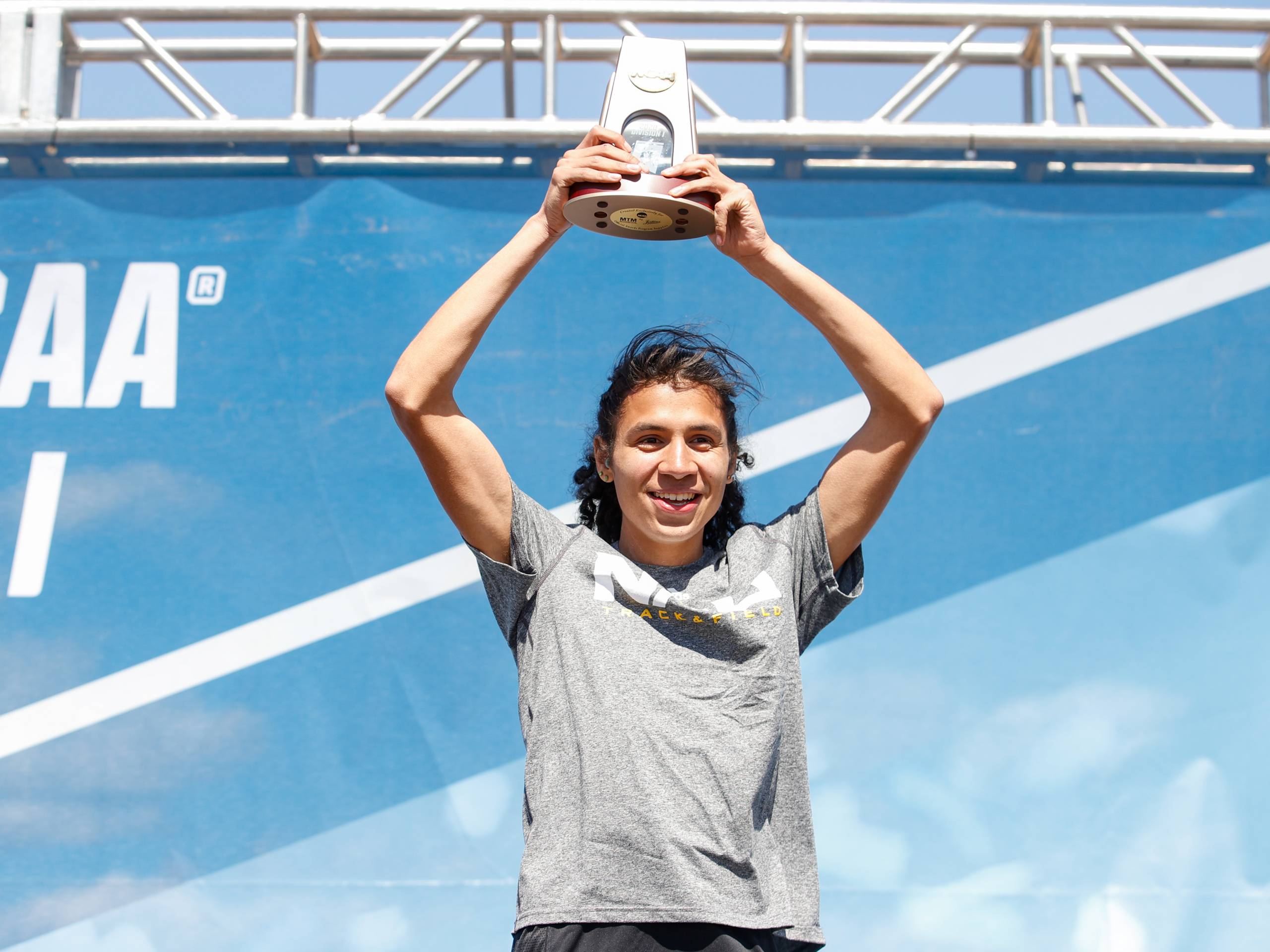
Luis Grijalva — the first known DACA recipient to qualify for the Olympics — headed to Tokyo Friday to compete in next week's 5,000 meter-race, representing Guatemala.
At this time last week, the Northern Arizona University track star wasn’t sure if U.S. immigration authorities would grant him permission to travel, despite qualifying for the race last month at the NCAA Outdoor Track and Field Championships, where he ran an impressive 13:13.14. Only on Monday was Grijalva granted emergency permission to leave the country, after showing up in person with his attorney at the U.S. Immigration and Customs Enforcement office in Phoenix.
“Being able to represent Guatemala and where I was born and started — and to represent my family and generations of families born in Guatemala is pretty awesome,” said Grijalva, who came to the United States with his family when he was still a baby.
Grijalva lived in New York before moving to Fairfield, California at age three. He has fond memories of running throughout the Bay Area as a member of the track team at Armijo High School, and has dreamed of competing in the Olympics ever since joining the team his freshman year, in 2013.
“Palo Alto, Stanford, Cal Berkeley — all these different places as a high schooler. It’s awesome, just thinking about it,” Grijalva told KQED this week.
Growing up in the Bay Area was “pretty special,” he said. Currently a senior at Northern Arizona University, he plans to eventually move back to the Bay Area.
The dilemma: As a DACA recipient, Grijalva would technically be considered as self-deporting if he were to leave the U.S. without a special permit, and would likely not be allowed to come back. But the process of obtaining the necessary permissions, known as advance parole, can take months.
News of Grijalva’s situation was first reported last week by the Visalia Times Delta.
Jessica Smith Bobadilla, Grijalva’s Fresno-based attorney, helped make his Olympic trip possible.
Bobadilla, who has been representing immigrants and refugees for over 20 years, said Grijalva came to her for help in June.
“We quickly filed as soon as we had the paperwork from his coaches and from the delegation,” she said, noting the emergency process they needed to go through to expedite his application.
But when they hadn’t heard anything by late June, Bobadilla decided she needed to do everything she could to push his application forward. Even though they didn’t have an appointment, she flew to Phoenix to show up in person at the immigration office in an effort to ensure Grijalva could make it to Tokyo in time for his qualifying race on August 3.
“We almost were not allowed in,” Bobadilla said. But after contacting the offices of U.S. Sen. Mark Kelly and Rep. Tom O’Halleran — both Arizona Democrats — for help, Bobadilla said she and Grijalva were eventually able to enter the building, and after several hours, were granted the advance parole.
The future of DACA was once again put in jeopardy after a federal district judge in Texas earlier this month ruled the program unlawful.