Una 'brecha' del estímulo económico: Por qué muchos inmigrantes indocumentados no han podido recibir el alivio financiero de California que les corresponde
El 'Mission Resource Hub' en San Francisco ha ayudado a cientos de familias a presentar sus impuestos y calificar para la ayuda del programa estatal 'Golden State Stimulus'. Pero muchos inmigrantes sin números de Seguro Social han enfrentado grandes obstáculos al intentar presentar la solicitud por primera vez. (Beth LaBerge/KQED)
Ya era abril y todavía no había pagado sus impuestos.
Aunque ella quería hacerlo, no podía.
Leydi y su familia son inmigrantes indocumentados que viven en California (y por esa razón sólo usaremos sus nombres sin apellido para identificarlos).
Ellos califican para recibir hasta $2,400 en ayuda económica como parte del Golden State Stimulus (o el Estímulo del Estado Dorado). El plan de alrededor de $7.6 mil millones fue aprobado por el gobernador Gavin Newsom el pasado mes de febrero y ofrece cheques de $600 a contribuyentes que ganaron menos de $30,000 en 2020 y $600 adicionales a trabajadores indocumentados.
El año pasado fue extremadamente difícil para la familia de Leydi, que vive en el distrito de la Misión en San Francisco. Ella y su esposo se quedaron sin empleo y por esa razón, esta ayuda, de las pocas que califican a causa de su estatus migratorio, podría aliviar un poco el estrés financiero de la familia.
Pero para recibir este monto, Leydi y su marido Jorge, tienen que presentar sus impuestos. En el caso de los trabajadores indocumentados, se requiere tener un número de identificación personal del contribuyente, o ITIN por sus siglas en inglés. Sólo el Servicio de Impuestos Internos (o mejor conocido como el IRS en inglés) da este dato, el cual requiere que el solicitante verifique su identidad y estatus como extranjero. Normalmente la dependencia acepta documentos como una acta de nacimiento o pasaporte para cumplir este requisito.
Ahí es cuando se comenzaron complicaron las cosas para Leydi. Tanto su marido como su hijo no tienen un pasaporte vigente de México, su país de origen. En California, sólo un consulado mexicano puede concederles ese documento, pero ya por varias semanas, habían llamado sin éxito a Mexitel, la línea telefónica del gobierno mexicano para agendar una cita.
“Me comencé a desesperar porque solamente era el pasaporte de él que nos hacía falta y realmente nos estamos atrasando para realizar todo esto”, dijo Leydi.
“Dos meses, así estuve llamando,” dijo Jorge, y agregó, “No me contestaban, no entraba la llamada, o estaba ocupado…casi todos los días estaba intentando llamar”.
En Estados Unidos, existen 50 consulados mexicanos que atienden a unos 11 millones de ciudadanos mexicanos en los Estados Unidos. Dos de estos consulados se encuentran en el Área de la Bahía, en San Francisco y San José, ambos sitios requieren que uno llame a Mexitel para agendar una cita.
Jorge dijo que llamó a Mexitel tantas veces que hasta se aprendió de memoria el horario de los operadores. “Yo marcaba a veces a las 10 a.m. y sólo sonaba y no me contestaban porque comienzan a contestar las llamadas a partir de las 2 p.m. de aquí”, explicó él.
Cuando por fin le atendieron su llamada, las únicas citas que le ofrecieron eran para varios meses después o en otros consulados lejos del Área de la Bahía.
En aquel momento, Leydi y Jorge justo acababan de encontrar un poco de trabajo otra vez. Faltar uno o dos días para viajar a Sacramento o Los Ángeles podrían perder lo poca fuente de ingresos que su familia necesitaba con urgencia.
“Es un poco complicado de un día para el otro realizar un viaje repentino”, dijo Leydi.
Faltaban pocas semanas para la fecha límite del 17 de mayo y la familia tenía pocas opciones. Decidieron ir directamente al consulado de San Francisco para pedir en persona una cita. No se les permitió entrar, pero insistieron en que se iban a quedar hasta que fueran atendidos.
Alguien del personal del consulado por fin salió y les dijo que si traían una carta de una organización comunitaria o un abogado que confirmara que necesitaban los pasaportes de manera urgente, podrían agendar una cita de emergencia.
Al no tener los recursos para contratar a un abogado, acudieron por ayuda a Mission Economic Development Agency (en español, la ‘Agencia de Desarrollo Económico de la Misión’ o mejor conocido como MEDA por sus siglas en inglés).
Dairo Romero es el director de las iniciativas comunitarias para MEDA, y a lo largo de este año, ha ayudado a decenas de familias, muchas de ellas indocumentadas, a presentar sus impuestos por primera vez.
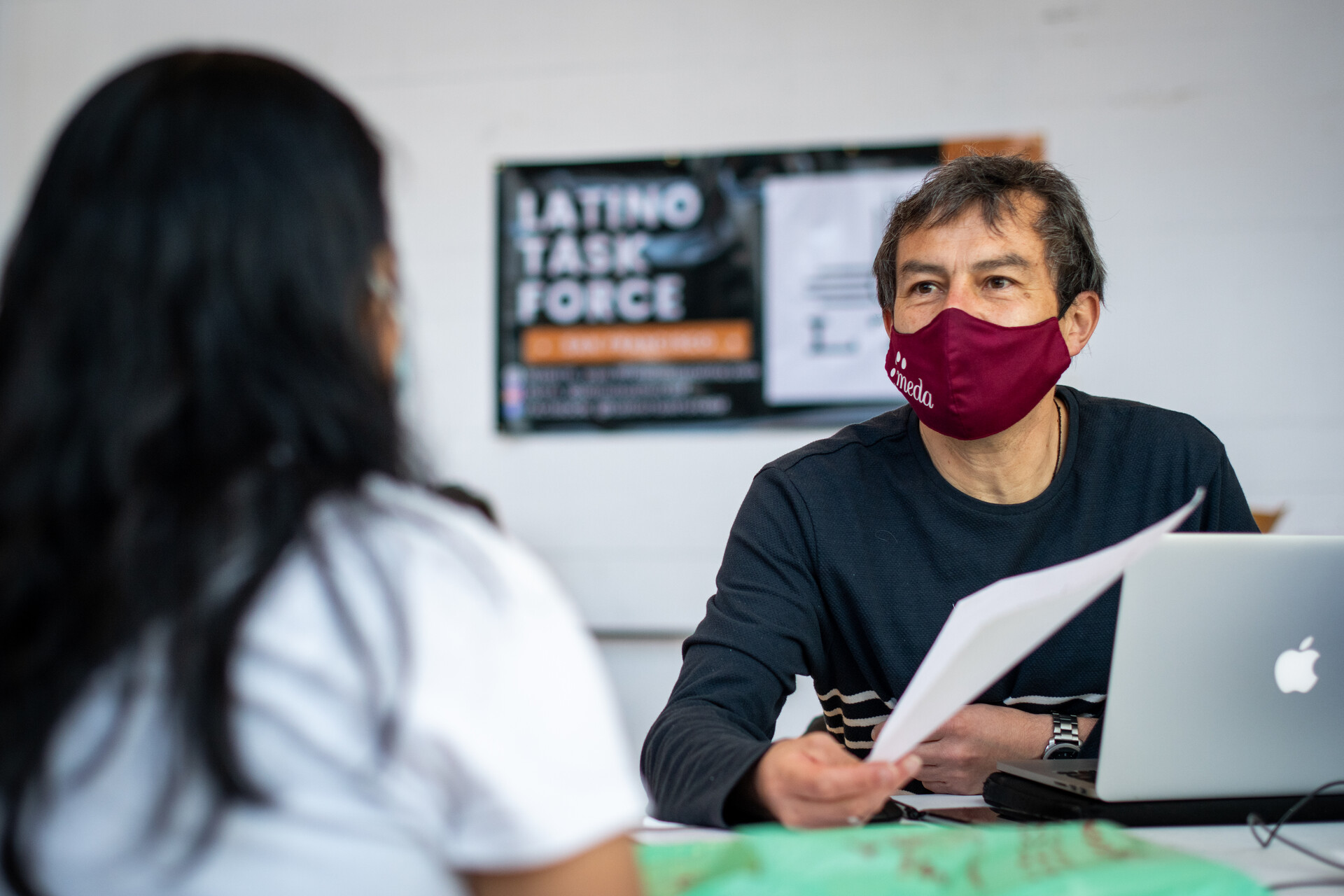
Dairo Romero de MEDA, ayuda a un miembro de la comunidad a presentar impuestos el 19 de mayo de 2021 en un espacio del banco de alimentos ‘Mission Food Hub’ en San Francisco. (Beth LaBerge/KQED)
Romero aceptó escribir una carta, en la cual él explicó que Leydi y su familia necesitaban los pasaportes lo más pronto posible, lo que permitió que la pareja por fin recibiera una cita.
“Nos sentimos más tranquilos”, dijo Jorge, con su pasaporte por fin en su mano.
Sin embargo, Romero indica que este método tiene sus límites.
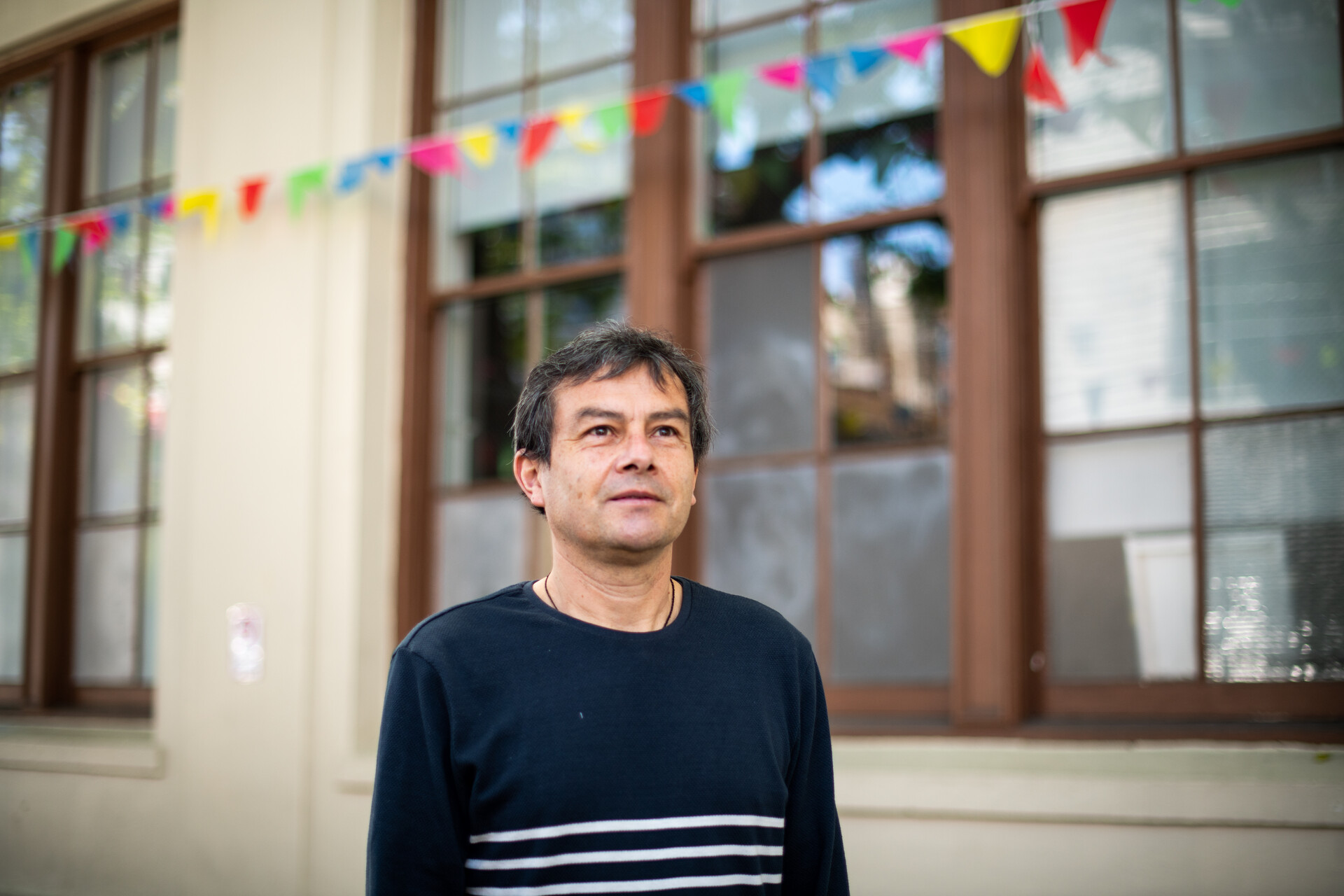
“Ya he hecho como unas 6 cartas diciendo que para el proceso de vivienda o para su declaración de impuestos se necesita el consulado para que le den prioridad y puedan expedir su pasaporte” explicó Romero.
Pero agregó, “No quiero promover eso porque ya me están llamando para que le haga cartas a todo el mundo y hay personas que ni conozco y me están llamando para pedirme cartas”.
Sponsored
‘Una brecha’
Romero ha intentado ayudar a otras familias que están pasando por situaciones similares y muchas de ellas provienen de El Salvador y Guatemala, los países que representan el segundo y tercer grupo de inmigrantes latinoamericanos más grandes en California, después de México.
Lo que le preocupa a él es que podría haber muchos más inmigrantes indocumentados que de otra manera calificarían para recibir los cheques de ayuda económica del estado, pero enfrentan bastantes dificultades al navegar el sistema consular.
Actualmente existen pocos datos de cuántos inmigrantes indocumentados que califican para recibir el Golden State Stimulus están perdiendo este beneficio.
Pero un estudio de abril del California Policy Lab puede proporcionar algunas pistas. El informe encontró que 2.2 millones de californianos de bajos ingresos pueden estar perdiendo $5.7 mil millones en cheques de estímulo federal, algo que los investigadores consideran como una “brecha” del estímulo económico. Esa cifra no incluye a los inmigrantes indocumentados, que quedan automáticamente excluidos de la ayuda federal.
Sin embargo, entre esos 2.2 millones de californianos, el estudio identificó 360,000 dependientes que son ciudadanos estadounidenses pero que también son hijos de padres indocumentados que no han logrado presentar sus impuestos.
La tercera ronda de cheques de estímulo económico, bajo la administración del presidente Joe Biden, permitió a las familias de estatus mixto, si los niños son ciudadanos, recibir parte de este monto.
Pero, si los padres indocumentados no pueden declarar sus impuestos, sus hijos no recibirán esa ayuda aunque sean ciudadanos.
“Se ha hablado mucho … sobre cómo estos créditos van a ayudar a la gente a salir de la pobreza”, dijo Aparna Ramesh, gerente de investigaciones en el centro California Policy Lab (o ‘Laboratorio de políticas de California’) y uno de los autores del reporte. “Es cierto eso. Pero yo creo que a fin de cuentas, sólo podrán ser de ayuda siempre y cuando la gente reciba este alivio”.
Romero, de MEDA, recalca que tan importante es un ITIN para que una persona indocumentada solicite ayuda financiera durante la pandemia, pero cuando este proceso se complica, la espera para recibir ayuda esencial puede prolongarse aún más.
“Por la pandemia, sí es muy común estos casos”, dijo Romero, indicando que muchos consulados han visto sus operaciones reducidas durante la pandemia debido a las restricciones de salud y agregó, “el proceso de dar el pasaporte es muy fácil, pero el problema es que no están dando citas”.
Dairo Romero de MEDA ha escrito varias cartas en nombre de familias que necesitan una carta para seguir adelante con su proceso de ITIN pero recalca que esto no es una solución sustentable. “Hay personas que ni conozco y me están llamando para pedirme cartas”, dijo Romero.
‘Nunca estaremos al día’
Nelda De León, una inmigrante guatemalteca que vive en San Francisco, pasó días tratando de agendar una cita con el consulado de Guatemala en San Francisco para procesar el trámite de doble ciudadanía para su sobrina. Cuando por fin le respondieron, la primera cita disponible era hasta diciembre.
“No es algo fácil, pero uno con la necesidad que tiene lo tiene que hacer, pero no es justo, ese tiempo no debería de estar allí”, dijo ella.
De León insistió repetidamente que el centro de llamadas la conectaran directamente al consulado guatemalteco en San Francisco, y cuando finalmente lo hicieron, logrò agendar una cita para la siguiente semana.
Ella dice que algunas de sus amistades intentaron agendar citas para procesar su pasaporte para su solicitud del ITIN, pero no les tocó una que fuera antes de la fecha límite para presentar los impuestos, y ahora están haciendo todo lo que pueden para ubicar otros tipos de documentación que el IRS acepte.
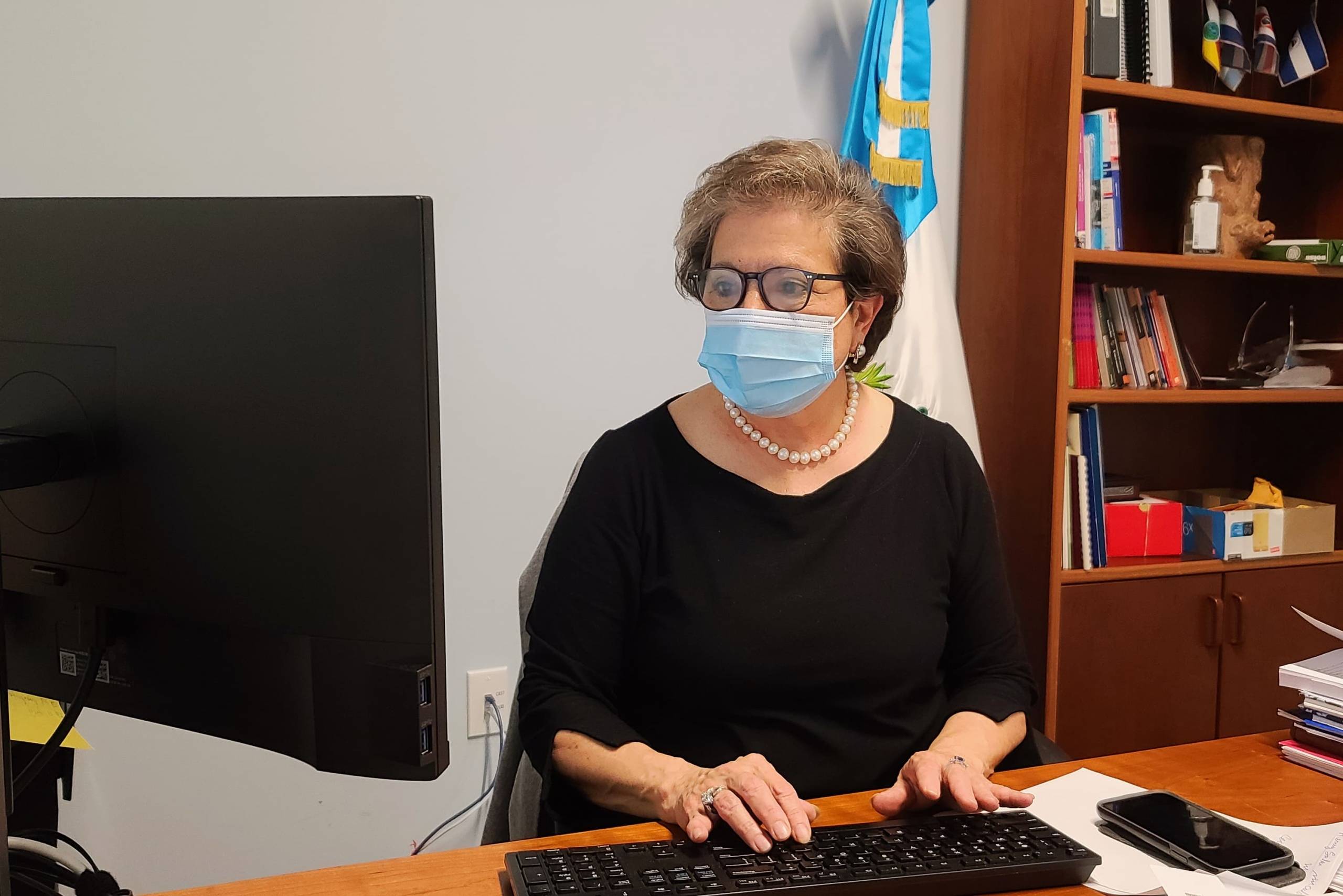
“Entiendo el malestar de los guatemaltecos que dicen, ‘ay, nunca contestan’, dijo Sylvia Wohlers Gomar de Meie, cónsul general de Guatemala en San Francisco.
Desde hace dos años, Wohlers dirige este consulado y se ha enfocado en ampliar sus operaciones para responder a las necesidades de la población guatemalteca en el norte de California y Nevada, la cual sigue creciendo año tras año. Pero indica que pese a que ella y su personal conocen muy bien los costos que conlleva manejar un consulado, ellos no tienen control sobre el presupuesto otorgado al consulado.
Esa decisión se toma a miles de millas de distancia, en Ciudad de Guatemala.
Sylvia Wohlers Gomar de Meie, cónsul general de Guatemala en San Francisco, reconoce que la necesidad de servicios consulares de la población guatemalteca en el Área de la Bahía es mucho mayor que la capacidad de su oficina. Y aunque le gustaría traer más personal, indica que hacerlo requeriría la autorización de las autoridades guatemaltecas. (Carlos Cabrera-Lomelí/KQED)
“En Guatemala, pasó lo mismo que lo que han pasado en otros países por esta pandemia y los ingresos se redujeron enormemente, se redujeron, no hay comercio exterior”, explicó Wohlers y agregó que, “nosotros tenemos que tener mucho cuidado con los fondos que nosotros administramos y que nosotros recibimos”.
Durante la pandemia, la demanda de los servicios consulares sólo ha incrementado pero la Cónsul menciona que esto ocurre a la misma vez que su oficina opera con una capacidad limitada a causa de las restricciones de salud por el COVID-19.
“Es una carrera contra el tiempo”, dijo Wohlers, haciendo referencia al hecho de que si ella quiere contratar a más personal o pagar horas extras a sus empleados que ya tiene, ella debe esperar hasta recibir permiso del Ministerio de Relaciones Exteriores de Guatemala.
“Nunca vamos a estar al día. Nunca. Porque el crecimiento de la población que requiere una atención es cada vez mayor. Estamos luchando por estar a la par pero es difícil lograrlo”, dijo Wohlers, e indicó que su oficina espera hacer disponible más citas a partir del 15 de junio, fecha cuando California planea remover gran parte de las restricciones de salud.
A través de comunicados separados, los consulados mexicanos en San Francisco y San José afirmaron que su capacidad para hacer citas durante la pandemia ha sido limitada por las pautas de salud.
Más en español
Alejandra Bologna Zubikarai, la cónsul general de México en San José expresó en un comunicado que su oficina “trabaja casi al 100% de su capacidad” y que alrededor de mil citas se agendan cada semana para expeditar pasaportes y otros documentos.
Sin embargo, una visita a la página de Mexitel el 26 de mayo demostró que no había ninguna cita disponible en las siguientes dos semanas, el único plazo de tiempo en el que el portal comparte información, tanto en el consulado de San Francisco como en el de San José.
Bologna informó que el consulado sí ofrece citas de emergencia en caso que alguien necesite una consulta de manera urgente. Pero quienes escojan esta opción tendrán que pagar un 30% adicional de lo que cuesta procesar un pasaporte.
Cuando Leydi y Jorge lograron encontrar una cita de emergencia para el trámite de pasaporte, se sorprendieron al saber que ellos tendrían que pagar este costo extra. “Muchos [inmigrantes] no pueden pagar cuando les cobran un 30% extra”, dijo Jorge.
KQED también intentó contactar al consulado salvadoreño en San Francisco varias veces para realizar una entrevista pero nunca recibió una respuesta. Llamamos varias veces en abril y mayo al número telefónico indicado para hacer una cita, pero en cada llamada siempre se podía escuchar la misma grabación, la cual decía que en ese momento, todos los agentes están ocupados y que llame más al rato.
Ramón Cardona es director del Centro Latino Cuzcatlán, un centro de servicios migratorios en la ciudad de El Cerrito, y trabaja con varias familias salvadoreñas. Él mismo es un inmigrante salvadoreño quien ha trabajado en el sector migratorio por varias décadas.
“Me han dicho gente que han estado llamando días, días para que por fin alguien les responda … porque es puras máquinas, puras máquinas y nadie en vivo te responde. A veces te responden y te mandan a otro centro y pasas lo mismo, llama y llama”, dijo Cardona.
Como Romero, Cardona ha escrito múltiples cartas para familias que necesitan una cita. Ha conocido a inmigrantes salvadoreños que han llegado a San Francisco de lugares tan remotos como Oregón y Utah, sólo para llegar y ser decepcionados cuando se dan cuenta que no podrán entrar al consulado sin cita.
Cardona sugiere que los consulados comuniquen claramente cómo programar una cita de la manera más eficaz, especialmente en casos urgentes.
El laberinto de llamadas que un inmigrante debe de navegar no sólo podría afectar el trámite para recibir un ITIN, sino también podría atrasar un proceso migratorio, menciona Cardona, ya que para muchos, los trámites migratorios requieren que uno esté al día con sus obligaciones tributarias.
“Un proceso migratorio lleva años”, dijo él y agregó que, “por un momento, que tu consulado no te puede dar el pasaporte a tiempo por todos estos obstáculos en este momento [tendrías] que recalendarizar.”
Recursos disponibles para quienes todavía no han presentado sus impuestos
Si aún no ha pagado sus impuestos o busca ayuda para solicitar un ITIN, todavía hay varias opciones disponibles. Cuando esté preparando sus impuestos, puede avisar a la persona que le ayude en este proceso que aún no ha recibido su cheque de estímulo del estado de California.
El IRS sigue aceptando solicitudes de ITIN. El sitio web de la agencia dice que toma alrededor de siete semanas para que alguien reciba su número luego de mandar su solicitud.
Hay algunas organizaciones que todavía ofrecen asistencia para llenar los impuestos de manera gratuita y además ayuda con la aplicación del ITIN (pero cabe recalcar que sólo el IRS puede proveer un ITIN).
Condado de Alameda:
La organización San Antonio CDC ofrece citas y asistencia a distancia a lo largo del año excepto durante julio y las fiestas decembrinas. Lo pueden atender en inglés, español, cantonés o mandarín. Normalmente hay citas disponibles de lunes a viernes. Puede llamar al (510) 536-5179 para agendar una cita.
Condado de Contra Costa
La organización SparkPoint/Bay Point Works ECC ofrecerá asistencia virtual/a distancia para presentar los impuestos y también para solicitar un ITIN a partir del 2 de junio. Lo pueden atender en inglés o español. Antes de dejar su información, por favor llame al (925) 252-2331 después de las 9:30 a.m.
San Francisco
La organización Mission Economic Development Agency (MEDA) ofrece asistencia en persona por cita o sin cita para presentar los impuestos o para solicitar el ITIN, en inglés o español. Llame al (415) 612-2014, extensión 6 para agendar una cita.
El centro comunitario Chinese Newcomers Service Center tiene citas virtuales disponibles en inglés, mandarín, cantonés y vietnamita. Llame al (415) 421-2111 para agendar una cita, entre las 9 a.m. a las 4 p.m.
Condado de Solano:
El grupo comunitario Benicia Community Action Council ofrece asistencia virtual/a distancia hasta el 30 de octubre. Sólo lo pueden atender en inglés. Se recomiende que antes de dejar su información en las oficinas de la organización, llame al (707) 745-0900. Puede llamar de martes a jueves.
Este artículo fue traducido por el autor y la traducción fue editada por la periodista María Peña.
Sponsored
lower waypoint
Stay on top of what’s happening in the Bay Area
Subscribe to News Daily for essential Bay Area news stories, sent to your inbox every weekday.
To learn more about how we use your information, please read our privacy policy.
window.__IS_SSR__=true
window.__INITIAL_STATE__={
"attachmentsReducer": {
"audio_0": {
"type": "attachments",
"id": "audio_0",
"imgSizes": {
"kqedFullSize": {
"file": "https://ww2.kqed.org/news/wp-content/themes/KQED-unified/img/audio_bgs/background0.jpg"
}
}
},
"audio_1": {
"type": "attachments",
"id": "audio_1",
"imgSizes": {
"kqedFullSize": {
"file": "https://ww2.kqed.org/news/wp-content/themes/KQED-unified/img/audio_bgs/background1.jpg"
}
}
},
"audio_2": {
"type": "attachments",
"id": "audio_2",
"imgSizes": {
"kqedFullSize": {
"file": "https://ww2.kqed.org/news/wp-content/themes/KQED-unified/img/audio_bgs/background2.jpg"
}
}
},
"audio_3": {
"type": "attachments",
"id": "audio_3",
"imgSizes": {
"kqedFullSize": {
"file": "https://ww2.kqed.org/news/wp-content/themes/KQED-unified/img/audio_bgs/background3.jpg"
}
}
},
"audio_4": {
"type": "attachments",
"id": "audio_4",
"imgSizes": {
"kqedFullSize": {
"file": "https://ww2.kqed.org/news/wp-content/themes/KQED-unified/img/audio_bgs/background4.jpg"
}
}
},
"placeholder": {
"type": "attachments",
"id": "placeholder",
"imgSizes": {
"thumbnail": {
"file": "https://cdn.kqed.org/wp-content/uploads/2024/12/KQED-Default-Image-816638274-2000x1333-1-160x107.jpg",
"width": 160,
"height": 107,
"mimeType": "image/jpeg"
},
"medium": {
"file": "https://cdn.kqed.org/wp-content/uploads/2024/12/KQED-Default-Image-816638274-2000x1333-1-800x533.jpg",
"width": 800,
"height": 533,
"mimeType": "image/jpeg"
},
"medium_large": {
"file": "https://cdn.kqed.org/wp-content/uploads/2024/12/KQED-Default-Image-816638274-2000x1333-1-768x512.jpg",
"width": 768,
"height": 512,
"mimeType": "image/jpeg"
},
"large": {
"file": "https://cdn.kqed.org/wp-content/uploads/2024/12/KQED-Default-Image-816638274-2000x1333-1-1020x680.jpg",
"width": 1020,
"height": 680,
"mimeType": "image/jpeg"
},
"1536x1536": {
"file": "https://cdn.kqed.org/wp-content/uploads/2024/12/KQED-Default-Image-816638274-2000x1333-1-1536x1024.jpg",
"width": 1536,
"height": 1024,
"mimeType": "image/jpeg"
},
"fd-lrg": {
"file": "https://cdn.kqed.org/wp-content/uploads/2024/12/KQED-Default-Image-816638274-2000x1333-1-1536x1024.jpg",
"width": 1536,
"height": 1024,
"mimeType": "image/jpeg"
},
"fd-med": {
"file": "https://cdn.kqed.org/wp-content/uploads/2024/12/KQED-Default-Image-816638274-2000x1333-1-1020x680.jpg",
"width": 1020,
"height": 680,
"mimeType": "image/jpeg"
},
"fd-sm": {
"file": "https://cdn.kqed.org/wp-content/uploads/2024/12/KQED-Default-Image-816638274-2000x1333-1-800x533.jpg",
"width": 800,
"height": 533,
"mimeType": "image/jpeg"
},
"post-thumbnail": {
"file": "https://cdn.kqed.org/wp-content/uploads/2024/12/KQED-Default-Image-816638274-2000x1333-1-672x372.jpg",
"width": 672,
"height": 372,
"mimeType": "image/jpeg"
},
"twentyfourteen-full-width": {
"file": "https://cdn.kqed.org/wp-content/uploads/2024/12/KQED-Default-Image-816638274-2000x1333-1-1038x576.jpg",
"width": 1038,
"height": 576,
"mimeType": "image/jpeg"
},
"xxsmall": {
"file": "https://cdn.kqed.org/wp-content/uploads/2024/12/KQED-Default-Image-816638274-2000x1333-1-160x107.jpg",
"width": 160,
"height": 107,
"mimeType": "image/jpeg"
},
"xsmall": {
"file": "https://cdn.kqed.org/wp-content/uploads/2024/12/KQED-Default-Image-816638274-2000x1333-1-672x372.jpg",
"width": 672,
"height": 372,
"mimeType": "image/jpeg"
},
"small": {
"file": "https://cdn.kqed.org/wp-content/uploads/2024/12/KQED-Default-Image-816638274-2000x1333-1-672x372.jpg",
"width": 672,
"height": 372,
"mimeType": "image/jpeg"
},
"xlarge": {
"file": "https://cdn.kqed.org/wp-content/uploads/2024/12/KQED-Default-Image-816638274-2000x1333-1-1020x680.jpg",
"width": 1020,
"height": 680,
"mimeType": "image/jpeg"
},
"full-width": {
"file": "https://cdn.kqed.org/wp-content/uploads/2024/12/KQED-Default-Image-816638274-2000x1333-1-1920x1280.jpg",
"width": 1920,
"height": 1280,
"mimeType": "image/jpeg"
},
"guest-author-32": {
"file": "https://cdn.kqed.org/wp-content/uploads/2025/01/KQED-Default-Image-816638274-1333x1333-1-160x160.jpg",
"width": 32,
"height": 32,
"mimeType": "image/jpeg"
},
"guest-author-50": {
"file": "https://cdn.kqed.org/wp-content/uploads/2025/01/KQED-Default-Image-816638274-1333x1333-1-160x160.jpg",
"width": 50,
"height": 50,
"mimeType": "image/jpeg"
},
"guest-author-64": {
"file": "https://cdn.kqed.org/wp-content/uploads/2025/01/KQED-Default-Image-816638274-1333x1333-1-160x160.jpg",
"width": 64,
"height": 64,
"mimeType": "image/jpeg"
},
"guest-author-96": {
"file": "https://cdn.kqed.org/wp-content/uploads/2025/01/KQED-Default-Image-816638274-1333x1333-1-160x160.jpg",
"width": 96,
"height": 96,
"mimeType": "image/jpeg"
},
"guest-author-128": {
"file": "https://cdn.kqed.org/wp-content/uploads/2025/01/KQED-Default-Image-816638274-1333x1333-1-160x160.jpg",
"width": 128,
"height": 128,
"mimeType": "image/jpeg"
},
"detail": {
"file": "https://cdn.kqed.org/wp-content/uploads/2025/01/KQED-Default-Image-816638274-1333x1333-1-160x160.jpg",
"width": 160,
"height": 160,
"mimeType": "image/jpeg"
},
"kqedFullSize": {
"file": "https://cdn.kqed.org/wp-content/uploads/2024/12/KQED-Default-Image-816638274-2000x1333-1.jpg",
"width": 2000,
"height": 1333
}
}
},
"news_11877671": {
"type": "attachments",
"id": "news_11877671",
"meta": {
"index": "attachments_1716263798",
"site": "news",
"id": "11877671",
"found": true
},
"parent": 11877669,
"imgSizes": {
"twentyfourteen-full-width": {
"file": "https://ww2.kqed.org/app/uploads/sites/10/2021/06/RS49132_013_SanFrancisco_MEDADairoRomero_05192021-qut-1-1038x576.jpg",
"width": 1038,
"mimeType": "image/jpeg",
"height": 576
},
"thumbnail": {
"file": "https://ww2.kqed.org/app/uploads/sites/10/2021/06/RS49132_013_SanFrancisco_MEDADairoRomero_05192021-qut-1-160x107.jpg",
"width": 160,
"mimeType": "image/jpeg",
"height": 107
},
"post-thumbnail": {
"file": "https://ww2.kqed.org/app/uploads/sites/10/2021/06/RS49132_013_SanFrancisco_MEDADairoRomero_05192021-qut-1-672x372.jpg",
"width": 672,
"mimeType": "image/jpeg",
"height": 372
},
"kqedFullSize": {
"file": "https://ww2.kqed.org/app/uploads/sites/10/2021/06/RS49132_013_SanFrancisco_MEDADairoRomero_05192021-qut-1.jpg",
"width": 1682,
"height": 1121
},
"large": {
"file": "https://ww2.kqed.org/app/uploads/sites/10/2021/06/RS49132_013_SanFrancisco_MEDADairoRomero_05192021-qut-1-1020x680.jpg",
"width": 1020,
"mimeType": "image/jpeg",
"height": 680
},
"1536x1536": {
"file": "https://ww2.kqed.org/app/uploads/sites/10/2021/06/RS49132_013_SanFrancisco_MEDADairoRomero_05192021-qut-1-1536x1024.jpg",
"width": 1536,
"mimeType": "image/jpeg",
"height": 1024
},
"medium": {
"file": "https://ww2.kqed.org/app/uploads/sites/10/2021/06/RS49132_013_SanFrancisco_MEDADairoRomero_05192021-qut-1-800x533.jpg",
"width": 800,
"mimeType": "image/jpeg",
"height": 533
}
},
"publishDate": 1623399309,
"modified": 1623400117,
"caption": "El 'Mission Resource Hub' en San Francisco ha ayudado a cientos de familias a presentar sus impuestos y calificar para la ayuda del programa estatal 'Golden State Stimulus'. Pero muchos inmigrantes sin números de Seguro Social han enfrentado grandes obstáculos al intentar presentar la solicitud por primera vez.",
"description": "El 'Mission Resource Hub' en San Francisco ha ayudado a cientos de familias a presentar sus impuestos y calificar para la ayuda del programa estatal 'Golden State Stimulus'. Pero muchos inmigrantes sin números de Seguro Social han enfrentado grandes obstáculos al intentar presentar la solicitud por primera vez.",
"title": "RS49132_013_SanFrancisco_MEDADairoRomero_05192021-qut (1)",
"credit": "Beth LaBerge/KQED",
"status": "inherit",
"altTag": "Varias personas esperan sentadas en sillas para que las atiendan.",
"fetchFailed": false,
"isLoading": false
}
},
"audioPlayerReducer": {
"postId": "stream_live",
"isPaused": true,
"isPlaying": false,
"pfsActive": false,
"pledgeModalIsOpen": true,
"playerDrawerIsOpen": false
},
"authorsReducer": {
"ccabreralomeli": {
"type": "authors",
"id": "11708",
"meta": {
"index": "authors_1716337520",
"id": "11708",
"found": true
},
"name": "Carlos Cabrera-Lomelí",
"firstName": "Carlos",
"lastName": "Cabrera-Lomelí",
"slug": "ccabreralomeli",
"email": "ccabreralomeli@KQED.org",
"display_author_email": true,
"staff_mastheads": [
"news"
],
"title": "Community Reporter",
"bio": "Carlos Cabrera-Lomelí is a community reporter with KQED's digital engagement team. He also reports and co-produces for KQED's bilingual news hub KQED en Español. He grew up in San Francisco's Mission District and has previously worked with Univision, 48 Hills and REFORMA in Mexico City.",
"avatar": "https://secure.gravatar.com/avatar/e95ff80bb2eaf18a8f2af4dcf7ffb54b?s=600&d=mm&r=g",
"twitter": "@LomeliCabrera",
"facebook": null,
"instagram": null,
"linkedin": null,
"sites": [
{
"site": "arts",
"roles": [
"editor"
]
},
{
"site": "news",
"roles": [
"editor"
]
},
{
"site": "about",
"roles": [
"editor"
]
},
{
"site": "science",
"roles": [
"editor"
]
},
{
"site": "perspectives",
"roles": [
"editor"
]
},
{
"site": "elections",
"roles": [
"editor"
]
},
{
"site": "liveblog",
"roles": [
"contributor"
]
}
],
"headData": {
"title": "Carlos Cabrera-Lomelí | KQED",
"description": "Community Reporter",
"ogImgSrc": "https://secure.gravatar.com/avatar/e95ff80bb2eaf18a8f2af4dcf7ffb54b?s=600&d=mm&r=g",
"twImgSrc": "https://secure.gravatar.com/avatar/e95ff80bb2eaf18a8f2af4dcf7ffb54b?s=600&d=mm&r=g"
},
"isLoading": false,
"link": "/author/ccabreralomeli"
}
},
"breakingNewsReducer": {},
"pagesReducer": {},
"postsReducer": {
"stream_live": {
"type": "live",
"id": "stream_live",
"audioUrl": "https://streams.kqed.org/kqedradio",
"title": "Live Stream",
"excerpt": "Live Stream information currently unavailable.",
"link": "/radio",
"featImg": "",
"label": {
"name": "KQED Live",
"link": "/"
}
},
"stream_kqedNewscast": {
"type": "posts",
"id": "stream_kqedNewscast",
"audioUrl": "https://www.kqed.org/.stream/anon/radio/RDnews/newscast.mp3?_=1",
"title": "KQED Newscast",
"featImg": "",
"label": {
"name": "88.5 FM",
"link": "/"
}
},
"news_11877669": {
"type": "posts",
"id": "news_11877669",
"meta": {
"index": "posts_1716263798",
"site": "news",
"id": "11877669",
"found": true
},
"guestAuthors": [],
"slug": "una-brecha-del-estimulo-economico-por-que-muchos-inmigrantes-indocumentados-no-han-podido-recibir-el-alivio-financiero-de-california-que-les-corresponde",
"title": "Una 'brecha' del estímulo económico: Por qué muchos inmigrantes indocumentados no han podido recibir el alivio financiero de California que les corresponde",
"publishDate": 1623698104,
"format": "standard",
"headTitle": "Una ‘brecha’ del estímulo económico: Por qué muchos inmigrantes indocumentados no han podido recibir el alivio financiero de California que les corresponde | KQED",
"labelTerm": {},
"content": "\u003cp>\u003ca href=\"https://www.kqed.org/news/11874637/the-stimulus-gap-why-many-undocumented-immigrants-arent-getting-the-golden-state-stimulus-theyre-entitled-to\">Read in English\u003c/a>\u003c/p>\n\u003cul>\n\u003cli>\u003cem>\u003ca href=\"#recursos\">\u003cstrong>Pase a la sección de sitios en el Área de la Bahía que siguen ofreciendo asistencia gratuita para presentar sus impuestos\u003c/strong>\u003c/a>\u003c/em>\u003c/li>\n\u003c/ul>\n\u003cp>Leydi estaba preocupada.\u003c/p>\n\u003cp>Ya era abril y todavía no había pagado sus impuestos.\u003c/p>\n\u003cp>Aunque ella quería hacerlo, no podía.\u003c/p>\n\u003cp>Leydi y su familia son inmigrantes indocumentados que viven en California (y por esa razón sólo usaremos sus nombres sin apellido para identificarlos).\u003c/p>\n\u003cp>Ellos califican para recibir hasta $2,400 en ayuda económica como parte del \u003cem>Golden State Stimulus\u003c/em> (o el Estímulo del Estado Dorado). El plan de alrededor de \u003ca href=\"https://calmatters.org/calmatters-en-espanol/2021/02/california-considera-estimulo-para-trabajadores-indocumentados-excluidos-de-la-ayuda-federal/\">$7.6 mil millones\u003c/a> fue aprobado por el gobernador Gavin Newsom el pasado mes de febrero y ofrece cheques de $600 a contribuyentes que ganaron menos de $30,000 en 2020 y $600 adicionales a trabajadores indocumentados.\u003c/p>\n\u003cp>El año pasado fue extremadamente difícil para la familia de Leydi, que vive en el distrito de la Misión en San Francisco. Ella y su esposo se quedaron sin empleo y por esa razón, esta ayuda, de las pocas que califican a causa de su estatus migratorio, podría aliviar un poco el estrés financiero de la familia.\u003c/p>\n\u003cp>Pero para recibir este monto, Leydi y su marido Jorge, tienen que presentar sus impuestos. En el caso de los trabajadores indocumentados, se requiere tener un \u003ca href=\"https://www.irs.gov/es/individuals/individual-taxpayer-identification-number\">número de identificación personal del contribuyente\u003c/a>, o ITIN por sus siglas en inglés. Sólo el Servicio de Impuestos Internos (o mejor conocido como el IRS en inglés) da este dato, el cual requiere que el solicitante verifique su identidad y estatus como extranjero. Normalmente la dependencia acepta documentos como una acta de nacimiento o pasaporte para cumplir este requisito.\u003c/p>\n\u003cp>[pullquote align=\"right\" size=\"medium\" citation=\"Jorge, un inmigrante indocumentado de México viviendo en San Francisco\"]‘Dos meses, así estuve llamando … No me contestaban, no entraba la llamada, o estaba ocupado.’[/pullquote]Ahí es cuando se comenzaron complicaron las cosas para Leydi. Tanto su marido como su hijo no tienen un pasaporte vigente de México, su país de origen. En California, sólo un consulado mexicano puede concederles ese documento, pero ya por varias semanas, habían llamado sin éxito a \u003ca href=\"https://consulmex.sre.gob.mx/denver/index.php/citas/mexitel\">Mexitel\u003c/a>, la línea telefónica del gobierno mexicano para agendar una cita.\u003c/p>\n\u003cp>“Me comencé a desesperar porque solamente era el pasaporte de él que nos hacía falta y realmente nos estamos atrasando para realizar todo esto”, dijo Leydi.\u003c/p>\n\u003cp>“Dos meses, así estuve llamando,” dijo Jorge, y agregó, “No me contestaban, no entraba la llamada, o estaba ocupado…casi todos los días estaba intentando llamar”.\u003c/p>\n\u003cp>En Estados Unidos, existen 50 consulados mexicanos que atienden a unos 11 millones de ciudadanos mexicanos en los Estados Unidos. Dos de estos consulados se encuentran en el Área de la Bahía, en San Francisco y San José, ambos sitios requieren que uno llame a Mexitel para agendar una cita.\u003c/p>\n\u003cp>Jorge dijo que llamó a Mexitel tantas veces que hasta se aprendió de memoria el horario de los operadores. “Yo marcaba a veces a las 10 a.m. y sólo sonaba y no me contestaban porque comienzan a contestar las llamadas a partir de las 2 p.m. de aquí”, explicó él.\u003c/p>\n\u003cp>Cuando por fin le atendieron su llamada, las únicas citas que le ofrecieron eran para varios meses después o en otros consulados lejos del Área de la Bahía.\u003c/p>\n\u003cp>En aquel momento, Leydi y Jorge justo acababan de encontrar un poco de trabajo otra vez. Faltar uno o dos días para viajar a Sacramento o Los Ángeles podrían perder lo poca fuente de ingresos que su familia necesitaba con urgencia.\u003c/p>\n\u003cp>“Es un poco complicado de un día para el otro realizar un viaje repentino”, dijo Leydi.\u003c/p>\n\u003cp>Faltaban pocas semanas para la fecha límite del 17 de mayo y la familia tenía pocas opciones. Decidieron ir directamente al consulado de San Francisco para pedir en persona una cita. No se les permitió entrar, pero insistieron en que se iban a quedar hasta que fueran atendidos.\u003c/p>\n\u003cp>Alguien del personal del consulado por fin salió y les dijo que si traían una carta de una organización comunitaria o un abogado que confirmara que necesitaban los pasaportes de manera urgente, podrían agendar una cita de emergencia.\u003c/p>\n\u003cp>Al no tener los recursos para contratar a un abogado, acudieron por ayuda a \u003cem>Mission Economic Development Agency\u003c/em> (en español, la ‘Agencia de Desarrollo Económico de la Misión’ o mejor conocido como \u003ca href=\"https://medasf.org/\">MEDA\u003c/a> por sus siglas en inglés).\u003c/p>\n\u003cp>Dairo Romero es el director de las iniciativas comunitarias para MEDA, y a lo largo de este año, ha ayudado a decenas de familias, muchas de ellas indocumentadas, a presentar sus impuestos por primera vez.\u003c/p>\n\u003cfigure id=\"attachment_11877674\" class=\"wp-caption alignnone\" style=\"max-width: 1920px\">\u003cimg loading=\"lazy\" decoding=\"async\" class=\"size-full wp-image-11877674\" src=\"https://ww2.kqed.org/app/uploads/sites/10/2021/06/RS49123_004_SanFrancisco_MEDADairoRomero_05192021-qut-2.jpg\" alt=\"Dairo Romero, de MEDA, sentado con una persona en una mesa, platicando y con varios papeles a la mano.\" width=\"1920\" height=\"1280\" srcset=\"https://cdn.kqed.org/wp-content/uploads/sites/10/2021/06/RS49123_004_SanFrancisco_MEDADairoRomero_05192021-qut-2.jpg 1920w, https://cdn.kqed.org/wp-content/uploads/sites/10/2021/06/RS49123_004_SanFrancisco_MEDADairoRomero_05192021-qut-2-800x533.jpg 800w, https://cdn.kqed.org/wp-content/uploads/sites/10/2021/06/RS49123_004_SanFrancisco_MEDADairoRomero_05192021-qut-2-1020x680.jpg 1020w, https://cdn.kqed.org/wp-content/uploads/sites/10/2021/06/RS49123_004_SanFrancisco_MEDADairoRomero_05192021-qut-2-160x107.jpg 160w, https://cdn.kqed.org/wp-content/uploads/sites/10/2021/06/RS49123_004_SanFrancisco_MEDADairoRomero_05192021-qut-2-1536x1024.jpg 1536w\" sizes=\"(max-width: 1920px) 100vw, 1920px\">\u003cfigcaption class=\"wp-caption-text\">Dairo Romero de MEDA, ayuda a un miembro de la comunidad a presentar impuestos el 19 de mayo de 2021 en un espacio del banco de alimentos ‘Mission Food Hub’ en San Francisco. \u003ccite>(Beth LaBerge/KQED)\u003c/cite>\u003c/figcaption>\u003c/figure>\n\u003cp>Romero aceptó escribir una carta, en la cual él explicó que Leydi y su familia necesitaban los pasaportes lo más pronto posible, lo que permitió que la pareja por fin recibiera una cita.\u003c/p>\n\u003cp>“Nos sentimos más tranquilos”, dijo Jorge, con su pasaporte por fin en su mano.\u003c/p>\n\u003cp>Sin embargo, Romero indica que este método tiene sus límites.\u003c/p>\n\u003cp>“Ya he hecho como unas 6 cartas diciendo que para el proceso de vivienda o para su declaración de impuestos se necesita el consulado para que le den prioridad y puedan expedir su pasaporte” explicó Romero.\u003c/p>\n\u003cp>Pero agregó, “No quiero promover eso porque ya me están llamando para que le haga cartas a todo el mundo y hay personas que ni conozco y me están llamando para pedirme cartas”.\u003cbr>\n[ad fullwidth]\u003c/p>\n\u003ch3>‘Una brecha’\u003c/h3>\n\u003cp>Romero ha intentado ayudar a otras familias que están pasando por situaciones similares y muchas de ellas provienen de El Salvador y Guatemala, los países que representan el segundo y tercer grupo de inmigrantes latinoamericanos más grandes en California, después de México.\u003c/p>\n\u003cp>Lo que le preocupa a él es que podría haber muchos más inmigrantes indocumentados que de otra manera calificarían para recibir los cheques de ayuda económica del estado, pero enfrentan bastantes dificultades al navegar el sistema consular.\u003c/p>\n\u003cp>Actualmente existen pocos datos de cuántos inmigrantes indocumentados que califican para recibir el \u003cem>Golden State Stimulus\u003c/em> están perdiendo este beneficio.\u003c/p>\n\u003cp>[aside postID=\"news_11865309\" hero=\"https://ww2.kqed.org/app/uploads/sites/10/2021/03/RS46311_031_KQED_SanFrancisco_COVIDShutdown_12062020-qut.jpg\"]Pero un \u003ca href=\"https://www.capolicylab.org/the-stimulus-gap-2-2-million-californians-could-miss-5-7-billion-in-federal-stimulus-payments/\">estudio de abril\u003c/a> del California Policy Lab puede proporcionar algunas pistas. El informe encontró que 2.2 millones de californianos de bajos ingresos pueden estar perdiendo $5.7 mil millones en cheques de estímulo federal, algo que los investigadores consideran como una “brecha” del estímulo económico. Esa cifra no incluye a los inmigrantes indocumentados, que quedan automáticamente excluidos de la ayuda federal.\u003c/p>\n\u003cp>Sin embargo, entre esos 2.2 millones de californianos, el estudio identificó 360,000 dependientes que son ciudadanos estadounidenses pero que también son hijos de padres indocumentados que no han logrado presentar sus impuestos.\u003c/p>\n\u003cp>La tercera ronda de cheques de estímulo económico, bajo la administración del presidente Joe Biden, permitió a las familias de estatus mixto, si los niños son ciudadanos, recibir parte de este monto.\u003c/p>\n\u003cp>Pero, si los padres indocumentados no pueden declarar sus impuestos, sus hijos no recibirán esa ayuda aunque sean ciudadanos.\u003c/p>\n\u003cp>“Se ha hablado mucho … sobre cómo estos créditos van a ayudar a la gente a salir de la pobreza”, dijo Aparna Ramesh, gerente de investigaciones en el centro \u003cem>California Policy Lab\u003c/em> (o ‘Laboratorio de políticas de California’) y uno de los autores del reporte. “Es cierto eso. Pero yo creo que a fin de cuentas, sólo podrán ser de ayuda siempre y cuando la gente reciba este alivio”.\u003c/p>\n\u003cp>Romero, de MEDA, recalca que tan importante es un ITIN para que una persona indocumentada solicite ayuda financiera durante la pandemia, pero cuando este proceso se complica, la espera para recibir ayuda esencial puede prolongarse aún más.\u003c/p>\n\u003cp>“Por la pandemia, sí es muy común estos casos”, dijo Romero, indicando que muchos consulados han visto sus operaciones reducidas durante la pandemia debido a las restricciones de salud y agregó, “el proceso de dar el pasaporte es muy fácil, pero el problema es que no están dando citas”.\u003c/p>\n\u003cfigure id=\"attachment_11877675\" class=\"wp-caption alignnone\" style=\"max-width: 1920px\">\u003cimg loading=\"lazy\" decoding=\"async\" class=\"size-full wp-image-11877675\" src=\"https://ww2.kqed.org/app/uploads/sites/10/2021/06/RS49133_014_SanFrancisco_MEDADairoRomero_05192021-qut-1.jpg\" alt=\"Dairo Romero de MEDA, parado enfrente del edificio del grupo 'Mission Food Hub'.\" width=\"1920\" height=\"1280\" srcset=\"https://cdn.kqed.org/wp-content/uploads/sites/10/2021/06/RS49133_014_SanFrancisco_MEDADairoRomero_05192021-qut-1.jpg 1920w, https://cdn.kqed.org/wp-content/uploads/sites/10/2021/06/RS49133_014_SanFrancisco_MEDADairoRomero_05192021-qut-1-800x533.jpg 800w, https://cdn.kqed.org/wp-content/uploads/sites/10/2021/06/RS49133_014_SanFrancisco_MEDADairoRomero_05192021-qut-1-1020x680.jpg 1020w, https://cdn.kqed.org/wp-content/uploads/sites/10/2021/06/RS49133_014_SanFrancisco_MEDADairoRomero_05192021-qut-1-160x107.jpg 160w, https://cdn.kqed.org/wp-content/uploads/sites/10/2021/06/RS49133_014_SanFrancisco_MEDADairoRomero_05192021-qut-1-1536x1024.jpg 1536w\" sizes=\"(max-width: 1920px) 100vw, 1920px\">\u003cfigcaption class=\"wp-caption-text\">Dairo Romero de MEDA ha escrito varias cartas en nombre de familias que necesitan una carta para seguir adelante con su proceso de ITIN pero recalca que esto no es una solución sustentable. “Hay personas que ni conozco y me están llamando para pedirme cartas”, dijo Romero.\u003c/figcaption>\u003c/figure>\n\u003ch3>‘Nunca estaremos al día’\u003c/h3>\n\u003cp>Nelda De León, una inmigrante guatemalteca que vive en San Francisco, pasó días tratando de agendar una cita con el consulado de Guatemala en San Francisco para procesar el trámite de doble ciudadanía para su sobrina. Cuando por fin le respondieron, la primera cita disponible era hasta diciembre.\u003c/p>\n\u003cp>“No es algo fácil, pero uno con la necesidad que tiene lo tiene que hacer, pero no es justo, ese tiempo no debería de estar allí”, dijo ella.\u003c/p>\n\u003cp>De León insistió repetidamente que el centro de llamadas la conectaran directamente al consulado guatemalteco en San Francisco, y cuando finalmente lo hicieron, logrò agendar una cita para la siguiente semana.\u003c/p>\n\u003cp>[pullquote align=\"right\" size=\"medium\" citation=\"Nelda De León, inmigrante de Guatemala\"]‘No es algo fácil, pero uno con la necesidad que tiene lo tiene que hacer, pero no es justo, ese tiempo no debería de estar allí.’[/pullquote]Ella dice que algunas de sus amistades intentaron agendar citas para procesar su pasaporte para su solicitud del ITIN, pero no les tocó una que fuera antes de la fecha límite para presentar los impuestos, y ahora están haciendo todo lo que pueden para ubicar otros tipos de documentación que el IRS acepte.\u003c/p>\n\u003cp>“Entiendo el malestar de los guatemaltecos que dicen, ‘ay, nunca contestan’, dijo Sylvia Wohlers Gomar de Meie, cónsul general de Guatemala en San Francisco.\u003c/p>\n\u003cp>Desde hace dos años, Wohlers dirige este consulado y se ha enfocado en ampliar sus operaciones para responder a las necesidades de la población guatemalteca en el norte de California y Nevada, la cual sigue creciendo año tras año. Pero indica que pese a que ella y su personal conocen muy bien los costos que conlleva manejar un consulado, ellos no tienen control sobre el presupuesto otorgado al consulado.\u003c/p>\n\u003cp>Esa decisión se toma a miles de millas de distancia, en Ciudad de Guatemala.\u003c/p>\n\u003cfigure id=\"attachment_11877676\" class=\"wp-caption alignnone\" style=\"max-width: 2560px\">\u003cimg loading=\"lazy\" decoding=\"async\" class=\"size-full wp-image-11877676\" src=\"https://ww2.kqed.org/app/uploads/sites/10/2021/06/194808269_139313008259625_4534454110953541825_n-1-scaled.jpg\" alt=\"Sylvia Wohlers Gomar de Meie, cónsul general de Guatemala en San Francisco, sentada enfrente de su computadora en su oficina.\" width=\"2560\" height=\"1708\" srcset=\"https://cdn.kqed.org/wp-content/uploads/sites/10/2021/06/194808269_139313008259625_4534454110953541825_n-1-scaled.jpg 2560w, https://cdn.kqed.org/wp-content/uploads/sites/10/2021/06/194808269_139313008259625_4534454110953541825_n-1-800x534.jpg 800w, https://cdn.kqed.org/wp-content/uploads/sites/10/2021/06/194808269_139313008259625_4534454110953541825_n-1-1020x681.jpg 1020w, https://cdn.kqed.org/wp-content/uploads/sites/10/2021/06/194808269_139313008259625_4534454110953541825_n-1-160x107.jpg 160w, https://cdn.kqed.org/wp-content/uploads/sites/10/2021/06/194808269_139313008259625_4534454110953541825_n-1-1536x1025.jpg 1536w, https://cdn.kqed.org/wp-content/uploads/sites/10/2021/06/194808269_139313008259625_4534454110953541825_n-1-2048x1367.jpg 2048w, https://cdn.kqed.org/wp-content/uploads/sites/10/2021/06/194808269_139313008259625_4534454110953541825_n-1-1920x1281.jpg 1920w\" sizes=\"(max-width: 2560px) 100vw, 2560px\">\u003cfigcaption class=\"wp-caption-text\">Sylvia Wohlers Gomar de Meie, cónsul general de Guatemala en San Francisco, reconoce que la necesidad de servicios consulares de la población guatemalteca en el Área de la Bahía es mucho mayor que la capacidad de su oficina. Y aunque le gustaría traer más personal, indica que hacerlo requeriría la autorización de las autoridades guatemaltecas. \u003ccite>(Carlos Cabrera-Lomelí/KQED)\u003c/cite>\u003c/figcaption>\u003c/figure>\n\u003cp>“En Guatemala, pasó lo mismo que lo que han pasado en otros países por esta pandemia y los ingresos se redujeron enormemente, se redujeron, no hay comercio exterior”, explicó Wohlers y agregó que, “nosotros tenemos que tener mucho cuidado con los fondos que nosotros administramos y que nosotros recibimos”.\u003c/p>\n\u003cp>[pullquote align=\"right\" size=\"medium\" citation=\"Sylvia Wohlers Gomar de Meie, cónsul general de Guatemala en San Francisco\"]‘El crecimiento de la población que requiere una atención es cada vez mayor. Estamos luchando por estar a la par pero es difícil lograrlo.’[/pullquote]Durante la pandemia, la demanda de los servicios consulares sólo ha incrementado pero la Cónsul menciona que esto ocurre a la misma vez que su oficina opera con una capacidad limitada a causa de las restricciones de salud por el COVID-19.\u003c/p>\n\u003cp>“Es una carrera contra el tiempo”, dijo Wohlers, haciendo referencia al hecho de que si ella quiere contratar a más personal o pagar horas extras a sus empleados que ya tiene, ella debe esperar hasta recibir permiso del Ministerio de Relaciones Exteriores de Guatemala.\u003c/p>\n\u003cp>“Nunca vamos a estar al día. Nunca. Porque el crecimiento de la población que requiere una atención es cada vez mayor. Estamos luchando por estar a la par pero es difícil lograrlo”, dijo Wohlers, e indicó que su oficina espera hacer disponible más citas a partir del 15 de junio, fecha cuando California planea remover gran parte de las restricciones de salud.\u003c/p>\n\u003cp>A través de comunicados separados, los consulados mexicanos en San Francisco y San José afirmaron que su capacidad para hacer citas durante la pandemia ha sido limitada por las pautas de salud.\u003c/p>\n\u003cp>[aside label ='Más en español' tag='kqed-en-espanol']Alejandra Bologna Zubikarai, la cónsul general de México en San José expresó en un comunicado que su oficina “trabaja casi al 100% de su capacidad” y que alrededor de mil citas se agendan cada semana para expeditar pasaportes y otros documentos.\u003c/p>\n\u003cp>Sin embargo, una visita a la página de Mexitel el 26 de mayo demostró que no había ninguna cita disponible en las siguientes dos semanas, el único plazo de tiempo en el que el portal comparte información, tanto en el consulado de San Francisco como en el de San José.\u003c/p>\n\u003cp>Bologna informó que el consulado sí ofrece citas de emergencia en caso que alguien necesite una consulta de manera urgente. Pero quienes escojan esta opción tendrán que pagar un 30% adicional de lo que cuesta procesar un pasaporte.\u003c/p>\n\u003cp>Cuando Leydi y Jorge lograron encontrar una cita de emergencia para el trámite de pasaporte, se sorprendieron al saber que ellos tendrían que pagar este costo extra. “Muchos [inmigrantes] no pueden pagar cuando les cobran un 30% extra”, dijo Jorge.\u003c/p>\n\u003cp>KQED también intentó contactar al consulado salvadoreño en San Francisco varias veces para realizar una entrevista pero nunca recibió una respuesta. Llamamos varias veces en abril y mayo al número telefónico indicado para hacer una cita, pero en cada llamada siempre se podía escuchar la misma grabación, la cual decía que en ese momento, todos los agentes están ocupados y que llame más al rato.\u003c/p>\n\u003cp>Ramón Cardona es director del \u003ca href=\"https://centro-latino-cuscatlan.business.site/\">Centro Latino Cuzcatlán\u003c/a>, un centro de servicios migratorios en la ciudad de El Cerrito, y trabaja con varias familias salvadoreñas. Él mismo es un inmigrante salvadoreño quien ha trabajado en el sector migratorio por varias décadas.\u003c/p>\n\u003cp>“Me han dicho gente que han estado llamando días, días para que por fin alguien les responda … porque es puras máquinas, puras máquinas y nadie en vivo te responde. A veces te responden y te mandan a otro centro y pasas lo mismo, llama y llama”, dijo Cardona.\u003c/p>\n\u003cp>[pullquote align=\"right\" size=\"medium\" citation=\"Ramón Cardona, director del Centro Latino Cuzcatlán\"]‘Me han dicho gente que han estado llamando días, días para que por fin alguien les responda … porque es puras máquinas.’[/pullquote]Como Romero, Cardona ha escrito múltiples cartas para familias que necesitan una cita. Ha conocido a inmigrantes salvadoreños que han llegado a San Francisco de lugares tan remotos como Oregón y Utah, sólo para llegar y ser decepcionados cuando se dan cuenta que no podrán entrar al consulado sin cita.\u003c/p>\n\u003cp>Cardona sugiere que los consulados comuniquen claramente cómo programar una cita de la manera más eficaz, especialmente en casos urgentes.\u003c/p>\n\u003cp>El laberinto de llamadas que un inmigrante debe de navegar no sólo podría afectar el trámite para recibir un ITIN, sino también podría atrasar un proceso migratorio, menciona Cardona, ya que para muchos, los trámites migratorios requieren que uno esté al día con sus obligaciones tributarias.\u003c/p>\n\u003cp>“Un proceso migratorio lleva años”, dijo él y agregó que, “por un momento, que tu consulado no te puede dar el pasaporte a tiempo por todos estos obstáculos en este momento [tendrías] que recalendarizar.”\u003c/p>\n\u003cp>\u003ca id=\"recursos\">\u003c/a>\u003c/p>\n\u003ch3>Recursos disponibles para quienes todavía no han presentado sus impuestos\u003c/h3>\n\u003cp>Si aún no ha pagado sus impuestos o busca ayuda para solicitar un ITIN, todavía hay varias opciones disponibles. Cuando esté preparando sus impuestos, puede avisar a la persona que le ayude en este proceso que aún no ha recibido su cheque de estímulo del estado de California.\u003c/p>\n\u003cp>El IRS sigue aceptando solicitudes de ITIN. El sitio web de la agencia dice que toma alrededor de siete semanas para que alguien reciba su número luego de mandar su solicitud.\u003c/p>\n\u003cp>Hay algunas organizaciones que todavía ofrecen asistencia para llenar los impuestos de manera gratuita y además ayuda con la aplicación del ITIN (pero cabe recalcar que sólo el IRS puede proveer un ITIN).\u003c/p>\n\u003cp>\u003cstrong>Condado de Alameda:\u003c/strong>\u003c/p>\n\u003cul>\n\u003cli>La organización \u003ca href=\"https://irs.treasury.gov/freetaxprep/jsp/direction.jsp?id=11873&lng=-122.236562&lat=37.785067\">\u003cem>San Antonio CDC\u003c/em>\u003c/a> ofrece citas y asistencia a distancia a lo largo del año excepto durante julio y las fiestas decembrinas. Lo pueden atender en inglés, español, cantonés o mandarín. Normalmente hay citas disponibles de lunes a viernes. Puede llamar al (510) 536-5179 para agendar una cita.\u003c/li>\n\u003c/ul>\n\u003cp>\u003cstrong>Condado de Contra Costa\u003c/strong>\u003c/p>\n\u003cul>\n\u003cli>La organización \u003cem>SparkPoint/\u003ca href=\"https://www.ambroserec.org/bay-point-works-community-career-center\">Bay Point Works ECC\u003c/a>\u003c/em> ofrecerá asistencia virtual/a distancia para presentar los impuestos y también para solicitar un ITIN a partir del 2 de junio. Lo pueden atender en inglés o español. Antes de dejar su información, por favor llame al (925) 252-2331 después de las 9:30 a.m.\u003c/li>\n\u003c/ul>\n\u003cp>\u003cstrong>San Francisco\u003c/strong>\u003c/p>\n\u003cul>\n\u003cli>La organización \u003ca href=\"https://medasf.org/programs/free-tax-preparation/\">\u003cem>Mission Economic Development Agency\u003c/em>\u003c/a> (MEDA) ofrece asistencia en persona por cita o sin cita para presentar los impuestos o para solicitar el ITIN, en inglés o español. Llame al (415) 612-2014, extensión 6 para agendar una cita.\u003c/li>\n\u003cli>El centro comunitario \u003ca href=\"https://chinesenewcomers.org/en/volunteer-income-tax-assistance-program-vita/\">\u003cem>Chinese Newcomers Service Center\u003c/em>\u003c/a> tiene citas virtuales disponibles en inglés, mandarín, cantonés y vietnamita. Llame al (415) 421-2111 para agendar una cita, entre las 9 a.m. a las 4 p.m.\u003c/li>\n\u003c/ul>\n\u003cp>\u003cstrong>Condado de Solano:\u003c/strong>\u003c/p>\n\u003cul>\n\u003cli>El grupo comunitario \u003ca href=\"https://www.bencac.com/\">\u003cem>Benicia Community Action Council\u003c/em>\u003c/a> ofrece asistencia virtual/a distancia hasta el 30 de octubre. Sólo lo pueden atender en inglés. Se recomiende que antes de dejar su información en las oficinas de la organización, llame al (707) 745-0900. Puede llamar de martes a jueves.\u003c/li>\n\u003c/ul>\n\u003cp>\u003cem>Este artículo fue traducido por el autor y la traducción fue editada por la periodista \u003ca href=\"https://twitter.com/soytapatia\">María Peña\u003c/a>.\u003c/em>\u003c/p>\n\u003cp>[ad floatright]\u003c/p>\n",
"blocks": [],
"excerpt": "California promote cheques de estímulo económico a los inmigrantes indocumentados pero para recibir esta ayuda, se requiere presentar los impuestos. Pero antes de eso, un inmigrante indocumentado debe de solicitar un número ITIN del IRS y eso conlleva varios obstáculos adicionales.",
"status": "publish",
"parent": 0,
"modified": 1721129513,
"stats": {
"hasAudio": false,
"hasVideo": false,
"hasChartOrMap": false,
"iframeSrcs": [],
"hasGoogleForm": false,
"hasGallery": false,
"hasHearkenModule": false,
"hasPolis": false,
"paragraphCount": 68,
"wordCount": 3498
},
"headData": {
"title": "Una 'brecha' del estímulo económico: Por qué muchos inmigrantes indocumentados no han podido recibir el alivio financiero de California que les corresponde | KQED",
"description": "California promote cheques de estímulo económico a los inmigrantes indocumentados pero para recibir esta ayuda, se requiere presentar los impuestos. Pero antes de eso, un inmigrante indocumentado debe de solicitar un número ITIN del IRS y eso conlleva varios obstáculos adicionales.",
"ogTitle": "",
"ogDescription": "",
"ogImgId": "",
"twTitle": "",
"twDescription": "",
"twImgId": "",
"schema": {
"@context": "https://schema.org",
"@type": "NewsArticle",
"headline": "Una 'brecha' del estímulo económico: Por qué muchos inmigrantes indocumentados no han podido recibir el alivio financiero de California que les corresponde",
"datePublished": "2021-06-14T12:15:04-07:00",
"dateModified": "2024-07-16T04:31:53-07:00",
"image": "https://ww2.kqed.org/app/uploads/sites/10/2021/06/RS49132_013_SanFrancisco_MEDADairoRomero_05192021-qut-1-1020x680.jpg",
"isAccessibleForFree": "True",
"publisher": {
"@type": "NewsMediaOrganization",
"@id": "https://www.kqed.org/#organization",
"name": "KQED",
"logo": "https://cdn.kqed.org/wp-content/uploads/2020/02/KQED-OG-Image@1x.png",
"url": "https://www.kqed.org",
"sameAs": [
"https://www.facebook.com/KQED",
"https://twitter.com/KQED",
"https://www.instagram.com/kqed/",
"https://www.tiktok.com/@kqedofficial",
"https://www.linkedin.com/company/kqed",
"https://www.youtube.com/channel/UCeC0IOo7i1P_61zVUWbJ4nw"
]
},
"author": {
"@type": "Person",
"name": "Carlos Cabrera-Lomelí",
"jobTitle": "Community Reporter",
"url": "https://www.kqed.org/author/ccabreralomeli"
}
},
"authorsData": [
{
"type": "authors",
"id": "11708",
"meta": {
"index": "authors_1716337520",
"id": "11708",
"found": true
},
"name": "Carlos Cabrera-Lomelí",
"firstName": "Carlos",
"lastName": "Cabrera-Lomelí",
"slug": "ccabreralomeli",
"email": "ccabreralomeli@KQED.org",
"display_author_email": true,
"staff_mastheads": [
"news"
],
"title": "Community Reporter",
"bio": "Carlos Cabrera-Lomelí is a community reporter with KQED's digital engagement team. He also reports and co-produces for KQED's bilingual news hub KQED en Español. He grew up in San Francisco's Mission District and has previously worked with Univision, 48 Hills and REFORMA in Mexico City.",
"avatar": "https://secure.gravatar.com/avatar/e95ff80bb2eaf18a8f2af4dcf7ffb54b?s=600&d=mm&r=g",
"twitter": "@LomeliCabrera",
"facebook": null,
"instagram": null,
"linkedin": null,
"sites": [
{
"site": "arts",
"roles": [
"editor"
]
},
{
"site": "news",
"roles": [
"editor"
]
},
{
"site": "about",
"roles": [
"editor"
]
},
{
"site": "science",
"roles": [
"editor"
]
},
{
"site": "perspectives",
"roles": [
"editor"
]
},
{
"site": "elections",
"roles": [
"editor"
]
},
{
"site": "liveblog",
"roles": [
"contributor"
]
}
],
"headData": {
"title": "Carlos Cabrera-Lomelí | KQED",
"description": "Community Reporter",
"ogImgSrc": "https://secure.gravatar.com/avatar/e95ff80bb2eaf18a8f2af4dcf7ffb54b?s=600&d=mm&r=g",
"twImgSrc": "https://secure.gravatar.com/avatar/e95ff80bb2eaf18a8f2af4dcf7ffb54b?s=600&d=mm&r=g"
},
"isLoading": false,
"link": "/author/ccabreralomeli"
}
],
"imageData": {
"ogImageSize": {
"file": "https://ww2.kqed.org/app/uploads/sites/10/2021/06/RS49132_013_SanFrancisco_MEDADairoRomero_05192021-qut-1-1020x680.jpg",
"width": 1020,
"mimeType": "image/jpeg",
"height": 680
},
"ogImageWidth": "1020",
"ogImageHeight": "680",
"twitterImageUrl": "https://ww2.kqed.org/app/uploads/sites/10/2021/06/RS49132_013_SanFrancisco_MEDADairoRomero_05192021-qut-1-1020x680.jpg",
"twImageSize": {
"file": "https://ww2.kqed.org/app/uploads/sites/10/2021/06/RS49132_013_SanFrancisco_MEDADairoRomero_05192021-qut-1-1020x680.jpg",
"width": 1020,
"mimeType": "image/jpeg",
"height": 680
},
"twitterCard": "summary_large_image"
},
"tagData": {
"tags": [
"California",
"coronavirus",
"elcoronavirus",
"en español",
"golden state stimulus",
"immigration",
"inmigración",
"inmigrantes",
"inmigrantes indocumentados",
"kqed en español",
"kqedenespanol",
"taxes"
]
}
},
"source": "KQED en Español",
"sourceUrl": "https://www.kqed.org/kqedenespanol",
"sticky": false,
"path": "/news/11877669/una-brecha-del-estimulo-economico-por-que-muchos-inmigrantes-indocumentados-no-han-podido-recibir-el-alivio-financiero-de-california-que-les-corresponde",
"audioTrackLength": null,
"parsedContent": [
{
"type": "contentString",
"content": "\u003cdiv class=\"post-body\">\u003cp>\u003cp>\u003ca href=\"https://www.kqed.org/news/11874637/the-stimulus-gap-why-many-undocumented-immigrants-arent-getting-the-golden-state-stimulus-theyre-entitled-to\">Read in English\u003c/a>\u003c/p>\n\u003cul>\n\u003cli>\u003cem>\u003ca href=\"#recursos\">\u003cstrong>Pase a la sección de sitios en el Área de la Bahía que siguen ofreciendo asistencia gratuita para presentar sus impuestos\u003c/strong>\u003c/a>\u003c/em>\u003c/li>\n\u003c/ul>\n\u003cp>Leydi estaba preocupada.\u003c/p>\n\u003cp>Ya era abril y todavía no había pagado sus impuestos.\u003c/p>\n\u003cp>Aunque ella quería hacerlo, no podía.\u003c/p>\n\u003cp>Leydi y su familia son inmigrantes indocumentados que viven en California (y por esa razón sólo usaremos sus nombres sin apellido para identificarlos).\u003c/p>\n\u003cp>Ellos califican para recibir hasta $2,400 en ayuda económica como parte del \u003cem>Golden State Stimulus\u003c/em> (o el Estímulo del Estado Dorado). El plan de alrededor de \u003ca href=\"https://calmatters.org/calmatters-en-espanol/2021/02/california-considera-estimulo-para-trabajadores-indocumentados-excluidos-de-la-ayuda-federal/\">$7.6 mil millones\u003c/a> fue aprobado por el gobernador Gavin Newsom el pasado mes de febrero y ofrece cheques de $600 a contribuyentes que ganaron menos de $30,000 en 2020 y $600 adicionales a trabajadores indocumentados.\u003c/p>\n\u003cp>El año pasado fue extremadamente difícil para la familia de Leydi, que vive en el distrito de la Misión en San Francisco. Ella y su esposo se quedaron sin empleo y por esa razón, esta ayuda, de las pocas que califican a causa de su estatus migratorio, podría aliviar un poco el estrés financiero de la familia.\u003c/p>\n\u003cp>Pero para recibir este monto, Leydi y su marido Jorge, tienen que presentar sus impuestos. En el caso de los trabajadores indocumentados, se requiere tener un \u003ca href=\"https://www.irs.gov/es/individuals/individual-taxpayer-identification-number\">número de identificación personal del contribuyente\u003c/a>, o ITIN por sus siglas en inglés. Sólo el Servicio de Impuestos Internos (o mejor conocido como el IRS en inglés) da este dato, el cual requiere que el solicitante verifique su identidad y estatus como extranjero. Normalmente la dependencia acepta documentos como una acta de nacimiento o pasaporte para cumplir este requisito.\u003c/p>\n\u003cp>\u003c/p>\u003c/div>",
"attributes": {
"named": {},
"numeric": []
}
},
{
"type": "component",
"content": "‘Dos meses, así estuve llamando … No me contestaban, no entraba la llamada, o estaba ocupado.’",
"name": "pullquote",
"attributes": {
"named": {
"align": "right",
"size": "medium",
"citation": "Jorge, un inmigrante indocumentado de México viviendo en San Francisco",
"label": ""
},
"numeric": []
}
},
{
"type": "contentString",
"content": "\u003cdiv class=\"post-body\">\u003cp>Ahí es cuando se comenzaron complicaron las cosas para Leydi. Tanto su marido como su hijo no tienen un pasaporte vigente de México, su país de origen. En California, sólo un consulado mexicano puede concederles ese documento, pero ya por varias semanas, habían llamado sin éxito a \u003ca href=\"https://consulmex.sre.gob.mx/denver/index.php/citas/mexitel\">Mexitel\u003c/a>, la línea telefónica del gobierno mexicano para agendar una cita.\u003c/p>\n\u003cp>“Me comencé a desesperar porque solamente era el pasaporte de él que nos hacía falta y realmente nos estamos atrasando para realizar todo esto”, dijo Leydi.\u003c/p>\n\u003cp>“Dos meses, así estuve llamando,” dijo Jorge, y agregó, “No me contestaban, no entraba la llamada, o estaba ocupado…casi todos los días estaba intentando llamar”.\u003c/p>\n\u003cp>En Estados Unidos, existen 50 consulados mexicanos que atienden a unos 11 millones de ciudadanos mexicanos en los Estados Unidos. Dos de estos consulados se encuentran en el Área de la Bahía, en San Francisco y San José, ambos sitios requieren que uno llame a Mexitel para agendar una cita.\u003c/p>\n\u003cp>Jorge dijo que llamó a Mexitel tantas veces que hasta se aprendió de memoria el horario de los operadores. “Yo marcaba a veces a las 10 a.m. y sólo sonaba y no me contestaban porque comienzan a contestar las llamadas a partir de las 2 p.m. de aquí”, explicó él.\u003c/p>\n\u003cp>Cuando por fin le atendieron su llamada, las únicas citas que le ofrecieron eran para varios meses después o en otros consulados lejos del Área de la Bahía.\u003c/p>\n\u003cp>En aquel momento, Leydi y Jorge justo acababan de encontrar un poco de trabajo otra vez. Faltar uno o dos días para viajar a Sacramento o Los Ángeles podrían perder lo poca fuente de ingresos que su familia necesitaba con urgencia.\u003c/p>\n\u003cp>“Es un poco complicado de un día para el otro realizar un viaje repentino”, dijo Leydi.\u003c/p>\n\u003cp>Faltaban pocas semanas para la fecha límite del 17 de mayo y la familia tenía pocas opciones. Decidieron ir directamente al consulado de San Francisco para pedir en persona una cita. No se les permitió entrar, pero insistieron en que se iban a quedar hasta que fueran atendidos.\u003c/p>\n\u003cp>Alguien del personal del consulado por fin salió y les dijo que si traían una carta de una organización comunitaria o un abogado que confirmara que necesitaban los pasaportes de manera urgente, podrían agendar una cita de emergencia.\u003c/p>\n\u003cp>Al no tener los recursos para contratar a un abogado, acudieron por ayuda a \u003cem>Mission Economic Development Agency\u003c/em> (en español, la ‘Agencia de Desarrollo Económico de la Misión’ o mejor conocido como \u003ca href=\"https://medasf.org/\">MEDA\u003c/a> por sus siglas en inglés).\u003c/p>\n\u003cp>Dairo Romero es el director de las iniciativas comunitarias para MEDA, y a lo largo de este año, ha ayudado a decenas de familias, muchas de ellas indocumentadas, a presentar sus impuestos por primera vez.\u003c/p>\n\u003cfigure id=\"attachment_11877674\" class=\"wp-caption alignnone\" style=\"max-width: 1920px\">\u003cimg loading=\"lazy\" decoding=\"async\" class=\"size-full wp-image-11877674\" src=\"https://ww2.kqed.org/app/uploads/sites/10/2021/06/RS49123_004_SanFrancisco_MEDADairoRomero_05192021-qut-2.jpg\" alt=\"Dairo Romero, de MEDA, sentado con una persona en una mesa, platicando y con varios papeles a la mano.\" width=\"1920\" height=\"1280\" srcset=\"https://cdn.kqed.org/wp-content/uploads/sites/10/2021/06/RS49123_004_SanFrancisco_MEDADairoRomero_05192021-qut-2.jpg 1920w, https://cdn.kqed.org/wp-content/uploads/sites/10/2021/06/RS49123_004_SanFrancisco_MEDADairoRomero_05192021-qut-2-800x533.jpg 800w, https://cdn.kqed.org/wp-content/uploads/sites/10/2021/06/RS49123_004_SanFrancisco_MEDADairoRomero_05192021-qut-2-1020x680.jpg 1020w, https://cdn.kqed.org/wp-content/uploads/sites/10/2021/06/RS49123_004_SanFrancisco_MEDADairoRomero_05192021-qut-2-160x107.jpg 160w, https://cdn.kqed.org/wp-content/uploads/sites/10/2021/06/RS49123_004_SanFrancisco_MEDADairoRomero_05192021-qut-2-1536x1024.jpg 1536w\" sizes=\"(max-width: 1920px) 100vw, 1920px\">\u003cfigcaption class=\"wp-caption-text\">Dairo Romero de MEDA, ayuda a un miembro de la comunidad a presentar impuestos el 19 de mayo de 2021 en un espacio del banco de alimentos ‘Mission Food Hub’ en San Francisco. \u003ccite>(Beth LaBerge/KQED)\u003c/cite>\u003c/figcaption>\u003c/figure>\n\u003cp>Romero aceptó escribir una carta, en la cual él explicó que Leydi y su familia necesitaban los pasaportes lo más pronto posible, lo que permitió que la pareja por fin recibiera una cita.\u003c/p>\n\u003cp>“Nos sentimos más tranquilos”, dijo Jorge, con su pasaporte por fin en su mano.\u003c/p>\n\u003cp>Sin embargo, Romero indica que este método tiene sus límites.\u003c/p>\n\u003cp>“Ya he hecho como unas 6 cartas diciendo que para el proceso de vivienda o para su declaración de impuestos se necesita el consulado para que le den prioridad y puedan expedir su pasaporte” explicó Romero.\u003c/p>\n\u003cp>Pero agregó, “No quiero promover eso porque ya me están llamando para que le haga cartas a todo el mundo y hay personas que ni conozco y me están llamando para pedirme cartas”.\u003cbr>\n\u003c/p>\u003c/div>",
"attributes": {
"named": {},
"numeric": []
}
},
{
"type": "component",
"content": "",
"name": "ad",
"attributes": {
"named": {
"label": "fullwidth"
},
"numeric": [
"fullwidth"
]
}
},
{
"type": "contentString",
"content": "\u003cdiv class=\"post-body\">\u003cp>\u003c/p>\n\u003ch3>‘Una brecha’\u003c/h3>\n\u003cp>Romero ha intentado ayudar a otras familias que están pasando por situaciones similares y muchas de ellas provienen de El Salvador y Guatemala, los países que representan el segundo y tercer grupo de inmigrantes latinoamericanos más grandes en California, después de México.\u003c/p>\n\u003cp>Lo que le preocupa a él es que podría haber muchos más inmigrantes indocumentados que de otra manera calificarían para recibir los cheques de ayuda económica del estado, pero enfrentan bastantes dificultades al navegar el sistema consular.\u003c/p>\n\u003cp>Actualmente existen pocos datos de cuántos inmigrantes indocumentados que califican para recibir el \u003cem>Golden State Stimulus\u003c/em> están perdiendo este beneficio.\u003c/p>\n\u003cp>\u003c/p>\u003c/div>",
"attributes": {
"named": {},
"numeric": []
}
},
{
"type": "component",
"content": "",
"name": "aside",
"attributes": {
"named": {
"postid": "news_11865309",
"hero": "https://ww2.kqed.org/app/uploads/sites/10/2021/03/RS46311_031_KQED_SanFrancisco_COVIDShutdown_12062020-qut.jpg",
"label": ""
},
"numeric": []
}
},
{
"type": "contentString",
"content": "\u003cdiv class=\"post-body\">\u003cp>Pero un \u003ca href=\"https://www.capolicylab.org/the-stimulus-gap-2-2-million-californians-could-miss-5-7-billion-in-federal-stimulus-payments/\">estudio de abril\u003c/a> del California Policy Lab puede proporcionar algunas pistas. El informe encontró que 2.2 millones de californianos de bajos ingresos pueden estar perdiendo $5.7 mil millones en cheques de estímulo federal, algo que los investigadores consideran como una “brecha” del estímulo económico. Esa cifra no incluye a los inmigrantes indocumentados, que quedan automáticamente excluidos de la ayuda federal.\u003c/p>\n\u003cp>Sin embargo, entre esos 2.2 millones de californianos, el estudio identificó 360,000 dependientes que son ciudadanos estadounidenses pero que también son hijos de padres indocumentados que no han logrado presentar sus impuestos.\u003c/p>\n\u003cp>La tercera ronda de cheques de estímulo económico, bajo la administración del presidente Joe Biden, permitió a las familias de estatus mixto, si los niños son ciudadanos, recibir parte de este monto.\u003c/p>\n\u003cp>Pero, si los padres indocumentados no pueden declarar sus impuestos, sus hijos no recibirán esa ayuda aunque sean ciudadanos.\u003c/p>\n\u003cp>“Se ha hablado mucho … sobre cómo estos créditos van a ayudar a la gente a salir de la pobreza”, dijo Aparna Ramesh, gerente de investigaciones en el centro \u003cem>California Policy Lab\u003c/em> (o ‘Laboratorio de políticas de California’) y uno de los autores del reporte. “Es cierto eso. Pero yo creo que a fin de cuentas, sólo podrán ser de ayuda siempre y cuando la gente reciba este alivio”.\u003c/p>\n\u003cp>Romero, de MEDA, recalca que tan importante es un ITIN para que una persona indocumentada solicite ayuda financiera durante la pandemia, pero cuando este proceso se complica, la espera para recibir ayuda esencial puede prolongarse aún más.\u003c/p>\n\u003cp>“Por la pandemia, sí es muy común estos casos”, dijo Romero, indicando que muchos consulados han visto sus operaciones reducidas durante la pandemia debido a las restricciones de salud y agregó, “el proceso de dar el pasaporte es muy fácil, pero el problema es que no están dando citas”.\u003c/p>\n\u003cfigure id=\"attachment_11877675\" class=\"wp-caption alignnone\" style=\"max-width: 1920px\">\u003cimg loading=\"lazy\" decoding=\"async\" class=\"size-full wp-image-11877675\" src=\"https://ww2.kqed.org/app/uploads/sites/10/2021/06/RS49133_014_SanFrancisco_MEDADairoRomero_05192021-qut-1.jpg\" alt=\"Dairo Romero de MEDA, parado enfrente del edificio del grupo 'Mission Food Hub'.\" width=\"1920\" height=\"1280\" srcset=\"https://cdn.kqed.org/wp-content/uploads/sites/10/2021/06/RS49133_014_SanFrancisco_MEDADairoRomero_05192021-qut-1.jpg 1920w, https://cdn.kqed.org/wp-content/uploads/sites/10/2021/06/RS49133_014_SanFrancisco_MEDADairoRomero_05192021-qut-1-800x533.jpg 800w, https://cdn.kqed.org/wp-content/uploads/sites/10/2021/06/RS49133_014_SanFrancisco_MEDADairoRomero_05192021-qut-1-1020x680.jpg 1020w, https://cdn.kqed.org/wp-content/uploads/sites/10/2021/06/RS49133_014_SanFrancisco_MEDADairoRomero_05192021-qut-1-160x107.jpg 160w, https://cdn.kqed.org/wp-content/uploads/sites/10/2021/06/RS49133_014_SanFrancisco_MEDADairoRomero_05192021-qut-1-1536x1024.jpg 1536w\" sizes=\"(max-width: 1920px) 100vw, 1920px\">\u003cfigcaption class=\"wp-caption-text\">Dairo Romero de MEDA ha escrito varias cartas en nombre de familias que necesitan una carta para seguir adelante con su proceso de ITIN pero recalca que esto no es una solución sustentable. “Hay personas que ni conozco y me están llamando para pedirme cartas”, dijo Romero.\u003c/figcaption>\u003c/figure>\n\u003ch3>‘Nunca estaremos al día’\u003c/h3>\n\u003cp>Nelda De León, una inmigrante guatemalteca que vive en San Francisco, pasó días tratando de agendar una cita con el consulado de Guatemala en San Francisco para procesar el trámite de doble ciudadanía para su sobrina. Cuando por fin le respondieron, la primera cita disponible era hasta diciembre.\u003c/p>\n\u003cp>“No es algo fácil, pero uno con la necesidad que tiene lo tiene que hacer, pero no es justo, ese tiempo no debería de estar allí”, dijo ella.\u003c/p>\n\u003cp>De León insistió repetidamente que el centro de llamadas la conectaran directamente al consulado guatemalteco en San Francisco, y cuando finalmente lo hicieron, logrò agendar una cita para la siguiente semana.\u003c/p>\n\u003cp>\u003c/p>\u003c/div>",
"attributes": {
"named": {},
"numeric": []
}
},
{
"type": "component",
"content": "‘No es algo fácil, pero uno con la necesidad que tiene lo tiene que hacer, pero no es justo, ese tiempo no debería de estar allí.’",
"name": "pullquote",
"attributes": {
"named": {
"align": "right",
"size": "medium",
"citation": "Nelda De León, inmigrante de Guatemala",
"label": ""
},
"numeric": []
}
},
{
"type": "contentString",
"content": "\u003cdiv class=\"post-body\">\u003cp>Ella dice que algunas de sus amistades intentaron agendar citas para procesar su pasaporte para su solicitud del ITIN, pero no les tocó una que fuera antes de la fecha límite para presentar los impuestos, y ahora están haciendo todo lo que pueden para ubicar otros tipos de documentación que el IRS acepte.\u003c/p>\n\u003cp>“Entiendo el malestar de los guatemaltecos que dicen, ‘ay, nunca contestan’, dijo Sylvia Wohlers Gomar de Meie, cónsul general de Guatemala en San Francisco.\u003c/p>\n\u003cp>Desde hace dos años, Wohlers dirige este consulado y se ha enfocado en ampliar sus operaciones para responder a las necesidades de la población guatemalteca en el norte de California y Nevada, la cual sigue creciendo año tras año. Pero indica que pese a que ella y su personal conocen muy bien los costos que conlleva manejar un consulado, ellos no tienen control sobre el presupuesto otorgado al consulado.\u003c/p>\n\u003cp>Esa decisión se toma a miles de millas de distancia, en Ciudad de Guatemala.\u003c/p>\n\u003cfigure id=\"attachment_11877676\" class=\"wp-caption alignnone\" style=\"max-width: 2560px\">\u003cimg loading=\"lazy\" decoding=\"async\" class=\"size-full wp-image-11877676\" src=\"https://ww2.kqed.org/app/uploads/sites/10/2021/06/194808269_139313008259625_4534454110953541825_n-1-scaled.jpg\" alt=\"Sylvia Wohlers Gomar de Meie, cónsul general de Guatemala en San Francisco, sentada enfrente de su computadora en su oficina.\" width=\"2560\" height=\"1708\" srcset=\"https://cdn.kqed.org/wp-content/uploads/sites/10/2021/06/194808269_139313008259625_4534454110953541825_n-1-scaled.jpg 2560w, https://cdn.kqed.org/wp-content/uploads/sites/10/2021/06/194808269_139313008259625_4534454110953541825_n-1-800x534.jpg 800w, https://cdn.kqed.org/wp-content/uploads/sites/10/2021/06/194808269_139313008259625_4534454110953541825_n-1-1020x681.jpg 1020w, https://cdn.kqed.org/wp-content/uploads/sites/10/2021/06/194808269_139313008259625_4534454110953541825_n-1-160x107.jpg 160w, https://cdn.kqed.org/wp-content/uploads/sites/10/2021/06/194808269_139313008259625_4534454110953541825_n-1-1536x1025.jpg 1536w, https://cdn.kqed.org/wp-content/uploads/sites/10/2021/06/194808269_139313008259625_4534454110953541825_n-1-2048x1367.jpg 2048w, https://cdn.kqed.org/wp-content/uploads/sites/10/2021/06/194808269_139313008259625_4534454110953541825_n-1-1920x1281.jpg 1920w\" sizes=\"(max-width: 2560px) 100vw, 2560px\">\u003cfigcaption class=\"wp-caption-text\">Sylvia Wohlers Gomar de Meie, cónsul general de Guatemala en San Francisco, reconoce que la necesidad de servicios consulares de la población guatemalteca en el Área de la Bahía es mucho mayor que la capacidad de su oficina. Y aunque le gustaría traer más personal, indica que hacerlo requeriría la autorización de las autoridades guatemaltecas. \u003ccite>(Carlos Cabrera-Lomelí/KQED)\u003c/cite>\u003c/figcaption>\u003c/figure>\n\u003cp>“En Guatemala, pasó lo mismo que lo que han pasado en otros países por esta pandemia y los ingresos se redujeron enormemente, se redujeron, no hay comercio exterior”, explicó Wohlers y agregó que, “nosotros tenemos que tener mucho cuidado con los fondos que nosotros administramos y que nosotros recibimos”.\u003c/p>\n\u003cp>\u003c/p>\u003c/div>",
"attributes": {
"named": {},
"numeric": []
}
},
{
"type": "component",
"content": "‘El crecimiento de la población que requiere una atención es cada vez mayor. Estamos luchando por estar a la par pero es difícil lograrlo.’",
"name": "pullquote",
"attributes": {
"named": {
"align": "right",
"size": "medium",
"citation": "Sylvia Wohlers Gomar de Meie, cónsul general de Guatemala en San Francisco",
"label": ""
},
"numeric": []
}
},
{
"type": "contentString",
"content": "\u003cdiv class=\"post-body\">\u003cp>Durante la pandemia, la demanda de los servicios consulares sólo ha incrementado pero la Cónsul menciona que esto ocurre a la misma vez que su oficina opera con una capacidad limitada a causa de las restricciones de salud por el COVID-19.\u003c/p>\n\u003cp>“Es una carrera contra el tiempo”, dijo Wohlers, haciendo referencia al hecho de que si ella quiere contratar a más personal o pagar horas extras a sus empleados que ya tiene, ella debe esperar hasta recibir permiso del Ministerio de Relaciones Exteriores de Guatemala.\u003c/p>\n\u003cp>“Nunca vamos a estar al día. Nunca. Porque el crecimiento de la población que requiere una atención es cada vez mayor. Estamos luchando por estar a la par pero es difícil lograrlo”, dijo Wohlers, e indicó que su oficina espera hacer disponible más citas a partir del 15 de junio, fecha cuando California planea remover gran parte de las restricciones de salud.\u003c/p>\n\u003cp>A través de comunicados separados, los consulados mexicanos en San Francisco y San José afirmaron que su capacidad para hacer citas durante la pandemia ha sido limitada por las pautas de salud.\u003c/p>\n\u003cp>\u003c/p>\u003c/div>",
"attributes": {
"named": {},
"numeric": []
}
},
{
"type": "component",
"content": "",
"name": "aside",
"attributes": {
"named": {
"label": "Más en español ",
"tag": "kqed-en-espanol"
},
"numeric": []
}
},
{
"type": "contentString",
"content": "\u003cdiv class=\"post-body\">\u003cp>Alejandra Bologna Zubikarai, la cónsul general de México en San José expresó en un comunicado que su oficina “trabaja casi al 100% de su capacidad” y que alrededor de mil citas se agendan cada semana para expeditar pasaportes y otros documentos.\u003c/p>\n\u003cp>Sin embargo, una visita a la página de Mexitel el 26 de mayo demostró que no había ninguna cita disponible en las siguientes dos semanas, el único plazo de tiempo en el que el portal comparte información, tanto en el consulado de San Francisco como en el de San José.\u003c/p>\n\u003cp>Bologna informó que el consulado sí ofrece citas de emergencia en caso que alguien necesite una consulta de manera urgente. Pero quienes escojan esta opción tendrán que pagar un 30% adicional de lo que cuesta procesar un pasaporte.\u003c/p>\n\u003cp>Cuando Leydi y Jorge lograron encontrar una cita de emergencia para el trámite de pasaporte, se sorprendieron al saber que ellos tendrían que pagar este costo extra. “Muchos [inmigrantes] no pueden pagar cuando les cobran un 30% extra”, dijo Jorge.\u003c/p>\n\u003cp>KQED también intentó contactar al consulado salvadoreño en San Francisco varias veces para realizar una entrevista pero nunca recibió una respuesta. Llamamos varias veces en abril y mayo al número telefónico indicado para hacer una cita, pero en cada llamada siempre se podía escuchar la misma grabación, la cual decía que en ese momento, todos los agentes están ocupados y que llame más al rato.\u003c/p>\n\u003cp>Ramón Cardona es director del \u003ca href=\"https://centro-latino-cuscatlan.business.site/\">Centro Latino Cuzcatlán\u003c/a>, un centro de servicios migratorios en la ciudad de El Cerrito, y trabaja con varias familias salvadoreñas. Él mismo es un inmigrante salvadoreño quien ha trabajado en el sector migratorio por varias décadas.\u003c/p>\n\u003cp>“Me han dicho gente que han estado llamando días, días para que por fin alguien les responda … porque es puras máquinas, puras máquinas y nadie en vivo te responde. A veces te responden y te mandan a otro centro y pasas lo mismo, llama y llama”, dijo Cardona.\u003c/p>\n\u003cp>\u003c/p>\u003c/div>",
"attributes": {
"named": {},
"numeric": []
}
},
{
"type": "component",
"content": "‘Me han dicho gente que han estado llamando días, días para que por fin alguien les responda … porque es puras máquinas.’",
"name": "pullquote",
"attributes": {
"named": {
"align": "right",
"size": "medium",
"citation": "Ramón Cardona, director del Centro Latino Cuzcatlán",
"label": ""
},
"numeric": []
}
},
{
"type": "contentString",
"content": "\u003cdiv class=\"post-body\">\u003cp>Como Romero, Cardona ha escrito múltiples cartas para familias que necesitan una cita. Ha conocido a inmigrantes salvadoreños que han llegado a San Francisco de lugares tan remotos como Oregón y Utah, sólo para llegar y ser decepcionados cuando se dan cuenta que no podrán entrar al consulado sin cita.\u003c/p>\n\u003cp>Cardona sugiere que los consulados comuniquen claramente cómo programar una cita de la manera más eficaz, especialmente en casos urgentes.\u003c/p>\n\u003cp>El laberinto de llamadas que un inmigrante debe de navegar no sólo podría afectar el trámite para recibir un ITIN, sino también podría atrasar un proceso migratorio, menciona Cardona, ya que para muchos, los trámites migratorios requieren que uno esté al día con sus obligaciones tributarias.\u003c/p>\n\u003cp>“Un proceso migratorio lleva años”, dijo él y agregó que, “por un momento, que tu consulado no te puede dar el pasaporte a tiempo por todos estos obstáculos en este momento [tendrías] que recalendarizar.”\u003c/p>\n\u003cp>\u003ca id=\"recursos\">\u003c/a>\u003c/p>\n\u003ch3>Recursos disponibles para quienes todavía no han presentado sus impuestos\u003c/h3>\n\u003cp>Si aún no ha pagado sus impuestos o busca ayuda para solicitar un ITIN, todavía hay varias opciones disponibles. Cuando esté preparando sus impuestos, puede avisar a la persona que le ayude en este proceso que aún no ha recibido su cheque de estímulo del estado de California.\u003c/p>\n\u003cp>El IRS sigue aceptando solicitudes de ITIN. El sitio web de la agencia dice que toma alrededor de siete semanas para que alguien reciba su número luego de mandar su solicitud.\u003c/p>\n\u003cp>Hay algunas organizaciones que todavía ofrecen asistencia para llenar los impuestos de manera gratuita y además ayuda con la aplicación del ITIN (pero cabe recalcar que sólo el IRS puede proveer un ITIN).\u003c/p>\n\u003cp>\u003cstrong>Condado de Alameda:\u003c/strong>\u003c/p>\n\u003cul>\n\u003cli>La organización \u003ca href=\"https://irs.treasury.gov/freetaxprep/jsp/direction.jsp?id=11873&lng=-122.236562&lat=37.785067\">\u003cem>San Antonio CDC\u003c/em>\u003c/a> ofrece citas y asistencia a distancia a lo largo del año excepto durante julio y las fiestas decembrinas. Lo pueden atender en inglés, español, cantonés o mandarín. Normalmente hay citas disponibles de lunes a viernes. Puede llamar al (510) 536-5179 para agendar una cita.\u003c/li>\n\u003c/ul>\n\u003cp>\u003cstrong>Condado de Contra Costa\u003c/strong>\u003c/p>\n\u003cul>\n\u003cli>La organización \u003cem>SparkPoint/\u003ca href=\"https://www.ambroserec.org/bay-point-works-community-career-center\">Bay Point Works ECC\u003c/a>\u003c/em> ofrecerá asistencia virtual/a distancia para presentar los impuestos y también para solicitar un ITIN a partir del 2 de junio. Lo pueden atender en inglés o español. Antes de dejar su información, por favor llame al (925) 252-2331 después de las 9:30 a.m.\u003c/li>\n\u003c/ul>\n\u003cp>\u003cstrong>San Francisco\u003c/strong>\u003c/p>\n\u003cul>\n\u003cli>La organización \u003ca href=\"https://medasf.org/programs/free-tax-preparation/\">\u003cem>Mission Economic Development Agency\u003c/em>\u003c/a> (MEDA) ofrece asistencia en persona por cita o sin cita para presentar los impuestos o para solicitar el ITIN, en inglés o español. Llame al (415) 612-2014, extensión 6 para agendar una cita.\u003c/li>\n\u003cli>El centro comunitario \u003ca href=\"https://chinesenewcomers.org/en/volunteer-income-tax-assistance-program-vita/\">\u003cem>Chinese Newcomers Service Center\u003c/em>\u003c/a> tiene citas virtuales disponibles en inglés, mandarín, cantonés y vietnamita. Llame al (415) 421-2111 para agendar una cita, entre las 9 a.m. a las 4 p.m.\u003c/li>\n\u003c/ul>\n\u003cp>\u003cstrong>Condado de Solano:\u003c/strong>\u003c/p>\n\u003cul>\n\u003cli>El grupo comunitario \u003ca href=\"https://www.bencac.com/\">\u003cem>Benicia Community Action Council\u003c/em>\u003c/a> ofrece asistencia virtual/a distancia hasta el 30 de octubre. Sólo lo pueden atender en inglés. Se recomiende que antes de dejar su información en las oficinas de la organización, llame al (707) 745-0900. Puede llamar de martes a jueves.\u003c/li>\n\u003c/ul>\n\u003cp>\u003cem>Este artículo fue traducido por el autor y la traducción fue editada por la periodista \u003ca href=\"https://twitter.com/soytapatia\">María Peña\u003c/a>.\u003c/em>\u003c/p>\n\u003cp>\u003c/p>\u003c/div>",
"attributes": {
"named": {},
"numeric": []
}
},
{
"type": "component",
"content": "",
"name": "ad",
"attributes": {
"named": {
"label": "floatright"
},
"numeric": [
"floatright"
]
}
},
{
"type": "contentString",
"content": "\u003cdiv class=\"post-body\">\u003cp>\u003c/p>\n\u003c/div>\u003c/p>",
"attributes": {
"named": {},
"numeric": []
}
}
],
"link": "/news/11877669/una-brecha-del-estimulo-economico-por-que-muchos-inmigrantes-indocumentados-no-han-podido-recibir-el-alivio-financiero-de-california-que-les-corresponde",
"authors": [
"11708"
],
"categories": [
"news_1169",
"news_28523"
],
"tags": [
"news_18538",
"news_27350",
"news_27735",
"news_28586",
"news_29525",
"news_20202",
"news_28535",
"news_28790",
"news_28640",
"news_27775",
"news_28444",
"news_423"
],
"featImg": "news_11877671",
"label": "source_news_11877669",
"isLoading": false,
"hasAllInfo": true
}
},
"programsReducer": {
"possible": {
"id": "possible",
"title": "Possible",
"info": "Possible is hosted by entrepreneur Reid Hoffman and writer Aria Finger. Together in Possible, Hoffman and Finger lead enlightening discussions about building a brighter collective future. The show features interviews with visionary guests like Trevor Noah, Sam Altman and Janette Sadik-Khan. Possible paints an optimistic portrait of the world we can create through science, policy, business, art and our shared humanity. It asks: What if everything goes right for once? How can we get there? Each episode also includes a short fiction story generated by advanced AI GPT-4, serving as a thought-provoking springboard to speculate how humanity could leverage technology for good.",
"airtime": "SUN 2pm",
"imageSrc": "https://cdn.kqed.org/wp-content/uploads/2024/04/Possible-Podcast-Tile-360x360-1.jpg",
"officialWebsiteLink": "https://www.possible.fm/",
"meta": {
"site": "news",
"source": "Possible"
},
"link": "/radio/program/possible",
"subscribe": {
"apple": "https://podcasts.apple.com/us/podcast/possible/id1677184070",
"spotify": "https://open.spotify.com/show/730YpdUSNlMyPQwNnyjp4k"
}
},
"1a": {
"id": "1a",
"title": "1A",
"info": "1A is home to the national conversation. 1A brings on great guests and frames the best debate in ways that make you think, share and engage.",
"airtime": "MON-THU 11pm-12am",
"imageSrc": "https://ww2.kqed.org/radio/wp-content/uploads/sites/50/2018/04/1a.jpg",
"officialWebsiteLink": "https://the1a.org/",
"meta": {
"site": "news",
"source": "npr"
},
"link": "/radio/program/1a",
"subscribe": {
"npr": "https://rpb3r.app.goo.gl/RBrW",
"apple": "https://itunes.apple.com/WebObjects/MZStore.woa/wa/viewPodcast?s=143441&mt=2&id=1188724250&at=11l79Y&ct=nprdirectory",
"tuneIn": "https://tunein.com/radio/1A-p947376/",
"rss": "https://feeds.npr.org/510316/podcast.xml"
}
},
"all-things-considered": {
"id": "all-things-considered",
"title": "All Things Considered",
"info": "Every weekday, \u003cem>All Things Considered\u003c/em> hosts Robert Siegel, Audie Cornish, Ari Shapiro, and Kelly McEvers present the program's trademark mix of news, interviews, commentaries, reviews, and offbeat features. Michel Martin hosts on the weekends.",
"airtime": "MON-FRI 1pm-2pm, 4:30pm-6:30pm\u003cbr />SAT-SUN 5pm-6pm",
"imageSrc": "https://cdn.kqed.org/wp-content/uploads/2024/04/All-Things-Considered-Podcast-Tile-360x360-1.jpg",
"officialWebsiteLink": "https://www.npr.org/programs/all-things-considered/",
"meta": {
"site": "news",
"source": "npr"
},
"link": "/radio/program/all-things-considered"
},
"american-suburb-podcast": {
"id": "american-suburb-podcast",
"title": "American Suburb: The Podcast",
"tagline": "The flip side of gentrification, told through one town",
"info": "Gentrification is changing cities across America, forcing people from neighborhoods they have long called home. Call them the displaced. Now those priced out of the Bay Area are looking for a better life in an unlikely place. American Suburb follows this migration to one California town along the Delta, 45 miles from San Francisco. But is this once sleepy suburb ready for them?",
"imageSrc": "https://cdn.kqed.org/wp-content/uploads/2024/04/American-Suburb-Podcast-Tile-703x703-1.jpg",
"officialWebsiteLink": "/news/series/american-suburb-podcast",
"meta": {
"site": "news",
"source": "kqed",
"order": 19
},
"link": "/news/series/american-suburb-podcast/",
"subscribe": {
"npr": "https://rpb3r.app.goo.gl/RBrW",
"apple": "https://itunes.apple.com/WebObjects/MZStore.woa/wa/viewPodcast?mt=2&id=1287748328",
"tuneIn": "https://tunein.com/radio/American-Suburb-p1086805/",
"rss": "https://ww2.kqed.org/news/series/american-suburb-podcast/feed/podcast",
"google": "https://podcasts.google.com/feed/aHR0cHM6Ly9mZWVkcy5tZWdhcGhvbmUuZm0vS1FJTkMzMDExODgxNjA5"
}
},
"baycurious": {
"id": "baycurious",
"title": "Bay Curious",
"tagline": "Exploring the Bay Area, one question at a time",
"info": "KQED’s new podcast, Bay Curious, gets to the bottom of the mysteries — both profound and peculiar — that give the Bay Area its unique identity. And we’ll do it with your help! You ask the questions. You decide what Bay Curious investigates. And you join us on the journey to find the answers.",
"imageSrc": "https://cdn.kqed.org/wp-content/uploads/2024/04/Bay-Curious-Podcast-Tile-703x703-1.jpg",
"imageAlt": "\"KQED Bay Curious",
"officialWebsiteLink": "/news/series/baycurious",
"meta": {
"site": "news",
"source": "kqed",
"order": 4
},
"link": "/podcasts/baycurious",
"subscribe": {
"apple": "https://podcasts.apple.com/us/podcast/bay-curious/id1172473406",
"npr": "https://www.npr.org/podcasts/500557090/bay-curious",
"rss": "https://ww2.kqed.org/news/category/bay-curious-podcast/feed/podcast",
"google": "https://podcasts.google.com/feed/aHR0cHM6Ly93dzIua3FlZC5vcmcvbmV3cy9jYXRlZ29yeS9iYXktY3VyaW91cy1wb2RjYXN0L2ZlZWQvcG9kY2FzdA",
"stitcher": "https://www.stitcher.com/podcast/kqed/bay-curious",
"spotify": "https://open.spotify.com/show/6O76IdmhixfijmhTZLIJ8k"
}
},
"bbc-world-service": {
"id": "bbc-world-service",
"title": "BBC World Service",
"info": "The day's top stories from BBC News compiled twice daily in the week, once at weekends.",
"airtime": "MON-FRI 9pm-10pm, TUE-FRI 1am-2am",
"imageSrc": "https://cdn.kqed.org/wp-content/uploads/2024/04/BBC-World-Service-Podcast-Tile-360x360-1.jpg",
"officialWebsiteLink": "https://www.bbc.co.uk/sounds/play/live:bbc_world_service",
"meta": {
"site": "news",
"source": "BBC World Service"
},
"link": "/radio/program/bbc-world-service",
"subscribe": {
"apple": "https://itunes.apple.com/us/podcast/global-news-podcast/id135067274?mt=2",
"tuneIn": "https://tunein.com/radio/BBC-World-Service-p455581/",
"rss": "https://podcasts.files.bbci.co.uk/p02nq0gn.rss"
}
},
"code-switch-life-kit": {
"id": "code-switch-life-kit",
"title": "Code Switch / Life Kit",
"info": "\u003cem>Code Switch\u003c/em>, which listeners will hear in the first part of the hour, has fearless and much-needed conversations about race. Hosted by journalists of color, the show tackles the subject of race head-on, exploring how it impacts every part of society — from politics and pop culture to history, sports and more.\u003cbr />\u003cbr />\u003cem>Life Kit\u003c/em>, which will be in the second part of the hour, guides you through spaces and feelings no one prepares you for — from finances to mental health, from workplace microaggressions to imposter syndrome, from relationships to parenting. The show features experts with real world experience and shares their knowledge. Because everyone needs a little help being human.\u003cbr />\u003cbr />\u003ca href=\"https://www.npr.org/podcasts/510312/codeswitch\">\u003cem>Code Switch\u003c/em> offical site and podcast\u003c/a>\u003cbr />\u003ca href=\"https://www.npr.org/lifekit\">\u003cem>Life Kit\u003c/em> offical site and podcast\u003c/a>\u003cbr />",
"airtime": "SUN 9pm-10pm",
"imageSrc": "https://cdn.kqed.org/wp-content/uploads/2024/04/Code-Switch-Life-Kit-Podcast-Tile-360x360-1.jpg",
"meta": {
"site": "radio",
"source": "npr"
},
"link": "/radio/program/code-switch-life-kit",
"subscribe": {
"apple": "https://podcasts.apple.com/podcast/1112190608?mt=2&at=11l79Y&ct=nprdirectory",
"google": "https://podcasts.google.com/feed/aHR0cHM6Ly93d3cubnByLm9yZy9yc3MvcG9kY2FzdC5waHA_aWQ9NTEwMzEy",
"spotify": "https://open.spotify.com/show/3bExJ9JQpkwNhoHvaIIuyV",
"rss": "https://feeds.npr.org/510312/podcast.xml"
}
},
"commonwealth-club": {
"id": "commonwealth-club",
"title": "Commonwealth Club of California Podcast",
"info": "The Commonwealth Club of California is the nation's oldest and largest public affairs forum. As a non-partisan forum, The Club brings to the public airwaves diverse viewpoints on important topics. The Club's weekly radio broadcast - the oldest in the U.S., dating back to 1924 - is carried across the nation on public radio stations and is now podcasting. Our website archive features audio of our recent programs, as well as selected speeches from our long and distinguished history. This podcast feed is usually updated twice a week and is always un-edited.",
"airtime": "THU 10pm, FRI 1am",
"imageSrc": "https://cdn.kqed.org/wp-content/uploads/2024/04/Commonwealth-Club-Podcast-Tile-360x360-1.jpg",
"officialWebsiteLink": "https://www.commonwealthclub.org/podcasts",
"meta": {
"site": "news",
"source": "Commonwealth Club of California"
},
"link": "/radio/program/commonwealth-club",
"subscribe": {
"apple": "https://itunes.apple.com/us/podcast/commonwealth-club-of-california-podcast/id976334034?mt=2",
"google": "https://podcasts.google.com/feed/aHR0cDovL3d3dy5jb21tb253ZWFsdGhjbHViLm9yZy9hdWRpby9wb2RjYXN0L3dlZWtseS54bWw",
"tuneIn": "https://tunein.com/radio/Commonwealth-Club-of-California-p1060/"
}
},
"forum": {
"id": "forum",
"title": "Forum",
"tagline": "The conversation starts here",
"info": "KQED’s live call-in program discussing local, state, national and international issues, as well as in-depth interviews.",
"airtime": "MON-FRI 9am-11am, 10pm-11pm",
"imageSrc": "https://cdn.kqed.org/wp-content/uploads/2024/04/Forum-Podcast-Tile-703x703-1.jpg",
"imageAlt": "KQED Forum with Mina Kim and Alexis Madrigal",
"officialWebsiteLink": "/forum",
"meta": {
"site": "news",
"source": "kqed",
"order": 10
},
"link": "/forum",
"subscribe": {
"apple": "https://podcasts.apple.com/us/podcast/kqeds-forum/id73329719",
"google": "https://podcasts.google.com/feed/aHR0cHM6Ly9mZWVkcy5tZWdhcGhvbmUuZm0vS1FJTkM5NTU3MzgxNjMz",
"npr": "https://www.npr.org/podcasts/432307980/forum",
"stitcher": "https://www.stitcher.com/podcast/kqedfm-kqeds-forum-podcast",
"rss": "https://feeds.megaphone.fm/KQINC9557381633"
}
},
"freakonomics-radio": {
"id": "freakonomics-radio",
"title": "Freakonomics Radio",
"info": "Freakonomics Radio is a one-hour award-winning podcast and public-radio project hosted by Stephen Dubner, with co-author Steve Levitt as a regular guest. It is produced in partnership with WNYC.",
"imageSrc": "https://ww2.kqed.org/news/wp-content/uploads/sites/10/2018/05/freakonomicsRadio.png",
"officialWebsiteLink": "http://freakonomics.com/",
"airtime": "SUN 1am-2am, SAT 3pm-4pm",
"meta": {
"site": "radio",
"source": "WNYC"
},
"link": "/radio/program/freakonomics-radio",
"subscribe": {
"npr": "https://rpb3r.app.goo.gl/4s8b",
"apple": "https://itunes.apple.com/us/podcast/freakonomics-radio/id354668519",
"tuneIn": "https://tunein.com/podcasts/WNYC-Podcasts/Freakonomics-Radio-p272293/",
"rss": "https://feeds.feedburner.com/freakonomicsradio"
}
},
"fresh-air": {
"id": "fresh-air",
"title": "Fresh Air",
"info": "Hosted by Terry Gross, \u003cem>Fresh Air from WHYY\u003c/em> is the Peabody Award-winning weekday magazine of contemporary arts and issues. One of public radio's most popular programs, Fresh Air features intimate conversations with today's biggest luminaries.",
"airtime": "MON-FRI 7pm-8pm",
"imageSrc": "https://cdn.kqed.org/wp-content/uploads/2024/04/Fresh-Air-Podcast-Tile-360x360-1.jpg",
"officialWebsiteLink": "https://www.npr.org/programs/fresh-air/",
"meta": {
"site": "radio",
"source": "npr"
},
"link": "/radio/program/fresh-air",
"subscribe": {
"npr": "https://rpb3r.app.goo.gl/4s8b",
"apple": "https://itunes.apple.com/WebObjects/MZStore.woa/wa/viewPodcast?s=143441&mt=2&id=214089682&at=11l79Y&ct=nprdirectory",
"tuneIn": "https://tunein.com/radio/Fresh-Air-p17/",
"rss": "https://feeds.npr.org/381444908/podcast.xml"
}
},
"here-and-now": {
"id": "here-and-now",
"title": "Here & Now",
"info": "A live production of NPR and WBUR Boston, in collaboration with stations across the country, Here & Now reflects the fluid world of news as it's happening in the middle of the day, with timely, in-depth news, interviews and conversation. Hosted by Robin Young, Jeremy Hobson and Tonya Mosley.",
"airtime": "MON-THU 11am-12pm",
"imageSrc": "https://cdn.kqed.org/wp-content/uploads/2024/04/Here-And-Now-Podcast-Tile-360x360-1.jpg",
"officialWebsiteLink": "http://www.wbur.org/hereandnow",
"meta": {
"site": "news",
"source": "npr"
},
"link": "/radio/program/here-and-now",
"subsdcribe": {
"apple": "https://itunes.apple.com/WebObjects/MZStore.woa/wa/viewPodcast?mt=2&id=426698661",
"tuneIn": "https://tunein.com/radio/Here--Now-p211/",
"rss": "https://feeds.npr.org/510051/podcast.xml"
}
},
"how-i-built-this": {
"id": "how-i-built-this",
"title": "How I Built This with Guy Raz",
"info": "Guy Raz dives into the stories behind some of the world's best known companies. How I Built This weaves a narrative journey about innovators, entrepreneurs and idealists—and the movements they built.",
"imageSrc": "https://ww2.kqed.org/news/wp-content/uploads/sites/10/2018/05/howIBuiltThis.png",
"officialWebsiteLink": "https://www.npr.org/podcasts/510313/how-i-built-this",
"airtime": "SUN 7:30pm-8pm",
"meta": {
"site": "news",
"source": "npr"
},
"link": "/radio/program/how-i-built-this",
"subscribe": {
"npr": "https://rpb3r.app.goo.gl/3zxy",
"apple": "https://itunes.apple.com/us/podcast/how-i-built-this-with-guy-raz/id1150510297?mt=2",
"tuneIn": "https://tunein.com/podcasts/Arts--Culture-Podcasts/How-I-Built-This-p910896/",
"rss": "https://feeds.npr.org/510313/podcast.xml"
}
},
"inside-europe": {
"id": "inside-europe",
"title": "Inside Europe",
"info": "Inside Europe, a one-hour weekly news magazine hosted by Helen Seeney and Keith Walker, explores the topical issues shaping the continent. No other part of the globe has experienced such dynamic political and social change in recent years.",
"airtime": "SAT 3am-4am",
"imageSrc": "https://cdn.kqed.org/wp-content/uploads/2024/04/Inside-Europe-Podcast-Tile-300x300-1.jpg",
"meta": {
"site": "news",
"source": "Deutsche Welle"
},
"link": "/radio/program/inside-europe",
"subscribe": {
"apple": "https://itunes.apple.com/us/podcast/inside-europe/id80106806?mt=2",
"tuneIn": "https://tunein.com/radio/Inside-Europe-p731/",
"rss": "https://partner.dw.com/xml/podcast_inside-europe"
}
},
"latino-usa": {
"id": "latino-usa",
"title": "Latino USA",
"airtime": "MON 1am-2am, SUN 6pm-7pm",
"info": "Latino USA, the radio journal of news and culture, is the only national, English-language radio program produced from a Latino perspective.",
"imageSrc": "https://ww2.kqed.org/radio/wp-content/uploads/sites/50/2018/04/latinoUsa.jpg",
"officialWebsiteLink": "http://latinousa.org/",
"meta": {
"site": "news",
"source": "npr"
},
"link": "/radio/program/latino-usa",
"subscribe": {
"npr": "https://rpb3r.app.goo.gl/xtTd",
"apple": "https://itunes.apple.com/WebObjects/MZStore.woa/wa/viewPodcast?s=143441&mt=2&id=79681317&at=11l79Y&ct=nprdirectory",
"tuneIn": "https://tunein.com/radio/Latino-USA-p621/",
"rss": "https://feeds.npr.org/510016/podcast.xml"
}
},
"live-from-here-highlights": {
"id": "live-from-here-highlights",
"title": "Live from Here Highlights",
"info": "Chris Thile steps to the mic as the host of Live from Here (formerly A Prairie Home Companion), a live public radio variety show. Download Chris’s Song of the Week plus other highlights from the broadcast. Produced by American Public Media.",
"airtime": "SAT 6pm-8pm, SUN 11am-1pm",
"imageSrc": "https://cdn.kqed.org/wp-content/uploads/2024/04/Live-From-Here-Podcast-Tile-360x360-1.jpg",
"officialWebsiteLink": "https://www.livefromhere.org/",
"meta": {
"site": "arts",
"source": "american public media"
},
"link": "/radio/program/live-from-here-highlights",
"subscribe": {
"apple": "https://itunes.apple.com/us/podcast/id1167173941",
"tuneIn": "https://tunein.com/radio/Live-from-Here-Highlights-p921744/",
"rss": "https://feeds.publicradio.org/public_feeds/a-prairie-home-companion-highlights/rss/rss"
}
},
"marketplace": {
"id": "marketplace",
"title": "Marketplace",
"info": "Our flagship program, helmed by Kai Ryssdal, examines what the day in money delivered, through stories, conversations, newsworthy numbers and more. Updated Monday through Friday at about 3:30 p.m. PT.",
"airtime": "MON-FRI 4pm-4:30pm, MON-WED 6:30pm-7pm",
"imageSrc": "https://cdn.kqed.org/wp-content/uploads/2024/04/Marketplace-Podcast-Tile-360x360-1.jpg",
"officialWebsiteLink": "https://www.marketplace.org/",
"meta": {
"site": "news",
"source": "American Public Media"
},
"link": "/radio/program/marketplace",
"subscribe": {
"apple": "https://itunes.apple.com/WebObjects/MZStore.woa/wa/viewPodcast?s=143441&mt=2&id=201853034&at=11l79Y&ct=nprdirectory",
"tuneIn": "https://tunein.com/radio/APM-Marketplace-p88/",
"rss": "https://feeds.publicradio.org/public_feeds/marketplace-pm/rss/rss"
}
},
"mindshift": {
"id": "mindshift",
"title": "MindShift",
"tagline": "A podcast about the future of learning and how we raise our kids",
"info": "The MindShift podcast explores the innovations in education that are shaping how kids learn. Hosts Ki Sung and Katrina Schwartz introduce listeners to educators, researchers, parents and students who are developing effective ways to improve how kids learn. We cover topics like how fed-up administrators are developing surprising tactics to deal with classroom disruptions; how listening to podcasts are helping kids develop reading skills; the consequences of overparenting; and why interdisciplinary learning can engage students on all ends of the traditional achievement spectrum. This podcast is part of the MindShift education site, a division of KQED News. KQED is an NPR/PBS member station based in San Francisco. You can also visit the MindShift website for episodes and supplemental blog posts or tweet us \u003ca href=\"https://twitter.com/MindShiftKQED\">@MindShiftKQED\u003c/a> or visit us at \u003ca href=\"/mindshift\">MindShift.KQED.org\u003c/a>",
"imageSrc": "https://cdn.kqed.org/wp-content/uploads/2024/04/Mindshift-Podcast-Tile-703x703-1.jpg",
"imageAlt": "KQED MindShift: How We Will Learn",
"officialWebsiteLink": "/mindshift/",
"meta": {
"site": "news",
"source": "kqed",
"order": 13
},
"link": "/podcasts/mindshift",
"subscribe": {
"apple": "https://podcasts.apple.com/us/podcast/mindshift-podcast/id1078765985",
"google": "https://podcasts.google.com/feed/aHR0cHM6Ly9mZWVkcy5tZWdhcGhvbmUuZm0vS1FJTkM1NzY0NjAwNDI5",
"npr": "https://www.npr.org/podcasts/464615685/mind-shift-podcast",
"stitcher": "https://www.stitcher.com/podcast/kqed/stories-teachers-share",
"spotify": "https://open.spotify.com/show/0MxSpNYZKNprFLCl7eEtyx"
}
},
"morning-edition": {
"id": "morning-edition",
"title": "Morning Edition",
"info": "\u003cem>Morning Edition\u003c/em> takes listeners around the country and the world with multi-faceted stories and commentaries every weekday. Hosts Steve Inskeep, David Greene and Rachel Martin bring you the latest breaking news and features to prepare you for the day.",
"airtime": "MON-FRI 3am-9am",
"imageSrc": "https://cdn.kqed.org/wp-content/uploads/2024/04/Morning-Edition-Podcast-Tile-360x360-1.jpg",
"officialWebsiteLink": "https://www.npr.org/programs/morning-edition/",
"meta": {
"site": "news",
"source": "npr"
},
"link": "/radio/program/morning-edition"
},
"onourwatch": {
"id": "onourwatch",
"title": "On Our Watch",
"tagline": "Deeply-reported investigative journalism",
"info": "For decades, the process for how police police themselves has been inconsistent – if not opaque. In some states, like California, these proceedings were completely hidden. After a new police transparency law unsealed scores of internal affairs files, our reporters set out to examine these cases and the shadow world of police discipline. On Our Watch brings listeners into the rooms where officers are questioned and witnesses are interrogated to find out who this system is really protecting. Is it the officers, or the public they've sworn to serve?",
"imageSrc": "https://cdn.kqed.org/wp-content/uploads/2024/04/On-Our-Watch-Podcast-Tile-703x703-1.jpg",
"imageAlt": "On Our Watch from NPR and KQED",
"officialWebsiteLink": "/podcasts/onourwatch",
"meta": {
"site": "news",
"source": "kqed",
"order": 12
},
"link": "/podcasts/onourwatch",
"subscribe": {
"apple": "https://podcasts.apple.com/podcast/id1567098962",
"google": "https://podcasts.google.com/feed/aHR0cHM6Ly9mZWVkcy5ucHIub3JnLzUxMDM2MC9wb2RjYXN0LnhtbD9zYz1nb29nbGVwb2RjYXN0cw",
"npr": "https://rpb3r.app.goo.gl/onourwatch",
"spotify": "https://open.spotify.com/show/0OLWoyizopu6tY1XiuX70x",
"tuneIn": "https://tunein.com/radio/On-Our-Watch-p1436229/",
"stitcher": "https://www.stitcher.com/show/on-our-watch",
"rss": "https://feeds.npr.org/510360/podcast.xml"
}
},
"on-the-media": {
"id": "on-the-media",
"title": "On The Media",
"info": "Our weekly podcast explores how the media 'sausage' is made, casts an incisive eye on fluctuations in the marketplace of ideas, and examines threats to the freedom of information and expression in America and abroad. For one hour a week, the show tries to lift the veil from the process of \"making media,\" especially news media, because it's through that lens that we see the world and the world sees us",
"airtime": "SUN 2pm-3pm, MON 12am-1am",
"imageSrc": "https://ww2.kqed.org/radio/wp-content/uploads/sites/50/2018/04/onTheMedia.png",
"officialWebsiteLink": "https://www.wnycstudios.org/shows/otm",
"meta": {
"site": "news",
"source": "wnyc"
},
"link": "/radio/program/on-the-media",
"subscribe": {
"apple": "https://itunes.apple.com/us/podcast/on-the-media/id73330715?mt=2",
"tuneIn": "https://tunein.com/radio/On-the-Media-p69/",
"rss": "http://feeds.wnyc.org/onthemedia"
}
},
"our-body-politic": {
"id": "our-body-politic",
"title": "Our Body Politic",
"info": "Presented by KQED, KCRW and KPCC, and created and hosted by award-winning journalist Farai Chideya, Our Body Politic is unapologetically centered on reporting on not just how women of color experience the major political events of today, but how they’re impacting those very issues.",
"airtime": "SAT 6pm-7pm, SUN 1am-2am",
"imageSrc": "https://cdn.kqed.org/wp-content/uploads/2024/04/Our-Body-Politic-Podcast-Tile-360x360-1.jpg",
"officialWebsiteLink": "https://our-body-politic.simplecast.com/",
"meta": {
"site": "news",
"source": "kcrw"
},
"link": "/radio/program/our-body-politic",
"subscribe": {
"apple": "https://podcasts.apple.com/us/podcast/our-body-politic/id1533069868",
"google": "https://podcasts.google.com/feed/aHR0cHM6Ly9mZWVkcy5zaW1wbGVjYXN0LmNvbS9feGFQaHMxcw",
"spotify": "https://open.spotify.com/show/4ApAiLT1kV153TttWAmqmc",
"rss": "https://feeds.simplecast.com/_xaPhs1s",
"tuneIn": "https://tunein.com/podcasts/News--Politics-Podcasts/Our-Body-Politic-p1369211/"
}
},
"pbs-newshour": {
"id": "pbs-newshour",
"title": "PBS NewsHour",
"info": "Analysis, background reports and updates from the PBS NewsHour putting today's news in context.",
"airtime": "MON-FRI 3pm-4pm",
"imageSrc": "https://cdn.kqed.org/wp-content/uploads/2024/04/PBS-News-Hour-Podcast-Tile-360x360-1.jpg",
"officialWebsiteLink": "https://www.pbs.org/newshour/",
"meta": {
"site": "news",
"source": "pbs"
},
"link": "/radio/program/pbs-newshour",
"subscribe": {
"apple": "https://itunes.apple.com/us/podcast/pbs-newshour-full-show/id394432287?mt=2",
"tuneIn": "https://tunein.com/radio/PBS-NewsHour---Full-Show-p425698/",
"rss": "https://www.pbs.org/newshour/feeds/rss/podcasts/show"
}
},
"perspectives": {
"id": "perspectives",
"title": "Perspectives",
"tagline": "KQED's series of daily listener commentaries since 1991",
"info": "KQED's series of daily listener commentaries since 1991.",
"imageSrc": "https://cdn.kqed.org/wp-content/uploads/2025/01/Perspectives_Tile_Final.jpg",
"officialWebsiteLink": "/perspectives/",
"meta": {
"site": "radio",
"source": "kqed",
"order": 15
},
"link": "/perspectives",
"subscribe": {
"apple": "https://podcasts.apple.com/us/podcast/id73801135",
"npr": "https://www.npr.org/podcasts/432309616/perspectives",
"rss": "https://ww2.kqed.org/perspectives/category/perspectives/feed/",
"google": "https://podcasts.google.com/feed/aHR0cHM6Ly93dzIua3FlZC5vcmcvcGVyc3BlY3RpdmVzL2NhdGVnb3J5L3BlcnNwZWN0aXZlcy9mZWVkLw"
}
},
"planet-money": {
"id": "planet-money",
"title": "Planet Money",
"info": "The economy explained. Imagine you could call up a friend and say, Meet me at the bar and tell me what's going on with the economy. Now imagine that's actually a fun evening.",
"airtime": "SUN 3pm-4pm",
"imageSrc": "https://ww2.kqed.org/radio/wp-content/uploads/sites/50/2018/04/planetmoney.jpg",
"officialWebsiteLink": "https://www.npr.org/sections/money/",
"meta": {
"site": "news",
"source": "npr"
},
"link": "/radio/program/planet-money",
"subscribe": {
"npr": "https://rpb3r.app.goo.gl/M4f5",
"apple": "https://itunes.apple.com/us/podcast/planet-money/id290783428?mt=2",
"tuneIn": "https://tunein.com/podcasts/Business--Economics-Podcasts/Planet-Money-p164680/",
"rss": "https://feeds.npr.org/510289/podcast.xml"
}
},
"politicalbreakdown": {
"id": "politicalbreakdown",
"title": "Political Breakdown",
"tagline": "Politics from a personal perspective",
"info": "Political Breakdown is a new series that explores the political intersection of California and the nation. Each week hosts Scott Shafer and Marisa Lagos are joined with a new special guest to unpack politics -- with personality — and offer an insider’s glimpse at how politics happens.",
"airtime": "THU 6:30pm-7pm",
"imageSrc": "https://cdn.kqed.org/wp-content/uploads/2024/04/Political-Breakdown-2024-Podcast-Tile-703x703-1.jpg",
"imageAlt": "KQED Political Breakdown",
"officialWebsiteLink": "/podcasts/politicalbreakdown",
"meta": {
"site": "radio",
"source": "kqed",
"order": 6
},
"link": "/podcasts/politicalbreakdown",
"subscribe": {
"apple": "https://podcasts.apple.com/us/podcast/political-breakdown/id1327641087",
"google": "https://podcasts.google.com/feed/aHR0cHM6Ly9mZWVkcy5tZWdhcGhvbmUuZm0vS1FJTkM5Nzk2MzI2MTEx",
"npr": "https://www.npr.org/podcasts/572155894/political-breakdown",
"stitcher": "https://www.stitcher.com/podcast/kqed/political-breakdown",
"spotify": "https://open.spotify.com/show/07RVyIjIdk2WDuVehvBMoN",
"rss": "https://ww2.kqed.org/news/tag/political-breakdown/feed/podcast"
}
},
"pri-the-world": {
"id": "pri-the-world",
"title": "PRI's The World: Latest Edition",
"info": "Each weekday, host Marco Werman and his team of producers bring you the world's most interesting stories in an hour of radio that reminds us just how small our planet really is.",
"airtime": "MON-FRI 2pm-3pm",
"imageSrc": "https://cdn.kqed.org/wp-content/uploads/2024/04/The-World-Podcast-Tile-360x360-1.jpg",
"officialWebsiteLink": "https://www.pri.org/programs/the-world",
"meta": {
"site": "news",
"source": "PRI"
},
"link": "/radio/program/pri-the-world",
"subscribe": {
"apple": "https://itunes.apple.com/us/podcast/pris-the-world-latest-edition/id278196007?mt=2",
"tuneIn": "https://tunein.com/podcasts/News--Politics-Podcasts/PRIs-The-World-p24/",
"rss": "http://feeds.feedburner.com/pri/theworld"
}
},
"radiolab": {
"id": "radiolab",
"title": "Radiolab",
"info": "A two-time Peabody Award-winner, Radiolab is an investigation told through sounds and stories, and centered around one big idea. In the Radiolab world, information sounds like music and science and culture collide. Hosted by Jad Abumrad and Robert Krulwich, the show is designed for listeners who demand skepticism, but appreciate wonder. WNYC Studios is the producer of other leading podcasts including Freakonomics Radio, Death, Sex & Money, On the Media and many more.",
"airtime": "SUN 12am-1am, SAT 2pm-3pm",
"imageSrc": "https://ww2.kqed.org/radio/wp-content/uploads/sites/50/2018/04/radiolab1400.png",
"officialWebsiteLink": "https://www.wnycstudios.org/shows/radiolab/",
"meta": {
"site": "science",
"source": "WNYC"
},
"link": "/radio/program/radiolab",
"subscribe": {
"apple": "https://itunes.apple.com/us/podcast/radiolab/id152249110?mt=2",
"tuneIn": "https://tunein.com/radio/RadioLab-p68032/",
"rss": "https://feeds.wnyc.org/radiolab"
}
},
"reveal": {
"id": "reveal",
"title": "Reveal",
"info": "Created by The Center for Investigative Reporting and PRX, Reveal is public radios first one-hour weekly radio show and podcast dedicated to investigative reporting. Credible, fact based and without a partisan agenda, Reveal combines the power and artistry of driveway moment storytelling with data-rich reporting on critically important issues. The result is stories that inform and inspire, arming our listeners with information to right injustices, hold the powerful accountable and improve lives.Reveal is hosted by Al Letson and showcases the award-winning work of CIR and newsrooms large and small across the nation. In a radio and podcast market crowded with choices, Reveal focuses on important and often surprising stories that illuminate the world for our listeners.",
"airtime": "SAT 4pm-5pm",
"imageSrc": "https://ww2.kqed.org/radio/wp-content/uploads/sites/50/2018/04/reveal300px.png",
"officialWebsiteLink": "https://www.revealnews.org/episodes/",
"meta": {
"site": "news",
"source": "npr"
},
"link": "/radio/program/reveal",
"subscribe": {
"apple": "https://itunes.apple.com/us/podcast/reveal/id886009669",
"tuneIn": "https://tunein.com/radio/Reveal-p679597/",
"rss": "http://feeds.revealradio.org/revealpodcast"
}
},
"says-you": {
"id": "says-you",
"title": "Says You!",
"info": "Public radio's game show of bluff and bluster, words and whimsy. The warmest, wittiest cocktail party - it's spirited and civil, brainy and boisterous, peppered with musical interludes. Fast paced and playful, it's the most fun you can have with language without getting your mouth washed out with soap. Our motto: It's not important to know the answers, it's important to like the answers!",
"airtime": "SUN 4pm-5pm",
"imageSrc": "https://cdn.kqed.org/wp-content/uploads/2024/04/Says-You-Podcast-Tile-360x360-1.jpg",
"officialWebsiteLink": "http://www.saysyouradio.com/",
"meta": {
"site": "comedy",
"source": "Pipit and Finch"
},
"link": "/radio/program/says-you",
"subscribe": {
"apple": "https://itunes.apple.com/us/podcast/says-you!/id1050199826",
"tuneIn": "https://tunein.com/radio/Says-You-p480/",
"rss": "https://saysyou.libsyn.com/rss"
}
},
"science-friday": {
"id": "science-friday",
"title": "Science Friday",
"info": "Science Friday is a weekly science talk show, broadcast live over public radio stations nationwide. Each week, the show focuses on science topics that are in the news and tries to bring an educated, balanced discussion to bear on the scientific issues at hand. Panels of expert guests join host Ira Flatow, a veteran science journalist, to discuss science and to take questions from listeners during the call-in portion of the program.",
"airtime": "FRI 11am-1pm",
"imageSrc": "https://cdn.kqed.org/wp-content/uploads/2024/04/Science-Friday-Podcast-Tile-360x360-1.jpg",
"officialWebsiteLink": "https://www.wnycstudios.org/shows/science-friday",
"meta": {
"site": "news",
"source": "npr"
},
"link": "/radio/program/science-friday",
"subscribe": {
"apple": "https://itunes.apple.com/WebObjects/MZStore.woa/wa/viewPodcast?s=143441&mt=2&id=73329284&at=11l79Y&ct=nprdirectory",
"tuneIn": "https://tunein.com/radio/Science-Friday-p394/",
"rss": "http://feeds.wnyc.org/science-friday"
}
},
"selected-shorts": {
"id": "selected-shorts",
"title": "Selected Shorts",
"info": "Spellbinding short stories by established and emerging writers take on a new life when they are performed by stars of the stage and screen.",
"airtime": "SAT 8pm-9pm",
"imageSrc": "https://cdn.kqed.org/wp-content/uploads/2024/04/Selected-Shorts-Podcast-Tile-360x360-1.jpg",
"officialWebsiteLink": "https://www.pri.org/programs/selected-shorts",
"meta": {
"site": "arts",
"source": "pri"
},
"link": "/radio/program/selected-shorts",
"subscribe": {
"apple": "https://itunes.apple.com/WebObjects/MZStore.woa/wa/viewPodcast?s=143441&mt=2&id=253191824&at=11l79Y&ct=nprdirectory",
"tuneIn": "https://tunein.com/radio/Selected-Shorts-p31792/",
"rss": "https://feeds.megaphone.fm/selectedshorts"
}
},
"snap-judgment": {
"id": "snap-judgment",
"title": "Snap Judgment",
"tagline": "Real stories with killer beats",
"info": "The Snap Judgment radio show and podcast mixes real stories with killer beats to produce cinematic, dramatic radio. Snap's musical brand of storytelling dares listeners to see the world through the eyes of another. This is storytelling... with a BEAT!! Snap first aired on public radio stations nationwide in July 2010. Today, Snap Judgment airs on over 450 public radio stations and is brought to the airwaves by KQED & PRX.",
"airtime": "SAT 1pm-2pm, 9pm-10pm",
"imageSrc": "https://cdn.kqed.org/wp-content/uploads/2024/05/Snap-Judgment-Podcast-Tile-703x703-1.jpg",
"officialWebsiteLink": "https://snapjudgment.org",
"meta": {
"site": "arts",
"source": "kqed",
"order": 5
},
"link": "https://snapjudgment.org",
"subscribe": {
"apple": "https://podcasts.apple.com/us/podcast/snap-judgment/id283657561",
"npr": "https://www.npr.org/podcasts/449018144/snap-judgment",
"stitcher": "https://www.pandora.com/podcast/snap-judgment/PC:241?source=stitcher-sunset",
"spotify": "https://open.spotify.com/show/3Cct7ZWmxHNAtLgBTqjC5v",
"rss": "https://snap.feed.snapjudgment.org/"
}
},
"soldout": {
"id": "soldout",
"title": "SOLD OUT: Rethinking Housing in America",
"tagline": "A new future for housing",
"info": "Sold Out: Rethinking Housing in America",
"imageSrc": "https://cdn.kqed.org/wp-content/uploads/2024/04/Sold-Out-Podcast-Tile-703x703-1.jpg",
"imageAlt": "KQED Sold Out: Rethinking Housing in America",
"officialWebsiteLink": "/podcasts/soldout",
"meta": {
"site": "news",
"source": "kqed",
"order": 14
},
"link": "/podcasts/soldout",
"subscribe": {
"npr": "https://www.npr.org/podcasts/911586047/s-o-l-d-o-u-t-a-new-future-for-housing",
"apple": "https://podcasts.apple.com/us/podcast/introducing-sold-out-rethinking-housing-in-america/id1531354937",
"rss": "https://feeds.megaphone.fm/soldout",
"spotify": "https://open.spotify.com/show/38dTBSk2ISFoPiyYNoKn1X",
"stitcher": "https://www.stitcher.com/podcast/kqed/sold-out-rethinking-housing-in-america",
"tunein": "https://tunein.com/radio/SOLD-OUT-Rethinking-Housing-in-America-p1365871/",
"google": "https://podcasts.google.com/feed/aHR0cHM6Ly9mZWVkcy5tZWdhcGhvbmUuZm0vc29sZG91dA"
}
},
"spooked": {
"id": "spooked",
"title": "Spooked",
"tagline": "True-life supernatural stories",
"info": "",
"imageSrc": "https://cdn.kqed.org/wp-content/uploads/2024/10/Spooked-Podcast-Tile-703x703-1.jpg",
"imageAlt": "",
"officialWebsiteLink": "https://spookedpodcast.org/",
"meta": {
"site": "news",
"source": "kqed",
"order": 8
},
"link": "https://spookedpodcast.org/",
"subscribe": {
"apple": "https://podcasts.apple.com/us/podcast/spooked/id1279361017",
"npr": "https://www.npr.org/podcasts/549547848/snap-judgment-presents-spooked",
"spotify": "https://open.spotify.com/show/76571Rfl3m7PLJQZKQIGCT",
"rss": "https://feeds.simplecast.com/TBotaapn"
}
},
"ted-radio-hour": {
"id": "ted-radio-hour",
"title": "TED Radio Hour",
"info": "The TED Radio Hour is a journey through fascinating ideas, astonishing inventions, fresh approaches to old problems, and new ways to think and create.",
"airtime": "SUN 3pm-4pm, SAT 10pm-11pm",
"imageSrc": "https://ww2.kqed.org/radio/wp-content/uploads/sites/50/2018/04/tedRadioHour.jpg",
"officialWebsiteLink": "https://www.npr.org/programs/ted-radio-hour/?showDate=2018-06-22",
"meta": {
"site": "news",
"source": "npr"
},
"link": "/radio/program/ted-radio-hour",
"subscribe": {
"npr": "https://rpb3r.app.goo.gl/8vsS",
"apple": "https://itunes.apple.com/WebObjects/MZStore.woa/wa/viewPodcast?s=143441&mt=2&id=523121474&at=11l79Y&ct=nprdirectory",
"tuneIn": "https://tunein.com/radio/TED-Radio-Hour-p418021/",
"rss": "https://feeds.npr.org/510298/podcast.xml"
}
},
"tech-nation": {
"id": "tech-nation",
"title": "Tech Nation Radio Podcast",
"info": "Tech Nation is a weekly public radio program, hosted by Dr. Moira Gunn. Founded in 1993, it has grown from a simple interview show to a multi-faceted production, featuring conversations with noted technology and science leaders, and a weekly science and technology-related commentary.",
"airtime": "FRI 10pm",
"imageSrc": "https://cdn.kqed.org/wp-content/uploads/2024/04/Tech-Nation-Radio-Podcast-Tile-360x360-1.jpg",
"officialWebsiteLink": "http://technation.podomatic.com/",
"meta": {
"site": "science",
"source": "Tech Nation Media"
},
"link": "/radio/program/tech-nation",
"subscribe": {
"rss": "https://technation.podomatic.com/rss2.xml"
}
},
"thebay": {
"id": "thebay",
"title": "The Bay",
"tagline": "Local news to keep you rooted",
"info": "Host Devin Katayama walks you through the biggest story of the day with reporters and newsmakers.",
"imageSrc": "https://cdn.kqed.org/wp-content/uploads/2024/04/The-Bay-Podcast-Tile-703x703-1.jpg",
"imageAlt": "KQED The Bay",
"officialWebsiteLink": "/podcasts/thebay",
"meta": {
"site": "radio",
"source": "kqed",
"order": 3
},
"link": "/podcasts/thebay",
"subscribe": {
"apple": "https://podcasts.apple.com/us/podcast/the-bay/id1350043452",
"google": "https://podcasts.google.com/feed/aHR0cHM6Ly9mZWVkcy5tZWdhcGhvbmUuZm0vS1FJTkM4MjU5Nzg2MzI3",
"npr": "https://www.npr.org/podcasts/586725995/the-bay",
"stitcher": "https://www.stitcher.com/podcast/kqed/the-bay",
"spotify": "https://open.spotify.com/show/4BIKBKIujizLHlIlBNaAqQ",
"rss": "https://feeds.megaphone.fm/KQINC8259786327"
}
},
"californiareport": {
"id": "californiareport",
"title": "The California Report",
"tagline": "California, day by day",
"info": "KQED’s statewide radio news program providing daily coverage of issues, trends and public policy decisions.",
"imageSrc": "https://cdn.kqed.org/wp-content/uploads/2024/04/The-California-Report-Podcast-Tile-703x703-1.jpg",
"imageAlt": "KQED The California Report",
"officialWebsiteLink": "/californiareport",
"meta": {
"site": "news",
"source": "kqed",
"order": 9
},
"link": "/californiareport",
"subscribe": {
"apple": "https://podcasts.apple.com/us/podcast/kqeds-the-california-report/id79681292",
"google": "https://podcasts.google.com/feed/aHR0cHM6Ly9mZWVkcy5tZWdhcGhvbmUuZm0vS1FJTkM1MDAyODE4NTgz",
"npr": "https://www.npr.org/podcasts/432285393/the-california-report",
"stitcher": "https://www.stitcher.com/podcast/kqedfm-kqeds-the-california-report-podcast-8838",
"rss": "https://ww2.kqed.org/news/tag/tcram/feed/podcast"
}
},
"californiareportmagazine": {
"id": "californiareportmagazine",
"title": "The California Report Magazine",
"tagline": "Your state, your stories",
"info": "Every week, The California Report Magazine takes you on a road trip for the ears: to visit the places and meet the people who make California unique. The in-depth storytelling podcast from the California Report.",
"airtime": "FRI 4:30pm-5pm, 6:30pm-7pm, 11pm-11:30pm",
"imageSrc": "https://cdn.kqed.org/wp-content/uploads/2024/04/The-California-Report-Magazine-Podcast-Tile-703x703-1.jpg",
"imageAlt": "KQED The California Report Magazine",
"officialWebsiteLink": "/californiareportmagazine",
"meta": {
"site": "news",
"source": "kqed",
"order": 11
},
"link": "/californiareportmagazine",
"subscribe": {
"apple": "https://podcasts.apple.com/us/podcast/the-california-report-magazine/id1314750545",
"google": "https://podcasts.google.com/feed/aHR0cHM6Ly9mZWVkcy5tZWdhcGhvbmUuZm0vS1FJTkM3NjkwNjk1OTAz",
"npr": "https://www.npr.org/podcasts/564733126/the-california-report-magazine",
"stitcher": "https://www.stitcher.com/podcast/kqed/the-california-report-magazine",
"rss": "https://ww2.kqed.org/news/tag/tcrmag/feed/podcast"
}
},
"closealltabs": {
"id": "closealltabs",
"title": "Close All Tabs",
"tagline": "Your irreverent guide to the trends redefining our world",
"info": "Close All Tabs breaks down how digital culture shapes our world through thoughtful insights and irreverent humor.",
"imageSrc": "https://cdn.kqed.org/wp-content/uploads/2025/02/CAT_2_Tile-scaled.jpg",
"imageAlt": "\"KQED Close All Tabs",
"officialWebsiteLink": "/podcasts/closealltabs",
"meta": {
"site": "news",
"source": "kqed",
"order": 2
},
"link": "/podcasts/closealltabs",
"subscribe": {
"apple": "https://podcasts.apple.com/us/podcast/close-all-tabs/id214663465",
"rss": "https://feeds.megaphone.fm/KQINC6993880386",
"amazon": "https://music.amazon.com/podcasts/92d9d4ac-67a3-4eed-b10a-fb45d45b1ef2/close-all-tabs",
"spotify": "https://open.spotify.com/show/6LAJFHnGK1pYXYzv6SIol6?si=deb0cae19813417c"
}
},
"thelatest": {
"id": "thelatest",
"title": "The Latest",
"tagline": "Trusted local news in real time",
"info": "",
"imageSrc": "https://cdn.kqed.org/wp-content/uploads/2025/05/The-Latest-2025-Podcast-Tile-703x703-1.jpg",
"imageAlt": "KQED The Latest",
"officialWebsiteLink": "/thelatest",
"meta": {
"site": "news",
"source": "kqed",
"order": 7
},
"link": "/thelatest",
"subscribe": {
"apple": "https://podcasts.apple.com/us/podcast/the-latest-from-kqed/id1197721799",
"npr": "https://www.npr.org/podcasts/1257949365/the-latest-from-k-q-e-d",
"spotify": "https://open.spotify.com/show/5KIIXMgM9GTi5AepwOYvIZ?si=bd3053fec7244dba",
"rss": "https://feeds.megaphone.fm/KQINC9137121918"
}
},
"theleap": {
"id": "theleap",
"title": "The Leap",
"tagline": "What if you closed your eyes, and jumped?",
"info": "Stories about people making dramatic, risky changes, told by award-winning public radio reporter Judy Campbell.",
"imageSrc": "https://cdn.kqed.org/wp-content/uploads/2024/04/The-Leap-Podcast-Tile-703x703-1.jpg",
"imageAlt": "KQED The Leap",
"officialWebsiteLink": "/podcasts/theleap",
"meta": {
"site": "news",
"source": "kqed",
"order": 17
},
"link": "/podcasts/theleap",
"subscribe": {
"apple": "https://podcasts.apple.com/us/podcast/the-leap/id1046668171",
"google": "https://podcasts.google.com/feed/aHR0cHM6Ly9mZWVkcy5tZWdhcGhvbmUuZm0vS1FJTkM0NTcwODQ2MjY2",
"npr": "https://www.npr.org/podcasts/447248267/the-leap",
"stitcher": "https://www.stitcher.com/podcast/kqed/the-leap",
"spotify": "https://open.spotify.com/show/3sSlVHHzU0ytLwuGs1SD1U",
"rss": "https://ww2.kqed.org/news/programs/the-leap/feed/podcast"
}
},
"masters-of-scale": {
"id": "masters-of-scale",
"title": "Masters of Scale",
"info": "Masters of Scale is an original podcast in which LinkedIn co-founder and Greylock Partner Reid Hoffman sets out to describe and prove theories that explain how great entrepreneurs take their companies from zero to a gazillion in ingenious fashion.",
"airtime": "Every other Wednesday June 12 through October 16 at 8pm (repeats Thursdays at 2am)",
"imageSrc": "https://cdn.kqed.org/wp-content/uploads/2024/04/Masters-of-Scale-Podcast-Tile-360x360-1.jpg",
"officialWebsiteLink": "https://mastersofscale.com/",
"meta": {
"site": "radio",
"source": "WaitWhat"
},
"link": "/radio/program/masters-of-scale",
"subscribe": {
"apple": "http://mastersofscale.app.link/",
"rss": "https://rss.art19.com/masters-of-scale"
}
},
"the-moth-radio-hour": {
"id": "the-moth-radio-hour",
"title": "The Moth Radio Hour",
"info": "Since its launch in 1997, The Moth has presented thousands of true stories, told live and without notes, to standing-room-only crowds worldwide. Moth storytellers stand alone, under a spotlight, with only a microphone and a roomful of strangers. The storyteller and the audience embark on a high-wire act of shared experience which is both terrifying and exhilarating. Since 2008, The Moth podcast has featured many of our favorite stories told live on Moth stages around the country. For information on all of our programs and live events, visit themoth.org.",
"airtime": "SAT 8pm-9pm and SUN 11am-12pm",
"imageSrc": "https://ww2.kqed.org/radio/wp-content/uploads/sites/50/2018/04/theMoth.jpg",
"officialWebsiteLink": "https://themoth.org/",
"meta": {
"site": "arts",
"source": "prx"
},
"link": "/radio/program/the-moth-radio-hour",
"subscribe": {
"apple": "https://itunes.apple.com/us/podcast/the-moth-podcast/id275699983?mt=2",
"tuneIn": "https://tunein.com/radio/The-Moth-p273888/",
"rss": "http://feeds.themoth.org/themothpodcast"
}
},
"the-new-yorker-radio-hour": {
"id": "the-new-yorker-radio-hour",
"title": "The New Yorker Radio Hour",
"info": "The New Yorker Radio Hour is a weekly program presented by the magazine's editor, David Remnick, and produced by WNYC Studios and The New Yorker. Each episode features a diverse mix of interviews, profiles, storytelling, and an occasional burst of humor inspired by the magazine, and shaped by its writers, artists, and editors. This isn't a radio version of a magazine, but something all its own, reflecting the rich possibilities of audio storytelling and conversation. Theme music for the show was composed and performed by Merrill Garbus of tUnE-YArDs.",
"airtime": "SAT 10am-11am",
"imageSrc": "https://cdn.kqed.org/wp-content/uploads/2024/04/The-New-Yorker-Podcast-Tile-360x360-1.jpg",
"officialWebsiteLink": "https://www.wnycstudios.org/shows/tnyradiohour",
"meta": {
"site": "arts",
"source": "WNYC"
},
"link": "/radio/program/the-new-yorker-radio-hour",
"subscribe": {
"apple": "https://itunes.apple.com/us/podcast/id1050430296",
"tuneIn": "https://tunein.com/podcasts/WNYC-Podcasts/New-Yorker-Radio-Hour-p803804/",
"rss": "https://feeds.feedburner.com/newyorkerradiohour"
}
},
"the-takeaway": {
"id": "the-takeaway",
"title": "The Takeaway",
"info": "The Takeaway is produced in partnership with its national audience. It delivers perspective and analysis to help us better understand the day’s news. Be a part of the American conversation on-air and online.",
"airtime": "MON-THU 12pm-1pm",
"imageSrc": "https://cdn.kqed.org/wp-content/uploads/2024/04/The-Takeaway-Podcast-Tile-360x360-1.jpg",
"officialWebsiteLink": "https://www.wnycstudios.org/shows/takeaway",
"meta": {
"site": "news",
"source": "WNYC"
},
"link": "/radio/program/the-takeaway",
"subscribe": {
"apple": "https://itunes.apple.com/us/podcast/the-takeaway/id363143310?mt=2",
"tuneIn": "http://tunein.com/radio/The-Takeaway-p150731/",
"rss": "https://feeds.feedburner.com/takeawaypodcast"
}
},
"this-american-life": {
"id": "this-american-life",
"title": "This American Life",
"info": "This American Life is a weekly public radio show, heard by 2.2 million people on more than 500 stations. Another 2.5 million people download the weekly podcast. It is hosted by Ira Glass, produced in collaboration with Chicago Public Media, delivered to stations by PRX The Public Radio Exchange, and has won all of the major broadcasting awards.",
"airtime": "SAT 12pm-1pm, 7pm-8pm",
"imageSrc": "https://ww2.kqed.org/radio/wp-content/uploads/sites/50/2018/04/thisAmericanLife.png",
"officialWebsiteLink": "https://www.thisamericanlife.org/",
"meta": {
"site": "news",
"source": "wbez"
},
"link": "/radio/program/this-american-life",
"subscribe": {
"apple": "https://itunes.apple.com/WebObjects/MZStore.woa/wa/viewPodcast?s=143441&mt=2&id=201671138&at=11l79Y&ct=nprdirectory",
"rss": "https://www.thisamericanlife.org/podcast/rss.xml"
}
},
"truthbetold": {
"id": "truthbetold",
"title": "Truth Be Told",
"tagline": "Advice by and for people of color",
"info": "We’re the friend you call after a long day, the one who gets it. Through wisdom from some of the greatest thinkers of our time, host Tonya Mosley explores what it means to grow and thrive as a Black person in America, while discovering new ways of being that serve as a portal to more love, more healing, and more joy.",
"airtime": "",
"imageSrc": "https://cdn.kqed.org/wp-content/uploads/2024/04/Truth-Be-Told-Podcast-Tile-360x360-1.jpg",
"imageAlt": "KQED Truth Be Told with Tonya Mosley",
"officialWebsiteLink": "https://www.kqed.ord/podcasts/truthbetold",
"meta": {
"site": "news",
"source": "npr"
},
"link": "/podcasts/truthbetold",
"subscribe": {
"apple": "https://podcasts.apple.com/us/podcast/truth-be-told/id1462216572",
"google": "https://podcasts.google.com/feed/aHR0cHM6Ly93dzIua3FlZC5vcmcvbmV3cy9jYXRlZ29yeS90cnV0aC1iZS10b2xkLXBvZGNhc3QvZmVlZA",
"npr": "https://www.npr.org/podcasts/719210818/truth-be-told",
"stitcher": "https://www.stitcher.com/s?fid=398170&refid=stpr",
"spotify": "https://open.spotify.com/show/587DhwTBxke6uvfwDfaV5N"
}
},
"wait-wait-dont-tell-me": {
"id": "wait-wait-dont-tell-me",
"title": "Wait Wait... Don't Tell Me!",
"info": "Peter Sagal and Bill Kurtis host the weekly NPR News quiz show alongside some of the best and brightest news and entertainment personalities.",
"airtime": "SUN 10am-11am, SAT 11am-12pm, SAT 6pm-7pm",
"imageSrc": "https://cdn.kqed.org/wp-content/uploads/2024/04/Wait-Wait-Podcast-Tile-300x300-1.jpg",
"officialWebsiteLink": "https://www.npr.org/programs/wait-wait-dont-tell-me/",
"meta": {
"site": "news",
"source": "npr"
},
"link": "/radio/program/wait-wait-dont-tell-me",
"subscribe": {
"npr": "https://rpb3r.app.goo.gl/Xogv",
"apple": "https://itunes.apple.com/WebObjects/MZStore.woa/wa/viewPodcast?s=143441&mt=2&id=121493804&at=11l79Y&ct=nprdirectory",
"tuneIn": "https://tunein.com/radio/Wait-Wait-Dont-Tell-Me-p46/",
"rss": "https://feeds.npr.org/344098539/podcast.xml"
}
},
"washington-week": {
"id": "washington-week",
"title": "Washington Week",
"info": "For 50 years, Washington Week has been the most intelligent and up to date conversation about the most important news stories of the week. Washington Week is the longest-running news and public affairs program on PBS and features journalists -- not pundits -- lending insight and perspective to the week's important news stories.",
"airtime": "SAT 1:30am-2am",
"imageSrc": "https://ww2.kqed.org/radio/wp-content/uploads/sites/50/2018/04/washington-week.jpg",
"officialWebsiteLink": "http://www.pbs.org/weta/washingtonweek/",
"meta": {
"site": "news",
"source": "pbs"
},
"link": "/radio/program/washington-week",
"subscribe": {
"apple": "https://itunes.apple.com/us/podcast/washington-week-audio-pbs/id83324702?mt=2",
"tuneIn": "https://tunein.com/podcasts/Current-Affairs/Washington-Week-p693/",
"rss": "http://feeds.pbs.org/pbs/weta/washingtonweek-audio"
}
},
"weekend-edition-saturday": {
"id": "weekend-edition-saturday",
"title": "Weekend Edition Saturday",
"info": "Weekend Edition Saturday wraps up the week's news and offers a mix of analysis and features on a wide range of topics, including arts, sports, entertainment, and human interest stories. The two-hour program is hosted by NPR's Peabody Award-winning Scott Simon.",
"airtime": "SAT 5am-10am",
"imageSrc": "https://cdn.kqed.org/wp-content/uploads/2024/04/Weekend-Edition-Podcast-Tile-360x360-1.jpg",
"officialWebsiteLink": "https://www.npr.org/programs/weekend-edition-saturday/",
"meta": {
"site": "news",
"source": "npr"
},
"link": "/radio/program/weekend-edition-saturday"
},
"weekend-edition-sunday": {
"id": "weekend-edition-sunday",
"title": "Weekend Edition Sunday",
"info": "Weekend Edition Sunday features interviews with newsmakers, artists, scientists, politicians, musicians, writers, theologians and historians. The program has covered news events from Nelson Mandela's 1990 release from a South African prison to the capture of Saddam Hussein.",
"airtime": "SUN 5am-10am",
"imageSrc": "https://cdn.kqed.org/wp-content/uploads/2024/04/Weekend-Edition-Podcast-Tile-360x360-1.jpg",
"officialWebsiteLink": "https://www.npr.org/programs/weekend-edition-sunday/",
"meta": {
"site": "news",
"source": "npr"
},
"link": "/radio/program/weekend-edition-sunday"
},
"world-affairs": {
"id": "world-affairs",
"title": "World Affairs",
"info": "The world as we knew it is undergoing a rapid transformation…so what's next? Welcome to WorldAffairs, your guide to a changing world. We give you the context you need to navigate across borders and ideologies. Through sound-rich stories and in-depth interviews, we break down what it means to be a global citizen on a hot, crowded planet. Our hosts, Ray Suarez, Teresa Cotsirilos and Philip Yun help you make sense of an uncertain world, one story at a time.",
"airtime": "MON 10pm, TUE 1am, SAT 3am",
"imageSrc": "https://cdn.kqed.org/wp-content/uploads/2024/04/World-Affairs-Podcast-Tile-360x360-1.jpg",
"officialWebsiteLink": "https://www.worldaffairs.org/",
"meta": {
"site": "news",
"source": "World Affairs"
},
"link": "/radio/program/world-affairs",
"subscribe": {
"apple": "https://itunes.apple.com/us/podcast/world-affairs/id101215657?mt=2",
"tuneIn": "https://tunein.com/radio/WorldAffairs-p1665/",
"rss": "https://worldaffairs.libsyn.com/rss"
}
},
"on-shifting-ground": {
"id": "on-shifting-ground",
"title": "On Shifting Ground with Ray Suarez",
"info": "Geopolitical turmoil. A warming planet. Authoritarians on the rise. We live in a chaotic world that’s rapidly shifting around us. “On Shifting Ground with Ray Suarez” explores international fault lines and how they impact us all. Each week, NPR veteran Ray Suarez hosts conversations with journalists, leaders and policy experts to help us read between the headlines – and give us hope for human resilience.",
"airtime": "MON 10pm, TUE 1am, SAT 3am",
"imageSrc": "https://ww2.kqed.org/app/uploads/2022/12/onshiftingground-600x600-1.png",
"officialWebsiteLink": "https://worldaffairs.org/radio-podcast/",
"meta": {
"site": "news",
"source": "On Shifting Ground"
},
"link": "/radio/program/on-shifting-ground",
"subscribe": {
"apple": "https://podcasts.apple.com/ie/podcast/on-shifting-ground/id101215657",
"rss": "https://feeds.libsyn.com/36668/rss"
}
},
"hidden-brain": {
"id": "hidden-brain",
"title": "Hidden Brain",
"info": "Shankar Vedantam uses science and storytelling to reveal the unconscious patterns that drive human behavior, shape our choices and direct our relationships.",
"imageSrc": "https://ww2.kqed.org/radio/wp-content/uploads/sites/50/2018/05/hiddenbrain.jpg",
"officialWebsiteLink": "https://www.npr.org/series/423302056/hidden-brain",
"airtime": "SUN 7pm-8pm",
"meta": {
"site": "news",
"source": "NPR"
},
"link": "/radio/program/hidden-brain",
"subscribe": {
"apple": "https://itunes.apple.com/us/podcast/hidden-brain/id1028908750?mt=2",
"tuneIn": "https://tunein.com/podcasts/Science-Podcasts/Hidden-Brain-p787503/",
"rss": "https://feeds.npr.org/510308/podcast.xml"
}
},
"hyphenacion": {
"id": "hyphenacion",
"title": "Hyphenación",
"tagline": "Where conversation and cultura meet",
"info": "What kind of no sabo word is Hyphenación? For us, it’s about living within a hyphenation. Like being a third-gen Mexican-American from the Texas border now living that Bay Area Chicano life. Like Xorje! Each week we bring together a couple of hyphenated Latinos to talk all about personal life choices: family, careers, relationships, belonging … everything is on the table. ",
"imageSrc": "https://cdn.kqed.org/wp-content/uploads/2025/03/Hyphenacion_FinalAssets_PodcastTile.png",
"imageAlt": "KQED Hyphenación",
"officialWebsiteLink": "/podcasts/hyphenacion",
"meta": {
"site": "news",
"source": "kqed",
"order": 1
},
"link": "/podcasts/hyphenacion",
"subscribe": {
"apple": "https://podcasts.apple.com/us/podcast/hyphenaci%C3%B3n/id1191591838",
"spotify": "https://open.spotify.com/show/2p3Fifq96nw9BPcmFdIq0o?si=39209f7b25774f38",
"youtube": "https://www.youtube.com/c/kqedarts",
"amazon": "https://music.amazon.com/podcasts/6c3dd23c-93fb-4aab-97ba-1725fa6315f1/hyphenaci%C3%B3n",
"rss": "https://feeds.megaphone.fm/KQINC2275451163"
}
},
"city-arts": {
"id": "city-arts",
"title": "City Arts & Lectures",
"info": "A one-hour radio program to hear celebrated writers, artists and thinkers address contemporary ideas and values, often discussing the creative process. Please note: tapes or transcripts are not available",
"imageSrc": "https://ww2.kqed.org/radio/wp-content/uploads/sites/50/2018/05/cityartsandlecture-300x300.jpg",
"officialWebsiteLink": "https://www.cityarts.net/",
"airtime": "SUN 1pm-2pm, TUE 10pm, WED 1am",
"meta": {
"site": "news",
"source": "City Arts & Lectures"
},
"link": "https://www.cityarts.net",
"subscribe": {
"tuneIn": "https://tunein.com/radio/City-Arts-and-Lectures-p692/",
"rss": "https://www.cityarts.net/feed/"
}
},
"white-lies": {
"id": "white-lies",
"title": "White Lies",
"info": "In 1965, Rev. James Reeb was murdered in Selma, Alabama. Three men were tried and acquitted, but no one was ever held to account. Fifty years later, two journalists from Alabama return to the city where it happened, expose the lies that kept the murder from being solved and uncover a story about guilt and memory that says as much about America today as it does about the past.",
"imageSrc": "https://cdn.kqed.org/wp-content/uploads/2024/04/White-Lies-Podcast-Tile-360x360-1.jpg",
"officialWebsiteLink": "https://www.npr.org/podcasts/510343/white-lies",
"meta": {
"site": "news",
"source": "npr"
},
"link": "/radio/program/white-lies",
"subscribe": {
"npr": "https://rpb3r.app.goo.gl/whitelies",
"apple": "https://podcasts.apple.com/podcast/id1462650519?mt=2&at=11l79Y&ct=nprdirectory",
"google": "https://podcasts.google.com/feed/aHR0cHM6Ly9mZWVkcy5ucHIub3JnLzUxMDM0My9wb2RjYXN0LnhtbA",
"spotify": "https://open.spotify.com/show/12yZ2j8vxqhc0QZyRES3ft?si=LfWYEK6URA63hueKVxRLAw",
"rss": "https://feeds.npr.org/510343/podcast.xml"
}
},
"rightnowish": {
"id": "rightnowish",
"title": "Rightnowish",
"tagline": "Art is where you find it",
"info": "Rightnowish digs into life in the Bay Area right now… ish. Journalist Pendarvis Harshaw takes us to galleries painted on the sides of liquor stores in West Oakland. We'll dance in warehouses in the Bayview, make smoothies with kids in South Berkeley, and listen to classical music in a 1984 Cutlass Supreme in Richmond. Every week, Pen talks to movers and shakers about how the Bay Area shapes what they create, and how they shape the place we call home.",
"imageSrc": "https://cdn.kqed.org/wp-content/uploads/2024/04/Rightnowish-Podcast-Tile-500x500-1.jpg",
"imageAlt": "KQED Rightnowish with Pendarvis Harshaw",
"officialWebsiteLink": "/podcasts/rightnowish",
"meta": {
"site": "arts",
"source": "kqed",
"order": 16
},
"link": "/podcasts/rightnowish",
"subscribe": {
"npr": "https://www.npr.org/podcasts/721590300/rightnowish",
"rss": "https://ww2.kqed.org/arts/programs/rightnowish/feed/podcast",
"apple": "https://podcasts.apple.com/us/podcast/rightnowish/id1482187648",
"stitcher": "https://www.stitcher.com/podcast/kqed/rightnowish",
"google": "https://podcasts.google.com/feed/aHR0cHM6Ly9mZWVkcy5tZWdhcGhvbmUuZm0vS1FJTkMxMjU5MTY3NDc4",
"spotify": "https://open.spotify.com/show/7kEJuafTzTVan7B78ttz1I"
}
},
"jerrybrown": {
"id": "jerrybrown",
"title": "The Political Mind of Jerry Brown",
"tagline": "Lessons from a lifetime in politics",
"info": "The Political Mind of Jerry Brown brings listeners the wisdom of the former Governor, Mayor, and presidential candidate. Scott Shafer interviewed Brown for more than 40 hours, covering the former governor's life and half-century in the political game and Brown has some lessons he'd like to share. ",
"imageSrc": "https://cdn.kqed.org/wp-content/uploads/2024/04/The-Political-Mind-of-Jerry-Brown-Podcast-Tile-703x703-1.jpg",
"imageAlt": "KQED The Political Mind of Jerry Brown",
"officialWebsiteLink": "/podcasts/jerrybrown",
"meta": {
"site": "news",
"source": "kqed",
"order": 18
},
"link": "/podcasts/jerrybrown",
"subscribe": {
"npr": "https://www.npr.org/podcasts/790253322/the-political-mind-of-jerry-brown",
"apple": "https://itunes.apple.com/us/podcast/id1492194549",
"rss": "https://ww2.kqed.org/news/series/jerrybrown/feed/podcast/",
"tuneIn": "http://tun.in/pjGcK",
"stitcher": "https://www.stitcher.com/podcast/kqed/the-political-mind-of-jerry-brown",
"spotify": "https://open.spotify.com/show/54C1dmuyFyKMFttY6X2j6r?si=K8SgRCoISNK6ZbjpXrX5-w",
"google": "https://podcasts.google.com/feed/aHR0cHM6Ly93dzIua3FlZC5vcmcvbmV3cy9zZXJpZXMvamVycnlicm93bi9mZWVkL3BvZGNhc3Qv"
}
},
"tinydeskradio": {
"id": "tinydeskradio",
"title": "Tiny Desk Radio",
"info": "We're bringing the best of Tiny Desk to the airwaves, only on public radio.",
"airtime": "SUN 8pm and SAT 9pm",
"imageSrc": "https://cdn.kqed.org/wp-content/uploads/2025/04/300x300-For-Member-Station-Logo-Tiny-Desk-Radio-@2x.png",
"officialWebsiteLink": "https://www.npr.org/series/g-s1-52030/tiny-desk-radio",
"meta": {
"site": "news",
"source": "npr"
},
"link": "/radio/program/tinydeskradio",
"subscribe": {
"rss": "https://feeds.npr.org/g-s1-52030/rss.xml"
}
},
"the-splendid-table": {
"id": "the-splendid-table",
"title": "The Splendid Table",
"info": "\u003cem>The Splendid Table\u003c/em> hosts our nation's conversations about cooking, sustainability and food culture.",
"imageSrc": "https://cdn.kqed.org/wp-content/uploads/2024/04/The-Splendid-Table-Podcast-Tile-360x360-1.jpg",
"officialWebsiteLink": "https://www.splendidtable.org/",
"airtime": "SUN 10-11 pm",
"meta": {
"site": "radio",
"source": "npr"
},
"link": "/radio/program/the-splendid-table"
}
},
"racesReducer": {},
"racesGenElectionReducer": {},
"radioSchedulesReducer": {},
"listsReducer": {},
"recallGuideReducer": {
"intros": {},
"policy": {},
"candidates": {}
},
"savedArticleReducer": {
"articles": [],
"status": {}
},
"pfsSessionReducer": {},
"subscriptionsReducer": {},
"termsReducer": {
"about": {
"name": "About",
"type": "terms",
"id": "about",
"slug": "about",
"link": "/about",
"taxonomy": "site"
},
"arts": {
"name": "Arts & Culture",
"grouping": [
"arts",
"pop",
"trulyca"
],
"description": "KQED Arts provides daily in-depth coverage of the Bay Area's music, art, film, performing arts, literature and arts news, as well as cultural commentary and criticism.",
"type": "terms",
"id": "arts",
"slug": "arts",
"link": "/arts",
"taxonomy": "site"
},
"artschool": {
"name": "Art School",
"parent": "arts",
"type": "terms",
"id": "artschool",
"slug": "artschool",
"link": "/artschool",
"taxonomy": "site"
},
"bayareabites": {
"name": "KQED food",
"grouping": [
"food",
"bayareabites",
"checkplease"
],
"parent": "food",
"type": "terms",
"id": "bayareabites",
"slug": "bayareabites",
"link": "/food",
"taxonomy": "site"
},
"bayareahiphop": {
"name": "Bay Area Hiphop",
"type": "terms",
"id": "bayareahiphop",
"slug": "bayareahiphop",
"link": "/bayareahiphop",
"taxonomy": "site"
},
"campaign21": {
"name": "Campaign 21",
"type": "terms",
"id": "campaign21",
"slug": "campaign21",
"link": "/campaign21",
"taxonomy": "site"
},
"checkplease": {
"name": "KQED food",
"grouping": [
"food",
"bayareabites",
"checkplease"
],
"parent": "food",
"type": "terms",
"id": "checkplease",
"slug": "checkplease",
"link": "/food",
"taxonomy": "site"
},
"education": {
"name": "Education",
"grouping": [
"education"
],
"type": "terms",
"id": "education",
"slug": "education",
"link": "/education",
"taxonomy": "site"
},
"elections": {
"name": "Elections",
"type": "terms",
"id": "elections",
"slug": "elections",
"link": "/elections",
"taxonomy": "site"
},
"events": {
"name": "Events",
"type": "terms",
"id": "events",
"slug": "events",
"link": "/events",
"taxonomy": "site"
},
"event": {
"name": "Event",
"alias": "events",
"type": "terms",
"id": "event",
"slug": "event",
"link": "/event",
"taxonomy": "site"
},
"filmschoolshorts": {
"name": "Film School Shorts",
"type": "terms",
"id": "filmschoolshorts",
"slug": "filmschoolshorts",
"link": "/filmschoolshorts",
"taxonomy": "site"
},
"food": {
"name": "KQED food",
"grouping": [
"food",
"bayareabites",
"checkplease"
],
"type": "terms",
"id": "food",
"slug": "food",
"link": "/food",
"taxonomy": "site"
},
"forum": {
"name": "Forum",
"relatedContentQuery": "posts/forum?",
"parent": "news",
"type": "terms",
"id": "forum",
"slug": "forum",
"link": "/forum",
"taxonomy": "site"
},
"futureofyou": {
"name": "Future of You",
"grouping": [
"science",
"futureofyou"
],
"parent": "science",
"type": "terms",
"id": "futureofyou",
"slug": "futureofyou",
"link": "/futureofyou",
"taxonomy": "site"
},
"jpepinheart": {
"name": "KQED food",
"relatedContentQuery": "posts/food,bayareabites,checkplease",
"parent": "food",
"type": "terms",
"id": "jpepinheart",
"slug": "jpepinheart",
"link": "/food",
"taxonomy": "site"
},
"liveblog": {
"name": "Live Blog",
"type": "terms",
"id": "liveblog",
"slug": "liveblog",
"link": "/liveblog",
"taxonomy": "site"
},
"livetv": {
"name": "Live TV",
"parent": "tv",
"type": "terms",
"id": "livetv",
"slug": "livetv",
"link": "/livetv",
"taxonomy": "site"
},
"lowdown": {
"name": "The Lowdown",
"relatedContentQuery": "posts/lowdown?",
"parent": "news",
"type": "terms",
"id": "lowdown",
"slug": "lowdown",
"link": "/lowdown",
"taxonomy": "site"
},
"mindshift": {
"name": "Mindshift",
"parent": "news",
"description": "MindShift explores the future of education by highlighting the innovative – and sometimes counterintuitive – ways educators and parents are helping all children succeed.",
"type": "terms",
"id": "mindshift",
"slug": "mindshift",
"link": "/mindshift",
"taxonomy": "site"
},
"news": {
"name": "News",
"grouping": [
"news",
"forum"
],
"type": "terms",
"id": "news",
"slug": "news",
"link": "/news",
"taxonomy": "site"
},
"perspectives": {
"name": "Perspectives",
"parent": "radio",
"type": "terms",
"id": "perspectives",
"slug": "perspectives",
"link": "/perspectives",
"taxonomy": "site"
},
"podcasts": {
"name": "Podcasts",
"type": "terms",
"id": "podcasts",
"slug": "podcasts",
"link": "/podcasts",
"taxonomy": "site"
},
"pop": {
"name": "Pop",
"parent": "arts",
"type": "terms",
"id": "pop",
"slug": "pop",
"link": "/pop",
"taxonomy": "site"
},
"pressroom": {
"name": "Pressroom",
"type": "terms",
"id": "pressroom",
"slug": "pressroom",
"link": "/pressroom",
"taxonomy": "site"
},
"quest": {
"name": "Quest",
"parent": "science",
"type": "terms",
"id": "quest",
"slug": "quest",
"link": "/quest",
"taxonomy": "site"
},
"radio": {
"name": "Radio",
"grouping": [
"forum",
"perspectives"
],
"description": "Listen to KQED Public Radio – home of Forum and The California Report – on 88.5 FM in San Francisco, 89.3 FM in Sacramento, 88.3 FM in Santa Rosa and 88.1 FM in Martinez.",
"type": "terms",
"id": "radio",
"slug": "radio",
"link": "/radio",
"taxonomy": "site"
},
"root": {
"name": "KQED",
"image": "https://ww2.kqed.org/app/uploads/2020/02/KQED-OG-Image@1x.png",
"imageWidth": 1200,
"imageHeight": 630,
"headData": {
"title": "KQED | News, Radio, Podcasts, TV | Public Media for Northern California",
"description": "KQED provides public radio, television, and independent reporting on issues that matter to the Bay Area. We’re the NPR and PBS member station for Northern California."
},
"type": "terms",
"id": "root",
"slug": "root",
"link": "/root",
"taxonomy": "site"
},
"science": {
"name": "Science",
"grouping": [
"science",
"futureofyou"
],
"description": "KQED Science brings you award-winning science and environment coverage from the Bay Area and beyond.",
"type": "terms",
"id": "science",
"slug": "science",
"link": "/science",
"taxonomy": "site"
},
"stateofhealth": {
"name": "State of Health",
"parent": "science",
"type": "terms",
"id": "stateofhealth",
"slug": "stateofhealth",
"link": "/stateofhealth",
"taxonomy": "site"
},
"support": {
"name": "Support",
"type": "terms",
"id": "support",
"slug": "support",
"link": "/support",
"taxonomy": "site"
},
"thedolist": {
"name": "The Do List",
"parent": "arts",
"type": "terms",
"id": "thedolist",
"slug": "thedolist",
"link": "/thedolist",
"taxonomy": "site"
},
"trulyca": {
"name": "Truly CA",
"grouping": [
"arts",
"pop",
"trulyca"
],
"parent": "arts",
"type": "terms",
"id": "trulyca",
"slug": "trulyca",
"link": "/trulyca",
"taxonomy": "site"
},
"tv": {
"name": "TV",
"type": "terms",
"id": "tv",
"slug": "tv",
"link": "/tv",
"taxonomy": "site"
},
"voterguide": {
"name": "Voter Guide",
"parent": "elections",
"alias": "elections",
"type": "terms",
"id": "voterguide",
"slug": "voterguide",
"link": "/voterguide",
"taxonomy": "site"
},
"guiaelectoral": {
"name": "Guia Electoral",
"parent": "elections",
"alias": "elections",
"type": "terms",
"id": "guiaelectoral",
"slug": "guiaelectoral",
"link": "/guiaelectoral",
"taxonomy": "site"
},
"source_news_11877669": {
"type": "terms",
"id": "source_news_11877669",
"meta": {
"override": true
},
"name": "KQED en Español",
"link": "https://www.kqed.org/kqedenespanol",
"isLoading": false
},
"news_1169": {
"type": "terms",
"id": "news_1169",
"meta": {
"index": "terms_1716263798",
"site": "news",
"id": "1169",
"found": true
},
"relationships": {},
"featImg": null,
"name": "Immigration",
"description": null,
"taxonomy": "category",
"headData": {
"twImgId": null,
"twTitle": null,
"ogTitle": null,
"ogImgId": null,
"twDescription": null,
"description": null,
"title": "Immigration Archives | KQED News",
"ogDescription": null
},
"ttid": 1180,
"slug": "immigration",
"isLoading": false,
"link": "/news/category/immigration"
},
"news_28523": {
"type": "terms",
"id": "news_28523",
"meta": {
"index": "terms_1716263798",
"site": "news",
"id": "28523",
"found": true
},
"relationships": {},
"featImg": null,
"name": "KQED en Español",
"description": null,
"taxonomy": "category",
"headData": {
"twImgId": null,
"twTitle": null,
"ogTitle": null,
"ogImgId": null,
"twDescription": null,
"description": null,
"title": "KQED en Español Archives | KQED News",
"ogDescription": null
},
"ttid": 28540,
"slug": "kqed-en-espanol",
"isLoading": false,
"link": "/news/category/kqed-en-espanol"
},
"news_18538": {
"type": "terms",
"id": "news_18538",
"meta": {
"index": "terms_1716263798",
"site": "news",
"id": "18538",
"found": true
},
"relationships": {},
"featImg": null,
"name": "California",
"description": null,
"taxonomy": "tag",
"headData": {
"twImgId": null,
"twTitle": null,
"ogTitle": null,
"ogImgId": null,
"twDescription": null,
"description": null,
"title": "California Archives | KQED News",
"ogDescription": null
},
"ttid": 31,
"slug": "california",
"isLoading": false,
"link": "/news/tag/california"
},
"news_27350": {
"type": "terms",
"id": "news_27350",
"meta": {
"index": "terms_1716263798",
"site": "news",
"id": "27350",
"found": true
},
"relationships": {},
"featImg": null,
"name": "coronavirus",
"description": null,
"taxonomy": "tag",
"headData": {
"twImgId": null,
"twTitle": null,
"ogTitle": null,
"ogImgId": null,
"twDescription": null,
"description": null,
"title": "coronavirus Archives | KQED News",
"ogDescription": null
},
"ttid": 27367,
"slug": "coronavirus",
"isLoading": false,
"link": "/news/tag/coronavirus"
},
"news_27735": {
"type": "terms",
"id": "news_27735",
"meta": {
"index": "terms_1716263798",
"site": "news",
"id": "27735",
"found": true
},
"relationships": {},
"featImg": null,
"name": "elcoronavirus",
"description": null,
"taxonomy": "tag",
"headData": {
"twImgId": null,
"twTitle": null,
"ogTitle": null,
"ogImgId": null,
"twDescription": null,
"description": null,
"title": "elcoronavirus Archives | KQED News",
"ogDescription": null
},
"ttid": 27752,
"slug": "elcoronavirus",
"isLoading": false,
"link": "/news/tag/elcoronavirus"
},
"news_28586": {
"type": "terms",
"id": "news_28586",
"meta": {
"index": "terms_1716263798",
"site": "news",
"id": "28586",
"found": true
},
"relationships": {},
"featImg": null,
"name": "en español",
"description": null,
"taxonomy": "tag",
"headData": {
"twImgId": null,
"twTitle": null,
"ogTitle": null,
"ogImgId": null,
"twDescription": null,
"description": null,
"title": "en español Archives | KQED News",
"ogDescription": null
},
"ttid": 28603,
"slug": "en-espanol",
"isLoading": false,
"link": "/news/tag/en-espanol"
},
"news_29525": {
"type": "terms",
"id": "news_29525",
"meta": {
"index": "terms_1716263798",
"site": "news",
"id": "29525",
"found": true
},
"relationships": {},
"featImg": null,
"name": "golden state stimulus",
"description": null,
"taxonomy": "tag",
"headData": {
"twImgId": null,
"twTitle": null,
"ogTitle": null,
"ogImgId": null,
"twDescription": null,
"description": null,
"title": "golden state stimulus Archives | KQED News",
"ogDescription": null
},
"ttid": 29542,
"slug": "golden-state-stimulus",
"isLoading": false,
"link": "/news/tag/golden-state-stimulus"
},
"news_20202": {
"type": "terms",
"id": "news_20202",
"meta": {
"index": "terms_1716263798",
"site": "news",
"id": "20202",
"found": true
},
"relationships": {},
"featImg": null,
"name": "immigration",
"description": null,
"taxonomy": "tag",
"headData": {
"twImgId": null,
"twTitle": null,
"ogTitle": null,
"ogImgId": null,
"twDescription": null,
"description": null,
"title": "immigration Archives | KQED News",
"ogDescription": null
},
"ttid": 20219,
"slug": "immigration",
"isLoading": false,
"link": "/news/tag/immigration"
},
"news_28535": {
"type": "terms",
"id": "news_28535",
"meta": {
"index": "terms_1716263798",
"site": "news",
"id": "28535",
"found": true
},
"relationships": {},
"featImg": null,
"name": "inmigración",
"description": null,
"taxonomy": "tag",
"headData": {
"twImgId": null,
"twTitle": null,
"ogTitle": null,
"ogImgId": null,
"twDescription": null,
"description": null,
"title": "inmigración Archives | KQED News",
"ogDescription": null
},
"ttid": 28552,
"slug": "inmigracion",
"isLoading": false,
"link": "/news/tag/inmigracion"
},
"news_28790": {
"type": "terms",
"id": "news_28790",
"meta": {
"index": "terms_1716263798",
"site": "news",
"id": "28790",
"found": true
},
"relationships": {},
"featImg": null,
"name": "inmigrantes",
"description": null,
"taxonomy": "tag",
"headData": {
"twImgId": null,
"twTitle": null,
"ogTitle": null,
"ogImgId": null,
"twDescription": null,
"description": null,
"title": "inmigrantes Archives | KQED News",
"ogDescription": null
},
"ttid": 28807,
"slug": "inmigrantes",
"isLoading": false,
"link": "/news/tag/inmigrantes"
},
"news_28640": {
"type": "terms",
"id": "news_28640",
"meta": {
"index": "terms_1716263798",
"site": "news",
"id": "28640",
"found": true
},
"relationships": {},
"featImg": null,
"name": "inmigrantes indocumentados",
"description": null,
"taxonomy": "tag",
"headData": {
"twImgId": null,
"twTitle": null,
"ogTitle": null,
"ogImgId": null,
"twDescription": null,
"description": null,
"title": "inmigrantes indocumentados Archives | KQED News",
"ogDescription": null
},
"ttid": 28657,
"slug": "inmigrantes-indocumentados",
"isLoading": false,
"link": "/news/tag/inmigrantes-indocumentados"
},
"news_27775": {
"type": "terms",
"id": "news_27775",
"meta": {
"index": "terms_1716263798",
"site": "news",
"id": "27775",
"found": true
},
"relationships": {},
"featImg": null,
"name": "kqed en español",
"description": null,
"taxonomy": "tag",
"headData": {
"twImgId": null,
"twTitle": null,
"ogTitle": null,
"ogImgId": null,
"twDescription": null,
"description": null,
"title": "kqed en español Archives | KQED News",
"ogDescription": null
},
"ttid": 27792,
"slug": "kqed-en-espanol",
"isLoading": false,
"link": "/news/tag/kqed-en-espanol"
},
"news_28444": {
"type": "terms",
"id": "news_28444",
"meta": {
"index": "terms_1716263798",
"site": "news",
"id": "28444",
"found": true
},
"relationships": {},
"featImg": null,
"name": "kqedenespanol",
"description": null,
"taxonomy": "tag",
"headData": {
"twImgId": null,
"twTitle": null,
"ogTitle": null,
"ogImgId": null,
"twDescription": null,
"description": null,
"title": "kqedenespanol Archives | KQED News",
"ogDescription": null
},
"ttid": 28461,
"slug": "kqedenespanol",
"isLoading": false,
"link": "/news/tag/kqedenespanol"
},
"news_423": {
"type": "terms",
"id": "news_423",
"meta": {
"index": "terms_1716263798",
"site": "news",
"id": "423",
"found": true
},
"relationships": {},
"featImg": null,
"name": "taxes",
"description": null,
"taxonomy": "tag",
"headData": {
"twImgId": null,
"twTitle": null,
"ogTitle": null,
"ogImgId": null,
"twDescription": null,
"description": null,
"title": "taxes Archives | KQED News",
"ogDescription": null
},
"ttid": 432,
"slug": "taxes",
"isLoading": false,
"link": "/news/tag/taxes"
}
},
"userAgentReducer": {
"userAgent": "Mozilla/5.0 AppleWebKit/537.36 (KHTML, like Gecko; compatible; ClaudeBot/1.0; +claudebot@anthropic.com)",
"isBot": true
},
"userPermissionsReducer": {
"wpLoggedIn": false
},
"localStorageReducer": {},
"browserHistoryReducer": [],
"eventsReducer": {},
"fssReducer": {},
"tvDailyScheduleReducer": {},
"tvWeeklyScheduleReducer": {},
"tvPrimetimeScheduleReducer": {},
"tvMonthlyScheduleReducer": {},
"userAccountReducer": {
"user": {
"email": null,
"emailStatus": "EMAIL_UNVALIDATED",
"loggedStatus": "LOGGED_OUT",
"loggingChecked": false,
"articles": [],
"firstName": null,
"lastName": null,
"phoneNumber": null,
"fetchingMembership": false,
"membershipError": false,
"memberships": [
{
"id": null,
"startDate": null,
"firstName": null,
"lastName": null,
"familyNumber": null,
"memberNumber": null,
"memberSince": null,
"expirationDate": null,
"pfsEligible": false,
"isSustaining": false,
"membershipLevel": "Prospect",
"membershipStatus": "Non Member",
"lastGiftDate": null,
"renewalDate": null
}
]
},
"authModal": {
"isOpen": false,
"view": "LANDING_VIEW"
},
"error": null
},
"youthMediaReducer": {},
"checkPleaseReducer": {
"filterData": {},
"restaurantData": []
},
"location": {
"pathname": "/news/11877669/una-brecha-del-estimulo-economico-por-que-muchos-inmigrantes-indocumentados-no-han-podido-recibir-el-alivio-financiero-de-california-que-les-corresponde",
"previousPathname": "/"
}
}