window.__IS_SSR__=true
window.__INITIAL_STATE__={
"attachmentsReducer": {
"audio_0": {
"type": "attachments",
"id": "audio_0",
"imgSizes": {
"kqedFullSize": {
"file": "https://ww2.kqed.org/news/wp-content/themes/KQED-unified/img/audio_bgs/background0.jpg"
}
}
},
"audio_1": {
"type": "attachments",
"id": "audio_1",
"imgSizes": {
"kqedFullSize": {
"file": "https://ww2.kqed.org/news/wp-content/themes/KQED-unified/img/audio_bgs/background1.jpg"
}
}
},
"audio_2": {
"type": "attachments",
"id": "audio_2",
"imgSizes": {
"kqedFullSize": {
"file": "https://ww2.kqed.org/news/wp-content/themes/KQED-unified/img/audio_bgs/background2.jpg"
}
}
},
"audio_3": {
"type": "attachments",
"id": "audio_3",
"imgSizes": {
"kqedFullSize": {
"file": "https://ww2.kqed.org/news/wp-content/themes/KQED-unified/img/audio_bgs/background3.jpg"
}
}
},
"audio_4": {
"type": "attachments",
"id": "audio_4",
"imgSizes": {
"kqedFullSize": {
"file": "https://ww2.kqed.org/news/wp-content/themes/KQED-unified/img/audio_bgs/background4.jpg"
}
}
},
"placeholder": {
"type": "attachments",
"id": "placeholder",
"imgSizes": {
"thumbnail": {
"file": "https://cdn.kqed.org/wp-content/uploads/2024/12/KQED-Default-Image-816638274-2000x1333-1-160x107.jpg",
"width": 160,
"height": 107,
"mimeType": "image/jpeg"
},
"medium": {
"file": "https://cdn.kqed.org/wp-content/uploads/2024/12/KQED-Default-Image-816638274-2000x1333-1-800x533.jpg",
"width": 800,
"height": 533,
"mimeType": "image/jpeg"
},
"medium_large": {
"file": "https://cdn.kqed.org/wp-content/uploads/2024/12/KQED-Default-Image-816638274-2000x1333-1-768x512.jpg",
"width": 768,
"height": 512,
"mimeType": "image/jpeg"
},
"large": {
"file": "https://cdn.kqed.org/wp-content/uploads/2024/12/KQED-Default-Image-816638274-2000x1333-1-1020x680.jpg",
"width": 1020,
"height": 680,
"mimeType": "image/jpeg"
},
"1536x1536": {
"file": "https://cdn.kqed.org/wp-content/uploads/2024/12/KQED-Default-Image-816638274-2000x1333-1-1536x1024.jpg",
"width": 1536,
"height": 1024,
"mimeType": "image/jpeg"
},
"fd-lrg": {
"file": "https://cdn.kqed.org/wp-content/uploads/2024/12/KQED-Default-Image-816638274-2000x1333-1-1536x1024.jpg",
"width": 1536,
"height": 1024,
"mimeType": "image/jpeg"
},
"fd-med": {
"file": "https://cdn.kqed.org/wp-content/uploads/2024/12/KQED-Default-Image-816638274-2000x1333-1-1020x680.jpg",
"width": 1020,
"height": 680,
"mimeType": "image/jpeg"
},
"fd-sm": {
"file": "https://cdn.kqed.org/wp-content/uploads/2024/12/KQED-Default-Image-816638274-2000x1333-1-800x533.jpg",
"width": 800,
"height": 533,
"mimeType": "image/jpeg"
},
"post-thumbnail": {
"file": "https://cdn.kqed.org/wp-content/uploads/2024/12/KQED-Default-Image-816638274-2000x1333-1-672x372.jpg",
"width": 672,
"height": 372,
"mimeType": "image/jpeg"
},
"twentyfourteen-full-width": {
"file": "https://cdn.kqed.org/wp-content/uploads/2024/12/KQED-Default-Image-816638274-2000x1333-1-1038x576.jpg",
"width": 1038,
"height": 576,
"mimeType": "image/jpeg"
},
"xxsmall": {
"file": "https://cdn.kqed.org/wp-content/uploads/2024/12/KQED-Default-Image-816638274-2000x1333-1-160x107.jpg",
"width": 160,
"height": 107,
"mimeType": "image/jpeg"
},
"xsmall": {
"file": "https://cdn.kqed.org/wp-content/uploads/2024/12/KQED-Default-Image-816638274-2000x1333-1-672x372.jpg",
"width": 672,
"height": 372,
"mimeType": "image/jpeg"
},
"small": {
"file": "https://cdn.kqed.org/wp-content/uploads/2024/12/KQED-Default-Image-816638274-2000x1333-1-672x372.jpg",
"width": 672,
"height": 372,
"mimeType": "image/jpeg"
},
"xlarge": {
"file": "https://cdn.kqed.org/wp-content/uploads/2024/12/KQED-Default-Image-816638274-2000x1333-1-1020x680.jpg",
"width": 1020,
"height": 680,
"mimeType": "image/jpeg"
},
"full-width": {
"file": "https://cdn.kqed.org/wp-content/uploads/2024/12/KQED-Default-Image-816638274-2000x1333-1-1920x1280.jpg",
"width": 1920,
"height": 1280,
"mimeType": "image/jpeg"
},
"guest-author-32": {
"file": "https://cdn.kqed.org/wp-content/uploads/2025/01/KQED-Default-Image-816638274-1333x1333-1-160x160.jpg",
"width": 32,
"height": 32,
"mimeType": "image/jpeg"
},
"guest-author-50": {
"file": "https://cdn.kqed.org/wp-content/uploads/2025/01/KQED-Default-Image-816638274-1333x1333-1-160x160.jpg",
"width": 50,
"height": 50,
"mimeType": "image/jpeg"
},
"guest-author-64": {
"file": "https://cdn.kqed.org/wp-content/uploads/2025/01/KQED-Default-Image-816638274-1333x1333-1-160x160.jpg",
"width": 64,
"height": 64,
"mimeType": "image/jpeg"
},
"guest-author-96": {
"file": "https://cdn.kqed.org/wp-content/uploads/2025/01/KQED-Default-Image-816638274-1333x1333-1-160x160.jpg",
"width": 96,
"height": 96,
"mimeType": "image/jpeg"
},
"guest-author-128": {
"file": "https://cdn.kqed.org/wp-content/uploads/2025/01/KQED-Default-Image-816638274-1333x1333-1-160x160.jpg",
"width": 128,
"height": 128,
"mimeType": "image/jpeg"
},
"detail": {
"file": "https://cdn.kqed.org/wp-content/uploads/2025/01/KQED-Default-Image-816638274-1333x1333-1-160x160.jpg",
"width": 160,
"height": 160,
"mimeType": "image/jpeg"
},
"kqedFullSize": {
"file": "https://cdn.kqed.org/wp-content/uploads/2024/12/KQED-Default-Image-816638274-2000x1333-1.jpg",
"width": 2000,
"height": 1333
}
}
},
"news_11928088": {
"type": "attachments",
"id": "news_11928088",
"meta": {
"index": "attachments_1716263798",
"site": "news",
"id": "11928088",
"found": true
},
"parent": 11928042,
"imgSizes": {
"twentyfourteen-full-width": {
"file": "https://ww2.kqed.org/app/uploads/sites/10/2022/10/09222022_MarisolRosales_CM_PU_1-CM-copy-1038x576.jpg",
"width": 1038,
"mimeType": "image/jpeg",
"height": 576
},
"thumbnail": {
"file": "https://ww2.kqed.org/app/uploads/sites/10/2022/10/09222022_MarisolRosales_CM_PU_1-CM-copy-160x107.jpg",
"width": 160,
"mimeType": "image/jpeg",
"height": 107
},
"post-thumbnail": {
"file": "https://ww2.kqed.org/app/uploads/sites/10/2022/10/09222022_MarisolRosales_CM_PU_1-CM-copy-672x372.jpg",
"width": 672,
"mimeType": "image/jpeg",
"height": 372
},
"kqedFullSize": {
"file": "https://ww2.kqed.org/app/uploads/sites/10/2022/10/09222022_MarisolRosales_CM_PU_1-CM-copy.jpg",
"width": 1568,
"height": 1045
},
"large": {
"file": "https://ww2.kqed.org/app/uploads/sites/10/2022/10/09222022_MarisolRosales_CM_PU_1-CM-copy-1020x680.jpg",
"width": 1020,
"mimeType": "image/jpeg",
"height": 680
},
"1536x1536": {
"file": "https://ww2.kqed.org/app/uploads/sites/10/2022/10/09222022_MarisolRosales_CM_PU_1-CM-copy-1536x1024.jpg",
"width": 1536,
"mimeType": "image/jpeg",
"height": 1024
},
"medium": {
"file": "https://ww2.kqed.org/app/uploads/sites/10/2022/10/09222022_MarisolRosales_CM_PU_1-CM-copy-800x533.jpg",
"width": 800,
"mimeType": "image/jpeg",
"height": 533
}
},
"publishDate": 1665174892,
"modified": 1665175864,
"caption": "Marisol Rosales, a mother of four, stands for a portrait with her three children in Los Angeles on Sept. 22, 2022. With the help of AB 92, Rosales was able to receive a waiver of family fees, and has since enrolled her children in extracurricular activities.",
"description": null,
"title": "09222022_MarisolRosales_CM_PU_1-CM copy",
"credit": "Pablo Unzueta/CalMatters",
"status": "inherit",
"altTag": "A Latina woman stands with three children of varying ages as they all smile for the camera.",
"isLoading": false,
"fetchFailed": false
},
"news_11927933": {
"type": "attachments",
"id": "news_11927933",
"meta": {
"index": "attachments_1716263798",
"site": "news",
"id": "11927933",
"found": true
},
"parent": 11927744,
"imgSizes": {
"twentyfourteen-full-width": {
"file": "https://ww2.kqed.org/app/uploads/sites/10/2022/10/RS45235_027_KQED_SanFrancisco_VotingCenter_10052020-qut-1038x576.jpg",
"width": 1038,
"mimeType": "image/jpeg",
"height": 576
},
"thumbnail": {
"file": "https://ww2.kqed.org/app/uploads/sites/10/2022/10/RS45235_027_KQED_SanFrancisco_VotingCenter_10052020-qut-160x107.jpg",
"width": 160,
"mimeType": "image/jpeg",
"height": 107
},
"post-thumbnail": {
"file": "https://ww2.kqed.org/app/uploads/sites/10/2022/10/RS45235_027_KQED_SanFrancisco_VotingCenter_10052020-qut-672x372.jpg",
"width": 672,
"mimeType": "image/jpeg",
"height": 372
},
"kqedFullSize": {
"file": "https://ww2.kqed.org/app/uploads/sites/10/2022/10/RS45235_027_KQED_SanFrancisco_VotingCenter_10052020-qut.jpg",
"width": 1920,
"height": 1280
},
"large": {
"file": "https://ww2.kqed.org/app/uploads/sites/10/2022/10/RS45235_027_KQED_SanFrancisco_VotingCenter_10052020-qut-1020x680.jpg",
"width": 1020,
"mimeType": "image/jpeg",
"height": 680
},
"1536x1536": {
"file": "https://ww2.kqed.org/app/uploads/sites/10/2022/10/RS45235_027_KQED_SanFrancisco_VotingCenter_10052020-qut-1536x1024.jpg",
"width": 1536,
"mimeType": "image/jpeg",
"height": 1024
},
"medium": {
"file": "https://ww2.kqed.org/app/uploads/sites/10/2022/10/RS45235_027_KQED_SanFrancisco_VotingCenter_10052020-qut-800x533.jpg",
"width": 800,
"mimeType": "image/jpeg",
"height": 533
}
},
"publishDate": 1665087663,
"modified": 1666600425,
"caption": "Un votante deja una papeleta en un nuevo centro de votación al aire libre cerca de Civic Center Plaza en San Francisco el 5 de octubre de 2020, el primer día de votación anticipada.",
"description": null,
"title": null,
"credit": "Beth LaBerge/KQED",
"status": "inherit",
"altTag": null,
"isLoading": false,
"fetchFailed": false
},
"news_11927835": {
"type": "attachments",
"id": "news_11927835",
"meta": {
"index": "attachments_1716263798",
"site": "news",
"id": "11927835",
"found": true
},
"parent": 11927825,
"imgSizes": {
"twentyfourteen-full-width": {
"file": "https://ww2.kqed.org/app/uploads/sites/10/2022/10/GettyImages-1191336830-1024x576.jpg",
"width": 1024,
"mimeType": "image/jpeg",
"height": 576
},
"thumbnail": {
"file": "https://ww2.kqed.org/app/uploads/sites/10/2022/10/GettyImages-1191336830-160x107.jpg",
"width": 160,
"mimeType": "image/jpeg",
"height": 107
},
"post-thumbnail": {
"file": "https://ww2.kqed.org/app/uploads/sites/10/2022/10/GettyImages-1191336830-672x372.jpg",
"width": 672,
"mimeType": "image/jpeg",
"height": 372
},
"kqedFullSize": {
"file": "https://ww2.kqed.org/app/uploads/sites/10/2022/10/GettyImages-1191336830.jpg",
"width": 1024,
"height": 683
},
"large": {
"file": "https://ww2.kqed.org/app/uploads/sites/10/2022/10/GettyImages-1191336830-1020x680.jpg",
"width": 1020,
"mimeType": "image/jpeg",
"height": 680
},
"medium": {
"file": "https://ww2.kqed.org/app/uploads/sites/10/2022/10/GettyImages-1191336830-800x534.jpg",
"width": 800,
"mimeType": "image/jpeg",
"height": 534
}
},
"publishDate": 1665009416,
"modified": 1665009424,
"caption": "JERSEY CITY, NJ - JANUARY 02: E-cigarette pods units are displayed for customers in a local store on January 2, 2020 in Jersey City, New Jersey. The Trump administration will announce this week the ban for mint-, fruit- and dessert-flavored e-cigarette cartridges, but allow menthol and tobacco flavors to remain on the market. Flavored liquid nicotine used in open tank systems can continue to be sold. (Photo by Eduardo Munoz Alvarez/Getty Images)",
"description": null,
"title": "FDA Bans All Flavored E-Cigarette Cartridges, Except Menthol And Tobacco Flavors",
"credit": "Photo by Eduardo Munoz Alvarez/Getty Images",
"status": "inherit",
"altTag": null,
"isLoading": false,
"fetchFailed": false
},
"news_11927988": {
"type": "attachments",
"id": "news_11927988",
"meta": {
"index": "attachments_1716263798",
"site": "news",
"id": "11927988",
"found": true
},
"parent": 11927919,
"imgSizes": {
"thumbnail": {
"file": "https://ww2.kqed.org/app/uploads/sites/10/2022/10/RS59103_IMG_4450-qut-160x109.jpg",
"width": 160,
"mimeType": "image/jpeg",
"height": 109
},
"post-thumbnail": {
"file": "https://ww2.kqed.org/app/uploads/sites/10/2022/10/RS59103_IMG_4450-qut-672x372.jpg",
"width": 672,
"mimeType": "image/jpeg",
"height": 372
},
"kqedFullSize": {
"file": "https://ww2.kqed.org/app/uploads/sites/10/2022/10/RS59103_IMG_4450-qut.jpg",
"width": 828,
"height": 564
},
"medium": {
"file": "https://ww2.kqed.org/app/uploads/sites/10/2022/10/RS59103_IMG_4450-qut-800x545.jpg",
"width": 800,
"mimeType": "image/jpeg",
"height": 545
}
},
"publishDate": 1665101587,
"modified": 1665101652,
"caption": "Rep. Mike Garcia, R-Santa Clarita, on Political Breakdown.",
"description": null,
"title": "RS59103_IMG_4450-qut",
"credit": null,
"status": "inherit",
"altTag": null,
"isLoading": false,
"fetchFailed": false
},
"news_11927939": {
"type": "attachments",
"id": "news_11927939",
"meta": {
"index": "attachments_1716263798",
"site": "news",
"id": "11927939",
"found": true
},
"parent": 11927938,
"imgSizes": {
"twentyfourteen-full-width": {
"file": "https://ww2.kqed.org/app/uploads/sites/10/2022/10/gettyimages-1429101833_custom-4e894b11c72c30b54ebd0aab0bd886a5d29bae91-1038x576.jpg",
"width": 1038,
"mimeType": "image/jpeg",
"height": 576
},
"thumbnail": {
"file": "https://ww2.kqed.org/app/uploads/sites/10/2022/10/gettyimages-1429101833_custom-4e894b11c72c30b54ebd0aab0bd886a5d29bae91-160x107.jpg",
"width": 160,
"mimeType": "image/jpeg",
"height": 107
},
"post-thumbnail": {
"file": "https://ww2.kqed.org/app/uploads/sites/10/2022/10/gettyimages-1429101833_custom-4e894b11c72c30b54ebd0aab0bd886a5d29bae91-672x372.jpg",
"width": 672,
"mimeType": "image/jpeg",
"height": 372
},
"kqedFullSize": {
"file": "https://ww2.kqed.org/app/uploads/sites/10/2022/10/gettyimages-1429101833_custom-4e894b11c72c30b54ebd0aab0bd886a5d29bae91-scaled.jpg",
"width": 2560,
"height": 1705
},
"2048x2048": {
"file": "https://ww2.kqed.org/app/uploads/sites/10/2022/10/gettyimages-1429101833_custom-4e894b11c72c30b54ebd0aab0bd886a5d29bae91-2048x1364.jpg",
"width": 2048,
"mimeType": "image/jpeg",
"height": 1364
},
"large": {
"file": "https://ww2.kqed.org/app/uploads/sites/10/2022/10/gettyimages-1429101833_custom-4e894b11c72c30b54ebd0aab0bd886a5d29bae91-1020x679.jpg",
"width": 1020,
"mimeType": "image/jpeg",
"height": 679
},
"1536x1536": {
"file": "https://ww2.kqed.org/app/uploads/sites/10/2022/10/gettyimages-1429101833_custom-4e894b11c72c30b54ebd0aab0bd886a5d29bae91-1536x1023.jpg",
"width": 1536,
"mimeType": "image/jpeg",
"height": 1023
},
"full-width": {
"file": "https://ww2.kqed.org/app/uploads/sites/10/2022/10/gettyimages-1429101833_custom-4e894b11c72c30b54ebd0aab0bd886a5d29bae91-1920x1279.jpg",
"width": 1920,
"mimeType": "image/jpeg",
"height": 1279
},
"medium": {
"file": "https://ww2.kqed.org/app/uploads/sites/10/2022/10/gettyimages-1429101833_custom-4e894b11c72c30b54ebd0aab0bd886a5d29bae91-800x533.jpg",
"width": 800,
"mimeType": "image/jpeg",
"height": 533
}
},
"publishDate": 1665088208,
"modified": 1665089889,
"caption": "President Biden speaks at the White House on Sept. 30. On Thursday, Biden announced that he is taking executive action to pardon people convicted of simple marijuana possession under federal law and D.C. statute.",
"description": "U.S. President Joe Biden delivers remarks on the federal government's response to Hurricane Ian in the Roosevelt Room at the White House on Sept. 30, 2022 in Washington, DC. The hurricane made landfall at Cayo Costa, Florida, on Wednesday as a Category 4 storm and caused 18 confirmed deaths in Florida so far. Biden concluded his remarks by addressing Russian President Vladimir Putin, saying, the recent referendum in eastern Ukraine was a sham and \"Mr. Putin, don't misunderstand what I'm saying. . . . the U.S. is prepared to defend every single inch of NATO territory.\" (Photo by Chip Somodevilla/Getty Images)",
"title": "President Biden speaks at the White House on Sept. 30. On Thursday, Biden announced that he is taking executive action to pardon people convicted of simple marijuana possession under federal law and D.C. statute.",
"credit": "Chip Somodevilla/Getty Images",
"status": "inherit",
"altTag": "President Joe Biden speaks into a microphone at a podium.",
"isLoading": false,
"fetchFailed": false
},
"news_11927873": {
"type": "attachments",
"id": "news_11927873",
"meta": {
"index": "attachments_1716263798",
"site": "news",
"id": "11927873",
"found": true
},
"parent": 11927871,
"imgSizes": {
"twentyfourteen-full-width": {
"file": "https://ww2.kqed.org/app/uploads/sites/10/2022/10/KQEDLive_MayorBreed-1038x576.jpg",
"width": 1038,
"mimeType": "image/jpeg",
"height": 576
},
"thumbnail": {
"file": "https://ww2.kqed.org/app/uploads/sites/10/2022/10/KQEDLive_MayorBreed-160x106.jpg",
"width": 160,
"mimeType": "image/jpeg",
"height": 106
},
"post-thumbnail": {
"file": "https://ww2.kqed.org/app/uploads/sites/10/2022/10/KQEDLive_MayorBreed-672x372.jpg",
"width": 672,
"mimeType": "image/jpeg",
"height": 372
},
"kqedFullSize": {
"file": "https://ww2.kqed.org/app/uploads/sites/10/2022/10/KQEDLive_MayorBreed.jpg",
"width": 1920,
"height": 1277
},
"large": {
"file": "https://ww2.kqed.org/app/uploads/sites/10/2022/10/KQEDLive_MayorBreed-1020x678.jpg",
"width": 1020,
"mimeType": "image/jpeg",
"height": 678
},
"1536x1536": {
"file": "https://ww2.kqed.org/app/uploads/sites/10/2022/10/KQEDLive_MayorBreed-1536x1022.jpg",
"width": 1536,
"mimeType": "image/jpeg",
"height": 1022
},
"medium": {
"file": "https://ww2.kqed.org/app/uploads/sites/10/2022/10/KQEDLive_MayorBreed-800x532.jpg",
"width": 800,
"mimeType": "image/jpeg",
"height": 532
}
},
"publishDate": 1665033918,
"modified": 1665078831,
"caption": "Mayor London Breed speaks to KQED Political Breakdown hosts Scott Shafer and Marisa Lagos on stage at KQED's live event space, The Commons, on Tuesday, Oct. 5, 2022.",
"description": null,
"title": "KQEDLive_MayorBreed",
"credit": "Alain McLaughlin/KQED",
"status": "inherit",
"altTag": "Mayor London Breed sits in a red chair on a stage, wearing black framed glasses, holding her hand up with her pointer finger up as if to articulate a point. The backs of two chairs can be seen at either side of her, out of focus, in the foreground.",
"isLoading": false,
"fetchFailed": false
},
"news_11927033": {
"type": "attachments",
"id": "news_11927033",
"meta": {
"index": "attachments_1716263798",
"site": "news",
"id": "11927033",
"found": true
},
"parent": 11926998,
"imgSizes": {
"twentyfourteen-full-width": {
"file": "https://ww2.kqed.org/app/uploads/sites/10/2022/09/RS32599_ElectricCars_AW_03-qut-1038x576.jpg",
"width": 1038,
"mimeType": "image/jpeg",
"height": 576
},
"thumbnail": {
"file": "https://ww2.kqed.org/app/uploads/sites/10/2022/09/RS32599_ElectricCars_AW_03-qut-160x107.jpg",
"width": 160,
"mimeType": "image/jpeg",
"height": 107
},
"post-thumbnail": {
"file": "https://ww2.kqed.org/app/uploads/sites/10/2022/09/RS32599_ElectricCars_AW_03-qut-672x372.jpg",
"width": 672,
"mimeType": "image/jpeg",
"height": 372
},
"kqedFullSize": {
"file": "https://ww2.kqed.org/app/uploads/sites/10/2022/09/RS32599_ElectricCars_AW_03-qut.jpg",
"width": 1920,
"height": 1280
},
"large": {
"file": "https://ww2.kqed.org/app/uploads/sites/10/2022/09/RS32599_ElectricCars_AW_03-qut-1020x680.jpg",
"width": 1020,
"mimeType": "image/jpeg",
"height": 680
},
"1536x1536": {
"file": "https://ww2.kqed.org/app/uploads/sites/10/2022/09/RS32599_ElectricCars_AW_03-qut-1536x1024.jpg",
"width": 1536,
"mimeType": "image/jpeg",
"height": 1024
},
"medium": {
"file": "https://ww2.kqed.org/app/uploads/sites/10/2022/09/RS32599_ElectricCars_AW_03-qut-800x533.jpg",
"width": 800,
"mimeType": "image/jpeg",
"height": 533
}
},
"publishDate": 1664404726,
"modified": 1664404825,
"caption": "A public charging station for electric vehicles in San Francisco's Potrero neighborhood. If Prop. 30 passes, money would be used to install more public charging infrastructure.",
"description": null,
"title": "RS32599_ElectricCars_AW_03-qut",
"credit": "Anne Wernikoff/KQED",
"status": "inherit",
"altTag": "Graphic painted on the ground says \"public charging\" with an image of electricity",
"isLoading": false,
"fetchFailed": false
},
"news_11927639": {
"type": "attachments",
"id": "news_11927639",
"meta": {
"index": "attachments_1716263798",
"site": "news",
"id": "11927639",
"found": true
},
"parent": 11927598,
"imgSizes": {
"twentyfourteen-full-width": {
"file": "https://ww2.kqed.org/app/uploads/sites/10/2022/10/GettyImages-1348665813-1-1038x576.jpg",
"width": 1038,
"mimeType": "image/jpeg",
"height": 576
},
"thumbnail": {
"file": "https://ww2.kqed.org/app/uploads/sites/10/2022/10/GettyImages-1348665813-1-160x112.jpg",
"width": 160,
"mimeType": "image/jpeg",
"height": 112
},
"post-thumbnail": {
"file": "https://ww2.kqed.org/app/uploads/sites/10/2022/10/GettyImages-1348665813-1-672x372.jpg",
"width": 672,
"mimeType": "image/jpeg",
"height": 372
},
"kqedFullSize": {
"file": "https://ww2.kqed.org/app/uploads/sites/10/2022/10/GettyImages-1348665813-1.jpg",
"width": 1920,
"height": 1340
},
"large": {
"file": "https://ww2.kqed.org/app/uploads/sites/10/2022/10/GettyImages-1348665813-1-1020x712.jpg",
"width": 1020,
"mimeType": "image/jpeg",
"height": 712
},
"1536x1536": {
"file": "https://ww2.kqed.org/app/uploads/sites/10/2022/10/GettyImages-1348665813-1-1536x1072.jpg",
"width": 1536,
"mimeType": "image/jpeg",
"height": 1072
},
"medium": {
"file": "https://ww2.kqed.org/app/uploads/sites/10/2022/10/GettyImages-1348665813-1-800x558.jpg",
"width": 800,
"mimeType": "image/jpeg",
"height": 558
}
},
"publishDate": 1664849075,
"modified": 1664913139,
"caption": "The entrance to the Wanaaha Casino, owned and operated by the Bishop Paiute Tribe, is seen on Oct. 9, 2021, in Bishop. ",
"description": null,
"title": "GettyImages-1348665813 (1)",
"credit": "George Rose/Getty Images",
"status": "inherit",
"altTag": "The sign of a casino shows an arrowhead with a graphically stylized sunset and mountains inlaid in it, above text reading \"WANAAHA CASINO.\"",
"isLoading": false,
"fetchFailed": false
},
"news_11927194": {
"type": "attachments",
"id": "news_11927194",
"meta": {
"index": "attachments_1716263798",
"site": "news",
"id": "11927194",
"found": true
},
"parent": 11927144,
"imgSizes": {
"twentyfourteen-full-width": {
"file": "https://ww2.kqed.org/app/uploads/sites/10/2022/09/dialysis-1038x576.jpg",
"width": 1038,
"mimeType": "image/jpeg",
"height": 576
},
"thumbnail": {
"file": "https://ww2.kqed.org/app/uploads/sites/10/2022/09/dialysis-160x107.jpg",
"width": 160,
"mimeType": "image/jpeg",
"height": 107
},
"post-thumbnail": {
"file": "https://ww2.kqed.org/app/uploads/sites/10/2022/09/dialysis-672x372.jpg",
"width": 672,
"mimeType": "image/jpeg",
"height": 372
},
"kqedFullSize": {
"file": "https://ww2.kqed.org/app/uploads/sites/10/2022/09/dialysis.jpg",
"width": 1920,
"height": 1280
},
"large": {
"file": "https://ww2.kqed.org/app/uploads/sites/10/2022/09/dialysis-1020x680.jpg",
"width": 1020,
"mimeType": "image/jpeg",
"height": 680
},
"1536x1536": {
"file": "https://ww2.kqed.org/app/uploads/sites/10/2022/09/dialysis-1536x1024.jpg",
"width": 1536,
"mimeType": "image/jpeg",
"height": 1024
},
"medium": {
"file": "https://ww2.kqed.org/app/uploads/sites/10/2022/09/dialysis-800x533.jpg",
"width": 800,
"mimeType": "image/jpeg",
"height": 533
}
},
"publishDate": 1664489990,
"modified": 1664490116,
"caption": "Dialysis is for people with kidney failure. Our kidneys clean toxins from our blood. So when they're not working, people need dialysis treatment to stay alive.",
"description": null,
"title": "Hemodialysis Machine and Patient",
"credit": "iStock",
"status": "inherit",
"altTag": "An arm is hooked up to tubing connected to a machine. Blood runs in the tubes.",
"isLoading": false,
"fetchFailed": false
},
"news_11927575": {
"type": "attachments",
"id": "news_11927575",
"meta": {
"index": "attachments_1716263798",
"site": "news",
"id": "11927575",
"found": true
},
"parent": 11927574,
"imgSizes": {
"twentyfourteen-full-width": {
"file": "https://ww2.kqed.org/app/uploads/sites/10/2022/10/gettyimages-1243619362-6ae432863e31a47e31a7776d0a2534138c05571f-847x576.jpg",
"width": 847,
"mimeType": "image/jpeg",
"height": 576
},
"thumbnail": {
"file": "https://ww2.kqed.org/app/uploads/sites/10/2022/10/gettyimages-1243619362-6ae432863e31a47e31a7776d0a2534138c05571f-160x120.jpg",
"width": 160,
"mimeType": "image/jpeg",
"height": 120
},
"post-thumbnail": {
"file": "https://ww2.kqed.org/app/uploads/sites/10/2022/10/gettyimages-1243619362-6ae432863e31a47e31a7776d0a2534138c05571f-672x372.jpg",
"width": 672,
"mimeType": "image/jpeg",
"height": 372
},
"kqedFullSize": {
"file": "https://ww2.kqed.org/app/uploads/sites/10/2022/10/gettyimages-1243619362-6ae432863e31a47e31a7776d0a2534138c05571f.jpg",
"width": 847,
"height": 635
},
"medium": {
"file": "https://ww2.kqed.org/app/uploads/sites/10/2022/10/gettyimages-1243619362-6ae432863e31a47e31a7776d0a2534138c05571f-800x600.jpg",
"width": 800,
"mimeType": "image/jpeg",
"height": 600
}
},
"publishDate": 1664833942,
"modified": 1664836246,
"caption": "Members of the U.D. Supreme Court (L-R): Associate Justices Amy Coney Barrett, Neil M. Gorsuch, Sonia Sotomayor and Clarence Thomas; Chief Justice John G. Roberts, Jr., and Associate Justices Ketanji Brown Jackson, Samuel A. Alito, Jr., Elena Kagan, and Brett M. Kavanaugh pose in the Justices Conference Room prior to the formal investiture ceremony of Associate Justice Ketanji Brown Jackson on Sept. 30, 2022.",
"description": "WASHINGTON, DC - SEPTEMBER 30: (EDITORIAL USE ONLY) In this handout provided by the Collection of the Supreme Court of the United States, Members of the Supreme Court (L-R) Associate Justices Amy Coney Barrett, Neil M. Gorsuch, Sonia Sotomayor, and Clarence Thomas, Chief Justice John G. Roberts, Jr., and Associate Justices Ketanji Brown Jackson, Samuel A. Alito, Jr., Elena Kagan, and Brett M. Kavanaugh pose in the Justices Conference Room prior to the formal investiture ceremony of Associate Justice Ketanji Brown Jackson September 30, 2022 in Washington, DC. President Joseph R. Biden, Jr., First Lady Dr. Jill Biden, Vice President Kamala Harris, and Second Gentleman Douglas Emhoff attended as guests of the Court. On June 30, 2022, Justice Jackson took the oaths of office to become the 104th Associate Justice of the Supreme Court of the United States. (Photo by Collection of the Supreme Court of the United States via Getty Images)",
"title": "The justices of the U.S. Supreme Court",
"credit": "Collection of the Supreme Court of the United States via Getty Images",
"status": "inherit",
"altTag": null,
"isLoading": false,
"fetchFailed": false
},
"news_11927483": {
"type": "attachments",
"id": "news_11927483",
"meta": {
"index": "attachments_1716263798",
"site": "news",
"id": "11927483",
"found": true
},
"parent": 11927473,
"imgSizes": {
"thumbnail": {
"file": "https://ww2.kqed.org/app/uploads/sites/10/2022/10/CampaignContributions-160x90.jpg",
"width": 160,
"mimeType": "image/jpeg",
"height": 90
},
"post-thumbnail": {
"file": "https://ww2.kqed.org/app/uploads/sites/10/2022/10/CampaignContributions-672x372.jpg",
"width": 672,
"mimeType": "image/jpeg",
"height": 372
},
"kqedFullSize": {
"file": "https://ww2.kqed.org/app/uploads/sites/10/2022/10/CampaignContributions.jpg",
"width": 927,
"height": 524
},
"medium": {
"file": "https://ww2.kqed.org/app/uploads/sites/10/2022/10/CampaignContributions-800x452.jpg",
"width": 800,
"mimeType": "image/jpeg",
"height": 452
}
},
"publishDate": 1664669322,
"modified": 1664671034,
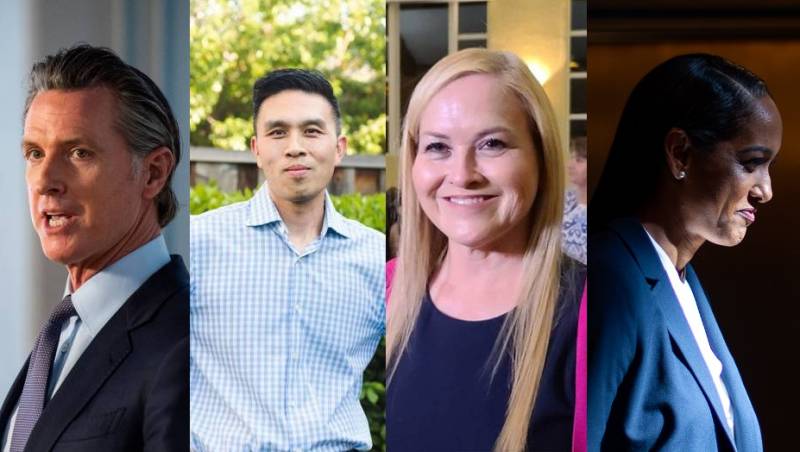
"caption": "Candidates for elected office in California and across the Bay Area publicly filed their campaign finance records at the end of September. Pictured: Gov. Gavin Newsom, Republican political analyst and state controller candidate Lanhee Chen, San Jose mayor candidate Cindy Chavez, and San Francisco District Attorney Brooke Jenkins.",
"description": null,
"title": "CampaignContributions",
"credit": "Photo Illustration by KQED",
"status": "inherit",
"altTag": "A split screen photo illustration showing four politicians in a row.",
"isLoading": false,
"fetchFailed": false
},
"news_11927355": {
"type": "attachments",
"id": "news_11927355",
"meta": {
"index": "attachments_1716263798",
"site": "news",
"id": "11927355",
"found": true
},
"parent": 11927352,
"imgSizes": {
"twentyfourteen-full-width": {
"file": "https://ww2.kqed.org/app/uploads/sites/10/2022/09/Sequence_DJI_0362_frame_9417-1038x576.jpeg",
"width": 1038,
"mimeType": "image/jpeg",
"height": 576
},
"thumbnail": {
"file": "https://ww2.kqed.org/app/uploads/sites/10/2022/09/Sequence_DJI_0362_frame_9417-160x90.jpeg",
"width": 160,
"mimeType": "image/jpeg",
"height": 90
},
"post-thumbnail": {
"file": "https://ww2.kqed.org/app/uploads/sites/10/2022/09/Sequence_DJI_0362_frame_9417-672x372.jpeg",
"width": 672,
"mimeType": "image/jpeg",
"height": 372
},
"kqedFullSize": {
"file": "https://ww2.kqed.org/app/uploads/sites/10/2022/09/Sequence_DJI_0362_frame_9417.jpeg",
"width": 1920,
"height": 1080
},
"large": {
"file": "https://ww2.kqed.org/app/uploads/sites/10/2022/09/Sequence_DJI_0362_frame_9417-1020x574.jpeg",
"width": 1020,
"mimeType": "image/jpeg",
"height": 574
},
"1536x1536": {
"file": "https://ww2.kqed.org/app/uploads/sites/10/2022/09/Sequence_DJI_0362_frame_9417-1536x864.jpeg",
"width": 1536,
"mimeType": "image/jpeg",
"height": 864
},
"medium": {
"file": "https://ww2.kqed.org/app/uploads/sites/10/2022/09/Sequence_DJI_0362_frame_9417-800x450.jpeg",
"width": 800,
"mimeType": "image/jpeg",
"height": 450
}
},
"publishDate": 1664572087,
"modified": 1664572087,
"caption": null,
"description": null,
"title": "Sequence_DJI_0362_frame_9417",
"credit": null,
"status": "inherit",
"altTag": null,
"isLoading": false,
"fetchFailed": false
}
},
"audioPlayerReducer": {
"postId": "stream_live",
"isPaused": true,
"isPlaying": false,
"pfsActive": false,
"pledgeModalIsOpen": true,
"playerDrawerIsOpen": false,
"liveAudioPlayStartedAt": 0,
"liveAudioPlayContext": ""
},
"authorsReducer": {
"byline_news_11928042": {
"type": "authors",
"id": "byline_news_11928042",
"meta": {
"override": true
},
"slug": "byline_news_11928042",
"name": "\u003ca href=\"https://calmatters.org/author/elizabeth-aguilera/\">Elizabeth Aguilera\u003c/a>",
"isLoading": false
},
"byline_news_11927938": {
"type": "authors",
"id": "byline_news_11927938",
"meta": {
"override": true
},
"slug": "byline_news_11927938",
"name": "Ximena Bustillo",
"isLoading": false
},
"byline_news_11927574": {
"type": "authors",
"id": "byline_news_11927574",
"meta": {
"override": true
},
"slug": "byline_news_11927574",
"name": "Nina Totenberg",
"isLoading": false
},
"ohubertallen": {
"type": "authors",
"id": "102",
"meta": {
"index": "authors_1716337520",
"id": "102",
"found": true
},
"name": "Olivia Allen-Price",
"firstName": "Olivia",
"lastName": "Allen-Price",
"slug": "ohubertallen",
"email": "oallenprice@kqed.org",
"display_author_email": false,
"staff_mastheads": [
"news"
],
"title": "Senior Editor",
"bio": "Olivia Allen-Price is senior editor and host of the award-winning Bay Curious podcast. Prior to joining KQED in 2013, Olivia worked at The Baltimore Sun and The Virginian-Pilot in Norfolk, Va. She holds degrees in journalism and political science from Elon University. Her work has earned awards from the Society of Professional Journalists, the Hearst Foundation and Hearken. She loves to talk about running and curly hair.\r\n\r\nFollow: \u003ca href=\"https://twitter.com/oallenprice\">@oallenprice\u003c/a>\r\nEmail: \u003ca href=\"mailto:oallenprice@kqed.org\">oallenprice@kqed.org\u003c/a>",
"avatar": "https://secure.gravatar.com/avatar/07f7803c1f6be56f3be58ef276dfa64dce898502e0554408ef4858451a8294f7?s=600&d=blank&r=g",
"twitter": "oallenprice",
"bluesky": null,
"facebook": null,
"instagram": null,
"linkedin": null,
"sites": [
{
"site": "",
"roles": [
"editor"
]
},
{
"site": "arts",
"roles": [
"subscriber"
]
},
{
"site": "news",
"roles": [
"administrator"
]
},
{
"site": "pop",
"roles": [
"administrator"
]
},
{
"site": "bayareabites",
"roles": [
"contributor"
]
},
{
"site": "stateofhealth",
"roles": [
"administrator"
]
},
{
"site": "science",
"roles": [
"editor"
]
}
],
"headData": {
"title": "Olivia Allen-Price | KQED",
"description": "Senior Editor",
"ogImgSrc": "https://secure.gravatar.com/avatar/07f7803c1f6be56f3be58ef276dfa64dce898502e0554408ef4858451a8294f7?s=600&d=blank&r=g",
"twImgSrc": "https://secure.gravatar.com/avatar/07f7803c1f6be56f3be58ef276dfa64dce898502e0554408ef4858451a8294f7?s=600&d=blank&r=g"
},
"isLoading": false,
"link": "/author/ohubertallen"
},
"gmarzorati": {
"type": "authors",
"id": "227",
"meta": {
"index": "authors_1716337520",
"id": "227",
"found": true
},
"name": "Guy Marzorati",
"firstName": "Guy",
"lastName": "Marzorati",
"slug": "gmarzorati",
"email": "gmarzorati@KQED.org",
"display_author_email": true,
"staff_mastheads": [
"news"
],
"title": "Correspondent",
"bio": "Guy Marzorati is a correspondent on KQED's California Politics and Government Desk, based in San Jose. A graduate of Santa Clara University, Guy joined KQED in 2013. He reports on state and local politics and produces KQED's digital voter guide.",
"avatar": "https://secure.gravatar.com/avatar/e7038b8dbfd55b104369b76b1cd0b9de?s=600&d=blank&r=g",
"twitter": "guymarzorati",
"facebook": null,
"instagram": null,
"linkedin": null,
"sites": [
{
"site": "",
"roles": [
"editor"
]
},
{
"site": "news",
"roles": [
"editor"
]
},
{
"site": "science",
"roles": [
"editor"
]
},
{
"site": "forum",
"roles": [
"editor"
]
},
{
"site": "elections",
"roles": [
"editor"
]
},
{
"site": "liveblog",
"roles": [
"editor"
]
}
],
"headData": {
"title": "Guy Marzorati | KQED",
"description": "Correspondent",
"ogImgSrc": "https://secure.gravatar.com/avatar/e7038b8dbfd55b104369b76b1cd0b9de?s=600&d=blank&r=g",
"twImgSrc": "https://secure.gravatar.com/avatar/e7038b8dbfd55b104369b76b1cd0b9de?s=600&d=blank&r=g"
},
"isLoading": false,
"link": "/author/gmarzorati"
},
"katrinaschwartz": {
"type": "authors",
"id": "234",
"meta": {
"index": "authors_1716337520",
"id": "234",
"found": true
},
"name": "Katrina Schwartz",
"firstName": "Katrina",
"lastName": "Schwartz",
"slug": "katrinaschwartz",
"email": "kschwartz@kqed.org",
"display_author_email": false,
"staff_mastheads": [
"news"
],
"title": "Producer",
"bio": "Katrina Schwartz is a journalist based in San Francisco. She's worked at KPCC public radio in LA and has reported on air and online for KQED since 2010. She covered how teaching and learning is changing for MindShift between 2012 and 2020. She is the co-host of the MindShift podcast and now produces KQED's Bay Curious podcast.",
"avatar": "https://secure.gravatar.com/avatar/edb4ee79070447a018538c9aae6eeecf28786515b8a0c30e43b6b7dce5aa44c8?s=600&d=blank&r=g",
"twitter": "kschwart",
"bluesky": null,
"facebook": null,
"instagram": null,
"linkedin": null,
"sites": [
{
"site": "news",
"roles": [
"editor"
]
},
{
"site": "mindshift",
"roles": [
"administrator"
]
},
{
"site": "stateofhealth",
"roles": [
"author"
]
},
{
"site": "science",
"roles": [
"editor"
]
}
],
"headData": {
"title": "Katrina Schwartz | KQED",
"description": "Producer",
"ogImgSrc": "https://secure.gravatar.com/avatar/edb4ee79070447a018538c9aae6eeecf28786515b8a0c30e43b6b7dce5aa44c8?s=600&d=blank&r=g",
"twImgSrc": "https://secure.gravatar.com/avatar/edb4ee79070447a018538c9aae6eeecf28786515b8a0c30e43b6b7dce5aa44c8?s=600&d=blank&r=g"
},
"isLoading": false,
"link": "/author/katrinaschwartz"
},
"kqed": {
"type": "authors",
"id": "236",
"meta": {
"index": "authors_1716337520",
"id": "236",
"found": true
},
"name": "KQED News Staff",
"firstName": "KQED News Staff",
"lastName": null,
"slug": "kqed",
"email": "faq@kqed.org",
"display_author_email": false,
"staff_mastheads": [],
"title": null,
"bio": null,
"avatar": "https://secure.gravatar.com/avatar/ef0e801a68c4c54afa9180db14084167?s=600&d=blank&r=g",
"twitter": null,
"facebook": null,
"instagram": null,
"linkedin": null,
"sites": [
{
"site": "arts",
"roles": [
"contributor"
]
},
{
"site": "news",
"roles": [
"editor"
]
},
{
"site": "futureofyou",
"roles": [
"author"
]
}
],
"headData": {
"title": "KQED News Staff | KQED",
"description": null,
"ogImgSrc": "https://secure.gravatar.com/avatar/ef0e801a68c4c54afa9180db14084167?s=600&d=blank&r=g",
"twImgSrc": "https://secure.gravatar.com/avatar/ef0e801a68c4c54afa9180db14084167?s=600&d=blank&r=g"
},
"isLoading": false,
"link": "/author/kqed"
},
"scottshafer": {
"type": "authors",
"id": "255",
"meta": {
"index": "authors_1716337520",
"id": "255",
"found": true
},
"name": "Scott Shafer",
"firstName": "Scott",
"lastName": "Shafer",
"slug": "scottshafer",
"email": "sshafer@kqed.org",
"display_author_email": false,
"staff_mastheads": [
"news"
],
"title": "KQED Contributor",
"bio": "Scott Shafer is a senior editor with the KQED Politics and Government desk. He is co-host of Political Breakdown, the award-winning radio show and podcast with a personal take on the world of politics. Scott came to KQED in 1998 to host the statewide\u003cem> California Report\u003c/em>. Prior to that he had extended stints in politics and government\u003cem>.\u003c/em> He uses that inside experience at KQED in his, reporting, hosting and analysis for the politics desk. Scott collaborated \u003cem>Political Breakdown a\u003c/em>nd on \u003cem>The Political Mind of Jerry Brown, \u003c/em>an eight-part series about the life and extraordinary political career of the former governor. For fun, he plays water polo with the San Francisco Tsunami.",
"avatar": "https://secure.gravatar.com/avatar/a62ebae45b79d7aed1a39a0e3bf68104?s=600&d=blank&r=g",
"twitter": "scottshafer",
"bluesky": null,
"facebook": null,
"instagram": null,
"linkedin": null,
"sites": [
{
"site": "news",
"roles": [
"editor"
]
},
{
"site": "stateofhealth",
"roles": [
"author"
]
},
{
"site": "science",
"roles": [
"author"
]
},
{
"site": "forum",
"roles": [
"subscriber"
]
},
{
"site": "liveblog",
"roles": [
"author"
]
}
],
"headData": {
"title": "Scott Shafer | KQED",
"description": "KQED Contributor",
"ogImgSrc": "https://secure.gravatar.com/avatar/a62ebae45b79d7aed1a39a0e3bf68104?s=600&d=blank&r=g",
"twImgSrc": "https://secure.gravatar.com/avatar/a62ebae45b79d7aed1a39a0e3bf68104?s=600&d=blank&r=g"
},
"isLoading": false,
"link": "/author/scottshafer"
},
"adembosky": {
"type": "authors",
"id": "3205",
"meta": {
"index": "authors_1716337520",
"id": "3205",
"found": true
},
"name": "April Dembosky",
"firstName": "April",
"lastName": "Dembosky",
"slug": "adembosky",
"email": "adembosky@kqed.org",
"display_author_email": false,
"staff_mastheads": [
"news",
"science"
],
"title": "KQED Health Correspondent",
"bio": "April Dembosky is the health correspondent for KQED News and a regular contributor to NPR. She specializes in covering altered states of mind, from postpartum depression to methamphetamine-induced psychosis to the insanity defense. Her investigative series on insurance companies sidestepping mental health laws won multiple awards, including first place in beat reporting from the national Association of Health Care Journalists. She is the recipient of numerous other prizes and fellowships, including a national Edward R. Murrow award for investigative reporting, a Society of Professional Journalists award for long-form storytelling, and a Carter Center Fellowship for Mental Health Journalism.\r\n\r\nDembosky reported and produced \u003cem>Soundtrack of Silence\u003c/em>, an audio documentary about music and memory that is currently being made into a feature film by Paramount Pictures.\r\n\r\nBefore joining KQED in 2013, Dembosky covered technology and Silicon Valley for \u003cem>The Financial Times of London,\u003c/em> and contributed business and arts stories to \u003cem>Marketplace \u003c/em>and \u003cem>The New York Times.\u003c/em> She got her undergraduate degree in philosophy from Smith College and her master's in journalism from the University of California, Berkeley. She is a classically trained violinist and proud alum of the first symphony orchestra at Burning Man.",
"avatar": "https://secure.gravatar.com/avatar/ef92999be4ceb9ea60701e7dc276f813?s=600&d=blank&r=g",
"twitter": "adembosky",
"facebook": null,
"instagram": null,
"linkedin": null,
"sites": [
{
"site": "arts",
"roles": [
"author"
]
},
{
"site": "news",
"roles": [
"editor"
]
},
{
"site": "futureofyou",
"roles": [
"author"
]
},
{
"site": "stateofhealth",
"roles": [
"editor"
]
},
{
"site": "science",
"roles": [
"editor"
]
},
{
"site": "forum",
"roles": [
"editor"
]
}
],
"headData": {
"title": "April Dembosky | KQED",
"description": "KQED Health Correspondent",
"ogImgSrc": "https://secure.gravatar.com/avatar/ef92999be4ceb9ea60701e7dc276f813?s=600&d=blank&r=g",
"twImgSrc": "https://secure.gravatar.com/avatar/ef92999be4ceb9ea60701e7dc276f813?s=600&d=blank&r=g"
},
"isLoading": false,
"link": "/author/adembosky"
},
"mlagos": {
"type": "authors",
"id": "3239",
"meta": {
"index": "authors_1716337520",
"id": "3239",
"found": true
},
"name": "Marisa Lagos",
"firstName": "Marisa",
"lastName": "Lagos",
"slug": "mlagos",
"email": "mlagos@kqed.org",
"display_author_email": false,
"staff_mastheads": [
"news"
],
"title": "KQED Contributor",
"bio": "Marisa Lagos is a correspondent for KQED’s California Politics and Government Desk and co-hosts the award-winning show and podcast, Political Breakdown. At KQED, Lagos also conducts reporting, analysis and investigations into state, local and national politics for radio, TV, online and onstage. In 2022, she and co-host, Scott Shafer, moderated the only gubernatorial debate in California. In 2020, the \u003ci>Washington Post\u003c/i> named her one of the top political journalists in California; she was nominated for a Peabody and won several other awards for her work investigating the 2017 California wildfires. She has worked at the \u003ci>San Francisco Chronicle\u003c/i>, \u003ci>San Francisco Examiner\u003c/i> and \u003ci>Los Angeles Times\u003c/i>. A UC Santa Barbara graduate, she lives in San Francisco with her two sons and husband.",
"avatar": "https://secure.gravatar.com/avatar/a261a0d3696fc066871ef96b85b5e7d2?s=600&d=blank&r=g",
"twitter": "@mlagos",
"facebook": null,
"instagram": null,
"linkedin": null,
"sites": [
{
"site": "arts",
"roles": [
"author"
]
},
{
"site": "news",
"roles": [
"editor"
]
},
{
"site": "science",
"roles": [
"editor"
]
},
{
"site": "forum",
"roles": [
"author"
]
},
{
"site": "liveblog",
"roles": [
"author"
]
}
],
"headData": {
"title": "Marisa Lagos | KQED",
"description": "KQED Contributor",
"ogImgSrc": "https://secure.gravatar.com/avatar/a261a0d3696fc066871ef96b85b5e7d2?s=600&d=blank&r=g",
"twImgSrc": "https://secure.gravatar.com/avatar/a261a0d3696fc066871ef96b85b5e7d2?s=600&d=blank&r=g"
},
"isLoading": false,
"link": "/author/mlagos"
},
"carlysevern": {
"type": "authors",
"id": "3243",
"meta": {
"index": "authors_1716337520",
"id": "3243",
"found": true
},
"name": "Carly Severn",
"firstName": "Carly",
"lastName": "Severn",
"slug": "carlysevern",
"email": "csevern@kqed.org",
"display_author_email": false,
"staff_mastheads": [
"news"
],
"title": "Senior Editor, Audience News ",
"bio": "Carly is KQED's Senior Editor of Audience News on the Digital News team, and has reported for the California Report Magazine, Bay Curious and KQED Arts. She's formerly the host of \u003ca href=\"http://ww2.kqed.org/pop/category/the-cooler/\" rel=\"noopener noreferrer\">The Cooler\u003c/a> podcast.",
"avatar": "https://secure.gravatar.com/avatar/2d8d6765f186e64c798cf7f0c8088a41?s=600&d=blank&r=g",
"twitter": "teacupinthebay",
"facebook": null,
"instagram": null,
"linkedin": null,
"sites": [
{
"site": "",
"roles": [
"editor"
]
},
{
"site": "arts",
"roles": [
"editor"
]
},
{
"site": "news",
"roles": [
"administrator"
]
},
{
"site": "pop",
"roles": [
"editor"
]
},
{
"site": "futureofyou",
"roles": [
"editor"
]
},
{
"site": "about",
"roles": [
"administrator"
]
},
{
"site": "mindshift",
"roles": [
"editor"
]
},
{
"site": "bayareabites",
"roles": [
"editor"
]
},
{
"site": "stateofhealth",
"roles": [
"editor"
]
},
{
"site": "science",
"roles": [
"editor"
]
},
{
"site": "food",
"roles": [
"contributor"
]
},
{
"site": "forum",
"roles": [
"editor"
]
},
{
"site": "perspectives",
"roles": [
"administrator"
]
},
{
"site": "liveblog",
"roles": [
"editor"
]
}
],
"headData": {
"title": "Carly Severn | KQED",
"description": "Senior Editor, Audience News ",
"ogImgSrc": "https://secure.gravatar.com/avatar/2d8d6765f186e64c798cf7f0c8088a41?s=600&d=blank&r=g",
"twImgSrc": "https://secure.gravatar.com/avatar/2d8d6765f186e64c798cf7f0c8088a41?s=600&d=blank&r=g"
},
"isLoading": false,
"link": "/author/carlysevern"
},
"ecruzguevarra": {
"type": "authors",
"id": "8654",
"meta": {
"index": "authors_1716337520",
"id": "8654",
"found": true
},
"name": "Ericka Cruz Guevarra",
"firstName": "Ericka",
"lastName": "Cruz Guevarra",
"slug": "ecruzguevarra",
"email": "ecruzguevarra@kqed.org",
"display_author_email": true,
"staff_mastheads": [
"news"
],
"title": "Producer, The Bay Podcast",
"bio": "Ericka Cruz Guevarra is host of \u003ca href=\"https://www.kqed.org/podcasts/thebay\">\u003cem>The Bay\u003c/em>\u003c/a> podcast at KQED. Before host, she was the show’s producer. Her work in that capacity includes a three-part reported series on policing in Vallejo, which won a 2020 excellence in journalism award from the Society of Professional Journalists. Ericka has worked as a breaking news reporter at Oregon Public Broadcasting, helped produce the Code Switch podcast, and was KQED’s inaugural Raul Ramirez Diversity Fund intern. She’s also an alumna of NPR’s Next Generation Radio program. Send her an email if you have strong feelings about whether Fairfield and Suisun City are the Bay. Ericka is represented by SAG-AFTRA.",
"avatar": "https://secure.gravatar.com/avatar/accefc1de4bafc7e234b69bcb9b6f6536c130fd84709bc3069ef11a78787e1bb?s=600&d=blank&r=g",
"twitter": "NotoriousECG",
"bluesky": null,
"facebook": null,
"instagram": null,
"linkedin": null,
"sites": [
{
"site": "arts",
"roles": [
"subscriber"
]
},
{
"site": "news",
"roles": [
"editor",
"manage_categories"
]
},
{
"site": "futureofyou",
"roles": [
"subscriber"
]
},
{
"site": "stateofhealth",
"roles": [
"subscriber"
]
},
{
"site": "science",
"roles": [
"editor"
]
},
{
"site": "forum",
"roles": [
"subscriber"
]
}
],
"headData": {
"title": "Ericka Cruz Guevarra | KQED",
"description": "Producer, The Bay Podcast",
"ogImgSrc": "https://secure.gravatar.com/avatar/accefc1de4bafc7e234b69bcb9b6f6536c130fd84709bc3069ef11a78787e1bb?s=600&d=blank&r=g",
"twImgSrc": "https://secure.gravatar.com/avatar/accefc1de4bafc7e234b69bcb9b6f6536c130fd84709bc3069ef11a78787e1bb?s=600&d=blank&r=g"
},
"isLoading": false,
"link": "/author/ecruzguevarra"
},
"lesleymcclurg": {
"type": "authors",
"id": "11229",
"meta": {
"index": "authors_1716337520",
"id": "11229",
"found": true
},
"name": "Lesley McClurg",
"firstName": "Lesley",
"lastName": "McClurg",
"slug": "lesleymcclurg",
"email": "lmcclurg@KQED.org",
"display_author_email": false,
"staff_mastheads": [
"news",
"science"
],
"title": "KQED Health Correspondent",
"bio": "Lesley McClurg is a health correspondent and fill-in host whose work is regularly rebroadcast on NPR and PBS programs. She’s earned multiple regional Emmy awards, a national and a regional Edward R. Murrow award, and was named Best Beat Reporter by the Association of Health Care Journalists. The Society of Professional Journalists has recognized her work several times, and the Society of Environmental Journalists spotlighted her coverage of California’s historic drought.\r\n\r\nBefore joining KQED in 2016, Lesley covered food and sustainability for Capital Public Radio, environmental issues for Colorado Public Radio, and reported for KUOW and KCTS 9 in Seattle. Away from the newsroom, she loves skiing with her daughter, mountain biking with her partner, and playing with Ollie, the family’s goldendoodle. On deadline, she runs almost entirely on chocolate chips.\r\n\r\n ",
"avatar": "https://secure.gravatar.com/avatar/bab49e972ea10c774fe0f5e29dba1722b158f7c0d58a360923d1389d380b2978?s=600&d=blank&r=g",
"twitter": "lesleywmcclurg",
"bluesky": null,
"facebook": null,
"instagram": null,
"linkedin": null,
"sites": [
{
"site": "arts",
"roles": [
"author"
]
},
{
"site": "news",
"roles": [
"editor"
]
},
{
"site": "futureofyou",
"roles": [
"editor"
]
},
{
"site": "stateofhealth",
"roles": [
"author"
]
},
{
"site": "science",
"roles": [
"editor"
]
},
{
"site": "quest",
"roles": [
"subscriber"
]
},
{
"site": "forum",
"roles": [
"administrator"
]
},
{
"site": "liveblog",
"roles": [
"author"
]
}
],
"headData": {
"title": "Lesley McClurg | KQED",
"description": "KQED Health Correspondent",
"ogImgSrc": "https://secure.gravatar.com/avatar/bab49e972ea10c774fe0f5e29dba1722b158f7c0d58a360923d1389d380b2978?s=600&d=blank&r=g",
"twImgSrc": "https://secure.gravatar.com/avatar/bab49e972ea10c774fe0f5e29dba1722b158f7c0d58a360923d1389d380b2978?s=600&d=blank&r=g"
},
"isLoading": false,
"link": "/author/lesleymcclurg"
},
"kevinstark": {
"type": "authors",
"id": "11608",
"meta": {
"index": "authors_1716337520",
"id": "11608",
"found": true
},
"name": "Kevin Stark",
"firstName": "Kevin",
"lastName": "Stark",
"slug": "kevinstark",
"email": "kstark@kqed.org",
"display_author_email": true,
"staff_mastheads": [
"science"
],
"title": "Senior Editor",
"bio": "Kevin is a senior editor for KQED Science, managing the station's health and climate desks. His journalism career began in the Pacific Northwest, and he later became a lead reporter for the San Francisco Public Press. His work has appeared in Pacific Standard magazine, the Energy News Network, the Center for Investigative Reporting's Reveal and WBEZ in Chicago. Kevin joined KQED in 2019, and has covered issues related to energy, wildfire, climate change and the environment.",
"avatar": "https://secure.gravatar.com/avatar/1f646bf546a63d638e04ff23b52b0e79?s=600&d=blank&r=g",
"twitter": "starkkev",
"facebook": null,
"instagram": null,
"linkedin": null,
"sites": [
{
"site": "",
"roles": [
"editor"
]
},
{
"site": "news",
"roles": [
"editor"
]
},
{
"site": "science",
"roles": [
"administrator"
]
}
],
"headData": {
"title": "Kevin Stark | KQED",
"description": "Senior Editor",
"ogImgSrc": "https://secure.gravatar.com/avatar/1f646bf546a63d638e04ff23b52b0e79?s=600&d=blank&r=g",
"twImgSrc": "https://secure.gravatar.com/avatar/1f646bf546a63d638e04ff23b52b0e79?s=600&d=blank&r=g"
},
"isLoading": false,
"link": "/author/kevinstark"
},
"amontecillo": {
"type": "authors",
"id": "11649",
"meta": {
"index": "authors_1716337520",
"id": "11649",
"found": true
},
"name": "Alan Montecillo",
"firstName": "Alan",
"lastName": "Montecillo",
"slug": "amontecillo",
"email": "amontecillo@kqed.org",
"display_author_email": false,
"staff_mastheads": [
"news"
],
"title": "KQED Contributor",
"bio": "Alan Montecillo is the senior editor of \u003cem>\u003ca href=\"http://kqed.org/thebay\">The Bay\u003c/a>, \u003c/em> KQED's local news podcast. Before moving to the Bay Area, he worked as a senior talk show producer for WILL in Champaign-Urbana, Illinois and at Oregon Public Broadcasting in Portland, Oregon. He has won journalism awards from the Society of Professional Journalists Northern California, the Public Media Journalists Association, The Signal Awards, and has also received a regional Edward R. Murrow award. Alan is a Filipino American from Hong Kong and a graduate of Reed College.",
"avatar": "https://secure.gravatar.com/avatar/268f53a2066899ea9efdd8a5900218b17c822d9862cbc9326cccec53ef41d349?s=600&d=blank&r=g",
"twitter": "alanmontecillo",
"bluesky": null,
"facebook": null,
"instagram": null,
"linkedin": null,
"sites": [
{
"site": "",
"roles": [
"editor"
]
},
{
"site": "news",
"roles": [
"editor",
"manage_categories"
]
}
],
"headData": {
"title": "Alan Montecillo | KQED",
"description": "KQED Contributor",
"ogImgSrc": "https://secure.gravatar.com/avatar/268f53a2066899ea9efdd8a5900218b17c822d9862cbc9326cccec53ef41d349?s=600&d=blank&r=g",
"twImgSrc": "https://secure.gravatar.com/avatar/268f53a2066899ea9efdd8a5900218b17c822d9862cbc9326cccec53ef41d349?s=600&d=blank&r=g"
},
"isLoading": false,
"link": "/author/amontecillo"
},
"jrodriguez": {
"type": "authors",
"id": "11690",
"meta": {
"index": "authors_1716337520",
"id": "11690",
"found": true
},
"name": "Joe Fitzgerald Rodriguez",
"firstName": "Joe",
"lastName": "Fitzgerald Rodriguez",
"slug": "jrodriguez",
"email": "jrodriguez@kqed.org",
"display_author_email": true,
"staff_mastheads": [
"news"
],
"title": "Reporter and Producer",
"bio": "Joe Fitzgerald Rodriguez is a reporter and digital producer for KQED covering politics. Joe most recently wrote for the \u003cem>San Francisco Examiner\u003c/em> as a political columnist covering The City. He was raised in San Francisco and has spent his reporting career in his beloved, foggy, city by the bay. Joe was 12-years-old when he conducted his first interview in journalism, grilling former San Francisco Mayor Willie Brown for the Marina Middle School newspaper, \u003cem>The Penguin Press, \u003c/em>and he continues to report on the San Francisco Bay Area to this day.",
"avatar": "https://secure.gravatar.com/avatar/2247beb0564c1e9c62228d5649d2edac?s=600&d=blank&r=g",
"twitter": "FitztheReporter",
"facebook": null,
"instagram": "https://www.instagram.com/fitzthereporter/",
"linkedin": null,
"sites": [
{
"site": "",
"roles": [
"editor"
]
},
{
"site": "arts",
"roles": [
"editor"
]
},
{
"site": "news",
"roles": [
"editor"
]
},
{
"site": "science",
"roles": [
"editor"
]
},
{
"site": "elections",
"roles": [
"editor"
]
},
{
"site": "liveblog",
"roles": [
"editor"
]
}
],
"headData": {
"title": "Joe Fitzgerald Rodriguez | KQED",
"description": "Reporter and Producer",
"ogImgSrc": "https://secure.gravatar.com/avatar/2247beb0564c1e9c62228d5649d2edac?s=600&d=blank&r=g",
"twImgSrc": "https://secure.gravatar.com/avatar/2247beb0564c1e9c62228d5649d2edac?s=600&d=blank&r=g"
},
"isLoading": false,
"link": "/author/jrodriguez"
},
"mesquinca": {
"type": "authors",
"id": "11802",
"meta": {
"index": "authors_1716337520",
"id": "11802",
"found": true
},
"name": "Maria Esquinca",
"firstName": "Maria",
"lastName": "Esquinca",
"slug": "mesquinca",
"email": "mesquinca@kqed.org",
"display_author_email": false,
"staff_mastheads": [],
"title": "Producer, The Bay",
"bio": "María Esquinca is a producer of The Bay. Before that, she was a New York Women’s Foundation IGNITE Fellow at Latino USA. She worked at Radio Bilingue where she covered the San Joaquin Valley. Maria has interned at WLRN, News 21, The New York Times Student Journalism Institute and at Crain’s Detroit Business as a Dow Jones News Fund Business Reporting Intern. She is an MFA graduate from the University of Miami. In 2017, she graduated from the Walter Cronkite School of Journalism and Mass Communication with a Master of Mass Communication. A fronteriza, she was born in Ciudad Juárez, Chihuahua, Mexico and grew up in El Paso, Texas.",
"avatar": "https://secure.gravatar.com/avatar/77cedba18aae91da775038ba06dcd8d0?s=600&d=blank&r=g",
"twitter": "@m_esquinca",
"facebook": null,
"instagram": null,
"linkedin": null,
"sites": [
{
"site": "news",
"roles": []
}
],
"headData": {
"title": "Maria Esquinca | KQED",
"description": "Producer, The Bay",
"ogImgSrc": "https://secure.gravatar.com/avatar/77cedba18aae91da775038ba06dcd8d0?s=600&d=blank&r=g",
"twImgSrc": "https://secure.gravatar.com/avatar/77cedba18aae91da775038ba06dcd8d0?s=600&d=blank&r=g"
},
"isLoading": false,
"link": "/author/mesquinca"
}
},
"pagesReducer": {
"news_tag_politics": {
"type": "terms",
"id": "news_17968",
"meta": {
"index": "terms_1716263798",
"site": "news",
"id": "17968",
"score": 8.003266
},
"name": "Politics",
"slug": "politics",
"taxonomy": "tag",
"description": null,
"featImg": null,
"headData": {
"title": "Politics | KQED News",
"description": null,
"ogTitle": null,
"ogDescription": null,
"ogImgId": null,
"twTitle": null,
"twDescription": null,
"twImgId": null
},
"ttid": 18002,
"isLoading": false,
"title": "Politics",
"pageMeta": {
"site": "news",
"WpPageTemplate": "page-topic-editorial",
"currentPage": 169
},
"blocks": [
{
"blockName": "kqed/post-list",
"attrs": {
"layout": "cardArticle2",
"query": "posts/news?tag=politics",
"seeMore": false,
"paginated": true,
"page": 169
}
},
{
"blockName": "kqed/ad"
}
]
}
},
"pfsSessionReducer": {},
"postsReducer": {
"stream_live": {
"type": "live",
"id": "stream_live",
"audioUrl": "https://streams.kqed.org/kqedradio",
"title": "Live Stream",
"excerpt": "Live Stream information currently unavailable.",
"link": "/radio",
"featImg": "",
"label": {
"name": "KQED Live",
"link": "/"
}
},
"stream_kqedNewscast": {
"type": "posts",
"id": "stream_kqedNewscast",
"audioUrl": "https://www.kqed.org/.stream/anon/radio/RDnews/newscast.mp3?_=1",
"title": "KQED Newscast",
"featImg": "",
"label": {
"name": "88.5 FM",
"link": "/"
}
},
"news_11928042": {
"type": "posts",
"id": "news_11928042",
"meta": {
"index": "posts_1716263798",
"site": "news",
"id": "11928042",
"score": null,
"sort": [
1665177267000
]
},
"guestAuthors": [],
"slug": "california-families-brace-for-higher-child-care-fees-amid-looming-cut-in-subsidies",
"title": "California Families Brace for Higher Child Care Fees Amid Looming Cut in Subsidies",
"publishDate": 1665177267,
"format": "standard",
"headTitle": "California Families Brace for Higher Child Care Fees Amid Looming Cut in Subsidies | KQED",
"labelTerm": {
"term": 18481,
"site": "news"
},
"content": "\u003cp>During the pandemic, California’s lower-income families that are required to pay a fee to receive subsidized child care got a waiver from paying. That waiver is set to expire next year, worrying parents who have struggled to afford it in the past.\u003c/p>\n\u003cp>Gov. Gavin Newsom \u003ca href=\"https://leginfo.legislature.ca.gov/faces/billTextClient.xhtml?bill_id=202120220AB92\">vetoed a bill\u003c/a> last month that would have made the waiver permanent. Parents say the waiver, which will end in June 2023, allowed them to pay other expenses or get caught up on delinquent bills. Now they will have to stop paying down debt, saving for emergencies and enrolling their children in extra activities like dance lessons to pay the fees instead.\u003c/p>\n\u003cp>In South Los Angeles, Marisol Rosales has already started to save money for the coming bill. Before their fees were waived last year, the family paid $400 a month for child care for their four children. After paying for rent, necessities and child care there was no money left, she said.\u003c/p>\n\u003cp>“They are expecting people that make a little bit of money to pay more money on top of expenses and cost of living and everything else,” Rosales said. “The whole point of why we have the subsidy is because our income is within the limits. So it doesn’t make sense to ask someone to pay another bill that could go toward something else.”[pullquote align=\"right\" size=\"medium\" citation=\"Chris Hoene, executive director, California Budget and Policy Center\"]‘If you are an individual with lower income and you are trying to access subsidized child care, the fees are a barrier. And if you can afford the fees, then the next barrier is finding a provider.’[/pullquote]California helps lower-income families afford child care through several programs. For most families, the programs are free, but \u003ca href=\"https://www.cdss.ca.gov/inforesources/calworks-child-care/program-eligibility\">others must pay a share of their subsidized child care costs\u003c/a> — what the state refers to as a “family fee.” Families pay the fee directly to their child care provider or to the contractor who manages their subsidized child care.\u003c/p>\n\u003cp>Currently, to qualify for state-subsidized child care, a family must earn 85% or less of the state median household income. Those who earn less than 40% of that amount pay nothing for child care. Families earning between 40% and 85% of the state median income pay \u003ca href=\"https://calmatters.org/wp-content/uploads/2022/06/CDSS_Famfeeschedule_SubChildCare_FY2022-23.pdf\">child care fees on a sliding scale\u003c/a> that could be as much as 10% of their household income.\u003c/p>\n\u003cp>For example, a family earning $50,000 a year would pay $175 a month in family fees.\u003c/p>\n\u003cp>The pandemic put a spotlight on the child care challenges facing families with the lowest incomes, who got hit hardest by COVID-19. Many worked service jobs that were frozen or eliminated, or worked essential jobs they were required to do in person. Their circumstances drove state officials to waive the fees.\u003c/p>\n\u003cp>The Department of Social Services, which oversees the state’s subsidized child care program, declined a request for an interview and only responded to questions via email. Spokesperson Scott Murray wrote that more than 26,000 families in various child care assistance programs “may have benefited from family fee waivers in the 2021-22 fiscal year.” He said the agency estimates about $88 million in fees will be waived in this fiscal year, which runs through June 2023.\u003c/p>\n\u003cfigure id=\"attachment_11928091\" class=\"wp-caption alignnone\" style=\"max-width: 1568px\">\u003cimg loading=\"lazy\" decoding=\"async\" class=\"size-full wp-image-11928091\" src=\"https://ww2.kqed.org/app/uploads/sites/10/2022/10/09222022_MarisolRosales_CM_PU_15-CM-copy.jpg\" alt=\"A Latina woman helps her two small kids out of the car, one of the kids is kissing her on the cheek as the other gets out.\" width=\"1568\" height=\"1045\" srcset=\"https://cdn.kqed.org/wp-content/uploads/sites/10/2022/10/09222022_MarisolRosales_CM_PU_15-CM-copy.jpg 1568w, https://cdn.kqed.org/wp-content/uploads/sites/10/2022/10/09222022_MarisolRosales_CM_PU_15-CM-copy-800x533.jpg 800w, https://cdn.kqed.org/wp-content/uploads/sites/10/2022/10/09222022_MarisolRosales_CM_PU_15-CM-copy-1020x680.jpg 1020w, https://cdn.kqed.org/wp-content/uploads/sites/10/2022/10/09222022_MarisolRosales_CM_PU_15-CM-copy-160x107.jpg 160w, https://cdn.kqed.org/wp-content/uploads/sites/10/2022/10/09222022_MarisolRosales_CM_PU_15-CM-copy-1536x1024.jpg 1536w\" sizes=\"(max-width: 1568px) 100vw, 1568px\">\u003cfigcaption class=\"wp-caption-text\">Marisol Rosales and her children go out for dinner in Los Angeles on Sept. 22, 2022. \u003ccite>(Pablo Unzueta/CalMatters)\u003c/cite>\u003c/figcaption>\u003c/figure>\n\u003cp>The family fees were first established in 1998, Murray wrote, and are based on a federal requirement for programs funded by the Child Care and Development Fund, a federal grant program that funds child care nationwide. The \u003ca href=\"https://childcareta.acf.hhs.gov/sites/default/files/public/family_co-payment_brief_0.pdf#:~:text=While%20the%20definition%20did%20not%20change%2C%20the%20Administration,access%20section%20of%20the%20CCDF%20Final%203%20Rule.\">law allows states to set their own fees\u003c/a> and determine the sliding scale for families, but it also outlines how fees “must be affordable and not be a barrier to families receiving assistance.”\u003c/p>\n\u003cp>A legislative analysis of \u003ca href=\"https://leginfo.legislature.ca.gov/faces/billAnalysisClient.xhtml?bill_id=202120220AB92\">the bill that would have permanently waived the fees\u003c/a> found that eliminating the fees for some families and decreasing the fees for others would cost $136 million a year. A 2021 study by the \u003ca href=\"https://calbudgetcenter.org/resources/california-families-pay-high-price-for-subsidized-child-care/\">California Budget and Policy Center\u003c/a> found that the state collects about $68 million annually in child care fees from families with low and moderate incomes.\u003c/p>\n\u003cp>In July of 2020 the state started \u003ca href=\"https://www.cde.ca.gov/sp/cd/ci/mb2019a.asp\">waiving the fees\u003c/a> for some families and eventually agreed to offer waivers to all families for the rest of that fiscal year as part of \u003ca href=\"https://www.calhr.ca.gov/Documents/2021.04.20%20COVID%20Relief%20Agreement.pdf\">its agreement with the Child Care Providers United union\u003c/a>. In 2021, the state and the union again agreed that waivers would continue through June of 2022. This summer the state budgeted $136 million to \u003ca href=\"https://cdss.ca.gov/Portals/9/Additional-Resources/Fiscal-and-Financial-Information/Local-Assistance-Estimates/2022/2022-May-Revision-CCD-Tab.pdf\">extend the waivers\u003c/a> for all families one more year, through June 2023.\u003c/p>\n\u003cp>The benefits of the waiver have been felt by families across the state, said Mary Ignatius, a statewide organizer at Parent Voices, a grassroots organization focused on child care accessibility and affordability.\u003c/p>\n\u003cp>“With the rising costs of just about everything and inflation, and the fact that the child tax credit expired at the federal level, these dollars came at a time of critical importance,” Ignatius said. “Families have been reducing debt, eliminating predatory credit cards, raising credit scores, going back to school full-time … paying down utility bills that were in delinquency, just paying rent and putting their kids in extracurricular activities.”\u003c/p>\n\u003cp>The bill, by San Bernardino Assemblymember Eloise Gómez Reyes, would have \u003ca href=\"https://leginfo.legislature.ca.gov/faces/billTextClient.xhtml?bill_id=202120220AB92\">ended fees\u003c/a> for all families that earn below 75% of the state median income and created a sliding scale for those who earn between 75% and 85%. The fees would amount to no more than 1% of a family’s income.[pullquote align=\"right\" size=\"medium\" citation=\"Mary Ignatius, statewide organizer, Parent Voices\"]‘Scraping together money for these fees instead of spending it on food, on housing, on activities for their children, for bills, for paying down debt — that’s financial pressure. What the state is experiencing pales in comparison.’[/pullquote]Newsom said the bill’s cost was prohibitive, writing in \u003ca href=\"https://www.gov.ca.gov/wp-content/uploads/2022/09/AB-92-VETO-message.pdf?emrc=fee16d\">his veto message for this bill\u003c/a> and several others that state revenue is expected to decrease.\u003c/p>\n\u003cp>Advocates were critical, saying Newsom does not understand the struggle of families that need child care to work.\u003c/p>\n\u003cp>Newsom started his tenure as governor with promises to help families with child care costs and access. Since then, his administration has budgeted for more subsidized child care slots and has led an expansion of transitional kindergarten. Despite this, advocates say the state is still not doing enough for child care providers and struggling families with young children.\u003c/p>\n\u003cp>“There has been some progress made on child care, but the significant reform and expansion that the governor actually promised and signaled in his first budget address hasn’t been there,” said Chris Hoene, executive director of the California Budget and Policy Center.\u003c/p>\n\u003cp>He said the biggest issues that have gone unattended are the lack of child care workers and the low pay rate for those workers. Without these workers, parents struggle to find care, even if they are approved for a subsidy.\u003c/p>\n\u003cp>“If you are an individual with lower income and you are trying to access subsidized child care, the fees are a barrier,” Hoene said. “And if you can afford the fees, then the next barrier is finding a provider.”\u003c/p>\n\u003cp>The bill Newsom vetoed was popular in the Legislature, where it passed with no dissenting votes, and had strong support from parent and child care advocates. \u003ca href=\"https://leginfo.legislature.ca.gov/faces/billAnalysisClient.xhtml?bill_id=202120220AB92\">No opposition was filed against the bill\u003c/a>, according to the Assembly analysis. That’s why Reyes and advocates plan to use the next eight months to try again through the budget process or another bill.\u003c/p>\n\u003cp>For Rosales, the child care fee waiver has given her and her husband a chance to catch up financially. With that $400 a month savings, she got caught up on utility bills and paid off a student loan. Most exciting for her: paying for football for her sons and folklorico dance lessons for her daughters and herself.\u003c/p>\n\u003cp>Learning the traditional Mexican dance was a childhood dream her family could never afford. But this month Rosales dropped the class for herself to start saving money for child care.\u003c/p>\n\u003cp>“I’m already stressing out about the $400 payment that is coming back next year and already trying to cut back on expenses,” she said. “It’s very upsetting. After football season I’m not going to enroll my boys in anything else.”\u003c/p>\n\u003cp>Ignatius, of Parent Voices, said eliminating the fees is critical for the survival of families already living paycheck to paycheck.\u003c/p>\n\u003cp>“Real cost pressures are what families are facing every single day,” she said. “Scraping together money for these fees instead of spending it on food, on housing, on activities for their children, for bills, for paying down debt — that’s financial pressure. What the state is experiencing pales in comparison.”\u003c/p>\n\u003cfigure id=\"attachment_11928090\" class=\"wp-caption alignnone\" style=\"max-width: 2000px\">\u003cimg loading=\"lazy\" decoding=\"async\" class=\"size-full wp-image-11928090\" src=\"https://ww2.kqed.org/app/uploads/sites/10/2022/10/20220926_CalMatters_Micaela_Mota_ML_0119-CM-copy.jpg\" alt=\"A Latina woman in her 30s looks at the camera while standing in front of a white house.\" width=\"2000\" height=\"1333\" srcset=\"https://cdn.kqed.org/wp-content/uploads/sites/10/2022/10/20220926_CalMatters_Micaela_Mota_ML_0119-CM-copy.jpg 2000w, https://cdn.kqed.org/wp-content/uploads/sites/10/2022/10/20220926_CalMatters_Micaela_Mota_ML_0119-CM-copy-800x533.jpg 800w, https://cdn.kqed.org/wp-content/uploads/sites/10/2022/10/20220926_CalMatters_Micaela_Mota_ML_0119-CM-copy-1020x680.jpg 1020w, https://cdn.kqed.org/wp-content/uploads/sites/10/2022/10/20220926_CalMatters_Micaela_Mota_ML_0119-CM-copy-160x107.jpg 160w, https://cdn.kqed.org/wp-content/uploads/sites/10/2022/10/20220926_CalMatters_Micaela_Mota_ML_0119-CM-copy-1536x1024.jpg 1536w, https://cdn.kqed.org/wp-content/uploads/sites/10/2022/10/20220926_CalMatters_Micaela_Mota_ML_0119-CM-copy-1920x1280.jpg 1920w\" sizes=\"(max-width: 2000px) 100vw, 2000px\">\u003cfigcaption class=\"wp-caption-text\">Micaela Mota received a $277 subsidized child care fee waiver from the state. With the waiver set to expire next year, she doesn’t know how she’ll make ends meet. \u003ccite>(Marissa Leshnov/CalMatters)\u003c/cite>\u003c/figcaption>\u003c/figure>\n\u003cp>Richmond mom Micaela Mota has used her $277 in monthly fee savings to pay student loans and PG&E bills and to enroll her son in baseball and swim lessons.\u003c/p>\n\u003cp>“Before that it was, ‘Do I pay PG&E or do I pay for child care?’ and if I don’t pay for child care, how am I able to work?” she said. “It’s this or that in order to move forward to succeed in life.”\u003c/p>\n\u003cp>A school psychologist, she said the fee waiver helped her finish her intern year and her graduate degree. She was also able to stop driving for Uber on Friday and Saturday nights and spent that time with her son instead.\u003c/p>\n\u003cp>“The governor could have been more graceful in what he could provide for us,” Mota said.\u003c/p>\n\u003cp>[ad fullwidth]\u003c/p>\n\u003cp>[ad floatright]\u003c/p>\n",
"blocks": [],
"excerpt": "Families who received a waiver of fees for subsidized child care are feeling anxious after Gov. Newsom vetoed a bill last month that would have permanently extended the waiver beyond June 2023.",
"status": "publish",
"parent": 0,
"modified": 1723498349,
"stats": {
"hasAudio": false,
"hasVideo": false,
"hasChartOrMap": false,
"iframeSrcs": [],
"hasGoogleForm": false,
"hasGallery": false,
"hasHearkenModule": false,
"hasPolis": false,
"paragraphCount": 31,
"wordCount": 1720
},
"headData": {
"title": "California Families Brace for Higher Child Care Fees Amid Looming Cut in Subsidies | KQED",
"description": "Families who received a waiver of fees for subsidized child care are feeling anxious after Gov. Newsom vetoed a bill last month that would have permanently extended the waiver beyond June 2023.",
"ogTitle": "",
"ogDescription": "",
"ogImgId": "",
"twTitle": "",
"twDescription": "",
"twImgId": "",
"schema": {
"@context": "https://schema.org",
"@type": "NewsArticle",
"headline": "California Families Brace for Higher Child Care Fees Amid Looming Cut in Subsidies",
"datePublished": "2022-10-07T14:14:27-07:00",
"dateModified": "2024-08-12T14:32:29-07:00",
"image": "https://cdn.kqed.org/wp-content/uploads/2020/02/KQED-OG-Image@1x.png",
"isAccessibleForFree": "True",
"publisher": {
"@type": "NewsMediaOrganization",
"@id": "https://www.kqed.org/#organization",
"name": "KQED",
"logo": "https://cdn.kqed.org/wp-content/uploads/2020/02/KQED-OG-Image@1x.png",
"url": "https://www.kqed.org",
"sameAs": [
"https://www.facebook.com/KQED",
"https://twitter.com/KQED",
"https://www.instagram.com/kqed/",
"https://www.tiktok.com/@kqedofficial",
"https://www.linkedin.com/company/kqed",
"https://www.youtube.com/channel/UCeC0IOo7i1P_61zVUWbJ4nw"
]
}
}
},
"sticky": false,
"nprByline": "\u003ca href=\"https://calmatters.org/author/elizabeth-aguilera/\">Elizabeth Aguilera\u003c/a>",
"excludeFromSiteSearch": "Include",
"showOnAuthorArchivePages": "No",
"path": "/news/11928042/california-families-brace-for-higher-child-care-fees-amid-looming-cut-in-subsidies",
"audioTrackLength": null,
"parsedContent": [
{
"type": "contentString",
"content": "\u003cdiv class=\"post-body\">\u003cp>\u003cp>During the pandemic, California’s lower-income families that are required to pay a fee to receive subsidized child care got a waiver from paying. That waiver is set to expire next year, worrying parents who have struggled to afford it in the past.\u003c/p>\n\u003cp>Gov. Gavin Newsom \u003ca href=\"https://leginfo.legislature.ca.gov/faces/billTextClient.xhtml?bill_id=202120220AB92\">vetoed a bill\u003c/a> last month that would have made the waiver permanent. Parents say the waiver, which will end in June 2023, allowed them to pay other expenses or get caught up on delinquent bills. Now they will have to stop paying down debt, saving for emergencies and enrolling their children in extra activities like dance lessons to pay the fees instead.\u003c/p>\n\u003cp>In South Los Angeles, Marisol Rosales has already started to save money for the coming bill. Before their fees were waived last year, the family paid $400 a month for child care for their four children. After paying for rent, necessities and child care there was no money left, she said.\u003c/p>\n\u003cp>“They are expecting people that make a little bit of money to pay more money on top of expenses and cost of living and everything else,” Rosales said. “The whole point of why we have the subsidy is because our income is within the limits. So it doesn’t make sense to ask someone to pay another bill that could go toward something else.”\u003c/p>\u003c/div>",
"attributes": {
"named": {},
"numeric": []
}
},
{
"type": "component",
"content": "‘If you are an individual with lower income and you are trying to access subsidized child care, the fees are a barrier. And if you can afford the fees, then the next barrier is finding a provider.’",
"name": "pullquote",
"attributes": {
"named": {
"align": "right",
"size": "medium",
"citation": "Chris Hoene, executive director, California Budget and Policy Center",
"label": ""
},
"numeric": []
}
},
{
"type": "contentString",
"content": "\u003cdiv class=\"post-body\">\u003cp>California helps lower-income families afford child care through several programs. For most families, the programs are free, but \u003ca href=\"https://www.cdss.ca.gov/inforesources/calworks-child-care/program-eligibility\">others must pay a share of their subsidized child care costs\u003c/a> — what the state refers to as a “family fee.” Families pay the fee directly to their child care provider or to the contractor who manages their subsidized child care.\u003c/p>\n\u003cp>Currently, to qualify for state-subsidized child care, a family must earn 85% or less of the state median household income. Those who earn less than 40% of that amount pay nothing for child care. Families earning between 40% and 85% of the state median income pay \u003ca href=\"https://calmatters.org/wp-content/uploads/2022/06/CDSS_Famfeeschedule_SubChildCare_FY2022-23.pdf\">child care fees on a sliding scale\u003c/a> that could be as much as 10% of their household income.\u003c/p>\n\u003cp>For example, a family earning $50,000 a year would pay $175 a month in family fees.\u003c/p>\n\u003cp>The pandemic put a spotlight on the child care challenges facing families with the lowest incomes, who got hit hardest by COVID-19. Many worked service jobs that were frozen or eliminated, or worked essential jobs they were required to do in person. Their circumstances drove state officials to waive the fees.\u003c/p>\n\u003cp>The Department of Social Services, which oversees the state’s subsidized child care program, declined a request for an interview and only responded to questions via email. Spokesperson Scott Murray wrote that more than 26,000 families in various child care assistance programs “may have benefited from family fee waivers in the 2021-22 fiscal year.” He said the agency estimates about $88 million in fees will be waived in this fiscal year, which runs through June 2023.\u003c/p>\n\u003cfigure id=\"attachment_11928091\" class=\"wp-caption alignnone\" style=\"max-width: 1568px\">\u003cimg loading=\"lazy\" decoding=\"async\" class=\"size-full wp-image-11928091\" src=\"https://ww2.kqed.org/app/uploads/sites/10/2022/10/09222022_MarisolRosales_CM_PU_15-CM-copy.jpg\" alt=\"A Latina woman helps her two small kids out of the car, one of the kids is kissing her on the cheek as the other gets out.\" width=\"1568\" height=\"1045\" srcset=\"https://cdn.kqed.org/wp-content/uploads/sites/10/2022/10/09222022_MarisolRosales_CM_PU_15-CM-copy.jpg 1568w, https://cdn.kqed.org/wp-content/uploads/sites/10/2022/10/09222022_MarisolRosales_CM_PU_15-CM-copy-800x533.jpg 800w, https://cdn.kqed.org/wp-content/uploads/sites/10/2022/10/09222022_MarisolRosales_CM_PU_15-CM-copy-1020x680.jpg 1020w, https://cdn.kqed.org/wp-content/uploads/sites/10/2022/10/09222022_MarisolRosales_CM_PU_15-CM-copy-160x107.jpg 160w, https://cdn.kqed.org/wp-content/uploads/sites/10/2022/10/09222022_MarisolRosales_CM_PU_15-CM-copy-1536x1024.jpg 1536w\" sizes=\"(max-width: 1568px) 100vw, 1568px\">\u003cfigcaption class=\"wp-caption-text\">Marisol Rosales and her children go out for dinner in Los Angeles on Sept. 22, 2022. \u003ccite>(Pablo Unzueta/CalMatters)\u003c/cite>\u003c/figcaption>\u003c/figure>\n\u003cp>The family fees were first established in 1998, Murray wrote, and are based on a federal requirement for programs funded by the Child Care and Development Fund, a federal grant program that funds child care nationwide. The \u003ca href=\"https://childcareta.acf.hhs.gov/sites/default/files/public/family_co-payment_brief_0.pdf#:~:text=While%20the%20definition%20did%20not%20change%2C%20the%20Administration,access%20section%20of%20the%20CCDF%20Final%203%20Rule.\">law allows states to set their own fees\u003c/a> and determine the sliding scale for families, but it also outlines how fees “must be affordable and not be a barrier to families receiving assistance.”\u003c/p>\n\u003cp>A legislative analysis of \u003ca href=\"https://leginfo.legislature.ca.gov/faces/billAnalysisClient.xhtml?bill_id=202120220AB92\">the bill that would have permanently waived the fees\u003c/a> found that eliminating the fees for some families and decreasing the fees for others would cost $136 million a year. A 2021 study by the \u003ca href=\"https://calbudgetcenter.org/resources/california-families-pay-high-price-for-subsidized-child-care/\">California Budget and Policy Center\u003c/a> found that the state collects about $68 million annually in child care fees from families with low and moderate incomes.\u003c/p>\n\u003cp>In July of 2020 the state started \u003ca href=\"https://www.cde.ca.gov/sp/cd/ci/mb2019a.asp\">waiving the fees\u003c/a> for some families and eventually agreed to offer waivers to all families for the rest of that fiscal year as part of \u003ca href=\"https://www.calhr.ca.gov/Documents/2021.04.20%20COVID%20Relief%20Agreement.pdf\">its agreement with the Child Care Providers United union\u003c/a>. In 2021, the state and the union again agreed that waivers would continue through June of 2022. This summer the state budgeted $136 million to \u003ca href=\"https://cdss.ca.gov/Portals/9/Additional-Resources/Fiscal-and-Financial-Information/Local-Assistance-Estimates/2022/2022-May-Revision-CCD-Tab.pdf\">extend the waivers\u003c/a> for all families one more year, through June 2023.\u003c/p>\n\u003cp>The benefits of the waiver have been felt by families across the state, said Mary Ignatius, a statewide organizer at Parent Voices, a grassroots organization focused on child care accessibility and affordability.\u003c/p>\n\u003cp>“With the rising costs of just about everything and inflation, and the fact that the child tax credit expired at the federal level, these dollars came at a time of critical importance,” Ignatius said. “Families have been reducing debt, eliminating predatory credit cards, raising credit scores, going back to school full-time … paying down utility bills that were in delinquency, just paying rent and putting their kids in extracurricular activities.”\u003c/p>\n\u003cp>The bill, by San Bernardino Assemblymember Eloise Gómez Reyes, would have \u003ca href=\"https://leginfo.legislature.ca.gov/faces/billTextClient.xhtml?bill_id=202120220AB92\">ended fees\u003c/a> for all families that earn below 75% of the state median income and created a sliding scale for those who earn between 75% and 85%. The fees would amount to no more than 1% of a family’s income.\u003c/p>\u003c/div>",
"attributes": {
"named": {},
"numeric": []
}
},
{
"type": "component",
"content": "‘Scraping together money for these fees instead of spending it on food, on housing, on activities for their children, for bills, for paying down debt — that’s financial pressure. What the state is experiencing pales in comparison.’",
"name": "pullquote",
"attributes": {
"named": {
"align": "right",
"size": "medium",
"citation": "Mary Ignatius, statewide organizer, Parent Voices",
"label": ""
},
"numeric": []
}
},
{
"type": "contentString",
"content": "\u003cdiv class=\"post-body\">\u003cp>Newsom said the bill’s cost was prohibitive, writing in \u003ca href=\"https://www.gov.ca.gov/wp-content/uploads/2022/09/AB-92-VETO-message.pdf?emrc=fee16d\">his veto message for this bill\u003c/a> and several others that state revenue is expected to decrease.\u003c/p>\n\u003cp>Advocates were critical, saying Newsom does not understand the struggle of families that need child care to work.\u003c/p>\n\u003cp>Newsom started his tenure as governor with promises to help families with child care costs and access. Since then, his administration has budgeted for more subsidized child care slots and has led an expansion of transitional kindergarten. Despite this, advocates say the state is still not doing enough for child care providers and struggling families with young children.\u003c/p>\n\u003cp>“There has been some progress made on child care, but the significant reform and expansion that the governor actually promised and signaled in his first budget address hasn’t been there,” said Chris Hoene, executive director of the California Budget and Policy Center.\u003c/p>\n\u003cp>He said the biggest issues that have gone unattended are the lack of child care workers and the low pay rate for those workers. Without these workers, parents struggle to find care, even if they are approved for a subsidy.\u003c/p>\n\u003cp>“If you are an individual with lower income and you are trying to access subsidized child care, the fees are a barrier,” Hoene said. “And if you can afford the fees, then the next barrier is finding a provider.”\u003c/p>\n\u003cp>The bill Newsom vetoed was popular in the Legislature, where it passed with no dissenting votes, and had strong support from parent and child care advocates. \u003ca href=\"https://leginfo.legislature.ca.gov/faces/billAnalysisClient.xhtml?bill_id=202120220AB92\">No opposition was filed against the bill\u003c/a>, according to the Assembly analysis. That’s why Reyes and advocates plan to use the next eight months to try again through the budget process or another bill.\u003c/p>\n\u003cp>For Rosales, the child care fee waiver has given her and her husband a chance to catch up financially. With that $400 a month savings, she got caught up on utility bills and paid off a student loan. Most exciting for her: paying for football for her sons and folklorico dance lessons for her daughters and herself.\u003c/p>\n\u003cp>Learning the traditional Mexican dance was a childhood dream her family could never afford. But this month Rosales dropped the class for herself to start saving money for child care.\u003c/p>\n\u003cp>“I’m already stressing out about the $400 payment that is coming back next year and already trying to cut back on expenses,” she said. “It’s very upsetting. After football season I’m not going to enroll my boys in anything else.”\u003c/p>\n\u003cp>Ignatius, of Parent Voices, said eliminating the fees is critical for the survival of families already living paycheck to paycheck.\u003c/p>\n\u003cp>“Real cost pressures are what families are facing every single day,” she said. “Scraping together money for these fees instead of spending it on food, on housing, on activities for their children, for bills, for paying down debt — that’s financial pressure. What the state is experiencing pales in comparison.”\u003c/p>\n\u003cfigure id=\"attachment_11928090\" class=\"wp-caption alignnone\" style=\"max-width: 2000px\">\u003cimg loading=\"lazy\" decoding=\"async\" class=\"size-full wp-image-11928090\" src=\"https://ww2.kqed.org/app/uploads/sites/10/2022/10/20220926_CalMatters_Micaela_Mota_ML_0119-CM-copy.jpg\" alt=\"A Latina woman in her 30s looks at the camera while standing in front of a white house.\" width=\"2000\" height=\"1333\" srcset=\"https://cdn.kqed.org/wp-content/uploads/sites/10/2022/10/20220926_CalMatters_Micaela_Mota_ML_0119-CM-copy.jpg 2000w, https://cdn.kqed.org/wp-content/uploads/sites/10/2022/10/20220926_CalMatters_Micaela_Mota_ML_0119-CM-copy-800x533.jpg 800w, https://cdn.kqed.org/wp-content/uploads/sites/10/2022/10/20220926_CalMatters_Micaela_Mota_ML_0119-CM-copy-1020x680.jpg 1020w, https://cdn.kqed.org/wp-content/uploads/sites/10/2022/10/20220926_CalMatters_Micaela_Mota_ML_0119-CM-copy-160x107.jpg 160w, https://cdn.kqed.org/wp-content/uploads/sites/10/2022/10/20220926_CalMatters_Micaela_Mota_ML_0119-CM-copy-1536x1024.jpg 1536w, https://cdn.kqed.org/wp-content/uploads/sites/10/2022/10/20220926_CalMatters_Micaela_Mota_ML_0119-CM-copy-1920x1280.jpg 1920w\" sizes=\"(max-width: 2000px) 100vw, 2000px\">\u003cfigcaption class=\"wp-caption-text\">Micaela Mota received a $277 subsidized child care fee waiver from the state. With the waiver set to expire next year, she doesn’t know how she’ll make ends meet. \u003ccite>(Marissa Leshnov/CalMatters)\u003c/cite>\u003c/figcaption>\u003c/figure>\n\u003cp>Richmond mom Micaela Mota has used her $277 in monthly fee savings to pay student loans and PG&E bills and to enroll her son in baseball and swim lessons.\u003c/p>\n\u003cp>“Before that it was, ‘Do I pay PG&E or do I pay for child care?’ and if I don’t pay for child care, how am I able to work?” she said. “It’s this or that in order to move forward to succeed in life.”\u003c/p>\n\u003cp>A school psychologist, she said the fee waiver helped her finish her intern year and her graduate degree. She was also able to stop driving for Uber on Friday and Saturday nights and spent that time with her son instead.\u003c/p>\n\u003cp>“The governor could have been more graceful in what he could provide for us,” Mota said.\u003c/p>\n\u003cp>\u003c/p>\u003c/div>",
"attributes": {
"named": {},
"numeric": []
}
},
{
"type": "component",
"content": "",
"name": "ad",
"attributes": {
"named": {
"label": "fullwidth"
},
"numeric": [
"fullwidth"
]
}
},
{
"type": "contentString",
"content": "\u003cdiv class=\"post-body\">\u003cp>\u003c/p>\n\u003cp>\u003c/p>\u003c/div>",
"attributes": {
"named": {},
"numeric": []
}
},
{
"type": "component",
"content": "",
"name": "ad",
"attributes": {
"named": {
"label": "floatright"
},
"numeric": [
"floatright"
]
}
},
{
"type": "contentString",
"content": "\u003cdiv class=\"post-body\">\u003cp>\u003c/p>\n\u003c/div>\u003c/p>",
"attributes": {
"named": {},
"numeric": []
}
}
],
"link": "/news/11928042/california-families-brace-for-higher-child-care-fees-amid-looming-cut-in-subsidies",
"authors": [
"byline_news_11928042"
],
"categories": [
"news_457",
"news_8"
],
"tags": [
"news_20754",
"news_16",
"news_17968"
],
"affiliates": [
"news_18481"
],
"featImg": "news_11928088",
"label": "news_18481"
},
"news_11927744": {
"type": "posts",
"id": "news_11927744",
"meta": {
"index": "posts_1716263798",
"site": "news",
"id": "11927744",
"score": null,
"sort": [
1665172574000
]
},
"parent": 0,
"labelTerm": {
"site": "news"
},
"blocks": [],
"publishDate": 1665172574,
"format": "image",
"disqusTitle": "Election 2022: How to Fill Out Your California Ballot — and How to Correct a Mistake",
"title": "Election 2022: How to Fill Out Your California Ballot — and How to Correct a Mistake",
"headTitle": "KQED News",
"content": "\u003cp>\u003cem>\u003ca href=\"https://www.kqed.org/news/11929944/elecciones-2022-como-llenar-su-boleta-electoral-y-como-corregir-un-error\">Leer en español.\u003c/a>\u003c/em>\u003c/p>\n\u003cul>\n\u003cli>\u003cstrong>\u003ca href=\"#ask\">Ask us: What do you want to know about voting in the 2022 midterm elections?\u003c/a>\u003c/strong>\u003c/li>\n\u003cli>\u003cstrong>\u003ca href=\"#mistake\">Jump to: How to fix a mistake on your ballot\u003c/a>\u003c/strong>\u003c/li>\n\u003c/ul>\n\u003cp>Yes, we know that, for many of you, it feels like you've voted a \u003cem>lot\u003c/em> in the last year.\u003c/p>\n\u003cp>And now, another election season is upon us: the 2022 midterms.\u003c/p>\n\u003cp>If you're a registered California voter, your ballot is on its way — if it hasn't already arrived. But what if you're unsure of how to fill it out according to how you want to vote? Or if you've made a mistake?\u003c/p>\n\u003cp>Read on to learn how to fill out your ballot, how important your signature is, and your options if you need to start again with a fresh ballot.\u003c/p>\n\u003cul>\n\u003cli>\u003cstrong>Jump to: \u003ca href=\"#missingballot\">My ballot is missing or hasn't arrived. What should I do?\u003c/a>\u003c/strong>\u003c/li>\n\u003c/ul>\n\u003ch2>First of all: Am I registered to vote?\u003c/h2>\n\u003cp>The official deadline to\u003ca href=\"https://www.sos.ca.gov/elections/voter-registration/\"> register online to vote \u003c/a>is Monday, October 24.\u003c/p>\n\u003cp>So if you're unsure whether you're already registered to vote or can't remember which party preference you already have, \u003ca href=\"https://voterstatus.sos.ca.gov/\">check your voter registration details\u003c/a> ASAP.\u003c/p>\n\u003cp>Remember, if you've changed your name or the political party choice you previously registered to vote with, you'll need to \u003ca href=\"https://www.sos.ca.gov/elections/voter-registration/\">reregister\u003c/a>.\u003c/p>\n\u003cp>Making sure you're registered — and to the right address — is crucial for getting your ballot on time. Read more about how to \u003ca href=\"#missingballot\">make sure you receive your ballot, and what to do if your ballot hasn't arrived\u003c/a>.\u003c/p>\n\u003cp>And if you miss the deadline to register, don't panic: After October 24, you can still complete the \u003ca href=\"https://www.sos.ca.gov/elections/voter-registration/same-day-reg/\">same-day voter registration\u003c/a> process (also known as \"conditional voting\") and request your ballot in person at your county elections office or polling location.\u003c/p>\n\u003ch2>What's on my 2022 midterm elections ballot?\u003c/h2>\n\u003cp>Depending on which county you live in, your California ballot will present you with a mix of races to vote on.\u003c/p>\n\u003cp>Use the links below to jump straight to our information on that particular race or county, or \u003ca href=\"https://www.kqed.org/voterguide\">browse the KQED Voter Guide\u003c/a>.\u003c/p>\n\u003cp>Your ballot will ask you to cast your vote on:\u003c/p>\n\u003cp>\u003cstrong>\u003ca href=\"https://www.kqed.org/voterguide#state-races\">Statewide offices\u003c/a>\u003c/strong>\u003c/p>\n\u003cul>\n\u003cli>\u003ca href=\"https://www.kqed.org/voterguide/governor\">Governor\u003c/a>\u003c/li>\n\u003cli>\u003ca href=\"https://www.kqed.org/voterguide/senator\">U.S. senator\u003c/a>\u003c/li>\n\u003cli>\u003ca href=\"https://www.kqed.org/voterguide/attorneygeneral\">Attorney general \u003c/a>\u003c/li>\n\u003cli>\u003ca href=\"https://www.kqed.org/voterguide/controller\">Controller\u003c/a>\u003c/li>\n\u003cli>Lieutenant governor\u003c/li>\n\u003cli>Secretary of state\u003c/li>\n\u003cli>Treasurer\u003c/li>\n\u003cli>Insurance commissioner\u003c/li>\n\u003cli>Member of State Board of Equalization\u003c/li>\n\u003cli>State superintendent of public instruction\u003c/li>\n\u003c/ul>\n\u003cp>\u003cstrong>\u003ca href=\"https://www.kqed.org/voterguide#propositions\">Statewide propositions\u003c/a>\u003c/strong>\u003c/p>\n\u003cul>\n\u003cli>\u003ca href=\"https://www.kqed.org/voterguide/proposition-1-abortion-amendment\">Proposition 1 (abortion and the California constitution)\u003c/a>\u003c/li>\n\u003cli>\u003ca href=\"https://www.kqed.org/voterguide/proposition-26-sports-betting-tribal-casinos\">Proposition 26 (sports betting at tribal casinos and horse racetracks)\u003c/a>\u003c/li>\n\u003cli>\u003ca href=\"https://www.kqed.org/voterguide/proposition-27-sports-betting-online\">Proposition 27 (online sports betting)\u003c/a>\u003c/li>\n\u003cli>\u003ca href=\"https://www.kqed.org/voterguide/proposition-28-arts-education\">Proposition 28 (arts education)\u003c/a>\u003c/li>\n\u003cli>\u003ca href=\"https://www.kqed.org/voterguide/proposition-29-kidney-dialysis-clinics\">Proposition 29 (dialysis clinic regulation)\u003c/a>\u003c/li>\n\u003cli>\u003ca href=\"https://www.kqed.org/voterguide/proposition-30-electric-cars-tax\">Proposition 30 (climate and electric cars)\u003c/a>\u003c/li>\n\u003cli>\u003ca href=\"https://www.kqed.org/voterguide/proposition-31-flavored-tobacco-ban\">Proposition 31 (flavored tobacco products)\u003c/a>\u003c/li>\n\u003c/ul>\n\u003cp>You can also \u003ca href=\"https://www.kqed.org/propfest\" target=\"_blank\" rel=\"noopener noreferrer\">listen to each proposition broken down on KQED's Prop. Fest podcast episodes\u003c/a>, or read episode transcripts.\u003c/p>\n\u003cp>\u003ca href=\"https://www.kqed.org/voterguide#local-races\">\u003cstrong>Local measures and races for your Bay Area county\u003c/strong>\u003c/a>\u003c/p>\n\u003cul>\n\u003cli>\u003ca href=\"https://www.kqed.org/voterguide/alameda\">All Alameda County races\u003c/a>\u003c/li>\n\u003cli>\u003ca href=\"https://www.kqed.org/voterguide/contracosta\">All Contra Costa County races\u003c/a>\u003c/li>\n\u003cli>\u003ca href=\"https://www.kqed.org/voterguide/marin\">All Marin County races\u003c/a>\u003c/li>\n\u003cli>\u003ca href=\"https://www.kqed.org/voterguide/napa\">All Napa County races\u003c/a>\u003c/li>\n\u003cli>\u003ca href=\"https://www.kqed.org/voterguide/sanfrancisco\">All San Francisco city and county races\u003c/a>\u003c/li>\n\u003cli>\u003ca href=\"https://www.kqed.org/voterguide/sanmateo\">All San Mateo County races\u003c/a>\u003c/li>\n\u003cli>\u003ca href=\"https://www.kqed.org/voterguide/santaclara\">All Santa Clara County races\u003c/a>\u003c/li>\n\u003cli>\u003ca href=\"https://www.kqed.org/voterguide/solano\">All Solano County races\u003c/a>\u003c/li>\n\u003cli>\u003ca href=\"https://www.kqed.org/voterguide/sonoma\">All Sonoma County races\u003c/a>\u003c/li>\n\u003c/ul>\n\u003cp>For a complete list of \u003cem>everything\u003c/em> that will be on your ballot this year, \u003ca href=\"https://kqed.votersedge.org/ca\">input your address into the KQED/Voter's Edge site\u003c/a> and get a full rundown of all the races you'll be voting on.\u003c/p>\n\u003cfigure id=\"attachment_11841798\" class=\"wp-caption aligncenter\" style=\"max-width: 1920px\">\u003cimg class=\"size-full wp-image-11841798\" src=\"https://ww2.kqed.org/app/uploads/sites/10/2020/10/RS45270_008_KQED_ElectionStockPhotos_TikaHall_10062020-qut.jpg\" alt=\"\" width=\"1920\" height=\"1280\" srcset=\"https://ww2.kqed.org/app/uploads/sites/10/2020/10/RS45270_008_KQED_ElectionStockPhotos_TikaHall_10062020-qut.jpg 1920w, https://ww2.kqed.org/app/uploads/sites/10/2020/10/RS45270_008_KQED_ElectionStockPhotos_TikaHall_10062020-qut-800x533.jpg 800w, https://ww2.kqed.org/app/uploads/sites/10/2020/10/RS45270_008_KQED_ElectionStockPhotos_TikaHall_10062020-qut-1020x680.jpg 1020w, https://ww2.kqed.org/app/uploads/sites/10/2020/10/RS45270_008_KQED_ElectionStockPhotos_TikaHall_10062020-qut-160x107.jpg 160w, https://ww2.kqed.org/app/uploads/sites/10/2020/10/RS45270_008_KQED_ElectionStockPhotos_TikaHall_10062020-qut-1536x1024.jpg 1536w\" sizes=\"(max-width: 1920px) 100vw, 1920px\">\u003cfigcaption class=\"wp-caption-text\">A San Francisco resident drops their mail-in ballot into a mailbox on Oct. 6, 2020. \u003ccite>(Beth LaBerge/KQED)\u003c/cite>\u003c/figcaption>\u003c/figure>\n\u003ch2>How do I return my ballot when I've completed it?\u003c/h2>\n\u003cp>Ballots can be returned through the Postal Service (the return postage is already paid) or dropped off at a \u003ca href=\"https://caearlyvoting.sos.ca.gov/\">voting location or in a ballot drop box\u003c/a>.\u003c/p>\n\u003cp>Keep in mind that the Postal Service must postmark your ballot envelope by the end of Election Day for your vote to count — and the last collection at many mailboxes is 5 p.m. If it's getting late in the day on November 8, you might consider using a county drop box instead of a USPS mailbox.\u003c/p>\n\u003ch2>Do I \u003cem>have\u003c/em> to vote by mail?\u003c/h2>\n\u003cp>No. Just as in the 2020 general election, \u003ca href=\"https://www.sos.ca.gov/elections/voter-registration/vote-mail\">if you're registered to vote, you'll be receiving a mail-in ballot by default\u003c/a> for the 2022 midterms, without requesting it (as you had to in previous years). But voting by mail is still just one option that's open to you.\u003c/p>\n\u003cp>You can still vote in person, either at an early voting location before Election Day or on Election Day (November 8) itself. \u003ca href=\"https://caearlyvoting.sos.ca.gov/\">Early voting locations will open starting October 10.\u003c/a>\u003c/p>\n\u003ch2>\u003ca id=\"mistake\">\u003c/a>How do I fix a mistake on my ballot?\u003c/h2>\n\u003cp>It's important to note that each county is slightly different on how they'd prefer for you to address a mistake on your ballot, and will often provide specific details about corrections \u003cem>on\u003c/em> the ballot itself. If you have a specific question about your ballot that isn't answered here, you can always \u003ca href=\"#contact\">contact your local registrar of voters for advice and instructions\u003c/a>.\u003c/p>\n\u003cp>\u003cstrong>What if I have problems with my signature?\u003c/strong>\u003c/p>\n\u003cp>When you're done filling out your ballot, you must sign the envelope. But two big mistakes people make with their signatures are:\u003c/p>\n\u003cul>\n\u003cli>Forgetting to sign their ballot entirely.\u003c/li>\n\u003cli>Making a signature that doesn't match the signature they made when they registered to vote.\u003c/li>\n\u003c/ul>\n\u003cp>Why \u003cem>wouldn't\u003c/em> your signature match the one on file? If you registered to vote at a young age, maybe your signature has changed over time. Or perhaps you registered to vote at the DMV and provided your signature on a screen with a stylus, which doesn't quite replicate how you'd make your signature with a pen on paper.\u003c/p>\n\u003cp>If you registered this way, one simple way to avoid any signature problems is to take a quick glance at the signature that's on your driver's license or state ID — because that's the one you want your ballot signature to match.\u003c/p>\n\u003cp>Even if you didn't register at the DMV, that signature on your most recent license or state ID is still very likely the one to emulate. That's because when you register to vote online, your county elections office electronically requests a copy of the signature the DMV \u003cem>currently\u003c/em> has for you, and this information is regularly updated.\u003c/p>\n\u003cp>To further set your mind at rest, know that California isn't an \"exact match\" state, and doesn't demand voters' signatures 100% replicate the signature that's on file.\u003c/p>\n\u003cp>\u003cstrong>What if I just don't know my 'correct' signature I'm registered to vote with?\u003c/strong>\u003c/p>\n\u003cp>If you're \u003cem>really\u003c/em> worried about the signature on your envelope not matching the signature you're registered to vote with, there are two good solutions.\u003c/p>\n\u003cp>One: If it's on or before October 24, you can \u003ca href=\"https://registertovote.ca.gov/\">reregister to vote with your current signature\u003c/a>, to be sure that the state now has your most recent one on file. If you are reregistering after October 24, you'd need to complete the \u003ca href=\"https://www.sos.ca.gov/elections/voter-registration/same-day-reg/\">same-day voter registration\u003c/a> process (also known as \"conditional voting\") and request your ballot in person at your county elections office or polling location.\u003c/p>\n\u003cp>In 2021, Kim Alexander, president of the nonpartisan \u003ca href=\"https://www.calvoter.org/\">California Voter Foundation\u003c/a>, told us there's another solution if you're worried about your signature: Go vote in person, if you're able.\u003c/p>\n\u003cp>That's because the signature goes only on your ballot's \u003cem>envelope\u003c/em> — and if you're voting in person, there's no envelope, because that ballot then goes straight into the ballot box without needing that envelope at all.\u003c/p>\n\u003cp>\"So if you want that satisfaction of seeing your ballot drop in the box and know that it's not going to get held up because of some signature issue, you can go and vote in person,\" said Alexander.\u003c/p>\n\u003cp>\u003cstrong>I already mailed my ballot but now I'm paranoid about my signature. What if I messed it up?\u003c/strong>\u003c/p>\n\u003cp>Rest assured: There's a whole system in place to help you correct your mistake.\u003c/p>\n\u003cp>If your county's election office detects a signature mismatch on your ballot, they'll reach out to you via mail to verify and work with you to correct it, so that your ballot can be counted after all. It's called \"curing\" a ballot.\u003c/p>\n\u003cp>This system is also applied when it looks like a member of a voter's family might have signed their ballot, instead of the voter. This happens a \u003cem>surprising\u003c/em> amount, when one household has several voters who all receive a ballot in the mail.\u003c/p>\n\u003cp>One way to get peace of mind: \u003ca href=\"https://california.ballottrax.net/voter/\">Sign up to track your ballot\u003c/a>, and you'll find out about any issues with your ballot or your signature quickly.\u003c/p>\n\u003cfigure id=\"attachment_11842571\" class=\"wp-caption alignnone\" style=\"max-width: 1920px\">\u003cimg class=\"size-full wp-image-11842571\" src=\"https://ww2.kqed.org/app/uploads/sites/10/2020/10/RS45341_023_KQED_SanFrancisco_Election2020_TanyaYule_10092020-qut.jpg\" alt=\"\" width=\"1920\" height=\"1280\" srcset=\"https://ww2.kqed.org/app/uploads/sites/10/2020/10/RS45341_023_KQED_SanFrancisco_Election2020_TanyaYule_10092020-qut.jpg 1920w, https://ww2.kqed.org/app/uploads/sites/10/2020/10/RS45341_023_KQED_SanFrancisco_Election2020_TanyaYule_10092020-qut-800x533.jpg 800w, https://ww2.kqed.org/app/uploads/sites/10/2020/10/RS45341_023_KQED_SanFrancisco_Election2020_TanyaYule_10092020-qut-1020x680.jpg 1020w, https://ww2.kqed.org/app/uploads/sites/10/2020/10/RS45341_023_KQED_SanFrancisco_Election2020_TanyaYule_10092020-qut-160x107.jpg 160w, https://ww2.kqed.org/app/uploads/sites/10/2020/10/RS45341_023_KQED_SanFrancisco_Election2020_TanyaYule_10092020-qut-1536x1024.jpg 1536w\" sizes=\"(max-width: 1920px) 100vw, 1920px\">\u003cfigcaption class=\"wp-caption-text\">A San Francisco resident hands their mail-in ballot to US Postal Service employee Elmer Padilla on Oct. 9, 2020. \u003ccite>(Beth LaBerge/KQED)\u003c/cite>\u003c/figcaption>\u003c/figure>\n\u003cp>\u003cstrong>I made a mistake on my ballot. How do I fix it?\u003c/strong>\u003c/p>\n\u003cp>First, don't panic. People make mistakes on ballots and find good ways to correct them.\u003c/p>\n\u003cp>Counties give different directions to voters about what to do if they make a mistake (remember: Read the instructions!) but you can usually simply x out the choice you didn't intend.\u003c/p>\n\u003cp>The job of county elections officials — once they've verified your signature — is to make sure your ballot can be read correctly. If that means that your corrections on your ballot have resulted in readability issues, officials working in teams of two will actually remake it for you according to the intent you've signaled with your corrections.\u003c/p>\n\u003cp>Some counties, like Alameda, ask that you actually contact them first if you make a serious mistake — including voting for the wrong candidate — so they can send you a replacement ballot. So, wherever you live, it's a good idea to check with your local elections office first to see what \u003cem>they\u003c/em> recommend if you made a mistake.\u003c/p>\n\u003cp>And remember, there's always this option ...\u003c/p>\n\u003cp>\u003cstrong>What if I just want a new ballot?\u003c/strong>\u003c/p>\n\u003cp>If you've made a big mistake on your ballot — too big to fix — your best plan of action may be to focus on getting a new one. And that's totally OK. You can:\u003c/p>\n\u003cul>\n\u003cli>Call your county elections office and ask them to cancel that ballot and issue a new one to you.\u003c/li>\n\u003cli>Go to your county elections office with your spoiled ballot during business hours and vote right there at the counter.\u003c/li>\n\u003cli>Take advantage of the early voting options available in many counties.\u003c/li>\n\u003cli>Go to a voting site on Election Day, November 8, turn in your spoiled ballot there and get a new ballot.\u003c/li>\n\u003c/ul>\n\u003cp>You can also do this if you've accidentally damaged your ballot in some way (coffee spills happen).\u003c/p>\n\u003cfigure id=\"attachment_11843241\" class=\"wp-caption alignnone\" style=\"max-width: 1920px\">\u003cimg class=\"size-full wp-image-11843241\" src=\"https://ww2.kqed.org/app/uploads/sites/10/2020/10/RS45338_019_KQED_SanFrancisco_Election2020_TanyaYule_10092020-qut.jpg\" alt=\"\" width=\"1920\" height=\"1280\" srcset=\"https://ww2.kqed.org/app/uploads/sites/10/2020/10/RS45338_019_KQED_SanFrancisco_Election2020_TanyaYule_10092020-qut.jpg 1920w, https://ww2.kqed.org/app/uploads/sites/10/2020/10/RS45338_019_KQED_SanFrancisco_Election2020_TanyaYule_10092020-qut-800x533.jpg 800w, https://ww2.kqed.org/app/uploads/sites/10/2020/10/RS45338_019_KQED_SanFrancisco_Election2020_TanyaYule_10092020-qut-1020x680.jpg 1020w, https://ww2.kqed.org/app/uploads/sites/10/2020/10/RS45338_019_KQED_SanFrancisco_Election2020_TanyaYule_10092020-qut-160x107.jpg 160w, https://ww2.kqed.org/app/uploads/sites/10/2020/10/RS45338_019_KQED_SanFrancisco_Election2020_TanyaYule_10092020-qut-1536x1024.jpg 1536w\" sizes=\"(max-width: 1920px) 100vw, 1920px\">\u003cfigcaption class=\"wp-caption-text\">A San Francisco resident puts on an 'I Voted!' sticker after completing their mail-in ballot on Oct. 9, 2020. \u003ccite>(Beth LaBerge/KQED)\u003c/cite>\u003c/figcaption>\u003c/figure>\n\u003cp>\u003cstrong>I think I put the wrong date on my envelope.\u003c/strong>\u003c/p>\n\u003cp>First off, that date should be the date you signed your envelope — not your date of birth. (We had many questions during the 2020 election about this.)\u003c/p>\n\u003cp>But if you're worried you messed up the date, don't worry. Elections officials say that the date they're \u003cem>really\u003c/em> looking for is the date that the ballot is postmarked, to make sure it was submitted on time.\u003c/p>\n\u003cp>Election officials will only truly scrutinize the date you've written if they receive your ballot \u003cem>after\u003c/em> Election Day.\u003c/p>\n\u003cp>\"Like maybe you mailed it Monday before Election Day,\" John Gardner, assistant registrar of voters for Solano County, told us in 2020. \"That's when we have to start looking at postmarks on the ballot, or date that the voter signed the envelope, to determine if we can count the ballot or not.\"\u003c/p>\n\u003cp>And if you haven't mailed your envelope yet, it's an easy fix: Just clearly cross out the incorrect date on the envelope and write in the correct one above it.\u003c/p>\n\u003cp>\u003cstrong>What if I use assistive technology to complete forms?\u003c/strong>\u003c/p>\n\u003cp>Getting physical assistance with filling out your ballot from someone you trust is always fine, whether you're voting at home or at a voting site. You just need to make sure your signature is your own, and matches the one you're registered to vote with.\u003c/p>\n\u003cp>Disabled voters can also choose to use the \u003ca href=\"https://www.sos.ca.gov/elections/voting-resources/remote-accessible-vote-mail\">Remote Accessible Vote-by-Mail \u003c/a>system to vote privately and independently at home, using their usual assistive device on their home computer to fill out the ballot on their screen and then print and mail it.\u003c/p>\n\u003cp>Every voting location in California is also equipped with an accessible voting unit. Here, voters with blindness or low vision or who have a disability that limits their dexterity will be able to use the assistive device of their choice that allows them to vote privately and independently.\u003c/p>\n\u003cp>\u003cstrong>How can I make sure my mail-in ballot gets there on time? \u003c/strong>\u003c/p>\n\u003cp>Remember, one big reason that ballots get disqualified in elections is that voters mail them too late: either too late on Election Day itself (after U.S. Postal Service mailboxes have already been collected), or after Election Day.\u003c/p>\n\u003cp>To be counted in this election, your ballot must be postmarked on Election Day, November 8, at the latest. Your ballot has seven days to reach your county elections office.\u003c/p>\n\u003cp>So in this election, it's as crucial as ever to make sure you have a plan for voting on time — and if you're not voting in person, that means making sure you get your ballot into a mailbox or into a secure voting drop box, at a polling location or your county elections office, by the time polls close on November 8.\u003c/p>\n\u003ch2>A few other common ballot mistakes to watch out for ...\u003c/h2>\n\u003cp>\u003cstrong>Make sure you're filling out and signing the ballot and envelope with \u003cem>your\u003c/em> name on it:\u003c/strong> It's common to see partners or roommates accidentally mix up their ballots. So make sure you're signing the document that bears your name.\u003c/p>\n\u003cp>\u003cstrong>Make sure you use a black or blue pen:\u003c/strong> It reads better, and it doesn't slow workers down when they have to check to see what voter intent was. (Don't use a felt-tip or a Sharpie that bleeds through the paper and marks other pages on your ballot.)\u003c/p>\n\u003cp>\u003cstrong>Don't mail an empty envelope:\u003c/strong> It does happen. Keeping your envelope and your ballot together in your home might be a helpful way of avoiding this problem. And of course, when you're ready to mail your ballot, make sure it's actually inside the envelope before you seal it.\u003c/p>\n\u003cp>\u003cstrong>Don't bother with a stamp:\u003c/strong> Your ballot envelope is postage-paid. You don't need it.\u003c/p>\n\u003cfigure id=\"attachment_11879395\" class=\"wp-caption alignnone\" style=\"max-width: 1920px\">\u003cimg class=\"size-full wp-image-11879395\" src=\"https://ww2.kqed.org/app/uploads/sites/10/2021/06/Oakland-by-Beth.jpg\" alt=\"\" width=\"1920\" height=\"1280\" srcset=\"https://ww2.kqed.org/app/uploads/sites/10/2021/06/Oakland-by-Beth.jpg 1920w, https://ww2.kqed.org/app/uploads/sites/10/2021/06/Oakland-by-Beth-800x533.jpg 800w, https://ww2.kqed.org/app/uploads/sites/10/2021/06/Oakland-by-Beth-1020x680.jpg 1020w, https://ww2.kqed.org/app/uploads/sites/10/2021/06/Oakland-by-Beth-160x107.jpg 160w, https://ww2.kqed.org/app/uploads/sites/10/2021/06/Oakland-by-Beth-1536x1024.jpg 1536w\" sizes=\"(max-width: 1920px) 100vw, 1920px\">\u003cfigcaption class=\"wp-caption-text\">Bei Kao holds her 'I Voted' sticker after voting in Oakland on Oct. 27, 2020. \u003ccite>(Beth LaBerge/KQED)\u003c/cite>\u003c/figcaption>\u003c/figure>\n\u003ch2>\u003ca id=\"missingballot\">\u003c/a>My ballot is missing or hasn't arrived. What should I do?\u003c/h2>\n\u003cp>If you're worried that your ballot hasn't arrived yet, make sure you're not worrying too early, as the deadline for counties to send out ballots is October 10.\u003c/p>\n\u003cp>But if it gets to late October and your ballot still hasn't materialized, don't panic: You have options. Here's what to do:\u003c/p>\n\u003cp>\u003cstrong>Check that you’re actually registered to vote — and to the right address.\u003c/strong>\u003c/p>\n\u003cp>\u003ca href=\"https://voterstatus.sos.ca.gov/\">Input your details on the secretary of state's voter status page\u003c/a> to check your registration status. This will show whether you're actually registered to vote, and to which address. It should also show whether your ballot was mailed out.\u003c/p>\n\u003cp>You can also use \u003ca href=\"https://california.ballottrax.net/voter/\">the Where's My Ballot? tool\u003c/a> to check whether your ballot has been sent.\u003c/p>\n\u003cp>\u003cstrong>If you're registered to the wrong address, you can update it before October 24. \u003c/strong>\u003c/p>\n\u003cp>If you update your voter registration and address using \u003ca href=\"https://voterstatus.sos.ca.gov/\">the secretary of state's voter status page\u003c/a> before the October 24 deadline to register online, you county will cancel the ballot that went to your old address and send you a new one.\u003c/p>\n\u003cp>And if it turns out your ballot \u003ci>was \u003c/i>missing because your voter registration wasn't updated, don't feel bad — people move all the time and forget to update their registrations accordingly.\u003c/p>\n\u003cp>The California Voter Foundation's Kim Alexander confirms that updating your address at the post office doesn't in fact update your voter registration. The DMV, on the other hand, \u003cem>will\u003c/em> update your voter registration details if you update your address with them.\u003c/p>\n\u003cp>\u003cstrong>If your voter registration address was correct but your ballot never showed up, you still have options.\u003c/strong>\u003c/p>\n\u003cp>If it's more than six days before Election Day, you can \u003ca href=\"#contact\">call your county elections office \u003c/a>and ask them to send a new ballot. \u003ca href=\"#contact\">Find your county elections office in our contact list (below). \u003c/a>\u003c/p>\n\u003cp>Your county elections office won't mail you a ballot six days or less before Election Day, because it can't be sure it'll reach you in time. So if you're trying to get a ballot in the immediate run-up to Election Day, go to your county elections office in person and request one at the counter.\u003c/p>\n\u003cp>From October 10, your county elections office will be open for early voting through November 8, so you could also go there in person during opening hours and vote right there at the counter. More early voting locations will be opening throughout October.\u003c/p>\n\u003cp>And remember, if you're \u003cem>not\u003c/em> actually registered to vote, you always have the option of \u003ca href=\"https://www.sos.ca.gov/elections/voter-registration/same-day-reg\">same-day voter registration\u003c/a>, also known as conditional voter registration, at a voting location, where you can then fill out and submit your ballot, too.\u003c/p>\n\u003cp>[ad fullwidth]\u003c/p>\n\u003ch2>\u003ca id=\"contact\">\u003c/a>Contact your county directly\u003c/h2>\n\u003cp>Across the Bay Area, elections officials are encouraging voters to reach out — early — with any questions or concerns. Here's the contact information for your county:\u003c/p>\n\u003cul>\n\u003cli>\u003cstrong>\u003ca href=\"https://www.acvote.org/index\">Alameda\u003c/a>\u003c/strong>: For information about voting by mail, registration and polling place lookup, call (510) 267-8683.\u003c/li>\n\u003cli>\u003cstrong>\u003ca href=\"https://www.cocovote.us\">Contra Costa\u003c/a>\u003c/strong>: Call (925) 335-7800 or email voter.services@vote.cccounty.us.\u003c/li>\n\u003cli>\u003cstrong>\u003ca href=\"https://www.marincounty.org/depts/rv\">Marin\u003c/a>\u003c/strong>: Call (415) 473-6456 or go to the Marin County elections webpage to \u003ca href=\"https://www.marincounty.org/depts/rv/contact-us\">send a form email\u003c/a>.\u003c/li>\n\u003cli>\u003cstrong>\u003ca href=\"https://www.countyofnapa.org/396/Elections\">Napa\u003c/a>\u003c/strong>: Call (707) 253-4321 or email the elections office at elections@countyofnapa.org.\u003c/li>\n\u003cli>\u003cstrong>\u003ca href=\"https://sfelections.sfgov.org\">San Francisco\u003c/a>\u003c/strong>: Call (415) 554-4375 or email sfvote@sfgov.org.\u003c/li>\n\u003cli>\u003cstrong>\u003ca href=\"https://www.smcacre.org/elections\">San Mateo\u003c/a>\u003c/strong>: Call (888) 762-8683 or email registrar@smcacre.org.\u003c/li>\n\u003cli>\u003ca href=\"https://www.sccgov.org/sites/rov/Pages/Registrar-of-Voters.aspx\">\u003cstrong>Santa Clara\u003c/strong>\u003c/a>: Call toll-free at (866) 430-VOTE (8683) or email registrar@rov.sccgov.org.\u003c/li>\n\u003cli>\u003cstrong>\u003ca href=\"https://www.solanocounty.com/depts/rov/default.asp\">Solano\u003c/a>\u003c/strong>\u003cstrong>: \u003c/strong>Call (707) 784-6675 or (888) 933-VOTE (8683). You can also email elections@solanocounty.com.\u003c/li>\n\u003cli>\u003cstrong>\u003ca href=\"https://sonomacounty.ca.gov/CRA/Registrar-of-Voters/\">Sonoma\u003c/a>\u003c/strong>: Call (707) 565-6800 or toll-free at (800) 750-8683.\u003c/li>\n\u003c/ul>\n\u003ch2>\u003ca id=\"ask\">\u003c/a>Tell us: What else do you want to know?\u003c/h2>\n\u003cp>[hearken id=\"10035\" src=\"https://modules.wearehearken.com/kqed/embed/10035.js\"]\u003c/p>\n\u003cp>[ad floatright]\u003c/p>\n",
"disqusIdentifier": "11927744 https://ww2.kqed.org/news/?p=11927744",
"disqusUrl": "https://ww2.kqed.org/news/2022/10/07/election-2022-fill-out-your-ballot-correct-a-mistake/",
"stats": {
"hasVideo": false,
"hasChartOrMap": false,
"hasAudio": false,
"hasPolis": false,
"wordCount": 3149,
"hasGoogleForm": false,
"hasGallery": false,
"hasHearkenModule": true,
"iframeSrcs": [],
"paragraphCount": 85
},
"modified": 1667843838,
"excerpt": "From the signature on your envelope to what happens if you make a mistake on your ballot, we have answers to your questions about voting in the 2022 midterm elections.",
"headData": {
"twImgId": "",
"twTitle": "",
"ogTitle": "",
"ogImgId": "",
"twDescription": "",
"description": "From the signature on your envelope to what happens if you make a mistake on your ballot, we have answers to your questions about voting in the 2022 midterm elections.",
"title": "Election 2022: How to Fill Out Your California Ballot — and How to Correct a Mistake | KQED",
"ogDescription": "",
"schema": {
"@context": "https://schema.org",
"@type": "NewsArticle",
"headline": "Election 2022: How to Fill Out Your California Ballot — and How to Correct a Mistake",
"datePublished": "2022-10-07T12:56:14-07:00",
"dateModified": "2022-11-07T09:57:18-08:00",
"image": "https://cdn.kqed.org/wp-content/uploads/2020/02/KQED-OG-Image@1x.png",
"isAccessibleForFree": "True",
"publisher": {
"@type": "NewsMediaOrganization",
"@id": "https://www.kqed.org/#organization",
"name": "KQED",
"logo": "https://cdn.kqed.org/wp-content/uploads/2020/02/KQED-OG-Image@1x.png",
"url": "https://www.kqed.org",
"sameAs": [
"https://www.facebook.com/KQED",
"https://twitter.com/KQED",
"https://www.instagram.com/kqed/",
"https://www.tiktok.com/@kqedofficial",
"https://www.linkedin.com/company/kqed",
"https://www.youtube.com/channel/UCeC0IOo7i1P_61zVUWbJ4nw"
]
}
}
},
"guestAuthors": [],
"slug": "election-2022-fill-out-your-ballot-correct-a-mistake",
"status": "publish",
"excludeFromSiteSearch": "Include",
"path": "/news/11927744/election-2022-fill-out-your-ballot-correct-a-mistake",
"audioTrackLength": null,
"parsedContent": [
{
"type": "contentString",
"content": "\u003cdiv class=\"post-body\">\u003cp>\u003cp>\u003cem>\u003ca href=\"https://www.kqed.org/news/11929944/elecciones-2022-como-llenar-su-boleta-electoral-y-como-corregir-un-error\">Leer en español.\u003c/a>\u003c/em>\u003c/p>\n\u003cul>\n\u003cli>\u003cstrong>\u003ca href=\"#ask\">Ask us: What do you want to know about voting in the 2022 midterm elections?\u003c/a>\u003c/strong>\u003c/li>\n\u003cli>\u003cstrong>\u003ca href=\"#mistake\">Jump to: How to fix a mistake on your ballot\u003c/a>\u003c/strong>\u003c/li>\n\u003c/ul>\n\u003cp>Yes, we know that, for many of you, it feels like you've voted a \u003cem>lot\u003c/em> in the last year.\u003c/p>\n\u003cp>And now, another election season is upon us: the 2022 midterms.\u003c/p>\n\u003cp>If you're a registered California voter, your ballot is on its way — if it hasn't already arrived. But what if you're unsure of how to fill it out according to how you want to vote? Or if you've made a mistake?\u003c/p>\n\u003cp>Read on to learn how to fill out your ballot, how important your signature is, and your options if you need to start again with a fresh ballot.\u003c/p>\n\u003cul>\n\u003cli>\u003cstrong>Jump to: \u003ca href=\"#missingballot\">My ballot is missing or hasn't arrived. What should I do?\u003c/a>\u003c/strong>\u003c/li>\n\u003c/ul>\n\u003ch2>First of all: Am I registered to vote?\u003c/h2>\n\u003cp>The official deadline to\u003ca href=\"https://www.sos.ca.gov/elections/voter-registration/\"> register online to vote \u003c/a>is Monday, October 24.\u003c/p>\n\u003cp>So if you're unsure whether you're already registered to vote or can't remember which party preference you already have, \u003ca href=\"https://voterstatus.sos.ca.gov/\">check your voter registration details\u003c/a> ASAP.\u003c/p>\n\u003cp>Remember, if you've changed your name or the political party choice you previously registered to vote with, you'll need to \u003ca href=\"https://www.sos.ca.gov/elections/voter-registration/\">reregister\u003c/a>.\u003c/p>\n\u003cp>Making sure you're registered — and to the right address — is crucial for getting your ballot on time. Read more about how to \u003ca href=\"#missingballot\">make sure you receive your ballot, and what to do if your ballot hasn't arrived\u003c/a>.\u003c/p>\n\u003cp>And if you miss the deadline to register, don't panic: After October 24, you can still complete the \u003ca href=\"https://www.sos.ca.gov/elections/voter-registration/same-day-reg/\">same-day voter registration\u003c/a> process (also known as \"conditional voting\") and request your ballot in person at your county elections office or polling location.\u003c/p>\n\u003ch2>What's on my 2022 midterm elections ballot?\u003c/h2>\n\u003cp>Depending on which county you live in, your California ballot will present you with a mix of races to vote on.\u003c/p>\n\u003cp>Use the links below to jump straight to our information on that particular race or county, or \u003ca href=\"https://www.kqed.org/voterguide\">browse the KQED Voter Guide\u003c/a>.\u003c/p>\n\u003cp>Your ballot will ask you to cast your vote on:\u003c/p>\n\u003cp>\u003cstrong>\u003ca href=\"https://www.kqed.org/voterguide#state-races\">Statewide offices\u003c/a>\u003c/strong>\u003c/p>\n\u003cul>\n\u003cli>\u003ca href=\"https://www.kqed.org/voterguide/governor\">Governor\u003c/a>\u003c/li>\n\u003cli>\u003ca href=\"https://www.kqed.org/voterguide/senator\">U.S. senator\u003c/a>\u003c/li>\n\u003cli>\u003ca href=\"https://www.kqed.org/voterguide/attorneygeneral\">Attorney general \u003c/a>\u003c/li>\n\u003cli>\u003ca href=\"https://www.kqed.org/voterguide/controller\">Controller\u003c/a>\u003c/li>\n\u003cli>Lieutenant governor\u003c/li>\n\u003cli>Secretary of state\u003c/li>\n\u003cli>Treasurer\u003c/li>\n\u003cli>Insurance commissioner\u003c/li>\n\u003cli>Member of State Board of Equalization\u003c/li>\n\u003cli>State superintendent of public instruction\u003c/li>\n\u003c/ul>\n\u003cp>\u003cstrong>\u003ca href=\"https://www.kqed.org/voterguide#propositions\">Statewide propositions\u003c/a>\u003c/strong>\u003c/p>\n\u003cul>\n\u003cli>\u003ca href=\"https://www.kqed.org/voterguide/proposition-1-abortion-amendment\">Proposition 1 (abortion and the California constitution)\u003c/a>\u003c/li>\n\u003cli>\u003ca href=\"https://www.kqed.org/voterguide/proposition-26-sports-betting-tribal-casinos\">Proposition 26 (sports betting at tribal casinos and horse racetracks)\u003c/a>\u003c/li>\n\u003cli>\u003ca href=\"https://www.kqed.org/voterguide/proposition-27-sports-betting-online\">Proposition 27 (online sports betting)\u003c/a>\u003c/li>\n\u003cli>\u003ca href=\"https://www.kqed.org/voterguide/proposition-28-arts-education\">Proposition 28 (arts education)\u003c/a>\u003c/li>\n\u003cli>\u003ca href=\"https://www.kqed.org/voterguide/proposition-29-kidney-dialysis-clinics\">Proposition 29 (dialysis clinic regulation)\u003c/a>\u003c/li>\n\u003cli>\u003ca href=\"https://www.kqed.org/voterguide/proposition-30-electric-cars-tax\">Proposition 30 (climate and electric cars)\u003c/a>\u003c/li>\n\u003cli>\u003ca href=\"https://www.kqed.org/voterguide/proposition-31-flavored-tobacco-ban\">Proposition 31 (flavored tobacco products)\u003c/a>\u003c/li>\n\u003c/ul>\n\u003cp>You can also \u003ca href=\"https://www.kqed.org/propfest\" target=\"_blank\" rel=\"noopener noreferrer\">listen to each proposition broken down on KQED's Prop. Fest podcast episodes\u003c/a>, or read episode transcripts.\u003c/p>\n\u003cp>\u003ca href=\"https://www.kqed.org/voterguide#local-races\">\u003cstrong>Local measures and races for your Bay Area county\u003c/strong>\u003c/a>\u003c/p>\n\u003cul>\n\u003cli>\u003ca href=\"https://www.kqed.org/voterguide/alameda\">All Alameda County races\u003c/a>\u003c/li>\n\u003cli>\u003ca href=\"https://www.kqed.org/voterguide/contracosta\">All Contra Costa County races\u003c/a>\u003c/li>\n\u003cli>\u003ca href=\"https://www.kqed.org/voterguide/marin\">All Marin County races\u003c/a>\u003c/li>\n\u003cli>\u003ca href=\"https://www.kqed.org/voterguide/napa\">All Napa County races\u003c/a>\u003c/li>\n\u003cli>\u003ca href=\"https://www.kqed.org/voterguide/sanfrancisco\">All San Francisco city and county races\u003c/a>\u003c/li>\n\u003cli>\u003ca href=\"https://www.kqed.org/voterguide/sanmateo\">All San Mateo County races\u003c/a>\u003c/li>\n\u003cli>\u003ca href=\"https://www.kqed.org/voterguide/santaclara\">All Santa Clara County races\u003c/a>\u003c/li>\n\u003cli>\u003ca href=\"https://www.kqed.org/voterguide/solano\">All Solano County races\u003c/a>\u003c/li>\n\u003cli>\u003ca href=\"https://www.kqed.org/voterguide/sonoma\">All Sonoma County races\u003c/a>\u003c/li>\n\u003c/ul>\n\u003cp>For a complete list of \u003cem>everything\u003c/em> that will be on your ballot this year, \u003ca href=\"https://kqed.votersedge.org/ca\">input your address into the KQED/Voter's Edge site\u003c/a> and get a full rundown of all the races you'll be voting on.\u003c/p>\n\u003cfigure id=\"attachment_11841798\" class=\"wp-caption aligncenter\" style=\"max-width: 1920px\">\u003cimg class=\"size-full wp-image-11841798\" src=\"https://ww2.kqed.org/app/uploads/sites/10/2020/10/RS45270_008_KQED_ElectionStockPhotos_TikaHall_10062020-qut.jpg\" alt=\"\" width=\"1920\" height=\"1280\" srcset=\"https://ww2.kqed.org/app/uploads/sites/10/2020/10/RS45270_008_KQED_ElectionStockPhotos_TikaHall_10062020-qut.jpg 1920w, https://ww2.kqed.org/app/uploads/sites/10/2020/10/RS45270_008_KQED_ElectionStockPhotos_TikaHall_10062020-qut-800x533.jpg 800w, https://ww2.kqed.org/app/uploads/sites/10/2020/10/RS45270_008_KQED_ElectionStockPhotos_TikaHall_10062020-qut-1020x680.jpg 1020w, https://ww2.kqed.org/app/uploads/sites/10/2020/10/RS45270_008_KQED_ElectionStockPhotos_TikaHall_10062020-qut-160x107.jpg 160w, https://ww2.kqed.org/app/uploads/sites/10/2020/10/RS45270_008_KQED_ElectionStockPhotos_TikaHall_10062020-qut-1536x1024.jpg 1536w\" sizes=\"(max-width: 1920px) 100vw, 1920px\">\u003cfigcaption class=\"wp-caption-text\">A San Francisco resident drops their mail-in ballot into a mailbox on Oct. 6, 2020. \u003ccite>(Beth LaBerge/KQED)\u003c/cite>\u003c/figcaption>\u003c/figure>\n\u003ch2>How do I return my ballot when I've completed it?\u003c/h2>\n\u003cp>Ballots can be returned through the Postal Service (the return postage is already paid) or dropped off at a \u003ca href=\"https://caearlyvoting.sos.ca.gov/\">voting location or in a ballot drop box\u003c/a>.\u003c/p>\n\u003cp>Keep in mind that the Postal Service must postmark your ballot envelope by the end of Election Day for your vote to count — and the last collection at many mailboxes is 5 p.m. If it's getting late in the day on November 8, you might consider using a county drop box instead of a USPS mailbox.\u003c/p>\n\u003ch2>Do I \u003cem>have\u003c/em> to vote by mail?\u003c/h2>\n\u003cp>No. Just as in the 2020 general election, \u003ca href=\"https://www.sos.ca.gov/elections/voter-registration/vote-mail\">if you're registered to vote, you'll be receiving a mail-in ballot by default\u003c/a> for the 2022 midterms, without requesting it (as you had to in previous years). But voting by mail is still just one option that's open to you.\u003c/p>\n\u003cp>You can still vote in person, either at an early voting location before Election Day or on Election Day (November 8) itself. \u003ca href=\"https://caearlyvoting.sos.ca.gov/\">Early voting locations will open starting October 10.\u003c/a>\u003c/p>\n\u003ch2>\u003ca id=\"mistake\">\u003c/a>How do I fix a mistake on my ballot?\u003c/h2>\n\u003cp>It's important to note that each county is slightly different on how they'd prefer for you to address a mistake on your ballot, and will often provide specific details about corrections \u003cem>on\u003c/em> the ballot itself. If you have a specific question about your ballot that isn't answered here, you can always \u003ca href=\"#contact\">contact your local registrar of voters for advice and instructions\u003c/a>.\u003c/p>\n\u003cp>\u003cstrong>What if I have problems with my signature?\u003c/strong>\u003c/p>\n\u003cp>When you're done filling out your ballot, you must sign the envelope. But two big mistakes people make with their signatures are:\u003c/p>\n\u003cul>\n\u003cli>Forgetting to sign their ballot entirely.\u003c/li>\n\u003cli>Making a signature that doesn't match the signature they made when they registered to vote.\u003c/li>\n\u003c/ul>\n\u003cp>Why \u003cem>wouldn't\u003c/em> your signature match the one on file? If you registered to vote at a young age, maybe your signature has changed over time. Or perhaps you registered to vote at the DMV and provided your signature on a screen with a stylus, which doesn't quite replicate how you'd make your signature with a pen on paper.\u003c/p>\n\u003cp>If you registered this way, one simple way to avoid any signature problems is to take a quick glance at the signature that's on your driver's license or state ID — because that's the one you want your ballot signature to match.\u003c/p>\n\u003cp>Even if you didn't register at the DMV, that signature on your most recent license or state ID is still very likely the one to emulate. That's because when you register to vote online, your county elections office electronically requests a copy of the signature the DMV \u003cem>currently\u003c/em> has for you, and this information is regularly updated.\u003c/p>\n\u003cp>To further set your mind at rest, know that California isn't an \"exact match\" state, and doesn't demand voters' signatures 100% replicate the signature that's on file.\u003c/p>\n\u003cp>\u003cstrong>What if I just don't know my 'correct' signature I'm registered to vote with?\u003c/strong>\u003c/p>\n\u003cp>If you're \u003cem>really\u003c/em> worried about the signature on your envelope not matching the signature you're registered to vote with, there are two good solutions.\u003c/p>\n\u003cp>One: If it's on or before October 24, you can \u003ca href=\"https://registertovote.ca.gov/\">reregister to vote with your current signature\u003c/a>, to be sure that the state now has your most recent one on file. If you are reregistering after October 24, you'd need to complete the \u003ca href=\"https://www.sos.ca.gov/elections/voter-registration/same-day-reg/\">same-day voter registration\u003c/a> process (also known as \"conditional voting\") and request your ballot in person at your county elections office or polling location.\u003c/p>\n\u003cp>In 2021, Kim Alexander, president of the nonpartisan \u003ca href=\"https://www.calvoter.org/\">California Voter Foundation\u003c/a>, told us there's another solution if you're worried about your signature: Go vote in person, if you're able.\u003c/p>\n\u003cp>That's because the signature goes only on your ballot's \u003cem>envelope\u003c/em> — and if you're voting in person, there's no envelope, because that ballot then goes straight into the ballot box without needing that envelope at all.\u003c/p>\n\u003cp>\"So if you want that satisfaction of seeing your ballot drop in the box and know that it's not going to get held up because of some signature issue, you can go and vote in person,\" said Alexander.\u003c/p>\n\u003cp>\u003cstrong>I already mailed my ballot but now I'm paranoid about my signature. What if I messed it up?\u003c/strong>\u003c/p>\n\u003cp>Rest assured: There's a whole system in place to help you correct your mistake.\u003c/p>\n\u003cp>If your county's election office detects a signature mismatch on your ballot, they'll reach out to you via mail to verify and work with you to correct it, so that your ballot can be counted after all. It's called \"curing\" a ballot.\u003c/p>\n\u003cp>This system is also applied when it looks like a member of a voter's family might have signed their ballot, instead of the voter. This happens a \u003cem>surprising\u003c/em> amount, when one household has several voters who all receive a ballot in the mail.\u003c/p>\n\u003cp>One way to get peace of mind: \u003ca href=\"https://california.ballottrax.net/voter/\">Sign up to track your ballot\u003c/a>, and you'll find out about any issues with your ballot or your signature quickly.\u003c/p>\n\u003cfigure id=\"attachment_11842571\" class=\"wp-caption alignnone\" style=\"max-width: 1920px\">\u003cimg class=\"size-full wp-image-11842571\" src=\"https://ww2.kqed.org/app/uploads/sites/10/2020/10/RS45341_023_KQED_SanFrancisco_Election2020_TanyaYule_10092020-qut.jpg\" alt=\"\" width=\"1920\" height=\"1280\" srcset=\"https://ww2.kqed.org/app/uploads/sites/10/2020/10/RS45341_023_KQED_SanFrancisco_Election2020_TanyaYule_10092020-qut.jpg 1920w, https://ww2.kqed.org/app/uploads/sites/10/2020/10/RS45341_023_KQED_SanFrancisco_Election2020_TanyaYule_10092020-qut-800x533.jpg 800w, https://ww2.kqed.org/app/uploads/sites/10/2020/10/RS45341_023_KQED_SanFrancisco_Election2020_TanyaYule_10092020-qut-1020x680.jpg 1020w, https://ww2.kqed.org/app/uploads/sites/10/2020/10/RS45341_023_KQED_SanFrancisco_Election2020_TanyaYule_10092020-qut-160x107.jpg 160w, https://ww2.kqed.org/app/uploads/sites/10/2020/10/RS45341_023_KQED_SanFrancisco_Election2020_TanyaYule_10092020-qut-1536x1024.jpg 1536w\" sizes=\"(max-width: 1920px) 100vw, 1920px\">\u003cfigcaption class=\"wp-caption-text\">A San Francisco resident hands their mail-in ballot to US Postal Service employee Elmer Padilla on Oct. 9, 2020. \u003ccite>(Beth LaBerge/KQED)\u003c/cite>\u003c/figcaption>\u003c/figure>\n\u003cp>\u003cstrong>I made a mistake on my ballot. How do I fix it?\u003c/strong>\u003c/p>\n\u003cp>First, don't panic. People make mistakes on ballots and find good ways to correct them.\u003c/p>\n\u003cp>Counties give different directions to voters about what to do if they make a mistake (remember: Read the instructions!) but you can usually simply x out the choice you didn't intend.\u003c/p>\n\u003cp>The job of county elections officials — once they've verified your signature — is to make sure your ballot can be read correctly. If that means that your corrections on your ballot have resulted in readability issues, officials working in teams of two will actually remake it for you according to the intent you've signaled with your corrections.\u003c/p>\n\u003cp>Some counties, like Alameda, ask that you actually contact them first if you make a serious mistake — including voting for the wrong candidate — so they can send you a replacement ballot. So, wherever you live, it's a good idea to check with your local elections office first to see what \u003cem>they\u003c/em> recommend if you made a mistake.\u003c/p>\n\u003cp>And remember, there's always this option ...\u003c/p>\n\u003cp>\u003cstrong>What if I just want a new ballot?\u003c/strong>\u003c/p>\n\u003cp>If you've made a big mistake on your ballot — too big to fix — your best plan of action may be to focus on getting a new one. And that's totally OK. You can:\u003c/p>\n\u003cul>\n\u003cli>Call your county elections office and ask them to cancel that ballot and issue a new one to you.\u003c/li>\n\u003cli>Go to your county elections office with your spoiled ballot during business hours and vote right there at the counter.\u003c/li>\n\u003cli>Take advantage of the early voting options available in many counties.\u003c/li>\n\u003cli>Go to a voting site on Election Day, November 8, turn in your spoiled ballot there and get a new ballot.\u003c/li>\n\u003c/ul>\n\u003cp>You can also do this if you've accidentally damaged your ballot in some way (coffee spills happen).\u003c/p>\n\u003cfigure id=\"attachment_11843241\" class=\"wp-caption alignnone\" style=\"max-width: 1920px\">\u003cimg class=\"size-full wp-image-11843241\" src=\"https://ww2.kqed.org/app/uploads/sites/10/2020/10/RS45338_019_KQED_SanFrancisco_Election2020_TanyaYule_10092020-qut.jpg\" alt=\"\" width=\"1920\" height=\"1280\" srcset=\"https://ww2.kqed.org/app/uploads/sites/10/2020/10/RS45338_019_KQED_SanFrancisco_Election2020_TanyaYule_10092020-qut.jpg 1920w, https://ww2.kqed.org/app/uploads/sites/10/2020/10/RS45338_019_KQED_SanFrancisco_Election2020_TanyaYule_10092020-qut-800x533.jpg 800w, https://ww2.kqed.org/app/uploads/sites/10/2020/10/RS45338_019_KQED_SanFrancisco_Election2020_TanyaYule_10092020-qut-1020x680.jpg 1020w, https://ww2.kqed.org/app/uploads/sites/10/2020/10/RS45338_019_KQED_SanFrancisco_Election2020_TanyaYule_10092020-qut-160x107.jpg 160w, https://ww2.kqed.org/app/uploads/sites/10/2020/10/RS45338_019_KQED_SanFrancisco_Election2020_TanyaYule_10092020-qut-1536x1024.jpg 1536w\" sizes=\"(max-width: 1920px) 100vw, 1920px\">\u003cfigcaption class=\"wp-caption-text\">A San Francisco resident puts on an 'I Voted!' sticker after completing their mail-in ballot on Oct. 9, 2020. \u003ccite>(Beth LaBerge/KQED)\u003c/cite>\u003c/figcaption>\u003c/figure>\n\u003cp>\u003cstrong>I think I put the wrong date on my envelope.\u003c/strong>\u003c/p>\n\u003cp>First off, that date should be the date you signed your envelope — not your date of birth. (We had many questions during the 2020 election about this.)\u003c/p>\n\u003cp>But if you're worried you messed up the date, don't worry. Elections officials say that the date they're \u003cem>really\u003c/em> looking for is the date that the ballot is postmarked, to make sure it was submitted on time.\u003c/p>\n\u003cp>Election officials will only truly scrutinize the date you've written if they receive your ballot \u003cem>after\u003c/em> Election Day.\u003c/p>\n\u003cp>\"Like maybe you mailed it Monday before Election Day,\" John Gardner, assistant registrar of voters for Solano County, told us in 2020. \"That's when we have to start looking at postmarks on the ballot, or date that the voter signed the envelope, to determine if we can count the ballot or not.\"\u003c/p>\n\u003cp>And if you haven't mailed your envelope yet, it's an easy fix: Just clearly cross out the incorrect date on the envelope and write in the correct one above it.\u003c/p>\n\u003cp>\u003cstrong>What if I use assistive technology to complete forms?\u003c/strong>\u003c/p>\n\u003cp>Getting physical assistance with filling out your ballot from someone you trust is always fine, whether you're voting at home or at a voting site. You just need to make sure your signature is your own, and matches the one you're registered to vote with.\u003c/p>\n\u003cp>Disabled voters can also choose to use the \u003ca href=\"https://www.sos.ca.gov/elections/voting-resources/remote-accessible-vote-mail\">Remote Accessible Vote-by-Mail \u003c/a>system to vote privately and independently at home, using their usual assistive device on their home computer to fill out the ballot on their screen and then print and mail it.\u003c/p>\n\u003cp>Every voting location in California is also equipped with an accessible voting unit. Here, voters with blindness or low vision or who have a disability that limits their dexterity will be able to use the assistive device of their choice that allows them to vote privately and independently.\u003c/p>\n\u003cp>\u003cstrong>How can I make sure my mail-in ballot gets there on time? \u003c/strong>\u003c/p>\n\u003cp>Remember, one big reason that ballots get disqualified in elections is that voters mail them too late: either too late on Election Day itself (after U.S. Postal Service mailboxes have already been collected), or after Election Day.\u003c/p>\n\u003cp>To be counted in this election, your ballot must be postmarked on Election Day, November 8, at the latest. Your ballot has seven days to reach your county elections office.\u003c/p>\n\u003cp>So in this election, it's as crucial as ever to make sure you have a plan for voting on time — and if you're not voting in person, that means making sure you get your ballot into a mailbox or into a secure voting drop box, at a polling location or your county elections office, by the time polls close on November 8.\u003c/p>\n\u003ch2>A few other common ballot mistakes to watch out for ...\u003c/h2>\n\u003cp>\u003cstrong>Make sure you're filling out and signing the ballot and envelope with \u003cem>your\u003c/em> name on it:\u003c/strong> It's common to see partners or roommates accidentally mix up their ballots. So make sure you're signing the document that bears your name.\u003c/p>\n\u003cp>\u003cstrong>Make sure you use a black or blue pen:\u003c/strong> It reads better, and it doesn't slow workers down when they have to check to see what voter intent was. (Don't use a felt-tip or a Sharpie that bleeds through the paper and marks other pages on your ballot.)\u003c/p>\n\u003cp>\u003cstrong>Don't mail an empty envelope:\u003c/strong> It does happen. Keeping your envelope and your ballot together in your home might be a helpful way of avoiding this problem. And of course, when you're ready to mail your ballot, make sure it's actually inside the envelope before you seal it.\u003c/p>\n\u003cp>\u003cstrong>Don't bother with a stamp:\u003c/strong> Your ballot envelope is postage-paid. You don't need it.\u003c/p>\n\u003cfigure id=\"attachment_11879395\" class=\"wp-caption alignnone\" style=\"max-width: 1920px\">\u003cimg class=\"size-full wp-image-11879395\" src=\"https://ww2.kqed.org/app/uploads/sites/10/2021/06/Oakland-by-Beth.jpg\" alt=\"\" width=\"1920\" height=\"1280\" srcset=\"https://ww2.kqed.org/app/uploads/sites/10/2021/06/Oakland-by-Beth.jpg 1920w, https://ww2.kqed.org/app/uploads/sites/10/2021/06/Oakland-by-Beth-800x533.jpg 800w, https://ww2.kqed.org/app/uploads/sites/10/2021/06/Oakland-by-Beth-1020x680.jpg 1020w, https://ww2.kqed.org/app/uploads/sites/10/2021/06/Oakland-by-Beth-160x107.jpg 160w, https://ww2.kqed.org/app/uploads/sites/10/2021/06/Oakland-by-Beth-1536x1024.jpg 1536w\" sizes=\"(max-width: 1920px) 100vw, 1920px\">\u003cfigcaption class=\"wp-caption-text\">Bei Kao holds her 'I Voted' sticker after voting in Oakland on Oct. 27, 2020. \u003ccite>(Beth LaBerge/KQED)\u003c/cite>\u003c/figcaption>\u003c/figure>\n\u003ch2>\u003ca id=\"missingballot\">\u003c/a>My ballot is missing or hasn't arrived. What should I do?\u003c/h2>\n\u003cp>If you're worried that your ballot hasn't arrived yet, make sure you're not worrying too early, as the deadline for counties to send out ballots is October 10.\u003c/p>\n\u003cp>But if it gets to late October and your ballot still hasn't materialized, don't panic: You have options. Here's what to do:\u003c/p>\n\u003cp>\u003cstrong>Check that you’re actually registered to vote — and to the right address.\u003c/strong>\u003c/p>\n\u003cp>\u003ca href=\"https://voterstatus.sos.ca.gov/\">Input your details on the secretary of state's voter status page\u003c/a> to check your registration status. This will show whether you're actually registered to vote, and to which address. It should also show whether your ballot was mailed out.\u003c/p>\n\u003cp>You can also use \u003ca href=\"https://california.ballottrax.net/voter/\">the Where's My Ballot? tool\u003c/a> to check whether your ballot has been sent.\u003c/p>\n\u003cp>\u003cstrong>If you're registered to the wrong address, you can update it before October 24. \u003c/strong>\u003c/p>\n\u003cp>If you update your voter registration and address using \u003ca href=\"https://voterstatus.sos.ca.gov/\">the secretary of state's voter status page\u003c/a> before the October 24 deadline to register online, you county will cancel the ballot that went to your old address and send you a new one.\u003c/p>\n\u003cp>And if it turns out your ballot \u003ci>was \u003c/i>missing because your voter registration wasn't updated, don't feel bad — people move all the time and forget to update their registrations accordingly.\u003c/p>\n\u003cp>The California Voter Foundation's Kim Alexander confirms that updating your address at the post office doesn't in fact update your voter registration. The DMV, on the other hand, \u003cem>will\u003c/em> update your voter registration details if you update your address with them.\u003c/p>\n\u003cp>\u003cstrong>If your voter registration address was correct but your ballot never showed up, you still have options.\u003c/strong>\u003c/p>\n\u003cp>If it's more than six days before Election Day, you can \u003ca href=\"#contact\">call your county elections office \u003c/a>and ask them to send a new ballot. \u003ca href=\"#contact\">Find your county elections office in our contact list (below). \u003c/a>\u003c/p>\n\u003cp>Your county elections office won't mail you a ballot six days or less before Election Day, because it can't be sure it'll reach you in time. So if you're trying to get a ballot in the immediate run-up to Election Day, go to your county elections office in person and request one at the counter.\u003c/p>\n\u003cp>From October 10, your county elections office will be open for early voting through November 8, so you could also go there in person during opening hours and vote right there at the counter. More early voting locations will be opening throughout October.\u003c/p>\n\u003cp>And remember, if you're \u003cem>not\u003c/em> actually registered to vote, you always have the option of \u003ca href=\"https://www.sos.ca.gov/elections/voter-registration/same-day-reg\">same-day voter registration\u003c/a>, also known as conditional voter registration, at a voting location, where you can then fill out and submit your ballot, too.\u003c/p>\n\u003cp>\u003c/p>\u003c/div>",
"attributes": {
"named": {},
"numeric": []
}
},
{
"type": "component",
"content": "",
"name": "ad",
"attributes": {
"named": {
"label": "fullwidth"
},
"numeric": [
"fullwidth"
]
}
},
{
"type": "contentString",
"content": "\u003cdiv class=\"post-body\">\u003cp>\u003c/p>\n\u003ch2>\u003ca id=\"contact\">\u003c/a>Contact your county directly\u003c/h2>\n\u003cp>Across the Bay Area, elections officials are encouraging voters to reach out — early — with any questions or concerns. Here's the contact information for your county:\u003c/p>\n\u003cul>\n\u003cli>\u003cstrong>\u003ca href=\"https://www.acvote.org/index\">Alameda\u003c/a>\u003c/strong>: For information about voting by mail, registration and polling place lookup, call (510) 267-8683.\u003c/li>\n\u003cli>\u003cstrong>\u003ca href=\"https://www.cocovote.us\">Contra Costa\u003c/a>\u003c/strong>: Call (925) 335-7800 or email voter.services@vote.cccounty.us.\u003c/li>\n\u003cli>\u003cstrong>\u003ca href=\"https://www.marincounty.org/depts/rv\">Marin\u003c/a>\u003c/strong>: Call (415) 473-6456 or go to the Marin County elections webpage to \u003ca href=\"https://www.marincounty.org/depts/rv/contact-us\">send a form email\u003c/a>.\u003c/li>\n\u003cli>\u003cstrong>\u003ca href=\"https://www.countyofnapa.org/396/Elections\">Napa\u003c/a>\u003c/strong>: Call (707) 253-4321 or email the elections office at elections@countyofnapa.org.\u003c/li>\n\u003cli>\u003cstrong>\u003ca href=\"https://sfelections.sfgov.org\">San Francisco\u003c/a>\u003c/strong>: Call (415) 554-4375 or email sfvote@sfgov.org.\u003c/li>\n\u003cli>\u003cstrong>\u003ca href=\"https://www.smcacre.org/elections\">San Mateo\u003c/a>\u003c/strong>: Call (888) 762-8683 or email registrar@smcacre.org.\u003c/li>\n\u003cli>\u003ca href=\"https://www.sccgov.org/sites/rov/Pages/Registrar-of-Voters.aspx\">\u003cstrong>Santa Clara\u003c/strong>\u003c/a>: Call toll-free at (866) 430-VOTE (8683) or email registrar@rov.sccgov.org.\u003c/li>\n\u003cli>\u003cstrong>\u003ca href=\"https://www.solanocounty.com/depts/rov/default.asp\">Solano\u003c/a>\u003c/strong>\u003cstrong>: \u003c/strong>Call (707) 784-6675 or (888) 933-VOTE (8683). You can also email elections@solanocounty.com.\u003c/li>\n\u003cli>\u003cstrong>\u003ca href=\"https://sonomacounty.ca.gov/CRA/Registrar-of-Voters/\">Sonoma\u003c/a>\u003c/strong>: Call (707) 565-6800 or toll-free at (800) 750-8683.\u003c/li>\n\u003c/ul>\n\u003ch2>\u003ca id=\"ask\">\u003c/a>Tell us: What else do you want to know?\u003c/h2>\n\u003cp>\u003c/p>\u003c/div>",
"attributes": {
"named": {},
"numeric": []
}
},
{
"type": "component",
"content": "",
"name": "hearken",
"attributes": {
"named": {
"id": "10035",
"src": "https://modules.wearehearken.com/kqed/embed/10035.js",
"label": ""
},
"numeric": []
}
},
{
"type": "contentString",
"content": "\u003cdiv class=\"post-body\">\u003cp>\u003c/p>\n\u003cp>\u003c/p>\u003c/div>",
"attributes": {
"named": {},
"numeric": []
}
},
{
"type": "component",
"content": "",
"name": "ad",
"attributes": {
"named": {
"label": "floatright"
},
"numeric": [
"floatright"
]
}
},
{
"type": "contentString",
"content": "\u003cdiv class=\"post-body\">\u003cp>\u003c/p>\n\u003c/div>\u003c/p>",
"attributes": {
"named": {},
"numeric": []
}
}
],
"link": "/news/11927744/election-2022-fill-out-your-ballot-correct-a-mistake",
"authors": [
"3243",
"227"
],
"categories": [
"news_8",
"news_13"
],
"tags": [
"news_18538",
"news_27370",
"news_28639",
"news_28403",
"news_23969",
"news_17968",
"news_2027"
],
"featImg": "news_11927933",
"label": "news"
},
"news_11927825": {
"type": "posts",
"id": "news_11927825",
"meta": {
"index": "posts_1716263798",
"site": "news",
"id": "11927825",
"score": null,
"sort": [
1665136822000
]
},
"guestAuthors": [],
"slug": "prop-31-should-california-ban-flavored-tobacco-products",
"title": "Prop. 31: Should California Ban Flavored Tobacco Products?",
"publishDate": 1665136822,
"format": "audio",
"headTitle": "Prop. 31: Should California Ban Flavored Tobacco Products? | KQED",
"labelTerm": {},
"content": "\u003cp>In 2020, California lawmakers passed SB 793, which banned the retail sale of flavored tobacco products that can be smoked, vaped, or eaten statewide.\u003c/p>\n\u003cp>But shortly after that, tobacco companies worked to put Prop. 31 on the ballot, taking the issue directly to the voters. It asks California voters whether to uphold that 2020 ban, or do away with it.\u003c/p>\n\u003cp>\u003cstrong>Guest: \u003c/strong>\u003ca href=\"https://twitter.com/lesleywmcclurg\" target=\"_blank\" rel=\"noopener noreferrer\">Lesley McClurg\u003c/a>, KQED health correspondent\u003c/p>\n\u003cdiv class=\"card card--enclosed grey\">\n\u003cp id=\"embed-code\" class=\"inconsolata\">\n\u003c!-- iframe plugin v.4.3 wordpress.org/plugins/iframe/ -->\u003cbr>\n\u003ciframe loading=\"lazy\" frameborder=\"0\" height=\"200\" scrolling=\"no\" src=\"https://playlist.megaphone.fm?e=KQINC2480616920&light=true\" width=\"100%\" class=\"iframe-class\">\u003c/iframe>\n\u003c/p>\n\u003c/div>\n\u003cp>[ad fullwidth]\u003c/p>\u003cp>\u003c/p>\n",
"blocks": [],
"excerpt": null,
"status": "publish",
"parent": 0,
"modified": 1721134895,
"stats": {
"hasAudio": true,
"hasVideo": false,
"hasChartOrMap": false,
"iframeSrcs": [],
"hasGoogleForm": false,
"hasGallery": false,
"hasHearkenModule": false,
"hasPolis": false,
"paragraphCount": 5,
"wordCount": 68
},
"headData": {
"title": "Prop. 31: Should California Ban Flavored Tobacco Products? | KQED",
"description": "In 2020, California lawmakers passed SB 793, which banned the retail sale of flavored tobacco products that can be smoked, vaped, or eaten statewide. But shortly after that, tobacco companies worked to put Prop. 31 on the ballot, taking the issue directly to the voters. It asks California voters whether to uphold that 2020 ban,",
"ogTitle": "",
"ogDescription": "",
"ogImgId": "",
"twTitle": "",
"twDescription": "",
"twImgId": "",
"schema": {
"@context": "https://schema.org",
"@type": "NewsArticle",
"headline": "Prop. 31: Should California Ban Flavored Tobacco Products?",
"datePublished": "2022-10-07T03:00:22-07:00",
"dateModified": "2024-07-16T06:01:35-07:00",
"image": "https://cdn.kqed.org/wp-content/uploads/2020/02/KQED-OG-Image@1x.png",
"isAccessibleForFree": "True",
"publisher": {
"@type": "NewsMediaOrganization",
"@id": "https://www.kqed.org/#organization",
"name": "KQED",
"logo": "https://cdn.kqed.org/wp-content/uploads/2020/02/KQED-OG-Image@1x.png",
"url": "https://www.kqed.org",
"sameAs": [
"https://www.facebook.com/KQED",
"https://twitter.com/KQED",
"https://www.instagram.com/kqed/",
"https://www.tiktok.com/@kqedofficial",
"https://www.linkedin.com/company/kqed",
"https://www.youtube.com/channel/UCeC0IOo7i1P_61zVUWbJ4nw"
]
}
}
},
"source": "The Bay",
"sourceUrl": "https://www.kqed.org/podcasts/thebay",
"audioUrl": "https://www.podtrac.com/pts/redirect.mp3/traffic.megaphone.fm/KQINC2480616920.mp3",
"sticky": false,
"excludeFromSiteSearch": "Include",
"path": "/news/11927825/prop-31-should-california-ban-flavored-tobacco-products",
"audioTrackLength": null,
"parsedContent": [
{
"type": "contentString",
"content": "\u003cdiv class=\"post-body\">\u003cp>\u003cp>In 2020, California lawmakers passed SB 793, which banned the retail sale of flavored tobacco products that can be smoked, vaped, or eaten statewide.\u003c/p>\n\u003cp>But shortly after that, tobacco companies worked to put Prop. 31 on the ballot, taking the issue directly to the voters. It asks California voters whether to uphold that 2020 ban, or do away with it.\u003c/p>\n\u003cp>\u003cstrong>Guest: \u003c/strong>\u003ca href=\"https://twitter.com/lesleywmcclurg\" target=\"_blank\" rel=\"noopener noreferrer\">Lesley McClurg\u003c/a>, KQED health correspondent\u003c/p>\n\u003cdiv class=\"card card--enclosed grey\">\n\u003cp id=\"embed-code\" class=\"inconsolata\">\n\u003c!-- iframe plugin v.4.3 wordpress.org/plugins/iframe/ -->\u003cbr>\n\u003ciframe loading=\"lazy\" frameborder=\"0\" height=\"200\" scrolling=\"no\" src=\"https://playlist.megaphone.fm?e=KQINC2480616920&light=true\" width=\"100%\" class=\"iframe-class\">\u003c/iframe>\n\u003c/p>\n\u003c/div>\n\u003cp>\u003c/p>\u003c/div>",
"attributes": {
"named": {},
"numeric": []
}
},
{
"type": "component",
"content": "",
"name": "ad",
"attributes": {
"named": {
"label": "fullwidth"
},
"numeric": [
"fullwidth"
]
}
},
{
"type": "contentString",
"content": "\u003cdiv class=\"post-body\">\u003cp>\u003c/p>\u003cp>\u003c/p>\n\u003c/div>\u003c/p>",
"attributes": {
"named": {},
"numeric": []
}
}
],
"link": "/news/11927825/prop-31-should-california-ban-flavored-tobacco-products",
"authors": [
"8654",
"11229",
"11802",
"11649"
],
"programs": [
"news_28779"
],
"categories": [
"news_8",
"news_33520"
],
"tags": [
"news_17968",
"news_28645",
"news_458",
"news_22598",
"news_2629"
],
"featImg": "news_11927835",
"label": "source_news_11927825"
},
"news_11927919": {
"type": "posts",
"id": "news_11927919",
"meta": {
"index": "posts_1716263798",
"site": "news",
"id": "11927919",
"score": null,
"sort": [
1665105948000
]
},
"guestAuthors": [],
"slug": "mike-garcia-on-top-gun-flying-in-iraq-and-january-6th",
"title": "Mike Garcia on Top Gun, Flying in Iraq and January 6th",
"publishDate": 1665105948,
"format": "audio",
"headTitle": "Mike Garcia on Top Gun, Flying in Iraq and January 6th | KQED",
"labelTerm": {},
"content": "\u003cp>Scott and Marisa preview their upcoming governor’s debate and discuss why expensive campaigns to legalize sports betting are falling flat with California voters. Then, Congressman Mike Garcia joins to talk about his childhood and what inspired him to serve as a Navy pilot, his pitch to Biden opponents who disagree with his stance on abortion and why he voted against certifying the electoral votes of Arizona and Pennsylvania on January 6.\u003c/p>\n\u003cp>[ad fullwidth]\u003c/p>\u003cp>\u003c/p>\n",
"blocks": [],
"excerpt": "Republican congressman seeks re-election in competitive Los Angeles district. ",
"status": "publish",
"parent": 0,
"modified": 1721124734,
"stats": {
"hasAudio": false,
"hasVideo": false,
"hasChartOrMap": false,
"iframeSrcs": [],
"hasGoogleForm": false,
"hasGallery": false,
"hasHearkenModule": false,
"hasPolis": false,
"paragraphCount": 3,
"wordCount": 75
},
"headData": {
"title": "Mike Garcia on Top Gun, Flying in Iraq and January 6th | KQED",
"description": "Republican congressman seeks re-election in competitive Los Angeles district. ",
"ogTitle": "",
"ogDescription": "",
"ogImgId": "",
"twTitle": "",
"twDescription": "",
"twImgId": "",
"schema": {
"@context": "https://schema.org",
"@type": "NewsArticle",
"headline": "Mike Garcia on Top Gun, Flying in Iraq and January 6th",
"datePublished": "2022-10-06T18:25:48-07:00",
"dateModified": "2024-07-16T03:12:14-07:00",
"image": "https://cdn.kqed.org/wp-content/uploads/2020/02/KQED-OG-Image@1x.png",
"isAccessibleForFree": "True",
"publisher": {
"@type": "NewsMediaOrganization",
"@id": "https://www.kqed.org/#organization",
"name": "KQED",
"logo": "https://cdn.kqed.org/wp-content/uploads/2020/02/KQED-OG-Image@1x.png",
"url": "https://www.kqed.org",
"sameAs": [
"https://www.facebook.com/KQED",
"https://twitter.com/KQED",
"https://www.instagram.com/kqed/",
"https://www.tiktok.com/@kqedofficial",
"https://www.linkedin.com/company/kqed",
"https://www.youtube.com/channel/UCeC0IOo7i1P_61zVUWbJ4nw"
]
}
}
},
"source": "Political Breakdown",
"audioUrl": "https://www.podtrac.com/pts/redirect.mp3/traffic.megaphone.fm/KQINC9255574520.mp3",
"sticky": false,
"excludeFromSiteSearch": "Include",
"path": "/news/11927919/mike-garcia-on-top-gun-flying-in-iraq-and-january-6th",
"audioDuration": null,
"audioTrackLength": null,
"parsedContent": [
{
"type": "contentString",
"content": "\u003cdiv class=\"post-body\">\u003cp>\u003cp>Scott and Marisa preview their upcoming governor’s debate and discuss why expensive campaigns to legalize sports betting are falling flat with California voters. Then, Congressman Mike Garcia joins to talk about his childhood and what inspired him to serve as a Navy pilot, his pitch to Biden opponents who disagree with his stance on abortion and why he voted against certifying the electoral votes of Arizona and Pennsylvania on January 6.\u003c/p>\n\u003cp>\u003c/p>\u003c/div>",
"attributes": {
"named": {},
"numeric": []
}
},
{
"type": "component",
"content": "",
"name": "ad",
"attributes": {
"named": {
"label": "fullwidth"
},
"numeric": [
"fullwidth"
]
}
},
{
"type": "contentString",
"content": "\u003cdiv class=\"post-body\">\u003cp>\u003c/p>\u003cp>\u003c/p>\n\u003c/div>\u003c/p>",
"attributes": {
"named": {},
"numeric": []
}
}
],
"link": "/news/11927919/mike-garcia-on-top-gun-flying-in-iraq-and-january-6th",
"authors": [
"255",
"3239"
],
"programs": [
"news_33544"
],
"categories": [
"news_8",
"news_33520"
],
"tags": [
"news_30879",
"news_22235",
"news_17968"
],
"featImg": "news_11927988",
"label": "source_news_11927919"
},
"news_11927938": {
"type": "posts",
"id": "news_11927938",
"meta": {
"index": "posts_1716263798",
"site": "news",
"id": "11927938",
"score": null,
"sort": [
1665089914000
]
},
"guestAuthors": [],
"slug": "biden-to-pardon-simple-federal-marijuana-possession-convictions",
"title": "Biden to Pardon Simple Federal Marijuana Possession Convictions",
"publishDate": 1665089914,
"format": "standard",
"headTitle": "Biden to Pardon Simple Federal Marijuana Possession Convictions | KQED",
"labelTerm": {
"term": 253,
"site": "news"
},
"content": "\u003cp>President Biden on Thursday announced that he is taking executive action to pardon people convicted of simple marijuana possession under federal law and Washington, D.C. statute.\u003c/p>\n\u003cp>The pardons will be done through an administration process to be developed by the Justice Department, senior administration officials told reporters on a briefing call, and will cover citizens and lawful permanent residents.\u003c/p>\n\u003cp>“Sending people to prison for possessing marijuana has upended too many lives and incarcerated people for conduct that many states no longer prohibit,” Biden said in a statement.\u003c/p>\n\u003cp>More than 6,500 people were convicted of simple possession between 1992 and 2021 under federal law, and thousands more under D.C. code, the officials said. Biden had promised the action during his campaign.\u003c/p>\n\u003cp>https://twitter.com/WhiteHouse/status/1578108939174281218\u003c/p>\n\u003cp>However, most convictions happen at the state level, leaving those pardons up to each governor.\u003c/p>\n\u003cp>The order comes as five states, \u003ca href=\"https://ballotpedia.org/Marijuana_laws_and_ballot_measures_in_the_United_States\">Arkansas, Maryland, Missouri, North Dakota and South Dakota\u003c/a>, have legalization measures on their ballots for November. Nineteen states have legalized marijuana for recreational use and 38 states have legalized marijuana for medical use.\u003c/p>\n\u003cp>In addition to the executive order, Biden is also urging all governors to take similar action in their states.\u003c/p>\n\u003cp>Biden is also asking his Health and Human Services and Justice departments to review whether marijuana should still be classified as a Schedule 1 substance under the Controlled Substances Act. The classification is meant for the most dangerous substances, according to Biden.\u003c/p>\n\u003cp>DOJ will in the coming days begin creating the process for issuing the pardons, according to a statement from Justice Department spokesperson Anthony Coley, and will work with HHS on the review of drug scheduling.\u003c/p>\n\u003cp>[aside label=\"related coverage\" tag=\"marijuana\"]“This is the same schedule as for heroin and LSD, and even higher than the classification of fentanyl and methamphetamine – the drugs that are driving our overdose epidemic,” Biden said in a statement.\u003c/p>\n\u003cp>The president, however, noted that “even as federal and state regulation of marijuana changes, important limitations on trafficking, marketing, and under-age sales should stay in place.”\u003c/p>\n\u003cp>The moves do not legalize the use of marijuana.\u003c/p>\n\u003cp>Some marijuana advocacy groups have applauded the move. But they want the president to go further.\u003c/p>\n\u003cp>“We, however, hope that the Biden Administration will go further and fully deschedule marijuana from the Controlled Substances Act, rather than initiate a process that could lead to rescheduling,” said Kassandra Frederique, executive director of the Drug Policy Alliance, in a statement. “Keeping marijuana on the federal drug schedule will mean people will continue to face criminal charges for marijuana.”\u003c/p>\n\u003cdiv id=\"storytext\" class=\"storytext storylocation linkLocation\">\n\u003cp>GOP members, like Sen. Tom Cotton, \u003ca href=\"https://twitter.com/SenTomCotton/status/1578116642969714688?s=20&t=lWi9Nlq78SOgnag6ApXQsg\">opposed the move\u003c/a>, calling it a blanket pardon and a “desperate attempt” at distraction.\u003c/p>\n\u003cp>Some Democrats have long pushed Biden to fulfill his campaign promise. In \u003ca href=\"https://www.warren.senate.gov/imo/media/doc/2021.11.9%20Letter%20to%20POTUS%20on%20Cannabis%20Pardons.pdf\">a letter sent nearly a year ago\u003c/a>, Sens. Elizabeth Warren, \u003ca href=\"https://twitter.com/senmarkey/status/1578102493166587904?s=46&t=cels3SB7hdJm576H_hh-ig\">Ed Markey\u003c/a>, and Jeff Merkley wrote to Biden urging him to issue a blanket pardon for all non-violent federal cannabis offenses.\u003c/p>\n\u003c/div>\n\u003cdiv class=\"fullattribution\">Copyright 2022 NPR. To see more, visit https://www.npr.org.\u003cimg decoding=\"async\" src=\"https://www.google-analytics.com/__utm.gif?utmac=UA-5828686-4&utmdt=Biden+to+pardon+simple+federal+marijuana+possession+convictions+&utme=8(APIKey)9(MDAxOTAwOTE4MDEyMTkxMDAzNjczZDljZA004)\">\u003c/div>\n\u003cdiv>\u003c/div>\n\u003cp>[ad fullwidth]\u003c/p>\n\u003cp>\u003c/p>\n",
"blocks": [],
"excerpt": "The pardons will be done through an administration process to be developed by the Justice Department, administration officials told reporters; it will cover citizens and lawful permanent residents. ",
"status": "publish",
"parent": 0,
"modified": 1726005574,
"stats": {
"hasAudio": false,
"hasVideo": false,
"hasChartOrMap": false,
"iframeSrcs": [],
"hasGoogleForm": false,
"hasGallery": false,
"hasHearkenModule": false,
"hasPolis": false,
"paragraphCount": 18,
"wordCount": 523
},
"headData": {
"title": "Biden to Pardon Simple Federal Marijuana Possession Convictions | KQED",
"description": "The pardons will be done through an administration process to be developed by the Justice Department, administration officials told reporters; it will cover citizens and lawful permanent residents. ",
"ogTitle": "",
"ogDescription": "",
"ogImgId": "",
"twTitle": "",
"twDescription": "",
"twImgId": "",
"schema": {
"@context": "https://schema.org",
"@type": "NewsArticle",
"headline": "Biden to Pardon Simple Federal Marijuana Possession Convictions",
"datePublished": "2022-10-06T13:58:34-07:00",
"dateModified": "2024-09-10T14:59:34-07:00",
"image": "https://cdn.kqed.org/wp-content/uploads/2020/02/KQED-OG-Image@1x.png",
"isAccessibleForFree": "True",
"publisher": {
"@type": "NewsMediaOrganization",
"@id": "https://www.kqed.org/#organization",
"name": "KQED",
"logo": "https://cdn.kqed.org/wp-content/uploads/2020/02/KQED-OG-Image@1x.png",
"url": "https://www.kqed.org",
"sameAs": [
"https://www.facebook.com/KQED",
"https://twitter.com/KQED",
"https://www.instagram.com/kqed/",
"https://www.tiktok.com/@kqedofficial",
"https://www.linkedin.com/company/kqed",
"https://www.youtube.com/channel/UCeC0IOo7i1P_61zVUWbJ4nw"
]
}
}
},
"sticky": false,
"nprImageCredit": "Chip Somodevilla",
"nprByline": "Ximena Bustillo",
"nprImageAgency": "Getty Images",
"nprStoryId": "1127302410",
"nprApiLink": "http://api.npr.org/query?id=1127302410&apiKey=MDAxOTAwOTE4MDEyMTkxMDAzNjczZDljZA004",
"nprHtmlLink": "https://www.npr.org/2022/10/06/1127302410/biden-pardon-marijuana-possession-convictions?ft=nprml&f=1127302410",
"nprRetrievedStory": "1",
"nprPubDate": "Thu, 06 Oct 2022 16:04:00 -0400",
"nprStoryDate": "Thu, 06 Oct 2022 16:04:29 -0400",
"nprLastModifiedDate": "Thu, 06 Oct 2022 16:04:29 -0400",
"excludeFromSiteSearch": "Include",
"showOnAuthorArchivePages": "No",
"path": "/news/11927938/biden-to-pardon-simple-federal-marijuana-possession-convictions",
"audioTrackLength": null,
"parsedContent": [
{
"type": "contentString",
"content": "\u003cdiv class=\"post-body\">\u003cp>\u003cp>President Biden on Thursday announced that he is taking executive action to pardon people convicted of simple marijuana possession under federal law and Washington, D.C. statute.\u003c/p>\n\u003cp>The pardons will be done through an administration process to be developed by the Justice Department, senior administration officials told reporters on a briefing call, and will cover citizens and lawful permanent residents.\u003c/p>\n\u003cp>“Sending people to prison for possessing marijuana has upended too many lives and incarcerated people for conduct that many states no longer prohibit,” Biden said in a statement.\u003c/p>\n\u003cp>More than 6,500 people were convicted of simple possession between 1992 and 2021 under federal law, and thousands more under D.C. code, the officials said. Biden had promised the action during his campaign.\u003c/p>\u003c/p>\u003c/div>",
"attributes": {
"named": {},
"numeric": []
}
},
{
"type": "component",
"content": "",
"name": "singleTwitterStatus",
"attributes": {
"named": {
"id": "1578108939174281218"
},
"numeric": []
}
},
{
"type": "contentString",
"content": "\u003cdiv class=\"post-body\">\u003cp>\n\u003cp>However, most convictions happen at the state level, leaving those pardons up to each governor.\u003c/p>\n\u003cp>The order comes as five states, \u003ca href=\"https://ballotpedia.org/Marijuana_laws_and_ballot_measures_in_the_United_States\">Arkansas, Maryland, Missouri, North Dakota and South Dakota\u003c/a>, have legalization measures on their ballots for November. Nineteen states have legalized marijuana for recreational use and 38 states have legalized marijuana for medical use.\u003c/p>\n\u003cp>In addition to the executive order, Biden is also urging all governors to take similar action in their states.\u003c/p>\n\u003cp>Biden is also asking his Health and Human Services and Justice departments to review whether marijuana should still be classified as a Schedule 1 substance under the Controlled Substances Act. The classification is meant for the most dangerous substances, according to Biden.\u003c/p>\n\u003cp>DOJ will in the coming days begin creating the process for issuing the pardons, according to a statement from Justice Department spokesperson Anthony Coley, and will work with HHS on the review of drug scheduling.\u003c/p>\n\u003cp>\u003c/p>\u003c/div>",
"attributes": {
"named": {},
"numeric": []
}
},
{
"type": "component",
"content": "",
"name": "aside",
"attributes": {
"named": {
"label": "related coverage ",
"tag": "marijuana"
},
"numeric": []
}
},
{
"type": "contentString",
"content": "\u003cdiv class=\"post-body\">\u003cp>“This is the same schedule as for heroin and LSD, and even higher than the classification of fentanyl and methamphetamine – the drugs that are driving our overdose epidemic,” Biden said in a statement.\u003c/p>\n\u003cp>The president, however, noted that “even as federal and state regulation of marijuana changes, important limitations on trafficking, marketing, and under-age sales should stay in place.”\u003c/p>\n\u003cp>The moves do not legalize the use of marijuana.\u003c/p>\n\u003cp>Some marijuana advocacy groups have applauded the move. But they want the president to go further.\u003c/p>\n\u003cp>“We, however, hope that the Biden Administration will go further and fully deschedule marijuana from the Controlled Substances Act, rather than initiate a process that could lead to rescheduling,” said Kassandra Frederique, executive director of the Drug Policy Alliance, in a statement. “Keeping marijuana on the federal drug schedule will mean people will continue to face criminal charges for marijuana.”\u003c/p>\n\u003cdiv id=\"storytext\" class=\"storytext storylocation linkLocation\">\n\u003cp>GOP members, like Sen. Tom Cotton, \u003ca href=\"https://twitter.com/SenTomCotton/status/1578116642969714688?s=20&t=lWi9Nlq78SOgnag6ApXQsg\">opposed the move\u003c/a>, calling it a blanket pardon and a “desperate attempt” at distraction.\u003c/p>\n\u003cp>Some Democrats have long pushed Biden to fulfill his campaign promise. In \u003ca href=\"https://www.warren.senate.gov/imo/media/doc/2021.11.9%20Letter%20to%20POTUS%20on%20Cannabis%20Pardons.pdf\">a letter sent nearly a year ago\u003c/a>, Sens. Elizabeth Warren, \u003ca href=\"https://twitter.com/senmarkey/status/1578102493166587904?s=46&t=cels3SB7hdJm576H_hh-ig\">Ed Markey\u003c/a>, and Jeff Merkley wrote to Biden urging him to issue a blanket pardon for all non-violent federal cannabis offenses.\u003c/p>\n\u003c/div>\n\u003cdiv class=\"fullattribution\">Copyright 2022 NPR. To see more, visit https://www.npr.org.\u003cimg decoding=\"async\" src=\"https://www.google-analytics.com/__utm.gif?utmac=UA-5828686-4&utmdt=Biden+to+pardon+simple+federal+marijuana+possession+convictions+&utme=8(APIKey)9(MDAxOTAwOTE4MDEyMTkxMDAzNjczZDljZA004)\">\u003c/div>\n\u003cdiv>\u003c/div>\n\u003cp>\u003c/p>\u003c/div>",
"attributes": {
"named": {},
"numeric": []
}
},
{
"type": "component",
"content": "",
"name": "ad",
"attributes": {
"named": {
"label": "fullwidth"
},
"numeric": [
"fullwidth"
]
}
},
{
"type": "contentString",
"content": "\u003cdiv class=\"post-body\">\u003cp>\u003c/p>\n\u003cp>\u003c/p>\n\u003c/div>\u003c/p>",
"attributes": {
"named": {},
"numeric": []
}
}
],
"link": "/news/11927938/biden-to-pardon-simple-federal-marijuana-possession-convictions",
"authors": [
"byline_news_11927938"
],
"categories": [
"news_457",
"news_6188",
"news_8"
],
"tags": [
"news_19963",
"news_17725",
"news_17999",
"news_18543",
"news_717",
"news_102",
"news_18584",
"news_17968"
],
"affiliates": [
"news_253"
],
"featImg": "news_11927939",
"label": "news_253"
},
"news_11927871": {
"type": "posts",
"id": "news_11927871",
"meta": {
"index": "posts_1716263798",
"site": "news",
"id": "11927871",
"score": null,
"sort": [
1665034930000
]
},
"guestAuthors": [],
"slug": "from-fixing-homelessness-to-arresting-fentanyl-dealers-sf-mayor-breed-bemoans-city-halls-red-tape-this-bureaucracy-has-really-tested-my-patience",
"title": "From Fixing Homelessness to Arresting Fentanyl Dealers, SF Mayor Breed Bemoans City Hall Red Tape",
"publishDate": 1665034930,
"format": "standard",
"headTitle": "From Fixing Homelessness to Arresting Fentanyl Dealers, SF Mayor Breed Bemoans City Hall Red Tape | KQED",
"labelTerm": {
"site": "news"
},
"content": "\u003cp>San Francisco needs the ability to more easily place residents with mental illness in restrictive conservatorships, with less red tape, to ease its homelessness crisis.\u003c/p>\n\u003cp>That’s according to San Francisco Mayor London Breed, who joined KQED Political Breakdown hosts Scott Shafer and Marisa Lagos at a KQED Live event Wednesday night.\u003c/p>\n\u003cp>Throughout the night, Breed answered wide-ranging questions covering new policies against drug dealers announced by her district attorney appointee, her own accomplishments on tackling city homelessness, and her much-maligned use of prewritten resignation letters for her city commission appointees.\u003c/p>\n\u003cp>Summing up her time as mayor, Breed said, “This bureaucracy has really tested my patience for getting results.”\u003c/p>\n\u003cp>Breed also dismissed the critiques that requiring her commission appointees to write undated letters of resignation allowed her undue influence over them.\u003c/p>\n\u003cp>[ad fullwidth]\u003c/p>\n\u003cp>‘“This is a real insider political thing,” she said. “The people who care about this are the people who, in most cases, just want to mess with me over something.”\u003c/p>\n\u003cp>The Board of Supervisors are planning \u003ca href=\"https://sfbos.org/sites/default/files/gao101122_agenda.pdf\">a hearing on those letters next Tuesday\u003c/a>.\u003c/p>\n\u003cp>And while Breed isn’t on this year’s ballot in San Francisco, her appointees certainly are up for election: District Attorney Brooke Jenkins, for instance, and District 6 Supervisor Matt Dorsey.\u003c/p>\n\u003cp>So while San Francisco voters won’t weigh in on Breed directly, they’ll certainly vote on her policies.\u003c/p>\n\u003ch2>On Gov. Gavin Newsom’s CARE Court\u003c/h2>\n\u003cp>On stage at KQED’s venue, The Commons, Lagos and Shafer pressed Breed on her view of Gov. Gavin Newsom’s new CARE Court program. The governor signed the Community Assistance, Recovery and Empowerment (CARE) Act into law last month, creating a program of court-ordered treatment plans for people deemed to be suffering from severe mental illness.\u003c/p>\n\u003cp>People with mental disorders who decline those plans could be placed under a conservatorship and ordered to comply. But Breed said that doesn’t go far enough.\u003c/p>\n\u003cp>“I think that the challenge is, we need more and I think we need to be bold,” Breed said. “And we need to have an honest conversation about people, some people who can get help and maybe be stabilized and be better and get OK. And there are others who need to be in a locked mental health facility who sometimes are violent.”\u003c/p>\n\u003cp>Breed said that the complaints about old-style mental health facilities miss that modern society now has more evidence-based treatment of mental illnesses.\u003c/p>\n\u003cp>https://www.youtube.com/watch?v=j_yS_grDCMc\u003c/p>\n\u003cp>\u003cem>Watch the full interview with Mayor London Breed and KQED Political Breakdown hosts Scott Shafer and Marisa Lagos on YouTube. \u003c/em>\u003c/p>\n\u003cp>She also bemoaned \u003ca href=\"https://www.kqed.org/news/11742865/should-s-f-be-able-to-compel-mentally-ill-homeless-people-into-treatment\">a conservatorship law authored by state Sen. Scott Wiener\u003c/a>, which was approved in 2018, as being too onerous. It requires eight psychiatric holds before a person can be conserved by the state.\u003c/p>\n\u003cp>“That threshold needs to be lowered,” Breed said.\u003c/p>\n\u003cp>Changing the city’s approach may even be more useful than the $1 billion annually the city now spends on homelessness.\u003c/p>\n\u003cp>“It’s not about the money,” Breed said (though she did defend the city’s record on homelessness, saying San Francisco saw a 15% reduction in unsheltered homelessness in the past year, and a reduction in homelessness by 3.5%, even as other Bay Area cities saw no reduction).\u003c/p>\n\u003cp>She framed her view in personal terms: A man she knew who was kind to his community, who gave flowers to women he knew and lived in a senior home, began to develop dementia and “get violent,” Breed said. She tried to get him stabilized, to take his medication but, ultimately, could not legally force him to. He’s now homeless on the streets of San Francisco.\u003c/p>\n\u003cp>“So why is that OK to say that he has rights to say ‘I don’t want help’?” she said.\u003c/p>\n\u003cp>“We know he has dementia. We know he’s never been this kind of person before. So he needs to be cared for, differently.”\u003c/p>\n\u003ch2>Breed on prewritten resignation letters for her appointees\u003c/h2>\n\u003cp>Breed has come under fire recently \u003ca href=\"https://sfstandard.com/politics/mayor-breed-to-end-practice-of-making-appointees-sign-undated-resignation-letters-in-face-of-legislative-action/\">after the San Francisco Standard revealed she required prewritten resignation letters\u003c/a> from many of her appointees to city commissions, like the police commission or San Francisco Municipal Transportation Agency board.\u003c/p>\n\u003cp>Since those commissioners are supposed to exercise their independent judgment and expertise, the City Attorney’s Office advised Breed to end the practice, saying the prewritten resignation letters could threaten appointees’ independence and show “undue influence.” The appointees often vote on controversial issues, like the election of a police commission president.\u003c/p>\n\u003cp>Onstage at KQED, Shafer began to introduce the letters situation, when Breed interrupted.\u003c/p>\n\u003cp>“You gonna talk about my letters?” Breed asked Shafer playfully. “Why are we focused on that when there are so many important things to be focused on?”\u003c/p>\n\u003cp>Breed said the practice of having prewritten resignation letters was inspired by a port commissioner, Mel Murphy, \u003ca href=\"https://www.sfchronicle.com/bayarea/matier-ross/article/S-F-Port-Commissioner-Mel-Murphy-pressured-to-6180332.php\">who would not resign when Mayor Ed Lee asked him to\u003c/a>, which affected port commission business. That’s happened to her, she said.\u003c/p>\n\u003cp>That’s “part of why we did what we did, and I take full responsibility for it, because it was my decision. It was not an illegal thing to do. But it was necessary if I ever needed to use it,” Breed said.\u003c/p>\n\u003cp>Breed then turned things around on Shafer and asked him, “Why do you think it’s so important?”\u003c/p>\n\u003cp>Shafer, reflecting the advice from the City Attorney’s Office, said, “Because it implies that you want to have a level of control, when their job is to oversee these departments and be independent.”\u003c/p>\n\u003cp>Breed said, “I do want to have a level of control. That’s not even a question, because I’m held accountable for it.”\u003c/p>\n\u003cp>She later added, “Commissioners aren’t even elected. The buck stops with me.”\u003c/p>\n\u003ch2>Breed on fentanyl dealers\u003c/h2>\n\u003cp>Former DA Chesa Boudin was recalled, in part, for his more progressive approach to prosecutions, sometimes sending those arrested for drug dealing to diversion courts. Still, critics have taken Breed, and new DA Jenkins, to task for \u003ca href=\"https://48hills.org/2022/08/sf-da-seeks-return-to-the-failed-approach-of-the-war-on-drugs/\">their more hard-line approach to drug dealers and drug users\u003c/a>.\u003c/p>\n\u003cp>Speaking to that, Breed told Shafer and Lagos that her lived experience lets her easily shake off critics. She grew up in housing projects in the Fillmore neighborhood, where drug addiction and death touched her family. Other would-be “saviors,” she said, don’t know that life.\u003c/p>\n\u003cp>“A lot of my experiences of who I am shaped my policy. But also how unapologetic I am,” she said. “It’s why I’m not afraid to stand up for what I believe in even if it’s controversial.”\u003c/p>\n\u003cp>In December last year, Breed notoriously complained about the “bullshit that has destroyed our city,” when announcing \u003ca href=\"https://www.sfchronicle.com/bayarea/article/A-month-after-S-F-Mayor-Breed-s-tough-talk-on-16771411.php\">a police crackdown in the Tenderloin, which, debatably, may never have materialized\u003c/a>. Shafer asked Breed about the motivation behind those comments.\u003c/p>\n\u003cp>“I think that came about because I was angry. I was frustrated,” Breed said. She said she made the comments after speaking with immigrant families in the Tenderloin, who told her about violent encounters in the neighborhood through tears.\u003c/p>\n\u003cp>“Why do people who deal drugs have more rights than people who try to get up and go to work every day and take their children to school?” Breed asked. The crowd at KQED applauded.\u003c/p>\n\u003cp>Shafer pushed back and asked, “Do they, though? Have more rights?”\u003c/p>\n\u003cp>Breed said she wanted to talk about “the reality of the situation,” and that there are many people who come from Honduras dealing drugs. The San Francisco Public Defender’s Office, in turn, has argued \u003ca href=\"https://sfstandard.com/criminal-justice/sf-police-chief-defends-officer-accused-of-targeting-latinos-in-tenderloin-drug-busts/\">police are racially profiling by arresting mostly Latino drug dealers\u003c/a>.\u003c/p>\n\u003cp>https://twitter.com/FitzTheReporter/status/1577843894443642880\u003c/p>\n\u003cp>“It’s nothing racial profile about this, we all know it, it’s the reality, it’s what you see, it’s what’s out there,” she said. “So we have people advocating for folks who are selling fentanyl that’s killing people. But what about the kid that got ahold of some fentanyl by accident and died? What about the families?”\u003c/p>\n\u003cp>“So for me, we can’t just, you know, throw our hands up and say, ‘People have rights,’” Breed said.\u003c/p>\n\u003ch2>Breed on SFPD arrest rates\u003c/h2>\n\u003cp>Stories abound in local media about San Francisco Police Department officers \u003ca href=\"https://www.sfchronicle.com/bayarea/article/S-F-supervisor-questions-police-chief-about-16921936.php\">failing to make arrests\u003c/a>. That phenomenon has been blamed on dwindling police staff (which led to \u003ca href=\"https://www.sfchronicle.com/sf/article/S-F-Mayor-Breed-s-14-billion-budget-would-17212579.php\">raises for police in San Francisco’s recent budget\u003c/a>), and low morale under former DA Chesa Boudin.\u003c/p>\n\u003cp>But some critics of the SFPD \u003ca href=\"https://www.sfchronicle.com/sf/bayarea/heatherknight/article/SF-police-crime-16931399.php\">alleged officers were on an unofficial work stoppage\u003c/a> to undermine Boudin and his progressive policies, which police often criticized.\u003c/p>\n\u003cp>Onstage at KQED, Lagos asked Breed, “Do you think the police purposefully undermined the former DA?”\u003c/p>\n\u003cp>“You know, I’m not going to guess what someone did or didn’t do,” Breed said.\u003c/p>\n\u003cp>Even though Boudin sometimes disagreed with the mayor and the police department on prosecution policy, she said, it shouldn’t stop officers from fulfilling their oath.\u003c/p>\n\u003cp>“You swear to serve and protect,” she said, “and if you do that, you can’t deliberately try to undermine someone because you don’t like who that person is. You have to do your responsibility based on the oath that you take. And I think, if that were the case, it’s really unfortunate. And in some cases, some of those people should not be wearing the uniform.”\u003c/p>\n\u003cp>Still, she said, the police department needs support as it’s short more than 500 officers.\u003c/p>\n\u003cp>[ad floatright]\u003c/p>\n\u003cp>“Building up this department is going to take some time,” she said.\u003c/p>\n\n",
"blocks": [],
"excerpt": "In a KQED Live conversation with KQED's Scott Shafer and Melissa Lagos, Breed defended her record on homelessness, fentanyl dealers and prewritten resignation letters for commission appointees, saying, 'This bureaucracy has really tested my patience.'",
"status": "publish",
"parent": 0,
"modified": 1725925226,
"stats": {
"hasAudio": false,
"hasVideo": true,
"hasChartOrMap": false,
"iframeSrcs": [],
"hasGoogleForm": false,
"hasGallery": false,
"hasHearkenModule": false,
"hasPolis": false,
"paragraphCount": 51,
"wordCount": 1711
},
"headData": {
"title": "From Fixing Homelessness to Arresting Fentanyl Dealers, SF Mayor Breed Bemoans City Hall Red Tape | KQED",
"description": "In a KQED Live conversation with KQED's Scott Shafer and Melissa Lagos, Breed defended her record on homelessness, fentanyl dealers and prewritten resignation letters for commission appointees, saying, 'This bureaucracy has really tested my patience.'",
"ogTitle": "",
"ogDescription": "",
"ogImgId": "",
"twTitle": "",
"twDescription": "",
"twImgId": "",
"schema": {
"@context": "https://schema.org",
"@type": "NewsArticle",
"headline": "From Fixing Homelessness to Arresting Fentanyl Dealers, SF Mayor Breed Bemoans City Hall Red Tape",
"datePublished": "2022-10-05T22:42:10-07:00",
"dateModified": "2024-09-09T16:40:26-07:00",
"image": "https://cdn.kqed.org/wp-content/uploads/2020/02/KQED-OG-Image@1x.png",
"isAccessibleForFree": "True",
"publisher": {
"@type": "NewsMediaOrganization",
"@id": "https://www.kqed.org/#organization",
"name": "KQED",
"logo": "https://cdn.kqed.org/wp-content/uploads/2020/02/KQED-OG-Image@1x.png",
"url": "https://www.kqed.org",
"sameAs": [
"https://www.facebook.com/KQED",
"https://twitter.com/KQED",
"https://www.instagram.com/kqed/",
"https://www.tiktok.com/@kqedofficial",
"https://www.linkedin.com/company/kqed",
"https://www.youtube.com/channel/UCeC0IOo7i1P_61zVUWbJ4nw"
]
}
}
},
"sticky": false,
"excludeFromSiteSearch": "Include",
"path": "/news/11927871/from-fixing-homelessness-to-arresting-fentanyl-dealers-sf-mayor-breed-bemoans-city-halls-red-tape-this-bureaucracy-has-really-tested-my-patience",
"audioTrackLength": null,
"parsedContent": [
{
"type": "contentString",
"content": "\u003cdiv class=\"post-body\">\u003cp>\u003cp>San Francisco needs the ability to more easily place residents with mental illness in restrictive conservatorships, with less red tape, to ease its homelessness crisis.\u003c/p>\n\u003cp>That’s according to San Francisco Mayor London Breed, who joined KQED Political Breakdown hosts Scott Shafer and Marisa Lagos at a KQED Live event Wednesday night.\u003c/p>\n\u003cp>Throughout the night, Breed answered wide-ranging questions covering new policies against drug dealers announced by her district attorney appointee, her own accomplishments on tackling city homelessness, and her much-maligned use of prewritten resignation letters for her city commission appointees.\u003c/p>\n\u003cp>Summing up her time as mayor, Breed said, “This bureaucracy has really tested my patience for getting results.”\u003c/p>\n\u003cp>Breed also dismissed the critiques that requiring her commission appointees to write undated letters of resignation allowed her undue influence over them.\u003c/p>\n\u003cp>\u003c/p>\u003c/div>",
"attributes": {
"named": {},
"numeric": []
}
},
{
"type": "component",
"content": "",
"name": "ad",
"attributes": {
"named": {
"label": "fullwidth"
},
"numeric": [
"fullwidth"
]
}
},
{
"type": "contentString",
"content": "\u003cdiv class=\"post-body\">\u003cp>\u003c/p>\n\u003cp>‘“This is a real insider political thing,” she said. “The people who care about this are the people who, in most cases, just want to mess with me over something.”\u003c/p>\n\u003cp>The Board of Supervisors are planning \u003ca href=\"https://sfbos.org/sites/default/files/gao101122_agenda.pdf\">a hearing on those letters next Tuesday\u003c/a>.\u003c/p>\n\u003cp>And while Breed isn’t on this year’s ballot in San Francisco, her appointees certainly are up for election: District Attorney Brooke Jenkins, for instance, and District 6 Supervisor Matt Dorsey.\u003c/p>\n\u003cp>So while San Francisco voters won’t weigh in on Breed directly, they’ll certainly vote on her policies.\u003c/p>\n\u003ch2>On Gov. Gavin Newsom’s CARE Court\u003c/h2>\n\u003cp>On stage at KQED’s venue, The Commons, Lagos and Shafer pressed Breed on her view of Gov. Gavin Newsom’s new CARE Court program. The governor signed the Community Assistance, Recovery and Empowerment (CARE) Act into law last month, creating a program of court-ordered treatment plans for people deemed to be suffering from severe mental illness.\u003c/p>\n\u003cp>People with mental disorders who decline those plans could be placed under a conservatorship and ordered to comply. But Breed said that doesn’t go far enough.\u003c/p>\n\u003cp>“I think that the challenge is, we need more and I think we need to be bold,” Breed said. “And we need to have an honest conversation about people, some people who can get help and maybe be stabilized and be better and get OK. And there are others who need to be in a locked mental health facility who sometimes are violent.”\u003c/p>\n\u003cp>Breed said that the complaints about old-style mental health facilities miss that modern society now has more evidence-based treatment of mental illnesses.\u003c/p>\u003c/p>\u003cp>\u003cspan class='utils-parseShortcode-shortcodes-__youtubeShortcode__embedYoutube'>\n \u003cspan class='utils-parseShortcode-shortcodes-__youtubeShortcode__embedYoutubeInside'>\n \u003ciframe\n loading='lazy'\n class='utils-parseShortcode-shortcodes-__youtubeShortcode__youtubePlayer'\n type='text/html'\n src='//www.youtube.com/embed/j_yS_grDCMc'\n title='//www.youtube.com/embed/j_yS_grDCMc'\n allowfullscreen='true'\n style='border:0;'>\u003c/iframe>\n \u003c/span>\n \u003c/span>\u003c/p>\u003cp>\u003cp>\u003cem>Watch the full interview with Mayor London Breed and KQED Political Breakdown hosts Scott Shafer and Marisa Lagos on YouTube. \u003c/em>\u003c/p>\n\u003cp>She also bemoaned \u003ca href=\"https://www.kqed.org/news/11742865/should-s-f-be-able-to-compel-mentally-ill-homeless-people-into-treatment\">a conservatorship law authored by state Sen. Scott Wiener\u003c/a>, which was approved in 2018, as being too onerous. It requires eight psychiatric holds before a person can be conserved by the state.\u003c/p>\n\u003cp>“That threshold needs to be lowered,” Breed said.\u003c/p>\n\u003cp>Changing the city’s approach may even be more useful than the $1 billion annually the city now spends on homelessness.\u003c/p>\n\u003cp>“It’s not about the money,” Breed said (though she did defend the city’s record on homelessness, saying San Francisco saw a 15% reduction in unsheltered homelessness in the past year, and a reduction in homelessness by 3.5%, even as other Bay Area cities saw no reduction).\u003c/p>\n\u003cp>She framed her view in personal terms: A man she knew who was kind to his community, who gave flowers to women he knew and lived in a senior home, began to develop dementia and “get violent,” Breed said. She tried to get him stabilized, to take his medication but, ultimately, could not legally force him to. He’s now homeless on the streets of San Francisco.\u003c/p>\n\u003cp>“So why is that OK to say that he has rights to say ‘I don’t want help’?” she said.\u003c/p>\n\u003cp>“We know he has dementia. We know he’s never been this kind of person before. So he needs to be cared for, differently.”\u003c/p>\n\u003ch2>Breed on prewritten resignation letters for her appointees\u003c/h2>\n\u003cp>Breed has come under fire recently \u003ca href=\"https://sfstandard.com/politics/mayor-breed-to-end-practice-of-making-appointees-sign-undated-resignation-letters-in-face-of-legislative-action/\">after the San Francisco Standard revealed she required prewritten resignation letters\u003c/a> from many of her appointees to city commissions, like the police commission or San Francisco Municipal Transportation Agency board.\u003c/p>\n\u003cp>Since those commissioners are supposed to exercise their independent judgment and expertise, the City Attorney’s Office advised Breed to end the practice, saying the prewritten resignation letters could threaten appointees’ independence and show “undue influence.” The appointees often vote on controversial issues, like the election of a police commission president.\u003c/p>\n\u003cp>Onstage at KQED, Shafer began to introduce the letters situation, when Breed interrupted.\u003c/p>\n\u003cp>“You gonna talk about my letters?” Breed asked Shafer playfully. “Why are we focused on that when there are so many important things to be focused on?”\u003c/p>\n\u003cp>Breed said the practice of having prewritten resignation letters was inspired by a port commissioner, Mel Murphy, \u003ca href=\"https://www.sfchronicle.com/bayarea/matier-ross/article/S-F-Port-Commissioner-Mel-Murphy-pressured-to-6180332.php\">who would not resign when Mayor Ed Lee asked him to\u003c/a>, which affected port commission business. That’s happened to her, she said.\u003c/p>\n\u003cp>That’s “part of why we did what we did, and I take full responsibility for it, because it was my decision. It was not an illegal thing to do. But it was necessary if I ever needed to use it,” Breed said.\u003c/p>\n\u003cp>Breed then turned things around on Shafer and asked him, “Why do you think it’s so important?”\u003c/p>\n\u003cp>Shafer, reflecting the advice from the City Attorney’s Office, said, “Because it implies that you want to have a level of control, when their job is to oversee these departments and be independent.”\u003c/p>\n\u003cp>Breed said, “I do want to have a level of control. That’s not even a question, because I’m held accountable for it.”\u003c/p>\n\u003cp>She later added, “Commissioners aren’t even elected. The buck stops with me.”\u003c/p>\n\u003ch2>Breed on fentanyl dealers\u003c/h2>\n\u003cp>Former DA Chesa Boudin was recalled, in part, for his more progressive approach to prosecutions, sometimes sending those arrested for drug dealing to diversion courts. Still, critics have taken Breed, and new DA Jenkins, to task for \u003ca href=\"https://48hills.org/2022/08/sf-da-seeks-return-to-the-failed-approach-of-the-war-on-drugs/\">their more hard-line approach to drug dealers and drug users\u003c/a>.\u003c/p>\n\u003cp>Speaking to that, Breed told Shafer and Lagos that her lived experience lets her easily shake off critics. She grew up in housing projects in the Fillmore neighborhood, where drug addiction and death touched her family. Other would-be “saviors,” she said, don’t know that life.\u003c/p>\n\u003cp>“A lot of my experiences of who I am shaped my policy. But also how unapologetic I am,” she said. “It’s why I’m not afraid to stand up for what I believe in even if it’s controversial.”\u003c/p>\n\u003cp>In December last year, Breed notoriously complained about the “bullshit that has destroyed our city,” when announcing \u003ca href=\"https://www.sfchronicle.com/bayarea/article/A-month-after-S-F-Mayor-Breed-s-tough-talk-on-16771411.php\">a police crackdown in the Tenderloin, which, debatably, may never have materialized\u003c/a>. Shafer asked Breed about the motivation behind those comments.\u003c/p>\n\u003cp>“I think that came about because I was angry. I was frustrated,” Breed said. She said she made the comments after speaking with immigrant families in the Tenderloin, who told her about violent encounters in the neighborhood through tears.\u003c/p>\n\u003cp>“Why do people who deal drugs have more rights than people who try to get up and go to work every day and take their children to school?” Breed asked. The crowd at KQED applauded.\u003c/p>\n\u003cp>Shafer pushed back and asked, “Do they, though? Have more rights?”\u003c/p>\n\u003cp>Breed said she wanted to talk about “the reality of the situation,” and that there are many people who come from Honduras dealing drugs. The San Francisco Public Defender’s Office, in turn, has argued \u003ca href=\"https://sfstandard.com/criminal-justice/sf-police-chief-defends-officer-accused-of-targeting-latinos-in-tenderloin-drug-busts/\">police are racially profiling by arresting mostly Latino drug dealers\u003c/a>.\u003c/p>\u003c/p>\u003c/div>",
"attributes": {
"named": {},
"numeric": []
}
},
{
"type": "component",
"content": "",
"name": "singleTwitterStatus",
"attributes": {
"named": {
"id": "1577843894443642880"
},
"numeric": []
}
},
{
"type": "contentString",
"content": "\u003cdiv class=\"post-body\">\u003cp>\n\u003cp>“It’s nothing racial profile about this, we all know it, it’s the reality, it’s what you see, it’s what’s out there,” she said. “So we have people advocating for folks who are selling fentanyl that’s killing people. But what about the kid that got ahold of some fentanyl by accident and died? What about the families?”\u003c/p>\n\u003cp>“So for me, we can’t just, you know, throw our hands up and say, ‘People have rights,’” Breed said.\u003c/p>\n\u003ch2>Breed on SFPD arrest rates\u003c/h2>\n\u003cp>Stories abound in local media about San Francisco Police Department officers \u003ca href=\"https://www.sfchronicle.com/bayarea/article/S-F-supervisor-questions-police-chief-about-16921936.php\">failing to make arrests\u003c/a>. That phenomenon has been blamed on dwindling police staff (which led to \u003ca href=\"https://www.sfchronicle.com/sf/article/S-F-Mayor-Breed-s-14-billion-budget-would-17212579.php\">raises for police in San Francisco’s recent budget\u003c/a>), and low morale under former DA Chesa Boudin.\u003c/p>\n\u003cp>But some critics of the SFPD \u003ca href=\"https://www.sfchronicle.com/sf/bayarea/heatherknight/article/SF-police-crime-16931399.php\">alleged officers were on an unofficial work stoppage\u003c/a> to undermine Boudin and his progressive policies, which police often criticized.\u003c/p>\n\u003cp>Onstage at KQED, Lagos asked Breed, “Do you think the police purposefully undermined the former DA?”\u003c/p>\n\u003cp>“You know, I’m not going to guess what someone did or didn’t do,” Breed said.\u003c/p>\n\u003cp>Even though Boudin sometimes disagreed with the mayor and the police department on prosecution policy, she said, it shouldn’t stop officers from fulfilling their oath.\u003c/p>\n\u003cp>“You swear to serve and protect,” she said, “and if you do that, you can’t deliberately try to undermine someone because you don’t like who that person is. You have to do your responsibility based on the oath that you take. And I think, if that were the case, it’s really unfortunate. And in some cases, some of those people should not be wearing the uniform.”\u003c/p>\n\u003cp>Still, she said, the police department needs support as it’s short more than 500 officers.\u003c/p>\n\u003cp>\u003c/p>\u003c/div>",
"attributes": {
"named": {},
"numeric": []
}
},
{
"type": "component",
"content": "",
"name": "ad",
"attributes": {
"named": {
"label": "floatright"
},
"numeric": [
"floatright"
]
}
},
{
"type": "contentString",
"content": "\u003cdiv class=\"post-body\">\u003cp>\u003c/p>\n\u003cp>“Building up this department is going to take some time,” she said.\u003c/p>\n\n\u003c/div>\u003c/p>",
"attributes": {
"named": {},
"numeric": []
}
}
],
"link": "/news/11927871/from-fixing-homelessness-to-arresting-fentanyl-dealers-sf-mayor-breed-bemoans-city-halls-red-tape-this-bureaucracy-has-really-tested-my-patience",
"authors": [
"11690"
],
"categories": [
"news_6266",
"news_8",
"news_13"
],
"tags": [
"news_31298",
"news_24162",
"news_23051",
"news_4020",
"news_6931",
"news_6553",
"news_17968",
"news_38"
],
"featImg": "news_11927873",
"label": "news"
},
"news_11926998": {
"type": "posts",
"id": "news_11926998",
"meta": {
"index": "posts_1716263798",
"site": "news",
"id": "11926998",
"score": null,
"sort": [
1664964092000
]
},
"guestAuthors": [],
"slug": "take-from-the-rich-and-give-to-mother-earth-understanding-proposition-30",
"title": "Transcript: Prop. 30 Asks If the Richest Californians Should Be Taxed More to Pay for Green Infrastructure",
"publishDate": 1664964092,
"format": "standard",
"headTitle": "Transcript: Prop. 30 Asks If the Richest Californians Should Be Taxed More to Pay for Green Infrastructure | KQED",
"labelTerm": {},
"content": "\u003cp>\u003cem>This is a transcript of the Prop Fest episode explaining Proposition 30 on the 2022 California ballot. Check out \u003ca href=\"https://www.kqed.org/voterguide/\">KQED’s Voter Guide\u003c/a> for more information on local and state races.\u003c/em>\u003c/p>\n\u003cp>\u003cstrong>Olivia Allen-Price:\u003c/strong> Hey, hey, hey. I’m Olivia Allen Price. And welcome back to Prop Fest, our deep dive into this year’s California Propositions. Today, we take a closer look at Prop 30, the taxes and air quality proposition. Here’s how it will read when you see it on your ballot.\u003c/p>\n\u003cp>\u003cstrong>Ballot read:\u003c/strong> [00:00:19] Proposition 30 provides funding for programs to reduce greenhouse gas emissions by increasing tax on personal income over $2 million.\u003c/p>\n\u003cp>[baycuriouspodcastinfo]\u003c/p>\n\u003cp>\u003cstrong>Olivia Allen-Price:\u003c/strong> So, rob from the rich and give to Mother Earth, or is this properly a handout for the ride-hailing company Lyft? I’ll say this. You know, it’s going to get interesting when Governor Gavin Newsom and conservative groups in California are on the same side of an issue. We’ll dig into it all today on Prop Fest, a podcast series made by us here at Bay, Curious and our friends at the Bay.\u003c/p>\n\u003cp>[ad fullwidth]\u003c/p>\n\u003cp>Here to help us cut through the noise on Prop 30 is \u003ca href=\"https://www.kqed.org/author/kevinstark\">Kevin Stark\u003c/a>, senior editor of KQED’s Climate Desk. Welcome, Kevin.\u003c/p>\n\u003cp>\u003cstrong>Kevin Stark: [\u003c/strong>00:01:05] Thanks for having me.\u003c/p>\n\u003cp>\u003cstrong>Olivia Allen-Price:\u003c/strong> [00:01:06] So let’s start with this. At a high level, what are voters being asked to decide on in Prop 30?\u003c/p>\n\u003cp>\u003cstrong>Kevin Stark:\u003c/strong> [00:01:11] So Proposition 30 is a climate measure. It’s meant to reduce the state’s greenhouse gas emissions and fight air pollution. So the way it would work is it would raise the state income tax for people who earn more than $2 million a year by 1.75%. And this would generate between $3 billion and $4.5 billion dollars each year. That’s according to an analysis from the Legislative Analyst’s Office. The money would go into a trust fund that could be used for three things: EV car rebates, chargers for those vehicles and wildfire suppression.\u003c/p>\n\u003cp>\u003cstrong>Olivia Allen-Price:\u003c/strong> [00:01:46] Kevin, Let’s dive into those three buckets a little bit more, starting with getting more zero-emissions vehicles on the road, which is where I understand 45% of the money made from this tax increase would go.\u003c/p>\n\u003cp>\u003cstrong>Kevin Stark:\u003c/strong> [00:01:57] When a person goes out to buy a car, they get a tax rebate. It would offset the price of the car. California already has some rebates and the governor just invested another $6 billion from the state’s budget surplus into EVs. But Prop 30 creates a pot of money that can’t be raided by the general fund. It ensures continued investment over time.\u003c/p>\n\u003cp>\u003cstrong>Olivia Allen-Price:\u003c/strong> [00:02:17] And we should add, this money could also be used for zero-emissions public buses, agricultural and construction vehicles and even bikes, adding in more bike lanes or increasing bike-share access. Okay, let’s get into the second part of this fund, which would get a 35% cut of the new tax.\u003c/p>\n\u003cp>\u003cstrong>Kevin Stark:\u003c/strong> [00:02:34] Money would also be spent on chargers and infrastructure to help support all those new electric vehicles that are out on the road. A key detail here is that this investment is targeted at communities with less money and high air pollution. They would be getting these chargers.\u003c/p>\n\u003cp>\u003cstrong>Olivia Allen-Price:\u003c/strong> [00:02:47] So more car charging at apartment buildings and low-income single-family homes and more fast charging stations in publicly accessible places.\u003c/p>\n\u003cp>\u003cstrong>Kevin Stark:\u003c/strong> [00:02:56] And the rest of the money would go to firefighting and suppression programs, you know, training and hiring firefighters.\u003c/p>\n\u003cp>\u003cstrong>Olivia Allen-Price:\u003c/strong> [00:03:05] You know, the goal of this measure is to help combat climate change. Is focusing on zero-emissions vehicles really the best way to do that?\u003c/p>\n\u003cp>\u003cstrong>Kevin Stark:\u003c/strong> [00:03:14] California’s top source of greenhouse gas emissions is transportation. So overhauling how we get around is the change that we can make that will have the largest impact. You know, toxic smog, while it’s a lot better than it was in the 1960s, is a problem that California has never been able to solve. There’s one group, Move LA, that has been working on this for years. Back in 2020, they convened a bunch of California’s climate intelligentsia, climate leaders, and said they asked them this question: If you had $30 billion to spend fighting climate change, what would you do? And I covered this event at the time. Kevin de Leon, he’s a former leader of the state Senate. He’s running for mayor of L.A. He spoke and made the case that, you know, L.A. is still, for many years in a row, the most polluted city in America. Here he is speaking at that move L.A. event back in 2020.\u003c/p>\n\u003cp>\u003cstrong>Kevin De Leon:\u003c/strong> [00:04:03] And we know that these very consequential health impacts have a disproportionate impact on children, especially children of color, those of the lowest economic mean. So what I would do is first order of business is get diesel trucks off the road. Got to get diesel trucks off the road. Second is you got to build out charging infrastructure for passenger cars. The infrastructure has to be there.\u003c/p>\n\u003cp>\u003cstrong>Kevin Stark:\u003c/strong> [00:04:29] So, ideas from this event seeded, what would become Proposition 30. You know, to answer that question, how would you spend $30 billion to fight climate change? It was EV rebates and chargers.\u003c/p>\n\u003cp>\u003cstrong>Olivia Allen-Price:\u003c/strong> [00:04:41] And I understand there’s a pretty broad coalition of groups supporting this prop. And we’ll get to those in just a minute. But the involvement of one group has raised some eyebrows.\u003c/p>\n\u003cp>\u003cstrong>Kevin Stark:\u003c/strong> [00:04:51] I am fairly certain that you’re referring to Lyft the ride hailing giant. They are essentially bankrolling this campaign right now and have donated or loaned the campaign about $15 million so far, at least at the time that we’re taping this in early September. The no campaign hasn’t received any donations yet, but I think that is surely going to change.\u003c/p>\n\u003cp>\u003cstrong>Olivia Allen-Price:\u003c/strong> [00:05:12] Why is Lyft pouring money into this prop, which we should know that they did not put on the ballot themselves?\u003c/p>\n\u003cp>\u003cstrong>Kevin Stark:\u003c/strong> [00:05:17] I would say that Lyft is under a lot of pressure to increase its electric vehicles. Last year, the state mandated that they increase the rides from electric vehicles by the end of this decade, which is, you know, seven years from now, something like 90% of Lyft miles need to be with an electric vehicle. Lyft has said it’s onboard with this plan, but it wants the state to invest in chargers to make this possible. And you see that their support here is probably a part of that. The majority of Lyft drivers buy their own vehicles, so the company will have an easier time meeting this goal if EVs are more affordable for their workforce, you know, which is everyday Californians. Lyft also needs the charging infrastructure. I should note that the governor, Gavin Newsom, is opposing Prop 30.\u003c/p>\n\u003cp>[emailsignup newslettername=\"baycurious\" align=\"right\"]\u003c/p>\n\u003cp>\u003cstrong>Gavin Newsom:\u003c/strong> Fellow Californians, I need to warn you about Proposition 30, one company’s cynical scheme to grab a huge taxpayer-funded subsidy.\u003c/p>\n\u003cp>\u003cstrong>Kevin Stark:\u003c/strong> He’s painted this as a corporate bailout and he called it a special interest carve out devised by a single corporation to funnel state income tax revenue to their company. Of course, the insinuation there is that he’s talking about Lyft.\u003c/p>\n\u003cp>\u003cstrong>Olivia Allen-Price:\u003c/strong> [00:06:12] Mm. So Newsom sees this as like, instead of Lyft investing its own money to buy more EVs or help their employees buy more EVs, they’re kind of getting this help from California taxpayers.\u003c/p>\n\u003cp>\u003cstrong>Kevin Stark:\u003c/strong> [00:06:23] I think that might be good politics if you’re going to oppose something like this, to paint it as a corporate bailout, but I think it’s a cynical and disingenuous take on this measure, which was actually devised by transit and environmental justice groups around Los Angeles. I was a little bit surprised that Newsom made this statement.\u003c/p>\n\u003cp>\u003cstrong>Olivia Allen-Price:\u003c/strong> [00:06:43] Help me understand why, you know, this puts the governor at odds with his own party, environmentalists, lots of other left leaning groups. Like, what is, what’s behind this?\u003c/p>\n\u003cp>\u003cstrong>Kevin Stark:\u003c/strong> [00:06:54] I can’t say for sure what Newsom’s thinking is on this, but there are a few theories. One, people have questioned if he’s getting pressured by rich donors to his campaign who don’t want to see their taxes increased. You know, raising taxes is not a popular idea nationally, so if he’s setting himself up for some kind of national campaign, not a good idea. The second is, I think, I bit more charitable, which is that he just spent $6 billion of a budget surplus on electric vehicles. That money is going to roll out over the next five years. So, Prop 30 would add to that, but it does it through a proposition system that sort of locks the state into this spending plan and it’s really uncertain. Like, this is tied to income tax, tax from the state’s richest people, if we go into a recession, the state might be expecting money, might create programs to spend money on electric vehicles that all of a sudden isn’t there. So, it gets into the idea that this is an unstable source of revenue. The last theory is that the governor is just trying to line up with the California teachers. You know, California Teachers Union is a huge financial supporter, tons of political power in this state, and they helped him beat his recall last year. The teachers union is against Prop 30 because they’re generally against measures that might mean less money in the general fund, which is where schools get a lot of their funding from.\u003c/p>\n\u003cp>\u003cstrong>Olivia Allen-Price:\u003c/strong> [00:07:56] Joining Lyft in supporting this prop are a host of environmental groups and some unions who stand to gain from the green jobs that this prop would create or support. Tell us about them.\u003c/p>\n\u003cp>\u003cstrong>Kevin Stark:\u003c/strong> [00:08:07] It’s a really wild, broad coalition. It has groups like Youth versus Apocalypse, which is a high school Bay Area environmental justice group. You know, I see them out staging direct actions. They’re shutting down the streets of San Francisco. They’re staging die-ins at congressional leaders’ offices. But then there’s Sacramento Democrats and scientists and, yeah, a company like Lyft, it’s kind of this, like, Frankenstein coalition.\u003c/p>\n\u003cp>\u003cstrong>Olivia Allen-Price:\u003c/strong> [00:08:36] But at the end of the day, Prop 30 is a tax increase. So not everybody is a fan of that 1.75% increase on people who are earning more than $2 million. Right.\u003c/p>\n\u003cp>\u003cstrong>Kevin Stark:\u003c/strong> [00:08:47] Absolutely. There are the groups that always oppose taxes, the Howard Jarvis Taxpayers Association, there’s California Republicans, there’s, you know, the California Chamber of Commerce. They argue against this plan just on the fact that it would raise taxes. Jennifer Barrera is the chamber’s CEO. She told me, you know, they would always oppose a new tax probably. But now, given high inflation and high gas prices, it is a bad time. And she also noted that the state has already the highest personal income tax rate in the country. Here’s what she said.\u003c/p>\n\u003cp>\u003cstrong>Jennifer Barrera:\u003c/strong> [00:09:20] We have a huge concern on increasing that personal income tax rate even more, what that impact would have to our competitiveness, what that impact would have on our general fund. And so that is the primary reason why we oppose this initiative.\u003c/p>\n\u003cp>\u003cstrong>Kevin Stark:\u003c/strong> [00:09:35] So people who make more than $2 million a year in California pay more income tax than they would in any other state. For some context, Oregon and New York also have high taxes, but their rates are just below 10%. If this passes, people would be taxed at around 14%.\u003c/p>\n\u003cp>\u003cstrong>Olivia Allen-Price:\u003c/strong> [00:09:53] I found it kind of interesting that wildfire funding was sort of lumped into this prop that is primarily about electric vehicles and I get the relationship sort of between the two. But still, it makes me think back to 2020 when wildfire funding was a part of Proposition 19, which was largely about property taxes. And it kind of has me wondering, like, why is wildfire funding being kind of tossed into these props that might on the surface not seem related?\u003c/p>\n\u003cp>\u003cstrong>Kevin Stark\u003c/strong>: [00:10:23] Yeah, I think it’s a great question. So I think there’s two ways of looking at that. Let’s take a compassionate view to start. Wildfire smoke is the top source of air pollution in the West. And increasingly, this is how the vast majority of Californians are touched by climate change. You know, you probably remember back in 2020 the lightning fires that we had. You know, we had firestorms all across the Bay Area. We had 30 straight days where we had toxic air, which has never happened before in modern history. So this in some ways is about air pollution. And it makes sense if you’re going to be fighting smog, you know, reducing carbon emissions, also reducing the pollution. You could see how all of this is connected. The sort of cynical, political way of looking at this is that firefighters are an incredibly powerful political group in California, and it’s really hard to vote against tax rebates for people that want to buy electric cars and money to hire firefighters. So as organizers are building a coalition for this measure, I could see a situation in which they’re trying to bring together the most groups that would make this successful.\u003c/p>\n\u003cp>\u003cstrong>Olivia Allen-Price:\u003c/strong> [00:11:31] Kevin, thank you so much.\u003c/p>\n\u003cp>\u003cstrong>Kevin Stark:\u003c/strong> [00:11:32] Thank you.\u003c/p>\n\u003cp>\u003cstrong>Olivia Allen-Price:\u003c/strong> [00:11:33] Kevin Stark is a climate editor at KQED.\u003c/p>\n\u003cp>In a nutshell, a vote yes on Prop 30 means you want to increase taxes on Californians with incomes of more than $2 million a year. With that money going towards getting more zero emission vehicles on the road, building green infrastructure and supporting wildfire suppression and prevention programs. A vote no means you’d like things to stay as they are right now.\u003c/p>\n\u003cp>That’s it for Prop 30. You can find more prop fest episodes at baycurious.org. And if you want the lowdown on more state and local races, check out \u003ca href=\"https://www.kqed.org/voterguide\">KQED Voter Guide\u003c/a>. We’ll put a link in the show notes.\u003c/p>\n\u003cp>Propfest is a collaboration between two KQED podcasts, \u003ca href=\"https://www.kqed.org/podcasts/thebay\">The Bay\u003c/a> and Bay Curious. Find us both wherever you listen and hit that subscribe button. We’ll be back tomorrow with our final prop fest episode on Prop 31, the flavored tobacco prop. I’m Olivia Allen-Price. We’ll see you tomorrow.\u003c/p>\n\u003cp>[ad floatright]\u003c/p>\n\u003cp>[baycuriousquestion]\u003c/p>\n\n",
"blocks": [],
"excerpt": "Proposition 30 is a climate measure meant to reduce the state's greenhouse gas emissions and fight air pollution. It would do that by taxing people who earn more than $2 million per year and using the revenue for electric vehicle rebates, charging infrastructure and wildfire prevention and suppression programs.",
"status": "publish",
"parent": 0,
"modified": 1721134881,
"stats": {
"hasAudio": false,
"hasVideo": false,
"hasChartOrMap": false,
"iframeSrcs": [],
"hasGoogleForm": false,
"hasGallery": false,
"hasHearkenModule": true,
"hasPolis": false,
"paragraphCount": 47,
"wordCount": 2660
},
"headData": {
"title": "Transcript: Prop. 30 Asks If the Richest Californians Should Be Taxed More to Pay for Green Infrastructure | KQED",
"description": "Proposition 30 is a climate measure meant to reduce the state's greenhouse gas emissions and fight air pollution. It would do that by taxing people who earn more than $2 million per year and using the revenue for electric vehicle rebates, charging infrastructure and wildfire prevention and suppression programs.",
"ogTitle": "",
"ogDescription": "",
"ogImgId": "",
"twTitle": "",
"twDescription": "",
"twImgId": "",
"schema": {
"@context": "https://schema.org",
"@type": "NewsArticle",
"headline": "Transcript: Prop. 30 Asks If the Richest Californians Should Be Taxed More to Pay for Green Infrastructure",
"datePublished": "2022-10-05T03:01:32-07:00",
"dateModified": "2024-07-16T06:01:21-07:00",
"image": "https://cdn.kqed.org/wp-content/uploads/2020/02/KQED-OG-Image@1x.png",
"isAccessibleForFree": "True",
"publisher": {
"@type": "NewsMediaOrganization",
"@id": "https://www.kqed.org/#organization",
"name": "KQED",
"logo": "https://cdn.kqed.org/wp-content/uploads/2020/02/KQED-OG-Image@1x.png",
"url": "https://www.kqed.org",
"sameAs": [
"https://www.facebook.com/KQED",
"https://twitter.com/KQED",
"https://www.instagram.com/kqed/",
"https://www.tiktok.com/@kqedofficial",
"https://www.linkedin.com/company/kqed",
"https://www.youtube.com/channel/UCeC0IOo7i1P_61zVUWbJ4nw"
]
}
}
},
"source": "Bay Curious",
"sourceUrl": "https://www.kqed.org/podcasts/baycurious",
"audioUrl": "https://dcs.megaphone.fm/KQINC6775772357.mp3?key=81c1f83104f3e2b04d76317c567a1492",
"sticky": false,
"excludeFromSiteSearch": "Include",
"path": "/news/11926998/take-from-the-rich-and-give-to-mother-earth-understanding-proposition-30",
"audioTrackLength": null,
"parsedContent": [
{
"type": "contentString",
"content": "\u003cdiv class=\"post-body\">\u003cp>\u003cp>\u003cem>This is a transcript of the Prop Fest episode explaining Proposition 30 on the 2022 California ballot. Check out \u003ca href=\"https://www.kqed.org/voterguide/\">KQED’s Voter Guide\u003c/a> for more information on local and state races.\u003c/em>\u003c/p>\n\u003cp>\u003cstrong>Olivia Allen-Price:\u003c/strong> Hey, hey, hey. I’m Olivia Allen Price. And welcome back to Prop Fest, our deep dive into this year’s California Propositions. Today, we take a closer look at Prop 30, the taxes and air quality proposition. Here’s how it will read when you see it on your ballot.\u003c/p>\n\u003cp>\u003cstrong>Ballot read:\u003c/strong> [00:00:19] Proposition 30 provides funding for programs to reduce greenhouse gas emissions by increasing tax on personal income over $2 million.\u003c/p>\n\u003cp>\u003c/p>\u003cp>\u003caside class=\"alignleft utils-parseShortcode-shortcodes-__bayCuriousPodcastShortcode__bayCurious\">\u003cimg src=https://cdn.kqed.org/wp-content/uploads/2023/02/bayCuriousLogo.png alt=\"Bay Curious Podcast\" loading=\"lazy\" />\n \u003ca href=\"/news/series/baycurious\">Bay Curious\u003c/a> is a podcast that answers your questions about the Bay Area.\n Subscribe on \u003ca href=\"https://itunes.apple.com/us/podcast/bay-curious/id1172473406\" target=\"_blank\" rel=\"noopener noreferrer\">Apple Podcasts\u003c/a>,\n \u003ca href=\"http://www.npr.org/podcasts/500557090/bay-curious\" target=\"_blank\" rel=\"noopener noreferrer\">NPR One\u003c/a> or your favorite podcast platform.\u003c/aside>\u003c/p>\u003cp>\u003c/p>\n\u003cp>\u003cstrong>Olivia Allen-Price:\u003c/strong> So, rob from the rich and give to Mother Earth, or is this properly a handout for the ride-hailing company Lyft? I’ll say this. You know, it’s going to get interesting when Governor Gavin Newsom and conservative groups in California are on the same side of an issue. We’ll dig into it all today on Prop Fest, a podcast series made by us here at Bay, Curious and our friends at the Bay.\u003c/p>\n\u003cp>\u003c/p>\u003c/div>",
"attributes": {
"named": {},
"numeric": []
}
},
{
"type": "component",
"content": "",
"name": "ad",
"attributes": {
"named": {
"label": "fullwidth"
},
"numeric": [
"fullwidth"
]
}
},
{
"type": "contentString",
"content": "\u003cdiv class=\"post-body\">\u003cp>\u003c/p>\n\u003cp>Here to help us cut through the noise on Prop 30 is \u003ca href=\"https://www.kqed.org/author/kevinstark\">Kevin Stark\u003c/a>, senior editor of KQED’s Climate Desk. Welcome, Kevin.\u003c/p>\n\u003cp>\u003cstrong>Kevin Stark: [\u003c/strong>00:01:05] Thanks for having me.\u003c/p>\n\u003cp>\u003cstrong>Olivia Allen-Price:\u003c/strong> [00:01:06] So let’s start with this. At a high level, what are voters being asked to decide on in Prop 30?\u003c/p>\n\u003cp>\u003cstrong>Kevin Stark:\u003c/strong> [00:01:11] So Proposition 30 is a climate measure. It’s meant to reduce the state’s greenhouse gas emissions and fight air pollution. So the way it would work is it would raise the state income tax for people who earn more than $2 million a year by 1.75%. And this would generate between $3 billion and $4.5 billion dollars each year. That’s according to an analysis from the Legislative Analyst’s Office. The money would go into a trust fund that could be used for three things: EV car rebates, chargers for those vehicles and wildfire suppression.\u003c/p>\n\u003cp>\u003cstrong>Olivia Allen-Price:\u003c/strong> [00:01:46] Kevin, Let’s dive into those three buckets a little bit more, starting with getting more zero-emissions vehicles on the road, which is where I understand 45% of the money made from this tax increase would go.\u003c/p>\n\u003cp>\u003cstrong>Kevin Stark:\u003c/strong> [00:01:57] When a person goes out to buy a car, they get a tax rebate. It would offset the price of the car. California already has some rebates and the governor just invested another $6 billion from the state’s budget surplus into EVs. But Prop 30 creates a pot of money that can’t be raided by the general fund. It ensures continued investment over time.\u003c/p>\n\u003cp>\u003cstrong>Olivia Allen-Price:\u003c/strong> [00:02:17] And we should add, this money could also be used for zero-emissions public buses, agricultural and construction vehicles and even bikes, adding in more bike lanes or increasing bike-share access. Okay, let’s get into the second part of this fund, which would get a 35% cut of the new tax.\u003c/p>\n\u003cp>\u003cstrong>Kevin Stark:\u003c/strong> [00:02:34] Money would also be spent on chargers and infrastructure to help support all those new electric vehicles that are out on the road. A key detail here is that this investment is targeted at communities with less money and high air pollution. They would be getting these chargers.\u003c/p>\n\u003cp>\u003cstrong>Olivia Allen-Price:\u003c/strong> [00:02:47] So more car charging at apartment buildings and low-income single-family homes and more fast charging stations in publicly accessible places.\u003c/p>\n\u003cp>\u003cstrong>Kevin Stark:\u003c/strong> [00:02:56] And the rest of the money would go to firefighting and suppression programs, you know, training and hiring firefighters.\u003c/p>\n\u003cp>\u003cstrong>Olivia Allen-Price:\u003c/strong> [00:03:05] You know, the goal of this measure is to help combat climate change. Is focusing on zero-emissions vehicles really the best way to do that?\u003c/p>\n\u003cp>\u003cstrong>Kevin Stark:\u003c/strong> [00:03:14] California’s top source of greenhouse gas emissions is transportation. So overhauling how we get around is the change that we can make that will have the largest impact. You know, toxic smog, while it’s a lot better than it was in the 1960s, is a problem that California has never been able to solve. There’s one group, Move LA, that has been working on this for years. Back in 2020, they convened a bunch of California’s climate intelligentsia, climate leaders, and said they asked them this question: If you had $30 billion to spend fighting climate change, what would you do? And I covered this event at the time. Kevin de Leon, he’s a former leader of the state Senate. He’s running for mayor of L.A. He spoke and made the case that, you know, L.A. is still, for many years in a row, the most polluted city in America. Here he is speaking at that move L.A. event back in 2020.\u003c/p>\n\u003cp>\u003cstrong>Kevin De Leon:\u003c/strong> [00:04:03] And we know that these very consequential health impacts have a disproportionate impact on children, especially children of color, those of the lowest economic mean. So what I would do is first order of business is get diesel trucks off the road. Got to get diesel trucks off the road. Second is you got to build out charging infrastructure for passenger cars. The infrastructure has to be there.\u003c/p>\n\u003cp>\u003cstrong>Kevin Stark:\u003c/strong> [00:04:29] So, ideas from this event seeded, what would become Proposition 30. You know, to answer that question, how would you spend $30 billion to fight climate change? It was EV rebates and chargers.\u003c/p>\n\u003cp>\u003cstrong>Olivia Allen-Price:\u003c/strong> [00:04:41] And I understand there’s a pretty broad coalition of groups supporting this prop. And we’ll get to those in just a minute. But the involvement of one group has raised some eyebrows.\u003c/p>\n\u003cp>\u003cstrong>Kevin Stark:\u003c/strong> [00:04:51] I am fairly certain that you’re referring to Lyft the ride hailing giant. They are essentially bankrolling this campaign right now and have donated or loaned the campaign about $15 million so far, at least at the time that we’re taping this in early September. The no campaign hasn’t received any donations yet, but I think that is surely going to change.\u003c/p>\n\u003cp>\u003cstrong>Olivia Allen-Price:\u003c/strong> [00:05:12] Why is Lyft pouring money into this prop, which we should know that they did not put on the ballot themselves?\u003c/p>\n\u003cp>\u003cstrong>Kevin Stark:\u003c/strong> [00:05:17] I would say that Lyft is under a lot of pressure to increase its electric vehicles. Last year, the state mandated that they increase the rides from electric vehicles by the end of this decade, which is, you know, seven years from now, something like 90% of Lyft miles need to be with an electric vehicle. Lyft has said it’s onboard with this plan, but it wants the state to invest in chargers to make this possible. And you see that their support here is probably a part of that. The majority of Lyft drivers buy their own vehicles, so the company will have an easier time meeting this goal if EVs are more affordable for their workforce, you know, which is everyday Californians. Lyft also needs the charging infrastructure. I should note that the governor, Gavin Newsom, is opposing Prop 30.\u003c/p>\n\u003cp>\u003c/p>\u003c/div>",
"attributes": {
"named": {},
"numeric": []
}
},
{
"type": "component",
"content": "",
"name": "emailsignup",
"attributes": {
"named": {
"newslettername": "baycurious",
"align": "right",
"label": ""
},
"numeric": []
}
},
{
"type": "contentString",
"content": "\u003cdiv class=\"post-body\">\u003cp>\u003c/p>\n\u003cp>\u003cstrong>Gavin Newsom:\u003c/strong> Fellow Californians, I need to warn you about Proposition 30, one company’s cynical scheme to grab a huge taxpayer-funded subsidy.\u003c/p>\n\u003cp>\u003cstrong>Kevin Stark:\u003c/strong> He’s painted this as a corporate bailout and he called it a special interest carve out devised by a single corporation to funnel state income tax revenue to their company. Of course, the insinuation there is that he’s talking about Lyft.\u003c/p>\n\u003cp>\u003cstrong>Olivia Allen-Price:\u003c/strong> [00:06:12] Mm. So Newsom sees this as like, instead of Lyft investing its own money to buy more EVs or help their employees buy more EVs, they’re kind of getting this help from California taxpayers.\u003c/p>\n\u003cp>\u003cstrong>Kevin Stark:\u003c/strong> [00:06:23] I think that might be good politics if you’re going to oppose something like this, to paint it as a corporate bailout, but I think it’s a cynical and disingenuous take on this measure, which was actually devised by transit and environmental justice groups around Los Angeles. I was a little bit surprised that Newsom made this statement.\u003c/p>\n\u003cp>\u003cstrong>Olivia Allen-Price:\u003c/strong> [00:06:43] Help me understand why, you know, this puts the governor at odds with his own party, environmentalists, lots of other left leaning groups. Like, what is, what’s behind this?\u003c/p>\n\u003cp>\u003cstrong>Kevin Stark:\u003c/strong> [00:06:54] I can’t say for sure what Newsom’s thinking is on this, but there are a few theories. One, people have questioned if he’s getting pressured by rich donors to his campaign who don’t want to see their taxes increased. You know, raising taxes is not a popular idea nationally, so if he’s setting himself up for some kind of national campaign, not a good idea. The second is, I think, I bit more charitable, which is that he just spent $6 billion of a budget surplus on electric vehicles. That money is going to roll out over the next five years. So, Prop 30 would add to that, but it does it through a proposition system that sort of locks the state into this spending plan and it’s really uncertain. Like, this is tied to income tax, tax from the state’s richest people, if we go into a recession, the state might be expecting money, might create programs to spend money on electric vehicles that all of a sudden isn’t there. So, it gets into the idea that this is an unstable source of revenue. The last theory is that the governor is just trying to line up with the California teachers. You know, California Teachers Union is a huge financial supporter, tons of political power in this state, and they helped him beat his recall last year. The teachers union is against Prop 30 because they’re generally against measures that might mean less money in the general fund, which is where schools get a lot of their funding from.\u003c/p>\n\u003cp>\u003cstrong>Olivia Allen-Price:\u003c/strong> [00:07:56] Joining Lyft in supporting this prop are a host of environmental groups and some unions who stand to gain from the green jobs that this prop would create or support. Tell us about them.\u003c/p>\n\u003cp>\u003cstrong>Kevin Stark:\u003c/strong> [00:08:07] It’s a really wild, broad coalition. It has groups like Youth versus Apocalypse, which is a high school Bay Area environmental justice group. You know, I see them out staging direct actions. They’re shutting down the streets of San Francisco. They’re staging die-ins at congressional leaders’ offices. But then there’s Sacramento Democrats and scientists and, yeah, a company like Lyft, it’s kind of this, like, Frankenstein coalition.\u003c/p>\n\u003cp>\u003cstrong>Olivia Allen-Price:\u003c/strong> [00:08:36] But at the end of the day, Prop 30 is a tax increase. So not everybody is a fan of that 1.75% increase on people who are earning more than $2 million. Right.\u003c/p>\n\u003cp>\u003cstrong>Kevin Stark:\u003c/strong> [00:08:47] Absolutely. There are the groups that always oppose taxes, the Howard Jarvis Taxpayers Association, there’s California Republicans, there’s, you know, the California Chamber of Commerce. They argue against this plan just on the fact that it would raise taxes. Jennifer Barrera is the chamber’s CEO. She told me, you know, they would always oppose a new tax probably. But now, given high inflation and high gas prices, it is a bad time. And she also noted that the state has already the highest personal income tax rate in the country. Here’s what she said.\u003c/p>\n\u003cp>\u003cstrong>Jennifer Barrera:\u003c/strong> [00:09:20] We have a huge concern on increasing that personal income tax rate even more, what that impact would have to our competitiveness, what that impact would have on our general fund. And so that is the primary reason why we oppose this initiative.\u003c/p>\n\u003cp>\u003cstrong>Kevin Stark:\u003c/strong> [00:09:35] So people who make more than $2 million a year in California pay more income tax than they would in any other state. For some context, Oregon and New York also have high taxes, but their rates are just below 10%. If this passes, people would be taxed at around 14%.\u003c/p>\n\u003cp>\u003cstrong>Olivia Allen-Price:\u003c/strong> [00:09:53] I found it kind of interesting that wildfire funding was sort of lumped into this prop that is primarily about electric vehicles and I get the relationship sort of between the two. But still, it makes me think back to 2020 when wildfire funding was a part of Proposition 19, which was largely about property taxes. And it kind of has me wondering, like, why is wildfire funding being kind of tossed into these props that might on the surface not seem related?\u003c/p>\n\u003cp>\u003cstrong>Kevin Stark\u003c/strong>: [00:10:23] Yeah, I think it’s a great question. So I think there’s two ways of looking at that. Let’s take a compassionate view to start. Wildfire smoke is the top source of air pollution in the West. And increasingly, this is how the vast majority of Californians are touched by climate change. You know, you probably remember back in 2020 the lightning fires that we had. You know, we had firestorms all across the Bay Area. We had 30 straight days where we had toxic air, which has never happened before in modern history. So this in some ways is about air pollution. And it makes sense if you’re going to be fighting smog, you know, reducing carbon emissions, also reducing the pollution. You could see how all of this is connected. The sort of cynical, political way of looking at this is that firefighters are an incredibly powerful political group in California, and it’s really hard to vote against tax rebates for people that want to buy electric cars and money to hire firefighters. So as organizers are building a coalition for this measure, I could see a situation in which they’re trying to bring together the most groups that would make this successful.\u003c/p>\n\u003cp>\u003cstrong>Olivia Allen-Price:\u003c/strong> [00:11:31] Kevin, thank you so much.\u003c/p>\n\u003cp>\u003cstrong>Kevin Stark:\u003c/strong> [00:11:32] Thank you.\u003c/p>\n\u003cp>\u003cstrong>Olivia Allen-Price:\u003c/strong> [00:11:33] Kevin Stark is a climate editor at KQED.\u003c/p>\n\u003cp>In a nutshell, a vote yes on Prop 30 means you want to increase taxes on Californians with incomes of more than $2 million a year. With that money going towards getting more zero emission vehicles on the road, building green infrastructure and supporting wildfire suppression and prevention programs. A vote no means you’d like things to stay as they are right now.\u003c/p>\n\u003cp>That’s it for Prop 30. You can find more prop fest episodes at baycurious.org. And if you want the lowdown on more state and local races, check out \u003ca href=\"https://www.kqed.org/voterguide\">KQED Voter Guide\u003c/a>. We’ll put a link in the show notes.\u003c/p>\n\u003cp>Propfest is a collaboration between two KQED podcasts, \u003ca href=\"https://www.kqed.org/podcasts/thebay\">The Bay\u003c/a> and Bay Curious. Find us both wherever you listen and hit that subscribe button. We’ll be back tomorrow with our final prop fest episode on Prop 31, the flavored tobacco prop. I’m Olivia Allen-Price. We’ll see you tomorrow.\u003c/p>\n\u003cp>\u003c/p>\u003c/div>",
"attributes": {
"named": {},
"numeric": []
}
},
{
"type": "component",
"content": "",
"name": "ad",
"attributes": {
"named": {
"label": "floatright"
},
"numeric": [
"floatright"
]
}
},
{
"type": "contentString",
"content": "\u003cdiv class=\"post-body\">\u003cp>\u003c/p>\n\u003cp>\u003c/p>\u003c/div>",
"attributes": {
"named": {},
"numeric": []
}
},
{
"type": "component",
"content": "",
"name": "baycuriousquestion",
"attributes": {
"named": {
"label": ""
},
"numeric": []
}
},
{
"type": "contentString",
"content": "\u003cdiv class=\"post-body\">\u003cp>\u003c/p>\n\n\u003c/div>\u003c/p>",
"attributes": {
"named": {},
"numeric": []
}
}
],
"link": "/news/11926998/take-from-the-rich-and-give-to-mother-earth-understanding-proposition-30",
"authors": [
"234"
],
"programs": [
"news_33523"
],
"series": [
"news_17986"
],
"categories": [
"news_8",
"news_33520"
],
"tags": [
"news_28606",
"news_20008",
"news_17968",
"news_20517",
"news_25282"
],
"featImg": "news_11927033",
"label": "source_news_11926998"
},
"news_11927598": {
"type": "posts",
"id": "news_11927598",
"meta": {
"index": "posts_1716263798",
"site": "news",
"id": "11927598",
"score": null,
"sort": [
1664888402000
]
},
"guestAuthors": [],
"slug": "new-polls-show-gambling-measures-prop-26-and-27-foundering-with-voters",
"title": "New Polls Show Gambling Measures Props. 26 and 27 'Foundering' With Voters",
"publishDate": 1664888402,
"format": "standard",
"headTitle": "New Polls Show Gambling Measures Props. 26 and 27 ‘Foundering’ With Voters | KQED",
"labelTerm": {
"site": "news"
},
"content": "\u003cp>Despite the record $340 million spent on two gambling-related state ballot measures this campaign season,\u003ca href=\"https://www.kqed.org/news/11926864/props-26-and-27-what-should-sports-betting-look-like\"> both Propositions 26 and 27\u003c/a> are tanking in the polls just six weeks from the end of the election.\u003c/p>\n\u003cp>That’s according to a \u003ca href=\"https://igs.berkeley.edu/research/berkeley-igs-poll\">Berkeley Institute of Governmental Studies survey\u003c/a> released Tuesday, which reached out to 8,725 registered voters in English and Spanish between September 22 and 27.\u003c/p>\n\u003cp>\u003ca href=\"https://www.kqed.org/voterguide/proposition-26-sports-betting-tribal-casinos\">Proposition 26\u003c/a> is backed by 27 tribes and tribal organizations and would legalize sports betting at tribal casinos, as well as allow roulette and dice games there.\u003c/p>\n\u003cp>\u003ca href=\"https://www.kqed.org/voterguide/proposition-27-sports-betting-online\">Proposition 27\u003c/a>, which is backed by gambling websites like FanDuel and DraftKings, would legalize online betting in California.\u003c/p>\n\u003cp>Supporters of Proposition 26 have raised $112 million to trumpet it online and on TV, \u003ca href=\"https://calmatters.org/california-voter-guide-2022/propositions/prop-27-sports-betting-online/\">while supporters of Proposition 27 have poured in $228 million\u003c/a>. In fact, so much has been spent on Prop. 27 that it’s\u003ca href=\"https://www.kqed.org/news/11926864/props-26-and-27-what-should-sports-betting-look-like\"> the most expensive ballot measure in state history\u003c/a>.\u003c/p>\n\u003cp>[ad fullwidth]\u003c/p>\n\u003cp>But even with supporters putting all their chips in on two gambling ballot measures, voters are betting “no” in overwhelming numbers.\u003c/p>\n\u003cp>Prop. 26 is trailing, with 31% of likely voters saying they’ll vote yes, to 42% saying no. Prop. 27 is behind 27% to 53%.\u003c/p>\n\u003cp>In both cases, more than one-fifth of the electorate remains undecided.\u003c/p>\n\u003cp>“These results suggest that the sports wagering initiatives are foundering in the face of the opposition advertising campaigns,” said Berkeley IGS co-director Eric Schickler, in a statement. “The lack of support among key demographic groups makes passage of each an uphill climb, at best.”\u003c/p>\n\u003cp>The poor outlook for Prop. 27 is a continuing trend: Another poll conducted just a few weeks before from the Public Policy Institute of California found similarly damning numbers for it — so much so, that its proponents pulled advertising from television, \u003ca href=\"https://abc7news.com/prop-27-california-sports-betting-proposition-tv-ads-yes-on/12248218/\">citing a need to refocus on “direct communication with voters.”\u003c/a>\u003c/p>\n\u003cp>At least two weeks later, the Berkeley IGS polling numbers are nearly identical to the PPIC numbers from a few weeks before — though the newer poll does note that voters who have seen TV ads for both measures overwhelmingly say they’ll vote no, versus a more divided position from voters who haven’t seen the ads.\u003c/p>\n\u003cp>Opposition to the two measures is also consistent across the political spectrum: Republicans, Democrats and independents alike don’t favor either gambling proposition. Women oppose Prop. 26 two-to-one, while men are more divided, and younger voters tend to support it far more than older voters.\u003c/p>\n\u003cp>The new Berkeley IGS poll also found tough news for Proposition 30, the Lyft-backed effort to raise taxes on California millionaires to fund a “Clean Cars and Clean Air Trust Fund”; it would pay for electric vehicle rebates, statewide car-charging infrastructure, wildfire mitigation and firefighter training.\u003c/p>\n\u003cp>It’s lagging behind a full majority, with just 49% of respondents saying they’d vote for Prop. 30, and 37% against it.\u003c/p>\n\u003cp>Supporters of the measure \u003ca href=\"https://calmatters.org/california-voter-guide-2022/propositions/prop-30-income-tax-electric-cars/\">have raised more than $46 million to pass it\u003c/a>, while the opposition has raised more than $13 million, according to the latest state records. But the timing of the survey is notable — pollsters spoke to voters about a week after \u003ca href=\"https://www.kcrw.com/news/shows/press-play-with-madeleine-brand/climate-russia-taxes-abigail-disney-acfc/prop-30\">Gov. Gavin Newsom came out against Prop. 30 in a television ad\u003c/a>, calling it a “cynical scheme to grab a huge taxpayer subsidy.”\u003c/p>\n\u003cp>Prop. 30 targets those making more than $2 million annually, and it has the backing of the California Democratic party, as well as major Democrats across the state.\u003c/p>\n\u003cp>As for Newsom himself as a candidate? Well, in addition to the referendum to uphold a ban on the sale of flavored tobacco (which is polling at 57% “yes”), he’s one of the few statewide winners in the Berkeley IGS poll.\u003c/p>\n\u003cp>Newsom is enjoying a sizable lead in his gubernatorial race against state Sen. Brian Dahle, his Republican opponent, with 53% of voters supporting Newsom versus 32% for Dahle. That’s virtually unchanged from a similar poll conducted by Berkeley IGS in August, showing Dahle gaining virtually no ground — not a surprise in a state with an overwhelming Democratic majority.\u003c/p>\n\u003cp>Perhaps an even more pernicious problem for Dahle, besides a Democratic majority state, is simple name recognition. About 52% of likely voters were “unfamiliar” with him, according to the poll.\u003c/p>\n\u003cp>KQED can help you get more familiar with both candidates for governor at their first — and so far \u003cem>only \u003c/em>— confirmed meeting.\u003c/p>\n\u003cp>\u003c/p>\n\u003cp>\u003ca href=\"https://www.kqed.org/news/11926844/gubernatorial-candidates-newsom-and-dahle-agree-to-debate-at-kqed\">The gubernatorial debate\u003c/a> will be broadcast live on October 23 at 1 p.m. on KQED Public Radio 88.5 FM, \u003ca href=\"https://www.kqed.org/news/11926844/gubernatorial-candidates-newsom-and-dahle-agree-to-debate-at-kqed\">as well as streamed on KQED social channels and kqed.org\u003c/a>. \u003cspan style=\"font-weight: 400\">It will be televised on KQED Public Television 9 at 6 p.m. \u003c/span>\u003c/p>\n\n",
"blocks": [],
"excerpt": "Propositions to legalize sports betting at tribal casinos and to legalize online betting in California both are facing overwhelming opposition from voters.",
"status": "publish",
"parent": 0,
"modified": 1721158997,
"stats": {
"hasAudio": false,
"hasVideo": false,
"hasChartOrMap": false,
"iframeSrcs": [],
"hasGoogleForm": false,
"hasGallery": false,
"hasHearkenModule": false,
"hasPolis": false,
"paragraphCount": 23,
"wordCount": 812
},
"headData": {
"title": "New Polls Show Gambling Measures Props. 26 and 27 'Foundering' With Voters | KQED",
"description": "Propositions to legalize sports betting at tribal casinos and to legalize online betting in California both are facing overwhelming opposition from voters.",
"ogTitle": "",
"ogDescription": "",
"ogImgId": "",
"twTitle": "",
"twDescription": "",
"twImgId": "",
"schema": {
"@context": "https://schema.org",
"@type": "NewsArticle",
"headline": "New Polls Show Gambling Measures Props. 26 and 27 'Foundering' With Voters",
"datePublished": "2022-10-04T06:00:02-07:00",
"dateModified": "2024-07-16T12:43:17-07:00",
"image": "https://cdn.kqed.org/wp-content/uploads/2020/02/KQED-OG-Image@1x.png",
"isAccessibleForFree": "True",
"publisher": {
"@type": "NewsMediaOrganization",
"@id": "https://www.kqed.org/#organization",
"name": "KQED",
"logo": "https://cdn.kqed.org/wp-content/uploads/2020/02/KQED-OG-Image@1x.png",
"url": "https://www.kqed.org",
"sameAs": [
"https://www.facebook.com/KQED",
"https://twitter.com/KQED",
"https://www.instagram.com/kqed/",
"https://www.tiktok.com/@kqedofficial",
"https://www.linkedin.com/company/kqed",
"https://www.youtube.com/channel/UCeC0IOo7i1P_61zVUWbJ4nw"
]
}
}
},
"sticky": false,
"excludeFromSiteSearch": "Include",
"path": "/news/11927598/new-polls-show-gambling-measures-prop-26-and-27-foundering-with-voters",
"audioTrackLength": null,
"parsedContent": [
{
"type": "contentString",
"content": "\u003cdiv class=\"post-body\">\u003cp>\u003cp>Despite the record $340 million spent on two gambling-related state ballot measures this campaign season,\u003ca href=\"https://www.kqed.org/news/11926864/props-26-and-27-what-should-sports-betting-look-like\"> both Propositions 26 and 27\u003c/a> are tanking in the polls just six weeks from the end of the election.\u003c/p>\n\u003cp>That’s according to a \u003ca href=\"https://igs.berkeley.edu/research/berkeley-igs-poll\">Berkeley Institute of Governmental Studies survey\u003c/a> released Tuesday, which reached out to 8,725 registered voters in English and Spanish between September 22 and 27.\u003c/p>\n\u003cp>\u003ca href=\"https://www.kqed.org/voterguide/proposition-26-sports-betting-tribal-casinos\">Proposition 26\u003c/a> is backed by 27 tribes and tribal organizations and would legalize sports betting at tribal casinos, as well as allow roulette and dice games there.\u003c/p>\n\u003cp>\u003ca href=\"https://www.kqed.org/voterguide/proposition-27-sports-betting-online\">Proposition 27\u003c/a>, which is backed by gambling websites like FanDuel and DraftKings, would legalize online betting in California.\u003c/p>\n\u003cp>Supporters of Proposition 26 have raised $112 million to trumpet it online and on TV, \u003ca href=\"https://calmatters.org/california-voter-guide-2022/propositions/prop-27-sports-betting-online/\">while supporters of Proposition 27 have poured in $228 million\u003c/a>. In fact, so much has been spent on Prop. 27 that it’s\u003ca href=\"https://www.kqed.org/news/11926864/props-26-and-27-what-should-sports-betting-look-like\"> the most expensive ballot measure in state history\u003c/a>.\u003c/p>\n\u003cp>\u003c/p>\u003c/div>",
"attributes": {
"named": {},
"numeric": []
}
},
{
"type": "component",
"content": "",
"name": "ad",
"attributes": {
"named": {
"label": "fullwidth"
},
"numeric": [
"fullwidth"
]
}
},
{
"type": "contentString",
"content": "\u003cdiv class=\"post-body\">\u003cp>\u003c/p>\n\u003cp>But even with supporters putting all their chips in on two gambling ballot measures, voters are betting “no” in overwhelming numbers.\u003c/p>\n\u003cp>Prop. 26 is trailing, with 31% of likely voters saying they’ll vote yes, to 42% saying no. Prop. 27 is behind 27% to 53%.\u003c/p>\n\u003cp>In both cases, more than one-fifth of the electorate remains undecided.\u003c/p>\n\u003cp>“These results suggest that the sports wagering initiatives are foundering in the face of the opposition advertising campaigns,” said Berkeley IGS co-director Eric Schickler, in a statement. “The lack of support among key demographic groups makes passage of each an uphill climb, at best.”\u003c/p>\n\u003cp>The poor outlook for Prop. 27 is a continuing trend: Another poll conducted just a few weeks before from the Public Policy Institute of California found similarly damning numbers for it — so much so, that its proponents pulled advertising from television, \u003ca href=\"https://abc7news.com/prop-27-california-sports-betting-proposition-tv-ads-yes-on/12248218/\">citing a need to refocus on “direct communication with voters.”\u003c/a>\u003c/p>\n\u003cp>At least two weeks later, the Berkeley IGS polling numbers are nearly identical to the PPIC numbers from a few weeks before — though the newer poll does note that voters who have seen TV ads for both measures overwhelmingly say they’ll vote no, versus a more divided position from voters who haven’t seen the ads.\u003c/p>\n\u003cp>Opposition to the two measures is also consistent across the political spectrum: Republicans, Democrats and independents alike don’t favor either gambling proposition. Women oppose Prop. 26 two-to-one, while men are more divided, and younger voters tend to support it far more than older voters.\u003c/p>\n\u003cp>The new Berkeley IGS poll also found tough news for Proposition 30, the Lyft-backed effort to raise taxes on California millionaires to fund a “Clean Cars and Clean Air Trust Fund”; it would pay for electric vehicle rebates, statewide car-charging infrastructure, wildfire mitigation and firefighter training.\u003c/p>\n\u003cp>It’s lagging behind a full majority, with just 49% of respondents saying they’d vote for Prop. 30, and 37% against it.\u003c/p>\n\u003cp>Supporters of the measure \u003ca href=\"https://calmatters.org/california-voter-guide-2022/propositions/prop-30-income-tax-electric-cars/\">have raised more than $46 million to pass it\u003c/a>, while the opposition has raised more than $13 million, according to the latest state records. But the timing of the survey is notable — pollsters spoke to voters about a week after \u003ca href=\"https://www.kcrw.com/news/shows/press-play-with-madeleine-brand/climate-russia-taxes-abigail-disney-acfc/prop-30\">Gov. Gavin Newsom came out against Prop. 30 in a television ad\u003c/a>, calling it a “cynical scheme to grab a huge taxpayer subsidy.”\u003c/p>\n\u003cp>Prop. 30 targets those making more than $2 million annually, and it has the backing of the California Democratic party, as well as major Democrats across the state.\u003c/p>\n\u003cp>As for Newsom himself as a candidate? Well, in addition to the referendum to uphold a ban on the sale of flavored tobacco (which is polling at 57% “yes”), he’s one of the few statewide winners in the Berkeley IGS poll.\u003c/p>\n\u003cp>Newsom is enjoying a sizable lead in his gubernatorial race against state Sen. Brian Dahle, his Republican opponent, with 53% of voters supporting Newsom versus 32% for Dahle. That’s virtually unchanged from a similar poll conducted by Berkeley IGS in August, showing Dahle gaining virtually no ground — not a surprise in a state with an overwhelming Democratic majority.\u003c/p>\n\u003cp>Perhaps an even more pernicious problem for Dahle, besides a Democratic majority state, is simple name recognition. About 52% of likely voters were “unfamiliar” with him, according to the poll.\u003c/p>\n\u003cp>KQED can help you get more familiar with both candidates for governor at their first — and so far \u003cem>only \u003c/em>— confirmed meeting.\u003c/p>\n\u003cp>\u003c/p>\n\u003cp>\u003ca href=\"https://www.kqed.org/news/11926844/gubernatorial-candidates-newsom-and-dahle-agree-to-debate-at-kqed\">The gubernatorial debate\u003c/a> will be broadcast live on October 23 at 1 p.m. on KQED Public Radio 88.5 FM, \u003ca href=\"https://www.kqed.org/news/11926844/gubernatorial-candidates-newsom-and-dahle-agree-to-debate-at-kqed\">as well as streamed on KQED social channels and kqed.org\u003c/a>. \u003cspan style=\"font-weight: 400\">It will be televised on KQED Public Television 9 at 6 p.m. \u003c/span>\u003c/p>\n\n\u003c/div>\u003c/p>",
"attributes": {
"named": {},
"numeric": []
}
}
],
"link": "/news/11927598/new-polls-show-gambling-measures-prop-26-and-27-foundering-with-voters",
"authors": [
"11690"
],
"categories": [
"news_8",
"news_13"
],
"tags": [
"news_31755",
"news_31642",
"news_23394",
"news_18745",
"news_16",
"news_17968",
"news_31753"
],
"featImg": "news_11927639",
"label": "news"
},
"news_11927144": {
"type": "posts",
"id": "news_11927144",
"meta": {
"index": "posts_1716263798",
"site": "news",
"id": "11927144",
"score": null,
"sort": [
1664877699000
]
},
"guestAuthors": [],
"slug": "transcript-prop-29-would-change-how-dialysis-is-regulated-in-california",
"title": "Transcript: Prop. 29 Would Change How Dialysis Is Regulated in California",
"publishDate": 1664877699,
"format": "standard",
"headTitle": "Transcript: Prop. 29 Would Change How Dialysis Is Regulated in California | KQED",
"labelTerm": {},
"content": "\u003cp>\u003cem>This is a transcript of the Prop Fest episode explaining Proposition 29 on the 2022 California ballot. Check out \u003ca href=\"https://www.kqed.org/voterguide/\">KQED’s Voter Guide\u003c/a> for more information on local and state races.\u003c/em>\u003c/p>\n\u003cp>\u003cstrong>Olivia Allen-Price\u003c/strong> [00:00:00] Hello. Hello. I’m \u003ca href=\"https://www.kqed.org/author/ohubertallen\">Olivia Allen Price\u003c/a>. And this is KQED’s Prop Fest, a podcast series brought to you by \u003ca href=\"https://www.kqed.org/podcasts/baycurious\">Bay Curious\u003c/a> and our friends at \u003ca href=\"https://www.kqed.org/podcasts/thebay\">The Bay\u003c/a>. Today, we’re taking a closer look at Proposition 29, the dialysis prop on your ballot. It reads like this. Prop 29 requires an onsite licensed medical professional at kidney dialysis clinics and establishes other state requirements. This proposition may have you feeling deja vu because this is our third time seeing a dialysis proposition on the ballot since 2018, and they all look kind of similar. We’ll get into why this keeps coming back and unpack what Proposition 29 would do. Just ahead. Stick around.\u003c/p>\n\u003cp>KQED science editor \u003ca href=\"https://www.kqed.org/author/kevinstark\">Kevin Stark\u003c/a> is here to help us dig in on what is going on with Proposition 29. Kevin, thanks for stopping by.\u003c/p>\n\u003cp>\u003cstrong>Kevin Stark\u003c/strong> [00:00:57] Absolutely. Thanks for having me.\u003c/p>\n\u003cp>\u003cstrong>Olivia Allen-Price\u003c/strong> [00:00:59] Let’s take a closer read on this one. What exactly would Proposition 29 do?\u003c/p>\n\u003cp>[ad fullwidth]\u003c/p>\n\u003cp>\u003cstrong>Kevin Stark\u003c/strong> [00:01:04] So Prop 29 is aimed at improving care at the dialysis clinics in California. There’s roughly 650 of them. And this would impose new regulations and rules. The biggest significant change here is that it would require that there be some kind of care provider onsite with patients as they’re receiving treatment. That’s a change from how it works. Now there are technicians onsite at all times and there’s doctors that supervise, but they only come in occasionally and there isn’t one always in the building.\u003c/p>\n\u003cp>[baycuriouspodcastinfo]\u003c/p>\n\u003cp>\u003cstrong>Olivia Allen-Price\u003c/strong> [00:01:34] If you’re not familiar. Dialysis is for people with kidney failure. Our kidneys clean toxins from our blood. So when they’re not working, people need dialysis treatment to stay alive. Patients usually go three times a week and the procedure last three or 4 hours. So being on dialysis is really disruptive to someone’s life, even more so if they’re having to travel to a clinic far away. Kidney failure is caused by a number of health conditions, but most often diabetes or high blood pressure, because people of color are more likely to experience those conditions. They’re more likely to be on dialysis. Proposition 29 is going to feel super familiar to people who have voted in previous elections here in California, because this is the third time that voters are being asked to weigh in on how dialysis clinics should run. Kevin, why do we keep seeing dialysis on the ballot?\u003c/p>\n\u003cp>\u003cstrong>Kevin Stark\u003c/strong> [00:02:27] You’re absolutely right. Californians voted on this twice recently, Proposition eight in 2018 and Proposition 23 in 2020. Behind the scenes, here is a labor dispute. SEIU UHW, West is one of the largest health care unions in the state, and they have been trying for nearly a decade now to organize workers at dialysis clinics. The major companies that own these clinics, DaVita, Fresenius, have pushed back on this effort. And in fact, they’ve dumped tens of millions of dollars into fighting all of the propositions. If you talk to the companies, they will tell you that this is the unions really kind of putting the screw on them. They’re trying to bleed them of money. This is all about that fight for unionization. And if they were to come to an agreement on that, that maybe you wouldn’t be seeing the propositions. So basically, in a nutshell, they’re arguing that the unions are taking advantage of California’s proposition system. The unions have a completely different view of this. Obviously, they say this is about improving the care for patients. You know, they say that they after the last propositions failed, they went back. They listen to the criticism. They actually talked with researchers to figure out ways to improve the policy. And this is the result, Proposition 29. I asked SEIU’s David Miller to respond exactly to the criticism that this is not about the clinics, but it’s about a larger fight over unionization.\u003c/p>\n\u003cp>\u003cstrong>David Miller\u003c/strong> [00:03:54] Where movement of workers and also of patients. And we seek to improve care across the spectrum. We are seeking to do stuff in the broad interests so that this is not about some narrow play to sort of get dialysis. We see this is actually part of our mandate that we want to improve staffing in these clinics.\u003c/p>\n\u003cp>\u003cstrong>Olivia Allen-Price\u003c/strong> [00:04:12] So is Prop 29 the same thing we voted on in 2020?\u003c/p>\n\u003cp>\u003cstrong>Kevin Stark\u003c/strong> [00:04:17] The No on Prop 29 campaign would argue that this is a carbon copy of that policy, and they say that voters have already rejected it. Not entirely true. There is a core idea here that is really the same and that’s, you know, having a physician or a care provider onsite at all times when patients are receiving care, there’s not a lot of difference there. There’s a lot of smaller nuances and changes in the edges of this policy. The union expanded the definition of care providers here. It used to be that it was exclusively doctors. Now it’s nurse practitioners as well as physician assistants, also capitalizing on the pandemic and this expansion of telehealth. There’s also a stipulation in here that if there was no one available to be onsite, they could have someone that, you know, a doctor or a nurse that’s available over telehealth.\u003c/p>\n\u003cp>\u003cstrong>Olivia Allen-Price\u003c/strong> [00:05:07] A key question here is does having a physician or nurse practitioner onsite at a dialysis clinic make patients safer? KQED health reporter April Dembosky had something interesting to say about this in our Prop Fest episode from 2020, which is the last time we voted on a similar measure.\u003c/p>\n\u003cp>\u003cstrong>April Dembosky\u003c/strong> [00:05:26] So health care is complicated, and it’s hard to know if this would really help patients or if it might have unintended consequences. So patients already have their own doctors. They come see them in the clinics once a month or once a week to check on their dialysis prescription and medications to monitor their labs. And researchers have studied whether the frequency of doctor’s visits makes a difference in patient’s health. Back in 2004, Medicare, the government health program that pays for most dialysis treatment created a new incentive to encourage doctors to visit their dialysis patients more often. So instead of one or two times a month, it pushed them to visit four or more times per month. Well, after more than ten years of doing this, it turns out seeing your doctor more often has no impact on health outcomes. In fact, patients who were seen less often by their doctor actually had better survival rates. So the government was paying doctors more money for more services with no conclusive benefits to show for it.\u003c/p>\n\u003cp>\u003cstrong>Olivia Allen-Price\u003c/strong> [00:06:34] Kevin What would happen in the event of an emergency? You know, imagine having a physician or a nurse practitioner, there would be a good thing.\u003c/p>\n\u003cp>\u003cstrong>Kevin Stark\u003c/strong> [00:06:41] That is exactly the argument that the unions make, you know, in an emergency. Let’s say a patient faints, their heart stops. If that happens while in the clinic, someone has to perform CPR, call 911 to have paramedics take them to the hospital. Advocates say having a doctor, a nurse practitioner or physician on site would absolutely help here.\u003c/p>\n\u003cp>\u003cstrong>Olivia Allen-Price\u003c/strong> [00:06:59] But it’s worth noting that this proposition moves in the opposite direction of a lot of other health policy changes that have happened recently. You know, generally California and the rest of the nation have been changing laws so that physicians aren’t having to do everything. There’s sort of been this wider recognition that a lot of health care duties don’t require the expertize of a doctor or a nurse practitioner.\u003c/p>\n\u003cp>\u003cstrong>Kevin Stark\u003c/strong> [00:07:22] Yeah, I think that’s a really good point. And I think if you talk to the companies that manage all these clinics, they would say, you know, you don’t need a doctor in the clinic to perform CPR and to call 911. This is something that a technician can do. And then I think the addition of the telehealth argument into this proposition might be a way for the union to try and get around this idea itself. Like, you know, I think they’re saying basically, okay, maybe you don’t need someone on site, but you need someone that’s there that’s supervising. And then I think I would also note that the clinics do have doctors that work for them. They just don’t happen to always be on site.\u003c/p>\n\u003cp>\u003cstrong>Olivia Allen-Price\u003c/strong> [00:07:54] Now, there are a few other regulations in this prop that aren’t getting as much attention. Tell me about those.\u003c/p>\n\u003cp>\u003cstrong>Kevin Stark\u003c/strong> [00:08:00] So the unions added that clinics would need to report any infection that happens during treatment to the state. You know, the companies say they already are required to do this. Individuals without insurance would not be able to be denied care. Again, you know, the companies say that it’s not something that happens. Clinics would have to report additional information to state regulators and they would also actually have to get the consent of state health officials before they would close a clinic.\u003c/p>\n\u003cp>\u003cstrong>Olivia Allen-Price\u003c/strong> [00:08:32] One thing the No on 29 campaign has been saying in campaign ads is that these new regulations could cause clinics to close. Is that a real threat?\u003c/p>\n\u003cp>\u003cstrong>Kevin Stark\u003c/strong> [00:08:41] Well, I think that’s the argument that the companies that run these clinics are making. State analysts projected it would cost them hundreds of millions of dollars to comply with these regulations if they were to pass. Here’s Bryan Wong, who’s a medical director for DaVita in Oakland. He says clinics there might actually need to close.\u003c/p>\n\u003cp>\u003cstrong>Bryan Wong\u003c/strong> [00:08:57] Those that are in the rural area, probably even worse because those in a rural area. They probably have a huge amount of medical only patients, and those are the patients that are at most risk of getting harm. Why? Because the density of dialysis clinics in rural areas is much, much less than in urban areas.\u003c/p>\n\u003cp>[emailsignup newslettername=\"baycurious\" align=\"right\"]\u003c/p>\n\u003cp>\u003cstrong>Kevin Stark\u003c/strong> [00:09:20] So I would just temper that and just keep this in mind about any talk about clinics closing is that the companies that run these dialysis clinics are, by and large hugely profitable businesses. And if their costs do increase, they likely would pass them on to insurance companies or find other ways to make it up.\u003c/p>\n\u003cp>\u003cstrong>Olivia Allen-Price\u003c/strong> [00:09:36] I’m curious, how do dialysis patients feel about this proposition?\u003c/p>\n\u003cp>\u003cstrong>Kevin Stark\u003c/strong> [00:09:40] There’s a key argument against Prop 29, which is basically that health care is just incredibly complicated, that the regulations should be crafted by lawmakers in a very nuanced way. And, you know, putting that responsibility onto voters with a really blunt instrument like a proposition is just not the way to do it. April, when she was reporting on this, you know, she talked to one patient, DeWayne Cox, and he made this point explicitly.\u003c/p>\n\u003cp>\u003cstrong>DeWayne Cox\u003c/strong> [00:10:06] When I see these propositions that are put before the voters, who have no idea what we go through and what’s necessary to keep us alive. It makes me angry because they’re playing politics for whatever their reasons are, but they’re putting patients like me in the middle of it.\u003c/p>\n\u003cp>\u003cstrong>Olivia Allen-Price\u003c/strong> [00:10:37] I want to transition us now to talk about campaign spending. What do things look like for Prop 39 right now?\u003c/p>\n\u003cp>\u003cstrong>Kevin Stark\u003c/strong> [00:10:43] Wow. Expensive and completely lopsided. In the first week of September when we’re recording this divide, it just dropped to 8 million into the No on 29 campaign. The companies had already spent, you know, tens of millions of dollars on this. SEIU is putting up some money on this as well, but it’s really just a fraction of what DaVita and Fresenius have spent.\u003c/p>\n\u003cp>\u003cstrong>Olivia Allen-Price\u003c/strong> [00:11:02] So it’s interesting that the union is pushing on this, keeps pushing on this topic, but then gets outgunned every time on the funding.\u003c/p>\n\u003cp>\u003cstrong>Kevin Stark\u003c/strong> [00:11:10] You know, if you’re looking at it from the sort of course political lens like this is where the leverage on the union fight is. Like this is now the third time they’ve done this. Each time the companies are dumping in tens of millions of dollars to fight it, and that’s a check that they are going to have to keep writing until they sort this out.\u003c/p>\n\u003cp>\u003cstrong>Olivia Allen-Price\u003c/strong> [00:11:31] All right, KQED science editor Kevin Stark. Thanks.\u003c/p>\n\u003cp>\u003cstrong>Kevin Stark:\u003c/strong> [00:11:35] Thanks for having me.\u003c/p>\n\u003cp>\u003cstrong>Olivia Allen-Price\u003c/strong> [00:11:39] In a nutshell, a vote yes on Prop 29 says you want dialysis clinics to follow these new requirements, including having a physician or nurse practitioner on site while patients are being treated. A vote no would keep things the way they are right now.\u003c/p>\n\u003cp>That’s it for today’s episode of Prop Fest. If you’re just tuning in, be sure to check out all our other episodes in our podcast feed. You can find transcripts of those episodes at \u003ca href=\"https://www.kqed.org/propfesthttps://www.kqed.org/propfest\">Bay Curious.org/Propfest\u003c/a>. If you’re new to the \u003ca href=\"https://www.kqed.org/podcasts/baycurious\">Bay Curious podcast\u003c/a>, welcome. Every Thursday we drop episodes that explore listener questions about the San Francisco Bay Area. It’s a lot of fun and we always learn so much. So if you’re diggin’ Prop Fest, I think you’ll enjoy our other work too. Be sure to subscribe so you don’t miss out.\u003c/p>\n\u003cp>Prop Fest is produced by Katrina Schwartz. Amanda Font, Darren Tu, Brendan Willard and me Olivia Allen-Price in partnership with the team behind the Bay, Allan Montecillo, Ericka Cruz Guevarra and Maria Esquinca. Our show is made in San Francisco at member supported KQED. We’ll be back tomorrow with Kevin talking about Proposition 30, which would tax the richest Californians and use the money for green transportation initiatives. You don’t want to miss it. I’ll see you then.\u003c/p>\n\u003cp>[ad floatright]\u003c/p>\n\u003cp>[baycuriousquestion]\u003c/p>\n\n",
"blocks": [],
"excerpt": "Prop Fest 2022 breaks down all the statewide propositions on your ballot. Proposition 29 would change how dialysis clinics in California are regulated.",
"status": "publish",
"parent": 0,
"modified": 1721134859,
"stats": {
"hasAudio": false,
"hasVideo": false,
"hasChartOrMap": false,
"iframeSrcs": [],
"hasGoogleForm": false,
"hasGallery": false,
"hasHearkenModule": true,
"hasPolis": false,
"paragraphCount": 40,
"wordCount": 2580
},
"headData": {
"title": "Transcript: Prop. 29 Would Change How Dialysis Is Regulated in California | KQED",
"description": "Prop Fest 2022 breaks down all the statewide propositions on your ballot. Proposition 29 would change how dialysis clinics in California are regulated.",
"ogTitle": "",
"ogDescription": "",
"ogImgId": "",
"twTitle": "",
"twDescription": "",
"twImgId": "",
"schema": {
"@context": "https://schema.org",
"@type": "NewsArticle",
"headline": "Transcript: Prop. 29 Would Change How Dialysis Is Regulated in California",
"datePublished": "2022-10-04T03:01:39-07:00",
"dateModified": "2024-07-16T06:00:59-07:00",
"image": "https://cdn.kqed.org/wp-content/uploads/2020/02/KQED-OG-Image@1x.png",
"isAccessibleForFree": "True",
"publisher": {
"@type": "NewsMediaOrganization",
"@id": "https://www.kqed.org/#organization",
"name": "KQED",
"logo": "https://cdn.kqed.org/wp-content/uploads/2020/02/KQED-OG-Image@1x.png",
"url": "https://www.kqed.org",
"sameAs": [
"https://www.facebook.com/KQED",
"https://twitter.com/KQED",
"https://www.instagram.com/kqed/",
"https://www.tiktok.com/@kqedofficial",
"https://www.linkedin.com/company/kqed",
"https://www.youtube.com/channel/UCeC0IOo7i1P_61zVUWbJ4nw"
]
}
}
},
"source": "Bay Curious",
"sourceUrl": "https://www.kqed.org/podcasts/baycurious",
"audioUrl": "https://www.podtrac.com/pts/redirect.mp3/traffic.megaphone.fm/KQINC9962479479.mp3?updated=1664490629",
"sticky": false,
"excludeFromSiteSearch": "Include",
"path": "/news/11927144/transcript-prop-29-would-change-how-dialysis-is-regulated-in-california",
"audioTrackLength": null,
"parsedContent": [
{
"type": "contentString",
"content": "\u003cdiv class=\"post-body\">\u003cp>\u003cp>\u003cem>This is a transcript of the Prop Fest episode explaining Proposition 29 on the 2022 California ballot. Check out \u003ca href=\"https://www.kqed.org/voterguide/\">KQED’s Voter Guide\u003c/a> for more information on local and state races.\u003c/em>\u003c/p>\n\u003cp>\u003cstrong>Olivia Allen-Price\u003c/strong> [00:00:00] Hello. Hello. I’m \u003ca href=\"https://www.kqed.org/author/ohubertallen\">Olivia Allen Price\u003c/a>. And this is KQED’s Prop Fest, a podcast series brought to you by \u003ca href=\"https://www.kqed.org/podcasts/baycurious\">Bay Curious\u003c/a> and our friends at \u003ca href=\"https://www.kqed.org/podcasts/thebay\">The Bay\u003c/a>. Today, we’re taking a closer look at Proposition 29, the dialysis prop on your ballot. It reads like this. Prop 29 requires an onsite licensed medical professional at kidney dialysis clinics and establishes other state requirements. This proposition may have you feeling deja vu because this is our third time seeing a dialysis proposition on the ballot since 2018, and they all look kind of similar. We’ll get into why this keeps coming back and unpack what Proposition 29 would do. Just ahead. Stick around.\u003c/p>\n\u003cp>KQED science editor \u003ca href=\"https://www.kqed.org/author/kevinstark\">Kevin Stark\u003c/a> is here to help us dig in on what is going on with Proposition 29. Kevin, thanks for stopping by.\u003c/p>\n\u003cp>\u003cstrong>Kevin Stark\u003c/strong> [00:00:57] Absolutely. Thanks for having me.\u003c/p>\n\u003cp>\u003cstrong>Olivia Allen-Price\u003c/strong> [00:00:59] Let’s take a closer read on this one. What exactly would Proposition 29 do?\u003c/p>\n\u003cp>\u003c/p>\u003c/div>",
"attributes": {
"named": {},
"numeric": []
}
},
{
"type": "component",
"content": "",
"name": "ad",
"attributes": {
"named": {
"label": "fullwidth"
},
"numeric": [
"fullwidth"
]
}
},
{
"type": "contentString",
"content": "\u003cdiv class=\"post-body\">\u003cp>\u003c/p>\n\u003cp>\u003cstrong>Kevin Stark\u003c/strong> [00:01:04] So Prop 29 is aimed at improving care at the dialysis clinics in California. There’s roughly 650 of them. And this would impose new regulations and rules. The biggest significant change here is that it would require that there be some kind of care provider onsite with patients as they’re receiving treatment. That’s a change from how it works. Now there are technicians onsite at all times and there’s doctors that supervise, but they only come in occasionally and there isn’t one always in the building.\u003c/p>\n\u003cp>\u003c/p>\u003cp>\u003caside class=\"alignleft utils-parseShortcode-shortcodes-__bayCuriousPodcastShortcode__bayCurious\">\u003cimg src=https://cdn.kqed.org/wp-content/uploads/2023/02/bayCuriousLogo.png alt=\"Bay Curious Podcast\" loading=\"lazy\" />\n \u003ca href=\"/news/series/baycurious\">Bay Curious\u003c/a> is a podcast that answers your questions about the Bay Area.\n Subscribe on \u003ca href=\"https://itunes.apple.com/us/podcast/bay-curious/id1172473406\" target=\"_blank\" rel=\"noopener noreferrer\">Apple Podcasts\u003c/a>,\n \u003ca href=\"http://www.npr.org/podcasts/500557090/bay-curious\" target=\"_blank\" rel=\"noopener noreferrer\">NPR One\u003c/a> or your favorite podcast platform.\u003c/aside>\u003c/p>\u003cp>\u003c/p>\n\u003cp>\u003cstrong>Olivia Allen-Price\u003c/strong> [00:01:34] If you’re not familiar. Dialysis is for people with kidney failure. Our kidneys clean toxins from our blood. So when they’re not working, people need dialysis treatment to stay alive. Patients usually go three times a week and the procedure last three or 4 hours. So being on dialysis is really disruptive to someone’s life, even more so if they’re having to travel to a clinic far away. Kidney failure is caused by a number of health conditions, but most often diabetes or high blood pressure, because people of color are more likely to experience those conditions. They’re more likely to be on dialysis. Proposition 29 is going to feel super familiar to people who have voted in previous elections here in California, because this is the third time that voters are being asked to weigh in on how dialysis clinics should run. Kevin, why do we keep seeing dialysis on the ballot?\u003c/p>\n\u003cp>\u003cstrong>Kevin Stark\u003c/strong> [00:02:27] You’re absolutely right. Californians voted on this twice recently, Proposition eight in 2018 and Proposition 23 in 2020. Behind the scenes, here is a labor dispute. SEIU UHW, West is one of the largest health care unions in the state, and they have been trying for nearly a decade now to organize workers at dialysis clinics. The major companies that own these clinics, DaVita, Fresenius, have pushed back on this effort. And in fact, they’ve dumped tens of millions of dollars into fighting all of the propositions. If you talk to the companies, they will tell you that this is the unions really kind of putting the screw on them. They’re trying to bleed them of money. This is all about that fight for unionization. And if they were to come to an agreement on that, that maybe you wouldn’t be seeing the propositions. So basically, in a nutshell, they’re arguing that the unions are taking advantage of California’s proposition system. The unions have a completely different view of this. Obviously, they say this is about improving the care for patients. You know, they say that they after the last propositions failed, they went back. They listen to the criticism. They actually talked with researchers to figure out ways to improve the policy. And this is the result, Proposition 29. I asked SEIU’s David Miller to respond exactly to the criticism that this is not about the clinics, but it’s about a larger fight over unionization.\u003c/p>\n\u003cp>\u003cstrong>David Miller\u003c/strong> [00:03:54] Where movement of workers and also of patients. And we seek to improve care across the spectrum. We are seeking to do stuff in the broad interests so that this is not about some narrow play to sort of get dialysis. We see this is actually part of our mandate that we want to improve staffing in these clinics.\u003c/p>\n\u003cp>\u003cstrong>Olivia Allen-Price\u003c/strong> [00:04:12] So is Prop 29 the same thing we voted on in 2020?\u003c/p>\n\u003cp>\u003cstrong>Kevin Stark\u003c/strong> [00:04:17] The No on Prop 29 campaign would argue that this is a carbon copy of that policy, and they say that voters have already rejected it. Not entirely true. There is a core idea here that is really the same and that’s, you know, having a physician or a care provider onsite at all times when patients are receiving care, there’s not a lot of difference there. There’s a lot of smaller nuances and changes in the edges of this policy. The union expanded the definition of care providers here. It used to be that it was exclusively doctors. Now it’s nurse practitioners as well as physician assistants, also capitalizing on the pandemic and this expansion of telehealth. There’s also a stipulation in here that if there was no one available to be onsite, they could have someone that, you know, a doctor or a nurse that’s available over telehealth.\u003c/p>\n\u003cp>\u003cstrong>Olivia Allen-Price\u003c/strong> [00:05:07] A key question here is does having a physician or nurse practitioner onsite at a dialysis clinic make patients safer? KQED health reporter April Dembosky had something interesting to say about this in our Prop Fest episode from 2020, which is the last time we voted on a similar measure.\u003c/p>\n\u003cp>\u003cstrong>April Dembosky\u003c/strong> [00:05:26] So health care is complicated, and it’s hard to know if this would really help patients or if it might have unintended consequences. So patients already have their own doctors. They come see them in the clinics once a month or once a week to check on their dialysis prescription and medications to monitor their labs. And researchers have studied whether the frequency of doctor’s visits makes a difference in patient’s health. Back in 2004, Medicare, the government health program that pays for most dialysis treatment created a new incentive to encourage doctors to visit their dialysis patients more often. So instead of one or two times a month, it pushed them to visit four or more times per month. Well, after more than ten years of doing this, it turns out seeing your doctor more often has no impact on health outcomes. In fact, patients who were seen less often by their doctor actually had better survival rates. So the government was paying doctors more money for more services with no conclusive benefits to show for it.\u003c/p>\n\u003cp>\u003cstrong>Olivia Allen-Price\u003c/strong> [00:06:34] Kevin What would happen in the event of an emergency? You know, imagine having a physician or a nurse practitioner, there would be a good thing.\u003c/p>\n\u003cp>\u003cstrong>Kevin Stark\u003c/strong> [00:06:41] That is exactly the argument that the unions make, you know, in an emergency. Let’s say a patient faints, their heart stops. If that happens while in the clinic, someone has to perform CPR, call 911 to have paramedics take them to the hospital. Advocates say having a doctor, a nurse practitioner or physician on site would absolutely help here.\u003c/p>\n\u003cp>\u003cstrong>Olivia Allen-Price\u003c/strong> [00:06:59] But it’s worth noting that this proposition moves in the opposite direction of a lot of other health policy changes that have happened recently. You know, generally California and the rest of the nation have been changing laws so that physicians aren’t having to do everything. There’s sort of been this wider recognition that a lot of health care duties don’t require the expertize of a doctor or a nurse practitioner.\u003c/p>\n\u003cp>\u003cstrong>Kevin Stark\u003c/strong> [00:07:22] Yeah, I think that’s a really good point. And I think if you talk to the companies that manage all these clinics, they would say, you know, you don’t need a doctor in the clinic to perform CPR and to call 911. This is something that a technician can do. And then I think the addition of the telehealth argument into this proposition might be a way for the union to try and get around this idea itself. Like, you know, I think they’re saying basically, okay, maybe you don’t need someone on site, but you need someone that’s there that’s supervising. And then I think I would also note that the clinics do have doctors that work for them. They just don’t happen to always be on site.\u003c/p>\n\u003cp>\u003cstrong>Olivia Allen-Price\u003c/strong> [00:07:54] Now, there are a few other regulations in this prop that aren’t getting as much attention. Tell me about those.\u003c/p>\n\u003cp>\u003cstrong>Kevin Stark\u003c/strong> [00:08:00] So the unions added that clinics would need to report any infection that happens during treatment to the state. You know, the companies say they already are required to do this. Individuals without insurance would not be able to be denied care. Again, you know, the companies say that it’s not something that happens. Clinics would have to report additional information to state regulators and they would also actually have to get the consent of state health officials before they would close a clinic.\u003c/p>\n\u003cp>\u003cstrong>Olivia Allen-Price\u003c/strong> [00:08:32] One thing the No on 29 campaign has been saying in campaign ads is that these new regulations could cause clinics to close. Is that a real threat?\u003c/p>\n\u003cp>\u003cstrong>Kevin Stark\u003c/strong> [00:08:41] Well, I think that’s the argument that the companies that run these clinics are making. State analysts projected it would cost them hundreds of millions of dollars to comply with these regulations if they were to pass. Here’s Bryan Wong, who’s a medical director for DaVita in Oakland. He says clinics there might actually need to close.\u003c/p>\n\u003cp>\u003cstrong>Bryan Wong\u003c/strong> [00:08:57] Those that are in the rural area, probably even worse because those in a rural area. They probably have a huge amount of medical only patients, and those are the patients that are at most risk of getting harm. Why? Because the density of dialysis clinics in rural areas is much, much less than in urban areas.\u003c/p>\n\u003cp>\u003c/p>\u003c/div>",
"attributes": {
"named": {},
"numeric": []
}
},
{
"type": "component",
"content": "",
"name": "emailsignup",
"attributes": {
"named": {
"newslettername": "baycurious",
"align": "right",
"label": ""
},
"numeric": []
}
},
{
"type": "contentString",
"content": "\u003cdiv class=\"post-body\">\u003cp>\u003c/p>\n\u003cp>\u003cstrong>Kevin Stark\u003c/strong> [00:09:20] So I would just temper that and just keep this in mind about any talk about clinics closing is that the companies that run these dialysis clinics are, by and large hugely profitable businesses. And if their costs do increase, they likely would pass them on to insurance companies or find other ways to make it up.\u003c/p>\n\u003cp>\u003cstrong>Olivia Allen-Price\u003c/strong> [00:09:36] I’m curious, how do dialysis patients feel about this proposition?\u003c/p>\n\u003cp>\u003cstrong>Kevin Stark\u003c/strong> [00:09:40] There’s a key argument against Prop 29, which is basically that health care is just incredibly complicated, that the regulations should be crafted by lawmakers in a very nuanced way. And, you know, putting that responsibility onto voters with a really blunt instrument like a proposition is just not the way to do it. April, when she was reporting on this, you know, she talked to one patient, DeWayne Cox, and he made this point explicitly.\u003c/p>\n\u003cp>\u003cstrong>DeWayne Cox\u003c/strong> [00:10:06] When I see these propositions that are put before the voters, who have no idea what we go through and what’s necessary to keep us alive. It makes me angry because they’re playing politics for whatever their reasons are, but they’re putting patients like me in the middle of it.\u003c/p>\n\u003cp>\u003cstrong>Olivia Allen-Price\u003c/strong> [00:10:37] I want to transition us now to talk about campaign spending. What do things look like for Prop 39 right now?\u003c/p>\n\u003cp>\u003cstrong>Kevin Stark\u003c/strong> [00:10:43] Wow. Expensive and completely lopsided. In the first week of September when we’re recording this divide, it just dropped to 8 million into the No on 29 campaign. The companies had already spent, you know, tens of millions of dollars on this. SEIU is putting up some money on this as well, but it’s really just a fraction of what DaVita and Fresenius have spent.\u003c/p>\n\u003cp>\u003cstrong>Olivia Allen-Price\u003c/strong> [00:11:02] So it’s interesting that the union is pushing on this, keeps pushing on this topic, but then gets outgunned every time on the funding.\u003c/p>\n\u003cp>\u003cstrong>Kevin Stark\u003c/strong> [00:11:10] You know, if you’re looking at it from the sort of course political lens like this is where the leverage on the union fight is. Like this is now the third time they’ve done this. Each time the companies are dumping in tens of millions of dollars to fight it, and that’s a check that they are going to have to keep writing until they sort this out.\u003c/p>\n\u003cp>\u003cstrong>Olivia Allen-Price\u003c/strong> [00:11:31] All right, KQED science editor Kevin Stark. Thanks.\u003c/p>\n\u003cp>\u003cstrong>Kevin Stark:\u003c/strong> [00:11:35] Thanks for having me.\u003c/p>\n\u003cp>\u003cstrong>Olivia Allen-Price\u003c/strong> [00:11:39] In a nutshell, a vote yes on Prop 29 says you want dialysis clinics to follow these new requirements, including having a physician or nurse practitioner on site while patients are being treated. A vote no would keep things the way they are right now.\u003c/p>\n\u003cp>That’s it for today’s episode of Prop Fest. If you’re just tuning in, be sure to check out all our other episodes in our podcast feed. You can find transcripts of those episodes at \u003ca href=\"https://www.kqed.org/propfesthttps://www.kqed.org/propfest\">Bay Curious.org/Propfest\u003c/a>. If you’re new to the \u003ca href=\"https://www.kqed.org/podcasts/baycurious\">Bay Curious podcast\u003c/a>, welcome. Every Thursday we drop episodes that explore listener questions about the San Francisco Bay Area. It’s a lot of fun and we always learn so much. So if you’re diggin’ Prop Fest, I think you’ll enjoy our other work too. Be sure to subscribe so you don’t miss out.\u003c/p>\n\u003cp>Prop Fest is produced by Katrina Schwartz. Amanda Font, Darren Tu, Brendan Willard and me Olivia Allen-Price in partnership with the team behind the Bay, Allan Montecillo, Ericka Cruz Guevarra and Maria Esquinca. Our show is made in San Francisco at member supported KQED. We’ll be back tomorrow with Kevin talking about Proposition 30, which would tax the richest Californians and use the money for green transportation initiatives. You don’t want to miss it. I’ll see you then.\u003c/p>\n\u003cp>\u003c/p>\u003c/div>",
"attributes": {
"named": {},
"numeric": []
}
},
{
"type": "component",
"content": "",
"name": "ad",
"attributes": {
"named": {
"label": "floatright"
},
"numeric": [
"floatright"
]
}
},
{
"type": "contentString",
"content": "\u003cdiv class=\"post-body\">\u003cp>\u003c/p>\n\u003cp>\u003c/p>\u003c/div>",
"attributes": {
"named": {},
"numeric": []
}
},
{
"type": "component",
"content": "",
"name": "baycuriousquestion",
"attributes": {
"named": {
"label": ""
},
"numeric": []
}
},
{
"type": "contentString",
"content": "\u003cdiv class=\"post-body\">\u003cp>\u003c/p>\n\n\u003c/div>\u003c/p>",
"attributes": {
"named": {},
"numeric": []
}
}
],
"link": "/news/11927144/transcript-prop-29-would-change-how-dialysis-is-regulated-in-california",
"authors": [
"234",
"102",
"11608",
"3205"
],
"programs": [
"news_33523"
],
"series": [
"news_17986"
],
"categories": [
"news_457",
"news_33520"
],
"tags": [
"news_28606",
"news_23591",
"news_17968"
],
"featImg": "news_11927194",
"label": "source_news_11927144"
},
"news_11927574": {
"type": "posts",
"id": "news_11927574",
"meta": {
"index": "posts_1716263798",
"site": "news",
"id": "11927574",
"score": null,
"sort": [
1664837058000
]
},
"guestAuthors": [],
"slug": "the-supreme-court-will-begin-a-new-term-with-more-contentious-cases-on-its-docket",
"title": "The Supreme Court Will Begin a New Term With More Contentious Cases on Its Docket",
"publishDate": 1664837058,
"format": "standard",
"headTitle": "The Supreme Court Will Begin a New Term With More Contentious Cases on Its Docket | KQED",
"labelTerm": {
"term": 253,
"site": "news"
},
"content": "\u003cp>After a tumultuous term that ended in June, the U.S. Supreme Court returns Monday to officially open a second potentially stormy term.\u003c/p>\n\u003cp>It may be hard to beat last term’s sustained and dramatic turn to the right, which included most prominently the overturning of a half century of precedents that had guaranteed women the right to terminate most pregnancies. But the court may well rock the boat again, despite the fact that it finds its approval ratings plummeting to historic lows.\u003c/p>\n\u003cp>So much so that Chief Justice John Roberts sought to defend the court’s legitimacy while speaking to a conference of judges and lawyers in Colorado.\u003c/p>\n\u003cp>“Decisions have always been subject to intense criticism, and that is entirely appropriate,” he said, “but lately, the criticism is phrased in terms of … the legitimacy of the court.” That, he said is “a mistake.”\u003c/p>\n\u003cp>It is the job of the court to say what the law is, he said, “and that role doesn’t change simply because people disagree with this opinion or that opinion.” After all, he said, “You don’t want the political branches telling you what the law is, and you don’t want public opinion to be the guide of what the appropriate decision is.”\u003c/p>\n\u003ch3>A dissenting view from Justice Kagan\u003c/h3>\n\u003cp>But Justice Elena Kagan pointedly disagreed with some of what Roberts said, noting in three separate appearances that in her view a court’s legitimacy has to be earned.\u003c/p>\n\u003cp>[ad fullwidth]\u003c/p>\n\u003cp>[aside label=\"Related Stories\" postID=\"news_11917776,news_11917650,news_11910550\"]Precedent should only be reversed in the rarest of cases, she said at Northwestern’s Pritzker School of Law. Precedent, she said, is a “foundation stone of law,” a doctrine of stability that “tells people they can rely on the law.” But if, “all of a sudden everything is up for grabs, all of a sudden very fundamental principles of law are being overthrown … then people have a right to say, ‘You know, what’s going on there? That doesn’t seem very law-like.'”\u003c/p>\n\u003cp>Or as she put it at Salve Regina University in Rhode Island: “The court shouldn’t be wandering around just inserting itself into every hot-button issue in America, and it especially shouldn’t be doing that in a way that reflects one set of political views over another.”\u003c/p>\n\u003cp>Kagan can see, probably better than the rest of us, that there may well be more dramatic right turns again this year on everything from affirmative action to voting rights, clean water regulations and an asserted First Amendment right to discriminate against same-sex couples in public accommodations. Indeed, the conservative court’s appetite for hot-button issues appears unabated.\u003c/p>\n\u003ch2>More hot-button issues\u003c/h2>\n\u003cp>The question of precedent will rear its head again this term in a case challenging the affirmative action programs at Harvard and the University of North Carolina. For more than four decades, the court has ruled that race may be one of many factors considered in college admissions. But the issue is back this term before a very different court. The starkest question is whether the previous decisions were grievously wrong, the same rationale the court majority used last term in overturning Roe v. Wade.\u003c/p>\n\u003cp>In the affirmative action case, the challengers’ case rests heavily on the Supreme Court’s 1954 decision outlawing segregation in public schools. In other words, affirmative action, they say, is a form of discrimination.\u003c/p>\n\u003cp>Race is also at the heart of a new challenge to a provision of the Voting Rights Act. Since 2013, the court has struck down or neutered key provisions of the landmark 1965 law. And it appears poised to do it again in a case that involves allegations that Alabama engaged in racial gerrymandering to limit the influence of African American voters.\u003c/p>\n\u003cp>Race is also central in a challenge to the 1978 Indian Child Welfare Act. Texas and a group of white adoptive parents are challenging the law because it mandates that where at all possible, Indian children are to be adopted or fostered in Indian homes.\u003c/p>\n\u003cp>There are two other huge cases before the court that will garner lots of attention. One is a test of civil rights laws that exist in most states requiring that when a commercial entity offers products or services to the public, the business may not discriminate based on race, religion, national origin or gender.\u003c/p>\n\u003cp>Challenging these laws is Lorie Smith, a web designer in Colorado who doesn’t want to make designs for same-sex couples because she asserts that would violate her religious principles. But the Supreme Court is not hearing the challenge on the basis of Smith’s claim to the free exercise of religion. Instead, the court has limited the case to Smith’s claim that the law violates her right to free expression.\u003c/p>\n\u003cp>As Georgetown University’s Kelsi Corkran puts it, “if Smith is correct that there’s a free speech right to selectively choose her customers based on the messages she wants to endorse,” the law would also permit a white supremacist to deny services to people of color because that, too, “would be a message of endorsement.”\u003c/p>\n\u003ch2>The fate of elections\u003c/h2>\n\u003cp>Last but certainly not least, the court will hear a major election law case involving the so-called independent state legislature theory.\u003c/p>\n\u003cp>In the current case, the North Carolina Supreme Court struck down a congressional redistricting plan on the grounds that it was an unconstitutional partisan gerrymander barred by the state constitution. The Republican leaders of the state Legislature challenged the state court decision. They contend it violates Article I of the U.S. Constitution, which states that “the times, places, and manner” of congressional elections “shall be prescribed in each state by the [state] legislature.”\u003c/p>\n\u003cp>That argument, in its most extreme form, would mean that no state court and no state agency could interfere with the state legislature’s version of election rules, regardless of the rules set down in the state constitution.\u003c/p>\n\u003cp>Opponents contend that would mean that state legislatures would be free to do almost anything they want, without any supervision by state courts, and without being able to delegate to local officials rules on how to run elections.\u003c/p>\n\u003cp>[ad floatright]\u003c/p>\n\u003cp>While state judges across the country frequently disagree, in this case the national Conference of Chief Justices, representing all the chief legal officers in the 50 states, has filed a brief opposing much of North Carolina’s argument. State judges, the group says, do have the power under the U.S. Constitution to review state election laws.\u003c/p>\n\u003cdiv class=\"fullattribution\">\u003cem>Copyright 2022 NPR. To see more, visit https://www.npr.org.\u003cimg decoding=\"async\" src=\"https://www.google-analytics.com/__utm.gif?utmac=UA-5828686-4&utmdt=The+Supreme+Court+will+begin+a+new+term+with+more+contentious+cases+on+its+docket&utme=8(APIKey)9(MDAxOTAwOTE4MDEyMTkxMDAzNjczZDljZA004)\">\u003c/em>\u003c/div>\n\n",
"blocks": [],
"excerpt": "The fate of affirmative action programs in college admissions, redistricting and elections are in the hands of the justices as the U.S. Supreme Court begins its new term.",
"status": "publish",
"parent": 0,
"modified": 1721109881,
"stats": {
"hasAudio": false,
"hasVideo": false,
"hasChartOrMap": false,
"iframeSrcs": [],
"hasGoogleForm": false,
"hasGallery": false,
"hasHearkenModule": false,
"hasPolis": false,
"paragraphCount": 23,
"wordCount": 1157
},
"headData": {
"title": "The Supreme Court Will Begin a New Term With More Contentious Cases on Its Docket | KQED",
"description": "The fate of affirmative action programs in college admissions, redistricting and elections are in the hands of the justices as the U.S. Supreme Court begins its new term.",
"ogTitle": "",
"ogDescription": "",
"ogImgId": "",
"twTitle": "",
"twDescription": "",
"twImgId": "",
"schema": {
"@context": "https://schema.org",
"@type": "NewsArticle",
"headline": "The Supreme Court Will Begin a New Term With More Contentious Cases on Its Docket",
"datePublished": "2022-10-03T15:44:18-07:00",
"dateModified": "2024-07-15T23:04:41-07:00",
"image": "https://cdn.kqed.org/wp-content/uploads/2020/02/KQED-OG-Image@1x.png",
"isAccessibleForFree": "True",
"publisher": {
"@type": "NewsMediaOrganization",
"@id": "https://www.kqed.org/#organization",
"name": "KQED",
"logo": "https://cdn.kqed.org/wp-content/uploads/2020/02/KQED-OG-Image@1x.png",
"url": "https://www.kqed.org",
"sameAs": [
"https://www.facebook.com/KQED",
"https://twitter.com/KQED",
"https://www.instagram.com/kqed/",
"https://www.tiktok.com/@kqedofficial",
"https://www.linkedin.com/company/kqed",
"https://www.youtube.com/channel/UCeC0IOo7i1P_61zVUWbJ4nw"
]
}
}
},
"sticky": false,
"nprImageCredit": "Collection of the Supreme Court of the United States",
"nprByline": "Nina Totenberg",
"nprImageAgency": "Getty Images",
"nprStoryId": "1126041958",
"nprApiLink": "http://api.npr.org/query?id=1126041958&apiKey=MDAxOTAwOTE4MDEyMTkxMDAzNjczZDljZA004",
"nprHtmlLink": "https://www.npr.org/2022/10/03/1126041958/supreme-court-new-term?ft=nprml&f=1126041958",
"nprRetrievedStory": "1",
"nprPubDate": "Mon, 03 Oct 2022 17:19:00 -0400",
"nprStoryDate": "Mon, 03 Oct 2022 05:00:08 -0400",
"nprLastModifiedDate": "Mon, 03 Oct 2022 17:19:18 -0400",
"nprAudio": "https://ondemand.npr.org/anon.npr-mp3/npr/me/2022/10/20221003_me_the_supreme_court_will_begin_a_new_term_with_more_contentious_cases_on_its_docket.mp3?orgId=1&topicId=1070&d=416&p=3&story=1126041958&ft=nprml&f=1126041958",
"nprAudioM3u": "http://api.npr.org/m3u/11126519007-2149e2.m3u?orgId=1&topicId=1070&d=416&p=3&story=1126041958&ft=nprml&f=1126041958",
"excludeFromSiteSearch": "Include",
"showOnAuthorArchivePages": "No",
"path": "/news/11927574/the-supreme-court-will-begin-a-new-term-with-more-contentious-cases-on-its-docket",
"audioUrl": "https://ondemand.npr.org/anon.npr-mp3/npr/me/2022/10/20221003_me_the_supreme_court_will_begin_a_new_term_with_more_contentious_cases_on_its_docket.mp3?orgId=1&topicId=1070&d=416&p=3&story=1126041958&ft=nprml&f=1126041958",
"audioTrackLength": null,
"parsedContent": [
{
"type": "contentString",
"content": "\u003cdiv class=\"post-body\">\u003cp>\u003cp>After a tumultuous term that ended in June, the U.S. Supreme Court returns Monday to officially open a second potentially stormy term.\u003c/p>\n\u003cp>It may be hard to beat last term’s sustained and dramatic turn to the right, which included most prominently the overturning of a half century of precedents that had guaranteed women the right to terminate most pregnancies. But the court may well rock the boat again, despite the fact that it finds its approval ratings plummeting to historic lows.\u003c/p>\n\u003cp>So much so that Chief Justice John Roberts sought to defend the court’s legitimacy while speaking to a conference of judges and lawyers in Colorado.\u003c/p>\n\u003cp>“Decisions have always been subject to intense criticism, and that is entirely appropriate,” he said, “but lately, the criticism is phrased in terms of … the legitimacy of the court.” That, he said is “a mistake.”\u003c/p>\n\u003cp>It is the job of the court to say what the law is, he said, “and that role doesn’t change simply because people disagree with this opinion or that opinion.” After all, he said, “You don’t want the political branches telling you what the law is, and you don’t want public opinion to be the guide of what the appropriate decision is.”\u003c/p>\n\u003ch3>A dissenting view from Justice Kagan\u003c/h3>\n\u003cp>But Justice Elena Kagan pointedly disagreed with some of what Roberts said, noting in three separate appearances that in her view a court’s legitimacy has to be earned.\u003c/p>\n\u003cp>\u003c/p>\u003c/div>",
"attributes": {
"named": {},
"numeric": []
}
},
{
"type": "component",
"content": "",
"name": "ad",
"attributes": {
"named": {
"label": "fullwidth"
},
"numeric": [
"fullwidth"
]
}
},
{
"type": "contentString",
"content": "\u003cdiv class=\"post-body\">\u003cp>\u003c/p>\n\u003cp>\u003c/p>\u003c/div>",
"attributes": {
"named": {},
"numeric": []
}
},
{
"type": "component",
"content": "",
"name": "aside",
"attributes": {
"named": {
"label": "Related Stories ",
"postid": "news_11917776,news_11917650,news_11910550"
},
"numeric": []
}
},
{
"type": "contentString",
"content": "\u003cdiv class=\"post-body\">\u003cp>Precedent should only be reversed in the rarest of cases, she said at Northwestern’s Pritzker School of Law. Precedent, she said, is a “foundation stone of law,” a doctrine of stability that “tells people they can rely on the law.” But if, “all of a sudden everything is up for grabs, all of a sudden very fundamental principles of law are being overthrown … then people have a right to say, ‘You know, what’s going on there? That doesn’t seem very law-like.'”\u003c/p>\n\u003cp>Or as she put it at Salve Regina University in Rhode Island: “The court shouldn’t be wandering around just inserting itself into every hot-button issue in America, and it especially shouldn’t be doing that in a way that reflects one set of political views over another.”\u003c/p>\n\u003cp>Kagan can see, probably better than the rest of us, that there may well be more dramatic right turns again this year on everything from affirmative action to voting rights, clean water regulations and an asserted First Amendment right to discriminate against same-sex couples in public accommodations. Indeed, the conservative court’s appetite for hot-button issues appears unabated.\u003c/p>\n\u003ch2>More hot-button issues\u003c/h2>\n\u003cp>The question of precedent will rear its head again this term in a case challenging the affirmative action programs at Harvard and the University of North Carolina. For more than four decades, the court has ruled that race may be one of many factors considered in college admissions. But the issue is back this term before a very different court. The starkest question is whether the previous decisions were grievously wrong, the same rationale the court majority used last term in overturning Roe v. Wade.\u003c/p>\n\u003cp>In the affirmative action case, the challengers’ case rests heavily on the Supreme Court’s 1954 decision outlawing segregation in public schools. In other words, affirmative action, they say, is a form of discrimination.\u003c/p>\n\u003cp>Race is also at the heart of a new challenge to a provision of the Voting Rights Act. Since 2013, the court has struck down or neutered key provisions of the landmark 1965 law. And it appears poised to do it again in a case that involves allegations that Alabama engaged in racial gerrymandering to limit the influence of African American voters.\u003c/p>\n\u003cp>Race is also central in a challenge to the 1978 Indian Child Welfare Act. Texas and a group of white adoptive parents are challenging the law because it mandates that where at all possible, Indian children are to be adopted or fostered in Indian homes.\u003c/p>\n\u003cp>There are two other huge cases before the court that will garner lots of attention. One is a test of civil rights laws that exist in most states requiring that when a commercial entity offers products or services to the public, the business may not discriminate based on race, religion, national origin or gender.\u003c/p>\n\u003cp>Challenging these laws is Lorie Smith, a web designer in Colorado who doesn’t want to make designs for same-sex couples because she asserts that would violate her religious principles. But the Supreme Court is not hearing the challenge on the basis of Smith’s claim to the free exercise of religion. Instead, the court has limited the case to Smith’s claim that the law violates her right to free expression.\u003c/p>\n\u003cp>As Georgetown University’s Kelsi Corkran puts it, “if Smith is correct that there’s a free speech right to selectively choose her customers based on the messages she wants to endorse,” the law would also permit a white supremacist to deny services to people of color because that, too, “would be a message of endorsement.”\u003c/p>\n\u003ch2>The fate of elections\u003c/h2>\n\u003cp>Last but certainly not least, the court will hear a major election law case involving the so-called independent state legislature theory.\u003c/p>\n\u003cp>In the current case, the North Carolina Supreme Court struck down a congressional redistricting plan on the grounds that it was an unconstitutional partisan gerrymander barred by the state constitution. The Republican leaders of the state Legislature challenged the state court decision. They contend it violates Article I of the U.S. Constitution, which states that “the times, places, and manner” of congressional elections “shall be prescribed in each state by the [state] legislature.”\u003c/p>\n\u003cp>That argument, in its most extreme form, would mean that no state court and no state agency could interfere with the state legislature’s version of election rules, regardless of the rules set down in the state constitution.\u003c/p>\n\u003cp>Opponents contend that would mean that state legislatures would be free to do almost anything they want, without any supervision by state courts, and without being able to delegate to local officials rules on how to run elections.\u003c/p>\n\u003cp>\u003c/p>\u003c/div>",
"attributes": {
"named": {},
"numeric": []
}
},
{
"type": "component",
"content": "",
"name": "ad",
"attributes": {
"named": {
"label": "floatright"
},
"numeric": [
"floatright"
]
}
},
{
"type": "contentString",
"content": "\u003cdiv class=\"post-body\">\u003cp>\u003c/p>\n\u003cp>While state judges across the country frequently disagree, in this case the national Conference of Chief Justices, representing all the chief legal officers in the 50 states, has filed a brief opposing much of North Carolina’s argument. State judges, the group says, do have the power under the U.S. Constitution to review state election laws.\u003c/p>\n\u003cdiv class=\"fullattribution\">\u003cem>Copyright 2022 NPR. To see more, visit https://www.npr.org.\u003cimg decoding=\"async\" src=\"https://www.google-analytics.com/__utm.gif?utmac=UA-5828686-4&utmdt=The+Supreme+Court+will+begin+a+new+term+with+more+contentious+cases+on+its+docket&utme=8(APIKey)9(MDAxOTAwOTE4MDEyMTkxMDAzNjczZDljZA004)\">\u003c/em>\u003c/div>\n\n\u003c/div>\u003c/p>",
"attributes": {
"named": {},
"numeric": []
}
}
],
"link": "/news/11927574/the-supreme-court-will-begin-a-new-term-with-more-contentious-cases-on-its-docket",
"authors": [
"byline_news_11927574"
],
"categories": [
"news_6188",
"news_8"
],
"tags": [
"news_23960",
"news_17968",
"news_282",
"news_201",
"news_1172"
],
"affiliates": [
"news_253"
],
"featImg": "news_11927575",
"label": "news_253"
},
"news_11927473": {
"type": "posts",
"id": "news_11927473",
"meta": {
"index": "posts_1716263798",
"site": "news",
"id": "11927473",
"score": null,
"sort": [
1664672612000
]
},
"guestAuthors": [],
"slug": "which-ca-and-bay-area-candidates-are-outraising-their-opponents-and-which-are-trailing-behind",
"title": "Which CA and Bay Area Candidates Are Outraising Their Opponents, and Which Are Trailing Behind?",
"publishDate": 1664672612,
"format": "standard",
"headTitle": "Which CA and Bay Area Candidates Are Outraising Their Opponents, and Which Are Trailing Behind? | KQED",
"labelTerm": {
"site": "news"
},
"content": "\u003cp>The end of September marks a major milestone in campaigns across California, as legal deadlines require candidates’ campaigns to reveal how much money they’ve raised over the past few months, tallying that alongside expenses.\u003c/p>\n\u003cp>Below is a roundup of some key races both large and small — from Gov. Gavin Newsom defending his job against his Republican challenger, to Board of Supervisors races in the city of San Francisco.\u003c/p>\n\u003cp>While we’re focusing on campaign finance in the coverage below, we’ve also got extensive reporting of candidates’ positions on top issues in our \u003ca href=\"https://www.kqed.org/voterguide\">KQED Election 2022 California Voter Guide.\u003c/a> Be sure to read it if you want to know what each candidate intends to do in office.\u003c/p>\n\u003ch2>Governor\u003c/h2>\n\u003cp>The governor’s race might top the ballot in November but the latest fundraising totals show why the contest between \u003ca href=\"https://cal-access.sos.ca.gov/Campaign/Committees/Detail.aspx?id=1414018&session=2021\">Gov. Gavin Newsom\u003c/a> and \u003ca href=\"https://cal-access.sos.ca.gov/Campaign/Committees/Detail.aspx?id=1444621&session=2021\">State Senator Brian Dahle\u003c/a> isn’t attracting much attention.\u003c/p>\n\u003cp>You’d expect a Democratic governor to outraise a Republican counterpart, but the numbers show how the state and national Republican parties are ignoring this race.\u003c/p>\n\u003cp>Newsom reports raising $2.1 million in the third quarter of 2022, bringing his total for the year to nearly $9 million. He has a whopping $23.2 million cash on hand.\u003c/p>\n\u003cp>By comparison, Dahle reports raising $590,579 in the last three months for a total of just over $2 million for the year. He has just $408,741 to spend between now and the November election.\u003c/p>\n\u003cp>In other words, Newsom has almost 57 times more cash than Dahle.\u003c/p>\n\u003cp>These financial reports do not include independent expenditures made for or against these candidates.\u003c/p>\n\u003ch2>State Controller\u003c/h2>\n\u003cp>In the race to succeed termed-out State Controller Betty Yee, it’s the Republican candidate who has the huge cash advantage.\u003c/p>\n\u003cp>\u003ca href=\"https://cal-access.sos.ca.gov/Campaign/Committees/Detail.aspx?id=1439261&session=2021&psort=AMOUNT&view=general\">Lanhee Chen\u003c/a>, a Stanford scholar and GOP political advisor who worked on the presidential campaigns of Mitt Romney and George W. Bush, reports raising $4.15 million overall, including $1.14 million in the third quarter. He has just over $3 million cash on hand.\u003c/p>\n\u003cp>By comparison, \u003ca href=\"https://cal-access.sos.ca.gov/Campaign/Committees/Detail.aspx?id=1437983&session=2021\">Democrat Malia Cohen\u003c/a> has raised $1.2 million in all of 2022, including $559,943 in the third quarter, with a relatively small $529,468 cash on hand.\u003c/p>\n\u003cp>Chen will need every penny of that cash and more to overcome the structural deficit his party faces among registered voters in California. As of May, the breakdown is roughly 47% registered Democratic, 24% Republican and 23% no party preference voters.\u003c/p>\n\u003cp>These financial reports do not include independent expenditures made for or against these candidates.\u003c/p>\n\u003ch2>Bay Area Mayor Races\u003c/h2>\n\u003cp>Filings also show spending ramping up in the region’s two high-profile mayor races, in San Jose and Oakland.\u003c/p>\n\u003cp>\u003ca href=\"https://www.kqed.org/news/11915899/cindy-chavez-and-matt-mahan-headed-to-runoff-in-san-jose-mayoral-race\">The two contenders for the top job in San Jose\u003c/a>, City Council member Matt Mahan and Santa Clara County Supervisor Cindy Chavez, both enter the final stretch of the campaign with ample war chests. Mahan reported raising $672,914 over the summer, while Chavez brought in close to $557,679. With just over a week until voting begins, Chavez is sitting on over $458,282 while Mahan reported nearly $444,552 on hand.\u003c/p>\n\u003cp>During the primary, voters saw a deluge of spending from outside groups: Labor unions spent heavily in support of Chavez while current Mayor Sam Liccardo recruited business and developer dollars into his super PAC supporting Mahan. The outside spending cooled off over the summer, but filings this week show that could change. On Tuesday, the San Francisco 49ers dropped a whopping $420,000 into their committee backing Chavez.\u003c/p>\n\u003cp>In Oakland, filings show City Council members Loren Taylor and Sheng Thao emerging as the leading fundraisers in the 10-candidate field. So far this year, Taylor has raised $266,141 and spent $168,143, ending the filing period with $276,602 on hand. Thao has raised $242,700, spent $209,841 and reported $161,693 on hand.\u003c/p>\n\u003cp>So far, Thao has been the beneficiary of outside spending by a group called “Working Families for a Better Oakland,” which is bankrolled by some of the region’s leading labor unions. The committee reported spending $190,271 to support Thao’s run.\u003c/p>\n\u003ch2>San Francisco District Attorney Race\u003c/h2>\n\u003cp>\u003ca href=\"https://www.kqed.org/news/11918804/breed-taps-boudin-critic-brooke-jenkins-as-new-san-francisco-da\">District Attorney Brooke Jenkins\u003c/a> has outraised her opponents in the election for San Francisco district attorney, the newest numbers show — though, with a caveat.\u003c/p>\n\u003cp>Jenkins, the tough-on-crime district attorney appointed by Mayor London Breed to replace progressive DA Chesa Boudin after he was recalled, raised $126,000 through the end of September. Her challenger from the left, former police commissioner John Hamasaki, raised $87,000, and another former police commissioner, and former fire commissioner, Joe Alioto Veronese, raised $56,000.\u003c/p>\n\u003cp>While that may make it seem like Alioto Veronese is trailing behind in fundraising, this is where things get a little muddy.\u003c/p>\n\u003cp>In a tweet, Friday, Alioto Veronese claimed he raised more money than Jenkins and Hamasaki.\u003c/p>\n\u003cp>“Early results of our campaign fundraiser are in and they’re good. We’ve outraised incumbent DA @BrookeUnionCity two-to-one and public defender @HamasakiLaw three-to-one. The momentum is strong in this one!” he wrote, \u003ca href=\"https://twitter.com/joeavero/status/1575938538121592841\">on Twitter\u003c/a>.\u003c/p>\n\u003cp>https://twitter.com/joeavero/status/1575824490390376450\u003c/p>\n\u003cp>That’s only half-true.\u003c/p>\n\u003cp>If you count the money he’s been raising since the start of the year — well before his opponents declared their intention to run in the race — then yes, he did outraise them financially. Veronese started his 2023 campaign committee in January this year. Jenkins started her campaign committee mid-July, and Hamasaki started in mid-August.\u003c/p>\n\u003cp>But recent contributions are arguably the best indicator of momentum. Measured in that way, Jenkins is handily leading the pack, with Hamasaki close behind, and Alioto Veronese in the dust.\u003c/p>\n\u003cp>Similar to Alioto Veronese, on Twitter, \u003ca href=\"https://twitter.com/HamasakiLaw/status/1575932326063722497\">Hamasaki touted\u003c/a> raising more than Jenkins in the period in which he raised money, since he filed to run later than Jenkins — not counting the total money she raised the month before. Maggie Muir, a campaign consultant for Jenkins, said Alioto Veronese and Hamasaki’s campaigns played fast and loose with the numbers.\u003c/p>\n\u003cp>“Hamasaki doesn’t seem to understand simple math. Joe Alioto Veronese is potentially illegally double dipping, counting the same donors twice. These two need to go back to school,” she said.\u003c/p>\n\u003cp>Speaking to KQED, Alioto Veronese countered that much of the funding from his older campaign accounts, though not all of it, can be transferred to the new one.\u003c/p>\n\u003cp>Last note: Some independent groups have raised their own money to support candidates. Most notably, the Alice B. Toklas LGBTQ Democratic Club has a cash balance of $41,492 to spend on candidates. They solely endorsed Jenkins for district attorney — expect to see her on their mailers advertising candidates to vote for. They’ve already spent roughly $5,000 on a billboard for her.\u003c/p>\n\u003ch2>San Francisco Board of Supervisors District 6 and District 4\u003c/h2>\n\u003cp>In the race to represent San Francisco’s District 6, including downtown, South of Market, Mission Bay, and Treasure Island neighborhoods, among others, candidate Honey Mahogany is leading, though not overwhelmingly.\u003c/p>\n\u003cp>Mahogany, a former aide to former supervisor and current Assembly member Matt Haney, has raised $389,000 so far. That sees Mahogany outraising the recently appointed District 6 Supervisor Matt Dorsey, who counts $348,000 in the bank. Roughly half of each of their contributions are through public financing provided by the city.\u003c/p>\n\u003cp>Accounting for how much they’ve spent already promoting their campaigns, Mahogany has a fairly sizable chunk of cash left in the bank relative to her opponent, with $233,000 compared to Dorsey’s $177,000.\u003c/p>\n\u003cp>And in the election to represent the Sunset, Parkside, and other west side neighborhoods of San Francisco’s District 4, challenger Joel Engardio has raised $376,000 compared to incumbent Supervisor Gordon Mar, who has raised $308,000. More than half of those funds for each candidate came from public financing provided by the city.\u003c/p>\n\u003cp>As far as fundraising from voters — an often-times helpful indicator on voter support — Engardio raised $120,000 this year through September, and Mar raised $92,000. Engardio is hoping to generate momentum based on his support for the recall in the district, which records show voted overwhelmingly to remove Boudin.\u003c/p>\n\u003cp>Lastly, \u003ca href=\"https://www.kqed.org/news/11924844/judge-bars-former-sf-supervisor-candidate-leanna-louie-from-appearing-on-november-ballot\">though she was stricken from the ballot by a judge\u003c/a> in early September for not living in the district she intended to represent in the required time period, former candidate Leanne Louie had previously raised $41,000, records show.\u003c/p>\n\u003ch2>Alameda County District Attorney\u003c/h2>\n\u003cp>Terry Wiley and Pamela Price are competing for the seat previously held by Nancy O’Malley, who was Alameda County’s district attorney for 13 years.\u003c/p>\n\u003cp>Candidates \u003ca href=\"https://oaklandside.org/2022/06/07/alameda-county-district-attorney-primary-election-results-2022/\">Pamela Price and Terry Wiley\u003c/a> both raised nearly half of their total fundraising this year in the last three months.\u003c/p>\n\u003cp>Terry Wiley is clearly out-fundraising Pamela Price, having raised just over $581,612 since the year began, more than $200,000 more than what Price raised in that same time period, roughly $314,580.\u003c/p>\n\u003cp>Moving into the final month before the election, Wiley has $173,560 on hand. Price has less to work with, counting $86,357 in hand and $92,875 in outstanding debt.\u003c/p>\n\u003cp>[ad fullwidth]\u003c/p>\n\u003cp>[ad floatright]\u003c/p>\n",
"blocks": [],
"excerpt": "From Gov. Gavin Newsom's gubernatorial race to San Francisco District Attorney Brooke Jenkins' move to win elected office, a look at the campaign finance totals in California and local races as of Oct. 1. ",
"status": "publish",
"parent": 0,
"modified": 1721135060,
"stats": {
"hasAudio": false,
"hasVideo": false,
"hasChartOrMap": false,
"iframeSrcs": [],
"hasGoogleForm": false,
"hasGallery": false,
"hasHearkenModule": false,
"hasPolis": false,
"paragraphCount": 43,
"wordCount": 1572
},
"headData": {
"title": "Which CA and Bay Area Candidates Are Outraising Their Opponents, and Which Are Trailing Behind? | KQED",
"description": "From Gov. Gavin Newsom's gubernatorial race to San Francisco District Attorney Brooke Jenkins' move to win elected office, a look at the campaign finance totals in California and local races as of Oct. 1. ",
"ogTitle": "",
"ogDescription": "",
"ogImgId": "",
"twTitle": "",
"twDescription": "",
"twImgId": "",
"schema": {
"@context": "https://schema.org",
"@type": "NewsArticle",
"headline": "Which CA and Bay Area Candidates Are Outraising Their Opponents, and Which Are Trailing Behind?",
"datePublished": "2022-10-01T18:03:32-07:00",
"dateModified": "2024-07-16T06:04:20-07:00",
"image": "https://cdn.kqed.org/wp-content/uploads/2020/02/KQED-OG-Image@1x.png",
"isAccessibleForFree": "True",
"publisher": {
"@type": "NewsMediaOrganization",
"@id": "https://www.kqed.org/#organization",
"name": "KQED",
"logo": "https://cdn.kqed.org/wp-content/uploads/2020/02/KQED-OG-Image@1x.png",
"url": "https://www.kqed.org",
"sameAs": [
"https://www.facebook.com/KQED",
"https://twitter.com/KQED",
"https://www.instagram.com/kqed/",
"https://www.tiktok.com/@kqedofficial",
"https://www.linkedin.com/company/kqed",
"https://www.youtube.com/channel/UCeC0IOo7i1P_61zVUWbJ4nw"
]
}
}
},
"sticky": false,
"excludeFromSiteSearch": "Include",
"path": "/news/11927473/which-ca-and-bay-area-candidates-are-outraising-their-opponents-and-which-are-trailing-behind",
"audioTrackLength": null,
"parsedContent": [
{
"type": "contentString",
"content": "\u003cdiv class=\"post-body\">\u003cp>\u003cp>The end of September marks a major milestone in campaigns across California, as legal deadlines require candidates’ campaigns to reveal how much money they’ve raised over the past few months, tallying that alongside expenses.\u003c/p>\n\u003cp>Below is a roundup of some key races both large and small — from Gov. Gavin Newsom defending his job against his Republican challenger, to Board of Supervisors races in the city of San Francisco.\u003c/p>\n\u003cp>While we’re focusing on campaign finance in the coverage below, we’ve also got extensive reporting of candidates’ positions on top issues in our \u003ca href=\"https://www.kqed.org/voterguide\">KQED Election 2022 California Voter Guide.\u003c/a> Be sure to read it if you want to know what each candidate intends to do in office.\u003c/p>\n\u003ch2>Governor\u003c/h2>\n\u003cp>The governor’s race might top the ballot in November but the latest fundraising totals show why the contest between \u003ca href=\"https://cal-access.sos.ca.gov/Campaign/Committees/Detail.aspx?id=1414018&session=2021\">Gov. Gavin Newsom\u003c/a> and \u003ca href=\"https://cal-access.sos.ca.gov/Campaign/Committees/Detail.aspx?id=1444621&session=2021\">State Senator Brian Dahle\u003c/a> isn’t attracting much attention.\u003c/p>\n\u003cp>You’d expect a Democratic governor to outraise a Republican counterpart, but the numbers show how the state and national Republican parties are ignoring this race.\u003c/p>\n\u003cp>Newsom reports raising $2.1 million in the third quarter of 2022, bringing his total for the year to nearly $9 million. He has a whopping $23.2 million cash on hand.\u003c/p>\n\u003cp>By comparison, Dahle reports raising $590,579 in the last three months for a total of just over $2 million for the year. He has just $408,741 to spend between now and the November election.\u003c/p>\n\u003cp>In other words, Newsom has almost 57 times more cash than Dahle.\u003c/p>\n\u003cp>These financial reports do not include independent expenditures made for or against these candidates.\u003c/p>\n\u003ch2>State Controller\u003c/h2>\n\u003cp>In the race to succeed termed-out State Controller Betty Yee, it’s the Republican candidate who has the huge cash advantage.\u003c/p>\n\u003cp>\u003ca href=\"https://cal-access.sos.ca.gov/Campaign/Committees/Detail.aspx?id=1439261&session=2021&psort=AMOUNT&view=general\">Lanhee Chen\u003c/a>, a Stanford scholar and GOP political advisor who worked on the presidential campaigns of Mitt Romney and George W. Bush, reports raising $4.15 million overall, including $1.14 million in the third quarter. He has just over $3 million cash on hand.\u003c/p>\n\u003cp>By comparison, \u003ca href=\"https://cal-access.sos.ca.gov/Campaign/Committees/Detail.aspx?id=1437983&session=2021\">Democrat Malia Cohen\u003c/a> has raised $1.2 million in all of 2022, including $559,943 in the third quarter, with a relatively small $529,468 cash on hand.\u003c/p>\n\u003cp>Chen will need every penny of that cash and more to overcome the structural deficit his party faces among registered voters in California. As of May, the breakdown is roughly 47% registered Democratic, 24% Republican and 23% no party preference voters.\u003c/p>\n\u003cp>These financial reports do not include independent expenditures made for or against these candidates.\u003c/p>\n\u003ch2>Bay Area Mayor Races\u003c/h2>\n\u003cp>Filings also show spending ramping up in the region’s two high-profile mayor races, in San Jose and Oakland.\u003c/p>\n\u003cp>\u003ca href=\"https://www.kqed.org/news/11915899/cindy-chavez-and-matt-mahan-headed-to-runoff-in-san-jose-mayoral-race\">The two contenders for the top job in San Jose\u003c/a>, City Council member Matt Mahan and Santa Clara County Supervisor Cindy Chavez, both enter the final stretch of the campaign with ample war chests. Mahan reported raising $672,914 over the summer, while Chavez brought in close to $557,679. With just over a week until voting begins, Chavez is sitting on over $458,282 while Mahan reported nearly $444,552 on hand.\u003c/p>\n\u003cp>During the primary, voters saw a deluge of spending from outside groups: Labor unions spent heavily in support of Chavez while current Mayor Sam Liccardo recruited business and developer dollars into his super PAC supporting Mahan. The outside spending cooled off over the summer, but filings this week show that could change. On Tuesday, the San Francisco 49ers dropped a whopping $420,000 into their committee backing Chavez.\u003c/p>\n\u003cp>In Oakland, filings show City Council members Loren Taylor and Sheng Thao emerging as the leading fundraisers in the 10-candidate field. So far this year, Taylor has raised $266,141 and spent $168,143, ending the filing period with $276,602 on hand. Thao has raised $242,700, spent $209,841 and reported $161,693 on hand.\u003c/p>\n\u003cp>So far, Thao has been the beneficiary of outside spending by a group called “Working Families for a Better Oakland,” which is bankrolled by some of the region’s leading labor unions. The committee reported spending $190,271 to support Thao’s run.\u003c/p>\n\u003ch2>San Francisco District Attorney Race\u003c/h2>\n\u003cp>\u003ca href=\"https://www.kqed.org/news/11918804/breed-taps-boudin-critic-brooke-jenkins-as-new-san-francisco-da\">District Attorney Brooke Jenkins\u003c/a> has outraised her opponents in the election for San Francisco district attorney, the newest numbers show — though, with a caveat.\u003c/p>\n\u003cp>Jenkins, the tough-on-crime district attorney appointed by Mayor London Breed to replace progressive DA Chesa Boudin after he was recalled, raised $126,000 through the end of September. Her challenger from the left, former police commissioner John Hamasaki, raised $87,000, and another former police commissioner, and former fire commissioner, Joe Alioto Veronese, raised $56,000.\u003c/p>\n\u003cp>While that may make it seem like Alioto Veronese is trailing behind in fundraising, this is where things get a little muddy.\u003c/p>\n\u003cp>In a tweet, Friday, Alioto Veronese claimed he raised more money than Jenkins and Hamasaki.\u003c/p>\n\u003cp>“Early results of our campaign fundraiser are in and they’re good. We’ve outraised incumbent DA @BrookeUnionCity two-to-one and public defender @HamasakiLaw three-to-one. The momentum is strong in this one!” he wrote, \u003ca href=\"https://twitter.com/joeavero/status/1575938538121592841\">on Twitter\u003c/a>.\u003c/p>\u003c/p>\u003c/div>",
"attributes": {
"named": {},
"numeric": []
}
},
{
"type": "component",
"content": "",
"name": "singleTwitterStatus",
"attributes": {
"named": {
"id": "1575824490390376450"
},
"numeric": []
}
},
{
"type": "contentString",
"content": "\u003cdiv class=\"post-body\">\u003cp>\n\u003cp>That’s only half-true.\u003c/p>\n\u003cp>If you count the money he’s been raising since the start of the year — well before his opponents declared their intention to run in the race — then yes, he did outraise them financially. Veronese started his 2023 campaign committee in January this year. Jenkins started her campaign committee mid-July, and Hamasaki started in mid-August.\u003c/p>\n\u003cp>But recent contributions are arguably the best indicator of momentum. Measured in that way, Jenkins is handily leading the pack, with Hamasaki close behind, and Alioto Veronese in the dust.\u003c/p>\n\u003cp>Similar to Alioto Veronese, on Twitter, \u003ca href=\"https://twitter.com/HamasakiLaw/status/1575932326063722497\">Hamasaki touted\u003c/a> raising more than Jenkins in the period in which he raised money, since he filed to run later than Jenkins — not counting the total money she raised the month before. Maggie Muir, a campaign consultant for Jenkins, said Alioto Veronese and Hamasaki’s campaigns played fast and loose with the numbers.\u003c/p>\n\u003cp>“Hamasaki doesn’t seem to understand simple math. Joe Alioto Veronese is potentially illegally double dipping, counting the same donors twice. These two need to go back to school,” she said.\u003c/p>\n\u003cp>Speaking to KQED, Alioto Veronese countered that much of the funding from his older campaign accounts, though not all of it, can be transferred to the new one.\u003c/p>\n\u003cp>Last note: Some independent groups have raised their own money to support candidates. Most notably, the Alice B. Toklas LGBTQ Democratic Club has a cash balance of $41,492 to spend on candidates. They solely endorsed Jenkins for district attorney — expect to see her on their mailers advertising candidates to vote for. They’ve already spent roughly $5,000 on a billboard for her.\u003c/p>\n\u003ch2>San Francisco Board of Supervisors District 6 and District 4\u003c/h2>\n\u003cp>In the race to represent San Francisco’s District 6, including downtown, South of Market, Mission Bay, and Treasure Island neighborhoods, among others, candidate Honey Mahogany is leading, though not overwhelmingly.\u003c/p>\n\u003cp>Mahogany, a former aide to former supervisor and current Assembly member Matt Haney, has raised $389,000 so far. That sees Mahogany outraising the recently appointed District 6 Supervisor Matt Dorsey, who counts $348,000 in the bank. Roughly half of each of their contributions are through public financing provided by the city.\u003c/p>\n\u003cp>Accounting for how much they’ve spent already promoting their campaigns, Mahogany has a fairly sizable chunk of cash left in the bank relative to her opponent, with $233,000 compared to Dorsey’s $177,000.\u003c/p>\n\u003cp>And in the election to represent the Sunset, Parkside, and other west side neighborhoods of San Francisco’s District 4, challenger Joel Engardio has raised $376,000 compared to incumbent Supervisor Gordon Mar, who has raised $308,000. More than half of those funds for each candidate came from public financing provided by the city.\u003c/p>\n\u003cp>As far as fundraising from voters — an often-times helpful indicator on voter support — Engardio raised $120,000 this year through September, and Mar raised $92,000. Engardio is hoping to generate momentum based on his support for the recall in the district, which records show voted overwhelmingly to remove Boudin.\u003c/p>\n\u003cp>Lastly, \u003ca href=\"https://www.kqed.org/news/11924844/judge-bars-former-sf-supervisor-candidate-leanna-louie-from-appearing-on-november-ballot\">though she was stricken from the ballot by a judge\u003c/a> in early September for not living in the district she intended to represent in the required time period, former candidate Leanne Louie had previously raised $41,000, records show.\u003c/p>\n\u003ch2>Alameda County District Attorney\u003c/h2>\n\u003cp>Terry Wiley and Pamela Price are competing for the seat previously held by Nancy O’Malley, who was Alameda County’s district attorney for 13 years.\u003c/p>\n\u003cp>Candidates \u003ca href=\"https://oaklandside.org/2022/06/07/alameda-county-district-attorney-primary-election-results-2022/\">Pamela Price and Terry Wiley\u003c/a> both raised nearly half of their total fundraising this year in the last three months.\u003c/p>\n\u003cp>Terry Wiley is clearly out-fundraising Pamela Price, having raised just over $581,612 since the year began, more than $200,000 more than what Price raised in that same time period, roughly $314,580.\u003c/p>\n\u003cp>Moving into the final month before the election, Wiley has $173,560 on hand. Price has less to work with, counting $86,357 in hand and $92,875 in outstanding debt.\u003c/p>\n\u003cp>\u003c/p>\u003c/div>",
"attributes": {
"named": {},
"numeric": []
}
},
{
"type": "component",
"content": "",
"name": "ad",
"attributes": {
"named": {
"label": "fullwidth"
},
"numeric": [
"fullwidth"
]
}
},
{
"type": "contentString",
"content": "\u003cdiv class=\"post-body\">\u003cp>\u003c/p>\n\u003cp>\u003c/p>\u003c/div>",
"attributes": {
"named": {},
"numeric": []
}
},
{
"type": "component",
"content": "",
"name": "ad",
"attributes": {
"named": {
"label": "floatright"
},
"numeric": [
"floatright"
]
}
},
{
"type": "contentString",
"content": "\u003cdiv class=\"post-body\">\u003cp>\u003c/p>\n\u003c/div>\u003c/p>",
"attributes": {
"named": {},
"numeric": []
}
}
],
"link": "/news/11927473/which-ca-and-bay-area-candidates-are-outraising-their-opponents-and-which-are-trailing-behind",
"authors": [
"11690",
"3239",
"227",
"255"
],
"categories": [
"news_8",
"news_13"
],
"tags": [
"news_31642",
"news_31298",
"news_31196",
"news_21479",
"news_16",
"news_27412",
"news_31578",
"news_17968",
"news_559",
"news_18541"
],
"featImg": "news_11927483",
"label": "news"
},
"news_11927352": {
"type": "posts",
"id": "news_11927352",
"meta": {
"index": "posts_1716263798",
"site": "news",
"id": "11927352",
"score": null,
"sort": [
1664575516000
]
},
"guestAuthors": [],
"slug": "wood-street-encampment-2022-midterm-preview",
"title": "Wood Street Encampment | 2022 Midterm Preview",
"publishDate": 1664575516,
"format": "video",
"headTitle": "Wood Street Encampment | 2022 Midterm Preview | KQED",
"labelTerm": {
"term": 7052,
"site": "news"
},
"content": "\u003cp>\u003cb>Oakland’s Wood Street Encampment\u003c/b>\u003c/p>\n\u003cp>\u003cspan style=\"font-weight: 400\">According to The San Francisco Chronicle, the largest tent city in Northern California is the Wood Street encampment in Oakland, stretching more than 25 city blocks. Caltrans is in the process of \u003c/span>\u003ca href=\"https://www.kqed.org/news/11925169/residents-activists-decry-evictions-at-oaklands-largest-homeless-encampment\">\u003cspan style=\"font-weight: 400\">clearing the site\u003c/span>\u003c/a>\u003cspan style=\"font-weight: 400\">, which was home to an estimated 200 residents when evictions began this summer.\u003c/span>\u003c/p>\n\u003cp> \u003c/p>\n\u003cp>\u003cspan style=\"font-weight: 400\">Out of all the states in the nation, California has the highest concentration of people who don’t have a home. The latest count, from two years ago, indicated that 161,000 people in the state were unhoused. The problem is — in part — a serious lack of housing across the state. We talk with \u003c/span>\u003cb>Oakland City Councilmember Carroll Fife (District 3)\u003c/b>\u003cspan style=\"font-weight: 400\">.\u003c/span>\u003c/p>\n\u003cp> \u003c/p>\n\u003cp>[ad fullwidth]\u003c/p>\n\u003cp>\u003cb>Midterm Election 2022 Preview\u003c/b>\u003c/p>\n\u003cp>\u003cspan style=\"font-weight: 400\">New legislation lives and dies this week by a stroke of Gov. Gavin Newsom’s pen. Which bills will he sign into law, and which are getting tossed aside? We talk with KQED’s politics and government team about the important races and ballot measures in the coming midterm election. \u003c/span>\u003c/p>\n\u003cp> \u003c/p>\n\u003cp>\u003cspan style=\"font-weight: 400\">Guests:\u003c/span>\u003c/p>\n\u003cul>\n\u003cli style=\"font-weight: 400\">\u003cspan style=\"font-weight: 400\">Scott Shafer, KQED politics and government senior editor\u003c/span>\u003c/li>\n\u003cli style=\"font-weight: 400\">\u003cspan style=\"font-weight: 400\">Marisa Lagos, KQED politics and government correspondent\u003c/span>\u003c/li>\n\u003cli style=\"font-weight: 400\">\u003cspan style=\"font-weight: 400\">Guy Marzorati, KQED politics and government reporter\u003c/span>\u003c/li>\n\u003c/ul>\n\u003cp> \u003c/p>\n\u003cp>\u003cb>Something Beautiful: Chabot Space and Science Center\u003c/b>\u003c/p>\n\u003cp>\u003c/p>\n\u003cp>\u003cspan style=\"font-weight: 400\">For over a century, Californians have peered into the universe from the telescopes of the Chabot Space and Science Center. After three years, Chabot has reopened its doors to field trips, welcoming the next generation of astronomers, astronauts and dreamers.\u003c/span>\u003c/p>\n\n",
"blocks": [],
"excerpt": null,
"status": "publish",
"parent": 0,
"modified": 1740520229,
"stats": {
"hasAudio": false,
"hasVideo": false,
"hasChartOrMap": false,
"iframeSrcs": [],
"hasGoogleForm": false,
"hasGallery": false,
"hasHearkenModule": false,
"hasPolis": false,
"paragraphCount": 10,
"wordCount": 251
},
"headData": {
"title": "Wood Street Encampment | 2022 Midterm Preview | KQED",
"description": "Oakland's Wood Street Encampment According to The San Francisco Chronicle, the largest tent city in Northern California is the Wood Street encampment in Oakland, stretching more than 25 city blocks. Caltrans is in the process of clearing the site, which was home to an estimated 200 residents when evictions began this summer. Out of all the states in the nation, California has the highest concentration of people who don't have a home. The latest count, from two years ago, indicated that 161,000 people in the state were unhoused. The problem is — in part — a serious lack of",
"ogTitle": "",
"ogDescription": "",
"ogImgId": "",
"twTitle": "",
"twDescription": "",
"twImgId": "",
"schema": {
"@context": "https://schema.org",
"@type": "NewsArticle",
"headline": "Wood Street Encampment | 2022 Midterm Preview",
"datePublished": "2022-09-30T15:05:16-07:00",
"dateModified": "2025-02-25T13:50:29-08:00",
"image": "https://cdn.kqed.org/wp-content/uploads/2020/02/KQED-OG-Image@1x.png",
"isAccessibleForFree": "True",
"publisher": {
"@type": "NewsMediaOrganization",
"@id": "https://www.kqed.org/#organization",
"name": "KQED",
"logo": "https://cdn.kqed.org/wp-content/uploads/2020/02/KQED-OG-Image@1x.png",
"url": "https://www.kqed.org",
"sameAs": [
"https://www.facebook.com/KQED",
"https://twitter.com/KQED",
"https://www.instagram.com/kqed/",
"https://www.tiktok.com/@kqedofficial",
"https://www.linkedin.com/company/kqed",
"https://www.youtube.com/channel/UCeC0IOo7i1P_61zVUWbJ4nw"
]
}
}
},
"videoEmbed": "https://youtu.be/m8tCgPG_8E8",
"sticky": false,
"excludeFromSiteSearch": "Include",
"path": "/news/11927352/wood-street-encampment-2022-midterm-preview",
"audioTrackLength": null,
"parsedContent": [
{
"type": "contentString",
"content": "\u003cdiv class=\"post-body\">\u003cp>\u003cp>\u003cb>Oakland’s Wood Street Encampment\u003c/b>\u003c/p>\n\u003cp>\u003cspan style=\"font-weight: 400\">According to The San Francisco Chronicle, the largest tent city in Northern California is the Wood Street encampment in Oakland, stretching more than 25 city blocks. Caltrans is in the process of \u003c/span>\u003ca href=\"https://www.kqed.org/news/11925169/residents-activists-decry-evictions-at-oaklands-largest-homeless-encampment\">\u003cspan style=\"font-weight: 400\">clearing the site\u003c/span>\u003c/a>\u003cspan style=\"font-weight: 400\">, which was home to an estimated 200 residents when evictions began this summer.\u003c/span>\u003c/p>\n\u003cp> \u003c/p>\n\u003cp>\u003cspan style=\"font-weight: 400\">Out of all the states in the nation, California has the highest concentration of people who don’t have a home. The latest count, from two years ago, indicated that 161,000 people in the state were unhoused. The problem is — in part — a serious lack of housing across the state. We talk with \u003c/span>\u003cb>Oakland City Councilmember Carroll Fife (District 3)\u003c/b>\u003cspan style=\"font-weight: 400\">.\u003c/span>\u003c/p>\n\u003cp> \u003c/p>\n\u003cp>\u003c/p>\u003c/div>",
"attributes": {
"named": {},
"numeric": []
}
},
{
"type": "component",
"content": "",
"name": "ad",
"attributes": {
"named": {
"label": "fullwidth"
},
"numeric": [
"fullwidth"
]
}
},
{
"type": "contentString",
"content": "\u003cdiv class=\"post-body\">\u003cp>\u003c/p>\n\u003cp>\u003cb>Midterm Election 2022 Preview\u003c/b>\u003c/p>\n\u003cp>\u003cspan style=\"font-weight: 400\">New legislation lives and dies this week by a stroke of Gov. Gavin Newsom’s pen. Which bills will he sign into law, and which are getting tossed aside? We talk with KQED’s politics and government team about the important races and ballot measures in the coming midterm election. \u003c/span>\u003c/p>\n\u003cp> \u003c/p>\n\u003cp>\u003cspan style=\"font-weight: 400\">Guests:\u003c/span>\u003c/p>\n\u003cul>\n\u003cli style=\"font-weight: 400\">\u003cspan style=\"font-weight: 400\">Scott Shafer, KQED politics and government senior editor\u003c/span>\u003c/li>\n\u003cli style=\"font-weight: 400\">\u003cspan style=\"font-weight: 400\">Marisa Lagos, KQED politics and government correspondent\u003c/span>\u003c/li>\n\u003cli style=\"font-weight: 400\">\u003cspan style=\"font-weight: 400\">Guy Marzorati, KQED politics and government reporter\u003c/span>\u003c/li>\n\u003c/ul>\n\u003cp> \u003c/p>\n\u003cp>\u003cb>Something Beautiful: Chabot Space and Science Center\u003c/b>\u003c/p>\n\u003cp>\u003c/p>\n\u003cp>\u003cspan style=\"font-weight: 400\">For over a century, Californians have peered into the universe from the telescopes of the Chabot Space and Science Center. After three years, Chabot has reopened its doors to field trips, welcoming the next generation of astronomers, astronauts and dreamers.\u003c/span>\u003c/p>\n\n\u003c/div>\u003c/p>",
"attributes": {
"named": {},
"numeric": []
}
}
],
"link": "/news/11927352/wood-street-encampment-2022-midterm-preview",
"authors": [
"236"
],
"programs": [
"news_7052"
],
"categories": [
"news_1758",
"news_18540",
"news_6266",
"news_6188",
"news_8",
"news_13"
],
"tags": [
"news_24805",
"news_23728",
"news_20013",
"news_30879",
"news_18745",
"news_16",
"news_23289",
"news_21214",
"news_4020",
"news_21358",
"news_20562",
"news_24474",
"news_27233",
"news_17968",
"news_163",
"news_30403",
"news_31342"
],
"featImg": "news_11927355",
"label": "news_7052"
}
},
"podcastsReducer": {
"isFetching": false,
"fetchFailed": false,
"hasFetched": false,
"podcasts": {}
},
"radioProgramsReducer": {
"isFetching": false,
"fetchFailed": false,
"hasFetched": false,
"radioPrograms": {}
},
"programsReducer": {
"all-things-considered": {
"id": "all-things-considered",
"title": "All Things Considered",
"info": "Every weekday, \u003cem>All Things Considered\u003c/em> hosts Robert Siegel, Audie Cornish, Ari Shapiro, and Kelly McEvers present the program's trademark mix of news, interviews, commentaries, reviews, and offbeat features. Michel Martin hosts on the weekends.",
"airtime": "MON-FRI 1pm-2pm, 4:30pm-6:30pm\u003cbr />SAT-SUN 5pm-6pm",
"imageSrc": "https://cdn.kqed.org/wp-content/uploads/2024/04/All-Things-Considered-Podcast-Tile-360x360-1.jpg",
"officialWebsiteLink": "https://www.npr.org/programs/all-things-considered/",
"meta": {
"site": "news",
"source": "npr"
},
"link": "/radio/program/all-things-considered"
},
"american-suburb-podcast": {
"id": "american-suburb-podcast",
"title": "American Suburb: The Podcast",
"tagline": "The flip side of gentrification, told through one town",
"info": "Gentrification is changing cities across America, forcing people from neighborhoods they have long called home. Call them the displaced. Now those priced out of the Bay Area are looking for a better life in an unlikely place. American Suburb follows this migration to one California town along the Delta, 45 miles from San Francisco. But is this once sleepy suburb ready for them?",
"imageSrc": "https://cdn.kqed.org/wp-content/uploads/2024/04/American-Suburb-Podcast-Tile-703x703-1.jpg",
"officialWebsiteLink": "/news/series/american-suburb-podcast",
"meta": {
"site": "news",
"source": "kqed",
"order": 19
},
"link": "/news/series/american-suburb-podcast/",
"subscribe": {
"npr": "https://rpb3r.app.goo.gl/RBrW",
"apple": "https://itunes.apple.com/WebObjects/MZStore.woa/wa/viewPodcast?mt=2&id=1287748328",
"tuneIn": "https://tunein.com/radio/American-Suburb-p1086805/",
"rss": "https://ww2.kqed.org/news/series/american-suburb-podcast/feed/podcast",
"google": "https://podcasts.google.com/feed/aHR0cHM6Ly9mZWVkcy5tZWdhcGhvbmUuZm0vS1FJTkMzMDExODgxNjA5"
}
},
"baycurious": {
"id": "baycurious",
"title": "Bay Curious",
"tagline": "Exploring the Bay Area, one question at a time",
"info": "KQED’s new podcast, Bay Curious, gets to the bottom of the mysteries — both profound and peculiar — that give the Bay Area its unique identity. And we’ll do it with your help! You ask the questions. You decide what Bay Curious investigates. And you join us on the journey to find the answers.",
"imageSrc": "https://cdn.kqed.org/wp-content/uploads/2024/04/Bay-Curious-Podcast-Tile-703x703-1.jpg",
"imageAlt": "KQED Bay Curious",
"officialWebsiteLink": "/news/series/baycurious",
"meta": {
"site": "news",
"source": "kqed",
"order": 3
},
"link": "/podcasts/baycurious",
"subscribe": {
"apple": "https://podcasts.apple.com/us/podcast/bay-curious/id1172473406",
"npr": "https://www.npr.org/podcasts/500557090/bay-curious",
"rss": "https://ww2.kqed.org/news/category/bay-curious-podcast/feed/podcast",
"amazon": "https://music.amazon.com/podcasts/9a90d476-aa04-455d-9a4c-0871ed6216d4/bay-curious",
"stitcher": "https://www.stitcher.com/podcast/kqed/bay-curious",
"spotify": "https://open.spotify.com/show/6O76IdmhixfijmhTZLIJ8k"
}
},
"bbc-world-service": {
"id": "bbc-world-service",
"title": "BBC World Service",
"info": "The day's top stories from BBC News compiled twice daily in the week, once at weekends.",
"airtime": "MON-FRI 9pm-10pm, TUE-FRI 1am-2am",
"imageSrc": "https://cdn.kqed.org/wp-content/uploads/2024/04/BBC-World-Service-Podcast-Tile-360x360-1.jpg",
"officialWebsiteLink": "https://www.bbc.co.uk/sounds/play/live:bbc_world_service",
"meta": {
"site": "news",
"source": "BBC World Service"
},
"link": "/radio/program/bbc-world-service",
"subscribe": {
"apple": "https://itunes.apple.com/us/podcast/global-news-podcast/id135067274?mt=2",
"tuneIn": "https://tunein.com/radio/BBC-World-Service-p455581/",
"rss": "https://podcasts.files.bbci.co.uk/p02nq0gn.rss"
}
},
"californiareport": {
"id": "californiareport",
"title": "The California Report",
"tagline": "California, day by day",
"info": "KQED’s statewide radio news program providing daily coverage of issues, trends and public policy decisions.",
"imageSrc": "https://cdn.kqed.org/wp-content/uploads/2024/04/The-California-Report-Podcast-Tile-703x703-1.jpg",
"imageAlt": "KQED The California Report",
"officialWebsiteLink": "/californiareport",
"meta": {
"site": "news",
"source": "kqed",
"order": 8
},
"link": "/californiareport",
"subscribe": {
"apple": "https://podcasts.apple.com/us/podcast/kqeds-the-california-report/id79681292",
"amazon": "https://music.amazon.com/podcasts/26099305-72af-4542-9dde-ac1807fe36d5/kqed-s-the-california-report",
"npr": "https://www.npr.org/podcasts/432285393/the-california-report",
"stitcher": "https://www.stitcher.com/podcast/kqedfm-kqeds-the-california-report-podcast-8838",
"rss": "https://ww2.kqed.org/news/tag/tcram/feed/podcast"
}
},
"californiareportmagazine": {
"id": "californiareportmagazine",
"title": "The California Report Magazine",
"tagline": "Your state, your stories",
"info": "Every week, The California Report Magazine takes you on a road trip for the ears: to visit the places and meet the people who make California unique. The in-depth storytelling podcast from the California Report.",
"airtime": "FRI 4:30pm-5pm, 6:30pm-7pm, 11pm-11:30pm",
"imageSrc": "https://cdn.kqed.org/wp-content/uploads/2024/04/The-California-Report-Magazine-Podcast-Tile-703x703-1.jpg",
"imageAlt": "KQED The California Report Magazine",
"officialWebsiteLink": "/californiareportmagazine",
"meta": {
"site": "news",
"source": "kqed",
"order": 10
},
"link": "/californiareportmagazine",
"subscribe": {
"apple": "https://podcasts.apple.com/us/podcast/the-california-report-magazine/id1314750545",
"google": "https://podcasts.google.com/feed/aHR0cHM6Ly9mZWVkcy5tZWdhcGhvbmUuZm0vS1FJTkM3NjkwNjk1OTAz",
"npr": "https://www.npr.org/podcasts/564733126/the-california-report-magazine",
"stitcher": "https://www.stitcher.com/podcast/kqed/the-california-report-magazine",
"rss": "https://ww2.kqed.org/news/tag/tcrmag/feed/podcast"
}
},
"city-arts": {
"id": "city-arts",
"title": "City Arts & Lectures",
"info": "A one-hour radio program to hear celebrated writers, artists and thinkers address contemporary ideas and values, often discussing the creative process. Please note: tapes or transcripts are not available",
"imageSrc": "https://ww2.kqed.org/radio/wp-content/uploads/sites/50/2018/05/cityartsandlecture-300x300.jpg",
"officialWebsiteLink": "https://www.cityarts.net/",
"airtime": "SUN 1pm-2pm, TUE 10pm, WED 1am",
"meta": {
"site": "news",
"source": "City Arts & Lectures"
},
"link": "https://www.cityarts.net",
"subscribe": {
"tuneIn": "https://tunein.com/radio/City-Arts-and-Lectures-p692/",
"rss": "https://www.cityarts.net/feed/"
}
},
"closealltabs": {
"id": "closealltabs",
"title": "Close All Tabs",
"tagline": "Your irreverent guide to the trends redefining our world",
"info": "Close All Tabs breaks down how digital culture shapes our world through thoughtful insights and irreverent humor.",
"imageSrc": "https://cdn.kqed.org/wp-content/uploads/2025/02/CAT_2_Tile-scaled.jpg",
"imageAlt": "KQED Close All Tabs",
"officialWebsiteLink": "/podcasts/closealltabs",
"meta": {
"site": "news",
"source": "kqed",
"order": 1
},
"link": "/podcasts/closealltabs",
"subscribe": {
"apple": "https://podcasts.apple.com/us/podcast/close-all-tabs/id214663465",
"rss": "https://feeds.megaphone.fm/KQINC6993880386",
"amazon": "https://music.amazon.com/podcasts/92d9d4ac-67a3-4eed-b10a-fb45d45b1ef2/close-all-tabs",
"spotify": "https://open.spotify.com/show/6LAJFHnGK1pYXYzv6SIol6?si=deb0cae19813417c"
}
},
"code-switch-life-kit": {
"id": "code-switch-life-kit",
"title": "Code Switch / Life Kit",
"info": "\u003cem>Code Switch\u003c/em>, which listeners will hear in the first part of the hour, has fearless and much-needed conversations about race. Hosted by journalists of color, the show tackles the subject of race head-on, exploring how it impacts every part of society — from politics and pop culture to history, sports and more.\u003cbr />\u003cbr />\u003cem>Life Kit\u003c/em>, which will be in the second part of the hour, guides you through spaces and feelings no one prepares you for — from finances to mental health, from workplace microaggressions to imposter syndrome, from relationships to parenting. The show features experts with real world experience and shares their knowledge. Because everyone needs a little help being human.\u003cbr />\u003cbr />\u003ca href=\"https://www.npr.org/podcasts/510312/codeswitch\">\u003cem>Code Switch\u003c/em> offical site and podcast\u003c/a>\u003cbr />\u003ca href=\"https://www.npr.org/lifekit\">\u003cem>Life Kit\u003c/em> offical site and podcast\u003c/a>\u003cbr />",
"airtime": "SUN 9pm-10pm",
"imageSrc": "https://cdn.kqed.org/wp-content/uploads/2024/04/Code-Switch-Life-Kit-Podcast-Tile-360x360-1.jpg",
"meta": {
"site": "radio",
"source": "npr"
},
"link": "/radio/program/code-switch-life-kit",
"subscribe": {
"apple": "https://podcasts.apple.com/podcast/1112190608?mt=2&at=11l79Y&ct=nprdirectory",
"google": "https://podcasts.google.com/feed/aHR0cHM6Ly93d3cubnByLm9yZy9yc3MvcG9kY2FzdC5waHA_aWQ9NTEwMzEy",
"spotify": "https://open.spotify.com/show/3bExJ9JQpkwNhoHvaIIuyV",
"rss": "https://feeds.npr.org/510312/podcast.xml"
}
},
"commonwealth-club": {
"id": "commonwealth-club",
"title": "Commonwealth Club of California Podcast",
"info": "The Commonwealth Club of California is the nation's oldest and largest public affairs forum. As a non-partisan forum, The Club brings to the public airwaves diverse viewpoints on important topics. The Club's weekly radio broadcast - the oldest in the U.S., dating back to 1924 - is carried across the nation on public radio stations and is now podcasting. Our website archive features audio of our recent programs, as well as selected speeches from our long and distinguished history. This podcast feed is usually updated twice a week and is always un-edited.",
"airtime": "THU 10pm, FRI 1am",
"imageSrc": "https://cdn.kqed.org/wp-content/uploads/2024/04/Commonwealth-Club-Podcast-Tile-360x360-1.jpg",
"officialWebsiteLink": "https://www.commonwealthclub.org/podcasts",
"meta": {
"site": "news",
"source": "Commonwealth Club of California"
},
"link": "/radio/program/commonwealth-club",
"subscribe": {
"apple": "https://itunes.apple.com/us/podcast/commonwealth-club-of-california-podcast/id976334034?mt=2",
"google": "https://podcasts.google.com/feed/aHR0cDovL3d3dy5jb21tb253ZWFsdGhjbHViLm9yZy9hdWRpby9wb2RjYXN0L3dlZWtseS54bWw",
"tuneIn": "https://tunein.com/radio/Commonwealth-Club-of-California-p1060/"
}
},
"forum": {
"id": "forum",
"title": "Forum",
"tagline": "The conversation starts here",
"info": "KQED’s live call-in program discussing local, state, national and international issues, as well as in-depth interviews.",
"airtime": "MON-FRI 9am-11am, 10pm-11pm",
"imageSrc": "https://cdn.kqed.org/wp-content/uploads/2024/04/Forum-Podcast-Tile-703x703-1.jpg",
"imageAlt": "KQED Forum with Mina Kim and Alexis Madrigal",
"officialWebsiteLink": "/forum",
"meta": {
"site": "news",
"source": "kqed",
"order": 9
},
"link": "/forum",
"subscribe": {
"apple": "https://podcasts.apple.com/us/podcast/kqeds-forum/id73329719",
"google": "https://podcasts.google.com/feed/aHR0cHM6Ly9mZWVkcy5tZWdhcGhvbmUuZm0vS1FJTkM5NTU3MzgxNjMz",
"npr": "https://www.npr.org/podcasts/432307980/forum",
"stitcher": "https://www.stitcher.com/podcast/kqedfm-kqeds-forum-podcast",
"rss": "https://feeds.megaphone.fm/KQINC9557381633"
}
},
"freakonomics-radio": {
"id": "freakonomics-radio",
"title": "Freakonomics Radio",
"info": "Freakonomics Radio is a one-hour award-winning podcast and public-radio project hosted by Stephen Dubner, with co-author Steve Levitt as a regular guest. It is produced in partnership with WNYC.",
"imageSrc": "https://ww2.kqed.org/news/wp-content/uploads/sites/10/2018/05/freakonomicsRadio.png",
"officialWebsiteLink": "http://freakonomics.com/",
"airtime": "SUN 1am-2am, SAT 3pm-4pm",
"meta": {
"site": "radio",
"source": "WNYC"
},
"link": "/radio/program/freakonomics-radio",
"subscribe": {
"npr": "https://rpb3r.app.goo.gl/4s8b",
"apple": "https://itunes.apple.com/us/podcast/freakonomics-radio/id354668519",
"tuneIn": "https://tunein.com/podcasts/WNYC-Podcasts/Freakonomics-Radio-p272293/",
"rss": "https://feeds.feedburner.com/freakonomicsradio"
}
},
"fresh-air": {
"id": "fresh-air",
"title": "Fresh Air",
"info": "Hosted by Terry Gross, \u003cem>Fresh Air from WHYY\u003c/em> is the Peabody Award-winning weekday magazine of contemporary arts and issues. One of public radio's most popular programs, Fresh Air features intimate conversations with today's biggest luminaries.",
"airtime": "MON-FRI 7pm-8pm",
"imageSrc": "https://cdn.kqed.org/wp-content/uploads/2024/04/Fresh-Air-Podcast-Tile-360x360-1.jpg",
"officialWebsiteLink": "https://www.npr.org/programs/fresh-air/",
"meta": {
"site": "radio",
"source": "npr"
},
"link": "/radio/program/fresh-air",
"subscribe": {
"npr": "https://rpb3r.app.goo.gl/4s8b",
"apple": "https://itunes.apple.com/WebObjects/MZStore.woa/wa/viewPodcast?s=143441&mt=2&id=214089682&at=11l79Y&ct=nprdirectory",
"tuneIn": "https://tunein.com/radio/Fresh-Air-p17/",
"rss": "https://feeds.npr.org/381444908/podcast.xml"
}
},
"here-and-now": {
"id": "here-and-now",
"title": "Here & Now",
"info": "A live production of NPR and WBUR Boston, in collaboration with stations across the country, Here & Now reflects the fluid world of news as it's happening in the middle of the day, with timely, in-depth news, interviews and conversation. Hosted by Robin Young, Jeremy Hobson and Tonya Mosley.",
"airtime": "MON-THU 11am-12pm",
"imageSrc": "https://cdn.kqed.org/wp-content/uploads/2024/04/Here-And-Now-Podcast-Tile-360x360-1.jpg",
"officialWebsiteLink": "http://www.wbur.org/hereandnow",
"meta": {
"site": "news",
"source": "npr"
},
"link": "/radio/program/here-and-now",
"subsdcribe": {
"apple": "https://itunes.apple.com/WebObjects/MZStore.woa/wa/viewPodcast?mt=2&id=426698661",
"tuneIn": "https://tunein.com/radio/Here--Now-p211/",
"rss": "https://feeds.npr.org/510051/podcast.xml"
}
},
"hidden-brain": {
"id": "hidden-brain",
"title": "Hidden Brain",
"info": "Shankar Vedantam uses science and storytelling to reveal the unconscious patterns that drive human behavior, shape our choices and direct our relationships.",
"imageSrc": "https://ww2.kqed.org/radio/wp-content/uploads/sites/50/2018/05/hiddenbrain.jpg",
"officialWebsiteLink": "https://www.npr.org/series/423302056/hidden-brain",
"airtime": "SUN 7pm-8pm",
"meta": {
"site": "news",
"source": "NPR"
},
"link": "/radio/program/hidden-brain",
"subscribe": {
"apple": "https://itunes.apple.com/us/podcast/hidden-brain/id1028908750?mt=2",
"tuneIn": "https://tunein.com/podcasts/Science-Podcasts/Hidden-Brain-p787503/",
"rss": "https://feeds.npr.org/510308/podcast.xml"
}
},
"how-i-built-this": {
"id": "how-i-built-this",
"title": "How I Built This with Guy Raz",
"info": "Guy Raz dives into the stories behind some of the world's best known companies. How I Built This weaves a narrative journey about innovators, entrepreneurs and idealists—and the movements they built.",
"imageSrc": "https://ww2.kqed.org/news/wp-content/uploads/sites/10/2018/05/howIBuiltThis.png",
"officialWebsiteLink": "https://www.npr.org/podcasts/510313/how-i-built-this",
"airtime": "SUN 7:30pm-8pm",
"meta": {
"site": "news",
"source": "npr"
},
"link": "/radio/program/how-i-built-this",
"subscribe": {
"npr": "https://rpb3r.app.goo.gl/3zxy",
"apple": "https://itunes.apple.com/us/podcast/how-i-built-this-with-guy-raz/id1150510297?mt=2",
"tuneIn": "https://tunein.com/podcasts/Arts--Culture-Podcasts/How-I-Built-This-p910896/",
"rss": "https://feeds.npr.org/510313/podcast.xml"
}
},
"hyphenacion": {
"id": "hyphenacion",
"title": "Hyphenación",
"tagline": "Where conversation and cultura meet",
"info": "What kind of no sabo word is Hyphenación? For us, it’s about living within a hyphenation. Like being a third-gen Mexican-American from the Texas border now living that Bay Area Chicano life. Like Xorje! Each week we bring together a couple of hyphenated Latinos to talk all about personal life choices: family, careers, relationships, belonging … everything is on the table. ",
"imageSrc": "https://cdn.kqed.org/wp-content/uploads/2025/03/Hyphenacion_FinalAssets_PodcastTile.png",
"imageAlt": "KQED Hyphenación",
"officialWebsiteLink": "/podcasts/hyphenacion",
"meta": {
"site": "news",
"source": "kqed",
"order": 15
},
"link": "/podcasts/hyphenacion",
"subscribe": {
"apple": "https://podcasts.apple.com/us/podcast/hyphenaci%C3%B3n/id1191591838",
"spotify": "https://open.spotify.com/show/2p3Fifq96nw9BPcmFdIq0o?si=39209f7b25774f38",
"youtube": "https://www.youtube.com/c/kqedarts",
"amazon": "https://music.amazon.com/podcasts/6c3dd23c-93fb-4aab-97ba-1725fa6315f1/hyphenaci%C3%B3n",
"rss": "https://feeds.megaphone.fm/KQINC2275451163"
}
},
"jerrybrown": {
"id": "jerrybrown",
"title": "The Political Mind of Jerry Brown",
"tagline": "Lessons from a lifetime in politics",
"info": "The Political Mind of Jerry Brown brings listeners the wisdom of the former Governor, Mayor, and presidential candidate. Scott Shafer interviewed Brown for more than 40 hours, covering the former governor's life and half-century in the political game – and Brown has some lessons he'd like to share. ",
"imageSrc": "https://cdn.kqed.org/wp-content/uploads/2024/04/The-Political-Mind-of-Jerry-Brown-Podcast-Tile-703x703-1.jpg",
"imageAlt": "KQED The Political Mind of Jerry Brown",
"officialWebsiteLink": "/podcasts/jerrybrown",
"meta": {
"site": "news",
"source": "kqed",
"order": 18
},
"link": "/podcasts/jerrybrown",
"subscribe": {
"npr": "https://www.npr.org/podcasts/790253322/the-political-mind-of-jerry-brown",
"apple": "https://itunes.apple.com/us/podcast/id1492194549",
"rss": "https://ww2.kqed.org/news/series/jerrybrown/feed/podcast/",
"tuneIn": "http://tun.in/pjGcK",
"stitcher": "https://www.stitcher.com/podcast/kqed/the-political-mind-of-jerry-brown",
"spotify": "https://open.spotify.com/show/54C1dmuyFyKMFttY6X2j6r?si=K8SgRCoISNK6ZbjpXrX5-w",
"amazon": "https://music.amazon.com/podcasts/44420f75-3b0e-4301-ab3b-16da6b09e543/the-political-mind-of-jerry-brown"
}
},
"latino-usa": {
"id": "latino-usa",
"title": "Latino USA",
"airtime": "MON 1am-2am, SUN 6pm-7pm",
"info": "Latino USA, the radio journal of news and culture, is the only national, English-language radio program produced from a Latino perspective.",
"imageSrc": "https://ww2.kqed.org/radio/wp-content/uploads/sites/50/2018/04/latinoUsa.jpg",
"officialWebsiteLink": "http://latinousa.org/",
"meta": {
"site": "news",
"source": "npr"
},
"link": "/radio/program/latino-usa",
"subscribe": {
"npr": "https://rpb3r.app.goo.gl/xtTd",
"apple": "https://itunes.apple.com/WebObjects/MZStore.woa/wa/viewPodcast?s=143441&mt=2&id=79681317&at=11l79Y&ct=nprdirectory",
"tuneIn": "https://tunein.com/radio/Latino-USA-p621/",
"rss": "https://feeds.npr.org/510016/podcast.xml"
}
},
"marketplace": {
"id": "marketplace",
"title": "Marketplace",
"info": "Our flagship program, helmed by Kai Ryssdal, examines what the day in money delivered, through stories, conversations, newsworthy numbers and more. Updated Monday through Friday at about 3:30 p.m. PT.",
"airtime": "MON-FRI 4pm-4:30pm, MON-WED 6:30pm-7pm",
"imageSrc": "https://cdn.kqed.org/wp-content/uploads/2024/04/Marketplace-Podcast-Tile-360x360-1.jpg",
"officialWebsiteLink": "https://www.marketplace.org/",
"meta": {
"site": "news",
"source": "American Public Media"
},
"link": "/radio/program/marketplace",
"subscribe": {
"apple": "https://itunes.apple.com/WebObjects/MZStore.woa/wa/viewPodcast?s=143441&mt=2&id=201853034&at=11l79Y&ct=nprdirectory",
"tuneIn": "https://tunein.com/radio/APM-Marketplace-p88/",
"rss": "https://feeds.publicradio.org/public_feeds/marketplace-pm/rss/rss"
}
},
"masters-of-scale": {
"id": "masters-of-scale",
"title": "Masters of Scale",
"info": "Masters of Scale is an original podcast in which LinkedIn co-founder and Greylock Partner Reid Hoffman sets out to describe and prove theories that explain how great entrepreneurs take their companies from zero to a gazillion in ingenious fashion.",
"airtime": "Every other Wednesday June 12 through October 16 at 8pm (repeats Thursdays at 2am)",
"imageSrc": "https://cdn.kqed.org/wp-content/uploads/2024/04/Masters-of-Scale-Podcast-Tile-360x360-1.jpg",
"officialWebsiteLink": "https://mastersofscale.com/",
"meta": {
"site": "radio",
"source": "WaitWhat"
},
"link": "/radio/program/masters-of-scale",
"subscribe": {
"apple": "http://mastersofscale.app.link/",
"rss": "https://rss.art19.com/masters-of-scale"
}
},
"mindshift": {
"id": "mindshift",
"title": "MindShift",
"tagline": "A podcast about the future of learning and how we raise our kids",
"info": "The MindShift podcast explores the innovations in education that are shaping how kids learn. Hosts Ki Sung and Katrina Schwartz introduce listeners to educators, researchers, parents and students who are developing effective ways to improve how kids learn. We cover topics like how fed-up administrators are developing surprising tactics to deal with classroom disruptions; how listening to podcasts are helping kids develop reading skills; the consequences of overparenting; and why interdisciplinary learning can engage students on all ends of the traditional achievement spectrum. This podcast is part of the MindShift education site, a division of KQED News. KQED is an NPR/PBS member station based in San Francisco. You can also visit the MindShift website for episodes and supplemental blog posts or tweet us \u003ca href=\"https://twitter.com/MindShiftKQED\">@MindShiftKQED\u003c/a> or visit us at \u003ca href=\"/mindshift\">MindShift.KQED.org\u003c/a>",
"imageSrc": "https://cdn.kqed.org/wp-content/uploads/2024/04/Mindshift-Podcast-Tile-703x703-1.jpg",
"imageAlt": "KQED MindShift: How We Will Learn",
"officialWebsiteLink": "/mindshift/",
"meta": {
"site": "news",
"source": "kqed",
"order": 12
},
"link": "/podcasts/mindshift",
"subscribe": {
"apple": "https://podcasts.apple.com/us/podcast/mindshift-podcast/id1078765985",
"google": "https://podcasts.google.com/feed/aHR0cHM6Ly9mZWVkcy5tZWdhcGhvbmUuZm0vS1FJTkM1NzY0NjAwNDI5",
"npr": "https://www.npr.org/podcasts/464615685/mind-shift-podcast",
"stitcher": "https://www.stitcher.com/podcast/kqed/stories-teachers-share",
"spotify": "https://open.spotify.com/show/0MxSpNYZKNprFLCl7eEtyx"
}
},
"morning-edition": {
"id": "morning-edition",
"title": "Morning Edition",
"info": "\u003cem>Morning Edition\u003c/em> takes listeners around the country and the world with multi-faceted stories and commentaries every weekday. Hosts Steve Inskeep, David Greene and Rachel Martin bring you the latest breaking news and features to prepare you for the day.",
"airtime": "MON-FRI 3am-9am",
"imageSrc": "https://cdn.kqed.org/wp-content/uploads/2024/04/Morning-Edition-Podcast-Tile-360x360-1.jpg",
"officialWebsiteLink": "https://www.npr.org/programs/morning-edition/",
"meta": {
"site": "news",
"source": "npr"
},
"link": "/radio/program/morning-edition"
},
"onourwatch": {
"id": "onourwatch",
"title": "On Our Watch",
"tagline": "Deeply-reported investigative journalism",
"info": "For decades, the process for how police police themselves has been inconsistent – if not opaque. In some states, like California, these proceedings were completely hidden. After a new police transparency law unsealed scores of internal affairs files, our reporters set out to examine these cases and the shadow world of police discipline. On Our Watch brings listeners into the rooms where officers are questioned and witnesses are interrogated to find out who this system is really protecting. Is it the officers, or the public they've sworn to serve?",
"imageSrc": "https://cdn.kqed.org/wp-content/uploads/2024/04/On-Our-Watch-Podcast-Tile-703x703-1.jpg",
"imageAlt": "On Our Watch from NPR and KQED",
"officialWebsiteLink": "/podcasts/onourwatch",
"meta": {
"site": "news",
"source": "kqed",
"order": 11
},
"link": "/podcasts/onourwatch",
"subscribe": {
"apple": "https://podcasts.apple.com/podcast/id1567098962",
"google": "https://podcasts.google.com/feed/aHR0cHM6Ly9mZWVkcy5ucHIub3JnLzUxMDM2MC9wb2RjYXN0LnhtbD9zYz1nb29nbGVwb2RjYXN0cw",
"npr": "https://rpb3r.app.goo.gl/onourwatch",
"spotify": "https://open.spotify.com/show/0OLWoyizopu6tY1XiuX70x",
"tuneIn": "https://tunein.com/radio/On-Our-Watch-p1436229/",
"stitcher": "https://www.stitcher.com/show/on-our-watch",
"rss": "https://feeds.npr.org/510360/podcast.xml"
}
},
"on-the-media": {
"id": "on-the-media",
"title": "On The Media",
"info": "Our weekly podcast explores how the media 'sausage' is made, casts an incisive eye on fluctuations in the marketplace of ideas, and examines threats to the freedom of information and expression in America and abroad. For one hour a week, the show tries to lift the veil from the process of \"making media,\" especially news media, because it's through that lens that we see the world and the world sees us",
"airtime": "SUN 2pm-3pm, MON 12am-1am",
"imageSrc": "https://ww2.kqed.org/radio/wp-content/uploads/sites/50/2018/04/onTheMedia.png",
"officialWebsiteLink": "https://www.wnycstudios.org/shows/otm",
"meta": {
"site": "news",
"source": "wnyc"
},
"link": "/radio/program/on-the-media",
"subscribe": {
"apple": "https://itunes.apple.com/us/podcast/on-the-media/id73330715?mt=2",
"tuneIn": "https://tunein.com/radio/On-the-Media-p69/",
"rss": "http://feeds.wnyc.org/onthemedia"
}
},
"pbs-newshour": {
"id": "pbs-newshour",
"title": "PBS NewsHour",
"info": "Analysis, background reports and updates from the PBS NewsHour putting today's news in context.",
"airtime": "MON-FRI 3pm-4pm",
"imageSrc": "https://cdn.kqed.org/wp-content/uploads/2024/04/PBS-News-Hour-Podcast-Tile-360x360-1.jpg",
"officialWebsiteLink": "https://www.pbs.org/newshour/",
"meta": {
"site": "news",
"source": "pbs"
},
"link": "/radio/program/pbs-newshour",
"subscribe": {
"apple": "https://itunes.apple.com/us/podcast/pbs-newshour-full-show/id394432287?mt=2",
"tuneIn": "https://tunein.com/radio/PBS-NewsHour---Full-Show-p425698/",
"rss": "https://www.pbs.org/newshour/feeds/rss/podcasts/show"
}
},
"perspectives": {
"id": "perspectives",
"title": "Perspectives",
"tagline": "KQED's series of daily listener commentaries since 1991",
"info": "KQED's series of daily listener commentaries since 1991.",
"imageSrc": "https://cdn.kqed.org/wp-content/uploads/2025/01/Perspectives_Tile_Final.jpg",
"imageAlt": "KQED Perspectives",
"officialWebsiteLink": "/perspectives/",
"meta": {
"site": "radio",
"source": "kqed",
"order": 14
},
"link": "/perspectives",
"subscribe": {
"apple": "https://podcasts.apple.com/us/podcast/id73801135",
"npr": "https://www.npr.org/podcasts/432309616/perspectives",
"rss": "https://ww2.kqed.org/perspectives/category/perspectives/feed/",
"google": "https://podcasts.google.com/feed/aHR0cHM6Ly93dzIua3FlZC5vcmcvcGVyc3BlY3RpdmVzL2NhdGVnb3J5L3BlcnNwZWN0aXZlcy9mZWVkLw"
}
},
"planet-money": {
"id": "planet-money",
"title": "Planet Money",
"info": "The economy explained. Imagine you could call up a friend and say, Meet me at the bar and tell me what's going on with the economy. Now imagine that's actually a fun evening.",
"airtime": "SUN 3pm-4pm",
"imageSrc": "https://ww2.kqed.org/radio/wp-content/uploads/sites/50/2018/04/planetmoney.jpg",
"officialWebsiteLink": "https://www.npr.org/sections/money/",
"meta": {
"site": "news",
"source": "npr"
},
"link": "/radio/program/planet-money",
"subscribe": {
"npr": "https://rpb3r.app.goo.gl/M4f5",
"apple": "https://itunes.apple.com/us/podcast/planet-money/id290783428?mt=2",
"tuneIn": "https://tunein.com/podcasts/Business--Economics-Podcasts/Planet-Money-p164680/",
"rss": "https://feeds.npr.org/510289/podcast.xml"
}
},
"politicalbreakdown": {
"id": "politicalbreakdown",
"title": "Political Breakdown",
"tagline": "Politics from a personal perspective",
"info": "Political Breakdown is a new series that explores the political intersection of California and the nation. Each week hosts Scott Shafer and Marisa Lagos are joined with a new special guest to unpack politics -- with personality — and offer an insider’s glimpse at how politics happens.",
"airtime": "THU 6:30pm-7pm",
"imageSrc": "https://cdn.kqed.org/wp-content/uploads/2024/04/Political-Breakdown-2024-Podcast-Tile-703x703-1.jpg",
"imageAlt": "KQED Political Breakdown",
"officialWebsiteLink": "/podcasts/politicalbreakdown",
"meta": {
"site": "radio",
"source": "kqed",
"order": 5
},
"link": "/podcasts/politicalbreakdown",
"subscribe": {
"apple": "https://podcasts.apple.com/us/podcast/political-breakdown/id1327641087",
"amazon": "https://music.amazon.com/podcasts/e0c2d153-ad36-4c8d-901d-f1da6a724824/political-breakdown",
"npr": "https://www.npr.org/podcasts/572155894/political-breakdown",
"stitcher": "https://www.stitcher.com/podcast/kqed/political-breakdown",
"spotify": "https://open.spotify.com/show/07RVyIjIdk2WDuVehvBMoN",
"rss": "https://ww2.kqed.org/news/tag/political-breakdown/feed/podcast"
}
},
"possible": {
"id": "possible",
"title": "Possible",
"info": "Possible is hosted by entrepreneur Reid Hoffman and writer Aria Finger. Together in Possible, Hoffman and Finger lead enlightening discussions about building a brighter collective future. The show features interviews with visionary guests like Trevor Noah, Sam Altman and Janette Sadik-Khan. Possible paints an optimistic portrait of the world we can create through science, policy, business, art and our shared humanity. It asks: What if everything goes right for once? How can we get there? Each episode also includes a short fiction story generated by advanced AI GPT-4, serving as a thought-provoking springboard to speculate how humanity could leverage technology for good.",
"airtime": "SUN 2pm",
"imageSrc": "https://cdn.kqed.org/wp-content/uploads/2024/04/Possible-Podcast-Tile-360x360-1.jpg",
"officialWebsiteLink": "https://www.possible.fm/",
"meta": {
"site": "news",
"source": "Possible"
},
"link": "/radio/program/possible",
"subscribe": {
"apple": "https://podcasts.apple.com/us/podcast/possible/id1677184070",
"spotify": "https://open.spotify.com/show/730YpdUSNlMyPQwNnyjp4k"
}
},
"pri-the-world": {
"id": "pri-the-world",
"title": "PRI's The World: Latest Edition",
"info": "Each weekday, host Marco Werman and his team of producers bring you the world's most interesting stories in an hour of radio that reminds us just how small our planet really is.",
"airtime": "MON-FRI 2pm-3pm",
"imageSrc": "https://cdn.kqed.org/wp-content/uploads/2024/04/The-World-Podcast-Tile-360x360-1.jpg",
"officialWebsiteLink": "https://www.pri.org/programs/the-world",
"meta": {
"site": "news",
"source": "PRI"
},
"link": "/radio/program/pri-the-world",
"subscribe": {
"apple": "https://itunes.apple.com/us/podcast/pris-the-world-latest-edition/id278196007?mt=2",
"tuneIn": "https://tunein.com/podcasts/News--Politics-Podcasts/PRIs-The-World-p24/",
"rss": "http://feeds.feedburner.com/pri/theworld"
}
},
"radiolab": {
"id": "radiolab",
"title": "Radiolab",
"info": "A two-time Peabody Award-winner, Radiolab is an investigation told through sounds and stories, and centered around one big idea. In the Radiolab world, information sounds like music and science and culture collide. Hosted by Jad Abumrad and Robert Krulwich, the show is designed for listeners who demand skepticism, but appreciate wonder. WNYC Studios is the producer of other leading podcasts including Freakonomics Radio, Death, Sex & Money, On the Media and many more.",
"airtime": "SUN 12am-1am, SAT 2pm-3pm",
"imageSrc": "https://ww2.kqed.org/radio/wp-content/uploads/sites/50/2018/04/radiolab1400.png",
"officialWebsiteLink": "https://www.wnycstudios.org/shows/radiolab/",
"meta": {
"site": "science",
"source": "WNYC"
},
"link": "/radio/program/radiolab",
"subscribe": {
"apple": "https://itunes.apple.com/us/podcast/radiolab/id152249110?mt=2",
"tuneIn": "https://tunein.com/radio/RadioLab-p68032/",
"rss": "https://feeds.wnyc.org/radiolab"
}
},
"reveal": {
"id": "reveal",
"title": "Reveal",
"info": "Created by The Center for Investigative Reporting and PRX, Reveal is public radios first one-hour weekly radio show and podcast dedicated to investigative reporting. Credible, fact based and without a partisan agenda, Reveal combines the power and artistry of driveway moment storytelling with data-rich reporting on critically important issues. The result is stories that inform and inspire, arming our listeners with information to right injustices, hold the powerful accountable and improve lives.Reveal is hosted by Al Letson and showcases the award-winning work of CIR and newsrooms large and small across the nation. In a radio and podcast market crowded with choices, Reveal focuses on important and often surprising stories that illuminate the world for our listeners.",
"airtime": "SAT 4pm-5pm",
"imageSrc": "https://ww2.kqed.org/radio/wp-content/uploads/sites/50/2018/04/reveal300px.png",
"officialWebsiteLink": "https://www.revealnews.org/episodes/",
"meta": {
"site": "news",
"source": "npr"
},
"link": "/radio/program/reveal",
"subscribe": {
"apple": "https://itunes.apple.com/us/podcast/reveal/id886009669",
"tuneIn": "https://tunein.com/radio/Reveal-p679597/",
"rss": "http://feeds.revealradio.org/revealpodcast"
}
},
"rightnowish": {
"id": "rightnowish",
"title": "Rightnowish",
"tagline": "Art is where you find it",
"info": "Rightnowish digs into life in the Bay Area right now… ish. Journalist Pendarvis Harshaw takes us to galleries painted on the sides of liquor stores in West Oakland. We'll dance in warehouses in the Bayview, make smoothies with kids in South Berkeley, and listen to classical music in a 1984 Cutlass Supreme in Richmond. Every week, Pen talks to movers and shakers about how the Bay Area shapes what they create, and how they shape the place we call home.",
"imageSrc": "https://cdn.kqed.org/wp-content/uploads/2024/04/Rightnowish-Podcast-Tile-500x500-1.jpg",
"imageAlt": "KQED Rightnowish with Pendarvis Harshaw",
"officialWebsiteLink": "/podcasts/rightnowish",
"meta": {
"site": "arts",
"source": "kqed",
"order": 16
},
"link": "/podcasts/rightnowish",
"subscribe": {
"npr": "https://www.npr.org/podcasts/721590300/rightnowish",
"rss": "https://ww2.kqed.org/arts/programs/rightnowish/feed/podcast",
"apple": "https://podcasts.apple.com/us/podcast/rightnowish/id1482187648",
"stitcher": "https://www.stitcher.com/podcast/kqed/rightnowish",
"google": "https://podcasts.google.com/feed/aHR0cHM6Ly9mZWVkcy5tZWdhcGhvbmUuZm0vS1FJTkMxMjU5MTY3NDc4",
"spotify": "https://open.spotify.com/show/7kEJuafTzTVan7B78ttz1I"
}
},
"science-friday": {
"id": "science-friday",
"title": "Science Friday",
"info": "Science Friday is a weekly science talk show, broadcast live over public radio stations nationwide. Each week, the show focuses on science topics that are in the news and tries to bring an educated, balanced discussion to bear on the scientific issues at hand. Panels of expert guests join host Ira Flatow, a veteran science journalist, to discuss science and to take questions from listeners during the call-in portion of the program.",
"airtime": "FRI 11am-1pm",
"imageSrc": "https://cdn.kqed.org/wp-content/uploads/2024/04/Science-Friday-Podcast-Tile-360x360-1.jpg",
"officialWebsiteLink": "https://www.wnycstudios.org/shows/science-friday",
"meta": {
"site": "news",
"source": "npr"
},
"link": "/radio/program/science-friday",
"subscribe": {
"apple": "https://itunes.apple.com/WebObjects/MZStore.woa/wa/viewPodcast?s=143441&mt=2&id=73329284&at=11l79Y&ct=nprdirectory",
"tuneIn": "https://tunein.com/radio/Science-Friday-p394/",
"rss": "http://feeds.wnyc.org/science-friday"
}
},
"snap-judgment": {
"id": "snap-judgment",
"title": "Snap Judgment",
"tagline": "Real stories with killer beats",
"info": "The Snap Judgment radio show and podcast mixes real stories with killer beats to produce cinematic, dramatic radio. Snap's musical brand of storytelling dares listeners to see the world through the eyes of another. This is storytelling... with a BEAT!! Snap first aired on public radio stations nationwide in July 2010. Today, Snap Judgment airs on over 450 public radio stations and is brought to the airwaves by KQED & PRX.",
"airtime": "SAT 1pm-2pm, 9pm-10pm",
"imageSrc": "https://cdn.kqed.org/wp-content/uploads/2024/05/Snap-Judgment-Podcast-Tile-703x703-1.jpg",
"imageAlt": "KQED Snap Judgment",
"officialWebsiteLink": "https://snapjudgment.org",
"meta": {
"site": "arts",
"source": "kqed",
"order": 4
},
"link": "https://snapjudgment.org",
"subscribe": {
"apple": "https://podcasts.apple.com/us/podcast/snap-judgment/id283657561",
"npr": "https://www.npr.org/podcasts/449018144/snap-judgment",
"stitcher": "https://www.pandora.com/podcast/snap-judgment/PC:241?source=stitcher-sunset",
"spotify": "https://open.spotify.com/show/3Cct7ZWmxHNAtLgBTqjC5v",
"rss": "https://snap.feed.snapjudgment.org/"
}
},
"soldout": {
"id": "soldout",
"title": "SOLD OUT: Rethinking Housing in America",
"tagline": "A new future for housing",
"info": "Sold Out: Rethinking Housing in America",
"imageSrc": "https://cdn.kqed.org/wp-content/uploads/2024/04/Sold-Out-Podcast-Tile-703x703-1.jpg",
"imageAlt": "KQED Sold Out: Rethinking Housing in America",
"officialWebsiteLink": "/podcasts/soldout",
"meta": {
"site": "news",
"source": "kqed",
"order": 13
},
"link": "/podcasts/soldout",
"subscribe": {
"npr": "https://www.npr.org/podcasts/911586047/s-o-l-d-o-u-t-a-new-future-for-housing",
"apple": "https://podcasts.apple.com/us/podcast/introducing-sold-out-rethinking-housing-in-america/id1531354937",
"rss": "https://feeds.megaphone.fm/soldout",
"spotify": "https://open.spotify.com/show/38dTBSk2ISFoPiyYNoKn1X",
"stitcher": "https://www.stitcher.com/podcast/kqed/sold-out-rethinking-housing-in-america",
"tunein": "https://tunein.com/radio/SOLD-OUT-Rethinking-Housing-in-America-p1365871/"
}
},
"spooked": {
"id": "spooked",
"title": "Spooked",
"tagline": "True-life supernatural stories",
"info": "",
"imageSrc": "https://cdn.kqed.org/wp-content/uploads/2024/10/Spooked-Podcast-Tile-703x703-1.jpg",
"imageAlt": "KQED Spooked",
"officialWebsiteLink": "https://spookedpodcast.org/",
"meta": {
"site": "news",
"source": "kqed",
"order": 7
},
"link": "https://spookedpodcast.org/",
"subscribe": {
"apple": "https://podcasts.apple.com/us/podcast/spooked/id1279361017",
"npr": "https://www.npr.org/podcasts/549547848/snap-judgment-presents-spooked",
"spotify": "https://open.spotify.com/show/76571Rfl3m7PLJQZKQIGCT",
"rss": "https://feeds.simplecast.com/TBotaapn"
}
},
"tech-nation": {
"id": "tech-nation",
"title": "Tech Nation Radio Podcast",
"info": "Tech Nation is a weekly public radio program, hosted by Dr. Moira Gunn. Founded in 1993, it has grown from a simple interview show to a multi-faceted production, featuring conversations with noted technology and science leaders, and a weekly science and technology-related commentary.",
"airtime": "FRI 10pm",
"imageSrc": "https://cdn.kqed.org/wp-content/uploads/2024/04/Tech-Nation-Radio-Podcast-Tile-360x360-1.jpg",
"officialWebsiteLink": "http://technation.podomatic.com/",
"meta": {
"site": "science",
"source": "Tech Nation Media"
},
"link": "/radio/program/tech-nation",
"subscribe": {
"rss": "https://technation.podomatic.com/rss2.xml"
}
},
"ted-radio-hour": {
"id": "ted-radio-hour",
"title": "TED Radio Hour",
"info": "The TED Radio Hour is a journey through fascinating ideas, astonishing inventions, fresh approaches to old problems, and new ways to think and create.",
"airtime": "SUN 3pm-4pm, SAT 10pm-11pm",
"imageSrc": "https://ww2.kqed.org/radio/wp-content/uploads/sites/50/2018/04/tedRadioHour.jpg",
"officialWebsiteLink": "https://www.npr.org/programs/ted-radio-hour/?showDate=2018-06-22",
"meta": {
"site": "news",
"source": "npr"
},
"link": "/radio/program/ted-radio-hour",
"subscribe": {
"npr": "https://rpb3r.app.goo.gl/8vsS",
"apple": "https://itunes.apple.com/WebObjects/MZStore.woa/wa/viewPodcast?s=143441&mt=2&id=523121474&at=11l79Y&ct=nprdirectory",
"tuneIn": "https://tunein.com/radio/TED-Radio-Hour-p418021/",
"rss": "https://feeds.npr.org/510298/podcast.xml"
}
},
"thebay": {
"id": "thebay",
"title": "The Bay",
"tagline": "Local news to keep you rooted",
"info": "Host Devin Katayama walks you through the biggest story of the day with reporters and newsmakers.",
"imageSrc": "https://cdn.kqed.org/wp-content/uploads/2024/04/The-Bay-Podcast-Tile-703x703-1.jpg",
"imageAlt": "KQED The Bay",
"officialWebsiteLink": "/podcasts/thebay",
"meta": {
"site": "radio",
"source": "kqed",
"order": 2
},
"link": "/podcasts/thebay",
"subscribe": {
"apple": "https://podcasts.apple.com/us/podcast/the-bay/id1350043452",
"amazon": "https://music.amazon.com/podcasts/d800ea4c-7a2c-42f2-b861-edaf78a5db0b/the-bay",
"npr": "https://www.npr.org/podcasts/586725995/the-bay",
"stitcher": "https://www.stitcher.com/podcast/kqed/the-bay",
"spotify": "https://open.spotify.com/show/4BIKBKIujizLHlIlBNaAqQ",
"rss": "https://feeds.megaphone.fm/KQINC8259786327"
}
},
"thelatest": {
"id": "thelatest",
"title": "The Latest",
"tagline": "Trusted local news in real time",
"info": "",
"imageSrc": "https://cdn.kqed.org/wp-content/uploads/2025/05/The-Latest-2025-Podcast-Tile-703x703-1.jpg",
"imageAlt": "KQED The Latest",
"officialWebsiteLink": "/thelatest",
"meta": {
"site": "news",
"source": "kqed",
"order": 6
},
"link": "/thelatest",
"subscribe": {
"apple": "https://podcasts.apple.com/us/podcast/the-latest-from-kqed/id1197721799",
"npr": "https://www.npr.org/podcasts/1257949365/the-latest-from-k-q-e-d",
"spotify": "https://open.spotify.com/show/5KIIXMgM9GTi5AepwOYvIZ?si=bd3053fec7244dba",
"rss": "https://feeds.megaphone.fm/KQINC9137121918"
}
},
"theleap": {
"id": "theleap",
"title": "The Leap",
"tagline": "What if you closed your eyes, and jumped?",
"info": "Stories about people making dramatic, risky changes, told by award-winning public radio reporter Judy Campbell.",
"imageSrc": "https://cdn.kqed.org/wp-content/uploads/2024/04/The-Leap-Podcast-Tile-703x703-1.jpg",
"imageAlt": "KQED The Leap",
"officialWebsiteLink": "/podcasts/theleap",
"meta": {
"site": "news",
"source": "kqed",
"order": 17
},
"link": "/podcasts/theleap",
"subscribe": {
"apple": "https://podcasts.apple.com/us/podcast/the-leap/id1046668171",
"npr": "https://www.npr.org/podcasts/447248267/the-leap",
"stitcher": "https://www.stitcher.com/podcast/kqed/the-leap",
"spotify": "https://open.spotify.com/show/3sSlVHHzU0ytLwuGs1SD1U",
"rss": "https://ww2.kqed.org/news/programs/the-leap/feed/podcast"
}
},
"the-moth-radio-hour": {
"id": "the-moth-radio-hour",
"title": "The Moth Radio Hour",
"info": "Since its launch in 1997, The Moth has presented thousands of true stories, told live and without notes, to standing-room-only crowds worldwide. Moth storytellers stand alone, under a spotlight, with only a microphone and a roomful of strangers. The storyteller and the audience embark on a high-wire act of shared experience which is both terrifying and exhilarating. Since 2008, The Moth podcast has featured many of our favorite stories told live on Moth stages around the country. For information on all of our programs and live events, visit themoth.org.",
"airtime": "SAT 8pm-9pm and SUN 11am-12pm",
"imageSrc": "https://ww2.kqed.org/radio/wp-content/uploads/sites/50/2018/04/theMoth.jpg",
"officialWebsiteLink": "https://themoth.org/",
"meta": {
"site": "arts",
"source": "prx"
},
"link": "/radio/program/the-moth-radio-hour",
"subscribe": {
"apple": "https://itunes.apple.com/us/podcast/the-moth-podcast/id275699983?mt=2",
"tuneIn": "https://tunein.com/radio/The-Moth-p273888/",
"rss": "http://feeds.themoth.org/themothpodcast"
}
},
"the-new-yorker-radio-hour": {
"id": "the-new-yorker-radio-hour",
"title": "The New Yorker Radio Hour",
"info": "The New Yorker Radio Hour is a weekly program presented by the magazine's editor, David Remnick, and produced by WNYC Studios and The New Yorker. Each episode features a diverse mix of interviews, profiles, storytelling, and an occasional burst of humor inspired by the magazine, and shaped by its writers, artists, and editors. This isn't a radio version of a magazine, but something all its own, reflecting the rich possibilities of audio storytelling and conversation. Theme music for the show was composed and performed by Merrill Garbus of tUnE-YArDs.",
"airtime": "SAT 10am-11am",
"imageSrc": "https://cdn.kqed.org/wp-content/uploads/2024/04/The-New-Yorker-Podcast-Tile-360x360-1.jpg",
"officialWebsiteLink": "https://www.wnycstudios.org/shows/tnyradiohour",
"meta": {
"site": "arts",
"source": "WNYC"
},
"link": "/radio/program/the-new-yorker-radio-hour",
"subscribe": {
"apple": "https://itunes.apple.com/us/podcast/id1050430296",
"tuneIn": "https://tunein.com/podcasts/WNYC-Podcasts/New-Yorker-Radio-Hour-p803804/",
"rss": "https://feeds.feedburner.com/newyorkerradiohour"
}
},
"the-sam-sanders-show": {
"id": "the-sam-sanders-show",
"title": "The Sam Sanders Show",
"info": "One of public radio's most dynamic voices, Sam Sanders helped launch The NPR Politics Podcast and hosted NPR's hit show It's Been A Minute. Now, the award-winning host returns with something brand new, The Sam Sanders Show. Every week, Sam Sanders and friends dig into the culture that shapes our lives: what's driving the biggest trends, how artists really think, and even the memes you can't stop scrolling past. Sam is beloved for his way of unpacking the world and bringing you up close to fresh currents and engaging conversations. The Sam Sanders Show is smart, funny and always a good time.",
"airtime": "FRI 12-1pm AND SAT 11am-12pm",
"imageSrc": "https://cdn.kqed.org/wp-content/uploads/2025/11/The-Sam-Sanders-Show-Podcast-Tile-400x400-1.jpg",
"officialWebsiteLink": "https://www.kcrw.com/shows/the-sam-sanders-show/latest",
"meta": {
"site": "arts",
"source": "KCRW"
},
"link": "https://www.kcrw.com/shows/the-sam-sanders-show/latest",
"subscribe": {
"rss": "https://feed.cdnstream1.com/zjb/feed/download/ac/28/59/ac28594c-e1d0-4231-8728-61865cdc80e8.xml"
}
},
"the-splendid-table": {
"id": "the-splendid-table",
"title": "The Splendid Table",
"info": "\u003cem>The Splendid Table\u003c/em> hosts our nation's conversations about cooking, sustainability and food culture.",
"imageSrc": "https://cdn.kqed.org/wp-content/uploads/2024/04/The-Splendid-Table-Podcast-Tile-360x360-1.jpg",
"officialWebsiteLink": "https://www.splendidtable.org/",
"airtime": "SUN 10-11 pm",
"meta": {
"site": "radio",
"source": "npr"
},
"link": "/radio/program/the-splendid-table"
},
"this-american-life": {
"id": "this-american-life",
"title": "This American Life",
"info": "This American Life is a weekly public radio show, heard by 2.2 million people on more than 500 stations. Another 2.5 million people download the weekly podcast. It is hosted by Ira Glass, produced in collaboration with Chicago Public Media, delivered to stations by PRX The Public Radio Exchange, and has won all of the major broadcasting awards.",
"airtime": "SAT 12pm-1pm, 7pm-8pm",
"imageSrc": "https://ww2.kqed.org/radio/wp-content/uploads/sites/50/2018/04/thisAmericanLife.png",
"officialWebsiteLink": "https://www.thisamericanlife.org/",
"meta": {
"site": "news",
"source": "wbez"
},
"link": "/radio/program/this-american-life",
"subscribe": {
"apple": "https://itunes.apple.com/WebObjects/MZStore.woa/wa/viewPodcast?s=143441&mt=2&id=201671138&at=11l79Y&ct=nprdirectory",
"rss": "https://www.thisamericanlife.org/podcast/rss.xml"
}
},
"tinydeskradio": {
"id": "tinydeskradio",
"title": "Tiny Desk Radio",
"info": "We're bringing the best of Tiny Desk to the airwaves, only on public radio.",
"airtime": "SUN 8pm and SAT 9pm",
"imageSrc": "https://cdn.kqed.org/wp-content/uploads/2025/04/300x300-For-Member-Station-Logo-Tiny-Desk-Radio-@2x.png",
"officialWebsiteLink": "https://www.npr.org/series/g-s1-52030/tiny-desk-radio",
"meta": {
"site": "news",
"source": "npr"
},
"link": "/radio/program/tinydeskradio",
"subscribe": {
"rss": "https://feeds.npr.org/g-s1-52030/rss.xml"
}
},
"wait-wait-dont-tell-me": {
"id": "wait-wait-dont-tell-me",
"title": "Wait Wait... Don't Tell Me!",
"info": "Peter Sagal and Bill Kurtis host the weekly NPR News quiz show alongside some of the best and brightest news and entertainment personalities.",
"airtime": "SUN 10am-11am, SAT 11am-12pm, SAT 6pm-7pm",
"imageSrc": "https://cdn.kqed.org/wp-content/uploads/2024/04/Wait-Wait-Podcast-Tile-300x300-1.jpg",
"officialWebsiteLink": "https://www.npr.org/programs/wait-wait-dont-tell-me/",
"meta": {
"site": "news",
"source": "npr"
},
"link": "/radio/program/wait-wait-dont-tell-me",
"subscribe": {
"npr": "https://rpb3r.app.goo.gl/Xogv",
"apple": "https://itunes.apple.com/WebObjects/MZStore.woa/wa/viewPodcast?s=143441&mt=2&id=121493804&at=11l79Y&ct=nprdirectory",
"tuneIn": "https://tunein.com/radio/Wait-Wait-Dont-Tell-Me-p46/",
"rss": "https://feeds.npr.org/344098539/podcast.xml"
}
},
"weekend-edition-saturday": {
"id": "weekend-edition-saturday",
"title": "Weekend Edition Saturday",
"info": "Weekend Edition Saturday wraps up the week's news and offers a mix of analysis and features on a wide range of topics, including arts, sports, entertainment, and human interest stories. The two-hour program is hosted by NPR's Peabody Award-winning Scott Simon.",
"airtime": "SAT 5am-10am",
"imageSrc": "https://cdn.kqed.org/wp-content/uploads/2024/04/Weekend-Edition-Podcast-Tile-360x360-1.jpg",
"officialWebsiteLink": "https://www.npr.org/programs/weekend-edition-saturday/",
"meta": {
"site": "news",
"source": "npr"
},
"link": "/radio/program/weekend-edition-saturday"
},
"weekend-edition-sunday": {
"id": "weekend-edition-sunday",
"title": "Weekend Edition Sunday",
"info": "Weekend Edition Sunday features interviews with newsmakers, artists, scientists, politicians, musicians, writers, theologians and historians. The program has covered news events from Nelson Mandela's 1990 release from a South African prison to the capture of Saddam Hussein.",
"airtime": "SUN 5am-10am",
"imageSrc": "https://cdn.kqed.org/wp-content/uploads/2024/04/Weekend-Edition-Podcast-Tile-360x360-1.jpg",
"officialWebsiteLink": "https://www.npr.org/programs/weekend-edition-sunday/",
"meta": {
"site": "news",
"source": "npr"
},
"link": "/radio/program/weekend-edition-sunday"
}
},
"racesReducer": {},
"racesGenElectionReducer": {},
"racesGenElection2026Reducer": {},
"radioSchedulesReducer": {},
"listsReducer": {
"posts/news?tag=politics": {
"isFetching": false,
"latestQuery": {
"from": 2016,
"size": 12
},
"vitalsOnly": false,
"totalRequested": 12,
"isLoading": false,
"isLoadingMore": true,
"total": {
"value": 3255,
"relation": "eq"
},
"items": [
"news_11928042",
"news_11927744",
"news_11927825",
"news_11927919",
"news_11927938",
"news_11927871",
"news_11926998",
"news_11927598",
"news_11927144",
"news_11927574",
"news_11927473",
"news_11927352"
],
"complete": true
}
},
"recallGuideReducer": {
"intros": {},
"policy": {},
"candidates": {}
},
"savedArticleReducer": {
"articles": [],
"status": {}
},
"newslettersReducer": {
"isFetching": false,
"fetchFailed": false,
"hasFetched": false,
"newsletters": {},
"isSubscribing": false,
"isUnsubscribing": false,
"subscribedNewsletters": {}
},
"termsReducer": {
"about": {
"name": "About",
"type": "terms",
"id": "about",
"slug": "about",
"link": "/about",
"taxonomy": "site"
},
"arts": {
"name": "Arts & Culture",
"grouping": [
"arts",
"pop",
"trulyca"
],
"description": "KQED Arts provides daily in-depth coverage of the Bay Area's music, art, film, performing arts, literature and arts news, as well as cultural commentary and criticism.",
"type": "terms",
"id": "arts",
"slug": "arts",
"link": "/arts",
"taxonomy": "site"
},
"artschool": {
"name": "Art School",
"parent": "arts",
"type": "terms",
"id": "artschool",
"slug": "artschool",
"link": "/artschool",
"taxonomy": "site"
},
"bayareabites": {
"name": "KQED food",
"grouping": [
"food",
"bayareabites",
"checkplease"
],
"parent": "food",
"type": "terms",
"id": "bayareabites",
"slug": "bayareabites",
"link": "/food",
"taxonomy": "site"
},
"bayareahiphop": {
"name": "Bay Area Hiphop",
"type": "terms",
"id": "bayareahiphop",
"slug": "bayareahiphop",
"link": "/bayareahiphop",
"taxonomy": "site"
},
"campaign21": {
"name": "Campaign 21",
"type": "terms",
"id": "campaign21",
"slug": "campaign21",
"link": "/campaign21",
"taxonomy": "site"
},
"careers": {
"name": "Careers",
"type": "terms",
"id": "careers",
"slug": "careers",
"link": "/careers",
"taxonomy": "site"
},
"checkplease": {
"name": "KQED food",
"grouping": [
"food",
"bayareabites",
"checkplease"
],
"parent": "food",
"type": "terms",
"id": "checkplease",
"slug": "checkplease",
"link": "/food",
"taxonomy": "site"
},
"education": {
"name": "Education",
"grouping": [
"education"
],
"type": "terms",
"id": "education",
"slug": "education",
"link": "/education",
"taxonomy": "site"
},
"elections": {
"name": "Elections",
"type": "terms",
"id": "elections",
"slug": "elections",
"link": "/elections",
"taxonomy": "site"
},
"events": {
"name": "Events",
"type": "terms",
"id": "events",
"slug": "events",
"link": "/events",
"taxonomy": "site"
},
"event": {
"name": "Event",
"alias": "events",
"type": "terms",
"id": "event",
"slug": "event",
"link": "/event",
"taxonomy": "site"
},
"filmschoolshorts": {
"name": "Film School Shorts",
"type": "terms",
"id": "filmschoolshorts",
"slug": "filmschoolshorts",
"link": "/filmschoolshorts",
"taxonomy": "site"
},
"food": {
"name": "KQED food",
"grouping": [
"food",
"bayareabites",
"checkplease"
],
"type": "terms",
"id": "food",
"slug": "food",
"link": "/food",
"taxonomy": "site"
},
"forum": {
"name": "Forum",
"relatedContentQuery": "posts/forum?",
"parent": "news",
"type": "terms",
"id": "forum",
"slug": "forum",
"link": "/forum",
"taxonomy": "site"
},
"futureofyou": {
"name": "Future of You",
"grouping": [
"science",
"futureofyou"
],
"parent": "science",
"type": "terms",
"id": "futureofyou",
"slug": "futureofyou",
"link": "/futureofyou",
"taxonomy": "site"
},
"jpepinheart": {
"name": "KQED food",
"relatedContentQuery": "posts/food,bayareabites,checkplease",
"parent": "food",
"type": "terms",
"id": "jpepinheart",
"slug": "jpepinheart",
"link": "/food",
"taxonomy": "site"
},
"liveblog": {
"name": "Live Blog",
"type": "terms",
"id": "liveblog",
"slug": "liveblog",
"link": "/liveblog",
"taxonomy": "site"
},
"livetv": {
"name": "Live TV",
"parent": "tv",
"type": "terms",
"id": "livetv",
"slug": "livetv",
"link": "/livetv",
"taxonomy": "site"
},
"lowdown": {
"name": "The Lowdown",
"relatedContentQuery": "posts/lowdown?",
"parent": "news",
"type": "terms",
"id": "lowdown",
"slug": "lowdown",
"link": "/lowdown",
"taxonomy": "site"
},
"mindshift": {
"name": "Mindshift",
"parent": "news",
"description": "MindShift explores the future of education by highlighting the innovative – and sometimes counterintuitive – ways educators and parents are helping all children succeed.",
"type": "terms",
"id": "mindshift",
"slug": "mindshift",
"link": "/mindshift",
"taxonomy": "site"
},
"news": {
"name": "News",
"grouping": [
"news",
"forum"
],
"type": "terms",
"id": "news",
"slug": "news",
"link": "/news",
"taxonomy": "site"
},
"newsletters": {
"name": "newsletters",
"type": "terms",
"id": "newsletters",
"slug": "newsletters",
"link": "/newsletters",
"taxonomy": "site"
},
"perspectives": {
"name": "Perspectives",
"parent": "radio",
"type": "terms",
"id": "perspectives",
"slug": "perspectives",
"link": "/perspectives",
"taxonomy": "site"
},
"podcasts": {
"name": "Podcasts",
"type": "terms",
"id": "podcasts",
"slug": "podcasts",
"link": "/podcasts",
"taxonomy": "site"
},
"pop": {
"name": "Pop",
"parent": "arts",
"type": "terms",
"id": "pop",
"slug": "pop",
"link": "/pop",
"taxonomy": "site"
},
"pressroom": {
"name": "Pressroom",
"type": "terms",
"id": "pressroom",
"slug": "pressroom",
"link": "/pressroom",
"taxonomy": "site"
},
"quest": {
"name": "Quest",
"parent": "science",
"type": "terms",
"id": "quest",
"slug": "quest",
"link": "/quest",
"taxonomy": "site"
},
"radio": {
"name": "Radio",
"grouping": [
"forum",
"perspectives"
],
"description": "Listen to KQED Public Radio – home of Forum and The California Report – on 88.5 FM in San Francisco, 89.3 FM in Sacramento, 88.3 FM in Santa Rosa and 88.1 FM in Martinez.",
"type": "terms",
"id": "radio",
"slug": "radio",
"link": "/radio",
"taxonomy": "site"
},
"root": {
"name": "KQED",
"image": "https://ww2.kqed.org/app/uploads/2020/02/KQED-OG-Image@1x.png",
"imageWidth": 1200,
"imageHeight": 630,
"headData": {
"title": "KQED | News, Radio, Podcasts, TV | Public Media for Northern California",
"description": "KQED provides public radio, television, and independent reporting on issues that matter to the Bay Area. We’re the NPR and PBS member station for Northern California."
},
"type": "terms",
"id": "root",
"slug": "root",
"link": "/root",
"taxonomy": "site"
},
"science": {
"name": "Science",
"grouping": [
"science",
"futureofyou"
],
"description": "KQED Science brings you award-winning science and environment coverage from the Bay Area and beyond.",
"type": "terms",
"id": "science",
"slug": "science",
"link": "/science",
"taxonomy": "site"
},
"stateofhealth": {
"name": "State of Health",
"parent": "science",
"type": "terms",
"id": "stateofhealth",
"slug": "stateofhealth",
"link": "/stateofhealth",
"taxonomy": "site"
},
"support": {
"name": "Support",
"type": "terms",
"id": "support",
"slug": "support",
"link": "/support",
"taxonomy": "site"
},
"thedolist": {
"name": "The Do List",
"parent": "arts",
"type": "terms",
"id": "thedolist",
"slug": "thedolist",
"link": "/thedolist",
"taxonomy": "site"
},
"trulyca": {
"name": "Truly CA",
"grouping": [
"arts",
"pop",
"trulyca"
],
"parent": "arts",
"type": "terms",
"id": "trulyca",
"slug": "trulyca",
"link": "/trulyca",
"taxonomy": "site"
},
"tv": {
"name": "TV",
"type": "terms",
"id": "tv",
"slug": "tv",
"link": "/tv",
"taxonomy": "site"
},
"voterguide": {
"name": "Voter Guide",
"parent": "elections",
"alias": "elections",
"type": "terms",
"id": "voterguide",
"slug": "voterguide",
"link": "/voterguide",
"taxonomy": "site"
},
"guiaelectoral": {
"name": "Guia Electoral",
"parent": "elections",
"alias": "elections",
"type": "terms",
"id": "guiaelectoral",
"slug": "guiaelectoral",
"link": "/guiaelectoral",
"taxonomy": "site"
},
"news_tag_politics": {
"isLoading": true
},
"news_17968": {
"type": "terms",
"id": "news_17968",
"meta": {
"index": "terms_1716263798",
"site": "news",
"id": "17968",
"found": true
},
"relationships": {},
"name": "Politics",
"slug": "politics",
"taxonomy": "tag",
"description": null,
"featImg": null,
"headData": {
"title": "Politics | KQED News",
"description": null,
"ogTitle": null,
"ogDescription": null,
"ogImgId": null,
"twTitle": null,
"twDescription": null,
"twImgId": null
},
"ttid": 18002,
"isLoading": false,
"link": "/news/tag/politics"
},
"source_news_11927825": {
"type": "terms",
"id": "source_news_11927825",
"meta": {
"override": true
},
"name": "The Bay",
"link": "https://www.kqed.org/podcasts/thebay",
"isLoading": false
},
"source_news_11927919": {
"type": "terms",
"id": "source_news_11927919",
"meta": {
"override": true
},
"name": "Political Breakdown",
"isLoading": false
},
"source_news_11926998": {
"type": "terms",
"id": "source_news_11926998",
"meta": {
"override": true
},
"name": "Bay Curious",
"link": "https://www.kqed.org/podcasts/baycurious",
"isLoading": false
},
"source_news_11927144": {
"type": "terms",
"id": "source_news_11927144",
"meta": {
"override": true
},
"name": "Bay Curious",
"link": "https://www.kqed.org/podcasts/baycurious",
"isLoading": false
},
"news_457": {
"type": "terms",
"id": "news_457",
"meta": {
"index": "terms_1716263798",
"site": "news",
"id": "457",
"found": true
},
"relationships": {},
"featImg": null,
"name": "Health",
"description": null,
"taxonomy": "category",
"headData": {
"twImgId": null,
"twTitle": null,
"ogTitle": null,
"ogImgId": null,
"twDescription": null,
"description": null,
"title": "Health Archives | KQED News",
"ogDescription": null
},
"ttid": 16998,
"slug": "health",
"isLoading": false,
"link": "/news/category/health"
},
"news_8": {
"type": "terms",
"id": "news_8",
"meta": {
"index": "terms_1716263798",
"site": "news",
"id": "8",
"found": true
},
"relationships": {},
"featImg": null,
"name": "News",
"description": null,
"taxonomy": "category",
"headData": {
"twImgId": null,
"twTitle": null,
"ogTitle": null,
"ogImgId": null,
"twDescription": null,
"description": null,
"title": "News Archives | KQED News",
"ogDescription": null
},
"ttid": 8,
"slug": "news",
"isLoading": false,
"link": "/news/category/news"
},
"news_20754": {
"type": "terms",
"id": "news_20754",
"meta": {
"index": "terms_1716263798",
"site": "news",
"id": "20754",
"found": true
},
"relationships": {},
"featImg": null,
"name": "child care",
"description": null,
"taxonomy": "tag",
"headData": {
"twImgId": null,
"twTitle": null,
"ogTitle": null,
"ogImgId": null,
"twDescription": null,
"description": null,
"title": "child care Archives | KQED News",
"ogDescription": null
},
"ttid": 20771,
"slug": "child-care",
"isLoading": false,
"link": "/news/tag/child-care"
},
"news_16": {
"type": "terms",
"id": "news_16",
"meta": {
"index": "terms_1716263798",
"site": "news",
"id": "16",
"found": true
},
"relationships": {},
"featImg": null,
"name": "Gavin Newsom",
"description": null,
"taxonomy": "tag",
"headData": {
"twImgId": null,
"twTitle": null,
"ogTitle": null,
"ogImgId": null,
"twDescription": null,
"description": null,
"title": "Gavin Newsom Archives | KQED News",
"ogDescription": null
},
"ttid": 16,
"slug": "gavin-newsom",
"isLoading": false,
"link": "/news/tag/gavin-newsom"
},
"news_18481": {
"type": "terms",
"id": "news_18481",
"meta": {
"index": "terms_1716263798",
"site": "news",
"id": "18481",
"found": true
},
"relationships": {},
"featImg": null,
"name": "CALmatters",
"description": null,
"taxonomy": "affiliate",
"headData": {
"twImgId": null,
"twTitle": null,
"ogTitle": null,
"ogImgId": null,
"twDescription": null,
"description": null,
"title": "CALmatters Archives | KQED Arts",
"ogDescription": null
},
"ttid": 18515,
"slug": "calmatters",
"isLoading": false,
"link": "/news/affiliate/calmatters"
},
"news_13": {
"type": "terms",
"id": "news_13",
"meta": {
"index": "terms_1716263798",
"site": "news",
"id": "13",
"found": true
},
"relationships": {},
"name": "Politics",
"slug": "politics",
"taxonomy": "category",
"description": null,
"featImg": null,
"headData": {
"title": "Politics | KQED News",
"description": null,
"ogTitle": null,
"ogDescription": null,
"ogImgId": null,
"twTitle": null,
"twDescription": null,
"twImgId": null
},
"ttid": 13,
"isLoading": false,
"link": "/news/category/politics"
},
"news_18538": {
"type": "terms",
"id": "news_18538",
"meta": {
"index": "terms_1716263798",
"site": "news",
"id": "18538",
"found": true
},
"relationships": {},
"featImg": null,
"name": "California",
"description": null,
"taxonomy": "tag",
"headData": {
"twImgId": null,
"twTitle": null,
"ogTitle": null,
"ogImgId": null,
"twDescription": null,
"description": null,
"title": "California Archives | KQED News",
"ogDescription": null
},
"ttid": 31,
"slug": "california",
"isLoading": false,
"link": "/news/tag/california"
},
"news_27370": {
"type": "terms",
"id": "news_27370",
"meta": {
"index": "terms_1716263798",
"site": "news",
"id": "27370",
"found": true
},
"relationships": {},
"name": "Election2020",
"slug": "election2020",
"taxonomy": "tag",
"description": null,
"featImg": null,
"headData": {
"title": "Election2020 | KQED News",
"description": null,
"ogTitle": null,
"ogDescription": null,
"ogImgId": null,
"twTitle": null,
"twDescription": null,
"twImgId": null
},
"ttid": 27387,
"isLoading": false,
"link": "/news/tag/election2020"
},
"news_28639": {
"type": "terms",
"id": "news_28639",
"meta": {
"index": "terms_1716263798",
"site": "news",
"id": "28639",
"found": true
},
"relationships": {},
"featImg": null,
"name": "Election Explainers",
"description": null,
"taxonomy": "tag",
"headData": {
"twImgId": null,
"twTitle": null,
"ogTitle": null,
"ogImgId": null,
"twDescription": null,
"description": null,
"title": "Election Explainers Archives | KQED News",
"ogDescription": null
},
"ttid": 28656,
"slug": "election-explainers",
"isLoading": false,
"link": "/news/tag/election-explainers"
},
"news_28403": {
"type": "terms",
"id": "news_28403",
"meta": {
"index": "terms_1716263798",
"site": "news",
"id": "28403",
"found": true
},
"relationships": {},
"featImg": null,
"name": "mail-in voting",
"description": null,
"taxonomy": "tag",
"headData": {
"twImgId": null,
"twTitle": null,
"ogTitle": null,
"ogImgId": null,
"twDescription": null,
"description": null,
"title": "mail-in voting Archives | KQED News",
"ogDescription": null
},
"ttid": 28420,
"slug": "mail-in-voting",
"isLoading": false,
"link": "/news/tag/mail-in-voting"
},
"news_23969": {
"type": "terms",
"id": "news_23969",
"meta": {
"index": "terms_1716263798",
"site": "news",
"id": "23969",
"found": true
},
"relationships": {},
"featImg": null,
"name": "midterms",
"description": null,
"taxonomy": "tag",
"headData": {
"twImgId": null,
"twTitle": null,
"ogTitle": null,
"ogImgId": null,
"twDescription": null,
"description": null,
"title": "midterms Archives | KQED News",
"ogDescription": null
},
"ttid": 23986,
"slug": "midterms",
"isLoading": false,
"link": "/news/tag/midterms"
},
"news_2027": {
"type": "terms",
"id": "news_2027",
"meta": {
"index": "terms_1716263798",
"site": "news",
"id": "2027",
"found": true
},
"relationships": {},
"featImg": null,
"name": "voting",
"description": null,
"taxonomy": "tag",
"headData": {
"twImgId": null,
"twTitle": null,
"ogTitle": null,
"ogImgId": null,
"twDescription": null,
"description": null,
"title": "voting Archives | KQED News",
"ogDescription": null
},
"ttid": 2042,
"slug": "voting",
"isLoading": false,
"link": "/news/tag/voting"
},
"news_28779": {
"type": "terms",
"id": "news_28779",
"meta": {
"index": "terms_1716263798",
"site": "news",
"id": "28779",
"found": true
},
"relationships": {},
"featImg": null,
"name": "The Bay",
"description": null,
"taxonomy": "program",
"headData": {
"twImgId": null,
"twTitle": null,
"ogTitle": null,
"ogImgId": null,
"twDescription": null,
"description": "The Bay is a daily news and culture program from KQED that covers the latest headlines, trends, and stories that matter to the Bay Area.",
"title": "The Bay Area Archives | KQED",
"ogDescription": null
},
"ttid": 28796,
"slug": "the-bay",
"isLoading": false,
"link": "/news/program/the-bay"
},
"news_33520": {
"type": "terms",
"id": "news_33520",
"meta": {
"index": "terms_1716263798",
"site": "news",
"id": "33520",
"found": true
},
"relationships": {},
"featImg": null,
"name": "Podcast",
"description": null,
"taxonomy": "category",
"headData": {
"twImgId": null,
"twTitle": null,
"ogTitle": null,
"ogImgId": null,
"twDescription": null,
"description": null,
"title": "Podcast Archives | KQED News",
"ogDescription": null
},
"ttid": 33537,
"slug": "podcast",
"isLoading": false,
"link": "/news/category/podcast"
},
"news_28645": {
"type": "terms",
"id": "news_28645",
"meta": {
"index": "terms_1716263798",
"site": "news",
"id": "28645",
"found": true
},
"relationships": {},
"featImg": null,
"name": "prop fest",
"description": null,
"taxonomy": "tag",
"headData": {
"twImgId": null,
"twTitle": null,
"ogTitle": null,
"ogImgId": null,
"twDescription": null,
"description": null,
"title": "prop fest Archives | KQED News",
"ogDescription": null
},
"ttid": 28662,
"slug": "prop-fest",
"isLoading": false,
"link": "/news/tag/prop-fest"
},
"news_458": {
"type": "terms",
"id": "news_458",
"meta": {
"index": "terms_1716263798",
"site": "news",
"id": "458",
"found": true
},
"relationships": {},
"featImg": null,
"name": "smoking",
"description": null,
"taxonomy": "tag",
"headData": {
"twImgId": null,
"twTitle": null,
"ogTitle": null,
"ogImgId": null,
"twDescription": null,
"description": null,
"title": "smoking Archives | KQED News",
"ogDescription": null
},
"ttid": 467,
"slug": "smoking",
"isLoading": false,
"link": "/news/tag/smoking"
},
"news_22598": {
"type": "terms",
"id": "news_22598",
"meta": {
"index": "terms_1716263798",
"site": "news",
"id": "22598",
"found": true
},
"relationships": {},
"featImg": null,
"name": "The Bay",
"description": "\u003cimg class=\"alignnone size-medium wp-image-11638190\" src=\"https://ww2.kqed.org/news/wp-content/uploads/sites/10/2018/02/TheBay_1200x6301.png\" alt=\"\" />\r\n\u003cbr/>\r\n\r\nEvery good story starts local. So that’s where we start. \u003ci>The Bay\u003c/i> is storytelling for daily news. KQED host Devin Katayama talks with reporters to help us make sense of what’s happening in the Bay Area. One story. One conversation. One idea.\r\n\r\n\u003cstrong>Subscribe to The Bay:\u003c/strong>\r\n\r\n\u003ca href=\"https://itunes.apple.com/us/podcast/the-bay/id1350043452?mt=2\">\u003cimg src=\"https://ww2.kqed.org/news/wp-content/uploads/sites/10/2018/01/Listen_on_Apple_Podcasts_sRGB_US-e1515635079510.png\" />\u003c/a>",
"taxonomy": "tag",
"headData": {
"twImgId": null,
"twTitle": null,
"ogTitle": null,
"ogImgId": null,
"twDescription": null,
"description": "Every good story starts local. So that’s where we start. The Bay is storytelling for daily news. KQED host Devin Katayama talks with reporters to help us make sense of what’s happening in the Bay Area. One story. One conversation. One idea. Subscribe to The Bay:",
"title": "The Bay Archives | KQED News",
"ogDescription": null
},
"ttid": 22615,
"slug": "the-bay",
"isLoading": false,
"link": "/news/tag/the-bay"
},
"news_2629": {
"type": "terms",
"id": "news_2629",
"meta": {
"index": "terms_1716263798",
"site": "news",
"id": "2629",
"found": true
},
"relationships": {},
"featImg": null,
"name": "tobacco",
"description": null,
"taxonomy": "tag",
"headData": {
"twImgId": null,
"twTitle": null,
"ogTitle": null,
"ogImgId": null,
"twDescription": null,
"description": null,
"title": "tobacco Archives | KQED News",
"ogDescription": null
},
"ttid": 2645,
"slug": "tobacco",
"isLoading": false,
"link": "/news/tag/tobacco"
},
"news_33544": {
"type": "terms",
"id": "news_33544",
"meta": {
"index": "terms_1716263798",
"site": "news",
"id": "33544",
"found": true
},
"relationships": {},
"featImg": null,
"name": "Political Breakdown",
"description": null,
"taxonomy": "program",
"headData": {
"twImgId": null,
"twTitle": null,
"ogTitle": null,
"ogImgId": null,
"twDescription": null,
"description": null,
"title": "Political Breakdown Archives | KQED News",
"ogDescription": null
},
"ttid": 33561,
"slug": "political-breakdown",
"isLoading": false,
"link": "/news/program/political-breakdown"
},
"news_30879": {
"type": "terms",
"id": "news_30879",
"meta": {
"index": "terms_1716263798",
"site": "news",
"id": "30879",
"found": true
},
"relationships": {},
"name": "Election 2022",
"slug": "election-2022",
"taxonomy": "tag",
"description": null,
"featImg": null,
"headData": {
"title": "Election 2022 | KQED News",
"description": null,
"ogTitle": null,
"ogDescription": null,
"ogImgId": null,
"twTitle": null,
"twDescription": null,
"twImgId": null
},
"ttid": 30896,
"isLoading": false,
"link": "/news/tag/election-2022"
},
"news_22235": {
"type": "terms",
"id": "news_22235",
"meta": {
"index": "terms_1716263798",
"site": "news",
"id": "22235",
"found": true
},
"relationships": {},
"featImg": null,
"name": "Political Breakdown",
"description": "\u003cimg class=\"alignnone size-medium wp-image-11638190\" src=\"https://ww2.kqed.org/news/wp-content/uploads/sites/10/2018/01/PB-for-FB-links.png\" alt=\"\" />\r\n\r\nJoin hosts\u003cstrong> Scott Shafer\u003c/strong> and \u003cstrong>Marisa Lagos\u003c/strong> as they unpack the week in politics with a California perspective. Featuring interviews with reporters and other insiders involved in the craft of politics—including elected officials, candidates, pollsters, campaign managers, fundraisers, and other political players—\u003ci>Political Breakdown \u003c/i>pulls back the curtain to offer an insider’s glimpse at how politics works today.\r\n\r\n\u003ca href=\"https://itunes.apple.com/us/podcast/political-breakdown/id1327641087?mt=2\">\u003cimg src=\"https://ww2.kqed.org/news/wp-content/uploads/sites/10/2018/01/Listen_on_Apple_Podcasts_sRGB_US-e1515635079510.png\" />\u003c/a>",
"taxonomy": "tag",
"headData": {
"twImgId": null,
"twTitle": null,
"ogTitle": null,
"ogImgId": null,
"twDescription": null,
"description": "Join hosts Scott Shafer and Marisa Lagos as they unpack the week in politics with a California perspective. Featuring interviews with reporters and other insiders involved in the craft of politics—including elected officials, candidates, pollsters, campaign managers, fundraisers, and other political players—Political Breakdown pulls back the curtain to offer an insider’s glimpse at how politics works today.",
"title": "Political Breakdown Archives | KQED News",
"ogDescription": null
},
"ttid": 22252,
"slug": "political-breakdown",
"isLoading": false,
"link": "/news/tag/political-breakdown"
},
"news_6188": {
"type": "terms",
"id": "news_6188",
"meta": {
"index": "terms_1716263798",
"site": "news",
"id": "6188",
"found": true
},
"relationships": {},
"featImg": null,
"name": "Law and Justice",
"description": null,
"taxonomy": "category",
"headData": {
"twImgId": null,
"twTitle": null,
"ogTitle": null,
"ogImgId": null,
"twDescription": null,
"description": null,
"title": "Law and Justice Archives | KQED News",
"ogDescription": null
},
"ttid": 6212,
"slug": "law-and-justice",
"isLoading": false,
"link": "/news/category/law-and-justice"
},
"news_19963": {
"type": "terms",
"id": "news_19963",
"meta": {
"index": "terms_1716263798",
"site": "news",
"id": "19963",
"found": true
},
"relationships": {},
"featImg": null,
"name": "Cannabis",
"description": null,
"taxonomy": "tag",
"headData": {
"twImgId": null,
"twTitle": null,
"ogTitle": null,
"ogImgId": null,
"twDescription": null,
"description": null,
"title": "Cannabis Archives | KQED News",
"ogDescription": null
},
"ttid": 19980,
"slug": "cannabis",
"isLoading": false,
"link": "/news/tag/cannabis"
},
"news_17725": {
"type": "terms",
"id": "news_17725",
"meta": {
"index": "terms_1716263798",
"site": "news",
"id": "17725",
"found": true
},
"relationships": {},
"featImg": null,
"name": "criminal justice",
"description": null,
"taxonomy": "tag",
"headData": {
"twImgId": null,
"twTitle": null,
"ogTitle": null,
"ogImgId": null,
"twDescription": null,
"description": null,
"title": "criminal justice Archives | KQED News",
"ogDescription": null
},
"ttid": 17759,
"slug": "criminal-justice",
"isLoading": false,
"link": "/news/tag/criminal-justice"
},
"news_17999": {
"type": "terms",
"id": "news_17999",
"meta": {
"index": "terms_1716263798",
"site": "news",
"id": "17999",
"found": true
},
"relationships": {},
"featImg": null,
"name": "drug laws",
"description": null,
"taxonomy": "tag",
"headData": {
"twImgId": null,
"twTitle": null,
"ogTitle": null,
"ogImgId": null,
"twDescription": null,
"description": null,
"title": "drug laws Archives | KQED News",
"ogDescription": null
},
"ttid": 18033,
"slug": "drug-laws",
"isLoading": false,
"link": "/news/tag/drug-laws"
},
"news_18543": {
"type": "terms",
"id": "news_18543",
"meta": {
"index": "terms_1716263798",
"site": "news",
"id": "18543",
"found": true
},
"relationships": {},
"featImg": null,
"name": "Health",
"description": null,
"taxonomy": "tag",
"headData": {
"twImgId": null,
"twTitle": null,
"ogTitle": null,
"ogImgId": null,
"twDescription": null,
"description": null,
"title": "Health Archives | KQED News",
"ogDescription": null
},
"ttid": 466,
"slug": "health",
"isLoading": false,
"link": "/news/tag/health"
},
"news_717": {
"type": "terms",
"id": "news_717",
"meta": {
"index": "terms_1716263798",
"site": "news",
"id": "717",
"found": true
},
"relationships": {},
"featImg": null,
"name": "Joe Biden",
"description": null,
"taxonomy": "tag",
"headData": {
"twImgId": null,
"twTitle": null,
"ogTitle": null,
"ogImgId": null,
"twDescription": null,
"description": null,
"title": "Joe Biden Archives | KQED News",
"ogDescription": null
},
"ttid": 726,
"slug": "joe-biden",
"isLoading": false,
"link": "/news/tag/joe-biden"
},
"news_102": {
"type": "terms",
"id": "news_102",
"meta": {
"index": "terms_1716263798",
"site": "news",
"id": "102",
"found": true
},
"relationships": {},
"featImg": null,
"name": "marijuana",
"description": null,
"taxonomy": "tag",
"headData": {
"twImgId": null,
"twTitle": null,
"ogTitle": null,
"ogImgId": null,
"twDescription": null,
"description": null,
"title": "marijuana Archives | KQED News",
"ogDescription": null
},
"ttid": 106,
"slug": "marijuana",
"isLoading": false,
"link": "/news/tag/marijuana"
},
"news_18584": {
"type": "terms",
"id": "news_18584",
"meta": {
"index": "terms_1716263798",
"site": "news",
"id": "18584",
"found": true
},
"relationships": {},
"featImg": null,
"name": "marijuana legalization",
"description": null,
"taxonomy": "tag",
"headData": {
"twImgId": null,
"twTitle": null,
"ogTitle": null,
"ogImgId": null,
"twDescription": null,
"description": null,
"title": "marijuana legalization Archives | KQED News",
"ogDescription": null
},
"ttid": 18601,
"slug": "marijuana-legalization",
"isLoading": false,
"link": "/news/tag/marijuana-legalization"
},
"news_253": {
"type": "terms",
"id": "news_253",
"meta": {
"index": "terms_1716263798",
"site": "news",
"id": "253",
"found": true
},
"relationships": {},
"featImg": null,
"name": "NPR",
"description": null,
"taxonomy": "affiliate",
"headData": {
"twImgId": null,
"twTitle": null,
"ogTitle": null,
"ogImgId": null,
"twDescription": null,
"description": "KQED is the NPR station for the Bay Area, providing award-winning news, programming, and community engagement.",
"title": "NPR Archives - Get the Latest News and Reports from California | KQED",
"ogDescription": null
},
"ttid": 7083,
"slug": "npr",
"isLoading": false,
"link": "/news/affiliate/npr"
},
"news_6266": {
"type": "terms",
"id": "news_6266",
"meta": {
"index": "terms_1716263798",
"site": "news",
"id": "6266",
"found": true
},
"relationships": {},
"featImg": null,
"name": "Housing",
"description": null,
"taxonomy": "category",
"headData": {
"twImgId": null,
"twTitle": null,
"ogTitle": null,
"ogImgId": null,
"twDescription": null,
"description": null,
"title": "Housing Archives | KQED News",
"ogDescription": null
},
"ttid": 6290,
"slug": "housing",
"isLoading": false,
"link": "/news/category/housing"
},
"news_31298": {
"type": "terms",
"id": "news_31298",
"meta": {
"index": "terms_1716263798",
"site": "news",
"id": "31298",
"found": true
},
"relationships": {},
"name": "Brooke Jenkins",
"slug": "brooke-jenkins",
"taxonomy": "tag",
"description": null,
"featImg": null,
"headData": {
"title": "Brooke Jenkins | KQED News",
"description": null,
"ogTitle": null,
"ogDescription": null,
"ogImgId": null,
"twTitle": null,
"twDescription": null,
"twImgId": null,
"metaRobotsNoIndex": "index"
},
"ttid": 31315,
"isLoading": false,
"link": "/news/tag/brooke-jenkins"
},
"news_24162": {
"type": "terms",
"id": "news_24162",
"meta": {
"index": "terms_1716263798",
"site": "news",
"id": "24162",
"found": true
},
"relationships": {},
"featImg": null,
"name": "Chesa Boudin",
"description": null,
"taxonomy": "tag",
"headData": {
"twImgId": null,
"twTitle": null,
"ogTitle": null,
"ogImgId": null,
"twDescription": null,
"description": null,
"title": "Chesa Boudin Archives | KQED News",
"ogDescription": null
},
"ttid": 24179,
"slug": "chesa-boudin",
"isLoading": false,
"link": "/news/tag/chesa-boudin"
},
"news_23051": {
"type": "terms",
"id": "news_23051",
"meta": {
"index": "terms_1716263798",
"site": "news",
"id": "23051",
"found": true
},
"relationships": {},
"featImg": null,
"name": "fentanyl",
"description": null,
"taxonomy": "tag",
"headData": {
"twImgId": null,
"twTitle": null,
"ogTitle": null,
"ogImgId": null,
"twDescription": null,
"description": null,
"title": "fentanyl Archives | KQED News",
"ogDescription": null
},
"ttid": 23068,
"slug": "fentanyl",
"isLoading": false,
"link": "/news/tag/fentanyl"
},
"news_4020": {
"type": "terms",
"id": "news_4020",
"meta": {
"index": "terms_1716263798",
"site": "news",
"id": "4020",
"found": true
},
"relationships": {},
"name": "Homelessness",
"slug": "homelessness",
"taxonomy": "tag",
"description": null,
"featImg": null,
"headData": {
"title": "Homelessness | KQED News",
"description": null,
"ogTitle": null,
"ogDescription": null,
"ogImgId": null,
"twTitle": null,
"twDescription": null,
"twImgId": null,
"metaRobotsNoIndex": "index"
},
"ttid": 4039,
"isLoading": false,
"link": "/news/tag/homelessness"
},
"news_6931": {
"type": "terms",
"id": "news_6931",
"meta": {
"index": "terms_1716263798",
"site": "news",
"id": "6931",
"found": true
},
"relationships": {},
"featImg": null,
"name": "London Breed",
"description": null,
"taxonomy": "tag",
"headData": {
"twImgId": null,
"twTitle": null,
"ogTitle": null,
"ogImgId": null,
"twDescription": null,
"description": null,
"title": "London Breed Archives | KQED News",
"ogDescription": null
},
"ttid": 6955,
"slug": "london-breed",
"isLoading": false,
"link": "/news/tag/london-breed"
},
"news_6553": {
"type": "terms",
"id": "news_6553",
"meta": {
"index": "terms_1716263798",
"site": "news",
"id": "6553",
"found": true
},
"relationships": {},
"featImg": null,
"name": "Matt Dorsey",
"description": null,
"taxonomy": "tag",
"headData": {
"twImgId": null,
"twTitle": null,
"ogTitle": null,
"ogImgId": null,
"twDescription": null,
"description": null,
"title": "Matt Dorsey Archives | KQED News",
"ogDescription": null
},
"ttid": 6577,
"slug": "matt-dorsey",
"isLoading": false,
"link": "/news/tag/matt-dorsey"
},
"news_38": {
"type": "terms",
"id": "news_38",
"meta": {
"index": "terms_1716263798",
"site": "news",
"id": "38",
"found": true
},
"relationships": {},
"featImg": null,
"name": "San Francisco",
"description": null,
"taxonomy": "tag",
"headData": {
"twImgId": null,
"twTitle": null,
"ogTitle": null,
"ogImgId": null,
"twDescription": null,
"description": null,
"title": "San Francisco Archives | KQED News",
"ogDescription": null
},
"ttid": 58,
"slug": "san-francisco",
"isLoading": false,
"link": "/news/tag/san-francisco"
},
"news_33523": {
"type": "terms",
"id": "news_33523",
"meta": {
"index": "terms_1716263798",
"site": "news",
"id": "33523",
"found": true
},
"relationships": {},
"featImg": null,
"name": "Bay Curious",
"description": null,
"taxonomy": "program",
"headData": {
"twImgId": null,
"twTitle": null,
"ogTitle": null,
"ogImgId": null,
"twDescription": null,
"description": null,
"title": "Bay Curious Archives | KQED News",
"ogDescription": null
},
"ttid": 33540,
"slug": "bay-curious",
"isLoading": false,
"link": "/news/program/bay-curious"
},
"news_17986": {
"type": "terms",
"id": "news_17986",
"meta": {
"index": "terms_1716263798",
"site": "news",
"id": "17986",
"found": true
},
"relationships": {},
"featImg": "https://ww2.kqed.org/app/uploads/sites/10/2016/11/BayCuriousLogoFinal01-e1493662037229.png",
"name": "Bay Curious",
"description": "\u003ch2>A podcast exploring the Bay Area one question at a time\u003c/h2>\r\n\r\n\u003caside>\r\n\u003cdiv style=\"width: 100%; padding-right: 20px;\">\r\n\r\nKQED’s \u003cstrong>Bay Curious\u003c/strong> gets to the bottom of the mysteries — both profound and peculiar — that give the Bay Area its unique identity. And we’ll do it with your help! You ask the questions. You decide what Bay Curious investigates. And you join us on the journey to find the answers.\r\n\u003cbr />\r\n\u003cspan class=\"alignleft\">\u003ca href=\"https://itunes.apple.com/us/podcast/id1172473406\">\u003cimg width=\"75px\" src=\"https://ww2.kqed.org/news/wp-content/uploads/sites/10/2016/11/DownloadOniTunes_100x100.png\">\u003c/a> \u003ca href=\"https://goo.gl/app/playmusic?ibi=com.google.PlayMusic&isi=691797987&ius=googleplaymusic&link=https://play.google.com/music/m/Ipi2mc5aqfen4nr2daayiziiyuy?t%3DBay_Curious\">\u003cimg width=\"75px\" src=\"https://ww2.kqed.org/news/wp-content/uploads/sites/10/2016/11/Google_Play_100x100.png\">\u003c/a>\u003c/span>\u003c/div>\r\n\u003c/aside> \r\n\u003ch2>What's your question?\u003c/h2>\r\n\u003cdiv id=\"huxq6\" class=\"curiosity-module\" data-pym-src=\"//modules.wearehearken.com/kqed/curiosity_modules/133\">\u003c/div>\r\n\u003cscript src=\"//assets.wearehearken.com/production/thirdparty/p.m.js\">\u003c/script>\r\n\u003ch2>Bay Curious monthly newsletter\u003c/h2>\r\nWe're launching it soon! \u003ca href=\"https://docs.google.com/forms/d/e/1FAIpQLSdEtzbyNbSQkRHCCAkKhoGiAl3Bd0zWxhk0ZseJ1KH_o_ZDjQ/viewform\" target=\"_blank\">Sign up\u003c/a> so you don't miss it when it drops.\r\n",
"taxonomy": "series",
"headData": {
"twImgId": null,
"twTitle": null,
"ogTitle": null,
"ogImgId": null,
"twDescription": null,
"description": "A podcast exploring the Bay Area one question at a time KQED’s Bay Curious gets to the bottom of the mysteries — both profound and peculiar — that give the Bay Area its unique identity. And we’ll do it with your help! You ask the questions. You decide what Bay Curious investigates. And you join us on the journey to find the answers. What's your question? Bay Curious monthly newsletter We're launching it soon! Sign up so you don't miss it when it drops.",
"title": "Bay Curious Archives | KQED News",
"ogDescription": null
},
"ttid": 18020,
"slug": "baycurious",
"isLoading": false,
"link": "/news/series/baycurious"
},
"news_28606": {
"type": "terms",
"id": "news_28606",
"meta": {
"index": "terms_1716263798",
"site": "news",
"id": "28606",
"found": true
},
"relationships": {},
"featImg": null,
"name": "Bay Curious Prop Fest",
"description": null,
"taxonomy": "tag",
"headData": {
"twImgId": null,
"twTitle": null,
"ogTitle": null,
"ogImgId": null,
"twDescription": null,
"description": null,
"title": "Bay Curious Prop Fest Archives | KQED News",
"ogDescription": null
},
"ttid": 28623,
"slug": "bay-curious-prop-fest",
"isLoading": false,
"link": "/news/tag/bay-curious-prop-fest"
},
"news_20008": {
"type": "terms",
"id": "news_20008",
"meta": {
"index": "terms_1716263798",
"site": "news",
"id": "20008",
"found": true
},
"relationships": {},
"featImg": null,
"name": "Metropolitan Transportation Commission",
"description": null,
"taxonomy": "tag",
"headData": {
"twImgId": null,
"twTitle": null,
"ogTitle": null,
"ogImgId": null,
"twDescription": null,
"description": null,
"title": "Metropolitan Transportation Commission Archives | KQED News",
"ogDescription": null
},
"ttid": 20025,
"slug": "metropolitan-transportation-commission",
"isLoading": false,
"link": "/news/tag/metropolitan-transportation-commission"
},
"news_20517": {
"type": "terms",
"id": "news_20517",
"meta": {
"index": "terms_1716263798",
"site": "news",
"id": "20517",
"found": true
},
"relationships": {},
"featImg": null,
"name": "transportation",
"description": null,
"taxonomy": "tag",
"headData": {
"twImgId": null,
"twTitle": null,
"ogTitle": null,
"ogImgId": null,
"twDescription": null,
"description": null,
"title": "transportation Archives | KQED News",
"ogDescription": null
},
"ttid": 20534,
"slug": "transportation",
"isLoading": false,
"link": "/news/tag/transportation"
},
"news_25282": {
"type": "terms",
"id": "news_25282",
"meta": {
"index": "terms_1716263798",
"site": "news",
"id": "25282",
"found": true
},
"relationships": {},
"featImg": null,
"name": "wildfire mitigation",
"description": null,
"taxonomy": "tag",
"headData": {
"twImgId": null,
"twTitle": null,
"ogTitle": null,
"ogImgId": null,
"twDescription": null,
"description": null,
"title": "wildfire mitigation Archives | KQED News",
"ogDescription": null
},
"ttid": 25299,
"slug": "wildfire-mitigation",
"isLoading": false,
"link": "/news/tag/wildfire-mitigation"
},
"news_31755": {
"type": "terms",
"id": "news_31755",
"meta": {
"index": "terms_1716263798",
"site": "news",
"id": "31755",
"found": true
},
"relationships": {},
"name": "Berkeley IGS",
"slug": "berkeley-igs",
"taxonomy": "tag",
"description": null,
"featImg": null,
"headData": {
"title": "Berkeley IGS | KQED News",
"description": null,
"ogTitle": null,
"ogDescription": null,
"ogImgId": null,
"twTitle": null,
"twDescription": null,
"twImgId": null,
"metaRobotsNoIndex": "noindex"
},
"ttid": 31772,
"isLoading": false,
"link": "/news/tag/berkeley-igs"
},
"news_31642": {
"type": "terms",
"id": "news_31642",
"meta": {
"index": "terms_1716263798",
"site": "news",
"id": "31642",
"found": true
},
"relationships": {},
"featImg": null,
"name": "brian dahle",
"description": null,
"taxonomy": "tag",
"headData": {
"twImgId": null,
"twTitle": null,
"ogTitle": null,
"ogImgId": null,
"twDescription": null,
"description": null,
"title": "brian dahle Archives | KQED News",
"ogDescription": null
},
"ttid": 31659,
"slug": "brian-dahle",
"isLoading": false,
"link": "/news/tag/brian-dahle"
},
"news_23394": {
"type": "terms",
"id": "news_23394",
"meta": {
"index": "terms_1716263798",
"site": "news",
"id": "23394",
"found": true
},
"relationships": {},
"featImg": null,
"name": "elections",
"description": null,
"taxonomy": "tag",
"headData": {
"twImgId": null,
"twTitle": null,
"ogTitle": null,
"ogImgId": null,
"twDescription": null,
"description": null,
"title": "elections Archives | KQED News",
"ogDescription": null
},
"ttid": 23411,
"slug": "elections",
"isLoading": false,
"link": "/news/tag/elections"
},
"news_18745": {
"type": "terms",
"id": "news_18745",
"meta": {
"index": "terms_1716263798",
"site": "news",
"id": "18745",
"found": true
},
"relationships": {},
"featImg": null,
"name": "gambling",
"description": null,
"taxonomy": "tag",
"headData": {
"twImgId": null,
"twTitle": null,
"ogTitle": null,
"ogImgId": null,
"twDescription": null,
"description": null,
"title": "gambling Archives | KQED News",
"ogDescription": null
},
"ttid": 18762,
"slug": "gambling",
"isLoading": false,
"link": "/news/tag/gambling"
},
"news_31753": {
"type": "terms",
"id": "news_31753",
"meta": {
"index": "terms_1716263798",
"site": "news",
"id": "31753",
"found": true
},
"relationships": {},
"featImg": null,
"name": "tribes",
"description": null,
"taxonomy": "tag",
"headData": {
"twImgId": null,
"twTitle": null,
"ogTitle": null,
"ogImgId": null,
"twDescription": null,
"description": null,
"title": "tribes Archives | KQED News",
"ogDescription": null
},
"ttid": 31770,
"slug": "tribes",
"isLoading": false,
"link": "/news/tag/tribes"
},
"news_23591": {
"type": "terms",
"id": "news_23591",
"meta": {
"index": "terms_1716263798",
"site": "news",
"id": "23591",
"found": true
},
"relationships": {},
"featImg": null,
"name": "dialysis",
"description": null,
"taxonomy": "tag",
"headData": {
"twImgId": null,
"twTitle": null,
"ogTitle": null,
"ogImgId": null,
"twDescription": null,
"description": null,
"title": "dialysis Archives | KQED News",
"ogDescription": null
},
"ttid": 23608,
"slug": "dialysis",
"isLoading": false,
"link": "/news/tag/dialysis"
},
"news_23960": {
"type": "terms",
"id": "news_23960",
"meta": {
"index": "terms_1716263798",
"site": "news",
"id": "23960",
"found": true
},
"relationships": {},
"featImg": null,
"name": "First Amendment",
"description": null,
"taxonomy": "tag",
"headData": {
"twImgId": null,
"twTitle": null,
"ogTitle": null,
"ogImgId": null,
"twDescription": null,
"description": null,
"title": "First Amendment Archives | KQED News",
"ogDescription": null
},
"ttid": 23977,
"slug": "first-amendment",
"isLoading": false,
"link": "/news/tag/first-amendment"
},
"news_282": {
"type": "terms",
"id": "news_282",
"meta": {
"index": "terms_1716263798",
"site": "news",
"id": "282",
"found": true
},
"relationships": {},
"featImg": null,
"name": "redistricting",
"description": null,
"taxonomy": "tag",
"headData": {
"twImgId": null,
"twTitle": null,
"ogTitle": null,
"ogImgId": null,
"twDescription": null,
"description": null,
"title": "redistricting Archives | KQED News",
"ogDescription": null
},
"ttid": 290,
"slug": "redistricting",
"isLoading": false,
"link": "/news/tag/redistricting"
},
"news_201": {
"type": "terms",
"id": "news_201",
"meta": {
"index": "terms_1716263798",
"site": "news",
"id": "201",
"found": true
},
"relationships": {},
"featImg": null,
"name": "SCOTUS",
"description": null,
"taxonomy": "tag",
"headData": {
"twImgId": null,
"twTitle": null,
"ogTitle": null,
"ogImgId": null,
"twDescription": null,
"description": null,
"title": "SCOTUS Archives | KQED News",
"ogDescription": null
},
"ttid": 209,
"slug": "scotus",
"isLoading": false,
"link": "/news/tag/scotus"
},
"news_1172": {
"type": "terms",
"id": "news_1172",
"meta": {
"index": "terms_1716263798",
"site": "news",
"id": "1172",
"found": true
},
"relationships": {},
"featImg": null,
"name": "U.S. Supreme Court",
"description": null,
"taxonomy": "tag",
"headData": {
"twImgId": null,
"twTitle": null,
"ogTitle": null,
"ogImgId": null,
"twDescription": null,
"description": null,
"title": "U.S. Supreme Court Archives | KQED News",
"ogDescription": null
},
"ttid": 1183,
"slug": "u-s-supreme-court",
"isLoading": false,
"link": "/news/tag/u-s-supreme-court"
},
"news_31196": {
"type": "terms",
"id": "news_31196",
"meta": {
"index": "terms_1716263798",
"site": "news",
"id": "31196",
"found": true
},
"relationships": {},
"featImg": null,
"name": "cindy chavez",
"description": null,
"taxonomy": "tag",
"headData": {
"twImgId": null,
"twTitle": null,
"ogTitle": null,
"ogImgId": null,
"twDescription": null,
"description": null,
"title": "cindy chavez Archives | KQED News",
"ogDescription": null
},
"ttid": 31213,
"slug": "cindy-chavez",
"isLoading": false,
"link": "/news/tag/cindy-chavez"
},
"news_21479": {
"type": "terms",
"id": "news_21479",
"meta": {
"index": "terms_1716263798",
"site": "news",
"id": "21479",
"found": true
},
"relationships": {},
"featImg": null,
"name": "District Attorney",
"description": null,
"taxonomy": "tag",
"headData": {
"twImgId": null,
"twTitle": null,
"ogTitle": null,
"ogImgId": null,
"twDescription": null,
"description": null,
"title": "District Attorney Archives | KQED News",
"ogDescription": null
},
"ttid": 21496,
"slug": "district-attorney",
"isLoading": false,
"link": "/news/tag/district-attorney"
},
"news_27412": {
"type": "terms",
"id": "news_27412",
"meta": {
"index": "terms_1716263798",
"site": "news",
"id": "27412",
"found": true
},
"relationships": {},
"featImg": null,
"name": "gordon mar",
"description": null,
"taxonomy": "tag",
"headData": {
"twImgId": null,
"twTitle": null,
"ogTitle": null,
"ogImgId": null,
"twDescription": null,
"description": null,
"title": "gordon mar Archives | KQED News",
"ogDescription": null
},
"ttid": 27429,
"slug": "gordon-mar",
"isLoading": false,
"link": "/news/tag/gordon-mar"
},
"news_31578": {
"type": "terms",
"id": "news_31578",
"meta": {
"index": "terms_1716263798",
"site": "news",
"id": "31578",
"found": true
},
"relationships": {},
"featImg": null,
"name": "Joel Engardio",
"description": null,
"taxonomy": "tag",
"headData": {
"twImgId": null,
"twTitle": null,
"ogTitle": null,
"ogImgId": null,
"twDescription": null,
"description": null,
"title": "Joel Engardio Archives | KQED News",
"ogDescription": null
},
"ttid": 31595,
"slug": "joel-engardio",
"isLoading": false,
"link": "/news/tag/joel-engardio"
},
"news_559": {
"type": "terms",
"id": "news_559",
"meta": {
"index": "terms_1716263798",
"site": "news",
"id": "559",
"found": true
},
"relationships": {},
"featImg": null,
"name": "San Francisco District Attorney",
"description": null,
"taxonomy": "tag",
"headData": {
"twImgId": null,
"twTitle": null,
"ogTitle": null,
"ogImgId": null,
"twDescription": null,
"description": null,
"title": "San Francisco District Attorney Archives | KQED News",
"ogDescription": null
},
"ttid": 568,
"slug": "san-francisco-district-attorney",
"isLoading": false,
"link": "/news/tag/san-francisco-district-attorney"
},
"news_18541": {
"type": "terms",
"id": "news_18541",
"meta": {
"index": "terms_1716263798",
"site": "news",
"id": "18541",
"found": true
},
"relationships": {},
"featImg": null,
"name": "San Jose",
"description": null,
"taxonomy": "tag",
"headData": {
"twImgId": null,
"twTitle": null,
"ogTitle": null,
"ogImgId": null,
"twDescription": null,
"description": null,
"title": "San Jose Archives | KQED News",
"ogDescription": null
},
"ttid": 91,
"slug": "san-jose",
"isLoading": false,
"link": "/news/tag/san-jose"
},
"news_7052": {
"type": "terms",
"id": "news_7052",
"meta": {
"index": "terms_1716263798",
"site": "news",
"id": "7052",
"found": true
},
"relationships": {
"ogImgId": {
"data": {
"type": "attachments",
"id": "news_117396"
}
}
},
"featImg": "https://ww2.kqed.org/app/uploads/sites/10/2014/10/KQED-Newsroom-Logo-Web-Banners-051.png",
"name": "KQED Newsroom",
"description": null,
"taxonomy": "program",
"headData": {
"twImgId": null,
"twTitle": null,
"ogTitle": "KQED Newsroom",
"ogImgId": "news_117396",
"twDescription": null,
"description": "KQED Newsroom airs every Friday on KQED-9",
"title": "KQED Newsroom | KQED Arts",
"ogDescription": "KQED Newsroom is our weekly show highlighting the issues that matter most to the people of Northern California."
},
"ttid": 7078,
"slug": "kqed-newsroom",
"isLoading": false,
"link": "/news/program/kqed-newsroom"
},
"news_1758": {
"type": "terms",
"id": "news_1758",
"meta": {
"index": "terms_1716263798",
"site": "news",
"id": "1758",
"found": true
},
"relationships": {},
"featImg": null,
"name": "Economy",
"description": null,
"taxonomy": "category",
"headData": {
"twImgId": null,
"twTitle": null,
"ogTitle": null,
"ogImgId": null,
"twDescription": null,
"description": "Full coverage of the economy",
"title": "Economy Archives | KQED News",
"ogDescription": null
},
"ttid": 2648,
"slug": "economy",
"isLoading": false,
"link": "/news/category/economy"
},
"news_18540": {
"type": "terms",
"id": "news_18540",
"meta": {
"index": "terms_1716263798",
"site": "news",
"id": "18540",
"found": true
},
"relationships": {},
"featImg": null,
"name": "Education",
"description": null,
"taxonomy": "category",
"headData": {
"twImgId": null,
"twTitle": null,
"ogTitle": null,
"ogImgId": null,
"twDescription": null,
"description": null,
"title": "Education Archives | KQED News",
"ogDescription": null
},
"ttid": 2595,
"slug": "education",
"isLoading": false,
"link": "/news/category/education"
},
"news_24805": {
"type": "terms",
"id": "news_24805",
"meta": {
"index": "terms_1716263798",
"site": "news",
"id": "24805",
"found": true
},
"relationships": {},
"featImg": null,
"name": "affordable housing crisis",
"description": null,
"taxonomy": "tag",
"headData": {
"twImgId": null,
"twTitle": null,
"ogTitle": null,
"ogImgId": null,
"twDescription": null,
"description": null,
"title": "affordable housing crisis Archives | KQED News",
"ogDescription": null
},
"ttid": 24822,
"slug": "affordable-housing-crisis",
"isLoading": false,
"link": "/news/tag/affordable-housing-crisis"
},
"news_23728": {
"type": "terms",
"id": "news_23728",
"meta": {
"index": "terms_1716263798",
"site": "news",
"id": "23728",
"found": true
},
"relationships": {},
"featImg": null,
"name": "Congressional races",
"description": null,
"taxonomy": "tag",
"headData": {
"twImgId": null,
"twTitle": null,
"ogTitle": null,
"ogImgId": null,
"twDescription": null,
"description": null,
"title": "Congressional races Archives | KQED News",
"ogDescription": null
},
"ttid": 23745,
"slug": "congressional-races",
"isLoading": false,
"link": "/news/tag/congressional-races"
},
"news_20013": {
"type": "terms",
"id": "news_20013",
"meta": {
"index": "terms_1716263798",
"site": "news",
"id": "20013",
"found": true
},
"relationships": {},
"featImg": null,
"name": "education",
"description": null,
"taxonomy": "tag",
"headData": {
"twImgId": null,
"twTitle": null,
"ogTitle": null,
"ogImgId": null,
"twDescription": null,
"description": null,
"title": "education Archives | KQED News",
"ogDescription": null
},
"ttid": 20030,
"slug": "education",
"isLoading": false,
"link": "/news/tag/education"
},
"news_23289": {
"type": "terms",
"id": "news_23289",
"meta": {
"index": "terms_1716263798",
"site": "news",
"id": "23289",
"found": true
},
"relationships": {},
"featImg": null,
"name": "Guy Marzorati",
"description": null,
"taxonomy": "tag",
"headData": {
"twImgId": null,
"twTitle": null,
"ogTitle": null,
"ogImgId": null,
"twDescription": null,
"description": null,
"title": "Guy Marzorati Archives | KQED News",
"ogDescription": null
},
"ttid": 23306,
"slug": "guy-marzorati",
"isLoading": false,
"link": "/news/tag/guy-marzorati"
},
"news_21214": {
"type": "terms",
"id": "news_21214",
"meta": {
"index": "terms_1716263798",
"site": "news",
"id": "21214",
"found": true
},
"relationships": {},
"featImg": null,
"name": "homeless encampments",
"description": null,
"taxonomy": "tag",
"headData": {
"twImgId": null,
"twTitle": null,
"ogTitle": null,
"ogImgId": null,
"twDescription": null,
"description": null,
"title": "homeless encampments Archives | KQED News",
"ogDescription": null
},
"ttid": 21231,
"slug": "homeless-encampments",
"isLoading": false,
"link": "/news/tag/homeless-encampments"
},
"news_21358": {
"type": "terms",
"id": "news_21358",
"meta": {
"index": "terms_1716263798",
"site": "news",
"id": "21358",
"found": true
},
"relationships": {},
"featImg": null,
"name": "housing crisis",
"description": null,
"taxonomy": "tag",
"headData": {
"twImgId": null,
"twTitle": null,
"ogTitle": null,
"ogImgId": null,
"twDescription": null,
"description": null,
"title": "housing crisis Archives | KQED News",
"ogDescription": null
},
"ttid": 21375,
"slug": "housing-crisis",
"isLoading": false,
"link": "/news/tag/housing-crisis"
},
"news_20562": {
"type": "terms",
"id": "news_20562",
"meta": {
"index": "terms_1716263798",
"site": "news",
"id": "20562",
"found": true
},
"relationships": {},
"featImg": null,
"name": "Marisa Lagos",
"description": null,
"taxonomy": "tag",
"headData": {
"twImgId": null,
"twTitle": null,
"ogTitle": null,
"ogImgId": null,
"twDescription": null,
"description": null,
"title": "Marisa Lagos Archives | KQED News",
"ogDescription": null
},
"ttid": 20579,
"slug": "marisa-lagos",
"isLoading": false,
"link": "/news/tag/marisa-lagos"
},
"news_24474": {
"type": "terms",
"id": "news_24474",
"meta": {
"index": "terms_1716263798",
"site": "news",
"id": "24474",
"found": true
},
"relationships": {},
"featImg": null,
"name": "midterm election",
"description": null,
"taxonomy": "tag",
"headData": {
"twImgId": null,
"twTitle": null,
"ogTitle": null,
"ogImgId": null,
"twDescription": null,
"description": null,
"title": "midterm election Archives | KQED News",
"ogDescription": null
},
"ttid": 24491,
"slug": "midterm-election",
"isLoading": false,
"link": "/news/tag/midterm-election"
},
"news_27233": {
"type": "terms",
"id": "news_27233",
"meta": {
"index": "terms_1716263798",
"site": "news",
"id": "27233",
"found": true
},
"relationships": {},
"featImg": null,
"name": "moms 4 housing",
"description": null,
"taxonomy": "tag",
"headData": {
"twImgId": null,
"twTitle": null,
"ogTitle": null,
"ogImgId": null,
"twDescription": null,
"description": null,
"title": "moms 4 housing Archives | KQED News",
"ogDescription": null
},
"ttid": 27250,
"slug": "moms-4-housing",
"isLoading": false,
"link": "/news/tag/moms-4-housing"
},
"news_163": {
"type": "terms",
"id": "news_163",
"meta": {
"index": "terms_1716263798",
"site": "news",
"id": "163",
"found": true
},
"relationships": {},
"featImg": null,
"name": "Scott Shafer",
"description": null,
"taxonomy": "tag",
"headData": {
"twImgId": null,
"twTitle": null,
"ogTitle": null,
"ogImgId": null,
"twDescription": null,
"description": null,
"title": "Scott Shafer Archives | KQED News",
"ogDescription": null
},
"ttid": 170,
"slug": "scott-shafer",
"isLoading": false,
"link": "/news/tag/scott-shafer"
},
"news_30403": {
"type": "terms",
"id": "news_30403",
"meta": {
"index": "terms_1716263798",
"site": "news",
"id": "30403",
"found": true
},
"relationships": {},
"featImg": null,
"name": "sports betting",
"description": null,
"taxonomy": "tag",
"headData": {
"twImgId": null,
"twTitle": null,
"ogTitle": null,
"ogImgId": null,
"twDescription": null,
"description": null,
"title": "sports betting Archives | KQED News",
"ogDescription": null
},
"ttid": 30420,
"slug": "sports-betting",
"isLoading": false,
"link": "/news/tag/sports-betting"
},
"news_31342": {
"type": "terms",
"id": "news_31342",
"meta": {
"index": "terms_1716263798",
"site": "news",
"id": "31342",
"found": true
},
"relationships": {},
"featImg": null,
"name": "wood street",
"description": null,
"taxonomy": "tag",
"headData": {
"twImgId": null,
"twTitle": null,
"ogTitle": null,
"ogImgId": null,
"twDescription": null,
"description": null,
"title": "wood street Archives | KQED News",
"ogDescription": null
},
"ttid": 31359,
"slug": "wood-street",
"isLoading": false,
"link": "/news/tag/wood-street"
}
},
"userPermissionsReducer": {
"wpLoggedIn": false
},
"eventsReducer": {},
"fssReducer": {},
"tvDailyScheduleReducer": {},
"tvWeeklyScheduleReducer": {},
"tvPrimetimeScheduleReducer": {},
"tvMonthlyScheduleReducer": {},
"userAccountReducer": {
"user": {
"email": null,
"emailStatus": "EMAIL_UNVALIDATED",
"loggedStatus": "LOGGED_OUT",
"loggingChecked": false,
"articles": [],
"firstName": null,
"lastName": null,
"phoneNumber": null,
"fetchingMembership": false,
"membershipError": false,
"memberships": [
{
"id": null,
"startDate": null,
"firstName": null,
"lastName": null,
"familyNumber": null,
"memberNumber": null,
"memberSince": null,
"expirationDate": null,
"pfsEligible": false,
"isSustaining": false,
"membershipLevel": "Prospect",
"membershipStatus": "Non Member",
"lastGiftDate": null,
"renewalDate": null,
"lastDonationAmount": null
}
]
},
"authModal": {
"isOpen": false,
"view": "LANDING_VIEW"
},
"error": null
},
"youthMediaReducer": {},
"checkPleaseReducer": {
"filterData": {
"region": {
"key": "Restaurant Region",
"filters": [
"Any Region"
]
},
"cuisine": {
"key": "Restaurant Cuisine",
"filters": [
"Any Cuisine"
]
}
},
"restaurantDataById": {},
"restaurantIdsSorted": [],
"error": null
},
"userAgentReducer": {
"userAgent": "Mozilla/5.0 AppleWebKit/537.36 (KHTML, like Gecko; compatible; ClaudeBot/1.0; +claudebot@anthropic.com)",
"isBot": true
}
}