window.__IS_SSR__=true
window.__INITIAL_STATE__={
"attachmentsReducer": {
"audio_0": {
"type": "attachments",
"id": "audio_0",
"imgSizes": {
"kqedFullSize": {
"file": "https://ww2.kqed.org/news/wp-content/themes/KQED-unified/img/audio_bgs/background0.jpg"
}
}
},
"audio_1": {
"type": "attachments",
"id": "audio_1",
"imgSizes": {
"kqedFullSize": {
"file": "https://ww2.kqed.org/news/wp-content/themes/KQED-unified/img/audio_bgs/background1.jpg"
}
}
},
"audio_2": {
"type": "attachments",
"id": "audio_2",
"imgSizes": {
"kqedFullSize": {
"file": "https://ww2.kqed.org/news/wp-content/themes/KQED-unified/img/audio_bgs/background2.jpg"
}
}
},
"audio_3": {
"type": "attachments",
"id": "audio_3",
"imgSizes": {
"kqedFullSize": {
"file": "https://ww2.kqed.org/news/wp-content/themes/KQED-unified/img/audio_bgs/background3.jpg"
}
}
},
"audio_4": {
"type": "attachments",
"id": "audio_4",
"imgSizes": {
"kqedFullSize": {
"file": "https://ww2.kqed.org/news/wp-content/themes/KQED-unified/img/audio_bgs/background4.jpg"
}
}
},
"placeholder": {
"type": "attachments",
"id": "placeholder",
"imgSizes": {
"thumbnail": {
"file": "https://cdn.kqed.org/wp-content/uploads/2024/12/KQED-Default-Image-816638274-2000x1333-1-160x107.jpg",
"width": 160,
"height": 107,
"mimeType": "image/jpeg"
},
"medium": {
"file": "https://cdn.kqed.org/wp-content/uploads/2024/12/KQED-Default-Image-816638274-2000x1333-1-800x533.jpg",
"width": 800,
"height": 533,
"mimeType": "image/jpeg"
},
"medium_large": {
"file": "https://cdn.kqed.org/wp-content/uploads/2024/12/KQED-Default-Image-816638274-2000x1333-1-768x512.jpg",
"width": 768,
"height": 512,
"mimeType": "image/jpeg"
},
"large": {
"file": "https://cdn.kqed.org/wp-content/uploads/2024/12/KQED-Default-Image-816638274-2000x1333-1-1020x680.jpg",
"width": 1020,
"height": 680,
"mimeType": "image/jpeg"
},
"1536x1536": {
"file": "https://cdn.kqed.org/wp-content/uploads/2024/12/KQED-Default-Image-816638274-2000x1333-1-1536x1024.jpg",
"width": 1536,
"height": 1024,
"mimeType": "image/jpeg"
},
"fd-lrg": {
"file": "https://cdn.kqed.org/wp-content/uploads/2024/12/KQED-Default-Image-816638274-2000x1333-1-1536x1024.jpg",
"width": 1536,
"height": 1024,
"mimeType": "image/jpeg"
},
"fd-med": {
"file": "https://cdn.kqed.org/wp-content/uploads/2024/12/KQED-Default-Image-816638274-2000x1333-1-1020x680.jpg",
"width": 1020,
"height": 680,
"mimeType": "image/jpeg"
},
"fd-sm": {
"file": "https://cdn.kqed.org/wp-content/uploads/2024/12/KQED-Default-Image-816638274-2000x1333-1-800x533.jpg",
"width": 800,
"height": 533,
"mimeType": "image/jpeg"
},
"post-thumbnail": {
"file": "https://cdn.kqed.org/wp-content/uploads/2024/12/KQED-Default-Image-816638274-2000x1333-1-672x372.jpg",
"width": 672,
"height": 372,
"mimeType": "image/jpeg"
},
"twentyfourteen-full-width": {
"file": "https://cdn.kqed.org/wp-content/uploads/2024/12/KQED-Default-Image-816638274-2000x1333-1-1038x576.jpg",
"width": 1038,
"height": 576,
"mimeType": "image/jpeg"
},
"xxsmall": {
"file": "https://cdn.kqed.org/wp-content/uploads/2024/12/KQED-Default-Image-816638274-2000x1333-1-160x107.jpg",
"width": 160,
"height": 107,
"mimeType": "image/jpeg"
},
"xsmall": {
"file": "https://cdn.kqed.org/wp-content/uploads/2024/12/KQED-Default-Image-816638274-2000x1333-1-672x372.jpg",
"width": 672,
"height": 372,
"mimeType": "image/jpeg"
},
"small": {
"file": "https://cdn.kqed.org/wp-content/uploads/2024/12/KQED-Default-Image-816638274-2000x1333-1-672x372.jpg",
"width": 672,
"height": 372,
"mimeType": "image/jpeg"
},
"xlarge": {
"file": "https://cdn.kqed.org/wp-content/uploads/2024/12/KQED-Default-Image-816638274-2000x1333-1-1020x680.jpg",
"width": 1020,
"height": 680,
"mimeType": "image/jpeg"
},
"full-width": {
"file": "https://cdn.kqed.org/wp-content/uploads/2024/12/KQED-Default-Image-816638274-2000x1333-1-1920x1280.jpg",
"width": 1920,
"height": 1280,
"mimeType": "image/jpeg"
},
"guest-author-32": {
"file": "https://cdn.kqed.org/wp-content/uploads/2025/01/KQED-Default-Image-816638274-1333x1333-1-160x160.jpg",
"width": 32,
"height": 32,
"mimeType": "image/jpeg"
},
"guest-author-50": {
"file": "https://cdn.kqed.org/wp-content/uploads/2025/01/KQED-Default-Image-816638274-1333x1333-1-160x160.jpg",
"width": 50,
"height": 50,
"mimeType": "image/jpeg"
},
"guest-author-64": {
"file": "https://cdn.kqed.org/wp-content/uploads/2025/01/KQED-Default-Image-816638274-1333x1333-1-160x160.jpg",
"width": 64,
"height": 64,
"mimeType": "image/jpeg"
},
"guest-author-96": {
"file": "https://cdn.kqed.org/wp-content/uploads/2025/01/KQED-Default-Image-816638274-1333x1333-1-160x160.jpg",
"width": 96,
"height": 96,
"mimeType": "image/jpeg"
},
"guest-author-128": {
"file": "https://cdn.kqed.org/wp-content/uploads/2025/01/KQED-Default-Image-816638274-1333x1333-1-160x160.jpg",
"width": 128,
"height": 128,
"mimeType": "image/jpeg"
},
"detail": {
"file": "https://cdn.kqed.org/wp-content/uploads/2025/01/KQED-Default-Image-816638274-1333x1333-1-160x160.jpg",
"width": 160,
"height": 160,
"mimeType": "image/jpeg"
},
"kqedFullSize": {
"file": "https://cdn.kqed.org/wp-content/uploads/2024/12/KQED-Default-Image-816638274-2000x1333-1.jpg",
"width": 2000,
"height": 1333
}
}
},
"news_11849797": {
"type": "attachments",
"id": "news_11849797",
"meta": {
"index": "attachments_1716263798",
"site": "news",
"id": "11849797",
"found": true
},
"parent": 11849699,
"imgSizes": {
"apple_news_ca_square_4_0": {
"file": "https://ww2.kqed.org/app/uploads/sites/10/2020/12/EmPFvohU4AE6fmp-470x470.jpeg",
"width": 470,
"mimeType": "image/jpeg",
"height": 470
},
"twentyfourteen-full-width": {
"file": "https://ww2.kqed.org/app/uploads/sites/10/2020/12/EmPFvohU4AE6fmp-960x576.jpeg",
"width": 960,
"mimeType": "image/jpeg",
"height": 576
},
"thumbnail": {
"file": "https://ww2.kqed.org/app/uploads/sites/10/2020/12/EmPFvohU4AE6fmp-160x107.jpeg",
"width": 160,
"mimeType": "image/jpeg",
"height": 107
},
"post-thumbnail": {
"file": "https://ww2.kqed.org/app/uploads/sites/10/2020/12/EmPFvohU4AE6fmp-672x372.jpeg",
"width": 672,
"mimeType": "image/jpeg",
"height": 372
},
"kqedFullSize": {
"file": "https://ww2.kqed.org/app/uploads/sites/10/2020/12/EmPFvohU4AE6fmp.jpeg",
"width": 960,
"height": 640
},
"apple_news_ca_landscape_4_7": {
"file": "https://ww2.kqed.org/app/uploads/sites/10/2020/12/EmPFvohU4AE6fmp-632x474.jpeg",
"width": 632,
"mimeType": "image/jpeg",
"height": 474
},
"apple_news_ca_landscape_4_0": {
"file": "https://ww2.kqed.org/app/uploads/sites/10/2020/12/EmPFvohU4AE6fmp-536x402.jpeg",
"width": 536,
"mimeType": "image/jpeg",
"height": 402
},
"medium": {
"file": "https://ww2.kqed.org/app/uploads/sites/10/2020/12/EmPFvohU4AE6fmp-800x533.jpeg",
"width": 800,
"mimeType": "image/jpeg",
"height": 533
},
"apple_news_ca_portrait_4_0": {
"file": "https://ww2.kqed.org/app/uploads/sites/10/2020/12/EmPFvohU4AE6fmp-354x472.jpeg",
"width": 354,
"mimeType": "image/jpeg",
"height": 472
},
"apple_news_ca_portrait_9_7": {
"file": "https://ww2.kqed.org/app/uploads/sites/10/2020/12/EmPFvohU4AE6fmp-840x640.jpeg",
"width": 840,
"mimeType": "image/jpeg",
"height": 640
},
"apple_news_ca_portrait_4_7": {
"file": "https://ww2.kqed.org/app/uploads/sites/10/2020/12/EmPFvohU4AE6fmp-414x552.jpeg",
"width": 414,
"mimeType": "image/jpeg",
"height": 552
},
"apple_news_ca_portrait_5_5": {
"file": "https://ww2.kqed.org/app/uploads/sites/10/2020/12/EmPFvohU4AE6fmp-687x640.jpeg",
"width": 687,
"mimeType": "image/jpeg",
"height": 640
},
"apple_news_ca_square_4_7": {
"file": "https://ww2.kqed.org/app/uploads/sites/10/2020/12/EmPFvohU4AE6fmp-550x550.jpeg",
"width": 550,
"mimeType": "image/jpeg",
"height": 550
},
"apple_news_ca_square_5_5": {
"file": "https://ww2.kqed.org/app/uploads/sites/10/2020/12/EmPFvohU4AE6fmp-912x640.jpeg",
"width": 912,
"mimeType": "image/jpeg",
"height": 640
}
},
"publishDate": 1607123701,
"modified": 1607123844,
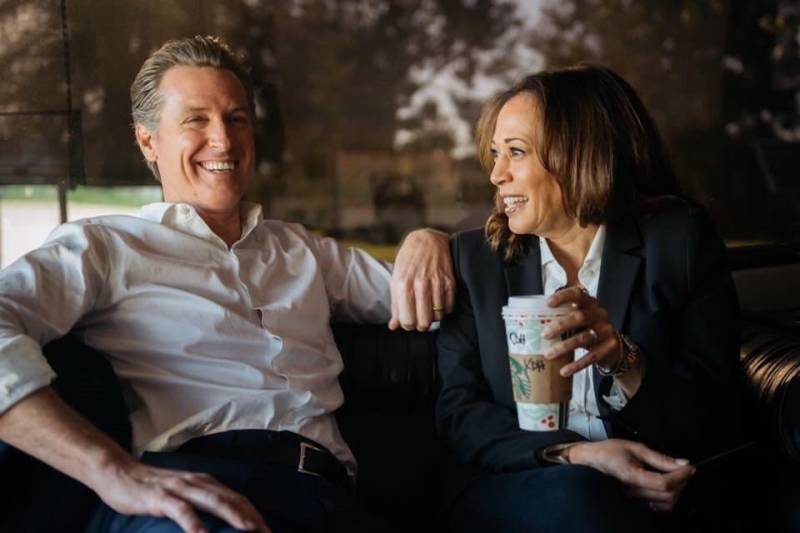
"caption": "Gov. Gavin Newsom will soon announce his pick to serve the remaining two years of Vice President-elect Kamala Harris' Senate term.",
"description": null,
"title": "EmPFvohU4AE6fmp",
"credit": "Courtesy of Gavin Newsom, via Twitter",
"status": "inherit",
"altTag": null,
"isLoading": false,
"fetchFailed": false
},
"news_11849488": {
"type": "attachments",
"id": "news_11849488",
"meta": {
"index": "attachments_1716263798",
"site": "news",
"id": "11849488",
"found": true
},
"parent": 11849487,
"imgSizes": {
"apple_news_ca_landscape_5_5": {
"file": "https://ww2.kqed.org/app/uploads/sites/10/2020/12/RS46154_063_KQED_SanFrancisco_COVIDTesting_11302020-qut-1044x783.jpg",
"width": 1044,
"mimeType": "image/jpeg",
"height": 783
},
"apple_news_ca_square_4_0": {
"file": "https://ww2.kqed.org/app/uploads/sites/10/2020/12/RS46154_063_KQED_SanFrancisco_COVIDTesting_11302020-qut-470x470.jpg",
"width": 470,
"mimeType": "image/jpeg",
"height": 470
},
"twentyfourteen-full-width": {
"file": "https://ww2.kqed.org/app/uploads/sites/10/2020/12/RS46154_063_KQED_SanFrancisco_COVIDTesting_11302020-qut-1038x576.jpg",
"width": 1038,
"mimeType": "image/jpeg",
"height": 576
},
"thumbnail": {
"file": "https://ww2.kqed.org/app/uploads/sites/10/2020/12/RS46154_063_KQED_SanFrancisco_COVIDTesting_11302020-qut-160x107.jpg",
"width": 160,
"mimeType": "image/jpeg",
"height": 107
},
"post-thumbnail": {
"file": "https://ww2.kqed.org/app/uploads/sites/10/2020/12/RS46154_063_KQED_SanFrancisco_COVIDTesting_11302020-qut-672x372.jpg",
"width": 672,
"mimeType": "image/jpeg",
"height": 372
},
"kqedFullSize": {
"file": "https://ww2.kqed.org/app/uploads/sites/10/2020/12/RS46154_063_KQED_SanFrancisco_COVIDTesting_11302020-qut.jpg",
"width": 1920,
"height": 1280
},
"apple_news_ca_landscape_4_7": {
"file": "https://ww2.kqed.org/app/uploads/sites/10/2020/12/RS46154_063_KQED_SanFrancisco_COVIDTesting_11302020-qut-632x474.jpg",
"width": 632,
"mimeType": "image/jpeg",
"height": 474
},
"large": {
"file": "https://ww2.kqed.org/app/uploads/sites/10/2020/12/RS46154_063_KQED_SanFrancisco_COVIDTesting_11302020-qut-1020x680.jpg",
"width": 1020,
"mimeType": "image/jpeg",
"height": 680
},
"apple_news_ca_landscape_4_0": {
"file": "https://ww2.kqed.org/app/uploads/sites/10/2020/12/RS46154_063_KQED_SanFrancisco_COVIDTesting_11302020-qut-536x402.jpg",
"width": 536,
"mimeType": "image/jpeg",
"height": 402
},
"apple_news_ca_portrait_12_9": {
"file": "https://ww2.kqed.org/app/uploads/sites/10/2020/12/RS46154_063_KQED_SanFrancisco_COVIDTesting_11302020-qut-1122x1280.jpg",
"width": 1122,
"mimeType": "image/jpeg",
"height": 1280
},
"medium": {
"file": "https://ww2.kqed.org/app/uploads/sites/10/2020/12/RS46154_063_KQED_SanFrancisco_COVIDTesting_11302020-qut-800x533.jpg",
"width": 800,
"mimeType": "image/jpeg",
"height": 533
},
"apple_news_ca_portrait_4_0": {
"file": "https://ww2.kqed.org/app/uploads/sites/10/2020/12/RS46154_063_KQED_SanFrancisco_COVIDTesting_11302020-qut-354x472.jpg",
"width": 354,
"mimeType": "image/jpeg",
"height": 472
},
"apple_news_ca_portrait_9_7": {
"file": "https://ww2.kqed.org/app/uploads/sites/10/2020/12/RS46154_063_KQED_SanFrancisco_COVIDTesting_11302020-qut-840x1120.jpg",
"width": 840,
"mimeType": "image/jpeg",
"height": 1120
},
"apple_news_ca_landscape_12_9": {
"file": "https://ww2.kqed.org/app/uploads/sites/10/2020/12/RS46154_063_KQED_SanFrancisco_COVIDTesting_11302020-qut-1832x1280.jpg",
"width": 1832,
"mimeType": "image/jpeg",
"height": 1280
},
"apple_news_ca_square_9_7": {
"file": "https://ww2.kqed.org/app/uploads/sites/10/2020/12/RS46154_063_KQED_SanFrancisco_COVIDTesting_11302020-qut-1104x1104.jpg",
"width": 1104,
"mimeType": "image/jpeg",
"height": 1104
},
"1536x1536": {
"file": "https://ww2.kqed.org/app/uploads/sites/10/2020/12/RS46154_063_KQED_SanFrancisco_COVIDTesting_11302020-qut-1536x1024.jpg",
"width": 1536,
"mimeType": "image/jpeg",
"height": 1024
},
"apple_news_ca_portrait_4_7": {
"file": "https://ww2.kqed.org/app/uploads/sites/10/2020/12/RS46154_063_KQED_SanFrancisco_COVIDTesting_11302020-qut-414x552.jpg",
"width": 414,
"mimeType": "image/jpeg",
"height": 552
},
"apple_news_ca_square_12_9": {
"file": "https://ww2.kqed.org/app/uploads/sites/10/2020/12/RS46154_063_KQED_SanFrancisco_COVIDTesting_11302020-qut-1472x1280.jpg",
"width": 1472,
"mimeType": "image/jpeg",
"height": 1280
},
"apple_news_ca_portrait_5_5": {
"file": "https://ww2.kqed.org/app/uploads/sites/10/2020/12/RS46154_063_KQED_SanFrancisco_COVIDTesting_11302020-qut-687x916.jpg",
"width": 687,
"mimeType": "image/jpeg",
"height": 916
},
"apple_news_ca_square_4_7": {
"file": "https://ww2.kqed.org/app/uploads/sites/10/2020/12/RS46154_063_KQED_SanFrancisco_COVIDTesting_11302020-qut-550x550.jpg",
"width": 550,
"mimeType": "image/jpeg",
"height": 550
},
"apple_news_ca_landscape_9_7": {
"file": "https://ww2.kqed.org/app/uploads/sites/10/2020/12/RS46154_063_KQED_SanFrancisco_COVIDTesting_11302020-qut-1376x1032.jpg",
"width": 1376,
"mimeType": "image/jpeg",
"height": 1032
},
"apple_news_ca_square_5_5": {
"file": "https://ww2.kqed.org/app/uploads/sites/10/2020/12/RS46154_063_KQED_SanFrancisco_COVIDTesting_11302020-qut-912x912.jpg",
"width": 912,
"mimeType": "image/jpeg",
"height": 912
}
},
"publishDate": 1607018940,
"modified": 1659985571,
"caption": "A pop-up COVID-19 testing site near the BART station on 24th and Mission streets in San Francisco on Nov. 30, 2020. The site is part of the Unidos En Salud initiative, a collaboration between UCSF and the city's Latino Task Force.",
"description": null,
"title": "RS46154_063_KQED_SanFrancisco_COVIDTesting_11302020-qut",
"credit": "Beth LaBerge/KQED",
"status": "inherit",
"altTag": "A family gets ready to receive a COVID-19 test in a large plaza.",
"isLoading": false,
"fetchFailed": false
},
"news_125051": {
"type": "attachments",
"id": "news_125051",
"meta": {
"index": "attachments_1716263798",
"site": "news",
"id": "125051",
"found": true
},
"parent": 124594,
"imgSizes": {
"kqedFullSize": {
"file": "https://ww2.kqed.org/app/uploads/sites/10/2014/01/RS8504_Kelly-4-2000.jpg",
"width": 1548,
"height": 1017
}
},
"publishDate": 1391212049,
"modified": 1606787892,
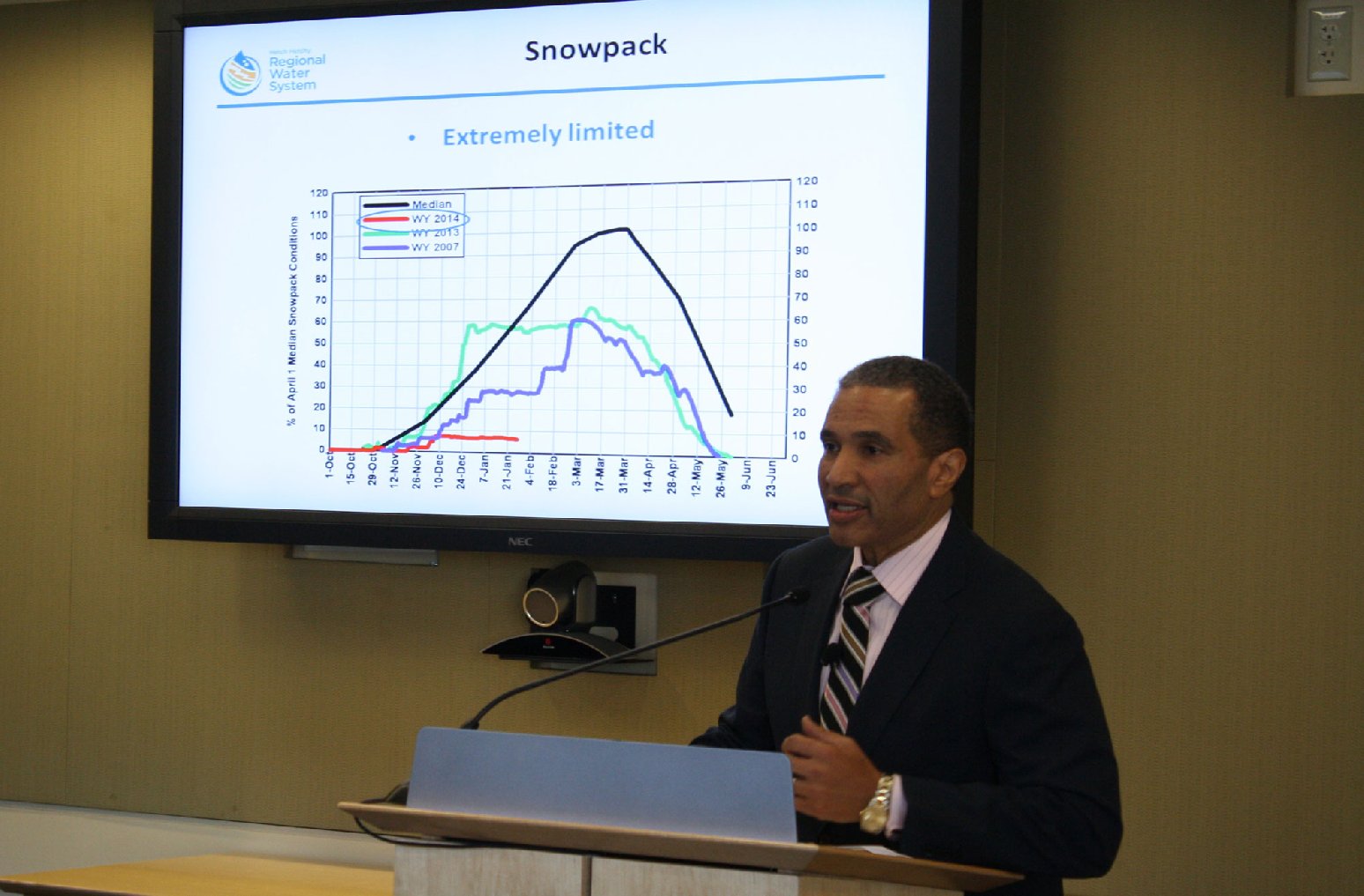
"caption": "San Francisco Public Utilities Commission General Manager Harlan Kelly announces a voluntary 10 percent cutback in water usage for Hetch Hetchy customers on Jan. 31, 2014.",
"description": "San Francisco Public Utilities Commission General Manager Harlan Kelly announces a voluntary 10 percent cutback in water usage for Hetch Hetchy customers on Jan. 31, 2014.",
"title": "RS8504_Kelly-4-2000",
"credit": "Alex Emslie/KQED",
"status": "inherit",
"isLoading": false,
"fetchFailed": false
},
"news_11848968": {
"type": "attachments",
"id": "news_11848968",
"meta": {
"index": "attachments_1716263798",
"site": "news",
"id": "11848968",
"found": true
},
"parent": 11848965,
"imgSizes": {
"apple_news_ca_landscape_5_5": {
"file": "https://ww2.kqed.org/app/uploads/sites/10/2020/11/GettyImages-1175529784_1920x-1044x783.jpg",
"width": 1044,
"mimeType": "image/jpeg",
"height": 783
},
"apple_news_ca_square_4_0": {
"file": "https://ww2.kqed.org/app/uploads/sites/10/2020/11/GettyImages-1175529784_1920x-470x470.jpg",
"width": 470,
"mimeType": "image/jpeg",
"height": 470
},
"twentyfourteen-full-width": {
"file": "https://ww2.kqed.org/app/uploads/sites/10/2020/11/GettyImages-1175529784_1920x-1038x576.jpg",
"width": 1038,
"mimeType": "image/jpeg",
"height": 576
},
"thumbnail": {
"file": "https://ww2.kqed.org/app/uploads/sites/10/2020/11/GettyImages-1175529784_1920x-160x107.jpg",
"width": 160,
"mimeType": "image/jpeg",
"height": 107
},
"post-thumbnail": {
"file": "https://ww2.kqed.org/app/uploads/sites/10/2020/11/GettyImages-1175529784_1920x-672x372.jpg",
"width": 672,
"mimeType": "image/jpeg",
"height": 372
},
"kqedFullSize": {
"file": "https://ww2.kqed.org/app/uploads/sites/10/2020/11/GettyImages-1175529784_1920x.jpg",
"width": 1920,
"height": 1280
},
"apple_news_ca_landscape_4_7": {
"file": "https://ww2.kqed.org/app/uploads/sites/10/2020/11/GettyImages-1175529784_1920x-632x474.jpg",
"width": 632,
"mimeType": "image/jpeg",
"height": 474
},
"large": {
"file": "https://ww2.kqed.org/app/uploads/sites/10/2020/11/GettyImages-1175529784_1920x-1020x680.jpg",
"width": 1020,
"mimeType": "image/jpeg",
"height": 680
},
"apple_news_ca_landscape_4_0": {
"file": "https://ww2.kqed.org/app/uploads/sites/10/2020/11/GettyImages-1175529784_1920x-536x402.jpg",
"width": 536,
"mimeType": "image/jpeg",
"height": 402
},
"apple_news_ca_portrait_12_9": {
"file": "https://ww2.kqed.org/app/uploads/sites/10/2020/11/GettyImages-1175529784_1920x-1122x1280.jpg",
"width": 1122,
"mimeType": "image/jpeg",
"height": 1280
},
"medium": {
"file": "https://ww2.kqed.org/app/uploads/sites/10/2020/11/GettyImages-1175529784_1920x-800x533.jpg",
"width": 800,
"mimeType": "image/jpeg",
"height": 533
},
"apple_news_ca_portrait_4_0": {
"file": "https://ww2.kqed.org/app/uploads/sites/10/2020/11/GettyImages-1175529784_1920x-354x472.jpg",
"width": 354,
"mimeType": "image/jpeg",
"height": 472
},
"apple_news_ca_portrait_9_7": {
"file": "https://ww2.kqed.org/app/uploads/sites/10/2020/11/GettyImages-1175529784_1920x-840x1120.jpg",
"width": 840,
"mimeType": "image/jpeg",
"height": 1120
},
"apple_news_ca_landscape_12_9": {
"file": "https://ww2.kqed.org/app/uploads/sites/10/2020/11/GettyImages-1175529784_1920x-1832x1280.jpg",
"width": 1832,
"mimeType": "image/jpeg",
"height": 1280
},
"apple_news_ca_square_9_7": {
"file": "https://ww2.kqed.org/app/uploads/sites/10/2020/11/GettyImages-1175529784_1920x-1104x1104.jpg",
"width": 1104,
"mimeType": "image/jpeg",
"height": 1104
},
"1536x1536": {
"file": "https://ww2.kqed.org/app/uploads/sites/10/2020/11/GettyImages-1175529784_1920x-1536x1024.jpg",
"width": 1536,
"mimeType": "image/jpeg",
"height": 1024
},
"apple_news_ca_portrait_4_7": {
"file": "https://ww2.kqed.org/app/uploads/sites/10/2020/11/GettyImages-1175529784_1920x-414x552.jpg",
"width": 414,
"mimeType": "image/jpeg",
"height": 552
},
"apple_news_ca_square_12_9": {
"file": "https://ww2.kqed.org/app/uploads/sites/10/2020/11/GettyImages-1175529784_1920x-1472x1280.jpg",
"width": 1472,
"mimeType": "image/jpeg",
"height": 1280
},
"apple_news_ca_portrait_5_5": {
"file": "https://ww2.kqed.org/app/uploads/sites/10/2020/11/GettyImages-1175529784_1920x-687x916.jpg",
"width": 687,
"mimeType": "image/jpeg",
"height": 916
},
"apple_news_ca_square_4_7": {
"file": "https://ww2.kqed.org/app/uploads/sites/10/2020/11/GettyImages-1175529784_1920x-550x550.jpg",
"width": 550,
"mimeType": "image/jpeg",
"height": 550
},
"apple_news_ca_landscape_9_7": {
"file": "https://ww2.kqed.org/app/uploads/sites/10/2020/11/GettyImages-1175529784_1920x-1376x1032.jpg",
"width": 1376,
"mimeType": "image/jpeg",
"height": 1032
},
"apple_news_ca_square_5_5": {
"file": "https://ww2.kqed.org/app/uploads/sites/10/2020/11/GettyImages-1175529784_1920x-912x912.jpg",
"width": 912,
"mimeType": "image/jpeg",
"height": 912
}
},
"publishDate": 1606515095,
"modified": 1606517471,
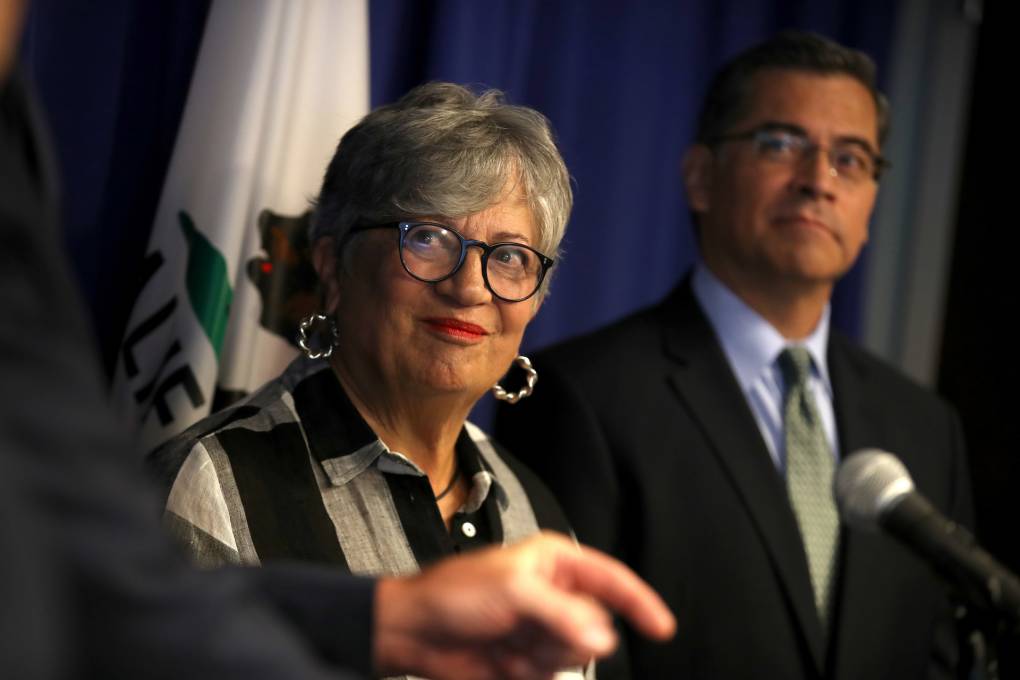
"caption": "California Air Resources Board Chair Mary Nichols (L) and California attorney general Xavier Becerra (R) look on during a news conference at the California justice department on September 18, 2019 in Sacramento, California. ",
"description": "California Air Resources Board Chair Mary Nichols (L) and California attorney general Xavier Becerra (R) look on during a news conference at the California justice department on September 18, 2019 in Sacramento, California. ",
"title": "California Gov. Newsom And CA Attorney Gen. Becerra Hold News Conference Responding To Trump Revoking State's Emissions Waiver",
"credit": "Justin Sullivan/Getty Images",
"status": "inherit",
"isLoading": false,
"fetchFailed": false
},
"news_11848236": {
"type": "attachments",
"id": "news_11848236",
"meta": {
"index": "attachments_1716263798",
"site": "news",
"id": "11848236",
"found": true
},
"parent": 11848231,
"imgSizes": {
"apple_news_ca_landscape_5_5": {
"file": "https://ww2.kqed.org/app/uploads/sites/10/2020/11/1920KH-1044x783.jpg",
"width": 1044,
"mimeType": "image/jpeg",
"height": 783
},
"apple_news_ca_square_4_0": {
"file": "https://ww2.kqed.org/app/uploads/sites/10/2020/11/1920KH-470x470.jpg",
"width": 470,
"mimeType": "image/jpeg",
"height": 470
},
"twentyfourteen-full-width": {
"file": "https://ww2.kqed.org/app/uploads/sites/10/2020/11/1920KH-1038x576.jpg",
"width": 1038,
"mimeType": "image/jpeg",
"height": 576
},
"thumbnail": {
"file": "https://ww2.kqed.org/app/uploads/sites/10/2020/11/1920KH-160x90.jpg",
"width": 160,
"mimeType": "image/jpeg",
"height": 90
},
"post-thumbnail": {
"file": "https://ww2.kqed.org/app/uploads/sites/10/2020/11/1920KH-672x372.jpg",
"width": 672,
"mimeType": "image/jpeg",
"height": 372
},
"kqedFullSize": {
"file": "https://ww2.kqed.org/app/uploads/sites/10/2020/11/1920KH.jpg",
"width": 1393,
"height": 784
},
"apple_news_ca_landscape_4_7": {
"file": "https://ww2.kqed.org/app/uploads/sites/10/2020/11/1920KH-632x474.jpg",
"width": 632,
"mimeType": "image/jpeg",
"height": 474
},
"large": {
"file": "https://ww2.kqed.org/app/uploads/sites/10/2020/11/1920KH-1020x574.jpg",
"width": 1020,
"mimeType": "image/jpeg",
"height": 574
},
"apple_news_ca_landscape_4_0": {
"file": "https://ww2.kqed.org/app/uploads/sites/10/2020/11/1920KH-536x402.jpg",
"width": 536,
"mimeType": "image/jpeg",
"height": 402
},
"apple_news_ca_portrait_12_9": {
"file": "https://ww2.kqed.org/app/uploads/sites/10/2020/11/1920KH-1122x784.jpg",
"width": 1122,
"mimeType": "image/jpeg",
"height": 784
},
"medium": {
"file": "https://ww2.kqed.org/app/uploads/sites/10/2020/11/1920KH-800x450.jpg",
"width": 800,
"mimeType": "image/jpeg",
"height": 450
},
"apple_news_ca_portrait_4_0": {
"file": "https://ww2.kqed.org/app/uploads/sites/10/2020/11/1920KH-354x472.jpg",
"width": 354,
"mimeType": "image/jpeg",
"height": 472
},
"apple_news_ca_portrait_9_7": {
"file": "https://ww2.kqed.org/app/uploads/sites/10/2020/11/1920KH-840x784.jpg",
"width": 840,
"mimeType": "image/jpeg",
"height": 784
},
"apple_news_ca_square_9_7": {
"file": "https://ww2.kqed.org/app/uploads/sites/10/2020/11/1920KH-1104x784.jpg",
"width": 1104,
"mimeType": "image/jpeg",
"height": 784
},
"apple_news_ca_portrait_4_7": {
"file": "https://ww2.kqed.org/app/uploads/sites/10/2020/11/1920KH-414x552.jpg",
"width": 414,
"mimeType": "image/jpeg",
"height": 552
},
"apple_news_ca_portrait_5_5": {
"file": "https://ww2.kqed.org/app/uploads/sites/10/2020/11/1920KH-687x784.jpg",
"width": 687,
"mimeType": "image/jpeg",
"height": 784
},
"apple_news_ca_square_4_7": {
"file": "https://ww2.kqed.org/app/uploads/sites/10/2020/11/1920KH-550x550.jpg",
"width": 550,
"mimeType": "image/jpeg",
"height": 550
},
"apple_news_ca_landscape_9_7": {
"file": "https://ww2.kqed.org/app/uploads/sites/10/2020/11/1920KH-1376x784.jpg",
"width": 1376,
"mimeType": "image/jpeg",
"height": 784
},
"apple_news_ca_square_5_5": {
"file": "https://ww2.kqed.org/app/uploads/sites/10/2020/11/1920KH-912x784.jpg",
"width": 912,
"mimeType": "image/jpeg",
"height": 784
}
},
"publishDate": 1605891327,
"modified": 1605891642,
"caption": "As part of a collaboration between artist Hanifa Abdul Hameed, Nik Dodani, Vineet Chhibber and Meena Harris' brand Phenomenal.",
"description": null,
"title": "1920KH",
"credit": "Courtesy of Hanifa Abdul Hameed",
"status": "inherit",
"isLoading": false,
"fetchFailed": false
},
"news_11848373": {
"type": "attachments",
"id": "news_11848373",
"meta": {
"index": "attachments_1716263798",
"site": "news",
"id": "11848373",
"found": true
},
"parent": 11848360,
"imgSizes": {
"apple_news_ca_square_4_0": {
"file": "https://ww2.kqed.org/app/uploads/sites/10/2020/11/candidates-470x470.png",
"width": 470,
"mimeType": "image/png",
"height": 470
},
"twentyfourteen-full-width": {
"file": "https://ww2.kqed.org/app/uploads/sites/10/2020/11/candidates-1000x576.png",
"width": 1000,
"mimeType": "image/png",
"height": 576
},
"thumbnail": {
"file": "https://ww2.kqed.org/app/uploads/sites/10/2020/11/candidates-160x120.png",
"width": 160,
"mimeType": "image/png",
"height": 120
},
"post-thumbnail": {
"file": "https://ww2.kqed.org/app/uploads/sites/10/2020/11/candidates-672x372.png",
"width": 672,
"mimeType": "image/png",
"height": 372
},
"kqedFullSize": {
"file": "https://ww2.kqed.org/app/uploads/sites/10/2020/11/candidates.png",
"width": 1000,
"height": 750
},
"apple_news_ca_landscape_4_7": {
"file": "https://ww2.kqed.org/app/uploads/sites/10/2020/11/candidates-632x474.png",
"width": 632,
"mimeType": "image/png",
"height": 474
},
"apple_news_ca_landscape_4_0": {
"file": "https://ww2.kqed.org/app/uploads/sites/10/2020/11/candidates-536x402.png",
"width": 536,
"mimeType": "image/png",
"height": 402
},
"medium": {
"file": "https://ww2.kqed.org/app/uploads/sites/10/2020/11/candidates-800x600.png",
"width": 800,
"mimeType": "image/png",
"height": 600
},
"apple_news_ca_portrait_4_0": {
"file": "https://ww2.kqed.org/app/uploads/sites/10/2020/11/candidates-354x472.png",
"width": 354,
"mimeType": "image/png",
"height": 472
},
"apple_news_ca_portrait_9_7": {
"file": "https://ww2.kqed.org/app/uploads/sites/10/2020/11/candidates-840x750.png",
"width": 840,
"mimeType": "image/png",
"height": 750
},
"apple_news_ca_portrait_4_7": {
"file": "https://ww2.kqed.org/app/uploads/sites/10/2020/11/candidates-414x552.png",
"width": 414,
"mimeType": "image/png",
"height": 552
},
"apple_news_ca_portrait_5_5": {
"file": "https://ww2.kqed.org/app/uploads/sites/10/2020/11/candidates-687x750.png",
"width": 687,
"mimeType": "image/png",
"height": 750
},
"apple_news_ca_square_4_7": {
"file": "https://ww2.kqed.org/app/uploads/sites/10/2020/11/candidates-550x550.png",
"width": 550,
"mimeType": "image/png",
"height": 550
},
"apple_news_ca_square_5_5": {
"file": "https://ww2.kqed.org/app/uploads/sites/10/2020/11/candidates-912x750.png",
"width": 912,
"mimeType": "image/png",
"height": 750
}
},
"publishDate": 1605917364,
"modified": 1605917385,
"caption": "Alex Lee (left), Lucy Shen (center), and James Coleman (right) all ran for local office positions during the 2020 elections. (Courtesy of Alex Lee, Lucy Shen, and James Coleman)",
"description": null,
"title": "candidates",
"credit": null,
"status": "inherit",
"isLoading": false,
"fetchFailed": false
},
"news_11848321": {
"type": "attachments",
"id": "news_11848321",
"meta": {
"index": "attachments_1716263798",
"site": "news",
"id": "11848321",
"found": true
},
"parent": 11848103,
"imgSizes": {
"apple_news_ca_landscape_5_5": {
"file": "https://ww2.kqed.org/app/uploads/sites/10/2020/11/RS12714_491213158_af42d77b95_o-qut-1044x783.jpg",
"width": 1044,
"mimeType": "image/jpeg",
"height": 783
},
"apple_news_ca_square_4_0": {
"file": "https://ww2.kqed.org/app/uploads/sites/10/2020/11/RS12714_491213158_af42d77b95_o-qut-470x470.jpg",
"width": 470,
"mimeType": "image/jpeg",
"height": 470
},
"twentyfourteen-full-width": {
"file": "https://ww2.kqed.org/app/uploads/sites/10/2020/11/RS12714_491213158_af42d77b95_o-qut-1038x576.jpg",
"width": 1038,
"mimeType": "image/jpeg",
"height": 576
},
"thumbnail": {
"file": "https://ww2.kqed.org/app/uploads/sites/10/2020/11/RS12714_491213158_af42d77b95_o-qut-160x98.jpg",
"width": 160,
"mimeType": "image/jpeg",
"height": 98
},
"post-thumbnail": {
"file": "https://ww2.kqed.org/app/uploads/sites/10/2020/11/RS12714_491213158_af42d77b95_o-qut-672x372.jpg",
"width": 672,
"mimeType": "image/jpeg",
"height": 372
},
"kqedFullSize": {
"file": "https://ww2.kqed.org/app/uploads/sites/10/2020/11/RS12714_491213158_af42d77b95_o-qut.jpg",
"width": 1440,
"height": 885
},
"apple_news_ca_landscape_4_7": {
"file": "https://ww2.kqed.org/app/uploads/sites/10/2020/11/RS12714_491213158_af42d77b95_o-qut-632x474.jpg",
"width": 632,
"mimeType": "image/jpeg",
"height": 474
},
"large": {
"file": "https://ww2.kqed.org/app/uploads/sites/10/2020/11/RS12714_491213158_af42d77b95_o-qut-1020x627.jpg",
"width": 1020,
"mimeType": "image/jpeg",
"height": 627
},
"apple_news_ca_landscape_4_0": {
"file": "https://ww2.kqed.org/app/uploads/sites/10/2020/11/RS12714_491213158_af42d77b95_o-qut-536x402.jpg",
"width": 536,
"mimeType": "image/jpeg",
"height": 402
},
"apple_news_ca_portrait_12_9": {
"file": "https://ww2.kqed.org/app/uploads/sites/10/2020/11/RS12714_491213158_af42d77b95_o-qut-1122x885.jpg",
"width": 1122,
"mimeType": "image/jpeg",
"height": 885
},
"medium": {
"file": "https://ww2.kqed.org/app/uploads/sites/10/2020/11/RS12714_491213158_af42d77b95_o-qut-800x492.jpg",
"width": 800,
"mimeType": "image/jpeg",
"height": 492
},
"apple_news_ca_portrait_4_0": {
"file": "https://ww2.kqed.org/app/uploads/sites/10/2020/11/RS12714_491213158_af42d77b95_o-qut-354x472.jpg",
"width": 354,
"mimeType": "image/jpeg",
"height": 472
},
"apple_news_ca_portrait_9_7": {
"file": "https://ww2.kqed.org/app/uploads/sites/10/2020/11/RS12714_491213158_af42d77b95_o-qut-840x885.jpg",
"width": 840,
"mimeType": "image/jpeg",
"height": 885
},
"apple_news_ca_square_9_7": {
"file": "https://ww2.kqed.org/app/uploads/sites/10/2020/11/RS12714_491213158_af42d77b95_o-qut-1104x885.jpg",
"width": 1104,
"mimeType": "image/jpeg",
"height": 885
},
"apple_news_ca_portrait_4_7": {
"file": "https://ww2.kqed.org/app/uploads/sites/10/2020/11/RS12714_491213158_af42d77b95_o-qut-414x552.jpg",
"width": 414,
"mimeType": "image/jpeg",
"height": 552
},
"apple_news_ca_portrait_5_5": {
"file": "https://ww2.kqed.org/app/uploads/sites/10/2020/11/RS12714_491213158_af42d77b95_o-qut-687x885.jpg",
"width": 687,
"mimeType": "image/jpeg",
"height": 885
},
"apple_news_ca_square_4_7": {
"file": "https://ww2.kqed.org/app/uploads/sites/10/2020/11/RS12714_491213158_af42d77b95_o-qut-550x550.jpg",
"width": 550,
"mimeType": "image/jpeg",
"height": 550
},
"apple_news_ca_landscape_9_7": {
"file": "https://ww2.kqed.org/app/uploads/sites/10/2020/11/RS12714_491213158_af42d77b95_o-qut-1376x885.jpg",
"width": 1376,
"mimeType": "image/jpeg",
"height": 885
},
"apple_news_ca_square_5_5": {
"file": "https://ww2.kqed.org/app/uploads/sites/10/2020/11/RS12714_491213158_af42d77b95_o-qut-912x885.jpg",
"width": 912,
"mimeType": "image/jpeg",
"height": 885
}
},
"publishDate": 1605909887,
"modified": 1605909977,
"caption": "San Jose's Measure G increases police oversight for the SJPD. But the city will have to negotiate with the SJPD and the Police Union before those changes can be made.",
"description": "San Jose's Measure G increases police oversight for the SJPD. But the city will have to negotiate with the SJPD and the Police Union before those changes can be made.",
"title": "San Jose's Measure G increases police oversight for the SJPD. But the city will have to negotiate with the SJPD and the Police Union before those changes can be made.",
"credit": "Thomas Hawk/Flickr",
"status": "inherit",
"isLoading": false,
"fetchFailed": false
},
"news_11848168": {
"type": "attachments",
"id": "news_11848168",
"meta": {
"index": "attachments_1716263798",
"site": "news",
"id": "11848168",
"found": true
},
"parent": 11848154,
"imgSizes": {
"apple_news_ca_landscape_5_5": {
"file": "https://ww2.kqed.org/app/uploads/sites/10/2020/11/Keola-family-visit-1044x783.jpg",
"width": 1044,
"mimeType": "image/jpeg",
"height": 783
},
"apple_news_ca_square_4_0": {
"file": "https://ww2.kqed.org/app/uploads/sites/10/2020/11/Keola-family-visit-470x470.jpg",
"width": 470,
"mimeType": "image/jpeg",
"height": 470
},
"twentyfourteen-full-width": {
"file": "https://ww2.kqed.org/app/uploads/sites/10/2020/11/Keola-family-visit-1038x576.jpg",
"width": 1038,
"mimeType": "image/jpeg",
"height": 576
},
"thumbnail": {
"file": "https://ww2.kqed.org/app/uploads/sites/10/2020/11/Keola-family-visit-160x109.jpg",
"width": 160,
"mimeType": "image/jpeg",
"height": 109
},
"post-thumbnail": {
"file": "https://ww2.kqed.org/app/uploads/sites/10/2020/11/Keola-family-visit-672x372.jpg",
"width": 672,
"mimeType": "image/jpeg",
"height": 372
},
"kqedFullSize": {
"file": "https://ww2.kqed.org/app/uploads/sites/10/2020/11/Keola-family-visit.jpg",
"width": 1920,
"height": 1311
},
"apple_news_ca_landscape_4_7": {
"file": "https://ww2.kqed.org/app/uploads/sites/10/2020/11/Keola-family-visit-632x474.jpg",
"width": 632,
"mimeType": "image/jpeg",
"height": 474
},
"large": {
"file": "https://ww2.kqed.org/app/uploads/sites/10/2020/11/Keola-family-visit-1020x696.jpg",
"width": 1020,
"mimeType": "image/jpeg",
"height": 696
},
"apple_news_ca_landscape_4_0": {
"file": "https://ww2.kqed.org/app/uploads/sites/10/2020/11/Keola-family-visit-536x402.jpg",
"width": 536,
"mimeType": "image/jpeg",
"height": 402
},
"apple_news_ca_portrait_12_9": {
"file": "https://ww2.kqed.org/app/uploads/sites/10/2020/11/Keola-family-visit-1122x1311.jpg",
"width": 1122,
"mimeType": "image/jpeg",
"height": 1311
},
"medium": {
"file": "https://ww2.kqed.org/app/uploads/sites/10/2020/11/Keola-family-visit-800x546.jpg",
"width": 800,
"mimeType": "image/jpeg",
"height": 546
},
"apple_news_ca_portrait_4_0": {
"file": "https://ww2.kqed.org/app/uploads/sites/10/2020/11/Keola-family-visit-354x472.jpg",
"width": 354,
"mimeType": "image/jpeg",
"height": 472
},
"apple_news_ca_portrait_9_7": {
"file": "https://ww2.kqed.org/app/uploads/sites/10/2020/11/Keola-family-visit-840x1120.jpg",
"width": 840,
"mimeType": "image/jpeg",
"height": 1120
},
"apple_news_ca_landscape_12_9": {
"file": "https://ww2.kqed.org/app/uploads/sites/10/2020/11/Keola-family-visit-1832x1311.jpg",
"width": 1832,
"mimeType": "image/jpeg",
"height": 1311
},
"apple_news_ca_square_9_7": {
"file": "https://ww2.kqed.org/app/uploads/sites/10/2020/11/Keola-family-visit-1104x1104.jpg",
"width": 1104,
"mimeType": "image/jpeg",
"height": 1104
},
"1536x1536": {
"file": "https://ww2.kqed.org/app/uploads/sites/10/2020/11/Keola-family-visit-1536x1049.jpg",
"width": 1536,
"mimeType": "image/jpeg",
"height": 1049
},
"apple_news_ca_portrait_4_7": {
"file": "https://ww2.kqed.org/app/uploads/sites/10/2020/11/Keola-family-visit-414x552.jpg",
"width": 414,
"mimeType": "image/jpeg",
"height": 552
},
"apple_news_ca_square_12_9": {
"file": "https://ww2.kqed.org/app/uploads/sites/10/2020/11/Keola-family-visit-1472x1311.jpg",
"width": 1472,
"mimeType": "image/jpeg",
"height": 1311
},
"apple_news_ca_portrait_5_5": {
"file": "https://ww2.kqed.org/app/uploads/sites/10/2020/11/Keola-family-visit-687x916.jpg",
"width": 687,
"mimeType": "image/jpeg",
"height": 916
},
"apple_news_ca_square_4_7": {
"file": "https://ww2.kqed.org/app/uploads/sites/10/2020/11/Keola-family-visit-550x550.jpg",
"width": 550,
"mimeType": "image/jpeg",
"height": 550
},
"apple_news_ca_landscape_9_7": {
"file": "https://ww2.kqed.org/app/uploads/sites/10/2020/11/Keola-family-visit-1376x1032.jpg",
"width": 1376,
"mimeType": "image/jpeg",
"height": 1032
},
"apple_news_ca_square_5_5": {
"file": "https://ww2.kqed.org/app/uploads/sites/10/2020/11/Keola-family-visit-912x912.jpg",
"width": 912,
"mimeType": "image/jpeg",
"height": 912
}
},
"publishDate": 1605834116,
"modified": 1605834545,
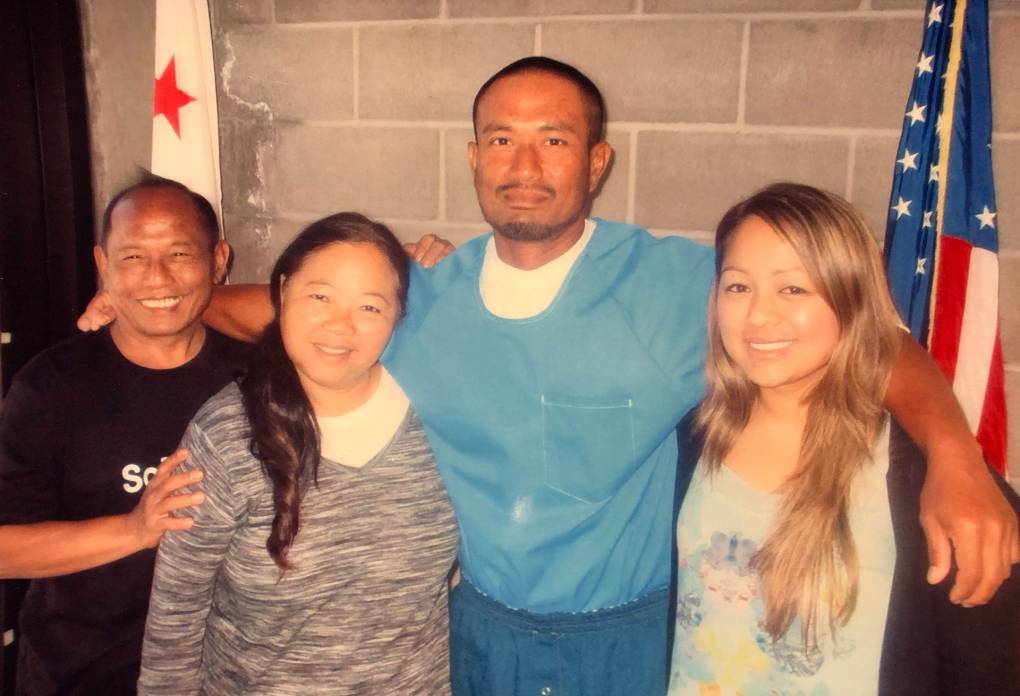
"caption": "Bounchan Keola (center) with his parents, Phonethip and Chanh Keola (left) and sister Thongsouk (right) during a prison visit this year.",
"description": "Bounchan Keola (center) with his parents, Phonethip and Chanh Keola (left) and sister Thongsouk (right) during a prison visit this year.",
"title": "Keola-family-visit",
"credit": "Courtesy Anoop Prasad",
"status": "inherit",
"isLoading": false,
"fetchFailed": false
},
"news_11777430": {
"type": "attachments",
"id": "news_11777430",
"meta": {
"index": "attachments_1716263798",
"site": "news",
"id": "11777430",
"found": true
},
"parent": 11777328,
"imgSizes": {
"apple_news_ca_landscape_5_5": {
"file": "https://ww2.kqed.org/app/uploads/sites/10/2019/09/iStock-1125881964-1044x783.jpg",
"width": 1044,
"mimeType": "image/jpeg",
"height": 783
},
"apple_news_ca_square_4_0": {
"file": "https://ww2.kqed.org/app/uploads/sites/10/2019/09/iStock-1125881964-470x470.jpg",
"width": 470,
"mimeType": "image/jpeg",
"height": 470
},
"twentyfourteen-full-width": {
"file": "https://ww2.kqed.org/app/uploads/sites/10/2019/09/iStock-1125881964-1038x576.jpg",
"width": 1038,
"mimeType": "image/jpeg",
"height": 576
},
"thumbnail": {
"file": "https://ww2.kqed.org/app/uploads/sites/10/2019/09/iStock-1125881964-160x105.jpg",
"width": 160,
"mimeType": "image/jpeg",
"height": 105
},
"post-thumbnail": {
"file": "https://ww2.kqed.org/app/uploads/sites/10/2019/09/iStock-1125881964-672x372.jpg",
"width": 672,
"mimeType": "image/jpeg",
"height": 372
},
"kqedFullSize": {
"file": "https://ww2.kqed.org/app/uploads/sites/10/2019/09/iStock-1125881964-e1569886516853.jpg",
"width": 1920,
"height": 1260
},
"apple_news_ca_landscape_4_7": {
"file": "https://ww2.kqed.org/app/uploads/sites/10/2019/09/iStock-1125881964-632x474.jpg",
"width": 632,
"mimeType": "image/jpeg",
"height": 474
},
"large": {
"file": "https://ww2.kqed.org/app/uploads/sites/10/2019/09/iStock-1125881964-1020x670.jpg",
"width": 1020,
"mimeType": "image/jpeg",
"height": 670
},
"complete_open_graph": {
"file": "https://ww2.kqed.org/app/uploads/sites/10/2019/09/iStock-1125881964-1200x788.jpg",
"width": 1200,
"mimeType": "image/jpeg",
"height": 788
},
"apple_news_ca_landscape_4_0": {
"file": "https://ww2.kqed.org/app/uploads/sites/10/2019/09/iStock-1125881964-536x402.jpg",
"width": 536,
"mimeType": "image/jpeg",
"height": 402
},
"apple_news_ca_portrait_12_9": {
"file": "https://ww2.kqed.org/app/uploads/sites/10/2019/09/iStock-1125881964-1122x1496.jpg",
"width": 1122,
"mimeType": "image/jpeg",
"height": 1496
},
"medium": {
"file": "https://ww2.kqed.org/app/uploads/sites/10/2019/09/iStock-1125881964-800x525.jpg",
"width": 800,
"mimeType": "image/jpeg",
"height": 525
},
"apple_news_ca_portrait_4_0": {
"file": "https://ww2.kqed.org/app/uploads/sites/10/2019/09/iStock-1125881964-354x472.jpg",
"width": 354,
"mimeType": "image/jpeg",
"height": 472
},
"apple_news_ca_portrait_9_7": {
"file": "https://ww2.kqed.org/app/uploads/sites/10/2019/09/iStock-1125881964-840x1120.jpg",
"width": 840,
"mimeType": "image/jpeg",
"height": 1120
},
"apple_news_ca_landscape_12_9": {
"file": "https://ww2.kqed.org/app/uploads/sites/10/2019/09/iStock-1125881964-1832x1374.jpg",
"width": 1832,
"mimeType": "image/jpeg",
"height": 1374
},
"apple_news_ca_square_9_7": {
"file": "https://ww2.kqed.org/app/uploads/sites/10/2019/09/iStock-1125881964-1104x1104.jpg",
"width": 1104,
"mimeType": "image/jpeg",
"height": 1104
},
"apple_news_ca_portrait_4_7": {
"file": "https://ww2.kqed.org/app/uploads/sites/10/2019/09/iStock-1125881964-414x552.jpg",
"width": 414,
"mimeType": "image/jpeg",
"height": 552
},
"apple_news_ca_square_12_9": {
"file": "https://ww2.kqed.org/app/uploads/sites/10/2019/09/iStock-1125881964-1472x1472.jpg",
"width": 1472,
"mimeType": "image/jpeg",
"height": 1472
},
"apple_news_ca_portrait_5_5": {
"file": "https://ww2.kqed.org/app/uploads/sites/10/2019/09/iStock-1125881964-687x916.jpg",
"width": 687,
"mimeType": "image/jpeg",
"height": 916
},
"full-width": {
"file": "https://ww2.kqed.org/app/uploads/sites/10/2019/09/iStock-1125881964-1920x1260.jpg",
"width": 1920,
"mimeType": "image/jpeg",
"height": 1260
},
"apple_news_ca_square_4_7": {
"file": "https://ww2.kqed.org/app/uploads/sites/10/2019/09/iStock-1125881964-550x550.jpg",
"width": 550,
"mimeType": "image/jpeg",
"height": 550
},
"apple_news_ca_landscape_9_7": {
"file": "https://ww2.kqed.org/app/uploads/sites/10/2019/09/iStock-1125881964-1376x1032.jpg",
"width": 1376,
"mimeType": "image/jpeg",
"height": 1032
},
"apple_news_ca_square_5_5": {
"file": "https://ww2.kqed.org/app/uploads/sites/10/2019/09/iStock-1125881964-912x912.jpg",
"width": 912,
"mimeType": "image/jpeg",
"height": 912
}
},
"publishDate": 1569886397,
"modified": 1605725349,
"caption": "A new California law allowed certain in-home child care providers to unionize.",
"description": null,
"title": "Nursery children playing with teacher in the classroom",
"credit": "Rawpixel/iStock",
"status": "inherit",
"isLoading": false,
"fetchFailed": false
},
"news_11847581": {
"type": "attachments",
"id": "news_11847581",
"meta": {
"index": "attachments_1716263798",
"site": "news",
"id": "11847581",
"found": true
},
"parent": 11847579,
"imgSizes": {
"apple_news_ca_landscape_5_5": {
"file": "https://ww2.kqed.org/app/uploads/sites/10/2020/11/GettyImages-1229620807-1044x783.jpg",
"width": 1044,
"mimeType": "image/jpeg",
"height": 783
},
"apple_news_ca_square_4_0": {
"file": "https://ww2.kqed.org/app/uploads/sites/10/2020/11/GettyImages-1229620807-470x470.jpg",
"width": 470,
"mimeType": "image/jpeg",
"height": 470
},
"twentyfourteen-full-width": {
"file": "https://ww2.kqed.org/app/uploads/sites/10/2020/11/GettyImages-1229620807-1038x576.jpg",
"width": 1038,
"mimeType": "image/jpeg",
"height": 576
},
"thumbnail": {
"file": "https://ww2.kqed.org/app/uploads/sites/10/2020/11/GettyImages-1229620807-160x109.jpg",
"width": 160,
"mimeType": "image/jpeg",
"height": 109
},
"post-thumbnail": {
"file": "https://ww2.kqed.org/app/uploads/sites/10/2020/11/GettyImages-1229620807-672x372.jpg",
"width": 672,
"mimeType": "image/jpeg",
"height": 372
},
"kqedFullSize": {
"file": "https://ww2.kqed.org/app/uploads/sites/10/2020/11/GettyImages-1229620807-scaled-e1605555370678.jpg",
"width": 1920,
"height": 1311
},
"2048x2048": {
"file": "https://ww2.kqed.org/app/uploads/sites/10/2020/11/GettyImages-1229620807-2048x1398.jpg",
"width": 2048,
"mimeType": "image/jpeg",
"height": 1398
},
"apple_news_ca_landscape_4_7": {
"file": "https://ww2.kqed.org/app/uploads/sites/10/2020/11/GettyImages-1229620807-632x474.jpg",
"width": 632,
"mimeType": "image/jpeg",
"height": 474
},
"large": {
"file": "https://ww2.kqed.org/app/uploads/sites/10/2020/11/GettyImages-1229620807-1020x696.jpg",
"width": 1020,
"mimeType": "image/jpeg",
"height": 696
},
"apple_news_ca_landscape_4_0": {
"file": "https://ww2.kqed.org/app/uploads/sites/10/2020/11/GettyImages-1229620807-536x402.jpg",
"width": 536,
"mimeType": "image/jpeg",
"height": 402
},
"apple_news_ca_portrait_12_9": {
"file": "https://ww2.kqed.org/app/uploads/sites/10/2020/11/GettyImages-1229620807-1122x1496.jpg",
"width": 1122,
"mimeType": "image/jpeg",
"height": 1496
},
"medium": {
"file": "https://ww2.kqed.org/app/uploads/sites/10/2020/11/GettyImages-1229620807-800x546.jpg",
"width": 800,
"mimeType": "image/jpeg",
"height": 546
},
"apple_news_ca_portrait_4_0": {
"file": "https://ww2.kqed.org/app/uploads/sites/10/2020/11/GettyImages-1229620807-354x472.jpg",
"width": 354,
"mimeType": "image/jpeg",
"height": 472
},
"apple_news_ca_portrait_9_7": {
"file": "https://ww2.kqed.org/app/uploads/sites/10/2020/11/GettyImages-1229620807-840x1120.jpg",
"width": 840,
"mimeType": "image/jpeg",
"height": 1120
},
"apple_news_ca_landscape_12_9": {
"file": "https://ww2.kqed.org/app/uploads/sites/10/2020/11/GettyImages-1229620807-1832x1374.jpg",
"width": 1832,
"mimeType": "image/jpeg",
"height": 1374
},
"apple_news_ca_square_9_7": {
"file": "https://ww2.kqed.org/app/uploads/sites/10/2020/11/GettyImages-1229620807-1104x1104.jpg",
"width": 1104,
"mimeType": "image/jpeg",
"height": 1104
},
"1536x1536": {
"file": "https://ww2.kqed.org/app/uploads/sites/10/2020/11/GettyImages-1229620807-1536x1049.jpg",
"width": 1536,
"mimeType": "image/jpeg",
"height": 1049
},
"apple_news_ca_portrait_4_7": {
"file": "https://ww2.kqed.org/app/uploads/sites/10/2020/11/GettyImages-1229620807-414x552.jpg",
"width": 414,
"mimeType": "image/jpeg",
"height": 552
},
"apple_news_ca_square_12_9": {
"file": "https://ww2.kqed.org/app/uploads/sites/10/2020/11/GettyImages-1229620807-1472x1472.jpg",
"width": 1472,
"mimeType": "image/jpeg",
"height": 1472
},
"apple_news_ca_portrait_5_5": {
"file": "https://ww2.kqed.org/app/uploads/sites/10/2020/11/GettyImages-1229620807-687x916.jpg",
"width": 687,
"mimeType": "image/jpeg",
"height": 916
},
"full-width": {
"file": "https://ww2.kqed.org/app/uploads/sites/10/2020/11/GettyImages-1229620807-1920x1311.jpg",
"width": 1920,
"mimeType": "image/jpeg",
"height": 1311
},
"apple_news_ca_square_4_7": {
"file": "https://ww2.kqed.org/app/uploads/sites/10/2020/11/GettyImages-1229620807-550x550.jpg",
"width": 550,
"mimeType": "image/jpeg",
"height": 550
},
"apple_news_ca_landscape_9_7": {
"file": "https://ww2.kqed.org/app/uploads/sites/10/2020/11/GettyImages-1229620807-1376x1032.jpg",
"width": 1376,
"mimeType": "image/jpeg",
"height": 1032
},
"apple_news_ca_square_5_5": {
"file": "https://ww2.kqed.org/app/uploads/sites/10/2020/11/GettyImages-1229620807-912x912.jpg",
"width": 912,
"mimeType": "image/jpeg",
"height": 912
}
},
"publishDate": 1605447577,
"modified": 1605561134,
"caption": "Supporters of President Trump rally at the U.S. Capitol on Nov. 14, 2020.",
"description": "Supporters of President Donald Trump rally at the US Capitol on Nov. 14, 2020.",
"title": "TOPSHOT-US-politics-vote-RALLY",
"credit": "Olivier Douliery/AFP via Getty Images",
"status": "inherit",
"isLoading": false,
"fetchFailed": false
},
"news_11823156": {
"type": "attachments",
"id": "news_11823156",
"meta": {
"index": "attachments_1716263798",
"site": "news",
"id": "11823156",
"found": true
},
"parent": 11823149,
"imgSizes": {
"apple_news_ca_square_4_0": {
"file": "https://ww2.kqed.org/app/uploads/sites/10/2020/06/GettyImages-1217484697-470x470.jpg",
"width": 470,
"mimeType": "image/jpeg",
"height": 470
},
"twentyfourteen-full-width": {
"file": "https://ww2.kqed.org/app/uploads/sites/10/2020/06/GettyImages-1217484697-1024x576.jpg",
"width": 1024,
"mimeType": "image/jpeg",
"height": 576
},
"thumbnail": {
"file": "https://ww2.kqed.org/app/uploads/sites/10/2020/06/GettyImages-1217484697-160x107.jpg",
"width": 160,
"mimeType": "image/jpeg",
"height": 107
},
"post-thumbnail": {
"file": "https://ww2.kqed.org/app/uploads/sites/10/2020/06/GettyImages-1217484697-672x372.jpg",
"width": 672,
"mimeType": "image/jpeg",
"height": 372
},
"kqedFullSize": {
"file": "https://ww2.kqed.org/app/uploads/sites/10/2020/06/GettyImages-1217484697.jpg",
"width": 1024,
"height": 683
},
"apple_news_ca_landscape_4_7": {
"file": "https://ww2.kqed.org/app/uploads/sites/10/2020/06/GettyImages-1217484697-632x474.jpg",
"width": 632,
"mimeType": "image/jpeg",
"height": 474
},
"large": {
"file": "https://ww2.kqed.org/app/uploads/sites/10/2020/06/GettyImages-1217484697-1020x680.jpg",
"width": 1020,
"mimeType": "image/jpeg",
"height": 680
},
"apple_news_ca_landscape_4_0": {
"file": "https://ww2.kqed.org/app/uploads/sites/10/2020/06/GettyImages-1217484697-536x402.jpg",
"width": 536,
"mimeType": "image/jpeg",
"height": 402
},
"medium": {
"file": "https://ww2.kqed.org/app/uploads/sites/10/2020/06/GettyImages-1217484697-800x534.jpg",
"width": 800,
"mimeType": "image/jpeg",
"height": 534
},
"apple_news_ca_portrait_4_0": {
"file": "https://ww2.kqed.org/app/uploads/sites/10/2020/06/GettyImages-1217484697-354x472.jpg",
"width": 354,
"mimeType": "image/jpeg",
"height": 472
},
"apple_news_ca_portrait_9_7": {
"file": "https://ww2.kqed.org/app/uploads/sites/10/2020/06/GettyImages-1217484697-840x683.jpg",
"width": 840,
"mimeType": "image/jpeg",
"height": 683
},
"apple_news_ca_portrait_4_7": {
"file": "https://ww2.kqed.org/app/uploads/sites/10/2020/06/GettyImages-1217484697-414x552.jpg",
"width": 414,
"mimeType": "image/jpeg",
"height": 552
},
"apple_news_ca_portrait_5_5": {
"file": "https://ww2.kqed.org/app/uploads/sites/10/2020/06/GettyImages-1217484697-687x683.jpg",
"width": 687,
"mimeType": "image/jpeg",
"height": 683
},
"apple_news_ca_square_4_7": {
"file": "https://ww2.kqed.org/app/uploads/sites/10/2020/06/GettyImages-1217484697-550x550.jpg",
"width": 550,
"mimeType": "image/jpeg",
"height": 550
},
"apple_news_ca_square_5_5": {
"file": "https://ww2.kqed.org/app/uploads/sites/10/2020/06/GettyImages-1217484697-912x683.jpg",
"width": 912,
"mimeType": "image/jpeg",
"height": 683
}
},
"publishDate": 1591393579,
"modified": 1591397909,
"caption": "Gov. Gavin Newsom bumps elbows with Candace O'Connor, owner of Brimberry Barber and Beauty Salon, in Los Angeles on June 3, 2020. O'Connor shared her thoughts with the governor on running a business in the time of COVID-19 and recent protests against police violence.",
"description": null,
"title": "US-HEALTH-VIRUS-CALIFORNIA",
"credit": "Genaro Molina/POOL/AFP via Getty Images",
"status": "inherit",
"isLoading": false,
"fetchFailed": false
},
"news_11838605": {
"type": "attachments",
"id": "news_11838605",
"meta": {
"index": "attachments_1716263798",
"site": "news",
"id": "11838605",
"found": true
},
"parent": 11838589,
"imgSizes": {
"apple_news_ca_square_4_0": {
"file": "https://ww2.kqed.org/app/uploads/sites/10/2020/09/kqed-en-espanol-1020x574-1-470x470.png",
"width": 470,
"mimeType": "image/png",
"height": 470
},
"thumbnail": {
"file": "https://ww2.kqed.org/app/uploads/sites/10/2020/09/kqed-en-espanol-1020x574-1-160x90.png",
"width": 160,
"mimeType": "image/png",
"height": 90
},
"post-thumbnail": {
"file": "https://ww2.kqed.org/app/uploads/sites/10/2020/09/kqed-en-espanol-1020x574-1-672x372.png",
"width": 672,
"mimeType": "image/png",
"height": 372
},
"kqedFullSize": {
"file": "https://ww2.kqed.org/app/uploads/sites/10/2020/09/kqed-en-espanol-1020x574-1.png",
"width": 1020,
"height": 574
},
"apple_news_ca_landscape_4_7": {
"file": "https://ww2.kqed.org/app/uploads/sites/10/2020/09/kqed-en-espanol-1020x574-1-632x474.png",
"width": 632,
"mimeType": "image/png",
"height": 474
},
"apple_news_ca_landscape_4_0": {
"file": "https://ww2.kqed.org/app/uploads/sites/10/2020/09/kqed-en-espanol-1020x574-1-536x402.png",
"width": 536,
"mimeType": "image/png",
"height": 402
},
"medium": {
"file": "https://ww2.kqed.org/app/uploads/sites/10/2020/09/kqed-en-espanol-1020x574-1-800x450.png",
"width": 800,
"mimeType": "image/png",
"height": 450
},
"apple_news_ca_portrait_4_0": {
"file": "https://ww2.kqed.org/app/uploads/sites/10/2020/09/kqed-en-espanol-1020x574-1-354x472.png",
"width": 354,
"mimeType": "image/png",
"height": 472
},
"apple_news_ca_portrait_9_7": {
"file": "https://ww2.kqed.org/app/uploads/sites/10/2020/09/kqed-en-espanol-1020x574-1-840x574.png",
"width": 840,
"mimeType": "image/png",
"height": 574
},
"apple_news_ca_portrait_4_7": {
"file": "https://ww2.kqed.org/app/uploads/sites/10/2020/09/kqed-en-espanol-1020x574-1-414x552.png",
"width": 414,
"mimeType": "image/png",
"height": 552
},
"apple_news_ca_portrait_5_5": {
"file": "https://ww2.kqed.org/app/uploads/sites/10/2020/09/kqed-en-espanol-1020x574-1-687x574.png",
"width": 687,
"mimeType": "image/png",
"height": 574
},
"apple_news_ca_square_4_7": {
"file": "https://ww2.kqed.org/app/uploads/sites/10/2020/09/kqed-en-espanol-1020x574-1-550x550.png",
"width": 550,
"mimeType": "image/png",
"height": 550
},
"apple_news_ca_square_5_5": {
"file": "https://ww2.kqed.org/app/uploads/sites/10/2020/09/kqed-en-espanol-1020x574-1-912x574.png",
"width": 912,
"mimeType": "image/png",
"height": 574
}
},
"publishDate": 1600449920,
"modified": 1600449920,
"caption": null,
"description": null,
"title": "kqed-en-espanol-1020x574",
"credit": null,
"status": "inherit",
"isLoading": false,
"fetchFailed": false
}
},
"audioPlayerReducer": {
"postId": "stream_live",
"isPaused": true,
"isPlaying": false,
"pfsActive": false,
"pledgeModalIsOpen": true,
"playerDrawerIsOpen": false,
"liveAudioPlayStartedAt": 0,
"liveAudioPlayContext": ""
},
"authorsReducer": {
"byline_news_11848965": {
"type": "authors",
"id": "byline_news_11848965",
"meta": {
"override": true
},
"slug": "byline_news_11848965",
"name": "Kathleen Ronayne \u003cbr /> Associated Press",
"isLoading": false
},
"byline_news_11847570": {
"type": "authors",
"id": "byline_news_11847570",
"meta": {
"override": true
},
"slug": "byline_news_11847570",
"name": "Kathleen Ronayne",
"isLoading": false
},
"dmarks": {
"type": "authors",
"id": "182",
"meta": {
"index": "authors_1716337520",
"id": "182",
"found": true
},
"name": "David Marks",
"firstName": "David",
"lastName": "Marks",
"slug": "dmarks",
"email": "dmarks@kqed.org",
"display_author_email": false,
"staff_mastheads": [],
"title": "KQED Editor",
"bio": "David Marks is a senior digital editor for KQED News. \u003c/a>Reach him at dmarks@kqed.org.",
"avatar": "https://secure.gravatar.com/avatar/b88bd6227ce6cb96ae33fefaf42b2a29?s=600&d=mm&r=g",
"twitter": "divadskram",
"facebook": null,
"instagram": null,
"linkedin": null,
"sites": [
{
"site": "news",
"roles": []
},
{
"site": "science",
"roles": []
},
{
"site": "perspectives",
"roles": []
},
{
"site": "liveblog",
"roles": []
}
],
"headData": {
"title": "David Marks | KQED",
"description": "KQED Editor",
"ogImgSrc": "https://secure.gravatar.com/avatar/b88bd6227ce6cb96ae33fefaf42b2a29?s=600&d=mm&r=g",
"twImgSrc": "https://secure.gravatar.com/avatar/b88bd6227ce6cb96ae33fefaf42b2a29?s=600&d=mm&r=g"
},
"isLoading": false,
"link": "/author/dmarks"
},
"rachael-myrow": {
"type": "authors",
"id": "251",
"meta": {
"index": "authors_1716337520",
"id": "251",
"found": true
},
"name": "Rachael Myrow",
"firstName": "Rachael",
"lastName": "Myrow",
"slug": "rachael-myrow",
"email": "rmyrow@kqed.org",
"display_author_email": true,
"staff_mastheads": [
"news"
],
"title": "Senior Editor of KQED's Silicon Valley News Desk",
"bio": "• I write and edit stories about how Silicon Valley power and policies shape everyday life in California. I’m also passionate about making Bay Area history and culture more accessible to a broad public. • I’ve been a journalist for most of my life, starting in high school with The Franklin Press in Los Angeles, where I grew up. While earning my first degree in English at UC Berkeley, I got my start in public radio at KALX-FM. After completing a second degree in journalism at Cal, I landed my first professional job at Marketplace, then moved on to KPCC (now LAist), and then KQED, where I hosted The California Report for more than seven years. • My reporting has appeared on NPR, The World, WBUR’s \u003ci>Here & Now\u003c/i>, and the BBC. I also guest host for KQED’s \u003ci>Forum\u003c/i>, as well as the Commonwealth Club in San Francisco. • I speak periodically on media, democracy and technology issues, and do voiceover work for documentaries and educational video projects. • Outside of the studio, you'll find me hiking Bay Area trails and whipping up Insta-ready meals in my kitchen. • I do not accept gifts, money, or favors from anyone connected to my reporting, I don't pay people for information, and I do not support or donate to political causes. • I strive to treat the people I report on with fairness, honesty, and respect. I also recognize there are often multiple sides to a story and work to verify information through multiple sources and documentation. If I get something wrong, I correct it.",
"avatar": "https://secure.gravatar.com/avatar/3ed8a3c5f26025e4a805ba634cda8cd764906b97438a6d9ce216b044e340da4e?s=600&d=blank&r=g",
"twitter": "rachaelmyrow",
"bluesky": null,
"facebook": null,
"instagram": null,
"linkedin": "https://www.linkedin.com/in/rachaelmyrow/",
"sites": [
{
"site": "arts",
"roles": [
"administrator"
]
},
{
"site": "news",
"roles": [
"edit_others_posts",
"editor"
]
},
{
"site": "futureofyou",
"roles": [
"editor"
]
},
{
"site": "bayareabites",
"roles": [
"editor"
]
},
{
"site": "stateofhealth",
"roles": [
"editor"
]
},
{
"site": "science",
"roles": [
"editor"
]
},
{
"site": "food",
"roles": [
"editor"
]
},
{
"site": "forum",
"roles": [
"editor"
]
},
{
"site": "liveblog",
"roles": [
"author"
]
}
],
"headData": {
"title": "Rachael Myrow | KQED",
"description": "Senior Editor of KQED's Silicon Valley News Desk",
"ogImgSrc": "https://secure.gravatar.com/avatar/3ed8a3c5f26025e4a805ba634cda8cd764906b97438a6d9ce216b044e340da4e?s=600&d=blank&r=g",
"twImgSrc": "https://secure.gravatar.com/avatar/3ed8a3c5f26025e4a805ba634cda8cd764906b97438a6d9ce216b044e340da4e?s=600&d=blank&r=g"
},
"isLoading": false,
"link": "/author/rachael-myrow"
},
"scottshafer": {
"type": "authors",
"id": "255",
"meta": {
"index": "authors_1716337520",
"id": "255",
"found": true
},
"name": "Scott Shafer",
"firstName": "Scott",
"lastName": "Shafer",
"slug": "scottshafer",
"email": "sshafer@kqed.org",
"display_author_email": false,
"staff_mastheads": [
"news"
],
"title": "KQED Contributor",
"bio": "Scott Shafer is a senior editor with the KQED Politics and Government desk. He is co-host of Political Breakdown, the award-winning radio show and podcast with a personal take on the world of politics. Scott came to KQED in 1998 to host the statewide\u003cem> California Report\u003c/em>. Prior to that he had extended stints in politics and government\u003cem>.\u003c/em> He uses that inside experience at KQED in his, reporting, hosting and analysis for the politics desk. Scott collaborated \u003cem>Political Breakdown a\u003c/em>nd on \u003cem>The Political Mind of Jerry Brown, \u003c/em>an eight-part series about the life and extraordinary political career of the former governor. For fun, he plays water polo with the San Francisco Tsunami.",
"avatar": "https://secure.gravatar.com/avatar/a62ebae45b79d7aed1a39a0e3bf68104?s=600&d=blank&r=g",
"twitter": "scottshafer",
"bluesky": null,
"facebook": null,
"instagram": null,
"linkedin": null,
"sites": [
{
"site": "news",
"roles": [
"editor"
]
},
{
"site": "stateofhealth",
"roles": [
"author"
]
},
{
"site": "science",
"roles": [
"author"
]
},
{
"site": "forum",
"roles": [
"subscriber"
]
},
{
"site": "liveblog",
"roles": [
"author"
]
}
],
"headData": {
"title": "Scott Shafer | KQED",
"description": "KQED Contributor",
"ogImgSrc": "https://secure.gravatar.com/avatar/a62ebae45b79d7aed1a39a0e3bf68104?s=600&d=blank&r=g",
"twImgSrc": "https://secure.gravatar.com/avatar/a62ebae45b79d7aed1a39a0e3bf68104?s=600&d=blank&r=g"
},
"isLoading": false,
"link": "/author/scottshafer"
},
"matthewgreen": {
"type": "authors",
"id": "1263",
"meta": {
"index": "authors_1716337520",
"id": "1263",
"found": true
},
"name": "Matthew Green",
"firstName": "Matthew",
"lastName": "Green",
"slug": "matthewgreen",
"email": "mgreen@kqed.org",
"display_author_email": false,
"staff_mastheads": [],
"title": "KQED Editor/Reporter",
"bio": "Matthew Green is a digital media producer for KQED News. He previously produced \u003ca href=\"http://www.kqed.org/lowdown\">The Lowdown\u003c/a>, KQED’s multimedia news education blog. Matthew's written for numerous Bay Area publications, including the Oakland Tribune and San Francisco Chronicle. He also taught journalism classes at Fremont High School in East Oakland.\r\n\r\nEmail: mgreen@kqed.org; Twitter: @MGreenKQED",
"avatar": "https://secure.gravatar.com/avatar/3bf498d1267ca02c8494f33d8cfc575e?s=600&d=blank&r=g",
"twitter": "MGreenKQED",
"facebook": null,
"instagram": null,
"linkedin": null,
"sites": [
{
"site": "news",
"roles": []
},
{
"site": "lowdown",
"roles": []
},
{
"site": "science",
"roles": []
},
{
"site": "education",
"roles": []
},
{
"site": "quest",
"roles": []
},
{
"site": "liveblog",
"roles": []
}
],
"headData": {
"title": "Matthew Green | KQED",
"description": "KQED Editor/Reporter",
"ogImgSrc": "https://secure.gravatar.com/avatar/3bf498d1267ca02c8494f33d8cfc575e?s=600&d=blank&r=g",
"twImgSrc": "https://secure.gravatar.com/avatar/3bf498d1267ca02c8494f33d8cfc575e?s=600&d=blank&r=g"
},
"isLoading": false,
"link": "/author/matthewgreen"
},
"dkatayama": {
"type": "authors",
"id": "7240",
"meta": {
"index": "authors_1716337520",
"id": "7240",
"found": true
},
"name": "Devin Katayama",
"firstName": "Devin",
"lastName": "Katayama",
"slug": "dkatayama",
"email": "dkatayama@kqed.org",
"display_author_email": true,
"staff_mastheads": [
"news"
],
"title": "Editor of Talent and Development",
"bio": "Devin Katayama is former Editor of Talent and Development for KQED. He supported our internship program and on-call staff by looking for equitable opportunities to improve the newsroom.\r\n\r\nHe previously hosted The Bay and American Suburb podcasts from KQED News. Prior to returning to the Bay Area in 2015, Devin was the education reporter for WFPL in Louisville and worked as a producer with radio stations in Chicago and Portland, OR. His work has appeared on NPR’s \u003cem>Morning Edition, All Things Considered, The Takeaway\u003c/em> and \u003cem>Here and Now.\u003c/em>\r\n\r\nDevin earned his MA in Journalism from Columbia College Chicago, where he was a Follett Fellow and the recipient of the 2011 Studs Terkel Community Media Workshop Scholarship for his story on Chicago's homeless youth. He won WBUR's 2014 Daniel Schorr award and a regional RTNDA Edward R. Murrow Award for his documentary \"At Risk\" that looked at issues facing some of Louisville's students. Devin has also received numerous local awards from the Associated Press and the Society of Professional Journalists.",
"avatar": "https://secure.gravatar.com/avatar/d0d2978a31002fb2de107921a8e18405?s=600&d=blank&r=g",
"twitter": "RadioDevin",
"facebook": null,
"instagram": null,
"linkedin": null,
"sites": [
{
"site": "arts",
"roles": []
},
{
"site": "news",
"roles": [
"author"
]
},
{
"site": "stateofhealth",
"roles": [
"author"
]
},
{
"site": "forum",
"roles": [
"editor"
]
},
{
"site": "perspectives",
"roles": [
"editor"
]
}
],
"headData": {
"title": "Devin Katayama | KQED",
"description": "Editor of Talent and Development",
"ogImgSrc": "https://secure.gravatar.com/avatar/d0d2978a31002fb2de107921a8e18405?s=600&d=blank&r=g",
"twImgSrc": "https://secure.gravatar.com/avatar/d0d2978a31002fb2de107921a8e18405?s=600&d=blank&r=g"
},
"isLoading": false,
"link": "/author/dkatayama"
},
"ecruzguevarra": {
"type": "authors",
"id": "8654",
"meta": {
"index": "authors_1716337520",
"id": "8654",
"found": true
},
"name": "Ericka Cruz Guevarra",
"firstName": "Ericka",
"lastName": "Cruz Guevarra",
"slug": "ecruzguevarra",
"email": "ecruzguevarra@kqed.org",
"display_author_email": true,
"staff_mastheads": [
"news"
],
"title": "Producer, The Bay Podcast",
"bio": "Ericka Cruz Guevarra is host of \u003ca href=\"https://www.kqed.org/podcasts/thebay\">\u003cem>The Bay\u003c/em>\u003c/a> podcast at KQED. Before host, she was the show’s producer. Her work in that capacity includes a three-part reported series on policing in Vallejo, which won a 2020 excellence in journalism award from the Society of Professional Journalists. Ericka has worked as a breaking news reporter at Oregon Public Broadcasting, helped produce the Code Switch podcast, and was KQED’s inaugural Raul Ramirez Diversity Fund intern. She’s also an alumna of NPR’s Next Generation Radio program. Send her an email if you have strong feelings about whether Fairfield and Suisun City are the Bay. Ericka is represented by SAG-AFTRA.",
"avatar": "https://secure.gravatar.com/avatar/accefc1de4bafc7e234b69bcb9b6f6536c130fd84709bc3069ef11a78787e1bb?s=600&d=blank&r=g",
"twitter": "NotoriousECG",
"bluesky": null,
"facebook": null,
"instagram": null,
"linkedin": null,
"sites": [
{
"site": "arts",
"roles": [
"subscriber"
]
},
{
"site": "news",
"roles": [
"editor",
"manage_categories"
]
},
{
"site": "futureofyou",
"roles": [
"subscriber"
]
},
{
"site": "stateofhealth",
"roles": [
"subscriber"
]
},
{
"site": "science",
"roles": [
"editor"
]
},
{
"site": "forum",
"roles": [
"subscriber"
]
}
],
"headData": {
"title": "Ericka Cruz Guevarra | KQED",
"description": "Producer, The Bay Podcast",
"ogImgSrc": "https://secure.gravatar.com/avatar/accefc1de4bafc7e234b69bcb9b6f6536c130fd84709bc3069ef11a78787e1bb?s=600&d=blank&r=g",
"twImgSrc": "https://secure.gravatar.com/avatar/accefc1de4bafc7e234b69bcb9b6f6536c130fd84709bc3069ef11a78787e1bb?s=600&d=blank&r=g"
},
"isLoading": false,
"link": "/author/ecruzguevarra"
},
"fjhabvala": {
"type": "authors",
"id": "8659",
"meta": {
"index": "authors_1716337520",
"id": "8659",
"found": true
},
"name": "Farida Jhabvala Romero",
"firstName": "Farida",
"lastName": "Jhabvala Romero",
"slug": "fjhabvala",
"email": "fjhabvala@kqed.org",
"display_author_email": true,
"staff_mastheads": [
"news"
],
"title": "KQED Contributor",
"bio": "Farida Jhabvala Romero is a Labor Correspondent for KQED. She previously covered immigration. Farida was \u003ca href=\"https://www.ccnma.org/2022-most-influential-latina-journalists\">named\u003c/a> one of the 10 Most Influential Latina Journalists in California in 2022 by the California Chicano News Media Association. Her work has won awards from the Society of Professional Journalists (Northern California), as well as a national and regional Edward M. Murrow Award for the collaborative reporting projects “Dangerous Air” and “Graying California.” Before joining KQED, Farida worked as a producer at Radio Bilingüe, a national public radio network. Farida earned her master’s degree in journalism from Stanford University.",
"avatar": "https://secure.gravatar.com/avatar/f9f022d4e2609741874222a1e9d41f48fea74011aa7c615eef91d9a50c944ebe?s=600&d=blank&r=g",
"twitter": "FaridaJhabvala",
"bluesky": null,
"facebook": null,
"instagram": null,
"linkedin": "https://www.linkedin.com/in/faridajhabvala/",
"sites": [
{
"site": "news",
"roles": [
"editor"
]
},
{
"site": "stateofhealth",
"roles": [
"author"
]
},
{
"site": "liveblog",
"roles": [
"author"
]
}
],
"headData": {
"title": "Farida Jhabvala Romero | KQED",
"description": "KQED Contributor",
"ogImgSrc": "https://secure.gravatar.com/avatar/f9f022d4e2609741874222a1e9d41f48fea74011aa7c615eef91d9a50c944ebe?s=600&d=blank&r=g",
"twImgSrc": "https://secure.gravatar.com/avatar/f9f022d4e2609741874222a1e9d41f48fea74011aa7c615eef91d9a50c944ebe?s=600&d=blank&r=g"
},
"isLoading": false,
"link": "/author/fjhabvala"
},
"korr": {
"type": "authors",
"id": "11200",
"meta": {
"index": "authors_1716337520",
"id": "11200",
"found": true
},
"name": "Katie Orr",
"firstName": "Katie",
"lastName": "Orr",
"slug": "korr",
"email": "korr@kqed.org",
"display_author_email": false,
"staff_mastheads": [],
"title": "KQED Contributor",
"bio": "Katie Orr was a Sacramento-based reporter for KQED's Politics and Government Desk, covering the state Capitol and a variety of issues including women in politics, voting and elections and legislation. Prior to joining KQED in 2016, Katie was state government reporter for Capital Public Radio in Sacramento. She's also worked for KPBS in San Diego, where she covered City Hall.\r\n\r\nKatie received her masters degree in political science from San Diego State University and holds a Bachelors degree in broadcast journalism from Arizona State University.\r\n\r\nIn 2015 Katie won a national Clarion Award for a series of stories she did on women in California politics. She's been honored by the Society for Professional Journalists and, in 2013, was named by \u003cem>The Washington Post\u003c/em> as one of the country's top state Capitol reporters. She's also reported for the award-winning documentary series \u003cem>The View from Here \u003c/em>and was part of the team that won national PRNDI and Gabriel Awards in 2015. She lives in Sacramento with her husband. Twitter: @1KatieOrr",
"avatar": "https://secure.gravatar.com/avatar/41a40b25845adc78f50808670860449e?s=600&d=blank&r=g",
"twitter": "1katieorr",
"facebook": null,
"instagram": null,
"linkedin": null,
"sites": [
{
"site": "news",
"roles": [
"subscriber"
]
},
{
"site": "stateofhealth",
"roles": [
"author"
]
},
{
"site": "forum",
"roles": [
"author"
]
}
],
"headData": {
"title": "Katie Orr | KQED",
"description": "KQED Contributor",
"ogImgSrc": "https://secure.gravatar.com/avatar/41a40b25845adc78f50808670860449e?s=600&d=blank&r=g",
"twImgSrc": "https://secure.gravatar.com/avatar/41a40b25845adc78f50808670860449e?s=600&d=blank&r=g"
},
"isLoading": false,
"link": "/author/korr"
},
"lblanco": {
"type": "authors",
"id": "11357",
"meta": {
"index": "authors_1716337520",
"id": "11357",
"found": true
},
"name": "Lina Blanco",
"firstName": "Lina",
"lastName": "Blanco",
"slug": "lblanco",
"email": "lblanco@kqed.org",
"display_author_email": false,
"staff_mastheads": [],
"title": null,
"bio": "Lina was a Senior Engagement Platforms Manager for KQED News, producing engagement strategies on social media at \u003ca href=\"https://twitter.com/KQEDnews\">@KQEDNews, \u003c/a>via \u003ca href=\"https://www.kqed.org/about/newsletters/\">KQED's daily newsletter\u003c/a> as well as texting campaigns with KQED readers and listeners. She also co-produces for KQED's bilingual news hub \u003ca href=\"https://www.instagram.com/kqedenespanol/\">KQED en Español\u003c/a>.\r\n\r\nLina previously worked for \u003ca href=\"https://kqed.org/arts\">KQED Arts\u003c/a> — supporting audience engagement efforts on the weekly \u003ca href=\"https://www.kqed.org/podcasts/rightnowish\">\u003cem>Rightnowish\u003c/em> \u003c/a>podcast, Webby-winning video series \u003ca href=\"https://www.kqed.org/if-cities-could-dance\">\u003cem>If Cities Could Dance\u003c/em>\u003c/a>, and daily Arts & Culture reporting. She won a \u003ca href=\"https://www.kqed.org/pressroom/10884/murrow\">National 2019 Edward R. Murrow Award for Excellence in Social Media\u003c/a> for KQED's series \u003cem>The Hustle\u003c/em>.\r\n\r\nBefore KQED, Lina worked as a graphic designer and digital storytelling facilitator at the \u003ca href=\"https://www.nativehealth.org/\">Native American Health Center\u003c/a>.\r\n\r\nShe's mom to a senior Chihuahua (plus one black cat) and lives in West Sonoma County on a small farmstead.",
"avatar": "https://secure.gravatar.com/avatar/77ec326d67223c38a436b87bcfd2a2e8?s=600&d=mm&r=g",
"twitter": "LinaBlanco",
"facebook": null,
"instagram": null,
"linkedin": null,
"sites": [
{
"site": "arts",
"roles": [
"subscriber"
]
},
{
"site": "news",
"roles": [
"subscriber"
]
},
{
"site": "pop",
"roles": [
"administrator"
]
},
{
"site": "about",
"roles": [
"administrator"
]
},
{
"site": "bayareabites",
"roles": [
"editor"
]
},
{
"site": "science",
"roles": [
"editor"
]
},
{
"site": "checkplease",
"roles": [
"editor"
]
},
{
"site": "food",
"roles": []
},
{
"site": "perspectives",
"roles": [
"editor"
]
}
],
"headData": {
"title": "Lina Blanco | KQED",
"description": null,
"ogImgSrc": "https://secure.gravatar.com/avatar/77ec326d67223c38a436b87bcfd2a2e8?s=600&d=mm&r=g",
"twImgSrc": "https://secure.gravatar.com/avatar/77ec326d67223c38a436b87bcfd2a2e8?s=600&d=mm&r=g"
},
"isLoading": false,
"link": "/author/lblanco"
},
"lsarah": {
"type": "authors",
"id": "11626",
"meta": {
"index": "authors_1716337520",
"id": "11626",
"found": true
},
"name": "Lakshmi Sarah",
"firstName": "Lakshmi",
"lastName": "Sarah",
"slug": "lsarah",
"email": "lsarah@kqed.org",
"display_author_email": false,
"staff_mastheads": [],
"title": "Digital Producer",
"bio": "Lakshmi Sarah is an educator, author and journalist with a focus on innovative storytelling. She has worked with newspapers, radio and magazines from Ahmedabad, India to Los Angeles, California. She has written and produced for Die Zeit, Global Voices, AJ+, KQED, Fusion Media Group and the New York Times.",
"avatar": "https://secure.gravatar.com/avatar/652dcaecd8b28826fc17a8b2d6bb4e93?s=600&d=blank&r=g",
"twitter": "lakitalki",
"facebook": null,
"instagram": "https://www.instagram.com/laki.talki/",
"linkedin": "https://www.linkedin.com/in/lakisarah/",
"sites": [
{
"site": "arts",
"roles": []
},
{
"site": "news",
"roles": []
},
{
"site": "bayareabites",
"roles": []
},
{
"site": "science",
"roles": []
}
],
"headData": {
"title": "Lakshmi Sarah | KQED",
"description": "Digital Producer",
"ogImgSrc": "https://secure.gravatar.com/avatar/652dcaecd8b28826fc17a8b2d6bb4e93?s=600&d=blank&r=g",
"twImgSrc": "https://secure.gravatar.com/avatar/652dcaecd8b28826fc17a8b2d6bb4e93?s=600&d=blank&r=g"
},
"isLoading": false,
"link": "/author/lsarah"
},
"amorga": {
"type": "authors",
"id": "11629",
"meta": {
"index": "authors_1716337520",
"id": "11629",
"found": true
},
"name": "Adriana Morga",
"firstName": "Adriana",
"lastName": "Morga",
"slug": "amorga",
"email": "amorga@kqed.org",
"display_author_email": false,
"staff_mastheads": [],
"title": "KQED Contributor",
"bio": "Adriana Morga is an on-call Digital Producer for KQED en Español. She is also completing her journalism degree at San Francisco State University. She has experience working in print and radio. Morga, who was born in Tijuana, Mexico, has spent her developing career covering the Latino community for English and Spanish-language publications including KALW and El Tecolote.",
"avatar": "https://secure.gravatar.com/avatar/9ef1c5a7ff2f2ae1ab05809325f43d03?s=600&d=blank&r=g",
"twitter": null,
"facebook": null,
"instagram": null,
"linkedin": null,
"sites": [
{
"site": "arts",
"roles": []
},
{
"site": "news",
"roles": [
"author"
]
},
{
"site": "science",
"roles": [
"editor"
]
}
],
"headData": {
"title": "Adriana Morga | KQED",
"description": "KQED Contributor",
"ogImgSrc": "https://secure.gravatar.com/avatar/9ef1c5a7ff2f2ae1ab05809325f43d03?s=600&d=blank&r=g",
"twImgSrc": "https://secure.gravatar.com/avatar/9ef1c5a7ff2f2ae1ab05809325f43d03?s=600&d=blank&r=g"
},
"isLoading": false,
"link": "/author/amorga"
},
"kmoghadam": {
"type": "authors",
"id": "11637",
"meta": {
"index": "authors_1716337520",
"id": "11637",
"found": true
},
"name": "Kyana Moghadam",
"firstName": "Kyana",
"lastName": "Moghadam",
"slug": "kmoghadam",
"email": "kmoghadam@kqed.org",
"display_author_email": false,
"staff_mastheads": [
"news"
],
"title": "Senior Producer ",
"bio": "Kyana Moghadam is a senior producer at KQED. Prior to joining KQED, she was an audio producer and editor with Al Jazeera, Jetty Studios, VOX Media, Democracy Now!, and Global Press.",
"avatar": "https://secure.gravatar.com/avatar/cdbd6cb0b9e99deaa9eb618abdba56f265d374a2c614710aebeb4e58decbc5f0?s=600&d=blank&r=g",
"twitter": null,
"bluesky": null,
"facebook": null,
"instagram": null,
"linkedin": "https://www.linkedin.com/in/kyanamoghadam/",
"sites": [
{
"site": "",
"roles": [
"editor"
]
},
{
"site": "arts",
"roles": [
"editor"
]
},
{
"site": "news",
"roles": [
"administrator"
]
},
{
"site": "pop",
"roles": [
"editor"
]
},
{
"site": "about",
"roles": [
"editor"
]
},
{
"site": "forum",
"roles": [
"editor"
]
},
{
"site": "perspectives",
"roles": [
"editor"
]
},
{
"site": "podcasts",
"roles": [
"administrator"
]
}
],
"headData": {
"title": "Kyana Moghadam | KQED",
"description": "Senior Producer ",
"ogImgSrc": "https://secure.gravatar.com/avatar/cdbd6cb0b9e99deaa9eb618abdba56f265d374a2c614710aebeb4e58decbc5f0?s=600&d=blank&r=g",
"twImgSrc": "https://secure.gravatar.com/avatar/cdbd6cb0b9e99deaa9eb618abdba56f265d374a2c614710aebeb4e58decbc5f0?s=600&d=blank&r=g"
},
"isLoading": false,
"link": "/author/kmoghadam"
},
"amontecillo": {
"type": "authors",
"id": "11649",
"meta": {
"index": "authors_1716337520",
"id": "11649",
"found": true
},
"name": "Alan Montecillo",
"firstName": "Alan",
"lastName": "Montecillo",
"slug": "amontecillo",
"email": "amontecillo@kqed.org",
"display_author_email": false,
"staff_mastheads": [
"news"
],
"title": "KQED Contributor",
"bio": "Alan Montecillo is the senior editor of \u003cem>\u003ca href=\"http://kqed.org/thebay\">The Bay\u003c/a>, \u003c/em> KQED's local news podcast. Before moving to the Bay Area, he worked as a senior talk show producer for WILL in Champaign-Urbana, Illinois and at Oregon Public Broadcasting in Portland, Oregon. He has won journalism awards from the Society of Professional Journalists Northern California, the Public Media Journalists Association, The Signal Awards, and has also received a regional Edward R. Murrow award. Alan is a Filipino American from Hong Kong and a graduate of Reed College.",
"avatar": "https://secure.gravatar.com/avatar/268f53a2066899ea9efdd8a5900218b17c822d9862cbc9326cccec53ef41d349?s=600&d=blank&r=g",
"twitter": "alanmontecillo",
"bluesky": null,
"facebook": null,
"instagram": null,
"linkedin": null,
"sites": [
{
"site": "",
"roles": [
"editor"
]
},
{
"site": "news",
"roles": [
"editor",
"manage_categories"
]
}
],
"headData": {
"title": "Alan Montecillo | KQED",
"description": "KQED Contributor",
"ogImgSrc": "https://secure.gravatar.com/avatar/268f53a2066899ea9efdd8a5900218b17c822d9862cbc9326cccec53ef41d349?s=600&d=blank&r=g",
"twImgSrc": "https://secure.gravatar.com/avatar/268f53a2066899ea9efdd8a5900218b17c822d9862cbc9326cccec53ef41d349?s=600&d=blank&r=g"
},
"isLoading": false,
"link": "/author/amontecillo"
},
"abandlamudi": {
"type": "authors",
"id": "11672",
"meta": {
"index": "authors_1716337520",
"id": "11672",
"found": true
},
"name": "Adhiti Bandlamudi",
"firstName": "Adhiti",
"lastName": "Bandlamudi",
"slug": "abandlamudi",
"email": "abandlamudi@kqed.org",
"display_author_email": false,
"staff_mastheads": [
"news"
],
"title": "KQED Housing Reporter",
"bio": "Adhiti Bandlamudi reports for KQED's Housing desk. She focuses on how housing gets built across the Bay Area. Before joining KQED in 2020, she reported for WUNC in Durham, North Carolina, WABE in Atlanta, Georgia and Capital Public Radio in Sacramento. In 2017, she was awarded a Kroc Fellowship at NPR where she reported on everything from sprinkles to the Golden State Killer's arrest. When she's not reporting, she's baking new recipes in her kitchen or watching movies with friends and family. She's originally from Georgia and has strong opinions about Great British Bake Off.",
"avatar": "https://secure.gravatar.com/avatar/868129c8b257bb99a3500e2c86a65400?s=600&d=mm&r=g",
"twitter": "oddity_adhiti",
"facebook": null,
"instagram": null,
"linkedin": null,
"sites": [
{
"site": "arts",
"roles": [
"author"
]
},
{
"site": "news",
"roles": [
"editor"
]
},
{
"site": "liveblog",
"roles": [
"author"
]
}
],
"headData": {
"title": "Adhiti Bandlamudi | KQED",
"description": "KQED Housing Reporter",
"ogImgSrc": "https://secure.gravatar.com/avatar/868129c8b257bb99a3500e2c86a65400?s=600&d=mm&r=g",
"twImgSrc": "https://secure.gravatar.com/avatar/868129c8b257bb99a3500e2c86a65400?s=600&d=mm&r=g"
},
"isLoading": false,
"link": "/author/abandlamudi"
},
"jrodriguez": {
"type": "authors",
"id": "11690",
"meta": {
"index": "authors_1716337520",
"id": "11690",
"found": true
},
"name": "Joe Fitzgerald Rodriguez",
"firstName": "Joe",
"lastName": "Fitzgerald Rodriguez",
"slug": "jrodriguez",
"email": "jrodriguez@kqed.org",
"display_author_email": true,
"staff_mastheads": [
"news"
],
"title": "Reporter and Producer",
"bio": "Joe Fitzgerald Rodriguez is a reporter and digital producer for KQED covering politics. Joe most recently wrote for the \u003cem>San Francisco Examiner\u003c/em> as a political columnist covering The City. He was raised in San Francisco and has spent his reporting career in his beloved, foggy, city by the bay. Joe was 12-years-old when he conducted his first interview in journalism, grilling former San Francisco Mayor Willie Brown for the Marina Middle School newspaper, \u003cem>The Penguin Press, \u003c/em>and he continues to report on the San Francisco Bay Area to this day.",
"avatar": "https://secure.gravatar.com/avatar/2247beb0564c1e9c62228d5649d2edac?s=600&d=blank&r=g",
"twitter": "FitztheReporter",
"facebook": null,
"instagram": "https://www.instagram.com/fitzthereporter/",
"linkedin": null,
"sites": [
{
"site": "",
"roles": [
"editor"
]
},
{
"site": "arts",
"roles": [
"editor"
]
},
{
"site": "news",
"roles": [
"editor"
]
},
{
"site": "science",
"roles": [
"editor"
]
},
{
"site": "elections",
"roles": [
"editor"
]
},
{
"site": "liveblog",
"roles": [
"editor"
]
}
],
"headData": {
"title": "Joe Fitzgerald Rodriguez | KQED",
"description": "Reporter and Producer",
"ogImgSrc": "https://secure.gravatar.com/avatar/2247beb0564c1e9c62228d5649d2edac?s=600&d=blank&r=g",
"twImgSrc": "https://secure.gravatar.com/avatar/2247beb0564c1e9c62228d5649d2edac?s=600&d=blank&r=g"
},
"isLoading": false,
"link": "/author/jrodriguez"
},
"ccabreralomeli": {
"type": "authors",
"id": "11708",
"meta": {
"index": "authors_1716337520",
"id": "11708",
"found": true
},
"name": "Carlos Cabrera-Lomelí",
"firstName": "Carlos",
"lastName": "Cabrera-Lomelí",
"slug": "ccabreralomeli",
"email": "ccabreralomeli@KQED.org",
"display_author_email": true,
"staff_mastheads": [
"news"
],
"title": "Community Reporter",
"bio": "Carlos Cabrera-Lomelí is a community reporter with KQED's digital engagement team. He also reports and co-produces for KQED's bilingual news hub KQED en Español. He grew up in San Francisco's Mission District and has previously worked with Univision, 48 Hills and REFORMA in Mexico City.",
"avatar": "https://secure.gravatar.com/avatar/c309be9665e484f887b818c89e273ecc673004f426f36b24d00a4d813a2e0518?s=600&d=blank&r=g",
"twitter": "@LomeliCabrera",
"bluesky": null,
"facebook": null,
"instagram": null,
"linkedin": null,
"sites": [
{
"site": "arts",
"roles": [
"editor"
]
},
{
"site": "news",
"roles": [
"editor"
]
},
{
"site": "about",
"roles": [
"editor"
]
},
{
"site": "science",
"roles": [
"editor"
]
},
{
"site": "perspectives",
"roles": [
"editor"
]
},
{
"site": "elections",
"roles": [
"editor"
]
},
{
"site": "liveblog",
"roles": [
"contributor"
]
}
],
"headData": {
"title": "Carlos Cabrera-Lomelí | KQED",
"description": "Community Reporter",
"ogImgSrc": "https://secure.gravatar.com/avatar/c309be9665e484f887b818c89e273ecc673004f426f36b24d00a4d813a2e0518?s=600&d=blank&r=g",
"twImgSrc": "https://secure.gravatar.com/avatar/c309be9665e484f887b818c89e273ecc673004f426f36b24d00a4d813a2e0518?s=600&d=blank&r=g"
},
"isLoading": false,
"link": "/author/ccabreralomeli"
}
},
"pagesReducer": {
"news_tag_politics": {
"type": "terms",
"id": "news_17968",
"meta": {
"index": "terms_1716263798",
"site": "news",
"id": "17968",
"score": 8.003165
},
"name": "Politics",
"slug": "politics",
"taxonomy": "tag",
"description": null,
"featImg": null,
"headData": {
"title": "Politics | KQED News",
"description": null,
"ogTitle": null,
"ogDescription": null,
"ogImgId": null,
"twTitle": null,
"twDescription": null,
"twImgId": null
},
"ttid": 18002,
"isLoading": false,
"title": "Politics",
"pageMeta": {
"site": "news",
"WpPageTemplate": "page-topic-editorial",
"currentPage": 199
},
"blocks": [
{
"blockName": "kqed/post-list",
"attrs": {
"layout": "cardArticle2",
"query": "posts/news?tag=politics",
"seeMore": false,
"paginated": true,
"page": 199
}
},
{
"blockName": "kqed/ad"
}
]
}
},
"pfsSessionReducer": {},
"postsReducer": {
"stream_live": {
"type": "live",
"id": "stream_live",
"audioUrl": "https://streams.kqed.org/kqedradio",
"title": "Live Stream",
"excerpt": "Live Stream information currently unavailable.",
"link": "/radio",
"featImg": "",
"label": {
"name": "KQED Live",
"link": "/"
}
},
"stream_kqedNewscast": {
"type": "posts",
"id": "stream_kqedNewscast",
"audioUrl": "https://www.kqed.org/.stream/anon/radio/RDnews/newscast.mp3?_=1",
"title": "KQED Newscast",
"featImg": "",
"label": {
"name": "88.5 FM",
"link": "/"
}
},
"news_11849699": {
"type": "posts",
"id": "news_11849699",
"meta": {
"index": "posts_1716263798",
"site": "news",
"id": "11849699",
"score": null,
"sort": [
1607124710000
]
},
"guestAuthors": [],
"slug": "pressure-mounts-on-newsom-over-pick-to-succeed-harris-as-californias-new-senator",
"title": "Pressure Mounts on Newsom Over Pick to Succeed Harris as California's New Senator",
"publishDate": 1607124710,
"format": "standard",
"headTitle": "Pressure Mounts on Newsom Over Pick to Succeed Harris as California’s New Senator | KQED",
"labelTerm": {
"site": "news"
},
"content": "\u003cp>With Kamala Harris set to become vice president of the United States next month, Gov. Gavin Newsom is under growing pressure to fill her U.S. Senate seat with someone who reflects the state’s diversity.\u003c/p>\n\u003cp>[pullquote align=\"right\" size=\"medium\" citation=\"Dan Schnur, political analyst\"]‘I think the one safe bet to make is I am more likely to start as quarterback for the San Francisco 49ers than Gavin Newsom is to pick a white man to fill that Senate seat.’[/pullquote]\u003c/p>\n\u003cp>And in a state as diverse as California, whatever choice the governor makes is bound to disappoint at least some of his supporters.\u003c/p>\n\u003cp>“This is not something that I wish even on my worst enemy, because you create enemies in this process,” Newsom said on Election Day when the outcome was still hypothetical.\u003c/p>\n\u003cp>Asked what kind of person Newsom would choose to fill Harris’ seat for the remaining two years of her term, he mused about a few of the considerations.\u003c/p>\n\u003cp>“You’ve got people that voted for Kamala Harris. And so is it in her image? Do you sort of extend that narrative? I mean, all these questions have to be worked through,” Newsom said. “Is it a caretaker or someone who can turn around a win? Is it someone that’s qualified that may not win but would be fabulous? I mean, all these things have to be factored in.”\u003c/p>\n\u003cp>So too does \u003ca href=\"https://www.latimes.com/california/story/2020-11-07/kamala-harris-successor-california-senator\">electability\u003c/a>: Newsom’s appointee will be up for reelection in 2022.\u003c/p>\n\u003cp>At the time, Newsom said it was not a decision he relished, acknowledging that some people will be unhappy with whoever he appoints.\u003c/p>\n\u003cp>Over the past month, pressure and lobbying have only grown.\u003c/p>\n\u003cp>“I think it would be a tremendous mistake to replace Kamala Harris with a man,” said Aimee Allison, founder of She the People, which supports more political representation for women of color.\u003c/p>\n\u003cp>To her, not appointing a Black woman to replace Harris — who made history as the first Black person to represent California in the Senate — would be backsliding.\u003c/p>\n\u003cp>“If he does not, then what we have is a Senate with zero black women representation. And really, it’s that stark and it’s that serious,” Allison said.\u003c/p>\n\u003cp>As Allison sees it, Newsom has two great choices in Barbara Lee and Karen Bass, two Black congresswomen who know Capitol Hill well and would hit the ground running on day one.\u003c/p>\n\u003cp>“It’s not just identity, it’s readiness to lead; who will be ready in the Senate on day one,” she said.\u003c/p>\n\u003cp>Allison said Newsom should appoint someone who will fight for the issues Harris championed, such as criminal justice reform and Black maternal health.\u003c/p>\n\u003cp>“I feel very strongly that without a vocal advocate in the Senate, that Black women in our broader communities are at more risk,” she said.\u003c/p>\n\u003cp>Newsom is also under pressure from other communities. Jacqueline Martinez Garcel, CEO of the Latino Community Foundation in San Francisco, is part of a coalition pushing the governor to make history by naming the state’s first Latino senator.\u003c/p>\n\u003cp>“It’s about time that we have representation for the largest ethnic group in the state in the U.S. Senate,” Martinez Garcel said.\u003c/p>\n\u003cp>“It’s not just having a Latino. It’s someone who understands the immigrant experience here in California, what it’s like to be part of a farmworker community and family and bring that voice and that representation to the U.S. Senate floor. That’s what matters,” she added.\u003c/p>\n\u003cp>[ad fullwidth]One person who could fit that bill is Alex Padilla, California’s secretary of state. Padilla is the son of immigrants from Mexico and a long-time Newsom ally. Some political analysts say Padilla has the inside track, and picking him would give Newsom a second big appointment — someone to fill out the rest of Padilla’s term.\u003c/p>\n\u003cp>“The only thing better than collecting a large political IOU as governor is collecting two very large political IOUs,” said political analyst Dan Schnur, who teaches at UC Berkeley’s Institute of Governmental Studies.\u003c/p>\n\u003cp>“If he appointed Padilla or [California] Attorney General Xavier Becerra, if he were to appoint the state controller, Betty Yee, or the state treasurer, Fiona Ma, he would be able to then appoint their replacements to those statewide offices, make history twice and collect two big political chits along the way,” he said.\u003c/p>\n\u003cp>Schnur worked for Pete Wilson, the last California governor to name a U.S. Senator. Wilson, a Republican, was a senator himself when he was elected governor in 1990, giving him the opportunity to name his own replacement.\u003c/p>\n\u003cp>Schnur says during his gubernatorial campaign, Wilson promised to name a successor who was a pro-choice Republican, which significantly limited his options.[aside label=\"Related Stories\" postID=\"news_11846513,news_11846531,forum_2010101880754\"]“Otherwise, Wilson would have more than likely appointed someone with a much broader base of support and network statewide,” Schnur said, as opposed to the person he chose, a little-known state senator from Orange County named John Seymour.\u003c/p>\n\u003cp>Seymour went on to lose that seat to Dianne Feinstein two years later. Of course, California was a very different place back then, and Schnur says one thing is certain about whoever Newsom picks.\u003c/p>\n\u003cp>“I think the one safe bet to make is I am more likely to start as quarterback for the San Francisco 49ers than Gavin Newsom is to pick a white man to fill that Senate seat,” he joked.\u003c/p>\n\u003cp>In other words, while some high-profile officials, like Congressman Adam Schiff, a white man, might make good senators, it just doesn’t look like now is their time.\u003c/p>\n\u003cp>While different people are advocating for different appointments, there is also a sense of reluctance to pit one community against another while lobbying Newsom.\u003c/p>\n\u003cp>“This is not a moment where communities need to be fighting with each other, but really looking fully at how we can make sure that there is fair representation,” Allison said.\u003c/p>\n\u003cp>In response to Feinstein’s\u003ca href=\"https://www.politico.com/states/california/story/2020/12/02/feinstein-backs-padilla-for-harris-seat-1339951\"> announcement this week\u003c/a> that she would support Padilla as Harris’ replacement, Allison suggested that the 87-year-old senator step down herself.\u003c/p>\n\u003cp>“Her politics are old-fashioned and out of step with who we are. She believes that the seat should be filled with someone other than a Black woman? I think she should be ready to give up her seat and advocate for that,” she said.\u003c/p>\n\u003cp>Harris won’t officially vacate her seat until she is sworn in as vice president on Jan. 20. But, says Martinez Garcel of the Latino Community Foundation, time is not Newsom’s friend.\u003c/p>\n\u003cp>“The longer he waits, the harder it’s going to get. And he’s very diplomatic and he’s going to piss more people off and we know that’s not something that he likes to do,” she said.\u003c/p>\n\u003cp>For a governor dealing with a surging COVID-19 pandemic, the \u003ca href=\"https://www.kqed.org/news/11847570/gov-newsom-went-to-party-violated-own-virus-rules\">French Laundry dining faux pas\u003c/a> and various other crises, Newsom could use the appointment to change the subject. Or, he might prefer to wait until the air of crisis dissipates.\u003c/p>\n\u003cp>[ad floatright]\u003c/p>\n",
"blocks": [],
"excerpt": "With increasing lobbying pressure from different groups, whoever Newsom chooses to fill Kamala Harris' Senate seat is bound to disappoint at least some of his supporters, particularly in a state as diverse as California.",
"status": "publish",
"parent": 0,
"modified": 1721125545,
"stats": {
"hasAudio": false,
"hasVideo": false,
"hasChartOrMap": false,
"iframeSrcs": [],
"hasGoogleForm": false,
"hasGallery": false,
"hasHearkenModule": false,
"hasPolis": false,
"paragraphCount": 35,
"wordCount": 1247
},
"headData": {
"title": "Pressure Mounts on Newsom Over Pick to Succeed Harris as California's New Senator | KQED",
"description": "With increasing lobbying pressure from different groups, whoever Newsom chooses to fill Kamala Harris' Senate seat is bound to disappoint at least some of his supporters, particularly in a state as diverse as California.",
"ogTitle": "",
"ogDescription": "",
"ogImgId": "",
"twTitle": "",
"twDescription": "",
"twImgId": "",
"schema": {
"@context": "https://schema.org",
"@type": "NewsArticle",
"headline": "Pressure Mounts on Newsom Over Pick to Succeed Harris as California's New Senator",
"datePublished": "2020-12-04T15:31:50-08:00",
"dateModified": "2024-07-16T03:25:45-07:00",
"image": "https://cdn.kqed.org/wp-content/uploads/2020/02/KQED-OG-Image@1x.png",
"isAccessibleForFree": "True",
"publisher": {
"@type": "NewsMediaOrganization",
"@id": "https://www.kqed.org/#organization",
"name": "KQED",
"logo": "https://cdn.kqed.org/wp-content/uploads/2020/02/KQED-OG-Image@1x.png",
"url": "https://www.kqed.org",
"sameAs": [
"https://www.facebook.com/KQED",
"https://twitter.com/KQED",
"https://www.instagram.com/kqed/",
"https://www.tiktok.com/@kqedofficial",
"https://www.linkedin.com/company/kqed",
"https://www.youtube.com/channel/UCeC0IOo7i1P_61zVUWbJ4nw"
]
}
}
},
"sticky": false,
"path": "/news/11849699/pressure-mounts-on-newsom-over-pick-to-succeed-harris-as-californias-new-senator",
"audioTrackLength": null,
"parsedContent": [
{
"type": "contentString",
"content": "\u003cdiv class=\"post-body\">\u003cp>\u003cp>With Kamala Harris set to become vice president of the United States next month, Gov. Gavin Newsom is under growing pressure to fill her U.S. Senate seat with someone who reflects the state’s diversity.\u003c/p>\n\u003cp>\u003c/p>\u003c/div>",
"attributes": {
"named": {},
"numeric": []
}
},
{
"type": "component",
"content": "‘I think the one safe bet to make is I am more likely to start as quarterback for the San Francisco 49ers than Gavin Newsom is to pick a white man to fill that Senate seat.’",
"name": "pullquote",
"attributes": {
"named": {
"align": "right",
"size": "medium",
"citation": "Dan Schnur, political analyst",
"label": ""
},
"numeric": []
}
},
{
"type": "contentString",
"content": "\u003cdiv class=\"post-body\">\u003cp>\u003c/p>\n\u003cp>And in a state as diverse as California, whatever choice the governor makes is bound to disappoint at least some of his supporters.\u003c/p>\n\u003cp>“This is not something that I wish even on my worst enemy, because you create enemies in this process,” Newsom said on Election Day when the outcome was still hypothetical.\u003c/p>\n\u003cp>Asked what kind of person Newsom would choose to fill Harris’ seat for the remaining two years of her term, he mused about a few of the considerations.\u003c/p>\n\u003cp>“You’ve got people that voted for Kamala Harris. And so is it in her image? Do you sort of extend that narrative? I mean, all these questions have to be worked through,” Newsom said. “Is it a caretaker or someone who can turn around a win? Is it someone that’s qualified that may not win but would be fabulous? I mean, all these things have to be factored in.”\u003c/p>\n\u003cp>So too does \u003ca href=\"https://www.latimes.com/california/story/2020-11-07/kamala-harris-successor-california-senator\">electability\u003c/a>: Newsom’s appointee will be up for reelection in 2022.\u003c/p>\n\u003cp>At the time, Newsom said it was not a decision he relished, acknowledging that some people will be unhappy with whoever he appoints.\u003c/p>\n\u003cp>Over the past month, pressure and lobbying have only grown.\u003c/p>\n\u003cp>“I think it would be a tremendous mistake to replace Kamala Harris with a man,” said Aimee Allison, founder of She the People, which supports more political representation for women of color.\u003c/p>\n\u003cp>To her, not appointing a Black woman to replace Harris — who made history as the first Black person to represent California in the Senate — would be backsliding.\u003c/p>\n\u003cp>“If he does not, then what we have is a Senate with zero black women representation. And really, it’s that stark and it’s that serious,” Allison said.\u003c/p>\n\u003cp>As Allison sees it, Newsom has two great choices in Barbara Lee and Karen Bass, two Black congresswomen who know Capitol Hill well and would hit the ground running on day one.\u003c/p>\n\u003cp>“It’s not just identity, it’s readiness to lead; who will be ready in the Senate on day one,” she said.\u003c/p>\n\u003cp>Allison said Newsom should appoint someone who will fight for the issues Harris championed, such as criminal justice reform and Black maternal health.\u003c/p>\n\u003cp>“I feel very strongly that without a vocal advocate in the Senate, that Black women in our broader communities are at more risk,” she said.\u003c/p>\n\u003cp>Newsom is also under pressure from other communities. Jacqueline Martinez Garcel, CEO of the Latino Community Foundation in San Francisco, is part of a coalition pushing the governor to make history by naming the state’s first Latino senator.\u003c/p>\n\u003cp>“It’s about time that we have representation for the largest ethnic group in the state in the U.S. Senate,” Martinez Garcel said.\u003c/p>\n\u003cp>“It’s not just having a Latino. It’s someone who understands the immigrant experience here in California, what it’s like to be part of a farmworker community and family and bring that voice and that representation to the U.S. Senate floor. That’s what matters,” she added.\u003c/p>\n\u003cp>\u003c/p>\u003c/div>",
"attributes": {
"named": {},
"numeric": []
}
},
{
"type": "component",
"content": "",
"name": "ad",
"attributes": {
"named": {
"label": "fullwidth"
},
"numeric": [
"fullwidth"
]
}
},
{
"type": "contentString",
"content": "\u003cdiv class=\"post-body\">\u003cp>One person who could fit that bill is Alex Padilla, California’s secretary of state. Padilla is the son of immigrants from Mexico and a long-time Newsom ally. Some political analysts say Padilla has the inside track, and picking him would give Newsom a second big appointment — someone to fill out the rest of Padilla’s term.\u003c/p>\n\u003cp>“The only thing better than collecting a large political IOU as governor is collecting two very large political IOUs,” said political analyst Dan Schnur, who teaches at UC Berkeley’s Institute of Governmental Studies.\u003c/p>\n\u003cp>“If he appointed Padilla or [California] Attorney General Xavier Becerra, if he were to appoint the state controller, Betty Yee, or the state treasurer, Fiona Ma, he would be able to then appoint their replacements to those statewide offices, make history twice and collect two big political chits along the way,” he said.\u003c/p>\n\u003cp>Schnur worked for Pete Wilson, the last California governor to name a U.S. Senator. Wilson, a Republican, was a senator himself when he was elected governor in 1990, giving him the opportunity to name his own replacement.\u003c/p>\n\u003cp>Schnur says during his gubernatorial campaign, Wilson promised to name a successor who was a pro-choice Republican, which significantly limited his options.\u003c/p>\u003c/div>",
"attributes": {
"named": {},
"numeric": []
}
},
{
"type": "component",
"content": "",
"name": "aside",
"attributes": {
"named": {
"label": "Related Stories ",
"postid": "news_11846513,news_11846531,forum_2010101880754"
},
"numeric": []
}
},
{
"type": "contentString",
"content": "\u003cdiv class=\"post-body\">\u003cp>“Otherwise, Wilson would have more than likely appointed someone with a much broader base of support and network statewide,” Schnur said, as opposed to the person he chose, a little-known state senator from Orange County named John Seymour.\u003c/p>\n\u003cp>Seymour went on to lose that seat to Dianne Feinstein two years later. Of course, California was a very different place back then, and Schnur says one thing is certain about whoever Newsom picks.\u003c/p>\n\u003cp>“I think the one safe bet to make is I am more likely to start as quarterback for the San Francisco 49ers than Gavin Newsom is to pick a white man to fill that Senate seat,” he joked.\u003c/p>\n\u003cp>In other words, while some high-profile officials, like Congressman Adam Schiff, a white man, might make good senators, it just doesn’t look like now is their time.\u003c/p>\n\u003cp>While different people are advocating for different appointments, there is also a sense of reluctance to pit one community against another while lobbying Newsom.\u003c/p>\n\u003cp>“This is not a moment where communities need to be fighting with each other, but really looking fully at how we can make sure that there is fair representation,” Allison said.\u003c/p>\n\u003cp>In response to Feinstein’s\u003ca href=\"https://www.politico.com/states/california/story/2020/12/02/feinstein-backs-padilla-for-harris-seat-1339951\"> announcement this week\u003c/a> that she would support Padilla as Harris’ replacement, Allison suggested that the 87-year-old senator step down herself.\u003c/p>\n\u003cp>“Her politics are old-fashioned and out of step with who we are. She believes that the seat should be filled with someone other than a Black woman? I think she should be ready to give up her seat and advocate for that,” she said.\u003c/p>\n\u003cp>Harris won’t officially vacate her seat until she is sworn in as vice president on Jan. 20. But, says Martinez Garcel of the Latino Community Foundation, time is not Newsom’s friend.\u003c/p>\n\u003cp>“The longer he waits, the harder it’s going to get. And he’s very diplomatic and he’s going to piss more people off and we know that’s not something that he likes to do,” she said.\u003c/p>\n\u003cp>For a governor dealing with a surging COVID-19 pandemic, the \u003ca href=\"https://www.kqed.org/news/11847570/gov-newsom-went-to-party-violated-own-virus-rules\">French Laundry dining faux pas\u003c/a> and various other crises, Newsom could use the appointment to change the subject. Or, he might prefer to wait until the air of crisis dissipates.\u003c/p>\n\u003cp>\u003c/p>\u003c/div>",
"attributes": {
"named": {},
"numeric": []
}
},
{
"type": "component",
"content": "",
"name": "ad",
"attributes": {
"named": {
"label": "floatright"
},
"numeric": [
"floatright"
]
}
},
{
"type": "contentString",
"content": "\u003cdiv class=\"post-body\">\u003cp>\u003c/p>\n\u003c/div>\u003c/p>",
"attributes": {
"named": {},
"numeric": []
}
}
],
"link": "/news/11849699/pressure-mounts-on-newsom-over-pick-to-succeed-harris-as-californias-new-senator",
"authors": [
"255"
],
"categories": [
"news_8",
"news_13"
],
"tags": [
"news_19112",
"news_22185",
"news_274",
"news_61",
"news_17968",
"news_17628"
],
"featImg": "news_11849797",
"label": "news"
},
"news_11849487": {
"type": "posts",
"id": "news_11849487",
"meta": {
"index": "posts_1716263798",
"site": "news",
"id": "11849487",
"score": null,
"sort": [
1607042503000
]
},
"parent": 0,
"labelTerm": {
"site": "news"
},
"blocks": [],
"publishDate": 1607042503,
"format": "standard",
"disqusTitle": "Newsom to Impose Sweeping New Stay-at-Home Order as COVID-19 Rates Soar",
"title": "Newsom to Impose Sweeping New Stay-at-Home Order as COVID-19 Rates Soar",
"headTitle": "KQED News",
"content": "\u003cp>\u003cstrong>Update, 5 p.m. Friday:\u003c/strong>\u003c/p>\n\u003cp>Bay Area health officials from five counties announced Friday that they're implementing a new stay-at-home order ahead of the state's timeline announced by Gov. Gavin Newsom on Thursday.\u003c/p>\n\u003cp>The restrictions will affect residents and businesses in Alameda, Contra Costa, Marin, San Francisco and Santa Clara counties. The order will last until Jan. 4, 2021.\u003c/p>\n\u003cp>Indoor and outdoor playgrounds, personal care services, hair salons, movie theaters, museums and bars must close. Gathering with anyone outside of your household is not allowed, even outside. All non-essential travel is not allowed.\u003c/p>\n\u003cp>Indoor retail and grocery stores can operate at 20% capacity, and restaurants can stay open for take-out, delivery and pick-up.\u003c/p>\n\u003cp>The stay-at-home order will go into effect on the following days:\u003c/p>\n\u003cul>\n\u003cli>Contra Costa County: Sunday, Dec. 6\u003c/li>\n\u003cli>Santa Clara County: Sunday, Dec. 6\u003c/li>\n\u003cli>San Francisco County: Monday, Dec. 7\u003c/li>\n\u003cli>Alameda County: Monday, Dec. 7\u003c/li>\n\u003cli>Marin County: Tuesday, Dec. 8\u003c/li>\n\u003c/ul>\n\u003cp>See more information about \u003ca href=\"https://www.kqed.org/news/11849792/5-bay-area-counties-implement-strict-new-stay-at-home-orders-ahead-of-schedule\">what the new stay-at-home order means\u003c/a>.\u003c/p>\n\u003cp>\u003cstrong>Original post:\u003c/strong>\u003cbr />\nGov. Gavin Newsom on Thursday announced a sweeping new regional stay-at-home order that will force the shutdown of many businesses and activities in vast regions across California where hospital intensive care units are nearing capacity due to soaring COVID-19 rates.[pullquote align=\"right\" size=\"medium\" citation=\"Gov. Gavin Newsom\"]'If we don't act now, we'll continue to see the death rate climb — more lives lost. And that's why today ... we are pulling that emergency brake.'[/pullquote]Health officials, Newsom said, will track ICU capacity in five regions, designated as the Bay Area, Northern California, the greater Sacramento region, the San Joaquin Valley and Southern California.\u003c/p>\n\u003cp>The order will go into effect for an entire region — for at least three weeks — when its ICU beds are more than 85% full.\u003c/p>\n\u003cp>\"The bottom line is, if we don't act now, our hospital system will be overwhelmed,\" Newsom said at a press briefing. \"If we don't act now, we'll continue to see the death rate climb — more lives lost. And that's why today ... we are pulling that emergency brake.\"\u003c/p>\n\u003cp>Residents in regions where the order is imposed will technically be required to stay at home as much as possible in an effort to reduce transmission of the virus. The order also mandates the closure, within 48 hours, of a wide swath of businesses and activities, akin to those forced to close during the first statewide shutdown in March. Businesses that must close when the order is triggered include:\u003c/p>\n\u003cul>\n\u003cli>Hair salons\u003c/li>\n\u003cli>Indoor recreation centers\u003c/li>\n\u003cli>Movie theaters\u003c/li>\n\u003cli>Bars and wineries\u003c/li>\n\u003cli>Personal care services\u003c/li>\n\u003cli>Museums\u003c/li>\n\u003cli>Indoor and outdoor playgrounds\u003c/li>\n\u003c/ul>\n\u003cp>Restaurants will only be allowed to offer take-out and delivery service – even outdoor dining will be prohibited – and occupancy at grocery stores and other retail outlets will be reduced to 20% capacity. Additionally, the order restricts all nonessential travel, and requires that hotels and other lodging be reserved for essential workers. Houses of worship must also cease all indoor operations.\u003c/p>\n\u003cp>As the order currently stands, K-12 schools and day care centers that are already offering in-person learning can continue to do so.\u003c/p>\n\u003cp>https://twitter.com/CAgovernor/status/1334641978730921985\u003c/p>\n\u003cp>None of the five regions currently meet the threshold to trigger the order, Newsom said, but most are projected to reach it within days. In the Bay Area, the order will likely take effect by mid- to late-December.\u003c/p>\n\u003cp>The announcement comes just two weeks after Newsom implemented a \u003ca href=\"https://www.kqed.org/news/11848109/new-california-curfew-applies-to-most-bay-area-counties\">more limited curfew\u003c/a> restricting many nonessential activities and business operations across much of the state between 10 p.m. and 5 a.m. Similar to that action, and the first shutdown order in March, enforcement of this newest mandate will remain largely in the hands of local authorities. Newsom warned, though, as he did repeatedly in the spring, that the state would withhold money from counties that refused to enforce the rules.\u003c/p>\n\u003cp>Individual counties will be eligible to emerge from their regional order after three weeks if their hospital ICU capacity, projected 4 weeks out — increases to at least 15%, at which point they will go back to the \u003ca href=\"https://covid19.ca.gov/safer-economy/#county-status\">color-coded reopening tier system\u003c/a> the state has been using. But the chances of that happening anytime soon is slim, Newsom said, anticipating that the entire state will likely remain under the order into early 2021. \"Not just three weeks, but likely next month, month and a half, maybe as much as two months,\" he said.\u003c/p>\n\u003cp>Unlike the order in March, this newest directive allows parks and beaches to remain open.\u003c/p>\n\u003cp>\"I'm not naive about the pressure and stress that you’re under,\" Newsom said, urging people to participate in outside activities to the extent they safely can. \"We encourage you to take your dog for a walk. We want you to exercise and go on a run with a partner within your household. ... Take a bike ride. Go fishing.\"\u003c/p>\n\u003cp>https://twitter.com/passantino/status/1334598768642183173?ref_src=twsrc%5Egoogle%7Ctwcamp%5Eserp%7Ctwgr%5Etweet\u003c/p>\n\u003cp>The announcement comes amid an alarming new surge of COVID-19 cases in California — along with the rest of the country — that threaten to overwhelm the health care system.\u003c/p>\n\u003cp>Over the last seven days, there has been an average of more than 15,000 new, daily infections reported statewide, far outpacing the rate during previous surges. And those figures, Newsom noted, don't account for the impacts of Thanksgiving travel and gatherings. Roughly 12% of new cases will likely require hospitalization over a two-week period, which could cause a spike in new hospital admissions across the state and quickly strain intensive care units, he said.\u003c/p>\n\u003cp>Deaths from the virus in California have also shot up in recent weeks.\u003c/p>\n\u003cp>[aside label=\"related coverage\" tag=\"stay-at-home\"]\"A month ago, on Nov. 2, we reported the tragic loss of 14 lives related to this pandemic,\" Newsom said. \"In the last 24 hours, similar to the previous 24 hours, we reported back-to-back days with 113 deaths.\" The virus, he noted, has already claimed the lives of more than 19,400 Californians since March.\u003c/p>\n\u003cp>The nation’s leading infectious disease specialist threw his support behind Newsom's order.\u003c/p>\n\u003cp>Dr. Anthony Fauci, director of the National Institute of Allergies and Infectious Diseases, told KQED’s Political Breakdown podcast Thursday that he consulted with California health authorities ahead of the announcement. He called it “a prudent and correct decision.”\u003c/p>\n\u003cp>“The reason is that you are all on a brink, literally on the threshold of the almost unimaginable situation of getting the health care system overrun,\" Fauci said. \"You just can’t let that happen. That is unimaginable and unacceptable.\u003c/p>\n\u003cp>“I spoke to some of [Newsom's] health people, and I said I would back them in that decision. So I certainly back what the governor is doing.”\u003c/p>\n\u003cp>Fauci warned that while hospitals across the nation are already filling up, we have not “seen the full brunt of what we expect to be yet again, another surge ... Hopefully a mini-surge, as opposed to a major one.”\u003c/p>\n\u003cp>Acknowledging the heavy financial and emotional burden the new order places on scores of Californians, Newsom urged small businesses to take advantage of a series of new \u003ca href=\"https://covid19.ca.gov/business-and-employers/\">tax relief measures\u003c/a> intended to help soften the blow of the restrictions, including an automatic three-month extension for taxpayers filing less than $1 million in sales tax, and interest-free payment agreements to larger companies that have up to $5 million in taxable sales.\u003c/p>\n\u003cp>Newsom said the state was also dipping into reserve accounts to make half a billion dollars of additional funds available to small businesses, cultural institutions and nonprofits, offering individual cash grants of up to $25,000. It is also offering a new hiring tax credit — of up to $1,000 per employee and $100,000 per employer, he said.\u003c/p>\n\u003cp>[pullquote size=\"medium\" align=\"right\" citation=\"Dr. Anthony Fauci\"]'[The order is] a prudent and correct decision. You are all on a brink ... of the almost unimaginable situation of getting the health care system overrun. You just can’t let that happen.'[/pullquote]\"Take advantage of the moment,\" Newsom said. \"Utilize those dollars.\"\u003c/p>\n\u003cp>Newsom also said the state would continue making hotel rooms available for agriculture and health care workers, as well as the homeless, and provide additional funding to food banks.\u003c/p>\n\u003cp>Newsom also spelled out the distribution plan for the 327,000 doses of COVID-19 vaccine the state expects to receive by mid-December. That vaccine, produced by drugmaker Pfizer, \u003ca href=\"https://www.statnews.com/2020/11/18/pfizer-biontech-covid19-vaccine-fda-data/\">has been shown to be\u003c/a> 95% effective in preventing new infections, but requires two doses, and must be stored at \u003ca href=\"https://www.wired.com/story/physics-of-materials-minus-80-degrees-celsius/\">extremely low temperatures\u003c/a> — far below the capability of standard freezers.\u003c/p>\n\u003cp>[ad fullwidth]\u003c/p>\n\u003cp>Under the prioritization plan, the first batch of that vaccine — enough for less than 1% of California's population — will be distributed to the state's most vulnerable workers in three different groups. Workers in hospitals, assisted living facilities and dialysis centers, as well as paramedics and emergency medical technicians, will be first in line, Newsom said.\u003c/p>\n\u003cp>Up next will be workers in home health and supportive services, correctional institutions, community health clinics and urgent care facilities.\u003c/p>\n\u003cp>Workers in other health care settings, including lab, dental and pharmacy employees, will round out the final tier of initial recipients.\u003c/p>\n\u003cp>\"We will be very aggressive in making sure that those with means, those with influence, are not crowding out those that are most deserving of the vaccines,\" Newsom said. “We will prioritize, and we will expect that everyone in the health care delivery system is held to the same ethical standard of prioritizing truly those that are most in need.\"\u003c/p>\n\u003cp>Newsom said he expected the state to also soon receive vaccines from some of the other drug producers, and would expand distribution plans based on those supplies.\u003c/p>\n\u003cp>\"This is not a permanent state. This is what many had projected,\" Newsom said. “There is light at the end of the tunnel. We are a few months away from truly seeing real progress with the vaccine, real distribution, real accessibility, real availability. We do not anticipate having to do this once again.\"\u003c/p>\n\u003cp>But he underscored the critical urgency of the moment.\u003c/p>\n\u003cp>\"We really all need to step up,\" he added. \"We need to do everything we can to stem the tide, to bend the curve and give us the time necessary to get those vaccines in the hands of all Californians all across the state.\"\u003c/p>\n\u003cp>\u003cem>KQED's Marisa Lagos contributed to this report.\u003c/em>\u003c/p>\n",
"disqusIdentifier": "11849487 https://ww2.kqed.org/news/?p=11849487",
"disqusUrl": "https://ww2.kqed.org/news/2020/12/03/newsom-to-impose-sweeping-new-stay-at-home-order-as-covid-19-rates-soar/",
"stats": {
"hasVideo": false,
"hasChartOrMap": false,
"hasAudio": false,
"hasPolis": false,
"wordCount": 1759,
"hasGoogleForm": false,
"hasGallery": false,
"hasHearkenModule": false,
"iframeSrcs": [],
"paragraphCount": 42
},
"modified": 1607149674,
"excerpt": "The order, which will force the shutdown of many businesses and activities, will be triggered for at least three weeks when a region's ICU capacity reaches 85%. But Newsom also detailed plans for distributing the first batch of vaccine, saying, \"There is light at the end of the tunnel.\" ",
"headData": {
"twImgId": "",
"twTitle": "",
"ogTitle": "",
"ogImgId": "",
"twDescription": "",
"description": "The order, which will force the shutdown of many businesses and activities, will be triggered for at least three weeks when a region's ICU capacity reaches 85%. But Newsom also detailed plans for distributing the first batch of vaccine, saying, "There is light at the end of the tunnel." ",
"title": "Newsom to Impose Sweeping New Stay-at-Home Order as COVID-19 Rates Soar | KQED",
"ogDescription": "",
"schema": {
"@context": "https://schema.org",
"@type": "NewsArticle",
"headline": "Newsom to Impose Sweeping New Stay-at-Home Order as COVID-19 Rates Soar",
"datePublished": "2020-12-03T16:41:43-08:00",
"dateModified": "2020-12-04T22:27:54-08:00",
"image": "https://cdn.kqed.org/wp-content/uploads/2020/02/KQED-OG-Image@1x.png",
"isAccessibleForFree": "True",
"publisher": {
"@type": "NewsMediaOrganization",
"@id": "https://www.kqed.org/#organization",
"name": "KQED",
"logo": "https://cdn.kqed.org/wp-content/uploads/2020/02/KQED-OG-Image@1x.png",
"url": "https://www.kqed.org",
"sameAs": [
"https://www.facebook.com/KQED",
"https://twitter.com/KQED",
"https://www.instagram.com/kqed/",
"https://www.tiktok.com/@kqedofficial",
"https://www.linkedin.com/company/kqed",
"https://www.youtube.com/channel/UCeC0IOo7i1P_61zVUWbJ4nw"
]
}
}
},
"guestAuthors": [],
"slug": "newsom-to-impose-sweeping-new-stay-at-home-order-as-covid-19-rates-soar",
"status": "publish",
"audioUrl": "https://www.kqed.org/.stream/anon/radio/RDnews/2020/12/SilerDemboskyStayHome2way.mp3",
"path": "/news/11849487/newsom-to-impose-sweeping-new-stay-at-home-order-as-covid-19-rates-soar",
"audioTrackLength": null,
"parsedContent": [
{
"type": "contentString",
"content": "\u003cdiv class=\"post-body\">\u003cp>\u003cp>\u003cstrong>Update, 5 p.m. Friday:\u003c/strong>\u003c/p>\n\u003cp>Bay Area health officials from five counties announced Friday that they're implementing a new stay-at-home order ahead of the state's timeline announced by Gov. Gavin Newsom on Thursday.\u003c/p>\n\u003cp>The restrictions will affect residents and businesses in Alameda, Contra Costa, Marin, San Francisco and Santa Clara counties. The order will last until Jan. 4, 2021.\u003c/p>\n\u003cp>Indoor and outdoor playgrounds, personal care services, hair salons, movie theaters, museums and bars must close. Gathering with anyone outside of your household is not allowed, even outside. All non-essential travel is not allowed.\u003c/p>\n\u003cp>Indoor retail and grocery stores can operate at 20% capacity, and restaurants can stay open for take-out, delivery and pick-up.\u003c/p>\n\u003cp>The stay-at-home order will go into effect on the following days:\u003c/p>\n\u003cul>\n\u003cli>Contra Costa County: Sunday, Dec. 6\u003c/li>\n\u003cli>Santa Clara County: Sunday, Dec. 6\u003c/li>\n\u003cli>San Francisco County: Monday, Dec. 7\u003c/li>\n\u003cli>Alameda County: Monday, Dec. 7\u003c/li>\n\u003cli>Marin County: Tuesday, Dec. 8\u003c/li>\n\u003c/ul>\n\u003cp>See more information about \u003ca href=\"https://www.kqed.org/news/11849792/5-bay-area-counties-implement-strict-new-stay-at-home-orders-ahead-of-schedule\">what the new stay-at-home order means\u003c/a>.\u003c/p>\n\u003cp>\u003cstrong>Original post:\u003c/strong>\u003cbr />\nGov. Gavin Newsom on Thursday announced a sweeping new regional stay-at-home order that will force the shutdown of many businesses and activities in vast regions across California where hospital intensive care units are nearing capacity due to soaring COVID-19 rates.\u003c/p>\u003c/div>",
"attributes": {
"named": {},
"numeric": []
}
},
{
"type": "component",
"content": "'If we don't act now, we'll continue to see the death rate climb — more lives lost. And that's why today ... we are pulling that emergency brake.'",
"name": "pullquote",
"attributes": {
"named": {
"align": "right",
"size": "medium",
"citation": "Gov. Gavin Newsom",
"label": ""
},
"numeric": []
}
},
{
"type": "contentString",
"content": "\u003cdiv class=\"post-body\">\u003cp>Health officials, Newsom said, will track ICU capacity in five regions, designated as the Bay Area, Northern California, the greater Sacramento region, the San Joaquin Valley and Southern California.\u003c/p>\n\u003cp>The order will go into effect for an entire region — for at least three weeks — when its ICU beds are more than 85% full.\u003c/p>\n\u003cp>\"The bottom line is, if we don't act now, our hospital system will be overwhelmed,\" Newsom said at a press briefing. \"If we don't act now, we'll continue to see the death rate climb — more lives lost. And that's why today ... we are pulling that emergency brake.\"\u003c/p>\n\u003cp>Residents in regions where the order is imposed will technically be required to stay at home as much as possible in an effort to reduce transmission of the virus. The order also mandates the closure, within 48 hours, of a wide swath of businesses and activities, akin to those forced to close during the first statewide shutdown in March. Businesses that must close when the order is triggered include:\u003c/p>\n\u003cul>\n\u003cli>Hair salons\u003c/li>\n\u003cli>Indoor recreation centers\u003c/li>\n\u003cli>Movie theaters\u003c/li>\n\u003cli>Bars and wineries\u003c/li>\n\u003cli>Personal care services\u003c/li>\n\u003cli>Museums\u003c/li>\n\u003cli>Indoor and outdoor playgrounds\u003c/li>\n\u003c/ul>\n\u003cp>Restaurants will only be allowed to offer take-out and delivery service – even outdoor dining will be prohibited – and occupancy at grocery stores and other retail outlets will be reduced to 20% capacity. Additionally, the order restricts all nonessential travel, and requires that hotels and other lodging be reserved for essential workers. Houses of worship must also cease all indoor operations.\u003c/p>\n\u003cp>As the order currently stands, K-12 schools and day care centers that are already offering in-person learning can continue to do so.\u003c/p>\u003c/p>\u003c/div>",
"attributes": {
"named": {},
"numeric": []
}
},
{
"type": "component",
"content": "",
"name": "singleTwitterStatus",
"attributes": {
"named": {
"id": "1334641978730921985"
},
"numeric": []
}
},
{
"type": "contentString",
"content": "\u003cdiv class=\"post-body\">\u003cp>\n\u003cp>None of the five regions currently meet the threshold to trigger the order, Newsom said, but most are projected to reach it within days. In the Bay Area, the order will likely take effect by mid- to late-December.\u003c/p>\n\u003cp>The announcement comes just two weeks after Newsom implemented a \u003ca href=\"https://www.kqed.org/news/11848109/new-california-curfew-applies-to-most-bay-area-counties\">more limited curfew\u003c/a> restricting many nonessential activities and business operations across much of the state between 10 p.m. and 5 a.m. Similar to that action, and the first shutdown order in March, enforcement of this newest mandate will remain largely in the hands of local authorities. Newsom warned, though, as he did repeatedly in the spring, that the state would withhold money from counties that refused to enforce the rules.\u003c/p>\n\u003cp>Individual counties will be eligible to emerge from their regional order after three weeks if their hospital ICU capacity, projected 4 weeks out — increases to at least 15%, at which point they will go back to the \u003ca href=\"https://covid19.ca.gov/safer-economy/#county-status\">color-coded reopening tier system\u003c/a> the state has been using. But the chances of that happening anytime soon is slim, Newsom said, anticipating that the entire state will likely remain under the order into early 2021. \"Not just three weeks, but likely next month, month and a half, maybe as much as two months,\" he said.\u003c/p>\n\u003cp>Unlike the order in March, this newest directive allows parks and beaches to remain open.\u003c/p>\n\u003cp>\"I'm not naive about the pressure and stress that you’re under,\" Newsom said, urging people to participate in outside activities to the extent they safely can. \"We encourage you to take your dog for a walk. We want you to exercise and go on a run with a partner within your household. ... Take a bike ride. Go fishing.\"\u003c/p>\u003c/p>\u003c/div>",
"attributes": {
"named": {},
"numeric": []
}
},
{
"type": "component",
"content": "",
"name": "singleTwitterStatus",
"attributes": {
"named": {
"id": "1334598768642183173"
},
"numeric": []
}
},
{
"type": "contentString",
"content": "\u003cdiv class=\"post-body\">\u003cp>\n\u003cp>The announcement comes amid an alarming new surge of COVID-19 cases in California — along with the rest of the country — that threaten to overwhelm the health care system.\u003c/p>\n\u003cp>Over the last seven days, there has been an average of more than 15,000 new, daily infections reported statewide, far outpacing the rate during previous surges. And those figures, Newsom noted, don't account for the impacts of Thanksgiving travel and gatherings. Roughly 12% of new cases will likely require hospitalization over a two-week period, which could cause a spike in new hospital admissions across the state and quickly strain intensive care units, he said.\u003c/p>\n\u003cp>Deaths from the virus in California have also shot up in recent weeks.\u003c/p>\n\u003cp>\u003c/p>\u003c/div>",
"attributes": {
"named": {},
"numeric": []
}
},
{
"type": "component",
"content": "",
"name": "aside",
"attributes": {
"named": {
"label": "related coverage ",
"tag": "stay-at-home"
},
"numeric": []
}
},
{
"type": "contentString",
"content": "\u003cdiv class=\"post-body\">\u003cp>\"A month ago, on Nov. 2, we reported the tragic loss of 14 lives related to this pandemic,\" Newsom said. \"In the last 24 hours, similar to the previous 24 hours, we reported back-to-back days with 113 deaths.\" The virus, he noted, has already claimed the lives of more than 19,400 Californians since March.\u003c/p>\n\u003cp>The nation’s leading infectious disease specialist threw his support behind Newsom's order.\u003c/p>\n\u003cp>Dr. Anthony Fauci, director of the National Institute of Allergies and Infectious Diseases, told KQED’s Political Breakdown podcast Thursday that he consulted with California health authorities ahead of the announcement. He called it “a prudent and correct decision.”\u003c/p>\n\u003cp>“The reason is that you are all on a brink, literally on the threshold of the almost unimaginable situation of getting the health care system overrun,\" Fauci said. \"You just can’t let that happen. That is unimaginable and unacceptable.\u003c/p>\n\u003cp>“I spoke to some of [Newsom's] health people, and I said I would back them in that decision. So I certainly back what the governor is doing.”\u003c/p>\n\u003cp>Fauci warned that while hospitals across the nation are already filling up, we have not “seen the full brunt of what we expect to be yet again, another surge ... Hopefully a mini-surge, as opposed to a major one.”\u003c/p>\n\u003cp>Acknowledging the heavy financial and emotional burden the new order places on scores of Californians, Newsom urged small businesses to take advantage of a series of new \u003ca href=\"https://covid19.ca.gov/business-and-employers/\">tax relief measures\u003c/a> intended to help soften the blow of the restrictions, including an automatic three-month extension for taxpayers filing less than $1 million in sales tax, and interest-free payment agreements to larger companies that have up to $5 million in taxable sales.\u003c/p>\n\u003cp>Newsom said the state was also dipping into reserve accounts to make half a billion dollars of additional funds available to small businesses, cultural institutions and nonprofits, offering individual cash grants of up to $25,000. It is also offering a new hiring tax credit — of up to $1,000 per employee and $100,000 per employer, he said.\u003c/p>\n\u003cp>\u003c/p>\u003c/div>",
"attributes": {
"named": {},
"numeric": []
}
},
{
"type": "component",
"content": "'[The order is] a prudent and correct decision. You are all on a brink ... of the almost unimaginable situation of getting the health care system overrun. You just can’t let that happen.'",
"name": "pullquote",
"attributes": {
"named": {
"size": "medium",
"align": "right",
"citation": "Dr. Anthony Fauci",
"label": ""
},
"numeric": []
}
},
{
"type": "contentString",
"content": "\u003cdiv class=\"post-body\">\u003cp>\"Take advantage of the moment,\" Newsom said. \"Utilize those dollars.\"\u003c/p>\n\u003cp>Newsom also said the state would continue making hotel rooms available for agriculture and health care workers, as well as the homeless, and provide additional funding to food banks.\u003c/p>\n\u003cp>Newsom also spelled out the distribution plan for the 327,000 doses of COVID-19 vaccine the state expects to receive by mid-December. That vaccine, produced by drugmaker Pfizer, \u003ca href=\"https://www.statnews.com/2020/11/18/pfizer-biontech-covid19-vaccine-fda-data/\">has been shown to be\u003c/a> 95% effective in preventing new infections, but requires two doses, and must be stored at \u003ca href=\"https://www.wired.com/story/physics-of-materials-minus-80-degrees-celsius/\">extremely low temperatures\u003c/a> — far below the capability of standard freezers.\u003c/p>\n\u003cp>\u003c/p>\u003c/div>",
"attributes": {
"named": {},
"numeric": []
}
},
{
"type": "component",
"content": "",
"name": "ad",
"attributes": {
"named": {
"label": "fullwidth"
},
"numeric": [
"fullwidth"
]
}
},
{
"type": "contentString",
"content": "\u003cdiv class=\"post-body\">\u003cp>\u003c/p>\n\u003cp>Under the prioritization plan, the first batch of that vaccine — enough for less than 1% of California's population — will be distributed to the state's most vulnerable workers in three different groups. Workers in hospitals, assisted living facilities and dialysis centers, as well as paramedics and emergency medical technicians, will be first in line, Newsom said.\u003c/p>\n\u003cp>Up next will be workers in home health and supportive services, correctional institutions, community health clinics and urgent care facilities.\u003c/p>\n\u003cp>Workers in other health care settings, including lab, dental and pharmacy employees, will round out the final tier of initial recipients.\u003c/p>\n\u003cp>\"We will be very aggressive in making sure that those with means, those with influence, are not crowding out those that are most deserving of the vaccines,\" Newsom said. “We will prioritize, and we will expect that everyone in the health care delivery system is held to the same ethical standard of prioritizing truly those that are most in need.\"\u003c/p>\n\u003cp>Newsom said he expected the state to also soon receive vaccines from some of the other drug producers, and would expand distribution plans based on those supplies.\u003c/p>\n\u003cp>\"This is not a permanent state. This is what many had projected,\" Newsom said. “There is light at the end of the tunnel. We are a few months away from truly seeing real progress with the vaccine, real distribution, real accessibility, real availability. We do not anticipate having to do this once again.\"\u003c/p>\n\u003cp>But he underscored the critical urgency of the moment.\u003c/p>\n\u003cp>\"We really all need to step up,\" he added. \"We need to do everything we can to stem the tide, to bend the curve and give us the time necessary to get those vaccines in the hands of all Californians all across the state.\"\u003c/p>\n\u003cp>\u003cem>KQED's Marisa Lagos contributed to this report.\u003c/em>\u003c/p>\n\u003c/div>\u003c/p>",
"attributes": {
"named": {},
"numeric": []
}
}
],
"link": "/news/11849487/newsom-to-impose-sweeping-new-stay-at-home-order-as-covid-19-rates-soar",
"authors": [
"1263"
],
"categories": [
"news_457",
"news_8"
],
"tags": [
"news_18538",
"news_27350",
"news_27504",
"news_27626",
"news_16",
"news_17968",
"news_27879",
"news_28862"
],
"featImg": "news_11849488",
"label": "news"
},
"news_11849113": {
"type": "posts",
"id": "news_11849113",
"meta": {
"index": "posts_1716263798",
"site": "news",
"id": "11849113",
"score": null,
"sort": [
1606788086000
]
},
"guestAuthors": [],
"slug": "u-s-attorney-charges-san-francisco-department-head-with-fraud-in-connection-to-bribery-scheme",
"title": "US Attorney Charges San Francisco Department Head With Fraud in Connection to Bribery Scheme",
"publishDate": 1606788086,
"format": "standard",
"headTitle": "US Attorney Charges San Francisco Department Head With Fraud in Connection to Bribery Scheme | KQED",
"labelTerm": {
"site": "news"
},
"content": "\u003cp>Another San Francisco official has been charged by the U.S. attorney’s office in connection to a bribery scheme.\u003c/p>\n\u003cp>San Francisco Public Utilities Commission General Manager Harlan Kelly, 58, was charged with honest services wire fraud, the U.S. attorney’s office and FBI announced Monday.\u003c/p>\n\u003cp>“Public officials owe their honest services to the people of San Francisco,” U.S. Attorney David Anderson said in a statement. “Bribery scams undermine our faith in City government. Our investigation into City Hall corruption will continue.”\u003c/p>\n\u003cp>Kelly resigned from the SFPUC Monday, San Francisco Mayor London Breed said in a statement.\u003c/p>\n\u003cp>“The allegations detailed in the Federal Investigation conducted by the US Attorney’s Office are disturbing and unacceptable for anyone serving in our government, let alone the leader of one of our largest departments,” Breed said. “As public officials, we have to hold ourselves to the highest standard and put the public good before all else.”\u003c/p>\n\u003cp>[ad fullwidth]\u003c/p>\n\u003cp>Kelly denied the charges.\u003c/p>\n\u003cp>“I am not guilty of these allegations,” he said in a press statement on Monday.[aside postID=\"news_11799166\" label=\"More on Nuru\"]\u003c/p>\n\u003cp>Kelly continued, “I had intended to retire in the next 18 months. Unfortunately, I need to leave my position now in order to defend myself, my legacy and my family. It is painful for me to end a 35-year career as a result of false allegations, but it is simply not possible for me to do my job to the best of my ability while also defending myself. I know that stepping aside now is in the best interests of the City, the SFPUC, and my family.”\u003c/p>\n\u003cp>The news follows the indictment of former San Francisco Public Works Director Mohammed Nuru in January, \u003ca href=\"https://www.sfexaminer.com/news-columnists/lefty-odouls-charity-used-city-contractor-donations-to-pay-for-public-works-party/\">who was also charged in relation to a bribery scheme\u003c/a>. Another department head, Department of Building Inspection Director Tom Hui, \u003ca href=\"https://www.kqed.org/news/11826653/bad-policies-and-practices-report-highlights-weak-sf-laws-that-enable-public-corruption\">resigned this year\u003c/a> after his own violation of city ethics laws were revealed in connection to a city attorney’s office investigation.\u003c/p>\n\u003cp>That’s three San Francisco department heads, with three alleged schemes, all revealed just this year. The thread that binds them all is Walter Wong, a permit expediting consultant and construction company executive.\u003c/p>\n\u003cp>https://twitter.com/FitzTheReporter/status/1333516775627976704\u003c/p>\n\u003cp>In its statement, the U.S. attorney’s office and FBI characterized Kelly’s relationship with Wong as a “long-running bribery scheme and corrupt partnership.”\u003c/p>\n\u003cp>The complaint alleges that Kelly took international trips paid for, or subsidized by, Wong, made cash exchanges with Wong and accepted free meals from him, all detailed in coded text messages on an encrypted text messaging app.\u003c/p>\n\u003cp>[pullquote size=\"medium\" align=\"right\" citation=\"Harlan Kelly, former manager of the San Francisco Public Utilities Commission\"]“It is painful for me to end a 35-year career as a result of false allegations.”[/pullquote]\u003c/p>\n\u003cp>One of the trips in question was a March 2016 Hong Kong trip to visit the late Rose Pak, a San Francisco community activist. The complaint says investigators reviewed bank records and found Kelly and his wife, City Administrator Naomi Kelly, “incurred almost no significant expenses” on their known debit or credit cards on that trip, which “corroborates WONG’s statements” to the FBI that he paid of thousands of dollars in incidental expenses for the Kellys during their trip.\u003c/p>\n\u003cp>All of those exchanges took place while Wong sought a multimillion-dollar contract from the SFPUC, which Kelly oversaw as general manager, for a citywide LED lighting contract. Wong’s son ran Green Source Trading, LLC, which was bidding to convert thousands of San Francisco streetlights to smart LED technology.[aside postID=\"news_11821145\" label=\"A pushback on SF corruption\"]\u003c/p>\n\u003cp>Kelly “used his official position to assist WONG’s efforts,” the complaint alleges, including postponing the deadline on the LED contract to benefit Wong, while he readied his bid contract.\u003c/p>\n\u003cp>At one point Kelly texted to Wong, “You told me [t]hat you had everything? I don’t know what to do? I don’t know how to stop the process anymore.”\u003c/p>\n\u003cp>Wong eventually gave up on the LED light contract, after a number of changes were made to the process.\u003c/p>\n\u003cp>According to the complaint, “according to WONG, after expressing frustration to Nuru about the changes, Nuru told him to forget about the project because someone else had bribed KELLY with a much larger sum and WONG was not going to win the (request for proposals).”\u003c/p>\n\u003cp>https://twitter.com/MattHaneySF/status/1333523111237488645\u003c/p>\n\u003cp>The two would frequently text about a San Francisco mayor using the code “35,” referencing the mayor’s initials on a phone keypad. Those numbers correspond with the letters “E” and “L,” perhaps in reference to the late Mayor Ed Lee, who died in 2017.\u003c/p>\n\u003cp>One of those communications includes this one from 2014, referencing the idea that the mayor in question was aware of a permit Wong wanted to push through the SFPUC with Kelly’s help:\u003c/p>\n\u003cp>\u003cem>\u003cstrong>Wong\u003c/strong>: “Just finished mayor breakfast\u003c/em>\u003cbr>\n\u003cem>p’s call me, lots of delevoper [sic] complaint your department.”\u003c/em>\u003c/p>\n\u003cp>\u003cem>\u003cstrong>Wong\u003c/strong>: “1111 California, p/a # 201008199171. This\u003c/em>\u003cbr>\n\u003cem>is a good example is a revised plan. PUC approved before but not willing to review and resign.”\u003c/em>\u003c/p>\n\u003cp>After Kelly did not respond to Wong for four hours, Wong continued, invoking the code for the mayor:\u003c/p>\n\u003cp>\u003cem>\u003cstrong>Wong\u003c/strong>: did u request help to this permit 1111 California, p/a # 201008199171. this one is in 35 radar\u003c/em>\u003c/p>\n\u003cp>\u003cem>\u003cstrong>Kelly\u003c/strong>: Yes have people working on ot.\u003c/em>\u003c/p>\n\u003cp>\u003cem>\u003cstrong>Wong\u003c/strong>: tks\u003c/em>\u003c/p>\n\u003cp>In text messages sent during 2013, Wong asked Kelly to confirm they would have lunch on a Sunday. Kelly responded, “yes with 35.” Wong said, “35 may play golf tomorrow, he said for me to meet w u first, what time tomorrow is good for u.”[aside postID=\"news_11839531\" label=\"sf nonprofits linked to pay-to-play scheme\"]\u003c/p>\n\u003cp>Mayor Lee was known to be a frequent golf player, particularly on Sundays, as a way to wind down from his hectic schedule.\u003c/p>\n\u003cp>This is by no means the end of the investigation, as both the U.S. attorney’s office and City Attorney Dennis Herrera have indicated there is more to come.\u003c/p>\n\u003cp>“Our internal investigation into Mr. Kelly and others continues, including those not charged criminally,” Herrera said in a statement. “We continue to follow the facts wherever they lead and root out those who abuse the public trust.”\u003c/p>\n\u003cp>[ad floatright]\u003c/p>\n\u003cp>\u003cem>KQED reporter Alice Woelfle contributed to this report. \u003c/em>\u003c/p>\n\n",
"blocks": [],
"excerpt": "San Francisco Public Utilities Commission General Manager Harlan Kelly, 58, was charged with honest services wire fraud by the U.S. attorney's office and FBI, the agencies announced Monday. ",
"status": "publish",
"parent": 0,
"modified": 1721127927,
"stats": {
"hasAudio": false,
"hasVideo": false,
"hasChartOrMap": false,
"iframeSrcs": [],
"hasGoogleForm": false,
"hasGallery": false,
"hasHearkenModule": false,
"hasPolis": false,
"paragraphCount": 34,
"wordCount": 1126
},
"headData": {
"title": "US Attorney Charges San Francisco Department Head With Fraud in Connection to Bribery Scheme | KQED",
"description": "San Francisco Public Utilities Commission General Manager Harlan Kelly, 58, was charged with honest services wire fraud by the U.S. attorney's office and FBI, the agencies announced Monday. ",
"ogTitle": "",
"ogDescription": "",
"ogImgId": "",
"twTitle": "",
"twDescription": "",
"twImgId": "",
"schema": {
"@context": "https://schema.org",
"@type": "NewsArticle",
"headline": "US Attorney Charges San Francisco Department Head With Fraud in Connection to Bribery Scheme",
"datePublished": "2020-11-30T18:01:26-08:00",
"dateModified": "2024-07-16T04:05:27-07:00",
"image": "https://cdn.kqed.org/wp-content/uploads/2020/02/KQED-OG-Image@1x.png",
"isAccessibleForFree": "True",
"publisher": {
"@type": "NewsMediaOrganization",
"@id": "https://www.kqed.org/#organization",
"name": "KQED",
"logo": "https://cdn.kqed.org/wp-content/uploads/2020/02/KQED-OG-Image@1x.png",
"url": "https://www.kqed.org",
"sameAs": [
"https://www.facebook.com/KQED",
"https://twitter.com/KQED",
"https://www.instagram.com/kqed/",
"https://www.tiktok.com/@kqedofficial",
"https://www.linkedin.com/company/kqed",
"https://www.youtube.com/channel/UCeC0IOo7i1P_61zVUWbJ4nw"
]
}
}
},
"sticky": false,
"path": "/news/11849113/u-s-attorney-charges-san-francisco-department-head-with-fraud-in-connection-to-bribery-scheme",
"audioTrackLength": null,
"parsedContent": [
{
"type": "contentString",
"content": "\u003cdiv class=\"post-body\">\u003cp>\u003cp>Another San Francisco official has been charged by the U.S. attorney’s office in connection to a bribery scheme.\u003c/p>\n\u003cp>San Francisco Public Utilities Commission General Manager Harlan Kelly, 58, was charged with honest services wire fraud, the U.S. attorney’s office and FBI announced Monday.\u003c/p>\n\u003cp>“Public officials owe their honest services to the people of San Francisco,” U.S. Attorney David Anderson said in a statement. “Bribery scams undermine our faith in City government. Our investigation into City Hall corruption will continue.”\u003c/p>\n\u003cp>Kelly resigned from the SFPUC Monday, San Francisco Mayor London Breed said in a statement.\u003c/p>\n\u003cp>“The allegations detailed in the Federal Investigation conducted by the US Attorney’s Office are disturbing and unacceptable for anyone serving in our government, let alone the leader of one of our largest departments,” Breed said. “As public officials, we have to hold ourselves to the highest standard and put the public good before all else.”\u003c/p>\n\u003cp>\u003c/p>\u003c/div>",
"attributes": {
"named": {},
"numeric": []
}
},
{
"type": "component",
"content": "",
"name": "ad",
"attributes": {
"named": {
"label": "fullwidth"
},
"numeric": [
"fullwidth"
]
}
},
{
"type": "contentString",
"content": "\u003cdiv class=\"post-body\">\u003cp>\u003c/p>\n\u003cp>Kelly denied the charges.\u003c/p>\n\u003cp>“I am not guilty of these allegations,” he said in a press statement on Monday.\u003c/p>\u003c/div>",
"attributes": {
"named": {},
"numeric": []
}
},
{
"type": "component",
"content": "",
"name": "aside",
"attributes": {
"named": {
"postid": "news_11799166",
"label": "More on Nuru "
},
"numeric": []
}
},
{
"type": "contentString",
"content": "\u003cdiv class=\"post-body\">\u003cp>\u003c/p>\n\u003cp>Kelly continued, “I had intended to retire in the next 18 months. Unfortunately, I need to leave my position now in order to defend myself, my legacy and my family. It is painful for me to end a 35-year career as a result of false allegations, but it is simply not possible for me to do my job to the best of my ability while also defending myself. I know that stepping aside now is in the best interests of the City, the SFPUC, and my family.”\u003c/p>\n\u003cp>The news follows the indictment of former San Francisco Public Works Director Mohammed Nuru in January, \u003ca href=\"https://www.sfexaminer.com/news-columnists/lefty-odouls-charity-used-city-contractor-donations-to-pay-for-public-works-party/\">who was also charged in relation to a bribery scheme\u003c/a>. Another department head, Department of Building Inspection Director Tom Hui, \u003ca href=\"https://www.kqed.org/news/11826653/bad-policies-and-practices-report-highlights-weak-sf-laws-that-enable-public-corruption\">resigned this year\u003c/a> after his own violation of city ethics laws were revealed in connection to a city attorney’s office investigation.\u003c/p>\n\u003cp>That’s three San Francisco department heads, with three alleged schemes, all revealed just this year. The thread that binds them all is Walter Wong, a permit expediting consultant and construction company executive.\u003c/p>\u003c/p>\u003c/div>",
"attributes": {
"named": {},
"numeric": []
}
},
{
"type": "component",
"content": "",
"name": "singleTwitterStatus",
"attributes": {
"named": {
"id": "1333516775627976704"
},
"numeric": []
}
},
{
"type": "contentString",
"content": "\u003cdiv class=\"post-body\">\u003cp>\n\u003cp>In its statement, the U.S. attorney’s office and FBI characterized Kelly’s relationship with Wong as a “long-running bribery scheme and corrupt partnership.”\u003c/p>\n\u003cp>The complaint alleges that Kelly took international trips paid for, or subsidized by, Wong, made cash exchanges with Wong and accepted free meals from him, all detailed in coded text messages on an encrypted text messaging app.\u003c/p>\n\u003cp>\u003c/p>\u003c/div>",
"attributes": {
"named": {},
"numeric": []
}
},
{
"type": "component",
"content": "“It is painful for me to end a 35-year career as a result of false allegations.”",
"name": "pullquote",
"attributes": {
"named": {
"size": "medium",
"align": "right",
"citation": "Harlan Kelly, former manager of the San Francisco Public Utilities Commission",
"label": ""
},
"numeric": []
}
},
{
"type": "contentString",
"content": "\u003cdiv class=\"post-body\">\u003cp>\u003c/p>\n\u003cp>One of the trips in question was a March 2016 Hong Kong trip to visit the late Rose Pak, a San Francisco community activist. The complaint says investigators reviewed bank records and found Kelly and his wife, City Administrator Naomi Kelly, “incurred almost no significant expenses” on their known debit or credit cards on that trip, which “corroborates WONG’s statements” to the FBI that he paid of thousands of dollars in incidental expenses for the Kellys during their trip.\u003c/p>\n\u003cp>All of those exchanges took place while Wong sought a multimillion-dollar contract from the SFPUC, which Kelly oversaw as general manager, for a citywide LED lighting contract. Wong’s son ran Green Source Trading, LLC, which was bidding to convert thousands of San Francisco streetlights to smart LED technology.\u003c/p>\u003c/div>",
"attributes": {
"named": {},
"numeric": []
}
},
{
"type": "component",
"content": "",
"name": "aside",
"attributes": {
"named": {
"postid": "news_11821145",
"label": "A pushback on SF corruption "
},
"numeric": []
}
},
{
"type": "contentString",
"content": "\u003cdiv class=\"post-body\">\u003cp>\u003c/p>\n\u003cp>Kelly “used his official position to assist WONG’s efforts,” the complaint alleges, including postponing the deadline on the LED contract to benefit Wong, while he readied his bid contract.\u003c/p>\n\u003cp>At one point Kelly texted to Wong, “You told me [t]hat you had everything? I don’t know what to do? I don’t know how to stop the process anymore.”\u003c/p>\n\u003cp>Wong eventually gave up on the LED light contract, after a number of changes were made to the process.\u003c/p>\n\u003cp>According to the complaint, “according to WONG, after expressing frustration to Nuru about the changes, Nuru told him to forget about the project because someone else had bribed KELLY with a much larger sum and WONG was not going to win the (request for proposals).”\u003c/p>\u003c/p>\u003c/div>",
"attributes": {
"named": {},
"numeric": []
}
},
{
"type": "component",
"content": "",
"name": "singleTwitterStatus",
"attributes": {
"named": {
"id": "1333523111237488645"
},
"numeric": []
}
},
{
"type": "contentString",
"content": "\u003cdiv class=\"post-body\">\u003cp>\n\u003cp>The two would frequently text about a San Francisco mayor using the code “35,” referencing the mayor’s initials on a phone keypad. Those numbers correspond with the letters “E” and “L,” perhaps in reference to the late Mayor Ed Lee, who died in 2017.\u003c/p>\n\u003cp>One of those communications includes this one from 2014, referencing the idea that the mayor in question was aware of a permit Wong wanted to push through the SFPUC with Kelly’s help:\u003c/p>\n\u003cp>\u003cem>\u003cstrong>Wong\u003c/strong>: “Just finished mayor breakfast\u003c/em>\u003cbr>\n\u003cem>p’s call me, lots of delevoper [sic] complaint your department.”\u003c/em>\u003c/p>\n\u003cp>\u003cem>\u003cstrong>Wong\u003c/strong>: “1111 California, p/a # 201008199171. This\u003c/em>\u003cbr>\n\u003cem>is a good example is a revised plan. PUC approved before but not willing to review and resign.”\u003c/em>\u003c/p>\n\u003cp>After Kelly did not respond to Wong for four hours, Wong continued, invoking the code for the mayor:\u003c/p>\n\u003cp>\u003cem>\u003cstrong>Wong\u003c/strong>: did u request help to this permit 1111 California, p/a # 201008199171. this one is in 35 radar\u003c/em>\u003c/p>\n\u003cp>\u003cem>\u003cstrong>Kelly\u003c/strong>: Yes have people working on ot.\u003c/em>\u003c/p>\n\u003cp>\u003cem>\u003cstrong>Wong\u003c/strong>: tks\u003c/em>\u003c/p>\n\u003cp>In text messages sent during 2013, Wong asked Kelly to confirm they would have lunch on a Sunday. Kelly responded, “yes with 35.” Wong said, “35 may play golf tomorrow, he said for me to meet w u first, what time tomorrow is good for u.”\u003c/p>\u003c/div>",
"attributes": {
"named": {},
"numeric": []
}
},
{
"type": "component",
"content": "",
"name": "aside",
"attributes": {
"named": {
"postid": "news_11839531",
"label": "sf nonprofits linked to pay-to-play scheme "
},
"numeric": []
}
},
{
"type": "contentString",
"content": "\u003cdiv class=\"post-body\">\u003cp>\u003c/p>\n\u003cp>Mayor Lee was known to be a frequent golf player, particularly on Sundays, as a way to wind down from his hectic schedule.\u003c/p>\n\u003cp>This is by no means the end of the investigation, as both the U.S. attorney’s office and City Attorney Dennis Herrera have indicated there is more to come.\u003c/p>\n\u003cp>“Our internal investigation into Mr. Kelly and others continues, including those not charged criminally,” Herrera said in a statement. “We continue to follow the facts wherever they lead and root out those who abuse the public trust.”\u003c/p>\n\u003cp>\u003c/p>\u003c/div>",
"attributes": {
"named": {},
"numeric": []
}
},
{
"type": "component",
"content": "",
"name": "ad",
"attributes": {
"named": {
"label": "floatright"
},
"numeric": [
"floatright"
]
}
},
{
"type": "contentString",
"content": "\u003cdiv class=\"post-body\">\u003cp>\u003c/p>\n\u003cp>\u003cem>KQED reporter Alice Woelfle contributed to this report. \u003c/em>\u003c/p>\n\n\u003c/div>\u003c/p>",
"attributes": {
"named": {},
"numeric": []
}
}
],
"link": "/news/11849113/u-s-attorney-charges-san-francisco-department-head-with-fraud-in-connection-to-bribery-scheme",
"authors": [
"11690"
],
"categories": [
"news_6188",
"news_8"
],
"tags": [
"news_17725",
"news_27404",
"news_28865",
"news_17968",
"news_38"
],
"featImg": "news_125051",
"label": "news"
},
"news_11848965": {
"type": "posts",
"id": "news_11848965",
"meta": {
"index": "posts_1716263798",
"site": "news",
"id": "11848965",
"score": null,
"sort": [
1606518934000
]
},
"guestAuthors": [],
"slug": "top-california-air-climate-regulator-hopes-to-run-biden-epa",
"title": "Top California Air, Climate Regulator Hopes to Run Biden EPA",
"publishDate": 1606518934,
"format": "standard",
"headTitle": "Top California Air, Climate Regulator Hopes to Run Biden EPA | KQED",
"labelTerm": {
"site": "news"
},
"content": "\u003cp>Over four decades, Mary Nichols has been the regulator behind some of the nation’s most ambitious climate policies and, in recent years, she’s been their staunchest defender against President Trump’s effort to dismantle them.\u003c/p>\n\u003cp>With Joe Biden heading to the White House, Nichols hopes she is not done yet.\u003c/p>\n\u003cp>Nichols, 75, ends her second tenure as chair of the California Air Resources Board next month, a job that’s made her the top air and climate regulator for the nation’s most populous and economically influential state. She is viewed as a leading contender to be named as Biden’s administrator for the Environmental Protection Agency.\u003c/p>\n\u003cp>[pullquote size='medium' align='right' citation='Mary Nichols']‘Not everybody has actually run a climate action program, or an air program for that matter. And I like working with large bureaucracies … If they offered it, I would take it.’[/pullquote]\u003c/p>\n\u003cp>Heather McTeer Toney, senior director of Moms Clean Air Force, and Mustafa Santiago Ali of the National Wildlife Federation — both former EPA officials — also have support for the job. Biden has signaled \u003ca href=\"https://apnews.com/article/7cdf40d9bd40c75861fc0053212d034a\">climate change will be a top priority\u003c/a>.\u003c/p>\n\u003cp>For Nichols, it would cap a career of championing stringent air pollution rules, negotiating landmark vehicle emissions standards and implementing California’s carbon trading system. She worked at the EPA from 1993 to 1997 as head of the Office of Air and Radiation.\u003c/p>\n\u003cp>“Not everybody has actually run a climate action program, or an air program for that matter. And I like working with large bureaucracies,” Nichols told The Associated Press. “If they offered it, I would take it.”\u003c/p>\n\u003cp>Biden’s transition team hasn’t said when he’ll announce environmental and energy nominees, and Nichols hadn’t been interviewed as of midweek. Nichols has worked before with \u003ca href=\"https://www.kqed.org/news/tag/kamala-harris\">Vice President-elect Kamala Harris\u003c/a>, who was previously California’s attorney general. If Republicans hold the Senate, she may have a tough road to confirmation due to their opposition to environmental and business regulation. Republicans loyal to Trump are sure to oppose her, as California styled itself as the resistance to his administration.\u003c/p>\n\u003cp>To her allies, Nichols’ decades of experience implementing climate policy and her long relationships make her an ideal candidate to lead the agency as it goes through the arduous process of reversing Trump administration actions. During Trump’s tenure, she fought to preserve California’s ability to set its own \u003ca href=\"https://apnews.com/article/a45c4a503a7b4ea5a39c904fa18b173b\">automobile emissions standards\u003c/a> and resisted his efforts to roll back power plant pollution regulations.\u003c/p>\n\u003cp>“There’s no one in America who combines both the technical and political work and experience as Mary Nichols has,” said former California Gov. Jerry Brown, who first made Nichols chair of the California board in the late 1970s. “Having that wide scope of time and experience is invaluable, totally unique, and absolutely essential to deal with the complexities of climate.”\u003c/p>\n\u003cp>[aside tag=\"environment,mary-nichols\" label=\"more coverage\"]\u003c/p>\n\u003cp>David Pettit, an attorney with the Natural Resources Defense Council in Los Angeles, called her “the most important actor in the climate change movement in California.”\u003c/p>\n\u003cp>But environmental groups are not united behind Nichols. Cities like Los Angeles and Fresno have some of the nation’s dirtiest air and high childhood asthma rates. Critics of California’s climate approach say the state’s policies have left low-income communities behind. The California Environmental Justice Alliance and Friends of the Earth sent a letter to Biden’s transition team Tuesday saying Nichols has ignored their suggestions and backed policies that favor industry over people.\u003c/p>\n\u003cp>“There are just numerous examples of how Mary Nichols has neglected environmental justice and communities of color,” said Gladys Limon, CEJA’s executive director.\u003c/p>\n\u003cp>Washington-based Food and Water Action isn’t taking a position on Nichols as a potential nominee, but senior energy policy analyst Jim Walsh said California has pursued a “flawed model that says that we can just make fossil fuels better.”\u003c/p>\n\u003cp>Nichols began her fight against air pollution in the 1970s, when she brought a lawsuit under the Clean Air Act over dirty air in Southern California. Her current stint on the air board began in 2007 under then-Gov. Arnold Schwarzenegger, a Republican.\u003c/p>\n\u003cp>Transportation makes up the largest portion of the nation’s greenhouse gas emissions, and no state has had more power in reducing them than California, which holds a major share of the American car market. The state won the power decades ago to implement its own emissions standards as smog choked Southern California.\u003c/p>\n\u003cp>But in 2007, the Bush administration denied California’s request to set higher vehicle emissions standards, which in turn dictate gas mileage.\u003c/p>\n\u003cp>[ad fullwidth]\u003c/p>\n\u003cp>But the automakers sensed a political change was coming, and by the time President Barack Obama took office in 2009, Nichols was already in talks with car makers and federal officials about setting one national emissions standard, built off California’s rules. Three years later, Obama announced a requirement for the new fleet of vehicles to get 36 miles per gallon real-world driving by 2025, a major step forward.\u003c/p>\n\u003cp>Just months into his tenure, Trump moved to roll back those standards and revoke California’s authority to set its own. Nichols helped persuade five companies — Ford, Honda, Volkswagen, Volvo and BMW — to buck Trump. A lawsuit is still winding through the courts, but on Monday, \u003ca href=\"https://www.kqed.org/science/1971224/gm-abandons-trumps-battle-with-california-over-clean-car-rules\">General Motors pulled out and joined with California\u003c/a>. Other automakers may soon do the same, and Biden is likely to end the efforts.\u003c/p>\n\u003cp>Nichols said she never spoke to Trump throughout the ordeal.\u003c/p>\n\u003cp>The Trump administration also targeted California’s cap-and-trade program, which requires polluters to buy or hold credits to emit carbon, though it lost in court. Some environmental groups oppose the market-based system, arguing it gives polluters too much leeway to continue spewing emissions.\u003c/p>\n\u003cp>Nichols said the air board is working to reduce pollution in the most polluted areas, but acknowledged there’s more work to be done.\u003c/p>\n\u003cp>[pullquote size='medium' align='right' citation='Former Gov. Jerry Brown']‘There’s no one in America who combines both the technical and political work and experience as Mary Nichols has … Having that wide scope of time and experience is invaluable, totally unique and absolutely essential to deal with the complexities of climate.’[/pullquote]\u003c/p>\n\u003cp>As Nichols prepares to leave the air board, California is pursuing more ambitious goals, including net-zero carbon emissions by 2045 and ending sales of new gas-powered vehicles by 2035. They are aggressive targets that Nichols sees as necessary to “avoid catastrophe.”\u003c/p>\n\u003cp>Biden has proposed net-zero greenhouse gas emissions by 2050, which he says will mean a transition away from fossil fuels, though he is not calling for a ban. Nichols said banning oil production or refining could be an effective strategy but it would need to be coupled with major efforts to help the workforce adapt. California is one of the nation’s main oil-producing states.\u003c/p>\n\u003cp>Even a hint at moving away from those industries will bring sharp political fights in Washington. To Brown, the former California governor, Nichols has the experience to navigate them.\u003c/p>\n\u003cp>“The politics of regulating emissions from all the powerful industries in California is not straightforward, are not harmonious or easy,” Brown said. “She’s been able to work through the challenges.”\u003c/p>\n\u003cp>\u003cem>Associated Press writers Tom Krisher in Detroit and Ellen Knickmeyer and Matthew Daly in Washington contributed.\u003c/em>\u003c/p>\n\u003cp>[ad floatright]\u003c/p>\n",
"blocks": [],
"excerpt": "Mary Nichols will soon leave her job as California's top air regulator after more than four decades of advocating for ambitious climate policies in the state. She hopes she can continue that work as the next administrator of the Environmental Protection Agency under President-elect Joe Biden.",
"status": "publish",
"parent": 0,
"modified": 1722644911,
"stats": {
"hasAudio": false,
"hasVideo": false,
"hasChartOrMap": false,
"iframeSrcs": [],
"hasGoogleForm": false,
"hasGallery": false,
"hasHearkenModule": false,
"hasPolis": false,
"paragraphCount": 31,
"wordCount": 1291
},
"headData": {
"title": "Top California Air, Climate Regulator Hopes to Run Biden EPA | KQED",
"description": "Mary Nichols will soon leave her job as California's top air regulator after more than four decades of advocating for ambitious climate policies in the state. She hopes she can continue that work as the next administrator of the Environmental Protection Agency under President-elect Joe Biden.",
"ogTitle": "",
"ogDescription": "",
"ogImgId": "",
"twTitle": "",
"twDescription": "",
"twImgId": "",
"schema": {
"@context": "https://schema.org",
"@type": "NewsArticle",
"headline": "Top California Air, Climate Regulator Hopes to Run Biden EPA",
"datePublished": "2020-11-27T15:15:34-08:00",
"dateModified": "2024-08-02T17:28:31-07:00",
"image": "https://cdn.kqed.org/wp-content/uploads/2020/02/KQED-OG-Image@1x.png",
"isAccessibleForFree": "True",
"publisher": {
"@type": "NewsMediaOrganization",
"@id": "https://www.kqed.org/#organization",
"name": "KQED",
"logo": "https://cdn.kqed.org/wp-content/uploads/2020/02/KQED-OG-Image@1x.png",
"url": "https://www.kqed.org",
"sameAs": [
"https://www.facebook.com/KQED",
"https://twitter.com/KQED",
"https://www.instagram.com/kqed/",
"https://www.tiktok.com/@kqedofficial",
"https://www.linkedin.com/company/kqed",
"https://www.youtube.com/channel/UCeC0IOo7i1P_61zVUWbJ4nw"
]
}
}
},
"sticky": false,
"nprByline": "Kathleen Ronayne \u003cbr /> Associated Press",
"path": "/news/11848965/top-california-air-climate-regulator-hopes-to-run-biden-epa",
"audioTrackLength": null,
"parsedContent": [
{
"type": "contentString",
"content": "\u003cdiv class=\"post-body\">\u003cp>\u003cp>Over four decades, Mary Nichols has been the regulator behind some of the nation’s most ambitious climate policies and, in recent years, she’s been their staunchest defender against President Trump’s effort to dismantle them.\u003c/p>\n\u003cp>With Joe Biden heading to the White House, Nichols hopes she is not done yet.\u003c/p>\n\u003cp>Nichols, 75, ends her second tenure as chair of the California Air Resources Board next month, a job that’s made her the top air and climate regulator for the nation’s most populous and economically influential state. She is viewed as a leading contender to be named as Biden’s administrator for the Environmental Protection Agency.\u003c/p>\n\u003cp>\u003c/p>\u003c/div>",
"attributes": {
"named": {},
"numeric": []
}
},
{
"type": "component",
"content": "‘Not everybody has actually run a climate action program, or an air program for that matter. And I like working with large bureaucracies … If they offered it, I would take it.’",
"name": "pullquote",
"attributes": {
"named": {
"size": "medium",
"align": "right",
"citation": "Mary Nichols",
"label": ""
},
"numeric": []
}
},
{
"type": "contentString",
"content": "\u003cdiv class=\"post-body\">\u003cp>\u003c/p>\n\u003cp>Heather McTeer Toney, senior director of Moms Clean Air Force, and Mustafa Santiago Ali of the National Wildlife Federation — both former EPA officials — also have support for the job. Biden has signaled \u003ca href=\"https://apnews.com/article/7cdf40d9bd40c75861fc0053212d034a\">climate change will be a top priority\u003c/a>.\u003c/p>\n\u003cp>For Nichols, it would cap a career of championing stringent air pollution rules, negotiating landmark vehicle emissions standards and implementing California’s carbon trading system. She worked at the EPA from 1993 to 1997 as head of the Office of Air and Radiation.\u003c/p>\n\u003cp>“Not everybody has actually run a climate action program, or an air program for that matter. And I like working with large bureaucracies,” Nichols told The Associated Press. “If they offered it, I would take it.”\u003c/p>\n\u003cp>Biden’s transition team hasn’t said when he’ll announce environmental and energy nominees, and Nichols hadn’t been interviewed as of midweek. Nichols has worked before with \u003ca href=\"https://www.kqed.org/news/tag/kamala-harris\">Vice President-elect Kamala Harris\u003c/a>, who was previously California’s attorney general. If Republicans hold the Senate, she may have a tough road to confirmation due to their opposition to environmental and business regulation. Republicans loyal to Trump are sure to oppose her, as California styled itself as the resistance to his administration.\u003c/p>\n\u003cp>To her allies, Nichols’ decades of experience implementing climate policy and her long relationships make her an ideal candidate to lead the agency as it goes through the arduous process of reversing Trump administration actions. During Trump’s tenure, she fought to preserve California’s ability to set its own \u003ca href=\"https://apnews.com/article/a45c4a503a7b4ea5a39c904fa18b173b\">automobile emissions standards\u003c/a> and resisted his efforts to roll back power plant pollution regulations.\u003c/p>\n\u003cp>“There’s no one in America who combines both the technical and political work and experience as Mary Nichols has,” said former California Gov. Jerry Brown, who first made Nichols chair of the California board in the late 1970s. “Having that wide scope of time and experience is invaluable, totally unique, and absolutely essential to deal with the complexities of climate.”\u003c/p>\n\u003cp>\u003c/p>\u003c/div>",
"attributes": {
"named": {},
"numeric": []
}
},
{
"type": "component",
"content": "",
"name": "aside",
"attributes": {
"named": {
"tag": "environment,mary-nichols",
"label": "more coverage "
},
"numeric": []
}
},
{
"type": "contentString",
"content": "\u003cdiv class=\"post-body\">\u003cp>\u003c/p>\n\u003cp>David Pettit, an attorney with the Natural Resources Defense Council in Los Angeles, called her “the most important actor in the climate change movement in California.”\u003c/p>\n\u003cp>But environmental groups are not united behind Nichols. Cities like Los Angeles and Fresno have some of the nation’s dirtiest air and high childhood asthma rates. Critics of California’s climate approach say the state’s policies have left low-income communities behind. The California Environmental Justice Alliance and Friends of the Earth sent a letter to Biden’s transition team Tuesday saying Nichols has ignored their suggestions and backed policies that favor industry over people.\u003c/p>\n\u003cp>“There are just numerous examples of how Mary Nichols has neglected environmental justice and communities of color,” said Gladys Limon, CEJA’s executive director.\u003c/p>\n\u003cp>Washington-based Food and Water Action isn’t taking a position on Nichols as a potential nominee, but senior energy policy analyst Jim Walsh said California has pursued a “flawed model that says that we can just make fossil fuels better.”\u003c/p>\n\u003cp>Nichols began her fight against air pollution in the 1970s, when she brought a lawsuit under the Clean Air Act over dirty air in Southern California. Her current stint on the air board began in 2007 under then-Gov. Arnold Schwarzenegger, a Republican.\u003c/p>\n\u003cp>Transportation makes up the largest portion of the nation’s greenhouse gas emissions, and no state has had more power in reducing them than California, which holds a major share of the American car market. The state won the power decades ago to implement its own emissions standards as smog choked Southern California.\u003c/p>\n\u003cp>But in 2007, the Bush administration denied California’s request to set higher vehicle emissions standards, which in turn dictate gas mileage.\u003c/p>\n\u003cp>\u003c/p>\u003c/div>",
"attributes": {
"named": {},
"numeric": []
}
},
{
"type": "component",
"content": "",
"name": "ad",
"attributes": {
"named": {
"label": "fullwidth"
},
"numeric": [
"fullwidth"
]
}
},
{
"type": "contentString",
"content": "\u003cdiv class=\"post-body\">\u003cp>\u003c/p>\n\u003cp>But the automakers sensed a political change was coming, and by the time President Barack Obama took office in 2009, Nichols was already in talks with car makers and federal officials about setting one national emissions standard, built off California’s rules. Three years later, Obama announced a requirement for the new fleet of vehicles to get 36 miles per gallon real-world driving by 2025, a major step forward.\u003c/p>\n\u003cp>Just months into his tenure, Trump moved to roll back those standards and revoke California’s authority to set its own. Nichols helped persuade five companies — Ford, Honda, Volkswagen, Volvo and BMW — to buck Trump. A lawsuit is still winding through the courts, but on Monday, \u003ca href=\"https://www.kqed.org/science/1971224/gm-abandons-trumps-battle-with-california-over-clean-car-rules\">General Motors pulled out and joined with California\u003c/a>. Other automakers may soon do the same, and Biden is likely to end the efforts.\u003c/p>\n\u003cp>Nichols said she never spoke to Trump throughout the ordeal.\u003c/p>\n\u003cp>The Trump administration also targeted California’s cap-and-trade program, which requires polluters to buy or hold credits to emit carbon, though it lost in court. Some environmental groups oppose the market-based system, arguing it gives polluters too much leeway to continue spewing emissions.\u003c/p>\n\u003cp>Nichols said the air board is working to reduce pollution in the most polluted areas, but acknowledged there’s more work to be done.\u003c/p>\n\u003cp>\u003c/p>\u003c/div>",
"attributes": {
"named": {},
"numeric": []
}
},
{
"type": "component",
"content": "‘There’s no one in America who combines both the technical and political work and experience as Mary Nichols has … Having that wide scope of time and experience is invaluable, totally unique and absolutely essential to deal with the complexities of climate.’",
"name": "pullquote",
"attributes": {
"named": {
"size": "medium",
"align": "right",
"citation": "Former Gov. Jerry Brown",
"label": ""
},
"numeric": []
}
},
{
"type": "contentString",
"content": "\u003cdiv class=\"post-body\">\u003cp>\u003c/p>\n\u003cp>As Nichols prepares to leave the air board, California is pursuing more ambitious goals, including net-zero carbon emissions by 2045 and ending sales of new gas-powered vehicles by 2035. They are aggressive targets that Nichols sees as necessary to “avoid catastrophe.”\u003c/p>\n\u003cp>Biden has proposed net-zero greenhouse gas emissions by 2050, which he says will mean a transition away from fossil fuels, though he is not calling for a ban. Nichols said banning oil production or refining could be an effective strategy but it would need to be coupled with major efforts to help the workforce adapt. California is one of the nation’s main oil-producing states.\u003c/p>\n\u003cp>Even a hint at moving away from those industries will bring sharp political fights in Washington. To Brown, the former California governor, Nichols has the experience to navigate them.\u003c/p>\n\u003cp>“The politics of regulating emissions from all the powerful industries in California is not straightforward, are not harmonious or easy,” Brown said. “She’s been able to work through the challenges.”\u003c/p>\n\u003cp>\u003cem>Associated Press writers Tom Krisher in Detroit and Ellen Knickmeyer and Matthew Daly in Washington contributed.\u003c/em>\u003c/p>\n\u003cp>\u003c/p>\u003c/div>",
"attributes": {
"named": {},
"numeric": []
}
},
{
"type": "component",
"content": "",
"name": "ad",
"attributes": {
"named": {
"label": "floatright"
},
"numeric": [
"floatright"
]
}
},
{
"type": "contentString",
"content": "\u003cdiv class=\"post-body\">\u003cp>\u003c/p>\n\u003c/div>\u003c/p>",
"attributes": {
"named": {},
"numeric": []
}
}
],
"link": "/news/11848965/top-california-air-climate-regulator-hopes-to-run-biden-epa",
"authors": [
"byline_news_11848965"
],
"categories": [
"news_19906",
"news_8"
],
"tags": [
"news_2928",
"news_246",
"news_20023",
"news_1116",
"news_717",
"news_17968"
],
"featImg": "news_11848968",
"label": "news"
},
"news_11848231": {
"type": "posts",
"id": "news_11848231",
"meta": {
"index": "posts_1716263798",
"site": "news",
"id": "11848231",
"score": null,
"sort": [
1606169600000
]
},
"guestAuthors": [],
"slug": "kamala-harris-as-auntie-how-art-helped-fashion-an-iconic-role",
"title": "Kamala Harris as Auntie: How Art Helped Fashion an Iconic Role",
"publishDate": 1606169600,
"format": "standard",
"headTitle": "Kamala Harris as Auntie: How Art Helped Fashion an Iconic Role | KQED",
"labelTerm": {
"site": "news"
},
"content": "\u003cp>Vice President-elect \u003ca href=\"https://www.kqed.org/news/tag/kamala-harris\">Kamala Harris\u003c/a> is a self-described auntie. Just read the line in \u003ca href=\"https://twitter.com/KamalaHarris\">her Twitter bio:\u003c/a> “Senator, Wife, Momala, Auntie.”\u003c/p>\n\u003cp>During the Joe Biden-Harris political campaign, Harris’ auntie status — as an elder female authority figure worthy of respect — was not only acknowledged, but made its way onto a sweatshirt as part of an effort targeting South Asian voters.\u003c/p>\n\u003cp>“Vote for Aunty” the text of the sweatshirt reads, with an image of Harris looking pensive — almost smirking. It’s the kind of face she might make when pausing during \u003ca href=\"https://www.npr.org/2018/09/05/644948708/kavanaugh-hearings-day-2-more-protests-as-senators-press-on-precedent\">questioning someone like Brett Kavanaugh\u003c/a>, who now is an associate justice on the Supreme Court. In the instantly iconic image, Harris also wears a bindi, and mehndi can be seen on her hand — both nods to her Indian heritage.\u003c/p>\n\u003cp>Harris has \u003ca href=\"https://www.kqed.org/news/11845298/as-first-female-vice-president-elect-kamala-harris-rewrites-script-for-presidential-politics\">broken many barriers.\u003c/a> And as the first female vice president-elect, she is also the first auntie in this role — a significance that is just beginning to be examined.\u003c/p>\n\u003cp>In her Aug. 19 speech accepting her vice presidential nomination, Harris \u003ca href=\"https://www.washingtonpost.com/nation/2020/08/20/chittis-kamala-harris-dnc-tamil/\">gave a nod to her own Tamil aunties\u003c/a> when she acknowledged her family, code-switching nonchalantly: “Family is my uncles, my aunts — my chitthis.”\u003c/p>\n\u003cp>“American audiences don’t know the meaning of chitthi, they would not even have noticed,” Harris’ uncle, Gopalan Balachandran, who is based in Delhi, \u003ca href=\"https://theprint.in/india/kamala-harris-mentions-her-chithis-in-acceptance-speech-family-says-no-big-deal/485731/\">told India’s ThePrint outlet\u003c/a>.\u003c/p>\n\u003cp>But many \u003cem>did\u003c/em> notice. And her auntie status sparked a sweatshirt design as well as a push to register and get out the AAPI vote.\u003c/p>\n\u003ch3>Auntie as Icon — and Apparel\u003c/h3>\n\u003cp>Asian Americans and Pacific Islanders are a \u003ca href=\"https://tombonier.medium.com/the-unheralded-voting-bloc-of-2020-6ca7827e0f62\" target=\"_blank\" rel=\"noopener noreferrer\">fast-growing voter group\u003c/a>, but also one that has had historically low voter turnout.\u003c/p>\n\u003cp>“That has changed dramatically in this election cycle,” \u003ca href=\"https://tombonier.medium.com/the-unheralded-voting-bloc-of-2020-6ca7827e0f62\">wrote Tom Bonier\u003c/a>, an adjunct lecturer at Howard University and CEO of TargetSmart, a targeted voter data organization, citing “an unprecedented surge in participation” among AAPI voters this year.\u003c/p>\n\u003cp>Perhaps having an iconic auntie on the ballot helped?\u003c/p>\n\u003cp>Hanifa Abdul Hameed is the East Coast visual artist behind that “Vote for Aunty” sweatshirt — and knows the power of the auntie figure. “Growing up in South Asian communities, I always called anyone older than me ‘auntie’ — as a form of respect,” Hameed told KQED.\u003c/p>\n\u003cp>“I remember growing up I would call my babysitters, who were Caucasian, ‘auntie,’ ” said Hameed (\u003ca href=\"https://www.instagram.com/colorsofhoney/\" target=\"_blank\" rel=\"noopener noreferrer\">Colors of Honey\u003c/a> on Instagram), adding that she feels uncomfortable calling someone older by their first name to this day.\u003c/p>\n\u003cp>https://www.instagram.com/p/CHGtvV0J580/\u003c/p>\n\u003cp>Hameed worked directly with the \u003ca href=\"https://phenomenalwoman.us/\" target=\"_blank\" rel=\"noopener noreferrer\">Phenomenal\u003c/a> \u003ca href=\"https://phenomenalwoman.us/\">Woman Action Campaign \u003c/a>to create the sweatshirt design. The product is a collaboration between Meena Harris — Kamala Harris’ niece and founder of the \u003ca href=\"https://phenomenalwoman.us/\">Phenomenal\u003c/a> — and South Asian actors Nik Dodani and Vineet Chhibber.\u003c/p>\n\u003cp>“It was their idea to create something for the campaign that is catering to the South Asian community — and would get South Asians hyped up,” Hameed said.\u003c/p>\n\u003cp>Hameed created a version of the design with Harris in a sari, but in the final design Harris wears a blue suit. The collaborative process took a few weeks, and Hameed — who also works full time as a UI/UX designer at IBM — said she was grateful to see her art out in the world “making a difference.”\u003c/p>\n\u003cp>“I started just putting more digital art out during the pandemic, and seeing all these well-known people wearing my art is surreal,” Hameed said. “I am surprised at how much good feedback I am getting, and it makes me happy that people feel connected to it.”\u003c/p>\n\u003ch3>Defining an Auntie\u003c/h3>\n\u003cp>While “auntie” is generally a term of respect, being called \u003cem>out\u003c/em> by aunties for walking too far outside society’s unwritten norms is another characteristic of the auntie in the popular imagination. But there’s far from one definition.\u003c/p>\n\u003cp>Thus, the auntie can be the one who scolds you for not coming to visit often enough, tells you that you’ve gained weight \u003cem>and\u003c/em> also cooks all your favorite food (and forces you to eat more than seems humanly possible.) She may or may not be directly related to you.\u003c/p>\n\u003cp>The narrator in “Never Have I Ever,” the Netflix show from executive producer Mindy Kaling, describes aunties as “older Indian women who have no blood relationship to you, but are allowed to have opinions about your life and all your shortcomings and you have to be nice to them because you’re Indian.”\u003c/p>\n\u003cp>A recent episode of \u003ca href=\"https://www.npr.org/2020/11/10/933631207/claim-us-if-youre-famous\" target=\"_blank\" rel=\"noopener noreferrer\">NPR’s podcast Code Switch\u003c/a> took a deeper look at what Harris’ prominence helps illuminate (and obscure) when it comes to South Asian political identity — and explored how Harris might find herself the focus of a scolding auntie. As someone of Indian origin, Harris is both an auntie and the subject of auntie critique.\u003c/p>\n\u003cp>“She might face anti-Black racism from aunties and uncles who might tell her to stay out of the sun,” said Nitasha Sharma, an associate professor of African American Studies and Asian American studies at Northwestern University.\u003c/p>\n\u003ch3>On the Shoulders of Iconic Aunties\u003c/h3>\n\u003cp>Harris walks in the footsteps of many women before her, as she has acknowledged in her speeches — with \u003ca href=\"https://www.latimes.com/politics/la-pol-ca-maxine-waters-20170430-htmlstory.html\" target=\"_blank\" rel=\"noopener noreferrer\">U.S. Rep. Maxine Waters\u003c/a>, D-Los Angeles, perhaps the most iconic figure in recent California “political auntie” history. Waters is best known for her no-nonsense interactions with Treasury Secretary Steven Mnuchin, resulting in her much-memed \u003ca href=\"https://www.vox.com/culture/2017/7/31/16070822/reclaiming-my-time-maxine-waters-mnuchin-meme\" target=\"_blank\" rel=\"noopener noreferrer\">“reclaiming my time”\u003c/a> moment.\u003c/p>\n\u003cp>\u003ca href=\"https://www.latimes.com/politics/la-pol-ca-maxine-waters-20170430-htmlstory.html\">Calling Waters “Auntie Maxine,”\u003c/a> as many did on social media, also stirred debate around whether the term could be construed as disrespectful, rather than an honorific. Black celebrities like \u003ca href=\"https://www.oprahmag.com/life/a27727024/ava-duvernay-auntie/\">Oprah\u003c/a> and \u003ca href=\"https://www.essence.com/celebrity/ava-duvernay-auntie/\" target=\"_blank\" rel=\"noopener noreferrer\">Ava DuVernay\u003c/a> said they did \u003cem>not\u003c/em> want to be called auntie.\u003c/p>\n\u003cp>[ad fullwidth]\u003c/p>\n\u003cp>Meena Harris has been cheering on her aunt since long before the campaign began, and others like Hameed are eager to see if having an auntie in the White House creates change.\u003c/p>\n\u003cp>https://twitter.com/meenaharris/status/1325270094038130695\u003c/p>\n\u003cp>“Seeing someone that looks like me, and has a similar background as me is pretty inspiring. Coming from her backgrounds, I think she’ll better understand the people in this country and represent them better,” Hameed said.\u003c/p>\n\u003cp>Exactly how the United State’s VP-elect will wield her auntie power? That remains to be seen.\u003c/p>\n\u003cp>[ad floatright]\u003c/p>\n",
"blocks": [],
"excerpt": "The significance of Vice President-elect Kamala Harris' self-styled 'auntie' role, and the campaign sweatshirt that crystallized it.",
"status": "publish",
"parent": 0,
"modified": 1722891499,
"stats": {
"hasAudio": false,
"hasVideo": false,
"hasChartOrMap": false,
"iframeSrcs": [],
"hasGoogleForm": false,
"hasGallery": false,
"hasHearkenModule": false,
"hasPolis": false,
"paragraphCount": 28,
"wordCount": 1103
},
"headData": {
"title": "Kamala Harris as Auntie: How Art Helped Fashion an Iconic Role | KQED",
"description": "The significance of Vice President-elect Kamala Harris' self-styled 'auntie' role, and the campaign sweatshirt that crystallized it.",
"ogTitle": "",
"ogDescription": "",
"ogImgId": "",
"twTitle": "",
"twDescription": "",
"twImgId": "",
"schema": {
"@context": "https://schema.org",
"@type": "NewsArticle",
"headline": "Kamala Harris as Auntie: How Art Helped Fashion an Iconic Role",
"datePublished": "2020-11-23T14:13:20-08:00",
"dateModified": "2024-08-05T13:58:19-07:00",
"image": "https://cdn.kqed.org/wp-content/uploads/2020/02/KQED-OG-Image@1x.png",
"isAccessibleForFree": "True",
"publisher": {
"@type": "NewsMediaOrganization",
"@id": "https://www.kqed.org/#organization",
"name": "KQED",
"logo": "https://cdn.kqed.org/wp-content/uploads/2020/02/KQED-OG-Image@1x.png",
"url": "https://www.kqed.org",
"sameAs": [
"https://www.facebook.com/KQED",
"https://twitter.com/KQED",
"https://www.instagram.com/kqed/",
"https://www.tiktok.com/@kqedofficial",
"https://www.linkedin.com/company/kqed",
"https://www.youtube.com/channel/UCeC0IOo7i1P_61zVUWbJ4nw"
]
}
}
},
"sticky": false,
"path": "/news/11848231/kamala-harris-as-auntie-how-art-helped-fashion-an-iconic-role",
"audioTrackLength": null,
"parsedContent": [
{
"type": "contentString",
"content": "\u003cdiv class=\"post-body\">\u003cp>\u003cp>Vice President-elect \u003ca href=\"https://www.kqed.org/news/tag/kamala-harris\">Kamala Harris\u003c/a> is a self-described auntie. Just read the line in \u003ca href=\"https://twitter.com/KamalaHarris\">her Twitter bio:\u003c/a> “Senator, Wife, Momala, Auntie.”\u003c/p>\n\u003cp>During the Joe Biden-Harris political campaign, Harris’ auntie status — as an elder female authority figure worthy of respect — was not only acknowledged, but made its way onto a sweatshirt as part of an effort targeting South Asian voters.\u003c/p>\n\u003cp>“Vote for Aunty” the text of the sweatshirt reads, with an image of Harris looking pensive — almost smirking. It’s the kind of face she might make when pausing during \u003ca href=\"https://www.npr.org/2018/09/05/644948708/kavanaugh-hearings-day-2-more-protests-as-senators-press-on-precedent\">questioning someone like Brett Kavanaugh\u003c/a>, who now is an associate justice on the Supreme Court. In the instantly iconic image, Harris also wears a bindi, and mehndi can be seen on her hand — both nods to her Indian heritage.\u003c/p>\n\u003cp>Harris has \u003ca href=\"https://www.kqed.org/news/11845298/as-first-female-vice-president-elect-kamala-harris-rewrites-script-for-presidential-politics\">broken many barriers.\u003c/a> And as the first female vice president-elect, she is also the first auntie in this role — a significance that is just beginning to be examined.\u003c/p>\n\u003cp>In her Aug. 19 speech accepting her vice presidential nomination, Harris \u003ca href=\"https://www.washingtonpost.com/nation/2020/08/20/chittis-kamala-harris-dnc-tamil/\">gave a nod to her own Tamil aunties\u003c/a> when she acknowledged her family, code-switching nonchalantly: “Family is my uncles, my aunts — my chitthis.”\u003c/p>\n\u003cp>“American audiences don’t know the meaning of chitthi, they would not even have noticed,” Harris’ uncle, Gopalan Balachandran, who is based in Delhi, \u003ca href=\"https://theprint.in/india/kamala-harris-mentions-her-chithis-in-acceptance-speech-family-says-no-big-deal/485731/\">told India’s ThePrint outlet\u003c/a>.\u003c/p>\n\u003cp>But many \u003cem>did\u003c/em> notice. And her auntie status sparked a sweatshirt design as well as a push to register and get out the AAPI vote.\u003c/p>\n\u003ch3>Auntie as Icon — and Apparel\u003c/h3>\n\u003cp>Asian Americans and Pacific Islanders are a \u003ca href=\"https://tombonier.medium.com/the-unheralded-voting-bloc-of-2020-6ca7827e0f62\" target=\"_blank\" rel=\"noopener noreferrer\">fast-growing voter group\u003c/a>, but also one that has had historically low voter turnout.\u003c/p>\n\u003cp>“That has changed dramatically in this election cycle,” \u003ca href=\"https://tombonier.medium.com/the-unheralded-voting-bloc-of-2020-6ca7827e0f62\">wrote Tom Bonier\u003c/a>, an adjunct lecturer at Howard University and CEO of TargetSmart, a targeted voter data organization, citing “an unprecedented surge in participation” among AAPI voters this year.\u003c/p>\n\u003cp>Perhaps having an iconic auntie on the ballot helped?\u003c/p>\n\u003cp>Hanifa Abdul Hameed is the East Coast visual artist behind that “Vote for Aunty” sweatshirt — and knows the power of the auntie figure. “Growing up in South Asian communities, I always called anyone older than me ‘auntie’ — as a form of respect,” Hameed told KQED.\u003c/p>\n\u003cp>“I remember growing up I would call my babysitters, who were Caucasian, ‘auntie,’ ” said Hameed (\u003ca href=\"https://www.instagram.com/colorsofhoney/\" target=\"_blank\" rel=\"noopener noreferrer\">Colors of Honey\u003c/a> on Instagram), adding that she feels uncomfortable calling someone older by their first name to this day.\u003c/p>\u003c/p>\u003c/div>",
"attributes": {
"named": {},
"numeric": []
}
},
{
"type": "component",
"content": "",
"name": "instagramLink",
"attributes": {
"named": {
"instagramUrl": "https://www.instagram.com/p/CHGtvV0J580/"
},
"numeric": []
}
},
{
"type": "contentString",
"content": "\u003cdiv class=\"post-body\">\u003cp>\u003cp>Hameed worked directly with the \u003ca href=\"https://phenomenalwoman.us/\" target=\"_blank\" rel=\"noopener noreferrer\">Phenomenal\u003c/a> \u003ca href=\"https://phenomenalwoman.us/\">Woman Action Campaign \u003c/a>to create the sweatshirt design. The product is a collaboration between Meena Harris — Kamala Harris’ niece and founder of the \u003ca href=\"https://phenomenalwoman.us/\">Phenomenal\u003c/a> — and South Asian actors Nik Dodani and Vineet Chhibber.\u003c/p>\n\u003cp>“It was their idea to create something for the campaign that is catering to the South Asian community — and would get South Asians hyped up,” Hameed said.\u003c/p>\n\u003cp>Hameed created a version of the design with Harris in a sari, but in the final design Harris wears a blue suit. The collaborative process took a few weeks, and Hameed — who also works full time as a UI/UX designer at IBM — said she was grateful to see her art out in the world “making a difference.”\u003c/p>\n\u003cp>“I started just putting more digital art out during the pandemic, and seeing all these well-known people wearing my art is surreal,” Hameed said. “I am surprised at how much good feedback I am getting, and it makes me happy that people feel connected to it.”\u003c/p>\n\u003ch3>Defining an Auntie\u003c/h3>\n\u003cp>While “auntie” is generally a term of respect, being called \u003cem>out\u003c/em> by aunties for walking too far outside society’s unwritten norms is another characteristic of the auntie in the popular imagination. But there’s far from one definition.\u003c/p>\n\u003cp>Thus, the auntie can be the one who scolds you for not coming to visit often enough, tells you that you’ve gained weight \u003cem>and\u003c/em> also cooks all your favorite food (and forces you to eat more than seems humanly possible.) She may or may not be directly related to you.\u003c/p>\n\u003cp>The narrator in “Never Have I Ever,” the Netflix show from executive producer Mindy Kaling, describes aunties as “older Indian women who have no blood relationship to you, but are allowed to have opinions about your life and all your shortcomings and you have to be nice to them because you’re Indian.”\u003c/p>\n\u003cp>A recent episode of \u003ca href=\"https://www.npr.org/2020/11/10/933631207/claim-us-if-youre-famous\" target=\"_blank\" rel=\"noopener noreferrer\">NPR’s podcast Code Switch\u003c/a> took a deeper look at what Harris’ prominence helps illuminate (and obscure) when it comes to South Asian political identity — and explored how Harris might find herself the focus of a scolding auntie. As someone of Indian origin, Harris is both an auntie and the subject of auntie critique.\u003c/p>\n\u003cp>“She might face anti-Black racism from aunties and uncles who might tell her to stay out of the sun,” said Nitasha Sharma, an associate professor of African American Studies and Asian American studies at Northwestern University.\u003c/p>\n\u003ch3>On the Shoulders of Iconic Aunties\u003c/h3>\n\u003cp>Harris walks in the footsteps of many women before her, as she has acknowledged in her speeches — with \u003ca href=\"https://www.latimes.com/politics/la-pol-ca-maxine-waters-20170430-htmlstory.html\" target=\"_blank\" rel=\"noopener noreferrer\">U.S. Rep. Maxine Waters\u003c/a>, D-Los Angeles, perhaps the most iconic figure in recent California “political auntie” history. Waters is best known for her no-nonsense interactions with Treasury Secretary Steven Mnuchin, resulting in her much-memed \u003ca href=\"https://www.vox.com/culture/2017/7/31/16070822/reclaiming-my-time-maxine-waters-mnuchin-meme\" target=\"_blank\" rel=\"noopener noreferrer\">“reclaiming my time”\u003c/a> moment.\u003c/p>\n\u003cp>\u003ca href=\"https://www.latimes.com/politics/la-pol-ca-maxine-waters-20170430-htmlstory.html\">Calling Waters “Auntie Maxine,”\u003c/a> as many did on social media, also stirred debate around whether the term could be construed as disrespectful, rather than an honorific. Black celebrities like \u003ca href=\"https://www.oprahmag.com/life/a27727024/ava-duvernay-auntie/\">Oprah\u003c/a> and \u003ca href=\"https://www.essence.com/celebrity/ava-duvernay-auntie/\" target=\"_blank\" rel=\"noopener noreferrer\">Ava DuVernay\u003c/a> said they did \u003cem>not\u003c/em> want to be called auntie.\u003c/p>\n\u003cp>\u003c/p>\u003c/div>",
"attributes": {
"named": {},
"numeric": []
}
},
{
"type": "component",
"content": "",
"name": "ad",
"attributes": {
"named": {
"label": "fullwidth"
},
"numeric": [
"fullwidth"
]
}
},
{
"type": "contentString",
"content": "\u003cdiv class=\"post-body\">\u003cp>\u003c/p>\n\u003cp>Meena Harris has been cheering on her aunt since long before the campaign began, and others like Hameed are eager to see if having an auntie in the White House creates change.\u003c/p>\u003c/p>\u003c/div>",
"attributes": {
"named": {},
"numeric": []
}
},
{
"type": "component",
"content": "",
"name": "singleTwitterStatus",
"attributes": {
"named": {
"id": "1325270094038130695"
},
"numeric": []
}
},
{
"type": "contentString",
"content": "\u003cdiv class=\"post-body\">\u003cp>\n\u003cp>“Seeing someone that looks like me, and has a similar background as me is pretty inspiring. Coming from her backgrounds, I think she’ll better understand the people in this country and represent them better,” Hameed said.\u003c/p>\n\u003cp>Exactly how the United State’s VP-elect will wield her auntie power? That remains to be seen.\u003c/p>\n\u003cp>\u003c/p>\u003c/div>",
"attributes": {
"named": {},
"numeric": []
}
},
{
"type": "component",
"content": "",
"name": "ad",
"attributes": {
"named": {
"label": "floatright"
},
"numeric": [
"floatright"
]
}
},
{
"type": "contentString",
"content": "\u003cdiv class=\"post-body\">\u003cp>\u003c/p>\n\u003c/div>\u003c/p>",
"attributes": {
"named": {},
"numeric": []
}
}
],
"link": "/news/11848231/kamala-harris-as-auntie-how-art-helped-fashion-an-iconic-role",
"authors": [
"11626"
],
"categories": [
"news_223",
"news_8"
],
"tags": [
"news_28756",
"news_61",
"news_17968"
],
"featImg": "news_11848236",
"label": "news"
},
"news_11848360": {
"type": "posts",
"id": "news_11848360",
"meta": {
"index": "posts_1716263798",
"site": "news",
"id": "11848360",
"score": null,
"sort": [
1606129278000
]
},
"guestAuthors": [],
"slug": "young-queer-candidates-of-color-are-changing-the-bay-area-political-scene",
"title": "These Young, Queer Candidates of Color Are Changing Bay Area Politics",
"publishDate": 1606129278,
"format": "audio",
"headTitle": "These Young, Queer Candidates of Color Are Changing Bay Area Politics | KQED",
"labelTerm": {},
"content": "\u003cp>\u003cstrong>This is the first episode of \u003cem>By The People, \u003c/em>\u003ca href=\"https://www.kqed.org/podcasts/thebay\">The Bay podcast\u003c/a>’s new series highlighting the way democracy shows up in the places around us, and how we can all plug in.\u003c/strong>\u003c/p>\n\u003cp>One way to change your hometown? Run for office.\u003c/p>\n\u003cp>That’s what Alex Lee, James Coleman, and Lucy Shen decided to do in the 2020 elections. All three are among a number of young, queer candidates of color who ran in local races this year.\u003c/p>\n\u003cul>\n\u003cli>\u003cstrong>\u003ca href=\"https://docs.google.com/forms/d/e/1FAIpQLSfeiQTfCnzwvOkxyTf8kUNPHsaoishgMkbMpQ25W5UpHOn9bw/viewform\">\u003cem>Subscribe to The Bay’s newsletter here\u003c/em>\u003c/a>\u003c/strong>\u003c/li>\n\u003c/ul>\n\u003cp>They’re from different parts of the Bay Area – with unique relationships to their hometowns – but they all found themselves looking for change and diving into politics.\u003c/p>\n\u003ch3>Coming Home and Breaking Barriers\u003c/h3>\n\u003cp>A number of young, queer people of color are “winning seats in towns that have not necessarily seen that sort of representation before,” says KQED Silicon Valley reporter \u003ca href=\"https://twitter.com/oddity_adhiti\" target=\"_blank\" rel=\"noopener noreferrer\">Adhiti Bandlamudi\u003c/a>. She’s been tracking Lee, Coleman and Shen’s progress, and notes that not only are all three of them Asian American, but they’re running for office in Bay Area cities “where they are sort of making history by even running.”\u003c/p>\n\u003cp>Lee, Coleman and Shen are fairly united in their politics as “young progressives that have really liberal-leaning policies,” says Bandlamudi — running on platforms like housing affordability, demilitarizing the police and the removal of school resource officers. “These are all platforms that are new and different, that have not necessarily been the status quo in these areas.”\u003c/p>\n\u003cp>Another unifying factor? All three candidates are all seeking office in their own hometowns — the places to which they’ve returned after varying degrees of time away.\u003c/p>\n\u003cp>\u003c!-- iframe plugin v.4.3 wordpress.org/plugins/iframe/ -->\u003cbr>\n\u003ciframe loading=\"lazy\" frameborder=\"0\" height=\"200\" scrolling=\"no\" src=\"https://playlist.megaphone.fm?e=KQINC7907343389&light=true\" width=\"100%\" class=\"iframe-class\">\u003c/iframe>\u003c/p>\n\u003cp>All three candidates expressed having experienced some form of backlash over their identities, says Bandlamudi, but stress that it’s been met by “how much support they received from their community, from people who are neighbors, who they grew up around, from their former teachers.”\u003c/p>\n\u003cp>“They all talked about knocking on doors, talking to folks, and playing up the fact that they all grew up in the cities that they were running in,” says Bandlamudi.\u003c/p>\n\u003ch3>Meet Alex Lee, CA Assemblymember-elect, District 25\u003c/h3>\n\u003cp>In November, 25-year-old Lee became the youngest state legislator in almost a century, running to represent the area encompassing Fremont, Santa Clara, San Jose, Milpitas and Newark. He’s also now the first openly bisexual state legislator in California history.\u003c/p>\n\u003cp>“Despite being a legislative staffer for the state Assembly and being very intimately acquainted with the legislative process, or even the legislators themselves, I was in many regards an outsider,” says Lee.\u003c/p>\n\u003cp>https://twitter.com/VoteAlexLee2020/status/1316067928773586945\u003c/p>\n\u003cp>Self-describing as a gig worker himself, Lee says that understanding the struggles working class people can experience wasn’t “this foreign concept where I have to tour somewhere, and have to talk to someone to understand the struggle. I understand it … it’s not something I have to learn secondhand.”\u003c/p>\n\u003cp>Of being the first openly bisexual person in this role, Lee says that he thinks about it “a lot” — but that being first brings with it a degree of pressure, too. \u003c/p>\n\u003cp>“It’s important to me as a young person, especially as a young, queer person of color, to do the job well so that we can uplift more young, queer people of color to office,” he says.\u003c/p>\n\u003ch3>Meet Lucy Shen, Candidate for Fremont Unified School Board’s District 5 Seat\u003c/h3>\n\u003cp>“I never really envisioned myself in politics,” says \u003ca href=\"https://twitter.com/votelucyshen?lang=en\">Lucy Shen\u003c/a>. “At most I saw myself as an organizer, or at least someone who supported organizers.”\u003c/p>\n\u003cp>Yet Shen, who is non-binary, found themselves motivated to run for Fremont School Board Area 5 by the sheer lack of any other candidates they felt they could support – and the realization that “it would really make our organizers’ job easier if we could have one of our own in an electoral position, because it could save their time and energy so that they can keep working on things that matter — instead of having to turn people out to the most basic of discussions.”\u003c/p>\n\u003cp>https://twitter.com/votelucyshen/status/1318582750522167296\u003c/p>\n\u003cp>Shen was spurred into activism in 2018, by their desire to work to update the Fremont school system’s health and sexual education system to reflect the experiences of queer people — a drive that Shen says was met with homophobic reactions from some in the community. After a spell on the east coast, where Shen attended Wellesley College, the COVID-19 crisis led them to return home to their parents’ Bay Area home.\u003c/p>\n\u003cp>“I just I feel like I have a very deep understanding of this place,” says Shen. “It means it’s hard to leave, for sure.” But of Fremont’s conservative aspects, Shen says that “after the sex ed thing I think we realized … how much homophobia was deeply rooted in our community, even if people don’t recognize it or admit to it.” They felt drawn once more to make a difference in the local education system, and ran for the District 5 seat.\u003c/p>\n\u003cp>Even thought that bid was ultimately unsuccessful, Shen hasn’t ruled out another future run. \u003c/p>\n\u003cp>“I realized that this was an aspect where I could effect change in a meaningful way, and in a way that I could witness myself while working with the people that I loved and trusted the most, because these are the people that I grew up with who we were able to turn out.”\u003c/p>\n\u003cp>This was “community building and also future building at the same time,” says Shen.\u003c/p>\n\u003ch3>Meet James Coleman, Councilmember-elect for South San Francisco’s District 4\u003c/h3>\n\u003cp>Listeners of The Bay podcast may already know the name of James Coleman. He’s the 21-year-old who ran for city council in South San Francisco after the George Floyd protests this summer, campaigning on policing and affordable housing — and won.\u003c/p>\n\u003cp>His opponent, Rich Garbarino, had been in office since Coleman was a child. \u003c/p>\n\u003cp>“This was a campaign where many establishment figures doubted the potential — and especially since South San Francisco is a community that may be looked upon as generally apolitical, and not a really progressive community,” says Coleman. “But we proved them wrong.”\u003c/p>\n\u003cp>https://twitter.com/James4SSF/status/1326010228517732352\u003c/p>\n\u003cp>Adhiti Bandlamudi notes South San Francisco’s mix of “a strong community of working class folks who have been there for a very, very long time” and groups that have moved in more recently to work in the biotech industry. She also observes how Coleman, who comes from a working class family and has been pursuing a degree in STEM, might be seen to bridge those two communities.\u003c/p>\n\u003cp>“What South City wants is action on climate change,” says Coleman. “They want resources for child care and preschool. They want to be able to move out of their parents’ homes and build their family in a house in South San Francisco.”\u003c/p>\n\u003cp>[ad fullwidth]\u003c/p>\n\u003cp>“He feels like the city is facing a lot of crises,” says Bandlamudi. “He feels that people are so fed up [with the status quo] that they were willing to take a chance on someone who they weren’t familiar with, just to see some change.”\u003c/p>\n\u003cp>Coleman says he was surprised at his win, but that he believes “this is a movement that has been a long time coming.” He says he’s also ready “to work with the other incumbents and really get things done, get things passed, solve some issues, you know – have a really spirited and intense debate.”\u003c/p>\n\u003cp>“I want to be a collaborative force on the city council,” he says.\u003c/p>\n\u003cp>\u003cstrong>Read the full episode transcript \u003ca href=\"https://bit.ly/3m09REQ\" target=\"_blank\" rel=\"noopener noreferrer\">here\u003c/a>. \u003c/strong>\u003c/p>\n\u003cp>[ad floatright]\u003c/p>\n",
"blocks": [],
"excerpt": null,
"status": "publish",
"parent": 0,
"modified": 1721127814,
"stats": {
"hasAudio": true,
"hasVideo": false,
"hasChartOrMap": false,
"iframeSrcs": [],
"hasGoogleForm": false,
"hasGallery": false,
"hasHearkenModule": false,
"hasPolis": false,
"paragraphCount": 33,
"wordCount": 1374
},
"headData": {
"title": "These Young, Queer Candidates of Color Are Changing Bay Area Politics | KQED",
"description": "This is the first episode of By The People, The Bay podcast’s new series highlighting the way democracy shows up in the places around us, and how we can all plug in. One way to change your hometown? Run for office. That’s what Alex Lee, James Coleman, and Lucy Shen decided to do in the 2020 elections.",
"ogTitle": "",
"ogDescription": "",
"ogImgId": "",
"twTitle": "",
"twDescription": "",
"twImgId": "",
"schema": {
"@context": "https://schema.org",
"@type": "NewsArticle",
"headline": "These Young, Queer Candidates of Color Are Changing Bay Area Politics",
"datePublished": "2020-11-23T03:01:18-08:00",
"dateModified": "2024-07-16T04:03:34-07:00",
"image": "https://cdn.kqed.org/wp-content/uploads/2020/02/KQED-OG-Image@1x.png",
"isAccessibleForFree": "True",
"publisher": {
"@type": "NewsMediaOrganization",
"@id": "https://www.kqed.org/#organization",
"name": "KQED",
"logo": "https://cdn.kqed.org/wp-content/uploads/2020/02/KQED-OG-Image@1x.png",
"url": "https://www.kqed.org",
"sameAs": [
"https://www.facebook.com/KQED",
"https://twitter.com/KQED",
"https://www.instagram.com/kqed/",
"https://www.tiktok.com/@kqedofficial",
"https://www.linkedin.com/company/kqed",
"https://www.youtube.com/channel/UCeC0IOo7i1P_61zVUWbJ4nw"
]
}
}
},
"source": "The Bay",
"sourceUrl": "https://www.kqed.org/podcasts/thebay",
"audioUrl": "https://www.podtrac.com/pts/redirect.mp3/traffic.megaphone.fm/KQINC7907343389.mp3",
"sticky": false,
"path": "/news/11848360/young-queer-candidates-of-color-are-changing-the-bay-area-political-scene",
"audioTrackLength": null,
"parsedContent": [
{
"type": "contentString",
"content": "\u003cdiv class=\"post-body\">\u003cp>\u003cp>\u003cstrong>This is the first episode of \u003cem>By The People, \u003c/em>\u003ca href=\"https://www.kqed.org/podcasts/thebay\">The Bay podcast\u003c/a>’s new series highlighting the way democracy shows up in the places around us, and how we can all plug in.\u003c/strong>\u003c/p>\n\u003cp>One way to change your hometown? Run for office.\u003c/p>\n\u003cp>That’s what Alex Lee, James Coleman, and Lucy Shen decided to do in the 2020 elections. All three are among a number of young, queer candidates of color who ran in local races this year.\u003c/p>\n\u003cul>\n\u003cli>\u003cstrong>\u003ca href=\"https://docs.google.com/forms/d/e/1FAIpQLSfeiQTfCnzwvOkxyTf8kUNPHsaoishgMkbMpQ25W5UpHOn9bw/viewform\">\u003cem>Subscribe to The Bay’s newsletter here\u003c/em>\u003c/a>\u003c/strong>\u003c/li>\n\u003c/ul>\n\u003cp>They’re from different parts of the Bay Area – with unique relationships to their hometowns – but they all found themselves looking for change and diving into politics.\u003c/p>\n\u003ch3>Coming Home and Breaking Barriers\u003c/h3>\n\u003cp>A number of young, queer people of color are “winning seats in towns that have not necessarily seen that sort of representation before,” says KQED Silicon Valley reporter \u003ca href=\"https://twitter.com/oddity_adhiti\" target=\"_blank\" rel=\"noopener noreferrer\">Adhiti Bandlamudi\u003c/a>. She’s been tracking Lee, Coleman and Shen’s progress, and notes that not only are all three of them Asian American, but they’re running for office in Bay Area cities “where they are sort of making history by even running.”\u003c/p>\n\u003cp>Lee, Coleman and Shen are fairly united in their politics as “young progressives that have really liberal-leaning policies,” says Bandlamudi — running on platforms like housing affordability, demilitarizing the police and the removal of school resource officers. “These are all platforms that are new and different, that have not necessarily been the status quo in these areas.”\u003c/p>\n\u003cp>Another unifying factor? All three candidates are all seeking office in their own hometowns — the places to which they’ve returned after varying degrees of time away.\u003c/p>\n\u003cp>\u003c!-- iframe plugin v.4.3 wordpress.org/plugins/iframe/ -->\u003cbr>\n\u003ciframe loading=\"lazy\" frameborder=\"0\" height=\"200\" scrolling=\"no\" src=\"https://playlist.megaphone.fm?e=KQINC7907343389&light=true\" width=\"100%\" class=\"iframe-class\">\u003c/iframe>\u003c/p>\n\u003cp>All three candidates expressed having experienced some form of backlash over their identities, says Bandlamudi, but stress that it’s been met by “how much support they received from their community, from people who are neighbors, who they grew up around, from their former teachers.”\u003c/p>\n\u003cp>“They all talked about knocking on doors, talking to folks, and playing up the fact that they all grew up in the cities that they were running in,” says Bandlamudi.\u003c/p>\n\u003ch3>Meet Alex Lee, CA Assemblymember-elect, District 25\u003c/h3>\n\u003cp>In November, 25-year-old Lee became the youngest state legislator in almost a century, running to represent the area encompassing Fremont, Santa Clara, San Jose, Milpitas and Newark. He’s also now the first openly bisexual state legislator in California history.\u003c/p>\n\u003cp>“Despite being a legislative staffer for the state Assembly and being very intimately acquainted with the legislative process, or even the legislators themselves, I was in many regards an outsider,” says Lee.\u003c/p>\u003c/p>\u003c/div>",
"attributes": {
"named": {},
"numeric": []
}
},
{
"type": "component",
"content": "",
"name": "singleTwitterStatus",
"attributes": {
"named": {
"id": "1316067928773586945"
},
"numeric": []
}
},
{
"type": "contentString",
"content": "\u003cdiv class=\"post-body\">\u003cp>\n\u003cp>Self-describing as a gig worker himself, Lee says that understanding the struggles working class people can experience wasn’t “this foreign concept where I have to tour somewhere, and have to talk to someone to understand the struggle. I understand it … it’s not something I have to learn secondhand.”\u003c/p>\n\u003cp>Of being the first openly bisexual person in this role, Lee says that he thinks about it “a lot” — but that being first brings with it a degree of pressure, too. \u003c/p>\n\u003cp>“It’s important to me as a young person, especially as a young, queer person of color, to do the job well so that we can uplift more young, queer people of color to office,” he says.\u003c/p>\n\u003ch3>Meet Lucy Shen, Candidate for Fremont Unified School Board’s District 5 Seat\u003c/h3>\n\u003cp>“I never really envisioned myself in politics,” says \u003ca href=\"https://twitter.com/votelucyshen?lang=en\">Lucy Shen\u003c/a>. “At most I saw myself as an organizer, or at least someone who supported organizers.”\u003c/p>\n\u003cp>Yet Shen, who is non-binary, found themselves motivated to run for Fremont School Board Area 5 by the sheer lack of any other candidates they felt they could support – and the realization that “it would really make our organizers’ job easier if we could have one of our own in an electoral position, because it could save their time and energy so that they can keep working on things that matter — instead of having to turn people out to the most basic of discussions.”\u003c/p>\u003c/p>\u003c/div>",
"attributes": {
"named": {},
"numeric": []
}
},
{
"type": "component",
"content": "",
"name": "singleTwitterStatus",
"attributes": {
"named": {
"id": "1318582750522167296"
},
"numeric": []
}
},
{
"type": "contentString",
"content": "\u003cdiv class=\"post-body\">\u003cp>\n\u003cp>Shen was spurred into activism in 2018, by their desire to work to update the Fremont school system’s health and sexual education system to reflect the experiences of queer people — a drive that Shen says was met with homophobic reactions from some in the community. After a spell on the east coast, where Shen attended Wellesley College, the COVID-19 crisis led them to return home to their parents’ Bay Area home.\u003c/p>\n\u003cp>“I just I feel like I have a very deep understanding of this place,” says Shen. “It means it’s hard to leave, for sure.” But of Fremont’s conservative aspects, Shen says that “after the sex ed thing I think we realized … how much homophobia was deeply rooted in our community, even if people don’t recognize it or admit to it.” They felt drawn once more to make a difference in the local education system, and ran for the District 5 seat.\u003c/p>\n\u003cp>Even thought that bid was ultimately unsuccessful, Shen hasn’t ruled out another future run. \u003c/p>\n\u003cp>“I realized that this was an aspect where I could effect change in a meaningful way, and in a way that I could witness myself while working with the people that I loved and trusted the most, because these are the people that I grew up with who we were able to turn out.”\u003c/p>\n\u003cp>This was “community building and also future building at the same time,” says Shen.\u003c/p>\n\u003ch3>Meet James Coleman, Councilmember-elect for South San Francisco’s District 4\u003c/h3>\n\u003cp>Listeners of The Bay podcast may already know the name of James Coleman. He’s the 21-year-old who ran for city council in South San Francisco after the George Floyd protests this summer, campaigning on policing and affordable housing — and won.\u003c/p>\n\u003cp>His opponent, Rich Garbarino, had been in office since Coleman was a child. \u003c/p>\n\u003cp>“This was a campaign where many establishment figures doubted the potential — and especially since South San Francisco is a community that may be looked upon as generally apolitical, and not a really progressive community,” says Coleman. “But we proved them wrong.”\u003c/p>\u003c/p>\u003c/div>",
"attributes": {
"named": {},
"numeric": []
}
},
{
"type": "component",
"content": "",
"name": "singleTwitterStatus",
"attributes": {
"named": {
"id": "1326010228517732352"
},
"numeric": []
}
},
{
"type": "contentString",
"content": "\u003cdiv class=\"post-body\">\u003cp>\n\u003cp>Adhiti Bandlamudi notes South San Francisco’s mix of “a strong community of working class folks who have been there for a very, very long time” and groups that have moved in more recently to work in the biotech industry. She also observes how Coleman, who comes from a working class family and has been pursuing a degree in STEM, might be seen to bridge those two communities.\u003c/p>\n\u003cp>“What South City wants is action on climate change,” says Coleman. “They want resources for child care and preschool. They want to be able to move out of their parents’ homes and build their family in a house in South San Francisco.”\u003c/p>\n\u003cp>\u003c/p>\u003c/div>",
"attributes": {
"named": {},
"numeric": []
}
},
{
"type": "component",
"content": "",
"name": "ad",
"attributes": {
"named": {
"label": "fullwidth"
},
"numeric": [
"fullwidth"
]
}
},
{
"type": "contentString",
"content": "\u003cdiv class=\"post-body\">\u003cp>\u003c/p>\n\u003cp>“He feels like the city is facing a lot of crises,” says Bandlamudi. “He feels that people are so fed up [with the status quo] that they were willing to take a chance on someone who they weren’t familiar with, just to see some change.”\u003c/p>\n\u003cp>Coleman says he was surprised at his win, but that he believes “this is a movement that has been a long time coming.” He says he’s also ready “to work with the other incumbents and really get things done, get things passed, solve some issues, you know – have a really spirited and intense debate.”\u003c/p>\n\u003cp>“I want to be a collaborative force on the city council,” he says.\u003c/p>\n\u003cp>\u003cstrong>Read the full episode transcript \u003ca href=\"https://bit.ly/3m09REQ\" target=\"_blank\" rel=\"noopener noreferrer\">here\u003c/a>. \u003c/strong>\u003c/p>\n\u003cp>\u003c/p>\u003c/div>",
"attributes": {
"named": {},
"numeric": []
}
},
{
"type": "component",
"content": "",
"name": "ad",
"attributes": {
"named": {
"label": "floatright"
},
"numeric": [
"floatright"
]
}
},
{
"type": "contentString",
"content": "\u003cdiv class=\"post-body\">\u003cp>\u003c/p>\n\u003c/div>\u003c/p>",
"attributes": {
"named": {},
"numeric": []
}
}
],
"link": "/news/11848360/young-queer-candidates-of-color-are-changing-the-bay-area-political-scene",
"authors": [
"7240",
"11672",
"8654",
"11637",
"11649"
],
"programs": [
"news_28779"
],
"categories": [
"news_8",
"news_33520",
"news_13"
],
"tags": [
"news_28843",
"news_19904",
"news_17968",
"news_22598"
],
"featImg": "news_11848373",
"label": "source_news_11848360"
},
"news_11848103": {
"type": "posts",
"id": "news_11848103",
"meta": {
"index": "posts_1716263798",
"site": "news",
"id": "11848103",
"score": null,
"sort": [
1605916806000
]
},
"guestAuthors": [],
"slug": "san-jose-voted-to-expand-police-oversight-what-happens-next",
"title": "San Jose Voted to Expand Police Oversight. What Happens Next?",
"publishDate": 1605916806,
"format": "standard",
"headTitle": "San Jose Voted to Expand Police Oversight. What Happens Next? | KQED",
"labelTerm": {
"site": "news"
},
"content": "\u003cp>San Jose voters this November overwhelming passed \u003ca href=\"https://www.sanjoseca.gov/your-government/appointees/city-clerk/elections/measure-g-charter-amendment\">Measure G\u003c/a> to expand the role of the Office of the Independent Police Auditor, which oversees the San Jose Police Department. The measure allows police auditor staff to access internal investigation records and un-redacted records on uses of force and shootings.\u003c/p>\n\u003cp>On Nov. 18, the Rules Committee unanimously voted to revisit the police contract with the SJPD. During that meeting, Mayor Sam Liccardo said that the public no longer feel they can trust the police to police themselves.\u003c/p>\n\u003cp>“The public has moved beyond that moment and certainly, they have expressed their views on the streets and in the ballot box,” Liccardo said on Wednesday. “I think we owe it to them to move forward.”\u003c/p>\n\u003cp>The measure also changes how officers are disciplined. Before Measure G was passed, the police contract enabled arbitrators to reverse disciplinary decisions made by the chief of police and city manager.\u003c/p>\n\u003cp>[ad fullwidth]\u003c/p>\n\u003cp>\u003ca href=\"https://www.mercurynews.com/2016/02/19/how-san-jose-cop-fired-for-combative-black-lives-matter-tweets-got-his-job-back/\">In 2016\u003c/a>, an SJPD officer was fired after making offensive remarks toward Black Lives Matter advocates on Twitter, but was reinstated after an arbitrator reversed the police chief’s decision.\u003c/p>\n\u003cp>“[Measure G] could dramatically improve that arbitration process and give us all more confidence that simply, police chiefs can get rid of bad cops,” Liccardo said. “That’s what we need to ensure that the public knows and that we can actually do.”\u003c/p>\n\u003cp>But the city will have to negotiate with the Police Department and officers’ union to make the changes that the measure allows. And that could prove an uphill battle.\u003c/p>\n\u003cp>[aside postID=news_11844487 hero='https://ww2.kqed.org/app/uploads/sites/10/2021/10/Downtown-Oakland-Police-Vehicle-1020x680.jpg']\u003c/p>\n\u003cp>For instance, the measure now allows the city to modify the arbitration process so that there is more transparency in what disciplinary actions are taken against officers. But how they modify it is up for debate.\u003c/p>\n\u003cp>In a statement, the San Jose Police Officers’ Association, the police union, said it strongly opposed the changes Measure G makes possible.\u003c/p>\n\u003cp>“Almost every idea from politicians about improving policing in San Jose is focused on what happens after a controversial incident has occurred, and this back-end approach will do nothing to prevent or diminish the number of these incidents from happening,” said Paul Kelly, president of the SJPOA. \u003c/p>\n\u003cp>“We are open to discussing other reasonable ideas that can accomplish some tangible improvements to policing,” Kelly said.\u003c/p>\n\u003cp>The city manager, city attorney and police auditor are scheduled to present a proposed plan and negotiation schedule by March 1, 2021. \u003c/p>\n\u003cp>By then, a new police chief will likely head the department, as Chief Eddie Garcia \u003ca href=\"https://www.mercurynews.com/2020/08/03/san-jose-police-chief-announces-retirement-after-28-years-with-department/\">announced\u003c/a> he plans to retire at the end of this year.\u003c/p>\n\u003cp>\u003c/p>\n",
"blocks": [],
"excerpt": "The newly passed measure allows police auditor staff to access internal investigation records and un-redacted records on uses of force and shootings.",
"status": "publish",
"parent": 0,
"modified": 1729028032,
"stats": {
"hasAudio": false,
"hasVideo": false,
"hasChartOrMap": false,
"iframeSrcs": [],
"hasGoogleForm": false,
"hasGallery": false,
"hasHearkenModule": false,
"hasPolis": false,
"paragraphCount": 16,
"wordCount": 465
},
"headData": {
"title": "San Jose Voted to Expand Police Oversight. What Happens Next? | KQED",
"description": "The newly passed measure allows police auditor staff to access internal investigation records and un-redacted records on uses of force and shootings.",
"ogTitle": "",
"ogDescription": "",
"ogImgId": "",
"twTitle": "",
"twDescription": "",
"twImgId": "",
"schema": {
"@context": "https://schema.org",
"@type": "NewsArticle",
"headline": "San Jose Voted to Expand Police Oversight. What Happens Next?",
"datePublished": "2020-11-20T16:00:06-08:00",
"dateModified": "2024-10-15T14:33:52-07:00",
"image": "https://cdn.kqed.org/wp-content/uploads/2020/02/KQED-OG-Image@1x.png",
"isAccessibleForFree": "True",
"publisher": {
"@type": "NewsMediaOrganization",
"@id": "https://www.kqed.org/#organization",
"name": "KQED",
"logo": "https://cdn.kqed.org/wp-content/uploads/2020/02/KQED-OG-Image@1x.png",
"url": "https://www.kqed.org",
"sameAs": [
"https://www.facebook.com/KQED",
"https://twitter.com/KQED",
"https://www.instagram.com/kqed/",
"https://www.tiktok.com/@kqedofficial",
"https://www.linkedin.com/company/kqed",
"https://www.youtube.com/channel/UCeC0IOo7i1P_61zVUWbJ4nw"
]
}
}
},
"audioUrl": "https://www.kqed.org/.stream/anon/radio/RDnews/2020/11/BandlamudiSJPDAuditor.mp3",
"sticky": false,
"path": "/news/11848103/san-jose-voted-to-expand-police-oversight-what-happens-next",
"audioTrackLength": null,
"parsedContent": [
{
"type": "contentString",
"content": "\u003cdiv class=\"post-body\">\u003cp>\u003cp>San Jose voters this November overwhelming passed \u003ca href=\"https://www.sanjoseca.gov/your-government/appointees/city-clerk/elections/measure-g-charter-amendment\">Measure G\u003c/a> to expand the role of the Office of the Independent Police Auditor, which oversees the San Jose Police Department. The measure allows police auditor staff to access internal investigation records and un-redacted records on uses of force and shootings.\u003c/p>\n\u003cp>On Nov. 18, the Rules Committee unanimously voted to revisit the police contract with the SJPD. During that meeting, Mayor Sam Liccardo said that the public no longer feel they can trust the police to police themselves.\u003c/p>\n\u003cp>“The public has moved beyond that moment and certainly, they have expressed their views on the streets and in the ballot box,” Liccardo said on Wednesday. “I think we owe it to them to move forward.”\u003c/p>\n\u003cp>The measure also changes how officers are disciplined. Before Measure G was passed, the police contract enabled arbitrators to reverse disciplinary decisions made by the chief of police and city manager.\u003c/p>\n\u003cp>\u003c/p>\u003c/div>",
"attributes": {
"named": {},
"numeric": []
}
},
{
"type": "component",
"content": "",
"name": "ad",
"attributes": {
"named": {
"label": "fullwidth"
},
"numeric": [
"fullwidth"
]
}
},
{
"type": "contentString",
"content": "\u003cdiv class=\"post-body\">\u003cp>\u003c/p>\n\u003cp>\u003ca href=\"https://www.mercurynews.com/2016/02/19/how-san-jose-cop-fired-for-combative-black-lives-matter-tweets-got-his-job-back/\">In 2016\u003c/a>, an SJPD officer was fired after making offensive remarks toward Black Lives Matter advocates on Twitter, but was reinstated after an arbitrator reversed the police chief’s decision.\u003c/p>\n\u003cp>“[Measure G] could dramatically improve that arbitration process and give us all more confidence that simply, police chiefs can get rid of bad cops,” Liccardo said. “That’s what we need to ensure that the public knows and that we can actually do.”\u003c/p>\n\u003cp>But the city will have to negotiate with the Police Department and officers’ union to make the changes that the measure allows. And that could prove an uphill battle.\u003c/p>\n\u003cp>\u003c/p>\u003c/div>",
"attributes": {
"named": {},
"numeric": []
}
},
{
"type": "component",
"content": "",
"name": "aside",
"attributes": {
"named": {
"postid": "news_11844487",
"hero": "https://ww2.kqed.org/app/uploads/sites/10/2021/10/Downtown-Oakland-Police-Vehicle-1020x680.jpg",
"label": ""
},
"numeric": []
}
},
{
"type": "contentString",
"content": "\u003cdiv class=\"post-body\">\u003cp>\u003c/p>\n\u003cp>For instance, the measure now allows the city to modify the arbitration process so that there is more transparency in what disciplinary actions are taken against officers. But how they modify it is up for debate.\u003c/p>\n\u003cp>In a statement, the San Jose Police Officers’ Association, the police union, said it strongly opposed the changes Measure G makes possible.\u003c/p>\n\u003cp>“Almost every idea from politicians about improving policing in San Jose is focused on what happens after a controversial incident has occurred, and this back-end approach will do nothing to prevent or diminish the number of these incidents from happening,” said Paul Kelly, president of the SJPOA. \u003c/p>\n\u003cp>“We are open to discussing other reasonable ideas that can accomplish some tangible improvements to policing,” Kelly said.\u003c/p>\n\u003cp>The city manager, city attorney and police auditor are scheduled to present a proposed plan and negotiation schedule by March 1, 2021. \u003c/p>\n\u003cp>By then, a new police chief will likely head the department, as Chief Eddie Garcia \u003ca href=\"https://www.mercurynews.com/2020/08/03/san-jose-police-chief-announces-retirement-after-28-years-with-department/\">announced\u003c/a> he plans to retire at the end of this year.\u003c/p>\n\u003cp>\u003c/p>\n\u003c/div>\u003c/p>",
"attributes": {
"named": {},
"numeric": []
}
}
],
"link": "/news/11848103/san-jose-voted-to-expand-police-oversight-what-happens-next",
"authors": [
"11672"
],
"categories": [
"news_6188",
"news_8",
"news_13",
"news_248"
],
"tags": [
"news_27510",
"news_116",
"news_20625",
"news_17968",
"news_18541",
"news_667",
"news_1631"
],
"featImg": "news_11848321",
"label": "news"
},
"news_11848154": {
"type": "posts",
"id": "news_11848154",
"meta": {
"index": "posts_1716263798",
"site": "news",
"id": "11848154",
"score": null,
"sort": [
1605845478000
]
},
"guestAuthors": [],
"slug": "california-turned-over-an-incarcerated-firefighter-to-ice-lawmakers-urge-newsom-to-end-the-practice",
"title": "California Turned Over an Incarcerated Firefighter to ICE. Lawmakers Urge Newsom to End the Practice",
"publishDate": 1605845478,
"format": "audio",
"headTitle": "California Turned Over an Incarcerated Firefighter to ICE. Lawmakers Urge Newsom to End the Practice | KQED",
"labelTerm": {
"term": 72,
"site": "news"
},
"content": "\u003cp>Among the roughly 1,800 inmate firefighters who battled record-setting blazes in California this year was Bounchan Keola, a 39-year-old immigrant serving a 28-year prison sentence for a gang-related shooting when he was a teenager.\u003c/p>\n\u003cp>Keola, who grew up in the East Bay city of Richmond after fleeing Laos with his parents when he was just 2 years old, battled six major wildfires in California this season. During an assignment on the \u003ca href=\"https://www.fire.ca.gov/incidents/2020/9/27/zogg-fire/\">Zogg Fire\u003c/a> this fall in Shasta County, he suffered a traumatic neck injury after being hit by a falling tree and had to be airlifted out and hospitalized.\u003c/p>\n\u003cp>But despite the physical pain he still suffers and the dangerous work firefighting represents, Keola still wants to do it.\u003c/p>\n\u003cp>[pullquote size=\"medium\" align=\"right\" citation=\"Bounchan Keola\"]‘I’m just asking for a second chance to live this American life and to be a firefighter.’[/pullquote]After his first assignment, when he was stunned to see people from the community lining up to thank him and other inmates as they returned to their bus, Keola said the work made him feel a bit like a superhero.\u003c/p>\n\u003cp>“For the first time in my life, I felt good about myself,” he said. “I told myself this is what I want to do with my life.”\u003c/p>\n\u003cp>When he was 16, Keola was involved in a gang-related shooting and was convicted for second-degree attempted murder.\u003c/p>\n\u003cp>He served most of his sentence and was set to be released from state prison last month. Instead, federal agents from U.S. Immigration and Customs Enforcement arrested him and are still holding him at a detention center in Kern County.\u003c/p>\n\u003cp>Keola has a green card, but he can be deported because of his criminal conviction. An immigration judge ordered him deported on Oct. 29.\u003c/p>\n\u003cp>“I’m just asking for a second chance to live this American life and to be a firefighter,” Keola told reporters over the phone from the ICE detention center on Thursday.\u003c/p>\n\u003cp>[ad fullwidth]\u003c/p>\n\u003cp>California law restricts local law enforcement agencies from cooperating with federal immigration authorities, but it doesn’t apply to the California Department of Corrections and Rehabilitation, which runs the state prison system.\u003c/p>\n\u003cp>[pullquote size=\"medium\" align=\"right\" citation=\"State Sen. Scott Wiener, D-San Francisco\"]‘These are people who pay their debt to society, finish their time and helped us to fight these devastating wildfires. And what is their reward? We’re going to turn them over to ICE and get them deported. It’s outrageous.’[/pullquote]CDCR officials routinely cooperate with federal immigration authorities, advocates say, transferring released inmates to their custody so they can begin deportation proceedings. This year alone, the state has transferred an estimated 1,265 inmates to ICE, according to Sarah Lee, community advocate for the Asian Law Caucus.\u003c/p>\n\u003cp>At a state Senate hearing Thursday, a CDCR official said the agency must honor ICE requests to hold inmates. But Sen. Scott Wiener, D-San Francisco, disagreed, saying CDCR has no legal obligation to ICE.\u003c/p>\n\u003cp>“These are people who pay their debt to society, finish their time and helped us to fight these devastating wildfires,” Wiener said of incarcerated immigrant firefighters like Keola. “And what is their reward? We’re going to turn them over to ICE and get them deported. It’s outrageous. It’s inhumane, and it has to stop.\u003c/p>\n\u003cp>“We should be integrating them back into our community, and not facilitating the Trump deportation machine.”\u003c/p>\n\u003cp>\u003ca href=\"https://www.kqed.org/news/11836399/how-two-men-went-from-prison-crew-to-professional-firefighting\">Brandon Smith\u003c/a>, executive director of The Forestry and Fire Recruitment Program, a nonprofit that helps California’s incarcerated firefighters obtain gainful employment once released, said immigrant inmate firefighters deserve jobs, not deportation.\u003c/p>\n\u003cp>“These people deserve the opportunity to hop into this [employment] space,” Smith said. “Especially after they risked their lives to save you, me, all of our families, the forest that we love.”\u003c/p>\n\u003cp>[aside label='Related Coverage' tag='inmate-firefighters']For months, dozens of state lawmakers have \u003ca href=\"https://www.kqed.org/news/11827617/state-lawmakers-urge-newsom-to-stop-transferring-people-in-prison-to-ice-in-pandemic\">urged Gov. Gavin Newsom to stop handing over inmates to ICE\u003c/a>, especially during the pandemic as detention centers struggle with deadly COVID-19 outbreaks.\u003c/p>\n\u003cp>But, they say, they haven’t gotten a response yet.\u003c/p>\n\u003cp>Keola’s lawyer, Anoop Prasad, said Keola’s family fought alongside U.S. soldiers during the Vietnam War. They fled the country when the war ended to avoid persecution and settled in California in 1988, where they became lawful permanent residents.\u003c/p>\n\u003cp>Before Keola can be deported, Laos has to agree to take him. Prasad said Keola doesn’t have a birth certificate or other documents showing he was born in Laos, and he doesn’t have any family members who live in the country. Laos officials plan to interview him next month.\u003c/p>\n\u003cp>“I’m trying to be patient, just hoping that I’ll get out of here soon and not face deportation and go back to a country I know nothing of and where my family and I fled for a better life,” Keola said.\u003c/p>\n\u003cp>\u003cem>This story includes reporting from The Associated Press’ Adam Beam.\u003c/em>\u003c/p>\n\u003cp>\u003c/p>\n",
"blocks": [],
"excerpt": "Bounchan Keola was set to be released in October, but instead he was transferred to ICE for deportation to a country he left when he was 2 years old.",
"status": "publish",
"parent": 0,
"modified": 1722643824,
"stats": {
"hasAudio": false,
"hasVideo": false,
"hasChartOrMap": false,
"iframeSrcs": [],
"hasGoogleForm": false,
"hasGallery": false,
"hasHearkenModule": false,
"hasPolis": false,
"paragraphCount": 24,
"wordCount": 874
},
"headData": {
"title": "California Turned Over an Incarcerated Firefighter to ICE. Lawmakers Urge Newsom to End the Practice | KQED",
"description": "Bounchan Keola was set to be released in October, but instead he was transferred to ICE for deportation to a country he left when he was 2 years old.",
"ogTitle": "",
"ogDescription": "",
"ogImgId": "",
"twTitle": "",
"twDescription": "",
"twImgId": "",
"schema": {
"@context": "https://schema.org",
"@type": "NewsArticle",
"headline": "California Turned Over an Incarcerated Firefighter to ICE. Lawmakers Urge Newsom to End the Practice",
"datePublished": "2020-11-19T20:11:18-08:00",
"dateModified": "2024-08-02T17:10:24-07:00",
"image": "https://cdn.kqed.org/wp-content/uploads/2020/02/KQED-OG-Image@1x.png",
"isAccessibleForFree": "True",
"publisher": {
"@type": "NewsMediaOrganization",
"@id": "https://www.kqed.org/#organization",
"name": "KQED",
"logo": "https://cdn.kqed.org/wp-content/uploads/2020/02/KQED-OG-Image@1x.png",
"url": "https://www.kqed.org",
"sameAs": [
"https://www.facebook.com/KQED",
"https://twitter.com/KQED",
"https://www.instagram.com/kqed/",
"https://www.tiktok.com/@kqedofficial",
"https://www.linkedin.com/company/kqed",
"https://www.youtube.com/channel/UCeC0IOo7i1P_61zVUWbJ4nw"
]
}
}
},
"audioUrl": "https://traffic.omny.fm/d/clips/0af137ef-751e-4b19-a055-aaef00d2d578/ffca7e9f-6831-41c5-bcaf-aaef00f5a073/a1ec30c3-5b6c-4ddf-b933-ac79013a1a0a/audio.mp3",
"sticky": false,
"path": "/news/11848154/california-turned-over-an-incarcerated-firefighter-to-ice-lawmakers-urge-newsom-to-end-the-practice",
"audioTrackLength": null,
"parsedContent": [
{
"type": "contentString",
"content": "\u003cdiv class=\"post-body\">\u003cp>\u003cp>Among the roughly 1,800 inmate firefighters who battled record-setting blazes in California this year was Bounchan Keola, a 39-year-old immigrant serving a 28-year prison sentence for a gang-related shooting when he was a teenager.\u003c/p>\n\u003cp>Keola, who grew up in the East Bay city of Richmond after fleeing Laos with his parents when he was just 2 years old, battled six major wildfires in California this season. During an assignment on the \u003ca href=\"https://www.fire.ca.gov/incidents/2020/9/27/zogg-fire/\">Zogg Fire\u003c/a> this fall in Shasta County, he suffered a traumatic neck injury after being hit by a falling tree and had to be airlifted out and hospitalized.\u003c/p>\n\u003cp>But despite the physical pain he still suffers and the dangerous work firefighting represents, Keola still wants to do it.\u003c/p>\n\u003cp>\u003c/p>\u003c/div>",
"attributes": {
"named": {},
"numeric": []
}
},
{
"type": "component",
"content": "‘I’m just asking for a second chance to live this American life and to be a firefighter.’",
"name": "pullquote",
"attributes": {
"named": {
"size": "medium",
"align": "right",
"citation": "Bounchan Keola",
"label": ""
},
"numeric": []
}
},
{
"type": "contentString",
"content": "\u003cdiv class=\"post-body\">\u003cp>After his first assignment, when he was stunned to see people from the community lining up to thank him and other inmates as they returned to their bus, Keola said the work made him feel a bit like a superhero.\u003c/p>\n\u003cp>“For the first time in my life, I felt good about myself,” he said. “I told myself this is what I want to do with my life.”\u003c/p>\n\u003cp>When he was 16, Keola was involved in a gang-related shooting and was convicted for second-degree attempted murder.\u003c/p>\n\u003cp>He served most of his sentence and was set to be released from state prison last month. Instead, federal agents from U.S. Immigration and Customs Enforcement arrested him and are still holding him at a detention center in Kern County.\u003c/p>\n\u003cp>Keola has a green card, but he can be deported because of his criminal conviction. An immigration judge ordered him deported on Oct. 29.\u003c/p>\n\u003cp>“I’m just asking for a second chance to live this American life and to be a firefighter,” Keola told reporters over the phone from the ICE detention center on Thursday.\u003c/p>\n\u003cp>\u003c/p>\u003c/div>",
"attributes": {
"named": {},
"numeric": []
}
},
{
"type": "component",
"content": "",
"name": "ad",
"attributes": {
"named": {
"label": "fullwidth"
},
"numeric": [
"fullwidth"
]
}
},
{
"type": "contentString",
"content": "\u003cdiv class=\"post-body\">\u003cp>\u003c/p>\n\u003cp>California law restricts local law enforcement agencies from cooperating with federal immigration authorities, but it doesn’t apply to the California Department of Corrections and Rehabilitation, which runs the state prison system.\u003c/p>\n\u003cp>\u003c/p>\u003c/div>",
"attributes": {
"named": {},
"numeric": []
}
},
{
"type": "component",
"content": "‘These are people who pay their debt to society, finish their time and helped us to fight these devastating wildfires. And what is their reward? We’re going to turn them over to ICE and get them deported. It’s outrageous.’",
"name": "pullquote",
"attributes": {
"named": {
"size": "medium",
"align": "right",
"citation": "State Sen. Scott Wiener, D-San Francisco",
"label": ""
},
"numeric": []
}
},
{
"type": "contentString",
"content": "\u003cdiv class=\"post-body\">\u003cp>CDCR officials routinely cooperate with federal immigration authorities, advocates say, transferring released inmates to their custody so they can begin deportation proceedings. This year alone, the state has transferred an estimated 1,265 inmates to ICE, according to Sarah Lee, community advocate for the Asian Law Caucus.\u003c/p>\n\u003cp>At a state Senate hearing Thursday, a CDCR official said the agency must honor ICE requests to hold inmates. But Sen. Scott Wiener, D-San Francisco, disagreed, saying CDCR has no legal obligation to ICE.\u003c/p>\n\u003cp>“These are people who pay their debt to society, finish their time and helped us to fight these devastating wildfires,” Wiener said of incarcerated immigrant firefighters like Keola. “And what is their reward? We’re going to turn them over to ICE and get them deported. It’s outrageous. It’s inhumane, and it has to stop.\u003c/p>\n\u003cp>“We should be integrating them back into our community, and not facilitating the Trump deportation machine.”\u003c/p>\n\u003cp>\u003ca href=\"https://www.kqed.org/news/11836399/how-two-men-went-from-prison-crew-to-professional-firefighting\">Brandon Smith\u003c/a>, executive director of The Forestry and Fire Recruitment Program, a nonprofit that helps California’s incarcerated firefighters obtain gainful employment once released, said immigrant inmate firefighters deserve jobs, not deportation.\u003c/p>\n\u003cp>“These people deserve the opportunity to hop into this [employment] space,” Smith said. “Especially after they risked their lives to save you, me, all of our families, the forest that we love.”\u003c/p>\n\u003cp>\u003c/p>\u003c/div>",
"attributes": {
"named": {},
"numeric": []
}
},
{
"type": "component",
"content": "",
"name": "aside",
"attributes": {
"named": {
"label": "Related Coverage ",
"tag": "inmate-firefighters"
},
"numeric": []
}
},
{
"type": "contentString",
"content": "\u003cdiv class=\"post-body\">\u003cp>For months, dozens of state lawmakers have \u003ca href=\"https://www.kqed.org/news/11827617/state-lawmakers-urge-newsom-to-stop-transferring-people-in-prison-to-ice-in-pandemic\">urged Gov. Gavin Newsom to stop handing over inmates to ICE\u003c/a>, especially during the pandemic as detention centers struggle with deadly COVID-19 outbreaks.\u003c/p>\n\u003cp>But, they say, they haven’t gotten a response yet.\u003c/p>\n\u003cp>Keola’s lawyer, Anoop Prasad, said Keola’s family fought alongside U.S. soldiers during the Vietnam War. They fled the country when the war ended to avoid persecution and settled in California in 1988, where they became lawful permanent residents.\u003c/p>\n\u003cp>Before Keola can be deported, Laos has to agree to take him. Prasad said Keola doesn’t have a birth certificate or other documents showing he was born in Laos, and he doesn’t have any family members who live in the country. Laos officials plan to interview him next month.\u003c/p>\n\u003cp>“I’m trying to be patient, just hoping that I’ll get out of here soon and not face deportation and go back to a country I know nothing of and where my family and I fled for a better life,” Keola said.\u003c/p>\n\u003cp>\u003cem>This story includes reporting from The Associated Press’ Adam Beam.\u003c/em>\u003c/p>\n\u003cp>\u003c/p>\n\u003c/div>\u003c/p>",
"attributes": {
"named": {},
"numeric": []
}
}
],
"link": "/news/11848154/california-turned-over-an-incarcerated-firefighter-to-ice-lawmakers-urge-newsom-to-end-the-practice",
"authors": [
"8659",
"182"
],
"programs": [
"news_72"
],
"categories": [
"news_19906",
"news_1169",
"news_6188",
"news_8",
"news_13"
],
"tags": [
"news_18538",
"news_1629",
"news_27626",
"news_18512",
"news_16",
"news_21027",
"news_20202",
"news_21241",
"news_2727",
"news_17968",
"news_28652"
],
"featImg": "news_11848168",
"label": "news_72"
},
"news_11847863": {
"type": "posts",
"id": "news_11847863",
"meta": {
"index": "posts_1716263798",
"site": "news",
"id": "11847863",
"score": null,
"sort": [
1605737453000
]
},
"parent": 0,
"labelTerm": {
"site": "news",
"term": 72
},
"blocks": [],
"publishDate": 1605737453,
"format": "audio",
"disqusTitle": "Child Care System for Families in Need on Verge of Collapse, Warn Providers",
"title": "Child Care System for Families in Need on Verge of Collapse, Warn Providers",
"headTitle": "The California Report | KQED News",
"content": "\u003cp>Child care providers who care for some of California's neediest families have been warning for months that the system is going to collapse if they don’t get help soon. \u003ca href=\"https://www.kqed.org/news/11754857/they-may-be-in-demand-but-child-care-workers-still-struggle-to-make-ends-meet\">In-home providers\u003c/a> already operated on razor-thin margins. Now, those who take care of kids receiving \u003ca href=\"https://www.kqed.org/news/11745428/one-womans-endless-wait-for-state-subsidized-child-care\">state subsidies\u003c/a> for care say their costs and responsibilities are skyrocketing, and support from the state has not kept pace.\u003c/p>\n\u003cp>The newly formed union representing those providers, \u003ca href=\"https://childcareprovidersunited.org/\">Child Care Providers United\u003c/a> (CCPU), filed on Tuesday an unfair labor practice complaint against the state, accusing officials of failing to collaborate with providers on solutions to pandemic-related issues.\u003c/p>\n\u003cp>The complaint states, in part, \"the Governor, through CalHR, has denied CCPU rights guaranteed it by the Childcare Provider Act and refused or failed to meet and confer in good faith.\"\u003c/p>\n\u003cp>The union says nearly 6,000 child care centers have closed since the pandemic started, leaving more than 60,000 kids without access to care — and many child care workers without a job. CCPU Chairman Max Arias said the state needs to pay attention.\u003c/p>\n\u003cp>“With thousands of child care centers already closed and more closing every week, we are at the breaking point,\" Arias said. \"The state can no longer ignore the child care crisis. We demand the state leaders protect the children and families who are counting on child care before the system collapses.”\u003c/p>\n\u003cp>[ad fullwidth]\u003c/p>\n\u003cp>[aside tag=\"child-care\" label=\"related coverage\"]\u003c/p>\n\u003cp>The union is calling on the state to increase reimbursement rates for providers caring for older children participating in distance learning. Currently, providers are only being reimbursed for the time students would typically be in their care if schools were in session as usual, but many providers are now caring for those students all day while providing a space to do distance learning.\u003c/p>\n\u003cp>CCPU also wants California to fully financially support providers who must temporarily shut down after a possible COVID-19 exposure. It also wants the state to follow through on its promise to reimburse fees for families affected by the pandemic — the state has set aside money for reimbursement, but has not yet distributed it.\u003c/p>\n\u003cp>A \u003ca href=\"https://www.americanprogress.org/issues/early-childhood/reports/2020/09/03/489900/true-cost-providing-safe-child-care-coronavirus-pandemic/\">recent study\u003c/a> by the progressive think tank Center for American Progress found that U.S. child care providers are facing, on average, a 47% increase in operating costs during the pandemic. The increase is higher for programs serving 3- and 4-year-olds. In California, the union estimates some providers have seen their costs shoot up by 75%.\u003c/p>\n\u003cp>[pullquote size=\"medium\" align=\"right\" citation=\"Katina Richardson, child care provider\"]'While we provide essential child care to the children of other front-line workers, we have no one to turn to for any slight sense of security ourselves.'[/pullquote]\u003c/p>\n\u003cp>Between increased cleaning costs, unexpected pandemic-related shutdowns and distance learning expenses, in-home providers like Charlotte Neal of Sacramento say they’re exhausted.\u003c/p>\n\u003cp>“We're sanitizing our homes like operating rooms. We're upgrading our Wi-Fi so kids can do distance learning and can stay connected,\" she said. \"And we're helping these precious little children deal with the stress, the trauma of the scary times that we are living in.”\u003c/p>\n\u003cp>Katina Richardson, who runs a day care in Alameda County, said she has put her health and the health of her family at risk to support essential workers. But she's not getting the same support from the government, she said.\u003c/p>\n\u003cp>\"While we provide essential child care to the children of other front-line workers, we have no one to turn to for any slight sense of security ourselves,\" she said.\u003c/p>\n\u003cp>There could be some hope on the horizon for providers, because early budget projections for the state show revenues coming in well above what was expected.\u003c/p>\n\u003cp>A \u003ca href=\"https://lao.ca.gov/Publications/Report/4297\">new report\u003c/a> from the nonpartisan Legislative Analyst’s Office shows tax revenues have actually come in ahead of projections, while the number of people signing up for assistance programs has been below expectations.\u003c/p>\n\u003cp>Legislative Analyst Gabriel Petek said those are among the reasons the state finds itself with a one-time windfall of $26 billion. He’s recommending putting half of it toward budget reserves and paying off borrowing.\u003c/p>\n\u003cp>“The other half of the windfall, we do think it would be reasonable to consider using it for the mitigation of economic hardship or pandemic-related activities,\" Petek said.\u003c/p>\n\u003cp>\u003c/p>\n\u003cp>Child care providers likely hope they'll be among those that get some relief.\u003c/p>\n\n",
"disqusIdentifier": "11847863 https://ww2.kqed.org/news/?p=11847863",
"disqusUrl": "https://ww2.kqed.org/news/2020/11/18/child-care-providers-say-californias-subsidized-system-is-collapsing-under-pandemic-pressure/",
"stats": {
"hasVideo": false,
"hasChartOrMap": false,
"hasAudio": false,
"hasPolis": false,
"wordCount": 750,
"hasGoogleForm": false,
"hasGallery": false,
"hasHearkenModule": false,
"iframeSrcs": [],
"paragraphCount": 21
},
"modified": 1605759240,
"excerpt": "Child Care Providers United filed an unfair labor practice complaint saying that costs and responsibilities are skyrocketing under COVID-19, but support from the state has not kept pace.",
"headData": {
"twImgId": "",
"twTitle": "",
"ogTitle": "",
"ogImgId": "",
"twDescription": "",
"description": "Child Care Providers United filed an unfair labor practice complaint saying that costs and responsibilities are skyrocketing under COVID-19, but support from the state has not kept pace.",
"title": "Child Care System for Families in Need on Verge of Collapse, Warn Providers | KQED",
"ogDescription": "",
"schema": {
"@context": "https://schema.org",
"@type": "NewsArticle",
"headline": "Child Care System for Families in Need on Verge of Collapse, Warn Providers",
"datePublished": "2020-11-18T14:10:53-08:00",
"dateModified": "2020-11-18T20:14:00-08:00",
"image": "https://cdn.kqed.org/wp-content/uploads/2020/02/KQED-OG-Image@1x.png",
"isAccessibleForFree": "True",
"publisher": {
"@type": "NewsMediaOrganization",
"@id": "https://www.kqed.org/#organization",
"name": "KQED",
"logo": "https://cdn.kqed.org/wp-content/uploads/2020/02/KQED-OG-Image@1x.png",
"url": "https://www.kqed.org",
"sameAs": [
"https://www.facebook.com/KQED",
"https://twitter.com/KQED",
"https://www.instagram.com/kqed/",
"https://www.tiktok.com/@kqedofficial",
"https://www.linkedin.com/company/kqed",
"https://www.youtube.com/channel/UCeC0IOo7i1P_61zVUWbJ4nw"
]
}
}
},
"guestAuthors": [],
"slug": "child-care-providers-say-californias-subsidized-system-is-collapsing-under-pandemic-pressure",
"status": "publish",
"audioUrl": "https://traffic.omny.fm/d/clips/0af137ef-751e-4b19-a055-aaef00d2d578/ffca7e9f-6831-41c5-bcaf-aaef00f5a073/8686f8ce-6dfe-4477-b06a-ac7701043785/audio.mp3",
"path": "/news/11847863/child-care-providers-say-californias-subsidized-system-is-collapsing-under-pandemic-pressure",
"audioTrackLength": null,
"parsedContent": [
{
"type": "contentString",
"content": "\u003cdiv class=\"post-body\">\u003cp>\u003cp>Child care providers who care for some of California's neediest families have been warning for months that the system is going to collapse if they don’t get help soon. \u003ca href=\"https://www.kqed.org/news/11754857/they-may-be-in-demand-but-child-care-workers-still-struggle-to-make-ends-meet\">In-home providers\u003c/a> already operated on razor-thin margins. Now, those who take care of kids receiving \u003ca href=\"https://www.kqed.org/news/11745428/one-womans-endless-wait-for-state-subsidized-child-care\">state subsidies\u003c/a> for care say their costs and responsibilities are skyrocketing, and support from the state has not kept pace.\u003c/p>\n\u003cp>The newly formed union representing those providers, \u003ca href=\"https://childcareprovidersunited.org/\">Child Care Providers United\u003c/a> (CCPU), filed on Tuesday an unfair labor practice complaint against the state, accusing officials of failing to collaborate with providers on solutions to pandemic-related issues.\u003c/p>\n\u003cp>The complaint states, in part, \"the Governor, through CalHR, has denied CCPU rights guaranteed it by the Childcare Provider Act and refused or failed to meet and confer in good faith.\"\u003c/p>\n\u003cp>The union says nearly 6,000 child care centers have closed since the pandemic started, leaving more than 60,000 kids without access to care — and many child care workers without a job. CCPU Chairman Max Arias said the state needs to pay attention.\u003c/p>\n\u003cp>“With thousands of child care centers already closed and more closing every week, we are at the breaking point,\" Arias said. \"The state can no longer ignore the child care crisis. We demand the state leaders protect the children and families who are counting on child care before the system collapses.”\u003c/p>\n\u003cp>\u003c/p>\u003c/div>",
"attributes": {
"named": {},
"numeric": []
}
},
{
"type": "component",
"content": "",
"name": "ad",
"attributes": {
"named": {
"label": "fullwidth"
},
"numeric": [
"fullwidth"
]
}
},
{
"type": "contentString",
"content": "\u003cdiv class=\"post-body\">\u003cp>\u003c/p>\n\u003cp>\u003c/p>\u003c/div>",
"attributes": {
"named": {},
"numeric": []
}
},
{
"type": "component",
"content": "",
"name": "aside",
"attributes": {
"named": {
"tag": "child-care",
"label": "related coverage "
},
"numeric": []
}
},
{
"type": "contentString",
"content": "\u003cdiv class=\"post-body\">\u003cp>\u003c/p>\n\u003cp>The union is calling on the state to increase reimbursement rates for providers caring for older children participating in distance learning. Currently, providers are only being reimbursed for the time students would typically be in their care if schools were in session as usual, but many providers are now caring for those students all day while providing a space to do distance learning.\u003c/p>\n\u003cp>CCPU also wants California to fully financially support providers who must temporarily shut down after a possible COVID-19 exposure. It also wants the state to follow through on its promise to reimburse fees for families affected by the pandemic — the state has set aside money for reimbursement, but has not yet distributed it.\u003c/p>\n\u003cp>A \u003ca href=\"https://www.americanprogress.org/issues/early-childhood/reports/2020/09/03/489900/true-cost-providing-safe-child-care-coronavirus-pandemic/\">recent study\u003c/a> by the progressive think tank Center for American Progress found that U.S. child care providers are facing, on average, a 47% increase in operating costs during the pandemic. The increase is higher for programs serving 3- and 4-year-olds. In California, the union estimates some providers have seen their costs shoot up by 75%.\u003c/p>\n\u003cp>\u003c/p>\u003c/div>",
"attributes": {
"named": {},
"numeric": []
}
},
{
"type": "component",
"content": "'While we provide essential child care to the children of other front-line workers, we have no one to turn to for any slight sense of security ourselves.'",
"name": "pullquote",
"attributes": {
"named": {
"size": "medium",
"align": "right",
"citation": "Katina Richardson, child care provider",
"label": ""
},
"numeric": []
}
},
{
"type": "contentString",
"content": "\u003cdiv class=\"post-body\">\u003cp>\u003c/p>\n\u003cp>Between increased cleaning costs, unexpected pandemic-related shutdowns and distance learning expenses, in-home providers like Charlotte Neal of Sacramento say they’re exhausted.\u003c/p>\n\u003cp>“We're sanitizing our homes like operating rooms. We're upgrading our Wi-Fi so kids can do distance learning and can stay connected,\" she said. \"And we're helping these precious little children deal with the stress, the trauma of the scary times that we are living in.”\u003c/p>\n\u003cp>Katina Richardson, who runs a day care in Alameda County, said she has put her health and the health of her family at risk to support essential workers. But she's not getting the same support from the government, she said.\u003c/p>\n\u003cp>\"While we provide essential child care to the children of other front-line workers, we have no one to turn to for any slight sense of security ourselves,\" she said.\u003c/p>\n\u003cp>There could be some hope on the horizon for providers, because early budget projections for the state show revenues coming in well above what was expected.\u003c/p>\n\u003cp>A \u003ca href=\"https://lao.ca.gov/Publications/Report/4297\">new report\u003c/a> from the nonpartisan Legislative Analyst’s Office shows tax revenues have actually come in ahead of projections, while the number of people signing up for assistance programs has been below expectations.\u003c/p>\n\u003cp>Legislative Analyst Gabriel Petek said those are among the reasons the state finds itself with a one-time windfall of $26 billion. He’s recommending putting half of it toward budget reserves and paying off borrowing.\u003c/p>\n\u003cp>“The other half of the windfall, we do think it would be reasonable to consider using it for the mitigation of economic hardship or pandemic-related activities,\" Petek said.\u003c/p>\n\u003cp>\u003c/p>\n\u003cp>Child care providers likely hope they'll be among those that get some relief.\u003c/p>\n\n\u003c/div>\u003c/p>",
"attributes": {
"named": {},
"numeric": []
}
}
],
"link": "/news/11847863/child-care-providers-say-californias-subsidized-system-is-collapsing-under-pandemic-pressure",
"authors": [
"11200"
],
"programs": [
"news_72"
],
"categories": [
"news_1758",
"news_18540",
"news_8",
"news_13"
],
"tags": [
"news_25647",
"news_18538",
"news_20754",
"news_27350",
"news_27504",
"news_27666",
"news_20013",
"news_27660",
"news_17968"
],
"featImg": "news_11777430",
"label": "news_72"
},
"news_11847579": {
"type": "posts",
"id": "news_11847579",
"meta": {
"index": "posts_1716263798",
"site": "news",
"id": "11847579",
"score": null,
"sort": [
1605557860000
]
},
"guestAuthors": [],
"slug": "claiming-censorship-conservatives-head-to-alternative-social-media-sites-post-election",
"title": "Claiming Censorship, Conservatives Head to Alternative Social Media Sites Post-Election",
"publishDate": 1605557860,
"format": "audio",
"headTitle": "Claiming Censorship, Conservatives Head to Alternative Social Media Sites Post-Election | KQED",
"labelTerm": {
"site": "news"
},
"content": "\u003cp>It started with President Trump and his supporters \u003ca href=\"https://www.kqed.org/news/11846005/how-the-anti-defamation-league-is-fighting-election-misinformation-online\" target=\"_blank\" rel=\"noopener noreferrer\">posting misinformation\u003c/a> disputing the legitimacy of the election. Among other things, Twitter \u003ca href=\"https://www.theverge.com/2020/11/4/21548736/twitter-facebook-throttle-trump-tweet-election-theft\">applied warning labels\u003c/a> to the president’s tweets and permanently suspended an account belonging to former White House chief strategist \u003ca href=\"https://www.cnn.com/2020/11/05/tech/steve-bannon-twitter-permanent-suspension/index.html\" target=\"_blank\" rel=\"noopener noreferrer\">Steve Bannon\u003c/a>. Facebook decided to \u003ca href=\"https://www.washingtonpost.com/technology/2020/11/05/facebook-trump-protests/\" target=\"_blank\" rel=\"noopener noreferrer\">remove\u003c/a> the #StoptheSteal campaign altogether.\u003c/p>\n\u003cp>Now, what was a trickle of high-profile conservatives creating accounts on relatively unknown platforms like Parler, Gab and MeWe has become a flood. In recent weeks, Parler, a Twitter-like app that touts its commitment to free speech (a stance often viewed as code for welcoming far-right viewpoints), claims its membership doubled from 4 million to 8 million users.\u003c/p>\n\u003cp>Gab, a platform \u003ca href=\"https://www.latimes.com/nation/la-na-gab-white-nationalists-20181028-story.html\">favored by white nationalists for years\u003c/a>, reportedly grew to 3.7 million users. \u003c/p>\n\u003cp>“Gab is a sleeping new media giant that is only now beginning to awaken,” wrote CEO Andrew Torba in a company \u003ca href=\"https://news.gab.com/2020/11/10/gab-com-the-home-of-free-speech-online-sees-record-growth-after-big-tech-election-interference/\">blog post\u003c/a> last week.\u003c/p>\n\u003cp>MeWe, owned by a Culver City company, “currently has about 11 million users and is growing rapidly,” at the rate of 300,000 new accounts a day, according to spokesman David Westreich.\u003c/p>\n\u003cp>[ad fullwidth]\u003c/p>\n\u003cp>“Which is, yeah, an enormous increase,” said Alex Goldenberg, lead intelligence analyst with the \u003ca href=\"https://ncri.io\" target=\"_blank\" rel=\"noopener noreferrer\">Network Contagion Research Institute\u003c/a>, a nonpartisan nonprofit that tracks hate speech.\u003c/p>\n\u003cp>The \u003ca href=\"https://www.kqed.org/news/11702239/why-its-so-hard-to-scrub-hate-speech-off-social-media\" target=\"_blank\" rel=\"noopener noreferrer\">last time Gab made national headlines\u003c/a>, one of its users opened fire in a Pittsburgh synagogue in 2018, killing 11 people. Violent incidents like that one have prompted major platforms like Facebook and YouTube to come under increasing public pressure to crack down on misinformation, disinformation and hate speech.\u003c/p>\n\u003cp>“These are private platforms, and they can exercise their terms of services how they’d like. While you have freedom of speech, you don’t always have freedom of amplification,” Goldenberg said.\u003c/p>\n\u003cfigure id=\"attachment_11847664\" class=\"wp-caption aligncenter\" style=\"max-width: 1200px\">\u003cimg loading=\"lazy\" decoding=\"async\" class=\"size-full wp-image-11847664\" src=\"https://ww2.kqed.org/app/uploads/sites/10/2020/11/Screen-Shot-2020-11-16-at-12.00.30-PM.png\" alt=\"\" width=\"1200\" height=\"496\" srcset=\"https://cdn.kqed.org/wp-content/uploads/sites/10/2020/11/Screen-Shot-2020-11-16-at-12.00.30-PM.png 1200w, https://cdn.kqed.org/wp-content/uploads/sites/10/2020/11/Screen-Shot-2020-11-16-at-12.00.30-PM-800x331.png 800w, https://cdn.kqed.org/wp-content/uploads/sites/10/2020/11/Screen-Shot-2020-11-16-at-12.00.30-PM-1020x422.png 1020w, https://cdn.kqed.org/wp-content/uploads/sites/10/2020/11/Screen-Shot-2020-11-16-at-12.00.30-PM-160x66.png 160w\" sizes=\"(max-width: 1200px) 100vw, 1200px\">\u003cfigcaption class=\"wp-caption-text\">“This claim about election fraud is disputed,” reads a label Twitter applied to a tweet from President Trump on Monday. \u003ccite>(Twitter)\u003c/cite>\u003c/figcaption>\u003c/figure>\n\u003cp>But attempts by major social media platforms to dampen right-wing propaganda have led to cries of censorship from Republican politicians and pundits who are \u003ca href=\"https://www.colorado.edu/today/2020/06/17/who-shares-most-fake-news-new-study-sheds-light\" target=\"_blank\" rel=\"noopener noreferrer\">more likely to post and share\u003c/a> information that gets flagged, labeled, algorithmically muted or deleted than are Democrats.\u003c/p>\n\u003cp>In hearing after hearing on Capitol Hill, conservatives have called for changes to Section 230 of the Communications Decency Act, which protects Silicon Valley platforms from lawsuits over content.\u003c/p>\n\u003cp>“We have had for several years, a growing problem with big tech censorship,” Sen. Ted Cruz, R-Texas, a few weeks ago told \u003ca href=\"https://youtu.be/thum10e7B2Q\">Fox’s Maria Bartiromo\u003c/a>, who has hundred of thousands of followers herself on Parler. “A handful of Silicon Valley billionaire are now telling media companies they get to decide what stories you can write and what stories the American people can read,” Cruz said.\u003c/p>\n\u003cp>[aside tag=\"election-2020\" label=\"election coverage\"]This week, Twitter CEO Jack Dorsey and Facebook CEO Mark Zuckerberg are expected to testify at a congressional hearing called by Republican lawmakers upset that the platforms limited the reach of an unsubstantiated New York Post article critical of Hunter Biden, the son of President-elect Joe Biden.\u003c/p>\n\u003cp>“It seems like where we’re heading is two competing social media ecosystems if leaders from across the political spectrum and across civil society don’t restore public trust,” Goldenberg said. “Because if there’s no public trust in our institutions, people are going to look elsewhere for answers, and where they find those answers could be very dark places.”\u003c/p>\n\u003cp>So, if labeling certain posts as being disputed or potentially containing misinformation is pushing users toward these third-party sites, should Facebook, Twitter and YouTube stop doing it?\u003c/p>\n\u003cp>“I still think that they need to do what they’re doing,” said professor Jenn Daskal, who directs the Tech, Law and Security Program at American University Washington College of Law. “Adding labels to speech that is clearly blatant misinformation is good, adding friction to the platforms to reduce virality of conspiracy theories and other forms of misinformation is helpful.”\u003c/p>\n\u003cp>She added, “It ought to be where all political persuasions can communicate and interact as long as they are doing so in ways that are not purposefully disseminating blatantly false information. As long as they are not engaging in ways that are inciting violence. And that seems to me to be the right set of rules.”\u003c/p>\n\u003cp>Cable TV’s fractured universe of news and talk filtered through partisan lenses suggests the future of social media, as Daskal sees it.\u003c/p>\n\u003cp>“The risk is that people end up on closed sites where everyone agrees with them. But the benefit is that it’s harder to reach a broader audience as a result,” Daskal said.\u003c/p>\n\u003cp>That may not be a problem for extremists banned from the major platforms, like talk-show host Alex Jones or the neo-fascist Proud Boys, both of which have established large followings on Parler.\u003c/p>\n\u003cp>But it’s worth noting Facebook and Twitter rarely go so far as to delete the accounts of prominent conservatives like Ted Cruz and Rand Paul, R-Kentucky — and most of them have not deleted their accounts on the big platforms. Bartiromo, for example, has publicly decried Twitter in recent weeks, but she \u003ca href=\"https://twitter.com/MariaBartiromo/status/1327297733225484288?s=20\" target=\"_blank\" rel=\"noopener noreferrer\">continues to tweet\u003c/a> even as she commonly includes the copy, “On Parler @Mariabartiromotv.”\u003c/p>\n\u003cp>It’s not hard to imagine why Bartiromo stays. Twitter has more than 300 million active users, a number that dwarfs those seen on any “free speech” alternative platform.\u003c/p>\n\u003cp>\u003c/p>\n\u003cp>Then there’s Facebook, which claims more than \u003ca href=\"https://about.fb.com/company-info/\" target=\"_blank\" rel=\"noopener noreferrer\">3 billion users\u003c/a> across its three core platforms, including Instagram and WhatsApp. #MassExitOffFacebook? Not likely.\u003c/p>\n\n",
"blocks": [],
"excerpt": "Platforms that don't moderate misinformation like Gab and Parler see a spike in users – but many prominent users haven't deleted their Facebook and Twitter accounts yet.",
"status": "publish",
"parent": 0,
"modified": 1729028038,
"stats": {
"hasAudio": false,
"hasVideo": false,
"hasChartOrMap": false,
"iframeSrcs": [],
"hasGoogleForm": false,
"hasGallery": false,
"hasHearkenModule": false,
"hasPolis": false,
"paragraphCount": 24,
"wordCount": 973
},
"headData": {
"title": "Claiming Censorship, Conservatives Head to Alternative Social Media Sites Post-Election | KQED",
"description": "Platforms that don't moderate misinformation like Gab and Parler see a spike in users – but many prominent users haven't deleted their Facebook and Twitter accounts yet.",
"ogTitle": "",
"ogDescription": "",
"ogImgId": "",
"twTitle": "",
"twDescription": "",
"twImgId": "",
"schema": {
"@context": "https://schema.org",
"@type": "NewsArticle",
"headline": "Claiming Censorship, Conservatives Head to Alternative Social Media Sites Post-Election",
"datePublished": "2020-11-16T12:17:40-08:00",
"dateModified": "2024-10-15T14:33:58-07:00",
"image": "https://cdn.kqed.org/wp-content/uploads/2020/02/KQED-OG-Image@1x.png",
"isAccessibleForFree": "True",
"publisher": {
"@type": "NewsMediaOrganization",
"@id": "https://www.kqed.org/#organization",
"name": "KQED",
"logo": "https://cdn.kqed.org/wp-content/uploads/2020/02/KQED-OG-Image@1x.png",
"url": "https://www.kqed.org",
"sameAs": [
"https://www.facebook.com/KQED",
"https://twitter.com/KQED",
"https://www.instagram.com/kqed/",
"https://www.tiktok.com/@kqedofficial",
"https://www.linkedin.com/company/kqed",
"https://www.youtube.com/channel/UCeC0IOo7i1P_61zVUWbJ4nw"
]
}
}
},
"audioUrl": "https://traffic.omny.fm/d/clips/0af137ef-751e-4b19-a055-aaef00d2d578/ffca7e9f-6831-41c5-bcaf-aaef00f5a073/56ea1b80-c429-47b3-a78a-ac75013569c6/audio.mp3",
"sticky": false,
"subhead": "Millions seek fact-check free universe on platforms like Parler, Gab and MeWe",
"path": "/news/11847579/claiming-censorship-conservatives-head-to-alternative-social-media-sites-post-election",
"audioTrackLength": null,
"parsedContent": [
{
"type": "contentString",
"content": "\u003cdiv class=\"post-body\">\u003cp>\u003cp>It started with President Trump and his supporters \u003ca href=\"https://www.kqed.org/news/11846005/how-the-anti-defamation-league-is-fighting-election-misinformation-online\" target=\"_blank\" rel=\"noopener noreferrer\">posting misinformation\u003c/a> disputing the legitimacy of the election. Among other things, Twitter \u003ca href=\"https://www.theverge.com/2020/11/4/21548736/twitter-facebook-throttle-trump-tweet-election-theft\">applied warning labels\u003c/a> to the president’s tweets and permanently suspended an account belonging to former White House chief strategist \u003ca href=\"https://www.cnn.com/2020/11/05/tech/steve-bannon-twitter-permanent-suspension/index.html\" target=\"_blank\" rel=\"noopener noreferrer\">Steve Bannon\u003c/a>. Facebook decided to \u003ca href=\"https://www.washingtonpost.com/technology/2020/11/05/facebook-trump-protests/\" target=\"_blank\" rel=\"noopener noreferrer\">remove\u003c/a> the #StoptheSteal campaign altogether.\u003c/p>\n\u003cp>Now, what was a trickle of high-profile conservatives creating accounts on relatively unknown platforms like Parler, Gab and MeWe has become a flood. In recent weeks, Parler, a Twitter-like app that touts its commitment to free speech (a stance often viewed as code for welcoming far-right viewpoints), claims its membership doubled from 4 million to 8 million users.\u003c/p>\n\u003cp>Gab, a platform \u003ca href=\"https://www.latimes.com/nation/la-na-gab-white-nationalists-20181028-story.html\">favored by white nationalists for years\u003c/a>, reportedly grew to 3.7 million users. \u003c/p>\n\u003cp>“Gab is a sleeping new media giant that is only now beginning to awaken,” wrote CEO Andrew Torba in a company \u003ca href=\"https://news.gab.com/2020/11/10/gab-com-the-home-of-free-speech-online-sees-record-growth-after-big-tech-election-interference/\">blog post\u003c/a> last week.\u003c/p>\n\u003cp>MeWe, owned by a Culver City company, “currently has about 11 million users and is growing rapidly,” at the rate of 300,000 new accounts a day, according to spokesman David Westreich.\u003c/p>\n\u003cp>\u003c/p>\u003c/div>",
"attributes": {
"named": {},
"numeric": []
}
},
{
"type": "component",
"content": "",
"name": "ad",
"attributes": {
"named": {
"label": "fullwidth"
},
"numeric": [
"fullwidth"
]
}
},
{
"type": "contentString",
"content": "\u003cdiv class=\"post-body\">\u003cp>\u003c/p>\n\u003cp>“Which is, yeah, an enormous increase,” said Alex Goldenberg, lead intelligence analyst with the \u003ca href=\"https://ncri.io\" target=\"_blank\" rel=\"noopener noreferrer\">Network Contagion Research Institute\u003c/a>, a nonpartisan nonprofit that tracks hate speech.\u003c/p>\n\u003cp>The \u003ca href=\"https://www.kqed.org/news/11702239/why-its-so-hard-to-scrub-hate-speech-off-social-media\" target=\"_blank\" rel=\"noopener noreferrer\">last time Gab made national headlines\u003c/a>, one of its users opened fire in a Pittsburgh synagogue in 2018, killing 11 people. Violent incidents like that one have prompted major platforms like Facebook and YouTube to come under increasing public pressure to crack down on misinformation, disinformation and hate speech.\u003c/p>\n\u003cp>“These are private platforms, and they can exercise their terms of services how they’d like. While you have freedom of speech, you don’t always have freedom of amplification,” Goldenberg said.\u003c/p>\n\u003cfigure id=\"attachment_11847664\" class=\"wp-caption aligncenter\" style=\"max-width: 1200px\">\u003cimg loading=\"lazy\" decoding=\"async\" class=\"size-full wp-image-11847664\" src=\"https://ww2.kqed.org/app/uploads/sites/10/2020/11/Screen-Shot-2020-11-16-at-12.00.30-PM.png\" alt=\"\" width=\"1200\" height=\"496\" srcset=\"https://cdn.kqed.org/wp-content/uploads/sites/10/2020/11/Screen-Shot-2020-11-16-at-12.00.30-PM.png 1200w, https://cdn.kqed.org/wp-content/uploads/sites/10/2020/11/Screen-Shot-2020-11-16-at-12.00.30-PM-800x331.png 800w, https://cdn.kqed.org/wp-content/uploads/sites/10/2020/11/Screen-Shot-2020-11-16-at-12.00.30-PM-1020x422.png 1020w, https://cdn.kqed.org/wp-content/uploads/sites/10/2020/11/Screen-Shot-2020-11-16-at-12.00.30-PM-160x66.png 160w\" sizes=\"(max-width: 1200px) 100vw, 1200px\">\u003cfigcaption class=\"wp-caption-text\">“This claim about election fraud is disputed,” reads a label Twitter applied to a tweet from President Trump on Monday. \u003ccite>(Twitter)\u003c/cite>\u003c/figcaption>\u003c/figure>\n\u003cp>But attempts by major social media platforms to dampen right-wing propaganda have led to cries of censorship from Republican politicians and pundits who are \u003ca href=\"https://www.colorado.edu/today/2020/06/17/who-shares-most-fake-news-new-study-sheds-light\" target=\"_blank\" rel=\"noopener noreferrer\">more likely to post and share\u003c/a> information that gets flagged, labeled, algorithmically muted or deleted than are Democrats.\u003c/p>\n\u003cp>In hearing after hearing on Capitol Hill, conservatives have called for changes to Section 230 of the Communications Decency Act, which protects Silicon Valley platforms from lawsuits over content.\u003c/p>\n\u003cp>“We have had for several years, a growing problem with big tech censorship,” Sen. Ted Cruz, R-Texas, a few weeks ago told \u003ca href=\"https://youtu.be/thum10e7B2Q\">Fox’s Maria Bartiromo\u003c/a>, who has hundred of thousands of followers herself on Parler. “A handful of Silicon Valley billionaire are now telling media companies they get to decide what stories you can write and what stories the American people can read,” Cruz said.\u003c/p>\n\u003cp>\u003c/p>\u003c/div>",
"attributes": {
"named": {},
"numeric": []
}
},
{
"type": "component",
"content": "",
"name": "aside",
"attributes": {
"named": {
"tag": "election-2020",
"label": "election coverage "
},
"numeric": []
}
},
{
"type": "contentString",
"content": "\u003cdiv class=\"post-body\">\u003cp>This week, Twitter CEO Jack Dorsey and Facebook CEO Mark Zuckerberg are expected to testify at a congressional hearing called by Republican lawmakers upset that the platforms limited the reach of an unsubstantiated New York Post article critical of Hunter Biden, the son of President-elect Joe Biden.\u003c/p>\n\u003cp>“It seems like where we’re heading is two competing social media ecosystems if leaders from across the political spectrum and across civil society don’t restore public trust,” Goldenberg said. “Because if there’s no public trust in our institutions, people are going to look elsewhere for answers, and where they find those answers could be very dark places.”\u003c/p>\n\u003cp>So, if labeling certain posts as being disputed or potentially containing misinformation is pushing users toward these third-party sites, should Facebook, Twitter and YouTube stop doing it?\u003c/p>\n\u003cp>“I still think that they need to do what they’re doing,” said professor Jenn Daskal, who directs the Tech, Law and Security Program at American University Washington College of Law. “Adding labels to speech that is clearly blatant misinformation is good, adding friction to the platforms to reduce virality of conspiracy theories and other forms of misinformation is helpful.”\u003c/p>\n\u003cp>She added, “It ought to be where all political persuasions can communicate and interact as long as they are doing so in ways that are not purposefully disseminating blatantly false information. As long as they are not engaging in ways that are inciting violence. And that seems to me to be the right set of rules.”\u003c/p>\n\u003cp>Cable TV’s fractured universe of news and talk filtered through partisan lenses suggests the future of social media, as Daskal sees it.\u003c/p>\n\u003cp>“The risk is that people end up on closed sites where everyone agrees with them. But the benefit is that it’s harder to reach a broader audience as a result,” Daskal said.\u003c/p>\n\u003cp>That may not be a problem for extremists banned from the major platforms, like talk-show host Alex Jones or the neo-fascist Proud Boys, both of which have established large followings on Parler.\u003c/p>\n\u003cp>But it’s worth noting Facebook and Twitter rarely go so far as to delete the accounts of prominent conservatives like Ted Cruz and Rand Paul, R-Kentucky — and most of them have not deleted their accounts on the big platforms. Bartiromo, for example, has publicly decried Twitter in recent weeks, but she \u003ca href=\"https://twitter.com/MariaBartiromo/status/1327297733225484288?s=20\" target=\"_blank\" rel=\"noopener noreferrer\">continues to tweet\u003c/a> even as she commonly includes the copy, “On Parler @Mariabartiromotv.”\u003c/p>\n\u003cp>It’s not hard to imagine why Bartiromo stays. Twitter has more than 300 million active users, a number that dwarfs those seen on any “free speech” alternative platform.\u003c/p>\n\u003cp>\u003c/p>\n\u003cp>Then there’s Facebook, which claims more than \u003ca href=\"https://about.fb.com/company-info/\" target=\"_blank\" rel=\"noopener noreferrer\">3 billion users\u003c/a> across its three core platforms, including Instagram and WhatsApp. #MassExitOffFacebook? Not likely.\u003c/p>\n\n\u003c/div>\u003c/p>",
"attributes": {
"named": {},
"numeric": []
}
}
],
"link": "/news/11847579/claiming-censorship-conservatives-head-to-alternative-social-media-sites-post-election",
"authors": [
"251"
],
"categories": [
"news_8",
"news_248"
],
"tags": [
"news_23879",
"news_20759",
"news_26706",
"news_1323",
"news_28756",
"news_249",
"news_21319",
"news_26264",
"news_17968",
"news_2011",
"news_3301",
"news_1631",
"news_346"
],
"featImg": "news_11847581",
"label": "news"
},
"news_11847570": {
"type": "posts",
"id": "news_11847570",
"meta": {
"index": "posts_1716263798",
"site": "news",
"id": "11847570",
"score": null,
"sort": [
1605388274000
]
},
"guestAuthors": [],
"slug": "gov-newsom-went-to-party-violated-own-virus-rules",
"title": "Gov. Newsom Went to Party, Violated Own Virus Rules",
"publishDate": 1605388274,
"format": "standard",
"headTitle": "Gov. Newsom Went to Party, Violated Own Virus Rules | KQED",
"labelTerm": {},
"content": "\u003cp>For months, Gov. Gavin Newsom has pleaded with Californians to resist the temptation to socialize with friends and relatives outside their household. Turns out, he’s the one who couldn’t resist.\u003c/p>\n\u003cp>Newsom acknowledged Friday he attended a birthday party with a dozen friends on Nov. 6 at the posh French Laundry restaurant in wine country north of San Francisco.\u003c/p>\n\u003cp>“While our family followed the restaurant’s health protocols and took safety precautions, we should have modeled better behavior and not joined the dinner,” he said in a statement.\u003c/p>\n\u003cp>His choice to do so could harm his credibility and alter his messaging as the state of nearly 40 million enters a critical holiday stretch with virus cases surging and health officials blaming the increase on social gatherings.\u003c/p>\n\u003cp>Sherry Bebitch Jeffe, a professor of public policy communication at the University of Southern California, noted people across the state have been canceling birthday parties, funerals and other important events to abide by the rules. Now, if Newsom tries to tighten the rules again, he may have lost some credibility.\u003c/p>\n\u003cp>[ad fullwidth]\u003c/p>\n\u003cp>“This was totally unnecessary, he didn’t have to do this,” she said.\u003c/p>\n\u003cp>Newsom and state and local health officials have urged people to stay within their own households. If people must visit others, they should meet outside, include no more than three households, wear masks, stay socially distant and limit their interaction to two hours.\u003c/p>\n\u003cp>The dinner, first reported Friday by the San Francisco Chronicle, included 12 people sitting outside at the famed restaurant in Napa County. It was in celebration of the 50th birthday of Jason Kinney, a Newsom friend and political adviser. Newsom’s wife also attended.\u003c/p>\n\u003cp>According to the Chronicle, representatives for Kinney and Newsom declined to specify how many households the diners represented, but did not dispute that it was more than three.\u003c/p>\n\u003cp>https://twitter.com/SenateRepCaucus/status/1327674689443950597\u003c/p>\n\u003cp>Newsom’s spokesman, Nathan Click, did not answer questions from the Associated Press about whether Newsom was tested for the coronavirus after attending or if he wore a mask when he wasn’t eating or drinking, as he’s urged Californians to do.\u003c/p>\n\u003cp>Three days after the party, Newsom held his usual Monday news conference on the virus and spoke about how the state’s cases were at their highest levels in months and attributed it to social gatherings, including at Halloween.\u003c/p>\n\u003cp>The next day, Dr. Mark Ghaly, head of the California Health and Human Services Agency, made similar remarks at his news conference. Click didn’t answer a question about whether Ghaly was aware Newsom attended the party before it was reported.[pullquote size=\"large\" align=\"right\" citation=\"Sherry Bebitch Jeffe, professor of public policy communication at the University of Southern California\"]“This was totally unnecessary, he didn’t have to do this.”[/pullquote]\u003c/p>\n\u003cp>At a media briefing Friday, Ghaly declined to discuss Newsom’s behavior. But he said “high risk” activities include eating and drinking and gathering with people outside of a household.\u003c/p>\n\u003cp>State guidelines limit gatherings, defined as “social situations that bring together people from different households at the same time in a single space or place,” to no more than three households. It’s unclear if the rule applies to restaurants, however, which follow different guidance.\u003c/p>\n\u003cp>“Just because we’re personally close to someone, a family member, a really close friend who we haven’t seen in a while, that doesn’t create comfort when it comes to COVID,” Ghaly said.\u003c/p>\n\u003cp>Republicans quickly jumped on the news as evidence of hypocrisy as Newsom, a first-term Democrat, urges Californians to stay home. The California GOP said in a tweet that the governor “seems to be talking out of both sides of his mouth.“\u003c/p>\n\u003cp>Assemblyman Kevin Kiley, a Republican who has sued Newsom over his authority to implement coronavirus-related restrictions, said businesses have been asking Newsom for data to back up his decision to limit their seating. He’s yet to answer.\u003c/p>\n\u003cp>“The best evidence we have to look to is his own personal conduct, which seems to be out of step in general with the policies that he’s putting in place,” Kiley said.\u003c/p>\n\u003cp>But the criticism extended beyond Newsom’s partisan political opponents.\u003c/p>\n\u003cp>Andrew Noymer, a public health professor at UC Irvine, said the news was embarrassing for the governor.\u003c/p>\n\u003cp>“People should practice what they preach,” Noymer said. But, he added, “I don’t know if we need to tar and feather him every day from now until the end of the pandemic for this.”\u003c/p>\n\u003cp>Rob Stutzman, who was communications director for former California Gov. Arnold Schwarzenegger, said it doesn’t help that Newsom dined at one of the ritziest restaurants in the country at a time when many Californians are suffering economically. He said the governor should apologize for attending.\u003c/p>\n\u003cp>https://twitter.com/Kevin_Faulconer/status/1327472689875800064\u003c/p>\n\u003cp>The three-star Michelin restaurant has maintained its $350 per person tasting menu, served in an outdoor dining room during the pandemic. It also added a number of other options, including a $450 per person menu for parties of up to 12 people, that can be served indoors or outside, and another for $850. The restaurant requires all reservations to be paid in advance.\u003c/p>\n\u003cp>“It’s really tone deaf and the fact that it is at one of the most elite restaurants in the world could really haunt him,” he said, adding the issue is sure to feature in campaign ads when Newsom is up for reelection in 2022.\u003c/p>\n\u003cp>Newsom and his wife paid for their own meals, Click said.\u003c/p>\n\u003cp>\u003c/p>\n\u003cp>\u003cem>Associated Press writers Brian Melley in Los Angeles, Janie Har in San Francisco and Jocelyn Gecker in San Francisco contributed.\u003c/em>\u003c/p>\n\n",
"blocks": [],
"excerpt": null,
"status": "publish",
"parent": 0,
"modified": 1722644552,
"stats": {
"hasAudio": false,
"hasVideo": false,
"hasChartOrMap": false,
"iframeSrcs": [],
"hasGoogleForm": false,
"hasGallery": false,
"hasHearkenModule": false,
"hasPolis": false,
"paragraphCount": 28,
"wordCount": 990
},
"headData": {
"title": "Gov. Newsom Went to Party, Violated Own Virus Rules | KQED",
"description": "For months, Gov. Gavin Newsom has pleaded with Californians to resist the temptation to socialize with friends and relatives outside their household. Turns out, he’s the one who couldn’t resist. Newsom acknowledged Friday he attended a birthday party with a dozen friends on Nov. 6 at the posh French Laundry restaurant in wine country north of San Francisco. “While our family followed the restaurant’s health protocols and took safety precautions, we should have modeled better behavior and not joined the dinner,” he said in a statement. His choice to do so could harm his credibility and alter his messaging as",
"ogTitle": "",
"ogDescription": "",
"ogImgId": "",
"twTitle": "",
"twDescription": "",
"twImgId": "",
"schema": {
"@context": "https://schema.org",
"@type": "NewsArticle",
"headline": "Gov. Newsom Went to Party, Violated Own Virus Rules",
"datePublished": "2020-11-14T13:11:14-08:00",
"dateModified": "2024-08-02T17:22:32-07:00",
"image": "https://cdn.kqed.org/wp-content/uploads/2020/02/KQED-OG-Image@1x.png",
"isAccessibleForFree": "True",
"publisher": {
"@type": "NewsMediaOrganization",
"@id": "https://www.kqed.org/#organization",
"name": "KQED",
"logo": "https://cdn.kqed.org/wp-content/uploads/2020/02/KQED-OG-Image@1x.png",
"url": "https://www.kqed.org",
"sameAs": [
"https://www.facebook.com/KQED",
"https://twitter.com/KQED",
"https://www.instagram.com/kqed/",
"https://www.tiktok.com/@kqedofficial",
"https://www.linkedin.com/company/kqed",
"https://www.youtube.com/channel/UCeC0IOo7i1P_61zVUWbJ4nw"
]
}
}
},
"source": "AP",
"sticky": false,
"nprByline": "Kathleen Ronayne",
"path": "/news/11847570/gov-newsom-went-to-party-violated-own-virus-rules",
"audioTrackLength": null,
"parsedContent": [
{
"type": "contentString",
"content": "\u003cdiv class=\"post-body\">\u003cp>\u003cp>For months, Gov. Gavin Newsom has pleaded with Californians to resist the temptation to socialize with friends and relatives outside their household. Turns out, he’s the one who couldn’t resist.\u003c/p>\n\u003cp>Newsom acknowledged Friday he attended a birthday party with a dozen friends on Nov. 6 at the posh French Laundry restaurant in wine country north of San Francisco.\u003c/p>\n\u003cp>“While our family followed the restaurant’s health protocols and took safety precautions, we should have modeled better behavior and not joined the dinner,” he said in a statement.\u003c/p>\n\u003cp>His choice to do so could harm his credibility and alter his messaging as the state of nearly 40 million enters a critical holiday stretch with virus cases surging and health officials blaming the increase on social gatherings.\u003c/p>\n\u003cp>Sherry Bebitch Jeffe, a professor of public policy communication at the University of Southern California, noted people across the state have been canceling birthday parties, funerals and other important events to abide by the rules. Now, if Newsom tries to tighten the rules again, he may have lost some credibility.\u003c/p>\n\u003cp>\u003c/p>\u003c/div>",
"attributes": {
"named": {},
"numeric": []
}
},
{
"type": "component",
"content": "",
"name": "ad",
"attributes": {
"named": {
"label": "fullwidth"
},
"numeric": [
"fullwidth"
]
}
},
{
"type": "contentString",
"content": "\u003cdiv class=\"post-body\">\u003cp>\u003c/p>\n\u003cp>“This was totally unnecessary, he didn’t have to do this,” she said.\u003c/p>\n\u003cp>Newsom and state and local health officials have urged people to stay within their own households. If people must visit others, they should meet outside, include no more than three households, wear masks, stay socially distant and limit their interaction to two hours.\u003c/p>\n\u003cp>The dinner, first reported Friday by the San Francisco Chronicle, included 12 people sitting outside at the famed restaurant in Napa County. It was in celebration of the 50th birthday of Jason Kinney, a Newsom friend and political adviser. Newsom’s wife also attended.\u003c/p>\n\u003cp>According to the Chronicle, representatives for Kinney and Newsom declined to specify how many households the diners represented, but did not dispute that it was more than three.\u003c/p>\u003c/p>\u003c/div>",
"attributes": {
"named": {},
"numeric": []
}
},
{
"type": "component",
"content": "",
"name": "singleTwitterStatus",
"attributes": {
"named": {
"id": "1327674689443950597"
},
"numeric": []
}
},
{
"type": "contentString",
"content": "\u003cdiv class=\"post-body\">\u003cp>\n\u003cp>Newsom’s spokesman, Nathan Click, did not answer questions from the Associated Press about whether Newsom was tested for the coronavirus after attending or if he wore a mask when he wasn’t eating or drinking, as he’s urged Californians to do.\u003c/p>\n\u003cp>Three days after the party, Newsom held his usual Monday news conference on the virus and spoke about how the state’s cases were at their highest levels in months and attributed it to social gatherings, including at Halloween.\u003c/p>\n\u003cp>The next day, Dr. Mark Ghaly, head of the California Health and Human Services Agency, made similar remarks at his news conference. Click didn’t answer a question about whether Ghaly was aware Newsom attended the party before it was reported.\u003c/p>\u003c/div>",
"attributes": {
"named": {},
"numeric": []
}
},
{
"type": "component",
"content": "“This was totally unnecessary, he didn’t have to do this.”",
"name": "pullquote",
"attributes": {
"named": {
"size": "large",
"align": "right",
"citation": "Sherry Bebitch Jeffe, professor of public policy communication at the University of Southern California",
"label": ""
},
"numeric": []
}
},
{
"type": "contentString",
"content": "\u003cdiv class=\"post-body\">\u003cp>\u003c/p>\n\u003cp>At a media briefing Friday, Ghaly declined to discuss Newsom’s behavior. But he said “high risk” activities include eating and drinking and gathering with people outside of a household.\u003c/p>\n\u003cp>State guidelines limit gatherings, defined as “social situations that bring together people from different households at the same time in a single space or place,” to no more than three households. It’s unclear if the rule applies to restaurants, however, which follow different guidance.\u003c/p>\n\u003cp>“Just because we’re personally close to someone, a family member, a really close friend who we haven’t seen in a while, that doesn’t create comfort when it comes to COVID,” Ghaly said.\u003c/p>\n\u003cp>Republicans quickly jumped on the news as evidence of hypocrisy as Newsom, a first-term Democrat, urges Californians to stay home. The California GOP said in a tweet that the governor “seems to be talking out of both sides of his mouth.“\u003c/p>\n\u003cp>Assemblyman Kevin Kiley, a Republican who has sued Newsom over his authority to implement coronavirus-related restrictions, said businesses have been asking Newsom for data to back up his decision to limit their seating. He’s yet to answer.\u003c/p>\n\u003cp>“The best evidence we have to look to is his own personal conduct, which seems to be out of step in general with the policies that he’s putting in place,” Kiley said.\u003c/p>\n\u003cp>But the criticism extended beyond Newsom’s partisan political opponents.\u003c/p>\n\u003cp>Andrew Noymer, a public health professor at UC Irvine, said the news was embarrassing for the governor.\u003c/p>\n\u003cp>“People should practice what they preach,” Noymer said. But, he added, “I don’t know if we need to tar and feather him every day from now until the end of the pandemic for this.”\u003c/p>\n\u003cp>Rob Stutzman, who was communications director for former California Gov. Arnold Schwarzenegger, said it doesn’t help that Newsom dined at one of the ritziest restaurants in the country at a time when many Californians are suffering economically. He said the governor should apologize for attending.\u003c/p>\u003c/p>\u003c/div>",
"attributes": {
"named": {},
"numeric": []
}
},
{
"type": "component",
"content": "",
"name": "singleTwitterStatus",
"attributes": {
"named": {
"id": "1327472689875800064"
},
"numeric": []
}
},
{
"type": "contentString",
"content": "\u003cdiv class=\"post-body\">\u003cp>\n\u003cp>The three-star Michelin restaurant has maintained its $350 per person tasting menu, served in an outdoor dining room during the pandemic. It also added a number of other options, including a $450 per person menu for parties of up to 12 people, that can be served indoors or outside, and another for $850. The restaurant requires all reservations to be paid in advance.\u003c/p>\n\u003cp>“It’s really tone deaf and the fact that it is at one of the most elite restaurants in the world could really haunt him,” he said, adding the issue is sure to feature in campaign ads when Newsom is up for reelection in 2022.\u003c/p>\n\u003cp>Newsom and his wife paid for their own meals, Click said.\u003c/p>\n\u003cp>\u003c/p>\n\u003cp>\u003cem>Associated Press writers Brian Melley in Los Angeles, Janie Har in San Francisco and Jocelyn Gecker in San Francisco contributed.\u003c/em>\u003c/p>\n\n\u003c/div>\u003c/p>",
"attributes": {
"named": {},
"numeric": []
}
}
],
"link": "/news/11847570/gov-newsom-went-to-party-violated-own-virus-rules",
"authors": [
"byline_news_11847570"
],
"categories": [
"news_8"
],
"tags": [
"news_27350",
"news_27504",
"news_27626",
"news_16",
"news_27660",
"news_17968"
],
"featImg": "news_11823156",
"label": "source_news_11847570"
},
"news_11847355": {
"type": "posts",
"id": "news_11847355",
"meta": {
"index": "posts_1716263798",
"site": "news",
"id": "11847355",
"score": null,
"sort": [
1605294186000
]
},
"guestAuthors": [],
"slug": "kqed-en-espanol-%f0%9f%91%8b%f0%9f%8f%bd-esto-no-es-un-adios-es-un-hasta-luego",
"title": "KQED en Español 👋🏽 Esto no es un adiós, es un hasta luego",
"publishDate": 1605294186,
"format": "standard",
"headTitle": "KQED en Español 👋🏽 Esto no es un adiós, es un hasta luego | KQED",
"labelTerm": {},
"content": "\u003cp>\u003cem>Nota del editor: Está leyendo el archivo de nuestro boletín bilingüe del 12 de noviembre de 2020. Suscribáse al boletín semanal de KQED en Español en \u003ca href=\"http://kqed.org/newsletters\">este enlace\u003c/a>.\u003c/em>\u003c/p>\n\u003chr>\n\u003cp dir=\"ltr\">Esto no es un adiós.\u003c/p>\n\u003cp dir=\"ltr\">El próximo jueves 19 de noviembre será nuestro último boletín semanal de KQED en Español. Pero con este cambio viene una nueva oportunidad: \u003cb>expandir nuestra visión bilingüe a las redes sociales con nuestro recientemente lanzado Instagram, KQED en Español.\u003c/b>\u003c/p>\n\u003cp dir=\"ltr\">Lo que comenzó como una respuesta rápida al covid-19 a principios de la pandemia, se transformó en un boletín que ha llegado a más de mil lectores semanales. Leer los mensajes de todos ustedes nos ha mostrado no solo el valor de proporcionar contenido en español, sino que también nos ha recordado la alegría de contar historias sobre nuestras comunidades:\u003c/p>\n\u003cblockquote>\n\u003cp dir=\"ltr\">“Que gusto da leer estas historias tan bonitas más da gusto como hay personas luchadoras con ideales para ayudar a la comunidad inmigrante”.\u003c/p>\n\u003cp>“Gusto que me da, el estar más informado en nuestro idioma”.\u003c/p>\n\u003cp>“Les agradezco mucho su trabajo para publicar información valiosa para la comunidad de habla Hispana”.\u003c/p>\u003c/blockquote>\n\u003cp dir=\"ltr\">Desde abril, hemos publicado más que 60 artículos en español, la primera vez que KQED se ha comprometido a publicar de manera regular historias en un idioma que no sea el inglés. Pero además de traducir artículos, los periodistas bilingües de KQED en Español también le han proporcionado historias originales de los sueños, luchas y sonrisas de la comunidad Latina alrededor de la Bahía.\u003c/p>\n\u003cp dir=\"ltr\">Adriana Morga compartió \u003ca href=\"https://www.kqed.org/news/11830123/cuando-una-nina-de-10-anos-tradujo-a-nombre-de-sus-padres-en-la-radio-miles-de-personas-se-sintieron-identificadas\">la historia de Maggie\u003c/a>, una niña de 10 años, quien como tantos otros hijos de familias inmigrantes llevan la responsabilidad de ser el traductor para la familia. Un papel que conlleva ahora hasta más importancia debido a las múltiples crisis que enfrentan los Latinos durante la pandemia de covid-19.\u003c/p>\n\u003cp dir=\"ltr\">Carlos Cabrera-Lomelí iluminó \u003ca href=\"https://www.kqed.org/arts/13888453/tres-generaciones-cuentan-en-tres-idiomas-las-historias-de-la-diaspora-maya?utm_medium=Email&utm_source=ExactTarget&utm_campaign=20201112_KQED_KQED%20EnEspanol_Newsletter&mc_key=00Q1Y00001zTMIGUA4\">los esfuerzos de tres generaciones en tres idiomas\u003c/a> de la familia Dzib Tuz de San Francisco, que documenta las historias de la diáspora maya a través de una serie digital de videos, Mundo Maya.\u003c/p>\n\u003cp dir=\"ltr\">Kervy Robles les trajo \u003ca href=\"https://www.kqed.org/arts/13888707/inmigracion-y-futbol-el-camino-de-cervantes-en-un-pais-tan-suyo-como-extranjero\">la conmovedora historia de Julio Cervantes\u003c/a>, un futbolista criado en Oakland, cuyo sueño de jugar fútbol a nivel profesional se quedó a causa de su estatus migratorio.\u003c/p>\n\u003cp dir=\"ltr\">A pesar de que ya no compartiremos historias como estas por correo electrónico, le seguiremos dando reportajes en español a través de nuestra página \u003ca href=\"https://www.kqed.org/kqedenespanol\">KQED.org/kqedenespanol\u003c/a> y \u003ca href=\"https://www.instagram.com/kqedenespanol/\">@KQEDenEspanol\u003c/a> en Instagram.\u003c/p>\n\u003cp dir=\"ltr\">Mientras tanto, ¡siga platicando con nosotros! Siempre vamos a responder a través de nuestro correo electrónico \u003ca href=\"mailto:hablanos@kqed.org\">hablanos@kqed.org\u003c/a>.\u003c/p>\n\u003cp dir=\"ltr\">Estamos inmensamente agradecidos por todos ustedes, nuestros lectores, quienes nos otorgaron un punto de partida no sólo para KQED en Español sino también para nuestra visión de crear un espacio donde nuestra comunidad pueda compartir recursos, historias y oportunidades para seguir conectándonos en nuestro idioma. Este sueño seguirá creciendo con su ayuda: para mí, para usted, para cada uno de nosotros.\u003c/p>\n\u003cp dir=\"ltr\">Queremos escuchar sus ideas de cómo podemos mejorar la manera en que se pueden contar y reportar historias en español para nuestra comunidad dentro de KQED. Siga sintonizado para recibir una pequeña encuesta la próxima semana.\u003c/p>\n\u003chr>\n\u003cp dir=\"ltr\">This is not goodbye.\u003c/p>\n\u003cp dir=\"ltr\">Next Thursday, November 19 will be our final weekly newsletter for KQED en Español. With this change is a new opportunity: \u003cb>to expand our bilingual vision across social media with our newly launched KQED en Español Instagram. \u003c/b>\u003c/p>\n\u003cp dir=\"ltr\">What started as a rapid response to COVID-19 at the outset of the pandemic, transformed into a newsletter that has reached over a thousand weekly readers. Hearing from you, our readers, has taught us not just the value of providing content in Spanish, but has also reminded us of the joy in telling stories about our communities:\u003c/p>\n\u003cblockquote>\n\u003cp dir=\"ltr\">“What a joy it is to read these beautiful stories, but what gives me most pleasure is to see how they are people fighting to suppor the immigrant community.”\u003c/p>\n\u003cp dir=\"ltr\">“I like being more informed in our language.”\u003c/p>\n\u003cp dir=\"ltr\">“I really appreciate your work in publishing valuable information for the Spanish-speaking community.”\u003c/p>\n\u003c/blockquote>\n\u003cp dir=\"ltr\">Since April, we’ve published over 60 stories in Spanish — the first time KQED has committed to regularly publishing stories in a language other than English. Beyond translations, KQED en Español’s bilingual journalists have also brought you original stories of dreams, struggle and joy from our Latinx communities across the Bay.\u003c/p>\n\u003cp dir=\"ltr\">Adriana Morga reported on \u003ca href=\"https://www.kqed.org/news/11829745\">the story of 10-year-old Maggie\u003c/a>, who, like so many children of immigrant families, are given the responsibility for being their family’s translator—a role made even more critical as Latinos face the compounded crises posed by the COVID-19 pandemic.\u003c/p>\n\u003cp dir=\"ltr\">Carlos Cabrera-Lomelí lifted up the \u003ca href=\"https://www.kqed.org/arts/13888291/a-trilingual-trigenerational-effort-to-tell-stories-of-the-mayan-diaspora\">trilingual and trigenerational effort\u003c/a> of San Francisco’s Dzib Tuz siblings, documenting the Mayan diaspora with stories told in Maya Yucateco in a digital video series Mundo Maya.\u003c/p>\n\u003cp dir=\"ltr\">Kervy Robles brought you \u003ca href=\"https://www.kqed.org/arts/13888707/inmigracion-y-futbol-el-camino-de-cervantes-en-un-pais-tan-suyo-como-extranjero\">the moving story of Julio Cervantes\u003c/a>, an Oakland-raised futbolista, whose dreams of playing professional soccer were held in limbo due to his immigration status.\u003c/p>\n\u003cp dir=\"ltr\">While we may not share stories to your inbox every week, we’ll continue to bring you news in Spanish at \u003ca href=\"https://www.kqed.org/kqedenespanol\">KQED.org/kqedenespanol\u003c/a> and \u003ca href=\"https://www.instagram.com/kqedenespanol/\">@KQEDenEspanol\u003c/a> on Instagram.\u003c/p>\n\u003cp dir=\"ltr\">In the meantime, keep talking to us! We will always respond at \u003ca href=\"mailto:hablanos@kqed.org\">hablanos@kqed.org\u003c/a>.\u003c/p>\n\u003cp dir=\"ltr\">We’re so thankful to all of you, our weekly readers, providing us with the launching pad for KQED en Español and for our vision to create a space where our community can share resources, stories and opportunities for connection in Spanish. This dream will continue to grow with your help: For you, for me, for all of us.\u003c/p>\n\u003cp dir=\"ltr\">We want to hear your ideas for how we can imagine and reimagine what storytelling and reporting in Spanish for our communities can look like at KQED. Stay tuned for a short survey to come next week.\u003c/p>\n\u003cp dir=\"ltr\">Abrazos del equipo de KQED en Español,\u003c/p>\n\u003cp dir=\"ltr\">\u003cstrong>Lina Blanco \u003c/strong>\u003ca href=\"mailto:lblanco@kqed.org\">lblanco@kqed.org\u003c/a>\u003c/p>\n\u003cp dir=\"ltr\">\u003cstrong>Adriana Morga \u003c/strong>\u003ca href=\"mailto:amorga@kqed.org\">amorga@kqed.org\u003c/a>\u003c/p>\n\u003cp dir=\"ltr\">\u003cstrong>Carlos Cabrera-Lomelí \u003c/strong>\u003ca href=\"mailto:ccabreralomeli@kqed.org\">ccabreralomeli@kqed.org\u003c/a>\u003c/p>\n\u003cp dir=\"ltr\">\u003cstrong>Yo Ann Martínez \u003c/strong>\u003ca href=\"mailto:ymartinez@kqed.org\">ymartinez@kqed.org\u003c/a>\u003c/p>\n\u003cp dir=\"ltr\">\u003cstrong>Bianca Hernández \u003c/strong>\u003ca href=\"mailto:bhernandez@kqed.org\">bhernandez@kqed.org\u003c/a>\u003c/p>\n\u003chr>\n\u003ch3>NOTICIAS | NEWS\u003c/h3>\n\u003cp>\u003cimg loading=\"lazy\" decoding=\"async\" class=\"alignnone size-medium wp-image-11847369\" src=\"https://ww2.kqed.org/app/uploads/sites/10/2020/11/102820_NonaClaypoole_AW_sized_03-Spanish-Article-UseFG-Only-800x533.jpg\" alt=\"\" width=\"800\" height=\"533\" srcset=\"https://cdn.kqed.org/wp-content/uploads/sites/10/2020/11/102820_NonaClaypoole_AW_sized_03-Spanish-Article-UseFG-Only-800x533.jpg 800w, https://cdn.kqed.org/wp-content/uploads/sites/10/2020/11/102820_NonaClaypoole_AW_sized_03-Spanish-Article-UseFG-Only-1020x680.jpg 1020w, https://cdn.kqed.org/wp-content/uploads/sites/10/2020/11/102820_NonaClaypoole_AW_sized_03-Spanish-Article-UseFG-Only-160x107.jpg 160w, https://cdn.kqed.org/wp-content/uploads/sites/10/2020/11/102820_NonaClaypoole_AW_sized_03-Spanish-Article-UseFG-Only.jpg 1200w\" sizes=\"(max-width: 800px) 100vw, 800px\">\u003c/p>\n\u003cp>\u003cem>Aquí las noticias más recientes para usted:\u003c/em>\u003c/p>\n\u003cul>\n\u003cli>\u003ca href=\"https://www.kqed.org/news/11846979/mapa-como-voto-california-en-cada-propuesta-electoral\">\u003cstrong>Mapa: Cómo votó California en cada propuesta electoral\u003c/strong>\u003c/a> Estos 12 mapas actualizados cada día muestran los votos de cada propuesta estatal, y como se votó dependiendo del condado para cada una de las propuestas. \u003ca href=\"https://www.kqed.org/news/11846979/mapa-como-voto-california-en-cada-propuesta-electoral\">\u003cem>Leer más\u003c/em>\u003c/a>\u003c/li>\n\u003cli>\u003ca href=\"https://www.kqed.org/news/11846308/la-propuesta-16-en-favor-de-la-accion-afirmativa-fallo-pero-estos-estudiantes-siguen-luchando-para-diversificar-sus-universidades\">\u003cstrong>La propuesta 16 en favor de la acción afirmativa falló, pero estos estudiantes siguen luchando para diversificar sus universidades\u003c/strong>\u003c/a> La Proposición 16 fracasó, pero los estudiantes de las universidades públicas y las universidades de California han estado tratando de aumentar la representación de los estudiantes de color en sus campus durante años y continuarán sus esfuerzos. \u003ca href=\"https://www.kqed.org/news/11846308/la-propuesta-16-en-favor-de-la-accion-afirmativa-fallo-pero-estos-estudiantes-siguen-luchando-para-diversificar-sus-universidades\">\u003cem>Leer más\u003c/em>\u003c/a>\u003c/li>\n\u003cli>\u003ca href=\"https://www.kqed.org/news/11847143/trump-se-enfoco-en-restringir-la-inmigracion-como-reaccionaron-los-votantes-inmigrantes-del-area-de-la-bahia\">\u003cstrong>Trump se enfocó en restringir la inmigración. ¿Cómo reaccionaron los votantes inmigrantes del Área de la Bahía?\u003c/strong>\u003c/a> A lo largo de los cuatro años de su mandato, Trump ha hecho la restricción de la inmigración como una de sus prioridades. Muchos de los millones de californianos que presentaron sus boletas en estas elecciones no se les olvidó esto. \u003ca href=\"https://www.kqed.org/news/11847143/trump-se-enfoco-en-restringir-la-inmigracion-como-reaccionaron-los-votantes-inmigrantes-del-area-de-la-bahia\">\u003cem>Leer más\u003c/em>\u003c/a>\u003c/li>\n\u003cli>\u003ca href=\"https://www.kqed.org/news/11847012/lo-que-significa-el-fracaso-de-la-propuesta-25-para-la-justicia-racial-en-california\">\u003cstrong>Lo que significa el fracaso de la Propuesta 25 para la justicia racial en California\u003c/strong>\u003c/a> Los votantes de California rechazaron la decisión de la Legislatura de poner fin a la fianza en efectivo. Si bien no significa el fin de la reforma de la justicia penal, sí indica más trabajo por delante. \u003ca href=\"https://www.kqed.org/news/11847012/lo-que-significa-el-fracaso-de-la-propuesta-25-para-la-justicia-racial-en-california\">\u003cem>Leer más\u003c/em>\u003c/a>\u003c/li>\n\u003c/ul>\n\u003cp>\u003cem>Here are our recent stories that we think matter to you:\u003c/em>\u003c/p>\n\u003cul>\n\u003cli>\u003ca href=\"https://www.kqed.org/news/11846327/how-californians-in-every-county-voted-on-all-12-statewide-propositions\">\u003cstrong>See How Your County Voted on Each California Proposition\u003c/strong>\u003c/a> These 12 maps show up-to-date statewide tallies for every proposition, and how people in each county voted — on everything from stem cell research to gig workers. \u003ca href=\"https://www.kqed.org/news/11846327/how-californians-in-every-county-voted-on-all-12-statewide-propositions\">\u003cem>Read more\u003c/em>\u003c/a>\u003c/li>\n\u003cli>\u003ca href=\"https://www.kqed.org/news/11845943/prop-16-failed-but-these-students-will-keep-fighting-to-diversify-their-universities\">\u003cstrong>Proposition 16 Failed. But These Students Will Keep Fighting to Diversify Their Universities\u003c/strong>\u003c/a> Proposition 16 got rejected by California voters, but universities are pushing forward with other efforts to recruit and retain a diverse student body. \u003ca href=\"https://www.kqed.org/news/11845943/prop-16-failed-but-these-students-will-keep-fighting-to-diversify-their-universities\">\u003cem>Read more\u003c/em>\u003c/a>\u003c/li>\n\u003cli>\u003ca href=\"https://www.kqed.org/news/11844635/trump-focused-on-restricting-immigration-how-are-bay-area-immigrant-voters-responding\">\u003cstrong>Trump Focused on Restricting Immigration. How Are Bay Area Immigrant Voters Responding?\u003c/strong>\u003c/a> As millions of Californians cast their ballots ahead of Nov. 3, many of the president’s strict immigration policies are on the minds of many — including the one out of every six registered voters in the state who are immigrants themselves. \u003ca href=\"https://www.kqed.org/news/11844635/trump-focused-on-restricting-immigration-how-are-bay-area-immigrant-voters-responding\">\u003cem>Read more\u003c/em>\u003c/a>\u003c/li>\n\u003cli>\u003ca href=\"https://calmatters.org/politics/california-election-2020/2020/11/what-the-failure-of-prop-25-means-for-racial-justice-in-california\">\u003cstrong>What the failure of Prop. 25 means for racial justice in California\u003c/strong>\u003c/a> California voters rejected the Legislature’s decision to end cash bail. While it doesn’t mean the end of criminal justice reform, it does signal more work ahead. \u003ca href=\"https://calmatters.org/politics/california-election-2020/2020/11/what-the-failure-of-prop-25-means-for-racial-justice-in-california\">\u003cem>Read more\u003c/em>\u003c/a>\u003c/li>\n\u003c/ul>\n\u003ch3>EVENTOS | EVENTS\u003c/h3>\n\u003cp>\u003cimg loading=\"lazy\" decoding=\"async\" class=\"alignnone size-full wp-image-11847378\" src=\"https://ww2.kqed.org/app/uploads/sites/10/2020/11/30a523cb-2e8c-475b-a9a0-ca5235319927.jpg\" alt=\"\" width=\"600\" height=\"431\" srcset=\"https://cdn.kqed.org/wp-content/uploads/sites/10/2020/11/30a523cb-2e8c-475b-a9a0-ca5235319927.jpg 600w, https://cdn.kqed.org/wp-content/uploads/sites/10/2020/11/30a523cb-2e8c-475b-a9a0-ca5235319927-160x115.jpg 160w\" sizes=\"(max-width: 600px) 100vw, 600px\">\u003c/p>\n\u003cp>\u003cem>Todo empieza con la comunidad. Aquí se encuentran eventos virtuales en español e inglés para nuestra comunidad Latinx/a/o/e.¿Tiene un evento que quiere compartirnos? Mándenos un mensaje a \u003ca href=\"mailto:hablanos@kqed.org\">hablanos@kqed.org\u003c/a>.\u003c/em>\u003c/p>\n\u003cul>\n\u003cli>\u003ca href=\"https://scontent-sjc3-1.xx.fbcdn.net/v/t1.0-9/123532067_10158717141214450_1607422709930724381_o.png?_nc_cat=105&ccb=2&_nc_sid=2c4854&_nc_ohc=VDQlG601XFoAX_mn0JZ&_nc_ht=scontent-sjc3-1.xx&oh=49438f14d79bc299ff4502e817d74351&oe=5FD46106&utm_medium=Email&utm_source=ExactTarget&utm_campaign=20201112_KQED_KQED%20EnEspanol_Newsletter&mc_key=00Q1Y00001zTMIGUA4\">\u003cstrong>Una narrativa de vivienda y pobreza en San José | 6 PM del jueves, 12 de noviembre\u003c/strong>\u003c/a> Este es un taller por el Servicio comunitario del Sagrado Corazón sobre la historia de la vivienda en el sur de la Bahía, y cómo intereses privados y un pasado racista han impedido que las familias Latinas y Afroamericanas crean un patrimonio para sí mismas mientras que esta zona experimenta una época de abundancia. Para registrarse, llame al (408) 278-2168.\u003c/li>\n\u003cli>\u003ca href=\"https://www.instagram.com/p/CHdntyGpgGx\">\u003cstrong>Recaudación de juguetes organizada por All in SF & Excelsior Coffee | 8 AM del sábado, 14, y domingo, 15 de noviembre\u003c/strong>\u003c/a> All in SF ha planeado una distribución de juguetes para niños necesitados de la Bahía este diciembre. Para eso, le están pidiendo a la comunidad que donen juguetes que ya no necesitan y que están en buenas condiciones. Pueden entregar los juguetes en la dirección 4495 Mission Street de San Francisco. Quien done un juguete recibirá un café gratuito de Excelsior Coffee.\u003c/li>\n\u003cli>\u003ca href=\"http://latinbayarea.com/event/live-xocolatl-food-of-the-gods\">\u003cstrong>Xocolatl: Comida para los dioses | 11 AM del lunes, 16 de noviembre\u003c/strong>\u003c/a> La experta en chocolate Darlene Tenes dará una plática para explicar la historia del cacao y los varios usos que tiene esta planta que van más allá que el chocolate. El taller gratuito será a través de Zoom y los primeros para registrarse recibirán una canasta gratuita de chocolate.\u003c/li>\n\u003cli>\u003ca href=\"https://twitter.com/communitywellsf/status/1325860967545151489/photo/1\">\u003cstrong>Círculo de sanación para hombres de color | 6 PM del domingo, 22 de noviembre\u003c/strong>\u003c/a> El colectivo “Peaceful Warriors” (o “guerreros pacíficos”) basado en el este de Oakland ofrece este espacio a través de Zoom para que hombres de color, sin importar su orientación sexual, edad o estatus migratorio, puedan hablar de lo que les molesta o los pone ansioso para apoyar a su salud mental. Para recibir el enlace a Zoom, mande un correo a \u003ca href=\"mailto:peacefulwarriorsmenscircle@gmail.com\">peacefulwarriorsmenscircle@gmail.com\u003c/a>.\u003c/li>\n\u003c/ul>\n\u003cp>\u003cem>Everything starts with community. Here you’ll find virtual events in Spanish and English for our Latinx community. Do you have an event to share with us? Send it to \u003ca href=\"mailto:hablanos@kqed.org\">hablanos@kqed.org\u003c/a>.\u003c/em>\u003c/p>\n\u003cul>\n\u003cli>\u003ca href=\"https://scontent-sjc3-1.xx.fbcdn.net/v/t1.0-9/123532067_10158717141214450_1607422709930724381_o.png?_nc_cat=105&ccb=2&_nc_sid=2c4854&_nc_ohc=VDQlG601XFoAX_mn0JZ&_nc_ht=scontent-sjc3-1.xx&oh=49438f14d79bc299ff4502e817d74351&oe=5FD46106&utm_medium=Email&utm_source=ExactTarget&utm_campaign=20201112_KQED_KQED%20EnEspanol_Newsletter&mc_key=00Q1Y00001zTMIGUA4\">\u003cstrong>A Narrative of Housing and Poverty in San José | 6 PM on Thursday, November 12\u003c/strong>\u003c/a> Sacred Heart Community Services will provide a workshop on the history of housing in the South Bay, and how corporate interests and a racist history have prevented many Brown and Black families from becoming homeowners, while this area undergoes an economic boom. To register, call (408) 278-2168.\u003c/li>\n\u003cli>\u003ca href=\"https://www.instagram.com/p/CHdntyGpgGx\">\u003cstrong>Toy Drive with All in SF & Excelsior Coffee | 8 AM on Saturday, November 14 and Sunday, November 15\u003c/strong>\u003c/a> All in SF has planned a toy giveaway for Bay Area kids this December and is asking now for new/good quality toys. You can give your toys at 4495 Mission Street in San Francisco and receive a free drink from Excelsior Coffee.\u003c/li>\n\u003cli>\u003ca href=\"http://latinbayarea.com/event/live-xocolatl-food-of-the-gods\">\u003cstrong>Xocolatl: Food for the Gods | 11 AM on Thursday, November 12\u003c/strong>\u003c/a> Chocolate expert Darlene Tenes will give a talk covering the history of the cacao bean and its various uses besides chocolate. This free workshop will be held through Zoom and first to register will receive a free chocolate basket.\u003c/li>\n\u003cli>\u003ca href=\"https://twitter.com/communitywellsf/status/1325860967545151489/photo/1\">\u003cstrong>Men of Color Healing Circle | 6 PM on Sunday, November 22\u003c/strong>\u003c/a> The East-Oakland based Peaceful Warriors collective is offering a space for men of color, regardless of age, sexual orientation or immigration status a space to talk about frustrations and anxieties to support mental health. To receive the Zoom link, send an email to \u003ca href=\"mailto:peacefulwarriorsmenscircle@gmail.com\">peacefulwarriorsmenscircle@gmail.com\u003c/a>.\u003c/li>\n\u003c/ul>\n\u003ch3>RECOMENDAMOS | WE RECOMMEND\u003c/h3>\n\u003cp>\u003cimg loading=\"lazy\" decoding=\"async\" class=\"alignnone size-medium wp-image-11847381\" src=\"https://ww2.kqed.org/app/uploads/sites/10/2020/11/81548138_2481879158591185_8680867287403593728_o-800x304.jpg\" alt=\"\" width=\"800\" height=\"304\" srcset=\"https://cdn.kqed.org/wp-content/uploads/sites/10/2020/11/81548138_2481879158591185_8680867287403593728_o-800x304.jpg 800w, https://cdn.kqed.org/wp-content/uploads/sites/10/2020/11/81548138_2481879158591185_8680867287403593728_o-1020x388.jpg 1020w, https://cdn.kqed.org/wp-content/uploads/sites/10/2020/11/81548138_2481879158591185_8680867287403593728_o-160x61.jpg 160w, https://cdn.kqed.org/wp-content/uploads/sites/10/2020/11/81548138_2481879158591185_8680867287403593728_o-1536x585.jpg 1536w, https://cdn.kqed.org/wp-content/uploads/sites/10/2020/11/81548138_2481879158591185_8680867287403593728_o.jpg 1708w\" sizes=\"(max-width: 800px) 100vw, 800px\">\u003c/p>\n\u003cul>\n\u003cli>\u003ca href=\"https://www.facebook.com/watch/?v=366555274651341\">\u003cstrong>Carecen San Francisco: Plática sobre el futuro del TPS\u003c/strong>\u003c/a> (Only in Spanish)\u003c/li>\n\u003cli>\u003ca href=\"https://www.animalpolitico.com/2020/11/mujeres-detenidas-cancun-agresiones-sexuales-policias\">\u003cstrong>Animal Político: Mujeres detenidas durante protesta en Cancún denuncian agresiones sexuales de los policías\u003c/strong>\u003c/a> (Only in Spanish)\u003c/li>\n\u003cli>\u003ca href=\"https://calmatters.org/commentary/my-turn/2020/10/counties-must-invest-in-the-needs-of-girls/\">\u003cstrong>CalMatters: Counties must invest in the needs of girls\u003c/strong>\u003c/a> (Solo en inglés)\u003c/li>\n\u003c/ul>\n\u003ch3>TALK TO US | HÁBLANOS\u003c/h3>\n\u003cp>\u003cimg loading=\"lazy\" decoding=\"async\" class=\"alignnone size-full wp-image-11844337\" src=\"https://ww2.kqed.org/app/uploads/sites/10/2020/10/15ece54b-e0c4-497b-a2e8-e8eff8d46602.png\" alt=\"\" width=\"512\" height=\"195\" srcset=\"https://cdn.kqed.org/wp-content/uploads/sites/10/2020/10/15ece54b-e0c4-497b-a2e8-e8eff8d46602.png 512w, https://cdn.kqed.org/wp-content/uploads/sites/10/2020/10/15ece54b-e0c4-497b-a2e8-e8eff8d46602-160x61.png 160w\" sizes=\"(max-width: 512px) 100vw, 512px\">\u003c/p>\n\u003cp style=\"text-align: left\">\u003cstrong>👉🏽 \u003ca href=\"https://www.instagram.com/kqedenespanol\">Visite este enlace para seguirnos\u003c/a> 👈🏽\u003c/strong>\u003c/p>\n\u003cp style=\"text-align: left\">\u003cstrong>👉🏽 \u003ca href=\"https://www.instagram.com/kqedenespanol\">Click here to follow us on Instagram\u003c/a> 👈🏽\u003c/strong>\u003c/p>\n\u003cp>[ad fullwidth]\u003c/p>\n\u003cp>[ad floatright]\u003c/p>\n",
"blocks": [],
"excerpt": "Está leyendo el archivo de nuestro boletín bilingüe del 12 de noviembre de 2020. Suscribáse al boletín semanal de KQED en Español en este enlace.",
"status": "publish",
"parent": 0,
"modified": 1721127658,
"stats": {
"hasAudio": false,
"hasVideo": false,
"hasChartOrMap": false,
"iframeSrcs": [],
"hasGoogleForm": false,
"hasGallery": false,
"hasHearkenModule": false,
"hasPolis": false,
"paragraphCount": 13,
"wordCount": 2389
},
"headData": {
"title": "KQED en Español 👋🏽 Esto no es un adiós, es un hasta luego | KQED",
"description": "Está leyendo el archivo de nuestro boletín bilingüe del 12 de noviembre de 2020. Suscribáse al boletín semanal de KQED en Español en este enlace.",
"ogTitle": "",
"ogDescription": "",
"ogImgId": "",
"twTitle": "",
"twDescription": "",
"twImgId": "",
"schema": {
"@context": "https://schema.org",
"@type": "NewsArticle",
"headline": "KQED en Español 👋🏽 Esto no es un adiós, es un hasta luego",
"datePublished": "2020-11-13T11:03:06-08:00",
"dateModified": "2024-07-16T04:00:58-07:00",
"image": "https://cdn.kqed.org/wp-content/uploads/2020/02/KQED-OG-Image@1x.png",
"isAccessibleForFree": "True",
"publisher": {
"@type": "NewsMediaOrganization",
"@id": "https://www.kqed.org/#organization",
"name": "KQED",
"logo": "https://cdn.kqed.org/wp-content/uploads/2020/02/KQED-OG-Image@1x.png",
"url": "https://www.kqed.org",
"sameAs": [
"https://www.facebook.com/KQED",
"https://twitter.com/KQED",
"https://www.instagram.com/kqed/",
"https://www.tiktok.com/@kqedofficial",
"https://www.linkedin.com/company/kqed",
"https://www.youtube.com/channel/UCeC0IOo7i1P_61zVUWbJ4nw"
]
}
}
},
"source": "KQED en Español",
"sticky": false,
"path": "/news/11847355/kqed-en-espanol-%f0%9f%91%8b%f0%9f%8f%bd-esto-no-es-un-adios-es-un-hasta-luego",
"audioTrackLength": null,
"parsedContent": [
{
"type": "contentString",
"content": "\u003cdiv class=\"post-body\">\u003cp>\u003cp>\u003cem>Nota del editor: Está leyendo el archivo de nuestro boletín bilingüe del 12 de noviembre de 2020. Suscribáse al boletín semanal de KQED en Español en \u003ca href=\"http://kqed.org/newsletters\">este enlace\u003c/a>.\u003c/em>\u003c/p>\n\u003chr>\n\u003cp dir=\"ltr\">Esto no es un adiós.\u003c/p>\n\u003cp dir=\"ltr\">El próximo jueves 19 de noviembre será nuestro último boletín semanal de KQED en Español. Pero con este cambio viene una nueva oportunidad: \u003cb>expandir nuestra visión bilingüe a las redes sociales con nuestro recientemente lanzado Instagram, KQED en Español.\u003c/b>\u003c/p>\n\u003cp dir=\"ltr\">Lo que comenzó como una respuesta rápida al covid-19 a principios de la pandemia, se transformó en un boletín que ha llegado a más de mil lectores semanales. Leer los mensajes de todos ustedes nos ha mostrado no solo el valor de proporcionar contenido en español, sino que también nos ha recordado la alegría de contar historias sobre nuestras comunidades:\u003c/p>\n\u003cblockquote>\n\u003cp dir=\"ltr\">“Que gusto da leer estas historias tan bonitas más da gusto como hay personas luchadoras con ideales para ayudar a la comunidad inmigrante”.\u003c/p>\n\u003cp>“Gusto que me da, el estar más informado en nuestro idioma”.\u003c/p>\n\u003cp>“Les agradezco mucho su trabajo para publicar información valiosa para la comunidad de habla Hispana”.\u003c/p>\u003c/blockquote>\n\u003cp dir=\"ltr\">Desde abril, hemos publicado más que 60 artículos en español, la primera vez que KQED se ha comprometido a publicar de manera regular historias en un idioma que no sea el inglés. Pero además de traducir artículos, los periodistas bilingües de KQED en Español también le han proporcionado historias originales de los sueños, luchas y sonrisas de la comunidad Latina alrededor de la Bahía.\u003c/p>\n\u003cp dir=\"ltr\">Adriana Morga compartió \u003ca href=\"https://www.kqed.org/news/11830123/cuando-una-nina-de-10-anos-tradujo-a-nombre-de-sus-padres-en-la-radio-miles-de-personas-se-sintieron-identificadas\">la historia de Maggie\u003c/a>, una niña de 10 años, quien como tantos otros hijos de familias inmigrantes llevan la responsabilidad de ser el traductor para la familia. Un papel que conlleva ahora hasta más importancia debido a las múltiples crisis que enfrentan los Latinos durante la pandemia de covid-19.\u003c/p>\n\u003cp dir=\"ltr\">Carlos Cabrera-Lomelí iluminó \u003ca href=\"https://www.kqed.org/arts/13888453/tres-generaciones-cuentan-en-tres-idiomas-las-historias-de-la-diaspora-maya?utm_medium=Email&utm_source=ExactTarget&utm_campaign=20201112_KQED_KQED%20EnEspanol_Newsletter&mc_key=00Q1Y00001zTMIGUA4\">los esfuerzos de tres generaciones en tres idiomas\u003c/a> de la familia Dzib Tuz de San Francisco, que documenta las historias de la diáspora maya a través de una serie digital de videos, Mundo Maya.\u003c/p>\n\u003cp dir=\"ltr\">Kervy Robles les trajo \u003ca href=\"https://www.kqed.org/arts/13888707/inmigracion-y-futbol-el-camino-de-cervantes-en-un-pais-tan-suyo-como-extranjero\">la conmovedora historia de Julio Cervantes\u003c/a>, un futbolista criado en Oakland, cuyo sueño de jugar fútbol a nivel profesional se quedó a causa de su estatus migratorio.\u003c/p>\n\u003cp dir=\"ltr\">A pesar de que ya no compartiremos historias como estas por correo electrónico, le seguiremos dando reportajes en español a través de nuestra página \u003ca href=\"https://www.kqed.org/kqedenespanol\">KQED.org/kqedenespanol\u003c/a> y \u003ca href=\"https://www.instagram.com/kqedenespanol/\">@KQEDenEspanol\u003c/a> en Instagram.\u003c/p>\n\u003cp dir=\"ltr\">Mientras tanto, ¡siga platicando con nosotros! Siempre vamos a responder a través de nuestro correo electrónico \u003ca href=\"mailto:hablanos@kqed.org\">hablanos@kqed.org\u003c/a>.\u003c/p>\n\u003cp dir=\"ltr\">Estamos inmensamente agradecidos por todos ustedes, nuestros lectores, quienes nos otorgaron un punto de partida no sólo para KQED en Español sino también para nuestra visión de crear un espacio donde nuestra comunidad pueda compartir recursos, historias y oportunidades para seguir conectándonos en nuestro idioma. Este sueño seguirá creciendo con su ayuda: para mí, para usted, para cada uno de nosotros.\u003c/p>\n\u003cp dir=\"ltr\">Queremos escuchar sus ideas de cómo podemos mejorar la manera en que se pueden contar y reportar historias en español para nuestra comunidad dentro de KQED. Siga sintonizado para recibir una pequeña encuesta la próxima semana.\u003c/p>\n\u003chr>\n\u003cp dir=\"ltr\">This is not goodbye.\u003c/p>\n\u003cp dir=\"ltr\">Next Thursday, November 19 will be our final weekly newsletter for KQED en Español. With this change is a new opportunity: \u003cb>to expand our bilingual vision across social media with our newly launched KQED en Español Instagram. \u003c/b>\u003c/p>\n\u003cp dir=\"ltr\">What started as a rapid response to COVID-19 at the outset of the pandemic, transformed into a newsletter that has reached over a thousand weekly readers. Hearing from you, our readers, has taught us not just the value of providing content in Spanish, but has also reminded us of the joy in telling stories about our communities:\u003c/p>\n\u003cblockquote>\n\u003cp dir=\"ltr\">“What a joy it is to read these beautiful stories, but what gives me most pleasure is to see how they are people fighting to suppor the immigrant community.”\u003c/p>\n\u003cp dir=\"ltr\">“I like being more informed in our language.”\u003c/p>\n\u003cp dir=\"ltr\">“I really appreciate your work in publishing valuable information for the Spanish-speaking community.”\u003c/p>\n\u003c/blockquote>\n\u003cp dir=\"ltr\">Since April, we’ve published over 60 stories in Spanish — the first time KQED has committed to regularly publishing stories in a language other than English. Beyond translations, KQED en Español’s bilingual journalists have also brought you original stories of dreams, struggle and joy from our Latinx communities across the Bay.\u003c/p>\n\u003cp dir=\"ltr\">Adriana Morga reported on \u003ca href=\"https://www.kqed.org/news/11829745\">the story of 10-year-old Maggie\u003c/a>, who, like so many children of immigrant families, are given the responsibility for being their family’s translator—a role made even more critical as Latinos face the compounded crises posed by the COVID-19 pandemic.\u003c/p>\n\u003cp dir=\"ltr\">Carlos Cabrera-Lomelí lifted up the \u003ca href=\"https://www.kqed.org/arts/13888291/a-trilingual-trigenerational-effort-to-tell-stories-of-the-mayan-diaspora\">trilingual and trigenerational effort\u003c/a> of San Francisco’s Dzib Tuz siblings, documenting the Mayan diaspora with stories told in Maya Yucateco in a digital video series Mundo Maya.\u003c/p>\n\u003cp dir=\"ltr\">Kervy Robles brought you \u003ca href=\"https://www.kqed.org/arts/13888707/inmigracion-y-futbol-el-camino-de-cervantes-en-un-pais-tan-suyo-como-extranjero\">the moving story of Julio Cervantes\u003c/a>, an Oakland-raised futbolista, whose dreams of playing professional soccer were held in limbo due to his immigration status.\u003c/p>\n\u003cp dir=\"ltr\">While we may not share stories to your inbox every week, we’ll continue to bring you news in Spanish at \u003ca href=\"https://www.kqed.org/kqedenespanol\">KQED.org/kqedenespanol\u003c/a> and \u003ca href=\"https://www.instagram.com/kqedenespanol/\">@KQEDenEspanol\u003c/a> on Instagram.\u003c/p>\n\u003cp dir=\"ltr\">In the meantime, keep talking to us! We will always respond at \u003ca href=\"mailto:hablanos@kqed.org\">hablanos@kqed.org\u003c/a>.\u003c/p>\n\u003cp dir=\"ltr\">We’re so thankful to all of you, our weekly readers, providing us with the launching pad for KQED en Español and for our vision to create a space where our community can share resources, stories and opportunities for connection in Spanish. This dream will continue to grow with your help: For you, for me, for all of us.\u003c/p>\n\u003cp dir=\"ltr\">We want to hear your ideas for how we can imagine and reimagine what storytelling and reporting in Spanish for our communities can look like at KQED. Stay tuned for a short survey to come next week.\u003c/p>\n\u003cp dir=\"ltr\">Abrazos del equipo de KQED en Español,\u003c/p>\n\u003cp dir=\"ltr\">\u003cstrong>Lina Blanco \u003c/strong>\u003ca href=\"mailto:lblanco@kqed.org\">lblanco@kqed.org\u003c/a>\u003c/p>\n\u003cp dir=\"ltr\">\u003cstrong>Adriana Morga \u003c/strong>\u003ca href=\"mailto:amorga@kqed.org\">amorga@kqed.org\u003c/a>\u003c/p>\n\u003cp dir=\"ltr\">\u003cstrong>Carlos Cabrera-Lomelí \u003c/strong>\u003ca href=\"mailto:ccabreralomeli@kqed.org\">ccabreralomeli@kqed.org\u003c/a>\u003c/p>\n\u003cp dir=\"ltr\">\u003cstrong>Yo Ann Martínez \u003c/strong>\u003ca href=\"mailto:ymartinez@kqed.org\">ymartinez@kqed.org\u003c/a>\u003c/p>\n\u003cp dir=\"ltr\">\u003cstrong>Bianca Hernández \u003c/strong>\u003ca href=\"mailto:bhernandez@kqed.org\">bhernandez@kqed.org\u003c/a>\u003c/p>\n\u003chr>\n\u003ch3>NOTICIAS | NEWS\u003c/h3>\n\u003cp>\u003cimg loading=\"lazy\" decoding=\"async\" class=\"alignnone size-medium wp-image-11847369\" src=\"https://ww2.kqed.org/app/uploads/sites/10/2020/11/102820_NonaClaypoole_AW_sized_03-Spanish-Article-UseFG-Only-800x533.jpg\" alt=\"\" width=\"800\" height=\"533\" srcset=\"https://cdn.kqed.org/wp-content/uploads/sites/10/2020/11/102820_NonaClaypoole_AW_sized_03-Spanish-Article-UseFG-Only-800x533.jpg 800w, https://cdn.kqed.org/wp-content/uploads/sites/10/2020/11/102820_NonaClaypoole_AW_sized_03-Spanish-Article-UseFG-Only-1020x680.jpg 1020w, https://cdn.kqed.org/wp-content/uploads/sites/10/2020/11/102820_NonaClaypoole_AW_sized_03-Spanish-Article-UseFG-Only-160x107.jpg 160w, https://cdn.kqed.org/wp-content/uploads/sites/10/2020/11/102820_NonaClaypoole_AW_sized_03-Spanish-Article-UseFG-Only.jpg 1200w\" sizes=\"(max-width: 800px) 100vw, 800px\">\u003c/p>\n\u003cp>\u003cem>Aquí las noticias más recientes para usted:\u003c/em>\u003c/p>\n\u003cul>\n\u003cli>\u003ca href=\"https://www.kqed.org/news/11846979/mapa-como-voto-california-en-cada-propuesta-electoral\">\u003cstrong>Mapa: Cómo votó California en cada propuesta electoral\u003c/strong>\u003c/a> Estos 12 mapas actualizados cada día muestran los votos de cada propuesta estatal, y como se votó dependiendo del condado para cada una de las propuestas. \u003ca href=\"https://www.kqed.org/news/11846979/mapa-como-voto-california-en-cada-propuesta-electoral\">\u003cem>Leer más\u003c/em>\u003c/a>\u003c/li>\n\u003cli>\u003ca href=\"https://www.kqed.org/news/11846308/la-propuesta-16-en-favor-de-la-accion-afirmativa-fallo-pero-estos-estudiantes-siguen-luchando-para-diversificar-sus-universidades\">\u003cstrong>La propuesta 16 en favor de la acción afirmativa falló, pero estos estudiantes siguen luchando para diversificar sus universidades\u003c/strong>\u003c/a> La Proposición 16 fracasó, pero los estudiantes de las universidades públicas y las universidades de California han estado tratando de aumentar la representación de los estudiantes de color en sus campus durante años y continuarán sus esfuerzos. \u003ca href=\"https://www.kqed.org/news/11846308/la-propuesta-16-en-favor-de-la-accion-afirmativa-fallo-pero-estos-estudiantes-siguen-luchando-para-diversificar-sus-universidades\">\u003cem>Leer más\u003c/em>\u003c/a>\u003c/li>\n\u003cli>\u003ca href=\"https://www.kqed.org/news/11847143/trump-se-enfoco-en-restringir-la-inmigracion-como-reaccionaron-los-votantes-inmigrantes-del-area-de-la-bahia\">\u003cstrong>Trump se enfocó en restringir la inmigración. ¿Cómo reaccionaron los votantes inmigrantes del Área de la Bahía?\u003c/strong>\u003c/a> A lo largo de los cuatro años de su mandato, Trump ha hecho la restricción de la inmigración como una de sus prioridades. Muchos de los millones de californianos que presentaron sus boletas en estas elecciones no se les olvidó esto. \u003ca href=\"https://www.kqed.org/news/11847143/trump-se-enfoco-en-restringir-la-inmigracion-como-reaccionaron-los-votantes-inmigrantes-del-area-de-la-bahia\">\u003cem>Leer más\u003c/em>\u003c/a>\u003c/li>\n\u003cli>\u003ca href=\"https://www.kqed.org/news/11847012/lo-que-significa-el-fracaso-de-la-propuesta-25-para-la-justicia-racial-en-california\">\u003cstrong>Lo que significa el fracaso de la Propuesta 25 para la justicia racial en California\u003c/strong>\u003c/a> Los votantes de California rechazaron la decisión de la Legislatura de poner fin a la fianza en efectivo. Si bien no significa el fin de la reforma de la justicia penal, sí indica más trabajo por delante. \u003ca href=\"https://www.kqed.org/news/11847012/lo-que-significa-el-fracaso-de-la-propuesta-25-para-la-justicia-racial-en-california\">\u003cem>Leer más\u003c/em>\u003c/a>\u003c/li>\n\u003c/ul>\n\u003cp>\u003cem>Here are our recent stories that we think matter to you:\u003c/em>\u003c/p>\n\u003cul>\n\u003cli>\u003ca href=\"https://www.kqed.org/news/11846327/how-californians-in-every-county-voted-on-all-12-statewide-propositions\">\u003cstrong>See How Your County Voted on Each California Proposition\u003c/strong>\u003c/a> These 12 maps show up-to-date statewide tallies for every proposition, and how people in each county voted — on everything from stem cell research to gig workers. \u003ca href=\"https://www.kqed.org/news/11846327/how-californians-in-every-county-voted-on-all-12-statewide-propositions\">\u003cem>Read more\u003c/em>\u003c/a>\u003c/li>\n\u003cli>\u003ca href=\"https://www.kqed.org/news/11845943/prop-16-failed-but-these-students-will-keep-fighting-to-diversify-their-universities\">\u003cstrong>Proposition 16 Failed. But These Students Will Keep Fighting to Diversify Their Universities\u003c/strong>\u003c/a> Proposition 16 got rejected by California voters, but universities are pushing forward with other efforts to recruit and retain a diverse student body. \u003ca href=\"https://www.kqed.org/news/11845943/prop-16-failed-but-these-students-will-keep-fighting-to-diversify-their-universities\">\u003cem>Read more\u003c/em>\u003c/a>\u003c/li>\n\u003cli>\u003ca href=\"https://www.kqed.org/news/11844635/trump-focused-on-restricting-immigration-how-are-bay-area-immigrant-voters-responding\">\u003cstrong>Trump Focused on Restricting Immigration. How Are Bay Area Immigrant Voters Responding?\u003c/strong>\u003c/a> As millions of Californians cast their ballots ahead of Nov. 3, many of the president’s strict immigration policies are on the minds of many — including the one out of every six registered voters in the state who are immigrants themselves. \u003ca href=\"https://www.kqed.org/news/11844635/trump-focused-on-restricting-immigration-how-are-bay-area-immigrant-voters-responding\">\u003cem>Read more\u003c/em>\u003c/a>\u003c/li>\n\u003cli>\u003ca href=\"https://calmatters.org/politics/california-election-2020/2020/11/what-the-failure-of-prop-25-means-for-racial-justice-in-california\">\u003cstrong>What the failure of Prop. 25 means for racial justice in California\u003c/strong>\u003c/a> California voters rejected the Legislature’s decision to end cash bail. While it doesn’t mean the end of criminal justice reform, it does signal more work ahead. \u003ca href=\"https://calmatters.org/politics/california-election-2020/2020/11/what-the-failure-of-prop-25-means-for-racial-justice-in-california\">\u003cem>Read more\u003c/em>\u003c/a>\u003c/li>\n\u003c/ul>\n\u003ch3>EVENTOS | EVENTS\u003c/h3>\n\u003cp>\u003cimg loading=\"lazy\" decoding=\"async\" class=\"alignnone size-full wp-image-11847378\" src=\"https://ww2.kqed.org/app/uploads/sites/10/2020/11/30a523cb-2e8c-475b-a9a0-ca5235319927.jpg\" alt=\"\" width=\"600\" height=\"431\" srcset=\"https://cdn.kqed.org/wp-content/uploads/sites/10/2020/11/30a523cb-2e8c-475b-a9a0-ca5235319927.jpg 600w, https://cdn.kqed.org/wp-content/uploads/sites/10/2020/11/30a523cb-2e8c-475b-a9a0-ca5235319927-160x115.jpg 160w\" sizes=\"(max-width: 600px) 100vw, 600px\">\u003c/p>\n\u003cp>\u003cem>Todo empieza con la comunidad. Aquí se encuentran eventos virtuales en español e inglés para nuestra comunidad Latinx/a/o/e.¿Tiene un evento que quiere compartirnos? Mándenos un mensaje a \u003ca href=\"mailto:hablanos@kqed.org\">hablanos@kqed.org\u003c/a>.\u003c/em>\u003c/p>\n\u003cul>\n\u003cli>\u003ca href=\"https://scontent-sjc3-1.xx.fbcdn.net/v/t1.0-9/123532067_10158717141214450_1607422709930724381_o.png?_nc_cat=105&ccb=2&_nc_sid=2c4854&_nc_ohc=VDQlG601XFoAX_mn0JZ&_nc_ht=scontent-sjc3-1.xx&oh=49438f14d79bc299ff4502e817d74351&oe=5FD46106&utm_medium=Email&utm_source=ExactTarget&utm_campaign=20201112_KQED_KQED%20EnEspanol_Newsletter&mc_key=00Q1Y00001zTMIGUA4\">\u003cstrong>Una narrativa de vivienda y pobreza en San José | 6 PM del jueves, 12 de noviembre\u003c/strong>\u003c/a> Este es un taller por el Servicio comunitario del Sagrado Corazón sobre la historia de la vivienda en el sur de la Bahía, y cómo intereses privados y un pasado racista han impedido que las familias Latinas y Afroamericanas crean un patrimonio para sí mismas mientras que esta zona experimenta una época de abundancia. Para registrarse, llame al (408) 278-2168.\u003c/li>\n\u003cli>\u003ca href=\"https://www.instagram.com/p/CHdntyGpgGx\">\u003cstrong>Recaudación de juguetes organizada por All in SF & Excelsior Coffee | 8 AM del sábado, 14, y domingo, 15 de noviembre\u003c/strong>\u003c/a> All in SF ha planeado una distribución de juguetes para niños necesitados de la Bahía este diciembre. Para eso, le están pidiendo a la comunidad que donen juguetes que ya no necesitan y que están en buenas condiciones. Pueden entregar los juguetes en la dirección 4495 Mission Street de San Francisco. Quien done un juguete recibirá un café gratuito de Excelsior Coffee.\u003c/li>\n\u003cli>\u003ca href=\"http://latinbayarea.com/event/live-xocolatl-food-of-the-gods\">\u003cstrong>Xocolatl: Comida para los dioses | 11 AM del lunes, 16 de noviembre\u003c/strong>\u003c/a> La experta en chocolate Darlene Tenes dará una plática para explicar la historia del cacao y los varios usos que tiene esta planta que van más allá que el chocolate. El taller gratuito será a través de Zoom y los primeros para registrarse recibirán una canasta gratuita de chocolate.\u003c/li>\n\u003cli>\u003ca href=\"https://twitter.com/communitywellsf/status/1325860967545151489/photo/1\">\u003cstrong>Círculo de sanación para hombres de color | 6 PM del domingo, 22 de noviembre\u003c/strong>\u003c/a> El colectivo “Peaceful Warriors” (o “guerreros pacíficos”) basado en el este de Oakland ofrece este espacio a través de Zoom para que hombres de color, sin importar su orientación sexual, edad o estatus migratorio, puedan hablar de lo que les molesta o los pone ansioso para apoyar a su salud mental. Para recibir el enlace a Zoom, mande un correo a \u003ca href=\"mailto:peacefulwarriorsmenscircle@gmail.com\">peacefulwarriorsmenscircle@gmail.com\u003c/a>.\u003c/li>\n\u003c/ul>\n\u003cp>\u003cem>Everything starts with community. Here you’ll find virtual events in Spanish and English for our Latinx community. Do you have an event to share with us? Send it to \u003ca href=\"mailto:hablanos@kqed.org\">hablanos@kqed.org\u003c/a>.\u003c/em>\u003c/p>\n\u003cul>\n\u003cli>\u003ca href=\"https://scontent-sjc3-1.xx.fbcdn.net/v/t1.0-9/123532067_10158717141214450_1607422709930724381_o.png?_nc_cat=105&ccb=2&_nc_sid=2c4854&_nc_ohc=VDQlG601XFoAX_mn0JZ&_nc_ht=scontent-sjc3-1.xx&oh=49438f14d79bc299ff4502e817d74351&oe=5FD46106&utm_medium=Email&utm_source=ExactTarget&utm_campaign=20201112_KQED_KQED%20EnEspanol_Newsletter&mc_key=00Q1Y00001zTMIGUA4\">\u003cstrong>A Narrative of Housing and Poverty in San José | 6 PM on Thursday, November 12\u003c/strong>\u003c/a> Sacred Heart Community Services will provide a workshop on the history of housing in the South Bay, and how corporate interests and a racist history have prevented many Brown and Black families from becoming homeowners, while this area undergoes an economic boom. To register, call (408) 278-2168.\u003c/li>\n\u003cli>\u003ca href=\"https://www.instagram.com/p/CHdntyGpgGx\">\u003cstrong>Toy Drive with All in SF & Excelsior Coffee | 8 AM on Saturday, November 14 and Sunday, November 15\u003c/strong>\u003c/a> All in SF has planned a toy giveaway for Bay Area kids this December and is asking now for new/good quality toys. You can give your toys at 4495 Mission Street in San Francisco and receive a free drink from Excelsior Coffee.\u003c/li>\n\u003cli>\u003ca href=\"http://latinbayarea.com/event/live-xocolatl-food-of-the-gods\">\u003cstrong>Xocolatl: Food for the Gods | 11 AM on Thursday, November 12\u003c/strong>\u003c/a> Chocolate expert Darlene Tenes will give a talk covering the history of the cacao bean and its various uses besides chocolate. This free workshop will be held through Zoom and first to register will receive a free chocolate basket.\u003c/li>\n\u003cli>\u003ca href=\"https://twitter.com/communitywellsf/status/1325860967545151489/photo/1\">\u003cstrong>Men of Color Healing Circle | 6 PM on Sunday, November 22\u003c/strong>\u003c/a> The East-Oakland based Peaceful Warriors collective is offering a space for men of color, regardless of age, sexual orientation or immigration status a space to talk about frustrations and anxieties to support mental health. To receive the Zoom link, send an email to \u003ca href=\"mailto:peacefulwarriorsmenscircle@gmail.com\">peacefulwarriorsmenscircle@gmail.com\u003c/a>.\u003c/li>\n\u003c/ul>\n\u003ch3>RECOMENDAMOS | WE RECOMMEND\u003c/h3>\n\u003cp>\u003cimg loading=\"lazy\" decoding=\"async\" class=\"alignnone size-medium wp-image-11847381\" src=\"https://ww2.kqed.org/app/uploads/sites/10/2020/11/81548138_2481879158591185_8680867287403593728_o-800x304.jpg\" alt=\"\" width=\"800\" height=\"304\" srcset=\"https://cdn.kqed.org/wp-content/uploads/sites/10/2020/11/81548138_2481879158591185_8680867287403593728_o-800x304.jpg 800w, https://cdn.kqed.org/wp-content/uploads/sites/10/2020/11/81548138_2481879158591185_8680867287403593728_o-1020x388.jpg 1020w, https://cdn.kqed.org/wp-content/uploads/sites/10/2020/11/81548138_2481879158591185_8680867287403593728_o-160x61.jpg 160w, https://cdn.kqed.org/wp-content/uploads/sites/10/2020/11/81548138_2481879158591185_8680867287403593728_o-1536x585.jpg 1536w, https://cdn.kqed.org/wp-content/uploads/sites/10/2020/11/81548138_2481879158591185_8680867287403593728_o.jpg 1708w\" sizes=\"(max-width: 800px) 100vw, 800px\">\u003c/p>\n\u003cul>\n\u003cli>\u003ca href=\"https://www.facebook.com/watch/?v=366555274651341\">\u003cstrong>Carecen San Francisco: Plática sobre el futuro del TPS\u003c/strong>\u003c/a> (Only in Spanish)\u003c/li>\n\u003cli>\u003ca href=\"https://www.animalpolitico.com/2020/11/mujeres-detenidas-cancun-agresiones-sexuales-policias\">\u003cstrong>Animal Político: Mujeres detenidas durante protesta en Cancún denuncian agresiones sexuales de los policías\u003c/strong>\u003c/a> (Only in Spanish)\u003c/li>\n\u003cli>\u003ca href=\"https://calmatters.org/commentary/my-turn/2020/10/counties-must-invest-in-the-needs-of-girls/\">\u003cstrong>CalMatters: Counties must invest in the needs of girls\u003c/strong>\u003c/a> (Solo en inglés)\u003c/li>\n\u003c/ul>\n\u003ch3>TALK TO US | HÁBLANOS\u003c/h3>\n\u003cp>\u003cimg loading=\"lazy\" decoding=\"async\" class=\"alignnone size-full wp-image-11844337\" src=\"https://ww2.kqed.org/app/uploads/sites/10/2020/10/15ece54b-e0c4-497b-a2e8-e8eff8d46602.png\" alt=\"\" width=\"512\" height=\"195\" srcset=\"https://cdn.kqed.org/wp-content/uploads/sites/10/2020/10/15ece54b-e0c4-497b-a2e8-e8eff8d46602.png 512w, https://cdn.kqed.org/wp-content/uploads/sites/10/2020/10/15ece54b-e0c4-497b-a2e8-e8eff8d46602-160x61.png 160w\" sizes=\"(max-width: 512px) 100vw, 512px\">\u003c/p>\n\u003cp style=\"text-align: left\">\u003cstrong>👉🏽 \u003ca href=\"https://www.instagram.com/kqedenespanol\">Visite este enlace para seguirnos\u003c/a> 👈🏽\u003c/strong>\u003c/p>\n\u003cp style=\"text-align: left\">\u003cstrong>👉🏽 \u003ca href=\"https://www.instagram.com/kqedenespanol\">Click here to follow us on Instagram\u003c/a> 👈🏽\u003c/strong>\u003c/p>\n\u003cp>\u003c/p>\u003c/div>",
"attributes": {
"named": {},
"numeric": []
}
},
{
"type": "component",
"content": "",
"name": "ad",
"attributes": {
"named": {
"label": "fullwidth"
},
"numeric": [
"fullwidth"
]
}
},
{
"type": "contentString",
"content": "\u003cdiv class=\"post-body\">\u003cp>\u003c/p>\n\u003cp>\u003c/p>\u003c/div>",
"attributes": {
"named": {},
"numeric": []
}
},
{
"type": "component",
"content": "",
"name": "ad",
"attributes": {
"named": {
"label": "floatright"
},
"numeric": [
"floatright"
]
}
},
{
"type": "contentString",
"content": "\u003cdiv class=\"post-body\">\u003cp>\u003c/p>\n\u003c/div>\u003c/p>",
"attributes": {
"named": {},
"numeric": []
}
}
],
"link": "/news/11847355/kqed-en-espanol-%f0%9f%91%8b%f0%9f%8f%bd-esto-no-es-un-adios-es-un-hasta-luego",
"authors": [
"11357",
"11629",
"11708"
],
"categories": [
"news_28523"
],
"tags": [
"news_18538",
"news_27735",
"news_28422",
"news_28587",
"news_28586",
"news_27775",
"news_28444",
"news_27600",
"news_28482",
"news_17968"
],
"featImg": "news_11838605",
"label": "source_news_11847355"
}
},
"podcastsReducer": {
"isFetching": false,
"fetchFailed": false,
"hasFetched": false,
"podcasts": {}
},
"radioProgramsReducer": {
"isFetching": false,
"fetchFailed": false,
"hasFetched": false,
"radioPrograms": {}
},
"programsReducer": {
"all-things-considered": {
"id": "all-things-considered",
"title": "All Things Considered",
"info": "Every weekday, \u003cem>All Things Considered\u003c/em> hosts Robert Siegel, Audie Cornish, Ari Shapiro, and Kelly McEvers present the program's trademark mix of news, interviews, commentaries, reviews, and offbeat features. Michel Martin hosts on the weekends.",
"airtime": "MON-FRI 1pm-2pm, 4:30pm-6:30pm\u003cbr />SAT-SUN 5pm-6pm",
"imageSrc": "https://cdn.kqed.org/wp-content/uploads/2024/04/All-Things-Considered-Podcast-Tile-360x360-1.jpg",
"officialWebsiteLink": "https://www.npr.org/programs/all-things-considered/",
"meta": {
"site": "news",
"source": "npr"
},
"link": "/radio/program/all-things-considered"
},
"american-suburb-podcast": {
"id": "american-suburb-podcast",
"title": "American Suburb: The Podcast",
"tagline": "The flip side of gentrification, told through one town",
"info": "Gentrification is changing cities across America, forcing people from neighborhoods they have long called home. Call them the displaced. Now those priced out of the Bay Area are looking for a better life in an unlikely place. American Suburb follows this migration to one California town along the Delta, 45 miles from San Francisco. But is this once sleepy suburb ready for them?",
"imageSrc": "https://cdn.kqed.org/wp-content/uploads/2024/04/American-Suburb-Podcast-Tile-703x703-1.jpg",
"officialWebsiteLink": "/news/series/american-suburb-podcast",
"meta": {
"site": "news",
"source": "kqed",
"order": 19
},
"link": "/news/series/american-suburb-podcast/",
"subscribe": {
"npr": "https://rpb3r.app.goo.gl/RBrW",
"apple": "https://itunes.apple.com/WebObjects/MZStore.woa/wa/viewPodcast?mt=2&id=1287748328",
"tuneIn": "https://tunein.com/radio/American-Suburb-p1086805/",
"rss": "https://ww2.kqed.org/news/series/american-suburb-podcast/feed/podcast",
"google": "https://podcasts.google.com/feed/aHR0cHM6Ly9mZWVkcy5tZWdhcGhvbmUuZm0vS1FJTkMzMDExODgxNjA5"
}
},
"baycurious": {
"id": "baycurious",
"title": "Bay Curious",
"tagline": "Exploring the Bay Area, one question at a time",
"info": "KQED’s new podcast, Bay Curious, gets to the bottom of the mysteries — both profound and peculiar — that give the Bay Area its unique identity. And we’ll do it with your help! You ask the questions. You decide what Bay Curious investigates. And you join us on the journey to find the answers.",
"imageSrc": "https://cdn.kqed.org/wp-content/uploads/2024/04/Bay-Curious-Podcast-Tile-703x703-1.jpg",
"imageAlt": "KQED Bay Curious",
"officialWebsiteLink": "/news/series/baycurious",
"meta": {
"site": "news",
"source": "kqed",
"order": 3
},
"link": "/podcasts/baycurious",
"subscribe": {
"apple": "https://podcasts.apple.com/us/podcast/bay-curious/id1172473406",
"npr": "https://www.npr.org/podcasts/500557090/bay-curious",
"rss": "https://ww2.kqed.org/news/category/bay-curious-podcast/feed/podcast",
"amazon": "https://music.amazon.com/podcasts/9a90d476-aa04-455d-9a4c-0871ed6216d4/bay-curious",
"stitcher": "https://www.stitcher.com/podcast/kqed/bay-curious",
"spotify": "https://open.spotify.com/show/6O76IdmhixfijmhTZLIJ8k"
}
},
"bbc-world-service": {
"id": "bbc-world-service",
"title": "BBC World Service",
"info": "The day's top stories from BBC News compiled twice daily in the week, once at weekends.",
"airtime": "MON-FRI 9pm-10pm, TUE-FRI 1am-2am",
"imageSrc": "https://cdn.kqed.org/wp-content/uploads/2024/04/BBC-World-Service-Podcast-Tile-360x360-1.jpg",
"officialWebsiteLink": "https://www.bbc.co.uk/sounds/play/live:bbc_world_service",
"meta": {
"site": "news",
"source": "BBC World Service"
},
"link": "/radio/program/bbc-world-service",
"subscribe": {
"apple": "https://itunes.apple.com/us/podcast/global-news-podcast/id135067274?mt=2",
"tuneIn": "https://tunein.com/radio/BBC-World-Service-p455581/",
"rss": "https://podcasts.files.bbci.co.uk/p02nq0gn.rss"
}
},
"californiareport": {
"id": "californiareport",
"title": "The California Report",
"tagline": "California, day by day",
"info": "KQED’s statewide radio news program providing daily coverage of issues, trends and public policy decisions.",
"imageSrc": "https://cdn.kqed.org/wp-content/uploads/2024/04/The-California-Report-Podcast-Tile-703x703-1.jpg",
"imageAlt": "KQED The California Report",
"officialWebsiteLink": "/californiareport",
"meta": {
"site": "news",
"source": "kqed",
"order": 8
},
"link": "/californiareport",
"subscribe": {
"apple": "https://podcasts.apple.com/us/podcast/kqeds-the-california-report/id79681292",
"amazon": "https://music.amazon.com/podcasts/26099305-72af-4542-9dde-ac1807fe36d5/kqed-s-the-california-report",
"npr": "https://www.npr.org/podcasts/432285393/the-california-report",
"stitcher": "https://www.stitcher.com/podcast/kqedfm-kqeds-the-california-report-podcast-8838",
"rss": "https://ww2.kqed.org/news/tag/tcram/feed/podcast"
}
},
"californiareportmagazine": {
"id": "californiareportmagazine",
"title": "The California Report Magazine",
"tagline": "Your state, your stories",
"info": "Every week, The California Report Magazine takes you on a road trip for the ears: to visit the places and meet the people who make California unique. The in-depth storytelling podcast from the California Report.",
"airtime": "FRI 4:30pm-5pm, 6:30pm-7pm, 11pm-11:30pm",
"imageSrc": "https://cdn.kqed.org/wp-content/uploads/2024/04/The-California-Report-Magazine-Podcast-Tile-703x703-1.jpg",
"imageAlt": "KQED The California Report Magazine",
"officialWebsiteLink": "/californiareportmagazine",
"meta": {
"site": "news",
"source": "kqed",
"order": 10
},
"link": "/californiareportmagazine",
"subscribe": {
"apple": "https://podcasts.apple.com/us/podcast/the-california-report-magazine/id1314750545",
"google": "https://podcasts.google.com/feed/aHR0cHM6Ly9mZWVkcy5tZWdhcGhvbmUuZm0vS1FJTkM3NjkwNjk1OTAz",
"npr": "https://www.npr.org/podcasts/564733126/the-california-report-magazine",
"stitcher": "https://www.stitcher.com/podcast/kqed/the-california-report-magazine",
"rss": "https://ww2.kqed.org/news/tag/tcrmag/feed/podcast"
}
},
"city-arts": {
"id": "city-arts",
"title": "City Arts & Lectures",
"info": "A one-hour radio program to hear celebrated writers, artists and thinkers address contemporary ideas and values, often discussing the creative process. Please note: tapes or transcripts are not available",
"imageSrc": "https://ww2.kqed.org/radio/wp-content/uploads/sites/50/2018/05/cityartsandlecture-300x300.jpg",
"officialWebsiteLink": "https://www.cityarts.net/",
"airtime": "SUN 1pm-2pm, TUE 10pm, WED 1am",
"meta": {
"site": "news",
"source": "City Arts & Lectures"
},
"link": "https://www.cityarts.net",
"subscribe": {
"tuneIn": "https://tunein.com/radio/City-Arts-and-Lectures-p692/",
"rss": "https://www.cityarts.net/feed/"
}
},
"closealltabs": {
"id": "closealltabs",
"title": "Close All Tabs",
"tagline": "Your irreverent guide to the trends redefining our world",
"info": "Close All Tabs breaks down how digital culture shapes our world through thoughtful insights and irreverent humor.",
"imageSrc": "https://cdn.kqed.org/wp-content/uploads/2025/02/CAT_2_Tile-scaled.jpg",
"imageAlt": "KQED Close All Tabs",
"officialWebsiteLink": "/podcasts/closealltabs",
"meta": {
"site": "news",
"source": "kqed",
"order": 1
},
"link": "/podcasts/closealltabs",
"subscribe": {
"apple": "https://podcasts.apple.com/us/podcast/close-all-tabs/id214663465",
"rss": "https://feeds.megaphone.fm/KQINC6993880386",
"amazon": "https://music.amazon.com/podcasts/92d9d4ac-67a3-4eed-b10a-fb45d45b1ef2/close-all-tabs",
"spotify": "https://open.spotify.com/show/6LAJFHnGK1pYXYzv6SIol6?si=deb0cae19813417c"
}
},
"code-switch-life-kit": {
"id": "code-switch-life-kit",
"title": "Code Switch / Life Kit",
"info": "\u003cem>Code Switch\u003c/em>, which listeners will hear in the first part of the hour, has fearless and much-needed conversations about race. Hosted by journalists of color, the show tackles the subject of race head-on, exploring how it impacts every part of society — from politics and pop culture to history, sports and more.\u003cbr />\u003cbr />\u003cem>Life Kit\u003c/em>, which will be in the second part of the hour, guides you through spaces and feelings no one prepares you for — from finances to mental health, from workplace microaggressions to imposter syndrome, from relationships to parenting. The show features experts with real world experience and shares their knowledge. Because everyone needs a little help being human.\u003cbr />\u003cbr />\u003ca href=\"https://www.npr.org/podcasts/510312/codeswitch\">\u003cem>Code Switch\u003c/em> offical site and podcast\u003c/a>\u003cbr />\u003ca href=\"https://www.npr.org/lifekit\">\u003cem>Life Kit\u003c/em> offical site and podcast\u003c/a>\u003cbr />",
"airtime": "SUN 9pm-10pm",
"imageSrc": "https://cdn.kqed.org/wp-content/uploads/2024/04/Code-Switch-Life-Kit-Podcast-Tile-360x360-1.jpg",
"meta": {
"site": "radio",
"source": "npr"
},
"link": "/radio/program/code-switch-life-kit",
"subscribe": {
"apple": "https://podcasts.apple.com/podcast/1112190608?mt=2&at=11l79Y&ct=nprdirectory",
"google": "https://podcasts.google.com/feed/aHR0cHM6Ly93d3cubnByLm9yZy9yc3MvcG9kY2FzdC5waHA_aWQ9NTEwMzEy",
"spotify": "https://open.spotify.com/show/3bExJ9JQpkwNhoHvaIIuyV",
"rss": "https://feeds.npr.org/510312/podcast.xml"
}
},
"commonwealth-club": {
"id": "commonwealth-club",
"title": "Commonwealth Club of California Podcast",
"info": "The Commonwealth Club of California is the nation's oldest and largest public affairs forum. As a non-partisan forum, The Club brings to the public airwaves diverse viewpoints on important topics. The Club's weekly radio broadcast - the oldest in the U.S., dating back to 1924 - is carried across the nation on public radio stations and is now podcasting. Our website archive features audio of our recent programs, as well as selected speeches from our long and distinguished history. This podcast feed is usually updated twice a week and is always un-edited.",
"airtime": "THU 10pm, FRI 1am",
"imageSrc": "https://cdn.kqed.org/wp-content/uploads/2024/04/Commonwealth-Club-Podcast-Tile-360x360-1.jpg",
"officialWebsiteLink": "https://www.commonwealthclub.org/podcasts",
"meta": {
"site": "news",
"source": "Commonwealth Club of California"
},
"link": "/radio/program/commonwealth-club",
"subscribe": {
"apple": "https://itunes.apple.com/us/podcast/commonwealth-club-of-california-podcast/id976334034?mt=2",
"google": "https://podcasts.google.com/feed/aHR0cDovL3d3dy5jb21tb253ZWFsdGhjbHViLm9yZy9hdWRpby9wb2RjYXN0L3dlZWtseS54bWw",
"tuneIn": "https://tunein.com/radio/Commonwealth-Club-of-California-p1060/"
}
},
"forum": {
"id": "forum",
"title": "Forum",
"tagline": "The conversation starts here",
"info": "KQED’s live call-in program discussing local, state, national and international issues, as well as in-depth interviews.",
"airtime": "MON-FRI 9am-11am, 10pm-11pm",
"imageSrc": "https://cdn.kqed.org/wp-content/uploads/2024/04/Forum-Podcast-Tile-703x703-1.jpg",
"imageAlt": "KQED Forum with Mina Kim and Alexis Madrigal",
"officialWebsiteLink": "/forum",
"meta": {
"site": "news",
"source": "kqed",
"order": 9
},
"link": "/forum",
"subscribe": {
"apple": "https://podcasts.apple.com/us/podcast/kqeds-forum/id73329719",
"google": "https://podcasts.google.com/feed/aHR0cHM6Ly9mZWVkcy5tZWdhcGhvbmUuZm0vS1FJTkM5NTU3MzgxNjMz",
"npr": "https://www.npr.org/podcasts/432307980/forum",
"stitcher": "https://www.stitcher.com/podcast/kqedfm-kqeds-forum-podcast",
"rss": "https://feeds.megaphone.fm/KQINC9557381633"
}
},
"freakonomics-radio": {
"id": "freakonomics-radio",
"title": "Freakonomics Radio",
"info": "Freakonomics Radio is a one-hour award-winning podcast and public-radio project hosted by Stephen Dubner, with co-author Steve Levitt as a regular guest. It is produced in partnership with WNYC.",
"imageSrc": "https://ww2.kqed.org/news/wp-content/uploads/sites/10/2018/05/freakonomicsRadio.png",
"officialWebsiteLink": "http://freakonomics.com/",
"airtime": "SUN 1am-2am, SAT 3pm-4pm",
"meta": {
"site": "radio",
"source": "WNYC"
},
"link": "/radio/program/freakonomics-radio",
"subscribe": {
"npr": "https://rpb3r.app.goo.gl/4s8b",
"apple": "https://itunes.apple.com/us/podcast/freakonomics-radio/id354668519",
"tuneIn": "https://tunein.com/podcasts/WNYC-Podcasts/Freakonomics-Radio-p272293/",
"rss": "https://feeds.feedburner.com/freakonomicsradio"
}
},
"fresh-air": {
"id": "fresh-air",
"title": "Fresh Air",
"info": "Hosted by Terry Gross, \u003cem>Fresh Air from WHYY\u003c/em> is the Peabody Award-winning weekday magazine of contemporary arts and issues. One of public radio's most popular programs, Fresh Air features intimate conversations with today's biggest luminaries.",
"airtime": "MON-FRI 7pm-8pm",
"imageSrc": "https://cdn.kqed.org/wp-content/uploads/2024/04/Fresh-Air-Podcast-Tile-360x360-1.jpg",
"officialWebsiteLink": "https://www.npr.org/programs/fresh-air/",
"meta": {
"site": "radio",
"source": "npr"
},
"link": "/radio/program/fresh-air",
"subscribe": {
"npr": "https://rpb3r.app.goo.gl/4s8b",
"apple": "https://itunes.apple.com/WebObjects/MZStore.woa/wa/viewPodcast?s=143441&mt=2&id=214089682&at=11l79Y&ct=nprdirectory",
"tuneIn": "https://tunein.com/radio/Fresh-Air-p17/",
"rss": "https://feeds.npr.org/381444908/podcast.xml"
}
},
"here-and-now": {
"id": "here-and-now",
"title": "Here & Now",
"info": "A live production of NPR and WBUR Boston, in collaboration with stations across the country, Here & Now reflects the fluid world of news as it's happening in the middle of the day, with timely, in-depth news, interviews and conversation. Hosted by Robin Young, Jeremy Hobson and Tonya Mosley.",
"airtime": "MON-THU 11am-12pm",
"imageSrc": "https://cdn.kqed.org/wp-content/uploads/2024/04/Here-And-Now-Podcast-Tile-360x360-1.jpg",
"officialWebsiteLink": "http://www.wbur.org/hereandnow",
"meta": {
"site": "news",
"source": "npr"
},
"link": "/radio/program/here-and-now",
"subsdcribe": {
"apple": "https://itunes.apple.com/WebObjects/MZStore.woa/wa/viewPodcast?mt=2&id=426698661",
"tuneIn": "https://tunein.com/radio/Here--Now-p211/",
"rss": "https://feeds.npr.org/510051/podcast.xml"
}
},
"hidden-brain": {
"id": "hidden-brain",
"title": "Hidden Brain",
"info": "Shankar Vedantam uses science and storytelling to reveal the unconscious patterns that drive human behavior, shape our choices and direct our relationships.",
"imageSrc": "https://ww2.kqed.org/radio/wp-content/uploads/sites/50/2018/05/hiddenbrain.jpg",
"officialWebsiteLink": "https://www.npr.org/series/423302056/hidden-brain",
"airtime": "SUN 7pm-8pm",
"meta": {
"site": "news",
"source": "NPR"
},
"link": "/radio/program/hidden-brain",
"subscribe": {
"apple": "https://itunes.apple.com/us/podcast/hidden-brain/id1028908750?mt=2",
"tuneIn": "https://tunein.com/podcasts/Science-Podcasts/Hidden-Brain-p787503/",
"rss": "https://feeds.npr.org/510308/podcast.xml"
}
},
"how-i-built-this": {
"id": "how-i-built-this",
"title": "How I Built This with Guy Raz",
"info": "Guy Raz dives into the stories behind some of the world's best known companies. How I Built This weaves a narrative journey about innovators, entrepreneurs and idealists—and the movements they built.",
"imageSrc": "https://ww2.kqed.org/news/wp-content/uploads/sites/10/2018/05/howIBuiltThis.png",
"officialWebsiteLink": "https://www.npr.org/podcasts/510313/how-i-built-this",
"airtime": "SUN 7:30pm-8pm",
"meta": {
"site": "news",
"source": "npr"
},
"link": "/radio/program/how-i-built-this",
"subscribe": {
"npr": "https://rpb3r.app.goo.gl/3zxy",
"apple": "https://itunes.apple.com/us/podcast/how-i-built-this-with-guy-raz/id1150510297?mt=2",
"tuneIn": "https://tunein.com/podcasts/Arts--Culture-Podcasts/How-I-Built-This-p910896/",
"rss": "https://feeds.npr.org/510313/podcast.xml"
}
},
"hyphenacion": {
"id": "hyphenacion",
"title": "Hyphenación",
"tagline": "Where conversation and cultura meet",
"info": "What kind of no sabo word is Hyphenación? For us, it’s about living within a hyphenation. Like being a third-gen Mexican-American from the Texas border now living that Bay Area Chicano life. Like Xorje! Each week we bring together a couple of hyphenated Latinos to talk all about personal life choices: family, careers, relationships, belonging … everything is on the table. ",
"imageSrc": "https://cdn.kqed.org/wp-content/uploads/2025/03/Hyphenacion_FinalAssets_PodcastTile.png",
"imageAlt": "KQED Hyphenación",
"officialWebsiteLink": "/podcasts/hyphenacion",
"meta": {
"site": "news",
"source": "kqed",
"order": 15
},
"link": "/podcasts/hyphenacion",
"subscribe": {
"apple": "https://podcasts.apple.com/us/podcast/hyphenaci%C3%B3n/id1191591838",
"spotify": "https://open.spotify.com/show/2p3Fifq96nw9BPcmFdIq0o?si=39209f7b25774f38",
"youtube": "https://www.youtube.com/c/kqedarts",
"amazon": "https://music.amazon.com/podcasts/6c3dd23c-93fb-4aab-97ba-1725fa6315f1/hyphenaci%C3%B3n",
"rss": "https://feeds.megaphone.fm/KQINC2275451163"
}
},
"jerrybrown": {
"id": "jerrybrown",
"title": "The Political Mind of Jerry Brown",
"tagline": "Lessons from a lifetime in politics",
"info": "The Political Mind of Jerry Brown brings listeners the wisdom of the former Governor, Mayor, and presidential candidate. Scott Shafer interviewed Brown for more than 40 hours, covering the former governor's life and half-century in the political game – and Brown has some lessons he'd like to share. ",
"imageSrc": "https://cdn.kqed.org/wp-content/uploads/2024/04/The-Political-Mind-of-Jerry-Brown-Podcast-Tile-703x703-1.jpg",
"imageAlt": "KQED The Political Mind of Jerry Brown",
"officialWebsiteLink": "/podcasts/jerrybrown",
"meta": {
"site": "news",
"source": "kqed",
"order": 18
},
"link": "/podcasts/jerrybrown",
"subscribe": {
"npr": "https://www.npr.org/podcasts/790253322/the-political-mind-of-jerry-brown",
"apple": "https://itunes.apple.com/us/podcast/id1492194549",
"rss": "https://ww2.kqed.org/news/series/jerrybrown/feed/podcast/",
"tuneIn": "http://tun.in/pjGcK",
"stitcher": "https://www.stitcher.com/podcast/kqed/the-political-mind-of-jerry-brown",
"spotify": "https://open.spotify.com/show/54C1dmuyFyKMFttY6X2j6r?si=K8SgRCoISNK6ZbjpXrX5-w",
"amazon": "https://music.amazon.com/podcasts/44420f75-3b0e-4301-ab3b-16da6b09e543/the-political-mind-of-jerry-brown"
}
},
"latino-usa": {
"id": "latino-usa",
"title": "Latino USA",
"airtime": "MON 1am-2am, SUN 6pm-7pm",
"info": "Latino USA, the radio journal of news and culture, is the only national, English-language radio program produced from a Latino perspective.",
"imageSrc": "https://ww2.kqed.org/radio/wp-content/uploads/sites/50/2018/04/latinoUsa.jpg",
"officialWebsiteLink": "http://latinousa.org/",
"meta": {
"site": "news",
"source": "npr"
},
"link": "/radio/program/latino-usa",
"subscribe": {
"npr": "https://rpb3r.app.goo.gl/xtTd",
"apple": "https://itunes.apple.com/WebObjects/MZStore.woa/wa/viewPodcast?s=143441&mt=2&id=79681317&at=11l79Y&ct=nprdirectory",
"tuneIn": "https://tunein.com/radio/Latino-USA-p621/",
"rss": "https://feeds.npr.org/510016/podcast.xml"
}
},
"marketplace": {
"id": "marketplace",
"title": "Marketplace",
"info": "Our flagship program, helmed by Kai Ryssdal, examines what the day in money delivered, through stories, conversations, newsworthy numbers and more. Updated Monday through Friday at about 3:30 p.m. PT.",
"airtime": "MON-FRI 4pm-4:30pm, MON-WED 6:30pm-7pm",
"imageSrc": "https://cdn.kqed.org/wp-content/uploads/2024/04/Marketplace-Podcast-Tile-360x360-1.jpg",
"officialWebsiteLink": "https://www.marketplace.org/",
"meta": {
"site": "news",
"source": "American Public Media"
},
"link": "/radio/program/marketplace",
"subscribe": {
"apple": "https://itunes.apple.com/WebObjects/MZStore.woa/wa/viewPodcast?s=143441&mt=2&id=201853034&at=11l79Y&ct=nprdirectory",
"tuneIn": "https://tunein.com/radio/APM-Marketplace-p88/",
"rss": "https://feeds.publicradio.org/public_feeds/marketplace-pm/rss/rss"
}
},
"masters-of-scale": {
"id": "masters-of-scale",
"title": "Masters of Scale",
"info": "Masters of Scale is an original podcast in which LinkedIn co-founder and Greylock Partner Reid Hoffman sets out to describe and prove theories that explain how great entrepreneurs take their companies from zero to a gazillion in ingenious fashion.",
"airtime": "Every other Wednesday June 12 through October 16 at 8pm (repeats Thursdays at 2am)",
"imageSrc": "https://cdn.kqed.org/wp-content/uploads/2024/04/Masters-of-Scale-Podcast-Tile-360x360-1.jpg",
"officialWebsiteLink": "https://mastersofscale.com/",
"meta": {
"site": "radio",
"source": "WaitWhat"
},
"link": "/radio/program/masters-of-scale",
"subscribe": {
"apple": "http://mastersofscale.app.link/",
"rss": "https://rss.art19.com/masters-of-scale"
}
},
"mindshift": {
"id": "mindshift",
"title": "MindShift",
"tagline": "A podcast about the future of learning and how we raise our kids",
"info": "The MindShift podcast explores the innovations in education that are shaping how kids learn. Hosts Ki Sung and Katrina Schwartz introduce listeners to educators, researchers, parents and students who are developing effective ways to improve how kids learn. We cover topics like how fed-up administrators are developing surprising tactics to deal with classroom disruptions; how listening to podcasts are helping kids develop reading skills; the consequences of overparenting; and why interdisciplinary learning can engage students on all ends of the traditional achievement spectrum. This podcast is part of the MindShift education site, a division of KQED News. KQED is an NPR/PBS member station based in San Francisco. You can also visit the MindShift website for episodes and supplemental blog posts or tweet us \u003ca href=\"https://twitter.com/MindShiftKQED\">@MindShiftKQED\u003c/a> or visit us at \u003ca href=\"/mindshift\">MindShift.KQED.org\u003c/a>",
"imageSrc": "https://cdn.kqed.org/wp-content/uploads/2024/04/Mindshift-Podcast-Tile-703x703-1.jpg",
"imageAlt": "KQED MindShift: How We Will Learn",
"officialWebsiteLink": "/mindshift/",
"meta": {
"site": "news",
"source": "kqed",
"order": 12
},
"link": "/podcasts/mindshift",
"subscribe": {
"apple": "https://podcasts.apple.com/us/podcast/mindshift-podcast/id1078765985",
"google": "https://podcasts.google.com/feed/aHR0cHM6Ly9mZWVkcy5tZWdhcGhvbmUuZm0vS1FJTkM1NzY0NjAwNDI5",
"npr": "https://www.npr.org/podcasts/464615685/mind-shift-podcast",
"stitcher": "https://www.stitcher.com/podcast/kqed/stories-teachers-share",
"spotify": "https://open.spotify.com/show/0MxSpNYZKNprFLCl7eEtyx"
}
},
"morning-edition": {
"id": "morning-edition",
"title": "Morning Edition",
"info": "\u003cem>Morning Edition\u003c/em> takes listeners around the country and the world with multi-faceted stories and commentaries every weekday. Hosts Steve Inskeep, David Greene and Rachel Martin bring you the latest breaking news and features to prepare you for the day.",
"airtime": "MON-FRI 3am-9am",
"imageSrc": "https://cdn.kqed.org/wp-content/uploads/2024/04/Morning-Edition-Podcast-Tile-360x360-1.jpg",
"officialWebsiteLink": "https://www.npr.org/programs/morning-edition/",
"meta": {
"site": "news",
"source": "npr"
},
"link": "/radio/program/morning-edition"
},
"onourwatch": {
"id": "onourwatch",
"title": "On Our Watch",
"tagline": "Deeply-reported investigative journalism",
"info": "For decades, the process for how police police themselves has been inconsistent – if not opaque. In some states, like California, these proceedings were completely hidden. After a new police transparency law unsealed scores of internal affairs files, our reporters set out to examine these cases and the shadow world of police discipline. On Our Watch brings listeners into the rooms where officers are questioned and witnesses are interrogated to find out who this system is really protecting. Is it the officers, or the public they've sworn to serve?",
"imageSrc": "https://cdn.kqed.org/wp-content/uploads/2024/04/On-Our-Watch-Podcast-Tile-703x703-1.jpg",
"imageAlt": "On Our Watch from NPR and KQED",
"officialWebsiteLink": "/podcasts/onourwatch",
"meta": {
"site": "news",
"source": "kqed",
"order": 11
},
"link": "/podcasts/onourwatch",
"subscribe": {
"apple": "https://podcasts.apple.com/podcast/id1567098962",
"google": "https://podcasts.google.com/feed/aHR0cHM6Ly9mZWVkcy5ucHIub3JnLzUxMDM2MC9wb2RjYXN0LnhtbD9zYz1nb29nbGVwb2RjYXN0cw",
"npr": "https://rpb3r.app.goo.gl/onourwatch",
"spotify": "https://open.spotify.com/show/0OLWoyizopu6tY1XiuX70x",
"tuneIn": "https://tunein.com/radio/On-Our-Watch-p1436229/",
"stitcher": "https://www.stitcher.com/show/on-our-watch",
"rss": "https://feeds.npr.org/510360/podcast.xml"
}
},
"on-the-media": {
"id": "on-the-media",
"title": "On The Media",
"info": "Our weekly podcast explores how the media 'sausage' is made, casts an incisive eye on fluctuations in the marketplace of ideas, and examines threats to the freedom of information and expression in America and abroad. For one hour a week, the show tries to lift the veil from the process of \"making media,\" especially news media, because it's through that lens that we see the world and the world sees us",
"airtime": "SUN 2pm-3pm, MON 12am-1am",
"imageSrc": "https://ww2.kqed.org/radio/wp-content/uploads/sites/50/2018/04/onTheMedia.png",
"officialWebsiteLink": "https://www.wnycstudios.org/shows/otm",
"meta": {
"site": "news",
"source": "wnyc"
},
"link": "/radio/program/on-the-media",
"subscribe": {
"apple": "https://itunes.apple.com/us/podcast/on-the-media/id73330715?mt=2",
"tuneIn": "https://tunein.com/radio/On-the-Media-p69/",
"rss": "http://feeds.wnyc.org/onthemedia"
}
},
"pbs-newshour": {
"id": "pbs-newshour",
"title": "PBS NewsHour",
"info": "Analysis, background reports and updates from the PBS NewsHour putting today's news in context.",
"airtime": "MON-FRI 3pm-4pm",
"imageSrc": "https://cdn.kqed.org/wp-content/uploads/2024/04/PBS-News-Hour-Podcast-Tile-360x360-1.jpg",
"officialWebsiteLink": "https://www.pbs.org/newshour/",
"meta": {
"site": "news",
"source": "pbs"
},
"link": "/radio/program/pbs-newshour",
"subscribe": {
"apple": "https://itunes.apple.com/us/podcast/pbs-newshour-full-show/id394432287?mt=2",
"tuneIn": "https://tunein.com/radio/PBS-NewsHour---Full-Show-p425698/",
"rss": "https://www.pbs.org/newshour/feeds/rss/podcasts/show"
}
},
"perspectives": {
"id": "perspectives",
"title": "Perspectives",
"tagline": "KQED's series of daily listener commentaries since 1991",
"info": "KQED's series of daily listener commentaries since 1991.",
"imageSrc": "https://cdn.kqed.org/wp-content/uploads/2025/01/Perspectives_Tile_Final.jpg",
"imageAlt": "KQED Perspectives",
"officialWebsiteLink": "/perspectives/",
"meta": {
"site": "radio",
"source": "kqed",
"order": 14
},
"link": "/perspectives",
"subscribe": {
"apple": "https://podcasts.apple.com/us/podcast/id73801135",
"npr": "https://www.npr.org/podcasts/432309616/perspectives",
"rss": "https://ww2.kqed.org/perspectives/category/perspectives/feed/",
"google": "https://podcasts.google.com/feed/aHR0cHM6Ly93dzIua3FlZC5vcmcvcGVyc3BlY3RpdmVzL2NhdGVnb3J5L3BlcnNwZWN0aXZlcy9mZWVkLw"
}
},
"planet-money": {
"id": "planet-money",
"title": "Planet Money",
"info": "The economy explained. Imagine you could call up a friend and say, Meet me at the bar and tell me what's going on with the economy. Now imagine that's actually a fun evening.",
"airtime": "SUN 3pm-4pm",
"imageSrc": "https://ww2.kqed.org/radio/wp-content/uploads/sites/50/2018/04/planetmoney.jpg",
"officialWebsiteLink": "https://www.npr.org/sections/money/",
"meta": {
"site": "news",
"source": "npr"
},
"link": "/radio/program/planet-money",
"subscribe": {
"npr": "https://rpb3r.app.goo.gl/M4f5",
"apple": "https://itunes.apple.com/us/podcast/planet-money/id290783428?mt=2",
"tuneIn": "https://tunein.com/podcasts/Business--Economics-Podcasts/Planet-Money-p164680/",
"rss": "https://feeds.npr.org/510289/podcast.xml"
}
},
"politicalbreakdown": {
"id": "politicalbreakdown",
"title": "Political Breakdown",
"tagline": "Politics from a personal perspective",
"info": "Political Breakdown is a new series that explores the political intersection of California and the nation. Each week hosts Scott Shafer and Marisa Lagos are joined with a new special guest to unpack politics -- with personality — and offer an insider’s glimpse at how politics happens.",
"airtime": "THU 6:30pm-7pm",
"imageSrc": "https://cdn.kqed.org/wp-content/uploads/2024/04/Political-Breakdown-2024-Podcast-Tile-703x703-1.jpg",
"imageAlt": "KQED Political Breakdown",
"officialWebsiteLink": "/podcasts/politicalbreakdown",
"meta": {
"site": "radio",
"source": "kqed",
"order": 5
},
"link": "/podcasts/politicalbreakdown",
"subscribe": {
"apple": "https://podcasts.apple.com/us/podcast/political-breakdown/id1327641087",
"amazon": "https://music.amazon.com/podcasts/e0c2d153-ad36-4c8d-901d-f1da6a724824/political-breakdown",
"npr": "https://www.npr.org/podcasts/572155894/political-breakdown",
"stitcher": "https://www.stitcher.com/podcast/kqed/political-breakdown",
"spotify": "https://open.spotify.com/show/07RVyIjIdk2WDuVehvBMoN",
"rss": "https://ww2.kqed.org/news/tag/political-breakdown/feed/podcast"
}
},
"possible": {
"id": "possible",
"title": "Possible",
"info": "Possible is hosted by entrepreneur Reid Hoffman and writer Aria Finger. Together in Possible, Hoffman and Finger lead enlightening discussions about building a brighter collective future. The show features interviews with visionary guests like Trevor Noah, Sam Altman and Janette Sadik-Khan. Possible paints an optimistic portrait of the world we can create through science, policy, business, art and our shared humanity. It asks: What if everything goes right for once? How can we get there? Each episode also includes a short fiction story generated by advanced AI GPT-4, serving as a thought-provoking springboard to speculate how humanity could leverage technology for good.",
"airtime": "SUN 2pm",
"imageSrc": "https://cdn.kqed.org/wp-content/uploads/2024/04/Possible-Podcast-Tile-360x360-1.jpg",
"officialWebsiteLink": "https://www.possible.fm/",
"meta": {
"site": "news",
"source": "Possible"
},
"link": "/radio/program/possible",
"subscribe": {
"apple": "https://podcasts.apple.com/us/podcast/possible/id1677184070",
"spotify": "https://open.spotify.com/show/730YpdUSNlMyPQwNnyjp4k"
}
},
"pri-the-world": {
"id": "pri-the-world",
"title": "PRI's The World: Latest Edition",
"info": "Each weekday, host Marco Werman and his team of producers bring you the world's most interesting stories in an hour of radio that reminds us just how small our planet really is.",
"airtime": "MON-FRI 2pm-3pm",
"imageSrc": "https://cdn.kqed.org/wp-content/uploads/2024/04/The-World-Podcast-Tile-360x360-1.jpg",
"officialWebsiteLink": "https://www.pri.org/programs/the-world",
"meta": {
"site": "news",
"source": "PRI"
},
"link": "/radio/program/pri-the-world",
"subscribe": {
"apple": "https://itunes.apple.com/us/podcast/pris-the-world-latest-edition/id278196007?mt=2",
"tuneIn": "https://tunein.com/podcasts/News--Politics-Podcasts/PRIs-The-World-p24/",
"rss": "http://feeds.feedburner.com/pri/theworld"
}
},
"radiolab": {
"id": "radiolab",
"title": "Radiolab",
"info": "A two-time Peabody Award-winner, Radiolab is an investigation told through sounds and stories, and centered around one big idea. In the Radiolab world, information sounds like music and science and culture collide. Hosted by Jad Abumrad and Robert Krulwich, the show is designed for listeners who demand skepticism, but appreciate wonder. WNYC Studios is the producer of other leading podcasts including Freakonomics Radio, Death, Sex & Money, On the Media and many more.",
"airtime": "SUN 12am-1am, SAT 2pm-3pm",
"imageSrc": "https://ww2.kqed.org/radio/wp-content/uploads/sites/50/2018/04/radiolab1400.png",
"officialWebsiteLink": "https://www.wnycstudios.org/shows/radiolab/",
"meta": {
"site": "science",
"source": "WNYC"
},
"link": "/radio/program/radiolab",
"subscribe": {
"apple": "https://itunes.apple.com/us/podcast/radiolab/id152249110?mt=2",
"tuneIn": "https://tunein.com/radio/RadioLab-p68032/",
"rss": "https://feeds.wnyc.org/radiolab"
}
},
"reveal": {
"id": "reveal",
"title": "Reveal",
"info": "Created by The Center for Investigative Reporting and PRX, Reveal is public radios first one-hour weekly radio show and podcast dedicated to investigative reporting. Credible, fact based and without a partisan agenda, Reveal combines the power and artistry of driveway moment storytelling with data-rich reporting on critically important issues. The result is stories that inform and inspire, arming our listeners with information to right injustices, hold the powerful accountable and improve lives.Reveal is hosted by Al Letson and showcases the award-winning work of CIR and newsrooms large and small across the nation. In a radio and podcast market crowded with choices, Reveal focuses on important and often surprising stories that illuminate the world for our listeners.",
"airtime": "SAT 4pm-5pm",
"imageSrc": "https://ww2.kqed.org/radio/wp-content/uploads/sites/50/2018/04/reveal300px.png",
"officialWebsiteLink": "https://www.revealnews.org/episodes/",
"meta": {
"site": "news",
"source": "npr"
},
"link": "/radio/program/reveal",
"subscribe": {
"apple": "https://itunes.apple.com/us/podcast/reveal/id886009669",
"tuneIn": "https://tunein.com/radio/Reveal-p679597/",
"rss": "http://feeds.revealradio.org/revealpodcast"
}
},
"rightnowish": {
"id": "rightnowish",
"title": "Rightnowish",
"tagline": "Art is where you find it",
"info": "Rightnowish digs into life in the Bay Area right now… ish. Journalist Pendarvis Harshaw takes us to galleries painted on the sides of liquor stores in West Oakland. We'll dance in warehouses in the Bayview, make smoothies with kids in South Berkeley, and listen to classical music in a 1984 Cutlass Supreme in Richmond. Every week, Pen talks to movers and shakers about how the Bay Area shapes what they create, and how they shape the place we call home.",
"imageSrc": "https://cdn.kqed.org/wp-content/uploads/2024/04/Rightnowish-Podcast-Tile-500x500-1.jpg",
"imageAlt": "KQED Rightnowish with Pendarvis Harshaw",
"officialWebsiteLink": "/podcasts/rightnowish",
"meta": {
"site": "arts",
"source": "kqed",
"order": 16
},
"link": "/podcasts/rightnowish",
"subscribe": {
"npr": "https://www.npr.org/podcasts/721590300/rightnowish",
"rss": "https://ww2.kqed.org/arts/programs/rightnowish/feed/podcast",
"apple": "https://podcasts.apple.com/us/podcast/rightnowish/id1482187648",
"stitcher": "https://www.stitcher.com/podcast/kqed/rightnowish",
"google": "https://podcasts.google.com/feed/aHR0cHM6Ly9mZWVkcy5tZWdhcGhvbmUuZm0vS1FJTkMxMjU5MTY3NDc4",
"spotify": "https://open.spotify.com/show/7kEJuafTzTVan7B78ttz1I"
}
},
"science-friday": {
"id": "science-friday",
"title": "Science Friday",
"info": "Science Friday is a weekly science talk show, broadcast live over public radio stations nationwide. Each week, the show focuses on science topics that are in the news and tries to bring an educated, balanced discussion to bear on the scientific issues at hand. Panels of expert guests join host Ira Flatow, a veteran science journalist, to discuss science and to take questions from listeners during the call-in portion of the program.",
"airtime": "FRI 11am-1pm",
"imageSrc": "https://cdn.kqed.org/wp-content/uploads/2024/04/Science-Friday-Podcast-Tile-360x360-1.jpg",
"officialWebsiteLink": "https://www.wnycstudios.org/shows/science-friday",
"meta": {
"site": "news",
"source": "npr"
},
"link": "/radio/program/science-friday",
"subscribe": {
"apple": "https://itunes.apple.com/WebObjects/MZStore.woa/wa/viewPodcast?s=143441&mt=2&id=73329284&at=11l79Y&ct=nprdirectory",
"tuneIn": "https://tunein.com/radio/Science-Friday-p394/",
"rss": "http://feeds.wnyc.org/science-friday"
}
},
"snap-judgment": {
"id": "snap-judgment",
"title": "Snap Judgment",
"tagline": "Real stories with killer beats",
"info": "The Snap Judgment radio show and podcast mixes real stories with killer beats to produce cinematic, dramatic radio. Snap's musical brand of storytelling dares listeners to see the world through the eyes of another. This is storytelling... with a BEAT!! Snap first aired on public radio stations nationwide in July 2010. Today, Snap Judgment airs on over 450 public radio stations and is brought to the airwaves by KQED & PRX.",
"airtime": "SAT 1pm-2pm, 9pm-10pm",
"imageSrc": "https://cdn.kqed.org/wp-content/uploads/2024/05/Snap-Judgment-Podcast-Tile-703x703-1.jpg",
"imageAlt": "KQED Snap Judgment",
"officialWebsiteLink": "https://snapjudgment.org",
"meta": {
"site": "arts",
"source": "kqed",
"order": 4
},
"link": "https://snapjudgment.org",
"subscribe": {
"apple": "https://podcasts.apple.com/us/podcast/snap-judgment/id283657561",
"npr": "https://www.npr.org/podcasts/449018144/snap-judgment",
"stitcher": "https://www.pandora.com/podcast/snap-judgment/PC:241?source=stitcher-sunset",
"spotify": "https://open.spotify.com/show/3Cct7ZWmxHNAtLgBTqjC5v",
"rss": "https://snap.feed.snapjudgment.org/"
}
},
"soldout": {
"id": "soldout",
"title": "SOLD OUT: Rethinking Housing in America",
"tagline": "A new future for housing",
"info": "Sold Out: Rethinking Housing in America",
"imageSrc": "https://cdn.kqed.org/wp-content/uploads/2024/04/Sold-Out-Podcast-Tile-703x703-1.jpg",
"imageAlt": "KQED Sold Out: Rethinking Housing in America",
"officialWebsiteLink": "/podcasts/soldout",
"meta": {
"site": "news",
"source": "kqed",
"order": 13
},
"link": "/podcasts/soldout",
"subscribe": {
"npr": "https://www.npr.org/podcasts/911586047/s-o-l-d-o-u-t-a-new-future-for-housing",
"apple": "https://podcasts.apple.com/us/podcast/introducing-sold-out-rethinking-housing-in-america/id1531354937",
"rss": "https://feeds.megaphone.fm/soldout",
"spotify": "https://open.spotify.com/show/38dTBSk2ISFoPiyYNoKn1X",
"stitcher": "https://www.stitcher.com/podcast/kqed/sold-out-rethinking-housing-in-america",
"tunein": "https://tunein.com/radio/SOLD-OUT-Rethinking-Housing-in-America-p1365871/"
}
},
"spooked": {
"id": "spooked",
"title": "Spooked",
"tagline": "True-life supernatural stories",
"info": "",
"imageSrc": "https://cdn.kqed.org/wp-content/uploads/2024/10/Spooked-Podcast-Tile-703x703-1.jpg",
"imageAlt": "KQED Spooked",
"officialWebsiteLink": "https://spookedpodcast.org/",
"meta": {
"site": "news",
"source": "kqed",
"order": 7
},
"link": "https://spookedpodcast.org/",
"subscribe": {
"apple": "https://podcasts.apple.com/us/podcast/spooked/id1279361017",
"npr": "https://www.npr.org/podcasts/549547848/snap-judgment-presents-spooked",
"spotify": "https://open.spotify.com/show/76571Rfl3m7PLJQZKQIGCT",
"rss": "https://feeds.simplecast.com/TBotaapn"
}
},
"tech-nation": {
"id": "tech-nation",
"title": "Tech Nation Radio Podcast",
"info": "Tech Nation is a weekly public radio program, hosted by Dr. Moira Gunn. Founded in 1993, it has grown from a simple interview show to a multi-faceted production, featuring conversations with noted technology and science leaders, and a weekly science and technology-related commentary.",
"airtime": "FRI 10pm",
"imageSrc": "https://cdn.kqed.org/wp-content/uploads/2024/04/Tech-Nation-Radio-Podcast-Tile-360x360-1.jpg",
"officialWebsiteLink": "http://technation.podomatic.com/",
"meta": {
"site": "science",
"source": "Tech Nation Media"
},
"link": "/radio/program/tech-nation",
"subscribe": {
"rss": "https://technation.podomatic.com/rss2.xml"
}
},
"ted-radio-hour": {
"id": "ted-radio-hour",
"title": "TED Radio Hour",
"info": "The TED Radio Hour is a journey through fascinating ideas, astonishing inventions, fresh approaches to old problems, and new ways to think and create.",
"airtime": "SUN 3pm-4pm, SAT 10pm-11pm",
"imageSrc": "https://ww2.kqed.org/radio/wp-content/uploads/sites/50/2018/04/tedRadioHour.jpg",
"officialWebsiteLink": "https://www.npr.org/programs/ted-radio-hour/?showDate=2018-06-22",
"meta": {
"site": "news",
"source": "npr"
},
"link": "/radio/program/ted-radio-hour",
"subscribe": {
"npr": "https://rpb3r.app.goo.gl/8vsS",
"apple": "https://itunes.apple.com/WebObjects/MZStore.woa/wa/viewPodcast?s=143441&mt=2&id=523121474&at=11l79Y&ct=nprdirectory",
"tuneIn": "https://tunein.com/radio/TED-Radio-Hour-p418021/",
"rss": "https://feeds.npr.org/510298/podcast.xml"
}
},
"thebay": {
"id": "thebay",
"title": "The Bay",
"tagline": "Local news to keep you rooted",
"info": "Host Devin Katayama walks you through the biggest story of the day with reporters and newsmakers.",
"imageSrc": "https://cdn.kqed.org/wp-content/uploads/2024/04/The-Bay-Podcast-Tile-703x703-1.jpg",
"imageAlt": "KQED The Bay",
"officialWebsiteLink": "/podcasts/thebay",
"meta": {
"site": "radio",
"source": "kqed",
"order": 2
},
"link": "/podcasts/thebay",
"subscribe": {
"apple": "https://podcasts.apple.com/us/podcast/the-bay/id1350043452",
"amazon": "https://music.amazon.com/podcasts/d800ea4c-7a2c-42f2-b861-edaf78a5db0b/the-bay",
"npr": "https://www.npr.org/podcasts/586725995/the-bay",
"stitcher": "https://www.stitcher.com/podcast/kqed/the-bay",
"spotify": "https://open.spotify.com/show/4BIKBKIujizLHlIlBNaAqQ",
"rss": "https://feeds.megaphone.fm/KQINC8259786327"
}
},
"thelatest": {
"id": "thelatest",
"title": "The Latest",
"tagline": "Trusted local news in real time",
"info": "",
"imageSrc": "https://cdn.kqed.org/wp-content/uploads/2025/05/The-Latest-2025-Podcast-Tile-703x703-1.jpg",
"imageAlt": "KQED The Latest",
"officialWebsiteLink": "/thelatest",
"meta": {
"site": "news",
"source": "kqed",
"order": 6
},
"link": "/thelatest",
"subscribe": {
"apple": "https://podcasts.apple.com/us/podcast/the-latest-from-kqed/id1197721799",
"npr": "https://www.npr.org/podcasts/1257949365/the-latest-from-k-q-e-d",
"spotify": "https://open.spotify.com/show/5KIIXMgM9GTi5AepwOYvIZ?si=bd3053fec7244dba",
"rss": "https://feeds.megaphone.fm/KQINC9137121918"
}
},
"theleap": {
"id": "theleap",
"title": "The Leap",
"tagline": "What if you closed your eyes, and jumped?",
"info": "Stories about people making dramatic, risky changes, told by award-winning public radio reporter Judy Campbell.",
"imageSrc": "https://cdn.kqed.org/wp-content/uploads/2024/04/The-Leap-Podcast-Tile-703x703-1.jpg",
"imageAlt": "KQED The Leap",
"officialWebsiteLink": "/podcasts/theleap",
"meta": {
"site": "news",
"source": "kqed",
"order": 17
},
"link": "/podcasts/theleap",
"subscribe": {
"apple": "https://podcasts.apple.com/us/podcast/the-leap/id1046668171",
"npr": "https://www.npr.org/podcasts/447248267/the-leap",
"stitcher": "https://www.stitcher.com/podcast/kqed/the-leap",
"spotify": "https://open.spotify.com/show/3sSlVHHzU0ytLwuGs1SD1U",
"rss": "https://ww2.kqed.org/news/programs/the-leap/feed/podcast"
}
},
"the-moth-radio-hour": {
"id": "the-moth-radio-hour",
"title": "The Moth Radio Hour",
"info": "Since its launch in 1997, The Moth has presented thousands of true stories, told live and without notes, to standing-room-only crowds worldwide. Moth storytellers stand alone, under a spotlight, with only a microphone and a roomful of strangers. The storyteller and the audience embark on a high-wire act of shared experience which is both terrifying and exhilarating. Since 2008, The Moth podcast has featured many of our favorite stories told live on Moth stages around the country. For information on all of our programs and live events, visit themoth.org.",
"airtime": "SAT 8pm-9pm and SUN 11am-12pm",
"imageSrc": "https://ww2.kqed.org/radio/wp-content/uploads/sites/50/2018/04/theMoth.jpg",
"officialWebsiteLink": "https://themoth.org/",
"meta": {
"site": "arts",
"source": "prx"
},
"link": "/radio/program/the-moth-radio-hour",
"subscribe": {
"apple": "https://itunes.apple.com/us/podcast/the-moth-podcast/id275699983?mt=2",
"tuneIn": "https://tunein.com/radio/The-Moth-p273888/",
"rss": "http://feeds.themoth.org/themothpodcast"
}
},
"the-new-yorker-radio-hour": {
"id": "the-new-yorker-radio-hour",
"title": "The New Yorker Radio Hour",
"info": "The New Yorker Radio Hour is a weekly program presented by the magazine's editor, David Remnick, and produced by WNYC Studios and The New Yorker. Each episode features a diverse mix of interviews, profiles, storytelling, and an occasional burst of humor inspired by the magazine, and shaped by its writers, artists, and editors. This isn't a radio version of a magazine, but something all its own, reflecting the rich possibilities of audio storytelling and conversation. Theme music for the show was composed and performed by Merrill Garbus of tUnE-YArDs.",
"airtime": "SAT 10am-11am",
"imageSrc": "https://cdn.kqed.org/wp-content/uploads/2024/04/The-New-Yorker-Podcast-Tile-360x360-1.jpg",
"officialWebsiteLink": "https://www.wnycstudios.org/shows/tnyradiohour",
"meta": {
"site": "arts",
"source": "WNYC"
},
"link": "/radio/program/the-new-yorker-radio-hour",
"subscribe": {
"apple": "https://itunes.apple.com/us/podcast/id1050430296",
"tuneIn": "https://tunein.com/podcasts/WNYC-Podcasts/New-Yorker-Radio-Hour-p803804/",
"rss": "https://feeds.feedburner.com/newyorkerradiohour"
}
},
"the-sam-sanders-show": {
"id": "the-sam-sanders-show",
"title": "The Sam Sanders Show",
"info": "One of public radio's most dynamic voices, Sam Sanders helped launch The NPR Politics Podcast and hosted NPR's hit show It's Been A Minute. Now, the award-winning host returns with something brand new, The Sam Sanders Show. Every week, Sam Sanders and friends dig into the culture that shapes our lives: what's driving the biggest trends, how artists really think, and even the memes you can't stop scrolling past. Sam is beloved for his way of unpacking the world and bringing you up close to fresh currents and engaging conversations. The Sam Sanders Show is smart, funny and always a good time.",
"airtime": "FRI 12-1pm AND SAT 11am-12pm",
"imageSrc": "https://cdn.kqed.org/wp-content/uploads/2025/11/The-Sam-Sanders-Show-Podcast-Tile-400x400-1.jpg",
"officialWebsiteLink": "https://www.kcrw.com/shows/the-sam-sanders-show/latest",
"meta": {
"site": "arts",
"source": "KCRW"
},
"link": "https://www.kcrw.com/shows/the-sam-sanders-show/latest",
"subscribe": {
"rss": "https://feed.cdnstream1.com/zjb/feed/download/ac/28/59/ac28594c-e1d0-4231-8728-61865cdc80e8.xml"
}
},
"the-splendid-table": {
"id": "the-splendid-table",
"title": "The Splendid Table",
"info": "\u003cem>The Splendid Table\u003c/em> hosts our nation's conversations about cooking, sustainability and food culture.",
"imageSrc": "https://cdn.kqed.org/wp-content/uploads/2024/04/The-Splendid-Table-Podcast-Tile-360x360-1.jpg",
"officialWebsiteLink": "https://www.splendidtable.org/",
"airtime": "SUN 10-11 pm",
"meta": {
"site": "radio",
"source": "npr"
},
"link": "/radio/program/the-splendid-table"
},
"this-american-life": {
"id": "this-american-life",
"title": "This American Life",
"info": "This American Life is a weekly public radio show, heard by 2.2 million people on more than 500 stations. Another 2.5 million people download the weekly podcast. It is hosted by Ira Glass, produced in collaboration with Chicago Public Media, delivered to stations by PRX The Public Radio Exchange, and has won all of the major broadcasting awards.",
"airtime": "SAT 12pm-1pm, 7pm-8pm",
"imageSrc": "https://ww2.kqed.org/radio/wp-content/uploads/sites/50/2018/04/thisAmericanLife.png",
"officialWebsiteLink": "https://www.thisamericanlife.org/",
"meta": {
"site": "news",
"source": "wbez"
},
"link": "/radio/program/this-american-life",
"subscribe": {
"apple": "https://itunes.apple.com/WebObjects/MZStore.woa/wa/viewPodcast?s=143441&mt=2&id=201671138&at=11l79Y&ct=nprdirectory",
"rss": "https://www.thisamericanlife.org/podcast/rss.xml"
}
},
"tinydeskradio": {
"id": "tinydeskradio",
"title": "Tiny Desk Radio",
"info": "We're bringing the best of Tiny Desk to the airwaves, only on public radio.",
"airtime": "SUN 8pm and SAT 9pm",
"imageSrc": "https://cdn.kqed.org/wp-content/uploads/2025/04/300x300-For-Member-Station-Logo-Tiny-Desk-Radio-@2x.png",
"officialWebsiteLink": "https://www.npr.org/series/g-s1-52030/tiny-desk-radio",
"meta": {
"site": "news",
"source": "npr"
},
"link": "/radio/program/tinydeskradio",
"subscribe": {
"rss": "https://feeds.npr.org/g-s1-52030/rss.xml"
}
},
"wait-wait-dont-tell-me": {
"id": "wait-wait-dont-tell-me",
"title": "Wait Wait... Don't Tell Me!",
"info": "Peter Sagal and Bill Kurtis host the weekly NPR News quiz show alongside some of the best and brightest news and entertainment personalities.",
"airtime": "SUN 10am-11am, SAT 11am-12pm, SAT 6pm-7pm",
"imageSrc": "https://cdn.kqed.org/wp-content/uploads/2024/04/Wait-Wait-Podcast-Tile-300x300-1.jpg",
"officialWebsiteLink": "https://www.npr.org/programs/wait-wait-dont-tell-me/",
"meta": {
"site": "news",
"source": "npr"
},
"link": "/radio/program/wait-wait-dont-tell-me",
"subscribe": {
"npr": "https://rpb3r.app.goo.gl/Xogv",
"apple": "https://itunes.apple.com/WebObjects/MZStore.woa/wa/viewPodcast?s=143441&mt=2&id=121493804&at=11l79Y&ct=nprdirectory",
"tuneIn": "https://tunein.com/radio/Wait-Wait-Dont-Tell-Me-p46/",
"rss": "https://feeds.npr.org/344098539/podcast.xml"
}
},
"weekend-edition-saturday": {
"id": "weekend-edition-saturday",
"title": "Weekend Edition Saturday",
"info": "Weekend Edition Saturday wraps up the week's news and offers a mix of analysis and features on a wide range of topics, including arts, sports, entertainment, and human interest stories. The two-hour program is hosted by NPR's Peabody Award-winning Scott Simon.",
"airtime": "SAT 5am-10am",
"imageSrc": "https://cdn.kqed.org/wp-content/uploads/2024/04/Weekend-Edition-Podcast-Tile-360x360-1.jpg",
"officialWebsiteLink": "https://www.npr.org/programs/weekend-edition-saturday/",
"meta": {
"site": "news",
"source": "npr"
},
"link": "/radio/program/weekend-edition-saturday"
},
"weekend-edition-sunday": {
"id": "weekend-edition-sunday",
"title": "Weekend Edition Sunday",
"info": "Weekend Edition Sunday features interviews with newsmakers, artists, scientists, politicians, musicians, writers, theologians and historians. The program has covered news events from Nelson Mandela's 1990 release from a South African prison to the capture of Saddam Hussein.",
"airtime": "SUN 5am-10am",
"imageSrc": "https://cdn.kqed.org/wp-content/uploads/2024/04/Weekend-Edition-Podcast-Tile-360x360-1.jpg",
"officialWebsiteLink": "https://www.npr.org/programs/weekend-edition-sunday/",
"meta": {
"site": "news",
"source": "npr"
},
"link": "/radio/program/weekend-edition-sunday"
}
},
"racesReducer": {},
"racesGenElectionReducer": {},
"racesGenElection2026Reducer": {},
"radioSchedulesReducer": {},
"listsReducer": {
"posts/news?tag=politics": {
"isFetching": false,
"latestQuery": {
"from": 2376,
"size": 12
},
"vitalsOnly": false,
"totalRequested": 12,
"isLoading": false,
"isLoadingMore": true,
"total": {
"value": 3255,
"relation": "eq"
},
"items": [
"news_11849699",
"news_11849487",
"news_11849113",
"news_11848965",
"news_11848231",
"news_11848360",
"news_11848103",
"news_11848154",
"news_11847863",
"news_11847579",
"news_11847570",
"news_11847355"
],
"complete": true
}
},
"recallGuideReducer": {
"intros": {},
"policy": {},
"candidates": {}
},
"savedArticleReducer": {
"articles": [],
"status": {}
},
"newslettersReducer": {
"isFetching": false,
"fetchFailed": false,
"hasFetched": false,
"newsletters": {},
"isSubscribing": false,
"isUnsubscribing": false,
"subscribedNewsletters": {}
},
"termsReducer": {
"about": {
"name": "About",
"type": "terms",
"id": "about",
"slug": "about",
"link": "/about",
"taxonomy": "site"
},
"arts": {
"name": "Arts & Culture",
"grouping": [
"arts",
"pop",
"trulyca"
],
"description": "KQED Arts provides daily in-depth coverage of the Bay Area's music, art, film, performing arts, literature and arts news, as well as cultural commentary and criticism.",
"type": "terms",
"id": "arts",
"slug": "arts",
"link": "/arts",
"taxonomy": "site"
},
"artschool": {
"name": "Art School",
"parent": "arts",
"type": "terms",
"id": "artschool",
"slug": "artschool",
"link": "/artschool",
"taxonomy": "site"
},
"bayareabites": {
"name": "KQED food",
"grouping": [
"food",
"bayareabites",
"checkplease"
],
"parent": "food",
"type": "terms",
"id": "bayareabites",
"slug": "bayareabites",
"link": "/food",
"taxonomy": "site"
},
"bayareahiphop": {
"name": "Bay Area Hiphop",
"type": "terms",
"id": "bayareahiphop",
"slug": "bayareahiphop",
"link": "/bayareahiphop",
"taxonomy": "site"
},
"campaign21": {
"name": "Campaign 21",
"type": "terms",
"id": "campaign21",
"slug": "campaign21",
"link": "/campaign21",
"taxonomy": "site"
},
"careers": {
"name": "Careers",
"type": "terms",
"id": "careers",
"slug": "careers",
"link": "/careers",
"taxonomy": "site"
},
"checkplease": {
"name": "KQED food",
"grouping": [
"food",
"bayareabites",
"checkplease"
],
"parent": "food",
"type": "terms",
"id": "checkplease",
"slug": "checkplease",
"link": "/food",
"taxonomy": "site"
},
"education": {
"name": "Education",
"grouping": [
"education"
],
"type": "terms",
"id": "education",
"slug": "education",
"link": "/education",
"taxonomy": "site"
},
"elections": {
"name": "Elections",
"type": "terms",
"id": "elections",
"slug": "elections",
"link": "/elections",
"taxonomy": "site"
},
"events": {
"name": "Events",
"type": "terms",
"id": "events",
"slug": "events",
"link": "/events",
"taxonomy": "site"
},
"event": {
"name": "Event",
"alias": "events",
"type": "terms",
"id": "event",
"slug": "event",
"link": "/event",
"taxonomy": "site"
},
"filmschoolshorts": {
"name": "Film School Shorts",
"type": "terms",
"id": "filmschoolshorts",
"slug": "filmschoolshorts",
"link": "/filmschoolshorts",
"taxonomy": "site"
},
"food": {
"name": "KQED food",
"grouping": [
"food",
"bayareabites",
"checkplease"
],
"type": "terms",
"id": "food",
"slug": "food",
"link": "/food",
"taxonomy": "site"
},
"forum": {
"name": "Forum",
"relatedContentQuery": "posts/forum?",
"parent": "news",
"type": "terms",
"id": "forum",
"slug": "forum",
"link": "/forum",
"taxonomy": "site"
},
"futureofyou": {
"name": "Future of You",
"grouping": [
"science",
"futureofyou"
],
"parent": "science",
"type": "terms",
"id": "futureofyou",
"slug": "futureofyou",
"link": "/futureofyou",
"taxonomy": "site"
},
"jpepinheart": {
"name": "KQED food",
"relatedContentQuery": "posts/food,bayareabites,checkplease",
"parent": "food",
"type": "terms",
"id": "jpepinheart",
"slug": "jpepinheart",
"link": "/food",
"taxonomy": "site"
},
"liveblog": {
"name": "Live Blog",
"type": "terms",
"id": "liveblog",
"slug": "liveblog",
"link": "/liveblog",
"taxonomy": "site"
},
"livetv": {
"name": "Live TV",
"parent": "tv",
"type": "terms",
"id": "livetv",
"slug": "livetv",
"link": "/livetv",
"taxonomy": "site"
},
"lowdown": {
"name": "The Lowdown",
"relatedContentQuery": "posts/lowdown?",
"parent": "news",
"type": "terms",
"id": "lowdown",
"slug": "lowdown",
"link": "/lowdown",
"taxonomy": "site"
},
"mindshift": {
"name": "Mindshift",
"parent": "news",
"description": "MindShift explores the future of education by highlighting the innovative – and sometimes counterintuitive – ways educators and parents are helping all children succeed.",
"type": "terms",
"id": "mindshift",
"slug": "mindshift",
"link": "/mindshift",
"taxonomy": "site"
},
"news": {
"name": "News",
"grouping": [
"news",
"forum"
],
"type": "terms",
"id": "news",
"slug": "news",
"link": "/news",
"taxonomy": "site"
},
"newsletters": {
"name": "newsletters",
"type": "terms",
"id": "newsletters",
"slug": "newsletters",
"link": "/newsletters",
"taxonomy": "site"
},
"perspectives": {
"name": "Perspectives",
"parent": "radio",
"type": "terms",
"id": "perspectives",
"slug": "perspectives",
"link": "/perspectives",
"taxonomy": "site"
},
"podcasts": {
"name": "Podcasts",
"type": "terms",
"id": "podcasts",
"slug": "podcasts",
"link": "/podcasts",
"taxonomy": "site"
},
"pop": {
"name": "Pop",
"parent": "arts",
"type": "terms",
"id": "pop",
"slug": "pop",
"link": "/pop",
"taxonomy": "site"
},
"pressroom": {
"name": "Pressroom",
"type": "terms",
"id": "pressroom",
"slug": "pressroom",
"link": "/pressroom",
"taxonomy": "site"
},
"quest": {
"name": "Quest",
"parent": "science",
"type": "terms",
"id": "quest",
"slug": "quest",
"link": "/quest",
"taxonomy": "site"
},
"radio": {
"name": "Radio",
"grouping": [
"forum",
"perspectives"
],
"description": "Listen to KQED Public Radio – home of Forum and The California Report – on 88.5 FM in San Francisco, 89.3 FM in Sacramento, 88.3 FM in Santa Rosa and 88.1 FM in Martinez.",
"type": "terms",
"id": "radio",
"slug": "radio",
"link": "/radio",
"taxonomy": "site"
},
"root": {
"name": "KQED",
"image": "https://ww2.kqed.org/app/uploads/2020/02/KQED-OG-Image@1x.png",
"imageWidth": 1200,
"imageHeight": 630,
"headData": {
"title": "KQED | News, Radio, Podcasts, TV | Public Media for Northern California",
"description": "KQED provides public radio, television, and independent reporting on issues that matter to the Bay Area. We’re the NPR and PBS member station for Northern California."
},
"type": "terms",
"id": "root",
"slug": "root",
"link": "/root",
"taxonomy": "site"
},
"science": {
"name": "Science",
"grouping": [
"science",
"futureofyou"
],
"description": "KQED Science brings you award-winning science and environment coverage from the Bay Area and beyond.",
"type": "terms",
"id": "science",
"slug": "science",
"link": "/science",
"taxonomy": "site"
},
"stateofhealth": {
"name": "State of Health",
"parent": "science",
"type": "terms",
"id": "stateofhealth",
"slug": "stateofhealth",
"link": "/stateofhealth",
"taxonomy": "site"
},
"support": {
"name": "Support",
"type": "terms",
"id": "support",
"slug": "support",
"link": "/support",
"taxonomy": "site"
},
"thedolist": {
"name": "The Do List",
"parent": "arts",
"type": "terms",
"id": "thedolist",
"slug": "thedolist",
"link": "/thedolist",
"taxonomy": "site"
},
"trulyca": {
"name": "Truly CA",
"grouping": [
"arts",
"pop",
"trulyca"
],
"parent": "arts",
"type": "terms",
"id": "trulyca",
"slug": "trulyca",
"link": "/trulyca",
"taxonomy": "site"
},
"tv": {
"name": "TV",
"type": "terms",
"id": "tv",
"slug": "tv",
"link": "/tv",
"taxonomy": "site"
},
"voterguide": {
"name": "Voter Guide",
"parent": "elections",
"alias": "elections",
"type": "terms",
"id": "voterguide",
"slug": "voterguide",
"link": "/voterguide",
"taxonomy": "site"
},
"guiaelectoral": {
"name": "Guia Electoral",
"parent": "elections",
"alias": "elections",
"type": "terms",
"id": "guiaelectoral",
"slug": "guiaelectoral",
"link": "/guiaelectoral",
"taxonomy": "site"
},
"news_tag_politics": {
"isLoading": true
},
"news_17968": {
"type": "terms",
"id": "news_17968",
"meta": {
"index": "terms_1716263798",
"site": "news",
"id": "17968",
"found": true
},
"relationships": {},
"name": "Politics",
"slug": "politics",
"taxonomy": "tag",
"description": null,
"featImg": null,
"headData": {
"title": "Politics | KQED News",
"description": null,
"ogTitle": null,
"ogDescription": null,
"ogImgId": null,
"twTitle": null,
"twDescription": null,
"twImgId": null
},
"ttid": 18002,
"isLoading": false,
"link": "/news/tag/politics"
},
"source_news_11848360": {
"type": "terms",
"id": "source_news_11848360",
"meta": {
"override": true
},
"name": "The Bay",
"link": "https://www.kqed.org/podcasts/thebay",
"isLoading": false
},
"source_news_11847570": {
"type": "terms",
"id": "source_news_11847570",
"meta": {
"override": true
},
"name": "AP",
"isLoading": false
},
"source_news_11847355": {
"type": "terms",
"id": "source_news_11847355",
"meta": {
"override": true
},
"name": "KQED en Español",
"isLoading": false
},
"news_8": {
"type": "terms",
"id": "news_8",
"meta": {
"index": "terms_1716263798",
"site": "news",
"id": "8",
"found": true
},
"relationships": {},
"featImg": null,
"name": "News",
"description": null,
"taxonomy": "category",
"headData": {
"twImgId": null,
"twTitle": null,
"ogTitle": null,
"ogImgId": null,
"twDescription": null,
"description": null,
"title": "News Archives | KQED News",
"ogDescription": null
},
"ttid": 8,
"slug": "news",
"isLoading": false,
"link": "/news/category/news"
},
"news_13": {
"type": "terms",
"id": "news_13",
"meta": {
"index": "terms_1716263798",
"site": "news",
"id": "13",
"found": true
},
"relationships": {},
"name": "Politics",
"slug": "politics",
"taxonomy": "category",
"description": null,
"featImg": null,
"headData": {
"title": "Politics | KQED News",
"description": null,
"ogTitle": null,
"ogDescription": null,
"ogImgId": null,
"twTitle": null,
"twDescription": null,
"twImgId": null
},
"ttid": 13,
"isLoading": false,
"link": "/news/category/politics"
},
"news_19112": {
"type": "terms",
"id": "news_19112",
"meta": {
"index": "terms_1716263798",
"site": "news",
"id": "19112",
"found": true
},
"relationships": {},
"featImg": null,
"name": "Alex Padilla",
"description": null,
"taxonomy": "tag",
"headData": {
"twImgId": null,
"twTitle": null,
"ogTitle": null,
"ogImgId": null,
"twDescription": null,
"description": null,
"title": "Alex Padilla Archives | KQED News",
"ogDescription": null
},
"ttid": 19129,
"slug": "alex-padilla",
"isLoading": false,
"link": "/news/tag/alex-padilla"
},
"news_22185": {
"type": "terms",
"id": "news_22185",
"meta": {
"index": "terms_1716263798",
"site": "news",
"id": "22185",
"found": true
},
"relationships": {},
"featImg": null,
"name": "Barbara Lee",
"description": null,
"taxonomy": "tag",
"headData": {
"twImgId": null,
"twTitle": null,
"ogTitle": null,
"ogImgId": null,
"twDescription": null,
"description": null,
"title": "Barbara Lee Archives | KQED News",
"ogDescription": null
},
"ttid": 22202,
"slug": "barbara-lee",
"isLoading": false,
"link": "/news/tag/barbara-lee"
},
"news_274": {
"type": "terms",
"id": "news_274",
"meta": {
"index": "terms_1716263798",
"site": "news",
"id": "274",
"found": true
},
"relationships": {},
"featImg": null,
"name": "Dianne Feinstein",
"description": null,
"taxonomy": "tag",
"headData": {
"twImgId": null,
"twTitle": null,
"ogTitle": null,
"ogImgId": null,
"twDescription": null,
"description": null,
"title": "Dianne Feinstein Archives | KQED News",
"ogDescription": null
},
"ttid": 282,
"slug": "dianne-feinstein",
"isLoading": false,
"link": "/news/tag/dianne-feinstein"
},
"news_61": {
"type": "terms",
"id": "news_61",
"meta": {
"index": "terms_1716263798",
"site": "news",
"id": "61",
"found": true
},
"relationships": {},
"name": "Kamala Harris",
"slug": "kamala-harris",
"taxonomy": "tag",
"description": "Browse all our stories on Vice President Kamala Harris, including archive coverage of her accomplishments — and controversies — during her time in Bay Area and California politics before 2020.\r\n\r\nThe Oakland-born, Berkeley-raised Harris was San Francisco district attorney from 2004–10, California attorney general from 2011–17 and United States senator for California from 2017–21. In 2020, she became the first woman, the first Black woman and the first South Asian woman to be elected to vice president.",
"featImg": null,
"headData": {
"title": "Kamala Harris Archives | KQED News",
"description": "Browse all our stories on Vice President Kamala Harris, including archive coverage of her accomplishments — and controversies — during her time in Bay Area and California politics before 2020. The Oakland-born, Berkeley-raised Harris was San Francisco district attorney from 2004–10, California attorney general from 2011–17 and United States senator for California from 2017–21. In 2020, she became the first woman, the first Black woman and the first South Asian woman to be elected to vice president.",
"ogTitle": null,
"ogDescription": null,
"ogImgId": null,
"twTitle": null,
"twDescription": null,
"twImgId": null
},
"ttid": 62,
"isLoading": false,
"link": "/news/tag/kamala-harris"
},
"news_17628": {
"type": "terms",
"id": "news_17628",
"meta": {
"index": "terms_1716263798",
"site": "news",
"id": "17628",
"found": true
},
"relationships": {},
"featImg": null,
"name": "U.S. Senate",
"description": null,
"taxonomy": "tag",
"headData": {
"twImgId": null,
"twTitle": null,
"ogTitle": null,
"ogImgId": null,
"twDescription": null,
"description": null,
"title": "U.S. Senate Archives | KQED News",
"ogDescription": null
},
"ttid": 17662,
"slug": "u-s-senate",
"isLoading": false,
"link": "/news/tag/u-s-senate"
},
"news_457": {
"type": "terms",
"id": "news_457",
"meta": {
"index": "terms_1716263798",
"site": "news",
"id": "457",
"found": true
},
"relationships": {},
"featImg": null,
"name": "Health",
"description": null,
"taxonomy": "category",
"headData": {
"twImgId": null,
"twTitle": null,
"ogTitle": null,
"ogImgId": null,
"twDescription": null,
"description": null,
"title": "Health Archives | KQED News",
"ogDescription": null
},
"ttid": 16998,
"slug": "health",
"isLoading": false,
"link": "/news/category/health"
},
"news_18538": {
"type": "terms",
"id": "news_18538",
"meta": {
"index": "terms_1716263798",
"site": "news",
"id": "18538",
"found": true
},
"relationships": {},
"featImg": null,
"name": "California",
"description": null,
"taxonomy": "tag",
"headData": {
"twImgId": null,
"twTitle": null,
"ogTitle": null,
"ogImgId": null,
"twDescription": null,
"description": null,
"title": "California Archives | KQED News",
"ogDescription": null
},
"ttid": 31,
"slug": "california",
"isLoading": false,
"link": "/news/tag/california"
},
"news_27350": {
"type": "terms",
"id": "news_27350",
"meta": {
"index": "terms_1716263798",
"site": "news",
"id": "27350",
"found": true
},
"relationships": {},
"featImg": null,
"name": "coronavirus",
"description": null,
"taxonomy": "tag",
"headData": {
"twImgId": null,
"twTitle": null,
"ogTitle": null,
"ogImgId": null,
"twDescription": null,
"description": null,
"title": "coronavirus Archives | KQED News",
"ogDescription": null
},
"ttid": 27367,
"slug": "coronavirus",
"isLoading": false,
"link": "/news/tag/coronavirus"
},
"news_27504": {
"type": "terms",
"id": "news_27504",
"meta": {
"index": "terms_1716263798",
"site": "news",
"id": "27504",
"found": true
},
"relationships": {},
"featImg": null,
"name": "covid-19",
"description": null,
"taxonomy": "tag",
"headData": {
"twImgId": null,
"twTitle": null,
"ogTitle": null,
"ogImgId": null,
"twDescription": null,
"description": null,
"title": "covid-19 Archives | KQED News",
"ogDescription": null
},
"ttid": 27521,
"slug": "covid-19",
"isLoading": false,
"link": "/news/tag/covid-19"
},
"news_27626": {
"type": "terms",
"id": "news_27626",
"meta": {
"index": "terms_1716263798",
"site": "news",
"id": "27626",
"found": true
},
"relationships": {},
"featImg": null,
"name": "featured-news",
"description": null,
"taxonomy": "tag",
"headData": {
"twImgId": null,
"twTitle": null,
"ogTitle": null,
"ogImgId": null,
"twDescription": null,
"description": null,
"title": "featured-news Archives | KQED News",
"ogDescription": null
},
"ttid": 27643,
"slug": "featured-news",
"isLoading": false,
"link": "/news/tag/featured-news"
},
"news_16": {
"type": "terms",
"id": "news_16",
"meta": {
"index": "terms_1716263798",
"site": "news",
"id": "16",
"found": true
},
"relationships": {},
"featImg": null,
"name": "Gavin Newsom",
"description": null,
"taxonomy": "tag",
"headData": {
"twImgId": null,
"twTitle": null,
"ogTitle": null,
"ogImgId": null,
"twDescription": null,
"description": null,
"title": "Gavin Newsom Archives | KQED News",
"ogDescription": null
},
"ttid": 16,
"slug": "gavin-newsom",
"isLoading": false,
"link": "/news/tag/gavin-newsom"
},
"news_27879": {
"type": "terms",
"id": "news_27879",
"meta": {
"index": "terms_1716263798",
"site": "news",
"id": "27879",
"found": true
},
"relationships": {},
"featImg": null,
"name": "stay-at-home",
"description": null,
"taxonomy": "tag",
"headData": {
"twImgId": null,
"twTitle": null,
"ogTitle": null,
"ogImgId": null,
"twDescription": null,
"description": null,
"title": "stay-at-home Archives | KQED News",
"ogDescription": null
},
"ttid": 27896,
"slug": "stay-at-home",
"isLoading": false,
"link": "/news/tag/stay-at-home"
},
"news_28862": {
"type": "terms",
"id": "news_28862",
"meta": {
"index": "terms_1716263798",
"site": "news",
"id": "28862",
"found": true
},
"relationships": {},
"featImg": null,
"name": "stay-at-home order",
"description": null,
"taxonomy": "tag",
"headData": {
"twImgId": null,
"twTitle": null,
"ogTitle": null,
"ogImgId": null,
"twDescription": null,
"description": null,
"title": "stay-at-home order Archives | KQED News",
"ogDescription": null
},
"ttid": 28879,
"slug": "stay-at-home-order",
"isLoading": false,
"link": "/news/tag/stay-at-home-order"
},
"news_6188": {
"type": "terms",
"id": "news_6188",
"meta": {
"index": "terms_1716263798",
"site": "news",
"id": "6188",
"found": true
},
"relationships": {},
"featImg": null,
"name": "Law and Justice",
"description": null,
"taxonomy": "category",
"headData": {
"twImgId": null,
"twTitle": null,
"ogTitle": null,
"ogImgId": null,
"twDescription": null,
"description": null,
"title": "Law and Justice Archives | KQED News",
"ogDescription": null
},
"ttid": 6212,
"slug": "law-and-justice",
"isLoading": false,
"link": "/news/category/law-and-justice"
},
"news_17725": {
"type": "terms",
"id": "news_17725",
"meta": {
"index": "terms_1716263798",
"site": "news",
"id": "17725",
"found": true
},
"relationships": {},
"featImg": null,
"name": "criminal justice",
"description": null,
"taxonomy": "tag",
"headData": {
"twImgId": null,
"twTitle": null,
"ogTitle": null,
"ogImgId": null,
"twDescription": null,
"description": null,
"title": "criminal justice Archives | KQED News",
"ogDescription": null
},
"ttid": 17759,
"slug": "criminal-justice",
"isLoading": false,
"link": "/news/tag/criminal-justice"
},
"news_27404": {
"type": "terms",
"id": "news_27404",
"meta": {
"index": "terms_1716263798",
"site": "news",
"id": "27404",
"found": true
},
"relationships": {},
"featImg": null,
"name": "mohammed nuru",
"description": null,
"taxonomy": "tag",
"headData": {
"twImgId": null,
"twTitle": null,
"ogTitle": null,
"ogImgId": null,
"twDescription": null,
"description": null,
"title": "mohammed nuru Archives | KQED News",
"ogDescription": null
},
"ttid": 27421,
"slug": "mohammed-nuru",
"isLoading": false,
"link": "/news/tag/mohammed-nuru"
},
"news_28865": {
"type": "terms",
"id": "news_28865",
"meta": {
"index": "terms_1716263798",
"site": "news",
"id": "28865",
"found": true
},
"relationships": {},
"featImg": null,
"name": "Nuru scandal",
"description": null,
"taxonomy": "tag",
"headData": {
"twImgId": null,
"twTitle": null,
"ogTitle": null,
"ogImgId": null,
"twDescription": null,
"description": null,
"title": "Nuru scandal Archives | KQED News",
"ogDescription": null
},
"ttid": 28882,
"slug": "nuru-scandal",
"isLoading": false,
"link": "/news/tag/nuru-scandal"
},
"news_38": {
"type": "terms",
"id": "news_38",
"meta": {
"index": "terms_1716263798",
"site": "news",
"id": "38",
"found": true
},
"relationships": {},
"featImg": null,
"name": "San Francisco",
"description": null,
"taxonomy": "tag",
"headData": {
"twImgId": null,
"twTitle": null,
"ogTitle": null,
"ogImgId": null,
"twDescription": null,
"description": null,
"title": "San Francisco Archives | KQED News",
"ogDescription": null
},
"ttid": 58,
"slug": "san-francisco",
"isLoading": false,
"link": "/news/tag/san-francisco"
},
"news_19906": {
"type": "terms",
"id": "news_19906",
"meta": {
"index": "terms_1716263798",
"site": "news",
"id": "19906",
"found": true
},
"relationships": {},
"featImg": null,
"name": "Environment",
"description": null,
"taxonomy": "category",
"headData": {
"twImgId": null,
"twTitle": null,
"ogTitle": null,
"ogImgId": null,
"twDescription": null,
"description": null,
"title": "Environment Archives | KQED News",
"ogDescription": null
},
"ttid": 19923,
"slug": "environment",
"isLoading": false,
"link": "/news/category/environment"
},
"news_2928": {
"type": "terms",
"id": "news_2928",
"meta": {
"index": "terms_1716263798",
"site": "news",
"id": "2928",
"found": true
},
"relationships": {},
"featImg": null,
"name": "air quality",
"description": null,
"taxonomy": "tag",
"headData": {
"twImgId": null,
"twTitle": null,
"ogTitle": null,
"ogImgId": null,
"twDescription": null,
"description": null,
"title": "air quality Archives | KQED News",
"ogDescription": null
},
"ttid": 2946,
"slug": "air-quality",
"isLoading": false,
"link": "/news/tag/air-quality"
},
"news_246": {
"type": "terms",
"id": "news_246",
"meta": {
"index": "terms_1716263798",
"site": "news",
"id": "246",
"found": true
},
"relationships": {},
"featImg": null,
"name": "California Air Resources Board",
"description": null,
"taxonomy": "tag",
"headData": {
"twImgId": null,
"twTitle": null,
"ogTitle": null,
"ogImgId": null,
"twDescription": null,
"description": null,
"title": "California Air Resources Board Archives | KQED News",
"ogDescription": null
},
"ttid": 254,
"slug": "california-air-resources-board",
"isLoading": false,
"link": "/news/tag/california-air-resources-board"
},
"news_20023": {
"type": "terms",
"id": "news_20023",
"meta": {
"index": "terms_1716263798",
"site": "news",
"id": "20023",
"found": true
},
"relationships": {},
"featImg": null,
"name": "environment",
"description": null,
"taxonomy": "tag",
"headData": {
"twImgId": null,
"twTitle": null,
"ogTitle": null,
"ogImgId": null,
"twDescription": null,
"description": null,
"title": "environment Archives | KQED News",
"ogDescription": null
},
"ttid": 20040,
"slug": "environment",
"isLoading": false,
"link": "/news/tag/environment"
},
"news_1116": {
"type": "terms",
"id": "news_1116",
"meta": {
"index": "terms_1716263798",
"site": "news",
"id": "1116",
"found": true
},
"relationships": {},
"featImg": null,
"name": "EPA",
"description": null,
"taxonomy": "tag",
"headData": {
"twImgId": null,
"twTitle": null,
"ogTitle": null,
"ogImgId": null,
"twDescription": null,
"description": null,
"title": "EPA Archives | KQED News",
"ogDescription": null
},
"ttid": 1127,
"slug": "epa",
"isLoading": false,
"link": "/news/tag/epa"
},
"news_717": {
"type": "terms",
"id": "news_717",
"meta": {
"index": "terms_1716263798",
"site": "news",
"id": "717",
"found": true
},
"relationships": {},
"featImg": null,
"name": "Joe Biden",
"description": null,
"taxonomy": "tag",
"headData": {
"twImgId": null,
"twTitle": null,
"ogTitle": null,
"ogImgId": null,
"twDescription": null,
"description": null,
"title": "Joe Biden Archives | KQED News",
"ogDescription": null
},
"ttid": 726,
"slug": "joe-biden",
"isLoading": false,
"link": "/news/tag/joe-biden"
},
"news_223": {
"type": "terms",
"id": "news_223",
"meta": {
"index": "terms_1716263798",
"site": "news",
"id": "223",
"found": true
},
"relationships": {},
"featImg": null,
"name": "Arts and Culture",
"description": null,
"taxonomy": "category",
"headData": {
"twImgId": null,
"twTitle": null,
"ogTitle": null,
"ogImgId": null,
"twDescription": null,
"description": null,
"title": "Arts and Culture Archives | KQED News",
"ogDescription": null
},
"ttid": 231,
"slug": "arts-and-culture",
"isLoading": false,
"link": "/news/category/arts-and-culture"
},
"news_28756": {
"type": "terms",
"id": "news_28756",
"meta": {
"index": "terms_1716263798",
"site": "news",
"id": "28756",
"found": true
},
"relationships": {},
"name": "Election 2020",
"slug": "election-2020",
"taxonomy": "tag",
"description": null,
"featImg": null,
"headData": {
"title": "Election 2020 | KQED News",
"description": null,
"ogTitle": null,
"ogDescription": null,
"ogImgId": null,
"twTitle": null,
"twDescription": null,
"twImgId": null
},
"ttid": 28773,
"isLoading": false,
"link": "/news/tag/election-2020"
},
"news_28779": {
"type": "terms",
"id": "news_28779",
"meta": {
"index": "terms_1716263798",
"site": "news",
"id": "28779",
"found": true
},
"relationships": {},
"featImg": null,
"name": "The Bay",
"description": null,
"taxonomy": "program",
"headData": {
"twImgId": null,
"twTitle": null,
"ogTitle": null,
"ogImgId": null,
"twDescription": null,
"description": "The Bay is a daily news and culture program from KQED that covers the latest headlines, trends, and stories that matter to the Bay Area.",
"title": "The Bay Area Archives | KQED",
"ogDescription": null
},
"ttid": 28796,
"slug": "the-bay",
"isLoading": false,
"link": "/news/program/the-bay"
},
"news_33520": {
"type": "terms",
"id": "news_33520",
"meta": {
"index": "terms_1716263798",
"site": "news",
"id": "33520",
"found": true
},
"relationships": {},
"featImg": null,
"name": "Podcast",
"description": null,
"taxonomy": "category",
"headData": {
"twImgId": null,
"twTitle": null,
"ogTitle": null,
"ogImgId": null,
"twDescription": null,
"description": null,
"title": "Podcast Archives | KQED News",
"ogDescription": null
},
"ttid": 33537,
"slug": "podcast",
"isLoading": false,
"link": "/news/category/podcast"
},
"news_28843": {
"type": "terms",
"id": "news_28843",
"meta": {
"index": "terms_1716263798",
"site": "news",
"id": "28843",
"found": true
},
"relationships": {},
"featImg": null,
"name": "democracy",
"description": null,
"taxonomy": "tag",
"headData": {
"twImgId": null,
"twTitle": null,
"ogTitle": null,
"ogImgId": null,
"twDescription": null,
"description": null,
"title": "democracy Archives | KQED News",
"ogDescription": null
},
"ttid": 28860,
"slug": "democracy",
"isLoading": false,
"link": "/news/tag/democracy"
},
"news_19904": {
"type": "terms",
"id": "news_19904",
"meta": {
"index": "terms_1716263798",
"site": "news",
"id": "19904",
"found": true
},
"relationships": {},
"name": "Labor",
"slug": "labor",
"taxonomy": "tag",
"description": null,
"featImg": null,
"headData": {
"title": "Labor | KQED News",
"description": null,
"ogTitle": null,
"ogDescription": null,
"ogImgId": null,
"twTitle": null,
"twDescription": null,
"twImgId": null
},
"ttid": 19921,
"isLoading": false,
"link": "/news/tag/labor"
},
"news_22598": {
"type": "terms",
"id": "news_22598",
"meta": {
"index": "terms_1716263798",
"site": "news",
"id": "22598",
"found": true
},
"relationships": {},
"featImg": null,
"name": "The Bay",
"description": "\u003cimg class=\"alignnone size-medium wp-image-11638190\" src=\"https://ww2.kqed.org/news/wp-content/uploads/sites/10/2018/02/TheBay_1200x6301.png\" alt=\"\" />\r\n\u003cbr/>\r\n\r\nEvery good story starts local. So that’s where we start. \u003ci>The Bay\u003c/i> is storytelling for daily news. KQED host Devin Katayama talks with reporters to help us make sense of what’s happening in the Bay Area. One story. One conversation. One idea.\r\n\r\n\u003cstrong>Subscribe to The Bay:\u003c/strong>\r\n\r\n\u003ca href=\"https://itunes.apple.com/us/podcast/the-bay/id1350043452?mt=2\">\u003cimg src=\"https://ww2.kqed.org/news/wp-content/uploads/sites/10/2018/01/Listen_on_Apple_Podcasts_sRGB_US-e1515635079510.png\" />\u003c/a>",
"taxonomy": "tag",
"headData": {
"twImgId": null,
"twTitle": null,
"ogTitle": null,
"ogImgId": null,
"twDescription": null,
"description": "Every good story starts local. So that’s where we start. The Bay is storytelling for daily news. KQED host Devin Katayama talks with reporters to help us make sense of what’s happening in the Bay Area. One story. One conversation. One idea. Subscribe to The Bay:",
"title": "The Bay Archives | KQED News",
"ogDescription": null
},
"ttid": 22615,
"slug": "the-bay",
"isLoading": false,
"link": "/news/tag/the-bay"
},
"news_248": {
"type": "terms",
"id": "news_248",
"meta": {
"index": "terms_1716263798",
"site": "news",
"id": "248",
"found": true
},
"relationships": {},
"featImg": null,
"name": "Technology",
"description": null,
"taxonomy": "category",
"headData": {
"twImgId": null,
"twTitle": null,
"ogTitle": null,
"ogImgId": null,
"twDescription": null,
"description": null,
"title": "Technology Archives | KQED News",
"ogDescription": null
},
"ttid": 256,
"slug": "technology",
"isLoading": false,
"link": "/news/category/technology"
},
"news_27510": {
"type": "terms",
"id": "news_27510",
"meta": {
"index": "terms_1716263798",
"site": "news",
"id": "27510",
"found": true
},
"relationships": {},
"featImg": null,
"name": "Adhiti Bandlamudi",
"description": null,
"taxonomy": "tag",
"headData": {
"twImgId": null,
"twTitle": null,
"ogTitle": null,
"ogImgId": null,
"twDescription": null,
"description": null,
"title": "Adhiti Bandlamudi Archives | KQED News",
"ogDescription": null
},
"ttid": 27527,
"slug": "adhiti-bandlamudi",
"isLoading": false,
"link": "/news/tag/adhiti-bandlamudi"
},
"news_116": {
"type": "terms",
"id": "news_116",
"meta": {
"index": "terms_1716263798",
"site": "news",
"id": "116",
"found": true
},
"relationships": {},
"featImg": null,
"name": "police",
"description": null,
"taxonomy": "tag",
"headData": {
"twImgId": null,
"twTitle": null,
"ogTitle": null,
"ogImgId": null,
"twDescription": null,
"description": null,
"title": "police Archives | KQED News",
"ogDescription": null
},
"ttid": 120,
"slug": "police",
"isLoading": false,
"link": "/news/tag/police"
},
"news_20625": {
"type": "terms",
"id": "news_20625",
"meta": {
"index": "terms_1716263798",
"site": "news",
"id": "20625",
"found": true
},
"relationships": {},
"featImg": null,
"name": "policing",
"description": null,
"taxonomy": "tag",
"headData": {
"twImgId": null,
"twTitle": null,
"ogTitle": null,
"ogImgId": null,
"twDescription": null,
"description": null,
"title": "policing Archives | KQED News",
"ogDescription": null
},
"ttid": 20642,
"slug": "policing",
"isLoading": false,
"link": "/news/tag/policing"
},
"news_18541": {
"type": "terms",
"id": "news_18541",
"meta": {
"index": "terms_1716263798",
"site": "news",
"id": "18541",
"found": true
},
"relationships": {},
"featImg": null,
"name": "San Jose",
"description": null,
"taxonomy": "tag",
"headData": {
"twImgId": null,
"twTitle": null,
"ogTitle": null,
"ogImgId": null,
"twDescription": null,
"description": null,
"title": "San Jose Archives | KQED News",
"ogDescription": null
},
"ttid": 91,
"slug": "san-jose",
"isLoading": false,
"link": "/news/tag/san-jose"
},
"news_667": {
"type": "terms",
"id": "news_667",
"meta": {
"index": "terms_1716263798",
"site": "news",
"id": "667",
"found": true
},
"relationships": {},
"featImg": null,
"name": "San Jose police",
"description": null,
"taxonomy": "tag",
"headData": {
"twImgId": null,
"twTitle": null,
"ogTitle": null,
"ogImgId": null,
"twDescription": null,
"description": null,
"title": "San Jose police Archives | KQED News",
"ogDescription": null
},
"ttid": 676,
"slug": "san-jose-police",
"isLoading": false,
"link": "/news/tag/san-jose-police"
},
"news_1631": {
"type": "terms",
"id": "news_1631",
"meta": {
"index": "terms_1716263798",
"site": "news",
"id": "1631",
"found": true
},
"relationships": {},
"name": "Technology",
"slug": "technology",
"taxonomy": "tag",
"description": null,
"featImg": null,
"headData": {
"title": "Technology | KQED News",
"description": null,
"ogTitle": null,
"ogDescription": null,
"ogImgId": null,
"twTitle": null,
"twDescription": null,
"twImgId": null
},
"ttid": 1643,
"isLoading": false,
"link": "/news/tag/technology"
},
"news_72": {
"type": "terms",
"id": "news_72",
"meta": {
"index": "terms_1716263798",
"site": "news",
"id": "72",
"found": true
},
"relationships": {},
"featImg": "https://ww2.kqed.org/app/uploads/sites/10/2014/10/TCR-2-Logo-Web-Banners-03.png",
"name": "The California Report",
"description": null,
"taxonomy": "program",
"headData": {
"twImgId": null,
"twTitle": null,
"ogTitle": null,
"ogImgId": null,
"twDescription": null,
"description": null,
"title": "The California Report Archives | KQED News",
"ogDescription": null
},
"ttid": 6969,
"slug": "the-california-report",
"isLoading": false,
"link": "/news/program/the-california-report"
},
"news_1169": {
"type": "terms",
"id": "news_1169",
"meta": {
"index": "terms_1716263798",
"site": "news",
"id": "1169",
"found": true
},
"relationships": {},
"featImg": null,
"name": "Immigration",
"description": null,
"taxonomy": "category",
"headData": {
"twImgId": null,
"twTitle": null,
"ogTitle": null,
"ogImgId": null,
"twDescription": null,
"description": null,
"title": "Immigration Archives | KQED News",
"ogDescription": null
},
"ttid": 1180,
"slug": "immigration",
"isLoading": false,
"link": "/news/category/immigration"
},
"news_1629": {
"type": "terms",
"id": "news_1629",
"meta": {
"index": "terms_1716263798",
"site": "news",
"id": "1629",
"found": true
},
"relationships": {},
"featImg": null,
"name": "CDCR",
"description": null,
"taxonomy": "tag",
"headData": {
"twImgId": null,
"twTitle": null,
"ogTitle": null,
"ogImgId": null,
"twDescription": null,
"description": null,
"title": "CDCR Archives | KQED News",
"ogDescription": null
},
"ttid": 1641,
"slug": "cdcr",
"isLoading": false,
"link": "/news/tag/cdcr"
},
"news_18512": {
"type": "terms",
"id": "news_18512",
"meta": {
"index": "terms_1716263798",
"site": "news",
"id": "18512",
"found": true
},
"relationships": {},
"featImg": null,
"name": "firefighters",
"description": null,
"taxonomy": "tag",
"headData": {
"twImgId": null,
"twTitle": null,
"ogTitle": null,
"ogImgId": null,
"twDescription": null,
"description": null,
"title": "firefighters Archives | KQED News",
"ogDescription": null
},
"ttid": 18546,
"slug": "firefighters",
"isLoading": false,
"link": "/news/tag/firefighters"
},
"news_21027": {
"type": "terms",
"id": "news_21027",
"meta": {
"index": "terms_1716263798",
"site": "news",
"id": "21027",
"found": true
},
"relationships": {},
"featImg": null,
"name": "ICE",
"description": null,
"taxonomy": "tag",
"headData": {
"twImgId": null,
"twTitle": null,
"ogTitle": null,
"ogImgId": null,
"twDescription": null,
"description": null,
"title": "ICE Archives | KQED News",
"ogDescription": null
},
"ttid": 21044,
"slug": "ice",
"isLoading": false,
"link": "/news/tag/ice"
},
"news_20202": {
"type": "terms",
"id": "news_20202",
"meta": {
"index": "terms_1716263798",
"site": "news",
"id": "20202",
"found": true
},
"relationships": {},
"featImg": null,
"name": "immigration",
"description": null,
"taxonomy": "tag",
"headData": {
"twImgId": null,
"twTitle": null,
"ogTitle": null,
"ogImgId": null,
"twDescription": null,
"description": null,
"title": "immigration Archives | KQED News",
"ogDescription": null
},
"ttid": 20219,
"slug": "immigration",
"isLoading": false,
"link": "/news/tag/immigration"
},
"news_21241": {
"type": "terms",
"id": "news_21241",
"meta": {
"index": "terms_1716263798",
"site": "news",
"id": "21241",
"found": true
},
"relationships": {},
"featImg": null,
"name": "Inmate firefighters",
"description": null,
"taxonomy": "tag",
"headData": {
"twImgId": null,
"twTitle": null,
"ogTitle": null,
"ogImgId": null,
"twDescription": null,
"description": null,
"title": "Inmate firefighters Archives | KQED News",
"ogDescription": null
},
"ttid": 21258,
"slug": "inmate-firefighters",
"isLoading": false,
"link": "/news/tag/inmate-firefighters"
},
"news_2727": {
"type": "terms",
"id": "news_2727",
"meta": {
"index": "terms_1716263798",
"site": "news",
"id": "2727",
"found": true
},
"relationships": {},
"featImg": null,
"name": "inmates",
"description": null,
"taxonomy": "tag",
"headData": {
"twImgId": null,
"twTitle": null,
"ogTitle": null,
"ogImgId": null,
"twDescription": null,
"description": null,
"title": "inmates Archives | KQED News",
"ogDescription": null
},
"ttid": 2745,
"slug": "inmates",
"isLoading": false,
"link": "/news/tag/inmates"
},
"news_28652": {
"type": "terms",
"id": "news_28652",
"meta": {
"index": "terms_1716263798",
"site": "news",
"id": "28652",
"found": true
},
"relationships": {},
"featImg": null,
"name": "Zogg Fire",
"description": null,
"taxonomy": "tag",
"headData": {
"twImgId": null,
"twTitle": null,
"ogTitle": null,
"ogImgId": null,
"twDescription": null,
"description": null,
"title": "Zogg Fire Archives | KQED News",
"ogDescription": null
},
"ttid": 28669,
"slug": "zogg-fire",
"isLoading": false,
"link": "/news/tag/zogg-fire"
},
"news_1758": {
"type": "terms",
"id": "news_1758",
"meta": {
"index": "terms_1716263798",
"site": "news",
"id": "1758",
"found": true
},
"relationships": {},
"featImg": null,
"name": "Economy",
"description": null,
"taxonomy": "category",
"headData": {
"twImgId": null,
"twTitle": null,
"ogTitle": null,
"ogImgId": null,
"twDescription": null,
"description": "Full coverage of the economy",
"title": "Economy Archives | KQED News",
"ogDescription": null
},
"ttid": 2648,
"slug": "economy",
"isLoading": false,
"link": "/news/category/economy"
},
"news_18540": {
"type": "terms",
"id": "news_18540",
"meta": {
"index": "terms_1716263798",
"site": "news",
"id": "18540",
"found": true
},
"relationships": {},
"featImg": null,
"name": "Education",
"description": null,
"taxonomy": "category",
"headData": {
"twImgId": null,
"twTitle": null,
"ogTitle": null,
"ogImgId": null,
"twDescription": null,
"description": null,
"title": "Education Archives | KQED News",
"ogDescription": null
},
"ttid": 2595,
"slug": "education",
"isLoading": false,
"link": "/news/category/education"
},
"news_25647": {
"type": "terms",
"id": "news_25647",
"meta": {
"index": "terms_1716263798",
"site": "news",
"id": "25647",
"found": true
},
"relationships": {},
"name": "affordable child care",
"slug": "affordable-child-care",
"taxonomy": "tag",
"description": null,
"featImg": null,
"headData": {
"title": "affordable child care | KQED News",
"description": null,
"ogTitle": null,
"ogDescription": null,
"ogImgId": null,
"twTitle": null,
"twDescription": null,
"twImgId": null,
"metaRobotsNoIndex": "noindex"
},
"ttid": 25664,
"isLoading": false,
"link": "/news/tag/affordable-child-care"
},
"news_20754": {
"type": "terms",
"id": "news_20754",
"meta": {
"index": "terms_1716263798",
"site": "news",
"id": "20754",
"found": true
},
"relationships": {},
"featImg": null,
"name": "child care",
"description": null,
"taxonomy": "tag",
"headData": {
"twImgId": null,
"twTitle": null,
"ogTitle": null,
"ogImgId": null,
"twDescription": null,
"description": null,
"title": "child care Archives | KQED News",
"ogDescription": null
},
"ttid": 20771,
"slug": "child-care",
"isLoading": false,
"link": "/news/tag/child-care"
},
"news_27666": {
"type": "terms",
"id": "news_27666",
"meta": {
"index": "terms_1716263798",
"site": "news",
"id": "27666",
"found": true
},
"relationships": {},
"featImg": null,
"name": "distance learning",
"description": null,
"taxonomy": "tag",
"headData": {
"twImgId": null,
"twTitle": null,
"ogTitle": null,
"ogImgId": null,
"twDescription": null,
"description": null,
"title": "distance learning Archives | KQED News",
"ogDescription": null
},
"ttid": 27683,
"slug": "distance-learning",
"isLoading": false,
"link": "/news/tag/distance-learning"
},
"news_20013": {
"type": "terms",
"id": "news_20013",
"meta": {
"index": "terms_1716263798",
"site": "news",
"id": "20013",
"found": true
},
"relationships": {},
"featImg": null,
"name": "education",
"description": null,
"taxonomy": "tag",
"headData": {
"twImgId": null,
"twTitle": null,
"ogTitle": null,
"ogImgId": null,
"twDescription": null,
"description": null,
"title": "education Archives | KQED News",
"ogDescription": null
},
"ttid": 20030,
"slug": "education",
"isLoading": false,
"link": "/news/tag/education"
},
"news_27660": {
"type": "terms",
"id": "news_27660",
"meta": {
"index": "terms_1716263798",
"site": "news",
"id": "27660",
"found": true
},
"relationships": {},
"featImg": null,
"name": "pandemic",
"description": null,
"taxonomy": "tag",
"headData": {
"twImgId": null,
"twTitle": null,
"ogTitle": null,
"ogImgId": null,
"twDescription": null,
"description": null,
"title": "pandemic Archives | KQED News",
"ogDescription": null
},
"ttid": 27677,
"slug": "pandemic",
"isLoading": false,
"link": "/news/tag/pandemic"
},
"news_23879": {
"type": "terms",
"id": "news_23879",
"meta": {
"index": "terms_1716263798",
"site": "news",
"id": "23879",
"found": true
},
"relationships": {},
"name": "alex jones",
"slug": "alex-jones",
"taxonomy": "tag",
"description": null,
"featImg": null,
"headData": {
"title": "alex jones | KQED News",
"description": null,
"ogTitle": null,
"ogDescription": null,
"ogImgId": null,
"twTitle": null,
"twDescription": null,
"twImgId": null,
"metaRobotsNoIndex": "noindex"
},
"ttid": 23896,
"isLoading": false,
"link": "/news/tag/alex-jones"
},
"news_20759": {
"type": "terms",
"id": "news_20759",
"meta": {
"index": "terms_1716263798",
"site": "news",
"id": "20759",
"found": true
},
"relationships": {},
"featImg": null,
"name": "censorship",
"description": null,
"taxonomy": "tag",
"headData": {
"twImgId": null,
"twTitle": null,
"ogTitle": null,
"ogImgId": null,
"twDescription": null,
"description": null,
"title": "censorship Archives | KQED News",
"ogDescription": null
},
"ttid": 20776,
"slug": "censorship",
"isLoading": false,
"link": "/news/tag/censorship"
},
"news_26706": {
"type": "terms",
"id": "news_26706",
"meta": {
"index": "terms_1716263798",
"site": "news",
"id": "26706",
"found": true
},
"relationships": {},
"featImg": null,
"name": "disinformation",
"description": null,
"taxonomy": "tag",
"headData": {
"twImgId": null,
"twTitle": null,
"ogTitle": null,
"ogImgId": null,
"twDescription": null,
"description": null,
"title": "disinformation Archives | KQED News",
"ogDescription": null
},
"ttid": 26723,
"slug": "disinformation",
"isLoading": false,
"link": "/news/tag/disinformation"
},
"news_1323": {
"type": "terms",
"id": "news_1323",
"meta": {
"index": "terms_1716263798",
"site": "news",
"id": "1323",
"found": true
},
"relationships": {},
"featImg": null,
"name": "Donald Trump",
"description": null,
"taxonomy": "tag",
"headData": {
"twImgId": null,
"twTitle": null,
"ogTitle": null,
"ogImgId": null,
"twDescription": null,
"description": null,
"title": "Donald Trump Archives | KQED News",
"ogDescription": null
},
"ttid": 1335,
"slug": "donald-trump",
"isLoading": false,
"link": "/news/tag/donald-trump"
},
"news_249": {
"type": "terms",
"id": "news_249",
"meta": {
"index": "terms_1716263798",
"site": "news",
"id": "249",
"found": true
},
"relationships": {},
"featImg": null,
"name": "Facebook",
"description": null,
"taxonomy": "tag",
"headData": {
"twImgId": null,
"twTitle": null,
"ogTitle": null,
"ogImgId": null,
"twDescription": null,
"description": null,
"title": "Facebook Archives | KQED News",
"ogDescription": null
},
"ttid": 257,
"slug": "facebook",
"isLoading": false,
"link": "/news/tag/facebook"
},
"news_21319": {
"type": "terms",
"id": "news_21319",
"meta": {
"index": "terms_1716263798",
"site": "news",
"id": "21319",
"found": true
},
"relationships": {},
"featImg": null,
"name": "hate speech",
"description": null,
"taxonomy": "tag",
"headData": {
"twImgId": null,
"twTitle": null,
"ogTitle": null,
"ogImgId": null,
"twDescription": null,
"description": null,
"title": "hate speech Archives | KQED News",
"ogDescription": null
},
"ttid": 21336,
"slug": "hate-speech",
"isLoading": false,
"link": "/news/tag/hate-speech"
},
"news_26264": {
"type": "terms",
"id": "news_26264",
"meta": {
"index": "terms_1716263798",
"site": "news",
"id": "26264",
"found": true
},
"relationships": {},
"featImg": null,
"name": "misinformation",
"description": null,
"taxonomy": "tag",
"headData": {
"twImgId": null,
"twTitle": null,
"ogTitle": null,
"ogImgId": null,
"twDescription": null,
"description": null,
"title": "misinformation Archives | KQED News",
"ogDescription": null
},
"ttid": 26281,
"slug": "misinformation",
"isLoading": false,
"link": "/news/tag/misinformation"
},
"news_2011": {
"type": "terms",
"id": "news_2011",
"meta": {
"index": "terms_1716263798",
"site": "news",
"id": "2011",
"found": true
},
"relationships": {},
"featImg": null,
"name": "Rachael Myrow",
"description": null,
"taxonomy": "tag",
"headData": {
"twImgId": null,
"twTitle": null,
"ogTitle": null,
"ogImgId": null,
"twDescription": null,
"description": null,
"title": "Rachael Myrow Archives | KQED News",
"ogDescription": null
},
"ttid": 2026,
"slug": "rachael-myrow-2",
"isLoading": false,
"link": "/news/tag/rachael-myrow-2"
},
"news_3301": {
"type": "terms",
"id": "news_3301",
"meta": {
"index": "terms_1716263798",
"site": "news",
"id": "3301",
"found": true
},
"relationships": {},
"featImg": null,
"name": "Reddit",
"description": null,
"taxonomy": "tag",
"headData": {
"twImgId": null,
"twTitle": null,
"ogTitle": null,
"ogImgId": null,
"twDescription": null,
"description": null,
"title": "Reddit Archives | KQED News",
"ogDescription": null
},
"ttid": 3319,
"slug": "reddit",
"isLoading": false,
"link": "/news/tag/reddit"
},
"news_346": {
"type": "terms",
"id": "news_346",
"meta": {
"index": "terms_1716263798",
"site": "news",
"id": "346",
"found": true
},
"relationships": {},
"featImg": null,
"name": "Twitter",
"description": null,
"taxonomy": "tag",
"headData": {
"twImgId": null,
"twTitle": null,
"ogTitle": null,
"ogImgId": null,
"twDescription": null,
"description": null,
"title": "Twitter Archives | KQED News",
"ogDescription": null
},
"ttid": 354,
"slug": "twitter",
"isLoading": false,
"link": "/news/tag/twitter"
},
"news_28523": {
"type": "terms",
"id": "news_28523",
"meta": {
"index": "terms_1716263798",
"site": "news",
"id": "28523",
"found": true
},
"relationships": {},
"featImg": null,
"name": "KQED en Español",
"description": null,
"taxonomy": "category",
"headData": {
"twImgId": null,
"twTitle": null,
"ogTitle": null,
"ogImgId": null,
"twDescription": null,
"description": null,
"title": "KQED en Español Archives | KQED News",
"ogDescription": null
},
"ttid": 28540,
"slug": "kqed-en-espanol",
"isLoading": false,
"link": "/news/category/kqed-en-espanol"
},
"news_27735": {
"type": "terms",
"id": "news_27735",
"meta": {
"index": "terms_1716263798",
"site": "news",
"id": "27735",
"found": true
},
"relationships": {},
"featImg": null,
"name": "elcoronavirus",
"description": null,
"taxonomy": "tag",
"headData": {
"twImgId": null,
"twTitle": null,
"ogTitle": null,
"ogImgId": null,
"twDescription": null,
"description": null,
"title": "elcoronavirus Archives | KQED News",
"ogDescription": null
},
"ttid": 27752,
"slug": "elcoronavirus",
"isLoading": false,
"link": "/news/tag/elcoronavirus"
},
"news_28422": {
"type": "terms",
"id": "news_28422",
"meta": {
"index": "terms_1716263798",
"site": "news",
"id": "28422",
"found": true
},
"relationships": {},
"featImg": null,
"name": "elecciones",
"description": null,
"taxonomy": "tag",
"headData": {
"twImgId": null,
"twTitle": null,
"ogTitle": null,
"ogImgId": null,
"twDescription": null,
"description": null,
"title": "elecciones Archives | KQED News",
"ogDescription": null
},
"ttid": 28439,
"slug": "elecciones",
"isLoading": false,
"link": "/news/tag/elecciones"
},
"news_28587": {
"type": "terms",
"id": "news_28587",
"meta": {
"index": "terms_1716263798",
"site": "news",
"id": "28587",
"found": true
},
"relationships": {},
"featImg": null,
"name": "elecciones 2020",
"description": null,
"taxonomy": "tag",
"headData": {
"twImgId": null,
"twTitle": null,
"ogTitle": null,
"ogImgId": null,
"twDescription": null,
"description": null,
"title": "elecciones 2020 Archives | KQED News",
"ogDescription": null
},
"ttid": 28604,
"slug": "elecciones-2020",
"isLoading": false,
"link": "/news/tag/elecciones-2020"
},
"news_28586": {
"type": "terms",
"id": "news_28586",
"meta": {
"index": "terms_1716263798",
"site": "news",
"id": "28586",
"found": true
},
"relationships": {},
"featImg": null,
"name": "en español",
"description": null,
"taxonomy": "tag",
"headData": {
"twImgId": null,
"twTitle": null,
"ogTitle": null,
"ogImgId": null,
"twDescription": null,
"description": null,
"title": "en español Archives | KQED News",
"ogDescription": null
},
"ttid": 28603,
"slug": "en-espanol",
"isLoading": false,
"link": "/news/tag/en-espanol"
},
"news_27775": {
"type": "terms",
"id": "news_27775",
"meta": {
"index": "terms_1716263798",
"site": "news",
"id": "27775",
"found": true
},
"relationships": {},
"featImg": null,
"name": "kqed en español",
"description": null,
"taxonomy": "tag",
"headData": {
"twImgId": null,
"twTitle": null,
"ogTitle": null,
"ogImgId": null,
"twDescription": null,
"description": null,
"title": "kqed en español Archives | KQED News",
"ogDescription": null
},
"ttid": 27792,
"slug": "kqed-en-espanol",
"isLoading": false,
"link": "/news/tag/kqed-en-espanol"
},
"news_28444": {
"type": "terms",
"id": "news_28444",
"meta": {
"index": "terms_1716263798",
"site": "news",
"id": "28444",
"found": true
},
"relationships": {},
"featImg": null,
"name": "kqedenespanol",
"description": null,
"taxonomy": "tag",
"headData": {
"twImgId": null,
"twTitle": null,
"ogTitle": null,
"ogImgId": null,
"twDescription": null,
"description": null,
"title": "kqedenespanol Archives | KQED News",
"ogDescription": null
},
"ttid": 28461,
"slug": "kqedenespanol",
"isLoading": false,
"link": "/news/tag/kqedenespanol"
},
"news_27600": {
"type": "terms",
"id": "news_27600",
"meta": {
"index": "terms_1716263798",
"site": "news",
"id": "27600",
"found": true
},
"relationships": {},
"featImg": null,
"name": "Latino voters",
"description": null,
"taxonomy": "tag",
"headData": {
"twImgId": null,
"twTitle": null,
"ogTitle": null,
"ogImgId": null,
"twDescription": null,
"description": null,
"title": "Latino voters Archives | KQED News",
"ogDescription": null
},
"ttid": 27617,
"slug": "latino-voters",
"isLoading": false,
"link": "/news/tag/latino-voters"
},
"news_28482": {
"type": "terms",
"id": "news_28482",
"meta": {
"index": "terms_1716263798",
"site": "news",
"id": "28482",
"found": true
},
"relationships": {},
"featImg": null,
"name": "noticias",
"description": null,
"taxonomy": "tag",
"headData": {
"twImgId": null,
"twTitle": null,
"ogTitle": null,
"ogImgId": null,
"twDescription": null,
"description": null,
"title": "noticias Archives | KQED News",
"ogDescription": null
},
"ttid": 28499,
"slug": "noticias",
"isLoading": false,
"link": "/news/tag/noticias"
}
},
"userPermissionsReducer": {
"wpLoggedIn": false
},
"eventsReducer": {},
"fssReducer": {},
"tvDailyScheduleReducer": {},
"tvWeeklyScheduleReducer": {},
"tvPrimetimeScheduleReducer": {},
"tvMonthlyScheduleReducer": {},
"userAccountReducer": {
"user": {
"email": null,
"emailStatus": "EMAIL_UNVALIDATED",
"loggedStatus": "LOGGED_OUT",
"loggingChecked": false,
"articles": [],
"firstName": null,
"lastName": null,
"phoneNumber": null,
"fetchingMembership": false,
"membershipError": false,
"memberships": [
{
"id": null,
"startDate": null,
"firstName": null,
"lastName": null,
"familyNumber": null,
"memberNumber": null,
"memberSince": null,
"expirationDate": null,
"pfsEligible": false,
"isSustaining": false,
"membershipLevel": "Prospect",
"membershipStatus": "Non Member",
"lastGiftDate": null,
"renewalDate": null,
"lastDonationAmount": null
}
]
},
"authModal": {
"isOpen": false,
"view": "LANDING_VIEW"
},
"error": null
},
"youthMediaReducer": {},
"checkPleaseReducer": {
"filterData": {
"region": {
"key": "Restaurant Region",
"filters": [
"Any Region"
]
},
"cuisine": {
"key": "Restaurant Cuisine",
"filters": [
"Any Cuisine"
]
}
},
"restaurantDataById": {},
"restaurantIdsSorted": [],
"error": null
},
"userAgentReducer": {
"userAgent": "Mozilla/5.0 AppleWebKit/537.36 (KHTML, like Gecko; compatible; ClaudeBot/1.0; +claudebot@anthropic.com)",
"isBot": true
}
}