window.__IS_SSR__=true
window.__INITIAL_STATE__={
"attachmentsReducer": {
"audio_0": {
"type": "attachments",
"id": "audio_0",
"imgSizes": {
"kqedFullSize": {
"file": "https://ww2.kqed.org/news/wp-content/themes/KQED-unified/img/audio_bgs/background0.jpg"
}
}
},
"audio_1": {
"type": "attachments",
"id": "audio_1",
"imgSizes": {
"kqedFullSize": {
"file": "https://ww2.kqed.org/news/wp-content/themes/KQED-unified/img/audio_bgs/background1.jpg"
}
}
},
"audio_2": {
"type": "attachments",
"id": "audio_2",
"imgSizes": {
"kqedFullSize": {
"file": "https://ww2.kqed.org/news/wp-content/themes/KQED-unified/img/audio_bgs/background2.jpg"
}
}
},
"audio_3": {
"type": "attachments",
"id": "audio_3",
"imgSizes": {
"kqedFullSize": {
"file": "https://ww2.kqed.org/news/wp-content/themes/KQED-unified/img/audio_bgs/background3.jpg"
}
}
},
"audio_4": {
"type": "attachments",
"id": "audio_4",
"imgSizes": {
"kqedFullSize": {
"file": "https://ww2.kqed.org/news/wp-content/themes/KQED-unified/img/audio_bgs/background4.jpg"
}
}
},
"placeholder": {
"type": "attachments",
"id": "placeholder",
"imgSizes": {
"thumbnail": {
"file": "https://cdn.kqed.org/wp-content/uploads/2024/12/KQED-Default-Image-816638274-2000x1333-1-160x107.jpg",
"width": 160,
"height": 107,
"mimeType": "image/jpeg"
},
"medium": {
"file": "https://cdn.kqed.org/wp-content/uploads/2024/12/KQED-Default-Image-816638274-2000x1333-1-800x533.jpg",
"width": 800,
"height": 533,
"mimeType": "image/jpeg"
},
"medium_large": {
"file": "https://cdn.kqed.org/wp-content/uploads/2024/12/KQED-Default-Image-816638274-2000x1333-1-768x512.jpg",
"width": 768,
"height": 512,
"mimeType": "image/jpeg"
},
"large": {
"file": "https://cdn.kqed.org/wp-content/uploads/2024/12/KQED-Default-Image-816638274-2000x1333-1-1020x680.jpg",
"width": 1020,
"height": 680,
"mimeType": "image/jpeg"
},
"1536x1536": {
"file": "https://cdn.kqed.org/wp-content/uploads/2024/12/KQED-Default-Image-816638274-2000x1333-1-1536x1024.jpg",
"width": 1536,
"height": 1024,
"mimeType": "image/jpeg"
},
"fd-lrg": {
"file": "https://cdn.kqed.org/wp-content/uploads/2024/12/KQED-Default-Image-816638274-2000x1333-1-1536x1024.jpg",
"width": 1536,
"height": 1024,
"mimeType": "image/jpeg"
},
"fd-med": {
"file": "https://cdn.kqed.org/wp-content/uploads/2024/12/KQED-Default-Image-816638274-2000x1333-1-1020x680.jpg",
"width": 1020,
"height": 680,
"mimeType": "image/jpeg"
},
"fd-sm": {
"file": "https://cdn.kqed.org/wp-content/uploads/2024/12/KQED-Default-Image-816638274-2000x1333-1-800x533.jpg",
"width": 800,
"height": 533,
"mimeType": "image/jpeg"
},
"post-thumbnail": {
"file": "https://cdn.kqed.org/wp-content/uploads/2024/12/KQED-Default-Image-816638274-2000x1333-1-672x372.jpg",
"width": 672,
"height": 372,
"mimeType": "image/jpeg"
},
"twentyfourteen-full-width": {
"file": "https://cdn.kqed.org/wp-content/uploads/2024/12/KQED-Default-Image-816638274-2000x1333-1-1038x576.jpg",
"width": 1038,
"height": 576,
"mimeType": "image/jpeg"
},
"xxsmall": {
"file": "https://cdn.kqed.org/wp-content/uploads/2024/12/KQED-Default-Image-816638274-2000x1333-1-160x107.jpg",
"width": 160,
"height": 107,
"mimeType": "image/jpeg"
},
"xsmall": {
"file": "https://cdn.kqed.org/wp-content/uploads/2024/12/KQED-Default-Image-816638274-2000x1333-1-672x372.jpg",
"width": 672,
"height": 372,
"mimeType": "image/jpeg"
},
"small": {
"file": "https://cdn.kqed.org/wp-content/uploads/2024/12/KQED-Default-Image-816638274-2000x1333-1-672x372.jpg",
"width": 672,
"height": 372,
"mimeType": "image/jpeg"
},
"xlarge": {
"file": "https://cdn.kqed.org/wp-content/uploads/2024/12/KQED-Default-Image-816638274-2000x1333-1-1020x680.jpg",
"width": 1020,
"height": 680,
"mimeType": "image/jpeg"
},
"full-width": {
"file": "https://cdn.kqed.org/wp-content/uploads/2024/12/KQED-Default-Image-816638274-2000x1333-1-1920x1280.jpg",
"width": 1920,
"height": 1280,
"mimeType": "image/jpeg"
},
"guest-author-32": {
"file": "https://cdn.kqed.org/wp-content/uploads/2025/01/KQED-Default-Image-816638274-1333x1333-1-160x160.jpg",
"width": 32,
"height": 32,
"mimeType": "image/jpeg"
},
"guest-author-50": {
"file": "https://cdn.kqed.org/wp-content/uploads/2025/01/KQED-Default-Image-816638274-1333x1333-1-160x160.jpg",
"width": 50,
"height": 50,
"mimeType": "image/jpeg"
},
"guest-author-64": {
"file": "https://cdn.kqed.org/wp-content/uploads/2025/01/KQED-Default-Image-816638274-1333x1333-1-160x160.jpg",
"width": 64,
"height": 64,
"mimeType": "image/jpeg"
},
"guest-author-96": {
"file": "https://cdn.kqed.org/wp-content/uploads/2025/01/KQED-Default-Image-816638274-1333x1333-1-160x160.jpg",
"width": 96,
"height": 96,
"mimeType": "image/jpeg"
},
"guest-author-128": {
"file": "https://cdn.kqed.org/wp-content/uploads/2025/01/KQED-Default-Image-816638274-1333x1333-1-160x160.jpg",
"width": 128,
"height": 128,
"mimeType": "image/jpeg"
},
"detail": {
"file": "https://cdn.kqed.org/wp-content/uploads/2025/01/KQED-Default-Image-816638274-1333x1333-1-160x160.jpg",
"width": 160,
"height": 160,
"mimeType": "image/jpeg"
},
"kqedFullSize": {
"file": "https://cdn.kqed.org/wp-content/uploads/2024/12/KQED-Default-Image-816638274-2000x1333-1.jpg",
"width": 2000,
"height": 1333
}
}
},
"news_11914299": {
"type": "attachments",
"id": "news_11914299",
"meta": {
"index": "attachments_1716263798",
"site": "news",
"id": "11914299",
"found": true
},
"parent": 11914291,
"imgSizes": {
"twentyfourteen-full-width": {
"file": "https://ww2.kqed.org/app/uploads/sites/10/2022/06/InflationCALMATTERS-1038x576.jpg",
"width": 1038,
"mimeType": "image/jpeg",
"height": 576
},
"thumbnail": {
"file": "https://ww2.kqed.org/app/uploads/sites/10/2022/06/InflationCALMATTERS-160x107.jpg",
"width": 160,
"mimeType": "image/jpeg",
"height": 107
},
"post-thumbnail": {
"file": "https://ww2.kqed.org/app/uploads/sites/10/2022/06/InflationCALMATTERS-672x372.jpg",
"width": 672,
"mimeType": "image/jpeg",
"height": 372
},
"kqedFullSize": {
"file": "https://ww2.kqed.org/app/uploads/sites/10/2022/06/InflationCALMATTERS.jpg",
"width": 2000,
"height": 1334
},
"large": {
"file": "https://ww2.kqed.org/app/uploads/sites/10/2022/06/InflationCALMATTERS-1020x680.jpg",
"width": 1020,
"mimeType": "image/jpeg",
"height": 680
},
"1536x1536": {
"file": "https://ww2.kqed.org/app/uploads/sites/10/2022/06/InflationCALMATTERS-1536x1025.jpg",
"width": 1536,
"mimeType": "image/jpeg",
"height": 1025
},
"full-width": {
"file": "https://ww2.kqed.org/app/uploads/sites/10/2022/06/InflationCALMATTERS-1920x1281.jpg",
"width": 1920,
"mimeType": "image/jpeg",
"height": 1281
},
"medium": {
"file": "https://ww2.kqed.org/app/uploads/sites/10/2022/06/InflationCALMATTERS-800x534.jpg",
"width": 800,
"mimeType": "image/jpeg",
"height": 534
}
},
"publishDate": 1652733561,
"modified": 1652830395,
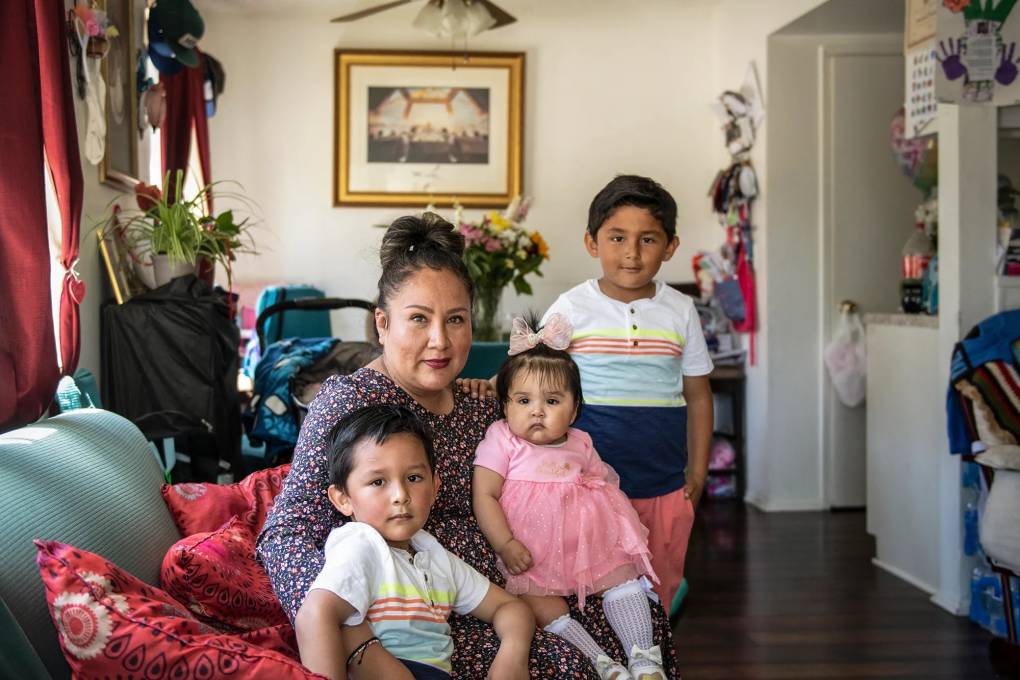
"caption": "Mayra Paniagua and her three children inside their home in Oxnard on May 14, 2022. 'With the stimulus payments, we were able to continue making the car payment and the other household bills,' Paniagua said. 'That helped us a lot.'",
"description": null,
"title": "Inflation CALMATTERS",
"credit": "Pablo Unzueta/CalMatters",
"status": "inherit",
"altTag": null,
"isLoading": false,
"fetchFailed": false
},
"news_11914266": {
"type": "attachments",
"id": "news_11914266",
"meta": {
"index": "attachments_1716263798",
"site": "news",
"id": "11914266",
"found": true
},
"parent": 11914260,
"imgSizes": {
"twentyfourteen-full-width": {
"file": "https://ww2.kqed.org/app/uploads/sites/10/2022/05/GettyImages-1240711776-1024x576.jpg",
"width": 1024,
"mimeType": "image/jpeg",
"height": 576
},
"thumbnail": {
"file": "https://ww2.kqed.org/app/uploads/sites/10/2022/05/GettyImages-1240711776-160x107.jpg",
"width": 160,
"mimeType": "image/jpeg",
"height": 107
},
"post-thumbnail": {
"file": "https://ww2.kqed.org/app/uploads/sites/10/2022/05/GettyImages-1240711776-672x372.jpg",
"width": 672,
"mimeType": "image/jpeg",
"height": 372
},
"kqedFullSize": {
"file": "https://ww2.kqed.org/app/uploads/sites/10/2022/05/GettyImages-1240711776.jpg",
"width": 1024,
"height": 683
},
"large": {
"file": "https://ww2.kqed.org/app/uploads/sites/10/2022/05/GettyImages-1240711776-1020x680.jpg",
"width": 1020,
"mimeType": "image/jpeg",
"height": 680
},
"medium": {
"file": "https://ww2.kqed.org/app/uploads/sites/10/2022/05/GettyImages-1240711776-800x534.jpg",
"width": 800,
"mimeType": "image/jpeg",
"height": 534
}
},
"publishDate": 1652726119,
"modified": 1652731497,
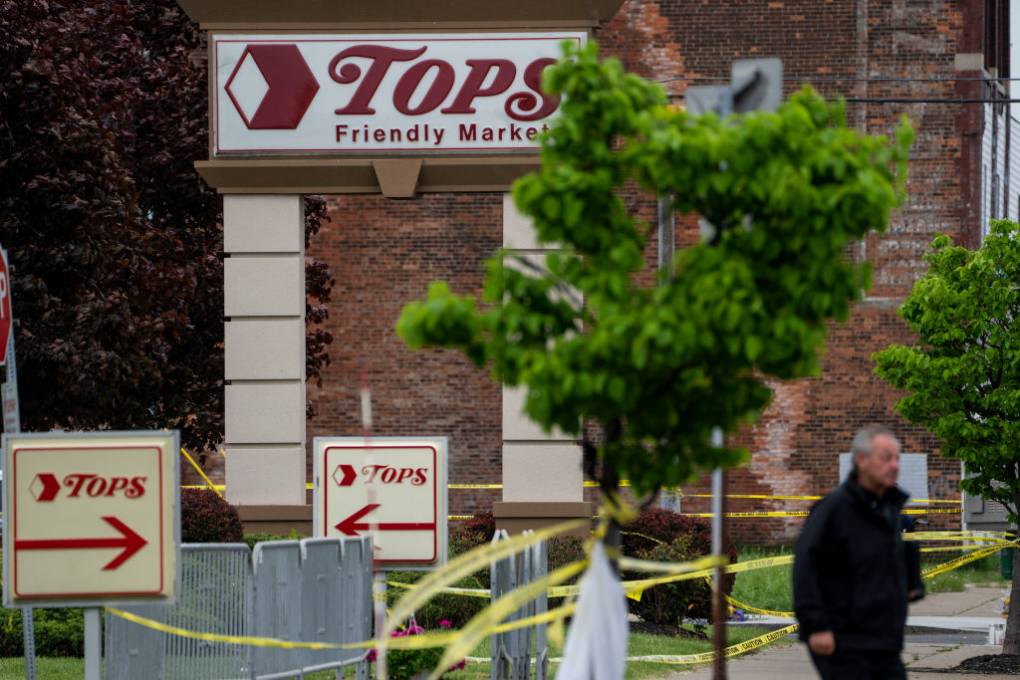
"caption": "BUFFALO, NY - MAY 16: People gather at the scene of a mass shooting at Tops Friendly Market at Jefferson Avenue and Riley Street. The fatal shooting of 10 people at a grocery store in a historically Black neighborhood of Buffalo by a young white gunman is being investigated as a hate crime and an act of racially motivated violent extremism, according to federal officials.",
"description": null,
"title": "Mass Shooting in Buffalo New York Leaves 10 Dead",
"credit": "Kent Nishimura / Los Angeles Times via Getty Images",
"status": "inherit",
"altTag": null,
"isLoading": false,
"fetchFailed": false
},
"news_11914097": {
"type": "attachments",
"id": "news_11914097",
"meta": {
"index": "attachments_1716263798",
"site": "news",
"id": "11914097",
"found": true
},
"parent": 11913965,
"imgSizes": {
"twentyfourteen-full-width": {
"file": "https://ww2.kqed.org/app/uploads/sites/10/2022/05/200809-IIIUP-BBQ-JarrodCopeland-IanRogers-AndSpouses-at-source-FB-post-1-1038x576.jpg",
"width": 1038,
"mimeType": "image/jpeg",
"height": 576
},
"thumbnail": {
"file": "https://ww2.kqed.org/app/uploads/sites/10/2022/05/200809-IIIUP-BBQ-JarrodCopeland-IanRogers-AndSpouses-at-source-FB-post-1-160x124.jpg",
"width": 160,
"mimeType": "image/jpeg",
"height": 124
},
"post-thumbnail": {
"file": "https://ww2.kqed.org/app/uploads/sites/10/2022/05/200809-IIIUP-BBQ-JarrodCopeland-IanRogers-AndSpouses-at-source-FB-post-1-672x372.jpg",
"width": 672,
"mimeType": "image/jpeg",
"height": 372
},
"kqedFullSize": {
"file": "https://ww2.kqed.org/app/uploads/sites/10/2022/05/200809-IIIUP-BBQ-JarrodCopeland-IanRogers-AndSpouses-at-source-FB-post-1.jpg",
"width": 1920,
"height": 1484
},
"large": {
"file": "https://ww2.kqed.org/app/uploads/sites/10/2022/05/200809-IIIUP-BBQ-JarrodCopeland-IanRogers-AndSpouses-at-source-FB-post-1-1020x788.jpg",
"width": 1020,
"mimeType": "image/jpeg",
"height": 788
},
"1536x1536": {
"file": "https://ww2.kqed.org/app/uploads/sites/10/2022/05/200809-IIIUP-BBQ-JarrodCopeland-IanRogers-AndSpouses-at-source-FB-post-1-1536x1187.jpg",
"width": 1536,
"mimeType": "image/jpeg",
"height": 1187
},
"medium": {
"file": "https://ww2.kqed.org/app/uploads/sites/10/2022/05/200809-IIIUP-BBQ-JarrodCopeland-IanRogers-AndSpouses-at-source-FB-post-1-800x618.jpg",
"width": 800,
"mimeType": "image/jpeg",
"height": 618
}
},
"publishDate": 1652476662,
"modified": 1652825585,
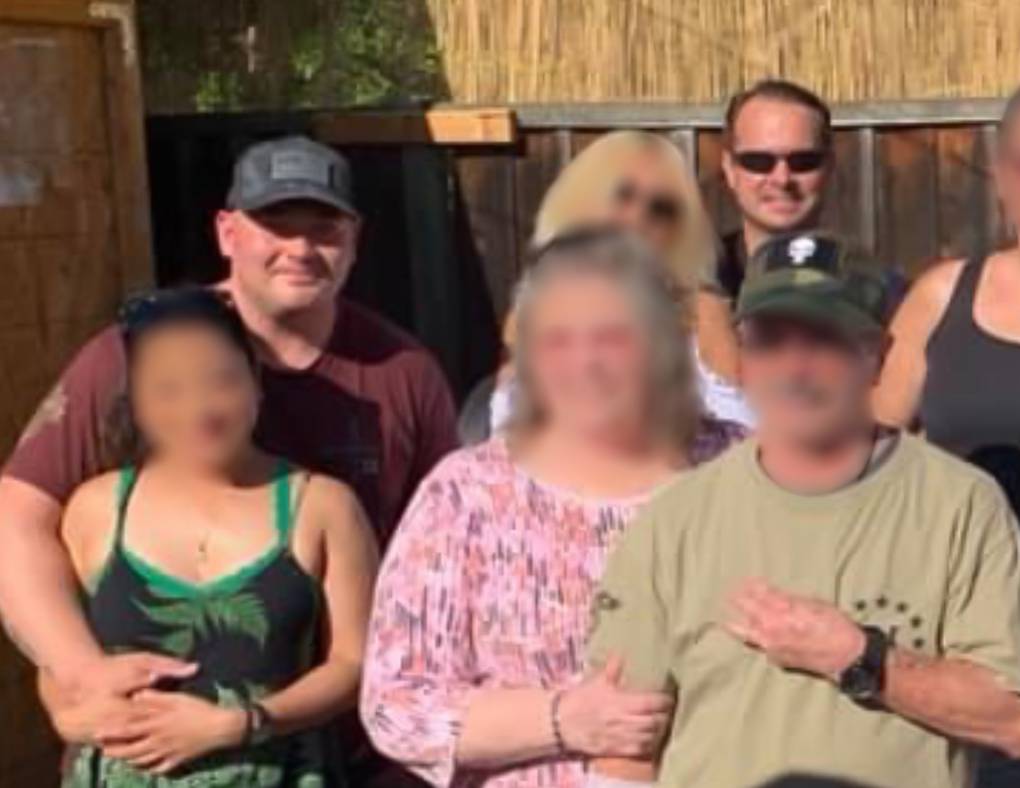
"caption": "A screenshot posted to a now-defunct Facebook group shows Jarrod Copeland (back, left) and Ian Rogers (back, right) at a barbecue that members of 3UP, a 'prepper group,' attended. Copeland and Rogers are in federal custody, accused of plotting a mass casualty event. 3UP claimed to be a social club not affiliated with any militia groups such as the Three Percenters. One attendee (front, right) wears a shirt with the Three Percenters symbol on it (13 stars around a Roman numeral III) and holds up just three fingers of his left hand.",
"description": null,
"title": "_200809 IIIUP BBQ JarrodCopeland, IanRogers AndSpouses at (source FB post) (1)",
"credit": "Facebook",
"status": "inherit",
"altTag": "Missing from the caption description is that only Rogers' and Copeland's faces are not blurred; four additional people, three women and two men, have their faces blurred. Everyone in the picture is smiling, standing indoors under overhead lighting against a wood-paneled wall. Copeland has his arm around the woman standing in front of him, who holds his hand at her waist. Everyone is dressed casually, in T-shirts, tank tops, sunglasses, and baseball caps.",
"isLoading": false,
"fetchFailed": false
},
"news_11914079": {
"type": "attachments",
"id": "news_11914079",
"meta": {
"index": "attachments_1716263798",
"site": "news",
"id": "11914079",
"found": true
},
"parent": 11914073,
"imgSizes": {
"twentyfourteen-full-width": {
"file": "https://ww2.kqed.org/app/uploads/sites/10/2022/05/RS51457_022_SanFrancisco_NewsomRecallEvent_09142021-qut-1038x576.jpg",
"width": 1038,
"mimeType": "image/jpeg",
"height": 576
},
"thumbnail": {
"file": "https://ww2.kqed.org/app/uploads/sites/10/2022/05/RS51457_022_SanFrancisco_NewsomRecallEvent_09142021-qut-160x107.jpg",
"width": 160,
"mimeType": "image/jpeg",
"height": 107
},
"post-thumbnail": {
"file": "https://ww2.kqed.org/app/uploads/sites/10/2022/05/RS51457_022_SanFrancisco_NewsomRecallEvent_09142021-qut-672x372.jpg",
"width": 672,
"mimeType": "image/jpeg",
"height": 372
},
"kqedFullSize": {
"file": "https://ww2.kqed.org/app/uploads/sites/10/2022/05/RS51457_022_SanFrancisco_NewsomRecallEvent_09142021-qut.jpg",
"width": 1920,
"height": 1280
},
"large": {
"file": "https://ww2.kqed.org/app/uploads/sites/10/2022/05/RS51457_022_SanFrancisco_NewsomRecallEvent_09142021-qut-1020x680.jpg",
"width": 1020,
"mimeType": "image/jpeg",
"height": 680
},
"1536x1536": {
"file": "https://ww2.kqed.org/app/uploads/sites/10/2022/05/RS51457_022_SanFrancisco_NewsomRecallEvent_09142021-qut-1536x1024.jpg",
"width": 1536,
"mimeType": "image/jpeg",
"height": 1024
},
"medium": {
"file": "https://ww2.kqed.org/app/uploads/sites/10/2022/05/RS51457_022_SanFrancisco_NewsomRecallEvent_09142021-qut-800x533.jpg",
"width": 800,
"mimeType": "image/jpeg",
"height": 533
}
},
"publishDate": 1652472112,
"modified": 1654653766,
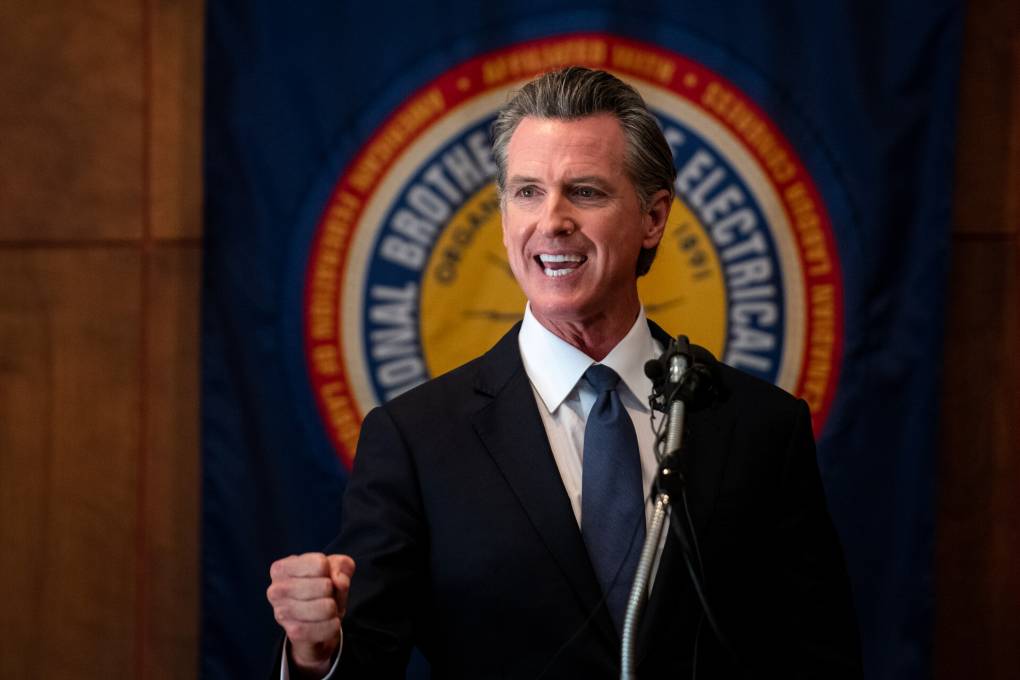
"caption": "Gov. Gavin Newsom, pictured in San Francisco in 2021, unveiled his latest spending proposal for the coming fiscal year on Friday.",
"description": null,
"title": "RS51457_022_SanFrancisco_NewsomRecallEvent_09142021-qut",
"credit": "Beth LaBerge/KQED",
"status": "inherit",
"altTag": "A man in a black business suit and blue tie stands in front of a podium.",
"isLoading": false,
"fetchFailed": false
},
"news_11913561": {
"type": "attachments",
"id": "news_11913561",
"meta": {
"index": "attachments_1716263798",
"site": "news",
"id": "11913561",
"found": true
},
"parent": 11913549,
"imgSizes": {
"twentyfourteen-full-width": {
"file": "https://ww2.kqed.org/app/uploads/sites/10/2022/05/GettyImages-1322085277-1-1038x576.jpg",
"width": 1038,
"mimeType": "image/jpeg",
"height": 576
},
"thumbnail": {
"file": "https://ww2.kqed.org/app/uploads/sites/10/2022/05/GettyImages-1322085277-1-160x107.jpg",
"width": 160,
"mimeType": "image/jpeg",
"height": 107
},
"post-thumbnail": {
"file": "https://ww2.kqed.org/app/uploads/sites/10/2022/05/GettyImages-1322085277-1-672x372.jpg",
"width": 672,
"mimeType": "image/jpeg",
"height": 372
},
"kqedFullSize": {
"file": "https://ww2.kqed.org/app/uploads/sites/10/2022/05/GettyImages-1322085277-1.jpg",
"width": 1920,
"height": 1280
},
"large": {
"file": "https://ww2.kqed.org/app/uploads/sites/10/2022/05/GettyImages-1322085277-1-1020x680.jpg",
"width": 1020,
"mimeType": "image/jpeg",
"height": 680
},
"1536x1536": {
"file": "https://ww2.kqed.org/app/uploads/sites/10/2022/05/GettyImages-1322085277-1-1536x1024.jpg",
"width": 1536,
"mimeType": "image/jpeg",
"height": 1024
},
"medium": {
"file": "https://ww2.kqed.org/app/uploads/sites/10/2022/05/GettyImages-1322085277-1-800x533.jpg",
"width": 800,
"mimeType": "image/jpeg",
"height": 533
}
},
"publishDate": 1652059020,
"modified": 1652124627,
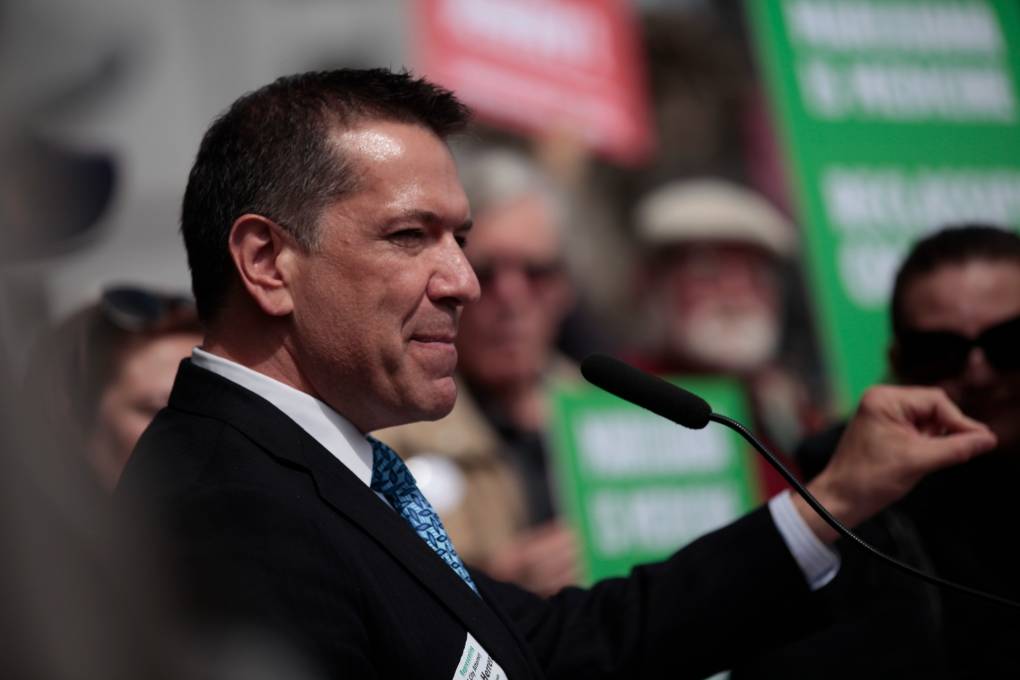
"caption": "Matt Dorsey, then a spokesperson for the San Francisco City Attorney’s Office, speaks during a rally and press conference on the steps of San Francisco City Hall on April 3, 2012.",
"description": null,
"title": "GettyImages-1322085277 (1)",
"credit": "Lea Suzuki/San Francisco Chronicle via Getty Images",
"status": "inherit",
"altTag": "A man stands with protesters behind him carrying signs, which are out of focus. He has close cropped black hair and is in a suit with a patterned blue tie.",
"isLoading": false,
"fetchFailed": false
},
"news_11913760": {
"type": "attachments",
"id": "news_11913760",
"meta": {
"index": "attachments_1716263798",
"site": "news",
"id": "11913760",
"found": true
},
"parent": 11913724,
"imgSizes": {
"twentyfourteen-full-width": {
"file": "https://ww2.kqed.org/app/uploads/sites/10/2022/05/IMG_0168-1038x576.jpg",
"width": 1038,
"mimeType": "image/jpeg",
"height": 576
},
"thumbnail": {
"file": "https://ww2.kqed.org/app/uploads/sites/10/2022/05/IMG_0168-160x120.jpg",
"width": 160,
"mimeType": "image/jpeg",
"height": 120
},
"post-thumbnail": {
"file": "https://ww2.kqed.org/app/uploads/sites/10/2022/05/IMG_0168-672x372.jpg",
"width": 672,
"mimeType": "image/jpeg",
"height": 372
},
"kqedFullSize": {
"file": "https://ww2.kqed.org/app/uploads/sites/10/2022/05/IMG_0168-scaled.jpg",
"width": 2560,
"height": 1920
},
"2048x2048": {
"file": "https://ww2.kqed.org/app/uploads/sites/10/2022/05/IMG_0168-2048x1536.jpg",
"width": 2048,
"mimeType": "image/jpeg",
"height": 1536
},
"large": {
"file": "https://ww2.kqed.org/app/uploads/sites/10/2022/05/IMG_0168-1020x765.jpg",
"width": 1020,
"mimeType": "image/jpeg",
"height": 765
},
"1536x1536": {
"file": "https://ww2.kqed.org/app/uploads/sites/10/2022/05/IMG_0168-1536x1152.jpg",
"width": 1536,
"mimeType": "image/jpeg",
"height": 1152
},
"full-width": {
"file": "https://ww2.kqed.org/app/uploads/sites/10/2022/05/IMG_0168-1920x1440.jpg",
"width": 1920,
"mimeType": "image/jpeg",
"height": 1440
},
"medium": {
"file": "https://ww2.kqed.org/app/uploads/sites/10/2022/05/IMG_0168-800x600.jpg",
"width": 800,
"mimeType": "image/jpeg",
"height": 600
}
},
"publishDate": 1652220923,
"modified": 1652221083,
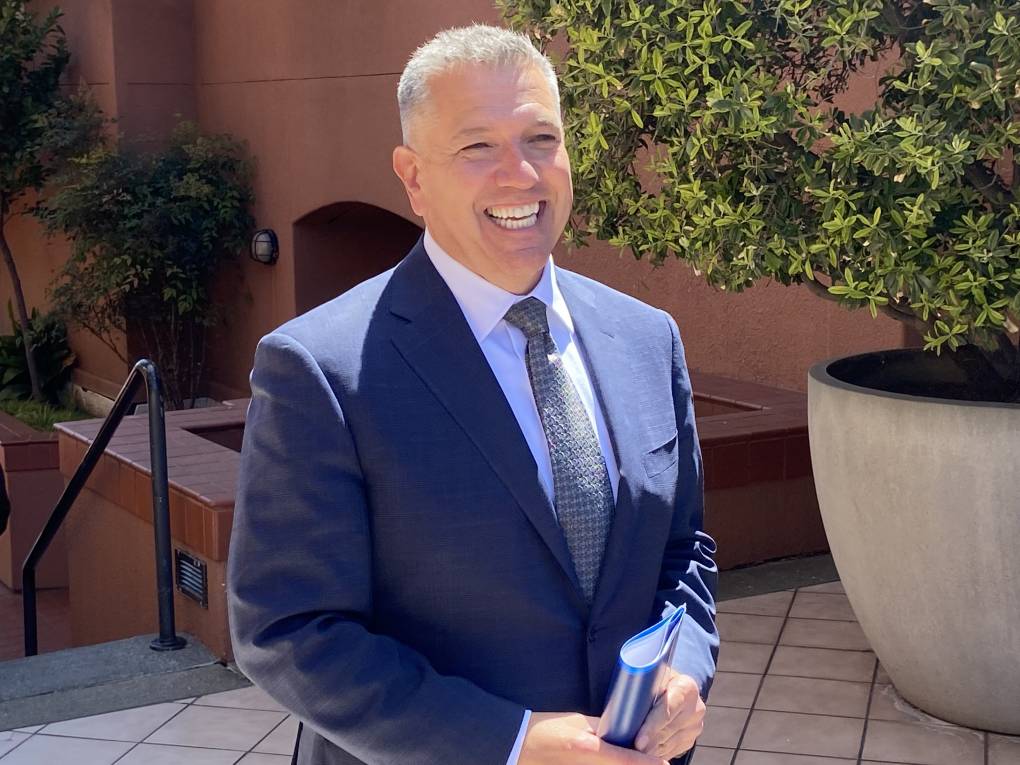
"caption": "Matt Dorsey, San Francisco's new city supervisor, was sworn in at Delancey Street on the Embarcadero on May 9, 2022.",
"description": null,
"title": "IMG_0168",
"credit": "Scott Shafer/KQED",
"status": "inherit",
"altTag": "A man wearing a business suit stands outside a building",
"isLoading": false,
"fetchFailed": false
},
"news_11913651": {
"type": "attachments",
"id": "news_11913651",
"meta": {
"index": "attachments_1716263798",
"site": "news",
"id": "11913651",
"found": true
},
"parent": 11913549,
"imgSizes": {
"twentyfourteen-full-width": {
"file": "https://ww2.kqed.org/app/uploads/sites/10/2022/05/IMG_0218-1038x576.jpg",
"width": 1038,
"mimeType": "image/jpeg",
"height": 576
},
"thumbnail": {
"file": "https://ww2.kqed.org/app/uploads/sites/10/2022/05/IMG_0218-160x99.jpg",
"width": 160,
"mimeType": "image/jpeg",
"height": 99
},
"post-thumbnail": {
"file": "https://ww2.kqed.org/app/uploads/sites/10/2022/05/IMG_0218-672x372.jpg",
"width": 672,
"mimeType": "image/jpeg",
"height": 372
},
"kqedFullSize": {
"file": "https://ww2.kqed.org/app/uploads/sites/10/2022/05/IMG_0218-scaled-e1652134316884.jpg",
"width": 1920,
"height": 1183
},
"2048x2048": {
"file": "https://ww2.kqed.org/app/uploads/sites/10/2022/05/IMG_0218-2048x1262.jpg",
"width": 2048,
"mimeType": "image/jpeg",
"height": 1262
},
"large": {
"file": "https://ww2.kqed.org/app/uploads/sites/10/2022/05/IMG_0218-1020x628.jpg",
"width": 1020,
"mimeType": "image/jpeg",
"height": 628
},
"1536x1536": {
"file": "https://ww2.kqed.org/app/uploads/sites/10/2022/05/IMG_0218-1536x946.jpg",
"width": 1536,
"mimeType": "image/jpeg",
"height": 946
},
"full-width": {
"file": "https://ww2.kqed.org/app/uploads/sites/10/2022/05/IMG_0218-1920x1183.jpg",
"width": 1920,
"mimeType": "image/jpeg",
"height": 1183
},
"medium": {
"file": "https://ww2.kqed.org/app/uploads/sites/10/2022/05/IMG_0218-800x493.jpg",
"width": 800,
"mimeType": "image/jpeg",
"height": 493
}
},
"publishDate": 1652134250,
"modified": 1652136201,
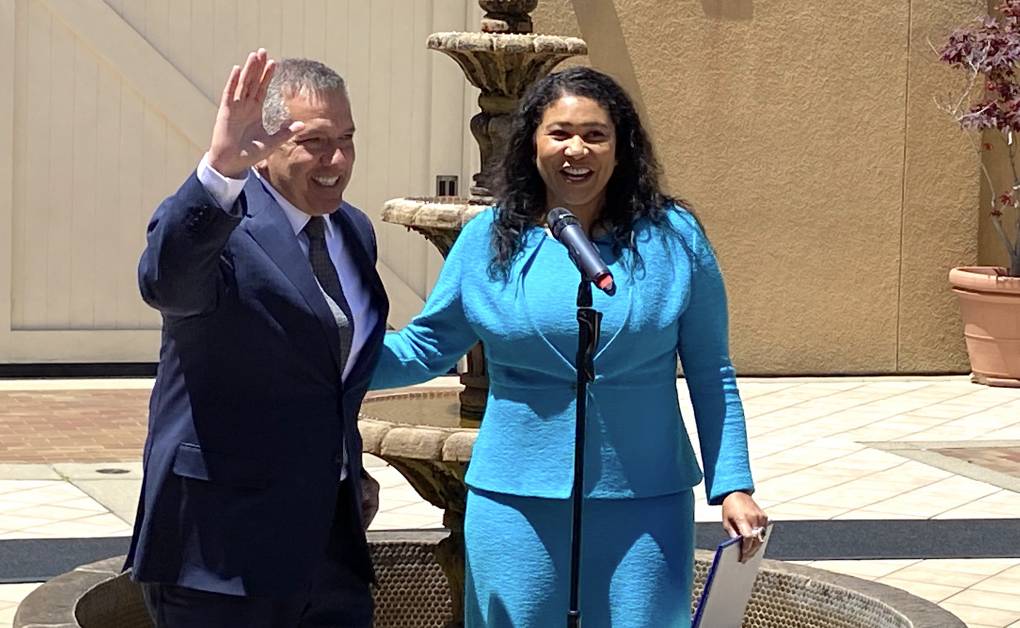
"caption": "San Francisco Mayor London Breed swears in SF Police Department spokesperson Matt Dorsey as District 6 supervisor, during a May 9, 2022 ceremony at Delancey Street Foundation in San Francisco. Breed appointed Dorsey to fill the Board of Supervisors seat recently vacated by Matt Haney. ",
"description": null,
"title": "IMG_0218",
"credit": "Scott Shafer/KQED",
"status": "inherit",
"altTag": "Mayor London Breed, in a blue suit, smiles with her hand on the shoulder of a man.",
"isLoading": false,
"fetchFailed": false
},
"news_11913455": {
"type": "attachments",
"id": "news_11913455",
"meta": {
"index": "attachments_1716263798",
"site": "news",
"id": "11913455",
"found": true
},
"parent": 11913295,
"imgSizes": {
"twentyfourteen-full-width": {
"file": "https://ww2.kqed.org/app/uploads/sites/10/2022/05/RS55729_078_KQED_AbortionRallySF_05032022-qut-1038x576.jpg",
"width": 1038,
"mimeType": "image/jpeg",
"height": 576
},
"thumbnail": {
"file": "https://ww2.kqed.org/app/uploads/sites/10/2022/05/RS55729_078_KQED_AbortionRallySF_05032022-qut-160x107.jpg",
"width": 160,
"mimeType": "image/jpeg",
"height": 107
},
"post-thumbnail": {
"file": "https://ww2.kqed.org/app/uploads/sites/10/2022/05/RS55729_078_KQED_AbortionRallySF_05032022-qut-672x372.jpg",
"width": 672,
"mimeType": "image/jpeg",
"height": 372
},
"kqedFullSize": {
"file": "https://ww2.kqed.org/app/uploads/sites/10/2022/05/RS55729_078_KQED_AbortionRallySF_05032022-qut.jpg",
"width": 1920,
"height": 1280
},
"large": {
"file": "https://ww2.kqed.org/app/uploads/sites/10/2022/05/RS55729_078_KQED_AbortionRallySF_05032022-qut-1020x680.jpg",
"width": 1020,
"mimeType": "image/jpeg",
"height": 680
},
"1536x1536": {
"file": "https://ww2.kqed.org/app/uploads/sites/10/2022/05/RS55729_078_KQED_AbortionRallySF_05032022-qut-1536x1024.jpg",
"width": 1536,
"mimeType": "image/jpeg",
"height": 1024
},
"medium": {
"file": "https://ww2.kqed.org/app/uploads/sites/10/2022/05/RS55729_078_KQED_AbortionRallySF_05032022-qut-800x533.jpg",
"width": 800,
"mimeType": "image/jpeg",
"height": 533
}
},
"publishDate": 1651870680,
"modified": 1651873933,
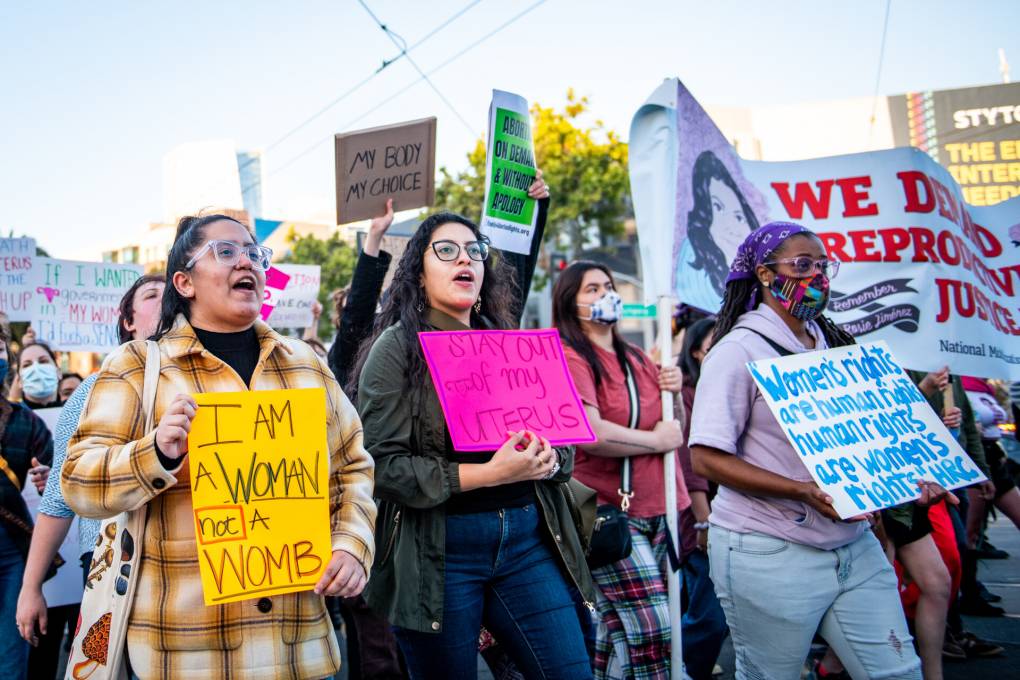
"caption": "Demonstrators march on Market Street in San Francisco on May 3, 2022, during a rally for abortion rights following a leaked draft opinion suggesting the Supreme Court will overturn Roe v. Wade.",
"description": null,
"title": "RS55729_078_KQED_AbortionRallySF_05032022-qut",
"credit": "Beth LaBerge/KQED",
"status": "inherit",
"altTag": "women marchers hold colorful signs reading 'women's rights are human rights' and 'my body my choice'",
"isLoading": false,
"fetchFailed": false
},
"news_11913126": {
"type": "attachments",
"id": "news_11913126",
"meta": {
"index": "attachments_1716263798",
"site": "news",
"id": "11913126",
"found": true
},
"parent": 11913102,
"imgSizes": {
"twentyfourteen-full-width": {
"file": "https://ww2.kqed.org/app/uploads/sites/10/2022/05/Chesa2-1038x576.jpg",
"width": 1038,
"mimeType": "image/jpeg",
"height": 576
},
"thumbnail": {
"file": "https://ww2.kqed.org/app/uploads/sites/10/2022/05/Chesa2-160x106.jpg",
"width": 160,
"mimeType": "image/jpeg",
"height": 106
},
"post-thumbnail": {
"file": "https://ww2.kqed.org/app/uploads/sites/10/2022/05/Chesa2-672x372.jpg",
"width": 672,
"mimeType": "image/jpeg",
"height": 372
},
"kqedFullSize": {
"file": "https://ww2.kqed.org/app/uploads/sites/10/2022/05/Chesa2.jpg",
"width": 1920,
"height": 1277
},
"large": {
"file": "https://ww2.kqed.org/app/uploads/sites/10/2022/05/Chesa2-1020x678.jpg",
"width": 1020,
"mimeType": "image/jpeg",
"height": 678
},
"1536x1536": {
"file": "https://ww2.kqed.org/app/uploads/sites/10/2022/05/Chesa2-1536x1022.jpg",
"width": 1536,
"mimeType": "image/jpeg",
"height": 1022
},
"medium": {
"file": "https://ww2.kqed.org/app/uploads/sites/10/2022/05/Chesa2-800x532.jpg",
"width": 800,
"mimeType": "image/jpeg",
"height": 532
}
},
"publishDate": 1651647218,
"modified": 1651795217,
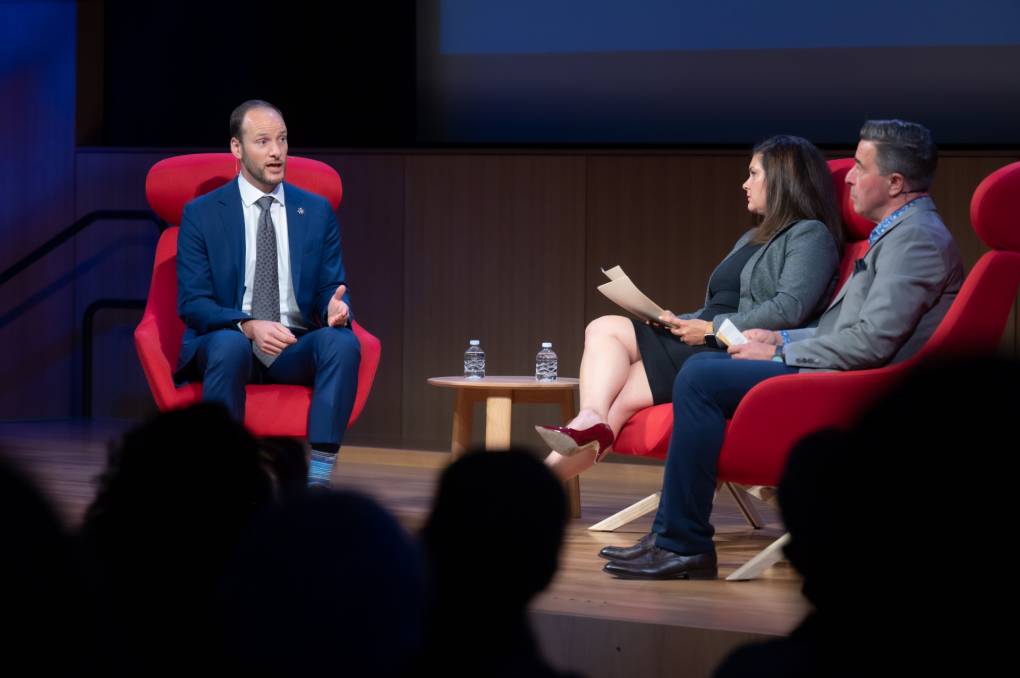
"caption": "San Francisco District Attorney Chesa Boudin at a KQED Live event with Senior Political Editor Scott Shafer and Politics Correspondent Marisa Lagos, on May 3, 2022.",
"description": null,
"title": "Chesa2",
"credit": "Alain McLaughlin/Special to KQED",
"status": "inherit",
"altTag": "Three people sit in swivel chairs on a stage.",
"isLoading": false,
"fetchFailed": false
},
"news_11913277": {
"type": "attachments",
"id": "news_11913277",
"meta": {
"index": "attachments_1716263798",
"site": "news",
"id": "11913277",
"found": true
},
"parent": 11912752,
"imgSizes": {
"twentyfourteen-full-width": {
"file": "https://ww2.kqed.org/app/uploads/sites/10/2022/05/RS41615_008_KQED_Election_CityHallSF_02262020_4220-qut-1038x576.jpg",
"width": 1038,
"mimeType": "image/jpeg",
"height": 576
},
"thumbnail": {
"file": "https://ww2.kqed.org/app/uploads/sites/10/2022/05/RS41615_008_KQED_Election_CityHallSF_02262020_4220-qut-160x107.jpg",
"width": 160,
"mimeType": "image/jpeg",
"height": 107
},
"post-thumbnail": {
"file": "https://ww2.kqed.org/app/uploads/sites/10/2022/05/RS41615_008_KQED_Election_CityHallSF_02262020_4220-qut-672x372.jpg",
"width": 672,
"mimeType": "image/jpeg",
"height": 372
},
"kqedFullSize": {
"file": "https://ww2.kqed.org/app/uploads/sites/10/2022/05/RS41615_008_KQED_Election_CityHallSF_02262020_4220-qut.jpg",
"width": 1920,
"height": 1280
},
"large": {
"file": "https://ww2.kqed.org/app/uploads/sites/10/2022/05/RS41615_008_KQED_Election_CityHallSF_02262020_4220-qut-1020x680.jpg",
"width": 1020,
"mimeType": "image/jpeg",
"height": 680
},
"1536x1536": {
"file": "https://ww2.kqed.org/app/uploads/sites/10/2022/05/RS41615_008_KQED_Election_CityHallSF_02262020_4220-qut-1536x1024.jpg",
"width": 1536,
"mimeType": "image/jpeg",
"height": 1024
},
"medium": {
"file": "https://ww2.kqed.org/app/uploads/sites/10/2022/05/RS41615_008_KQED_Election_CityHallSF_02262020_4220-qut-800x533.jpg",
"width": 800,
"mimeType": "image/jpeg",
"height": 533
}
},
"publishDate": 1651767961,
"modified": 1651813418,
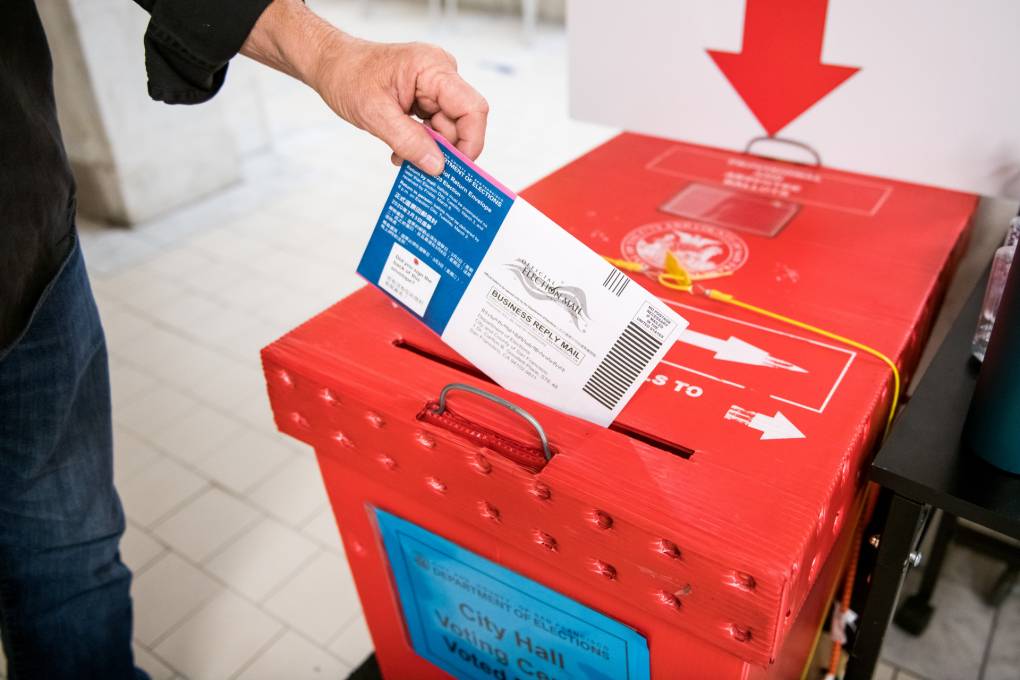
"caption": "A vote-by-mail ballot goes into the ballot box.",
"description": null,
"title": "RS41615_008_KQED_Election_CityHallSF_02262020_4220-qut",
"credit": "Beth LaBerge/KQED",
"status": "inherit",
"altTag": "A hand places a vote-by-mail ballot into a bright red ballot box.",
"isLoading": false,
"fetchFailed": false
},
"news_11913227": {
"type": "attachments",
"id": "news_11913227",
"meta": {
"index": "attachments_1716263798",
"site": "news",
"id": "11913227",
"found": true
},
"parent": 11913160,
"imgSizes": {
"twentyfourteen-full-width": {
"file": "https://ww2.kqed.org/app/uploads/sites/10/2022/05/GettyImages-1238478977-1024x576.jpg",
"width": 1024,
"mimeType": "image/jpeg",
"height": 576
},
"thumbnail": {
"file": "https://ww2.kqed.org/app/uploads/sites/10/2022/05/GettyImages-1238478977-160x110.jpg",
"width": 160,
"mimeType": "image/jpeg",
"height": 110
},
"post-thumbnail": {
"file": "https://ww2.kqed.org/app/uploads/sites/10/2022/05/GettyImages-1238478977-672x372.jpg",
"width": 672,
"mimeType": "image/jpeg",
"height": 372
},
"kqedFullSize": {
"file": "https://ww2.kqed.org/app/uploads/sites/10/2022/05/GettyImages-1238478977.jpg",
"width": 1024,
"height": 707
},
"large": {
"file": "https://ww2.kqed.org/app/uploads/sites/10/2022/05/GettyImages-1238478977-1020x704.jpg",
"width": 1020,
"mimeType": "image/jpeg",
"height": 704
},
"medium": {
"file": "https://ww2.kqed.org/app/uploads/sites/10/2022/05/GettyImages-1238478977-800x552.jpg",
"width": 800,
"mimeType": "image/jpeg",
"height": 552
}
},
"publishDate": 1651701571,
"modified": 1651701633,
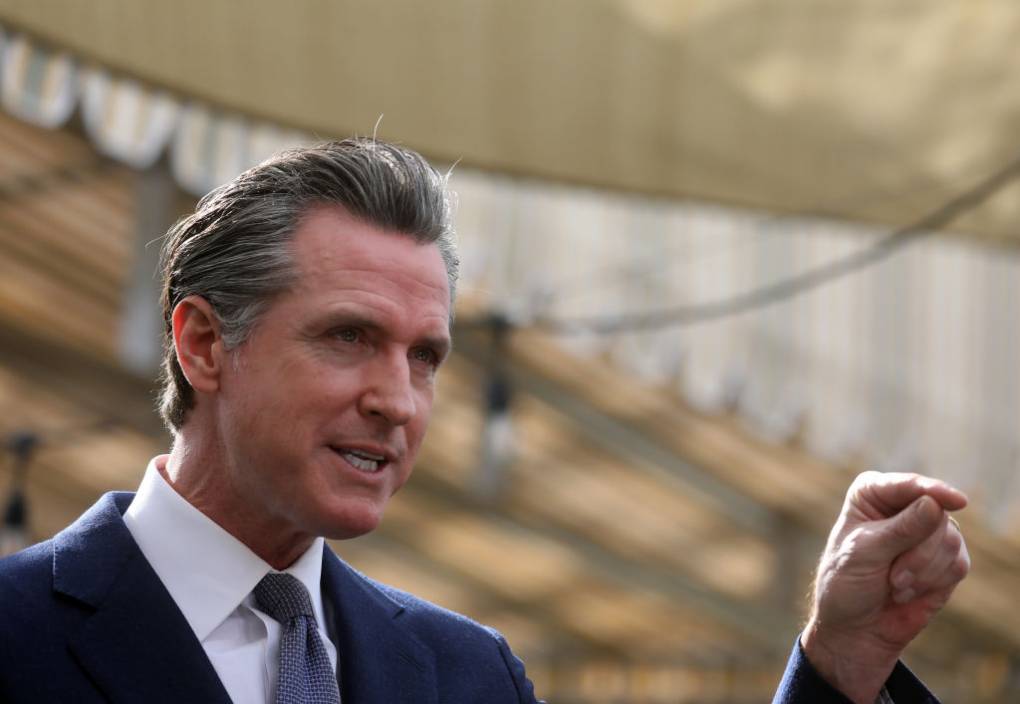
"caption": "Gov. Gavin Newsom speaks at a press conference on Feb. 9, 2022, in Oakland.",
"description": null,
"title": "Governor Gavin Newsom",
"credit": "Aric Crabb/MediaNews Group/East Bay Times via Getty Images",
"status": "inherit",
"altTag": "Gov. Gavin Newsom pointing his finger.",
"isLoading": false,
"fetchFailed": false
},
"news_11913112": {
"type": "attachments",
"id": "news_11913112",
"meta": {
"index": "attachments_1716263798",
"site": "news",
"id": "11913112",
"found": true
},
"parent": 11913103,
"imgSizes": {
"twentyfourteen-full-width": {
"file": "https://ww2.kqed.org/app/uploads/sites/10/2022/05/Image-from-iOS-3-1038x576.jpg",
"width": 1038,
"mimeType": "image/jpeg",
"height": 576
},
"thumbnail": {
"file": "https://ww2.kqed.org/app/uploads/sites/10/2022/05/Image-from-iOS-3-160x107.jpg",
"width": 160,
"mimeType": "image/jpeg",
"height": 107
},
"post-thumbnail": {
"file": "https://ww2.kqed.org/app/uploads/sites/10/2022/05/Image-from-iOS-3-672x372.jpg",
"width": 672,
"mimeType": "image/jpeg",
"height": 372
},
"kqedFullSize": {
"file": "https://ww2.kqed.org/app/uploads/sites/10/2022/05/Image-from-iOS-3.jpg",
"width": 1429,
"height": 953
},
"large": {
"file": "https://ww2.kqed.org/app/uploads/sites/10/2022/05/Image-from-iOS-3-1020x680.jpg",
"width": 1020,
"mimeType": "image/jpeg",
"height": 680
},
"medium": {
"file": "https://ww2.kqed.org/app/uploads/sites/10/2022/05/Image-from-iOS-3-800x534.jpg",
"width": 800,
"mimeType": "image/jpeg",
"height": 534
}
},
"publishDate": 1651632223,
"modified": 1651774063,
"caption": "Anyssa Jeske (left, foreground) and Taelor Seaton cheer along with a speaker during a rally outside the Phillip Burton Federal Building in San Francisco on May 3, 2022, in support of abortion rights.",
"description": null,
"title": "Image from iOS (3)",
"credit": "Beth LaBerge/KQED",
"status": "inherit",
"altTag": "A large group of people hold multicolored signs at a protest.",
"isLoading": false,
"fetchFailed": false
}
},
"audioPlayerReducer": {
"postId": "stream_live",
"isPaused": true,
"isPlaying": false,
"pfsActive": false,
"pledgeModalIsOpen": true,
"playerDrawerIsOpen": false,
"liveAudioPlayStartedAt": 0,
"liveAudioPlayContext": ""
},
"authorsReducer": {
"byline_news_11914291": {
"type": "authors",
"id": "byline_news_11914291",
"meta": {
"override": true
},
"slug": "byline_news_11914291",
"name": "\u003ca>Alejandro Lazo\u003c/a>",
"isLoading": false
},
"byline_news_11914260": {
"type": "authors",
"id": "byline_news_11914260",
"meta": {
"override": true
},
"slug": "byline_news_11914260",
"name": "Dustin Jones",
"isLoading": false
},
"byline_news_11913160": {
"type": "authors",
"id": "byline_news_11913160",
"meta": {
"override": true
},
"slug": "byline_news_11913160",
"name": "Michael R. Blood\u003cbr>Associated Press",
"isLoading": false
},
"gmarzorati": {
"type": "authors",
"id": "227",
"meta": {
"index": "authors_1716337520",
"id": "227",
"found": true
},
"name": "Guy Marzorati",
"firstName": "Guy",
"lastName": "Marzorati",
"slug": "gmarzorati",
"email": "gmarzorati@KQED.org",
"display_author_email": true,
"staff_mastheads": [
"news"
],
"title": "Correspondent",
"bio": "Guy Marzorati is a correspondent on KQED's California Politics and Government Desk, based in San Jose. A graduate of Santa Clara University, Guy joined KQED in 2013. He reports on state and local politics and produces KQED's digital voter guide.",
"avatar": "https://secure.gravatar.com/avatar/e7038b8dbfd55b104369b76b1cd0b9de?s=600&d=blank&r=g",
"twitter": "guymarzorati",
"facebook": null,
"instagram": null,
"linkedin": null,
"sites": [
{
"site": "",
"roles": [
"editor"
]
},
{
"site": "news",
"roles": [
"editor"
]
},
{
"site": "science",
"roles": [
"editor"
]
},
{
"site": "forum",
"roles": [
"editor"
]
},
{
"site": "elections",
"roles": [
"editor"
]
},
{
"site": "liveblog",
"roles": [
"editor"
]
}
],
"headData": {
"title": "Guy Marzorati | KQED",
"description": "Correspondent",
"ogImgSrc": "https://secure.gravatar.com/avatar/e7038b8dbfd55b104369b76b1cd0b9de?s=600&d=blank&r=g",
"twImgSrc": "https://secure.gravatar.com/avatar/e7038b8dbfd55b104369b76b1cd0b9de?s=600&d=blank&r=g"
},
"isLoading": false,
"link": "/author/gmarzorati"
},
"kqed": {
"type": "authors",
"id": "236",
"meta": {
"index": "authors_1716337520",
"id": "236",
"found": true
},
"name": "KQED News Staff",
"firstName": "KQED News Staff",
"lastName": null,
"slug": "kqed",
"email": "faq@kqed.org",
"display_author_email": false,
"staff_mastheads": [],
"title": null,
"bio": null,
"avatar": "https://secure.gravatar.com/avatar/ef0e801a68c4c54afa9180db14084167?s=600&d=blank&r=g",
"twitter": null,
"facebook": null,
"instagram": null,
"linkedin": null,
"sites": [
{
"site": "arts",
"roles": [
"contributor"
]
},
{
"site": "news",
"roles": [
"editor"
]
},
{
"site": "futureofyou",
"roles": [
"author"
]
}
],
"headData": {
"title": "KQED News Staff | KQED",
"description": null,
"ogImgSrc": "https://secure.gravatar.com/avatar/ef0e801a68c4c54afa9180db14084167?s=600&d=blank&r=g",
"twImgSrc": "https://secure.gravatar.com/avatar/ef0e801a68c4c54afa9180db14084167?s=600&d=blank&r=g"
},
"isLoading": false,
"link": "/author/kqed"
},
"scottshafer": {
"type": "authors",
"id": "255",
"meta": {
"index": "authors_1716337520",
"id": "255",
"found": true
},
"name": "Scott Shafer",
"firstName": "Scott",
"lastName": "Shafer",
"slug": "scottshafer",
"email": "sshafer@kqed.org",
"display_author_email": false,
"staff_mastheads": [
"news"
],
"title": "KQED Contributor",
"bio": "Scott Shafer is a senior editor with the KQED Politics and Government desk. He is co-host of Political Breakdown, the award-winning radio show and podcast with a personal take on the world of politics. Scott came to KQED in 1998 to host the statewide\u003cem> California Report\u003c/em>. Prior to that he had extended stints in politics and government\u003cem>.\u003c/em> He uses that inside experience at KQED in his, reporting, hosting and analysis for the politics desk. Scott collaborated \u003cem>Political Breakdown a\u003c/em>nd on \u003cem>The Political Mind of Jerry Brown, \u003c/em>an eight-part series about the life and extraordinary political career of the former governor. For fun, he plays water polo with the San Francisco Tsunami.",
"avatar": "https://secure.gravatar.com/avatar/a62ebae45b79d7aed1a39a0e3bf68104?s=600&d=blank&r=g",
"twitter": "scottshafer",
"bluesky": null,
"facebook": null,
"instagram": null,
"linkedin": null,
"sites": [
{
"site": "news",
"roles": [
"editor"
]
},
{
"site": "stateofhealth",
"roles": [
"author"
]
},
{
"site": "science",
"roles": [
"author"
]
},
{
"site": "forum",
"roles": [
"subscriber"
]
},
{
"site": "liveblog",
"roles": [
"author"
]
}
],
"headData": {
"title": "Scott Shafer | KQED",
"description": "KQED Contributor",
"ogImgSrc": "https://secure.gravatar.com/avatar/a62ebae45b79d7aed1a39a0e3bf68104?s=600&d=blank&r=g",
"twImgSrc": "https://secure.gravatar.com/avatar/a62ebae45b79d7aed1a39a0e3bf68104?s=600&d=blank&r=g"
},
"isLoading": false,
"link": "/author/scottshafer"
},
"mlagos": {
"type": "authors",
"id": "3239",
"meta": {
"index": "authors_1716337520",
"id": "3239",
"found": true
},
"name": "Marisa Lagos",
"firstName": "Marisa",
"lastName": "Lagos",
"slug": "mlagos",
"email": "mlagos@kqed.org",
"display_author_email": false,
"staff_mastheads": [
"news"
],
"title": "KQED Contributor",
"bio": "Marisa Lagos is a correspondent for KQED’s California Politics and Government Desk and co-hosts the award-winning show and podcast, Political Breakdown. At KQED, Lagos also conducts reporting, analysis and investigations into state, local and national politics for radio, TV, online and onstage. In 2022, she and co-host, Scott Shafer, moderated the only gubernatorial debate in California. In 2020, the \u003ci>Washington Post\u003c/i> named her one of the top political journalists in California; she was nominated for a Peabody and won several other awards for her work investigating the 2017 California wildfires. She has worked at the \u003ci>San Francisco Chronicle\u003c/i>, \u003ci>San Francisco Examiner\u003c/i> and \u003ci>Los Angeles Times\u003c/i>. A UC Santa Barbara graduate, she lives in San Francisco with her two sons and husband.",
"avatar": "https://secure.gravatar.com/avatar/a261a0d3696fc066871ef96b85b5e7d2?s=600&d=blank&r=g",
"twitter": "@mlagos",
"facebook": null,
"instagram": null,
"linkedin": null,
"sites": [
{
"site": "arts",
"roles": [
"author"
]
},
{
"site": "news",
"roles": [
"editor"
]
},
{
"site": "science",
"roles": [
"editor"
]
},
{
"site": "forum",
"roles": [
"author"
]
},
{
"site": "liveblog",
"roles": [
"author"
]
}
],
"headData": {
"title": "Marisa Lagos | KQED",
"description": "KQED Contributor",
"ogImgSrc": "https://secure.gravatar.com/avatar/a261a0d3696fc066871ef96b85b5e7d2?s=600&d=blank&r=g",
"twImgSrc": "https://secure.gravatar.com/avatar/a261a0d3696fc066871ef96b85b5e7d2?s=600&d=blank&r=g"
},
"isLoading": false,
"link": "/author/mlagos"
},
"carlysevern": {
"type": "authors",
"id": "3243",
"meta": {
"index": "authors_1716337520",
"id": "3243",
"found": true
},
"name": "Carly Severn",
"firstName": "Carly",
"lastName": "Severn",
"slug": "carlysevern",
"email": "csevern@kqed.org",
"display_author_email": false,
"staff_mastheads": [
"news"
],
"title": "Senior Editor, Audience News ",
"bio": "Carly is KQED's Senior Editor of Audience News on the Digital News team, and has reported for the California Report Magazine, Bay Curious and KQED Arts. She's formerly the host of \u003ca href=\"http://ww2.kqed.org/pop/category/the-cooler/\" rel=\"noopener noreferrer\">The Cooler\u003c/a> podcast.",
"avatar": "https://secure.gravatar.com/avatar/2d8d6765f186e64c798cf7f0c8088a41?s=600&d=blank&r=g",
"twitter": "teacupinthebay",
"facebook": null,
"instagram": null,
"linkedin": null,
"sites": [
{
"site": "",
"roles": [
"editor"
]
},
{
"site": "arts",
"roles": [
"editor"
]
},
{
"site": "news",
"roles": [
"administrator"
]
},
{
"site": "pop",
"roles": [
"editor"
]
},
{
"site": "futureofyou",
"roles": [
"editor"
]
},
{
"site": "about",
"roles": [
"administrator"
]
},
{
"site": "mindshift",
"roles": [
"editor"
]
},
{
"site": "bayareabites",
"roles": [
"editor"
]
},
{
"site": "stateofhealth",
"roles": [
"editor"
]
},
{
"site": "science",
"roles": [
"editor"
]
},
{
"site": "food",
"roles": [
"contributor"
]
},
{
"site": "forum",
"roles": [
"editor"
]
},
{
"site": "perspectives",
"roles": [
"administrator"
]
},
{
"site": "liveblog",
"roles": [
"editor"
]
}
],
"headData": {
"title": "Carly Severn | KQED",
"description": "Senior Editor, Audience News ",
"ogImgSrc": "https://secure.gravatar.com/avatar/2d8d6765f186e64c798cf7f0c8088a41?s=600&d=blank&r=g",
"twImgSrc": "https://secure.gravatar.com/avatar/2d8d6765f186e64c798cf7f0c8088a41?s=600&d=blank&r=g"
},
"isLoading": false,
"link": "/author/carlysevern"
},
"jsmall": {
"type": "authors",
"id": "6625",
"meta": {
"index": "authors_1716337520",
"id": "6625",
"found": true
},
"name": "Julie Small",
"firstName": "Julie",
"lastName": "Small",
"slug": "jsmall",
"email": "jsmall@kqed.org",
"display_author_email": true,
"staff_mastheads": [
"news"
],
"title": "KQED Contributor",
"bio": "Julie Small reports on criminal justice and immigration.\r\n\r\nShe was part of a team at KQED awarded a regional 2019 Edward R. Murrow award for continuing coverage of the Trump Administration's family separation policy.\r\n\r\nThe Society for Professional Journalists recognized Julie's 2018 \u003ca href=\"https://www.kqed.org/news/11636262/the-officer-tased-him-31-times-the-sheriff-called-his-death-an-accident\">reporting\u003c/a> on the San Joaquin County Sheriff's \u003ca href=\"https://www.kqed.org/news/11634689/autopsy-doctors-sheriff-overrode-death-findings-to-protect-law-enforcement\">interference\u003c/a> in death investigations with an Excellence in Journalism Award for Ongoing Coverage.\r\n\r\nJulie's\u003ca href=\"https://www.kqed.org/news/11039666/two-mentally-ill-inmates-died-one-month-in-santa-clara\"> reporting\u003c/a> with Lisa Pickoff-White on the treatment of mentally ill offenders in California jails earned a 2017 regional Edward R. Murrow Award for news reporting and an investigative reporting award from the SPJ of Northern California.\r\n\r\nBefore joining KQED, Julie covered government and politics in Sacramento for Southern California Public Radio (SCPR). Her 2010 \u003ca href=\"https://www.scpr.org/specials/prisonmedical/\">series\u003c/a> on lapses in California’s prison medical care also won a regional Edward R. Murrow Award for investigative reporting and a Golden Mic Award from the RTNDA of Southern California.\r\n\r\nJulie began her career in journalism in 2000 as the deputy foreign editor for public radio's \u003cem>Marketplace, \u003c/em>while earning her master's degree in journalism from USC’s Annenberg School of Communication.",
"avatar": "https://secure.gravatar.com/avatar/4baedf201468df97be97c2a9dd7585d0?s=600&d=blank&r=g",
"twitter": "@SmallRadio2",
"facebook": null,
"instagram": null,
"linkedin": null,
"sites": [
{
"site": "news",
"roles": [
"editor"
]
},
{
"site": "stateofhealth",
"roles": [
"author"
]
},
{
"site": "science",
"roles": [
"author"
]
}
],
"headData": {
"title": "Julie Small | KQED",
"description": "KQED Contributor",
"ogImgSrc": "https://secure.gravatar.com/avatar/4baedf201468df97be97c2a9dd7585d0?s=600&d=blank&r=g",
"twImgSrc": "https://secure.gravatar.com/avatar/4baedf201468df97be97c2a9dd7585d0?s=600&d=blank&r=g"
},
"isLoading": false,
"link": "/author/jsmall"
},
"ecruzguevarra": {
"type": "authors",
"id": "8654",
"meta": {
"index": "authors_1716337520",
"id": "8654",
"found": true
},
"name": "Ericka Cruz Guevarra",
"firstName": "Ericka",
"lastName": "Cruz Guevarra",
"slug": "ecruzguevarra",
"email": "ecruzguevarra@kqed.org",
"display_author_email": true,
"staff_mastheads": [
"news"
],
"title": "Producer, The Bay Podcast",
"bio": "Ericka Cruz Guevarra is host of \u003ca href=\"https://www.kqed.org/podcasts/thebay\">\u003cem>The Bay\u003c/em>\u003c/a> podcast at KQED. Before host, she was the show’s producer. Her work in that capacity includes a three-part reported series on policing in Vallejo, which won a 2020 excellence in journalism award from the Society of Professional Journalists. Ericka has worked as a breaking news reporter at Oregon Public Broadcasting, helped produce the Code Switch podcast, and was KQED’s inaugural Raul Ramirez Diversity Fund intern. She’s also an alumna of NPR’s Next Generation Radio program. Send her an email if you have strong feelings about whether Fairfield and Suisun City are the Bay. Ericka is represented by SAG-AFTRA.",
"avatar": "https://secure.gravatar.com/avatar/accefc1de4bafc7e234b69bcb9b6f6536c130fd84709bc3069ef11a78787e1bb?s=600&d=blank&r=g",
"twitter": "NotoriousECG",
"bluesky": null,
"facebook": null,
"instagram": null,
"linkedin": null,
"sites": [
{
"site": "arts",
"roles": [
"subscriber"
]
},
{
"site": "news",
"roles": [
"editor",
"manage_categories"
]
},
{
"site": "futureofyou",
"roles": [
"subscriber"
]
},
{
"site": "stateofhealth",
"roles": [
"subscriber"
]
},
{
"site": "science",
"roles": [
"editor"
]
},
{
"site": "forum",
"roles": [
"subscriber"
]
}
],
"headData": {
"title": "Ericka Cruz Guevarra | KQED",
"description": "Producer, The Bay Podcast",
"ogImgSrc": "https://secure.gravatar.com/avatar/accefc1de4bafc7e234b69bcb9b6f6536c130fd84709bc3069ef11a78787e1bb?s=600&d=blank&r=g",
"twImgSrc": "https://secure.gravatar.com/avatar/accefc1de4bafc7e234b69bcb9b6f6536c130fd84709bc3069ef11a78787e1bb?s=600&d=blank&r=g"
},
"isLoading": false,
"link": "/author/ecruzguevarra"
},
"ahall": {
"type": "authors",
"id": "11490",
"meta": {
"index": "authors_1716337520",
"id": "11490",
"found": true
},
"name": "Alex Hall",
"firstName": "Alex",
"lastName": "Hall",
"slug": "ahall",
"email": "ahall@kqed.org",
"display_author_email": false,
"staff_mastheads": [
"news"
],
"title": "KQED Enterprise & Accountability Reporter",
"bio": "Alex Hall is KQED's Enterprise and Accountability Reporter. She previously covered the Central Valley for five years from KQED's bureau in Fresno. Before joining KQED, Alex was an investigative reporting fellow at Wisconsin Public Radio and the Wisconsin Center for Investigative Journalism. She has also worked as a bilingual producer for NPR's investigative unit and freelance video producer for Reuters TV on the Latin America desk. She got her start in journalism in South America, where she worked as a radio producer and Spanish-English translator for CNN Chile. Her documentary and investigation into the series of deadly COVID-19 outbreaks at Foster Farms won a national Edward R. Murrow award and was named an Investigative Reporters & Editors award finalist. Alex's reporting for Reveal on the Wisconsin dairy industry's reliance on undocumented immigrant labor was made into a film, Los Lecheros, which won a regional Edward R. Murrow award for best news documentary.",
"avatar": "https://secure.gravatar.com/avatar/defcbeb88b0bf591ff9af41f22644051?s=600&d=blank&r=g",
"twitter": "@chalexhall",
"facebook": null,
"instagram": null,
"linkedin": null,
"sites": [
{
"site": "news",
"roles": [
"editor"
]
},
{
"site": "liveblog",
"roles": [
"author"
]
}
],
"headData": {
"title": "Alex Hall | KQED",
"description": "KQED Enterprise & Accountability Reporter",
"ogImgSrc": "https://secure.gravatar.com/avatar/defcbeb88b0bf591ff9af41f22644051?s=600&d=blank&r=g",
"twImgSrc": "https://secure.gravatar.com/avatar/defcbeb88b0bf591ff9af41f22644051?s=600&d=blank&r=g"
},
"isLoading": false,
"link": "/author/ahall"
},
"amontecillo": {
"type": "authors",
"id": "11649",
"meta": {
"index": "authors_1716337520",
"id": "11649",
"found": true
},
"name": "Alan Montecillo",
"firstName": "Alan",
"lastName": "Montecillo",
"slug": "amontecillo",
"email": "amontecillo@kqed.org",
"display_author_email": false,
"staff_mastheads": [
"news"
],
"title": "KQED Contributor",
"bio": "Alan Montecillo is the senior editor of \u003cem>\u003ca href=\"http://kqed.org/thebay\">The Bay\u003c/a>, \u003c/em> KQED's local news podcast. Before moving to the Bay Area, he worked as a senior talk show producer for WILL in Champaign-Urbana, Illinois and at Oregon Public Broadcasting in Portland, Oregon. He has won journalism awards from the Society of Professional Journalists Northern California, the Public Media Journalists Association, The Signal Awards, and has also received a regional Edward R. Murrow award. Alan is a Filipino American from Hong Kong and a graduate of Reed College.",
"avatar": "https://secure.gravatar.com/avatar/268f53a2066899ea9efdd8a5900218b17c822d9862cbc9326cccec53ef41d349?s=600&d=blank&r=g",
"twitter": "alanmontecillo",
"bluesky": null,
"facebook": null,
"instagram": null,
"linkedin": null,
"sites": [
{
"site": "",
"roles": [
"editor"
]
},
{
"site": "news",
"roles": [
"editor",
"manage_categories"
]
}
],
"headData": {
"title": "Alan Montecillo | KQED",
"description": "KQED Contributor",
"ogImgSrc": "https://secure.gravatar.com/avatar/268f53a2066899ea9efdd8a5900218b17c822d9862cbc9326cccec53ef41d349?s=600&d=blank&r=g",
"twImgSrc": "https://secure.gravatar.com/avatar/268f53a2066899ea9efdd8a5900218b17c822d9862cbc9326cccec53ef41d349?s=600&d=blank&r=g"
},
"isLoading": false,
"link": "/author/amontecillo"
},
"jrodriguez": {
"type": "authors",
"id": "11690",
"meta": {
"index": "authors_1716337520",
"id": "11690",
"found": true
},
"name": "Joe Fitzgerald Rodriguez",
"firstName": "Joe",
"lastName": "Fitzgerald Rodriguez",
"slug": "jrodriguez",
"email": "jrodriguez@kqed.org",
"display_author_email": true,
"staff_mastheads": [
"news"
],
"title": "Reporter and Producer",
"bio": "Joe Fitzgerald Rodriguez is a reporter and digital producer for KQED covering politics. Joe most recently wrote for the \u003cem>San Francisco Examiner\u003c/em> as a political columnist covering The City. He was raised in San Francisco and has spent his reporting career in his beloved, foggy, city by the bay. Joe was 12-years-old when he conducted his first interview in journalism, grilling former San Francisco Mayor Willie Brown for the Marina Middle School newspaper, \u003cem>The Penguin Press, \u003c/em>and he continues to report on the San Francisco Bay Area to this day.",
"avatar": "https://secure.gravatar.com/avatar/2247beb0564c1e9c62228d5649d2edac?s=600&d=blank&r=g",
"twitter": "FitztheReporter",
"facebook": null,
"instagram": "https://www.instagram.com/fitzthereporter/",
"linkedin": null,
"sites": [
{
"site": "",
"roles": [
"editor"
]
},
{
"site": "arts",
"roles": [
"editor"
]
},
{
"site": "news",
"roles": [
"editor"
]
},
{
"site": "science",
"roles": [
"editor"
]
},
{
"site": "elections",
"roles": [
"editor"
]
},
{
"site": "liveblog",
"roles": [
"editor"
]
}
],
"headData": {
"title": "Joe Fitzgerald Rodriguez | KQED",
"description": "Reporter and Producer",
"ogImgSrc": "https://secure.gravatar.com/avatar/2247beb0564c1e9c62228d5649d2edac?s=600&d=blank&r=g",
"twImgSrc": "https://secure.gravatar.com/avatar/2247beb0564c1e9c62228d5649d2edac?s=600&d=blank&r=g"
},
"isLoading": false,
"link": "/author/jrodriguez"
},
"ccabreralomeli": {
"type": "authors",
"id": "11708",
"meta": {
"index": "authors_1716337520",
"id": "11708",
"found": true
},
"name": "Carlos Cabrera-Lomelí",
"firstName": "Carlos",
"lastName": "Cabrera-Lomelí",
"slug": "ccabreralomeli",
"email": "ccabreralomeli@KQED.org",
"display_author_email": true,
"staff_mastheads": [
"news"
],
"title": "Community Reporter",
"bio": "Carlos Cabrera-Lomelí is a community reporter with KQED's digital engagement team. He also reports and co-produces for KQED's bilingual news hub KQED en Español. He grew up in San Francisco's Mission District and has previously worked with Univision, 48 Hills and REFORMA in Mexico City.",
"avatar": "https://secure.gravatar.com/avatar/c309be9665e484f887b818c89e273ecc673004f426f36b24d00a4d813a2e0518?s=600&d=blank&r=g",
"twitter": "@LomeliCabrera",
"bluesky": null,
"facebook": null,
"instagram": null,
"linkedin": null,
"sites": [
{
"site": "arts",
"roles": [
"editor"
]
},
{
"site": "news",
"roles": [
"editor"
]
},
{
"site": "about",
"roles": [
"editor"
]
},
{
"site": "science",
"roles": [
"editor"
]
},
{
"site": "perspectives",
"roles": [
"editor"
]
},
{
"site": "elections",
"roles": [
"editor"
]
},
{
"site": "liveblog",
"roles": [
"contributor"
]
}
],
"headData": {
"title": "Carlos Cabrera-Lomelí | KQED",
"description": "Community Reporter",
"ogImgSrc": "https://secure.gravatar.com/avatar/c309be9665e484f887b818c89e273ecc673004f426f36b24d00a4d813a2e0518?s=600&d=blank&r=g",
"twImgSrc": "https://secure.gravatar.com/avatar/c309be9665e484f887b818c89e273ecc673004f426f36b24d00a4d813a2e0518?s=600&d=blank&r=g"
},
"isLoading": false,
"link": "/author/ccabreralomeli"
},
"nnavarro": {
"type": "authors",
"id": "11756",
"meta": {
"index": "authors_1716337520",
"id": "11756",
"found": true
},
"name": "Natalia Navarro",
"firstName": "Natalia",
"lastName": "Navarro",
"slug": "nnavarro",
"email": "nnavarro@kqed.org",
"display_author_email": true,
"staff_mastheads": [
"news"
],
"title": "Afternoon News Anchor",
"bio": "Natalia Navarro is KQED's afternoon radio news anchor. She came to KQED in 2021 from Colorado Public Radio, where she was a reporter and host. She has received several awards for her work covering daily and breaking news from professional organizations such as the San Francisco Press Club, Society of Professional Journalists and the Colorado Broadcasters Association. Natalia is originally from Tucson, Arizona, where she got her start in journalism writing for the Arizona Daily Star, Arizona Public Media and the Tucson Weekly. Natalia earned her bachelor's degree in journalism and economics, and her master's degree in journalism from the University of Arizona.",
"avatar": "https://secure.gravatar.com/avatar/a2bdb19fd9520bdea295a2d5f9b2ad65ec51cf0bf559fb1cc041d3a0a04d62ad?s=600&d=blank&r=g",
"twitter": "@NataliaVNavarro",
"bluesky": null,
"facebook": null,
"instagram": null,
"linkedin": null,
"sites": [
{
"site": "news",
"roles": [
"editor"
]
}
],
"headData": {
"title": "Natalia Navarro | KQED",
"description": "Afternoon News Anchor",
"ogImgSrc": "https://secure.gravatar.com/avatar/a2bdb19fd9520bdea295a2d5f9b2ad65ec51cf0bf559fb1cc041d3a0a04d62ad?s=600&d=blank&r=g",
"twImgSrc": "https://secure.gravatar.com/avatar/a2bdb19fd9520bdea295a2d5f9b2ad65ec51cf0bf559fb1cc041d3a0a04d62ad?s=600&d=blank&r=g"
},
"isLoading": false,
"link": "/author/nnavarro"
},
"swhitney": {
"type": "authors",
"id": "11784",
"meta": {
"index": "authors_1716337520",
"id": "11784",
"found": true
},
"name": "Spencer Whitney",
"firstName": "Spencer",
"lastName": "Whitney",
"slug": "swhitney",
"email": "swhitney@kqed.org",
"display_author_email": false,
"staff_mastheads": [],
"title": "KQED Digital Editor",
"bio": "Spencer Whitney is currently a Digital Editor for KQED News. Prior to joining KQED News, Spencer worked as the Multimedia Editor at the Oakland Post and an Assistant Editor in the Editorial department at the San Francisco Chronicle. He attended Howard University as an undergraduate and interned with SiriusXM. He also attended UC Berkeley's Graduate School of Journalism and had the opportunity to write for the hyperlocal news sites Richmond Confidential and Oakland North.",
"avatar": "https://secure.gravatar.com/avatar/e33ff4fd8b8f0d2796f36472fb32607ca8fc46ef5e537dcfdbdee688d8ea5b80?s=600&d=mm&r=g",
"twitter": null,
"bluesky": null,
"facebook": null,
"instagram": null,
"linkedin": null,
"sites": [
{
"site": "arts",
"roles": [
"editor"
]
},
{
"site": "news",
"roles": [
"editor"
]
},
{
"site": "science",
"roles": [
"editor"
]
},
{
"site": "perspectives",
"roles": [
"editor"
]
}
],
"headData": {
"title": "Spencer Whitney | KQED",
"description": "KQED Digital Editor",
"ogImgSrc": "https://secure.gravatar.com/avatar/e33ff4fd8b8f0d2796f36472fb32607ca8fc46ef5e537dcfdbdee688d8ea5b80?s=600&d=mm&r=g",
"twImgSrc": "https://secure.gravatar.com/avatar/e33ff4fd8b8f0d2796f36472fb32607ca8fc46ef5e537dcfdbdee688d8ea5b80?s=600&d=mm&r=g"
},
"isLoading": false,
"link": "/author/swhitney"
},
"mesquinca": {
"type": "authors",
"id": "11802",
"meta": {
"index": "authors_1716337520",
"id": "11802",
"found": true
},
"name": "Maria Esquinca",
"firstName": "Maria",
"lastName": "Esquinca",
"slug": "mesquinca",
"email": "mesquinca@kqed.org",
"display_author_email": false,
"staff_mastheads": [],
"title": "Producer, The Bay",
"bio": "María Esquinca is a producer of The Bay. Before that, she was a New York Women’s Foundation IGNITE Fellow at Latino USA. She worked at Radio Bilingue where she covered the San Joaquin Valley. Maria has interned at WLRN, News 21, The New York Times Student Journalism Institute and at Crain’s Detroit Business as a Dow Jones News Fund Business Reporting Intern. She is an MFA graduate from the University of Miami. In 2017, she graduated from the Walter Cronkite School of Journalism and Mass Communication with a Master of Mass Communication. A fronteriza, she was born in Ciudad Juárez, Chihuahua, Mexico and grew up in El Paso, Texas.",
"avatar": "https://secure.gravatar.com/avatar/77cedba18aae91da775038ba06dcd8d0?s=600&d=blank&r=g",
"twitter": "@m_esquinca",
"facebook": null,
"instagram": null,
"linkedin": null,
"sites": [
{
"site": "news",
"roles": []
}
],
"headData": {
"title": "Maria Esquinca | KQED",
"description": "Producer, The Bay",
"ogImgSrc": "https://secure.gravatar.com/avatar/77cedba18aae91da775038ba06dcd8d0?s=600&d=blank&r=g",
"twImgSrc": "https://secure.gravatar.com/avatar/77cedba18aae91da775038ba06dcd8d0?s=600&d=blank&r=g"
},
"isLoading": false,
"link": "/author/mesquinca"
}
},
"pagesReducer": {
"news_tag_politics": {
"type": "terms",
"id": "news_17968",
"meta": {
"index": "terms_1716263798",
"site": "news",
"id": "17968",
"score": 8.003286
},
"name": "Politics",
"slug": "politics",
"taxonomy": "tag",
"description": null,
"featImg": null,
"headData": {
"title": "Politics | KQED News",
"description": null,
"ogTitle": null,
"ogDescription": null,
"ogImgId": null,
"twTitle": null,
"twDescription": null,
"twImgId": null
},
"ttid": 18002,
"isLoading": false,
"title": "Politics",
"pageMeta": {
"site": "news",
"WpPageTemplate": "page-topic-editorial",
"currentPage": 175
},
"blocks": [
{
"blockName": "kqed/post-list",
"attrs": {
"layout": "cardArticle2",
"query": "posts/news?tag=politics",
"seeMore": false,
"paginated": true,
"page": 175
}
},
{
"blockName": "kqed/ad"
}
]
}
},
"pfsSessionReducer": {},
"postsReducer": {
"stream_live": {
"type": "live",
"id": "stream_live",
"audioUrl": "https://streams.kqed.org/kqedradio",
"title": "Live Stream",
"excerpt": "Live Stream information currently unavailable.",
"link": "/radio",
"featImg": "",
"label": {
"name": "KQED Live",
"link": "/"
}
},
"stream_kqedNewscast": {
"type": "posts",
"id": "stream_kqedNewscast",
"audioUrl": "https://www.kqed.org/.stream/anon/radio/RDnews/newscast.mp3?_=1",
"title": "KQED Newscast",
"featImg": "",
"label": {
"name": "88.5 FM",
"link": "/"
}
},
"news_11914291": {
"type": "posts",
"id": "news_11914291",
"meta": {
"index": "posts_1716263798",
"site": "news",
"id": "11914291",
"score": null,
"sort": [
1652743501000
]
},
"guestAuthors": [],
"slug": "poverty-in-california-declined-during-the-pandemic-now-inflation-is-threatening-that-progress",
"title": "Poverty in California Declined During the Pandemic. Now Inflation Is Threatening That Progress",
"publishDate": 1652743501,
"format": "standard",
"headTitle": "Poverty in California Declined During the Pandemic. Now Inflation Is Threatening That Progress | KQED",
"labelTerm": {},
"content": "\u003cp>As the state’s Democratic leaders weigh how to spend a record $97.5 billion budget surplus, they also are grappling with how best to keep many vulnerable Californians out of poverty, with federal stimulus dollars waning and high inflation devouring household budgets.\u003c/p>\n\u003cp>Some advocates say the \u003ca href=\"https://calmatters.org/politics/2022/05/newsom-budget-spending/\">revised budget Gov. Gavin Newsom unveiled Friday\u003c/a> won’t do enough. To address inflation, Newsom is proposing to devote $18.1 billion in state funds.[aside postID=\"news_11873677\" hero=\"https://ww2.kqed.org/app/uploads/sites/10/2021/05/RS48059_003_SanFrancisco_NewsomBontaPressConference_03242021-qut-1020x679.jpg\"]His lead proposal, estimated to cost about $11.5 billion, would refund $400 each to most of the state’s car owners, with the aim of easing the burden of high gas prices. Newsom also included $750 million to make public transit free for three months.\u003c/p>\n\u003cp>Activists said the car-owner refund would not be targeted enough toward those needing the most help.\u003c/p>\n\u003cp>“At the end of the day, the state budget should be about ensuring every Californian can afford housing, food, child care, health care and education opportunities,” said Chris Hoene, executive director of the California Budget and Policy Center.[ad fullwidth]Experts say lower-income Californians are struggling the most with a volatile economic recovery marred by high housing costs and pricier basic necessities. And critics said the budget proposal doesn’t go far enough to help lower-income households weather high inflation.\u003c/p>\n\u003cp>Mayra Paniagua, a part-time tax preparer in Ventura County whose family of five lives frugally on a combined income of $44,000, said she would welcome any relief, as she has seen expenses climb this year.[pullquote size=\"medium\" align=\"right\" citation='Mayra Paniagua, part-time tax preparer and mother of three']‘We stretch our money, and try to save as much as possible, especially for what we need.’[/pullquote]“It’s been hard,” Paniagua said. “We stretch our money, and try to save as much as possible, especially for what we need.”\u003c/p>\n\u003cp>But the California Democrats who control state government are at odds over how they should spend on the state’s lowest-income residents.\u003c/p>\n\u003cp>Some are advocating the state extend expiring federal stimulus programs. Others say the eligibility of programs should be expanded to include more people.\u003c/p>\n\u003cp>They have about a month to come to an agreement, as the Legislature is constitutionally required to pass a budget by June 15. Then, Newsom has 15 days to act, before the new budget takes effect July 1.\u003c/p>\n\u003cp>Republican lawmakers, who are so small a minority they have virtually no say over spending, blame inflation on the policies of the majority party. “Democrat-rule has made this state unaffordable,” James Gallagher, the Assembly Republican leader from Yuba City, said last week.\u003c/p>\n\u003cp>Gallagher and other Republicans have blamed the state’s gas tax, which Democrats raised in 2017 under Brown to repair roads and bridges and expand mass transit, as a contributor to higher prices at the pump. Gallagher also has blamed the state’s climate change agenda for driving up the cost of utilities.\u003c/p>\n\u003cp>The federal stimulus is credited with boosting the fortune of the state’s least well-off.\u003cbr>\n\u003c!-- iframe plugin v.4.3 wordpress.org/plugins/iframe/ -->\u003cbr>\n\u003ciframe loading=\"lazy\" src=\"https://flo.uri.sh/visualisation/9945565/embed?auto=1\" width=\"800\" height=\"600\" scrolling=\"yes\" class=\"iframe-class\" frameborder=\"0\">\u003c/iframe>\u003cbr>\nThe state’s poverty rate fell from 16.2% in 2019 to 12.3% in 2020, according to the Public Policy Institute of California.\u003c/p>\n\u003cp>But experts caution that inflation and the expiration of federal programs could threaten that progress. Without the child tax credit, for instance, 1.7 million children are at risk of falling deeper into poverty, the Budget and Policy Center has said.[pullquote size=\"medium\" align=\"right\" citation=\"Sara Kimberlin, senior policy analyst, California Budget and Policy Center\"]‘Even if you can find a job, that doesn’t mean that you can afford to pay the rent and get food on the table.’[/pullquote]More than half of California’s \u003ca href=\"https://calbudgetcenter.org/resources/californians-with-low-incomes-are-in-most-need-of-support-for-basic-costs/\">residents with incomes below $50,000 were struggling\u003c/a> to pay for food, housing and medical costs in March and April. Black and Latino families and other families of color were among those most likely to be struggling, the center reported.\u003c/p>\n\u003cp>“We’ve got a strong labor market,” said Sara Kimberlin, a senior policy analyst with the center. “But even if you can find a job, that doesn’t mean that you can afford to pay the rent and get food on the table.”\u003c/p>\n\u003cp>The governor unveiled a variety of other measures he said were aimed at easing the inflation burden. Those proposals included $2.7 billion in rental assistance and $1.4 billion in past-due utility bill assistance. He also proposed a waiver of child care fees for lower-income families estimated to cost $157 million.\u003c/p>\n\u003cp>Newsom also proposed $933 million be used to provide cash payments of $1,500 for hospital and nursing home workers, while reserving $304 million for health insurance premium assistance for families.\u003c/p>\n\u003cp>To offset freighting costs, the governor proposed a $439 million pause on the state’s diesel tax.\u003c/p>\n\u003cp>The governor also announced that the \u003ca href=\"https://calmatters.org/newsletters/whatmatters/2022/05/california-minimum-wage/\">state’s minimum wage is set to increase to $15.50 an hour\u003c/a> next year due to the inflation hike.\u003c/p>\n\u003cp>Some Democratic legislators and their allies are pushing Newsom to take a different approach.[aside label=\"Related Stories\" postID=\"news_11874637,science_1979067,news_11907999\"]Assemblymember Miguel Santiago, a Los Angeles Democrat, plans to promote a bill he authored that would enable the state to extend the expired federal child tax credit. Santiago’s bill, backed by United Ways of California, would provide a $2,000 payment per child to families that earn $30,000 a year or less.\u003c/p>\n\u003cp>“It is a chance for the Legislature to send a clear message of prioritization,” said Anna Hasselblad, director of public policy for United Ways of California.\u003c/p>\n\u003cp>Any form of relief would be welcome to Paniagua, a 38-year-old mother of three living with her husband in a two-bedroom apartment in the coastal Ventura County city of Port Hueneme.\u003c/p>\n\u003cp>In a phone interview, Paniagua said her family survived the pandemic only because her husband kept his job at a local nursery. He is undocumented, she said, and so would not have qualified for 2020 federal relief.\u003c/p>\n\u003cp>In 2021, her family benefited from \u003ca href=\"https://calmatters.org/california-divide/2021/02/california-600-stimulus-checks-undocumented-workers/\">state stimulus checks for the undocumented\u003c/a>, she said, and from goods from a local food pantry and some CalFresh benefits available to her because her son was enrolled in school.\u003c/p>\n\u003cp>This year, she said, the high cost of living has stretched her family thin. With her rent increasing $200 in July to $2,100 a month, she has taken to using the Flipp phone app to search for deals on necessities such as milk, yogurt and baby formula for her 7-month-old girl.\u003c/p>\n\u003cp>Gone are any trips to the movies, or the occasional splurge on In-N-Out burgers, a favorite of her children, she said.\u003c/p>\n\u003cp>\u003cem>This article is part of the \u003ca href=\"https://calmatters.org/projects/california-divide/\">California Divide\u003c/a> project, a collaboration among newsrooms examining income inequality and economic survival in California.\u003c/em>\u003c/p>\n\u003cp>[ad floatright]\u003c/p>\n",
"blocks": [],
"excerpt": "California lawmakers and activists are pressing Gov. Gavin Newsom to spend more to help the state's lowest-income residents.",
"status": "publish",
"parent": 0,
"modified": 1728425557,
"stats": {
"hasAudio": false,
"hasVideo": false,
"hasChartOrMap": true,
"iframeSrcs": [
"https://flo.uri.sh/visualisation/9945565/embed"
],
"hasGoogleForm": false,
"hasGallery": false,
"hasHearkenModule": false,
"hasPolis": false,
"paragraphCount": 26,
"wordCount": 1193
},
"headData": {
"title": "Poverty in California Declined During the Pandemic. Now Inflation Is Threatening That Progress | KQED",
"description": "California lawmakers and activists are pressing Gov. Gavin Newsom to spend more to help the state's lowest-income residents.",
"ogTitle": "",
"ogDescription": "",
"ogImgId": "",
"twTitle": "",
"twDescription": "",
"twImgId": "",
"schema": {
"@context": "https://schema.org",
"@type": "NewsArticle",
"headline": "Poverty in California Declined During the Pandemic. Now Inflation Is Threatening That Progress",
"datePublished": "2022-05-16T16:25:01-07:00",
"dateModified": "2024-10-08T15:12:37-07:00",
"image": "https://cdn.kqed.org/wp-content/uploads/2020/02/KQED-OG-Image@1x.png",
"isAccessibleForFree": "True",
"publisher": {
"@type": "NewsMediaOrganization",
"@id": "https://www.kqed.org/#organization",
"name": "KQED",
"logo": "https://cdn.kqed.org/wp-content/uploads/2020/02/KQED-OG-Image@1x.png",
"url": "https://www.kqed.org",
"sameAs": [
"https://www.facebook.com/KQED",
"https://twitter.com/KQED",
"https://www.instagram.com/kqed/",
"https://www.tiktok.com/@kqedofficial",
"https://www.linkedin.com/company/kqed",
"https://www.youtube.com/channel/UCeC0IOo7i1P_61zVUWbJ4nw"
]
}
}
},
"source": "CALMATTERS",
"sourceUrl": "https://calmatters.org/",
"sticky": false,
"nprByline": "\u003ca>Alejandro Lazo\u003c/a>",
"excludeFromSiteSearch": "Include",
"showOnAuthorArchivePages": "No",
"path": "/news/11914291/poverty-in-california-declined-during-the-pandemic-now-inflation-is-threatening-that-progress",
"audioTrackLength": null,
"parsedContent": [
{
"type": "contentString",
"content": "\u003cdiv class=\"post-body\">\u003cp>\u003cp>As the state’s Democratic leaders weigh how to spend a record $97.5 billion budget surplus, they also are grappling with how best to keep many vulnerable Californians out of poverty, with federal stimulus dollars waning and high inflation devouring household budgets.\u003c/p>\n\u003cp>Some advocates say the \u003ca href=\"https://calmatters.org/politics/2022/05/newsom-budget-spending/\">revised budget Gov. Gavin Newsom unveiled Friday\u003c/a> won’t do enough. To address inflation, Newsom is proposing to devote $18.1 billion in state funds.\u003c/p>\u003c/div>",
"attributes": {
"named": {},
"numeric": []
}
},
{
"type": "component",
"content": "",
"name": "aside",
"attributes": {
"named": {
"postid": "news_11873677",
"hero": "https://ww2.kqed.org/app/uploads/sites/10/2021/05/RS48059_003_SanFrancisco_NewsomBontaPressConference_03242021-qut-1020x679.jpg",
"label": ""
},
"numeric": []
}
},
{
"type": "contentString",
"content": "\u003cdiv class=\"post-body\">\u003cp>His lead proposal, estimated to cost about $11.5 billion, would refund $400 each to most of the state’s car owners, with the aim of easing the burden of high gas prices. Newsom also included $750 million to make public transit free for three months.\u003c/p>\n\u003cp>Activists said the car-owner refund would not be targeted enough toward those needing the most help.\u003c/p>\n\u003cp>“At the end of the day, the state budget should be about ensuring every Californian can afford housing, food, child care, health care and education opportunities,” said Chris Hoene, executive director of the California Budget and Policy Center.\u003c/p>\u003c/div>",
"attributes": {
"named": {},
"numeric": []
}
},
{
"type": "component",
"content": "",
"name": "ad",
"attributes": {
"named": {
"label": "fullwidth"
},
"numeric": [
"fullwidth"
]
}
},
{
"type": "contentString",
"content": "\u003cdiv class=\"post-body\">\u003cp>Experts say lower-income Californians are struggling the most with a volatile economic recovery marred by high housing costs and pricier basic necessities. And critics said the budget proposal doesn’t go far enough to help lower-income households weather high inflation.\u003c/p>\n\u003cp>Mayra Paniagua, a part-time tax preparer in Ventura County whose family of five lives frugally on a combined income of $44,000, said she would welcome any relief, as she has seen expenses climb this year.\u003c/p>\u003c/div>",
"attributes": {
"named": {},
"numeric": []
}
},
{
"type": "component",
"content": "‘We stretch our money, and try to save as much as possible, especially for what we need.’",
"name": "pullquote",
"attributes": {
"named": {
"size": "medium",
"align": "right",
"citation": "Mayra Paniagua, part-time tax preparer and mother of three",
"label": ""
},
"numeric": []
}
},
{
"type": "contentString",
"content": "\u003cdiv class=\"post-body\">\u003cp>“It’s been hard,” Paniagua said. “We stretch our money, and try to save as much as possible, especially for what we need.”\u003c/p>\n\u003cp>But the California Democrats who control state government are at odds over how they should spend on the state’s lowest-income residents.\u003c/p>\n\u003cp>Some are advocating the state extend expiring federal stimulus programs. Others say the eligibility of programs should be expanded to include more people.\u003c/p>\n\u003cp>They have about a month to come to an agreement, as the Legislature is constitutionally required to pass a budget by June 15. Then, Newsom has 15 days to act, before the new budget takes effect July 1.\u003c/p>\n\u003cp>Republican lawmakers, who are so small a minority they have virtually no say over spending, blame inflation on the policies of the majority party. “Democrat-rule has made this state unaffordable,” James Gallagher, the Assembly Republican leader from Yuba City, said last week.\u003c/p>\n\u003cp>Gallagher and other Republicans have blamed the state’s gas tax, which Democrats raised in 2017 under Brown to repair roads and bridges and expand mass transit, as a contributor to higher prices at the pump. Gallagher also has blamed the state’s climate change agenda for driving up the cost of utilities.\u003c/p>\n\u003cp>The federal stimulus is credited with boosting the fortune of the state’s least well-off.\u003cbr>\n\u003c!-- iframe plugin v.4.3 wordpress.org/plugins/iframe/ -->\u003cbr>\n\u003ciframe loading=\"lazy\" src=\"https://flo.uri.sh/visualisation/9945565/embed?auto=1\" width=\"800\" height=\"600\" scrolling=\"yes\" class=\"iframe-class\" frameborder=\"0\">\u003c/iframe>\u003cbr>\nThe state’s poverty rate fell from 16.2% in 2019 to 12.3% in 2020, according to the Public Policy Institute of California.\u003c/p>\n\u003cp>But experts caution that inflation and the expiration of federal programs could threaten that progress. Without the child tax credit, for instance, 1.7 million children are at risk of falling deeper into poverty, the Budget and Policy Center has said.\u003c/p>\u003c/div>",
"attributes": {
"named": {},
"numeric": []
}
},
{
"type": "component",
"content": "‘Even if you can find a job, that doesn’t mean that you can afford to pay the rent and get food on the table.’",
"name": "pullquote",
"attributes": {
"named": {
"size": "medium",
"align": "right",
"citation": "Sara Kimberlin, senior policy analyst, California Budget and Policy Center",
"label": ""
},
"numeric": []
}
},
{
"type": "contentString",
"content": "\u003cdiv class=\"post-body\">\u003cp>More than half of California’s \u003ca href=\"https://calbudgetcenter.org/resources/californians-with-low-incomes-are-in-most-need-of-support-for-basic-costs/\">residents with incomes below $50,000 were struggling\u003c/a> to pay for food, housing and medical costs in March and April. Black and Latino families and other families of color were among those most likely to be struggling, the center reported.\u003c/p>\n\u003cp>“We’ve got a strong labor market,” said Sara Kimberlin, a senior policy analyst with the center. “But even if you can find a job, that doesn’t mean that you can afford to pay the rent and get food on the table.”\u003c/p>\n\u003cp>The governor unveiled a variety of other measures he said were aimed at easing the inflation burden. Those proposals included $2.7 billion in rental assistance and $1.4 billion in past-due utility bill assistance. He also proposed a waiver of child care fees for lower-income families estimated to cost $157 million.\u003c/p>\n\u003cp>Newsom also proposed $933 million be used to provide cash payments of $1,500 for hospital and nursing home workers, while reserving $304 million for health insurance premium assistance for families.\u003c/p>\n\u003cp>To offset freighting costs, the governor proposed a $439 million pause on the state’s diesel tax.\u003c/p>\n\u003cp>The governor also announced that the \u003ca href=\"https://calmatters.org/newsletters/whatmatters/2022/05/california-minimum-wage/\">state’s minimum wage is set to increase to $15.50 an hour\u003c/a> next year due to the inflation hike.\u003c/p>\n\u003cp>Some Democratic legislators and their allies are pushing Newsom to take a different approach.\u003c/p>\u003c/div>",
"attributes": {
"named": {},
"numeric": []
}
},
{
"type": "component",
"content": "",
"name": "aside",
"attributes": {
"named": {
"label": "Related Stories ",
"postid": "news_11874637,science_1979067,news_11907999"
},
"numeric": []
}
},
{
"type": "contentString",
"content": "\u003cdiv class=\"post-body\">\u003cp>Assemblymember Miguel Santiago, a Los Angeles Democrat, plans to promote a bill he authored that would enable the state to extend the expired federal child tax credit. Santiago’s bill, backed by United Ways of California, would provide a $2,000 payment per child to families that earn $30,000 a year or less.\u003c/p>\n\u003cp>“It is a chance for the Legislature to send a clear message of prioritization,” said Anna Hasselblad, director of public policy for United Ways of California.\u003c/p>\n\u003cp>Any form of relief would be welcome to Paniagua, a 38-year-old mother of three living with her husband in a two-bedroom apartment in the coastal Ventura County city of Port Hueneme.\u003c/p>\n\u003cp>In a phone interview, Paniagua said her family survived the pandemic only because her husband kept his job at a local nursery. He is undocumented, she said, and so would not have qualified for 2020 federal relief.\u003c/p>\n\u003cp>In 2021, her family benefited from \u003ca href=\"https://calmatters.org/california-divide/2021/02/california-600-stimulus-checks-undocumented-workers/\">state stimulus checks for the undocumented\u003c/a>, she said, and from goods from a local food pantry and some CalFresh benefits available to her because her son was enrolled in school.\u003c/p>\n\u003cp>This year, she said, the high cost of living has stretched her family thin. With her rent increasing $200 in July to $2,100 a month, she has taken to using the Flipp phone app to search for deals on necessities such as milk, yogurt and baby formula for her 7-month-old girl.\u003c/p>\n\u003cp>Gone are any trips to the movies, or the occasional splurge on In-N-Out burgers, a favorite of her children, she said.\u003c/p>\n\u003cp>\u003cem>This article is part of the \u003ca href=\"https://calmatters.org/projects/california-divide/\">California Divide\u003c/a> project, a collaboration among newsrooms examining income inequality and economic survival in California.\u003c/em>\u003c/p>\n\u003cp>\u003c/p>\u003c/div>",
"attributes": {
"named": {},
"numeric": []
}
},
{
"type": "component",
"content": "",
"name": "ad",
"attributes": {
"named": {
"label": "floatright"
},
"numeric": [
"floatright"
]
}
},
{
"type": "contentString",
"content": "\u003cdiv class=\"post-body\">\u003cp>\u003c/p>\n\u003c/div>\u003c/p>",
"attributes": {
"named": {},
"numeric": []
}
}
],
"link": "/news/11914291/poverty-in-california-declined-during-the-pandemic-now-inflation-is-threatening-that-progress",
"authors": [
"byline_news_11914291"
],
"categories": [
"news_8"
],
"tags": [
"news_20023",
"news_21405",
"news_641",
"news_19105",
"news_16",
"news_29525",
"news_17968",
"news_397"
],
"featImg": "news_11914299",
"label": "source_news_11914291"
},
"news_11914260": {
"type": "posts",
"id": "news_11914260",
"meta": {
"index": "posts_1716263798",
"site": "news",
"id": "11914260",
"score": null,
"sort": [
1652731865000
]
},
"guestAuthors": [],
"slug": "what-is-the-great-replacement-and-how-is-it-tied-to-the-buffalo-shooting-suspect",
"title": "What Is the 'Great Replacement' and How Is It Tied to the Buffalo Shooting Suspect?",
"publishDate": 1652731865,
"format": "standard",
"headTitle": "What Is the ‘Great Replacement’ and How Is It Tied to the Buffalo Shooting Suspect? | KQED",
"labelTerm": {},
"content": "\u003cp>Authorities are \u003ca href=\"https://www.npr.org/2022/05/15/1099028397/buffalo-shooting-what-we-know\">calling Saturday’s mass shooting\u003c/a> in Buffalo, N.Y., a racially motivated attack. The suspect allegedly wrote a 180-page \u003ca href=\"https://www.npr.org/2022/05/15/1099014432/why-npr-isnt-using-the-word-manifesto\">document\u003c/a> filled with hateful rants about race and ties to the “Great Replacement.” Here’s what you need to know about this particular conspiracy theory.\u003c/p>\n\u003cp>\u003cstrong>What is the “Great Replacement”?\u003c/strong>\u003c/p>\n\u003cp>In short, the “Great Replacement” is a conspiracy theory that states that non-white individuals are being brought into the United States and other Western countries to “replace” white voters to achieve a political agenda. It is often touted by anti-immigration groups, white supremacists and others, according to the \u003ca href=\"https://immigrationforum.org/wp-content/uploads/2021/12/Replacement-Theory-Explainer-1122.pdf\">National Immigration Forum\u003c/a>.\u003c/p>\n\u003cp>White supremacists argue that the influx of immigrants, people of color more specifically, will lead to the extinction of the white race.[aside postID=forum_2010101889182 label='Forum']Similar to mass extremists, Payton Gendron, the 18-year-old white male accused of killing 10 people and wounding another three in Buffalo, allegedly said in his screed that the decrease in white birth rates equates to a genocide.\u003c/p>\n\u003cp>The alleged supermarket shooter and other extremists claim the U.S. has to close its borders to immigrants.\u003c/p>\n\u003cp>[ad fullwidth]\u003c/p>\n\u003cp>The “Great Replacement” theory is sometimes seen in other ways such as claims of voter replacement and immigrants invading America, the National Immigration Forum said. The first claim assumes that immigrants and non-white people will vote a certain way, ultimately drowning out the votes of white Americans.\u003c/p>\n\u003cp>Adolphus Belk Jr., professor of political science and African American studies at Winthrop University, said white nationalist movements arise when people of color are seen as a threat in the political and economic realms.\u003c/p>\n\u003cp>Belk said white nationalists are worried that, “whites will no longer be a majority of the general population, but a plurality, and see that as a threat to their own well-being and the well-being of the nation.”\u003c/p>\n\u003cp>\u003cstrong>Where does this theory come from?\u003c/strong>\u003c/p>\n\u003cp>The “Great Replacement” theory has roots in French nationalism books dating back to the early 1900s, according to the \u003ca href=\"https://www.adl.org/resources/backgrounders/the-great-replacement-an-explainer\">Anti-Defamation League\u003c/a> (ADL). However, the theory’s more contemporary use is attributed to Renaud Camus, a French writer who wrote “Le Grand Remplacement” (which translates to\u003cem> “\u003c/em>The Great Replacement”) in 2011.\u003c/p>\n\u003cfigure id=\"attachment_11914267\" class=\"wp-caption alignnone\" style=\"max-width: 800px\">\u003cimg loading=\"lazy\" decoding=\"async\" class=\"size-medium wp-image-11914267\" src=\"https://ww2.kqed.org/app/uploads/sites/10/2022/05/GettyImages-1237146715-800x534.jpg\" alt=\"\" width=\"800\" height=\"534\" srcset=\"https://cdn.kqed.org/wp-content/uploads/sites/10/2022/05/GettyImages-1237146715-800x534.jpg 800w, https://cdn.kqed.org/wp-content/uploads/sites/10/2022/05/GettyImages-1237146715-1020x680.jpg 1020w, https://cdn.kqed.org/wp-content/uploads/sites/10/2022/05/GettyImages-1237146715-160x107.jpg 160w, https://cdn.kqed.org/wp-content/uploads/sites/10/2022/05/GettyImages-1237146715.jpg 1024w\" sizes=\"(max-width: 800px) 100vw, 800px\">\u003cfigcaption class=\"wp-caption-text\">French writer close to the far-right political movement and theorist of the “great replacement” Renaud Camus, poses during a photo session, in Paris, on December 9, 2021. \u003ccite>(Photo by JOEL SAGET/AFP via Getty Images)\u003c/cite>\u003c/figcaption>\u003c/figure>\n\u003cp>Camus’ writing was influenced by another French Author, Jean Raspail, who’s 1973 novel, \u003cem>The Camp of the Saints\u003c/em>, told a fictional tale of migrants banding together to take over France, the ADL said.\u003c/p>\n\u003cp>According to the ADL, white supremacists blame Jewish people for non-white immigration to the U.S., and the replacement theory is now associated with antisemitism.\u003c/p>\n\u003cp>A core belief to the white supremacist movement is the 14-word slogan, “We must secure the existence of our people and a future for White children”, according to the \u003ca href=\"https://www.splcenter.org/fighting-hate/extremist-files/individual/david-lane\">Southern Poverty Law Center\u003c/a>, which was coined by David Lane, a member of the white supremacist group The Order.\u003c/p>\n\u003cfigure id=\"attachment_11914269\" class=\"wp-caption alignnone\" style=\"max-width: 800px\">\u003cimg loading=\"lazy\" decoding=\"async\" class=\"size-medium wp-image-11914269\" src=\"https://ww2.kqed.org/app/uploads/sites/10/2022/05/GettyImages-832184006-e1652727488982-800x527.jpg\" alt=\"\" width=\"800\" height=\"527\" srcset=\"https://cdn.kqed.org/wp-content/uploads/sites/10/2022/05/GettyImages-832184006-e1652727488982-800x527.jpg 800w, https://cdn.kqed.org/wp-content/uploads/sites/10/2022/05/GettyImages-832184006-e1652727488982-160x105.jpg 160w, https://cdn.kqed.org/wp-content/uploads/sites/10/2022/05/GettyImages-832184006-e1652727488982.jpg 885w\" sizes=\"(max-width: 800px) 100vw, 800px\">\u003cfigcaption class=\"wp-caption-text\">CHARLOTTESVILLE, VA – AUGUST 12: Hundreds of white nationalists, neo-Nazis, KKK and members of the “alt-right” hurl water bottles back and forth against counter demonstrators on the outskirts of Emancipation Park during the Unite the Right rally. After clashes with anti-facist protesters and police, the rally was declared an unlawful gathering and people were forced out of Lee Park, where a statue of Confederate General Robert E. Lee was slated to be removed. \u003ccite>(Chip Somodevilla via Getty Images)\u003c/cite>\u003c/figcaption>\u003c/figure>\n\u003cp>Fast forward to August 2017, when white nationalists \u003ca href=\"https://www.npr.org/2021/10/25/1049092938/the-trial-of-the-charlottesville-unite-the-right-organizers-is-underway\">rallied\u003c/a> at the University of Virginia in Charlottesville. Rally participants chanted, “The Jews will not replace us!”\u003c/p>\n\u003cp>\u003cstrong>The “Great Replacement” and its role in hate crimes \u003c/strong>\u003c/p>\n\u003cp>[aside postID=arts_13913389 label='Buffalo Mass Shooting Coverage']The Buffalo shooting suspect is only one of many violent examples attributed to this the “Great Replacement.”\u003c/p>\n\u003cp>The U.S. House Subcommittee on Crime, Terrorism and Homeland Security \u003ca href=\"https://www.govinfo.gov/content/pkg/CHRG-116hhrg36563/html/CHRG-116hhrg36563.htm\">held a hearing about the rise of hate crimes and white nationalism\u003c/a> in April 2019. New York representative and Judiciary Committee chairperson Jerrold Nadler then described the issue as, “an urgent crisis in our country.”\u003c/p>\n\u003cp>“Unfortunately, various statistics confirm what most of us have observed, that hate incidents are increasing in the United States,” Nadler said. “This increase has occurred during a disturbing rise of white nationalism in our country and across the globe.”\u003c/p>\n\u003cfigure id=\"attachment_11914271\" class=\"wp-caption alignnone\" style=\"max-width: 800px\">\u003cimg loading=\"lazy\" decoding=\"async\" class=\"size-medium wp-image-11914271\" src=\"https://ww2.kqed.org/app/uploads/sites/10/2022/05/GettyImages-477747802-800x517.jpg\" alt=\"\" width=\"800\" height=\"517\" srcset=\"https://cdn.kqed.org/wp-content/uploads/sites/10/2022/05/GettyImages-477747802-800x517.jpg 800w, https://cdn.kqed.org/wp-content/uploads/sites/10/2022/05/GettyImages-477747802-1020x659.jpg 1020w, https://cdn.kqed.org/wp-content/uploads/sites/10/2022/05/GettyImages-477747802-160x103.jpg 160w, https://cdn.kqed.org/wp-content/uploads/sites/10/2022/05/GettyImages-477747802.jpg 1024w\" sizes=\"(max-width: 800px) 100vw, 800px\">\u003cfigcaption class=\"wp-caption-text\">WASHINGTON, DC – JUNE 19: Photographs of the nine victims killed at the Emanuel African Methodist Episcopal Church in Charleston, South Carolina are held up by congregants during a prayer vigil at the the Metropolitan AME Church. Earlier that day the convicted shooter, Dylan Storm Roof, was charged with nine counts of murder. \u003ccite>(Photo by Win McNamee/Getty Images)\u003c/cite>\u003c/figcaption>\u003c/figure>\n\u003cp>He listed off several racially motivated attacks: nine people killed at a South Carolina church in 2015; 11 at a synagogue in Pennsylvania in 2018; 50 people shot and killed at a mosque in New Zealand in 2019.[pullquote size=\"medium\" align=\"right\" citation=\"Professor Adolphus Belk Jr.\"]‘They are willing to use any means that are available to preserve and defend their position in society … it’s almost like a sort of holy war…’[/pullquote]Belk said what makes individual extremists and white nationalist groups so dangerous are the lengths they are willing to go to in order protect their position in society.\u003c/p>\n\u003cp>“They are willing to use any means that are available to preserve and defend their position in society … it’s almost like a sort of holy war, a conflict, where they see themselves as taking the action directly to the offending culture and people by eliminating them,” Belk said.\u003c/p>\n\u003cp>\u003c/p>\n\u003cp>The suspect in custody for Buffalo’s most recent mass shooting \u003ca href=\"https://www.npr.org/2022/05/15/1099009422/buffalo-shooting-investigation\">traveled from Broome County\u003c/a>, N.Y., some 200 miles away, to carry out his attack, according to police. The overwhelming majority of the victims were Black.\u003c/p>\n\u003cdiv class=\"fullattribution\">Copyright 2022 NPR. To see more, visit https://www.npr.org.\u003cimg decoding=\"async\" src=\"https://www.google-analytics.com/__utm.gif?utmac=UA-5828686-4&utmdt=What+is+the+%27Great+Replacement%27+and+how+is+it+tied+to+the+Buffalo+shooting+suspect%3F&utme=8(APIKey)9(MDAxOTAwOTE4MDEyMTkxMDAzNjczZDljZA004)\">\u003c/div>\n\n",
"blocks": [],
"excerpt": "The suspect allegedly wrote a 180-page document filled with hateful rants about race and ties to the conspiracy theory, \"Great Replacement\".",
"status": "publish",
"parent": 0,
"modified": 1721158718,
"stats": {
"hasAudio": false,
"hasVideo": false,
"hasChartOrMap": false,
"iframeSrcs": [],
"hasGoogleForm": false,
"hasGallery": false,
"hasHearkenModule": false,
"hasPolis": false,
"paragraphCount": 23,
"wordCount": 1050
},
"headData": {
"title": "What Is the 'Great Replacement' and How Is It Tied to the Buffalo Shooting Suspect? | KQED",
"description": "The suspect allegedly wrote a 180-page document filled with hateful rants about race and ties to the conspiracy theory, "Great Replacement".",
"ogTitle": "",
"ogDescription": "",
"ogImgId": "",
"twTitle": "",
"twDescription": "",
"twImgId": "",
"schema": {
"@context": "https://schema.org",
"@type": "NewsArticle",
"headline": "What Is the 'Great Replacement' and How Is It Tied to the Buffalo Shooting Suspect?",
"datePublished": "2022-05-16T13:11:05-07:00",
"dateModified": "2024-07-16T12:38:38-07:00",
"image": "https://cdn.kqed.org/wp-content/uploads/2020/02/KQED-OG-Image@1x.png",
"isAccessibleForFree": "True",
"publisher": {
"@type": "NewsMediaOrganization",
"@id": "https://www.kqed.org/#organization",
"name": "KQED",
"logo": "https://cdn.kqed.org/wp-content/uploads/2020/02/KQED-OG-Image@1x.png",
"url": "https://www.kqed.org",
"sameAs": [
"https://www.facebook.com/KQED",
"https://twitter.com/KQED",
"https://www.instagram.com/kqed/",
"https://www.tiktok.com/@kqedofficial",
"https://www.linkedin.com/company/kqed",
"https://www.youtube.com/channel/UCeC0IOo7i1P_61zVUWbJ4nw"
]
}
}
},
"source": "NPR",
"sourceUrl": "https://www.npr.org/",
"sticky": false,
"nprImageCredit": "Matt Rourke",
"nprByline": "Dustin Jones",
"nprImageAgency": "AP",
"nprStoryId": "1099034094",
"nprApiLink": "http://api.npr.org/query?id=1099034094&apiKey=MDAxOTAwOTE4MDEyMTkxMDAzNjczZDljZA004",
"nprHtmlLink": "https://www.npr.org/2022/05/16/1099034094/what-is-the-great-replacement-theory?ft=nprml&f=1099034094",
"nprRetrievedStory": "1",
"nprPubDate": "Mon, 16 May 2022 01:52:00 -0400",
"nprStoryDate": "Mon, 16 May 2022 00:35:08 -0400",
"nprLastModifiedDate": "Mon, 16 May 2022 01:52:11 -0400",
"excludeFromSiteSearch": "Include",
"showOnAuthorArchivePages": "No",
"path": "/news/11914260/what-is-the-great-replacement-and-how-is-it-tied-to-the-buffalo-shooting-suspect",
"audioTrackLength": null,
"parsedContent": [
{
"type": "contentString",
"content": "\u003cdiv class=\"post-body\">\u003cp>\u003cp>Authorities are \u003ca href=\"https://www.npr.org/2022/05/15/1099028397/buffalo-shooting-what-we-know\">calling Saturday’s mass shooting\u003c/a> in Buffalo, N.Y., a racially motivated attack. The suspect allegedly wrote a 180-page \u003ca href=\"https://www.npr.org/2022/05/15/1099014432/why-npr-isnt-using-the-word-manifesto\">document\u003c/a> filled with hateful rants about race and ties to the “Great Replacement.” Here’s what you need to know about this particular conspiracy theory.\u003c/p>\n\u003cp>\u003cstrong>What is the “Great Replacement”?\u003c/strong>\u003c/p>\n\u003cp>In short, the “Great Replacement” is a conspiracy theory that states that non-white individuals are being brought into the United States and other Western countries to “replace” white voters to achieve a political agenda. It is often touted by anti-immigration groups, white supremacists and others, according to the \u003ca href=\"https://immigrationforum.org/wp-content/uploads/2021/12/Replacement-Theory-Explainer-1122.pdf\">National Immigration Forum\u003c/a>.\u003c/p>\n\u003cp>White supremacists argue that the influx of immigrants, people of color more specifically, will lead to the extinction of the white race.\u003c/p>\u003c/div>",
"attributes": {
"named": {},
"numeric": []
}
},
{
"type": "component",
"content": "",
"name": "aside",
"attributes": {
"named": {
"postid": "forum_2010101889182",
"label": "Forum "
},
"numeric": []
}
},
{
"type": "contentString",
"content": "\u003cdiv class=\"post-body\">\u003cp>Similar to mass extremists, Payton Gendron, the 18-year-old white male accused of killing 10 people and wounding another three in Buffalo, allegedly said in his screed that the decrease in white birth rates equates to a genocide.\u003c/p>\n\u003cp>The alleged supermarket shooter and other extremists claim the U.S. has to close its borders to immigrants.\u003c/p>\n\u003cp>\u003c/p>\u003c/div>",
"attributes": {
"named": {},
"numeric": []
}
},
{
"type": "component",
"content": "",
"name": "ad",
"attributes": {
"named": {
"label": "fullwidth"
},
"numeric": [
"fullwidth"
]
}
},
{
"type": "contentString",
"content": "\u003cdiv class=\"post-body\">\u003cp>\u003c/p>\n\u003cp>The “Great Replacement” theory is sometimes seen in other ways such as claims of voter replacement and immigrants invading America, the National Immigration Forum said. The first claim assumes that immigrants and non-white people will vote a certain way, ultimately drowning out the votes of white Americans.\u003c/p>\n\u003cp>Adolphus Belk Jr., professor of political science and African American studies at Winthrop University, said white nationalist movements arise when people of color are seen as a threat in the political and economic realms.\u003c/p>\n\u003cp>Belk said white nationalists are worried that, “whites will no longer be a majority of the general population, but a plurality, and see that as a threat to their own well-being and the well-being of the nation.”\u003c/p>\n\u003cp>\u003cstrong>Where does this theory come from?\u003c/strong>\u003c/p>\n\u003cp>The “Great Replacement” theory has roots in French nationalism books dating back to the early 1900s, according to the \u003ca href=\"https://www.adl.org/resources/backgrounders/the-great-replacement-an-explainer\">Anti-Defamation League\u003c/a> (ADL). However, the theory’s more contemporary use is attributed to Renaud Camus, a French writer who wrote “Le Grand Remplacement” (which translates to\u003cem> “\u003c/em>The Great Replacement”) in 2011.\u003c/p>\n\u003cfigure id=\"attachment_11914267\" class=\"wp-caption alignnone\" style=\"max-width: 800px\">\u003cimg loading=\"lazy\" decoding=\"async\" class=\"size-medium wp-image-11914267\" src=\"https://ww2.kqed.org/app/uploads/sites/10/2022/05/GettyImages-1237146715-800x534.jpg\" alt=\"\" width=\"800\" height=\"534\" srcset=\"https://cdn.kqed.org/wp-content/uploads/sites/10/2022/05/GettyImages-1237146715-800x534.jpg 800w, https://cdn.kqed.org/wp-content/uploads/sites/10/2022/05/GettyImages-1237146715-1020x680.jpg 1020w, https://cdn.kqed.org/wp-content/uploads/sites/10/2022/05/GettyImages-1237146715-160x107.jpg 160w, https://cdn.kqed.org/wp-content/uploads/sites/10/2022/05/GettyImages-1237146715.jpg 1024w\" sizes=\"(max-width: 800px) 100vw, 800px\">\u003cfigcaption class=\"wp-caption-text\">French writer close to the far-right political movement and theorist of the “great replacement” Renaud Camus, poses during a photo session, in Paris, on December 9, 2021. \u003ccite>(Photo by JOEL SAGET/AFP via Getty Images)\u003c/cite>\u003c/figcaption>\u003c/figure>\n\u003cp>Camus’ writing was influenced by another French Author, Jean Raspail, who’s 1973 novel, \u003cem>The Camp of the Saints\u003c/em>, told a fictional tale of migrants banding together to take over France, the ADL said.\u003c/p>\n\u003cp>According to the ADL, white supremacists blame Jewish people for non-white immigration to the U.S., and the replacement theory is now associated with antisemitism.\u003c/p>\n\u003cp>A core belief to the white supremacist movement is the 14-word slogan, “We must secure the existence of our people and a future for White children”, according to the \u003ca href=\"https://www.splcenter.org/fighting-hate/extremist-files/individual/david-lane\">Southern Poverty Law Center\u003c/a>, which was coined by David Lane, a member of the white supremacist group The Order.\u003c/p>\n\u003cfigure id=\"attachment_11914269\" class=\"wp-caption alignnone\" style=\"max-width: 800px\">\u003cimg loading=\"lazy\" decoding=\"async\" class=\"size-medium wp-image-11914269\" src=\"https://ww2.kqed.org/app/uploads/sites/10/2022/05/GettyImages-832184006-e1652727488982-800x527.jpg\" alt=\"\" width=\"800\" height=\"527\" srcset=\"https://cdn.kqed.org/wp-content/uploads/sites/10/2022/05/GettyImages-832184006-e1652727488982-800x527.jpg 800w, https://cdn.kqed.org/wp-content/uploads/sites/10/2022/05/GettyImages-832184006-e1652727488982-160x105.jpg 160w, https://cdn.kqed.org/wp-content/uploads/sites/10/2022/05/GettyImages-832184006-e1652727488982.jpg 885w\" sizes=\"(max-width: 800px) 100vw, 800px\">\u003cfigcaption class=\"wp-caption-text\">CHARLOTTESVILLE, VA – AUGUST 12: Hundreds of white nationalists, neo-Nazis, KKK and members of the “alt-right” hurl water bottles back and forth against counter demonstrators on the outskirts of Emancipation Park during the Unite the Right rally. After clashes with anti-facist protesters and police, the rally was declared an unlawful gathering and people were forced out of Lee Park, where a statue of Confederate General Robert E. Lee was slated to be removed. \u003ccite>(Chip Somodevilla via Getty Images)\u003c/cite>\u003c/figcaption>\u003c/figure>\n\u003cp>Fast forward to August 2017, when white nationalists \u003ca href=\"https://www.npr.org/2021/10/25/1049092938/the-trial-of-the-charlottesville-unite-the-right-organizers-is-underway\">rallied\u003c/a> at the University of Virginia in Charlottesville. Rally participants chanted, “The Jews will not replace us!”\u003c/p>\n\u003cp>\u003cstrong>The “Great Replacement” and its role in hate crimes \u003c/strong>\u003c/p>\n\u003cp>\u003c/p>\u003c/div>",
"attributes": {
"named": {},
"numeric": []
}
},
{
"type": "component",
"content": "",
"name": "aside",
"attributes": {
"named": {
"postid": "arts_13913389",
"label": "Buffalo Mass Shooting Coverage "
},
"numeric": []
}
},
{
"type": "contentString",
"content": "\u003cdiv class=\"post-body\">\u003cp>The Buffalo shooting suspect is only one of many violent examples attributed to this the “Great Replacement.”\u003c/p>\n\u003cp>The U.S. House Subcommittee on Crime, Terrorism and Homeland Security \u003ca href=\"https://www.govinfo.gov/content/pkg/CHRG-116hhrg36563/html/CHRG-116hhrg36563.htm\">held a hearing about the rise of hate crimes and white nationalism\u003c/a> in April 2019. New York representative and Judiciary Committee chairperson Jerrold Nadler then described the issue as, “an urgent crisis in our country.”\u003c/p>\n\u003cp>“Unfortunately, various statistics confirm what most of us have observed, that hate incidents are increasing in the United States,” Nadler said. “This increase has occurred during a disturbing rise of white nationalism in our country and across the globe.”\u003c/p>\n\u003cfigure id=\"attachment_11914271\" class=\"wp-caption alignnone\" style=\"max-width: 800px\">\u003cimg loading=\"lazy\" decoding=\"async\" class=\"size-medium wp-image-11914271\" src=\"https://ww2.kqed.org/app/uploads/sites/10/2022/05/GettyImages-477747802-800x517.jpg\" alt=\"\" width=\"800\" height=\"517\" srcset=\"https://cdn.kqed.org/wp-content/uploads/sites/10/2022/05/GettyImages-477747802-800x517.jpg 800w, https://cdn.kqed.org/wp-content/uploads/sites/10/2022/05/GettyImages-477747802-1020x659.jpg 1020w, https://cdn.kqed.org/wp-content/uploads/sites/10/2022/05/GettyImages-477747802-160x103.jpg 160w, https://cdn.kqed.org/wp-content/uploads/sites/10/2022/05/GettyImages-477747802.jpg 1024w\" sizes=\"(max-width: 800px) 100vw, 800px\">\u003cfigcaption class=\"wp-caption-text\">WASHINGTON, DC – JUNE 19: Photographs of the nine victims killed at the Emanuel African Methodist Episcopal Church in Charleston, South Carolina are held up by congregants during a prayer vigil at the the Metropolitan AME Church. Earlier that day the convicted shooter, Dylan Storm Roof, was charged with nine counts of murder. \u003ccite>(Photo by Win McNamee/Getty Images)\u003c/cite>\u003c/figcaption>\u003c/figure>\n\u003cp>He listed off several racially motivated attacks: nine people killed at a South Carolina church in 2015; 11 at a synagogue in Pennsylvania in 2018; 50 people shot and killed at a mosque in New Zealand in 2019.\u003c/p>\u003c/div>",
"attributes": {
"named": {},
"numeric": []
}
},
{
"type": "component",
"content": "‘They are willing to use any means that are available to preserve and defend their position in society … it’s almost like a sort of holy war…’",
"name": "pullquote",
"attributes": {
"named": {
"size": "medium",
"align": "right",
"citation": "Professor Adolphus Belk Jr.",
"label": ""
},
"numeric": []
}
},
{
"type": "contentString",
"content": "\u003cdiv class=\"post-body\">\u003cp>Belk said what makes individual extremists and white nationalist groups so dangerous are the lengths they are willing to go to in order protect their position in society.\u003c/p>\n\u003cp>“They are willing to use any means that are available to preserve and defend their position in society … it’s almost like a sort of holy war, a conflict, where they see themselves as taking the action directly to the offending culture and people by eliminating them,” Belk said.\u003c/p>\n\u003cp>\u003c/p>\n\u003cp>The suspect in custody for Buffalo’s most recent mass shooting \u003ca href=\"https://www.npr.org/2022/05/15/1099009422/buffalo-shooting-investigation\">traveled from Broome County\u003c/a>, N.Y., some 200 miles away, to carry out his attack, according to police. The overwhelming majority of the victims were Black.\u003c/p>\n\u003cdiv class=\"fullattribution\">Copyright 2022 NPR. To see more, visit https://www.npr.org.\u003cimg decoding=\"async\" src=\"https://www.google-analytics.com/__utm.gif?utmac=UA-5828686-4&utmdt=What+is+the+%27Great+Replacement%27+and+how+is+it+tied+to+the+Buffalo+shooting+suspect%3F&utme=8(APIKey)9(MDAxOTAwOTE4MDEyMTkxMDAzNjczZDljZA004)\">\u003c/div>\n\n\u003c/div>\u003c/p>",
"attributes": {
"named": {},
"numeric": []
}
}
],
"link": "/news/11914260/what-is-the-great-replacement-and-how-is-it-tied-to-the-buffalo-shooting-suspect",
"authors": [
"byline_news_11914260"
],
"categories": [
"news_8"
],
"tags": [
"news_21721",
"news_17968",
"news_20219",
"news_19216",
"news_1102",
"news_23074",
"news_21025"
],
"featImg": "news_11914266",
"label": "source_news_11914260"
},
"news_11913965": {
"type": "posts",
"id": "news_11913965",
"meta": {
"index": "posts_1716263798",
"site": "news",
"id": "11913965",
"score": null,
"sort": [
1652698941000
]
},
"parent": 0,
"labelTerm": {
"site": "news",
"term": 72
},
"blocks": [],
"publishDate": 1652698941,
"format": "audio",
"disqusTitle": "Plot to Blow Up Democratic Headquarters Exposed California Extremists Hiding in Plain Sight",
"title": "Plot to Blow Up Democratic Headquarters Exposed California Extremists Hiding in Plain Sight",
"headTitle": "The California Report | KQED News",
"content": "\u003cp>[dropcap]Y[/dropcap]ears before law enforcement seized the contents of Ian Rogers’ safe, he earned a reputation as a talented mechanic and successful Napa Valley business owner. Rogers catered to an elite clientele of Jaguar, Land Rover and Rolls-Royce owners inside a garage off Napa’s main drag, a street spotted with boutiques and high-end bed and breakfasts.\u003c/p>\n\u003cp>The 47-year-old from Sonoma County, who appeared to have a passion for guns, according to Facebook posts where he dissed prominent Democrats, was also a loving husband and father who paid his bills on time, according to his family and friends.\u003c/p>\n\u003cp>In the fall of 2020, in the weeks after Joe Biden was declared the next president of the United States, Rogers sent an ominous text to someone he trusted, according to court records.\u003c/p>\n\u003cp>“Ok bro we need to hit the enemy in the mouth,” \u003ca href=\"https://www.documentcloud.org/documents/22014785-copeland-rogers-motion-to-detain-public\">he messaged\u003c/a>.\u003c/p>\n\u003cp>“Yeah so we punch Soros,” Rogers’ former employee and gym buddy, Jarrod Copeland, texted back, referring to billionaire investor George Soros.\u003c/p>\n\u003cp>[ad fullwidth]\u003c/p>\n\u003cp>Copeland, a Kentucky native, had been a mechanic at Rogers’ shop nearly a decade earlier.\u003c/p>\n\u003cp>“I think right now we attack democrats. They’re offices etc. Molotov cocktails and gasoline,” Rogers continued.\u003c/p>\n\u003cp>Copeland replied, “We need more people bro. Gonna be hard.”\u003c/p>\n\u003cp>The day after Thanksgiving, the chatter kindled a plan. \u003ca href=\"https://www.documentcloud.org/documents/22014785-copeland-rogers-motion-to-detain-public\">Text messages contained in court records\u003c/a> show the two men agreed to burn down the headquarters of the California Democratic Party in Sacramento, a building diagonal to the California Highway Patrol office tasked with protecting state lawmakers and daily visitors to the Capitol. Also nearby: a youth center, a gym and a popular bookstore.\u003c/p>\n\u003cblockquote>\u003cp>\u003cstrong>Rogers\u003c/strong>: sent link to the address of the California Democratic Party office…\u003cbr>\n\u003cstrong>Copeland\u003c/strong>: Right next to CHP\u003cbr>\n\u003cstrong>Copeland\u003c/strong>: gotta be cautious\u003cbr>\n\u003cstrong>Rogers\u003c/strong>: Only takes 3 minutes\u003cbr>\n\u003cstrong>Rogers\u003c/strong>: Take a brick break a window pour gas in and light\u003c/p>\u003c/blockquote>\n\u003cp>The two men texted that they hoped hitting that particular target would send a message and ignite a movement. They viewed themselves as action-film heroes, referencing “The Expendables,” a popular movie franchise.\u003c/p>\n\u003cblockquote>\u003cp>\u003cstrong>Rogers\u003c/strong>: Scare the whole country\u003cbr>\n\u003cstrong>Rogers\u003c/strong>: Can you imagine cnn covering this haha !\u003cbr>\n\u003cstrong>Rogers\u003c/strong>: I’ll leave a envelope with our demands and intentions\u003cbr>\n\u003cstrong>Rogers\u003c/strong>: Basically saying we declare war on the Democratic Party and all traitors to the republic.\u003cbr>\n\u003cstrong>Copeland\u003c/strong>: That’s some expendables stuff.\u003cbr>\n\u003cstrong>Rogers\u003c/strong>: We need to send a message\u003cbr>\n\u003cstrong>Copeland\u003c/strong>: Yep I agree\u003cbr>\n\u003cstrong>Rogers\u003c/strong>: Start a movement\u003c/p>\u003c/blockquote>\n\u003cp>On Jan. 8, 2021, the two acknowledged they might die carrying out their plan. Rogers asked Copeland if he was ready to leave his wife.\u003c/p>\n\u003cblockquote>\u003cp>\u003cstrong>Rogers\u003c/strong>: What I’m talking about we probably will die unfortunately\u003cbr>\n\u003cstrong>Copeland\u003c/strong>: She was crying yesterday and said to me “please don’t leave me I don’t know what to do without you” she was rubbing my back while I was watching...\u003cbr>\n\u003cstrong>Copeland\u003c/strong>: She knows how i run and she knows I will put myself in harms way for what I believe in\u003c/p>\u003c/blockquote>\n\u003cp>It never came to that.\u003c/p>\n\u003cp>Rogers and Copeland were arrested in January and July of 2021, respectively, according to court records.\u003c/p>\n\u003cp>The two are charged in federal court with conspiracy to destroy by fire or explosive a building used in interstate commerce, with Copeland facing an additional charge of destruction of records in official proceedings for allegedly destroying evidence of his communication with Rogers.\u003c/p>\n\u003cfigure id=\"attachment_11913972\" class=\"wp-caption aligncenter\" style=\"max-width: 1920px\">\u003cimg class=\"size-full wp-image-11913972\" src=\"https://ww2.kqed.org/app/uploads/sites/10/2022/05/CADemHQ.jpg\" alt=\"entrance of California Democratic Party headquarters\" width=\"1920\" height=\"1260\" srcset=\"https://ww2.kqed.org/app/uploads/sites/10/2022/05/CADemHQ.jpg 1920w, https://ww2.kqed.org/app/uploads/sites/10/2022/05/CADemHQ-800x525.jpg 800w, https://ww2.kqed.org/app/uploads/sites/10/2022/05/CADemHQ-1020x669.jpg 1020w, https://ww2.kqed.org/app/uploads/sites/10/2022/05/CADemHQ-160x105.jpg 160w, https://ww2.kqed.org/app/uploads/sites/10/2022/05/CADemHQ-1536x1008.jpg 1536w\" sizes=\"(max-width: 1920px) 100vw, 1920px\">\u003cfigcaption class=\"wp-caption-text\">Ian Rogers and Jarrod Copeland planned to burn down the California Democratic Party headquarters building in Sacramento in text messages in November 2020. \u003ccite>(Juan Pablo Vazquez-Enriquez/Google Maps)\u003c/cite>\u003c/figcaption>\u003c/figure>\n\u003cp>The Napa County District Attorney’s Office also is prosecuting Rogers, for 28 felony counts over the numerous pipe bombs, and unregistered assault rifles authorities allegedly discovered inside his business, home and RV. He is also being charged with converting firearms into machine guns.\u003c/p>\n\u003cp>If the case goes to trial, Rogers faces a statutory maximum of 45 years in prison. Copeland faces a statutory maximum of 25 years, if convicted on all charges.\u003c/p>\n\u003cp>Their attorneys have been negotiating plea bargains over their alleged involvement for months.\u003c/p>\n\u003cp>Copeland has entered a no-contest plea and is awaiting sentencing, his attorney, John Ambrosio, said.\u003c/p>\n\u003cp>“He’s going to pay his debt and he’s taken responsibility,” Ambrosio added. “And we’re just waiting to see exactly what his punishment is going to be.”\u003c/p>\n\u003ch2>Part of a surge in domestic extremism\u003c/h2>\n\u003cp>Rogers and Copeland’s case is part of a surge in violent extremist activity the FBI is investigating in Northern California and throughout the nation.\u003c/p>\n\u003cp>Federal law \u003ca href=\"https://www.govinfo.gov/content/pkg/USCODE-2009-title18/html/USCODE-2009-title18-partI-chap113B-sec2331.htm\">defines domestic terrorism\u003c/a> as “acts dangerous to human life” that violate state or federal criminal law, and appear to be an attempt to “influence the policy of a government by intimidation or coercion” or “affect the conduct of a government by mass destruction, assassination, or kidnapping.”\u003c/p>\n\u003cp>Since the spring of 2020, the number of FBI investigations of suspected domestic extremists has more than doubled, according to the U.S. Department of Justice.\u003c/p>\n\u003cp>And just over a year after hundreds of people stormed the United States Capitol on Jan. 6, 2021, in an attempt to stop the certification of the presidential election, the DOJ announced it was creating a special unit to address “the threat posed by domestic extremism.”\u003c/p>\n\u003cp>The Justice Department arrested and charged more than 725 people for their alleged involvement in the insurrection. KQED found that at least 40 were from California, including Evan Neumann, a Mill Valley resident charged with 14 counts, including assaulting Capitol police. Neumann fled to Europe, crossing through prewar Ukraine and successfully claiming asylum in Belarus, \u003ca href=\"https://www.washingtonpost.com/world/2022/03/23/evan-neumann-belarus-capitol-riot-asylum-ukraine/\">according to The Washington Post\u003c/a>.\u003c/p>\n\u003cp>[aside postID=news_11904864 hero='https://ww2.kqed.org/app/uploads/sites/10/2020/06/Carrillo-van-oakland-1020x631.jpg']In February, a sergeant at Travis Air Force Base allegedly aligned with \u003ca href=\"https://www.splcenter.org/hatewatch/2021/01/27/who-are-boogaloos-who-were-visible-capitol-and-later-rallies\">boogaloo\u003c/a> adherents in Turlock, part of a loose-knit anti-government group trying to ignite a civil war, \u003ca href=\"https://www.kqed.org/news/11904864/ex-air-force-sergeant-pleads-guilty-to-killing-federal-guard-in-oakland-during-george-floyd-protests\">entered a guilty plea\u003c/a> for gunning down a federal officer in Oakland during a 2020 protest over police violence. He's also accused of murdering a Santa Cruz County Sheriff’s deputy a week later.\u003c/p>\n\u003cp>And just last month, an Orange County man was arrested for allegedly threatening to bomb the headquarters of Merriam-Webster, the dictionary publisher, because he was upset by the company’s definition of “female.” According to The Washington Post, \u003ca href=\"https://www.washingtonpost.com/nation/2022/04/25/merriam-webster-gender-death-threats/\">the man has allegedly been sending threatening messages since 2014\u003c/a>, and the FBI interviewed him in 2015 and in October.\u003c/p>\n\u003cp>Amid growing concerns of potential extremist violence, the FBI and local police \u003ca href=\"https://account.modbee.com/paywall/subscriber-only?resume=259694010&intcid=ab_archive\">recently held a town hall in Modesto\u003c/a>, urging residents to report possible domestic extremist threats.\u003c/p>\n\u003ch2>United by rage\u003c/h2>\n\u003cp>In an attempt to understand why two Bay Area men allegedly conspired to blow up a Sacramento building, KQED’s reporters visited the places where Rogers and Copeland worked, reviewed hundreds of pages of court documents and public records and interviewed more than a dozen people, including family members. Copeland and Rogers' attorneys refused requests to interview their clients, pending a final decision in their case.\u003c/p>\n\u003cp>What emerged is a portrait of friends united by rage who found community within an obscure anti-government militia. But one kept his affiliation quiet, while the other proudly displayed his allegiance with a bumper sticker on his truck. Together, they allegedly hatched a violent plan that they hoped would spark more violence.\u003c/p>\n\u003cp>Jon Blair, the assistant special agent in charge of counterterrorism at the FBI’s San Francisco field office, which investigated Rogers and Copeland, would not comment on the case, but said it’s not just the number of incidents that has gone up in California, but also the number of people involved and the severity of violence.\u003c/p>\n\u003cp>“There are actors who are predisposed towards these acts of violence, who are violating federal law and who are adhering to ideology,” Blair said. “They didn’t just come into existence after 2020, right? I do think they were a little more emboldened now because the rhetoric has become so pervasive and so loud in our culture.”\u003c/p>\n\u003cp>[pullquote size=\"medium\" align=\"right\" citation=\"Jon Blair, FBI assistant special agent in charge of counterterrorism\"]'We are getting more reports from individuals who happen to be near people who are spewing the ideology and taking steps towards ... violent acts, saying, 'No, not here, not on my turf, not around me.'[/pullquote]The Southern Poverty Law Center, \u003ca href=\"https://www.splcenter.org/hate-map\">which tracks hate groups throughout the country\u003c/a>, has identified 45 currently active anti-government groups in California, including four militias.\u003c/p>\n\u003cp>In the past, chapters of other groups — including III% United Patriots, III% Defense Militia, California Three Percenters, the original Three Percenters, Oath Keepers and West Coast Patriots — all have been active in California, according to the nonprofit.\u003c/p>\n\u003cp>Rogers and Copeland joined one of those, according to court records and screenshots obtained by KQED.\u003c/p>\n\u003cp>At the time of his arrest, \u003ca href=\"https://www.documentcloud.org/documents/21474115-rogers-motion-to-increase-bail-declaration\">Rogers told law enforcement\u003c/a> he was a member of a “prepper group” called 3UP, a California offshoot of the Three Percenters, court filings show. Detectives also found a bumper sticker on one of Rogers’ vehicles of the III% symbol: three lines encircled by 13 stars.\u003c/p>\n\u003cp>The Three Percenters, according to the Southern Poverty Law Center, represent a sub-ideology of the broader anti-government militia movement, and some California members were \u003ca href=\"https://www.reuters.com/world/us/three-percenters-militia-members-charged-us-capitol-attack-2021-06-10/\">charged for participating in the January 6 insurrection\u003c/a>. Three Percenters believe the unproven assertion that just 3% of colonists defeated the English during the American Revolution.\u003c/p>\n\u003cp>3UP claimed to be a social club not affiliated with any militia, according to Facebook screenshots. When a reporter reached one member in Milpitas by phone, he said “no comment” and hung up the phone. Calls to a number of other members were not immediately returned.\u003c/p>\n\u003cp>Copeland also was a member of 3UP, according to prosecutors. Screenshots of a now-defunct private Facebook group for Bay Area members showed Copeland as a member. A photograph posted to the page on Aug. 9, 2020, showed Rogers and Copeland with their wives at a barbecue that other members of 3UP attended, according to a screenshot shared with a KQED reporter.\u003c/p>\n\u003cp>But there’s nothing illegal about socializing with members of a so-called “prepper group,” purchasing tactical equipment and believing the government should be overthrown.\u003c/p>\n\u003cp>While the FBI’s strategy for combatting terrorism focuses on thwarting attacks before they happen — a concept the agency refers to as “left of boom” — the agency cannot interfere with people exercising their constitutional rights to voice their anger at elected officials and political parties.\u003c/p>\n\u003cp>And, Blair said, the agency does not investigate groups — only individuals who break the law.\u003c/p>\n\u003cp>“We don’t care what you believe, because we’re not allowed to care what you believe, no matter how reprehensible those beliefs may be,” said Blair. “It’s only if your beliefs or your ideology are motivating you to commit an act of violence — that’s when you would suddenly become of concern to us.”\u003c/p>\n\u003cp>Blair said the FBI relies on tips to identify potential threats. He thinks more people are reporting extreme rhetoric.\u003c/p>\n\u003cp>“There are people who are looking left and right and realizing that this is not necessarily the world we want to live in,” Blair surmised. “I think we are getting more reports from individuals who happen to be near people who are spewing the ideology and taking steps towards those violent acts, saying, ‘No, not here, not on my turf, not around me.’”\u003c/p>\n\u003ch2>A 'one-man militia'\u003c/h2>\n\u003cp>An anonymous tipster urged the FBI to look into Rogers’ behavior.\u003c/p>\n\u003cp>A KQED reporter was able to contact the individual who reported Rogers and confirm that the two had once been friends. According to the tipster, they shared a love for exotic cars and guns and had both voted for Donald Trump in 2016.\u003c/p>\n\u003cp>But, in 2019, Rogers began to threaten violence, often seething with rage and lashing out at people around him, he said.\u003c/p>\n\u003cfigure id=\"attachment_11914068\" class=\"wp-caption aligncenter\" style=\"max-width: 1125px\">\u003cimg class=\"size-full wp-image-11914068\" src=\"https://ww2.kqed.org/app/uploads/sites/10/2022/05/IanRogers-with-rifle.jpg\" alt=\"man wearing military fatigues and sunglasses outdoors smiles as he holds what appears to be an assault rifle\" width=\"1125\" height=\"941\" srcset=\"https://ww2.kqed.org/app/uploads/sites/10/2022/05/IanRogers-with-rifle.jpg 1125w, https://ww2.kqed.org/app/uploads/sites/10/2022/05/IanRogers-with-rifle-800x669.jpg 800w, https://ww2.kqed.org/app/uploads/sites/10/2022/05/IanRogers-with-rifle-1020x853.jpg 1020w, https://ww2.kqed.org/app/uploads/sites/10/2022/05/IanRogers-with-rifle-160x134.jpg 160w\" sizes=\"(max-width: 1125px) 100vw, 1125px\">\u003cfigcaption class=\"wp-caption-text\">This screenshot from Facebook of Ian Rogers holding a rifle was included on an SD card an informer provided to the FBI in September 2020. \u003ccite>(Facebook)\u003c/cite>\u003c/figcaption>\u003c/figure>\n\u003cp>The informer began documenting Rogers’ behavior. In September of 2020, he mailed an envelope to the San Francisco field office of the FBI. Inside was an SD card with screenshots of Rogers’ social media posts and a video of Rogers firing an AK-47 at a shooting range previously owned by Craig Bock, a prominent member of the Three Percenter movement, according to a lawsuit filed by Bock’s family after county officials revoked their lease for the shooting range, and to \u003ca href=\"https://www.vallejosun.com/solano-county-gun-club-twin-sisters-three-percenters/\">reporting by The Vallejo Sun\u003c/a>.\u003c/p>\n\u003cp>The tipster also emailed the Napa County Sheriff’s Office, warning that Rogers was “deranged” and “a one-man militia.”\u003c/p>\n\u003cp>The following excerpt from the tipster’s email \u003ca href=\"https://www.documentcloud.org/documents/21474115-rogers-motion-to-increase-bail-declaration\">was contained in a Napa County Superior Court filing\u003c/a>:\u003c/p>\n\u003cp>\u003ca href=\"https://www.documentcloud.org/documents/22014620-rogers-motion-to-increase-bail-declaration\">\u003cimg class=\"aligncenter size-full wp-image-11914074\" src=\"https://ww2.kqed.org/app/uploads/sites/10/2022/05/Screen-Shot-2022-05-13-at-12.18.54-PM.png\" alt=\"\" width=\"1638\" height=\"972\" srcset=\"https://ww2.kqed.org/app/uploads/sites/10/2022/05/Screen-Shot-2022-05-13-at-12.18.54-PM.png 1638w, https://ww2.kqed.org/app/uploads/sites/10/2022/05/Screen-Shot-2022-05-13-at-12.18.54-PM-800x475.png 800w, https://ww2.kqed.org/app/uploads/sites/10/2022/05/Screen-Shot-2022-05-13-at-12.18.54-PM-1020x605.png 1020w, https://ww2.kqed.org/app/uploads/sites/10/2022/05/Screen-Shot-2022-05-13-at-12.18.54-PM-160x95.png 160w, https://ww2.kqed.org/app/uploads/sites/10/2022/05/Screen-Shot-2022-05-13-at-12.18.54-PM-1536x911.png 1536w\" sizes=\"(max-width: 1638px) 100vw, 1638px\">\u003c/a>\u003c/p>\n\u003cp>The Napa County Sheriff’s Office and the FBI jointly investigated Rogers, according to a declaration by a county detective filed as part of a motion opposing Rogers’ bail. In November of 2020, authorities learned that Rogers had sold his home in American Canyon, a city about 10 miles south of Napa, and was flush with cash, according to the motion.\u003c/p>\n\u003cp>On Jan. 15, just nine days after the insurrection at the U.S. Capitol, sheriff’s deputies detained Rogers at a traffic stop in downtown Napa and served him with search warrants for his home and auto-repair shop, according to court papers.\u003c/p>\n\u003cp>Inside a safe in Rogers’ office, law enforcement discovered five brick-sized pipe bombs, along with raw materials “that could be used to manufacture destructive devices, including black powder, pipes, endcaps,” \u003ca href=\"https://www.documentcloud.org/documents/22012703-210126-usa-v-rogers-complaint\">according to a federal criminal complaint\u003c/a>. There was “a Nazi flag and a Nazi dagger with markings from the Elite SS in Hitler’s army,” \u003ca href=\"https://www.documentcloud.org/documents/22011350-210510-rogers-napa-da-motion-to-deny-bail\">according to a separate court filing\u003c/a>. The safe also contained a “White Privilege Card,” according to an FBI affidavit and the \u003ca href=\"https://www.documentcloud.org/documents/22012703-210126-usa-v-rogers-complaint\">federal complaint\u003c/a> against Rogers.\u003c/p>\n\u003cfigure id=\"attachment_11914106\" class=\"wp-caption aligncenter\" style=\"max-width: 800px\">\u003cimg class=\"size-full wp-image-11914106\" src=\"https://ww2.kqed.org/app/uploads/sites/10/2022/05/WhitePrivelegeCard.jpg\" alt=\"\" width=\"800\" height=\"581\" srcset=\"https://ww2.kqed.org/app/uploads/sites/10/2022/05/WhitePrivelegeCard.jpg 800w, https://ww2.kqed.org/app/uploads/sites/10/2022/05/WhitePrivelegeCard-160x116.jpg 160w\" sizes=\"(max-width: 800px) 100vw, 800px\">\u003cfigcaption class=\"wp-caption-text\">A photo of the 'White Privilege Card' found in Ian Rogers' safe, included in the federal complaint against him. \u003ccite>(U.S. District Court)\u003c/cite>\u003c/figcaption>\u003c/figure>\n\u003cp>In a storage closet, deputies found, according to records, “numerous rifles, including some that were fully automatic and some that had been modified to operate as machine guns.”\u003c/p>\n\u003cp>They also found seven manuals on bomb making and survival tactics, including one called “The Anarchist Cookbook” and another titled “Homemade C-4,” an explosive material; approximately 15,000 rounds of ammunition; a homemade silencer; and “go bags” with body armor and bulletproof face shields.\u003c/p>\n\u003cp>Dozens more guns were found, unsecured, inside his home and RV. All told, officers collected 54 guns — including eight assault weapons considered illegal in California, according to the Napa County District Attorney. Rogers was arrested.\u003c/p>\n\u003cp>Rogers’ friends and family said he liked to pump iron, shoot semi-automatic rifles and drive fast cars. They also commented that he had used steroids to bulk up his 5’11” frame to 200 pounds in recent years.\u003c/p>\n\u003cp>In one \u003ca href=\"https://sfist.com/2021/07/16/napa-man-with-white-privilege-card-and-accomplice/\">Facebook photo that went viral after his arrest\u003c/a>, Rogers sits at the wheel of his DeLorean, the gull-wing door raised, his muscular arms bulging under a cutoff T-shirt.\u003c/p>\n\u003cfigure id=\"attachment_11914001\" class=\"wp-caption aligncenter\" style=\"max-width: 1920px\">\u003cimg class=\"size-full wp-image-11914001\" src=\"https://ww2.kqed.org/app/uploads/sites/10/2022/05/RogersDelorean.jpg\" alt=\"man wearing camo shirt with bare arms and visible Nazi-esque eagle tattoo sits at wheel of Delorean car with door open\" width=\"1920\" height=\"1289\" srcset=\"https://ww2.kqed.org/app/uploads/sites/10/2022/05/RogersDelorean.jpg 1920w, https://ww2.kqed.org/app/uploads/sites/10/2022/05/RogersDelorean-800x537.jpg 800w, https://ww2.kqed.org/app/uploads/sites/10/2022/05/RogersDelorean-1020x685.jpg 1020w, https://ww2.kqed.org/app/uploads/sites/10/2022/05/RogersDelorean-160x107.jpg 160w, https://ww2.kqed.org/app/uploads/sites/10/2022/05/RogersDelorean-1536x1031.jpg 1536w\" sizes=\"(max-width: 1920px) 100vw, 1920px\">\u003cfigcaption class=\"wp-caption-text\">Ian Rogers sits at the wheel of his DeLorean in a Facebook photo that went viral after his arrest in 2021. The photo shows his tattoo resembling a Nazi eagle. \u003ccite>(Facebook)\u003c/cite>\u003c/figcaption>\u003c/figure>\n\u003cp>Rogers has a tattoo on his upper left arm of an eagle that resembles the Nazi eagle, which he made no effort to hide. He is wearing camouflage fatigues and his hair is cropped.\u003c/p>\n\u003cp>Rogers learned how to fix cars in his father’s repair shop in Sonoma County when he was young. In 2005, he and his first wife, Julie Crisci, opened British Auto Repair in Napa. Rogers catered to wine country residents of diverse ethnic backgrounds who praised his mechanical skills and professionalism in dozens of online reviews.\u003c/p>\n\u003cp>But two witnesses told KQED they heard Rogers use racist slurs to refer to clients. Those individuals said he expressed rage toward people of other races.\u003c/p>\n\u003cp>A longtime Napa resident, who asked to remain anonymous for fear of retribution, described one of Rogers’ tirades: “He was just stomping around, you know, ‘these mother****ing’ — you know, dropping N-bombs — ‘with their stupid’ — just like, like flexing, just flipping out. Other times you just hear him screaming about whatever — the Jews or, you know, Nancy Pelosi.”\u003c/p>\n\u003cp>He also said Rogers told people he named his German shepherd “Fritz” after Hitler’s personal dog handler, Fritz Tornow. Rogers also built a working MG 42, a machine gun that Allied troops nicknamed “Hitler’s Buzzsaw” because of the noise it made spewing 1,200-1,500 rounds of ammunition per minute.\u003c/p>\n\u003cp>“He’s a bad dude,” the Napa resident said. “He’s going to get what he deserves, hopefully. But, he’ll also be some sort of martyr for extremists.”\u003c/p>\n\u003cfigure id=\"attachment_11914113\" class=\"wp-caption aligncenter\" style=\"max-width: 800px\">\u003cimg class=\"size-full wp-image-11914113\" src=\"https://ww2.kqed.org/app/uploads/sites/10/2022/05/RogersPipeBombs.jpg\" alt=\"\" width=\"800\" height=\"504\" srcset=\"https://ww2.kqed.org/app/uploads/sites/10/2022/05/RogersPipeBombs.jpg 800w, https://ww2.kqed.org/app/uploads/sites/10/2022/05/RogersPipeBombs-160x101.jpg 160w\" sizes=\"(max-width: 800px) 100vw, 800px\">\u003cfigcaption class=\"wp-caption-text\">The five pipe bombs seized at Rogers' auto repair shop 'were fully operational and could cause great bodily harm or injury,' according to a Napa County Sheriff's Office bomb technician in the federal complaint against Rogers. \u003ccite>(US District Court)\u003c/cite>\u003c/figcaption>\u003c/figure>\n\u003cp>Rogers also \u003ca href=\"https://www.documentcloud.org/documents/22011730-210120-rogers-crisci-texts-exhibit2\">used racist slurs to describe his former Asian American neighbors in text messages to Crisci\u003c/a> that were included in court filings. On Sept. 16, 2019, he wrote:\u003c/p>\n\u003cp>“I hate this town I’ll be happier away from the [N-word]. I’m sick of my stupid [racist slur for people of Korean descent] neighbors. I can’t forgive them for calling the cops on my numerous times over bullshit. Neighbors should have your back and they are backstabbers. Typical Asian assholes, they only care about themselvs and they’re families. I hate Asians they are rude and dishonest.”\u003c/p>\n\u003cp>A business acquaintance of Rogers said he never heard him use racist language. Cliff Marden, who sold auto-repair tools to Rogers for over a decade, described his client as opinionated, but not violent.\u003c/p>\n\u003cp>“Ian is not a terrorist by any means. He’s not a threat to the public,” Marden said when reached by phone. “He was a businessman and he was an outstanding person and individual of the community.”\u003c/p>\n\u003cp>Marden said Rogers got in trouble because he said the wrong things at the wrong time, but never would have acted on those threats.\u003c/p>\n\u003cp>“He had too much to lose to do something like that,” Marden said.\u003c/p>\n\u003cp>Rogers has a young son from his first marriage, and had recently remarried.\u003c/p>\n\u003cp>A woman who answered the door at Rogers’ last known address confirmed she had married him a year and a half earlier. Yuliia Rogers said she met her husband online and that he came to see her in her native Ukraine three times before they married.\u003c/p>\n\u003cp>“It was very wonderful,” she said, smiling as she reminisced.\u003c/p>\n\u003cp>Yuliia Rogers said she now reminds her husband of that time with a photograph “to keep him positive” while he’s incarcerated. She said her husband had been collecting guns for 20 years and that it was his “passion.”\u003c/p>\n\u003cp>She did not believe he was capable of violence and never feared for her own safety, she said.\u003c/p>\n\u003cp>“He never was mean or trying to do something bad to another person,” she said.\u003c/p>\n\u003cp>She said her husband was probably drinking when he wrote those texts to Copeland and was just venting his frustration over the presidential election.\u003c/p>\n\u003cp>“He never was going to do it,” Yuliia Rogers said. “It was maybe like little boys like, ‘I will,’ ‘I can do this,’ or ‘we can do this.’ But it was just like playing.”\u003c/p>\n\u003cp>https://www.instagram.com/p/CbLrxYCP1Fa/\u003c/p>\n\u003cp>While Rogers had a big personality and a wide circle of clients and friends, Copeland was friendly but quiet, according to people who talked to him.\u003c/p>\n\u003cp>“I had more meaningful conversations with Ian than Jarrod,” said Jag Rattu, owner of Audio House, a Napa car audio and window tint business, who often saw the two weight-lifting at a nearby gym.\u003c/p>\n\u003cp>Copeland, 38, started working as a mechanic at Rogers’ shop in 2011, according to his LinkedIn profile.\u003c/p>\n\u003cp>“They were like brothers. Like really close homies,” Rattu said. “They’d spot each other. I’m working [out] on a machine across from them, they’d be joking around, smiling.”\u003c/p>\n\u003cp>Rattu said he noticed that after Trump was elected, Rogers, whom he’s known since 2007, became more politically vocal on social media.\u003c/p>\n\u003cp>“Some people got way to the left and some people got way to the right,” Rattu said. “I started seeing hatred come through in his Facebook posts. He hated Gavin Newsom for some reason. I heard something about him wanting to beat up Newsom. But I thought it was all jokes.”\u003c/p>\n\u003cp>Rattu said that he was most surprised by the Nazi memorabilia and “white privilege card” investigators found in Rogers’ safe.\u003c/p>\n\u003cp>“I’m Indian,” Rattu said. “I get mistaken for Muslim. I’ve gotten racist attacks against me. After 9/11, I almost got jumped by these guys. I tell you, Ian never, never — and Jarrod, too — never brought up stuff like this. They treated me like any old guy.”\u003c/p>\n\u003ch2>'My communication consists of fists and bullets'\u003c/h2>\n\u003cp>A few years after meeting Rogers, Copeland enlisted in the U.S. Army. But his military career was cut short when he was arrested for desertion in May of 2014, not long after the start of basic training. In 2016, he was arrested for desertion a second time. He received an “other than honorable” discharge in lieu of court-martial the following month, \u003ca href=\"https://www.documentcloud.org/documents/22014785-copeland-rogers-motion-to-detain-public\">according to court records\u003c/a>.\u003c/p>\n\u003cp>Prosecutors allege that after Copeland was discharged from the Army, he joined an affiliate of the Three Percenter movement.\u003c/p>\n\u003cp>According to court documents, Copeland told Rogers that he was offered an officer position in the group, in either communications or security.\u003c/p>\n\u003cp>“But my communication consists of fists and bullets sooooo,” Copeland messaged.\u003c/p>\n\u003cp>Several months after his discharge from the Army, Copeland became general manager of Pep Boys in Vallejo. Justin Laquindanum, who told KQED he worked there at the same time, said Copeland was into guns and wore a close-cropped, militaristic haircut.\u003c/p>\n\u003cp>“He’s more into the [right to bear] arms — one of the topics he says is a definition of being American. A lot of soldier talk,” Laquindanum said, adding that Copeland helped him through a difficult period in his life.\u003c/p>\n\u003cp>Politics often came up in their conversations while working.\u003c/p>\n\u003cp>“He would ask me, ‘Hey, what do you think about this Black Lives Matter shit?’” Laquindanum said.\u003c/p>\n\u003cp>At times, Laquindanum felt Copeland was “testing” him, that his response would determine how much Copeland shared with him moving forward.\u003c/p>\n\u003cp>“I felt like he wanted to know, essentially, are you more Democratic or are you more Republican?” Laquindanum said.\u003c/p>\n\u003cp>Copeland aspired to be a cop, and he seemed agitated about being rejected by numerous police departments throughout the Bay Area and the California Highway Patrol, according to Laquindanum.\u003c/p>\n\u003cp>In 2019, Laquindanum said, he helped Copeland move into his in-laws’ three-bedroom house in north Vallejo. A family member who spoke to KQED, but then later declined to be quoted for fear of retribution, said Copeland spent long hours alone on the computer, and often made emotionally charged comments about politics or quoted Bible verses.\u003c/p>\n\u003cp>In the week after the storming of the Capitol, Rogers and Copeland agreed to wait until Inauguration Day before taking action.\u003c/p>\n\u003cp>“Let’s see what happens after the 20th we go to war,” Rogers messaged on Jan. 11, 2021.\u003c/p>\n\u003cp>“Copy,” Copeland replied.\u003c/p>\n\u003cp>[aside link1=\"https://www.npr.org/2022/03/23/1088205226/evan-neumann-jan-6-insurrection-suspect-refugee-belarus-asylum,Bay Area Capitol Insurrection Suspect Wanted by the FBI Granted Refugee Status in Belarus\" hero=\"https://ww2.kqed.org/app/uploads/sites/10/2022/05/Neumann-1020x560.jpg\"]The day after Rogers’ business and home were searched, a friend sent Copeland a link to a news article about his friend’s arrest.\u003c/p>\n\u003cp>“Do you think they look at our texts?” Copeland asked, \u003ca href=\"https://www.documentcloud.org/documents/22014785-copeland-rogers-motion-to-detain-public\">according to court records\u003c/a>. “Because we talk about some shit bro.”\u003c/p>\n\u003cp>Copeland immediately contacted one of the leaders of a militia he belonged to.\u003c/p>\n\u003cp>“Crap,” the man replied, urging Copeland to delete the evidence from his phone and switch to a new communications platform.\u003c/p>\n\u003cp>“Delete all. Jarrod this sucks, but we will get through it,” the man said.\u003c/p>\n\u003cp>When Copeland’s house was searched on Jan. 17, 2021, two days after Rogers’ arrest, the communication with Rogers was missing from his phone. Six months later, the FBI arrested Copeland in Sacramento, \u003ca href=\"https://www.documentcloud.org/documents/22014788-motion-to-unseal-copeland-arrest-info-public\">according to court documents\u003c/a>.\u003c/p>\n\u003cp>Copeland’s cousin, Novice Doublin, speaking to KQED by phone from Mayfield, Kentucky, said the allegations didn’t sound like Copeland.\u003c/p>\n\u003cp>“Growing up, he wasn’t the one who was out hunting and fishing and trying to figure out how to take 30 firecrackers to a pop bottle and make it blow up, you know? That was the rest of us,” Doublin said. “As far as I can remember, he’s never even had a speeding ticket.”\u003c/p>\n\u003cp>“You meet different people at different points in your life,” Doublin continued. “Some good, some not so good. A lot of people talk shit. And, most people don’t pay it no attention. I don’t think Jarrod realized the severity behind the conversation.”\u003c/p>\n\u003cp>“He made a mistake,” Copeland’s brother, Wesley Copeland, told a reporter via Facebook message. “He would never hurt anyone.”\u003c/p>\n\u003cp>Kyle Harris, who told KQED he also worked with Copeland at Pep Boys, said that while he and Copeland talked about their shared conservative political views, Copeland never displayed an openness to extremism.\u003c/p>\n\u003cp>“It’s just hard to believe that he went from that to just an extremist like over, what — since I met him, a couple months?” Harris said. “It’s a good possibility he was suckered into doing something like that.”\u003c/p>\n\u003cp>However, nothing in the text exchanges included in court records indicates Rogers pressured or manipulated Copeland into agreeing to an act of violence.\u003c/p>\n\u003cp>In July of 2020, Copeland’s wife declined to be his court-appointed custodian at an initial bail hearing. Sheila Copeland later reconsidered, court records show, but after a judge reviewed transcripts of recorded phone calls between the two, he opted to keep Copeland behind bars.\u003c/p>\n\u003cp>\u003c!-- iframe plugin v.4.3 wordpress.org/plugins/iframe/ -->\u003cbr>\n\u003ciframe src=\"https://www.facebook.com/plugins/post.php?href=https%3A%2F%2Fwww.facebook.com%2Fphoto.php%3Ffbid%3D10100850113931966%26set%3Da.660083400716%26type%3D3&show_text=false&width=500\" align=\"aligncenter\" width=\"600\" height=\"498\" style=\"border:none;overflow:hidden\" scrolling=\"no\" frameborder=\"0\" allowfullscreen=\"true\" allow=\"autoplay; clipboard-write; encrypted-media; picture-in-picture; web-share\" class=\"iframe-class\">\u003c/iframe>\u003c/p>\n\u003cp>“The Court has reviewed the transcripts of the Defendant's calls to his wife from the jail after the first bail hearing and is disturbed by the anger and volatility apparent in them,” U.S. Magistrate Judge Alex G. Tse \u003ca href=\"https://www.documentcloud.org/documents/21492306-copeland-order-detaining-the-defendant#document/p4/a2097114\">wrote in his order\u003c/a>. “It is clear to the Court from the Defendant’s statements made in the phone calls that he would present a danger to the community, and that no custodian or surety would have the moral suasion to ensure the necessary compliance with any conditions imposed.”\u003c/p>\n\u003cp>Multiple attempts to reach Copeland’s wife were unsuccessful.\u003c/p>\n\u003cp>If their federal case goes to trial, prosecutors will be faced with proving the men broke the law in the process of planning an attack that didn’t happen. Doing so could be difficult.\u003c/p>\n\u003cp>There are no specific federal crimes attached to domestic terrorism in the United States.\u003c/p>\n\u003cp>Federal prosecutors typically charge individuals planning to carry out homegrown, politically motivated violence with another crime they committed on their pathway toward launching an attack — like possession of illegal firearms or conspiracy — according to FBI Agent Blair.\u003c/p>\n\u003cp>“Timothy McVeigh and Terry Nichols, after the Oklahoma City bombing, they were not charged with a federal domestic terrorism crime — because there isn't one,” Blair said. “They were charged with murder at the state level.”\u003c/p>\n\u003cp>The recent acquittal of two men charged with conspiring to kidnap Michigan Gov. Gretchen Whitmer is one example of how prosecutors can fail to prove conspiracy. In that case, defense attorneys argued the FBI entrapped the men.\u003c/p>\n\u003cp>Rogers and Copeland remain in federal custody.\u003c/p>\n\u003cp>Rogers’ shop closed last year, according to a May 12, 2021, \u003ca href=\"https://napavalleyregister.com/news/local/crime-and-courts/napa-county-judge-keeps-bail-at-1-5-million-in-bombs-illegal-firearms-case/article_cd74c5e5-91e6-5ba8-a3ee-b8238b5627a2.html\">report in the Napa Valley Register\u003c/a> citing testimony from Crisci. At a hearing to determine whether Rogers posed a flight risk if allowed to post bail, his former wife and business partner told the judge that Rogers owed nearly $300,000 and had only enough cash to support his family for a few more months. Crisci did not return calls for comment.\u003c/p>\n\u003cp>“For people to say they did this because the president told them to do it or they were following orders — that has nothing to do with Mr. Rogers and who he is,” said Colin Cooper, Rogers’ attorney. “He’s accused of having essentially weapons that are deemed illegal, and he will pay a very serious penalty for that.”\u003c/p>\n\u003cp>Ambrosio said his client accepts responsibility, but distanced Copeland from those who participated in the 2021 insurrection.\u003c/p>\n\u003cp>[ad floatright]\u003c/p>\n\u003cp>“With all the Jan. 6 stuff that also happened, those people actually hopped on a bus or a plane or train and went to the Capitol. They actually trespassed onto federal property and took active steps to either protest or riot,” Ambrosio said. “But he’s a human being. I’ve known him for a number of years. I think he’s a good person. Now do we sit down and talk about politics? No, we don’t.”\u003c/p>\n\n",
"disqusIdentifier": "11913965 https://ww2.kqed.org/news/?p=11913965",
"disqusUrl": "https://ww2.kqed.org/news/2022/05/16/plot-to-blow-up-democratic-headquarters-exposed-california-extremists-hiding-in-plain-sight/",
"stats": {
"hasVideo": false,
"hasChartOrMap": false,
"hasAudio": false,
"hasPolis": false,
"wordCount": 5158,
"hasGoogleForm": false,
"hasGallery": false,
"hasHearkenModule": false,
"iframeSrcs": [],
"paragraphCount": 134
},
"modified": 1652825588,
"excerpt": "A look inside how two Bay Area men came to plot a mass casualty event.",
"headData": {
"twImgId": "",
"twTitle": "",
"ogTitle": "",
"ogImgId": "",
"twDescription": "",
"description": "A look inside how two Bay Area men came to plot a mass casualty event.",
"title": "Plot to Blow Up Democratic Headquarters Exposed California Extremists Hiding in Plain Sight | KQED",
"ogDescription": "",
"schema": {
"@context": "https://schema.org",
"@type": "NewsArticle",
"headline": "Plot to Blow Up Democratic Headquarters Exposed California Extremists Hiding in Plain Sight",
"datePublished": "2022-05-16T04:02:21-07:00",
"dateModified": "2022-05-17T15:13:08-07:00",
"image": "https://cdn.kqed.org/wp-content/uploads/2020/02/KQED-OG-Image@1x.png",
"isAccessibleForFree": "True",
"publisher": {
"@type": "NewsMediaOrganization",
"@id": "https://www.kqed.org/#organization",
"name": "KQED",
"logo": "https://cdn.kqed.org/wp-content/uploads/2020/02/KQED-OG-Image@1x.png",
"url": "https://www.kqed.org",
"sameAs": [
"https://www.facebook.com/KQED",
"https://twitter.com/KQED",
"https://www.instagram.com/kqed/",
"https://www.tiktok.com/@kqedofficial",
"https://www.linkedin.com/company/kqed",
"https://www.youtube.com/channel/UCeC0IOo7i1P_61zVUWbJ4nw"
]
}
}
},
"guestAuthors": [],
"slug": "plot-to-blow-up-democratic-headquarters-exposed-california-extremists-hiding-in-plain-sight",
"status": "publish",
"audioUrl": "https://traffic.omny.fm/d/clips/0af137ef-751e-4b19-a055-aaef00d2d578/ffca7e9f-6831-41c5-bcaf-aaef00f5a073/32d8be4d-8a6d-430f-a6b5-ae9700f71285/audio.mp3",
"excludeFromSiteSearch": "Include",
"path": "/news/11913965/plot-to-blow-up-democratic-headquarters-exposed-california-extremists-hiding-in-plain-sight",
"audioTrackLength": null,
"parsedContent": [
{
"type": "contentString",
"content": "\u003cdiv class=\"post-body\">\u003cp>\u003cp>\u003c/p>\u003cp>\u003cspan class=\"utils-parseShortcode-shortcodes-__dropcapShortcode__dropcap\">Y\u003c/span>\u003c/p>\u003cp>ears before law enforcement seized the contents of Ian Rogers’ safe, he earned a reputation as a talented mechanic and successful Napa Valley business owner. Rogers catered to an elite clientele of Jaguar, Land Rover and Rolls-Royce owners inside a garage off Napa’s main drag, a street spotted with boutiques and high-end bed and breakfasts.\u003c/p>\n\u003cp>The 47-year-old from Sonoma County, who appeared to have a passion for guns, according to Facebook posts where he dissed prominent Democrats, was also a loving husband and father who paid his bills on time, according to his family and friends.\u003c/p>\n\u003cp>In the fall of 2020, in the weeks after Joe Biden was declared the next president of the United States, Rogers sent an ominous text to someone he trusted, according to court records.\u003c/p>\n\u003cp>“Ok bro we need to hit the enemy in the mouth,” \u003ca href=\"https://www.documentcloud.org/documents/22014785-copeland-rogers-motion-to-detain-public\">he messaged\u003c/a>.\u003c/p>\n\u003cp>“Yeah so we punch Soros,” Rogers’ former employee and gym buddy, Jarrod Copeland, texted back, referring to billionaire investor George Soros.\u003c/p>\n\u003cp>\u003c/p>\u003c/div>",
"attributes": {
"named": {},
"numeric": []
}
},
{
"type": "component",
"content": "",
"name": "ad",
"attributes": {
"named": {
"label": "fullwidth"
},
"numeric": [
"fullwidth"
]
}
},
{
"type": "contentString",
"content": "\u003cdiv class=\"post-body\">\u003cp>\u003c/p>\n\u003cp>Copeland, a Kentucky native, had been a mechanic at Rogers’ shop nearly a decade earlier.\u003c/p>\n\u003cp>“I think right now we attack democrats. They’re offices etc. Molotov cocktails and gasoline,” Rogers continued.\u003c/p>\n\u003cp>Copeland replied, “We need more people bro. Gonna be hard.”\u003c/p>\n\u003cp>The day after Thanksgiving, the chatter kindled a plan. \u003ca href=\"https://www.documentcloud.org/documents/22014785-copeland-rogers-motion-to-detain-public\">Text messages contained in court records\u003c/a> show the two men agreed to burn down the headquarters of the California Democratic Party in Sacramento, a building diagonal to the California Highway Patrol office tasked with protecting state lawmakers and daily visitors to the Capitol. Also nearby: a youth center, a gym and a popular bookstore.\u003c/p>\n\u003cblockquote>\u003cp>\u003cstrong>Rogers\u003c/strong>: sent link to the address of the California Democratic Party office…\u003cbr>\n\u003cstrong>Copeland\u003c/strong>: Right next to CHP\u003cbr>\n\u003cstrong>Copeland\u003c/strong>: gotta be cautious\u003cbr>\n\u003cstrong>Rogers\u003c/strong>: Only takes 3 minutes\u003cbr>\n\u003cstrong>Rogers\u003c/strong>: Take a brick break a window pour gas in and light\u003c/p>\u003c/blockquote>\n\u003cp>The two men texted that they hoped hitting that particular target would send a message and ignite a movement. They viewed themselves as action-film heroes, referencing “The Expendables,” a popular movie franchise.\u003c/p>\n\u003cblockquote>\u003cp>\u003cstrong>Rogers\u003c/strong>: Scare the whole country\u003cbr>\n\u003cstrong>Rogers\u003c/strong>: Can you imagine cnn covering this haha !\u003cbr>\n\u003cstrong>Rogers\u003c/strong>: I’ll leave a envelope with our demands and intentions\u003cbr>\n\u003cstrong>Rogers\u003c/strong>: Basically saying we declare war on the Democratic Party and all traitors to the republic.\u003cbr>\n\u003cstrong>Copeland\u003c/strong>: That’s some expendables stuff.\u003cbr>\n\u003cstrong>Rogers\u003c/strong>: We need to send a message\u003cbr>\n\u003cstrong>Copeland\u003c/strong>: Yep I agree\u003cbr>\n\u003cstrong>Rogers\u003c/strong>: Start a movement\u003c/p>\u003c/blockquote>\n\u003cp>On Jan. 8, 2021, the two acknowledged they might die carrying out their plan. Rogers asked Copeland if he was ready to leave his wife.\u003c/p>\n\u003cblockquote>\u003cp>\u003cstrong>Rogers\u003c/strong>: What I’m talking about we probably will die unfortunately\u003cbr>\n\u003cstrong>Copeland\u003c/strong>: She was crying yesterday and said to me “please don’t leave me I don’t know what to do without you” she was rubbing my back while I was watching...\u003cbr>\n\u003cstrong>Copeland\u003c/strong>: She knows how i run and she knows I will put myself in harms way for what I believe in\u003c/p>\u003c/blockquote>\n\u003cp>It never came to that.\u003c/p>\n\u003cp>Rogers and Copeland were arrested in January and July of 2021, respectively, according to court records.\u003c/p>\n\u003cp>The two are charged in federal court with conspiracy to destroy by fire or explosive a building used in interstate commerce, with Copeland facing an additional charge of destruction of records in official proceedings for allegedly destroying evidence of his communication with Rogers.\u003c/p>\n\u003cfigure id=\"attachment_11913972\" class=\"wp-caption aligncenter\" style=\"max-width: 1920px\">\u003cimg class=\"size-full wp-image-11913972\" src=\"https://ww2.kqed.org/app/uploads/sites/10/2022/05/CADemHQ.jpg\" alt=\"entrance of California Democratic Party headquarters\" width=\"1920\" height=\"1260\" srcset=\"https://ww2.kqed.org/app/uploads/sites/10/2022/05/CADemHQ.jpg 1920w, https://ww2.kqed.org/app/uploads/sites/10/2022/05/CADemHQ-800x525.jpg 800w, https://ww2.kqed.org/app/uploads/sites/10/2022/05/CADemHQ-1020x669.jpg 1020w, https://ww2.kqed.org/app/uploads/sites/10/2022/05/CADemHQ-160x105.jpg 160w, https://ww2.kqed.org/app/uploads/sites/10/2022/05/CADemHQ-1536x1008.jpg 1536w\" sizes=\"(max-width: 1920px) 100vw, 1920px\">\u003cfigcaption class=\"wp-caption-text\">Ian Rogers and Jarrod Copeland planned to burn down the California Democratic Party headquarters building in Sacramento in text messages in November 2020. \u003ccite>(Juan Pablo Vazquez-Enriquez/Google Maps)\u003c/cite>\u003c/figcaption>\u003c/figure>\n\u003cp>The Napa County District Attorney’s Office also is prosecuting Rogers, for 28 felony counts over the numerous pipe bombs, and unregistered assault rifles authorities allegedly discovered inside his business, home and RV. He is also being charged with converting firearms into machine guns.\u003c/p>\n\u003cp>If the case goes to trial, Rogers faces a statutory maximum of 45 years in prison. Copeland faces a statutory maximum of 25 years, if convicted on all charges.\u003c/p>\n\u003cp>Their attorneys have been negotiating plea bargains over their alleged involvement for months.\u003c/p>\n\u003cp>Copeland has entered a no-contest plea and is awaiting sentencing, his attorney, John Ambrosio, said.\u003c/p>\n\u003cp>“He’s going to pay his debt and he’s taken responsibility,” Ambrosio added. “And we’re just waiting to see exactly what his punishment is going to be.”\u003c/p>\n\u003ch2>Part of a surge in domestic extremism\u003c/h2>\n\u003cp>Rogers and Copeland’s case is part of a surge in violent extremist activity the FBI is investigating in Northern California and throughout the nation.\u003c/p>\n\u003cp>Federal law \u003ca href=\"https://www.govinfo.gov/content/pkg/USCODE-2009-title18/html/USCODE-2009-title18-partI-chap113B-sec2331.htm\">defines domestic terrorism\u003c/a> as “acts dangerous to human life” that violate state or federal criminal law, and appear to be an attempt to “influence the policy of a government by intimidation or coercion” or “affect the conduct of a government by mass destruction, assassination, or kidnapping.”\u003c/p>\n\u003cp>Since the spring of 2020, the number of FBI investigations of suspected domestic extremists has more than doubled, according to the U.S. Department of Justice.\u003c/p>\n\u003cp>And just over a year after hundreds of people stormed the United States Capitol on Jan. 6, 2021, in an attempt to stop the certification of the presidential election, the DOJ announced it was creating a special unit to address “the threat posed by domestic extremism.”\u003c/p>\n\u003cp>The Justice Department arrested and charged more than 725 people for their alleged involvement in the insurrection. KQED found that at least 40 were from California, including Evan Neumann, a Mill Valley resident charged with 14 counts, including assaulting Capitol police. Neumann fled to Europe, crossing through prewar Ukraine and successfully claiming asylum in Belarus, \u003ca href=\"https://www.washingtonpost.com/world/2022/03/23/evan-neumann-belarus-capitol-riot-asylum-ukraine/\">according to The Washington Post\u003c/a>.\u003c/p>\n\u003cp>\u003c/p>\u003c/div>",
"attributes": {
"named": {},
"numeric": []
}
},
{
"type": "component",
"content": "",
"name": "aside",
"attributes": {
"named": {
"postid": "news_11904864",
"hero": "https://ww2.kqed.org/app/uploads/sites/10/2020/06/Carrillo-van-oakland-1020x631.jpg",
"label": ""
},
"numeric": []
}
},
{
"type": "contentString",
"content": "\u003cdiv class=\"post-body\">\u003cp>In February, a sergeant at Travis Air Force Base allegedly aligned with \u003ca href=\"https://www.splcenter.org/hatewatch/2021/01/27/who-are-boogaloos-who-were-visible-capitol-and-later-rallies\">boogaloo\u003c/a> adherents in Turlock, part of a loose-knit anti-government group trying to ignite a civil war, \u003ca href=\"https://www.kqed.org/news/11904864/ex-air-force-sergeant-pleads-guilty-to-killing-federal-guard-in-oakland-during-george-floyd-protests\">entered a guilty plea\u003c/a> for gunning down a federal officer in Oakland during a 2020 protest over police violence. He's also accused of murdering a Santa Cruz County Sheriff’s deputy a week later.\u003c/p>\n\u003cp>And just last month, an Orange County man was arrested for allegedly threatening to bomb the headquarters of Merriam-Webster, the dictionary publisher, because he was upset by the company’s definition of “female.” According to The Washington Post, \u003ca href=\"https://www.washingtonpost.com/nation/2022/04/25/merriam-webster-gender-death-threats/\">the man has allegedly been sending threatening messages since 2014\u003c/a>, and the FBI interviewed him in 2015 and in October.\u003c/p>\n\u003cp>Amid growing concerns of potential extremist violence, the FBI and local police \u003ca href=\"https://account.modbee.com/paywall/subscriber-only?resume=259694010&intcid=ab_archive\">recently held a town hall in Modesto\u003c/a>, urging residents to report possible domestic extremist threats.\u003c/p>\n\u003ch2>United by rage\u003c/h2>\n\u003cp>In an attempt to understand why two Bay Area men allegedly conspired to blow up a Sacramento building, KQED’s reporters visited the places where Rogers and Copeland worked, reviewed hundreds of pages of court documents and public records and interviewed more than a dozen people, including family members. Copeland and Rogers' attorneys refused requests to interview their clients, pending a final decision in their case.\u003c/p>\n\u003cp>What emerged is a portrait of friends united by rage who found community within an obscure anti-government militia. But one kept his affiliation quiet, while the other proudly displayed his allegiance with a bumper sticker on his truck. Together, they allegedly hatched a violent plan that they hoped would spark more violence.\u003c/p>\n\u003cp>Jon Blair, the assistant special agent in charge of counterterrorism at the FBI’s San Francisco field office, which investigated Rogers and Copeland, would not comment on the case, but said it’s not just the number of incidents that has gone up in California, but also the number of people involved and the severity of violence.\u003c/p>\n\u003cp>“There are actors who are predisposed towards these acts of violence, who are violating federal law and who are adhering to ideology,” Blair said. “They didn’t just come into existence after 2020, right? I do think they were a little more emboldened now because the rhetoric has become so pervasive and so loud in our culture.”\u003c/p>\n\u003cp>\u003c/p>\u003c/div>",
"attributes": {
"named": {},
"numeric": []
}
},
{
"type": "component",
"content": "'We are getting more reports from individuals who happen to be near people who are spewing the ideology and taking steps towards ... violent acts, saying, 'No, not here, not on my turf, not around me.'",
"name": "pullquote",
"attributes": {
"named": {
"size": "medium",
"align": "right",
"citation": "Jon Blair, FBI assistant special agent in charge of counterterrorism",
"label": ""
},
"numeric": []
}
},
{
"type": "contentString",
"content": "\u003cdiv class=\"post-body\">\u003cp>The Southern Poverty Law Center, \u003ca href=\"https://www.splcenter.org/hate-map\">which tracks hate groups throughout the country\u003c/a>, has identified 45 currently active anti-government groups in California, including four militias.\u003c/p>\n\u003cp>In the past, chapters of other groups — including III% United Patriots, III% Defense Militia, California Three Percenters, the original Three Percenters, Oath Keepers and West Coast Patriots — all have been active in California, according to the nonprofit.\u003c/p>\n\u003cp>Rogers and Copeland joined one of those, according to court records and screenshots obtained by KQED.\u003c/p>\n\u003cp>At the time of his arrest, \u003ca href=\"https://www.documentcloud.org/documents/21474115-rogers-motion-to-increase-bail-declaration\">Rogers told law enforcement\u003c/a> he was a member of a “prepper group” called 3UP, a California offshoot of the Three Percenters, court filings show. Detectives also found a bumper sticker on one of Rogers’ vehicles of the III% symbol: three lines encircled by 13 stars.\u003c/p>\n\u003cp>The Three Percenters, according to the Southern Poverty Law Center, represent a sub-ideology of the broader anti-government militia movement, and some California members were \u003ca href=\"https://www.reuters.com/world/us/three-percenters-militia-members-charged-us-capitol-attack-2021-06-10/\">charged for participating in the January 6 insurrection\u003c/a>. Three Percenters believe the unproven assertion that just 3% of colonists defeated the English during the American Revolution.\u003c/p>\n\u003cp>3UP claimed to be a social club not affiliated with any militia, according to Facebook screenshots. When a reporter reached one member in Milpitas by phone, he said “no comment” and hung up the phone. Calls to a number of other members were not immediately returned.\u003c/p>\n\u003cp>Copeland also was a member of 3UP, according to prosecutors. Screenshots of a now-defunct private Facebook group for Bay Area members showed Copeland as a member. A photograph posted to the page on Aug. 9, 2020, showed Rogers and Copeland with their wives at a barbecue that other members of 3UP attended, according to a screenshot shared with a KQED reporter.\u003c/p>\n\u003cp>But there’s nothing illegal about socializing with members of a so-called “prepper group,” purchasing tactical equipment and believing the government should be overthrown.\u003c/p>\n\u003cp>While the FBI’s strategy for combatting terrorism focuses on thwarting attacks before they happen — a concept the agency refers to as “left of boom” — the agency cannot interfere with people exercising their constitutional rights to voice their anger at elected officials and political parties.\u003c/p>\n\u003cp>And, Blair said, the agency does not investigate groups — only individuals who break the law.\u003c/p>\n\u003cp>“We don’t care what you believe, because we’re not allowed to care what you believe, no matter how reprehensible those beliefs may be,” said Blair. “It’s only if your beliefs or your ideology are motivating you to commit an act of violence — that’s when you would suddenly become of concern to us.”\u003c/p>\n\u003cp>Blair said the FBI relies on tips to identify potential threats. He thinks more people are reporting extreme rhetoric.\u003c/p>\n\u003cp>“There are people who are looking left and right and realizing that this is not necessarily the world we want to live in,” Blair surmised. “I think we are getting more reports from individuals who happen to be near people who are spewing the ideology and taking steps towards those violent acts, saying, ‘No, not here, not on my turf, not around me.’”\u003c/p>\n\u003ch2>A 'one-man militia'\u003c/h2>\n\u003cp>An anonymous tipster urged the FBI to look into Rogers’ behavior.\u003c/p>\n\u003cp>A KQED reporter was able to contact the individual who reported Rogers and confirm that the two had once been friends. According to the tipster, they shared a love for exotic cars and guns and had both voted for Donald Trump in 2016.\u003c/p>\n\u003cp>But, in 2019, Rogers began to threaten violence, often seething with rage and lashing out at people around him, he said.\u003c/p>\n\u003cfigure id=\"attachment_11914068\" class=\"wp-caption aligncenter\" style=\"max-width: 1125px\">\u003cimg class=\"size-full wp-image-11914068\" src=\"https://ww2.kqed.org/app/uploads/sites/10/2022/05/IanRogers-with-rifle.jpg\" alt=\"man wearing military fatigues and sunglasses outdoors smiles as he holds what appears to be an assault rifle\" width=\"1125\" height=\"941\" srcset=\"https://ww2.kqed.org/app/uploads/sites/10/2022/05/IanRogers-with-rifle.jpg 1125w, https://ww2.kqed.org/app/uploads/sites/10/2022/05/IanRogers-with-rifle-800x669.jpg 800w, https://ww2.kqed.org/app/uploads/sites/10/2022/05/IanRogers-with-rifle-1020x853.jpg 1020w, https://ww2.kqed.org/app/uploads/sites/10/2022/05/IanRogers-with-rifle-160x134.jpg 160w\" sizes=\"(max-width: 1125px) 100vw, 1125px\">\u003cfigcaption class=\"wp-caption-text\">This screenshot from Facebook of Ian Rogers holding a rifle was included on an SD card an informer provided to the FBI in September 2020. \u003ccite>(Facebook)\u003c/cite>\u003c/figcaption>\u003c/figure>\n\u003cp>The informer began documenting Rogers’ behavior. In September of 2020, he mailed an envelope to the San Francisco field office of the FBI. Inside was an SD card with screenshots of Rogers’ social media posts and a video of Rogers firing an AK-47 at a shooting range previously owned by Craig Bock, a prominent member of the Three Percenter movement, according to a lawsuit filed by Bock’s family after county officials revoked their lease for the shooting range, and to \u003ca href=\"https://www.vallejosun.com/solano-county-gun-club-twin-sisters-three-percenters/\">reporting by The Vallejo Sun\u003c/a>.\u003c/p>\n\u003cp>The tipster also emailed the Napa County Sheriff’s Office, warning that Rogers was “deranged” and “a one-man militia.”\u003c/p>\n\u003cp>The following excerpt from the tipster’s email \u003ca href=\"https://www.documentcloud.org/documents/21474115-rogers-motion-to-increase-bail-declaration\">was contained in a Napa County Superior Court filing\u003c/a>:\u003c/p>\n\u003cp>\u003ca href=\"https://www.documentcloud.org/documents/22014620-rogers-motion-to-increase-bail-declaration\">\u003cimg class=\"aligncenter size-full wp-image-11914074\" src=\"https://ww2.kqed.org/app/uploads/sites/10/2022/05/Screen-Shot-2022-05-13-at-12.18.54-PM.png\" alt=\"\" width=\"1638\" height=\"972\" srcset=\"https://ww2.kqed.org/app/uploads/sites/10/2022/05/Screen-Shot-2022-05-13-at-12.18.54-PM.png 1638w, https://ww2.kqed.org/app/uploads/sites/10/2022/05/Screen-Shot-2022-05-13-at-12.18.54-PM-800x475.png 800w, https://ww2.kqed.org/app/uploads/sites/10/2022/05/Screen-Shot-2022-05-13-at-12.18.54-PM-1020x605.png 1020w, https://ww2.kqed.org/app/uploads/sites/10/2022/05/Screen-Shot-2022-05-13-at-12.18.54-PM-160x95.png 160w, https://ww2.kqed.org/app/uploads/sites/10/2022/05/Screen-Shot-2022-05-13-at-12.18.54-PM-1536x911.png 1536w\" sizes=\"(max-width: 1638px) 100vw, 1638px\">\u003c/a>\u003c/p>\n\u003cp>The Napa County Sheriff’s Office and the FBI jointly investigated Rogers, according to a declaration by a county detective filed as part of a motion opposing Rogers’ bail. In November of 2020, authorities learned that Rogers had sold his home in American Canyon, a city about 10 miles south of Napa, and was flush with cash, according to the motion.\u003c/p>\n\u003cp>On Jan. 15, just nine days after the insurrection at the U.S. Capitol, sheriff’s deputies detained Rogers at a traffic stop in downtown Napa and served him with search warrants for his home and auto-repair shop, according to court papers.\u003c/p>\n\u003cp>Inside a safe in Rogers’ office, law enforcement discovered five brick-sized pipe bombs, along with raw materials “that could be used to manufacture destructive devices, including black powder, pipes, endcaps,” \u003ca href=\"https://www.documentcloud.org/documents/22012703-210126-usa-v-rogers-complaint\">according to a federal criminal complaint\u003c/a>. There was “a Nazi flag and a Nazi dagger with markings from the Elite SS in Hitler’s army,” \u003ca href=\"https://www.documentcloud.org/documents/22011350-210510-rogers-napa-da-motion-to-deny-bail\">according to a separate court filing\u003c/a>. The safe also contained a “White Privilege Card,” according to an FBI affidavit and the \u003ca href=\"https://www.documentcloud.org/documents/22012703-210126-usa-v-rogers-complaint\">federal complaint\u003c/a> against Rogers.\u003c/p>\n\u003cfigure id=\"attachment_11914106\" class=\"wp-caption aligncenter\" style=\"max-width: 800px\">\u003cimg class=\"size-full wp-image-11914106\" src=\"https://ww2.kqed.org/app/uploads/sites/10/2022/05/WhitePrivelegeCard.jpg\" alt=\"\" width=\"800\" height=\"581\" srcset=\"https://ww2.kqed.org/app/uploads/sites/10/2022/05/WhitePrivelegeCard.jpg 800w, https://ww2.kqed.org/app/uploads/sites/10/2022/05/WhitePrivelegeCard-160x116.jpg 160w\" sizes=\"(max-width: 800px) 100vw, 800px\">\u003cfigcaption class=\"wp-caption-text\">A photo of the 'White Privilege Card' found in Ian Rogers' safe, included in the federal complaint against him. \u003ccite>(U.S. District Court)\u003c/cite>\u003c/figcaption>\u003c/figure>\n\u003cp>In a storage closet, deputies found, according to records, “numerous rifles, including some that were fully automatic and some that had been modified to operate as machine guns.”\u003c/p>\n\u003cp>They also found seven manuals on bomb making and survival tactics, including one called “The Anarchist Cookbook” and another titled “Homemade C-4,” an explosive material; approximately 15,000 rounds of ammunition; a homemade silencer; and “go bags” with body armor and bulletproof face shields.\u003c/p>\n\u003cp>Dozens more guns were found, unsecured, inside his home and RV. All told, officers collected 54 guns — including eight assault weapons considered illegal in California, according to the Napa County District Attorney. Rogers was arrested.\u003c/p>\n\u003cp>Rogers’ friends and family said he liked to pump iron, shoot semi-automatic rifles and drive fast cars. They also commented that he had used steroids to bulk up his 5’11” frame to 200 pounds in recent years.\u003c/p>\n\u003cp>In one \u003ca href=\"https://sfist.com/2021/07/16/napa-man-with-white-privilege-card-and-accomplice/\">Facebook photo that went viral after his arrest\u003c/a>, Rogers sits at the wheel of his DeLorean, the gull-wing door raised, his muscular arms bulging under a cutoff T-shirt.\u003c/p>\n\u003cfigure id=\"attachment_11914001\" class=\"wp-caption aligncenter\" style=\"max-width: 1920px\">\u003cimg class=\"size-full wp-image-11914001\" src=\"https://ww2.kqed.org/app/uploads/sites/10/2022/05/RogersDelorean.jpg\" alt=\"man wearing camo shirt with bare arms and visible Nazi-esque eagle tattoo sits at wheel of Delorean car with door open\" width=\"1920\" height=\"1289\" srcset=\"https://ww2.kqed.org/app/uploads/sites/10/2022/05/RogersDelorean.jpg 1920w, https://ww2.kqed.org/app/uploads/sites/10/2022/05/RogersDelorean-800x537.jpg 800w, https://ww2.kqed.org/app/uploads/sites/10/2022/05/RogersDelorean-1020x685.jpg 1020w, https://ww2.kqed.org/app/uploads/sites/10/2022/05/RogersDelorean-160x107.jpg 160w, https://ww2.kqed.org/app/uploads/sites/10/2022/05/RogersDelorean-1536x1031.jpg 1536w\" sizes=\"(max-width: 1920px) 100vw, 1920px\">\u003cfigcaption class=\"wp-caption-text\">Ian Rogers sits at the wheel of his DeLorean in a Facebook photo that went viral after his arrest in 2021. The photo shows his tattoo resembling a Nazi eagle. \u003ccite>(Facebook)\u003c/cite>\u003c/figcaption>\u003c/figure>\n\u003cp>Rogers has a tattoo on his upper left arm of an eagle that resembles the Nazi eagle, which he made no effort to hide. He is wearing camouflage fatigues and his hair is cropped.\u003c/p>\n\u003cp>Rogers learned how to fix cars in his father’s repair shop in Sonoma County when he was young. In 2005, he and his first wife, Julie Crisci, opened British Auto Repair in Napa. Rogers catered to wine country residents of diverse ethnic backgrounds who praised his mechanical skills and professionalism in dozens of online reviews.\u003c/p>\n\u003cp>But two witnesses told KQED they heard Rogers use racist slurs to refer to clients. Those individuals said he expressed rage toward people of other races.\u003c/p>\n\u003cp>A longtime Napa resident, who asked to remain anonymous for fear of retribution, described one of Rogers’ tirades: “He was just stomping around, you know, ‘these mother****ing’ — you know, dropping N-bombs — ‘with their stupid’ — just like, like flexing, just flipping out. Other times you just hear him screaming about whatever — the Jews or, you know, Nancy Pelosi.”\u003c/p>\n\u003cp>He also said Rogers told people he named his German shepherd “Fritz” after Hitler’s personal dog handler, Fritz Tornow. Rogers also built a working MG 42, a machine gun that Allied troops nicknamed “Hitler’s Buzzsaw” because of the noise it made spewing 1,200-1,500 rounds of ammunition per minute.\u003c/p>\n\u003cp>“He’s a bad dude,” the Napa resident said. “He’s going to get what he deserves, hopefully. But, he’ll also be some sort of martyr for extremists.”\u003c/p>\n\u003cfigure id=\"attachment_11914113\" class=\"wp-caption aligncenter\" style=\"max-width: 800px\">\u003cimg class=\"size-full wp-image-11914113\" src=\"https://ww2.kqed.org/app/uploads/sites/10/2022/05/RogersPipeBombs.jpg\" alt=\"\" width=\"800\" height=\"504\" srcset=\"https://ww2.kqed.org/app/uploads/sites/10/2022/05/RogersPipeBombs.jpg 800w, https://ww2.kqed.org/app/uploads/sites/10/2022/05/RogersPipeBombs-160x101.jpg 160w\" sizes=\"(max-width: 800px) 100vw, 800px\">\u003cfigcaption class=\"wp-caption-text\">The five pipe bombs seized at Rogers' auto repair shop 'were fully operational and could cause great bodily harm or injury,' according to a Napa County Sheriff's Office bomb technician in the federal complaint against Rogers. \u003ccite>(US District Court)\u003c/cite>\u003c/figcaption>\u003c/figure>\n\u003cp>Rogers also \u003ca href=\"https://www.documentcloud.org/documents/22011730-210120-rogers-crisci-texts-exhibit2\">used racist slurs to describe his former Asian American neighbors in text messages to Crisci\u003c/a> that were included in court filings. On Sept. 16, 2019, he wrote:\u003c/p>\n\u003cp>“I hate this town I’ll be happier away from the [N-word]. I’m sick of my stupid [racist slur for people of Korean descent] neighbors. I can’t forgive them for calling the cops on my numerous times over bullshit. Neighbors should have your back and they are backstabbers. Typical Asian assholes, they only care about themselvs and they’re families. I hate Asians they are rude and dishonest.”\u003c/p>\n\u003cp>A business acquaintance of Rogers said he never heard him use racist language. Cliff Marden, who sold auto-repair tools to Rogers for over a decade, described his client as opinionated, but not violent.\u003c/p>\n\u003cp>“Ian is not a terrorist by any means. He’s not a threat to the public,” Marden said when reached by phone. “He was a businessman and he was an outstanding person and individual of the community.”\u003c/p>\n\u003cp>Marden said Rogers got in trouble because he said the wrong things at the wrong time, but never would have acted on those threats.\u003c/p>\n\u003cp>“He had too much to lose to do something like that,” Marden said.\u003c/p>\n\u003cp>Rogers has a young son from his first marriage, and had recently remarried.\u003c/p>\n\u003cp>A woman who answered the door at Rogers’ last known address confirmed she had married him a year and a half earlier. Yuliia Rogers said she met her husband online and that he came to see her in her native Ukraine three times before they married.\u003c/p>\n\u003cp>“It was very wonderful,” she said, smiling as she reminisced.\u003c/p>\n\u003cp>Yuliia Rogers said she now reminds her husband of that time with a photograph “to keep him positive” while he’s incarcerated. She said her husband had been collecting guns for 20 years and that it was his “passion.”\u003c/p>\n\u003cp>She did not believe he was capable of violence and never feared for her own safety, she said.\u003c/p>\n\u003cp>“He never was mean or trying to do something bad to another person,” she said.\u003c/p>\n\u003cp>She said her husband was probably drinking when he wrote those texts to Copeland and was just venting his frustration over the presidential election.\u003c/p>\n\u003cp>“He never was going to do it,” Yuliia Rogers said. “It was maybe like little boys like, ‘I will,’ ‘I can do this,’ or ‘we can do this.’ But it was just like playing.”\u003c/p>\u003c/p>\u003c/div>",
"attributes": {
"named": {},
"numeric": []
}
},
{
"type": "component",
"content": "",
"name": "instagramLink",
"attributes": {
"named": {
"instagramUrl": "https://www.instagram.com/p/CbLrxYCP1Fa/"
},
"numeric": []
}
},
{
"type": "contentString",
"content": "\u003cdiv class=\"post-body\">\u003cp>\u003cp>While Rogers had a big personality and a wide circle of clients and friends, Copeland was friendly but quiet, according to people who talked to him.\u003c/p>\n\u003cp>“I had more meaningful conversations with Ian than Jarrod,” said Jag Rattu, owner of Audio House, a Napa car audio and window tint business, who often saw the two weight-lifting at a nearby gym.\u003c/p>\n\u003cp>Copeland, 38, started working as a mechanic at Rogers’ shop in 2011, according to his LinkedIn profile.\u003c/p>\n\u003cp>“They were like brothers. Like really close homies,” Rattu said. “They’d spot each other. I’m working [out] on a machine across from them, they’d be joking around, smiling.”\u003c/p>\n\u003cp>Rattu said he noticed that after Trump was elected, Rogers, whom he’s known since 2007, became more politically vocal on social media.\u003c/p>\n\u003cp>“Some people got way to the left and some people got way to the right,” Rattu said. “I started seeing hatred come through in his Facebook posts. He hated Gavin Newsom for some reason. I heard something about him wanting to beat up Newsom. But I thought it was all jokes.”\u003c/p>\n\u003cp>Rattu said that he was most surprised by the Nazi memorabilia and “white privilege card” investigators found in Rogers’ safe.\u003c/p>\n\u003cp>“I’m Indian,” Rattu said. “I get mistaken for Muslim. I’ve gotten racist attacks against me. After 9/11, I almost got jumped by these guys. I tell you, Ian never, never — and Jarrod, too — never brought up stuff like this. They treated me like any old guy.”\u003c/p>\n\u003ch2>'My communication consists of fists and bullets'\u003c/h2>\n\u003cp>A few years after meeting Rogers, Copeland enlisted in the U.S. Army. But his military career was cut short when he was arrested for desertion in May of 2014, not long after the start of basic training. In 2016, he was arrested for desertion a second time. He received an “other than honorable” discharge in lieu of court-martial the following month, \u003ca href=\"https://www.documentcloud.org/documents/22014785-copeland-rogers-motion-to-detain-public\">according to court records\u003c/a>.\u003c/p>\n\u003cp>Prosecutors allege that after Copeland was discharged from the Army, he joined an affiliate of the Three Percenter movement.\u003c/p>\n\u003cp>According to court documents, Copeland told Rogers that he was offered an officer position in the group, in either communications or security.\u003c/p>\n\u003cp>“But my communication consists of fists and bullets sooooo,” Copeland messaged.\u003c/p>\n\u003cp>Several months after his discharge from the Army, Copeland became general manager of Pep Boys in Vallejo. Justin Laquindanum, who told KQED he worked there at the same time, said Copeland was into guns and wore a close-cropped, militaristic haircut.\u003c/p>\n\u003cp>“He’s more into the [right to bear] arms — one of the topics he says is a definition of being American. A lot of soldier talk,” Laquindanum said, adding that Copeland helped him through a difficult period in his life.\u003c/p>\n\u003cp>Politics often came up in their conversations while working.\u003c/p>\n\u003cp>“He would ask me, ‘Hey, what do you think about this Black Lives Matter shit?’” Laquindanum said.\u003c/p>\n\u003cp>At times, Laquindanum felt Copeland was “testing” him, that his response would determine how much Copeland shared with him moving forward.\u003c/p>\n\u003cp>“I felt like he wanted to know, essentially, are you more Democratic or are you more Republican?” Laquindanum said.\u003c/p>\n\u003cp>Copeland aspired to be a cop, and he seemed agitated about being rejected by numerous police departments throughout the Bay Area and the California Highway Patrol, according to Laquindanum.\u003c/p>\n\u003cp>In 2019, Laquindanum said, he helped Copeland move into his in-laws’ three-bedroom house in north Vallejo. A family member who spoke to KQED, but then later declined to be quoted for fear of retribution, said Copeland spent long hours alone on the computer, and often made emotionally charged comments about politics or quoted Bible verses.\u003c/p>\n\u003cp>In the week after the storming of the Capitol, Rogers and Copeland agreed to wait until Inauguration Day before taking action.\u003c/p>\n\u003cp>“Let’s see what happens after the 20th we go to war,” Rogers messaged on Jan. 11, 2021.\u003c/p>\n\u003cp>“Copy,” Copeland replied.\u003c/p>\n\u003cp>\u003c/p>\u003c/div>",
"attributes": {
"named": {},
"numeric": []
}
},
{
"type": "component",
"content": "",
"name": "aside",
"attributes": {
"named": {
"link1": "https://www.npr.org/2022/03/23/1088205226/evan-neumann-jan-6-insurrection-suspect-refugee-belarus-asylum,Bay Area Capitol Insurrection Suspect Wanted by the FBI Granted Refugee Status in Belarus",
"hero": "https://ww2.kqed.org/app/uploads/sites/10/2022/05/Neumann-1020x560.jpg",
"label": ""
},
"numeric": []
}
},
{
"type": "contentString",
"content": "\u003cdiv class=\"post-body\">\u003cp>The day after Rogers’ business and home were searched, a friend sent Copeland a link to a news article about his friend’s arrest.\u003c/p>\n\u003cp>“Do you think they look at our texts?” Copeland asked, \u003ca href=\"https://www.documentcloud.org/documents/22014785-copeland-rogers-motion-to-detain-public\">according to court records\u003c/a>. “Because we talk about some shit bro.”\u003c/p>\n\u003cp>Copeland immediately contacted one of the leaders of a militia he belonged to.\u003c/p>\n\u003cp>“Crap,” the man replied, urging Copeland to delete the evidence from his phone and switch to a new communications platform.\u003c/p>\n\u003cp>“Delete all. Jarrod this sucks, but we will get through it,” the man said.\u003c/p>\n\u003cp>When Copeland’s house was searched on Jan. 17, 2021, two days after Rogers’ arrest, the communication with Rogers was missing from his phone. Six months later, the FBI arrested Copeland in Sacramento, \u003ca href=\"https://www.documentcloud.org/documents/22014788-motion-to-unseal-copeland-arrest-info-public\">according to court documents\u003c/a>.\u003c/p>\n\u003cp>Copeland’s cousin, Novice Doublin, speaking to KQED by phone from Mayfield, Kentucky, said the allegations didn’t sound like Copeland.\u003c/p>\n\u003cp>“Growing up, he wasn’t the one who was out hunting and fishing and trying to figure out how to take 30 firecrackers to a pop bottle and make it blow up, you know? That was the rest of us,” Doublin said. “As far as I can remember, he’s never even had a speeding ticket.”\u003c/p>\n\u003cp>“You meet different people at different points in your life,” Doublin continued. “Some good, some not so good. A lot of people talk shit. And, most people don’t pay it no attention. I don’t think Jarrod realized the severity behind the conversation.”\u003c/p>\n\u003cp>“He made a mistake,” Copeland’s brother, Wesley Copeland, told a reporter via Facebook message. “He would never hurt anyone.”\u003c/p>\n\u003cp>Kyle Harris, who told KQED he also worked with Copeland at Pep Boys, said that while he and Copeland talked about their shared conservative political views, Copeland never displayed an openness to extremism.\u003c/p>\n\u003cp>“It’s just hard to believe that he went from that to just an extremist like over, what — since I met him, a couple months?” Harris said. “It’s a good possibility he was suckered into doing something like that.”\u003c/p>\n\u003cp>However, nothing in the text exchanges included in court records indicates Rogers pressured or manipulated Copeland into agreeing to an act of violence.\u003c/p>\n\u003cp>In July of 2020, Copeland’s wife declined to be his court-appointed custodian at an initial bail hearing. Sheila Copeland later reconsidered, court records show, but after a judge reviewed transcripts of recorded phone calls between the two, he opted to keep Copeland behind bars.\u003c/p>\n\u003cp>\u003c!-- iframe plugin v.4.3 wordpress.org/plugins/iframe/ -->\u003cbr>\n\u003ciframe src=\"https://www.facebook.com/plugins/post.php?href=https%3A%2F%2Fwww.facebook.com%2Fphoto.php%3Ffbid%3D10100850113931966%26set%3Da.660083400716%26type%3D3&show_text=false&width=500\" align=\"aligncenter\" width=\"600\" height=\"498\" style=\"border:none;overflow:hidden\" scrolling=\"no\" frameborder=\"0\" allowfullscreen=\"true\" allow=\"autoplay; clipboard-write; encrypted-media; picture-in-picture; web-share\" class=\"iframe-class\">\u003c/iframe>\u003c/p>\n\u003cp>“The Court has reviewed the transcripts of the Defendant's calls to his wife from the jail after the first bail hearing and is disturbed by the anger and volatility apparent in them,” U.S. Magistrate Judge Alex G. Tse \u003ca href=\"https://www.documentcloud.org/documents/21492306-copeland-order-detaining-the-defendant#document/p4/a2097114\">wrote in his order\u003c/a>. “It is clear to the Court from the Defendant’s statements made in the phone calls that he would present a danger to the community, and that no custodian or surety would have the moral suasion to ensure the necessary compliance with any conditions imposed.”\u003c/p>\n\u003cp>Multiple attempts to reach Copeland’s wife were unsuccessful.\u003c/p>\n\u003cp>If their federal case goes to trial, prosecutors will be faced with proving the men broke the law in the process of planning an attack that didn’t happen. Doing so could be difficult.\u003c/p>\n\u003cp>There are no specific federal crimes attached to domestic terrorism in the United States.\u003c/p>\n\u003cp>Federal prosecutors typically charge individuals planning to carry out homegrown, politically motivated violence with another crime they committed on their pathway toward launching an attack — like possession of illegal firearms or conspiracy — according to FBI Agent Blair.\u003c/p>\n\u003cp>“Timothy McVeigh and Terry Nichols, after the Oklahoma City bombing, they were not charged with a federal domestic terrorism crime — because there isn't one,” Blair said. “They were charged with murder at the state level.”\u003c/p>\n\u003cp>The recent acquittal of two men charged with conspiring to kidnap Michigan Gov. Gretchen Whitmer is one example of how prosecutors can fail to prove conspiracy. In that case, defense attorneys argued the FBI entrapped the men.\u003c/p>\n\u003cp>Rogers and Copeland remain in federal custody.\u003c/p>\n\u003cp>Rogers’ shop closed last year, according to a May 12, 2021, \u003ca href=\"https://napavalleyregister.com/news/local/crime-and-courts/napa-county-judge-keeps-bail-at-1-5-million-in-bombs-illegal-firearms-case/article_cd74c5e5-91e6-5ba8-a3ee-b8238b5627a2.html\">report in the Napa Valley Register\u003c/a> citing testimony from Crisci. At a hearing to determine whether Rogers posed a flight risk if allowed to post bail, his former wife and business partner told the judge that Rogers owed nearly $300,000 and had only enough cash to support his family for a few more months. Crisci did not return calls for comment.\u003c/p>\n\u003cp>“For people to say they did this because the president told them to do it or they were following orders — that has nothing to do with Mr. Rogers and who he is,” said Colin Cooper, Rogers’ attorney. “He’s accused of having essentially weapons that are deemed illegal, and he will pay a very serious penalty for that.”\u003c/p>\n\u003cp>Ambrosio said his client accepts responsibility, but distanced Copeland from those who participated in the 2021 insurrection.\u003c/p>\n\u003cp>\u003c/p>\u003c/div>",
"attributes": {
"named": {},
"numeric": []
}
},
{
"type": "component",
"content": "",
"name": "ad",
"attributes": {
"named": {
"label": "floatright"
},
"numeric": [
"floatright"
]
}
},
{
"type": "contentString",
"content": "\u003cdiv class=\"post-body\">\u003cp>\u003c/p>\n\u003cp>“With all the Jan. 6 stuff that also happened, those people actually hopped on a bus or a plane or train and went to the Capitol. They actually trespassed onto federal property and took active steps to either protest or riot,” Ambrosio said. “But he’s a human being. I’ve known him for a number of years. I think he’s a good person. Now do we sit down and talk about politics? No, we don’t.”\u003c/p>\n\n\u003c/div>\u003c/p>",
"attributes": {
"named": {},
"numeric": []
}
}
],
"link": "/news/11913965/plot-to-blow-up-democratic-headquarters-exposed-california-extremists-hiding-in-plain-sight",
"authors": [
"11490",
"6625"
],
"programs": [
"news_72"
],
"categories": [
"news_6188",
"news_8"
],
"tags": [
"news_18538",
"news_20156",
"news_29027",
"news_29026",
"news_30202",
"news_425",
"news_27626",
"news_31104",
"news_2520",
"news_6565",
"news_17968",
"news_19216"
],
"featImg": "news_11914097",
"label": "news_72"
},
"news_11914073": {
"type": "posts",
"id": "news_11914073",
"meta": {
"index": "posts_1716263798",
"site": "news",
"id": "11914073",
"score": null,
"sort": [
1652473169000
]
},
"guestAuthors": [],
"slug": "california-has-nearly-100-billion-extra-dollars-to-spend-newsom-wants-to-offset-inflation",
"title": "California Has Nearly $100 Billion Extra to Spend — Newsom Wants to Offset Inflation",
"publishDate": 1652473169,
"format": "standard",
"headTitle": "California Has Nearly $100 Billion Extra to Spend — Newsom Wants to Offset Inflation | KQED",
"labelTerm": {
"site": "news"
},
"content": "\u003cp>California is flush with nearly $100 billion in extra cash for the fiscal year that will begin in July, but Gov. Gavin Newsom says he sees economic storms ahead, and wants to spend that money on programs that will help the state and its residents weather an uncertain future.\u003c/p>\n\u003cp>About half of that extra money is up for grabs — the other half is automatically earmarked for state programs like schools. The governor, in his \u003ca href=\"https://www.ebudget.ca.gov/FullBudgetSummary.pdf\">revised budget proposal\u003c/a> unveiled Friday, is proposing to spend nearly all the discretionary surplus on one-time programs, including paying down debt, softening the blow families are feeling from rising costs, addressing climate challenges including drought and wildfires and expanding reproductive health care access as abortion is under attack elsewhere.\u003c/p>\n\u003cp>“Perhaps the most important thing right now in people’s minds, understandably, is how do I lower costs?” Newsom said in presenting his budget plan. “What are we going to do to ease that stress, ease that burden? And that’s why we’re proposing $18.1 billion to put back in the pockets of millions and millions, tens of millions of Californians.”\u003c/p>\n\u003cp>The core of that inflation relief package — sending California car owners $400 cash rebates — is likely to be a sticking point with Democratic lawmakers, who want to see a broader, means-based refund that does not only benefit vehicle owners.\u003c/p>\n\u003cp>“I am confident we will land quickly on an agreement,” Newsom said when pressed on the differences between his proposal and what legislative leaders have put forth. “I don’t see a lot of daylight between these proposals. It’s simply a question of how.”\u003c/p>\n\u003cp>[ad fullwidth]\u003c/p>\n\u003cp>But perhaps as a carrot for lawmakers, Newsom’s proposal also includes other help for struggling Californians. He’s asking lawmakers to expand the emergency rental assistance program created during the pandemic by $2.7 billion; put $1.4 billion toward unpaid utility bills and $750 million to make public transit free for three months; and provide $1,500 stipends to health care workers as an incentive to stick with their jobs in hospitals and nursing homes.\u003c/p>\n\u003cp>In making his pitch, Newsom noted that California coffers continue to swell — despite inflation and pandemic-induced economic contractions — because of the state’s progressive tax structure, which relies heavily on capital gains taxes from wealthy residents. He said that nearly 10% of income taxes next year will come from capital gains — similar to the percentage in 2000, just before the stock market crashed and the state had to make deep cuts to programs like schools and social services.\u003c/p>\n\u003cp>“The question is, what would they have done in the state of California … knowing what was going to come in late 2000, 2001, 2002, 2003? If they knew the economic realities, the macroeconomic realities of the markets and the volatility that was going to ensue and all the cuts that had to come from that?” Newsom said. “And so we’ve been very mindful of that.”\u003c/p>\n\u003ch2>Expanding access to abortion services\u003c/h2>\n\u003cp>As part of that one-time spending, Newsom took aim at Republican leaders in other states that are working to ban abortion access and curb LGBTQ+ rights. He wants to spend $125 million of the budget surplus on expanding access to abortion services, including for people who will come here from other states. The largest chunk of that money — $40 million — would be handed out as grants to health care providers to offset the costs of abortions for lower- and middle-income people.\u003c/p>\n\u003cp>He framed California as the truly abortion-rights state.\u003c/p>\n\u003cp>“I think there’s a lot of folks out there that, you know, that are pro-conception to birth. But they fall wholly short of being pro-life,” he said. “Because if you’re pro-life, you’d support prenatal care. You’d support infant health, you’d support child care and preschool. If you’re pro-life, you’d believe in science. You’d believe in climate change … you’d actually support commonsense gun safety. You would be expanding after-school and preschool programs.”\u003c/p>\n\u003cp>Newsom’s also trying to appeal to businesses located in states like Texas and Florida that have passed homophobic and transphobic laws. His administration will give “additional consideration to companies that relocate from states that have enacted anti-LGBTQ+ and reproductive rights laws,” if they apply for the state’s CalCompetes Tax Credit, he said.\u003c/p>\n\u003cp>Among the other increased investments Newsom highlighted Friday:\u003c/p>\n\u003cul>\n\u003cli>$19 billion more than his January proposal for public schools — money that will help offset declining enrollment and provide flexible block grants to districts.\u003c/li>\n\u003cli>Nearly $300 million in new funds for children’s mental health screening and services, including suicide response and prevention.\u003c/li>\n\u003cli>$193 million in new money for public safety, including money for a fentanyl task force at the attorney general’s office and for cracking down on cartel fentanyl trafficking at the southern border.\u003c/li>\n\u003cli>Nearly $3 billion in new money to combat homelessness, including $700 million for crisis response and interim housing and $65 million to build his proposed new CARE courts.\u003c/li>\n\u003cli>$9.5 billion in new money for climate resilience, totaling $47 billion over two years — that total includes $7.2 billion for drought resilience, some earmarked for farmers.\u003c/li>\n\u003c/ul>\n\u003cp>As happens every year, Newsom’s May proposal is really the starting point for negotiations with lawmakers. San Francisco Democrat Phil Ting, who chairs the Assembly Budget Committee, said lawmakers will be pushing back on Newsom’s plan to send cash to car owners.\u003c/p>\n\u003cp>“I think we’re looking at potentially a straight cash rebate going to people who really have been hit the hardest — people who need it the most,” Ting said.\u003c/p>\n\u003cp>As for infrastructure, Ting says one need stands above the rest: housing.\u003c/p>\n\u003cp>“And so I think one of the best things we could do for our economy, but also for our state, is give money to affordable housing that is ready to be built right now,” Ting said.\u003c/p>\n\u003cp>And not all Democratic lawmakers support using a large portion of the budget surplus on one-time rebates and expenditures to temporarily offset the impact of inflation.\u003c/p>\n\u003cp>State Sen. Scott Wiener, D-San Francisco, says Newsom and the Legislature should use the state’s extraordinary surplus to address long-term problems facing California.\u003c/p>\n\u003cp>“We have so many needs in the state and we have so many one-time expenditures we could make to shore up our infrastructure and make people’s lives better, not just for a month or two, which is what a rebate would do, but to make people’s lives better for decades to come,” Wiener said.\u003c/p>\n\u003cp>[ad floatright]\u003c/p>\n\u003cp>“There are schools in California that don’t have functioning restrooms. We have water systems that are failing. We have so many needs that are indisputably good investments that will benefit Californians for many years to come. That should be our focus,” he added.\u003c/p>\n\n",
"blocks": [],
"excerpt": "California is flush with extra cash. But Gov. Gavin Newsom says he sees economic storms ahead, and wants to spend that money on programs that will help the state and its residents weather an uncertain future.",
"status": "publish",
"parent": 0,
"modified": 1721133329,
"stats": {
"hasAudio": false,
"hasVideo": false,
"hasChartOrMap": false,
"iframeSrcs": [],
"hasGoogleForm": false,
"hasGallery": false,
"hasHearkenModule": false,
"hasPolis": false,
"paragraphCount": 23,
"wordCount": 1218
},
"headData": {
"title": "California Has Nearly $100 Billion Extra to Spend — Newsom Wants to Offset Inflation | KQED",
"description": "California is flush with extra cash. But Gov. Gavin Newsom says he sees economic storms ahead, and wants to spend that money on programs that will help the state and its residents weather an uncertain future.",
"ogTitle": "",
"ogDescription": "",
"ogImgId": "",
"twTitle": "",
"twDescription": "",
"twImgId": "",
"schema": {
"@context": "https://schema.org",
"@type": "NewsArticle",
"headline": "California Has Nearly $100 Billion Extra to Spend — Newsom Wants to Offset Inflation",
"datePublished": "2022-05-13T13:19:29-07:00",
"dateModified": "2024-07-16T05:35:29-07:00",
"image": "https://cdn.kqed.org/wp-content/uploads/2020/02/KQED-OG-Image@1x.png",
"isAccessibleForFree": "True",
"publisher": {
"@type": "NewsMediaOrganization",
"@id": "https://www.kqed.org/#organization",
"name": "KQED",
"logo": "https://cdn.kqed.org/wp-content/uploads/2020/02/KQED-OG-Image@1x.png",
"url": "https://www.kqed.org",
"sameAs": [
"https://www.facebook.com/KQED",
"https://twitter.com/KQED",
"https://www.instagram.com/kqed/",
"https://www.tiktok.com/@kqedofficial",
"https://www.linkedin.com/company/kqed",
"https://www.youtube.com/channel/UCeC0IOo7i1P_61zVUWbJ4nw"
]
}
}
},
"sticky": false,
"excludeFromSiteSearch": "Include",
"path": "/news/11914073/california-has-nearly-100-billion-extra-dollars-to-spend-newsom-wants-to-offset-inflation",
"audioTrackLength": null,
"parsedContent": [
{
"type": "contentString",
"content": "\u003cdiv class=\"post-body\">\u003cp>\u003cp>California is flush with nearly $100 billion in extra cash for the fiscal year that will begin in July, but Gov. Gavin Newsom says he sees economic storms ahead, and wants to spend that money on programs that will help the state and its residents weather an uncertain future.\u003c/p>\n\u003cp>About half of that extra money is up for grabs — the other half is automatically earmarked for state programs like schools. The governor, in his \u003ca href=\"https://www.ebudget.ca.gov/FullBudgetSummary.pdf\">revised budget proposal\u003c/a> unveiled Friday, is proposing to spend nearly all the discretionary surplus on one-time programs, including paying down debt, softening the blow families are feeling from rising costs, addressing climate challenges including drought and wildfires and expanding reproductive health care access as abortion is under attack elsewhere.\u003c/p>\n\u003cp>“Perhaps the most important thing right now in people’s minds, understandably, is how do I lower costs?” Newsom said in presenting his budget plan. “What are we going to do to ease that stress, ease that burden? And that’s why we’re proposing $18.1 billion to put back in the pockets of millions and millions, tens of millions of Californians.”\u003c/p>\n\u003cp>The core of that inflation relief package — sending California car owners $400 cash rebates — is likely to be a sticking point with Democratic lawmakers, who want to see a broader, means-based refund that does not only benefit vehicle owners.\u003c/p>\n\u003cp>“I am confident we will land quickly on an agreement,” Newsom said when pressed on the differences between his proposal and what legislative leaders have put forth. “I don’t see a lot of daylight between these proposals. It’s simply a question of how.”\u003c/p>\n\u003cp>\u003c/p>\u003c/div>",
"attributes": {
"named": {},
"numeric": []
}
},
{
"type": "component",
"content": "",
"name": "ad",
"attributes": {
"named": {
"label": "fullwidth"
},
"numeric": [
"fullwidth"
]
}
},
{
"type": "contentString",
"content": "\u003cdiv class=\"post-body\">\u003cp>\u003c/p>\n\u003cp>But perhaps as a carrot for lawmakers, Newsom’s proposal also includes other help for struggling Californians. He’s asking lawmakers to expand the emergency rental assistance program created during the pandemic by $2.7 billion; put $1.4 billion toward unpaid utility bills and $750 million to make public transit free for three months; and provide $1,500 stipends to health care workers as an incentive to stick with their jobs in hospitals and nursing homes.\u003c/p>\n\u003cp>In making his pitch, Newsom noted that California coffers continue to swell — despite inflation and pandemic-induced economic contractions — because of the state’s progressive tax structure, which relies heavily on capital gains taxes from wealthy residents. He said that nearly 10% of income taxes next year will come from capital gains — similar to the percentage in 2000, just before the stock market crashed and the state had to make deep cuts to programs like schools and social services.\u003c/p>\n\u003cp>“The question is, what would they have done in the state of California … knowing what was going to come in late 2000, 2001, 2002, 2003? If they knew the economic realities, the macroeconomic realities of the markets and the volatility that was going to ensue and all the cuts that had to come from that?” Newsom said. “And so we’ve been very mindful of that.”\u003c/p>\n\u003ch2>Expanding access to abortion services\u003c/h2>\n\u003cp>As part of that one-time spending, Newsom took aim at Republican leaders in other states that are working to ban abortion access and curb LGBTQ+ rights. He wants to spend $125 million of the budget surplus on expanding access to abortion services, including for people who will come here from other states. The largest chunk of that money — $40 million — would be handed out as grants to health care providers to offset the costs of abortions for lower- and middle-income people.\u003c/p>\n\u003cp>He framed California as the truly abortion-rights state.\u003c/p>\n\u003cp>“I think there’s a lot of folks out there that, you know, that are pro-conception to birth. But they fall wholly short of being pro-life,” he said. “Because if you’re pro-life, you’d support prenatal care. You’d support infant health, you’d support child care and preschool. If you’re pro-life, you’d believe in science. You’d believe in climate change … you’d actually support commonsense gun safety. You would be expanding after-school and preschool programs.”\u003c/p>\n\u003cp>Newsom’s also trying to appeal to businesses located in states like Texas and Florida that have passed homophobic and transphobic laws. His administration will give “additional consideration to companies that relocate from states that have enacted anti-LGBTQ+ and reproductive rights laws,” if they apply for the state’s CalCompetes Tax Credit, he said.\u003c/p>\n\u003cp>Among the other increased investments Newsom highlighted Friday:\u003c/p>\n\u003cul>\n\u003cli>$19 billion more than his January proposal for public schools — money that will help offset declining enrollment and provide flexible block grants to districts.\u003c/li>\n\u003cli>Nearly $300 million in new funds for children’s mental health screening and services, including suicide response and prevention.\u003c/li>\n\u003cli>$193 million in new money for public safety, including money for a fentanyl task force at the attorney general’s office and for cracking down on cartel fentanyl trafficking at the southern border.\u003c/li>\n\u003cli>Nearly $3 billion in new money to combat homelessness, including $700 million for crisis response and interim housing and $65 million to build his proposed new CARE courts.\u003c/li>\n\u003cli>$9.5 billion in new money for climate resilience, totaling $47 billion over two years — that total includes $7.2 billion for drought resilience, some earmarked for farmers.\u003c/li>\n\u003c/ul>\n\u003cp>As happens every year, Newsom’s May proposal is really the starting point for negotiations with lawmakers. San Francisco Democrat Phil Ting, who chairs the Assembly Budget Committee, said lawmakers will be pushing back on Newsom’s plan to send cash to car owners.\u003c/p>\n\u003cp>“I think we’re looking at potentially a straight cash rebate going to people who really have been hit the hardest — people who need it the most,” Ting said.\u003c/p>\n\u003cp>As for infrastructure, Ting says one need stands above the rest: housing.\u003c/p>\n\u003cp>“And so I think one of the best things we could do for our economy, but also for our state, is give money to affordable housing that is ready to be built right now,” Ting said.\u003c/p>\n\u003cp>And not all Democratic lawmakers support using a large portion of the budget surplus on one-time rebates and expenditures to temporarily offset the impact of inflation.\u003c/p>\n\u003cp>State Sen. Scott Wiener, D-San Francisco, says Newsom and the Legislature should use the state’s extraordinary surplus to address long-term problems facing California.\u003c/p>\n\u003cp>“We have so many needs in the state and we have so many one-time expenditures we could make to shore up our infrastructure and make people’s lives better, not just for a month or two, which is what a rebate would do, but to make people’s lives better for decades to come,” Wiener said.\u003c/p>\n\u003cp>\u003c/p>\u003c/div>",
"attributes": {
"named": {},
"numeric": []
}
},
{
"type": "component",
"content": "",
"name": "ad",
"attributes": {
"named": {
"label": "floatright"
},
"numeric": [
"floatright"
]
}
},
{
"type": "contentString",
"content": "\u003cdiv class=\"post-body\">\u003cp>\u003c/p>\n\u003cp>“There are schools in California that don’t have functioning restrooms. We have water systems that are failing. We have so many needs that are indisputably good investments that will benefit Californians for many years to come. That should be our focus,” he added.\u003c/p>\n\n\u003c/div>\u003c/p>",
"attributes": {
"named": {},
"numeric": []
}
}
],
"link": "/news/11914073/california-has-nearly-100-billion-extra-dollars-to-spend-newsom-wants-to-offset-inflation",
"authors": [
"3239"
],
"categories": [
"news_8",
"news_13"
],
"tags": [
"news_18538",
"news_16",
"news_17968"
],
"featImg": "news_11914079",
"label": "news"
},
"news_11914006": {
"type": "posts",
"id": "news_11914006",
"meta": {
"index": "posts_1716263798",
"site": "news",
"id": "11914006",
"score": null,
"sort": [
1652436007000
]
},
"parent": 0,
"labelTerm": {},
"blocks": [],
"publishDate": 1652436007,
"format": "audio",
"title": "SFPD’s Former Comms Director is Now on the Board of Supervisors",
"headTitle": "SFPD’s Former Comms Director is Now on the Board of Supervisors | KQED",
"content": "\u003cp>\u003cspan style=\"font-weight: 400\">Lots of high-profile jobs in San Francisco have opened up lately — whether it’s because of a recall, a corruption scandal, or a simple job promotion. And as a result, Mayor London Breed has been able to appoint a lot of people. \u003c/span>\u003c/p>\n\u003cp>\u003cspan style=\"font-weight: 400\">Most recently, Breed was tasked with filling the District 6 Board of Supervisors seat left vacant by the election of Matt Haney to the state Assembly. She picked Matt Dorsey, an openly gay longtime political insider, and former spokesperson for the San Francisco Police Department.\u003c/span>\u003c/p>\n\u003cp>\u003cspan style=\"font-weight: 400\">Today, we talk about Dorsey’s appointment and what it could signal for the city’s politics.\u003c/span>\u003c/p>\n\u003cp>\u003cb>Guest: \u003c/b>\u003cspan style=\"font-weight: 400\">\u003ca href=\"https://twitter.com/scottshafer\" target=\"_blank\" rel=\"noopener noreferrer\">Scott Shafer\u003c/a>, KQED politics and government senior editor and co-host of the Political Breakdown podcast\u003c/span>\u003c/p>\n\u003cp>\u003ca href=\"https://bit.ly/3NztaCu\" target=\"_blank\" rel=\"noopener noreferrer\">\u003cem>Episode Transcript\u003c/em>\u003c/a>\u003c/p>\n\u003cdiv class=\"card card--enclosed grey\">\n\u003cp id=\"embed-code\" class=\"inconsolata\">\n\u003c!-- iframe plugin v.4.3 wordpress.org/plugins/iframe/ -->\u003cbr>\n\u003ciframe loading=\"lazy\" frameborder=\"0\" height=\"200\" scrolling=\"no\" src=\"https://playlist.megaphone.fm?e=KQINC9520909816&light=true\" width=\"100%\" class=\"iframe-class\">\u003c/iframe>\n\u003c/p>\n\u003cp> \u003c/p>\n\u003c/div>\n\u003cp>[ad fullwidth]\u003c/p>\u003cp>\u003c/p>\n",
"stats": {
"hasVideo": false,
"hasChartOrMap": false,
"hasAudio": true,
"hasPolis": false,
"wordCount": 131,
"hasGoogleForm": false,
"hasGallery": false,
"hasHearkenModule": false,
"iframeSrcs": [],
"paragraphCount": 7
},
"modified": 1700690574,
"excerpt": null,
"headData": {
"twImgId": "",
"twTitle": "",
"ogTitle": "",
"ogImgId": "",
"twDescription": "",
"description": "Lots of high-profile jobs in San Francisco have opened up lately — whether it’s because of a recall, a corruption scandal, or a simple job promotion. And as a result, Mayor London Breed has been able to appoint a lot of people. Most recently, Breed was tasked with filling the District 6 Board of Supervisors",
"title": "SFPD’s Former Comms Director is Now on the Board of Supervisors | KQED",
"ogDescription": "",
"schema": {
"@context": "https://schema.org",
"@type": "NewsArticle",
"headline": "SFPD’s Former Comms Director is Now on the Board of Supervisors",
"datePublished": "2022-05-13T03:00:07-07:00",
"dateModified": "2023-11-22T14:02:54-08:00",
"image": "https://cdn.kqed.org/wp-content/uploads/2020/02/KQED-OG-Image@1x.png",
"isAccessibleForFree": "True",
"publisher": {
"@type": "NewsMediaOrganization",
"@id": "https://www.kqed.org/#organization",
"name": "KQED",
"logo": "https://cdn.kqed.org/wp-content/uploads/2020/02/KQED-OG-Image@1x.png",
"url": "https://www.kqed.org",
"sameAs": [
"https://www.facebook.com/KQED",
"https://twitter.com/KQED",
"https://www.instagram.com/kqed/",
"https://www.tiktok.com/@kqedofficial",
"https://www.linkedin.com/company/kqed",
"https://www.youtube.com/channel/UCeC0IOo7i1P_61zVUWbJ4nw"
]
}
}
},
"guestAuthors": [],
"slug": "sfpds-former-comms-director-is-now-on-the-board-of-supervisors",
"status": "publish",
"sourceUrl": "https://www.kqed.org/podcasts/thebay",
"audioUrl": "https://www.podtrac.com/pts/redirect.mp3/traffic.megaphone.fm/KQINC9520909816.mp3?updated=1652404318",
"excludeFromSiteSearch": "Include",
"source": "The Bay",
"path": "/news/11914006/sfpds-former-comms-director-is-now-on-the-board-of-supervisors",
"audioTrackLength": null,
"parsedContent": [
{
"type": "contentString",
"content": "\u003cdiv class=\"post-body\">\u003cp>\u003cp>\u003cspan style=\"font-weight: 400\">Lots of high-profile jobs in San Francisco have opened up lately — whether it’s because of a recall, a corruption scandal, or a simple job promotion. And as a result, Mayor London Breed has been able to appoint a lot of people. \u003c/span>\u003c/p>\n\u003cp>\u003cspan style=\"font-weight: 400\">Most recently, Breed was tasked with filling the District 6 Board of Supervisors seat left vacant by the election of Matt Haney to the state Assembly. She picked Matt Dorsey, an openly gay longtime political insider, and former spokesperson for the San Francisco Police Department.\u003c/span>\u003c/p>\n\u003cp>\u003cspan style=\"font-weight: 400\">Today, we talk about Dorsey’s appointment and what it could signal for the city’s politics.\u003c/span>\u003c/p>\n\u003cp>\u003cb>Guest: \u003c/b>\u003cspan style=\"font-weight: 400\">\u003ca href=\"https://twitter.com/scottshafer\" target=\"_blank\" rel=\"noopener noreferrer\">Scott Shafer\u003c/a>, KQED politics and government senior editor and co-host of the Political Breakdown podcast\u003c/span>\u003c/p>\n\u003cp>\u003ca href=\"https://bit.ly/3NztaCu\" target=\"_blank\" rel=\"noopener noreferrer\">\u003cem>Episode Transcript\u003c/em>\u003c/a>\u003c/p>\n\u003cdiv class=\"card card--enclosed grey\">\n\u003cp id=\"embed-code\" class=\"inconsolata\">\n\u003c!-- iframe plugin v.4.3 wordpress.org/plugins/iframe/ -->\u003cbr>\n\u003ciframe loading=\"lazy\" frameborder=\"0\" height=\"200\" scrolling=\"no\" src=\"https://playlist.megaphone.fm?e=KQINC9520909816&light=true\" width=\"100%\" class=\"iframe-class\">\u003c/iframe>\n\u003c/p>\n\u003cp> \u003c/p>\n\u003c/div>\n\u003cp>\u003c/p>\u003c/div>",
"attributes": {
"named": {},
"numeric": []
}
},
{
"type": "component",
"content": "",
"name": "ad",
"attributes": {
"named": {
"label": "fullwidth"
},
"numeric": [
"fullwidth"
]
}
},
{
"type": "contentString",
"content": "\u003cdiv class=\"post-body\">\u003cp>\u003c/p>\u003cp>\u003c/p>\n\u003c/div>\u003c/p>",
"attributes": {
"named": {},
"numeric": []
}
}
],
"link": "/news/11914006/sfpds-former-comms-director-is-now-on-the-board-of-supervisors",
"authors": [
"8654",
"255",
"11649",
"11802"
],
"programs": [
"news_28779"
],
"categories": [
"news_8",
"news_33520"
],
"tags": [
"news_20332",
"news_17968",
"news_20331",
"news_22598"
],
"featImg": "news_11913561",
"label": "source_news_11914006"
},
"news_11913724": {
"type": "posts",
"id": "news_11913724",
"meta": {
"index": "posts_1716263798",
"site": "news",
"id": "11913724",
"score": null,
"sort": [
1652230029000
]
},
"guestAuthors": [],
"slug": "what-does-matt-dorseys-appointment-to-the-board-of-supervisors-mean-for-district-6",
"title": "What Does Matt Dorsey's Appointment to the SF Board of Supervisors Mean for District 6?",
"publishDate": 1652230029,
"format": "standard",
"headTitle": "What Does Matt Dorsey’s Appointment to the SF Board of Supervisors Mean for District 6? | KQED",
"labelTerm": {
"site": "news"
},
"content": "\u003cp>San Francisco Mayor London Breed on Monday \u003ca href=\"https://www.kqed.org/news/11913549/mayor-breed-taps-sf-police-spokesperson-matt-dorsey-to-fill-vacant-board-of-supervisors-seat\">swore in Matt Dorsey\u003c/a> as the newest member of the city’s Board of Supervisors, filling the District 6 seat left vacant after Matt Haney was elected to the state Assembly last month.\u003c/p>\n\u003cp>Dorsey has worked for years as director of strategic communications for the San Francisco Police Department and, before that, served as press secretary for then-City Attorney Dennis Herrera.\u003c/p>\n\u003cp>In choosing Dorsey, who is considered a relative moderate, Breed will likely get a more reliable ally on the board than she had in Haney, who often criticized her management of the city. But she also risks alienating some of her constituents who are likely to consider Dorsey’s police affiliation a liability.\u003c/p>\n\u003cp>The location of the swearing-in ceremony — the \u003ca href=\"http://www.delanceystreetfoundation.org/\">Delancey Street Foundation\u003c/a>, a nonprofit that provides rehabilitation services and vocational training programs for formerly incarcerated people and those recovering from substance use disorder — was chosen to acknowledge Dorsey’s own recovery experience, and as a symbol of his intent to address the city’s overdose crisis.\u003c/p>\n\u003cp>Breed’s appointment of Dorsey also sets the stage for a battle over the seat in November, when Haney’s preferred choice, and his former chief of staff, Honey Mahogany, is expected to run for the seat.\u003c/p>\n\u003cp>KQED’s Natalia Navarro sat down with KQED Politics and Government Editor Scott Shafer, who attended Monday’s swearing-in ceremony, to discuss what Dorsey’s appointment means for San Francisco’s District 6.\u003c/p>\n\u003cp>\u003cem>This interview has been edited for brevity and clarity.\u003c/em>\u003c/p>\n\u003cp>\u003cstrong>NATALIA NAVARRO: \u003cspan data-pm-slice='1 1 [\"paragraph-wrapper\",null,\"paragraph\",{\"id\":\"p0-0\"}]'>Scott, the swearing-in took place at Delancey Street on the Embarcadero, which is well known as a substance abuse recovery program for people who leave prison. Why did Mayor London Breed choose that location? \u003c/span>\u003c/strong>\u003c/p>\n\u003cp>\u003cstrong>SCOTT SHAFER: \u003c/strong>\u003cspan data-pm-slice='1 1 [\"paragraph-wrapper\",null,\"paragraph\",{\"id\":\"p1-0\"}]'>Delancey Street has very strong ties to the Democratic establishment in the city. Nancy Pelosi, Kamala Harris, John Burton — you could go on and on about all the people who have held press conferences there on Election Night. And it’s also very symbolic. Matt Dorsey, who is the new supervisor, has struggled with addiction. He calls himself a three-time graduate of recovery programs, and he’s had lapses as recently as a couple of years ago. And he talked about that. One other thing about Dorsey is he’s openly gay, he’s HIV-positive. And I think those are kind of real-life experiences that may have appealed to the mayor.\u003c/span>\u003c/p>\n\u003cp>\u003cstrong>I mentioned that Dorsey is transitioning now from director of strategic communications for the Police Department to becoming a city supervisor, which is bringing a lot of criticism from progressives. Is that right?\u003c/strong>[aside postID=\"news_11913549\" label=\"Related Post\"]Yeah, just recently, Supervisor Dean Preston held an oversight hearing looking into the kind of miscommunications that the Police Department’s been putting out, some allegations that maybe it wasn’t always forthright or honest. You know, in fairness, that’s what PR departments do in agencies.\u003c/p>\n\u003cp>There are other aspects to Dorsey’s experience. He worked 14 years in the City Attorney’s Office as communications head. So I think he does know the city well. He’s an operative in government and politics and campaigns. But yeah, that Police Department role does rub some people the wrong way for sure.\u003c/p>\n\u003cp>\u003cstrong>Should we expect crime and policing to play a bigger role in the upcoming election for the seat?\u003c/strong>\u003c/p>\n\u003cp>\u003cspan data-pm-slice='1 1 [\"paragraph-wrapper\",null,\"paragraph\",{\"id\":\"p7-0\"}]'>Yeah, it is already a big issue everywhere in the city. We have the recall of the district attorney, Chesa Boudin, on the ballot in June. I talked to Mayor Breed about that and why she chose Matt Dorsey. And she said she had talked to a lot of people who live in District 6. Dorsey will be on the ballot in November, where he’ll face the voters for the first time.\u003c/span>\u003c/p>\n\u003cp>\u003cstrong>How does this appointment change the dynamics on the board and how it gets along with Mayor Breed?\u003c/strong>\u003c/p>\n\u003cp>It doesn’t much. He is replacing Matt Haney. Haney was a sometimes-ally of the mayor. Dorsey’s a little more conservative by San Francisco standards, but it really doesn’t change that. I mean, the mayor does not have a great relationship with the board. She does not have a majority of votes, and I don’t think that will change with this appointment.\u003c/p>\n\u003cp>\u003cstrong>Many people were hoping that Breed would appoint Honey Mahogany, a Black transgender woman who served as Matt Haney’s political aide. And she’s now expected to run against Dorsey in the next election. Why do you think Breed opted for Dorsey over Mahogany?\u003c/strong>\u003c/p>\n\u003cp>I think because Dorsey will be a more reliable ally on the board than Honey Mahogany will be. She’s, I think, much more independent. I talked to Mahogany earlier today. She was disappointed. But you can tell she’s already getting her campaign for the fall ready. She is going to run.\u003c/p>\n\u003cp>\u003cstrong>How do you expect that race between them to stack up?\u003c/strong>\u003c/p>\n\u003cp>Mahogany’s very charismatic. There will be a historic aspect to her candidacy, being Black and transgender. We also don’t know who’s going to jump in to the race, so it may not just be the two of them. And then, of course, it is also a ranked-choice election. So we don’t know yet what the dynamics are going to be, but it’ll be lively.\u003c/p>\n\u003cp>\u003cstrong>District 6 has changed as a result of recent redistricting, and it no longer includes the Tenderloin. How is that likely to change the district in one political direction or another?\u003c/strong>\u003c/p>\n\u003cp>The new district includes South of Market, South Beach, Rincon Hill, the mid-Market area, but no longer includes the Tenderloin. There are a lot of very young professionals living there, I would say a lot of small businesses, a lot of people who bought their first homes and condos in that neighborhood. So I think it’ll tilt a little more conservative than it did under Matt Haney, the old District 6. But like everywhere, people there are going to care about the streets, quality of life, crime, homelessness and so on.\u003c/p>\n\u003cp>[ad fullwidth]\u003c/p>\n\u003cp>[ad floatright]\u003c/p>\n",
"blocks": [],
"excerpt": "KQED's Natalia Navarro sat down with Politics and Government Editor Scott Shafer to discuss Matt Dorsey's appointment and what it means for San Francisco's District 6.",
"status": "publish",
"parent": 0,
"modified": 1721132874,
"stats": {
"hasAudio": false,
"hasVideo": false,
"hasChartOrMap": false,
"iframeSrcs": [],
"hasGoogleForm": false,
"hasGallery": false,
"hasHearkenModule": false,
"hasPolis": false,
"paragraphCount": 23,
"wordCount": 1071
},
"headData": {
"title": "What Does Matt Dorsey's Appointment to the SF Board of Supervisors Mean for District 6? | KQED",
"description": "KQED's Natalia Navarro sat down with Politics and Government Editor Scott Shafer to discuss Matt Dorsey's appointment and what it means for San Francisco's District 6.",
"ogTitle": "",
"ogDescription": "",
"ogImgId": "",
"twTitle": "",
"twDescription": "",
"twImgId": "",
"schema": {
"@context": "https://schema.org",
"@type": "NewsArticle",
"headline": "What Does Matt Dorsey's Appointment to the SF Board of Supervisors Mean for District 6?",
"datePublished": "2022-05-10T17:47:09-07:00",
"dateModified": "2024-07-16T05:27:54-07:00",
"image": "https://cdn.kqed.org/wp-content/uploads/2020/02/KQED-OG-Image@1x.png",
"isAccessibleForFree": "True",
"publisher": {
"@type": "NewsMediaOrganization",
"@id": "https://www.kqed.org/#organization",
"name": "KQED",
"logo": "https://cdn.kqed.org/wp-content/uploads/2020/02/KQED-OG-Image@1x.png",
"url": "https://www.kqed.org",
"sameAs": [
"https://www.facebook.com/KQED",
"https://twitter.com/KQED",
"https://www.instagram.com/kqed/",
"https://www.tiktok.com/@kqedofficial",
"https://www.linkedin.com/company/kqed",
"https://www.youtube.com/channel/UCeC0IOo7i1P_61zVUWbJ4nw"
]
}
}
},
"audioUrl": "https://omny.fm/shows/kqed-segmented-audio/matt-dorsey-appointed-to-replace-san-francisco-sup.mp3",
"sticky": false,
"excludeFromSiteSearch": "Include",
"path": "/news/11913724/what-does-matt-dorseys-appointment-to-the-board-of-supervisors-mean-for-district-6",
"audioTrackLength": null,
"parsedContent": [
{
"type": "contentString",
"content": "\u003cdiv class=\"post-body\">\u003cp>\u003cp>San Francisco Mayor London Breed on Monday \u003ca href=\"https://www.kqed.org/news/11913549/mayor-breed-taps-sf-police-spokesperson-matt-dorsey-to-fill-vacant-board-of-supervisors-seat\">swore in Matt Dorsey\u003c/a> as the newest member of the city’s Board of Supervisors, filling the District 6 seat left vacant after Matt Haney was elected to the state Assembly last month.\u003c/p>\n\u003cp>Dorsey has worked for years as director of strategic communications for the San Francisco Police Department and, before that, served as press secretary for then-City Attorney Dennis Herrera.\u003c/p>\n\u003cp>In choosing Dorsey, who is considered a relative moderate, Breed will likely get a more reliable ally on the board than she had in Haney, who often criticized her management of the city. But she also risks alienating some of her constituents who are likely to consider Dorsey’s police affiliation a liability.\u003c/p>\n\u003cp>The location of the swearing-in ceremony — the \u003ca href=\"http://www.delanceystreetfoundation.org/\">Delancey Street Foundation\u003c/a>, a nonprofit that provides rehabilitation services and vocational training programs for formerly incarcerated people and those recovering from substance use disorder — was chosen to acknowledge Dorsey’s own recovery experience, and as a symbol of his intent to address the city’s overdose crisis.\u003c/p>\n\u003cp>Breed’s appointment of Dorsey also sets the stage for a battle over the seat in November, when Haney’s preferred choice, and his former chief of staff, Honey Mahogany, is expected to run for the seat.\u003c/p>\n\u003cp>KQED’s Natalia Navarro sat down with KQED Politics and Government Editor Scott Shafer, who attended Monday’s swearing-in ceremony, to discuss what Dorsey’s appointment means for San Francisco’s District 6.\u003c/p>\n\u003cp>\u003cem>This interview has been edited for brevity and clarity.\u003c/em>\u003c/p>\n\u003cp>\u003cstrong>NATALIA NAVARRO: \u003cspan data-pm-slice='1 1 [\"paragraph-wrapper\",null,\"paragraph\",{\"id\":\"p0-0\"}]'>Scott, the swearing-in took place at Delancey Street on the Embarcadero, which is well known as a substance abuse recovery program for people who leave prison. Why did Mayor London Breed choose that location? \u003c/span>\u003c/strong>\u003c/p>\n\u003cp>\u003cstrong>SCOTT SHAFER: \u003c/strong>\u003cspan data-pm-slice='1 1 [\"paragraph-wrapper\",null,\"paragraph\",{\"id\":\"p1-0\"}]'>Delancey Street has very strong ties to the Democratic establishment in the city. Nancy Pelosi, Kamala Harris, John Burton — you could go on and on about all the people who have held press conferences there on Election Night. And it’s also very symbolic. Matt Dorsey, who is the new supervisor, has struggled with addiction. He calls himself a three-time graduate of recovery programs, and he’s had lapses as recently as a couple of years ago. And he talked about that. One other thing about Dorsey is he’s openly gay, he’s HIV-positive. And I think those are kind of real-life experiences that may have appealed to the mayor.\u003c/span>\u003c/p>\n\u003cp>\u003cstrong>I mentioned that Dorsey is transitioning now from director of strategic communications for the Police Department to becoming a city supervisor, which is bringing a lot of criticism from progressives. Is that right?\u003c/strong>\u003c/p>\u003c/div>",
"attributes": {
"named": {},
"numeric": []
}
},
{
"type": "component",
"content": "",
"name": "aside",
"attributes": {
"named": {
"postid": "news_11913549",
"label": "Related Post "
},
"numeric": []
}
},
{
"type": "contentString",
"content": "\u003cdiv class=\"post-body\">\u003cp>Yeah, just recently, Supervisor Dean Preston held an oversight hearing looking into the kind of miscommunications that the Police Department’s been putting out, some allegations that maybe it wasn’t always forthright or honest. You know, in fairness, that’s what PR departments do in agencies.\u003c/p>\n\u003cp>There are other aspects to Dorsey’s experience. He worked 14 years in the City Attorney’s Office as communications head. So I think he does know the city well. He’s an operative in government and politics and campaigns. But yeah, that Police Department role does rub some people the wrong way for sure.\u003c/p>\n\u003cp>\u003cstrong>Should we expect crime and policing to play a bigger role in the upcoming election for the seat?\u003c/strong>\u003c/p>\n\u003cp>\u003cspan data-pm-slice='1 1 [\"paragraph-wrapper\",null,\"paragraph\",{\"id\":\"p7-0\"}]'>Yeah, it is already a big issue everywhere in the city. We have the recall of the district attorney, Chesa Boudin, on the ballot in June. I talked to Mayor Breed about that and why she chose Matt Dorsey. And she said she had talked to a lot of people who live in District 6. Dorsey will be on the ballot in November, where he’ll face the voters for the first time.\u003c/span>\u003c/p>\n\u003cp>\u003cstrong>How does this appointment change the dynamics on the board and how it gets along with Mayor Breed?\u003c/strong>\u003c/p>\n\u003cp>It doesn’t much. He is replacing Matt Haney. Haney was a sometimes-ally of the mayor. Dorsey’s a little more conservative by San Francisco standards, but it really doesn’t change that. I mean, the mayor does not have a great relationship with the board. She does not have a majority of votes, and I don’t think that will change with this appointment.\u003c/p>\n\u003cp>\u003cstrong>Many people were hoping that Breed would appoint Honey Mahogany, a Black transgender woman who served as Matt Haney’s political aide. And she’s now expected to run against Dorsey in the next election. Why do you think Breed opted for Dorsey over Mahogany?\u003c/strong>\u003c/p>\n\u003cp>I think because Dorsey will be a more reliable ally on the board than Honey Mahogany will be. She’s, I think, much more independent. I talked to Mahogany earlier today. She was disappointed. But you can tell she’s already getting her campaign for the fall ready. She is going to run.\u003c/p>\n\u003cp>\u003cstrong>How do you expect that race between them to stack up?\u003c/strong>\u003c/p>\n\u003cp>Mahogany’s very charismatic. There will be a historic aspect to her candidacy, being Black and transgender. We also don’t know who’s going to jump in to the race, so it may not just be the two of them. And then, of course, it is also a ranked-choice election. So we don’t know yet what the dynamics are going to be, but it’ll be lively.\u003c/p>\n\u003cp>\u003cstrong>District 6 has changed as a result of recent redistricting, and it no longer includes the Tenderloin. How is that likely to change the district in one political direction or another?\u003c/strong>\u003c/p>\n\u003cp>The new district includes South of Market, South Beach, Rincon Hill, the mid-Market area, but no longer includes the Tenderloin. There are a lot of very young professionals living there, I would say a lot of small businesses, a lot of people who bought their first homes and condos in that neighborhood. So I think it’ll tilt a little more conservative than it did under Matt Haney, the old District 6. But like everywhere, people there are going to care about the streets, quality of life, crime, homelessness and so on.\u003c/p>\n\u003cp>\u003c/p>\u003c/div>",
"attributes": {
"named": {},
"numeric": []
}
},
{
"type": "component",
"content": "",
"name": "ad",
"attributes": {
"named": {
"label": "fullwidth"
},
"numeric": [
"fullwidth"
]
}
},
{
"type": "contentString",
"content": "\u003cdiv class=\"post-body\">\u003cp>\u003c/p>\n\u003cp>\u003c/p>\u003c/div>",
"attributes": {
"named": {},
"numeric": []
}
},
{
"type": "component",
"content": "",
"name": "ad",
"attributes": {
"named": {
"label": "floatright"
},
"numeric": [
"floatright"
]
}
},
{
"type": "contentString",
"content": "\u003cdiv class=\"post-body\">\u003cp>\u003c/p>\n\u003c/div>\u003c/p>",
"attributes": {
"named": {},
"numeric": []
}
}
],
"link": "/news/11913724/what-does-matt-dorseys-appointment-to-the-board-of-supervisors-mean-for-district-6",
"authors": [
"11784",
"11756"
],
"categories": [
"news_8"
],
"tags": [
"news_6553",
"news_25468",
"news_17968",
"news_38"
],
"featImg": "news_11913760",
"label": "news"
},
"news_11913549": {
"type": "posts",
"id": "news_11913549",
"meta": {
"index": "posts_1716263798",
"site": "news",
"id": "11913549",
"score": null,
"sort": [
1652107593000
]
},
"guestAuthors": [],
"slug": "mayor-breed-taps-sf-police-spokesperson-matt-dorsey-to-fill-vacant-board-of-supervisors-seat",
"title": "Mayor Breed Taps SF Police Spokesperson Matt Dorsey to Fill Vacant Board of Supervisors Seat",
"publishDate": 1652107593,
"format": "standard",
"headTitle": "Mayor Breed Taps SF Police Spokesperson Matt Dorsey to Fill Vacant Board of Supervisors Seat | KQED",
"labelTerm": {
"site": "news"
},
"content": "\u003cp>Mayor London Breed has tapped Matt Dorsey, the openly gay director of strategic communications for the San Francisco Police Department who has also struggled with addiction to drugs and alcohol, to fill the Board of Supervisors District 6 seat left vacant by the election of Matt Haney to the state Assembly.\u003c/p>\n\u003cp>“As a longtime public servant, Matt Dorsey knows how the city works, and as a member of the recovery community, he can bring new energy and commitment to the crisis of addiction that is fueling our overdose crisis and impacting neighborhoods throughout this city,” the mayor said in a written statement.\u003c/p>\n\u003cp>In choosing the relatively moderate Dorsey, the mayor will likely get a more reliable ally on the board than Haney, who often criticized Breed’s management of the city. But she also runs the risk of alienating constituents who will see Dorsey’s relationship with the SFPD as a liability.\u003c/p>\n\u003cp>Others, including Assemblymember Haney, were hoping Breed would appoint Honey Mahogany to lead District 6. Mahogany served as Haney’s chief of staff and would have been the first transgender member of the San Francisco Board of Supervisors.\u003c/p>\n\u003cp>\u003cb>“\u003c/b>I do understand why she would want to appoint someone maybe that was closer to her,” Mahogany told KQED. “But I think that the residents of District 6 actually need someone who knows what they’re doing, who has experience\u003ci>.” \u003c/i>She cited her work in Haney’s office on behalf of issues including public safety and homelessness.\u003c/p>\n\u003cp>The appointment of Dorsey sets up an electoral conflict for November with Mahogany. But as some have noted, \u003ca href=\"https://missionlocal.org/2022/05/sources-mayor-to-tap-matt-dorsey-for-d6-supervisor-triggering-high-stakes-political-brawl/\">it may also serve as a proxy battle\u003c/a> between Mayor Breed and the newly elected Haney, backing Dorsey and Mahogany, respectively, at a time when Breed is gearing up for her own election. Breed appears to be banking on the electorate’s mood shifting to favor a candidate with strong ties to the police, like Dorsey.\u003c/p>\n\u003cp>Dorsey, who has experienced decades of substance use disorder and recovery, hopes to use that experience in his new position.[pullquote size=\"medium\" align=\"right\" citation=\"Honey Mahogany, District 6 supervisor candidate\"]‘I think that the residents of District 6 actually need someone who knows what they’re doing, who has experience.’[/pullquote]“I’ve been open about being in recovery before, but I never thought to be this open about it,” Dorsey told KQED. “But at this moment with the public health crisis that we have, I hope I can make a difference,” he said, referring to the relentless numbers of overdose deaths on city streets.\u003c/p>\n\u003cp>San Francisco recorded 640 accidental overdose deaths in 2021, \u003ca href=\"https://sf.gov/sites/default/files/2021-05/2021%2005_OCME%20Overdose%20Report.pdf\">according to the Office of the Chief Medical Examiner\u003c/a>. Roughly 20% of those deaths were in the South of Market neighborhood, which Dorsey will now represent.\u003c/p>\n\u003cp>Dorsey sees a direct connection between rampant open-air drug dealing, addiction and overdose deaths in San Francisco and some of its other most vexing challenges.\u003c/p>\n\u003cp>[ad fullwidth]\u003c/p>\n\u003cp>“I think when you consider things like homelessness and street conditions and theft and recent auto burglaries, a lot of this stuff, if we can make progress on drug use, getting more people into recovery, I think we’ll see progress on a lot of things. I’m optimistic about what we can do,” Dorsey said.\u003c/p>\n\u003cp>While not well known to the general public, Dorsey has been a fixture in San Francisco politics, campaigns and government for decades. He spent four years on the San Francisco Democratic Party board. After 14 years as press secretary to City Attorney Dennis Herrera, Dorsey became a partner in a local communications company. He returned to the public sector in 2020 to head the SFPD’s strategic communications.\u003c/p>\n\u003cp>The appointment of a former SFPD staffer comes at a time of \u003ca href=\"https://www.kqed.org/news/11906253/violent-crime-soared-during-the-pandemic-but-does-the-political-debate-reflect-the-data\">rising fear of crime in San Francisco\u003c/a>, leading to contentious debates over whether increased policing is needed in the city. And from \u003ca href=\"https://www.kqed.org/news/11897148/rash-of-organized-weekend-robberies-target-luxury-stores-across-the-bay-area\">smash-and-grab robberies at luxury stores in Union Square\u003c/a> \u003ca href=\"https://www.cbsnews.com/sanfrancisco/news/elderly-asian-woman-beats-up-man-attacking-her-in-san-francisco/\">to high-profile attacks against members of the Asian American community\u003c/a>, that debate is taking place in neighborhoods Dorsey will represent, including downtown, South of Market and Mission Bay.[aside tag=\"politics\" label=\"Related Coverage\"]“There’s obviously some concern around Mr. Dorsey and some of his work for the police,” said former San Francisco Police Commissioner John Hamasaki. Hamasaki referred specifically to a public relations campaign to discredit District Attorney Chesa Boudin while Boudin’s office was prosecuting a police officer for excessive use of force. The SFPD alleged that Boudin’s office had violated a memorandum of understanding between the police and the DA.\u003c/p>\n\u003cp>Hamasaki, who is a critic of the SFPD, said “it created this aura that the district attorney was cheating in this case. But the facts that it was based on were misrepresented. It called into question, you know, what the police were doing with their taxpayer money and the resources in the media unit, and then also how that ultimately affected the trial.”\u003c/p>\n\u003cp>Among those who worked with Dorsey in the City Attorney’s office is state Sen. Scott Wiener, who called Dorsey “a rock-solid choice” for the job. Wiener, who like Dorsey went to the Board of Supervisors from the City Attorney’s office, said it’s useful experience for a supervisor to have.\u003c/p>\n\u003cp>“I can say that being in the City Attorney’s Office, you see how city government works and how it’s not working,” Wiener said. “You’re involved in every aspect of city government, and you truly see the good, the bad and the ugly. So Matt is not going to need a huge education in terms of how the different departments are functioning and what needs to be done better.”\u003c/p>\n\u003cp>\u003cspan style=\"font-weight: 400\">Dorsey, who said San Francisco must do more to address the lack of affordable housing in the city, said he’ll bring his own experiences as a resident to help prioritize the issues he’ll emphasize. “I choose not to own a car. I commute generally by Bikeshare. I am a renter, so I think transportation will be important,” he said.\u003c/span>\u003c/p>\n\u003cp>\u003cspan style=\"font-weight: 400\">Dorsey, who also is HIV-positive, sees a resemblance to the city’s drug problems with the AIDS epidemic in the 1980s and ’90s. “The stigma of who is dying is masking the horror of how many are dying,” Dorsey said. “And as somebody who remembers what those days were like, I just keep thinking that this is where a voice from this recovery community is needed.”\u003c/span>\u003c/p>\n\u003cp>As expected, Dorsey is a staunch defender of the SFPD, saying that under Chief Bill Scott the police department has made tremendous strides implementing reforms that have reduced unlawful use of force and policies and practices that landed the previous police chief in hot water.\u003c/p>\n\u003cp>“I\u003cspan style=\"font-weight: 400\">t is a better police department than people think it is,” Dorsey said, adding that the rank-and-file officers don’t get the credit other first responders have gotten during the pandemic. “They were making a lot of the same sacrifices that nurses and firefighters and EMTs and others were — just not being appreciated.”\u003c/span>\u003c/p>\n\u003cp>But just last week, Dorsey’s future colleagues, led by Supervisor Dean Preston, criticized the media relations job Dorsey’s office is doing, saying the SFPD was highlighting information that made the police look good with the goal of getting more city funding, while underplaying persistent problems.\u003c/p>\n\u003cp>“We need to understand to what extent taxpayer funds are being used to help shape media and public narrative on these controversial issues,” Preston said.\u003c/p>\n\u003cp>Preston’s comment came at a meeting of the Government Audit and Oversight Committee that he called to explore issues related to the SFPD’s communications operation.\u003c/p>\n\u003cp>Police Chief Bill Scott has often sparred with District Attorney Chesa Boudin, \u003ca href=\"https://www.kqed.org/news/11913102\">who is facing a recall election\u003c/a>. Asked whether he supports Proposition H, the June 7 measure to recall Boudin, Dorsey hedged, saying he is “authentically undecided,” adding that “\u003cspan style=\"font-weight: 400\">I have some complicated issues around my [SFPD] department’s relationship with the district attorney. And, we’ll see.”\u003c/span>\u003c/p>\n\u003cp>“I’m going to give some thought to it and pray on it and talk to the DA and talk to some others and hear from my residents,” he added.\u003c/p>\n\u003cp>In the meantime, Dorsey’s opponents are already gearing up to face him in his first election.\u003c/p>\n\u003cp>Haney, who said “I have nothing bad to say about Matt,” noted that Mahogany was better suited to represent the district given her experience dealing with issues like affordable housing, homelessness and public safety.\u003c/p>\n\u003cp>https://twitter.com/MattHaneySF/status/1523544352949039106\u003c/p>\n\u003cp>“He [Dorsey] writes press releases for the police and for a lobbying firm,” he said. “That’s very different than someone who has been in the trenches working to keep a community safe, to build housing. I think that’s the kind of person that we need in office.”\u003c/p>\n\u003cp>Mahogany, who is transgender, will run for the seat in November, setting up a lively debate over who can best represent the district. She seemed to take Breed’s decision in stride.\u003c/p>\n\u003cp>“I think that [the voters] are going to definitely see the depth of my experience. And you know, I think they’ll make the right decision in November,” she added.\u003c/p>\n\u003cp>[ad floatright]\u003c/p>\n",
"blocks": [],
"excerpt": "Breed appointed the relatively moderate Dorsey to the board seat previously held by Matt Haney.",
"status": "publish",
"parent": 0,
"modified": 1726005729,
"stats": {
"hasAudio": false,
"hasVideo": false,
"hasChartOrMap": false,
"iframeSrcs": [],
"hasGoogleForm": false,
"hasGallery": false,
"hasHearkenModule": false,
"hasPolis": false,
"paragraphCount": 31,
"wordCount": 1626
},
"headData": {
"title": "Mayor Breed Taps SF Police Spokesperson Matt Dorsey to Fill Vacant Board of Supervisors Seat | KQED",
"description": "Breed appointed the relatively moderate Dorsey to the board seat previously held by Matt Haney.",
"ogTitle": "",
"ogDescription": "",
"ogImgId": "",
"twTitle": "",
"twDescription": "",
"twImgId": "",
"schema": {
"@context": "https://schema.org",
"@type": "NewsArticle",
"headline": "Mayor Breed Taps SF Police Spokesperson Matt Dorsey to Fill Vacant Board of Supervisors Seat",
"datePublished": "2022-05-09T07:46:33-07:00",
"dateModified": "2024-09-10T15:02:09-07:00",
"image": "https://cdn.kqed.org/wp-content/uploads/2020/02/KQED-OG-Image@1x.png",
"isAccessibleForFree": "True",
"publisher": {
"@type": "NewsMediaOrganization",
"@id": "https://www.kqed.org/#organization",
"name": "KQED",
"logo": "https://cdn.kqed.org/wp-content/uploads/2020/02/KQED-OG-Image@1x.png",
"url": "https://www.kqed.org",
"sameAs": [
"https://www.facebook.com/KQED",
"https://twitter.com/KQED",
"https://www.instagram.com/kqed/",
"https://www.tiktok.com/@kqedofficial",
"https://www.linkedin.com/company/kqed",
"https://www.youtube.com/channel/UCeC0IOo7i1P_61zVUWbJ4nw"
]
}
}
},
"sticky": false,
"excludeFromSiteSearch": "Include",
"path": "/news/11913549/mayor-breed-taps-sf-police-spokesperson-matt-dorsey-to-fill-vacant-board-of-supervisors-seat",
"audioTrackLength": null,
"parsedContent": [
{
"type": "contentString",
"content": "\u003cdiv class=\"post-body\">\u003cp>\u003cp>Mayor London Breed has tapped Matt Dorsey, the openly gay director of strategic communications for the San Francisco Police Department who has also struggled with addiction to drugs and alcohol, to fill the Board of Supervisors District 6 seat left vacant by the election of Matt Haney to the state Assembly.\u003c/p>\n\u003cp>“As a longtime public servant, Matt Dorsey knows how the city works, and as a member of the recovery community, he can bring new energy and commitment to the crisis of addiction that is fueling our overdose crisis and impacting neighborhoods throughout this city,” the mayor said in a written statement.\u003c/p>\n\u003cp>In choosing the relatively moderate Dorsey, the mayor will likely get a more reliable ally on the board than Haney, who often criticized Breed’s management of the city. But she also runs the risk of alienating constituents who will see Dorsey’s relationship with the SFPD as a liability.\u003c/p>\n\u003cp>Others, including Assemblymember Haney, were hoping Breed would appoint Honey Mahogany to lead District 6. Mahogany served as Haney’s chief of staff and would have been the first transgender member of the San Francisco Board of Supervisors.\u003c/p>\n\u003cp>\u003cb>“\u003c/b>I do understand why she would want to appoint someone maybe that was closer to her,” Mahogany told KQED. “But I think that the residents of District 6 actually need someone who knows what they’re doing, who has experience\u003ci>.” \u003c/i>She cited her work in Haney’s office on behalf of issues including public safety and homelessness.\u003c/p>\n\u003cp>The appointment of Dorsey sets up an electoral conflict for November with Mahogany. But as some have noted, \u003ca href=\"https://missionlocal.org/2022/05/sources-mayor-to-tap-matt-dorsey-for-d6-supervisor-triggering-high-stakes-political-brawl/\">it may also serve as a proxy battle\u003c/a> between Mayor Breed and the newly elected Haney, backing Dorsey and Mahogany, respectively, at a time when Breed is gearing up for her own election. Breed appears to be banking on the electorate’s mood shifting to favor a candidate with strong ties to the police, like Dorsey.\u003c/p>\n\u003cp>Dorsey, who has experienced decades of substance use disorder and recovery, hopes to use that experience in his new position.\u003c/p>\u003c/div>",
"attributes": {
"named": {},
"numeric": []
}
},
{
"type": "component",
"content": "‘I think that the residents of District 6 actually need someone who knows what they’re doing, who has experience.’",
"name": "pullquote",
"attributes": {
"named": {
"size": "medium",
"align": "right",
"citation": "Honey Mahogany, District 6 supervisor candidate",
"label": ""
},
"numeric": []
}
},
{
"type": "contentString",
"content": "\u003cdiv class=\"post-body\">\u003cp>“I’ve been open about being in recovery before, but I never thought to be this open about it,” Dorsey told KQED. “But at this moment with the public health crisis that we have, I hope I can make a difference,” he said, referring to the relentless numbers of overdose deaths on city streets.\u003c/p>\n\u003cp>San Francisco recorded 640 accidental overdose deaths in 2021, \u003ca href=\"https://sf.gov/sites/default/files/2021-05/2021%2005_OCME%20Overdose%20Report.pdf\">according to the Office of the Chief Medical Examiner\u003c/a>. Roughly 20% of those deaths were in the South of Market neighborhood, which Dorsey will now represent.\u003c/p>\n\u003cp>Dorsey sees a direct connection between rampant open-air drug dealing, addiction and overdose deaths in San Francisco and some of its other most vexing challenges.\u003c/p>\n\u003cp>\u003c/p>\u003c/div>",
"attributes": {
"named": {},
"numeric": []
}
},
{
"type": "component",
"content": "",
"name": "ad",
"attributes": {
"named": {
"label": "fullwidth"
},
"numeric": [
"fullwidth"
]
}
},
{
"type": "contentString",
"content": "\u003cdiv class=\"post-body\">\u003cp>\u003c/p>\n\u003cp>“I think when you consider things like homelessness and street conditions and theft and recent auto burglaries, a lot of this stuff, if we can make progress on drug use, getting more people into recovery, I think we’ll see progress on a lot of things. I’m optimistic about what we can do,” Dorsey said.\u003c/p>\n\u003cp>While not well known to the general public, Dorsey has been a fixture in San Francisco politics, campaigns and government for decades. He spent four years on the San Francisco Democratic Party board. After 14 years as press secretary to City Attorney Dennis Herrera, Dorsey became a partner in a local communications company. He returned to the public sector in 2020 to head the SFPD’s strategic communications.\u003c/p>\n\u003cp>The appointment of a former SFPD staffer comes at a time of \u003ca href=\"https://www.kqed.org/news/11906253/violent-crime-soared-during-the-pandemic-but-does-the-political-debate-reflect-the-data\">rising fear of crime in San Francisco\u003c/a>, leading to contentious debates over whether increased policing is needed in the city. And from \u003ca href=\"https://www.kqed.org/news/11897148/rash-of-organized-weekend-robberies-target-luxury-stores-across-the-bay-area\">smash-and-grab robberies at luxury stores in Union Square\u003c/a> \u003ca href=\"https://www.cbsnews.com/sanfrancisco/news/elderly-asian-woman-beats-up-man-attacking-her-in-san-francisco/\">to high-profile attacks against members of the Asian American community\u003c/a>, that debate is taking place in neighborhoods Dorsey will represent, including downtown, South of Market and Mission Bay.\u003c/p>\u003c/div>",
"attributes": {
"named": {},
"numeric": []
}
},
{
"type": "component",
"content": "",
"name": "aside",
"attributes": {
"named": {
"tag": "politics",
"label": "Related Coverage "
},
"numeric": []
}
},
{
"type": "contentString",
"content": "\u003cdiv class=\"post-body\">\u003cp>“There’s obviously some concern around Mr. Dorsey and some of his work for the police,” said former San Francisco Police Commissioner John Hamasaki. Hamasaki referred specifically to a public relations campaign to discredit District Attorney Chesa Boudin while Boudin’s office was prosecuting a police officer for excessive use of force. The SFPD alleged that Boudin’s office had violated a memorandum of understanding between the police and the DA.\u003c/p>\n\u003cp>Hamasaki, who is a critic of the SFPD, said “it created this aura that the district attorney was cheating in this case. But the facts that it was based on were misrepresented. It called into question, you know, what the police were doing with their taxpayer money and the resources in the media unit, and then also how that ultimately affected the trial.”\u003c/p>\n\u003cp>Among those who worked with Dorsey in the City Attorney’s office is state Sen. Scott Wiener, who called Dorsey “a rock-solid choice” for the job. Wiener, who like Dorsey went to the Board of Supervisors from the City Attorney’s office, said it’s useful experience for a supervisor to have.\u003c/p>\n\u003cp>“I can say that being in the City Attorney’s Office, you see how city government works and how it’s not working,” Wiener said. “You’re involved in every aspect of city government, and you truly see the good, the bad and the ugly. So Matt is not going to need a huge education in terms of how the different departments are functioning and what needs to be done better.”\u003c/p>\n\u003cp>\u003cspan style=\"font-weight: 400\">Dorsey, who said San Francisco must do more to address the lack of affordable housing in the city, said he’ll bring his own experiences as a resident to help prioritize the issues he’ll emphasize. “I choose not to own a car. I commute generally by Bikeshare. I am a renter, so I think transportation will be important,” he said.\u003c/span>\u003c/p>\n\u003cp>\u003cspan style=\"font-weight: 400\">Dorsey, who also is HIV-positive, sees a resemblance to the city’s drug problems with the AIDS epidemic in the 1980s and ’90s. “The stigma of who is dying is masking the horror of how many are dying,” Dorsey said. “And as somebody who remembers what those days were like, I just keep thinking that this is where a voice from this recovery community is needed.”\u003c/span>\u003c/p>\n\u003cp>As expected, Dorsey is a staunch defender of the SFPD, saying that under Chief Bill Scott the police department has made tremendous strides implementing reforms that have reduced unlawful use of force and policies and practices that landed the previous police chief in hot water.\u003c/p>\n\u003cp>“I\u003cspan style=\"font-weight: 400\">t is a better police department than people think it is,” Dorsey said, adding that the rank-and-file officers don’t get the credit other first responders have gotten during the pandemic. “They were making a lot of the same sacrifices that nurses and firefighters and EMTs and others were — just not being appreciated.”\u003c/span>\u003c/p>\n\u003cp>But just last week, Dorsey’s future colleagues, led by Supervisor Dean Preston, criticized the media relations job Dorsey’s office is doing, saying the SFPD was highlighting information that made the police look good with the goal of getting more city funding, while underplaying persistent problems.\u003c/p>\n\u003cp>“We need to understand to what extent taxpayer funds are being used to help shape media and public narrative on these controversial issues,” Preston said.\u003c/p>\n\u003cp>Preston’s comment came at a meeting of the Government Audit and Oversight Committee that he called to explore issues related to the SFPD’s communications operation.\u003c/p>\n\u003cp>Police Chief Bill Scott has often sparred with District Attorney Chesa Boudin, \u003ca href=\"https://www.kqed.org/news/11913102\">who is facing a recall election\u003c/a>. Asked whether he supports Proposition H, the June 7 measure to recall Boudin, Dorsey hedged, saying he is “authentically undecided,” adding that “\u003cspan style=\"font-weight: 400\">I have some complicated issues around my [SFPD] department’s relationship with the district attorney. And, we’ll see.”\u003c/span>\u003c/p>\n\u003cp>“I’m going to give some thought to it and pray on it and talk to the DA and talk to some others and hear from my residents,” he added.\u003c/p>\n\u003cp>In the meantime, Dorsey’s opponents are already gearing up to face him in his first election.\u003c/p>\n\u003cp>Haney, who said “I have nothing bad to say about Matt,” noted that Mahogany was better suited to represent the district given her experience dealing with issues like affordable housing, homelessness and public safety.\u003c/p>\u003c/p>\u003c/div>",
"attributes": {
"named": {},
"numeric": []
}
},
{
"type": "component",
"content": "",
"name": "singleTwitterStatus",
"attributes": {
"named": {
"id": "1523544352949039106"
},
"numeric": []
}
},
{
"type": "contentString",
"content": "\u003cdiv class=\"post-body\">\u003cp>\n\u003cp>“He [Dorsey] writes press releases for the police and for a lobbying firm,” he said. “That’s very different than someone who has been in the trenches working to keep a community safe, to build housing. I think that’s the kind of person that we need in office.”\u003c/p>\n\u003cp>Mahogany, who is transgender, will run for the seat in November, setting up a lively debate over who can best represent the district. She seemed to take Breed’s decision in stride.\u003c/p>\n\u003cp>“I think that [the voters] are going to definitely see the depth of my experience. And you know, I think they’ll make the right decision in November,” she added.\u003c/p>\n\u003cp>\u003c/p>\u003c/div>",
"attributes": {
"named": {},
"numeric": []
}
},
{
"type": "component",
"content": "",
"name": "ad",
"attributes": {
"named": {
"label": "floatright"
},
"numeric": [
"floatright"
]
}
},
{
"type": "contentString",
"content": "\u003cdiv class=\"post-body\">\u003cp>\u003c/p>\n\u003c/div>\u003c/p>",
"attributes": {
"named": {},
"numeric": []
}
}
],
"link": "/news/11913549/mayor-breed-taps-sf-police-spokesperson-matt-dorsey-to-fill-vacant-board-of-supervisors-seat",
"authors": [
"255"
],
"categories": [
"news_457",
"news_8",
"news_13"
],
"tags": [
"news_20332",
"news_30879",
"news_29524",
"news_18543",
"news_28420",
"news_6553",
"news_25468",
"news_29747",
"news_17968",
"news_38",
"news_20331"
],
"featImg": "news_11913651",
"label": "news"
},
"news_11913295": {
"type": "posts",
"id": "news_11913295",
"meta": {
"index": "posts_1716263798",
"site": "news",
"id": "11913295",
"score": null,
"sort": [
1651872124000
]
},
"parent": 0,
"labelTerm": {
"site": "news"
},
"blocks": [],
"publishDate": 1651872124,
"format": "standard",
"disqusTitle": "LGBTQ+ Advocates Fear Implications of Overturning Roe v. Wade",
"title": "LGBTQ+ Advocates Fear Implications of Overturning Roe v. Wade",
"headTitle": "KQED News",
"content": "\u003cp>\u003cstrong>Update, Friday June 24:\u003c/strong> The Supreme Court decision in Dobbs v. Jackson Women’s Health Organization, announced today, overturns Roe v. Wade and eliminates the constitutional right to an abortion.\u003c/p>\n\u003cp>California guarantees the right to abortion in statute and the state constitution. Our state’s abortion laws are the strongest in the United States. Both officials and abortion providers have made it very clear that \u003ca href=\"https://www.kqed.org/news/11917111/even-without-roe-v-wade-abortion-is-still-legal-in-california-heres-what-you-need-to-know\">abortion access in California will not change\u003c/a> because of the U.S. Supreme Court’s decision. \u003ca class=\"c-link\" tabindex=\"-1\" href=\"https://www.kqed.org/news/11917776/supreme-court-overturns-roe-v-wade\" target=\"_blank\" rel=\"noopener noreferrer\" data-stringify-link=\"https://www.kqed.org/news/11917776/supreme-court-overturns-roe-v-wade\" data-sk=\"tooltip_parent\" data-remove-tab-index=\"true\">Read more about the overturning of Roe v. Wade\u003c/a>.\u003c/p>\n\u003cp>\u003cstrong>Original story:\u003c/strong>\u003c/p>\n\u003cp>Earlier this week, \u003ca href=\"https://www.politico.com/news/2022/05/02/supreme-court-abortion-draft-opinion-00029473\">a draft of a U.S. Supreme Court opinion\u003c/a> leaked to Politico suggested that the court’s conservative majority is on the verge of overturning Roe v. Wade, the landmark 1973 decision that guaranteed the federal constitutional right to an abortion.\u003c/p>\n\u003cp>If Roe v. Wade is overturned, the impact on abortion access would be most immediately felt in those \u003ca href=\"https://www.kqed.org/news/11913033\">states where leaders have already made clear their intention to restrict abortion, or ban it altogether\u003c/a>.\u003c/p>\n\u003cp>Communities of color and queer people in those states — specifically transgender people — \u003ca href=\"https://www.npr.org/2022/05/05/1096365879/roe-wade-abortion-transgender-scotus-marriage-contraceptives-privacy-rights\">would be especially affected if Roe v. Wade is revoked, advocates say\u003c/a>.\u003c/p>\n\u003cp>\"We see reproductive rights and abortion rights [as] central to the queer community and not something separate from the queer community,\" said Rebecca Rolfe, executive director of the San Francisco LGBT Community Center.\u003c/p>\n\u003cp>The leaked draft opinion and the legal argument it's based on also are raising deep concern about future effects on other rights Americans hold — including marriage equality, access to contraception and interracial marriage.\u003c/p>\n\u003cul>\n\u003cli>\u003cstrong>Jump to: \u003ca href=\"#legality\">Why does the SCOTUS draft opinion potentially affect other rights beyond abortion?\u003c/a>\u003c/strong>\u003c/li>\n\u003c/ul>\n\u003cp>On Tuesday, President Joe Biden said he believed the reasoning contained in the draft opinion \"would mean that every other decision related to the notion of privacy is thrown into question.\"\u003c/p>\n\u003cp>[pullquote size=\"medium\" align=\"right\" citation=\"Rebecca Rolfe, executive director, San Francisco LGBT Community Center\"]'We see reproductive rights and abortion rights [as] central to the queer community and not something separate from the queer community.'[/pullquote]Such a decision, Biden said, could threaten \"a whole range of rights ... and the idea we're letting the states make those decisions, localities make those decisions would be a fundamental shift in what we've done.\" Biden specifically said he was concerned about challenges to contraception and the legality of same-sex marriage.\u003c/p>\n\u003cp>Gov. Gavin Newsom echoed these fears on Wednesday, at an appearance at a Planned Parenthood office in Los Angeles. Newsom said the Supreme Court was \"poised to roll back constitutionally protected rights, and don’t think for a second — don’t think for a second — this is where they stop.\"\u003c/p>\n\u003cp>\"They are coming after you,\" said Newsom. \"You think for a second same-sex marriage is safe in the United States? If privacy is not constitutionally protected, this opens up a panoply of issues.\"\u003c/p>\n\u003ch2>\u003ca id=\"legality\">\u003c/a>How overturning Roe v. Wade could affect LGBTQ+ rights\u003c/h2>\n\u003cp>Why do people fear that the overturning of Roe v. Wade could have knock-on effects for other rights, including same-sex marriage?\u003c/p>\n\u003cp>NPR political correspondent \u003ca href=\"https://www.npr.org/live-updates/supreme-court-abortion-roe-wade-2022-05-05#democrats-warn-that-an-end-to-roe-could-threaten-other-freedoms-heres-why\">Danielle Kurtzleben explains\u003c/a>:\u003c/p>\n\u003cblockquote>\u003cp>A central idea in Roe is that abortion is an \"unenumerated right,\" meaning the Constitution protects it even if it doesn't explicitly say so. It's also protected by the 14th Amendment, which the Supreme Court has used to protect peoples' right to privacy in other forms.\u003c/p>\n\u003cp>In his draft opinion, Justice Samuel Alito argues that when the 14th Amendment was passed back in 1868, American law did not recognize abortion as a fundamental right, and therefore the right to access one is not protected.\u003c/p>\u003c/blockquote>\n\u003cp>So as legal historian Mary Ziegler told NPR, \u003ca href=\"https://www.npr.org/live-updates/supreme-court-abortion-roe-wade-2022-05-05#democrats-warn-that-an-end-to-roe-could-threaten-other-freedoms-heres-why\">Justice Alito's logic could be carried over to other rights Americans hold\u003c/a>.\u003c/p>\n\u003cp>In 1868, when the 14th Amendment was written, neither same-sex nor interracial couples could legally marry — and birth control was criminalized. So the logic, says Ziegler, is \"if that's how we determine where our constitutional rights begin and end, there's no reason that would stop with abortion.\"\u003c/p>\n\u003cp>In the draft opinion he authored, Alito wrote that \"nothing in this opinion should be understood to cast doubt on precedents that do not concern abortion.\" But as NPR's Kurtzleben points out, \u003ca href=\"https://www.npr.org/live-updates/supreme-court-abortion-roe-wade-2022-05-05#democrats-warn-that-an-end-to-roe-could-threaten-other-freedoms-heres-why\">that doesn't mean that the Supreme Court can't change its mind in the future\u003c/a>.\u003c/p>\n\u003cfigure id=\"attachment_11913452\" class=\"wp-caption aligncenter\" style=\"max-width: 1920px\">\u003cimg class=\"size-full wp-image-11913452\" src=\"https://ww2.kqed.org/app/uploads/sites/10/2022/05/RS55728_073_KQED_AbortionRallySF_05032022-qut.jpg\" alt=\"A group of women marchers hold signs reading 'demand reproductive justice now' and 'women are not breeders' and 'my body my choice'\" width=\"1920\" height=\"1278\" srcset=\"https://ww2.kqed.org/app/uploads/sites/10/2022/05/RS55728_073_KQED_AbortionRallySF_05032022-qut.jpg 1920w, https://ww2.kqed.org/app/uploads/sites/10/2022/05/RS55728_073_KQED_AbortionRallySF_05032022-qut-800x533.jpg 800w, https://ww2.kqed.org/app/uploads/sites/10/2022/05/RS55728_073_KQED_AbortionRallySF_05032022-qut-1020x679.jpg 1020w, https://ww2.kqed.org/app/uploads/sites/10/2022/05/RS55728_073_KQED_AbortionRallySF_05032022-qut-160x107.jpg 160w, https://ww2.kqed.org/app/uploads/sites/10/2022/05/RS55728_073_KQED_AbortionRallySF_05032022-qut-1536x1022.jpg 1536w\" sizes=\"(max-width: 1920px) 100vw, 1920px\">\u003cfigcaption class=\"wp-caption-text\">Demonstrators march on Market Street in San Francisco on May 3, 2022, during a rally for abortion rights following a leaked draft opinion suggesting the Supreme Court will overturn Roe v. Wade. \u003ccite>(Beth LaBerge/KQED)\u003c/cite>\u003c/figcaption>\u003c/figure>\n\u003ch2>LGBTQ+ organizers in California mobilize\u003c/h2>\n\u003cp>The Supreme Court could potentially start questioning the historical validity of other rulings using Alito's logic, said Samuel Garrett-Pate, managing director of external affairs for Equality California, an LGBTQ+ civil rights group.\u003c/p>\n\u003cp>[pullquote size=\"medium\" align=\"right\" citation=\"Samuel Garrett-Pate, managing director, Equality California\"]'To ... be told by a justice on the Supreme Court that our existence isn't deeply rooted in history ... because in his ahistorical view, we have not existed throughout history — it's devastating.'[/pullquote]He points to rulings like \u003ca href=\"https://www.law.cornell.edu/supremecourt/text/14-556\">Obergefell v. Hodges\u003c/a>, which recognized the legality of same-sex marriages in 2015, and \u003ca href=\"https://www.law.cornell.edu/supct/html/02-102.ZS.html\">Lawrence v. Texas\u003c/a>, which in 2003 struck down anti-sodomy laws. Both rulings are partially based on an interpretation of the 14th Amendment and could be under threat if justices base future decisions on what rights they believe are rooted in history, he adds, referencing Justice Alito's conclusion that the right to an abortion \"is not deeply rooted in the Nation’s history.\"\u003c/p>\n\u003cp>\"To ... be told by a justice on the Supreme Court that our existence isn't deeply rooted in history, that our right to exist is somehow less important than everyone else's — because in his ahistorical view, we have not existed throughout history — it's devastating,\" Garrett-Pate said.\u003c/p>\n\u003cp>But Alito's leaked draft opinion has fueled organizing efforts across the state, Garrett-Pate said, and not just to protect abortion rights.\u003c/p>\n\u003cp>Equality California is working with a coalition that includes Planned Parenthood's state affiliates to push \u003ca href=\"https://www.kqed.org/news/11913011/california-will-fight-like-hell-to-protect-abortion-rights-if-roe-v-wade-overturned-newsom-says\">an amendment to the state's constitution that would protect the right to abortion in California\u003c/a>.\u003c/p>\n\u003cp>This organizing is in tandem, Garrett-Pate said, with the work his organization is doing in support of SB 107, a bill co-sponsored by State Sen. Scott Wiener (D-San Francisco) that would \u003ca href=\"https://www.kqed.org/news/11908500/nations-trans-kids-would-be-offered-place-of-refuge-in-california-with-new-bill\">prohibit California courts from honoring court judgments separating transgender kids from their parents due to parents supporting their kids' access to gender-affirming health care\u003c/a>.\u003c/p>\n\u003cp>[aside postID=news_11908500 hero='https://ww2.kqed.org/app/uploads/sites/10/2022/03/RS54556_GettyImages-1385208037-qut-1020x680.jpg']That bill arose partly in response to legislation introduced by Republican state lawmakers across the country that propose \u003ca href=\"https://www.kqed.org/news/11908500/nations-trans-kids-would-be-offered-place-of-refuge-in-california-with-new-bill\">making it a felony for parents to consent to gender-affirming care for their transgender children\u003c/a>. In March, Texas Gov. Greg Abbott issued a directive calling for child abuse investigations of parents who seek gender-affirming medical care for their transgender children.\u003c/p>\n\u003cp>While a Texas judge temporarily blocked Abbott's directive, the state's attorney general later announced it would appeal that decision. Garrett-Pate said he has very little faith that the judicial system will protect transgender kids and their families — especially after the draft of the Supreme Court's opinion leaked.\u003c/p>\n\u003cp>\"If we can't count on the legitimacy of the court in protecting civil rights for all people, in protecting equality and liberty and justice and privacy, all fundamental rights that are protected by the Constitution,\" he said, \"then we need to do the work here in California.\"\u003c/p>\n\u003cp>The San Francisco LGBT Community Center's Rebecca Rolfe echoes this sentiment and argues that the draft ruling is part of a longer trend in the judicial system where landmark civil rights cases and legislation are being weakened.\u003c/p>\n\u003cp>\"We've seen that with the erosion of voting rights and the impact that has on BIPOC [Black, Indigenous and people of color] voters and marginalized and low-income voters,\" she said.\u003c/p>\n\u003cp>That's why, she adds, initiatives to protect abortion rights that come after the draft ruling must be in solidarity with other organizing efforts to defend other rights that could be imperiled by future judicial decisions.\u003c/p>\n\u003cp>\"There is no attack on one set of civil rights that doesn't attack all civil rights,\" she said. \"We certainly see that in the LGBTQ community, that reproductive rights are LGBT rights, that voting rights are LGBT rights.\"\u003c/p>\n\u003cp>\u003cem>This story contains reporting from KQED's Danielle Venton, NPR and The Associated Press.\u003c/em>\u003cbr>\n[ad fullwidth]\u003c/p>\n\u003cp>[ad floatright]\u003c/p>\n",
"disqusIdentifier": "11913295 https://ww2.kqed.org/news/?p=11913295",
"disqusUrl": "https://ww2.kqed.org/news/2022/05/06/lgbtq-advocates-fear-implications-of-overturning-roe-v-wade/",
"stats": {
"hasVideo": false,
"hasChartOrMap": false,
"hasAudio": false,
"hasPolis": false,
"wordCount": 1454,
"hasGoogleForm": false,
"hasGallery": false,
"hasHearkenModule": false,
"iframeSrcs": [],
"paragraphCount": 34
},
"modified": 1656111298,
"excerpt": "Advocates for the LGBTQ+ community share their concerns for what overturning Roe v. Wade could mean for marriage equality and other rights — and how they're mobilizing.",
"headData": {
"twImgId": "",
"twTitle": "",
"ogTitle": "",
"ogImgId": "",
"twDescription": "",
"description": "Advocates for the LGBTQ+ community share their concerns for what overturning Roe v. Wade could mean for marriage equality and other rights — and how they're mobilizing.",
"title": "LGBTQ+ Advocates Fear Implications of Overturning Roe v. Wade | KQED",
"ogDescription": "",
"schema": {
"@context": "https://schema.org",
"@type": "NewsArticle",
"headline": "LGBTQ+ Advocates Fear Implications of Overturning Roe v. Wade",
"datePublished": "2022-05-06T14:22:04-07:00",
"dateModified": "2022-06-24T15:54:58-07:00",
"image": "https://cdn.kqed.org/wp-content/uploads/2020/02/KQED-OG-Image@1x.png",
"isAccessibleForFree": "True",
"publisher": {
"@type": "NewsMediaOrganization",
"@id": "https://www.kqed.org/#organization",
"name": "KQED",
"logo": "https://cdn.kqed.org/wp-content/uploads/2020/02/KQED-OG-Image@1x.png",
"url": "https://www.kqed.org",
"sameAs": [
"https://www.facebook.com/KQED",
"https://twitter.com/KQED",
"https://www.instagram.com/kqed/",
"https://www.tiktok.com/@kqedofficial",
"https://www.linkedin.com/company/kqed",
"https://www.youtube.com/channel/UCeC0IOo7i1P_61zVUWbJ4nw"
]
}
}
},
"guestAuthors": [],
"slug": "lgbtq-advocates-fear-implications-of-overturning-roe-v-wade",
"status": "publish",
"excludeFromSiteSearch": "Include",
"path": "/news/11913295/lgbtq-advocates-fear-implications-of-overturning-roe-v-wade",
"audioTrackLength": null,
"parsedContent": [
{
"type": "contentString",
"content": "\u003cdiv class=\"post-body\">\u003cp>\u003cp>\u003cstrong>Update, Friday June 24:\u003c/strong> The Supreme Court decision in Dobbs v. Jackson Women’s Health Organization, announced today, overturns Roe v. Wade and eliminates the constitutional right to an abortion.\u003c/p>\n\u003cp>California guarantees the right to abortion in statute and the state constitution. Our state’s abortion laws are the strongest in the United States. Both officials and abortion providers have made it very clear that \u003ca href=\"https://www.kqed.org/news/11917111/even-without-roe-v-wade-abortion-is-still-legal-in-california-heres-what-you-need-to-know\">abortion access in California will not change\u003c/a> because of the U.S. Supreme Court’s decision. \u003ca class=\"c-link\" tabindex=\"-1\" href=\"https://www.kqed.org/news/11917776/supreme-court-overturns-roe-v-wade\" target=\"_blank\" rel=\"noopener noreferrer\" data-stringify-link=\"https://www.kqed.org/news/11917776/supreme-court-overturns-roe-v-wade\" data-sk=\"tooltip_parent\" data-remove-tab-index=\"true\">Read more about the overturning of Roe v. Wade\u003c/a>.\u003c/p>\n\u003cp>\u003cstrong>Original story:\u003c/strong>\u003c/p>\n\u003cp>Earlier this week, \u003ca href=\"https://www.politico.com/news/2022/05/02/supreme-court-abortion-draft-opinion-00029473\">a draft of a U.S. Supreme Court opinion\u003c/a> leaked to Politico suggested that the court’s conservative majority is on the verge of overturning Roe v. Wade, the landmark 1973 decision that guaranteed the federal constitutional right to an abortion.\u003c/p>\n\u003cp>If Roe v. Wade is overturned, the impact on abortion access would be most immediately felt in those \u003ca href=\"https://www.kqed.org/news/11913033\">states where leaders have already made clear their intention to restrict abortion, or ban it altogether\u003c/a>.\u003c/p>\n\u003cp>Communities of color and queer people in those states — specifically transgender people — \u003ca href=\"https://www.npr.org/2022/05/05/1096365879/roe-wade-abortion-transgender-scotus-marriage-contraceptives-privacy-rights\">would be especially affected if Roe v. Wade is revoked, advocates say\u003c/a>.\u003c/p>\n\u003cp>\"We see reproductive rights and abortion rights [as] central to the queer community and not something separate from the queer community,\" said Rebecca Rolfe, executive director of the San Francisco LGBT Community Center.\u003c/p>\n\u003cp>The leaked draft opinion and the legal argument it's based on also are raising deep concern about future effects on other rights Americans hold — including marriage equality, access to contraception and interracial marriage.\u003c/p>\n\u003cul>\n\u003cli>\u003cstrong>Jump to: \u003ca href=\"#legality\">Why does the SCOTUS draft opinion potentially affect other rights beyond abortion?\u003c/a>\u003c/strong>\u003c/li>\n\u003c/ul>\n\u003cp>On Tuesday, President Joe Biden said he believed the reasoning contained in the draft opinion \"would mean that every other decision related to the notion of privacy is thrown into question.\"\u003c/p>\n\u003cp>\u003c/p>\u003c/div>",
"attributes": {
"named": {},
"numeric": []
}
},
{
"type": "component",
"content": "'We see reproductive rights and abortion rights [as] central to the queer community and not something separate from the queer community.'",
"name": "pullquote",
"attributes": {
"named": {
"size": "medium",
"align": "right",
"citation": "Rebecca Rolfe, executive director, San Francisco LGBT Community Center",
"label": ""
},
"numeric": []
}
},
{
"type": "contentString",
"content": "\u003cdiv class=\"post-body\">\u003cp>Such a decision, Biden said, could threaten \"a whole range of rights ... and the idea we're letting the states make those decisions, localities make those decisions would be a fundamental shift in what we've done.\" Biden specifically said he was concerned about challenges to contraception and the legality of same-sex marriage.\u003c/p>\n\u003cp>Gov. Gavin Newsom echoed these fears on Wednesday, at an appearance at a Planned Parenthood office in Los Angeles. Newsom said the Supreme Court was \"poised to roll back constitutionally protected rights, and don’t think for a second — don’t think for a second — this is where they stop.\"\u003c/p>\n\u003cp>\"They are coming after you,\" said Newsom. \"You think for a second same-sex marriage is safe in the United States? If privacy is not constitutionally protected, this opens up a panoply of issues.\"\u003c/p>\n\u003ch2>\u003ca id=\"legality\">\u003c/a>How overturning Roe v. Wade could affect LGBTQ+ rights\u003c/h2>\n\u003cp>Why do people fear that the overturning of Roe v. Wade could have knock-on effects for other rights, including same-sex marriage?\u003c/p>\n\u003cp>NPR political correspondent \u003ca href=\"https://www.npr.org/live-updates/supreme-court-abortion-roe-wade-2022-05-05#democrats-warn-that-an-end-to-roe-could-threaten-other-freedoms-heres-why\">Danielle Kurtzleben explains\u003c/a>:\u003c/p>\n\u003cblockquote>\u003cp>A central idea in Roe is that abortion is an \"unenumerated right,\" meaning the Constitution protects it even if it doesn't explicitly say so. It's also protected by the 14th Amendment, which the Supreme Court has used to protect peoples' right to privacy in other forms.\u003c/p>\n\u003cp>In his draft opinion, Justice Samuel Alito argues that when the 14th Amendment was passed back in 1868, American law did not recognize abortion as a fundamental right, and therefore the right to access one is not protected.\u003c/p>\u003c/blockquote>\n\u003cp>So as legal historian Mary Ziegler told NPR, \u003ca href=\"https://www.npr.org/live-updates/supreme-court-abortion-roe-wade-2022-05-05#democrats-warn-that-an-end-to-roe-could-threaten-other-freedoms-heres-why\">Justice Alito's logic could be carried over to other rights Americans hold\u003c/a>.\u003c/p>\n\u003cp>In 1868, when the 14th Amendment was written, neither same-sex nor interracial couples could legally marry — and birth control was criminalized. So the logic, says Ziegler, is \"if that's how we determine where our constitutional rights begin and end, there's no reason that would stop with abortion.\"\u003c/p>\n\u003cp>In the draft opinion he authored, Alito wrote that \"nothing in this opinion should be understood to cast doubt on precedents that do not concern abortion.\" But as NPR's Kurtzleben points out, \u003ca href=\"https://www.npr.org/live-updates/supreme-court-abortion-roe-wade-2022-05-05#democrats-warn-that-an-end-to-roe-could-threaten-other-freedoms-heres-why\">that doesn't mean that the Supreme Court can't change its mind in the future\u003c/a>.\u003c/p>\n\u003cfigure id=\"attachment_11913452\" class=\"wp-caption aligncenter\" style=\"max-width: 1920px\">\u003cimg class=\"size-full wp-image-11913452\" src=\"https://ww2.kqed.org/app/uploads/sites/10/2022/05/RS55728_073_KQED_AbortionRallySF_05032022-qut.jpg\" alt=\"A group of women marchers hold signs reading 'demand reproductive justice now' and 'women are not breeders' and 'my body my choice'\" width=\"1920\" height=\"1278\" srcset=\"https://ww2.kqed.org/app/uploads/sites/10/2022/05/RS55728_073_KQED_AbortionRallySF_05032022-qut.jpg 1920w, https://ww2.kqed.org/app/uploads/sites/10/2022/05/RS55728_073_KQED_AbortionRallySF_05032022-qut-800x533.jpg 800w, https://ww2.kqed.org/app/uploads/sites/10/2022/05/RS55728_073_KQED_AbortionRallySF_05032022-qut-1020x679.jpg 1020w, https://ww2.kqed.org/app/uploads/sites/10/2022/05/RS55728_073_KQED_AbortionRallySF_05032022-qut-160x107.jpg 160w, https://ww2.kqed.org/app/uploads/sites/10/2022/05/RS55728_073_KQED_AbortionRallySF_05032022-qut-1536x1022.jpg 1536w\" sizes=\"(max-width: 1920px) 100vw, 1920px\">\u003cfigcaption class=\"wp-caption-text\">Demonstrators march on Market Street in San Francisco on May 3, 2022, during a rally for abortion rights following a leaked draft opinion suggesting the Supreme Court will overturn Roe v. Wade. \u003ccite>(Beth LaBerge/KQED)\u003c/cite>\u003c/figcaption>\u003c/figure>\n\u003ch2>LGBTQ+ organizers in California mobilize\u003c/h2>\n\u003cp>The Supreme Court could potentially start questioning the historical validity of other rulings using Alito's logic, said Samuel Garrett-Pate, managing director of external affairs for Equality California, an LGBTQ+ civil rights group.\u003c/p>\n\u003cp>\u003c/p>\u003c/div>",
"attributes": {
"named": {},
"numeric": []
}
},
{
"type": "component",
"content": "'To ... be told by a justice on the Supreme Court that our existence isn't deeply rooted in history ... because in his ahistorical view, we have not existed throughout history — it's devastating.'",
"name": "pullquote",
"attributes": {
"named": {
"size": "medium",
"align": "right",
"citation": "Samuel Garrett-Pate, managing director, Equality California",
"label": ""
},
"numeric": []
}
},
{
"type": "contentString",
"content": "\u003cdiv class=\"post-body\">\u003cp>He points to rulings like \u003ca href=\"https://www.law.cornell.edu/supremecourt/text/14-556\">Obergefell v. Hodges\u003c/a>, which recognized the legality of same-sex marriages in 2015, and \u003ca href=\"https://www.law.cornell.edu/supct/html/02-102.ZS.html\">Lawrence v. Texas\u003c/a>, which in 2003 struck down anti-sodomy laws. Both rulings are partially based on an interpretation of the 14th Amendment and could be under threat if justices base future decisions on what rights they believe are rooted in history, he adds, referencing Justice Alito's conclusion that the right to an abortion \"is not deeply rooted in the Nation’s history.\"\u003c/p>\n\u003cp>\"To ... be told by a justice on the Supreme Court that our existence isn't deeply rooted in history, that our right to exist is somehow less important than everyone else's — because in his ahistorical view, we have not existed throughout history — it's devastating,\" Garrett-Pate said.\u003c/p>\n\u003cp>But Alito's leaked draft opinion has fueled organizing efforts across the state, Garrett-Pate said, and not just to protect abortion rights.\u003c/p>\n\u003cp>Equality California is working with a coalition that includes Planned Parenthood's state affiliates to push \u003ca href=\"https://www.kqed.org/news/11913011/california-will-fight-like-hell-to-protect-abortion-rights-if-roe-v-wade-overturned-newsom-says\">an amendment to the state's constitution that would protect the right to abortion in California\u003c/a>.\u003c/p>\n\u003cp>This organizing is in tandem, Garrett-Pate said, with the work his organization is doing in support of SB 107, a bill co-sponsored by State Sen. Scott Wiener (D-San Francisco) that would \u003ca href=\"https://www.kqed.org/news/11908500/nations-trans-kids-would-be-offered-place-of-refuge-in-california-with-new-bill\">prohibit California courts from honoring court judgments separating transgender kids from their parents due to parents supporting their kids' access to gender-affirming health care\u003c/a>.\u003c/p>\n\u003cp>\u003c/p>\u003c/div>",
"attributes": {
"named": {},
"numeric": []
}
},
{
"type": "component",
"content": "",
"name": "aside",
"attributes": {
"named": {
"postid": "news_11908500",
"hero": "https://ww2.kqed.org/app/uploads/sites/10/2022/03/RS54556_GettyImages-1385208037-qut-1020x680.jpg",
"label": ""
},
"numeric": []
}
},
{
"type": "contentString",
"content": "\u003cdiv class=\"post-body\">\u003cp>That bill arose partly in response to legislation introduced by Republican state lawmakers across the country that propose \u003ca href=\"https://www.kqed.org/news/11908500/nations-trans-kids-would-be-offered-place-of-refuge-in-california-with-new-bill\">making it a felony for parents to consent to gender-affirming care for their transgender children\u003c/a>. In March, Texas Gov. Greg Abbott issued a directive calling for child abuse investigations of parents who seek gender-affirming medical care for their transgender children.\u003c/p>\n\u003cp>While a Texas judge temporarily blocked Abbott's directive, the state's attorney general later announced it would appeal that decision. Garrett-Pate said he has very little faith that the judicial system will protect transgender kids and their families — especially after the draft of the Supreme Court's opinion leaked.\u003c/p>\n\u003cp>\"If we can't count on the legitimacy of the court in protecting civil rights for all people, in protecting equality and liberty and justice and privacy, all fundamental rights that are protected by the Constitution,\" he said, \"then we need to do the work here in California.\"\u003c/p>\n\u003cp>The San Francisco LGBT Community Center's Rebecca Rolfe echoes this sentiment and argues that the draft ruling is part of a longer trend in the judicial system where landmark civil rights cases and legislation are being weakened.\u003c/p>\n\u003cp>\"We've seen that with the erosion of voting rights and the impact that has on BIPOC [Black, Indigenous and people of color] voters and marginalized and low-income voters,\" she said.\u003c/p>\n\u003cp>That's why, she adds, initiatives to protect abortion rights that come after the draft ruling must be in solidarity with other organizing efforts to defend other rights that could be imperiled by future judicial decisions.\u003c/p>\n\u003cp>\"There is no attack on one set of civil rights that doesn't attack all civil rights,\" she said. \"We certainly see that in the LGBTQ community, that reproductive rights are LGBT rights, that voting rights are LGBT rights.\"\u003c/p>\n\u003cp>\u003cem>This story contains reporting from KQED's Danielle Venton, NPR and The Associated Press.\u003c/em>\u003cbr>\n\u003c/p>\u003c/div>",
"attributes": {
"named": {},
"numeric": []
}
},
{
"type": "component",
"content": "",
"name": "ad",
"attributes": {
"named": {
"label": "fullwidth"
},
"numeric": [
"fullwidth"
]
}
},
{
"type": "contentString",
"content": "\u003cdiv class=\"post-body\">\u003cp>\u003c/p>\n\u003cp>\u003c/p>\u003c/div>",
"attributes": {
"named": {},
"numeric": []
}
},
{
"type": "component",
"content": "",
"name": "ad",
"attributes": {
"named": {
"label": "floatright"
},
"numeric": [
"floatright"
]
}
},
{
"type": "contentString",
"content": "\u003cdiv class=\"post-body\">\u003cp>\u003c/p>\n\u003c/div>\u003c/p>",
"attributes": {
"named": {},
"numeric": []
}
}
],
"link": "/news/11913295/lgbtq-advocates-fear-implications-of-overturning-roe-v-wade",
"authors": [
"11708",
"3243"
],
"categories": [
"news_6188",
"news_8",
"news_13"
],
"tags": [
"news_866",
"news_30251",
"news_18538",
"news_20004",
"news_19345",
"news_17968",
"news_23688",
"news_1172"
],
"featImg": "news_11913455",
"label": "news"
},
"news_11913102": {
"type": "posts",
"id": "news_11913102",
"meta": {
"index": "posts_1716263798",
"site": "news",
"id": "11913102",
"score": null,
"sort": [
1651777206000
]
},
"guestAuthors": [],
"slug": "we-are-all-more-than-our-worst-mistake-five-takeaways-from-sf-district-attorney-chesa-boudins-discussion-at-kqed",
"title": "'We Are All More Than Our Worst Mistake': Five Takeaways From SF District Attorney Chesa Boudin's Appearance at KQED",
"publishDate": 1651777206,
"format": "standard",
"headTitle": "‘We Are All More Than Our Worst Mistake’: Five Takeaways From SF District Attorney Chesa Boudin’s Appearance at KQED | KQED",
"labelTerm": {
"site": "news"
},
"content": "\u003cp>On June 7, San Franciscans will decide whether District Attorney Chesa Boudin gets to keep his job.\u003c/p>\n\u003cp>With the campaigns for and against his recall in full swing, Boudin joined Senior Politics Editor Scott Shafer and Politics Correspondent Marisa Lagos, hosts of \u003ca href=\"https://www.kqed.org/podcasts/politicalbreakdown\">KQED’s Political Breakdown\u003c/a>, at The Commons, KQED’s new live event space, on Tuesday evening to field questions about his record as the city’s top prosecutor.\u003c/p>\n\u003cp>It can sometimes seem like Boudin’s opponents have laid every criminal ill in San Francisco at his feet: Recent TV attack ads pillory him for allegedly lax prosecutions of drug dealers in the Tenderloin, \u003ca href=\"https://48hills.org/2022/04/two-misleading-anti-boudin-ads-are-going-to-hit-local-tv-this-week/\">and claim he dissolved a unit in his office that focused on prosecuting car break-ins\u003c/a>.\u003c/p>\n\u003cp>Throughout Tuesday’s event, Boudin pushed back against his critics, accusing them of oversimplifying and generally misrepresenting the issues. Prosecutions of car break-ins, for instance, require broader, multiagency cooperation, he said, as they’re often perpetrated by organized criminal networks. Boudin also faulted the city’s police — who are among his top critics — for consistently low arrest rates in these incidents. And he asserted that drug treatment is far more effective at addressing the crisis in the Tenderloin than are the mass arrests \u003ca href=\"https://www.kqed.org/news/11899060/vowing-to-end-reign-of-criminals-destroying-our-city-sf-mayor-breed-announces-latest-tenderloin-crackdown\">his critics have called for\u003c/a>.\u003c/p>\n\u003cp>\u003cem>Watch the whole KQED interview with San Francisco District Attorney Chesa Boudin.\u003c/em>\u003c/p>\n\u003cp>[ad fullwidth]\u003c/p>\n\u003cp>https://youtu.be/IGSdY5TuJlM?t=919\u003c/p>\n\u003cp>As Boudin defended his tenure and touted criminal justice reform more broadly, a small group of protesters outside the event chanted for his ouster.\u003c/p>\n\u003cp>Steven Lee, 73, who called himself a lifelong San Franciscan, stood outside KQED’s doors, hoisting a sign that read “RECALL CHESA BOUDIN NOW.” He said that he and many others in the city’s Chinese community simply don’t feel safe with Boudin as DA, amid an uptick in violent incidents against them.\u003c/p>\n\u003cp>Boudin told Shafer and Lagos that his office has taken strides to help the Asian American and Pacific Islander community, from hiring more language-proficient staff to helping “expand services specifically for Asian American crime victims.”\u003c/p>\n\u003cfigure id=\"attachment_11913118\" class=\"wp-caption alignnone\" style=\"max-width: 2560px\">\u003cimg loading=\"lazy\" decoding=\"async\" class=\"size-full wp-image-11913118\" src=\"https://ww2.kqed.org/app/uploads/sites/10/2022/05/Chesa6-scaled.jpeg\" alt='A long view of a large lobby through the windows to the sidewalk, where about 20 protesters stand with \"RECALL CHESA BOUDIN\" signs in yellow.' width=\"2560\" height=\"1703\">\u003cfigcaption class=\"wp-caption-text\">Protesters outside a KQED Live event with SF DA Chesa Boudin at KQED headquarters in San Francisco on May 3, 2022. \u003ccite>(Alain McLaughlin/Special to KQED)\u003c/cite>\u003c/figcaption>\u003c/figure>\n\u003cp>Lee, who lives in the Inner Richmond neighborhood and regularly patrols Chinatown to help protect other Asian seniors, said Boudin’s efforts haven’t made him feel any safer.\u003c/p>\n\u003cp>“It’s just lip service,” he said. “If you want to protect Asians, you do something that’s in line with your job, which is to prosecute, vigorously, the perpetrators who are committing the attacks. By saying, ‘Well, we care about victims’ — are we supposed to be impressed by that? Is the Asian community supposed to be impressed by that?”\u003c/p>\n\u003cp>\u003cem>The following excerpts from Boudin’s KQED interview have been edited for length and clarity.\u003c/em>\u003c/p>\n\u003ch2>On SFPD not making enough arrests\u003c/h2>\n\u003cp>\u003cem>An oft-made complaint against Boudin is that he fails to charge suspects, or under-charges them, allowing people who should be serving time in prison to reoffend. In response, Boudin on Tuesday pointed to what he called the shortcomings of the city’s police force in making enough arrests to begin with.\u003c/em>\u003c/p>\n\u003cp>There’s a need for the police department to do their job so we can do ours. Let’s take auto burglaries, an issue that we know has plagued the city for at least a decade. Thirty-one thousand auto burglaries were reported in 2017. That was the year they hit peak. We probably had double that number because a lot weren’t reported back then either.\u003c/p>\n\u003cp>[aside label=\"related coverage\" tag=\"chesa-boudin\"]Today, police are solving about 1% of reported auto burglaries. We’re either filing new criminal charges or taking some other action to hold people accountable in about 90% of the cases police bring us.\u003c/p>\n\u003cp>But there’s a problem. I don’t care whether you believe in the death penalty or restorative justice, anything in the middle. We can’t hold people accountable using any approach if police don’t make arrests and if you’re only making arrests in 1% of reported auto burglaries.\u003c/p>\n\u003cp>No wonder some people think they can get away with crimes. It has nothing to do with my policies, has nothing to do with what we’re doing in the courts, or are not doing in the courts. If you commit auto burglary in San Francisco, there is a 99% chance, even if it gets reported, that the police will not arrest you.\u003c/p>\n\u003cp>Chief [Bill] Scott, in front of the Police Commission a couple of weeks ago, was asked about this, was asked about why clearance rates, the rate at which police are solving crimes that are reported, has declined by about 60% over the last 10 years. They asked about auto burglaries and property crimes. He says most of the time there’s zero follow-up investigation. That’s a problem that’s way upstream. And whoever the district attorney is today, tomorrow, 10 years from now, we can’t solve that problem if police aren’t figuring out how to make arrests.\u003c/p>\n\u003ch2>On how the ‘Great Resignation’ has hit the DA’s office\u003c/h2>\n\u003cp>\u003cem>When Boudin first took office, he fired at least seven attorneys. Two other attorneys, who quit, have since \u003ca href=\"https://www.sfchronicle.com/sf/bayarea/heatherknight/article/She-s-a-progressive-homicide-prosecutor-who-16556274.php\">joined the effort to recall him\u003c/a>. All told, some 40% of deputy district attorneys have left since Boudin took office. Boudin also has come under fire for hiring former public defenders, whom critics claim are inexperienced at criminal prosecution. Boudin on Tuesday sought to recontextualize that turnover.\u003c/em>\u003c/p>\n\u003cp>The other thing that’s important to remember is the recall wants you to focus on a handful of people I hired who are former defense attorneys. What they’re not talking about is the more than a dozen people we’ve hired who are former prosecutors, many of them former prosecutors from within the San Francisco District Attorney’s Office. People who left under prior administrations saw the work that I was doing, saw the leadership of our office team, and wanted to come back and be part of that team. We’ve recruited people back to the office who had left.\u003c/p>\n\u003cfigure id=\"attachment_11913121\" class=\"wp-caption alignnone\" style=\"max-width: 2560px\">\u003cimg loading=\"lazy\" decoding=\"async\" class=\"size-full wp-image-11913121\" src=\"https://ww2.kqed.org/app/uploads/sites/10/2022/05/Chesa3-scaled.jpeg\" alt=\"A closeup of Chesa Boudin, seated in a red chair, speaking.\" width=\"2560\" height=\"1703\">\u003cfigcaption class=\"wp-caption-text\">SF DA Chesa Boudin speaking at a KQED Live event on May 3, 2022. \u003ccite>(Alain McLaughlin/Special to KQED)\u003c/cite>\u003c/figcaption>\u003c/figure>\n\u003cp>And here’s the other thing that’s important: All across the state, all across the country, there’s a phenomenon known as “the Great Resignation.” I just saw a news report on TV this morning that said 47 million people across this country quit their job in 2021, the most on record in any year in American history.\u003c/p>\n\u003cp>They’re trying to focus on our office for political reasons. Every single district attorney in the state of California right now is having a hard time retaining their staff. When I talk to other elected DAs, some of them, 20 to 30% of their attorney positions are vacant. They can’t hire people. We have people banging down the door to come work for us.\u003c/p>\n\u003ch2>On measuring success\u003c/h2>\n\u003cp>\u003cem>Traditionally, prosecutors have pointed to conviction rates as a measure of their success in office. But Boudin, who is among a growing group of progressive prosecutors across the country, has emphasized the need to prioritize rehabilitation over incarceration for many people ensnared in the criminal justice system. \u003c/em>\u003c/p>\n\u003cp>Conviction rates incentivize individual prosecutors, and prosecutors’ offices, to cut corners, and cutting corners can lead to wrongful convictions. It can lead to withholding evidence. One of the things that I committed to doing in 2019 — we measure success in part based on following through on the commitments that we made to voters — I committed to create a model, independent Innocence Commission. And I did that, led by a professor, a retired judge, forensic experts.[pullquote align=\"right\" size=\"medium\" citation=\"San Francisco District Attorney Chesa Boudin\"]‘I know that we all get second chances in life. All of us do. And we need them. And I believe in them. I also know that we have to take responsibility for the mistakes that we made.’[/pullquote]And just a couple weeks ago, they identified a man who had been\u003ca href=\"https://www.sfchronicle.com/sf/article/We-made-it-S-F-man-walks-free-three-17110780.php\"> wrongfully convicted of a murder\u003c/a>, served 32 years in state prison for a murder he did not commit. And a judge in San Francisco reversed that conviction. That’s doing justice not only going forward, but also looking backwards.\u003c/p>\n\u003cp>We measure success based on the extent to which we can implement policies and practices that are ethical, that are evidence-based, and that make San Francisco safer. I’m particularly interested in more effective ways to hold people accountable and increasing investment in services for victims of crime.\u003c/p>\n\u003cp>Recidivism, for example, is usually measured in increments that are longer than I’ve been in office. That’s another part of the problem with the recall, right? It’s not about good policy. It’s about politics.\u003c/p>\n\u003cp>They’re not interested in a conversation about what would actually make us safer. Nobody who’s supporting this recall is looking at evidence-based practices or talking to criminologists. They’re promoting fear. And they’re using the kinds of tragedies that occur in every jurisdiction in this country to undermine policies that are grounded in racial justice, evidence and public safety.\u003c/p>\n\u003ch2>On protecting the Chinese community\u003c/h2>\n\u003cp>\u003ci>With an uptick in hate crimes against members of the Asian American and Pacific Islander community — both locally and nationwide — some pro-recall advocates are claiming Boudin hasn’t sought appropriate charges against suspects accused of such attacks. Earlier this year, one victim’s family \u003ca href=\"https://www.nbcbayarea.com/news/local/san-francisco/asian-american-advocacy-group-plans-to-file-lawsuit-against-san-francisco-das-office/2788636/\">sued Boudin’s office, claiming the DA should have charged the incident as a hate crime\u003c/a>. \u003c/i>\u003c/p>\n\u003cp>\u003ci>Boudin on Tuesday pushed back, doubling down on his commitment to the AAPI community.\u003c/i>\u003c/p>\n\u003cp>I am really proud of my record when it comes to crimes against Asian Americans. I have personally gone to the hospital to visit Asian American victims of violent crime. I’ve personally gone to court and argued to detain people who’ve committed violent crimes because I don’t think it’s safe for some of them to be released from custody. And we have a dedicated hate crime specialist in our office who doesn’t only handle hate crimes — every single hate crime that comes into the office — but also is a point of contact with other district attorney offices around the Bay Area.\u003c/p>\n\u003cp>And through that partnership and that liaison, we’ve been able to file hate crimes in cases that were presented to us by police as a simple assault, because we’ve made the connection, we’ve seen a pattern of behavior, we’ve cooperated and collaborated with other law enforcement agencies. And we’ve been able to do the job the community wants.\u003c/p>\n\u003cp>And look, the leadership in Chinatown, the leadership in the Chinese and Asian American community in San Francisco, they see the work we’re doing, the partnerships we’re forging, the ways in which we are expanding resources for victims of crime, the ways in which we’re increasing accountability for people who cause harm in the community. And you look at who’s opposing this recall in the Asian American community, the Chinese leadership. I am proud to stand with every current and former recently elected Chinese American: former president of the Board of Supervisors Norman Yee, Mabel Teng, Phil Ting, Gordon Mar, Eric Mar, and Sandra Lee Fewer. The Rose Pak Democratic Club. We could go on and on. Folks who see the work that we’re doing every day, who understand the challenges that we face, are saying to voters, reject this recall, vote no on Proposition H.\u003c/p>\n\u003ch2>On the influence of his mom\u003c/h2>\n\u003cfigure id=\"attachment_11913131\" class=\"wp-caption alignnone\" style=\"max-width: 1920px\">\u003cimg loading=\"lazy\" decoding=\"async\" class=\"wp-image-11913131 size-full\" style=\"background-color: transparent;color: #767676;font-size: 16px\" src=\"https://ww2.kqed.org/app/uploads/sites/10/2022/05/Chesa7.jpg\" alt=\"Three people, Chesa Boudin, Scott Shafer, Marisa Lagos, sit in red chairs on a hardwood stage with the silhouette of a seated audience visible in the foreground.\" width=\"1920\" height=\"1277\" srcset=\"https://cdn.kqed.org/wp-content/uploads/sites/10/2022/05/Chesa7.jpg 1920w, https://cdn.kqed.org/wp-content/uploads/sites/10/2022/05/Chesa7-800x532.jpg 800w, https://cdn.kqed.org/wp-content/uploads/sites/10/2022/05/Chesa7-1020x678.jpg 1020w, https://cdn.kqed.org/wp-content/uploads/sites/10/2022/05/Chesa7-160x106.jpg 160w, https://cdn.kqed.org/wp-content/uploads/sites/10/2022/05/Chesa7-1536x1022.jpg 1536w\" sizes=\"(max-width: 1920px) 100vw, 1920px\">\u003cfigcaption class=\"wp-caption-text\">SF District Attorney Chesa Boudin speaking with KQED’s Marisa Lagos and Scott Shafer at a KQED Live event on May 3, 2022. On the screen behind them is a photo of Boudin as a young boy with his mother, whom he calls an inspiration for his work. \u003ccite>(Alain McLaughlin/Special to KQED)\u003c/cite>\u003c/figcaption>\u003c/figure>\n\u003cp>\u003cem>Kathy Boudin, Chesa Boudin’s mother, who was formerly a member of the leftist radical group The Weather Underground, died Sunday after a years-long fight with cancer. She and Boudin’s father both served decades in prison for their involvement in a 1981 New York robbery, in which three people were killed.\u003c/em>\u003c/p>\n\u003cp>\u003cem>Boudin on Tuesday spoke about his mom’s influence on his life, his work, and his view of the criminal justice system. \u003c/em>\u003c/p>\n\u003cp>I don’t remember being 14 months old and them leaving me at the babysitter and never coming back. I don’t remember them getting arrested, or even when the judge sentenced my mother to 20 years to life, and my father 75 years to life. My first memories are waiting in lines at prison gates to go through metal detectors just to be able to give my parents a hug.\u003c/p>\n\u003cp>And even before I understood what the law was or how the criminal justice system worked or what mass incarceration was, I noticed as a child that the lines at those prisons were almost all women and children of color.\u003c/p>\n\u003cp>It affected me because I saw and lived firsthand the failures of this country’s approach to crime and public safety. I saw that we built the system of mass incarceration. We led the world in locking people up. And it wasn’t making us safer. We weren’t rehabilitating people who had committed crimes. We weren’t meaningfully supporting victims of crime. And it was bankrupting local governments, starving our communities of the resources needed to invest in education and housing and mental health or drug treatment.\u003c/p>\n\u003cp>I know that we all get second chances in life. All of us do. And we need them. And I believe in them. I also know that we have to take responsibility for the mistakes that we made. I watched my parents. My mother pled guilty to a crime that she committed, and she served a very serious sentence as a result. She expressed remorse.\u003c/p>\n\u003cp>She lived her life in a way that exemplifies redemption. While she was in prison, she did lifesaving work around HIV/AIDS during the height of the pandemic. She taught literacy and parenting classes to other incarcerated women.\u003c/p>\n\u003cp>[ad floatright]\u003c/p>\n\u003cp>I grew up watching someone who had done a terrible thing that had cost lives, that had destroyed families and ripped a community apart. And I watched the ways in which she reinvented herself to try and make good for all the people around her. I believe that we are all more than our worst mistake. I know because I’ve seen it — that human beings have a capacity to change, and that’s a critical thing we cannot forget when we do this work, any work.\u003c/p>\n\n",
"blocks": [],
"excerpt": "Boudin, who is facing a recall election on June 7, answered questions about his record.",
"status": "publish",
"parent": 0,
"modified": 1721133238,
"stats": {
"hasAudio": false,
"hasVideo": false,
"hasChartOrMap": false,
"iframeSrcs": [],
"hasGoogleForm": false,
"hasGallery": false,
"hasHearkenModule": false,
"hasPolis": false,
"paragraphCount": 41,
"wordCount": 2594
},
"headData": {
"title": "'We Are All More Than Our Worst Mistake': Five Takeaways From SF District Attorney Chesa Boudin's Appearance at KQED | KQED",
"description": "Boudin, who is facing a recall election on June 7, answered questions about his record.",
"ogTitle": "",
"ogDescription": "",
"ogImgId": "",
"twTitle": "",
"twDescription": "",
"twImgId": "",
"schema": {
"@context": "https://schema.org",
"@type": "NewsArticle",
"headline": "'We Are All More Than Our Worst Mistake': Five Takeaways From SF District Attorney Chesa Boudin's Appearance at KQED",
"datePublished": "2022-05-05T12:00:06-07:00",
"dateModified": "2024-07-16T05:33:58-07:00",
"image": "https://cdn.kqed.org/wp-content/uploads/2020/02/KQED-OG-Image@1x.png",
"isAccessibleForFree": "True",
"publisher": {
"@type": "NewsMediaOrganization",
"@id": "https://www.kqed.org/#organization",
"name": "KQED",
"logo": "https://cdn.kqed.org/wp-content/uploads/2020/02/KQED-OG-Image@1x.png",
"url": "https://www.kqed.org",
"sameAs": [
"https://www.facebook.com/KQED",
"https://twitter.com/KQED",
"https://www.instagram.com/kqed/",
"https://www.tiktok.com/@kqedofficial",
"https://www.linkedin.com/company/kqed",
"https://www.youtube.com/channel/UCeC0IOo7i1P_61zVUWbJ4nw"
]
}
}
},
"sticky": false,
"excludeFromSiteSearch": "Include",
"path": "/news/11913102/we-are-all-more-than-our-worst-mistake-five-takeaways-from-sf-district-attorney-chesa-boudins-discussion-at-kqed",
"audioTrackLength": null,
"parsedContent": [
{
"type": "contentString",
"content": "\u003cdiv class=\"post-body\">\u003cp>\u003cp>On June 7, San Franciscans will decide whether District Attorney Chesa Boudin gets to keep his job.\u003c/p>\n\u003cp>With the campaigns for and against his recall in full swing, Boudin joined Senior Politics Editor Scott Shafer and Politics Correspondent Marisa Lagos, hosts of \u003ca href=\"https://www.kqed.org/podcasts/politicalbreakdown\">KQED’s Political Breakdown\u003c/a>, at The Commons, KQED’s new live event space, on Tuesday evening to field questions about his record as the city’s top prosecutor.\u003c/p>\n\u003cp>It can sometimes seem like Boudin’s opponents have laid every criminal ill in San Francisco at his feet: Recent TV attack ads pillory him for allegedly lax prosecutions of drug dealers in the Tenderloin, \u003ca href=\"https://48hills.org/2022/04/two-misleading-anti-boudin-ads-are-going-to-hit-local-tv-this-week/\">and claim he dissolved a unit in his office that focused on prosecuting car break-ins\u003c/a>.\u003c/p>\n\u003cp>Throughout Tuesday’s event, Boudin pushed back against his critics, accusing them of oversimplifying and generally misrepresenting the issues. Prosecutions of car break-ins, for instance, require broader, multiagency cooperation, he said, as they’re often perpetrated by organized criminal networks. Boudin also faulted the city’s police — who are among his top critics — for consistently low arrest rates in these incidents. And he asserted that drug treatment is far more effective at addressing the crisis in the Tenderloin than are the mass arrests \u003ca href=\"https://www.kqed.org/news/11899060/vowing-to-end-reign-of-criminals-destroying-our-city-sf-mayor-breed-announces-latest-tenderloin-crackdown\">his critics have called for\u003c/a>.\u003c/p>\n\u003cp>\u003cem>Watch the whole KQED interview with San Francisco District Attorney Chesa Boudin.\u003c/em>\u003c/p>\n\u003cp>\u003c/p>\u003c/div>",
"attributes": {
"named": {},
"numeric": []
}
},
{
"type": "component",
"content": "",
"name": "ad",
"attributes": {
"named": {
"label": "fullwidth"
},
"numeric": [
"fullwidth"
]
}
},
{
"type": "contentString",
"content": "\u003cdiv class=\"post-body\">\u003cp>\u003c/p>\u003c/p>\u003cp>\u003cspan class='utils-parseShortcode-shortcodes-__youtubeShortcode__embedYoutube'>\n \u003cspan class='utils-parseShortcode-shortcodes-__youtubeShortcode__embedYoutubeInside'>\n \u003ciframe\n loading='lazy'\n class='utils-parseShortcode-shortcodes-__youtubeShortcode__youtubePlayer'\n type='text/html'\n src='//www.youtube.com/embed/IGSdY5TuJlM'\n title='//www.youtube.com/embed/IGSdY5TuJlM'\n allowfullscreen='true'\n style='border:0;'>\u003c/iframe>\n \u003c/span>\n \u003c/span>\u003c/p>\u003cp>\u003cp>As Boudin defended his tenure and touted criminal justice reform more broadly, a small group of protesters outside the event chanted for his ouster.\u003c/p>\n\u003cp>Steven Lee, 73, who called himself a lifelong San Franciscan, stood outside KQED’s doors, hoisting a sign that read “RECALL CHESA BOUDIN NOW.” He said that he and many others in the city’s Chinese community simply don’t feel safe with Boudin as DA, amid an uptick in violent incidents against them.\u003c/p>\n\u003cp>Boudin told Shafer and Lagos that his office has taken strides to help the Asian American and Pacific Islander community, from hiring more language-proficient staff to helping “expand services specifically for Asian American crime victims.”\u003c/p>\n\u003cfigure id=\"attachment_11913118\" class=\"wp-caption alignnone\" style=\"max-width: 2560px\">\u003cimg loading=\"lazy\" decoding=\"async\" class=\"size-full wp-image-11913118\" src=\"https://ww2.kqed.org/app/uploads/sites/10/2022/05/Chesa6-scaled.jpeg\" alt='A long view of a large lobby through the windows to the sidewalk, where about 20 protesters stand with \"RECALL CHESA BOUDIN\" signs in yellow.' width=\"2560\" height=\"1703\">\u003cfigcaption class=\"wp-caption-text\">Protesters outside a KQED Live event with SF DA Chesa Boudin at KQED headquarters in San Francisco on May 3, 2022. \u003ccite>(Alain McLaughlin/Special to KQED)\u003c/cite>\u003c/figcaption>\u003c/figure>\n\u003cp>Lee, who lives in the Inner Richmond neighborhood and regularly patrols Chinatown to help protect other Asian seniors, said Boudin’s efforts haven’t made him feel any safer.\u003c/p>\n\u003cp>“It’s just lip service,” he said. “If you want to protect Asians, you do something that’s in line with your job, which is to prosecute, vigorously, the perpetrators who are committing the attacks. By saying, ‘Well, we care about victims’ — are we supposed to be impressed by that? Is the Asian community supposed to be impressed by that?”\u003c/p>\n\u003cp>\u003cem>The following excerpts from Boudin’s KQED interview have been edited for length and clarity.\u003c/em>\u003c/p>\n\u003ch2>On SFPD not making enough arrests\u003c/h2>\n\u003cp>\u003cem>An oft-made complaint against Boudin is that he fails to charge suspects, or under-charges them, allowing people who should be serving time in prison to reoffend. In response, Boudin on Tuesday pointed to what he called the shortcomings of the city’s police force in making enough arrests to begin with.\u003c/em>\u003c/p>\n\u003cp>There’s a need for the police department to do their job so we can do ours. Let’s take auto burglaries, an issue that we know has plagued the city for at least a decade. Thirty-one thousand auto burglaries were reported in 2017. That was the year they hit peak. We probably had double that number because a lot weren’t reported back then either.\u003c/p>\n\u003cp>\u003c/p>\u003c/div>",
"attributes": {
"named": {},
"numeric": []
}
},
{
"type": "component",
"content": "",
"name": "aside",
"attributes": {
"named": {
"label": "related coverage ",
"tag": "chesa-boudin"
},
"numeric": []
}
},
{
"type": "contentString",
"content": "\u003cdiv class=\"post-body\">\u003cp>Today, police are solving about 1% of reported auto burglaries. We’re either filing new criminal charges or taking some other action to hold people accountable in about 90% of the cases police bring us.\u003c/p>\n\u003cp>But there’s a problem. I don’t care whether you believe in the death penalty or restorative justice, anything in the middle. We can’t hold people accountable using any approach if police don’t make arrests and if you’re only making arrests in 1% of reported auto burglaries.\u003c/p>\n\u003cp>No wonder some people think they can get away with crimes. It has nothing to do with my policies, has nothing to do with what we’re doing in the courts, or are not doing in the courts. If you commit auto burglary in San Francisco, there is a 99% chance, even if it gets reported, that the police will not arrest you.\u003c/p>\n\u003cp>Chief [Bill] Scott, in front of the Police Commission a couple of weeks ago, was asked about this, was asked about why clearance rates, the rate at which police are solving crimes that are reported, has declined by about 60% over the last 10 years. They asked about auto burglaries and property crimes. He says most of the time there’s zero follow-up investigation. That’s a problem that’s way upstream. And whoever the district attorney is today, tomorrow, 10 years from now, we can’t solve that problem if police aren’t figuring out how to make arrests.\u003c/p>\n\u003ch2>On how the ‘Great Resignation’ has hit the DA’s office\u003c/h2>\n\u003cp>\u003cem>When Boudin first took office, he fired at least seven attorneys. Two other attorneys, who quit, have since \u003ca href=\"https://www.sfchronicle.com/sf/bayarea/heatherknight/article/She-s-a-progressive-homicide-prosecutor-who-16556274.php\">joined the effort to recall him\u003c/a>. All told, some 40% of deputy district attorneys have left since Boudin took office. Boudin also has come under fire for hiring former public defenders, whom critics claim are inexperienced at criminal prosecution. Boudin on Tuesday sought to recontextualize that turnover.\u003c/em>\u003c/p>\n\u003cp>The other thing that’s important to remember is the recall wants you to focus on a handful of people I hired who are former defense attorneys. What they’re not talking about is the more than a dozen people we’ve hired who are former prosecutors, many of them former prosecutors from within the San Francisco District Attorney’s Office. People who left under prior administrations saw the work that I was doing, saw the leadership of our office team, and wanted to come back and be part of that team. We’ve recruited people back to the office who had left.\u003c/p>\n\u003cfigure id=\"attachment_11913121\" class=\"wp-caption alignnone\" style=\"max-width: 2560px\">\u003cimg loading=\"lazy\" decoding=\"async\" class=\"size-full wp-image-11913121\" src=\"https://ww2.kqed.org/app/uploads/sites/10/2022/05/Chesa3-scaled.jpeg\" alt=\"A closeup of Chesa Boudin, seated in a red chair, speaking.\" width=\"2560\" height=\"1703\">\u003cfigcaption class=\"wp-caption-text\">SF DA Chesa Boudin speaking at a KQED Live event on May 3, 2022. \u003ccite>(Alain McLaughlin/Special to KQED)\u003c/cite>\u003c/figcaption>\u003c/figure>\n\u003cp>And here’s the other thing that’s important: All across the state, all across the country, there’s a phenomenon known as “the Great Resignation.” I just saw a news report on TV this morning that said 47 million people across this country quit their job in 2021, the most on record in any year in American history.\u003c/p>\n\u003cp>They’re trying to focus on our office for political reasons. Every single district attorney in the state of California right now is having a hard time retaining their staff. When I talk to other elected DAs, some of them, 20 to 30% of their attorney positions are vacant. They can’t hire people. We have people banging down the door to come work for us.\u003c/p>\n\u003ch2>On measuring success\u003c/h2>\n\u003cp>\u003cem>Traditionally, prosecutors have pointed to conviction rates as a measure of their success in office. But Boudin, who is among a growing group of progressive prosecutors across the country, has emphasized the need to prioritize rehabilitation over incarceration for many people ensnared in the criminal justice system. \u003c/em>\u003c/p>\n\u003cp>Conviction rates incentivize individual prosecutors, and prosecutors’ offices, to cut corners, and cutting corners can lead to wrongful convictions. It can lead to withholding evidence. One of the things that I committed to doing in 2019 — we measure success in part based on following through on the commitments that we made to voters — I committed to create a model, independent Innocence Commission. And I did that, led by a professor, a retired judge, forensic experts.\u003c/p>\u003c/div>",
"attributes": {
"named": {},
"numeric": []
}
},
{
"type": "component",
"content": "‘I know that we all get second chances in life. All of us do. And we need them. And I believe in them. I also know that we have to take responsibility for the mistakes that we made.’",
"name": "pullquote",
"attributes": {
"named": {
"align": "right",
"size": "medium",
"citation": "San Francisco District Attorney Chesa Boudin",
"label": ""
},
"numeric": []
}
},
{
"type": "contentString",
"content": "\u003cdiv class=\"post-body\">\u003cp>And just a couple weeks ago, they identified a man who had been\u003ca href=\"https://www.sfchronicle.com/sf/article/We-made-it-S-F-man-walks-free-three-17110780.php\"> wrongfully convicted of a murder\u003c/a>, served 32 years in state prison for a murder he did not commit. And a judge in San Francisco reversed that conviction. That’s doing justice not only going forward, but also looking backwards.\u003c/p>\n\u003cp>We measure success based on the extent to which we can implement policies and practices that are ethical, that are evidence-based, and that make San Francisco safer. I’m particularly interested in more effective ways to hold people accountable and increasing investment in services for victims of crime.\u003c/p>\n\u003cp>Recidivism, for example, is usually measured in increments that are longer than I’ve been in office. That’s another part of the problem with the recall, right? It’s not about good policy. It’s about politics.\u003c/p>\n\u003cp>They’re not interested in a conversation about what would actually make us safer. Nobody who’s supporting this recall is looking at evidence-based practices or talking to criminologists. They’re promoting fear. And they’re using the kinds of tragedies that occur in every jurisdiction in this country to undermine policies that are grounded in racial justice, evidence and public safety.\u003c/p>\n\u003ch2>On protecting the Chinese community\u003c/h2>\n\u003cp>\u003ci>With an uptick in hate crimes against members of the Asian American and Pacific Islander community — both locally and nationwide — some pro-recall advocates are claiming Boudin hasn’t sought appropriate charges against suspects accused of such attacks. Earlier this year, one victim’s family \u003ca href=\"https://www.nbcbayarea.com/news/local/san-francisco/asian-american-advocacy-group-plans-to-file-lawsuit-against-san-francisco-das-office/2788636/\">sued Boudin’s office, claiming the DA should have charged the incident as a hate crime\u003c/a>. \u003c/i>\u003c/p>\n\u003cp>\u003ci>Boudin on Tuesday pushed back, doubling down on his commitment to the AAPI community.\u003c/i>\u003c/p>\n\u003cp>I am really proud of my record when it comes to crimes against Asian Americans. I have personally gone to the hospital to visit Asian American victims of violent crime. I’ve personally gone to court and argued to detain people who’ve committed violent crimes because I don’t think it’s safe for some of them to be released from custody. And we have a dedicated hate crime specialist in our office who doesn’t only handle hate crimes — every single hate crime that comes into the office — but also is a point of contact with other district attorney offices around the Bay Area.\u003c/p>\n\u003cp>And through that partnership and that liaison, we’ve been able to file hate crimes in cases that were presented to us by police as a simple assault, because we’ve made the connection, we’ve seen a pattern of behavior, we’ve cooperated and collaborated with other law enforcement agencies. And we’ve been able to do the job the community wants.\u003c/p>\n\u003cp>And look, the leadership in Chinatown, the leadership in the Chinese and Asian American community in San Francisco, they see the work we’re doing, the partnerships we’re forging, the ways in which we are expanding resources for victims of crime, the ways in which we’re increasing accountability for people who cause harm in the community. And you look at who’s opposing this recall in the Asian American community, the Chinese leadership. I am proud to stand with every current and former recently elected Chinese American: former president of the Board of Supervisors Norman Yee, Mabel Teng, Phil Ting, Gordon Mar, Eric Mar, and Sandra Lee Fewer. The Rose Pak Democratic Club. We could go on and on. Folks who see the work that we’re doing every day, who understand the challenges that we face, are saying to voters, reject this recall, vote no on Proposition H.\u003c/p>\n\u003ch2>On the influence of his mom\u003c/h2>\n\u003cfigure id=\"attachment_11913131\" class=\"wp-caption alignnone\" style=\"max-width: 1920px\">\u003cimg loading=\"lazy\" decoding=\"async\" class=\"wp-image-11913131 size-full\" style=\"background-color: transparent;color: #767676;font-size: 16px\" src=\"https://ww2.kqed.org/app/uploads/sites/10/2022/05/Chesa7.jpg\" alt=\"Three people, Chesa Boudin, Scott Shafer, Marisa Lagos, sit in red chairs on a hardwood stage with the silhouette of a seated audience visible in the foreground.\" width=\"1920\" height=\"1277\" srcset=\"https://cdn.kqed.org/wp-content/uploads/sites/10/2022/05/Chesa7.jpg 1920w, https://cdn.kqed.org/wp-content/uploads/sites/10/2022/05/Chesa7-800x532.jpg 800w, https://cdn.kqed.org/wp-content/uploads/sites/10/2022/05/Chesa7-1020x678.jpg 1020w, https://cdn.kqed.org/wp-content/uploads/sites/10/2022/05/Chesa7-160x106.jpg 160w, https://cdn.kqed.org/wp-content/uploads/sites/10/2022/05/Chesa7-1536x1022.jpg 1536w\" sizes=\"(max-width: 1920px) 100vw, 1920px\">\u003cfigcaption class=\"wp-caption-text\">SF District Attorney Chesa Boudin speaking with KQED’s Marisa Lagos and Scott Shafer at a KQED Live event on May 3, 2022. On the screen behind them is a photo of Boudin as a young boy with his mother, whom he calls an inspiration for his work. \u003ccite>(Alain McLaughlin/Special to KQED)\u003c/cite>\u003c/figcaption>\u003c/figure>\n\u003cp>\u003cem>Kathy Boudin, Chesa Boudin’s mother, who was formerly a member of the leftist radical group The Weather Underground, died Sunday after a years-long fight with cancer. She and Boudin’s father both served decades in prison for their involvement in a 1981 New York robbery, in which three people were killed.\u003c/em>\u003c/p>\n\u003cp>\u003cem>Boudin on Tuesday spoke about his mom’s influence on his life, his work, and his view of the criminal justice system. \u003c/em>\u003c/p>\n\u003cp>I don’t remember being 14 months old and them leaving me at the babysitter and never coming back. I don’t remember them getting arrested, or even when the judge sentenced my mother to 20 years to life, and my father 75 years to life. My first memories are waiting in lines at prison gates to go through metal detectors just to be able to give my parents a hug.\u003c/p>\n\u003cp>And even before I understood what the law was or how the criminal justice system worked or what mass incarceration was, I noticed as a child that the lines at those prisons were almost all women and children of color.\u003c/p>\n\u003cp>It affected me because I saw and lived firsthand the failures of this country’s approach to crime and public safety. I saw that we built the system of mass incarceration. We led the world in locking people up. And it wasn’t making us safer. We weren’t rehabilitating people who had committed crimes. We weren’t meaningfully supporting victims of crime. And it was bankrupting local governments, starving our communities of the resources needed to invest in education and housing and mental health or drug treatment.\u003c/p>\n\u003cp>I know that we all get second chances in life. All of us do. And we need them. And I believe in them. I also know that we have to take responsibility for the mistakes that we made. I watched my parents. My mother pled guilty to a crime that she committed, and she served a very serious sentence as a result. She expressed remorse.\u003c/p>\n\u003cp>She lived her life in a way that exemplifies redemption. While she was in prison, she did lifesaving work around HIV/AIDS during the height of the pandemic. She taught literacy and parenting classes to other incarcerated women.\u003c/p>\n\u003cp>\u003c/p>\u003c/div>",
"attributes": {
"named": {},
"numeric": []
}
},
{
"type": "component",
"content": "",
"name": "ad",
"attributes": {
"named": {
"label": "floatright"
},
"numeric": [
"floatright"
]
}
},
{
"type": "contentString",
"content": "\u003cdiv class=\"post-body\">\u003cp>\u003c/p>\n\u003cp>I grew up watching someone who had done a terrible thing that had cost lives, that had destroyed families and ripped a community apart. And I watched the ways in which she reinvented herself to try and make good for all the people around her. I believe that we are all more than our worst mistake. I know because I’ve seen it — that human beings have a capacity to change, and that’s a critical thing we cannot forget when we do this work, any work.\u003c/p>\n\n\u003c/div>\u003c/p>",
"attributes": {
"named": {},
"numeric": []
}
}
],
"link": "/news/11913102/we-are-all-more-than-our-worst-mistake-five-takeaways-from-sf-district-attorney-chesa-boudins-discussion-at-kqed",
"authors": [
"11690"
],
"categories": [
"news_8",
"news_13"
],
"tags": [
"news_31040",
"news_24162",
"news_30830",
"news_30879",
"news_20562",
"news_17968",
"news_163",
"news_31041",
"news_29159"
],
"featImg": "news_11913126",
"label": "news"
},
"news_11912752": {
"type": "posts",
"id": "news_11912752",
"meta": {
"index": "posts_1716263798",
"site": "news",
"id": "11912752",
"score": null,
"sort": [
1651768434000
]
},
"guestAuthors": [],
"slug": "if-you-live-in-alameda-marin-or-sonoma-voting-in-the-california-primary-election-will-be-different-this-year",
"title": "If You Live in Alameda, Marin or Sonoma Counties, Voting in the California Primary Election Will Be Different This Year",
"publishDate": 1651768434,
"format": "standard",
"headTitle": "If You Live in Alameda, Marin or Sonoma Counties, Voting in the California Primary Election Will Be Different This Year | KQED",
"labelTerm": {
"site": "news"
},
"content": "\u003cp>Are you a voter living in Alameda, Marin or Sonoma counties?\u003c/p>\n\u003cp>If so, you can expect some changes at the polls when voting begins next week in California’s June primary. Election Day itself, the last day to vote, is Tuesday, June 7.\u003c/p>\n\u003cp>The three jurisdictions are the latest in the state to switch to \u003ca href=\"https://www.sos.ca.gov/elections/voters-choice-act\">the Voter’s Choice Act\u003c/a> (VCA) model, first rolled out in 2018 and now adopted by nearly half of California counties. In the state’s words, this model gives “greater flexibility and convenience for voters” in how and where they can vote.\u003c/p>\n\u003cp>So if you’re a voter living in a county that has adopted the Voter’s Choice Act model, here’s what you need to know.\u003c/p>\n\u003ch2>Which Bay Area counties have made this change?\u003c/h2>\n\u003cp>Statewide, a majority of California voters now live in counties that have adopted the Voter’s Choice Act system.\u003c/p>\n\u003cp>With the changes this month, Alameda, Marin and Sonoma will join Napa, San Mateo and Santa Clara as Bay Area counties that have adopted the Voter’s Choice Act model.\u003cspan style=\"font-weight: 400\">[aside postID=news_11912838 hero='https://ww2.kqed.org/app/uploads/sites/10/2022/05/RS45342_001_KQED_SanFrancisco_Election2020_MailinBallot_10122020-qut-1020x680.jpg']\u003c/span>\u003c/p>\n\u003cp>Only Contra Costa, San Francisco and Solano counties will continue to use the traditional polling place model for this year’s midterm elections, which means voters in those counties will be assigned a specific location to cast their ballots on Election Day.\u003c/p>\n\u003ch2>If I live in Alameda, Marin or Sonoma counties, what’s new with the way I vote?\u003c/h2>\n\u003cp>For starters, say goodbye to the idea of your local polling place.\u003c/p>\n\u003cp>If you live in a county that’s adopted the Voter’s Choice model and want to cast a ballot in person, you’ll no longer be assigned to a specific location. Instead, a smaller number of voting centers will be available for longer hours, to any voter in the county — along with ballot drop boxes.\u003c/p>\n\u003cp>In a March webinar explaining the voting changes, Marin’s Registrar of Voters Lynda Roberts said the county previously opened 87 polling places on Election Day. Now, there will be 20 voting centers, with some opening their doors as early as May 28.\u003c/p>\n\u003cp>Roberts described the trade-off as “fewer locations but with better benefits.” Those benefits include multilingual resources and accessible voting units for disabled voters that you might not find at your neighbor’s garage-turned-polling place.\u003c/p>\n\u003cp>If you live in Alameda or Sonoma counties, some of these changes might actually be familiar to you already: In 2020, those counties did a trial run with flexible voting locations, and Alameda repeated the change in last year’s gubernatorial recall election. But this is the first time Marin is ditching assigned polling places.\u003c/p>\n\u003cfigure id=\"attachment_11845063\" class=\"wp-caption alignnone\" style=\"max-width: 1920px\">\u003cimg loading=\"lazy\" decoding=\"async\" class=\"wp-image-11845063 size-full\" src=\"https://ww2.kqed.org/app/uploads/sites/10/2021/10/RS45672_GettyImages-1058415184-qut.jpg\" alt=\"\" width=\"1920\" height=\"1299\" srcset=\"https://cdn.kqed.org/wp-content/uploads/sites/10/2021/10/RS45672_GettyImages-1058415184-qut.jpg 1920w, https://cdn.kqed.org/wp-content/uploads/sites/10/2021/10/RS45672_GettyImages-1058415184-qut-800x541.jpg 800w, https://cdn.kqed.org/wp-content/uploads/sites/10/2021/10/RS45672_GettyImages-1058415184-qut-1020x690.jpg 1020w, https://cdn.kqed.org/wp-content/uploads/sites/10/2021/10/RS45672_GettyImages-1058415184-qut-160x108.jpg 160w, https://cdn.kqed.org/wp-content/uploads/sites/10/2021/10/RS45672_GettyImages-1058415184-qut-1536x1039.jpg 1536w\" sizes=\"(max-width: 1920px) 100vw, 1920px\">\u003cfigcaption class=\"wp-caption-text\">A student holds an ‘I Voted’ sticker as she leaves a polling station on the campus of the University of California, Irvine, on Nov. 6, 2018. \u003ccite>(Robyn Beck/AFP/Getty Images)\u003c/cite>\u003c/figcaption>\u003c/figure>\n\u003ch2>If I live in a Voter’s Choice county, will I still get a ballot in the mail?\u003c/h2>\n\u003cp>Yes. \u003ca href=\"https://www.kqed.org/news/11890023/california-adopts-vote-by-mail-system-for-all-future-elections\" target=\"_blank\" rel=\"noopener noreferrer\">California law requires every county to send voters a ballot\u003c/a> in the mail, by default.\u003c/p>\n\u003cp>And voters who fill out their ballots at home will still be able to return them through the Postal Service, at a county drop box, or at a voting location.\u003c/p>\n\u003cp>“Currently, we have a very high number of people who already vote by mail, so they won’t notice much difference,” said Roberts, in Marin.\u003c/p>\n\u003cp>To find your nearest ballot drop-off location or early voting site:\u003c/p>\n\u003col>\n\u003cli>Visit the \u003ca href=\"https://caearlyvoting.sos.ca.gov/\">State of California lookup tool\u003c/a>.\u003c/li>\n\u003cli>Enter your county — adding your city or ZIP code will give more localized results, but it’s optional.\u003c/li>\n\u003cli>Check the “Early Voting” and/or “Drop Off Location” boxes.\u003c/li>\n\u003cli>Hit “Search” to see all the early voting and drop-off locations in that specified area.\u003c/li>\n\u003c/ol>\n\u003cp>[ad fullwidth]\u003c/p>\n\u003ch2>Why are counties making these changes to voting?\u003c/h2>\n\u003cp>The Voter’s Choice Act was passed in 2016 with the goal of making voting more convenient, by sending every voter a ballot and offering regional voting locations with longer hours and more services. The system also cuts down on provisional ballots, which voters are forced to cast if they show up at the wrong polling place.\u003c/p>\n\u003cp>Now, mail ballots are sent to voters regardless of whether their county has adopted the VCA. But local officials say they are finding new reasons to make the change.\u003c/p>\n\u003cp>“For us, one of the big reasons is disaster resiliency,” said Deva Marie Proto, Sonoma County’s clerk-recorder-assessor-registrar of voters at a virtual event in March. “If you are a Sonoma County voter, you understand the number of disasters we’ve had over the last several years.”\u003c/p>\n\u003cp>The Voter’s Choice Act model means that if, for example, a wildfire were to make certain parts of the county inaccessible, voters would still be able to retrieve and cast ballots at another voting center.\u003c/p>\n\u003cp>“That means if we have an active fire or an area that’s evacuated, the voters in that area are not disenfranchised,” Proto added.\u003c/p>\n\u003ch2>Are there any downsides to these voting changes?\u003c/h2>\n\u003cp>Election researchers have been bullish on the ability of vote-by-mail to increase voter participation and close the turnout gaps among racial and ethnic groups.\u003c/p>\n\u003cp>But a recent study from the Public Policy Institute of California \u003ca href=\"https://www.kqed.org/news/11907125/report-reducing-voting-locations-discouraged-participation-for-californias-black-and-latino-voters-in-2020\" target=\"_blank\" rel=\"noopener noreferrer\">raised a red flag about a key piece\u003c/a> of the Voter’s Choice Act: the consolidation of voting locations.\u003c/p>\n\u003cp>The report found that \u003ca href=\"https://www.ppic.org/publication/equity-in-voter-turnout-after-pandemic-election-policy-changes/\" target=\"_blank\" rel=\"noopener noreferrer\">opening fewer places to vote actually widened the turnout gap\u003c/a> between white voters and Black and Latino voters.\u003c/p>\n\u003cp>Secretary of State Shirley Weber said that her office will soon release \u003ca href=\"https://www.latimes.com/california/newsletter/2021-12-10/california-politics-where-are-reports-on-the-voters-choice-act-ca-politics\">more research into the effects of the Voter’s Choice Act\u003c/a>, which The Los Angeles Times reported will include more details on racial and ethnic voting patterns.\u003c/p>\n\u003cp>In \u003ca href=\"https://www.kqed.org/news/11911902/shirley-weber-on-voting-changes-in-california-and-threats-to-democracy\" target=\"_blank\" rel=\"noopener noreferrer\">an interview on KQED’s Political Breakdown\u003c/a>, Weber emphasized the importance of maintaining some in-person option for VCA counties.\u003c/p>\n\u003cp>“We’re assessing the [voting] centers … as to how many people actually show up at the centers,” Weber said. “But also we know the fact that people do want a center — there’s something that people like about going to vote.”\u003c/p>\n\u003cp>[ad floatright]\u003c/p>\n",
"blocks": [],
"excerpt": "Three more Bay Area counties are replacing assigned polling places with regional voting centers.",
"status": "publish",
"parent": 0,
"modified": 1721133248,
"stats": {
"hasAudio": false,
"hasVideo": false,
"hasChartOrMap": false,
"iframeSrcs": [],
"hasGoogleForm": false,
"hasGallery": false,
"hasHearkenModule": false,
"hasPolis": false,
"paragraphCount": 29,
"wordCount": 1095
},
"headData": {
"title": "If You Live in Alameda, Marin or Sonoma Counties, Voting in the California Primary Election Will Be Different This Year | KQED",
"description": "Three more Bay Area counties are replacing assigned polling places with regional voting centers.",
"ogTitle": "",
"ogDescription": "",
"ogImgId": "",
"twTitle": "",
"twDescription": "",
"twImgId": "",
"schema": {
"@context": "https://schema.org",
"@type": "NewsArticle",
"headline": "If You Live in Alameda, Marin or Sonoma Counties, Voting in the California Primary Election Will Be Different This Year",
"datePublished": "2022-05-05T09:33:54-07:00",
"dateModified": "2024-07-16T05:34:08-07:00",
"image": "https://cdn.kqed.org/wp-content/uploads/2020/02/KQED-OG-Image@1x.png",
"isAccessibleForFree": "True",
"publisher": {
"@type": "NewsMediaOrganization",
"@id": "https://www.kqed.org/#organization",
"name": "KQED",
"logo": "https://cdn.kqed.org/wp-content/uploads/2020/02/KQED-OG-Image@1x.png",
"url": "https://www.kqed.org",
"sameAs": [
"https://www.facebook.com/KQED",
"https://twitter.com/KQED",
"https://www.instagram.com/kqed/",
"https://www.tiktok.com/@kqedofficial",
"https://www.linkedin.com/company/kqed",
"https://www.youtube.com/channel/UCeC0IOo7i1P_61zVUWbJ4nw"
]
}
}
},
"sticky": false,
"excludeFromSiteSearch": "Include",
"path": "/news/11912752/if-you-live-in-alameda-marin-or-sonoma-voting-in-the-california-primary-election-will-be-different-this-year",
"audioTrackLength": null,
"parsedContent": [
{
"type": "contentString",
"content": "\u003cdiv class=\"post-body\">\u003cp>\u003cp>Are you a voter living in Alameda, Marin or Sonoma counties?\u003c/p>\n\u003cp>If so, you can expect some changes at the polls when voting begins next week in California’s June primary. Election Day itself, the last day to vote, is Tuesday, June 7.\u003c/p>\n\u003cp>The three jurisdictions are the latest in the state to switch to \u003ca href=\"https://www.sos.ca.gov/elections/voters-choice-act\">the Voter’s Choice Act\u003c/a> (VCA) model, first rolled out in 2018 and now adopted by nearly half of California counties. In the state’s words, this model gives “greater flexibility and convenience for voters” in how and where they can vote.\u003c/p>\n\u003cp>So if you’re a voter living in a county that has adopted the Voter’s Choice Act model, here’s what you need to know.\u003c/p>\n\u003ch2>Which Bay Area counties have made this change?\u003c/h2>\n\u003cp>Statewide, a majority of California voters now live in counties that have adopted the Voter’s Choice Act system.\u003c/p>\n\u003cp>With the changes this month, Alameda, Marin and Sonoma will join Napa, San Mateo and Santa Clara as Bay Area counties that have adopted the Voter’s Choice Act model.\u003cspan style=\"font-weight: 400\">\u003c/p>\u003c/div>",
"attributes": {
"named": {},
"numeric": []
}
},
{
"type": "component",
"content": "",
"name": "aside",
"attributes": {
"named": {
"postid": "news_11912838",
"hero": "https://ww2.kqed.org/app/uploads/sites/10/2022/05/RS45342_001_KQED_SanFrancisco_Election2020_MailinBallot_10122020-qut-1020x680.jpg",
"label": ""
},
"numeric": []
}
},
{
"type": "contentString",
"content": "\u003cdiv class=\"post-body\">\u003cp>\u003c/span>\u003c/p>\n\u003cp>Only Contra Costa, San Francisco and Solano counties will continue to use the traditional polling place model for this year’s midterm elections, which means voters in those counties will be assigned a specific location to cast their ballots on Election Day.\u003c/p>\n\u003ch2>If I live in Alameda, Marin or Sonoma counties, what’s new with the way I vote?\u003c/h2>\n\u003cp>For starters, say goodbye to the idea of your local polling place.\u003c/p>\n\u003cp>If you live in a county that’s adopted the Voter’s Choice model and want to cast a ballot in person, you’ll no longer be assigned to a specific location. Instead, a smaller number of voting centers will be available for longer hours, to any voter in the county — along with ballot drop boxes.\u003c/p>\n\u003cp>In a March webinar explaining the voting changes, Marin’s Registrar of Voters Lynda Roberts said the county previously opened 87 polling places on Election Day. Now, there will be 20 voting centers, with some opening their doors as early as May 28.\u003c/p>\n\u003cp>Roberts described the trade-off as “fewer locations but with better benefits.” Those benefits include multilingual resources and accessible voting units for disabled voters that you might not find at your neighbor’s garage-turned-polling place.\u003c/p>\n\u003cp>If you live in Alameda or Sonoma counties, some of these changes might actually be familiar to you already: In 2020, those counties did a trial run with flexible voting locations, and Alameda repeated the change in last year’s gubernatorial recall election. But this is the first time Marin is ditching assigned polling places.\u003c/p>\n\u003cfigure id=\"attachment_11845063\" class=\"wp-caption alignnone\" style=\"max-width: 1920px\">\u003cimg loading=\"lazy\" decoding=\"async\" class=\"wp-image-11845063 size-full\" src=\"https://ww2.kqed.org/app/uploads/sites/10/2021/10/RS45672_GettyImages-1058415184-qut.jpg\" alt=\"\" width=\"1920\" height=\"1299\" srcset=\"https://cdn.kqed.org/wp-content/uploads/sites/10/2021/10/RS45672_GettyImages-1058415184-qut.jpg 1920w, https://cdn.kqed.org/wp-content/uploads/sites/10/2021/10/RS45672_GettyImages-1058415184-qut-800x541.jpg 800w, https://cdn.kqed.org/wp-content/uploads/sites/10/2021/10/RS45672_GettyImages-1058415184-qut-1020x690.jpg 1020w, https://cdn.kqed.org/wp-content/uploads/sites/10/2021/10/RS45672_GettyImages-1058415184-qut-160x108.jpg 160w, https://cdn.kqed.org/wp-content/uploads/sites/10/2021/10/RS45672_GettyImages-1058415184-qut-1536x1039.jpg 1536w\" sizes=\"(max-width: 1920px) 100vw, 1920px\">\u003cfigcaption class=\"wp-caption-text\">A student holds an ‘I Voted’ sticker as she leaves a polling station on the campus of the University of California, Irvine, on Nov. 6, 2018. \u003ccite>(Robyn Beck/AFP/Getty Images)\u003c/cite>\u003c/figcaption>\u003c/figure>\n\u003ch2>If I live in a Voter’s Choice county, will I still get a ballot in the mail?\u003c/h2>\n\u003cp>Yes. \u003ca href=\"https://www.kqed.org/news/11890023/california-adopts-vote-by-mail-system-for-all-future-elections\" target=\"_blank\" rel=\"noopener noreferrer\">California law requires every county to send voters a ballot\u003c/a> in the mail, by default.\u003c/p>\n\u003cp>And voters who fill out their ballots at home will still be able to return them through the Postal Service, at a county drop box, or at a voting location.\u003c/p>\n\u003cp>“Currently, we have a very high number of people who already vote by mail, so they won’t notice much difference,” said Roberts, in Marin.\u003c/p>\n\u003cp>To find your nearest ballot drop-off location or early voting site:\u003c/p>\n\u003col>\n\u003cli>Visit the \u003ca href=\"https://caearlyvoting.sos.ca.gov/\">State of California lookup tool\u003c/a>.\u003c/li>\n\u003cli>Enter your county — adding your city or ZIP code will give more localized results, but it’s optional.\u003c/li>\n\u003cli>Check the “Early Voting” and/or “Drop Off Location” boxes.\u003c/li>\n\u003cli>Hit “Search” to see all the early voting and drop-off locations in that specified area.\u003c/li>\n\u003c/ol>\n\u003cp>\u003c/p>\u003c/div>",
"attributes": {
"named": {},
"numeric": []
}
},
{
"type": "component",
"content": "",
"name": "ad",
"attributes": {
"named": {
"label": "fullwidth"
},
"numeric": [
"fullwidth"
]
}
},
{
"type": "contentString",
"content": "\u003cdiv class=\"post-body\">\u003cp>\u003c/p>\n\u003ch2>Why are counties making these changes to voting?\u003c/h2>\n\u003cp>The Voter’s Choice Act was passed in 2016 with the goal of making voting more convenient, by sending every voter a ballot and offering regional voting locations with longer hours and more services. The system also cuts down on provisional ballots, which voters are forced to cast if they show up at the wrong polling place.\u003c/p>\n\u003cp>Now, mail ballots are sent to voters regardless of whether their county has adopted the VCA. But local officials say they are finding new reasons to make the change.\u003c/p>\n\u003cp>“For us, one of the big reasons is disaster resiliency,” said Deva Marie Proto, Sonoma County’s clerk-recorder-assessor-registrar of voters at a virtual event in March. “If you are a Sonoma County voter, you understand the number of disasters we’ve had over the last several years.”\u003c/p>\n\u003cp>The Voter’s Choice Act model means that if, for example, a wildfire were to make certain parts of the county inaccessible, voters would still be able to retrieve and cast ballots at another voting center.\u003c/p>\n\u003cp>“That means if we have an active fire or an area that’s evacuated, the voters in that area are not disenfranchised,” Proto added.\u003c/p>\n\u003ch2>Are there any downsides to these voting changes?\u003c/h2>\n\u003cp>Election researchers have been bullish on the ability of vote-by-mail to increase voter participation and close the turnout gaps among racial and ethnic groups.\u003c/p>\n\u003cp>But a recent study from the Public Policy Institute of California \u003ca href=\"https://www.kqed.org/news/11907125/report-reducing-voting-locations-discouraged-participation-for-californias-black-and-latino-voters-in-2020\" target=\"_blank\" rel=\"noopener noreferrer\">raised a red flag about a key piece\u003c/a> of the Voter’s Choice Act: the consolidation of voting locations.\u003c/p>\n\u003cp>The report found that \u003ca href=\"https://www.ppic.org/publication/equity-in-voter-turnout-after-pandemic-election-policy-changes/\" target=\"_blank\" rel=\"noopener noreferrer\">opening fewer places to vote actually widened the turnout gap\u003c/a> between white voters and Black and Latino voters.\u003c/p>\n\u003cp>Secretary of State Shirley Weber said that her office will soon release \u003ca href=\"https://www.latimes.com/california/newsletter/2021-12-10/california-politics-where-are-reports-on-the-voters-choice-act-ca-politics\">more research into the effects of the Voter’s Choice Act\u003c/a>, which The Los Angeles Times reported will include more details on racial and ethnic voting patterns.\u003c/p>\n\u003cp>In \u003ca href=\"https://www.kqed.org/news/11911902/shirley-weber-on-voting-changes-in-california-and-threats-to-democracy\" target=\"_blank\" rel=\"noopener noreferrer\">an interview on KQED’s Political Breakdown\u003c/a>, Weber emphasized the importance of maintaining some in-person option for VCA counties.\u003c/p>\n\u003cp>“We’re assessing the [voting] centers … as to how many people actually show up at the centers,” Weber said. “But also we know the fact that people do want a center — there’s something that people like about going to vote.”\u003c/p>\n\u003cp>\u003c/p>\u003c/div>",
"attributes": {
"named": {},
"numeric": []
}
},
{
"type": "component",
"content": "",
"name": "ad",
"attributes": {
"named": {
"label": "floatright"
},
"numeric": [
"floatright"
]
}
},
{
"type": "contentString",
"content": "\u003cdiv class=\"post-body\">\u003cp>\u003c/p>\n\u003c/div>\u003c/p>",
"attributes": {
"named": {},
"numeric": []
}
}
],
"link": "/news/11912752/if-you-live-in-alameda-marin-or-sonoma-voting-in-the-california-primary-election-will-be-different-this-year",
"authors": [
"227"
],
"categories": [
"news_8"
],
"tags": [
"news_6317",
"news_30879",
"news_28639",
"news_17968"
],
"featImg": "news_11913277",
"label": "news"
},
"news_11913160": {
"type": "posts",
"id": "news_11913160",
"meta": {
"index": "posts_1716263798",
"site": "news",
"id": "11913160",
"score": null,
"sort": [
1651702085000
]
},
"parent": 0,
"labelTerm": {
"site": "news",
"term": 72
},
"blocks": [],
"publishDate": 1651702085,
"format": "audio",
"disqusTitle": "Newsom: Democrats Need 'Counteroffensive' in Fight to Protect Abortion and Other Key Rights",
"title": "Newsom: Democrats Need 'Counteroffensive' in Fight to Protect Abortion and Other Key Rights",
"headTitle": "The California Report | KQED News",
"content": "\u003cp>Gov. Gavin Newsom faulted his own political party Wednesday for setbacks in the nation's culture wars, urging Democrats to launch a vocal “counteroffensive” to protect what he called fundamental rights, including abortion and same-sex marriage.\u003c/p>\n\u003cp>At an appearance at a Planned Parenthood office near downtown Los Angeles, Newsom warned that the U.S. Supreme Court's conservative majority was in a position to unravel decades of court rulings that could redefine what it means to live in America. He said the Democratic Party has been too passive in response.\u003c/p>\n\u003cp>Earlier this week, \u003ca href=\"https://www.politico.com/news/2022/05/02/supreme-court-abortion-draft-opinion-00029473\">a draft of a Supreme Court opinion\u003c/a> leaked to Politico suggested that the court’s conservative majority is on the verge of overturning Roe v. Wade, the landmark 1973 decision legalizing abortion.\u003c/p>\n\u003cp>“This Supreme Court is poised to roll back constitutionally protected rights, and don’t think for a second — don’t think for a second — this is where they stop,” Newsom said.\u003c/p>\n\u003cp>“They are coming after you,” he added. “You think for a second same-sex marriage is safe in the United States? If privacy is not constitutionally protected, this opens up a panoply of issues.”\u003c/p>\n\u003cp>[ad fullwidth]\u003c/p>\n\u003cp>In a midterm election year when the president's party typically loses seats in Congress, and with Biden's approval ratings sagging, Newsom said he was hopeful Democratic voters would become energized amid the fight over abortion rights. California is a heavily Democratic state, but Republicans are hoping anger over rising crime rates, homelessness and inflation will help their party make inroads.\u003c/p>\n\u003cp>Earlier in the day, Newsom's campaign released a new television ad, spotlighting his efforts to protect abortion rights and linking his leading Republican rival, state Sen. Brian Dahle, to former Republican President Donald Trump. He employed a similar strategy against Republicans last year, when he easily survived a recall election that could have removed him from office.\u003c/p>\n\u003cp>https://twitter.com/GavinNewsom/status/1521881364823379969\u003c/p>\n\u003cp>“Elections do have consequences, and we saw that with Donald Trump,” Newsom said at the Planned Parenthood office. “Wake up, America. Wake up to who you are electing.”\u003c/p>\n\u003cp>With much at stake, Newsom railed against members of his own party, saying they had been largely absent as rights were being eroded.\u003c/p>\n\u003cp>[aside label=\"related coverage\" tag=\"abortion\"]He alluded to recent battles across the country, including over a Texas law that bans abortions after as early as six weeks, and a Florida law that forbids classroom instruction on sexual orientation and gender identity in kindergarten through third grade.\u003c/p>\n\u003cp>“Where is the Democratic Party?” Newsom asked. “Why aren't we standing up more firmly? More resolutely? Why aren't we calling this out?”\u003c/p>\n\u003cp>The Republicans, he added, “are winning.”\u003c/p>\n\u003cp>Newsom appeared to spare President Biden from criticism, noting he was dealing with global crises. He also said House Speaker Nancy Pelosi is “delivering,” but added that important legislation “is just not getting through the door” in the Senate.\u003c/p>\n\u003cp>If the Supreme Court overturns Roe, \u003ca href=\"https://www.guttmacher.org/abortion-rights-supreme-court\">at least 26 states\u003c/a> are likely to outlaw abortions, according to the Guttmacher Institute, an abortion-rights advocacy group.\u003c/p>\n\u003cp>Newsom said states that were restricting abortion rights were imposing “state-sponsored birth,” but failing to provide child care, paid family leave and other services that “actually strengthen the family.”\u003c/p>\n\u003cp>“They claim to be pro-life,” he said. “They're pro-birth. That's all.”\u003c/p>\n\u003cp>When asked what he would say to a woman in California or elsewhere fearful of losing abortion rights, Newsom answered, “You matter. We care. We have your back. We love you.”\u003c/p>\n\u003cp>California is making plans to become an abortion “sanctuary,” where reproductive rights would be expansively protected and patients could travel from other states for services. Already home to some of the most expansive abortion protections in the country, California lawmakers \u003ca href=\"https://apnews.com/article/california-reproductive-rights-state-governments-fcfe3d2b24fe6fe502d01d72a891f1c6\">vowed to go further\u003c/a> on Tuesday by becoming one of the first to guarantee a right to an abortion in a state constitution.\u003c/p>\n\u003cp>The state already uses taxpayer money to pay for some abortions through its Medicaid program. And it requires private insurance companies to cover abortions while stopping them from charging things like copays and deductibles for the procedure.\u003c/p>\n\u003cp>The constitutional amendment, which has yet to be introduced in the Legislature, would make it much harder to repeal California's abortion protections should the political winds change and future lawmakers seek to impose restrictions. Democrats also believe it would shield the state from any adverse state court decisions or federal abortion bans that could happen if Republicans were to take control of Congress after the midterm elections this fall.\u003c/p>\n\u003cp>\u003c/p>\n\u003cp>“We've always had the right to protect our constituents more than the federal government. That is the foundation of the American system,” said Democratic Assemblymember Rebecca Bauer-Kahan, an attorney and chair of the Assembly Select Committee on Reproductive Health.\u003c/p>\n\n",
"disqusIdentifier": "11913160 https://ww2.kqed.org/news/?p=11913160",
"disqusUrl": "https://ww2.kqed.org/news/2022/05/04/newsom-democrats-need-counter-offensive-in-fight-to-protect-abortion-and-other-privacy-rights/",
"stats": {
"hasVideo": false,
"hasChartOrMap": false,
"hasAudio": false,
"hasPolis": false,
"wordCount": 839,
"hasGoogleForm": false,
"hasGallery": false,
"hasHearkenModule": false,
"iframeSrcs": [],
"paragraphCount": 23
},
"modified": 1652222076,
"excerpt": "Amid a leaked draft Supreme Court ruling overturning Roe. v. Wade, the governor urged Democrats to fight harder to protect fundamental rights — and launched a reelection ad highlighting his unwavering support for abortion.",
"headData": {
"twImgId": "",
"twTitle": "",
"ogTitle": "",
"ogImgId": "",
"twDescription": "",
"description": "Amid a leaked draft Supreme Court ruling overturning Roe. v. Wade, the governor urged Democrats to fight harder to protect fundamental rights — and launched a reelection ad highlighting his unwavering support for abortion.",
"title": "Newsom: Democrats Need 'Counteroffensive' in Fight to Protect Abortion and Other Key Rights | KQED",
"ogDescription": "",
"schema": {
"@context": "https://schema.org",
"@type": "NewsArticle",
"headline": "Newsom: Democrats Need 'Counteroffensive' in Fight to Protect Abortion and Other Key Rights",
"datePublished": "2022-05-04T15:08:05-07:00",
"dateModified": "2022-05-10T15:34:36-07:00",
"image": "https://cdn.kqed.org/wp-content/uploads/2020/02/KQED-OG-Image@1x.png",
"isAccessibleForFree": "True",
"publisher": {
"@type": "NewsMediaOrganization",
"@id": "https://www.kqed.org/#organization",
"name": "KQED",
"logo": "https://cdn.kqed.org/wp-content/uploads/2020/02/KQED-OG-Image@1x.png",
"url": "https://www.kqed.org",
"sameAs": [
"https://www.facebook.com/KQED",
"https://twitter.com/KQED",
"https://www.instagram.com/kqed/",
"https://www.tiktok.com/@kqedofficial",
"https://www.linkedin.com/company/kqed",
"https://www.youtube.com/channel/UCeC0IOo7i1P_61zVUWbJ4nw"
]
}
}
},
"guestAuthors": [],
"slug": "newsom-democrats-need-counter-offensive-in-fight-to-protect-abortion-and-other-privacy-rights",
"status": "publish",
"audioUrl": "https://traffic.omny.fm/d/clips/0af137ef-751e-4b19-a055-aaef00d2d578/ffca7e9f-6831-41c5-bcaf-aaef00f5a073/fc6b365d-3e3a-4543-8eb6-ae8c0104627f/audio.mp3",
"nprByline": "Michael R. Blood\u003cbr>Associated Press",
"excludeFromSiteSearch": "Include",
"showOnAuthorArchivePages": "No",
"path": "/news/11913160/newsom-democrats-need-counter-offensive-in-fight-to-protect-abortion-and-other-privacy-rights",
"audioTrackLength": null,
"parsedContent": [
{
"type": "contentString",
"content": "\u003cdiv class=\"post-body\">\u003cp>\u003cp>Gov. Gavin Newsom faulted his own political party Wednesday for setbacks in the nation's culture wars, urging Democrats to launch a vocal “counteroffensive” to protect what he called fundamental rights, including abortion and same-sex marriage.\u003c/p>\n\u003cp>At an appearance at a Planned Parenthood office near downtown Los Angeles, Newsom warned that the U.S. Supreme Court's conservative majority was in a position to unravel decades of court rulings that could redefine what it means to live in America. He said the Democratic Party has been too passive in response.\u003c/p>\n\u003cp>Earlier this week, \u003ca href=\"https://www.politico.com/news/2022/05/02/supreme-court-abortion-draft-opinion-00029473\">a draft of a Supreme Court opinion\u003c/a> leaked to Politico suggested that the court’s conservative majority is on the verge of overturning Roe v. Wade, the landmark 1973 decision legalizing abortion.\u003c/p>\n\u003cp>“This Supreme Court is poised to roll back constitutionally protected rights, and don’t think for a second — don’t think for a second — this is where they stop,” Newsom said.\u003c/p>\n\u003cp>“They are coming after you,” he added. “You think for a second same-sex marriage is safe in the United States? If privacy is not constitutionally protected, this opens up a panoply of issues.”\u003c/p>\n\u003cp>\u003c/p>\u003c/div>",
"attributes": {
"named": {},
"numeric": []
}
},
{
"type": "component",
"content": "",
"name": "ad",
"attributes": {
"named": {
"label": "fullwidth"
},
"numeric": [
"fullwidth"
]
}
},
{
"type": "contentString",
"content": "\u003cdiv class=\"post-body\">\u003cp>\u003c/p>\n\u003cp>In a midterm election year when the president's party typically loses seats in Congress, and with Biden's approval ratings sagging, Newsom said he was hopeful Democratic voters would become energized amid the fight over abortion rights. California is a heavily Democratic state, but Republicans are hoping anger over rising crime rates, homelessness and inflation will help their party make inroads.\u003c/p>\n\u003cp>Earlier in the day, Newsom's campaign released a new television ad, spotlighting his efforts to protect abortion rights and linking his leading Republican rival, state Sen. Brian Dahle, to former Republican President Donald Trump. He employed a similar strategy against Republicans last year, when he easily survived a recall election that could have removed him from office.\u003c/p>\u003c/p>\u003c/div>",
"attributes": {
"named": {},
"numeric": []
}
},
{
"type": "component",
"content": "",
"name": "singleTwitterStatus",
"attributes": {
"named": {
"id": "1521881364823379969"
},
"numeric": []
}
},
{
"type": "contentString",
"content": "\u003cdiv class=\"post-body\">\u003cp>\n\u003cp>“Elections do have consequences, and we saw that with Donald Trump,” Newsom said at the Planned Parenthood office. “Wake up, America. Wake up to who you are electing.”\u003c/p>\n\u003cp>With much at stake, Newsom railed against members of his own party, saying they had been largely absent as rights were being eroded.\u003c/p>\n\u003cp>\u003c/p>\u003c/div>",
"attributes": {
"named": {},
"numeric": []
}
},
{
"type": "component",
"content": "",
"name": "aside",
"attributes": {
"named": {
"label": "related coverage ",
"tag": "abortion"
},
"numeric": []
}
},
{
"type": "contentString",
"content": "\u003cdiv class=\"post-body\">\u003cp>He alluded to recent battles across the country, including over a Texas law that bans abortions after as early as six weeks, and a Florida law that forbids classroom instruction on sexual orientation and gender identity in kindergarten through third grade.\u003c/p>\n\u003cp>“Where is the Democratic Party?” Newsom asked. “Why aren't we standing up more firmly? More resolutely? Why aren't we calling this out?”\u003c/p>\n\u003cp>The Republicans, he added, “are winning.”\u003c/p>\n\u003cp>Newsom appeared to spare President Biden from criticism, noting he was dealing with global crises. He also said House Speaker Nancy Pelosi is “delivering,” but added that important legislation “is just not getting through the door” in the Senate.\u003c/p>\n\u003cp>If the Supreme Court overturns Roe, \u003ca href=\"https://www.guttmacher.org/abortion-rights-supreme-court\">at least 26 states\u003c/a> are likely to outlaw abortions, according to the Guttmacher Institute, an abortion-rights advocacy group.\u003c/p>\n\u003cp>Newsom said states that were restricting abortion rights were imposing “state-sponsored birth,” but failing to provide child care, paid family leave and other services that “actually strengthen the family.”\u003c/p>\n\u003cp>“They claim to be pro-life,” he said. “They're pro-birth. That's all.”\u003c/p>\n\u003cp>When asked what he would say to a woman in California or elsewhere fearful of losing abortion rights, Newsom answered, “You matter. We care. We have your back. We love you.”\u003c/p>\n\u003cp>California is making plans to become an abortion “sanctuary,” where reproductive rights would be expansively protected and patients could travel from other states for services. Already home to some of the most expansive abortion protections in the country, California lawmakers \u003ca href=\"https://apnews.com/article/california-reproductive-rights-state-governments-fcfe3d2b24fe6fe502d01d72a891f1c6\">vowed to go further\u003c/a> on Tuesday by becoming one of the first to guarantee a right to an abortion in a state constitution.\u003c/p>\n\u003cp>The state already uses taxpayer money to pay for some abortions through its Medicaid program. And it requires private insurance companies to cover abortions while stopping them from charging things like copays and deductibles for the procedure.\u003c/p>\n\u003cp>The constitutional amendment, which has yet to be introduced in the Legislature, would make it much harder to repeal California's abortion protections should the political winds change and future lawmakers seek to impose restrictions. Democrats also believe it would shield the state from any adverse state court decisions or federal abortion bans that could happen if Republicans were to take control of Congress after the midterm elections this fall.\u003c/p>\n\u003cp>\u003c/p>\n\u003cp>“We've always had the right to protect our constituents more than the federal government. That is the foundation of the American system,” said Democratic Assemblymember Rebecca Bauer-Kahan, an attorney and chair of the Assembly Select Committee on Reproductive Health.\u003c/p>\n\n\u003c/div>\u003c/p>",
"attributes": {
"named": {},
"numeric": []
}
}
],
"link": "/news/11913160/newsom-democrats-need-counter-offensive-in-fight-to-protect-abortion-and-other-privacy-rights",
"authors": [
"byline_news_11913160"
],
"programs": [
"news_72"
],
"categories": [
"news_8",
"news_13"
],
"tags": [
"news_866",
"news_18538",
"news_30879",
"news_16",
"news_17968",
"news_31046",
"news_23688"
],
"featImg": "news_11913227",
"label": "news_72"
},
"news_11913144": {
"type": "posts",
"id": "news_11913144",
"meta": {
"index": "posts_1716263798",
"site": "news",
"id": "11913144",
"score": null,
"sort": [
1651699609000
]
},
"parent": 0,
"labelTerm": {
"site": "news"
},
"blocks": [],
"publishDate": 1651699609,
"format": "standard",
"disqusTitle": "'Slammed Back to the Dark Ages': Abortion-Rights Advocates Denounce Potential Overturn of Roe v. Wade in SF Protest",
"title": "'Slammed Back to the Dark Ages': Abortion-Rights Advocates Denounce Potential Overturn of Roe v. Wade in SF Protest",
"headTitle": "KQED News",
"content": "\u003cp>More than 1,000 protesters marched through the streets of downtown San Francisco on Tuesday in opposition to the leaked draft Supreme Court opinion that suggests justices will overturn Roe v. Wade, the 1973 ruling that guaranteed the federal constitutional right to an abortion.\u003c/p>\n\u003cp>If Roe v. Wade is overturned, 26 states could immediately ban or severely limit abortions — making California the closest no-ban state within driving distance for millions of people.\u003c/p>\n\u003cp>Many at Tuesday’s action expressed their solidarity with those who may lose access to abortions.\u003c/p>\n\u003cp>[pullquote size=\"medium\" align=\"right\" citation=\"Jordan Elliott, San Francisco resident\"]'What's to come? Is same-sex marriage next? Is interracial marriage next? If women's rights are at stake, then everyone's rights are at stake.'[/pullquote]\"I can understand the safety and feeling of comfort that comes with living in a state like California,” said Caroline Hannon, a 31-year-old San Francisco resident who has worked in organizing efforts to make abortions more widely available across the country.\u003c/p>\n\u003cp>“But it's not enough to just rest on that comfort and allow people all over the country to really be slammed back to the dark ages with [the] reversal of Roe v. Wade.”\u003c/p>\n\u003cfigure id=\"attachment_11913107\" class=\"wp-caption aligncenter\" style=\"max-width: 2560px\">\u003cimg class=\"size-full wp-image-11913107\" src=\"https://ww2.kqed.org/app/uploads/sites/10/2022/05/Image-from-iOS-8-scaled.jpg\" alt=\"\" width=\"2560\" height=\"1704\" srcset=\"https://ww2.kqed.org/app/uploads/sites/10/2022/05/Image-from-iOS-8-scaled.jpg 2560w, https://ww2.kqed.org/app/uploads/sites/10/2022/05/Image-from-iOS-8-800x532.jpg 800w, https://ww2.kqed.org/app/uploads/sites/10/2022/05/Image-from-iOS-8-1020x679.jpg 1020w, https://ww2.kqed.org/app/uploads/sites/10/2022/05/Image-from-iOS-8-160x106.jpg 160w, https://ww2.kqed.org/app/uploads/sites/10/2022/05/Image-from-iOS-8-1536x1022.jpg 1536w, https://ww2.kqed.org/app/uploads/sites/10/2022/05/Image-from-iOS-8-2048x1363.jpg 2048w, https://ww2.kqed.org/app/uploads/sites/10/2022/05/Image-from-iOS-8-1920x1278.jpg 1920w\" sizes=\"(max-width: 2560px) 100vw, 2560px\">\u003cfigcaption class=\"wp-caption-text\">San Francisco Mayor London Breed speaks during a rally for abortion rights outside the Phillip Burton Federal Building in San Francisco on May 3, 2022. \u003ccite>(Beth LaBerge/KQED)\u003c/cite>\u003c/figcaption>\u003c/figure>\n\u003cp>Others at Tuesday's protest shared their anxiety about what legal precedents the high court's draft opinion could establish.\u003c/p>\n\u003cp>“What’s to come? Is same-sex marriage next? Is interracial marriage next? If women’s rights are at stake, then everyone’s rights are at stake,” said Jordan Elliott, a 23-year-old San Francisco resident.\u003c/p>\n\u003cp>[aside postID=\"news_11913033,news_11913011,news_11912134\" label=\"Related Posts\"]Michelle Whitney, also a 23-year-old San Francisco resident, questioned why abortion rights was a focus for the government when there are other issues of major concern.\u003c/p>\n\u003cp>“Why are we focusing on this?\" asked Whitney. \"There are so many other things that need to be worked on: climate change, the poor, I don't even know where to begin. But the fact that we're attacking women's rights is just ridiculous in my eyes.\"\u003c/p>\n\u003cp>Before the march began, protesters gathered outside the Phillip Burton Federal Building on Golden Gate Avenue, where politicians like California Attorney General Rob Bonta and San Francisco Mayor London Breed also expressed their opposition to the draft opinion.\u003c/p>\n\u003cp>State officials are pushing to make California a “sanctuary” for out-of-state patients seeking abortion, including helping cover the cost of the procedure, transportation, lodging, child care, food and lost wages.\u003c/p>\n\u003cfigure id=\"attachment_11913113\" class=\"wp-caption aligncenter\" style=\"max-width: 800px\">\u003ca href=\"https://ww2.kqed.org/app/uploads/sites/10/2022/05/Image-from-iOS-12.jpg\">\u003cimg class=\"size-medium wp-image-11913113\" src=\"https://ww2.kqed.org/app/uploads/sites/10/2022/05/Image-from-iOS-12-800x533.jpg\" alt='A woman wearing sun glasses holds a sign that reads \"Abortion is a Civil Right\" among a crowd of people.' width=\"800\" height=\"533\" srcset=\"https://ww2.kqed.org/app/uploads/sites/10/2022/05/Image-from-iOS-12-800x533.jpg 800w, https://ww2.kqed.org/app/uploads/sites/10/2022/05/Image-from-iOS-12-1020x680.jpg 1020w, https://ww2.kqed.org/app/uploads/sites/10/2022/05/Image-from-iOS-12-160x107.jpg 160w, https://ww2.kqed.org/app/uploads/sites/10/2022/05/Image-from-iOS-12.jpg 1172w\" sizes=\"(max-width: 800px) 100vw, 800px\">\u003c/a>\u003cfigcaption class=\"wp-caption-text\">Priyanka Patel holds a sign that says 'Abortion Is a Civil Right' during a rally for abortion rights outside the Phillip Burton Federal Building in San Francisco on May 3, 2022. \u003ccite>(Beth LaBerge/KQED)\u003c/cite>\u003c/figcaption>\u003c/figure>\n\u003cp>Shannon Olivieri Hovis, director of NARAL Pro-Choice California, told KQED in an interview earlier Tuesday how overturning Roe v. Wade could affect California and have larger implications for women and pregnant people around the country.\u003c/p>\n\u003cp>\"The reality is that if the right to legal abortion falls in more than half of the United States, millions and millions of women and pregnant people are going to find themselves in need of care and they are going to be searching and seeking out states like ours that can provide these safe havens for them to access that care,\" said Hovis.\u003c/p>\n\u003cfigure id=\"attachment_11913108\" class=\"wp-caption aligncenter\" style=\"max-width: 2560px\">\u003cimg class=\"size-full wp-image-11913108\" src=\"https://ww2.kqed.org/app/uploads/sites/10/2022/05/Image-from-iOS-7-scaled.jpg\" alt=\"\" width=\"2560\" height=\"1704\" srcset=\"https://ww2.kqed.org/app/uploads/sites/10/2022/05/Image-from-iOS-7-scaled.jpg 2560w, https://ww2.kqed.org/app/uploads/sites/10/2022/05/Image-from-iOS-7-800x532.jpg 800w, https://ww2.kqed.org/app/uploads/sites/10/2022/05/Image-from-iOS-7-1020x679.jpg 1020w, https://ww2.kqed.org/app/uploads/sites/10/2022/05/Image-from-iOS-7-160x106.jpg 160w, https://ww2.kqed.org/app/uploads/sites/10/2022/05/Image-from-iOS-7-1536x1022.jpg 1536w, https://ww2.kqed.org/app/uploads/sites/10/2022/05/Image-from-iOS-7-2048x1363.jpg 2048w, https://ww2.kqed.org/app/uploads/sites/10/2022/05/Image-from-iOS-7-1920x1278.jpg 1920w\" sizes=\"(max-width: 2560px) 100vw, 2560px\">\u003cfigcaption class=\"wp-caption-text\">A demonstrator holds a sign that says 'There's Blood on Your Gavels' during a rally for abortion rights outside the Phillip Burton Federal Building in San Francisco on May 3, 2022. \u003ccite>(Beth LaBerge/KQED)\u003c/cite>\u003c/figcaption>\u003c/figure>\n\u003cp>According to Hovis, California already has seen a significant increase in out-of-state patients seeking abortion — and those who cannot afford to travel outside states with abortion restrictions may be forced to carry a pregnancy to term against their will. She says the state must ramp up providing practical, direct support to patients seeking abortion care by fixing cost barriers, ensuring that California's provider shortage is addressed and having legal protections in place for anybody who would help somebody access abortion care.\u003c/p>\n\u003cp>\"We've been able to provide care for Californians,\" she said. \"And now we have to be prepared to provide care for anyone throughout the country who may need to access care within our state.\"\u003c/p>\n\u003cp>Gov. Gavin Newsom and the Democratic leaders of the state Legislature \u003ca href=\"https://www.kqed.org/news/11913011/california-will-fight-like-hell-to-protect-abortion-rights-if-roe-v-wade-overturned-newsom-says\">have announced plans to introduce an amendment\u003c/a> “to enshrine the right to choose in our state constitution so that there is no doubt as to the right to abortion in this state.”\u003c/p>\n\u003cfigure id=\"attachment_11913214\" class=\"wp-caption aligncenter\" style=\"max-width: 1920px\">\u003cimg class=\"size-full wp-image-11913214\" src=\"https://ww2.kqed.org/app/uploads/sites/10/2022/05/RS55732_087_KQED_AbortionRallySF_05032022-qut.jpg\" alt=\"\" width=\"1920\" height=\"1280\" srcset=\"https://ww2.kqed.org/app/uploads/sites/10/2022/05/RS55732_087_KQED_AbortionRallySF_05032022-qut.jpg 1920w, https://ww2.kqed.org/app/uploads/sites/10/2022/05/RS55732_087_KQED_AbortionRallySF_05032022-qut-800x533.jpg 800w, https://ww2.kqed.org/app/uploads/sites/10/2022/05/RS55732_087_KQED_AbortionRallySF_05032022-qut-1020x680.jpg 1020w, https://ww2.kqed.org/app/uploads/sites/10/2022/05/RS55732_087_KQED_AbortionRallySF_05032022-qut-160x107.jpg 160w, https://ww2.kqed.org/app/uploads/sites/10/2022/05/RS55732_087_KQED_AbortionRallySF_05032022-qut-1536x1024.jpg 1536w\" sizes=\"(max-width: 1920px) 100vw, 1920px\">\u003cfigcaption class=\"wp-caption-text\">Demonstrators march on Market Street in San Francisco on May 3, 2022, during a rally for abortion rights. \u003ccite>(Beth LaBerge/KQED)\u003c/cite>\u003c/figcaption>\u003c/figure>\n\u003cp>Laura Jiménez, head of the nonprofit California Latinas for Reproductive Justice, told KQED in an interview Tuesday that the Supreme Court potentially overturning the constitutional right to an abortion would increase the wait times for Californians seeking access to care as well as intensify the need for more funding and providers.\u003c/p>\n\u003cp>If Roe v. Wade is overturned, that would make California the closest no-ban state within driving distance for as many as 1.4 million people, a nearly 3,000% increase from current levels, \u003ca href=\"https://states.guttmacher.org/#california\">according to reproductive justice organization the Guttmacher Institute\u003c/a>.\u003c/p>\n\u003cfigure id=\"attachment_11913216\" class=\"wp-caption aligncenter\" style=\"max-width: 1920px\">\u003cimg class=\"size-full wp-image-11913216\" src=\"https://ww2.kqed.org/app/uploads/sites/10/2022/05/RS55716_056_KQED_AbortionRallySF_05032022-qut.jpg\" alt=\"\" width=\"1920\" height=\"1280\" srcset=\"https://ww2.kqed.org/app/uploads/sites/10/2022/05/RS55716_056_KQED_AbortionRallySF_05032022-qut.jpg 1920w, https://ww2.kqed.org/app/uploads/sites/10/2022/05/RS55716_056_KQED_AbortionRallySF_05032022-qut-800x533.jpg 800w, https://ww2.kqed.org/app/uploads/sites/10/2022/05/RS55716_056_KQED_AbortionRallySF_05032022-qut-1020x680.jpg 1020w, https://ww2.kqed.org/app/uploads/sites/10/2022/05/RS55716_056_KQED_AbortionRallySF_05032022-qut-160x107.jpg 160w, https://ww2.kqed.org/app/uploads/sites/10/2022/05/RS55716_056_KQED_AbortionRallySF_05032022-qut-1536x1024.jpg 1536w\" sizes=\"(max-width: 1920px) 100vw, 1920px\">\u003cfigcaption class=\"wp-caption-text\">Nyajal Taylor, 21, marches from the Federal Building to Market Street in San Francisco on May 3, 2022, during a rally for abortion rights. \u003ccite>(Beth LaBerge/KQED)\u003c/cite>\u003c/figcaption>\u003c/figure>\n\u003cp>For Jiménez, keeping the Latino population informed is a major focus.\u003c/p>\n\u003cp>\"Once you hear that this draft of a decision is out there, people start to get scared and don't even try to seek the services they need,\" said Jiménez. \"So I think that having the correct information provided to folks in Spanish and English and other languages that other communities need is really important.\"\u003c/p>\n\u003cfigure id=\"attachment_11913105\" class=\"wp-caption aligncenter\" style=\"max-width: 800px\">\u003ca href=\"https://ww2.kqed.org/app/uploads/sites/10/2022/05/Image-from-iOS-10-1-scaled-e1651632494388.jpg\">\u003cimg class=\"size-medium wp-image-11913105\" src=\"https://ww2.kqed.org/app/uploads/sites/10/2022/05/Image-from-iOS-10-1-800x532.jpg\" alt='A woman holds a sign that reads \"We need parents by choice\" in a crowd of people.' width=\"800\" height=\"532\">\u003c/a>\u003cfigcaption class=\"wp-caption-text\">A demonstrator holds a sign that says 'We Need Parents by Choice' during a rally for abortion rights outside the Phillip Burton Federal Building in San Francisco on May 3, 2022. \u003ccite>(Beth LaBerge/KQED News)\u003c/cite>\u003c/figcaption>\u003c/figure>\n\u003cp>Jiménez says California Latinas for Reproductive Justice is coordinating efforts with their partners at the National Latina Institute for Reproductive Justice, who have been working in the Rio Grande Valley.\u003c/p>\n\u003cp>\"Along all those western border checkpoints, folks that are maybe Latino, maybe undocumented, will have difficulty even attempting to get to another place for an abortion,\" said Jiménez. \"That's important because it has implications on what we're doing with immigration law.\"\u003c/p>\n\u003cp>\u003cem>This story includes reporting from KQED's Spencer Whitney, Keith Mizuguchi, Natalia Navarro, Alex Emslie and Carlos Cabrera-Lomelí.\u003c/em>\u003c/p>\n\u003cp>[ad fullwidth]\u003c/p>\n\u003cp>[ad floatright]\u003c/p>\n",
"disqusIdentifier": "11913144 https://ww2.kqed.org/news/?p=11913144",
"disqusUrl": "https://ww2.kqed.org/news/2022/05/04/slammed-back-to-the-dark-ages-abortion-rights-advocates-denounce-potential-overturn-of-roe-v-wade-in-sf-protest/",
"stats": {
"hasVideo": false,
"hasChartOrMap": false,
"hasAudio": false,
"hasPolis": false,
"wordCount": 1139,
"hasGoogleForm": false,
"hasGallery": false,
"hasHearkenModule": false,
"iframeSrcs": [],
"paragraphCount": 25
},
"modified": 1657661076,
"excerpt": "Reproductive rights advocates, lawmakers and protesters voiced their opposition to the draft Supreme Court opinion that indicates the court is likely to overturn Roe v. Wade, the 1973 ruling that guaranteed the federal constitutional right to an abortion.",
"headData": {
"twImgId": "",
"twTitle": "",
"ogTitle": "",
"ogImgId": "",
"twDescription": "",
"description": "Reproductive rights advocates, lawmakers and protesters voiced their opposition to the draft Supreme Court opinion that indicates the court is likely to overturn Roe v. Wade, the 1973 ruling that guaranteed the federal constitutional right to an abortion.",
"title": "'Slammed Back to the Dark Ages': Abortion-Rights Advocates Denounce Potential Overturn of Roe v. Wade in SF Protest | KQED",
"ogDescription": "",
"schema": {
"@context": "https://schema.org",
"@type": "NewsArticle",
"headline": "'Slammed Back to the Dark Ages': Abortion-Rights Advocates Denounce Potential Overturn of Roe v. Wade in SF Protest",
"datePublished": "2022-05-04T14:26:49-07:00",
"dateModified": "2022-07-12T14:24:36-07:00",
"image": "https://cdn.kqed.org/wp-content/uploads/2020/02/KQED-OG-Image@1x.png",
"isAccessibleForFree": "True",
"publisher": {
"@type": "NewsMediaOrganization",
"@id": "https://www.kqed.org/#organization",
"name": "KQED",
"logo": "https://cdn.kqed.org/wp-content/uploads/2020/02/KQED-OG-Image@1x.png",
"url": "https://www.kqed.org",
"sameAs": [
"https://www.facebook.com/KQED",
"https://twitter.com/KQED",
"https://www.instagram.com/kqed/",
"https://www.tiktok.com/@kqedofficial",
"https://www.linkedin.com/company/kqed",
"https://www.youtube.com/channel/UCeC0IOo7i1P_61zVUWbJ4nw"
]
}
}
},
"guestAuthors": [],
"slug": "slammed-back-to-the-dark-ages-abortion-rights-advocates-denounce-potential-overturn-of-roe-v-wade-in-sf-protest",
"status": "publish",
"templateType": "standard",
"excludeFromSiteSearch": "Include",
"featuredImageType": "standard",
"path": "/news/11913144/slammed-back-to-the-dark-ages-abortion-rights-advocates-denounce-potential-overturn-of-roe-v-wade-in-sf-protest",
"audioTrackLength": null,
"parsedContent": [
{
"type": "contentString",
"content": "\u003cdiv class=\"post-body\">\u003cp>\u003cp>More than 1,000 protesters marched through the streets of downtown San Francisco on Tuesday in opposition to the leaked draft Supreme Court opinion that suggests justices will overturn Roe v. Wade, the 1973 ruling that guaranteed the federal constitutional right to an abortion.\u003c/p>\n\u003cp>If Roe v. Wade is overturned, 26 states could immediately ban or severely limit abortions — making California the closest no-ban state within driving distance for millions of people.\u003c/p>\n\u003cp>Many at Tuesday’s action expressed their solidarity with those who may lose access to abortions.\u003c/p>\n\u003cp>\u003c/p>\u003c/div>",
"attributes": {
"named": {},
"numeric": []
}
},
{
"type": "component",
"content": "'What's to come? Is same-sex marriage next? Is interracial marriage next? If women's rights are at stake, then everyone's rights are at stake.'",
"name": "pullquote",
"attributes": {
"named": {
"size": "medium",
"align": "right",
"citation": "Jordan Elliott, San Francisco resident",
"label": ""
},
"numeric": []
}
},
{
"type": "contentString",
"content": "\u003cdiv class=\"post-body\">\u003cp>\"I can understand the safety and feeling of comfort that comes with living in a state like California,” said Caroline Hannon, a 31-year-old San Francisco resident who has worked in organizing efforts to make abortions more widely available across the country.\u003c/p>\n\u003cp>“But it's not enough to just rest on that comfort and allow people all over the country to really be slammed back to the dark ages with [the] reversal of Roe v. Wade.”\u003c/p>\n\u003cfigure id=\"attachment_11913107\" class=\"wp-caption aligncenter\" style=\"max-width: 2560px\">\u003cimg class=\"size-full wp-image-11913107\" src=\"https://ww2.kqed.org/app/uploads/sites/10/2022/05/Image-from-iOS-8-scaled.jpg\" alt=\"\" width=\"2560\" height=\"1704\" srcset=\"https://ww2.kqed.org/app/uploads/sites/10/2022/05/Image-from-iOS-8-scaled.jpg 2560w, https://ww2.kqed.org/app/uploads/sites/10/2022/05/Image-from-iOS-8-800x532.jpg 800w, https://ww2.kqed.org/app/uploads/sites/10/2022/05/Image-from-iOS-8-1020x679.jpg 1020w, https://ww2.kqed.org/app/uploads/sites/10/2022/05/Image-from-iOS-8-160x106.jpg 160w, https://ww2.kqed.org/app/uploads/sites/10/2022/05/Image-from-iOS-8-1536x1022.jpg 1536w, https://ww2.kqed.org/app/uploads/sites/10/2022/05/Image-from-iOS-8-2048x1363.jpg 2048w, https://ww2.kqed.org/app/uploads/sites/10/2022/05/Image-from-iOS-8-1920x1278.jpg 1920w\" sizes=\"(max-width: 2560px) 100vw, 2560px\">\u003cfigcaption class=\"wp-caption-text\">San Francisco Mayor London Breed speaks during a rally for abortion rights outside the Phillip Burton Federal Building in San Francisco on May 3, 2022. \u003ccite>(Beth LaBerge/KQED)\u003c/cite>\u003c/figcaption>\u003c/figure>\n\u003cp>Others at Tuesday's protest shared their anxiety about what legal precedents the high court's draft opinion could establish.\u003c/p>\n\u003cp>“What’s to come? Is same-sex marriage next? Is interracial marriage next? If women’s rights are at stake, then everyone’s rights are at stake,” said Jordan Elliott, a 23-year-old San Francisco resident.\u003c/p>\n\u003cp>\u003c/p>\u003c/div>",
"attributes": {
"named": {},
"numeric": []
}
},
{
"type": "component",
"content": "",
"name": "aside",
"attributes": {
"named": {
"postid": "news_11913033,news_11913011,news_11912134",
"label": "Related Posts "
},
"numeric": []
}
},
{
"type": "contentString",
"content": "\u003cdiv class=\"post-body\">\u003cp>Michelle Whitney, also a 23-year-old San Francisco resident, questioned why abortion rights was a focus for the government when there are other issues of major concern.\u003c/p>\n\u003cp>“Why are we focusing on this?\" asked Whitney. \"There are so many other things that need to be worked on: climate change, the poor, I don't even know where to begin. But the fact that we're attacking women's rights is just ridiculous in my eyes.\"\u003c/p>\n\u003cp>Before the march began, protesters gathered outside the Phillip Burton Federal Building on Golden Gate Avenue, where politicians like California Attorney General Rob Bonta and San Francisco Mayor London Breed also expressed their opposition to the draft opinion.\u003c/p>\n\u003cp>State officials are pushing to make California a “sanctuary” for out-of-state patients seeking abortion, including helping cover the cost of the procedure, transportation, lodging, child care, food and lost wages.\u003c/p>\n\u003cfigure id=\"attachment_11913113\" class=\"wp-caption aligncenter\" style=\"max-width: 800px\">\u003ca href=\"https://ww2.kqed.org/app/uploads/sites/10/2022/05/Image-from-iOS-12.jpg\">\u003cimg class=\"size-medium wp-image-11913113\" src=\"https://ww2.kqed.org/app/uploads/sites/10/2022/05/Image-from-iOS-12-800x533.jpg\" alt='A woman wearing sun glasses holds a sign that reads \"Abortion is a Civil Right\" among a crowd of people.' width=\"800\" height=\"533\" srcset=\"https://ww2.kqed.org/app/uploads/sites/10/2022/05/Image-from-iOS-12-800x533.jpg 800w, https://ww2.kqed.org/app/uploads/sites/10/2022/05/Image-from-iOS-12-1020x680.jpg 1020w, https://ww2.kqed.org/app/uploads/sites/10/2022/05/Image-from-iOS-12-160x107.jpg 160w, https://ww2.kqed.org/app/uploads/sites/10/2022/05/Image-from-iOS-12.jpg 1172w\" sizes=\"(max-width: 800px) 100vw, 800px\">\u003c/a>\u003cfigcaption class=\"wp-caption-text\">Priyanka Patel holds a sign that says 'Abortion Is a Civil Right' during a rally for abortion rights outside the Phillip Burton Federal Building in San Francisco on May 3, 2022. \u003ccite>(Beth LaBerge/KQED)\u003c/cite>\u003c/figcaption>\u003c/figure>\n\u003cp>Shannon Olivieri Hovis, director of NARAL Pro-Choice California, told KQED in an interview earlier Tuesday how overturning Roe v. Wade could affect California and have larger implications for women and pregnant people around the country.\u003c/p>\n\u003cp>\"The reality is that if the right to legal abortion falls in more than half of the United States, millions and millions of women and pregnant people are going to find themselves in need of care and they are going to be searching and seeking out states like ours that can provide these safe havens for them to access that care,\" said Hovis.\u003c/p>\n\u003cfigure id=\"attachment_11913108\" class=\"wp-caption aligncenter\" style=\"max-width: 2560px\">\u003cimg class=\"size-full wp-image-11913108\" src=\"https://ww2.kqed.org/app/uploads/sites/10/2022/05/Image-from-iOS-7-scaled.jpg\" alt=\"\" width=\"2560\" height=\"1704\" srcset=\"https://ww2.kqed.org/app/uploads/sites/10/2022/05/Image-from-iOS-7-scaled.jpg 2560w, https://ww2.kqed.org/app/uploads/sites/10/2022/05/Image-from-iOS-7-800x532.jpg 800w, https://ww2.kqed.org/app/uploads/sites/10/2022/05/Image-from-iOS-7-1020x679.jpg 1020w, https://ww2.kqed.org/app/uploads/sites/10/2022/05/Image-from-iOS-7-160x106.jpg 160w, https://ww2.kqed.org/app/uploads/sites/10/2022/05/Image-from-iOS-7-1536x1022.jpg 1536w, https://ww2.kqed.org/app/uploads/sites/10/2022/05/Image-from-iOS-7-2048x1363.jpg 2048w, https://ww2.kqed.org/app/uploads/sites/10/2022/05/Image-from-iOS-7-1920x1278.jpg 1920w\" sizes=\"(max-width: 2560px) 100vw, 2560px\">\u003cfigcaption class=\"wp-caption-text\">A demonstrator holds a sign that says 'There's Blood on Your Gavels' during a rally for abortion rights outside the Phillip Burton Federal Building in San Francisco on May 3, 2022. \u003ccite>(Beth LaBerge/KQED)\u003c/cite>\u003c/figcaption>\u003c/figure>\n\u003cp>According to Hovis, California already has seen a significant increase in out-of-state patients seeking abortion — and those who cannot afford to travel outside states with abortion restrictions may be forced to carry a pregnancy to term against their will. She says the state must ramp up providing practical, direct support to patients seeking abortion care by fixing cost barriers, ensuring that California's provider shortage is addressed and having legal protections in place for anybody who would help somebody access abortion care.\u003c/p>\n\u003cp>\"We've been able to provide care for Californians,\" she said. \"And now we have to be prepared to provide care for anyone throughout the country who may need to access care within our state.\"\u003c/p>\n\u003cp>Gov. Gavin Newsom and the Democratic leaders of the state Legislature \u003ca href=\"https://www.kqed.org/news/11913011/california-will-fight-like-hell-to-protect-abortion-rights-if-roe-v-wade-overturned-newsom-says\">have announced plans to introduce an amendment\u003c/a> “to enshrine the right to choose in our state constitution so that there is no doubt as to the right to abortion in this state.”\u003c/p>\n\u003cfigure id=\"attachment_11913214\" class=\"wp-caption aligncenter\" style=\"max-width: 1920px\">\u003cimg class=\"size-full wp-image-11913214\" src=\"https://ww2.kqed.org/app/uploads/sites/10/2022/05/RS55732_087_KQED_AbortionRallySF_05032022-qut.jpg\" alt=\"\" width=\"1920\" height=\"1280\" srcset=\"https://ww2.kqed.org/app/uploads/sites/10/2022/05/RS55732_087_KQED_AbortionRallySF_05032022-qut.jpg 1920w, https://ww2.kqed.org/app/uploads/sites/10/2022/05/RS55732_087_KQED_AbortionRallySF_05032022-qut-800x533.jpg 800w, https://ww2.kqed.org/app/uploads/sites/10/2022/05/RS55732_087_KQED_AbortionRallySF_05032022-qut-1020x680.jpg 1020w, https://ww2.kqed.org/app/uploads/sites/10/2022/05/RS55732_087_KQED_AbortionRallySF_05032022-qut-160x107.jpg 160w, https://ww2.kqed.org/app/uploads/sites/10/2022/05/RS55732_087_KQED_AbortionRallySF_05032022-qut-1536x1024.jpg 1536w\" sizes=\"(max-width: 1920px) 100vw, 1920px\">\u003cfigcaption class=\"wp-caption-text\">Demonstrators march on Market Street in San Francisco on May 3, 2022, during a rally for abortion rights. \u003ccite>(Beth LaBerge/KQED)\u003c/cite>\u003c/figcaption>\u003c/figure>\n\u003cp>Laura Jiménez, head of the nonprofit California Latinas for Reproductive Justice, told KQED in an interview Tuesday that the Supreme Court potentially overturning the constitutional right to an abortion would increase the wait times for Californians seeking access to care as well as intensify the need for more funding and providers.\u003c/p>\n\u003cp>If Roe v. Wade is overturned, that would make California the closest no-ban state within driving distance for as many as 1.4 million people, a nearly 3,000% increase from current levels, \u003ca href=\"https://states.guttmacher.org/#california\">according to reproductive justice organization the Guttmacher Institute\u003c/a>.\u003c/p>\n\u003cfigure id=\"attachment_11913216\" class=\"wp-caption aligncenter\" style=\"max-width: 1920px\">\u003cimg class=\"size-full wp-image-11913216\" src=\"https://ww2.kqed.org/app/uploads/sites/10/2022/05/RS55716_056_KQED_AbortionRallySF_05032022-qut.jpg\" alt=\"\" width=\"1920\" height=\"1280\" srcset=\"https://ww2.kqed.org/app/uploads/sites/10/2022/05/RS55716_056_KQED_AbortionRallySF_05032022-qut.jpg 1920w, https://ww2.kqed.org/app/uploads/sites/10/2022/05/RS55716_056_KQED_AbortionRallySF_05032022-qut-800x533.jpg 800w, https://ww2.kqed.org/app/uploads/sites/10/2022/05/RS55716_056_KQED_AbortionRallySF_05032022-qut-1020x680.jpg 1020w, https://ww2.kqed.org/app/uploads/sites/10/2022/05/RS55716_056_KQED_AbortionRallySF_05032022-qut-160x107.jpg 160w, https://ww2.kqed.org/app/uploads/sites/10/2022/05/RS55716_056_KQED_AbortionRallySF_05032022-qut-1536x1024.jpg 1536w\" sizes=\"(max-width: 1920px) 100vw, 1920px\">\u003cfigcaption class=\"wp-caption-text\">Nyajal Taylor, 21, marches from the Federal Building to Market Street in San Francisco on May 3, 2022, during a rally for abortion rights. \u003ccite>(Beth LaBerge/KQED)\u003c/cite>\u003c/figcaption>\u003c/figure>\n\u003cp>For Jiménez, keeping the Latino population informed is a major focus.\u003c/p>\n\u003cp>\"Once you hear that this draft of a decision is out there, people start to get scared and don't even try to seek the services they need,\" said Jiménez. \"So I think that having the correct information provided to folks in Spanish and English and other languages that other communities need is really important.\"\u003c/p>\n\u003cfigure id=\"attachment_11913105\" class=\"wp-caption aligncenter\" style=\"max-width: 800px\">\u003ca href=\"https://ww2.kqed.org/app/uploads/sites/10/2022/05/Image-from-iOS-10-1-scaled-e1651632494388.jpg\">\u003cimg class=\"size-medium wp-image-11913105\" src=\"https://ww2.kqed.org/app/uploads/sites/10/2022/05/Image-from-iOS-10-1-800x532.jpg\" alt='A woman holds a sign that reads \"We need parents by choice\" in a crowd of people.' width=\"800\" height=\"532\">\u003c/a>\u003cfigcaption class=\"wp-caption-text\">A demonstrator holds a sign that says 'We Need Parents by Choice' during a rally for abortion rights outside the Phillip Burton Federal Building in San Francisco on May 3, 2022. \u003ccite>(Beth LaBerge/KQED News)\u003c/cite>\u003c/figcaption>\u003c/figure>\n\u003cp>Jiménez says California Latinas for Reproductive Justice is coordinating efforts with their partners at the National Latina Institute for Reproductive Justice, who have been working in the Rio Grande Valley.\u003c/p>\n\u003cp>\"Along all those western border checkpoints, folks that are maybe Latino, maybe undocumented, will have difficulty even attempting to get to another place for an abortion,\" said Jiménez. \"That's important because it has implications on what we're doing with immigration law.\"\u003c/p>\n\u003cp>\u003cem>This story includes reporting from KQED's Spencer Whitney, Keith Mizuguchi, Natalia Navarro, Alex Emslie and Carlos Cabrera-Lomelí.\u003c/em>\u003c/p>\n\u003cp>\u003c/p>\u003c/div>",
"attributes": {
"named": {},
"numeric": []
}
},
{
"type": "component",
"content": "",
"name": "ad",
"attributes": {
"named": {
"label": "fullwidth"
},
"numeric": [
"fullwidth"
]
}
},
{
"type": "contentString",
"content": "\u003cdiv class=\"post-body\">\u003cp>\u003c/p>\n\u003cp>\u003c/p>\u003c/div>",
"attributes": {
"named": {},
"numeric": []
}
},
{
"type": "component",
"content": "",
"name": "ad",
"attributes": {
"named": {
"label": "floatright"
},
"numeric": [
"floatright"
]
}
},
{
"type": "contentString",
"content": "\u003cdiv class=\"post-body\">\u003cp>\u003c/p>\n\u003c/div>\u003c/p>",
"attributes": {
"named": {},
"numeric": []
}
}
],
"link": "/news/11913144/slammed-back-to-the-dark-ages-abortion-rights-advocates-denounce-potential-overturn-of-roe-v-wade-in-sf-protest",
"authors": [
"236"
],
"categories": [
"news_29992",
"news_223",
"news_457",
"news_8"
],
"tags": [
"news_866",
"news_30251",
"news_22880",
"news_18538",
"news_30275",
"news_31044",
"news_27626",
"news_17968",
"news_31043",
"news_23490",
"news_23688",
"news_38",
"news_201",
"news_1172"
],
"featImg": "news_11913112",
"label": "news"
}
},
"podcastsReducer": {
"isFetching": false,
"fetchFailed": false,
"hasFetched": false,
"podcasts": {}
},
"radioProgramsReducer": {
"isFetching": false,
"fetchFailed": false,
"hasFetched": false,
"radioPrograms": {}
},
"programsReducer": {
"all-things-considered": {
"id": "all-things-considered",
"title": "All Things Considered",
"info": "Every weekday, \u003cem>All Things Considered\u003c/em> hosts Robert Siegel, Audie Cornish, Ari Shapiro, and Kelly McEvers present the program's trademark mix of news, interviews, commentaries, reviews, and offbeat features. Michel Martin hosts on the weekends.",
"airtime": "MON-FRI 1pm-2pm, 4:30pm-6:30pm\u003cbr />SAT-SUN 5pm-6pm",
"imageSrc": "https://cdn.kqed.org/wp-content/uploads/2024/04/All-Things-Considered-Podcast-Tile-360x360-1.jpg",
"officialWebsiteLink": "https://www.npr.org/programs/all-things-considered/",
"meta": {
"site": "news",
"source": "npr"
},
"link": "/radio/program/all-things-considered"
},
"american-suburb-podcast": {
"id": "american-suburb-podcast",
"title": "American Suburb: The Podcast",
"tagline": "The flip side of gentrification, told through one town",
"info": "Gentrification is changing cities across America, forcing people from neighborhoods they have long called home. Call them the displaced. Now those priced out of the Bay Area are looking for a better life in an unlikely place. American Suburb follows this migration to one California town along the Delta, 45 miles from San Francisco. But is this once sleepy suburb ready for them?",
"imageSrc": "https://cdn.kqed.org/wp-content/uploads/2024/04/American-Suburb-Podcast-Tile-703x703-1.jpg",
"officialWebsiteLink": "/news/series/american-suburb-podcast",
"meta": {
"site": "news",
"source": "kqed",
"order": 19
},
"link": "/news/series/american-suburb-podcast/",
"subscribe": {
"npr": "https://rpb3r.app.goo.gl/RBrW",
"apple": "https://itunes.apple.com/WebObjects/MZStore.woa/wa/viewPodcast?mt=2&id=1287748328",
"tuneIn": "https://tunein.com/radio/American-Suburb-p1086805/",
"rss": "https://ww2.kqed.org/news/series/american-suburb-podcast/feed/podcast",
"google": "https://podcasts.google.com/feed/aHR0cHM6Ly9mZWVkcy5tZWdhcGhvbmUuZm0vS1FJTkMzMDExODgxNjA5"
}
},
"baycurious": {
"id": "baycurious",
"title": "Bay Curious",
"tagline": "Exploring the Bay Area, one question at a time",
"info": "KQED’s new podcast, Bay Curious, gets to the bottom of the mysteries — both profound and peculiar — that give the Bay Area its unique identity. And we’ll do it with your help! You ask the questions. You decide what Bay Curious investigates. And you join us on the journey to find the answers.",
"imageSrc": "https://cdn.kqed.org/wp-content/uploads/2024/04/Bay-Curious-Podcast-Tile-703x703-1.jpg",
"imageAlt": "KQED Bay Curious",
"officialWebsiteLink": "/news/series/baycurious",
"meta": {
"site": "news",
"source": "kqed",
"order": 3
},
"link": "/podcasts/baycurious",
"subscribe": {
"apple": "https://podcasts.apple.com/us/podcast/bay-curious/id1172473406",
"npr": "https://www.npr.org/podcasts/500557090/bay-curious",
"rss": "https://ww2.kqed.org/news/category/bay-curious-podcast/feed/podcast",
"amazon": "https://music.amazon.com/podcasts/9a90d476-aa04-455d-9a4c-0871ed6216d4/bay-curious",
"stitcher": "https://www.stitcher.com/podcast/kqed/bay-curious",
"spotify": "https://open.spotify.com/show/6O76IdmhixfijmhTZLIJ8k"
}
},
"bbc-world-service": {
"id": "bbc-world-service",
"title": "BBC World Service",
"info": "The day's top stories from BBC News compiled twice daily in the week, once at weekends.",
"airtime": "MON-FRI 9pm-10pm, TUE-FRI 1am-2am",
"imageSrc": "https://cdn.kqed.org/wp-content/uploads/2024/04/BBC-World-Service-Podcast-Tile-360x360-1.jpg",
"officialWebsiteLink": "https://www.bbc.co.uk/sounds/play/live:bbc_world_service",
"meta": {
"site": "news",
"source": "BBC World Service"
},
"link": "/radio/program/bbc-world-service",
"subscribe": {
"apple": "https://itunes.apple.com/us/podcast/global-news-podcast/id135067274?mt=2",
"tuneIn": "https://tunein.com/radio/BBC-World-Service-p455581/",
"rss": "https://podcasts.files.bbci.co.uk/p02nq0gn.rss"
}
},
"californiareport": {
"id": "californiareport",
"title": "The California Report",
"tagline": "California, day by day",
"info": "KQED’s statewide radio news program providing daily coverage of issues, trends and public policy decisions.",
"imageSrc": "https://cdn.kqed.org/wp-content/uploads/2024/04/The-California-Report-Podcast-Tile-703x703-1.jpg",
"imageAlt": "KQED The California Report",
"officialWebsiteLink": "/californiareport",
"meta": {
"site": "news",
"source": "kqed",
"order": 8
},
"link": "/californiareport",
"subscribe": {
"apple": "https://podcasts.apple.com/us/podcast/kqeds-the-california-report/id79681292",
"amazon": "https://music.amazon.com/podcasts/26099305-72af-4542-9dde-ac1807fe36d5/kqed-s-the-california-report",
"npr": "https://www.npr.org/podcasts/432285393/the-california-report",
"stitcher": "https://www.stitcher.com/podcast/kqedfm-kqeds-the-california-report-podcast-8838",
"rss": "https://ww2.kqed.org/news/tag/tcram/feed/podcast"
}
},
"californiareportmagazine": {
"id": "californiareportmagazine",
"title": "The California Report Magazine",
"tagline": "Your state, your stories",
"info": "Every week, The California Report Magazine takes you on a road trip for the ears: to visit the places and meet the people who make California unique. The in-depth storytelling podcast from the California Report.",
"airtime": "FRI 4:30pm-5pm, 6:30pm-7pm, 11pm-11:30pm",
"imageSrc": "https://cdn.kqed.org/wp-content/uploads/2024/04/The-California-Report-Magazine-Podcast-Tile-703x703-1.jpg",
"imageAlt": "KQED The California Report Magazine",
"officialWebsiteLink": "/californiareportmagazine",
"meta": {
"site": "news",
"source": "kqed",
"order": 10
},
"link": "/californiareportmagazine",
"subscribe": {
"apple": "https://podcasts.apple.com/us/podcast/the-california-report-magazine/id1314750545",
"google": "https://podcasts.google.com/feed/aHR0cHM6Ly9mZWVkcy5tZWdhcGhvbmUuZm0vS1FJTkM3NjkwNjk1OTAz",
"npr": "https://www.npr.org/podcasts/564733126/the-california-report-magazine",
"stitcher": "https://www.stitcher.com/podcast/kqed/the-california-report-magazine",
"rss": "https://ww2.kqed.org/news/tag/tcrmag/feed/podcast"
}
},
"city-arts": {
"id": "city-arts",
"title": "City Arts & Lectures",
"info": "A one-hour radio program to hear celebrated writers, artists and thinkers address contemporary ideas and values, often discussing the creative process. Please note: tapes or transcripts are not available",
"imageSrc": "https://ww2.kqed.org/radio/wp-content/uploads/sites/50/2018/05/cityartsandlecture-300x300.jpg",
"officialWebsiteLink": "https://www.cityarts.net/",
"airtime": "SUN 1pm-2pm, TUE 10pm, WED 1am",
"meta": {
"site": "news",
"source": "City Arts & Lectures"
},
"link": "https://www.cityarts.net",
"subscribe": {
"tuneIn": "https://tunein.com/radio/City-Arts-and-Lectures-p692/",
"rss": "https://www.cityarts.net/feed/"
}
},
"closealltabs": {
"id": "closealltabs",
"title": "Close All Tabs",
"tagline": "Your irreverent guide to the trends redefining our world",
"info": "Close All Tabs breaks down how digital culture shapes our world through thoughtful insights and irreverent humor.",
"imageSrc": "https://cdn.kqed.org/wp-content/uploads/2025/02/CAT_2_Tile-scaled.jpg",
"imageAlt": "KQED Close All Tabs",
"officialWebsiteLink": "/podcasts/closealltabs",
"meta": {
"site": "news",
"source": "kqed",
"order": 1
},
"link": "/podcasts/closealltabs",
"subscribe": {
"apple": "https://podcasts.apple.com/us/podcast/close-all-tabs/id214663465",
"rss": "https://feeds.megaphone.fm/KQINC6993880386",
"amazon": "https://music.amazon.com/podcasts/92d9d4ac-67a3-4eed-b10a-fb45d45b1ef2/close-all-tabs",
"spotify": "https://open.spotify.com/show/6LAJFHnGK1pYXYzv6SIol6?si=deb0cae19813417c"
}
},
"code-switch-life-kit": {
"id": "code-switch-life-kit",
"title": "Code Switch / Life Kit",
"info": "\u003cem>Code Switch\u003c/em>, which listeners will hear in the first part of the hour, has fearless and much-needed conversations about race. Hosted by journalists of color, the show tackles the subject of race head-on, exploring how it impacts every part of society — from politics and pop culture to history, sports and more.\u003cbr />\u003cbr />\u003cem>Life Kit\u003c/em>, which will be in the second part of the hour, guides you through spaces and feelings no one prepares you for — from finances to mental health, from workplace microaggressions to imposter syndrome, from relationships to parenting. The show features experts with real world experience and shares their knowledge. Because everyone needs a little help being human.\u003cbr />\u003cbr />\u003ca href=\"https://www.npr.org/podcasts/510312/codeswitch\">\u003cem>Code Switch\u003c/em> offical site and podcast\u003c/a>\u003cbr />\u003ca href=\"https://www.npr.org/lifekit\">\u003cem>Life Kit\u003c/em> offical site and podcast\u003c/a>\u003cbr />",
"airtime": "SUN 9pm-10pm",
"imageSrc": "https://cdn.kqed.org/wp-content/uploads/2024/04/Code-Switch-Life-Kit-Podcast-Tile-360x360-1.jpg",
"meta": {
"site": "radio",
"source": "npr"
},
"link": "/radio/program/code-switch-life-kit",
"subscribe": {
"apple": "https://podcasts.apple.com/podcast/1112190608?mt=2&at=11l79Y&ct=nprdirectory",
"google": "https://podcasts.google.com/feed/aHR0cHM6Ly93d3cubnByLm9yZy9yc3MvcG9kY2FzdC5waHA_aWQ9NTEwMzEy",
"spotify": "https://open.spotify.com/show/3bExJ9JQpkwNhoHvaIIuyV",
"rss": "https://feeds.npr.org/510312/podcast.xml"
}
},
"commonwealth-club": {
"id": "commonwealth-club",
"title": "Commonwealth Club of California Podcast",
"info": "The Commonwealth Club of California is the nation's oldest and largest public affairs forum. As a non-partisan forum, The Club brings to the public airwaves diverse viewpoints on important topics. The Club's weekly radio broadcast - the oldest in the U.S., dating back to 1924 - is carried across the nation on public radio stations and is now podcasting. Our website archive features audio of our recent programs, as well as selected speeches from our long and distinguished history. This podcast feed is usually updated twice a week and is always un-edited.",
"airtime": "THU 10pm, FRI 1am",
"imageSrc": "https://cdn.kqed.org/wp-content/uploads/2024/04/Commonwealth-Club-Podcast-Tile-360x360-1.jpg",
"officialWebsiteLink": "https://www.commonwealthclub.org/podcasts",
"meta": {
"site": "news",
"source": "Commonwealth Club of California"
},
"link": "/radio/program/commonwealth-club",
"subscribe": {
"apple": "https://itunes.apple.com/us/podcast/commonwealth-club-of-california-podcast/id976334034?mt=2",
"google": "https://podcasts.google.com/feed/aHR0cDovL3d3dy5jb21tb253ZWFsdGhjbHViLm9yZy9hdWRpby9wb2RjYXN0L3dlZWtseS54bWw",
"tuneIn": "https://tunein.com/radio/Commonwealth-Club-of-California-p1060/"
}
},
"forum": {
"id": "forum",
"title": "Forum",
"tagline": "The conversation starts here",
"info": "KQED’s live call-in program discussing local, state, national and international issues, as well as in-depth interviews.",
"airtime": "MON-FRI 9am-11am, 10pm-11pm",
"imageSrc": "https://cdn.kqed.org/wp-content/uploads/2024/04/Forum-Podcast-Tile-703x703-1.jpg",
"imageAlt": "KQED Forum with Mina Kim and Alexis Madrigal",
"officialWebsiteLink": "/forum",
"meta": {
"site": "news",
"source": "kqed",
"order": 9
},
"link": "/forum",
"subscribe": {
"apple": "https://podcasts.apple.com/us/podcast/kqeds-forum/id73329719",
"google": "https://podcasts.google.com/feed/aHR0cHM6Ly9mZWVkcy5tZWdhcGhvbmUuZm0vS1FJTkM5NTU3MzgxNjMz",
"npr": "https://www.npr.org/podcasts/432307980/forum",
"stitcher": "https://www.stitcher.com/podcast/kqedfm-kqeds-forum-podcast",
"rss": "https://feeds.megaphone.fm/KQINC9557381633"
}
},
"freakonomics-radio": {
"id": "freakonomics-radio",
"title": "Freakonomics Radio",
"info": "Freakonomics Radio is a one-hour award-winning podcast and public-radio project hosted by Stephen Dubner, with co-author Steve Levitt as a regular guest. It is produced in partnership with WNYC.",
"imageSrc": "https://ww2.kqed.org/news/wp-content/uploads/sites/10/2018/05/freakonomicsRadio.png",
"officialWebsiteLink": "http://freakonomics.com/",
"airtime": "SUN 1am-2am, SAT 3pm-4pm",
"meta": {
"site": "radio",
"source": "WNYC"
},
"link": "/radio/program/freakonomics-radio",
"subscribe": {
"npr": "https://rpb3r.app.goo.gl/4s8b",
"apple": "https://itunes.apple.com/us/podcast/freakonomics-radio/id354668519",
"tuneIn": "https://tunein.com/podcasts/WNYC-Podcasts/Freakonomics-Radio-p272293/",
"rss": "https://feeds.feedburner.com/freakonomicsradio"
}
},
"fresh-air": {
"id": "fresh-air",
"title": "Fresh Air",
"info": "Hosted by Terry Gross, \u003cem>Fresh Air from WHYY\u003c/em> is the Peabody Award-winning weekday magazine of contemporary arts and issues. One of public radio's most popular programs, Fresh Air features intimate conversations with today's biggest luminaries.",
"airtime": "MON-FRI 7pm-8pm",
"imageSrc": "https://cdn.kqed.org/wp-content/uploads/2024/04/Fresh-Air-Podcast-Tile-360x360-1.jpg",
"officialWebsiteLink": "https://www.npr.org/programs/fresh-air/",
"meta": {
"site": "radio",
"source": "npr"
},
"link": "/radio/program/fresh-air",
"subscribe": {
"npr": "https://rpb3r.app.goo.gl/4s8b",
"apple": "https://itunes.apple.com/WebObjects/MZStore.woa/wa/viewPodcast?s=143441&mt=2&id=214089682&at=11l79Y&ct=nprdirectory",
"tuneIn": "https://tunein.com/radio/Fresh-Air-p17/",
"rss": "https://feeds.npr.org/381444908/podcast.xml"
}
},
"here-and-now": {
"id": "here-and-now",
"title": "Here & Now",
"info": "A live production of NPR and WBUR Boston, in collaboration with stations across the country, Here & Now reflects the fluid world of news as it's happening in the middle of the day, with timely, in-depth news, interviews and conversation. Hosted by Robin Young, Jeremy Hobson and Tonya Mosley.",
"airtime": "MON-THU 11am-12pm",
"imageSrc": "https://cdn.kqed.org/wp-content/uploads/2024/04/Here-And-Now-Podcast-Tile-360x360-1.jpg",
"officialWebsiteLink": "http://www.wbur.org/hereandnow",
"meta": {
"site": "news",
"source": "npr"
},
"link": "/radio/program/here-and-now",
"subsdcribe": {
"apple": "https://itunes.apple.com/WebObjects/MZStore.woa/wa/viewPodcast?mt=2&id=426698661",
"tuneIn": "https://tunein.com/radio/Here--Now-p211/",
"rss": "https://feeds.npr.org/510051/podcast.xml"
}
},
"hidden-brain": {
"id": "hidden-brain",
"title": "Hidden Brain",
"info": "Shankar Vedantam uses science and storytelling to reveal the unconscious patterns that drive human behavior, shape our choices and direct our relationships.",
"imageSrc": "https://ww2.kqed.org/radio/wp-content/uploads/sites/50/2018/05/hiddenbrain.jpg",
"officialWebsiteLink": "https://www.npr.org/series/423302056/hidden-brain",
"airtime": "SUN 7pm-8pm",
"meta": {
"site": "news",
"source": "NPR"
},
"link": "/radio/program/hidden-brain",
"subscribe": {
"apple": "https://itunes.apple.com/us/podcast/hidden-brain/id1028908750?mt=2",
"tuneIn": "https://tunein.com/podcasts/Science-Podcasts/Hidden-Brain-p787503/",
"rss": "https://feeds.npr.org/510308/podcast.xml"
}
},
"how-i-built-this": {
"id": "how-i-built-this",
"title": "How I Built This with Guy Raz",
"info": "Guy Raz dives into the stories behind some of the world's best known companies. How I Built This weaves a narrative journey about innovators, entrepreneurs and idealists—and the movements they built.",
"imageSrc": "https://ww2.kqed.org/news/wp-content/uploads/sites/10/2018/05/howIBuiltThis.png",
"officialWebsiteLink": "https://www.npr.org/podcasts/510313/how-i-built-this",
"airtime": "SUN 7:30pm-8pm",
"meta": {
"site": "news",
"source": "npr"
},
"link": "/radio/program/how-i-built-this",
"subscribe": {
"npr": "https://rpb3r.app.goo.gl/3zxy",
"apple": "https://itunes.apple.com/us/podcast/how-i-built-this-with-guy-raz/id1150510297?mt=2",
"tuneIn": "https://tunein.com/podcasts/Arts--Culture-Podcasts/How-I-Built-This-p910896/",
"rss": "https://feeds.npr.org/510313/podcast.xml"
}
},
"hyphenacion": {
"id": "hyphenacion",
"title": "Hyphenación",
"tagline": "Where conversation and cultura meet",
"info": "What kind of no sabo word is Hyphenación? For us, it’s about living within a hyphenation. Like being a third-gen Mexican-American from the Texas border now living that Bay Area Chicano life. Like Xorje! Each week we bring together a couple of hyphenated Latinos to talk all about personal life choices: family, careers, relationships, belonging … everything is on the table. ",
"imageSrc": "https://cdn.kqed.org/wp-content/uploads/2025/03/Hyphenacion_FinalAssets_PodcastTile.png",
"imageAlt": "KQED Hyphenación",
"officialWebsiteLink": "/podcasts/hyphenacion",
"meta": {
"site": "news",
"source": "kqed",
"order": 15
},
"link": "/podcasts/hyphenacion",
"subscribe": {
"apple": "https://podcasts.apple.com/us/podcast/hyphenaci%C3%B3n/id1191591838",
"spotify": "https://open.spotify.com/show/2p3Fifq96nw9BPcmFdIq0o?si=39209f7b25774f38",
"youtube": "https://www.youtube.com/c/kqedarts",
"amazon": "https://music.amazon.com/podcasts/6c3dd23c-93fb-4aab-97ba-1725fa6315f1/hyphenaci%C3%B3n",
"rss": "https://feeds.megaphone.fm/KQINC2275451163"
}
},
"jerrybrown": {
"id": "jerrybrown",
"title": "The Political Mind of Jerry Brown",
"tagline": "Lessons from a lifetime in politics",
"info": "The Political Mind of Jerry Brown brings listeners the wisdom of the former Governor, Mayor, and presidential candidate. Scott Shafer interviewed Brown for more than 40 hours, covering the former governor's life and half-century in the political game – and Brown has some lessons he'd like to share. ",
"imageSrc": "https://cdn.kqed.org/wp-content/uploads/2024/04/The-Political-Mind-of-Jerry-Brown-Podcast-Tile-703x703-1.jpg",
"imageAlt": "KQED The Political Mind of Jerry Brown",
"officialWebsiteLink": "/podcasts/jerrybrown",
"meta": {
"site": "news",
"source": "kqed",
"order": 18
},
"link": "/podcasts/jerrybrown",
"subscribe": {
"npr": "https://www.npr.org/podcasts/790253322/the-political-mind-of-jerry-brown",
"apple": "https://itunes.apple.com/us/podcast/id1492194549",
"rss": "https://ww2.kqed.org/news/series/jerrybrown/feed/podcast/",
"tuneIn": "http://tun.in/pjGcK",
"stitcher": "https://www.stitcher.com/podcast/kqed/the-political-mind-of-jerry-brown",
"spotify": "https://open.spotify.com/show/54C1dmuyFyKMFttY6X2j6r?si=K8SgRCoISNK6ZbjpXrX5-w",
"amazon": "https://music.amazon.com/podcasts/44420f75-3b0e-4301-ab3b-16da6b09e543/the-political-mind-of-jerry-brown"
}
},
"latino-usa": {
"id": "latino-usa",
"title": "Latino USA",
"airtime": "MON 1am-2am, SUN 6pm-7pm",
"info": "Latino USA, the radio journal of news and culture, is the only national, English-language radio program produced from a Latino perspective.",
"imageSrc": "https://ww2.kqed.org/radio/wp-content/uploads/sites/50/2018/04/latinoUsa.jpg",
"officialWebsiteLink": "http://latinousa.org/",
"meta": {
"site": "news",
"source": "npr"
},
"link": "/radio/program/latino-usa",
"subscribe": {
"npr": "https://rpb3r.app.goo.gl/xtTd",
"apple": "https://itunes.apple.com/WebObjects/MZStore.woa/wa/viewPodcast?s=143441&mt=2&id=79681317&at=11l79Y&ct=nprdirectory",
"tuneIn": "https://tunein.com/radio/Latino-USA-p621/",
"rss": "https://feeds.npr.org/510016/podcast.xml"
}
},
"marketplace": {
"id": "marketplace",
"title": "Marketplace",
"info": "Our flagship program, helmed by Kai Ryssdal, examines what the day in money delivered, through stories, conversations, newsworthy numbers and more. Updated Monday through Friday at about 3:30 p.m. PT.",
"airtime": "MON-FRI 4pm-4:30pm, MON-WED 6:30pm-7pm",
"imageSrc": "https://cdn.kqed.org/wp-content/uploads/2024/04/Marketplace-Podcast-Tile-360x360-1.jpg",
"officialWebsiteLink": "https://www.marketplace.org/",
"meta": {
"site": "news",
"source": "American Public Media"
},
"link": "/radio/program/marketplace",
"subscribe": {
"apple": "https://itunes.apple.com/WebObjects/MZStore.woa/wa/viewPodcast?s=143441&mt=2&id=201853034&at=11l79Y&ct=nprdirectory",
"tuneIn": "https://tunein.com/radio/APM-Marketplace-p88/",
"rss": "https://feeds.publicradio.org/public_feeds/marketplace-pm/rss/rss"
}
},
"masters-of-scale": {
"id": "masters-of-scale",
"title": "Masters of Scale",
"info": "Masters of Scale is an original podcast in which LinkedIn co-founder and Greylock Partner Reid Hoffman sets out to describe and prove theories that explain how great entrepreneurs take their companies from zero to a gazillion in ingenious fashion.",
"airtime": "Every other Wednesday June 12 through October 16 at 8pm (repeats Thursdays at 2am)",
"imageSrc": "https://cdn.kqed.org/wp-content/uploads/2024/04/Masters-of-Scale-Podcast-Tile-360x360-1.jpg",
"officialWebsiteLink": "https://mastersofscale.com/",
"meta": {
"site": "radio",
"source": "WaitWhat"
},
"link": "/radio/program/masters-of-scale",
"subscribe": {
"apple": "http://mastersofscale.app.link/",
"rss": "https://rss.art19.com/masters-of-scale"
}
},
"mindshift": {
"id": "mindshift",
"title": "MindShift",
"tagline": "A podcast about the future of learning and how we raise our kids",
"info": "The MindShift podcast explores the innovations in education that are shaping how kids learn. Hosts Ki Sung and Katrina Schwartz introduce listeners to educators, researchers, parents and students who are developing effective ways to improve how kids learn. We cover topics like how fed-up administrators are developing surprising tactics to deal with classroom disruptions; how listening to podcasts are helping kids develop reading skills; the consequences of overparenting; and why interdisciplinary learning can engage students on all ends of the traditional achievement spectrum. This podcast is part of the MindShift education site, a division of KQED News. KQED is an NPR/PBS member station based in San Francisco. You can also visit the MindShift website for episodes and supplemental blog posts or tweet us \u003ca href=\"https://twitter.com/MindShiftKQED\">@MindShiftKQED\u003c/a> or visit us at \u003ca href=\"/mindshift\">MindShift.KQED.org\u003c/a>",
"imageSrc": "https://cdn.kqed.org/wp-content/uploads/2024/04/Mindshift-Podcast-Tile-703x703-1.jpg",
"imageAlt": "KQED MindShift: How We Will Learn",
"officialWebsiteLink": "/mindshift/",
"meta": {
"site": "news",
"source": "kqed",
"order": 12
},
"link": "/podcasts/mindshift",
"subscribe": {
"apple": "https://podcasts.apple.com/us/podcast/mindshift-podcast/id1078765985",
"google": "https://podcasts.google.com/feed/aHR0cHM6Ly9mZWVkcy5tZWdhcGhvbmUuZm0vS1FJTkM1NzY0NjAwNDI5",
"npr": "https://www.npr.org/podcasts/464615685/mind-shift-podcast",
"stitcher": "https://www.stitcher.com/podcast/kqed/stories-teachers-share",
"spotify": "https://open.spotify.com/show/0MxSpNYZKNprFLCl7eEtyx"
}
},
"morning-edition": {
"id": "morning-edition",
"title": "Morning Edition",
"info": "\u003cem>Morning Edition\u003c/em> takes listeners around the country and the world with multi-faceted stories and commentaries every weekday. Hosts Steve Inskeep, David Greene and Rachel Martin bring you the latest breaking news and features to prepare you for the day.",
"airtime": "MON-FRI 3am-9am",
"imageSrc": "https://cdn.kqed.org/wp-content/uploads/2024/04/Morning-Edition-Podcast-Tile-360x360-1.jpg",
"officialWebsiteLink": "https://www.npr.org/programs/morning-edition/",
"meta": {
"site": "news",
"source": "npr"
},
"link": "/radio/program/morning-edition"
},
"onourwatch": {
"id": "onourwatch",
"title": "On Our Watch",
"tagline": "Deeply-reported investigative journalism",
"info": "For decades, the process for how police police themselves has been inconsistent – if not opaque. In some states, like California, these proceedings were completely hidden. After a new police transparency law unsealed scores of internal affairs files, our reporters set out to examine these cases and the shadow world of police discipline. On Our Watch brings listeners into the rooms where officers are questioned and witnesses are interrogated to find out who this system is really protecting. Is it the officers, or the public they've sworn to serve?",
"imageSrc": "https://cdn.kqed.org/wp-content/uploads/2024/04/On-Our-Watch-Podcast-Tile-703x703-1.jpg",
"imageAlt": "On Our Watch from NPR and KQED",
"officialWebsiteLink": "/podcasts/onourwatch",
"meta": {
"site": "news",
"source": "kqed",
"order": 11
},
"link": "/podcasts/onourwatch",
"subscribe": {
"apple": "https://podcasts.apple.com/podcast/id1567098962",
"google": "https://podcasts.google.com/feed/aHR0cHM6Ly9mZWVkcy5ucHIub3JnLzUxMDM2MC9wb2RjYXN0LnhtbD9zYz1nb29nbGVwb2RjYXN0cw",
"npr": "https://rpb3r.app.goo.gl/onourwatch",
"spotify": "https://open.spotify.com/show/0OLWoyizopu6tY1XiuX70x",
"tuneIn": "https://tunein.com/radio/On-Our-Watch-p1436229/",
"stitcher": "https://www.stitcher.com/show/on-our-watch",
"rss": "https://feeds.npr.org/510360/podcast.xml"
}
},
"on-the-media": {
"id": "on-the-media",
"title": "On The Media",
"info": "Our weekly podcast explores how the media 'sausage' is made, casts an incisive eye on fluctuations in the marketplace of ideas, and examines threats to the freedom of information and expression in America and abroad. For one hour a week, the show tries to lift the veil from the process of \"making media,\" especially news media, because it's through that lens that we see the world and the world sees us",
"airtime": "SUN 2pm-3pm, MON 12am-1am",
"imageSrc": "https://ww2.kqed.org/radio/wp-content/uploads/sites/50/2018/04/onTheMedia.png",
"officialWebsiteLink": "https://www.wnycstudios.org/shows/otm",
"meta": {
"site": "news",
"source": "wnyc"
},
"link": "/radio/program/on-the-media",
"subscribe": {
"apple": "https://itunes.apple.com/us/podcast/on-the-media/id73330715?mt=2",
"tuneIn": "https://tunein.com/radio/On-the-Media-p69/",
"rss": "http://feeds.wnyc.org/onthemedia"
}
},
"pbs-newshour": {
"id": "pbs-newshour",
"title": "PBS NewsHour",
"info": "Analysis, background reports and updates from the PBS NewsHour putting today's news in context.",
"airtime": "MON-FRI 3pm-4pm",
"imageSrc": "https://cdn.kqed.org/wp-content/uploads/2024/04/PBS-News-Hour-Podcast-Tile-360x360-1.jpg",
"officialWebsiteLink": "https://www.pbs.org/newshour/",
"meta": {
"site": "news",
"source": "pbs"
},
"link": "/radio/program/pbs-newshour",
"subscribe": {
"apple": "https://itunes.apple.com/us/podcast/pbs-newshour-full-show/id394432287?mt=2",
"tuneIn": "https://tunein.com/radio/PBS-NewsHour---Full-Show-p425698/",
"rss": "https://www.pbs.org/newshour/feeds/rss/podcasts/show"
}
},
"perspectives": {
"id": "perspectives",
"title": "Perspectives",
"tagline": "KQED's series of daily listener commentaries since 1991",
"info": "KQED's series of daily listener commentaries since 1991.",
"imageSrc": "https://cdn.kqed.org/wp-content/uploads/2025/01/Perspectives_Tile_Final.jpg",
"imageAlt": "KQED Perspectives",
"officialWebsiteLink": "/perspectives/",
"meta": {
"site": "radio",
"source": "kqed",
"order": 14
},
"link": "/perspectives",
"subscribe": {
"apple": "https://podcasts.apple.com/us/podcast/id73801135",
"npr": "https://www.npr.org/podcasts/432309616/perspectives",
"rss": "https://ww2.kqed.org/perspectives/category/perspectives/feed/",
"google": "https://podcasts.google.com/feed/aHR0cHM6Ly93dzIua3FlZC5vcmcvcGVyc3BlY3RpdmVzL2NhdGVnb3J5L3BlcnNwZWN0aXZlcy9mZWVkLw"
}
},
"planet-money": {
"id": "planet-money",
"title": "Planet Money",
"info": "The economy explained. Imagine you could call up a friend and say, Meet me at the bar and tell me what's going on with the economy. Now imagine that's actually a fun evening.",
"airtime": "SUN 3pm-4pm",
"imageSrc": "https://ww2.kqed.org/radio/wp-content/uploads/sites/50/2018/04/planetmoney.jpg",
"officialWebsiteLink": "https://www.npr.org/sections/money/",
"meta": {
"site": "news",
"source": "npr"
},
"link": "/radio/program/planet-money",
"subscribe": {
"npr": "https://rpb3r.app.goo.gl/M4f5",
"apple": "https://itunes.apple.com/us/podcast/planet-money/id290783428?mt=2",
"tuneIn": "https://tunein.com/podcasts/Business--Economics-Podcasts/Planet-Money-p164680/",
"rss": "https://feeds.npr.org/510289/podcast.xml"
}
},
"politicalbreakdown": {
"id": "politicalbreakdown",
"title": "Political Breakdown",
"tagline": "Politics from a personal perspective",
"info": "Political Breakdown is a new series that explores the political intersection of California and the nation. Each week hosts Scott Shafer and Marisa Lagos are joined with a new special guest to unpack politics -- with personality — and offer an insider’s glimpse at how politics happens.",
"airtime": "THU 6:30pm-7pm",
"imageSrc": "https://cdn.kqed.org/wp-content/uploads/2024/04/Political-Breakdown-2024-Podcast-Tile-703x703-1.jpg",
"imageAlt": "KQED Political Breakdown",
"officialWebsiteLink": "/podcasts/politicalbreakdown",
"meta": {
"site": "radio",
"source": "kqed",
"order": 5
},
"link": "/podcasts/politicalbreakdown",
"subscribe": {
"apple": "https://podcasts.apple.com/us/podcast/political-breakdown/id1327641087",
"amazon": "https://music.amazon.com/podcasts/e0c2d153-ad36-4c8d-901d-f1da6a724824/political-breakdown",
"npr": "https://www.npr.org/podcasts/572155894/political-breakdown",
"stitcher": "https://www.stitcher.com/podcast/kqed/political-breakdown",
"spotify": "https://open.spotify.com/show/07RVyIjIdk2WDuVehvBMoN",
"rss": "https://ww2.kqed.org/news/tag/political-breakdown/feed/podcast"
}
},
"possible": {
"id": "possible",
"title": "Possible",
"info": "Possible is hosted by entrepreneur Reid Hoffman and writer Aria Finger. Together in Possible, Hoffman and Finger lead enlightening discussions about building a brighter collective future. The show features interviews with visionary guests like Trevor Noah, Sam Altman and Janette Sadik-Khan. Possible paints an optimistic portrait of the world we can create through science, policy, business, art and our shared humanity. It asks: What if everything goes right for once? How can we get there? Each episode also includes a short fiction story generated by advanced AI GPT-4, serving as a thought-provoking springboard to speculate how humanity could leverage technology for good.",
"airtime": "SUN 2pm",
"imageSrc": "https://cdn.kqed.org/wp-content/uploads/2024/04/Possible-Podcast-Tile-360x360-1.jpg",
"officialWebsiteLink": "https://www.possible.fm/",
"meta": {
"site": "news",
"source": "Possible"
},
"link": "/radio/program/possible",
"subscribe": {
"apple": "https://podcasts.apple.com/us/podcast/possible/id1677184070",
"spotify": "https://open.spotify.com/show/730YpdUSNlMyPQwNnyjp4k"
}
},
"pri-the-world": {
"id": "pri-the-world",
"title": "PRI's The World: Latest Edition",
"info": "Each weekday, host Marco Werman and his team of producers bring you the world's most interesting stories in an hour of radio that reminds us just how small our planet really is.",
"airtime": "MON-FRI 2pm-3pm",
"imageSrc": "https://cdn.kqed.org/wp-content/uploads/2024/04/The-World-Podcast-Tile-360x360-1.jpg",
"officialWebsiteLink": "https://www.pri.org/programs/the-world",
"meta": {
"site": "news",
"source": "PRI"
},
"link": "/radio/program/pri-the-world",
"subscribe": {
"apple": "https://itunes.apple.com/us/podcast/pris-the-world-latest-edition/id278196007?mt=2",
"tuneIn": "https://tunein.com/podcasts/News--Politics-Podcasts/PRIs-The-World-p24/",
"rss": "http://feeds.feedburner.com/pri/theworld"
}
},
"radiolab": {
"id": "radiolab",
"title": "Radiolab",
"info": "A two-time Peabody Award-winner, Radiolab is an investigation told through sounds and stories, and centered around one big idea. In the Radiolab world, information sounds like music and science and culture collide. Hosted by Jad Abumrad and Robert Krulwich, the show is designed for listeners who demand skepticism, but appreciate wonder. WNYC Studios is the producer of other leading podcasts including Freakonomics Radio, Death, Sex & Money, On the Media and many more.",
"airtime": "SUN 12am-1am, SAT 2pm-3pm",
"imageSrc": "https://ww2.kqed.org/radio/wp-content/uploads/sites/50/2018/04/radiolab1400.png",
"officialWebsiteLink": "https://www.wnycstudios.org/shows/radiolab/",
"meta": {
"site": "science",
"source": "WNYC"
},
"link": "/radio/program/radiolab",
"subscribe": {
"apple": "https://itunes.apple.com/us/podcast/radiolab/id152249110?mt=2",
"tuneIn": "https://tunein.com/radio/RadioLab-p68032/",
"rss": "https://feeds.wnyc.org/radiolab"
}
},
"reveal": {
"id": "reveal",
"title": "Reveal",
"info": "Created by The Center for Investigative Reporting and PRX, Reveal is public radios first one-hour weekly radio show and podcast dedicated to investigative reporting. Credible, fact based and without a partisan agenda, Reveal combines the power and artistry of driveway moment storytelling with data-rich reporting on critically important issues. The result is stories that inform and inspire, arming our listeners with information to right injustices, hold the powerful accountable and improve lives.Reveal is hosted by Al Letson and showcases the award-winning work of CIR and newsrooms large and small across the nation. In a radio and podcast market crowded with choices, Reveal focuses on important and often surprising stories that illuminate the world for our listeners.",
"airtime": "SAT 4pm-5pm",
"imageSrc": "https://ww2.kqed.org/radio/wp-content/uploads/sites/50/2018/04/reveal300px.png",
"officialWebsiteLink": "https://www.revealnews.org/episodes/",
"meta": {
"site": "news",
"source": "npr"
},
"link": "/radio/program/reveal",
"subscribe": {
"apple": "https://itunes.apple.com/us/podcast/reveal/id886009669",
"tuneIn": "https://tunein.com/radio/Reveal-p679597/",
"rss": "http://feeds.revealradio.org/revealpodcast"
}
},
"rightnowish": {
"id": "rightnowish",
"title": "Rightnowish",
"tagline": "Art is where you find it",
"info": "Rightnowish digs into life in the Bay Area right now… ish. Journalist Pendarvis Harshaw takes us to galleries painted on the sides of liquor stores in West Oakland. We'll dance in warehouses in the Bayview, make smoothies with kids in South Berkeley, and listen to classical music in a 1984 Cutlass Supreme in Richmond. Every week, Pen talks to movers and shakers about how the Bay Area shapes what they create, and how they shape the place we call home.",
"imageSrc": "https://cdn.kqed.org/wp-content/uploads/2024/04/Rightnowish-Podcast-Tile-500x500-1.jpg",
"imageAlt": "KQED Rightnowish with Pendarvis Harshaw",
"officialWebsiteLink": "/podcasts/rightnowish",
"meta": {
"site": "arts",
"source": "kqed",
"order": 16
},
"link": "/podcasts/rightnowish",
"subscribe": {
"npr": "https://www.npr.org/podcasts/721590300/rightnowish",
"rss": "https://ww2.kqed.org/arts/programs/rightnowish/feed/podcast",
"apple": "https://podcasts.apple.com/us/podcast/rightnowish/id1482187648",
"stitcher": "https://www.stitcher.com/podcast/kqed/rightnowish",
"google": "https://podcasts.google.com/feed/aHR0cHM6Ly9mZWVkcy5tZWdhcGhvbmUuZm0vS1FJTkMxMjU5MTY3NDc4",
"spotify": "https://open.spotify.com/show/7kEJuafTzTVan7B78ttz1I"
}
},
"science-friday": {
"id": "science-friday",
"title": "Science Friday",
"info": "Science Friday is a weekly science talk show, broadcast live over public radio stations nationwide. Each week, the show focuses on science topics that are in the news and tries to bring an educated, balanced discussion to bear on the scientific issues at hand. Panels of expert guests join host Ira Flatow, a veteran science journalist, to discuss science and to take questions from listeners during the call-in portion of the program.",
"airtime": "FRI 11am-1pm",
"imageSrc": "https://cdn.kqed.org/wp-content/uploads/2024/04/Science-Friday-Podcast-Tile-360x360-1.jpg",
"officialWebsiteLink": "https://www.wnycstudios.org/shows/science-friday",
"meta": {
"site": "news",
"source": "npr"
},
"link": "/radio/program/science-friday",
"subscribe": {
"apple": "https://itunes.apple.com/WebObjects/MZStore.woa/wa/viewPodcast?s=143441&mt=2&id=73329284&at=11l79Y&ct=nprdirectory",
"tuneIn": "https://tunein.com/radio/Science-Friday-p394/",
"rss": "http://feeds.wnyc.org/science-friday"
}
},
"snap-judgment": {
"id": "snap-judgment",
"title": "Snap Judgment",
"tagline": "Real stories with killer beats",
"info": "The Snap Judgment radio show and podcast mixes real stories with killer beats to produce cinematic, dramatic radio. Snap's musical brand of storytelling dares listeners to see the world through the eyes of another. This is storytelling... with a BEAT!! Snap first aired on public radio stations nationwide in July 2010. Today, Snap Judgment airs on over 450 public radio stations and is brought to the airwaves by KQED & PRX.",
"airtime": "SAT 1pm-2pm, 9pm-10pm",
"imageSrc": "https://cdn.kqed.org/wp-content/uploads/2024/05/Snap-Judgment-Podcast-Tile-703x703-1.jpg",
"imageAlt": "KQED Snap Judgment",
"officialWebsiteLink": "https://snapjudgment.org",
"meta": {
"site": "arts",
"source": "kqed",
"order": 4
},
"link": "https://snapjudgment.org",
"subscribe": {
"apple": "https://podcasts.apple.com/us/podcast/snap-judgment/id283657561",
"npr": "https://www.npr.org/podcasts/449018144/snap-judgment",
"stitcher": "https://www.pandora.com/podcast/snap-judgment/PC:241?source=stitcher-sunset",
"spotify": "https://open.spotify.com/show/3Cct7ZWmxHNAtLgBTqjC5v",
"rss": "https://snap.feed.snapjudgment.org/"
}
},
"soldout": {
"id": "soldout",
"title": "SOLD OUT: Rethinking Housing in America",
"tagline": "A new future for housing",
"info": "Sold Out: Rethinking Housing in America",
"imageSrc": "https://cdn.kqed.org/wp-content/uploads/2024/04/Sold-Out-Podcast-Tile-703x703-1.jpg",
"imageAlt": "KQED Sold Out: Rethinking Housing in America",
"officialWebsiteLink": "/podcasts/soldout",
"meta": {
"site": "news",
"source": "kqed",
"order": 13
},
"link": "/podcasts/soldout",
"subscribe": {
"npr": "https://www.npr.org/podcasts/911586047/s-o-l-d-o-u-t-a-new-future-for-housing",
"apple": "https://podcasts.apple.com/us/podcast/introducing-sold-out-rethinking-housing-in-america/id1531354937",
"rss": "https://feeds.megaphone.fm/soldout",
"spotify": "https://open.spotify.com/show/38dTBSk2ISFoPiyYNoKn1X",
"stitcher": "https://www.stitcher.com/podcast/kqed/sold-out-rethinking-housing-in-america",
"tunein": "https://tunein.com/radio/SOLD-OUT-Rethinking-Housing-in-America-p1365871/"
}
},
"spooked": {
"id": "spooked",
"title": "Spooked",
"tagline": "True-life supernatural stories",
"info": "",
"imageSrc": "https://cdn.kqed.org/wp-content/uploads/2024/10/Spooked-Podcast-Tile-703x703-1.jpg",
"imageAlt": "KQED Spooked",
"officialWebsiteLink": "https://spookedpodcast.org/",
"meta": {
"site": "news",
"source": "kqed",
"order": 7
},
"link": "https://spookedpodcast.org/",
"subscribe": {
"apple": "https://podcasts.apple.com/us/podcast/spooked/id1279361017",
"npr": "https://www.npr.org/podcasts/549547848/snap-judgment-presents-spooked",
"spotify": "https://open.spotify.com/show/76571Rfl3m7PLJQZKQIGCT",
"rss": "https://feeds.simplecast.com/TBotaapn"
}
},
"tech-nation": {
"id": "tech-nation",
"title": "Tech Nation Radio Podcast",
"info": "Tech Nation is a weekly public radio program, hosted by Dr. Moira Gunn. Founded in 1993, it has grown from a simple interview show to a multi-faceted production, featuring conversations with noted technology and science leaders, and a weekly science and technology-related commentary.",
"airtime": "FRI 10pm",
"imageSrc": "https://cdn.kqed.org/wp-content/uploads/2024/04/Tech-Nation-Radio-Podcast-Tile-360x360-1.jpg",
"officialWebsiteLink": "http://technation.podomatic.com/",
"meta": {
"site": "science",
"source": "Tech Nation Media"
},
"link": "/radio/program/tech-nation",
"subscribe": {
"rss": "https://technation.podomatic.com/rss2.xml"
}
},
"ted-radio-hour": {
"id": "ted-radio-hour",
"title": "TED Radio Hour",
"info": "The TED Radio Hour is a journey through fascinating ideas, astonishing inventions, fresh approaches to old problems, and new ways to think and create.",
"airtime": "SUN 3pm-4pm, SAT 10pm-11pm",
"imageSrc": "https://ww2.kqed.org/radio/wp-content/uploads/sites/50/2018/04/tedRadioHour.jpg",
"officialWebsiteLink": "https://www.npr.org/programs/ted-radio-hour/?showDate=2018-06-22",
"meta": {
"site": "news",
"source": "npr"
},
"link": "/radio/program/ted-radio-hour",
"subscribe": {
"npr": "https://rpb3r.app.goo.gl/8vsS",
"apple": "https://itunes.apple.com/WebObjects/MZStore.woa/wa/viewPodcast?s=143441&mt=2&id=523121474&at=11l79Y&ct=nprdirectory",
"tuneIn": "https://tunein.com/radio/TED-Radio-Hour-p418021/",
"rss": "https://feeds.npr.org/510298/podcast.xml"
}
},
"thebay": {
"id": "thebay",
"title": "The Bay",
"tagline": "Local news to keep you rooted",
"info": "Host Devin Katayama walks you through the biggest story of the day with reporters and newsmakers.",
"imageSrc": "https://cdn.kqed.org/wp-content/uploads/2024/04/The-Bay-Podcast-Tile-703x703-1.jpg",
"imageAlt": "KQED The Bay",
"officialWebsiteLink": "/podcasts/thebay",
"meta": {
"site": "radio",
"source": "kqed",
"order": 2
},
"link": "/podcasts/thebay",
"subscribe": {
"apple": "https://podcasts.apple.com/us/podcast/the-bay/id1350043452",
"amazon": "https://music.amazon.com/podcasts/d800ea4c-7a2c-42f2-b861-edaf78a5db0b/the-bay",
"npr": "https://www.npr.org/podcasts/586725995/the-bay",
"stitcher": "https://www.stitcher.com/podcast/kqed/the-bay",
"spotify": "https://open.spotify.com/show/4BIKBKIujizLHlIlBNaAqQ",
"rss": "https://feeds.megaphone.fm/KQINC8259786327"
}
},
"thelatest": {
"id": "thelatest",
"title": "The Latest",
"tagline": "Trusted local news in real time",
"info": "",
"imageSrc": "https://cdn.kqed.org/wp-content/uploads/2025/05/The-Latest-2025-Podcast-Tile-703x703-1.jpg",
"imageAlt": "KQED The Latest",
"officialWebsiteLink": "/thelatest",
"meta": {
"site": "news",
"source": "kqed",
"order": 6
},
"link": "/thelatest",
"subscribe": {
"apple": "https://podcasts.apple.com/us/podcast/the-latest-from-kqed/id1197721799",
"npr": "https://www.npr.org/podcasts/1257949365/the-latest-from-k-q-e-d",
"spotify": "https://open.spotify.com/show/5KIIXMgM9GTi5AepwOYvIZ?si=bd3053fec7244dba",
"rss": "https://feeds.megaphone.fm/KQINC9137121918"
}
},
"theleap": {
"id": "theleap",
"title": "The Leap",
"tagline": "What if you closed your eyes, and jumped?",
"info": "Stories about people making dramatic, risky changes, told by award-winning public radio reporter Judy Campbell.",
"imageSrc": "https://cdn.kqed.org/wp-content/uploads/2024/04/The-Leap-Podcast-Tile-703x703-1.jpg",
"imageAlt": "KQED The Leap",
"officialWebsiteLink": "/podcasts/theleap",
"meta": {
"site": "news",
"source": "kqed",
"order": 17
},
"link": "/podcasts/theleap",
"subscribe": {
"apple": "https://podcasts.apple.com/us/podcast/the-leap/id1046668171",
"npr": "https://www.npr.org/podcasts/447248267/the-leap",
"stitcher": "https://www.stitcher.com/podcast/kqed/the-leap",
"spotify": "https://open.spotify.com/show/3sSlVHHzU0ytLwuGs1SD1U",
"rss": "https://ww2.kqed.org/news/programs/the-leap/feed/podcast"
}
},
"the-moth-radio-hour": {
"id": "the-moth-radio-hour",
"title": "The Moth Radio Hour",
"info": "Since its launch in 1997, The Moth has presented thousands of true stories, told live and without notes, to standing-room-only crowds worldwide. Moth storytellers stand alone, under a spotlight, with only a microphone and a roomful of strangers. The storyteller and the audience embark on a high-wire act of shared experience which is both terrifying and exhilarating. Since 2008, The Moth podcast has featured many of our favorite stories told live on Moth stages around the country. For information on all of our programs and live events, visit themoth.org.",
"airtime": "SAT 8pm-9pm and SUN 11am-12pm",
"imageSrc": "https://ww2.kqed.org/radio/wp-content/uploads/sites/50/2018/04/theMoth.jpg",
"officialWebsiteLink": "https://themoth.org/",
"meta": {
"site": "arts",
"source": "prx"
},
"link": "/radio/program/the-moth-radio-hour",
"subscribe": {
"apple": "https://itunes.apple.com/us/podcast/the-moth-podcast/id275699983?mt=2",
"tuneIn": "https://tunein.com/radio/The-Moth-p273888/",
"rss": "http://feeds.themoth.org/themothpodcast"
}
},
"the-new-yorker-radio-hour": {
"id": "the-new-yorker-radio-hour",
"title": "The New Yorker Radio Hour",
"info": "The New Yorker Radio Hour is a weekly program presented by the magazine's editor, David Remnick, and produced by WNYC Studios and The New Yorker. Each episode features a diverse mix of interviews, profiles, storytelling, and an occasional burst of humor inspired by the magazine, and shaped by its writers, artists, and editors. This isn't a radio version of a magazine, but something all its own, reflecting the rich possibilities of audio storytelling and conversation. Theme music for the show was composed and performed by Merrill Garbus of tUnE-YArDs.",
"airtime": "SAT 10am-11am",
"imageSrc": "https://cdn.kqed.org/wp-content/uploads/2024/04/The-New-Yorker-Podcast-Tile-360x360-1.jpg",
"officialWebsiteLink": "https://www.wnycstudios.org/shows/tnyradiohour",
"meta": {
"site": "arts",
"source": "WNYC"
},
"link": "/radio/program/the-new-yorker-radio-hour",
"subscribe": {
"apple": "https://itunes.apple.com/us/podcast/id1050430296",
"tuneIn": "https://tunein.com/podcasts/WNYC-Podcasts/New-Yorker-Radio-Hour-p803804/",
"rss": "https://feeds.feedburner.com/newyorkerradiohour"
}
},
"the-sam-sanders-show": {
"id": "the-sam-sanders-show",
"title": "The Sam Sanders Show",
"info": "One of public radio's most dynamic voices, Sam Sanders helped launch The NPR Politics Podcast and hosted NPR's hit show It's Been A Minute. Now, the award-winning host returns with something brand new, The Sam Sanders Show. Every week, Sam Sanders and friends dig into the culture that shapes our lives: what's driving the biggest trends, how artists really think, and even the memes you can't stop scrolling past. Sam is beloved for his way of unpacking the world and bringing you up close to fresh currents and engaging conversations. The Sam Sanders Show is smart, funny and always a good time.",
"airtime": "FRI 12-1pm AND SAT 11am-12pm",
"imageSrc": "https://cdn.kqed.org/wp-content/uploads/2025/11/The-Sam-Sanders-Show-Podcast-Tile-400x400-1.jpg",
"officialWebsiteLink": "https://www.kcrw.com/shows/the-sam-sanders-show/latest",
"meta": {
"site": "arts",
"source": "KCRW"
},
"link": "https://www.kcrw.com/shows/the-sam-sanders-show/latest",
"subscribe": {
"rss": "https://feed.cdnstream1.com/zjb/feed/download/ac/28/59/ac28594c-e1d0-4231-8728-61865cdc80e8.xml"
}
},
"the-splendid-table": {
"id": "the-splendid-table",
"title": "The Splendid Table",
"info": "\u003cem>The Splendid Table\u003c/em> hosts our nation's conversations about cooking, sustainability and food culture.",
"imageSrc": "https://cdn.kqed.org/wp-content/uploads/2024/04/The-Splendid-Table-Podcast-Tile-360x360-1.jpg",
"officialWebsiteLink": "https://www.splendidtable.org/",
"airtime": "SUN 10-11 pm",
"meta": {
"site": "radio",
"source": "npr"
},
"link": "/radio/program/the-splendid-table"
},
"this-american-life": {
"id": "this-american-life",
"title": "This American Life",
"info": "This American Life is a weekly public radio show, heard by 2.2 million people on more than 500 stations. Another 2.5 million people download the weekly podcast. It is hosted by Ira Glass, produced in collaboration with Chicago Public Media, delivered to stations by PRX The Public Radio Exchange, and has won all of the major broadcasting awards.",
"airtime": "SAT 12pm-1pm, 7pm-8pm",
"imageSrc": "https://ww2.kqed.org/radio/wp-content/uploads/sites/50/2018/04/thisAmericanLife.png",
"officialWebsiteLink": "https://www.thisamericanlife.org/",
"meta": {
"site": "news",
"source": "wbez"
},
"link": "/radio/program/this-american-life",
"subscribe": {
"apple": "https://itunes.apple.com/WebObjects/MZStore.woa/wa/viewPodcast?s=143441&mt=2&id=201671138&at=11l79Y&ct=nprdirectory",
"rss": "https://www.thisamericanlife.org/podcast/rss.xml"
}
},
"tinydeskradio": {
"id": "tinydeskradio",
"title": "Tiny Desk Radio",
"info": "We're bringing the best of Tiny Desk to the airwaves, only on public radio.",
"airtime": "SUN 8pm and SAT 9pm",
"imageSrc": "https://cdn.kqed.org/wp-content/uploads/2025/04/300x300-For-Member-Station-Logo-Tiny-Desk-Radio-@2x.png",
"officialWebsiteLink": "https://www.npr.org/series/g-s1-52030/tiny-desk-radio",
"meta": {
"site": "news",
"source": "npr"
},
"link": "/radio/program/tinydeskradio",
"subscribe": {
"rss": "https://feeds.npr.org/g-s1-52030/rss.xml"
}
},
"wait-wait-dont-tell-me": {
"id": "wait-wait-dont-tell-me",
"title": "Wait Wait... Don't Tell Me!",
"info": "Peter Sagal and Bill Kurtis host the weekly NPR News quiz show alongside some of the best and brightest news and entertainment personalities.",
"airtime": "SUN 10am-11am, SAT 11am-12pm, SAT 6pm-7pm",
"imageSrc": "https://cdn.kqed.org/wp-content/uploads/2024/04/Wait-Wait-Podcast-Tile-300x300-1.jpg",
"officialWebsiteLink": "https://www.npr.org/programs/wait-wait-dont-tell-me/",
"meta": {
"site": "news",
"source": "npr"
},
"link": "/radio/program/wait-wait-dont-tell-me",
"subscribe": {
"npr": "https://rpb3r.app.goo.gl/Xogv",
"apple": "https://itunes.apple.com/WebObjects/MZStore.woa/wa/viewPodcast?s=143441&mt=2&id=121493804&at=11l79Y&ct=nprdirectory",
"tuneIn": "https://tunein.com/radio/Wait-Wait-Dont-Tell-Me-p46/",
"rss": "https://feeds.npr.org/344098539/podcast.xml"
}
},
"weekend-edition-saturday": {
"id": "weekend-edition-saturday",
"title": "Weekend Edition Saturday",
"info": "Weekend Edition Saturday wraps up the week's news and offers a mix of analysis and features on a wide range of topics, including arts, sports, entertainment, and human interest stories. The two-hour program is hosted by NPR's Peabody Award-winning Scott Simon.",
"airtime": "SAT 5am-10am",
"imageSrc": "https://cdn.kqed.org/wp-content/uploads/2024/04/Weekend-Edition-Podcast-Tile-360x360-1.jpg",
"officialWebsiteLink": "https://www.npr.org/programs/weekend-edition-saturday/",
"meta": {
"site": "news",
"source": "npr"
},
"link": "/radio/program/weekend-edition-saturday"
},
"weekend-edition-sunday": {
"id": "weekend-edition-sunday",
"title": "Weekend Edition Sunday",
"info": "Weekend Edition Sunday features interviews with newsmakers, artists, scientists, politicians, musicians, writers, theologians and historians. The program has covered news events from Nelson Mandela's 1990 release from a South African prison to the capture of Saddam Hussein.",
"airtime": "SUN 5am-10am",
"imageSrc": "https://cdn.kqed.org/wp-content/uploads/2024/04/Weekend-Edition-Podcast-Tile-360x360-1.jpg",
"officialWebsiteLink": "https://www.npr.org/programs/weekend-edition-sunday/",
"meta": {
"site": "news",
"source": "npr"
},
"link": "/radio/program/weekend-edition-sunday"
}
},
"racesReducer": {},
"racesGenElectionReducer": {},
"racesGenElection2026Reducer": {},
"radioSchedulesReducer": {},
"listsReducer": {
"posts/news?tag=politics": {
"isFetching": false,
"latestQuery": {
"from": 2088,
"size": 12
},
"vitalsOnly": false,
"totalRequested": 12,
"isLoading": false,
"isLoadingMore": true,
"total": {
"value": 3255,
"relation": "eq"
},
"items": [
"news_11914291",
"news_11914260",
"news_11913965",
"news_11914073",
"news_11914006",
"news_11913724",
"news_11913549",
"news_11913295",
"news_11913102",
"news_11912752",
"news_11913160",
"news_11913144"
],
"complete": true
}
},
"recallGuideReducer": {
"intros": {},
"policy": {},
"candidates": {}
},
"savedArticleReducer": {
"articles": [],
"status": {}
},
"newslettersReducer": {
"isFetching": false,
"fetchFailed": false,
"hasFetched": false,
"newsletters": {},
"isSubscribing": false,
"isUnsubscribing": false,
"subscribedNewsletters": {}
},
"termsReducer": {
"about": {
"name": "About",
"type": "terms",
"id": "about",
"slug": "about",
"link": "/about",
"taxonomy": "site"
},
"arts": {
"name": "Arts & Culture",
"grouping": [
"arts",
"pop",
"trulyca"
],
"description": "KQED Arts provides daily in-depth coverage of the Bay Area's music, art, film, performing arts, literature and arts news, as well as cultural commentary and criticism.",
"type": "terms",
"id": "arts",
"slug": "arts",
"link": "/arts",
"taxonomy": "site"
},
"artschool": {
"name": "Art School",
"parent": "arts",
"type": "terms",
"id": "artschool",
"slug": "artschool",
"link": "/artschool",
"taxonomy": "site"
},
"bayareabites": {
"name": "KQED food",
"grouping": [
"food",
"bayareabites",
"checkplease"
],
"parent": "food",
"type": "terms",
"id": "bayareabites",
"slug": "bayareabites",
"link": "/food",
"taxonomy": "site"
},
"bayareahiphop": {
"name": "Bay Area Hiphop",
"type": "terms",
"id": "bayareahiphop",
"slug": "bayareahiphop",
"link": "/bayareahiphop",
"taxonomy": "site"
},
"campaign21": {
"name": "Campaign 21",
"type": "terms",
"id": "campaign21",
"slug": "campaign21",
"link": "/campaign21",
"taxonomy": "site"
},
"careers": {
"name": "Careers",
"type": "terms",
"id": "careers",
"slug": "careers",
"link": "/careers",
"taxonomy": "site"
},
"checkplease": {
"name": "KQED food",
"grouping": [
"food",
"bayareabites",
"checkplease"
],
"parent": "food",
"type": "terms",
"id": "checkplease",
"slug": "checkplease",
"link": "/food",
"taxonomy": "site"
},
"education": {
"name": "Education",
"grouping": [
"education"
],
"type": "terms",
"id": "education",
"slug": "education",
"link": "/education",
"taxonomy": "site"
},
"elections": {
"name": "Elections",
"type": "terms",
"id": "elections",
"slug": "elections",
"link": "/elections",
"taxonomy": "site"
},
"events": {
"name": "Events",
"type": "terms",
"id": "events",
"slug": "events",
"link": "/events",
"taxonomy": "site"
},
"event": {
"name": "Event",
"alias": "events",
"type": "terms",
"id": "event",
"slug": "event",
"link": "/event",
"taxonomy": "site"
},
"filmschoolshorts": {
"name": "Film School Shorts",
"type": "terms",
"id": "filmschoolshorts",
"slug": "filmschoolshorts",
"link": "/filmschoolshorts",
"taxonomy": "site"
},
"food": {
"name": "KQED food",
"grouping": [
"food",
"bayareabites",
"checkplease"
],
"type": "terms",
"id": "food",
"slug": "food",
"link": "/food",
"taxonomy": "site"
},
"forum": {
"name": "Forum",
"relatedContentQuery": "posts/forum?",
"parent": "news",
"type": "terms",
"id": "forum",
"slug": "forum",
"link": "/forum",
"taxonomy": "site"
},
"futureofyou": {
"name": "Future of You",
"grouping": [
"science",
"futureofyou"
],
"parent": "science",
"type": "terms",
"id": "futureofyou",
"slug": "futureofyou",
"link": "/futureofyou",
"taxonomy": "site"
},
"jpepinheart": {
"name": "KQED food",
"relatedContentQuery": "posts/food,bayareabites,checkplease",
"parent": "food",
"type": "terms",
"id": "jpepinheart",
"slug": "jpepinheart",
"link": "/food",
"taxonomy": "site"
},
"liveblog": {
"name": "Live Blog",
"type": "terms",
"id": "liveblog",
"slug": "liveblog",
"link": "/liveblog",
"taxonomy": "site"
},
"livetv": {
"name": "Live TV",
"parent": "tv",
"type": "terms",
"id": "livetv",
"slug": "livetv",
"link": "/livetv",
"taxonomy": "site"
},
"lowdown": {
"name": "The Lowdown",
"relatedContentQuery": "posts/lowdown?",
"parent": "news",
"type": "terms",
"id": "lowdown",
"slug": "lowdown",
"link": "/lowdown",
"taxonomy": "site"
},
"mindshift": {
"name": "Mindshift",
"parent": "news",
"description": "MindShift explores the future of education by highlighting the innovative – and sometimes counterintuitive – ways educators and parents are helping all children succeed.",
"type": "terms",
"id": "mindshift",
"slug": "mindshift",
"link": "/mindshift",
"taxonomy": "site"
},
"news": {
"name": "News",
"grouping": [
"news",
"forum"
],
"type": "terms",
"id": "news",
"slug": "news",
"link": "/news",
"taxonomy": "site"
},
"newsletters": {
"name": "newsletters",
"type": "terms",
"id": "newsletters",
"slug": "newsletters",
"link": "/newsletters",
"taxonomy": "site"
},
"perspectives": {
"name": "Perspectives",
"parent": "radio",
"type": "terms",
"id": "perspectives",
"slug": "perspectives",
"link": "/perspectives",
"taxonomy": "site"
},
"podcasts": {
"name": "Podcasts",
"type": "terms",
"id": "podcasts",
"slug": "podcasts",
"link": "/podcasts",
"taxonomy": "site"
},
"pop": {
"name": "Pop",
"parent": "arts",
"type": "terms",
"id": "pop",
"slug": "pop",
"link": "/pop",
"taxonomy": "site"
},
"pressroom": {
"name": "Pressroom",
"type": "terms",
"id": "pressroom",
"slug": "pressroom",
"link": "/pressroom",
"taxonomy": "site"
},
"quest": {
"name": "Quest",
"parent": "science",
"type": "terms",
"id": "quest",
"slug": "quest",
"link": "/quest",
"taxonomy": "site"
},
"radio": {
"name": "Radio",
"grouping": [
"forum",
"perspectives"
],
"description": "Listen to KQED Public Radio – home of Forum and The California Report – on 88.5 FM in San Francisco, 89.3 FM in Sacramento, 88.3 FM in Santa Rosa and 88.1 FM in Martinez.",
"type": "terms",
"id": "radio",
"slug": "radio",
"link": "/radio",
"taxonomy": "site"
},
"root": {
"name": "KQED",
"image": "https://ww2.kqed.org/app/uploads/2020/02/KQED-OG-Image@1x.png",
"imageWidth": 1200,
"imageHeight": 630,
"headData": {
"title": "KQED | News, Radio, Podcasts, TV | Public Media for Northern California",
"description": "KQED provides public radio, television, and independent reporting on issues that matter to the Bay Area. We’re the NPR and PBS member station for Northern California."
},
"type": "terms",
"id": "root",
"slug": "root",
"link": "/root",
"taxonomy": "site"
},
"science": {
"name": "Science",
"grouping": [
"science",
"futureofyou"
],
"description": "KQED Science brings you award-winning science and environment coverage from the Bay Area and beyond.",
"type": "terms",
"id": "science",
"slug": "science",
"link": "/science",
"taxonomy": "site"
},
"stateofhealth": {
"name": "State of Health",
"parent": "science",
"type": "terms",
"id": "stateofhealth",
"slug": "stateofhealth",
"link": "/stateofhealth",
"taxonomy": "site"
},
"support": {
"name": "Support",
"type": "terms",
"id": "support",
"slug": "support",
"link": "/support",
"taxonomy": "site"
},
"thedolist": {
"name": "The Do List",
"parent": "arts",
"type": "terms",
"id": "thedolist",
"slug": "thedolist",
"link": "/thedolist",
"taxonomy": "site"
},
"trulyca": {
"name": "Truly CA",
"grouping": [
"arts",
"pop",
"trulyca"
],
"parent": "arts",
"type": "terms",
"id": "trulyca",
"slug": "trulyca",
"link": "/trulyca",
"taxonomy": "site"
},
"tv": {
"name": "TV",
"type": "terms",
"id": "tv",
"slug": "tv",
"link": "/tv",
"taxonomy": "site"
},
"voterguide": {
"name": "Voter Guide",
"parent": "elections",
"alias": "elections",
"type": "terms",
"id": "voterguide",
"slug": "voterguide",
"link": "/voterguide",
"taxonomy": "site"
},
"guiaelectoral": {
"name": "Guia Electoral",
"parent": "elections",
"alias": "elections",
"type": "terms",
"id": "guiaelectoral",
"slug": "guiaelectoral",
"link": "/guiaelectoral",
"taxonomy": "site"
},
"news_tag_politics": {
"isLoading": true
},
"news_17968": {
"type": "terms",
"id": "news_17968",
"meta": {
"index": "terms_1716263798",
"site": "news",
"id": "17968",
"found": true
},
"relationships": {},
"name": "Politics",
"slug": "politics",
"taxonomy": "tag",
"description": null,
"featImg": null,
"headData": {
"title": "Politics | KQED News",
"description": null,
"ogTitle": null,
"ogDescription": null,
"ogImgId": null,
"twTitle": null,
"twDescription": null,
"twImgId": null
},
"ttid": 18002,
"isLoading": false,
"link": "/news/tag/politics"
},
"source_news_11914291": {
"type": "terms",
"id": "source_news_11914291",
"meta": {
"override": true
},
"name": "CALMATTERS",
"link": "https://calmatters.org/",
"isLoading": false
},
"source_news_11914260": {
"type": "terms",
"id": "source_news_11914260",
"meta": {
"override": true
},
"name": "NPR",
"link": "https://www.npr.org/",
"isLoading": false
},
"source_news_11914006": {
"type": "terms",
"id": "source_news_11914006",
"meta": {
"override": true
},
"name": "The Bay",
"link": "https://www.kqed.org/podcasts/thebay",
"isLoading": false
},
"news_8": {
"type": "terms",
"id": "news_8",
"meta": {
"index": "terms_1716263798",
"site": "news",
"id": "8",
"found": true
},
"relationships": {},
"featImg": null,
"name": "News",
"description": null,
"taxonomy": "category",
"headData": {
"twImgId": null,
"twTitle": null,
"ogTitle": null,
"ogImgId": null,
"twDescription": null,
"description": null,
"title": "News Archives | KQED News",
"ogDescription": null
},
"ttid": 8,
"slug": "news",
"isLoading": false,
"link": "/news/category/news"
},
"news_20023": {
"type": "terms",
"id": "news_20023",
"meta": {
"index": "terms_1716263798",
"site": "news",
"id": "20023",
"found": true
},
"relationships": {},
"featImg": null,
"name": "environment",
"description": null,
"taxonomy": "tag",
"headData": {
"twImgId": null,
"twTitle": null,
"ogTitle": null,
"ogImgId": null,
"twDescription": null,
"description": null,
"title": "environment Archives | KQED News",
"ogDescription": null
},
"ttid": 20040,
"slug": "environment",
"isLoading": false,
"link": "/news/tag/environment"
},
"news_21405": {
"type": "terms",
"id": "news_21405",
"meta": {
"index": "terms_1716263798",
"site": "news",
"id": "21405",
"found": true
},
"relationships": {},
"featImg": null,
"name": "equity",
"description": null,
"taxonomy": "tag",
"headData": {
"twImgId": null,
"twTitle": null,
"ogTitle": null,
"ogImgId": null,
"twDescription": null,
"description": null,
"title": "equity Archives | KQED News",
"ogDescription": null
},
"ttid": 21422,
"slug": "equity",
"isLoading": false,
"link": "/news/tag/equity"
},
"news_641": {
"type": "terms",
"id": "news_641",
"meta": {
"index": "terms_1716263798",
"site": "news",
"id": "641",
"found": true
},
"relationships": {},
"featImg": null,
"name": "gas prices",
"description": null,
"taxonomy": "tag",
"headData": {
"twImgId": null,
"twTitle": null,
"ogTitle": null,
"ogImgId": null,
"twDescription": null,
"description": null,
"title": "gas prices Archives | KQED News",
"ogDescription": null
},
"ttid": 650,
"slug": "gas-prices",
"isLoading": false,
"link": "/news/tag/gas-prices"
},
"news_19105": {
"type": "terms",
"id": "news_19105",
"meta": {
"index": "terms_1716263798",
"site": "news",
"id": "19105",
"found": true
},
"relationships": {},
"featImg": null,
"name": "gas tax",
"description": null,
"taxonomy": "tag",
"headData": {
"twImgId": null,
"twTitle": null,
"ogTitle": null,
"ogImgId": null,
"twDescription": null,
"description": null,
"title": "gas tax Archives | KQED News",
"ogDescription": null
},
"ttid": 19122,
"slug": "gas-tax",
"isLoading": false,
"link": "/news/tag/gas-tax"
},
"news_16": {
"type": "terms",
"id": "news_16",
"meta": {
"index": "terms_1716263798",
"site": "news",
"id": "16",
"found": true
},
"relationships": {},
"featImg": null,
"name": "Gavin Newsom",
"description": null,
"taxonomy": "tag",
"headData": {
"twImgId": null,
"twTitle": null,
"ogTitle": null,
"ogImgId": null,
"twDescription": null,
"description": null,
"title": "Gavin Newsom Archives | KQED News",
"ogDescription": null
},
"ttid": 16,
"slug": "gavin-newsom",
"isLoading": false,
"link": "/news/tag/gavin-newsom"
},
"news_29525": {
"type": "terms",
"id": "news_29525",
"meta": {
"index": "terms_1716263798",
"site": "news",
"id": "29525",
"found": true
},
"relationships": {},
"featImg": null,
"name": "golden state stimulus",
"description": null,
"taxonomy": "tag",
"headData": {
"twImgId": null,
"twTitle": null,
"ogTitle": null,
"ogImgId": null,
"twDescription": null,
"description": null,
"title": "golden state stimulus Archives | KQED News",
"ogDescription": null
},
"ttid": 29542,
"slug": "golden-state-stimulus",
"isLoading": false,
"link": "/news/tag/golden-state-stimulus"
},
"news_397": {
"type": "terms",
"id": "news_397",
"meta": {
"index": "terms_1716263798",
"site": "news",
"id": "397",
"found": true
},
"relationships": {},
"featImg": null,
"name": "stimulus",
"description": null,
"taxonomy": "tag",
"headData": {
"twImgId": null,
"twTitle": null,
"ogTitle": null,
"ogImgId": null,
"twDescription": null,
"description": null,
"title": "stimulus Archives | KQED News",
"ogDescription": null
},
"ttid": 405,
"slug": "stimulus",
"isLoading": false,
"link": "/news/tag/stimulus"
},
"news_21721": {
"type": "terms",
"id": "news_21721",
"meta": {
"index": "terms_1716263798",
"site": "news",
"id": "21721",
"found": true
},
"relationships": {},
"featImg": null,
"name": "mass shooting",
"description": null,
"taxonomy": "tag",
"headData": {
"twImgId": null,
"twTitle": null,
"ogTitle": null,
"ogImgId": null,
"twDescription": null,
"description": null,
"title": "mass shooting Archives | KQED News",
"ogDescription": null
},
"ttid": 21738,
"slug": "mass-shooting",
"isLoading": false,
"link": "/news/tag/mass-shooting"
},
"news_20219": {
"type": "terms",
"id": "news_20219",
"meta": {
"index": "terms_1716263798",
"site": "news",
"id": "20219",
"found": true
},
"relationships": {},
"featImg": null,
"name": "race",
"description": null,
"taxonomy": "tag",
"headData": {
"twImgId": null,
"twTitle": null,
"ogTitle": null,
"ogImgId": null,
"twDescription": null,
"description": null,
"title": "race Archives | KQED News",
"ogDescription": null
},
"ttid": 20236,
"slug": "race",
"isLoading": false,
"link": "/news/tag/race"
},
"news_19216": {
"type": "terms",
"id": "news_19216",
"meta": {
"index": "terms_1716263798",
"site": "news",
"id": "19216",
"found": true
},
"relationships": {},
"featImg": null,
"name": "racism",
"description": null,
"taxonomy": "tag",
"headData": {
"twImgId": null,
"twTitle": null,
"ogTitle": null,
"ogImgId": null,
"twDescription": null,
"description": null,
"title": "racism Archives | KQED News",
"ogDescription": null
},
"ttid": 19233,
"slug": "racism",
"isLoading": false,
"link": "/news/tag/racism"
},
"news_1102": {
"type": "terms",
"id": "news_1102",
"meta": {
"index": "terms_1716263798",
"site": "news",
"id": "1102",
"found": true
},
"relationships": {},
"featImg": null,
"name": "shooting",
"description": null,
"taxonomy": "tag",
"headData": {
"twImgId": null,
"twTitle": null,
"ogTitle": null,
"ogImgId": null,
"twDescription": null,
"description": null,
"title": "shooting Archives | KQED News",
"ogDescription": null
},
"ttid": 1113,
"slug": "shooting",
"isLoading": false,
"link": "/news/tag/shooting"
},
"news_23074": {
"type": "terms",
"id": "news_23074",
"meta": {
"index": "terms_1716263798",
"site": "news",
"id": "23074",
"found": true
},
"relationships": {},
"featImg": null,
"name": "shootings",
"description": null,
"taxonomy": "tag",
"headData": {
"twImgId": null,
"twTitle": null,
"ogTitle": null,
"ogImgId": null,
"twDescription": null,
"description": null,
"title": "shootings Archives | KQED News",
"ogDescription": null
},
"ttid": 23091,
"slug": "shootings",
"isLoading": false,
"link": "/news/tag/shootings"
},
"news_21025": {
"type": "terms",
"id": "news_21025",
"meta": {
"index": "terms_1716263798",
"site": "news",
"id": "21025",
"found": true
},
"relationships": {},
"featImg": null,
"name": "white supremacy",
"description": null,
"taxonomy": "tag",
"headData": {
"twImgId": null,
"twTitle": null,
"ogTitle": null,
"ogImgId": null,
"twDescription": null,
"description": null,
"title": "white supremacy Archives | KQED News",
"ogDescription": null
},
"ttid": 21042,
"slug": "white-supremacy",
"isLoading": false,
"link": "/news/tag/white-supremacy"
},
"news_72": {
"type": "terms",
"id": "news_72",
"meta": {
"index": "terms_1716263798",
"site": "news",
"id": "72",
"found": true
},
"relationships": {},
"featImg": "https://ww2.kqed.org/app/uploads/sites/10/2014/10/TCR-2-Logo-Web-Banners-03.png",
"name": "The California Report",
"description": null,
"taxonomy": "program",
"headData": {
"twImgId": null,
"twTitle": null,
"ogTitle": null,
"ogImgId": null,
"twDescription": null,
"description": null,
"title": "The California Report Archives | KQED News",
"ogDescription": null
},
"ttid": 6969,
"slug": "the-california-report",
"isLoading": false,
"link": "/news/program/the-california-report"
},
"news_6188": {
"type": "terms",
"id": "news_6188",
"meta": {
"index": "terms_1716263798",
"site": "news",
"id": "6188",
"found": true
},
"relationships": {},
"featImg": null,
"name": "Law and Justice",
"description": null,
"taxonomy": "category",
"headData": {
"twImgId": null,
"twTitle": null,
"ogTitle": null,
"ogImgId": null,
"twDescription": null,
"description": null,
"title": "Law and Justice Archives | KQED News",
"ogDescription": null
},
"ttid": 6212,
"slug": "law-and-justice",
"isLoading": false,
"link": "/news/category/law-and-justice"
},
"news_18538": {
"type": "terms",
"id": "news_18538",
"meta": {
"index": "terms_1716263798",
"site": "news",
"id": "18538",
"found": true
},
"relationships": {},
"featImg": null,
"name": "California",
"description": null,
"taxonomy": "tag",
"headData": {
"twImgId": null,
"twTitle": null,
"ogTitle": null,
"ogImgId": null,
"twDescription": null,
"description": null,
"title": "California Archives | KQED News",
"ogDescription": null
},
"ttid": 31,
"slug": "california",
"isLoading": false,
"link": "/news/tag/california"
},
"news_20156": {
"type": "terms",
"id": "news_20156",
"meta": {
"index": "terms_1716263798",
"site": "news",
"id": "20156",
"found": true
},
"relationships": {},
"featImg": null,
"name": "California Democratic Party",
"description": null,
"taxonomy": "tag",
"headData": {
"twImgId": null,
"twTitle": null,
"ogTitle": null,
"ogImgId": null,
"twDescription": null,
"description": null,
"title": "California Democratic Party Archives | KQED News",
"ogDescription": null
},
"ttid": 20173,
"slug": "california-democratic-party",
"isLoading": false,
"link": "/news/tag/california-democratic-party"
},
"news_29027": {
"type": "terms",
"id": "news_29027",
"meta": {
"index": "terms_1716263798",
"site": "news",
"id": "29027",
"found": true
},
"relationships": {},
"featImg": null,
"name": "domestic terrorism",
"description": null,
"taxonomy": "tag",
"headData": {
"twImgId": null,
"twTitle": null,
"ogTitle": null,
"ogImgId": null,
"twDescription": null,
"description": null,
"title": "domestic terrorism Archives | KQED News",
"ogDescription": null
},
"ttid": 29044,
"slug": "domestic-terrorism",
"isLoading": false,
"link": "/news/tag/domestic-terrorism"
},
"news_29026": {
"type": "terms",
"id": "news_29026",
"meta": {
"index": "terms_1716263798",
"site": "news",
"id": "29026",
"found": true
},
"relationships": {},
"featImg": null,
"name": "extremism",
"description": null,
"taxonomy": "tag",
"headData": {
"twImgId": null,
"twTitle": null,
"ogTitle": null,
"ogImgId": null,
"twDescription": null,
"description": null,
"title": "extremism Archives | KQED News",
"ogDescription": null
},
"ttid": 29043,
"slug": "extremism",
"isLoading": false,
"link": "/news/tag/extremism"
},
"news_30202": {
"type": "terms",
"id": "news_30202",
"meta": {
"index": "terms_1716263798",
"site": "news",
"id": "30202",
"found": true
},
"relationships": {},
"featImg": null,
"name": "Far right extremism",
"description": null,
"taxonomy": "tag",
"headData": {
"twImgId": null,
"twTitle": null,
"ogTitle": null,
"ogImgId": null,
"twDescription": null,
"description": null,
"title": "Far right extremism Archives | KQED News",
"ogDescription": null
},
"ttid": 30219,
"slug": "far-right-extremism",
"isLoading": false,
"link": "/news/tag/far-right-extremism"
},
"news_425": {
"type": "terms",
"id": "news_425",
"meta": {
"index": "terms_1716263798",
"site": "news",
"id": "425",
"found": true
},
"relationships": {},
"featImg": null,
"name": "FBI",
"description": null,
"taxonomy": "tag",
"headData": {
"twImgId": null,
"twTitle": null,
"ogTitle": null,
"ogImgId": null,
"twDescription": null,
"description": null,
"title": "FBI Archives | KQED News",
"ogDescription": null
},
"ttid": 434,
"slug": "fbi",
"isLoading": false,
"link": "/news/tag/fbi"
},
"news_27626": {
"type": "terms",
"id": "news_27626",
"meta": {
"index": "terms_1716263798",
"site": "news",
"id": "27626",
"found": true
},
"relationships": {},
"featImg": null,
"name": "featured-news",
"description": null,
"taxonomy": "tag",
"headData": {
"twImgId": null,
"twTitle": null,
"ogTitle": null,
"ogImgId": null,
"twDescription": null,
"description": null,
"title": "featured-news Archives | KQED News",
"ogDescription": null
},
"ttid": 27643,
"slug": "featured-news",
"isLoading": false,
"link": "/news/tag/featured-news"
},
"news_2520": {
"type": "terms",
"id": "news_2520",
"meta": {
"index": "terms_1716263798",
"site": "news",
"id": "2520",
"found": true
},
"relationships": {},
"featImg": null,
"name": "Napa",
"description": null,
"taxonomy": "tag",
"headData": {
"twImgId": null,
"twTitle": null,
"ogTitle": null,
"ogImgId": null,
"twDescription": null,
"description": null,
"title": "Napa Archives | KQED News",
"ogDescription": null
},
"ttid": 2535,
"slug": "napa",
"isLoading": false,
"link": "/news/tag/napa"
},
"news_6565": {
"type": "terms",
"id": "news_6565",
"meta": {
"index": "terms_1716263798",
"site": "news",
"id": "6565",
"found": true
},
"relationships": {},
"featImg": null,
"name": "Napa County",
"description": null,
"taxonomy": "tag",
"headData": {
"twImgId": null,
"twTitle": null,
"ogTitle": null,
"ogImgId": null,
"twDescription": null,
"description": null,
"title": "Napa County Archives | KQED News",
"ogDescription": null
},
"ttid": 6589,
"slug": "napa-county",
"isLoading": false,
"link": "/news/tag/napa-county"
},
"news_13": {
"type": "terms",
"id": "news_13",
"meta": {
"index": "terms_1716263798",
"site": "news",
"id": "13",
"found": true
},
"relationships": {},
"name": "Politics",
"slug": "politics",
"taxonomy": "category",
"description": null,
"featImg": null,
"headData": {
"title": "Politics | KQED News",
"description": null,
"ogTitle": null,
"ogDescription": null,
"ogImgId": null,
"twTitle": null,
"twDescription": null,
"twImgId": null
},
"ttid": 13,
"isLoading": false,
"link": "/news/category/politics"
},
"news_28779": {
"type": "terms",
"id": "news_28779",
"meta": {
"index": "terms_1716263798",
"site": "news",
"id": "28779",
"found": true
},
"relationships": {},
"featImg": null,
"name": "The Bay",
"description": null,
"taxonomy": "program",
"headData": {
"twImgId": null,
"twTitle": null,
"ogTitle": null,
"ogImgId": null,
"twDescription": null,
"description": "The Bay is a daily news and culture program from KQED that covers the latest headlines, trends, and stories that matter to the Bay Area.",
"title": "The Bay Area Archives | KQED",
"ogDescription": null
},
"ttid": 28796,
"slug": "the-bay",
"isLoading": false,
"link": "/news/program/the-bay"
},
"news_33520": {
"type": "terms",
"id": "news_33520",
"meta": {
"index": "terms_1716263798",
"site": "news",
"id": "33520",
"found": true
},
"relationships": {},
"featImg": null,
"name": "Podcast",
"description": null,
"taxonomy": "category",
"headData": {
"twImgId": null,
"twTitle": null,
"ogTitle": null,
"ogImgId": null,
"twDescription": null,
"description": null,
"title": "Podcast Archives | KQED News",
"ogDescription": null
},
"ttid": 33537,
"slug": "podcast",
"isLoading": false,
"link": "/news/category/podcast"
},
"news_20332": {
"type": "terms",
"id": "news_20332",
"meta": {
"index": "terms_1716263798",
"site": "news",
"id": "20332",
"found": true
},
"relationships": {},
"featImg": null,
"name": "Board of Supervisors",
"description": null,
"taxonomy": "tag",
"headData": {
"twImgId": null,
"twTitle": null,
"ogTitle": null,
"ogImgId": null,
"twDescription": null,
"description": null,
"title": "Board of Supervisors Archives | KQED News",
"ogDescription": null
},
"ttid": 20349,
"slug": "board-of-supervisors",
"isLoading": false,
"link": "/news/tag/board-of-supervisors"
},
"news_20331": {
"type": "terms",
"id": "news_20331",
"meta": {
"index": "terms_1716263798",
"site": "news",
"id": "20331",
"found": true
},
"relationships": {},
"featImg": null,
"name": "SFPD",
"description": null,
"taxonomy": "tag",
"headData": {
"twImgId": null,
"twTitle": null,
"ogTitle": null,
"ogImgId": null,
"twDescription": null,
"description": null,
"title": "SFPD Archives | KQED News",
"ogDescription": null
},
"ttid": 20348,
"slug": "sfpd",
"isLoading": false,
"link": "/news/tag/sfpd"
},
"news_22598": {
"type": "terms",
"id": "news_22598",
"meta": {
"index": "terms_1716263798",
"site": "news",
"id": "22598",
"found": true
},
"relationships": {},
"featImg": null,
"name": "The Bay",
"description": "\u003cimg class=\"alignnone size-medium wp-image-11638190\" src=\"https://ww2.kqed.org/news/wp-content/uploads/sites/10/2018/02/TheBay_1200x6301.png\" alt=\"\" />\r\n\u003cbr/>\r\n\r\nEvery good story starts local. So that’s where we start. \u003ci>The Bay\u003c/i> is storytelling for daily news. KQED host Devin Katayama talks with reporters to help us make sense of what’s happening in the Bay Area. One story. One conversation. One idea.\r\n\r\n\u003cstrong>Subscribe to The Bay:\u003c/strong>\r\n\r\n\u003ca href=\"https://itunes.apple.com/us/podcast/the-bay/id1350043452?mt=2\">\u003cimg src=\"https://ww2.kqed.org/news/wp-content/uploads/sites/10/2018/01/Listen_on_Apple_Podcasts_sRGB_US-e1515635079510.png\" />\u003c/a>",
"taxonomy": "tag",
"headData": {
"twImgId": null,
"twTitle": null,
"ogTitle": null,
"ogImgId": null,
"twDescription": null,
"description": "Every good story starts local. So that’s where we start. The Bay is storytelling for daily news. KQED host Devin Katayama talks with reporters to help us make sense of what’s happening in the Bay Area. One story. One conversation. One idea. Subscribe to The Bay:",
"title": "The Bay Archives | KQED News",
"ogDescription": null
},
"ttid": 22615,
"slug": "the-bay",
"isLoading": false,
"link": "/news/tag/the-bay"
},
"news_6553": {
"type": "terms",
"id": "news_6553",
"meta": {
"index": "terms_1716263798",
"site": "news",
"id": "6553",
"found": true
},
"relationships": {},
"featImg": null,
"name": "Matt Dorsey",
"description": null,
"taxonomy": "tag",
"headData": {
"twImgId": null,
"twTitle": null,
"ogTitle": null,
"ogImgId": null,
"twDescription": null,
"description": null,
"title": "Matt Dorsey Archives | KQED News",
"ogDescription": null
},
"ttid": 6577,
"slug": "matt-dorsey",
"isLoading": false,
"link": "/news/tag/matt-dorsey"
},
"news_25468": {
"type": "terms",
"id": "news_25468",
"meta": {
"index": "terms_1716263798",
"site": "news",
"id": "25468",
"found": true
},
"relationships": {},
"featImg": null,
"name": "Matt Haney",
"description": null,
"taxonomy": "tag",
"headData": {
"twImgId": null,
"twTitle": null,
"ogTitle": null,
"ogImgId": null,
"twDescription": null,
"description": null,
"title": "Matt Haney Archives | KQED News",
"ogDescription": null
},
"ttid": 25485,
"slug": "matt-haney",
"isLoading": false,
"link": "/news/tag/matt-haney"
},
"news_38": {
"type": "terms",
"id": "news_38",
"meta": {
"index": "terms_1716263798",
"site": "news",
"id": "38",
"found": true
},
"relationships": {},
"featImg": null,
"name": "San Francisco",
"description": null,
"taxonomy": "tag",
"headData": {
"twImgId": null,
"twTitle": null,
"ogTitle": null,
"ogImgId": null,
"twDescription": null,
"description": null,
"title": "San Francisco Archives | KQED News",
"ogDescription": null
},
"ttid": 58,
"slug": "san-francisco",
"isLoading": false,
"link": "/news/tag/san-francisco"
},
"news_457": {
"type": "terms",
"id": "news_457",
"meta": {
"index": "terms_1716263798",
"site": "news",
"id": "457",
"found": true
},
"relationships": {},
"featImg": null,
"name": "Health",
"description": null,
"taxonomy": "category",
"headData": {
"twImgId": null,
"twTitle": null,
"ogTitle": null,
"ogImgId": null,
"twDescription": null,
"description": null,
"title": "Health Archives | KQED News",
"ogDescription": null
},
"ttid": 16998,
"slug": "health",
"isLoading": false,
"link": "/news/category/health"
},
"news_30879": {
"type": "terms",
"id": "news_30879",
"meta": {
"index": "terms_1716263798",
"site": "news",
"id": "30879",
"found": true
},
"relationships": {},
"name": "Election 2022",
"slug": "election-2022",
"taxonomy": "tag",
"description": null,
"featImg": null,
"headData": {
"title": "Election 2022 | KQED News",
"description": null,
"ogTitle": null,
"ogDescription": null,
"ogImgId": null,
"twTitle": null,
"twDescription": null,
"twImgId": null
},
"ttid": 30896,
"isLoading": false,
"link": "/news/tag/election-2022"
},
"news_29524": {
"type": "terms",
"id": "news_29524",
"meta": {
"index": "terms_1716263798",
"site": "news",
"id": "29524",
"found": true
},
"relationships": {},
"featImg": null,
"name": "Fentanyl overdoses",
"description": null,
"taxonomy": "tag",
"headData": {
"twImgId": null,
"twTitle": null,
"ogTitle": null,
"ogImgId": null,
"twDescription": null,
"description": null,
"title": "Fentanyl overdoses Archives | KQED News",
"ogDescription": null
},
"ttid": 29541,
"slug": "fentanyl-overdoses",
"isLoading": false,
"link": "/news/tag/fentanyl-overdoses"
},
"news_18543": {
"type": "terms",
"id": "news_18543",
"meta": {
"index": "terms_1716263798",
"site": "news",
"id": "18543",
"found": true
},
"relationships": {},
"featImg": null,
"name": "Health",
"description": null,
"taxonomy": "tag",
"headData": {
"twImgId": null,
"twTitle": null,
"ogTitle": null,
"ogImgId": null,
"twDescription": null,
"description": null,
"title": "Health Archives | KQED News",
"ogDescription": null
},
"ttid": 466,
"slug": "health",
"isLoading": false,
"link": "/news/tag/health"
},
"news_28420": {
"type": "terms",
"id": "news_28420",
"meta": {
"index": "terms_1716263798",
"site": "news",
"id": "28420",
"found": true
},
"relationships": {},
"featImg": null,
"name": "honey mahogany",
"description": null,
"taxonomy": "tag",
"headData": {
"twImgId": null,
"twTitle": null,
"ogTitle": null,
"ogImgId": null,
"twDescription": null,
"description": null,
"title": "honey mahogany Archives | KQED News",
"ogDescription": null
},
"ttid": 28437,
"slug": "honey-mahogany",
"isLoading": false,
"link": "/news/tag/honey-mahogany"
},
"news_29747": {
"type": "terms",
"id": "news_29747",
"meta": {
"index": "terms_1716263798",
"site": "news",
"id": "29747",
"found": true
},
"relationships": {},
"featImg": null,
"name": "overdose deaths",
"description": null,
"taxonomy": "tag",
"headData": {
"twImgId": null,
"twTitle": null,
"ogTitle": null,
"ogImgId": null,
"twDescription": null,
"description": null,
"title": "overdose deaths Archives | KQED News",
"ogDescription": null
},
"ttid": 29764,
"slug": "overdose-deaths",
"isLoading": false,
"link": "/news/tag/overdose-deaths"
},
"news_866": {
"type": "terms",
"id": "news_866",
"meta": {
"index": "terms_1716263798",
"site": "news",
"id": "866",
"found": true
},
"relationships": {},
"featImg": null,
"name": "abortion",
"description": null,
"taxonomy": "tag",
"headData": {
"twImgId": null,
"twTitle": null,
"ogTitle": null,
"ogImgId": null,
"twDescription": null,
"description": null,
"title": "abortion Archives | KQED News",
"ogDescription": null
},
"ttid": 876,
"slug": "abortion",
"isLoading": false,
"link": "/news/tag/abortion"
},
"news_30251": {
"type": "terms",
"id": "news_30251",
"meta": {
"index": "terms_1716263798",
"site": "news",
"id": "30251",
"found": true
},
"relationships": {},
"featImg": null,
"name": "abortion access",
"description": null,
"taxonomy": "tag",
"headData": {
"twImgId": null,
"twTitle": null,
"ogTitle": null,
"ogImgId": null,
"twDescription": null,
"description": null,
"title": "abortion access Archives | KQED News",
"ogDescription": null
},
"ttid": 30268,
"slug": "abortion-access",
"isLoading": false,
"link": "/news/tag/abortion-access"
},
"news_20004": {
"type": "terms",
"id": "news_20004",
"meta": {
"index": "terms_1716263798",
"site": "news",
"id": "20004",
"found": true
},
"relationships": {},
"featImg": null,
"name": "LGBTQ",
"description": null,
"taxonomy": "tag",
"headData": {
"twImgId": null,
"twTitle": null,
"ogTitle": null,
"ogImgId": null,
"twDescription": null,
"description": null,
"title": "LGBTQ Archives | KQED News",
"ogDescription": null
},
"ttid": 20021,
"slug": "lgbtq",
"isLoading": false,
"link": "/news/tag/lgbtq"
},
"news_19345": {
"type": "terms",
"id": "news_19345",
"meta": {
"index": "terms_1716263798",
"site": "news",
"id": "19345",
"found": true
},
"relationships": {},
"featImg": null,
"name": "LGBTQ rights",
"description": null,
"taxonomy": "tag",
"headData": {
"twImgId": null,
"twTitle": null,
"ogTitle": null,
"ogImgId": null,
"twDescription": null,
"description": null,
"title": "LGBTQ rights Archives | KQED News",
"ogDescription": null
},
"ttid": 19362,
"slug": "lgbtq-rights",
"isLoading": false,
"link": "/news/tag/lgbtq-rights"
},
"news_23688": {
"type": "terms",
"id": "news_23688",
"meta": {
"index": "terms_1716263798",
"site": "news",
"id": "23688",
"found": true
},
"relationships": {},
"featImg": null,
"name": "roe v. wade",
"description": null,
"taxonomy": "tag",
"headData": {
"twImgId": null,
"twTitle": null,
"ogTitle": null,
"ogImgId": null,
"twDescription": null,
"description": null,
"title": "roe v. wade Archives | KQED News",
"ogDescription": null
},
"ttid": 23705,
"slug": "roe-v-wade",
"isLoading": false,
"link": "/news/tag/roe-v-wade"
},
"news_1172": {
"type": "terms",
"id": "news_1172",
"meta": {
"index": "terms_1716263798",
"site": "news",
"id": "1172",
"found": true
},
"relationships": {},
"featImg": null,
"name": "U.S. Supreme Court",
"description": null,
"taxonomy": "tag",
"headData": {
"twImgId": null,
"twTitle": null,
"ogTitle": null,
"ogImgId": null,
"twDescription": null,
"description": null,
"title": "U.S. Supreme Court Archives | KQED News",
"ogDescription": null
},
"ttid": 1183,
"slug": "u-s-supreme-court",
"isLoading": false,
"link": "/news/tag/u-s-supreme-court"
},
"news_31040": {
"type": "terms",
"id": "news_31040",
"meta": {
"index": "terms_1716263798",
"site": "news",
"id": "31040",
"found": true
},
"relationships": {},
"featImg": null,
"name": "AAPI hate",
"description": null,
"taxonomy": "tag",
"headData": {
"twImgId": null,
"twTitle": null,
"ogTitle": null,
"ogImgId": null,
"twDescription": null,
"description": null,
"title": "AAPI hate Archives | KQED News",
"ogDescription": null
},
"ttid": 31057,
"slug": "aapi-hate",
"isLoading": false,
"link": "/news/tag/aapi-hate"
},
"news_24162": {
"type": "terms",
"id": "news_24162",
"meta": {
"index": "terms_1716263798",
"site": "news",
"id": "24162",
"found": true
},
"relationships": {},
"featImg": null,
"name": "Chesa Boudin",
"description": null,
"taxonomy": "tag",
"headData": {
"twImgId": null,
"twTitle": null,
"ogTitle": null,
"ogImgId": null,
"twDescription": null,
"description": null,
"title": "Chesa Boudin Archives | KQED News",
"ogDescription": null
},
"ttid": 24179,
"slug": "chesa-boudin",
"isLoading": false,
"link": "/news/tag/chesa-boudin"
},
"news_30830": {
"type": "terms",
"id": "news_30830",
"meta": {
"index": "terms_1716263798",
"site": "news",
"id": "30830",
"found": true
},
"relationships": {},
"featImg": null,
"name": "District Attorney recall",
"description": null,
"taxonomy": "tag",
"headData": {
"twImgId": null,
"twTitle": null,
"ogTitle": null,
"ogImgId": null,
"twDescription": null,
"description": null,
"title": "District Attorney recall Archives | KQED News",
"ogDescription": null
},
"ttid": 30847,
"slug": "district-attorney-recall",
"isLoading": false,
"link": "/news/tag/district-attorney-recall"
},
"news_20562": {
"type": "terms",
"id": "news_20562",
"meta": {
"index": "terms_1716263798",
"site": "news",
"id": "20562",
"found": true
},
"relationships": {},
"featImg": null,
"name": "Marisa Lagos",
"description": null,
"taxonomy": "tag",
"headData": {
"twImgId": null,
"twTitle": null,
"ogTitle": null,
"ogImgId": null,
"twDescription": null,
"description": null,
"title": "Marisa Lagos Archives | KQED News",
"ogDescription": null
},
"ttid": 20579,
"slug": "marisa-lagos",
"isLoading": false,
"link": "/news/tag/marisa-lagos"
},
"news_163": {
"type": "terms",
"id": "news_163",
"meta": {
"index": "terms_1716263798",
"site": "news",
"id": "163",
"found": true
},
"relationships": {},
"featImg": null,
"name": "Scott Shafer",
"description": null,
"taxonomy": "tag",
"headData": {
"twImgId": null,
"twTitle": null,
"ogTitle": null,
"ogImgId": null,
"twDescription": null,
"description": null,
"title": "Scott Shafer Archives | KQED News",
"ogDescription": null
},
"ttid": 170,
"slug": "scott-shafer",
"isLoading": false,
"link": "/news/tag/scott-shafer"
},
"news_31041": {
"type": "terms",
"id": "news_31041",
"meta": {
"index": "terms_1716263798",
"site": "news",
"id": "31041",
"found": true
},
"relationships": {},
"name": "SF DA recall",
"slug": "sf-da-recall",
"taxonomy": "tag",
"description": null,
"featImg": null,
"headData": {
"title": "SF DA recall | KQED News",
"description": null,
"ogTitle": null,
"ogDescription": null,
"ogImgId": null,
"twTitle": null,
"twDescription": null,
"twImgId": null,
"metaRobotsNoIndex": "noindex"
},
"ttid": 31058,
"isLoading": false,
"link": "/news/tag/sf-da-recall"
},
"news_29159": {
"type": "terms",
"id": "news_29159",
"meta": {
"index": "terms_1716263798",
"site": "news",
"id": "29159",
"found": true
},
"relationships": {},
"featImg": null,
"name": "stop aapi hate",
"description": null,
"taxonomy": "tag",
"headData": {
"twImgId": null,
"twTitle": null,
"ogTitle": null,
"ogImgId": null,
"twDescription": null,
"description": null,
"title": "stop aapi hate Archives | KQED News",
"ogDescription": null
},
"ttid": 29176,
"slug": "stop-aapi-hate",
"isLoading": false,
"link": "/news/tag/stop-aapi-hate"
},
"news_6317": {
"type": "terms",
"id": "news_6317",
"meta": {
"index": "terms_1716263798",
"site": "news",
"id": "6317",
"found": true
},
"relationships": {},
"featImg": null,
"name": "California primary",
"description": null,
"taxonomy": "tag",
"headData": {
"twImgId": null,
"twTitle": null,
"ogTitle": null,
"ogImgId": null,
"twDescription": null,
"description": null,
"title": "California primary Archives | KQED News",
"ogDescription": null
},
"ttid": 6341,
"slug": "california-primary",
"isLoading": false,
"link": "/news/tag/california-primary"
},
"news_28639": {
"type": "terms",
"id": "news_28639",
"meta": {
"index": "terms_1716263798",
"site": "news",
"id": "28639",
"found": true
},
"relationships": {},
"featImg": null,
"name": "Election Explainers",
"description": null,
"taxonomy": "tag",
"headData": {
"twImgId": null,
"twTitle": null,
"ogTitle": null,
"ogImgId": null,
"twDescription": null,
"description": null,
"title": "Election Explainers Archives | KQED News",
"ogDescription": null
},
"ttid": 28656,
"slug": "election-explainers",
"isLoading": false,
"link": "/news/tag/election-explainers"
},
"news_31046": {
"type": "terms",
"id": "news_31046",
"meta": {
"index": "terms_1716263798",
"site": "news",
"id": "31046",
"found": true
},
"relationships": {},
"featImg": null,
"name": "reproductive rights",
"description": null,
"taxonomy": "tag",
"headData": {
"twImgId": null,
"twTitle": null,
"ogTitle": null,
"ogImgId": null,
"twDescription": null,
"description": null,
"title": "reproductive rights Archives | KQED News",
"ogDescription": null
},
"ttid": 31063,
"slug": "reproductive-rights",
"isLoading": false,
"link": "/news/tag/reproductive-rights"
},
"news_29992": {
"type": "terms",
"id": "news_29992",
"meta": {
"index": "terms_1716263798",
"site": "news",
"id": "29992",
"found": true
},
"relationships": {},
"featImg": null,
"name": "Arts",
"description": null,
"taxonomy": "category",
"headData": {
"twImgId": null,
"twTitle": null,
"ogTitle": null,
"ogImgId": null,
"twDescription": null,
"description": null,
"title": "Arts Archives | KQED News",
"ogDescription": null
},
"ttid": 30009,
"slug": "arts",
"isLoading": false,
"link": "/news/category/arts"
},
"news_223": {
"type": "terms",
"id": "news_223",
"meta": {
"index": "terms_1716263798",
"site": "news",
"id": "223",
"found": true
},
"relationships": {},
"featImg": null,
"name": "Arts and Culture",
"description": null,
"taxonomy": "category",
"headData": {
"twImgId": null,
"twTitle": null,
"ogTitle": null,
"ogImgId": null,
"twDescription": null,
"description": null,
"title": "Arts and Culture Archives | KQED News",
"ogDescription": null
},
"ttid": 231,
"slug": "arts-and-culture",
"isLoading": false,
"link": "/news/category/arts-and-culture"
},
"news_22880": {
"type": "terms",
"id": "news_22880",
"meta": {
"index": "terms_1716263798",
"site": "news",
"id": "22880",
"found": true
},
"relationships": {},
"featImg": null,
"name": "abortion rights",
"description": null,
"taxonomy": "tag",
"headData": {
"twImgId": null,
"twTitle": null,
"ogTitle": null,
"ogImgId": null,
"twDescription": null,
"description": null,
"title": "abortion rights Archives | KQED News",
"ogDescription": null
},
"ttid": 22897,
"slug": "abortion-rights",
"isLoading": false,
"link": "/news/tag/abortion-rights"
},
"news_30275": {
"type": "terms",
"id": "news_30275",
"meta": {
"index": "terms_1716263798",
"site": "news",
"id": "30275",
"found": true
},
"relationships": {},
"featImg": null,
"name": "California abortion laws",
"description": null,
"taxonomy": "tag",
"headData": {
"twImgId": null,
"twTitle": null,
"ogTitle": null,
"ogImgId": null,
"twDescription": null,
"description": null,
"title": "California abortion laws Archives | KQED News",
"ogDescription": null
},
"ttid": 30292,
"slug": "california-abortion-laws",
"isLoading": false,
"link": "/news/tag/california-abortion-laws"
},
"news_23490": {
"type": "terms",
"id": "news_23490",
"meta": {
"index": "terms_1716263798",
"site": "news",
"id": "23490",
"found": true
},
"relationships": {},
"featImg": null,
"name": "reproductive health",
"description": null,
"taxonomy": "tag",
"headData": {
"twImgId": null,
"twTitle": null,
"ogTitle": null,
"ogImgId": null,
"twDescription": null,
"description": null,
"title": "reproductive health Archives | KQED News",
"ogDescription": null
},
"ttid": 23507,
"slug": "reproductive-health",
"isLoading": false,
"link": "/news/tag/reproductive-health"
},
"news_201": {
"type": "terms",
"id": "news_201",
"meta": {
"index": "terms_1716263798",
"site": "news",
"id": "201",
"found": true
},
"relationships": {},
"featImg": null,
"name": "SCOTUS",
"description": null,
"taxonomy": "tag",
"headData": {
"twImgId": null,
"twTitle": null,
"ogTitle": null,
"ogImgId": null,
"twDescription": null,
"description": null,
"title": "SCOTUS Archives | KQED News",
"ogDescription": null
},
"ttid": 209,
"slug": "scotus",
"isLoading": false,
"link": "/news/tag/scotus"
}
},
"userPermissionsReducer": {
"wpLoggedIn": false
},
"eventsReducer": {},
"fssReducer": {},
"tvDailyScheduleReducer": {},
"tvWeeklyScheduleReducer": {},
"tvPrimetimeScheduleReducer": {},
"tvMonthlyScheduleReducer": {},
"userAccountReducer": {
"user": {
"email": null,
"emailStatus": "EMAIL_UNVALIDATED",
"loggedStatus": "LOGGED_OUT",
"loggingChecked": false,
"articles": [],
"firstName": null,
"lastName": null,
"phoneNumber": null,
"fetchingMembership": false,
"membershipError": false,
"memberships": [
{
"id": null,
"startDate": null,
"firstName": null,
"lastName": null,
"familyNumber": null,
"memberNumber": null,
"memberSince": null,
"expirationDate": null,
"pfsEligible": false,
"isSustaining": false,
"membershipLevel": "Prospect",
"membershipStatus": "Non Member",
"lastGiftDate": null,
"renewalDate": null,
"lastDonationAmount": null
}
]
},
"authModal": {
"isOpen": false,
"view": "LANDING_VIEW"
},
"error": null
},
"youthMediaReducer": {},
"checkPleaseReducer": {
"filterData": {
"region": {
"key": "Restaurant Region",
"filters": [
"Any Region"
]
},
"cuisine": {
"key": "Restaurant Cuisine",
"filters": [
"Any Cuisine"
]
}
},
"restaurantDataById": {},
"restaurantIdsSorted": [],
"error": null
},
"userAgentReducer": {
"userAgent": "Mozilla/5.0 AppleWebKit/537.36 (KHTML, like Gecko; compatible; ClaudeBot/1.0; +claudebot@anthropic.com)",
"isBot": true
}
}