window.__IS_SSR__=true
window.__INITIAL_STATE__={
"attachmentsReducer": {
"audio_0": {
"type": "attachments",
"id": "audio_0",
"imgSizes": {
"kqedFullSize": {
"file": "https://ww2.kqed.org/news/wp-content/themes/KQED-unified/img/audio_bgs/background0.jpg"
}
}
},
"audio_1": {
"type": "attachments",
"id": "audio_1",
"imgSizes": {
"kqedFullSize": {
"file": "https://ww2.kqed.org/news/wp-content/themes/KQED-unified/img/audio_bgs/background1.jpg"
}
}
},
"audio_2": {
"type": "attachments",
"id": "audio_2",
"imgSizes": {
"kqedFullSize": {
"file": "https://ww2.kqed.org/news/wp-content/themes/KQED-unified/img/audio_bgs/background2.jpg"
}
}
},
"audio_3": {
"type": "attachments",
"id": "audio_3",
"imgSizes": {
"kqedFullSize": {
"file": "https://ww2.kqed.org/news/wp-content/themes/KQED-unified/img/audio_bgs/background3.jpg"
}
}
},
"audio_4": {
"type": "attachments",
"id": "audio_4",
"imgSizes": {
"kqedFullSize": {
"file": "https://ww2.kqed.org/news/wp-content/themes/KQED-unified/img/audio_bgs/background4.jpg"
}
}
},
"placeholder": {
"type": "attachments",
"id": "placeholder",
"imgSizes": {
"thumbnail": {
"file": "https://cdn.kqed.org/wp-content/uploads/2024/12/KQED-Default-Image-816638274-2000x1333-1-160x107.jpg",
"width": 160,
"height": 107,
"mimeType": "image/jpeg"
},
"medium": {
"file": "https://cdn.kqed.org/wp-content/uploads/2024/12/KQED-Default-Image-816638274-2000x1333-1-800x533.jpg",
"width": 800,
"height": 533,
"mimeType": "image/jpeg"
},
"medium_large": {
"file": "https://cdn.kqed.org/wp-content/uploads/2024/12/KQED-Default-Image-816638274-2000x1333-1-768x512.jpg",
"width": 768,
"height": 512,
"mimeType": "image/jpeg"
},
"large": {
"file": "https://cdn.kqed.org/wp-content/uploads/2024/12/KQED-Default-Image-816638274-2000x1333-1-1020x680.jpg",
"width": 1020,
"height": 680,
"mimeType": "image/jpeg"
},
"1536x1536": {
"file": "https://cdn.kqed.org/wp-content/uploads/2024/12/KQED-Default-Image-816638274-2000x1333-1-1536x1024.jpg",
"width": 1536,
"height": 1024,
"mimeType": "image/jpeg"
},
"fd-lrg": {
"file": "https://cdn.kqed.org/wp-content/uploads/2024/12/KQED-Default-Image-816638274-2000x1333-1-1536x1024.jpg",
"width": 1536,
"height": 1024,
"mimeType": "image/jpeg"
},
"fd-med": {
"file": "https://cdn.kqed.org/wp-content/uploads/2024/12/KQED-Default-Image-816638274-2000x1333-1-1020x680.jpg",
"width": 1020,
"height": 680,
"mimeType": "image/jpeg"
},
"fd-sm": {
"file": "https://cdn.kqed.org/wp-content/uploads/2024/12/KQED-Default-Image-816638274-2000x1333-1-800x533.jpg",
"width": 800,
"height": 533,
"mimeType": "image/jpeg"
},
"post-thumbnail": {
"file": "https://cdn.kqed.org/wp-content/uploads/2024/12/KQED-Default-Image-816638274-2000x1333-1-672x372.jpg",
"width": 672,
"height": 372,
"mimeType": "image/jpeg"
},
"twentyfourteen-full-width": {
"file": "https://cdn.kqed.org/wp-content/uploads/2024/12/KQED-Default-Image-816638274-2000x1333-1-1038x576.jpg",
"width": 1038,
"height": 576,
"mimeType": "image/jpeg"
},
"xxsmall": {
"file": "https://cdn.kqed.org/wp-content/uploads/2024/12/KQED-Default-Image-816638274-2000x1333-1-160x107.jpg",
"width": 160,
"height": 107,
"mimeType": "image/jpeg"
},
"xsmall": {
"file": "https://cdn.kqed.org/wp-content/uploads/2024/12/KQED-Default-Image-816638274-2000x1333-1-672x372.jpg",
"width": 672,
"height": 372,
"mimeType": "image/jpeg"
},
"small": {
"file": "https://cdn.kqed.org/wp-content/uploads/2024/12/KQED-Default-Image-816638274-2000x1333-1-672x372.jpg",
"width": 672,
"height": 372,
"mimeType": "image/jpeg"
},
"xlarge": {
"file": "https://cdn.kqed.org/wp-content/uploads/2024/12/KQED-Default-Image-816638274-2000x1333-1-1020x680.jpg",
"width": 1020,
"height": 680,
"mimeType": "image/jpeg"
},
"full-width": {
"file": "https://cdn.kqed.org/wp-content/uploads/2024/12/KQED-Default-Image-816638274-2000x1333-1-1920x1280.jpg",
"width": 1920,
"height": 1280,
"mimeType": "image/jpeg"
},
"guest-author-32": {
"file": "https://cdn.kqed.org/wp-content/uploads/2025/01/KQED-Default-Image-816638274-1333x1333-1-160x160.jpg",
"width": 32,
"height": 32,
"mimeType": "image/jpeg"
},
"guest-author-50": {
"file": "https://cdn.kqed.org/wp-content/uploads/2025/01/KQED-Default-Image-816638274-1333x1333-1-160x160.jpg",
"width": 50,
"height": 50,
"mimeType": "image/jpeg"
},
"guest-author-64": {
"file": "https://cdn.kqed.org/wp-content/uploads/2025/01/KQED-Default-Image-816638274-1333x1333-1-160x160.jpg",
"width": 64,
"height": 64,
"mimeType": "image/jpeg"
},
"guest-author-96": {
"file": "https://cdn.kqed.org/wp-content/uploads/2025/01/KQED-Default-Image-816638274-1333x1333-1-160x160.jpg",
"width": 96,
"height": 96,
"mimeType": "image/jpeg"
},
"guest-author-128": {
"file": "https://cdn.kqed.org/wp-content/uploads/2025/01/KQED-Default-Image-816638274-1333x1333-1-160x160.jpg",
"width": 128,
"height": 128,
"mimeType": "image/jpeg"
},
"detail": {
"file": "https://cdn.kqed.org/wp-content/uploads/2025/01/KQED-Default-Image-816638274-1333x1333-1-160x160.jpg",
"width": 160,
"height": 160,
"mimeType": "image/jpeg"
},
"kqedFullSize": {
"file": "https://cdn.kqed.org/wp-content/uploads/2024/12/KQED-Default-Image-816638274-2000x1333-1.jpg",
"width": 2000,
"height": 1333
}
}
},
"news_11916420": {
"type": "attachments",
"id": "news_11916420",
"meta": {
"index": "attachments_1716263798",
"site": "news",
"id": "11916420",
"found": true
},
"parent": 11916183,
"imgSizes": {
"twentyfourteen-full-width": {
"file": "https://ww2.kqed.org/app/uploads/sites/10/2022/06/Lahnee-Chen-e1654666339751-948x576.jpeg",
"width": 948,
"mimeType": "image/jpeg",
"height": 576
},
"thumbnail": {
"file": "https://ww2.kqed.org/app/uploads/sites/10/2022/06/Lahnee-Chen-e1654666339751-160x101.jpeg",
"width": 160,
"mimeType": "image/jpeg",
"height": 101
},
"post-thumbnail": {
"file": "https://ww2.kqed.org/app/uploads/sites/10/2022/06/Lahnee-Chen-e1654666339751-672x372.jpeg",
"width": 672,
"mimeType": "image/jpeg",
"height": 372
},
"kqedFullSize": {
"file": "https://ww2.kqed.org/app/uploads/sites/10/2022/06/Lahnee-Chen-e1654666339751.jpeg",
"width": 948,
"height": 600
},
"large": {
"file": "https://ww2.kqed.org/app/uploads/sites/10/2022/06/Lahnee-Chen-1020x680.jpeg",
"width": 1020,
"mimeType": "image/jpeg",
"height": 680
},
"1536x1536": {
"file": "https://ww2.kqed.org/app/uploads/sites/10/2022/06/Lahnee-Chen-1536x1024.jpeg",
"width": 1536,
"mimeType": "image/jpeg",
"height": 1024
},
"medium": {
"file": "https://ww2.kqed.org/app/uploads/sites/10/2022/06/Lahnee-Chen-e1654666339751-800x506.jpeg",
"width": 800,
"mimeType": "image/jpeg",
"height": 506
}
},
"publishDate": 1654666300,
"modified": 1664671016,
"caption": null,
"description": null,
"title": "Lanhee Chen",
"credit": "Courtesy of Chen for California campaign",
"status": "inherit",
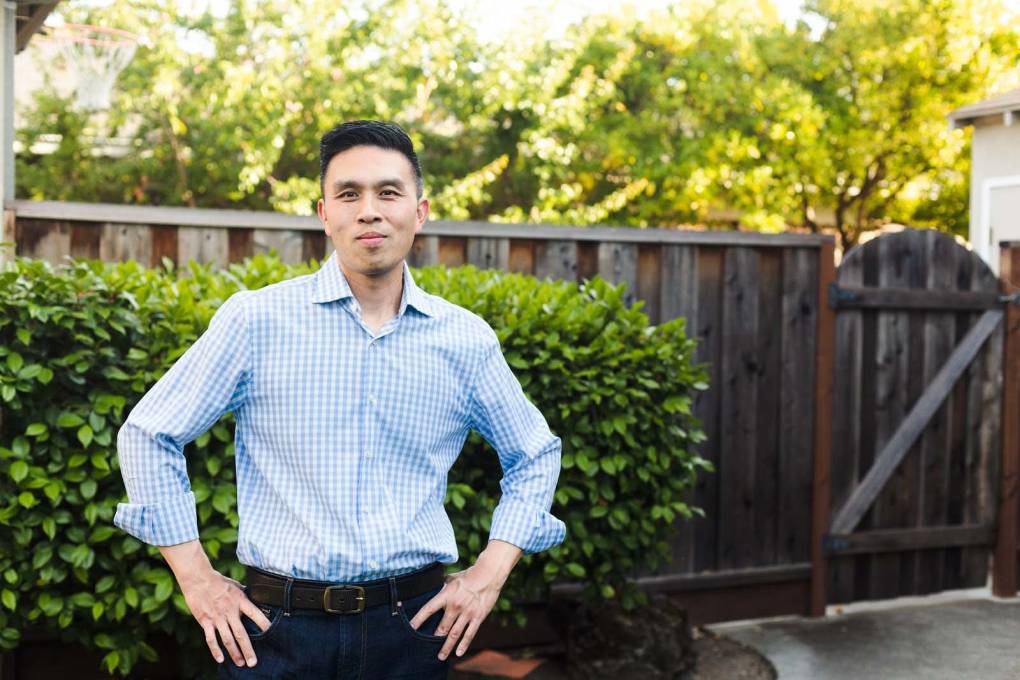
"altTag": "A light-skinned, trim Asian man in his late 30s or early 40s stands with his hands on his hips in front of a green hedge lining a wooden fence and a wooden gate, as if in a backyard, beyond which sunlight on green tree leaves is visible. He wears a blue-and-white checked collared shirt with the cuffs unbuttoned and neck undone, a white undershirt peeking out at the neck, dark jeans, and a belt. He is smiling confidently with his mouth closed and looking at the camera.",
"isLoading": false,
"fetchFailed": false
},
"news_11916410": {
"type": "attachments",
"id": "news_11916410",
"meta": {
"index": "attachments_1716263798",
"site": "news",
"id": "11916410",
"found": true
},
"parent": 11916192,
"imgSizes": {
"twentyfourteen-full-width": {
"file": "https://ww2.kqed.org/app/uploads/sites/10/2022/06/GettyImages-1049079514-1038x576.jpg",
"width": 1038,
"mimeType": "image/jpeg",
"height": 576
},
"thumbnail": {
"file": "https://ww2.kqed.org/app/uploads/sites/10/2022/06/GettyImages-1049079514-160x97.jpg",
"width": 160,
"mimeType": "image/jpeg",
"height": 97
},
"post-thumbnail": {
"file": "https://ww2.kqed.org/app/uploads/sites/10/2022/06/GettyImages-1049079514-672x372.jpg",
"width": 672,
"mimeType": "image/jpeg",
"height": 372
},
"kqedFullSize": {
"file": "https://ww2.kqed.org/app/uploads/sites/10/2022/06/GettyImages-1049079514-scaled-e1654664444965.jpg",
"width": 1920,
"height": 1162
},
"2048x2048": {
"file": "https://ww2.kqed.org/app/uploads/sites/10/2022/06/GettyImages-1049079514-2048x1239.jpg",
"width": 2048,
"mimeType": "image/jpeg",
"height": 1239
},
"large": {
"file": "https://ww2.kqed.org/app/uploads/sites/10/2022/06/GettyImages-1049079514-1020x617.jpg",
"width": 1020,
"mimeType": "image/jpeg",
"height": 617
},
"1536x1536": {
"file": "https://ww2.kqed.org/app/uploads/sites/10/2022/06/GettyImages-1049079514-1536x929.jpg",
"width": 1536,
"mimeType": "image/jpeg",
"height": 929
},
"full-width": {
"file": "https://ww2.kqed.org/app/uploads/sites/10/2022/06/GettyImages-1049079514-1920x1162.jpg",
"width": 1920,
"mimeType": "image/jpeg",
"height": 1162
},
"medium": {
"file": "https://ww2.kqed.org/app/uploads/sites/10/2022/06/GettyImages-1049079514-800x484.jpg",
"width": 800,
"mimeType": "image/jpeg",
"height": 484
}
},
"publishDate": 1654664382,
"modified": 1654669686,
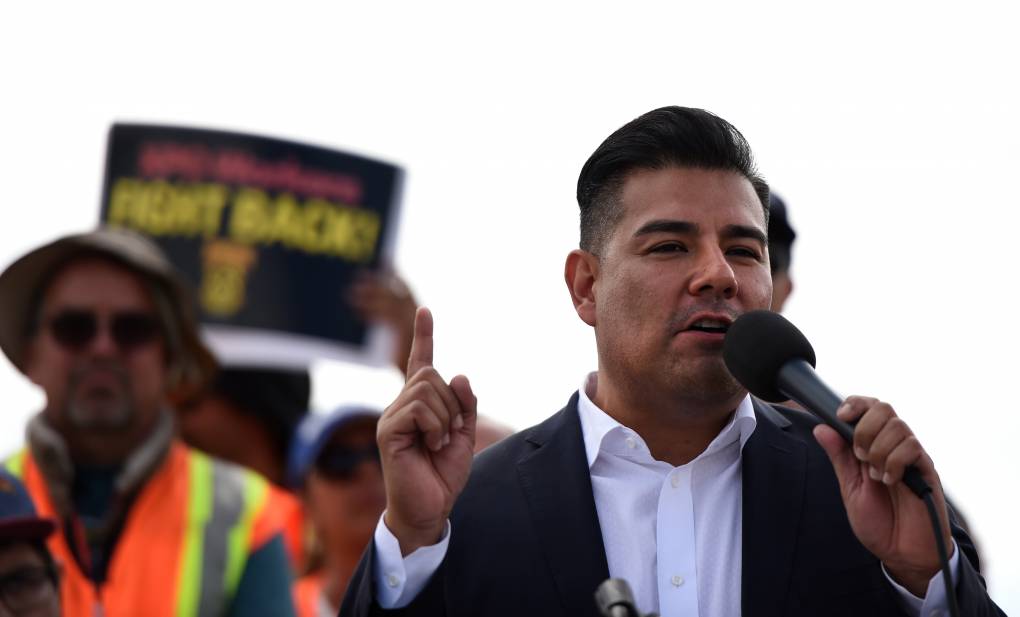
"caption": "Then-Sen. Ricardo Lara at a rally in Wilmington on Oct. 3, 2018.",
"description": null,
"title": "Teamsters Hold A Rally To End 3-Day-Strike Of Truckers And Warehouse Workers",
"credit": "Brittany Murray/Digital First Media/Long Beach Press-Telegram via Getty Images",
"status": "inherit",
"altTag": "Ricardo Lara, a middle-aged Latino man with black hair shaved around the sides and long and slicked back on top, speaks into a microphone he holds in his left hand, and points at the overcast sky with his right hand. He wears a dark suit coat and a white collared shirt unbuttoned at the throat with my tie. Behind him is a blurred crowd of people, one wearing a neon orange safety vest with yellow reflective tape, sunglasses, and a sunhat. Another holds a sign that reads in part \"Fight Back!\" in yellow letters.",
"isLoading": false,
"fetchFailed": false
},
"news_11916301": {
"type": "attachments",
"id": "news_11916301",
"meta": {
"index": "attachments_1716263798",
"site": "news",
"id": "11916301",
"found": true
},
"parent": 11916175,
"imgSizes": {
"twentyfourteen-full-width": {
"file": "https://ww2.kqed.org/app/uploads/sites/10/2022/06/New-Project-3-1038x576.jpg",
"width": 1038,
"mimeType": "image/jpeg",
"height": 576
},
"thumbnail": {
"file": "https://ww2.kqed.org/app/uploads/sites/10/2022/06/New-Project-3-160x90.jpg",
"width": 160,
"mimeType": "image/jpeg",
"height": 90
},
"post-thumbnail": {
"file": "https://ww2.kqed.org/app/uploads/sites/10/2022/06/New-Project-3-672x372.jpg",
"width": 672,
"mimeType": "image/jpeg",
"height": 372
},
"kqedFullSize": {
"file": "https://ww2.kqed.org/app/uploads/sites/10/2022/06/New-Project-3.jpg",
"width": 1920,
"height": 1080
},
"large": {
"file": "https://ww2.kqed.org/app/uploads/sites/10/2022/06/New-Project-3-1020x574.jpg",
"width": 1020,
"mimeType": "image/jpeg",
"height": 574
},
"1536x1536": {
"file": "https://ww2.kqed.org/app/uploads/sites/10/2022/06/New-Project-3-1536x864.jpg",
"width": 1536,
"mimeType": "image/jpeg",
"height": 864
},
"medium": {
"file": "https://ww2.kqed.org/app/uploads/sites/10/2022/06/New-Project-3-800x450.jpg",
"width": 800,
"mimeType": "image/jpeg",
"height": 450
}
},
"publishDate": 1654633601,
"modified": 1654649104,
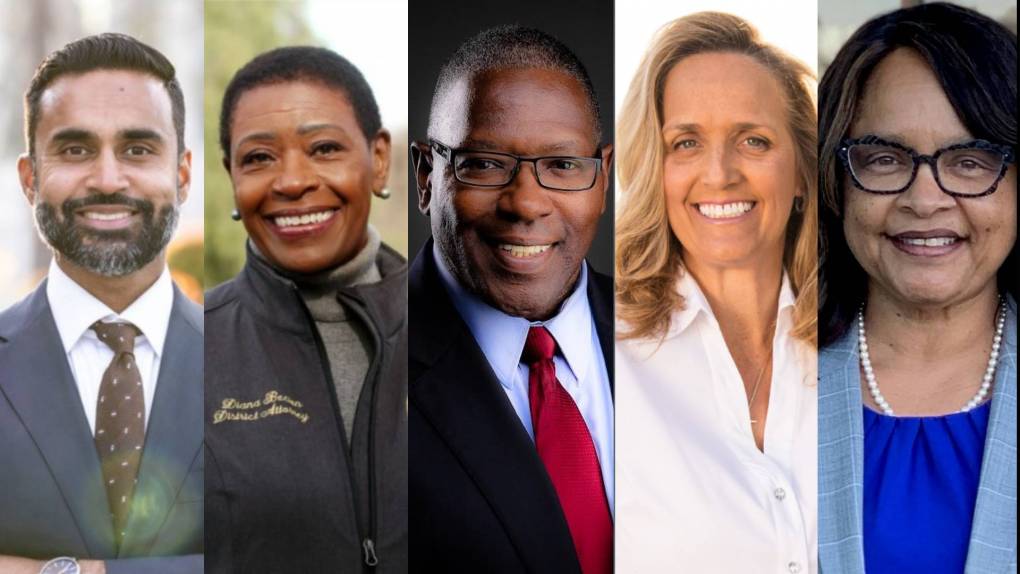
"caption": "From left to right: Sajid Khan is a challenger running to be DA of Santa Clara County. Diana Becton is the DA of Contra Costa County, running for reelection. Terry Wiley is running for Alameda County DA. Tori Verber Salazar is the DA of San Joaquin County, running for reelection. Sharon Henry is a challenger for the Solano County DA position.",
"description": "From left to right: Sajid Khan is a challenger running to be DA of Santa Clara County. Diana Becton is the DA of Contra Costa County, running for reelection. Terry Wiley is running for Alameda County DA. Tori Verber Salazar is the DA of San Joaquin County, running for reelection. Sharon Henry is a challenger for the Solano County DA position.",
"title": "Bay Area DA 2022 Candidates",
"credit": "Courtesy of candidates",
"status": "inherit",
"altTag": "A composite image of five headshots next to one another. At the very left is a man in a suit. To his right is a woman in a zip up jacket. To her right is a man in a suit and tie. To his right is a woman in a white button down. To his right is a woman with glasses and a pearl necklace.",
"isLoading": false,
"fetchFailed": false
},
"news_11916344": {
"type": "attachments",
"id": "news_11916344",
"meta": {
"index": "attachments_1716263798",
"site": "news",
"id": "11916344",
"found": true
},
"parent": 11916146,
"imgSizes": {
"twentyfourteen-full-width": {
"file": "https://ww2.kqed.org/app/uploads/sites/10/2022/06/GettyImages-1352935136-1024x576.jpg",
"width": 1024,
"mimeType": "image/jpeg",
"height": 576
},
"thumbnail": {
"file": "https://ww2.kqed.org/app/uploads/sites/10/2022/06/GettyImages-1352935136-160x103.jpg",
"width": 160,
"mimeType": "image/jpeg",
"height": 103
},
"post-thumbnail": {
"file": "https://ww2.kqed.org/app/uploads/sites/10/2022/06/GettyImages-1352935136-672x372.jpg",
"width": 672,
"mimeType": "image/jpeg",
"height": 372
},
"kqedFullSize": {
"file": "https://ww2.kqed.org/app/uploads/sites/10/2022/06/GettyImages-1352935136.jpg",
"width": 1024,
"height": 658
},
"large": {
"file": "https://ww2.kqed.org/app/uploads/sites/10/2022/06/GettyImages-1352935136-1020x655.jpg",
"width": 1020,
"mimeType": "image/jpeg",
"height": 655
},
"medium": {
"file": "https://ww2.kqed.org/app/uploads/sites/10/2022/06/GettyImages-1352935136-800x514.jpg",
"width": 800,
"mimeType": "image/jpeg",
"height": 514
}
},
"publishDate": 1654650846,
"modified": 1668433761,
"caption": null,
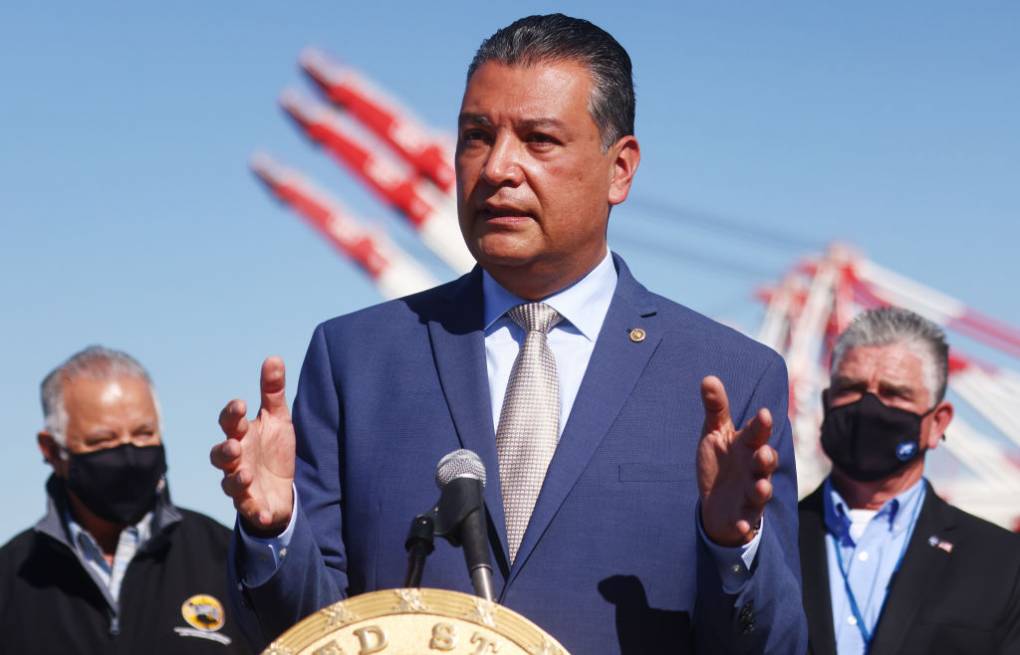
"description": "Sen. Alex Padilla (D-CA) speaks at a press conference at the Port of Long Beach on November 12, 2021 in Long Beach. Padilla highlighted the passage of the $1.2 trillion bipartisan infrastructure bill and discussed supply chain issues at California ports. (Mario Tama/Getty Images)",
"title": "Senator Padilla Visits Port Of Long Beach To Highlight Infrastructure Legislation",
"credit": "Mario Tama/Getty Images",
"status": "inherit",
"altTag": "A man in a blue business suit and silver tie holds his hands out in front of a podium.",
"isLoading": false,
"fetchFailed": false
},
"news_11916511": {
"type": "attachments",
"id": "news_11916511",
"meta": {
"index": "attachments_1716263798",
"site": "news",
"id": "11916511",
"found": true
},
"parent": 11916134,
"imgSizes": {
"twentyfourteen-full-width": {
"file": "https://ww2.kqed.org/app/uploads/sites/10/2022/06/RS48080_024_SanFrancisco_NewsomBontaPressConference_03242021-qut-1038x576.jpg",
"width": 1038,
"mimeType": "image/jpeg",
"height": 576
},
"thumbnail": {
"file": "https://ww2.kqed.org/app/uploads/sites/10/2022/06/RS48080_024_SanFrancisco_NewsomBontaPressConference_03242021-qut-160x107.jpg",
"width": 160,
"mimeType": "image/jpeg",
"height": 107
},
"post-thumbnail": {
"file": "https://ww2.kqed.org/app/uploads/sites/10/2022/06/RS48080_024_SanFrancisco_NewsomBontaPressConference_03242021-qut-672x372.jpg",
"width": 672,
"mimeType": "image/jpeg",
"height": 372
},
"kqedFullSize": {
"file": "https://ww2.kqed.org/app/uploads/sites/10/2022/06/RS48080_024_SanFrancisco_NewsomBontaPressConference_03242021-qut.jpg",
"width": 1920,
"height": 1278
},
"large": {
"file": "https://ww2.kqed.org/app/uploads/sites/10/2022/06/RS48080_024_SanFrancisco_NewsomBontaPressConference_03242021-qut-1020x679.jpg",
"width": 1020,
"mimeType": "image/jpeg",
"height": 679
},
"1536x1536": {
"file": "https://ww2.kqed.org/app/uploads/sites/10/2022/06/RS48080_024_SanFrancisco_NewsomBontaPressConference_03242021-qut-1536x1022.jpg",
"width": 1536,
"mimeType": "image/jpeg",
"height": 1022
},
"medium": {
"file": "https://ww2.kqed.org/app/uploads/sites/10/2022/06/RS48080_024_SanFrancisco_NewsomBontaPressConference_03242021-qut-800x533.jpg",
"width": 800,
"mimeType": "image/jpeg",
"height": 533
}
},
"publishDate": 1654713909,
"modified": 1654714045,
"caption": "Gov. Gavin Newsom, pictured at a 2021 press conference, will face off against Republican State Sen. Brian Dahle in the fall.",
"description": null,
"title": "RS48080_024_SanFrancisco_NewsomBontaPressConference_03242021-qut",
"credit": "Beth LaBerge/KQED",
"status": "inherit",
"altTag": null,
"isLoading": false,
"fetchFailed": false
},
"news_11915894": {
"type": "attachments",
"id": "news_11915894",
"meta": {
"index": "attachments_1716263798",
"site": "news",
"id": "11915894",
"found": true
},
"parent": 11915883,
"imgSizes": {
"twentyfourteen-full-width": {
"file": "https://ww2.kqed.org/app/uploads/sites/10/2022/06/RS39023_Rendon2-qut-1038x576.jpg",
"width": 1038,
"mimeType": "image/jpeg",
"height": 576
},
"thumbnail": {
"file": "https://ww2.kqed.org/app/uploads/sites/10/2022/06/RS39023_Rendon2-qut-160x107.jpg",
"width": 160,
"mimeType": "image/jpeg",
"height": 107
},
"post-thumbnail": {
"file": "https://ww2.kqed.org/app/uploads/sites/10/2022/06/RS39023_Rendon2-qut-672x372.jpg",
"width": 672,
"mimeType": "image/jpeg",
"height": 372
},
"kqedFullSize": {
"file": "https://ww2.kqed.org/app/uploads/sites/10/2022/06/RS39023_Rendon2-qut.jpg",
"width": 1920,
"height": 1280
},
"large": {
"file": "https://ww2.kqed.org/app/uploads/sites/10/2022/06/RS39023_Rendon2-qut-1020x680.jpg",
"width": 1020,
"mimeType": "image/jpeg",
"height": 680
},
"1536x1536": {
"file": "https://ww2.kqed.org/app/uploads/sites/10/2022/06/RS39023_Rendon2-qut-1536x1024.jpg",
"width": 1536,
"mimeType": "image/jpeg",
"height": 1024
},
"medium": {
"file": "https://ww2.kqed.org/app/uploads/sites/10/2022/06/RS39023_Rendon2-qut-800x533.jpg",
"width": 800,
"mimeType": "image/jpeg",
"height": 533
}
},
"publishDate": 1654211095,
"modified": 1654211127,
"caption": "Assembly Speaker Anthony Rendon at the State Capitol in Sacramento on Aug. 15, 2019.",
"description": null,
"title": "RS39023_Rendon2-qut",
"credit": "Stephanie Lister/KQED",
"status": "inherit",
"altTag": null,
"isLoading": false,
"fetchFailed": false
},
"news_11915685": {
"type": "attachments",
"id": "news_11915685",
"meta": {
"index": "attachments_1716263798",
"site": "news",
"id": "11915685",
"found": true
},
"parent": 11915634,
"imgSizes": {
"twentyfourteen-full-width": {
"file": "https://ww2.kqed.org/app/uploads/sites/10/2022/05/Photo00_FEATURED-1-1038x576.jpg",
"width": 1038,
"mimeType": "image/jpeg",
"height": 576
},
"thumbnail": {
"file": "https://ww2.kqed.org/app/uploads/sites/10/2022/05/Photo00_FEATURED-1-160x107.jpg",
"width": 160,
"mimeType": "image/jpeg",
"height": 107
},
"post-thumbnail": {
"file": "https://ww2.kqed.org/app/uploads/sites/10/2022/05/Photo00_FEATURED-1-672x372.jpg",
"width": 672,
"mimeType": "image/jpeg",
"height": 372
},
"kqedFullSize": {
"file": "https://ww2.kqed.org/app/uploads/sites/10/2022/05/Photo00_FEATURED-1.jpg",
"width": 1920,
"height": 1280
},
"large": {
"file": "https://ww2.kqed.org/app/uploads/sites/10/2022/05/Photo00_FEATURED-1-1020x680.jpg",
"width": 1020,
"mimeType": "image/jpeg",
"height": 680
},
"1536x1536": {
"file": "https://ww2.kqed.org/app/uploads/sites/10/2022/05/Photo00_FEATURED-1-1536x1024.jpg",
"width": 1536,
"mimeType": "image/jpeg",
"height": 1024
},
"medium": {
"file": "https://ww2.kqed.org/app/uploads/sites/10/2022/05/Photo00_FEATURED-1-800x533.jpg",
"width": 800,
"mimeType": "image/jpeg",
"height": 533
}
},
"publishDate": 1654045425,
"modified": 1654135809,
"caption": "(From left) Robert Lowe, Michelle Wong, Forrest Chang and Allene Jue hold signs at a rally to recall San Francisco District Attorney Chesa Boudin at Portsmouth Square on Friday, May 28, 2021, in San Francisco.",
"description": null,
"title": "Photo00_FEATURED (1)",
"credit": "Courtesy Paul Kuroda/SF Standard",
"status": "inherit",
"altTag": "People with picket signs pushing for the recall of District Attorney Chesa Boudin fill the frame, some say \"YES ON H.\"",
"isLoading": false,
"fetchFailed": false
},
"news_11915618": {
"type": "attachments",
"id": "news_11915618",
"meta": {
"index": "attachments_1716263798",
"site": "news",
"id": "11915618",
"found": true
},
"parent": 11914988,
"imgSizes": {
"twentyfourteen-full-width": {
"file": "https://ww2.kqed.org/app/uploads/sites/10/2022/05/AG-Candidates-1038x576.jpg",
"width": 1038,
"mimeType": "image/jpeg",
"height": 576
},
"thumbnail": {
"file": "https://ww2.kqed.org/app/uploads/sites/10/2022/05/AG-Candidates-160x86.jpg",
"width": 160,
"mimeType": "image/jpeg",
"height": 86
},
"post-thumbnail": {
"file": "https://ww2.kqed.org/app/uploads/sites/10/2022/05/AG-Candidates-672x372.jpg",
"width": 672,
"mimeType": "image/jpeg",
"height": 372
},
"kqedFullSize": {
"file": "https://ww2.kqed.org/app/uploads/sites/10/2022/05/AG-Candidates.jpg",
"width": 1480,
"height": 800
},
"large": {
"file": "https://ww2.kqed.org/app/uploads/sites/10/2022/05/AG-Candidates-1020x551.jpg",
"width": 1020,
"mimeType": "image/jpeg",
"height": 551
},
"medium": {
"file": "https://ww2.kqed.org/app/uploads/sites/10/2022/05/AG-Candidates-800x432.jpg",
"width": 800,
"mimeType": "image/jpeg",
"height": 432
}
},
"publishDate": 1654039199,
"modified": 1654044122,
"caption": "From left, Nathan Hochman, Anne Marie Schubert and Eric Early all are running in the June 7 statewide primary for California attorney general, in a bid to replace incumbent Rob Bonta.",
"description": null,
"title": "AG Candidates",
"credit": "Photos courtesy of candidates' campaign sites",
"status": "inherit",
"altTag": "Headshots of two men and one woman.",
"isLoading": false,
"fetchFailed": false
},
"news_11912228": {
"type": "attachments",
"id": "news_11912228",
"meta": {
"index": "attachments_1716263798",
"site": "news",
"id": "11912228",
"found": true
},
"parent": 11912101,
"imgSizes": {
"twentyfourteen-full-width": {
"file": "https://ww2.kqed.org/app/uploads/sites/10/2022/04/RS55033_019_KQED_ChevronRefineryStrike_04072022-qut-1038x576.jpg",
"width": 1038,
"mimeType": "image/jpeg",
"height": 576
},
"thumbnail": {
"file": "https://ww2.kqed.org/app/uploads/sites/10/2022/04/RS55033_019_KQED_ChevronRefineryStrike_04072022-qut-160x107.jpg",
"width": 160,
"mimeType": "image/jpeg",
"height": 107
},
"post-thumbnail": {
"file": "https://ww2.kqed.org/app/uploads/sites/10/2022/04/RS55033_019_KQED_ChevronRefineryStrike_04072022-qut-672x372.jpg",
"width": 672,
"mimeType": "image/jpeg",
"height": 372
},
"kqedFullSize": {
"file": "https://ww2.kqed.org/app/uploads/sites/10/2022/04/RS55033_019_KQED_ChevronRefineryStrike_04072022-qut.jpg",
"width": 1920,
"height": 1280
},
"large": {
"file": "https://ww2.kqed.org/app/uploads/sites/10/2022/04/RS55033_019_KQED_ChevronRefineryStrike_04072022-qut-1020x680.jpg",
"width": 1020,
"mimeType": "image/jpeg",
"height": 680
},
"1536x1536": {
"file": "https://ww2.kqed.org/app/uploads/sites/10/2022/04/RS55033_019_KQED_ChevronRefineryStrike_04072022-qut-1536x1024.jpg",
"width": 1536,
"mimeType": "image/jpeg",
"height": 1024
},
"medium": {
"file": "https://ww2.kqed.org/app/uploads/sites/10/2022/04/RS55033_019_KQED_ChevronRefineryStrike_04072022-qut-800x533.jpg",
"width": 800,
"mimeType": "image/jpeg",
"height": 533
}
},
"publishDate": 1650996046,
"modified": 1654028468,
"caption": "United Steelworkers union member Mike Zielinski speaks on a megaphone during a strike by Chevron employees outside Gate 14 at the Richmond refinery on April 7, 2022.",
"description": "United Steel Workers union member Mike Zielinski speaks on a megaphone during a strike by Chevron employees outside of Gate 14 at the Richmond refinery on April 7, 2022.",
"title": "RS55033_019_KQED_ChevronRefineryStrike_04072022-qut",
"credit": "Beth LaBerge/KQED",
"status": "inherit",
"altTag": "An older white man with glasses and a trim white mustache, wearing a navy baseball hat and navy shirt, shouts into a red-and-white bullhorn he holds in his right hand, his left hand pointing to the sky. To his right, farther from the camera, stands a woman in a white tank top and jeans. To the man's left and behind him, out of focus, is a group of people holding signs. One of them says \"Fair Contract\" and the other says \"Strike against Chevron.\" It appears to be evening time, and behind everyone is what appears to be a black, iron, security fence and a low, white building.",
"isLoading": false,
"fetchFailed": false
},
"news_11915073": {
"type": "attachments",
"id": "news_11915073",
"meta": {
"index": "attachments_1716263798",
"site": "news",
"id": "11915073",
"found": true
},
"parent": 11915068,
"imgSizes": {
"twentyfourteen-full-width": {
"file": "https://ww2.kqed.org/app/uploads/sites/10/2022/05/RS56209_GettyImages-1360473794-qut-1038x576.jpg",
"width": 1038,
"mimeType": "image/jpeg",
"height": 576
},
"thumbnail": {
"file": "https://ww2.kqed.org/app/uploads/sites/10/2022/05/RS56209_GettyImages-1360473794-qut-160x107.jpg",
"width": 160,
"mimeType": "image/jpeg",
"height": 107
},
"post-thumbnail": {
"file": "https://ww2.kqed.org/app/uploads/sites/10/2022/05/RS56209_GettyImages-1360473794-qut-672x372.jpg",
"width": 672,
"mimeType": "image/jpeg",
"height": 372
},
"kqedFullSize": {
"file": "https://ww2.kqed.org/app/uploads/sites/10/2022/05/RS56209_GettyImages-1360473794-qut.jpg",
"width": 1920,
"height": 1280
},
"large": {
"file": "https://ww2.kqed.org/app/uploads/sites/10/2022/05/RS56209_GettyImages-1360473794-qut-1020x680.jpg",
"width": 1020,
"mimeType": "image/jpeg",
"height": 680
},
"1536x1536": {
"file": "https://ww2.kqed.org/app/uploads/sites/10/2022/05/RS56209_GettyImages-1360473794-qut-1536x1024.jpg",
"width": 1536,
"mimeType": "image/jpeg",
"height": 1024
},
"medium": {
"file": "https://ww2.kqed.org/app/uploads/sites/10/2022/05/RS56209_GettyImages-1360473794-qut-800x533.jpg",
"width": 800,
"mimeType": "image/jpeg",
"height": 533
}
},
"publishDate": 1653508835,
"modified": 1653524456,
"caption": "Gov. Gavin Newsom, seen here at a press briefing in Oakland on Dec. 22, 2021, announced plans Wednesday to fast-track a package of gun control bills — a day after a mass shooting at an elementary school in Texas.",
"description": null,
"title": "SFChronicleNewsom",
"credit": "Brontë Wittpenn/San Francisco Chronicle via Getty Images",
"status": "inherit",
"altTag": "A headshot of Gov. Gavin Newsom.",
"isLoading": false,
"fetchFailed": false
},
"news_11913904": {
"type": "attachments",
"id": "news_11913904",
"meta": {
"index": "attachments_1716263798",
"site": "news",
"id": "11913904",
"found": true
},
"parent": 11913903,
"imgSizes": {
"twentyfourteen-full-width": {
"file": "https://ww2.kqed.org/app/uploads/sites/10/2022/05/election-ballot-1020x576.jpg",
"width": 1020,
"mimeType": "image/jpeg",
"height": 576
},
"thumbnail": {
"file": "https://ww2.kqed.org/app/uploads/sites/10/2022/05/election-ballot-160x107.jpg",
"width": 160,
"mimeType": "image/jpeg",
"height": 107
},
"post-thumbnail": {
"file": "https://ww2.kqed.org/app/uploads/sites/10/2022/05/election-ballot-672x372.jpg",
"width": 672,
"mimeType": "image/jpeg",
"height": 372
},
"kqedFullSize": {
"file": "https://ww2.kqed.org/app/uploads/sites/10/2022/05/election-ballot.jpg",
"width": 1020,
"height": 680
},
"medium": {
"file": "https://ww2.kqed.org/app/uploads/sites/10/2022/05/election-ballot-800x533.jpg",
"width": 800,
"mimeType": "image/jpeg",
"height": 533
}
},
"publishDate": 1652308210,
"modified": 1652308242,
"caption": "Una papeleta oficial de voto por correo de San Francisco para las elecciones del 3 de noviembre de 2020.",
"description": null,
"title": "election ballot",
"credit": "Beth LaBerge/KQED",
"status": "inherit",
"altTag": null,
"isLoading": false,
"fetchFailed": false
},
"news_11914618": {
"type": "attachments",
"id": "news_11914618",
"meta": {
"index": "attachments_1716263798",
"site": "news",
"id": "11914618",
"found": true
},
"parent": 11914361,
"imgSizes": {
"twentyfourteen-full-width": {
"file": "https://ww2.kqed.org/app/uploads/sites/10/2022/05/GettyImages-1240715856-1024x576.jpg",
"width": 1024,
"mimeType": "image/jpeg",
"height": 576
},
"thumbnail": {
"file": "https://ww2.kqed.org/app/uploads/sites/10/2022/05/GettyImages-1240715856-160x107.jpg",
"width": 160,
"mimeType": "image/jpeg",
"height": 107
},
"post-thumbnail": {
"file": "https://ww2.kqed.org/app/uploads/sites/10/2022/05/GettyImages-1240715856-672x372.jpg",
"width": 672,
"mimeType": "image/jpeg",
"height": 372
},
"kqedFullSize": {
"file": "https://ww2.kqed.org/app/uploads/sites/10/2022/05/GettyImages-1240715856.jpg",
"width": 1024,
"height": 683
},
"large": {
"file": "https://ww2.kqed.org/app/uploads/sites/10/2022/05/GettyImages-1240715856-1020x680.jpg",
"width": 1020,
"mimeType": "image/jpeg",
"height": 680
},
"medium": {
"file": "https://ww2.kqed.org/app/uploads/sites/10/2022/05/GettyImages-1240715856-800x534.jpg",
"width": 800,
"mimeType": "image/jpeg",
"height": 534
}
},
"publishDate": 1652993203,
"modified": 1652998860,
"caption": "Carlee Taggart of Chicago and Robyn Harpell of Virginia Beach light candles at a makeshift memorial near the scene of a mass shooting at Tops Friendly Market in Buffalo, New York, on May 16, 2022. The fatal shooting on May 14, of 10 people in a historically Black neighborhood by a white gunman, is being investigated as a hate crime and an act of racist violent extremism, according to federal officials.",
"description": null,
"title": "Mass Shooting in Buffalo New York Leaves 10 Dead",
"credit": "Kent Nishimura/Los Angeles Times via Getty Images",
"status": "inherit",
"altTag": "Two women kneel down to put flowers and candles on the sidewalk, in front of a Tops supermarket.",
"isLoading": false,
"fetchFailed": false
}
},
"audioPlayerReducer": {
"postId": "stream_live",
"isPaused": true,
"isPlaying": false,
"pfsActive": false,
"pledgeModalIsOpen": true,
"playerDrawerIsOpen": false,
"liveAudioPlayStartedAt": 0,
"liveAudioPlayContext": ""
},
"authorsReducer": {
"byline_news_11915634": {
"type": "authors",
"id": "byline_news_11915634",
"meta": {
"override": true
},
"slug": "byline_news_11915634",
"name": "\u003ca href=\"https://www.kqed.org/author/jrodriguez\">Joe Fitzgerald Rodriguez, KQED\u003c/a> and \u003ca href=\"https://sfstandard.com/author/han-li/\">Han Li, SF Standard\u003c/a>",
"isLoading": false
},
"gmarzorati": {
"type": "authors",
"id": "227",
"meta": {
"index": "authors_1716337520",
"id": "227",
"found": true
},
"name": "Guy Marzorati",
"firstName": "Guy",
"lastName": "Marzorati",
"slug": "gmarzorati",
"email": "gmarzorati@KQED.org",
"display_author_email": true,
"staff_mastheads": [
"news"
],
"title": "Correspondent",
"bio": "Guy Marzorati is a correspondent on KQED's California Politics and Government Desk, based in San Jose. A graduate of Santa Clara University, Guy joined KQED in 2013. He reports on state and local politics and produces KQED's digital voter guide.",
"avatar": "https://secure.gravatar.com/avatar/e7038b8dbfd55b104369b76b1cd0b9de?s=600&d=blank&r=g",
"twitter": "guymarzorati",
"facebook": null,
"instagram": null,
"linkedin": null,
"sites": [
{
"site": "",
"roles": [
"editor"
]
},
{
"site": "news",
"roles": [
"editor"
]
},
{
"site": "science",
"roles": [
"editor"
]
},
{
"site": "forum",
"roles": [
"editor"
]
},
{
"site": "elections",
"roles": [
"editor"
]
},
{
"site": "liveblog",
"roles": [
"editor"
]
}
],
"headData": {
"title": "Guy Marzorati | KQED",
"description": "Correspondent",
"ogImgSrc": "https://secure.gravatar.com/avatar/e7038b8dbfd55b104369b76b1cd0b9de?s=600&d=blank&r=g",
"twImgSrc": "https://secure.gravatar.com/avatar/e7038b8dbfd55b104369b76b1cd0b9de?s=600&d=blank&r=g"
},
"isLoading": false,
"link": "/author/gmarzorati"
},
"minakim": {
"type": "authors",
"id": "243",
"meta": {
"index": "authors_1716337520",
"id": "243",
"found": true
},
"name": "Mina Kim",
"firstName": "Mina",
"lastName": "Kim",
"slug": "minakim",
"email": "mkim@kqed.org",
"display_author_email": false,
"staff_mastheads": [
"news"
],
"title": "Host, Forum",
"bio": "Mina Kim is host of the 10 a.m. statewide hour of Forum; a live daily talk show for curious Californians on issues that matter to the state and nation, with a particular emphasis on race and equity.\r\n\r\nBefore joining the Forum team, Mina was KQED’s evening news anchor, and health reporter for The California Report. Her award-winning work has included natural disasters in Napa and gun violence in Oakland. Mina grew up in St. John’s, Newfoundland.",
"avatar": "https://secure.gravatar.com/avatar/145ce657a2d08cb86d93686beb958982?s=600&d=blank&r=g",
"twitter": "mkimreporter",
"facebook": null,
"instagram": null,
"linkedin": null,
"sites": [
{
"site": "news",
"roles": [
"contributor"
]
},
{
"site": "stateofhealth",
"roles": [
"author"
]
},
{
"site": "forum",
"roles": [
"editor"
]
}
],
"headData": {
"title": "Mina Kim | KQED",
"description": "Host, Forum",
"ogImgSrc": "https://secure.gravatar.com/avatar/145ce657a2d08cb86d93686beb958982?s=600&d=blank&r=g",
"twImgSrc": "https://secure.gravatar.com/avatar/145ce657a2d08cb86d93686beb958982?s=600&d=blank&r=g"
},
"isLoading": false,
"link": "/author/minakim"
},
"scottshafer": {
"type": "authors",
"id": "255",
"meta": {
"index": "authors_1716337520",
"id": "255",
"found": true
},
"name": "Scott Shafer",
"firstName": "Scott",
"lastName": "Shafer",
"slug": "scottshafer",
"email": "sshafer@kqed.org",
"display_author_email": false,
"staff_mastheads": [
"news"
],
"title": "KQED Contributor",
"bio": "Scott Shafer is a senior editor with the KQED Politics and Government desk. He is co-host of Political Breakdown, the award-winning radio show and podcast with a personal take on the world of politics. Scott came to KQED in 1998 to host the statewide\u003cem> California Report\u003c/em>. Prior to that he had extended stints in politics and government\u003cem>.\u003c/em> He uses that inside experience at KQED in his, reporting, hosting and analysis for the politics desk. Scott collaborated \u003cem>Political Breakdown a\u003c/em>nd on \u003cem>The Political Mind of Jerry Brown, \u003c/em>an eight-part series about the life and extraordinary political career of the former governor. For fun, he plays water polo with the San Francisco Tsunami.",
"avatar": "https://secure.gravatar.com/avatar/a62ebae45b79d7aed1a39a0e3bf68104?s=600&d=blank&r=g",
"twitter": "scottshafer",
"bluesky": null,
"facebook": null,
"instagram": null,
"linkedin": null,
"sites": [
{
"site": "news",
"roles": [
"editor"
]
},
{
"site": "stateofhealth",
"roles": [
"author"
]
},
{
"site": "science",
"roles": [
"author"
]
},
{
"site": "forum",
"roles": [
"subscriber"
]
},
{
"site": "liveblog",
"roles": [
"author"
]
}
],
"headData": {
"title": "Scott Shafer | KQED",
"description": "KQED Contributor",
"ogImgSrc": "https://secure.gravatar.com/avatar/a62ebae45b79d7aed1a39a0e3bf68104?s=600&d=blank&r=g",
"twImgSrc": "https://secure.gravatar.com/avatar/a62ebae45b79d7aed1a39a0e3bf68104?s=600&d=blank&r=g"
},
"isLoading": false,
"link": "/author/scottshafer"
},
"tgoldberg": {
"type": "authors",
"id": "258",
"meta": {
"index": "authors_1716337520",
"id": "258",
"found": true
},
"name": "Ted Goldberg",
"firstName": "Ted",
"lastName": "Goldberg",
"slug": "tgoldberg",
"email": "tgoldberg@kqed.org",
"display_author_email": true,
"staff_mastheads": [
"news"
],
"title": "KQED Managing Editor, News and Newscasts",
"bio": "Ted Goldberg is Managing Editor of News and Newscasts at KQED. His main reporting beat is the Bay Area's oil refining industry.\r\n\r\nPrior to joining KQED in 2014, Ted worked at CBS News and WCBS AM in New York and Bay City News and KCBS Radio in San Francisco. He graduated from Oberlin College in Ohio in 1998.",
"avatar": "https://secure.gravatar.com/avatar/30ce2e4fe89135e104f89be2394d16225b9d36c121b5b3cb7651ce642978b96f?s=600&d=blank&r=g",
"twitter": "TedrickG",
"bluesky": null,
"facebook": null,
"instagram": null,
"linkedin": null,
"sites": [
{
"site": "news",
"roles": [
"editor"
]
},
{
"site": "science",
"roles": [
"editor"
]
}
],
"headData": {
"title": "Ted Goldberg | KQED",
"description": "KQED Managing Editor, News and Newscasts",
"ogImgSrc": "https://secure.gravatar.com/avatar/30ce2e4fe89135e104f89be2394d16225b9d36c121b5b3cb7651ce642978b96f?s=600&d=blank&r=g",
"twImgSrc": "https://secure.gravatar.com/avatar/30ce2e4fe89135e104f89be2394d16225b9d36c121b5b3cb7651ce642978b96f?s=600&d=blank&r=g"
},
"isLoading": false,
"link": "/author/tgoldberg"
},
"tychehendricks": {
"type": "authors",
"id": "259",
"meta": {
"index": "authors_1716337520",
"id": "259",
"found": true
},
"name": "Tyche Hendricks",
"firstName": "Tyche",
"lastName": "Hendricks",
"slug": "tychehendricks",
"email": "thendricks@kqed.org",
"display_author_email": true,
"staff_mastheads": [
"news"
],
"title": "KQED Senior Editor, Immigration",
"bio": "\u003cspan style=\"font-weight: 400;\">Tyche Hendricks is KQED’s senior editor for immigration, leading coverage of the policy and politics that affect California’s immigrant communities. Her work for KQED’s radio and online audiences is also carried on NPR and other national outlets. She has been recognized with awards from the Radio and Television News Directors Association, the Society for Professional Journalists; the Education Writers Association; the Best of the West and the National Federation of Community Broadcasters. Before joining KQED in 2010, Tyche spent more than a dozen years as a newspaper reporter, notably at the \u003c/span>\u003ci>\u003cspan style=\"font-weight: 400;\">San Francisco Chronicle\u003c/span>\u003c/i>\u003cspan style=\"font-weight: 400;\">. At different times she has covered criminal justice, government and politics and urban planning. Tyche has taught in the MFA Creative Writing program at the University of San Francisco and at UC Berkeley’s Graduate School of Journalism, where she was co-director of a national immigration symposium for professional journalists. She is the author of \u003c/span>\u003ci>\u003cspan style=\"font-weight: 400;\">The Wind Doesn't Need a Passport: Stories from the U.S.-Mexico Borderlands\u003c/span>\u003c/i>\u003cspan style=\"font-weight: 400;\"> (University of California Press). \u003c/span>",
"avatar": "https://secure.gravatar.com/avatar/b8ee458e2731c2d43df86882ce17267e?s=600&d=blank&r=g",
"twitter": "tychehendricks",
"facebook": null,
"instagram": null,
"linkedin": null,
"sites": [
{
"site": "news",
"roles": [
"editor"
]
},
{
"site": "stateofhealth",
"roles": [
"editor"
]
}
],
"headData": {
"title": "Tyche Hendricks | KQED",
"description": "KQED Senior Editor, Immigration",
"ogImgSrc": "https://secure.gravatar.com/avatar/b8ee458e2731c2d43df86882ce17267e?s=600&d=blank&r=g",
"twImgSrc": "https://secure.gravatar.com/avatar/b8ee458e2731c2d43df86882ce17267e?s=600&d=blank&r=g"
},
"isLoading": false,
"link": "/author/tychehendricks"
},
"matthewgreen": {
"type": "authors",
"id": "1263",
"meta": {
"index": "authors_1716337520",
"id": "1263",
"found": true
},
"name": "Matthew Green",
"firstName": "Matthew",
"lastName": "Green",
"slug": "matthewgreen",
"email": "mgreen@kqed.org",
"display_author_email": false,
"staff_mastheads": [],
"title": "KQED Editor/Reporter",
"bio": "Matthew Green is a digital media producer for KQED News. He previously produced \u003ca href=\"http://www.kqed.org/lowdown\">The Lowdown\u003c/a>, KQED’s multimedia news education blog. Matthew's written for numerous Bay Area publications, including the Oakland Tribune and San Francisco Chronicle. He also taught journalism classes at Fremont High School in East Oakland.\r\n\r\nEmail: mgreen@kqed.org; Twitter: @MGreenKQED",
"avatar": "https://secure.gravatar.com/avatar/3bf498d1267ca02c8494f33d8cfc575e?s=600&d=blank&r=g",
"twitter": "MGreenKQED",
"facebook": null,
"instagram": null,
"linkedin": null,
"sites": [
{
"site": "news",
"roles": []
},
{
"site": "lowdown",
"roles": []
},
{
"site": "science",
"roles": []
},
{
"site": "education",
"roles": []
},
{
"site": "quest",
"roles": []
},
{
"site": "liveblog",
"roles": []
}
],
"headData": {
"title": "Matthew Green | KQED",
"description": "KQED Editor/Reporter",
"ogImgSrc": "https://secure.gravatar.com/avatar/3bf498d1267ca02c8494f33d8cfc575e?s=600&d=blank&r=g",
"twImgSrc": "https://secure.gravatar.com/avatar/3bf498d1267ca02c8494f33d8cfc575e?s=600&d=blank&r=g"
},
"isLoading": false,
"link": "/author/matthewgreen"
},
"mlagos": {
"type": "authors",
"id": "3239",
"meta": {
"index": "authors_1716337520",
"id": "3239",
"found": true
},
"name": "Marisa Lagos",
"firstName": "Marisa",
"lastName": "Lagos",
"slug": "mlagos",
"email": "mlagos@kqed.org",
"display_author_email": false,
"staff_mastheads": [
"news"
],
"title": "KQED Contributor",
"bio": "Marisa Lagos is a correspondent for KQED’s California Politics and Government Desk and co-hosts the award-winning show and podcast, Political Breakdown. At KQED, Lagos also conducts reporting, analysis and investigations into state, local and national politics for radio, TV, online and onstage. In 2022, she and co-host, Scott Shafer, moderated the only gubernatorial debate in California. In 2020, the \u003ci>Washington Post\u003c/i> named her one of the top political journalists in California; she was nominated for a Peabody and won several other awards for her work investigating the 2017 California wildfires. She has worked at the \u003ci>San Francisco Chronicle\u003c/i>, \u003ci>San Francisco Examiner\u003c/i> and \u003ci>Los Angeles Times\u003c/i>. A UC Santa Barbara graduate, she lives in San Francisco with her two sons and husband.",
"avatar": "https://secure.gravatar.com/avatar/a261a0d3696fc066871ef96b85b5e7d2?s=600&d=blank&r=g",
"twitter": "@mlagos",
"facebook": null,
"instagram": null,
"linkedin": null,
"sites": [
{
"site": "arts",
"roles": [
"author"
]
},
{
"site": "news",
"roles": [
"editor"
]
},
{
"site": "science",
"roles": [
"editor"
]
},
{
"site": "forum",
"roles": [
"author"
]
},
{
"site": "liveblog",
"roles": [
"author"
]
}
],
"headData": {
"title": "Marisa Lagos | KQED",
"description": "KQED Contributor",
"ogImgSrc": "https://secure.gravatar.com/avatar/a261a0d3696fc066871ef96b85b5e7d2?s=600&d=blank&r=g",
"twImgSrc": "https://secure.gravatar.com/avatar/a261a0d3696fc066871ef96b85b5e7d2?s=600&d=blank&r=g"
},
"isLoading": false,
"link": "/author/mlagos"
},
"carlysevern": {
"type": "authors",
"id": "3243",
"meta": {
"index": "authors_1716337520",
"id": "3243",
"found": true
},
"name": "Carly Severn",
"firstName": "Carly",
"lastName": "Severn",
"slug": "carlysevern",
"email": "csevern@kqed.org",
"display_author_email": false,
"staff_mastheads": [
"news"
],
"title": "Senior Editor, Audience News ",
"bio": "Carly is KQED's Senior Editor of Audience News on the Digital News team, and has reported for the California Report Magazine, Bay Curious and KQED Arts. She's formerly the host of \u003ca href=\"http://ww2.kqed.org/pop/category/the-cooler/\" rel=\"noopener noreferrer\">The Cooler\u003c/a> podcast.",
"avatar": "https://secure.gravatar.com/avatar/2d8d6765f186e64c798cf7f0c8088a41?s=600&d=blank&r=g",
"twitter": "teacupinthebay",
"facebook": null,
"instagram": null,
"linkedin": null,
"sites": [
{
"site": "",
"roles": [
"editor"
]
},
{
"site": "arts",
"roles": [
"editor"
]
},
{
"site": "news",
"roles": [
"administrator"
]
},
{
"site": "pop",
"roles": [
"editor"
]
},
{
"site": "futureofyou",
"roles": [
"editor"
]
},
{
"site": "about",
"roles": [
"administrator"
]
},
{
"site": "mindshift",
"roles": [
"editor"
]
},
{
"site": "bayareabites",
"roles": [
"editor"
]
},
{
"site": "stateofhealth",
"roles": [
"editor"
]
},
{
"site": "science",
"roles": [
"editor"
]
},
{
"site": "food",
"roles": [
"contributor"
]
},
{
"site": "forum",
"roles": [
"editor"
]
},
{
"site": "perspectives",
"roles": [
"administrator"
]
},
{
"site": "liveblog",
"roles": [
"editor"
]
}
],
"headData": {
"title": "Carly Severn | KQED",
"description": "Senior Editor, Audience News ",
"ogImgSrc": "https://secure.gravatar.com/avatar/2d8d6765f186e64c798cf7f0c8088a41?s=600&d=blank&r=g",
"twImgSrc": "https://secure.gravatar.com/avatar/2d8d6765f186e64c798cf7f0c8088a41?s=600&d=blank&r=g"
},
"isLoading": false,
"link": "/author/carlysevern"
},
"csaldana": {
"type": "authors",
"id": "11301",
"meta": {
"index": "authors_1716337520",
"id": "11301",
"found": true
},
"name": "Cesar Saldaña",
"firstName": "Cesar",
"lastName": "Saldaña",
"slug": "csaldana",
"email": "csaldana@kqed.org",
"display_author_email": false,
"staff_mastheads": [
"news"
],
"title": "KQED Contributor",
"bio": null,
"avatar": "https://secure.gravatar.com/avatar/04e89425007fe7102f750c79e76274bc?s=600&d=mm&r=g",
"twitter": null,
"facebook": null,
"instagram": null,
"linkedin": null,
"sites": [
{
"site": "news",
"roles": []
},
{
"site": "perspectives",
"roles": []
}
],
"headData": {
"title": "Cesar Saldaña | KQED",
"description": "KQED Contributor",
"ogImgSrc": "https://secure.gravatar.com/avatar/04e89425007fe7102f750c79e76274bc?s=600&d=mm&r=g",
"twImgSrc": "https://secure.gravatar.com/avatar/04e89425007fe7102f750c79e76274bc?s=600&d=mm&r=g"
},
"isLoading": false,
"link": "/author/csaldana"
}
},
"pagesReducer": {
"news_tag_politics": {
"type": "terms",
"id": "news_17968",
"meta": {
"index": "terms_1716263798",
"site": "news",
"id": "17968",
"score": 8.003286
},
"name": "Politics",
"slug": "politics",
"taxonomy": "tag",
"description": null,
"featImg": null,
"headData": {
"title": "Politics | KQED News",
"description": null,
"ogTitle": null,
"ogDescription": null,
"ogImgId": null,
"twTitle": null,
"twDescription": null,
"twImgId": null
},
"ttid": 18002,
"isLoading": false,
"title": "Politics",
"pageMeta": {
"site": "news",
"WpPageTemplate": "page-topic-editorial",
"currentPage": 174
},
"blocks": [
{
"blockName": "kqed/post-list",
"attrs": {
"layout": "cardArticle2",
"query": "posts/news?tag=politics",
"seeMore": false,
"paginated": true,
"page": 174
}
},
{
"blockName": "kqed/ad"
}
]
}
},
"pfsSessionReducer": {},
"postsReducer": {
"stream_live": {
"type": "live",
"id": "stream_live",
"audioUrl": "https://streams.kqed.org/kqedradio",
"title": "Live Stream",
"excerpt": "Live Stream information currently unavailable.",
"link": "/radio",
"featImg": "",
"label": {
"name": "KQED Live",
"link": "/"
}
},
"stream_kqedNewscast": {
"type": "posts",
"id": "stream_kqedNewscast",
"audioUrl": "https://www.kqed.org/.stream/anon/radio/RDnews/newscast.mp3?_=1",
"title": "KQED Newscast",
"featImg": "",
"label": {
"name": "88.5 FM",
"link": "/"
}
},
"news_11916183": {
"type": "posts",
"id": "news_11916183",
"meta": {
"index": "posts_1716263798",
"site": "news",
"id": "11916183",
"score": null,
"sort": [
1654666472000
]
},
"guestAuthors": [],
"slug": "lahnee-chen-leads-for-state-controller-seat-in-november",
"title": "Lanhee Chen Leads for State Controller Seat in November",
"publishDate": 1654666472,
"format": "standard",
"headTitle": "Lanhee Chen Leads for State Controller Seat in November | KQED",
"labelTerm": {
"site": "news"
},
"content": "\u003cp>Republican policy analyst Lanhee Chen is leading in the race for state controller with 37% of the vote, followed by Board of Equalization member Malia Cohen with 21%. Monterey Park Councilmember Yvonne Yiu is in third place with 16%. Chen will face the second-place finisher in November.\u003c/p>\n\u003cp>The race for state controller, sometimes called “California’s top fiscal watchdog,” had no incumbent running, with current controller Democrat Betty Yee termed out and unable to run again.[aside postID=news_11865699,news_11682907]\u003c/p>\n\u003cp>Although it’s been decades since a Republican was elected state controller, Chen is seen by many as giving the GOP its best crack at winning a statewide office in years.\u003c/p>\n\u003cp>A policy analyst at the Hoover Institution at Stanford University, Chen is a relatively moderate Republican, having advised Mitt Romney’s 2012 presidential campaign. He also worked for Florida Sen. Marco Rubio’s unsuccessful bid to win the Republican presidential nomination in 2016. Chen refuses to say whether he voted for Donald Trump. This is his first run for political office.\u003c/p>\n\u003cp>Chen was endorsed by the California Republican Party and also won several large newspaper endorsements, including The Los Angeles Times. Given the number of voters unhappy with California’s direction, many might be willing to vote for a Republican who promises to keep an eye on what Chen sees as wasteful spending by Democrats. If he wins in November, Chen would immediately become the highest-profile Republican in California state politics.\u003c/p>\n\u003cp>If Cohen is elected in November, she would become the first Black woman to hold that position, while Chen would be the first Republican to win a statewide election since 2006.\u003c/p>\n\u003cp>Cohen, who once served on the San Francisco Board of Supervisors, was the first big-name Democrat to announce her candidacy. She received strong financial backing from organized labor and an endorsement from the California Democratic Party. She had the backing of Yee, as well as endorsements from House Speaker Nancy Pelosi, Sen. Dianne Feinstein and many other elected Democrats across the state.\u003c/p>\n\u003cp>[ad fullwidth]\u003c/p>\n\u003cp>\u003c/p>\n",
"blocks": [],
"excerpt": "The race for state controller, sometimes called 'California's top fiscal watchdog,' had no incumbent running, with current controller Democrat Betty Yee termed out and unable to run again.",
"status": "publish",
"parent": 0,
"modified": 1721135114,
"stats": {
"hasAudio": false,
"hasVideo": false,
"hasChartOrMap": false,
"iframeSrcs": [],
"hasGoogleForm": false,
"hasGallery": false,
"hasHearkenModule": false,
"hasPolis": false,
"paragraphCount": 9,
"wordCount": 347
},
"headData": {
"title": "Lanhee Chen Leads for State Controller Seat in November | KQED",
"description": "The race for state controller, sometimes called 'California's top fiscal watchdog,' had no incumbent running, with current controller Democrat Betty Yee termed out and unable to run again.",
"ogTitle": "",
"ogDescription": "",
"ogImgId": "",
"twTitle": "",
"twDescription": "",
"twImgId": "",
"schema": {
"@context": "https://schema.org",
"@type": "NewsArticle",
"headline": "Lanhee Chen Leads for State Controller Seat in November",
"datePublished": "2022-06-07T22:34:32-07:00",
"dateModified": "2024-07-16T06:05:14-07:00",
"image": "https://cdn.kqed.org/wp-content/uploads/2020/02/KQED-OG-Image@1x.png",
"isAccessibleForFree": "True",
"publisher": {
"@type": "NewsMediaOrganization",
"@id": "https://www.kqed.org/#organization",
"name": "KQED",
"logo": "https://cdn.kqed.org/wp-content/uploads/2020/02/KQED-OG-Image@1x.png",
"url": "https://www.kqed.org",
"sameAs": [
"https://www.facebook.com/KQED",
"https://twitter.com/KQED",
"https://www.instagram.com/kqed/",
"https://www.tiktok.com/@kqedofficial",
"https://www.linkedin.com/company/kqed",
"https://www.youtube.com/channel/UCeC0IOo7i1P_61zVUWbJ4nw"
]
}
}
},
"sticky": false,
"excludeFromSiteSearch": "Include",
"path": "/news/11916183/lahnee-chen-leads-for-state-controller-seat-in-november",
"audioTrackLength": null,
"parsedContent": [
{
"type": "contentString",
"content": "\u003cdiv class=\"post-body\">\u003cp>\u003cp>Republican policy analyst Lanhee Chen is leading in the race for state controller with 37% of the vote, followed by Board of Equalization member Malia Cohen with 21%. Monterey Park Councilmember Yvonne Yiu is in third place with 16%. Chen will face the second-place finisher in November.\u003c/p>\n\u003cp>The race for state controller, sometimes called “California’s top fiscal watchdog,” had no incumbent running, with current controller Democrat Betty Yee termed out and unable to run again.\u003c/p>\u003c/div>",
"attributes": {
"named": {},
"numeric": []
}
},
{
"type": "component",
"content": "",
"name": "aside",
"attributes": {
"named": {
"postid": "news_11865699,news_11682907",
"label": ""
},
"numeric": []
}
},
{
"type": "contentString",
"content": "\u003cdiv class=\"post-body\">\u003cp>\u003c/p>\n\u003cp>Although it’s been decades since a Republican was elected state controller, Chen is seen by many as giving the GOP its best crack at winning a statewide office in years.\u003c/p>\n\u003cp>A policy analyst at the Hoover Institution at Stanford University, Chen is a relatively moderate Republican, having advised Mitt Romney’s 2012 presidential campaign. He also worked for Florida Sen. Marco Rubio’s unsuccessful bid to win the Republican presidential nomination in 2016. Chen refuses to say whether he voted for Donald Trump. This is his first run for political office.\u003c/p>\n\u003cp>Chen was endorsed by the California Republican Party and also won several large newspaper endorsements, including The Los Angeles Times. Given the number of voters unhappy with California’s direction, many might be willing to vote for a Republican who promises to keep an eye on what Chen sees as wasteful spending by Democrats. If he wins in November, Chen would immediately become the highest-profile Republican in California state politics.\u003c/p>\n\u003cp>If Cohen is elected in November, she would become the first Black woman to hold that position, while Chen would be the first Republican to win a statewide election since 2006.\u003c/p>\n\u003cp>Cohen, who once served on the San Francisco Board of Supervisors, was the first big-name Democrat to announce her candidacy. She received strong financial backing from organized labor and an endorsement from the California Democratic Party. She had the backing of Yee, as well as endorsements from House Speaker Nancy Pelosi, Sen. Dianne Feinstein and many other elected Democrats across the state.\u003c/p>\n\u003cp>\u003c/p>\u003c/div>",
"attributes": {
"named": {},
"numeric": []
}
},
{
"type": "component",
"content": "",
"name": "ad",
"attributes": {
"named": {
"label": "fullwidth"
},
"numeric": [
"fullwidth"
]
}
},
{
"type": "contentString",
"content": "\u003cdiv class=\"post-body\">\u003cp>\u003c/p>\n\u003cp>\u003c/p>\n\u003c/div>\u003c/p>",
"attributes": {
"named": {},
"numeric": []
}
}
],
"link": "/news/11916183/lahnee-chen-leads-for-state-controller-seat-in-november",
"authors": [
"255"
],
"categories": [
"news_8",
"news_13"
],
"tags": [
"news_30879",
"news_21899",
"news_2819",
"news_17968"
],
"featImg": "news_11916420",
"label": "news"
},
"news_11916192": {
"type": "posts",
"id": "news_11916192",
"meta": {
"index": "posts_1716263798",
"site": "news",
"id": "11916192",
"score": null,
"sort": [
1654665278000
]
},
"guestAuthors": [],
"slug": "ricardo-lara-advances-in-california-insurance-commissioner-race",
"title": "Ricardo Lara Advances in California Insurance Commissioner Race",
"publishDate": 1654665278,
"format": "standard",
"headTitle": "Ricardo Lara Advances in California Insurance Commissioner Race | KQED",
"labelTerm": {
"site": "news"
},
"content": "\u003cp>Incumbent Insurance Commissioner Ricardo Lara is headed for the November election with 37.7% of the vote.\u003c/p>\n\u003cp>Lara’s opponent in November is up in the air: Fellow Democrat Marc Levine, a Marin County assemblymember, and Republican Robert Howell are within a few thousand votes.\u003c/p>\n\u003cp>Lara overcame a trail of scandals and ethical lapses since getting elected in 2018 to finish first. His fundraising is currently being investigated by the Fair Political Practices Commission and could prove a target-rich environment for his opponent.[aside postID=news_11913361]\u003c/p>\n\u003cp>Lara, who narrowly defeated former Insurance Commissioner Steve Poizner four years ago to become the first openly gay candidate to win a statewide election, was seen as vulnerable given the serious questions about his taking money from the insurance industry he regulates after promising not to and questionable judgment in general. But shoring up Lara were endorsements from the California Democratic Party, the Latino Caucus in the Legislature, Gov. Gavin Newsom and many other top elected officials in the state as well as the financial backing of organized labor.\u003c/p>\n\u003cp>Although the insurance commissioner’s position is not typically a marquee race, it is an important position, regulating an industry that touches the lives of any Californian who has or wants to get health insurance or coverage for their home and vehicle. It’s particularly consequential at a time when wildfire risks have made insurers wary of the state marketplace.\u003c/p>\n\u003cp>[ad fullwidth]\u003c/p>\u003cp>\u003c/p>\n",
"blocks": [],
"excerpt": "The insurance commissioner's position is not typically a marquee race, but it is an important position regulating an industry that touches the lives of any Californian who has or needs health insurance or coverage for their home and vehicle.",
"status": "publish",
"parent": 0,
"modified": 1721133577,
"stats": {
"hasAudio": false,
"hasVideo": false,
"hasChartOrMap": false,
"iframeSrcs": [],
"hasGoogleForm": false,
"hasGallery": false,
"hasHearkenModule": false,
"hasPolis": false,
"paragraphCount": 7,
"wordCount": 241
},
"headData": {
"title": "Ricardo Lara Advances in California Insurance Commissioner Race | KQED",
"description": "The insurance commissioner's position is not typically a marquee race, but it is an important position regulating an industry that touches the lives of any Californian who has or needs health insurance or coverage for their home and vehicle.",
"ogTitle": "",
"ogDescription": "",
"ogImgId": "",
"twTitle": "",
"twDescription": "",
"twImgId": "",
"schema": {
"@context": "https://schema.org",
"@type": "NewsArticle",
"headline": "Ricardo Lara Advances in California Insurance Commissioner Race",
"datePublished": "2022-06-07T22:14:38-07:00",
"dateModified": "2024-07-16T05:39:37-07:00",
"image": "https://cdn.kqed.org/wp-content/uploads/2020/02/KQED-OG-Image@1x.png",
"isAccessibleForFree": "True",
"publisher": {
"@type": "NewsMediaOrganization",
"@id": "https://www.kqed.org/#organization",
"name": "KQED",
"logo": "https://cdn.kqed.org/wp-content/uploads/2020/02/KQED-OG-Image@1x.png",
"url": "https://www.kqed.org",
"sameAs": [
"https://www.facebook.com/KQED",
"https://twitter.com/KQED",
"https://www.instagram.com/kqed/",
"https://www.tiktok.com/@kqedofficial",
"https://www.linkedin.com/company/kqed",
"https://www.youtube.com/channel/UCeC0IOo7i1P_61zVUWbJ4nw"
]
}
}
},
"sticky": false,
"excludeFromSiteSearch": "Include",
"path": "/news/11916192/ricardo-lara-advances-in-california-insurance-commissioner-race",
"audioTrackLength": null,
"parsedContent": [
{
"type": "contentString",
"content": "\u003cdiv class=\"post-body\">\u003cp>\u003cp>Incumbent Insurance Commissioner Ricardo Lara is headed for the November election with 37.7% of the vote.\u003c/p>\n\u003cp>Lara’s opponent in November is up in the air: Fellow Democrat Marc Levine, a Marin County assemblymember, and Republican Robert Howell are within a few thousand votes.\u003c/p>\n\u003cp>Lara overcame a trail of scandals and ethical lapses since getting elected in 2018 to finish first. His fundraising is currently being investigated by the Fair Political Practices Commission and could prove a target-rich environment for his opponent.\u003c/p>\u003c/div>",
"attributes": {
"named": {},
"numeric": []
}
},
{
"type": "component",
"content": "",
"name": "aside",
"attributes": {
"named": {
"postid": "news_11913361",
"label": ""
},
"numeric": []
}
},
{
"type": "contentString",
"content": "\u003cdiv class=\"post-body\">\u003cp>\u003c/p>\n\u003cp>Lara, who narrowly defeated former Insurance Commissioner Steve Poizner four years ago to become the first openly gay candidate to win a statewide election, was seen as vulnerable given the serious questions about his taking money from the insurance industry he regulates after promising not to and questionable judgment in general. But shoring up Lara were endorsements from the California Democratic Party, the Latino Caucus in the Legislature, Gov. Gavin Newsom and many other top elected officials in the state as well as the financial backing of organized labor.\u003c/p>\n\u003cp>Although the insurance commissioner’s position is not typically a marquee race, it is an important position, regulating an industry that touches the lives of any Californian who has or wants to get health insurance or coverage for their home and vehicle. It’s particularly consequential at a time when wildfire risks have made insurers wary of the state marketplace.\u003c/p>\n\u003cp>\u003c/p>\u003c/div>",
"attributes": {
"named": {},
"numeric": []
}
},
{
"type": "component",
"content": "",
"name": "ad",
"attributes": {
"named": {
"label": "fullwidth"
},
"numeric": [
"fullwidth"
]
}
},
{
"type": "contentString",
"content": "\u003cdiv class=\"post-body\">\u003cp>\u003c/p>\u003cp>\u003c/p>\n\u003c/div>\u003c/p>",
"attributes": {
"named": {},
"numeric": []
}
}
],
"link": "/news/11916192/ricardo-lara-advances-in-california-insurance-commissioner-race",
"authors": [
"255"
],
"categories": [
"news_8",
"news_13"
],
"tags": [
"news_30879",
"news_24336",
"news_17774",
"news_17968",
"news_22316"
],
"featImg": "news_11916410",
"label": "news"
},
"news_11916175": {
"type": "posts",
"id": "news_11916175",
"meta": {
"index": "posts_1716263798",
"site": "news",
"id": "11916175",
"score": null,
"sort": [
1654661414000
]
},
"guestAuthors": [],
"slug": "incumbents-appear-to-have-edge-in-contra-costa-santa-clara-and-solano-district-attorney-races",
"title": "Incumbents Have Edge in Contra Costa, Santa Clara and Solano District Attorney Races",
"publishDate": 1654661414,
"format": "standard",
"headTitle": "Incumbents Have Edge in Contra Costa, Santa Clara and Solano District Attorney Races | KQED",
"labelTerm": {
"site": "news"
},
"content": "\u003cp>In a number of primary races for district attorney in counties around the Bay Area, incumbent DAs — both liberal and more conservative — were holding on to their offices. Sitting prosecutors in Contra Costa, Santa Clara and Solano counties had strong leads over their challengers. But in San Joaquin County, the progressive DA was in a tight race with her Republican challenger. In the race for an open seat in Alameda County, a progressive and a more traditional candidate were the top two early vote-getters.\u003c/p>\n\u003cp>District attorney elections in California have become increasingly heated in recent years, with progressive candidates facing off against more traditional law-and-order prosecutors, in a bid to reduce incarceration and address systemic racism and economic inequality in the criminal justice system. But some of those reformers who were elected are now facing backlash from moderate and conservative voters.\u003c/p>\n\u003cp>In the most high-profile example, San Francisco’s progressive prosecutor \u003ca href=\"https://www.kqed.org/news/11913102/we-are-all-more-than-our-worst-mistake-five-takeaways-from-sf-district-attorney-chesa-boudins-discussion-at-kqed\">Chesa Boudin\u003c/a> — a former public defender elected DA in 2020 — \u003ca href=\"https://www.kqed.org/news/11916212/chesa-boudin-recall-sf-voters-on-track-to-oust-district-attorney\">was defeated\u003c/a> by a well-funded recall campaign that capitalized on voters’ anxiety about crime. In Los Angeles, meanwhile, opponents of progressive DA George Gascón are gathering signatures to put a recall measure on the November ballot.\u003c/p>\n\u003cp>At the state level, though, liberal Attorney General Rob Bonta, who was appointed last year by Gov. Gavin Newsom, \u003ca href=\"https://www.kqed.org/news/11916206/california-attorney-general-rob-bonta-easily-advances-to-november-election-to-face-republican-challenger\">was well ahead\u003c/a> of his more conservative challengers. He will face one of two closely matched Republicans in November.\u003c/p>\n\u003cp>In local district attorney races around the Bay Area and beyond, similar tensions are at play, as voters debate whether public safety is best achieved through tougher prosecutions and sentencing or an approach that favors rehabilitation.\u003c/p>\n\u003cp>[ad fullwidth]\u003c/p>\n\u003cp>“Voters want solutions, and that can mean services and treatment as much as it can mean incarceration,” said Cristine Soto DeBerry, director of the progressive Prosecutors Alliance of California. “It’s new for us to elect reform-minded candidates into prosecutor’s offices. I’m encouraged. Many of them won, and all of them stimulated a conversation.”\u003c/p>\n\u003cp>In some counties, notably Alameda, the results won’t be clear until November.\u003c/p>\n\u003cp>Under California’s \u003ca href=\"https://www.sos.ca.gov/elections/political-parties/no-party-preference#top-two-candidates\">“top two” primary system\u003c/a>, if one candidate wins a majority of votes in this election, the race is decided. If no one gets a majority, the two candidates with the greatest number of votes, regardless of political party, will face off in the November general election.\u003c/p>\n\u003cp>\u003cstrong>Contra Costa County\u003c/strong>\u003cbr>\nIncumbent DA Diana Becton, a former judge first elected district attorney in 2018, held on to her seat \u003ca href=\"https://www.kqed.org/news/11914643/contra-costas-da-sent-a-sheriffs-deputy-to-prison-now-law-enforcement-groups-are-spending-big-to-defeat-her\">in the face of a strong challenge\u003c/a> from a fellow Democrat who’s a deputy prosecutor in her office, Mary Knox. Late Tuesday evening, Becton had 57% to Knox’s 43%.\u003c/p>\n\u003cp>Becton is considered a progressive prosecutor and made headlines last fall when she won a conviction against former Sheriff’s Deputy Andrew Hall in the fatal shooting of Laudemer Arboleda. Becton, along with Boudin and Gascón, was a founding member of the progressive Prosecutors Alliance of California, established in 2020 in the wake of the George Floyd murder. Knox had the backing of many law enforcement groups across the county.\u003c/p>\n\u003cp>“Contra Costa County voters have spoken clearly to indicate that they really want a criminal justice system that is about safety, but that is always also about fairness and equality for everyone,” said Becton. “We’ve adopted new and innovative approaches that move us beyond a singular reliance on incarceration.”\u003c/p>\n\u003cp>\u003cstrong>San Joaquin County\u003c/strong>\u003cbr>\nTori Verber Salazar was running narrowly behind fellow Republican Ron Freitas, a prosecutor in her office. She is another incumbent DA who has staked out a progressive stance on fighting crime but was at risk of losing her seat. With votes still being counted, Freitas had 51% to Salazar’s 49%.\u003c/p>\n\u003cp>In 2020, \u003ca href=\"https://theappeal.org/politicalreport/prosecutor-quits-california-district-attorney-association-tori-salazar/\">Salazar quit the California District Attorneys Association\u003c/a>, saying it was resisting voter-backed criminal justice reform efforts aimed at reducing incarceration. She became another founding member of the progressive \u003ca href=\"https://theappeal.org/politicalreport/prosecutor-quits-california-district-attorney-association-tori-salazar/\">Prosecutors Alliance\u003c/a>. In his campaign, Freitas said he would work to lengthen prison sentences. But \u003ca href=\"https://www.huffpost.com/entry/ron-freitas-san-joaquin-county-district-attorney-black-juror_n_62955ce9e4b0415d4d89068d\">Freitas came under scrutiny\u003c/a> over a federal judge’s finding in 2009 that he had wrongly excluded a Black man from a jury on the basis of his race.\u003c/p>\n\u003cp>\u003cstrong>Solano County\u003c/strong>\u003cbr>\nDistrict Attorney Krishna Abrams appeared to \u003ca href=\"https://www.kqed.org/news/11915246/solano-countys-race-for-district-attorney\">fend off a challenge\u003c/a> from her chief deputy, Sharon Henry, who has called for more independent oversight of law enforcement and an acknowledgement of racial bias in policing. Tuesday night Abrams had 61% to Henry’s 39%.\u003c/p>\n\u003cp>Abrams had strong backing from police groups. But she was widely criticized when she recused her office from pursuing charges in two fatal Vallejo police shootings, citing a lack of public trust. The state Attorney General’s office said she had abdicated responsibility. Henry, who claims support from liberals, \u003ca href=\"https://www.vallejosun.com/chief-deputy-to-challenge-krishna-abrams-as-solano-da/\">took Abrams to task\u003c/a> for the recusal and for the running of the office, which she complained is plagued by favoritism and a lack of diversity.\u003c/p>\n\u003cp>\u003cstrong>Santa Clara County\u003c/strong>\u003cbr>\nDistrict Attorney Jeff Rosen won reelection without a runoff Tuesday, even though he\u003ca href=\"https://sanjosespotlight.com/election-2022-the-race-for-santa-clara-county-district-attorney-da-jeff-rosen-sajid-khan-daniel-chung/\"> faced two challengers\u003c/a>: Sajid Khan, a deputy public defender running to Rosen’s left, and deputy DA Daniel Chung, who cast himself as a tougher prosecutor. Rosen had 59% of the vote to Chung’s 24% and Khan’s 17%, on Tuesday night.\u003c/p>\n\u003cp>Rosen, who has held the job since 2010, describes himself as a prosecutor who takes a balanced approach, citing endorsements from both police associations and civil rights groups such as the NAACP. Khan campaigned on his opposition to cash bail and gang enhancements, and his support for diversion programs and holding police accountable for misconduct. Chung opposes some progressive voter-approved reforms, including downgrading the penalties for drug possession.\u003c/p>\n\u003cp>“Santa Clara County leads the way in technology, diversity and the smart and balanced way we strive to handle criminal justice,” said Rosen. “Today’s vote once again shows there is a mandate for safety and fairness — not one at the expense of the other, but both.”\u003c/p>\n\u003cp>\u003cstrong>Alameda County\u003c/strong>\u003cbr>\nIn November, voters in Alameda County are likely to choose between outspoken progressive Pamela Price, a former public defender and civil rights attorney, and veteran prosecutor Terry Wiley, who favors many progressive approaches but is perhaps the most traditional candidate. In early returns, Price and Wiley were the top two vote-getters \u003ca href=\"https://oaklandside.org/2022/05/06/alameda-county-da-race-candidates-pimary-election-2022/\">in a four-way race\u003c/a> to succeed incumbent District Attorney Nancy O’Malley, who is retiring. Price had 40% and Wiley had 31% of the vote late Tuesday.\u003c/p>\n\u003cp>Wiley, in his three decades in the DA’s office, has overseen investigations of police shootings and touts his work on restorative justice, as well as his years of experience prosecuting criminals. Price has vowed to tackle racial disparities in the enforcement of justice and to scrutinize police shootings.\u003c/p>\n\u003cp>\u003cb>“\u003c/b>I’m very grateful to the people of Alameda County for standing with us on this journey,” said Price. “As a community, we are appalled when people find out that African Americans are 20 times more likely to be incarcerated in this county in 2022. \u003ci>S\u003c/i>o that’s what we have to begin to change.”\u003c/p>\n\u003cp>Two other candidates — Jimmie Wilson, another deputy in the DA’s office, and Seth Steward, a former prosecutor in San Francisco who is currently chief of staff to Oakland Councilmember Dan Kalb — were lagging in early returns: Wilson had 21% and Steward 9% of votes.\u003c/p>\n\u003cp>[ad floatright]\u003c/p>\n\u003cp> \u003c/p>\n\n",
"blocks": [],
"excerpt": null,
"status": "publish",
"parent": 0,
"modified": 1721131394,
"stats": {
"hasAudio": false,
"hasVideo": false,
"hasChartOrMap": false,
"iframeSrcs": [],
"hasGoogleForm": false,
"hasGallery": false,
"hasHearkenModule": false,
"hasPolis": false,
"paragraphCount": 24,
"wordCount": 1285
},
"headData": {
"title": "Incumbents Have Edge in Contra Costa, Santa Clara and Solano District Attorney Races | KQED",
"description": "In a number of primary races for district attorney in counties around the Bay Area, incumbent DAs — both liberal and more conservative — were holding on to their offices. Sitting prosecutors in Contra Costa, Santa Clara and Solano counties had strong leads over their challengers. But in San Joaquin County, the progressive DA was",
"ogTitle": "",
"ogDescription": "",
"ogImgId": "",
"twTitle": "",
"twDescription": "",
"twImgId": "",
"schema": {
"@context": "https://schema.org",
"@type": "NewsArticle",
"headline": "Incumbents Have Edge in Contra Costa, Santa Clara and Solano District Attorney Races",
"datePublished": "2022-06-07T21:10:14-07:00",
"dateModified": "2024-07-16T05:03:14-07:00",
"image": "https://cdn.kqed.org/wp-content/uploads/2020/02/KQED-OG-Image@1x.png",
"isAccessibleForFree": "True",
"publisher": {
"@type": "NewsMediaOrganization",
"@id": "https://www.kqed.org/#organization",
"name": "KQED",
"logo": "https://cdn.kqed.org/wp-content/uploads/2020/02/KQED-OG-Image@1x.png",
"url": "https://www.kqed.org",
"sameAs": [
"https://www.facebook.com/KQED",
"https://twitter.com/KQED",
"https://www.instagram.com/kqed/",
"https://www.tiktok.com/@kqedofficial",
"https://www.linkedin.com/company/kqed",
"https://www.youtube.com/channel/UCeC0IOo7i1P_61zVUWbJ4nw"
]
}
}
},
"sticky": false,
"subhead": "Progressive reformers faced off with traditional law-and-order candidates in many counties, but sitting DA's had the advantage, regardless of politics.",
"excludeFromSiteSearch": "Include",
"path": "/news/11916175/incumbents-appear-to-have-edge-in-contra-costa-santa-clara-and-solano-district-attorney-races",
"audioTrackLength": null,
"parsedContent": [
{
"type": "contentString",
"content": "\u003cdiv class=\"post-body\">\u003cp>\u003cp>In a number of primary races for district attorney in counties around the Bay Area, incumbent DAs — both liberal and more conservative — were holding on to their offices. Sitting prosecutors in Contra Costa, Santa Clara and Solano counties had strong leads over their challengers. But in San Joaquin County, the progressive DA was in a tight race with her Republican challenger. In the race for an open seat in Alameda County, a progressive and a more traditional candidate were the top two early vote-getters.\u003c/p>\n\u003cp>District attorney elections in California have become increasingly heated in recent years, with progressive candidates facing off against more traditional law-and-order prosecutors, in a bid to reduce incarceration and address systemic racism and economic inequality in the criminal justice system. But some of those reformers who were elected are now facing backlash from moderate and conservative voters.\u003c/p>\n\u003cp>In the most high-profile example, San Francisco’s progressive prosecutor \u003ca href=\"https://www.kqed.org/news/11913102/we-are-all-more-than-our-worst-mistake-five-takeaways-from-sf-district-attorney-chesa-boudins-discussion-at-kqed\">Chesa Boudin\u003c/a> — a former public defender elected DA in 2020 — \u003ca href=\"https://www.kqed.org/news/11916212/chesa-boudin-recall-sf-voters-on-track-to-oust-district-attorney\">was defeated\u003c/a> by a well-funded recall campaign that capitalized on voters’ anxiety about crime. In Los Angeles, meanwhile, opponents of progressive DA George Gascón are gathering signatures to put a recall measure on the November ballot.\u003c/p>\n\u003cp>At the state level, though, liberal Attorney General Rob Bonta, who was appointed last year by Gov. Gavin Newsom, \u003ca href=\"https://www.kqed.org/news/11916206/california-attorney-general-rob-bonta-easily-advances-to-november-election-to-face-republican-challenger\">was well ahead\u003c/a> of his more conservative challengers. He will face one of two closely matched Republicans in November.\u003c/p>\n\u003cp>In local district attorney races around the Bay Area and beyond, similar tensions are at play, as voters debate whether public safety is best achieved through tougher prosecutions and sentencing or an approach that favors rehabilitation.\u003c/p>\n\u003cp>\u003c/p>\u003c/div>",
"attributes": {
"named": {},
"numeric": []
}
},
{
"type": "component",
"content": "",
"name": "ad",
"attributes": {
"named": {
"label": "fullwidth"
},
"numeric": [
"fullwidth"
]
}
},
{
"type": "contentString",
"content": "\u003cdiv class=\"post-body\">\u003cp>\u003c/p>\n\u003cp>“Voters want solutions, and that can mean services and treatment as much as it can mean incarceration,” said Cristine Soto DeBerry, director of the progressive Prosecutors Alliance of California. “It’s new for us to elect reform-minded candidates into prosecutor’s offices. I’m encouraged. Many of them won, and all of them stimulated a conversation.”\u003c/p>\n\u003cp>In some counties, notably Alameda, the results won’t be clear until November.\u003c/p>\n\u003cp>Under California’s \u003ca href=\"https://www.sos.ca.gov/elections/political-parties/no-party-preference#top-two-candidates\">“top two” primary system\u003c/a>, if one candidate wins a majority of votes in this election, the race is decided. If no one gets a majority, the two candidates with the greatest number of votes, regardless of political party, will face off in the November general election.\u003c/p>\n\u003cp>\u003cstrong>Contra Costa County\u003c/strong>\u003cbr>\nIncumbent DA Diana Becton, a former judge first elected district attorney in 2018, held on to her seat \u003ca href=\"https://www.kqed.org/news/11914643/contra-costas-da-sent-a-sheriffs-deputy-to-prison-now-law-enforcement-groups-are-spending-big-to-defeat-her\">in the face of a strong challenge\u003c/a> from a fellow Democrat who’s a deputy prosecutor in her office, Mary Knox. Late Tuesday evening, Becton had 57% to Knox’s 43%.\u003c/p>\n\u003cp>Becton is considered a progressive prosecutor and made headlines last fall when she won a conviction against former Sheriff’s Deputy Andrew Hall in the fatal shooting of Laudemer Arboleda. Becton, along with Boudin and Gascón, was a founding member of the progressive Prosecutors Alliance of California, established in 2020 in the wake of the George Floyd murder. Knox had the backing of many law enforcement groups across the county.\u003c/p>\n\u003cp>“Contra Costa County voters have spoken clearly to indicate that they really want a criminal justice system that is about safety, but that is always also about fairness and equality for everyone,” said Becton. “We’ve adopted new and innovative approaches that move us beyond a singular reliance on incarceration.”\u003c/p>\n\u003cp>\u003cstrong>San Joaquin County\u003c/strong>\u003cbr>\nTori Verber Salazar was running narrowly behind fellow Republican Ron Freitas, a prosecutor in her office. She is another incumbent DA who has staked out a progressive stance on fighting crime but was at risk of losing her seat. With votes still being counted, Freitas had 51% to Salazar’s 49%.\u003c/p>\n\u003cp>In 2020, \u003ca href=\"https://theappeal.org/politicalreport/prosecutor-quits-california-district-attorney-association-tori-salazar/\">Salazar quit the California District Attorneys Association\u003c/a>, saying it was resisting voter-backed criminal justice reform efforts aimed at reducing incarceration. She became another founding member of the progressive \u003ca href=\"https://theappeal.org/politicalreport/prosecutor-quits-california-district-attorney-association-tori-salazar/\">Prosecutors Alliance\u003c/a>. In his campaign, Freitas said he would work to lengthen prison sentences. But \u003ca href=\"https://www.huffpost.com/entry/ron-freitas-san-joaquin-county-district-attorney-black-juror_n_62955ce9e4b0415d4d89068d\">Freitas came under scrutiny\u003c/a> over a federal judge’s finding in 2009 that he had wrongly excluded a Black man from a jury on the basis of his race.\u003c/p>\n\u003cp>\u003cstrong>Solano County\u003c/strong>\u003cbr>\nDistrict Attorney Krishna Abrams appeared to \u003ca href=\"https://www.kqed.org/news/11915246/solano-countys-race-for-district-attorney\">fend off a challenge\u003c/a> from her chief deputy, Sharon Henry, who has called for more independent oversight of law enforcement and an acknowledgement of racial bias in policing. Tuesday night Abrams had 61% to Henry’s 39%.\u003c/p>\n\u003cp>Abrams had strong backing from police groups. But she was widely criticized when she recused her office from pursuing charges in two fatal Vallejo police shootings, citing a lack of public trust. The state Attorney General’s office said she had abdicated responsibility. Henry, who claims support from liberals, \u003ca href=\"https://www.vallejosun.com/chief-deputy-to-challenge-krishna-abrams-as-solano-da/\">took Abrams to task\u003c/a> for the recusal and for the running of the office, which she complained is plagued by favoritism and a lack of diversity.\u003c/p>\n\u003cp>\u003cstrong>Santa Clara County\u003c/strong>\u003cbr>\nDistrict Attorney Jeff Rosen won reelection without a runoff Tuesday, even though he\u003ca href=\"https://sanjosespotlight.com/election-2022-the-race-for-santa-clara-county-district-attorney-da-jeff-rosen-sajid-khan-daniel-chung/\"> faced two challengers\u003c/a>: Sajid Khan, a deputy public defender running to Rosen’s left, and deputy DA Daniel Chung, who cast himself as a tougher prosecutor. Rosen had 59% of the vote to Chung’s 24% and Khan’s 17%, on Tuesday night.\u003c/p>\n\u003cp>Rosen, who has held the job since 2010, describes himself as a prosecutor who takes a balanced approach, citing endorsements from both police associations and civil rights groups such as the NAACP. Khan campaigned on his opposition to cash bail and gang enhancements, and his support for diversion programs and holding police accountable for misconduct. Chung opposes some progressive voter-approved reforms, including downgrading the penalties for drug possession.\u003c/p>\n\u003cp>“Santa Clara County leads the way in technology, diversity and the smart and balanced way we strive to handle criminal justice,” said Rosen. “Today’s vote once again shows there is a mandate for safety and fairness — not one at the expense of the other, but both.”\u003c/p>\n\u003cp>\u003cstrong>Alameda County\u003c/strong>\u003cbr>\nIn November, voters in Alameda County are likely to choose between outspoken progressive Pamela Price, a former public defender and civil rights attorney, and veteran prosecutor Terry Wiley, who favors many progressive approaches but is perhaps the most traditional candidate. In early returns, Price and Wiley were the top two vote-getters \u003ca href=\"https://oaklandside.org/2022/05/06/alameda-county-da-race-candidates-pimary-election-2022/\">in a four-way race\u003c/a> to succeed incumbent District Attorney Nancy O’Malley, who is retiring. Price had 40% and Wiley had 31% of the vote late Tuesday.\u003c/p>\n\u003cp>Wiley, in his three decades in the DA’s office, has overseen investigations of police shootings and touts his work on restorative justice, as well as his years of experience prosecuting criminals. Price has vowed to tackle racial disparities in the enforcement of justice and to scrutinize police shootings.\u003c/p>\n\u003cp>\u003cb>“\u003c/b>I’m very grateful to the people of Alameda County for standing with us on this journey,” said Price. “As a community, we are appalled when people find out that African Americans are 20 times more likely to be incarcerated in this county in 2022. \u003ci>S\u003c/i>o that’s what we have to begin to change.”\u003c/p>\n\u003cp>Two other candidates — Jimmie Wilson, another deputy in the DA’s office, and Seth Steward, a former prosecutor in San Francisco who is currently chief of staff to Oakland Councilmember Dan Kalb — were lagging in early returns: Wilson had 21% and Steward 9% of votes.\u003c/p>\n\u003cp>\u003c/p>\u003c/div>",
"attributes": {
"named": {},
"numeric": []
}
},
{
"type": "component",
"content": "",
"name": "ad",
"attributes": {
"named": {
"label": "floatright"
},
"numeric": [
"floatright"
]
}
},
{
"type": "contentString",
"content": "\u003cdiv class=\"post-body\">\u003cp>\u003c/p>\n\u003cp> \u003c/p>\n\n\u003c/div>\u003c/p>",
"attributes": {
"named": {},
"numeric": []
}
}
],
"link": "/news/11916175/incumbents-appear-to-have-edge-in-contra-costa-santa-clara-and-solano-district-attorney-races",
"authors": [
"259"
],
"categories": [
"news_8"
],
"tags": [
"news_23318",
"news_24162",
"news_17725",
"news_21479",
"news_30879",
"news_17968",
"news_21047",
"news_18188",
"news_23938"
],
"featImg": "news_11916301",
"label": "news"
},
"news_11916146": {
"type": "posts",
"id": "news_11916146",
"meta": {
"index": "posts_1716263798",
"site": "news",
"id": "11916146",
"score": null,
"sort": [
1654659201000
]
},
"guestAuthors": [],
"slug": "senator-alex-padilla-appears-to-keep-seat",
"title": "Senator Padilla Sails Ahead of Opponent, Advances to General Election",
"publishDate": 1654659201,
"format": "standard",
"headTitle": "Senator Padilla Sails Ahead of Opponent, Advances to General Election | KQED",
"labelTerm": {
"site": "news"
},
"content": "\u003cp>U.S. Sen. Alex Padilla has been projected to advance to the general election in November, according to The Associated Press.\u003c/p>\n\u003cp>Democratic incumbent Padilla, appointed by Gov. Gavin Newsom to replace former Sen. Kamala Harris when she was elected vice president, is on the ballot for two separate elections and is sailing to huge leads over his opponents in both.\u003c/p>\n\u003cp>\u003cspan style=\"font-weight: 400\">In the special election to fill the remainder of Harris’ six-year term, which ends in January of 2023, Padilla has 54% of the vote.\u003c/span>\u003c/p>\n\u003cp>\u003cspan style=\"font-weight: 400\">Similarly, in the election for a full six-year term, Padilla is winning 53% of the vote over Republican Mark P. Meuser, who has 14%. \u003c/span>\u003c/p>\n\u003cp>[ad fullwidth]\u003c/p>\u003cp>\u003c/p>\n",
"blocks": [],
"excerpt": "U.S. Sen. Alex Padilla has been projected to advance to the general election in November, according to The Associated Press.",
"status": "publish",
"parent": 0,
"modified": 1721133587,
"stats": {
"hasAudio": false,
"hasVideo": false,
"hasChartOrMap": false,
"iframeSrcs": [],
"hasGoogleForm": false,
"hasGallery": false,
"hasHearkenModule": false,
"hasPolis": false,
"paragraphCount": 6,
"wordCount": 113
},
"headData": {
"title": "Senator Padilla Sails Ahead of Opponent, Advances to General Election | KQED",
"description": "U.S. Sen. Alex Padilla has been projected to advance to the general election in November, according to The Associated Press.",
"ogTitle": "",
"ogDescription": "",
"ogImgId": "",
"twTitle": "",
"twDescription": "",
"twImgId": "",
"schema": {
"@context": "https://schema.org",
"@type": "NewsArticle",
"headline": "Senator Padilla Sails Ahead of Opponent, Advances to General Election",
"datePublished": "2022-06-07T20:33:21-07:00",
"dateModified": "2024-07-16T05:39:47-07:00",
"image": "https://cdn.kqed.org/wp-content/uploads/2020/02/KQED-OG-Image@1x.png",
"isAccessibleForFree": "True",
"publisher": {
"@type": "NewsMediaOrganization",
"@id": "https://www.kqed.org/#organization",
"name": "KQED",
"logo": "https://cdn.kqed.org/wp-content/uploads/2020/02/KQED-OG-Image@1x.png",
"url": "https://www.kqed.org",
"sameAs": [
"https://www.facebook.com/KQED",
"https://twitter.com/KQED",
"https://www.instagram.com/kqed/",
"https://www.tiktok.com/@kqedofficial",
"https://www.linkedin.com/company/kqed",
"https://www.youtube.com/channel/UCeC0IOo7i1P_61zVUWbJ4nw"
]
}
}
},
"sticky": false,
"excludeFromSiteSearch": "Include",
"path": "/news/11916146/senator-alex-padilla-appears-to-keep-seat",
"audioTrackLength": null,
"parsedContent": [
{
"type": "contentString",
"content": "\u003cdiv class=\"post-body\">\u003cp>\u003cp>U.S. Sen. Alex Padilla has been projected to advance to the general election in November, according to The Associated Press.\u003c/p>\n\u003cp>Democratic incumbent Padilla, appointed by Gov. Gavin Newsom to replace former Sen. Kamala Harris when she was elected vice president, is on the ballot for two separate elections and is sailing to huge leads over his opponents in both.\u003c/p>\n\u003cp>\u003cspan style=\"font-weight: 400\">In the special election to fill the remainder of Harris’ six-year term, which ends in January of 2023, Padilla has 54% of the vote.\u003c/span>\u003c/p>\n\u003cp>\u003cspan style=\"font-weight: 400\">Similarly, in the election for a full six-year term, Padilla is winning 53% of the vote over Republican Mark P. Meuser, who has 14%. \u003c/span>\u003c/p>\n\u003cp>\u003c/p>\u003c/div>",
"attributes": {
"named": {},
"numeric": []
}
},
{
"type": "component",
"content": "",
"name": "ad",
"attributes": {
"named": {
"label": "fullwidth"
},
"numeric": [
"fullwidth"
]
}
},
{
"type": "contentString",
"content": "\u003cdiv class=\"post-body\">\u003cp>\u003c/p>\u003cp>\u003c/p>\n\u003c/div>\u003c/p>",
"attributes": {
"named": {},
"numeric": []
}
}
],
"link": "/news/11916146/senator-alex-padilla-appears-to-keep-seat",
"authors": [
"255"
],
"categories": [
"news_8"
],
"tags": [
"news_30879",
"news_31072",
"news_17968"
],
"featImg": "news_11916344",
"label": "news"
},
"news_11916134": {
"type": "posts",
"id": "news_11916134",
"meta": {
"index": "posts_1716263798",
"site": "news",
"id": "11916134",
"score": null,
"sort": [
1654658665000
]
},
"guestAuthors": [],
"slug": "newsom-wins-decisively-in-governor-race",
"title": "Newsom Wins California Primary Decisively, Will Face GOP's Brian Dahle in November",
"publishDate": 1654658665,
"format": "standard",
"headTitle": "Newsom Wins California Primary Decisively, Will Face GOP’s Brian Dahle in November | KQED",
"labelTerm": {
"site": "news"
},
"content": "\u003cp>\u003cspan style=\"font-weight: 400\">Gov. Gavin Newsom has advanced to the November general election for governor in California, according to The Associated Press.\u003c/span>\u003c/p>\n\u003cp>\u003cspan style=\"font-weight: 400\">As expected, Gov. Gavin Newsom cruised to a solid first-place finish in the primary election for governor. He will face off against Republican State Sen. Brian Dahle in the fall, making him the prohibitive favorite to win a second four-year term. With 48% of precincts reporting, Newsom is winning 56% of the vote to 16% for Dahle.\u003c/span>\u003c/p>\n\u003cp>\u003ca href=\"https://twitter.com/GavinNewsom/status/1534380894047322112\">In a series of tweets\u003c/a>, Gov. Newsom wrote, “Across the country, Republicans are attacking our fundamental rights as Americans. Destroying democracy, stripping a woman of the right to choose, and standing idly by as gun violence claims far too many lives. CA is the antidote — leading with compassion, common-sense and science. Treasuring diversity, defending democracy, and protecting our planet. Here’s to continuing that fight.”\u003c/p>\n\u003cblockquote class=\"twitter-tweet\">\n\u003cp dir=\"ltr\" lang=\"en\">Across the country, Republicans are attacking our fundamental rights as Americans. Destroying democracy, stripping a woman of the right to choose, and standing idly by as gun violence claims far too many lives. (1/2)\u003c/p>\n\u003cp>— Gavin Newsom (@GavinNewsom) \u003ca href=\"https://twitter.com/GavinNewsom/status/1534380894047322112?ref_src=twsrc%5Etfw\">June 8, 2022\u003c/a>\u003c/p>\u003c/blockquote>\n\u003cp>In third place is former Democrat Michael Shellenberger, now a No Party Preference candidate who could have appealed to moderate and even conservative voters in November.\u003c/p>\n\u003cp>\u003cspan style=\"font-weight: 400\">Under California’s “top two” primary system, the first- and second-place finishers in all statewide races, regardless of party, will face off in November. \u003c/span>\u003c/p>\n\u003cp>[ad fullwidth]\u003c/p>\n\u003cp>\u003cspan style=\"font-weight: 400\">The margin of the governor’s first-place finish Tuesday was in many ways foreshadowed by the ease with which he beat back last year’s effort to recall him midway through his third year in office. Last September, 62% of California voters voted no on the recall, essentially identical to the 62% who voted for Newsom over Republican challenger John Cox in the 2018 gubernatorial election.\u003c/span>\u003c/p>\n\u003cp>\u003cspan style=\"font-weight: 400\">Like elected officials at all levels, Newsom is facing headwinds from the pandemic, gas prices and inflation, in addition to voter concerns about quality-of-life issues including homelessness and public safety. But Newsom’s campaign ads remained mostly positive, like one touting his “\u003c/span>\u003ca href=\"https://www.youtube.com/watch?v=LnL1YymwO5Y\">\u003cspan style=\"font-weight: 400\">Courage Through Crisis\u003c/span>\u003c/a>\u003cspan style=\"font-weight: 400\">” where he focused on California’s resilience, with a promise to reflect the state’s values, like diversity, protecting the environment and following science.\u003c/span>\u003c/p>\n\u003cp>\u003cspan style=\"font-weight: 400\">Newsom overcame lingering unhappiness with his handling of the pandemic and other problems, notably the Employment Development Department’s epic mishandling of \u003c/span>\u003cspan style=\"font-weight: 400\">the federally funded Pandemic Unemployment Assistance program\u003c/span>\u003cspan style=\"font-weight: 400\">, where EDD paid some $20 billion in fraudulent unemployment claims and gummed up payments to those in need while investigations took place.\u003c/span>\u003c/p>\n\u003cp>\u003cspan style=\"font-weight: 400\">As the incumbent in a solidly Democratic state, Newsom benefited from an overwhelming financial advantage over his rivals. Through May, the Newsom for Governor campaign had $23 million cash on hand, most of it raised last year when Newsom faced a recall. By comparison, Sen. Dahle had just $392,485 in the bank at the end of May, while Shellenberger had a similar cash-on-hand total of $320,114.\u003c/span>\u003c/p>\n\u003cp>\u003c/p>\n\u003cp>\u003cspan style=\"font-weight: 400\">Dahle represents a sprawling state senate district that includes all or part of 11 mostly rural counties. He won the endorsement of the state Republican Party and is in sync with many of its positions, including opposition to abortion, saying \u003c/span>\u003ca href=\"https://envirovoters.org/archives/scorecard/2019/senate/dahle/index.html\">\u003cspan style=\"font-weight: 400\">climate change\u003c/span>\u003c/a>\u003cspan style=\"font-weight: 400\"> is not the primary cause of California’s wildfires and blaming voter-approved ballot measures for the recent uptick in property crime. His positions and campaign slogan, “Restoring California,” may appeal to the 24% of voters registered as Republican, but he is unlikely to approach the percentage needed to win in November.\u003c/span>\u003c/p>\n\n",
"blocks": [],
"excerpt": "Gov. Gavin Newsom has advanced to the November general election for governor in California, according to The Associated Press.\r\n",
"status": "publish",
"parent": 0,
"modified": 1721135127,
"stats": {
"hasAudio": false,
"hasVideo": false,
"hasChartOrMap": false,
"iframeSrcs": [],
"hasGoogleForm": false,
"hasGallery": false,
"hasHearkenModule": false,
"hasPolis": false,
"paragraphCount": 13,
"wordCount": 611
},
"headData": {
"title": "Newsom Wins California Primary Decisively, Will Face GOP's Brian Dahle in November | KQED",
"description": "Gov. Gavin Newsom has advanced to the November general election for governor in California, according to The Associated Press.\r\n",
"ogTitle": "",
"ogDescription": "",
"ogImgId": "",
"twTitle": "",
"twDescription": "",
"twImgId": "",
"schema": {
"@context": "https://schema.org",
"@type": "NewsArticle",
"headline": "Newsom Wins California Primary Decisively, Will Face GOP's Brian Dahle in November",
"datePublished": "2022-06-07T20:24:25-07:00",
"dateModified": "2024-07-16T06:05:27-07:00",
"image": "https://cdn.kqed.org/wp-content/uploads/2020/02/KQED-OG-Image@1x.png",
"isAccessibleForFree": "True",
"publisher": {
"@type": "NewsMediaOrganization",
"@id": "https://www.kqed.org/#organization",
"name": "KQED",
"logo": "https://cdn.kqed.org/wp-content/uploads/2020/02/KQED-OG-Image@1x.png",
"url": "https://www.kqed.org",
"sameAs": [
"https://www.facebook.com/KQED",
"https://twitter.com/KQED",
"https://www.instagram.com/kqed/",
"https://www.tiktok.com/@kqedofficial",
"https://www.linkedin.com/company/kqed",
"https://www.youtube.com/channel/UCeC0IOo7i1P_61zVUWbJ4nw"
]
}
}
},
"sticky": false,
"excludeFromSiteSearch": "Include",
"path": "/news/11916134/newsom-wins-decisively-in-governor-race",
"audioTrackLength": null,
"parsedContent": [
{
"type": "contentString",
"content": "\u003cdiv class=\"post-body\">\u003cp>\u003cp>\u003cspan style=\"font-weight: 400\">Gov. Gavin Newsom has advanced to the November general election for governor in California, according to The Associated Press.\u003c/span>\u003c/p>\n\u003cp>\u003cspan style=\"font-weight: 400\">As expected, Gov. Gavin Newsom cruised to a solid first-place finish in the primary election for governor. He will face off against Republican State Sen. Brian Dahle in the fall, making him the prohibitive favorite to win a second four-year term. With 48% of precincts reporting, Newsom is winning 56% of the vote to 16% for Dahle.\u003c/span>\u003c/p>\n\u003cp>\u003ca href=\"https://twitter.com/GavinNewsom/status/1534380894047322112\">In a series of tweets\u003c/a>, Gov. Newsom wrote, “Across the country, Republicans are attacking our fundamental rights as Americans. Destroying democracy, stripping a woman of the right to choose, and standing idly by as gun violence claims far too many lives. CA is the antidote — leading with compassion, common-sense and science. Treasuring diversity, defending democracy, and protecting our planet. Here’s to continuing that fight.”\u003c/p>\n\u003cblockquote class=\"twitter-tweet\">\n\u003cp dir=\"ltr\" lang=\"en\">Across the country, Republicans are attacking our fundamental rights as Americans. Destroying democracy, stripping a woman of the right to choose, and standing idly by as gun violence claims far too many lives. (1/2)\u003c/p>\n\u003cp>— Gavin Newsom (@GavinNewsom) \u003ca href=\"https://twitter.com/GavinNewsom/status/1534380894047322112?ref_src=twsrc%5Etfw\">June 8, 2022\u003c/a>\u003c/p>\u003c/blockquote>\n\u003cp>In third place is former Democrat Michael Shellenberger, now a No Party Preference candidate who could have appealed to moderate and even conservative voters in November.\u003c/p>\n\u003cp>\u003cspan style=\"font-weight: 400\">Under California’s “top two” primary system, the first- and second-place finishers in all statewide races, regardless of party, will face off in November. \u003c/span>\u003c/p>\n\u003cp>\u003c/p>\u003c/div>",
"attributes": {
"named": {},
"numeric": []
}
},
{
"type": "component",
"content": "",
"name": "ad",
"attributes": {
"named": {
"label": "fullwidth"
},
"numeric": [
"fullwidth"
]
}
},
{
"type": "contentString",
"content": "\u003cdiv class=\"post-body\">\u003cp>\u003c/p>\n\u003cp>\u003cspan style=\"font-weight: 400\">The margin of the governor’s first-place finish Tuesday was in many ways foreshadowed by the ease with which he beat back last year’s effort to recall him midway through his third year in office. Last September, 62% of California voters voted no on the recall, essentially identical to the 62% who voted for Newsom over Republican challenger John Cox in the 2018 gubernatorial election.\u003c/span>\u003c/p>\n\u003cp>\u003cspan style=\"font-weight: 400\">Like elected officials at all levels, Newsom is facing headwinds from the pandemic, gas prices and inflation, in addition to voter concerns about quality-of-life issues including homelessness and public safety. But Newsom’s campaign ads remained mostly positive, like one touting his “\u003c/span>\u003ca href=\"https://www.youtube.com/watch?v=LnL1YymwO5Y\">\u003cspan style=\"font-weight: 400\">Courage Through Crisis\u003c/span>\u003c/a>\u003cspan style=\"font-weight: 400\">” where he focused on California’s resilience, with a promise to reflect the state’s values, like diversity, protecting the environment and following science.\u003c/span>\u003c/p>\n\u003cp>\u003cspan style=\"font-weight: 400\">Newsom overcame lingering unhappiness with his handling of the pandemic and other problems, notably the Employment Development Department’s epic mishandling of \u003c/span>\u003cspan style=\"font-weight: 400\">the federally funded Pandemic Unemployment Assistance program\u003c/span>\u003cspan style=\"font-weight: 400\">, where EDD paid some $20 billion in fraudulent unemployment claims and gummed up payments to those in need while investigations took place.\u003c/span>\u003c/p>\n\u003cp>\u003cspan style=\"font-weight: 400\">As the incumbent in a solidly Democratic state, Newsom benefited from an overwhelming financial advantage over his rivals. Through May, the Newsom for Governor campaign had $23 million cash on hand, most of it raised last year when Newsom faced a recall. By comparison, Sen. Dahle had just $392,485 in the bank at the end of May, while Shellenberger had a similar cash-on-hand total of $320,114.\u003c/span>\u003c/p>\n\u003cp>\u003c/p>\n\u003cp>\u003cspan style=\"font-weight: 400\">Dahle represents a sprawling state senate district that includes all or part of 11 mostly rural counties. He won the endorsement of the state Republican Party and is in sync with many of its positions, including opposition to abortion, saying \u003c/span>\u003ca href=\"https://envirovoters.org/archives/scorecard/2019/senate/dahle/index.html\">\u003cspan style=\"font-weight: 400\">climate change\u003c/span>\u003c/a>\u003cspan style=\"font-weight: 400\"> is not the primary cause of California’s wildfires and blaming voter-approved ballot measures for the recent uptick in property crime. His positions and campaign slogan, “Restoring California,” may appeal to the 24% of voters registered as Republican, but he is unlikely to approach the percentage needed to win in November.\u003c/span>\u003c/p>\n\n\u003c/div>\u003c/p>",
"attributes": {
"named": {},
"numeric": []
}
}
],
"link": "/news/11916134/newsom-wins-decisively-in-governor-race",
"authors": [
"255"
],
"categories": [
"news_8"
],
"tags": [
"news_30879",
"news_16",
"news_17968"
],
"featImg": "news_11916511",
"label": "news"
},
"news_11915883": {
"type": "posts",
"id": "news_11915883",
"meta": {
"index": "posts_1716263798",
"site": "news",
"id": "11915883",
"score": null,
"sort": [
1654219531000
]
},
"guestAuthors": [],
"slug": "the-assembly-speaker-fight-and-a-congressional-primary-preview",
"title": "The Assembly Speaker Fight and a Congressional Primary Preview",
"publishDate": 1654219531,
"format": "audio",
"headTitle": "The Assembly Speaker Fight and a Congressional Primary Preview | KQED",
"labelTerm": {},
"content": "\u003cp>Scott and Marisa check in with CalMatters reporter Alexei Koseff about Assemblyman Robert Rivas’ push to replace Anthony Rendon as Assembly Speaker. Then, Los Angeles Times national political correspondent Melanie Mason joins to discuss congressional primaries in Central Valley, Los Angeles and Orange County swing districts.\u003c/p>\n\u003cp>[ad fullwidth]\u003c/p>\u003cp>\u003c/p>\n",
"blocks": [],
"excerpt": "A look at California's key swing House districts from the Central Valley to Orange County.",
"status": "publish",
"parent": 0,
"modified": 1721133517,
"stats": {
"hasAudio": false,
"hasVideo": false,
"hasChartOrMap": false,
"iframeSrcs": [],
"hasGoogleForm": false,
"hasGallery": false,
"hasHearkenModule": false,
"hasPolis": false,
"paragraphCount": 3,
"wordCount": 49
},
"headData": {
"title": "The Assembly Speaker Fight and a Congressional Primary Preview | KQED",
"description": "A look at California's key swing House districts from the Central Valley to Orange County.",
"ogTitle": "",
"ogDescription": "",
"ogImgId": "",
"twTitle": "",
"twDescription": "",
"twImgId": "",
"schema": {
"@context": "https://schema.org",
"@type": "NewsArticle",
"headline": "The Assembly Speaker Fight and a Congressional Primary Preview",
"datePublished": "2022-06-02T18:25:31-07:00",
"dateModified": "2024-07-16T05:38:37-07:00",
"image": "https://cdn.kqed.org/wp-content/uploads/2020/02/KQED-OG-Image@1x.png",
"isAccessibleForFree": "True",
"publisher": {
"@type": "NewsMediaOrganization",
"@id": "https://www.kqed.org/#organization",
"name": "KQED",
"logo": "https://cdn.kqed.org/wp-content/uploads/2020/02/KQED-OG-Image@1x.png",
"url": "https://www.kqed.org",
"sameAs": [
"https://www.facebook.com/KQED",
"https://twitter.com/KQED",
"https://www.instagram.com/kqed/",
"https://www.tiktok.com/@kqedofficial",
"https://www.linkedin.com/company/kqed",
"https://www.youtube.com/channel/UCeC0IOo7i1P_61zVUWbJ4nw"
]
}
}
},
"source": "Political Breakdown",
"audioUrl": "https://www.podtrac.com/pts/redirect.mp3/traffic.megaphone.fm/KQINC5913408536.mp3",
"sticky": false,
"excludeFromSiteSearch": "Include",
"path": "/news/11915883/the-assembly-speaker-fight-and-a-congressional-primary-preview",
"audioDuration": 1728000,
"audioTrackLength": null,
"parsedContent": [
{
"type": "contentString",
"content": "\u003cdiv class=\"post-body\">\u003cp>\u003cp>Scott and Marisa check in with CalMatters reporter Alexei Koseff about Assemblyman Robert Rivas’ push to replace Anthony Rendon as Assembly Speaker. Then, Los Angeles Times national political correspondent Melanie Mason joins to discuss congressional primaries in Central Valley, Los Angeles and Orange County swing districts.\u003c/p>\n\u003cp>\u003c/p>\u003c/div>",
"attributes": {
"named": {},
"numeric": []
}
},
{
"type": "component",
"content": "",
"name": "ad",
"attributes": {
"named": {
"label": "fullwidth"
},
"numeric": [
"fullwidth"
]
}
},
{
"type": "contentString",
"content": "\u003cdiv class=\"post-body\">\u003cp>\u003c/p>\u003cp>\u003c/p>\n\u003c/div>\u003c/p>",
"attributes": {
"named": {},
"numeric": []
}
}
],
"link": "/news/11915883/the-assembly-speaker-fight-and-a-congressional-primary-preview",
"authors": [
"255",
"3239"
],
"programs": [
"news_33544"
],
"categories": [
"news_8",
"news_33520"
],
"tags": [
"news_19085",
"news_30879",
"news_22235",
"news_17968"
],
"featImg": "news_11915894",
"label": "source_news_11915883"
},
"news_11915634": {
"type": "posts",
"id": "news_11915634",
"meta": {
"index": "posts_1716263798",
"site": "news",
"id": "11915634",
"score": null,
"sort": [
1654174836000
]
},
"parent": 0,
"labelTerm": {
"site": "news"
},
"blocks": [],
"publishDate": 1654174836,
"format": "standard",
"disqusTitle": "Why High-Profile Attacks on SF's Asian Communities Rarely Lead to Hate Crime Charges",
"title": "Why High-Profile Attacks on SF's Asian Communities Rarely Lead to Hate Crime Charges",
"headTitle": "KQED News",
"content": "\u003cp>\u003cem>This story is a partnership between \u003ca href=\"https://sfstandard.com/\">The San Francisco Standard\u003c/a> and \u003ca href=\"https://www.kqed.org/\">KQED\u003c/a>.\u003c/em>\u003c/p>\n\u003cp>\u003cem>Warning: This story contains photos, links to videos, embedded videos and textual descriptions depicting hateful violence against members of San Francisco's Asian communities.\u003c/em>\u003c/p>\n\u003cp>[dropcap]A[/dropcap] month before the pandemic hit California, \u003ca href=\"https://twitter.com/DionLimTV/status/1233158095515185152\">a video\u003c/a> went viral on social media showing an older Asian man crying. A crowd surrounded him to watch.\u003c/p>\n\u003cp>The man, identified in Chinese media as “Mr. Zhou” and in court documents as “Ximing Z.,” was walking his usual route through San Francisco’s Hunters Point neighborhood on Feb. 22, 2020, collecting recyclables to trade in for cash.\u003c/p>\n\u003cp>But on that particular Saturday, as Zhou, then 68, made his way to the small, one-block stretch of Osceola Lane, he was attacked and robbed.\u003c/p>\n\u003cp>A 20-year-old, Dwayne Grayson, stood nearby, capturing the incident on his cellphone in footage that later would be viewed by millions as it made the rounds online and on television.\u003c/p>\n\u003cp>Grayson can be heard\u003ca href=\"https://www.youtube.com/watch?v=CbufWls8QRM\"> on the video saying\u003c/a>, “I hate Asians, n— [N-word].”\u003c/p>\n\u003cp>It was a time of rising hate against Asian communities. Just two days before the attack on Zhou, 84-year-old Rong Xin Liao \u003ca href=\"https://abc7news.com/san-francisco-asian-attack-sf-stop-hate-aapi/10449226/\">was assaulted\u003c/a>. Liao still isn’t sure why someone knocked him to the concrete.\u003c/p>\n\u003cp>“I think it’s possible because I am Asian, or I am disabled, so I got picked on,” Liao told The San Francisco Standard in mid-May. He was waiting at a bus stop in the Tenderloin neighborhood, when 22-year-old Eric Ramos-Hernandez was recorded on camera jump-kicking Liao to the ground.\u003c/p>\n\u003cp>In early 2021, Thai immigrant Vicha Ratanapakdee, 84, was killed after being forcefully shoved to the ground during his morning walk in San Francisco. The violent incident was caught on video and \u003ca href=\"https://www.nytimes.com/2021/08/17/magazine/vicha-ratanapakdee.html\">shocked the world\u003c/a>. Ratanapakdee later became the public face of the movement demanding justice and safety for Asian Americans.\u003c/p>\n\u003cp>Ratanapakdee’s daughter, Monthanus Ratanapakdee, told The SF Standard that she believed the fatal violence was “racially motivated” because the pandemic has flared up the hate.\u003c/p>\n\u003cp>All these cases, which attracted a huge wave of media coverage, were among many across the country igniting the national Stop Asian Hate movement. But that hate is rarely reflected in criminal charges, in part because it can be hard to prove an attacker was motivated by race.\u003c/p>\n\u003cp>KQED and The SF Standard partnered to review a dozen high-profile criminal cases in San Francisco involving Asian and Asian American victims during 2020 and 2021 to unpack the essence of the fear from Asian communities — that the crimes are racially motivated — while shining a light on the aftermath of incidents that quickly enter the public consciousness and then fade.\u003c/p>\n\u003cp>[ad fullwidth]\u003c/p>\n\u003cp>Among the 12 cases, many were initially investigated as hate crimes, but only two were eventually charged as such.\u003c/p>\n\u003cp>And, importantly, five of the 12 defendants have entered mental health diversion programs, meaning the criminal prosecution may be suspended based on the treatment results.\u003c/p>\n\u003cp>All 12 are pending, languishing in a court system still reeling from the pandemic. In recent weeks, Black and Asian community leaders have called on law enforcement to push for hate crime enhancements to stem the tide of anti-Asian hate.\u003c/p>\n\u003cp>And in the dozen reviewed cases, even where alternatives to incarceration were pursued, the promises of that process were ultimately unfulfilled.\u003c/p>\n\u003cp>\u003cstrong>Skip to: \u003ca href=\"#12cases\">12 high-profile criminal cases reviewed by The SF Standard and KQED\u003c/a>\u003c/strong>\u003c/p>\n\u003cp>During 2020 and 2021, anger over these crimes helped fuel an effort to recall San Francisco District Attorney Chesa Boudin. According to a poll conducted by Embold Research for The SF Standard in May, a \u003ca href=\"https://sfstandard.com/community/asian-american-voters-support-recall-da-chesa-boudin/\">greater percentage of Asian American voters\u003c/a> support the recall against Boudin than any other ethnic group.\u003c/p>\n\u003cp>While community discussion between Black and Asian leaders has sometimes centered on increasing hate crime charges in San Francisco, other Black leaders say that locking people up only harms communities in the long run, perpetuating a cycle of mass incarceration.\u003c/p>\n\u003cp>Instead, more data collection about hate incidents may lead to better community protection. A new state bill may make that information gathering mandatory if it is ultimately signed by Gov. Gavin Newsom.\u003c/p>\n\u003ch2>A crime victim looks for healing instead of prosecution\u003c/h2>\n\u003cp>Zhou, the man assaulted while collecting recyclables, lives on the edge — like so many other Asian immigrants in San Francisco who can’t or won’t get government aid, whose limited English makes job-hunting difficult, and who lift blue lids in neighborhoods across the city to sustain themselves.\u003c/p>\n\u003cp>News reports said Zhou’s experience before the attack in the Hunters Point neighborhood was largely warm and welcoming. In a historically Black neighborhood all-too-familiar with living on the margins, residents would often go out of their way to ensure Zhou’s plastic garbage bag was filled to bursting with discarded cans.\u003c/p>\n\u003cp>But it’s also a neighborhood with a growing Asian population, leading to some animus between the communities. Those raw feelings have become all too public of late.\u003c/p>\n\u003cp>At a recent San Francisco redistricting meeting in City Hall, anger exploded between Asian and Black residents of southeast San Francisco, debating which communities should be granted more representation in a new map of voters.\u003c/p>\n\u003cp>“You say you have solidarity with us when you call us racists, and Nazis, and corporate shills?” \u003ca href=\"https://www.instagram.com/tv/CcbJeK9OVrA/?igshid=YmMyMTA2M2Y=\">said Drew Min, executive director at San Francisco Community Alliance for Unity, Safety, and Education, speaking to the Black community\u003c/a>. He was speaking at a lectern during public comment on the redistricting process, but called out what he saw as a lack of community solidarity.\u003c/p>\n\u003cp>“You don’t have the guts to speak up for our people, when your people say something,” he said.\u003c/p>\n\u003cp>People in the audience yelled in anger. “He says there’s going to be a new [District 10], that’s what he said. There’s going to be a new D10,” cried out one woman, speaking to the idea of one community being replaced by another.\u003c/p>\n\u003cp>Those sentiments have long simmered in San Francisco. For years, community institutions like the Cameron House in Chinatown and Third Baptist Church in the Western Addition have tried to bridge the gaps between Asian and Black people in their respective neighborhoods.\u003c/p>\n\u003cp>But with rising attacks against the AAPI community leading up to and during the pandemic, those tensions came to the fore again in public discussions of hateful incidents. That brings us back to 2020, as an Asian man is thrust into the spotlight as he collects cans in Hunters Point.\u003c/p>\n\u003cp>Zhou’s attacker, Jonathan Amerson, 56, was recorded standing by a pile of Zhou’s trash bags. He swung at Zhou with what on video looks like a garbage picker, as a crowd looked on. Amerson then allegedly took Zhou’s cart of recycling bags, according to court records.\u003c/p>\n\u003cp>San Francisco police later arrested both Amerson and Grayson.\u003c/p>\n\u003cp>But for Grayson — the young man who filmed the incident, mocked Zhou, and expressed his hatred in clear terms — the handling of prosecution was more complex since he wasn’t directly involved in the attack; he only recorded it.\u003c/p>\n\u003cp>When the DA’s office \u003ca href=\"https://www.sfgate.com/crime/article/Chesa-Boudin-crime-video-Bayview-Asian-attack-DA-15099780.php#taboola-1\">dropped charges against Grayson\u003c/a> to pursue a more rehabilitation-oriented alternative to traditional prosecution — at Zhou’s request — the media followed closely, framing the story in a way that suggested Boudin was letting Grayson off too easily, even though he was not one of the attackers. Some headlines were misleading, often claiming “charges dropped” against a suspect in the attack, leading many to think charges were dropped against Amerson, the attacker, not Grayson.\u003c/p>\n\u003cp>Speaking to KQED’s Political Breakdown hosts Scott Shafer and Marisa Lagos on stage at KQED in May, Boudin defended his decision on Grayson, saying recording the attack against Zhou without intervening was “not a good thing,” and his behavior was \"offensive, horrific, racist, disrespectful\" — but “not criminal.”\u003c/p>\n\u003cp>[aside postID=news_11913102 hero='https://ww2.kqed.org/app/uploads/sites/10/2022/05/Chesa2-1020x678.jpg']Brooke Jenkins, a former assistant district attorney who is now a spokesperson for the recall effort against Boudin, is also a former hate crimes prosecutor in the DA’s office. She said hate crime charges could have been pursued in Zhou’s case using the hateful slur captured on video.\u003c/p>\n\u003cp>“In my view, in that case, it did meet the bar,” Jenkins said. “There were statements that made the intentions very clear, and [made] the motivations very clear.”\u003c/p>\n\u003cp>Grayson and Zhou ultimately did not participate in a restorative justice process together, as they initially intended. That process would’ve seen the two men reconcile their differences, sitting together and talking out what happened. \u003ca href=\"https://www.sfdistrictattorney.org/policy/restorative-justice/\">In their description of the goal of the San Francisco Restorative Justice Collaborative\u003c/a>, the DA’s office specifically points to the method as a practice to encourage multiracial consensus, and global racial solidarity, particularly aiming to repair the relationship between Asian American and African American communities in San Francisco.\u003c/p>\n\u003cp>In short, it was a process designed to address moments of hate just like this one.\u003c/p>\n\u003cp>Instead, authorities steered Grayson into another restorative justice path: neighborhood courts. It’s known as a “diversion” program that focuses on rehabilitation and urges participants to take accountability.\u003c/p>\n\u003cp>Zhou and Grayson couldn’t be reached for comment for this story.\u003c/p>\n\u003cp>Amerson, who was charged with second-degree robbery and inflicting injury on an elder, was released on his own recognizance with a GPS-tracked ankle monitor. His case is ongoing.\u003c/p>\n\u003cp>Notably, Amerson lacked a permanent home when he was arrested for attacking Zhou. He was “mostly transient,” his attorney wrote in a 2020 declaration to the court. Only after his arrest was he able to secure housing, his lawyer wrote, and has been “doing well.”\u003c/p>\n\u003ch2>Boudin touts hate-crime charges, even when he's dropped them\u003c/h2>\n\u003cp>The question of when to charge hate crimes has become a source of contention in the recall election against Boudin. In his own defense, Boudin’s current \u003ca href=\"https://twitter.com/chesaboudin/status/1524906812952047617\">pinned Tweet\u003c/a> highlights a video quoting The San Francisco Chronicle, “ ... beating of Asian father was a hate crime, Boudin decides.”\u003c/p>\n\u003cfigure id=\"attachment_11915690\" class=\"wp-caption aligncenter\" style=\"max-width: 1920px\">\u003cimg class=\"size-full wp-image-11915690\" src=\"https://ww2.kqed.org/app/uploads/sites/10/2022/05/Screen-Shot-2022-05-30-at-3.05.25-PM.jpg\" alt='A screenshot from a No on H campaign ad features a San Francisco Chronicle article saying, \"beating of Asian Father as a hate crime, Boudin Decides.\"' width=\"1920\" height=\"1200\" srcset=\"https://ww2.kqed.org/app/uploads/sites/10/2022/05/Screen-Shot-2022-05-30-at-3.05.25-PM.jpg 1920w, https://ww2.kqed.org/app/uploads/sites/10/2022/05/Screen-Shot-2022-05-30-at-3.05.25-PM-800x500.jpg 800w, https://ww2.kqed.org/app/uploads/sites/10/2022/05/Screen-Shot-2022-05-30-at-3.05.25-PM-1020x638.jpg 1020w, https://ww2.kqed.org/app/uploads/sites/10/2022/05/Screen-Shot-2022-05-30-at-3.05.25-PM-160x100.jpg 160w, https://ww2.kqed.org/app/uploads/sites/10/2022/05/Screen-Shot-2022-05-30-at-3.05.25-PM-1536x960.jpg 1536w\" sizes=\"(max-width: 1920px) 100vw, 1920px\">\u003cfigcaption class=\"wp-caption-text\">A screenshot from a No on H campaign ad featuring a San Francisco Chronicle article. \u003ccite>(Courtesy Chesa No on H campaign)\u003c/cite>\u003c/figcaption>\u003c/figure>\n\u003cp>But a review of court records by The SF Standard and KQED shows the hate crime he charged against suspect Sidney Hammond, who allegedly assaulted an Asian American father with a baby stroller on April 30, 2021, were eventually dropped.\u003c/p>\n\u003cp>The DA’s office verified as much and explained that, after charging, they received additional evidence that did not support hate crime charges, including a San Francisco police officer stating in a report that the incidents were not hate motivated. As such, the office was “ethically obligated” to dismiss the hate crime enhancement.\u003c/p>\n\u003cp>And no hate-related charges were pursued against the suspect who kicked Liao out of his walker in the Tenderloin. According to the latest court documents, Ramos-Hernandez has been referred to mental health treatment and was released with a GPS tracking monitor.\u003c/p>\n\u003cp>The suspect pushing Ratanapakdee to death, Antoine Watson, remains in custody and is charged with murder. No hate crime-related charges were filed.\u003c/p>\n\u003cp>Jenkins, who is one of Boudin’s toughest critics, pointed out the importance of charging hate crimes but also acknowledged that hate crimes are notoriously difficult to charge because they hinge on proving intent.\u003c/p>\n\u003cp>“When you feel like you’re being targeted for that reason, they want to feel vindicated,” said Jenkins. She added that victims of the crime want to see charges that truly capture and reflect the “full scope of someone's conduct.”\u003c/p>\n\u003cp>But hate crimes are “one of the only charges that require the DA’s office to prove motive for the underlying crime,” she said. In other words, it requires that someone has made a verbal expression regarding the victim’s identity, or shows a clear pattern of targeting over time.\u003c/p>\n\u003cp>There are two cases with hate crime charges, among the dozen reviewed by KQED and The SF Standard, and both of them reflect those patterns.\u003c/p>\n\u003cp>A serial vandalism suspect, Derik Barreto, was charged by DA Boudin for nearly 30 counts of hate crimes as he allegedly targeted Asian-owned businesses, breaking their windows. Barreto provided a lengthy interview with the police explicitly saying he had some delusions “around the surveillance capabilities of Chinese,” court documents reveal. In this case, Barreto verbally admitted targeting Chinese-owned businesses.\u003c/p>\n\u003cp>But the judge in the case ordered Barreto to be released, even though the DA’s office opposed the decision. After missing his court date, he’s now facing a bench warrant arrest.\u003c/p>\n\u003cp>The other case where hate crime charges emerged involved a suspect robbing multiple Asian women. The suspect, O’Sean Garcia, allegedly showed a pattern of targeting victims with the same racial identity. Garcia was released, too, court records show.\u003c/p>\n\u003cp>Data from the DA’s office showed that a total of 20 cases included hate crime charges in 2021, both standalone misdemeanors and hate crime enhancements, which are tacked onto felonies.\u003c/p>\n\u003cp>It’s unclear how many of those 20 cases in 2021 are categorized as anti-Asian as opposed to hate directed toward other identities.\u003c/p>\n\u003cp>Of course, not every hateful incident is a crime, as the California Attorney General’s Office laid out in a memo explaining the difference between the two.\u003c/p>\n\u003cp>“The U.S. Constitution allows hate speech as long as it does not interfere with the civil rights of others,” the office\u003ca href=\"https://oag.ca.gov/hatecrimes\"> wrote in the advisory\u003c/a>. “While these acts are certainly hurtful, they do not rise to the level of criminal violations and thus may not be prosecuted.”\u003c/p>\n\u003ch2>Solving hate through community — and data\u003c/h2>\n\u003cp>In mid-May, leaders from San Francisco’s Asian and Black communities came together at a press conference at Third Baptist Church in the Western Addition to urge authorities to pursue more hate crime charges.\u003c/p>\n\u003cp>“Public safety is every human being’s birthright,” SFPD Capt. Yulanda Williams said. “Exploitation of our Asian-Pacific Islander community will no longer be tolerated.”\u003c/p>\n\u003cfigure id=\"attachment_11915696\" class=\"wp-caption alignnone\" style=\"max-width: 1920px\">\u003cimg class=\"size-full wp-image-11915696\" src=\"https://ww2.kqed.org/app/uploads/sites/10/2022/06/20220509_134548-1.jpg\" alt=\"Two Asian men and a Black woman sit at a long white table in a church's gymnasium, facing left, speaking to a crowd off-camera.\" width=\"1920\" height=\"1440\" srcset=\"https://ww2.kqed.org/app/uploads/sites/10/2022/06/20220509_134548-1.jpg 1920w, https://ww2.kqed.org/app/uploads/sites/10/2022/06/20220509_134548-1-800x600.jpg 800w, https://ww2.kqed.org/app/uploads/sites/10/2022/06/20220509_134548-1-1020x765.jpg 1020w, https://ww2.kqed.org/app/uploads/sites/10/2022/06/20220509_134548-1-160x120.jpg 160w, https://ww2.kqed.org/app/uploads/sites/10/2022/06/20220509_134548-1-1536x1152.jpg 1536w\" sizes=\"(max-width: 1920px) 100vw, 1920px\">\u003cfigcaption class=\"wp-caption-text\">SFPD Captain Yulanda Williams, speaking in her capacity as a civilian, addresses anti-AAPI hate crimes at a press conference at Third Baptist Church in San Francisco on May 9, 2022. \u003ccite>(Joe Fitzgerald Rodriguez/KQED)\u003c/cite>\u003c/figcaption>\u003c/figure>\n\u003cp>That joint press conference between Black and Asian leaders at Third Baptist Church was convened with the idea that the Black community needed to stand in solidarity with Asian people in calling for more hate crime enhancements, upping the charges suspects face. But Tinisch Hollins, head of Californians for Safety and Justice, said sometimes people react to crime with efforts that ultimately perpetuate racism, and racial injustice.\u003c/p>\n\u003cp>“There's a very real sentiment that there are populations of individuals who cause problems and make the city and community unsafe and less desirable,” Hollins said. “And Black people, specifically Black men and boys, are at the top of that list.”\u003c/p>\n\u003cp>Indeed, the high-profile cases reviewed by KQED and The SF Standard feature a mix of suspects, across ethnicities.\u003c/p>\n\u003cp>While public discussion around Asian communities frequently references the need for more safety — pushing that word, \"safety,\" in particular — Hollins said that can be a societally palatable code for pushing out Black people.\u003c/p>\n\u003cp>“‘Public safety’ right now, I feel like it’s a very covert way of naming it,” she said. It also focuses solutions on incarceration instead of giving mental health help, housing and education to people who may need it in order to reduce incentives for crime.\u003c/p>\n\u003cp>And, importantly, research shows that steeper charges — which hate crime enhancements would bring — and longer sentencing don’t reduce crime.\u003c/p>\n\u003cp>Magnus Lofstrom, senior fellow at the Public Policy Institute of California, said \u003ca href=\"https://www.ppic.org/wp-content/uploads/proposition-47s-impact-on-racial-disparity-in-criminal-justice-outcomes-june-2020.pdf\">his research on Proposition 47\u003c/a>, which reduced some felony thefts and drug offenses to misdemeanors, has shown that reducing prison populations doesn’t lead to a rise in violent crime.\u003c/p>\n\u003cp>Hollins was raised in the Bayview, near where Zhou was attacked, and said she wasn’t surprised that initial attempts to make peace between Zhou and Grayson bore no fruit.\u003c/p>\n\u003cp>“If we at all agreed that there are better ways to resolve the kind of social conflicts that come up in our communities, especially when racial tensions are involved,” she said, “you might have a lot more buy-in.”\u003c/p>\n\u003cp>Both hate crimes and hate incidents are significantly underreported, Lofstrom added. Asian and Pacific Islander immigrant communities face particular barriers to reporting due to insufficient language access.\u003c/p>\n\u003cp>Underreporting is a phenomenon state officials are trying to fix.\u003c/p>\n\u003cp>[aside label='Related Coverage' tag='stop-aapi-hate']Assemblymember Phil Ting, D-San Francisco, authored AB 1947, which would require California law enforcement agencies to standardize data collection on hate crimes.\u003c/p>\n\u003cp>Ting frequently touts San Bernardino as an example of lax data collection. In 2021 the Southern California county didn’t report a single hate crime. “And in a population so large, given everything that’s going on, it’s really hard to believe,” Ting said.\u003c/p>\n\u003cp>Collecting that data is especially important, Ting said, so communities can be level-headed about real threats.\u003c/p>\n\u003cp>“Too often with law enforcement, with public safety, we’re driven by fear,” Ting said, “and we’re driven by anecdotal stories and anecdotal incidents and not really by trends.”\u003c/p>\n\u003cp>Those sorts of incidents are top of mind for Rita Sinha, a 67-year-old South Asian immigrant living in the SoMa neighborhood for 10 years, who said she already feels less safe in San Francisco.\u003c/p>\n\u003cp>She used to visit churches like Glide Memorial, libraries, parks, grocery stores and medical facilities, she said, “without fear of being robbed or assaulted.”\u003c/p>\n\u003cp>Now, however, “It’s very scary when you walk outside,” she said.\u003c/p>\n\u003cp>Ting’s bill passed the Assembly at the end of May. While data may one day drive solutions, for now fear remains persuasive.\u003cbr>\n\u003ca id=\"12cases\">\u003c/a>\u003c/p>\n\u003ch3>High-profile assaults against the AAPI community, revisited\u003c/h3>\n\u003cp>KQED and The SF Standard revisited these 12 high-profile assaults against Asian people in San Francisco in 2020 and 2021, checking the status of those cases in court, following AAPI community concern over the prosecution of hate crimes.\u003c/p>\n\u003ch2>84-year-old man assaulted — suspect released after mental health program\u003c/h2>\n\u003cfigure id=\"attachment_11915735\" class=\"wp-caption alignnone\" style=\"max-width: 1920px\">\u003cimg class=\"size-full wp-image-11915735\" src=\"https://ww2.kqed.org/app/uploads/sites/10/2022/06/Photo01_Rong-Xin-Liao.jpg\" alt=\"An older man seen here in a black jacket and sunglasses, with a pond behind him.\" width=\"1920\" height=\"2264\" srcset=\"https://ww2.kqed.org/app/uploads/sites/10/2022/06/Photo01_Rong-Xin-Liao.jpg 1920w, https://ww2.kqed.org/app/uploads/sites/10/2022/06/Photo01_Rong-Xin-Liao-800x943.jpg 800w, https://ww2.kqed.org/app/uploads/sites/10/2022/06/Photo01_Rong-Xin-Liao-1020x1203.jpg 1020w, https://ww2.kqed.org/app/uploads/sites/10/2022/06/Photo01_Rong-Xin-Liao-160x189.jpg 160w, https://ww2.kqed.org/app/uploads/sites/10/2022/06/Photo01_Rong-Xin-Liao-1303x1536.jpg 1303w, https://ww2.kqed.org/app/uploads/sites/10/2022/06/Photo01_Rong-Xin-Liao-1737x2048.jpg 1737w\" sizes=\"(max-width: 1920px) 100vw, 1920px\">\u003cfigcaption class=\"wp-caption-text\">Rong Xin Liao was viciously kicked out of his seated walker onto the ground in San Francisco's Tenderloin. \u003ccite>(Courtesy San Franciscans for Public Safety Supporting the Recall of Chesa Boudin)\u003c/cite>\u003c/figcaption>\u003c/figure>\n\u003cp>On February 20, 2020, Rong Xin Liao, an immigrant and senior, was kicked to the ground while he was waiting at a bus stop, standing with his walker in San Francisco’s Tenderloin neighborhood.\u003c/p>\n\u003cp>The suspect, Eric Ramos-Hernandez, was arrested and charged with assault and inflicting injury on an elder. He was initially placed on mental health diversion and released, later switched to behavioral health court, and recently released, in early April 2022. His next court date is in mid-June.\u003c/p>\n\u003ch2>Senior collecting recycling robbed and assaulted — suspect released, pending trial\u003c/h2>\n\u003cp>https://twitter.com/DionLimTV/status/1233158095515185152\u003c/p>\n\u003cp>In February 2020, right before the pandemic, a 68-year-old Asian man was robbed and assaulted in Hunters Point while collecting recycling cans to resell. The incident was recorded and posted on social media.\u003c/p>\n\u003cp>Police arrested Dwayne Grayson, who recorded the video and made anti-Asian statements in the recording, and Jonathan Amerson, who swung what appeared to be a garbage picker at the victim.\u003c/p>\n\u003cp>Grayson’s charges were dropped at the request of the victim, who asked for a restorative justice approach. Amerson was charged with second-degree robbery and inflicting injury on an elder, both felonies. He’s been released.\u003c/p>\n\u003ch2>The killing of Kelvin Chew — pending trial\u003c/h2>\n\u003cfigure id=\"attachment_11915737\" class=\"wp-caption alignnone\" style=\"max-width: 1920px\">\u003cimg class=\"size-full wp-image-11915737\" src=\"https://ww2.kqed.org/app/uploads/sites/10/2022/06/Photo3_Kelvin-Chew.jpg\" alt=\"A closeup of a young man's face, his expression is neutral and he is wearing glasses.\" width=\"1920\" height=\"1090\" srcset=\"https://ww2.kqed.org/app/uploads/sites/10/2022/06/Photo3_Kelvin-Chew.jpg 1920w, https://ww2.kqed.org/app/uploads/sites/10/2022/06/Photo3_Kelvin-Chew-800x454.jpg 800w, https://ww2.kqed.org/app/uploads/sites/10/2022/06/Photo3_Kelvin-Chew-1020x579.jpg 1020w, https://ww2.kqed.org/app/uploads/sites/10/2022/06/Photo3_Kelvin-Chew-160x91.jpg 160w, https://ww2.kqed.org/app/uploads/sites/10/2022/06/Photo3_Kelvin-Chew-1536x872.jpg 1536w\" sizes=\"(max-width: 1920px) 100vw, 1920px\">\u003cfigcaption class=\"wp-caption-text\">Kelvin Chew, 19, was gunned down while having a walk outside his home on May 7, 2020, in a robbery-turned-fatal-shooting. The police arrested two suspects, Fagamalama Pasene and Zion Young; both are charged with murder. \u003ccite>(Courtesy Chew family)\u003c/cite>\u003c/figcaption>\u003c/figure>\n\u003cp>\u003ca href=\"https://www.gofundme.com/f/kelvin-chew-memorial-fundraiser\">Kelvin Chew\u003c/a>, 19, was gunned down while walking outside his home in the Portola District on May 7, 2020, in a robbery-turned-fatal-shooting. Police arrested two suspects, Fagamalama Pasene and Zion Young. Both are charged with murder.\u003c/p>\n\u003cp>The trial of the case is believed to start soon.\u003c/p>\n\u003ch2>The killing of Grandpa Vicha — suspect in custody, pending trial\u003c/h2>\n\u003cp>https://twitter.com/lihanlihan/status/1432081076080427012\u003c/p>\n\u003cp>On January 28, 2021, 84-year-old Thai man Vicha Ratanapakdee was knocked to the pavement and killed in San Francisco's Anza Vista neighborhood. The incident was caught on camera, galvanizing the national Stop Asian Hate movement.\u003c/p>\n\u003cp>The suspect, Antoine Watson, was arrested and charged with murder and is pending trial. The next court date is June 14, 2022.\u003c/p>\n\u003ch2>The grandma who fought back — suspect in mental health program\u003c/h2>\n\u003cfigure id=\"attachment_11915739\" class=\"wp-caption alignnone\" style=\"max-width: 1920px\">\u003cimg class=\"size-full wp-image-11915739\" src=\"https://ww2.kqed.org/app/uploads/sites/10/2022/06/Photo05_Xiao-Zhen-Xie.jpg\" alt=\"A senior woman, who is Asian, poses for a photo in a red and white striped shirt, she has an injured eye and face.\" width=\"1920\" height=\"2560\" srcset=\"https://ww2.kqed.org/app/uploads/sites/10/2022/06/Photo05_Xiao-Zhen-Xie.jpg 1920w, https://ww2.kqed.org/app/uploads/sites/10/2022/06/Photo05_Xiao-Zhen-Xie-800x1067.jpg 800w, https://ww2.kqed.org/app/uploads/sites/10/2022/06/Photo05_Xiao-Zhen-Xie-1020x1360.jpg 1020w, https://ww2.kqed.org/app/uploads/sites/10/2022/06/Photo05_Xiao-Zhen-Xie-160x213.jpg 160w, https://ww2.kqed.org/app/uploads/sites/10/2022/06/Photo05_Xiao-Zhen-Xie-1152x1536.jpg 1152w, https://ww2.kqed.org/app/uploads/sites/10/2022/06/Photo05_Xiao-Zhen-Xie-1536x2048.jpg 1536w\" sizes=\"(max-width: 1920px) 100vw, 1920px\">\u003cfigcaption class=\"wp-caption-text\">San Francisco 'Asian Grandma' Xiao Zhen Xie fought back her attacker, becoming an international news topic. \u003ccite>(Photo courtesy of Xie family)\u003c/cite>\u003c/figcaption>\u003c/figure>\n\u003cp>In March 2021, 74-year-old Xiao Zhen Xie's story became international news and raised more than $1 million after a video showed that she fought back against her alleged attacker, Steve Jenkins.\u003c/p>\n\u003cp>Jenkins remains in custody and was granted permission by a judge to enter a mental health diversion program.\u003c/p>\n\u003ch2>Dad with baby stroller assaulted — hate crime charges dropped\u003c/h2>\n\u003cfigure id=\"attachment_11915740\" class=\"wp-caption alignnone\" style=\"max-width: 1920px\">\u003cimg class=\"size-full wp-image-11915740\" src=\"https://ww2.kqed.org/app/uploads/sites/10/2022/06/Photo06_Father.jpg\" alt=\"Surveillance footage shows a man on the ground during as he is attacked.\" width=\"1920\" height=\"1281\" srcset=\"https://ww2.kqed.org/app/uploads/sites/10/2022/06/Photo06_Father.jpg 1920w, https://ww2.kqed.org/app/uploads/sites/10/2022/06/Photo06_Father-800x534.jpg 800w, https://ww2.kqed.org/app/uploads/sites/10/2022/06/Photo06_Father-1020x681.jpg 1020w, https://ww2.kqed.org/app/uploads/sites/10/2022/06/Photo06_Father-160x107.jpg 160w, https://ww2.kqed.org/app/uploads/sites/10/2022/06/Photo06_Father-1536x1025.jpg 1536w\" sizes=\"(max-width: 1920px) 100vw, 1920px\">\u003cfigcaption class=\"wp-caption-text\">Surveillance footage from an incident on April 30, 2021, when an Asian father with a baby stroller was assaulted in front of a grocery store. The suspect, Sidney Hammond, was initially charged with hate crimes. Later the charges were dropped.\u003c/figcaption>\u003c/figure>\n\u003cp>On April 30, 2021, an Asian father with a baby stroller \u003ca href=\"https://abc7news.com/san-francisco-asian-hate-crime-man-attacked-grocery-store-sf/10575684/\">was assaulted in front of a grocery store\u003c/a>. The suspect, Sidney Hammond, was initially charged with hate crimes, and later the charges were dropped.\u003c/p>\n\u003cp>Hammond remains in custody and was granted permission by a judge to enter a mental health diversion program.\u003c/p>\n\u003ch2>Two senior women stabbed — suspect in custody, pending trial\u003c/h2>\n\u003cfigure id=\"attachment_11915752\" class=\"wp-caption alignnone\" style=\"max-width: 799px\">\u003cimg class=\"size-full wp-image-11915752\" src=\"https://ww2.kqed.org/app/uploads/sites/10/2022/06/Chui-Fong-Eng.jpeg\" alt=\"\" width=\"799\" height=\"543\" srcset=\"https://ww2.kqed.org/app/uploads/sites/10/2022/06/Chui-Fong-Eng.jpeg 799w, https://ww2.kqed.org/app/uploads/sites/10/2022/06/Chui-Fong-Eng-160x109.jpeg 160w\" sizes=\"(max-width: 799px) 100vw, 799px\">\u003cfigcaption class=\"wp-caption-text\">Chui Fong Eng, 85 (left). \u003ccite>(Courtesy of Run Qin Xie)\u003c/cite>\u003c/figcaption>\u003c/figure>\n\u003cp>On May 5, 2021, two elder Asian women, including 85-year-old Chui Fong Eng, \u003ca href=\"https://www.gofundme.com/f/exvd5-help-my-grandma-with-medical-bills\">were stabbed in broad daylight in a downtown bus station\u003c/a>. The incident in the Tenderloin neighborhood was caught on video.\u003c/p>\n\u003cp>The suspect, Patrick Thompson, was arrested and charged with attempted murder. He remains in custody and the case is pending trial. Thompson has a history of mental health issues, according to news reports, and previously went through mental health diversion programs.\u003c/p>\n\u003ch2>Zuckerberg San Francisco General Hospital assaults\u003c/h2>\n\u003cfigure id=\"attachment_11915742\" class=\"wp-caption alignnone\" style=\"max-width: 1920px\">\u003cimg class=\"size-full wp-image-11915742\" src=\"https://ww2.kqed.org/app/uploads/sites/10/2022/06/Photo08_Hospital.jpg\" alt=\"A hospital walkway is seen at the top of the frame as people walk through the area in front of San Francisco General Hospital in the foreground.\" width=\"1920\" height=\"1280\" srcset=\"https://ww2.kqed.org/app/uploads/sites/10/2022/06/Photo08_Hospital.jpg 1920w, https://ww2.kqed.org/app/uploads/sites/10/2022/06/Photo08_Hospital-800x533.jpg 800w, https://ww2.kqed.org/app/uploads/sites/10/2022/06/Photo08_Hospital-1020x680.jpg 1020w, https://ww2.kqed.org/app/uploads/sites/10/2022/06/Photo08_Hospital-160x107.jpg 160w, https://ww2.kqed.org/app/uploads/sites/10/2022/06/Photo08_Hospital-1536x1024.jpg 1536w\" sizes=\"(max-width: 1920px) 100vw, 1920px\">\u003cfigcaption class=\"wp-caption-text\">People walk through San Francisco General Hospital on Tuesday, Dec. 15, 2020, in San Francisco. \u003ccite>(Gabrielle Lurie/The San Francisco Chronicle via Getty Images)\u003c/cite>\u003c/figcaption>\u003c/figure>\n\u003cp>On May 24, 2021, Angelina Balenzuela allegedly assaulted two Asian American women staff members at Zuckerberg San Francisco General Hospital. According to court documents, Balenzuela spat on one victim and called her a “bitch,” then pulled the hair of another victim.\u003c/p>\n\u003cp>Balenzuela was arrested and the case was initially investigated as a hate crime, but hate crime charges were not brought. Balenzuela was released later and failed to show up at court. The court has revoked the release decision and issued a bench warrant.\u003c/p>\n\u003ch2>Chinatown officer attacked — suspect in mental health treatment\u003c/h2>\n\u003cp>https://twitter.com/DionLimTV/status/1399209097946288128\u003c/p>\n\u003cp>On May 29, 2021, an SFPD officer was attacked on Kearny Street in Chinatown by the suspect she was trying to arrest, Gerardo Contreras. The incident was caught on video and went viral. It was initially investigated as a hate crime by police.\u003c/p>\n\u003cp>Contreras remains in custody since his arrest and was placed in a mental health treatment program.\u003c/p>\n\u003ch2>94-year-old woman stabbed — suspect in custody, pending trial\u003c/h2>\n\u003cfigure id=\"attachment_11915744\" class=\"wp-caption alignnone\" style=\"max-width: 1920px\">\u003cimg class=\"size-full wp-image-11915744\" src=\"https://ww2.kqed.org/app/uploads/sites/10/2022/06/Photo10_Anh.jpg\" alt=\"A split screen shot of an older woman, the left of her in a hospital bed, the right of her standing.\" width=\"1920\" height=\"1073\" srcset=\"https://ww2.kqed.org/app/uploads/sites/10/2022/06/Photo10_Anh.jpg 1920w, https://ww2.kqed.org/app/uploads/sites/10/2022/06/Photo10_Anh-800x447.jpg 800w, https://ww2.kqed.org/app/uploads/sites/10/2022/06/Photo10_Anh-1020x570.jpg 1020w, https://ww2.kqed.org/app/uploads/sites/10/2022/06/Photo10_Anh-160x89.jpg 160w, https://ww2.kqed.org/app/uploads/sites/10/2022/06/Photo10_Anh-1536x858.jpg 1536w\" sizes=\"(max-width: 1920px) 100vw, 1920px\">\u003cfigcaption class=\"wp-caption-text\">Anh Peng Taylor, the 94-year-old victim stabbed in San Francisco. \u003ccite>(Courtesy of the family of Anh Peng Taylor)\u003c/cite>\u003c/figcaption>\u003c/figure>\n\u003cp>On June 16, 2021, 94-year-old Asian immigrant woman Anh Peng Taylor was stabbed in broad daylight in San Francisco.\u003c/p>\n\u003cp>The suspect, Daniel Cauich, was on an ankle monitor and later arrested for the attempted murder charge. The case is pending trial.\u003c/p>\n\u003ch2>Man accused of half of San Francisco's hate crime surge\u003c/h2>\n\u003cfigure id=\"attachment_11915745\" class=\"wp-caption alignnone\" style=\"max-width: 1920px\">\u003cimg class=\"wp-image-11915745 size-full\" src=\"https://ww2.kqed.org/app/uploads/sites/10/2022/06/Photo11_Vandalism.jpg\" alt=\"Surveillance footage from outside a storefront shows a man pulling back a slingshot.\" width=\"1920\" height=\"1280\" srcset=\"https://ww2.kqed.org/app/uploads/sites/10/2022/06/Photo11_Vandalism.jpg 1920w, https://ww2.kqed.org/app/uploads/sites/10/2022/06/Photo11_Vandalism-800x533.jpg 800w, https://ww2.kqed.org/app/uploads/sites/10/2022/06/Photo11_Vandalism-1020x680.jpg 1020w, https://ww2.kqed.org/app/uploads/sites/10/2022/06/Photo11_Vandalism-160x107.jpg 160w, https://ww2.kqed.org/app/uploads/sites/10/2022/06/Photo11_Vandalism-1536x1024.jpg 1536w\" sizes=\"(max-width: 1920px) 100vw, 1920px\">\u003cfigcaption class=\"wp-caption-text\">Surveillance footage from June 15, 2021, of Derik Barreto, who has been accused of targeting dozens of Asian-owned businesses for vandalism and is considered responsible for half of the anti-Asian hate crime surge in San Francisco in 2021.\u003c/figcaption>\u003c/figure>\n\u003cp>Derik Barreto, who has been accused of targeting dozens of Asian-owned businesses for vandalism, is allegedly \u003ca href=\"https://sfstandard.com/criminal-justice/anti-asian-hate-crimes-spiked-in-sf-by-more-than-500-in-2021-but-just-1-man-accused-of-half-the-crimes/\">responsible for half of the anti-Asian hate crime surge in San Francisco in 2021\u003c/a>. He was granted mental health treatment and later released. The district attorney’s office argued to reject the motion to release him.\u003c/p>\n\u003cp>After release, Barreto failed to show up in court. His release was revoked in January last year. The court has now changed his status to “fugitive.\"\u003c/p>\n\u003ch2>Robberies targeting Asian women — suspect charged with hate crime, released while case is pending\u003c/h2>\n\u003cfigure id=\"attachment_11915746\" class=\"wp-caption alignnone\" style=\"max-width: 1920px\">\u003cimg class=\"size-full wp-image-11915746\" src=\"https://ww2.kqed.org/app/uploads/sites/10/2022/06/Photo12_Women.jpg\" alt='Women at a stop Asian hate rally hold a protest sign reading \"PROUD ASIAN AMERICAN.\"' width=\"1920\" height=\"1284\" srcset=\"https://ww2.kqed.org/app/uploads/sites/10/2022/06/Photo12_Women.jpg 1920w, https://ww2.kqed.org/app/uploads/sites/10/2022/06/Photo12_Women-800x535.jpg 800w, https://ww2.kqed.org/app/uploads/sites/10/2022/06/Photo12_Women-1020x682.jpg 1020w, https://ww2.kqed.org/app/uploads/sites/10/2022/06/Photo12_Women-160x107.jpg 160w, https://ww2.kqed.org/app/uploads/sites/10/2022/06/Photo12_Women-1536x1027.jpg 1536w\" sizes=\"(max-width: 1920px) 100vw, 1920px\">\u003cfigcaption class=\"wp-caption-text\">Protesters during a rally to show solidarity with Asian Americans at Embarcadero Plaza on March 26, 2021, in San Francisco. Hundreds of people marched through downtown San Francisco and held a rally at Embarcadero Plaza in solidarity with Asian Americans who had recently been the targets of hate crimes across the United States. \u003ccite>(Justin Sullivan/Getty Images)\u003c/cite>\u003c/figcaption>\u003c/figure>\n\u003cp>In September, District Attorney Chesa Boudin announced multiple charges of robbery with hate crime enhancement against O’Sean Garcia, who is accused of targeting Asian women. He was released and the case is pending.\u003c/p>\n\u003cp class=\"\">\u003cem>Note: This story is a partnership between \u003c/em>\u003ca href=\"https://sfstandard.com/\" target=\"_blank\" rel=\"noopener noreferrer\">\u003cem>The San Francisco Standard\u003c/em>\u003c/a>\u003cem> and \u003c/em>\u003ca href=\"https://www.kqed.org/\">\u003cem>KQED\u003c/em>\u003c/a>\u003cem> to cover the district attorney recall election.\u003c/em>\u003c/p>\n\u003cp class=\"\">\u003cem>Han Li can be reached at han@sfstandard.com or on Twitter \u003c/em>\u003ca href=\"https://twitter.com/lihanlihan\" target=\"_blank\" rel=\"noopener noreferrer\">\u003cem>@lihanlihan\u003c/em>\u003c/a>\u003cem>.\u003c/em>\u003c/p>\n\u003cp class=\"\">\u003cem>Joe Fitzgerald Rodriguez can be reached at jrodriguez@kqed.org or on Twitter \u003c/em>\u003ca href=\"https://www.twitter.com/FitztheReporter\" target=\"_blank\" rel=\"noopener noreferrer\">\u003cem>@FitztheReporter\u003c/em>\u003c/a>.\u003c/p>\n\u003cp>[ad floatright]\u003c/p>\n",
"disqusIdentifier": "11915634 https://ww2.kqed.org/news/?p=11915634",
"disqusUrl": "https://ww2.kqed.org/news/2022/06/02/why-high-profile-attacks-on-sfs-asian-communities-rarely-lead-to-hate-crime-charges/",
"stats": {
"hasVideo": false,
"hasChartOrMap": false,
"hasAudio": false,
"hasPolis": false,
"wordCount": 4425,
"hasGoogleForm": false,
"hasGallery": false,
"hasHearkenModule": false,
"iframeSrcs": [],
"paragraphCount": 107
},
"modified": 1654657069,
"excerpt": "KQED and The San Francisco Standard reviewed 12 high-profile criminal cases involving Asian victims during 2020 and 2021 to shine a light on the aftermath of incidents that quickly enter the public consciousness and then fade.",
"headData": {
"twImgId": "",
"twTitle": "",
"ogTitle": "",
"ogImgId": "",
"twDescription": "",
"description": "KQED and The San Francisco Standard reviewed 12 high-profile criminal cases involving Asian victims during 2020 and 2021 to shine a light on the aftermath of incidents that quickly enter the public consciousness and then fade.",
"title": "Why High-Profile Attacks on SF's Asian Communities Rarely Lead to Hate Crime Charges | KQED",
"ogDescription": "",
"schema": {
"@context": "https://schema.org",
"@type": "NewsArticle",
"headline": "Why High-Profile Attacks on SF's Asian Communities Rarely Lead to Hate Crime Charges",
"datePublished": "2022-06-02T06:00:36-07:00",
"dateModified": "2022-06-07T19:57:49-07:00",
"image": "https://cdn.kqed.org/wp-content/uploads/2020/02/KQED-OG-Image@1x.png",
"isAccessibleForFree": "True",
"publisher": {
"@type": "NewsMediaOrganization",
"@id": "https://www.kqed.org/#organization",
"name": "KQED",
"logo": "https://cdn.kqed.org/wp-content/uploads/2020/02/KQED-OG-Image@1x.png",
"url": "https://www.kqed.org",
"sameAs": [
"https://www.facebook.com/KQED",
"https://twitter.com/KQED",
"https://www.instagram.com/kqed/",
"https://www.tiktok.com/@kqedofficial",
"https://www.linkedin.com/company/kqed",
"https://www.youtube.com/channel/UCeC0IOo7i1P_61zVUWbJ4nw"
]
}
}
},
"guestAuthors": [],
"slug": "why-high-profile-attacks-on-sfs-asian-communities-rarely-lead-to-hate-crime-charges",
"status": "publish",
"audioUrl": "https://traffic.omny.fm/d/clips/0af137ef-751e-4b19-a055-aaef00d2d578/ffca7e9f-6831-41c5-bcaf-aaef00f5a073/ff83745c-70d1-4e48-a2be-aea7012d2894/audio.mp3",
"nprByline": "\u003ca href=\"https://www.kqed.org/author/jrodriguez\">Joe Fitzgerald Rodriguez, KQED\u003c/a> and \u003ca href=\"https://sfstandard.com/author/han-li/\">Han Li, SF Standard\u003c/a>",
"excludeFromSiteSearch": "Include",
"showOnAuthorArchivePages": "No",
"path": "/news/11915634/why-high-profile-attacks-on-sfs-asian-communities-rarely-lead-to-hate-crime-charges",
"audioTrackLength": null,
"parsedContent": [
{
"type": "contentString",
"content": "\u003cdiv class=\"post-body\">\u003cp>\u003cp>\u003cem>This story is a partnership between \u003ca href=\"https://sfstandard.com/\">The San Francisco Standard\u003c/a> and \u003ca href=\"https://www.kqed.org/\">KQED\u003c/a>.\u003c/em>\u003c/p>\n\u003cp>\u003cem>Warning: This story contains photos, links to videos, embedded videos and textual descriptions depicting hateful violence against members of San Francisco's Asian communities.\u003c/em>\u003c/p>\n\u003cp>\u003c/p>\u003cp>\u003cspan class=\"utils-parseShortcode-shortcodes-__dropcapShortcode__dropcap\">A\u003c/span>\u003c/p>\u003cp> month before the pandemic hit California, \u003ca href=\"https://twitter.com/DionLimTV/status/1233158095515185152\">a video\u003c/a> went viral on social media showing an older Asian man crying. A crowd surrounded him to watch.\u003c/p>\n\u003cp>The man, identified in Chinese media as “Mr. Zhou” and in court documents as “Ximing Z.,” was walking his usual route through San Francisco’s Hunters Point neighborhood on Feb. 22, 2020, collecting recyclables to trade in for cash.\u003c/p>\n\u003cp>But on that particular Saturday, as Zhou, then 68, made his way to the small, one-block stretch of Osceola Lane, he was attacked and robbed.\u003c/p>\n\u003cp>A 20-year-old, Dwayne Grayson, stood nearby, capturing the incident on his cellphone in footage that later would be viewed by millions as it made the rounds online and on television.\u003c/p>\n\u003cp>Grayson can be heard\u003ca href=\"https://www.youtube.com/watch?v=CbufWls8QRM\"> on the video saying\u003c/a>, “I hate Asians, n— [N-word].”\u003c/p>\n\u003cp>It was a time of rising hate against Asian communities. Just two days before the attack on Zhou, 84-year-old Rong Xin Liao \u003ca href=\"https://abc7news.com/san-francisco-asian-attack-sf-stop-hate-aapi/10449226/\">was assaulted\u003c/a>. Liao still isn’t sure why someone knocked him to the concrete.\u003c/p>\n\u003cp>“I think it’s possible because I am Asian, or I am disabled, so I got picked on,” Liao told The San Francisco Standard in mid-May. He was waiting at a bus stop in the Tenderloin neighborhood, when 22-year-old Eric Ramos-Hernandez was recorded on camera jump-kicking Liao to the ground.\u003c/p>\n\u003cp>In early 2021, Thai immigrant Vicha Ratanapakdee, 84, was killed after being forcefully shoved to the ground during his morning walk in San Francisco. The violent incident was caught on video and \u003ca href=\"https://www.nytimes.com/2021/08/17/magazine/vicha-ratanapakdee.html\">shocked the world\u003c/a>. Ratanapakdee later became the public face of the movement demanding justice and safety for Asian Americans.\u003c/p>\n\u003cp>Ratanapakdee’s daughter, Monthanus Ratanapakdee, told The SF Standard that she believed the fatal violence was “racially motivated” because the pandemic has flared up the hate.\u003c/p>\n\u003cp>All these cases, which attracted a huge wave of media coverage, were among many across the country igniting the national Stop Asian Hate movement. But that hate is rarely reflected in criminal charges, in part because it can be hard to prove an attacker was motivated by race.\u003c/p>\n\u003cp>KQED and The SF Standard partnered to review a dozen high-profile criminal cases in San Francisco involving Asian and Asian American victims during 2020 and 2021 to unpack the essence of the fear from Asian communities — that the crimes are racially motivated — while shining a light on the aftermath of incidents that quickly enter the public consciousness and then fade.\u003c/p>\n\u003cp>\u003c/p>\u003c/div>",
"attributes": {
"named": {},
"numeric": []
}
},
{
"type": "component",
"content": "",
"name": "ad",
"attributes": {
"named": {
"label": "fullwidth"
},
"numeric": [
"fullwidth"
]
}
},
{
"type": "contentString",
"content": "\u003cdiv class=\"post-body\">\u003cp>\u003c/p>\n\u003cp>Among the 12 cases, many were initially investigated as hate crimes, but only two were eventually charged as such.\u003c/p>\n\u003cp>And, importantly, five of the 12 defendants have entered mental health diversion programs, meaning the criminal prosecution may be suspended based on the treatment results.\u003c/p>\n\u003cp>All 12 are pending, languishing in a court system still reeling from the pandemic. In recent weeks, Black and Asian community leaders have called on law enforcement to push for hate crime enhancements to stem the tide of anti-Asian hate.\u003c/p>\n\u003cp>And in the dozen reviewed cases, even where alternatives to incarceration were pursued, the promises of that process were ultimately unfulfilled.\u003c/p>\n\u003cp>\u003cstrong>Skip to: \u003ca href=\"#12cases\">12 high-profile criminal cases reviewed by The SF Standard and KQED\u003c/a>\u003c/strong>\u003c/p>\n\u003cp>During 2020 and 2021, anger over these crimes helped fuel an effort to recall San Francisco District Attorney Chesa Boudin. According to a poll conducted by Embold Research for The SF Standard in May, a \u003ca href=\"https://sfstandard.com/community/asian-american-voters-support-recall-da-chesa-boudin/\">greater percentage of Asian American voters\u003c/a> support the recall against Boudin than any other ethnic group.\u003c/p>\n\u003cp>While community discussion between Black and Asian leaders has sometimes centered on increasing hate crime charges in San Francisco, other Black leaders say that locking people up only harms communities in the long run, perpetuating a cycle of mass incarceration.\u003c/p>\n\u003cp>Instead, more data collection about hate incidents may lead to better community protection. A new state bill may make that information gathering mandatory if it is ultimately signed by Gov. Gavin Newsom.\u003c/p>\n\u003ch2>A crime victim looks for healing instead of prosecution\u003c/h2>\n\u003cp>Zhou, the man assaulted while collecting recyclables, lives on the edge — like so many other Asian immigrants in San Francisco who can’t or won’t get government aid, whose limited English makes job-hunting difficult, and who lift blue lids in neighborhoods across the city to sustain themselves.\u003c/p>\n\u003cp>News reports said Zhou’s experience before the attack in the Hunters Point neighborhood was largely warm and welcoming. In a historically Black neighborhood all-too-familiar with living on the margins, residents would often go out of their way to ensure Zhou’s plastic garbage bag was filled to bursting with discarded cans.\u003c/p>\n\u003cp>But it’s also a neighborhood with a growing Asian population, leading to some animus between the communities. Those raw feelings have become all too public of late.\u003c/p>\n\u003cp>At a recent San Francisco redistricting meeting in City Hall, anger exploded between Asian and Black residents of southeast San Francisco, debating which communities should be granted more representation in a new map of voters.\u003c/p>\n\u003cp>“You say you have solidarity with us when you call us racists, and Nazis, and corporate shills?” \u003ca href=\"https://www.instagram.com/tv/CcbJeK9OVrA/?igshid=YmMyMTA2M2Y=\">said Drew Min, executive director at San Francisco Community Alliance for Unity, Safety, and Education, speaking to the Black community\u003c/a>. He was speaking at a lectern during public comment on the redistricting process, but called out what he saw as a lack of community solidarity.\u003c/p>\n\u003cp>“You don’t have the guts to speak up for our people, when your people say something,” he said.\u003c/p>\n\u003cp>People in the audience yelled in anger. “He says there’s going to be a new [District 10], that’s what he said. There’s going to be a new D10,” cried out one woman, speaking to the idea of one community being replaced by another.\u003c/p>\n\u003cp>Those sentiments have long simmered in San Francisco. For years, community institutions like the Cameron House in Chinatown and Third Baptist Church in the Western Addition have tried to bridge the gaps between Asian and Black people in their respective neighborhoods.\u003c/p>\n\u003cp>But with rising attacks against the AAPI community leading up to and during the pandemic, those tensions came to the fore again in public discussions of hateful incidents. That brings us back to 2020, as an Asian man is thrust into the spotlight as he collects cans in Hunters Point.\u003c/p>\n\u003cp>Zhou’s attacker, Jonathan Amerson, 56, was recorded standing by a pile of Zhou’s trash bags. He swung at Zhou with what on video looks like a garbage picker, as a crowd looked on. Amerson then allegedly took Zhou’s cart of recycling bags, according to court records.\u003c/p>\n\u003cp>San Francisco police later arrested both Amerson and Grayson.\u003c/p>\n\u003cp>But for Grayson — the young man who filmed the incident, mocked Zhou, and expressed his hatred in clear terms — the handling of prosecution was more complex since he wasn’t directly involved in the attack; he only recorded it.\u003c/p>\n\u003cp>When the DA’s office \u003ca href=\"https://www.sfgate.com/crime/article/Chesa-Boudin-crime-video-Bayview-Asian-attack-DA-15099780.php#taboola-1\">dropped charges against Grayson\u003c/a> to pursue a more rehabilitation-oriented alternative to traditional prosecution — at Zhou’s request — the media followed closely, framing the story in a way that suggested Boudin was letting Grayson off too easily, even though he was not one of the attackers. Some headlines were misleading, often claiming “charges dropped” against a suspect in the attack, leading many to think charges were dropped against Amerson, the attacker, not Grayson.\u003c/p>\n\u003cp>Speaking to KQED’s Political Breakdown hosts Scott Shafer and Marisa Lagos on stage at KQED in May, Boudin defended his decision on Grayson, saying recording the attack against Zhou without intervening was “not a good thing,” and his behavior was \"offensive, horrific, racist, disrespectful\" — but “not criminal.”\u003c/p>\n\u003cp>\u003c/p>\u003c/div>",
"attributes": {
"named": {},
"numeric": []
}
},
{
"type": "component",
"content": "",
"name": "aside",
"attributes": {
"named": {
"postid": "news_11913102",
"hero": "https://ww2.kqed.org/app/uploads/sites/10/2022/05/Chesa2-1020x678.jpg",
"label": ""
},
"numeric": []
}
},
{
"type": "contentString",
"content": "\u003cdiv class=\"post-body\">\u003cp>Brooke Jenkins, a former assistant district attorney who is now a spokesperson for the recall effort against Boudin, is also a former hate crimes prosecutor in the DA’s office. She said hate crime charges could have been pursued in Zhou’s case using the hateful slur captured on video.\u003c/p>\n\u003cp>“In my view, in that case, it did meet the bar,” Jenkins said. “There were statements that made the intentions very clear, and [made] the motivations very clear.”\u003c/p>\n\u003cp>Grayson and Zhou ultimately did not participate in a restorative justice process together, as they initially intended. That process would’ve seen the two men reconcile their differences, sitting together and talking out what happened. \u003ca href=\"https://www.sfdistrictattorney.org/policy/restorative-justice/\">In their description of the goal of the San Francisco Restorative Justice Collaborative\u003c/a>, the DA’s office specifically points to the method as a practice to encourage multiracial consensus, and global racial solidarity, particularly aiming to repair the relationship between Asian American and African American communities in San Francisco.\u003c/p>\n\u003cp>In short, it was a process designed to address moments of hate just like this one.\u003c/p>\n\u003cp>Instead, authorities steered Grayson into another restorative justice path: neighborhood courts. It’s known as a “diversion” program that focuses on rehabilitation and urges participants to take accountability.\u003c/p>\n\u003cp>Zhou and Grayson couldn’t be reached for comment for this story.\u003c/p>\n\u003cp>Amerson, who was charged with second-degree robbery and inflicting injury on an elder, was released on his own recognizance with a GPS-tracked ankle monitor. His case is ongoing.\u003c/p>\n\u003cp>Notably, Amerson lacked a permanent home when he was arrested for attacking Zhou. He was “mostly transient,” his attorney wrote in a 2020 declaration to the court. Only after his arrest was he able to secure housing, his lawyer wrote, and has been “doing well.”\u003c/p>\n\u003ch2>Boudin touts hate-crime charges, even when he's dropped them\u003c/h2>\n\u003cp>The question of when to charge hate crimes has become a source of contention in the recall election against Boudin. In his own defense, Boudin’s current \u003ca href=\"https://twitter.com/chesaboudin/status/1524906812952047617\">pinned Tweet\u003c/a> highlights a video quoting The San Francisco Chronicle, “ ... beating of Asian father was a hate crime, Boudin decides.”\u003c/p>\n\u003cfigure id=\"attachment_11915690\" class=\"wp-caption aligncenter\" style=\"max-width: 1920px\">\u003cimg class=\"size-full wp-image-11915690\" src=\"https://ww2.kqed.org/app/uploads/sites/10/2022/05/Screen-Shot-2022-05-30-at-3.05.25-PM.jpg\" alt='A screenshot from a No on H campaign ad features a San Francisco Chronicle article saying, \"beating of Asian Father as a hate crime, Boudin Decides.\"' width=\"1920\" height=\"1200\" srcset=\"https://ww2.kqed.org/app/uploads/sites/10/2022/05/Screen-Shot-2022-05-30-at-3.05.25-PM.jpg 1920w, https://ww2.kqed.org/app/uploads/sites/10/2022/05/Screen-Shot-2022-05-30-at-3.05.25-PM-800x500.jpg 800w, https://ww2.kqed.org/app/uploads/sites/10/2022/05/Screen-Shot-2022-05-30-at-3.05.25-PM-1020x638.jpg 1020w, https://ww2.kqed.org/app/uploads/sites/10/2022/05/Screen-Shot-2022-05-30-at-3.05.25-PM-160x100.jpg 160w, https://ww2.kqed.org/app/uploads/sites/10/2022/05/Screen-Shot-2022-05-30-at-3.05.25-PM-1536x960.jpg 1536w\" sizes=\"(max-width: 1920px) 100vw, 1920px\">\u003cfigcaption class=\"wp-caption-text\">A screenshot from a No on H campaign ad featuring a San Francisco Chronicle article. \u003ccite>(Courtesy Chesa No on H campaign)\u003c/cite>\u003c/figcaption>\u003c/figure>\n\u003cp>But a review of court records by The SF Standard and KQED shows the hate crime he charged against suspect Sidney Hammond, who allegedly assaulted an Asian American father with a baby stroller on April 30, 2021, were eventually dropped.\u003c/p>\n\u003cp>The DA’s office verified as much and explained that, after charging, they received additional evidence that did not support hate crime charges, including a San Francisco police officer stating in a report that the incidents were not hate motivated. As such, the office was “ethically obligated” to dismiss the hate crime enhancement.\u003c/p>\n\u003cp>And no hate-related charges were pursued against the suspect who kicked Liao out of his walker in the Tenderloin. According to the latest court documents, Ramos-Hernandez has been referred to mental health treatment and was released with a GPS tracking monitor.\u003c/p>\n\u003cp>The suspect pushing Ratanapakdee to death, Antoine Watson, remains in custody and is charged with murder. No hate crime-related charges were filed.\u003c/p>\n\u003cp>Jenkins, who is one of Boudin’s toughest critics, pointed out the importance of charging hate crimes but also acknowledged that hate crimes are notoriously difficult to charge because they hinge on proving intent.\u003c/p>\n\u003cp>“When you feel like you’re being targeted for that reason, they want to feel vindicated,” said Jenkins. She added that victims of the crime want to see charges that truly capture and reflect the “full scope of someone's conduct.”\u003c/p>\n\u003cp>But hate crimes are “one of the only charges that require the DA’s office to prove motive for the underlying crime,” she said. In other words, it requires that someone has made a verbal expression regarding the victim’s identity, or shows a clear pattern of targeting over time.\u003c/p>\n\u003cp>There are two cases with hate crime charges, among the dozen reviewed by KQED and The SF Standard, and both of them reflect those patterns.\u003c/p>\n\u003cp>A serial vandalism suspect, Derik Barreto, was charged by DA Boudin for nearly 30 counts of hate crimes as he allegedly targeted Asian-owned businesses, breaking their windows. Barreto provided a lengthy interview with the police explicitly saying he had some delusions “around the surveillance capabilities of Chinese,” court documents reveal. In this case, Barreto verbally admitted targeting Chinese-owned businesses.\u003c/p>\n\u003cp>But the judge in the case ordered Barreto to be released, even though the DA’s office opposed the decision. After missing his court date, he’s now facing a bench warrant arrest.\u003c/p>\n\u003cp>The other case where hate crime charges emerged involved a suspect robbing multiple Asian women. The suspect, O’Sean Garcia, allegedly showed a pattern of targeting victims with the same racial identity. Garcia was released, too, court records show.\u003c/p>\n\u003cp>Data from the DA’s office showed that a total of 20 cases included hate crime charges in 2021, both standalone misdemeanors and hate crime enhancements, which are tacked onto felonies.\u003c/p>\n\u003cp>It’s unclear how many of those 20 cases in 2021 are categorized as anti-Asian as opposed to hate directed toward other identities.\u003c/p>\n\u003cp>Of course, not every hateful incident is a crime, as the California Attorney General’s Office laid out in a memo explaining the difference between the two.\u003c/p>\n\u003cp>“The U.S. Constitution allows hate speech as long as it does not interfere with the civil rights of others,” the office\u003ca href=\"https://oag.ca.gov/hatecrimes\"> wrote in the advisory\u003c/a>. “While these acts are certainly hurtful, they do not rise to the level of criminal violations and thus may not be prosecuted.”\u003c/p>\n\u003ch2>Solving hate through community — and data\u003c/h2>\n\u003cp>In mid-May, leaders from San Francisco’s Asian and Black communities came together at a press conference at Third Baptist Church in the Western Addition to urge authorities to pursue more hate crime charges.\u003c/p>\n\u003cp>“Public safety is every human being’s birthright,” SFPD Capt. Yulanda Williams said. “Exploitation of our Asian-Pacific Islander community will no longer be tolerated.”\u003c/p>\n\u003cfigure id=\"attachment_11915696\" class=\"wp-caption alignnone\" style=\"max-width: 1920px\">\u003cimg class=\"size-full wp-image-11915696\" src=\"https://ww2.kqed.org/app/uploads/sites/10/2022/06/20220509_134548-1.jpg\" alt=\"Two Asian men and a Black woman sit at a long white table in a church's gymnasium, facing left, speaking to a crowd off-camera.\" width=\"1920\" height=\"1440\" srcset=\"https://ww2.kqed.org/app/uploads/sites/10/2022/06/20220509_134548-1.jpg 1920w, https://ww2.kqed.org/app/uploads/sites/10/2022/06/20220509_134548-1-800x600.jpg 800w, https://ww2.kqed.org/app/uploads/sites/10/2022/06/20220509_134548-1-1020x765.jpg 1020w, https://ww2.kqed.org/app/uploads/sites/10/2022/06/20220509_134548-1-160x120.jpg 160w, https://ww2.kqed.org/app/uploads/sites/10/2022/06/20220509_134548-1-1536x1152.jpg 1536w\" sizes=\"(max-width: 1920px) 100vw, 1920px\">\u003cfigcaption class=\"wp-caption-text\">SFPD Captain Yulanda Williams, speaking in her capacity as a civilian, addresses anti-AAPI hate crimes at a press conference at Third Baptist Church in San Francisco on May 9, 2022. \u003ccite>(Joe Fitzgerald Rodriguez/KQED)\u003c/cite>\u003c/figcaption>\u003c/figure>\n\u003cp>That joint press conference between Black and Asian leaders at Third Baptist Church was convened with the idea that the Black community needed to stand in solidarity with Asian people in calling for more hate crime enhancements, upping the charges suspects face. But Tinisch Hollins, head of Californians for Safety and Justice, said sometimes people react to crime with efforts that ultimately perpetuate racism, and racial injustice.\u003c/p>\n\u003cp>“There's a very real sentiment that there are populations of individuals who cause problems and make the city and community unsafe and less desirable,” Hollins said. “And Black people, specifically Black men and boys, are at the top of that list.”\u003c/p>\n\u003cp>Indeed, the high-profile cases reviewed by KQED and The SF Standard feature a mix of suspects, across ethnicities.\u003c/p>\n\u003cp>While public discussion around Asian communities frequently references the need for more safety — pushing that word, \"safety,\" in particular — Hollins said that can be a societally palatable code for pushing out Black people.\u003c/p>\n\u003cp>“‘Public safety’ right now, I feel like it’s a very covert way of naming it,” she said. It also focuses solutions on incarceration instead of giving mental health help, housing and education to people who may need it in order to reduce incentives for crime.\u003c/p>\n\u003cp>And, importantly, research shows that steeper charges — which hate crime enhancements would bring — and longer sentencing don’t reduce crime.\u003c/p>\n\u003cp>Magnus Lofstrom, senior fellow at the Public Policy Institute of California, said \u003ca href=\"https://www.ppic.org/wp-content/uploads/proposition-47s-impact-on-racial-disparity-in-criminal-justice-outcomes-june-2020.pdf\">his research on Proposition 47\u003c/a>, which reduced some felony thefts and drug offenses to misdemeanors, has shown that reducing prison populations doesn’t lead to a rise in violent crime.\u003c/p>\n\u003cp>Hollins was raised in the Bayview, near where Zhou was attacked, and said she wasn’t surprised that initial attempts to make peace between Zhou and Grayson bore no fruit.\u003c/p>\n\u003cp>“If we at all agreed that there are better ways to resolve the kind of social conflicts that come up in our communities, especially when racial tensions are involved,” she said, “you might have a lot more buy-in.”\u003c/p>\n\u003cp>Both hate crimes and hate incidents are significantly underreported, Lofstrom added. Asian and Pacific Islander immigrant communities face particular barriers to reporting due to insufficient language access.\u003c/p>\n\u003cp>Underreporting is a phenomenon state officials are trying to fix.\u003c/p>\n\u003cp>\u003c/p>\u003c/div>",
"attributes": {
"named": {},
"numeric": []
}
},
{
"type": "component",
"content": "",
"name": "aside",
"attributes": {
"named": {
"label": "Related Coverage ",
"tag": "stop-aapi-hate"
},
"numeric": []
}
},
{
"type": "contentString",
"content": "\u003cdiv class=\"post-body\">\u003cp>Assemblymember Phil Ting, D-San Francisco, authored AB 1947, which would require California law enforcement agencies to standardize data collection on hate crimes.\u003c/p>\n\u003cp>Ting frequently touts San Bernardino as an example of lax data collection. In 2021 the Southern California county didn’t report a single hate crime. “And in a population so large, given everything that’s going on, it’s really hard to believe,” Ting said.\u003c/p>\n\u003cp>Collecting that data is especially important, Ting said, so communities can be level-headed about real threats.\u003c/p>\n\u003cp>“Too often with law enforcement, with public safety, we’re driven by fear,” Ting said, “and we’re driven by anecdotal stories and anecdotal incidents and not really by trends.”\u003c/p>\n\u003cp>Those sorts of incidents are top of mind for Rita Sinha, a 67-year-old South Asian immigrant living in the SoMa neighborhood for 10 years, who said she already feels less safe in San Francisco.\u003c/p>\n\u003cp>She used to visit churches like Glide Memorial, libraries, parks, grocery stores and medical facilities, she said, “without fear of being robbed or assaulted.”\u003c/p>\n\u003cp>Now, however, “It’s very scary when you walk outside,” she said.\u003c/p>\n\u003cp>Ting’s bill passed the Assembly at the end of May. While data may one day drive solutions, for now fear remains persuasive.\u003cbr>\n\u003ca id=\"12cases\">\u003c/a>\u003c/p>\n\u003ch3>High-profile assaults against the AAPI community, revisited\u003c/h3>\n\u003cp>KQED and The SF Standard revisited these 12 high-profile assaults against Asian people in San Francisco in 2020 and 2021, checking the status of those cases in court, following AAPI community concern over the prosecution of hate crimes.\u003c/p>\n\u003ch2>84-year-old man assaulted — suspect released after mental health program\u003c/h2>\n\u003cfigure id=\"attachment_11915735\" class=\"wp-caption alignnone\" style=\"max-width: 1920px\">\u003cimg class=\"size-full wp-image-11915735\" src=\"https://ww2.kqed.org/app/uploads/sites/10/2022/06/Photo01_Rong-Xin-Liao.jpg\" alt=\"An older man seen here in a black jacket and sunglasses, with a pond behind him.\" width=\"1920\" height=\"2264\" srcset=\"https://ww2.kqed.org/app/uploads/sites/10/2022/06/Photo01_Rong-Xin-Liao.jpg 1920w, https://ww2.kqed.org/app/uploads/sites/10/2022/06/Photo01_Rong-Xin-Liao-800x943.jpg 800w, https://ww2.kqed.org/app/uploads/sites/10/2022/06/Photo01_Rong-Xin-Liao-1020x1203.jpg 1020w, https://ww2.kqed.org/app/uploads/sites/10/2022/06/Photo01_Rong-Xin-Liao-160x189.jpg 160w, https://ww2.kqed.org/app/uploads/sites/10/2022/06/Photo01_Rong-Xin-Liao-1303x1536.jpg 1303w, https://ww2.kqed.org/app/uploads/sites/10/2022/06/Photo01_Rong-Xin-Liao-1737x2048.jpg 1737w\" sizes=\"(max-width: 1920px) 100vw, 1920px\">\u003cfigcaption class=\"wp-caption-text\">Rong Xin Liao was viciously kicked out of his seated walker onto the ground in San Francisco's Tenderloin. \u003ccite>(Courtesy San Franciscans for Public Safety Supporting the Recall of Chesa Boudin)\u003c/cite>\u003c/figcaption>\u003c/figure>\n\u003cp>On February 20, 2020, Rong Xin Liao, an immigrant and senior, was kicked to the ground while he was waiting at a bus stop, standing with his walker in San Francisco’s Tenderloin neighborhood.\u003c/p>\n\u003cp>The suspect, Eric Ramos-Hernandez, was arrested and charged with assault and inflicting injury on an elder. He was initially placed on mental health diversion and released, later switched to behavioral health court, and recently released, in early April 2022. His next court date is in mid-June.\u003c/p>\n\u003ch2>Senior collecting recycling robbed and assaulted — suspect released, pending trial\u003c/h2>\u003c/p>\u003c/div>",
"attributes": {
"named": {},
"numeric": []
}
},
{
"type": "component",
"content": "",
"name": "singleTwitterStatus",
"attributes": {
"named": {
"id": "1233158095515185152"
},
"numeric": []
}
},
{
"type": "contentString",
"content": "\u003cdiv class=\"post-body\">\u003cp>\n\u003cp>In February 2020, right before the pandemic, a 68-year-old Asian man was robbed and assaulted in Hunters Point while collecting recycling cans to resell. The incident was recorded and posted on social media.\u003c/p>\n\u003cp>Police arrested Dwayne Grayson, who recorded the video and made anti-Asian statements in the recording, and Jonathan Amerson, who swung what appeared to be a garbage picker at the victim.\u003c/p>\n\u003cp>Grayson’s charges were dropped at the request of the victim, who asked for a restorative justice approach. Amerson was charged with second-degree robbery and inflicting injury on an elder, both felonies. He’s been released.\u003c/p>\n\u003ch2>The killing of Kelvin Chew — pending trial\u003c/h2>\n\u003cfigure id=\"attachment_11915737\" class=\"wp-caption alignnone\" style=\"max-width: 1920px\">\u003cimg class=\"size-full wp-image-11915737\" src=\"https://ww2.kqed.org/app/uploads/sites/10/2022/06/Photo3_Kelvin-Chew.jpg\" alt=\"A closeup of a young man's face, his expression is neutral and he is wearing glasses.\" width=\"1920\" height=\"1090\" srcset=\"https://ww2.kqed.org/app/uploads/sites/10/2022/06/Photo3_Kelvin-Chew.jpg 1920w, https://ww2.kqed.org/app/uploads/sites/10/2022/06/Photo3_Kelvin-Chew-800x454.jpg 800w, https://ww2.kqed.org/app/uploads/sites/10/2022/06/Photo3_Kelvin-Chew-1020x579.jpg 1020w, https://ww2.kqed.org/app/uploads/sites/10/2022/06/Photo3_Kelvin-Chew-160x91.jpg 160w, https://ww2.kqed.org/app/uploads/sites/10/2022/06/Photo3_Kelvin-Chew-1536x872.jpg 1536w\" sizes=\"(max-width: 1920px) 100vw, 1920px\">\u003cfigcaption class=\"wp-caption-text\">Kelvin Chew, 19, was gunned down while having a walk outside his home on May 7, 2020, in a robbery-turned-fatal-shooting. The police arrested two suspects, Fagamalama Pasene and Zion Young; both are charged with murder. \u003ccite>(Courtesy Chew family)\u003c/cite>\u003c/figcaption>\u003c/figure>\n\u003cp>\u003ca href=\"https://www.gofundme.com/f/kelvin-chew-memorial-fundraiser\">Kelvin Chew\u003c/a>, 19, was gunned down while walking outside his home in the Portola District on May 7, 2020, in a robbery-turned-fatal-shooting. Police arrested two suspects, Fagamalama Pasene and Zion Young. Both are charged with murder.\u003c/p>\n\u003cp>The trial of the case is believed to start soon.\u003c/p>\n\u003ch2>The killing of Grandpa Vicha — suspect in custody, pending trial\u003c/h2>\u003c/p>\u003c/div>",
"attributes": {
"named": {},
"numeric": []
}
},
{
"type": "component",
"content": "",
"name": "singleTwitterStatus",
"attributes": {
"named": {
"id": "1432081076080427012"
},
"numeric": []
}
},
{
"type": "contentString",
"content": "\u003cdiv class=\"post-body\">\u003cp>\n\u003cp>On January 28, 2021, 84-year-old Thai man Vicha Ratanapakdee was knocked to the pavement and killed in San Francisco's Anza Vista neighborhood. The incident was caught on camera, galvanizing the national Stop Asian Hate movement.\u003c/p>\n\u003cp>The suspect, Antoine Watson, was arrested and charged with murder and is pending trial. The next court date is June 14, 2022.\u003c/p>\n\u003ch2>The grandma who fought back — suspect in mental health program\u003c/h2>\n\u003cfigure id=\"attachment_11915739\" class=\"wp-caption alignnone\" style=\"max-width: 1920px\">\u003cimg class=\"size-full wp-image-11915739\" src=\"https://ww2.kqed.org/app/uploads/sites/10/2022/06/Photo05_Xiao-Zhen-Xie.jpg\" alt=\"A senior woman, who is Asian, poses for a photo in a red and white striped shirt, she has an injured eye and face.\" width=\"1920\" height=\"2560\" srcset=\"https://ww2.kqed.org/app/uploads/sites/10/2022/06/Photo05_Xiao-Zhen-Xie.jpg 1920w, https://ww2.kqed.org/app/uploads/sites/10/2022/06/Photo05_Xiao-Zhen-Xie-800x1067.jpg 800w, https://ww2.kqed.org/app/uploads/sites/10/2022/06/Photo05_Xiao-Zhen-Xie-1020x1360.jpg 1020w, https://ww2.kqed.org/app/uploads/sites/10/2022/06/Photo05_Xiao-Zhen-Xie-160x213.jpg 160w, https://ww2.kqed.org/app/uploads/sites/10/2022/06/Photo05_Xiao-Zhen-Xie-1152x1536.jpg 1152w, https://ww2.kqed.org/app/uploads/sites/10/2022/06/Photo05_Xiao-Zhen-Xie-1536x2048.jpg 1536w\" sizes=\"(max-width: 1920px) 100vw, 1920px\">\u003cfigcaption class=\"wp-caption-text\">San Francisco 'Asian Grandma' Xiao Zhen Xie fought back her attacker, becoming an international news topic. \u003ccite>(Photo courtesy of Xie family)\u003c/cite>\u003c/figcaption>\u003c/figure>\n\u003cp>In March 2021, 74-year-old Xiao Zhen Xie's story became international news and raised more than $1 million after a video showed that she fought back against her alleged attacker, Steve Jenkins.\u003c/p>\n\u003cp>Jenkins remains in custody and was granted permission by a judge to enter a mental health diversion program.\u003c/p>\n\u003ch2>Dad with baby stroller assaulted — hate crime charges dropped\u003c/h2>\n\u003cfigure id=\"attachment_11915740\" class=\"wp-caption alignnone\" style=\"max-width: 1920px\">\u003cimg class=\"size-full wp-image-11915740\" src=\"https://ww2.kqed.org/app/uploads/sites/10/2022/06/Photo06_Father.jpg\" alt=\"Surveillance footage shows a man on the ground during as he is attacked.\" width=\"1920\" height=\"1281\" srcset=\"https://ww2.kqed.org/app/uploads/sites/10/2022/06/Photo06_Father.jpg 1920w, https://ww2.kqed.org/app/uploads/sites/10/2022/06/Photo06_Father-800x534.jpg 800w, https://ww2.kqed.org/app/uploads/sites/10/2022/06/Photo06_Father-1020x681.jpg 1020w, https://ww2.kqed.org/app/uploads/sites/10/2022/06/Photo06_Father-160x107.jpg 160w, https://ww2.kqed.org/app/uploads/sites/10/2022/06/Photo06_Father-1536x1025.jpg 1536w\" sizes=\"(max-width: 1920px) 100vw, 1920px\">\u003cfigcaption class=\"wp-caption-text\">Surveillance footage from an incident on April 30, 2021, when an Asian father with a baby stroller was assaulted in front of a grocery store. The suspect, Sidney Hammond, was initially charged with hate crimes. Later the charges were dropped.\u003c/figcaption>\u003c/figure>\n\u003cp>On April 30, 2021, an Asian father with a baby stroller \u003ca href=\"https://abc7news.com/san-francisco-asian-hate-crime-man-attacked-grocery-store-sf/10575684/\">was assaulted in front of a grocery store\u003c/a>. The suspect, Sidney Hammond, was initially charged with hate crimes, and later the charges were dropped.\u003c/p>\n\u003cp>Hammond remains in custody and was granted permission by a judge to enter a mental health diversion program.\u003c/p>\n\u003ch2>Two senior women stabbed — suspect in custody, pending trial\u003c/h2>\n\u003cfigure id=\"attachment_11915752\" class=\"wp-caption alignnone\" style=\"max-width: 799px\">\u003cimg class=\"size-full wp-image-11915752\" src=\"https://ww2.kqed.org/app/uploads/sites/10/2022/06/Chui-Fong-Eng.jpeg\" alt=\"\" width=\"799\" height=\"543\" srcset=\"https://ww2.kqed.org/app/uploads/sites/10/2022/06/Chui-Fong-Eng.jpeg 799w, https://ww2.kqed.org/app/uploads/sites/10/2022/06/Chui-Fong-Eng-160x109.jpeg 160w\" sizes=\"(max-width: 799px) 100vw, 799px\">\u003cfigcaption class=\"wp-caption-text\">Chui Fong Eng, 85 (left). \u003ccite>(Courtesy of Run Qin Xie)\u003c/cite>\u003c/figcaption>\u003c/figure>\n\u003cp>On May 5, 2021, two elder Asian women, including 85-year-old Chui Fong Eng, \u003ca href=\"https://www.gofundme.com/f/exvd5-help-my-grandma-with-medical-bills\">were stabbed in broad daylight in a downtown bus station\u003c/a>. The incident in the Tenderloin neighborhood was caught on video.\u003c/p>\n\u003cp>The suspect, Patrick Thompson, was arrested and charged with attempted murder. He remains in custody and the case is pending trial. Thompson has a history of mental health issues, according to news reports, and previously went through mental health diversion programs.\u003c/p>\n\u003ch2>Zuckerberg San Francisco General Hospital assaults\u003c/h2>\n\u003cfigure id=\"attachment_11915742\" class=\"wp-caption alignnone\" style=\"max-width: 1920px\">\u003cimg class=\"size-full wp-image-11915742\" src=\"https://ww2.kqed.org/app/uploads/sites/10/2022/06/Photo08_Hospital.jpg\" alt=\"A hospital walkway is seen at the top of the frame as people walk through the area in front of San Francisco General Hospital in the foreground.\" width=\"1920\" height=\"1280\" srcset=\"https://ww2.kqed.org/app/uploads/sites/10/2022/06/Photo08_Hospital.jpg 1920w, https://ww2.kqed.org/app/uploads/sites/10/2022/06/Photo08_Hospital-800x533.jpg 800w, https://ww2.kqed.org/app/uploads/sites/10/2022/06/Photo08_Hospital-1020x680.jpg 1020w, https://ww2.kqed.org/app/uploads/sites/10/2022/06/Photo08_Hospital-160x107.jpg 160w, https://ww2.kqed.org/app/uploads/sites/10/2022/06/Photo08_Hospital-1536x1024.jpg 1536w\" sizes=\"(max-width: 1920px) 100vw, 1920px\">\u003cfigcaption class=\"wp-caption-text\">People walk through San Francisco General Hospital on Tuesday, Dec. 15, 2020, in San Francisco. \u003ccite>(Gabrielle Lurie/The San Francisco Chronicle via Getty Images)\u003c/cite>\u003c/figcaption>\u003c/figure>\n\u003cp>On May 24, 2021, Angelina Balenzuela allegedly assaulted two Asian American women staff members at Zuckerberg San Francisco General Hospital. According to court documents, Balenzuela spat on one victim and called her a “bitch,” then pulled the hair of another victim.\u003c/p>\n\u003cp>Balenzuela was arrested and the case was initially investigated as a hate crime, but hate crime charges were not brought. Balenzuela was released later and failed to show up at court. The court has revoked the release decision and issued a bench warrant.\u003c/p>\n\u003ch2>Chinatown officer attacked — suspect in mental health treatment\u003c/h2>\u003c/p>\u003c/div>",
"attributes": {
"named": {},
"numeric": []
}
},
{
"type": "component",
"content": "",
"name": "singleTwitterStatus",
"attributes": {
"named": {
"id": "1399209097946288128"
},
"numeric": []
}
},
{
"type": "contentString",
"content": "\u003cdiv class=\"post-body\">\u003cp>\n\u003cp>On May 29, 2021, an SFPD officer was attacked on Kearny Street in Chinatown by the suspect she was trying to arrest, Gerardo Contreras. The incident was caught on video and went viral. It was initially investigated as a hate crime by police.\u003c/p>\n\u003cp>Contreras remains in custody since his arrest and was placed in a mental health treatment program.\u003c/p>\n\u003ch2>94-year-old woman stabbed — suspect in custody, pending trial\u003c/h2>\n\u003cfigure id=\"attachment_11915744\" class=\"wp-caption alignnone\" style=\"max-width: 1920px\">\u003cimg class=\"size-full wp-image-11915744\" src=\"https://ww2.kqed.org/app/uploads/sites/10/2022/06/Photo10_Anh.jpg\" alt=\"A split screen shot of an older woman, the left of her in a hospital bed, the right of her standing.\" width=\"1920\" height=\"1073\" srcset=\"https://ww2.kqed.org/app/uploads/sites/10/2022/06/Photo10_Anh.jpg 1920w, https://ww2.kqed.org/app/uploads/sites/10/2022/06/Photo10_Anh-800x447.jpg 800w, https://ww2.kqed.org/app/uploads/sites/10/2022/06/Photo10_Anh-1020x570.jpg 1020w, https://ww2.kqed.org/app/uploads/sites/10/2022/06/Photo10_Anh-160x89.jpg 160w, https://ww2.kqed.org/app/uploads/sites/10/2022/06/Photo10_Anh-1536x858.jpg 1536w\" sizes=\"(max-width: 1920px) 100vw, 1920px\">\u003cfigcaption class=\"wp-caption-text\">Anh Peng Taylor, the 94-year-old victim stabbed in San Francisco. \u003ccite>(Courtesy of the family of Anh Peng Taylor)\u003c/cite>\u003c/figcaption>\u003c/figure>\n\u003cp>On June 16, 2021, 94-year-old Asian immigrant woman Anh Peng Taylor was stabbed in broad daylight in San Francisco.\u003c/p>\n\u003cp>The suspect, Daniel Cauich, was on an ankle monitor and later arrested for the attempted murder charge. The case is pending trial.\u003c/p>\n\u003ch2>Man accused of half of San Francisco's hate crime surge\u003c/h2>\n\u003cfigure id=\"attachment_11915745\" class=\"wp-caption alignnone\" style=\"max-width: 1920px\">\u003cimg class=\"wp-image-11915745 size-full\" src=\"https://ww2.kqed.org/app/uploads/sites/10/2022/06/Photo11_Vandalism.jpg\" alt=\"Surveillance footage from outside a storefront shows a man pulling back a slingshot.\" width=\"1920\" height=\"1280\" srcset=\"https://ww2.kqed.org/app/uploads/sites/10/2022/06/Photo11_Vandalism.jpg 1920w, https://ww2.kqed.org/app/uploads/sites/10/2022/06/Photo11_Vandalism-800x533.jpg 800w, https://ww2.kqed.org/app/uploads/sites/10/2022/06/Photo11_Vandalism-1020x680.jpg 1020w, https://ww2.kqed.org/app/uploads/sites/10/2022/06/Photo11_Vandalism-160x107.jpg 160w, https://ww2.kqed.org/app/uploads/sites/10/2022/06/Photo11_Vandalism-1536x1024.jpg 1536w\" sizes=\"(max-width: 1920px) 100vw, 1920px\">\u003cfigcaption class=\"wp-caption-text\">Surveillance footage from June 15, 2021, of Derik Barreto, who has been accused of targeting dozens of Asian-owned businesses for vandalism and is considered responsible for half of the anti-Asian hate crime surge in San Francisco in 2021.\u003c/figcaption>\u003c/figure>\n\u003cp>Derik Barreto, who has been accused of targeting dozens of Asian-owned businesses for vandalism, is allegedly \u003ca href=\"https://sfstandard.com/criminal-justice/anti-asian-hate-crimes-spiked-in-sf-by-more-than-500-in-2021-but-just-1-man-accused-of-half-the-crimes/\">responsible for half of the anti-Asian hate crime surge in San Francisco in 2021\u003c/a>. He was granted mental health treatment and later released. The district attorney’s office argued to reject the motion to release him.\u003c/p>\n\u003cp>After release, Barreto failed to show up in court. His release was revoked in January last year. The court has now changed his status to “fugitive.\"\u003c/p>\n\u003ch2>Robberies targeting Asian women — suspect charged with hate crime, released while case is pending\u003c/h2>\n\u003cfigure id=\"attachment_11915746\" class=\"wp-caption alignnone\" style=\"max-width: 1920px\">\u003cimg class=\"size-full wp-image-11915746\" src=\"https://ww2.kqed.org/app/uploads/sites/10/2022/06/Photo12_Women.jpg\" alt='Women at a stop Asian hate rally hold a protest sign reading \"PROUD ASIAN AMERICAN.\"' width=\"1920\" height=\"1284\" srcset=\"https://ww2.kqed.org/app/uploads/sites/10/2022/06/Photo12_Women.jpg 1920w, https://ww2.kqed.org/app/uploads/sites/10/2022/06/Photo12_Women-800x535.jpg 800w, https://ww2.kqed.org/app/uploads/sites/10/2022/06/Photo12_Women-1020x682.jpg 1020w, https://ww2.kqed.org/app/uploads/sites/10/2022/06/Photo12_Women-160x107.jpg 160w, https://ww2.kqed.org/app/uploads/sites/10/2022/06/Photo12_Women-1536x1027.jpg 1536w\" sizes=\"(max-width: 1920px) 100vw, 1920px\">\u003cfigcaption class=\"wp-caption-text\">Protesters during a rally to show solidarity with Asian Americans at Embarcadero Plaza on March 26, 2021, in San Francisco. Hundreds of people marched through downtown San Francisco and held a rally at Embarcadero Plaza in solidarity with Asian Americans who had recently been the targets of hate crimes across the United States. \u003ccite>(Justin Sullivan/Getty Images)\u003c/cite>\u003c/figcaption>\u003c/figure>\n\u003cp>In September, District Attorney Chesa Boudin announced multiple charges of robbery with hate crime enhancement against O’Sean Garcia, who is accused of targeting Asian women. He was released and the case is pending.\u003c/p>\n\u003cp class=\"\">\u003cem>Note: This story is a partnership between \u003c/em>\u003ca href=\"https://sfstandard.com/\" target=\"_blank\" rel=\"noopener noreferrer\">\u003cem>The San Francisco Standard\u003c/em>\u003c/a>\u003cem> and \u003c/em>\u003ca href=\"https://www.kqed.org/\">\u003cem>KQED\u003c/em>\u003c/a>\u003cem> to cover the district attorney recall election.\u003c/em>\u003c/p>\n\u003cp class=\"\">\u003cem>Han Li can be reached at han@sfstandard.com or on Twitter \u003c/em>\u003ca href=\"https://twitter.com/lihanlihan\" target=\"_blank\" rel=\"noopener noreferrer\">\u003cem>@lihanlihan\u003c/em>\u003c/a>\u003cem>.\u003c/em>\u003c/p>\n\u003cp class=\"\">\u003cem>Joe Fitzgerald Rodriguez can be reached at jrodriguez@kqed.org or on Twitter \u003c/em>\u003ca href=\"https://www.twitter.com/FitztheReporter\" target=\"_blank\" rel=\"noopener noreferrer\">\u003cem>@FitztheReporter\u003c/em>\u003c/a>.\u003c/p>\n\u003cp>\u003c/p>\u003c/div>",
"attributes": {
"named": {},
"numeric": []
}
},
{
"type": "component",
"content": "",
"name": "ad",
"attributes": {
"named": {
"label": "floatright"
},
"numeric": [
"floatright"
]
}
},
{
"type": "contentString",
"content": "\u003cdiv class=\"post-body\">\u003cp>\u003c/p>\n\u003c/div>\u003c/p>",
"attributes": {
"named": {},
"numeric": []
}
}
],
"link": "/news/11915634/why-high-profile-attacks-on-sfs-asian-communities-rarely-lead-to-hate-crime-charges",
"authors": [
"byline_news_11915634"
],
"categories": [
"news_8",
"news_13"
],
"tags": [
"news_29182",
"news_31040",
"news_24162",
"news_17725",
"news_30830",
"news_30879",
"news_31072",
"news_27626",
"news_4273",
"news_20720",
"news_17968",
"news_38",
"news_29159",
"news_31168"
],
"featImg": "news_11915685",
"label": "news"
},
"news_11914988": {
"type": "posts",
"id": "news_11914988",
"meta": {
"index": "posts_1716263798",
"site": "news",
"id": "11914988",
"score": null,
"sort": [
1654088408000
]
},
"guestAuthors": [],
"slug": "meet-the-right-leaning-candidates-vying-to-replace-rob-bonta-as-california-attorney-general",
"title": "Meet the Right-Leaning Candidates Vying to Replace Rob Bonta as California Attorney General",
"publishDate": 1654088408,
"format": "standard",
"headTitle": "Meet the Right-Leaning Candidates Vying to Replace Rob Bonta as California Attorney General | KQED",
"labelTerm": {
"site": "news"
},
"content": "\u003cp>The race for attorney general in California has in some ways become a referendum on the broader tussle over whether criminal justice reform has gone too far in the state — and what the best course is to ensure public safety.\u003c/p>\n\u003cp>[aside label=\"related coverage\" tag=\"criminal-justice-reform\"]The incumbent, Democratic Attorney General Rob Bonta, was \u003ca href=\"https://www.kqed.org/news/11865953/newsom-names-east-bay-assemblyman-rob-bonta-as-californias-new-attorney-general\">appointed to the role last year by Gov. Gavin Newsom \u003c/a>after Xavier Becerra vacated the post to become secretary of health and human services in the Biden administration.\u003c/p>\n\u003cp>Bonta, who did not respond to repeated requests to talk to KQED for this story, is facing three challengers from the right: Sacramento District Attorney Anne Marie Schubert, a former Republican who is now registered as no party preference, as well as Republican lawyers Nathan Hochman and Eric Early. The four appear together in the June primary, and the top two vote-getters will face each other in the November general election. (A fifth candidate — Dan Kapelovitz, of the Green party — also is on the primary ballot.)\u003c/p>\n\u003cp>The contest follows \u003ca href=\"https://www.kqed.org/news/11906253/violent-crime-soared-during-the-pandemic-but-does-the-political-debate-reflect-the-data\">several years of increasing crime rates, both in California and across the nation\u003c/a>, a trend that’s refocused attention on many of the criminal justice reforms Bonta championed as a lawmaker in the state Assembly, and one that’s provided an opening for more conservative law-and-order candidates in this deep-blue state. All three of Bonta’s challengers from the right have seized on \u003ca href=\"https://www.kqed.org/news/11374335/lawmakers-aim-to-limit-cash-bail-say-it-punishes-poor-for-being-poor\">his support of policies like eliminating cash bail\u003c/a> and softening criminal sentencing laws as proof that he’s not the best candidate for this moment.\u003c/p>\n\u003cp>KQED interviewed the three candidates to find out more about why they are running and what their priorities would be as the state’s top law enforcement officer.\u003c/p>\n\u003ch2>Eric Early: The pro-Trumper\u003c/h2>\n\u003cfigure id=\"attachment_11915646\" class=\"wp-caption aligncenter\" style=\"max-width: 1200px\">\u003ca href=\"https://ww2.kqed.org/app/uploads/sites/10/2022/05/early-1.jpeg\">\u003cimg loading=\"lazy\" decoding=\"async\" class=\"size-full wp-image-11915646\" src=\"https://ww2.kqed.org/app/uploads/sites/10/2022/05/early-1.jpeg\" alt=\"A man stands at a podium gesticulating with his hands.\" width=\"1200\" height=\"867\" srcset=\"https://cdn.kqed.org/wp-content/uploads/sites/10/2022/05/early-1.jpeg 1200w, https://cdn.kqed.org/wp-content/uploads/sites/10/2022/05/early-1-800x578.jpeg 800w, https://cdn.kqed.org/wp-content/uploads/sites/10/2022/05/early-1-1020x737.jpeg 1020w, https://cdn.kqed.org/wp-content/uploads/sites/10/2022/05/early-1-160x116.jpeg 160w\" sizes=\"(max-width: 1200px) 100vw, 1200px\">\u003c/a>\u003cfigcaption class=\"wp-caption-text\">California attorney general candidate Eric Early campaigns at an event at the Knott’s Berry Farm Hotel near Anaheim in March. \u003ccite>(Courtesy of Eric Early campaign)\u003c/cite>\u003c/figcaption>\u003c/figure>\n\u003cp>The most conservative and Trump-like candidate in the race, Early runs a business and entertainment law firm and hosts a Friday night talk radio show on the Los Angeles AM station KABC.\u003c/p>\n\u003cp>He’s an unapologetic supporter of the former president and claims, despite all evidence to the contrary, that the 2020 election was stolen and dismisses well-documented reports of Russian interference in the 2016 presidential race as a conspiracy theory.\u003c/p>\n\u003cp>As some of his top credentials, Early cites his unsuccessful lawsuits \u003ca href=\"https://www.independent.com/2021/12/17/appeal-court-sides-with-just-communities-and-sbusd-on-appeal-of-fair-education-lawsuit/\">against a school over critical race theory\u003c/a> and \u003ca href=\"https://wvmetronews.com/2022/02/03/federal-judge-dismisses-don-blankenships-defamation-claims-against-media-companies/\">against news organizations over their coverage\u003c/a> of a Republican mining magnate and candidate for U.S. Senate. He also ran for Congress in 2020, challenging Trump critic Adam Schiff for the seat representing a large swath of Los Angeles County — and lost by \u003ca href=\"https://www.nytimes.com/interactive/2020/11/03/us/elections/results-california-house-district-28.html\">some 55 points\u003c/a>.\u003c/p>\n\u003cp>Early says he’s running for attorney general on a key bread-and-butter issue: public safety. California is headed in the wrong direction, he argues, and insists he’s the one to fix things.\u003c/p>\n\u003cp>“First thing I would do on Day One is I would call a meeting,” Early said. “I would call in all the sheriffs, all the DAs, all the police chiefs, and we would have a roundtable discussion for as long as we needed to, because I want to hear from the experts on what they believe is needed to get to the bottom of what I call the creation of a criminal’s paradise here in California.”\u003c/p>\n\u003cp>Early said he would use the bully pulpit to help push changes to laws he sees as problematic, \u003ca href=\"https://ballotpedia.org/California_Proposition_47,_Reduced_Penalties_for_Some_Crimes_Initiative_(2014)#:~:text=Source-,Overview,a%20felony%20to%20a%20misdemeanor.\">including Proposition 47\u003c/a>, the 2014 ballot measure that lowered most drug possession charges to misdemeanors and raised the legal threshold to prosecute felony shoplifting.\u003c/p>\n\u003cp>As a lawyer, Early says, he has helped scores of people targeted by mortgage fraudsters. He also served as lead attorney in the unsuccessful effort to recall Newsom.\u003c/p>\n\u003cp>And he’s never served in government — something he considers an asset.[pullquote align=\"right\" size=\"medium\" citation=\"Eric Early, candidate for attorney general\"]‘I firmly believe government is the reason for our failures. It’s time for somebody from out of government with my experience and background to get in and do what I can to help the people.’[/pullquote]“I firmly believe government is the reason for our failures. It’s time for somebody from out of government with my experience and background to get in and do what I can to help the people. And you know, I fight for all law-abiding citizens of all races, creeds, colors and sexual orientation,” he said.\u003c/p>\n\u003cp>Although Early is anti-abortion rights, his spokesperson says he will uphold all laws, even those he disagrees with. But Early also told KQED he would use the office to investigate laws he believes could be unconstitutional, specifically noting that former Attorney General Jerry Brown \u003ca href=\"https://www.sfgate.com/politics/article/Brown-first-in-decades-to-go-against-voters-3179147.php\">refused to defend California’s ban on same-sex marriage in 2008\u003c/a>, after voters passed Proposition 8.\u003c/p>\n\u003cp>Early also indicated he might not consider all of California’s gun laws constitutional.\u003c/p>\n\u003cp>“The attorney general can look at whether or not a law should even be enforced if it is unconstitutional. The attorney general absolutely can support our Second Amendment right, which is what I do,” he said, without citing any specific state gun restrictions he was particularly concerned with.\u003c/p>\n\u003cp>In recent years, the attorney general’s office has been \u003ca href=\"https://www.latimes.com/california/story/2021-06-10/california-attorney-general-appeal-supporting-assault-weapon-ban\">in constant litigation\u003c/a> defending the state’s restrictive gun laws.\u003c/p>\n\u003cp>And while Early is encouraging voters to cast their ballots for him in any format allowed — including by mail — he also said he has questions about the integrity of the state’s entire voting system, opposes universal vote-by-mail rules, and questions the security of electronic voting machines.\u003c/p>\n\u003cp>“If I get this job for attorney general, I will investigate our election apparatus,” he said, echoing a pledge made by pro-Trump candidates nationwide.\u003c/p>\n\u003cp>Those ties to Trumpism make Early look like an easy target for Democrats in a state that overwhelmingly elected President Biden — groups backing Bonta have gone so far as to \u003ca href=\"https://www.sfchronicle.com/bayarea/article/Why-backers-of-Democratic-Attorney-General-Rob-17163311.php\">run ads promoting Early\u003c/a> in the hopes that he will be the easiest of the three candidates to beat in November.\u003c/p>\n\u003ch2>Nathan Hochman: ‘The hard middle’\u003c/h2>\n\u003cfigure id=\"attachment_11915624\" class=\"wp-caption aligncenter\" style=\"max-width: 1050px\">\u003ca href=\"https://ww2.kqed.org/app/uploads/sites/10/2022/05/hochman4.jpeg\">\u003cimg loading=\"lazy\" decoding=\"async\" class=\"size-full wp-image-11915624\" src=\"https://ww2.kqed.org/app/uploads/sites/10/2022/05/hochman4.jpeg\" alt=\"A man stands at a podium and speaks into a microphone.\" width=\"1050\" height=\"844\" srcset=\"https://cdn.kqed.org/wp-content/uploads/sites/10/2022/05/hochman4.jpeg 1050w, https://cdn.kqed.org/wp-content/uploads/sites/10/2022/05/hochman4-800x643.jpeg 800w, https://cdn.kqed.org/wp-content/uploads/sites/10/2022/05/hochman4-1020x820.jpeg 1020w, https://cdn.kqed.org/wp-content/uploads/sites/10/2022/05/hochman4-160x129.jpeg 160w\" sizes=\"(max-width: 1050px) 100vw, 1050px\">\u003c/a>\u003cfigcaption class=\"wp-caption-text\">California attorney general candidate Nathan Hochman speaks in May to a Republican women’s group in Southern California. \u003ccite>(Courtesy of Nathan Hochman campaign)\u003c/cite>\u003c/figcaption>\u003c/figure>\n\u003cp>Nathan Hochman says he may be a Republican and a former federal prosecutor, but hopes voters won’t pigeonhole him.\u003c/p>\n\u003cp>“My message is bipartisan. It’s commonsense. It’s pragmatic. It’s what, if you were sitting around trying to figure out the solutions to these problems, most people would come up with,” he said. “And that’s where I want to go. The hard middle.”\u003c/p>\n\u003cp>A native Californian, Hochman says his career as a U.S. attorney and private defense lawyer has spanned the gamut from going after tax cheats, polluters and dirty cops to prosecuting political corruption and defending people accused of white-collar crimes. He notes he’s the only candidate who has been both a prosecutor and a defense attorney; he also served on the Los Angeles Ethics Commission for five years, including as its president for one of them.\u003c/p>\n\u003cp>Hochman, for example, says he doesn’t think everyone needs to be locked up and that California should invest in alternatives to incarceration, including diversion programs, home detention and community service.\u003c/p>\n\u003cp>Like Bonta’s other challengers, Hochman cites public safety as his top issue and is critical of major criminal justice reforms, including Proposition 47. He also says he wants to use existing laws to prosecute fentanyl dealers and crack down on human trafficking.\u003c/p>\n\u003cp>And he says California should invest in both a strong police force and law enforcement alternatives, rather than prioritizing just one.[pullquote align=\"right\" size=\"medium\" citation=\"Nathan Hochman, candidate for attorney general\"]‘My message is bipartisan. It’s commonsense. It’s pragmatic. It’s what, if you were sitting around trying to figure out the solutions to these problems, most people would come up with.’[/pullquote]That varied experience, he says, “gives me an ability to calibrate who are the true public safety threats, who need to be imprisoned and taken off our streets, and who can serve their debt to society in some other way.”\u003c/p>\n\u003cp>“People like to complain about the police, but then they want to actually cut their budget and assume they’re actually going to get better at their job,” he said, while adding, “I also believe that social service organizations need to be funded.”\u003c/p>\n\u003cp>Hochman’s spokesperson did not respond to a question about the candidate’s position on abortion. Hochman, though, argues that “the job of the California attorney general is to defend and enforce the laws on the books of California. Full stop. If I wanted to make the laws, I’d run for a different position.”\u003c/p>\n\u003cp>And, Hochman pledges he would use the full power of the attorney general’s 4,500 lawyers to pursue both criminal and civil cases that matter to Californians — including investigating how fraudsters\u003ca href=\"https://www.kqed.org/news/11893715/californias-unemployment-fraud-balloons-to-20-billion\"> bilked an estimated $20 billion in unemployment payments out of the state EDD\u003c/a>, and whether anyone in state government should be held accountable.\u003c/p>\n\u003cp>While there’s already a \u003ca href=\"https://www.sacbee.com/news/california/article256487486.html\">special counsel at the EDD\u003c/a> doing just that, as well as multiple investigations at the state and federal levels, Hochman argues the attorney general should be investigating as well.\u003c/p>\n\u003cp>“I would hold responsible the people who either fraudulently, corruptly or negligently allowed $25 billion [sic] to go out the door in a completely criminal way. You know, it was ripped off. I mean, that’s shocking. And then I absolutely go after the people who ripped it off,” he said.\u003c/p>\n\u003ch2>Anne Marie Schubert: The career prosecutor\u003c/h2>\n\u003cfigure id=\"attachment_11915627\" class=\"wp-caption aligncenter\" style=\"max-width: 1024px\">\u003ca href=\"https://ww2.kqed.org/app/uploads/sites/10/2022/05/GettyImages-951226788.jpg\">\u003cimg loading=\"lazy\" decoding=\"async\" class=\"wp-image-11915627 size-full\" src=\"https://ww2.kqed.org/app/uploads/sites/10/2022/05/GettyImages-951226788.jpg\" alt=\"A woman speaks into a gaggle of media outlet microphones. Behind her is a sign that says, 'Sacramento County District Attorney's Office.'\" width=\"1024\" height=\"683\" srcset=\"https://cdn.kqed.org/wp-content/uploads/sites/10/2022/05/GettyImages-951226788.jpg 1024w, https://cdn.kqed.org/wp-content/uploads/sites/10/2022/05/GettyImages-951226788-800x534.jpg 800w, https://cdn.kqed.org/wp-content/uploads/sites/10/2022/05/GettyImages-951226788-1020x680.jpg 1020w, https://cdn.kqed.org/wp-content/uploads/sites/10/2022/05/GettyImages-951226788-160x107.jpg 160w\" sizes=\"(max-width: 1024px) 100vw, 1024px\">\u003c/a>\u003cfigcaption class=\"wp-caption-text\">Sacramento District Attorney Anne Marie Schubert — who is now running for state attorney general — announces the arrest of accused rapist and killer Joseph James DeAngelo, known as the ‘Golden State Killer,’ during a news conference on April 25, 2018, in Sacramento. \u003ccite>(Justin Sullivan/Getty Images)\u003c/cite>\u003c/figcaption>\u003c/figure>\n\u003cp>Sacramento District Attorney \u003ca href=\"https://www.kqed.org/news/11738034/sacramento-district-attorney-anne-marie-schubert-on-the-death-penalty-stephon-clark-and-forensic-dna\">Anne Marie Schubert\u003c/a> is a lifelong prosecutor — the reason, she argues, voters should make her California’s top cop.\u003c/p>\n\u003cp>“Why do I want this job? Because it’s all I’ve ever done,” she said. “And I believe very much in public safety and victims’ rights. And I’ve watched the demise of public safety around California. So I’m going to step into this role to help lead the state back to a balanced public safety system.”\u003c/p>\n\u003cp>Schubert is a former Republican who \u003ca href=\"https://www.sacbee.com/news/local/news-columns-blogs/marcos-breton/article213293889.html\">registered no party preference in 2018\u003c/a>, citing the nonpartisan nature of the DA’s office and the fact that she has a range of liberal and conservative views on varying issues.\u003c/p>\n\u003cp>She worked as a prosecutor in Contra Costa and Solano counties before coming home to the Sacramento DA’s office in 1996. Elected district attorney there in 2014, she made headlines for helping\u003ca href=\"https://www.kqed.org/news/11664637/suspected-golden-state-killer-a-former-police-officer-arrested-in-sacramento\"> crack the decades-old Golden State Killer case\u003c/a> using forensic DNA and genealogy databases; she also got heat in 2019 when she declined to charge two police officers who shot Stephon Clark to death in his grandmother’s backyard.\u003c/p>\n\u003cp>Schubert cites violent crime as a top priority, pledging to advocate in the Legislature for more money for law enforcement and longer criminal sentences.\u003c/p>\n\u003cp>And, she says, as attorney general, she would intervene in counties where she feels district attorneys aren’t being tough enough — by filing charges herself. San Francisco and Los Angeles are among the cities she has singled out, both of which have progressive district attorneys who are facing recalls and whom she has frequently targeted.[pullquote align=\"right\" size=\"medium\" citation=\"Anne Marie Schubert, candidate for attorney general\"]‘I believe very much in public safety and victims’ rights. And I’ve watched the demise of public safety around California. So I’m going to step into this role to help lead the state back to a balanced public safety system.’[/pullquote]“Clearly, the issue of violent crime is the most pressing. It’s the issue of violent crime and illegal guns. So, you know, Day One or Week One or Month One … [the job] I think is to get control of violent crime. And that means working on your relationships across California with law enforcement, which I have already,” she said.\u003c/p>\n\u003cp>Schubert is an outspoken critic of many of the state’s recent criminal justice reforms — including \u003ca href=\"https://www.kqed.org/news/11114572/jerry-brown-pushes-earlier-release-of-felons-under-proposition-57\">Proposition 57\u003c/a>, a 2016 measure that offers shorter sentences to some prisoners who participate in rehabilitation programs. As attorney general, Schubert says she would help lead the push to change those types of laws. In the shorter term, she says, partnering with — and better funding — police agencies is key.\u003c/p>\n\u003cp>Schubert also says the state needs to do a better job making sure programs aimed at helping criminal offenders actually work.\u003c/p>\n\u003cp>“That’s not just rehabilitation within the prison walls, but the reentry plans, the supervision that’s necessary,” she said.\u003c/p>\n\u003cp>Schubert says she is pro-abortion rights and will defend the “constitutional right for a woman to have an abortion,” as well as all other state laws.\u003c/p>\n\u003cp>“I am deeply disturbed and, quite frankly, shocked that our [U.S.] Supreme Court would overrule 50 years of legal precedent,” she said in a written statement, in response to the \u003ca href=\"https://www.politico.com/news/2022/05/02/supreme-court-abortion-draft-opinion-00029473\">recent leak of a draft opinion that would overturn Roe v. Wade\u003c/a>.\u003c/p>\n\u003cp>“Additionally, the concept that some states would criminalize a woman’s decision to seek an abortion is outrageous to me,” she added. “As a career prosecutor, I’ve had cases where women and children were raped and impregnated by their rapist. It’s reprehensible that some states want to ban a woman’s right to choose even under these acts of violence.”\u003c/p>\n\u003cp>But on another hot-button issue — gun control — Schubert says the state needs more enforcement of existing laws, not new limits on guns.\u003c/p>\n\u003cp>“I get that there’s people like Rob Bonta that want to pass more gun control, more gun control, more gun control,” she said. “This is a crime-control issue. This is about taking that gun out of the hands of convicted felons and the prohibited person that shouldn’t have it.”[ad fullwidth]\u003c/p>\n\u003cp>[ad floatright]\u003c/p>\n",
"blocks": [],
"excerpt": "The three right-of-center candidates running to replace California Attorney General Rob Bonta all advocate for tougher public safety measures and have questioned many of the state's recent criminal justice reforms, amid rising crime rates.",
"status": "publish",
"parent": 0,
"modified": 1730494454,
"stats": {
"hasAudio": false,
"hasVideo": false,
"hasChartOrMap": false,
"iframeSrcs": [],
"hasGoogleForm": false,
"hasGallery": false,
"hasHearkenModule": false,
"hasPolis": false,
"paragraphCount": 46,
"wordCount": 2508
},
"headData": {
"title": "Meet the Right-Leaning Candidates Vying to Replace Rob Bonta as California Attorney General | KQED",
"description": "The three right-of-center candidates running to replace California Attorney General Rob Bonta all advocate for tougher public safety measures and have questioned many of the state's recent criminal justice reforms, amid rising crime rates.",
"ogTitle": "",
"ogDescription": "",
"ogImgId": "",
"twTitle": "",
"twDescription": "",
"twImgId": "",
"schema": {
"@context": "https://schema.org",
"@type": "NewsArticle",
"headline": "Meet the Right-Leaning Candidates Vying to Replace Rob Bonta as California Attorney General",
"datePublished": "2022-06-01T06:00:08-07:00",
"dateModified": "2024-11-01T13:54:14-07:00",
"image": "https://cdn.kqed.org/wp-content/uploads/2020/02/KQED-OG-Image@1x.png",
"isAccessibleForFree": "True",
"publisher": {
"@type": "NewsMediaOrganization",
"@id": "https://www.kqed.org/#organization",
"name": "KQED",
"logo": "https://cdn.kqed.org/wp-content/uploads/2020/02/KQED-OG-Image@1x.png",
"url": "https://www.kqed.org",
"sameAs": [
"https://www.facebook.com/KQED",
"https://twitter.com/KQED",
"https://www.instagram.com/kqed/",
"https://www.tiktok.com/@kqedofficial",
"https://www.linkedin.com/company/kqed",
"https://www.youtube.com/channel/UCeC0IOo7i1P_61zVUWbJ4nw"
]
}
}
},
"sticky": false,
"excludeFromSiteSearch": "Include",
"path": "/news/11914988/meet-the-right-leaning-candidates-vying-to-replace-rob-bonta-as-california-attorney-general",
"audioTrackLength": null,
"parsedContent": [
{
"type": "contentString",
"content": "\u003cdiv class=\"post-body\">\u003cp>\u003cp>The race for attorney general in California has in some ways become a referendum on the broader tussle over whether criminal justice reform has gone too far in the state — and what the best course is to ensure public safety.\u003c/p>\n\u003cp>\u003c/p>\u003c/div>",
"attributes": {
"named": {},
"numeric": []
}
},
{
"type": "component",
"content": "",
"name": "aside",
"attributes": {
"named": {
"label": "related coverage ",
"tag": "criminal-justice-reform"
},
"numeric": []
}
},
{
"type": "contentString",
"content": "\u003cdiv class=\"post-body\">\u003cp>The incumbent, Democratic Attorney General Rob Bonta, was \u003ca href=\"https://www.kqed.org/news/11865953/newsom-names-east-bay-assemblyman-rob-bonta-as-californias-new-attorney-general\">appointed to the role last year by Gov. Gavin Newsom \u003c/a>after Xavier Becerra vacated the post to become secretary of health and human services in the Biden administration.\u003c/p>\n\u003cp>Bonta, who did not respond to repeated requests to talk to KQED for this story, is facing three challengers from the right: Sacramento District Attorney Anne Marie Schubert, a former Republican who is now registered as no party preference, as well as Republican lawyers Nathan Hochman and Eric Early. The four appear together in the June primary, and the top two vote-getters will face each other in the November general election. (A fifth candidate — Dan Kapelovitz, of the Green party — also is on the primary ballot.)\u003c/p>\n\u003cp>The contest follows \u003ca href=\"https://www.kqed.org/news/11906253/violent-crime-soared-during-the-pandemic-but-does-the-political-debate-reflect-the-data\">several years of increasing crime rates, both in California and across the nation\u003c/a>, a trend that’s refocused attention on many of the criminal justice reforms Bonta championed as a lawmaker in the state Assembly, and one that’s provided an opening for more conservative law-and-order candidates in this deep-blue state. All three of Bonta’s challengers from the right have seized on \u003ca href=\"https://www.kqed.org/news/11374335/lawmakers-aim-to-limit-cash-bail-say-it-punishes-poor-for-being-poor\">his support of policies like eliminating cash bail\u003c/a> and softening criminal sentencing laws as proof that he’s not the best candidate for this moment.\u003c/p>\n\u003cp>KQED interviewed the three candidates to find out more about why they are running and what their priorities would be as the state’s top law enforcement officer.\u003c/p>\n\u003ch2>Eric Early: The pro-Trumper\u003c/h2>\n\u003cfigure id=\"attachment_11915646\" class=\"wp-caption aligncenter\" style=\"max-width: 1200px\">\u003ca href=\"https://ww2.kqed.org/app/uploads/sites/10/2022/05/early-1.jpeg\">\u003cimg loading=\"lazy\" decoding=\"async\" class=\"size-full wp-image-11915646\" src=\"https://ww2.kqed.org/app/uploads/sites/10/2022/05/early-1.jpeg\" alt=\"A man stands at a podium gesticulating with his hands.\" width=\"1200\" height=\"867\" srcset=\"https://cdn.kqed.org/wp-content/uploads/sites/10/2022/05/early-1.jpeg 1200w, https://cdn.kqed.org/wp-content/uploads/sites/10/2022/05/early-1-800x578.jpeg 800w, https://cdn.kqed.org/wp-content/uploads/sites/10/2022/05/early-1-1020x737.jpeg 1020w, https://cdn.kqed.org/wp-content/uploads/sites/10/2022/05/early-1-160x116.jpeg 160w\" sizes=\"(max-width: 1200px) 100vw, 1200px\">\u003c/a>\u003cfigcaption class=\"wp-caption-text\">California attorney general candidate Eric Early campaigns at an event at the Knott’s Berry Farm Hotel near Anaheim in March. \u003ccite>(Courtesy of Eric Early campaign)\u003c/cite>\u003c/figcaption>\u003c/figure>\n\u003cp>The most conservative and Trump-like candidate in the race, Early runs a business and entertainment law firm and hosts a Friday night talk radio show on the Los Angeles AM station KABC.\u003c/p>\n\u003cp>He’s an unapologetic supporter of the former president and claims, despite all evidence to the contrary, that the 2020 election was stolen and dismisses well-documented reports of Russian interference in the 2016 presidential race as a conspiracy theory.\u003c/p>\n\u003cp>As some of his top credentials, Early cites his unsuccessful lawsuits \u003ca href=\"https://www.independent.com/2021/12/17/appeal-court-sides-with-just-communities-and-sbusd-on-appeal-of-fair-education-lawsuit/\">against a school over critical race theory\u003c/a> and \u003ca href=\"https://wvmetronews.com/2022/02/03/federal-judge-dismisses-don-blankenships-defamation-claims-against-media-companies/\">against news organizations over their coverage\u003c/a> of a Republican mining magnate and candidate for U.S. Senate. He also ran for Congress in 2020, challenging Trump critic Adam Schiff for the seat representing a large swath of Los Angeles County — and lost by \u003ca href=\"https://www.nytimes.com/interactive/2020/11/03/us/elections/results-california-house-district-28.html\">some 55 points\u003c/a>.\u003c/p>\n\u003cp>Early says he’s running for attorney general on a key bread-and-butter issue: public safety. California is headed in the wrong direction, he argues, and insists he’s the one to fix things.\u003c/p>\n\u003cp>“First thing I would do on Day One is I would call a meeting,” Early said. “I would call in all the sheriffs, all the DAs, all the police chiefs, and we would have a roundtable discussion for as long as we needed to, because I want to hear from the experts on what they believe is needed to get to the bottom of what I call the creation of a criminal’s paradise here in California.”\u003c/p>\n\u003cp>Early said he would use the bully pulpit to help push changes to laws he sees as problematic, \u003ca href=\"https://ballotpedia.org/California_Proposition_47,_Reduced_Penalties_for_Some_Crimes_Initiative_(2014)#:~:text=Source-,Overview,a%20felony%20to%20a%20misdemeanor.\">including Proposition 47\u003c/a>, the 2014 ballot measure that lowered most drug possession charges to misdemeanors and raised the legal threshold to prosecute felony shoplifting.\u003c/p>\n\u003cp>As a lawyer, Early says, he has helped scores of people targeted by mortgage fraudsters. He also served as lead attorney in the unsuccessful effort to recall Newsom.\u003c/p>\n\u003cp>And he’s never served in government — something he considers an asset.\u003c/p>\u003c/div>",
"attributes": {
"named": {},
"numeric": []
}
},
{
"type": "component",
"content": "‘I firmly believe government is the reason for our failures. It’s time for somebody from out of government with my experience and background to get in and do what I can to help the people.’",
"name": "pullquote",
"attributes": {
"named": {
"align": "right",
"size": "medium",
"citation": "Eric Early, candidate for attorney general",
"label": ""
},
"numeric": []
}
},
{
"type": "contentString",
"content": "\u003cdiv class=\"post-body\">\u003cp>“I firmly believe government is the reason for our failures. It’s time for somebody from out of government with my experience and background to get in and do what I can to help the people. And you know, I fight for all law-abiding citizens of all races, creeds, colors and sexual orientation,” he said.\u003c/p>\n\u003cp>Although Early is anti-abortion rights, his spokesperson says he will uphold all laws, even those he disagrees with. But Early also told KQED he would use the office to investigate laws he believes could be unconstitutional, specifically noting that former Attorney General Jerry Brown \u003ca href=\"https://www.sfgate.com/politics/article/Brown-first-in-decades-to-go-against-voters-3179147.php\">refused to defend California’s ban on same-sex marriage in 2008\u003c/a>, after voters passed Proposition 8.\u003c/p>\n\u003cp>Early also indicated he might not consider all of California’s gun laws constitutional.\u003c/p>\n\u003cp>“The attorney general can look at whether or not a law should even be enforced if it is unconstitutional. The attorney general absolutely can support our Second Amendment right, which is what I do,” he said, without citing any specific state gun restrictions he was particularly concerned with.\u003c/p>\n\u003cp>In recent years, the attorney general’s office has been \u003ca href=\"https://www.latimes.com/california/story/2021-06-10/california-attorney-general-appeal-supporting-assault-weapon-ban\">in constant litigation\u003c/a> defending the state’s restrictive gun laws.\u003c/p>\n\u003cp>And while Early is encouraging voters to cast their ballots for him in any format allowed — including by mail — he also said he has questions about the integrity of the state’s entire voting system, opposes universal vote-by-mail rules, and questions the security of electronic voting machines.\u003c/p>\n\u003cp>“If I get this job for attorney general, I will investigate our election apparatus,” he said, echoing a pledge made by pro-Trump candidates nationwide.\u003c/p>\n\u003cp>Those ties to Trumpism make Early look like an easy target for Democrats in a state that overwhelmingly elected President Biden — groups backing Bonta have gone so far as to \u003ca href=\"https://www.sfchronicle.com/bayarea/article/Why-backers-of-Democratic-Attorney-General-Rob-17163311.php\">run ads promoting Early\u003c/a> in the hopes that he will be the easiest of the three candidates to beat in November.\u003c/p>\n\u003ch2>Nathan Hochman: ‘The hard middle’\u003c/h2>\n\u003cfigure id=\"attachment_11915624\" class=\"wp-caption aligncenter\" style=\"max-width: 1050px\">\u003ca href=\"https://ww2.kqed.org/app/uploads/sites/10/2022/05/hochman4.jpeg\">\u003cimg loading=\"lazy\" decoding=\"async\" class=\"size-full wp-image-11915624\" src=\"https://ww2.kqed.org/app/uploads/sites/10/2022/05/hochman4.jpeg\" alt=\"A man stands at a podium and speaks into a microphone.\" width=\"1050\" height=\"844\" srcset=\"https://cdn.kqed.org/wp-content/uploads/sites/10/2022/05/hochman4.jpeg 1050w, https://cdn.kqed.org/wp-content/uploads/sites/10/2022/05/hochman4-800x643.jpeg 800w, https://cdn.kqed.org/wp-content/uploads/sites/10/2022/05/hochman4-1020x820.jpeg 1020w, https://cdn.kqed.org/wp-content/uploads/sites/10/2022/05/hochman4-160x129.jpeg 160w\" sizes=\"(max-width: 1050px) 100vw, 1050px\">\u003c/a>\u003cfigcaption class=\"wp-caption-text\">California attorney general candidate Nathan Hochman speaks in May to a Republican women’s group in Southern California. \u003ccite>(Courtesy of Nathan Hochman campaign)\u003c/cite>\u003c/figcaption>\u003c/figure>\n\u003cp>Nathan Hochman says he may be a Republican and a former federal prosecutor, but hopes voters won’t pigeonhole him.\u003c/p>\n\u003cp>“My message is bipartisan. It’s commonsense. It’s pragmatic. It’s what, if you were sitting around trying to figure out the solutions to these problems, most people would come up with,” he said. “And that’s where I want to go. The hard middle.”\u003c/p>\n\u003cp>A native Californian, Hochman says his career as a U.S. attorney and private defense lawyer has spanned the gamut from going after tax cheats, polluters and dirty cops to prosecuting political corruption and defending people accused of white-collar crimes. He notes he’s the only candidate who has been both a prosecutor and a defense attorney; he also served on the Los Angeles Ethics Commission for five years, including as its president for one of them.\u003c/p>\n\u003cp>Hochman, for example, says he doesn’t think everyone needs to be locked up and that California should invest in alternatives to incarceration, including diversion programs, home detention and community service.\u003c/p>\n\u003cp>Like Bonta’s other challengers, Hochman cites public safety as his top issue and is critical of major criminal justice reforms, including Proposition 47. He also says he wants to use existing laws to prosecute fentanyl dealers and crack down on human trafficking.\u003c/p>\n\u003cp>And he says California should invest in both a strong police force and law enforcement alternatives, rather than prioritizing just one.\u003c/p>\u003c/div>",
"attributes": {
"named": {},
"numeric": []
}
},
{
"type": "component",
"content": "‘My message is bipartisan. It’s commonsense. It’s pragmatic. It’s what, if you were sitting around trying to figure out the solutions to these problems, most people would come up with.’",
"name": "pullquote",
"attributes": {
"named": {
"align": "right",
"size": "medium",
"citation": "Nathan Hochman, candidate for attorney general",
"label": ""
},
"numeric": []
}
},
{
"type": "contentString",
"content": "\u003cdiv class=\"post-body\">\u003cp>That varied experience, he says, “gives me an ability to calibrate who are the true public safety threats, who need to be imprisoned and taken off our streets, and who can serve their debt to society in some other way.”\u003c/p>\n\u003cp>“People like to complain about the police, but then they want to actually cut their budget and assume they’re actually going to get better at their job,” he said, while adding, “I also believe that social service organizations need to be funded.”\u003c/p>\n\u003cp>Hochman’s spokesperson did not respond to a question about the candidate’s position on abortion. Hochman, though, argues that “the job of the California attorney general is to defend and enforce the laws on the books of California. Full stop. If I wanted to make the laws, I’d run for a different position.”\u003c/p>\n\u003cp>And, Hochman pledges he would use the full power of the attorney general’s 4,500 lawyers to pursue both criminal and civil cases that matter to Californians — including investigating how fraudsters\u003ca href=\"https://www.kqed.org/news/11893715/californias-unemployment-fraud-balloons-to-20-billion\"> bilked an estimated $20 billion in unemployment payments out of the state EDD\u003c/a>, and whether anyone in state government should be held accountable.\u003c/p>\n\u003cp>While there’s already a \u003ca href=\"https://www.sacbee.com/news/california/article256487486.html\">special counsel at the EDD\u003c/a> doing just that, as well as multiple investigations at the state and federal levels, Hochman argues the attorney general should be investigating as well.\u003c/p>\n\u003cp>“I would hold responsible the people who either fraudulently, corruptly or negligently allowed $25 billion [sic] to go out the door in a completely criminal way. You know, it was ripped off. I mean, that’s shocking. And then I absolutely go after the people who ripped it off,” he said.\u003c/p>\n\u003ch2>Anne Marie Schubert: The career prosecutor\u003c/h2>\n\u003cfigure id=\"attachment_11915627\" class=\"wp-caption aligncenter\" style=\"max-width: 1024px\">\u003ca href=\"https://ww2.kqed.org/app/uploads/sites/10/2022/05/GettyImages-951226788.jpg\">\u003cimg loading=\"lazy\" decoding=\"async\" class=\"wp-image-11915627 size-full\" src=\"https://ww2.kqed.org/app/uploads/sites/10/2022/05/GettyImages-951226788.jpg\" alt=\"A woman speaks into a gaggle of media outlet microphones. Behind her is a sign that says, 'Sacramento County District Attorney's Office.'\" width=\"1024\" height=\"683\" srcset=\"https://cdn.kqed.org/wp-content/uploads/sites/10/2022/05/GettyImages-951226788.jpg 1024w, https://cdn.kqed.org/wp-content/uploads/sites/10/2022/05/GettyImages-951226788-800x534.jpg 800w, https://cdn.kqed.org/wp-content/uploads/sites/10/2022/05/GettyImages-951226788-1020x680.jpg 1020w, https://cdn.kqed.org/wp-content/uploads/sites/10/2022/05/GettyImages-951226788-160x107.jpg 160w\" sizes=\"(max-width: 1024px) 100vw, 1024px\">\u003c/a>\u003cfigcaption class=\"wp-caption-text\">Sacramento District Attorney Anne Marie Schubert — who is now running for state attorney general — announces the arrest of accused rapist and killer Joseph James DeAngelo, known as the ‘Golden State Killer,’ during a news conference on April 25, 2018, in Sacramento. \u003ccite>(Justin Sullivan/Getty Images)\u003c/cite>\u003c/figcaption>\u003c/figure>\n\u003cp>Sacramento District Attorney \u003ca href=\"https://www.kqed.org/news/11738034/sacramento-district-attorney-anne-marie-schubert-on-the-death-penalty-stephon-clark-and-forensic-dna\">Anne Marie Schubert\u003c/a> is a lifelong prosecutor — the reason, she argues, voters should make her California’s top cop.\u003c/p>\n\u003cp>“Why do I want this job? Because it’s all I’ve ever done,” she said. “And I believe very much in public safety and victims’ rights. And I’ve watched the demise of public safety around California. So I’m going to step into this role to help lead the state back to a balanced public safety system.”\u003c/p>\n\u003cp>Schubert is a former Republican who \u003ca href=\"https://www.sacbee.com/news/local/news-columns-blogs/marcos-breton/article213293889.html\">registered no party preference in 2018\u003c/a>, citing the nonpartisan nature of the DA’s office and the fact that she has a range of liberal and conservative views on varying issues.\u003c/p>\n\u003cp>She worked as a prosecutor in Contra Costa and Solano counties before coming home to the Sacramento DA’s office in 1996. Elected district attorney there in 2014, she made headlines for helping\u003ca href=\"https://www.kqed.org/news/11664637/suspected-golden-state-killer-a-former-police-officer-arrested-in-sacramento\"> crack the decades-old Golden State Killer case\u003c/a> using forensic DNA and genealogy databases; she also got heat in 2019 when she declined to charge two police officers who shot Stephon Clark to death in his grandmother’s backyard.\u003c/p>\n\u003cp>Schubert cites violent crime as a top priority, pledging to advocate in the Legislature for more money for law enforcement and longer criminal sentences.\u003c/p>\n\u003cp>And, she says, as attorney general, she would intervene in counties where she feels district attorneys aren’t being tough enough — by filing charges herself. San Francisco and Los Angeles are among the cities she has singled out, both of which have progressive district attorneys who are facing recalls and whom she has frequently targeted.\u003c/p>\u003c/div>",
"attributes": {
"named": {},
"numeric": []
}
},
{
"type": "component",
"content": "‘I believe very much in public safety and victims’ rights. And I’ve watched the demise of public safety around California. So I’m going to step into this role to help lead the state back to a balanced public safety system.’",
"name": "pullquote",
"attributes": {
"named": {
"align": "right",
"size": "medium",
"citation": "Anne Marie Schubert, candidate for attorney general",
"label": ""
},
"numeric": []
}
},
{
"type": "contentString",
"content": "\u003cdiv class=\"post-body\">\u003cp>“Clearly, the issue of violent crime is the most pressing. It’s the issue of violent crime and illegal guns. So, you know, Day One or Week One or Month One … [the job] I think is to get control of violent crime. And that means working on your relationships across California with law enforcement, which I have already,” she said.\u003c/p>\n\u003cp>Schubert is an outspoken critic of many of the state’s recent criminal justice reforms — including \u003ca href=\"https://www.kqed.org/news/11114572/jerry-brown-pushes-earlier-release-of-felons-under-proposition-57\">Proposition 57\u003c/a>, a 2016 measure that offers shorter sentences to some prisoners who participate in rehabilitation programs. As attorney general, Schubert says she would help lead the push to change those types of laws. In the shorter term, she says, partnering with — and better funding — police agencies is key.\u003c/p>\n\u003cp>Schubert also says the state needs to do a better job making sure programs aimed at helping criminal offenders actually work.\u003c/p>\n\u003cp>“That’s not just rehabilitation within the prison walls, but the reentry plans, the supervision that’s necessary,” she said.\u003c/p>\n\u003cp>Schubert says she is pro-abortion rights and will defend the “constitutional right for a woman to have an abortion,” as well as all other state laws.\u003c/p>\n\u003cp>“I am deeply disturbed and, quite frankly, shocked that our [U.S.] Supreme Court would overrule 50 years of legal precedent,” she said in a written statement, in response to the \u003ca href=\"https://www.politico.com/news/2022/05/02/supreme-court-abortion-draft-opinion-00029473\">recent leak of a draft opinion that would overturn Roe v. Wade\u003c/a>.\u003c/p>\n\u003cp>“Additionally, the concept that some states would criminalize a woman’s decision to seek an abortion is outrageous to me,” she added. “As a career prosecutor, I’ve had cases where women and children were raped and impregnated by their rapist. It’s reprehensible that some states want to ban a woman’s right to choose even under these acts of violence.”\u003c/p>\n\u003cp>But on another hot-button issue — gun control — Schubert says the state needs more enforcement of existing laws, not new limits on guns.\u003c/p>\n\u003cp>“I get that there’s people like Rob Bonta that want to pass more gun control, more gun control, more gun control,” she said. “This is a crime-control issue. This is about taking that gun out of the hands of convicted felons and the prohibited person that shouldn’t have it.”\u003c/p>\u003c/div>",
"attributes": {
"named": {},
"numeric": []
}
},
{
"type": "component",
"content": "",
"name": "ad",
"attributes": {
"named": {
"label": "fullwidth"
},
"numeric": [
"fullwidth"
]
}
},
{
"type": "contentString",
"content": "\u003cdiv class=\"post-body\">\u003cp>\u003c/p>\n\u003cp>\u003c/p>\u003c/div>",
"attributes": {
"named": {},
"numeric": []
}
},
{
"type": "component",
"content": "",
"name": "ad",
"attributes": {
"named": {
"label": "floatright"
},
"numeric": [
"floatright"
]
}
},
{
"type": "contentString",
"content": "\u003cdiv class=\"post-body\">\u003cp>\u003c/p>\n\u003c/div>\u003c/p>",
"attributes": {
"named": {},
"numeric": []
}
}
],
"link": "/news/11914988/meet-the-right-leaning-candidates-vying-to-replace-rob-bonta-as-california-attorney-general",
"authors": [
"3239"
],
"categories": [
"news_8",
"news_13"
],
"tags": [
"news_24179",
"news_6317",
"news_17725",
"news_30879",
"news_31072",
"news_27626",
"news_24474",
"news_17968",
"news_18502",
"news_18418",
"news_3674"
],
"featImg": "news_11915618",
"label": "news"
},
"news_11915426": {
"type": "posts",
"id": "news_11915426",
"meta": {
"index": "posts_1716263798",
"site": "news",
"id": "11915426",
"score": null,
"sort": [
1653790158000
]
},
"guestAuthors": [],
"slug": "chevron-richmond-refinery-workers-ok-deal-to-end-first-strike-in-over-40-years",
"title": "Chevron Richmond Refinery Workers OK Deal to End First Strike in Over 40 Years",
"publishDate": 1653790158,
"format": "standard",
"headTitle": "Chevron Richmond Refinery Workers OK Deal to End First Strike in Over 40 Years | KQED",
"labelTerm": {
"site": "news"
},
"content": "\u003cp>Hundreds of unionized workers who’ve been striking against Chevron’s Richmond refinery for more than two months have voted to ratify a contract with the energy giant, ending a bitter labor dispute at one of the West Coast’s major oil-refining facilities.\u003c/p>\n\u003cp>Results out Saturday afternoon show the new four-year contract was approved by a slim majority of the \u003ca href=\"https://www.usw5.org/\">United Steelworkers Local 5\u003c/a> members who work at the plant, according to B.K. White, vice president of the union chapter.\u003c/p>\n\u003cp>“I’m proud of the women and men who held the line for over two months. They showed unbelievable solidarity and resolve as they exercised their right to strike in an attempt to improve their and their co-workers’ lives,” White said.\u003c/p>\n\u003cp>Chevron representatives say the striking employees will return to work in the coming weeks.\u003c/p>\n\u003cp>USW Local 5 and Chevron have yet to release details of the contract, but it looks like union members may not have gained much from the \u003ca href=\"https://www.kqed.org/news/11908916/a-strike-at-chevrons-richmond-refinery\" target=\"_blank\" rel=\"noopener noreferrer\">walkout\u003c/a>.\u003c/p>\n\u003cp>[ad fullwidth]\u003c/p>\n\u003cp>Before the strike, Chevron offered to give the Richmond workers a $2,500 bonus on top of what was agreed to between the national union and a group of oil companies in February, in what’s known as a “\u003ca href=\"https://m.usw.org/news/media-center/releases/2022/usw-reaches-tentative-agreement-with-marathon-to-set-four-year-pattern-for-oil-sector-bargaining\" target=\"_blank\" rel=\"noopener noreferrer\">pattern\u003c/a>.” The contract the local workers approved Saturday included a $1,500 bonus, according to White.[pullquote size=\"medium\" align=\"right\" citation=\"Richmond City Councilmember Claudia Jimenez\"]‘It should not have taken workers striking to get the benefits they were asking for. Chevron fought the workers every step of the way.’[/pullquote]\u003c/p>\n\u003cp>He said the two-months-long strike began to wear on his members, who’d missed out on several paychecks.\u003c/p>\n\u003cp>On March 19 the local union chapter announced their 500 members would walk off the job after the two sides could not agree on a variety of sticking points that included worker safety improvements, pay and benefits.\u003c/p>\n\u003cp>The following evening Chevron escorted the USW Local 5 workers from the facility. Hours after that, \u003ca href=\"https://www.kqed.org/news/11908722/they-own-the-oil-but-the-people-are-ours-workers-strike-at-chevrons-richmond-refinery\" target=\"_blank\" rel=\"noopener noreferrer\">the pickets went up\u003c/a>. Community members, activists and some members of the Richmond City Council, who’ve long criticized the refinery over its environmental record, joined the striking workers on the picket lines.\u003c/p>\n\u003cfigure id=\"attachment_11903874\" class=\"wp-caption alignnone\" style=\"max-width: 1920px\">\u003cimg loading=\"lazy\" decoding=\"async\" class=\"size-full wp-image-11903874\" src=\"https://ww2.kqed.org/app/uploads/sites/10/2022/02/RS53159_013_Richmond_ChevronRefinery_01132022-qut.jpg\" alt=\"Steam rises from Chevron's oil refinery in Richmond, California.\" width=\"1920\" height=\"1280\" srcset=\"https://cdn.kqed.org/wp-content/uploads/sites/10/2022/02/RS53159_013_Richmond_ChevronRefinery_01132022-qut.jpg 1920w, https://cdn.kqed.org/wp-content/uploads/sites/10/2022/02/RS53159_013_Richmond_ChevronRefinery_01132022-qut-800x533.jpg 800w, https://cdn.kqed.org/wp-content/uploads/sites/10/2022/02/RS53159_013_Richmond_ChevronRefinery_01132022-qut-1020x680.jpg 1020w, https://cdn.kqed.org/wp-content/uploads/sites/10/2022/02/RS53159_013_Richmond_ChevronRefinery_01132022-qut-160x107.jpg 160w, https://cdn.kqed.org/wp-content/uploads/sites/10/2022/02/RS53159_013_Richmond_ChevronRefinery_01132022-qut-1536x1024.jpg 1536w\" sizes=\"(max-width: 1920px) 100vw, 1920px\">\u003cfigcaption class=\"wp-caption-text\">Chevron’s Richmond refinery viewed from Point Richmond in January 2022. \u003ccite>(Beth LaBerge/KQED)\u003c/cite>\u003c/figcaption>\u003c/figure>\n\u003cp>Since then, refinery managers and contract workers have been running the plant themselves. The two sides talked at the negotiating table only a few times during the strike, trading and rejecting several offers.\u003c/p>\n\u003cp>But on Thursday afternoon they reached a tentative contract that’s now been ratified.\u003c/p>\n\u003cp>Richmond City Councilmember Claudia Jimenez said it shouldn’t have taken so long, or been such a hard fight, to reach a deal.\u003c/p>\n\u003cp>“I am glad that the workers got a contract,” Jimenez said. “However, it should not have taken workers striking to get the benefits they were asking for. Chevron fought the workers every step of the way.”[aside postID=\"news_11908852,news_11908916,news_11908722\" label=\"Related Posts\"]Chevron’s decision to have managers and non-USW Local 5 workers operate the refinery led to concerns among activists and some elected officials that having inexperienced employees run the facility would lead to an accident.\u003c/p>\n\u003cp>Since the strike began, there have been nine flaring operations at the refinery, according to the Contra Costa County Hazardous Materials Programs. That typically happens when there’s a malfunction at the facility, and the facility needs to send gases to its flares to relieve pressure, a process the industry and regulators say is needed for safety.\u003c/p>\n\u003cp>Flaring operations often involve flames and smoke coming from the refinery’s stacks, and releases of toxic chemicals.\u003c/p>\n\u003cp>“I’m glad the United Steelworkers have reached an agreement with Chevron to bring back experienced workers and improve safety at the refinery,” said Contra Costa Supervisor John Gioia.\u003c/p>\n\u003cp>Chevron officials \u003ca href=\"https://www.kqed.org/news/11912101/chevron-calls-to-police-during-strike-prompt-pushback-strain-on-resources\" target=\"_blank\" rel=\"noopener noreferrer\">called police to respond to picketers\u003c/a> dozens of times during the strike. The company also arranged financial agreements with the Richmond and San Pablo police departments in response to the strike.\u003c/p>\n\u003cp>\u003c/p>\n\u003cp>In late April, \u003ca href=\"https://www.chevron.com/-/media/chevron/stories/documents/1Q22-earnings-press-release.pdf\" target=\"_blank\" rel=\"noopener noreferrer\">Chevron announced a profit of $6.3 billion\u003c/a> for the first three months of this year, more than quadruple its earnings for the same period a year ago.\u003c/p>\n\n",
"blocks": [],
"excerpt": "The more than two-months-long strike at Richmond's Chevron refinery saw managers and non-USW Local 5 workers operate the refinery, leading to concerns among activists and some elected officials.",
"status": "publish",
"parent": 0,
"modified": 1721113417,
"stats": {
"hasAudio": false,
"hasVideo": false,
"hasChartOrMap": false,
"iframeSrcs": [],
"hasGoogleForm": false,
"hasGallery": false,
"hasHearkenModule": false,
"hasPolis": false,
"paragraphCount": 20,
"wordCount": 724
},
"headData": {
"title": "Chevron Richmond Refinery Workers OK Deal to End First Strike in Over 40 Years | KQED",
"description": "The more than two-months-long strike at Richmond's Chevron refinery saw managers and non-USW Local 5 workers operate the refinery, leading to concerns among activists and some elected officials.",
"ogTitle": "",
"ogDescription": "",
"ogImgId": "",
"twTitle": "",
"twDescription": "",
"twImgId": "",
"schema": {
"@context": "https://schema.org",
"@type": "NewsArticle",
"headline": "Chevron Richmond Refinery Workers OK Deal to End First Strike in Over 40 Years",
"datePublished": "2022-05-28T19:09:18-07:00",
"dateModified": "2024-07-16T00:03:37-07:00",
"image": "https://cdn.kqed.org/wp-content/uploads/2020/02/KQED-OG-Image@1x.png",
"isAccessibleForFree": "True",
"publisher": {
"@type": "NewsMediaOrganization",
"@id": "https://www.kqed.org/#organization",
"name": "KQED",
"logo": "https://cdn.kqed.org/wp-content/uploads/2020/02/KQED-OG-Image@1x.png",
"url": "https://www.kqed.org",
"sameAs": [
"https://www.facebook.com/KQED",
"https://twitter.com/KQED",
"https://www.instagram.com/kqed/",
"https://www.tiktok.com/@kqedofficial",
"https://www.linkedin.com/company/kqed",
"https://www.youtube.com/channel/UCeC0IOo7i1P_61zVUWbJ4nw"
]
}
}
},
"sticky": false,
"subhead": "United Steelworkers are expected to return to the job in the coming weeks.",
"excludeFromSiteSearch": "Include",
"path": "/news/11915426/chevron-richmond-refinery-workers-ok-deal-to-end-first-strike-in-over-40-years",
"audioTrackLength": null,
"parsedContent": [
{
"type": "contentString",
"content": "\u003cdiv class=\"post-body\">\u003cp>\u003cp>Hundreds of unionized workers who’ve been striking against Chevron’s Richmond refinery for more than two months have voted to ratify a contract with the energy giant, ending a bitter labor dispute at one of the West Coast’s major oil-refining facilities.\u003c/p>\n\u003cp>Results out Saturday afternoon show the new four-year contract was approved by a slim majority of the \u003ca href=\"https://www.usw5.org/\">United Steelworkers Local 5\u003c/a> members who work at the plant, according to B.K. White, vice president of the union chapter.\u003c/p>\n\u003cp>“I’m proud of the women and men who held the line for over two months. They showed unbelievable solidarity and resolve as they exercised their right to strike in an attempt to improve their and their co-workers’ lives,” White said.\u003c/p>\n\u003cp>Chevron representatives say the striking employees will return to work in the coming weeks.\u003c/p>\n\u003cp>USW Local 5 and Chevron have yet to release details of the contract, but it looks like union members may not have gained much from the \u003ca href=\"https://www.kqed.org/news/11908916/a-strike-at-chevrons-richmond-refinery\" target=\"_blank\" rel=\"noopener noreferrer\">walkout\u003c/a>.\u003c/p>\n\u003cp>\u003c/p>\u003c/div>",
"attributes": {
"named": {},
"numeric": []
}
},
{
"type": "component",
"content": "",
"name": "ad",
"attributes": {
"named": {
"label": "fullwidth"
},
"numeric": [
"fullwidth"
]
}
},
{
"type": "contentString",
"content": "\u003cdiv class=\"post-body\">\u003cp>\u003c/p>\n\u003cp>Before the strike, Chevron offered to give the Richmond workers a $2,500 bonus on top of what was agreed to between the national union and a group of oil companies in February, in what’s known as a “\u003ca href=\"https://m.usw.org/news/media-center/releases/2022/usw-reaches-tentative-agreement-with-marathon-to-set-four-year-pattern-for-oil-sector-bargaining\" target=\"_blank\" rel=\"noopener noreferrer\">pattern\u003c/a>.” The contract the local workers approved Saturday included a $1,500 bonus, according to White.\u003c/p>\u003c/div>",
"attributes": {
"named": {},
"numeric": []
}
},
{
"type": "component",
"content": "‘It should not have taken workers striking to get the benefits they were asking for. Chevron fought the workers every step of the way.’",
"name": "pullquote",
"attributes": {
"named": {
"size": "medium",
"align": "right",
"citation": "Richmond City Councilmember Claudia Jimenez",
"label": ""
},
"numeric": []
}
},
{
"type": "contentString",
"content": "\u003cdiv class=\"post-body\">\u003cp>\u003c/p>\n\u003cp>He said the two-months-long strike began to wear on his members, who’d missed out on several paychecks.\u003c/p>\n\u003cp>On March 19 the local union chapter announced their 500 members would walk off the job after the two sides could not agree on a variety of sticking points that included worker safety improvements, pay and benefits.\u003c/p>\n\u003cp>The following evening Chevron escorted the USW Local 5 workers from the facility. Hours after that, \u003ca href=\"https://www.kqed.org/news/11908722/they-own-the-oil-but-the-people-are-ours-workers-strike-at-chevrons-richmond-refinery\" target=\"_blank\" rel=\"noopener noreferrer\">the pickets went up\u003c/a>. Community members, activists and some members of the Richmond City Council, who’ve long criticized the refinery over its environmental record, joined the striking workers on the picket lines.\u003c/p>\n\u003cfigure id=\"attachment_11903874\" class=\"wp-caption alignnone\" style=\"max-width: 1920px\">\u003cimg loading=\"lazy\" decoding=\"async\" class=\"size-full wp-image-11903874\" src=\"https://ww2.kqed.org/app/uploads/sites/10/2022/02/RS53159_013_Richmond_ChevronRefinery_01132022-qut.jpg\" alt=\"Steam rises from Chevron's oil refinery in Richmond, California.\" width=\"1920\" height=\"1280\" srcset=\"https://cdn.kqed.org/wp-content/uploads/sites/10/2022/02/RS53159_013_Richmond_ChevronRefinery_01132022-qut.jpg 1920w, https://cdn.kqed.org/wp-content/uploads/sites/10/2022/02/RS53159_013_Richmond_ChevronRefinery_01132022-qut-800x533.jpg 800w, https://cdn.kqed.org/wp-content/uploads/sites/10/2022/02/RS53159_013_Richmond_ChevronRefinery_01132022-qut-1020x680.jpg 1020w, https://cdn.kqed.org/wp-content/uploads/sites/10/2022/02/RS53159_013_Richmond_ChevronRefinery_01132022-qut-160x107.jpg 160w, https://cdn.kqed.org/wp-content/uploads/sites/10/2022/02/RS53159_013_Richmond_ChevronRefinery_01132022-qut-1536x1024.jpg 1536w\" sizes=\"(max-width: 1920px) 100vw, 1920px\">\u003cfigcaption class=\"wp-caption-text\">Chevron’s Richmond refinery viewed from Point Richmond in January 2022. \u003ccite>(Beth LaBerge/KQED)\u003c/cite>\u003c/figcaption>\u003c/figure>\n\u003cp>Since then, refinery managers and contract workers have been running the plant themselves. The two sides talked at the negotiating table only a few times during the strike, trading and rejecting several offers.\u003c/p>\n\u003cp>But on Thursday afternoon they reached a tentative contract that’s now been ratified.\u003c/p>\n\u003cp>Richmond City Councilmember Claudia Jimenez said it shouldn’t have taken so long, or been such a hard fight, to reach a deal.\u003c/p>\n\u003cp>“I am glad that the workers got a contract,” Jimenez said. “However, it should not have taken workers striking to get the benefits they were asking for. Chevron fought the workers every step of the way.”\u003c/p>\u003c/div>",
"attributes": {
"named": {},
"numeric": []
}
},
{
"type": "component",
"content": "",
"name": "aside",
"attributes": {
"named": {
"postid": "news_11908852,news_11908916,news_11908722",
"label": "Related Posts "
},
"numeric": []
}
},
{
"type": "contentString",
"content": "\u003cdiv class=\"post-body\">\u003cp>Chevron’s decision to have managers and non-USW Local 5 workers operate the refinery led to concerns among activists and some elected officials that having inexperienced employees run the facility would lead to an accident.\u003c/p>\n\u003cp>Since the strike began, there have been nine flaring operations at the refinery, according to the Contra Costa County Hazardous Materials Programs. That typically happens when there’s a malfunction at the facility, and the facility needs to send gases to its flares to relieve pressure, a process the industry and regulators say is needed for safety.\u003c/p>\n\u003cp>Flaring operations often involve flames and smoke coming from the refinery’s stacks, and releases of toxic chemicals.\u003c/p>\n\u003cp>“I’m glad the United Steelworkers have reached an agreement with Chevron to bring back experienced workers and improve safety at the refinery,” said Contra Costa Supervisor John Gioia.\u003c/p>\n\u003cp>Chevron officials \u003ca href=\"https://www.kqed.org/news/11912101/chevron-calls-to-police-during-strike-prompt-pushback-strain-on-resources\" target=\"_blank\" rel=\"noopener noreferrer\">called police to respond to picketers\u003c/a> dozens of times during the strike. The company also arranged financial agreements with the Richmond and San Pablo police departments in response to the strike.\u003c/p>\n\u003cp>\u003c/p>\n\u003cp>In late April, \u003ca href=\"https://www.chevron.com/-/media/chevron/stories/documents/1Q22-earnings-press-release.pdf\" target=\"_blank\" rel=\"noopener noreferrer\">Chevron announced a profit of $6.3 billion\u003c/a> for the first three months of this year, more than quadruple its earnings for the same period a year ago.\u003c/p>\n\n\u003c/div>\u003c/p>",
"attributes": {
"named": {},
"numeric": []
}
}
],
"link": "/news/11915426/chevron-richmond-refinery-workers-ok-deal-to-end-first-strike-in-over-40-years",
"authors": [
"258"
],
"categories": [
"news_1758",
"news_19906",
"news_457",
"news_8",
"news_13"
],
"tags": [
"news_424",
"news_27626",
"news_17968",
"news_2919",
"news_579"
],
"featImg": "news_11912228",
"label": "news"
},
"news_11915068": {
"type": "posts",
"id": "news_11915068",
"meta": {
"index": "posts_1716263798",
"site": "news",
"id": "11915068",
"score": null,
"sort": [
1653520979000
]
},
"guestAuthors": [],
"slug": "newsom-legislative-leaders-vow-to-strengthen-californias-already-strict-gun-laws",
"title": "Newsom, Legislative Leaders Vow to Strengthen California's Already-Strict Gun Laws",
"publishDate": 1653520979,
"format": "standard",
"headTitle": "Newsom, Legislative Leaders Vow to Strengthen California’s Already-Strict Gun Laws | KQED",
"labelTerm": {
"site": "news"
},
"content": "\u003cp>One day after an 18-year-old gunman \u003ca href=\"https://www.texastribune.org/2022/05/24/uvalde-texas-school-shooting/\">killed 19 children and two adults\u003c/a> at a Texas elementary school, California leaders pledged to pass more than a dozen pending state gun control measures in the coming month, arguing that the state’s already-strict limitations have helped to significantly reduce gun violence.\u003c/p>\n\u003cp>Although no new pieces of legislation were introduced Wednesday, Gov. Gavin Newsom said he intends to fast-track the package of bills already working their way through the legislative process, and sign them before lawmakers leave for summer recess. Those include two \u003ca href=\"https://leginfo.legislature.ca.gov/faces/billNavClient.xhtml?bill_id=202120220SB1327\">measures\u003c/a> that \u003ca href=\"https://leginfo.legislature.ca.gov/faces/billNavClient.xhtml?bill_id=202120220AB1621\">target\u003c/a> ghost guns — illegal, untraceable firearms assembled at home — and one that would \u003ca href=\"https://leginfo.legislature.ca.gov/faces/billNavClient.xhtml?bill_id=202120220AB2571\">bar gun ads aimed at minors\u003c/a>. Another bill would \u003ca href=\"https://leginfo.legislature.ca.gov/faces/billNavClient.xhtml?bill_id=202120220AB1594\">empower the state and individual citizens to sue gun dealers\u003c/a> who don’t follow state laws — modeled in part after Texas’ \u003ca href=\"https://www.nytimes.com/2021/07/09/us/abortion-law-regulations-texas.html\">abortion enforcement law\u003c/a>.\u003c/p>\n\u003cp>“I have nothing I can add that hasn’t been added to the conversation,” Newsom, a longtime gun control advocate, said at a Wednesday press briefing in Sacramento, where he was joined by at least 12 Democratic lawmakers. “There’s no words that I can add that would add any insight and empathy or, frankly, any deeper understanding of the world we’re living in. And so we’re here not to add to the rhetoric. But to advance our resolve.”\u003c/p>\n\u003cp>[aside label=\"related coverage\" tag=\"gun-control\"]Senate President Pro Tem Toni Atkins struck a similarly somber note, calling for those who have opposed gun control to “put their extreme and misguided ideologies aside,” and pledging to do everything in her power to stop mass shootings in California.\u003c/p>\n\u003cp>“We’re here because we have gotten to the point where we can’t live our lives without trepidation, that every time we step outside, we may never see our families again. That’s what I heard yesterday. We can’t live without the fear that each goodbye to our children, our spouses and friends could be the last,” she said.\u003c/p>\n\u003cp>Newsom also used the moment to hit back against Texas Gov. Greg Abbott’s assertion, made earlier that day, that gun laws in blue states, including in California, are not “real solutions” to prevent violence.\u003c/p>\n\u003cp>“Gov. Abbott just name-checked the state of California. I would caution him from doing that,” Newsom said, noting that \u003ca href=\"https://www.texastribune.org/2022/05/24/texas-gun-laws-uvalde-mass-shootings/\">the Republican governor has supported the weakening of gun laws in Texas\u003c/a>. “Particularly when you just go to the \u003ca href=\"https://www.cdc.gov/nchs/pressroom/sosmap/firearm_mortality/firearm.htm\">CDC website and look at [Texas’] gun-murder rate in 2020\u003c/a>, that was 67% higher than the state of California.”\u003c/p>\n\u003cp>California’s gun-related death rate does, in fact, pale significantly in comparison to rates in Texas and the other mostly Republican-led, southern states that top the CDC’s list.\u003c/p>\n\u003cp>Nonetheless, the most populous state in the nation — which has among the most restrictive gun laws — has certainly not escaped the country’s scourge of mass shootings or gun violence. Just last week, a man attacked parishioners at a\u003ca href=\"https://www.latimes.com/california/story/2022-05-15/multiple-people-shot-at-church-in-laguna-woods-o-c-sheriff-says\"> Laguna Woods church\u003c/a>, killing one person and wounding five others. And in early April, six people were killed in \u003ca href=\"https://www.kqed.org/news/11910536/a-mass-shooting-in-downtown-sacramento\">a shooting rampage\u003c/a> in downtown Sacramento, just blocks from the Capitol.\u003c/p>\n\u003cp>Newsom’s remarks also come a day before the one-year anniversary of \u003ca href=\"https://www.kqed.org/news/11875686/my-heart-is-broken-remembering-the-nine-victims-of-the-vta-shooting\">a mass shooting at a transit maintenance facility\u003c/a> in San José that claimed the lives of nine workers.\u003c/p>\n\u003cp>Still, the governor said the state’s decades-long efforts to restrict gun access have helped drive down death rates and inspired other states to pursue their own tough laws.\u003c/p>\n\u003cp>“We’re going to control the controllables, the things that we have control of,” he said. “California leads this national conversation. When California moves, other states move in the same direction — so for so many of us that are feeling deep anxiety and fear, I hope you look to the state for leadership. … Those states like California that have the most progressive policies and are restricting the abuse and proliferation of guns have consistently outperformed other states in terms of gun murder rates and gun death rates.”\u003c/p>\n\u003cp>California’s restrictions, though, are also constantly being challenged in court. Just this month, a federal court of appeals \u003ca href=\"https://www.usatoday.com/story/news/nation/2022/05/11/california-semiautomatic-gun-sales-under-21-unconstitutional/9737308002/\">ruled that the state’s ban\u003c/a> on sales of semi-automatic firearms to people under 21 was unconstitutional. And last year, a federal judge overturned the\u003ca href=\"https://www.washingtonpost.com/nation/2021/06/05/california-assault-weapons-ban-overturned/\"> state’s large-capacity magazine ban\u003c/a>, although \u003ca href=\"https://calmatters.org/newsletters/whatmatters/2021/12/california-gun-laws-court/\">that decision is on hold\u003c/a> while the state appeals.\u003c/p>\n\u003cp>Newsom took aim at both rulings, calling out the judges by name and noting that the most recent ruling, allowing people age 18 to 20 to access large-capacity magazines, was written by Judge Ryan Nelson, a Trump appointee.\u003c/p>\n\u003cp>“Wonder how he’s feeling right now,” he said, calling Nelson and other fervent gun-rights judges “extremists.”\u003c/p>\n\u003cp>“That’s the world we’re living in right now. Wake up, folks,” Newsom said. “Read these opinions. Pay attention to what’s going on. Look at the damage that’s been done in Texas and the gun-safety laws in the last few years. Look at the rhetoric you heard today about evil and mental health, as if evil doesn’t exist and persist around the globe.”\u003c/p>\n\u003cp>“What’s unique in the United States is this savagery,” he added, “because of the availability, ease and access of weapons of war, weapons of war.”\u003cbr>\n[ad fullwidth]\u003c/p>\n\u003cp>\u003c/p>\n",
"blocks": [],
"excerpt": "A day after a mass shooting at an elementary school in Texas, Gov. Gavin Newsom announced plans to fast-track a package of pending gun control bills and sign them before lawmakers leave for summer recess next month.",
"status": "publish",
"parent": 0,
"modified": 1728425549,
"stats": {
"hasAudio": false,
"hasVideo": false,
"hasChartOrMap": false,
"iframeSrcs": [],
"hasGoogleForm": false,
"hasGallery": false,
"hasHearkenModule": false,
"hasPolis": false,
"paragraphCount": 18,
"wordCount": 955
},
"headData": {
"title": "Newsom, Legislative Leaders Vow to Strengthen California's Already-Strict Gun Laws | KQED",
"description": "A day after a mass shooting at an elementary school in Texas, Gov. Gavin Newsom announced plans to fast-track a package of pending gun control bills and sign them before lawmakers leave for summer recess next month.",
"ogTitle": "",
"ogDescription": "",
"ogImgId": "",
"twTitle": "",
"twDescription": "",
"twImgId": "",
"schema": {
"@context": "https://schema.org",
"@type": "NewsArticle",
"headline": "Newsom, Legislative Leaders Vow to Strengthen California's Already-Strict Gun Laws",
"datePublished": "2022-05-25T16:22:59-07:00",
"dateModified": "2024-10-08T15:12:29-07:00",
"image": "https://cdn.kqed.org/wp-content/uploads/2020/02/KQED-OG-Image@1x.png",
"isAccessibleForFree": "True",
"publisher": {
"@type": "NewsMediaOrganization",
"@id": "https://www.kqed.org/#organization",
"name": "KQED",
"logo": "https://cdn.kqed.org/wp-content/uploads/2020/02/KQED-OG-Image@1x.png",
"url": "https://www.kqed.org",
"sameAs": [
"https://www.facebook.com/KQED",
"https://twitter.com/KQED",
"https://www.instagram.com/kqed/",
"https://www.tiktok.com/@kqedofficial",
"https://www.linkedin.com/company/kqed",
"https://www.youtube.com/channel/UCeC0IOo7i1P_61zVUWbJ4nw"
]
}
}
},
"sticky": false,
"subhead": "One day after a shooting claimed 19 lives at a Texas elementary school, California leaders said they want to take the state's restrictive gun laws further ",
"excludeFromSiteSearch": "Include",
"path": "/news/11915068/newsom-legislative-leaders-vow-to-strengthen-californias-already-strict-gun-laws",
"audioTrackLength": null,
"parsedContent": [
{
"type": "contentString",
"content": "\u003cdiv class=\"post-body\">\u003cp>\u003cp>One day after an 18-year-old gunman \u003ca href=\"https://www.texastribune.org/2022/05/24/uvalde-texas-school-shooting/\">killed 19 children and two adults\u003c/a> at a Texas elementary school, California leaders pledged to pass more than a dozen pending state gun control measures in the coming month, arguing that the state’s already-strict limitations have helped to significantly reduce gun violence.\u003c/p>\n\u003cp>Although no new pieces of legislation were introduced Wednesday, Gov. Gavin Newsom said he intends to fast-track the package of bills already working their way through the legislative process, and sign them before lawmakers leave for summer recess. Those include two \u003ca href=\"https://leginfo.legislature.ca.gov/faces/billNavClient.xhtml?bill_id=202120220SB1327\">measures\u003c/a> that \u003ca href=\"https://leginfo.legislature.ca.gov/faces/billNavClient.xhtml?bill_id=202120220AB1621\">target\u003c/a> ghost guns — illegal, untraceable firearms assembled at home — and one that would \u003ca href=\"https://leginfo.legislature.ca.gov/faces/billNavClient.xhtml?bill_id=202120220AB2571\">bar gun ads aimed at minors\u003c/a>. Another bill would \u003ca href=\"https://leginfo.legislature.ca.gov/faces/billNavClient.xhtml?bill_id=202120220AB1594\">empower the state and individual citizens to sue gun dealers\u003c/a> who don’t follow state laws — modeled in part after Texas’ \u003ca href=\"https://www.nytimes.com/2021/07/09/us/abortion-law-regulations-texas.html\">abortion enforcement law\u003c/a>.\u003c/p>\n\u003cp>“I have nothing I can add that hasn’t been added to the conversation,” Newsom, a longtime gun control advocate, said at a Wednesday press briefing in Sacramento, where he was joined by at least 12 Democratic lawmakers. “There’s no words that I can add that would add any insight and empathy or, frankly, any deeper understanding of the world we’re living in. And so we’re here not to add to the rhetoric. But to advance our resolve.”\u003c/p>\n\u003cp>\u003c/p>\u003c/div>",
"attributes": {
"named": {},
"numeric": []
}
},
{
"type": "component",
"content": "",
"name": "aside",
"attributes": {
"named": {
"label": "related coverage ",
"tag": "gun-control"
},
"numeric": []
}
},
{
"type": "contentString",
"content": "\u003cdiv class=\"post-body\">\u003cp>Senate President Pro Tem Toni Atkins struck a similarly somber note, calling for those who have opposed gun control to “put their extreme and misguided ideologies aside,” and pledging to do everything in her power to stop mass shootings in California.\u003c/p>\n\u003cp>“We’re here because we have gotten to the point where we can’t live our lives without trepidation, that every time we step outside, we may never see our families again. That’s what I heard yesterday. We can’t live without the fear that each goodbye to our children, our spouses and friends could be the last,” she said.\u003c/p>\n\u003cp>Newsom also used the moment to hit back against Texas Gov. Greg Abbott’s assertion, made earlier that day, that gun laws in blue states, including in California, are not “real solutions” to prevent violence.\u003c/p>\n\u003cp>“Gov. Abbott just name-checked the state of California. I would caution him from doing that,” Newsom said, noting that \u003ca href=\"https://www.texastribune.org/2022/05/24/texas-gun-laws-uvalde-mass-shootings/\">the Republican governor has supported the weakening of gun laws in Texas\u003c/a>. “Particularly when you just go to the \u003ca href=\"https://www.cdc.gov/nchs/pressroom/sosmap/firearm_mortality/firearm.htm\">CDC website and look at [Texas’] gun-murder rate in 2020\u003c/a>, that was 67% higher than the state of California.”\u003c/p>\n\u003cp>California’s gun-related death rate does, in fact, pale significantly in comparison to rates in Texas and the other mostly Republican-led, southern states that top the CDC’s list.\u003c/p>\n\u003cp>Nonetheless, the most populous state in the nation — which has among the most restrictive gun laws — has certainly not escaped the country’s scourge of mass shootings or gun violence. Just last week, a man attacked parishioners at a\u003ca href=\"https://www.latimes.com/california/story/2022-05-15/multiple-people-shot-at-church-in-laguna-woods-o-c-sheriff-says\"> Laguna Woods church\u003c/a>, killing one person and wounding five others. And in early April, six people were killed in \u003ca href=\"https://www.kqed.org/news/11910536/a-mass-shooting-in-downtown-sacramento\">a shooting rampage\u003c/a> in downtown Sacramento, just blocks from the Capitol.\u003c/p>\n\u003cp>Newsom’s remarks also come a day before the one-year anniversary of \u003ca href=\"https://www.kqed.org/news/11875686/my-heart-is-broken-remembering-the-nine-victims-of-the-vta-shooting\">a mass shooting at a transit maintenance facility\u003c/a> in San José that claimed the lives of nine workers.\u003c/p>\n\u003cp>Still, the governor said the state’s decades-long efforts to restrict gun access have helped drive down death rates and inspired other states to pursue their own tough laws.\u003c/p>\n\u003cp>“We’re going to control the controllables, the things that we have control of,” he said. “California leads this national conversation. When California moves, other states move in the same direction — so for so many of us that are feeling deep anxiety and fear, I hope you look to the state for leadership. … Those states like California that have the most progressive policies and are restricting the abuse and proliferation of guns have consistently outperformed other states in terms of gun murder rates and gun death rates.”\u003c/p>\n\u003cp>California’s restrictions, though, are also constantly being challenged in court. Just this month, a federal court of appeals \u003ca href=\"https://www.usatoday.com/story/news/nation/2022/05/11/california-semiautomatic-gun-sales-under-21-unconstitutional/9737308002/\">ruled that the state’s ban\u003c/a> on sales of semi-automatic firearms to people under 21 was unconstitutional. And last year, a federal judge overturned the\u003ca href=\"https://www.washingtonpost.com/nation/2021/06/05/california-assault-weapons-ban-overturned/\"> state’s large-capacity magazine ban\u003c/a>, although \u003ca href=\"https://calmatters.org/newsletters/whatmatters/2021/12/california-gun-laws-court/\">that decision is on hold\u003c/a> while the state appeals.\u003c/p>\n\u003cp>Newsom took aim at both rulings, calling out the judges by name and noting that the most recent ruling, allowing people age 18 to 20 to access large-capacity magazines, was written by Judge Ryan Nelson, a Trump appointee.\u003c/p>\n\u003cp>“Wonder how he’s feeling right now,” he said, calling Nelson and other fervent gun-rights judges “extremists.”\u003c/p>\n\u003cp>“That’s the world we’re living in right now. Wake up, folks,” Newsom said. “Read these opinions. Pay attention to what’s going on. Look at the damage that’s been done in Texas and the gun-safety laws in the last few years. Look at the rhetoric you heard today about evil and mental health, as if evil doesn’t exist and persist around the globe.”\u003c/p>\n\u003cp>“What’s unique in the United States is this savagery,” he added, “because of the availability, ease and access of weapons of war, weapons of war.”\u003cbr>\n\u003c/p>\u003c/div>",
"attributes": {
"named": {},
"numeric": []
}
},
{
"type": "component",
"content": "",
"name": "ad",
"attributes": {
"named": {
"label": "fullwidth"
},
"numeric": [
"fullwidth"
]
}
},
{
"type": "contentString",
"content": "\u003cdiv class=\"post-body\">\u003cp>\u003c/p>\n\u003cp>\u003c/p>\n\u003c/div>\u003c/p>",
"attributes": {
"named": {},
"numeric": []
}
}
],
"link": "/news/11915068/newsom-legislative-leaders-vow-to-strengthen-californias-already-strict-gun-laws",
"authors": [
"3239"
],
"categories": [
"news_8",
"news_13"
],
"tags": [
"news_27626",
"news_16",
"news_2795",
"news_1103",
"news_18939",
"news_17968",
"news_21540"
],
"featImg": "news_11915073",
"label": "news"
},
"news_11913903": {
"type": "posts",
"id": "news_11913903",
"meta": {
"index": "posts_1716263798",
"site": "news",
"id": "11913903",
"score": null,
"sort": [
1653323435000
]
},
"guestAuthors": [],
"slug": "elecciones-primarias-en-california-de-2022-respondemos-sus-preguntas",
"title": "Elecciones primarias de 2022 en California: Respondemos sus preguntas",
"publishDate": 1653323435,
"format": "standard",
"headTitle": "Elecciones primarias de 2022 en California: Respondemos sus preguntas | KQED",
"labelTerm": {},
"content": "\u003cp>\u003cem>\u003ca href=\"https://www.kqed.org/news/11912838/california-primary-election-2022-faqs-from-when-to-vote-to-how-to-fix-a-ballot-mistake\">Read in English\u003c/a>\u003c/em>\u003c/p>\n\u003cp>Los votantes de California pronto podrán votar en las elecciones primarias del estado, las cuales concluirán el 7 de junio.\u003c/p>\n\u003cp>¿Qué está en juego? El gobernador Gavin Newsom y el senador Alex Padilla se postulan para la reelección, junto con el resto de los cargos estatales de California. En San Francisco, el fiscal del distrito, Chesa Boudin, enfrenta una elección revocatoria. Y los votantes del Área de la Bahía decidirán el futuro de decenas de medidas locales.\u003c/p>\n\u003cp>Si usted es un votante de California, una boleta electoral ya está en camino a su buzón y la votación en persona iniciará el próximo lunes, 9 de mayo.\u003c/p>\n\u003cp>Siga leyendo para informarse de lo que necesita saber sobre la votación en las próximas elecciones primarias de California.\u003c/p>\n\u003cp>\u003cstrong>Ir a\u003c/strong>\u003c/p>\n\u003cul>\n\u003cli>\u003ca href=\"#persona\">\u003cstrong>¿Qué pasa si quiero votar en persona?\u003c/strong>\u003c/a>\u003c/li>\n\u003cli>\u003ca href=\"#registrado\">\u003cstrong>¿Estoy correctamente registrado para votar?\u003c/strong>\u003c/a>\u003c/li>\n\u003cli>\u003ca href=\"#papeleta\">\u003cstrong>¿Dónde puedo depositar mi papeleta?\u003c/strong>\u003c/a>\u003c/li>\n\u003cli>\u003ca href=\"#error\">\u003cstrong>He cometido un error en mi papeleta. ¿Cómo puedo corregirlo?\u003c/strong>\u003c/a>\u003c/li>\n\u003cli>\u003ca href=\"#elecciones\">\u003cstrong>¿Por qué hay dos elecciones para el mismo escaño del Senado en mi papeleta?\u003c/strong>\u003c/a>\u003c/li>\n\u003c/ul>\n\u003ch2>¿Cuándo son las elecciones primarias de California?\u003c/h2>\n\u003cp>El martes 7 de junio es el día de las elecciones de 2022.\u003c/p>\n\u003cp>Sin embargo, con el voto por correo y el voto anticipado, no es necesario votar el mismo día de las elecciones. Además, todavía seguimos en una pandemia, por lo que algunas personas pueden sentirse más seguras si no votan en persona.\u003c/p>\n\u003cp>Así que es mejor pensar en el 7 de junio como el último día para votar en estas elecciones en vez de ser el día en el que se debe votar.\u003cbr>\n[ad fullwidth]\u003c/p>\n\u003ch2>\u003cstrong>¿Se me enviará una papeleta de voto por correo?\u003c/strong>\u003c/h2>\n\u003cp>Sí. La ley de \u003ca href=\"https://www.kqed.org/news/11890023/california-adopts-vote-by-mail-system-for-all-future-elections\">voto universal por correo de California es ahora permanente\u003c/a> (enlace sólo en inglés), lo que significa que todos los votantes recibirán, de manera automática, una papeleta (también conocida como una boleta) por correo en todas las elecciones actuales y futuras.\u003c/p>\n\u003cp>Las papeletas para votar por correo vienen con franqueo prepagado, y pueden ser devueltas a través del Servicio Postal de los Estados Unidos o en un buzón oficial de papeletas.\u003c/p>\n\u003cp>La fecha límite para que los condados comiencen a enviar las papeletas es el 9 de mayo, aunque es probable que algunos condados se adelanten y envíen las papeletas antes de esa fecha.\u003c/p>\n\u003ch2>\u003ca id=\"persona\">\u003c/a>¿Puedo seguir votando en persona?\u003c/h2>\n\u003cp>Sí, pero dependiendo del condado en el que viva, se le asignará una mesa o casilla electoral específica o tendrá la opción de votar en un centro regional de votación.\u003c/p>\n\u003cp>La Ley de Elección del Votante de California ofrece, en palabras oficiales del estado, “mayor flexibilidad y comodidad para los votantes” en los condados que decidan adoptarla. Y en estas elecciones, Alameda, Marín y Sonoma se unen a Napa, San Mateo y Santa Clara como condados del Área de la Bahía que han adoptado el modelo de la \u003ca href=\"https://www.sos.ca.gov/elections/voters-choice-act\">Ley de Elección del Votante\u003c/a> (enlace sólo en inglés).\u003c/p>\n\u003cp>Estos condados abrirán centros de votación, edificios más grandes con mejor acceso para los discapacitados y a distintos idiomas, a partir del 28 de mayo. Así que si usted vive en los condados de Alameda, Marín, Sonoma, Napa, San Mateo o Santa Clara, puede dejar su papeleta o elegir votar en persona en cualquier centro de votación del condado.\u003c/p>\n\u003cp>Los condados de Contra Costa, San Francisco y Solano utilizan el modelo tradicional de centro de votación, que asigna a los votantes un lugar de votación específico el día de las elecciones.\u003c/p>\n\u003cp>Y todos los condados ofrecen una votación anticipada limitada a partir del 9 de mayo en sus oficinas de Registro Electoral (o, en San Francisco, en el Ayuntamiento).\u003c/p>\n\u003cp>\u003ca href=\"http://kqed.org/news/11912752/if-you-live-in-alameda-marin-or-sonoma-voting-in-the-california-primary-election-will-be-different-this-year\">Lea más sobre los cambios para los condados que han adoptado la Ley de Elección del Votante\u003c/a> (enlace sólo en inglés).\u003c/p>\n\u003cfigure id=\"attachment_11914228\" class=\"wp-caption aligncenter\" style=\"max-width: 800px\">\u003cimg loading=\"lazy\" decoding=\"async\" class=\"wp-image-11914228 size-medium\" title=\"Beth LaBerge/KQED\" src=\"https://ww2.kqed.org/app/uploads/sites/10/2022/05/male-inserting-ballot-in-yellow-ballot-box-800x533.jpg\" alt=\"\" width=\"800\" height=\"533\" srcset=\"https://cdn.kqed.org/wp-content/uploads/sites/10/2022/05/male-inserting-ballot-in-yellow-ballot-box-800x533.jpg 800w, https://cdn.kqed.org/wp-content/uploads/sites/10/2022/05/male-inserting-ballot-in-yellow-ballot-box-1020x680.jpg 1020w, https://cdn.kqed.org/wp-content/uploads/sites/10/2022/05/male-inserting-ballot-in-yellow-ballot-box-160x107.jpg 160w, https://cdn.kqed.org/wp-content/uploads/sites/10/2022/05/male-inserting-ballot-in-yellow-ballot-box.jpg 1536w\" sizes=\"(max-width: 800px) 100vw, 800px\">\u003cfigcaption class=\"wp-caption-text\">Dax Strane dejó su boleta electoral por correo en el Registro de Votantes del Condado de Alameda en Oakland el 27 de octubre de 2020. Alameda fue uno de las docenas de condados que consolidaron los lugares de votación en 2020. (Beth LaBerge/KQED) \u003ccite>(Beth LaBerge/KQED)\u003c/cite>\u003c/figcaption>\u003c/figure>\n\u003ch2>\u003ca id=\"registrado\">\u003c/a>No estoy registrado para votar. ¿Cuándo es la fecha límite?\u003c/h2>\n\u003cp>El 23 de mayo es la fecha límite oficial para \u003ca href=\"https://registertovote.ca.gov/es-mx/es-mx\">registrarse en línea para votar en las primarias de junio\u003c/a>.\u003c/p>\n\u003cp>Usted puede registrarse en línea, comprobar el estado de su registro o preinscribirse (para los que tienen 16 o 17 años) en el \u003ca href=\"https://registertovote.ca.gov/es-mx/es-mx\">sitio web de la Secretaría de Estado\u003c/a>.\u003c/p>\n\u003cp>[aside label='Más en español' tag='kqed-en-espanol']Recuerde, si ha cambiado su nombre o la dirección con la que se registró para votar, tendrá que \u003ca href=\"https://registertovote.ca.gov/es-mx/es-mx\">volver a registrarse\u003c/a>. Si tiene 16 o 17 años, puede preinscribirse en el sitio web de la Secretaría de Estado.\u003c/p>\n\u003cp>Antes del 23 de mayo, también puede registrarse en persona recogiendo una solicitud de registro de votantes de papel en la oficina electoral de su condado, o en el Departamento de Vehículos Motorizados (DMV, por sus siglas en inglés). Pero si quiere enviar su registro de votante por correo, su solicitud debe tener el mismo matasellos que la fecha límite de registro en línea: el 23 de mayo.\u003c/p>\n\u003cp>¿No está seguro si ya está registrado para votar o no recuerda qué partido político prefiere? \u003ca href=\"https://voterstatus.sos.ca.gov/ES\">Compruebe los datos de su registro de votante\u003c/a>.\u003c/p>\n\u003cp>Y aunque sepa que está inscrito para votar, \u003ca href=\"https://www.kqed.org/news/11912838/california-primary-election-2022-faqs-from-when-to-vote-to-how-to-fix-a-ballot-mistake\">debería revisar la dirección que figura en su registro\u003c/a>. Ahí es donde se le enviará su papeleta para votar por correo, así que si recientemente ha cambiado de domicilio, asegúrese de actualizarla.\u003c/p>\n\u003ch2>\u003cstrong>¿Qué pasa si se me ha pasado el plazo de inscripción?\u003c/strong>\u003c/h2>\n\u003cp>Si se le pasó la fecha límite para registrarse para votar, o necesita actualizar su información de registro, no se preocupe. Todavía puede inscribirse para emitir su voto o volver a registrarse a través del \u003ca href=\"https://www.sos.ca.gov/elections/voter-registration/same-day-reg\">registro condicional de votantes\u003c/a> (enlace sólo en inglés), (también conocido como registro del mismo día).\u003c/p>\n\u003cp>Para ello, diríjase a cualquier centro de votación para registrarse ese mismo día, ahí le pedirán que rellene sus datos y emita un voto provisional. Los funcionarios procesarán primero su registro, luego verificarán que usted es elegible para votar y que no ha votado ya en otro condado, y después procesarán y contarán su voto.\u003c/p>\n\u003ch2>\u003cstrong>Mi papeleta no ha llegado. ¿Qué puedo hacer?\u003c/strong>\u003c/h2>\n\u003cp>Si no está registrado para votar en California, no se le enviará una papeleta automáticamente. Si se \u003ca href=\"https://registertovote.ca.gov/es-mx/es-mx\">registra en línea para votar en las primarias\u003c/a> que concluyen el 7 de junio antes de la fecha límite del 23 de mayo, se le enviará una boleta electoral.\u003c/p>\n\u003cp>Si está registrado para votar pero no ha recibido una papeleta, es posible que su papeleta haya sido enviada a una dirección equivocada.\u003c/p>\n\u003cp>Compruebe \u003ca href=\"https://voterstatus.sos.ca.gov/ES\">sus datos de inscripción y su dirección\u003c/a>. Si son incorrectos, actualícelos lo antes posible antes de la fecha límite de registro de votantes del 23 de mayo, 15 días antes del último día de las elecciones (7 de junio). La oficina electoral de su condado anulará cualquier papeleta enviada anteriormente para que no se cuente, y \u003ca href=\"https://www.sos.ca.gov/elections/voter-registration/vote-mail#replacement\">le enviará una nueva papeleta\u003c/a> (enlace sólo en inglés).\u003c/p>\n\u003cp>Si es después del 23 de mayo, puede obtener una nueva papeleta en persona. En los condados de Alameda, Marín, Sonoma, Napa, San Mateo y Santa Clara, donde se aplica la Ley de Elección del Votante, puede presentarse en cualquier centro de votación y recibir una nueva papeleta. Los funcionarios electorales “cancelarán” su papeleta perdida en tiempo real, para evitar que otra persona la emita.\u003c/p>\n\u003cp>En otros condados, se le puede pedir que emita un voto provisional, que los funcionarios electorales contarán una vez que determinen que su papeleta perdida no haya sido ya contada.\u003c/p>\n\u003cfigure id=\"attachment_11914232\" class=\"wp-caption aligncenter\" style=\"max-width: 800px\">\u003cimg loading=\"lazy\" decoding=\"async\" class=\"wp-image-11914232 size-medium\" src=\"https://ww2.kqed.org/app/uploads/sites/10/2022/05/asian-girl-with-I-Voted-sticker-in-her-hand-800x533.jpg\" alt=\"\" width=\"800\" height=\"533\" srcset=\"https://cdn.kqed.org/wp-content/uploads/sites/10/2022/05/asian-girl-with-I-Voted-sticker-in-her-hand-800x533.jpg 800w, https://cdn.kqed.org/wp-content/uploads/sites/10/2022/05/asian-girl-with-I-Voted-sticker-in-her-hand-1020x680.jpg 1020w, https://cdn.kqed.org/wp-content/uploads/sites/10/2022/05/asian-girl-with-I-Voted-sticker-in-her-hand-160x107.jpg 160w, https://cdn.kqed.org/wp-content/uploads/sites/10/2022/05/asian-girl-with-I-Voted-sticker-in-her-hand-1536x1024.jpg 1536w, https://cdn.kqed.org/wp-content/uploads/sites/10/2022/05/asian-girl-with-I-Voted-sticker-in-her-hand.jpg 1920w\" sizes=\"(max-width: 800px) 100vw, 800px\">\u003cfigcaption class=\"wp-caption-text\">Bei Kao sostiene su pegatina “I Voted” después de votar en Oakland el 27 de octubre de 2020. (Beth LaBerge/KQED) \u003ccite>(Beth LaBerge/KQED)\u003c/cite>\u003c/figcaption>\u003c/figure>\n\u003ch2>\u003cstrong>¿Qué pasa si utilizo tecnología auxiliar para rellenar los formularios?\u003c/strong>\u003c/h2>\n\u003cp>Recuerde, recibir ayuda física para completar su papeleta de alguien de confianza siempre está bien, ya sea si vota en casa, como en un centro de votación. Sólo tiene que asegurarse de que la firma sea la suya y coincida con la que está registrada para votar.\u003c/p>\n\u003cp>Los votantes con discapacidades \u003ca href=\"https://www.sos.ca.gov/elections/voting-resources/remote-accessible-vote-mail\">también pueden optar por utilizar el sistema de voto por correo accesible a distancia\u003c/a> (enlace sólo en inglés) de forma privada e independiente desde su casa, utilizando su dispositivo de asistencia habitual en su computadora para rellenar la papeleta en su pantalla y luego imprimirla y enviarla por correo.\u003c/p>\n\u003cp>Además, todos los centros de votación de California están equipados con una unidad de votación accesible. Aquí, los votantes invidentes, con visión limitada o con una discapacidad que limite su destreza podrán utilizar el dispositivo de asistencia de su preferencia, lo que les permitirá votar de forma independiente y privada.\u003c/p>\n\u003ch2>\u003ca id=\"papeleta\">\u003c/a>¿Cómo puedo encontrar el lugar de votación anticipada o el lugar de entrega de la papeleta?\u003c/h2>\n\u003cp>Antes de devolver su papeleta, verifique:\u003c/p>\n\u003cul>\n\u003cli>¿Ha corregido claramente los errores?\u003c/li>\n\u003cli>¿Ha firmado el sobre?\u003c/li>\n\u003cli>¿Coincide su firma con la que está registrado?\u003c/li>\n\u003cli>¿Ha metido la papeleta en el sobre?\u003c/li>\n\u003c/ul>\n\u003cp>Las papeletas pueden devolverse a través del Servicio Postal (el franqueo ya está pagado) o dejarse en un centro de votación o buzón para las papeletas. Para encontrar el lugar de entrega de boletas o el sitio de votación anticipada más cercano:\u003c/p>\n\u003col>\n\u003cli>Visite la \u003ca href=\"https://caearlyvoting.sos.ca.gov/\">herramienta de búsqueda del Estado de California\u003c/a> (enlace sólo en inglés).\u003c/li>\n\u003cli>Introduzca su condado, añadiendo su ciudad o código postal obtendrá resultados más localizados, pero esto es opcional.\u003c/li>\n\u003cli>Marque las casillas “Voto anticipado” y/o “Lugar de entrega”.\u003c/li>\n\u003cli>Oprima “Buscar” para ver todos los lugares de votación anticipada y de entrega en la zona especificada.\u003c/li>\n\u003c/ol>\n\u003cp>Si usted devuelve su papeleta el día de las elecciones, tenga en cuenta que el Servicio Postal debe matasellar el sobre de su papeleta ese día para que su voto cuente. Siempre que el sobre de la papeleta llegue a la oficina electoral de su condado en el plazo de una semana, su voto contará.\u003c/p>\n\u003cp>Si se le hace tarde el 7 de junio, puede considerar utilizar un buzón del condado en lugar de un buzón regular. Mientras que muchos buzones del Servicio Postal tienen una última colecta a las 5 p.m., cualquier papeleta devuelta a un buzón o lugar de votación antes de las 8 p.m. será contada.\u003c/p>\n\u003ch2>\u003cstrong>¿Cómo puedo hacer un seguimiento de mi papeleta una vez que la haya presentado?\u003c/strong>\u003c/h2>\n\u003cp>Todos los votantes registrados en California pueden \u003ca href=\"https://www.kqed.org/news/11835620/donde-esta-mi-boleta-electoral-monitoree-su-voto-por-correo-con-este-nuevo-programa\">seguir el estatus de sus boletas electorales por correo\u003c/a> usando una herramienta en línea.\u003c/p>\n\u003cp>Si se inscribe en el sistema “\u003ca href=\"https://california.ballottrax.net/voter/\">¿Dónde está mi papeleta?\u003c/a>“, usted puede recibir notificaciones automáticas por correo electrónico, texto o teléfono cuando las oficinas electorales de su condado hayan enviado su papeleta, y cuando su papeleta completa haya sido recibida y procesada.\u003c/p>\n\u003cfigure id=\"attachment_11914235\" class=\"wp-caption aligncenter\" style=\"max-width: 800px\">\u003cimg loading=\"lazy\" decoding=\"async\" class=\"wp-image-11914235 size-medium\" src=\"https://ww2.kqed.org/app/uploads/sites/10/2022/05/ballot-inserted-into-red-ballot-box-800x533.jpg\" alt=\"\" width=\"800\" height=\"533\" srcset=\"https://cdn.kqed.org/wp-content/uploads/sites/10/2022/05/ballot-inserted-into-red-ballot-box-800x533.jpg 800w, https://cdn.kqed.org/wp-content/uploads/sites/10/2022/05/ballot-inserted-into-red-ballot-box-1020x680.jpg 1020w, https://cdn.kqed.org/wp-content/uploads/sites/10/2022/05/ballot-inserted-into-red-ballot-box-160x107.jpg 160w, https://cdn.kqed.org/wp-content/uploads/sites/10/2022/05/ballot-inserted-into-red-ballot-box.jpg 1536w\" sizes=\"(max-width: 800px) 100vw, 800px\">\u003cfigcaption class=\"wp-caption-text\">Un votante deja una papeleta en un nuevo centro de votación al aire libre cerca de Civic Center Plaza en San Francisco el 5 de octubre de 2020, el primer día de votación anticipada. (Beth LaBerge/KQED) \u003ccite>(Beth LaBerge/KQED)\u003c/cite>\u003c/figcaption>\u003c/figure>\n\u003ch2>\u003ca id=\"error\">\u003c/a>¿Qué pasa si cometí un error al rellenar mi papeleta?\u003c/h2>\n\u003cp>Algunos condados proporcionan instrucciones escritas sobre cómo corregir un error en la papeleta, como el votar por un candidato que no tenía intención de hacerlo. Pero si marca claramente su elección indicada, por ejemplo, marcando con una “X” sobre su error, su voto todavía puede ser contado.\u003c/p>\n\u003cp>\u003ca href=\"https://www.sos.ca.gov/administration/regulations/current-regulations/elections/signature-verification-ballot-processing-and-ballot-counting-emergency-regulations\">Las normas oficiales de votación\u003c/a> (enlace sólo en inglés) de California dicen que “si la(s) opción(es) del votante puede(n) ser determinada(s), la boleta será duplicada…para reflejar las opciones del votante y procesada como si fuera emitida por el votante”. Esto significa que los trabajadores electorales crearán una copia de su papeleta original para que pueda ser leída por una máquina de tabulación.\u003c/p>\n\u003cp>Encuentre la información de su condado sobre cómo marcar su papeleta de manera adecuada:\u003c/p>\n\u003cp>\u003ca href=\"https://sfelections.sfgov.org/marcando-su-boleta\">San Francisco\u003c/a> | \u003ca href=\"https://www.acvote.org/index\">Alameda\u003c/a> | \u003ca href=\"https://sccvote.sccgov.org/espanol\">Santa Clara\u003c/a> | \u003ca href=\"https://www.cocovote.us/registro-y-opciones-de-votacion/como-fhttps://www.cocovote.us/registro-y-opciones-de-votacion/como-funciona-el-voto-por-correo/?lang=esunciona-el-voto-por-correo/?lang=es\">Contra Costa\u003c/a> | \u003ca href=\"https://www.solanocounty.com/depts/rov/voting_by_mail/default.asp\">Solano\u003c/a> | \u003ca href=\"https://www.smcacre.org/elections\">San Mateo\u003c/a> | \u003ca href=\"https://www.marincounty.org/depts/rv/voting-information/voting-by-mail/how-to-mark-your-ballot\">Marín\u003c/a> (enlace sólo en inglés) | \u003ca href=\"https://www.countyofnapa.org/2139/Current-Election\">Napa\u003c/a> (enlace sólo en inglés) | \u003ca href=\"https://sonomacounty.ca.gov/administrative-support-and-fiscal-services/clerk-recorder-assessor-registrar-of-voters/registrar-of-voters/vote-by-mail\">Sonoma\u003c/a>\u003c/p>\n\u003cp>Si le preocupa que al corregir su error su elección sea demasiado confusa, usted puede:\u003c/p>\n\u003cul>\n\u003cli>Llame a la oficina electoral de su condado y pida que cancelen esa papeleta y le emitan una nueva.\u003c/li>\n\u003cli>Acuda a la oficina electoral de su condado con su papeleta estropeada y vote allí mismo en el mostrador durante el horario laboral.\u003c/li>\n\u003cli>Aproveche las \u003ca href=\"https://caearlyvoting.sos.ca.gov/\">opciones de votación anticipada\u003c/a> (enlace sólo en inglés) disponibles en muchos condados.\u003c/li>\n\u003cli>Acuda a un centro de votación el día de las elecciones, entregue allí su papeleta estropeada y obtenga una nueva papeleta.\u003c/li>\n\u003c/ul>\n\u003ch2>\u003cstrong>¿Cómo puedo evitar problemas con la firma de mi papeleta?\u003c/strong>\u003c/h2>\n\u003cp>Firmar el sobre de la papeleta es el último paso importante para que se cuente su voto.\u003c/p>\n\u003cp>Su papeleta no será contada si el sobre no está firmado, o si la firma no coincide con la firma en su archivo de registro de votantes.\u003c/p>\n\u003cp>Es posible que su firma haya cambiado desde que se registró. O, si se registró en el DMV, la firma que grabó con el lápiz óptico no coincide con su firma actual.\u003c/p>\n\u003cp>Una forma de evitar el problema de que no coincida su firma es comprobar la firma que aparece en el frente de su licencia de conducir o su documento de identidad estatal. Eso es lo que suele tener la oficina electoral de su condado en sus archivos.\u003c/p>\n\u003cp>Tenga la seguridad de que los problemas con las firmas de los sobres de las papeletas pueden arreglarse después de enviarla, incluso después del último día de las elecciones. Siempre que haya votado a tiempo, los funcionarios electorales del condado pueden trabajar para “corregir” su papeleta.\u003c/p>\n\u003cp>Esto suele significar que se pondrán en contacto con usted por correo para corregir una firma que falte o no coincida. También puede \u003ca href=\"https://california.ballottrax.net/voter/\">ser notificado sobre cualquier problema que haya con su firma a través de la herramienta de seguimiento de papeletas\u003c/a>.\u003c/p>\n\u003cp>Para que esté más tranquilo, debe saber que California no es un estado de “coincidencia exacta” y no exige que las firmas de los votantes sean 100% idénticas a las que están archivadas. Tenemos aún \u003ca href=\"https://www.kqed.org/news/11843152/me-equivoque-al-llenar-mi-boleta-electoral-como-corrijo-mi-error\">más información sobre la cuestión de firmas aquí en esta historia de 2020\u003c/a>.\u003c/p>\n\u003cp>Por último, aquí en KQED hemos recibido varias preguntas del público a lo largo de los años en las que se preguntaba si la fecha requerida en la sección de la firma debería ser la fecha en la que firmó su papeleta, o su fecha de nacimiento. Es la primera, la fecha en que la firmó.\u003c/p>\n\u003ch2>\u003ca id=\"elecciones\">\u003c/a>¿Por qué hay dos elecciones para el mismo escaño del Senado en mi papeleta?\u003c/h2>\n\u003cp>¿Se ha dado cuenta que hay dos elecciones en su papeleta para el escaño del Senado que actualmente ocupa Alex Padilla? Eso no es un error.\u003c/p>\n\u003cp>Padilla asumió el cargo en enero de 2021, después de que el gobernador Gavin Newsom lo nombrara para reemplazar a la senadora Kamala Harris, quien fue elegida vicepresidenta de los EE.UU. El plazo de Harris en el Senado iba a terminar a principios del 2023, y por esa razón, Padilla ya estaba programado para enfrentarse a una elección este año para un mandato completo de seis años.\u003c/p>\n\u003cp>Pero el año pasado, \u003ca href=\"https://leginfo.legislature.ca.gov/faces/billTextClient.xhtml?bill_id=202120220AB1495\">la legislatura estatal aprobó un proyecto de ley (firmado por Newsom) que programó la votación para el escaño vacante en el Senado\u003c/a> (enlace sólo en inglés) para las elecciones primarias más tempranas, o sea las que actualmente se están llevando a cabo.\u003c/p>\n\u003cp>Eso significa que habrá dos elecciones para el mismo escaño al Senado. Los dos primeros clasificados en estas elecciones se enfrentarán en noviembre, y el ganador ocupará el cargo tan solo por unas semanas, desde que se certifiquen los resultados de las elecciones, hasta el final del mandato original en enero.\u003c/p>\n\u003cp>Los dos primeros clasificados en las primarias para un mandato completo también se enfrentarán en noviembre, y el vencedor tomará posesión de su cargo en enero y ejercerá en ese cargo hasta principios del 2029.\u003c/p>\n\u003chr>\n\u003cp>\u003cem>Este artículo fue traducido por la periodista, \u003ca href=\"https://twitter.com/soytapatia\">María Peña\u003c/a> y editado por el periodista, \u003ca>Carlos Cabrera-Lomelí\u003c/a>.\u003c/em>\u003cbr>\n[ad fullwidth]\u003c/p>\n\u003cp>[ad floatright]\u003c/p>\n",
"blocks": [],
"excerpt": "Se avecinan las elecciones primarias de 2022 en California el último día para votar es el 7 de junio. Desde cambios en el lugar de votación hasta cómo corregir un error en su papeleta, esto es lo que necesita saber.",
"status": "publish",
"parent": 0,
"modified": 1727130500,
"stats": {
"hasAudio": false,
"hasVideo": false,
"hasChartOrMap": false,
"iframeSrcs": [],
"hasGoogleForm": false,
"hasGallery": false,
"hasHearkenModule": false,
"hasPolis": false,
"paragraphCount": 60,
"wordCount": 3232
},
"headData": {
"title": "Elecciones primarias de 2022 en California: Respondemos sus preguntas | KQED",
"description": "Se avecinan las elecciones primarias de 2022 en California el último día para votar es el 7 de junio. Desde cambios en el lugar de votación hasta cómo corregir un error en su papeleta, esto es lo que necesita saber.",
"ogTitle": "Elecciones primarias de 2022 en California: Respondemos sus preguntas",
"ogDescription": "",
"ogImgId": "",
"twTitle": "Elecciones primarias de 2022 en California: Respondemos sus preguntas",
"twDescription": "",
"twImgId": "",
"schema": {
"@context": "https://schema.org",
"@type": "NewsArticle",
"headline": "Elecciones primarias de 2022 en California: Respondemos sus preguntas",
"datePublished": "2022-05-23T09:30:35-07:00",
"dateModified": "2024-09-23T15:28:20-07:00",
"image": "https://cdn.kqed.org/wp-content/uploads/2020/02/KQED-OG-Image@1x.png",
"isAccessibleForFree": "True",
"publisher": {
"@type": "NewsMediaOrganization",
"@id": "https://www.kqed.org/#organization",
"name": "KQED",
"logo": "https://cdn.kqed.org/wp-content/uploads/2020/02/KQED-OG-Image@1x.png",
"url": "https://www.kqed.org",
"sameAs": [
"https://www.facebook.com/KQED",
"https://twitter.com/KQED",
"https://www.instagram.com/kqed/",
"https://www.tiktok.com/@kqedofficial",
"https://www.linkedin.com/company/kqed",
"https://www.youtube.com/channel/UCeC0IOo7i1P_61zVUWbJ4nw"
]
}
}
},
"source": "KQED en Español",
"sourceUrl": "https://www.kqed.org/kqedenespanol/",
"sticky": false,
"excludeFromSiteSearch": "Include",
"path": "/news/11913903/elecciones-primarias-en-california-de-2022-respondemos-sus-preguntas",
"audioTrackLength": null,
"parsedContent": [
{
"type": "contentString",
"content": "\u003cdiv class=\"post-body\">\u003cp>\u003cp>\u003cem>\u003ca href=\"https://www.kqed.org/news/11912838/california-primary-election-2022-faqs-from-when-to-vote-to-how-to-fix-a-ballot-mistake\">Read in English\u003c/a>\u003c/em>\u003c/p>\n\u003cp>Los votantes de California pronto podrán votar en las elecciones primarias del estado, las cuales concluirán el 7 de junio.\u003c/p>\n\u003cp>¿Qué está en juego? El gobernador Gavin Newsom y el senador Alex Padilla se postulan para la reelección, junto con el resto de los cargos estatales de California. En San Francisco, el fiscal del distrito, Chesa Boudin, enfrenta una elección revocatoria. Y los votantes del Área de la Bahía decidirán el futuro de decenas de medidas locales.\u003c/p>\n\u003cp>Si usted es un votante de California, una boleta electoral ya está en camino a su buzón y la votación en persona iniciará el próximo lunes, 9 de mayo.\u003c/p>\n\u003cp>Siga leyendo para informarse de lo que necesita saber sobre la votación en las próximas elecciones primarias de California.\u003c/p>\n\u003cp>\u003cstrong>Ir a\u003c/strong>\u003c/p>\n\u003cul>\n\u003cli>\u003ca href=\"#persona\">\u003cstrong>¿Qué pasa si quiero votar en persona?\u003c/strong>\u003c/a>\u003c/li>\n\u003cli>\u003ca href=\"#registrado\">\u003cstrong>¿Estoy correctamente registrado para votar?\u003c/strong>\u003c/a>\u003c/li>\n\u003cli>\u003ca href=\"#papeleta\">\u003cstrong>¿Dónde puedo depositar mi papeleta?\u003c/strong>\u003c/a>\u003c/li>\n\u003cli>\u003ca href=\"#error\">\u003cstrong>He cometido un error en mi papeleta. ¿Cómo puedo corregirlo?\u003c/strong>\u003c/a>\u003c/li>\n\u003cli>\u003ca href=\"#elecciones\">\u003cstrong>¿Por qué hay dos elecciones para el mismo escaño del Senado en mi papeleta?\u003c/strong>\u003c/a>\u003c/li>\n\u003c/ul>\n\u003ch2>¿Cuándo son las elecciones primarias de California?\u003c/h2>\n\u003cp>El martes 7 de junio es el día de las elecciones de 2022.\u003c/p>\n\u003cp>Sin embargo, con el voto por correo y el voto anticipado, no es necesario votar el mismo día de las elecciones. Además, todavía seguimos en una pandemia, por lo que algunas personas pueden sentirse más seguras si no votan en persona.\u003c/p>\n\u003cp>Así que es mejor pensar en el 7 de junio como el último día para votar en estas elecciones en vez de ser el día en el que se debe votar.\u003cbr>\n\u003c/p>\u003c/div>",
"attributes": {
"named": {},
"numeric": []
}
},
{
"type": "component",
"content": "",
"name": "ad",
"attributes": {
"named": {
"label": "fullwidth"
},
"numeric": [
"fullwidth"
]
}
},
{
"type": "contentString",
"content": "\u003cdiv class=\"post-body\">\u003cp>\u003c/p>\n\u003ch2>\u003cstrong>¿Se me enviará una papeleta de voto por correo?\u003c/strong>\u003c/h2>\n\u003cp>Sí. La ley de \u003ca href=\"https://www.kqed.org/news/11890023/california-adopts-vote-by-mail-system-for-all-future-elections\">voto universal por correo de California es ahora permanente\u003c/a> (enlace sólo en inglés), lo que significa que todos los votantes recibirán, de manera automática, una papeleta (también conocida como una boleta) por correo en todas las elecciones actuales y futuras.\u003c/p>\n\u003cp>Las papeletas para votar por correo vienen con franqueo prepagado, y pueden ser devueltas a través del Servicio Postal de los Estados Unidos o en un buzón oficial de papeletas.\u003c/p>\n\u003cp>La fecha límite para que los condados comiencen a enviar las papeletas es el 9 de mayo, aunque es probable que algunos condados se adelanten y envíen las papeletas antes de esa fecha.\u003c/p>\n\u003ch2>\u003ca id=\"persona\">\u003c/a>¿Puedo seguir votando en persona?\u003c/h2>\n\u003cp>Sí, pero dependiendo del condado en el que viva, se le asignará una mesa o casilla electoral específica o tendrá la opción de votar en un centro regional de votación.\u003c/p>\n\u003cp>La Ley de Elección del Votante de California ofrece, en palabras oficiales del estado, “mayor flexibilidad y comodidad para los votantes” en los condados que decidan adoptarla. Y en estas elecciones, Alameda, Marín y Sonoma se unen a Napa, San Mateo y Santa Clara como condados del Área de la Bahía que han adoptado el modelo de la \u003ca href=\"https://www.sos.ca.gov/elections/voters-choice-act\">Ley de Elección del Votante\u003c/a> (enlace sólo en inglés).\u003c/p>\n\u003cp>Estos condados abrirán centros de votación, edificios más grandes con mejor acceso para los discapacitados y a distintos idiomas, a partir del 28 de mayo. Así que si usted vive en los condados de Alameda, Marín, Sonoma, Napa, San Mateo o Santa Clara, puede dejar su papeleta o elegir votar en persona en cualquier centro de votación del condado.\u003c/p>\n\u003cp>Los condados de Contra Costa, San Francisco y Solano utilizan el modelo tradicional de centro de votación, que asigna a los votantes un lugar de votación específico el día de las elecciones.\u003c/p>\n\u003cp>Y todos los condados ofrecen una votación anticipada limitada a partir del 9 de mayo en sus oficinas de Registro Electoral (o, en San Francisco, en el Ayuntamiento).\u003c/p>\n\u003cp>\u003ca href=\"http://kqed.org/news/11912752/if-you-live-in-alameda-marin-or-sonoma-voting-in-the-california-primary-election-will-be-different-this-year\">Lea más sobre los cambios para los condados que han adoptado la Ley de Elección del Votante\u003c/a> (enlace sólo en inglés).\u003c/p>\n\u003cfigure id=\"attachment_11914228\" class=\"wp-caption aligncenter\" style=\"max-width: 800px\">\u003cimg loading=\"lazy\" decoding=\"async\" class=\"wp-image-11914228 size-medium\" title=\"Beth LaBerge/KQED\" src=\"https://ww2.kqed.org/app/uploads/sites/10/2022/05/male-inserting-ballot-in-yellow-ballot-box-800x533.jpg\" alt=\"\" width=\"800\" height=\"533\" srcset=\"https://cdn.kqed.org/wp-content/uploads/sites/10/2022/05/male-inserting-ballot-in-yellow-ballot-box-800x533.jpg 800w, https://cdn.kqed.org/wp-content/uploads/sites/10/2022/05/male-inserting-ballot-in-yellow-ballot-box-1020x680.jpg 1020w, https://cdn.kqed.org/wp-content/uploads/sites/10/2022/05/male-inserting-ballot-in-yellow-ballot-box-160x107.jpg 160w, https://cdn.kqed.org/wp-content/uploads/sites/10/2022/05/male-inserting-ballot-in-yellow-ballot-box.jpg 1536w\" sizes=\"(max-width: 800px) 100vw, 800px\">\u003cfigcaption class=\"wp-caption-text\">Dax Strane dejó su boleta electoral por correo en el Registro de Votantes del Condado de Alameda en Oakland el 27 de octubre de 2020. Alameda fue uno de las docenas de condados que consolidaron los lugares de votación en 2020. (Beth LaBerge/KQED) \u003ccite>(Beth LaBerge/KQED)\u003c/cite>\u003c/figcaption>\u003c/figure>\n\u003ch2>\u003ca id=\"registrado\">\u003c/a>No estoy registrado para votar. ¿Cuándo es la fecha límite?\u003c/h2>\n\u003cp>El 23 de mayo es la fecha límite oficial para \u003ca href=\"https://registertovote.ca.gov/es-mx/es-mx\">registrarse en línea para votar en las primarias de junio\u003c/a>.\u003c/p>\n\u003cp>Usted puede registrarse en línea, comprobar el estado de su registro o preinscribirse (para los que tienen 16 o 17 años) en el \u003ca href=\"https://registertovote.ca.gov/es-mx/es-mx\">sitio web de la Secretaría de Estado\u003c/a>.\u003c/p>\n\u003cp>\u003c/p>\u003c/div>",
"attributes": {
"named": {},
"numeric": []
}
},
{
"type": "component",
"content": "",
"name": "aside",
"attributes": {
"named": {
"label": "Más en español ",
"tag": "kqed-en-espanol"
},
"numeric": []
}
},
{
"type": "contentString",
"content": "\u003cdiv class=\"post-body\">\u003cp>Recuerde, si ha cambiado su nombre o la dirección con la que se registró para votar, tendrá que \u003ca href=\"https://registertovote.ca.gov/es-mx/es-mx\">volver a registrarse\u003c/a>. Si tiene 16 o 17 años, puede preinscribirse en el sitio web de la Secretaría de Estado.\u003c/p>\n\u003cp>Antes del 23 de mayo, también puede registrarse en persona recogiendo una solicitud de registro de votantes de papel en la oficina electoral de su condado, o en el Departamento de Vehículos Motorizados (DMV, por sus siglas en inglés). Pero si quiere enviar su registro de votante por correo, su solicitud debe tener el mismo matasellos que la fecha límite de registro en línea: el 23 de mayo.\u003c/p>\n\u003cp>¿No está seguro si ya está registrado para votar o no recuerda qué partido político prefiere? \u003ca href=\"https://voterstatus.sos.ca.gov/ES\">Compruebe los datos de su registro de votante\u003c/a>.\u003c/p>\n\u003cp>Y aunque sepa que está inscrito para votar, \u003ca href=\"https://www.kqed.org/news/11912838/california-primary-election-2022-faqs-from-when-to-vote-to-how-to-fix-a-ballot-mistake\">debería revisar la dirección que figura en su registro\u003c/a>. Ahí es donde se le enviará su papeleta para votar por correo, así que si recientemente ha cambiado de domicilio, asegúrese de actualizarla.\u003c/p>\n\u003ch2>\u003cstrong>¿Qué pasa si se me ha pasado el plazo de inscripción?\u003c/strong>\u003c/h2>\n\u003cp>Si se le pasó la fecha límite para registrarse para votar, o necesita actualizar su información de registro, no se preocupe. Todavía puede inscribirse para emitir su voto o volver a registrarse a través del \u003ca href=\"https://www.sos.ca.gov/elections/voter-registration/same-day-reg\">registro condicional de votantes\u003c/a> (enlace sólo en inglés), (también conocido como registro del mismo día).\u003c/p>\n\u003cp>Para ello, diríjase a cualquier centro de votación para registrarse ese mismo día, ahí le pedirán que rellene sus datos y emita un voto provisional. Los funcionarios procesarán primero su registro, luego verificarán que usted es elegible para votar y que no ha votado ya en otro condado, y después procesarán y contarán su voto.\u003c/p>\n\u003ch2>\u003cstrong>Mi papeleta no ha llegado. ¿Qué puedo hacer?\u003c/strong>\u003c/h2>\n\u003cp>Si no está registrado para votar en California, no se le enviará una papeleta automáticamente. Si se \u003ca href=\"https://registertovote.ca.gov/es-mx/es-mx\">registra en línea para votar en las primarias\u003c/a> que concluyen el 7 de junio antes de la fecha límite del 23 de mayo, se le enviará una boleta electoral.\u003c/p>\n\u003cp>Si está registrado para votar pero no ha recibido una papeleta, es posible que su papeleta haya sido enviada a una dirección equivocada.\u003c/p>\n\u003cp>Compruebe \u003ca href=\"https://voterstatus.sos.ca.gov/ES\">sus datos de inscripción y su dirección\u003c/a>. Si son incorrectos, actualícelos lo antes posible antes de la fecha límite de registro de votantes del 23 de mayo, 15 días antes del último día de las elecciones (7 de junio). La oficina electoral de su condado anulará cualquier papeleta enviada anteriormente para que no se cuente, y \u003ca href=\"https://www.sos.ca.gov/elections/voter-registration/vote-mail#replacement\">le enviará una nueva papeleta\u003c/a> (enlace sólo en inglés).\u003c/p>\n\u003cp>Si es después del 23 de mayo, puede obtener una nueva papeleta en persona. En los condados de Alameda, Marín, Sonoma, Napa, San Mateo y Santa Clara, donde se aplica la Ley de Elección del Votante, puede presentarse en cualquier centro de votación y recibir una nueva papeleta. Los funcionarios electorales “cancelarán” su papeleta perdida en tiempo real, para evitar que otra persona la emita.\u003c/p>\n\u003cp>En otros condados, se le puede pedir que emita un voto provisional, que los funcionarios electorales contarán una vez que determinen que su papeleta perdida no haya sido ya contada.\u003c/p>\n\u003cfigure id=\"attachment_11914232\" class=\"wp-caption aligncenter\" style=\"max-width: 800px\">\u003cimg loading=\"lazy\" decoding=\"async\" class=\"wp-image-11914232 size-medium\" src=\"https://ww2.kqed.org/app/uploads/sites/10/2022/05/asian-girl-with-I-Voted-sticker-in-her-hand-800x533.jpg\" alt=\"\" width=\"800\" height=\"533\" srcset=\"https://cdn.kqed.org/wp-content/uploads/sites/10/2022/05/asian-girl-with-I-Voted-sticker-in-her-hand-800x533.jpg 800w, https://cdn.kqed.org/wp-content/uploads/sites/10/2022/05/asian-girl-with-I-Voted-sticker-in-her-hand-1020x680.jpg 1020w, https://cdn.kqed.org/wp-content/uploads/sites/10/2022/05/asian-girl-with-I-Voted-sticker-in-her-hand-160x107.jpg 160w, https://cdn.kqed.org/wp-content/uploads/sites/10/2022/05/asian-girl-with-I-Voted-sticker-in-her-hand-1536x1024.jpg 1536w, https://cdn.kqed.org/wp-content/uploads/sites/10/2022/05/asian-girl-with-I-Voted-sticker-in-her-hand.jpg 1920w\" sizes=\"(max-width: 800px) 100vw, 800px\">\u003cfigcaption class=\"wp-caption-text\">Bei Kao sostiene su pegatina “I Voted” después de votar en Oakland el 27 de octubre de 2020. (Beth LaBerge/KQED) \u003ccite>(Beth LaBerge/KQED)\u003c/cite>\u003c/figcaption>\u003c/figure>\n\u003ch2>\u003cstrong>¿Qué pasa si utilizo tecnología auxiliar para rellenar los formularios?\u003c/strong>\u003c/h2>\n\u003cp>Recuerde, recibir ayuda física para completar su papeleta de alguien de confianza siempre está bien, ya sea si vota en casa, como en un centro de votación. Sólo tiene que asegurarse de que la firma sea la suya y coincida con la que está registrada para votar.\u003c/p>\n\u003cp>Los votantes con discapacidades \u003ca href=\"https://www.sos.ca.gov/elections/voting-resources/remote-accessible-vote-mail\">también pueden optar por utilizar el sistema de voto por correo accesible a distancia\u003c/a> (enlace sólo en inglés) de forma privada e independiente desde su casa, utilizando su dispositivo de asistencia habitual en su computadora para rellenar la papeleta en su pantalla y luego imprimirla y enviarla por correo.\u003c/p>\n\u003cp>Además, todos los centros de votación de California están equipados con una unidad de votación accesible. Aquí, los votantes invidentes, con visión limitada o con una discapacidad que limite su destreza podrán utilizar el dispositivo de asistencia de su preferencia, lo que les permitirá votar de forma independiente y privada.\u003c/p>\n\u003ch2>\u003ca id=\"papeleta\">\u003c/a>¿Cómo puedo encontrar el lugar de votación anticipada o el lugar de entrega de la papeleta?\u003c/h2>\n\u003cp>Antes de devolver su papeleta, verifique:\u003c/p>\n\u003cul>\n\u003cli>¿Ha corregido claramente los errores?\u003c/li>\n\u003cli>¿Ha firmado el sobre?\u003c/li>\n\u003cli>¿Coincide su firma con la que está registrado?\u003c/li>\n\u003cli>¿Ha metido la papeleta en el sobre?\u003c/li>\n\u003c/ul>\n\u003cp>Las papeletas pueden devolverse a través del Servicio Postal (el franqueo ya está pagado) o dejarse en un centro de votación o buzón para las papeletas. Para encontrar el lugar de entrega de boletas o el sitio de votación anticipada más cercano:\u003c/p>\n\u003col>\n\u003cli>Visite la \u003ca href=\"https://caearlyvoting.sos.ca.gov/\">herramienta de búsqueda del Estado de California\u003c/a> (enlace sólo en inglés).\u003c/li>\n\u003cli>Introduzca su condado, añadiendo su ciudad o código postal obtendrá resultados más localizados, pero esto es opcional.\u003c/li>\n\u003cli>Marque las casillas “Voto anticipado” y/o “Lugar de entrega”.\u003c/li>\n\u003cli>Oprima “Buscar” para ver todos los lugares de votación anticipada y de entrega en la zona especificada.\u003c/li>\n\u003c/ol>\n\u003cp>Si usted devuelve su papeleta el día de las elecciones, tenga en cuenta que el Servicio Postal debe matasellar el sobre de su papeleta ese día para que su voto cuente. Siempre que el sobre de la papeleta llegue a la oficina electoral de su condado en el plazo de una semana, su voto contará.\u003c/p>\n\u003cp>Si se le hace tarde el 7 de junio, puede considerar utilizar un buzón del condado en lugar de un buzón regular. Mientras que muchos buzones del Servicio Postal tienen una última colecta a las 5 p.m., cualquier papeleta devuelta a un buzón o lugar de votación antes de las 8 p.m. será contada.\u003c/p>\n\u003ch2>\u003cstrong>¿Cómo puedo hacer un seguimiento de mi papeleta una vez que la haya presentado?\u003c/strong>\u003c/h2>\n\u003cp>Todos los votantes registrados en California pueden \u003ca href=\"https://www.kqed.org/news/11835620/donde-esta-mi-boleta-electoral-monitoree-su-voto-por-correo-con-este-nuevo-programa\">seguir el estatus de sus boletas electorales por correo\u003c/a> usando una herramienta en línea.\u003c/p>\n\u003cp>Si se inscribe en el sistema “\u003ca href=\"https://california.ballottrax.net/voter/\">¿Dónde está mi papeleta?\u003c/a>“, usted puede recibir notificaciones automáticas por correo electrónico, texto o teléfono cuando las oficinas electorales de su condado hayan enviado su papeleta, y cuando su papeleta completa haya sido recibida y procesada.\u003c/p>\n\u003cfigure id=\"attachment_11914235\" class=\"wp-caption aligncenter\" style=\"max-width: 800px\">\u003cimg loading=\"lazy\" decoding=\"async\" class=\"wp-image-11914235 size-medium\" src=\"https://ww2.kqed.org/app/uploads/sites/10/2022/05/ballot-inserted-into-red-ballot-box-800x533.jpg\" alt=\"\" width=\"800\" height=\"533\" srcset=\"https://cdn.kqed.org/wp-content/uploads/sites/10/2022/05/ballot-inserted-into-red-ballot-box-800x533.jpg 800w, https://cdn.kqed.org/wp-content/uploads/sites/10/2022/05/ballot-inserted-into-red-ballot-box-1020x680.jpg 1020w, https://cdn.kqed.org/wp-content/uploads/sites/10/2022/05/ballot-inserted-into-red-ballot-box-160x107.jpg 160w, https://cdn.kqed.org/wp-content/uploads/sites/10/2022/05/ballot-inserted-into-red-ballot-box.jpg 1536w\" sizes=\"(max-width: 800px) 100vw, 800px\">\u003cfigcaption class=\"wp-caption-text\">Un votante deja una papeleta en un nuevo centro de votación al aire libre cerca de Civic Center Plaza en San Francisco el 5 de octubre de 2020, el primer día de votación anticipada. (Beth LaBerge/KQED) \u003ccite>(Beth LaBerge/KQED)\u003c/cite>\u003c/figcaption>\u003c/figure>\n\u003ch2>\u003ca id=\"error\">\u003c/a>¿Qué pasa si cometí un error al rellenar mi papeleta?\u003c/h2>\n\u003cp>Algunos condados proporcionan instrucciones escritas sobre cómo corregir un error en la papeleta, como el votar por un candidato que no tenía intención de hacerlo. Pero si marca claramente su elección indicada, por ejemplo, marcando con una “X” sobre su error, su voto todavía puede ser contado.\u003c/p>\n\u003cp>\u003ca href=\"https://www.sos.ca.gov/administration/regulations/current-regulations/elections/signature-verification-ballot-processing-and-ballot-counting-emergency-regulations\">Las normas oficiales de votación\u003c/a> (enlace sólo en inglés) de California dicen que “si la(s) opción(es) del votante puede(n) ser determinada(s), la boleta será duplicada…para reflejar las opciones del votante y procesada como si fuera emitida por el votante”. Esto significa que los trabajadores electorales crearán una copia de su papeleta original para que pueda ser leída por una máquina de tabulación.\u003c/p>\n\u003cp>Encuentre la información de su condado sobre cómo marcar su papeleta de manera adecuada:\u003c/p>\n\u003cp>\u003ca href=\"https://sfelections.sfgov.org/marcando-su-boleta\">San Francisco\u003c/a> | \u003ca href=\"https://www.acvote.org/index\">Alameda\u003c/a> | \u003ca href=\"https://sccvote.sccgov.org/espanol\">Santa Clara\u003c/a> | \u003ca href=\"https://www.cocovote.us/registro-y-opciones-de-votacion/como-fhttps://www.cocovote.us/registro-y-opciones-de-votacion/como-funciona-el-voto-por-correo/?lang=esunciona-el-voto-por-correo/?lang=es\">Contra Costa\u003c/a> | \u003ca href=\"https://www.solanocounty.com/depts/rov/voting_by_mail/default.asp\">Solano\u003c/a> | \u003ca href=\"https://www.smcacre.org/elections\">San Mateo\u003c/a> | \u003ca href=\"https://www.marincounty.org/depts/rv/voting-information/voting-by-mail/how-to-mark-your-ballot\">Marín\u003c/a> (enlace sólo en inglés) | \u003ca href=\"https://www.countyofnapa.org/2139/Current-Election\">Napa\u003c/a> (enlace sólo en inglés) | \u003ca href=\"https://sonomacounty.ca.gov/administrative-support-and-fiscal-services/clerk-recorder-assessor-registrar-of-voters/registrar-of-voters/vote-by-mail\">Sonoma\u003c/a>\u003c/p>\n\u003cp>Si le preocupa que al corregir su error su elección sea demasiado confusa, usted puede:\u003c/p>\n\u003cul>\n\u003cli>Llame a la oficina electoral de su condado y pida que cancelen esa papeleta y le emitan una nueva.\u003c/li>\n\u003cli>Acuda a la oficina electoral de su condado con su papeleta estropeada y vote allí mismo en el mostrador durante el horario laboral.\u003c/li>\n\u003cli>Aproveche las \u003ca href=\"https://caearlyvoting.sos.ca.gov/\">opciones de votación anticipada\u003c/a> (enlace sólo en inglés) disponibles en muchos condados.\u003c/li>\n\u003cli>Acuda a un centro de votación el día de las elecciones, entregue allí su papeleta estropeada y obtenga una nueva papeleta.\u003c/li>\n\u003c/ul>\n\u003ch2>\u003cstrong>¿Cómo puedo evitar problemas con la firma de mi papeleta?\u003c/strong>\u003c/h2>\n\u003cp>Firmar el sobre de la papeleta es el último paso importante para que se cuente su voto.\u003c/p>\n\u003cp>Su papeleta no será contada si el sobre no está firmado, o si la firma no coincide con la firma en su archivo de registro de votantes.\u003c/p>\n\u003cp>Es posible que su firma haya cambiado desde que se registró. O, si se registró en el DMV, la firma que grabó con el lápiz óptico no coincide con su firma actual.\u003c/p>\n\u003cp>Una forma de evitar el problema de que no coincida su firma es comprobar la firma que aparece en el frente de su licencia de conducir o su documento de identidad estatal. Eso es lo que suele tener la oficina electoral de su condado en sus archivos.\u003c/p>\n\u003cp>Tenga la seguridad de que los problemas con las firmas de los sobres de las papeletas pueden arreglarse después de enviarla, incluso después del último día de las elecciones. Siempre que haya votado a tiempo, los funcionarios electorales del condado pueden trabajar para “corregir” su papeleta.\u003c/p>\n\u003cp>Esto suele significar que se pondrán en contacto con usted por correo para corregir una firma que falte o no coincida. También puede \u003ca href=\"https://california.ballottrax.net/voter/\">ser notificado sobre cualquier problema que haya con su firma a través de la herramienta de seguimiento de papeletas\u003c/a>.\u003c/p>\n\u003cp>Para que esté más tranquilo, debe saber que California no es un estado de “coincidencia exacta” y no exige que las firmas de los votantes sean 100% idénticas a las que están archivadas. Tenemos aún \u003ca href=\"https://www.kqed.org/news/11843152/me-equivoque-al-llenar-mi-boleta-electoral-como-corrijo-mi-error\">más información sobre la cuestión de firmas aquí en esta historia de 2020\u003c/a>.\u003c/p>\n\u003cp>Por último, aquí en KQED hemos recibido varias preguntas del público a lo largo de los años en las que se preguntaba si la fecha requerida en la sección de la firma debería ser la fecha en la que firmó su papeleta, o su fecha de nacimiento. Es la primera, la fecha en que la firmó.\u003c/p>\n\u003ch2>\u003ca id=\"elecciones\">\u003c/a>¿Por qué hay dos elecciones para el mismo escaño del Senado en mi papeleta?\u003c/h2>\n\u003cp>¿Se ha dado cuenta que hay dos elecciones en su papeleta para el escaño del Senado que actualmente ocupa Alex Padilla? Eso no es un error.\u003c/p>\n\u003cp>Padilla asumió el cargo en enero de 2021, después de que el gobernador Gavin Newsom lo nombrara para reemplazar a la senadora Kamala Harris, quien fue elegida vicepresidenta de los EE.UU. El plazo de Harris en el Senado iba a terminar a principios del 2023, y por esa razón, Padilla ya estaba programado para enfrentarse a una elección este año para un mandato completo de seis años.\u003c/p>\n\u003cp>Pero el año pasado, \u003ca href=\"https://leginfo.legislature.ca.gov/faces/billTextClient.xhtml?bill_id=202120220AB1495\">la legislatura estatal aprobó un proyecto de ley (firmado por Newsom) que programó la votación para el escaño vacante en el Senado\u003c/a> (enlace sólo en inglés) para las elecciones primarias más tempranas, o sea las que actualmente se están llevando a cabo.\u003c/p>\n\u003cp>Eso significa que habrá dos elecciones para el mismo escaño al Senado. Los dos primeros clasificados en estas elecciones se enfrentarán en noviembre, y el ganador ocupará el cargo tan solo por unas semanas, desde que se certifiquen los resultados de las elecciones, hasta el final del mandato original en enero.\u003c/p>\n\u003cp>Los dos primeros clasificados en las primarias para un mandato completo también se enfrentarán en noviembre, y el vencedor tomará posesión de su cargo en enero y ejercerá en ese cargo hasta principios del 2029.\u003c/p>\n\u003chr>\n\u003cp>\u003cem>Este artículo fue traducido por la periodista, \u003ca href=\"https://twitter.com/soytapatia\">María Peña\u003c/a> y editado por el periodista, \u003ca>Carlos Cabrera-Lomelí\u003c/a>.\u003c/em>\u003cbr>\n\u003c/p>\u003c/div>",
"attributes": {
"named": {},
"numeric": []
}
},
{
"type": "component",
"content": "",
"name": "ad",
"attributes": {
"named": {
"label": "fullwidth"
},
"numeric": [
"fullwidth"
]
}
},
{
"type": "contentString",
"content": "\u003cdiv class=\"post-body\">\u003cp>\u003c/p>\n\u003cp>\u003c/p>\u003c/div>",
"attributes": {
"named": {},
"numeric": []
}
},
{
"type": "component",
"content": "",
"name": "ad",
"attributes": {
"named": {
"label": "floatright"
},
"numeric": [
"floatright"
]
}
},
{
"type": "contentString",
"content": "\u003cdiv class=\"post-body\">\u003cp>\u003c/p>\n\u003c/div>\u003c/p>",
"attributes": {
"named": {},
"numeric": []
}
}
],
"link": "/news/11913903/elecciones-primarias-en-california-de-2022-respondemos-sus-preguntas",
"authors": [
"227",
"3243"
],
"categories": [
"news_28523",
"news_8"
],
"tags": [
"news_6317",
"news_30879",
"news_28586",
"news_28611",
"news_27775",
"news_26702",
"news_28444",
"news_25409",
"news_17968"
],
"featImg": "news_11913904",
"label": "source_news_11913903"
},
"news_11914361": {
"type": "posts",
"id": "news_11914361",
"meta": {
"index": "posts_1716263798",
"site": "news",
"id": "11914361",
"score": null,
"sort": [
1652995830000
]
},
"guestAuthors": [],
"slug": "how-the-great-replacement-theory-is-fueling-a-global-network-of-white-supremacy-and-terror",
"title": "How the 'Great Replacement' Conspiracy Is Fueling a Global Network of White Supremacy and Terror",
"publishDate": 1652995830,
"format": "standard",
"headTitle": "How the ‘Great Replacement’ Conspiracy Is Fueling a Global Network of White Supremacy and Terror | KQED",
"labelTerm": {
"site": "news"
},
"content": "\u003cp>The heavily armed 18-year-old man \u003ca href=\"https://www.npr.org/2022/05/15/1099028397/buffalo-shooting-what-we-know\">who allegedly opened fire\u003c/a> in a Buffalo, New York, supermarket last Saturday, killing 10 people and wounding three others — most of them Black — was an adherent of a white supremacist conspiracy theory that’s become increasingly espoused \u003ca href=\"https://www.npr.org/2022/05/17/1099223012/how-the-replacement-theory-went-mainstream-on-the-political-right\">by the mainstream political right\u003c/a>.\u003c/p>\n\u003cp>The “Great Replacement,” as it’s known, was referenced in the 180-page manifesto the alleged shooter wrote and posted online before driving some two hours from his home to indiscriminately murder Black people in one of the \u003ca class=\"css-yywogo\" title=\"\" href=\"https://www.nytimes.com/news-event/buffalo-ny-mass-shooting?name=styln-buffalo-shooting®ion=TOP_BANNER&block=storyline_menu_recirc&action=click&pgtype=LegacyCollection&variant=show\">worst racist mass shootings in recent U.S. history\u003c/a>.\u003c/p>\n\u003cp>The unfounded notion, one rooted in racist and antisemitic fanaticism, posits that the U.S. is growing increasingly diverse — the only accurate part — because elite Jewish liberals are importing non-white immigrants to “replace” white Christian people as part of a diabolical scheme to fundamentally reshape American politics and society.\u003c/p>\n\u003cp>[aside label=\"related coverage\" tag=\"white-supremacy\"]Moreover, many white supremacists — the alleged shooter among them — insist that the influx of immigrants will, if unchecked, soon lead to the \u003ca href=\"https://www.npr.org/2022/05/16/1099034094/what-is-the-great-replacement-theory\">extinction of the white race\u003c/a>.\u003c/p>\n\u003cp>White supremacist conspiracies, like this one, have always existed in some form or another in American society (not to mention many others), and often form the fuel that ignites horrific, racist acts of violence, like the tragedy that unfolded last week in Buffalo.\u003c/p>\n\u003cp>Earlier this week\u003ca href=\"https://www.kqed.org/forum/2010101889182/how-hateful-ideology-fuels-hate-crimes\">, KQED Forum examined\u003c/a> the “Great Replacement” and other racist conspiracies, and the alarming tendency they have to \u003ca href=\"https://www.npr.org/2022/05/17/1099233034/the-great-replacement-conspiracy-theory-isnt-fringe-anymore-its-mainstream\">rapidly seep from the extreme fringes into mainstream political discourse\u003c/a>, and the devastating real-world impacts they can incite.\u003c/p>\n\u003cp>The following — edited for brevity and clarity — includes excerpts from Forum host Mina Kim’s discussion with guests \u003ca href=\"https://www.wajali.com/\">Wajahat Ali\u003c/a>, New York Times contributor and author of the book “Go Back to Where You Came From”; \u003ca href=\"https://twitter.com/otisrtaylorjr?ref_src=twsrc%5Egoogle%7Ctwcamp%5Eserp%7Ctwgr%5Eauthor\">Otis R. Taylor Jr.\u003c/a>, managing editor for KQED News; and \u003ca href=\"https://sanfrancisco.adl.org/news/adl-central-pacifics-new-deputy-director/\">Teresa Drenick\u003c/a>, deputy director of the Anti-Defamation League’s Central Pacific Region.\u003c/p>\n\u003cp>\u003cstrong>MINA KIM: The term “the Great Replacement theory” is popping up everywhere in the wake of the Buffalo shooting. What is it exactly?\u003c/strong>\u003c/p>\n\u003cp>\u003cstrong>WAJAHAT ALI:\u003c/strong> The replacement theory is a conspiracy theory that has emerged from the defeated swamps of neo-Nazis and white supremacists which says that the Jews are the head of an international cabal that is using Black folks, brown folks and immigrants to replace and weaken Western civilization. They believe there’s a natural order and that white, straight men are at the top.\u003c/p>\n\u003cp>\u003cstrong>It’s called a theory — replacement “theory” — but what we’re seeing is that it’s morphed into an ideology.\u003c/strong>\u003c/p>\n\u003cp>\u003cstrong>WAJAHAT ALI:\u003c/strong> It’s always been an ideology, right? It’s one of those things that existed once on the fringe. It’s always been here in a way. You just have to be a student of American history.[pullquote align=\"right\" size=\"medium\" citation=\"Otis R. Taylor Jr., managing editor, KQED News\"]‘California isn’t immune. California, since its inception, has been adversarial against people of color, particularly Asian people and Black people. So when we see what happens in Buffalo, we can’t think that that can’t happen here.’[/pullquote]What’s terrifying now is that a literal white supremacist conspiracy theory that once existed only on the fringes is now being promoted by GOP elected officials like Elise Stefanik (R-New York), the No. 3-ranking Republican, and nightly on Tucker Carlson’s highly rated [Fox News] show.\u003c/p>\n\u003cp>\u003cstrong>I’m hearing a lot of echoes in what Wajahat is saying in things that you [Otis R. Taylor Jr.] have said about progress being met with backlash. I know that you have been analyzing that backlash and extremism in California rearing its ugly head. Can you talk a little bit about that?\u003c/strong>\u003c/p>\n\u003cp>\u003cstrong>OTIS R. TAYLOR JR.:\u003c/strong> Just this morning [Monday], my colleagues Alex Hall and Julie Small released \u003ca href=\"https://www.kqed.org/news/11913965/plot-to-blow-up-democratic-headquarters-exposed-california-extremists-hiding-in-plain-sight\">a story about two extremists that plotted to blow up a Sacramento building\u003c/a>, actually Democratic headquarters. Now, the language that they used is consistent with this ideology that has infected white men, not just in the last few years, but throughout history. As was said, once there is progress, there is this backlash.\u003c/p>\n\u003cp>But California isn’t immune. California, since its inception, has been adversarial against people of color, particularly Asian people and Black people. So when we see what happens in Buffalo, we can’t think that that can’t happen here. What that tells me is that this idea that was once on the fringe is mainstream and it’s crisscrossing the country and more and more people will be impacted by that violence.\u003c/p>\n\u003cp>\u003cstrong>And just to underscore that this is in California: One of the killings that’s being brought up was the [2019] \u003ca href=\"https://www.nytimes.com/2019/04/29/us/synagogue-shooting.html\">attack on the Poway synagogue\u003c/a> and how the 19-year-old gunman there also posted this racist screed full of antisemitic and racist statements about the European race needing to be protected. I mean, we see it here, we’ve seen it in Charlottesville [Virginia], in Charleston [South Carolina], and in El Paso [Texas]. We’re at a point where people are feeling incredibly inundated.\u003c/strong>\u003c/p>\n\u003cp>\u003cstrong>WAJAHAT ALI:\u003c/strong> Oftentimes we live in our own silos and we say, “We’re overwhelmed. That’s [someone else’s] issue.” But white supremacy is coming after all of us. Like you mentioned, this replacement theory has been the radicalizing ideology that inspired mass shooters in New Zealand and El Paso, Texas, and now Buffalo, New York. They all copycat each other.\u003c/p>\n\u003cp>Another group that also gets attacked — and it’s important for people to know — is white people. White people who do not subscribe to this ideology or white people who are allies [to people of color] are seen as race traitors, and in American history, they were also seen as targets who were killed and shot.\u003c/p>\n\u003cp>This is a national security threat. It is the No. 1 domestic terror threat in America. This is global terrorism against people of color, immigrants and anyone [who white supremacists] see as a threat to their vision.\u003c/p>\n\u003cp>https://twitter.com/Liz_Cheney/status/1526159124840558592?s=20&t=IX9w8pjhLFvVBvZJfqiV2g\u003c/p>\n\u003cp>\u003cstrong>Are you saying that regional differences really don’t matter, especially given the fact that so much of this is on our global internet?\u003c/strong>\u003c/p>\n\u003cp>\u003cstrong>WAJAHAT ALI:\u003c/strong> Well, yeah, exactly. I’ll give you a very quick example: This terrorist who shot and killed 10 people in Buffalo was inspired by a terrorist who shot and killed more than 50 Muslims \u003ca href=\"https://www.nbcnews.com/news/world/new-zealand-mosque-shootings\">in Christchurch, New Zealand\u003c/a>. That terrorist was inspired by [the man] who killed more than 80 people in Norway. This is an international, globalized network of hate that is radicalizing individuals to commit terror against people of color. It is an international terrorist network.\u003c/p>\n\u003cp>\u003cstrong>Who are the people that put this hate speech into action? What are the data showing you? \u003c/strong>\u003c/p>\n\u003cp>\u003cstrong>TERESA DRENICK: \u003c/strong>The data is showing that throughout the United States, we are seeing just an incredible rise and proliferation of white supremacist propaganda. In fact, the Anti-Defamation League issued our most recent study that shows propaganda distribution remains at historic levels across the entire country in 2021. We reported over 4,800 cases of racist, antisemitic and other hateful messages that proliferate throughout the internet, throughout banners, flyer drops, stickers that we see put up on campuses, in neighborhoods. And, you know, we’re not seeing an end to this.\u003c/p>\n\u003cp>\u003cstrong>How does the internet influence people’s determination to commit these acts?\u003c/strong>\u003c/p>\n\u003cp>\u003cstrong>TERESA DRENICK: \u003c/strong>Given the rise of social media and the ease with which messaging can be sent instantaneously throughout the cyberspace, these specific regional white supremacist and hate groups are operating everywhere all the time and influencing young people, influencing people who are going to these websites. And it’s a new phenomenon and it’s a growing phenomenon that we’re seeing.[aside postID=\"news_11914556\" hero=\"https://ww2.kqed.org/app/uploads/sites/10/2022/05/RS56089_025_KQED_BuffaloSolidarityVigil_05182022-qut-1020x679.jpg\"]\u003cb>Otis, you have been dismayed at the extent to which this has proliferated and how little has been done to stop it on the social media platforms where these conspiracies often circulate.\u003c/b>\u003c/p>\n\u003cp>\u003cstrong>OTIS R. TAYLOR JR.:\u003c/strong> Just to underscore how much a problem this is, the U.S. Department of Justice launched a unit in January to investigate domestic terrorism. This problem has been able to proliferate because of the easy access to connecting with people through social media. Take, for example, what happened in Buffalo. It was livestreamed. That is intentional, not only to spread fear, but also to encourage others to participate in these kinds of acts of premeditated violence.\u003c/p>\n\u003cp>And of course, the platform Twitch says they took [the video] down within two minutes. But that video is readily accessible on any number of platforms right now.\u003c/p>\n\u003cp>This is about white fear and what happens when that fear reaches a boiling point. People act out and there’s people who will pay the consequences of that fear. In fact, we have an entire party that is based on how to escalate that fear: how can they tap into that fear so they can win elections, not to help people, but just to spread more fear.\u003c/p>\n\u003cp>\u003cstrong>So let’s talk about that proliferation. Liz Cheney said [in a tweet], “The House GOP leadership has enabled white nationalism, white supremacy, and anti-semitism. History has taught us that what begins with words ends in far worse.” So, this is Liz Cheney, a GOP leader, saying this and also tweeting that GOP leaders must renounce and reject these views and those who hold them. So explain why, Wajahat, that the GOP needs to take responsibility as well?\u003c/strong>\u003c/p>\n\u003cp>\u003cstrong>WAJAHAT ALI:\u003c/strong> I mean, don’t take my word for it. Listen to Liz Cheney. She’s finally taking ownership over what the GOP and the right-wing movement have been doing for more than 50 years, through the Southern strategy, which has been using these racist dog whistles to try to do a divide-and-conquer tactic between white workers and Black, Latino and Asian workers that is trying to stoke this racial anxiety and cultural anxiety, trying to terrify them, that they’re being replaced by the Mexican laborers or the Muslims or the Asian Americans who spell really well: “They’re the ones taking our job.”[pullquote align=\"right\" size=\"medium\" citation=\"Teresa Drenick, deputy director, Anti-Defamation League's Central Pacific Region\"]‘The data is showing that throughout the United States, we are seeing just an incredible rise and proliferation of white supremacist propaganda.’[/pullquote]It’s what we saw Donald Trump do with this just open bigotry: “We need a Muslim ban,” and, “The invaders are coming.” And right when he said that, right before the 2018 midterm elections, that same language was used as rationalization to \u003ca href=\"https://abcnews.go.com/US/pittsburgh-synagogue-shooting-portraits-11-victims/story?id=58823835\">attack the Tree of Life Synagogue\u003c/a> in Pittsburgh, Pennsylvania, and killed 11 people.\u003c/p>\n\u003cp>Now, why do I say the Republican Party is responsible? Because even though this Buffalo terrorist was not handed a gun by Tucker Carlson, Tucker Carlson and Elise Stefanik and GOP leaders in the right-wing ecosystem nonetheless dipped the bullets in the same ideological poison. They emerged from the same ideological infrastructure. Elise Stefanik decided last year to take out Facebook ads promoting the replacement theory.\u003c/p>\n\u003cp>So if you can’t even condemn the replacement theory, if you can’t even condemn a white supremacist conspiracy theory, then what does that say about your party? And here we are. And they still haven’t condemned it.\u003c/p>\n\u003cp>\u003cstrong>I want to dig in a little bit in terms of how this ideology is expressed on TV. What’s different about the way this speech is presented on TV versus what we were just discussing about the internet?\u003c/strong>\u003c/p>\n\u003cp>\u003cstrong>OTIS R. TAYLOR JR.:\u003c/strong> White supremacists used to have hoods and robes designed for them. Now they wear designer clothes, designer suits. They no longer need to wear a mask.\u003c/p>\n\u003cp>“America First” and “Make America Great Again” have nothing to do with the citizens of this country. It is about promoting ideology.\u003c/p>\n\u003cp>So when you watch Tucker Carlson, it’s, “Hey, I’m just questioning this. This is what a good journalist does. And the fact that I’m questioning this, does that make me a racist?”\u003c/p>\n\u003cp>He almost makes a mockery of anyone who wants to express a desire to help people of color that have long been marginalized and oppressed in this country. In fact, there’s the culture war brewing in this race to get the Republican nomination of who can be the most racist, who can be the most anti-woke.\u003c/p>\n\u003cp>This is nothing that’s different. This is what the [modern] Republican Party has always been about messaging, about being pro-life, about securing our borders, because the coded language there is, “They’re coming for your jobs. They’re coming for your family. They’re coming for our white women. They’re coming to sell you drugs.” And Tucker Carlson has benefited from that because his audience is largely white.\u003c/p>\n\u003cp>\u003cb>But influential Republican leaders, like Elise Stefanik, are quick to denounce these acts of violence and insist they have never advocated for any racist positions. So unpack that for us.\u003c/b>\u003c/p>\n\u003cp>\u003cstrong>WAJAHAT ALI:\u003c/strong> I’ve never met a racist in America. Nobody in the history of America is a racist. Have you noticed that? I’ve never met anyone. Even the KKK weren’t racist. When you ask the KKK, they said, “We’re not racist. We’re just trying to defend the white race, we’re just trying to defend the white people. That’s all. We’re fine with Black people if they just go to their own countries.” Encountering a racist is like finding Bigfoot — it’s impossible. And yet somehow, magically, racism proliferates.\u003c/p>\n\u003cp>And so there’s a couple of tactics that the right wing does. Tucker tries to Trojan-horse these white supremacist talking points on a show by doing the following: “I’m just asking questions. Can’t we just ask questions? Here, let me Trojan-horse this by asking a question.”[pullquote align=\"right\" size=\"medium\" citation=\"Wajahat Ali, writer\"]‘I’ve never met a racist in America. Nobody in the history of America is a racist. Have you noticed that? … Encountering a racist is like finding Bigfoot — it’s impossible. And yet somehow, magically, racism proliferates.’[/pullquote]By doing this repeatedly, you move over to the window of … what [once] was considered forbidden that is now considered acceptable discourse. Then the second thing they do is, “Well, we’re just kidding. Well, we’re just joking.” Or, “We’re not just journalists. We’re not reporters. We’re just entertainers. We’re just joking. These are just jokes.”\u003c/p>\n\u003cp>And then the third thing they do is a projection — deflection. They project onto the majority what they’re actually doing. “It’s actually you, the left, that’s radical. It’s actually you, the liberals who are racist. In fact, you and Otis are the race hustlers playing the race game by calling everyone else a racist.” That’s your deflection. You call all of us white supremacists.\u003c/p>\n\u003cp>And what we say is, no, I’m calling you white supremacists because you act and behave and talk like a white supremacist. And the failure of institutions and the majority and many — not you — of our media colleagues is they fall for it like Charlie Brown and Lucy in the football episode. And they do both-sides analysis. That’s the same thing as the right wing with its wealth of white supremacist talking points.\u003c/p>\n\u003cp>Both sides are extreme, and that’s how you launder and mainstream and Trojan-horse what was once fringe white supremacist talking points into mainstream talking points that are now believed by half of Republican voters and a third of American voters. And this is how you normalize hate. It’s happening right before our eyes.\u003c/p>\n\u003cp>\u003cstrong>So, what can we do about this?\u003c/strong>\u003c/p>\n\u003cp>\u003cb>\u003cstrong>OTIS R. TAYLOR JR.\u003c/strong>:\u003c/b> What we’re seeing is what I believe is a lack of representation. The Bay Area is 60% people of color. California, the state, is majority people of color. But the majority of representatives in Sacramento and in Bay Area politics are white people. In fact, in the Bay Area, it’s 60% white people who represent the majority people of color.\u003c/p>\n\u003cp>\u003cstrong>WAJAHAT ALI: \u003c/strong>I get asked this question a lot: “I’m nobody and I’m not on TV like you. And what can I do? I’m overwhelmed. There’s so many problems.” And I always say, “I love nobodies. Some of my favorite people are nobodies. I’m a nobody.”\u003c/p>\n\u003cp>At the end of the day, we can only control our own intentions and our own actions. And I understand that everyone’s overwhelmed. And so what I would recommend people doing is the following:\u003c/p>\n\u003cp>No. 1, have awareness, be aware of what’s happened in this country.\u003c/p>\n\u003cp>No. 2, make an intention to do something.\u003c/p>\n\u003cp>And No. 3, then act. Act at the local level. First and foremost, act at the local level. Specifically, these forces that want to literally flatten us and violently remove us, are taking over school boards, city councils, medical boards. There’s no reason why you — yes, you listening right now — cannot run for office. Look at some of the Republicans who are elected. The bar is low. I want you to run for office. I want you to represent yourself in your community. I want you to show up.\u003c/p>\n\u003cp>What they want us to do is be intimidated. We get intimidated. We don’t show up. They take over. They want us to cede the ground. We have the numbers. We just need to flex the numbers. We have the majority.\u003c/p>\n\u003cp>I’d also say, be the America you want this country to be in your daily actions. If you’re a parent, model this type of language and these values in your home. You’ll be influencing generations.\u003c/p>\n\u003cp>If you’re at a workplace, speak up, speak out, speak out for others to change the culture of your workplace. Look for equity, equal wages, opportunities. Reach out to folks who are marginalized and try to bring them in, mentor them.\u003c/p>\n\u003cp>When it comes to media, call up your local newspaper, be a resource for them or speak up. Say something like, “Hey, how come you didn’t have a voice talking about X, Y and Z?”\u003c/p>\n\u003cp>And then also, vote if you can, because the largest group that does not vote is the people who can vote but don’t vote. Right, everyone says Republicans and Democrats. The biggest chunk of the pie are people who are eligible to vote in this country and they choose not to vote. You have to vote. Don’t be on the sidelines. Don’t choose apathy. Don’t choose cynicism. We have to have you to invest in hope and invest in this country. And that means getting in the ring and being made to be felt uncomfortable and making other people feel uncomfortable. This is the only way.\u003c/p>\n\u003cp>And finally, you have to build a multicultural coalition of the willing. This is affecting all of us. So reach out and link up with other groups because we have the numbers. We have to flex them.\u003c/p>\n\u003cp> \u003c/p>\n\u003cp>[ad fullwidth]\u003c/p>\n\u003cp>[ad floatright]\u003c/p>\n",
"blocks": [],
"excerpt": "KQED Forum examines the 'Great Replacement' and other racist conspiracies that often lead to heinous, racist acts of violence — and discusses what can be done to counter the hate.",
"status": "publish",
"parent": 0,
"modified": 1721133344,
"stats": {
"hasAudio": false,
"hasVideo": false,
"hasChartOrMap": false,
"iframeSrcs": [],
"hasGoogleForm": false,
"hasGallery": false,
"hasHearkenModule": false,
"hasPolis": false,
"paragraphCount": 58,
"wordCount": 3422
},
"headData": {
"title": "How the 'Great Replacement' Conspiracy Is Fueling a Global Network of White Supremacy and Terror | KQED",
"description": "KQED Forum examines the 'Great Replacement' and other racist conspiracies that often lead to heinous, racist acts of violence — and discusses what can be done to counter the hate.",
"ogTitle": "",
"ogDescription": "",
"ogImgId": "",
"twTitle": "",
"twDescription": "",
"twImgId": "",
"schema": {
"@context": "https://schema.org",
"@type": "NewsArticle",
"headline": "How the 'Great Replacement' Conspiracy Is Fueling a Global Network of White Supremacy and Terror",
"datePublished": "2022-05-19T14:30:30-07:00",
"dateModified": "2024-07-16T05:35:44-07:00",
"image": "https://cdn.kqed.org/wp-content/uploads/2020/02/KQED-OG-Image@1x.png",
"isAccessibleForFree": "True",
"publisher": {
"@type": "NewsMediaOrganization",
"@id": "https://www.kqed.org/#organization",
"name": "KQED",
"logo": "https://cdn.kqed.org/wp-content/uploads/2020/02/KQED-OG-Image@1x.png",
"url": "https://www.kqed.org",
"sameAs": [
"https://www.facebook.com/KQED",
"https://twitter.com/KQED",
"https://www.instagram.com/kqed/",
"https://www.tiktok.com/@kqedofficial",
"https://www.linkedin.com/company/kqed",
"https://www.youtube.com/channel/UCeC0IOo7i1P_61zVUWbJ4nw"
]
}
}
},
"audioUrl": "https://www.podtrac.com/pts/redirect.mp3/traffic.megaphone.fm/KQINC6684497811.mp3?updated=1652733822",
"sticky": false,
"excludeFromSiteSearch": "Include",
"path": "/news/11914361/how-the-great-replacement-theory-is-fueling-a-global-network-of-white-supremacy-and-terror",
"audioTrackLength": null,
"parsedContent": [
{
"type": "contentString",
"content": "\u003cdiv class=\"post-body\">\u003cp>\u003cp>The heavily armed 18-year-old man \u003ca href=\"https://www.npr.org/2022/05/15/1099028397/buffalo-shooting-what-we-know\">who allegedly opened fire\u003c/a> in a Buffalo, New York, supermarket last Saturday, killing 10 people and wounding three others — most of them Black — was an adherent of a white supremacist conspiracy theory that’s become increasingly espoused \u003ca href=\"https://www.npr.org/2022/05/17/1099223012/how-the-replacement-theory-went-mainstream-on-the-political-right\">by the mainstream political right\u003c/a>.\u003c/p>\n\u003cp>The “Great Replacement,” as it’s known, was referenced in the 180-page manifesto the alleged shooter wrote and posted online before driving some two hours from his home to indiscriminately murder Black people in one of the \u003ca class=\"css-yywogo\" title=\"\" href=\"https://www.nytimes.com/news-event/buffalo-ny-mass-shooting?name=styln-buffalo-shooting®ion=TOP_BANNER&block=storyline_menu_recirc&action=click&pgtype=LegacyCollection&variant=show\">worst racist mass shootings in recent U.S. history\u003c/a>.\u003c/p>\n\u003cp>The unfounded notion, one rooted in racist and antisemitic fanaticism, posits that the U.S. is growing increasingly diverse — the only accurate part — because elite Jewish liberals are importing non-white immigrants to “replace” white Christian people as part of a diabolical scheme to fundamentally reshape American politics and society.\u003c/p>\n\u003cp>\u003c/p>\u003c/div>",
"attributes": {
"named": {},
"numeric": []
}
},
{
"type": "component",
"content": "",
"name": "aside",
"attributes": {
"named": {
"label": "related coverage ",
"tag": "white-supremacy"
},
"numeric": []
}
},
{
"type": "contentString",
"content": "\u003cdiv class=\"post-body\">\u003cp>Moreover, many white supremacists — the alleged shooter among them — insist that the influx of immigrants will, if unchecked, soon lead to the \u003ca href=\"https://www.npr.org/2022/05/16/1099034094/what-is-the-great-replacement-theory\">extinction of the white race\u003c/a>.\u003c/p>\n\u003cp>White supremacist conspiracies, like this one, have always existed in some form or another in American society (not to mention many others), and often form the fuel that ignites horrific, racist acts of violence, like the tragedy that unfolded last week in Buffalo.\u003c/p>\n\u003cp>Earlier this week\u003ca href=\"https://www.kqed.org/forum/2010101889182/how-hateful-ideology-fuels-hate-crimes\">, KQED Forum examined\u003c/a> the “Great Replacement” and other racist conspiracies, and the alarming tendency they have to \u003ca href=\"https://www.npr.org/2022/05/17/1099233034/the-great-replacement-conspiracy-theory-isnt-fringe-anymore-its-mainstream\">rapidly seep from the extreme fringes into mainstream political discourse\u003c/a>, and the devastating real-world impacts they can incite.\u003c/p>\n\u003cp>The following — edited for brevity and clarity — includes excerpts from Forum host Mina Kim’s discussion with guests \u003ca href=\"https://www.wajali.com/\">Wajahat Ali\u003c/a>, New York Times contributor and author of the book “Go Back to Where You Came From”; \u003ca href=\"https://twitter.com/otisrtaylorjr?ref_src=twsrc%5Egoogle%7Ctwcamp%5Eserp%7Ctwgr%5Eauthor\">Otis R. Taylor Jr.\u003c/a>, managing editor for KQED News; and \u003ca href=\"https://sanfrancisco.adl.org/news/adl-central-pacifics-new-deputy-director/\">Teresa Drenick\u003c/a>, deputy director of the Anti-Defamation League’s Central Pacific Region.\u003c/p>\n\u003cp>\u003cstrong>MINA KIM: The term “the Great Replacement theory” is popping up everywhere in the wake of the Buffalo shooting. What is it exactly?\u003c/strong>\u003c/p>\n\u003cp>\u003cstrong>WAJAHAT ALI:\u003c/strong> The replacement theory is a conspiracy theory that has emerged from the defeated swamps of neo-Nazis and white supremacists which says that the Jews are the head of an international cabal that is using Black folks, brown folks and immigrants to replace and weaken Western civilization. They believe there’s a natural order and that white, straight men are at the top.\u003c/p>\n\u003cp>\u003cstrong>It’s called a theory — replacement “theory” — but what we’re seeing is that it’s morphed into an ideology.\u003c/strong>\u003c/p>\n\u003cp>\u003cstrong>WAJAHAT ALI:\u003c/strong> It’s always been an ideology, right? It’s one of those things that existed once on the fringe. It’s always been here in a way. You just have to be a student of American history.\u003c/p>\u003c/div>",
"attributes": {
"named": {},
"numeric": []
}
},
{
"type": "component",
"content": "‘California isn’t immune. California, since its inception, has been adversarial against people of color, particularly Asian people and Black people. So when we see what happens in Buffalo, we can’t think that that can’t happen here.’",
"name": "pullquote",
"attributes": {
"named": {
"align": "right",
"size": "medium",
"citation": "Otis R. Taylor Jr., managing editor, KQED News",
"label": ""
},
"numeric": []
}
},
{
"type": "contentString",
"content": "\u003cdiv class=\"post-body\">\u003cp>What’s terrifying now is that a literal white supremacist conspiracy theory that once existed only on the fringes is now being promoted by GOP elected officials like Elise Stefanik (R-New York), the No. 3-ranking Republican, and nightly on Tucker Carlson’s highly rated [Fox News] show.\u003c/p>\n\u003cp>\u003cstrong>I’m hearing a lot of echoes in what Wajahat is saying in things that you [Otis R. Taylor Jr.] have said about progress being met with backlash. I know that you have been analyzing that backlash and extremism in California rearing its ugly head. Can you talk a little bit about that?\u003c/strong>\u003c/p>\n\u003cp>\u003cstrong>OTIS R. TAYLOR JR.:\u003c/strong> Just this morning [Monday], my colleagues Alex Hall and Julie Small released \u003ca href=\"https://www.kqed.org/news/11913965/plot-to-blow-up-democratic-headquarters-exposed-california-extremists-hiding-in-plain-sight\">a story about two extremists that plotted to blow up a Sacramento building\u003c/a>, actually Democratic headquarters. Now, the language that they used is consistent with this ideology that has infected white men, not just in the last few years, but throughout history. As was said, once there is progress, there is this backlash.\u003c/p>\n\u003cp>But California isn’t immune. California, since its inception, has been adversarial against people of color, particularly Asian people and Black people. So when we see what happens in Buffalo, we can’t think that that can’t happen here. What that tells me is that this idea that was once on the fringe is mainstream and it’s crisscrossing the country and more and more people will be impacted by that violence.\u003c/p>\n\u003cp>\u003cstrong>And just to underscore that this is in California: One of the killings that’s being brought up was the [2019] \u003ca href=\"https://www.nytimes.com/2019/04/29/us/synagogue-shooting.html\">attack on the Poway synagogue\u003c/a> and how the 19-year-old gunman there also posted this racist screed full of antisemitic and racist statements about the European race needing to be protected. I mean, we see it here, we’ve seen it in Charlottesville [Virginia], in Charleston [South Carolina], and in El Paso [Texas]. We’re at a point where people are feeling incredibly inundated.\u003c/strong>\u003c/p>\n\u003cp>\u003cstrong>WAJAHAT ALI:\u003c/strong> Oftentimes we live in our own silos and we say, “We’re overwhelmed. That’s [someone else’s] issue.” But white supremacy is coming after all of us. Like you mentioned, this replacement theory has been the radicalizing ideology that inspired mass shooters in New Zealand and El Paso, Texas, and now Buffalo, New York. They all copycat each other.\u003c/p>\n\u003cp>Another group that also gets attacked — and it’s important for people to know — is white people. White people who do not subscribe to this ideology or white people who are allies [to people of color] are seen as race traitors, and in American history, they were also seen as targets who were killed and shot.\u003c/p>\n\u003cp>This is a national security threat. It is the No. 1 domestic terror threat in America. This is global terrorism against people of color, immigrants and anyone [who white supremacists] see as a threat to their vision.\u003c/p>\u003c/p>\u003c/div>",
"attributes": {
"named": {},
"numeric": []
}
},
{
"type": "component",
"content": "",
"name": "singleTwitterStatus",
"attributes": {
"named": {
"id": "1526159124840558592"
},
"numeric": []
}
},
{
"type": "contentString",
"content": "\u003cdiv class=\"post-body\">\u003cp>\n\u003cp>\u003cstrong>Are you saying that regional differences really don’t matter, especially given the fact that so much of this is on our global internet?\u003c/strong>\u003c/p>\n\u003cp>\u003cstrong>WAJAHAT ALI:\u003c/strong> Well, yeah, exactly. I’ll give you a very quick example: This terrorist who shot and killed 10 people in Buffalo was inspired by a terrorist who shot and killed more than 50 Muslims \u003ca href=\"https://www.nbcnews.com/news/world/new-zealand-mosque-shootings\">in Christchurch, New Zealand\u003c/a>. That terrorist was inspired by [the man] who killed more than 80 people in Norway. This is an international, globalized network of hate that is radicalizing individuals to commit terror against people of color. It is an international terrorist network.\u003c/p>\n\u003cp>\u003cstrong>Who are the people that put this hate speech into action? What are the data showing you? \u003c/strong>\u003c/p>\n\u003cp>\u003cstrong>TERESA DRENICK: \u003c/strong>The data is showing that throughout the United States, we are seeing just an incredible rise and proliferation of white supremacist propaganda. In fact, the Anti-Defamation League issued our most recent study that shows propaganda distribution remains at historic levels across the entire country in 2021. We reported over 4,800 cases of racist, antisemitic and other hateful messages that proliferate throughout the internet, throughout banners, flyer drops, stickers that we see put up on campuses, in neighborhoods. And, you know, we’re not seeing an end to this.\u003c/p>\n\u003cp>\u003cstrong>How does the internet influence people’s determination to commit these acts?\u003c/strong>\u003c/p>\n\u003cp>\u003cstrong>TERESA DRENICK: \u003c/strong>Given the rise of social media and the ease with which messaging can be sent instantaneously throughout the cyberspace, these specific regional white supremacist and hate groups are operating everywhere all the time and influencing young people, influencing people who are going to these websites. And it’s a new phenomenon and it’s a growing phenomenon that we’re seeing.\u003c/p>\u003c/div>",
"attributes": {
"named": {},
"numeric": []
}
},
{
"type": "component",
"content": "",
"name": "aside",
"attributes": {
"named": {
"postid": "news_11914556",
"hero": "https://ww2.kqed.org/app/uploads/sites/10/2022/05/RS56089_025_KQED_BuffaloSolidarityVigil_05182022-qut-1020x679.jpg",
"label": ""
},
"numeric": []
}
},
{
"type": "contentString",
"content": "\u003cdiv class=\"post-body\">\u003cp>\u003cb>Otis, you have been dismayed at the extent to which this has proliferated and how little has been done to stop it on the social media platforms where these conspiracies often circulate.\u003c/b>\u003c/p>\n\u003cp>\u003cstrong>OTIS R. TAYLOR JR.:\u003c/strong> Just to underscore how much a problem this is, the U.S. Department of Justice launched a unit in January to investigate domestic terrorism. This problem has been able to proliferate because of the easy access to connecting with people through social media. Take, for example, what happened in Buffalo. It was livestreamed. That is intentional, not only to spread fear, but also to encourage others to participate in these kinds of acts of premeditated violence.\u003c/p>\n\u003cp>And of course, the platform Twitch says they took [the video] down within two minutes. But that video is readily accessible on any number of platforms right now.\u003c/p>\n\u003cp>This is about white fear and what happens when that fear reaches a boiling point. People act out and there’s people who will pay the consequences of that fear. In fact, we have an entire party that is based on how to escalate that fear: how can they tap into that fear so they can win elections, not to help people, but just to spread more fear.\u003c/p>\n\u003cp>\u003cstrong>So let’s talk about that proliferation. Liz Cheney said [in a tweet], “The House GOP leadership has enabled white nationalism, white supremacy, and anti-semitism. History has taught us that what begins with words ends in far worse.” So, this is Liz Cheney, a GOP leader, saying this and also tweeting that GOP leaders must renounce and reject these views and those who hold them. So explain why, Wajahat, that the GOP needs to take responsibility as well?\u003c/strong>\u003c/p>\n\u003cp>\u003cstrong>WAJAHAT ALI:\u003c/strong> I mean, don’t take my word for it. Listen to Liz Cheney. She’s finally taking ownership over what the GOP and the right-wing movement have been doing for more than 50 years, through the Southern strategy, which has been using these racist dog whistles to try to do a divide-and-conquer tactic between white workers and Black, Latino and Asian workers that is trying to stoke this racial anxiety and cultural anxiety, trying to terrify them, that they’re being replaced by the Mexican laborers or the Muslims or the Asian Americans who spell really well: “They’re the ones taking our job.”\u003c/p>\u003c/div>",
"attributes": {
"named": {},
"numeric": []
}
},
{
"type": "component",
"content": "‘The data is showing that throughout the United States, we are seeing just an incredible rise and proliferation of white supremacist propaganda.’",
"name": "pullquote",
"attributes": {
"named": {
"align": "right",
"size": "medium",
"citation": "Teresa Drenick, deputy director, Anti-Defamation League's Central Pacific Region",
"label": ""
},
"numeric": []
}
},
{
"type": "contentString",
"content": "\u003cdiv class=\"post-body\">\u003cp>It’s what we saw Donald Trump do with this just open bigotry: “We need a Muslim ban,” and, “The invaders are coming.” And right when he said that, right before the 2018 midterm elections, that same language was used as rationalization to \u003ca href=\"https://abcnews.go.com/US/pittsburgh-synagogue-shooting-portraits-11-victims/story?id=58823835\">attack the Tree of Life Synagogue\u003c/a> in Pittsburgh, Pennsylvania, and killed 11 people.\u003c/p>\n\u003cp>Now, why do I say the Republican Party is responsible? Because even though this Buffalo terrorist was not handed a gun by Tucker Carlson, Tucker Carlson and Elise Stefanik and GOP leaders in the right-wing ecosystem nonetheless dipped the bullets in the same ideological poison. They emerged from the same ideological infrastructure. Elise Stefanik decided last year to take out Facebook ads promoting the replacement theory.\u003c/p>\n\u003cp>So if you can’t even condemn the replacement theory, if you can’t even condemn a white supremacist conspiracy theory, then what does that say about your party? And here we are. And they still haven’t condemned it.\u003c/p>\n\u003cp>\u003cstrong>I want to dig in a little bit in terms of how this ideology is expressed on TV. What’s different about the way this speech is presented on TV versus what we were just discussing about the internet?\u003c/strong>\u003c/p>\n\u003cp>\u003cstrong>OTIS R. TAYLOR JR.:\u003c/strong> White supremacists used to have hoods and robes designed for them. Now they wear designer clothes, designer suits. They no longer need to wear a mask.\u003c/p>\n\u003cp>“America First” and “Make America Great Again” have nothing to do with the citizens of this country. It is about promoting ideology.\u003c/p>\n\u003cp>So when you watch Tucker Carlson, it’s, “Hey, I’m just questioning this. This is what a good journalist does. And the fact that I’m questioning this, does that make me a racist?”\u003c/p>\n\u003cp>He almost makes a mockery of anyone who wants to express a desire to help people of color that have long been marginalized and oppressed in this country. In fact, there’s the culture war brewing in this race to get the Republican nomination of who can be the most racist, who can be the most anti-woke.\u003c/p>\n\u003cp>This is nothing that’s different. This is what the [modern] Republican Party has always been about messaging, about being pro-life, about securing our borders, because the coded language there is, “They’re coming for your jobs. They’re coming for your family. They’re coming for our white women. They’re coming to sell you drugs.” And Tucker Carlson has benefited from that because his audience is largely white.\u003c/p>\n\u003cp>\u003cb>But influential Republican leaders, like Elise Stefanik, are quick to denounce these acts of violence and insist they have never advocated for any racist positions. So unpack that for us.\u003c/b>\u003c/p>\n\u003cp>\u003cstrong>WAJAHAT ALI:\u003c/strong> I’ve never met a racist in America. Nobody in the history of America is a racist. Have you noticed that? I’ve never met anyone. Even the KKK weren’t racist. When you ask the KKK, they said, “We’re not racist. We’re just trying to defend the white race, we’re just trying to defend the white people. That’s all. We’re fine with Black people if they just go to their own countries.” Encountering a racist is like finding Bigfoot — it’s impossible. And yet somehow, magically, racism proliferates.\u003c/p>\n\u003cp>And so there’s a couple of tactics that the right wing does. Tucker tries to Trojan-horse these white supremacist talking points on a show by doing the following: “I’m just asking questions. Can’t we just ask questions? Here, let me Trojan-horse this by asking a question.”\u003c/p>\u003c/div>",
"attributes": {
"named": {},
"numeric": []
}
},
{
"type": "component",
"content": "‘I’ve never met a racist in America. Nobody in the history of America is a racist. Have you noticed that? … Encountering a racist is like finding Bigfoot — it’s impossible. And yet somehow, magically, racism proliferates.’",
"name": "pullquote",
"attributes": {
"named": {
"align": "right",
"size": "medium",
"citation": "Wajahat Ali, writer",
"label": ""
},
"numeric": []
}
},
{
"type": "contentString",
"content": "\u003cdiv class=\"post-body\">\u003cp>By doing this repeatedly, you move over to the window of … what [once] was considered forbidden that is now considered acceptable discourse. Then the second thing they do is, “Well, we’re just kidding. Well, we’re just joking.” Or, “We’re not just journalists. We’re not reporters. We’re just entertainers. We’re just joking. These are just jokes.”\u003c/p>\n\u003cp>And then the third thing they do is a projection — deflection. They project onto the majority what they’re actually doing. “It’s actually you, the left, that’s radical. It’s actually you, the liberals who are racist. In fact, you and Otis are the race hustlers playing the race game by calling everyone else a racist.” That’s your deflection. You call all of us white supremacists.\u003c/p>\n\u003cp>And what we say is, no, I’m calling you white supremacists because you act and behave and talk like a white supremacist. And the failure of institutions and the majority and many — not you — of our media colleagues is they fall for it like Charlie Brown and Lucy in the football episode. And they do both-sides analysis. That’s the same thing as the right wing with its wealth of white supremacist talking points.\u003c/p>\n\u003cp>Both sides are extreme, and that’s how you launder and mainstream and Trojan-horse what was once fringe white supremacist talking points into mainstream talking points that are now believed by half of Republican voters and a third of American voters. And this is how you normalize hate. It’s happening right before our eyes.\u003c/p>\n\u003cp>\u003cstrong>So, what can we do about this?\u003c/strong>\u003c/p>\n\u003cp>\u003cb>\u003cstrong>OTIS R. TAYLOR JR.\u003c/strong>:\u003c/b> What we’re seeing is what I believe is a lack of representation. The Bay Area is 60% people of color. California, the state, is majority people of color. But the majority of representatives in Sacramento and in Bay Area politics are white people. In fact, in the Bay Area, it’s 60% white people who represent the majority people of color.\u003c/p>\n\u003cp>\u003cstrong>WAJAHAT ALI: \u003c/strong>I get asked this question a lot: “I’m nobody and I’m not on TV like you. And what can I do? I’m overwhelmed. There’s so many problems.” And I always say, “I love nobodies. Some of my favorite people are nobodies. I’m a nobody.”\u003c/p>\n\u003cp>At the end of the day, we can only control our own intentions and our own actions. And I understand that everyone’s overwhelmed. And so what I would recommend people doing is the following:\u003c/p>\n\u003cp>No. 1, have awareness, be aware of what’s happened in this country.\u003c/p>\n\u003cp>No. 2, make an intention to do something.\u003c/p>\n\u003cp>And No. 3, then act. Act at the local level. First and foremost, act at the local level. Specifically, these forces that want to literally flatten us and violently remove us, are taking over school boards, city councils, medical boards. There’s no reason why you — yes, you listening right now — cannot run for office. Look at some of the Republicans who are elected. The bar is low. I want you to run for office. I want you to represent yourself in your community. I want you to show up.\u003c/p>\n\u003cp>What they want us to do is be intimidated. We get intimidated. We don’t show up. They take over. They want us to cede the ground. We have the numbers. We just need to flex the numbers. We have the majority.\u003c/p>\n\u003cp>I’d also say, be the America you want this country to be in your daily actions. If you’re a parent, model this type of language and these values in your home. You’ll be influencing generations.\u003c/p>\n\u003cp>If you’re at a workplace, speak up, speak out, speak out for others to change the culture of your workplace. Look for equity, equal wages, opportunities. Reach out to folks who are marginalized and try to bring them in, mentor them.\u003c/p>\n\u003cp>When it comes to media, call up your local newspaper, be a resource for them or speak up. Say something like, “Hey, how come you didn’t have a voice talking about X, Y and Z?”\u003c/p>\n\u003cp>And then also, vote if you can, because the largest group that does not vote is the people who can vote but don’t vote. Right, everyone says Republicans and Democrats. The biggest chunk of the pie are people who are eligible to vote in this country and they choose not to vote. You have to vote. Don’t be on the sidelines. Don’t choose apathy. Don’t choose cynicism. We have to have you to invest in hope and invest in this country. And that means getting in the ring and being made to be felt uncomfortable and making other people feel uncomfortable. This is the only way.\u003c/p>\n\u003cp>And finally, you have to build a multicultural coalition of the willing. This is affecting all of us. So reach out and link up with other groups because we have the numbers. We have to flex them.\u003c/p>\n\u003cp> \u003c/p>\n\u003cp>\u003c/p>\u003c/div>",
"attributes": {
"named": {},
"numeric": []
}
},
{
"type": "component",
"content": "",
"name": "ad",
"attributes": {
"named": {
"label": "fullwidth"
},
"numeric": [
"fullwidth"
]
}
},
{
"type": "contentString",
"content": "\u003cdiv class=\"post-body\">\u003cp>\u003c/p>\n\u003cp>\u003c/p>\u003c/div>",
"attributes": {
"named": {},
"numeric": []
}
},
{
"type": "component",
"content": "",
"name": "ad",
"attributes": {
"named": {
"label": "floatright"
},
"numeric": [
"floatright"
]
}
},
{
"type": "contentString",
"content": "\u003cdiv class=\"post-body\">\u003cp>\u003c/p>\n\u003c/div>\u003c/p>",
"attributes": {
"named": {},
"numeric": []
}
}
],
"link": "/news/11914361/how-the-great-replacement-theory-is-fueling-a-global-network-of-white-supremacy-and-terror",
"authors": [
"11301",
"243",
"1263"
],
"categories": [
"news_8",
"news_13"
],
"tags": [
"news_17968",
"news_20219",
"news_23074",
"news_21025"
],
"featImg": "news_11914618",
"label": "news"
}
},
"podcastsReducer": {
"isFetching": false,
"fetchFailed": false,
"hasFetched": false,
"podcasts": {}
},
"radioProgramsReducer": {
"isFetching": false,
"fetchFailed": false,
"hasFetched": false,
"radioPrograms": {}
},
"programsReducer": {
"all-things-considered": {
"id": "all-things-considered",
"title": "All Things Considered",
"info": "Every weekday, \u003cem>All Things Considered\u003c/em> hosts Robert Siegel, Audie Cornish, Ari Shapiro, and Kelly McEvers present the program's trademark mix of news, interviews, commentaries, reviews, and offbeat features. Michel Martin hosts on the weekends.",
"airtime": "MON-FRI 1pm-2pm, 4:30pm-6:30pm\u003cbr />SAT-SUN 5pm-6pm",
"imageSrc": "https://cdn.kqed.org/wp-content/uploads/2024/04/All-Things-Considered-Podcast-Tile-360x360-1.jpg",
"officialWebsiteLink": "https://www.npr.org/programs/all-things-considered/",
"meta": {
"site": "news",
"source": "npr"
},
"link": "/radio/program/all-things-considered"
},
"american-suburb-podcast": {
"id": "american-suburb-podcast",
"title": "American Suburb: The Podcast",
"tagline": "The flip side of gentrification, told through one town",
"info": "Gentrification is changing cities across America, forcing people from neighborhoods they have long called home. Call them the displaced. Now those priced out of the Bay Area are looking for a better life in an unlikely place. American Suburb follows this migration to one California town along the Delta, 45 miles from San Francisco. But is this once sleepy suburb ready for them?",
"imageSrc": "https://cdn.kqed.org/wp-content/uploads/2024/04/American-Suburb-Podcast-Tile-703x703-1.jpg",
"officialWebsiteLink": "/news/series/american-suburb-podcast",
"meta": {
"site": "news",
"source": "kqed",
"order": 19
},
"link": "/news/series/american-suburb-podcast/",
"subscribe": {
"npr": "https://rpb3r.app.goo.gl/RBrW",
"apple": "https://itunes.apple.com/WebObjects/MZStore.woa/wa/viewPodcast?mt=2&id=1287748328",
"tuneIn": "https://tunein.com/radio/American-Suburb-p1086805/",
"rss": "https://ww2.kqed.org/news/series/american-suburb-podcast/feed/podcast",
"google": "https://podcasts.google.com/feed/aHR0cHM6Ly9mZWVkcy5tZWdhcGhvbmUuZm0vS1FJTkMzMDExODgxNjA5"
}
},
"baycurious": {
"id": "baycurious",
"title": "Bay Curious",
"tagline": "Exploring the Bay Area, one question at a time",
"info": "KQED’s new podcast, Bay Curious, gets to the bottom of the mysteries — both profound and peculiar — that give the Bay Area its unique identity. And we’ll do it with your help! You ask the questions. You decide what Bay Curious investigates. And you join us on the journey to find the answers.",
"imageSrc": "https://cdn.kqed.org/wp-content/uploads/2024/04/Bay-Curious-Podcast-Tile-703x703-1.jpg",
"imageAlt": "KQED Bay Curious",
"officialWebsiteLink": "/news/series/baycurious",
"meta": {
"site": "news",
"source": "kqed",
"order": 3
},
"link": "/podcasts/baycurious",
"subscribe": {
"apple": "https://podcasts.apple.com/us/podcast/bay-curious/id1172473406",
"npr": "https://www.npr.org/podcasts/500557090/bay-curious",
"rss": "https://ww2.kqed.org/news/category/bay-curious-podcast/feed/podcast",
"amazon": "https://music.amazon.com/podcasts/9a90d476-aa04-455d-9a4c-0871ed6216d4/bay-curious",
"stitcher": "https://www.stitcher.com/podcast/kqed/bay-curious",
"spotify": "https://open.spotify.com/show/6O76IdmhixfijmhTZLIJ8k"
}
},
"bbc-world-service": {
"id": "bbc-world-service",
"title": "BBC World Service",
"info": "The day's top stories from BBC News compiled twice daily in the week, once at weekends.",
"airtime": "MON-FRI 9pm-10pm, TUE-FRI 1am-2am",
"imageSrc": "https://cdn.kqed.org/wp-content/uploads/2024/04/BBC-World-Service-Podcast-Tile-360x360-1.jpg",
"officialWebsiteLink": "https://www.bbc.co.uk/sounds/play/live:bbc_world_service",
"meta": {
"site": "news",
"source": "BBC World Service"
},
"link": "/radio/program/bbc-world-service",
"subscribe": {
"apple": "https://itunes.apple.com/us/podcast/global-news-podcast/id135067274?mt=2",
"tuneIn": "https://tunein.com/radio/BBC-World-Service-p455581/",
"rss": "https://podcasts.files.bbci.co.uk/p02nq0gn.rss"
}
},
"californiareport": {
"id": "californiareport",
"title": "The California Report",
"tagline": "California, day by day",
"info": "KQED’s statewide radio news program providing daily coverage of issues, trends and public policy decisions.",
"imageSrc": "https://cdn.kqed.org/wp-content/uploads/2024/04/The-California-Report-Podcast-Tile-703x703-1.jpg",
"imageAlt": "KQED The California Report",
"officialWebsiteLink": "/californiareport",
"meta": {
"site": "news",
"source": "kqed",
"order": 8
},
"link": "/californiareport",
"subscribe": {
"apple": "https://podcasts.apple.com/us/podcast/kqeds-the-california-report/id79681292",
"amazon": "https://music.amazon.com/podcasts/26099305-72af-4542-9dde-ac1807fe36d5/kqed-s-the-california-report",
"npr": "https://www.npr.org/podcasts/432285393/the-california-report",
"stitcher": "https://www.stitcher.com/podcast/kqedfm-kqeds-the-california-report-podcast-8838",
"rss": "https://ww2.kqed.org/news/tag/tcram/feed/podcast"
}
},
"californiareportmagazine": {
"id": "californiareportmagazine",
"title": "The California Report Magazine",
"tagline": "Your state, your stories",
"info": "Every week, The California Report Magazine takes you on a road trip for the ears: to visit the places and meet the people who make California unique. The in-depth storytelling podcast from the California Report.",
"airtime": "FRI 4:30pm-5pm, 6:30pm-7pm, 11pm-11:30pm",
"imageSrc": "https://cdn.kqed.org/wp-content/uploads/2024/04/The-California-Report-Magazine-Podcast-Tile-703x703-1.jpg",
"imageAlt": "KQED The California Report Magazine",
"officialWebsiteLink": "/californiareportmagazine",
"meta": {
"site": "news",
"source": "kqed",
"order": 10
},
"link": "/californiareportmagazine",
"subscribe": {
"apple": "https://podcasts.apple.com/us/podcast/the-california-report-magazine/id1314750545",
"google": "https://podcasts.google.com/feed/aHR0cHM6Ly9mZWVkcy5tZWdhcGhvbmUuZm0vS1FJTkM3NjkwNjk1OTAz",
"npr": "https://www.npr.org/podcasts/564733126/the-california-report-magazine",
"stitcher": "https://www.stitcher.com/podcast/kqed/the-california-report-magazine",
"rss": "https://ww2.kqed.org/news/tag/tcrmag/feed/podcast"
}
},
"city-arts": {
"id": "city-arts",
"title": "City Arts & Lectures",
"info": "A one-hour radio program to hear celebrated writers, artists and thinkers address contemporary ideas and values, often discussing the creative process. Please note: tapes or transcripts are not available",
"imageSrc": "https://ww2.kqed.org/radio/wp-content/uploads/sites/50/2018/05/cityartsandlecture-300x300.jpg",
"officialWebsiteLink": "https://www.cityarts.net/",
"airtime": "SUN 1pm-2pm, TUE 10pm, WED 1am",
"meta": {
"site": "news",
"source": "City Arts & Lectures"
},
"link": "https://www.cityarts.net",
"subscribe": {
"tuneIn": "https://tunein.com/radio/City-Arts-and-Lectures-p692/",
"rss": "https://www.cityarts.net/feed/"
}
},
"closealltabs": {
"id": "closealltabs",
"title": "Close All Tabs",
"tagline": "Your irreverent guide to the trends redefining our world",
"info": "Close All Tabs breaks down how digital culture shapes our world through thoughtful insights and irreverent humor.",
"imageSrc": "https://cdn.kqed.org/wp-content/uploads/2025/02/CAT_2_Tile-scaled.jpg",
"imageAlt": "KQED Close All Tabs",
"officialWebsiteLink": "/podcasts/closealltabs",
"meta": {
"site": "news",
"source": "kqed",
"order": 1
},
"link": "/podcasts/closealltabs",
"subscribe": {
"apple": "https://podcasts.apple.com/us/podcast/close-all-tabs/id214663465",
"rss": "https://feeds.megaphone.fm/KQINC6993880386",
"amazon": "https://music.amazon.com/podcasts/92d9d4ac-67a3-4eed-b10a-fb45d45b1ef2/close-all-tabs",
"spotify": "https://open.spotify.com/show/6LAJFHnGK1pYXYzv6SIol6?si=deb0cae19813417c"
}
},
"code-switch-life-kit": {
"id": "code-switch-life-kit",
"title": "Code Switch / Life Kit",
"info": "\u003cem>Code Switch\u003c/em>, which listeners will hear in the first part of the hour, has fearless and much-needed conversations about race. Hosted by journalists of color, the show tackles the subject of race head-on, exploring how it impacts every part of society — from politics and pop culture to history, sports and more.\u003cbr />\u003cbr />\u003cem>Life Kit\u003c/em>, which will be in the second part of the hour, guides you through spaces and feelings no one prepares you for — from finances to mental health, from workplace microaggressions to imposter syndrome, from relationships to parenting. The show features experts with real world experience and shares their knowledge. Because everyone needs a little help being human.\u003cbr />\u003cbr />\u003ca href=\"https://www.npr.org/podcasts/510312/codeswitch\">\u003cem>Code Switch\u003c/em> offical site and podcast\u003c/a>\u003cbr />\u003ca href=\"https://www.npr.org/lifekit\">\u003cem>Life Kit\u003c/em> offical site and podcast\u003c/a>\u003cbr />",
"airtime": "SUN 9pm-10pm",
"imageSrc": "https://cdn.kqed.org/wp-content/uploads/2024/04/Code-Switch-Life-Kit-Podcast-Tile-360x360-1.jpg",
"meta": {
"site": "radio",
"source": "npr"
},
"link": "/radio/program/code-switch-life-kit",
"subscribe": {
"apple": "https://podcasts.apple.com/podcast/1112190608?mt=2&at=11l79Y&ct=nprdirectory",
"google": "https://podcasts.google.com/feed/aHR0cHM6Ly93d3cubnByLm9yZy9yc3MvcG9kY2FzdC5waHA_aWQ9NTEwMzEy",
"spotify": "https://open.spotify.com/show/3bExJ9JQpkwNhoHvaIIuyV",
"rss": "https://feeds.npr.org/510312/podcast.xml"
}
},
"commonwealth-club": {
"id": "commonwealth-club",
"title": "Commonwealth Club of California Podcast",
"info": "The Commonwealth Club of California is the nation's oldest and largest public affairs forum. As a non-partisan forum, The Club brings to the public airwaves diverse viewpoints on important topics. The Club's weekly radio broadcast - the oldest in the U.S., dating back to 1924 - is carried across the nation on public radio stations and is now podcasting. Our website archive features audio of our recent programs, as well as selected speeches from our long and distinguished history. This podcast feed is usually updated twice a week and is always un-edited.",
"airtime": "THU 10pm, FRI 1am",
"imageSrc": "https://cdn.kqed.org/wp-content/uploads/2024/04/Commonwealth-Club-Podcast-Tile-360x360-1.jpg",
"officialWebsiteLink": "https://www.commonwealthclub.org/podcasts",
"meta": {
"site": "news",
"source": "Commonwealth Club of California"
},
"link": "/radio/program/commonwealth-club",
"subscribe": {
"apple": "https://itunes.apple.com/us/podcast/commonwealth-club-of-california-podcast/id976334034?mt=2",
"google": "https://podcasts.google.com/feed/aHR0cDovL3d3dy5jb21tb253ZWFsdGhjbHViLm9yZy9hdWRpby9wb2RjYXN0L3dlZWtseS54bWw",
"tuneIn": "https://tunein.com/radio/Commonwealth-Club-of-California-p1060/"
}
},
"forum": {
"id": "forum",
"title": "Forum",
"tagline": "The conversation starts here",
"info": "KQED’s live call-in program discussing local, state, national and international issues, as well as in-depth interviews.",
"airtime": "MON-FRI 9am-11am, 10pm-11pm",
"imageSrc": "https://cdn.kqed.org/wp-content/uploads/2024/04/Forum-Podcast-Tile-703x703-1.jpg",
"imageAlt": "KQED Forum with Mina Kim and Alexis Madrigal",
"officialWebsiteLink": "/forum",
"meta": {
"site": "news",
"source": "kqed",
"order": 9
},
"link": "/forum",
"subscribe": {
"apple": "https://podcasts.apple.com/us/podcast/kqeds-forum/id73329719",
"google": "https://podcasts.google.com/feed/aHR0cHM6Ly9mZWVkcy5tZWdhcGhvbmUuZm0vS1FJTkM5NTU3MzgxNjMz",
"npr": "https://www.npr.org/podcasts/432307980/forum",
"stitcher": "https://www.stitcher.com/podcast/kqedfm-kqeds-forum-podcast",
"rss": "https://feeds.megaphone.fm/KQINC9557381633"
}
},
"freakonomics-radio": {
"id": "freakonomics-radio",
"title": "Freakonomics Radio",
"info": "Freakonomics Radio is a one-hour award-winning podcast and public-radio project hosted by Stephen Dubner, with co-author Steve Levitt as a regular guest. It is produced in partnership with WNYC.",
"imageSrc": "https://ww2.kqed.org/news/wp-content/uploads/sites/10/2018/05/freakonomicsRadio.png",
"officialWebsiteLink": "http://freakonomics.com/",
"airtime": "SUN 1am-2am, SAT 3pm-4pm",
"meta": {
"site": "radio",
"source": "WNYC"
},
"link": "/radio/program/freakonomics-radio",
"subscribe": {
"npr": "https://rpb3r.app.goo.gl/4s8b",
"apple": "https://itunes.apple.com/us/podcast/freakonomics-radio/id354668519",
"tuneIn": "https://tunein.com/podcasts/WNYC-Podcasts/Freakonomics-Radio-p272293/",
"rss": "https://feeds.feedburner.com/freakonomicsradio"
}
},
"fresh-air": {
"id": "fresh-air",
"title": "Fresh Air",
"info": "Hosted by Terry Gross, \u003cem>Fresh Air from WHYY\u003c/em> is the Peabody Award-winning weekday magazine of contemporary arts and issues. One of public radio's most popular programs, Fresh Air features intimate conversations with today's biggest luminaries.",
"airtime": "MON-FRI 7pm-8pm",
"imageSrc": "https://cdn.kqed.org/wp-content/uploads/2024/04/Fresh-Air-Podcast-Tile-360x360-1.jpg",
"officialWebsiteLink": "https://www.npr.org/programs/fresh-air/",
"meta": {
"site": "radio",
"source": "npr"
},
"link": "/radio/program/fresh-air",
"subscribe": {
"npr": "https://rpb3r.app.goo.gl/4s8b",
"apple": "https://itunes.apple.com/WebObjects/MZStore.woa/wa/viewPodcast?s=143441&mt=2&id=214089682&at=11l79Y&ct=nprdirectory",
"tuneIn": "https://tunein.com/radio/Fresh-Air-p17/",
"rss": "https://feeds.npr.org/381444908/podcast.xml"
}
},
"here-and-now": {
"id": "here-and-now",
"title": "Here & Now",
"info": "A live production of NPR and WBUR Boston, in collaboration with stations across the country, Here & Now reflects the fluid world of news as it's happening in the middle of the day, with timely, in-depth news, interviews and conversation. Hosted by Robin Young, Jeremy Hobson and Tonya Mosley.",
"airtime": "MON-THU 11am-12pm",
"imageSrc": "https://cdn.kqed.org/wp-content/uploads/2024/04/Here-And-Now-Podcast-Tile-360x360-1.jpg",
"officialWebsiteLink": "http://www.wbur.org/hereandnow",
"meta": {
"site": "news",
"source": "npr"
},
"link": "/radio/program/here-and-now",
"subsdcribe": {
"apple": "https://itunes.apple.com/WebObjects/MZStore.woa/wa/viewPodcast?mt=2&id=426698661",
"tuneIn": "https://tunein.com/radio/Here--Now-p211/",
"rss": "https://feeds.npr.org/510051/podcast.xml"
}
},
"hidden-brain": {
"id": "hidden-brain",
"title": "Hidden Brain",
"info": "Shankar Vedantam uses science and storytelling to reveal the unconscious patterns that drive human behavior, shape our choices and direct our relationships.",
"imageSrc": "https://ww2.kqed.org/radio/wp-content/uploads/sites/50/2018/05/hiddenbrain.jpg",
"officialWebsiteLink": "https://www.npr.org/series/423302056/hidden-brain",
"airtime": "SUN 7pm-8pm",
"meta": {
"site": "news",
"source": "NPR"
},
"link": "/radio/program/hidden-brain",
"subscribe": {
"apple": "https://itunes.apple.com/us/podcast/hidden-brain/id1028908750?mt=2",
"tuneIn": "https://tunein.com/podcasts/Science-Podcasts/Hidden-Brain-p787503/",
"rss": "https://feeds.npr.org/510308/podcast.xml"
}
},
"how-i-built-this": {
"id": "how-i-built-this",
"title": "How I Built This with Guy Raz",
"info": "Guy Raz dives into the stories behind some of the world's best known companies. How I Built This weaves a narrative journey about innovators, entrepreneurs and idealists—and the movements they built.",
"imageSrc": "https://ww2.kqed.org/news/wp-content/uploads/sites/10/2018/05/howIBuiltThis.png",
"officialWebsiteLink": "https://www.npr.org/podcasts/510313/how-i-built-this",
"airtime": "SUN 7:30pm-8pm",
"meta": {
"site": "news",
"source": "npr"
},
"link": "/radio/program/how-i-built-this",
"subscribe": {
"npr": "https://rpb3r.app.goo.gl/3zxy",
"apple": "https://itunes.apple.com/us/podcast/how-i-built-this-with-guy-raz/id1150510297?mt=2",
"tuneIn": "https://tunein.com/podcasts/Arts--Culture-Podcasts/How-I-Built-This-p910896/",
"rss": "https://feeds.npr.org/510313/podcast.xml"
}
},
"hyphenacion": {
"id": "hyphenacion",
"title": "Hyphenación",
"tagline": "Where conversation and cultura meet",
"info": "What kind of no sabo word is Hyphenación? For us, it’s about living within a hyphenation. Like being a third-gen Mexican-American from the Texas border now living that Bay Area Chicano life. Like Xorje! Each week we bring together a couple of hyphenated Latinos to talk all about personal life choices: family, careers, relationships, belonging … everything is on the table. ",
"imageSrc": "https://cdn.kqed.org/wp-content/uploads/2025/03/Hyphenacion_FinalAssets_PodcastTile.png",
"imageAlt": "KQED Hyphenación",
"officialWebsiteLink": "/podcasts/hyphenacion",
"meta": {
"site": "news",
"source": "kqed",
"order": 15
},
"link": "/podcasts/hyphenacion",
"subscribe": {
"apple": "https://podcasts.apple.com/us/podcast/hyphenaci%C3%B3n/id1191591838",
"spotify": "https://open.spotify.com/show/2p3Fifq96nw9BPcmFdIq0o?si=39209f7b25774f38",
"youtube": "https://www.youtube.com/c/kqedarts",
"amazon": "https://music.amazon.com/podcasts/6c3dd23c-93fb-4aab-97ba-1725fa6315f1/hyphenaci%C3%B3n",
"rss": "https://feeds.megaphone.fm/KQINC2275451163"
}
},
"jerrybrown": {
"id": "jerrybrown",
"title": "The Political Mind of Jerry Brown",
"tagline": "Lessons from a lifetime in politics",
"info": "The Political Mind of Jerry Brown brings listeners the wisdom of the former Governor, Mayor, and presidential candidate. Scott Shafer interviewed Brown for more than 40 hours, covering the former governor's life and half-century in the political game – and Brown has some lessons he'd like to share. ",
"imageSrc": "https://cdn.kqed.org/wp-content/uploads/2024/04/The-Political-Mind-of-Jerry-Brown-Podcast-Tile-703x703-1.jpg",
"imageAlt": "KQED The Political Mind of Jerry Brown",
"officialWebsiteLink": "/podcasts/jerrybrown",
"meta": {
"site": "news",
"source": "kqed",
"order": 18
},
"link": "/podcasts/jerrybrown",
"subscribe": {
"npr": "https://www.npr.org/podcasts/790253322/the-political-mind-of-jerry-brown",
"apple": "https://itunes.apple.com/us/podcast/id1492194549",
"rss": "https://ww2.kqed.org/news/series/jerrybrown/feed/podcast/",
"tuneIn": "http://tun.in/pjGcK",
"stitcher": "https://www.stitcher.com/podcast/kqed/the-political-mind-of-jerry-brown",
"spotify": "https://open.spotify.com/show/54C1dmuyFyKMFttY6X2j6r?si=K8SgRCoISNK6ZbjpXrX5-w",
"amazon": "https://music.amazon.com/podcasts/44420f75-3b0e-4301-ab3b-16da6b09e543/the-political-mind-of-jerry-brown"
}
},
"latino-usa": {
"id": "latino-usa",
"title": "Latino USA",
"airtime": "MON 1am-2am, SUN 6pm-7pm",
"info": "Latino USA, the radio journal of news and culture, is the only national, English-language radio program produced from a Latino perspective.",
"imageSrc": "https://ww2.kqed.org/radio/wp-content/uploads/sites/50/2018/04/latinoUsa.jpg",
"officialWebsiteLink": "http://latinousa.org/",
"meta": {
"site": "news",
"source": "npr"
},
"link": "/radio/program/latino-usa",
"subscribe": {
"npr": "https://rpb3r.app.goo.gl/xtTd",
"apple": "https://itunes.apple.com/WebObjects/MZStore.woa/wa/viewPodcast?s=143441&mt=2&id=79681317&at=11l79Y&ct=nprdirectory",
"tuneIn": "https://tunein.com/radio/Latino-USA-p621/",
"rss": "https://feeds.npr.org/510016/podcast.xml"
}
},
"marketplace": {
"id": "marketplace",
"title": "Marketplace",
"info": "Our flagship program, helmed by Kai Ryssdal, examines what the day in money delivered, through stories, conversations, newsworthy numbers and more. Updated Monday through Friday at about 3:30 p.m. PT.",
"airtime": "MON-FRI 4pm-4:30pm, MON-WED 6:30pm-7pm",
"imageSrc": "https://cdn.kqed.org/wp-content/uploads/2024/04/Marketplace-Podcast-Tile-360x360-1.jpg",
"officialWebsiteLink": "https://www.marketplace.org/",
"meta": {
"site": "news",
"source": "American Public Media"
},
"link": "/radio/program/marketplace",
"subscribe": {
"apple": "https://itunes.apple.com/WebObjects/MZStore.woa/wa/viewPodcast?s=143441&mt=2&id=201853034&at=11l79Y&ct=nprdirectory",
"tuneIn": "https://tunein.com/radio/APM-Marketplace-p88/",
"rss": "https://feeds.publicradio.org/public_feeds/marketplace-pm/rss/rss"
}
},
"masters-of-scale": {
"id": "masters-of-scale",
"title": "Masters of Scale",
"info": "Masters of Scale is an original podcast in which LinkedIn co-founder and Greylock Partner Reid Hoffman sets out to describe and prove theories that explain how great entrepreneurs take their companies from zero to a gazillion in ingenious fashion.",
"airtime": "Every other Wednesday June 12 through October 16 at 8pm (repeats Thursdays at 2am)",
"imageSrc": "https://cdn.kqed.org/wp-content/uploads/2024/04/Masters-of-Scale-Podcast-Tile-360x360-1.jpg",
"officialWebsiteLink": "https://mastersofscale.com/",
"meta": {
"site": "radio",
"source": "WaitWhat"
},
"link": "/radio/program/masters-of-scale",
"subscribe": {
"apple": "http://mastersofscale.app.link/",
"rss": "https://rss.art19.com/masters-of-scale"
}
},
"mindshift": {
"id": "mindshift",
"title": "MindShift",
"tagline": "A podcast about the future of learning and how we raise our kids",
"info": "The MindShift podcast explores the innovations in education that are shaping how kids learn. Hosts Ki Sung and Katrina Schwartz introduce listeners to educators, researchers, parents and students who are developing effective ways to improve how kids learn. We cover topics like how fed-up administrators are developing surprising tactics to deal with classroom disruptions; how listening to podcasts are helping kids develop reading skills; the consequences of overparenting; and why interdisciplinary learning can engage students on all ends of the traditional achievement spectrum. This podcast is part of the MindShift education site, a division of KQED News. KQED is an NPR/PBS member station based in San Francisco. You can also visit the MindShift website for episodes and supplemental blog posts or tweet us \u003ca href=\"https://twitter.com/MindShiftKQED\">@MindShiftKQED\u003c/a> or visit us at \u003ca href=\"/mindshift\">MindShift.KQED.org\u003c/a>",
"imageSrc": "https://cdn.kqed.org/wp-content/uploads/2024/04/Mindshift-Podcast-Tile-703x703-1.jpg",
"imageAlt": "KQED MindShift: How We Will Learn",
"officialWebsiteLink": "/mindshift/",
"meta": {
"site": "news",
"source": "kqed",
"order": 12
},
"link": "/podcasts/mindshift",
"subscribe": {
"apple": "https://podcasts.apple.com/us/podcast/mindshift-podcast/id1078765985",
"google": "https://podcasts.google.com/feed/aHR0cHM6Ly9mZWVkcy5tZWdhcGhvbmUuZm0vS1FJTkM1NzY0NjAwNDI5",
"npr": "https://www.npr.org/podcasts/464615685/mind-shift-podcast",
"stitcher": "https://www.stitcher.com/podcast/kqed/stories-teachers-share",
"spotify": "https://open.spotify.com/show/0MxSpNYZKNprFLCl7eEtyx"
}
},
"morning-edition": {
"id": "morning-edition",
"title": "Morning Edition",
"info": "\u003cem>Morning Edition\u003c/em> takes listeners around the country and the world with multi-faceted stories and commentaries every weekday. Hosts Steve Inskeep, David Greene and Rachel Martin bring you the latest breaking news and features to prepare you for the day.",
"airtime": "MON-FRI 3am-9am",
"imageSrc": "https://cdn.kqed.org/wp-content/uploads/2024/04/Morning-Edition-Podcast-Tile-360x360-1.jpg",
"officialWebsiteLink": "https://www.npr.org/programs/morning-edition/",
"meta": {
"site": "news",
"source": "npr"
},
"link": "/radio/program/morning-edition"
},
"onourwatch": {
"id": "onourwatch",
"title": "On Our Watch",
"tagline": "Deeply-reported investigative journalism",
"info": "For decades, the process for how police police themselves has been inconsistent – if not opaque. In some states, like California, these proceedings were completely hidden. After a new police transparency law unsealed scores of internal affairs files, our reporters set out to examine these cases and the shadow world of police discipline. On Our Watch brings listeners into the rooms where officers are questioned and witnesses are interrogated to find out who this system is really protecting. Is it the officers, or the public they've sworn to serve?",
"imageSrc": "https://cdn.kqed.org/wp-content/uploads/2024/04/On-Our-Watch-Podcast-Tile-703x703-1.jpg",
"imageAlt": "On Our Watch from NPR and KQED",
"officialWebsiteLink": "/podcasts/onourwatch",
"meta": {
"site": "news",
"source": "kqed",
"order": 11
},
"link": "/podcasts/onourwatch",
"subscribe": {
"apple": "https://podcasts.apple.com/podcast/id1567098962",
"google": "https://podcasts.google.com/feed/aHR0cHM6Ly9mZWVkcy5ucHIub3JnLzUxMDM2MC9wb2RjYXN0LnhtbD9zYz1nb29nbGVwb2RjYXN0cw",
"npr": "https://rpb3r.app.goo.gl/onourwatch",
"spotify": "https://open.spotify.com/show/0OLWoyizopu6tY1XiuX70x",
"tuneIn": "https://tunein.com/radio/On-Our-Watch-p1436229/",
"stitcher": "https://www.stitcher.com/show/on-our-watch",
"rss": "https://feeds.npr.org/510360/podcast.xml"
}
},
"on-the-media": {
"id": "on-the-media",
"title": "On The Media",
"info": "Our weekly podcast explores how the media 'sausage' is made, casts an incisive eye on fluctuations in the marketplace of ideas, and examines threats to the freedom of information and expression in America and abroad. For one hour a week, the show tries to lift the veil from the process of \"making media,\" especially news media, because it's through that lens that we see the world and the world sees us",
"airtime": "SUN 2pm-3pm, MON 12am-1am",
"imageSrc": "https://ww2.kqed.org/radio/wp-content/uploads/sites/50/2018/04/onTheMedia.png",
"officialWebsiteLink": "https://www.wnycstudios.org/shows/otm",
"meta": {
"site": "news",
"source": "wnyc"
},
"link": "/radio/program/on-the-media",
"subscribe": {
"apple": "https://itunes.apple.com/us/podcast/on-the-media/id73330715?mt=2",
"tuneIn": "https://tunein.com/radio/On-the-Media-p69/",
"rss": "http://feeds.wnyc.org/onthemedia"
}
},
"pbs-newshour": {
"id": "pbs-newshour",
"title": "PBS NewsHour",
"info": "Analysis, background reports and updates from the PBS NewsHour putting today's news in context.",
"airtime": "MON-FRI 3pm-4pm",
"imageSrc": "https://cdn.kqed.org/wp-content/uploads/2024/04/PBS-News-Hour-Podcast-Tile-360x360-1.jpg",
"officialWebsiteLink": "https://www.pbs.org/newshour/",
"meta": {
"site": "news",
"source": "pbs"
},
"link": "/radio/program/pbs-newshour",
"subscribe": {
"apple": "https://itunes.apple.com/us/podcast/pbs-newshour-full-show/id394432287?mt=2",
"tuneIn": "https://tunein.com/radio/PBS-NewsHour---Full-Show-p425698/",
"rss": "https://www.pbs.org/newshour/feeds/rss/podcasts/show"
}
},
"perspectives": {
"id": "perspectives",
"title": "Perspectives",
"tagline": "KQED's series of daily listener commentaries since 1991",
"info": "KQED's series of daily listener commentaries since 1991.",
"imageSrc": "https://cdn.kqed.org/wp-content/uploads/2025/01/Perspectives_Tile_Final.jpg",
"imageAlt": "KQED Perspectives",
"officialWebsiteLink": "/perspectives/",
"meta": {
"site": "radio",
"source": "kqed",
"order": 14
},
"link": "/perspectives",
"subscribe": {
"apple": "https://podcasts.apple.com/us/podcast/id73801135",
"npr": "https://www.npr.org/podcasts/432309616/perspectives",
"rss": "https://ww2.kqed.org/perspectives/category/perspectives/feed/",
"google": "https://podcasts.google.com/feed/aHR0cHM6Ly93dzIua3FlZC5vcmcvcGVyc3BlY3RpdmVzL2NhdGVnb3J5L3BlcnNwZWN0aXZlcy9mZWVkLw"
}
},
"planet-money": {
"id": "planet-money",
"title": "Planet Money",
"info": "The economy explained. Imagine you could call up a friend and say, Meet me at the bar and tell me what's going on with the economy. Now imagine that's actually a fun evening.",
"airtime": "SUN 3pm-4pm",
"imageSrc": "https://ww2.kqed.org/radio/wp-content/uploads/sites/50/2018/04/planetmoney.jpg",
"officialWebsiteLink": "https://www.npr.org/sections/money/",
"meta": {
"site": "news",
"source": "npr"
},
"link": "/radio/program/planet-money",
"subscribe": {
"npr": "https://rpb3r.app.goo.gl/M4f5",
"apple": "https://itunes.apple.com/us/podcast/planet-money/id290783428?mt=2",
"tuneIn": "https://tunein.com/podcasts/Business--Economics-Podcasts/Planet-Money-p164680/",
"rss": "https://feeds.npr.org/510289/podcast.xml"
}
},
"politicalbreakdown": {
"id": "politicalbreakdown",
"title": "Political Breakdown",
"tagline": "Politics from a personal perspective",
"info": "Political Breakdown is a new series that explores the political intersection of California and the nation. Each week hosts Scott Shafer and Marisa Lagos are joined with a new special guest to unpack politics -- with personality — and offer an insider’s glimpse at how politics happens.",
"airtime": "THU 6:30pm-7pm",
"imageSrc": "https://cdn.kqed.org/wp-content/uploads/2024/04/Political-Breakdown-2024-Podcast-Tile-703x703-1.jpg",
"imageAlt": "KQED Political Breakdown",
"officialWebsiteLink": "/podcasts/politicalbreakdown",
"meta": {
"site": "radio",
"source": "kqed",
"order": 5
},
"link": "/podcasts/politicalbreakdown",
"subscribe": {
"apple": "https://podcasts.apple.com/us/podcast/political-breakdown/id1327641087",
"amazon": "https://music.amazon.com/podcasts/e0c2d153-ad36-4c8d-901d-f1da6a724824/political-breakdown",
"npr": "https://www.npr.org/podcasts/572155894/political-breakdown",
"stitcher": "https://www.stitcher.com/podcast/kqed/political-breakdown",
"spotify": "https://open.spotify.com/show/07RVyIjIdk2WDuVehvBMoN",
"rss": "https://ww2.kqed.org/news/tag/political-breakdown/feed/podcast"
}
},
"possible": {
"id": "possible",
"title": "Possible",
"info": "Possible is hosted by entrepreneur Reid Hoffman and writer Aria Finger. Together in Possible, Hoffman and Finger lead enlightening discussions about building a brighter collective future. The show features interviews with visionary guests like Trevor Noah, Sam Altman and Janette Sadik-Khan. Possible paints an optimistic portrait of the world we can create through science, policy, business, art and our shared humanity. It asks: What if everything goes right for once? How can we get there? Each episode also includes a short fiction story generated by advanced AI GPT-4, serving as a thought-provoking springboard to speculate how humanity could leverage technology for good.",
"airtime": "SUN 2pm",
"imageSrc": "https://cdn.kqed.org/wp-content/uploads/2024/04/Possible-Podcast-Tile-360x360-1.jpg",
"officialWebsiteLink": "https://www.possible.fm/",
"meta": {
"site": "news",
"source": "Possible"
},
"link": "/radio/program/possible",
"subscribe": {
"apple": "https://podcasts.apple.com/us/podcast/possible/id1677184070",
"spotify": "https://open.spotify.com/show/730YpdUSNlMyPQwNnyjp4k"
}
},
"pri-the-world": {
"id": "pri-the-world",
"title": "PRI's The World: Latest Edition",
"info": "Each weekday, host Marco Werman and his team of producers bring you the world's most interesting stories in an hour of radio that reminds us just how small our planet really is.",
"airtime": "MON-FRI 2pm-3pm",
"imageSrc": "https://cdn.kqed.org/wp-content/uploads/2024/04/The-World-Podcast-Tile-360x360-1.jpg",
"officialWebsiteLink": "https://www.pri.org/programs/the-world",
"meta": {
"site": "news",
"source": "PRI"
},
"link": "/radio/program/pri-the-world",
"subscribe": {
"apple": "https://itunes.apple.com/us/podcast/pris-the-world-latest-edition/id278196007?mt=2",
"tuneIn": "https://tunein.com/podcasts/News--Politics-Podcasts/PRIs-The-World-p24/",
"rss": "http://feeds.feedburner.com/pri/theworld"
}
},
"radiolab": {
"id": "radiolab",
"title": "Radiolab",
"info": "A two-time Peabody Award-winner, Radiolab is an investigation told through sounds and stories, and centered around one big idea. In the Radiolab world, information sounds like music and science and culture collide. Hosted by Jad Abumrad and Robert Krulwich, the show is designed for listeners who demand skepticism, but appreciate wonder. WNYC Studios is the producer of other leading podcasts including Freakonomics Radio, Death, Sex & Money, On the Media and many more.",
"airtime": "SUN 12am-1am, SAT 2pm-3pm",
"imageSrc": "https://ww2.kqed.org/radio/wp-content/uploads/sites/50/2018/04/radiolab1400.png",
"officialWebsiteLink": "https://www.wnycstudios.org/shows/radiolab/",
"meta": {
"site": "science",
"source": "WNYC"
},
"link": "/radio/program/radiolab",
"subscribe": {
"apple": "https://itunes.apple.com/us/podcast/radiolab/id152249110?mt=2",
"tuneIn": "https://tunein.com/radio/RadioLab-p68032/",
"rss": "https://feeds.wnyc.org/radiolab"
}
},
"reveal": {
"id": "reveal",
"title": "Reveal",
"info": "Created by The Center for Investigative Reporting and PRX, Reveal is public radios first one-hour weekly radio show and podcast dedicated to investigative reporting. Credible, fact based and without a partisan agenda, Reveal combines the power and artistry of driveway moment storytelling with data-rich reporting on critically important issues. The result is stories that inform and inspire, arming our listeners with information to right injustices, hold the powerful accountable and improve lives.Reveal is hosted by Al Letson and showcases the award-winning work of CIR and newsrooms large and small across the nation. In a radio and podcast market crowded with choices, Reveal focuses on important and often surprising stories that illuminate the world for our listeners.",
"airtime": "SAT 4pm-5pm",
"imageSrc": "https://ww2.kqed.org/radio/wp-content/uploads/sites/50/2018/04/reveal300px.png",
"officialWebsiteLink": "https://www.revealnews.org/episodes/",
"meta": {
"site": "news",
"source": "npr"
},
"link": "/radio/program/reveal",
"subscribe": {
"apple": "https://itunes.apple.com/us/podcast/reveal/id886009669",
"tuneIn": "https://tunein.com/radio/Reveal-p679597/",
"rss": "http://feeds.revealradio.org/revealpodcast"
}
},
"rightnowish": {
"id": "rightnowish",
"title": "Rightnowish",
"tagline": "Art is where you find it",
"info": "Rightnowish digs into life in the Bay Area right now… ish. Journalist Pendarvis Harshaw takes us to galleries painted on the sides of liquor stores in West Oakland. We'll dance in warehouses in the Bayview, make smoothies with kids in South Berkeley, and listen to classical music in a 1984 Cutlass Supreme in Richmond. Every week, Pen talks to movers and shakers about how the Bay Area shapes what they create, and how they shape the place we call home.",
"imageSrc": "https://cdn.kqed.org/wp-content/uploads/2024/04/Rightnowish-Podcast-Tile-500x500-1.jpg",
"imageAlt": "KQED Rightnowish with Pendarvis Harshaw",
"officialWebsiteLink": "/podcasts/rightnowish",
"meta": {
"site": "arts",
"source": "kqed",
"order": 16
},
"link": "/podcasts/rightnowish",
"subscribe": {
"npr": "https://www.npr.org/podcasts/721590300/rightnowish",
"rss": "https://ww2.kqed.org/arts/programs/rightnowish/feed/podcast",
"apple": "https://podcasts.apple.com/us/podcast/rightnowish/id1482187648",
"stitcher": "https://www.stitcher.com/podcast/kqed/rightnowish",
"google": "https://podcasts.google.com/feed/aHR0cHM6Ly9mZWVkcy5tZWdhcGhvbmUuZm0vS1FJTkMxMjU5MTY3NDc4",
"spotify": "https://open.spotify.com/show/7kEJuafTzTVan7B78ttz1I"
}
},
"science-friday": {
"id": "science-friday",
"title": "Science Friday",
"info": "Science Friday is a weekly science talk show, broadcast live over public radio stations nationwide. Each week, the show focuses on science topics that are in the news and tries to bring an educated, balanced discussion to bear on the scientific issues at hand. Panels of expert guests join host Ira Flatow, a veteran science journalist, to discuss science and to take questions from listeners during the call-in portion of the program.",
"airtime": "FRI 11am-1pm",
"imageSrc": "https://cdn.kqed.org/wp-content/uploads/2024/04/Science-Friday-Podcast-Tile-360x360-1.jpg",
"officialWebsiteLink": "https://www.wnycstudios.org/shows/science-friday",
"meta": {
"site": "news",
"source": "npr"
},
"link": "/radio/program/science-friday",
"subscribe": {
"apple": "https://itunes.apple.com/WebObjects/MZStore.woa/wa/viewPodcast?s=143441&mt=2&id=73329284&at=11l79Y&ct=nprdirectory",
"tuneIn": "https://tunein.com/radio/Science-Friday-p394/",
"rss": "http://feeds.wnyc.org/science-friday"
}
},
"snap-judgment": {
"id": "snap-judgment",
"title": "Snap Judgment",
"tagline": "Real stories with killer beats",
"info": "The Snap Judgment radio show and podcast mixes real stories with killer beats to produce cinematic, dramatic radio. Snap's musical brand of storytelling dares listeners to see the world through the eyes of another. This is storytelling... with a BEAT!! Snap first aired on public radio stations nationwide in July 2010. Today, Snap Judgment airs on over 450 public radio stations and is brought to the airwaves by KQED & PRX.",
"airtime": "SAT 1pm-2pm, 9pm-10pm",
"imageSrc": "https://cdn.kqed.org/wp-content/uploads/2024/05/Snap-Judgment-Podcast-Tile-703x703-1.jpg",
"imageAlt": "KQED Snap Judgment",
"officialWebsiteLink": "https://snapjudgment.org",
"meta": {
"site": "arts",
"source": "kqed",
"order": 4
},
"link": "https://snapjudgment.org",
"subscribe": {
"apple": "https://podcasts.apple.com/us/podcast/snap-judgment/id283657561",
"npr": "https://www.npr.org/podcasts/449018144/snap-judgment",
"stitcher": "https://www.pandora.com/podcast/snap-judgment/PC:241?source=stitcher-sunset",
"spotify": "https://open.spotify.com/show/3Cct7ZWmxHNAtLgBTqjC5v",
"rss": "https://snap.feed.snapjudgment.org/"
}
},
"soldout": {
"id": "soldout",
"title": "SOLD OUT: Rethinking Housing in America",
"tagline": "A new future for housing",
"info": "Sold Out: Rethinking Housing in America",
"imageSrc": "https://cdn.kqed.org/wp-content/uploads/2024/04/Sold-Out-Podcast-Tile-703x703-1.jpg",
"imageAlt": "KQED Sold Out: Rethinking Housing in America",
"officialWebsiteLink": "/podcasts/soldout",
"meta": {
"site": "news",
"source": "kqed",
"order": 13
},
"link": "/podcasts/soldout",
"subscribe": {
"npr": "https://www.npr.org/podcasts/911586047/s-o-l-d-o-u-t-a-new-future-for-housing",
"apple": "https://podcasts.apple.com/us/podcast/introducing-sold-out-rethinking-housing-in-america/id1531354937",
"rss": "https://feeds.megaphone.fm/soldout",
"spotify": "https://open.spotify.com/show/38dTBSk2ISFoPiyYNoKn1X",
"stitcher": "https://www.stitcher.com/podcast/kqed/sold-out-rethinking-housing-in-america",
"tunein": "https://tunein.com/radio/SOLD-OUT-Rethinking-Housing-in-America-p1365871/"
}
},
"spooked": {
"id": "spooked",
"title": "Spooked",
"tagline": "True-life supernatural stories",
"info": "",
"imageSrc": "https://cdn.kqed.org/wp-content/uploads/2024/10/Spooked-Podcast-Tile-703x703-1.jpg",
"imageAlt": "KQED Spooked",
"officialWebsiteLink": "https://spookedpodcast.org/",
"meta": {
"site": "news",
"source": "kqed",
"order": 7
},
"link": "https://spookedpodcast.org/",
"subscribe": {
"apple": "https://podcasts.apple.com/us/podcast/spooked/id1279361017",
"npr": "https://www.npr.org/podcasts/549547848/snap-judgment-presents-spooked",
"spotify": "https://open.spotify.com/show/76571Rfl3m7PLJQZKQIGCT",
"rss": "https://feeds.simplecast.com/TBotaapn"
}
},
"tech-nation": {
"id": "tech-nation",
"title": "Tech Nation Radio Podcast",
"info": "Tech Nation is a weekly public radio program, hosted by Dr. Moira Gunn. Founded in 1993, it has grown from a simple interview show to a multi-faceted production, featuring conversations with noted technology and science leaders, and a weekly science and technology-related commentary.",
"airtime": "FRI 10pm",
"imageSrc": "https://cdn.kqed.org/wp-content/uploads/2024/04/Tech-Nation-Radio-Podcast-Tile-360x360-1.jpg",
"officialWebsiteLink": "http://technation.podomatic.com/",
"meta": {
"site": "science",
"source": "Tech Nation Media"
},
"link": "/radio/program/tech-nation",
"subscribe": {
"rss": "https://technation.podomatic.com/rss2.xml"
}
},
"ted-radio-hour": {
"id": "ted-radio-hour",
"title": "TED Radio Hour",
"info": "The TED Radio Hour is a journey through fascinating ideas, astonishing inventions, fresh approaches to old problems, and new ways to think and create.",
"airtime": "SUN 3pm-4pm, SAT 10pm-11pm",
"imageSrc": "https://ww2.kqed.org/radio/wp-content/uploads/sites/50/2018/04/tedRadioHour.jpg",
"officialWebsiteLink": "https://www.npr.org/programs/ted-radio-hour/?showDate=2018-06-22",
"meta": {
"site": "news",
"source": "npr"
},
"link": "/radio/program/ted-radio-hour",
"subscribe": {
"npr": "https://rpb3r.app.goo.gl/8vsS",
"apple": "https://itunes.apple.com/WebObjects/MZStore.woa/wa/viewPodcast?s=143441&mt=2&id=523121474&at=11l79Y&ct=nprdirectory",
"tuneIn": "https://tunein.com/radio/TED-Radio-Hour-p418021/",
"rss": "https://feeds.npr.org/510298/podcast.xml"
}
},
"thebay": {
"id": "thebay",
"title": "The Bay",
"tagline": "Local news to keep you rooted",
"info": "Host Devin Katayama walks you through the biggest story of the day with reporters and newsmakers.",
"imageSrc": "https://cdn.kqed.org/wp-content/uploads/2024/04/The-Bay-Podcast-Tile-703x703-1.jpg",
"imageAlt": "KQED The Bay",
"officialWebsiteLink": "/podcasts/thebay",
"meta": {
"site": "radio",
"source": "kqed",
"order": 2
},
"link": "/podcasts/thebay",
"subscribe": {
"apple": "https://podcasts.apple.com/us/podcast/the-bay/id1350043452",
"amazon": "https://music.amazon.com/podcasts/d800ea4c-7a2c-42f2-b861-edaf78a5db0b/the-bay",
"npr": "https://www.npr.org/podcasts/586725995/the-bay",
"stitcher": "https://www.stitcher.com/podcast/kqed/the-bay",
"spotify": "https://open.spotify.com/show/4BIKBKIujizLHlIlBNaAqQ",
"rss": "https://feeds.megaphone.fm/KQINC8259786327"
}
},
"thelatest": {
"id": "thelatest",
"title": "The Latest",
"tagline": "Trusted local news in real time",
"info": "",
"imageSrc": "https://cdn.kqed.org/wp-content/uploads/2025/05/The-Latest-2025-Podcast-Tile-703x703-1.jpg",
"imageAlt": "KQED The Latest",
"officialWebsiteLink": "/thelatest",
"meta": {
"site": "news",
"source": "kqed",
"order": 6
},
"link": "/thelatest",
"subscribe": {
"apple": "https://podcasts.apple.com/us/podcast/the-latest-from-kqed/id1197721799",
"npr": "https://www.npr.org/podcasts/1257949365/the-latest-from-k-q-e-d",
"spotify": "https://open.spotify.com/show/5KIIXMgM9GTi5AepwOYvIZ?si=bd3053fec7244dba",
"rss": "https://feeds.megaphone.fm/KQINC9137121918"
}
},
"theleap": {
"id": "theleap",
"title": "The Leap",
"tagline": "What if you closed your eyes, and jumped?",
"info": "Stories about people making dramatic, risky changes, told by award-winning public radio reporter Judy Campbell.",
"imageSrc": "https://cdn.kqed.org/wp-content/uploads/2024/04/The-Leap-Podcast-Tile-703x703-1.jpg",
"imageAlt": "KQED The Leap",
"officialWebsiteLink": "/podcasts/theleap",
"meta": {
"site": "news",
"source": "kqed",
"order": 17
},
"link": "/podcasts/theleap",
"subscribe": {
"apple": "https://podcasts.apple.com/us/podcast/the-leap/id1046668171",
"npr": "https://www.npr.org/podcasts/447248267/the-leap",
"stitcher": "https://www.stitcher.com/podcast/kqed/the-leap",
"spotify": "https://open.spotify.com/show/3sSlVHHzU0ytLwuGs1SD1U",
"rss": "https://ww2.kqed.org/news/programs/the-leap/feed/podcast"
}
},
"the-moth-radio-hour": {
"id": "the-moth-radio-hour",
"title": "The Moth Radio Hour",
"info": "Since its launch in 1997, The Moth has presented thousands of true stories, told live and without notes, to standing-room-only crowds worldwide. Moth storytellers stand alone, under a spotlight, with only a microphone and a roomful of strangers. The storyteller and the audience embark on a high-wire act of shared experience which is both terrifying and exhilarating. Since 2008, The Moth podcast has featured many of our favorite stories told live on Moth stages around the country. For information on all of our programs and live events, visit themoth.org.",
"airtime": "SAT 8pm-9pm and SUN 11am-12pm",
"imageSrc": "https://ww2.kqed.org/radio/wp-content/uploads/sites/50/2018/04/theMoth.jpg",
"officialWebsiteLink": "https://themoth.org/",
"meta": {
"site": "arts",
"source": "prx"
},
"link": "/radio/program/the-moth-radio-hour",
"subscribe": {
"apple": "https://itunes.apple.com/us/podcast/the-moth-podcast/id275699983?mt=2",
"tuneIn": "https://tunein.com/radio/The-Moth-p273888/",
"rss": "http://feeds.themoth.org/themothpodcast"
}
},
"the-new-yorker-radio-hour": {
"id": "the-new-yorker-radio-hour",
"title": "The New Yorker Radio Hour",
"info": "The New Yorker Radio Hour is a weekly program presented by the magazine's editor, David Remnick, and produced by WNYC Studios and The New Yorker. Each episode features a diverse mix of interviews, profiles, storytelling, and an occasional burst of humor inspired by the magazine, and shaped by its writers, artists, and editors. This isn't a radio version of a magazine, but something all its own, reflecting the rich possibilities of audio storytelling and conversation. Theme music for the show was composed and performed by Merrill Garbus of tUnE-YArDs.",
"airtime": "SAT 10am-11am",
"imageSrc": "https://cdn.kqed.org/wp-content/uploads/2024/04/The-New-Yorker-Podcast-Tile-360x360-1.jpg",
"officialWebsiteLink": "https://www.wnycstudios.org/shows/tnyradiohour",
"meta": {
"site": "arts",
"source": "WNYC"
},
"link": "/radio/program/the-new-yorker-radio-hour",
"subscribe": {
"apple": "https://itunes.apple.com/us/podcast/id1050430296",
"tuneIn": "https://tunein.com/podcasts/WNYC-Podcasts/New-Yorker-Radio-Hour-p803804/",
"rss": "https://feeds.feedburner.com/newyorkerradiohour"
}
},
"the-sam-sanders-show": {
"id": "the-sam-sanders-show",
"title": "The Sam Sanders Show",
"info": "One of public radio's most dynamic voices, Sam Sanders helped launch The NPR Politics Podcast and hosted NPR's hit show It's Been A Minute. Now, the award-winning host returns with something brand new, The Sam Sanders Show. Every week, Sam Sanders and friends dig into the culture that shapes our lives: what's driving the biggest trends, how artists really think, and even the memes you can't stop scrolling past. Sam is beloved for his way of unpacking the world and bringing you up close to fresh currents and engaging conversations. The Sam Sanders Show is smart, funny and always a good time.",
"airtime": "FRI 12-1pm AND SAT 11am-12pm",
"imageSrc": "https://cdn.kqed.org/wp-content/uploads/2025/11/The-Sam-Sanders-Show-Podcast-Tile-400x400-1.jpg",
"officialWebsiteLink": "https://www.kcrw.com/shows/the-sam-sanders-show/latest",
"meta": {
"site": "arts",
"source": "KCRW"
},
"link": "https://www.kcrw.com/shows/the-sam-sanders-show/latest",
"subscribe": {
"rss": "https://feed.cdnstream1.com/zjb/feed/download/ac/28/59/ac28594c-e1d0-4231-8728-61865cdc80e8.xml"
}
},
"the-splendid-table": {
"id": "the-splendid-table",
"title": "The Splendid Table",
"info": "\u003cem>The Splendid Table\u003c/em> hosts our nation's conversations about cooking, sustainability and food culture.",
"imageSrc": "https://cdn.kqed.org/wp-content/uploads/2024/04/The-Splendid-Table-Podcast-Tile-360x360-1.jpg",
"officialWebsiteLink": "https://www.splendidtable.org/",
"airtime": "SUN 10-11 pm",
"meta": {
"site": "radio",
"source": "npr"
},
"link": "/radio/program/the-splendid-table"
},
"this-american-life": {
"id": "this-american-life",
"title": "This American Life",
"info": "This American Life is a weekly public radio show, heard by 2.2 million people on more than 500 stations. Another 2.5 million people download the weekly podcast. It is hosted by Ira Glass, produced in collaboration with Chicago Public Media, delivered to stations by PRX The Public Radio Exchange, and has won all of the major broadcasting awards.",
"airtime": "SAT 12pm-1pm, 7pm-8pm",
"imageSrc": "https://ww2.kqed.org/radio/wp-content/uploads/sites/50/2018/04/thisAmericanLife.png",
"officialWebsiteLink": "https://www.thisamericanlife.org/",
"meta": {
"site": "news",
"source": "wbez"
},
"link": "/radio/program/this-american-life",
"subscribe": {
"apple": "https://itunes.apple.com/WebObjects/MZStore.woa/wa/viewPodcast?s=143441&mt=2&id=201671138&at=11l79Y&ct=nprdirectory",
"rss": "https://www.thisamericanlife.org/podcast/rss.xml"
}
},
"tinydeskradio": {
"id": "tinydeskradio",
"title": "Tiny Desk Radio",
"info": "We're bringing the best of Tiny Desk to the airwaves, only on public radio.",
"airtime": "SUN 8pm and SAT 9pm",
"imageSrc": "https://cdn.kqed.org/wp-content/uploads/2025/04/300x300-For-Member-Station-Logo-Tiny-Desk-Radio-@2x.png",
"officialWebsiteLink": "https://www.npr.org/series/g-s1-52030/tiny-desk-radio",
"meta": {
"site": "news",
"source": "npr"
},
"link": "/radio/program/tinydeskradio",
"subscribe": {
"rss": "https://feeds.npr.org/g-s1-52030/rss.xml"
}
},
"wait-wait-dont-tell-me": {
"id": "wait-wait-dont-tell-me",
"title": "Wait Wait... Don't Tell Me!",
"info": "Peter Sagal and Bill Kurtis host the weekly NPR News quiz show alongside some of the best and brightest news and entertainment personalities.",
"airtime": "SUN 10am-11am, SAT 11am-12pm, SAT 6pm-7pm",
"imageSrc": "https://cdn.kqed.org/wp-content/uploads/2024/04/Wait-Wait-Podcast-Tile-300x300-1.jpg",
"officialWebsiteLink": "https://www.npr.org/programs/wait-wait-dont-tell-me/",
"meta": {
"site": "news",
"source": "npr"
},
"link": "/radio/program/wait-wait-dont-tell-me",
"subscribe": {
"npr": "https://rpb3r.app.goo.gl/Xogv",
"apple": "https://itunes.apple.com/WebObjects/MZStore.woa/wa/viewPodcast?s=143441&mt=2&id=121493804&at=11l79Y&ct=nprdirectory",
"tuneIn": "https://tunein.com/radio/Wait-Wait-Dont-Tell-Me-p46/",
"rss": "https://feeds.npr.org/344098539/podcast.xml"
}
},
"weekend-edition-saturday": {
"id": "weekend-edition-saturday",
"title": "Weekend Edition Saturday",
"info": "Weekend Edition Saturday wraps up the week's news and offers a mix of analysis and features on a wide range of topics, including arts, sports, entertainment, and human interest stories. The two-hour program is hosted by NPR's Peabody Award-winning Scott Simon.",
"airtime": "SAT 5am-10am",
"imageSrc": "https://cdn.kqed.org/wp-content/uploads/2024/04/Weekend-Edition-Podcast-Tile-360x360-1.jpg",
"officialWebsiteLink": "https://www.npr.org/programs/weekend-edition-saturday/",
"meta": {
"site": "news",
"source": "npr"
},
"link": "/radio/program/weekend-edition-saturday"
},
"weekend-edition-sunday": {
"id": "weekend-edition-sunday",
"title": "Weekend Edition Sunday",
"info": "Weekend Edition Sunday features interviews with newsmakers, artists, scientists, politicians, musicians, writers, theologians and historians. The program has covered news events from Nelson Mandela's 1990 release from a South African prison to the capture of Saddam Hussein.",
"airtime": "SUN 5am-10am",
"imageSrc": "https://cdn.kqed.org/wp-content/uploads/2024/04/Weekend-Edition-Podcast-Tile-360x360-1.jpg",
"officialWebsiteLink": "https://www.npr.org/programs/weekend-edition-sunday/",
"meta": {
"site": "news",
"source": "npr"
},
"link": "/radio/program/weekend-edition-sunday"
}
},
"racesReducer": {},
"racesGenElectionReducer": {},
"racesGenElection2026Reducer": {},
"radioSchedulesReducer": {},
"listsReducer": {
"posts/news?tag=politics": {
"isFetching": false,
"latestQuery": {
"from": 2076,
"size": 12
},
"vitalsOnly": false,
"totalRequested": 12,
"isLoading": false,
"isLoadingMore": true,
"total": {
"value": 3255,
"relation": "eq"
},
"items": [
"news_11916183",
"news_11916192",
"news_11916175",
"news_11916146",
"news_11916134",
"news_11915883",
"news_11915634",
"news_11914988",
"news_11915426",
"news_11915068",
"news_11913903",
"news_11914361"
],
"complete": true
}
},
"recallGuideReducer": {
"intros": {},
"policy": {},
"candidates": {}
},
"savedArticleReducer": {
"articles": [],
"status": {}
},
"newslettersReducer": {
"isFetching": false,
"fetchFailed": false,
"hasFetched": false,
"newsletters": {},
"isSubscribing": false,
"isUnsubscribing": false,
"subscribedNewsletters": {}
},
"termsReducer": {
"about": {
"name": "About",
"type": "terms",
"id": "about",
"slug": "about",
"link": "/about",
"taxonomy": "site"
},
"arts": {
"name": "Arts & Culture",
"grouping": [
"arts",
"pop",
"trulyca"
],
"description": "KQED Arts provides daily in-depth coverage of the Bay Area's music, art, film, performing arts, literature and arts news, as well as cultural commentary and criticism.",
"type": "terms",
"id": "arts",
"slug": "arts",
"link": "/arts",
"taxonomy": "site"
},
"artschool": {
"name": "Art School",
"parent": "arts",
"type": "terms",
"id": "artschool",
"slug": "artschool",
"link": "/artschool",
"taxonomy": "site"
},
"bayareabites": {
"name": "KQED food",
"grouping": [
"food",
"bayareabites",
"checkplease"
],
"parent": "food",
"type": "terms",
"id": "bayareabites",
"slug": "bayareabites",
"link": "/food",
"taxonomy": "site"
},
"bayareahiphop": {
"name": "Bay Area Hiphop",
"type": "terms",
"id": "bayareahiphop",
"slug": "bayareahiphop",
"link": "/bayareahiphop",
"taxonomy": "site"
},
"campaign21": {
"name": "Campaign 21",
"type": "terms",
"id": "campaign21",
"slug": "campaign21",
"link": "/campaign21",
"taxonomy": "site"
},
"careers": {
"name": "Careers",
"type": "terms",
"id": "careers",
"slug": "careers",
"link": "/careers",
"taxonomy": "site"
},
"checkplease": {
"name": "KQED food",
"grouping": [
"food",
"bayareabites",
"checkplease"
],
"parent": "food",
"type": "terms",
"id": "checkplease",
"slug": "checkplease",
"link": "/food",
"taxonomy": "site"
},
"education": {
"name": "Education",
"grouping": [
"education"
],
"type": "terms",
"id": "education",
"slug": "education",
"link": "/education",
"taxonomy": "site"
},
"elections": {
"name": "Elections",
"type": "terms",
"id": "elections",
"slug": "elections",
"link": "/elections",
"taxonomy": "site"
},
"events": {
"name": "Events",
"type": "terms",
"id": "events",
"slug": "events",
"link": "/events",
"taxonomy": "site"
},
"event": {
"name": "Event",
"alias": "events",
"type": "terms",
"id": "event",
"slug": "event",
"link": "/event",
"taxonomy": "site"
},
"filmschoolshorts": {
"name": "Film School Shorts",
"type": "terms",
"id": "filmschoolshorts",
"slug": "filmschoolshorts",
"link": "/filmschoolshorts",
"taxonomy": "site"
},
"food": {
"name": "KQED food",
"grouping": [
"food",
"bayareabites",
"checkplease"
],
"type": "terms",
"id": "food",
"slug": "food",
"link": "/food",
"taxonomy": "site"
},
"forum": {
"name": "Forum",
"relatedContentQuery": "posts/forum?",
"parent": "news",
"type": "terms",
"id": "forum",
"slug": "forum",
"link": "/forum",
"taxonomy": "site"
},
"futureofyou": {
"name": "Future of You",
"grouping": [
"science",
"futureofyou"
],
"parent": "science",
"type": "terms",
"id": "futureofyou",
"slug": "futureofyou",
"link": "/futureofyou",
"taxonomy": "site"
},
"jpepinheart": {
"name": "KQED food",
"relatedContentQuery": "posts/food,bayareabites,checkplease",
"parent": "food",
"type": "terms",
"id": "jpepinheart",
"slug": "jpepinheart",
"link": "/food",
"taxonomy": "site"
},
"liveblog": {
"name": "Live Blog",
"type": "terms",
"id": "liveblog",
"slug": "liveblog",
"link": "/liveblog",
"taxonomy": "site"
},
"livetv": {
"name": "Live TV",
"parent": "tv",
"type": "terms",
"id": "livetv",
"slug": "livetv",
"link": "/livetv",
"taxonomy": "site"
},
"lowdown": {
"name": "The Lowdown",
"relatedContentQuery": "posts/lowdown?",
"parent": "news",
"type": "terms",
"id": "lowdown",
"slug": "lowdown",
"link": "/lowdown",
"taxonomy": "site"
},
"mindshift": {
"name": "Mindshift",
"parent": "news",
"description": "MindShift explores the future of education by highlighting the innovative – and sometimes counterintuitive – ways educators and parents are helping all children succeed.",
"type": "terms",
"id": "mindshift",
"slug": "mindshift",
"link": "/mindshift",
"taxonomy": "site"
},
"news": {
"name": "News",
"grouping": [
"news",
"forum"
],
"type": "terms",
"id": "news",
"slug": "news",
"link": "/news",
"taxonomy": "site"
},
"newsletters": {
"name": "newsletters",
"type": "terms",
"id": "newsletters",
"slug": "newsletters",
"link": "/newsletters",
"taxonomy": "site"
},
"perspectives": {
"name": "Perspectives",
"parent": "radio",
"type": "terms",
"id": "perspectives",
"slug": "perspectives",
"link": "/perspectives",
"taxonomy": "site"
},
"podcasts": {
"name": "Podcasts",
"type": "terms",
"id": "podcasts",
"slug": "podcasts",
"link": "/podcasts",
"taxonomy": "site"
},
"pop": {
"name": "Pop",
"parent": "arts",
"type": "terms",
"id": "pop",
"slug": "pop",
"link": "/pop",
"taxonomy": "site"
},
"pressroom": {
"name": "Pressroom",
"type": "terms",
"id": "pressroom",
"slug": "pressroom",
"link": "/pressroom",
"taxonomy": "site"
},
"quest": {
"name": "Quest",
"parent": "science",
"type": "terms",
"id": "quest",
"slug": "quest",
"link": "/quest",
"taxonomy": "site"
},
"radio": {
"name": "Radio",
"grouping": [
"forum",
"perspectives"
],
"description": "Listen to KQED Public Radio – home of Forum and The California Report – on 88.5 FM in San Francisco, 89.3 FM in Sacramento, 88.3 FM in Santa Rosa and 88.1 FM in Martinez.",
"type": "terms",
"id": "radio",
"slug": "radio",
"link": "/radio",
"taxonomy": "site"
},
"root": {
"name": "KQED",
"image": "https://ww2.kqed.org/app/uploads/2020/02/KQED-OG-Image@1x.png",
"imageWidth": 1200,
"imageHeight": 630,
"headData": {
"title": "KQED | News, Radio, Podcasts, TV | Public Media for Northern California",
"description": "KQED provides public radio, television, and independent reporting on issues that matter to the Bay Area. We’re the NPR and PBS member station for Northern California."
},
"type": "terms",
"id": "root",
"slug": "root",
"link": "/root",
"taxonomy": "site"
},
"science": {
"name": "Science",
"grouping": [
"science",
"futureofyou"
],
"description": "KQED Science brings you award-winning science and environment coverage from the Bay Area and beyond.",
"type": "terms",
"id": "science",
"slug": "science",
"link": "/science",
"taxonomy": "site"
},
"stateofhealth": {
"name": "State of Health",
"parent": "science",
"type": "terms",
"id": "stateofhealth",
"slug": "stateofhealth",
"link": "/stateofhealth",
"taxonomy": "site"
},
"support": {
"name": "Support",
"type": "terms",
"id": "support",
"slug": "support",
"link": "/support",
"taxonomy": "site"
},
"thedolist": {
"name": "The Do List",
"parent": "arts",
"type": "terms",
"id": "thedolist",
"slug": "thedolist",
"link": "/thedolist",
"taxonomy": "site"
},
"trulyca": {
"name": "Truly CA",
"grouping": [
"arts",
"pop",
"trulyca"
],
"parent": "arts",
"type": "terms",
"id": "trulyca",
"slug": "trulyca",
"link": "/trulyca",
"taxonomy": "site"
},
"tv": {
"name": "TV",
"type": "terms",
"id": "tv",
"slug": "tv",
"link": "/tv",
"taxonomy": "site"
},
"voterguide": {
"name": "Voter Guide",
"parent": "elections",
"alias": "elections",
"type": "terms",
"id": "voterguide",
"slug": "voterguide",
"link": "/voterguide",
"taxonomy": "site"
},
"guiaelectoral": {
"name": "Guia Electoral",
"parent": "elections",
"alias": "elections",
"type": "terms",
"id": "guiaelectoral",
"slug": "guiaelectoral",
"link": "/guiaelectoral",
"taxonomy": "site"
},
"news_tag_politics": {
"isLoading": true
},
"news_17968": {
"type": "terms",
"id": "news_17968",
"meta": {
"index": "terms_1716263798",
"site": "news",
"id": "17968",
"found": true
},
"relationships": {},
"name": "Politics",
"slug": "politics",
"taxonomy": "tag",
"description": null,
"featImg": null,
"headData": {
"title": "Politics | KQED News",
"description": null,
"ogTitle": null,
"ogDescription": null,
"ogImgId": null,
"twTitle": null,
"twDescription": null,
"twImgId": null
},
"ttid": 18002,
"isLoading": false,
"link": "/news/tag/politics"
},
"source_news_11915883": {
"type": "terms",
"id": "source_news_11915883",
"meta": {
"override": true
},
"name": "Political Breakdown",
"isLoading": false
},
"source_news_11913903": {
"type": "terms",
"id": "source_news_11913903",
"meta": {
"override": true
},
"name": "KQED en Español",
"link": "https://www.kqed.org/kqedenespanol/",
"isLoading": false
},
"news_8": {
"type": "terms",
"id": "news_8",
"meta": {
"index": "terms_1716263798",
"site": "news",
"id": "8",
"found": true
},
"relationships": {},
"featImg": null,
"name": "News",
"description": null,
"taxonomy": "category",
"headData": {
"twImgId": null,
"twTitle": null,
"ogTitle": null,
"ogImgId": null,
"twDescription": null,
"description": null,
"title": "News Archives | KQED News",
"ogDescription": null
},
"ttid": 8,
"slug": "news",
"isLoading": false,
"link": "/news/category/news"
},
"news_13": {
"type": "terms",
"id": "news_13",
"meta": {
"index": "terms_1716263798",
"site": "news",
"id": "13",
"found": true
},
"relationships": {},
"name": "Politics",
"slug": "politics",
"taxonomy": "category",
"description": null,
"featImg": null,
"headData": {
"title": "Politics | KQED News",
"description": null,
"ogTitle": null,
"ogDescription": null,
"ogImgId": null,
"twTitle": null,
"twDescription": null,
"twImgId": null
},
"ttid": 13,
"isLoading": false,
"link": "/news/category/politics"
},
"news_30879": {
"type": "terms",
"id": "news_30879",
"meta": {
"index": "terms_1716263798",
"site": "news",
"id": "30879",
"found": true
},
"relationships": {},
"name": "Election 2022",
"slug": "election-2022",
"taxonomy": "tag",
"description": null,
"featImg": null,
"headData": {
"title": "Election 2022 | KQED News",
"description": null,
"ogTitle": null,
"ogDescription": null,
"ogImgId": null,
"twTitle": null,
"twDescription": null,
"twImgId": null
},
"ttid": 30896,
"isLoading": false,
"link": "/news/tag/election-2022"
},
"news_21899": {
"type": "terms",
"id": "news_21899",
"meta": {
"index": "terms_1716263798",
"site": "news",
"id": "21899",
"found": true
},
"relationships": {},
"featImg": null,
"name": "Lanhee Chen",
"description": null,
"taxonomy": "tag",
"headData": {
"twImgId": null,
"twTitle": null,
"ogTitle": null,
"ogImgId": null,
"twDescription": null,
"description": null,
"title": "Lanhee Chen Archives | KQED News",
"ogDescription": null
},
"ttid": 21916,
"slug": "lanhee-chen",
"isLoading": false,
"link": "/news/tag/lanhee-chen"
},
"news_2819": {
"type": "terms",
"id": "news_2819",
"meta": {
"index": "terms_1716263798",
"site": "news",
"id": "2819",
"found": true
},
"relationships": {},
"featImg": null,
"name": "Malia Cohen",
"description": null,
"taxonomy": "tag",
"headData": {
"twImgId": null,
"twTitle": null,
"ogTitle": null,
"ogImgId": null,
"twDescription": null,
"description": null,
"title": "Malia Cohen Archives | KQED News",
"ogDescription": null
},
"ttid": 2837,
"slug": "malia-cohen",
"isLoading": false,
"link": "/news/tag/malia-cohen"
},
"news_24336": {
"type": "terms",
"id": "news_24336",
"meta": {
"index": "terms_1716263798",
"site": "news",
"id": "24336",
"found": true
},
"relationships": {},
"featImg": null,
"name": "Insurance Commissioner",
"description": null,
"taxonomy": "tag",
"headData": {
"twImgId": null,
"twTitle": null,
"ogTitle": null,
"ogImgId": null,
"twDescription": null,
"description": null,
"title": "Insurance Commissioner Archives | KQED News",
"ogDescription": null
},
"ttid": 24353,
"slug": "insurance-commissioner",
"isLoading": false,
"link": "/news/tag/insurance-commissioner"
},
"news_17774": {
"type": "terms",
"id": "news_17774",
"meta": {
"index": "terms_1716263798",
"site": "news",
"id": "17774",
"found": true
},
"relationships": {},
"featImg": null,
"name": "Marc Levine",
"description": null,
"taxonomy": "tag",
"headData": {
"twImgId": null,
"twTitle": null,
"ogTitle": null,
"ogImgId": null,
"twDescription": null,
"description": null,
"title": "Marc Levine Archives | KQED News",
"ogDescription": null
},
"ttid": 17808,
"slug": "marc-levine",
"isLoading": false,
"link": "/news/tag/marc-levine"
},
"news_22316": {
"type": "terms",
"id": "news_22316",
"meta": {
"index": "terms_1716263798",
"site": "news",
"id": "22316",
"found": true
},
"relationships": {},
"featImg": null,
"name": "Ricardo Lara",
"description": null,
"taxonomy": "tag",
"headData": {
"twImgId": null,
"twTitle": null,
"ogTitle": null,
"ogImgId": null,
"twDescription": null,
"description": null,
"title": "Ricardo Lara Archives | KQED News",
"ogDescription": null
},
"ttid": 22333,
"slug": "ricardo-lara",
"isLoading": false,
"link": "/news/tag/ricardo-lara"
},
"news_23318": {
"type": "terms",
"id": "news_23318",
"meta": {
"index": "terms_1716263798",
"site": "news",
"id": "23318",
"found": true
},
"relationships": {},
"featImg": null,
"name": "Alameda County District Attorney's Office",
"description": null,
"taxonomy": "tag",
"headData": {
"twImgId": null,
"twTitle": null,
"ogTitle": null,
"ogImgId": null,
"twDescription": null,
"description": null,
"title": "Alameda County District Attorney's Office Archives | KQED News",
"ogDescription": null
},
"ttid": 23335,
"slug": "alameda-county-district-attorneys-office",
"isLoading": false,
"link": "/news/tag/alameda-county-district-attorneys-office"
},
"news_24162": {
"type": "terms",
"id": "news_24162",
"meta": {
"index": "terms_1716263798",
"site": "news",
"id": "24162",
"found": true
},
"relationships": {},
"featImg": null,
"name": "Chesa Boudin",
"description": null,
"taxonomy": "tag",
"headData": {
"twImgId": null,
"twTitle": null,
"ogTitle": null,
"ogImgId": null,
"twDescription": null,
"description": null,
"title": "Chesa Boudin Archives | KQED News",
"ogDescription": null
},
"ttid": 24179,
"slug": "chesa-boudin",
"isLoading": false,
"link": "/news/tag/chesa-boudin"
},
"news_17725": {
"type": "terms",
"id": "news_17725",
"meta": {
"index": "terms_1716263798",
"site": "news",
"id": "17725",
"found": true
},
"relationships": {},
"featImg": null,
"name": "criminal justice",
"description": null,
"taxonomy": "tag",
"headData": {
"twImgId": null,
"twTitle": null,
"ogTitle": null,
"ogImgId": null,
"twDescription": null,
"description": null,
"title": "criminal justice Archives | KQED News",
"ogDescription": null
},
"ttid": 17759,
"slug": "criminal-justice",
"isLoading": false,
"link": "/news/tag/criminal-justice"
},
"news_21479": {
"type": "terms",
"id": "news_21479",
"meta": {
"index": "terms_1716263798",
"site": "news",
"id": "21479",
"found": true
},
"relationships": {},
"featImg": null,
"name": "District Attorney",
"description": null,
"taxonomy": "tag",
"headData": {
"twImgId": null,
"twTitle": null,
"ogTitle": null,
"ogImgId": null,
"twDescription": null,
"description": null,
"title": "District Attorney Archives | KQED News",
"ogDescription": null
},
"ttid": 21496,
"slug": "district-attorney",
"isLoading": false,
"link": "/news/tag/district-attorney"
},
"news_21047": {
"type": "terms",
"id": "news_21047",
"meta": {
"index": "terms_1716263798",
"site": "news",
"id": "21047",
"found": true
},
"relationships": {},
"featImg": null,
"name": "San Joaquin County",
"description": null,
"taxonomy": "tag",
"headData": {
"twImgId": null,
"twTitle": null,
"ogTitle": null,
"ogImgId": null,
"twDescription": null,
"description": null,
"title": "San Joaquin County Archives | KQED News",
"ogDescription": null
},
"ttid": 21064,
"slug": "san-joaquin-county",
"isLoading": false,
"link": "/news/tag/san-joaquin-county"
},
"news_18188": {
"type": "terms",
"id": "news_18188",
"meta": {
"index": "terms_1716263798",
"site": "news",
"id": "18188",
"found": true
},
"relationships": {},
"featImg": null,
"name": "Santa Clara County",
"description": null,
"taxonomy": "tag",
"headData": {
"twImgId": null,
"twTitle": null,
"ogTitle": null,
"ogImgId": null,
"twDescription": null,
"description": null,
"title": "Santa Clara County Archives | KQED News",
"ogDescription": null
},
"ttid": 18222,
"slug": "santa-clara-county",
"isLoading": false,
"link": "/news/tag/santa-clara-county"
},
"news_23938": {
"type": "terms",
"id": "news_23938",
"meta": {
"index": "terms_1716263798",
"site": "news",
"id": "23938",
"found": true
},
"relationships": {},
"featImg": null,
"name": "Solano County",
"description": null,
"taxonomy": "tag",
"headData": {
"twImgId": null,
"twTitle": null,
"ogTitle": null,
"ogImgId": null,
"twDescription": null,
"description": null,
"title": "Solano County Archives | KQED News",
"ogDescription": null
},
"ttid": 23955,
"slug": "solano-county",
"isLoading": false,
"link": "/news/tag/solano-county"
},
"news_31072": {
"type": "terms",
"id": "news_31072",
"meta": {
"index": "terms_1716263798",
"site": "news",
"id": "31072",
"found": true
},
"relationships": {},
"featImg": null,
"name": "election 2022 featured",
"description": null,
"taxonomy": "tag",
"headData": {
"twImgId": null,
"twTitle": null,
"ogTitle": null,
"ogImgId": null,
"twDescription": null,
"description": null,
"title": "election 2022 featured Archives | KQED News",
"ogDescription": null
},
"ttid": 31089,
"slug": "election-2022-featured",
"isLoading": false,
"link": "/news/tag/election-2022-featured"
},
"news_16": {
"type": "terms",
"id": "news_16",
"meta": {
"index": "terms_1716263798",
"site": "news",
"id": "16",
"found": true
},
"relationships": {},
"featImg": null,
"name": "Gavin Newsom",
"description": null,
"taxonomy": "tag",
"headData": {
"twImgId": null,
"twTitle": null,
"ogTitle": null,
"ogImgId": null,
"twDescription": null,
"description": null,
"title": "Gavin Newsom Archives | KQED News",
"ogDescription": null
},
"ttid": 16,
"slug": "gavin-newsom",
"isLoading": false,
"link": "/news/tag/gavin-newsom"
},
"news_33544": {
"type": "terms",
"id": "news_33544",
"meta": {
"index": "terms_1716263798",
"site": "news",
"id": "33544",
"found": true
},
"relationships": {},
"featImg": null,
"name": "Political Breakdown",
"description": null,
"taxonomy": "program",
"headData": {
"twImgId": null,
"twTitle": null,
"ogTitle": null,
"ogImgId": null,
"twDescription": null,
"description": null,
"title": "Political Breakdown Archives | KQED News",
"ogDescription": null
},
"ttid": 33561,
"slug": "political-breakdown",
"isLoading": false,
"link": "/news/program/political-breakdown"
},
"news_33520": {
"type": "terms",
"id": "news_33520",
"meta": {
"index": "terms_1716263798",
"site": "news",
"id": "33520",
"found": true
},
"relationships": {},
"featImg": null,
"name": "Podcast",
"description": null,
"taxonomy": "category",
"headData": {
"twImgId": null,
"twTitle": null,
"ogTitle": null,
"ogImgId": null,
"twDescription": null,
"description": null,
"title": "Podcast Archives | KQED News",
"ogDescription": null
},
"ttid": 33537,
"slug": "podcast",
"isLoading": false,
"link": "/news/category/podcast"
},
"news_19085": {
"type": "terms",
"id": "news_19085",
"meta": {
"index": "terms_1716263798",
"site": "news",
"id": "19085",
"found": true
},
"relationships": {},
"featImg": null,
"name": "Anthony Rendon",
"description": null,
"taxonomy": "tag",
"headData": {
"twImgId": null,
"twTitle": null,
"ogTitle": null,
"ogImgId": null,
"twDescription": null,
"description": null,
"title": "Anthony Rendon Archives | KQED News",
"ogDescription": null
},
"ttid": 19102,
"slug": "anthony-rendon",
"isLoading": false,
"link": "/news/tag/anthony-rendon"
},
"news_22235": {
"type": "terms",
"id": "news_22235",
"meta": {
"index": "terms_1716263798",
"site": "news",
"id": "22235",
"found": true
},
"relationships": {},
"featImg": null,
"name": "Political Breakdown",
"description": "\u003cimg class=\"alignnone size-medium wp-image-11638190\" src=\"https://ww2.kqed.org/news/wp-content/uploads/sites/10/2018/01/PB-for-FB-links.png\" alt=\"\" />\r\n\r\nJoin hosts\u003cstrong> Scott Shafer\u003c/strong> and \u003cstrong>Marisa Lagos\u003c/strong> as they unpack the week in politics with a California perspective. Featuring interviews with reporters and other insiders involved in the craft of politics—including elected officials, candidates, pollsters, campaign managers, fundraisers, and other political players—\u003ci>Political Breakdown \u003c/i>pulls back the curtain to offer an insider’s glimpse at how politics works today.\r\n\r\n\u003ca href=\"https://itunes.apple.com/us/podcast/political-breakdown/id1327641087?mt=2\">\u003cimg src=\"https://ww2.kqed.org/news/wp-content/uploads/sites/10/2018/01/Listen_on_Apple_Podcasts_sRGB_US-e1515635079510.png\" />\u003c/a>",
"taxonomy": "tag",
"headData": {
"twImgId": null,
"twTitle": null,
"ogTitle": null,
"ogImgId": null,
"twDescription": null,
"description": "Join hosts Scott Shafer and Marisa Lagos as they unpack the week in politics with a California perspective. Featuring interviews with reporters and other insiders involved in the craft of politics—including elected officials, candidates, pollsters, campaign managers, fundraisers, and other political players—Political Breakdown pulls back the curtain to offer an insider’s glimpse at how politics works today.",
"title": "Political Breakdown Archives | KQED News",
"ogDescription": null
},
"ttid": 22252,
"slug": "political-breakdown",
"isLoading": false,
"link": "/news/tag/political-breakdown"
},
"news_29182": {
"type": "terms",
"id": "news_29182",
"meta": {
"index": "terms_1716263798",
"site": "news",
"id": "29182",
"found": true
},
"relationships": {},
"featImg": null,
"name": "AAPI",
"description": null,
"taxonomy": "tag",
"headData": {
"twImgId": null,
"twTitle": null,
"ogTitle": null,
"ogImgId": null,
"twDescription": null,
"description": null,
"title": "AAPI Archives | KQED News",
"ogDescription": null
},
"ttid": 29199,
"slug": "aapi",
"isLoading": false,
"link": "/news/tag/aapi"
},
"news_31040": {
"type": "terms",
"id": "news_31040",
"meta": {
"index": "terms_1716263798",
"site": "news",
"id": "31040",
"found": true
},
"relationships": {},
"featImg": null,
"name": "AAPI hate",
"description": null,
"taxonomy": "tag",
"headData": {
"twImgId": null,
"twTitle": null,
"ogTitle": null,
"ogImgId": null,
"twDescription": null,
"description": null,
"title": "AAPI hate Archives | KQED News",
"ogDescription": null
},
"ttid": 31057,
"slug": "aapi-hate",
"isLoading": false,
"link": "/news/tag/aapi-hate"
},
"news_30830": {
"type": "terms",
"id": "news_30830",
"meta": {
"index": "terms_1716263798",
"site": "news",
"id": "30830",
"found": true
},
"relationships": {},
"featImg": null,
"name": "District Attorney recall",
"description": null,
"taxonomy": "tag",
"headData": {
"twImgId": null,
"twTitle": null,
"ogTitle": null,
"ogImgId": null,
"twDescription": null,
"description": null,
"title": "District Attorney recall Archives | KQED News",
"ogDescription": null
},
"ttid": 30847,
"slug": "district-attorney-recall",
"isLoading": false,
"link": "/news/tag/district-attorney-recall"
},
"news_27626": {
"type": "terms",
"id": "news_27626",
"meta": {
"index": "terms_1716263798",
"site": "news",
"id": "27626",
"found": true
},
"relationships": {},
"featImg": null,
"name": "featured-news",
"description": null,
"taxonomy": "tag",
"headData": {
"twImgId": null,
"twTitle": null,
"ogTitle": null,
"ogImgId": null,
"twDescription": null,
"description": null,
"title": "featured-news Archives | KQED News",
"ogDescription": null
},
"ttid": 27643,
"slug": "featured-news",
"isLoading": false,
"link": "/news/tag/featured-news"
},
"news_4273": {
"type": "terms",
"id": "news_4273",
"meta": {
"index": "terms_1716263798",
"site": "news",
"id": "4273",
"found": true
},
"relationships": {},
"featImg": null,
"name": "hate crimes",
"description": null,
"taxonomy": "tag",
"headData": {
"twImgId": null,
"twTitle": null,
"ogTitle": null,
"ogImgId": null,
"twDescription": null,
"description": null,
"title": "hate crimes Archives | KQED News",
"ogDescription": null
},
"ttid": 4292,
"slug": "hate-crimes",
"isLoading": false,
"link": "/news/tag/hate-crimes"
},
"news_20720": {
"type": "terms",
"id": "news_20720",
"meta": {
"index": "terms_1716263798",
"site": "news",
"id": "20720",
"found": true
},
"relationships": {},
"featImg": null,
"name": "Phil Ting",
"description": null,
"taxonomy": "tag",
"headData": {
"twImgId": null,
"twTitle": null,
"ogTitle": null,
"ogImgId": null,
"twDescription": null,
"description": null,
"title": "Phil Ting Archives | KQED News",
"ogDescription": null
},
"ttid": 20737,
"slug": "phil-ting",
"isLoading": false,
"link": "/news/tag/phil-ting"
},
"news_38": {
"type": "terms",
"id": "news_38",
"meta": {
"index": "terms_1716263798",
"site": "news",
"id": "38",
"found": true
},
"relationships": {},
"featImg": null,
"name": "San Francisco",
"description": null,
"taxonomy": "tag",
"headData": {
"twImgId": null,
"twTitle": null,
"ogTitle": null,
"ogImgId": null,
"twDescription": null,
"description": null,
"title": "San Francisco Archives | KQED News",
"ogDescription": null
},
"ttid": 58,
"slug": "san-francisco",
"isLoading": false,
"link": "/news/tag/san-francisco"
},
"news_29159": {
"type": "terms",
"id": "news_29159",
"meta": {
"index": "terms_1716263798",
"site": "news",
"id": "29159",
"found": true
},
"relationships": {},
"featImg": null,
"name": "stop aapi hate",
"description": null,
"taxonomy": "tag",
"headData": {
"twImgId": null,
"twTitle": null,
"ogTitle": null,
"ogImgId": null,
"twDescription": null,
"description": null,
"title": "stop aapi hate Archives | KQED News",
"ogDescription": null
},
"ttid": 29176,
"slug": "stop-aapi-hate",
"isLoading": false,
"link": "/news/tag/stop-aapi-hate"
},
"news_31168": {
"type": "terms",
"id": "news_31168",
"meta": {
"index": "terms_1716263798",
"site": "news",
"id": "31168",
"found": true
},
"relationships": {},
"name": "Stop Asian Hate",
"slug": "stop-asian-hate",
"taxonomy": "tag",
"description": null,
"featImg": null,
"headData": {
"title": "Stop Asian Hate | KQED News",
"description": null,
"ogTitle": null,
"ogDescription": null,
"ogImgId": null,
"twTitle": null,
"twDescription": null,
"twImgId": null,
"metaRobotsNoIndex": "noindex"
},
"ttid": 31185,
"isLoading": false,
"link": "/news/tag/stop-asian-hate"
},
"news_24179": {
"type": "terms",
"id": "news_24179",
"meta": {
"index": "terms_1716263798",
"site": "news",
"id": "24179",
"found": true
},
"relationships": {},
"featImg": null,
"name": "Anne Marie Schubert",
"description": null,
"taxonomy": "tag",
"headData": {
"twImgId": null,
"twTitle": null,
"ogTitle": null,
"ogImgId": null,
"twDescription": null,
"description": null,
"title": "Anne Marie Schubert Archives | KQED News",
"ogDescription": null
},
"ttid": 24196,
"slug": "anne-marie-schubert",
"isLoading": false,
"link": "/news/tag/anne-marie-schubert"
},
"news_6317": {
"type": "terms",
"id": "news_6317",
"meta": {
"index": "terms_1716263798",
"site": "news",
"id": "6317",
"found": true
},
"relationships": {},
"featImg": null,
"name": "California primary",
"description": null,
"taxonomy": "tag",
"headData": {
"twImgId": null,
"twTitle": null,
"ogTitle": null,
"ogImgId": null,
"twDescription": null,
"description": null,
"title": "California primary Archives | KQED News",
"ogDescription": null
},
"ttid": 6341,
"slug": "california-primary",
"isLoading": false,
"link": "/news/tag/california-primary"
},
"news_24474": {
"type": "terms",
"id": "news_24474",
"meta": {
"index": "terms_1716263798",
"site": "news",
"id": "24474",
"found": true
},
"relationships": {},
"featImg": null,
"name": "midterm election",
"description": null,
"taxonomy": "tag",
"headData": {
"twImgId": null,
"twTitle": null,
"ogTitle": null,
"ogImgId": null,
"twDescription": null,
"description": null,
"title": "midterm election Archives | KQED News",
"ogDescription": null
},
"ttid": 24491,
"slug": "midterm-election",
"isLoading": false,
"link": "/news/tag/midterm-election"
},
"news_18502": {
"type": "terms",
"id": "news_18502",
"meta": {
"index": "terms_1716263798",
"site": "news",
"id": "18502",
"found": true
},
"relationships": {},
"featImg": null,
"name": "Proposition 47",
"description": null,
"taxonomy": "tag",
"headData": {
"twImgId": null,
"twTitle": null,
"ogTitle": null,
"ogImgId": null,
"twDescription": null,
"description": null,
"title": "Proposition 47 Archives | KQED News",
"ogDescription": null
},
"ttid": 18536,
"slug": "proposition-47",
"isLoading": false,
"link": "/news/tag/proposition-47"
},
"news_18418": {
"type": "terms",
"id": "news_18418",
"meta": {
"index": "terms_1716263798",
"site": "news",
"id": "18418",
"found": true
},
"relationships": {},
"featImg": null,
"name": "Proposition 57",
"description": null,
"taxonomy": "tag",
"headData": {
"twImgId": null,
"twTitle": null,
"ogTitle": null,
"ogImgId": null,
"twDescription": null,
"description": null,
"title": "Proposition 57 Archives | KQED News",
"ogDescription": null
},
"ttid": 18452,
"slug": "proposition-57",
"isLoading": false,
"link": "/news/tag/proposition-57"
},
"news_3674": {
"type": "terms",
"id": "news_3674",
"meta": {
"index": "terms_1716263798",
"site": "news",
"id": "3674",
"found": true
},
"relationships": {},
"featImg": null,
"name": "Rob Bonta",
"description": null,
"taxonomy": "tag",
"headData": {
"twImgId": null,
"twTitle": null,
"ogTitle": null,
"ogImgId": null,
"twDescription": null,
"description": null,
"title": "Rob Bonta Archives | KQED News",
"ogDescription": null
},
"ttid": 3692,
"slug": "rob-bonta",
"isLoading": false,
"link": "/news/tag/rob-bonta"
},
"news_1758": {
"type": "terms",
"id": "news_1758",
"meta": {
"index": "terms_1716263798",
"site": "news",
"id": "1758",
"found": true
},
"relationships": {},
"featImg": null,
"name": "Economy",
"description": null,
"taxonomy": "category",
"headData": {
"twImgId": null,
"twTitle": null,
"ogTitle": null,
"ogImgId": null,
"twDescription": null,
"description": "Full coverage of the economy",
"title": "Economy Archives | KQED News",
"ogDescription": null
},
"ttid": 2648,
"slug": "economy",
"isLoading": false,
"link": "/news/category/economy"
},
"news_19906": {
"type": "terms",
"id": "news_19906",
"meta": {
"index": "terms_1716263798",
"site": "news",
"id": "19906",
"found": true
},
"relationships": {},
"featImg": null,
"name": "Environment",
"description": null,
"taxonomy": "category",
"headData": {
"twImgId": null,
"twTitle": null,
"ogTitle": null,
"ogImgId": null,
"twDescription": null,
"description": null,
"title": "Environment Archives | KQED News",
"ogDescription": null
},
"ttid": 19923,
"slug": "environment",
"isLoading": false,
"link": "/news/category/environment"
},
"news_457": {
"type": "terms",
"id": "news_457",
"meta": {
"index": "terms_1716263798",
"site": "news",
"id": "457",
"found": true
},
"relationships": {},
"featImg": null,
"name": "Health",
"description": null,
"taxonomy": "category",
"headData": {
"twImgId": null,
"twTitle": null,
"ogTitle": null,
"ogImgId": null,
"twDescription": null,
"description": null,
"title": "Health Archives | KQED News",
"ogDescription": null
},
"ttid": 16998,
"slug": "health",
"isLoading": false,
"link": "/news/category/health"
},
"news_424": {
"type": "terms",
"id": "news_424",
"meta": {
"index": "terms_1716263798",
"site": "news",
"id": "424",
"found": true
},
"relationships": {},
"featImg": null,
"name": "Chevron",
"description": null,
"taxonomy": "tag",
"headData": {
"twImgId": null,
"twTitle": null,
"ogTitle": null,
"ogImgId": null,
"twDescription": null,
"description": null,
"title": "Chevron Archives | KQED News",
"ogDescription": null
},
"ttid": 433,
"slug": "chevron",
"isLoading": false,
"link": "/news/tag/chevron"
},
"news_2919": {
"type": "terms",
"id": "news_2919",
"meta": {
"index": "terms_1716263798",
"site": "news",
"id": "2919",
"found": true
},
"relationships": {},
"featImg": null,
"name": "refinery",
"description": null,
"taxonomy": "tag",
"headData": {
"twImgId": null,
"twTitle": null,
"ogTitle": null,
"ogImgId": null,
"twDescription": null,
"description": null,
"title": "refinery Archives | KQED News",
"ogDescription": null
},
"ttid": 2937,
"slug": "refinery",
"isLoading": false,
"link": "/news/tag/refinery"
},
"news_579": {
"type": "terms",
"id": "news_579",
"meta": {
"index": "terms_1716263798",
"site": "news",
"id": "579",
"found": true
},
"relationships": {},
"featImg": null,
"name": "Richmond",
"description": null,
"taxonomy": "tag",
"headData": {
"twImgId": null,
"twTitle": null,
"ogTitle": null,
"ogImgId": null,
"twDescription": null,
"description": null,
"title": "Richmond Archives | KQED News",
"ogDescription": null
},
"ttid": 2717,
"slug": "richmond",
"isLoading": false,
"link": "/news/tag/richmond"
},
"news_2795": {
"type": "terms",
"id": "news_2795",
"meta": {
"index": "terms_1716263798",
"site": "news",
"id": "2795",
"found": true
},
"relationships": {},
"featImg": null,
"name": "gun control",
"description": null,
"taxonomy": "tag",
"headData": {
"twImgId": null,
"twTitle": null,
"ogTitle": null,
"ogImgId": null,
"twDescription": null,
"description": null,
"title": "gun control Archives | KQED News",
"ogDescription": null
},
"ttid": 2813,
"slug": "gun-control",
"isLoading": false,
"link": "/news/tag/gun-control"
},
"news_1103": {
"type": "terms",
"id": "news_1103",
"meta": {
"index": "terms_1716263798",
"site": "news",
"id": "1103",
"found": true
},
"relationships": {},
"featImg": null,
"name": "guns",
"description": null,
"taxonomy": "tag",
"headData": {
"twImgId": null,
"twTitle": null,
"ogTitle": null,
"ogImgId": null,
"twDescription": null,
"description": null,
"title": "guns Archives | KQED News",
"ogDescription": null
},
"ttid": 1114,
"slug": "guns",
"isLoading": false,
"link": "/news/tag/guns"
},
"news_18939": {
"type": "terms",
"id": "news_18939",
"meta": {
"index": "terms_1716263798",
"site": "news",
"id": "18939",
"found": true
},
"relationships": {},
"featImg": null,
"name": "mass shootings",
"description": null,
"taxonomy": "tag",
"headData": {
"twImgId": null,
"twTitle": null,
"ogTitle": null,
"ogImgId": null,
"twDescription": null,
"description": null,
"title": "mass shootings Archives | KQED News",
"ogDescription": null
},
"ttid": 18956,
"slug": "mass-shootings",
"isLoading": false,
"link": "/news/tag/mass-shootings"
},
"news_21540": {
"type": "terms",
"id": "news_21540",
"meta": {
"index": "terms_1716263798",
"site": "news",
"id": "21540",
"found": true
},
"relationships": {},
"featImg": null,
"name": "Texas",
"description": null,
"taxonomy": "tag",
"headData": {
"twImgId": null,
"twTitle": null,
"ogTitle": null,
"ogImgId": null,
"twDescription": null,
"description": null,
"title": "Texas Archives | KQED News",
"ogDescription": null
},
"ttid": 21557,
"slug": "texas",
"isLoading": false,
"link": "/news/tag/texas"
},
"news_28523": {
"type": "terms",
"id": "news_28523",
"meta": {
"index": "terms_1716263798",
"site": "news",
"id": "28523",
"found": true
},
"relationships": {},
"featImg": null,
"name": "KQED en Español",
"description": null,
"taxonomy": "category",
"headData": {
"twImgId": null,
"twTitle": null,
"ogTitle": null,
"ogImgId": null,
"twDescription": null,
"description": null,
"title": "KQED en Español Archives | KQED News",
"ogDescription": null
},
"ttid": 28540,
"slug": "kqed-en-espanol",
"isLoading": false,
"link": "/news/category/kqed-en-espanol"
},
"news_28586": {
"type": "terms",
"id": "news_28586",
"meta": {
"index": "terms_1716263798",
"site": "news",
"id": "28586",
"found": true
},
"relationships": {},
"featImg": null,
"name": "en español",
"description": null,
"taxonomy": "tag",
"headData": {
"twImgId": null,
"twTitle": null,
"ogTitle": null,
"ogImgId": null,
"twDescription": null,
"description": null,
"title": "en español Archives | KQED News",
"ogDescription": null
},
"ttid": 28603,
"slug": "en-espanol",
"isLoading": false,
"link": "/news/tag/en-espanol"
},
"news_28611": {
"type": "terms",
"id": "news_28611",
"meta": {
"index": "terms_1716263798",
"site": "news",
"id": "28611",
"found": true
},
"relationships": {},
"featImg": null,
"name": "guía para votar",
"description": null,
"taxonomy": "tag",
"headData": {
"twImgId": null,
"twTitle": null,
"ogTitle": null,
"ogImgId": null,
"twDescription": null,
"description": null,
"title": "guía para votar Archives | KQED News",
"ogDescription": null
},
"ttid": 28628,
"slug": "guia-para-votar",
"isLoading": false,
"link": "/news/tag/guia-para-votar"
},
"news_27775": {
"type": "terms",
"id": "news_27775",
"meta": {
"index": "terms_1716263798",
"site": "news",
"id": "27775",
"found": true
},
"relationships": {},
"featImg": null,
"name": "kqed en español",
"description": null,
"taxonomy": "tag",
"headData": {
"twImgId": null,
"twTitle": null,
"ogTitle": null,
"ogImgId": null,
"twDescription": null,
"description": null,
"title": "kqed en español Archives | KQED News",
"ogDescription": null
},
"ttid": 27792,
"slug": "kqed-en-espanol",
"isLoading": false,
"link": "/news/tag/kqed-en-espanol"
},
"news_26702": {
"type": "terms",
"id": "news_26702",
"meta": {
"index": "terms_1716263798",
"site": "news",
"id": "26702",
"found": true
},
"relationships": {},
"featImg": null,
"name": "KQED guides",
"description": null,
"taxonomy": "tag",
"headData": {
"twImgId": null,
"twTitle": null,
"ogTitle": null,
"ogImgId": null,
"twDescription": null,
"description": null,
"title": "KQED guides Archives | KQED News",
"ogDescription": null
},
"ttid": 26719,
"slug": "kqed-guides",
"isLoading": false,
"link": "/news/tag/kqed-guides"
},
"news_28444": {
"type": "terms",
"id": "news_28444",
"meta": {
"index": "terms_1716263798",
"site": "news",
"id": "28444",
"found": true
},
"relationships": {},
"featImg": null,
"name": "kqedenespanol",
"description": null,
"taxonomy": "tag",
"headData": {
"twImgId": null,
"twTitle": null,
"ogTitle": null,
"ogImgId": null,
"twDescription": null,
"description": null,
"title": "kqedenespanol Archives | KQED News",
"ogDescription": null
},
"ttid": 28461,
"slug": "kqedenespanol",
"isLoading": false,
"link": "/news/tag/kqedenespanol"
},
"news_25409": {
"type": "terms",
"id": "news_25409",
"meta": {
"index": "terms_1716263798",
"site": "news",
"id": "25409",
"found": true
},
"relationships": {},
"featImg": null,
"name": "Latinx",
"description": null,
"taxonomy": "tag",
"headData": {
"twImgId": null,
"twTitle": null,
"ogTitle": null,
"ogImgId": null,
"twDescription": null,
"description": null,
"title": "Latinx Archives | KQED News",
"ogDescription": null
},
"ttid": 25426,
"slug": "latinx",
"isLoading": false,
"link": "/news/tag/latinx"
},
"news_20219": {
"type": "terms",
"id": "news_20219",
"meta": {
"index": "terms_1716263798",
"site": "news",
"id": "20219",
"found": true
},
"relationships": {},
"featImg": null,
"name": "race",
"description": null,
"taxonomy": "tag",
"headData": {
"twImgId": null,
"twTitle": null,
"ogTitle": null,
"ogImgId": null,
"twDescription": null,
"description": null,
"title": "race Archives | KQED News",
"ogDescription": null
},
"ttid": 20236,
"slug": "race",
"isLoading": false,
"link": "/news/tag/race"
},
"news_23074": {
"type": "terms",
"id": "news_23074",
"meta": {
"index": "terms_1716263798",
"site": "news",
"id": "23074",
"found": true
},
"relationships": {},
"featImg": null,
"name": "shootings",
"description": null,
"taxonomy": "tag",
"headData": {
"twImgId": null,
"twTitle": null,
"ogTitle": null,
"ogImgId": null,
"twDescription": null,
"description": null,
"title": "shootings Archives | KQED News",
"ogDescription": null
},
"ttid": 23091,
"slug": "shootings",
"isLoading": false,
"link": "/news/tag/shootings"
},
"news_21025": {
"type": "terms",
"id": "news_21025",
"meta": {
"index": "terms_1716263798",
"site": "news",
"id": "21025",
"found": true
},
"relationships": {},
"featImg": null,
"name": "white supremacy",
"description": null,
"taxonomy": "tag",
"headData": {
"twImgId": null,
"twTitle": null,
"ogTitle": null,
"ogImgId": null,
"twDescription": null,
"description": null,
"title": "white supremacy Archives | KQED News",
"ogDescription": null
},
"ttid": 21042,
"slug": "white-supremacy",
"isLoading": false,
"link": "/news/tag/white-supremacy"
}
},
"userPermissionsReducer": {
"wpLoggedIn": false
},
"eventsReducer": {},
"fssReducer": {},
"tvDailyScheduleReducer": {},
"tvWeeklyScheduleReducer": {},
"tvPrimetimeScheduleReducer": {},
"tvMonthlyScheduleReducer": {},
"userAccountReducer": {
"user": {
"email": null,
"emailStatus": "EMAIL_UNVALIDATED",
"loggedStatus": "LOGGED_OUT",
"loggingChecked": false,
"articles": [],
"firstName": null,
"lastName": null,
"phoneNumber": null,
"fetchingMembership": false,
"membershipError": false,
"memberships": [
{
"id": null,
"startDate": null,
"firstName": null,
"lastName": null,
"familyNumber": null,
"memberNumber": null,
"memberSince": null,
"expirationDate": null,
"pfsEligible": false,
"isSustaining": false,
"membershipLevel": "Prospect",
"membershipStatus": "Non Member",
"lastGiftDate": null,
"renewalDate": null,
"lastDonationAmount": null
}
]
},
"authModal": {
"isOpen": false,
"view": "LANDING_VIEW"
},
"error": null
},
"youthMediaReducer": {},
"checkPleaseReducer": {
"filterData": {
"region": {
"key": "Restaurant Region",
"filters": [
"Any Region"
]
},
"cuisine": {
"key": "Restaurant Cuisine",
"filters": [
"Any Cuisine"
]
}
},
"restaurantDataById": {},
"restaurantIdsSorted": [],
"error": null
},
"userAgentReducer": {
"userAgent": "Mozilla/5.0 AppleWebKit/537.36 (KHTML, like Gecko; compatible; ClaudeBot/1.0; +claudebot@anthropic.com)",
"isBot": true
}
}