The race for attorney general in California has in some ways become a referendum on the broader tussle over whether criminal justice reform has gone too far in the state — and what the best course is to ensure public safety.
The incumbent, Democratic Attorney General Rob Bonta, was appointed to the role last year by Gov. Gavin Newsom after Xavier Becerra vacated the post to become secretary of health and human services in the Biden administration.
Bonta, who did not respond to repeated requests to talk to KQED for this story, is facing three challengers from the right: Sacramento District Attorney Anne Marie Schubert, a former Republican who is now registered as no party preference, as well as Republican lawyers Nathan Hochman and Eric Early. The four appear together in the June primary, and the top two vote-getters will face each other in the November general election. (A fifth candidate — Dan Kapelovitz, of the Green party — also is on the primary ballot.)
The contest follows several years of increasing crime rates, both in California and across the nation, a trend that’s refocused attention on many of the criminal justice reforms Bonta championed as a lawmaker in the state Assembly, and one that’s provided an opening for more conservative law-and-order candidates in this deep-blue state. All three of Bonta’s challengers from the right have seized on his support of policies like eliminating cash bail and softening criminal sentencing laws as proof that he’s not the best candidate for this moment.
KQED interviewed the three candidates to find out more about why they are running and what their priorities would be as the state’s top law enforcement officer.
Eric Early: The pro-Trumper
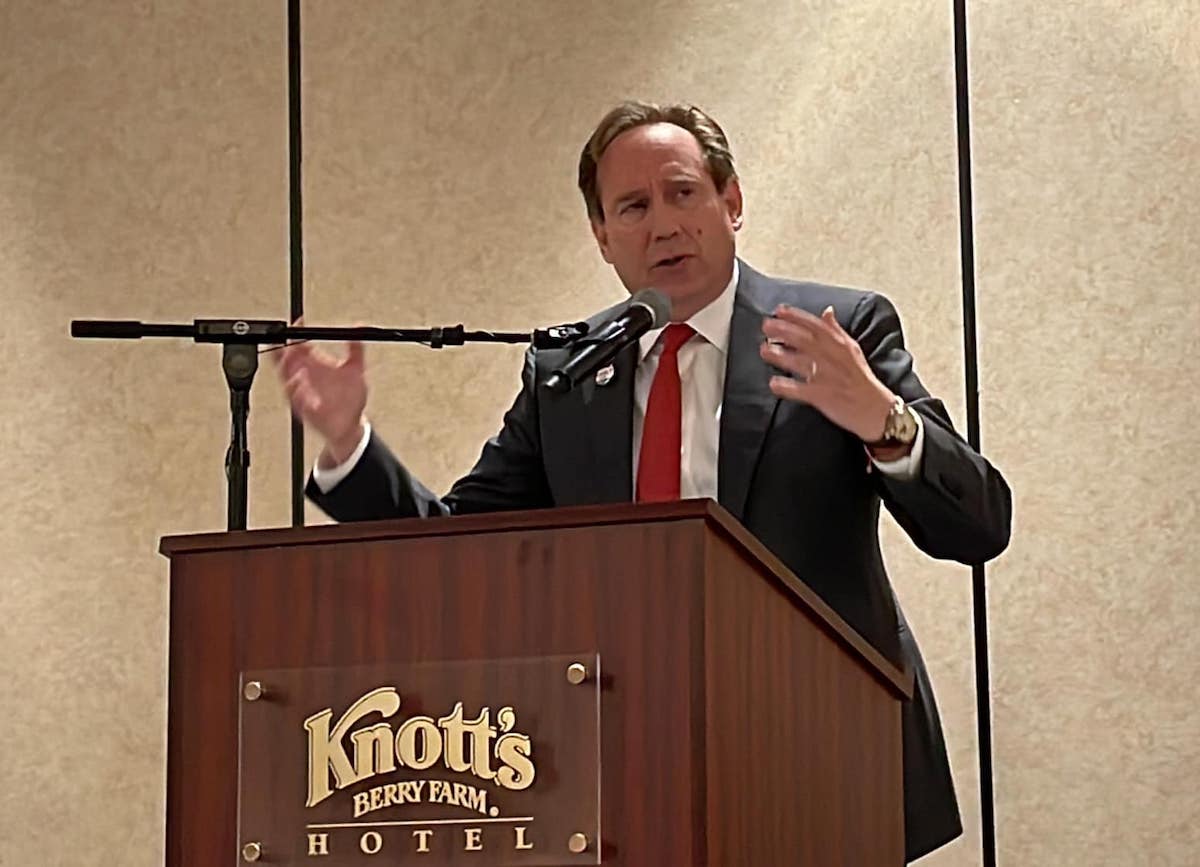
The most conservative and Trump-like candidate in the race, Early runs a business and entertainment law firm and hosts a Friday night talk radio show on the Los Angeles AM station KABC.
He’s an unapologetic supporter of the former president and claims, despite all evidence to the contrary, that the 2020 election was stolen and dismisses well-documented reports of Russian interference in the 2016 presidential race as a conspiracy theory.
As some of his top credentials, Early cites his unsuccessful lawsuits against a school over critical race theory and against news organizations over their coverage of a Republican mining magnate and candidate for U.S. Senate. He also ran for Congress in 2020, challenging Trump critic Adam Schiff for the seat representing a large swath of Los Angeles County — and lost by some 55 points.
Early says he’s running for attorney general on a key bread-and-butter issue: public safety. California is headed in the wrong direction, he argues, and insists he’s the one to fix things.
“First thing I would do on Day One is I would call a meeting,” Early said. “I would call in all the sheriffs, all the DAs, all the police chiefs, and we would have a roundtable discussion for as long as we needed to, because I want to hear from the experts on what they believe is needed to get to the bottom of what I call the creation of a criminal’s paradise here in California.”
Early said he would use the bully pulpit to help push changes to laws he sees as problematic, including Proposition 47, the 2014 ballot measure that lowered most drug possession charges to misdemeanors and raised the legal threshold to prosecute felony shoplifting.
As a lawyer, Early says, he has helped scores of people targeted by mortgage fraudsters. He also served as lead attorney in the unsuccessful effort to recall Newsom.
And he’s never served in government — something he considers an asset.