window.__IS_SSR__=true
window.__INITIAL_STATE__={
"attachmentsReducer": {
"audio_0": {
"type": "attachments",
"id": "audio_0",
"imgSizes": {
"kqedFullSize": {
"file": "https://ww2.kqed.org/news/wp-content/themes/KQED-unified/img/audio_bgs/background0.jpg"
}
}
},
"audio_1": {
"type": "attachments",
"id": "audio_1",
"imgSizes": {
"kqedFullSize": {
"file": "https://ww2.kqed.org/news/wp-content/themes/KQED-unified/img/audio_bgs/background1.jpg"
}
}
},
"audio_2": {
"type": "attachments",
"id": "audio_2",
"imgSizes": {
"kqedFullSize": {
"file": "https://ww2.kqed.org/news/wp-content/themes/KQED-unified/img/audio_bgs/background2.jpg"
}
}
},
"audio_3": {
"type": "attachments",
"id": "audio_3",
"imgSizes": {
"kqedFullSize": {
"file": "https://ww2.kqed.org/news/wp-content/themes/KQED-unified/img/audio_bgs/background3.jpg"
}
}
},
"audio_4": {
"type": "attachments",
"id": "audio_4",
"imgSizes": {
"kqedFullSize": {
"file": "https://ww2.kqed.org/news/wp-content/themes/KQED-unified/img/audio_bgs/background4.jpg"
}
}
},
"placeholder": {
"type": "attachments",
"id": "placeholder",
"imgSizes": {
"thumbnail": {
"file": "https://cdn.kqed.org/wp-content/uploads/2024/12/KQED-Default-Image-816638274-2000x1333-1-160x107.jpg",
"width": 160,
"height": 107,
"mimeType": "image/jpeg"
},
"medium": {
"file": "https://cdn.kqed.org/wp-content/uploads/2024/12/KQED-Default-Image-816638274-2000x1333-1-800x533.jpg",
"width": 800,
"height": 533,
"mimeType": "image/jpeg"
},
"medium_large": {
"file": "https://cdn.kqed.org/wp-content/uploads/2024/12/KQED-Default-Image-816638274-2000x1333-1-768x512.jpg",
"width": 768,
"height": 512,
"mimeType": "image/jpeg"
},
"large": {
"file": "https://cdn.kqed.org/wp-content/uploads/2024/12/KQED-Default-Image-816638274-2000x1333-1-1020x680.jpg",
"width": 1020,
"height": 680,
"mimeType": "image/jpeg"
},
"1536x1536": {
"file": "https://cdn.kqed.org/wp-content/uploads/2024/12/KQED-Default-Image-816638274-2000x1333-1-1536x1024.jpg",
"width": 1536,
"height": 1024,
"mimeType": "image/jpeg"
},
"fd-lrg": {
"file": "https://cdn.kqed.org/wp-content/uploads/2024/12/KQED-Default-Image-816638274-2000x1333-1-1536x1024.jpg",
"width": 1536,
"height": 1024,
"mimeType": "image/jpeg"
},
"fd-med": {
"file": "https://cdn.kqed.org/wp-content/uploads/2024/12/KQED-Default-Image-816638274-2000x1333-1-1020x680.jpg",
"width": 1020,
"height": 680,
"mimeType": "image/jpeg"
},
"fd-sm": {
"file": "https://cdn.kqed.org/wp-content/uploads/2024/12/KQED-Default-Image-816638274-2000x1333-1-800x533.jpg",
"width": 800,
"height": 533,
"mimeType": "image/jpeg"
},
"post-thumbnail": {
"file": "https://cdn.kqed.org/wp-content/uploads/2024/12/KQED-Default-Image-816638274-2000x1333-1-672x372.jpg",
"width": 672,
"height": 372,
"mimeType": "image/jpeg"
},
"twentyfourteen-full-width": {
"file": "https://cdn.kqed.org/wp-content/uploads/2024/12/KQED-Default-Image-816638274-2000x1333-1-1038x576.jpg",
"width": 1038,
"height": 576,
"mimeType": "image/jpeg"
},
"xxsmall": {
"file": "https://cdn.kqed.org/wp-content/uploads/2024/12/KQED-Default-Image-816638274-2000x1333-1-160x107.jpg",
"width": 160,
"height": 107,
"mimeType": "image/jpeg"
},
"xsmall": {
"file": "https://cdn.kqed.org/wp-content/uploads/2024/12/KQED-Default-Image-816638274-2000x1333-1-672x372.jpg",
"width": 672,
"height": 372,
"mimeType": "image/jpeg"
},
"small": {
"file": "https://cdn.kqed.org/wp-content/uploads/2024/12/KQED-Default-Image-816638274-2000x1333-1-672x372.jpg",
"width": 672,
"height": 372,
"mimeType": "image/jpeg"
},
"xlarge": {
"file": "https://cdn.kqed.org/wp-content/uploads/2024/12/KQED-Default-Image-816638274-2000x1333-1-1020x680.jpg",
"width": 1020,
"height": 680,
"mimeType": "image/jpeg"
},
"full-width": {
"file": "https://cdn.kqed.org/wp-content/uploads/2024/12/KQED-Default-Image-816638274-2000x1333-1-1920x1280.jpg",
"width": 1920,
"height": 1280,
"mimeType": "image/jpeg"
},
"guest-author-32": {
"file": "https://cdn.kqed.org/wp-content/uploads/2025/01/KQED-Default-Image-816638274-1333x1333-1-160x160.jpg",
"width": 32,
"height": 32,
"mimeType": "image/jpeg"
},
"guest-author-50": {
"file": "https://cdn.kqed.org/wp-content/uploads/2025/01/KQED-Default-Image-816638274-1333x1333-1-160x160.jpg",
"width": 50,
"height": 50,
"mimeType": "image/jpeg"
},
"guest-author-64": {
"file": "https://cdn.kqed.org/wp-content/uploads/2025/01/KQED-Default-Image-816638274-1333x1333-1-160x160.jpg",
"width": 64,
"height": 64,
"mimeType": "image/jpeg"
},
"guest-author-96": {
"file": "https://cdn.kqed.org/wp-content/uploads/2025/01/KQED-Default-Image-816638274-1333x1333-1-160x160.jpg",
"width": 96,
"height": 96,
"mimeType": "image/jpeg"
},
"guest-author-128": {
"file": "https://cdn.kqed.org/wp-content/uploads/2025/01/KQED-Default-Image-816638274-1333x1333-1-160x160.jpg",
"width": 128,
"height": 128,
"mimeType": "image/jpeg"
},
"detail": {
"file": "https://cdn.kqed.org/wp-content/uploads/2025/01/KQED-Default-Image-816638274-1333x1333-1-160x160.jpg",
"width": 160,
"height": 160,
"mimeType": "image/jpeg"
},
"kqedFullSize": {
"file": "https://cdn.kqed.org/wp-content/uploads/2024/12/KQED-Default-Image-816638274-2000x1333-1.jpg",
"width": 2000,
"height": 1333
}
}
},
"news_11891006": {
"type": "attachments",
"id": "news_11891006",
"meta": {
"index": "attachments_1716263798",
"site": "news",
"id": "11891006",
"found": true
},
"parent": 11890998,
"imgSizes": {
"twentyfourteen-full-width": {
"file": "https://ww2.kqed.org/app/uploads/sites/10/2021/10/oil-spill-20211004-1038x576.jpg",
"width": 1038,
"mimeType": "image/jpeg",
"height": 576
},
"thumbnail": {
"file": "https://ww2.kqed.org/app/uploads/sites/10/2021/10/oil-spill-20211004-160x98.jpg",
"width": 160,
"mimeType": "image/jpeg",
"height": 98
},
"post-thumbnail": {
"file": "https://ww2.kqed.org/app/uploads/sites/10/2021/10/oil-spill-20211004-672x372.jpg",
"width": 672,
"mimeType": "image/jpeg",
"height": 372
},
"kqedFullSize": {
"file": "https://ww2.kqed.org/app/uploads/sites/10/2021/10/oil-spill-20211004-scaled-e1633392366261.jpg",
"width": 1920,
"height": 1178
},
"2048x2048": {
"file": "https://ww2.kqed.org/app/uploads/sites/10/2021/10/oil-spill-20211004-2048x1256.jpg",
"width": 2048,
"mimeType": "image/jpeg",
"height": 1256
},
"large": {
"file": "https://ww2.kqed.org/app/uploads/sites/10/2021/10/oil-spill-20211004-1020x626.jpg",
"width": 1020,
"mimeType": "image/jpeg",
"height": 626
},
"1536x1536": {
"file": "https://ww2.kqed.org/app/uploads/sites/10/2021/10/oil-spill-20211004-1536x942.jpg",
"width": 1536,
"mimeType": "image/jpeg",
"height": 942
},
"full-width": {
"file": "https://ww2.kqed.org/app/uploads/sites/10/2021/10/oil-spill-20211004-1920x1178.jpg",
"width": 1920,
"mimeType": "image/jpeg",
"height": 1178
},
"medium": {
"file": "https://ww2.kqed.org/app/uploads/sites/10/2021/10/oil-spill-20211004-800x491.jpg",
"width": 800,
"mimeType": "image/jpeg",
"height": 491
}
},
"publishDate": 1633390582,
"modified": 1634837111,
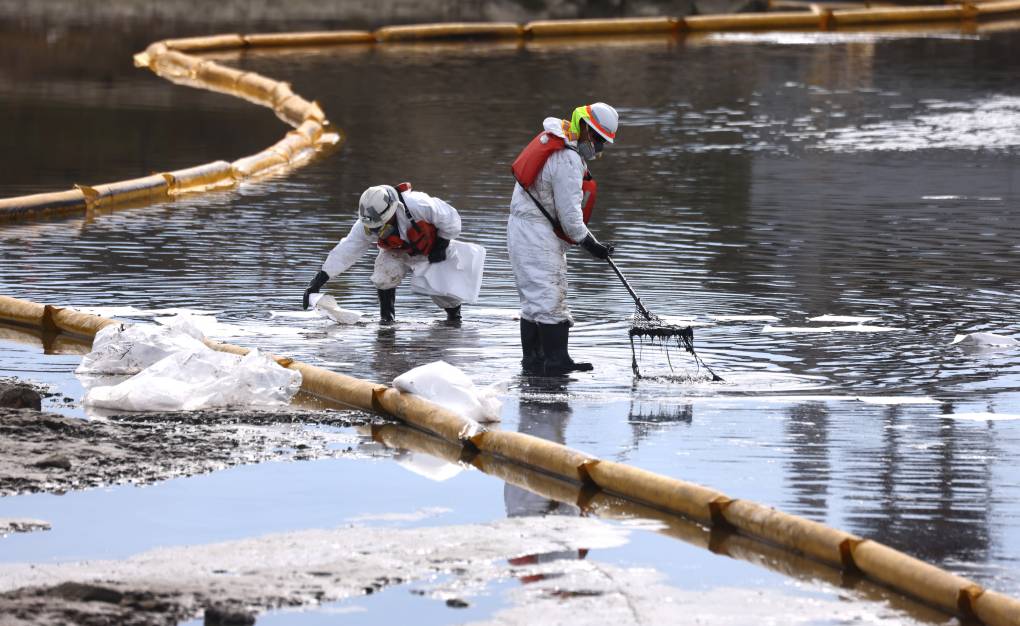
"caption": "Workers in protective suits clean oil in the Talbert Marsh wetlands on Oct. 4, 2021, in Huntington Beach, California, after an oil spill from a pipeline.",
"description": null,
"title": "Major Oil Spill Fouls Southern California Beaches",
"credit": "Mario Tama/Getty Images",
"status": "inherit",
"altTag": "Two people in white suits, orange life jackets, boots and gloves rake oil amid yellow inflatable booms in ankle-deep water.",
"isLoading": false,
"fetchFailed": false
},
"news_11890821": {
"type": "attachments",
"id": "news_11890821",
"meta": {
"index": "attachments_1716263798",
"site": "news",
"id": "11890821",
"found": true
},
"parent": 11890773,
"imgSizes": {
"twentyfourteen-full-width": {
"file": "https://ww2.kqed.org/app/uploads/sites/10/2021/10/KNR_SEA_LEVEL_no-font-1038x576.jpg",
"width": 1038,
"mimeType": "image/jpeg",
"height": 576
},
"thumbnail": {
"file": "https://ww2.kqed.org/app/uploads/sites/10/2021/10/KNR_SEA_LEVEL_no-font-160x81.jpg",
"width": 160,
"mimeType": "image/jpeg",
"height": 81
},
"post-thumbnail": {
"file": "https://ww2.kqed.org/app/uploads/sites/10/2021/10/KNR_SEA_LEVEL_no-font-672x372.jpg",
"width": 672,
"mimeType": "image/jpeg",
"height": 372
},
"kqedFullSize": {
"file": "https://ww2.kqed.org/app/uploads/sites/10/2021/10/KNR_SEA_LEVEL_no-font.jpg",
"width": 1580,
"height": 804
},
"large": {
"file": "https://ww2.kqed.org/app/uploads/sites/10/2021/10/KNR_SEA_LEVEL_no-font-1020x519.jpg",
"width": 1020,
"mimeType": "image/jpeg",
"height": 519
},
"1536x1536": {
"file": "https://ww2.kqed.org/app/uploads/sites/10/2021/10/KNR_SEA_LEVEL_no-font-1536x782.jpg",
"width": 1536,
"mimeType": "image/jpeg",
"height": 782
},
"medium": {
"file": "https://ww2.kqed.org/app/uploads/sites/10/2021/10/KNR_SEA_LEVEL_no-font-800x407.jpg",
"width": 800,
"mimeType": "image/jpeg",
"height": 407
}
},
"publishDate": 1633130411,
"modified": 1633130411,
"caption": null,
"description": null,
"title": "KNR_SEA_LEVEL_no font",
"credit": null,
"status": "inherit",
"altTag": null,
"isLoading": false,
"fetchFailed": false
},
"news_11889419": {
"type": "attachments",
"id": "news_11889419",
"meta": {
"index": "attachments_1716263798",
"site": "news",
"id": "11889419",
"found": true
},
"parent": 11889417,
"imgSizes": {
"twentyfourteen-full-width": {
"file": "https://ww2.kqed.org/app/uploads/sites/10/2021/09/GettyImages-1306754904-1038x576.jpg",
"width": 1038,
"mimeType": "image/jpeg",
"height": 576
},
"thumbnail": {
"file": "https://ww2.kqed.org/app/uploads/sites/10/2021/09/GettyImages-1306754904-160x109.jpg",
"width": 160,
"mimeType": "image/jpeg",
"height": 109
},
"post-thumbnail": {
"file": "https://ww2.kqed.org/app/uploads/sites/10/2021/09/GettyImages-1306754904-672x372.jpg",
"width": 672,
"mimeType": "image/jpeg",
"height": 372
},
"kqedFullSize": {
"file": "https://ww2.kqed.org/app/uploads/sites/10/2021/09/GettyImages-1306754904-scaled.jpg",
"width": 2560,
"height": 1745
},
"2048x2048": {
"file": "https://ww2.kqed.org/app/uploads/sites/10/2021/09/GettyImages-1306754904-2048x1396.jpg",
"width": 2048,
"mimeType": "image/jpeg",
"height": 1396
},
"large": {
"file": "https://ww2.kqed.org/app/uploads/sites/10/2021/09/GettyImages-1306754904-1020x695.jpg",
"width": 1020,
"mimeType": "image/jpeg",
"height": 695
},
"1536x1536": {
"file": "https://ww2.kqed.org/app/uploads/sites/10/2021/09/GettyImages-1306754904-1536x1047.jpg",
"width": 1536,
"mimeType": "image/jpeg",
"height": 1047
},
"full-width": {
"file": "https://ww2.kqed.org/app/uploads/sites/10/2021/09/GettyImages-1306754904-1920x1309.jpg",
"width": 1920,
"mimeType": "image/jpeg",
"height": 1309
},
"medium": {
"file": "https://ww2.kqed.org/app/uploads/sites/10/2021/09/GettyImages-1306754904-800x545.jpg",
"width": 800,
"mimeType": "image/jpeg",
"height": 545
}
},
"publishDate": 1632330042,
"modified": 1632347229,
"caption": "Larry Green, right, receives a Band-Aid from registered nurse Teresa Frey after he received his second dose of the Moderna COVID-19 vaccine at Lincoln Memorial Congregational Church UCC on March 12, 2021 in Los Angeles.",
"description": "Larry Green, right, receives a Band-Aid from registered nurse Teresa Frey after he received his second dose of the Moderna COVID-19 vaccine at Lincoln Memorial Congregational Church UCC on March 12, 2021 in Los Angeles.",
"title": "Pop-Up COVID-19 Vaccine Clinic Held At Predominantly Black Church In L.A.",
"credit": "Mario Tama/Getty Images",
"status": "inherit",
"altTag": "Larry Green looks at Teresa Frey as she applies a Band-Aid on his right shoulder.",
"isLoading": false,
"fetchFailed": false
},
"news_11889138": {
"type": "attachments",
"id": "news_11889138",
"meta": {
"index": "attachments_1716263798",
"site": "news",
"id": "11889138",
"found": true
},
"parent": 11889113,
"imgSizes": {
"twentyfourteen-full-width": {
"file": "https://ww2.kqed.org/app/uploads/sites/10/2021/09/GettyImages-1321379102-1038x576.jpg",
"width": 1038,
"mimeType": "image/jpeg",
"height": 576
},
"thumbnail": {
"file": "https://ww2.kqed.org/app/uploads/sites/10/2021/09/GettyImages-1321379102-160x109.jpg",
"width": 160,
"mimeType": "image/jpeg",
"height": 109
},
"post-thumbnail": {
"file": "https://ww2.kqed.org/app/uploads/sites/10/2021/09/GettyImages-1321379102-672x372.jpg",
"width": 672,
"mimeType": "image/jpeg",
"height": 372
},
"kqedFullSize": {
"file": "https://ww2.kqed.org/app/uploads/sites/10/2021/09/GettyImages-1321379102-scaled.jpg",
"width": 2560,
"height": 1739
},
"2048x2048": {
"file": "https://ww2.kqed.org/app/uploads/sites/10/2021/09/GettyImages-1321379102-2048x1392.jpg",
"width": 2048,
"mimeType": "image/jpeg",
"height": 1392
},
"large": {
"file": "https://ww2.kqed.org/app/uploads/sites/10/2021/09/GettyImages-1321379102-1020x693.jpg",
"width": 1020,
"mimeType": "image/jpeg",
"height": 693
},
"1536x1536": {
"file": "https://ww2.kqed.org/app/uploads/sites/10/2021/09/GettyImages-1321379102-1536x1044.jpg",
"width": 1536,
"mimeType": "image/jpeg",
"height": 1044
},
"full-width": {
"file": "https://ww2.kqed.org/app/uploads/sites/10/2021/09/GettyImages-1321379102-1920x1305.jpg",
"width": 1920,
"mimeType": "image/jpeg",
"height": 1305
},
"medium": {
"file": "https://ww2.kqed.org/app/uploads/sites/10/2021/09/GettyImages-1321379102-800x544.jpg",
"width": 800,
"mimeType": "image/jpeg",
"height": 544
}
},
"publishDate": 1632165955,
"modified": 1644435895,
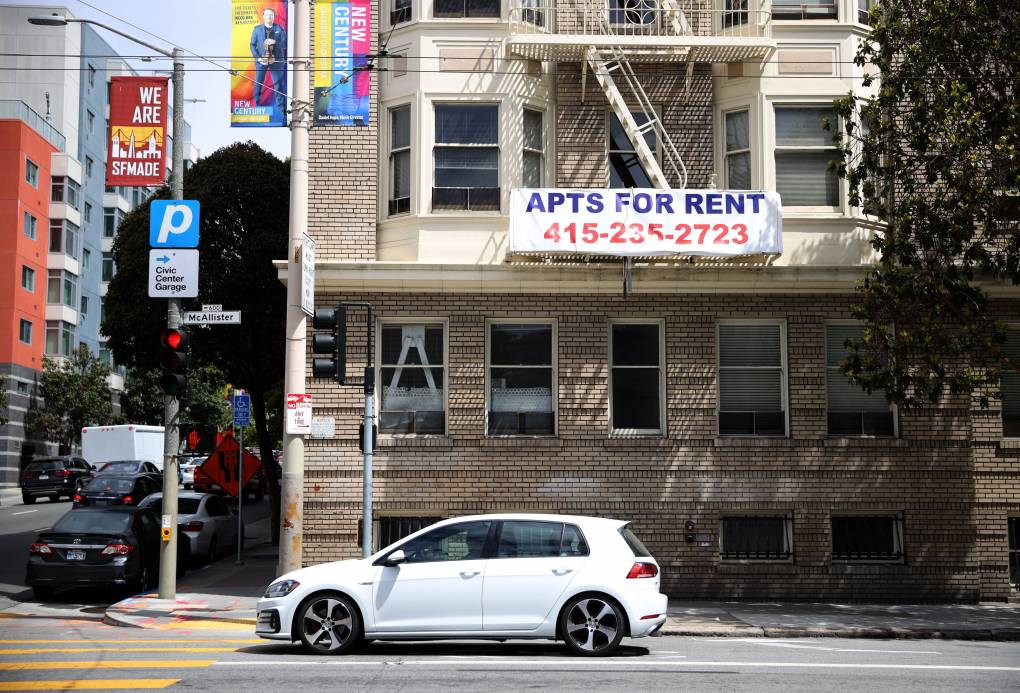
"caption": "A \"For Rent\" sign posted on the exterior of an apartment building on June 2, 2021, in San Francisco.",
"description": "A \"For Rent\" sign posted on the exterior of an apartment building on June 2, 2021, in San Francisco.",
"title": "Rents Rebound In San Francisco After Pandemic-Related Decline",
"credit": "Justin Sullivan/Getty Images",
"status": "inherit",
"altTag": "A \"For Rent\" sign posted on the exterior of an apartment building. A white car is parked in front of the building.",
"isLoading": false,
"fetchFailed": false
},
"news_11888063": {
"type": "attachments",
"id": "news_11888063",
"meta": {
"index": "attachments_1716263798",
"site": "news",
"id": "11888063",
"found": true
},
"parent": 11888051,
"imgSizes": {
"twentyfourteen-full-width": {
"file": "https://ww2.kqed.org/app/uploads/sites/10/2021/09/dv-camag5-1038x576.jpg",
"width": 1038,
"mimeType": "image/jpeg",
"height": 576
},
"thumbnail": {
"file": "https://ww2.kqed.org/app/uploads/sites/10/2021/09/dv-camag5-160x108.jpg",
"width": 160,
"mimeType": "image/jpeg",
"height": 108
},
"post-thumbnail": {
"file": "https://ww2.kqed.org/app/uploads/sites/10/2021/09/dv-camag5-672x372.jpg",
"width": 672,
"mimeType": "image/jpeg",
"height": 372
},
"kqedFullSize": {
"file": "https://ww2.kqed.org/app/uploads/sites/10/2021/09/dv-camag5-e1631310091518.jpg",
"width": 1920,
"height": 1296
},
"large": {
"file": "https://ww2.kqed.org/app/uploads/sites/10/2021/09/dv-camag5-1020x689.jpg",
"width": 1020,
"mimeType": "image/jpeg",
"height": 689
},
"1536x1536": {
"file": "https://ww2.kqed.org/app/uploads/sites/10/2021/09/dv-camag5-1536x1037.jpg",
"width": 1536,
"mimeType": "image/jpeg",
"height": 1037
},
"full-width": {
"file": "https://ww2.kqed.org/app/uploads/sites/10/2021/09/dv-camag5-1920x1296.jpg",
"width": 1920,
"mimeType": "image/jpeg",
"height": 1296
},
"medium": {
"file": "https://ww2.kqed.org/app/uploads/sites/10/2021/09/dv-camag5-800x540.jpg",
"width": 800,
"mimeType": "image/jpeg",
"height": 540
}
},
"publishDate": 1631310073,
"modified": 1631310114,
"caption": null,
"description": null,
"title": "dv-camag5",
"credit": "Illustration by Anna Vignet/KQED",
"status": "inherit",
"altTag": null,
"isLoading": false,
"fetchFailed": false
},
"news_11888107": {
"type": "attachments",
"id": "news_11888107",
"meta": {
"index": "attachments_1716263798",
"site": "news",
"id": "11888107",
"found": true
},
"parent": 11888013,
"imgSizes": {
"twentyfourteen-full-width": {
"file": "https://ww2.kqed.org/app/uploads/sites/10/2021/09/MARQUEE-901-1038x576.jpeg",
"width": 1038,
"mimeType": "image/jpeg",
"height": 576
},
"thumbnail": {
"file": "https://ww2.kqed.org/app/uploads/sites/10/2021/09/MARQUEE-901-160x90.jpeg",
"width": 160,
"mimeType": "image/jpeg",
"height": 90
},
"post-thumbnail": {
"file": "https://ww2.kqed.org/app/uploads/sites/10/2021/09/MARQUEE-901-672x372.jpeg",
"width": 672,
"mimeType": "image/jpeg",
"height": 372
},
"kqedFullSize": {
"file": "https://ww2.kqed.org/app/uploads/sites/10/2021/09/MARQUEE-901.jpeg",
"width": 1920,
"height": 1080
},
"large": {
"file": "https://ww2.kqed.org/app/uploads/sites/10/2021/09/MARQUEE-901-1020x574.jpeg",
"width": 1020,
"mimeType": "image/jpeg",
"height": 574
},
"1536x1536": {
"file": "https://ww2.kqed.org/app/uploads/sites/10/2021/09/MARQUEE-901-1536x864.jpeg",
"width": 1536,
"mimeType": "image/jpeg",
"height": 864
},
"medium": {
"file": "https://ww2.kqed.org/app/uploads/sites/10/2021/09/MARQUEE-901-800x450.jpeg",
"width": 800,
"mimeType": "image/jpeg",
"height": 450
}
},
"publishDate": 1631317080,
"modified": 1631317080,
"caption": null,
"description": null,
"title": "MARQUEE 901",
"credit": null,
"status": "inherit",
"altTag": null,
"isLoading": false,
"fetchFailed": false
},
"news_11887807": {
"type": "attachments",
"id": "news_11887807",
"meta": {
"index": "attachments_1716263798",
"site": "news",
"id": "11887807",
"found": true
},
"parent": 11887723,
"imgSizes": {
"twentyfourteen-full-width": {
"file": "https://ww2.kqed.org/app/uploads/sites/10/2021/09/GettyImages-1235058911-1038x576.jpg",
"width": 1038,
"mimeType": "image/jpeg",
"height": 576
},
"thumbnail": {
"file": "https://ww2.kqed.org/app/uploads/sites/10/2021/09/GettyImages-1235058911-160x106.jpg",
"width": 160,
"mimeType": "image/jpeg",
"height": 106
},
"post-thumbnail": {
"file": "https://ww2.kqed.org/app/uploads/sites/10/2021/09/GettyImages-1235058911-672x372.jpg",
"width": 672,
"mimeType": "image/jpeg",
"height": 372
},
"kqedFullSize": {
"file": "https://ww2.kqed.org/app/uploads/sites/10/2021/09/GettyImages-1235058911-scaled.jpg",
"width": 2560,
"height": 1696
},
"2048x2048": {
"file": "https://ww2.kqed.org/app/uploads/sites/10/2021/09/GettyImages-1235058911-2048x1357.jpg",
"width": 2048,
"mimeType": "image/jpeg",
"height": 1357
},
"large": {
"file": "https://ww2.kqed.org/app/uploads/sites/10/2021/09/GettyImages-1235058911-1020x676.jpg",
"width": 1020,
"mimeType": "image/jpeg",
"height": 676
},
"1536x1536": {
"file": "https://ww2.kqed.org/app/uploads/sites/10/2021/09/GettyImages-1235058911-1536x1018.jpg",
"width": 1536,
"mimeType": "image/jpeg",
"height": 1018
},
"full-width": {
"file": "https://ww2.kqed.org/app/uploads/sites/10/2021/09/GettyImages-1235058911-1920x1272.jpg",
"width": 1920,
"mimeType": "image/jpeg",
"height": 1272
},
"medium": {
"file": "https://ww2.kqed.org/app/uploads/sites/10/2021/09/GettyImages-1235058911-800x530.jpg",
"width": 800,
"mimeType": "image/jpeg",
"height": 530
}
},
"publishDate": 1631129991,
"modified": 1631146953,
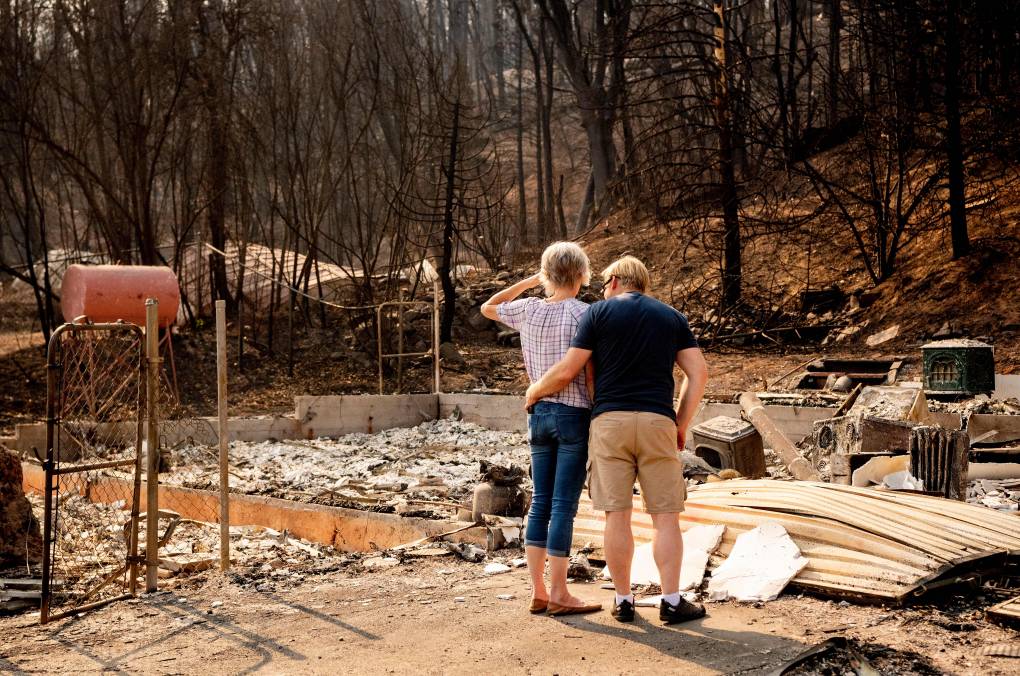
"caption": "Curtis Weight, right, embraces his wife Wendy Weight, left, as they view the remains of their home that burned in the Dixie Fire in Greenville on Sept. 4, 2021. In August, PG&E said its equipment may have been involved in the start of a small wildfire that merged with the Dixie Fire.",
"description": "Curtis Weight, right, embraces his wife Wendy Weight, left, as they view the remains of their home that burnt in the Dixie fire in Greenville, California on Saturday, September 4, 2021.",
"title": "US-FIRE",
"credit": "Josh Edelson/AFP via Getty Images",
"status": "inherit",
"altTag": "Two people embrace in front of scorched ruins and look away from the camera.",
"isLoading": false,
"fetchFailed": false
},
"news_11887701": {
"type": "attachments",
"id": "news_11887701",
"meta": {
"index": "attachments_1716263798",
"site": "news",
"id": "11887701",
"found": true
},
"parent": 11886590,
"imgSizes": {
"twentyfourteen-full-width": {
"file": "https://ww2.kqed.org/app/uploads/sites/10/2021/09/GettyImages-1337521051-1024x576.jpg",
"width": 1024,
"mimeType": "image/jpeg",
"height": 576
},
"thumbnail": {
"file": "https://ww2.kqed.org/app/uploads/sites/10/2021/09/GettyImages-1337521051-160x105.jpg",
"width": 160,
"mimeType": "image/jpeg",
"height": 105
},
"post-thumbnail": {
"file": "https://ww2.kqed.org/app/uploads/sites/10/2021/09/GettyImages-1337521051-672x372.jpg",
"width": 672,
"mimeType": "image/jpeg",
"height": 372
},
"kqedFullSize": {
"file": "https://ww2.kqed.org/app/uploads/sites/10/2021/09/GettyImages-1337521051.jpg",
"width": 1024,
"height": 674
},
"large": {
"file": "https://ww2.kqed.org/app/uploads/sites/10/2021/09/GettyImages-1337521051-1020x671.jpg",
"width": 1020,
"mimeType": "image/jpeg",
"height": 671
},
"medium": {
"file": "https://ww2.kqed.org/app/uploads/sites/10/2021/09/GettyImages-1337521051-800x527.jpg",
"width": 800,
"mimeType": "image/jpeg",
"height": 527
}
},
"publishDate": 1631044623,
"modified": 1631061402,
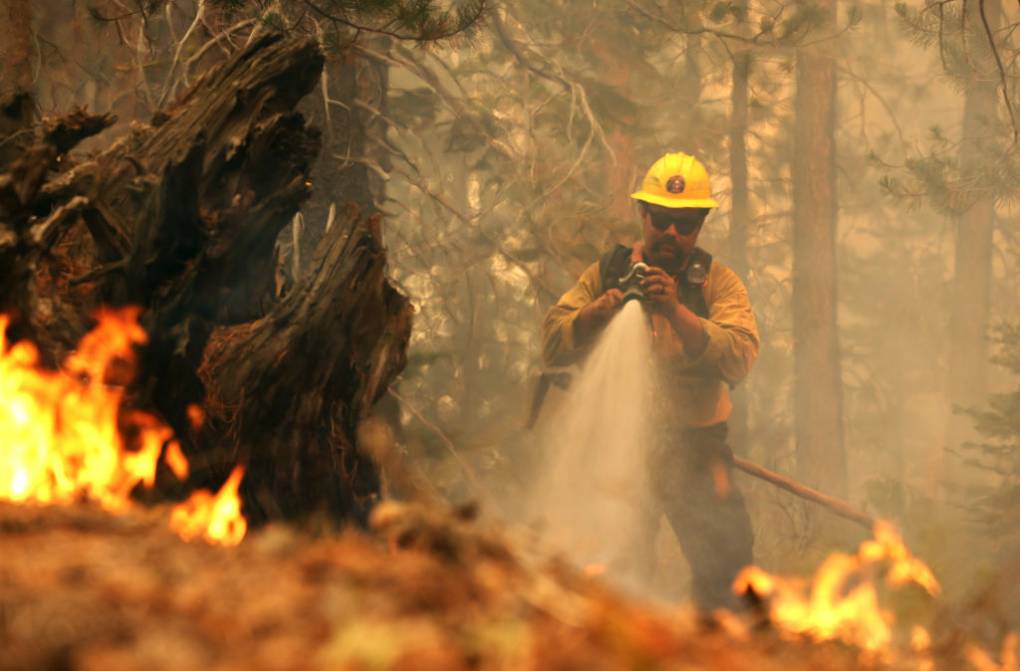
"caption": "A firefighter sprays down hot spots while battling the Caldor Fire on Aug. 31, 2021 in Meyers.",
"description": null,
"title": "Massive Caldor Fire Threatens Lake Tahoe Area Of California",
"credit": "Justin Sullivan/Getty Images",
"status": "inherit",
"altTag": null,
"isLoading": false,
"fetchFailed": false
},
"news_11887477": {
"type": "attachments",
"id": "news_11887477",
"meta": {
"index": "attachments_1716263798",
"site": "news",
"id": "11887477",
"found": true
},
"parent": 11887405,
"imgSizes": {
"twentyfourteen-full-width": {
"file": "https://ww2.kqed.org/app/uploads/sites/10/2021/09/Firefighter-detail-1038x576.jpg",
"width": 1038,
"mimeType": "image/jpeg",
"height": 576
},
"thumbnail": {
"file": "https://ww2.kqed.org/app/uploads/sites/10/2021/09/Firefighter-detail-160x106.jpg",
"width": 160,
"mimeType": "image/jpeg",
"height": 106
},
"post-thumbnail": {
"file": "https://ww2.kqed.org/app/uploads/sites/10/2021/09/Firefighter-detail-672x372.jpg",
"width": 672,
"mimeType": "image/jpeg",
"height": 372
},
"kqedFullSize": {
"file": "https://ww2.kqed.org/app/uploads/sites/10/2021/09/Firefighter-detail.jpg",
"width": 1398,
"height": 922
},
"large": {
"file": "https://ww2.kqed.org/app/uploads/sites/10/2021/09/Firefighter-detail-1020x673.jpg",
"width": 1020,
"mimeType": "image/jpeg",
"height": 673
},
"medium": {
"file": "https://ww2.kqed.org/app/uploads/sites/10/2021/09/Firefighter-detail-800x528.jpg",
"width": 800,
"mimeType": "image/jpeg",
"height": 528
}
},
"publishDate": 1630626687,
"modified": 1630709410,
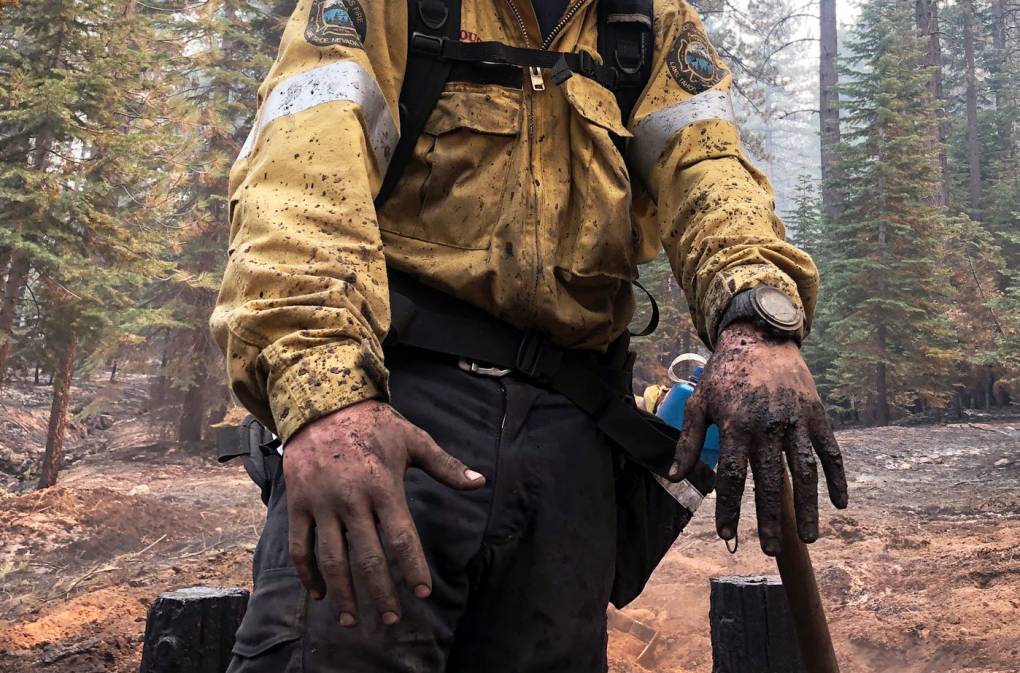
"caption": "Micah Conant, a firefighter with the Tahoe Douglas Fire Department, has been working the Caldor Fire since Sunday, with very little sleep.",
"description": "Micah Conant, a firefighter with the Tahoe-Douglas Fire Department, has been working the Caldor Fire since Sunday, with very little sleep.",
"title": "Firefighter-detail",
"credit": "Raquel Maria Dillon/KQED",
"status": "inherit",
"altTag": "Close-up of a firefighter's dirty hands and clothing.",
"isLoading": false,
"fetchFailed": false
},
"news_11887295": {
"type": "attachments",
"id": "news_11887295",
"meta": {
"index": "attachments_1716263798",
"site": "news",
"id": "11887295",
"found": true
},
"parent": 11887158,
"imgSizes": {
"twentyfourteen-full-width": {
"file": "https://ww2.kqed.org/app/uploads/sites/10/2021/09/IMG_7268-1038x576.jpg",
"width": 1038,
"mimeType": "image/jpeg",
"height": 576
},
"thumbnail": {
"file": "https://ww2.kqed.org/app/uploads/sites/10/2021/09/IMG_7268-160x107.jpg",
"width": 160,
"mimeType": "image/jpeg",
"height": 107
},
"post-thumbnail": {
"file": "https://ww2.kqed.org/app/uploads/sites/10/2021/09/IMG_7268-672x372.jpg",
"width": 672,
"mimeType": "image/jpeg",
"height": 372
},
"kqedFullSize": {
"file": "https://ww2.kqed.org/app/uploads/sites/10/2021/09/IMG_7268.jpg",
"width": 1620,
"height": 1080
},
"large": {
"file": "https://ww2.kqed.org/app/uploads/sites/10/2021/09/IMG_7268-1020x680.jpg",
"width": 1020,
"mimeType": "image/jpeg",
"height": 680
},
"1536x1536": {
"file": "https://ww2.kqed.org/app/uploads/sites/10/2021/09/IMG_7268-1536x1024.jpg",
"width": 1536,
"mimeType": "image/jpeg",
"height": 1024
},
"medium": {
"file": "https://ww2.kqed.org/app/uploads/sites/10/2021/09/IMG_7268-800x533.jpg",
"width": 800,
"mimeType": "image/jpeg",
"height": 533
}
},
"publishDate": 1630534423,
"modified": 1630631991,
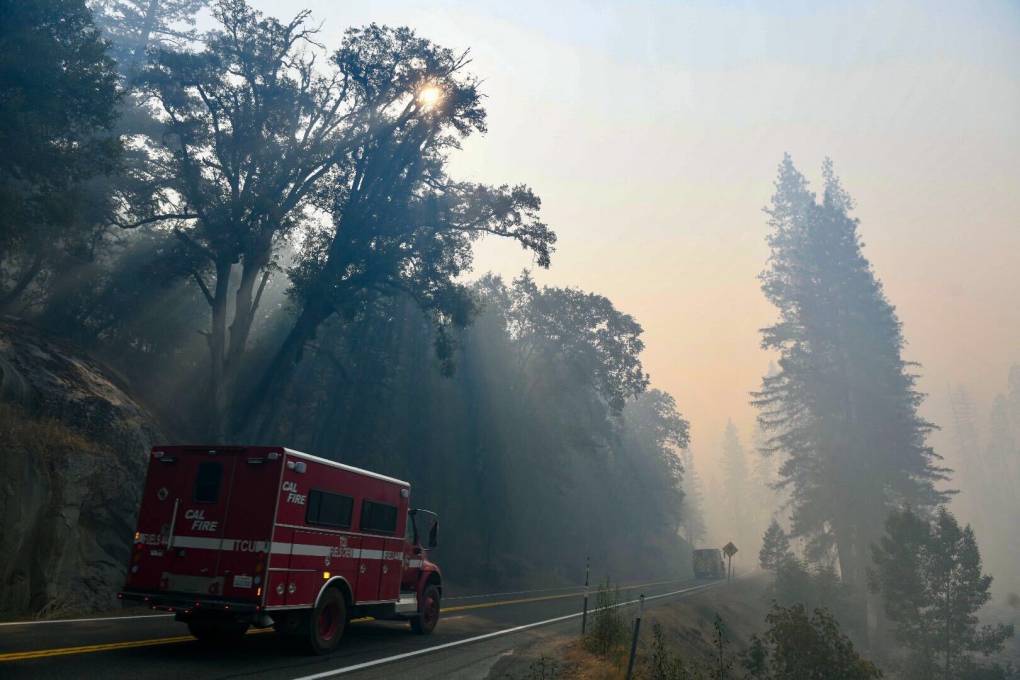
"caption": "A fire truck drives through smoky haze from the Caldor Fire on Highway 50 near Pollock Pines and Strawberry Campground on Tues., Aug. 31, 2021. ",
"description": null,
"title": "IMG_7268",
"credit": "Beth LaBerge/KQED",
"status": "inherit",
"altTag": null,
"isLoading": false,
"fetchFailed": false
},
"news_11887046": {
"type": "attachments",
"id": "news_11887046",
"meta": {
"index": "attachments_1716263798",
"site": "news",
"id": "11887046",
"found": true
},
"parent": 11886920,
"imgSizes": {
"twentyfourteen-full-width": {
"file": "https://ww2.kqed.org/app/uploads/sites/10/2021/08/28339770096_6297800ba6_o-1038x576.jpg",
"width": 1038,
"mimeType": "image/jpeg",
"height": 576
},
"thumbnail": {
"file": "https://ww2.kqed.org/app/uploads/sites/10/2021/08/28339770096_6297800ba6_o-160x107.jpg",
"width": 160,
"mimeType": "image/jpeg",
"height": 107
},
"post-thumbnail": {
"file": "https://ww2.kqed.org/app/uploads/sites/10/2021/08/28339770096_6297800ba6_o-672x372.jpg",
"width": 672,
"mimeType": "image/jpeg",
"height": 372
},
"kqedFullSize": {
"file": "https://ww2.kqed.org/app/uploads/sites/10/2021/08/28339770096_6297800ba6_o-scaled-e1630445170174.jpg",
"width": 1920,
"height": 1280
},
"2048x2048": {
"file": "https://ww2.kqed.org/app/uploads/sites/10/2021/08/28339770096_6297800ba6_o-2048x1365.jpg",
"width": 2048,
"mimeType": "image/jpeg",
"height": 1365
},
"large": {
"file": "https://ww2.kqed.org/app/uploads/sites/10/2021/08/28339770096_6297800ba6_o-1020x680.jpg",
"width": 1020,
"mimeType": "image/jpeg",
"height": 680
},
"1536x1536": {
"file": "https://ww2.kqed.org/app/uploads/sites/10/2021/08/28339770096_6297800ba6_o-1536x1024.jpg",
"width": 1536,
"mimeType": "image/jpeg",
"height": 1024
},
"full-width": {
"file": "https://ww2.kqed.org/app/uploads/sites/10/2021/08/28339770096_6297800ba6_o-1920x1280.jpg",
"width": 1920,
"mimeType": "image/jpeg",
"height": 1280
},
"medium": {
"file": "https://ww2.kqed.org/app/uploads/sites/10/2021/08/28339770096_6297800ba6_o-800x533.jpg",
"width": 800,
"mimeType": "image/jpeg",
"height": 533
}
},
"publishDate": 1630445145,
"modified": 1630452925,
"caption": "Larry Elder speaking at the 2016 FreedomFest at Planet Hollywood in Las Vegas. The radio talk show host is running for California governor as a Republican.",
"description": "Larry Elder speaking at the 2016 FreedomFest at Planet Hollywood in Las Vegas, Nevada. The radio talk show host is running for California governor as a Republican.",
"title": "28339770096_6297800ba6_o",
"credit": "Gage Skidmore/Flickr",
"status": "inherit",
"altTag": "Larry Elder in a dark suit and pink tie, with a projected image of a phoenix on the wall behind him",
"isLoading": false,
"fetchFailed": false
},
"news_11886259": {
"type": "attachments",
"id": "news_11886259",
"meta": {
"index": "attachments_1716263798",
"site": "news",
"id": "11886259",
"found": true
},
"parent": 11885994,
"imgSizes": {
"twentyfourteen-full-width": {
"file": "https://ww2.kqed.org/app/uploads/sites/10/2021/08/RS45459_007_KQED_Oakland_RegistrarofVoters_10272020-qut-1038x576.jpg",
"width": 1038,
"mimeType": "image/jpeg",
"height": 576
},
"thumbnail": {
"file": "https://ww2.kqed.org/app/uploads/sites/10/2021/08/RS45459_007_KQED_Oakland_RegistrarofVoters_10272020-qut-160x107.jpg",
"width": 160,
"mimeType": "image/jpeg",
"height": 107
},
"post-thumbnail": {
"file": "https://ww2.kqed.org/app/uploads/sites/10/2021/08/RS45459_007_KQED_Oakland_RegistrarofVoters_10272020-qut-672x372.jpg",
"width": 672,
"mimeType": "image/jpeg",
"height": 372
},
"kqedFullSize": {
"file": "https://ww2.kqed.org/app/uploads/sites/10/2021/08/RS45459_007_KQED_Oakland_RegistrarofVoters_10272020-qut.jpg",
"width": 1920,
"height": 1280
},
"large": {
"file": "https://ww2.kqed.org/app/uploads/sites/10/2021/08/RS45459_007_KQED_Oakland_RegistrarofVoters_10272020-qut-1020x680.jpg",
"width": 1020,
"mimeType": "image/jpeg",
"height": 680
},
"1536x1536": {
"file": "https://ww2.kqed.org/app/uploads/sites/10/2021/08/RS45459_007_KQED_Oakland_RegistrarofVoters_10272020-qut-1536x1024.jpg",
"width": 1536,
"mimeType": "image/jpeg",
"height": 1024
},
"medium": {
"file": "https://ww2.kqed.org/app/uploads/sites/10/2021/08/RS45459_007_KQED_Oakland_RegistrarofVoters_10272020-qut-800x533.jpg",
"width": 800,
"mimeType": "image/jpeg",
"height": 533
}
},
"publishDate": 1629912439,
"modified": 1629912548,
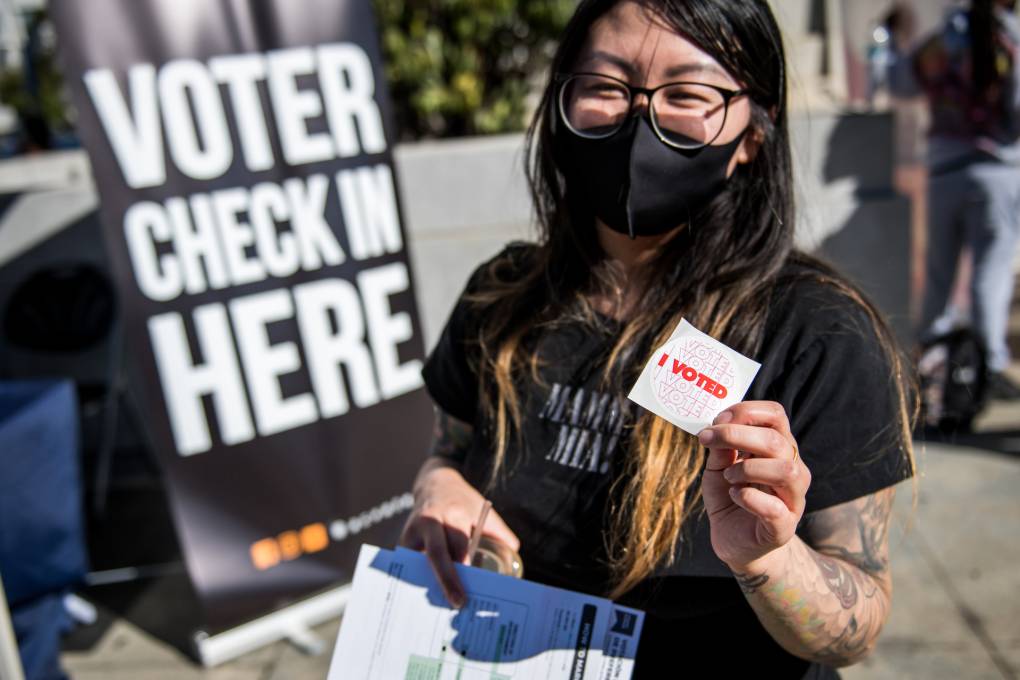
"caption": "Bei Kao holds her \"I Voted\" sticker after voting in Oakland on Oct. 27, 2020.",
"description": null,
"title": "newsom-recall-early-voting",
"credit": "Beth LaBerge/KQED",
"status": "inherit",
"altTag": null,
"isLoading": false,
"fetchFailed": false
}
},
"audioPlayerReducer": {
"postId": "stream_live",
"isPaused": true,
"isPlaying": false,
"pfsActive": false,
"pledgeModalIsOpen": true,
"playerDrawerIsOpen": false,
"liveAudioPlayStartedAt": 0,
"liveAudioPlayContext": ""
},
"authorsReducer": {
"byline_news_11890998": {
"type": "authors",
"id": "byline_news_11890998",
"meta": {
"override": true
},
"slug": "byline_news_11890998",
"name": "Amy Taxin and Christopher Weber\u003cbr>Associated Press",
"isLoading": false
},
"byline_news_11889417": {
"type": "authors",
"id": "byline_news_11889417",
"meta": {
"override": true
},
"slug": "byline_news_11889417",
"name": "Amy Taxin \u003cbr> The Associated Press",
"isLoading": false
},
"byline_news_11889113": {
"type": "authors",
"id": "byline_news_11889113",
"meta": {
"override": true
},
"slug": "byline_news_11889113",
"name": "\u003ca href=\"https://calmatters.org/author/manuela-tobias/\">Manuela Tobias\u003c/a>",
"isLoading": false
},
"byline_news_11888051": {
"type": "authors",
"id": "byline_news_11888051",
"meta": {
"override": true
},
"slug": "byline_news_11888051",
"name": "\u003ca href=\"https://twitter.com/leeromney?lang=en\">Lee Romney\u003c/a>",
"isLoading": false
},
"dmarks": {
"type": "authors",
"id": "182",
"meta": {
"index": "authors_1716337520",
"id": "182",
"found": true
},
"name": "David Marks",
"firstName": "David",
"lastName": "Marks",
"slug": "dmarks",
"email": "dmarks@kqed.org",
"display_author_email": false,
"staff_mastheads": [],
"title": "KQED Editor",
"bio": "David Marks is a senior digital editor for KQED News. \u003c/a>Reach him at dmarks@kqed.org.",
"avatar": "https://secure.gravatar.com/avatar/b88bd6227ce6cb96ae33fefaf42b2a29?s=600&d=mm&r=g",
"twitter": "divadskram",
"facebook": null,
"instagram": null,
"linkedin": null,
"sites": [
{
"site": "news",
"roles": []
},
{
"site": "science",
"roles": []
},
{
"site": "perspectives",
"roles": []
},
{
"site": "liveblog",
"roles": []
}
],
"headData": {
"title": "David Marks | KQED",
"description": "KQED Editor",
"ogImgSrc": "https://secure.gravatar.com/avatar/b88bd6227ce6cb96ae33fefaf42b2a29?s=600&d=mm&r=g",
"twImgSrc": "https://secure.gravatar.com/avatar/b88bd6227ce6cb96ae33fefaf42b2a29?s=600&d=mm&r=g"
},
"isLoading": false,
"link": "/author/dmarks"
},
"gmarzorati": {
"type": "authors",
"id": "227",
"meta": {
"index": "authors_1716337520",
"id": "227",
"found": true
},
"name": "Guy Marzorati",
"firstName": "Guy",
"lastName": "Marzorati",
"slug": "gmarzorati",
"email": "gmarzorati@KQED.org",
"display_author_email": true,
"staff_mastheads": [
"news"
],
"title": "Correspondent",
"bio": "Guy Marzorati is a correspondent on KQED's California Politics and Government Desk, based in San Jose. A graduate of Santa Clara University, Guy joined KQED in 2013. He reports on state and local politics and produces KQED's digital voter guide.",
"avatar": "https://secure.gravatar.com/avatar/e7038b8dbfd55b104369b76b1cd0b9de?s=600&d=blank&r=g",
"twitter": "guymarzorati",
"facebook": null,
"instagram": null,
"linkedin": null,
"sites": [
{
"site": "",
"roles": [
"editor"
]
},
{
"site": "news",
"roles": [
"editor"
]
},
{
"site": "science",
"roles": [
"editor"
]
},
{
"site": "forum",
"roles": [
"editor"
]
},
{
"site": "elections",
"roles": [
"editor"
]
},
{
"site": "liveblog",
"roles": [
"editor"
]
}
],
"headData": {
"title": "Guy Marzorati | KQED",
"description": "Correspondent",
"ogImgSrc": "https://secure.gravatar.com/avatar/e7038b8dbfd55b104369b76b1cd0b9de?s=600&d=blank&r=g",
"twImgSrc": "https://secure.gravatar.com/avatar/e7038b8dbfd55b104369b76b1cd0b9de?s=600&d=blank&r=g"
},
"isLoading": false,
"link": "/author/gmarzorati"
},
"kqed": {
"type": "authors",
"id": "236",
"meta": {
"index": "authors_1716337520",
"id": "236",
"found": true
},
"name": "KQED News Staff",
"firstName": "KQED News Staff",
"lastName": null,
"slug": "kqed",
"email": "faq@kqed.org",
"display_author_email": false,
"staff_mastheads": [],
"title": null,
"bio": null,
"avatar": "https://secure.gravatar.com/avatar/ef0e801a68c4c54afa9180db14084167?s=600&d=blank&r=g",
"twitter": null,
"facebook": null,
"instagram": null,
"linkedin": null,
"sites": [
{
"site": "arts",
"roles": [
"contributor"
]
},
{
"site": "news",
"roles": [
"editor"
]
},
{
"site": "futureofyou",
"roles": [
"author"
]
}
],
"headData": {
"title": "KQED News Staff | KQED",
"description": null,
"ogImgSrc": "https://secure.gravatar.com/avatar/ef0e801a68c4c54afa9180db14084167?s=600&d=blank&r=g",
"twImgSrc": "https://secure.gravatar.com/avatar/ef0e801a68c4c54afa9180db14084167?s=600&d=blank&r=g"
},
"isLoading": false,
"link": "/author/kqed"
},
"scottshafer": {
"type": "authors",
"id": "255",
"meta": {
"index": "authors_1716337520",
"id": "255",
"found": true
},
"name": "Scott Shafer",
"firstName": "Scott",
"lastName": "Shafer",
"slug": "scottshafer",
"email": "sshafer@kqed.org",
"display_author_email": false,
"staff_mastheads": [
"news"
],
"title": "KQED Contributor",
"bio": "Scott Shafer is a senior editor with the KQED Politics and Government desk. He is co-host of Political Breakdown, the award-winning radio show and podcast with a personal take on the world of politics. Scott came to KQED in 1998 to host the statewide\u003cem> California Report\u003c/em>. Prior to that he had extended stints in politics and government\u003cem>.\u003c/em> He uses that inside experience at KQED in his, reporting, hosting and analysis for the politics desk. Scott collaborated \u003cem>Political Breakdown a\u003c/em>nd on \u003cem>The Political Mind of Jerry Brown, \u003c/em>an eight-part series about the life and extraordinary political career of the former governor. For fun, he plays water polo with the San Francisco Tsunami.",
"avatar": "https://secure.gravatar.com/avatar/a62ebae45b79d7aed1a39a0e3bf68104?s=600&d=blank&r=g",
"twitter": "scottshafer",
"bluesky": null,
"facebook": null,
"instagram": null,
"linkedin": null,
"sites": [
{
"site": "news",
"roles": [
"editor"
]
},
{
"site": "stateofhealth",
"roles": [
"author"
]
},
{
"site": "science",
"roles": [
"author"
]
},
{
"site": "forum",
"roles": [
"subscriber"
]
},
{
"site": "liveblog",
"roles": [
"author"
]
}
],
"headData": {
"title": "Scott Shafer | KQED",
"description": "KQED Contributor",
"ogImgSrc": "https://secure.gravatar.com/avatar/a62ebae45b79d7aed1a39a0e3bf68104?s=600&d=blank&r=g",
"twImgSrc": "https://secure.gravatar.com/avatar/a62ebae45b79d7aed1a39a0e3bf68104?s=600&d=blank&r=g"
},
"isLoading": false,
"link": "/author/scottshafer"
},
"matthewgreen": {
"type": "authors",
"id": "1263",
"meta": {
"index": "authors_1716337520",
"id": "1263",
"found": true
},
"name": "Matthew Green",
"firstName": "Matthew",
"lastName": "Green",
"slug": "matthewgreen",
"email": "mgreen@kqed.org",
"display_author_email": false,
"staff_mastheads": [],
"title": "KQED Editor/Reporter",
"bio": "Matthew Green is a digital media producer for KQED News. He previously produced \u003ca href=\"http://www.kqed.org/lowdown\">The Lowdown\u003c/a>, KQED’s multimedia news education blog. Matthew's written for numerous Bay Area publications, including the Oakland Tribune and San Francisco Chronicle. He also taught journalism classes at Fremont High School in East Oakland.\r\n\r\nEmail: mgreen@kqed.org; Twitter: @MGreenKQED",
"avatar": "https://secure.gravatar.com/avatar/3bf498d1267ca02c8494f33d8cfc575e?s=600&d=blank&r=g",
"twitter": "MGreenKQED",
"facebook": null,
"instagram": null,
"linkedin": null,
"sites": [
{
"site": "news",
"roles": []
},
{
"site": "lowdown",
"roles": []
},
{
"site": "science",
"roles": []
},
{
"site": "education",
"roles": []
},
{
"site": "quest",
"roles": []
},
{
"site": "liveblog",
"roles": []
}
],
"headData": {
"title": "Matthew Green | KQED",
"description": "KQED Editor/Reporter",
"ogImgSrc": "https://secure.gravatar.com/avatar/3bf498d1267ca02c8494f33d8cfc575e?s=600&d=blank&r=g",
"twImgSrc": "https://secure.gravatar.com/avatar/3bf498d1267ca02c8494f33d8cfc575e?s=600&d=blank&r=g"
},
"isLoading": false,
"link": "/author/matthewgreen"
},
"mlagos": {
"type": "authors",
"id": "3239",
"meta": {
"index": "authors_1716337520",
"id": "3239",
"found": true
},
"name": "Marisa Lagos",
"firstName": "Marisa",
"lastName": "Lagos",
"slug": "mlagos",
"email": "mlagos@kqed.org",
"display_author_email": false,
"staff_mastheads": [
"news"
],
"title": "KQED Contributor",
"bio": "Marisa Lagos is a correspondent for KQED’s California Politics and Government Desk and co-hosts the award-winning show and podcast, Political Breakdown. At KQED, Lagos also conducts reporting, analysis and investigations into state, local and national politics for radio, TV, online and onstage. In 2022, she and co-host, Scott Shafer, moderated the only gubernatorial debate in California. In 2020, the \u003ci>Washington Post\u003c/i> named her one of the top political journalists in California; she was nominated for a Peabody and won several other awards for her work investigating the 2017 California wildfires. She has worked at the \u003ci>San Francisco Chronicle\u003c/i>, \u003ci>San Francisco Examiner\u003c/i> and \u003ci>Los Angeles Times\u003c/i>. A UC Santa Barbara graduate, she lives in San Francisco with her two sons and husband.",
"avatar": "https://secure.gravatar.com/avatar/a261a0d3696fc066871ef96b85b5e7d2?s=600&d=blank&r=g",
"twitter": "@mlagos",
"facebook": null,
"instagram": null,
"linkedin": null,
"sites": [
{
"site": "arts",
"roles": [
"author"
]
},
{
"site": "news",
"roles": [
"editor"
]
},
{
"site": "science",
"roles": [
"editor"
]
},
{
"site": "forum",
"roles": [
"author"
]
},
{
"site": "liveblog",
"roles": [
"author"
]
}
],
"headData": {
"title": "Marisa Lagos | KQED",
"description": "KQED Contributor",
"ogImgSrc": "https://secure.gravatar.com/avatar/a261a0d3696fc066871ef96b85b5e7d2?s=600&d=blank&r=g",
"twImgSrc": "https://secure.gravatar.com/avatar/a261a0d3696fc066871ef96b85b5e7d2?s=600&d=blank&r=g"
},
"isLoading": false,
"link": "/author/mlagos"
},
"carlysevern": {
"type": "authors",
"id": "3243",
"meta": {
"index": "authors_1716337520",
"id": "3243",
"found": true
},
"name": "Carly Severn",
"firstName": "Carly",
"lastName": "Severn",
"slug": "carlysevern",
"email": "csevern@kqed.org",
"display_author_email": false,
"staff_mastheads": [
"news"
],
"title": "Senior Editor, Audience News ",
"bio": "Carly is KQED's Senior Editor of Audience News on the Digital News team, and has reported for the California Report Magazine, Bay Curious and KQED Arts. She's formerly the host of \u003ca href=\"http://ww2.kqed.org/pop/category/the-cooler/\" rel=\"noopener noreferrer\">The Cooler\u003c/a> podcast.",
"avatar": "https://secure.gravatar.com/avatar/2d8d6765f186e64c798cf7f0c8088a41?s=600&d=blank&r=g",
"twitter": "teacupinthebay",
"facebook": null,
"instagram": null,
"linkedin": null,
"sites": [
{
"site": "",
"roles": [
"editor"
]
},
{
"site": "arts",
"roles": [
"editor"
]
},
{
"site": "news",
"roles": [
"administrator"
]
},
{
"site": "pop",
"roles": [
"editor"
]
},
{
"site": "futureofyou",
"roles": [
"editor"
]
},
{
"site": "about",
"roles": [
"administrator"
]
},
{
"site": "mindshift",
"roles": [
"editor"
]
},
{
"site": "bayareabites",
"roles": [
"editor"
]
},
{
"site": "stateofhealth",
"roles": [
"editor"
]
},
{
"site": "science",
"roles": [
"editor"
]
},
{
"site": "food",
"roles": [
"contributor"
]
},
{
"site": "forum",
"roles": [
"editor"
]
},
{
"site": "perspectives",
"roles": [
"administrator"
]
},
{
"site": "liveblog",
"roles": [
"editor"
]
}
],
"headData": {
"title": "Carly Severn | KQED",
"description": "Senior Editor, Audience News ",
"ogImgSrc": "https://secure.gravatar.com/avatar/2d8d6765f186e64c798cf7f0c8088a41?s=600&d=blank&r=g",
"twImgSrc": "https://secure.gravatar.com/avatar/2d8d6765f186e64c798cf7f0c8088a41?s=600&d=blank&r=g"
},
"isLoading": false,
"link": "/author/carlysevern"
},
"dkatayama": {
"type": "authors",
"id": "7240",
"meta": {
"index": "authors_1716337520",
"id": "7240",
"found": true
},
"name": "Devin Katayama",
"firstName": "Devin",
"lastName": "Katayama",
"slug": "dkatayama",
"email": "dkatayama@kqed.org",
"display_author_email": true,
"staff_mastheads": [
"news"
],
"title": "Editor of Talent and Development",
"bio": "Devin Katayama is former Editor of Talent and Development for KQED. He supported our internship program and on-call staff by looking for equitable opportunities to improve the newsroom.\r\n\r\nHe previously hosted The Bay and American Suburb podcasts from KQED News. Prior to returning to the Bay Area in 2015, Devin was the education reporter for WFPL in Louisville and worked as a producer with radio stations in Chicago and Portland, OR. His work has appeared on NPR’s \u003cem>Morning Edition, All Things Considered, The Takeaway\u003c/em> and \u003cem>Here and Now.\u003c/em>\r\n\r\nDevin earned his MA in Journalism from Columbia College Chicago, where he was a Follett Fellow and the recipient of the 2011 Studs Terkel Community Media Workshop Scholarship for his story on Chicago's homeless youth. He won WBUR's 2014 Daniel Schorr award and a regional RTNDA Edward R. Murrow Award for his documentary \"At Risk\" that looked at issues facing some of Louisville's students. Devin has also received numerous local awards from the Associated Press and the Society of Professional Journalists.",
"avatar": "https://secure.gravatar.com/avatar/d0d2978a31002fb2de107921a8e18405?s=600&d=blank&r=g",
"twitter": "RadioDevin",
"facebook": null,
"instagram": null,
"linkedin": null,
"sites": [
{
"site": "arts",
"roles": []
},
{
"site": "news",
"roles": [
"author"
]
},
{
"site": "stateofhealth",
"roles": [
"author"
]
},
{
"site": "forum",
"roles": [
"editor"
]
},
{
"site": "perspectives",
"roles": [
"editor"
]
}
],
"headData": {
"title": "Devin Katayama | KQED",
"description": "Editor of Talent and Development",
"ogImgSrc": "https://secure.gravatar.com/avatar/d0d2978a31002fb2de107921a8e18405?s=600&d=blank&r=g",
"twImgSrc": "https://secure.gravatar.com/avatar/d0d2978a31002fb2de107921a8e18405?s=600&d=blank&r=g"
},
"isLoading": false,
"link": "/author/dkatayama"
},
"dventon": {
"type": "authors",
"id": "11088",
"meta": {
"index": "authors_1716337520",
"id": "11088",
"found": true
},
"name": "Danielle Venton",
"firstName": "Danielle",
"lastName": "Venton",
"slug": "dventon",
"email": "dventon@kqed.org",
"display_author_email": true,
"staff_mastheads": [
"science"
],
"title": "Science reporter",
"bio": "Danielle Venton is a reporter for KQED Science. She covers wildfires, space and oceans (though she is prone to sea sickness).\r\n\r\nBefore joining KQED in 2015, Danielle was a staff reporter at KRCB in Sonoma County and a freelancer. She studied science communication at UC Santa Cruz and formerly worked at CERN in Geneva, Switzerland where she wrote about computing. She lives in Sonoma County and enjoys backpacking.",
"avatar": "https://secure.gravatar.com/avatar/ebaf11ee6cfb7bb40329a143d463829e?s=600&d=blank&r=g",
"twitter": "DanielleVenton",
"facebook": null,
"instagram": null,
"linkedin": null,
"sites": [
{
"site": "arts",
"roles": [
"contributor"
]
},
{
"site": "news",
"roles": [
"editor"
]
},
{
"site": "futureofyou",
"roles": [
"editor"
]
},
{
"site": "science",
"roles": [
"editor"
]
},
{
"site": "liveblog",
"roles": [
"contributor"
]
}
],
"headData": {
"title": "Danielle Venton | KQED",
"description": "Science reporter",
"ogImgSrc": "https://secure.gravatar.com/avatar/ebaf11ee6cfb7bb40329a143d463829e?s=600&d=blank&r=g",
"twImgSrc": "https://secure.gravatar.com/avatar/ebaf11ee6cfb7bb40329a143d463829e?s=600&d=blank&r=g"
},
"isLoading": false,
"link": "/author/dventon"
},
"lblanco": {
"type": "authors",
"id": "11357",
"meta": {
"index": "authors_1716337520",
"id": "11357",
"found": true
},
"name": "Lina Blanco",
"firstName": "Lina",
"lastName": "Blanco",
"slug": "lblanco",
"email": "lblanco@kqed.org",
"display_author_email": false,
"staff_mastheads": [],
"title": null,
"bio": "Lina was a Senior Engagement Platforms Manager for KQED News, producing engagement strategies on social media at \u003ca href=\"https://twitter.com/KQEDnews\">@KQEDNews, \u003c/a>via \u003ca href=\"https://www.kqed.org/about/newsletters/\">KQED's daily newsletter\u003c/a> as well as texting campaigns with KQED readers and listeners. She also co-produces for KQED's bilingual news hub \u003ca href=\"https://www.instagram.com/kqedenespanol/\">KQED en Español\u003c/a>.\r\n\r\nLina previously worked for \u003ca href=\"https://kqed.org/arts\">KQED Arts\u003c/a> — supporting audience engagement efforts on the weekly \u003ca href=\"https://www.kqed.org/podcasts/rightnowish\">\u003cem>Rightnowish\u003c/em> \u003c/a>podcast, Webby-winning video series \u003ca href=\"https://www.kqed.org/if-cities-could-dance\">\u003cem>If Cities Could Dance\u003c/em>\u003c/a>, and daily Arts & Culture reporting. She won a \u003ca href=\"https://www.kqed.org/pressroom/10884/murrow\">National 2019 Edward R. Murrow Award for Excellence in Social Media\u003c/a> for KQED's series \u003cem>The Hustle\u003c/em>.\r\n\r\nBefore KQED, Lina worked as a graphic designer and digital storytelling facilitator at the \u003ca href=\"https://www.nativehealth.org/\">Native American Health Center\u003c/a>.\r\n\r\nShe's mom to a senior Chihuahua (plus one black cat) and lives in West Sonoma County on a small farmstead.",
"avatar": "https://secure.gravatar.com/avatar/77ec326d67223c38a436b87bcfd2a2e8?s=600&d=mm&r=g",
"twitter": "LinaBlanco",
"facebook": null,
"instagram": null,
"linkedin": null,
"sites": [
{
"site": "arts",
"roles": [
"subscriber"
]
},
{
"site": "news",
"roles": [
"subscriber"
]
},
{
"site": "pop",
"roles": [
"administrator"
]
},
{
"site": "about",
"roles": [
"administrator"
]
},
{
"site": "bayareabites",
"roles": [
"editor"
]
},
{
"site": "science",
"roles": [
"editor"
]
},
{
"site": "checkplease",
"roles": [
"editor"
]
},
{
"site": "food",
"roles": []
},
{
"site": "perspectives",
"roles": [
"editor"
]
}
],
"headData": {
"title": "Lina Blanco | KQED",
"description": null,
"ogImgSrc": "https://secure.gravatar.com/avatar/77ec326d67223c38a436b87bcfd2a2e8?s=600&d=mm&r=g",
"twImgSrc": "https://secure.gravatar.com/avatar/77ec326d67223c38a436b87bcfd2a2e8?s=600&d=mm&r=g"
},
"isLoading": false,
"link": "/author/lblanco"
},
"rdillon": {
"type": "authors",
"id": "11495",
"meta": {
"index": "authors_1716337520",
"id": "11495",
"found": true
},
"name": "Raquel Maria Dillon",
"firstName": "Raquel Maria",
"lastName": "Dillon",
"slug": "rdillon",
"email": "rdillon@kqed.org",
"display_author_email": false,
"staff_mastheads": [],
"title": null,
"bio": "Raquel Maria Dillon was a reporter and host for KQED News. Previously, she produced the daily statewide California Report, edited newscasts, and covered health and education stories. Before returning to the Bay Area in 2016, she worked in Los Angeles as a wire reporter and one-woman-band video journalist for the Associated Press, where she shot, edited and reported breaking news and features across the West. Her work has appeared online and in print around the globe, and also on NPR’s Morning Edition, All Things Considered, Here and Now, Marketplace, On The Media, and Studio 360. She previously edited and mentored up-and-coming reporters at KALW, produced social videos for Timeline.com, and was a local TV news videographer for KTVU and digital producer for KNTV. She got her start as a Radio News Trainee at KQED, produced a weekly public affairs roundtable show for OPB, and covered health and politics at New Hampshire Public Radio. She has a BA in political science from Barnard College and a MA in video journalism from UC Berkeley, where she was awarded the Faith Fancher Scholarship and a Student Emmy. She has received numerous local awards from the Associated Press and the Society of Professional Journalists.",
"avatar": "https://secure.gravatar.com/avatar/b8e02ae982913d0950df605910267c1b?s=600&d=blank&r=g",
"twitter": "RaquelMDillon",
"facebook": null,
"instagram": null,
"linkedin": null,
"sites": [
{
"site": "news",
"roles": [
"subscriber"
]
},
{
"site": "stateofhealth",
"roles": [
"editor"
]
},
{
"site": "science",
"roles": [
"editor"
]
},
{
"site": "forum",
"roles": [
"editor"
]
}
],
"headData": {
"title": "Raquel Maria Dillon | KQED",
"description": null,
"ogImgSrc": "https://secure.gravatar.com/avatar/b8e02ae982913d0950df605910267c1b?s=600&d=blank&r=g",
"twImgSrc": "https://secure.gravatar.com/avatar/b8e02ae982913d0950df605910267c1b?s=600&d=blank&r=g"
},
"isLoading": false,
"link": "/author/rdillon"
},
"mwiley": {
"type": "authors",
"id": "11526",
"meta": {
"index": "authors_1716337520",
"id": "11526",
"found": true
},
"name": "Michelle Wiley",
"firstName": "Michelle",
"lastName": "Wiley",
"slug": "mwiley",
"email": "mwiley@KQED.org",
"display_author_email": true,
"staff_mastheads": [],
"title": null,
"bio": "Michelle Wiley was the senior editor of weekends.",
"avatar": "https://secure.gravatar.com/avatar/3b897d82a09e8587e8e73fa69fbcc635?s=600&d=blank&r=g",
"twitter": "michelleewiley",
"facebook": null,
"instagram": null,
"linkedin": null,
"sites": [
{
"site": "",
"roles": [
"editor"
]
},
{
"site": "arts",
"roles": [
"editor"
]
},
{
"site": "news",
"roles": [
"subscriber"
]
},
{
"site": "lowdown",
"roles": [
"editor"
]
},
{
"site": "science",
"roles": [
"editor"
]
},
{
"site": "podcasts",
"roles": [
"editor"
]
}
],
"headData": {
"title": "Michelle Wiley | KQED",
"description": null,
"ogImgSrc": "https://secure.gravatar.com/avatar/3b897d82a09e8587e8e73fa69fbcc635?s=600&d=blank&r=g",
"twImgSrc": "https://secure.gravatar.com/avatar/3b897d82a09e8587e8e73fa69fbcc635?s=600&d=blank&r=g"
},
"isLoading": false,
"link": "/author/mwiley"
},
"ljamali": {
"type": "authors",
"id": "11552",
"meta": {
"index": "authors_1716337520",
"id": "11552",
"found": true
},
"name": "Lily Jamali",
"firstName": "Lily",
"lastName": "Jamali",
"slug": "ljamali",
"email": "ljamali@kqed.org",
"display_author_email": false,
"staff_mastheads": [],
"title": "KQED Contributor",
"bio": "Lily was the former co-host of the daily morning show, The California Report.",
"avatar": "https://secure.gravatar.com/avatar/dbf7b30d159e697731046a10d25a9e29?s=600&d=blank&r=g",
"twitter": "lilyjamali",
"facebook": null,
"instagram": null,
"linkedin": null,
"sites": [
{
"site": "news",
"roles": [
"create_posts",
"subscriber"
]
},
{
"site": "forum",
"roles": [
"editor"
]
}
],
"headData": {
"title": "Lily Jamali | KQED",
"description": "KQED Contributor",
"ogImgSrc": "https://secure.gravatar.com/avatar/dbf7b30d159e697731046a10d25a9e29?s=600&d=blank&r=g",
"twImgSrc": "https://secure.gravatar.com/avatar/dbf7b30d159e697731046a10d25a9e29?s=600&d=blank&r=g"
},
"isLoading": false,
"link": "/author/ljamali"
},
"lsarah": {
"type": "authors",
"id": "11626",
"meta": {
"index": "authors_1716337520",
"id": "11626",
"found": true
},
"name": "Lakshmi Sarah",
"firstName": "Lakshmi",
"lastName": "Sarah",
"slug": "lsarah",
"email": "lsarah@kqed.org",
"display_author_email": false,
"staff_mastheads": [],
"title": "Digital Producer",
"bio": "Lakshmi Sarah is an educator, author and journalist with a focus on innovative storytelling. She has worked with newspapers, radio and magazines from Ahmedabad, India to Los Angeles, California. She has written and produced for Die Zeit, Global Voices, AJ+, KQED, Fusion Media Group and the New York Times.",
"avatar": "https://secure.gravatar.com/avatar/652dcaecd8b28826fc17a8b2d6bb4e93?s=600&d=blank&r=g",
"twitter": "lakitalki",
"facebook": null,
"instagram": "https://www.instagram.com/laki.talki/",
"linkedin": "https://www.linkedin.com/in/lakisarah/",
"sites": [
{
"site": "arts",
"roles": []
},
{
"site": "news",
"roles": []
},
{
"site": "bayareabites",
"roles": []
},
{
"site": "science",
"roles": []
}
],
"headData": {
"title": "Lakshmi Sarah | KQED",
"description": "Digital Producer",
"ogImgSrc": "https://secure.gravatar.com/avatar/652dcaecd8b28826fc17a8b2d6bb4e93?s=600&d=blank&r=g",
"twImgSrc": "https://secure.gravatar.com/avatar/652dcaecd8b28826fc17a8b2d6bb4e93?s=600&d=blank&r=g"
},
"isLoading": false,
"link": "/author/lsarah"
},
"jrodriguez": {
"type": "authors",
"id": "11690",
"meta": {
"index": "authors_1716337520",
"id": "11690",
"found": true
},
"name": "Joe Fitzgerald Rodriguez",
"firstName": "Joe",
"lastName": "Fitzgerald Rodriguez",
"slug": "jrodriguez",
"email": "jrodriguez@kqed.org",
"display_author_email": true,
"staff_mastheads": [
"news"
],
"title": "Reporter and Producer",
"bio": "Joe Fitzgerald Rodriguez is a reporter and digital producer for KQED covering politics. Joe most recently wrote for the \u003cem>San Francisco Examiner\u003c/em> as a political columnist covering The City. He was raised in San Francisco and has spent his reporting career in his beloved, foggy, city by the bay. Joe was 12-years-old when he conducted his first interview in journalism, grilling former San Francisco Mayor Willie Brown for the Marina Middle School newspaper, \u003cem>The Penguin Press, \u003c/em>and he continues to report on the San Francisco Bay Area to this day.",
"avatar": "https://secure.gravatar.com/avatar/2247beb0564c1e9c62228d5649d2edac?s=600&d=blank&r=g",
"twitter": "FitztheReporter",
"facebook": null,
"instagram": "https://www.instagram.com/fitzthereporter/",
"linkedin": null,
"sites": [
{
"site": "",
"roles": [
"editor"
]
},
{
"site": "arts",
"roles": [
"editor"
]
},
{
"site": "news",
"roles": [
"editor"
]
},
{
"site": "science",
"roles": [
"editor"
]
},
{
"site": "elections",
"roles": [
"editor"
]
},
{
"site": "liveblog",
"roles": [
"editor"
]
}
],
"headData": {
"title": "Joe Fitzgerald Rodriguez | KQED",
"description": "Reporter and Producer",
"ogImgSrc": "https://secure.gravatar.com/avatar/2247beb0564c1e9c62228d5649d2edac?s=600&d=blank&r=g",
"twImgSrc": "https://secure.gravatar.com/avatar/2247beb0564c1e9c62228d5649d2edac?s=600&d=blank&r=g"
},
"isLoading": false,
"link": "/author/jrodriguez"
},
"ccabreralomeli": {
"type": "authors",
"id": "11708",
"meta": {
"index": "authors_1716337520",
"id": "11708",
"found": true
},
"name": "Carlos Cabrera-Lomelí",
"firstName": "Carlos",
"lastName": "Cabrera-Lomelí",
"slug": "ccabreralomeli",
"email": "ccabreralomeli@KQED.org",
"display_author_email": true,
"staff_mastheads": [
"news"
],
"title": "Community Reporter",
"bio": "Carlos Cabrera-Lomelí is a community reporter with KQED's digital engagement team. He also reports and co-produces for KQED's bilingual news hub KQED en Español. He grew up in San Francisco's Mission District and has previously worked with Univision, 48 Hills and REFORMA in Mexico City.",
"avatar": "https://secure.gravatar.com/avatar/c309be9665e484f887b818c89e273ecc673004f426f36b24d00a4d813a2e0518?s=600&d=blank&r=g",
"twitter": "@LomeliCabrera",
"bluesky": null,
"facebook": null,
"instagram": null,
"linkedin": null,
"sites": [
{
"site": "arts",
"roles": [
"editor"
]
},
{
"site": "news",
"roles": [
"editor"
]
},
{
"site": "about",
"roles": [
"editor"
]
},
{
"site": "science",
"roles": [
"editor"
]
},
{
"site": "perspectives",
"roles": [
"editor"
]
},
{
"site": "elections",
"roles": [
"editor"
]
},
{
"site": "liveblog",
"roles": [
"contributor"
]
}
],
"headData": {
"title": "Carlos Cabrera-Lomelí | KQED",
"description": "Community Reporter",
"ogImgSrc": "https://secure.gravatar.com/avatar/c309be9665e484f887b818c89e273ecc673004f426f36b24d00a4d813a2e0518?s=600&d=blank&r=g",
"twImgSrc": "https://secure.gravatar.com/avatar/c309be9665e484f887b818c89e273ecc673004f426f36b24d00a4d813a2e0518?s=600&d=blank&r=g"
},
"isLoading": false,
"link": "/author/ccabreralomeli"
},
"eromero": {
"type": "authors",
"id": "11746",
"meta": {
"index": "authors_1716337520",
"id": "11746",
"found": true
},
"name": "Ezra David Romero",
"firstName": "Ezra David",
"lastName": "Romero",
"slug": "eromero",
"email": "eromero@kqed.org",
"display_author_email": true,
"staff_mastheads": [
"news",
"science"
],
"title": "Climate Reporter",
"bio": "Ezra David Romero is a climate reporter for KQED News. He covers the absence and excess of water in the Bay Area — think sea level rise, flooding and drought. For nearly a decade he’s covered how warming temperatures are altering the lives of Californians. He’s reported on farmers worried their pistachio trees aren’t getting enough sleep, families desperate for water, scientists studying dying giant sequoias, and alongside firefighters containing wildfires. His work has appeared on local stations across California and nationally on public radio shows like Morning Edition, Here and Now, All Things Considered and Science Friday. ",
"avatar": "https://secure.gravatar.com/avatar/9c15bb8bab267e058708a9eeaeef16bf?s=600&d=blank&r=g",
"twitter": "ezraromero",
"bluesky": null,
"facebook": null,
"instagram": null,
"linkedin": null,
"sites": [
{
"site": "arts",
"roles": [
"editor"
]
},
{
"site": "news",
"roles": [
"editor"
]
},
{
"site": "science",
"roles": [
"editor"
]
},
{
"site": "liveblog",
"roles": [
"author"
]
}
],
"headData": {
"title": "Ezra David Romero | KQED",
"description": "Climate Reporter",
"ogImgSrc": "https://secure.gravatar.com/avatar/9c15bb8bab267e058708a9eeaeef16bf?s=600&d=blank&r=g",
"twImgSrc": "https://secure.gravatar.com/avatar/9c15bb8bab267e058708a9eeaeef16bf?s=600&d=blank&r=g"
},
"isLoading": false,
"link": "/author/eromero"
}
},
"pagesReducer": {
"news_tag_california": {
"type": "terms",
"id": "news_18538",
"meta": {
"index": "terms_1716263798",
"site": "news",
"id": "18538",
"score": 6.8450828
},
"featImg": null,
"name": "California",
"description": null,
"taxonomy": "tag",
"headData": {
"twImgId": null,
"twTitle": null,
"ogTitle": null,
"ogImgId": null,
"twDescription": null,
"description": null,
"title": "California Archives | KQED News",
"ogDescription": null
},
"ttid": 31,
"slug": "california",
"isLoading": false,
"title": "California",
"pageMeta": {
"site": "news",
"WpPageTemplate": "page-topic-editorial",
"currentPage": 173
},
"blocks": [
{
"blockName": "kqed/post-list",
"attrs": {
"layout": "cardArticle2",
"query": "posts/news?tag=california",
"seeMore": false,
"paginated": true,
"page": 173
}
},
{
"blockName": "kqed/ad"
}
]
}
},
"pfsSessionReducer": {},
"postsReducer": {
"stream_live": {
"type": "live",
"id": "stream_live",
"audioUrl": "https://streams.kqed.org/kqedradio",
"title": "Live Stream",
"excerpt": "Live Stream information currently unavailable.",
"link": "/radio",
"featImg": "",
"label": {
"name": "KQED Live",
"link": "/"
}
},
"stream_kqedNewscast": {
"type": "posts",
"id": "stream_kqedNewscast",
"audioUrl": "https://www.kqed.org/.stream/anon/radio/RDnews/newscast.mp3?_=1",
"title": "KQED Newscast",
"featImg": "",
"label": {
"name": "88.5 FM",
"link": "/"
}
},
"news_11890998": {
"type": "posts",
"id": "news_11890998",
"meta": {
"index": "posts_1716263798",
"site": "news",
"id": "11890998",
"score": null,
"sort": [
1633393947000
]
},
"parent": 0,
"labelTerm": {
"site": "news"
},
"blocks": [],
"publishDate": 1633393947,
"format": "standard",
"disqusTitle": "Investigators Looking Into Ship's Anchor as Possible Cause of Southern California Oil Spill",
"title": "Investigators Looking Into Ship's Anchor as Possible Cause of Southern California Oil Spill",
"headTitle": "KQED News",
"content": "\u003cp>Officials investigating one of California’s largest oil spills are looking into whether a ship's anchor may have struck a pipeline on the ocean floor, causing a major leak of crude into coastal waters and fouling beaches, authorities said Monday.\u003c/p>\n\u003cp>The head of the company that operates the pipeline said company divers were inspecting the area of the suspected leak, and he expected to have a much better idea of what caused the damage within a day.\u003c/p>\n\u003cp>[aside postID=\"news_11890877\" label=\"Related Coverage\"]\u003c/p>\n\u003cp>An anchor striking the pipeline is “one of the distinct possibilities” behind the leak, Amplify Energy CEO Martyn Willsher said during a news conference. He said divers have examined more than 8,000 feet of pipe and were focusing on “one area of significant interest.”\u003c/p>\n\u003cp>Cargo ships entering the twin ports of Los Angeles and Long Beach routinely pass through the area, Coast Guard officials said.\u003c/p>\n\u003cp>“We’re looking into if it could have been an anchor from a ship, but that’s in the assessment phase right now,” Coast Guard Lt. Cmdr. Jeannie Shaye said.\u003c/p>\n\u003cp>The spill sent up to 126,000 gallons of heavy crude into the ocean, contaminating the sands of famed Huntington Beach and other coastal communities. The spill could keep beaches closed for weeks or longer.\u003c/p>\n\u003cp>Orange County District Attorney Todd Spitzer said he has investigators looking into whether he can bring state charges for the spill. Spitzer said his jurisdiction ends 3 miles offshore.\u003c/p>\n\u003cp>Spitzer also said Amplify’s divers should not be allowed near the pipeline without an independent authority alongside them.\u003c/p>\n\u003cp>Other potential criminal investigations were being pursued by the U.S. Attorney’s Office for the Central District of California, the Coast Guard and the California Department of Fish and Wildlife, officials said.\u003c/p>\n\u003cp>[ad fullwidth]\u003c/p>\n\u003cp>Safety advocates have pushed for years for federal rules that would strengthen oil spill detection requirements and force companies to install valves that can automatically shut down the flow of crude in case of a leak. The oil and pipeline industries have resisted such requirements because of the high cost.\u003c/p>\n\u003cp>“If the operator had more valves installed on this line, they’d have a much better chance at having the point of failure isolated by now,” said Bill Caram, executive director of the Pipeline Safety Trust, an organization based in Bellingham, Washington.\u003c/p>\n\u003cp>The pipeline was built using a process known as electric resistance weld, according to a regulatory filing from the company. That welding process has been linked to past oil pipeline failures because corrosion can occur along seams, according to Caram and government safety advisories.\u003c/p>\n\u003cp>Environmentalists had feared the oil might devastate birds and marine life in the area. But Michael Ziccardi, a veterinarian and director of the Oiled Wildlife Care Network, said only four oiled birds had been found so far. One suffered chronic injuries and had to be euthanized, he said.\u003c/p>\n\u003cp>“It’s much better than we had feared,” he said at a news conference Monday.\u003c/p>\n\u003cp>Ziccardi said he’s “cautiously optimistic,” but it’s too soon to know the extent of the spill’s effect on wildlife. In other offshore oil spills, the largest number of oiled birds have been collected two to five days after the incident, he said.\u003c/p>\n\u003cp>International Bird Rescue, a Fairfield-based group, sent crews to Huntington Beach to help rescue birds affected by the spill. IBR spokesperson Russ Curtis said a small amount of oil on a bird’s feathers can make it hard for them to regulate their body temperature.\u003c/p>\n\u003cp>\"Depending on the water temperature, we often say that there's like a three- or four-day window when they can be rescued safely,\" Curtis said. \"But it just depends on the water temperature and how much oil they have on their body.\"\u003c/p>\n\u003cp>Curtis said if you see an animal on the beach that needs help, don't try to pick it up or save it yourself. Instead, call the bird rescue center or other wildlife rescue groups.\u003c/p>\n\u003cfigure id=\"attachment_11891009\" class=\"wp-caption aligncenter\" style=\"max-width: 800px\">\u003cimg class=\"wp-image-11891009 size-medium\" src=\"https://ww2.kqed.org/app/uploads/sites/10/2021/10/oil-spill2-20211004-800x533.jpg\" alt=\"Most of the frame is completely black, oily water with a rocky shore at the top left and a rowboat with two people dressed in white inside.\" width=\"800\" height=\"533\">\u003cfigcaption class=\"wp-caption-text\">This aerial picture taken on Oct. 4, 2021, shows environmental response crews cleaning up oil that flowed near the Talbert Marsh and Santa Ana River mouth, creating a sheen on the water after an oil spill in the Pacific Ocean in Huntington Beach, California. \u003ccite>(Patrick T. Fallon/AFP via Getty Images)\u003c/cite>\u003c/figcaption>\u003c/figure>\n\u003cp>Amplify operates three oil platforms about 9 miles off the coast of California, all installed between 1980 and 1984. The company also operates a 16-inch pipeline that carries oil from a processing platform to an onshore storage facility in Long Beach. The company has said the oil appears to have come from a rupture in that pipeline about 4 miles from the platform.\u003c/p>\n\u003cp>In a 2016 spill-response plan submitted to federal regulators, the company said its worst-case spill scenario was based on the assumption of a “full guillotine cut” of the pipeline occurring 3 miles inland from one of its platforms. But an outside consultant concluded that a spill of that size was “very unlikely” at that location because the line is 120 feet deep and beneath a shipping lane where ships do not normally anchor.\u003c/p>\n\u003cp>The Beta oil field has been owned by at least seven different corporations since it was discovered by Royal Dutch Shell in 1976, records show. A corporate predecessor of Amplify bought the operation in 2012.\u003c/p>\n\u003cp>The Amplify subsidiary known as Beta Operating Co. has been cited 125 times for safety and environmental violations since 1980, according to a database from the Bureau of Safety and Environmental Enforcement, the federal agency that regulates the offshore oil and gas industry. The online database provides only the total number of violations, not the details for each incident.\u003c/p>\n\u003cp>The company was fined a total of $85,000 for three incidents. Two were from 2014, when a worker who was not wearing proper protective equipment was shocked with 98,000 volts of electricity. The worker survived. In a separate incident, crude oil was released through a boom where a safety device had been improperly bypassed.\u003c/p>\n\u003cp>In 1999, a 1.8-mile undersea pipeline running between two platforms sprang two leaks totaling at least 3,800 gallons of oil, causing tar balls to wash up on beaches in Orange County.\u003c/p>\n\u003cp>The cause of of the leaks was determined to be corrosion that caused pin-sized holes in the steel walls of the pipeline. The owner of the oil field at the time, a partnership between the former Mobil Oil Corp., now ExxonMobil, and Shell Oil Co. called Aera Energy LLC, was fined $48,000 by federal regulators — a penalty environmental groups criticized as a slap on the wrist.\u003c/p>\n\u003cp>Before the spill, Amplify had high hopes for the Beta oil field and was pouring millions of dollars into upgrades and new “side track” projects that would tap into oil by drilling laterally.\u003c/p>\n\u003cp>“We have the opportunity to keep going for as long as we want,” Willsher said in an August conference call with investors. He added there was capacity “up to 20,000 barrels a day.”\u003c/p>\n\u003cp>Investors shared Willsher’s optimism, sending the company's stock up more than sevenfold since the beginning of the year to $5.75 at the close of trading on Friday. The stock plunged more than 40% in morning trading Monday.\u003c/p>\n\u003cp>The company filed for bankruptcy in 2017 and emerged a few months later. It had been using cash generated by the Beta Field and other fields in Oklahoma and Texas to pay down $235 million in debt.\u003c/p>\n\u003cp>\u003cem>Associated Press writers Michael Biesecker in Washington, Bernard Condon in New York, Felicia Fonseca in Phoenix, Julie Walker in New York, Matthew Brown in Billings, Montana, and Stefanie Dazio in Huntington Beach, California, contributed to this report. KQED's Shehreen Karim contributed reporting to this post.\u003c/em>\u003c/p>\n\u003cp>[ad floatright]\u003c/p>\n",
"disqusIdentifier": "11890998 https://ww2.kqed.org/news/?p=11890998",
"disqusUrl": "https://ww2.kqed.org/news/2021/10/04/investigators-looking-into-ships-anchor-as-possible-cause-of-southern-california-oil-spill/",
"stats": {
"hasVideo": false,
"hasChartOrMap": false,
"hasAudio": false,
"hasPolis": false,
"wordCount": 1335,
"hasGoogleForm": false,
"hasGallery": false,
"hasHearkenModule": false,
"iframeSrcs": [],
"paragraphCount": 33
},
"modified": 1633542515,
"excerpt": "The head of the company that operates the pipeline said company divers were inspecting the area of the suspected leak, and he expected to have a much better idea what caused the damage within a day.",
"headData": {
"twImgId": "",
"twTitle": "",
"ogTitle": "",
"ogImgId": "",
"twDescription": "",
"description": "The head of the company that operates the pipeline said company divers were inspecting the area of the suspected leak, and he expected to have a much better idea what caused the damage within a day.",
"title": "Investigators Looking Into Ship's Anchor as Possible Cause of Southern California Oil Spill | KQED",
"ogDescription": "",
"schema": {
"@context": "https://schema.org",
"@type": "NewsArticle",
"headline": "Investigators Looking Into Ship's Anchor as Possible Cause of Southern California Oil Spill",
"datePublished": "2021-10-04T17:32:27-07:00",
"dateModified": "2021-10-06T10:48:35-07:00",
"image": "https://cdn.kqed.org/wp-content/uploads/2020/02/KQED-OG-Image@1x.png",
"isAccessibleForFree": "True",
"publisher": {
"@type": "NewsMediaOrganization",
"@id": "https://www.kqed.org/#organization",
"name": "KQED",
"logo": "https://cdn.kqed.org/wp-content/uploads/2020/02/KQED-OG-Image@1x.png",
"url": "https://www.kqed.org",
"sameAs": [
"https://www.facebook.com/KQED",
"https://twitter.com/KQED",
"https://www.instagram.com/kqed/",
"https://www.tiktok.com/@kqedofficial",
"https://www.linkedin.com/company/kqed",
"https://www.youtube.com/channel/UCeC0IOo7i1P_61zVUWbJ4nw"
]
}
}
},
"guestAuthors": [],
"slug": "investigators-looking-into-ships-anchor-as-possible-cause-of-southern-california-oil-spill",
"status": "publish",
"nprByline": "Amy Taxin and Christopher Weber\u003cbr>Associated Press",
"path": "/news/11890998/investigators-looking-into-ships-anchor-as-possible-cause-of-southern-california-oil-spill",
"audioTrackLength": null,
"parsedContent": [
{
"type": "contentString",
"content": "\u003cdiv class=\"post-body\">\u003cp>\u003cp>Officials investigating one of California’s largest oil spills are looking into whether a ship's anchor may have struck a pipeline on the ocean floor, causing a major leak of crude into coastal waters and fouling beaches, authorities said Monday.\u003c/p>\n\u003cp>The head of the company that operates the pipeline said company divers were inspecting the area of the suspected leak, and he expected to have a much better idea of what caused the damage within a day.\u003c/p>\n\u003cp>\u003c/p>\u003c/div>",
"attributes": {
"named": {},
"numeric": []
}
},
{
"type": "component",
"content": "",
"name": "aside",
"attributes": {
"named": {
"postid": "news_11890877",
"label": "Related Coverage "
},
"numeric": []
}
},
{
"type": "contentString",
"content": "\u003cdiv class=\"post-body\">\u003cp>\u003c/p>\n\u003cp>An anchor striking the pipeline is “one of the distinct possibilities” behind the leak, Amplify Energy CEO Martyn Willsher said during a news conference. He said divers have examined more than 8,000 feet of pipe and were focusing on “one area of significant interest.”\u003c/p>\n\u003cp>Cargo ships entering the twin ports of Los Angeles and Long Beach routinely pass through the area, Coast Guard officials said.\u003c/p>\n\u003cp>“We’re looking into if it could have been an anchor from a ship, but that’s in the assessment phase right now,” Coast Guard Lt. Cmdr. Jeannie Shaye said.\u003c/p>\n\u003cp>The spill sent up to 126,000 gallons of heavy crude into the ocean, contaminating the sands of famed Huntington Beach and other coastal communities. The spill could keep beaches closed for weeks or longer.\u003c/p>\n\u003cp>Orange County District Attorney Todd Spitzer said he has investigators looking into whether he can bring state charges for the spill. Spitzer said his jurisdiction ends 3 miles offshore.\u003c/p>\n\u003cp>Spitzer also said Amplify’s divers should not be allowed near the pipeline without an independent authority alongside them.\u003c/p>\n\u003cp>Other potential criminal investigations were being pursued by the U.S. Attorney’s Office for the Central District of California, the Coast Guard and the California Department of Fish and Wildlife, officials said.\u003c/p>\n\u003cp>\u003c/p>\u003c/div>",
"attributes": {
"named": {},
"numeric": []
}
},
{
"type": "component",
"content": "",
"name": "ad",
"attributes": {
"named": {
"label": "fullwidth"
},
"numeric": [
"fullwidth"
]
}
},
{
"type": "contentString",
"content": "\u003cdiv class=\"post-body\">\u003cp>\u003c/p>\n\u003cp>Safety advocates have pushed for years for federal rules that would strengthen oil spill detection requirements and force companies to install valves that can automatically shut down the flow of crude in case of a leak. The oil and pipeline industries have resisted such requirements because of the high cost.\u003c/p>\n\u003cp>“If the operator had more valves installed on this line, they’d have a much better chance at having the point of failure isolated by now,” said Bill Caram, executive director of the Pipeline Safety Trust, an organization based in Bellingham, Washington.\u003c/p>\n\u003cp>The pipeline was built using a process known as electric resistance weld, according to a regulatory filing from the company. That welding process has been linked to past oil pipeline failures because corrosion can occur along seams, according to Caram and government safety advisories.\u003c/p>\n\u003cp>Environmentalists had feared the oil might devastate birds and marine life in the area. But Michael Ziccardi, a veterinarian and director of the Oiled Wildlife Care Network, said only four oiled birds had been found so far. One suffered chronic injuries and had to be euthanized, he said.\u003c/p>\n\u003cp>“It’s much better than we had feared,” he said at a news conference Monday.\u003c/p>\n\u003cp>Ziccardi said he’s “cautiously optimistic,” but it’s too soon to know the extent of the spill’s effect on wildlife. In other offshore oil spills, the largest number of oiled birds have been collected two to five days after the incident, he said.\u003c/p>\n\u003cp>International Bird Rescue, a Fairfield-based group, sent crews to Huntington Beach to help rescue birds affected by the spill. IBR spokesperson Russ Curtis said a small amount of oil on a bird’s feathers can make it hard for them to regulate their body temperature.\u003c/p>\n\u003cp>\"Depending on the water temperature, we often say that there's like a three- or four-day window when they can be rescued safely,\" Curtis said. \"But it just depends on the water temperature and how much oil they have on their body.\"\u003c/p>\n\u003cp>Curtis said if you see an animal on the beach that needs help, don't try to pick it up or save it yourself. Instead, call the bird rescue center or other wildlife rescue groups.\u003c/p>\n\u003cfigure id=\"attachment_11891009\" class=\"wp-caption aligncenter\" style=\"max-width: 800px\">\u003cimg class=\"wp-image-11891009 size-medium\" src=\"https://ww2.kqed.org/app/uploads/sites/10/2021/10/oil-spill2-20211004-800x533.jpg\" alt=\"Most of the frame is completely black, oily water with a rocky shore at the top left and a rowboat with two people dressed in white inside.\" width=\"800\" height=\"533\">\u003cfigcaption class=\"wp-caption-text\">This aerial picture taken on Oct. 4, 2021, shows environmental response crews cleaning up oil that flowed near the Talbert Marsh and Santa Ana River mouth, creating a sheen on the water after an oil spill in the Pacific Ocean in Huntington Beach, California. \u003ccite>(Patrick T. Fallon/AFP via Getty Images)\u003c/cite>\u003c/figcaption>\u003c/figure>\n\u003cp>Amplify operates three oil platforms about 9 miles off the coast of California, all installed between 1980 and 1984. The company also operates a 16-inch pipeline that carries oil from a processing platform to an onshore storage facility in Long Beach. The company has said the oil appears to have come from a rupture in that pipeline about 4 miles from the platform.\u003c/p>\n\u003cp>In a 2016 spill-response plan submitted to federal regulators, the company said its worst-case spill scenario was based on the assumption of a “full guillotine cut” of the pipeline occurring 3 miles inland from one of its platforms. But an outside consultant concluded that a spill of that size was “very unlikely” at that location because the line is 120 feet deep and beneath a shipping lane where ships do not normally anchor.\u003c/p>\n\u003cp>The Beta oil field has been owned by at least seven different corporations since it was discovered by Royal Dutch Shell in 1976, records show. A corporate predecessor of Amplify bought the operation in 2012.\u003c/p>\n\u003cp>The Amplify subsidiary known as Beta Operating Co. has been cited 125 times for safety and environmental violations since 1980, according to a database from the Bureau of Safety and Environmental Enforcement, the federal agency that regulates the offshore oil and gas industry. The online database provides only the total number of violations, not the details for each incident.\u003c/p>\n\u003cp>The company was fined a total of $85,000 for three incidents. Two were from 2014, when a worker who was not wearing proper protective equipment was shocked with 98,000 volts of electricity. The worker survived. In a separate incident, crude oil was released through a boom where a safety device had been improperly bypassed.\u003c/p>\n\u003cp>In 1999, a 1.8-mile undersea pipeline running between two platforms sprang two leaks totaling at least 3,800 gallons of oil, causing tar balls to wash up on beaches in Orange County.\u003c/p>\n\u003cp>The cause of of the leaks was determined to be corrosion that caused pin-sized holes in the steel walls of the pipeline. The owner of the oil field at the time, a partnership between the former Mobil Oil Corp., now ExxonMobil, and Shell Oil Co. called Aera Energy LLC, was fined $48,000 by federal regulators — a penalty environmental groups criticized as a slap on the wrist.\u003c/p>\n\u003cp>Before the spill, Amplify had high hopes for the Beta oil field and was pouring millions of dollars into upgrades and new “side track” projects that would tap into oil by drilling laterally.\u003c/p>\n\u003cp>“We have the opportunity to keep going for as long as we want,” Willsher said in an August conference call with investors. He added there was capacity “up to 20,000 barrels a day.”\u003c/p>\n\u003cp>Investors shared Willsher’s optimism, sending the company's stock up more than sevenfold since the beginning of the year to $5.75 at the close of trading on Friday. The stock plunged more than 40% in morning trading Monday.\u003c/p>\n\u003cp>The company filed for bankruptcy in 2017 and emerged a few months later. It had been using cash generated by the Beta Field and other fields in Oklahoma and Texas to pay down $235 million in debt.\u003c/p>\n\u003cp>\u003cem>Associated Press writers Michael Biesecker in Washington, Bernard Condon in New York, Felicia Fonseca in Phoenix, Julie Walker in New York, Matthew Brown in Billings, Montana, and Stefanie Dazio in Huntington Beach, California, contributed to this report. KQED's Shehreen Karim contributed reporting to this post.\u003c/em>\u003c/p>\n\u003cp>\u003c/p>\u003c/div>",
"attributes": {
"named": {},
"numeric": []
}
},
{
"type": "component",
"content": "",
"name": "ad",
"attributes": {
"named": {
"label": "floatright"
},
"numeric": [
"floatright"
]
}
},
{
"type": "contentString",
"content": "\u003cdiv class=\"post-body\">\u003cp>\u003c/p>\n\u003c/div>\u003c/p>",
"attributes": {
"named": {},
"numeric": []
}
}
],
"link": "/news/11890998/investigators-looking-into-ships-anchor-as-possible-cause-of-southern-california-oil-spill",
"authors": [
"byline_news_11890998"
],
"categories": [
"news_19906",
"news_8"
],
"tags": [
"news_18538",
"news_24221",
"news_17663"
],
"featImg": "news_11891006",
"label": "news"
},
"news_11890773": {
"type": "posts",
"id": "news_11890773",
"meta": {
"index": "posts_1716263798",
"site": "news",
"id": "11890773",
"score": null,
"sort": [
1633137496000
]
},
"guestAuthors": [],
"slug": "sea-level-rise-u-s-rep-jared-huffman-this-week-in-california-politics",
"title": "Sea Level Rise | U.S. Rep. Jared Huffman | This Week in California Politics",
"publishDate": 1633137496,
"format": "video",
"headTitle": "Sea Level Rise | U.S. Rep. Jared Huffman | This Week in California Politics | KQED",
"labelTerm": {
"term": 7052,
"site": "news"
},
"content": "\u003cp>\u003cb>Sea Level Rise in East Palo Alto\u003cbr>\n\u003c/b>\u003cspan style=\"font-weight: 400\">As the impact of climate change is being felt in the form of bigger wildfires, deeper droughts and longer heatwaves, the community of East Palo Alto is preparing for another kind of climate impact: rising sea levels. Built on the edge of rolling wetlands, this town is figuring out how to adapt to potential flooding and storms. KQED climate reporter Ezra David Romero has this story. \u003c/span>\u003c/p>\n\u003cp>\u003cb>Tackling Climate Change in California\u003cbr>\n\u003c/b>\u003cspan style=\"font-weight: 400\">California has 3,000 miles of coastline to consider when it comes to sea level rise. U.S. Rep. Jared Huffman’s district covers the entire northern coastline, from Marin County to the state’s border with Oregon. Huffman, D-San Rafael, serves as chair of the House Water, Oceans and Wildlife Subcommittee, where he has focused on combating climate change.\u003c/span>\u003c/p>\n\u003cp>\u003cspan style=\"font-weight: 400\">Guest:\u003c/span>\u003c/p>\n\u003cul>\n\u003cli style=\"font-weight: 400\">\u003cspan style=\"font-weight: 400\">U.S. Rep. Jared Huffman, D-San Rafael\u003c/span>\u003c/li>\n\u003c/ul>\n\u003cp>\u003cb>This Week in California Politics\u003cbr>\n\u003c/b>\u003cspan style=\"font-weight: 400\">Gov. Gavin Newsom announced Friday that California will be the first state in the nation to require a COVID-19 vaccination for all eligible children in public and private schools, pending full FDA approval. Meanwhile, a statewide ban on evictions during the pandemic ended Friday. And a game of political musical chairs is underway, as Assemblymember David Chiu leaves Sacramento to become San Francisco’s next city attorney.\u003c/span>\u003c/p>\n\u003cp>\u003cspan style=\"font-weight: 400\">Guests:\u003c/span>\u003c/p>\n\u003cul>\n\u003cli style=\"font-weight: 400\">\u003cspan style=\"font-weight: 400\">Scott Shafer, KQED senior editor of politics and government\u003c/span>\u003c/li>\n\u003cli style=\"font-weight: 400\">\u003cspan style=\"font-weight: 400\">Marisa Lagos, KQED politics and government correspondent \u003c/span>\u003c/li>\n\u003c/ul>\n\u003cp>\u003cb>Something Beautiful: Palace of Fine Arts\u003cbr>\n\u003c/b>\u003cspan style=\"font-weight: 400\">The Palace of Fine Arts in San Francisco was originally built for the 1915 Panama-Pacific Exposition to showcase works of art. It includes a 162 foot high rotunda that is ringed by colonnades and enclosed by a lagoon. If you go there, you might catch a glimpse of the palace’s swan, Blanche.\u003c/span>\u003c/p>\n\u003cp>[ad fullwidth]\u003c/p>\u003cp>\u003c/p>\n",
"blocks": [],
"excerpt": null,
"status": "publish",
"parent": 0,
"modified": 1721157844,
"stats": {
"hasAudio": false,
"hasVideo": false,
"hasChartOrMap": false,
"iframeSrcs": [],
"hasGoogleForm": false,
"hasGallery": false,
"hasHearkenModule": false,
"hasPolis": false,
"paragraphCount": 8,
"wordCount": 306
},
"headData": {
"title": "Sea Level Rise | U.S. Rep. Jared Huffman | This Week in California Politics | KQED",
"description": "Sea Level Rise in East Palo Alto As the impact of climate change is being felt in the form of bigger wildfires, deeper droughts and longer heatwaves, the community of East Palo Alto is preparing for another kind of climate impact: rising sea levels. Built on the edge of rolling wetlands, this town is figuring",
"ogTitle": "",
"ogDescription": "",
"ogImgId": "",
"twTitle": "",
"twDescription": "",
"twImgId": "",
"schema": {
"@context": "https://schema.org",
"@type": "NewsArticle",
"headline": "Sea Level Rise | U.S. Rep. Jared Huffman | This Week in California Politics",
"datePublished": "2021-10-01T18:18:16-07:00",
"dateModified": "2024-07-16T12:24:04-07:00",
"image": "https://cdn.kqed.org/wp-content/uploads/2020/02/KQED-OG-Image@1x.png",
"isAccessibleForFree": "True",
"publisher": {
"@type": "NewsMediaOrganization",
"@id": "https://www.kqed.org/#organization",
"name": "KQED",
"logo": "https://cdn.kqed.org/wp-content/uploads/2020/02/KQED-OG-Image@1x.png",
"url": "https://www.kqed.org",
"sameAs": [
"https://www.facebook.com/KQED",
"https://twitter.com/KQED",
"https://www.instagram.com/kqed/",
"https://www.tiktok.com/@kqedofficial",
"https://www.linkedin.com/company/kqed",
"https://www.youtube.com/channel/UCeC0IOo7i1P_61zVUWbJ4nw"
]
}
}
},
"videoEmbed": "https://youtu.be/RIZYMbbmtxE",
"sticky": false,
"path": "/news/11890773/sea-level-rise-u-s-rep-jared-huffman-this-week-in-california-politics",
"audioTrackLength": null,
"parsedContent": [
{
"type": "contentString",
"content": "\u003cdiv class=\"post-body\">\u003cp>\u003cp>\u003cb>Sea Level Rise in East Palo Alto\u003cbr>\n\u003c/b>\u003cspan style=\"font-weight: 400\">As the impact of climate change is being felt in the form of bigger wildfires, deeper droughts and longer heatwaves, the community of East Palo Alto is preparing for another kind of climate impact: rising sea levels. Built on the edge of rolling wetlands, this town is figuring out how to adapt to potential flooding and storms. KQED climate reporter Ezra David Romero has this story. \u003c/span>\u003c/p>\n\u003cp>\u003cb>Tackling Climate Change in California\u003cbr>\n\u003c/b>\u003cspan style=\"font-weight: 400\">California has 3,000 miles of coastline to consider when it comes to sea level rise. U.S. Rep. Jared Huffman’s district covers the entire northern coastline, from Marin County to the state’s border with Oregon. Huffman, D-San Rafael, serves as chair of the House Water, Oceans and Wildlife Subcommittee, where he has focused on combating climate change.\u003c/span>\u003c/p>\n\u003cp>\u003cspan style=\"font-weight: 400\">Guest:\u003c/span>\u003c/p>\n\u003cul>\n\u003cli style=\"font-weight: 400\">\u003cspan style=\"font-weight: 400\">U.S. Rep. Jared Huffman, D-San Rafael\u003c/span>\u003c/li>\n\u003c/ul>\n\u003cp>\u003cb>This Week in California Politics\u003cbr>\n\u003c/b>\u003cspan style=\"font-weight: 400\">Gov. Gavin Newsom announced Friday that California will be the first state in the nation to require a COVID-19 vaccination for all eligible children in public and private schools, pending full FDA approval. Meanwhile, a statewide ban on evictions during the pandemic ended Friday. And a game of political musical chairs is underway, as Assemblymember David Chiu leaves Sacramento to become San Francisco’s next city attorney.\u003c/span>\u003c/p>\n\u003cp>\u003cspan style=\"font-weight: 400\">Guests:\u003c/span>\u003c/p>\n\u003cul>\n\u003cli style=\"font-weight: 400\">\u003cspan style=\"font-weight: 400\">Scott Shafer, KQED senior editor of politics and government\u003c/span>\u003c/li>\n\u003cli style=\"font-weight: 400\">\u003cspan style=\"font-weight: 400\">Marisa Lagos, KQED politics and government correspondent \u003c/span>\u003c/li>\n\u003c/ul>\n\u003cp>\u003cb>Something Beautiful: Palace of Fine Arts\u003cbr>\n\u003c/b>\u003cspan style=\"font-weight: 400\">The Palace of Fine Arts in San Francisco was originally built for the 1915 Panama-Pacific Exposition to showcase works of art. It includes a 162 foot high rotunda that is ringed by colonnades and enclosed by a lagoon. If you go there, you might catch a glimpse of the palace’s swan, Blanche.\u003c/span>\u003c/p>\n\u003cp>\u003c/p>\u003c/div>",
"attributes": {
"named": {},
"numeric": []
}
},
{
"type": "component",
"content": "",
"name": "ad",
"attributes": {
"named": {
"label": "fullwidth"
},
"numeric": [
"fullwidth"
]
}
},
{
"type": "contentString",
"content": "\u003cdiv class=\"post-body\">\u003cp>\u003c/p>\u003cp>\u003c/p>\n\u003c/div>\u003c/p>",
"attributes": {
"named": {},
"numeric": []
}
}
],
"link": "/news/11890773/sea-level-rise-u-s-rep-jared-huffman-this-week-in-california-politics",
"authors": [
"236"
],
"programs": [
"news_7052"
],
"categories": [
"news_1758",
"news_18540",
"news_19906",
"news_457",
"news_6266",
"news_6188",
"news_28250",
"news_8",
"news_13",
"news_356"
],
"tags": [
"news_18538",
"news_167",
"news_4612",
"news_20297",
"news_19177",
"news_20562",
"news_1024",
"news_95",
"news_38",
"news_163"
],
"featImg": "news_11890821",
"label": "news_7052"
},
"news_11889417": {
"type": "posts",
"id": "news_11889417",
"meta": {
"index": "posts_1716263798",
"site": "news",
"id": "11889417",
"score": null,
"sort": [
1632331809000
]
},
"guestAuthors": [],
"slug": "which-state-has-the-lowest-virus-transmission-rate-in-the-country-california",
"title": "Which State Has the Lowest Virus Transmission Rate in the Country? California",
"publishDate": 1632331809,
"format": "standard",
"headTitle": "Which State Has the Lowest Virus Transmission Rate in the Country? California | KQED",
"labelTerm": {
"site": "news"
},
"content": "\u003cp>California has the lowest coronavirus transmission rate of any state following a sharp decline in cases and hospitalizations after a summer surge.\u003c/p>\n\u003cp>The nation’s most populous state is the only one experiencing “substantial” coronavirus transmission, the second-highest level \u003ca href=\"https://covid.cdc.gov/covid-data-tracker/#cases_community\">on the U.S. Centers for Disease Control and Prevention’s color-coded map\u003c/a>. So is Puerto Rico. In all other U.S. states, virus transmission is labeled as “high,” defined as 100 or more cases per 100,000 people in the last week.\u003c/p>\n\u003cp>California’s rate is 94 cases per 100,000. By comparison, Texas is 386 and Florida is 296.\u003c/p>\n\u003cp>State health experts say relatively high vaccination rates in California ahead of the arrival of the delta variant made a difference, and additional measures, such as masking, also helped stem the surge. Nearly 70% of eligible Californians are fully vaccinated, and another 8% have received their first shot, state data shows.\u003c/p>\n\u003cp>“The overall secret to California has been the vaccination rates were high enough that we started off in an OK place,” said \u003ca href=\"https://profiles.ucsf.edu/kirsten.bibbins-domingo\">Dr. Kirsten Bibbins-Domingo\u003c/a>, a professor of epidemiology at UCSF’s medical school. “We just never reached the height we saw in Florida, for example, because it’s against the backdrop of fairly high vaccination rates.”\u003cbr>\n[ad fullwidth]\u003cbr>\nOn Monday, a state mandate went into effect \u003ca href=\"https://covid19.ca.gov/mega-events/\">requiring attendees at indoor events with 1,000 or more people\u003c/a> to show proof of full vaccination or a negative test. Patrons previously were allowed to just attest they were vaccinated or had a negative test.\u003c/p>\n\u003cp>[pullquote align=\"right\" size=\"medium\" citation=\"Dr. Regina Chinsio-Kwong, Los Angeles County deputy health officer\"]‘In terms of case rates and hospitalizations, everything is downward trending. We are starting to get out of this surge, which is good.’[/pullquote]California has seen coronavirus cases and hospitalizations \u003ca href=\"https://covid19.ca.gov/state-dashboard/\">decline following a summer increase\u003c/a> in cases with the arrival of the delta variant. In the past two weeks, daily new cases are down by more than 4,000, a decrease of 32%, while hospitalizations have dropped by 22% to just over 6,000.\u003c/p>\n\u003cp>The summer surge occurred after California lifted many limits on businesses in June. It followed a much more severe winter surge when officials shuttered shops and schools in the state of nearly 40 million. During that time, sick patients packed many hospitals, and thousands died every week.\u003c/p>\n\u003cp>California’s death toll is now more than 68,000, the highest in the nation, but the per-capita rate is lower than more than the half the states.\u003c/p>\n\u003cp>The severity of last winter may have helped temper this most recent surge in California, said \u003ca href=\"https://www.faculty.uci.edu/profile.cfm?faculty_id=5373\">Andrew Noymer\u003c/a>, a public health professor at UC Irvine.\u003c/p>\n\u003cp>“It’s a combination of immunity from vaccination and from the huge winter wave that we had,” he said.\u003c/p>\n\u003cp>[aside label ='Related Coverage' tag='coronavirus']Los Angeles County, which is home to one in four of the state’s residents and has some of the state’s strictest virus mandates, reported a 1.2% positivity rate on Monday.\u003c/p>\n\u003cp>Dr. Barbara Ferrer, Los Angeles County’s director of public health, said safety measures that encourage masks and limit places where large numbers of unvaccinated people gather are needed to head off “a continual cycle of surges fueled by new variants of concern.”\u003c/p>\n\u003cp>In neighboring Orange County, which has looser restrictions than L.A., coronavirus cases, positivity rates and hospitalizations also have declined in recent weeks, said Dr. Regina Chinsio-Kwong, the county’s deputy health officer. She said she believes vaccinations made a difference, noting the recent surge was initially detected in the county’s coastal areas and other places with lower vaccination rates.\u003c/p>\n\u003cp>“In terms of case rates and hospitalizations, everything is downward trending,” she said, adding the county’s positivity rate has fallen to 3.7% from 6.8% in late August. “We are starting to get out of this surge, which is good.”\u003cbr>\n[ad fullwidth]\u003c/p>\n\u003cp>\u003c/p>\n",
"blocks": [],
"excerpt": "State health experts say relatively high vaccination rates in California ahead of the arrival of the delta variant made a difference, and additional measures, such as masking, also helped stem the surge.",
"status": "publish",
"parent": 0,
"modified": 1740615447,
"stats": {
"hasAudio": false,
"hasVideo": false,
"hasChartOrMap": false,
"iframeSrcs": [],
"hasGoogleForm": false,
"hasGallery": false,
"hasHearkenModule": false,
"hasPolis": false,
"paragraphCount": 15,
"wordCount": 687
},
"headData": {
"title": "Which State Has the Lowest Virus Transmission Rate in the Country? California | KQED",
"description": "State health experts say relatively high vaccination rates in California ahead of the arrival of the delta variant made a difference, and additional measures, such as masking, also helped stem the surge.",
"ogTitle": "",
"ogDescription": "",
"ogImgId": "",
"twTitle": "",
"twDescription": "",
"twImgId": "",
"schema": {
"@context": "https://schema.org",
"@type": "NewsArticle",
"headline": "Which State Has the Lowest Virus Transmission Rate in the Country? California",
"datePublished": "2021-09-22T10:30:09-07:00",
"dateModified": "2025-02-26T16:17:27-08:00",
"image": "https://cdn.kqed.org/wp-content/uploads/2020/02/KQED-OG-Image@1x.png",
"isAccessibleForFree": "True",
"publisher": {
"@type": "NewsMediaOrganization",
"@id": "https://www.kqed.org/#organization",
"name": "KQED",
"logo": "https://cdn.kqed.org/wp-content/uploads/2020/02/KQED-OG-Image@1x.png",
"url": "https://www.kqed.org",
"sameAs": [
"https://www.facebook.com/KQED",
"https://twitter.com/KQED",
"https://www.instagram.com/kqed/",
"https://www.tiktok.com/@kqedofficial",
"https://www.linkedin.com/company/kqed",
"https://www.youtube.com/channel/UCeC0IOo7i1P_61zVUWbJ4nw"
]
}
}
},
"sticky": false,
"nprByline": "Amy Taxin \u003cbr> The Associated Press",
"path": "/news/11889417/which-state-has-the-lowest-virus-transmission-rate-in-the-country-california",
"audioTrackLength": null,
"parsedContent": [
{
"type": "contentString",
"content": "\u003cdiv class=\"post-body\">\u003cp>\u003cp>California has the lowest coronavirus transmission rate of any state following a sharp decline in cases and hospitalizations after a summer surge.\u003c/p>\n\u003cp>The nation’s most populous state is the only one experiencing “substantial” coronavirus transmission, the second-highest level \u003ca href=\"https://covid.cdc.gov/covid-data-tracker/#cases_community\">on the U.S. Centers for Disease Control and Prevention’s color-coded map\u003c/a>. So is Puerto Rico. In all other U.S. states, virus transmission is labeled as “high,” defined as 100 or more cases per 100,000 people in the last week.\u003c/p>\n\u003cp>California’s rate is 94 cases per 100,000. By comparison, Texas is 386 and Florida is 296.\u003c/p>\n\u003cp>State health experts say relatively high vaccination rates in California ahead of the arrival of the delta variant made a difference, and additional measures, such as masking, also helped stem the surge. Nearly 70% of eligible Californians are fully vaccinated, and another 8% have received their first shot, state data shows.\u003c/p>\n\u003cp>“The overall secret to California has been the vaccination rates were high enough that we started off in an OK place,” said \u003ca href=\"https://profiles.ucsf.edu/kirsten.bibbins-domingo\">Dr. Kirsten Bibbins-Domingo\u003c/a>, a professor of epidemiology at UCSF’s medical school. “We just never reached the height we saw in Florida, for example, because it’s against the backdrop of fairly high vaccination rates.”\u003cbr>\n\u003c/p>\u003c/div>",
"attributes": {
"named": {},
"numeric": []
}
},
{
"type": "component",
"content": "",
"name": "ad",
"attributes": {
"named": {
"label": "fullwidth"
},
"numeric": [
"fullwidth"
]
}
},
{
"type": "contentString",
"content": "\u003cdiv class=\"post-body\">\u003cp>\u003cbr>\nOn Monday, a state mandate went into effect \u003ca href=\"https://covid19.ca.gov/mega-events/\">requiring attendees at indoor events with 1,000 or more people\u003c/a> to show proof of full vaccination or a negative test. Patrons previously were allowed to just attest they were vaccinated or had a negative test.\u003c/p>\n\u003cp>\u003c/p>\u003c/div>",
"attributes": {
"named": {},
"numeric": []
}
},
{
"type": "component",
"content": "‘In terms of case rates and hospitalizations, everything is downward trending. We are starting to get out of this surge, which is good.’",
"name": "pullquote",
"attributes": {
"named": {
"align": "right",
"size": "medium",
"citation": "Dr. Regina Chinsio-Kwong, Los Angeles County deputy health officer",
"label": ""
},
"numeric": []
}
},
{
"type": "contentString",
"content": "\u003cdiv class=\"post-body\">\u003cp>California has seen coronavirus cases and hospitalizations \u003ca href=\"https://covid19.ca.gov/state-dashboard/\">decline following a summer increase\u003c/a> in cases with the arrival of the delta variant. In the past two weeks, daily new cases are down by more than 4,000, a decrease of 32%, while hospitalizations have dropped by 22% to just over 6,000.\u003c/p>\n\u003cp>The summer surge occurred after California lifted many limits on businesses in June. It followed a much more severe winter surge when officials shuttered shops and schools in the state of nearly 40 million. During that time, sick patients packed many hospitals, and thousands died every week.\u003c/p>\n\u003cp>California’s death toll is now more than 68,000, the highest in the nation, but the per-capita rate is lower than more than the half the states.\u003c/p>\n\u003cp>The severity of last winter may have helped temper this most recent surge in California, said \u003ca href=\"https://www.faculty.uci.edu/profile.cfm?faculty_id=5373\">Andrew Noymer\u003c/a>, a public health professor at UC Irvine.\u003c/p>\n\u003cp>“It’s a combination of immunity from vaccination and from the huge winter wave that we had,” he said.\u003c/p>\n\u003cp>\u003c/p>\u003c/div>",
"attributes": {
"named": {},
"numeric": []
}
},
{
"type": "component",
"content": "",
"name": "aside",
"attributes": {
"named": {
"label": "Related Coverage ",
"tag": "coronavirus"
},
"numeric": []
}
},
{
"type": "contentString",
"content": "\u003cdiv class=\"post-body\">\u003cp>Los Angeles County, which is home to one in four of the state’s residents and has some of the state’s strictest virus mandates, reported a 1.2% positivity rate on Monday.\u003c/p>\n\u003cp>Dr. Barbara Ferrer, Los Angeles County’s director of public health, said safety measures that encourage masks and limit places where large numbers of unvaccinated people gather are needed to head off “a continual cycle of surges fueled by new variants of concern.”\u003c/p>\n\u003cp>In neighboring Orange County, which has looser restrictions than L.A., coronavirus cases, positivity rates and hospitalizations also have declined in recent weeks, said Dr. Regina Chinsio-Kwong, the county’s deputy health officer. She said she believes vaccinations made a difference, noting the recent surge was initially detected in the county’s coastal areas and other places with lower vaccination rates.\u003c/p>\n\u003cp>“In terms of case rates and hospitalizations, everything is downward trending,” she said, adding the county’s positivity rate has fallen to 3.7% from 6.8% in late August. “We are starting to get out of this surge, which is good.”\u003cbr>\n\u003c/p>\u003c/div>",
"attributes": {
"named": {},
"numeric": []
}
},
{
"type": "component",
"content": "",
"name": "ad",
"attributes": {
"named": {
"label": "fullwidth"
},
"numeric": [
"fullwidth"
]
}
},
{
"type": "contentString",
"content": "\u003cdiv class=\"post-body\">\u003cp>\u003c/p>\n\u003cp>\u003c/p>\n\u003c/div>\u003c/p>",
"attributes": {
"named": {},
"numeric": []
}
}
],
"link": "/news/11889417/which-state-has-the-lowest-virus-transmission-rate-in-the-country-california",
"authors": [
"byline_news_11889417"
],
"categories": [
"news_457",
"news_8"
],
"tags": [
"news_18538",
"news_27350",
"news_27646",
"news_28801",
"news_27626",
"news_22608",
"news_21238",
"news_18371",
"news_21540"
],
"featImg": "news_11889419",
"label": "news"
},
"news_11889113": {
"type": "posts",
"id": "news_11889113",
"meta": {
"index": "posts_1716263798",
"site": "news",
"id": "11889113",
"score": null,
"sort": [
1632171632000
]
},
"guestAuthors": [],
"slug": "in-one-week-newsom-signed-three-major-housing-bills-heres-what-they-mean",
"title": "In One Week, Newsom Signed Three Major Housing Bills. Here's What They Mean",
"publishDate": 1632171632,
"format": "standard",
"headTitle": "In One Week, Newsom Signed Three Major Housing Bills. Here’s What They Mean | KQED",
"labelTerm": {},
"content": "\u003cp>Less than a week has passed since the recall election and Gov. Gavin Newsom already has signed some of the biggest housing bills in years, including a measure that allows more than one house to be built on the single-family lots that comprise the vast majority of California’s developable land.\u003c/p>\n\u003cp>“The housing affordability crisis is undermining the California Dream for families across the state, and threatens our long-term growth and prosperity,” \u003ca href=\"https://www.gov.ca.gov/2021/09/16/governor-newsom-signs-historic-legislation-to-boost-californias-housing-supply-and-fight-the-housing-crisis/\">Newsom said in a bill-signing statement \u003c/a>on Sept. 16 . “Making a meaningful impact on this crisis will take bold investments, strong collaboration across sectors and political courage from our leaders and communities to do the right thing and build housing for all.”\u003c/p>\n\u003cp>[pullquote align=\"right\" size=\"medium\" citation=\"David Garcia, Terner Center for Housing Innovation, UC Berkeley\"]‘Lawmakers are willing to take on the traditional sacred cows of housing and single-family zoning.’[/pullquote]Two days after Californians gave him a vote of confidence by \u003ca href=\"https://calmatters.org/politics/2021/09/california-recall-election-results/\">rejecting the recall\u003c/a>, Newsom chose to return to \u003ca href=\"https://calmatters.org/explainers/housing-costs-high-california/\">the state’s housing crisis as his first significant policy action\u003c/a>, with \u003ca href=\"https://calmatters.org/explainers/california-legislature-bills-passed-2021/\">700-odd bills on his desk\u003c/a> awaiting action.\u003c/p>\n\u003cp>But what do these new laws mean for housing affordability in a state whose \u003ca href=\"https://www.sacbee.com/news/business/real-estate-news/article253695308.html\">median home prices\u003c/a> have already shot past $800,000?\u003c/p>\n\u003cp>Not as much as the governor promoted, according to Dan Dunmoyer, president and CEO of the \u003ca href=\"https://cbia.org/\">California Building Industry Association\u003c/a>.\u003c/p>\n\u003cp>“We’re not going to build, like, 500,000 homes next year. We’re still going to build 100,000, and we need 180,000 just to break even,” he told CalMatters. “So as far as production moving enormously, that’s not going to happen, because there are so many other levers.”\u003c/p>\n\u003cp>It’s going to take a few years to translate the legislation into ramped-up construction, but this is a meaningful start, according to David Garcia, policy director for the \u003ca href=\"https://ternercenter.berkeley.edu/\">Terner Center for Housing Innovation at UC Berkeley\u003c/a>.\u003c/p>\n\u003cp>“It signals that lawmakers are willing to take on the traditional sacred cows of housing and single-family zoning. From a political standpoint, that’s a pretty significant shift in the housing landscape,” he said.\u003c/p>\n\u003cp>The League of California Cities urged Newsom to veto these bills, calling them a “top-down mandate that disregards local voices and decision-making.” After the bill signing was announced, the league said it would “explore all options to ensure local governments have the necessary tools and resources to plan for the types of housing actually needed in their communities.”\u003c/p>\n\u003cp>Opponents calling themselves \u003ca href=\"https://www.communitiesforchoice.org/\">Californians for Community Planning\u003c/a> are already seeking to qualify a \u003ca href=\"https://oag.ca.gov/system/files/initiatives/pdfs/21-0016%20%28Local%20Land%20Use%29.pdf\">proposed constitutional amendment for the November 2022 ballot\u003c/a> to reassert local control over zoning and land-use decisions.\u003c/p>\n\u003cp>More sweeping bills to reduce local control over zoning and \u003ca href=\"https://calmatters.org/california-divide/2021/03/california-affordable-housing-bills/\">create more affordable housing failed in 2018, 2019 and 2020\u003c/a>.\u003cbr>\n[ad fullwidth]\u003c/p>\n\u003ch3>What are the new laws?\u003c/h3>\n\u003cp>\u003ca href=\"https://leginfo.legislature.ca.gov/faces/billNavClient.xhtml?bill_id=202120220SB9\">Senate Bill 9\u003c/a> — introduced by Senate leader Toni Atkins, a San Diego Democrat, as the centerpiece of her affordable housing package — will allow most homeowners to build two homes or a duplex on a plot zoned for a single house and, in some cases, split their lot and build two additional homes, starting on Jan. 1. The total number of units on a single lot is limited to four.\u003c/p>\n\u003cp>[aside postID=\"news_11864513\" hero=\"https://ww2.kqed.org/app/uploads/sites/10/2021/03/pexels-karolina-grabowska-4386433-1536x960.jpg\"]“It shows the governor is walking the walk as it relates to this housing crisis,” said Kendra Noel Lewis, executive director of the Sacramento Housing Alliance, who has been campaigning to \u003ca href=\"https://www.sacbee.com/news/local/article248544635.html\">allow duplexes, triplexes and fourplexes\u003c/a> throughout the city. “This takes a little pressure off at the local level.”\u003c/p>\n\u003cp>The list of criteria for eligible homes is pretty lengthy, and notably excludes those in environmentally sensitive areas and in historic districts, as well as those that are subject to deed restrictions or rent control, or that have been occupied by a tenant in the last three years. To split a lot, neither of the parcels can be smaller than 1,200 square feet, and the homeowner must sign an affidavit that they will remain in the house for the subsequent three years — designed as a guardrail against potential speculation.\u003c/p>\n\u003cp>While a city could deny some projects, specifically those that pose a threat to health or safety, it would have to issue findings that meet a whole host of criteria, too, according to Moira O’Neill, a law professor at UC Berkeley.\u003c/p>\n\u003cp>Given current land and construction costs, the Terner Center estimates the new law could lead to about\u003ca href=\"https://ternercenter.berkeley.edu/wp-content/uploads/2021/07/SB-9-Brief-July-2021-Final.pdf\"> 660,000 new housing units across the state over several years\u003c/a> — a sizable fraction of the 1.8 million to 3.5 million units that experts say California needs to meet its housing shortage.\u003c/p>\n\u003cp>But it would be up to eligible homeowners to decide to turn their houses into duplexes or fourplexes.\u003c/p>\n\u003cp>And despite opponents’ warnings that the law will radically remake the traditional single-family neighborhoods the state is so famous for, the same study estimates less than 5% of the state’s 7.5 million single-family lots will be changed.\u003c/p>\n\u003cp>[pullquote align=\"right\" size=\"medium\" citation=\"Ritu Raj Sharma, DAHLIN Group Architecture Planning\"]‘[SB 9] will give [older homeowners] an opportunity to stay in the same neighborhoods without having to move out, because previously, the option was you would cash out and move to a different neighborhood or a different state.’[/pullquote]Ritu Raj Sharma, a senior planner with Bay Area-based \u003ca href=\"https://www.dahlingroup.com/\">DAHLIN Group Architecture Planning\u003c/a>, predicts that mostly older homeowners will take advantage of the law.\u003c/p>\n\u003cp>“It will give them an opportunity to stay in the same neighborhoods without having to move out, because previously, the option was you would cash out and move to a different neighborhood or a different state,” Sharma said.\u003c/p>\n\u003cp>But the new law doesn’t cap the cost of the new units, leading vocal opponents to argue it will only exacerbate the state’s affordability crisis. The law’s supporters, however, argue that adding a unit affordable to a middle-class family opens up a less expensive unit for a family one step below them on the economic ladder. And \u003ca href=\"https://calmatters.org/housing/2021/08/california-housing-crisis-zoning-bill/\">keeping it illegal to build housing in most areas of the state won’t necessarily block gentrification\u003c/a>, either.\u003c/p>\n\u003ch3>A historic investment\u003c/h3>\n\u003cp>In signing the bill to address the California housing crisis, \u003ca href=\"https://twitter.com/cagovernor/status/1439325049702391809?s=11\">Newsom also promoted the $10.3 billion for housing in his “California Comeback Plan,”\u003c/a> which he said would produce 40,000 housing units. That plan also \u003ca href=\"https://calmatters.org/housing/homeless/2021/05/newsom-end-homelessness-pandemic-lessons/\">includes $12 billion to create more than 44,000 new housing units\u003c/a> and treatment beds for people experiencing homelessness.\u003cbr>\nhttps://twitter.com/GavinNewsom/status/1438683084765888519\u003c/p>\n\u003cp>Newsom also signed \u003ca href=\"https://leginfo.legislature.ca.gov/faces/billNavClient.xhtml?bill_id=202120220SB10\">SB 10\u003c/a>, authored by Sen. Scott Wiener, a Democrat from San Francisco, which allows a city to bypass environmental review to build as many as 10 units on a single-family parcel near a transit hub or urban infill developments.\u003c/p>\n\u003cp>This new law likely will have a considerably smaller impact, Sharma predicts, because the onus to take advantage of it is on the very cities that usually oppose more dense development.\u003c/p>\n\u003cp>“It seems a little counterintuitive that we have this problem created by the same folks, and now we are asking them to make that change,” he said.\u003c/p>\n\u003cp>[aside label ='Related Coverage' tag='housing]“Berkeley wants to zone for fourplexes in single-family neighborhoods, so they may use SB 10 to expedite that. But I bet you have other places that may go all the way up to 10 units in some neighborhoods and we just don’t know where they’re going to decide to do that,” Garcia said.\u003c/p>\n\u003cp>And the \u003ca href=\"https://leginfo.legislature.ca.gov/faces/billNavClient.xhtml?bill_id=202120220SB8\">governor signed SB 8\u003c/a>, which extends through 2030 an existing law that accelerates the approval process for housing projects and limits fee increases on housing applications at the local level.\u003c/p>\n\u003cp>Dunmoyer, from the California Building Industry Association, said he believes this more technical bill might have the biggest impact by making building more predictable, “which encourages investment, which encourages purchase production,” he said.\u003c/p>\n\u003cp>“It doesn’t have any of the gnashing of teeth that SB 9 or SB 10 did, but SB 8 is a positive continuation of a new approach to housing production and approval, and we think it’s starting to have some positive effect,” he added.\u003cbr>\n[ad fullwidth]\u003c/p>\n\u003cp>[ad floatright]\u003c/p>\n",
"blocks": [],
"excerpt": "SB 9 and SB 10 are only two of the many bills Gov. Gavin Newsom signed this month to increase housing supply in California and potentially bring down housing costs and rents.\r\n",
"status": "publish",
"parent": 0,
"modified": 1725928135,
"stats": {
"hasAudio": false,
"hasVideo": false,
"hasChartOrMap": false,
"iframeSrcs": [],
"hasGoogleForm": false,
"hasGallery": false,
"hasHearkenModule": false,
"hasPolis": false,
"paragraphCount": 30,
"wordCount": 1446
},
"headData": {
"title": "In One Week, Newsom Signed Three Major Housing Bills. Here's What They Mean | KQED",
"description": "SB 9 and SB 10 are only two of the many bills Gov. Gavin Newsom signed this month to increase housing supply in California and potentially bring down housing costs and rents.\r\n",
"ogTitle": "",
"ogDescription": "",
"ogImgId": "",
"twTitle": "",
"twDescription": "",
"twImgId": "",
"schema": {
"@context": "https://schema.org",
"@type": "NewsArticle",
"headline": "In One Week, Newsom Signed Three Major Housing Bills. Here's What They Mean",
"datePublished": "2021-09-20T14:00:32-07:00",
"dateModified": "2024-09-09T17:28:55-07:00",
"image": "https://cdn.kqed.org/wp-content/uploads/2020/02/KQED-OG-Image@1x.png",
"isAccessibleForFree": "True",
"publisher": {
"@type": "NewsMediaOrganization",
"@id": "https://www.kqed.org/#organization",
"name": "KQED",
"logo": "https://cdn.kqed.org/wp-content/uploads/2020/02/KQED-OG-Image@1x.png",
"url": "https://www.kqed.org",
"sameAs": [
"https://www.facebook.com/KQED",
"https://twitter.com/KQED",
"https://www.instagram.com/kqed/",
"https://www.tiktok.com/@kqedofficial",
"https://www.linkedin.com/company/kqed",
"https://www.youtube.com/channel/UCeC0IOo7i1P_61zVUWbJ4nw"
]
}
}
},
"source": "CalMatters",
"sourceUrl": "https://calmatters.org/",
"sticky": false,
"nprByline": "\u003ca href=\"https://calmatters.org/author/manuela-tobias/\">Manuela Tobias\u003c/a>",
"path": "/news/11889113/in-one-week-newsom-signed-three-major-housing-bills-heres-what-they-mean",
"audioTrackLength": null,
"parsedContent": [
{
"type": "contentString",
"content": "\u003cdiv class=\"post-body\">\u003cp>\u003cp>Less than a week has passed since the recall election and Gov. Gavin Newsom already has signed some of the biggest housing bills in years, including a measure that allows more than one house to be built on the single-family lots that comprise the vast majority of California’s developable land.\u003c/p>\n\u003cp>“The housing affordability crisis is undermining the California Dream for families across the state, and threatens our long-term growth and prosperity,” \u003ca href=\"https://www.gov.ca.gov/2021/09/16/governor-newsom-signs-historic-legislation-to-boost-californias-housing-supply-and-fight-the-housing-crisis/\">Newsom said in a bill-signing statement \u003c/a>on Sept. 16 . “Making a meaningful impact on this crisis will take bold investments, strong collaboration across sectors and political courage from our leaders and communities to do the right thing and build housing for all.”\u003c/p>\n\u003cp>\u003c/p>\u003c/div>",
"attributes": {
"named": {},
"numeric": []
}
},
{
"type": "component",
"content": "‘Lawmakers are willing to take on the traditional sacred cows of housing and single-family zoning.’",
"name": "pullquote",
"attributes": {
"named": {
"align": "right",
"size": "medium",
"citation": "David Garcia, Terner Center for Housing Innovation, UC Berkeley",
"label": ""
},
"numeric": []
}
},
{
"type": "contentString",
"content": "\u003cdiv class=\"post-body\">\u003cp>Two days after Californians gave him a vote of confidence by \u003ca href=\"https://calmatters.org/politics/2021/09/california-recall-election-results/\">rejecting the recall\u003c/a>, Newsom chose to return to \u003ca href=\"https://calmatters.org/explainers/housing-costs-high-california/\">the state’s housing crisis as his first significant policy action\u003c/a>, with \u003ca href=\"https://calmatters.org/explainers/california-legislature-bills-passed-2021/\">700-odd bills on his desk\u003c/a> awaiting action.\u003c/p>\n\u003cp>But what do these new laws mean for housing affordability in a state whose \u003ca href=\"https://www.sacbee.com/news/business/real-estate-news/article253695308.html\">median home prices\u003c/a> have already shot past $800,000?\u003c/p>\n\u003cp>Not as much as the governor promoted, according to Dan Dunmoyer, president and CEO of the \u003ca href=\"https://cbia.org/\">California Building Industry Association\u003c/a>.\u003c/p>\n\u003cp>“We’re not going to build, like, 500,000 homes next year. We’re still going to build 100,000, and we need 180,000 just to break even,” he told CalMatters. “So as far as production moving enormously, that’s not going to happen, because there are so many other levers.”\u003c/p>\n\u003cp>It’s going to take a few years to translate the legislation into ramped-up construction, but this is a meaningful start, according to David Garcia, policy director for the \u003ca href=\"https://ternercenter.berkeley.edu/\">Terner Center for Housing Innovation at UC Berkeley\u003c/a>.\u003c/p>\n\u003cp>“It signals that lawmakers are willing to take on the traditional sacred cows of housing and single-family zoning. From a political standpoint, that’s a pretty significant shift in the housing landscape,” he said.\u003c/p>\n\u003cp>The League of California Cities urged Newsom to veto these bills, calling them a “top-down mandate that disregards local voices and decision-making.” After the bill signing was announced, the league said it would “explore all options to ensure local governments have the necessary tools and resources to plan for the types of housing actually needed in their communities.”\u003c/p>\n\u003cp>Opponents calling themselves \u003ca href=\"https://www.communitiesforchoice.org/\">Californians for Community Planning\u003c/a> are already seeking to qualify a \u003ca href=\"https://oag.ca.gov/system/files/initiatives/pdfs/21-0016%20%28Local%20Land%20Use%29.pdf\">proposed constitutional amendment for the November 2022 ballot\u003c/a> to reassert local control over zoning and land-use decisions.\u003c/p>\n\u003cp>More sweeping bills to reduce local control over zoning and \u003ca href=\"https://calmatters.org/california-divide/2021/03/california-affordable-housing-bills/\">create more affordable housing failed in 2018, 2019 and 2020\u003c/a>.\u003cbr>\n\u003c/p>\u003c/div>",
"attributes": {
"named": {},
"numeric": []
}
},
{
"type": "component",
"content": "",
"name": "ad",
"attributes": {
"named": {
"label": "fullwidth"
},
"numeric": [
"fullwidth"
]
}
},
{
"type": "contentString",
"content": "\u003cdiv class=\"post-body\">\u003cp>\u003c/p>\n\u003ch3>What are the new laws?\u003c/h3>\n\u003cp>\u003ca href=\"https://leginfo.legislature.ca.gov/faces/billNavClient.xhtml?bill_id=202120220SB9\">Senate Bill 9\u003c/a> — introduced by Senate leader Toni Atkins, a San Diego Democrat, as the centerpiece of her affordable housing package — will allow most homeowners to build two homes or a duplex on a plot zoned for a single house and, in some cases, split their lot and build two additional homes, starting on Jan. 1. The total number of units on a single lot is limited to four.\u003c/p>\n\u003cp>\u003c/p>\u003c/div>",
"attributes": {
"named": {},
"numeric": []
}
},
{
"type": "component",
"content": "",
"name": "aside",
"attributes": {
"named": {
"postid": "news_11864513",
"hero": "https://ww2.kqed.org/app/uploads/sites/10/2021/03/pexels-karolina-grabowska-4386433-1536x960.jpg",
"label": ""
},
"numeric": []
}
},
{
"type": "contentString",
"content": "\u003cdiv class=\"post-body\">\u003cp>“It shows the governor is walking the walk as it relates to this housing crisis,” said Kendra Noel Lewis, executive director of the Sacramento Housing Alliance, who has been campaigning to \u003ca href=\"https://www.sacbee.com/news/local/article248544635.html\">allow duplexes, triplexes and fourplexes\u003c/a> throughout the city. “This takes a little pressure off at the local level.”\u003c/p>\n\u003cp>The list of criteria for eligible homes is pretty lengthy, and notably excludes those in environmentally sensitive areas and in historic districts, as well as those that are subject to deed restrictions or rent control, or that have been occupied by a tenant in the last three years. To split a lot, neither of the parcels can be smaller than 1,200 square feet, and the homeowner must sign an affidavit that they will remain in the house for the subsequent three years — designed as a guardrail against potential speculation.\u003c/p>\n\u003cp>While a city could deny some projects, specifically those that pose a threat to health or safety, it would have to issue findings that meet a whole host of criteria, too, according to Moira O’Neill, a law professor at UC Berkeley.\u003c/p>\n\u003cp>Given current land and construction costs, the Terner Center estimates the new law could lead to about\u003ca href=\"https://ternercenter.berkeley.edu/wp-content/uploads/2021/07/SB-9-Brief-July-2021-Final.pdf\"> 660,000 new housing units across the state over several years\u003c/a> — a sizable fraction of the 1.8 million to 3.5 million units that experts say California needs to meet its housing shortage.\u003c/p>\n\u003cp>But it would be up to eligible homeowners to decide to turn their houses into duplexes or fourplexes.\u003c/p>\n\u003cp>And despite opponents’ warnings that the law will radically remake the traditional single-family neighborhoods the state is so famous for, the same study estimates less than 5% of the state’s 7.5 million single-family lots will be changed.\u003c/p>\n\u003cp>\u003c/p>\u003c/div>",
"attributes": {
"named": {},
"numeric": []
}
},
{
"type": "component",
"content": "‘[SB 9] will give [older homeowners] an opportunity to stay in the same neighborhoods without having to move out, because previously, the option was you would cash out and move to a different neighborhood or a different state.’",
"name": "pullquote",
"attributes": {
"named": {
"align": "right",
"size": "medium",
"citation": "Ritu Raj Sharma, DAHLIN Group Architecture Planning",
"label": ""
},
"numeric": []
}
},
{
"type": "contentString",
"content": "\u003cdiv class=\"post-body\">\u003cp>Ritu Raj Sharma, a senior planner with Bay Area-based \u003ca href=\"https://www.dahlingroup.com/\">DAHLIN Group Architecture Planning\u003c/a>, predicts that mostly older homeowners will take advantage of the law.\u003c/p>\n\u003cp>“It will give them an opportunity to stay in the same neighborhoods without having to move out, because previously, the option was you would cash out and move to a different neighborhood or a different state,” Sharma said.\u003c/p>\n\u003cp>But the new law doesn’t cap the cost of the new units, leading vocal opponents to argue it will only exacerbate the state’s affordability crisis. The law’s supporters, however, argue that adding a unit affordable to a middle-class family opens up a less expensive unit for a family one step below them on the economic ladder. And \u003ca href=\"https://calmatters.org/housing/2021/08/california-housing-crisis-zoning-bill/\">keeping it illegal to build housing in most areas of the state won’t necessarily block gentrification\u003c/a>, either.\u003c/p>\n\u003ch3>A historic investment\u003c/h3>\n\u003cp>In signing the bill to address the California housing crisis, \u003ca href=\"https://twitter.com/cagovernor/status/1439325049702391809?s=11\">Newsom also promoted the $10.3 billion for housing in his “California Comeback Plan,”\u003c/a> which he said would produce 40,000 housing units. That plan also \u003ca href=\"https://calmatters.org/housing/homeless/2021/05/newsom-end-homelessness-pandemic-lessons/\">includes $12 billion to create more than 44,000 new housing units\u003c/a> and treatment beds for people experiencing homelessness.\u003cbr>\u003c/p>\u003c/div>",
"attributes": {
"named": {},
"numeric": []
}
},
{
"type": "component",
"content": "",
"name": "singleTwitterStatus",
"attributes": {
"named": {
"id": "1438683084765888519"
},
"numeric": []
}
},
{
"type": "contentString",
"content": "\u003cdiv class=\"post-body\">\u003cp>\n\u003cp>Newsom also signed \u003ca href=\"https://leginfo.legislature.ca.gov/faces/billNavClient.xhtml?bill_id=202120220SB10\">SB 10\u003c/a>, authored by Sen. Scott Wiener, a Democrat from San Francisco, which allows a city to bypass environmental review to build as many as 10 units on a single-family parcel near a transit hub or urban infill developments.\u003c/p>\n\u003cp>This new law likely will have a considerably smaller impact, Sharma predicts, because the onus to take advantage of it is on the very cities that usually oppose more dense development.\u003c/p>\n\u003cp>“It seems a little counterintuitive that we have this problem created by the same folks, and now we are asking them to make that change,” he said.\u003c/p>\n\u003cp>\u003c/p>\u003c/div>",
"attributes": {
"named": {},
"numeric": []
}
},
{
"type": "component",
"content": "",
"name": "aside",
"attributes": {
"named": {
"label": "Related Coverage tag='housing"
},
"numeric": [
"tag='housing"
]
}
},
{
"type": "contentString",
"content": "\u003cdiv class=\"post-body\">\u003cp>“Berkeley wants to zone for fourplexes in single-family neighborhoods, so they may use SB 10 to expedite that. But I bet you have other places that may go all the way up to 10 units in some neighborhoods and we just don’t know where they’re going to decide to do that,” Garcia said.\u003c/p>\n\u003cp>And the \u003ca href=\"https://leginfo.legislature.ca.gov/faces/billNavClient.xhtml?bill_id=202120220SB8\">governor signed SB 8\u003c/a>, which extends through 2030 an existing law that accelerates the approval process for housing projects and limits fee increases on housing applications at the local level.\u003c/p>\n\u003cp>Dunmoyer, from the California Building Industry Association, said he believes this more technical bill might have the biggest impact by making building more predictable, “which encourages investment, which encourages purchase production,” he said.\u003c/p>\n\u003cp>“It doesn’t have any of the gnashing of teeth that SB 9 or SB 10 did, but SB 8 is a positive continuation of a new approach to housing production and approval, and we think it’s starting to have some positive effect,” he added.\u003cbr>\n\u003c/p>\u003c/div>",
"attributes": {
"named": {},
"numeric": []
}
},
{
"type": "component",
"content": "",
"name": "ad",
"attributes": {
"named": {
"label": "fullwidth"
},
"numeric": [
"fullwidth"
]
}
},
{
"type": "contentString",
"content": "\u003cdiv class=\"post-body\">\u003cp>\u003c/p>\n\u003cp>\u003c/p>\u003c/div>",
"attributes": {
"named": {},
"numeric": []
}
},
{
"type": "component",
"content": "",
"name": "ad",
"attributes": {
"named": {
"label": "floatright"
},
"numeric": [
"floatright"
]
}
},
{
"type": "contentString",
"content": "\u003cdiv class=\"post-body\">\u003cp>\u003c/p>\n\u003c/div>\u003c/p>",
"attributes": {
"named": {},
"numeric": []
}
}
],
"link": "/news/11889113/in-one-week-newsom-signed-three-major-housing-bills-heres-what-they-mean",
"authors": [
"byline_news_11889113"
],
"categories": [
"news_1758",
"news_6266",
"news_8"
],
"tags": [
"news_3921",
"news_24805",
"news_18538",
"news_20472",
"news_27626",
"news_16",
"news_4613",
"news_1775",
"news_27208",
"news_21358"
],
"affiliates": [
"news_18481"
],
"featImg": "news_11889138",
"label": "source_news_11889113"
},
"news_11888051": {
"type": "posts",
"id": "news_11888051",
"meta": {
"index": "posts_1716263798",
"site": "news",
"id": "11888051",
"score": null,
"sort": [
1631323812000
]
},
"parent": 0,
"labelTerm": {
"site": "news",
"term": 26731
},
"blocks": [],
"publishDate": 1631323812,
"format": "audio",
"disqusTitle": "'Where Did This Start?' In Yurok Domestic Violence Program, Understanding Generational Roots of Trauma Is Key",
"title": "'Where Did This Start?' In Yurok Domestic Violence Program, Understanding Generational Roots of Trauma Is Key",
"headTitle": "The California Report Magazine | KQED News",
"content": "\u003cp>\u003cem>Editor's Note: Due to the stigma of domestic violence in tribal communities, KQED is not using Mark and Lydia’s real names, or disclosing their location or tribal affiliation. This story contains depictions of violence and a description of racial slurs.\u003c/em>\u003c/p>\n\u003cp>[dropcap]A[/dropcap]s a kid, Mark often came home to a racket on the block. Then the truth would sink in. The hitting and screaming was coming from his house. His dad’s drinking made the beatings worse.\u003c/p>\n\u003cp>“He busted my mom’s teeth out with a rifle,” said Mark, who grew up in rural Northern California near the Oregon border. “I remember seeing this. So my first memories are of domestic violence. I was born into domestic violence.”\u003c/p>\n\u003cp>Mark, now in his early fifties, found out later that his father had been abused, beaten as a child. His dad was repeating what he had learned. And after Mark fell in love and began a relationship with Lydia, it wasn’t long before he carried the behavior forward again, himself. “I’m a typical Native American man,” he said. “There’s a thousand of me all around the area right now.”\u003c/p>\n\u003cp>Lydia, who had also experienced intergenerational violence and abuse in her family, stayed in the relationship. In time, she’d wind up facing a domestic violence charge herself, just like Mark.\u003c/p>\n\u003cp>[pullquote size=\"medium\" align=\"right\" citation=\"Mark\"]'I loved her and I loved my children, and I wanted to be better. But I didn’t know how to get there.'[/pullquote]A National Institute of Justice \u003ca href=\"https://nij.ojp.gov/topics/articles/violence-against-american-indian-and-alaska-native-women-and-men\">study from 2016\u003c/a> found that nearly 85% of American Indians and Alaska Natives had experienced violence in their lifetime, compared to a little over two-thirds for non-Hispanic whites. The rates of physical violence at the hands of an intimate partner were also markedly higher for Indigenous respondents.\u003c/p>\n\u003cp>At the root is trauma that dates back generations, all the way to colonizers' invasions. Mental health experts have \u003ca href=\"https://www.psychiatry.org/psychiatrists/cultural-competency/education/stress-and-trauma/indigenous-people\">defined that historical trauma\u003c/a> as “cumulative emotional and psychological wounding, over the lifespan and across generations, emanating from massive group trauma experiences.” In California, the forcible separation of Indigenous peoples from their lands, traditions and language are just some examples of the collective losses Native Americans have experienced.\u003c/p>\n\u003cp>Yet Mark and Lydia’s journey eventually brought healing – thanks in part to an approach to justice rooted in the region’s Indigenous cultural values, restorative more than punitive.\u003c/p>\n\u003cp>The key, Lydia said: “Going back and really finding out, ‘Where did this start?’”\u003c/p>\n\u003ch3>Cycles of abuse\u003c/h3>\n\u003cp>For Mark, the racial slurs began in elementary school. 'Wagon burner.' 'Dirty Indian.' He said he came home crying nearly every day. By now, his mom had left his dad and Mark had a step-father, who “taught me most of all the cultural things that I know,” he said. “He taught me how to fish. He taught me how to take care of my family.”\u003c/p>\n\u003cp>He also signed Mark up for boxing lessons, so he could learn to fight his bullies.\u003c/p>\n\u003cp>“I started busting people's noses and giving them black eyes, and they quit teasing me. That power was intoxicating,” he said. “Like a drug. It was addicting.”\u003c/p>\n\u003cp>[ad fullwidth]\u003c/p>\n\u003cp>Growing up, Lydia, also contended with trauma. Her dad had abused her mom, who left with Lydia when she was a baby to move in with her own mother. But Lydia’s grandma – who herself had been beaten and molested as a child, Lydia later learned – could be cruel, locking Lydia in a back room in the dark. Denying her food.\u003c/p>\n\u003cp>Mom was around, Lydia said, but had different priorities: “Drugs and alcohol and partying.” By age 15, Lydia was doing drugs, too, and couch surfing. She found a boyfriend – who beat her.\u003c/p>\n\u003cp>“I just really wanted to be loved,” she said, “and of course when they tell you, ‘I love you,’ you really want to believe it, even if you know it’s not true.\"\u003c/p>\n\u003ch3>Historical trauma\u003c/h3>\n\u003cp>Abby Abinanti is chief justice of the Yurok Tribe, whose ancestral lands in California stretch from Humboldt to Del Norte County near the Oregon border. In 1974, she became the \u003ca href=\"https://trellis.law/judge/abby.abinanti\">first Native American woman admitted to the State Bar of California\u003c/a>.\u003c/p>\n\u003cp>[pullquote size=\"medium\" align=\"right\" citation=\"Abby Abinanti, chief justice of the Yurok Tribe\"]'People covered up the dance sites, hid the regalia, weren’t allowed to speak the language. Language is something that comes out of what people think and believe... And so we learned another language that didn’t think and believe what we did.'[/pullquote]Legends and parables make it clear that domestic violence was not tolerated in traditional Yurok culture, said Abinanti, 73. Rather, it’s a relatively recent symptom of the wound of colonization. Treating that symptom without addressing the cause gets you nowhere.\u003c/p>\n\u003cp>“What you have to do is look at the context and where it came from,” she said. And in Northern California, “it came from things \u003ca href=\"https://www.csus.edu/indiv/t/tumminia/memorial.htm\">like boarding school, massacres and the Indian Slave Act\u003c/a>.”\u003c/p>\n\u003cp>The official title of the latter was “\u003ca href=\"https://www.courts.ca.gov/documents/IB.pdf\">The Act for the Government and Protection of Indians\u003c/a>.” Passed at California’s first Constitutional Convention in 1850, it allowed Indigenous children – and adults – to be indentured to white settlers.\u003c/p>\n\u003cp>“Many were captured in the North and sold down into the middle of the state and to the South,” Abinanti said, in many cases after witnessing the murder of their parents. Many escaped and ran home. But “the problem is they were adults,” she said, “and then they got into adult relationships and had children and had no idea how to parent. And had a lot of anger, frankly.”\u003c/p>\n\u003cfigure id=\"attachment_11888079\" class=\"wp-caption aligncenter\" style=\"max-width: 1920px\">\u003cimg class=\"size-full wp-image-11888079\" src=\"https://ww2.kqed.org/app/uploads/sites/10/2022/09/judgeabinanti.jpg\" alt=\"Profile shot of Judge Abby Abinanti standing outside\" width=\"1920\" height=\"1319\" srcset=\"https://ww2.kqed.org/app/uploads/sites/10/2022/09/judgeabinanti.jpg 1920w, https://ww2.kqed.org/app/uploads/sites/10/2022/09/judgeabinanti-800x550.jpg 800w, https://ww2.kqed.org/app/uploads/sites/10/2022/09/judgeabinanti-1020x701.jpg 1020w, https://ww2.kqed.org/app/uploads/sites/10/2022/09/judgeabinanti-160x110.jpg 160w, https://ww2.kqed.org/app/uploads/sites/10/2022/09/judgeabinanti-1536x1055.jpg 1536w\" sizes=\"(max-width: 1920px) 100vw, 1920px\">\u003cfigcaption class=\"wp-caption-text\">Abby Abinanti is chief justice of the Yurok Tribe, whose ancestral lands stretch through Humboldt and Del Norte counties, near the Oregon border. In 1974 she became the first Native American woman admitted to the State Bar of California. Her court’s approach to substance abuse and domestic violence is restorative more than punitive, and emphasizes cultural values as a key to healing offenders and the communities they’ve harmed. \u003ccite>(Courtesy of the Yurok Tribe)\u003c/cite>\u003c/figcaption>\u003c/figure>\n\u003cp>From the mid-19th Century through the 1960s, more trauma: U.S. officials forced Native American children across the country to attend government-run boarding schools designed, as one historian explains, “\u003ca href=\"https://www.motherjones.com/media/2017/10/native-american-boarding-schools-shadows-of-sherman-institute/\">to destroy that which was Indian and re-create people in the image of White America\u003c/a>.”\u003c/p>\n\u003cp>“People covered up the dance sites, hid the regalia, weren’t allowed to speak the language,” said Abinanti. And with cultural amnesia came pain and self-denial.\u003c/p>\n\u003cp>“Language is something that comes out of what people think and believe,” she said. “And so we learned another language that didn’t think and believe what we did.”\u003c/p>\n\u003ch3>Love and violence\u003c/h3>\n\u003cp>By the time Lydia turned 18 she’d been on her own for a while, walking four miles each way to a fast food job. But she cherished one cultural tradition: \u003ca href=\"https://earthjustice.org/features/klamath-salmon-yurok-tribe\">Salmon fishing\u003c/a>.\u003c/p>\n\u003cp>“And so I go down there,” she said. To the river.\u003c/p>\n\u003cp>“I see this beautiful girl step out of this truck,” Mark recalled. “And I thought, Oh man! There she is...I’m gonna marry that girl. But it was scary.”\u003c/p>\n\u003cp>“It was an automatic connection,” said Lydia. “I wanted this picture-perfect life. I knew there was a life without abuse.”\u003c/p>\n\u003cfigure id=\"attachment_11888134\" class=\"wp-caption aligncenter\" style=\"max-width: 1920px\">\u003cimg class=\"size-full wp-image-11888134\" src=\"https://ww2.kqed.org/app/uploads/sites/10/2022/09/SalmonFishing.jpg\" alt=\"\" width=\"1920\" height=\"1289\" srcset=\"https://ww2.kqed.org/app/uploads/sites/10/2022/09/SalmonFishing.jpg 1920w, https://ww2.kqed.org/app/uploads/sites/10/2022/09/SalmonFishing-800x537.jpg 800w, https://ww2.kqed.org/app/uploads/sites/10/2022/09/SalmonFishing-1020x685.jpg 1020w, https://ww2.kqed.org/app/uploads/sites/10/2022/09/SalmonFishing-160x107.jpg 160w, https://ww2.kqed.org/app/uploads/sites/10/2022/09/SalmonFishing-1536x1031.jpg 1536w\" sizes=\"(max-width: 1920px) 100vw, 1920px\">\u003cfigcaption class=\"wp-caption-text\">Yurok citizen Tasheena Natt fishes for salmon in the Klamath River. Salmon fishing is central to the Yurok culture and economy, and is considered a deeply spiritual practice. \u003ccite>(Courtesy of the Yurok Tribe)\u003c/cite>\u003c/figcaption>\u003c/figure>\n\u003cp>Soon, they were like glue on glue. They moved in together and decided to have a baby. Lydia quit drinking, drugs, cigarettes. She gave birth to a girl, and a couple of years later, a boy. But Mark was still partying. The fights began.\u003c/p>\n\u003cp>About five years in, it got physical. Mark slapped Lydia during an argument in the kitchen, giving her a fat lip. She ran to a neighbor’s apartment. And to her horror, that neighbor dialed 911. Lydia didn’t trust law enforcement. She said she’d learned that from her mom and grandmother. But the wheels were in motion. Police arrested Mark, and state prosecutors offered him a deal: If he attended a 52-week batterers intervention program, the charges would be dismissed.\u003c/p>\n\u003cp>Mark said he “participated fully.” He learned to walk away from a fight, to take a time out. It was progress. But he’d realize later how much he still didn’t know – about himself and the roots of his violence.\u003c/p>\n\u003cp>“I loved her and I loved my children, and I wanted to be better,” Mark said. “But I didn’t know how to get there.”\u003c/p>\n\u003ch3>Addiction in Indian Country\u003c/h3>\n\u003cp>After Mark completed his program, he said he “continued to work on myself and work on myself.” But, for four more years, he “was still using meth.” In the late '90s, he managed to quit. Then came the opioid explosion, “when the doctors were basically giving away, just as many as you want.”\u003c/p>\n\u003cp>As a laborer with regular injuries, he had access to that open tap. They both did. Addiction followed, \u003ca href=\"https://store.samhsa.gov/sites/default/files/d7/priv/sma14-4866.pdf\">another symptom of historical trauma\u003c/a> that \u003ca href=\"https://www.childwelfare.gov/topics/systemwide/diverse-populations/americanindian/mentalhealth/\">often goes hand in hand with domestic violence\u003c/a>.\u003c/p>\n\u003cp>[aside postID=news_11883520 hero='https://ww2.kqed.org/app/uploads/sites/10/2018/06/634_original-1180x887.jpg']“I would grab her by her arm and I would shake her and I’d do these things and I knew better,” Mark said.\u003c/p>\n\u003cp>They split up, on and off, for years. Then, in 2013, Mark quit the opioids. And they reunited, both of them clean and sober. Then, a few years later, a tragedy.\u003c/p>\n\u003cp>Their adult daughter died in a single-vehicle accident. Mark and Lydia sank into depression and isolation. Complicating matters, Mark said, they’d been trying to persuade their daughter to leave an abusive partner, and she was resisting. That caused a rift in their relationship with her, so “we didn’t get to spend the last years with her. It started creating this hell, this guilt.”\u003c/p>\n\u003cp>During a Sunday argument, Lydia scratched Mark’s nose while trying to knock a cigarette from his mouth. He called 911. This time, Lydia was arrested.\u003c/p>\n\u003cp>It just so happened, the couple’s adult son had a court date the next day – on a domestic violence charge. Lydia had planned to be there to support him. Instead, she showed up as another defendant in a jail jumpsuit. Charged with domestic abuse, too.\u003c/p>\n\u003cp>“I just can’t imagine how he must have felt,” Lydia said of her son, “to see me walk in there the next morning, on the other side.”\u003c/p>\n\u003ch3>A path to healing\u003c/h3>\n\u003cp>There’s \u003ca href=\"https://www.apa.org/monitor/2018/02/cover-healing-heritage\">growing consensus\u003c/a> in Indian Country across the nation that the most effective way to alleviate symptoms of historical trauma like domestic violence and substance abuse is to incorporate traditional cultural values and \u003ca href=\"https://www.dissentmagazine.org/online_articles/restorative-justice-in-indian-country\">forms of justice\u003c/a>. Thanks to a cultural renaissance, that is possible.\u003c/p>\n\u003cp>[pullquote size=\"medium\" align=\"right\" citation=\"Abby Abinanti, chief justice of the Yurok Tribe\"]'If you look at the state and federal system, they're very rights-based. Our culture is very responsibility-based. And the responsibilities are interlocking in family and in community. So you have to assist people to meet their responsibility and come back into community in a good way.'[/pullquote]Beginning in the 1970s, a new generation returned home to mine the stories of elders, \u003ca href=\"https://www.latimes.com/local/la-xpm-2013-feb-06-la-me-yurok-language-20130207-story.html\">revive the language\u003c/a>, and \u003ca href=\"https://www.documentcloud.org/documents/21060208-the-yurok-tribe-welcomes-you#document/p5/a2053772\">master the wisdom needed to bring back ceremonial dances\u003c/a>. Yurok Judge Abby Abinanti was among them, and decades later she would deepen her commitment.\u003c/p>\n\u003cp>In 2010, she began to expand the Yurok tribal justice system, launching a dedicated court docket to help tribal members struggling with substance abuse. To help participants repair the harm they’ve caused, so they could heal. So the community could heal. She called it \u003ca href=\"https://www.latimes.com/local/la-me-yurok-tribal-judge-20140305-dto-htmlstory.html\">Wellness Court\u003c/a>.\u003c/p>\n\u003cp>“If you look at the state and federal system, they're very rights-based,” Abinanti said. “Our culture is very responsibility-based. And the responsibilities are interlocking in family and in community. So you have to assist people to meet their responsibility and come back into community in a good way.”\u003c/p>\n\u003cp>State court judges started releasing Yurok defendants to Abinanti’s court – and seeing results. So in 2015, she decided it was time to reach more tribal members cycling through county jail. A laborious rolling cross-tally of two separate databases revealed which Yurok members were incarcerated and why. The most common offense: domestic violence.\u003c/p>\n\u003ch3>Walking the path\u003c/h3>\n\u003cp>Many defendants, it turned out, were in county jail for violating probation. For not completing the state’s 52 week batterer’s intervention program – the same one Mark had attended. One barrier was financial. Even at the lowest end of the sliding scale, the state program cost $1,000. There were transportation and child care problems, too.\u003c/p>\n\u003cp>So Abinanti’s team decided to create their own 52-week batterers’ program, one that drew on core cultural values, and get the state to certify it as an option for state court defendants.\u003c/p>\n\u003cp>The prevalence of domestic violence was startling yet unsurprising. Surveys and focus groups conducted a few years earlier by the \u003ca href=\"https://nctcc.org/\">Northern California Tribal Court Coalition\u003c/a> – a collective of tribal judges – revealed the scope of the crisis. Nearly half the women and a fifth of the men who \u003ca href=\"https://www.courtinnovation.org/sites/default/files/documents/NCTCC_Responses_D_V.pdf\">responded\u003c/a> said they’d been abused by a partner. Drugs and alcohol played a role about two-thirds of the time. Lack of trust in law enforcement and state court systems was common. So was a lack of awareness of services at the county level.\u003c/p>\n\u003cp>And participants “generally believed that these services lacked a necessary cultural component to ensure they were appropriate for a Native American population.”\u003c/p>\n\u003cp>The court coalition stepped up to help build the Yurok batterers program, funding the training for two facilitators. It launched in 2016, with state certification, the first of its kind in California.\u003c/p>\n\u003cp>The curriculum includes the basics: Take full responsibility for your actions and identify your triggers. Specific Yurok cultural practices aren’t on the agenda. Because, the only way to make the program pencil out was to open it to everyone – tribal members from throughout the region and non-tribal members, too.\u003c/p>\n\u003cfigure id=\"attachment_11888130\" class=\"wp-caption aligncenter\" style=\"max-width: 1920px\">\u003cimg class=\"size-full wp-image-11888130\" src=\"https://ww2.kqed.org/app/uploads/sites/10/2022/09/LoriNesbitt.jpg\" alt=\"\" width=\"1920\" height=\"1315\" srcset=\"https://ww2.kqed.org/app/uploads/sites/10/2022/09/LoriNesbitt.jpg 1920w, https://ww2.kqed.org/app/uploads/sites/10/2022/09/LoriNesbitt-800x548.jpg 800w, https://ww2.kqed.org/app/uploads/sites/10/2022/09/LoriNesbitt-1020x699.jpg 1020w, https://ww2.kqed.org/app/uploads/sites/10/2022/09/LoriNesbitt-160x110.jpg 160w, https://ww2.kqed.org/app/uploads/sites/10/2022/09/LoriNesbitt-1536x1052.jpg 1536w\" sizes=\"(max-width: 1920px) 100vw, 1920px\">\u003cfigcaption class=\"wp-caption-text\">Yurok tribal member Lori Nesbitt was the founding facilitator of the Yurok Batterers Intervention Program, which takes a restorative approach to healing and emphasizes the roots of intergenerational trauma. It rolled out in 2016 and is certified by the state as one of the 52-week programs available to domestic violence offenders in Northern California. Here, Nesbitt presents details of the program at a 2019 conference in Washington D.C. \u003ccite>(Courtesy of the Yurok Tribe)\u003c/cite>\u003c/figcaption>\u003c/figure>\n\u003cp>Still, Lori Nesbitt, the founding facilitator, said the whole approach stems from Yurok-style justice.\u003c/p>\n\u003cp>“Who are they and who is their family,” she explained, “and how can we walk the path with them?”\u003c/p>\n\u003cp>The total cost is $30, for a book. All participants make a family tree, and conduct an interview with a community elder outside their immediate family about that generation’s experiences with domestic abuse. Participants are pressed to identify not just the family members that led them astray, but the ones who taught them cultural practices and helped root them to a sense of self – whatever their culture. Most of all, Nesbitt said she acknowledges past pain as the deep generational roots of family violence come to light.\u003c/p>\n\u003cp>“Once you've gone through this program, you can kind of acknowledge that, ‘Yeah some things happened. And I've repaired those. I've forgiven myself,’ ” she said. “However they choose to find that forgiveness, to me, is their pathway to healing for the rest of their life.”\u003c/p>\n\u003ch3>Self-forgiveness\u003c/h3>\n\u003cp>After Lydia’s arrest, state prosecutors offered her the same deal as Mark. Complete a 52-week batterers intervention program and her charge would disappear. She chose the Yurok one.\u003c/p>\n\u003cp>“Instead of me being the victim all the time, I learned that I was also abuser,” she said. “I learned that I did that to my children. Because I had the choice to leave.”\u003c/p>\n\u003cp>The turning point: understanding the context of her trauma and the chain of traumas that came before.\u003c/p>\n\u003cp>“I learned how to love myself,” she said. “I’m just now feeling like I don’t walk around in shame.”\u003c/p>\n\u003cp>The couple separated after Lydia’s arrest. But while she worked her program, Mark went to counseling and to a Christian faith-based recovery program that, he said, flooded him with “realizations and epiphanies.”\u003c/p>\n\u003cp>“I started learning about what PTSD was,” he said, \"and what it does to your body and the fear and how it paralyzes you...just understanding my life.\"\u003c/p>\n\u003cp>They have now reunited, and both say a big part of their healing is participating in their own tribal community, giving back. Each has an idea that they believe would help tribal members affected by domestic violence.\u003c/p>\n\u003cp>Lydia’s is for a safe house for women and children, \"but it would have to be way up in the mountains, gated, with security. It would be a home with programs for them to heal, and the children to heal too.\"\u003c/p>\n\u003cp>Mark’s idea is specifically for men.\u003c/p>\n\u003cp>“They go into an isolated place where they're taught their culture, where they're taught to fish, to dance, to sing, to give to your elders. And then I want them to come out as a dance crew to show that strength,” he said. “There's going to be so much power, to recover those men. I just feel that so deep.”\u003c/p>\n\u003ch3>Resources\u003c/h3>\n\u003cul>\n\u003cli>\u003ca href=\"https://www.thehotline.org/\">National Domestic Violence Hotline\u003c/a> at 1-800-799-7233\u003c/li>\n\u003cli>\u003ca href=\"http://www.strongheartshelpline.org/\">StrongHearts Native Helpline\u003c/a> at 1-844-7NATIVE)\u003c/li>\n\u003cli>The \u003ca href=\"https://nctcc.org/\">Northern California Tribal Court Coalition\u003c/a> mobile app\u003c/li>\n\u003cli>\u003ca href=\"https://ccuih.org/red-women-rising-program/\">Red Women Rising\u003c/a>, for Native Americans living in urban areas\u003c/li>\n\u003c/ul>\n\u003cp>\u003cem>This story was made possible by Yurok tribal member \u003ca href=\"https://www.pli.edu/faculty/laura--woods-30562\">Laura Woods\u003c/a>, and documentary filmmaker \u003ca href=\"https://vimeo.com/219880229\">Luisa Conlon\u003c/a>. This story was produced by The California Report Magazine courtesy of \u003ca href=\"https://www.courts.ca.gov/policyadmin-jc.htm\">The Judicial Council of California\u003c/a>, which commissioned the \u003ca href=\"https://www.courts.ca.gov/14851.htm\">original version\u003c/a>.\u003c/em>\u003c/p>\n\u003cp>[ad floatright]\u003c/p>\n",
"disqusIdentifier": "11888051 https://ww2.kqed.org/news/?p=11888051",
"disqusUrl": "https://ww2.kqed.org/news/2021/09/10/where-did-this-start-in-yurok-domestic-violence-program-understanding-generational-roots-of-trauma-is-key/",
"stats": {
"hasVideo": false,
"hasChartOrMap": false,
"hasAudio": false,
"hasPolis": false,
"wordCount": 3189,
"hasGoogleForm": false,
"hasGallery": false,
"hasHearkenModule": false,
"iframeSrcs": [],
"paragraphCount": 67
},
"modified": 1631404575,
"excerpt": "Colonization forcibly severed Indigenous peoples from their lands, traditions and language in California, creating patterns of intergenerational trauma and abuse. One tribe is now working to heal perpetrators of domestic violence with a restorative approach that connects them to culture.",
"headData": {
"twImgId": "",
"twTitle": "",
"ogTitle": "",
"ogImgId": "",
"twDescription": "",
"description": "Colonization forcibly severed Indigenous peoples from their lands, traditions and language in California, creating patterns of intergenerational trauma and abuse. One tribe is now working to heal perpetrators of domestic violence with a restorative approach that connects them to culture.",
"title": "'Where Did This Start?' In Yurok Domestic Violence Program, Understanding Generational Roots of Trauma Is Key | KQED",
"ogDescription": "",
"schema": {
"@context": "https://schema.org",
"@type": "NewsArticle",
"headline": "'Where Did This Start?' In Yurok Domestic Violence Program, Understanding Generational Roots of Trauma Is Key",
"datePublished": "2021-09-10T18:30:12-07:00",
"dateModified": "2021-09-11T16:56:15-07:00",
"image": "https://cdn.kqed.org/wp-content/uploads/2020/02/KQED-OG-Image@1x.png",
"isAccessibleForFree": "True",
"publisher": {
"@type": "NewsMediaOrganization",
"@id": "https://www.kqed.org/#organization",
"name": "KQED",
"logo": "https://cdn.kqed.org/wp-content/uploads/2020/02/KQED-OG-Image@1x.png",
"url": "https://www.kqed.org",
"sameAs": [
"https://www.facebook.com/KQED",
"https://twitter.com/KQED",
"https://www.instagram.com/kqed/",
"https://www.tiktok.com/@kqedofficial",
"https://www.linkedin.com/company/kqed",
"https://www.youtube.com/channel/UCeC0IOo7i1P_61zVUWbJ4nw"
]
}
}
},
"guestAuthors": [],
"slug": "where-did-this-start-in-yurok-domestic-violence-program-understanding-generational-roots-of-trauma-is-key",
"status": "publish",
"audioUrl": "https://www.podtrac.com/pts/redirect.mp3/traffic.megaphone.fm/KQINC9346057492.mp3?updated=1631316734",
"nprByline": "\u003ca href=\"https://twitter.com/leeromney?lang=en\">Lee Romney\u003c/a>",
"path": "/news/11888051/where-did-this-start-in-yurok-domestic-violence-program-understanding-generational-roots-of-trauma-is-key",
"audioTrackLength": null,
"parsedContent": [
{
"type": "contentString",
"content": "\u003cdiv class=\"post-body\">\u003cp>\u003cp>\u003cem>Editor's Note: Due to the stigma of domestic violence in tribal communities, KQED is not using Mark and Lydia’s real names, or disclosing their location or tribal affiliation. This story contains depictions of violence and a description of racial slurs.\u003c/em>\u003c/p>\n\u003cp>\u003c/p>\u003cp>\u003cspan class=\"utils-parseShortcode-shortcodes-__dropcapShortcode__dropcap\">A\u003c/span>\u003c/p>\u003cp>s a kid, Mark often came home to a racket on the block. Then the truth would sink in. The hitting and screaming was coming from his house. His dad’s drinking made the beatings worse.\u003c/p>\n\u003cp>“He busted my mom’s teeth out with a rifle,” said Mark, who grew up in rural Northern California near the Oregon border. “I remember seeing this. So my first memories are of domestic violence. I was born into domestic violence.”\u003c/p>\n\u003cp>Mark, now in his early fifties, found out later that his father had been abused, beaten as a child. His dad was repeating what he had learned. And after Mark fell in love and began a relationship with Lydia, it wasn’t long before he carried the behavior forward again, himself. “I’m a typical Native American man,” he said. “There’s a thousand of me all around the area right now.”\u003c/p>\n\u003cp>Lydia, who had also experienced intergenerational violence and abuse in her family, stayed in the relationship. In time, she’d wind up facing a domestic violence charge herself, just like Mark.\u003c/p>\n\u003cp>\u003c/p>\u003c/div>",
"attributes": {
"named": {},
"numeric": []
}
},
{
"type": "component",
"content": "'I loved her and I loved my children, and I wanted to be better. But I didn’t know how to get there.'",
"name": "pullquote",
"attributes": {
"named": {
"size": "medium",
"align": "right",
"citation": "Mark",
"label": ""
},
"numeric": []
}
},
{
"type": "contentString",
"content": "\u003cdiv class=\"post-body\">\u003cp>A National Institute of Justice \u003ca href=\"https://nij.ojp.gov/topics/articles/violence-against-american-indian-and-alaska-native-women-and-men\">study from 2016\u003c/a> found that nearly 85% of American Indians and Alaska Natives had experienced violence in their lifetime, compared to a little over two-thirds for non-Hispanic whites. The rates of physical violence at the hands of an intimate partner were also markedly higher for Indigenous respondents.\u003c/p>\n\u003cp>At the root is trauma that dates back generations, all the way to colonizers' invasions. Mental health experts have \u003ca href=\"https://www.psychiatry.org/psychiatrists/cultural-competency/education/stress-and-trauma/indigenous-people\">defined that historical trauma\u003c/a> as “cumulative emotional and psychological wounding, over the lifespan and across generations, emanating from massive group trauma experiences.” In California, the forcible separation of Indigenous peoples from their lands, traditions and language are just some examples of the collective losses Native Americans have experienced.\u003c/p>\n\u003cp>Yet Mark and Lydia’s journey eventually brought healing – thanks in part to an approach to justice rooted in the region’s Indigenous cultural values, restorative more than punitive.\u003c/p>\n\u003cp>The key, Lydia said: “Going back and really finding out, ‘Where did this start?’”\u003c/p>\n\u003ch3>Cycles of abuse\u003c/h3>\n\u003cp>For Mark, the racial slurs began in elementary school. 'Wagon burner.' 'Dirty Indian.' He said he came home crying nearly every day. By now, his mom had left his dad and Mark had a step-father, who “taught me most of all the cultural things that I know,” he said. “He taught me how to fish. He taught me how to take care of my family.”\u003c/p>\n\u003cp>He also signed Mark up for boxing lessons, so he could learn to fight his bullies.\u003c/p>\n\u003cp>“I started busting people's noses and giving them black eyes, and they quit teasing me. That power was intoxicating,” he said. “Like a drug. It was addicting.”\u003c/p>\n\u003cp>\u003c/p>\u003c/div>",
"attributes": {
"named": {},
"numeric": []
}
},
{
"type": "component",
"content": "",
"name": "ad",
"attributes": {
"named": {
"label": "fullwidth"
},
"numeric": [
"fullwidth"
]
}
},
{
"type": "contentString",
"content": "\u003cdiv class=\"post-body\">\u003cp>\u003c/p>\n\u003cp>Growing up, Lydia, also contended with trauma. Her dad had abused her mom, who left with Lydia when she was a baby to move in with her own mother. But Lydia’s grandma – who herself had been beaten and molested as a child, Lydia later learned – could be cruel, locking Lydia in a back room in the dark. Denying her food.\u003c/p>\n\u003cp>Mom was around, Lydia said, but had different priorities: “Drugs and alcohol and partying.” By age 15, Lydia was doing drugs, too, and couch surfing. She found a boyfriend – who beat her.\u003c/p>\n\u003cp>“I just really wanted to be loved,” she said, “and of course when they tell you, ‘I love you,’ you really want to believe it, even if you know it’s not true.\"\u003c/p>\n\u003ch3>Historical trauma\u003c/h3>\n\u003cp>Abby Abinanti is chief justice of the Yurok Tribe, whose ancestral lands in California stretch from Humboldt to Del Norte County near the Oregon border. In 1974, she became the \u003ca href=\"https://trellis.law/judge/abby.abinanti\">first Native American woman admitted to the State Bar of California\u003c/a>.\u003c/p>\n\u003cp>\u003c/p>\u003c/div>",
"attributes": {
"named": {},
"numeric": []
}
},
{
"type": "component",
"content": "'People covered up the dance sites, hid the regalia, weren’t allowed to speak the language. Language is something that comes out of what people think and believe... And so we learned another language that didn’t think and believe what we did.'",
"name": "pullquote",
"attributes": {
"named": {
"size": "medium",
"align": "right",
"citation": "Abby Abinanti, chief justice of the Yurok Tribe",
"label": ""
},
"numeric": []
}
},
{
"type": "contentString",
"content": "\u003cdiv class=\"post-body\">\u003cp>Legends and parables make it clear that domestic violence was not tolerated in traditional Yurok culture, said Abinanti, 73. Rather, it’s a relatively recent symptom of the wound of colonization. Treating that symptom without addressing the cause gets you nowhere.\u003c/p>\n\u003cp>“What you have to do is look at the context and where it came from,” she said. And in Northern California, “it came from things \u003ca href=\"https://www.csus.edu/indiv/t/tumminia/memorial.htm\">like boarding school, massacres and the Indian Slave Act\u003c/a>.”\u003c/p>\n\u003cp>The official title of the latter was “\u003ca href=\"https://www.courts.ca.gov/documents/IB.pdf\">The Act for the Government and Protection of Indians\u003c/a>.” Passed at California’s first Constitutional Convention in 1850, it allowed Indigenous children – and adults – to be indentured to white settlers.\u003c/p>\n\u003cp>“Many were captured in the North and sold down into the middle of the state and to the South,” Abinanti said, in many cases after witnessing the murder of their parents. Many escaped and ran home. But “the problem is they were adults,” she said, “and then they got into adult relationships and had children and had no idea how to parent. And had a lot of anger, frankly.”\u003c/p>\n\u003cfigure id=\"attachment_11888079\" class=\"wp-caption aligncenter\" style=\"max-width: 1920px\">\u003cimg class=\"size-full wp-image-11888079\" src=\"https://ww2.kqed.org/app/uploads/sites/10/2022/09/judgeabinanti.jpg\" alt=\"Profile shot of Judge Abby Abinanti standing outside\" width=\"1920\" height=\"1319\" srcset=\"https://ww2.kqed.org/app/uploads/sites/10/2022/09/judgeabinanti.jpg 1920w, https://ww2.kqed.org/app/uploads/sites/10/2022/09/judgeabinanti-800x550.jpg 800w, https://ww2.kqed.org/app/uploads/sites/10/2022/09/judgeabinanti-1020x701.jpg 1020w, https://ww2.kqed.org/app/uploads/sites/10/2022/09/judgeabinanti-160x110.jpg 160w, https://ww2.kqed.org/app/uploads/sites/10/2022/09/judgeabinanti-1536x1055.jpg 1536w\" sizes=\"(max-width: 1920px) 100vw, 1920px\">\u003cfigcaption class=\"wp-caption-text\">Abby Abinanti is chief justice of the Yurok Tribe, whose ancestral lands stretch through Humboldt and Del Norte counties, near the Oregon border. In 1974 she became the first Native American woman admitted to the State Bar of California. Her court’s approach to substance abuse and domestic violence is restorative more than punitive, and emphasizes cultural values as a key to healing offenders and the communities they’ve harmed. \u003ccite>(Courtesy of the Yurok Tribe)\u003c/cite>\u003c/figcaption>\u003c/figure>\n\u003cp>From the mid-19th Century through the 1960s, more trauma: U.S. officials forced Native American children across the country to attend government-run boarding schools designed, as one historian explains, “\u003ca href=\"https://www.motherjones.com/media/2017/10/native-american-boarding-schools-shadows-of-sherman-institute/\">to destroy that which was Indian and re-create people in the image of White America\u003c/a>.”\u003c/p>\n\u003cp>“People covered up the dance sites, hid the regalia, weren’t allowed to speak the language,” said Abinanti. And with cultural amnesia came pain and self-denial.\u003c/p>\n\u003cp>“Language is something that comes out of what people think and believe,” she said. “And so we learned another language that didn’t think and believe what we did.”\u003c/p>\n\u003ch3>Love and violence\u003c/h3>\n\u003cp>By the time Lydia turned 18 she’d been on her own for a while, walking four miles each way to a fast food job. But she cherished one cultural tradition: \u003ca href=\"https://earthjustice.org/features/klamath-salmon-yurok-tribe\">Salmon fishing\u003c/a>.\u003c/p>\n\u003cp>“And so I go down there,” she said. To the river.\u003c/p>\n\u003cp>“I see this beautiful girl step out of this truck,” Mark recalled. “And I thought, Oh man! There she is...I’m gonna marry that girl. But it was scary.”\u003c/p>\n\u003cp>“It was an automatic connection,” said Lydia. “I wanted this picture-perfect life. I knew there was a life without abuse.”\u003c/p>\n\u003cfigure id=\"attachment_11888134\" class=\"wp-caption aligncenter\" style=\"max-width: 1920px\">\u003cimg class=\"size-full wp-image-11888134\" src=\"https://ww2.kqed.org/app/uploads/sites/10/2022/09/SalmonFishing.jpg\" alt=\"\" width=\"1920\" height=\"1289\" srcset=\"https://ww2.kqed.org/app/uploads/sites/10/2022/09/SalmonFishing.jpg 1920w, https://ww2.kqed.org/app/uploads/sites/10/2022/09/SalmonFishing-800x537.jpg 800w, https://ww2.kqed.org/app/uploads/sites/10/2022/09/SalmonFishing-1020x685.jpg 1020w, https://ww2.kqed.org/app/uploads/sites/10/2022/09/SalmonFishing-160x107.jpg 160w, https://ww2.kqed.org/app/uploads/sites/10/2022/09/SalmonFishing-1536x1031.jpg 1536w\" sizes=\"(max-width: 1920px) 100vw, 1920px\">\u003cfigcaption class=\"wp-caption-text\">Yurok citizen Tasheena Natt fishes for salmon in the Klamath River. Salmon fishing is central to the Yurok culture and economy, and is considered a deeply spiritual practice. \u003ccite>(Courtesy of the Yurok Tribe)\u003c/cite>\u003c/figcaption>\u003c/figure>\n\u003cp>Soon, they were like glue on glue. They moved in together and decided to have a baby. Lydia quit drinking, drugs, cigarettes. She gave birth to a girl, and a couple of years later, a boy. But Mark was still partying. The fights began.\u003c/p>\n\u003cp>About five years in, it got physical. Mark slapped Lydia during an argument in the kitchen, giving her a fat lip. She ran to a neighbor’s apartment. And to her horror, that neighbor dialed 911. Lydia didn’t trust law enforcement. She said she’d learned that from her mom and grandmother. But the wheels were in motion. Police arrested Mark, and state prosecutors offered him a deal: If he attended a 52-week batterers intervention program, the charges would be dismissed.\u003c/p>\n\u003cp>Mark said he “participated fully.” He learned to walk away from a fight, to take a time out. It was progress. But he’d realize later how much he still didn’t know – about himself and the roots of his violence.\u003c/p>\n\u003cp>“I loved her and I loved my children, and I wanted to be better,” Mark said. “But I didn’t know how to get there.”\u003c/p>\n\u003ch3>Addiction in Indian Country\u003c/h3>\n\u003cp>After Mark completed his program, he said he “continued to work on myself and work on myself.” But, for four more years, he “was still using meth.” In the late '90s, he managed to quit. Then came the opioid explosion, “when the doctors were basically giving away, just as many as you want.”\u003c/p>\n\u003cp>As a laborer with regular injuries, he had access to that open tap. They both did. Addiction followed, \u003ca href=\"https://store.samhsa.gov/sites/default/files/d7/priv/sma14-4866.pdf\">another symptom of historical trauma\u003c/a> that \u003ca href=\"https://www.childwelfare.gov/topics/systemwide/diverse-populations/americanindian/mentalhealth/\">often goes hand in hand with domestic violence\u003c/a>.\u003c/p>\n\u003cp>\u003c/p>\u003c/div>",
"attributes": {
"named": {},
"numeric": []
}
},
{
"type": "component",
"content": "",
"name": "aside",
"attributes": {
"named": {
"postid": "news_11883520",
"hero": "https://ww2.kqed.org/app/uploads/sites/10/2018/06/634_original-1180x887.jpg",
"label": ""
},
"numeric": []
}
},
{
"type": "contentString",
"content": "\u003cdiv class=\"post-body\">\u003cp>“I would grab her by her arm and I would shake her and I’d do these things and I knew better,” Mark said.\u003c/p>\n\u003cp>They split up, on and off, for years. Then, in 2013, Mark quit the opioids. And they reunited, both of them clean and sober. Then, a few years later, a tragedy.\u003c/p>\n\u003cp>Their adult daughter died in a single-vehicle accident. Mark and Lydia sank into depression and isolation. Complicating matters, Mark said, they’d been trying to persuade their daughter to leave an abusive partner, and she was resisting. That caused a rift in their relationship with her, so “we didn’t get to spend the last years with her. It started creating this hell, this guilt.”\u003c/p>\n\u003cp>During a Sunday argument, Lydia scratched Mark’s nose while trying to knock a cigarette from his mouth. He called 911. This time, Lydia was arrested.\u003c/p>\n\u003cp>It just so happened, the couple’s adult son had a court date the next day – on a domestic violence charge. Lydia had planned to be there to support him. Instead, she showed up as another defendant in a jail jumpsuit. Charged with domestic abuse, too.\u003c/p>\n\u003cp>“I just can’t imagine how he must have felt,” Lydia said of her son, “to see me walk in there the next morning, on the other side.”\u003c/p>\n\u003ch3>A path to healing\u003c/h3>\n\u003cp>There’s \u003ca href=\"https://www.apa.org/monitor/2018/02/cover-healing-heritage\">growing consensus\u003c/a> in Indian Country across the nation that the most effective way to alleviate symptoms of historical trauma like domestic violence and substance abuse is to incorporate traditional cultural values and \u003ca href=\"https://www.dissentmagazine.org/online_articles/restorative-justice-in-indian-country\">forms of justice\u003c/a>. Thanks to a cultural renaissance, that is possible.\u003c/p>\n\u003cp>\u003c/p>\u003c/div>",
"attributes": {
"named": {},
"numeric": []
}
},
{
"type": "component",
"content": "'If you look at the state and federal system, they're very rights-based. Our culture is very responsibility-based. And the responsibilities are interlocking in family and in community. So you have to assist people to meet their responsibility and come back into community in a good way.'",
"name": "pullquote",
"attributes": {
"named": {
"size": "medium",
"align": "right",
"citation": "Abby Abinanti, chief justice of the Yurok Tribe",
"label": ""
},
"numeric": []
}
},
{
"type": "contentString",
"content": "\u003cdiv class=\"post-body\">\u003cp>Beginning in the 1970s, a new generation returned home to mine the stories of elders, \u003ca href=\"https://www.latimes.com/local/la-xpm-2013-feb-06-la-me-yurok-language-20130207-story.html\">revive the language\u003c/a>, and \u003ca href=\"https://www.documentcloud.org/documents/21060208-the-yurok-tribe-welcomes-you#document/p5/a2053772\">master the wisdom needed to bring back ceremonial dances\u003c/a>. Yurok Judge Abby Abinanti was among them, and decades later she would deepen her commitment.\u003c/p>\n\u003cp>In 2010, she began to expand the Yurok tribal justice system, launching a dedicated court docket to help tribal members struggling with substance abuse. To help participants repair the harm they’ve caused, so they could heal. So the community could heal. She called it \u003ca href=\"https://www.latimes.com/local/la-me-yurok-tribal-judge-20140305-dto-htmlstory.html\">Wellness Court\u003c/a>.\u003c/p>\n\u003cp>“If you look at the state and federal system, they're very rights-based,” Abinanti said. “Our culture is very responsibility-based. And the responsibilities are interlocking in family and in community. So you have to assist people to meet their responsibility and come back into community in a good way.”\u003c/p>\n\u003cp>State court judges started releasing Yurok defendants to Abinanti’s court – and seeing results. So in 2015, she decided it was time to reach more tribal members cycling through county jail. A laborious rolling cross-tally of two separate databases revealed which Yurok members were incarcerated and why. The most common offense: domestic violence.\u003c/p>\n\u003ch3>Walking the path\u003c/h3>\n\u003cp>Many defendants, it turned out, were in county jail for violating probation. For not completing the state’s 52 week batterer’s intervention program – the same one Mark had attended. One barrier was financial. Even at the lowest end of the sliding scale, the state program cost $1,000. There were transportation and child care problems, too.\u003c/p>\n\u003cp>So Abinanti’s team decided to create their own 52-week batterers’ program, one that drew on core cultural values, and get the state to certify it as an option for state court defendants.\u003c/p>\n\u003cp>The prevalence of domestic violence was startling yet unsurprising. Surveys and focus groups conducted a few years earlier by the \u003ca href=\"https://nctcc.org/\">Northern California Tribal Court Coalition\u003c/a> – a collective of tribal judges – revealed the scope of the crisis. Nearly half the women and a fifth of the men who \u003ca href=\"https://www.courtinnovation.org/sites/default/files/documents/NCTCC_Responses_D_V.pdf\">responded\u003c/a> said they’d been abused by a partner. Drugs and alcohol played a role about two-thirds of the time. Lack of trust in law enforcement and state court systems was common. So was a lack of awareness of services at the county level.\u003c/p>\n\u003cp>And participants “generally believed that these services lacked a necessary cultural component to ensure they were appropriate for a Native American population.”\u003c/p>\n\u003cp>The court coalition stepped up to help build the Yurok batterers program, funding the training for two facilitators. It launched in 2016, with state certification, the first of its kind in California.\u003c/p>\n\u003cp>The curriculum includes the basics: Take full responsibility for your actions and identify your triggers. Specific Yurok cultural practices aren’t on the agenda. Because, the only way to make the program pencil out was to open it to everyone – tribal members from throughout the region and non-tribal members, too.\u003c/p>\n\u003cfigure id=\"attachment_11888130\" class=\"wp-caption aligncenter\" style=\"max-width: 1920px\">\u003cimg class=\"size-full wp-image-11888130\" src=\"https://ww2.kqed.org/app/uploads/sites/10/2022/09/LoriNesbitt.jpg\" alt=\"\" width=\"1920\" height=\"1315\" srcset=\"https://ww2.kqed.org/app/uploads/sites/10/2022/09/LoriNesbitt.jpg 1920w, https://ww2.kqed.org/app/uploads/sites/10/2022/09/LoriNesbitt-800x548.jpg 800w, https://ww2.kqed.org/app/uploads/sites/10/2022/09/LoriNesbitt-1020x699.jpg 1020w, https://ww2.kqed.org/app/uploads/sites/10/2022/09/LoriNesbitt-160x110.jpg 160w, https://ww2.kqed.org/app/uploads/sites/10/2022/09/LoriNesbitt-1536x1052.jpg 1536w\" sizes=\"(max-width: 1920px) 100vw, 1920px\">\u003cfigcaption class=\"wp-caption-text\">Yurok tribal member Lori Nesbitt was the founding facilitator of the Yurok Batterers Intervention Program, which takes a restorative approach to healing and emphasizes the roots of intergenerational trauma. It rolled out in 2016 and is certified by the state as one of the 52-week programs available to domestic violence offenders in Northern California. Here, Nesbitt presents details of the program at a 2019 conference in Washington D.C. \u003ccite>(Courtesy of the Yurok Tribe)\u003c/cite>\u003c/figcaption>\u003c/figure>\n\u003cp>Still, Lori Nesbitt, the founding facilitator, said the whole approach stems from Yurok-style justice.\u003c/p>\n\u003cp>“Who are they and who is their family,” she explained, “and how can we walk the path with them?”\u003c/p>\n\u003cp>The total cost is $30, for a book. All participants make a family tree, and conduct an interview with a community elder outside their immediate family about that generation’s experiences with domestic abuse. Participants are pressed to identify not just the family members that led them astray, but the ones who taught them cultural practices and helped root them to a sense of self – whatever their culture. Most of all, Nesbitt said she acknowledges past pain as the deep generational roots of family violence come to light.\u003c/p>\n\u003cp>“Once you've gone through this program, you can kind of acknowledge that, ‘Yeah some things happened. And I've repaired those. I've forgiven myself,’ ” she said. “However they choose to find that forgiveness, to me, is their pathway to healing for the rest of their life.”\u003c/p>\n\u003ch3>Self-forgiveness\u003c/h3>\n\u003cp>After Lydia’s arrest, state prosecutors offered her the same deal as Mark. Complete a 52-week batterers intervention program and her charge would disappear. She chose the Yurok one.\u003c/p>\n\u003cp>“Instead of me being the victim all the time, I learned that I was also abuser,” she said. “I learned that I did that to my children. Because I had the choice to leave.”\u003c/p>\n\u003cp>The turning point: understanding the context of her trauma and the chain of traumas that came before.\u003c/p>\n\u003cp>“I learned how to love myself,” she said. “I’m just now feeling like I don’t walk around in shame.”\u003c/p>\n\u003cp>The couple separated after Lydia’s arrest. But while she worked her program, Mark went to counseling and to a Christian faith-based recovery program that, he said, flooded him with “realizations and epiphanies.”\u003c/p>\n\u003cp>“I started learning about what PTSD was,” he said, \"and what it does to your body and the fear and how it paralyzes you...just understanding my life.\"\u003c/p>\n\u003cp>They have now reunited, and both say a big part of their healing is participating in their own tribal community, giving back. Each has an idea that they believe would help tribal members affected by domestic violence.\u003c/p>\n\u003cp>Lydia’s is for a safe house for women and children, \"but it would have to be way up in the mountains, gated, with security. It would be a home with programs for them to heal, and the children to heal too.\"\u003c/p>\n\u003cp>Mark’s idea is specifically for men.\u003c/p>\n\u003cp>“They go into an isolated place where they're taught their culture, where they're taught to fish, to dance, to sing, to give to your elders. And then I want them to come out as a dance crew to show that strength,” he said. “There's going to be so much power, to recover those men. I just feel that so deep.”\u003c/p>\n\u003ch3>Resources\u003c/h3>\n\u003cul>\n\u003cli>\u003ca href=\"https://www.thehotline.org/\">National Domestic Violence Hotline\u003c/a> at 1-800-799-7233\u003c/li>\n\u003cli>\u003ca href=\"http://www.strongheartshelpline.org/\">StrongHearts Native Helpline\u003c/a> at 1-844-7NATIVE)\u003c/li>\n\u003cli>The \u003ca href=\"https://nctcc.org/\">Northern California Tribal Court Coalition\u003c/a> mobile app\u003c/li>\n\u003cli>\u003ca href=\"https://ccuih.org/red-women-rising-program/\">Red Women Rising\u003c/a>, for Native Americans living in urban areas\u003c/li>\n\u003c/ul>\n\u003cp>\u003cem>This story was made possible by Yurok tribal member \u003ca href=\"https://www.pli.edu/faculty/laura--woods-30562\">Laura Woods\u003c/a>, and documentary filmmaker \u003ca href=\"https://vimeo.com/219880229\">Luisa Conlon\u003c/a>. This story was produced by The California Report Magazine courtesy of \u003ca href=\"https://www.courts.ca.gov/policyadmin-jc.htm\">The Judicial Council of California\u003c/a>, which commissioned the \u003ca href=\"https://www.courts.ca.gov/14851.htm\">original version\u003c/a>.\u003c/em>\u003c/p>\n\u003cp>\u003c/p>\u003c/div>",
"attributes": {
"named": {},
"numeric": []
}
},
{
"type": "component",
"content": "",
"name": "ad",
"attributes": {
"named": {
"label": "floatright"
},
"numeric": [
"floatright"
]
}
},
{
"type": "contentString",
"content": "\u003cdiv class=\"post-body\">\u003cp>\u003c/p>\n\u003c/div>\u003c/p>",
"attributes": {
"named": {},
"numeric": []
}
}
],
"link": "/news/11888051/where-did-this-start-in-yurok-domestic-violence-program-understanding-generational-roots-of-trauma-is-key",
"authors": [
"byline_news_11888051"
],
"programs": [
"news_26731"
],
"categories": [
"news_457",
"news_6188",
"news_8"
],
"tags": [
"news_18538",
"news_17759",
"news_6801",
"news_1261",
"news_1262",
"news_19976"
],
"featImg": "news_11888063",
"label": "news_26731"
},
"news_11888013": {
"type": "posts",
"id": "news_11888013",
"meta": {
"index": "posts_1716263798",
"site": "news",
"id": "11888013",
"score": null,
"sort": [
1631322783000
]
},
"guestAuthors": [],
"slug": "former-gov-gray-davis-recalls-explained-this-week-in-california-politics",
"title": "Former Gov. Gray Davis | Recalls Explained | This Week in California Politics",
"publishDate": 1631322783,
"format": "video",
"headTitle": "Former Gov. Gray Davis | Recalls Explained | This Week in California Politics | KQED",
"labelTerm": {
"term": 7052,
"site": "news"
},
"content": "\u003cp>\u003cb>Former Gov. Gray Davis on California’s Recall Politics\u003cbr>\n\u003c/b>\u003cspan style=\"font-weight: 400\">When it comes to the recall election, there’s only one other Californian who \u003c/span>\u003ci>\u003cspan style=\"font-weight: 400\">really \u003c/span>\u003c/i>\u003cspan style=\"font-weight: 400\">knows what Democratic Gov. Gavin Newsom is going through right now: Gray Davis. In 2003, Davis, also a Democrat, had to contend with a budget deficit, an energy crisis and an action-hero movie-star challenger. Today, Newsom is facing his own challenges, from the pandemic to wildfires.\u003c/span>\u003c/p>\n\u003cp>\u003cspan style=\"font-weight: 400\">Guests:\u003c/span>\u003c/p>\n\u003cul>\n\u003cli style=\"font-weight: 400\">\u003cspan style=\"font-weight: 400\">Former California Gov. Gray Davis\u003c/span>\u003c/li>\n\u003c/ul>\n\u003cp>https://youtu.be/xY0F-oac9X8\u003c/p>\n\u003cp>\u003cb>Recall Elections Explained\u003cbr>\n\u003c/b>\u003cspan style=\"font-weight: 400\">Every California governor since 1960 — from Pat Brown to Ronald Reagan to Jerry Brown — has faced a recall attempt. But only two attempted ousters have successfully made it onto the ballot — a process that involves signature gathering, legislative approvals and millions of dollars in election expenditures. With design and animation by Kelly Heigert and Rebecca Kao, reporter Monica Lam explains the nuts and bolts of recall elections — including the current one. \u003c/span>\u003c/p>\n\u003cp>\u003cb>This Week in California Politics\u003cbr>\n\u003c/b>\u003cspan style=\"font-weight: 400\">National politicians are weighing in on California’s current political battles. Vice President Kamala Harris swung through her native Bay Area, while former President Barack Obama released a political ad in support of Gov. Gavin Newsom. The governor’s challengers are also stepping up their campaigns in the final days of the recall election as polling numbers suggest that Newsom may get to keep his job.\u003c/span>\u003c/p>\n\u003cp>[ad fullwidth]\u003c/p>\n\u003cp>\u003cspan style=\"font-weight: 400\">Guests:\u003c/span>\u003c/p>\n\u003cul>\n\u003cli style=\"font-weight: 400\">\u003cspan style=\"font-weight: 400\">Scott Shafer, KQED senior editor of politics and government\u003c/span>\u003c/li>\n\u003cli style=\"font-weight: 400\">\u003cspan style=\"font-weight: 400\">Marisa Lagos, KQED politics and government correspondent \u003c/span>\u003c/li>\n\u003c/ul>\n\u003cp>\u003cb>Something Beautiful: Voting\u003cbr>\n\u003c/b>\u003cspan style=\"font-weight: 400\">For this week’s look at something beautiful, we take a look at democracy in action.\u003c/span>\u003c/p>\n\u003cp>\u003c/p>\n\u003cp> \u003c/p>\n\n",
"blocks": [],
"excerpt": null,
"status": "publish",
"parent": 0,
"modified": 1721157175,
"stats": {
"hasAudio": false,
"hasVideo": false,
"hasChartOrMap": false,
"iframeSrcs": [],
"hasGoogleForm": false,
"hasGallery": false,
"hasHearkenModule": false,
"hasPolis": false,
"paragraphCount": 8,
"wordCount": 278
},
"headData": {
"title": "Former Gov. Gray Davis | Recalls Explained | This Week in California Politics | KQED",
"description": "Former Gov. Gray Davis on California’s Recall Politics When it comes to the recall election, there’s only one other Californian who really knows what Democratic Gov. Gavin Newsom is going through right now: Gray Davis. In 2003, Davis, also a Democrat, had to contend with a budget deficit, an energy crisis and an action-hero movie-star",
"ogTitle": "",
"ogDescription": "",
"ogImgId": "",
"twTitle": "",
"twDescription": "",
"twImgId": "",
"schema": {
"@context": "https://schema.org",
"@type": "NewsArticle",
"headline": "Former Gov. Gray Davis | Recalls Explained | This Week in California Politics",
"datePublished": "2021-09-10T18:13:03-07:00",
"dateModified": "2024-07-16T12:12:55-07:00",
"image": "https://cdn.kqed.org/wp-content/uploads/2020/02/KQED-OG-Image@1x.png",
"isAccessibleForFree": "True",
"publisher": {
"@type": "NewsMediaOrganization",
"@id": "https://www.kqed.org/#organization",
"name": "KQED",
"logo": "https://cdn.kqed.org/wp-content/uploads/2020/02/KQED-OG-Image@1x.png",
"url": "https://www.kqed.org",
"sameAs": [
"https://www.facebook.com/KQED",
"https://twitter.com/KQED",
"https://www.instagram.com/kqed/",
"https://www.tiktok.com/@kqedofficial",
"https://www.linkedin.com/company/kqed",
"https://www.youtube.com/channel/UCeC0IOo7i1P_61zVUWbJ4nw"
]
}
}
},
"videoEmbed": "https://youtu.be/I2w64mhE_7U",
"sticky": false,
"excludeFromSiteSearch": "Include",
"path": "/news/11888013/former-gov-gray-davis-recalls-explained-this-week-in-california-politics",
"audioTrackLength": null,
"parsedContent": [
{
"type": "contentString",
"content": "\u003cdiv class=\"post-body\">\u003cp>\u003cp>\u003cb>Former Gov. Gray Davis on California’s Recall Politics\u003cbr>\n\u003c/b>\u003cspan style=\"font-weight: 400\">When it comes to the recall election, there’s only one other Californian who \u003c/span>\u003ci>\u003cspan style=\"font-weight: 400\">really \u003c/span>\u003c/i>\u003cspan style=\"font-weight: 400\">knows what Democratic Gov. Gavin Newsom is going through right now: Gray Davis. In 2003, Davis, also a Democrat, had to contend with a budget deficit, an energy crisis and an action-hero movie-star challenger. Today, Newsom is facing his own challenges, from the pandemic to wildfires.\u003c/span>\u003c/p>\n\u003cp>\u003cspan style=\"font-weight: 400\">Guests:\u003c/span>\u003c/p>\n\u003cul>\n\u003cli style=\"font-weight: 400\">\u003cspan style=\"font-weight: 400\">Former California Gov. Gray Davis\u003c/span>\u003c/li>\n\u003c/ul>\u003c/p>\u003cp>\u003cspan class='utils-parseShortcode-shortcodes-__youtubeShortcode__embedYoutube'>\n \u003cspan class='utils-parseShortcode-shortcodes-__youtubeShortcode__embedYoutubeInside'>\n \u003ciframe\n loading='lazy'\n class='utils-parseShortcode-shortcodes-__youtubeShortcode__youtubePlayer'\n type='text/html'\n src='//www.youtube.com/embed/xY0F-oac9X8'\n title='//www.youtube.com/embed/xY0F-oac9X8'\n allowfullscreen='true'\n style='border:0;'>\u003c/iframe>\n \u003c/span>\n \u003c/span>\u003c/p>\u003cp>\u003cp>\u003cb>Recall Elections Explained\u003cbr>\n\u003c/b>\u003cspan style=\"font-weight: 400\">Every California governor since 1960 — from Pat Brown to Ronald Reagan to Jerry Brown — has faced a recall attempt. But only two attempted ousters have successfully made it onto the ballot — a process that involves signature gathering, legislative approvals and millions of dollars in election expenditures. With design and animation by Kelly Heigert and Rebecca Kao, reporter Monica Lam explains the nuts and bolts of recall elections — including the current one. \u003c/span>\u003c/p>\n\u003cp>\u003cb>This Week in California Politics\u003cbr>\n\u003c/b>\u003cspan style=\"font-weight: 400\">National politicians are weighing in on California’s current political battles. Vice President Kamala Harris swung through her native Bay Area, while former President Barack Obama released a political ad in support of Gov. Gavin Newsom. The governor’s challengers are also stepping up their campaigns in the final days of the recall election as polling numbers suggest that Newsom may get to keep his job.\u003c/span>\u003c/p>\n\u003cp>\u003c/p>\u003c/div>",
"attributes": {
"named": {},
"numeric": []
}
},
{
"type": "component",
"content": "",
"name": "ad",
"attributes": {
"named": {
"label": "fullwidth"
},
"numeric": [
"fullwidth"
]
}
},
{
"type": "contentString",
"content": "\u003cdiv class=\"post-body\">\u003cp>\u003c/p>\n\u003cp>\u003cspan style=\"font-weight: 400\">Guests:\u003c/span>\u003c/p>\n\u003cul>\n\u003cli style=\"font-weight: 400\">\u003cspan style=\"font-weight: 400\">Scott Shafer, KQED senior editor of politics and government\u003c/span>\u003c/li>\n\u003cli style=\"font-weight: 400\">\u003cspan style=\"font-weight: 400\">Marisa Lagos, KQED politics and government correspondent \u003c/span>\u003c/li>\n\u003c/ul>\n\u003cp>\u003cb>Something Beautiful: Voting\u003cbr>\n\u003c/b>\u003cspan style=\"font-weight: 400\">For this week’s look at something beautiful, we take a look at democracy in action.\u003c/span>\u003c/p>\n\u003cp>\u003c/p>\n\u003cp> \u003c/p>\n\n\u003c/div>\u003c/p>",
"attributes": {
"named": {},
"numeric": []
}
}
],
"link": "/news/11888013/former-gov-gray-davis-recalls-explained-this-week-in-california-politics",
"authors": [
"236"
],
"programs": [
"news_7052"
],
"categories": [
"news_8",
"news_13"
],
"tags": [
"news_65",
"news_19133",
"news_18538",
"news_19905",
"news_1323",
"news_23394",
"news_16",
"news_20737",
"news_61",
"news_5973",
"news_27947",
"news_20297",
"news_19177",
"news_29678",
"news_20562",
"news_28988",
"news_17968",
"news_21509",
"news_29647",
"news_163"
],
"featImg": "news_11888107",
"label": "news_7052"
},
"news_11887723": {
"type": "posts",
"id": "news_11887723",
"meta": {
"index": "posts_1716263798",
"site": "news",
"id": "11887723",
"score": null,
"sort": [
1631130351000
]
},
"guestAuthors": [],
"slug": "sharks-are-circling-again-with-wildfires-come-lawyers-and-previous-survivors-have-a-warning",
"title": "'Sharks Are Circling Again': With Wildfires Come Lawyers, and Previous Survivors Have a Warning",
"publishDate": 1631130351,
"format": "standard",
"headTitle": "‘Sharks Are Circling Again’: With Wildfires Come Lawyers, and Previous Survivors Have a Warning | KQED",
"labelTerm": {
"site": "news"
},
"content": "\u003cp>Attorneys in the fast-growing wildfire litigation industry are racing to recruit victims of fires ravaging parts of Northern California, and they’re promising to take on a familiar target: PG&E.\u003c/p>\n\u003cp>In July, the \u003ca href=\"https://www.cpuc.ca.gov/-/media/cpuc-website/industries-and-topics/documents/wildfire/staff-investigations/pge-incident-report-20210713.pdf\">company disclosed\u003c/a> that its equipment \u003ca href=\"https://www.cpuc.ca.gov/-/media/cpuc-website/industries-and-topics/documents/wildfire/staff-investigations/pge-incident-report-210802-14927.pdf\">may have sparked two fires this year\u003c/a>, including the Dixie Fire, the largest single-origin fire in California history, which to date has engulfed nearly 1,400 square miles, destroying 1,282 structures and forcing thousands to evacuate.\u003c/p>\n\u003cp>[pullquote align=\"right\" size=\"medium\" citation=\"Victoria Gann, Camp Fire survivor\"]‘It’s like a free-for-fall.’[/pullquote]Prominent plaintiffs’ attorneys have swooped in even as the fire burns. As part of their campaign, they’ve plowed money into social media and launched websites touting their credentials.\u003c/p>\n\u003cp>They’ve held a steady stream of in-person and virtual town hall meetings, flying in from across California and around the country to lure in potential clients with everything from free food to face time with famed anti-PG&E activist Erin Brockovich.\u003c/p>\n\u003cp>Some attorneys have already begun the process of setting up shop in the small mountain towns of Quincy and Susanville, where many evacuees are stuck in limbo, staying in motels or with friends as they try to figure out what’s next.\u003c/p>\n\u003cfigure id=\"attachment_11887772\" class=\"wp-caption alignnone\" style=\"max-width: 932px\">\u003cimg loading=\"lazy\" decoding=\"async\" class=\"wp-image-11887772 size-full\" src=\"https://ww2.kqed.org/app/uploads/sites/10/2021/09/241500197_202297165226628_808619347310281914_n.jpg\" alt=\"Three people sit at an outdoor table amid Styrofoam containers and soda cans.\" width=\"932\" height=\"623\" srcset=\"https://cdn.kqed.org/wp-content/uploads/sites/10/2021/09/241500197_202297165226628_808619347310281914_n.jpg 932w, https://cdn.kqed.org/wp-content/uploads/sites/10/2021/09/241500197_202297165226628_808619347310281914_n-800x535.jpg 800w, https://cdn.kqed.org/wp-content/uploads/sites/10/2021/09/241500197_202297165226628_808619347310281914_n-160x107.jpg 160w\" sizes=\"(max-width: 932px) 100vw, 932px\">\u003cfigcaption class=\"wp-caption-text\">Sandy Sullens (right) and her husband, Bob, who recently lost their home of 51 years when the Dixie Fire destroyed the town of Greenville, at a barbecue for evacuees in Quincy, sponsored by the law firm Potter Handy, on Aug. 19, 2021. “We want to hear what’s being done and how they can help if you have insurance and you don’t get very much,” said Sullens. \u003ccite>(Paul Boger/KUNR)\u003c/cite>\u003c/figcaption>\u003c/figure>\n\u003cp>These lawyers claim they have experience getting massive settlements out of PG&E for survivors of earlier fires. But many of those families, who turned to these same lawyers after losing their homes and loved ones, still sleep in cars and trailers and now say they see a replay of the broken promises they say have traumatized them a second time. They offer a warning for today’s fire victims: Buyer beware.\u003c/p>\n\u003cp>“It’s like a free-for-fall,” said Victoria Gann, who lived in Paradise for 20 years before the Camp Fire destroyed the Sierra Nevada town in 2018. Three years later, she still lives in a trailer.\u003c/p>\n\u003cp>Gann is among the 70,000 survivors of wildfires sparked by PG&E equipment between 2015 and 2018 who were promised $13.5 billion in a settlement with the utility. Nearly two years later, most of those fire survivors have yet to receive a dime. “It’s only a disaster for the people it happened to. For everyone else, it seems to be a cash windfall,” she said.\u003c/p>\n\u003cp>The rush of attorneys into rural Northern California prompted Plumas County District Attorney David Hollister to \u003ca href=\"https://www.plumasnews.com/district-attorney-hollister-provides-information-regarding-legal-assistance-in-the-wake-of-the-dixie-fire/\">publish and distribute pamphlets\u003c/a> urging fire victims not to rush as they hire lawyers and contractors. It includes ethics guidance from the State Bar of California.\u003c/p>\n\u003cp>“The last thing we want is for people to be revictimized,” Hollister told KQED and NPR’s California Newsroom. “This is a big life-changing decision. So take a step back and make a good choice that’s going to protect you going forward.”\u003c/p>\n\u003cfigure id=\"attachment_11887782\" class=\"wp-caption alignnone\" style=\"max-width: 2560px\">\u003cimg loading=\"lazy\" decoding=\"async\" class=\"wp-image-11887782 size-full\" src=\"https://ww2.kqed.org/app/uploads/sites/10/2021/09/GettyImages-1070764800-scaled.jpg\" alt=\"One worker is on top of a crane next to a power line.\" width=\"2560\" height=\"1730\" srcset=\"https://cdn.kqed.org/wp-content/uploads/sites/10/2021/09/GettyImages-1070764800-scaled.jpg 2560w, https://cdn.kqed.org/wp-content/uploads/sites/10/2021/09/GettyImages-1070764800-800x541.jpg 800w, https://cdn.kqed.org/wp-content/uploads/sites/10/2021/09/GettyImages-1070764800-1020x689.jpg 1020w, https://cdn.kqed.org/wp-content/uploads/sites/10/2021/09/GettyImages-1070764800-160x108.jpg 160w, https://cdn.kqed.org/wp-content/uploads/sites/10/2021/09/GettyImages-1070764800-1536x1038.jpg 1536w, https://cdn.kqed.org/wp-content/uploads/sites/10/2021/09/GettyImages-1070764800-2048x1384.jpg 2048w, https://cdn.kqed.org/wp-content/uploads/sites/10/2021/09/GettyImages-1070764800-1920x1298.jpg 1920w\" sizes=\"(max-width: 2560px) 100vw, 2560px\">\u003cfigcaption class=\"wp-caption-text\">Several days after the Camp Fire destroyed the town of Paradise, PG&E crews repair power lines destroyed by flames on Nov. 21, 2018. As of Sept. 2021, a large number of the 70,000 survivors of PG&E-caused fires between 2015 and 2018 had not yet received any money from the Fire Victim Trust, set up in 2020 to distribute billions of dollars as part of a settlement. \u003ccite>(Justin Sullivan/KQED)\u003c/cite>\u003c/figcaption>\u003c/figure>\n\u003ch3>Lawyers haven’t delivered, survivors say\u003c/h3>\n\u003cp>The push by lawyers to sign up new survivors as clients has become something of a grim fire season tradition in California. Among the most prolific lawyers is Mikal Watts, a trial lawyer from Corpus Christi, Texas, who once told a community forum of fire victims in Sonoma County wine country that he \u003ca href=\"https://www.sfchronicle.com/business/article/PG-E-victims-lawyer-scrutinized-over-Wall-15241511.php\">wanted to “be your daddy.”\u003c/a>\u003c/p>\n\u003cp>[pullquote align=\"right\" size=\"medium\" citation=\"Mikal Watts, Trial lawyer to wildfire survivors\"]‘The way you level out the playing field is you assemble 16,000 people.’[/pullquote]On Wednesday, Watts could be found holding court at the Quincy Public Library, addressing those fleeing the Dixie Fire in person, with Brockovich and more fire victims joining on Zoom. “They have a ton of lawyers,” Watts said of PG&E, telling his audience the company was prepared to “crush you like a bug.”\u003c/p>\n\u003cp>“The way you level out the playing field is you assemble 16,000 people,” said Watts, who represented 16,000 survivors of PG&E fires during the company’s recent bankruptcy. “Now all of a sudden, you’ve got their attention and they’re quaking in their boots.”\u003c/p>\n\u003cp>But there’s rising concern among survivors of past fires who say these lawyers do not deliver what they promise.\u003c/p>\n\u003cp>In December 2019, Watts, along with other attorneys currently recruiting Dixie Fire survivors as clients, announced a settlement with PG&E that promised $13.5 billion in compensation for approximately 70,000 fire victims of the Camp Fire and other fires sparked by the company’s equipment between 2015 and 2018. But payments have been slow to come.\u003c/p>\n\u003cp>[aside postID=\"news_11884610\" hero=\"https://ww2.kqed.org/app/uploads/sites/10/2021/05/Paradise_Rally-1020x574.jpg\"]In May, \u003ca href=\"https://www.kqed.org/news/11872328/survivors-stuck-in-limbo-as-pge-fire-victim-trust-pays-out-50-million-in-fees\">KQED and NPR’s California Newsroom revealed\u003c/a> that in its first year of operation, the PG&E Fire Victim Trust spent more than $50 million on overhead, with the trustee, retired California Appeals Court Justice John Trotter, charging $1,500 an hour (he now \u003ca href=\"https://www.kqed.org/news/11884610/will-pges-fire-victims-ever-be-made-whole-never-says-trustee-overseeing-compensation\">claims to make $125,000 a month\u003c/a>). Since then, payments have sped up — with the trust saying it’s put approximately $740 million in the hands of fire victims.\u003c/p>\n\u003cp>But because half of the settlement came in the form of PG&E stock rather than cash, Trotter said it’s unlikely that fire survivors will get the amount that was promised. With the utility implicated in starting new fires every year, its stock price has languished.\u003c/p>\n\u003cp>When KQED and NPR’s California Newsroom asked Trotter in August when fire victims would be made whole, he said “they never will.”\u003c/p>\n\u003cp>Having to deal with the trust’s stock component is “unbearable,” he told us. When pressed, Trotter also said that in his decades as a trustee, he had never seen a victims’ settlement that included stock in the company that had harmed them.\u003cbr>\n[ad fullwidth]\u003c/p>\n\u003ch3>A “horrible” fire settlement\u003c/h3>\n\u003cp>In his Sept. 1 letter to fire victims who were promised money in the 2019 settlement, Trotter \u003ca href=\"https://www.firevictimtrust.com/Docs/Letter_from_the_Trustee_(9-1-21).pdf\">made an oblique reference to Watts\u003c/a>, saying some lawyers “eager to have their clients vote to approve PG&E’s emergence from bankruptcy, set unrealistic timelines for payments to be made after the Trust’s creation,” before quoting a description of Watts from a \u003ca href=\"https://www.wsj.com/articles/pg-e-wildfire-victims-still-unpaid-as-new-california-fires-weigh-on-companys-stock-11628674201\">recent article in The Wall Street Journal\u003c/a>.\u003c/p>\n\u003cp>[aside postID=\"news_11879943\" hero=\"https://ww2.kqed.org/app/uploads/sites/10/2020/02/Powell-Camp-Fire-1020x698.jpg\"]In his letter, Trotter said the trust was currently worth “approximately $2.5 billion less than promised.” (PG&E is set to fund the trust with a final $700 million cash installment after this fire season.) So far, the trust hasn’t sold any of its 478 million shares, which comprise a quarter of all PG&E stock.\u003c/p>\n\u003cp>Watts declined to be interviewed for this story. In an email to KQED and NPR’s California Newsroom, he did not address the discrepancy directly but said Trotter was “an honorable man in whom I have the utmost respect and confidence.” The PG&E bankruptcy settlement “was the second-largest tort settlement in American history at that time,” he added, “one I am very proud to have worked [on] with fine lawyers across California to achieve on behalf of all our clients.”\u003c/p>\n\u003cp>Watts continues to boast of the scale of relief he said he brokered for fire survivors. A website from his group offering legal services declares that he “led the negotiations with PG&E to raise the settlement negotiation from $8.4 billion to $13.5 billion, the largest settlement in bankruptcy history,” though the trust has never been worth that much in the year since PG&E funded it.\u003c/p>\n\u003cp>PG&E also declined to be interviewed and sent a statement.\u003c/p>\n\u003cp>“We empathize with the ongoing hardships many victims face, and remain steadfast in our commitment to make it safe for our customers and communities,” the statement read. “To deliver on this commitment, we are hardening our system, piloting new technologies, and taking other aggressive action to increase system safety.”\u003c/p>\n\u003cfigure id=\"attachment_11887779\" class=\"wp-caption alignnone\" style=\"max-width: 860px\">\u003cimg loading=\"lazy\" decoding=\"async\" class=\"wp-image-11887779 size-full\" src=\"https://ww2.kqed.org/app/uploads/sites/10/2021/09/Paradise_Rally_2-1020x574-1.jpg\" alt='A woman, yelling, holds up two big poster signs, one reading, \"Disaster Capitalism.\"' width=\"860\" height=\"574\" srcset=\"https://cdn.kqed.org/wp-content/uploads/sites/10/2021/09/Paradise_Rally_2-1020x574-1.jpg 860w, https://cdn.kqed.org/wp-content/uploads/sites/10/2021/09/Paradise_Rally_2-1020x574-1-800x534.jpg 800w, https://cdn.kqed.org/wp-content/uploads/sites/10/2021/09/Paradise_Rally_2-1020x574-1-160x107.jpg 160w\" sizes=\"(max-width: 860px) 100vw, 860px\">\u003cfigcaption class=\"wp-caption-text\">About a hundred survivors of the Camp Fire attended a rally in Paradise on May 22, 2021, to protest runaway overhead expenses incurred by the PG&E Fire Victim Trust. Angela Casler, left, lost her father-in-law shortly after the Camp Fire. \u003ccite>(Lily Jamali/KQED)\u003c/cite>\u003c/figcaption>\u003c/figure>\n\u003cp>Geoff Reed, a survivor of the 2018 Camp Fire, didn’t mince words when asked about the deal that Watts helped craft.\u003c/p>\n\u003cp>“The plan is horrible,” he said. Reed and his two daughters, who were 4 and 3 at the time of the fire, have lived in a cramped apartment in Redding since they lost everything. His older girl has nightmares from witnessing dead bodies during their escape from Paradise as the fire burned all around them. His younger daughter constantly worries that another blaze will come for them.\u003c/p>\n\u003cp>Reed said that, fresh off the experience of fleeing the fire, he signed up with Watts’s group after attending a town hall meeting featuring Brockovich, who gained fame for exposing PG&E’s water contamination cover-up in Hinkley, a desert town in San Bernardino County. Reed later learned that Brockovich was acting as a paid non-attorney spokesperson for the legal group headed up by Watts along with Doug Boxer, the son of former U.S. Senator Barbara Boxer.\u003c/p>\n\u003cp>“They hired Brockovich as a media mercenary and everybody fawns over her and flocks to her. I did,” Reed said. After he signed up, Reed says Brockovich stopped returning his calls. Jarred by the experience, he switched to a different legal group.\u003c/p>\n\u003cp>[pullquote align=\"right\" size=\"medium\" citation=\"Geoff Reed, Survivor of the 2018 Camp Fire\"]‘I thought we settled for $13.5 billion. Why didn’t PG&E put $13.5 billion in it?’[/pullquote]When KQED interviewed Brockovich last year, she responded to allegations that she has been unresponsive: “I travel a lot. There could be moments where I’m backlogged or I didn’t get back to somebody. I’m not going to sit here and tell you that I’m perfect.”\u003c/p>\n\u003cp>As fire survivors voted on their settlement last year, Brockovich \u003ca href=\"https://www.sfchronicle.com/opinion/openforum/article/Erin-Brockovich-Why-fire-victims-should-accept-15173053.php\">penned an opinion piece in The San Francisco Chronicle\u003c/a> urging them to vote in support of the settlement, and was quoted in two PG&E press releases touting the deal.\u003c/p>\n\u003cp>Reed called it “a legal con job. I know the outcome, as do thousands of us.” Reed said he’d received an initial $6,667 from the trust but was expecting far more: “I thought we settled for $13.5 billion. Why didn’t PG&E put $13.5 billion in it?”\u003c/p>\n\u003cp>According to Trotter, PG&E funded the Fire Victim Trust when shares were worth $9. That’s well below the $14.13 implied price they paid per share, a value derived by dividing the $6.75 billion in stock they were promised by the 478 million shares that PG&E actually gave them in the settlement.\u003c/p>\n\u003ch3>Lawyers backed by Wall Street\u003c/h3>\n\u003cp>As word of Watts and Boxer’s forum at the Quincy library leaked out on social media, a member of a \u003ca href=\"https://www.facebook.com/groups/573936233419008/posts/1017406632405297/\">Facebook group for 2015-2018 fire survivors\u003c/a> posted a screenshot with the caption “Ka-Ching,” drawing dozens of comments.\u003c/p>\n\u003cp>“The sharks are circling again,” commented Stephen Muser.\u003c/p>\n\u003cp>“No thx. We’re 3 years of waiting ourselves with the Campfire,” wrote Patricia Wenner.\u003c/p>\n\u003cp>Some even suggested that past fire survivors attend the event.\u003c/p>\n\u003cp>“All of us Camp Fire folks should join and ask questions about our claims—-,” commented Eva Shepherd.\u003c/p>\n\u003cp>Another commenter referenced the revelation last year that Watts had \u003ca href=\"https://www.kqed.org/news/11813173/attorney-for-pge-fire-victims-funded-by-wall-street-firms-hes-negotiating-against\">accepted litigation funding from some Wall Street hedge funds\u003c/a> negotiating against the interests of fire survivors, including his own clients.\u003c/p>\n\u003cp>When KQED was first to report on those ties, \u003ca href=\"https://www.kqed.org/news/11814494/wall-street-ties-of-lawyer-for-pge-fire-victims-have-some-survivors-querying-settlement-vote\">some fire victims and ethics experts said it raised red flags\u003c/a>, adding that Watts should have disclosed them to his clients.\u003c/p>\n\u003cp>[aside label ='More Stories' tag='camp-fire']At a town hall meeting last year, \u003ca href=\"https://youtu.be/TEwCjhG53C8?t=6545\">this reporter asked Watts\u003c/a> if he had accepted funding from the hedge fund Centerbridge Partners. He indicated that he had not. But when KQED neared publication on a story about it, Watts changed course, admitting to accepting the litigation funding from Centerbridge and others, and ultimately submitting a written disclosure to clients.\u003c/p>\n\u003cp>In his email to KQED and NPR’s California Newsroom for this story, Watts said there was no conflict of interest because he does not have a single line of financing. “I have access to funds from multiple sources relating to different kinds of cases I litigate across the country,” he said.\u003c/p>\n\u003cp>Last year, The Wall Street Journal reported that that particular line of credit \u003ca href=\"https://www.wsj.com/articles/as-pg-e-fire-victims-weigh-settlement-lawyers-role-attracts-scrutiny-11589198405\">was worth $100 million\u003c/a>, but toward the end of Wednesday’s recruitment event, Watts quoted a much larger amount, which he later told KQED stems from multiple lines of credit.\u003c/p>\n\u003cp>“I mentioned I’ve got access to a lot of money that I borrow from New York banks — $400 million of access so I can spend whatever it takes,” Watts told the audience. “They made up this cockamamie deal about Mikal’s loans are backed up by people that own part of PG&E and this and that. It’s all a bunch of nonsense.”\u003c/p>\n\u003cp>He told the audience of Dixie Fire survivors that he had refinanced the loans “to clean it all up.”\u003c/p>\n\u003cp>“They’ll come after me but don’t worry about it. It’s all white noise,” Watts concluded.\u003c/p>\n\u003cp>Digital flyers for the event included a photo of Brockovich, who appeared on the Zoom but never spoke and dropped off the livestream midway through.\u003c/p>\n\u003cfigure id=\"attachment_11887799\" class=\"wp-caption alignnone\" style=\"max-width: 932px\">\u003cimg loading=\"lazy\" decoding=\"async\" class=\"wp-image-11887799 size-full\" src=\"https://ww2.kqed.org/app/uploads/sites/10/2021/09/240579172_146869947616740_6151292893213842431_n.jpg\" alt=\"People sit at a group of picnic tables on a green lawn beneath tall trees.\" width=\"932\" height=\"623\" srcset=\"https://cdn.kqed.org/wp-content/uploads/sites/10/2021/09/240579172_146869947616740_6151292893213842431_n.jpg 932w, https://cdn.kqed.org/wp-content/uploads/sites/10/2021/09/240579172_146869947616740_6151292893213842431_n-800x535.jpg 800w, https://cdn.kqed.org/wp-content/uploads/sites/10/2021/09/240579172_146869947616740_6151292893213842431_n-160x107.jpg 160w\" sizes=\"(max-width: 932px) 100vw, 932px\">\u003cfigcaption class=\"wp-caption-text\">Last month, attorney Bret Cook organized a barbecue in Quincy for those displaced by the Dixie Fire. Not far from the food, attorneys placed a stack of legal contracts for potential wildfire victims to review. \u003ccite>(Paul Boger/KUNR)\u003c/cite>\u003c/figcaption>\u003c/figure>\n\u003ch3>Free food brings in wildfire survivors\u003c/h3>\n\u003cp>Watts is hardly the only attorney working to land recent fire victims as clients. KQED and NPR’s California Newsroom counted at least two dozen law firms posting ads and launching websites aimed at survivors of the Dixie Fire. They offer to represent them for damages ranging from property loss, emotional distress and displacement costs.\u003c/p>\n\u003cp>[pullquote align=\"right\" size=\"medium\" citation=\"Potter Handy, Attorney representing 200 victims of the Camp Fire,\"]‘It’s frustrating because of the bankruptcy … the clients in the Camp Fire got shortchanged.’[/pullquote]Last month, one firm organized a barbeque meal of smoked tri-tip and butterhorn rolls. For days, a flyer advertising it made the rounds of social media: “FREE DINNER,” it read. In smaller type below, it specified: “For those displaced due to the Dixie Fire Come Hungry!’\u003c/p>\n\u003cp>As ash fell from the sky, evacuee Sandy Sullens said she was there to learn more about what resources might be available to her.\u003c/p>\n\u003cp>“We want to hear what’s being done and how they can help if you have insurance and you don’t get very much,” said Sullens, who recently lost her home of 51 years when the Dixie Fire destroyed the town of Greenville.\u003c/p>\n\u003cp>“It’s the same story over and over and over again. PG&E. We’re not sure,” Sullens said.\u003c/p>\n\u003cp>The event was organized by a local attorney, Bret Cook, who is partnering with Potter Handy, a law firm based in San Diego. The firm recently \u003ca href=\"https://www.sfchronicle.com/bayarea/article/Disability-lawsuits-hit-S-F-Chinatown-and-state-16356130.php\">came under scrutiny\u003c/a> in San Francisco’s Chinatown for allegedly filing frivolous lawsuits against small businesses using the Americans with Disabilities Act. The city’s district attorney, Chesa Boudin, had floated the possibility of filing charges for criminal extortion against the firm, though no such charges were made in court.\u003c/p>\n\u003cp>Potter, who represented 200 victims of the Camp Fire, did not return an email seeking comment on his San Francisco litigation. But in an interview in Quincy he admitted to the flaws of the wildfire deal.\u003c/p>\n\u003cp>“It’s frustrating because of the bankruptcy,” Potter said. “The clients in the Camp Fire got shortchanged in the bankruptcy process and so that was frustrating, frankly. It’s rewarding to help them out but those clients still haven’t been fully paid.”\u003c/p>\n\u003cp>Not far from the food, Potter Handy attorneys had placed a stack of legal contracts for potential victims to review.\u003c/p>\n\u003cp>The contract states the terms: a contingency that would leave the lawyers with 25% of any potential reward.\u003c/p>\n\u003cp>[aside label ='More Coverage' tag='2021-wildfires']Cook has been the Sullens’s lawyer for years.\u003c/p>\n\u003cp>“We’re just providing some food for people evacuated from the Dixie Fire. It’s a way to give back to the community,” said Cook, who also lost his home and law office in Greenville. “It was a way of putting a little smile on their face.”\u003c/p>\n\u003cp>When asked if they’re here to enlist clients, Cook demurred.\u003c/p>\n\u003cp>“We’re not doing that, necessarily. People are asking us. And we’re certainly not going to say no. As I call around, having an avenue to rebuild brings them a sense of hope,” Cook said. “Some are ready to move to that next step and I want to make ourselves available in that case.”\u003c/p>\n\u003cp>\u003ci>Correction: An earlier version of this story misstated the correct name of the State Bar of California.\u003c/i>\u003c/p>\n\u003cp>\u003cem>Paul Boger of KUNR in Reno, Nevada, contributed reporting from Quincy.\u003c/em>\u003cbr>\n[ad fullwidth]\u003c/p>\n\u003cp>[ad floatright]\u003c/p>\n",
"blocks": [],
"excerpt": "Attorneys in the fast-growing wildfire litigation industry are racing to recruit victims of wildfires like the Camp and Dixie fires, but some past and current clients advise caution.",
"status": "publish",
"parent": 0,
"modified": 1722640442,
"stats": {
"hasAudio": false,
"hasVideo": false,
"hasChartOrMap": false,
"iframeSrcs": [],
"hasGoogleForm": false,
"hasGallery": false,
"hasHearkenModule": false,
"hasPolis": false,
"paragraphCount": 64,
"wordCount": 3207
},
"headData": {
"title": "'Sharks Are Circling Again': With Wildfires Come Lawyers, and Previous Survivors Have a Warning | KQED",
"description": "Attorneys in the fast-growing wildfire litigation industry are racing to recruit victims of wildfires like the Camp and Dixie fires, but some past and current clients advise caution.",
"ogTitle": "",
"ogDescription": "Attorneys in the fast-growing wildfire litigation industry are racing to recruit victims of wildfires like the Camp and Dixie Fire but some past and current clients advise caution.",
"ogImgId": "",
"twTitle": "",
"twDescription": "Attorneys in the fast-growing wildfire litigation industry are racing to recruit victims of wildfires like the Camp and Dixie Fire but some past and current clients advise caution.",
"twImgId": "",
"schema": {
"@context": "https://schema.org",
"@type": "NewsArticle",
"headline": "'Sharks Are Circling Again': With Wildfires Come Lawyers, and Previous Survivors Have a Warning",
"datePublished": "2021-09-08T12:45:51-07:00",
"dateModified": "2024-08-02T16:14:02-07:00",
"image": "https://cdn.kqed.org/wp-content/uploads/2020/02/KQED-OG-Image@1x.png",
"isAccessibleForFree": "True",
"publisher": {
"@type": "NewsMediaOrganization",
"@id": "https://www.kqed.org/#organization",
"name": "KQED",
"logo": "https://cdn.kqed.org/wp-content/uploads/2020/02/KQED-OG-Image@1x.png",
"url": "https://www.kqed.org",
"sameAs": [
"https://www.facebook.com/KQED",
"https://twitter.com/KQED",
"https://www.instagram.com/kqed/",
"https://www.tiktok.com/@kqedofficial",
"https://www.linkedin.com/company/kqed",
"https://www.youtube.com/channel/UCeC0IOo7i1P_61zVUWbJ4nw"
]
}
}
},
"sticky": false,
"path": "/news/11887723/sharks-are-circling-again-with-wildfires-come-lawyers-and-previous-survivors-have-a-warning",
"audioTrackLength": null,
"parsedContent": [
{
"type": "contentString",
"content": "\u003cdiv class=\"post-body\">\u003cp>\u003cp>Attorneys in the fast-growing wildfire litigation industry are racing to recruit victims of fires ravaging parts of Northern California, and they’re promising to take on a familiar target: PG&E.\u003c/p>\n\u003cp>In July, the \u003ca href=\"https://www.cpuc.ca.gov/-/media/cpuc-website/industries-and-topics/documents/wildfire/staff-investigations/pge-incident-report-20210713.pdf\">company disclosed\u003c/a> that its equipment \u003ca href=\"https://www.cpuc.ca.gov/-/media/cpuc-website/industries-and-topics/documents/wildfire/staff-investigations/pge-incident-report-210802-14927.pdf\">may have sparked two fires this year\u003c/a>, including the Dixie Fire, the largest single-origin fire in California history, which to date has engulfed nearly 1,400 square miles, destroying 1,282 structures and forcing thousands to evacuate.\u003c/p>\n\u003cp>\u003c/p>\u003c/div>",
"attributes": {
"named": {},
"numeric": []
}
},
{
"type": "component",
"content": "‘It’s like a free-for-fall.’",
"name": "pullquote",
"attributes": {
"named": {
"align": "right",
"size": "medium",
"citation": "Victoria Gann, Camp Fire survivor",
"label": ""
},
"numeric": []
}
},
{
"type": "contentString",
"content": "\u003cdiv class=\"post-body\">\u003cp>Prominent plaintiffs’ attorneys have swooped in even as the fire burns. As part of their campaign, they’ve plowed money into social media and launched websites touting their credentials.\u003c/p>\n\u003cp>They’ve held a steady stream of in-person and virtual town hall meetings, flying in from across California and around the country to lure in potential clients with everything from free food to face time with famed anti-PG&E activist Erin Brockovich.\u003c/p>\n\u003cp>Some attorneys have already begun the process of setting up shop in the small mountain towns of Quincy and Susanville, where many evacuees are stuck in limbo, staying in motels or with friends as they try to figure out what’s next.\u003c/p>\n\u003cfigure id=\"attachment_11887772\" class=\"wp-caption alignnone\" style=\"max-width: 932px\">\u003cimg loading=\"lazy\" decoding=\"async\" class=\"wp-image-11887772 size-full\" src=\"https://ww2.kqed.org/app/uploads/sites/10/2021/09/241500197_202297165226628_808619347310281914_n.jpg\" alt=\"Three people sit at an outdoor table amid Styrofoam containers and soda cans.\" width=\"932\" height=\"623\" srcset=\"https://cdn.kqed.org/wp-content/uploads/sites/10/2021/09/241500197_202297165226628_808619347310281914_n.jpg 932w, https://cdn.kqed.org/wp-content/uploads/sites/10/2021/09/241500197_202297165226628_808619347310281914_n-800x535.jpg 800w, https://cdn.kqed.org/wp-content/uploads/sites/10/2021/09/241500197_202297165226628_808619347310281914_n-160x107.jpg 160w\" sizes=\"(max-width: 932px) 100vw, 932px\">\u003cfigcaption class=\"wp-caption-text\">Sandy Sullens (right) and her husband, Bob, who recently lost their home of 51 years when the Dixie Fire destroyed the town of Greenville, at a barbecue for evacuees in Quincy, sponsored by the law firm Potter Handy, on Aug. 19, 2021. “We want to hear what’s being done and how they can help if you have insurance and you don’t get very much,” said Sullens. \u003ccite>(Paul Boger/KUNR)\u003c/cite>\u003c/figcaption>\u003c/figure>\n\u003cp>These lawyers claim they have experience getting massive settlements out of PG&E for survivors of earlier fires. But many of those families, who turned to these same lawyers after losing their homes and loved ones, still sleep in cars and trailers and now say they see a replay of the broken promises they say have traumatized them a second time. They offer a warning for today’s fire victims: Buyer beware.\u003c/p>\n\u003cp>“It’s like a free-for-fall,” said Victoria Gann, who lived in Paradise for 20 years before the Camp Fire destroyed the Sierra Nevada town in 2018. Three years later, she still lives in a trailer.\u003c/p>\n\u003cp>Gann is among the 70,000 survivors of wildfires sparked by PG&E equipment between 2015 and 2018 who were promised $13.5 billion in a settlement with the utility. Nearly two years later, most of those fire survivors have yet to receive a dime. “It’s only a disaster for the people it happened to. For everyone else, it seems to be a cash windfall,” she said.\u003c/p>\n\u003cp>The rush of attorneys into rural Northern California prompted Plumas County District Attorney David Hollister to \u003ca href=\"https://www.plumasnews.com/district-attorney-hollister-provides-information-regarding-legal-assistance-in-the-wake-of-the-dixie-fire/\">publish and distribute pamphlets\u003c/a> urging fire victims not to rush as they hire lawyers and contractors. It includes ethics guidance from the State Bar of California.\u003c/p>\n\u003cp>“The last thing we want is for people to be revictimized,” Hollister told KQED and NPR’s California Newsroom. “This is a big life-changing decision. So take a step back and make a good choice that’s going to protect you going forward.”\u003c/p>\n\u003cfigure id=\"attachment_11887782\" class=\"wp-caption alignnone\" style=\"max-width: 2560px\">\u003cimg loading=\"lazy\" decoding=\"async\" class=\"wp-image-11887782 size-full\" src=\"https://ww2.kqed.org/app/uploads/sites/10/2021/09/GettyImages-1070764800-scaled.jpg\" alt=\"One worker is on top of a crane next to a power line.\" width=\"2560\" height=\"1730\" srcset=\"https://cdn.kqed.org/wp-content/uploads/sites/10/2021/09/GettyImages-1070764800-scaled.jpg 2560w, https://cdn.kqed.org/wp-content/uploads/sites/10/2021/09/GettyImages-1070764800-800x541.jpg 800w, https://cdn.kqed.org/wp-content/uploads/sites/10/2021/09/GettyImages-1070764800-1020x689.jpg 1020w, https://cdn.kqed.org/wp-content/uploads/sites/10/2021/09/GettyImages-1070764800-160x108.jpg 160w, https://cdn.kqed.org/wp-content/uploads/sites/10/2021/09/GettyImages-1070764800-1536x1038.jpg 1536w, https://cdn.kqed.org/wp-content/uploads/sites/10/2021/09/GettyImages-1070764800-2048x1384.jpg 2048w, https://cdn.kqed.org/wp-content/uploads/sites/10/2021/09/GettyImages-1070764800-1920x1298.jpg 1920w\" sizes=\"(max-width: 2560px) 100vw, 2560px\">\u003cfigcaption class=\"wp-caption-text\">Several days after the Camp Fire destroyed the town of Paradise, PG&E crews repair power lines destroyed by flames on Nov. 21, 2018. As of Sept. 2021, a large number of the 70,000 survivors of PG&E-caused fires between 2015 and 2018 had not yet received any money from the Fire Victim Trust, set up in 2020 to distribute billions of dollars as part of a settlement. \u003ccite>(Justin Sullivan/KQED)\u003c/cite>\u003c/figcaption>\u003c/figure>\n\u003ch3>Lawyers haven’t delivered, survivors say\u003c/h3>\n\u003cp>The push by lawyers to sign up new survivors as clients has become something of a grim fire season tradition in California. Among the most prolific lawyers is Mikal Watts, a trial lawyer from Corpus Christi, Texas, who once told a community forum of fire victims in Sonoma County wine country that he \u003ca href=\"https://www.sfchronicle.com/business/article/PG-E-victims-lawyer-scrutinized-over-Wall-15241511.php\">wanted to “be your daddy.”\u003c/a>\u003c/p>\n\u003cp>\u003c/p>\u003c/div>",
"attributes": {
"named": {},
"numeric": []
}
},
{
"type": "component",
"content": "‘The way you level out the playing field is you assemble 16,000 people.’",
"name": "pullquote",
"attributes": {
"named": {
"align": "right",
"size": "medium",
"citation": "Mikal Watts, Trial lawyer to wildfire survivors",
"label": ""
},
"numeric": []
}
},
{
"type": "contentString",
"content": "\u003cdiv class=\"post-body\">\u003cp>On Wednesday, Watts could be found holding court at the Quincy Public Library, addressing those fleeing the Dixie Fire in person, with Brockovich and more fire victims joining on Zoom. “They have a ton of lawyers,” Watts said of PG&E, telling his audience the company was prepared to “crush you like a bug.”\u003c/p>\n\u003cp>“The way you level out the playing field is you assemble 16,000 people,” said Watts, who represented 16,000 survivors of PG&E fires during the company’s recent bankruptcy. “Now all of a sudden, you’ve got their attention and they’re quaking in their boots.”\u003c/p>\n\u003cp>But there’s rising concern among survivors of past fires who say these lawyers do not deliver what they promise.\u003c/p>\n\u003cp>In December 2019, Watts, along with other attorneys currently recruiting Dixie Fire survivors as clients, announced a settlement with PG&E that promised $13.5 billion in compensation for approximately 70,000 fire victims of the Camp Fire and other fires sparked by the company’s equipment between 2015 and 2018. But payments have been slow to come.\u003c/p>\n\u003cp>\u003c/p>\u003c/div>",
"attributes": {
"named": {},
"numeric": []
}
},
{
"type": "component",
"content": "",
"name": "aside",
"attributes": {
"named": {
"postid": "news_11884610",
"hero": "https://ww2.kqed.org/app/uploads/sites/10/2021/05/Paradise_Rally-1020x574.jpg",
"label": ""
},
"numeric": []
}
},
{
"type": "contentString",
"content": "\u003cdiv class=\"post-body\">\u003cp>In May, \u003ca href=\"https://www.kqed.org/news/11872328/survivors-stuck-in-limbo-as-pge-fire-victim-trust-pays-out-50-million-in-fees\">KQED and NPR’s California Newsroom revealed\u003c/a> that in its first year of operation, the PG&E Fire Victim Trust spent more than $50 million on overhead, with the trustee, retired California Appeals Court Justice John Trotter, charging $1,500 an hour (he now \u003ca href=\"https://www.kqed.org/news/11884610/will-pges-fire-victims-ever-be-made-whole-never-says-trustee-overseeing-compensation\">claims to make $125,000 a month\u003c/a>). Since then, payments have sped up — with the trust saying it’s put approximately $740 million in the hands of fire victims.\u003c/p>\n\u003cp>But because half of the settlement came in the form of PG&E stock rather than cash, Trotter said it’s unlikely that fire survivors will get the amount that was promised. With the utility implicated in starting new fires every year, its stock price has languished.\u003c/p>\n\u003cp>When KQED and NPR’s California Newsroom asked Trotter in August when fire victims would be made whole, he said “they never will.”\u003c/p>\n\u003cp>Having to deal with the trust’s stock component is “unbearable,” he told us. When pressed, Trotter also said that in his decades as a trustee, he had never seen a victims’ settlement that included stock in the company that had harmed them.\u003cbr>\n\u003c/p>\u003c/div>",
"attributes": {
"named": {},
"numeric": []
}
},
{
"type": "component",
"content": "",
"name": "ad",
"attributes": {
"named": {
"label": "fullwidth"
},
"numeric": [
"fullwidth"
]
}
},
{
"type": "contentString",
"content": "\u003cdiv class=\"post-body\">\u003cp>\u003c/p>\n\u003ch3>A “horrible” fire settlement\u003c/h3>\n\u003cp>In his Sept. 1 letter to fire victims who were promised money in the 2019 settlement, Trotter \u003ca href=\"https://www.firevictimtrust.com/Docs/Letter_from_the_Trustee_(9-1-21).pdf\">made an oblique reference to Watts\u003c/a>, saying some lawyers “eager to have their clients vote to approve PG&E’s emergence from bankruptcy, set unrealistic timelines for payments to be made after the Trust’s creation,” before quoting a description of Watts from a \u003ca href=\"https://www.wsj.com/articles/pg-e-wildfire-victims-still-unpaid-as-new-california-fires-weigh-on-companys-stock-11628674201\">recent article in The Wall Street Journal\u003c/a>.\u003c/p>\n\u003cp>\u003c/p>\u003c/div>",
"attributes": {
"named": {},
"numeric": []
}
},
{
"type": "component",
"content": "",
"name": "aside",
"attributes": {
"named": {
"postid": "news_11879943",
"hero": "https://ww2.kqed.org/app/uploads/sites/10/2020/02/Powell-Camp-Fire-1020x698.jpg",
"label": ""
},
"numeric": []
}
},
{
"type": "contentString",
"content": "\u003cdiv class=\"post-body\">\u003cp>In his letter, Trotter said the trust was currently worth “approximately $2.5 billion less than promised.” (PG&E is set to fund the trust with a final $700 million cash installment after this fire season.) So far, the trust hasn’t sold any of its 478 million shares, which comprise a quarter of all PG&E stock.\u003c/p>\n\u003cp>Watts declined to be interviewed for this story. In an email to KQED and NPR’s California Newsroom, he did not address the discrepancy directly but said Trotter was “an honorable man in whom I have the utmost respect and confidence.” The PG&E bankruptcy settlement “was the second-largest tort settlement in American history at that time,” he added, “one I am very proud to have worked [on] with fine lawyers across California to achieve on behalf of all our clients.”\u003c/p>\n\u003cp>Watts continues to boast of the scale of relief he said he brokered for fire survivors. A website from his group offering legal services declares that he “led the negotiations with PG&E to raise the settlement negotiation from $8.4 billion to $13.5 billion, the largest settlement in bankruptcy history,” though the trust has never been worth that much in the year since PG&E funded it.\u003c/p>\n\u003cp>PG&E also declined to be interviewed and sent a statement.\u003c/p>\n\u003cp>“We empathize with the ongoing hardships many victims face, and remain steadfast in our commitment to make it safe for our customers and communities,” the statement read. “To deliver on this commitment, we are hardening our system, piloting new technologies, and taking other aggressive action to increase system safety.”\u003c/p>\n\u003cfigure id=\"attachment_11887779\" class=\"wp-caption alignnone\" style=\"max-width: 860px\">\u003cimg loading=\"lazy\" decoding=\"async\" class=\"wp-image-11887779 size-full\" src=\"https://ww2.kqed.org/app/uploads/sites/10/2021/09/Paradise_Rally_2-1020x574-1.jpg\" alt='A woman, yelling, holds up two big poster signs, one reading, \"Disaster Capitalism.\"' width=\"860\" height=\"574\" srcset=\"https://cdn.kqed.org/wp-content/uploads/sites/10/2021/09/Paradise_Rally_2-1020x574-1.jpg 860w, https://cdn.kqed.org/wp-content/uploads/sites/10/2021/09/Paradise_Rally_2-1020x574-1-800x534.jpg 800w, https://cdn.kqed.org/wp-content/uploads/sites/10/2021/09/Paradise_Rally_2-1020x574-1-160x107.jpg 160w\" sizes=\"(max-width: 860px) 100vw, 860px\">\u003cfigcaption class=\"wp-caption-text\">About a hundred survivors of the Camp Fire attended a rally in Paradise on May 22, 2021, to protest runaway overhead expenses incurred by the PG&E Fire Victim Trust. Angela Casler, left, lost her father-in-law shortly after the Camp Fire. \u003ccite>(Lily Jamali/KQED)\u003c/cite>\u003c/figcaption>\u003c/figure>\n\u003cp>Geoff Reed, a survivor of the 2018 Camp Fire, didn’t mince words when asked about the deal that Watts helped craft.\u003c/p>\n\u003cp>“The plan is horrible,” he said. Reed and his two daughters, who were 4 and 3 at the time of the fire, have lived in a cramped apartment in Redding since they lost everything. His older girl has nightmares from witnessing dead bodies during their escape from Paradise as the fire burned all around them. His younger daughter constantly worries that another blaze will come for them.\u003c/p>\n\u003cp>Reed said that, fresh off the experience of fleeing the fire, he signed up with Watts’s group after attending a town hall meeting featuring Brockovich, who gained fame for exposing PG&E’s water contamination cover-up in Hinkley, a desert town in San Bernardino County. Reed later learned that Brockovich was acting as a paid non-attorney spokesperson for the legal group headed up by Watts along with Doug Boxer, the son of former U.S. Senator Barbara Boxer.\u003c/p>\n\u003cp>“They hired Brockovich as a media mercenary and everybody fawns over her and flocks to her. I did,” Reed said. After he signed up, Reed says Brockovich stopped returning his calls. Jarred by the experience, he switched to a different legal group.\u003c/p>\n\u003cp>\u003c/p>\u003c/div>",
"attributes": {
"named": {},
"numeric": []
}
},
{
"type": "component",
"content": "‘I thought we settled for $13.5 billion. Why didn’t PG&E put $13.5 billion in it?’",
"name": "pullquote",
"attributes": {
"named": {
"align": "right",
"size": "medium",
"citation": "Geoff Reed, Survivor of the 2018 Camp Fire",
"label": ""
},
"numeric": []
}
},
{
"type": "contentString",
"content": "\u003cdiv class=\"post-body\">\u003cp>When KQED interviewed Brockovich last year, she responded to allegations that she has been unresponsive: “I travel a lot. There could be moments where I’m backlogged or I didn’t get back to somebody. I’m not going to sit here and tell you that I’m perfect.”\u003c/p>\n\u003cp>As fire survivors voted on their settlement last year, Brockovich \u003ca href=\"https://www.sfchronicle.com/opinion/openforum/article/Erin-Brockovich-Why-fire-victims-should-accept-15173053.php\">penned an opinion piece in The San Francisco Chronicle\u003c/a> urging them to vote in support of the settlement, and was quoted in two PG&E press releases touting the deal.\u003c/p>\n\u003cp>Reed called it “a legal con job. I know the outcome, as do thousands of us.” Reed said he’d received an initial $6,667 from the trust but was expecting far more: “I thought we settled for $13.5 billion. Why didn’t PG&E put $13.5 billion in it?”\u003c/p>\n\u003cp>According to Trotter, PG&E funded the Fire Victim Trust when shares were worth $9. That’s well below the $14.13 implied price they paid per share, a value derived by dividing the $6.75 billion in stock they were promised by the 478 million shares that PG&E actually gave them in the settlement.\u003c/p>\n\u003ch3>Lawyers backed by Wall Street\u003c/h3>\n\u003cp>As word of Watts and Boxer’s forum at the Quincy library leaked out on social media, a member of a \u003ca href=\"https://www.facebook.com/groups/573936233419008/posts/1017406632405297/\">Facebook group for 2015-2018 fire survivors\u003c/a> posted a screenshot with the caption “Ka-Ching,” drawing dozens of comments.\u003c/p>\n\u003cp>“The sharks are circling again,” commented Stephen Muser.\u003c/p>\n\u003cp>“No thx. We’re 3 years of waiting ourselves with the Campfire,” wrote Patricia Wenner.\u003c/p>\n\u003cp>Some even suggested that past fire survivors attend the event.\u003c/p>\n\u003cp>“All of us Camp Fire folks should join and ask questions about our claims—-,” commented Eva Shepherd.\u003c/p>\n\u003cp>Another commenter referenced the revelation last year that Watts had \u003ca href=\"https://www.kqed.org/news/11813173/attorney-for-pge-fire-victims-funded-by-wall-street-firms-hes-negotiating-against\">accepted litigation funding from some Wall Street hedge funds\u003c/a> negotiating against the interests of fire survivors, including his own clients.\u003c/p>\n\u003cp>When KQED was first to report on those ties, \u003ca href=\"https://www.kqed.org/news/11814494/wall-street-ties-of-lawyer-for-pge-fire-victims-have-some-survivors-querying-settlement-vote\">some fire victims and ethics experts said it raised red flags\u003c/a>, adding that Watts should have disclosed them to his clients.\u003c/p>\n\u003cp>\u003c/p>\u003c/div>",
"attributes": {
"named": {},
"numeric": []
}
},
{
"type": "component",
"content": "",
"name": "aside",
"attributes": {
"named": {
"label": "More Stories ",
"tag": "camp-fire"
},
"numeric": []
}
},
{
"type": "contentString",
"content": "\u003cdiv class=\"post-body\">\u003cp>At a town hall meeting last year, \u003ca href=\"https://youtu.be/TEwCjhG53C8?t=6545\">this reporter asked Watts\u003c/a> if he had accepted funding from the hedge fund Centerbridge Partners. He indicated that he had not. But when KQED neared publication on a story about it, Watts changed course, admitting to accepting the litigation funding from Centerbridge and others, and ultimately submitting a written disclosure to clients.\u003c/p>\n\u003cp>In his email to KQED and NPR’s California Newsroom for this story, Watts said there was no conflict of interest because he does not have a single line of financing. “I have access to funds from multiple sources relating to different kinds of cases I litigate across the country,” he said.\u003c/p>\n\u003cp>Last year, The Wall Street Journal reported that that particular line of credit \u003ca href=\"https://www.wsj.com/articles/as-pg-e-fire-victims-weigh-settlement-lawyers-role-attracts-scrutiny-11589198405\">was worth $100 million\u003c/a>, but toward the end of Wednesday’s recruitment event, Watts quoted a much larger amount, which he later told KQED stems from multiple lines of credit.\u003c/p>\n\u003cp>“I mentioned I’ve got access to a lot of money that I borrow from New York banks — $400 million of access so I can spend whatever it takes,” Watts told the audience. “They made up this cockamamie deal about Mikal’s loans are backed up by people that own part of PG&E and this and that. It’s all a bunch of nonsense.”\u003c/p>\n\u003cp>He told the audience of Dixie Fire survivors that he had refinanced the loans “to clean it all up.”\u003c/p>\n\u003cp>“They’ll come after me but don’t worry about it. It’s all white noise,” Watts concluded.\u003c/p>\n\u003cp>Digital flyers for the event included a photo of Brockovich, who appeared on the Zoom but never spoke and dropped off the livestream midway through.\u003c/p>\n\u003cfigure id=\"attachment_11887799\" class=\"wp-caption alignnone\" style=\"max-width: 932px\">\u003cimg loading=\"lazy\" decoding=\"async\" class=\"wp-image-11887799 size-full\" src=\"https://ww2.kqed.org/app/uploads/sites/10/2021/09/240579172_146869947616740_6151292893213842431_n.jpg\" alt=\"People sit at a group of picnic tables on a green lawn beneath tall trees.\" width=\"932\" height=\"623\" srcset=\"https://cdn.kqed.org/wp-content/uploads/sites/10/2021/09/240579172_146869947616740_6151292893213842431_n.jpg 932w, https://cdn.kqed.org/wp-content/uploads/sites/10/2021/09/240579172_146869947616740_6151292893213842431_n-800x535.jpg 800w, https://cdn.kqed.org/wp-content/uploads/sites/10/2021/09/240579172_146869947616740_6151292893213842431_n-160x107.jpg 160w\" sizes=\"(max-width: 932px) 100vw, 932px\">\u003cfigcaption class=\"wp-caption-text\">Last month, attorney Bret Cook organized a barbecue in Quincy for those displaced by the Dixie Fire. Not far from the food, attorneys placed a stack of legal contracts for potential wildfire victims to review. \u003ccite>(Paul Boger/KUNR)\u003c/cite>\u003c/figcaption>\u003c/figure>\n\u003ch3>Free food brings in wildfire survivors\u003c/h3>\n\u003cp>Watts is hardly the only attorney working to land recent fire victims as clients. KQED and NPR’s California Newsroom counted at least two dozen law firms posting ads and launching websites aimed at survivors of the Dixie Fire. They offer to represent them for damages ranging from property loss, emotional distress and displacement costs.\u003c/p>\n\u003cp>\u003c/p>\u003c/div>",
"attributes": {
"named": {},
"numeric": []
}
},
{
"type": "component",
"content": "‘It’s frustrating because of the bankruptcy … the clients in the Camp Fire got shortchanged.’",
"name": "pullquote",
"attributes": {
"named": {
"align": "right",
"size": "medium",
"citation": "Potter Handy, Attorney representing 200 victims of the Camp Fire,",
"label": ""
},
"numeric": []
}
},
{
"type": "contentString",
"content": "\u003cdiv class=\"post-body\">\u003cp>Last month, one firm organized a barbeque meal of smoked tri-tip and butterhorn rolls. For days, a flyer advertising it made the rounds of social media: “FREE DINNER,” it read. In smaller type below, it specified: “For those displaced due to the Dixie Fire Come Hungry!’\u003c/p>\n\u003cp>As ash fell from the sky, evacuee Sandy Sullens said she was there to learn more about what resources might be available to her.\u003c/p>\n\u003cp>“We want to hear what’s being done and how they can help if you have insurance and you don’t get very much,” said Sullens, who recently lost her home of 51 years when the Dixie Fire destroyed the town of Greenville.\u003c/p>\n\u003cp>“It’s the same story over and over and over again. PG&E. We’re not sure,” Sullens said.\u003c/p>\n\u003cp>The event was organized by a local attorney, Bret Cook, who is partnering with Potter Handy, a law firm based in San Diego. The firm recently \u003ca href=\"https://www.sfchronicle.com/bayarea/article/Disability-lawsuits-hit-S-F-Chinatown-and-state-16356130.php\">came under scrutiny\u003c/a> in San Francisco’s Chinatown for allegedly filing frivolous lawsuits against small businesses using the Americans with Disabilities Act. The city’s district attorney, Chesa Boudin, had floated the possibility of filing charges for criminal extortion against the firm, though no such charges were made in court.\u003c/p>\n\u003cp>Potter, who represented 200 victims of the Camp Fire, did not return an email seeking comment on his San Francisco litigation. But in an interview in Quincy he admitted to the flaws of the wildfire deal.\u003c/p>\n\u003cp>“It’s frustrating because of the bankruptcy,” Potter said. “The clients in the Camp Fire got shortchanged in the bankruptcy process and so that was frustrating, frankly. It’s rewarding to help them out but those clients still haven’t been fully paid.”\u003c/p>\n\u003cp>Not far from the food, Potter Handy attorneys had placed a stack of legal contracts for potential victims to review.\u003c/p>\n\u003cp>The contract states the terms: a contingency that would leave the lawyers with 25% of any potential reward.\u003c/p>\n\u003cp>\u003c/p>\u003c/div>",
"attributes": {
"named": {},
"numeric": []
}
},
{
"type": "component",
"content": "",
"name": "aside",
"attributes": {
"named": {
"label": "More Coverage ",
"tag": "2021-wildfires"
},
"numeric": []
}
},
{
"type": "contentString",
"content": "\u003cdiv class=\"post-body\">\u003cp>Cook has been the Sullens’s lawyer for years.\u003c/p>\n\u003cp>“We’re just providing some food for people evacuated from the Dixie Fire. It’s a way to give back to the community,” said Cook, who also lost his home and law office in Greenville. “It was a way of putting a little smile on their face.”\u003c/p>\n\u003cp>When asked if they’re here to enlist clients, Cook demurred.\u003c/p>\n\u003cp>“We’re not doing that, necessarily. People are asking us. And we’re certainly not going to say no. As I call around, having an avenue to rebuild brings them a sense of hope,” Cook said. “Some are ready to move to that next step and I want to make ourselves available in that case.”\u003c/p>\n\u003cp>\u003ci>Correction: An earlier version of this story misstated the correct name of the State Bar of California.\u003c/i>\u003c/p>\n\u003cp>\u003cem>Paul Boger of KUNR in Reno, Nevada, contributed reporting from Quincy.\u003c/em>\u003cbr>\n\u003c/p>\u003c/div>",
"attributes": {
"named": {},
"numeric": []
}
},
{
"type": "component",
"content": "",
"name": "ad",
"attributes": {
"named": {
"label": "fullwidth"
},
"numeric": [
"fullwidth"
]
}
},
{
"type": "contentString",
"content": "\u003cdiv class=\"post-body\">\u003cp>\u003c/p>\n\u003cp>\u003c/p>\u003c/div>",
"attributes": {
"named": {},
"numeric": []
}
},
{
"type": "component",
"content": "",
"name": "ad",
"attributes": {
"named": {
"label": "floatright"
},
"numeric": [
"floatright"
]
}
},
{
"type": "contentString",
"content": "\u003cdiv class=\"post-body\">\u003cp>\u003c/p>\n\u003c/div>\u003c/p>",
"attributes": {
"named": {},
"numeric": []
}
}
],
"link": "/news/11887723/sharks-are-circling-again-with-wildfires-come-lawyers-and-previous-survivors-have-a-warning",
"authors": [
"11552"
],
"categories": [
"news_19906",
"news_8"
],
"tags": [
"news_29842",
"news_18538",
"news_24483",
"news_22753",
"news_140",
"news_27132",
"news_26848",
"news_29686",
"news_4463"
],
"featImg": "news_11887807",
"label": "news"
},
"news_11886590": {
"type": "posts",
"id": "news_11886590",
"meta": {
"index": "posts_1716263798",
"site": "news",
"id": "11886590",
"score": null,
"sort": [
1631037675000
]
},
"guestAuthors": [],
"slug": "despite-containment-gains-caldor-fire-continues-march-toward-tahoe-basin",
"title": "Caldor Fire Nearly 50% Contained, As Crews Continue Battling 'Troublesome' Spots",
"publishDate": 1631037675,
"format": "standard",
"headTitle": "Caldor Fire Nearly 50% Contained, As Crews Continue Battling ‘Troublesome’ Spots | KQED",
"labelTerm": {
"site": "news"
},
"content": "\u003cp style=\"text-align: left\">\u003cem>Find \u003ca href=\"https://linktr.ee/IMT6\">the latest on evacuation orders and warnings\u003c/a>, including a map from the El Dorado County Sheriff’s Office, as well as \u003ca href=\"https://linktr.ee/IMT6\">current shelter information for evacuees\u003c/a>. Follow \u003ca href=\"https://twitter.com/CALFIREAEU\">Cal Fire AEU on Twitter\u003c/a> for up-to-date information. This post, originally published on Aug. 27, was continually updated through Sept. 7. \u003c/em>\u003c/p>\n\u003cp>\u003cstrong>Updated 11 a.m. Tuesday\u003c/strong>\u003c/p>\n\u003cp>Despite rising temperatures and low humidity, fire crews made steady progress in an ongoing quest to subdue the massive Caldor Fire, with almost 50% of the voracious blaze contained as of Tuesday morning.\u003c/p>\n\u003cp>“Which means we don’t expect any movement of the fire outside those containment lines,” said Cal Fire Operations Section Chief Tim Ernst, proudly pointing to the solid black containment lines ringing most of the southern and southwestern sections of the perimeter, nearly up the Highway 50 corridor to Kyburz. “As a matter of fact, yesterday we didn’t have any significant runs of the fire that pushed any of those containment lines, nor did we have any significant spots. So that’s a great accomplishment.”\u003c/p>\n\u003cfigure id=\"attachment_11887695\" class=\"wp-caption aligncenter\" style=\"max-width: 1392px\">\u003ca href=\"https://ww2.kqed.org/app/uploads/sites/10/2021/09/Screen-Shot-2021-09-07-at-10.31.07-AM.png\">\u003cimg loading=\"lazy\" decoding=\"async\" class=\"wp-image-11887695 size-full\" src=\"https://ww2.kqed.org/app/uploads/sites/10/2021/09/Screen-Shot-2021-09-07-at-10.31.07-AM.png\" alt=\"\" width=\"1392\" height=\"814\" srcset=\"https://cdn.kqed.org/wp-content/uploads/sites/10/2021/09/Screen-Shot-2021-09-07-at-10.31.07-AM.png 1392w, https://cdn.kqed.org/wp-content/uploads/sites/10/2021/09/Screen-Shot-2021-09-07-at-10.31.07-AM-800x468.png 800w, https://cdn.kqed.org/wp-content/uploads/sites/10/2021/09/Screen-Shot-2021-09-07-at-10.31.07-AM-1020x596.png 1020w, https://cdn.kqed.org/wp-content/uploads/sites/10/2021/09/Screen-Shot-2021-09-07-at-10.31.07-AM-160x94.png 160w\" sizes=\"(max-width: 1392px) 100vw, 1392px\">\u003c/a>\u003cfigcaption class=\"wp-caption-text\">A screenshot of Cal Fire Incident Commander Tim Ernst during Tuesday morning’s Caldor Fire update, as he points to hard-fought black containment lines along the blaze’s southern and southwestern flank. \u003ccite>(Cal Fire via Facebook)\u003c/cite>\u003c/figcaption>\u003c/figure>\n\u003cp>But even as communities in the South Lake Tahoe basin and other recently evacuated areas returned home this weekend, Ernst noted the blaze was far from quenched.\u003c/p>\n\u003cp>He said crews were still contending with “troublesome” areas in its northern and eastern reaches, including near Wrights Lake, northwest of Highway 50, where a tenacious offshoot of the blaze had entered Desolation Wilderness.\u003c/p>\n\u003cp>https://twitter.com/LakeTahoeUSFS/status/1434942634544361473\u003c/p>\n\u003cp>And while crews in the basin made incremental progress beefing up containment efforts near Heavenly Mountain Resort, staving off any major structural damage in the vicinity, the eastern flank of the blaze continued to push against the Highway 88 corridor, posing a lingering threat to the Kirkwood Mountain Resort community. Ernst, though, said crews had just done firing operations near homes in that area — referring to the tactic of intentionally burning brush and other fuels as a preventive measure — and were now\u003cbr>\n“seeing much better results there.”\u003c/p>\n\u003cp>The fire, which first sparked on Aug. 14 near Grizzly Flats, \u003ca href=\"https://twitter.com/CALFIREAEU/status/1435245060136652804\">has destroyed at least 776 homes\u003c/a> and devoured more than 216,000 acres. Full containment of the blaze is expected by Sept. 27, Cal Fire said.\u003c/p>\n\u003cp>\u003cem>Explore a map of current Caldor Fire activity:\u003c/em>\u003c/p>\n\u003cp>\u003csmall>\u003ca style=\"color: #0000ff;text-align: left\" href=\"//www.arcgis.com/apps/Embed/index.html?webmap=50e4ec29f91141be9af4cad557147544&extent=-121.2534,38.3922,-119.2251,39.2631&zoom=true&scale=true&search=true&searchextent=true&legendlayers=true&disable_scroll=true&theme=light\" target=\"_blank\" rel=\"noopener noreferrer\">Clear here to view larger map (or if not loading on mobile)\u003c/a>\u003c/small>\u003c/p>\n\u003cp>\u003c!-- iframe plugin v.4.3 wordpress.org/plugins/iframe/ -->\u003cbr>\n\u003ciframe loading=\"lazy\" width=\"1000\" height=\"600\" frameborder=\"0\" scrolling=\"no\" marginheight=\"0\" marginwidth=\"0\" title=\"Current Wildfire Perimeters\" src=\"//www.arcgis.com/apps/Embed/index.html?webmap=50e4ec29f91141be9af4cad557147544&extent=-121.2534,38.3922,-119.2251,39.2631&zoom=true&previewImage=false&scale=true&search=true&searchextent=true&legendlayers=true&disable_scroll=false&theme=light\" class=\"iframe-class\">\u003c/iframe>\u003c/p>\n\u003cp>\u003cstrong>Updated 6 p.m. Monday\u003c/strong>\u003c/p>\n\u003cp>Containment on the Caldor Fire improved over Labor Day weekend to 44% as fire officials let people return to South Lake Tahoe.\u003c/p>\n\u003cp>The repopulation of South Lake Tahoe began on Sunday afternoon after the evacuation order for the city of more than 20,000 people was downgraded to an evacuation warning.\u003c/p>\n\u003cp>This includes everything within the city limits, the area north of State Highway 50 between the Nevada state line and the Lake Tahoe airport, and all properties on both sides of Highway 89 from Emerald Bay north through Tahoma, among a few other spots in El Dorado County.\u003c/p>\n\u003cfigure id=\"attachment_11887662\" class=\"wp-caption alignnone\" style=\"max-width: 1288px\">\u003cimg loading=\"lazy\" decoding=\"async\" class=\"wp-image-11887662 size-full\" src=\"https://ww2.kqed.org/app/uploads/sites/10/2021/09/evacuation-map-2021.jpg\" alt=\"A map of the southern shore of Lake Tahoe. Tahoma, Fallen Leaf A, South Lake Tahoe, and Lower and Upper Kingsbury are in yellow.\" width=\"1288\" height=\"859\" srcset=\"https://cdn.kqed.org/wp-content/uploads/sites/10/2021/09/evacuation-map-2021.jpg 1288w, https://cdn.kqed.org/wp-content/uploads/sites/10/2021/09/evacuation-map-2021-800x534.jpg 800w, https://cdn.kqed.org/wp-content/uploads/sites/10/2021/09/evacuation-map-2021-1020x680.jpg 1020w, https://cdn.kqed.org/wp-content/uploads/sites/10/2021/09/evacuation-map-2021-160x107.jpg 160w\" sizes=\"(max-width: 1288px) 100vw, 1288px\">\u003cfigcaption class=\"wp-caption-text\">While South Lake Tahoe has been downgraded to an evacuation warning, many other parts of El Dorado County remain under an evacuation order. On Sept. 5, Cal Fire AED published this map to show which areas remain under an evacuation order (violet) and which are now under an evacuation warning (yellow). \u003ccite>(Cal Fire Amador-El Dorado Unit)\u003c/cite>\u003c/figcaption>\u003c/figure>\n\u003cp>Over the weekend, fire crews made progress in containing the flames along the northwest and northeast sections of the perimeter, including the section closest to South Lake Tahoe.\u003c/p>\n\u003cp>[ad fullwidth]“A lot of great work has gone on there,” said Cal Fire Operations Section Chief Tim Ernst in a Monday morning community briefing.\u003c/p>\n\u003cp>But on the morning of Labor Day, fire officials also signaled that conditions on Monday are a lot drier, which could make the work of containing what is left of the Caldor Fire much more difficult.\u003c/p>\n\u003cp>“I cannot emphasize how dry things are across this fire today. The humidity was very, very poor recovery last night,” said incident meteorologist Jim Dudley, who also added that the wind is blowing a lot more strongly than it did during the weekend.\u003c/p>\n\u003cp>With stronger winds comes a greater risk of embers flying out and widening the perimeter of the fire, Stephen Vollmer, fire analyst with Cal Fire, reminded fire crews Monday morning.\u003c/p>\n\u003cp>“We’ve got this thing, we’re wrapping our arms around it. We’re trying to take it down, but don’t get complacent on it,” he said. “Stay focused.”\u003c/p>\n\u003cp>For now, Highway 50 has reopened from the Nevada border to the South Lake Tahoe city limits to allow residents back in.\u003c/p>\n\u003cp>“People are really excited to get back into town,” said Mayor of South Lake Tahoe Tamara Wallace. She was quick to point out that the repopulation effort does not include all of El Dorado County and that there are many other communities still under an evacuation order.\u003c/p>\n\u003cp>“It’s … a testament to the firefighters and their amazing work that we are able to get back into our homes and all our homes are safe,” said Wallace, who for the moment plans to hold off for a few days until she returns to her own home in the city.\u003c/p>\n\u003cp>“There’s limited services,” she explained, pointing to the fact that, as of Monday morning, only one grocery store in the entire city had reopened.\u003c/p>\n\u003cp>Both Wallace and Cal Fire recommend that residents who are allowed to return to their homes first stock up on groceries, gas and other essential supplies before making the trip back. This also goes for folks who don’t live full-time in South Lake Tahoe but have a cabin or property in the area and want to check up on it.\u003c/p>\n\u003cp>Once a fire has burned through an area, many dangers remain: Damage to buildings can make them unstable; debris and downed trees can block roads; and downed utility lines pose serious electrical and other hazards. Fire officials also warn that the risk of flooding remains high for weeks and months after a wildfire, due to the amount of destroyed vegetation that once stabilized the soil.\u003c/p>\n\u003cp>\u003cstrong>Updated 10 a.m. Saturday\u003c/strong>\u003c/p>\n\u003cp>As of Saturday morning, \u003ca href=\"https://twitter.com/CALFIREAEU/status/1434186869915357187\">Cal Fire AEU reported a continued decrease in fire behavior\u003c/a> “thanks to a slight rise in humidity levels and decrease in temperatures.” Ongoing inspections for damage continue, but Cal Fire said 75% of structures were assessed. The fire is still most active on the south side of Echo Lake.\u003c/p>\n\u003cp>The \u003ca href=\"https://fires.airfire.org/outlooks/LakeTahoeBasin\">smoke outlook for the Tahoe area\u003c/a> is expected to be between moderate to unhealthy throughout the day with some light winds predicted to provide some relief. The \u003ca href=\"https://www.fs.usda.gov/Internet/FSE_DOCUMENTS/fseprd945702.pdf\">temporary closure of all national forests in California\u003c/a> is still in effect.\u003c/p>\n\u003cp>\u003cstrong>Updated 5:30 p.m. Friday \u003c/strong>\u003c/p>\n\u003cp>As fire crews manage the seemingly insurmountable feat of beating back the Caldor Fire from South Lake Tahoe, one question has been repeatedly aired by the public: When will people be allowed back?\u003c/p>\n\u003cp>The prospects are “looking good” for repopulating South Lake Tahoe, said U.S. Forest Service Operations Sections Chief Jake Cagle, but it depends on the weather and the efforts of hundreds of people — so officially, there’s no answer yet.\u003c/p>\n\u003cp>Still, Cagle said, “we’re getting close.”\u003c/p>\n\u003cp>South Lake Tahoe Fire Chief Clive Savacool said he and his fellow firefighters have been evacuated from their homes as well, “so we can empathize with you.”\u003c/p>\n\u003cp>Savacool thanked South Lake Tahoe citizens for pushing for more information, and said, “I wanted to assure you we’re going to get you home as soon as we can, as soon as the fire is safe. … It’s also our position to be your voice.”\u003c/p>\n\u003cp>The Caldor Fire has burned 212,907 acres as of Friday evening, and is 29% contained.\u003c/p>\n\u003cp>Repopulating areas that have been evacuated was on the minds of most fire officials at Friday evening’s community meeting, as they downgraded various areas from evacuation orders — which mandate evacuations — to warnings, which merely caution them.\u003c/p>\n\u003cp>Areas downgraded Friday afternoon include:\u003c/p>\n\u003cul>\n\u003cli>South Sly Park: South of Starkes Grade Road, north of Sly Park Creek, east of Pleasant Valley Road up to and including the Diamond Garnet subdivision.\u003c/li>\n\u003cli>Grizzly Flats West: East of Highway E16, west of Steely Ridge Road, south of the North Fork of the Cosumnes River and north of the Middle Fork of the Cosumnes River.\u003c/li>\n\u003cli>Happy Valley: All properties accessed from Happy Valley Road.\u003c/li>\n\u003c/ul>\n\u003cp>Other fronts of the fire showed signs of fire crews finding success, including Christmas Valley, with fire officials saying “everything looks good” there, and Sierra Springs and the Lower Pines area both being downgraded to evacuation warnings, from orders.\u003c/p>\n\u003cp>Savacool had one more thought to reassure South Lake Tahoe citizens: We’re making sure the bears aren’t rummaging around your homes.\u003c/p>\n\u003cp>“We’ve gotten a lot of calls and concerns about the bears in town,” Savacool said Friday evening. He said law enforcement is “patrolling 24/7 to make sure your homes are safe, to scare off the bears, so your homes are protected.”\u003c/p>\n\u003cp>\u003cem>Make sure to check for full and up-to-date evacuation orders and warnings \u003ca href=\"https://linktr.ee/IMT6\">with Cal Fire\u003c/a>.\u003c/em>\u003c/p>\n\u003cp>\u003cstrong>Updated 2 p.m. Friday \u003c/strong>\u003c/p>\n\u003cp>The Caldor Fire has so far been successfully steered from South Lake Tahoe thanks to a break in weather conditions, defensive fire prevention and a continuous push from fire crews, officials said Friday.\u003c/p>\n\u003cp>Still, the fire has encroached on nearby areas, like Christmas Valley, and fire officials said the battle is far from over.\u003c/p>\n\u003cp>In a Friday afternoon community briefing, Anthony Scardina, deputy regional forester with the United States Forest Service, said a lot of the day’s success came from defensive field treatments like forest thinning and prescribed burns.\u003c/p>\n\u003cp>“There were conditions where there were 150-foot flame lengths, and when they hit, those field treatments worked, bringing them down to 20-foot flame lengths,” Scardina said.\u003c/p>\n\u003cp>“But we’re still not out of the woods,” he said. “We’re having some success, but there’s still a lot of fire on the landscape. And weather conditions can change pretty quickly, as you’ve seen.”\u003c/p>\n\u003cp>Some evacuation orders were downgraded to evacuation warnings as of 2 p.m. Friday afternoon, including:\u003c/p>\n\u003cul>\n\u003cli>The area south of Pleasant Valley between Bucks Bar Road and Newtown Road\u003c/li>\n\u003cli>East of Bucks Bar Road\u003c/li>\n\u003cli>The areas of Gopher Hole Road and Moon-Shadow\u003c/li>\n\u003cli>The area just south of U.S. Highway 50, north of Starkes Grade Road\u003c/li>\n\u003cli>East of Snows Road\u003c/li>\n\u003cli>West of Fresh Pond\u003c/li>\n\u003c/ul>\n\u003cp>The successful field treatments that aided fire efforts this week were the result of 10 years of fire prevention, Scardina said, and that’s work that needs to be ongoing.\u003c/p>\n\u003cp>“We have forest conditions that are overstocked. They’re too dense, and you combine that with a series of years of drought, and combine that with some of the warming temperatures we’ve seen,” he said, “with those three elements we have to continue working on them.”\u003c/p>\n\u003cp>\u003cstrong>Updated 9 a.m. Friday \u003c/strong>\u003c/p>\n\u003cp>Cal Fire expressed cautious optimism this morning, after another night of more favorable weather conditions allowed them to \u003ca href=\"https://www.fire.ca.gov/incidents/2021/8/14/caldor-fire/\">inch up containment on the Caldor Fire to 29%\u003c/a>.\u003c/p>\n\u003cp>“I’ll sum everything up with the incident with the words ‘cautiously optimistic,'” Cal Fire Section Chief Tim Ernst said at the Friday morning briefing. “The humidities came in again last night, and fortunately we’ve had no significant fire runs through the entire shift yesterday. So we’ve definitely turned that corner.”\u003c/p>\n\u003cp>Ernst credited the consistent hard work of fire crews for saving thousands of homes and countless acres of forest. More than 4,400 firefighters are currently on the ground and in the air fighting the blaze.\u003c/p>\n\u003cp>Since first erupting on Aug. 14, \u003ca href=\"https://twitter.com/CALFIREAEU/status/1433791946573504519\">the massive blaze\u003c/a> has destroyed 661 homes and devoured nearly 213,000 acres, while continuing to threaten some 32,000 other structures.\u003c/p>\n\u003cp>While overall conditions are still dry, firefighters are taking advantage of the marginally improved humidity and reduced winds to secure key areas, like those along the Highway 50 corridor and near the Heavenly Mountain Resort.\u003c/p>\n\u003cp>https://twitter.com/CALFIREAEU/status/1433794960201957376?s=20\u003c/p>\n\u003cp>“We are going into a new phase in the weather,” said incident meteorologist Jim Dudley. “We’re going back to the inversion. We got the smoke.”\u003c/p>\n\u003cp>Dudley said that while this weather will result in lighter winds, regular terrain-driven winds throughout the day will continue to be a challenge because of their unpredictability and tendency to move in “squirrely directions.”\u003c/p>\n\u003cp>Firefighters are also working to improve containment lines near Meyers and South Lake Tahoe, where the blaze continues to be active. Northeast of the Pioneer Trail, hand crews and bulldozers are working to build lines that would usher the fire toward Cold Creek, where containment is more secure.\u003c/p>\n\u003cp>Across Highway 50, at Lower Echo Lake, firefighters worked through the night extinguishing hot spots and battling the fire directly to keep it from spreading to nearby cabins.\u003c/p>\n\u003cp>[aside postID=news_11886903 hero='https://ww2.kqed.org/app/uploads/sites/10/2021/08/RS51240_GettyImages-1337303910-qut-1020x674.jpg']Christmas Valley, which sits just south of South Lake Tahoe, remains among the areas of greatest concern. The fire is still very active in the area, prompting firefighters last night to build control lines to coax it east toward Saxon Creek.\u003c/p>\n\u003cp>“We’re not out of the woods, but we have not seen any growth there as well,” Ernst said. Crews, he added, will continue to focus heavily on that area today in an effort to contain the fire’s spread.\u003c/p>\n\u003cp>Another big priority Friday is securing areas near homes so officials can begin lifting evacuation orders and allowing residents to return. Nearly \u003ca href=\"https://twitter.com/Cal_OES/status/1433815874796863491\">48,000 people\u003c/a> in the region still remain under evacuation orders.\u003c/p>\n\u003cp>While acknowledging the positive developments, officials urged residents not to get complacent.\u003c/p>\n\u003cp>“We’ve got this thing kind of lassoed. We just need to keep holding on to it with what we’ve got,” said Stephen Vollmer, a fire analyst with Cal Fire. “So know that there’s still a lot of hot material out there, know that there’s a lot of unburned islands in the middle of this thing that could still threaten our line.”\u003c/p>\n\u003cp>That’s especially true, he said, along much of Highway 50, an area that remains hot and windy, where embers can still blow up to half a mile into unburned islands of brush and start new spot fires.\u003c/p>\n\u003cp>Paraphrasing from a World War II speech by Winston Churchill, U.S. Forest Service Supervisor Dean Gould said: “This isn’t the end. It’s not the beginning of the end, but it’s the end of the beginning. So please keep that in mind.”\u003c/p>\n\u003cp>\u003cstrong>Updated 6:30 p.m. Thursday \u003c/strong>\u003c/p>\n\u003cp>Favorable weather conditions Thursday gave firefighters a slight advantage, as they worked to keep the Caldor Fire from moving into populated areas in the Tahoe basin and nearby communities.\u003c/p>\n\u003cp>The fire has already destroyed 649 homes, and some 32,000 more structures are still under threat.\u003c/p>\n\u003cp>Following three extremely gusty, dry red flag condition days that fueled the spread of the fire — which is now \u003ca href=\"https://www.fire.ca.gov/incidents/2021/8/14/caldor-fire/\">27% contained\u003c/a> — calmer winds throughout much of the massive fire area helped an army of more than 4,400 firefighters gain some ground.\u003c/p>\n\u003cp>https://twitter.com/kentphotos/status/1433280641919971333\u003c/p>\n\u003cp>Those conditions are expected to continue through Saturday and possibly even Sunday, giving weary crews a crucial window to make steady containment gains.\u003c/p>\n\u003cp>“Weather’s gotten better. We got good news on the weather front. The light winds will continue for about two to three days,” said incident meteorologist Jim Dudley during the Thursday evening briefing.\u003c/p>\n\u003cp>That decrease in winds means a decrease in fire activity, particularly the spot fires that have been largely responsible for spreading this blaze, added Stephen Vollmer, a fire analyst with Cal Fire. Although ignition rates will remain very high, he said embers were now being cast less than half a mile, down from over a mile just days ago.\u003c/p>\n\u003cp>“Which is great for the resources on the ground, so we can get in there and mop up all those hot spots,” he said.\u003c/p>\n\u003cp>In a sign of improved conditions, officials on Thursday \u003ca href=\"https://twitter.com/CALFIREAEU/status/1433478019654426658\">downgraded mandatory evacuation orders\u003c/a> to warnings in the area of Omo Ranch, on the southwestern heel of the fire — where there is a growing segment of continuous containment line — and lifted evacuation warnings altogether in several nearby communities.\u003c/p>\n\u003cp>“What we did get today is a little bit of good news. The colors are starting to change,” said John Davis, a Cal Fire liaison officer, pointing to the updated recent evacuation map. “Everyone’s getting in here, doing the work necessary to put everybody back as soon as safely possible.”\u003c/p>\n\u003cp>Firefighters on Thursday were also able to maintain control over a stubborn section of fire along Butte Creek and Sturdevant Ridge, north of Grizzly Flats.\u003c/p>\n\u003cp>“This continued to be probably one of our major challenges for the first two weeks of the incident,” said Cal Fire Section Chief Tim Ernst. “By [containing it], we were able to save about 600 or 700 structures, over 10,000 additional acres in this area.”\u003c/p>\n\u003cp>Heading up Highway 50 into the Tahoe basin, fire activity continued at Lower Echo Lake, where firefighters yesterday were ferried by boat to protect and prepare structures. Crews on Thursday worked along the edges of the blaze to steer it away from cabins.\u003c/p>\n\u003cp>Despite earlier concerns, the fire had not spread to the area of Upper Truckee Road, where crews worked to put in contingency line up to Fallen Leaf Lake, in case conditions change. “Right now there’s not imminent threat or anticipation that it’s going to get in there,” said Cal Fire Operations Section Chief Jake Cagle.\u003c/p>\n\u003cp>While crews made overall progress on the fire Thursday, the northeastern edge of the blaze continued to menace communities in the Tahoe basin as it moved toward the Nevada state line.\u003c/p>\n\u003cp>That tongue of fire was still “bumping up” against the border of Heavenly Mountain Resort, Tahoe’s largest ski area, although the blaze was not spreading as fast as it has in recent days, Ernst said. He said crews there are continuing to shore up the northeast perimeter by putting in strong bulldozer lines and removing hazardous trees, in a thus-far successful effort to protect nearby housing developments.\u003c/p>\n\u003cp>There was some increased fire activity in the area on Thursday, with crews working the edge of the blaze and trying to push it toward the power line grid.\u003c/p>\n\u003cp>The resort, which is now being used as a staging area by firefighters, also brought out its big guns — snowmaking devices that were being used to hose down buildings.\u003c/p>\n\u003cp>Thick smoke continues to envelop South Lake Tahoe, which remains under a mandatory evacuation order and is all but deserted at a time when it would normally be swarming with tourists.\u003c/p>\n\u003cp>After casinos and stores closed on the Nevada side of Lake Tahoe on Wednesday morning, evacuees lined up outside the MontBleu Resort Casino & Spa in Stateline, waiting for a bus to take them to Reno.\u003c/p>\n\u003cp>Cagle also said crews had made good progress on the fire’s northeastern flank in a bid to prevent it from crossing into Nevada.\u003c/p>\n\u003cp>The lower end of that same spur of the fire, roughly 3 miles south of South Lake Tahoe, also continued to threaten communities in Meyers and Christmas Valley. Firefighters there, aided by air tankers, hustled Thursday to keep the flames as high up on the eastern ridge as possible, and away from dense concentrations of homes. But Christmas Valley was looking good by day’s end Thursday, Cagle said, noting that crews there were being “extremely aggressive.”\u003c/p>\n\u003cp>https://twitter.com/CALFIREAEU/status/1433450121698574337\u003c/p>\n\u003cp>Crews were also still struggling to gain control over the blaze near the Kirkwood ski resort area, to the south of the basin. Aircraft bombarded the area with water and retardant throughout day, as hand crews and bulldozers put in line to keep the blaze from coming down the ridge into the community.\u003c/p>\n\u003cp>Since first sparking on Aug. 14, the blaze has charred nearly 211,000 acres.\u003c/p>\n\u003cp>\u003cstrong>Updated 9 a.m. Thursday\u003c/strong>\u003c/p>\n\u003cp>The good news: Improved weather is expected to continue today.\u003c/p>\n\u003cp>“We lost the winds aloft. It’s a good day today to not have gusty winds up on the ridges,” said incident meteorologist Jim Dudley at a Thursday morning briefing. “What we are going to have today are terrain-driven winds,” which occur as the sun heats the ground.\u003c/p>\n\u003cp>Still, those winds, he warned, tend to be “quite variable in direction,” and given the ongoing dry conditions can still easily spark spot fires.\u003c/p>\n\u003cp>On the west side of the blaze, firefighters are working to secure the Highway 50 corridor and keep the fire from burning cabins near Wrights Lake on the edge of Desolation Wilderness, in hopes the granite fields there will block its advance.\u003c/p>\n\u003cp>“We’ve got a lot of resources heading up there to make sure we prevent any fire spread from heading back to the west,” said Beale Monday, a U.S. Forest Service operations section chief.\u003c/p>\n\u003cp>In a positive development, crews overnight were able to use air support to drop water near the Kirkwood ski resort, holding back the blaze, which is hung up on a ridge just outside the area.\u003c/p>\n\u003cp>Officials on Thursday planned to fly in pumps to bring more water into the area to reinforce containment lines and protect homes.\u003c/p>\n\u003cp>https://twitter.com/EldoradoNF/status/1433481005730435074\u003c/p>\n\u003cp>Late Wednesday night, \u003ca href=\"https://www.whitehouse.gov/briefing-room/statements-releases/2021/09/01/president-joseph-r-biden-jr-approves-california-emergency-declaration/\">President Biden issued an emergency declaration for the Caldor Fire\u003c/a> — following a request from Gov. Gavin Newsom — directing federal assistance to support state, local and tribal officials in battling the blaze. The order also authorizes the Department of Homeland Security and the Federal Emergency Management Agency (FEMA) to coordinate disaster relief efforts and provide assistance.\u003c/p>\n\u003cp>Although the fire has charred more than 210,000 acres, only five injuries — three firefighters and two civilians — have been reported so far, with no fatalities.\u003c/p>\n\u003cp>Fire managers on Wednesday also announced a major change in command structure, with the fire now divided into a western and eastern zone, each managed by separate teams.\u003c/p>\n\u003cp>\u003cstrong>Updated 8 p.m. Wednesday\u003c/strong>\u003c/p>\n\u003cp>Facing a third consecutive red flag warning day amid dry, blustery conditions, thousands of firefighters labored Wednesday to block the ravenous Caldor Fire from reaching two major ski resort areas near Lake Tahoe.\u003c/p>\n\u003cp>Crews doubled down on efforts to corral a large finger of the blaze that was rapidly spreading northeast toward Heavenly Mountain Resort and the Nevada state line, where it posed an immediate threat to South Lake Tahoe and neighboring communities.\u003c/p>\n\u003cp>“Heavy, heavy resource commitment. We’ve got folks from all over the country here pushed into this entire area,” Beale Monday, a U.S. Forest Service operations section chief, said on Wednesday. “This is some very tough country. Very steep, very rugged. And it’s just not safe to try to put people right on the fire edge right now.”\u003c/p>\n\u003cp>He said the fire was expected to spread further northeast, crossing into Nevada, and that crews with heavy equipment were doing prep work around the clock on sections of Highways 206, 207 and 88 to try to create “a catcher’s mitt as close to this as we possibly can.”\u003c/p>\n\u003cp>“We’re going to have a lot of equipment, a lot of people working on this periphery out here,” Monday said.\u003c/p>\n\u003cp>The blaze also skirted across the north side of Christmas Valley, with crews scrambling to keep flames east of Pioneer Trail and away from homes. Monday said there has so far been no reported damage to homes in the area.\u003c/p>\n\u003cp>https://twitter.com/RaquelMDillon/status/1433152762645291012\u003c/p>\n\u003cp>South of the Tahoe basin, crews hardened their defense of the Kirkwood ski area along Highway 88, where strong, erratic winds continued to fuel the blaze, spreading spot fires dangerously close to that community. As of Wednesday evening, the fire had not entered Kirkwood proper, Monday said.\u003c/p>\n\u003cp>And on the northwest side of the blaze, the fire on Wednesday continued moving aggressively up Wrights Lake Road off Highway 50 toward Desolation Wilderness. Aided by heavy air tankers dumping retardant, ground crews there moved quickly to connect control lines to the nearby granite fields in an effort to steer the blaze away from cabins and prevent it from spreading west.\u003c/p>\n\u003cp>“We’re actively engaged way up high here into the wilderness, trying to make sure that we do not get any more fire spread to the west,” he said.\u003c/p>\n\u003cp>Wind-fueled spot fires continue to be the biggest hurdle to control efforts, said Stephen Vollmer, a fire analyst with Cal Fire.\u003c/p>\n\u003cp>“They’ve been a problem since the very first day of this incident, and that’s what’s causing this fire to grow exponentially,” he said. “So we’re battling what we can battle and waiting for those winds to subside so that we can get in there and actively engage those fires.”\u003c/p>\n\u003cp>On Wednesday, crews also toiled to stop an offshoot of fire along the Highway 50 corridor east of Pollock Pines, as bulldozers tried to build a contingency line on the north side of the highway.\u003c/p>\n\u003cp>“One of our biggest fears is that fire jumping across the highway,” Monday said.\u003c/p>\n\u003cp>Despite the many challenges firefighters continued to face, much progress had been made in various sections of the massive fire area, including most of the southern flank, where the perimeter remained strong, he said.\u003c/p>\n\u003cp>Things were also generally looking under control in much of the southwestern section of the blaze, near where it first ignited more than two weeks ago, he added, although crews were still working to connect containment lines there, after a fierce spot fire erupted Tuesday on a ridge above Sly Park Road — setting a bulldozer on fire.\u003c/p>\n\u003cp>“We still have a lot of work to do in there,” Monday said. “This has been a real troublesome spot for us over the last 14 to 15 days.”\u003c/p>\n\u003cp>Firefighters, he said, were “trying to put the wet stuff on the hot stuff as much as we can,” hoping to “call this line contained” in the next few days and then begin repopulating much of the area.\u003c/p>\n\u003cfigure id=\"attachment_11887278\" class=\"wp-caption aligncenter\" style=\"max-width: 1920px\">\u003ca href=\"https://ww2.kqed.org/app/uploads/sites/10/2021/08/RS51276_036_Meyers_CaldorFire_08312021-qut.jpg\">\u003cimg loading=\"lazy\" decoding=\"async\" class=\"size-full wp-image-11887278\" src=\"https://ww2.kqed.org/app/uploads/sites/10/2021/08/RS51276_036_Meyers_CaldorFire_08312021-qut.jpg\" alt=\"\" width=\"1920\" height=\"1278\" srcset=\"https://cdn.kqed.org/wp-content/uploads/sites/10/2021/08/RS51276_036_Meyers_CaldorFire_08312021-qut.jpg 1920w, https://cdn.kqed.org/wp-content/uploads/sites/10/2021/08/RS51276_036_Meyers_CaldorFire_08312021-qut-800x533.jpg 800w, https://cdn.kqed.org/wp-content/uploads/sites/10/2021/08/RS51276_036_Meyers_CaldorFire_08312021-qut-1020x679.jpg 1020w, https://cdn.kqed.org/wp-content/uploads/sites/10/2021/08/RS51276_036_Meyers_CaldorFire_08312021-qut-160x107.jpg 160w, https://cdn.kqed.org/wp-content/uploads/sites/10/2021/08/RS51276_036_Meyers_CaldorFire_08312021-qut-1536x1022.jpg 1536w\" sizes=\"(max-width: 1920px) 100vw, 1920px\">\u003c/a>\u003cfigcaption class=\"wp-caption-text\">A black bear cub hangs over a tree branch near a burned structure in Phillips on Tues., Aug. 31, 2021. The Caldor Fire spread through the area on Monday evening. \u003ccite>(Beth LaBerge/KQED)\u003c/cite>\u003c/figcaption>\u003c/figure>\n\u003cp>As containment lines grew, officials on Wednesday \u003ca href=\"https://twitter.com/CALFIREAEU/status/1433210214409408513\">downgraded an evacuation order to a warning\u003c/a> in the area near North Camino and Pollock Pines north of Highway 50 and west of Sly Park Road, allowing residents there to return to their homes for the first time in about two weeks.\u003c/p>\n\u003cp>But some 53,000 residents in El Dorado County alone were still under evacuation orders Wednesday. Officials have not given a timeline for when those areas can be repopulated, noting the many steps necessary before lifting evacuation orders, including removing firefighting equipment, cutting down damaged trees, and getting critical infrastructure running.\u003c/p>\n\u003cp>But an expected positive turn in the weather in the coming days may help hasten those repopulation efforts.\u003c/p>\n\u003cp>“Finally some good news on the weather side here on this fire,” said incident meteorologist Jim Dudley, emphasizing that the region’s red flag warning would finally be ending late Wednesday.\u003c/p>\n\u003cp>While dry conditions will continue into tomorrow, with high ignition rates, he said the strong, erratic winds that have so effectively fueled the fire in recent days are likely to subside.\u003c/p>\n\u003cp>“And getting into Friday, the winds get even lighter,” he said. “So the issues and conditions that weather was causing, especially for the last couple of days, are going to be mitigated by much lighter winds across the fire.”\u003c/p>\n\u003cp>Burning since Aug. 14, the Caldor Fire has charred nearly 208,000 acres and is now \u003ca href=\"https://www.fire.ca.gov/incidents/2021/8/14/caldor-fire/\">23% contained\u003c/a>. The blaze has destroyed almost 600 residences and continues to threaten more than 32,000 homes and other structures. Amazingly, only five injuries — three firefighters and two civilians — have been reported so far, with no fatalities.\u003c/p>\n\u003cp>\u003cstrong>Updated 9 a.m. Wednesday\u003c/strong>\u003c/p>\n\u003cp>After another long night of working to protect structures in the southern Tahoe basin from the sprawling Caldor Fire, firefighters face a challenging day again Wednesday as gusty winds and extremely dry conditions persist.\u003c/p>\n\u003cp>Fire crews dodged a bit of a bullet Tuesday as southwesterly winds didn’t blow as hard as forecast, instead pushing the fire northeast — further into the Carson Range toward Nevada — instead of north toward South Lake Tahoe.\u003c/p>\n\u003cp>“We lucked out yesterday with some of the winds that didn’t come up quite as hard as we expected,” said Cal Fire Section Chief Tim Ernst in a Wednesday morning briefing. “We’re fortunate the fire did not make as strong a push into Tahoe as it did the previous day.”\u003c/p>\n\u003cp>Ernst said a thick layer of smoke that came in around midnight “put a damper on things and slowed a lot of growth,” giving crews opportunities to make some progress, despite very low humidity and warm temperatures.\u003c/p>\n\u003cp>“We’ve got some great dozer line to protect structures here,” Ernst said of efforts to keep the dangerous easternmost tongue of the fire from spreading into nearby communities, including South Lake Tahoe.\u003c/p>\n\u003cp>The fire is now burning just a few miles southwest of the Heavenly Mountain Resort, which on Tuesday began activating snowmaking equipment in an effort to slow the fire should it reach the area.\u003c/p>\n\u003cp>https://twitter.com/KrisAnkarlo/status/1432856342213976067?s=20\u003c/p>\n\u003cp>Fire crews Wednesday will also continue on protecting the Kirkwood area south of the Tahoe basin along Highway 88.\u003c/p>\n\u003cp>“One of our major concerns was the Kirkwood bowl area where the Kirkwood ski area is. The fire is currently hung up right on the ridge outside Kirkwood, so that’s something we’ll be looking at today as one of our priorities,” Ernst said.\u003c/p>\n\u003cp>As to the active fire area further west of Kirkwood along Highway 88, Ernst said fire crews are continuing to work on buttoning it up and keeping it from spreading further south across the highway — but he said the area “won’t show containment for a while.”\u003c/p>\n\u003cp>Overnight, the fire also moved quickly up Wrights Lake Road, above Highway 50, spreading north toward a group of nearby cabins and Desolation Wilderness beyond that.\u003c/p>\n\u003cp>“This continues to be probably one of the biggest challenges of this last shift,” said Ernst, adding that crews were putting in contingency lines and doing structure defense.\u003c/p>\n\u003cp>On a positive note, Ernst said things were “looking real good” in most of the southern and southwestern sections of the fire, where firefighters had made steady containment gains, including the area along Sly Park Road, south of Pollock Pines. Crews, though, were still fighting hard to clean up and secure one small area near Grizzly Flats, close to where the fire began more than two weeks — and where a bulldozer went up in flames yesterday. “We expect to probably see another 36 to 48 hours before we show full containment here,” he said.\u003c/p>\n\u003cp>“The entire fire is still in a red flag warning,” warned Cal Fire incident meteorologist Jim Dudley Wednesday morning. “The wind regime you saw yesterday will continue today. The speeds may be a little bit less than [Tuesday] … but we’ll still have swirling gusty winds.”\u003c/p>\n\u003cp>The red flag warning is set to expire at 11 p.m. Wednesday — but fire behavior analyst Stephen Vollmer warned that extreme fire behavior is likely to continue for at least another week, and indicated that officials fully expect the fire to cross the California-Nevada state line. \u003ca href=\"https://twitter.com/CALFIREAEU/status/1432853046065709058\">Mandatory evacuation orders have already been issued\u003c/a> for several communities just across the state line.\u003c/p>\n\u003cp>In El Dorado County alone, more than 53,000 residents are currently under \u003ca href=\"https://twitter.com/Cal_OES/status/1433093655095496709\">mandatory evacuation orders\u003c/a>, with no timeline yet in place for repopulating those areas.\u003c/p>\n\u003cp>“We’ve talked about fire-weakened timber falling across roads, across escape routes. … We’ve talked about long-distance spotting and high probability of ignition with extremely dry fuels,” Vollmer said Wednesday morning. “All those things are still in play today. And they’re still going to be in play for the next week or so until we get a severe change in the weather.”\u003c/p>\n\u003cp>https://twitter.com/eldoradonf/status/1433088467664211980?s=21\u003c/p>\n\u003cp>\u003cstrong>Updated 10 p.m. Tuesday\u003c/strong>\u003c/p>\n\u003cp>A sprawling army of firefighters worked furiously Tuesday to protect communities in and around the South Lake Tahoe area, as fierce alpine gusts continued fanning the flames of the fast-growing Caldor Fire.\u003c/p>\n\u003cp>Nearly 4,000 personnel kept fighting the ferocious blaze from all directions in an all-out scramble not so much to extinguish the flames, but merely to keep them from destroying houses and other structures.[pullquote align=\"right\" size=\"medium\" citation=\"Jim Dudley, incident meteorologist\"]‘We’ve got to get through tonight and tomorrow. Things look better come Thursday.’[/pullquote]“We can’t control it. We don’t have any tools out there to stop the fire,” Erich Schwab, a Cal Fire operations section chief, told reporters during a Tuesday evening briefing, noting the exceptionally windy, dry conditions — expected to continue through Wednesday — that have stymied control efforts. “So we resort to herding the fire away from structures and away from people, so that’s what we’re actively doing.”\u003c/p>\n\u003cp>That strategy has so far proved successful in protecting most buildings in the densely populated Tahoe basin and in many of the communities along the Highway 50 corridor heading up to Echo Summit.\u003c/p>\n\u003cp>Although the fire had already reached into Meyers Tuesday, the flames had yet to extend into neighboring South Lake Tahoe.\u003c/p>\n\u003cp>Schwab said crews were also still actively fighting the blaze in pockets of “unburned islands” along Highway 50 near Twin Bridges.\u003c/p>\n\u003cp>“There are literally fire engines from here all the way down into Tahoe,” he said. “I did see some damage to structures. The fire burned through there extremely fast, extremely hot. And we did the best that we could. And we’re still in there.”\u003c/p>\n\u003cp>https://twitter.com/kentphotos/status/1432902756117909507\u003c/p>\n\u003cp>Since sparking more than two weeks ago, the blaze has charred nearly 200,000 acres and destroyed nearly 500 homes, along with some 100 other structures, while continuing to threaten more than 33,000 more, officials said. It is now 18% contained.\u003c/p>\n\u003cp>Schwab also said crews had kept the head of the fire — which jumped Highway 89 Monday night — from reaching the Heavenly Mountain Resort area, and were now putting in bulldozer lines and waiting for fire activity to “settle down” before beginning their attack. That growth prompted a \u003ca href=\"https://twitter.com/CALFIREAEU/status/1432853046065709058\">mandatory evacuation order\u003c/a> for several communities just across the state line in Nevada — adding to the many thousands of people who have been forced to flee their homes in areas throughout the region, including the nearly 22,000 South Lake residents ordered to leave on Monday.\u003c/p>\n\u003cp>A \u003ca href=\"https://twitter.com/CALFIREAEU/status/1432862340060381189\">new evacuation order\u003c/a> was also issued late Tuesday for a small section of Alpine County along Highway 88, near Kirkwood, where the fire gained ground.\u003c/p>\n\u003cp>“[We’ll] go back in and get it when the fire behaves and calms down on us,” Schwab said.\u003c/p>\n\u003cp>The blaze, which on Monday jumped Highway 88, had not yet reached Kirkwood, he said, but a structure defense operation with 20 engines had been established there in preparation.\u003c/p>\n\u003cp>The fire on Tuesday also jumped the control line on Wrights Lake Road, Schwab added, and was making a run east toward Wrights Lake and Desolation Wilderness.\u003c/p>\n\u003cp>The undesirable trio of strong winds, low humidity and high temperatures continues to make the probability of ignition incredibly high, explained Cal Fire’s Stephen Vollmer, a fire behavior analyst. Those conditions enable active crown runs, where the fire jumps from treetop to treetop, sometimes casting embers more than a mile away.\u003c/p>\n\u003cp>“So that’s what’s propagating the spread of the fire right now,” he said. “Those embers are landing in the very old, very dense fuels that are out there in the fire environment … in an area that has not seen fire history all the way back before 1940.”\u003c/p>\n\u003cp>A red flag warning will remain in place for the region through Wednesday night, amid ongoing windy gusts and low humidity, incident meteorologist Jim Dudley said.\u003c/p>\n\u003cp>“I think today is the worst of the weather days,” he said. “Tomorrow’s going to be another bad weather day — I’ll be honest with you — but it’ll be the last one of those.”\u003c/p>\n\u003cp>But Dudley said winds were expected to weaken considerably by Thursday.\u003c/p>\n\u003cp>“And that’s gonna make for a much better situation here on the fire footprint,” he said. “So keep that in mind. We’ve got to get through tonight and tomorrow. Things look better come Thursday.”\u003c/p>\n\u003cp>Although most of the southern and southwestern edges of the fire are now contained, officials said there is no timeline to repopulate most of those areas still under mandatory evacuation.\u003c/p>\n\u003cp>“Everybody is making every effort to get you back in your homes,” said Sgt. Eric Palmberg with the El Dorado County Sheriff’s Office. “When these people determine it is safe to get back into our homes, we will put that information out and we will get you back in there as soon as we can.”\u003c/p>\n\u003cp>\u003cstrong>Updated 4 p.m. Tuesday\u003c/strong>\u003c/p>\n\u003cp>An army of firefighters faced an increasingly challenging fight against the Caldor Fire overnight, as the blaze’s eastern flank continued to burn downslope from near Echo Summit into the Tahoe basin, with the fire establishing itself on both sides of Highway 89 south of Meyers — the third major roadway it has now jumped.\u003c/p>\n\u003cp>Pushed by strong winds, flames on the eastern side of Highway 89 have now begun burning into the mountains on the other side of the valley, south of South Lake Tahoe.\u003c/p>\n\u003cp>https://twitter.com/KQEDnews/status/1432715647763550217?s=20\u003c/p>\n\u003cp>“We saw spotting distances of a half mile to a mile yesterday. The spots went all the way to the other side of the 89 and are working their way back up,” said Tim Ernst, Cal Fire section chief, in a morning briefing Tuesday.\u003c/p>\n\u003cp>Crews in the Christmas Valley area, near Meyers, worked overnight to protect homes on the west side of 89, as the fire backed down the slope behind them. Amazingly, \u003ca href=\"https://twitter.com/BrandonRittiman?ref_src=twsrc%5Etfw%7Ctwcamp%5Etweetembed%7Ctwterm%5E1432811274845376513%7Ctwgr%5E%7Ctwcon%5Es1_&ref_url=https%3A%2F%2Fww2.kqed.org%2Fnews%2Fwp-admin%2Fpost.php%3Fpost%3D11886590action%3Deditclassic-editor\">there did not appear to be any significant structure loss in the neighborhoods that the flames had reached into\u003c/a>, according to ABC10 reporter Brandon Rittiman.\u003c/p>\n\u003cp>“I just want to show you how close the Caldor Fire came to getting some of these structures. You can see the blackened forest just right up into the backyards,” Rittiman said in a Twitter video posted on Tuesday afternoon, which he filmed near the intersection of Highway 89 and Santa Claus Drive. “I don’t see any structures lost down here, which is just incredible given the way-big flame lengths that we were seeing last night.”\u003c/p>\n\u003cp>He added, “This took a lot of work from fire crews.”\u003c/p>\n\u003cp>https://twitter.com/BrandonRittiman/status/1432811274845376513\u003c/p>\n\u003cp>And in similarly positive news, a Cal Fire firefighter told KQED’s Beth LaBerge that all structures at the Sierra at Tahoe ski resort — where the blaze had run through on Sunday night — were saved except for one vehicle maintenance building.\u003c/p>\n\u003cp>https://twitter.com/KQEDnews/status/1432807453343633409\u003c/p>\n\u003cp>Firefighters are likely to face even more challenging conditions and very dangerous rates of fire spread Tuesday, as winds are expected to pick up significantly and a red flag warning remains in effect until 11 p.m. Wednesday.\u003c/p>\n\u003cp>“We have even more flow coming across the fire to cause more turbulent winds, [with] gusts to 45 mph, maybe 50 mph depending on where you are,” said incident meteorologist Jim Dudley on Tuesday morning.\u003c/p>\n\u003cp>Stronger winds will be more pronounced at higher elevations, he said, with the general wind direction pushing the fire toward South Lake Tahoe to the northeast and further into the mountains to the east. But crews will likely have to contend with more chaotic winds on the valley floor.\u003c/p>\n\u003cp>“I can’t emphasize [enough] the wind issues we’re going to have up top,” Dudley said. “That wind is going to channel through the canyons and drainages up there. The overall direction is going to want to take it off to the northeast and east, but when you’re down on the terrain it’s going to be all over the place.”\u003c/p>\n\u003cp>[pullquote size=\"medium\" align=\"right\" citation=\"Jeff Ike, Cal Fire incident commander\"]‘This fire is going to stand up and rip. Under no circumstances get in front of the head of this fire.’[/pullquote]Those winds mean the Caldor Fire will likely continue to grow at dangerous rates of spread — with crown fires torching large trees and throwing embers for long distances, especially in drainages that align with the southwesterly wind direction, said Stephen Vollmer, Cal Fire fire behavior analyst.\u003c/p>\n\u003cp>“Every day when those trees torch out we’ve got that long distance spotting. Today is not going to be any different,” Vollmer said Tuesday morning. “We’re going to see rates of spread go up to about 200 feet per minute, and the spotting distances go over a mile.”\u003c/p>\n\u003cp>Extremely dry conditions also mean extremely high rates of ignition for spot fires created by those embers. “Ignition is about 90%,” Vollmer said. “But it probably should be about 150%.” Vollmer said long-distance spotting would likely continue for the next two days due to forecast winds.\u003c/p>\n\u003cp>“This fire is going to stand up and rip,” said Cal Fire incident commander Jeff Ike on Tuesday morning, emphasizing the danger for fire crews and advising them to stay out of the fire’s direct path. “Under no circumstances get in front of the head of this fire.”\u003c/p>\n\u003cp>Thick smoke prevented air firefighting operations periodically last week. But since then, nearly two dozen helicopters and three air tankers dumped thousands of gallons of water and retardant on the fire, fire spokesperson Dominic Polito said Tuesday.\u003c/p>\n\u003cp>The city of South Lake Tahoe, usually bustling with summer tourists, was eerily empty Tuesday morning, the air thick with smoke from the approaching blaze. On Monday, thousands of residents jammed Highway 50 heading toward Nevada — one of the only exit routes — after being ordered by authorities to leave.\u003c/p>\n\u003cp>https://twitter.com/ARCGoldCountry/status/1432760035143081984\u003c/p>\n\u003cp>City officials said only a handful defied the order. But nearly everyone worried Tuesday about what the fire would do next.\u003c/p>\n\u003cp>“It just kind of sucks waiting. I mean, I know it’s close down that way,” said Russ Crupi, gesturing south from his home in the Heavenly Valley Estates mobile home park, which he and his wife manage. He had arranged sprinklers and tractors around the neighborhood.\u003c/p>\n\u003cp>“I’m worried about what’ll be here when people come back. People want to come back to their houses and that’s what I’m going to try to do,” he said.\u003c/p>\n\u003cp>https://twitter.com/TahoeWarmRoom/status/1432768289629884416\u003c/p>\n\u003cp> \u003c/p>\n\u003cp>José Mora, 37, a construction worker from South Lake Tahoe, waited until yesterday’s evacuation order to leave town, jumping in his car with just a bag of clothes. He moved here as a young child from his native Jalisco, Mexico, where many of South Lake’s Latino residents come from. The \u003ca href=\"https://www.census.gov/quickfacts/southlaketahoecitycalifornia\">Latino community here, which has grown markedly in recent years\u003c/a>, now accounts for more than 30% of the city’s population.\u003c/p>\n\u003cp>But Mora, who on Tuesday was sheltering at the Carson City Community Center, said if the area is hit hard by the fire, he’ll likely have to relocate in search of work.\u003c/p>\n\u003cp>“If it burns, it’s going to be hard, a lot of years to recover, and it’s not going to be the same,” he said. “It’s going to take years to be where we’re at right now.”\u003c/p>\n\u003cp>As of Tuesday morning, the Caldor Fire had burned over 191,607 acres, destroyed at least 669 structures, and was 16% contained. Just five injuries have so far been reported since the start of the blaze more than two weeks ago.\u003c/p>\n\u003cp>https://twitter.com/NWSSacramento/status/1432686814553378822\u003c/p>\n\u003cp>\u003cstrong>Updated 6 p.m. Monday\u003c/strong>\u003c/p>\n\u003cp>Fire crews continued battling the Caldor Fire’s advancing eastern perimeter along the Highway 50 corridor near Echo Summit on Monday afternoon, after officials put the entirety of South Lake Tahoe under a mandatory evacuation order late Monday morning.\u003c/p>\n\u003cp>“It’s been a rough long day for the troops up there today. But they have been decently successful,” said Cody Bogan, a Cal Fire operations section chief, during an evening briefing. “Luckily the fuel’s kind of run out and it kind of slowed the fire progression down, up on that north piece.”\u003c/p>\n\u003cp>https://twitter.com/SRodd_CPR/status/1432512413576749059\u003c/p>\n\u003cp>The fire was casting embers up to half a mile earlier Monday, according to fire officials, causing spot fires to ignite downslope into the Tahoe basin. The blaze, which has now charred more than 186,500 acres and is only 15% contained, continues to pose a serious threat to the basin amid a red flag warning due to higher winds and exceptionally dry conditions. That \u003ca href=\"https://twitter.com/NWSSacramento/status/1432410570955706376?s=20\">warning has been extended until 11 p.m. Wednesday\u003c/a>.\u003c/p>\n\u003cp>Clearer air in the area allowed some aircraft to provide much-needed support from above on Monday, Bogan said, with firefighters on the ground continuing to chase spot fires.\u003c/p>\n\u003cp>Further south, along the fire’s southeastern flank, crews were unable to keep the blaze from jumping Highway 88 for the first time, into Amador County. The fire jumped the highway approximately two miles west of Kirkwood, and was pushing eastward toward the resort area. Kirkwood was placed under mandatory evacuation orders on Sunday.\u003c/p>\n\u003cp>“The Highway 88 corridor got hit pretty hard today,” Bogan said, noting that bulldozers were digging line to try to cut it off and “get it tamed back” onto the north side of the road.\u003c/p>\n\u003cp>Among Monday’s positive developments: Firefighters have been successful in protecting the town of Strawberry, which just days earlier was under imminent threat, Bogan said.\u003c/p>\n\u003cp>“Everything through Strawberry’s looking a lot better now. They’re continuing to mop up around structures and trying to secure things,” he said of the community that lies along Highway 50 on the western side of the pass, east of Twin Bridges. “As of right now, there’s been no structure loss in the Strawberry area that we are aware of.”\u003c/p>\n\u003cp>Bogan also called it “a very successful day” in the southwestern sections of the fire, near where it first ignited two weeks ago, with crews making steady containment gains. That progress prompted officials late Monday to downgrade evacuation orders to warnings in several nearby areas close to Omo Ranch Road, near the Amador/El Dorado County line.\u003c/p>\n\u003cp>Conditions, he added, were also “looking real good” heading northeast toward the Pollock Pines area, with “no real issues at all to report,” although evacuation orders there remained in effect.\u003c/p>\n\u003cp>\u003cstrong>Updated 3 p.m. Monday\u003c/strong>\u003c/p>\n\u003cp>All 22,000 South Lake Tahoe residents were ordered to evacuate late Monday morning as the Caldor Fire continued its rapid advance eastward, crossing Echo Summit and threatening to extend further into the Tahoe basin.\u003c/p>\n\u003cp>“It’s something that’s always in the back of your mind that you hope never happens,” said South Lake Mayor Pro Tem Devin Middlebrook, who evacuated late Sunday night. “But here we are today, with this threat to our community. And it’s something that we, as a city and as a community, have been preparing for, and hopefully that preparation pays off.”\u003c/p>\n\u003cp>https://twitter.com/sullyfoto/status/1432427762271145987\u003c/p>\n\u003cp>By early Monday afternoon, vehicles packed to the brim with bikes, camping gear and other personal belongings — some even towing boats — were backed up for miles in the thick, brown air along eastbound Highway 50 heading toward Nevada, the main evacuation route, as residents anxiously waited to escape the smoke-choked basin. One man broke out his violin and played a mournful melody as he ambled along the vast line of motionless cars.\u003c/p>\n\u003cp>https://twitter.com/JoshEdelson/status/1432431380588228608\u003c/p>\n\u003cp>“This is a systematic evacuation, one neighborhood at a time,” South Lake Tahoe police Lt. Travis Cabral said on social media. “I am asking you as our community to please remain calm.”\u003c/p>\n\u003cp>An evacuation order is defined as an immediate threat to life. \u003ca href=\"https://docs.google.com/document/d/14L8o2P-uvwSK_gyLCnhFRTon7nzLUNo2t98HjP30uAY/edit\">Evacuation shelters\u003c/a> are located at Truckee Veterans Hall and the Douglas County Community and Senior Center in Gardnerville, Nevada.\u003c/p>\n\u003cp>https://twitter.com/CALFIREAEU/status/1432405511014522886\u003c/p>\n\u003cp>The orders come as the eastern edge of the Caldor Fire continues its rapid advance. On Sunday night, the blaze extended 8 1/2 miles up to the border of the Tahoe basin, incinerating cabins and other structures in the forest along Highway 50 between Twin Bridges and Echo Summit.\u003c/p>\n\u003cp>By Monday morning, the blaze had grown to more than 177,000 acres — a run of more than 20,000 acres over just one day — leaping over hard-fought containment lines cut with bulldozers, as crews battled the flames on multiple sides. The fire remained only 14% contained, down from 19% containment earlier this weekend, after rapid growth on the northeast and southern edges.\u003c/p>\n\u003cp>By midday Monday, the fire had breached several points along the ridge and begun its descent into the basin, reaching spots around Lower Echo Lake and parts of Desolation Wilderness.\u003c/p>\n\u003cp>“So there’s fire in the basin,” Cal Fire Chief Thom Porter reported solemnly at a Monday afternoon briefing.\u003c/p>\n\u003cp>“Caldor is a real tough one for us,” he said, noting the steep challenges firefighters face controlling the northeastern edge’s side of the massive blaze, which continues to churn through rugged, difficult-to-reach terrain. “It’s been burning in heavy timber, just very, very difficult conditions.”\u003c/p>\n\u003cp>Porter said last week’s inversion layer in the atmosphere, which helped keep a lid on the fire, disappeared yesterday.\u003c/p>\n\u003cp>“When the air clears, it’s like taking the lid off of your pot of boiling water — all of a sudden there’s that plume of heat and steam that comes out. Same thing happens on a fire,” he said. “Also sucks in oxygen from all directions, puts fire and spot fires in all directions. That’s what happened yesterday.”\u003c/p>\n\u003cp>Officials are still assessing last night’s damage in the El Dorado County communities the fire swept through, including the Sierra-at-Tahoe ski resort, where snowmaking equipment had been activated in the hopes of gaining some protection from the blaze. More than 600 structures have already been destroyed, and at least 20,000 more were threatened.\u003c/p>\n\u003cp>https://twitter.com/JoshEdelson/status/1432296909645832192\u003c/p>\n\u003cp>Weather conditions were expected to worsen throughout the day, with strong wind gusts and low humidity raising concerns of erratic fire behavior and prompting the National Weather Service to issue a \u003ca href=\"https://www.weather.gov/sto/\">red flag warning\u003c/a> extending through Tuesday night.\u003c/p>\n\u003cp>Porter underscored the unprecedented ferocity of California fires this season , which is still just in its early stages.\u003c/p>\n\u003cp>“We haven’t had fires burn from one side of the Sierras to the other. [But] we did with the Dixie, now we have with the Caldor. Two times in our history, and they’re both happening this month,” he said, urging residents to be prepared and evacuate as early as possible. “We need to be really cognizant that there is fire activity happening in California that we have never seen before.”\u003c/p>\n\u003cp>https://twitter.com/kentphotos/status/1432306480854667265\u003c/p>\n\u003cp>\u003cstrong>Updated 10 p.m. Sunday\u003c/strong>\u003cbr>\nEvacuation orders and warnings hit South Lake Tahoe and additional areas in the Tahoe basin on Sunday night after a challenging weekend for crews battling the massive Caldor Fire.\u003c/p>\n\u003cp>Evacuation orders in El Dorado County were extended to include the community of Meyers and communities south of Meyers along Highway 89 to the Alpine County line. An evacuation warning is now in effect for the remainder of El Dorado County in the Tahoe basin, including all of South Lake Tahoe and communities along the southern shores of the lake north to the Placer County line.\u003c/p>\n\u003cp>Additional evacuation orders in Alpine County included the Kirkwood Mountain Resort and Caples Lake.\u003c/p>\n\u003cp>South Lake Tahoe’s main medical facility, Barton Memorial Hospital, proactively evacuated 36 patients needing skilled nursing and 16 in acute care beds Sunday, sending them to regional facilities far from the fire, public information officer Mindi Befu said. The rest of the hospital was evacuating following Monday’s expanded orders.\u003c/p>\n\u003cp>https://twitter.com/BartonHealth/status/1432201690569076738?s=19\u003c/p>\n\u003cp>Fire officials sounded resigned in a community meeting Sunday evening, as new evacuation orders were issued across El Dorado and Alpine counties in the wake of “extreme rates” of fire spread, said Eric Schwab, Cal Fire’s operation section chief.[pullquote size=\"medium\" align=\"right\" citation=\"Jim Dudley, Cal Fire incident meteorologist\"]‘Today’s been the hottest, driest day so far on the fire.’[/pullquote]\u003c/p>\n\u003cp>Those \u003ca href=\"https://www.fire.ca.gov/incidents/2021/8/14/caldor-fire/\">evacuation orders\u003c/a> include Meyers, just 7 miles south of South Lake Tahoe, which itself was issued an evacuation warning.\u003c/p>\n\u003cp>“A couple days ago I really felt we were turning the corner with it,” Schwab told the community. But without adequate staffing and with changing weather conditions, firefighters found themselves playing defense over the weekend, fire officials said — not so much stopping the spread, as working to save structures from the fire.\u003c/p>\n\u003cp>Schwab said that in the last two weeks, the Caldor Fire’s perimeter had advanced less than a half mile, but on Sunday the perimeter “moved about 2 1/2 miles on us with no sign it’s slowing down.”\u003c/p>\n\u003cp>In those conditions, Schwab said, fire crews moved to their No. 1 priority: evacuating people and preserving life. Much of their defense of structures was around Highway 50 and the Kirkwood Mountain Resort, with 25 strike teams of engines, 25 bulldozers and 25 hand crews set to defend nearby structures Sunday night.\u003c/p>\n\u003cp>“When the wind blows like this, our primary modes are one — hold onto what we have,” Schwab said.\u003c/p>\n\u003cp>A favorable turn in weather Saturday afternoon allowed firefighters to make progress and increase containment of the fire to 19%, up from 12% the day before, said Capt. Stephen Horner, a Cal Fire spokesperson for the Caldor Fire.\u003c/p>\n\u003cp>But Sunday’s effort was far more of a struggle, with crews having to carry hoses by hand through rough terrain. Triple-digit weather also lies ahead through Tuesday, leaving little optimism.\u003c/p>\n\u003cp>“Today’s been a rough day and there’s no bones about it,” said Jeff Marsolais, forest supervisor for Eldorado National Forest. A few days ago, he thought crews could halt the Caldor Fire’s eastern progress, but “today it let loose.”\u003c/p>\n\u003cp>https://twitter.com/R5_Fire_News/status/1432142906119364608\u003c/p>\n\u003cp>“Eleven days ago we had 240 people, and that was it to try to work and contain this fire,” said Keith Wade, a Cal Fire captain and public information officer. “Now we’re upwards of 3,500 personnel. … That means more help. And that means more containment lines getting down on the ground.”\u003c/p>\n\u003cp>\u003cstrong>Updated 7 p.m. Saturday\u003c/strong>\u003cstrong>\u003cbr>\n\u003c/strong>Cal Fire has ordered evacuations across portions of El Dorado County, including near Echo Summit. Cal Fire also asked other communities near Echo Summit — like Christmas Valley near Highway 89 — to prepare for that possibility. Check Cal Fire’s incident page for \u003ca href=\"https://www.fire.ca.gov/incidents/2021/8/14/caldor-fire/\">a full list of evacuation orders\u003c/a>.\u003c/p>\n\u003cp>The massive blaze has raged across a vast expanse of steep, mountainous terrain southwest of Lake Tahoe and \u003ca href=\"https://www.mercurynews.com/2021/08/21/map-caldor-fire-structure-damage/\">destroyed more than 470 structures\u003c/a> since igniting on Aug. 14, even as the fire continued to advance northeast toward the much more populated Tahoe basin.\u003c/p>\n\u003cp>Some low humidity on Saturday afternoon increased fire activity, according to Cal Fire, with erratic winds casting embers up to half a mile from the fire.\u003c/p>\n\u003cp>“Today’s been the hottest, driest day so far on the fire,” said Jim Dudley, Cal Fire incident meteorologist, in \u003ca href=\"https://www.facebook.com/CALFIREAEU/videos/1202995556829423\">a Saturday evening community meeting\u003c/a>.\u003c/p>\n\u003cp>On Sunday night and Monday, wind will increase, Dudley said, prompting officials to call a red flag warning for the northern Sierra and the southern Cascades, which takes effect 11 a.m. Monday through Tuesday evening. Those conditions may mean more “rapid spread of fire,” according to the \u003ca href=\"https://twitter.com/NWSSacramento/status/1431739221140668419\">National Weather Service\u003c/a>.\u003c/p>\n\u003cp>Fire officials said they’ll expect to see increased fire activity Sunday and Monday morning, since an inversion layer of air is expected to bottle up smoky air in the area and release it those mornings.\u003c/p>\n\u003cp>Visibility improved enough near Saturday evening to allow Cal Fire to bring in more air support, said Cal Fire Section Chief Cody Bogan.\u003c/p>\n\u003cp>https://twitter.com/CALFIREAEU/status/1430676198099591169\u003c/p>\n\u003cp>\u003cstrong>Original post: Updated 8 p.m. Friday\u003c/strong>\u003cbr>\nAs of Friday morning, much of the southwestern and western flanks of the sprawling Caldor Fire, along with its southern perimeter, had been largely contained, with no major growth reported, fire officials said. Cal Fire Operations Section Chief Erich Schwab echoed that sentiment about the southwestern portion of the blaze in an \u003ca href=\"https://www.facebook.com/CALFIREAEU/videos/143879924593222/?__cft__%5B0%5D=AZVbYUAtW09muDQHgYMvpoOyg-iiNyt8bTlt0XzI13BuilkJLhDjyrQKPKO04xSFaV9sVB2nIG0ag7n0AsAhJdWIZBQFHGjeqPyTJ_4jZYn68ZoyESqivZv3xdf_JqBckwAkIz7rnQRLgZPxjwiGgIjZV8UilVZdXIEd9md-x3R9Bw&__tn__=%2CO%2CP-R\">evening briefing\u003c/a>, saying fire officials were “finally comfortable and confident that that’s not going to move any further.”\u003c/p>\n\u003cp>Schwab said technical burning operations on the northwestern edge of the fire — the portion closest to Placerville — resulted in some minor spot fires, which were difficult to fight in extremely limited visibility due to smoke. “We hope to get it boxed in,” Schwab said, as a daylong smoke inversion had lifted and allowed an air attack.\u003c/p>\n\u003cp>The most active and dangerous portions of the Caldor Fire remain the eastern and northeastern sections currently burning toward the Lake Tahoe basin.\u003c/p>\n\u003cp>The most problematic flank of the blaze — the northeastern section, which has jumped Highway 50 between Kyburz and Strawberry — “got very active [Thursday] and jumped over our proposed control line and ran about 800 acres … burning up to the 7,500 elevation line,” Schwab said.\u003c/p>\n\u003cp>“Fuels are extremely critical up there,” he added. “Fuels that normally wouldn’t be available to burn actively are burning with extreme conditions.”\u003c/p>\n\u003cp>That portion of the fire has also “completely torched” much of the area along Highway 50 between Kyburz and Strawberry, hurling fallen trees and other debris onto the roadway, said Cal Fire Section Chief Tim Ernst earlier on Friday.\u003c/p>\n\u003cp>“This road is extremely treacherous right now,” Ernst added, while noting that firefighters have so far been able to protect all the structures in the area.\u003c/p>\n\u003cp>https://twitter.com/CALFIREAEU/status/1431383703238819843?s=20\u003c/p>\n\u003cp>Nonetheless, Schwab sounded a note of optimism Friday evening regarding the blaze’s eastern section south of Highway 50, calling it a “success story for today.” Crews were able to establish multiple bulldozer containment lines east of where the fire is burning — that is, between the fire and the Tahoe basin — and Schwab was hopeful that planned overnight backfire operations would succeed in halting the blaze’s eastern progress.\u003c/p>\n\u003cp>Answering a question about the likelihood of the blaze reaching the Tahoe basin, Schwab said, “We’re doing everything that we can to ensure that it doesn’t. … That’s why [the eastern branch of the fire south of Highway 50] is such a critical priority for us.”\u003c/p>\n\u003cp>As for winds that could significantly drive the fire, Cal Fire incident meteorologist Jim Dudley said Friday evening that relatively light winds are forecast for the weekend, but that the situation could change Sunday.\u003c/p>\n\u003cp>“You’ll probably be hearing terms like ‘possibly a red flag might be coming out this weekend for strong winds for Monday,'” said Cal Fire incident met\u003c/p>\n\u003cp>\u003cem>KQED’s Monica Lam contributed to this report. \u003c/em>\u003c/p>\n\u003cp>[ad floatright]\u003c/p>\n",
"blocks": [],
"excerpt": "Since the Caldor Fire first erupted on Aug. 14, the blaze has devoured nearly than 217,000 acres and destroyed at least 776 homes, forcing mass evacuations. As of Tuesday morning, it was 49% contained.",
"status": "publish",
"parent": 0,
"modified": 1722632107,
"stats": {
"hasAudio": false,
"hasVideo": false,
"hasChartOrMap": true,
"iframeSrcs": [
"//www.arcgis.com/apps/Embed/index.html"
],
"hasGoogleForm": false,
"hasGallery": false,
"hasHearkenModule": false,
"hasPolis": false,
"paragraphCount": 253,
"wordCount": 10459
},
"headData": {
"title": "Caldor Fire Nearly 50% Contained, As Crews Continue Battling 'Troublesome' Spots | KQED",
"description": "Since the Caldor Fire first erupted on Aug. 14, the blaze has devoured nearly than 217,000 acres and destroyed at least 776 homes, forcing mass evacuations. As of Tuesday morning, it was 49% contained.",
"ogTitle": "",
"ogDescription": "",
"ogImgId": "",
"twTitle": "",
"twDescription": "",
"twImgId": "",
"schema": {
"@context": "https://schema.org",
"@type": "NewsArticle",
"headline": "Caldor Fire Nearly 50% Contained, As Crews Continue Battling 'Troublesome' Spots",
"datePublished": "2021-09-07T11:01:15-07:00",
"dateModified": "2024-08-02T13:55:07-07:00",
"image": "https://cdn.kqed.org/wp-content/uploads/2020/02/KQED-OG-Image@1x.png",
"isAccessibleForFree": "True",
"publisher": {
"@type": "NewsMediaOrganization",
"@id": "https://www.kqed.org/#organization",
"name": "KQED",
"logo": "https://cdn.kqed.org/wp-content/uploads/2020/02/KQED-OG-Image@1x.png",
"url": "https://www.kqed.org",
"sameAs": [
"https://www.facebook.com/KQED",
"https://twitter.com/KQED",
"https://www.instagram.com/kqed/",
"https://www.tiktok.com/@kqedofficial",
"https://www.linkedin.com/company/kqed",
"https://www.youtube.com/channel/UCeC0IOo7i1P_61zVUWbJ4nw"
]
}
}
},
"sticky": false,
"path": "/news/11886590/despite-containment-gains-caldor-fire-continues-march-toward-tahoe-basin",
"audioTrackLength": null,
"parsedContent": [
{
"type": "contentString",
"content": "\u003cdiv class=\"post-body\">\u003cp>\u003cp style=\"text-align: left\">\u003cem>Find \u003ca href=\"https://linktr.ee/IMT6\">the latest on evacuation orders and warnings\u003c/a>, including a map from the El Dorado County Sheriff’s Office, as well as \u003ca href=\"https://linktr.ee/IMT6\">current shelter information for evacuees\u003c/a>. Follow \u003ca href=\"https://twitter.com/CALFIREAEU\">Cal Fire AEU on Twitter\u003c/a> for up-to-date information. This post, originally published on Aug. 27, was continually updated through Sept. 7. \u003c/em>\u003c/p>\n\u003cp>\u003cstrong>Updated 11 a.m. Tuesday\u003c/strong>\u003c/p>\n\u003cp>Despite rising temperatures and low humidity, fire crews made steady progress in an ongoing quest to subdue the massive Caldor Fire, with almost 50% of the voracious blaze contained as of Tuesday morning.\u003c/p>\n\u003cp>“Which means we don’t expect any movement of the fire outside those containment lines,” said Cal Fire Operations Section Chief Tim Ernst, proudly pointing to the solid black containment lines ringing most of the southern and southwestern sections of the perimeter, nearly up the Highway 50 corridor to Kyburz. “As a matter of fact, yesterday we didn’t have any significant runs of the fire that pushed any of those containment lines, nor did we have any significant spots. So that’s a great accomplishment.”\u003c/p>\n\u003cfigure id=\"attachment_11887695\" class=\"wp-caption aligncenter\" style=\"max-width: 1392px\">\u003ca href=\"https://ww2.kqed.org/app/uploads/sites/10/2021/09/Screen-Shot-2021-09-07-at-10.31.07-AM.png\">\u003cimg loading=\"lazy\" decoding=\"async\" class=\"wp-image-11887695 size-full\" src=\"https://ww2.kqed.org/app/uploads/sites/10/2021/09/Screen-Shot-2021-09-07-at-10.31.07-AM.png\" alt=\"\" width=\"1392\" height=\"814\" srcset=\"https://cdn.kqed.org/wp-content/uploads/sites/10/2021/09/Screen-Shot-2021-09-07-at-10.31.07-AM.png 1392w, https://cdn.kqed.org/wp-content/uploads/sites/10/2021/09/Screen-Shot-2021-09-07-at-10.31.07-AM-800x468.png 800w, https://cdn.kqed.org/wp-content/uploads/sites/10/2021/09/Screen-Shot-2021-09-07-at-10.31.07-AM-1020x596.png 1020w, https://cdn.kqed.org/wp-content/uploads/sites/10/2021/09/Screen-Shot-2021-09-07-at-10.31.07-AM-160x94.png 160w\" sizes=\"(max-width: 1392px) 100vw, 1392px\">\u003c/a>\u003cfigcaption class=\"wp-caption-text\">A screenshot of Cal Fire Incident Commander Tim Ernst during Tuesday morning’s Caldor Fire update, as he points to hard-fought black containment lines along the blaze’s southern and southwestern flank. \u003ccite>(Cal Fire via Facebook)\u003c/cite>\u003c/figcaption>\u003c/figure>\n\u003cp>But even as communities in the South Lake Tahoe basin and other recently evacuated areas returned home this weekend, Ernst noted the blaze was far from quenched.\u003c/p>\n\u003cp>He said crews were still contending with “troublesome” areas in its northern and eastern reaches, including near Wrights Lake, northwest of Highway 50, where a tenacious offshoot of the blaze had entered Desolation Wilderness.\u003c/p>\u003c/p>\u003c/div>",
"attributes": {
"named": {},
"numeric": []
}
},
{
"type": "component",
"content": "",
"name": "singleTwitterStatus",
"attributes": {
"named": {
"id": "1434942634544361473"
},
"numeric": []
}
},
{
"type": "contentString",
"content": "\u003cdiv class=\"post-body\">\u003cp>\n\u003cp>And while crews in the basin made incremental progress beefing up containment efforts near Heavenly Mountain Resort, staving off any major structural damage in the vicinity, the eastern flank of the blaze continued to push against the Highway 88 corridor, posing a lingering threat to the Kirkwood Mountain Resort community. Ernst, though, said crews had just done firing operations near homes in that area — referring to the tactic of intentionally burning brush and other fuels as a preventive measure — and were now\u003cbr>\n“seeing much better results there.”\u003c/p>\n\u003cp>The fire, which first sparked on Aug. 14 near Grizzly Flats, \u003ca href=\"https://twitter.com/CALFIREAEU/status/1435245060136652804\">has destroyed at least 776 homes\u003c/a> and devoured more than 216,000 acres. Full containment of the blaze is expected by Sept. 27, Cal Fire said.\u003c/p>\n\u003cp>\u003cem>Explore a map of current Caldor Fire activity:\u003c/em>\u003c/p>\n\u003cp>\u003csmall>\u003ca style=\"color: #0000ff;text-align: left\" href=\"//www.arcgis.com/apps/Embed/index.html?webmap=50e4ec29f91141be9af4cad557147544&extent=-121.2534,38.3922,-119.2251,39.2631&zoom=true&scale=true&search=true&searchextent=true&legendlayers=true&disable_scroll=true&theme=light\" target=\"_blank\" rel=\"noopener noreferrer\">Clear here to view larger map (or if not loading on mobile)\u003c/a>\u003c/small>\u003c/p>\n\u003cp>\u003c!-- iframe plugin v.4.3 wordpress.org/plugins/iframe/ -->\u003cbr>\n\u003ciframe loading=\"lazy\" width=\"1000\" height=\"600\" frameborder=\"0\" scrolling=\"no\" marginheight=\"0\" marginwidth=\"0\" title=\"Current Wildfire Perimeters\" src=\"//www.arcgis.com/apps/Embed/index.html?webmap=50e4ec29f91141be9af4cad557147544&extent=-121.2534,38.3922,-119.2251,39.2631&zoom=true&previewImage=false&scale=true&search=true&searchextent=true&legendlayers=true&disable_scroll=false&theme=light\" class=\"iframe-class\">\u003c/iframe>\u003c/p>\n\u003cp>\u003cstrong>Updated 6 p.m. Monday\u003c/strong>\u003c/p>\n\u003cp>Containment on the Caldor Fire improved over Labor Day weekend to 44% as fire officials let people return to South Lake Tahoe.\u003c/p>\n\u003cp>The repopulation of South Lake Tahoe began on Sunday afternoon after the evacuation order for the city of more than 20,000 people was downgraded to an evacuation warning.\u003c/p>\n\u003cp>This includes everything within the city limits, the area north of State Highway 50 between the Nevada state line and the Lake Tahoe airport, and all properties on both sides of Highway 89 from Emerald Bay north through Tahoma, among a few other spots in El Dorado County.\u003c/p>\n\u003cfigure id=\"attachment_11887662\" class=\"wp-caption alignnone\" style=\"max-width: 1288px\">\u003cimg loading=\"lazy\" decoding=\"async\" class=\"wp-image-11887662 size-full\" src=\"https://ww2.kqed.org/app/uploads/sites/10/2021/09/evacuation-map-2021.jpg\" alt=\"A map of the southern shore of Lake Tahoe. Tahoma, Fallen Leaf A, South Lake Tahoe, and Lower and Upper Kingsbury are in yellow.\" width=\"1288\" height=\"859\" srcset=\"https://cdn.kqed.org/wp-content/uploads/sites/10/2021/09/evacuation-map-2021.jpg 1288w, https://cdn.kqed.org/wp-content/uploads/sites/10/2021/09/evacuation-map-2021-800x534.jpg 800w, https://cdn.kqed.org/wp-content/uploads/sites/10/2021/09/evacuation-map-2021-1020x680.jpg 1020w, https://cdn.kqed.org/wp-content/uploads/sites/10/2021/09/evacuation-map-2021-160x107.jpg 160w\" sizes=\"(max-width: 1288px) 100vw, 1288px\">\u003cfigcaption class=\"wp-caption-text\">While South Lake Tahoe has been downgraded to an evacuation warning, many other parts of El Dorado County remain under an evacuation order. On Sept. 5, Cal Fire AED published this map to show which areas remain under an evacuation order (violet) and which are now under an evacuation warning (yellow). \u003ccite>(Cal Fire Amador-El Dorado Unit)\u003c/cite>\u003c/figcaption>\u003c/figure>\n\u003cp>Over the weekend, fire crews made progress in containing the flames along the northwest and northeast sections of the perimeter, including the section closest to South Lake Tahoe.\u003c/p>\n\u003cp>\u003c/p>\u003c/div>",
"attributes": {
"named": {},
"numeric": []
}
},
{
"type": "component",
"content": "",
"name": "ad",
"attributes": {
"named": {
"label": "fullwidth"
},
"numeric": [
"fullwidth"
]
}
},
{
"type": "contentString",
"content": "\u003cdiv class=\"post-body\">\u003cp>“A lot of great work has gone on there,” said Cal Fire Operations Section Chief Tim Ernst in a Monday morning community briefing.\u003c/p>\n\u003cp>But on the morning of Labor Day, fire officials also signaled that conditions on Monday are a lot drier, which could make the work of containing what is left of the Caldor Fire much more difficult.\u003c/p>\n\u003cp>“I cannot emphasize how dry things are across this fire today. The humidity was very, very poor recovery last night,” said incident meteorologist Jim Dudley, who also added that the wind is blowing a lot more strongly than it did during the weekend.\u003c/p>\n\u003cp>With stronger winds comes a greater risk of embers flying out and widening the perimeter of the fire, Stephen Vollmer, fire analyst with Cal Fire, reminded fire crews Monday morning.\u003c/p>\n\u003cp>“We’ve got this thing, we’re wrapping our arms around it. We’re trying to take it down, but don’t get complacent on it,” he said. “Stay focused.”\u003c/p>\n\u003cp>For now, Highway 50 has reopened from the Nevada border to the South Lake Tahoe city limits to allow residents back in.\u003c/p>\n\u003cp>“People are really excited to get back into town,” said Mayor of South Lake Tahoe Tamara Wallace. She was quick to point out that the repopulation effort does not include all of El Dorado County and that there are many other communities still under an evacuation order.\u003c/p>\n\u003cp>“It’s … a testament to the firefighters and their amazing work that we are able to get back into our homes and all our homes are safe,” said Wallace, who for the moment plans to hold off for a few days until she returns to her own home in the city.\u003c/p>\n\u003cp>“There’s limited services,” she explained, pointing to the fact that, as of Monday morning, only one grocery store in the entire city had reopened.\u003c/p>\n\u003cp>Both Wallace and Cal Fire recommend that residents who are allowed to return to their homes first stock up on groceries, gas and other essential supplies before making the trip back. This also goes for folks who don’t live full-time in South Lake Tahoe but have a cabin or property in the area and want to check up on it.\u003c/p>\n\u003cp>Once a fire has burned through an area, many dangers remain: Damage to buildings can make them unstable; debris and downed trees can block roads; and downed utility lines pose serious electrical and other hazards. Fire officials also warn that the risk of flooding remains high for weeks and months after a wildfire, due to the amount of destroyed vegetation that once stabilized the soil.\u003c/p>\n\u003cp>\u003cstrong>Updated 10 a.m. Saturday\u003c/strong>\u003c/p>\n\u003cp>As of Saturday morning, \u003ca href=\"https://twitter.com/CALFIREAEU/status/1434186869915357187\">Cal Fire AEU reported a continued decrease in fire behavior\u003c/a> “thanks to a slight rise in humidity levels and decrease in temperatures.” Ongoing inspections for damage continue, but Cal Fire said 75% of structures were assessed. The fire is still most active on the south side of Echo Lake.\u003c/p>\n\u003cp>The \u003ca href=\"https://fires.airfire.org/outlooks/LakeTahoeBasin\">smoke outlook for the Tahoe area\u003c/a> is expected to be between moderate to unhealthy throughout the day with some light winds predicted to provide some relief. The \u003ca href=\"https://www.fs.usda.gov/Internet/FSE_DOCUMENTS/fseprd945702.pdf\">temporary closure of all national forests in California\u003c/a> is still in effect.\u003c/p>\n\u003cp>\u003cstrong>Updated 5:30 p.m. Friday \u003c/strong>\u003c/p>\n\u003cp>As fire crews manage the seemingly insurmountable feat of beating back the Caldor Fire from South Lake Tahoe, one question has been repeatedly aired by the public: When will people be allowed back?\u003c/p>\n\u003cp>The prospects are “looking good” for repopulating South Lake Tahoe, said U.S. Forest Service Operations Sections Chief Jake Cagle, but it depends on the weather and the efforts of hundreds of people — so officially, there’s no answer yet.\u003c/p>\n\u003cp>Still, Cagle said, “we’re getting close.”\u003c/p>\n\u003cp>South Lake Tahoe Fire Chief Clive Savacool said he and his fellow firefighters have been evacuated from their homes as well, “so we can empathize with you.”\u003c/p>\n\u003cp>Savacool thanked South Lake Tahoe citizens for pushing for more information, and said, “I wanted to assure you we’re going to get you home as soon as we can, as soon as the fire is safe. … It’s also our position to be your voice.”\u003c/p>\n\u003cp>The Caldor Fire has burned 212,907 acres as of Friday evening, and is 29% contained.\u003c/p>\n\u003cp>Repopulating areas that have been evacuated was on the minds of most fire officials at Friday evening’s community meeting, as they downgraded various areas from evacuation orders — which mandate evacuations — to warnings, which merely caution them.\u003c/p>\n\u003cp>Areas downgraded Friday afternoon include:\u003c/p>\n\u003cul>\n\u003cli>South Sly Park: South of Starkes Grade Road, north of Sly Park Creek, east of Pleasant Valley Road up to and including the Diamond Garnet subdivision.\u003c/li>\n\u003cli>Grizzly Flats West: East of Highway E16, west of Steely Ridge Road, south of the North Fork of the Cosumnes River and north of the Middle Fork of the Cosumnes River.\u003c/li>\n\u003cli>Happy Valley: All properties accessed from Happy Valley Road.\u003c/li>\n\u003c/ul>\n\u003cp>Other fronts of the fire showed signs of fire crews finding success, including Christmas Valley, with fire officials saying “everything looks good” there, and Sierra Springs and the Lower Pines area both being downgraded to evacuation warnings, from orders.\u003c/p>\n\u003cp>Savacool had one more thought to reassure South Lake Tahoe citizens: We’re making sure the bears aren’t rummaging around your homes.\u003c/p>\n\u003cp>“We’ve gotten a lot of calls and concerns about the bears in town,” Savacool said Friday evening. He said law enforcement is “patrolling 24/7 to make sure your homes are safe, to scare off the bears, so your homes are protected.”\u003c/p>\n\u003cp>\u003cem>Make sure to check for full and up-to-date evacuation orders and warnings \u003ca href=\"https://linktr.ee/IMT6\">with Cal Fire\u003c/a>.\u003c/em>\u003c/p>\n\u003cp>\u003cstrong>Updated 2 p.m. Friday \u003c/strong>\u003c/p>\n\u003cp>The Caldor Fire has so far been successfully steered from South Lake Tahoe thanks to a break in weather conditions, defensive fire prevention and a continuous push from fire crews, officials said Friday.\u003c/p>\n\u003cp>Still, the fire has encroached on nearby areas, like Christmas Valley, and fire officials said the battle is far from over.\u003c/p>\n\u003cp>In a Friday afternoon community briefing, Anthony Scardina, deputy regional forester with the United States Forest Service, said a lot of the day’s success came from defensive field treatments like forest thinning and prescribed burns.\u003c/p>\n\u003cp>“There were conditions where there were 150-foot flame lengths, and when they hit, those field treatments worked, bringing them down to 20-foot flame lengths,” Scardina said.\u003c/p>\n\u003cp>“But we’re still not out of the woods,” he said. “We’re having some success, but there’s still a lot of fire on the landscape. And weather conditions can change pretty quickly, as you’ve seen.”\u003c/p>\n\u003cp>Some evacuation orders were downgraded to evacuation warnings as of 2 p.m. Friday afternoon, including:\u003c/p>\n\u003cul>\n\u003cli>The area south of Pleasant Valley between Bucks Bar Road and Newtown Road\u003c/li>\n\u003cli>East of Bucks Bar Road\u003c/li>\n\u003cli>The areas of Gopher Hole Road and Moon-Shadow\u003c/li>\n\u003cli>The area just south of U.S. Highway 50, north of Starkes Grade Road\u003c/li>\n\u003cli>East of Snows Road\u003c/li>\n\u003cli>West of Fresh Pond\u003c/li>\n\u003c/ul>\n\u003cp>The successful field treatments that aided fire efforts this week were the result of 10 years of fire prevention, Scardina said, and that’s work that needs to be ongoing.\u003c/p>\n\u003cp>“We have forest conditions that are overstocked. They’re too dense, and you combine that with a series of years of drought, and combine that with some of the warming temperatures we’ve seen,” he said, “with those three elements we have to continue working on them.”\u003c/p>\n\u003cp>\u003cstrong>Updated 9 a.m. Friday \u003c/strong>\u003c/p>\n\u003cp>Cal Fire expressed cautious optimism this morning, after another night of more favorable weather conditions allowed them to \u003ca href=\"https://www.fire.ca.gov/incidents/2021/8/14/caldor-fire/\">inch up containment on the Caldor Fire to 29%\u003c/a>.\u003c/p>\n\u003cp>“I’ll sum everything up with the incident with the words ‘cautiously optimistic,'” Cal Fire Section Chief Tim Ernst said at the Friday morning briefing. “The humidities came in again last night, and fortunately we’ve had no significant fire runs through the entire shift yesterday. So we’ve definitely turned that corner.”\u003c/p>\n\u003cp>Ernst credited the consistent hard work of fire crews for saving thousands of homes and countless acres of forest. More than 4,400 firefighters are currently on the ground and in the air fighting the blaze.\u003c/p>\n\u003cp>Since first erupting on Aug. 14, \u003ca href=\"https://twitter.com/CALFIREAEU/status/1433791946573504519\">the massive blaze\u003c/a> has destroyed 661 homes and devoured nearly 213,000 acres, while continuing to threaten some 32,000 other structures.\u003c/p>\n\u003cp>While overall conditions are still dry, firefighters are taking advantage of the marginally improved humidity and reduced winds to secure key areas, like those along the Highway 50 corridor and near the Heavenly Mountain Resort.\u003c/p>\u003c/p>\u003c/div>",
"attributes": {
"named": {},
"numeric": []
}
},
{
"type": "component",
"content": "",
"name": "singleTwitterStatus",
"attributes": {
"named": {
"id": "1433794960201957376"
},
"numeric": []
}
},
{
"type": "contentString",
"content": "\u003cdiv class=\"post-body\">\u003cp>\n\u003cp>“We are going into a new phase in the weather,” said incident meteorologist Jim Dudley. “We’re going back to the inversion. We got the smoke.”\u003c/p>\n\u003cp>Dudley said that while this weather will result in lighter winds, regular terrain-driven winds throughout the day will continue to be a challenge because of their unpredictability and tendency to move in “squirrely directions.”\u003c/p>\n\u003cp>Firefighters are also working to improve containment lines near Meyers and South Lake Tahoe, where the blaze continues to be active. Northeast of the Pioneer Trail, hand crews and bulldozers are working to build lines that would usher the fire toward Cold Creek, where containment is more secure.\u003c/p>\n\u003cp>Across Highway 50, at Lower Echo Lake, firefighters worked through the night extinguishing hot spots and battling the fire directly to keep it from spreading to nearby cabins.\u003c/p>\n\u003cp>\u003c/p>\u003c/div>",
"attributes": {
"named": {},
"numeric": []
}
},
{
"type": "component",
"content": "",
"name": "aside",
"attributes": {
"named": {
"postid": "news_11886903",
"hero": "https://ww2.kqed.org/app/uploads/sites/10/2021/08/RS51240_GettyImages-1337303910-qut-1020x674.jpg",
"label": ""
},
"numeric": []
}
},
{
"type": "contentString",
"content": "\u003cdiv class=\"post-body\">\u003cp>Christmas Valley, which sits just south of South Lake Tahoe, remains among the areas of greatest concern. The fire is still very active in the area, prompting firefighters last night to build control lines to coax it east toward Saxon Creek.\u003c/p>\n\u003cp>“We’re not out of the woods, but we have not seen any growth there as well,” Ernst said. Crews, he added, will continue to focus heavily on that area today in an effort to contain the fire’s spread.\u003c/p>\n\u003cp>Another big priority Friday is securing areas near homes so officials can begin lifting evacuation orders and allowing residents to return. Nearly \u003ca href=\"https://twitter.com/Cal_OES/status/1433815874796863491\">48,000 people\u003c/a> in the region still remain under evacuation orders.\u003c/p>\n\u003cp>While acknowledging the positive developments, officials urged residents not to get complacent.\u003c/p>\n\u003cp>“We’ve got this thing kind of lassoed. We just need to keep holding on to it with what we’ve got,” said Stephen Vollmer, a fire analyst with Cal Fire. “So know that there’s still a lot of hot material out there, know that there’s a lot of unburned islands in the middle of this thing that could still threaten our line.”\u003c/p>\n\u003cp>That’s especially true, he said, along much of Highway 50, an area that remains hot and windy, where embers can still blow up to half a mile into unburned islands of brush and start new spot fires.\u003c/p>\n\u003cp>Paraphrasing from a World War II speech by Winston Churchill, U.S. Forest Service Supervisor Dean Gould said: “This isn’t the end. It’s not the beginning of the end, but it’s the end of the beginning. So please keep that in mind.”\u003c/p>\n\u003cp>\u003cstrong>Updated 6:30 p.m. Thursday \u003c/strong>\u003c/p>\n\u003cp>Favorable weather conditions Thursday gave firefighters a slight advantage, as they worked to keep the Caldor Fire from moving into populated areas in the Tahoe basin and nearby communities.\u003c/p>\n\u003cp>The fire has already destroyed 649 homes, and some 32,000 more structures are still under threat.\u003c/p>\n\u003cp>Following three extremely gusty, dry red flag condition days that fueled the spread of the fire — which is now \u003ca href=\"https://www.fire.ca.gov/incidents/2021/8/14/caldor-fire/\">27% contained\u003c/a> — calmer winds throughout much of the massive fire area helped an army of more than 4,400 firefighters gain some ground.\u003c/p>\u003c/p>\u003c/div>",
"attributes": {
"named": {},
"numeric": []
}
},
{
"type": "component",
"content": "",
"name": "singleTwitterStatus",
"attributes": {
"named": {
"id": "1433280641919971333"
},
"numeric": []
}
},
{
"type": "contentString",
"content": "\u003cdiv class=\"post-body\">\u003cp>\n\u003cp>Those conditions are expected to continue through Saturday and possibly even Sunday, giving weary crews a crucial window to make steady containment gains.\u003c/p>\n\u003cp>“Weather’s gotten better. We got good news on the weather front. The light winds will continue for about two to three days,” said incident meteorologist Jim Dudley during the Thursday evening briefing.\u003c/p>\n\u003cp>That decrease in winds means a decrease in fire activity, particularly the spot fires that have been largely responsible for spreading this blaze, added Stephen Vollmer, a fire analyst with Cal Fire. Although ignition rates will remain very high, he said embers were now being cast less than half a mile, down from over a mile just days ago.\u003c/p>\n\u003cp>“Which is great for the resources on the ground, so we can get in there and mop up all those hot spots,” he said.\u003c/p>\n\u003cp>In a sign of improved conditions, officials on Thursday \u003ca href=\"https://twitter.com/CALFIREAEU/status/1433478019654426658\">downgraded mandatory evacuation orders\u003c/a> to warnings in the area of Omo Ranch, on the southwestern heel of the fire — where there is a growing segment of continuous containment line — and lifted evacuation warnings altogether in several nearby communities.\u003c/p>\n\u003cp>“What we did get today is a little bit of good news. The colors are starting to change,” said John Davis, a Cal Fire liaison officer, pointing to the updated recent evacuation map. “Everyone’s getting in here, doing the work necessary to put everybody back as soon as safely possible.”\u003c/p>\n\u003cp>Firefighters on Thursday were also able to maintain control over a stubborn section of fire along Butte Creek and Sturdevant Ridge, north of Grizzly Flats.\u003c/p>\n\u003cp>“This continued to be probably one of our major challenges for the first two weeks of the incident,” said Cal Fire Section Chief Tim Ernst. “By [containing it], we were able to save about 600 or 700 structures, over 10,000 additional acres in this area.”\u003c/p>\n\u003cp>Heading up Highway 50 into the Tahoe basin, fire activity continued at Lower Echo Lake, where firefighters yesterday were ferried by boat to protect and prepare structures. Crews on Thursday worked along the edges of the blaze to steer it away from cabins.\u003c/p>\n\u003cp>Despite earlier concerns, the fire had not spread to the area of Upper Truckee Road, where crews worked to put in contingency line up to Fallen Leaf Lake, in case conditions change. “Right now there’s not imminent threat or anticipation that it’s going to get in there,” said Cal Fire Operations Section Chief Jake Cagle.\u003c/p>\n\u003cp>While crews made overall progress on the fire Thursday, the northeastern edge of the blaze continued to menace communities in the Tahoe basin as it moved toward the Nevada state line.\u003c/p>\n\u003cp>That tongue of fire was still “bumping up” against the border of Heavenly Mountain Resort, Tahoe’s largest ski area, although the blaze was not spreading as fast as it has in recent days, Ernst said. He said crews there are continuing to shore up the northeast perimeter by putting in strong bulldozer lines and removing hazardous trees, in a thus-far successful effort to protect nearby housing developments.\u003c/p>\n\u003cp>There was some increased fire activity in the area on Thursday, with crews working the edge of the blaze and trying to push it toward the power line grid.\u003c/p>\n\u003cp>The resort, which is now being used as a staging area by firefighters, also brought out its big guns — snowmaking devices that were being used to hose down buildings.\u003c/p>\n\u003cp>Thick smoke continues to envelop South Lake Tahoe, which remains under a mandatory evacuation order and is all but deserted at a time when it would normally be swarming with tourists.\u003c/p>\n\u003cp>After casinos and stores closed on the Nevada side of Lake Tahoe on Wednesday morning, evacuees lined up outside the MontBleu Resort Casino & Spa in Stateline, waiting for a bus to take them to Reno.\u003c/p>\n\u003cp>Cagle also said crews had made good progress on the fire’s northeastern flank in a bid to prevent it from crossing into Nevada.\u003c/p>\n\u003cp>The lower end of that same spur of the fire, roughly 3 miles south of South Lake Tahoe, also continued to threaten communities in Meyers and Christmas Valley. Firefighters there, aided by air tankers, hustled Thursday to keep the flames as high up on the eastern ridge as possible, and away from dense concentrations of homes. But Christmas Valley was looking good by day’s end Thursday, Cagle said, noting that crews there were being “extremely aggressive.”\u003c/p>\u003c/p>\u003c/div>",
"attributes": {
"named": {},
"numeric": []
}
},
{
"type": "component",
"content": "",
"name": "singleTwitterStatus",
"attributes": {
"named": {
"id": "1433450121698574337"
},
"numeric": []
}
},
{
"type": "contentString",
"content": "\u003cdiv class=\"post-body\">\u003cp>\n\u003cp>Crews were also still struggling to gain control over the blaze near the Kirkwood ski resort area, to the south of the basin. Aircraft bombarded the area with water and retardant throughout day, as hand crews and bulldozers put in line to keep the blaze from coming down the ridge into the community.\u003c/p>\n\u003cp>Since first sparking on Aug. 14, the blaze has charred nearly 211,000 acres.\u003c/p>\n\u003cp>\u003cstrong>Updated 9 a.m. Thursday\u003c/strong>\u003c/p>\n\u003cp>The good news: Improved weather is expected to continue today.\u003c/p>\n\u003cp>“We lost the winds aloft. It’s a good day today to not have gusty winds up on the ridges,” said incident meteorologist Jim Dudley at a Thursday morning briefing. “What we are going to have today are terrain-driven winds,” which occur as the sun heats the ground.\u003c/p>\n\u003cp>Still, those winds, he warned, tend to be “quite variable in direction,” and given the ongoing dry conditions can still easily spark spot fires.\u003c/p>\n\u003cp>On the west side of the blaze, firefighters are working to secure the Highway 50 corridor and keep the fire from burning cabins near Wrights Lake on the edge of Desolation Wilderness, in hopes the granite fields there will block its advance.\u003c/p>\n\u003cp>“We’ve got a lot of resources heading up there to make sure we prevent any fire spread from heading back to the west,” said Beale Monday, a U.S. Forest Service operations section chief.\u003c/p>\n\u003cp>In a positive development, crews overnight were able to use air support to drop water near the Kirkwood ski resort, holding back the blaze, which is hung up on a ridge just outside the area.\u003c/p>\n\u003cp>Officials on Thursday planned to fly in pumps to bring more water into the area to reinforce containment lines and protect homes.\u003c/p>\u003c/p>\u003c/div>",
"attributes": {
"named": {},
"numeric": []
}
},
{
"type": "component",
"content": "",
"name": "singleTwitterStatus",
"attributes": {
"named": {
"id": "1433481005730435074"
},
"numeric": []
}
},
{
"type": "contentString",
"content": "\u003cdiv class=\"post-body\">\u003cp>\n\u003cp>Late Wednesday night, \u003ca href=\"https://www.whitehouse.gov/briefing-room/statements-releases/2021/09/01/president-joseph-r-biden-jr-approves-california-emergency-declaration/\">President Biden issued an emergency declaration for the Caldor Fire\u003c/a> — following a request from Gov. Gavin Newsom — directing federal assistance to support state, local and tribal officials in battling the blaze. The order also authorizes the Department of Homeland Security and the Federal Emergency Management Agency (FEMA) to coordinate disaster relief efforts and provide assistance.\u003c/p>\n\u003cp>Although the fire has charred more than 210,000 acres, only five injuries — three firefighters and two civilians — have been reported so far, with no fatalities.\u003c/p>\n\u003cp>Fire managers on Wednesday also announced a major change in command structure, with the fire now divided into a western and eastern zone, each managed by separate teams.\u003c/p>\n\u003cp>\u003cstrong>Updated 8 p.m. Wednesday\u003c/strong>\u003c/p>\n\u003cp>Facing a third consecutive red flag warning day amid dry, blustery conditions, thousands of firefighters labored Wednesday to block the ravenous Caldor Fire from reaching two major ski resort areas near Lake Tahoe.\u003c/p>\n\u003cp>Crews doubled down on efforts to corral a large finger of the blaze that was rapidly spreading northeast toward Heavenly Mountain Resort and the Nevada state line, where it posed an immediate threat to South Lake Tahoe and neighboring communities.\u003c/p>\n\u003cp>“Heavy, heavy resource commitment. We’ve got folks from all over the country here pushed into this entire area,” Beale Monday, a U.S. Forest Service operations section chief, said on Wednesday. “This is some very tough country. Very steep, very rugged. And it’s just not safe to try to put people right on the fire edge right now.”\u003c/p>\n\u003cp>He said the fire was expected to spread further northeast, crossing into Nevada, and that crews with heavy equipment were doing prep work around the clock on sections of Highways 206, 207 and 88 to try to create “a catcher’s mitt as close to this as we possibly can.”\u003c/p>\n\u003cp>“We’re going to have a lot of equipment, a lot of people working on this periphery out here,” Monday said.\u003c/p>\n\u003cp>The blaze also skirted across the north side of Christmas Valley, with crews scrambling to keep flames east of Pioneer Trail and away from homes. Monday said there has so far been no reported damage to homes in the area.\u003c/p>\u003c/p>\u003c/div>",
"attributes": {
"named": {},
"numeric": []
}
},
{
"type": "component",
"content": "",
"name": "singleTwitterStatus",
"attributes": {
"named": {
"id": "1433152762645291012"
},
"numeric": []
}
},
{
"type": "contentString",
"content": "\u003cdiv class=\"post-body\">\u003cp>\n\u003cp>South of the Tahoe basin, crews hardened their defense of the Kirkwood ski area along Highway 88, where strong, erratic winds continued to fuel the blaze, spreading spot fires dangerously close to that community. As of Wednesday evening, the fire had not entered Kirkwood proper, Monday said.\u003c/p>\n\u003cp>And on the northwest side of the blaze, the fire on Wednesday continued moving aggressively up Wrights Lake Road off Highway 50 toward Desolation Wilderness. Aided by heavy air tankers dumping retardant, ground crews there moved quickly to connect control lines to the nearby granite fields in an effort to steer the blaze away from cabins and prevent it from spreading west.\u003c/p>\n\u003cp>“We’re actively engaged way up high here into the wilderness, trying to make sure that we do not get any more fire spread to the west,” he said.\u003c/p>\n\u003cp>Wind-fueled spot fires continue to be the biggest hurdle to control efforts, said Stephen Vollmer, a fire analyst with Cal Fire.\u003c/p>\n\u003cp>“They’ve been a problem since the very first day of this incident, and that’s what’s causing this fire to grow exponentially,” he said. “So we’re battling what we can battle and waiting for those winds to subside so that we can get in there and actively engage those fires.”\u003c/p>\n\u003cp>On Wednesday, crews also toiled to stop an offshoot of fire along the Highway 50 corridor east of Pollock Pines, as bulldozers tried to build a contingency line on the north side of the highway.\u003c/p>\n\u003cp>“One of our biggest fears is that fire jumping across the highway,” Monday said.\u003c/p>\n\u003cp>Despite the many challenges firefighters continued to face, much progress had been made in various sections of the massive fire area, including most of the southern flank, where the perimeter remained strong, he said.\u003c/p>\n\u003cp>Things were also generally looking under control in much of the southwestern section of the blaze, near where it first ignited more than two weeks ago, he added, although crews were still working to connect containment lines there, after a fierce spot fire erupted Tuesday on a ridge above Sly Park Road — setting a bulldozer on fire.\u003c/p>\n\u003cp>“We still have a lot of work to do in there,” Monday said. “This has been a real troublesome spot for us over the last 14 to 15 days.”\u003c/p>\n\u003cp>Firefighters, he said, were “trying to put the wet stuff on the hot stuff as much as we can,” hoping to “call this line contained” in the next few days and then begin repopulating much of the area.\u003c/p>\n\u003cfigure id=\"attachment_11887278\" class=\"wp-caption aligncenter\" style=\"max-width: 1920px\">\u003ca href=\"https://ww2.kqed.org/app/uploads/sites/10/2021/08/RS51276_036_Meyers_CaldorFire_08312021-qut.jpg\">\u003cimg loading=\"lazy\" decoding=\"async\" class=\"size-full wp-image-11887278\" src=\"https://ww2.kqed.org/app/uploads/sites/10/2021/08/RS51276_036_Meyers_CaldorFire_08312021-qut.jpg\" alt=\"\" width=\"1920\" height=\"1278\" srcset=\"https://cdn.kqed.org/wp-content/uploads/sites/10/2021/08/RS51276_036_Meyers_CaldorFire_08312021-qut.jpg 1920w, https://cdn.kqed.org/wp-content/uploads/sites/10/2021/08/RS51276_036_Meyers_CaldorFire_08312021-qut-800x533.jpg 800w, https://cdn.kqed.org/wp-content/uploads/sites/10/2021/08/RS51276_036_Meyers_CaldorFire_08312021-qut-1020x679.jpg 1020w, https://cdn.kqed.org/wp-content/uploads/sites/10/2021/08/RS51276_036_Meyers_CaldorFire_08312021-qut-160x107.jpg 160w, https://cdn.kqed.org/wp-content/uploads/sites/10/2021/08/RS51276_036_Meyers_CaldorFire_08312021-qut-1536x1022.jpg 1536w\" sizes=\"(max-width: 1920px) 100vw, 1920px\">\u003c/a>\u003cfigcaption class=\"wp-caption-text\">A black bear cub hangs over a tree branch near a burned structure in Phillips on Tues., Aug. 31, 2021. The Caldor Fire spread through the area on Monday evening. \u003ccite>(Beth LaBerge/KQED)\u003c/cite>\u003c/figcaption>\u003c/figure>\n\u003cp>As containment lines grew, officials on Wednesday \u003ca href=\"https://twitter.com/CALFIREAEU/status/1433210214409408513\">downgraded an evacuation order to a warning\u003c/a> in the area near North Camino and Pollock Pines north of Highway 50 and west of Sly Park Road, allowing residents there to return to their homes for the first time in about two weeks.\u003c/p>\n\u003cp>But some 53,000 residents in El Dorado County alone were still under evacuation orders Wednesday. Officials have not given a timeline for when those areas can be repopulated, noting the many steps necessary before lifting evacuation orders, including removing firefighting equipment, cutting down damaged trees, and getting critical infrastructure running.\u003c/p>\n\u003cp>But an expected positive turn in the weather in the coming days may help hasten those repopulation efforts.\u003c/p>\n\u003cp>“Finally some good news on the weather side here on this fire,” said incident meteorologist Jim Dudley, emphasizing that the region’s red flag warning would finally be ending late Wednesday.\u003c/p>\n\u003cp>While dry conditions will continue into tomorrow, with high ignition rates, he said the strong, erratic winds that have so effectively fueled the fire in recent days are likely to subside.\u003c/p>\n\u003cp>“And getting into Friday, the winds get even lighter,” he said. “So the issues and conditions that weather was causing, especially for the last couple of days, are going to be mitigated by much lighter winds across the fire.”\u003c/p>\n\u003cp>Burning since Aug. 14, the Caldor Fire has charred nearly 208,000 acres and is now \u003ca href=\"https://www.fire.ca.gov/incidents/2021/8/14/caldor-fire/\">23% contained\u003c/a>. The blaze has destroyed almost 600 residences and continues to threaten more than 32,000 homes and other structures. Amazingly, only five injuries — three firefighters and two civilians — have been reported so far, with no fatalities.\u003c/p>\n\u003cp>\u003cstrong>Updated 9 a.m. Wednesday\u003c/strong>\u003c/p>\n\u003cp>After another long night of working to protect structures in the southern Tahoe basin from the sprawling Caldor Fire, firefighters face a challenging day again Wednesday as gusty winds and extremely dry conditions persist.\u003c/p>\n\u003cp>Fire crews dodged a bit of a bullet Tuesday as southwesterly winds didn’t blow as hard as forecast, instead pushing the fire northeast — further into the Carson Range toward Nevada — instead of north toward South Lake Tahoe.\u003c/p>\n\u003cp>“We lucked out yesterday with some of the winds that didn’t come up quite as hard as we expected,” said Cal Fire Section Chief Tim Ernst in a Wednesday morning briefing. “We’re fortunate the fire did not make as strong a push into Tahoe as it did the previous day.”\u003c/p>\n\u003cp>Ernst said a thick layer of smoke that came in around midnight “put a damper on things and slowed a lot of growth,” giving crews opportunities to make some progress, despite very low humidity and warm temperatures.\u003c/p>\n\u003cp>“We’ve got some great dozer line to protect structures here,” Ernst said of efforts to keep the dangerous easternmost tongue of the fire from spreading into nearby communities, including South Lake Tahoe.\u003c/p>\n\u003cp>The fire is now burning just a few miles southwest of the Heavenly Mountain Resort, which on Tuesday began activating snowmaking equipment in an effort to slow the fire should it reach the area.\u003c/p>\u003c/p>\u003c/div>",
"attributes": {
"named": {},
"numeric": []
}
},
{
"type": "component",
"content": "",
"name": "singleTwitterStatus",
"attributes": {
"named": {
"id": "1432856342213976067"
},
"numeric": []
}
},
{
"type": "contentString",
"content": "\u003cdiv class=\"post-body\">\u003cp>\n\u003cp>Fire crews Wednesday will also continue on protecting the Kirkwood area south of the Tahoe basin along Highway 88.\u003c/p>\n\u003cp>“One of our major concerns was the Kirkwood bowl area where the Kirkwood ski area is. The fire is currently hung up right on the ridge outside Kirkwood, so that’s something we’ll be looking at today as one of our priorities,” Ernst said.\u003c/p>\n\u003cp>As to the active fire area further west of Kirkwood along Highway 88, Ernst said fire crews are continuing to work on buttoning it up and keeping it from spreading further south across the highway — but he said the area “won’t show containment for a while.”\u003c/p>\n\u003cp>Overnight, the fire also moved quickly up Wrights Lake Road, above Highway 50, spreading north toward a group of nearby cabins and Desolation Wilderness beyond that.\u003c/p>\n\u003cp>“This continues to be probably one of the biggest challenges of this last shift,” said Ernst, adding that crews were putting in contingency lines and doing structure defense.\u003c/p>\n\u003cp>On a positive note, Ernst said things were “looking real good” in most of the southern and southwestern sections of the fire, where firefighters had made steady containment gains, including the area along Sly Park Road, south of Pollock Pines. Crews, though, were still fighting hard to clean up and secure one small area near Grizzly Flats, close to where the fire began more than two weeks — and where a bulldozer went up in flames yesterday. “We expect to probably see another 36 to 48 hours before we show full containment here,” he said.\u003c/p>\n\u003cp>“The entire fire is still in a red flag warning,” warned Cal Fire incident meteorologist Jim Dudley Wednesday morning. “The wind regime you saw yesterday will continue today. The speeds may be a little bit less than [Tuesday] … but we’ll still have swirling gusty winds.”\u003c/p>\n\u003cp>The red flag warning is set to expire at 11 p.m. Wednesday — but fire behavior analyst Stephen Vollmer warned that extreme fire behavior is likely to continue for at least another week, and indicated that officials fully expect the fire to cross the California-Nevada state line. \u003ca href=\"https://twitter.com/CALFIREAEU/status/1432853046065709058\">Mandatory evacuation orders have already been issued\u003c/a> for several communities just across the state line.\u003c/p>\n\u003cp>In El Dorado County alone, more than 53,000 residents are currently under \u003ca href=\"https://twitter.com/Cal_OES/status/1433093655095496709\">mandatory evacuation orders\u003c/a>, with no timeline yet in place for repopulating those areas.\u003c/p>\n\u003cp>“We’ve talked about fire-weakened timber falling across roads, across escape routes. … We’ve talked about long-distance spotting and high probability of ignition with extremely dry fuels,” Vollmer said Wednesday morning. “All those things are still in play today. And they’re still going to be in play for the next week or so until we get a severe change in the weather.”\u003c/p>\u003c/p>\u003c/div>",
"attributes": {
"named": {},
"numeric": []
}
},
{
"type": "component",
"content": "",
"name": "singleTwitterStatus",
"attributes": {
"named": {
"id": "1433088467664211980"
},
"numeric": []
}
},
{
"type": "contentString",
"content": "\u003cdiv class=\"post-body\">\u003cp>\n\u003cp>\u003cstrong>Updated 10 p.m. Tuesday\u003c/strong>\u003c/p>\n\u003cp>A sprawling army of firefighters worked furiously Tuesday to protect communities in and around the South Lake Tahoe area, as fierce alpine gusts continued fanning the flames of the fast-growing Caldor Fire.\u003c/p>\n\u003cp>Nearly 4,000 personnel kept fighting the ferocious blaze from all directions in an all-out scramble not so much to extinguish the flames, but merely to keep them from destroying houses and other structures.\u003c/p>\u003c/div>",
"attributes": {
"named": {},
"numeric": []
}
},
{
"type": "component",
"content": "‘We’ve got to get through tonight and tomorrow. Things look better come Thursday.’",
"name": "pullquote",
"attributes": {
"named": {
"align": "right",
"size": "medium",
"citation": "Jim Dudley, incident meteorologist",
"label": ""
},
"numeric": []
}
},
{
"type": "contentString",
"content": "\u003cdiv class=\"post-body\">\u003cp>“We can’t control it. We don’t have any tools out there to stop the fire,” Erich Schwab, a Cal Fire operations section chief, told reporters during a Tuesday evening briefing, noting the exceptionally windy, dry conditions — expected to continue through Wednesday — that have stymied control efforts. “So we resort to herding the fire away from structures and away from people, so that’s what we’re actively doing.”\u003c/p>\n\u003cp>That strategy has so far proved successful in protecting most buildings in the densely populated Tahoe basin and in many of the communities along the Highway 50 corridor heading up to Echo Summit.\u003c/p>\n\u003cp>Although the fire had already reached into Meyers Tuesday, the flames had yet to extend into neighboring South Lake Tahoe.\u003c/p>\n\u003cp>Schwab said crews were also still actively fighting the blaze in pockets of “unburned islands” along Highway 50 near Twin Bridges.\u003c/p>\n\u003cp>“There are literally fire engines from here all the way down into Tahoe,” he said. “I did see some damage to structures. The fire burned through there extremely fast, extremely hot. And we did the best that we could. And we’re still in there.”\u003c/p>\u003c/p>\u003c/div>",
"attributes": {
"named": {},
"numeric": []
}
},
{
"type": "component",
"content": "",
"name": "singleTwitterStatus",
"attributes": {
"named": {
"id": "1432902756117909507"
},
"numeric": []
}
},
{
"type": "contentString",
"content": "\u003cdiv class=\"post-body\">\u003cp>\n\u003cp>Since sparking more than two weeks ago, the blaze has charred nearly 200,000 acres and destroyed nearly 500 homes, along with some 100 other structures, while continuing to threaten more than 33,000 more, officials said. It is now 18% contained.\u003c/p>\n\u003cp>Schwab also said crews had kept the head of the fire — which jumped Highway 89 Monday night — from reaching the Heavenly Mountain Resort area, and were now putting in bulldozer lines and waiting for fire activity to “settle down” before beginning their attack. That growth prompted a \u003ca href=\"https://twitter.com/CALFIREAEU/status/1432853046065709058\">mandatory evacuation order\u003c/a> for several communities just across the state line in Nevada — adding to the many thousands of people who have been forced to flee their homes in areas throughout the region, including the nearly 22,000 South Lake residents ordered to leave on Monday.\u003c/p>\n\u003cp>A \u003ca href=\"https://twitter.com/CALFIREAEU/status/1432862340060381189\">new evacuation order\u003c/a> was also issued late Tuesday for a small section of Alpine County along Highway 88, near Kirkwood, where the fire gained ground.\u003c/p>\n\u003cp>“[We’ll] go back in and get it when the fire behaves and calms down on us,” Schwab said.\u003c/p>\n\u003cp>The blaze, which on Monday jumped Highway 88, had not yet reached Kirkwood, he said, but a structure defense operation with 20 engines had been established there in preparation.\u003c/p>\n\u003cp>The fire on Tuesday also jumped the control line on Wrights Lake Road, Schwab added, and was making a run east toward Wrights Lake and Desolation Wilderness.\u003c/p>\n\u003cp>The undesirable trio of strong winds, low humidity and high temperatures continues to make the probability of ignition incredibly high, explained Cal Fire’s Stephen Vollmer, a fire behavior analyst. Those conditions enable active crown runs, where the fire jumps from treetop to treetop, sometimes casting embers more than a mile away.\u003c/p>\n\u003cp>“So that’s what’s propagating the spread of the fire right now,” he said. “Those embers are landing in the very old, very dense fuels that are out there in the fire environment … in an area that has not seen fire history all the way back before 1940.”\u003c/p>\n\u003cp>A red flag warning will remain in place for the region through Wednesday night, amid ongoing windy gusts and low humidity, incident meteorologist Jim Dudley said.\u003c/p>\n\u003cp>“I think today is the worst of the weather days,” he said. “Tomorrow’s going to be another bad weather day — I’ll be honest with you — but it’ll be the last one of those.”\u003c/p>\n\u003cp>But Dudley said winds were expected to weaken considerably by Thursday.\u003c/p>\n\u003cp>“And that’s gonna make for a much better situation here on the fire footprint,” he said. “So keep that in mind. We’ve got to get through tonight and tomorrow. Things look better come Thursday.”\u003c/p>\n\u003cp>Although most of the southern and southwestern edges of the fire are now contained, officials said there is no timeline to repopulate most of those areas still under mandatory evacuation.\u003c/p>\n\u003cp>“Everybody is making every effort to get you back in your homes,” said Sgt. Eric Palmberg with the El Dorado County Sheriff’s Office. “When these people determine it is safe to get back into our homes, we will put that information out and we will get you back in there as soon as we can.”\u003c/p>\n\u003cp>\u003cstrong>Updated 4 p.m. Tuesday\u003c/strong>\u003c/p>\n\u003cp>An army of firefighters faced an increasingly challenging fight against the Caldor Fire overnight, as the blaze’s eastern flank continued to burn downslope from near Echo Summit into the Tahoe basin, with the fire establishing itself on both sides of Highway 89 south of Meyers — the third major roadway it has now jumped.\u003c/p>\n\u003cp>Pushed by strong winds, flames on the eastern side of Highway 89 have now begun burning into the mountains on the other side of the valley, south of South Lake Tahoe.\u003c/p>\u003c/p>\u003c/div>",
"attributes": {
"named": {},
"numeric": []
}
},
{
"type": "component",
"content": "",
"name": "singleTwitterStatus",
"attributes": {
"named": {
"id": "1432715647763550217"
},
"numeric": []
}
},
{
"type": "contentString",
"content": "\u003cdiv class=\"post-body\">\u003cp>\n\u003cp>“We saw spotting distances of a half mile to a mile yesterday. The spots went all the way to the other side of the 89 and are working their way back up,” said Tim Ernst, Cal Fire section chief, in a morning briefing Tuesday.\u003c/p>\n\u003cp>Crews in the Christmas Valley area, near Meyers, worked overnight to protect homes on the west side of 89, as the fire backed down the slope behind them. Amazingly, \u003ca href=\"https://twitter.com/BrandonRittiman?ref_src=twsrc%5Etfw%7Ctwcamp%5Etweetembed%7Ctwterm%5E1432811274845376513%7Ctwgr%5E%7Ctwcon%5Es1_&ref_url=https%3A%2F%2Fww2.kqed.org%2Fnews%2Fwp-admin%2Fpost.php%3Fpost%3D11886590action%3Deditclassic-editor\">there did not appear to be any significant structure loss in the neighborhoods that the flames had reached into\u003c/a>, according to ABC10 reporter Brandon Rittiman.\u003c/p>\n\u003cp>“I just want to show you how close the Caldor Fire came to getting some of these structures. You can see the blackened forest just right up into the backyards,” Rittiman said in a Twitter video posted on Tuesday afternoon, which he filmed near the intersection of Highway 89 and Santa Claus Drive. “I don’t see any structures lost down here, which is just incredible given the way-big flame lengths that we were seeing last night.”\u003c/p>\n\u003cp>He added, “This took a lot of work from fire crews.”\u003c/p>\u003c/p>\u003c/div>",
"attributes": {
"named": {},
"numeric": []
}
},
{
"type": "component",
"content": "",
"name": "singleTwitterStatus",
"attributes": {
"named": {
"id": "1432811274845376513"
},
"numeric": []
}
},
{
"type": "contentString",
"content": "\u003cdiv class=\"post-body\">\u003cp>\n\u003cp>And in similarly positive news, a Cal Fire firefighter told KQED’s Beth LaBerge that all structures at the Sierra at Tahoe ski resort — where the blaze had run through on Sunday night — were saved except for one vehicle maintenance building.\u003c/p>\u003c/p>\u003c/div>",
"attributes": {
"named": {},
"numeric": []
}
},
{
"type": "component",
"content": "",
"name": "singleTwitterStatus",
"attributes": {
"named": {
"id": "1432807453343633409"
},
"numeric": []
}
},
{
"type": "contentString",
"content": "\u003cdiv class=\"post-body\">\u003cp>\n\u003cp>Firefighters are likely to face even more challenging conditions and very dangerous rates of fire spread Tuesday, as winds are expected to pick up significantly and a red flag warning remains in effect until 11 p.m. Wednesday.\u003c/p>\n\u003cp>“We have even more flow coming across the fire to cause more turbulent winds, [with] gusts to 45 mph, maybe 50 mph depending on where you are,” said incident meteorologist Jim Dudley on Tuesday morning.\u003c/p>\n\u003cp>Stronger winds will be more pronounced at higher elevations, he said, with the general wind direction pushing the fire toward South Lake Tahoe to the northeast and further into the mountains to the east. But crews will likely have to contend with more chaotic winds on the valley floor.\u003c/p>\n\u003cp>“I can’t emphasize [enough] the wind issues we’re going to have up top,” Dudley said. “That wind is going to channel through the canyons and drainages up there. The overall direction is going to want to take it off to the northeast and east, but when you’re down on the terrain it’s going to be all over the place.”\u003c/p>\n\u003cp>\u003c/p>\u003c/div>",
"attributes": {
"named": {},
"numeric": []
}
},
{
"type": "component",
"content": "‘This fire is going to stand up and rip. Under no circumstances get in front of the head of this fire.’",
"name": "pullquote",
"attributes": {
"named": {
"size": "medium",
"align": "right",
"citation": "Jeff Ike, Cal Fire incident commander",
"label": ""
},
"numeric": []
}
},
{
"type": "contentString",
"content": "\u003cdiv class=\"post-body\">\u003cp>Those winds mean the Caldor Fire will likely continue to grow at dangerous rates of spread — with crown fires torching large trees and throwing embers for long distances, especially in drainages that align with the southwesterly wind direction, said Stephen Vollmer, Cal Fire fire behavior analyst.\u003c/p>\n\u003cp>“Every day when those trees torch out we’ve got that long distance spotting. Today is not going to be any different,” Vollmer said Tuesday morning. “We’re going to see rates of spread go up to about 200 feet per minute, and the spotting distances go over a mile.”\u003c/p>\n\u003cp>Extremely dry conditions also mean extremely high rates of ignition for spot fires created by those embers. “Ignition is about 90%,” Vollmer said. “But it probably should be about 150%.” Vollmer said long-distance spotting would likely continue for the next two days due to forecast winds.\u003c/p>\n\u003cp>“This fire is going to stand up and rip,” said Cal Fire incident commander Jeff Ike on Tuesday morning, emphasizing the danger for fire crews and advising them to stay out of the fire’s direct path. “Under no circumstances get in front of the head of this fire.”\u003c/p>\n\u003cp>Thick smoke prevented air firefighting operations periodically last week. But since then, nearly two dozen helicopters and three air tankers dumped thousands of gallons of water and retardant on the fire, fire spokesperson Dominic Polito said Tuesday.\u003c/p>\n\u003cp>The city of South Lake Tahoe, usually bustling with summer tourists, was eerily empty Tuesday morning, the air thick with smoke from the approaching blaze. On Monday, thousands of residents jammed Highway 50 heading toward Nevada — one of the only exit routes — after being ordered by authorities to leave.\u003c/p>\u003c/p>\u003c/div>",
"attributes": {
"named": {},
"numeric": []
}
},
{
"type": "component",
"content": "",
"name": "singleTwitterStatus",
"attributes": {
"named": {
"id": "1432760035143081984"
},
"numeric": []
}
},
{
"type": "contentString",
"content": "\u003cdiv class=\"post-body\">\u003cp>\n\u003cp>City officials said only a handful defied the order. But nearly everyone worried Tuesday about what the fire would do next.\u003c/p>\n\u003cp>“It just kind of sucks waiting. I mean, I know it’s close down that way,” said Russ Crupi, gesturing south from his home in the Heavenly Valley Estates mobile home park, which he and his wife manage. He had arranged sprinklers and tractors around the neighborhood.\u003c/p>\n\u003cp>“I’m worried about what’ll be here when people come back. People want to come back to their houses and that’s what I’m going to try to do,” he said.\u003c/p>\u003c/p>\u003c/div>",
"attributes": {
"named": {},
"numeric": []
}
},
{
"type": "component",
"content": "",
"name": "singleTwitterStatus",
"attributes": {
"named": {
"id": "1432768289629884416"
},
"numeric": []
}
},
{
"type": "contentString",
"content": "\u003cdiv class=\"post-body\">\u003cp>\n\u003cp> \u003c/p>\n\u003cp>José Mora, 37, a construction worker from South Lake Tahoe, waited until yesterday’s evacuation order to leave town, jumping in his car with just a bag of clothes. He moved here as a young child from his native Jalisco, Mexico, where many of South Lake’s Latino residents come from. The \u003ca href=\"https://www.census.gov/quickfacts/southlaketahoecitycalifornia\">Latino community here, which has grown markedly in recent years\u003c/a>, now accounts for more than 30% of the city’s population.\u003c/p>\n\u003cp>But Mora, who on Tuesday was sheltering at the Carson City Community Center, said if the area is hit hard by the fire, he’ll likely have to relocate in search of work.\u003c/p>\n\u003cp>“If it burns, it’s going to be hard, a lot of years to recover, and it’s not going to be the same,” he said. “It’s going to take years to be where we’re at right now.”\u003c/p>\n\u003cp>As of Tuesday morning, the Caldor Fire had burned over 191,607 acres, destroyed at least 669 structures, and was 16% contained. Just five injuries have so far been reported since the start of the blaze more than two weeks ago.\u003c/p>\u003c/p>\u003c/div>",
"attributes": {
"named": {},
"numeric": []
}
},
{
"type": "component",
"content": "",
"name": "singleTwitterStatus",
"attributes": {
"named": {
"id": "1432686814553378822"
},
"numeric": []
}
},
{
"type": "contentString",
"content": "\u003cdiv class=\"post-body\">\u003cp>\n\u003cp>\u003cstrong>Updated 6 p.m. Monday\u003c/strong>\u003c/p>\n\u003cp>Fire crews continued battling the Caldor Fire’s advancing eastern perimeter along the Highway 50 corridor near Echo Summit on Monday afternoon, after officials put the entirety of South Lake Tahoe under a mandatory evacuation order late Monday morning.\u003c/p>\n\u003cp>“It’s been a rough long day for the troops up there today. But they have been decently successful,” said Cody Bogan, a Cal Fire operations section chief, during an evening briefing. “Luckily the fuel’s kind of run out and it kind of slowed the fire progression down, up on that north piece.”\u003c/p>\u003c/p>\u003c/div>",
"attributes": {
"named": {},
"numeric": []
}
},
{
"type": "component",
"content": "",
"name": "singleTwitterStatus",
"attributes": {
"named": {
"id": "1432512413576749059"
},
"numeric": []
}
},
{
"type": "contentString",
"content": "\u003cdiv class=\"post-body\">\u003cp>\n\u003cp>The fire was casting embers up to half a mile earlier Monday, according to fire officials, causing spot fires to ignite downslope into the Tahoe basin. The blaze, which has now charred more than 186,500 acres and is only 15% contained, continues to pose a serious threat to the basin amid a red flag warning due to higher winds and exceptionally dry conditions. That \u003ca href=\"https://twitter.com/NWSSacramento/status/1432410570955706376?s=20\">warning has been extended until 11 p.m. Wednesday\u003c/a>.\u003c/p>\n\u003cp>Clearer air in the area allowed some aircraft to provide much-needed support from above on Monday, Bogan said, with firefighters on the ground continuing to chase spot fires.\u003c/p>\n\u003cp>Further south, along the fire’s southeastern flank, crews were unable to keep the blaze from jumping Highway 88 for the first time, into Amador County. The fire jumped the highway approximately two miles west of Kirkwood, and was pushing eastward toward the resort area. Kirkwood was placed under mandatory evacuation orders on Sunday.\u003c/p>\n\u003cp>“The Highway 88 corridor got hit pretty hard today,” Bogan said, noting that bulldozers were digging line to try to cut it off and “get it tamed back” onto the north side of the road.\u003c/p>\n\u003cp>Among Monday’s positive developments: Firefighters have been successful in protecting the town of Strawberry, which just days earlier was under imminent threat, Bogan said.\u003c/p>\n\u003cp>“Everything through Strawberry’s looking a lot better now. They’re continuing to mop up around structures and trying to secure things,” he said of the community that lies along Highway 50 on the western side of the pass, east of Twin Bridges. “As of right now, there’s been no structure loss in the Strawberry area that we are aware of.”\u003c/p>\n\u003cp>Bogan also called it “a very successful day” in the southwestern sections of the fire, near where it first ignited two weeks ago, with crews making steady containment gains. That progress prompted officials late Monday to downgrade evacuation orders to warnings in several nearby areas close to Omo Ranch Road, near the Amador/El Dorado County line.\u003c/p>\n\u003cp>Conditions, he added, were also “looking real good” heading northeast toward the Pollock Pines area, with “no real issues at all to report,” although evacuation orders there remained in effect.\u003c/p>\n\u003cp>\u003cstrong>Updated 3 p.m. Monday\u003c/strong>\u003c/p>\n\u003cp>All 22,000 South Lake Tahoe residents were ordered to evacuate late Monday morning as the Caldor Fire continued its rapid advance eastward, crossing Echo Summit and threatening to extend further into the Tahoe basin.\u003c/p>\n\u003cp>“It’s something that’s always in the back of your mind that you hope never happens,” said South Lake Mayor Pro Tem Devin Middlebrook, who evacuated late Sunday night. “But here we are today, with this threat to our community. And it’s something that we, as a city and as a community, have been preparing for, and hopefully that preparation pays off.”\u003c/p>\u003c/p>\u003c/div>",
"attributes": {
"named": {},
"numeric": []
}
},
{
"type": "component",
"content": "",
"name": "singleTwitterStatus",
"attributes": {
"named": {
"id": "1432427762271145987"
},
"numeric": []
}
},
{
"type": "contentString",
"content": "\u003cdiv class=\"post-body\">\u003cp>\n\u003cp>By early Monday afternoon, vehicles packed to the brim with bikes, camping gear and other personal belongings — some even towing boats — were backed up for miles in the thick, brown air along eastbound Highway 50 heading toward Nevada, the main evacuation route, as residents anxiously waited to escape the smoke-choked basin. One man broke out his violin and played a mournful melody as he ambled along the vast line of motionless cars.\u003c/p>\u003c/p>\u003c/div>",
"attributes": {
"named": {},
"numeric": []
}
},
{
"type": "component",
"content": "",
"name": "singleTwitterStatus",
"attributes": {
"named": {
"id": "1432431380588228608"
},
"numeric": []
}
},
{
"type": "contentString",
"content": "\u003cdiv class=\"post-body\">\u003cp>\n\u003cp>“This is a systematic evacuation, one neighborhood at a time,” South Lake Tahoe police Lt. Travis Cabral said on social media. “I am asking you as our community to please remain calm.”\u003c/p>\n\u003cp>An evacuation order is defined as an immediate threat to life. \u003ca href=\"https://docs.google.com/document/d/14L8o2P-uvwSK_gyLCnhFRTon7nzLUNo2t98HjP30uAY/edit\">Evacuation shelters\u003c/a> are located at Truckee Veterans Hall and the Douglas County Community and Senior Center in Gardnerville, Nevada.\u003c/p>\u003c/p>\u003c/div>",
"attributes": {
"named": {},
"numeric": []
}
},
{
"type": "component",
"content": "",
"name": "singleTwitterStatus",
"attributes": {
"named": {
"id": "1432405511014522886"
},
"numeric": []
}
},
{
"type": "contentString",
"content": "\u003cdiv class=\"post-body\">\u003cp>\n\u003cp>The orders come as the eastern edge of the Caldor Fire continues its rapid advance. On Sunday night, the blaze extended 8 1/2 miles up to the border of the Tahoe basin, incinerating cabins and other structures in the forest along Highway 50 between Twin Bridges and Echo Summit.\u003c/p>\n\u003cp>By Monday morning, the blaze had grown to more than 177,000 acres — a run of more than 20,000 acres over just one day — leaping over hard-fought containment lines cut with bulldozers, as crews battled the flames on multiple sides. The fire remained only 14% contained, down from 19% containment earlier this weekend, after rapid growth on the northeast and southern edges.\u003c/p>\n\u003cp>By midday Monday, the fire had breached several points along the ridge and begun its descent into the basin, reaching spots around Lower Echo Lake and parts of Desolation Wilderness.\u003c/p>\n\u003cp>“So there’s fire in the basin,” Cal Fire Chief Thom Porter reported solemnly at a Monday afternoon briefing.\u003c/p>\n\u003cp>“Caldor is a real tough one for us,” he said, noting the steep challenges firefighters face controlling the northeastern edge’s side of the massive blaze, which continues to churn through rugged, difficult-to-reach terrain. “It’s been burning in heavy timber, just very, very difficult conditions.”\u003c/p>\n\u003cp>Porter said last week’s inversion layer in the atmosphere, which helped keep a lid on the fire, disappeared yesterday.\u003c/p>\n\u003cp>“When the air clears, it’s like taking the lid off of your pot of boiling water — all of a sudden there’s that plume of heat and steam that comes out. Same thing happens on a fire,” he said. “Also sucks in oxygen from all directions, puts fire and spot fires in all directions. That’s what happened yesterday.”\u003c/p>\n\u003cp>Officials are still assessing last night’s damage in the El Dorado County communities the fire swept through, including the Sierra-at-Tahoe ski resort, where snowmaking equipment had been activated in the hopes of gaining some protection from the blaze. More than 600 structures have already been destroyed, and at least 20,000 more were threatened.\u003c/p>\u003c/p>\u003c/div>",
"attributes": {
"named": {},
"numeric": []
}
},
{
"type": "component",
"content": "",
"name": "singleTwitterStatus",
"attributes": {
"named": {
"id": "1432296909645832192"
},
"numeric": []
}
},
{
"type": "contentString",
"content": "\u003cdiv class=\"post-body\">\u003cp>\n\u003cp>Weather conditions were expected to worsen throughout the day, with strong wind gusts and low humidity raising concerns of erratic fire behavior and prompting the National Weather Service to issue a \u003ca href=\"https://www.weather.gov/sto/\">red flag warning\u003c/a> extending through Tuesday night.\u003c/p>\n\u003cp>Porter underscored the unprecedented ferocity of California fires this season , which is still just in its early stages.\u003c/p>\n\u003cp>“We haven’t had fires burn from one side of the Sierras to the other. [But] we did with the Dixie, now we have with the Caldor. Two times in our history, and they’re both happening this month,” he said, urging residents to be prepared and evacuate as early as possible. “We need to be really cognizant that there is fire activity happening in California that we have never seen before.”\u003c/p>\u003c/p>\u003c/div>",
"attributes": {
"named": {},
"numeric": []
}
},
{
"type": "component",
"content": "",
"name": "singleTwitterStatus",
"attributes": {
"named": {
"id": "1432306480854667265"
},
"numeric": []
}
},
{
"type": "contentString",
"content": "\u003cdiv class=\"post-body\">\u003cp>\n\u003cp>\u003cstrong>Updated 10 p.m. Sunday\u003c/strong>\u003cbr>\nEvacuation orders and warnings hit South Lake Tahoe and additional areas in the Tahoe basin on Sunday night after a challenging weekend for crews battling the massive Caldor Fire.\u003c/p>\n\u003cp>Evacuation orders in El Dorado County were extended to include the community of Meyers and communities south of Meyers along Highway 89 to the Alpine County line. An evacuation warning is now in effect for the remainder of El Dorado County in the Tahoe basin, including all of South Lake Tahoe and communities along the southern shores of the lake north to the Placer County line.\u003c/p>\n\u003cp>Additional evacuation orders in Alpine County included the Kirkwood Mountain Resort and Caples Lake.\u003c/p>\n\u003cp>South Lake Tahoe’s main medical facility, Barton Memorial Hospital, proactively evacuated 36 patients needing skilled nursing and 16 in acute care beds Sunday, sending them to regional facilities far from the fire, public information officer Mindi Befu said. The rest of the hospital was evacuating following Monday’s expanded orders.\u003c/p>\u003c/p>\u003c/div>",
"attributes": {
"named": {},
"numeric": []
}
},
{
"type": "component",
"content": "",
"name": "singleTwitterStatus",
"attributes": {
"named": {
"id": "1432201690569076738"
},
"numeric": []
}
},
{
"type": "contentString",
"content": "\u003cdiv class=\"post-body\">\u003cp>\n\u003cp>Fire officials sounded resigned in a community meeting Sunday evening, as new evacuation orders were issued across El Dorado and Alpine counties in the wake of “extreme rates” of fire spread, said Eric Schwab, Cal Fire’s operation section chief.\u003c/p>\u003c/div>",
"attributes": {
"named": {},
"numeric": []
}
},
{
"type": "component",
"content": "‘Today’s been the hottest, driest day so far on the fire.’",
"name": "pullquote",
"attributes": {
"named": {
"size": "medium",
"align": "right",
"citation": "Jim Dudley, Cal Fire incident meteorologist",
"label": ""
},
"numeric": []
}
},
{
"type": "contentString",
"content": "\u003cdiv class=\"post-body\">\u003cp>\u003c/p>\n\u003cp>Those \u003ca href=\"https://www.fire.ca.gov/incidents/2021/8/14/caldor-fire/\">evacuation orders\u003c/a> include Meyers, just 7 miles south of South Lake Tahoe, which itself was issued an evacuation warning.\u003c/p>\n\u003cp>“A couple days ago I really felt we were turning the corner with it,” Schwab told the community. But without adequate staffing and with changing weather conditions, firefighters found themselves playing defense over the weekend, fire officials said — not so much stopping the spread, as working to save structures from the fire.\u003c/p>\n\u003cp>Schwab said that in the last two weeks, the Caldor Fire’s perimeter had advanced less than a half mile, but on Sunday the perimeter “moved about 2 1/2 miles on us with no sign it’s slowing down.”\u003c/p>\n\u003cp>In those conditions, Schwab said, fire crews moved to their No. 1 priority: evacuating people and preserving life. Much of their defense of structures was around Highway 50 and the Kirkwood Mountain Resort, with 25 strike teams of engines, 25 bulldozers and 25 hand crews set to defend nearby structures Sunday night.\u003c/p>\n\u003cp>“When the wind blows like this, our primary modes are one — hold onto what we have,” Schwab said.\u003c/p>\n\u003cp>A favorable turn in weather Saturday afternoon allowed firefighters to make progress and increase containment of the fire to 19%, up from 12% the day before, said Capt. Stephen Horner, a Cal Fire spokesperson for the Caldor Fire.\u003c/p>\n\u003cp>But Sunday’s effort was far more of a struggle, with crews having to carry hoses by hand through rough terrain. Triple-digit weather also lies ahead through Tuesday, leaving little optimism.\u003c/p>\n\u003cp>“Today’s been a rough day and there’s no bones about it,” said Jeff Marsolais, forest supervisor for Eldorado National Forest. A few days ago, he thought crews could halt the Caldor Fire’s eastern progress, but “today it let loose.”\u003c/p>\u003c/p>\u003c/div>",
"attributes": {
"named": {},
"numeric": []
}
},
{
"type": "component",
"content": "",
"name": "singleTwitterStatus",
"attributes": {
"named": {
"id": "1432142906119364608"
},
"numeric": []
}
},
{
"type": "contentString",
"content": "\u003cdiv class=\"post-body\">\u003cp>\n\u003cp>“Eleven days ago we had 240 people, and that was it to try to work and contain this fire,” said Keith Wade, a Cal Fire captain and public information officer. “Now we’re upwards of 3,500 personnel. … That means more help. And that means more containment lines getting down on the ground.”\u003c/p>\n\u003cp>\u003cstrong>Updated 7 p.m. Saturday\u003c/strong>\u003cstrong>\u003cbr>\n\u003c/strong>Cal Fire has ordered evacuations across portions of El Dorado County, including near Echo Summit. Cal Fire also asked other communities near Echo Summit — like Christmas Valley near Highway 89 — to prepare for that possibility. Check Cal Fire’s incident page for \u003ca href=\"https://www.fire.ca.gov/incidents/2021/8/14/caldor-fire/\">a full list of evacuation orders\u003c/a>.\u003c/p>\n\u003cp>The massive blaze has raged across a vast expanse of steep, mountainous terrain southwest of Lake Tahoe and \u003ca href=\"https://www.mercurynews.com/2021/08/21/map-caldor-fire-structure-damage/\">destroyed more than 470 structures\u003c/a> since igniting on Aug. 14, even as the fire continued to advance northeast toward the much more populated Tahoe basin.\u003c/p>\n\u003cp>Some low humidity on Saturday afternoon increased fire activity, according to Cal Fire, with erratic winds casting embers up to half a mile from the fire.\u003c/p>\n\u003cp>“Today’s been the hottest, driest day so far on the fire,” said Jim Dudley, Cal Fire incident meteorologist, in \u003ca href=\"https://www.facebook.com/CALFIREAEU/videos/1202995556829423\">a Saturday evening community meeting\u003c/a>.\u003c/p>\n\u003cp>On Sunday night and Monday, wind will increase, Dudley said, prompting officials to call a red flag warning for the northern Sierra and the southern Cascades, which takes effect 11 a.m. Monday through Tuesday evening. Those conditions may mean more “rapid spread of fire,” according to the \u003ca href=\"https://twitter.com/NWSSacramento/status/1431739221140668419\">National Weather Service\u003c/a>.\u003c/p>\n\u003cp>Fire officials said they’ll expect to see increased fire activity Sunday and Monday morning, since an inversion layer of air is expected to bottle up smoky air in the area and release it those mornings.\u003c/p>\n\u003cp>Visibility improved enough near Saturday evening to allow Cal Fire to bring in more air support, said Cal Fire Section Chief Cody Bogan.\u003c/p>\u003c/p>\u003c/div>",
"attributes": {
"named": {},
"numeric": []
}
},
{
"type": "component",
"content": "",
"name": "singleTwitterStatus",
"attributes": {
"named": {
"id": "1430676198099591169"
},
"numeric": []
}
},
{
"type": "contentString",
"content": "\u003cdiv class=\"post-body\">\u003cp>\n\u003cp>\u003cstrong>Original post: Updated 8 p.m. Friday\u003c/strong>\u003cbr>\nAs of Friday morning, much of the southwestern and western flanks of the sprawling Caldor Fire, along with its southern perimeter, had been largely contained, with no major growth reported, fire officials said. Cal Fire Operations Section Chief Erich Schwab echoed that sentiment about the southwestern portion of the blaze in an \u003ca href=\"https://www.facebook.com/CALFIREAEU/videos/143879924593222/?__cft__%5B0%5D=AZVbYUAtW09muDQHgYMvpoOyg-iiNyt8bTlt0XzI13BuilkJLhDjyrQKPKO04xSFaV9sVB2nIG0ag7n0AsAhJdWIZBQFHGjeqPyTJ_4jZYn68ZoyESqivZv3xdf_JqBckwAkIz7rnQRLgZPxjwiGgIjZV8UilVZdXIEd9md-x3R9Bw&__tn__=%2CO%2CP-R\">evening briefing\u003c/a>, saying fire officials were “finally comfortable and confident that that’s not going to move any further.”\u003c/p>\n\u003cp>Schwab said technical burning operations on the northwestern edge of the fire — the portion closest to Placerville — resulted in some minor spot fires, which were difficult to fight in extremely limited visibility due to smoke. “We hope to get it boxed in,” Schwab said, as a daylong smoke inversion had lifted and allowed an air attack.\u003c/p>\n\u003cp>The most active and dangerous portions of the Caldor Fire remain the eastern and northeastern sections currently burning toward the Lake Tahoe basin.\u003c/p>\n\u003cp>The most problematic flank of the blaze — the northeastern section, which has jumped Highway 50 between Kyburz and Strawberry — “got very active [Thursday] and jumped over our proposed control line and ran about 800 acres … burning up to the 7,500 elevation line,” Schwab said.\u003c/p>\n\u003cp>“Fuels are extremely critical up there,” he added. “Fuels that normally wouldn’t be available to burn actively are burning with extreme conditions.”\u003c/p>\n\u003cp>That portion of the fire has also “completely torched” much of the area along Highway 50 between Kyburz and Strawberry, hurling fallen trees and other debris onto the roadway, said Cal Fire Section Chief Tim Ernst earlier on Friday.\u003c/p>\n\u003cp>“This road is extremely treacherous right now,” Ernst added, while noting that firefighters have so far been able to protect all the structures in the area.\u003c/p>\u003c/p>\u003c/div>",
"attributes": {
"named": {},
"numeric": []
}
},
{
"type": "component",
"content": "",
"name": "singleTwitterStatus",
"attributes": {
"named": {
"id": "1431383703238819843"
},
"numeric": []
}
},
{
"type": "contentString",
"content": "\u003cdiv class=\"post-body\">\u003cp>\n\u003cp>Nonetheless, Schwab sounded a note of optimism Friday evening regarding the blaze’s eastern section south of Highway 50, calling it a “success story for today.” Crews were able to establish multiple bulldozer containment lines east of where the fire is burning — that is, between the fire and the Tahoe basin — and Schwab was hopeful that planned overnight backfire operations would succeed in halting the blaze’s eastern progress.\u003c/p>\n\u003cp>Answering a question about the likelihood of the blaze reaching the Tahoe basin, Schwab said, “We’re doing everything that we can to ensure that it doesn’t. … That’s why [the eastern branch of the fire south of Highway 50] is such a critical priority for us.”\u003c/p>\n\u003cp>As for winds that could significantly drive the fire, Cal Fire incident meteorologist Jim Dudley said Friday evening that relatively light winds are forecast for the weekend, but that the situation could change Sunday.\u003c/p>\n\u003cp>“You’ll probably be hearing terms like ‘possibly a red flag might be coming out this weekend for strong winds for Monday,'” said Cal Fire incident met\u003c/p>\n\u003cp>\u003cem>KQED’s Monica Lam contributed to this report. \u003c/em>\u003c/p>\n\u003cp>\u003c/p>\u003c/div>",
"attributes": {
"named": {},
"numeric": []
}
},
{
"type": "component",
"content": "",
"name": "ad",
"attributes": {
"named": {
"label": "floatright"
},
"numeric": [
"floatright"
]
}
},
{
"type": "contentString",
"content": "\u003cdiv class=\"post-body\">\u003cp>\u003c/p>\n\u003c/div>\u003c/p>",
"attributes": {
"named": {},
"numeric": []
}
}
],
"link": "/news/11886590/despite-containment-gains-caldor-fire-continues-march-toward-tahoe-basin",
"authors": [
"1263",
"182",
"11526",
"11626",
"11690",
"11746",
"11708"
],
"categories": [
"news_19906",
"news_8"
],
"tags": [
"news_19133",
"news_6383",
"news_29842",
"news_18538",
"news_27626",
"news_212",
"news_4463"
],
"featImg": "news_11887701",
"label": "news"
},
"news_11887405": {
"type": "posts",
"id": "news_11887405",
"meta": {
"index": "posts_1716263798",
"site": "news",
"id": "11887405",
"score": null,
"sort": [
1630674102000
]
},
"parent": 0,
"labelTerm": {
"site": "news"
},
"blocks": [],
"publishDate": 1630674102,
"format": "audio",
"disqusTitle": "From Dixie to Caldor, Firefighters Grapple With Severe Physical and Mental Fatigue",
"title": "From Dixie to Caldor, Firefighters Grapple With Severe Physical and Mental Fatigue",
"headTitle": "KQED News",
"content": "\u003cp>Lighter winds and cooler temperatures gave firefighters battling the Caldor Fire \u003ca href=\"https://www.kqed.org/news/11886590/despite-containment-gains-caldor-fire-continues-march-toward-tahoe-basin\">a slight advantage on Thursday\u003c/a>. But the work of containing massive, weeks-long blazes like the Caldor and the even more massive and longer-burning Dixie Fire is backbreaking \u003cspan style=\"font-weight: 400\">—\u003c/span> and it can seem endless for fire crews.\u003c/p>\n\u003cp>\"Since we got here, our first time actually sleeping was yesterday,\" said Micah Conant, a firefighter with the Tahoe Douglas Fire Department whose crew was working the Caldor Fire near South Lake Tahoe on Wednesday. Conant's crew started working the fire on Sunday. \"We did take a couple of, like, 30-minute naps in our vehicles if we had the time to do so.\"\u003c/p>\n\u003cp>[pullquote size=\"medium\" align=\"right\" citation=\"Ryan Homer, firefighter with the Tahoe-Douglas Fire Dept.\"]'It's a big mental game. You kind of just got to stay positive in your head and just push through and know that there's going to be an end eventually.'[/pullquote]Mopping up after a fire might sound like the easy part. The flames have passed and the pressure is off \u003cspan style=\"font-weight: 400\">—\u003c/span> at least it was for a short time Wednesday when Conant and the rest of his crew were bent over, pushing axes and their hands through the dirt to check for hot spots a few miles down a winding road from Pioneer Trail, where crews were cutting lines between the fire and South Lake.\u003c/p>\n\u003cp>The sleep deprivation doesn’t get to firefighters like Conant much \u003cspan style=\"font-weight: 400\">—\u003c/span> he’s 20 years old. Hand crews are a young person’s game. At 36, Jonathan Sanchez is the veteran on the crew \u003cspan style=\"font-weight: 400\">—\u003c/span> and he has advice for his younger crew members.\u003c/p>\n\u003cp>\"Keep yourself hydrated, well-rested and have ... healthy meals. Or just eat constantly.\"\u003c/p>\n\u003cp>https://twitter.com/RaquelMDillon/status/1433451482091827200?s=20\u003c/p>\n\u003cp>The crew previously worked the nearby Tamarack Fire, burning in Alpine County, for weeks. Other crews worked the monstrous Dixie Fire before coming to the Caldor. It’s been a grueling season, fighting record-breaking fires in historically dry conditions. Never before in state history had a fire crossed the crest of the Sierra Nevada \u003cspan style=\"font-weight: 400\">—\u003c/span> now the Dixie and Caldor fires both have done it in the span of a month.\u003c/p>\n\u003cp>Since igniting on Aug. 14, the Caldor Fire has leapt numerous containment lines. Some of them took Sanchez and Conant's crew all day to cut. Crew member Ryan Homer said it's demoralizing.\u003c/p>\n\u003cp>\"It's a big mental game,\" Homer said. \"You kind of just got to stay positive in your head and just push through and know that there's going to be an end eventually. It's terrible to see structures lost always and, you know, those winds almost never cooperate the way we want them to. But we just keep pushing and just do our job, try to focus.\"\u003c/p>\n\u003cp>[ad fullwidth]\u003c/p>\n\u003cp>A few miles away up twisty mountain roads, Art Avila was leading a crew of 20 for Calderon Forest Services on Wednesday. They work 21 days in a row, and then drive nine hours back to Boise, Idaho. His youngest firefighter is 18, so sometimes it feels like coaching a sports team \u003cspan style=\"font-weight: 400\">—\u003c/span> he has to keep their spirits up, even when the fire is winning.\u003c/p>\n\u003cp>\"It's going over the line every day, every night,\" Avila said. \"It's burning structures. We had thought we had it contained, but it jumped the line.\"\u003c/p>\n\u003cp>[aside label='Related Coverage' tag='caldor-fire']Battalion chiefs and captains get nervous when the firefighting is so relentless and when crews hop from one fire to the next without enough rest. That’s when mistakes and injuries happen.\u003c/p>\n\u003cp>\"Whether you've been here for the duration of this incident or you came from another fire ... fatigue can and will set in,\" Cal Fire safety officer Jamal Cook told crews in a Wednesday morning briefing on the Caldor Fire. \"We all know we still have a long grind ahead of us and we can't stress enough how important it is to pace yourselves.\"\u003c/p>\n\u003cp>Avila gives regular pep talks and watches his firefighters closely, looking for signs of exhaustion.\u003c/p>\n\u003cp>\"It’s very hard labor. If there is any fatigue, we'll set them aside and get him some rest or whatever he needs,\" Avila said. \"You know, we don't run them. We don't run our guys down.\"\u003c/p>\n\u003cp>The longtime firefighters say this year feels different. The fires seem unstoppable with the usual methods, because the vegetation is so dry and ready to burn. That means they count each structure they can save as a small victory.\u003c/p>\n\u003cp>Dean Cordrey, a bulldozer operator working the Caldor Fire near South Lake Tahoe, would like to think he played a role in saving some of them.\u003c/p>\n\u003cp>\"Sometimes I sleep out on the line. Sometimes I go get a hotel room. Sometimes I find a safe place to sleep, set out a sleeping bag, go to sleep,\" he said. \"I can conk right out.\"\u003c/p>\n\u003cp>For him, the hardest part is being away from his wife and his ranch in the Carmel Valley. But he’s proud to help save people’s homes. He hopes someone would do the same for him.\u003c/p>\n\u003cp>\u003cem>KQED's David Marks contributed to this story.\u003c/em>\u003c/p>\n\u003cp>\u003c/p>\n",
"disqusIdentifier": "11887405 https://ww2.kqed.org/news/?p=11887405",
"disqusUrl": "https://ww2.kqed.org/news/2021/09/03/from-dixie-to-caldor-firefighters-grapple-with-severe-physical-and-mental-fatigue/",
"stats": {
"hasVideo": false,
"hasChartOrMap": false,
"hasAudio": false,
"hasPolis": false,
"wordCount": 888,
"hasGoogleForm": false,
"hasGallery": false,
"hasHearkenModule": false,
"iframeSrcs": [],
"paragraphCount": 21
},
"modified": 1630709420,
"excerpt": "The work of containing massive, weeks-long blazes like the Caldor Fire and the Dixie Fire is backbreaking — and it can seem endless for fire crews.",
"headData": {
"twImgId": "",
"twTitle": "",
"ogTitle": "",
"ogImgId": "",
"twDescription": "",
"description": "The work of containing massive, weeks-long blazes like the Caldor Fire and the Dixie Fire is backbreaking — and it can seem endless for fire crews.",
"title": "From Dixie to Caldor, Firefighters Grapple With Severe Physical and Mental Fatigue | KQED",
"ogDescription": "",
"schema": {
"@context": "https://schema.org",
"@type": "NewsArticle",
"headline": "From Dixie to Caldor, Firefighters Grapple With Severe Physical and Mental Fatigue",
"datePublished": "2021-09-03T06:01:42-07:00",
"dateModified": "2021-09-03T15:50:20-07:00",
"image": "https://cdn.kqed.org/wp-content/uploads/2020/02/KQED-OG-Image@1x.png",
"isAccessibleForFree": "True",
"publisher": {
"@type": "NewsMediaOrganization",
"@id": "https://www.kqed.org/#organization",
"name": "KQED",
"logo": "https://cdn.kqed.org/wp-content/uploads/2020/02/KQED-OG-Image@1x.png",
"url": "https://www.kqed.org",
"sameAs": [
"https://www.facebook.com/KQED",
"https://twitter.com/KQED",
"https://www.instagram.com/kqed/",
"https://www.tiktok.com/@kqedofficial",
"https://www.linkedin.com/company/kqed",
"https://www.youtube.com/channel/UCeC0IOo7i1P_61zVUWbJ4nw"
]
}
}
},
"guestAuthors": [],
"slug": "from-dixie-to-caldor-firefighters-grapple-with-severe-physical-and-mental-fatigue",
"status": "publish",
"audioUrl": "https://traffic.omny.fm/d/clips/0af137ef-751e-4b19-a055-aaef00d2d578/ffca7e9f-6831-41c5-bcaf-aaef00f5a073/3c7ac7fc-2af3-4309-937a-ad97012378fd/audio.mp3",
"path": "/news/11887405/from-dixie-to-caldor-firefighters-grapple-with-severe-physical-and-mental-fatigue",
"audioDuration": 234000,
"audioTrackLength": null,
"parsedContent": [
{
"type": "contentString",
"content": "\u003cdiv class=\"post-body\">\u003cp>\u003cp>Lighter winds and cooler temperatures gave firefighters battling the Caldor Fire \u003ca href=\"https://www.kqed.org/news/11886590/despite-containment-gains-caldor-fire-continues-march-toward-tahoe-basin\">a slight advantage on Thursday\u003c/a>. But the work of containing massive, weeks-long blazes like the Caldor and the even more massive and longer-burning Dixie Fire is backbreaking \u003cspan style=\"font-weight: 400\">—\u003c/span> and it can seem endless for fire crews.\u003c/p>\n\u003cp>\"Since we got here, our first time actually sleeping was yesterday,\" said Micah Conant, a firefighter with the Tahoe Douglas Fire Department whose crew was working the Caldor Fire near South Lake Tahoe on Wednesday. Conant's crew started working the fire on Sunday. \"We did take a couple of, like, 30-minute naps in our vehicles if we had the time to do so.\"\u003c/p>\n\u003cp>\u003c/p>\u003c/div>",
"attributes": {
"named": {},
"numeric": []
}
},
{
"type": "component",
"content": "'It's a big mental game. You kind of just got to stay positive in your head and just push through and know that there's going to be an end eventually.'",
"name": "pullquote",
"attributes": {
"named": {
"size": "medium",
"align": "right",
"citation": "Ryan Homer, firefighter with the Tahoe-Douglas Fire Dept.",
"label": ""
},
"numeric": []
}
},
{
"type": "contentString",
"content": "\u003cdiv class=\"post-body\">\u003cp>Mopping up after a fire might sound like the easy part. The flames have passed and the pressure is off \u003cspan style=\"font-weight: 400\">—\u003c/span> at least it was for a short time Wednesday when Conant and the rest of his crew were bent over, pushing axes and their hands through the dirt to check for hot spots a few miles down a winding road from Pioneer Trail, where crews were cutting lines between the fire and South Lake.\u003c/p>\n\u003cp>The sleep deprivation doesn’t get to firefighters like Conant much \u003cspan style=\"font-weight: 400\">—\u003c/span> he’s 20 years old. Hand crews are a young person’s game. At 36, Jonathan Sanchez is the veteran on the crew \u003cspan style=\"font-weight: 400\">—\u003c/span> and he has advice for his younger crew members.\u003c/p>\n\u003cp>\"Keep yourself hydrated, well-rested and have ... healthy meals. Or just eat constantly.\"\u003c/p>\u003c/p>\u003c/div>",
"attributes": {
"named": {},
"numeric": []
}
},
{
"type": "component",
"content": "",
"name": "singleTwitterStatus",
"attributes": {
"named": {
"id": "1433451482091827200"
},
"numeric": []
}
},
{
"type": "contentString",
"content": "\u003cdiv class=\"post-body\">\u003cp>\n\u003cp>The crew previously worked the nearby Tamarack Fire, burning in Alpine County, for weeks. Other crews worked the monstrous Dixie Fire before coming to the Caldor. It’s been a grueling season, fighting record-breaking fires in historically dry conditions. Never before in state history had a fire crossed the crest of the Sierra Nevada \u003cspan style=\"font-weight: 400\">—\u003c/span> now the Dixie and Caldor fires both have done it in the span of a month.\u003c/p>\n\u003cp>Since igniting on Aug. 14, the Caldor Fire has leapt numerous containment lines. Some of them took Sanchez and Conant's crew all day to cut. Crew member Ryan Homer said it's demoralizing.\u003c/p>\n\u003cp>\"It's a big mental game,\" Homer said. \"You kind of just got to stay positive in your head and just push through and know that there's going to be an end eventually. It's terrible to see structures lost always and, you know, those winds almost never cooperate the way we want them to. But we just keep pushing and just do our job, try to focus.\"\u003c/p>\n\u003cp>\u003c/p>\u003c/div>",
"attributes": {
"named": {},
"numeric": []
}
},
{
"type": "component",
"content": "",
"name": "ad",
"attributes": {
"named": {
"label": "fullwidth"
},
"numeric": [
"fullwidth"
]
}
},
{
"type": "contentString",
"content": "\u003cdiv class=\"post-body\">\u003cp>\u003c/p>\n\u003cp>A few miles away up twisty mountain roads, Art Avila was leading a crew of 20 for Calderon Forest Services on Wednesday. They work 21 days in a row, and then drive nine hours back to Boise, Idaho. His youngest firefighter is 18, so sometimes it feels like coaching a sports team \u003cspan style=\"font-weight: 400\">—\u003c/span> he has to keep their spirits up, even when the fire is winning.\u003c/p>\n\u003cp>\"It's going over the line every day, every night,\" Avila said. \"It's burning structures. We had thought we had it contained, but it jumped the line.\"\u003c/p>\n\u003cp>\u003c/p>\u003c/div>",
"attributes": {
"named": {},
"numeric": []
}
},
{
"type": "component",
"content": "",
"name": "aside",
"attributes": {
"named": {
"label": "Related Coverage ",
"tag": "caldor-fire"
},
"numeric": []
}
},
{
"type": "contentString",
"content": "\u003cdiv class=\"post-body\">\u003cp>Battalion chiefs and captains get nervous when the firefighting is so relentless and when crews hop from one fire to the next without enough rest. That’s when mistakes and injuries happen.\u003c/p>\n\u003cp>\"Whether you've been here for the duration of this incident or you came from another fire ... fatigue can and will set in,\" Cal Fire safety officer Jamal Cook told crews in a Wednesday morning briefing on the Caldor Fire. \"We all know we still have a long grind ahead of us and we can't stress enough how important it is to pace yourselves.\"\u003c/p>\n\u003cp>Avila gives regular pep talks and watches his firefighters closely, looking for signs of exhaustion.\u003c/p>\n\u003cp>\"It’s very hard labor. If there is any fatigue, we'll set them aside and get him some rest or whatever he needs,\" Avila said. \"You know, we don't run them. We don't run our guys down.\"\u003c/p>\n\u003cp>The longtime firefighters say this year feels different. The fires seem unstoppable with the usual methods, because the vegetation is so dry and ready to burn. That means they count each structure they can save as a small victory.\u003c/p>\n\u003cp>Dean Cordrey, a bulldozer operator working the Caldor Fire near South Lake Tahoe, would like to think he played a role in saving some of them.\u003c/p>\n\u003cp>\"Sometimes I sleep out on the line. Sometimes I go get a hotel room. Sometimes I find a safe place to sleep, set out a sleeping bag, go to sleep,\" he said. \"I can conk right out.\"\u003c/p>\n\u003cp>For him, the hardest part is being away from his wife and his ranch in the Carmel Valley. But he’s proud to help save people’s homes. He hopes someone would do the same for him.\u003c/p>\n\u003cp>\u003cem>KQED's David Marks contributed to this story.\u003c/em>\u003c/p>\n\u003cp>\u003c/p>\n\u003c/div>\u003c/p>",
"attributes": {
"named": {},
"numeric": []
}
}
],
"link": "/news/11887405/from-dixie-to-caldor-firefighters-grapple-with-severe-physical-and-mental-fatigue",
"authors": [
"11495"
],
"categories": [
"news_19906",
"news_8"
],
"tags": [
"news_6383",
"news_29842",
"news_18538",
"news_18512"
],
"featImg": "news_11887477",
"label": "news"
},
"news_11887158": {
"type": "posts",
"id": "news_11887158",
"meta": {
"index": "posts_1716263798",
"site": "news",
"id": "11887158",
"score": null,
"sort": [
1630602936000
]
},
"guestAuthors": [],
"slug": "in-california-restoring-our-relationship-with-fire-is-possible",
"title": "In California, Restoring Our Relationship With Fire Is Possible",
"publishDate": 1630602936,
"format": "standard",
"headTitle": "In California, Restoring Our Relationship With Fire Is Possible | KQED",
"labelTerm": {
"term": 28779,
"site": "news"
},
"content": "\u003cp>Devastating. Catastrophic. Deadly.\u003c/p>\n\u003cp>These words are often used to describe wildfires in our state. As we’ve seen in the last five years, wildfires and the toxic smoke that comes with them have impacted all Californians.\u003c/p>\n\u003cp>Whether it’s \u003ca href=\"https://www.kqed.org/news/11834305/masks-for-smoke-and-covid-19-what-kind-is-best\">grabbing an N95 mask on smoky days\u003c/a>, \u003ca href=\"https://www.kqed.org/news/11833686/what-to-pack-in-your-emergency-bag-with-covid-19-in-mind\">preparing an emergency go bag\u003c/a>, or \u003ca href=\"https://www.kqed.org/news/11834901/fire-evacuation-what-actually-happens-and-how-can-you-plan\">evacuating your home\u003c/a> as a fire encroaches upon your town, communities across the state are now dealing with more aggressive fire seasons. But if fire — and all that comes in its wake — is an inevitable aspect of life here, how do we live \u003cem>with\u003c/em> it? And could we change our relationship to fire?\u003c/p>\n\u003cp>\u003ca href=\"https://www.kqed.org/author/dventon\">KQED Science’s Danielle Venton\u003c/a> has reported on fire and our changing climate for six years. She’s witnessed firsthand how we’ve come to think and talk about the role major fire phenomena have on our lives. Shifting our conversations, and even the metrics for measuring a fire’s impact, could help us craft multipronged solutions. \u003ca href=\"https://www.kqed.org/news/11885698/how-to-think-about-fire-in-a-different-way\">She spoke with Devin Katayama of The Bay\u003c/a> to discuss why the dominant fire narrative must change.\u003c/p>\n\u003cp>\u003c!-- iframe plugin v.4.3 wordpress.org/plugins/iframe/ -->\u003cbr>\n\u003ciframe loading=\"lazy\" frameborder=\"0\" height=\"200\" scrolling=\"no\" src=\"https://playlist.megaphone.fm?e=KQINC3762305706&light=true\" width=\"100%\" class=\"iframe-class\">\u003c/iframe>\u003c/p>\n\u003cp>\u003cem>\u003ca href=\"https://bit.ly/3AZNKFy\">Read the episode transcript.\u003c/a>\u003c/em>\u003c/p>\n\u003ch3>Why are California’s wildfires so destructive now?\u003c/h3>\n\u003cp>[aside label ='Prepare for a Possible Evacuation' tag='prepare-evacuation']In 2021, \u003ca href=\"https://www.facebook.com/CALFIRE/posts/10159468556157390\" target=\"_blank\" rel=\"noopener noreferrer\">fires \u003c/a>\u003ca href=\"https://www.facebook.com/CALFIRE/posts/10159468556157390\" target=\"_blank\" rel=\"noopener noreferrer\">already\u003c/a>\u003ca href=\"https://www.facebook.com/CALFIRE/posts/10159468556157390\" target=\"_blank\" rel=\"noopener noreferrer\"> have burned through more acres than during last year’s record-breaking season\u003c/a> compared to this time last year.\u003c/p>\n\u003cp>“For the first maybe two or three years, it kind of felt like a fluke,” Venton said. “[Now] it feels inevitable.”\u003c/p>\n\u003cp>A century of fire suppression, \u003ca href=\"https://www.capradio.org/articles/2020/09/16/the-racist-removal-of-native-americans-in-california-is-often-missing-from-wildfire-discussions-experts-say/\" target=\"_blank\" rel=\"noopener noreferrer\">the forced removal of California’s Indigenous people\u003c/a> from their land, and \u003ca href=\"https://www.summitdaily.com/news/playing-with-fire-how-a-history-of-mining-suppression-and-climate-change-has-fueled-a-new-generation-of-wildfires/\" target=\"_blank\" rel=\"noopener noreferrer\">extractive industries\u003c/a> combined with \u003ca href=\"https://www.kqed.org/science/1962273/megadrought-conditions-not-seen-for-400-years-have-returned-to-the-west-scientists-say\">climate change-fueled megadroughts\u003c/a> have produced a uniquely combustible scenario that makes fires in the West more unpredictable than in previous decades.\u003c/p>\n\u003cp>“We need to do some big rethinking about the state’s relationship with fires,” Venton said. “We might talk about being at war with fire, or we saw big dramatic headlines like ‘The West Is Burning,’ and that really indicates to me that we haven’t gotten over the idea that all fire is bad and that Western forests are not supposed to burn.”\u003c/p>\n\u003cp>As fires have grown more destructive, engulfing entire towns and \u003ca href=\"https://www.kqed.org/news/11873396/i-cant-abandon-this-community-months-after-czu-fires-survivors-struggle-to-rebuild\" target=\"_blank\" rel=\"noopener noreferrer\">displacing thousands of Californians\u003c/a>, scientists and ecologists are placing renewed attention on \u003ca href=\"https://www.kqed.org/science/1973196/the-karuk-used-fire-to-manage-the-forest-for-centuries-now-they-want-to-do-that-again\" target=\"_blank\" rel=\"noopener noreferrer\">prescribed burns, a centuries-old practice\u003c/a> that Indigenous tribes like the Klamath’s Karuk used for stewarding their land. The practice involves setting controlled fires, or “good fire,” to burn through dry debris in the understory of forests, which, if left dry and unmanaged, becomes the perfect fuel for a blaze.\u003c/p>\n\u003cblockquote class=\"tiktok-embed\" style=\"max-width: 605px;min-width: 325px\" cite=\"https://www.tiktok.com/@kqedofficial/video/6997511512524901638\" data-video-id=\"6997511512524901638\">\n\u003csection>\u003ca title=\"@kqedofficial\" href=\"https://www.tiktok.com/@kqedofficial\" target=\"_blank\" rel=\"noopener noreferrer\">@kqedofficial\u003c/a>We break down how CA’s fire season got so bad. \u003ca title=\"california\" href=\"https://www.tiktok.com/tag/california\" target=\"_blank\" rel=\"noopener noreferrer\">##california\u003c/a> \u003ca title=\"californiafire\" href=\"https://www.tiktok.com/tag/californiafire\" target=\"_blank\" rel=\"noopener noreferrer\">##californiafire\u003c/a> \u003ca title=\"wildfire2021\" href=\"https://www.tiktok.com/tag/wildfire2021\" target=\"_blank\" rel=\"noopener noreferrer\">##wildfire2021\u003c/a> \u003ca title=\"dixiefire\" href=\"https://www.tiktok.com/tag/dixiefire\" target=\"_blank\" rel=\"noopener noreferrer\">##dixiefire\u003c/a> \u003ca title=\"climatechange\" href=\"https://www.tiktok.com/tag/climatechange\" target=\"_blank\" rel=\"noopener noreferrer\">##climatechange\u003c/a> \u003ca title=\"droughtlife\" href=\"https://www.tiktok.com/tag/droughtlife\" target=\"_blank\" rel=\"noopener noreferrer\">##droughtlife\u003c/a> \u003ca title=\"localnews\" href=\"https://www.tiktok.com/tag/localnews\" target=\"_blank\" rel=\"noopener noreferrer\">##localnews\u003c/a> \u003ca title=\"firetok\" href=\"https://www.tiktok.com/tag/firetok\" target=\"_blank\" rel=\"noopener noreferrer\">##firetok\u003c/a>\u003ca title=\"♬ original sound - kqed\" href=\"https://www.tiktok.com/music/original-sound-6997511357541190406\" target=\"_blank\" rel=\"noopener noreferrer\">♬ original sound – kqed\u003c/a>\u003c/section>\n\u003c/blockquote>\n\u003cp>[tiktok]\u003c/p>\n\u003ch3>How do you measure the impact of fire?\u003c/h3>\n\u003cp>Not all fires are bad. But fire coverage and reporting often frame an incident as a disaster that must be contained, redirected or stopped. Californians are often used to understanding the magnitude of a developing disaster by dividing the incident into digestible pieces, like how many acres it’s burned, or how contained it is.\u003c/p>\n\u003cp>But Venton says that fire’s impact can’t just be measured by acres and area contained. “If the fire is burning in a healthy way, in a place where it’s doing ecological good, a fire could be 15% contained. And that doesn’t tell you that it’s catastrophic necessarily,” she said.\u003c/p>\n\u003cp>Instead, she argues that we should reassess and reprioritize metrics for measuring a fire’s impact. “How many people are being evacuated? Is it threatening towns?” she said.\u003c/p>\n\u003cp>“Is it burning in a way that is out of control and … how many firefighters are involved in the firefight? When did they last have a break?”\u003c/p>\n\u003cfigure id=\"attachment_11887361\" class=\"wp-caption alignnone\" style=\"max-width: 1920px\">\u003cimg loading=\"lazy\" decoding=\"async\" class=\"wp-image-11887361 size-full\" src=\"https://ww2.kqed.org/app/uploads/sites/10/2021/09/071_CaldorFire_08312021.jpg\" alt=\"Ash remains of a structure and a stone fireplace surrounded by dozens of charred trees.\" width=\"1920\" height=\"1280\" srcset=\"https://cdn.kqed.org/wp-content/uploads/sites/10/2021/09/071_CaldorFire_08312021.jpg 1920w, https://cdn.kqed.org/wp-content/uploads/sites/10/2021/09/071_CaldorFire_08312021-800x533.jpg 800w, https://cdn.kqed.org/wp-content/uploads/sites/10/2021/09/071_CaldorFire_08312021-1020x680.jpg 1020w, https://cdn.kqed.org/wp-content/uploads/sites/10/2021/09/071_CaldorFire_08312021-160x107.jpg 160w, https://cdn.kqed.org/wp-content/uploads/sites/10/2021/09/071_CaldorFire_08312021-1536x1024.jpg 1536w\" sizes=\"(max-width: 1920px) 100vw, 1920px\">\u003cfigcaption class=\"wp-caption-text\">A burned structure off Highway 50 near Phillips, California, on Tuesday, Aug. 31, 2021, after the Caldor Fire spread through the area that Monday evening. Until recently, federal firefighters — also known as “forestry technicians” — were paid about $13 an hour. A new plan under President Biden would increase that amount to $15 an hour. \u003ccite>(Beth LaBerge/KQED)\u003c/cite>\u003c/figcaption>\u003c/figure>\n\u003ch3>Who really fights fires?\u003c/h3>\n\u003cp>Calling people heroes is not productive, Venton said. Instead, she urges us to think about who is doing this work and how they’re compensated.\u003c/p>\n\u003cp>Until recently, federal firefighters — also known as “forestry technicians” — were paid about $13 an hour. \u003ca href=\"https://www.pbs.org/newshour/politics/watch-live-biden-expected-to-announce-pay-raises-for-federal-firefighters\">A new plan under President Biden would increase that amount to $15 an hour\u003c/a>, but “most of the livable wage comes from overtime, meaning that people rely on it, meaning that they feel like it’s never OK to say no to an assignment,” she said.\u003c/p>\n\u003cp>But that doesn’t include the work of incarcerated firefighters who fight California’s blazes. \u003ca href=\"https://www.kqed.org/news/11846622/whats-next-for-incarcerated-firefighters-in-california\" target=\"_blank\" rel=\"noopener noreferrer\">Incarcerated firefighters are paid $2 to $5 per day\u003c/a>, and they get an extra dollar per hour when they’re actively working at a fire.\u003c/p>\n\u003cp>The work itself is brutal, and many firefighters are working long hours in dangerous situations while disconnected from their families.\u003c/p>\n\u003cp>“I would much rather they be fairly paid and fairly treated professionals,” Venton said.\u003c/p>\n\u003cp>A second change she recommends is to treat the work of fire prevention with the same attention and value as fighting existing blazes.\u003c/p>\n\u003cp>“The hero narrative feeds into this thing I see in our culture that I don’t like,” she explained. “We value coming to the rescue more than preventing problems in the first place.”\u003c/p>\n\u003cp>[pullquote size='large' align='right' citation='Danielle Venton, KQED Science Reporter']‘We value coming to the rescue more than preventing problems in the first place.’[/pullquote]\u003c/p>\n\u003ch3>How can you create community-based solutions?\u003c/h3>\n\u003cp>“Fires are a human-caused problem, and that means that humans can be part of the solution,” Venton said.\u003c/p>\n\u003cp style=\"text-align: left\">Through her reporting, Venton has met \u003ca href=\"https://www.kqed.org/science/1973138/how-a-small-forest-community-saved-itself-from-fire\">neighbors who are taking fire prevention into their own hands\u003c/a>.\u003c/p>\n\u003cp>In the Fresno County town of Shaver Lake, bordered in part by land owned by Southern California Edison, communities spent decades putting in fire breaks and setting prescribed burns.\u003c/p>\n\u003cp>While this approach might seem long and fairly unglamorous, \u003ca href=\"https://www.kqed.org/science/1973159/how-to-save-a-california-town-from-wildfire-plentyy-of-advance-work-and-agency-cooperation\">their mitigation efforts helped interrupt the spread of the 2020 Creek Fire\u003c/a>, which ultimately saved their town from devastation.\u003c/p>\n\u003cp>In the end, regarded as heroes were the firefighters, rather than the foresters and land managers who spent a decade building fuel breaks and lighting “good fires” as part of their mitigation strategy.\u003c/p>\n\u003cp>“People who extinguish flames are called heroes. People who trim brush and light prescribed fires aren’t thought of that way,” Venton said earlier this year.\u003c/p>\n\u003cp>\u003cimg loading=\"lazy\" decoding=\"async\" class=\"alignright\" src=\"https://cdn.kqed.org/wp-content/uploads/sites/35/2021/05/KQEDSCIENCE_CRKFR-1.gif\" alt=\"A gif shows how fuel breaks interrupted fire paths in the 2020 Creek Fire. The area with a previous prescribed burn is also indicated near the origin of the Creek Fire. Text reads: Forest treatments and fuel breaks helped interrupt the spread of the Creek Fire in the Shaver Lake area, Sept. 2020. \" width=\"400\" height=\"709\">\u003c/p>\n\u003cp>But Venton also points out that wildfires are a multifaceted and constantly evolving problem. One solution does not fit all. The solutions themselves are constantly evolving as well.\u003c/p>\n\u003cp>In her reporting, she says attention often falls on where mitigation attempts to prevent catastrophic fires have failed. “Of course, some fires are not going to respond to a firebreak,” she explained. “That doesn’t mean it’s not worth it.”\u003c/p>\n\u003cp>She points to an analogy of seatbelts.\u003c/p>\n\u003cp>In the 1950s, cars were incredibly dangerous and accidents could result in serious injury or death. But after iterations of new safety strategies, cars are now manufactured to include seatbelts, “crumple zones,” and airbags. That shift came about after years of experimenting and testing multiple solutions. The same goes for future wildfire prevention, which could involve variations of mitigation strategies.\u003c/p>\n\u003ch3>If not all fires are bad, what about wildfire smoke?\u003c/h3>\n\u003cp>“Wildfire smoke is likely the No. 1 way Californians will feel the effects of fires and really the effects of climate change,” Venton said. “Smoke is really its own natural disaster.”\u003c/p>\n\u003cp>The 2018 Camp Fire in Butte County nearly obliterated the town of Paradise, killing 106 people and displacing thousands. On top of that devastation, researchers estimated that \u003ca href=\"https://www.kqed.org/science/1971666/california-wildfires-killed-106-people-two-years-ago-researchers-say-the-smoke-killed-3652\">the smoke of that fire killed an additional 3,600 people\u003c/a>.\u003c/p>\n\u003cp>“That’s 30 times more than a heart attack or respiratory illness,” Venton added.\u003c/p>\n\u003cp>But Venton says a major solution to mitigating hazardous levels of wildfire smoke would involve dramatically scaling up the amount of controlled and prescribed fire.\u003c/p>\n\u003cp>“A little bit of smoke we should not worry about,” she explained. “It’s the really heavy, toxic smoke when homes and cars [burn] — and that’s the really bad smoke.”\u003c/p>\n\u003cp>Venton urges us to reconsider the notion that blue skies mean ecological balance.\u003c/p>\n\u003cp>Bill Tripp, a member of the Karuk Tribe and an advocate for \u003ca href=\"https://www.kqed.org/science/1976240/californias-forests-are-at-a-turning-point-why-arent-we-committing-to-good-fire\" target=\"_blank\" rel=\"noopener noreferrer\">a return to prescribed burns\u003c/a>, told Venton that California’s skies have always been hazy.\u003c/p>\n\u003cp>“The historical records show that the forest looked like a well-pruned orchard with a constant haze of smoke in the air,” he said. “That haze, constant haze is part of that natural background. And that’s what people don’t understand.”\u003c/p>\n\u003cp>But identifying ways to protect people from the hazardous smoke emitted from megafires is a necessary part of our fire conversation now. Researchers and journalists are just now measuring the full impacts smoke has on communities. For her part, Venton urges that questions like \u003ca href=\"https://www.kqed.org/science/1976551/how-to-get-or-make-a-free-low-cost-air-purifier-for-your-home\" target=\"_blank\" rel=\"noopener noreferrer\">how to access affordable air purifiers\u003c/a> and \u003ca href=\"https://www.kqed.org/science/1969271/making-sense-of-purple-air-vs-airnow-and-a-new-map-to-rule-them-all\" target=\"_blank\" rel=\"noopener noreferrer\">reliable information on air quality\u003c/a> be part of these conversations.\u003c/p>\n\u003ch3>How can we live \u003cem>with\u003c/em> fire?\u003c/h3>\n\u003cp>[aside label ='Preparing An Emergency Bag' tag='emergency-bag']“I want us to have a better relationship with fire in this state so that this state continues to be habitable and a wonderful place to live,” Venton said\u003cstrong>.\u003c/strong>\u003c/p>\n\u003cp>“Our ecosystems would be healthier, our lungs would be healthier. Our communities would not have to live in so much fear.”\u003c/p>\n\u003cp>While she admits California has a long way to go, she believes that a future with a restored relationship with fire is possible. It requires investment and a conversation toward solutions.\u003c/p>\n\u003cp>“If I can do anything to try to help the conversation towards those\u003cbr>\nsolutions, that’s what I want to do,” she said.\u003c/p>\n\u003chr>\n\u003cp>\u003cem>This episode was edited and mixed by \u003ca href=\"https://twitter.com/realchrisjbeale\" target=\"_blank\" rel=\"noopener noreferrer\">Christopher Beale\u003c/a> and \u003ca href=\"https://www.kqed.org/author/amontecillo\" target=\"_blank\" rel=\"noopener noreferrer\">Alan Montecillo\u003c/a> and hosted by \u003ca href=\"https://www.kqed.org/author/dkatayama\" target=\"_blank\" rel=\"noopener noreferrer\">Devin Katayama\u003c/a>. \u003c/em>\u003c/p>\n\u003cp>\u003cem>Follow \u003c/em>\u003ca href=\"https://www.kqed.org/news/tag/the-bay\" target=\"_blank\" rel=\"noopener noreferrer\">\u003cem>The Bay\u003c/em>\u003c/a>\u003cem> to hear more local Bay Area stories like this one. New episodes are released Monday, Wednesday and Friday at 3 a.m. Find The Bay on \u003c/em>\u003ca href=\"https://podcasts.apple.com/us/podcast/the-bay/id1350043452?mt=2\" target=\"_blank\" rel=\"noopener noreferrer\">\u003cem>Apple Podcasts\u003c/em>\u003c/a>\u003cem>, \u003c/em>\u003ca href=\"https://open.spotify.com/show/4BIKBKIujizLHlIlBNaAqQ\" target=\"_blank\" rel=\"noopener noreferrer\">\u003cem>Spotify\u003c/em>\u003c/a>\u003cem>, \u003c/em>\u003ca href=\"https://www.stitcher.com/podcast/kqed/the-bay\" target=\"_blank\" rel=\"noopener noreferrer\">\u003cem>Stitcher\u003c/em>\u003c/a>\u003cem>, and NPR One or via \u003c/em>\u003ca href=\"https://www.amazon.com/KQED-The-Bay-Flash-Briefing/dp/B07H6YYV23\" target=\"_blank\" rel=\"noopener noreferrer\">\u003cem>Alexa\u003c/em>\u003c/a>.\u003c/p>\n\u003cp>[ad fullwidth]\u003c/p>\n\u003cp>[ad floatright]\u003c/p>\n",
"blocks": [],
"excerpt": "If fire — and all that comes in its wake — is an inevitable aspect of life in our state, how do we live with it? And how could we begin to change our relationship to fire?",
"status": "publish",
"parent": 0,
"modified": 1722638209,
"stats": {
"hasAudio": true,
"hasVideo": false,
"hasChartOrMap": false,
"iframeSrcs": [],
"hasGoogleForm": false,
"hasGallery": false,
"hasHearkenModule": false,
"hasPolis": false,
"paragraphCount": 51,
"wordCount": 1805
},
"headData": {
"title": "In California, Restoring Our Relationship With Fire Is Possible | KQED",
"description": "If fire — and all that comes in its wake — is an inevitable aspect of life in our state, how do we live with it? And how could we begin to change our relationship to fire?",
"ogTitle": "",
"ogDescription": "",
"ogImgId": "",
"twTitle": "",
"twDescription": "",
"twImgId": "",
"schema": {
"@context": "https://schema.org",
"@type": "NewsArticle",
"headline": "In California, Restoring Our Relationship With Fire Is Possible",
"datePublished": "2021-09-02T10:15:36-07:00",
"dateModified": "2024-08-02T15:36:49-07:00",
"image": "https://cdn.kqed.org/wp-content/uploads/2020/02/KQED-OG-Image@1x.png",
"isAccessibleForFree": "True",
"publisher": {
"@type": "NewsMediaOrganization",
"@id": "https://www.kqed.org/#organization",
"name": "KQED",
"logo": "https://cdn.kqed.org/wp-content/uploads/2020/02/KQED-OG-Image@1x.png",
"url": "https://www.kqed.org",
"sameAs": [
"https://www.facebook.com/KQED",
"https://twitter.com/KQED",
"https://www.instagram.com/kqed/",
"https://www.tiktok.com/@kqedofficial",
"https://www.linkedin.com/company/kqed",
"https://www.youtube.com/channel/UCeC0IOo7i1P_61zVUWbJ4nw"
]
}
}
},
"sticky": false,
"path": "/news/11887158/in-california-restoring-our-relationship-with-fire-is-possible",
"audioTrackLength": null,
"parsedContent": [
{
"type": "contentString",
"content": "\u003cdiv class=\"post-body\">\u003cp>\u003cp>Devastating. Catastrophic. Deadly.\u003c/p>\n\u003cp>These words are often used to describe wildfires in our state. As we’ve seen in the last five years, wildfires and the toxic smoke that comes with them have impacted all Californians.\u003c/p>\n\u003cp>Whether it’s \u003ca href=\"https://www.kqed.org/news/11834305/masks-for-smoke-and-covid-19-what-kind-is-best\">grabbing an N95 mask on smoky days\u003c/a>, \u003ca href=\"https://www.kqed.org/news/11833686/what-to-pack-in-your-emergency-bag-with-covid-19-in-mind\">preparing an emergency go bag\u003c/a>, or \u003ca href=\"https://www.kqed.org/news/11834901/fire-evacuation-what-actually-happens-and-how-can-you-plan\">evacuating your home\u003c/a> as a fire encroaches upon your town, communities across the state are now dealing with more aggressive fire seasons. But if fire — and all that comes in its wake — is an inevitable aspect of life here, how do we live \u003cem>with\u003c/em> it? And could we change our relationship to fire?\u003c/p>\n\u003cp>\u003ca href=\"https://www.kqed.org/author/dventon\">KQED Science’s Danielle Venton\u003c/a> has reported on fire and our changing climate for six years. She’s witnessed firsthand how we’ve come to think and talk about the role major fire phenomena have on our lives. Shifting our conversations, and even the metrics for measuring a fire’s impact, could help us craft multipronged solutions. \u003ca href=\"https://www.kqed.org/news/11885698/how-to-think-about-fire-in-a-different-way\">She spoke with Devin Katayama of The Bay\u003c/a> to discuss why the dominant fire narrative must change.\u003c/p>\n\u003cp>\u003c!-- iframe plugin v.4.3 wordpress.org/plugins/iframe/ -->\u003cbr>\n\u003ciframe loading=\"lazy\" frameborder=\"0\" height=\"200\" scrolling=\"no\" src=\"https://playlist.megaphone.fm?e=KQINC3762305706&light=true\" width=\"100%\" class=\"iframe-class\">\u003c/iframe>\u003c/p>\n\u003cp>\u003cem>\u003ca href=\"https://bit.ly/3AZNKFy\">Read the episode transcript.\u003c/a>\u003c/em>\u003c/p>\n\u003ch3>Why are California’s wildfires so destructive now?\u003c/h3>\n\u003cp>\u003c/p>\u003c/div>",
"attributes": {
"named": {},
"numeric": []
}
},
{
"type": "component",
"content": "",
"name": "aside",
"attributes": {
"named": {
"label": "Prepare for a Possible Evacuation ",
"tag": "prepare-evacuation"
},
"numeric": []
}
},
{
"type": "contentString",
"content": "\u003cdiv class=\"post-body\">\u003cp>In 2021, \u003ca href=\"https://www.facebook.com/CALFIRE/posts/10159468556157390\" target=\"_blank\" rel=\"noopener noreferrer\">fires \u003c/a>\u003ca href=\"https://www.facebook.com/CALFIRE/posts/10159468556157390\" target=\"_blank\" rel=\"noopener noreferrer\">already\u003c/a>\u003ca href=\"https://www.facebook.com/CALFIRE/posts/10159468556157390\" target=\"_blank\" rel=\"noopener noreferrer\"> have burned through more acres than during last year’s record-breaking season\u003c/a> compared to this time last year.\u003c/p>\n\u003cp>“For the first maybe two or three years, it kind of felt like a fluke,” Venton said. “[Now] it feels inevitable.”\u003c/p>\n\u003cp>A century of fire suppression, \u003ca href=\"https://www.capradio.org/articles/2020/09/16/the-racist-removal-of-native-americans-in-california-is-often-missing-from-wildfire-discussions-experts-say/\" target=\"_blank\" rel=\"noopener noreferrer\">the forced removal of California’s Indigenous people\u003c/a> from their land, and \u003ca href=\"https://www.summitdaily.com/news/playing-with-fire-how-a-history-of-mining-suppression-and-climate-change-has-fueled-a-new-generation-of-wildfires/\" target=\"_blank\" rel=\"noopener noreferrer\">extractive industries\u003c/a> combined with \u003ca href=\"https://www.kqed.org/science/1962273/megadrought-conditions-not-seen-for-400-years-have-returned-to-the-west-scientists-say\">climate change-fueled megadroughts\u003c/a> have produced a uniquely combustible scenario that makes fires in the West more unpredictable than in previous decades.\u003c/p>\n\u003cp>“We need to do some big rethinking about the state’s relationship with fires,” Venton said. “We might talk about being at war with fire, or we saw big dramatic headlines like ‘The West Is Burning,’ and that really indicates to me that we haven’t gotten over the idea that all fire is bad and that Western forests are not supposed to burn.”\u003c/p>\n\u003cp>As fires have grown more destructive, engulfing entire towns and \u003ca href=\"https://www.kqed.org/news/11873396/i-cant-abandon-this-community-months-after-czu-fires-survivors-struggle-to-rebuild\" target=\"_blank\" rel=\"noopener noreferrer\">displacing thousands of Californians\u003c/a>, scientists and ecologists are placing renewed attention on \u003ca href=\"https://www.kqed.org/science/1973196/the-karuk-used-fire-to-manage-the-forest-for-centuries-now-they-want-to-do-that-again\" target=\"_blank\" rel=\"noopener noreferrer\">prescribed burns, a centuries-old practice\u003c/a> that Indigenous tribes like the Klamath’s Karuk used for stewarding their land. The practice involves setting controlled fires, or “good fire,” to burn through dry debris in the understory of forests, which, if left dry and unmanaged, becomes the perfect fuel for a blaze.\u003c/p>\n\u003cblockquote class=\"tiktok-embed\" style=\"max-width: 605px;min-width: 325px\" cite=\"https://www.tiktok.com/@kqedofficial/video/6997511512524901638\" data-video-id=\"6997511512524901638\">\n\u003csection>\u003ca title=\"@kqedofficial\" href=\"https://www.tiktok.com/@kqedofficial\" target=\"_blank\" rel=\"noopener noreferrer\">@kqedofficial\u003c/a>We break down how CA’s fire season got so bad. \u003ca title=\"california\" href=\"https://www.tiktok.com/tag/california\" target=\"_blank\" rel=\"noopener noreferrer\">##california\u003c/a> \u003ca title=\"californiafire\" href=\"https://www.tiktok.com/tag/californiafire\" target=\"_blank\" rel=\"noopener noreferrer\">##californiafire\u003c/a> \u003ca title=\"wildfire2021\" href=\"https://www.tiktok.com/tag/wildfire2021\" target=\"_blank\" rel=\"noopener noreferrer\">##wildfire2021\u003c/a> \u003ca title=\"dixiefire\" href=\"https://www.tiktok.com/tag/dixiefire\" target=\"_blank\" rel=\"noopener noreferrer\">##dixiefire\u003c/a> \u003ca title=\"climatechange\" href=\"https://www.tiktok.com/tag/climatechange\" target=\"_blank\" rel=\"noopener noreferrer\">##climatechange\u003c/a> \u003ca title=\"droughtlife\" href=\"https://www.tiktok.com/tag/droughtlife\" target=\"_blank\" rel=\"noopener noreferrer\">##droughtlife\u003c/a> \u003ca title=\"localnews\" href=\"https://www.tiktok.com/tag/localnews\" target=\"_blank\" rel=\"noopener noreferrer\">##localnews\u003c/a> \u003ca title=\"firetok\" href=\"https://www.tiktok.com/tag/firetok\" target=\"_blank\" rel=\"noopener noreferrer\">##firetok\u003c/a>\u003ca title=\"♬ original sound - kqed\" href=\"https://www.tiktok.com/music/original-sound-6997511357541190406\" target=\"_blank\" rel=\"noopener noreferrer\">♬ original sound – kqed\u003c/a>\u003c/section>\n\u003c/blockquote>\n\u003cp>\u003c/p>\u003c/div>",
"attributes": {
"named": {},
"numeric": []
}
},
{
"type": "component",
"content": "",
"name": "tiktok",
"attributes": {
"named": {
"label": ""
},
"numeric": []
}
},
{
"type": "contentString",
"content": "\u003cdiv class=\"post-body\">\u003cp>\u003c/p>\n\u003ch3>How do you measure the impact of fire?\u003c/h3>\n\u003cp>Not all fires are bad. But fire coverage and reporting often frame an incident as a disaster that must be contained, redirected or stopped. Californians are often used to understanding the magnitude of a developing disaster by dividing the incident into digestible pieces, like how many acres it’s burned, or how contained it is.\u003c/p>\n\u003cp>But Venton says that fire’s impact can’t just be measured by acres and area contained. “If the fire is burning in a healthy way, in a place where it’s doing ecological good, a fire could be 15% contained. And that doesn’t tell you that it’s catastrophic necessarily,” she said.\u003c/p>\n\u003cp>Instead, she argues that we should reassess and reprioritize metrics for measuring a fire’s impact. “How many people are being evacuated? Is it threatening towns?” she said.\u003c/p>\n\u003cp>“Is it burning in a way that is out of control and … how many firefighters are involved in the firefight? When did they last have a break?”\u003c/p>\n\u003cfigure id=\"attachment_11887361\" class=\"wp-caption alignnone\" style=\"max-width: 1920px\">\u003cimg loading=\"lazy\" decoding=\"async\" class=\"wp-image-11887361 size-full\" src=\"https://ww2.kqed.org/app/uploads/sites/10/2021/09/071_CaldorFire_08312021.jpg\" alt=\"Ash remains of a structure and a stone fireplace surrounded by dozens of charred trees.\" width=\"1920\" height=\"1280\" srcset=\"https://cdn.kqed.org/wp-content/uploads/sites/10/2021/09/071_CaldorFire_08312021.jpg 1920w, https://cdn.kqed.org/wp-content/uploads/sites/10/2021/09/071_CaldorFire_08312021-800x533.jpg 800w, https://cdn.kqed.org/wp-content/uploads/sites/10/2021/09/071_CaldorFire_08312021-1020x680.jpg 1020w, https://cdn.kqed.org/wp-content/uploads/sites/10/2021/09/071_CaldorFire_08312021-160x107.jpg 160w, https://cdn.kqed.org/wp-content/uploads/sites/10/2021/09/071_CaldorFire_08312021-1536x1024.jpg 1536w\" sizes=\"(max-width: 1920px) 100vw, 1920px\">\u003cfigcaption class=\"wp-caption-text\">A burned structure off Highway 50 near Phillips, California, on Tuesday, Aug. 31, 2021, after the Caldor Fire spread through the area that Monday evening. Until recently, federal firefighters — also known as “forestry technicians” — were paid about $13 an hour. A new plan under President Biden would increase that amount to $15 an hour. \u003ccite>(Beth LaBerge/KQED)\u003c/cite>\u003c/figcaption>\u003c/figure>\n\u003ch3>Who really fights fires?\u003c/h3>\n\u003cp>Calling people heroes is not productive, Venton said. Instead, she urges us to think about who is doing this work and how they’re compensated.\u003c/p>\n\u003cp>Until recently, federal firefighters — also known as “forestry technicians” — were paid about $13 an hour. \u003ca href=\"https://www.pbs.org/newshour/politics/watch-live-biden-expected-to-announce-pay-raises-for-federal-firefighters\">A new plan under President Biden would increase that amount to $15 an hour\u003c/a>, but “most of the livable wage comes from overtime, meaning that people rely on it, meaning that they feel like it’s never OK to say no to an assignment,” she said.\u003c/p>\n\u003cp>But that doesn’t include the work of incarcerated firefighters who fight California’s blazes. \u003ca href=\"https://www.kqed.org/news/11846622/whats-next-for-incarcerated-firefighters-in-california\" target=\"_blank\" rel=\"noopener noreferrer\">Incarcerated firefighters are paid $2 to $5 per day\u003c/a>, and they get an extra dollar per hour when they’re actively working at a fire.\u003c/p>\n\u003cp>The work itself is brutal, and many firefighters are working long hours in dangerous situations while disconnected from their families.\u003c/p>\n\u003cp>“I would much rather they be fairly paid and fairly treated professionals,” Venton said.\u003c/p>\n\u003cp>A second change she recommends is to treat the work of fire prevention with the same attention and value as fighting existing blazes.\u003c/p>\n\u003cp>“The hero narrative feeds into this thing I see in our culture that I don’t like,” she explained. “We value coming to the rescue more than preventing problems in the first place.”\u003c/p>\n\u003cp>\u003c/p>\u003c/div>",
"attributes": {
"named": {},
"numeric": []
}
},
{
"type": "component",
"content": "‘We value coming to the rescue more than preventing problems in the first place.’",
"name": "pullquote",
"attributes": {
"named": {
"size": "large",
"align": "right",
"citation": "Danielle Venton, KQED Science Reporter",
"label": ""
},
"numeric": []
}
},
{
"type": "contentString",
"content": "\u003cdiv class=\"post-body\">\u003cp>\u003c/p>\n\u003ch3>How can you create community-based solutions?\u003c/h3>\n\u003cp>“Fires are a human-caused problem, and that means that humans can be part of the solution,” Venton said.\u003c/p>\n\u003cp style=\"text-align: left\">Through her reporting, Venton has met \u003ca href=\"https://www.kqed.org/science/1973138/how-a-small-forest-community-saved-itself-from-fire\">neighbors who are taking fire prevention into their own hands\u003c/a>.\u003c/p>\n\u003cp>In the Fresno County town of Shaver Lake, bordered in part by land owned by Southern California Edison, communities spent decades putting in fire breaks and setting prescribed burns.\u003c/p>\n\u003cp>While this approach might seem long and fairly unglamorous, \u003ca href=\"https://www.kqed.org/science/1973159/how-to-save-a-california-town-from-wildfire-plentyy-of-advance-work-and-agency-cooperation\">their mitigation efforts helped interrupt the spread of the 2020 Creek Fire\u003c/a>, which ultimately saved their town from devastation.\u003c/p>\n\u003cp>In the end, regarded as heroes were the firefighters, rather than the foresters and land managers who spent a decade building fuel breaks and lighting “good fires” as part of their mitigation strategy.\u003c/p>\n\u003cp>“People who extinguish flames are called heroes. People who trim brush and light prescribed fires aren’t thought of that way,” Venton said earlier this year.\u003c/p>\n\u003cp>\u003cimg loading=\"lazy\" decoding=\"async\" class=\"alignright\" src=\"https://cdn.kqed.org/wp-content/uploads/sites/35/2021/05/KQEDSCIENCE_CRKFR-1.gif\" alt=\"A gif shows how fuel breaks interrupted fire paths in the 2020 Creek Fire. The area with a previous prescribed burn is also indicated near the origin of the Creek Fire. Text reads: Forest treatments and fuel breaks helped interrupt the spread of the Creek Fire in the Shaver Lake area, Sept. 2020. \" width=\"400\" height=\"709\">\u003c/p>\n\u003cp>But Venton also points out that wildfires are a multifaceted and constantly evolving problem. One solution does not fit all. The solutions themselves are constantly evolving as well.\u003c/p>\n\u003cp>In her reporting, she says attention often falls on where mitigation attempts to prevent catastrophic fires have failed. “Of course, some fires are not going to respond to a firebreak,” she explained. “That doesn’t mean it’s not worth it.”\u003c/p>\n\u003cp>She points to an analogy of seatbelts.\u003c/p>\n\u003cp>In the 1950s, cars were incredibly dangerous and accidents could result in serious injury or death. But after iterations of new safety strategies, cars are now manufactured to include seatbelts, “crumple zones,” and airbags. That shift came about after years of experimenting and testing multiple solutions. The same goes for future wildfire prevention, which could involve variations of mitigation strategies.\u003c/p>\n\u003ch3>If not all fires are bad, what about wildfire smoke?\u003c/h3>\n\u003cp>“Wildfire smoke is likely the No. 1 way Californians will feel the effects of fires and really the effects of climate change,” Venton said. “Smoke is really its own natural disaster.”\u003c/p>\n\u003cp>The 2018 Camp Fire in Butte County nearly obliterated the town of Paradise, killing 106 people and displacing thousands. On top of that devastation, researchers estimated that \u003ca href=\"https://www.kqed.org/science/1971666/california-wildfires-killed-106-people-two-years-ago-researchers-say-the-smoke-killed-3652\">the smoke of that fire killed an additional 3,600 people\u003c/a>.\u003c/p>\n\u003cp>“That’s 30 times more than a heart attack or respiratory illness,” Venton added.\u003c/p>\n\u003cp>But Venton says a major solution to mitigating hazardous levels of wildfire smoke would involve dramatically scaling up the amount of controlled and prescribed fire.\u003c/p>\n\u003cp>“A little bit of smoke we should not worry about,” she explained. “It’s the really heavy, toxic smoke when homes and cars [burn] — and that’s the really bad smoke.”\u003c/p>\n\u003cp>Venton urges us to reconsider the notion that blue skies mean ecological balance.\u003c/p>\n\u003cp>Bill Tripp, a member of the Karuk Tribe and an advocate for \u003ca href=\"https://www.kqed.org/science/1976240/californias-forests-are-at-a-turning-point-why-arent-we-committing-to-good-fire\" target=\"_blank\" rel=\"noopener noreferrer\">a return to prescribed burns\u003c/a>, told Venton that California’s skies have always been hazy.\u003c/p>\n\u003cp>“The historical records show that the forest looked like a well-pruned orchard with a constant haze of smoke in the air,” he said. “That haze, constant haze is part of that natural background. And that’s what people don’t understand.”\u003c/p>\n\u003cp>But identifying ways to protect people from the hazardous smoke emitted from megafires is a necessary part of our fire conversation now. Researchers and journalists are just now measuring the full impacts smoke has on communities. For her part, Venton urges that questions like \u003ca href=\"https://www.kqed.org/science/1976551/how-to-get-or-make-a-free-low-cost-air-purifier-for-your-home\" target=\"_blank\" rel=\"noopener noreferrer\">how to access affordable air purifiers\u003c/a> and \u003ca href=\"https://www.kqed.org/science/1969271/making-sense-of-purple-air-vs-airnow-and-a-new-map-to-rule-them-all\" target=\"_blank\" rel=\"noopener noreferrer\">reliable information on air quality\u003c/a> be part of these conversations.\u003c/p>\n\u003ch3>How can we live \u003cem>with\u003c/em> fire?\u003c/h3>\n\u003cp>\u003c/p>\u003c/div>",
"attributes": {
"named": {},
"numeric": []
}
},
{
"type": "component",
"content": "",
"name": "aside",
"attributes": {
"named": {
"label": "Preparing An Emergency Bag ",
"tag": "emergency-bag"
},
"numeric": []
}
},
{
"type": "contentString",
"content": "\u003cdiv class=\"post-body\">\u003cp>“I want us to have a better relationship with fire in this state so that this state continues to be habitable and a wonderful place to live,” Venton said\u003cstrong>.\u003c/strong>\u003c/p>\n\u003cp>“Our ecosystems would be healthier, our lungs would be healthier. Our communities would not have to live in so much fear.”\u003c/p>\n\u003cp>While she admits California has a long way to go, she believes that a future with a restored relationship with fire is possible. It requires investment and a conversation toward solutions.\u003c/p>\n\u003cp>“If I can do anything to try to help the conversation towards those\u003cbr>\nsolutions, that’s what I want to do,” she said.\u003c/p>\n\u003chr>\n\u003cp>\u003cem>This episode was edited and mixed by \u003ca href=\"https://twitter.com/realchrisjbeale\" target=\"_blank\" rel=\"noopener noreferrer\">Christopher Beale\u003c/a> and \u003ca href=\"https://www.kqed.org/author/amontecillo\" target=\"_blank\" rel=\"noopener noreferrer\">Alan Montecillo\u003c/a> and hosted by \u003ca href=\"https://www.kqed.org/author/dkatayama\" target=\"_blank\" rel=\"noopener noreferrer\">Devin Katayama\u003c/a>. \u003c/em>\u003c/p>\n\u003cp>\u003cem>Follow \u003c/em>\u003ca href=\"https://www.kqed.org/news/tag/the-bay\" target=\"_blank\" rel=\"noopener noreferrer\">\u003cem>The Bay\u003c/em>\u003c/a>\u003cem> to hear more local Bay Area stories like this one. New episodes are released Monday, Wednesday and Friday at 3 a.m. Find The Bay on \u003c/em>\u003ca href=\"https://podcasts.apple.com/us/podcast/the-bay/id1350043452?mt=2\" target=\"_blank\" rel=\"noopener noreferrer\">\u003cem>Apple Podcasts\u003c/em>\u003c/a>\u003cem>, \u003c/em>\u003ca href=\"https://open.spotify.com/show/4BIKBKIujizLHlIlBNaAqQ\" target=\"_blank\" rel=\"noopener noreferrer\">\u003cem>Spotify\u003c/em>\u003c/a>\u003cem>, \u003c/em>\u003ca href=\"https://www.stitcher.com/podcast/kqed/the-bay\" target=\"_blank\" rel=\"noopener noreferrer\">\u003cem>Stitcher\u003c/em>\u003c/a>\u003cem>, and NPR One or via \u003c/em>\u003ca href=\"https://www.amazon.com/KQED-The-Bay-Flash-Briefing/dp/B07H6YYV23\" target=\"_blank\" rel=\"noopener noreferrer\">\u003cem>Alexa\u003c/em>\u003c/a>.\u003c/p>\n\u003cp>\u003c/p>\u003c/div>",
"attributes": {
"named": {},
"numeric": []
}
},
{
"type": "component",
"content": "",
"name": "ad",
"attributes": {
"named": {
"label": "fullwidth"
},
"numeric": [
"fullwidth"
]
}
},
{
"type": "contentString",
"content": "\u003cdiv class=\"post-body\">\u003cp>\u003c/p>\n\u003cp>\u003c/p>\u003c/div>",
"attributes": {
"named": {},
"numeric": []
}
},
{
"type": "component",
"content": "",
"name": "ad",
"attributes": {
"named": {
"label": "floatright"
},
"numeric": [
"floatright"
]
}
},
{
"type": "contentString",
"content": "\u003cdiv class=\"post-body\">\u003cp>\u003c/p>\n\u003c/div>\u003c/p>",
"attributes": {
"named": {},
"numeric": []
}
}
],
"link": "/news/11887158/in-california-restoring-our-relationship-with-fire-is-possible",
"authors": [
"11357",
"11088",
"7240"
],
"programs": [
"news_28779"
],
"categories": [
"news_8",
"news_356"
],
"tags": [
"news_29842",
"news_18538",
"news_212",
"news_19978",
"news_3187",
"news_29868",
"news_4463"
],
"featImg": "news_11887295",
"label": "news_28779"
},
"news_11886920": {
"type": "posts",
"id": "news_11886920",
"meta": {
"index": "posts_1716263798",
"site": "news",
"id": "11886920",
"score": null,
"sort": [
1630447457000
]
},
"parent": 0,
"labelTerm": {
"site": "news",
"term": 72
},
"blocks": [],
"publishDate": 1630447457,
"format": "audio",
"disqusTitle": "What a Republican Governor Could Do – and Undo – If Newsom Is Recalled",
"title": "What a Republican Governor Could Do – and Undo – If Newsom Is Recalled",
"headTitle": "The California Report | KQED News",
"content": "\u003cp>Last week's \u003ca href=\"https://www.cnn.com/2021/08/27/us/sirhan-sirhan-parole-rfk-assassination/index.html\">surprise decision\u003c/a> by two California parole board members — recommending the release of Sirhan Sirhan, who shot and killed Sen. Robert Kennedy in Los Angeles in 1968 — underscores the power a California governor holds, as voters weigh in on whether to recall the state's current leader, Gov. Gavin Newsom.\u003c/p>\n\u003cp>While the Democrat-controlled state Legislature could undoubtedly rein in a Republican governor in some ways if Newsom is ousted from office in the Sept. 14 election, parole decisions are just one of the many unilateral powers held by the governor.\u003c/p>\n\u003cp>Also on the table: judicial appointments, agency leadership appointments, shaping the state budget and whether to restart executions in California — as well as everyday decisions over how to implement and carry out existing state laws, including controversial policies like the one that provides undocumented immigrants with health care coverage.\u003c/p>\n\u003cp>[pullquote size=\"medium\" align=\"right\" citation=\"Dana Williamson, former aide to Gov. Jerry Brown\"]'Our governor has a lot of leeway to do things that have little to nothing to do with legislation, like completely rolling back any science-based decision making.'[/pullquote]Perhaps most importantly, in the midst of an ongoing pandemic, a new governor could — and likely would — make drastic changes to how the state approaches COVID-19 restrictions.\u003c/p>\n\u003cp>All of the leading Republican candidates have vowed to do away with Newsom's mandates on masks and vaccines if elected.\u003c/p>\n\u003cp>\"Our governor has a lot of leeway to do things that have little to nothing to do with legislation, like completely rolling back any science-based decision making,\" said Dana Williamson, who worked as a top aide to former Democratic Gov. Jerry Brown.\u003c/p>\n\u003cp>\"I think with COVID, you've seen folks like [conservative talk show host and candidate] Larry Elder say that he would get rid of the mask mandate and he would not mandate vaccines.\"\u003c/p>\n\u003cp>That position may be popular with Elder's base, but polls show Californians overall \u003ca href=\"https://ktla.com/news/politics/inside-california-politics/nearly-half-of-californians-support-bringing-back-statewide-indoor-mask-mandate-mixed-on-requiring-proof-of-vaccination-poll/\">have largely been on board\u003c/a> with the governor's strict COVID-19 restrictions.\u003c/p>\n\u003cp>[ad fullwidth]\u003c/p>\n\u003cp>Republican Mike Genest, who worked as former Gov. Arnold Schwarzenegger’s finance director and supports the recall, agreed that \"any emergency or executive action that this governor has taken could be undone on day one of the new governor.\"\u003c/p>\n\u003cp>\"[A Republican] governor would face an uphill battle with the largely Democrat Legislature,\" Genest said. \"But there are still lots of specific actions the governor can take with an executive order.\"\u003c/p>\n\u003cp>But executive orders — either new ones or the rescinding of old ones — are just the most high-profile way a new governor could put their imprint on the state, said Jennifer Kent, who served as director of the state Department of Health Care Services from 2015 to 2019.\u003c/p>\n\u003cp>She warned that \"incompetent or ignorant people\" appointed to the agency she once led \"could make stupid mistakes that cost hundreds of millions or billions [of dollars] in damage.\" And she said that while many of the existing policies opposed by Republican candidates — such as abortion access and health care insurance being provided to undocumented immigrants — are enshrined in state law, they can be slowed down or halted through simple administrative maneuvers.\u003c/p>\n\u003cp>\"The vast majority of government runs behind the scenes,\" Kent said. \"All of the attention that people have paid to getting a statute changed and whether the Elder administration would veto or sign this or that, miss 95% of the action. Government is run by state employees, not the Legislature.\"\u003c/p>\n\u003ch3>A monumental parole decision\u003c/h3>\n\u003cp>The parole board's decision in the case of Sirhan Sirhan was immediately seized upon by Republicans candidates who have also sought to make crime rates and larger criminal justice policy a key issue in the recall.\u003c/p>\n\u003cp>In California, governors have the final say on major parole decisions, so it’ll be left to Newsom — or the person who replaces him — to decide Sirhan’s fate. Newsom says he’ll review the parole board’s final recommendation before deciding, but Republicans hoping to replace Newsom see a good wedge issue, and are calling on him to reverse the decision \u003cem>now\u003c/em>.\u003c/p>\n\u003cp>\"You may think Sirhan Sirhan should or should not be paroled. Reasonable people can disagree about that. But oh, boy, politics are incredibly tied up with this,\" said Robert Weisberg, co-director of the Stanford Criminal Justice Center. He said recent governors, Republican and Democrat, have taken very different approaches to parole decisions.\u003c/p>\n\u003cp>\"[Former Gov.] Gray Davis just didn't want anybody to be paroled. Schwarzenegger changed things a little. [Former Gov. Jerry] Brown changed things considerably,\" Weisberg said.\u003c/p>\n\u003cp>[aside postID=news_11886134 hero='https://ww2.kqed.org/app/uploads/sites/10/2021/08/GettyImages-2586310-1020x740.jpg']Newsom, Weisberg said, has taken a slightly more cautious approach to parole decisions than Jerry Brown did, and hasn't hesitated to reverse parole recommendations, as he did for two followers of cult leader Charles Manson.\u003c/p>\n\u003cp>Whatever happens with Sirhan, one big policy reversal that could come with a Republican governor is the resumption of capital punishment, \u003ca href=\"https://www.kqed.org/news/11732605/gov-newsom-halts-executions-opponents-call-move-an-abuse-of-power\">which Newsom put on hold shortly after he took office\u003c/a>. A new governor could instantly reverse that, but Weisberg said it's unlikely that executions would resume immediately: He noted that any new governor would only have about a year in office before the next gubernatorial election.\u003c/p>\n\u003cp>\"I suspect if a new governor lifts the moratorium, it's going to be largely symbolic, certainly in the very short term in which the newly elected governor serves,\" because, Weisberg said, defense lawyers would ramp up legal appeals to slow down the process.\u003c/p>\n\u003ch3>The bully pulpit\u003c/h3>\n\u003cp>Genest, the former Republican finance director, agrees with Weisberg that the biggest change in criminal justice policy with a new governor might be mostly symbolic. He said a new governor couldn't change most of the criminal justice reforms passed by voters and lawmakers in recent years — but they could use the bully pulpit to change the conversation.\u003c/p>\n\u003cp>\"Yeah, the governor can't do anything about the crime laws without getting the people engaged in demanding that we fight crime,\" he said. \"But until you have a governor who's willing to take those stands, you can't start improving that.\"\u003c/p>\n\u003cp>But even a short-term governor could make an impact on the courts and other policy through appointments.\u003c/p>\n\u003cp>\"There's thousands and thousands of appointments that the governor makes, including judges,\" said Williamson, the former Brown aide.\u003c/p>\n\u003cp>\"So all of a sudden, you could have our courts stacked with super-conservative judges. As you see in the federal government, climate change policies could be impacted because the governor has appointees on the California Air Resources Board,\" Williamson said.\u003c/p>\n\u003cp>And, she notes, judges aren’t the only appointments a governor makes. A new governor could fire the heads of agencies overseeing health, the environment, schools — pretty much everything.\u003c/p>\n\u003cp>[aside postID=news_11886431 hero='https://ww2.kqed.org/app/uploads/sites/10/2021/08/GettyImages-1234716783-1020x599.jpg']There’s also the potential for less quantifiable impacts, said Daniel Zingale, who worked as a policy adviser for both Schwarzenegger and Newsom. He said state agencies could see a brain drain if staff members are demoralized by a new governor’s approach to policies like health care or pandemic response.\u003c/p>\n\u003cp>\"I think many of the current people are just hanging on out of dedication to fighting the pandemic. So, if they felt like a new leader came in and didn't have that as a priority, you'll probably have some exodus,\" Zingale said.\u003c/p>\n\u003cp>Jennifer Kent agreed, calling the potential for an exodus of career state workers \"one of the most devastating effects, far greater than a temporary loss of this program or that payment,\" because, she said, it's much harder to replace experience and expertise than to reverse a policy decision.\u003c/p>\n\u003ch3>The state budget\u003c/h3>\n\u003cp>And then there’s the budget. A new governor would take office at the end of October, right as the administration is normally starting to prepare a spending proposal, which must be unveiled by law in early January.\u003c/p>\n\u003cp>That budget proposal would be a new governor’s biggest opportunity to put a stamp on state government, said Lanhee Chen, a Republican running for state controller and a fellow at the Hoover Institution.\u003c/p>\n\u003cp>\"It is a way of sending a strong message about what the priorities of an administration are and where the administration is going to fight with a Legislature,\" he said.\u003c/p>\n\u003cp>[aside postID=news_11885994,news_11885679]Former administration officials on both sides of the aisle agree that, if a Republican wins the recall, a stalemate over the budget with Democratic lawmakers is all but inevitable.\u003c/p>\n\u003cp>That could lead to budget negotiations dragging on beyond the July 1 start of the fiscal year, said Genest, the GOP former finance director.\u003c/p>\n\u003cp>He argued that while a late budget isn’t ideal and could harm private companies that do business with the state, it wouldn't affect most Californians.\u003c/p>\n\u003cp>\"The state has a long history of late budgets and there's really nothing dramatic that happens with a late budget,\" he said.\u003c/p>\n\u003cp>Williamson disagreed, noting that schools must plan their spending months in advance and that if state agencies run out of appropriated money, they could be forced to lay off workers.\u003c/p>\n\u003cp>\"You know, you could have a situation where a school district says, 'Well, we don't know what the state budget situation looks like, so we are going to cut sports and arts and after-school programs,'\" she said.\u003c/p>\n\u003cp>Of course, a new governor and state lawmakers could put politics aside and try to find common ground. One former Republican Assembly leader said he would urge any new governor to search for areas of agreement.\u003c/p>\n\u003cp>\"When you’re governor, if you cannot work with the Legislature, you cannot solve problems,\" said former San Luis Obispo Assemblymember Sam Blakeslee, who served during the tenure of the last, and only, governor to win a recall election — Arnold Schwarzenegger.\u003c/p>\n\u003cp>\"We don't have a dictatorship, we don't have powers conveyed to a governor to unilaterally solve problems,\" he said. \"An effective governor is someone who could work with the legislative branch.\"\u003c/p>\n\u003cp>[ad floatright]\u003c/p>\n",
"disqusIdentifier": "11886920 https://ww2.kqed.org/news/?p=11886920",
"disqusUrl": "https://ww2.kqed.org/news/2021/08/31/what-a-republican-governor-could-do-and-undo-if-newsom-is-recalled/",
"stats": {
"hasVideo": false,
"hasChartOrMap": false,
"hasAudio": false,
"hasPolis": false,
"wordCount": 1720,
"hasGoogleForm": false,
"hasGallery": false,
"hasHearkenModule": false,
"iframeSrcs": [],
"paragraphCount": 43
},
"modified": 1630528581,
"excerpt": "A new governor could make drastic changes to how California approaches COVID restrictions. Also on the table: judicial and agency appointments, shaping the state budget and whether to restart executions.",
"headData": {
"twImgId": "",
"twTitle": "",
"ogTitle": "",
"ogImgId": "",
"twDescription": "",
"description": "A new governor could make drastic changes to how California approaches COVID restrictions. Also on the table: judicial and agency appointments, shaping the state budget and whether to restart executions.",
"title": "What a Republican Governor Could Do – and Undo – If Newsom Is Recalled | KQED",
"ogDescription": "",
"schema": {
"@context": "https://schema.org",
"@type": "NewsArticle",
"headline": "What a Republican Governor Could Do – and Undo – If Newsom Is Recalled",
"datePublished": "2021-08-31T15:04:17-07:00",
"dateModified": "2021-09-01T13:36:21-07:00",
"image": "https://cdn.kqed.org/wp-content/uploads/2020/02/KQED-OG-Image@1x.png",
"isAccessibleForFree": "True",
"publisher": {
"@type": "NewsMediaOrganization",
"@id": "https://www.kqed.org/#organization",
"name": "KQED",
"logo": "https://cdn.kqed.org/wp-content/uploads/2020/02/KQED-OG-Image@1x.png",
"url": "https://www.kqed.org",
"sameAs": [
"https://www.facebook.com/KQED",
"https://twitter.com/KQED",
"https://www.instagram.com/kqed/",
"https://www.tiktok.com/@kqedofficial",
"https://www.linkedin.com/company/kqed",
"https://www.youtube.com/channel/UCeC0IOo7i1P_61zVUWbJ4nw"
]
}
}
},
"guestAuthors": [],
"slug": "what-a-republican-governor-could-do-and-undo-if-newsom-is-recalled",
"status": "publish",
"audioUrl": "https://traffic.omny.fm/d/clips/0af137ef-751e-4b19-a055-aaef00d2d578/ffca7e9f-6831-41c5-bcaf-aaef00f5a073/b4c2a24d-53a6-4a9f-900c-ad960110d575/audio.mp3",
"path": "/news/11886920/what-a-republican-governor-could-do-and-undo-if-newsom-is-recalled",
"audioDuration": 227000,
"audioTrackLength": null,
"parsedContent": [
{
"type": "contentString",
"content": "\u003cdiv class=\"post-body\">\u003cp>\u003cp>Last week's \u003ca href=\"https://www.cnn.com/2021/08/27/us/sirhan-sirhan-parole-rfk-assassination/index.html\">surprise decision\u003c/a> by two California parole board members — recommending the release of Sirhan Sirhan, who shot and killed Sen. Robert Kennedy in Los Angeles in 1968 — underscores the power a California governor holds, as voters weigh in on whether to recall the state's current leader, Gov. Gavin Newsom.\u003c/p>\n\u003cp>While the Democrat-controlled state Legislature could undoubtedly rein in a Republican governor in some ways if Newsom is ousted from office in the Sept. 14 election, parole decisions are just one of the many unilateral powers held by the governor.\u003c/p>\n\u003cp>Also on the table: judicial appointments, agency leadership appointments, shaping the state budget and whether to restart executions in California — as well as everyday decisions over how to implement and carry out existing state laws, including controversial policies like the one that provides undocumented immigrants with health care coverage.\u003c/p>\n\u003cp>\u003c/p>\u003c/div>",
"attributes": {
"named": {},
"numeric": []
}
},
{
"type": "component",
"content": "'Our governor has a lot of leeway to do things that have little to nothing to do with legislation, like completely rolling back any science-based decision making.'",
"name": "pullquote",
"attributes": {
"named": {
"size": "medium",
"align": "right",
"citation": "Dana Williamson, former aide to Gov. Jerry Brown",
"label": ""
},
"numeric": []
}
},
{
"type": "contentString",
"content": "\u003cdiv class=\"post-body\">\u003cp>Perhaps most importantly, in the midst of an ongoing pandemic, a new governor could — and likely would — make drastic changes to how the state approaches COVID-19 restrictions.\u003c/p>\n\u003cp>All of the leading Republican candidates have vowed to do away with Newsom's mandates on masks and vaccines if elected.\u003c/p>\n\u003cp>\"Our governor has a lot of leeway to do things that have little to nothing to do with legislation, like completely rolling back any science-based decision making,\" said Dana Williamson, who worked as a top aide to former Democratic Gov. Jerry Brown.\u003c/p>\n\u003cp>\"I think with COVID, you've seen folks like [conservative talk show host and candidate] Larry Elder say that he would get rid of the mask mandate and he would not mandate vaccines.\"\u003c/p>\n\u003cp>That position may be popular with Elder's base, but polls show Californians overall \u003ca href=\"https://ktla.com/news/politics/inside-california-politics/nearly-half-of-californians-support-bringing-back-statewide-indoor-mask-mandate-mixed-on-requiring-proof-of-vaccination-poll/\">have largely been on board\u003c/a> with the governor's strict COVID-19 restrictions.\u003c/p>\n\u003cp>\u003c/p>\u003c/div>",
"attributes": {
"named": {},
"numeric": []
}
},
{
"type": "component",
"content": "",
"name": "ad",
"attributes": {
"named": {
"label": "fullwidth"
},
"numeric": [
"fullwidth"
]
}
},
{
"type": "contentString",
"content": "\u003cdiv class=\"post-body\">\u003cp>\u003c/p>\n\u003cp>Republican Mike Genest, who worked as former Gov. Arnold Schwarzenegger’s finance director and supports the recall, agreed that \"any emergency or executive action that this governor has taken could be undone on day one of the new governor.\"\u003c/p>\n\u003cp>\"[A Republican] governor would face an uphill battle with the largely Democrat Legislature,\" Genest said. \"But there are still lots of specific actions the governor can take with an executive order.\"\u003c/p>\n\u003cp>But executive orders — either new ones or the rescinding of old ones — are just the most high-profile way a new governor could put their imprint on the state, said Jennifer Kent, who served as director of the state Department of Health Care Services from 2015 to 2019.\u003c/p>\n\u003cp>She warned that \"incompetent or ignorant people\" appointed to the agency she once led \"could make stupid mistakes that cost hundreds of millions or billions [of dollars] in damage.\" And she said that while many of the existing policies opposed by Republican candidates — such as abortion access and health care insurance being provided to undocumented immigrants — are enshrined in state law, they can be slowed down or halted through simple administrative maneuvers.\u003c/p>\n\u003cp>\"The vast majority of government runs behind the scenes,\" Kent said. \"All of the attention that people have paid to getting a statute changed and whether the Elder administration would veto or sign this or that, miss 95% of the action. Government is run by state employees, not the Legislature.\"\u003c/p>\n\u003ch3>A monumental parole decision\u003c/h3>\n\u003cp>The parole board's decision in the case of Sirhan Sirhan was immediately seized upon by Republicans candidates who have also sought to make crime rates and larger criminal justice policy a key issue in the recall.\u003c/p>\n\u003cp>In California, governors have the final say on major parole decisions, so it’ll be left to Newsom — or the person who replaces him — to decide Sirhan’s fate. Newsom says he’ll review the parole board’s final recommendation before deciding, but Republicans hoping to replace Newsom see a good wedge issue, and are calling on him to reverse the decision \u003cem>now\u003c/em>.\u003c/p>\n\u003cp>\"You may think Sirhan Sirhan should or should not be paroled. Reasonable people can disagree about that. But oh, boy, politics are incredibly tied up with this,\" said Robert Weisberg, co-director of the Stanford Criminal Justice Center. He said recent governors, Republican and Democrat, have taken very different approaches to parole decisions.\u003c/p>\n\u003cp>\"[Former Gov.] Gray Davis just didn't want anybody to be paroled. Schwarzenegger changed things a little. [Former Gov. Jerry] Brown changed things considerably,\" Weisberg said.\u003c/p>\n\u003cp>\u003c/p>\u003c/div>",
"attributes": {
"named": {},
"numeric": []
}
},
{
"type": "component",
"content": "",
"name": "aside",
"attributes": {
"named": {
"postid": "news_11886134",
"hero": "https://ww2.kqed.org/app/uploads/sites/10/2021/08/GettyImages-2586310-1020x740.jpg",
"label": ""
},
"numeric": []
}
},
{
"type": "contentString",
"content": "\u003cdiv class=\"post-body\">\u003cp>Newsom, Weisberg said, has taken a slightly more cautious approach to parole decisions than Jerry Brown did, and hasn't hesitated to reverse parole recommendations, as he did for two followers of cult leader Charles Manson.\u003c/p>\n\u003cp>Whatever happens with Sirhan, one big policy reversal that could come with a Republican governor is the resumption of capital punishment, \u003ca href=\"https://www.kqed.org/news/11732605/gov-newsom-halts-executions-opponents-call-move-an-abuse-of-power\">which Newsom put on hold shortly after he took office\u003c/a>. A new governor could instantly reverse that, but Weisberg said it's unlikely that executions would resume immediately: He noted that any new governor would only have about a year in office before the next gubernatorial election.\u003c/p>\n\u003cp>\"I suspect if a new governor lifts the moratorium, it's going to be largely symbolic, certainly in the very short term in which the newly elected governor serves,\" because, Weisberg said, defense lawyers would ramp up legal appeals to slow down the process.\u003c/p>\n\u003ch3>The bully pulpit\u003c/h3>\n\u003cp>Genest, the former Republican finance director, agrees with Weisberg that the biggest change in criminal justice policy with a new governor might be mostly symbolic. He said a new governor couldn't change most of the criminal justice reforms passed by voters and lawmakers in recent years — but they could use the bully pulpit to change the conversation.\u003c/p>\n\u003cp>\"Yeah, the governor can't do anything about the crime laws without getting the people engaged in demanding that we fight crime,\" he said. \"But until you have a governor who's willing to take those stands, you can't start improving that.\"\u003c/p>\n\u003cp>But even a short-term governor could make an impact on the courts and other policy through appointments.\u003c/p>\n\u003cp>\"There's thousands and thousands of appointments that the governor makes, including judges,\" said Williamson, the former Brown aide.\u003c/p>\n\u003cp>\"So all of a sudden, you could have our courts stacked with super-conservative judges. As you see in the federal government, climate change policies could be impacted because the governor has appointees on the California Air Resources Board,\" Williamson said.\u003c/p>\n\u003cp>And, she notes, judges aren’t the only appointments a governor makes. A new governor could fire the heads of agencies overseeing health, the environment, schools — pretty much everything.\u003c/p>\n\u003cp>\u003c/p>\u003c/div>",
"attributes": {
"named": {},
"numeric": []
}
},
{
"type": "component",
"content": "",
"name": "aside",
"attributes": {
"named": {
"postid": "news_11886431",
"hero": "https://ww2.kqed.org/app/uploads/sites/10/2021/08/GettyImages-1234716783-1020x599.jpg",
"label": ""
},
"numeric": []
}
},
{
"type": "contentString",
"content": "\u003cdiv class=\"post-body\">\u003cp>There’s also the potential for less quantifiable impacts, said Daniel Zingale, who worked as a policy adviser for both Schwarzenegger and Newsom. He said state agencies could see a brain drain if staff members are demoralized by a new governor’s approach to policies like health care or pandemic response.\u003c/p>\n\u003cp>\"I think many of the current people are just hanging on out of dedication to fighting the pandemic. So, if they felt like a new leader came in and didn't have that as a priority, you'll probably have some exodus,\" Zingale said.\u003c/p>\n\u003cp>Jennifer Kent agreed, calling the potential for an exodus of career state workers \"one of the most devastating effects, far greater than a temporary loss of this program or that payment,\" because, she said, it's much harder to replace experience and expertise than to reverse a policy decision.\u003c/p>\n\u003ch3>The state budget\u003c/h3>\n\u003cp>And then there’s the budget. A new governor would take office at the end of October, right as the administration is normally starting to prepare a spending proposal, which must be unveiled by law in early January.\u003c/p>\n\u003cp>That budget proposal would be a new governor’s biggest opportunity to put a stamp on state government, said Lanhee Chen, a Republican running for state controller and a fellow at the Hoover Institution.\u003c/p>\n\u003cp>\"It is a way of sending a strong message about what the priorities of an administration are and where the administration is going to fight with a Legislature,\" he said.\u003c/p>\n\u003cp>\u003c/p>\u003c/div>",
"attributes": {
"named": {},
"numeric": []
}
},
{
"type": "component",
"content": "",
"name": "aside",
"attributes": {
"named": {
"postid": "news_11885994,news_11885679",
"label": ""
},
"numeric": []
}
},
{
"type": "contentString",
"content": "\u003cdiv class=\"post-body\">\u003cp>Former administration officials on both sides of the aisle agree that, if a Republican wins the recall, a stalemate over the budget with Democratic lawmakers is all but inevitable.\u003c/p>\n\u003cp>That could lead to budget negotiations dragging on beyond the July 1 start of the fiscal year, said Genest, the GOP former finance director.\u003c/p>\n\u003cp>He argued that while a late budget isn’t ideal and could harm private companies that do business with the state, it wouldn't affect most Californians.\u003c/p>\n\u003cp>\"The state has a long history of late budgets and there's really nothing dramatic that happens with a late budget,\" he said.\u003c/p>\n\u003cp>Williamson disagreed, noting that schools must plan their spending months in advance and that if state agencies run out of appropriated money, they could be forced to lay off workers.\u003c/p>\n\u003cp>\"You know, you could have a situation where a school district says, 'Well, we don't know what the state budget situation looks like, so we are going to cut sports and arts and after-school programs,'\" she said.\u003c/p>\n\u003cp>Of course, a new governor and state lawmakers could put politics aside and try to find common ground. One former Republican Assembly leader said he would urge any new governor to search for areas of agreement.\u003c/p>\n\u003cp>\"When you’re governor, if you cannot work with the Legislature, you cannot solve problems,\" said former San Luis Obispo Assemblymember Sam Blakeslee, who served during the tenure of the last, and only, governor to win a recall election — Arnold Schwarzenegger.\u003c/p>\n\u003cp>\"We don't have a dictatorship, we don't have powers conveyed to a governor to unilaterally solve problems,\" he said. \"An effective governor is someone who could work with the legislative branch.\"\u003c/p>\n\u003cp>\u003c/p>\u003c/div>",
"attributes": {
"named": {},
"numeric": []
}
},
{
"type": "component",
"content": "",
"name": "ad",
"attributes": {
"named": {
"label": "floatright"
},
"numeric": [
"floatright"
]
}
},
{
"type": "contentString",
"content": "\u003cdiv class=\"post-body\">\u003cp>\u003c/p>\n\u003c/div>\u003c/p>",
"attributes": {
"named": {},
"numeric": []
}
}
],
"link": "/news/11886920/what-a-republican-governor-could-do-and-undo-if-newsom-is-recalled",
"authors": [
"255",
"3239"
],
"programs": [
"news_72"
],
"categories": [
"news_8",
"news_13"
],
"tags": [
"news_18538",
"news_16",
"news_29678",
"news_28988",
"news_17968",
"news_21509",
"news_29647"
],
"featImg": "news_11887046",
"label": "news_72"
},
"news_11885994": {
"type": "posts",
"id": "news_11885994",
"meta": {
"index": "posts_1716263798",
"site": "news",
"id": "11885994",
"score": null,
"sort": [
1630004855000
]
},
"guestAuthors": [],
"slug": "newsom-recall-election-find-your-early-voting-site-or-ballot-drop-off-location",
"title": "Newsom Recall Election: Find Your Early Voting Site or Ballot Drop-Off Location",
"publishDate": 1630004855,
"format": "standard",
"headTitle": "Newsom Recall Election: Find Your Early Voting Site or Ballot Drop-Off Location | KQED",
"labelTerm": {
"site": "news"
},
"content": "\u003cp>\u003ca href=\"https://www.kqed.org/news/11887042/eleccion-revocatoria-contra-newsom-encuentre-su-lugar-de-votacion-anticipada-o-su-lugar-de-entrega-de-boletas\">\u003cem>Leer en español\u003c/em>\u003c/a>\u003c/p>\n\u003cul>\n\u003cli>\u003cstrong>\u003ca href=\"#ask\">Ask us: What do you want to know about voting in the Newsom recall election?\u003c/a>\u003c/strong>\u003c/li>\n\u003c/ul>\n\u003cp>California voters are currently faced with a recall election to decide whether Gavin Newsom will be replaced as governor of this state.\u003c/p>\n\u003cp>All registered voters should already have received a ballot in the mail. And while Election Day is Tuesday, Sept. 14, you also have several options to cast your ballot early.\u003c/p>\n\u003cul>\n\u003cli>\u003ca href=\"https://www.kqed.org/news/11885679/how-to-fill-out-your-recall-ballot-and-how-to-correct-a-mistake#missingballot\">\u003cstrong>Haven’t received your ballot yet? What to do\u003c/strong>\u003c/a>\u003c/li>\n\u003c/ul>\n\u003cp>A reminder: If a majority of voters in this recall election says “yes” to recalling Newsom, he will be removed from office, and whichever replacement candidate gets the most votes will become governor of California for the rest of Newsom’s term, ending in January 2023.\u003c/p>\n\u003cp>If you’re wondering where to drop off your completed mail-in ballot in the Bay Area, where you can vote early in person or how to find your polling place for Election Day, read on.\u003c/p>\n\u003cp>And if you’re concerned you might have made a mistake when filling out your ballot, read \u003ca href=\"https://www.kqed.org/news/11885679/how-to-fill-out-your-recall-ballot-and-how-to-correct-a-mistake\">our guide to addressing common errors on your ballot \u003cem>before\u003c/em> you mail it \u003c/a>— and find out how to get a fresh ballot or vote in person if you’ve really messed up.\u003c/p>\n\u003cp>\u003cstrong>Skip straight to: \u003c/strong>\u003c/p>\n\u003cul>\n\u003cli>\u003cstrong>\u003ca href=\"#find\">How to find my early voting site or ballot drop-off location\u003c/a>\u003c/strong>\u003c/li>\n\u003cli>\u003cstrong>\u003ca href=\"#county\">How to find my polling place for Election Day\u003c/a>\u003c/strong>\u003c/li>\n\u003c/ul>\n\u003ch3>Can I mail my ballot through the Postal Service?\u003c/h3>\n\u003cp>Yes, you can mail your completed ballot via the U.S. Postal Service at any regular collection box. The envelope is postage paid, so it doesn’t require a stamp, and it’ll be counted as long as it’s postmarked by Election Day (Sept. 14) and arrives at the registrar’s office by Sept. 21. Depending on where your nearest Postal Service collection box is located, this could be the most convenient option for you — especially if you don’t have the use of a car.\u003c/p>\n\u003cp>If you’re planning to mail your ballot on Election Day, be \u003cem>very\u003c/em> sure that you don’t miss the last collection time for that specific mailbox, or that you’re not dropping it off at a post office that’s already closed. Doing this will mean your ballot is not postmarked on Election Day, and that your ballot won’t be counted when it reaches your county’s election office.\u003c/p>\n\u003ch3>Can I drop off my ballot in a drop box or at a voting location?\u003c/h3>\n\u003cp>Once you’ve completed your mail-in ballot, you can drop it off by hand at an official drop box or a voting location instead of mailing it via a U.S. Postal Service collection box. \u003cstrong>\u003ca href=\"#find\">Find your nearest drop box or voting location\u003c/a>\u003ca href=\"#find\">.\u003c/a>\u003c/strong>\u003c/p>\n\u003cp>A few reasons you might prefer to hand-deliver your completed ballot:\u003c/p>\n\u003cul>\n\u003cli>\u003cstrong>Peace of mind\u003c/strong>: There’s a satisfaction that comes with knowing your ballot should now travel straight to your county elections office, rather than having to go through the Postal Service collection and sorting process for delivery.\u003c/li>\n\u003cli>\u003cstrong>Timing\u003c/strong>: If Election Day is drawing near, using a drop box or a voting location to drop off your ballot directly is the best way to be sure it’ll reach your county elections office in time to be counted.\u003c/li>\n\u003cli>\u003cstrong>Assistance\u003c/strong>: If you drop off your ballot at a voting location during opening hours, and you have a few lingering questions about your ballot or the process, chances are good that you’ll find someone there to help answer your questions in person.\u003c/li>\n\u003c/ul>\n\u003cp>Regardless of how you deliver it, you can \u003ca href=\"https://california.ballottrax.net/voter/\">sign up to track your ballot’s progress with the “Where’s My Ballot?” online tool\u003c/a>, and be reassured that it’s on its way.\u003c/p>\n\u003cfigure id=\"attachment_11841859\" class=\"wp-caption alignnone\" style=\"max-width: 1920px\">\u003cimg loading=\"lazy\" decoding=\"async\" class=\"wp-image-11841859 size-full\" src=\"https://ww2.kqed.org/app/uploads/sites/10/2020/10/RS45273_002_KQED_ElectionStockPhotos_JoshYule_10062020-qut.jpg\" alt=\"Hand holding ballot drops it in red cardboard ballot box\" width=\"1920\" height=\"1280\" srcset=\"https://cdn.kqed.org/wp-content/uploads/sites/10/2020/10/RS45273_002_KQED_ElectionStockPhotos_JoshYule_10062020-qut.jpg 1920w, https://cdn.kqed.org/wp-content/uploads/sites/10/2020/10/RS45273_002_KQED_ElectionStockPhotos_JoshYule_10062020-qut-800x533.jpg 800w, https://cdn.kqed.org/wp-content/uploads/sites/10/2020/10/RS45273_002_KQED_ElectionStockPhotos_JoshYule_10062020-qut-1020x680.jpg 1020w, https://cdn.kqed.org/wp-content/uploads/sites/10/2020/10/RS45273_002_KQED_ElectionStockPhotos_JoshYule_10062020-qut-160x107.jpg 160w, https://cdn.kqed.org/wp-content/uploads/sites/10/2020/10/RS45273_002_KQED_ElectionStockPhotos_JoshYule_10062020-qut-1536x1024.jpg 1536w\" sizes=\"(max-width: 1920px) 100vw, 1920px\">\u003cfigcaption class=\"wp-caption-text\">A San Francisco resident drops off a mail-in ballot at a voting center near City Hall on Oct. 6, 2020. \u003ccite>(Beth LaBerge/KQED)\u003c/cite>\u003c/figcaption>\u003c/figure>\n\u003ch3>I want to vote in person. When is early voting available in the Bay Area?\u003c/h3>\n\u003cp>Now! As of Aug. 16, in-person voting is available at every county registrar’s office in the Bay Area. \u003ca href=\"https://www.sos.ca.gov/elections/voting-resources/county-elections-offices\">Find your county registrar’s office and opening hours.\u003c/a>\u003c/p>\n\u003cp>More early voting locations will open across the Bay Area starting Sept. 4. \u003ca href=\"#find\">Find where to vote early in your county.\u003c/a>\u003c/p>\n\u003cp>Remember: If you’d like to cast a ballot in person, it’s a good idea to bring the blank ballot you were mailed along with you. This is because some counties are able to cancel your mail-in ballot remotely, to ensure nobody can vote twice, but other counties will require you to vote provisionally if you don’t bring your blank mail-in ballot along.\u003c/p>\n\u003cp>Provisional votes are subject to extra checks — that you’re actually registered to vote in California, or that you didn’t already complete and mail your ballot — and this extra layer of confirmation takes time. It means that your vote will eventually be counted, though it might not be tallied \u003cem>on\u003c/em> Election Day itself.\u003c/p>\n\u003cp>The deadline to \u003ca href=\"https://www.sos.ca.gov/elections/voter-registration/\">register online to vote in the recall \u003c/a>is Aug. 30. But if you miss that deadline, don’t worry: You can still register afterward at one of these early voting locations via what’s called \u003ca href=\"https://www.sos.ca.gov/elections/voter-registration/same-day-reg\">same-day voter registration\u003c/a> (also known as conditional voter registration). You can fill out and submit your ballot then and there.\u003c/p>\n\u003cp>In addition to voter registration, many voting locations also offer replacement ballots, accessible voting machines and language assistance for voters.\u003c/p>\n\u003cfigure id=\"attachment_11844740\" class=\"wp-caption alignnone\" style=\"max-width: 1920px\">\u003cimg loading=\"lazy\" decoding=\"async\" class=\"size-full wp-image-11844740\" src=\"https://ww2.kqed.org/app/uploads/sites/10/2020/10/RS45568_007_KQED_SanFrancisco_VotingCenter_10302020-qut.jpg\" alt=\"\" width=\"1920\" height=\"1280\" srcset=\"https://cdn.kqed.org/wp-content/uploads/sites/10/2020/10/RS45568_007_KQED_SanFrancisco_VotingCenter_10302020-qut.jpg 1920w, https://cdn.kqed.org/wp-content/uploads/sites/10/2020/10/RS45568_007_KQED_SanFrancisco_VotingCenter_10302020-qut-800x533.jpg 800w, https://cdn.kqed.org/wp-content/uploads/sites/10/2020/10/RS45568_007_KQED_SanFrancisco_VotingCenter_10302020-qut-1020x680.jpg 1020w, https://cdn.kqed.org/wp-content/uploads/sites/10/2020/10/RS45568_007_KQED_SanFrancisco_VotingCenter_10302020-qut-160x107.jpg 160w, https://cdn.kqed.org/wp-content/uploads/sites/10/2020/10/RS45568_007_KQED_SanFrancisco_VotingCenter_10302020-qut-1536x1024.jpg 1536w\" sizes=\"(max-width: 1920px) 100vw, 1920px\">\u003cfigcaption class=\"wp-caption-text\">Ophelia Williams and her brother Leopold Parker do a final check of their mail-in ballots before turning them in at the San Francisco Voting Center near City Hall on Oct. 30, 2020. \u003ccite>(Beth LaBerge/KQED)\u003c/cite>\u003c/figcaption>\u003c/figure>\n\u003ch3>\u003ca id=\"find\">\u003c/a>\u003cstrong>How can I find my early voting site or ballot drop-off?\u003c/strong>\u003c/h3>\n\u003cul>\n\u003cli>Visit the \u003ca href=\"https://caearlyvoting.sos.ca.gov/\">State of California lookup tool\u003c/a>, where you will …\n\u003cul>\n\u003cli>Enter your county — adding your city or ZIP code will give more localized results, but it’s optional.\u003c/li>\n\u003cli>Check the “Early Voting” and/or “Drop Off Location” boxes.\u003c/li>\n\u003cli>Hit “Search” to see all of the early voting and drop-off locations in that area.\u003c/li>\n\u003c/ul>\n\u003c/li>\n\u003c/ul>\n\u003cp>If you’re choosing to vote early in your county, remember that voting hours may differ by location, which may not be open every day.\u003c/p>\n\u003ch3>\u003ca id=\"county\">\u003c/a>\u003cstrong>Where can I vote in person on Election Day?\u003c/strong>\u003c/h3>\n\u003cp>If you live in San Francisco, Contra Costa, Marin, Solano or Sonoma counties, you can only vote at your assigned polling place (or \u003ca href=\"https://www.sos.ca.gov/elections/voting-resources/county-elections-offices\">your county registrar’s office\u003c/a>, which is open now for voting).\u003c/p>\n\u003cp>If you live in Alameda, Napa, Santa Clara or San Mateo counties, you can vote at any voting location, including your county registrar’s office.\u003c/p>\n\u003cp>You can \u003ca href=\"https://www.sos.ca.gov/elections/polling-place\">find your polling place through the state’s lookup tool\u003c/a>, although please note that this information will only become available closer to Election Day.\u003c/p>\n\u003cp>If you’re hoping to vote in person, be sure to check your mail-in ballot well before Election Day to see where you can vote, and whether you’ve been assigned a specific polling place. And again, remember: Even if you live in a county that assigns you a particular polling place, you can still vote any time starting now through Election Day at \u003ca href=\"https://www.sos.ca.gov/elections/voting-resources/county-elections-offices\">your county registrar’s office\u003c/a>.\u003c/p>\n\u003cp>[ad fullwidth]\u003c/p>\n\u003ch3>\u003ca id=\"ask\">\u003c/a>Tell us: What else do you want to know?\u003c/h3>\n\u003cp>[hearken id=\"8544\" src=\"https://modules.wearehearken.com/kqed/embed/8544.js\"]\u003c/p>\n\u003cp>[ad floatright]\u003c/p>\n",
"blocks": [],
"excerpt": "Early voting in the California recall election has begun. Here's how to find your early voting location, or where to drop off your mail-in ballot.",
"status": "publish",
"parent": 0,
"modified": 1721157710,
"stats": {
"hasAudio": false,
"hasVideo": false,
"hasChartOrMap": false,
"iframeSrcs": [],
"hasGoogleForm": false,
"hasGallery": false,
"hasHearkenModule": true,
"hasPolis": false,
"paragraphCount": 26,
"wordCount": 1290
},
"headData": {
"title": "Newsom Recall Election: Find Your Early Voting Site or Ballot Drop-Off Location | KQED",
"description": "Early voting in California has begun. Here's how to find your early voting location, or where to drop off your mail-in ballot.",
"ogTitle": "",
"ogDescription": "",
"ogImgId": "",
"twTitle": "",
"twDescription": "",
"twImgId": "",
"socialDescription": "Early voting in California has begun. Here's how to find your early voting location, or where to drop off your mail-in ballot.",
"schema": {
"@context": "https://schema.org",
"@type": "NewsArticle",
"headline": "Newsom Recall Election: Find Your Early Voting Site or Ballot Drop-Off Location",
"datePublished": "2021-08-26T12:07:35-07:00",
"dateModified": "2024-07-16T12:21:50-07:00",
"image": "https://cdn.kqed.org/wp-content/uploads/2020/02/KQED-OG-Image@1x.png",
"isAccessibleForFree": "True",
"publisher": {
"@type": "NewsMediaOrganization",
"@id": "https://www.kqed.org/#organization",
"name": "KQED",
"logo": "https://cdn.kqed.org/wp-content/uploads/2020/02/KQED-OG-Image@1x.png",
"url": "https://www.kqed.org",
"sameAs": [
"https://www.facebook.com/KQED",
"https://twitter.com/KQED",
"https://www.instagram.com/kqed/",
"https://www.tiktok.com/@kqedofficial",
"https://www.linkedin.com/company/kqed",
"https://www.youtube.com/channel/UCeC0IOo7i1P_61zVUWbJ4nw"
]
}
}
},
"sticky": false,
"path": "/news/11885994/newsom-recall-election-find-your-early-voting-site-or-ballot-drop-off-location",
"audioTrackLength": null,
"parsedContent": [
{
"type": "contentString",
"content": "\u003cdiv class=\"post-body\">\u003cp>\u003cp>\u003ca href=\"https://www.kqed.org/news/11887042/eleccion-revocatoria-contra-newsom-encuentre-su-lugar-de-votacion-anticipada-o-su-lugar-de-entrega-de-boletas\">\u003cem>Leer en español\u003c/em>\u003c/a>\u003c/p>\n\u003cul>\n\u003cli>\u003cstrong>\u003ca href=\"#ask\">Ask us: What do you want to know about voting in the Newsom recall election?\u003c/a>\u003c/strong>\u003c/li>\n\u003c/ul>\n\u003cp>California voters are currently faced with a recall election to decide whether Gavin Newsom will be replaced as governor of this state.\u003c/p>\n\u003cp>All registered voters should already have received a ballot in the mail. And while Election Day is Tuesday, Sept. 14, you also have several options to cast your ballot early.\u003c/p>\n\u003cul>\n\u003cli>\u003ca href=\"https://www.kqed.org/news/11885679/how-to-fill-out-your-recall-ballot-and-how-to-correct-a-mistake#missingballot\">\u003cstrong>Haven’t received your ballot yet? What to do\u003c/strong>\u003c/a>\u003c/li>\n\u003c/ul>\n\u003cp>A reminder: If a majority of voters in this recall election says “yes” to recalling Newsom, he will be removed from office, and whichever replacement candidate gets the most votes will become governor of California for the rest of Newsom’s term, ending in January 2023.\u003c/p>\n\u003cp>If you’re wondering where to drop off your completed mail-in ballot in the Bay Area, where you can vote early in person or how to find your polling place for Election Day, read on.\u003c/p>\n\u003cp>And if you’re concerned you might have made a mistake when filling out your ballot, read \u003ca href=\"https://www.kqed.org/news/11885679/how-to-fill-out-your-recall-ballot-and-how-to-correct-a-mistake\">our guide to addressing common errors on your ballot \u003cem>before\u003c/em> you mail it \u003c/a>— and find out how to get a fresh ballot or vote in person if you’ve really messed up.\u003c/p>\n\u003cp>\u003cstrong>Skip straight to: \u003c/strong>\u003c/p>\n\u003cul>\n\u003cli>\u003cstrong>\u003ca href=\"#find\">How to find my early voting site or ballot drop-off location\u003c/a>\u003c/strong>\u003c/li>\n\u003cli>\u003cstrong>\u003ca href=\"#county\">How to find my polling place for Election Day\u003c/a>\u003c/strong>\u003c/li>\n\u003c/ul>\n\u003ch3>Can I mail my ballot through the Postal Service?\u003c/h3>\n\u003cp>Yes, you can mail your completed ballot via the U.S. Postal Service at any regular collection box. The envelope is postage paid, so it doesn’t require a stamp, and it’ll be counted as long as it’s postmarked by Election Day (Sept. 14) and arrives at the registrar’s office by Sept. 21. Depending on where your nearest Postal Service collection box is located, this could be the most convenient option for you — especially if you don’t have the use of a car.\u003c/p>\n\u003cp>If you’re planning to mail your ballot on Election Day, be \u003cem>very\u003c/em> sure that you don’t miss the last collection time for that specific mailbox, or that you’re not dropping it off at a post office that’s already closed. Doing this will mean your ballot is not postmarked on Election Day, and that your ballot won’t be counted when it reaches your county’s election office.\u003c/p>\n\u003ch3>Can I drop off my ballot in a drop box or at a voting location?\u003c/h3>\n\u003cp>Once you’ve completed your mail-in ballot, you can drop it off by hand at an official drop box or a voting location instead of mailing it via a U.S. Postal Service collection box. \u003cstrong>\u003ca href=\"#find\">Find your nearest drop box or voting location\u003c/a>\u003ca href=\"#find\">.\u003c/a>\u003c/strong>\u003c/p>\n\u003cp>A few reasons you might prefer to hand-deliver your completed ballot:\u003c/p>\n\u003cul>\n\u003cli>\u003cstrong>Peace of mind\u003c/strong>: There’s a satisfaction that comes with knowing your ballot should now travel straight to your county elections office, rather than having to go through the Postal Service collection and sorting process for delivery.\u003c/li>\n\u003cli>\u003cstrong>Timing\u003c/strong>: If Election Day is drawing near, using a drop box or a voting location to drop off your ballot directly is the best way to be sure it’ll reach your county elections office in time to be counted.\u003c/li>\n\u003cli>\u003cstrong>Assistance\u003c/strong>: If you drop off your ballot at a voting location during opening hours, and you have a few lingering questions about your ballot or the process, chances are good that you’ll find someone there to help answer your questions in person.\u003c/li>\n\u003c/ul>\n\u003cp>Regardless of how you deliver it, you can \u003ca href=\"https://california.ballottrax.net/voter/\">sign up to track your ballot’s progress with the “Where’s My Ballot?” online tool\u003c/a>, and be reassured that it’s on its way.\u003c/p>\n\u003cfigure id=\"attachment_11841859\" class=\"wp-caption alignnone\" style=\"max-width: 1920px\">\u003cimg loading=\"lazy\" decoding=\"async\" class=\"wp-image-11841859 size-full\" src=\"https://ww2.kqed.org/app/uploads/sites/10/2020/10/RS45273_002_KQED_ElectionStockPhotos_JoshYule_10062020-qut.jpg\" alt=\"Hand holding ballot drops it in red cardboard ballot box\" width=\"1920\" height=\"1280\" srcset=\"https://cdn.kqed.org/wp-content/uploads/sites/10/2020/10/RS45273_002_KQED_ElectionStockPhotos_JoshYule_10062020-qut.jpg 1920w, https://cdn.kqed.org/wp-content/uploads/sites/10/2020/10/RS45273_002_KQED_ElectionStockPhotos_JoshYule_10062020-qut-800x533.jpg 800w, https://cdn.kqed.org/wp-content/uploads/sites/10/2020/10/RS45273_002_KQED_ElectionStockPhotos_JoshYule_10062020-qut-1020x680.jpg 1020w, https://cdn.kqed.org/wp-content/uploads/sites/10/2020/10/RS45273_002_KQED_ElectionStockPhotos_JoshYule_10062020-qut-160x107.jpg 160w, https://cdn.kqed.org/wp-content/uploads/sites/10/2020/10/RS45273_002_KQED_ElectionStockPhotos_JoshYule_10062020-qut-1536x1024.jpg 1536w\" sizes=\"(max-width: 1920px) 100vw, 1920px\">\u003cfigcaption class=\"wp-caption-text\">A San Francisco resident drops off a mail-in ballot at a voting center near City Hall on Oct. 6, 2020. \u003ccite>(Beth LaBerge/KQED)\u003c/cite>\u003c/figcaption>\u003c/figure>\n\u003ch3>I want to vote in person. When is early voting available in the Bay Area?\u003c/h3>\n\u003cp>Now! As of Aug. 16, in-person voting is available at every county registrar’s office in the Bay Area. \u003ca href=\"https://www.sos.ca.gov/elections/voting-resources/county-elections-offices\">Find your county registrar’s office and opening hours.\u003c/a>\u003c/p>\n\u003cp>More early voting locations will open across the Bay Area starting Sept. 4. \u003ca href=\"#find\">Find where to vote early in your county.\u003c/a>\u003c/p>\n\u003cp>Remember: If you’d like to cast a ballot in person, it’s a good idea to bring the blank ballot you were mailed along with you. This is because some counties are able to cancel your mail-in ballot remotely, to ensure nobody can vote twice, but other counties will require you to vote provisionally if you don’t bring your blank mail-in ballot along.\u003c/p>\n\u003cp>Provisional votes are subject to extra checks — that you’re actually registered to vote in California, or that you didn’t already complete and mail your ballot — and this extra layer of confirmation takes time. It means that your vote will eventually be counted, though it might not be tallied \u003cem>on\u003c/em> Election Day itself.\u003c/p>\n\u003cp>The deadline to \u003ca href=\"https://www.sos.ca.gov/elections/voter-registration/\">register online to vote in the recall \u003c/a>is Aug. 30. But if you miss that deadline, don’t worry: You can still register afterward at one of these early voting locations via what’s called \u003ca href=\"https://www.sos.ca.gov/elections/voter-registration/same-day-reg\">same-day voter registration\u003c/a> (also known as conditional voter registration). You can fill out and submit your ballot then and there.\u003c/p>\n\u003cp>In addition to voter registration, many voting locations also offer replacement ballots, accessible voting machines and language assistance for voters.\u003c/p>\n\u003cfigure id=\"attachment_11844740\" class=\"wp-caption alignnone\" style=\"max-width: 1920px\">\u003cimg loading=\"lazy\" decoding=\"async\" class=\"size-full wp-image-11844740\" src=\"https://ww2.kqed.org/app/uploads/sites/10/2020/10/RS45568_007_KQED_SanFrancisco_VotingCenter_10302020-qut.jpg\" alt=\"\" width=\"1920\" height=\"1280\" srcset=\"https://cdn.kqed.org/wp-content/uploads/sites/10/2020/10/RS45568_007_KQED_SanFrancisco_VotingCenter_10302020-qut.jpg 1920w, https://cdn.kqed.org/wp-content/uploads/sites/10/2020/10/RS45568_007_KQED_SanFrancisco_VotingCenter_10302020-qut-800x533.jpg 800w, https://cdn.kqed.org/wp-content/uploads/sites/10/2020/10/RS45568_007_KQED_SanFrancisco_VotingCenter_10302020-qut-1020x680.jpg 1020w, https://cdn.kqed.org/wp-content/uploads/sites/10/2020/10/RS45568_007_KQED_SanFrancisco_VotingCenter_10302020-qut-160x107.jpg 160w, https://cdn.kqed.org/wp-content/uploads/sites/10/2020/10/RS45568_007_KQED_SanFrancisco_VotingCenter_10302020-qut-1536x1024.jpg 1536w\" sizes=\"(max-width: 1920px) 100vw, 1920px\">\u003cfigcaption class=\"wp-caption-text\">Ophelia Williams and her brother Leopold Parker do a final check of their mail-in ballots before turning them in at the San Francisco Voting Center near City Hall on Oct. 30, 2020. \u003ccite>(Beth LaBerge/KQED)\u003c/cite>\u003c/figcaption>\u003c/figure>\n\u003ch3>\u003ca id=\"find\">\u003c/a>\u003cstrong>How can I find my early voting site or ballot drop-off?\u003c/strong>\u003c/h3>\n\u003cul>\n\u003cli>Visit the \u003ca href=\"https://caearlyvoting.sos.ca.gov/\">State of California lookup tool\u003c/a>, where you will …\n\u003cul>\n\u003cli>Enter your county — adding your city or ZIP code will give more localized results, but it’s optional.\u003c/li>\n\u003cli>Check the “Early Voting” and/or “Drop Off Location” boxes.\u003c/li>\n\u003cli>Hit “Search” to see all of the early voting and drop-off locations in that area.\u003c/li>\n\u003c/ul>\n\u003c/li>\n\u003c/ul>\n\u003cp>If you’re choosing to vote early in your county, remember that voting hours may differ by location, which may not be open every day.\u003c/p>\n\u003ch3>\u003ca id=\"county\">\u003c/a>\u003cstrong>Where can I vote in person on Election Day?\u003c/strong>\u003c/h3>\n\u003cp>If you live in San Francisco, Contra Costa, Marin, Solano or Sonoma counties, you can only vote at your assigned polling place (or \u003ca href=\"https://www.sos.ca.gov/elections/voting-resources/county-elections-offices\">your county registrar’s office\u003c/a>, which is open now for voting).\u003c/p>\n\u003cp>If you live in Alameda, Napa, Santa Clara or San Mateo counties, you can vote at any voting location, including your county registrar’s office.\u003c/p>\n\u003cp>You can \u003ca href=\"https://www.sos.ca.gov/elections/polling-place\">find your polling place through the state’s lookup tool\u003c/a>, although please note that this information will only become available closer to Election Day.\u003c/p>\n\u003cp>If you’re hoping to vote in person, be sure to check your mail-in ballot well before Election Day to see where you can vote, and whether you’ve been assigned a specific polling place. And again, remember: Even if you live in a county that assigns you a particular polling place, you can still vote any time starting now through Election Day at \u003ca href=\"https://www.sos.ca.gov/elections/voting-resources/county-elections-offices\">your county registrar’s office\u003c/a>.\u003c/p>\n\u003cp>\u003c/p>\u003c/div>",
"attributes": {
"named": {},
"numeric": []
}
},
{
"type": "component",
"content": "",
"name": "ad",
"attributes": {
"named": {
"label": "fullwidth"
},
"numeric": [
"fullwidth"
]
}
},
{
"type": "contentString",
"content": "\u003cdiv class=\"post-body\">\u003cp>\u003c/p>\n\u003ch3>\u003ca id=\"ask\">\u003c/a>Tell us: What else do you want to know?\u003c/h3>\n\u003cp>\u003c/p>\u003c/div>",
"attributes": {
"named": {},
"numeric": []
}
},
{
"type": "component",
"content": "",
"name": "hearken",
"attributes": {
"named": {
"id": "8544",
"src": "https://modules.wearehearken.com/kqed/embed/8544.js",
"label": ""
},
"numeric": []
}
},
{
"type": "contentString",
"content": "\u003cdiv class=\"post-body\">\u003cp>\u003c/p>\n\u003cp>\u003c/p>\u003c/div>",
"attributes": {
"named": {},
"numeric": []
}
},
{
"type": "component",
"content": "",
"name": "ad",
"attributes": {
"named": {
"label": "floatright"
},
"numeric": [
"floatright"
]
}
},
{
"type": "contentString",
"content": "\u003cdiv class=\"post-body\">\u003cp>\u003c/p>\n\u003c/div>\u003c/p>",
"attributes": {
"named": {},
"numeric": []
}
}
],
"link": "/news/11885994/newsom-recall-election-find-your-early-voting-site-or-ballot-drop-off-location",
"authors": [
"3243",
"227"
],
"categories": [
"news_8",
"news_13"
],
"tags": [
"news_18538",
"news_28632",
"news_28639",
"news_16",
"news_28403",
"news_28988",
"news_17968",
"news_27808",
"news_2027"
],
"featImg": "news_11886259",
"label": "news"
}
},
"podcastsReducer": {
"isFetching": false,
"fetchFailed": false,
"hasFetched": false,
"podcasts": {}
},
"radioProgramsReducer": {
"isFetching": false,
"fetchFailed": false,
"hasFetched": false,
"radioPrograms": {}
},
"programsReducer": {
"all-things-considered": {
"id": "all-things-considered",
"title": "All Things Considered",
"info": "Every weekday, \u003cem>All Things Considered\u003c/em> hosts Robert Siegel, Audie Cornish, Ari Shapiro, and Kelly McEvers present the program's trademark mix of news, interviews, commentaries, reviews, and offbeat features. Michel Martin hosts on the weekends.",
"airtime": "MON-FRI 1pm-2pm, 4:30pm-6:30pm\u003cbr />SAT-SUN 5pm-6pm",
"imageSrc": "https://cdn.kqed.org/wp-content/uploads/2024/04/All-Things-Considered-Podcast-Tile-360x360-1.jpg",
"officialWebsiteLink": "https://www.npr.org/programs/all-things-considered/",
"meta": {
"site": "news",
"source": "npr"
},
"link": "/radio/program/all-things-considered"
},
"american-suburb-podcast": {
"id": "american-suburb-podcast",
"title": "American Suburb: The Podcast",
"tagline": "The flip side of gentrification, told through one town",
"info": "Gentrification is changing cities across America, forcing people from neighborhoods they have long called home. Call them the displaced. Now those priced out of the Bay Area are looking for a better life in an unlikely place. American Suburb follows this migration to one California town along the Delta, 45 miles from San Francisco. But is this once sleepy suburb ready for them?",
"imageSrc": "https://cdn.kqed.org/wp-content/uploads/2024/04/American-Suburb-Podcast-Tile-703x703-1.jpg",
"officialWebsiteLink": "/news/series/american-suburb-podcast",
"meta": {
"site": "news",
"source": "kqed",
"order": 19
},
"link": "/news/series/american-suburb-podcast/",
"subscribe": {
"npr": "https://rpb3r.app.goo.gl/RBrW",
"apple": "https://itunes.apple.com/WebObjects/MZStore.woa/wa/viewPodcast?mt=2&id=1287748328",
"tuneIn": "https://tunein.com/radio/American-Suburb-p1086805/",
"rss": "https://ww2.kqed.org/news/series/american-suburb-podcast/feed/podcast",
"google": "https://podcasts.google.com/feed/aHR0cHM6Ly9mZWVkcy5tZWdhcGhvbmUuZm0vS1FJTkMzMDExODgxNjA5"
}
},
"baycurious": {
"id": "baycurious",
"title": "Bay Curious",
"tagline": "Exploring the Bay Area, one question at a time",
"info": "KQED’s new podcast, Bay Curious, gets to the bottom of the mysteries — both profound and peculiar — that give the Bay Area its unique identity. And we’ll do it with your help! You ask the questions. You decide what Bay Curious investigates. And you join us on the journey to find the answers.",
"imageSrc": "https://cdn.kqed.org/wp-content/uploads/2024/04/Bay-Curious-Podcast-Tile-703x703-1.jpg",
"imageAlt": "KQED Bay Curious",
"officialWebsiteLink": "/news/series/baycurious",
"meta": {
"site": "news",
"source": "kqed",
"order": 3
},
"link": "/podcasts/baycurious",
"subscribe": {
"apple": "https://podcasts.apple.com/us/podcast/bay-curious/id1172473406",
"npr": "https://www.npr.org/podcasts/500557090/bay-curious",
"rss": "https://ww2.kqed.org/news/category/bay-curious-podcast/feed/podcast",
"amazon": "https://music.amazon.com/podcasts/9a90d476-aa04-455d-9a4c-0871ed6216d4/bay-curious",
"stitcher": "https://www.stitcher.com/podcast/kqed/bay-curious",
"spotify": "https://open.spotify.com/show/6O76IdmhixfijmhTZLIJ8k"
}
},
"bbc-world-service": {
"id": "bbc-world-service",
"title": "BBC World Service",
"info": "The day's top stories from BBC News compiled twice daily in the week, once at weekends.",
"airtime": "MON-FRI 9pm-10pm, TUE-FRI 1am-2am",
"imageSrc": "https://cdn.kqed.org/wp-content/uploads/2024/04/BBC-World-Service-Podcast-Tile-360x360-1.jpg",
"officialWebsiteLink": "https://www.bbc.co.uk/sounds/play/live:bbc_world_service",
"meta": {
"site": "news",
"source": "BBC World Service"
},
"link": "/radio/program/bbc-world-service",
"subscribe": {
"apple": "https://itunes.apple.com/us/podcast/global-news-podcast/id135067274?mt=2",
"tuneIn": "https://tunein.com/radio/BBC-World-Service-p455581/",
"rss": "https://podcasts.files.bbci.co.uk/p02nq0gn.rss"
}
},
"californiareport": {
"id": "californiareport",
"title": "The California Report",
"tagline": "California, day by day",
"info": "KQED’s statewide radio news program providing daily coverage of issues, trends and public policy decisions.",
"imageSrc": "https://cdn.kqed.org/wp-content/uploads/2024/04/The-California-Report-Podcast-Tile-703x703-1.jpg",
"imageAlt": "KQED The California Report",
"officialWebsiteLink": "/californiareport",
"meta": {
"site": "news",
"source": "kqed",
"order": 8
},
"link": "/californiareport",
"subscribe": {
"apple": "https://podcasts.apple.com/us/podcast/kqeds-the-california-report/id79681292",
"amazon": "https://music.amazon.com/podcasts/26099305-72af-4542-9dde-ac1807fe36d5/kqed-s-the-california-report",
"npr": "https://www.npr.org/podcasts/432285393/the-california-report",
"stitcher": "https://www.stitcher.com/podcast/kqedfm-kqeds-the-california-report-podcast-8838",
"rss": "https://ww2.kqed.org/news/tag/tcram/feed/podcast"
}
},
"californiareportmagazine": {
"id": "californiareportmagazine",
"title": "The California Report Magazine",
"tagline": "Your state, your stories",
"info": "Every week, The California Report Magazine takes you on a road trip for the ears: to visit the places and meet the people who make California unique. The in-depth storytelling podcast from the California Report.",
"airtime": "FRI 4:30pm-5pm, 6:30pm-7pm, 11pm-11:30pm",
"imageSrc": "https://cdn.kqed.org/wp-content/uploads/2024/04/The-California-Report-Magazine-Podcast-Tile-703x703-1.jpg",
"imageAlt": "KQED The California Report Magazine",
"officialWebsiteLink": "/californiareportmagazine",
"meta": {
"site": "news",
"source": "kqed",
"order": 10
},
"link": "/californiareportmagazine",
"subscribe": {
"apple": "https://podcasts.apple.com/us/podcast/the-california-report-magazine/id1314750545",
"google": "https://podcasts.google.com/feed/aHR0cHM6Ly9mZWVkcy5tZWdhcGhvbmUuZm0vS1FJTkM3NjkwNjk1OTAz",
"npr": "https://www.npr.org/podcasts/564733126/the-california-report-magazine",
"stitcher": "https://www.stitcher.com/podcast/kqed/the-california-report-magazine",
"rss": "https://ww2.kqed.org/news/tag/tcrmag/feed/podcast"
}
},
"city-arts": {
"id": "city-arts",
"title": "City Arts & Lectures",
"info": "A one-hour radio program to hear celebrated writers, artists and thinkers address contemporary ideas and values, often discussing the creative process. Please note: tapes or transcripts are not available",
"imageSrc": "https://ww2.kqed.org/radio/wp-content/uploads/sites/50/2018/05/cityartsandlecture-300x300.jpg",
"officialWebsiteLink": "https://www.cityarts.net/",
"airtime": "SUN 1pm-2pm, TUE 10pm, WED 1am",
"meta": {
"site": "news",
"source": "City Arts & Lectures"
},
"link": "https://www.cityarts.net",
"subscribe": {
"tuneIn": "https://tunein.com/radio/City-Arts-and-Lectures-p692/",
"rss": "https://www.cityarts.net/feed/"
}
},
"closealltabs": {
"id": "closealltabs",
"title": "Close All Tabs",
"tagline": "Your irreverent guide to the trends redefining our world",
"info": "Close All Tabs breaks down how digital culture shapes our world through thoughtful insights and irreverent humor.",
"imageSrc": "https://cdn.kqed.org/wp-content/uploads/2025/02/CAT_2_Tile-scaled.jpg",
"imageAlt": "KQED Close All Tabs",
"officialWebsiteLink": "/podcasts/closealltabs",
"meta": {
"site": "news",
"source": "kqed",
"order": 1
},
"link": "/podcasts/closealltabs",
"subscribe": {
"apple": "https://podcasts.apple.com/us/podcast/close-all-tabs/id214663465",
"rss": "https://feeds.megaphone.fm/KQINC6993880386",
"amazon": "https://music.amazon.com/podcasts/92d9d4ac-67a3-4eed-b10a-fb45d45b1ef2/close-all-tabs",
"spotify": "https://open.spotify.com/show/6LAJFHnGK1pYXYzv6SIol6?si=deb0cae19813417c"
}
},
"code-switch-life-kit": {
"id": "code-switch-life-kit",
"title": "Code Switch / Life Kit",
"info": "\u003cem>Code Switch\u003c/em>, which listeners will hear in the first part of the hour, has fearless and much-needed conversations about race. Hosted by journalists of color, the show tackles the subject of race head-on, exploring how it impacts every part of society — from politics and pop culture to history, sports and more.\u003cbr />\u003cbr />\u003cem>Life Kit\u003c/em>, which will be in the second part of the hour, guides you through spaces and feelings no one prepares you for — from finances to mental health, from workplace microaggressions to imposter syndrome, from relationships to parenting. The show features experts with real world experience and shares their knowledge. Because everyone needs a little help being human.\u003cbr />\u003cbr />\u003ca href=\"https://www.npr.org/podcasts/510312/codeswitch\">\u003cem>Code Switch\u003c/em> offical site and podcast\u003c/a>\u003cbr />\u003ca href=\"https://www.npr.org/lifekit\">\u003cem>Life Kit\u003c/em> offical site and podcast\u003c/a>\u003cbr />",
"airtime": "SUN 9pm-10pm",
"imageSrc": "https://cdn.kqed.org/wp-content/uploads/2024/04/Code-Switch-Life-Kit-Podcast-Tile-360x360-1.jpg",
"meta": {
"site": "radio",
"source": "npr"
},
"link": "/radio/program/code-switch-life-kit",
"subscribe": {
"apple": "https://podcasts.apple.com/podcast/1112190608?mt=2&at=11l79Y&ct=nprdirectory",
"google": "https://podcasts.google.com/feed/aHR0cHM6Ly93d3cubnByLm9yZy9yc3MvcG9kY2FzdC5waHA_aWQ9NTEwMzEy",
"spotify": "https://open.spotify.com/show/3bExJ9JQpkwNhoHvaIIuyV",
"rss": "https://feeds.npr.org/510312/podcast.xml"
}
},
"commonwealth-club": {
"id": "commonwealth-club",
"title": "Commonwealth Club of California Podcast",
"info": "The Commonwealth Club of California is the nation's oldest and largest public affairs forum. As a non-partisan forum, The Club brings to the public airwaves diverse viewpoints on important topics. The Club's weekly radio broadcast - the oldest in the U.S., dating back to 1924 - is carried across the nation on public radio stations and is now podcasting. Our website archive features audio of our recent programs, as well as selected speeches from our long and distinguished history. This podcast feed is usually updated twice a week and is always un-edited.",
"airtime": "THU 10pm, FRI 1am",
"imageSrc": "https://cdn.kqed.org/wp-content/uploads/2024/04/Commonwealth-Club-Podcast-Tile-360x360-1.jpg",
"officialWebsiteLink": "https://www.commonwealthclub.org/podcasts",
"meta": {
"site": "news",
"source": "Commonwealth Club of California"
},
"link": "/radio/program/commonwealth-club",
"subscribe": {
"apple": "https://itunes.apple.com/us/podcast/commonwealth-club-of-california-podcast/id976334034?mt=2",
"google": "https://podcasts.google.com/feed/aHR0cDovL3d3dy5jb21tb253ZWFsdGhjbHViLm9yZy9hdWRpby9wb2RjYXN0L3dlZWtseS54bWw",
"tuneIn": "https://tunein.com/radio/Commonwealth-Club-of-California-p1060/"
}
},
"forum": {
"id": "forum",
"title": "Forum",
"tagline": "The conversation starts here",
"info": "KQED’s live call-in program discussing local, state, national and international issues, as well as in-depth interviews.",
"airtime": "MON-FRI 9am-11am, 10pm-11pm",
"imageSrc": "https://cdn.kqed.org/wp-content/uploads/2024/04/Forum-Podcast-Tile-703x703-1.jpg",
"imageAlt": "KQED Forum with Mina Kim and Alexis Madrigal",
"officialWebsiteLink": "/forum",
"meta": {
"site": "news",
"source": "kqed",
"order": 9
},
"link": "/forum",
"subscribe": {
"apple": "https://podcasts.apple.com/us/podcast/kqeds-forum/id73329719",
"google": "https://podcasts.google.com/feed/aHR0cHM6Ly9mZWVkcy5tZWdhcGhvbmUuZm0vS1FJTkM5NTU3MzgxNjMz",
"npr": "https://www.npr.org/podcasts/432307980/forum",
"stitcher": "https://www.stitcher.com/podcast/kqedfm-kqeds-forum-podcast",
"rss": "https://feeds.megaphone.fm/KQINC9557381633"
}
},
"freakonomics-radio": {
"id": "freakonomics-radio",
"title": "Freakonomics Radio",
"info": "Freakonomics Radio is a one-hour award-winning podcast and public-radio project hosted by Stephen Dubner, with co-author Steve Levitt as a regular guest. It is produced in partnership with WNYC.",
"imageSrc": "https://ww2.kqed.org/news/wp-content/uploads/sites/10/2018/05/freakonomicsRadio.png",
"officialWebsiteLink": "http://freakonomics.com/",
"airtime": "SUN 1am-2am, SAT 3pm-4pm",
"meta": {
"site": "radio",
"source": "WNYC"
},
"link": "/radio/program/freakonomics-radio",
"subscribe": {
"npr": "https://rpb3r.app.goo.gl/4s8b",
"apple": "https://itunes.apple.com/us/podcast/freakonomics-radio/id354668519",
"tuneIn": "https://tunein.com/podcasts/WNYC-Podcasts/Freakonomics-Radio-p272293/",
"rss": "https://feeds.feedburner.com/freakonomicsradio"
}
},
"fresh-air": {
"id": "fresh-air",
"title": "Fresh Air",
"info": "Hosted by Terry Gross, \u003cem>Fresh Air from WHYY\u003c/em> is the Peabody Award-winning weekday magazine of contemporary arts and issues. One of public radio's most popular programs, Fresh Air features intimate conversations with today's biggest luminaries.",
"airtime": "MON-FRI 7pm-8pm",
"imageSrc": "https://cdn.kqed.org/wp-content/uploads/2024/04/Fresh-Air-Podcast-Tile-360x360-1.jpg",
"officialWebsiteLink": "https://www.npr.org/programs/fresh-air/",
"meta": {
"site": "radio",
"source": "npr"
},
"link": "/radio/program/fresh-air",
"subscribe": {
"npr": "https://rpb3r.app.goo.gl/4s8b",
"apple": "https://itunes.apple.com/WebObjects/MZStore.woa/wa/viewPodcast?s=143441&mt=2&id=214089682&at=11l79Y&ct=nprdirectory",
"tuneIn": "https://tunein.com/radio/Fresh-Air-p17/",
"rss": "https://feeds.npr.org/381444908/podcast.xml"
}
},
"here-and-now": {
"id": "here-and-now",
"title": "Here & Now",
"info": "A live production of NPR and WBUR Boston, in collaboration with stations across the country, Here & Now reflects the fluid world of news as it's happening in the middle of the day, with timely, in-depth news, interviews and conversation. Hosted by Robin Young, Jeremy Hobson and Tonya Mosley.",
"airtime": "MON-THU 11am-12pm",
"imageSrc": "https://cdn.kqed.org/wp-content/uploads/2024/04/Here-And-Now-Podcast-Tile-360x360-1.jpg",
"officialWebsiteLink": "http://www.wbur.org/hereandnow",
"meta": {
"site": "news",
"source": "npr"
},
"link": "/radio/program/here-and-now",
"subsdcribe": {
"apple": "https://itunes.apple.com/WebObjects/MZStore.woa/wa/viewPodcast?mt=2&id=426698661",
"tuneIn": "https://tunein.com/radio/Here--Now-p211/",
"rss": "https://feeds.npr.org/510051/podcast.xml"
}
},
"hidden-brain": {
"id": "hidden-brain",
"title": "Hidden Brain",
"info": "Shankar Vedantam uses science and storytelling to reveal the unconscious patterns that drive human behavior, shape our choices and direct our relationships.",
"imageSrc": "https://ww2.kqed.org/radio/wp-content/uploads/sites/50/2018/05/hiddenbrain.jpg",
"officialWebsiteLink": "https://www.npr.org/series/423302056/hidden-brain",
"airtime": "SUN 7pm-8pm",
"meta": {
"site": "news",
"source": "NPR"
},
"link": "/radio/program/hidden-brain",
"subscribe": {
"apple": "https://itunes.apple.com/us/podcast/hidden-brain/id1028908750?mt=2",
"tuneIn": "https://tunein.com/podcasts/Science-Podcasts/Hidden-Brain-p787503/",
"rss": "https://feeds.npr.org/510308/podcast.xml"
}
},
"how-i-built-this": {
"id": "how-i-built-this",
"title": "How I Built This with Guy Raz",
"info": "Guy Raz dives into the stories behind some of the world's best known companies. How I Built This weaves a narrative journey about innovators, entrepreneurs and idealists—and the movements they built.",
"imageSrc": "https://ww2.kqed.org/news/wp-content/uploads/sites/10/2018/05/howIBuiltThis.png",
"officialWebsiteLink": "https://www.npr.org/podcasts/510313/how-i-built-this",
"airtime": "SUN 7:30pm-8pm",
"meta": {
"site": "news",
"source": "npr"
},
"link": "/radio/program/how-i-built-this",
"subscribe": {
"npr": "https://rpb3r.app.goo.gl/3zxy",
"apple": "https://itunes.apple.com/us/podcast/how-i-built-this-with-guy-raz/id1150510297?mt=2",
"tuneIn": "https://tunein.com/podcasts/Arts--Culture-Podcasts/How-I-Built-This-p910896/",
"rss": "https://feeds.npr.org/510313/podcast.xml"
}
},
"hyphenacion": {
"id": "hyphenacion",
"title": "Hyphenación",
"tagline": "Where conversation and cultura meet",
"info": "What kind of no sabo word is Hyphenación? For us, it’s about living within a hyphenation. Like being a third-gen Mexican-American from the Texas border now living that Bay Area Chicano life. Like Xorje! Each week we bring together a couple of hyphenated Latinos to talk all about personal life choices: family, careers, relationships, belonging … everything is on the table. ",
"imageSrc": "https://cdn.kqed.org/wp-content/uploads/2025/03/Hyphenacion_FinalAssets_PodcastTile.png",
"imageAlt": "KQED Hyphenación",
"officialWebsiteLink": "/podcasts/hyphenacion",
"meta": {
"site": "news",
"source": "kqed",
"order": 15
},
"link": "/podcasts/hyphenacion",
"subscribe": {
"apple": "https://podcasts.apple.com/us/podcast/hyphenaci%C3%B3n/id1191591838",
"spotify": "https://open.spotify.com/show/2p3Fifq96nw9BPcmFdIq0o?si=39209f7b25774f38",
"youtube": "https://www.youtube.com/c/kqedarts",
"amazon": "https://music.amazon.com/podcasts/6c3dd23c-93fb-4aab-97ba-1725fa6315f1/hyphenaci%C3%B3n",
"rss": "https://feeds.megaphone.fm/KQINC2275451163"
}
},
"jerrybrown": {
"id": "jerrybrown",
"title": "The Political Mind of Jerry Brown",
"tagline": "Lessons from a lifetime in politics",
"info": "The Political Mind of Jerry Brown brings listeners the wisdom of the former Governor, Mayor, and presidential candidate. Scott Shafer interviewed Brown for more than 40 hours, covering the former governor's life and half-century in the political game – and Brown has some lessons he'd like to share. ",
"imageSrc": "https://cdn.kqed.org/wp-content/uploads/2024/04/The-Political-Mind-of-Jerry-Brown-Podcast-Tile-703x703-1.jpg",
"imageAlt": "KQED The Political Mind of Jerry Brown",
"officialWebsiteLink": "/podcasts/jerrybrown",
"meta": {
"site": "news",
"source": "kqed",
"order": 18
},
"link": "/podcasts/jerrybrown",
"subscribe": {
"npr": "https://www.npr.org/podcasts/790253322/the-political-mind-of-jerry-brown",
"apple": "https://itunes.apple.com/us/podcast/id1492194549",
"rss": "https://ww2.kqed.org/news/series/jerrybrown/feed/podcast/",
"tuneIn": "http://tun.in/pjGcK",
"stitcher": "https://www.stitcher.com/podcast/kqed/the-political-mind-of-jerry-brown",
"spotify": "https://open.spotify.com/show/54C1dmuyFyKMFttY6X2j6r?si=K8SgRCoISNK6ZbjpXrX5-w",
"amazon": "https://music.amazon.com/podcasts/44420f75-3b0e-4301-ab3b-16da6b09e543/the-political-mind-of-jerry-brown"
}
},
"latino-usa": {
"id": "latino-usa",
"title": "Latino USA",
"airtime": "MON 1am-2am, SUN 6pm-7pm",
"info": "Latino USA, the radio journal of news and culture, is the only national, English-language radio program produced from a Latino perspective.",
"imageSrc": "https://ww2.kqed.org/radio/wp-content/uploads/sites/50/2018/04/latinoUsa.jpg",
"officialWebsiteLink": "http://latinousa.org/",
"meta": {
"site": "news",
"source": "npr"
},
"link": "/radio/program/latino-usa",
"subscribe": {
"npr": "https://rpb3r.app.goo.gl/xtTd",
"apple": "https://itunes.apple.com/WebObjects/MZStore.woa/wa/viewPodcast?s=143441&mt=2&id=79681317&at=11l79Y&ct=nprdirectory",
"tuneIn": "https://tunein.com/radio/Latino-USA-p621/",
"rss": "https://feeds.npr.org/510016/podcast.xml"
}
},
"marketplace": {
"id": "marketplace",
"title": "Marketplace",
"info": "Our flagship program, helmed by Kai Ryssdal, examines what the day in money delivered, through stories, conversations, newsworthy numbers and more. Updated Monday through Friday at about 3:30 p.m. PT.",
"airtime": "MON-FRI 4pm-4:30pm, MON-WED 6:30pm-7pm",
"imageSrc": "https://cdn.kqed.org/wp-content/uploads/2024/04/Marketplace-Podcast-Tile-360x360-1.jpg",
"officialWebsiteLink": "https://www.marketplace.org/",
"meta": {
"site": "news",
"source": "American Public Media"
},
"link": "/radio/program/marketplace",
"subscribe": {
"apple": "https://itunes.apple.com/WebObjects/MZStore.woa/wa/viewPodcast?s=143441&mt=2&id=201853034&at=11l79Y&ct=nprdirectory",
"tuneIn": "https://tunein.com/radio/APM-Marketplace-p88/",
"rss": "https://feeds.publicradio.org/public_feeds/marketplace-pm/rss/rss"
}
},
"masters-of-scale": {
"id": "masters-of-scale",
"title": "Masters of Scale",
"info": "Masters of Scale is an original podcast in which LinkedIn co-founder and Greylock Partner Reid Hoffman sets out to describe and prove theories that explain how great entrepreneurs take their companies from zero to a gazillion in ingenious fashion.",
"airtime": "Every other Wednesday June 12 through October 16 at 8pm (repeats Thursdays at 2am)",
"imageSrc": "https://cdn.kqed.org/wp-content/uploads/2024/04/Masters-of-Scale-Podcast-Tile-360x360-1.jpg",
"officialWebsiteLink": "https://mastersofscale.com/",
"meta": {
"site": "radio",
"source": "WaitWhat"
},
"link": "/radio/program/masters-of-scale",
"subscribe": {
"apple": "http://mastersofscale.app.link/",
"rss": "https://rss.art19.com/masters-of-scale"
}
},
"mindshift": {
"id": "mindshift",
"title": "MindShift",
"tagline": "A podcast about the future of learning and how we raise our kids",
"info": "The MindShift podcast explores the innovations in education that are shaping how kids learn. Hosts Ki Sung and Katrina Schwartz introduce listeners to educators, researchers, parents and students who are developing effective ways to improve how kids learn. We cover topics like how fed-up administrators are developing surprising tactics to deal with classroom disruptions; how listening to podcasts are helping kids develop reading skills; the consequences of overparenting; and why interdisciplinary learning can engage students on all ends of the traditional achievement spectrum. This podcast is part of the MindShift education site, a division of KQED News. KQED is an NPR/PBS member station based in San Francisco. You can also visit the MindShift website for episodes and supplemental blog posts or tweet us \u003ca href=\"https://twitter.com/MindShiftKQED\">@MindShiftKQED\u003c/a> or visit us at \u003ca href=\"/mindshift\">MindShift.KQED.org\u003c/a>",
"imageSrc": "https://cdn.kqed.org/wp-content/uploads/2024/04/Mindshift-Podcast-Tile-703x703-1.jpg",
"imageAlt": "KQED MindShift: How We Will Learn",
"officialWebsiteLink": "/mindshift/",
"meta": {
"site": "news",
"source": "kqed",
"order": 12
},
"link": "/podcasts/mindshift",
"subscribe": {
"apple": "https://podcasts.apple.com/us/podcast/mindshift-podcast/id1078765985",
"google": "https://podcasts.google.com/feed/aHR0cHM6Ly9mZWVkcy5tZWdhcGhvbmUuZm0vS1FJTkM1NzY0NjAwNDI5",
"npr": "https://www.npr.org/podcasts/464615685/mind-shift-podcast",
"stitcher": "https://www.stitcher.com/podcast/kqed/stories-teachers-share",
"spotify": "https://open.spotify.com/show/0MxSpNYZKNprFLCl7eEtyx"
}
},
"morning-edition": {
"id": "morning-edition",
"title": "Morning Edition",
"info": "\u003cem>Morning Edition\u003c/em> takes listeners around the country and the world with multi-faceted stories and commentaries every weekday. Hosts Steve Inskeep, David Greene and Rachel Martin bring you the latest breaking news and features to prepare you for the day.",
"airtime": "MON-FRI 3am-9am",
"imageSrc": "https://cdn.kqed.org/wp-content/uploads/2024/04/Morning-Edition-Podcast-Tile-360x360-1.jpg",
"officialWebsiteLink": "https://www.npr.org/programs/morning-edition/",
"meta": {
"site": "news",
"source": "npr"
},
"link": "/radio/program/morning-edition"
},
"onourwatch": {
"id": "onourwatch",
"title": "On Our Watch",
"tagline": "Deeply-reported investigative journalism",
"info": "For decades, the process for how police police themselves has been inconsistent – if not opaque. In some states, like California, these proceedings were completely hidden. After a new police transparency law unsealed scores of internal affairs files, our reporters set out to examine these cases and the shadow world of police discipline. On Our Watch brings listeners into the rooms where officers are questioned and witnesses are interrogated to find out who this system is really protecting. Is it the officers, or the public they've sworn to serve?",
"imageSrc": "https://cdn.kqed.org/wp-content/uploads/2024/04/On-Our-Watch-Podcast-Tile-703x703-1.jpg",
"imageAlt": "On Our Watch from NPR and KQED",
"officialWebsiteLink": "/podcasts/onourwatch",
"meta": {
"site": "news",
"source": "kqed",
"order": 11
},
"link": "/podcasts/onourwatch",
"subscribe": {
"apple": "https://podcasts.apple.com/podcast/id1567098962",
"google": "https://podcasts.google.com/feed/aHR0cHM6Ly9mZWVkcy5ucHIub3JnLzUxMDM2MC9wb2RjYXN0LnhtbD9zYz1nb29nbGVwb2RjYXN0cw",
"npr": "https://rpb3r.app.goo.gl/onourwatch",
"spotify": "https://open.spotify.com/show/0OLWoyizopu6tY1XiuX70x",
"tuneIn": "https://tunein.com/radio/On-Our-Watch-p1436229/",
"stitcher": "https://www.stitcher.com/show/on-our-watch",
"rss": "https://feeds.npr.org/510360/podcast.xml"
}
},
"on-the-media": {
"id": "on-the-media",
"title": "On The Media",
"info": "Our weekly podcast explores how the media 'sausage' is made, casts an incisive eye on fluctuations in the marketplace of ideas, and examines threats to the freedom of information and expression in America and abroad. For one hour a week, the show tries to lift the veil from the process of \"making media,\" especially news media, because it's through that lens that we see the world and the world sees us",
"airtime": "SUN 2pm-3pm, MON 12am-1am",
"imageSrc": "https://ww2.kqed.org/radio/wp-content/uploads/sites/50/2018/04/onTheMedia.png",
"officialWebsiteLink": "https://www.wnycstudios.org/shows/otm",
"meta": {
"site": "news",
"source": "wnyc"
},
"link": "/radio/program/on-the-media",
"subscribe": {
"apple": "https://itunes.apple.com/us/podcast/on-the-media/id73330715?mt=2",
"tuneIn": "https://tunein.com/radio/On-the-Media-p69/",
"rss": "http://feeds.wnyc.org/onthemedia"
}
},
"pbs-newshour": {
"id": "pbs-newshour",
"title": "PBS NewsHour",
"info": "Analysis, background reports and updates from the PBS NewsHour putting today's news in context.",
"airtime": "MON-FRI 3pm-4pm",
"imageSrc": "https://cdn.kqed.org/wp-content/uploads/2024/04/PBS-News-Hour-Podcast-Tile-360x360-1.jpg",
"officialWebsiteLink": "https://www.pbs.org/newshour/",
"meta": {
"site": "news",
"source": "pbs"
},
"link": "/radio/program/pbs-newshour",
"subscribe": {
"apple": "https://itunes.apple.com/us/podcast/pbs-newshour-full-show/id394432287?mt=2",
"tuneIn": "https://tunein.com/radio/PBS-NewsHour---Full-Show-p425698/",
"rss": "https://www.pbs.org/newshour/feeds/rss/podcasts/show"
}
},
"perspectives": {
"id": "perspectives",
"title": "Perspectives",
"tagline": "KQED's series of daily listener commentaries since 1991",
"info": "KQED's series of daily listener commentaries since 1991.",
"imageSrc": "https://cdn.kqed.org/wp-content/uploads/2025/01/Perspectives_Tile_Final.jpg",
"imageAlt": "KQED Perspectives",
"officialWebsiteLink": "/perspectives/",
"meta": {
"site": "radio",
"source": "kqed",
"order": 14
},
"link": "/perspectives",
"subscribe": {
"apple": "https://podcasts.apple.com/us/podcast/id73801135",
"npr": "https://www.npr.org/podcasts/432309616/perspectives",
"rss": "https://ww2.kqed.org/perspectives/category/perspectives/feed/",
"google": "https://podcasts.google.com/feed/aHR0cHM6Ly93dzIua3FlZC5vcmcvcGVyc3BlY3RpdmVzL2NhdGVnb3J5L3BlcnNwZWN0aXZlcy9mZWVkLw"
}
},
"planet-money": {
"id": "planet-money",
"title": "Planet Money",
"info": "The economy explained. Imagine you could call up a friend and say, Meet me at the bar and tell me what's going on with the economy. Now imagine that's actually a fun evening.",
"airtime": "SUN 3pm-4pm",
"imageSrc": "https://ww2.kqed.org/radio/wp-content/uploads/sites/50/2018/04/planetmoney.jpg",
"officialWebsiteLink": "https://www.npr.org/sections/money/",
"meta": {
"site": "news",
"source": "npr"
},
"link": "/radio/program/planet-money",
"subscribe": {
"npr": "https://rpb3r.app.goo.gl/M4f5",
"apple": "https://itunes.apple.com/us/podcast/planet-money/id290783428?mt=2",
"tuneIn": "https://tunein.com/podcasts/Business--Economics-Podcasts/Planet-Money-p164680/",
"rss": "https://feeds.npr.org/510289/podcast.xml"
}
},
"politicalbreakdown": {
"id": "politicalbreakdown",
"title": "Political Breakdown",
"tagline": "Politics from a personal perspective",
"info": "Political Breakdown is a new series that explores the political intersection of California and the nation. Each week hosts Scott Shafer and Marisa Lagos are joined with a new special guest to unpack politics -- with personality — and offer an insider’s glimpse at how politics happens.",
"airtime": "THU 6:30pm-7pm",
"imageSrc": "https://cdn.kqed.org/wp-content/uploads/2024/04/Political-Breakdown-2024-Podcast-Tile-703x703-1.jpg",
"imageAlt": "KQED Political Breakdown",
"officialWebsiteLink": "/podcasts/politicalbreakdown",
"meta": {
"site": "radio",
"source": "kqed",
"order": 5
},
"link": "/podcasts/politicalbreakdown",
"subscribe": {
"apple": "https://podcasts.apple.com/us/podcast/political-breakdown/id1327641087",
"amazon": "https://music.amazon.com/podcasts/e0c2d153-ad36-4c8d-901d-f1da6a724824/political-breakdown",
"npr": "https://www.npr.org/podcasts/572155894/political-breakdown",
"stitcher": "https://www.stitcher.com/podcast/kqed/political-breakdown",
"spotify": "https://open.spotify.com/show/07RVyIjIdk2WDuVehvBMoN",
"rss": "https://ww2.kqed.org/news/tag/political-breakdown/feed/podcast"
}
},
"possible": {
"id": "possible",
"title": "Possible",
"info": "Possible is hosted by entrepreneur Reid Hoffman and writer Aria Finger. Together in Possible, Hoffman and Finger lead enlightening discussions about building a brighter collective future. The show features interviews with visionary guests like Trevor Noah, Sam Altman and Janette Sadik-Khan. Possible paints an optimistic portrait of the world we can create through science, policy, business, art and our shared humanity. It asks: What if everything goes right for once? How can we get there? Each episode also includes a short fiction story generated by advanced AI GPT-4, serving as a thought-provoking springboard to speculate how humanity could leverage technology for good.",
"airtime": "SUN 2pm",
"imageSrc": "https://cdn.kqed.org/wp-content/uploads/2024/04/Possible-Podcast-Tile-360x360-1.jpg",
"officialWebsiteLink": "https://www.possible.fm/",
"meta": {
"site": "news",
"source": "Possible"
},
"link": "/radio/program/possible",
"subscribe": {
"apple": "https://podcasts.apple.com/us/podcast/possible/id1677184070",
"spotify": "https://open.spotify.com/show/730YpdUSNlMyPQwNnyjp4k"
}
},
"pri-the-world": {
"id": "pri-the-world",
"title": "PRI's The World: Latest Edition",
"info": "Each weekday, host Marco Werman and his team of producers bring you the world's most interesting stories in an hour of radio that reminds us just how small our planet really is.",
"airtime": "MON-FRI 2pm-3pm",
"imageSrc": "https://cdn.kqed.org/wp-content/uploads/2024/04/The-World-Podcast-Tile-360x360-1.jpg",
"officialWebsiteLink": "https://www.pri.org/programs/the-world",
"meta": {
"site": "news",
"source": "PRI"
},
"link": "/radio/program/pri-the-world",
"subscribe": {
"apple": "https://itunes.apple.com/us/podcast/pris-the-world-latest-edition/id278196007?mt=2",
"tuneIn": "https://tunein.com/podcasts/News--Politics-Podcasts/PRIs-The-World-p24/",
"rss": "http://feeds.feedburner.com/pri/theworld"
}
},
"radiolab": {
"id": "radiolab",
"title": "Radiolab",
"info": "A two-time Peabody Award-winner, Radiolab is an investigation told through sounds and stories, and centered around one big idea. In the Radiolab world, information sounds like music and science and culture collide. Hosted by Jad Abumrad and Robert Krulwich, the show is designed for listeners who demand skepticism, but appreciate wonder. WNYC Studios is the producer of other leading podcasts including Freakonomics Radio, Death, Sex & Money, On the Media and many more.",
"airtime": "SUN 12am-1am, SAT 2pm-3pm",
"imageSrc": "https://ww2.kqed.org/radio/wp-content/uploads/sites/50/2018/04/radiolab1400.png",
"officialWebsiteLink": "https://www.wnycstudios.org/shows/radiolab/",
"meta": {
"site": "science",
"source": "WNYC"
},
"link": "/radio/program/radiolab",
"subscribe": {
"apple": "https://itunes.apple.com/us/podcast/radiolab/id152249110?mt=2",
"tuneIn": "https://tunein.com/radio/RadioLab-p68032/",
"rss": "https://feeds.wnyc.org/radiolab"
}
},
"reveal": {
"id": "reveal",
"title": "Reveal",
"info": "Created by The Center for Investigative Reporting and PRX, Reveal is public radios first one-hour weekly radio show and podcast dedicated to investigative reporting. Credible, fact based and without a partisan agenda, Reveal combines the power and artistry of driveway moment storytelling with data-rich reporting on critically important issues. The result is stories that inform and inspire, arming our listeners with information to right injustices, hold the powerful accountable and improve lives.Reveal is hosted by Al Letson and showcases the award-winning work of CIR and newsrooms large and small across the nation. In a radio and podcast market crowded with choices, Reveal focuses on important and often surprising stories that illuminate the world for our listeners.",
"airtime": "SAT 4pm-5pm",
"imageSrc": "https://ww2.kqed.org/radio/wp-content/uploads/sites/50/2018/04/reveal300px.png",
"officialWebsiteLink": "https://www.revealnews.org/episodes/",
"meta": {
"site": "news",
"source": "npr"
},
"link": "/radio/program/reveal",
"subscribe": {
"apple": "https://itunes.apple.com/us/podcast/reveal/id886009669",
"tuneIn": "https://tunein.com/radio/Reveal-p679597/",
"rss": "http://feeds.revealradio.org/revealpodcast"
}
},
"rightnowish": {
"id": "rightnowish",
"title": "Rightnowish",
"tagline": "Art is where you find it",
"info": "Rightnowish digs into life in the Bay Area right now… ish. Journalist Pendarvis Harshaw takes us to galleries painted on the sides of liquor stores in West Oakland. We'll dance in warehouses in the Bayview, make smoothies with kids in South Berkeley, and listen to classical music in a 1984 Cutlass Supreme in Richmond. Every week, Pen talks to movers and shakers about how the Bay Area shapes what they create, and how they shape the place we call home.",
"imageSrc": "https://cdn.kqed.org/wp-content/uploads/2024/04/Rightnowish-Podcast-Tile-500x500-1.jpg",
"imageAlt": "KQED Rightnowish with Pendarvis Harshaw",
"officialWebsiteLink": "/podcasts/rightnowish",
"meta": {
"site": "arts",
"source": "kqed",
"order": 16
},
"link": "/podcasts/rightnowish",
"subscribe": {
"npr": "https://www.npr.org/podcasts/721590300/rightnowish",
"rss": "https://ww2.kqed.org/arts/programs/rightnowish/feed/podcast",
"apple": "https://podcasts.apple.com/us/podcast/rightnowish/id1482187648",
"stitcher": "https://www.stitcher.com/podcast/kqed/rightnowish",
"google": "https://podcasts.google.com/feed/aHR0cHM6Ly9mZWVkcy5tZWdhcGhvbmUuZm0vS1FJTkMxMjU5MTY3NDc4",
"spotify": "https://open.spotify.com/show/7kEJuafTzTVan7B78ttz1I"
}
},
"science-friday": {
"id": "science-friday",
"title": "Science Friday",
"info": "Science Friday is a weekly science talk show, broadcast live over public radio stations nationwide. Each week, the show focuses on science topics that are in the news and tries to bring an educated, balanced discussion to bear on the scientific issues at hand. Panels of expert guests join host Ira Flatow, a veteran science journalist, to discuss science and to take questions from listeners during the call-in portion of the program.",
"airtime": "FRI 11am-1pm",
"imageSrc": "https://cdn.kqed.org/wp-content/uploads/2024/04/Science-Friday-Podcast-Tile-360x360-1.jpg",
"officialWebsiteLink": "https://www.wnycstudios.org/shows/science-friday",
"meta": {
"site": "news",
"source": "npr"
},
"link": "/radio/program/science-friday",
"subscribe": {
"apple": "https://itunes.apple.com/WebObjects/MZStore.woa/wa/viewPodcast?s=143441&mt=2&id=73329284&at=11l79Y&ct=nprdirectory",
"tuneIn": "https://tunein.com/radio/Science-Friday-p394/",
"rss": "http://feeds.wnyc.org/science-friday"
}
},
"snap-judgment": {
"id": "snap-judgment",
"title": "Snap Judgment",
"tagline": "Real stories with killer beats",
"info": "The Snap Judgment radio show and podcast mixes real stories with killer beats to produce cinematic, dramatic radio. Snap's musical brand of storytelling dares listeners to see the world through the eyes of another. This is storytelling... with a BEAT!! Snap first aired on public radio stations nationwide in July 2010. Today, Snap Judgment airs on over 450 public radio stations and is brought to the airwaves by KQED & PRX.",
"airtime": "SAT 1pm-2pm, 9pm-10pm",
"imageSrc": "https://cdn.kqed.org/wp-content/uploads/2024/05/Snap-Judgment-Podcast-Tile-703x703-1.jpg",
"imageAlt": "KQED Snap Judgment",
"officialWebsiteLink": "https://snapjudgment.org",
"meta": {
"site": "arts",
"source": "kqed",
"order": 4
},
"link": "https://snapjudgment.org",
"subscribe": {
"apple": "https://podcasts.apple.com/us/podcast/snap-judgment/id283657561",
"npr": "https://www.npr.org/podcasts/449018144/snap-judgment",
"stitcher": "https://www.pandora.com/podcast/snap-judgment/PC:241?source=stitcher-sunset",
"spotify": "https://open.spotify.com/show/3Cct7ZWmxHNAtLgBTqjC5v",
"rss": "https://snap.feed.snapjudgment.org/"
}
},
"soldout": {
"id": "soldout",
"title": "SOLD OUT: Rethinking Housing in America",
"tagline": "A new future for housing",
"info": "Sold Out: Rethinking Housing in America",
"imageSrc": "https://cdn.kqed.org/wp-content/uploads/2024/04/Sold-Out-Podcast-Tile-703x703-1.jpg",
"imageAlt": "KQED Sold Out: Rethinking Housing in America",
"officialWebsiteLink": "/podcasts/soldout",
"meta": {
"site": "news",
"source": "kqed",
"order": 13
},
"link": "/podcasts/soldout",
"subscribe": {
"npr": "https://www.npr.org/podcasts/911586047/s-o-l-d-o-u-t-a-new-future-for-housing",
"apple": "https://podcasts.apple.com/us/podcast/introducing-sold-out-rethinking-housing-in-america/id1531354937",
"rss": "https://feeds.megaphone.fm/soldout",
"spotify": "https://open.spotify.com/show/38dTBSk2ISFoPiyYNoKn1X",
"stitcher": "https://www.stitcher.com/podcast/kqed/sold-out-rethinking-housing-in-america",
"tunein": "https://tunein.com/radio/SOLD-OUT-Rethinking-Housing-in-America-p1365871/"
}
},
"spooked": {
"id": "spooked",
"title": "Spooked",
"tagline": "True-life supernatural stories",
"info": "",
"imageSrc": "https://cdn.kqed.org/wp-content/uploads/2024/10/Spooked-Podcast-Tile-703x703-1.jpg",
"imageAlt": "KQED Spooked",
"officialWebsiteLink": "https://spookedpodcast.org/",
"meta": {
"site": "news",
"source": "kqed",
"order": 7
},
"link": "https://spookedpodcast.org/",
"subscribe": {
"apple": "https://podcasts.apple.com/us/podcast/spooked/id1279361017",
"npr": "https://www.npr.org/podcasts/549547848/snap-judgment-presents-spooked",
"spotify": "https://open.spotify.com/show/76571Rfl3m7PLJQZKQIGCT",
"rss": "https://feeds.simplecast.com/TBotaapn"
}
},
"tech-nation": {
"id": "tech-nation",
"title": "Tech Nation Radio Podcast",
"info": "Tech Nation is a weekly public radio program, hosted by Dr. Moira Gunn. Founded in 1993, it has grown from a simple interview show to a multi-faceted production, featuring conversations with noted technology and science leaders, and a weekly science and technology-related commentary.",
"airtime": "FRI 10pm",
"imageSrc": "https://cdn.kqed.org/wp-content/uploads/2024/04/Tech-Nation-Radio-Podcast-Tile-360x360-1.jpg",
"officialWebsiteLink": "http://technation.podomatic.com/",
"meta": {
"site": "science",
"source": "Tech Nation Media"
},
"link": "/radio/program/tech-nation",
"subscribe": {
"rss": "https://technation.podomatic.com/rss2.xml"
}
},
"ted-radio-hour": {
"id": "ted-radio-hour",
"title": "TED Radio Hour",
"info": "The TED Radio Hour is a journey through fascinating ideas, astonishing inventions, fresh approaches to old problems, and new ways to think and create.",
"airtime": "SUN 3pm-4pm, SAT 10pm-11pm",
"imageSrc": "https://ww2.kqed.org/radio/wp-content/uploads/sites/50/2018/04/tedRadioHour.jpg",
"officialWebsiteLink": "https://www.npr.org/programs/ted-radio-hour/?showDate=2018-06-22",
"meta": {
"site": "news",
"source": "npr"
},
"link": "/radio/program/ted-radio-hour",
"subscribe": {
"npr": "https://rpb3r.app.goo.gl/8vsS",
"apple": "https://itunes.apple.com/WebObjects/MZStore.woa/wa/viewPodcast?s=143441&mt=2&id=523121474&at=11l79Y&ct=nprdirectory",
"tuneIn": "https://tunein.com/radio/TED-Radio-Hour-p418021/",
"rss": "https://feeds.npr.org/510298/podcast.xml"
}
},
"thebay": {
"id": "thebay",
"title": "The Bay",
"tagline": "Local news to keep you rooted",
"info": "Host Devin Katayama walks you through the biggest story of the day with reporters and newsmakers.",
"imageSrc": "https://cdn.kqed.org/wp-content/uploads/2024/04/The-Bay-Podcast-Tile-703x703-1.jpg",
"imageAlt": "KQED The Bay",
"officialWebsiteLink": "/podcasts/thebay",
"meta": {
"site": "radio",
"source": "kqed",
"order": 2
},
"link": "/podcasts/thebay",
"subscribe": {
"apple": "https://podcasts.apple.com/us/podcast/the-bay/id1350043452",
"amazon": "https://music.amazon.com/podcasts/d800ea4c-7a2c-42f2-b861-edaf78a5db0b/the-bay",
"npr": "https://www.npr.org/podcasts/586725995/the-bay",
"stitcher": "https://www.stitcher.com/podcast/kqed/the-bay",
"spotify": "https://open.spotify.com/show/4BIKBKIujizLHlIlBNaAqQ",
"rss": "https://feeds.megaphone.fm/KQINC8259786327"
}
},
"thelatest": {
"id": "thelatest",
"title": "The Latest",
"tagline": "Trusted local news in real time",
"info": "",
"imageSrc": "https://cdn.kqed.org/wp-content/uploads/2025/05/The-Latest-2025-Podcast-Tile-703x703-1.jpg",
"imageAlt": "KQED The Latest",
"officialWebsiteLink": "/thelatest",
"meta": {
"site": "news",
"source": "kqed",
"order": 6
},
"link": "/thelatest",
"subscribe": {
"apple": "https://podcasts.apple.com/us/podcast/the-latest-from-kqed/id1197721799",
"npr": "https://www.npr.org/podcasts/1257949365/the-latest-from-k-q-e-d",
"spotify": "https://open.spotify.com/show/5KIIXMgM9GTi5AepwOYvIZ?si=bd3053fec7244dba",
"rss": "https://feeds.megaphone.fm/KQINC9137121918"
}
},
"theleap": {
"id": "theleap",
"title": "The Leap",
"tagline": "What if you closed your eyes, and jumped?",
"info": "Stories about people making dramatic, risky changes, told by award-winning public radio reporter Judy Campbell.",
"imageSrc": "https://cdn.kqed.org/wp-content/uploads/2024/04/The-Leap-Podcast-Tile-703x703-1.jpg",
"imageAlt": "KQED The Leap",
"officialWebsiteLink": "/podcasts/theleap",
"meta": {
"site": "news",
"source": "kqed",
"order": 17
},
"link": "/podcasts/theleap",
"subscribe": {
"apple": "https://podcasts.apple.com/us/podcast/the-leap/id1046668171",
"npr": "https://www.npr.org/podcasts/447248267/the-leap",
"stitcher": "https://www.stitcher.com/podcast/kqed/the-leap",
"spotify": "https://open.spotify.com/show/3sSlVHHzU0ytLwuGs1SD1U",
"rss": "https://ww2.kqed.org/news/programs/the-leap/feed/podcast"
}
},
"the-moth-radio-hour": {
"id": "the-moth-radio-hour",
"title": "The Moth Radio Hour",
"info": "Since its launch in 1997, The Moth has presented thousands of true stories, told live and without notes, to standing-room-only crowds worldwide. Moth storytellers stand alone, under a spotlight, with only a microphone and a roomful of strangers. The storyteller and the audience embark on a high-wire act of shared experience which is both terrifying and exhilarating. Since 2008, The Moth podcast has featured many of our favorite stories told live on Moth stages around the country. For information on all of our programs and live events, visit themoth.org.",
"airtime": "SAT 8pm-9pm and SUN 11am-12pm",
"imageSrc": "https://ww2.kqed.org/radio/wp-content/uploads/sites/50/2018/04/theMoth.jpg",
"officialWebsiteLink": "https://themoth.org/",
"meta": {
"site": "arts",
"source": "prx"
},
"link": "/radio/program/the-moth-radio-hour",
"subscribe": {
"apple": "https://itunes.apple.com/us/podcast/the-moth-podcast/id275699983?mt=2",
"tuneIn": "https://tunein.com/radio/The-Moth-p273888/",
"rss": "http://feeds.themoth.org/themothpodcast"
}
},
"the-new-yorker-radio-hour": {
"id": "the-new-yorker-radio-hour",
"title": "The New Yorker Radio Hour",
"info": "The New Yorker Radio Hour is a weekly program presented by the magazine's editor, David Remnick, and produced by WNYC Studios and The New Yorker. Each episode features a diverse mix of interviews, profiles, storytelling, and an occasional burst of humor inspired by the magazine, and shaped by its writers, artists, and editors. This isn't a radio version of a magazine, but something all its own, reflecting the rich possibilities of audio storytelling and conversation. Theme music for the show was composed and performed by Merrill Garbus of tUnE-YArDs.",
"airtime": "SAT 10am-11am",
"imageSrc": "https://cdn.kqed.org/wp-content/uploads/2024/04/The-New-Yorker-Podcast-Tile-360x360-1.jpg",
"officialWebsiteLink": "https://www.wnycstudios.org/shows/tnyradiohour",
"meta": {
"site": "arts",
"source": "WNYC"
},
"link": "/radio/program/the-new-yorker-radio-hour",
"subscribe": {
"apple": "https://itunes.apple.com/us/podcast/id1050430296",
"tuneIn": "https://tunein.com/podcasts/WNYC-Podcasts/New-Yorker-Radio-Hour-p803804/",
"rss": "https://feeds.feedburner.com/newyorkerradiohour"
}
},
"the-sam-sanders-show": {
"id": "the-sam-sanders-show",
"title": "The Sam Sanders Show",
"info": "One of public radio's most dynamic voices, Sam Sanders helped launch The NPR Politics Podcast and hosted NPR's hit show It's Been A Minute. Now, the award-winning host returns with something brand new, The Sam Sanders Show. Every week, Sam Sanders and friends dig into the culture that shapes our lives: what's driving the biggest trends, how artists really think, and even the memes you can't stop scrolling past. Sam is beloved for his way of unpacking the world and bringing you up close to fresh currents and engaging conversations. The Sam Sanders Show is smart, funny and always a good time.",
"airtime": "FRI 12-1pm AND SAT 11am-12pm",
"imageSrc": "https://cdn.kqed.org/wp-content/uploads/2025/11/The-Sam-Sanders-Show-Podcast-Tile-400x400-1.jpg",
"officialWebsiteLink": "https://www.kcrw.com/shows/the-sam-sanders-show/latest",
"meta": {
"site": "arts",
"source": "KCRW"
},
"link": "https://www.kcrw.com/shows/the-sam-sanders-show/latest",
"subscribe": {
"rss": "https://feed.cdnstream1.com/zjb/feed/download/ac/28/59/ac28594c-e1d0-4231-8728-61865cdc80e8.xml"
}
},
"the-splendid-table": {
"id": "the-splendid-table",
"title": "The Splendid Table",
"info": "\u003cem>The Splendid Table\u003c/em> hosts our nation's conversations about cooking, sustainability and food culture.",
"imageSrc": "https://cdn.kqed.org/wp-content/uploads/2024/04/The-Splendid-Table-Podcast-Tile-360x360-1.jpg",
"officialWebsiteLink": "https://www.splendidtable.org/",
"airtime": "SUN 10-11 pm",
"meta": {
"site": "radio",
"source": "npr"
},
"link": "/radio/program/the-splendid-table"
},
"this-american-life": {
"id": "this-american-life",
"title": "This American Life",
"info": "This American Life is a weekly public radio show, heard by 2.2 million people on more than 500 stations. Another 2.5 million people download the weekly podcast. It is hosted by Ira Glass, produced in collaboration with Chicago Public Media, delivered to stations by PRX The Public Radio Exchange, and has won all of the major broadcasting awards.",
"airtime": "SAT 12pm-1pm, 7pm-8pm",
"imageSrc": "https://ww2.kqed.org/radio/wp-content/uploads/sites/50/2018/04/thisAmericanLife.png",
"officialWebsiteLink": "https://www.thisamericanlife.org/",
"meta": {
"site": "news",
"source": "wbez"
},
"link": "/radio/program/this-american-life",
"subscribe": {
"apple": "https://itunes.apple.com/WebObjects/MZStore.woa/wa/viewPodcast?s=143441&mt=2&id=201671138&at=11l79Y&ct=nprdirectory",
"rss": "https://www.thisamericanlife.org/podcast/rss.xml"
}
},
"tinydeskradio": {
"id": "tinydeskradio",
"title": "Tiny Desk Radio",
"info": "We're bringing the best of Tiny Desk to the airwaves, only on public radio.",
"airtime": "SUN 8pm and SAT 9pm",
"imageSrc": "https://cdn.kqed.org/wp-content/uploads/2025/04/300x300-For-Member-Station-Logo-Tiny-Desk-Radio-@2x.png",
"officialWebsiteLink": "https://www.npr.org/series/g-s1-52030/tiny-desk-radio",
"meta": {
"site": "news",
"source": "npr"
},
"link": "/radio/program/tinydeskradio",
"subscribe": {
"rss": "https://feeds.npr.org/g-s1-52030/rss.xml"
}
},
"wait-wait-dont-tell-me": {
"id": "wait-wait-dont-tell-me",
"title": "Wait Wait... Don't Tell Me!",
"info": "Peter Sagal and Bill Kurtis host the weekly NPR News quiz show alongside some of the best and brightest news and entertainment personalities.",
"airtime": "SUN 10am-11am, SAT 11am-12pm, SAT 6pm-7pm",
"imageSrc": "https://cdn.kqed.org/wp-content/uploads/2024/04/Wait-Wait-Podcast-Tile-300x300-1.jpg",
"officialWebsiteLink": "https://www.npr.org/programs/wait-wait-dont-tell-me/",
"meta": {
"site": "news",
"source": "npr"
},
"link": "/radio/program/wait-wait-dont-tell-me",
"subscribe": {
"npr": "https://rpb3r.app.goo.gl/Xogv",
"apple": "https://itunes.apple.com/WebObjects/MZStore.woa/wa/viewPodcast?s=143441&mt=2&id=121493804&at=11l79Y&ct=nprdirectory",
"tuneIn": "https://tunein.com/radio/Wait-Wait-Dont-Tell-Me-p46/",
"rss": "https://feeds.npr.org/344098539/podcast.xml"
}
},
"weekend-edition-saturday": {
"id": "weekend-edition-saturday",
"title": "Weekend Edition Saturday",
"info": "Weekend Edition Saturday wraps up the week's news and offers a mix of analysis and features on a wide range of topics, including arts, sports, entertainment, and human interest stories. The two-hour program is hosted by NPR's Peabody Award-winning Scott Simon.",
"airtime": "SAT 5am-10am",
"imageSrc": "https://cdn.kqed.org/wp-content/uploads/2024/04/Weekend-Edition-Podcast-Tile-360x360-1.jpg",
"officialWebsiteLink": "https://www.npr.org/programs/weekend-edition-saturday/",
"meta": {
"site": "news",
"source": "npr"
},
"link": "/radio/program/weekend-edition-saturday"
},
"weekend-edition-sunday": {
"id": "weekend-edition-sunday",
"title": "Weekend Edition Sunday",
"info": "Weekend Edition Sunday features interviews with newsmakers, artists, scientists, politicians, musicians, writers, theologians and historians. The program has covered news events from Nelson Mandela's 1990 release from a South African prison to the capture of Saddam Hussein.",
"airtime": "SUN 5am-10am",
"imageSrc": "https://cdn.kqed.org/wp-content/uploads/2024/04/Weekend-Edition-Podcast-Tile-360x360-1.jpg",
"officialWebsiteLink": "https://www.npr.org/programs/weekend-edition-sunday/",
"meta": {
"site": "news",
"source": "npr"
},
"link": "/radio/program/weekend-edition-sunday"
}
},
"racesReducer": {},
"racesGenElectionReducer": {},
"racesGenElection2026Reducer": {},
"radioSchedulesReducer": {},
"listsReducer": {
"posts/news?tag=california": {
"isFetching": false,
"latestQuery": {
"from": 2064,
"size": 12
},
"vitalsOnly": false,
"totalRequested": 12,
"isLoading": false,
"isLoadingMore": true,
"total": {
"value": 2771,
"relation": "eq"
},
"items": [
"news_11890998",
"news_11890773",
"news_11889417",
"news_11889113",
"news_11888051",
"news_11888013",
"news_11887723",
"news_11886590",
"news_11887405",
"news_11887158",
"news_11886920",
"news_11885994"
],
"complete": true
}
},
"recallGuideReducer": {
"intros": {},
"policy": {},
"candidates": {}
},
"savedArticleReducer": {
"articles": [],
"status": {}
},
"newslettersReducer": {
"isFetching": false,
"fetchFailed": false,
"hasFetched": false,
"newsletters": {},
"isSubscribing": false,
"isUnsubscribing": false,
"subscribedNewsletters": {}
},
"termsReducer": {
"about": {
"name": "About",
"type": "terms",
"id": "about",
"slug": "about",
"link": "/about",
"taxonomy": "site"
},
"arts": {
"name": "Arts & Culture",
"grouping": [
"arts",
"pop",
"trulyca"
],
"description": "KQED Arts provides daily in-depth coverage of the Bay Area's music, art, film, performing arts, literature and arts news, as well as cultural commentary and criticism.",
"type": "terms",
"id": "arts",
"slug": "arts",
"link": "/arts",
"taxonomy": "site"
},
"artschool": {
"name": "Art School",
"parent": "arts",
"type": "terms",
"id": "artschool",
"slug": "artschool",
"link": "/artschool",
"taxonomy": "site"
},
"bayareabites": {
"name": "KQED food",
"grouping": [
"food",
"bayareabites",
"checkplease"
],
"parent": "food",
"type": "terms",
"id": "bayareabites",
"slug": "bayareabites",
"link": "/food",
"taxonomy": "site"
},
"bayareahiphop": {
"name": "Bay Area Hiphop",
"type": "terms",
"id": "bayareahiphop",
"slug": "bayareahiphop",
"link": "/bayareahiphop",
"taxonomy": "site"
},
"campaign21": {
"name": "Campaign 21",
"type": "terms",
"id": "campaign21",
"slug": "campaign21",
"link": "/campaign21",
"taxonomy": "site"
},
"careers": {
"name": "Careers",
"type": "terms",
"id": "careers",
"slug": "careers",
"link": "/careers",
"taxonomy": "site"
},
"checkplease": {
"name": "KQED food",
"grouping": [
"food",
"bayareabites",
"checkplease"
],
"parent": "food",
"type": "terms",
"id": "checkplease",
"slug": "checkplease",
"link": "/food",
"taxonomy": "site"
},
"education": {
"name": "Education",
"grouping": [
"education"
],
"type": "terms",
"id": "education",
"slug": "education",
"link": "/education",
"taxonomy": "site"
},
"elections": {
"name": "Elections",
"type": "terms",
"id": "elections",
"slug": "elections",
"link": "/elections",
"taxonomy": "site"
},
"events": {
"name": "Events",
"type": "terms",
"id": "events",
"slug": "events",
"link": "/events",
"taxonomy": "site"
},
"event": {
"name": "Event",
"alias": "events",
"type": "terms",
"id": "event",
"slug": "event",
"link": "/event",
"taxonomy": "site"
},
"filmschoolshorts": {
"name": "Film School Shorts",
"type": "terms",
"id": "filmschoolshorts",
"slug": "filmschoolshorts",
"link": "/filmschoolshorts",
"taxonomy": "site"
},
"food": {
"name": "KQED food",
"grouping": [
"food",
"bayareabites",
"checkplease"
],
"type": "terms",
"id": "food",
"slug": "food",
"link": "/food",
"taxonomy": "site"
},
"forum": {
"name": "Forum",
"relatedContentQuery": "posts/forum?",
"parent": "news",
"type": "terms",
"id": "forum",
"slug": "forum",
"link": "/forum",
"taxonomy": "site"
},
"futureofyou": {
"name": "Future of You",
"grouping": [
"science",
"futureofyou"
],
"parent": "science",
"type": "terms",
"id": "futureofyou",
"slug": "futureofyou",
"link": "/futureofyou",
"taxonomy": "site"
},
"jpepinheart": {
"name": "KQED food",
"relatedContentQuery": "posts/food,bayareabites,checkplease",
"parent": "food",
"type": "terms",
"id": "jpepinheart",
"slug": "jpepinheart",
"link": "/food",
"taxonomy": "site"
},
"liveblog": {
"name": "Live Blog",
"type": "terms",
"id": "liveblog",
"slug": "liveblog",
"link": "/liveblog",
"taxonomy": "site"
},
"livetv": {
"name": "Live TV",
"parent": "tv",
"type": "terms",
"id": "livetv",
"slug": "livetv",
"link": "/livetv",
"taxonomy": "site"
},
"lowdown": {
"name": "The Lowdown",
"relatedContentQuery": "posts/lowdown?",
"parent": "news",
"type": "terms",
"id": "lowdown",
"slug": "lowdown",
"link": "/lowdown",
"taxonomy": "site"
},
"mindshift": {
"name": "Mindshift",
"parent": "news",
"description": "MindShift explores the future of education by highlighting the innovative – and sometimes counterintuitive – ways educators and parents are helping all children succeed.",
"type": "terms",
"id": "mindshift",
"slug": "mindshift",
"link": "/mindshift",
"taxonomy": "site"
},
"news": {
"name": "News",
"grouping": [
"news",
"forum"
],
"type": "terms",
"id": "news",
"slug": "news",
"link": "/news",
"taxonomy": "site"
},
"newsletters": {
"name": "newsletters",
"type": "terms",
"id": "newsletters",
"slug": "newsletters",
"link": "/newsletters",
"taxonomy": "site"
},
"perspectives": {
"name": "Perspectives",
"parent": "radio",
"type": "terms",
"id": "perspectives",
"slug": "perspectives",
"link": "/perspectives",
"taxonomy": "site"
},
"podcasts": {
"name": "Podcasts",
"type": "terms",
"id": "podcasts",
"slug": "podcasts",
"link": "/podcasts",
"taxonomy": "site"
},
"pop": {
"name": "Pop",
"parent": "arts",
"type": "terms",
"id": "pop",
"slug": "pop",
"link": "/pop",
"taxonomy": "site"
},
"pressroom": {
"name": "Pressroom",
"type": "terms",
"id": "pressroom",
"slug": "pressroom",
"link": "/pressroom",
"taxonomy": "site"
},
"quest": {
"name": "Quest",
"parent": "science",
"type": "terms",
"id": "quest",
"slug": "quest",
"link": "/quest",
"taxonomy": "site"
},
"radio": {
"name": "Radio",
"grouping": [
"forum",
"perspectives"
],
"description": "Listen to KQED Public Radio – home of Forum and The California Report – on 88.5 FM in San Francisco, 89.3 FM in Sacramento, 88.3 FM in Santa Rosa and 88.1 FM in Martinez.",
"type": "terms",
"id": "radio",
"slug": "radio",
"link": "/radio",
"taxonomy": "site"
},
"root": {
"name": "KQED",
"image": "https://ww2.kqed.org/app/uploads/2020/02/KQED-OG-Image@1x.png",
"imageWidth": 1200,
"imageHeight": 630,
"headData": {
"title": "KQED | News, Radio, Podcasts, TV | Public Media for Northern California",
"description": "KQED provides public radio, television, and independent reporting on issues that matter to the Bay Area. We’re the NPR and PBS member station for Northern California."
},
"type": "terms",
"id": "root",
"slug": "root",
"link": "/root",
"taxonomy": "site"
},
"science": {
"name": "Science",
"grouping": [
"science",
"futureofyou"
],
"description": "KQED Science brings you award-winning science and environment coverage from the Bay Area and beyond.",
"type": "terms",
"id": "science",
"slug": "science",
"link": "/science",
"taxonomy": "site"
},
"stateofhealth": {
"name": "State of Health",
"parent": "science",
"type": "terms",
"id": "stateofhealth",
"slug": "stateofhealth",
"link": "/stateofhealth",
"taxonomy": "site"
},
"support": {
"name": "Support",
"type": "terms",
"id": "support",
"slug": "support",
"link": "/support",
"taxonomy": "site"
},
"thedolist": {
"name": "The Do List",
"parent": "arts",
"type": "terms",
"id": "thedolist",
"slug": "thedolist",
"link": "/thedolist",
"taxonomy": "site"
},
"trulyca": {
"name": "Truly CA",
"grouping": [
"arts",
"pop",
"trulyca"
],
"parent": "arts",
"type": "terms",
"id": "trulyca",
"slug": "trulyca",
"link": "/trulyca",
"taxonomy": "site"
},
"tv": {
"name": "TV",
"type": "terms",
"id": "tv",
"slug": "tv",
"link": "/tv",
"taxonomy": "site"
},
"voterguide": {
"name": "Voter Guide",
"parent": "elections",
"alias": "elections",
"type": "terms",
"id": "voterguide",
"slug": "voterguide",
"link": "/voterguide",
"taxonomy": "site"
},
"guiaelectoral": {
"name": "Guia Electoral",
"parent": "elections",
"alias": "elections",
"type": "terms",
"id": "guiaelectoral",
"slug": "guiaelectoral",
"link": "/guiaelectoral",
"taxonomy": "site"
},
"news_tag_california": {
"isLoading": true
},
"news_18538": {
"type": "terms",
"id": "news_18538",
"meta": {
"index": "terms_1716263798",
"site": "news",
"id": "18538",
"found": true
},
"relationships": {},
"featImg": null,
"name": "California",
"description": null,
"taxonomy": "tag",
"headData": {
"twImgId": null,
"twTitle": null,
"ogTitle": null,
"ogImgId": null,
"twDescription": null,
"description": null,
"title": "California Archives | KQED News",
"ogDescription": null
},
"ttid": 31,
"slug": "california",
"isLoading": false,
"link": "/news/tag/california"
},
"source_news_11889113": {
"type": "terms",
"id": "source_news_11889113",
"meta": {
"override": true
},
"name": "CalMatters",
"link": "https://calmatters.org/",
"isLoading": false
},
"news_19906": {
"type": "terms",
"id": "news_19906",
"meta": {
"index": "terms_1716263798",
"site": "news",
"id": "19906",
"found": true
},
"relationships": {},
"featImg": null,
"name": "Environment",
"description": null,
"taxonomy": "category",
"headData": {
"twImgId": null,
"twTitle": null,
"ogTitle": null,
"ogImgId": null,
"twDescription": null,
"description": null,
"title": "Environment Archives | KQED News",
"ogDescription": null
},
"ttid": 19923,
"slug": "environment",
"isLoading": false,
"link": "/news/category/environment"
},
"news_8": {
"type": "terms",
"id": "news_8",
"meta": {
"index": "terms_1716263798",
"site": "news",
"id": "8",
"found": true
},
"relationships": {},
"featImg": null,
"name": "News",
"description": null,
"taxonomy": "category",
"headData": {
"twImgId": null,
"twTitle": null,
"ogTitle": null,
"ogImgId": null,
"twDescription": null,
"description": null,
"title": "News Archives | KQED News",
"ogDescription": null
},
"ttid": 8,
"slug": "news",
"isLoading": false,
"link": "/news/category/news"
},
"news_24221": {
"type": "terms",
"id": "news_24221",
"meta": {
"index": "terms_1716263798",
"site": "news",
"id": "24221",
"found": true
},
"relationships": {},
"featImg": null,
"name": "huntington beach",
"description": null,
"taxonomy": "tag",
"headData": {
"twImgId": null,
"twTitle": null,
"ogTitle": null,
"ogImgId": null,
"twDescription": null,
"description": null,
"title": "huntington beach Archives | KQED News",
"ogDescription": null
},
"ttid": 24238,
"slug": "huntington-beach",
"isLoading": false,
"link": "/news/tag/huntington-beach"
},
"news_17663": {
"type": "terms",
"id": "news_17663",
"meta": {
"index": "terms_1716263798",
"site": "news",
"id": "17663",
"found": true
},
"relationships": {},
"featImg": null,
"name": "oil spill",
"description": null,
"taxonomy": "tag",
"headData": {
"twImgId": null,
"twTitle": null,
"ogTitle": null,
"ogImgId": null,
"twDescription": null,
"description": null,
"title": "oil spill Archives | KQED News",
"ogDescription": null
},
"ttid": 17697,
"slug": "oil-spill",
"isLoading": false,
"link": "/news/tag/oil-spill"
},
"news_7052": {
"type": "terms",
"id": "news_7052",
"meta": {
"index": "terms_1716263798",
"site": "news",
"id": "7052",
"found": true
},
"relationships": {
"ogImgId": {
"data": {
"type": "attachments",
"id": "news_117396"
}
}
},
"featImg": "https://ww2.kqed.org/app/uploads/sites/10/2014/10/KQED-Newsroom-Logo-Web-Banners-051.png",
"name": "KQED Newsroom",
"description": null,
"taxonomy": "program",
"headData": {
"twImgId": null,
"twTitle": null,
"ogTitle": "KQED Newsroom",
"ogImgId": "news_117396",
"twDescription": null,
"description": "KQED Newsroom airs every Friday on KQED-9",
"title": "KQED Newsroom | KQED Arts",
"ogDescription": "KQED Newsroom is our weekly show highlighting the issues that matter most to the people of Northern California."
},
"ttid": 7078,
"slug": "kqed-newsroom",
"isLoading": false,
"link": "/news/program/kqed-newsroom"
},
"news_1758": {
"type": "terms",
"id": "news_1758",
"meta": {
"index": "terms_1716263798",
"site": "news",
"id": "1758",
"found": true
},
"relationships": {},
"featImg": null,
"name": "Economy",
"description": null,
"taxonomy": "category",
"headData": {
"twImgId": null,
"twTitle": null,
"ogTitle": null,
"ogImgId": null,
"twDescription": null,
"description": "Full coverage of the economy",
"title": "Economy Archives | KQED News",
"ogDescription": null
},
"ttid": 2648,
"slug": "economy",
"isLoading": false,
"link": "/news/category/economy"
},
"news_18540": {
"type": "terms",
"id": "news_18540",
"meta": {
"index": "terms_1716263798",
"site": "news",
"id": "18540",
"found": true
},
"relationships": {},
"featImg": null,
"name": "Education",
"description": null,
"taxonomy": "category",
"headData": {
"twImgId": null,
"twTitle": null,
"ogTitle": null,
"ogImgId": null,
"twDescription": null,
"description": null,
"title": "Education Archives | KQED News",
"ogDescription": null
},
"ttid": 2595,
"slug": "education",
"isLoading": false,
"link": "/news/category/education"
},
"news_457": {
"type": "terms",
"id": "news_457",
"meta": {
"index": "terms_1716263798",
"site": "news",
"id": "457",
"found": true
},
"relationships": {},
"featImg": null,
"name": "Health",
"description": null,
"taxonomy": "category",
"headData": {
"twImgId": null,
"twTitle": null,
"ogTitle": null,
"ogImgId": null,
"twDescription": null,
"description": null,
"title": "Health Archives | KQED News",
"ogDescription": null
},
"ttid": 16998,
"slug": "health",
"isLoading": false,
"link": "/news/category/health"
},
"news_6266": {
"type": "terms",
"id": "news_6266",
"meta": {
"index": "terms_1716263798",
"site": "news",
"id": "6266",
"found": true
},
"relationships": {},
"featImg": null,
"name": "Housing",
"description": null,
"taxonomy": "category",
"headData": {
"twImgId": null,
"twTitle": null,
"ogTitle": null,
"ogImgId": null,
"twDescription": null,
"description": null,
"title": "Housing Archives | KQED News",
"ogDescription": null
},
"ttid": 6290,
"slug": "housing",
"isLoading": false,
"link": "/news/category/housing"
},
"news_6188": {
"type": "terms",
"id": "news_6188",
"meta": {
"index": "terms_1716263798",
"site": "news",
"id": "6188",
"found": true
},
"relationships": {},
"featImg": null,
"name": "Law and Justice",
"description": null,
"taxonomy": "category",
"headData": {
"twImgId": null,
"twTitle": null,
"ogTitle": null,
"ogImgId": null,
"twDescription": null,
"description": null,
"title": "Law and Justice Archives | KQED News",
"ogDescription": null
},
"ttid": 6212,
"slug": "law-and-justice",
"isLoading": false,
"link": "/news/category/law-and-justice"
},
"news_28250": {
"type": "terms",
"id": "news_28250",
"meta": {
"index": "terms_1716263798",
"site": "news",
"id": "28250",
"found": true
},
"relationships": {},
"featImg": null,
"name": "Local",
"description": null,
"taxonomy": "category",
"headData": {
"twImgId": null,
"twTitle": null,
"ogTitle": null,
"ogImgId": null,
"twDescription": null,
"description": null,
"title": "Local Archives | KQED News",
"ogDescription": null
},
"ttid": 28267,
"slug": "local",
"isLoading": false,
"link": "/news/category/local"
},
"news_13": {
"type": "terms",
"id": "news_13",
"meta": {
"index": "terms_1716263798",
"site": "news",
"id": "13",
"found": true
},
"relationships": {},
"name": "Politics",
"slug": "politics",
"taxonomy": "category",
"description": null,
"featImg": null,
"headData": {
"title": "Politics | KQED News",
"description": null,
"ogTitle": null,
"ogDescription": null,
"ogImgId": null,
"twTitle": null,
"twDescription": null,
"twImgId": null
},
"ttid": 13,
"isLoading": false,
"link": "/news/category/politics"
},
"news_356": {
"type": "terms",
"id": "news_356",
"meta": {
"index": "terms_1716263798",
"site": "news",
"id": "356",
"found": true
},
"relationships": {},
"featImg": null,
"name": "Science",
"description": null,
"taxonomy": "category",
"headData": {
"twImgId": null,
"twTitle": null,
"ogTitle": null,
"ogImgId": null,
"twDescription": null,
"description": null,
"title": "Science Archives | KQED News",
"ogDescription": null
},
"ttid": 364,
"slug": "science",
"isLoading": false,
"link": "/news/category/science"
},
"news_167": {
"type": "terms",
"id": "news_167",
"meta": {
"index": "terms_1716263798",
"site": "news",
"id": "167",
"found": true
},
"relationships": {},
"featImg": null,
"name": "David Chiu",
"description": null,
"taxonomy": "tag",
"headData": {
"twImgId": null,
"twTitle": null,
"ogTitle": null,
"ogImgId": null,
"twDescription": null,
"description": null,
"title": "David Chiu Archives | KQED News",
"ogDescription": null
},
"ttid": 174,
"slug": "david-chiu",
"isLoading": false,
"link": "/news/tag/david-chiu"
},
"news_4612": {
"type": "terms",
"id": "news_4612",
"meta": {
"index": "terms_1716263798",
"site": "news",
"id": "4612",
"found": true
},
"relationships": {},
"featImg": null,
"name": "East Palo Alto",
"description": null,
"taxonomy": "tag",
"headData": {
"twImgId": null,
"twTitle": null,
"ogTitle": null,
"ogImgId": null,
"twDescription": null,
"description": null,
"title": "East Palo Alto Archives | KQED News",
"ogDescription": null
},
"ttid": 4631,
"slug": "east-palo-alto",
"isLoading": false,
"link": "/news/tag/east-palo-alto"
},
"news_20297": {
"type": "terms",
"id": "news_20297",
"meta": {
"index": "terms_1716263798",
"site": "news",
"id": "20297",
"found": true
},
"relationships": {},
"featImg": "https://ww2.kqed.org/app/uploads/sites/10/2014/10/KQED-Newsroom-Logo-Web-Banners-051.png",
"name": "KQED Newsroom Full Episodes",
"description": null,
"taxonomy": "tag",
"headData": {
"twImgId": null,
"twTitle": null,
"ogTitle": null,
"ogImgId": null,
"twDescription": null,
"description": null,
"title": "KQED Newsroom Full Episodes Archives | KQED News",
"ogDescription": null
},
"ttid": 20314,
"slug": "kqed-newsroom-episode",
"isLoading": false,
"link": "/news/tag/kqed-newsroom-episode"
},
"news_19177": {
"type": "terms",
"id": "news_19177",
"meta": {
"index": "terms_1716263798",
"site": "news",
"id": "19177",
"found": true
},
"relationships": {},
"featImg": null,
"name": "kqed-newsroom-featured",
"description": null,
"taxonomy": "tag",
"headData": {
"twImgId": null,
"twTitle": null,
"ogTitle": null,
"ogImgId": null,
"twDescription": null,
"description": null,
"title": "kqed-newsroom-featured Archives | KQED News",
"ogDescription": null
},
"ttid": 19194,
"slug": "kqed-newsroom-featured",
"isLoading": false,
"link": "/news/tag/kqed-newsroom-featured"
},
"news_20562": {
"type": "terms",
"id": "news_20562",
"meta": {
"index": "terms_1716263798",
"site": "news",
"id": "20562",
"found": true
},
"relationships": {},
"featImg": null,
"name": "Marisa Lagos",
"description": null,
"taxonomy": "tag",
"headData": {
"twImgId": null,
"twTitle": null,
"ogTitle": null,
"ogImgId": null,
"twDescription": null,
"description": null,
"title": "Marisa Lagos Archives | KQED News",
"ogDescription": null
},
"ttid": 20579,
"slug": "marisa-lagos",
"isLoading": false,
"link": "/news/tag/marisa-lagos"
},
"news_1024": {
"type": "terms",
"id": "news_1024",
"meta": {
"index": "terms_1716263798",
"site": "news",
"id": "1024",
"found": true
},
"relationships": {},
"featImg": null,
"name": "oregon",
"description": null,
"taxonomy": "tag",
"headData": {
"twImgId": null,
"twTitle": null,
"ogTitle": null,
"ogImgId": null,
"twDescription": null,
"description": null,
"title": "oregon Archives | KQED News",
"ogDescription": null
},
"ttid": 1034,
"slug": "oregon",
"isLoading": false,
"link": "/news/tag/oregon"
},
"news_95": {
"type": "terms",
"id": "news_95",
"meta": {
"index": "terms_1716263798",
"site": "news",
"id": "95",
"found": true
},
"relationships": {},
"featImg": null,
"name": "Sacramento",
"description": null,
"taxonomy": "tag",
"headData": {
"twImgId": null,
"twTitle": null,
"ogTitle": null,
"ogImgId": null,
"twDescription": null,
"description": null,
"title": "Sacramento Archives | KQED News",
"ogDescription": null
},
"ttid": 411,
"slug": "sacramento",
"isLoading": false,
"link": "/news/tag/sacramento"
},
"news_38": {
"type": "terms",
"id": "news_38",
"meta": {
"index": "terms_1716263798",
"site": "news",
"id": "38",
"found": true
},
"relationships": {},
"featImg": null,
"name": "San Francisco",
"description": null,
"taxonomy": "tag",
"headData": {
"twImgId": null,
"twTitle": null,
"ogTitle": null,
"ogImgId": null,
"twDescription": null,
"description": null,
"title": "San Francisco Archives | KQED News",
"ogDescription": null
},
"ttid": 58,
"slug": "san-francisco",
"isLoading": false,
"link": "/news/tag/san-francisco"
},
"news_163": {
"type": "terms",
"id": "news_163",
"meta": {
"index": "terms_1716263798",
"site": "news",
"id": "163",
"found": true
},
"relationships": {},
"featImg": null,
"name": "Scott Shafer",
"description": null,
"taxonomy": "tag",
"headData": {
"twImgId": null,
"twTitle": null,
"ogTitle": null,
"ogImgId": null,
"twDescription": null,
"description": null,
"title": "Scott Shafer Archives | KQED News",
"ogDescription": null
},
"ttid": 170,
"slug": "scott-shafer",
"isLoading": false,
"link": "/news/tag/scott-shafer"
},
"news_27350": {
"type": "terms",
"id": "news_27350",
"meta": {
"index": "terms_1716263798",
"site": "news",
"id": "27350",
"found": true
},
"relationships": {},
"featImg": null,
"name": "coronavirus",
"description": null,
"taxonomy": "tag",
"headData": {
"twImgId": null,
"twTitle": null,
"ogTitle": null,
"ogImgId": null,
"twDescription": null,
"description": null,
"title": "coronavirus Archives | KQED News",
"ogDescription": null
},
"ttid": 27367,
"slug": "coronavirus",
"isLoading": false,
"link": "/news/tag/coronavirus"
},
"news_27646": {
"type": "terms",
"id": "news_27646",
"meta": {
"index": "terms_1716263798",
"site": "news",
"id": "27646",
"found": true
},
"relationships": {},
"featImg": null,
"name": "coronavirus testing",
"description": null,
"taxonomy": "tag",
"headData": {
"twImgId": null,
"twTitle": null,
"ogTitle": null,
"ogImgId": null,
"twDescription": null,
"description": null,
"title": "coronavirus testing Archives | KQED News",
"ogDescription": null
},
"ttid": 27663,
"slug": "coronavirus-testing",
"isLoading": false,
"link": "/news/tag/coronavirus-testing"
},
"news_28801": {
"type": "terms",
"id": "news_28801",
"meta": {
"index": "terms_1716263798",
"site": "news",
"id": "28801",
"found": true
},
"relationships": {},
"name": "COVID vaccines",
"slug": "covid-vaccines",
"taxonomy": "tag",
"description": null,
"featImg": null,
"headData": {
"title": "COVID vaccines | KQED News",
"description": null,
"ogTitle": null,
"ogDescription": null,
"ogImgId": null,
"twTitle": null,
"twDescription": null,
"twImgId": null
},
"ttid": 28818,
"isLoading": false,
"link": "/news/tag/covid-vaccines"
},
"news_27626": {
"type": "terms",
"id": "news_27626",
"meta": {
"index": "terms_1716263798",
"site": "news",
"id": "27626",
"found": true
},
"relationships": {},
"featImg": null,
"name": "featured-news",
"description": null,
"taxonomy": "tag",
"headData": {
"twImgId": null,
"twTitle": null,
"ogTitle": null,
"ogImgId": null,
"twDescription": null,
"description": null,
"title": "featured-news Archives | KQED News",
"ogDescription": null
},
"ttid": 27643,
"slug": "featured-news",
"isLoading": false,
"link": "/news/tag/featured-news"
},
"news_22608": {
"type": "terms",
"id": "news_22608",
"meta": {
"index": "terms_1716263798",
"site": "news",
"id": "22608",
"found": true
},
"relationships": {},
"featImg": null,
"name": "Florida",
"description": null,
"taxonomy": "tag",
"headData": {
"twImgId": null,
"twTitle": null,
"ogTitle": null,
"ogImgId": null,
"twDescription": null,
"description": null,
"title": "Florida Archives | KQED News",
"ogDescription": null
},
"ttid": 22625,
"slug": "florida",
"isLoading": false,
"link": "/news/tag/florida"
},
"news_21238": {
"type": "terms",
"id": "news_21238",
"meta": {
"index": "terms_1716263798",
"site": "news",
"id": "21238",
"found": true
},
"relationships": {},
"featImg": null,
"name": "Los Angeles County",
"description": null,
"taxonomy": "tag",
"headData": {
"twImgId": null,
"twTitle": null,
"ogTitle": null,
"ogImgId": null,
"twDescription": null,
"description": null,
"title": "Los Angeles County Archives | KQED News",
"ogDescription": null
},
"ttid": 21255,
"slug": "los-angeles-county",
"isLoading": false,
"link": "/news/tag/los-angeles-county"
},
"news_18371": {
"type": "terms",
"id": "news_18371",
"meta": {
"index": "terms_1716263798",
"site": "news",
"id": "18371",
"found": true
},
"relationships": {},
"featImg": null,
"name": "orange county",
"description": null,
"taxonomy": "tag",
"headData": {
"twImgId": null,
"twTitle": null,
"ogTitle": null,
"ogImgId": null,
"twDescription": null,
"description": null,
"title": "orange county Archives | KQED News",
"ogDescription": null
},
"ttid": 18405,
"slug": "orange-county",
"isLoading": false,
"link": "/news/tag/orange-county"
},
"news_21540": {
"type": "terms",
"id": "news_21540",
"meta": {
"index": "terms_1716263798",
"site": "news",
"id": "21540",
"found": true
},
"relationships": {},
"featImg": null,
"name": "Texas",
"description": null,
"taxonomy": "tag",
"headData": {
"twImgId": null,
"twTitle": null,
"ogTitle": null,
"ogImgId": null,
"twDescription": null,
"description": null,
"title": "Texas Archives | KQED News",
"ogDescription": null
},
"ttid": 21557,
"slug": "texas",
"isLoading": false,
"link": "/news/tag/texas"
},
"news_3921": {
"type": "terms",
"id": "news_3921",
"meta": {
"index": "terms_1716263798",
"site": "news",
"id": "3921",
"found": true
},
"relationships": {},
"featImg": null,
"name": "affordable housing",
"description": null,
"taxonomy": "tag",
"headData": {
"twImgId": null,
"twTitle": null,
"ogTitle": null,
"ogImgId": null,
"twDescription": null,
"description": null,
"title": "affordable housing Archives | KQED News",
"ogDescription": null
},
"ttid": 3940,
"slug": "affordable-housing",
"isLoading": false,
"link": "/news/tag/affordable-housing"
},
"news_24805": {
"type": "terms",
"id": "news_24805",
"meta": {
"index": "terms_1716263798",
"site": "news",
"id": "24805",
"found": true
},
"relationships": {},
"featImg": null,
"name": "affordable housing crisis",
"description": null,
"taxonomy": "tag",
"headData": {
"twImgId": null,
"twTitle": null,
"ogTitle": null,
"ogImgId": null,
"twDescription": null,
"description": null,
"title": "affordable housing crisis Archives | KQED News",
"ogDescription": null
},
"ttid": 24822,
"slug": "affordable-housing-crisis",
"isLoading": false,
"link": "/news/tag/affordable-housing-crisis"
},
"news_20472": {
"type": "terms",
"id": "news_20472",
"meta": {
"index": "terms_1716263798",
"site": "news",
"id": "20472",
"found": true
},
"relationships": {},
"featImg": null,
"name": "california housing",
"description": null,
"taxonomy": "tag",
"headData": {
"twImgId": null,
"twTitle": null,
"ogTitle": null,
"ogImgId": null,
"twDescription": null,
"description": null,
"title": "california housing Archives | KQED News",
"ogDescription": null
},
"ttid": 20489,
"slug": "california-housing",
"isLoading": false,
"link": "/news/tag/california-housing"
},
"news_16": {
"type": "terms",
"id": "news_16",
"meta": {
"index": "terms_1716263798",
"site": "news",
"id": "16",
"found": true
},
"relationships": {},
"featImg": null,
"name": "Gavin Newsom",
"description": null,
"taxonomy": "tag",
"headData": {
"twImgId": null,
"twTitle": null,
"ogTitle": null,
"ogImgId": null,
"twDescription": null,
"description": null,
"title": "Gavin Newsom Archives | KQED News",
"ogDescription": null
},
"ttid": 16,
"slug": "gavin-newsom",
"isLoading": false,
"link": "/news/tag/gavin-newsom"
},
"news_4613": {
"type": "terms",
"id": "news_4613",
"meta": {
"index": "terms_1716263798",
"site": "news",
"id": "4613",
"found": true
},
"relationships": {},
"featImg": null,
"name": "gentrification",
"description": null,
"taxonomy": "tag",
"headData": {
"twImgId": null,
"twTitle": null,
"ogTitle": null,
"ogImgId": null,
"twDescription": null,
"description": null,
"title": "gentrification Archives | KQED News",
"ogDescription": null
},
"ttid": 4632,
"slug": "gentrification",
"isLoading": false,
"link": "/news/tag/gentrification"
},
"news_1775": {
"type": "terms",
"id": "news_1775",
"meta": {
"index": "terms_1716263798",
"site": "news",
"id": "1775",
"found": true
},
"relationships": {},
"featImg": null,
"name": "housing",
"description": null,
"taxonomy": "tag",
"headData": {
"twImgId": null,
"twTitle": null,
"ogTitle": null,
"ogImgId": null,
"twDescription": null,
"description": null,
"title": "housing Archives | KQED News",
"ogDescription": null
},
"ttid": 1790,
"slug": "housing",
"isLoading": false,
"link": "/news/tag/housing"
},
"news_27208": {
"type": "terms",
"id": "news_27208",
"meta": {
"index": "terms_1716263798",
"site": "news",
"id": "27208",
"found": true
},
"relationships": {},
"featImg": null,
"name": "housing affordability",
"description": null,
"taxonomy": "tag",
"headData": {
"twImgId": null,
"twTitle": null,
"ogTitle": null,
"ogImgId": null,
"twDescription": null,
"description": null,
"title": "housing affordability Archives | KQED News",
"ogDescription": null
},
"ttid": 27225,
"slug": "housing-affordability",
"isLoading": false,
"link": "/news/tag/housing-affordability"
},
"news_21358": {
"type": "terms",
"id": "news_21358",
"meta": {
"index": "terms_1716263798",
"site": "news",
"id": "21358",
"found": true
},
"relationships": {},
"featImg": null,
"name": "housing crisis",
"description": null,
"taxonomy": "tag",
"headData": {
"twImgId": null,
"twTitle": null,
"ogTitle": null,
"ogImgId": null,
"twDescription": null,
"description": null,
"title": "housing crisis Archives | KQED News",
"ogDescription": null
},
"ttid": 21375,
"slug": "housing-crisis",
"isLoading": false,
"link": "/news/tag/housing-crisis"
},
"news_18481": {
"type": "terms",
"id": "news_18481",
"meta": {
"index": "terms_1716263798",
"site": "news",
"id": "18481",
"found": true
},
"relationships": {},
"featImg": null,
"name": "CALmatters",
"description": null,
"taxonomy": "affiliate",
"headData": {
"twImgId": null,
"twTitle": null,
"ogTitle": null,
"ogImgId": null,
"twDescription": null,
"description": null,
"title": "CALmatters Archives | KQED Arts",
"ogDescription": null
},
"ttid": 18515,
"slug": "calmatters",
"isLoading": false,
"link": "/news/affiliate/calmatters"
},
"news_26731": {
"type": "terms",
"id": "news_26731",
"meta": {
"index": "terms_1716263798",
"site": "news",
"id": "26731",
"found": true
},
"relationships": {},
"featImg": null,
"name": "The California Report Magazine",
"description": null,
"taxonomy": "program",
"headData": {
"twImgId": null,
"twTitle": null,
"ogTitle": null,
"ogImgId": null,
"twDescription": null,
"description": null,
"title": "The California Report Magazine Archives | KQED News",
"ogDescription": null
},
"ttid": 26748,
"slug": "the-california-report-magazine",
"isLoading": false,
"link": "/news/program/the-california-report-magazine"
},
"news_17759": {
"type": "terms",
"id": "news_17759",
"meta": {
"index": "terms_1716263798",
"site": "news",
"id": "17759",
"found": true
},
"relationships": {},
"featImg": null,
"name": "domestic violence",
"description": null,
"taxonomy": "tag",
"headData": {
"twImgId": null,
"twTitle": null,
"ogTitle": null,
"ogImgId": null,
"twDescription": null,
"description": null,
"title": "domestic violence Archives | KQED News",
"ogDescription": null
},
"ttid": 17793,
"slug": "domestic-violence",
"isLoading": false,
"link": "/news/tag/domestic-violence"
},
"news_6801": {
"type": "terms",
"id": "news_6801",
"meta": {
"index": "terms_1716263798",
"site": "news",
"id": "6801",
"found": true
},
"relationships": {},
"featImg": null,
"name": "Klamath River",
"description": null,
"taxonomy": "tag",
"headData": {
"twImgId": null,
"twTitle": null,
"ogTitle": null,
"ogImgId": null,
"twDescription": null,
"description": null,
"title": "Klamath River Archives | KQED News",
"ogDescription": null
},
"ttid": 6825,
"slug": "klamath-river",
"isLoading": false,
"link": "/news/tag/klamath-river"
},
"news_1261": {
"type": "terms",
"id": "news_1261",
"meta": {
"index": "terms_1716263798",
"site": "news",
"id": "1261",
"found": true
},
"relationships": {},
"featImg": null,
"name": "Native American Issues",
"description": null,
"taxonomy": "tag",
"headData": {
"twImgId": null,
"twTitle": null,
"ogTitle": null,
"ogImgId": null,
"twDescription": null,
"description": null,
"title": "Native American Issues Archives | KQED News",
"ogDescription": null
},
"ttid": 1273,
"slug": "native-american-issues",
"isLoading": false,
"link": "/news/tag/native-american-issues"
},
"news_1262": {
"type": "terms",
"id": "news_1262",
"meta": {
"index": "terms_1716263798",
"site": "news",
"id": "1262",
"found": true
},
"relationships": {},
"featImg": null,
"name": "native americans",
"description": null,
"taxonomy": "tag",
"headData": {
"twImgId": null,
"twTitle": null,
"ogTitle": null,
"ogImgId": null,
"twDescription": null,
"description": null,
"title": "native americans Archives | KQED News",
"ogDescription": null
},
"ttid": 1274,
"slug": "native-americans",
"isLoading": false,
"link": "/news/tag/native-americans"
},
"news_19976": {
"type": "terms",
"id": "news_19976",
"meta": {
"index": "terms_1716263798",
"site": "news",
"id": "19976",
"found": true
},
"relationships": {},
"featImg": null,
"name": "Yurok",
"description": null,
"taxonomy": "tag",
"headData": {
"twImgId": null,
"twTitle": null,
"ogTitle": null,
"ogImgId": null,
"twDescription": null,
"description": null,
"title": "Yurok Archives | KQED News",
"ogDescription": null
},
"ttid": 19993,
"slug": "yurok",
"isLoading": false,
"link": "/news/tag/yurok"
},
"news_65": {
"type": "terms",
"id": "news_65",
"meta": {
"index": "terms_1716263798",
"site": "news",
"id": "65",
"found": true
},
"relationships": {},
"featImg": null,
"name": "Arnold Schwarzenegger",
"description": null,
"taxonomy": "tag",
"headData": {
"twImgId": null,
"twTitle": null,
"ogTitle": null,
"ogImgId": null,
"twDescription": null,
"description": null,
"title": "Arnold Schwarzenegger Archives | KQED News",
"ogDescription": null
},
"ttid": 66,
"slug": "arnold-schwarzenegger",
"isLoading": false,
"link": "/news/tag/arnold-schwarzenegger"
},
"news_19133": {
"type": "terms",
"id": "news_19133",
"meta": {
"index": "terms_1716263798",
"site": "news",
"id": "19133",
"found": true
},
"relationships": {},
"featImg": null,
"name": "Arts",
"description": null,
"taxonomy": "tag",
"headData": {
"twImgId": null,
"twTitle": null,
"ogTitle": null,
"ogImgId": null,
"twDescription": null,
"description": null,
"title": "Arts Archives | KQED News",
"ogDescription": null
},
"ttid": 19150,
"slug": "arts",
"isLoading": false,
"link": "/news/tag/arts"
},
"news_19905": {
"type": "terms",
"id": "news_19905",
"meta": {
"index": "terms_1716263798",
"site": "news",
"id": "19905",
"found": true
},
"relationships": {},
"featImg": null,
"name": "campaign finance",
"description": null,
"taxonomy": "tag",
"headData": {
"twImgId": null,
"twTitle": null,
"ogTitle": null,
"ogImgId": null,
"twDescription": null,
"description": null,
"title": "campaign finance Archives | KQED News",
"ogDescription": null
},
"ttid": 19922,
"slug": "campaign-finance",
"isLoading": false,
"link": "/news/tag/campaign-finance"
},
"news_1323": {
"type": "terms",
"id": "news_1323",
"meta": {
"index": "terms_1716263798",
"site": "news",
"id": "1323",
"found": true
},
"relationships": {},
"featImg": null,
"name": "Donald Trump",
"description": null,
"taxonomy": "tag",
"headData": {
"twImgId": null,
"twTitle": null,
"ogTitle": null,
"ogImgId": null,
"twDescription": null,
"description": null,
"title": "Donald Trump Archives | KQED News",
"ogDescription": null
},
"ttid": 1335,
"slug": "donald-trump",
"isLoading": false,
"link": "/news/tag/donald-trump"
},
"news_23394": {
"type": "terms",
"id": "news_23394",
"meta": {
"index": "terms_1716263798",
"site": "news",
"id": "23394",
"found": true
},
"relationships": {},
"featImg": null,
"name": "elections",
"description": null,
"taxonomy": "tag",
"headData": {
"twImgId": null,
"twTitle": null,
"ogTitle": null,
"ogImgId": null,
"twDescription": null,
"description": null,
"title": "elections Archives | KQED News",
"ogDescription": null
},
"ttid": 23411,
"slug": "elections",
"isLoading": false,
"link": "/news/tag/elections"
},
"news_20737": {
"type": "terms",
"id": "news_20737",
"meta": {
"index": "terms_1716263798",
"site": "news",
"id": "20737",
"found": true
},
"relationships": {},
"featImg": null,
"name": "john cox",
"description": null,
"taxonomy": "tag",
"headData": {
"twImgId": null,
"twTitle": null,
"ogTitle": null,
"ogImgId": null,
"twDescription": null,
"description": null,
"title": "john cox Archives | KQED News",
"ogDescription": null
},
"ttid": 20754,
"slug": "john-cox",
"isLoading": false,
"link": "/news/tag/john-cox"
},
"news_61": {
"type": "terms",
"id": "news_61",
"meta": {
"index": "terms_1716263798",
"site": "news",
"id": "61",
"found": true
},
"relationships": {},
"name": "Kamala Harris",
"slug": "kamala-harris",
"taxonomy": "tag",
"description": "Browse all our stories on Vice President Kamala Harris, including archive coverage of her accomplishments — and controversies — during her time in Bay Area and California politics before 2020.\r\n\r\nThe Oakland-born, Berkeley-raised Harris was San Francisco district attorney from 2004–10, California attorney general from 2011–17 and United States senator for California from 2017–21. In 2020, she became the first woman, the first Black woman and the first South Asian woman to be elected to vice president.",
"featImg": null,
"headData": {
"title": "Kamala Harris Archives | KQED News",
"description": "Browse all our stories on Vice President Kamala Harris, including archive coverage of her accomplishments — and controversies — during her time in Bay Area and California politics before 2020. The Oakland-born, Berkeley-raised Harris was San Francisco district attorney from 2004–10, California attorney general from 2011–17 and United States senator for California from 2017–21. In 2020, she became the first woman, the first Black woman and the first South Asian woman to be elected to vice president.",
"ogTitle": null,
"ogDescription": null,
"ogImgId": null,
"twTitle": null,
"twDescription": null,
"twImgId": null
},
"ttid": 62,
"isLoading": false,
"link": "/news/tag/kamala-harris"
},
"news_5973": {
"type": "terms",
"id": "news_5973",
"meta": {
"index": "terms_1716263798",
"site": "news",
"id": "5973",
"found": true
},
"relationships": {},
"featImg": null,
"name": "Kevin Faulconer",
"description": null,
"taxonomy": "tag",
"headData": {
"twImgId": null,
"twTitle": null,
"ogTitle": null,
"ogImgId": null,
"twDescription": null,
"description": null,
"title": "Kevin Faulconer Archives | KQED News",
"ogDescription": null
},
"ttid": 5997,
"slug": "kevin-faulconer",
"isLoading": false,
"link": "/news/tag/kevin-faulconer"
},
"news_27947": {
"type": "terms",
"id": "news_27947",
"meta": {
"index": "terms_1716263798",
"site": "news",
"id": "27947",
"found": true
},
"relationships": {},
"featImg": null,
"name": "Kevin Kiley",
"description": null,
"taxonomy": "tag",
"headData": {
"twImgId": null,
"twTitle": null,
"ogTitle": null,
"ogImgId": null,
"twDescription": null,
"description": null,
"title": "Kevin Kiley Archives | KQED News",
"ogDescription": null
},
"ttid": 27964,
"slug": "kevin-kiley",
"isLoading": false,
"link": "/news/tag/kevin-kiley"
},
"news_29678": {
"type": "terms",
"id": "news_29678",
"meta": {
"index": "terms_1716263798",
"site": "news",
"id": "29678",
"found": true
},
"relationships": {},
"featImg": null,
"name": "Larry Elder",
"description": null,
"taxonomy": "tag",
"headData": {
"twImgId": null,
"twTitle": null,
"ogTitle": null,
"ogImgId": null,
"twDescription": null,
"description": null,
"title": "Larry Elder Archives | KQED News",
"ogDescription": null
},
"ttid": 29695,
"slug": "larry-elder",
"isLoading": false,
"link": "/news/tag/larry-elder"
},
"news_28988": {
"type": "terms",
"id": "news_28988",
"meta": {
"index": "terms_1716263798",
"site": "news",
"id": "28988",
"found": true
},
"relationships": {},
"featImg": null,
"name": "Newsom Recall",
"description": "KQED's coverage of the 2021 recall election.",
"taxonomy": "tag",
"headData": {
"twImgId": null,
"twTitle": null,
"ogTitle": null,
"ogImgId": null,
"twDescription": null,
"description": "KQED's coverage of the 2021 recall election.",
"title": "Newsom Recall Archives | KQED News",
"ogDescription": null
},
"ttid": 29005,
"slug": "newsom-recall",
"isLoading": false,
"link": "/news/tag/newsom-recall"
},
"news_17968": {
"type": "terms",
"id": "news_17968",
"meta": {
"index": "terms_1716263798",
"site": "news",
"id": "17968",
"found": true
},
"relationships": {},
"name": "Politics",
"slug": "politics",
"taxonomy": "tag",
"description": null,
"featImg": null,
"headData": {
"title": "Politics | KQED News",
"description": null,
"ogTitle": null,
"ogDescription": null,
"ogImgId": null,
"twTitle": null,
"twDescription": null,
"twImgId": null
},
"ttid": 18002,
"isLoading": false,
"link": "/news/tag/politics"
},
"news_21509": {
"type": "terms",
"id": "news_21509",
"meta": {
"index": "terms_1716263798",
"site": "news",
"id": "21509",
"found": true
},
"relationships": {},
"featImg": null,
"name": "recall",
"description": null,
"taxonomy": "tag",
"headData": {
"twImgId": null,
"twTitle": null,
"ogTitle": null,
"ogImgId": null,
"twDescription": null,
"description": null,
"title": "recall Archives | KQED News",
"ogDescription": null
},
"ttid": 21526,
"slug": "recall",
"isLoading": false,
"link": "/news/tag/recall"
},
"news_29647": {
"type": "terms",
"id": "news_29647",
"meta": {
"index": "terms_1716263798",
"site": "news",
"id": "29647",
"found": true
},
"relationships": {},
"featImg": null,
"name": "Recall election",
"description": null,
"taxonomy": "tag",
"headData": {
"twImgId": null,
"twTitle": null,
"ogTitle": null,
"ogImgId": null,
"twDescription": null,
"description": null,
"title": "Recall election Archives | KQED News",
"ogDescription": null
},
"ttid": 29664,
"slug": "recall-election",
"isLoading": false,
"link": "/news/tag/recall-election"
},
"news_29842": {
"type": "terms",
"id": "news_29842",
"meta": {
"index": "terms_1716263798",
"site": "news",
"id": "29842",
"found": true
},
"relationships": {},
"featImg": null,
"name": "caldor fire",
"description": null,
"taxonomy": "tag",
"headData": {
"twImgId": null,
"twTitle": null,
"ogTitle": null,
"ogImgId": null,
"twDescription": null,
"description": null,
"title": "caldor fire Archives | KQED News",
"ogDescription": null
},
"ttid": 29859,
"slug": "caldor-fire",
"isLoading": false,
"link": "/news/tag/caldor-fire"
},
"news_24483": {
"type": "terms",
"id": "news_24483",
"meta": {
"index": "terms_1716263798",
"site": "news",
"id": "24483",
"found": true
},
"relationships": {},
"featImg": null,
"name": "Camp Fire",
"description": null,
"taxonomy": "tag",
"headData": {
"twImgId": null,
"twTitle": null,
"ogTitle": null,
"ogImgId": null,
"twDescription": null,
"description": null,
"title": "Camp Fire Archives | KQED News",
"ogDescription": null
},
"ttid": 24500,
"slug": "camp-fire",
"isLoading": false,
"link": "/news/tag/camp-fire"
},
"news_22753": {
"type": "terms",
"id": "news_22753",
"meta": {
"index": "terms_1716263798",
"site": "news",
"id": "22753",
"found": true
},
"relationships": {},
"featImg": null,
"name": "Paradise",
"description": null,
"taxonomy": "tag",
"headData": {
"twImgId": null,
"twTitle": null,
"ogTitle": null,
"ogImgId": null,
"twDescription": null,
"description": null,
"title": "Paradise Archives | KQED News",
"ogDescription": null
},
"ttid": 22770,
"slug": "paradise",
"isLoading": false,
"link": "/news/tag/paradise"
},
"news_140": {
"type": "terms",
"id": "news_140",
"meta": {
"index": "terms_1716263798",
"site": "news",
"id": "140",
"found": true
},
"relationships": {},
"featImg": null,
"name": "PG&E",
"description": null,
"taxonomy": "tag",
"headData": {
"twImgId": null,
"twTitle": null,
"ogTitle": null,
"ogImgId": null,
"twDescription": null,
"description": null,
"title": "PG&E Archives | KQED News",
"ogDescription": null
},
"ttid": 144,
"slug": "pge",
"isLoading": false,
"link": "/news/tag/pge"
},
"news_27132": {
"type": "terms",
"id": "news_27132",
"meta": {
"index": "terms_1716263798",
"site": "news",
"id": "27132",
"found": true
},
"relationships": {},
"featImg": null,
"name": "PG&E settlement",
"description": null,
"taxonomy": "tag",
"headData": {
"twImgId": null,
"twTitle": null,
"ogTitle": null,
"ogImgId": null,
"twDescription": null,
"description": null,
"title": "PG&E settlement Archives | KQED News",
"ogDescription": null
},
"ttid": 27149,
"slug": "pge-settlement",
"isLoading": false,
"link": "/news/tag/pge-settlement"
},
"news_26848": {
"type": "terms",
"id": "news_26848",
"meta": {
"index": "terms_1716263798",
"site": "news",
"id": "26848",
"found": true
},
"relationships": {},
"featImg": null,
"name": "pg&e wildfire claims",
"description": null,
"taxonomy": "tag",
"headData": {
"twImgId": null,
"twTitle": null,
"ogTitle": null,
"ogImgId": null,
"twDescription": null,
"description": null,
"title": "pg&e wildfire claims Archives | KQED News",
"ogDescription": null
},
"ttid": 26865,
"slug": "pge-wildfire-claims",
"isLoading": false,
"link": "/news/tag/pge-wildfire-claims"
},
"news_29686": {
"type": "terms",
"id": "news_29686",
"meta": {
"index": "terms_1716263798",
"site": "news",
"id": "29686",
"found": true
},
"relationships": {},
"name": "plumas county",
"slug": "plumas-county",
"taxonomy": "tag",
"description": null,
"featImg": null,
"headData": {
"title": "plumas county | KQED News",
"description": null,
"ogTitle": null,
"ogDescription": null,
"ogImgId": null,
"twTitle": null,
"twDescription": null,
"twImgId": null,
"metaRobotsNoIndex": "noindex"
},
"ttid": 29703,
"isLoading": false,
"link": "/news/tag/plumas-county"
},
"news_4463": {
"type": "terms",
"id": "news_4463",
"meta": {
"index": "terms_1716263798",
"site": "news",
"id": "4463",
"found": true
},
"relationships": {},
"featImg": null,
"name": "wildfires",
"description": null,
"taxonomy": "tag",
"headData": {
"twImgId": null,
"twTitle": null,
"ogTitle": null,
"ogImgId": null,
"twDescription": null,
"description": null,
"title": "wildfires Archives | KQED News",
"ogDescription": null
},
"ttid": 4482,
"slug": "wildfires",
"isLoading": false,
"link": "/news/tag/wildfires"
},
"news_6383": {
"type": "terms",
"id": "news_6383",
"meta": {
"index": "terms_1716263798",
"site": "news",
"id": "6383",
"found": true
},
"relationships": {},
"featImg": null,
"name": "Cal Fire",
"description": null,
"taxonomy": "tag",
"headData": {
"twImgId": null,
"twTitle": null,
"ogTitle": null,
"ogImgId": null,
"twDescription": null,
"description": null,
"title": "Cal Fire Archives | KQED News",
"ogDescription": null
},
"ttid": 6407,
"slug": "cal-fire",
"isLoading": false,
"link": "/news/tag/cal-fire"
},
"news_212": {
"type": "terms",
"id": "news_212",
"meta": {
"index": "terms_1716263798",
"site": "news",
"id": "212",
"found": true
},
"relationships": {},
"featImg": null,
"name": "Fire",
"description": null,
"taxonomy": "tag",
"headData": {
"twImgId": null,
"twTitle": null,
"ogTitle": null,
"ogImgId": null,
"twDescription": null,
"description": null,
"title": "Fire Archives | KQED News",
"ogDescription": null
},
"ttid": 220,
"slug": "fire",
"isLoading": false,
"link": "/news/tag/fire"
},
"news_18512": {
"type": "terms",
"id": "news_18512",
"meta": {
"index": "terms_1716263798",
"site": "news",
"id": "18512",
"found": true
},
"relationships": {},
"featImg": null,
"name": "firefighters",
"description": null,
"taxonomy": "tag",
"headData": {
"twImgId": null,
"twTitle": null,
"ogTitle": null,
"ogImgId": null,
"twDescription": null,
"description": null,
"title": "firefighters Archives | KQED News",
"ogDescription": null
},
"ttid": 18546,
"slug": "firefighters",
"isLoading": false,
"link": "/news/tag/firefighters"
},
"news_28779": {
"type": "terms",
"id": "news_28779",
"meta": {
"index": "terms_1716263798",
"site": "news",
"id": "28779",
"found": true
},
"relationships": {},
"featImg": null,
"name": "The Bay",
"description": null,
"taxonomy": "program",
"headData": {
"twImgId": null,
"twTitle": null,
"ogTitle": null,
"ogImgId": null,
"twDescription": null,
"description": "The Bay is a daily news and culture program from KQED that covers the latest headlines, trends, and stories that matter to the Bay Area.",
"title": "The Bay Area Archives | KQED",
"ogDescription": null
},
"ttid": 28796,
"slug": "the-bay",
"isLoading": false,
"link": "/news/program/the-bay"
},
"news_19978": {
"type": "terms",
"id": "news_19978",
"meta": {
"index": "terms_1716263798",
"site": "news",
"id": "19978",
"found": true
},
"relationships": {},
"name": "Karuk",
"slug": "karuk",
"taxonomy": "tag",
"description": null,
"featImg": null,
"headData": {
"title": "Karuk | KQED News",
"description": null,
"ogTitle": null,
"ogDescription": null,
"ogImgId": null,
"twTitle": null,
"twDescription": null,
"twImgId": null,
"metaRobotsNoIndex": "noindex"
},
"ttid": 19995,
"isLoading": false,
"link": "/news/tag/karuk"
},
"news_3187": {
"type": "terms",
"id": "news_3187",
"meta": {
"index": "terms_1716263798",
"site": "news",
"id": "3187",
"found": true
},
"relationships": {},
"featImg": null,
"name": "science",
"description": null,
"taxonomy": "tag",
"headData": {
"twImgId": null,
"twTitle": null,
"ogTitle": null,
"ogImgId": null,
"twDescription": null,
"description": null,
"title": "science Archives | KQED News",
"ogDescription": null
},
"ttid": 3205,
"slug": "science-2",
"isLoading": false,
"link": "/news/tag/science-2"
},
"news_29868": {
"type": "terms",
"id": "news_29868",
"meta": {
"index": "terms_1716263798",
"site": "news",
"id": "29868",
"found": true
},
"relationships": {},
"name": "wildfire prep",
"slug": "wildfire-prep",
"taxonomy": "tag",
"description": null,
"featImg": null,
"headData": {
"title": "wildfire prep | KQED News",
"description": null,
"ogTitle": null,
"ogDescription": null,
"ogImgId": null,
"twTitle": null,
"twDescription": null,
"twImgId": null,
"metaRobotsNoIndex": "noindex"
},
"ttid": 29885,
"isLoading": false,
"link": "/news/tag/wildfire-prep"
},
"news_72": {
"type": "terms",
"id": "news_72",
"meta": {
"index": "terms_1716263798",
"site": "news",
"id": "72",
"found": true
},
"relationships": {},
"featImg": "https://ww2.kqed.org/app/uploads/sites/10/2014/10/TCR-2-Logo-Web-Banners-03.png",
"name": "The California Report",
"description": null,
"taxonomy": "program",
"headData": {
"twImgId": null,
"twTitle": null,
"ogTitle": null,
"ogImgId": null,
"twDescription": null,
"description": null,
"title": "The California Report Archives | KQED News",
"ogDescription": null
},
"ttid": 6969,
"slug": "the-california-report",
"isLoading": false,
"link": "/news/program/the-california-report"
},
"news_28632": {
"type": "terms",
"id": "news_28632",
"meta": {
"index": "terms_1716263798",
"site": "news",
"id": "28632",
"found": true
},
"relationships": {},
"featImg": null,
"name": "early voting",
"description": null,
"taxonomy": "tag",
"headData": {
"twImgId": null,
"twTitle": null,
"ogTitle": null,
"ogImgId": null,
"twDescription": null,
"description": null,
"title": "early voting Archives | KQED News",
"ogDescription": null
},
"ttid": 28649,
"slug": "early-voting",
"isLoading": false,
"link": "/news/tag/early-voting"
},
"news_28639": {
"type": "terms",
"id": "news_28639",
"meta": {
"index": "terms_1716263798",
"site": "news",
"id": "28639",
"found": true
},
"relationships": {},
"featImg": null,
"name": "Election Explainers",
"description": null,
"taxonomy": "tag",
"headData": {
"twImgId": null,
"twTitle": null,
"ogTitle": null,
"ogImgId": null,
"twDescription": null,
"description": null,
"title": "Election Explainers Archives | KQED News",
"ogDescription": null
},
"ttid": 28656,
"slug": "election-explainers",
"isLoading": false,
"link": "/news/tag/election-explainers"
},
"news_28403": {
"type": "terms",
"id": "news_28403",
"meta": {
"index": "terms_1716263798",
"site": "news",
"id": "28403",
"found": true
},
"relationships": {},
"featImg": null,
"name": "mail-in voting",
"description": null,
"taxonomy": "tag",
"headData": {
"twImgId": null,
"twTitle": null,
"ogTitle": null,
"ogImgId": null,
"twDescription": null,
"description": null,
"title": "mail-in voting Archives | KQED News",
"ogDescription": null
},
"ttid": 28420,
"slug": "mail-in-voting",
"isLoading": false,
"link": "/news/tag/mail-in-voting"
},
"news_27808": {
"type": "terms",
"id": "news_27808",
"meta": {
"index": "terms_1716263798",
"site": "news",
"id": "27808",
"found": true
},
"relationships": {},
"featImg": null,
"name": "resource",
"description": null,
"taxonomy": "tag",
"headData": {
"twImgId": null,
"twTitle": null,
"ogTitle": null,
"ogImgId": null,
"twDescription": null,
"description": null,
"title": "resource Archives | KQED News",
"ogDescription": null
},
"ttid": 27825,
"slug": "resource",
"isLoading": false,
"link": "/news/tag/resource"
},
"news_2027": {
"type": "terms",
"id": "news_2027",
"meta": {
"index": "terms_1716263798",
"site": "news",
"id": "2027",
"found": true
},
"relationships": {},
"featImg": null,
"name": "voting",
"description": null,
"taxonomy": "tag",
"headData": {
"twImgId": null,
"twTitle": null,
"ogTitle": null,
"ogImgId": null,
"twDescription": null,
"description": null,
"title": "voting Archives | KQED News",
"ogDescription": null
},
"ttid": 2042,
"slug": "voting",
"isLoading": false,
"link": "/news/tag/voting"
}
},
"userPermissionsReducer": {
"wpLoggedIn": false
},
"eventsReducer": {},
"fssReducer": {},
"tvDailyScheduleReducer": {},
"tvWeeklyScheduleReducer": {},
"tvPrimetimeScheduleReducer": {},
"tvMonthlyScheduleReducer": {},
"userAccountReducer": {
"user": {
"email": null,
"emailStatus": "EMAIL_UNVALIDATED",
"loggedStatus": "LOGGED_OUT",
"loggingChecked": false,
"articles": [],
"firstName": null,
"lastName": null,
"phoneNumber": null,
"fetchingMembership": false,
"membershipError": false,
"memberships": [
{
"id": null,
"startDate": null,
"firstName": null,
"lastName": null,
"familyNumber": null,
"memberNumber": null,
"memberSince": null,
"expirationDate": null,
"pfsEligible": false,
"isSustaining": false,
"membershipLevel": "Prospect",
"membershipStatus": "Non Member",
"lastGiftDate": null,
"renewalDate": null,
"lastDonationAmount": null
}
]
},
"authModal": {
"isOpen": false,
"view": "LANDING_VIEW"
},
"error": null
},
"youthMediaReducer": {},
"checkPleaseReducer": {
"filterData": {
"region": {
"key": "Restaurant Region",
"filters": [
"Any Region"
]
},
"cuisine": {
"key": "Restaurant Cuisine",
"filters": [
"Any Cuisine"
]
}
},
"restaurantDataById": {},
"restaurantIdsSorted": [],
"error": null
},
"userAgentReducer": {
"userAgent": "Mozilla/5.0 AppleWebKit/537.36 (KHTML, like Gecko; compatible; ClaudeBot/1.0; +claudebot@anthropic.com)",
"isBot": true
}
}