window.__IS_SSR__=true
window.__INITIAL_STATE__={
"attachmentsReducer": {
"audio_0": {
"type": "attachments",
"id": "audio_0",
"imgSizes": {
"kqedFullSize": {
"file": "https://ww2.kqed.org/news/wp-content/themes/KQED-unified/img/audio_bgs/background0.jpg"
}
}
},
"audio_1": {
"type": "attachments",
"id": "audio_1",
"imgSizes": {
"kqedFullSize": {
"file": "https://ww2.kqed.org/news/wp-content/themes/KQED-unified/img/audio_bgs/background1.jpg"
}
}
},
"audio_2": {
"type": "attachments",
"id": "audio_2",
"imgSizes": {
"kqedFullSize": {
"file": "https://ww2.kqed.org/news/wp-content/themes/KQED-unified/img/audio_bgs/background2.jpg"
}
}
},
"audio_3": {
"type": "attachments",
"id": "audio_3",
"imgSizes": {
"kqedFullSize": {
"file": "https://ww2.kqed.org/news/wp-content/themes/KQED-unified/img/audio_bgs/background3.jpg"
}
}
},
"audio_4": {
"type": "attachments",
"id": "audio_4",
"imgSizes": {
"kqedFullSize": {
"file": "https://ww2.kqed.org/news/wp-content/themes/KQED-unified/img/audio_bgs/background4.jpg"
}
}
},
"placeholder": {
"type": "attachments",
"id": "placeholder",
"imgSizes": {
"thumbnail": {
"file": "https://cdn.kqed.org/wp-content/uploads/2024/12/KQED-Default-Image-816638274-2000x1333-1-160x107.jpg",
"width": 160,
"height": 107,
"mimeType": "image/jpeg"
},
"medium": {
"file": "https://cdn.kqed.org/wp-content/uploads/2024/12/KQED-Default-Image-816638274-2000x1333-1-800x533.jpg",
"width": 800,
"height": 533,
"mimeType": "image/jpeg"
},
"medium_large": {
"file": "https://cdn.kqed.org/wp-content/uploads/2024/12/KQED-Default-Image-816638274-2000x1333-1-768x512.jpg",
"width": 768,
"height": 512,
"mimeType": "image/jpeg"
},
"large": {
"file": "https://cdn.kqed.org/wp-content/uploads/2024/12/KQED-Default-Image-816638274-2000x1333-1-1020x680.jpg",
"width": 1020,
"height": 680,
"mimeType": "image/jpeg"
},
"1536x1536": {
"file": "https://cdn.kqed.org/wp-content/uploads/2024/12/KQED-Default-Image-816638274-2000x1333-1-1536x1024.jpg",
"width": 1536,
"height": 1024,
"mimeType": "image/jpeg"
},
"fd-lrg": {
"file": "https://cdn.kqed.org/wp-content/uploads/2024/12/KQED-Default-Image-816638274-2000x1333-1-1536x1024.jpg",
"width": 1536,
"height": 1024,
"mimeType": "image/jpeg"
},
"fd-med": {
"file": "https://cdn.kqed.org/wp-content/uploads/2024/12/KQED-Default-Image-816638274-2000x1333-1-1020x680.jpg",
"width": 1020,
"height": 680,
"mimeType": "image/jpeg"
},
"fd-sm": {
"file": "https://cdn.kqed.org/wp-content/uploads/2024/12/KQED-Default-Image-816638274-2000x1333-1-800x533.jpg",
"width": 800,
"height": 533,
"mimeType": "image/jpeg"
},
"post-thumbnail": {
"file": "https://cdn.kqed.org/wp-content/uploads/2024/12/KQED-Default-Image-816638274-2000x1333-1-672x372.jpg",
"width": 672,
"height": 372,
"mimeType": "image/jpeg"
},
"twentyfourteen-full-width": {
"file": "https://cdn.kqed.org/wp-content/uploads/2024/12/KQED-Default-Image-816638274-2000x1333-1-1038x576.jpg",
"width": 1038,
"height": 576,
"mimeType": "image/jpeg"
},
"xxsmall": {
"file": "https://cdn.kqed.org/wp-content/uploads/2024/12/KQED-Default-Image-816638274-2000x1333-1-160x107.jpg",
"width": 160,
"height": 107,
"mimeType": "image/jpeg"
},
"xsmall": {
"file": "https://cdn.kqed.org/wp-content/uploads/2024/12/KQED-Default-Image-816638274-2000x1333-1-672x372.jpg",
"width": 672,
"height": 372,
"mimeType": "image/jpeg"
},
"small": {
"file": "https://cdn.kqed.org/wp-content/uploads/2024/12/KQED-Default-Image-816638274-2000x1333-1-672x372.jpg",
"width": 672,
"height": 372,
"mimeType": "image/jpeg"
},
"xlarge": {
"file": "https://cdn.kqed.org/wp-content/uploads/2024/12/KQED-Default-Image-816638274-2000x1333-1-1020x680.jpg",
"width": 1020,
"height": 680,
"mimeType": "image/jpeg"
},
"full-width": {
"file": "https://cdn.kqed.org/wp-content/uploads/2024/12/KQED-Default-Image-816638274-2000x1333-1-1920x1280.jpg",
"width": 1920,
"height": 1280,
"mimeType": "image/jpeg"
},
"guest-author-32": {
"file": "https://cdn.kqed.org/wp-content/uploads/2025/01/KQED-Default-Image-816638274-1333x1333-1-160x160.jpg",
"width": 32,
"height": 32,
"mimeType": "image/jpeg"
},
"guest-author-50": {
"file": "https://cdn.kqed.org/wp-content/uploads/2025/01/KQED-Default-Image-816638274-1333x1333-1-160x160.jpg",
"width": 50,
"height": 50,
"mimeType": "image/jpeg"
},
"guest-author-64": {
"file": "https://cdn.kqed.org/wp-content/uploads/2025/01/KQED-Default-Image-816638274-1333x1333-1-160x160.jpg",
"width": 64,
"height": 64,
"mimeType": "image/jpeg"
},
"guest-author-96": {
"file": "https://cdn.kqed.org/wp-content/uploads/2025/01/KQED-Default-Image-816638274-1333x1333-1-160x160.jpg",
"width": 96,
"height": 96,
"mimeType": "image/jpeg"
},
"guest-author-128": {
"file": "https://cdn.kqed.org/wp-content/uploads/2025/01/KQED-Default-Image-816638274-1333x1333-1-160x160.jpg",
"width": 128,
"height": 128,
"mimeType": "image/jpeg"
},
"detail": {
"file": "https://cdn.kqed.org/wp-content/uploads/2025/01/KQED-Default-Image-816638274-1333x1333-1-160x160.jpg",
"width": 160,
"height": 160,
"mimeType": "image/jpeg"
},
"kqedFullSize": {
"file": "https://cdn.kqed.org/wp-content/uploads/2024/12/KQED-Default-Image-816638274-2000x1333-1.jpg",
"width": 2000,
"height": 1333
}
}
},
"news_11942385": {
"type": "attachments",
"id": "news_11942385",
"meta": {
"index": "attachments_1716263798",
"site": "news",
"id": "11942385",
"found": true
},
"title": "010_KQED_SFUSDSchoolBus_03022023",
"publishDate": 1677802386,
"status": "inherit",
"parent": 11942379,
"modified": 1771453781,
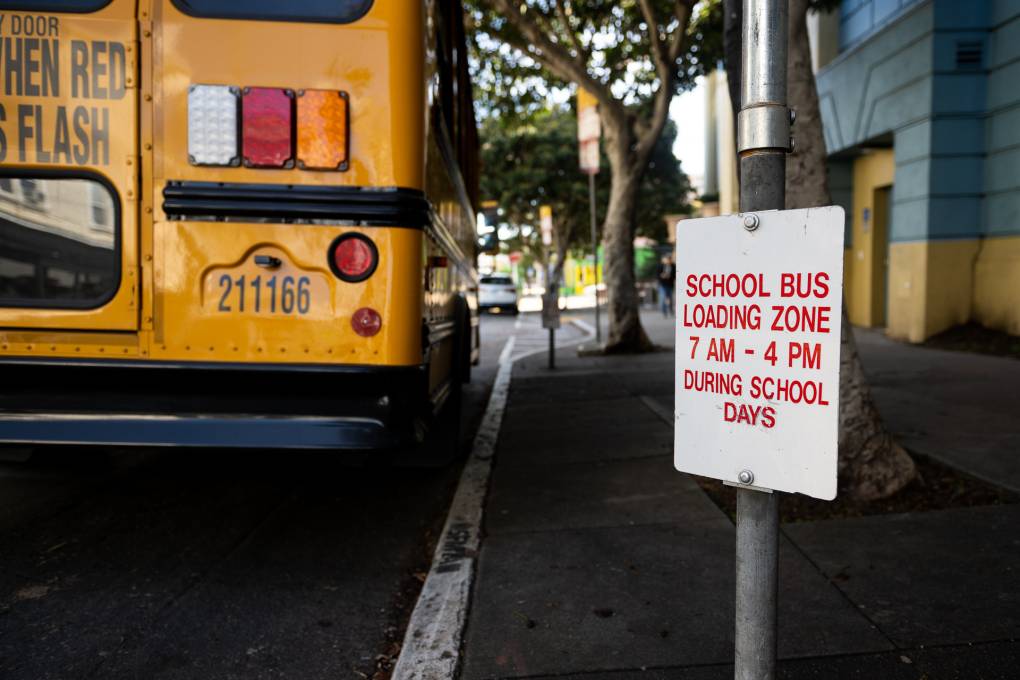
"caption": "A school bus is parked outside Buena Vista Horace Mann K–8, part of the San Francisco Unified School District, in San Francisco on March 2, 2023. ",
"credit": "Beth LaBerge/KQED",
"altTag": "A school bus parked on a street next to a sign that reads \"school bus loading zone.\"",
"description": null,
"imgSizes": {
"medium": {
"file": "https://cdn.kqed.org/wp-content/uploads/sites/10/2023/03/010_KQED_SFUSDSchoolBus_03022023-800x533.jpg",
"width": 800,
"height": 533,
"mimeType": "image/jpeg"
},
"large": {
"file": "https://cdn.kqed.org/wp-content/uploads/sites/10/2023/03/010_KQED_SFUSDSchoolBus_03022023-1020x680.jpg",
"width": 1020,
"height": 680,
"mimeType": "image/jpeg"
},
"thumbnail": {
"file": "https://cdn.kqed.org/wp-content/uploads/sites/10/2023/03/010_KQED_SFUSDSchoolBus_03022023-160x107.jpg",
"width": 160,
"height": 107,
"mimeType": "image/jpeg"
},
"1536x1536": {
"file": "https://cdn.kqed.org/wp-content/uploads/sites/10/2023/03/010_KQED_SFUSDSchoolBus_03022023-1536x1024.jpg",
"width": 1536,
"height": 1024,
"mimeType": "image/jpeg"
},
"post-thumbnail": {
"file": "https://cdn.kqed.org/wp-content/uploads/sites/10/2023/03/010_KQED_SFUSDSchoolBus_03022023-672x372.jpg",
"width": 672,
"height": 372,
"mimeType": "image/jpeg"
},
"twentyfourteen-full-width": {
"file": "https://cdn.kqed.org/wp-content/uploads/sites/10/2023/03/010_KQED_SFUSDSchoolBus_03022023-1038x576.jpg",
"width": 1038,
"height": 576,
"mimeType": "image/jpeg"
},
"kqedFullSize": {
"file": "https://cdn.kqed.org/wp-content/uploads/sites/10/2023/03/010_KQED_SFUSDSchoolBus_03022023.jpg",
"width": 1920,
"height": 1280
}
},
"isLoading": false,
"fetchFailed": false
},
"news_11922199": {
"type": "attachments",
"id": "news_11922199",
"meta": {
"index": "attachments_1716263798",
"site": "news",
"id": "11922199",
"found": true
},
"parent": 11922183,
"imgSizes": {
"twentyfourteen-full-width": {
"file": "https://ww2.kqed.org/app/uploads/sites/10/2022/08/Oakland-First-day-of-School-1038x576.jpg",
"width": 1038,
"mimeType": "image/jpeg",
"height": 576
},
"thumbnail": {
"file": "https://ww2.kqed.org/app/uploads/sites/10/2022/08/Oakland-First-day-of-School-160x105.jpg",
"width": 160,
"mimeType": "image/jpeg",
"height": 105
},
"post-thumbnail": {
"file": "https://ww2.kqed.org/app/uploads/sites/10/2022/08/Oakland-First-day-of-School-672x372.jpg",
"width": 672,
"mimeType": "image/jpeg",
"height": 372
},
"kqedFullSize": {
"file": "https://ww2.kqed.org/app/uploads/sites/10/2022/08/Oakland-First-day-of-School.jpg",
"width": 1980,
"height": 1302
},
"large": {
"file": "https://ww2.kqed.org/app/uploads/sites/10/2022/08/Oakland-First-day-of-School-1020x671.jpg",
"width": 1020,
"mimeType": "image/jpeg",
"height": 671
},
"1536x1536": {
"file": "https://ww2.kqed.org/app/uploads/sites/10/2022/08/Oakland-First-day-of-School-1536x1010.jpg",
"width": 1536,
"mimeType": "image/jpeg",
"height": 1010
},
"full-width": {
"file": "https://ww2.kqed.org/app/uploads/sites/10/2022/08/Oakland-First-day-of-School-1920x1263.jpg",
"width": 1920,
"mimeType": "image/jpeg",
"height": 1263
},
"medium": {
"file": "https://ww2.kqed.org/app/uploads/sites/10/2022/08/Oakland-First-day-of-School-800x526.jpg",
"width": 800,
"mimeType": "image/jpeg",
"height": 526
}
},
"publishDate": 1660167606,
"modified": 1660167719,
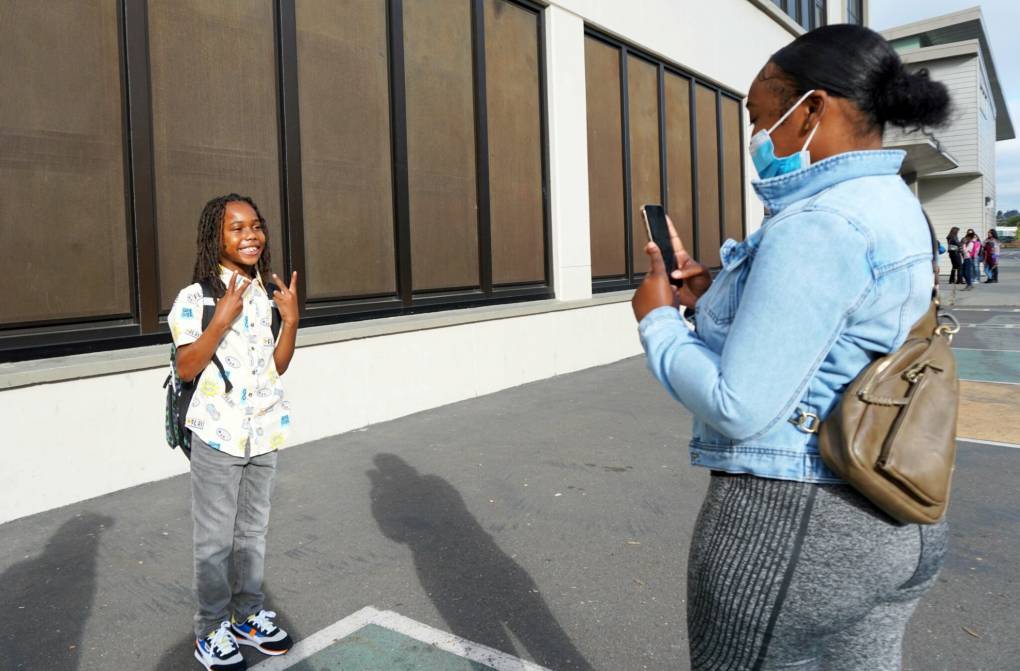
"caption": "Jameela Jackson snaps a photo of her son Shadeede, a third grader, at Markham Elementary in Oakland Unified on Monday.",
"description": "Jameela Jackson snaps a photo of her son Shadeede, a third grader, at Markham Elementary in Oakland Unified on Monday.",
"title": "Oakland First day of School",
"credit": "Andrew Reed/EdSource",
"status": "inherit",
"altTag": "Jameela Jackson snaps a photo of her son Shadeede, a third grader, at Markham Elementary in Oakland Unified on Monday.",
"isLoading": false,
"fetchFailed": false
},
"news_11919199": {
"type": "attachments",
"id": "news_11919199",
"meta": {
"index": "attachments_1716263798",
"site": "news",
"id": "11919199",
"found": true
},
"parent": 11919130,
"imgSizes": {
"twentyfourteen-full-width": {
"file": "https://ww2.kqed.org/app/uploads/sites/10/2022/07/aHR0cDovL2hheXdhcmR1c2QtY2Euc2Nob29sbG9vcC5jb20vdWltZy9maWxlLzE0MzE3NTk5Mjg4NTEvNTkxNDA4MjExMjE4MjYxNzQzMi5qcGVnX3ducDEwMDAuanBnPzE2MTMwODMxOTc0NDA-1000x576.jpeg",
"width": 1000,
"mimeType": "image/jpeg",
"height": 576
},
"thumbnail": {
"file": "https://ww2.kqed.org/app/uploads/sites/10/2022/07/aHR0cDovL2hheXdhcmR1c2QtY2Euc2Nob29sbG9vcC5jb20vdWltZy9maWxlLzE0MzE3NTk5Mjg4NTEvNTkxNDA4MjExMjE4MjYxNzQzMi5qcGVnX3ducDEwMDAuanBnPzE2MTMwODMxOTc0NDA-160x131.jpeg",
"width": 160,
"mimeType": "image/jpeg",
"height": 131
},
"post-thumbnail": {
"file": "https://ww2.kqed.org/app/uploads/sites/10/2022/07/aHR0cDovL2hheXdhcmR1c2QtY2Euc2Nob29sbG9vcC5jb20vdWltZy9maWxlLzE0MzE3NTk5Mjg4NTEvNTkxNDA4MjExMjE4MjYxNzQzMi5qcGVnX3ducDEwMDAuanBnPzE2MTMwODMxOTc0NDA-672x372.jpeg",
"width": 672,
"mimeType": "image/jpeg",
"height": 372
},
"kqedFullSize": {
"file": "https://ww2.kqed.org/app/uploads/sites/10/2022/07/aHR0cDovL2hheXdhcmR1c2QtY2Euc2Nob29sbG9vcC5jb20vdWltZy9maWxlLzE0MzE3NTk5Mjg4NTEvNTkxNDA4MjExMjE4MjYxNzQzMi5qcGVnX3ducDEwMDAuanBnPzE2MTMwODMxOTc0NDA.jpeg",
"width": 1000,
"height": 816
},
"medium": {
"file": "https://ww2.kqed.org/app/uploads/sites/10/2022/07/aHR0cDovL2hheXdhcmR1c2QtY2Euc2Nob29sbG9vcC5jb20vdWltZy9maWxlLzE0MzE3NTk5Mjg4NTEvNTkxNDA4MjExMjE4MjYxNzQzMi5qcGVnX3ducDEwMDAuanBnPzE2MTMwODMxOTc0NDA-800x653.jpeg",
"width": 800,
"mimeType": "image/jpeg",
"height": 653
}
},
"publishDate": 1657328338,
"modified": 1657561768,
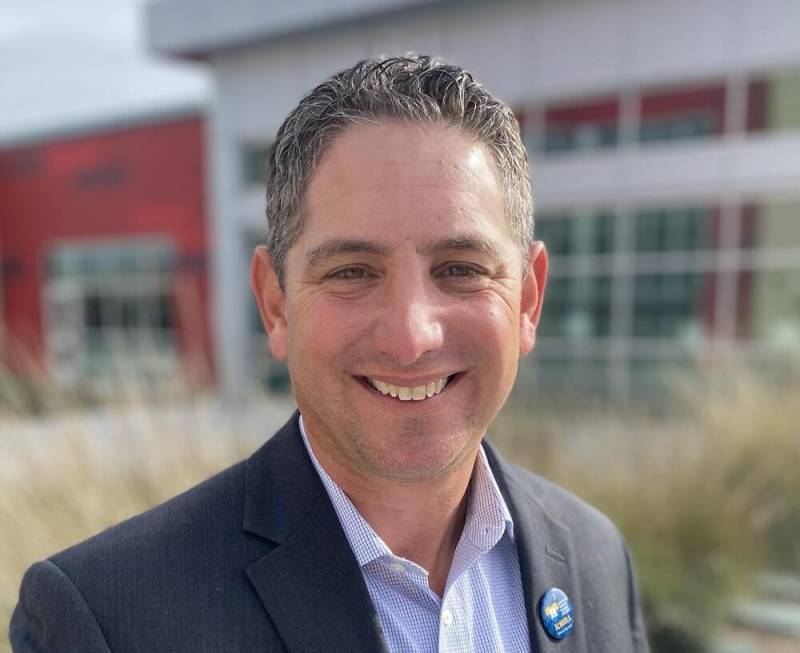
"caption": "Matt Wayne, the new superintendent of the San Francisco Unified School District, just finished his first week on the job.",
"description": null,
"title": "aHR0cDovL2hheXdhcmR1c2QtY2Euc2Nob29sbG9vcC5jb20vdWltZy9maWxlLzE0MzE3NTk5Mjg4NTEvNTkxNDA4MjExMjE4MjYxNzQzMi5qcGVnX3ducDEwMDAuanBnPzE2MTMwODMxOTc0NDA=",
"credit": "Courtesy of Hayward Unified School District",
"status": "inherit",
"altTag": "A man in a blazer smiles while standing near a school.",
"isLoading": false,
"fetchFailed": false
},
"news_11908130": {
"type": "attachments",
"id": "news_11908130",
"meta": {
"index": "attachments_1716263798",
"site": "news",
"id": "11908130",
"found": true
},
"parent": 11908120,
"imgSizes": {
"twentyfourteen-full-width": {
"file": "https://ww2.kqed.org/app/uploads/sites/10/2022/03/piday_031422_final-1038x576.png",
"width": 1038,
"mimeType": "image/png",
"height": 576
},
"thumbnail": {
"file": "https://ww2.kqed.org/app/uploads/sites/10/2022/03/piday_031422_final-160x115.png",
"width": 160,
"mimeType": "image/png",
"height": 115
},
"post-thumbnail": {
"file": "https://ww2.kqed.org/app/uploads/sites/10/2022/03/piday_031422_final-672x372.png",
"width": 672,
"mimeType": "image/png",
"height": 372
},
"kqedFullSize": {
"file": "https://ww2.kqed.org/app/uploads/sites/10/2022/03/piday_031422_final.png",
"width": 1920,
"height": 1376
},
"large": {
"file": "https://ww2.kqed.org/app/uploads/sites/10/2022/03/piday_031422_final-1020x731.png",
"width": 1020,
"mimeType": "image/png",
"height": 731
},
"1536x1536": {
"file": "https://ww2.kqed.org/app/uploads/sites/10/2022/03/piday_031422_final-1536x1101.png",
"width": 1536,
"mimeType": "image/png",
"height": 1101
},
"medium": {
"file": "https://ww2.kqed.org/app/uploads/sites/10/2022/03/piday_031422_final-800x573.png",
"width": 800,
"mimeType": "image/png",
"height": 573
}
},
"publishDate": 1647289923,
"modified": 1647290036,
"caption": null,
"description": null,
"title": "piday_031422_final",
"credit": null,
"status": "inherit",
"altTag": "Cartoon: a yellow banner at the top of a chalkboard reads, \"Happy Pi Day.\" Written on the board says, \"from the SFUSD finance department!\" Pi is written as the wrong number, \"2.14592 etc, we think, give or take, check back later.\"",
"isLoading": false,
"fetchFailed": false
},
"news_11905786": {
"type": "attachments",
"id": "news_11905786",
"meta": {
"index": "attachments_1716263798",
"site": "news",
"id": "11905786",
"found": true
},
"parent": 11905363,
"imgSizes": {
"twentyfourteen-full-width": {
"file": "https://ww2.kqed.org/app/uploads/sites/10/2022/02/RS53748_016_SanFrancisco_SchoolBoardRecallMannys_02152022-qut-1038x576.jpg",
"width": 1038,
"mimeType": "image/jpeg",
"height": 576
},
"thumbnail": {
"file": "https://ww2.kqed.org/app/uploads/sites/10/2022/02/RS53748_016_SanFrancisco_SchoolBoardRecallMannys_02152022-qut-160x107.jpg",
"width": 160,
"mimeType": "image/jpeg",
"height": 107
},
"post-thumbnail": {
"file": "https://ww2.kqed.org/app/uploads/sites/10/2022/02/RS53748_016_SanFrancisco_SchoolBoardRecallMannys_02152022-qut-672x372.jpg",
"width": 672,
"mimeType": "image/jpeg",
"height": 372
},
"kqedFullSize": {
"file": "https://ww2.kqed.org/app/uploads/sites/10/2022/02/RS53748_016_SanFrancisco_SchoolBoardRecallMannys_02152022-qut.jpg",
"width": 1920,
"height": 1278
},
"large": {
"file": "https://ww2.kqed.org/app/uploads/sites/10/2022/02/RS53748_016_SanFrancisco_SchoolBoardRecallMannys_02152022-qut-1020x679.jpg",
"width": 1020,
"mimeType": "image/jpeg",
"height": 679
},
"1536x1536": {
"file": "https://ww2.kqed.org/app/uploads/sites/10/2022/02/RS53748_016_SanFrancisco_SchoolBoardRecallMannys_02152022-qut-1536x1022.jpg",
"width": 1536,
"mimeType": "image/jpeg",
"height": 1022
},
"medium": {
"file": "https://ww2.kqed.org/app/uploads/sites/10/2022/02/RS53748_016_SanFrancisco_SchoolBoardRecallMannys_02152022-qut-800x533.jpg",
"width": 800,
"mimeType": "image/jpeg",
"height": 533
}
},
"publishDate": 1645220434,
"modified": 1645238785,
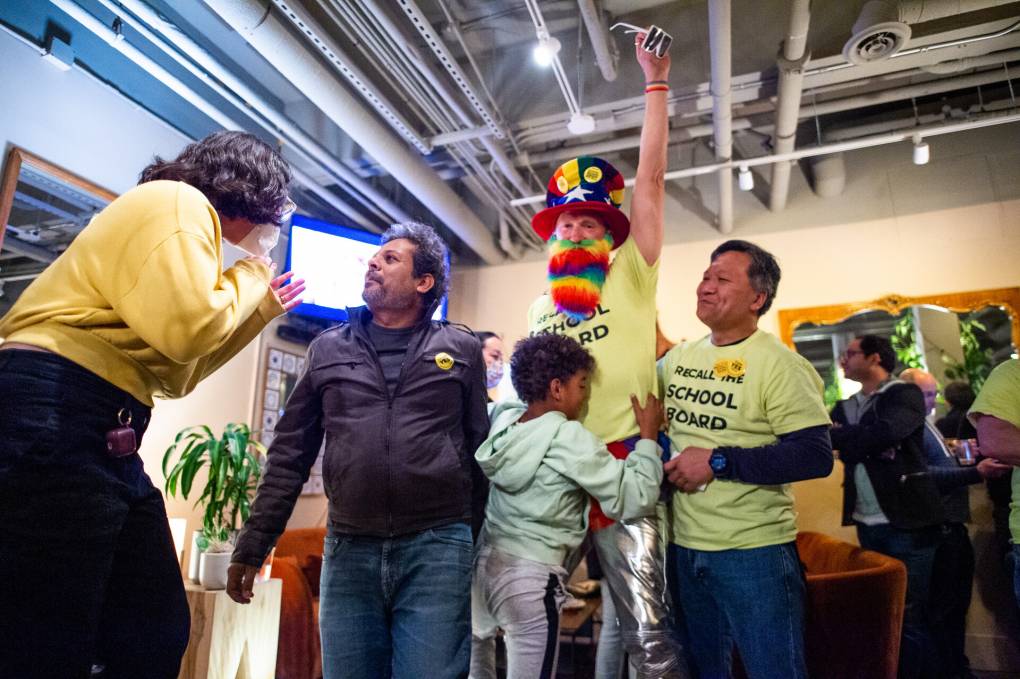
"caption": "Siva Raj (left), David Thompson his son Lucas, and Kit Lam hug after hearing election results at an election night party in support of the San Francisco school board recall at Manny's in San Francisco on Feb. 15, 2022.",
"description": null,
"title": "RS53748_016_SanFrancisco_SchoolBoardRecallMannys_02152022-qut",
"credit": "Beth LaBerge/KQED",
"status": "inherit",
"altTag": null,
"isLoading": false,
"fetchFailed": false
},
"news_11905396": {
"type": "attachments",
"id": "news_11905396",
"meta": {
"index": "attachments_1716263798",
"site": "news",
"id": "11905396",
"found": true
},
"parent": 11905380,
"imgSizes": {
"twentyfourteen-full-width": {
"file": "https://ww2.kqed.org/app/uploads/sites/10/2022/02/boardrecall_021622_final-1038x576.png",
"width": 1038,
"mimeType": "image/png",
"height": 576
},
"thumbnail": {
"file": "https://ww2.kqed.org/app/uploads/sites/10/2022/02/boardrecall_021622_final-160x107.png",
"width": 160,
"mimeType": "image/png",
"height": 107
},
"post-thumbnail": {
"file": "https://ww2.kqed.org/app/uploads/sites/10/2022/02/boardrecall_021622_final-672x372.png",
"width": 672,
"mimeType": "image/png",
"height": 372
},
"kqedFullSize": {
"file": "https://ww2.kqed.org/app/uploads/sites/10/2022/02/boardrecall_021622_final.png",
"width": 1920,
"height": 1281
},
"large": {
"file": "https://ww2.kqed.org/app/uploads/sites/10/2022/02/boardrecall_021622_final-1020x681.png",
"width": 1020,
"mimeType": "image/png",
"height": 681
},
"1536x1536": {
"file": "https://ww2.kqed.org/app/uploads/sites/10/2022/02/boardrecall_021622_final-1536x1025.png",
"width": 1536,
"mimeType": "image/png",
"height": 1025
},
"medium": {
"file": "https://ww2.kqed.org/app/uploads/sites/10/2022/02/boardrecall_021622_final-800x534.png",
"width": 800,
"mimeType": "image/png",
"height": 534
}
},
"publishDate": 1645040314,
"modified": 1645040389,
"caption": null,
"description": null,
"title": "boardrecall_021622_final",
"credit": null,
"status": "inherit",
"altTag": "Cartoon: three recalled San Francisco school board members with signs around their necks that say \"recalled\" taped over \"board member.\" Caption reads, \"renamed.\"",
"isLoading": false,
"fetchFailed": false
},
"news_11892786": {
"type": "attachments",
"id": "news_11892786",
"meta": {
"index": "attachments_1716263798",
"site": "news",
"id": "11892786",
"found": true
},
"parent": 11892743,
"imgSizes": {
"twentyfourteen-full-width": {
"file": "https://ww2.kqed.org/app/uploads/sites/10/2021/10/RS47103_033_SanFrancisco_LowellBSURally_02052021-qut-1-1038x576.jpg",
"width": 1038,
"mimeType": "image/jpeg",
"height": 576
},
"thumbnail": {
"file": "https://ww2.kqed.org/app/uploads/sites/10/2021/10/RS47103_033_SanFrancisco_LowellBSURally_02052021-qut-1-160x107.jpg",
"width": 160,
"mimeType": "image/jpeg",
"height": 107
},
"post-thumbnail": {
"file": "https://ww2.kqed.org/app/uploads/sites/10/2021/10/RS47103_033_SanFrancisco_LowellBSURally_02052021-qut-1-672x372.jpg",
"width": 672,
"mimeType": "image/jpeg",
"height": 372
},
"kqedFullSize": {
"file": "https://ww2.kqed.org/app/uploads/sites/10/2021/10/RS47103_033_SanFrancisco_LowellBSURally_02052021-qut-1.jpg",
"width": 1920,
"height": 1278
},
"large": {
"file": "https://ww2.kqed.org/app/uploads/sites/10/2021/10/RS47103_033_SanFrancisco_LowellBSURally_02052021-qut-1-1020x679.jpg",
"width": 1020,
"mimeType": "image/jpeg",
"height": 679
},
"1536x1536": {
"file": "https://ww2.kqed.org/app/uploads/sites/10/2021/10/RS47103_033_SanFrancisco_LowellBSURally_02052021-qut-1-1536x1022.jpg",
"width": 1536,
"mimeType": "image/jpeg",
"height": 1022
},
"medium": {
"file": "https://ww2.kqed.org/app/uploads/sites/10/2021/10/RS47103_033_SanFrancisco_LowellBSURally_02052021-qut-1-800x533.jpg",
"width": 800,
"mimeType": "image/jpeg",
"height": 533
}
},
"publishDate": 1634600992,
"modified": 1635366825,
"caption": "SFUSD Board President Gabriela López speaks during a rally at Lowell High School on Feb. 5, 2021.",
"description": null,
"title": "RS47103_033_SanFrancisco_LowellBSURally_02052021-qut (1)",
"credit": "Beth LaBerge/KQED",
"status": "inherit",
"altTag": "A woman with long brown hair and a red and black woven masks holds a microphone in front of windows reflecting trees.",
"isLoading": false,
"fetchFailed": false
},
"news_11888064": {
"type": "attachments",
"id": "news_11888064",
"meta": {
"index": "attachments_1716263798",
"site": "news",
"id": "11888064",
"found": true
},
"parent": 11888033,
"imgSizes": {
"twentyfourteen-full-width": {
"file": "https://ww2.kqed.org/app/uploads/sites/10/2021/09/GettyImages-1232872860-1-1-1038x576.jpg",
"width": 1038,
"mimeType": "image/jpeg",
"height": 576
},
"thumbnail": {
"file": "https://ww2.kqed.org/app/uploads/sites/10/2021/09/GettyImages-1232872860-1-1-160x95.jpg",
"width": 160,
"mimeType": "image/jpeg",
"height": 95
},
"post-thumbnail": {
"file": "https://ww2.kqed.org/app/uploads/sites/10/2021/09/GettyImages-1232872860-1-1-672x372.jpg",
"width": 672,
"mimeType": "image/jpeg",
"height": 372
},
"kqedFullSize": {
"file": "https://ww2.kqed.org/app/uploads/sites/10/2021/09/GettyImages-1232872860-1-1.jpg",
"width": 1920,
"height": 1134
},
"large": {
"file": "https://ww2.kqed.org/app/uploads/sites/10/2021/09/GettyImages-1232872860-1-1-1020x602.jpg",
"width": 1020,
"mimeType": "image/jpeg",
"height": 602
},
"1536x1536": {
"file": "https://ww2.kqed.org/app/uploads/sites/10/2021/09/GettyImages-1232872860-1-1-1536x907.jpg",
"width": 1536,
"mimeType": "image/jpeg",
"height": 907
},
"medium": {
"file": "https://ww2.kqed.org/app/uploads/sites/10/2021/09/GettyImages-1232872860-1-1-800x473.jpg",
"width": 800,
"mimeType": "image/jpeg",
"height": 473
}
},
"publishDate": 1631310296,
"modified": 1631315291,
"caption": "Oliver Barr, 13, receives his COVID-19 vaccine administered by medical assistant Karina Cisneros from St. John's Well Child & Family Center at Abraham Lincoln High School in Los Angeles on May 13, 2021, on the first day of availability of the vaccine for the 12-15 year old age group.",
"description": "Oliver Barr, 13, receives his Covid-19 vaccine administered by medical assistant Karina Cisneros from St. John's Well Child & Family Center at Abraham Lincoln High School in Los Angeles, California on May 13, 2021, on the first day of availability of the vaccine for the 12-15 year old age group.",
"title": "GettyImages-1232872860 (1) (1)",
"credit": "Frederic J. Brown/AFP via Getty Images",
"status": "inherit",
"altTag": null,
"isLoading": false,
"fetchFailed": false
},
"news_11884846": {
"type": "attachments",
"id": "news_11884846",
"meta": {
"index": "attachments_1716263798",
"site": "news",
"id": "11884846",
"found": true
},
"parent": 11884835,
"imgSizes": {
"twentyfourteen-full-width": {
"file": "https://ww2.kqed.org/app/uploads/sites/10/2021/08/RS48738_017_SanFrancisco_GordonLauElementary_04212021-qut-1038x576.jpg",
"width": 1038,
"mimeType": "image/jpeg",
"height": 576
},
"thumbnail": {
"file": "https://ww2.kqed.org/app/uploads/sites/10/2021/08/RS48738_017_SanFrancisco_GordonLauElementary_04212021-qut-160x107.jpg",
"width": 160,
"mimeType": "image/jpeg",
"height": 107
},
"post-thumbnail": {
"file": "https://ww2.kqed.org/app/uploads/sites/10/2021/08/RS48738_017_SanFrancisco_GordonLauElementary_04212021-qut-672x372.jpg",
"width": 672,
"mimeType": "image/jpeg",
"height": 372
},
"kqedFullSize": {
"file": "https://ww2.kqed.org/app/uploads/sites/10/2021/08/RS48738_017_SanFrancisco_GordonLauElementary_04212021-qut.jpg",
"width": 1920,
"height": 1280
},
"large": {
"file": "https://ww2.kqed.org/app/uploads/sites/10/2021/08/RS48738_017_SanFrancisco_GordonLauElementary_04212021-qut-1020x680.jpg",
"width": 1020,
"mimeType": "image/jpeg",
"height": 680
},
"1536x1536": {
"file": "https://ww2.kqed.org/app/uploads/sites/10/2021/08/RS48738_017_SanFrancisco_GordonLauElementary_04212021-qut-1536x1024.jpg",
"width": 1536,
"mimeType": "image/jpeg",
"height": 1024
},
"medium": {
"file": "https://ww2.kqed.org/app/uploads/sites/10/2021/08/RS48738_017_SanFrancisco_GordonLauElementary_04212021-qut-800x533.jpg",
"width": 800,
"mimeType": "image/jpeg",
"height": 533
}
},
"publishDate": 1628803880,
"modified": 1630425017,
"caption": "Joyce Lee gets ready to drop off her daughter at Gordon Lau Elementary School in San Francisco on April 21, 2021.",
"description": "Joyce Lee gets ready to drop off her daughter at Gordon Lau Elementary School in San Francisco on April 21, 2021.",
"title": "delta-variant-schools-children",
"credit": "Beth LaBerge/KQED News",
"status": "inherit",
"altTag": "Mom crouches down with hand in young kid's enormous pink backpack, both wearing baseball caps and masks",
"isLoading": false,
"fetchFailed": false
},
"news_11884570": {
"type": "attachments",
"id": "news_11884570",
"meta": {
"index": "attachments_1716263798",
"site": "news",
"id": "11884570",
"found": true
},
"parent": 11884547,
"imgSizes": {
"twentyfourteen-full-width": {
"file": "https://ww2.kqed.org/app/uploads/sites/10/2021/08/RS48733_012_SanFrancisco_GordonLauElementary_04212021-qut-1038x576.jpg",
"width": 1038,
"mimeType": "image/jpeg",
"height": 576
},
"thumbnail": {
"file": "https://ww2.kqed.org/app/uploads/sites/10/2021/08/RS48733_012_SanFrancisco_GordonLauElementary_04212021-qut-160x107.jpg",
"width": 160,
"mimeType": "image/jpeg",
"height": 107
},
"post-thumbnail": {
"file": "https://ww2.kqed.org/app/uploads/sites/10/2021/08/RS48733_012_SanFrancisco_GordonLauElementary_04212021-qut-672x372.jpg",
"width": 672,
"mimeType": "image/jpeg",
"height": 372
},
"kqedFullSize": {
"file": "https://ww2.kqed.org/app/uploads/sites/10/2021/08/RS48733_012_SanFrancisco_GordonLauElementary_04212021-qut.jpg",
"width": 1920,
"height": 1280
},
"large": {
"file": "https://ww2.kqed.org/app/uploads/sites/10/2021/08/RS48733_012_SanFrancisco_GordonLauElementary_04212021-qut-1020x680.jpg",
"width": 1020,
"mimeType": "image/jpeg",
"height": 680
},
"1536x1536": {
"file": "https://ww2.kqed.org/app/uploads/sites/10/2021/08/RS48733_012_SanFrancisco_GordonLauElementary_04212021-qut-1536x1024.jpg",
"width": 1536,
"mimeType": "image/jpeg",
"height": 1024
},
"medium": {
"file": "https://ww2.kqed.org/app/uploads/sites/10/2021/08/RS48733_012_SanFrancisco_GordonLauElementary_04212021-qut-800x533.jpg",
"width": 800,
"mimeType": "image/jpeg",
"height": 533
}
},
"publishDate": 1628639308,
"modified": 1628704028,
"caption": "A student and her parent check in with staff at Gordon Lau Elementary School in San Francisco on April 21, 2021. SFUSD will now require all staff to either get vaccinated against COVID or undergo weekly testing.",
"description": "A student and her parent check in with staff at Gordon Lau Elementary School in San Francisco on April 21, 2021. SFUSD will now require all of its staff to either get vaccinated against COVID or undergo weekly testing.",
"title": "RS48733_012_SanFrancisco_GordonLauElementary_04212021-qut",
"credit": "Beth LaBerge/KQED",
"status": "inherit",
"altTag": null,
"isLoading": false,
"fetchFailed": false
},
"news_11871239": {
"type": "attachments",
"id": "news_11871239",
"meta": {
"index": "attachments_1716263798",
"site": "news",
"id": "11871239",
"found": true
},
"parent": 11870309,
"imgSizes": {
"twentyfourteen-full-width": {
"file": "https://ww2.kqed.org/app/uploads/sites/10/2021/04/RS48814_006_Berkeley_EthnicStudiesDanaMoran_04232021-qut-1038x576.jpg",
"width": 1038,
"mimeType": "image/jpeg",
"height": 576
},
"thumbnail": {
"file": "https://ww2.kqed.org/app/uploads/sites/10/2021/04/RS48814_006_Berkeley_EthnicStudiesDanaMoran_04232021-qut-160x107.jpg",
"width": 160,
"mimeType": "image/jpeg",
"height": 107
},
"post-thumbnail": {
"file": "https://ww2.kqed.org/app/uploads/sites/10/2021/04/RS48814_006_Berkeley_EthnicStudiesDanaMoran_04232021-qut-672x372.jpg",
"width": 672,
"mimeType": "image/jpeg",
"height": 372
},
"kqedFullSize": {
"file": "https://ww2.kqed.org/app/uploads/sites/10/2021/04/RS48814_006_Berkeley_EthnicStudiesDanaMoran_04232021-qut.jpg",
"width": 1920,
"height": 1280
},
"large": {
"file": "https://ww2.kqed.org/app/uploads/sites/10/2021/04/RS48814_006_Berkeley_EthnicStudiesDanaMoran_04232021-qut-1020x680.jpg",
"width": 1020,
"mimeType": "image/jpeg",
"height": 680
},
"1536x1536": {
"file": "https://ww2.kqed.org/app/uploads/sites/10/2021/04/RS48814_006_Berkeley_EthnicStudiesDanaMoran_04232021-qut-1536x1024.jpg",
"width": 1536,
"mimeType": "image/jpeg",
"height": 1024
},
"medium": {
"file": "https://ww2.kqed.org/app/uploads/sites/10/2021/04/RS48814_006_Berkeley_EthnicStudiesDanaMoran_04232021-qut-800x533.jpg",
"width": 800,
"mimeType": "image/jpeg",
"height": 533
}
},
"publishDate": 1619474800,
"modified": 1626474552,
"caption": "Berkeley Unified School District teacher Dana Moran, pictured outside Berkeley High School. Moran has taught ethnic studies at Berkeley High since 1993.",
"description": "Berkeley Unified School District teacher Dana Moran, pictured outside Berkeley High. Moran has taught ethnic studies at Berkeley High since 1993.",
"title": "RS48814_006_Berkeley_EthnicStudiesDanaMoran_04232021-qut",
"credit": "Beth LaBerge/KQED",
"status": "inherit",
"altTag": null,
"isLoading": false,
"fetchFailed": false
},
"news_11873128": {
"type": "attachments",
"id": "news_11873128",
"meta": {
"index": "attachments_1716263798",
"site": "news",
"id": "11873128",
"found": true
},
"parent": 11873122,
"imgSizes": {
"twentyfourteen-full-width": {
"file": "https://ww2.kqed.org/app/uploads/sites/10/2021/05/termsconditions_051121_final-1038x576.png",
"width": 1038,
"mimeType": "image/png",
"height": 576
},
"thumbnail": {
"file": "https://ww2.kqed.org/app/uploads/sites/10/2021/05/termsconditions_051121_final-160x106.png",
"width": 160,
"mimeType": "image/png",
"height": 106
},
"post-thumbnail": {
"file": "https://ww2.kqed.org/app/uploads/sites/10/2021/05/termsconditions_051121_final-672x372.png",
"width": 672,
"mimeType": "image/png",
"height": 372
},
"kqedFullSize": {
"file": "https://ww2.kqed.org/app/uploads/sites/10/2021/05/termsconditions_051121_final.png",
"width": 1920,
"height": 1270
},
"large": {
"file": "https://ww2.kqed.org/app/uploads/sites/10/2021/05/termsconditions_051121_final-1020x675.png",
"width": 1020,
"mimeType": "image/png",
"height": 675
},
"1536x1536": {
"file": "https://ww2.kqed.org/app/uploads/sites/10/2021/05/termsconditions_051121_final-1536x1016.png",
"width": 1536,
"mimeType": "image/png",
"height": 1016
},
"medium": {
"file": "https://ww2.kqed.org/app/uploads/sites/10/2021/05/termsconditions_051121_final-800x529.png",
"width": 800,
"mimeType": "image/png",
"height": 529
}
},
"publishDate": 1620757858,
"modified": 1620757945,
"caption": null,
"description": null,
"title": "termsconditions_051121_final",
"credit": null,
"status": "inherit",
"altTag": "A Mark Fiore cartoon that reads, \"welcome back, seniors,\" from the SF Unified School District and the teachers union. Small type reads that \"terms and conditions may apply,\" including that there may only be 3-6 days of \"supervision\" in a location that is not your school.",
"isLoading": false,
"fetchFailed": false
}
},
"audioPlayerReducer": {
"postId": "stream_live",
"isPaused": true,
"isPlaying": false,
"pfsActive": false,
"pledgeModalIsOpen": true,
"playerDrawerIsOpen": false,
"liveAudioPlayStartedAt": 0,
"liveAudioPlayContext": ""
},
"authorsReducer": {
"byline_news_11922183": {
"type": "authors",
"id": "byline_news_11922183",
"meta": {
"override": true
},
"slug": "byline_news_11922183",
"name": "Diana Lambert",
"isLoading": false
},
"byline_news_11888033": {
"type": "authors",
"id": "byline_news_11888033",
"meta": {
"override": true
},
"slug": "byline_news_11888033",
"name": "Joe Hong\u003cbr>CalMatters",
"isLoading": false
},
"gmarzorati": {
"type": "authors",
"id": "227",
"meta": {
"index": "authors_1716337520",
"id": "227",
"found": true
},
"name": "Guy Marzorati",
"firstName": "Guy",
"lastName": "Marzorati",
"slug": "gmarzorati",
"email": "gmarzorati@KQED.org",
"display_author_email": true,
"staff_mastheads": [
"news"
],
"title": "Correspondent",
"bio": "Guy Marzorati is a correspondent on KQED's California Politics and Government Desk, based in San Jose. A graduate of Santa Clara University, Guy joined KQED in 2013. He reports on state and local politics and produces KQED's digital voter guide.",
"avatar": "https://secure.gravatar.com/avatar/e7038b8dbfd55b104369b76b1cd0b9de?s=600&d=blank&r=g",
"twitter": "guymarzorati",
"facebook": null,
"instagram": null,
"linkedin": null,
"sites": [
{
"site": "",
"roles": [
"editor"
]
},
{
"site": "news",
"roles": [
"editor"
]
},
{
"site": "science",
"roles": [
"editor"
]
},
{
"site": "forum",
"roles": [
"editor"
]
},
{
"site": "elections",
"roles": [
"editor"
]
},
{
"site": "liveblog",
"roles": [
"editor"
]
}
],
"headData": {
"title": "Guy Marzorati | KQED",
"description": "Correspondent",
"ogImgSrc": "https://secure.gravatar.com/avatar/e7038b8dbfd55b104369b76b1cd0b9de?s=600&d=blank&r=g",
"twImgSrc": "https://secure.gravatar.com/avatar/e7038b8dbfd55b104369b76b1cd0b9de?s=600&d=blank&r=g"
},
"isLoading": false,
"link": "/author/gmarzorati"
},
"kqednewsstaffandwires": {
"type": "authors",
"id": "237",
"meta": {
"index": "authors_1716337520",
"id": "237",
"found": true
},
"name": "KQED News Staff and Wires",
"firstName": "KQED News Staff and Wires",
"lastName": null,
"slug": "kqednewsstaffandwires",
"email": "onlinenewsstaff@kqed.org",
"display_author_email": false,
"staff_mastheads": [],
"title": null,
"bio": null,
"avatar": "https://secure.gravatar.com/avatar/72295af8ebbfbd19a4948f5271285664?s=600&d=blank&r=g",
"twitter": null,
"facebook": null,
"instagram": null,
"linkedin": null,
"sites": [
{
"site": "arts",
"roles": [
"contributor"
]
},
{
"site": "news",
"roles": [
"contributor"
]
},
{
"site": "lowdown",
"roles": [
"author"
]
},
{
"site": "stateofhealth",
"roles": [
"contributor"
]
},
{
"site": "food",
"roles": [
"author"
]
}
],
"headData": {
"title": "KQED News Staff and Wires | KQED",
"description": null,
"ogImgSrc": "https://secure.gravatar.com/avatar/72295af8ebbfbd19a4948f5271285664?s=600&d=blank&r=g",
"twImgSrc": "https://secure.gravatar.com/avatar/72295af8ebbfbd19a4948f5271285664?s=600&d=blank&r=g"
},
"isLoading": false,
"link": "/author/kqednewsstaffandwires"
},
"matthewgreen": {
"type": "authors",
"id": "1263",
"meta": {
"index": "authors_1716337520",
"id": "1263",
"found": true
},
"name": "Matthew Green",
"firstName": "Matthew",
"lastName": "Green",
"slug": "matthewgreen",
"email": "mgreen@kqed.org",
"display_author_email": false,
"staff_mastheads": [],
"title": "KQED Editor/Reporter",
"bio": "Matthew Green is a digital media producer for KQED News. He previously produced \u003ca href=\"http://www.kqed.org/lowdown\">The Lowdown\u003c/a>, KQED’s multimedia news education blog. Matthew's written for numerous Bay Area publications, including the Oakland Tribune and San Francisco Chronicle. He also taught journalism classes at Fremont High School in East Oakland.\r\n\r\nEmail: mgreen@kqed.org; Twitter: @MGreenKQED",
"avatar": "https://secure.gravatar.com/avatar/3bf498d1267ca02c8494f33d8cfc575e?s=600&d=blank&r=g",
"twitter": "MGreenKQED",
"facebook": null,
"instagram": null,
"linkedin": null,
"sites": [
{
"site": "news",
"roles": []
},
{
"site": "lowdown",
"roles": []
},
{
"site": "science",
"roles": []
},
{
"site": "education",
"roles": []
},
{
"site": "quest",
"roles": []
},
{
"site": "liveblog",
"roles": []
}
],
"headData": {
"title": "Matthew Green | KQED",
"description": "KQED Editor/Reporter",
"ogImgSrc": "https://secure.gravatar.com/avatar/3bf498d1267ca02c8494f33d8cfc575e?s=600&d=blank&r=g",
"twImgSrc": "https://secure.gravatar.com/avatar/3bf498d1267ca02c8494f33d8cfc575e?s=600&d=blank&r=g"
},
"isLoading": false,
"link": "/author/matthewgreen"
},
"markfiore": {
"type": "authors",
"id": "3236",
"meta": {
"index": "authors_1716337520",
"id": "3236",
"found": true
},
"name": "Mark Fiore",
"firstName": "Mark",
"lastName": "Fiore",
"slug": "markfiore",
"email": "mark@markfiore.com",
"display_author_email": false,
"staff_mastheads": [
"news"
],
"title": "KQED News Cartoonist",
"bio": "\u003ca href=\"http://www.MarkFiore.com\">MarkFiore.com\u003c/a> | \u003ca href=\"https://twitter.com/markfiore\">Follow on Twitter\u003c/a> | \u003ca href=\"https://www.facebook.com/pages/Mark-Fiore-Animated-Political-Cartoons/94451707396?ref=bookmarks\">Facebook\u003c/a> | \u003ca href=\"mailto:mark@markfiore.com\">email\u003c/a>\r\n\r\nPulitzer Prize-winner, Mark Fiore, who the Wall Street Journal has called “the undisputed guru of the form,” creates animated political cartoons in San Francisco, where his work has been featured regularly on the San Francisco Chronicle’s web site, SFGate.com. His work has appeared on Newsweek.com, Slate.com, CBSNews.com, MotherJones.com, DailyKos.com and NPR’s web site. Fiore’s political animation has appeared on CNN, Frontline, Bill Moyers Journal, Salon.com and cable and broadcast outlets across the globe.\r\n\r\nBeginning his professional life by drawing traditional political cartoons for newspapers, Fiore’s work appeared in publications ranging from the Washington Post to the Los Angeles Times. In the late 1990s, he began to experiment with animating political cartoons and, after a short stint at the San Jose Mercury News as their staff cartoonist, Fiore devoted all his energies to animation.\r\nGrowing up in California, Fiore also spent a good portion of his life in the backwoods of Idaho. It was this combination that shaped him politically. Mark majored in political science at Colorado College, where, in a perfect send-off for a cartoonist, he received his diploma in 1991 as commencement speaker Dick Cheney smiled approvingly.\r\nMark Fiore was awarded the Pulitzer Prize for political cartooning in 2010, a Robert F. Kennedy Journalism Award in 2004 and has twice received an Online Journalism Award for commentary from the Online News Association (2002, 2008). Fiore has received two awards for his work in new media from the National Cartoonists Society (2001, 2002), and in 2006 received The James Madison Freedom of Information Award from The Society of Professional Journalists.",
"avatar": "https://secure.gravatar.com/avatar/fc4e2a612b15b67bad0c6f0e1db4ca9b?s=600&d=blank&r=g",
"twitter": "MarkFiore",
"facebook": null,
"instagram": "https://www.instagram.com/markfiore/?hl=en",
"linkedin": null,
"sites": [
{
"site": "arts",
"roles": [
"contributor"
]
},
{
"site": "news",
"roles": [
"editor"
]
},
{
"site": "futureofyou",
"roles": [
"editor"
]
},
{
"site": "science",
"roles": [
"editor"
]
}
],
"headData": {
"title": "Mark Fiore | KQED",
"description": "KQED News Cartoonist",
"ogImgSrc": "https://secure.gravatar.com/avatar/fc4e2a612b15b67bad0c6f0e1db4ca9b?s=600&d=blank&r=g",
"twImgSrc": "https://secure.gravatar.com/avatar/fc4e2a612b15b67bad0c6f0e1db4ca9b?s=600&d=blank&r=g"
},
"isLoading": false,
"link": "/author/markfiore"
},
"vrancano": {
"type": "authors",
"id": "11276",
"meta": {
"index": "authors_1716337520",
"id": "11276",
"found": true
},
"name": "Vanessa Rancaño",
"firstName": "Vanessa",
"lastName": "Rancaño",
"slug": "vrancano",
"email": "vrancano@kqed.org",
"display_author_email": false,
"staff_mastheads": [
"news"
],
"title": "Reporter, Housing",
"bio": "Vanessa Rancaño is a features reporter for KQED. She’s also covered homelessness and education for the station and reported from the Central Valley. Her work has aired across public radio, from flagship national news shows to longform narrative podcasts. Before taking up a mic, she worked as a freelance print journalist. She’s been recognized with a number of national and regional awards. Vanessa grew up in California's Central Valley. She's a former NPR Kroc Fellow, and a graduate of the UC Berkeley Graduate School of Journalism.",
"avatar": "https://secure.gravatar.com/avatar/b3a383dfb0e7ee1c17568f2cf067904ab654d6e3de9743fc661f3c788ade1bed?s=600&d=blank&r=g",
"twitter": "vanessarancano",
"bluesky": null,
"facebook": null,
"instagram": null,
"linkedin": null,
"sites": [
{
"site": "arts",
"roles": [
"editor"
]
},
{
"site": "news",
"roles": [
"editor"
]
},
{
"site": "liveblog",
"roles": [
"contributor"
]
}
],
"headData": {
"title": "Vanessa Rancaño | KQED",
"description": "Reporter, Housing",
"ogImgSrc": "https://secure.gravatar.com/avatar/b3a383dfb0e7ee1c17568f2cf067904ab654d6e3de9743fc661f3c788ade1bed?s=600&d=blank&r=g",
"twImgSrc": "https://secure.gravatar.com/avatar/b3a383dfb0e7ee1c17568f2cf067904ab654d6e3de9743fc661f3c788ade1bed?s=600&d=blank&r=g"
},
"isLoading": false,
"link": "/author/vrancano"
},
"abandlamudi": {
"type": "authors",
"id": "11672",
"meta": {
"index": "authors_1716337520",
"id": "11672",
"found": true
},
"name": "Adhiti Bandlamudi",
"firstName": "Adhiti",
"lastName": "Bandlamudi",
"slug": "abandlamudi",
"email": "abandlamudi@kqed.org",
"display_author_email": false,
"staff_mastheads": [
"news"
],
"title": "KQED Housing Reporter",
"bio": "Adhiti Bandlamudi reports for KQED's Housing desk. She focuses on how housing gets built across the Bay Area. Before joining KQED in 2020, she reported for WUNC in Durham, North Carolina, WABE in Atlanta, Georgia and Capital Public Radio in Sacramento. In 2017, she was awarded a Kroc Fellowship at NPR where she reported on everything from sprinkles to the Golden State Killer's arrest. When she's not reporting, she's baking new recipes in her kitchen or watching movies with friends and family. She's originally from Georgia and has strong opinions about Great British Bake Off.",
"avatar": "https://secure.gravatar.com/avatar/868129c8b257bb99a3500e2c86a65400?s=600&d=mm&r=g",
"twitter": "oddity_adhiti",
"facebook": null,
"instagram": null,
"linkedin": null,
"sites": [
{
"site": "arts",
"roles": [
"author"
]
},
{
"site": "news",
"roles": [
"editor"
]
},
{
"site": "liveblog",
"roles": [
"author"
]
}
],
"headData": {
"title": "Adhiti Bandlamudi | KQED",
"description": "KQED Housing Reporter",
"ogImgSrc": "https://secure.gravatar.com/avatar/868129c8b257bb99a3500e2c86a65400?s=600&d=mm&r=g",
"twImgSrc": "https://secure.gravatar.com/avatar/868129c8b257bb99a3500e2c86a65400?s=600&d=mm&r=g"
},
"isLoading": false,
"link": "/author/abandlamudi"
},
"jrodriguez": {
"type": "authors",
"id": "11690",
"meta": {
"index": "authors_1716337520",
"id": "11690",
"found": true
},
"name": "Joe Fitzgerald Rodriguez",
"firstName": "Joe",
"lastName": "Fitzgerald Rodriguez",
"slug": "jrodriguez",
"email": "jrodriguez@kqed.org",
"display_author_email": true,
"staff_mastheads": [
"news"
],
"title": "Reporter and Producer",
"bio": "Joe Fitzgerald Rodriguez is a reporter and digital producer for KQED covering politics. Joe most recently wrote for the \u003cem>San Francisco Examiner\u003c/em> as a political columnist covering The City. He was raised in San Francisco and has spent his reporting career in his beloved, foggy, city by the bay. Joe was 12-years-old when he conducted his first interview in journalism, grilling former San Francisco Mayor Willie Brown for the Marina Middle School newspaper, \u003cem>The Penguin Press, \u003c/em>and he continues to report on the San Francisco Bay Area to this day.",
"avatar": "https://secure.gravatar.com/avatar/2247beb0564c1e9c62228d5649d2edac?s=600&d=blank&r=g",
"twitter": "FitztheReporter",
"facebook": null,
"instagram": "https://www.instagram.com/fitzthereporter/",
"linkedin": null,
"sites": [
{
"site": "",
"roles": [
"editor"
]
},
{
"site": "arts",
"roles": [
"editor"
]
},
{
"site": "news",
"roles": [
"editor"
]
},
{
"site": "science",
"roles": [
"editor"
]
},
{
"site": "elections",
"roles": [
"editor"
]
},
{
"site": "liveblog",
"roles": [
"editor"
]
}
],
"headData": {
"title": "Joe Fitzgerald Rodriguez | KQED",
"description": "Reporter and Producer",
"ogImgSrc": "https://secure.gravatar.com/avatar/2247beb0564c1e9c62228d5649d2edac?s=600&d=blank&r=g",
"twImgSrc": "https://secure.gravatar.com/avatar/2247beb0564c1e9c62228d5649d2edac?s=600&d=blank&r=g"
},
"isLoading": false,
"link": "/author/jrodriguez"
},
"ehung": {
"type": "authors",
"id": "11730",
"meta": {
"index": "authors_1716337520",
"id": "11730",
"found": true
},
"name": "Emily Hung",
"firstName": "Emily",
"lastName": "Hung",
"slug": "ehung",
"email": "ehung@kqed.org",
"display_author_email": false,
"staff_mastheads": [],
"title": "KQED Contributor",
"bio": null,
"avatar": "https://secure.gravatar.com/avatar/a7f01e26e3d60d4e8a1d5d22bca0618b?s=600&d=blank&r=g",
"twitter": "emilyhung_",
"facebook": null,
"instagram": null,
"linkedin": null,
"sites": [
{
"site": "news",
"roles": [
"author"
]
},
{
"site": "forum",
"roles": [
"editor"
]
},
{
"site": "perspectives",
"roles": [
"administrator"
]
}
],
"headData": {
"title": "Emily Hung | KQED",
"description": "KQED Contributor",
"ogImgSrc": "https://secure.gravatar.com/avatar/a7f01e26e3d60d4e8a1d5d22bca0618b?s=600&d=blank&r=g",
"twImgSrc": "https://secure.gravatar.com/avatar/a7f01e26e3d60d4e8a1d5d22bca0618b?s=600&d=blank&r=g"
},
"isLoading": false,
"link": "/author/ehung"
},
"sjohnson": {
"type": "authors",
"id": "11840",
"meta": {
"index": "authors_1716337520",
"id": "11840",
"found": true
},
"name": "Sydney Johnson",
"firstName": "Sydney",
"lastName": "Johnson",
"slug": "sjohnson",
"email": "sjohnson@kqed.org",
"display_author_email": false,
"staff_mastheads": [
"news"
],
"title": "KQED Reporter",
"bio": "Sydney Johnson is a general assignment reporter at KQED. She previously reported on public health and city government at the San Francisco Examiner, and before that, she covered statewide education policy for EdSource. Her reporting has won multiple local, state and national awards. Sydney is a graduate of the University of California, Berkeley and lives in San Francisco.",
"avatar": "https://secure.gravatar.com/avatar/97855f2719b72ad6190b7c535fe642c8?s=600&d=blank&r=g",
"twitter": "sydneyfjohnson",
"facebook": null,
"instagram": null,
"linkedin": null,
"sites": [
{
"site": "news",
"roles": [
"editor"
]
}
],
"headData": {
"title": "Sydney Johnson | KQED",
"description": "KQED Reporter",
"ogImgSrc": "https://secure.gravatar.com/avatar/97855f2719b72ad6190b7c535fe642c8?s=600&d=blank&r=g",
"twImgSrc": "https://secure.gravatar.com/avatar/97855f2719b72ad6190b7c535fe642c8?s=600&d=blank&r=g"
},
"isLoading": false,
"link": "/author/sjohnson"
}
},
"pagesReducer": {
"news_tag_san-francisco-unified-school-district": {
"type": "terms",
"id": "news_3946",
"meta": {
"index": "terms_1716263798",
"site": "news",
"id": "3946",
"score": 9.553679
},
"featImg": null,
"name": "San Francisco Unified School District",
"description": null,
"taxonomy": "tag",
"headData": {
"twImgId": null,
"twTitle": null,
"ogTitle": null,
"ogImgId": null,
"twDescription": null,
"description": null,
"title": "San Francisco Unified School District Archives | KQED News",
"ogDescription": null
},
"ttid": 3965,
"slug": "san-francisco-unified-school-district",
"isLoading": false,
"title": "San Francisco Unified School District",
"pageMeta": {
"site": "news",
"WpPageTemplate": "page-topic-editorial",
"currentPage": 7
},
"blocks": [
{
"blockName": "kqed/post-list",
"attrs": {
"layout": "cardArticle2",
"query": "posts/news?tag=san-francisco-unified-school-district",
"seeMore": false,
"paginated": true,
"page": 7
}
},
{
"blockName": "kqed/ad"
}
]
}
},
"pfsSessionReducer": {},
"postsReducer": {
"stream_live": {
"type": "live",
"id": "stream_live",
"audioUrl": "https://streams.kqed.org/kqedradio",
"title": "Live Stream",
"excerpt": "Live Stream information currently unavailable.",
"link": "/radio",
"featImg": "",
"label": {
"name": "KQED Live",
"link": "/"
}
},
"stream_kqedNewscast": {
"type": "posts",
"id": "stream_kqedNewscast",
"audioUrl": "https://www.kqed.org/.stream/anon/radio/RDnews/newscast.mp3?_=1",
"title": "KQED Newscast",
"featImg": "",
"label": {
"name": "88.5 FM",
"link": "/"
}
},
"news_11942379": {
"type": "posts",
"id": "news_11942379",
"meta": {
"index": "posts_1716263798",
"site": "news",
"id": "11942379",
"score": null,
"sort": [
1677807424000
]
},
"parent": 0,
"labelTerm": {
"site": "news"
},
"blocks": [],
"publishDate": 1677807424,
"format": "standard",
"title": "San Francisco Unified Faces $5.4 Million Legal Battle Over Bus Bills During School Closures",
"headTitle": "KQED News",
"content": "\u003cp>The San Francisco Unified School District’s former school bus provider is suing the district for $5.4 million for payments it claims the district failed to make during the 2020–21 school year when students were participating in distance learning.\u003c/p>\n\u003cp>The latest dispute, which is not the first between the private transportation company First Student Inc. and SFUSD, comes as both businesses and school districts across the country are scrambling to recover from losses during the pandemic.\u003c/p>\n\u003cp>“This case is a corporate shakedown of our public school district by the largest bus company in the United States,” said Nancy Harris, attorney representing SFUSD, during opening statements for the jury trial. “The terms of the contract provide that the school district agreed to pay First Student only when drivers employed by First Student drove students in buses owned by First Student to and from schools and other points.”\u003c/p>\n\u003cp>Ohio-based First Student is the country’s largest school bus transportation service provider and worked with San Francisco Unified for 40 years before the two organizations cut ties during the pandemic.\u003c/p>\n\u003cp>While there’s no disagreement that buses weren’t running their usual routes during the 2020–21 school year, representatives for First Student allege that the district owes them money for non-transportation services, such as bus maintenance and vehicle insurance. The company invoiced SFUSD for $5.4 million for those additional costs in the fall of 2021.[pullquote align=\"right\" size=\"medium\" citation=\"Nancy Harris, attorney representing SFUSD\"]'This case is a corporate shakedown of our public school district by the largest bus company in the United States.'[/pullquote]In response to First Student's lawsuit, SFUSD filed a cross-complaint for breach of contract, bad faith and violations of the California False Claims Act.\u003c/p>\n\u003cp>The school district maintains that under the 2020–21 school year contract, they were not obligated to pay for services because buses were not transporting students during the city’s shelter-in-place order.\u003c/p>\n\u003cp>In an email sent to KQED, the district also alleged that the company “submitted false invoices claiming that hundreds of buses and drivers were deployed on the road in August and September 2020, at a time when students were learning remotely,” according to Laura Dudnick, spokesperson for SFUSD.\u003c/p>\n\u003cp>“When that did not work, [First Student] demanded that the school district cover its overhead costs. This strategy was part of its nationwide pressure campaign against school districts to increase its revenue, when school districts like SFUSD struggled with budget deficits and were focused on students,” Dudnick wrote.\u003c/p>\n\u003cp>[ad fullwidth]\u003c/p>\n\u003cp>In court testimony Thursday, Paul Osland, who was president of First Student during the pandemic, denied pressuring any district into payments during the pandemic, and suggested his company was simply upholding its end of a contract that started in 2015.\u003c/p>\n\u003cp>Osland asserts that First Student charges for a full program, meaning not only transportation services, but also the operating expenses such as vehicle insurance, bus technology and regular maintenance that is required by California Highway Patrol to keep the buses in operation.\u003c/p>\n\u003cp>COVID “impacted all of us, but it sure as heck impacted our business,” said Osland in court on Thursday. Osland, who is now retired, previously ran transportation services for Chicago Public Schools. “Of course this is not a shakedown. It was an initiative in everyone’s interest.”\u003c/p>\n\u003cp>[pullquote align=\"right\" size=\"medium\" citation=\"Paul Osland, former president, First Student\"]'Of course this is not a shakedown. It was an initiative in everyone's interest.'[/pullquote]\u003c/p>\n\u003cp>Harris, the attorney for SFUSD, underscored a section of the contract that anticipated school closures.\u003c/p>\n\u003cp>“The district shall not be obligated to accept or pay for services, herein to be furnished by the contractor, on those days when by the direction of the Superintendent, the district schools are closed to ensure the health and safety of the pupils or for any other lawful reason. The district agrees to notify the contractor, not later than 5:30 a.m., on days of such school closures,” the contract reads.\u003c/p>\n\u003cp>Osland, however, said he thinks that portion of the contract would only apply to short-term closures like snow days or fire days, not months-long disruptions. No such distinction is made either way in the contract.\u003c/p>\n\u003cp>First Student works with around 1,000 districts across the U.S. and Canada. The company provides yellow school bus transportation to and from schools for general education, students with disabilities and individualized education plans, field trip services and charter bus services.\u003c/p>\n\u003cp>In a statement to KQED, the company said it filed the lawsuit “because of bad faith and broken promises by SFUSD.”\u003c/p>\n\u003cp>“SFUSD made a choice to stop paying for the many services that SFUSD required under the bus contract, including the more than 230 yellow school buses dedicated to SFUSD that First Student kept in position throughout the pandemic,” the statement read.\u003c/p>\n\u003cp>“First Student stood by its business partner, fulfilling its obligations to maintain operational readiness to ensure it was ready to transport students as soon as schools reopened. And when they did, First Student was ready when SFUSD called. Over an eight-month period, First Student submitted discounted invoices, but SFUSD paid nothing. SFUSD had encumbered funds available, and even issued a purchase order, but it made a choice not to pay. That is not just or fair, and for that reason, we expect to prevail in court.”\u003c/p>\n\u003cp>After 40 years of service, SFUSD cut ties with First Student during the pandemic, and the district in July 2021 awarded school transportation to app-based start-up Zūm in a $150 million five-year contract.\u003c/p>\n\u003cp>At the time of the deal, the district estimated the new provider would save the district about $3 million annually, according to \u003ca href=\"https://techcrunch.com/2021/07/29/zum-wins-150m-from-san-francisco-schools-to-modernize-and-electrify-student-transport/\">a report from TechCrunch\u003c/a>.\u003c/p>\n\u003cp>In 2021, First Student sued Zūm, whose consultant had recently left a high position with First Student. First Student alleged the employee downloaded the competing bid from its company while joining Zūm. That case is set to begin trial August 14.\u003c/p>\n\u003cp>First Student also filed an appeal against SFUSD’s process and decision to contract with Zūm. The court denied that appeal from First Student in 2022.\u003c/p>\n\u003cp>\u003cem>Editor's note: This story has been updated to include a statement from First Student. This story also has been corrected, to accurately reflect the status of First Student's lawsuit against Zūm, which is scheduled to begin trial Aug. 14. \u003c/em>\u003c/p>\n\u003cp>[ad floatright]\u003c/p>\n",
"stats": {
"hasVideo": false,
"hasChartOrMap": false,
"hasAudio": false,
"hasPolis": false,
"wordCount": 1112,
"hasGoogleForm": false,
"hasGallery": false,
"hasHearkenModule": false,
"iframeSrcs": [],
"paragraphCount": 26
},
"modified": 1678482360,
"excerpt": "First Student, the country's largest school bus transportation service provider, is looking to recoup $5.4 million from SFUSD, but district officials say the charges are unwarranted.",
"headData": {
"twImgId": "",
"twTitle": "",
"ogTitle": "",
"ogImgId": "",
"twDescription": "",
"description": "First Student, the country's largest school bus transportation service provider, is looking to recoup $5.4 million from SFUSD, but district officials say the charges are unwarranted.",
"title": "San Francisco Unified Faces $5.4 Million Legal Battle Over Bus Bills During School Closures | KQED",
"ogDescription": "",
"schema": {
"@context": "https://schema.org",
"@type": "NewsArticle",
"headline": "San Francisco Unified Faces $5.4 Million Legal Battle Over Bus Bills During School Closures",
"datePublished": "2023-03-02T17:37:04-08:00",
"dateModified": "2023-03-10T13:06:00-08:00",
"image": "https://cdn.kqed.org/wp-content/uploads/2020/02/KQED-OG-Image@1x.png",
"isAccessibleForFree": "True",
"publisher": {
"@type": "NewsMediaOrganization",
"@id": "https://www.kqed.org/#organization",
"name": "KQED",
"logo": "https://cdn.kqed.org/wp-content/uploads/2020/02/KQED-OG-Image@1x.png",
"url": "https://www.kqed.org",
"sameAs": [
"https://www.facebook.com/KQED",
"https://twitter.com/KQED",
"https://www.instagram.com/kqed/",
"https://www.tiktok.com/@kqedofficial",
"https://www.linkedin.com/company/kqed",
"https://www.youtube.com/channel/UCeC0IOo7i1P_61zVUWbJ4nw"
]
}
}
},
"guestAuthors": [],
"slug": "san-francisco-unified-faces-5-4-million-legal-battle-over-bus-bills-during-school-closures",
"status": "publish",
"excludeFromSiteSearch": "Include",
"articleAge": "0",
"path": "/news/11942379/san-francisco-unified-faces-5-4-million-legal-battle-over-bus-bills-during-school-closures",
"audioTrackLength": null,
"parsedContent": [
{
"type": "contentString",
"content": "\u003cdiv class=\"post-body\">\u003cp>\u003cp>The San Francisco Unified School District’s former school bus provider is suing the district for $5.4 million for payments it claims the district failed to make during the 2020–21 school year when students were participating in distance learning.\u003c/p>\n\u003cp>The latest dispute, which is not the first between the private transportation company First Student Inc. and SFUSD, comes as both businesses and school districts across the country are scrambling to recover from losses during the pandemic.\u003c/p>\n\u003cp>“This case is a corporate shakedown of our public school district by the largest bus company in the United States,” said Nancy Harris, attorney representing SFUSD, during opening statements for the jury trial. “The terms of the contract provide that the school district agreed to pay First Student only when drivers employed by First Student drove students in buses owned by First Student to and from schools and other points.”\u003c/p>\n\u003cp>Ohio-based First Student is the country’s largest school bus transportation service provider and worked with San Francisco Unified for 40 years before the two organizations cut ties during the pandemic.\u003c/p>\n\u003cp>While there’s no disagreement that buses weren’t running their usual routes during the 2020–21 school year, representatives for First Student allege that the district owes them money for non-transportation services, such as bus maintenance and vehicle insurance. The company invoiced SFUSD for $5.4 million for those additional costs in the fall of 2021.\u003c/p>\u003c/div>",
"attributes": {
"named": {},
"numeric": []
}
},
{
"type": "component",
"content": "'This case is a corporate shakedown of our public school district by the largest bus company in the United States.'",
"name": "pullquote",
"attributes": {
"named": {
"align": "right",
"size": "medium",
"citation": "Nancy Harris, attorney representing SFUSD",
"label": ""
},
"numeric": []
}
},
{
"type": "contentString",
"content": "\u003cdiv class=\"post-body\">\u003cp>In response to First Student's lawsuit, SFUSD filed a cross-complaint for breach of contract, bad faith and violations of the California False Claims Act.\u003c/p>\n\u003cp>The school district maintains that under the 2020–21 school year contract, they were not obligated to pay for services because buses were not transporting students during the city’s shelter-in-place order.\u003c/p>\n\u003cp>In an email sent to KQED, the district also alleged that the company “submitted false invoices claiming that hundreds of buses and drivers were deployed on the road in August and September 2020, at a time when students were learning remotely,” according to Laura Dudnick, spokesperson for SFUSD.\u003c/p>\n\u003cp>“When that did not work, [First Student] demanded that the school district cover its overhead costs. This strategy was part of its nationwide pressure campaign against school districts to increase its revenue, when school districts like SFUSD struggled with budget deficits and were focused on students,” Dudnick wrote.\u003c/p>\n\u003cp>\u003c/p>\u003c/div>",
"attributes": {
"named": {},
"numeric": []
}
},
{
"type": "component",
"content": "",
"name": "ad",
"attributes": {
"named": {
"label": "fullwidth"
},
"numeric": [
"fullwidth"
]
}
},
{
"type": "contentString",
"content": "\u003cdiv class=\"post-body\">\u003cp>\u003c/p>\n\u003cp>In court testimony Thursday, Paul Osland, who was president of First Student during the pandemic, denied pressuring any district into payments during the pandemic, and suggested his company was simply upholding its end of a contract that started in 2015.\u003c/p>\n\u003cp>Osland asserts that First Student charges for a full program, meaning not only transportation services, but also the operating expenses such as vehicle insurance, bus technology and regular maintenance that is required by California Highway Patrol to keep the buses in operation.\u003c/p>\n\u003cp>COVID “impacted all of us, but it sure as heck impacted our business,” said Osland in court on Thursday. Osland, who is now retired, previously ran transportation services for Chicago Public Schools. “Of course this is not a shakedown. It was an initiative in everyone’s interest.”\u003c/p>\n\u003cp>\u003c/p>\u003c/div>",
"attributes": {
"named": {},
"numeric": []
}
},
{
"type": "component",
"content": "'Of course this is not a shakedown. It was an initiative in everyone's interest.'",
"name": "pullquote",
"attributes": {
"named": {
"align": "right",
"size": "medium",
"citation": "Paul Osland, former president, First Student",
"label": ""
},
"numeric": []
}
},
{
"type": "contentString",
"content": "\u003cdiv class=\"post-body\">\u003cp>\u003c/p>\n\u003cp>Harris, the attorney for SFUSD, underscored a section of the contract that anticipated school closures.\u003c/p>\n\u003cp>“The district shall not be obligated to accept or pay for services, herein to be furnished by the contractor, on those days when by the direction of the Superintendent, the district schools are closed to ensure the health and safety of the pupils or for any other lawful reason. The district agrees to notify the contractor, not later than 5:30 a.m., on days of such school closures,” the contract reads.\u003c/p>\n\u003cp>Osland, however, said he thinks that portion of the contract would only apply to short-term closures like snow days or fire days, not months-long disruptions. No such distinction is made either way in the contract.\u003c/p>\n\u003cp>First Student works with around 1,000 districts across the U.S. and Canada. The company provides yellow school bus transportation to and from schools for general education, students with disabilities and individualized education plans, field trip services and charter bus services.\u003c/p>\n\u003cp>In a statement to KQED, the company said it filed the lawsuit “because of bad faith and broken promises by SFUSD.”\u003c/p>\n\u003cp>“SFUSD made a choice to stop paying for the many services that SFUSD required under the bus contract, including the more than 230 yellow school buses dedicated to SFUSD that First Student kept in position throughout the pandemic,” the statement read.\u003c/p>\n\u003cp>“First Student stood by its business partner, fulfilling its obligations to maintain operational readiness to ensure it was ready to transport students as soon as schools reopened. And when they did, First Student was ready when SFUSD called. Over an eight-month period, First Student submitted discounted invoices, but SFUSD paid nothing. SFUSD had encumbered funds available, and even issued a purchase order, but it made a choice not to pay. That is not just or fair, and for that reason, we expect to prevail in court.”\u003c/p>\n\u003cp>After 40 years of service, SFUSD cut ties with First Student during the pandemic, and the district in July 2021 awarded school transportation to app-based start-up Zūm in a $150 million five-year contract.\u003c/p>\n\u003cp>At the time of the deal, the district estimated the new provider would save the district about $3 million annually, according to \u003ca href=\"https://techcrunch.com/2021/07/29/zum-wins-150m-from-san-francisco-schools-to-modernize-and-electrify-student-transport/\">a report from TechCrunch\u003c/a>.\u003c/p>\n\u003cp>In 2021, First Student sued Zūm, whose consultant had recently left a high position with First Student. First Student alleged the employee downloaded the competing bid from its company while joining Zūm. That case is set to begin trial August 14.\u003c/p>\n\u003cp>First Student also filed an appeal against SFUSD’s process and decision to contract with Zūm. The court denied that appeal from First Student in 2022.\u003c/p>\n\u003cp>\u003cem>Editor's note: This story has been updated to include a statement from First Student. This story also has been corrected, to accurately reflect the status of First Student's lawsuit against Zūm, which is scheduled to begin trial Aug. 14. \u003c/em>\u003c/p>\n\u003cp>\u003c/p>\u003c/div>",
"attributes": {
"named": {},
"numeric": []
}
},
{
"type": "component",
"content": "",
"name": "ad",
"attributes": {
"named": {
"label": "floatright"
},
"numeric": [
"floatright"
]
}
},
{
"type": "contentString",
"content": "\u003cdiv class=\"post-body\">\u003cp>\u003c/p>\n\u003c/div>\u003c/p>",
"attributes": {
"named": {},
"numeric": []
}
}
],
"link": "/news/11942379/san-francisco-unified-faces-5-4-million-legal-battle-over-bus-bills-during-school-closures",
"authors": [
"11840"
],
"categories": [
"news_18540",
"news_8",
"news_1397"
],
"tags": [
"news_20013",
"news_32473",
"news_38",
"news_3946",
"news_32475",
"news_1290",
"news_32474"
],
"featImg": "news_11942385",
"label": "news"
},
"news_11922183": {
"type": "posts",
"id": "news_11922183",
"meta": {
"index": "posts_1716263798",
"site": "news",
"id": "11922183",
"score": null,
"sort": [
1660174551000
]
},
"guestAuthors": [],
"slug": "whats-new-this-school-year-changing-covid-protocols-universal-tk-later-start-times-and-more",
"title": "What’s New This School Year? Changing COVID Protocols, Universal TK, Later Start Times and More",
"publishDate": 1660174551,
"format": "standard",
"headTitle": "What’s New This School Year? Changing COVID Protocols, Universal TK, Later Start Times and More | KQED",
"labelTerm": {},
"content": "\u003cp>Later start times for middle and high school students, the expansion of transitional kindergarten, more after-school programs and the opening of more community schools are just some changes students and staff in California will have to adjust to this school year, while still dealing with COVID-19 safety protocols and persistent staff shortages.\u003c/p>\n\u003cp>Despite the challenges, educators seem confident that the experience of the last two years and increased resources will help them navigate another year of COVID-19, as well as new state programs.\u003c/p>\n\u003cp>“I am looking forward to another year of in-person instruction,” said Corey Willenberg, superintendent of Oroville Union High School District in Butte County. “We are going to offer kids and families a fantastic education despite the hurdles we are facing.”\u003c/p>\n\u003cp>COVID-19 uncertainty and testing protocols top the list of concerns of California school administrators this school year, said Naj Alikhan, senior director of communications for the Association of California School Administrators. Other concerns include teacher shortages, the social-emotional health of students and staff and the implementation of later start times for middle and high school students, he said.\u003c/p>\n\u003ch2>Districts relax COVID protocols\u003c/h2>\n\u003cp>\u003ca href=\"https://www.cdph.ca.gov/Programs/CID/DCDC/Pages/COVID-19/K-12-Guidance-2022-23-School-Year.aspx\">COVID-19 protocols\u003c/a> have changed tremendously from the beginning of the pandemic in the spring of 2020. This year, mask mandates and social distancing are mostly a thing of the past. Regular surveillance testing has made way for at-home tests provided by schools during times of high transmission, as well as testing at school sites as needed.\u003c/p>\n\u003cp>[ad fullwidth]\u003c/p>\n\u003cp>State COVID-19 guidance recommends masking but leaves it up to districts and county health departments to determine whether to require it.\u003c/p>\n\u003cp>Los Angeles Unified, which kept its indoor masking requirement after the \u003ca href=\"https://edsource.org/2022/end-of-school-mask-mandate-brings-relief-lingering-concerns/668768\">state lifted mandatory masking rules\u003c/a> in schools last spring, will not require masks this school year, nor will it require a weekly COVID test in order to enter campuses. Only students or staff exhibiting symptoms or those who are in close contact with someone who tests positive will be required to test, using an at-home antigen test. The district is distributing the tests to students and staff to use within 48 hours of the first day of school and again before the second week.\u003c/p>\n\u003cp>LAUSD Superintendent Alberto Carvalho said the district is relaxing COVID-19 protocols because of declining infection rates, but it also is ramping up disinfection of high-touch surfaces, hiring more custodians, increasing ventilation and upgrading air filtration systems.\u003c/p>\n\u003cp>Sacramento City Unified and San Diego Unified, which both mandated masking over the summer because of high COVID-19 rates, haven’t yet decided if masks will be required this school year. The districts, some of the last to start the school year, are watching \u003ca href=\"https://www.cdc.gov/coronavirus/2019-ncov/science/community-levels.html#anchor_1646419198998\">community infection rates\u003c/a>.\u003c/p>\n\u003cp>Oakland Unified, following the guidance of public health officials, began school Monday with no mask requirement.\u003c/p>\n\u003cfigure id=\"attachment_11922201\" class=\"wp-caption alignnone\" style=\"max-width: 800px\">\u003cimg loading=\"lazy\" decoding=\"async\" class=\"size-medium wp-image-11922201\" src=\"https://ww2.kqed.org/app/uploads/sites/10/2022/08/okland-first-day1-1-1200x750-1-800x500.jpg\" alt=\"Students arrive for the first day of school at Markham Elementary in Oakland Unified on Monday.\" width=\"800\" height=\"500\" srcset=\"https://cdn.kqed.org/wp-content/uploads/sites/10/2022/08/okland-first-day1-1-1200x750-1-800x500.jpg 800w, https://cdn.kqed.org/wp-content/uploads/sites/10/2022/08/okland-first-day1-1-1200x750-1-1020x638.jpg 1020w, https://cdn.kqed.org/wp-content/uploads/sites/10/2022/08/okland-first-day1-1-1200x750-1-160x100.jpg 160w, https://cdn.kqed.org/wp-content/uploads/sites/10/2022/08/okland-first-day1-1-1200x750-1.jpg 1200w\" sizes=\"(max-width: 800px) 100vw, 800px\">\u003cfigcaption class=\"wp-caption-text\">Students arrive for the first day of school at Markham Elementary in Oakland Unified on Monday. \u003ccite>(Andrew Reed/EdSource)\u003c/cite>\u003c/figcaption>\u003c/figure>\n\u003cp>Masking has been a contentious issue at most school districts, with families on both sides of the issue. .\u003c/p>\n\u003cp>“To kind of strike a balance, we have made mitigation efforts as prevalent as possible and as easily accessible as possible,” said Sailaja Suresh, Oakland Unified’s senior director of strategic projects, during a webinar last week. “But if it’s not a mandate that we do things like mask, we are just going to continue to strongly recommend and provide access to the mitigation measures.”\u003c/p>\n\u003cp>Tammy Yahud isn’t happy that Eagle Peak Montessori, a charter school her two sons attend in Walnut Creek, has \u003ca href=\"https://www.smore.com/ezhvr-welcome-back-newsletter?ref=email\">opted to require masks indoors\u003c/a> for another school year. Yahud says masking is impacting her children’s mental health and making it more difficult for one child, who is in speech therapy.\u003c/p>\n\u003cp>She doesn’t understand why the school continues to have a mask mandate when other schools do not.\u003c/p>\n\u003cp>“It is time of progress,” Yahud said. “We have medicine. We have approved vaccine. We have treatment. We have made progress. We are moving forward, so the school has to move forward.”\u003c/p>\n\u003cp>A school newsletter said the board’s decision was informed by a committee of health professionals and teachers.\u003c/p>\n\u003cp>The \u003ca href=\"https://www.cdph.ca.gov/Programs/OPA/Pages/NR22-073.aspx#:~:text=The%20State%20of%20California%20announced,California's%20Health%20and%20Safety%20Code.\">state of California\u003c/a> and individual districts such as Los Angeles Unified, Oakland Unified and San Diego Unified have also put vaccine mandates for students on hold, although \u003ca href=\"https://www.cdph.ca.gov/Programs/CID/DCDC/Pages/COVID-19/Order-of-the-State-Public-Health-Officer-Vaccine-Verification-for-Workers-in-Schools.aspx\">state law requires all school workers\u003c/a>, including teachers, be fully vaccinated or to undergo a weekly COVID-19 screening.\u003c/p>\n\u003cp>Sacramento City Unified still has a vaccine mandate for students but hasn’t enforced it, said Brian Heap, the district’s chief communications officer.\u003c/p>\n\u003ch2>Monkeypox is the latest concern\u003c/h2>\n\u003cp>If COVID-19 weren’t enough, families have a new virus to worry about this year: monkeypox. The virus is spread through close skin-to-skin contact and through contaminated materials like cups, utensils, clothing and towels.\u003c/p>\n\u003cp>Symptoms include swollen lymph nodes, chills, exhaustion, headache, muscle aches, fever and a rash or lesions.\u003c/p>\n\u003cp>At least five children in the United States, including one in Long Beach, have been reported to have the virus. This month, both California Gov. Gavin Newsom and President Joe Biden have declared monkeypox a \u003ca href=\"https://www.cdph.ca.gov/Programs/OPA/Pages/NR22-119.aspx\">public health emergency.\u003c/a>[pullquote align=\"left\" size=\"medium\" citation=\"E. Toby Boyd, president of the California Teachers Association\"]‘There are so many things. Not knowing if you are ill, if you are going to be able to get a substitute to cover your classroom.’[/pullquote]Dr. Dean Blumberg, chief of pediatric infectious diseases at UC Davis Medical Center, says the risk of a child contracting the disease is low and that schools should already have health policies in place that exclude students with certain rashes and other infectious diseases from activities where there is direct contact with other students.\u003c/p>\n\u003cp>But districts are taking precautions.\u003c/p>\n\u003cp>“The biggest concern for us is sports, like wrestling or gymnastics where kids are on padding on the floors,” said Richard Barrera, San Diego Unified School District trustee. “So, what our facilities folks are doing right now, are going in and taking a look at places kids could potentially be exposed to a situation like monkeypox.”\u003c/p>\n\u003ch2>\u003cstrong>Schools will continue to focus on mental health\u003c/strong>\u003c/h2>\n\u003cp>School districts are making the mental health of students and teachers a priority. Districts will be able to put a greater emphasis on mental health this year because they no longer have to deal with online learning options or as many unknowns about COVID, Barrera said.\u003c/p>\n\u003cp>The biggest challenge for educators this school year is mental fatigue, said E. Toby Boyd, president of the California Teachers Association.\u003c/p>\n\u003cp>“We are still not out of this COVID situation, where we have to mitigate all these circumstances,” he said. “The inability to actually teach truth about what is going on in our history. There are so many things. Not knowing if you are ill, if you are going to be able to get a substitute to cover your classroom.”\u003c/p>\n\u003ch2>Staff shortages loom large\u003c/h2>\n\u003cp>[aside label=\"Related Stories\" tag=\"teacher-shortage\"]School districts are expected to struggle with staff shortages again this year. Bus drivers, paraprofessionals, substitutes and teachers continue to be in short supply even though districts have stepped up efforts to recruit and retain them.\u003c/p>\n\u003cp>San Diego Unified and \u003ca href=\"https://www.sfusd.edu/about-sfusd/sfusd-news/current-news-sfusd/sfusd-expands-recruitment-efforts-educators-other-staff-positions\">San Francisco Unified\u003c/a> were among the many districts that offered signing bonuses to lure teachers to their districts.\u003c/p>\n\u003cp>But sometimes bonuses aren’t enough. Oroville Union High School District has been advertising for a special education teacher for severely handicapped students since April. Superintendent Willenberg expects that students in that class will start the year with a substitute teacher, who isn’t likely to have all the training needed to work with severely handicapped children.\u003c/p>\n\u003cp>The district, which serves 2,700 students, still needs three special-education teachers, two English teachers and four special-education paraeducators before school starts Aug. 16.\u003c/p>\n\u003cp>Willenberg has asked outside agencies that work in special education to send teachers to the district in exchange for a finder’s fee. But even that isn’t working.\u003c/p>\n\u003cp>The high school district, like \u003ca href=\"https://edsource.org/2022/severe-driver-shortage-leaves-some-california-kids-waiting-at-the-school-bus-stop/668139\">many others in the state\u003c/a>, has been unable to find enough bus drivers with the required Class B license. So, instead, it has had to hire drivers with standard Class C licenses to drive a “huge” van fleet to pick up students 10 at a time, instead of the 55 or more that fit in a bus.\u003c/p>\n\u003cp>The shortage impacts families in the entire area, as the high school district also provides home-to-school transportation for an elementary school district within its boundaries. As a result, the high school district has had to cut back on providing transportation for athletic events and other activities.\u003c/p>\n\u003cp>Willenberg said he expects more retirements to make the bus driver shortage even worse this school year.\u003c/p>\n\u003ch2>Older students will start the school day later\u003c/h2>\n\u003cp>State-mandated later-start times in California will make providing home-to-school bus transportation even more complicated, say administrators. The \u003ca href=\"https://leginfo.legislature.ca.gov/faces/billVotesClient.xhtml?bill_id=201920200SB328\">legislation\u003c/a> requires middle schools to begin no earlier than 8 a.m. and high schools to start regular classes at 8:30 a.m. or later.\u003c/p>\n\u003cp>Richard Nguyen, 15, an incoming junior at Bolsa Grande High School in Garden Grove, is thrilled that school will start at 8:30 a.m., instead of 7:55 a.m. this school year. He knows he needs more sleep, but says he will use the time to study and do homework.\u003c/p>\n\u003cp>“We are all really sleep-deprived,” he said of teenagers. “But that’s 35 more minutes to do homework. I have a rigorous schedule.”\u003c/p>\n\u003ch2>Full slate of new programs\u003c/h2>\n\u003cp>\u003ca href=\"https://edsource.org/2022/californias-new-budget-includes-historic-funding-for-education/674998\">Record state funding for K-12\u003c/a> education and federal COVID relief money are making new programs like universal transitional kindergarten, after-school extended learning and the expansion of community schools possible this school year.\u003c/p>\n\u003cp>“The budget this year was extremely helpful for educators,” Boyd said. “We have more money going into the classroom to hopefully lower class sizes and to retain and recruit teachers. There is the transitional kindergarten expansion. Community schools are going to be very impactful for our communities.”\u003c/p>\n\u003cp>The state also is investing $4.1 billion in community schools, which will take an integrated approach to their students’ academic, health and social-emotional needs by making connections with government and community services and by building trusting relationships with students and families.\u003c/p>\n\u003cp>San Diego Unified has an ambitious plan to open five community schools each year beginning this school year. The district will continue the process until all the district schools with 80% or more of its students eligible for free and reduced-priced lunch are community schools. Eventually, the district will have upward of 50 community schools, Barrera said.\u003c/p>\n\u003cp>State and federal dollars aimed at learning loss also are allowing districts to offer more extensive after-school programs. San Diego is extending its summer enrichment program, known as Level Up SD, to an after-school enrichment program this year. It is working with community nonprofits to offer classes in marine science, robotics, dance, theater and the arts, among other things.\u003c/p>\n\u003cp>Oroville Union High School District has formed a partnership with the Boys and Girls Club of the North Valley to offer extended learning opportunities for its students.\u003c/p>\n\u003cp>“This is an example of trying to find ways to get things done,” Willenberg said.\u003c/p>\n\u003ch2>Universal transitional kindergarten is rolled out\u003c/h2>\n\u003cp>[pullquote align=\"left\" size=\"medium\" citation=\"Marceline Marques, operations support officer for San Diego Unified\"]‘Reaction to universal transitional kindergarten was overwhelmingly positive. So many families applied that we have more applications than seats available.’[/pullquote]This also is the first year of a three-year rollout of \u003ca href=\"https://edsource.org/2021/universal-transitional-kindergarten-quick-guide/662318\">universal transitional kindergarten\u003c/a>, which will allow every 4-year-old child in the state to be enrolled by 2025-26. Students who turn age 5 between Sept. 2 and Feb. 2 are eligible to attend this school year, although some districts are enrolling even younger students.\u003c/p>\n\u003cp>The student-to-teacher ratio will be 12-to-1 this year, and transition to 10-to-1 in 2025-26. That’s half the size of the current transitional kindergarten but larger than Head Start, which generally has an 8-to-1 ratio.\u003c/p>\n\u003cp>San Diego Unified was one of the early implementers of universal kindergarten with nearly 56 school sites last year. This year it expanded its program to almost every elementary school, adding about 700 seats, said Marceline Marques, operations support officer for the school district.\u003c/p>\n\u003cp>The district will enroll any child who turns age 4 by the end of the school year, Barrera said. He is hopeful that the additional enrollment generated by universal transitional kindergarten will help staunch declining enrollment in the district, which has had a 0.5% decline annually over the last five or six years.\u003c/p>\n\u003cp>“Reaction to universal transitional kindergarten was overwhelmingly positive,” Marques said. “So many families applied that we have more applications than seats available. We were determined to increase the number of classrooms in the district to accommodate everyone who applied, as well as to have seats available to families who move into the district.”\u003c/p>\n\u003cp>Universal transitional kindergarten, which replaces transitional kindergarten, offers a more play-based, developmental-based curriculum, Marques said. But literacy, math, science, social studies, art and physical education components are also taught, she said.\u003c/p>\n\u003cp>“It’s a wonderful program for our students to be prepared before they move into kindergarten,” Marques said. “That piece is super exciting, we are really excited about it.”\u003c/p>\n\u003cp>[ad floatright]\u003c/p>\n\u003cp>\u003ca href=\"https://edsource.org/2022/whats-new-this-school-year-changing-covid-protocols-universal-tk-later-start-times-and-more/676502\">This story was originally published in EdSource with contributions from Edsource reporter Kate Sequeira.\u003c/a>\u003c/p>\n\n",
"blocks": [],
"excerpt": "Later start times for middle and high school students, the expansion of transitional kindergarten and more after-school programs are just some of the changes students and staff in California will have to adjust to this school year.",
"status": "publish",
"parent": 0,
"modified": 1721130386,
"stats": {
"hasAudio": false,
"hasVideo": false,
"hasChartOrMap": false,
"iframeSrcs": [],
"hasGoogleForm": false,
"hasGallery": false,
"hasHearkenModule": false,
"hasPolis": false,
"paragraphCount": 54,
"wordCount": 2316
},
"headData": {
"title": "What’s New This School Year? Changing COVID Protocols, Universal TK, Later Start Times and More | KQED",
"description": "Later start times for middle and high school students, the expansion of transitional kindergarten and more after-school programs are just some of the changes students and staff in California will have to adjust to this school year.",
"ogTitle": "",
"ogDescription": "",
"ogImgId": "",
"twTitle": "",
"twDescription": "",
"twImgId": "",
"schema": {
"@context": "https://schema.org",
"@type": "NewsArticle",
"headline": "What’s New This School Year? Changing COVID Protocols, Universal TK, Later Start Times and More",
"datePublished": "2022-08-10T16:35:51-07:00",
"dateModified": "2024-07-16T04:46:26-07:00",
"image": "https://cdn.kqed.org/wp-content/uploads/2020/02/KQED-OG-Image@1x.png",
"isAccessibleForFree": "True",
"publisher": {
"@type": "NewsMediaOrganization",
"@id": "https://www.kqed.org/#organization",
"name": "KQED",
"logo": "https://cdn.kqed.org/wp-content/uploads/2020/02/KQED-OG-Image@1x.png",
"url": "https://www.kqed.org",
"sameAs": [
"https://www.facebook.com/KQED",
"https://twitter.com/KQED",
"https://www.instagram.com/kqed/",
"https://www.tiktok.com/@kqedofficial",
"https://www.linkedin.com/company/kqed",
"https://www.youtube.com/channel/UCeC0IOo7i1P_61zVUWbJ4nw"
]
}
}
},
"source": "Edsource",
"sourceUrl": "https://edsource.org/",
"sticky": false,
"nprByline": "Diana Lambert",
"excludeFromSiteSearch": "Include",
"showOnAuthorArchivePages": "No",
"path": "/news/11922183/whats-new-this-school-year-changing-covid-protocols-universal-tk-later-start-times-and-more",
"audioTrackLength": null,
"parsedContent": [
{
"type": "contentString",
"content": "\u003cdiv class=\"post-body\">\u003cp>\u003cp>Later start times for middle and high school students, the expansion of transitional kindergarten, more after-school programs and the opening of more community schools are just some changes students and staff in California will have to adjust to this school year, while still dealing with COVID-19 safety protocols and persistent staff shortages.\u003c/p>\n\u003cp>Despite the challenges, educators seem confident that the experience of the last two years and increased resources will help them navigate another year of COVID-19, as well as new state programs.\u003c/p>\n\u003cp>“I am looking forward to another year of in-person instruction,” said Corey Willenberg, superintendent of Oroville Union High School District in Butte County. “We are going to offer kids and families a fantastic education despite the hurdles we are facing.”\u003c/p>\n\u003cp>COVID-19 uncertainty and testing protocols top the list of concerns of California school administrators this school year, said Naj Alikhan, senior director of communications for the Association of California School Administrators. Other concerns include teacher shortages, the social-emotional health of students and staff and the implementation of later start times for middle and high school students, he said.\u003c/p>\n\u003ch2>Districts relax COVID protocols\u003c/h2>\n\u003cp>\u003ca href=\"https://www.cdph.ca.gov/Programs/CID/DCDC/Pages/COVID-19/K-12-Guidance-2022-23-School-Year.aspx\">COVID-19 protocols\u003c/a> have changed tremendously from the beginning of the pandemic in the spring of 2020. This year, mask mandates and social distancing are mostly a thing of the past. Regular surveillance testing has made way for at-home tests provided by schools during times of high transmission, as well as testing at school sites as needed.\u003c/p>\n\u003cp>\u003c/p>\u003c/div>",
"attributes": {
"named": {},
"numeric": []
}
},
{
"type": "component",
"content": "",
"name": "ad",
"attributes": {
"named": {
"label": "fullwidth"
},
"numeric": [
"fullwidth"
]
}
},
{
"type": "contentString",
"content": "\u003cdiv class=\"post-body\">\u003cp>\u003c/p>\n\u003cp>State COVID-19 guidance recommends masking but leaves it up to districts and county health departments to determine whether to require it.\u003c/p>\n\u003cp>Los Angeles Unified, which kept its indoor masking requirement after the \u003ca href=\"https://edsource.org/2022/end-of-school-mask-mandate-brings-relief-lingering-concerns/668768\">state lifted mandatory masking rules\u003c/a> in schools last spring, will not require masks this school year, nor will it require a weekly COVID test in order to enter campuses. Only students or staff exhibiting symptoms or those who are in close contact with someone who tests positive will be required to test, using an at-home antigen test. The district is distributing the tests to students and staff to use within 48 hours of the first day of school and again before the second week.\u003c/p>\n\u003cp>LAUSD Superintendent Alberto Carvalho said the district is relaxing COVID-19 protocols because of declining infection rates, but it also is ramping up disinfection of high-touch surfaces, hiring more custodians, increasing ventilation and upgrading air filtration systems.\u003c/p>\n\u003cp>Sacramento City Unified and San Diego Unified, which both mandated masking over the summer because of high COVID-19 rates, haven’t yet decided if masks will be required this school year. The districts, some of the last to start the school year, are watching \u003ca href=\"https://www.cdc.gov/coronavirus/2019-ncov/science/community-levels.html#anchor_1646419198998\">community infection rates\u003c/a>.\u003c/p>\n\u003cp>Oakland Unified, following the guidance of public health officials, began school Monday with no mask requirement.\u003c/p>\n\u003cfigure id=\"attachment_11922201\" class=\"wp-caption alignnone\" style=\"max-width: 800px\">\u003cimg loading=\"lazy\" decoding=\"async\" class=\"size-medium wp-image-11922201\" src=\"https://ww2.kqed.org/app/uploads/sites/10/2022/08/okland-first-day1-1-1200x750-1-800x500.jpg\" alt=\"Students arrive for the first day of school at Markham Elementary in Oakland Unified on Monday.\" width=\"800\" height=\"500\" srcset=\"https://cdn.kqed.org/wp-content/uploads/sites/10/2022/08/okland-first-day1-1-1200x750-1-800x500.jpg 800w, https://cdn.kqed.org/wp-content/uploads/sites/10/2022/08/okland-first-day1-1-1200x750-1-1020x638.jpg 1020w, https://cdn.kqed.org/wp-content/uploads/sites/10/2022/08/okland-first-day1-1-1200x750-1-160x100.jpg 160w, https://cdn.kqed.org/wp-content/uploads/sites/10/2022/08/okland-first-day1-1-1200x750-1.jpg 1200w\" sizes=\"(max-width: 800px) 100vw, 800px\">\u003cfigcaption class=\"wp-caption-text\">Students arrive for the first day of school at Markham Elementary in Oakland Unified on Monday. \u003ccite>(Andrew Reed/EdSource)\u003c/cite>\u003c/figcaption>\u003c/figure>\n\u003cp>Masking has been a contentious issue at most school districts, with families on both sides of the issue. .\u003c/p>\n\u003cp>“To kind of strike a balance, we have made mitigation efforts as prevalent as possible and as easily accessible as possible,” said Sailaja Suresh, Oakland Unified’s senior director of strategic projects, during a webinar last week. “But if it’s not a mandate that we do things like mask, we are just going to continue to strongly recommend and provide access to the mitigation measures.”\u003c/p>\n\u003cp>Tammy Yahud isn’t happy that Eagle Peak Montessori, a charter school her two sons attend in Walnut Creek, has \u003ca href=\"https://www.smore.com/ezhvr-welcome-back-newsletter?ref=email\">opted to require masks indoors\u003c/a> for another school year. Yahud says masking is impacting her children’s mental health and making it more difficult for one child, who is in speech therapy.\u003c/p>\n\u003cp>She doesn’t understand why the school continues to have a mask mandate when other schools do not.\u003c/p>\n\u003cp>“It is time of progress,” Yahud said. “We have medicine. We have approved vaccine. We have treatment. We have made progress. We are moving forward, so the school has to move forward.”\u003c/p>\n\u003cp>A school newsletter said the board’s decision was informed by a committee of health professionals and teachers.\u003c/p>\n\u003cp>The \u003ca href=\"https://www.cdph.ca.gov/Programs/OPA/Pages/NR22-073.aspx#:~:text=The%20State%20of%20California%20announced,California's%20Health%20and%20Safety%20Code.\">state of California\u003c/a> and individual districts such as Los Angeles Unified, Oakland Unified and San Diego Unified have also put vaccine mandates for students on hold, although \u003ca href=\"https://www.cdph.ca.gov/Programs/CID/DCDC/Pages/COVID-19/Order-of-the-State-Public-Health-Officer-Vaccine-Verification-for-Workers-in-Schools.aspx\">state law requires all school workers\u003c/a>, including teachers, be fully vaccinated or to undergo a weekly COVID-19 screening.\u003c/p>\n\u003cp>Sacramento City Unified still has a vaccine mandate for students but hasn’t enforced it, said Brian Heap, the district’s chief communications officer.\u003c/p>\n\u003ch2>Monkeypox is the latest concern\u003c/h2>\n\u003cp>If COVID-19 weren’t enough, families have a new virus to worry about this year: monkeypox. The virus is spread through close skin-to-skin contact and through contaminated materials like cups, utensils, clothing and towels.\u003c/p>\n\u003cp>Symptoms include swollen lymph nodes, chills, exhaustion, headache, muscle aches, fever and a rash or lesions.\u003c/p>\n\u003cp>At least five children in the United States, including one in Long Beach, have been reported to have the virus. This month, both California Gov. Gavin Newsom and President Joe Biden have declared monkeypox a \u003ca href=\"https://www.cdph.ca.gov/Programs/OPA/Pages/NR22-119.aspx\">public health emergency.\u003c/a>\u003c/p>\u003c/div>",
"attributes": {
"named": {},
"numeric": []
}
},
{
"type": "component",
"content": "‘There are so many things. Not knowing if you are ill, if you are going to be able to get a substitute to cover your classroom.’",
"name": "pullquote",
"attributes": {
"named": {
"align": "left",
"size": "medium",
"citation": "E. Toby Boyd, president of the California Teachers Association",
"label": ""
},
"numeric": []
}
},
{
"type": "contentString",
"content": "\u003cdiv class=\"post-body\">\u003cp>Dr. Dean Blumberg, chief of pediatric infectious diseases at UC Davis Medical Center, says the risk of a child contracting the disease is low and that schools should already have health policies in place that exclude students with certain rashes and other infectious diseases from activities where there is direct contact with other students.\u003c/p>\n\u003cp>But districts are taking precautions.\u003c/p>\n\u003cp>“The biggest concern for us is sports, like wrestling or gymnastics where kids are on padding on the floors,” said Richard Barrera, San Diego Unified School District trustee. “So, what our facilities folks are doing right now, are going in and taking a look at places kids could potentially be exposed to a situation like monkeypox.”\u003c/p>\n\u003ch2>\u003cstrong>Schools will continue to focus on mental health\u003c/strong>\u003c/h2>\n\u003cp>School districts are making the mental health of students and teachers a priority. Districts will be able to put a greater emphasis on mental health this year because they no longer have to deal with online learning options or as many unknowns about COVID, Barrera said.\u003c/p>\n\u003cp>The biggest challenge for educators this school year is mental fatigue, said E. Toby Boyd, president of the California Teachers Association.\u003c/p>\n\u003cp>“We are still not out of this COVID situation, where we have to mitigate all these circumstances,” he said. “The inability to actually teach truth about what is going on in our history. There are so many things. Not knowing if you are ill, if you are going to be able to get a substitute to cover your classroom.”\u003c/p>\n\u003ch2>Staff shortages loom large\u003c/h2>\n\u003cp>\u003c/p>\u003c/div>",
"attributes": {
"named": {},
"numeric": []
}
},
{
"type": "component",
"content": "",
"name": "aside",
"attributes": {
"named": {
"label": "Related Stories ",
"tag": "teacher-shortage"
},
"numeric": []
}
},
{
"type": "contentString",
"content": "\u003cdiv class=\"post-body\">\u003cp>School districts are expected to struggle with staff shortages again this year. Bus drivers, paraprofessionals, substitutes and teachers continue to be in short supply even though districts have stepped up efforts to recruit and retain them.\u003c/p>\n\u003cp>San Diego Unified and \u003ca href=\"https://www.sfusd.edu/about-sfusd/sfusd-news/current-news-sfusd/sfusd-expands-recruitment-efforts-educators-other-staff-positions\">San Francisco Unified\u003c/a> were among the many districts that offered signing bonuses to lure teachers to their districts.\u003c/p>\n\u003cp>But sometimes bonuses aren’t enough. Oroville Union High School District has been advertising for a special education teacher for severely handicapped students since April. Superintendent Willenberg expects that students in that class will start the year with a substitute teacher, who isn’t likely to have all the training needed to work with severely handicapped children.\u003c/p>\n\u003cp>The district, which serves 2,700 students, still needs three special-education teachers, two English teachers and four special-education paraeducators before school starts Aug. 16.\u003c/p>\n\u003cp>Willenberg has asked outside agencies that work in special education to send teachers to the district in exchange for a finder’s fee. But even that isn’t working.\u003c/p>\n\u003cp>The high school district, like \u003ca href=\"https://edsource.org/2022/severe-driver-shortage-leaves-some-california-kids-waiting-at-the-school-bus-stop/668139\">many others in the state\u003c/a>, has been unable to find enough bus drivers with the required Class B license. So, instead, it has had to hire drivers with standard Class C licenses to drive a “huge” van fleet to pick up students 10 at a time, instead of the 55 or more that fit in a bus.\u003c/p>\n\u003cp>The shortage impacts families in the entire area, as the high school district also provides home-to-school transportation for an elementary school district within its boundaries. As a result, the high school district has had to cut back on providing transportation for athletic events and other activities.\u003c/p>\n\u003cp>Willenberg said he expects more retirements to make the bus driver shortage even worse this school year.\u003c/p>\n\u003ch2>Older students will start the school day later\u003c/h2>\n\u003cp>State-mandated later-start times in California will make providing home-to-school bus transportation even more complicated, say administrators. The \u003ca href=\"https://leginfo.legislature.ca.gov/faces/billVotesClient.xhtml?bill_id=201920200SB328\">legislation\u003c/a> requires middle schools to begin no earlier than 8 a.m. and high schools to start regular classes at 8:30 a.m. or later.\u003c/p>\n\u003cp>Richard Nguyen, 15, an incoming junior at Bolsa Grande High School in Garden Grove, is thrilled that school will start at 8:30 a.m., instead of 7:55 a.m. this school year. He knows he needs more sleep, but says he will use the time to study and do homework.\u003c/p>\n\u003cp>“We are all really sleep-deprived,” he said of teenagers. “But that’s 35 more minutes to do homework. I have a rigorous schedule.”\u003c/p>\n\u003ch2>Full slate of new programs\u003c/h2>\n\u003cp>\u003ca href=\"https://edsource.org/2022/californias-new-budget-includes-historic-funding-for-education/674998\">Record state funding for K-12\u003c/a> education and federal COVID relief money are making new programs like universal transitional kindergarten, after-school extended learning and the expansion of community schools possible this school year.\u003c/p>\n\u003cp>“The budget this year was extremely helpful for educators,” Boyd said. “We have more money going into the classroom to hopefully lower class sizes and to retain and recruit teachers. There is the transitional kindergarten expansion. Community schools are going to be very impactful for our communities.”\u003c/p>\n\u003cp>The state also is investing $4.1 billion in community schools, which will take an integrated approach to their students’ academic, health and social-emotional needs by making connections with government and community services and by building trusting relationships with students and families.\u003c/p>\n\u003cp>San Diego Unified has an ambitious plan to open five community schools each year beginning this school year. The district will continue the process until all the district schools with 80% or more of its students eligible for free and reduced-priced lunch are community schools. Eventually, the district will have upward of 50 community schools, Barrera said.\u003c/p>\n\u003cp>State and federal dollars aimed at learning loss also are allowing districts to offer more extensive after-school programs. San Diego is extending its summer enrichment program, known as Level Up SD, to an after-school enrichment program this year. It is working with community nonprofits to offer classes in marine science, robotics, dance, theater and the arts, among other things.\u003c/p>\n\u003cp>Oroville Union High School District has formed a partnership with the Boys and Girls Club of the North Valley to offer extended learning opportunities for its students.\u003c/p>\n\u003cp>“This is an example of trying to find ways to get things done,” Willenberg said.\u003c/p>\n\u003ch2>Universal transitional kindergarten is rolled out\u003c/h2>\n\u003cp>\u003c/p>\u003c/div>",
"attributes": {
"named": {},
"numeric": []
}
},
{
"type": "component",
"content": "‘Reaction to universal transitional kindergarten was overwhelmingly positive. So many families applied that we have more applications than seats available.’",
"name": "pullquote",
"attributes": {
"named": {
"align": "left",
"size": "medium",
"citation": "Marceline Marques, operations support officer for San Diego Unified",
"label": ""
},
"numeric": []
}
},
{
"type": "contentString",
"content": "\u003cdiv class=\"post-body\">\u003cp>This also is the first year of a three-year rollout of \u003ca href=\"https://edsource.org/2021/universal-transitional-kindergarten-quick-guide/662318\">universal transitional kindergarten\u003c/a>, which will allow every 4-year-old child in the state to be enrolled by 2025-26. Students who turn age 5 between Sept. 2 and Feb. 2 are eligible to attend this school year, although some districts are enrolling even younger students.\u003c/p>\n\u003cp>The student-to-teacher ratio will be 12-to-1 this year, and transition to 10-to-1 in 2025-26. That’s half the size of the current transitional kindergarten but larger than Head Start, which generally has an 8-to-1 ratio.\u003c/p>\n\u003cp>San Diego Unified was one of the early implementers of universal kindergarten with nearly 56 school sites last year. This year it expanded its program to almost every elementary school, adding about 700 seats, said Marceline Marques, operations support officer for the school district.\u003c/p>\n\u003cp>The district will enroll any child who turns age 4 by the end of the school year, Barrera said. He is hopeful that the additional enrollment generated by universal transitional kindergarten will help staunch declining enrollment in the district, which has had a 0.5% decline annually over the last five or six years.\u003c/p>\n\u003cp>“Reaction to universal transitional kindergarten was overwhelmingly positive,” Marques said. “So many families applied that we have more applications than seats available. We were determined to increase the number of classrooms in the district to accommodate everyone who applied, as well as to have seats available to families who move into the district.”\u003c/p>\n\u003cp>Universal transitional kindergarten, which replaces transitional kindergarten, offers a more play-based, developmental-based curriculum, Marques said. But literacy, math, science, social studies, art and physical education components are also taught, she said.\u003c/p>\n\u003cp>“It’s a wonderful program for our students to be prepared before they move into kindergarten,” Marques said. “That piece is super exciting, we are really excited about it.”\u003c/p>\n\u003cp>\u003c/p>\u003c/div>",
"attributes": {
"named": {},
"numeric": []
}
},
{
"type": "component",
"content": "",
"name": "ad",
"attributes": {
"named": {
"label": "floatright"
},
"numeric": [
"floatright"
]
}
},
{
"type": "contentString",
"content": "\u003cdiv class=\"post-body\">\u003cp>\u003c/p>\n\u003cp>\u003ca href=\"https://edsource.org/2022/whats-new-this-school-year-changing-covid-protocols-universal-tk-later-start-times-and-more/676502\">This story was originally published in EdSource with contributions from Edsource reporter Kate Sequeira.\u003c/a>\u003c/p>\n\n\u003c/div>\u003c/p>",
"attributes": {
"named": {},
"numeric": []
}
}
],
"link": "/news/11922183/whats-new-this-school-year-changing-covid-protocols-universal-tk-later-start-times-and-more",
"authors": [
"byline_news_11922183"
],
"categories": [
"news_18540",
"news_8"
],
"tags": [
"news_30911",
"news_19655",
"news_20013",
"news_27626",
"news_29575",
"news_1826",
"news_3946",
"news_18434"
],
"featImg": "news_11922199",
"label": "source_news_11922183"
},
"news_11919130": {
"type": "posts",
"id": "news_11919130",
"meta": {
"index": "posts_1716263798",
"site": "news",
"id": "11919130",
"score": null,
"sort": [
1657378062000
]
},
"parent": 0,
"labelTerm": {
"site": "news"
},
"blocks": [],
"publishDate": 1657378062,
"format": "standard",
"disqusTitle": "'Lot of Challenges, But So Much Opportunity': New San Francisco School Chief on Taking the Reins in a Turbulent Time",
"title": "'Lot of Challenges, But So Much Opportunity': New San Francisco School Chief on Taking the Reins in a Turbulent Time",
"headTitle": "KQED News",
"content": "\u003cp>Matt Wayne just finished his first week on the job as the new superintendent of the San Francisco Unified School District, where he replaces Vincent Matthews, who retired last month.\u003c/p>\n\u003cp>Wayne, who led Hayward schools for the last five years, now heads up one of the largest school districts in the state during a particularly turbulent time. SFUSD faces a slew of challenges, including (but certainly not limited to) a \u003ca href=\"https://www.sfchronicle.com/bayarea/article/S-F-school-board-cuts-school-administrative-16702890.php#:~:text=Hoping%20to%20prevent%20a%20state,support%20services%2C%20operations%20and%20administration.\" target=\"_blank\" rel=\"noopener noreferrer\">$125 million budget deficit\u003c/a>, \u003ca href=\"https://www.sfchronicle.com/sf/article/SFUSD-enrollment-plummets-this-year-doubling-17073854.php\" target=\"_blank\" rel=\"noopener noreferrer\">declining enrollment\u003c/a>, \u003ca href=\"https://www.kqed.org/news/11858202/lowells-black-students-and-alumni-push-elite-sf-school-to-confront-history-of-racism\">racial equity issues\u003c/a>, \u003ca href=\"https://www.kqed.org/news/11908606/sf-teachers-end-4-day-protest-after-union-district-agree-on-quick-fix-to-major-payroll-errors\" target=\"_blank\" rel=\"noopener noreferrer\">ongoing teacher payroll problems\u003c/a> and \u003ca href=\"https://www.kqed.org/news/11858457/as-battle-over-reopening-san-francisco-schools-turns-ugly-equity-emerges-as-fault-line\" target=\"_blank\" rel=\"noopener noreferrer\">lingering frustration\u003c/a> from parents over how long it took the district to reopen its schools during the pandemic.\u003c/p>\n\u003cp>KQED's Adhiti Bandlamudi spoke to Wayne on Friday about how he plans to hit the ground running and address some of those issues head-on.\u003c/p>\n\u003cp>\u003cem>The following interview has been edited for length and clarity.\u003c/em>\u003c/p>\n\u003cp>\u003cstrong>ADHITI BANDLAMUDI: What's the biggest challenge you see as you move into this new position?\u003c/strong>[pullquote align=\"right\" size=\"medium\" citation=\"Matt Wayne, SFUSD superintendent\"]'I think I'm coming in understanding there needs to be some time and space for healing and coming together as a community.'[/pullquote]\u003cstrong>MATT WAYNE:\u003c/strong> I think the biggest challenge is what many districts face in education, and particularly in San Francisco: just the need to reset and recover from two-plus years of a pandemic, and what has been the most challenging time for me in my education career and I think for educators everywhere. And then on top of that, some of the specific challenges San Francisco has faced, I think I'm coming in understanding there needs to be some time and space for healing and coming together as a community.\u003c/p>\n\u003cp>\u003cstrong>When you joined Hayward Unified several years ago, that district was also going through a turbulent time. Your predecessor had been fired for misusing public funds and had a reputation for a bad temper. Do you feel like that experience prepared you in some way for what you're coming into now?\u003c/strong>\u003c/p>\n\u003cp>Definitely. I feel like I understand what it means to lead during these challenging times. And so yes, that was another situation where it was important to come in and listen and learn and help bring the community together. And I definitely felt like I was able to make connections with the city and with the parents and with families. And we were able to focus on what matters, which is student outcomes and serving our students and families.\u003c/p>\n\u003cp>And I know everybody in San Francisco wants the best for our students, wants the best for our district. And again, there needs to be that time and space to come together and say, \"What are we going to focus on then to achieve our goals?\"\u003c/p>\n\u003cp>\u003cstrong>Back in March, the district transitioned to a new employee payroll system that caused massive issues. Some teachers still aren't getting paid or seeing their benefits calculated correctly. What's the solution there?\u003cbr>\n\u003c/strong>\u003cbr>\nAs I said, I'm coming in to listen and learn. But I do know there are issues that need to be addressed right away. So this is my first week and I'll be having my third meeting on EmPower [the payroll system] this week just to really understand the problems and know what we need to do moving forward.[aside postID=news_11900721 hero='https://ww2.kqed.org/app/uploads/sites/10/2022/01/recall1.png']Our team has laid out some critical areas where we need to invest to make sure we're addressing these issues that come up. We need to invest in having the appropriate staffing, reviewing our payroll to make sure we're keeping people whole and then just making sure that the system works for us. And so I'm learning what that will take.\u003c/p>\n\u003cp>And then I'm definitely here to support the team to make sure that we start the school year and that during this school year we're working together to address all those concerns.\u003c/p>\n\u003cp>I mean, what it did is it revealed that we have a system that really for 20 years hadn't had any investment. And we need to now make sure that we're addressing those issues and setting up a system that's going to work for us for the next 20 years.\u003c/p>\n\u003cp>\u003cstrong>San Francisco Unified faces a budget crisis with a projected deficit of over $125 million per year, and its financial management is under scrutiny from the state. How do you plan to bridge that gap?\u003cbr>\n\u003c/strong>\u003cbr>\nWell, fortunately the budget for 2022-23 brings good news for education. It's a record education budget that is definitely going to help us.\u003c/p>\n\u003cp>And then, what I'm excited about in starting my superintendency is the board has committed to a process where we're going to go through to update our vision and values and, most importantly, set goals for student outcomes. Because, yes, we have a budget issue, but a budget is really about — what are our priorities? And so by going through this process, we'll make sure we're identifying our priorities around student outcomes and then can organize our resources around that.\u003c/p>\n\u003cp>The board and the district did a good job of making sure we can meet our fiscal obligations for the 2022-23 school year. And so we have time this year to understand our priorities and then align the budget according to those priorities.\u003c/p>\n\u003cp>\u003cstrong>Some people have raised concerns that the district is top heavy, with too many highly paid employees at the district office level. Would you do an audit and possible reorganization to address those concerns?\u003cbr>\n\u003c/strong>\u003cbr>\nAs I'm coming in, there's a lot of transitions at the district level. I'm definitely going to be looking at everything in the organization. We'll be going through a process to assess how we're organized. There's an opportunity to do an audit and then determine how we can meet the needs of our schools.\u003c/p>\n\u003cp>But if we're going to have district-wide student goals for student outcomes, we need to have a district office that's supporting that. But how can it be organized so it's efficient and effective and where our resources are supporting our students and our schools?\u003c/p>\n\u003cp>\u003cstrong>The district has \u003ca href=\"https://www.sfchronicle.com/sf/article/Big-votes-on-Lowell-and-Washington-mural-before-17259285.php\">restored merit-based admissions at Lowell High School\u003c/a>, but some have suggested that it might be violating state law by doing so. What approach are you planning to take in that debate on the school status as an elite academic institution and racial equity?\u003cbr>\n\u003c/strong>[pullquote align=\"right\" size=\"medium\" citation=\"Matt Wayne, SFUSD superintendent\"]'It's such a vibrant city and vibrant district and vibrant community that it's really neat to come in and know how invested people are in the schools and the school district and wanting this district to thrive and do well.'[/pullquote]What I'm pleased about is that the board, in their resolution, committed to a process of coming together as a community to really reenvision our high school design overall, as well as what we're doing with our selective high schools, such as Lowell and Ruth Asawa School of the Arts. And I think there does need to be that time to talk through what are our values and how do we make sure our schools and the opportunities provided to our high school students reflect those values.\u003c/p>\n\u003cp>I greatly value educational equity and want to make sure that our systems and structures are not replicating inequities. And I also want to make sure that we're providing an excellent education to our students, so that families feel confident when they send their students to high school that they are going to have a rigorous academic experience and be prepared for college or a career when they leave.\u003c/p>\n\u003cp>\u003cstrong>Enrollment has declined about 5% this year. That's about 2,500 students who won't be attending SFUSD schools. This is partially because some parents have turned to private schools. Others have opted to homeschool their kids, and some have just left the city. How do you plan to bring those students back to the district? Will you need to consider closing some schools?\u003cbr>\n\u003c/strong>\u003c/p>\n\u003cp>So again, this is part of the listening and learning to understand the why behind the enrollment drop. You named a few reasons, but I think this really needs to be examined and assessed. Most districts in California are experiencing declining enrollment. And so, the question becomes what's within our control — such as, if families aren't feeling that the programs we're providing are serving them. And then, what's not within our control — like, when we're talking about families not being able to afford to live in the city or to live in the Bay Area and moving to other areas.\u003c/p>\n\u003cp>I think we need to examine this, identify those areas that are within our control and then think through, what do we do to either bring the students back or organize our schools so that they're meeting the community needs?\u003c/p>\n\u003cp>\u003cstrong>What was the most daunting aspect about taking this job? And now that you're a week into it, has that perspective changed at all?\u003c/strong>[aside label=\"More SFUSD coverage\" tag=\"sfusd\"]What is both daunting and exciting about joining SF Unified is that it's such a vibrant city and vibrant district and vibrant community that it's really neat to come in and know how invested people are in the schools and the school district and wanting this district to thrive and do well.\u003c/p>\n\u003cp>I think what's daunting is everybody wants the school district to thrive and do well. And there's so many ideas for how to do that, that how are we going to take those in and, again, focus on a few things that really matter to improve student outcomes?\u003c/p>\n\u003cp>Because that's what we need to be about as a district. We're here to ensure that our students are learning and achieving and leaving prepared for the 21st century.\u003c/p>\n\u003cp>\u003cstrong>Are there other concerns you're thinking about as you enter this new role? Something I didn't ask you that you'd like to talk about?\u003cbr>\n\u003c/strong>\u003cbr>\nI'd just say, of course, I'm coming in with open eyes and that there's a lot of challenges, but there's also so much opportunity. And yes, it's a new district and a larger district, but it's still a district of schools to support students. And I want to make sure that I'm always keeping students at the center.\u003cbr>\n[ad fullwidth]\u003c/p>\n\u003cp>[ad floatright]\u003c/p>\n",
"disqusIdentifier": "11919130 https://ww2.kqed.org/news/?p=11919130",
"disqusUrl": "https://ww2.kqed.org/news/2022/07/09/lot-of-challenges-but-so-much-opportunity-new-san-francisco-school-chief-on-taking-the-reins-in-a-turbulent-time/",
"stats": {
"hasVideo": false,
"hasChartOrMap": false,
"hasAudio": false,
"hasPolis": false,
"wordCount": 1785,
"hasGoogleForm": false,
"hasGallery": false,
"hasHearkenModule": false,
"iframeSrcs": [],
"paragraphCount": 26
},
"modified": 1657564827,
"excerpt": "Matt Wayne assumes leadership of a district that faces a slew of formidable challenges, including multiple lawsuits, a $125 million budget deficit and lingering frustration from parents over its pandemic response.",
"headData": {
"twImgId": "",
"twTitle": "",
"ogTitle": "",
"ogImgId": "",
"twDescription": "",
"description": "Matt Wayne assumes leadership of a district that faces a slew of formidable challenges, including multiple lawsuits, a $125 million budget deficit and lingering frustration from parents over its pandemic response.",
"title": "'Lot of Challenges, But So Much Opportunity': New San Francisco School Chief on Taking the Reins in a Turbulent Time | KQED",
"ogDescription": "",
"schema": {
"@context": "https://schema.org",
"@type": "NewsArticle",
"headline": "'Lot of Challenges, But So Much Opportunity': New San Francisco School Chief on Taking the Reins in a Turbulent Time",
"datePublished": "2022-07-09T07:47:42-07:00",
"dateModified": "2022-07-11T11:40:27-07:00",
"image": "https://cdn.kqed.org/wp-content/uploads/2020/02/KQED-OG-Image@1x.png",
"isAccessibleForFree": "True",
"publisher": {
"@type": "NewsMediaOrganization",
"@id": "https://www.kqed.org/#organization",
"name": "KQED",
"logo": "https://cdn.kqed.org/wp-content/uploads/2020/02/KQED-OG-Image@1x.png",
"url": "https://www.kqed.org",
"sameAs": [
"https://www.facebook.com/KQED",
"https://twitter.com/KQED",
"https://www.instagram.com/kqed/",
"https://www.tiktok.com/@kqedofficial",
"https://www.linkedin.com/company/kqed",
"https://www.youtube.com/channel/UCeC0IOo7i1P_61zVUWbJ4nw"
]
}
}
},
"guestAuthors": [],
"slug": "lot-of-challenges-but-so-much-opportunity-new-san-francisco-school-chief-on-taking-the-reins-in-a-turbulent-time",
"status": "publish",
"audioUrl": "https://traffic.omny.fm/d/clips/0af137ef-751e-4b19-a055-aaef00d2d578/ffca7e9f-6831-41c5-bcaf-aaef00f5a073/0271e0af-934b-4e21-8b33-aecd00096de0/audio.mp3",
"excludeFromSiteSearch": "Include",
"path": "/news/11919130/lot-of-challenges-but-so-much-opportunity-new-san-francisco-school-chief-on-taking-the-reins-in-a-turbulent-time",
"audioTrackLength": null,
"parsedContent": [
{
"type": "contentString",
"content": "\u003cdiv class=\"post-body\">\u003cp>\u003cp>Matt Wayne just finished his first week on the job as the new superintendent of the San Francisco Unified School District, where he replaces Vincent Matthews, who retired last month.\u003c/p>\n\u003cp>Wayne, who led Hayward schools for the last five years, now heads up one of the largest school districts in the state during a particularly turbulent time. SFUSD faces a slew of challenges, including (but certainly not limited to) a \u003ca href=\"https://www.sfchronicle.com/bayarea/article/S-F-school-board-cuts-school-administrative-16702890.php#:~:text=Hoping%20to%20prevent%20a%20state,support%20services%2C%20operations%20and%20administration.\" target=\"_blank\" rel=\"noopener noreferrer\">$125 million budget deficit\u003c/a>, \u003ca href=\"https://www.sfchronicle.com/sf/article/SFUSD-enrollment-plummets-this-year-doubling-17073854.php\" target=\"_blank\" rel=\"noopener noreferrer\">declining enrollment\u003c/a>, \u003ca href=\"https://www.kqed.org/news/11858202/lowells-black-students-and-alumni-push-elite-sf-school-to-confront-history-of-racism\">racial equity issues\u003c/a>, \u003ca href=\"https://www.kqed.org/news/11908606/sf-teachers-end-4-day-protest-after-union-district-agree-on-quick-fix-to-major-payroll-errors\" target=\"_blank\" rel=\"noopener noreferrer\">ongoing teacher payroll problems\u003c/a> and \u003ca href=\"https://www.kqed.org/news/11858457/as-battle-over-reopening-san-francisco-schools-turns-ugly-equity-emerges-as-fault-line\" target=\"_blank\" rel=\"noopener noreferrer\">lingering frustration\u003c/a> from parents over how long it took the district to reopen its schools during the pandemic.\u003c/p>\n\u003cp>KQED's Adhiti Bandlamudi spoke to Wayne on Friday about how he plans to hit the ground running and address some of those issues head-on.\u003c/p>\n\u003cp>\u003cem>The following interview has been edited for length and clarity.\u003c/em>\u003c/p>\n\u003cp>\u003cstrong>ADHITI BANDLAMUDI: What's the biggest challenge you see as you move into this new position?\u003c/strong>\u003c/p>\u003c/div>",
"attributes": {
"named": {},
"numeric": []
}
},
{
"type": "component",
"content": "'I think I'm coming in understanding there needs to be some time and space for healing and coming together as a community.'",
"name": "pullquote",
"attributes": {
"named": {
"align": "right",
"size": "medium",
"citation": "Matt Wayne, SFUSD superintendent",
"label": ""
},
"numeric": []
}
},
{
"type": "contentString",
"content": "\u003cdiv class=\"post-body\">\u003cp>\u003cstrong>MATT WAYNE:\u003c/strong> I think the biggest challenge is what many districts face in education, and particularly in San Francisco: just the need to reset and recover from two-plus years of a pandemic, and what has been the most challenging time for me in my education career and I think for educators everywhere. And then on top of that, some of the specific challenges San Francisco has faced, I think I'm coming in understanding there needs to be some time and space for healing and coming together as a community.\u003c/p>\n\u003cp>\u003cstrong>When you joined Hayward Unified several years ago, that district was also going through a turbulent time. Your predecessor had been fired for misusing public funds and had a reputation for a bad temper. Do you feel like that experience prepared you in some way for what you're coming into now?\u003c/strong>\u003c/p>\n\u003cp>Definitely. I feel like I understand what it means to lead during these challenging times. And so yes, that was another situation where it was important to come in and listen and learn and help bring the community together. And I definitely felt like I was able to make connections with the city and with the parents and with families. And we were able to focus on what matters, which is student outcomes and serving our students and families.\u003c/p>\n\u003cp>And I know everybody in San Francisco wants the best for our students, wants the best for our district. And again, there needs to be that time and space to come together and say, \"What are we going to focus on then to achieve our goals?\"\u003c/p>\n\u003cp>\u003cstrong>Back in March, the district transitioned to a new employee payroll system that caused massive issues. Some teachers still aren't getting paid or seeing their benefits calculated correctly. What's the solution there?\u003cbr>\n\u003c/strong>\u003cbr>\nAs I said, I'm coming in to listen and learn. But I do know there are issues that need to be addressed right away. So this is my first week and I'll be having my third meeting on EmPower [the payroll system] this week just to really understand the problems and know what we need to do moving forward.\u003c/p>\u003c/div>",
"attributes": {
"named": {},
"numeric": []
}
},
{
"type": "component",
"content": "",
"name": "aside",
"attributes": {
"named": {
"postid": "news_11900721",
"hero": "https://ww2.kqed.org/app/uploads/sites/10/2022/01/recall1.png",
"label": ""
},
"numeric": []
}
},
{
"type": "contentString",
"content": "\u003cdiv class=\"post-body\">\u003cp>Our team has laid out some critical areas where we need to invest to make sure we're addressing these issues that come up. We need to invest in having the appropriate staffing, reviewing our payroll to make sure we're keeping people whole and then just making sure that the system works for us. And so I'm learning what that will take.\u003c/p>\n\u003cp>And then I'm definitely here to support the team to make sure that we start the school year and that during this school year we're working together to address all those concerns.\u003c/p>\n\u003cp>I mean, what it did is it revealed that we have a system that really for 20 years hadn't had any investment. And we need to now make sure that we're addressing those issues and setting up a system that's going to work for us for the next 20 years.\u003c/p>\n\u003cp>\u003cstrong>San Francisco Unified faces a budget crisis with a projected deficit of over $125 million per year, and its financial management is under scrutiny from the state. How do you plan to bridge that gap?\u003cbr>\n\u003c/strong>\u003cbr>\nWell, fortunately the budget for 2022-23 brings good news for education. It's a record education budget that is definitely going to help us.\u003c/p>\n\u003cp>And then, what I'm excited about in starting my superintendency is the board has committed to a process where we're going to go through to update our vision and values and, most importantly, set goals for student outcomes. Because, yes, we have a budget issue, but a budget is really about — what are our priorities? And so by going through this process, we'll make sure we're identifying our priorities around student outcomes and then can organize our resources around that.\u003c/p>\n\u003cp>The board and the district did a good job of making sure we can meet our fiscal obligations for the 2022-23 school year. And so we have time this year to understand our priorities and then align the budget according to those priorities.\u003c/p>\n\u003cp>\u003cstrong>Some people have raised concerns that the district is top heavy, with too many highly paid employees at the district office level. Would you do an audit and possible reorganization to address those concerns?\u003cbr>\n\u003c/strong>\u003cbr>\nAs I'm coming in, there's a lot of transitions at the district level. I'm definitely going to be looking at everything in the organization. We'll be going through a process to assess how we're organized. There's an opportunity to do an audit and then determine how we can meet the needs of our schools.\u003c/p>\n\u003cp>But if we're going to have district-wide student goals for student outcomes, we need to have a district office that's supporting that. But how can it be organized so it's efficient and effective and where our resources are supporting our students and our schools?\u003c/p>\n\u003cp>\u003cstrong>The district has \u003ca href=\"https://www.sfchronicle.com/sf/article/Big-votes-on-Lowell-and-Washington-mural-before-17259285.php\">restored merit-based admissions at Lowell High School\u003c/a>, but some have suggested that it might be violating state law by doing so. What approach are you planning to take in that debate on the school status as an elite academic institution and racial equity?\u003cbr>\n\u003c/strong>\u003c/p>\u003c/div>",
"attributes": {
"named": {},
"numeric": []
}
},
{
"type": "component",
"content": "'It's such a vibrant city and vibrant district and vibrant community that it's really neat to come in and know how invested people are in the schools and the school district and wanting this district to thrive and do well.'",
"name": "pullquote",
"attributes": {
"named": {
"align": "right",
"size": "medium",
"citation": "Matt Wayne, SFUSD superintendent",
"label": ""
},
"numeric": []
}
},
{
"type": "contentString",
"content": "\u003cdiv class=\"post-body\">\u003cp>What I'm pleased about is that the board, in their resolution, committed to a process of coming together as a community to really reenvision our high school design overall, as well as what we're doing with our selective high schools, such as Lowell and Ruth Asawa School of the Arts. And I think there does need to be that time to talk through what are our values and how do we make sure our schools and the opportunities provided to our high school students reflect those values.\u003c/p>\n\u003cp>I greatly value educational equity and want to make sure that our systems and structures are not replicating inequities. And I also want to make sure that we're providing an excellent education to our students, so that families feel confident when they send their students to high school that they are going to have a rigorous academic experience and be prepared for college or a career when they leave.\u003c/p>\n\u003cp>\u003cstrong>Enrollment has declined about 5% this year. That's about 2,500 students who won't be attending SFUSD schools. This is partially because some parents have turned to private schools. Others have opted to homeschool their kids, and some have just left the city. How do you plan to bring those students back to the district? Will you need to consider closing some schools?\u003cbr>\n\u003c/strong>\u003c/p>\n\u003cp>So again, this is part of the listening and learning to understand the why behind the enrollment drop. You named a few reasons, but I think this really needs to be examined and assessed. Most districts in California are experiencing declining enrollment. And so, the question becomes what's within our control — such as, if families aren't feeling that the programs we're providing are serving them. And then, what's not within our control — like, when we're talking about families not being able to afford to live in the city or to live in the Bay Area and moving to other areas.\u003c/p>\n\u003cp>I think we need to examine this, identify those areas that are within our control and then think through, what do we do to either bring the students back or organize our schools so that they're meeting the community needs?\u003c/p>\n\u003cp>\u003cstrong>What was the most daunting aspect about taking this job? And now that you're a week into it, has that perspective changed at all?\u003c/strong>\u003c/p>\u003c/div>",
"attributes": {
"named": {},
"numeric": []
}
},
{
"type": "component",
"content": "",
"name": "aside",
"attributes": {
"named": {
"label": "More SFUSD coverage ",
"tag": "sfusd"
},
"numeric": []
}
},
{
"type": "contentString",
"content": "\u003cdiv class=\"post-body\">\u003cp>What is both daunting and exciting about joining SF Unified is that it's such a vibrant city and vibrant district and vibrant community that it's really neat to come in and know how invested people are in the schools and the school district and wanting this district to thrive and do well.\u003c/p>\n\u003cp>I think what's daunting is everybody wants the school district to thrive and do well. And there's so many ideas for how to do that, that how are we going to take those in and, again, focus on a few things that really matter to improve student outcomes?\u003c/p>\n\u003cp>Because that's what we need to be about as a district. We're here to ensure that our students are learning and achieving and leaving prepared for the 21st century.\u003c/p>\n\u003cp>\u003cstrong>Are there other concerns you're thinking about as you enter this new role? Something I didn't ask you that you'd like to talk about?\u003cbr>\n\u003c/strong>\u003cbr>\nI'd just say, of course, I'm coming in with open eyes and that there's a lot of challenges, but there's also so much opportunity. And yes, it's a new district and a larger district, but it's still a district of schools to support students. And I want to make sure that I'm always keeping students at the center.\u003cbr>\n\u003c/p>\u003c/div>",
"attributes": {
"named": {},
"numeric": []
}
},
{
"type": "component",
"content": "",
"name": "ad",
"attributes": {
"named": {
"label": "fullwidth"
},
"numeric": [
"fullwidth"
]
}
},
{
"type": "contentString",
"content": "\u003cdiv class=\"post-body\">\u003cp>\u003c/p>\n\u003cp>\u003c/p>\u003c/div>",
"attributes": {
"named": {},
"numeric": []
}
},
{
"type": "component",
"content": "",
"name": "ad",
"attributes": {
"named": {
"label": "floatright"
},
"numeric": [
"floatright"
]
}
},
{
"type": "contentString",
"content": "\u003cdiv class=\"post-body\">\u003cp>\u003c/p>\n\u003c/div>\u003c/p>",
"attributes": {
"named": {},
"numeric": []
}
}
],
"link": "/news/11919130/lot-of-challenges-but-so-much-opportunity-new-san-francisco-school-chief-on-taking-the-reins-in-a-turbulent-time",
"authors": [
"11672",
"1263"
],
"categories": [
"news_8"
],
"tags": [
"news_20013",
"news_31309",
"news_3946",
"news_2998",
"news_1290"
],
"featImg": "news_11919199",
"label": "news"
},
"news_11908120": {
"type": "posts",
"id": "news_11908120",
"meta": {
"index": "posts_1716263798",
"site": "news",
"id": "11908120",
"score": null,
"sort": [
1647293361000
]
},
"parent": 0,
"labelTerm": {
"site": "news",
"term": 18515
},
"blocks": [],
"publishDate": 1647293361,
"format": "aside",
"disqusTitle": "SFUSD Says IOU",
"title": "SFUSD Says IOU",
"headTitle": "Mark Fiore: Drawn to the Bay | KQED News",
"content": "\u003cp>\u003ca href=\"https://ww2.kqed.org/app/uploads/sites/10/2022/03/piday_031422_final.png\">\u003cimg class=\"alignnone size-full wp-image-11908130\" src=\"https://ww2.kqed.org/app/uploads/sites/10/2022/03/piday_031422_final.png\" alt='Cartoon: a yellow banner at the top of a chalkboard reads, \"Happy Pi Day.\" Written on the board says, \"from the SFUSD finance department!\" Pi is written as the wrong number, \"2.14592 etc, we think, give or take, check back later.\"' width=\"1920\" height=\"1376\" srcset=\"https://ww2.kqed.org/app/uploads/sites/10/2022/03/piday_031422_final.png 1920w, https://ww2.kqed.org/app/uploads/sites/10/2022/03/piday_031422_final-800x573.png 800w, https://ww2.kqed.org/app/uploads/sites/10/2022/03/piday_031422_final-1020x731.png 1020w, https://ww2.kqed.org/app/uploads/sites/10/2022/03/piday_031422_final-160x115.png 160w, https://ww2.kqed.org/app/uploads/sites/10/2022/03/piday_031422_final-1536x1101.png 1536w\" sizes=\"(max-width: 1920px) 100vw, 1920px\">\u003c/a>Hundreds of \u003ca href=\"https://bit.ly/fioresfusdpayroll\">teachers have had to contend with missing pay, bounced checks and other payment problems\u003c/a> as the San Francisco Unified School District struggles to implement a new accounting system.\u003c/p>\n\u003cp>This is just the latest controversy to erupt in the \u003ca href=\"https://www.kqed.org/news/11905380/ousted-in-a-landslide\">struggling school district\u003c/a>.\u003c/p>\n\u003cp>Apparently the district can't currently fulfill even its most basic responsibility: pay teachers to teach kids.\u003c/p>\n\u003cp>[ad fullwidth]\u003c/p>\n\u003cp>\u003c/p>\n",
"disqusIdentifier": "11908120 https://ww2.kqed.org/news/?p=11908120",
"disqusUrl": "https://ww2.kqed.org/news/2022/03/14/sfusd-says-iou/",
"stats": {
"hasVideo": false,
"hasChartOrMap": false,
"hasAudio": false,
"hasPolis": false,
"wordCount": 62,
"hasGoogleForm": false,
"hasGallery": false,
"hasHearkenModule": false,
"iframeSrcs": [],
"paragraphCount": 5
},
"modified": 1647360724,
"excerpt": "Hundreds of teachers have had to contend with missing pay, bounced checks and other payment problems as the San Francisco Unified School District struggles to implement a new accounting system.",
"headData": {
"twImgId": "",
"twTitle": "",
"ogTitle": "",
"ogImgId": "",
"twDescription": "",
"description": "Hundreds of teachers have had to contend with missing pay, bounced checks and other payment problems as the San Francisco Unified School District struggles to implement a new accounting system.",
"title": "SFUSD Says IOU | KQED",
"ogDescription": "",
"schema": {
"@context": "https://schema.org",
"@type": "NewsArticle",
"headline": "SFUSD Says IOU",
"datePublished": "2022-03-14T14:29:21-07:00",
"dateModified": "2022-03-15T09:12:04-07:00",
"image": "https://cdn.kqed.org/wp-content/uploads/2020/02/KQED-OG-Image@1x.png",
"isAccessibleForFree": "True",
"publisher": {
"@type": "NewsMediaOrganization",
"@id": "https://www.kqed.org/#organization",
"name": "KQED",
"logo": "https://cdn.kqed.org/wp-content/uploads/2020/02/KQED-OG-Image@1x.png",
"url": "https://www.kqed.org",
"sameAs": [
"https://www.facebook.com/KQED",
"https://twitter.com/KQED",
"https://www.instagram.com/kqed/",
"https://www.tiktok.com/@kqedofficial",
"https://www.linkedin.com/company/kqed",
"https://www.youtube.com/channel/UCeC0IOo7i1P_61zVUWbJ4nw"
]
}
}
},
"guestAuthors": [],
"slug": "sfusd-says-iou",
"status": "publish",
"excludeFromSiteSearch": "Include",
"path": "/news/11908120/sfusd-says-iou",
"audioTrackLength": null,
"parsedContent": [
{
"type": "contentString",
"content": "\u003cdiv class=\"post-body\">\u003cp>\u003cp>\u003ca href=\"https://ww2.kqed.org/app/uploads/sites/10/2022/03/piday_031422_final.png\">\u003cimg class=\"alignnone size-full wp-image-11908130\" src=\"https://ww2.kqed.org/app/uploads/sites/10/2022/03/piday_031422_final.png\" alt='Cartoon: a yellow banner at the top of a chalkboard reads, \"Happy Pi Day.\" Written on the board says, \"from the SFUSD finance department!\" Pi is written as the wrong number, \"2.14592 etc, we think, give or take, check back later.\"' width=\"1920\" height=\"1376\" srcset=\"https://ww2.kqed.org/app/uploads/sites/10/2022/03/piday_031422_final.png 1920w, https://ww2.kqed.org/app/uploads/sites/10/2022/03/piday_031422_final-800x573.png 800w, https://ww2.kqed.org/app/uploads/sites/10/2022/03/piday_031422_final-1020x731.png 1020w, https://ww2.kqed.org/app/uploads/sites/10/2022/03/piday_031422_final-160x115.png 160w, https://ww2.kqed.org/app/uploads/sites/10/2022/03/piday_031422_final-1536x1101.png 1536w\" sizes=\"(max-width: 1920px) 100vw, 1920px\">\u003c/a>Hundreds of \u003ca href=\"https://bit.ly/fioresfusdpayroll\">teachers have had to contend with missing pay, bounced checks and other payment problems\u003c/a> as the San Francisco Unified School District struggles to implement a new accounting system.\u003c/p>\n\u003cp>This is just the latest controversy to erupt in the \u003ca href=\"https://www.kqed.org/news/11905380/ousted-in-a-landslide\">struggling school district\u003c/a>.\u003c/p>\n\u003cp>Apparently the district can't currently fulfill even its most basic responsibility: pay teachers to teach kids.\u003c/p>\n\u003cp>\u003c/p>\u003c/div>",
"attributes": {
"named": {},
"numeric": []
}
},
{
"type": "component",
"content": "",
"name": "ad",
"attributes": {
"named": {
"label": "fullwidth"
},
"numeric": [
"fullwidth"
]
}
},
{
"type": "contentString",
"content": "\u003cdiv class=\"post-body\">\u003cp>\u003c/p>\n\u003cp>\u003c/p>\n\u003c/div>\u003c/p>",
"attributes": {
"named": {},
"numeric": []
}
}
],
"link": "/news/11908120/sfusd-says-iou",
"authors": [
"3236"
],
"series": [
"news_18515"
],
"categories": [
"news_18540",
"news_13"
],
"tags": [
"news_20949",
"news_3946",
"news_1290",
"news_2044"
],
"featImg": "news_11908130",
"label": "news_18515"
},
"news_11905363": {
"type": "posts",
"id": "news_11905363",
"meta": {
"index": "posts_1716263798",
"site": "news",
"id": "11905363",
"score": null,
"sort": [
1645230390000
]
},
"parent": 0,
"labelTerm": {
"site": "news"
},
"blocks": [],
"publishDate": 1645230390,
"format": "standard",
"disqusTitle": "With the School Board Recall Finally Over, What's Next for Education Politics in San Francisco?",
"title": "With the School Board Recall Finally Over, What's Next for Education Politics in San Francisco?",
"headTitle": "KQED News",
"content": "\u003cp>The results of Tuesday's recall elections against three San Francisco school board members were incontrovertible: Voters overwhelmingly backed the removal of Alison Collins, Gabriela López and Faauuga Moliga from office.\u003c/p>\n\u003cp>What happens next for the board, the district and school politics in San Francisco, however, is less clear. New school board members will inherit the immediate tasks of managing the district and longer-term challenges of boosting enrollment and student achievement. The sudden fevered interest in local education, meanwhile, could reshape who runs for school board in the future, or fizzle out with the recall over and the pandemic receding.[pullquote align=\"right\" size=\"medium\" citation=\"Alida Fisher, San Francisco special education advocate\"]'We've got all these other huge, huge issues that we need to tackle that are absolutely impacting what's happening in our schools, and yet what we're talking about is only these three people on the school board.'[/pullquote]\u003c/p>\n\u003cp>The staggering changes wrought by the pandemic that abruptly shifted education from the classroom to the living room, and school board meetings from Franklin Street to Zoom, also amplified public interest and engagement in school issues, said Alida Fisher, a special education advocate in San Francisco, who called it \"the blessing and the curse.\"\u003c/p>\n\u003cp>\"I don't think that engagement will ever go away as long as we've got more visibility. I think transparency is good, visibility is good,\" said Fisher, a former school board candidate who opposed the recalls.\u003c/p>\n\u003cp>But for too many, she said, the election will be seen as a panacea for the district's plights.\u003c/p>\n\u003cp>[ad fullwidth]\u003c/p>\n\u003cp>\"We've got all these other huge, huge issues that we need to tackle that are absolutely impacting what's happening in our schools, and yet what we're talking about is only these three people on the school board,\" she said.\u003c/p>\n\u003cp>The future direction of the board will be determined in part by Mayor London Breed's selection of three new commissioners, who could take office 10 days after the Board of Supervisors certifies the election results — likely in early March.\u003c/p>\n\u003cp>On Wednesday, Breed held a press conference outlining her process for selecting the new board members, emphasizing a focus on candidates who could manage the district's finances, and promising to focus on \"all those kids who don't have advocates.\"\u003c/p>\n\u003cp>\u003ca href=\"https://twitter.com/DeanPreston/status/1494185956919840768\" target=\"_blank\" rel=\"noopener noreferrer\">To the chagrin of many recall opponents\u003c/a>, who lamented the \u003ca href=\"https://www.kqed.org/news/11904052/campaign-to-recall-three-san-francisco-school-board-members-vastly-outspending-opposition\" target=\"_blank\" rel=\"noopener noreferrer\">vast sums donated by charter and voucher supporters\u003c/a> to the recall campaign, Breed has refused to rule out the appointment of a board member who supports the expansion of charter schools in the city, or the use of public dollars for private schools.\u003c/p>\n\u003cp>\"There's been a lot of different kinds of people who have been involved in the push for this recall from all walks of life,\" Breed said. \"And to attribute it to one group of people is really not fair to the work that so many of the grassroots people who have children in our public school system have done.\"\u003c/p>\n\u003cp>An early favorite for appointment to the board is Ann Hsu, the president of the Parent Teacher Student Association at Galileo Academy of Science and Technology, Breed's alma mater. As the chair of the district's Citizens' Bond Oversight Committee, she'd take office with knowledge of school finances.\u003c/p>\n\u003cp>In the weeks leading up to the election, \u003ca href=\"https://www.kqed.org/news/11901813/sf-school-board-recall-drives-more-non-citizen-voters-to-register\" target=\"_blank\" rel=\"noopener noreferrer\">Hsu led the voter registration\u003c/a> drive of hundreds of Chinese American residents, along with noncitizen parents who were able to vote in the election.\u003c/p>\n\u003cfigure id=\"attachment_11905789\" class=\"wp-caption alignnone\" style=\"max-width: 800px\">\u003cimg class=\"size-medium wp-image-11905789\" src=\"https://ww2.kqed.org/app/uploads/sites/10/2022/02/RS53062_023_KQED_BethLaBerge_SchoolBoardRecallPresser_01142022-qut-800x533.jpg\" alt=\"\" width=\"800\" height=\"533\" srcset=\"https://ww2.kqed.org/app/uploads/sites/10/2022/02/RS53062_023_KQED_BethLaBerge_SchoolBoardRecallPresser_01142022-qut-800x533.jpg 800w, https://ww2.kqed.org/app/uploads/sites/10/2022/02/RS53062_023_KQED_BethLaBerge_SchoolBoardRecallPresser_01142022-qut-1020x679.jpg 1020w, https://ww2.kqed.org/app/uploads/sites/10/2022/02/RS53062_023_KQED_BethLaBerge_SchoolBoardRecallPresser_01142022-qut-160x107.jpg 160w, https://ww2.kqed.org/app/uploads/sites/10/2022/02/RS53062_023_KQED_BethLaBerge_SchoolBoardRecallPresser_01142022-qut-1536x1022.jpg 1536w, https://ww2.kqed.org/app/uploads/sites/10/2022/02/RS53062_023_KQED_BethLaBerge_SchoolBoardRecallPresser_01142022-qut.jpg 1920w\" sizes=\"(max-width: 800px) 100vw, 800px\">\u003cfigcaption class=\"wp-caption-text\">Laurance Lee speaks during a press conference held by the Chinese/API Voter Outreach Taskforce on Jan. 14, 2021. He fears the city is approaching a 'cliff of interest' in school politics. \u003ccite>(Beth LaBerge/KQED)\u003c/cite>\u003c/figcaption>\u003c/figure>\n\u003cp>Whoever Breed picks will face two immediate challenges: picking a new superintendent to manage the day-to-day affairs of the district, and dealing with an ongoing budget deficit. On Friday, the board announced it would extend the application deadline for the superintendent job through the end of March.\u003c/p>\n\u003cp>\"It’s hard to tell how soon these new commissioners can get up to speed on items,\" said Laurance Lee, a recall supporter who writes a newsletter about the Board of Education. \"That's a big concern for me if some of these commissioners are coming in without having followed these meetings in detail.\"\u003c/p>\n\u003cp>Furthermore, the district is facing a steady decline in enrollment that could further imperil school funding, which is largely based on attendance. And it must continue to address the longstanding and persistent achievement gaps between white and Asian students and their Black and Latino peers.\u003c/p>\n\u003cp>In November, the three seats opened by the recall will go back before voters.\u003c/p>\n\u003cp>Lee said he fears the city is approaching a \"cliff of interest\" in school politics after a recall election that, while contentious and headline-grabbing, only brought out roughly a third of city voters to the polls.\u003c/p>\n\u003cp>But others are more sanguine about the prospects of the recall setting in motion a continued attentiveness to the governance of city schools.\u003c/p>\n\u003cp>When he ran, unsuccessfully, for the school board in 2018, John Trasviña said he remembers meeting indifferent voters who sometimes mistakenly thought he was already serving as a commissioner. But now he expects that to change, he said.[aside label=\"Related Coverage\" tag=\"sf-school-board-recall\"]\"I think we're going to have a lot more engagement, a lot more attention, a lot more scrutiny,\" said Trasviña, who serves as head of the Lowell High School alumni association, and who rallied against recent efforts to scrap the elite school's merit-based admissions system — among the lightning-rod issues that fueled the recall campaign. \"And really, that's the way it should be. The schools are incredibly important.\"\u003c/p>\n\u003cp>Josephine Zhao, another former school board aspirant, said the recall has particularly \"awakened and empowered\" Chinese voters in the city, many of whom were motivated by the admissions changes at majority-Asian Lowell, as well as controversial 2016 tweets written by Collins about Asian Americans. Election returns show stronger support for the recall in majority-Asian neighborhoods such as Chinatown, Visitacion Valley, the Sunset and Portola, as compared to citywide totals.\u003c/p>\n\u003cp>\"The recall school board movement has actually tapped into some of the anger in the communities, that a lot of the Chinese and AAPI community do not feel that they have the respect from the school board members,\" Zhao said.\u003c/p>\n\u003cp>But other parents and advocates feel the recall tidal wave will discourage some potential future candidates from pursuing a seat on the board, or wash away the focus that the recalled members placed on pursuing equity for Black and Latino students.\u003c/p>\n\u003cp>In 2018, Collins, López and Moliga were three of the 19 candidates who ran for school board in San Francisco. Fisher, who also ran that year, remembers dozens more candidates filing initial paperwork to pursue a seat, a reflection of the Trump-era surge of civic participation on the left.\u003c/p>\n\u003cp>Could the specter of a vitriolic recall campaign add a new deterrent for school board participation — on top of the meager $500 in monthly pay? Fisher worries the board will risk losing \"the teacher, the social worker voice\" that López, Collins and Moliga brought into office.\u003c/p>\n\u003cp>With the ouster of those three board members, who championed issues like changing the admissions process at Lowell to boost Black and Latino enrollment, Cassondra Curiel, president of United Educators of San Francisco, said she's concerned future members won't \"center those populations that have been historically marginalized.\"\u003c/p>\n\u003cp>\"Do we see a swing happening to the center ... where folks don't advance, don't discuss and want to shy and hide away from those issues, from actions that would have visible physical and mental positive impacts on students?\" said Curiel. \"Surely, surely we might see that.”\u003c/p>\n\u003cp>[ad floatright]\u003c/p>\n\u003cp>San Francisco voters also will soon have a say in whether the recall process itself will continue to loom as a threat to sitting lawmakers, however rare. A measure placed this week on the June ballot by the Board of Supervisors would add more restrictions to who can be recalled, and prevent any mayoral replacements from immediately running again.\u003c/p>\n\n",
"disqusIdentifier": "11905363 https://ww2.kqed.org/news/?p=11905363",
"disqusUrl": "https://ww2.kqed.org/news/2022/02/18/with-the-school-board-recall-finally-over-whats-next-for-education-politics-in-san-francisco/",
"stats": {
"hasVideo": false,
"hasChartOrMap": false,
"hasAudio": false,
"hasPolis": false,
"wordCount": 1382,
"hasGoogleForm": false,
"hasGallery": false,
"hasHearkenModule": false,
"iframeSrcs": [],
"paragraphCount": 29
},
"modified": 1645238790,
"excerpt": "Mayor London Breed weighs three appointments to a board facing myriad budgetary and leadership challenges.",
"headData": {
"twImgId": "",
"twTitle": "",
"ogTitle": "",
"ogImgId": "",
"twDescription": "",
"description": "Mayor London Breed weighs three appointments to a board facing myriad budgetary and leadership challenges.",
"title": "With the School Board Recall Finally Over, What's Next for Education Politics in San Francisco? | KQED",
"ogDescription": "",
"schema": {
"@context": "https://schema.org",
"@type": "NewsArticle",
"headline": "With the School Board Recall Finally Over, What's Next for Education Politics in San Francisco?",
"datePublished": "2022-02-18T16:26:30-08:00",
"dateModified": "2022-02-18T18:46:30-08:00",
"image": "https://cdn.kqed.org/wp-content/uploads/2020/02/KQED-OG-Image@1x.png",
"isAccessibleForFree": "True",
"publisher": {
"@type": "NewsMediaOrganization",
"@id": "https://www.kqed.org/#organization",
"name": "KQED",
"logo": "https://cdn.kqed.org/wp-content/uploads/2020/02/KQED-OG-Image@1x.png",
"url": "https://www.kqed.org",
"sameAs": [
"https://www.facebook.com/KQED",
"https://twitter.com/KQED",
"https://www.instagram.com/kqed/",
"https://www.tiktok.com/@kqedofficial",
"https://www.linkedin.com/company/kqed",
"https://www.youtube.com/channel/UCeC0IOo7i1P_61zVUWbJ4nw"
]
}
}
},
"guestAuthors": [],
"slug": "with-the-school-board-recall-finally-over-whats-next-for-education-politics-in-san-francisco",
"status": "publish",
"excludeFromSiteSearch": "Include",
"path": "/news/11905363/with-the-school-board-recall-finally-over-whats-next-for-education-politics-in-san-francisco",
"audioTrackLength": null,
"parsedContent": [
{
"type": "contentString",
"content": "\u003cdiv class=\"post-body\">\u003cp>\u003cp>The results of Tuesday's recall elections against three San Francisco school board members were incontrovertible: Voters overwhelmingly backed the removal of Alison Collins, Gabriela López and Faauuga Moliga from office.\u003c/p>\n\u003cp>What happens next for the board, the district and school politics in San Francisco, however, is less clear. New school board members will inherit the immediate tasks of managing the district and longer-term challenges of boosting enrollment and student achievement. The sudden fevered interest in local education, meanwhile, could reshape who runs for school board in the future, or fizzle out with the recall over and the pandemic receding.\u003c/p>\u003c/div>",
"attributes": {
"named": {},
"numeric": []
}
},
{
"type": "component",
"content": "'We've got all these other huge, huge issues that we need to tackle that are absolutely impacting what's happening in our schools, and yet what we're talking about is only these three people on the school board.'",
"name": "pullquote",
"attributes": {
"named": {
"align": "right",
"size": "medium",
"citation": "Alida Fisher, San Francisco special education advocate",
"label": ""
},
"numeric": []
}
},
{
"type": "contentString",
"content": "\u003cdiv class=\"post-body\">\u003cp>\u003c/p>\n\u003cp>The staggering changes wrought by the pandemic that abruptly shifted education from the classroom to the living room, and school board meetings from Franklin Street to Zoom, also amplified public interest and engagement in school issues, said Alida Fisher, a special education advocate in San Francisco, who called it \"the blessing and the curse.\"\u003c/p>\n\u003cp>\"I don't think that engagement will ever go away as long as we've got more visibility. I think transparency is good, visibility is good,\" said Fisher, a former school board candidate who opposed the recalls.\u003c/p>\n\u003cp>But for too many, she said, the election will be seen as a panacea for the district's plights.\u003c/p>\n\u003cp>\u003c/p>\u003c/div>",
"attributes": {
"named": {},
"numeric": []
}
},
{
"type": "component",
"content": "",
"name": "ad",
"attributes": {
"named": {
"label": "fullwidth"
},
"numeric": [
"fullwidth"
]
}
},
{
"type": "contentString",
"content": "\u003cdiv class=\"post-body\">\u003cp>\u003c/p>\n\u003cp>\"We've got all these other huge, huge issues that we need to tackle that are absolutely impacting what's happening in our schools, and yet what we're talking about is only these three people on the school board,\" she said.\u003c/p>\n\u003cp>The future direction of the board will be determined in part by Mayor London Breed's selection of three new commissioners, who could take office 10 days after the Board of Supervisors certifies the election results — likely in early March.\u003c/p>\n\u003cp>On Wednesday, Breed held a press conference outlining her process for selecting the new board members, emphasizing a focus on candidates who could manage the district's finances, and promising to focus on \"all those kids who don't have advocates.\"\u003c/p>\n\u003cp>\u003ca href=\"https://twitter.com/DeanPreston/status/1494185956919840768\" target=\"_blank\" rel=\"noopener noreferrer\">To the chagrin of many recall opponents\u003c/a>, who lamented the \u003ca href=\"https://www.kqed.org/news/11904052/campaign-to-recall-three-san-francisco-school-board-members-vastly-outspending-opposition\" target=\"_blank\" rel=\"noopener noreferrer\">vast sums donated by charter and voucher supporters\u003c/a> to the recall campaign, Breed has refused to rule out the appointment of a board member who supports the expansion of charter schools in the city, or the use of public dollars for private schools.\u003c/p>\n\u003cp>\"There's been a lot of different kinds of people who have been involved in the push for this recall from all walks of life,\" Breed said. \"And to attribute it to one group of people is really not fair to the work that so many of the grassroots people who have children in our public school system have done.\"\u003c/p>\n\u003cp>An early favorite for appointment to the board is Ann Hsu, the president of the Parent Teacher Student Association at Galileo Academy of Science and Technology, Breed's alma mater. As the chair of the district's Citizens' Bond Oversight Committee, she'd take office with knowledge of school finances.\u003c/p>\n\u003cp>In the weeks leading up to the election, \u003ca href=\"https://www.kqed.org/news/11901813/sf-school-board-recall-drives-more-non-citizen-voters-to-register\" target=\"_blank\" rel=\"noopener noreferrer\">Hsu led the voter registration\u003c/a> drive of hundreds of Chinese American residents, along with noncitizen parents who were able to vote in the election.\u003c/p>\n\u003cfigure id=\"attachment_11905789\" class=\"wp-caption alignnone\" style=\"max-width: 800px\">\u003cimg class=\"size-medium wp-image-11905789\" src=\"https://ww2.kqed.org/app/uploads/sites/10/2022/02/RS53062_023_KQED_BethLaBerge_SchoolBoardRecallPresser_01142022-qut-800x533.jpg\" alt=\"\" width=\"800\" height=\"533\" srcset=\"https://ww2.kqed.org/app/uploads/sites/10/2022/02/RS53062_023_KQED_BethLaBerge_SchoolBoardRecallPresser_01142022-qut-800x533.jpg 800w, https://ww2.kqed.org/app/uploads/sites/10/2022/02/RS53062_023_KQED_BethLaBerge_SchoolBoardRecallPresser_01142022-qut-1020x679.jpg 1020w, https://ww2.kqed.org/app/uploads/sites/10/2022/02/RS53062_023_KQED_BethLaBerge_SchoolBoardRecallPresser_01142022-qut-160x107.jpg 160w, https://ww2.kqed.org/app/uploads/sites/10/2022/02/RS53062_023_KQED_BethLaBerge_SchoolBoardRecallPresser_01142022-qut-1536x1022.jpg 1536w, https://ww2.kqed.org/app/uploads/sites/10/2022/02/RS53062_023_KQED_BethLaBerge_SchoolBoardRecallPresser_01142022-qut.jpg 1920w\" sizes=\"(max-width: 800px) 100vw, 800px\">\u003cfigcaption class=\"wp-caption-text\">Laurance Lee speaks during a press conference held by the Chinese/API Voter Outreach Taskforce on Jan. 14, 2021. He fears the city is approaching a 'cliff of interest' in school politics. \u003ccite>(Beth LaBerge/KQED)\u003c/cite>\u003c/figcaption>\u003c/figure>\n\u003cp>Whoever Breed picks will face two immediate challenges: picking a new superintendent to manage the day-to-day affairs of the district, and dealing with an ongoing budget deficit. On Friday, the board announced it would extend the application deadline for the superintendent job through the end of March.\u003c/p>\n\u003cp>\"It’s hard to tell how soon these new commissioners can get up to speed on items,\" said Laurance Lee, a recall supporter who writes a newsletter about the Board of Education. \"That's a big concern for me if some of these commissioners are coming in without having followed these meetings in detail.\"\u003c/p>\n\u003cp>Furthermore, the district is facing a steady decline in enrollment that could further imperil school funding, which is largely based on attendance. And it must continue to address the longstanding and persistent achievement gaps between white and Asian students and their Black and Latino peers.\u003c/p>\n\u003cp>In November, the three seats opened by the recall will go back before voters.\u003c/p>\n\u003cp>Lee said he fears the city is approaching a \"cliff of interest\" in school politics after a recall election that, while contentious and headline-grabbing, only brought out roughly a third of city voters to the polls.\u003c/p>\n\u003cp>But others are more sanguine about the prospects of the recall setting in motion a continued attentiveness to the governance of city schools.\u003c/p>\n\u003cp>When he ran, unsuccessfully, for the school board in 2018, John Trasviña said he remembers meeting indifferent voters who sometimes mistakenly thought he was already serving as a commissioner. But now he expects that to change, he said.\u003c/p>\u003c/div>",
"attributes": {
"named": {},
"numeric": []
}
},
{
"type": "component",
"content": "",
"name": "aside",
"attributes": {
"named": {
"label": "Related Coverage ",
"tag": "sf-school-board-recall"
},
"numeric": []
}
},
{
"type": "contentString",
"content": "\u003cdiv class=\"post-body\">\u003cp>\"I think we're going to have a lot more engagement, a lot more attention, a lot more scrutiny,\" said Trasviña, who serves as head of the Lowell High School alumni association, and who rallied against recent efforts to scrap the elite school's merit-based admissions system — among the lightning-rod issues that fueled the recall campaign. \"And really, that's the way it should be. The schools are incredibly important.\"\u003c/p>\n\u003cp>Josephine Zhao, another former school board aspirant, said the recall has particularly \"awakened and empowered\" Chinese voters in the city, many of whom were motivated by the admissions changes at majority-Asian Lowell, as well as controversial 2016 tweets written by Collins about Asian Americans. Election returns show stronger support for the recall in majority-Asian neighborhoods such as Chinatown, Visitacion Valley, the Sunset and Portola, as compared to citywide totals.\u003c/p>\n\u003cp>\"The recall school board movement has actually tapped into some of the anger in the communities, that a lot of the Chinese and AAPI community do not feel that they have the respect from the school board members,\" Zhao said.\u003c/p>\n\u003cp>But other parents and advocates feel the recall tidal wave will discourage some potential future candidates from pursuing a seat on the board, or wash away the focus that the recalled members placed on pursuing equity for Black and Latino students.\u003c/p>\n\u003cp>In 2018, Collins, López and Moliga were three of the 19 candidates who ran for school board in San Francisco. Fisher, who also ran that year, remembers dozens more candidates filing initial paperwork to pursue a seat, a reflection of the Trump-era surge of civic participation on the left.\u003c/p>\n\u003cp>Could the specter of a vitriolic recall campaign add a new deterrent for school board participation — on top of the meager $500 in monthly pay? Fisher worries the board will risk losing \"the teacher, the social worker voice\" that López, Collins and Moliga brought into office.\u003c/p>\n\u003cp>With the ouster of those three board members, who championed issues like changing the admissions process at Lowell to boost Black and Latino enrollment, Cassondra Curiel, president of United Educators of San Francisco, said she's concerned future members won't \"center those populations that have been historically marginalized.\"\u003c/p>\n\u003cp>\"Do we see a swing happening to the center ... where folks don't advance, don't discuss and want to shy and hide away from those issues, from actions that would have visible physical and mental positive impacts on students?\" said Curiel. \"Surely, surely we might see that.”\u003c/p>\n\u003cp>\u003c/p>\u003c/div>",
"attributes": {
"named": {},
"numeric": []
}
},
{
"type": "component",
"content": "",
"name": "ad",
"attributes": {
"named": {
"label": "floatright"
},
"numeric": [
"floatright"
]
}
},
{
"type": "contentString",
"content": "\u003cdiv class=\"post-body\">\u003cp>\u003c/p>\n\u003cp>San Francisco voters also will soon have a say in whether the recall process itself will continue to loom as a threat to sitting lawmakers, however rare. A measure placed this week on the June ballot by the Board of Supervisors would add more restrictions to who can be recalled, and prevent any mayoral replacements from immediately running again.\u003c/p>\n\n\u003c/div>\u003c/p>",
"attributes": {
"named": {},
"numeric": []
}
}
],
"link": "/news/11905363/with-the-school-board-recall-finally-over-whats-next-for-education-politics-in-san-francisco",
"authors": [
"227"
],
"categories": [
"news_18540",
"news_8"
],
"tags": [
"news_20013",
"news_27626",
"news_17968",
"news_3946",
"news_30277",
"news_1290"
],
"featImg": "news_11905786",
"label": "news"
},
"news_11905380": {
"type": "posts",
"id": "news_11905380",
"meta": {
"index": "posts_1716263798",
"site": "news",
"id": "11905380",
"score": null,
"sort": [
1645043492000
]
},
"parent": 0,
"labelTerm": {
"site": "news",
"term": 18515
},
"blocks": [],
"publishDate": 1645043492,
"format": "aside",
"disqusTitle": "Ousted in a Landslide",
"title": "Ousted in a Landslide",
"headTitle": "Mark Fiore: Drawn to the Bay | KQED News",
"content": "\u003cp>\u003ca href=\"https://ww2.kqed.org/app/uploads/sites/10/2022/02/boardrecall_021622_final.png\">\u003cimg class=\"alignnone size-full wp-image-11905396\" src=\"https://ww2.kqed.org/app/uploads/sites/10/2022/02/boardrecall_021622_final.png\" alt='Cartoon: three recalled San Francisco school board members with signs around their necks that say \"recalled\" taped over \"board member.\" Caption reads, \"renamed.\"' width=\"1920\" height=\"1281\" srcset=\"https://ww2.kqed.org/app/uploads/sites/10/2022/02/boardrecall_021622_final.png 1920w, https://ww2.kqed.org/app/uploads/sites/10/2022/02/boardrecall_021622_final-800x534.png 800w, https://ww2.kqed.org/app/uploads/sites/10/2022/02/boardrecall_021622_final-1020x681.png 1020w, https://ww2.kqed.org/app/uploads/sites/10/2022/02/boardrecall_021622_final-160x107.png 160w, https://ww2.kqed.org/app/uploads/sites/10/2022/02/boardrecall_021622_final-1536x1025.png 1536w\" sizes=\"(max-width: 1920px) 100vw, 1920px\">\u003c/a>\u003c/p>\n\u003cp>A now-abandoned effort to rename dozens of schools as students struggled with distance learning energized \u003ca href=\"https://bit.ly/fioresfschoolrecall\">the recall effort that ousted three San Francisco school board members on Tuesday\u003c/a>.\u003c/p>\n\u003cp>In a decisive landslide, pro-recall voters gave Gabriela López, Alison Collins and Faauuga Moliga the boot.\u003c/p>\n\u003cp>No matter what you think about Abraham Lincoln, George Washington or Sen. Dianne Feinstein, clearly the \"\u003ca href=\"https://www.kqed.org/news/11861556/reopening-first-renaming-second\">mistakes were made\u003c/a>\" school board should have been laser-focused on reopening schools instead of embarking on a renaming spree.\u003c/p>\n\u003cp>With three controversial board members now gone, all that's left to do is find their replacements, pick a new superintendent, turn around the school district's budget woes and improve enrollement.\u003c/p>\n\u003cp>Oh, and teach students who have suffered from years of pandemic learning loss and chaos.\u003c/p>\n\u003cp>[ad fullwidth]\u003c/p>\n\u003cp>\u003c/p>\n",
"disqusIdentifier": "11905380 https://ww2.kqed.org/news/?p=11905380",
"disqusUrl": "https://ww2.kqed.org/news/2022/02/16/ousted-in-a-landslide/",
"stats": {
"hasVideo": false,
"hasChartOrMap": false,
"hasAudio": false,
"hasPolis": false,
"wordCount": 133,
"hasGoogleForm": false,
"hasGallery": false,
"hasHearkenModule": false,
"iframeSrcs": [],
"paragraphCount": 8
},
"modified": 1645045631,
"excerpt": "A now-abandoned effort to rename dozens of schools as students struggled with distance learning energized the recall effort that ousted three San Francisco school board members on Tuesday.",
"headData": {
"twImgId": "",
"twTitle": "",
"ogTitle": "",
"ogImgId": "",
"twDescription": "",
"description": "A now-abandoned effort to rename dozens of schools as students struggled with distance learning energized the recall effort that ousted three San Francisco school board members on Tuesday.",
"title": "Ousted in a Landslide | KQED",
"ogDescription": "",
"schema": {
"@context": "https://schema.org",
"@type": "NewsArticle",
"headline": "Ousted in a Landslide",
"datePublished": "2022-02-16T12:31:32-08:00",
"dateModified": "2022-02-16T13:07:11-08:00",
"image": "https://cdn.kqed.org/wp-content/uploads/2020/02/KQED-OG-Image@1x.png",
"isAccessibleForFree": "True",
"publisher": {
"@type": "NewsMediaOrganization",
"@id": "https://www.kqed.org/#organization",
"name": "KQED",
"logo": "https://cdn.kqed.org/wp-content/uploads/2020/02/KQED-OG-Image@1x.png",
"url": "https://www.kqed.org",
"sameAs": [
"https://www.facebook.com/KQED",
"https://twitter.com/KQED",
"https://www.instagram.com/kqed/",
"https://www.tiktok.com/@kqedofficial",
"https://www.linkedin.com/company/kqed",
"https://www.youtube.com/channel/UCeC0IOo7i1P_61zVUWbJ4nw"
]
}
}
},
"guestAuthors": [],
"slug": "ousted-in-a-landslide",
"status": "publish",
"excludeFromSiteSearch": "Include",
"path": "/news/11905380/ousted-in-a-landslide",
"audioTrackLength": null,
"parsedContent": [
{
"type": "contentString",
"content": "\u003cdiv class=\"post-body\">\u003cp>\u003cp>\u003ca href=\"https://ww2.kqed.org/app/uploads/sites/10/2022/02/boardrecall_021622_final.png\">\u003cimg class=\"alignnone size-full wp-image-11905396\" src=\"https://ww2.kqed.org/app/uploads/sites/10/2022/02/boardrecall_021622_final.png\" alt='Cartoon: three recalled San Francisco school board members with signs around their necks that say \"recalled\" taped over \"board member.\" Caption reads, \"renamed.\"' width=\"1920\" height=\"1281\" srcset=\"https://ww2.kqed.org/app/uploads/sites/10/2022/02/boardrecall_021622_final.png 1920w, https://ww2.kqed.org/app/uploads/sites/10/2022/02/boardrecall_021622_final-800x534.png 800w, https://ww2.kqed.org/app/uploads/sites/10/2022/02/boardrecall_021622_final-1020x681.png 1020w, https://ww2.kqed.org/app/uploads/sites/10/2022/02/boardrecall_021622_final-160x107.png 160w, https://ww2.kqed.org/app/uploads/sites/10/2022/02/boardrecall_021622_final-1536x1025.png 1536w\" sizes=\"(max-width: 1920px) 100vw, 1920px\">\u003c/a>\u003c/p>\n\u003cp>A now-abandoned effort to rename dozens of schools as students struggled with distance learning energized \u003ca href=\"https://bit.ly/fioresfschoolrecall\">the recall effort that ousted three San Francisco school board members on Tuesday\u003c/a>.\u003c/p>\n\u003cp>In a decisive landslide, pro-recall voters gave Gabriela López, Alison Collins and Faauuga Moliga the boot.\u003c/p>\n\u003cp>No matter what you think about Abraham Lincoln, George Washington or Sen. Dianne Feinstein, clearly the \"\u003ca href=\"https://www.kqed.org/news/11861556/reopening-first-renaming-second\">mistakes were made\u003c/a>\" school board should have been laser-focused on reopening schools instead of embarking on a renaming spree.\u003c/p>\n\u003cp>With three controversial board members now gone, all that's left to do is find their replacements, pick a new superintendent, turn around the school district's budget woes and improve enrollement.\u003c/p>\n\u003cp>Oh, and teach students who have suffered from years of pandemic learning loss and chaos.\u003c/p>\n\u003cp>\u003c/p>\u003c/div>",
"attributes": {
"named": {},
"numeric": []
}
},
{
"type": "component",
"content": "",
"name": "ad",
"attributes": {
"named": {
"label": "fullwidth"
},
"numeric": [
"fullwidth"
]
}
},
{
"type": "contentString",
"content": "\u003cdiv class=\"post-body\">\u003cp>\u003c/p>\n\u003cp>\u003c/p>\n\u003c/div>\u003c/p>",
"attributes": {
"named": {},
"numeric": []
}
}
],
"link": "/news/11905380/ousted-in-a-landslide",
"authors": [
"3236"
],
"series": [
"news_18515"
],
"categories": [
"news_18540",
"news_13"
],
"tags": [
"news_29311",
"news_30139",
"news_29888",
"news_20949",
"news_21509",
"news_29647",
"news_28818",
"news_123",
"news_3946",
"news_2998",
"news_1290"
],
"featImg": "news_11905396",
"label": "news_18515"
},
"news_11893795": {
"type": "posts",
"id": "news_11893795",
"meta": {
"index": "posts_1716263798",
"site": "news",
"id": "11893795",
"score": null,
"sort": [
1635343223000
]
},
"parent": 0,
"labelTerm": {
"site": "news"
},
"blocks": [],
"publishDate": 1635343223,
"format": "standard",
"disqusTitle": "'All Political': SF Board of Education President Gabriela López on the Recall Effort Against Her, 2 Other Board Members",
"title": "'All Political': SF Board of Education President Gabriela López on the Recall Effort Against Her, 2 Other Board Members",
"headTitle": "KQED News",
"content": "\u003cp>\u003cem>This article is \u003ca href=\"https://www.kqed.org/news/tag/sf-school-board-recall\">part of a series of interviews\u003c/a> KQED has conducted with all three San Francisco school board members facing recall elections in February.\u003c/em>\u003c/p>\n\u003cp>For the first time in nearly 40 years, a \u003ca href=\"https://www.kqed.org/news/11892743/recall-of-3-san-francisco-school-board-members-headed-to-ballot\">recall is headed to the ballot in San Francisco\u003c/a>.\u003c/p>\n\u003cp>Voters will be asked whether to keep or oust San Francisco Board of Education members Alison Collins, Gabriela López and Faauuga Moliga in three separate questions on a Feb. 15 special election ballot. If any are recalled, Mayor London Breed would choose their replacements.\u003c/p>\n\u003cp>The other four members of the board were elected last November, and therefore are not eligible to be recalled based on city elections rules.\u003c/p>\n\u003cp>Getting any recall on the ballot is tough, but a school board recall is an especially difficult proposition in normal times.\u003c/p>\n\u003cp>“The average voter doesn’t even think about the schools,” said Larry Tramutola, an Oakland-based political consultant who’s spent decades working on education-related campaigns. “You could stand on any corner in San Francisco, and despite San Francisco being highly educated, highly politically aware, if you ask 100 people who their school board members are, I’ll bet three can tell you who they are.”\u003c/p>\n\u003cp>[pullquote size=\"medium\" align=\"right\" citation=\"Gabriela López, SFUSD Board of Education president\"]'So to be told by a community of people who I know are privileged that we're not supporting the most marginalized ... it was honestly hard for me because a part of me knew that they weren't seeing it and living it every day.'[/pullquote]\u003c/p>\n\u003cp>But these are hardly normal times. The California School Boards Association said there are roughly 60 recall attempts this year. “This is far beyond anything that’s ever been seen in California before,” said CSBA spokesperson Troy Flint.\u003c/p>\n\u003cp>That’s in part because parents, forced to become more active participants in the educational process during distance learning, started paying more attention to school boards and didn’t like what they saw, whether it was delays in reopening schools for in-person learning, mask mandates or teaching critical race theory and ethnic studies, “even in California,” Flint said.\u003c/p>\n\u003cp>Many of these recall efforts have already failed or are likely to fail. But in San Francisco, critics argued the board prioritized initiatives to rename schools and overhaul admissions procedures at Lowell High School rather than what they called the far more pressing issue of reopening classrooms.\u003c/p>\n\u003cp>The grassroots momentum that created, plus some big donors, made for success. “When the recall ball starts rolling down the hill, it collects issues,” Tramutola said.\u003c/p>\n\u003cp>Now, opponents of the effort are preparing to mount a defense. The group NoSchoolBoardRecall has begun collecting donations, and Commissioner Moliga has launched his own campaign. Meanwhile, United Educators of San Francisco President Cassondra Curiel said the teachers union will stay focused on educating voters for now.\u003c/p>\n\u003cp>KQED education reporter Vanessa Rancaño spoke with San Francisco Board of Education President Gabriela López about the recall effort against her and her colleagues.\u003c/p>\n\u003cp>\u003cem>This interview from Oct. 25 has been edited for length and clarity.\u003c/em>\u003c/p>\n\u003cp>\u003cstrong>Vanessa Rancaño: Do you draw a distinction between yourself and Collins and Moliga? And do you think voters should draw distinctions?\u003c/strong>\u003c/p>\n\u003cp>\u003cstrong>Gabriela López\u003c/strong>: That's a good question, and I really believe that they should view us as a board, because it really is a recall against the school board. There's a part of me that knows if they could do all seven they would have. There's been talks and attempts to do that as well. So in remaining united as we have been, considering the year we've had, that's important for voters to view as well because this is really part of a larger issue — on trying to take over school districts and school boards — that we're seeing across the country.\u003c/p>\n\u003cp>\u003cstrong>Mayor London Breed was pretty vocal about wanting schools reopened. She was openly critical of this renaming effort. How do you think about her role in this recall, as the official who would appoint a potential replacement? \u003c/strong>\u003c/p>\n\u003cp>I think the underlying issue is that fact: the amount of control that the city and the mayor would have over these positions. And I completely understand the area around reopening schools and the issues that that created. But what people fail to remember is during that time, at the beginning of this year, it wasn't even that long ago, we still weren't in a place where people had access to vaccines, where we were out of the tier that allowed us to be in-person and to be safe, and that we weren't ready to put people in that situation when it wasn't clear yet. Once that opportunity opened up in April, then we began to do that work, understanding that younger learners, who were the most impacted, should get priority.\u003c/p>\n\u003cp>But this sense of just returning to return because of the pressure that people were giving us, or the fact that \u003ca href=\"https://www.kqed.org/news/11858457/as-battle-over-reopening-san-francisco-schools-turns-ugly-equity-emerges-as-fault-line\">the city sued the school district\u003c/a> — which I still disagree with — and trying to push these efforts to appease a voter base that honestly wasn't impacted by the pandemic in as many ways as other communities were who didn't want to return, is all political. The fact that people keep pointing to the renaming issue is another, for me, excuse to kind of point to that fact. And I say that because the renaming work had begun before members were even on the board. It was passed by a previous school board a couple of years back, and work had begun on a topic that hadn't been finalized yet.[aside postID=\"news_11892743,forum_2010101886188,news_11867599\" label=\"Related Coverage\"]But it didn't take away from the planning that was occurring already to [reopen schools]. The fact that we had been meeting and organizing and getting all of the information ready for our families — it didn't take away from that. So in fact, the response to the renaming and using that as an excuse of us not focusing on [just] one thing was what created the distraction, in my belief, because we were still doing all of that. We hadn't taken a break over the summer before, like we do in regular years. We've been meeting almost on a weekly basis. ... In fact, [it] was all people were doing seven days a week.\u003c/p>\n\u003cp>\u003cstrong>What role do you think race plays in this recall push? \u003c/strong>\u003c/p>\n\u003cp>Obviously that's an important question, and I'm not going to say that we're not noticing that this is a recall against people of color, and it's against people who have also been doing a lot of work to support those communities across our city who are often not in these spaces. So, I do believe if it wasn't someone with my background, and I'll speak for myself, my experience, my understanding or cultural understandings, I don't think I would be getting as much pushback as I am now.\u003c/p>\n\u003cp>[This recall] is aligned in many ways with other issues that are happening across the country. ... People might disagree, but I think a lot of the issues that we're facing have to do with who's in a position of power right now, who isn't usually.\u003c/p>\n\u003cp>[ad fullwidth]\u003c/p>\n\u003cp>\u003cstrong>One of the criticisms that I am hearing again and again from the recall proponents is this idea of prioritizing politics or ideology over kids. Some people say that the reopening delay hurt disadvantaged kids in the district the most, and that the board was posturing — doing these ideological things like renaming, and Lowell — rather than focusing on reopening, which they argued was the most concrete thing that could have been done to support the most vulnerable or marginalized kids in the district. What do you make of that? \u003c/strong>\u003c/p>\n\u003cp>What I certainly know is many of the criticisms that we're hearing I don't believe were on the ground in the communities most affected. When the pandemic started, a group of us in the Latino community formed the Latino Task Force, and a lot of our work was how do we support Latino communities who we know are most affected, least able to access resources, least able to take two weeks off if they get infected? And seeing that struggle ... I was surrounded by that every day just being on the ground, helping families navigate the tech platforms, hosting classes and being in their space, helping families sign up. I was seeing the real fear of being in a space that wasn't ready for them. I still hear about it, even though we're back now.[pullquote size=\"medium\" align=\"right\" citation=\"Gabriela López\"]'This idea of trying to force us to come back when people weren't ready, when the city wasn't ready, when the country wasn't ready, is something I would not be able to stand by.'[/pullquote]So to be told by a community of people who I know are privileged that we're not supporting the most marginalized ... it was honestly hard for me because a part of me knew that they weren't seeing it and living it every day. I heard stories of families who for eight months didn't leave their homes. And this idea of trying to force us to come back when people weren't ready, when the city wasn't ready, when the country wasn't ready, is something I would not be able to stand by.\u003c/p>\n\u003cp>[Returning to schools] was not safe until maybe April. And even then the schools weren't designed to support us in this way. And we have a prime example right now: One of our school sites — Buena Vista Horace Mann — is operating under horrible conditions that we've been learning about over and over, and families have that understanding. So to be told that we are returning to school buildings that aren't in the best conditions, but that we're going to be safe, especially during a pandemic, is really hard for people.\u003c/p>\n\u003cp>\u003cstrong>Do you see any validity in the anger expressed in this recall effort?\u003c/strong>\u003c/p>\n\u003cp>I, of course, do. I know that we are living through a horrible, stressful time, and to feel like your concerns aren't heard and the issues aren't being resolved, is infuriating. And I completely, completely understand that and believe that. My response to people who have been in that position has always been to be as open as I can, to be available to communicate, have conversations, maybe even explain further to get through what's being either miscommunicated or not communicated during our board meetings.\u003c/p>\n\u003cp>I think one thing that I keep hearing is, I don't listen to parents — and that's far from the truth. Part of my daily routine is talking to at least one parent. And those have just become habits that have grown in the position that I've created for myself in this role, and continues to be even when people are frustrated with our actions.\u003c/p>\n\u003cp>\u003cstrong>What have you found are the biggest obstacles to doing the sort of equity work you care about?\u003c/strong>\u003c/p>\n\u003cp>For me, it's really trying to educate people to see what we mean by this work, why we're pushing this work, why it's important to see who is affected, what they're telling us that the people aren't hearing during our meetings, and changing that. But I hear a lot of hate in the response. It reminds me of why I'm doing this work and why I need to keep pushing, but it's also very toxic and frustrating and tiring. That balance to keep going is really tricky.\u003c/p>\n\u003cp>\u003cstrong>Do you have greater political aspirations? Would you run again for the board? What's next?\u003c/strong>\u003c/p>\n\u003cp>To say it plainly, no, no, no. Obviously I've learned a lot. When I first began, I remember saying I was very, very grateful to be in this position. As soon as I became president, and this year and everything that came with it happened, that started to shift. ... It was just kind of a clear indication of why people say politics is dirty and why regular people — I consider myself to be a regular worker, an educator who really wanted to make an impact at a policy level — get drained out. When I ran, it was because people were supportive and encouraged me and motivated me to do it. And the reason why I kept doing that work is because of those people.\u003c/p>\n\u003cp>I never have [and] never will have aspirations for higher office, even though I know this position is set up for that. If you take a look at our Board of Supervisors, even the many who are in those positions now running for higher office, that is far from where I ever see myself being. My world is in education. ... I'm currently applying to Ph.D. programs to pursue a different part of this work. And this isn't going to change that or take away from that.\u003c/p>\n\u003cp>So, no, I don't have any aspirations for higher office. I'm not sure at this moment if I'll run again next fall for a second term. But I do fear that this experience is going to deter other people from doing that.\u003c/p>\n\u003cp>[ad floatright]\u003c/p>\n",
"disqusIdentifier": "11893795 https://ww2.kqed.org/news/?p=11893795",
"disqusUrl": "https://ww2.kqed.org/news/2021/10/27/all-political-sf-board-of-education-president-gabriela-lopez-on-the-recall-effort-against-her-2-other-board-members/",
"stats": {
"hasVideo": false,
"hasChartOrMap": false,
"hasAudio": false,
"hasPolis": false,
"wordCount": 2291,
"hasGoogleForm": false,
"hasGallery": false,
"hasHearkenModule": false,
"iframeSrcs": [],
"paragraphCount": 36
},
"modified": 1637364583,
"excerpt": "San Francisco Board of Education President Gabriela López talks about the recall effort, criticism of the board's decisions during the pandemic and any future political aspirations, among other things.",
"headData": {
"twImgId": "",
"twTitle": "",
"ogTitle": "",
"ogImgId": "",
"twDescription": "",
"description": "San Francisco Board of Education President Gabriela López talks about the recall effort, criticism of the board's decisions during the pandemic and any future political aspirations, among other things.",
"title": "'All Political': SF Board of Education President Gabriela López on the Recall Effort Against Her, 2 Other Board Members | KQED",
"ogDescription": "",
"schema": {
"@context": "https://schema.org",
"@type": "NewsArticle",
"headline": "'All Political': SF Board of Education President Gabriela López on the Recall Effort Against Her, 2 Other Board Members",
"datePublished": "2021-10-27T07:00:23-07:00",
"dateModified": "2021-11-19T15:29:43-08:00",
"image": "https://cdn.kqed.org/wp-content/uploads/2020/02/KQED-OG-Image@1x.png",
"isAccessibleForFree": "True",
"publisher": {
"@type": "NewsMediaOrganization",
"@id": "https://www.kqed.org/#organization",
"name": "KQED",
"logo": "https://cdn.kqed.org/wp-content/uploads/2020/02/KQED-OG-Image@1x.png",
"url": "https://www.kqed.org",
"sameAs": [
"https://www.facebook.com/KQED",
"https://twitter.com/KQED",
"https://www.instagram.com/kqed/",
"https://www.tiktok.com/@kqedofficial",
"https://www.linkedin.com/company/kqed",
"https://www.youtube.com/channel/UCeC0IOo7i1P_61zVUWbJ4nw"
]
}
}
},
"guestAuthors": [],
"slug": "all-political-sf-board-of-education-president-gabriela-lopez-on-the-recall-effort-against-her-2-other-board-members",
"status": "publish",
"audioUrl": "https://traffic.omny.fm/d/clips/0af137ef-751e-4b19-a055-aaef00d2d578/ffca7e9f-6831-4[…]f-aaef00f5a073/9140d1ac-ceb2-4941-8656-adce011ba5bd/audio.mp3",
"excludeFromSiteSearch": "Include",
"path": "/news/11893795/all-political-sf-board-of-education-president-gabriela-lopez-on-the-recall-effort-against-her-2-other-board-members",
"audioTrackLength": null,
"parsedContent": [
{
"type": "contentString",
"content": "\u003cdiv class=\"post-body\">\u003cp>\u003cp>\u003cem>This article is \u003ca href=\"https://www.kqed.org/news/tag/sf-school-board-recall\">part of a series of interviews\u003c/a> KQED has conducted with all three San Francisco school board members facing recall elections in February.\u003c/em>\u003c/p>\n\u003cp>For the first time in nearly 40 years, a \u003ca href=\"https://www.kqed.org/news/11892743/recall-of-3-san-francisco-school-board-members-headed-to-ballot\">recall is headed to the ballot in San Francisco\u003c/a>.\u003c/p>\n\u003cp>Voters will be asked whether to keep or oust San Francisco Board of Education members Alison Collins, Gabriela López and Faauuga Moliga in three separate questions on a Feb. 15 special election ballot. If any are recalled, Mayor London Breed would choose their replacements.\u003c/p>\n\u003cp>The other four members of the board were elected last November, and therefore are not eligible to be recalled based on city elections rules.\u003c/p>\n\u003cp>Getting any recall on the ballot is tough, but a school board recall is an especially difficult proposition in normal times.\u003c/p>\n\u003cp>“The average voter doesn’t even think about the schools,” said Larry Tramutola, an Oakland-based political consultant who’s spent decades working on education-related campaigns. “You could stand on any corner in San Francisco, and despite San Francisco being highly educated, highly politically aware, if you ask 100 people who their school board members are, I’ll bet three can tell you who they are.”\u003c/p>\n\u003cp>\u003c/p>\u003c/div>",
"attributes": {
"named": {},
"numeric": []
}
},
{
"type": "component",
"content": "'So to be told by a community of people who I know are privileged that we're not supporting the most marginalized ... it was honestly hard for me because a part of me knew that they weren't seeing it and living it every day.'",
"name": "pullquote",
"attributes": {
"named": {
"size": "medium",
"align": "right",
"citation": "Gabriela López, SFUSD Board of Education president",
"label": ""
},
"numeric": []
}
},
{
"type": "contentString",
"content": "\u003cdiv class=\"post-body\">\u003cp>\u003c/p>\n\u003cp>But these are hardly normal times. The California School Boards Association said there are roughly 60 recall attempts this year. “This is far beyond anything that’s ever been seen in California before,” said CSBA spokesperson Troy Flint.\u003c/p>\n\u003cp>That’s in part because parents, forced to become more active participants in the educational process during distance learning, started paying more attention to school boards and didn’t like what they saw, whether it was delays in reopening schools for in-person learning, mask mandates or teaching critical race theory and ethnic studies, “even in California,” Flint said.\u003c/p>\n\u003cp>Many of these recall efforts have already failed or are likely to fail. But in San Francisco, critics argued the board prioritized initiatives to rename schools and overhaul admissions procedures at Lowell High School rather than what they called the far more pressing issue of reopening classrooms.\u003c/p>\n\u003cp>The grassroots momentum that created, plus some big donors, made for success. “When the recall ball starts rolling down the hill, it collects issues,” Tramutola said.\u003c/p>\n\u003cp>Now, opponents of the effort are preparing to mount a defense. The group NoSchoolBoardRecall has begun collecting donations, and Commissioner Moliga has launched his own campaign. Meanwhile, United Educators of San Francisco President Cassondra Curiel said the teachers union will stay focused on educating voters for now.\u003c/p>\n\u003cp>KQED education reporter Vanessa Rancaño spoke with San Francisco Board of Education President Gabriela López about the recall effort against her and her colleagues.\u003c/p>\n\u003cp>\u003cem>This interview from Oct. 25 has been edited for length and clarity.\u003c/em>\u003c/p>\n\u003cp>\u003cstrong>Vanessa Rancaño: Do you draw a distinction between yourself and Collins and Moliga? And do you think voters should draw distinctions?\u003c/strong>\u003c/p>\n\u003cp>\u003cstrong>Gabriela López\u003c/strong>: That's a good question, and I really believe that they should view us as a board, because it really is a recall against the school board. There's a part of me that knows if they could do all seven they would have. There's been talks and attempts to do that as well. So in remaining united as we have been, considering the year we've had, that's important for voters to view as well because this is really part of a larger issue — on trying to take over school districts and school boards — that we're seeing across the country.\u003c/p>\n\u003cp>\u003cstrong>Mayor London Breed was pretty vocal about wanting schools reopened. She was openly critical of this renaming effort. How do you think about her role in this recall, as the official who would appoint a potential replacement? \u003c/strong>\u003c/p>\n\u003cp>I think the underlying issue is that fact: the amount of control that the city and the mayor would have over these positions. And I completely understand the area around reopening schools and the issues that that created. But what people fail to remember is during that time, at the beginning of this year, it wasn't even that long ago, we still weren't in a place where people had access to vaccines, where we were out of the tier that allowed us to be in-person and to be safe, and that we weren't ready to put people in that situation when it wasn't clear yet. Once that opportunity opened up in April, then we began to do that work, understanding that younger learners, who were the most impacted, should get priority.\u003c/p>\n\u003cp>But this sense of just returning to return because of the pressure that people were giving us, or the fact that \u003ca href=\"https://www.kqed.org/news/11858457/as-battle-over-reopening-san-francisco-schools-turns-ugly-equity-emerges-as-fault-line\">the city sued the school district\u003c/a> — which I still disagree with — and trying to push these efforts to appease a voter base that honestly wasn't impacted by the pandemic in as many ways as other communities were who didn't want to return, is all political. The fact that people keep pointing to the renaming issue is another, for me, excuse to kind of point to that fact. And I say that because the renaming work had begun before members were even on the board. It was passed by a previous school board a couple of years back, and work had begun on a topic that hadn't been finalized yet.\u003c/p>\u003c/div>",
"attributes": {
"named": {},
"numeric": []
}
},
{
"type": "component",
"content": "",
"name": "aside",
"attributes": {
"named": {
"postid": "news_11892743,forum_2010101886188,news_11867599",
"label": "Related Coverage "
},
"numeric": []
}
},
{
"type": "contentString",
"content": "\u003cdiv class=\"post-body\">\u003cp>But it didn't take away from the planning that was occurring already to [reopen schools]. The fact that we had been meeting and organizing and getting all of the information ready for our families — it didn't take away from that. So in fact, the response to the renaming and using that as an excuse of us not focusing on [just] one thing was what created the distraction, in my belief, because we were still doing all of that. We hadn't taken a break over the summer before, like we do in regular years. We've been meeting almost on a weekly basis. ... In fact, [it] was all people were doing seven days a week.\u003c/p>\n\u003cp>\u003cstrong>What role do you think race plays in this recall push? \u003c/strong>\u003c/p>\n\u003cp>Obviously that's an important question, and I'm not going to say that we're not noticing that this is a recall against people of color, and it's against people who have also been doing a lot of work to support those communities across our city who are often not in these spaces. So, I do believe if it wasn't someone with my background, and I'll speak for myself, my experience, my understanding or cultural understandings, I don't think I would be getting as much pushback as I am now.\u003c/p>\n\u003cp>[This recall] is aligned in many ways with other issues that are happening across the country. ... People might disagree, but I think a lot of the issues that we're facing have to do with who's in a position of power right now, who isn't usually.\u003c/p>\n\u003cp>\u003c/p>\u003c/div>",
"attributes": {
"named": {},
"numeric": []
}
},
{
"type": "component",
"content": "",
"name": "ad",
"attributes": {
"named": {
"label": "fullwidth"
},
"numeric": [
"fullwidth"
]
}
},
{
"type": "contentString",
"content": "\u003cdiv class=\"post-body\">\u003cp>\u003c/p>\n\u003cp>\u003cstrong>One of the criticisms that I am hearing again and again from the recall proponents is this idea of prioritizing politics or ideology over kids. Some people say that the reopening delay hurt disadvantaged kids in the district the most, and that the board was posturing — doing these ideological things like renaming, and Lowell — rather than focusing on reopening, which they argued was the most concrete thing that could have been done to support the most vulnerable or marginalized kids in the district. What do you make of that? \u003c/strong>\u003c/p>\n\u003cp>What I certainly know is many of the criticisms that we're hearing I don't believe were on the ground in the communities most affected. When the pandemic started, a group of us in the Latino community formed the Latino Task Force, and a lot of our work was how do we support Latino communities who we know are most affected, least able to access resources, least able to take two weeks off if they get infected? And seeing that struggle ... I was surrounded by that every day just being on the ground, helping families navigate the tech platforms, hosting classes and being in their space, helping families sign up. I was seeing the real fear of being in a space that wasn't ready for them. I still hear about it, even though we're back now.\u003c/p>\u003c/div>",
"attributes": {
"named": {},
"numeric": []
}
},
{
"type": "component",
"content": "'This idea of trying to force us to come back when people weren't ready, when the city wasn't ready, when the country wasn't ready, is something I would not be able to stand by.'",
"name": "pullquote",
"attributes": {
"named": {
"size": "medium",
"align": "right",
"citation": "Gabriela López",
"label": ""
},
"numeric": []
}
},
{
"type": "contentString",
"content": "\u003cdiv class=\"post-body\">\u003cp>So to be told by a community of people who I know are privileged that we're not supporting the most marginalized ... it was honestly hard for me because a part of me knew that they weren't seeing it and living it every day. I heard stories of families who for eight months didn't leave their homes. And this idea of trying to force us to come back when people weren't ready, when the city wasn't ready, when the country wasn't ready, is something I would not be able to stand by.\u003c/p>\n\u003cp>[Returning to schools] was not safe until maybe April. And even then the schools weren't designed to support us in this way. And we have a prime example right now: One of our school sites — Buena Vista Horace Mann — is operating under horrible conditions that we've been learning about over and over, and families have that understanding. So to be told that we are returning to school buildings that aren't in the best conditions, but that we're going to be safe, especially during a pandemic, is really hard for people.\u003c/p>\n\u003cp>\u003cstrong>Do you see any validity in the anger expressed in this recall effort?\u003c/strong>\u003c/p>\n\u003cp>I, of course, do. I know that we are living through a horrible, stressful time, and to feel like your concerns aren't heard and the issues aren't being resolved, is infuriating. And I completely, completely understand that and believe that. My response to people who have been in that position has always been to be as open as I can, to be available to communicate, have conversations, maybe even explain further to get through what's being either miscommunicated or not communicated during our board meetings.\u003c/p>\n\u003cp>I think one thing that I keep hearing is, I don't listen to parents — and that's far from the truth. Part of my daily routine is talking to at least one parent. And those have just become habits that have grown in the position that I've created for myself in this role, and continues to be even when people are frustrated with our actions.\u003c/p>\n\u003cp>\u003cstrong>What have you found are the biggest obstacles to doing the sort of equity work you care about?\u003c/strong>\u003c/p>\n\u003cp>For me, it's really trying to educate people to see what we mean by this work, why we're pushing this work, why it's important to see who is affected, what they're telling us that the people aren't hearing during our meetings, and changing that. But I hear a lot of hate in the response. It reminds me of why I'm doing this work and why I need to keep pushing, but it's also very toxic and frustrating and tiring. That balance to keep going is really tricky.\u003c/p>\n\u003cp>\u003cstrong>Do you have greater political aspirations? Would you run again for the board? What's next?\u003c/strong>\u003c/p>\n\u003cp>To say it plainly, no, no, no. Obviously I've learned a lot. When I first began, I remember saying I was very, very grateful to be in this position. As soon as I became president, and this year and everything that came with it happened, that started to shift. ... It was just kind of a clear indication of why people say politics is dirty and why regular people — I consider myself to be a regular worker, an educator who really wanted to make an impact at a policy level — get drained out. When I ran, it was because people were supportive and encouraged me and motivated me to do it. And the reason why I kept doing that work is because of those people.\u003c/p>\n\u003cp>I never have [and] never will have aspirations for higher office, even though I know this position is set up for that. If you take a look at our Board of Supervisors, even the many who are in those positions now running for higher office, that is far from where I ever see myself being. My world is in education. ... I'm currently applying to Ph.D. programs to pursue a different part of this work. And this isn't going to change that or take away from that.\u003c/p>\n\u003cp>So, no, I don't have any aspirations for higher office. I'm not sure at this moment if I'll run again next fall for a second term. But I do fear that this experience is going to deter other people from doing that.\u003c/p>\n\u003cp>\u003c/p>\u003c/div>",
"attributes": {
"named": {},
"numeric": []
}
},
{
"type": "component",
"content": "",
"name": "ad",
"attributes": {
"named": {
"label": "floatright"
},
"numeric": [
"floatright"
]
}
},
{
"type": "contentString",
"content": "\u003cdiv class=\"post-body\">\u003cp>\u003c/p>\n\u003c/div>\u003c/p>",
"attributes": {
"named": {},
"numeric": []
}
}
],
"link": "/news/11893795/all-political-sf-board-of-education-president-gabriela-lopez-on-the-recall-effort-against-her-2-other-board-members",
"authors": [
"11276"
],
"categories": [
"news_18540",
"news_8"
],
"tags": [
"news_29311",
"news_30139",
"news_29888",
"news_29330",
"news_3946",
"news_30277",
"news_1290"
],
"featImg": "news_11892786",
"label": "news"
},
"news_11888033": {
"type": "posts",
"id": "news_11888033",
"meta": {
"index": "posts_1716263798",
"site": "news",
"id": "11888033",
"score": null,
"sort": [
1631310758000
]
},
"guestAuthors": [],
"slug": "other-school-districts-in-no-rush-to-follow-los-angeles-unified-vaccine-mandate",
"title": "Other School Districts in No Rush to Follow Los Angeles Unified Vaccine Mandate",
"publishDate": 1631310758,
"format": "standard",
"headTitle": "Other School Districts in No Rush to Follow Los Angeles Unified Vaccine Mandate | KQED",
"labelTerm": {
"site": "news"
},
"content": "\u003cp>Fourteen-year-old Allison Cunningham rushed to get her vaccine as soon as she became eligible for her shots.\u003c/p>\n\u003cp>But when she started her first year last month at Venice High School in the Los Angeles Unified School District, she found that many of her classmates had not been so eager.\u003c/p>\n\u003cp>“People we don’t know will sometimes sit and eat lunch with us,” Cunningham said. “And it’s kinda awkward to ask, ‘Are you vaccinated?’ ”\u003c/p>\n\u003cp>Cunningham can interact with new classmates with more confidence now that the Los Angeles Unified School District Board of Education voted Thursday to require all eligible students ages 12 and older to be vaccinated by Dec. 19.\u003c/p>\n\u003cp>“I’m pretty excited about it. I’m glad we’re taking this step,” she said. “I feel more comfortable hanging out with people who are vaccinated.”\u003c/p>\n\u003cp>[ad fullwidth]\u003c/p>\n\u003cp>LAUSD is the first major school district in the nation to require vaccines for students. But the move from California’s largest school district won’t have an immediate ripple effect. While some California districts have already started considering a vaccine mandate for students, the conversation hasn’t started at others.\u003c/p>\n\u003cp>“We have so many kids in our district,” Cunningham said. “I think it’s our job to make it safe to come to school.”\u003c/p>\n\u003ch3>No statewide momentum yet\u003c/h3>\n\u003cp>\u003ca href=\"https://boe.lausd.net/sites/default/files/09-09-21SpclBdMaterials.pdf\">Los Angeles Unified’s\u003c/a> mandate requires that all students 12 and older receive their first dose by Nov. 3 and their second dose by Dec. 19, with earlier deadlines for students participating in in-person extracurricular activities. Younger students must be fully vaccinated within eight weeks of their 12th birthdays.\u003c/p>\n\u003cp>LAUSD isn’t the first district to require vaccines for students.\u003c/p>\n\u003cp>The neighboring \u003ca href=\"https://www.nytimes.com/2021/08/19/us/culver-city-student-vaccine-mandate.html\">Culver City Unified School District\u003c/a> issued a vaccine mandate in mid-August. Less than a week later, the U.S. Food and Drug Administration granted full approval to the Pfizer vaccine for those 16 and older.\u003c/p>\n\u003cp>But as schools reopened statewide, no other districts in the state required vaccines for students.\u003c/p>\n\u003cp>“Some districts may hesitate because they feel it’s intrusive,” said Troy Flint, spokesperson for the California School Boards Association. “Some may feel that it’s too politically charged. Others may feel they’ve been able to mitigate the spread of COVID-19 through other measures.”\u003c/p>\n\u003cp>While health experts hope California’s largest district can be a guiding light for others across the state, Flint said there’s been no immediate rush to issue similar mandates.\u003c/p>\n\u003cp>“I’m sure there will be some other districts that take this step,” he said. “But I don’t get the feeling that this will become a huge trend in the short term.”\u003c/p>\n\u003cp>Alex Stack, a spokesperson for Gov. Gavin Newsom, said there is currently \u003ca href=\"https://calmatters.org/education/2021/08/california-vaccines-teachers-mandate/\">no conversation about a statewide vaccine mandate for students\u003c/a>.\u003c/p>\n\u003cp>Even at neighboring districts like Newport-Mesa Unified School District in Orange County and Duarte Unified School District 20 miles east of Los Angeles, school leaders have not started considering a vaccine requirement for students.\u003c/p>\n\u003cp>Public health experts like Dr. Monica Gandhi from UCSF and Andrew Noymer from UC Irvine support a vaccine mandate for all eligible students but said all students and staff should continue wearing masks indoors.\u003c/p>\n\u003cp>While children are less likely to have severe cases of COVID-19, those same experts say vaccinating children will help protect their families and the other adults in their lives. Vaccinations would reduce \u003ca href=\"https://www.latimes.com/california/story/2021-08-23/frustrated-with-lausds-covid-19-reporting-system-a-parent-group-creates-their-own\">the number of quarantines\u003c/a> for students and tilt the school year towards normalcy.\u003c/p>\n\u003cp>“We already ask children to get vaccinated for preventable illnesses like measles, mumps and rubella,” said Gandhi, a professor of medicine. “These kinds of mandates that keep society immune have been around a long time.”\u003c/p>\n\u003cp>The FDA has not fully approved the vaccine for children between the age of 12 and 15, but Gandhi said millions of students in those age groups have already been safely vaccinated under emergency use authorization.[pullquote size=\"medium\" align=\"right\" citation=\"Allison Cunningham, Los Angeles Unified School District student\"]‘I feel more comfortable hanging out with people who are vaccinated.’[/pullquote]\u003c/p>\n\u003cp>Noymer, a public health professor, said the FDA prioritized approving the COVID-19 vaccine for adults not because the shots are dangerous for kids, but because adults are most at risk of getting sick.\u003c/p>\n\u003cp>“The idea was never that we need to protect these children from vaccines because vaccines are experimental and dangerous,” he said. “We vaccinate kids all the time.”\u003c/p>\n\u003ch3>Oakland Unified starts the conversation\u003c/h3>\n\u003cp>On Wednesday, less than 24 hours before the Los Angeles Unified School District school board passed its vaccine mandate for students, the Oakland Unified School District’s board introduced a resolution that tasks the superintendent with coming up with a plan for getting all students vaccinated.\u003c/p>\n\u003cp>“There’s no date set yet for a vaccine requirement, but it’s definitely gonna be soon,” said Gary Yee, an OUSD school board member.\u003c/p>\n\u003cp>He added that students could be exempt from the requirement for medical or religious reasons, but might have to provide a note from a doctor to be medically excused.\u003c/p>\n\u003cp>Megan Bacigalupi, an Oakland Unified School District parent and the executive director of Open Schools California, said districts should first require all employees to be vaccinated first, as Los Angeles Unified has done.\u003c/p>\n\u003cp>“The primary burden in schools and society should be on adults getting vaccinated because of their risk of getting sick,” she said. “We’re asking children to shoulder the burden.”\u003c/p>\n\u003cp>OUSD and most other districts in the state are following the guidelines from the California Department of Public Health, which require teachers and staff to be fully vaccinated or undergo weekly testing.\u003c/p>\n\u003cp>Yee said a vaccine requirement for all adults and students would be ideal, but he said it would require bargaining with the teacher and staff unions.[aside tag=\"education\" label=\"More school coverage\"]\u003c/p>\n\u003cp>“I would personally love that,” Yee said. “Requiring vaccinations for adults might be the next step, but I wanted to move forward with something that’s cleaner and clearer.”\u003c/p>\n\u003cp>Many public health experts agree with Bacigalupi.\u003c/p>\n\u003cp>“In this case, I don’t see the logic in having one set of standards for one school sub-population alongside a different standard for another sub-population,” Noymer said. “Especially given that the students have the stricter standard, while the adults are the ones who are more at risk of symptomatic disease.”\u003c/p>\n\u003ch3>Responding to local needs\u003c/h3>\n\u003cp>San Francisco Unified School District, another large urban district, will likely not need a vaccine mandate for students, said Board of Education President Gabriela López. According to the city’s COVID-19 vaccination data, 90% of all residents between 12 and 17 have received at least one dose of the vaccine.\u003c/p>\n\u003cp>“The reason why we’ve been safer in combating the pandemic is because of vaccinations,” López said. “It’s helped our staff get back to school. It’s the one thing that shifted our entire approach to COVID.”\u003c/p>\n\u003cp>At San Diego Unified School District, the state’s second-largest district with close to 100,000 students, Board President Richard Barrera said the district is “not quite ready to discuss vaccine mandates for students.”\u003c/p>\n\u003cp>But Zachary Patterson, a student board member and a senior in the district, said he believes the science is clear behind vaccines.\u003c/p>\n\u003cp>[ad floatright]\u003c/p>\n\u003cp>“I would support any resolution brought forth,” he said. “As we see LAUSD moving in this direction, it definitely paves the way for smaller school districts to consider things like that.”\u003c/p>\n\n",
"blocks": [],
"excerpt": "Oakland Unified School District’s board introduced a resolution that tasks the superintendent with making a plan for vaccinating all students, while San Francisco Unified School District's Board of Education thinks it may be unnecessary, since so many San Franciscans are vaccinated.",
"status": "publish",
"parent": 0,
"modified": 1721128475,
"stats": {
"hasAudio": false,
"hasVideo": false,
"hasChartOrMap": false,
"iframeSrcs": [],
"hasGoogleForm": false,
"hasGallery": false,
"hasHearkenModule": false,
"hasPolis": false,
"paragraphCount": 39,
"wordCount": 1332
},
"headData": {
"title": "Other School Districts in No Rush to Follow Los Angeles Unified Vaccine Mandate | KQED",
"description": "Oakland Unified School District’s board introduced a resolution that tasks the superintendent with making a plan for vaccinating all students, while San Francisco Unified School District's Board of Education thinks it may be unnecessary, since so many San Franciscans are vaccinated.",
"ogTitle": "",
"ogDescription": "",
"ogImgId": "",
"twTitle": "",
"twDescription": "",
"twImgId": "",
"schema": {
"@context": "https://schema.org",
"@type": "NewsArticle",
"headline": "Other School Districts in No Rush to Follow Los Angeles Unified Vaccine Mandate",
"datePublished": "2021-09-10T14:52:38-07:00",
"dateModified": "2024-07-16T04:14:35-07:00",
"image": "https://cdn.kqed.org/wp-content/uploads/2020/02/KQED-OG-Image@1x.png",
"isAccessibleForFree": "True",
"publisher": {
"@type": "NewsMediaOrganization",
"@id": "https://www.kqed.org/#organization",
"name": "KQED",
"logo": "https://cdn.kqed.org/wp-content/uploads/2020/02/KQED-OG-Image@1x.png",
"url": "https://www.kqed.org",
"sameAs": [
"https://www.facebook.com/KQED",
"https://twitter.com/KQED",
"https://www.instagram.com/kqed/",
"https://www.tiktok.com/@kqedofficial",
"https://www.linkedin.com/company/kqed",
"https://www.youtube.com/channel/UCeC0IOo7i1P_61zVUWbJ4nw"
]
}
}
},
"sticky": false,
"nprByline": "Joe Hong\u003cbr>CalMatters",
"path": "/news/11888033/other-school-districts-in-no-rush-to-follow-los-angeles-unified-vaccine-mandate",
"audioTrackLength": null,
"parsedContent": [
{
"type": "contentString",
"content": "\u003cdiv class=\"post-body\">\u003cp>\u003cp>Fourteen-year-old Allison Cunningham rushed to get her vaccine as soon as she became eligible for her shots.\u003c/p>\n\u003cp>But when she started her first year last month at Venice High School in the Los Angeles Unified School District, she found that many of her classmates had not been so eager.\u003c/p>\n\u003cp>“People we don’t know will sometimes sit and eat lunch with us,” Cunningham said. “And it’s kinda awkward to ask, ‘Are you vaccinated?’ ”\u003c/p>\n\u003cp>Cunningham can interact with new classmates with more confidence now that the Los Angeles Unified School District Board of Education voted Thursday to require all eligible students ages 12 and older to be vaccinated by Dec. 19.\u003c/p>\n\u003cp>“I’m pretty excited about it. I’m glad we’re taking this step,” she said. “I feel more comfortable hanging out with people who are vaccinated.”\u003c/p>\n\u003cp>\u003c/p>\u003c/div>",
"attributes": {
"named": {},
"numeric": []
}
},
{
"type": "component",
"content": "",
"name": "ad",
"attributes": {
"named": {
"label": "fullwidth"
},
"numeric": [
"fullwidth"
]
}
},
{
"type": "contentString",
"content": "\u003cdiv class=\"post-body\">\u003cp>\u003c/p>\n\u003cp>LAUSD is the first major school district in the nation to require vaccines for students. But the move from California’s largest school district won’t have an immediate ripple effect. While some California districts have already started considering a vaccine mandate for students, the conversation hasn’t started at others.\u003c/p>\n\u003cp>“We have so many kids in our district,” Cunningham said. “I think it’s our job to make it safe to come to school.”\u003c/p>\n\u003ch3>No statewide momentum yet\u003c/h3>\n\u003cp>\u003ca href=\"https://boe.lausd.net/sites/default/files/09-09-21SpclBdMaterials.pdf\">Los Angeles Unified’s\u003c/a> mandate requires that all students 12 and older receive their first dose by Nov. 3 and their second dose by Dec. 19, with earlier deadlines for students participating in in-person extracurricular activities. Younger students must be fully vaccinated within eight weeks of their 12th birthdays.\u003c/p>\n\u003cp>LAUSD isn’t the first district to require vaccines for students.\u003c/p>\n\u003cp>The neighboring \u003ca href=\"https://www.nytimes.com/2021/08/19/us/culver-city-student-vaccine-mandate.html\">Culver City Unified School District\u003c/a> issued a vaccine mandate in mid-August. Less than a week later, the U.S. Food and Drug Administration granted full approval to the Pfizer vaccine for those 16 and older.\u003c/p>\n\u003cp>But as schools reopened statewide, no other districts in the state required vaccines for students.\u003c/p>\n\u003cp>“Some districts may hesitate because they feel it’s intrusive,” said Troy Flint, spokesperson for the California School Boards Association. “Some may feel that it’s too politically charged. Others may feel they’ve been able to mitigate the spread of COVID-19 through other measures.”\u003c/p>\n\u003cp>While health experts hope California’s largest district can be a guiding light for others across the state, Flint said there’s been no immediate rush to issue similar mandates.\u003c/p>\n\u003cp>“I’m sure there will be some other districts that take this step,” he said. “But I don’t get the feeling that this will become a huge trend in the short term.”\u003c/p>\n\u003cp>Alex Stack, a spokesperson for Gov. Gavin Newsom, said there is currently \u003ca href=\"https://calmatters.org/education/2021/08/california-vaccines-teachers-mandate/\">no conversation about a statewide vaccine mandate for students\u003c/a>.\u003c/p>\n\u003cp>Even at neighboring districts like Newport-Mesa Unified School District in Orange County and Duarte Unified School District 20 miles east of Los Angeles, school leaders have not started considering a vaccine requirement for students.\u003c/p>\n\u003cp>Public health experts like Dr. Monica Gandhi from UCSF and Andrew Noymer from UC Irvine support a vaccine mandate for all eligible students but said all students and staff should continue wearing masks indoors.\u003c/p>\n\u003cp>While children are less likely to have severe cases of COVID-19, those same experts say vaccinating children will help protect their families and the other adults in their lives. Vaccinations would reduce \u003ca href=\"https://www.latimes.com/california/story/2021-08-23/frustrated-with-lausds-covid-19-reporting-system-a-parent-group-creates-their-own\">the number of quarantines\u003c/a> for students and tilt the school year towards normalcy.\u003c/p>\n\u003cp>“We already ask children to get vaccinated for preventable illnesses like measles, mumps and rubella,” said Gandhi, a professor of medicine. “These kinds of mandates that keep society immune have been around a long time.”\u003c/p>\n\u003cp>The FDA has not fully approved the vaccine for children between the age of 12 and 15, but Gandhi said millions of students in those age groups have already been safely vaccinated under emergency use authorization.\u003c/p>\u003c/div>",
"attributes": {
"named": {},
"numeric": []
}
},
{
"type": "component",
"content": "‘I feel more comfortable hanging out with people who are vaccinated.’",
"name": "pullquote",
"attributes": {
"named": {
"size": "medium",
"align": "right",
"citation": "Allison Cunningham, Los Angeles Unified School District student",
"label": ""
},
"numeric": []
}
},
{
"type": "contentString",
"content": "\u003cdiv class=\"post-body\">\u003cp>\u003c/p>\n\u003cp>Noymer, a public health professor, said the FDA prioritized approving the COVID-19 vaccine for adults not because the shots are dangerous for kids, but because adults are most at risk of getting sick.\u003c/p>\n\u003cp>“The idea was never that we need to protect these children from vaccines because vaccines are experimental and dangerous,” he said. “We vaccinate kids all the time.”\u003c/p>\n\u003ch3>Oakland Unified starts the conversation\u003c/h3>\n\u003cp>On Wednesday, less than 24 hours before the Los Angeles Unified School District school board passed its vaccine mandate for students, the Oakland Unified School District’s board introduced a resolution that tasks the superintendent with coming up with a plan for getting all students vaccinated.\u003c/p>\n\u003cp>“There’s no date set yet for a vaccine requirement, but it’s definitely gonna be soon,” said Gary Yee, an OUSD school board member.\u003c/p>\n\u003cp>He added that students could be exempt from the requirement for medical or religious reasons, but might have to provide a note from a doctor to be medically excused.\u003c/p>\n\u003cp>Megan Bacigalupi, an Oakland Unified School District parent and the executive director of Open Schools California, said districts should first require all employees to be vaccinated first, as Los Angeles Unified has done.\u003c/p>\n\u003cp>“The primary burden in schools and society should be on adults getting vaccinated because of their risk of getting sick,” she said. “We’re asking children to shoulder the burden.”\u003c/p>\n\u003cp>OUSD and most other districts in the state are following the guidelines from the California Department of Public Health, which require teachers and staff to be fully vaccinated or undergo weekly testing.\u003c/p>\n\u003cp>Yee said a vaccine requirement for all adults and students would be ideal, but he said it would require bargaining with the teacher and staff unions.\u003c/p>\u003c/div>",
"attributes": {
"named": {},
"numeric": []
}
},
{
"type": "component",
"content": "",
"name": "aside",
"attributes": {
"named": {
"tag": "education",
"label": "More school coverage "
},
"numeric": []
}
},
{
"type": "contentString",
"content": "\u003cdiv class=\"post-body\">\u003cp>\u003c/p>\n\u003cp>“I would personally love that,” Yee said. “Requiring vaccinations for adults might be the next step, but I wanted to move forward with something that’s cleaner and clearer.”\u003c/p>\n\u003cp>Many public health experts agree with Bacigalupi.\u003c/p>\n\u003cp>“In this case, I don’t see the logic in having one set of standards for one school sub-population alongside a different standard for another sub-population,” Noymer said. “Especially given that the students have the stricter standard, while the adults are the ones who are more at risk of symptomatic disease.”\u003c/p>\n\u003ch3>Responding to local needs\u003c/h3>\n\u003cp>San Francisco Unified School District, another large urban district, will likely not need a vaccine mandate for students, said Board of Education President Gabriela López. According to the city’s COVID-19 vaccination data, 90% of all residents between 12 and 17 have received at least one dose of the vaccine.\u003c/p>\n\u003cp>“The reason why we’ve been safer in combating the pandemic is because of vaccinations,” López said. “It’s helped our staff get back to school. It’s the one thing that shifted our entire approach to COVID.”\u003c/p>\n\u003cp>At San Diego Unified School District, the state’s second-largest district with close to 100,000 students, Board President Richard Barrera said the district is “not quite ready to discuss vaccine mandates for students.”\u003c/p>\n\u003cp>But Zachary Patterson, a student board member and a senior in the district, said he believes the science is clear behind vaccines.\u003c/p>\n\u003cp>\u003c/p>\u003c/div>",
"attributes": {
"named": {},
"numeric": []
}
},
{
"type": "component",
"content": "",
"name": "ad",
"attributes": {
"named": {
"label": "floatright"
},
"numeric": [
"floatright"
]
}
},
{
"type": "contentString",
"content": "\u003cdiv class=\"post-body\">\u003cp>\u003c/p>\n\u003cp>“I would support any resolution brought forth,” he said. “As we see LAUSD moving in this direction, it definitely paves the way for smaller school districts to consider things like that.”\u003c/p>\n\n\u003c/div>\u003c/p>",
"attributes": {
"named": {},
"numeric": []
}
}
],
"link": "/news/11888033/other-school-districts-in-no-rush-to-follow-los-angeles-unified-vaccine-mandate",
"authors": [
"byline_news_11888033"
],
"categories": [
"news_18540",
"news_8"
],
"tags": [
"news_20013",
"news_29888",
"news_1826",
"news_3946",
"news_2998"
],
"featImg": "news_11888064",
"label": "news"
},
"news_11885947": {
"type": "posts",
"id": "news_11885947",
"meta": {
"index": "posts_1716263798",
"site": "news",
"id": "11885947",
"score": null,
"sort": [
1630429157000
]
},
"parent": 0,
"labelTerm": {
"site": "news"
},
"blocks": [],
"publishDate": 1630429157,
"format": "standard",
"disqusTitle": "Survey: Most SF Families Living in Chinatown Communal Housing Don't Want Their Kids Back in School",
"title": "Survey: Most SF Families Living in Chinatown Communal Housing Don't Want Their Kids Back in School",
"headTitle": "KQED News",
"content": "\u003cp>Hundreds of parents who live in communal housing in San Francisco are organizing with a singular message: Keep our kids out of school.\u003c/p>\n\u003cp>\u003ca href=\"https://www.chinatowncdc.org/\">The Chinatown Community Development Center\u003c/a>, which owns and operates communal housing in the city, measured that fear directly: Of 294 families living in such housing who answered a recent survey, representing roughly 400 SFUSD students, 70% oppose in-person learning for their kids, and only 30% are in support.\u003c/p>\n\u003cp>Most of those families surveyed lived in Chinatown, and many identify as Chinese or Chinese American, said the Chinatown CDC. The organization surveyed its tenants who have at least one child under 18 living in their household, by phone the week before SFUSD's fall semester started.\u003c/p>\n\u003cp>Those who support in-person learning largely said they were worried about unemployment benefits expiring in September, and need to send their children back to school so the adults can work.\u003c/p>\n\u003cp>On the other hand, those who oppose bringing their kids back to school are especially concerned that children under 12 are not yet vaccinated, and are worried that schools aren’t providing enough ventilation. They also voiced concern over COVID transmission on public transit and asked whether school buses could help mitigate that concern.\u003c/p>\n\u003cp>But despite the opposition to in-person learning, many of these families don't have much of a choice.\u003c/p>\n\u003cp>The new data comes after more than a year of public drumbeating to reopen schools during the pandemic voiced by the city’s most vocal parents — with “decrease the distance!” becoming their signature rallying cry — leading into the San Francisco Unified School District opening its doors to kids in August.\u003c/p>\n\u003cp>But just one week before that fateful day, on Aug. 10, a swarm of equally furious parents stormed SFUSD’s monthly (virtual) meeting. Their request? The exact opposite the public had heard for months. These parents wanted their kids to stay home.\u003c/p>\n\u003cp>More than 2,000 of them — mostly Chinese and Chinese American — signed a petition asking SFUSD to offer more options for their kids to safely evade the increasingly spreading delta variant.\u003c/p>\n\u003cp>“We are concerned that the start of in-person learning in Fall will lead to greater infection rates, not only in the children themselves, but also for vulnerable family members,” their letter read. “We do not wish to force distance learning upon everyone, but believe it is imperative to provide it to those families who need it.”\u003c/p>\n\u003cfigure id=\"attachment_11883330\" class=\"wp-caption alignnone\" style=\"max-width: 1920px\">\u003cimg class=\"wp-image-11883330 size-full\" src=\"https://ww2.kqed.org/app/uploads/sites/10/2021/07/RS47777_078_SanFrancisco_ReopenSchoolsMarch_03132021-qut.jpeg\" alt='Protest sign saying \"I want school! Full time. I miss my friends\" in foreground of crowd before City Hall. Protestors in yellow T-shirts, Mayor Breed at podium in background.' width=\"1920\" height=\"1278\" srcset=\"https://ww2.kqed.org/app/uploads/sites/10/2021/07/RS47777_078_SanFrancisco_ReopenSchoolsMarch_03132021-qut.jpeg 1920w, https://ww2.kqed.org/app/uploads/sites/10/2021/07/RS47777_078_SanFrancisco_ReopenSchoolsMarch_03132021-qut-800x533.jpeg 800w, https://ww2.kqed.org/app/uploads/sites/10/2021/07/RS47777_078_SanFrancisco_ReopenSchoolsMarch_03132021-qut-1020x679.jpeg 1020w, https://ww2.kqed.org/app/uploads/sites/10/2021/07/RS47777_078_SanFrancisco_ReopenSchoolsMarch_03132021-qut-160x107.jpeg 160w, https://ww2.kqed.org/app/uploads/sites/10/2021/07/RS47777_078_SanFrancisco_ReopenSchoolsMarch_03132021-qut-1536x1022.jpeg 1536w\" sizes=\"(max-width: 1920px) 100vw, 1920px\">\u003cfigcaption class=\"wp-caption-text\">Mayor London Breed speaks during a rally to reopen San Francisco public schools on March 13, 2021, the one-year anniversary of school buildings being closed. (Beth LaBerge/KQED) \u003ccite>(Beth LaBerge/KQED)\u003c/cite>\u003c/figcaption>\u003c/figure>\n\u003cp>That effort comes as no surprise to Jen Chan, resident services manager at the Chinatown CDC, who works with families who live in the organization's single-room occupancy housing, many of whom are Chinese and Chinese American. She says living conditions may be one reason those families would prefer to keep their kids at home, especially in single-room occupancy housing.\u003c/p>\n\u003cp>SROs are \u003ca href=\"https://www.kqed.org/news/11866033/i-dont-care-if-the-state-says-we-cant-sf-officials-say-city-should-vaccinate-at-risk-sro-residents\">communal spaces where families often live in a single room, sharing kitchens and bathrooms with tenants on the same floor\u003c/a> — families who may be especially concerned about being unable to quarantine should the worst happen.\u003c/p>\n\u003cp>“There's a lot of fear,” Chan said. And that fear may be particular to the Chinese community due to hard-lived experience, she said.\u003c/p>\n\u003cp>“A lot of our families were immigrants, right? They have heard of the outbreaks of SARS, the outbreak of COVID in their home countries in Hong Kong and in China. And they understand and have been impacted by people getting sick in their family. Deaths in their family,” she said.\u003c/p>\n\u003cp>The notion that scores of parents want their kids to stay at home may be a surprise to those reading news headlines for the last year.\u003c/p>\n\u003cp>Local news has for months \u003ca href=\"https://www.sfchronicle.com/bayarea/article/S-F-teachers-share-demands-for-returning-to-15927867.php\">amplified the voices of more organized groups like Decreasing the Distance.\u003c/a> Some of those more amplified voices are calling for schools to reopen sooner rather than later, and are even recalling San Francisco school board members based on the idea that they single-handedly kept kids home.\u003c/p>\n\u003cp>And their message has largely dominated the conversation about schools.\u003c/p>\n\u003cp>But when it came time to finally let kids back in classrooms, the 450 online spots for distance learning provided by the district were quickly gobbled up. The school district has admitted 700 students who applied by July 30 to be in their online learning program, said SFUSD spokesperson Laura Dudnick.\u003c/p>\n\u003cp>But that isn’t the sum total of the students wanting to stay home.\u003c/p>\n\u003cp>To accommodate that growing number, SFUSD opened its applications for one of two independent learning programs with a deadline of Aug. 27.\u003c/p>\n\u003cp>But, Dudnick added, “we strongly encourage students who are able to participate in in-person learning to do so, as it is the best option for the vast majority of students.”\u003c/p>\n\u003cp>And the number of families who want distance learning may be far higher than the official ones known to SFUSD. Chan told KQED some who desire distance learning haven’t applied for fear of losing priority in their desired schools, and many think distance learning isn’t even an option.\u003c/p>\n\u003cp>But it’s one they’d take if they had the chance.\u003c/p>\n\u003cp>Pushing for more open spots, local parents and parents of kids in SRO hotels are organizing for their own interests, demanding more distance learning options. KQED has seen screenshots of their group discussions on WeChat — the social media platform of choice for many in the Chinese community — with more than 800 people clamoring for distance learning options. [aside tag=\"education,remote-learning\" label=\"More Coverage\"]\u003c/p>\n\u003cp>In a second letter, sent Aug. 24, the families laid out their requests: rapid testing available for students of SRO families, SFUSD staff who can be point people to work with SRO families to ensure safety precautions are catered to their specific situations, more choices in remote learning, more language access for school emails to parents and, most of all, more input.\u003c/p>\n\u003cp>\"All decisions must be made with SRO families, by them, and resolutions of their concerns,\" the letter reads. \"Families demand to be engaged so that they can provide meaningful input and direct policies.\"\u003c/p>\n\u003cp>Board of Education President Gabriela López says she's working on a resolution with fellow board members to call on the district to address the SRO families' specific asks.\u003c/p>\n\u003cp>\"We have been hearing from and connecting with many families in order to address these serious concerns,\" López said.\u003c/p>\n\u003cp>SFUSD Board of Education commissioner Jenny Lam also has been meeting with these SRO families.\u003c/p>\n\u003cp>\"We've been hearing from families for many months as we've been planning the full return,\" Lam said. \"The timing is, while we were returning to in-person [learning], the delta variant was also surging through the city and throughout the state. We are seeing that stabilization now of the delta variant and the positive cases, but certainly empathize and understand the concerns from families.\"\u003c/p>\n\u003cp>While Lam characterized these concerns as a recent development, the desire to maintain distance learning has been bubbling up for months, Chan from Chinatown CDC said.\u003c/p>\n\u003cp>Even as far back as April, Lang Xie, another Chinatown SRO resident, shared similar concerns with KQED — even before the delta variant reared its head.\u003c/p>\n\u003cp>Xie lives in an SRO with her husband and 10-year-old daughter, Vicky, who attends Gordon J. Lau Elementary School. Both Xie and her husband are fully vaccinated but said they feel uncomfortable sending Vicky back to school.\u003c/p>\n\u003cp>“In my opinion, it is still kind of concerning. Even though we are vaccinated, the risk of being infected is still there. If there is nothing important, we would avoid going outside as much as possible,” she said.\u003c/p>\n\u003cp>Like others who live in SRO hotels, sharing a single room means they have no space to quarantine from one another, a concern Xie shares, despite some city resources open to them.\u003c/p>\n\u003cp>Because of those fears, Vicky learned from home during the spring semester, only returning to Gordon J. Lau Elementary School in the fall — but only because the family felt they had no other options.\u003c/p>\n\u003cp>Vicky was far from alone.\u003c/p>\n\u003cp>Of roughly 750 students at Gordon J. Lau Elementary School, only 13 returned during the first week of school last April when in-person learning started again.\u003c/p>\n\u003cp>The school is more than 80% Asian, and many students are Chinese, with the school sitting squarely in Chinatown, right along Stockton Street.\u003c/p>\n\u003cp>SFUSD, then, had long seen signs that many Chinese families weren’t ready to return to school, even before the delta variant rose. And San Francisco isn’t unique in that regard. [ad fullwidth]\u003c/p>\n\u003ch3>Surveys have shown this for months\u003c/h3>\n\u003cp>Multiple surveys conducted during the pandemic have shown a stark divide in who wants to return to in-person learning amid the COVID-19 pandemic.\u003c/p>\n\u003cp>Throughout the pandemic, no matter what level of response was given, the ratios were often the same: White families overwhelmingly want to return to school, and Black and Latino families often want to return, but by a far slimmer majority than White families. But Asian families, and Chinese families in particular, are often far less likely to wish to return to in-person learning.\u003c/p>\n\u003cp>In May\u003cstrong>,\u003c/strong> the latest month available, just 27% of Asian families of fourth graders nationally were enrolled in in-person instruction, versus 66% of white families, \u003ca href=\"https://ies.ed.gov/schoolsurvey/\">according to a survey by the Institute of Education Sciences\u003c/a>. The institute is the statistics, research, and evaluation arm of the U.S. Department of Education.\u003c/p>\n\u003cp>And according to that same survey, a whopping 51% of Asian families preferred to learn remotely, compared to just 14% of white families.\u003c/p>\n\u003cp>Closer to home, in an Oakland Unified School District survey circulated in March, 44% of Asian families were ready to return to in-person learning, the smallest number of any ethnic group. And in one December survey conducted by SFUSD, only 36% of Asian families said they’re returning to in-person learning, versus 80% of white families.\u003c/p>\n\u003cp>People living in SRO buildings — like the tenants highlighted by the Chinatown Community Development Center’s survey — feel particularly vulnerable to COVID.\u003c/p>\n\u003cp>“Everything’s communal [in an SRO],\" Chan said. “It’s a big worry that other units are going to spread [COVID] to them and vice versa.”\u003c/p>\n\u003cfigure id=\"attachment_11866067\" class=\"wp-caption alignnone\" style=\"max-width: 1920px\">\u003cimg class=\"wp-image-11866067 size-full\" src=\"https://ww2.kqed.org/app/uploads/sites/10/2021/03/7c93f304-1.jpg\" alt=\"Long, spare, clean hallway with older Chinese residents standing in their doorways\" width=\"1920\" height=\"1570\" srcset=\"https://ww2.kqed.org/app/uploads/sites/10/2021/03/7c93f304-1.jpg 1920w, https://ww2.kqed.org/app/uploads/sites/10/2021/03/7c93f304-1-800x654.jpg 800w, https://ww2.kqed.org/app/uploads/sites/10/2021/03/7c93f304-1-1020x834.jpg 1020w, https://ww2.kqed.org/app/uploads/sites/10/2021/03/7c93f304-1-160x131.jpg 160w, https://ww2.kqed.org/app/uploads/sites/10/2021/03/7c93f304-1-1536x1256.jpg 1536w\" sizes=\"(max-width: 1920px) 100vw, 1920px\">\u003cfigcaption class=\"wp-caption-text\">Residents of single-room occupancy hotels fear they have little ability to quarantine due to living in close quarters, with shared bathrooms and kitchens. Seen here, residents of an SRO building on Clayton Street in San Francisco pose for a photo in May 2020. (Photo courtesy Chinatown Community Development Center) \u003ccite>(Photo courtesy Chinatown Community Development Center)\u003c/cite>\u003c/figcaption>\u003c/figure>\n\u003cp>To date, 1,397 people living in SROs have tested positive for COVID-19, spread across 269 SRO buildings, with 26 deaths as a result of the virus, \u003ca href=\"https://sf.gov/data/covid-19-single-room-occupancies-sros\">according to the city's COVID-19 dashboard\u003c/a>. By April, roughly 412 people from SROs had stayed in city-provided quarantine sites. The statistics are no longer publicly posted.\u003c/p>\n\u003cp>In theory, San Francisco does provide hotel rooms for people living in SROs without their own space to separate when sick. But health professionals don’t always recommend those rooms as an option for SRO residents, and residents don’t always know of their existence.\u003c/p>\n\u003cp>In one such tightly packed SRO building, Jun Chang Tan lives in a single room with his wife, 15-year-old son and 8-year-old daughter. He lived on unemployment for most of the summer, after his wife lost her job at a salon that closed during the pandemic and he lost hours at his job as a custodian, a job he only regained a few months ago. During the pandemic, his kids have largely learned from home.\u003c/p>\n\u003cp>Tan said in April that he didn’t want his children returning to school yet. He says he can’t be sure they’re safe from COVID-19.\u003c/p>\n\u003cp>The city prioritized SRO residents for the vaccine, and Tan and his wife eagerly got their shots. But with no space to quarantine, Tan didn’t want his kids to risk becoming infected at school, and he especially fears the vaccine will not protect against new variants of the virus.\u003c/p>\n\u003cp>“Even though you are vaccinated, there is still a risk,” Tan says. “If they come in contact with COVID at school and bring it back home, then I do not have enough room because we live in a small apartment.” [aside tag=\"covid-19,coronavirus\" label=\"more COVID-19 coverage\"]\u003c/p>\n\u003cp>KQED asked Commissioner Lam if, were she speaking directly to Tan, she would say that sending his children back to school is safe?\u003c/p>\n\u003cp>\"I would say yes, it is,\" Lam said. \"I would encourage Mr. Tan that absolutely we have the proper protocols and guidelines in place.\"\u003c/p>\n\u003cp>Lam is a parent herself, with two SFUSD high schoolers already returning to school. Lam said for learning's sake — and emotional well-being — learning in person is the best option for children.\u003c/p>\n\u003cp>By the fall semester, Tan did let his daughter return to school because, he said, he has no feasible choice, and because SFUSD had too few slots for distance learning. He also thinks SFUSD has too high of a requirement to prove your kid can be kept out of school — namely, one of two programs available asks kids who are “medically fragile” to apply.\u003c/p>\n\u003cp>When Tan finally let his daughter return to Yick Wo Elementary for the fall semester, however, they got a phone call on the third day: Class would be canceled.\u003c/p>\n\u003cp>A kid in his daughter’s class tested positive for COVID.\u003c/p>\n\u003cp>There have been 71 reported positive cases in pre-K through fifth grade elementary schools in SFUSD, and 16 reported positive cases in pre-K through eighth grade schools, \u003ca href=\"https://www.sfusd.edu/covid-19-response-updates-and-resources/health-and-safety-guidelines/when-someone-gets-sick/covid-19-testing-dashboard\">according to SFUSD's COVID dashboard\u003c/a>.\u003c/p>\n\u003ch3>Community-minded solutions\u003c/h3>\n\u003cp>Back at Gordon J. Lau Elementary School in April, Principal Gloria Choy sat near a sobbing child dressed in a Spider-Man costume.\u003c/p>\n\u003cp>She said the families who were fearful to return during that spring semester, and to more broadly return, weren’t just afraid of COVID, but of the violence against the Asian community, too.\u003c/p>\n\u003cfigure id=\"attachment_11885993\" class=\"wp-caption alignnone\" style=\"max-width: 1920px\">\u003cimg class=\"wp-image-11885993 size-full\" src=\"https://ww2.kqed.org/app/uploads/sites/10/2021/08/RS48747_026_SanFrancisco_GordonLauElementary_04212021-qut.jpg\" alt=\"\" width=\"1920\" height=\"1280\" srcset=\"https://ww2.kqed.org/app/uploads/sites/10/2021/08/RS48747_026_SanFrancisco_GordonLauElementary_04212021-qut.jpg 1920w, https://ww2.kqed.org/app/uploads/sites/10/2021/08/RS48747_026_SanFrancisco_GordonLauElementary_04212021-qut-800x533.jpg 800w, https://ww2.kqed.org/app/uploads/sites/10/2021/08/RS48747_026_SanFrancisco_GordonLauElementary_04212021-qut-1020x680.jpg 1020w, https://ww2.kqed.org/app/uploads/sites/10/2021/08/RS48747_026_SanFrancisco_GordonLauElementary_04212021-qut-160x107.jpg 160w, https://ww2.kqed.org/app/uploads/sites/10/2021/08/RS48747_026_SanFrancisco_GordonLauElementary_04212021-qut-1536x1024.jpg 1536w\" sizes=\"(max-width: 1920px) 100vw, 1920px\">\u003cfigcaption class=\"wp-caption-text\">Principal Gloria Choy at Gordon Lau Elementary School in San Francisco's Chinatown on April 21, 2021. (Beth LaBerge/KQED) \u003ccite>(Beth LaBerge/KQED)\u003c/cite>\u003c/figcaption>\u003c/figure>\n\u003cp>One of Choy’s school families was attacked riding a Muni bus from Market Street to pick up a free Wi-Fi hot spot from Gordon J. Lau in March. “This person was eyeing them the whole time. And when she got on the bus, the person yanked her backpack and her purse,” Choy said. The would-be thief got frustrated when bystanders tried to help. He “got upset, and just punched her in the face. So my [school] parents, they’re afraid,” Choy said.\u003c/p>\n\u003cp>And families fear that violence may continue even as the pandemic subsides and children return to school in droves.\u003c/p>\n\u003cp>About 50% of SFUSD elementary school families traditionally commute by car, 25% walk, 10% take public transit and 10% take yellow school buses, according to district data. But Choy’s school has a much higher proportion of kids busing from outside the neighborhood. About half of Gordon J. Lau families live on the other side of the city, Choy says. They all take Muni in.\u003c/p>\n\u003cp>Stop AAPI Hate’s most recent national count saw 9,081 hate incidents reported to the organization from March 19, 2020, through June 2021. Of those hate incidents, 10% were reported by kids age 17 and younger. This number likely undercounts the rate of hate incidents against kids, the organization says.\u003c/p>\n\u003cp>The Stop AAPI Hate Youth Campaign conducted in the summer of 2020 found that 77% of AAPI youth surveyed were angry over anti-Asian hate in the U.S., with 60% expressing disappointment over racism, and 30% of AAPI youth expressing fear.\u003c/p>\n\u003cp>\u003ca href=\"https://stopaapihate.org/reports/\">Stop AAPI Hate\u003c/a> also released a report on racism’s effects on Asian youth, alongside a long list of recommendations for policymakers and school districts.\u003c/p>\n\u003cp>Among them: asking school officials to denounce hate, integrating ethnic studies and anti-racism curricula into coursework, establishing anonymous reporting systems for bullying, holding trainings with teachers and faculty on anti-Asian hate and discrimination, and boosting multilingual outreach to parents and families with culturally responsive mental health resources.\u003c/p>\n\u003cp>In San Francisco, a few of these recommendations are already underway: In March the San Francisco Board of Education made ethnic studies a graduation requirement, and they have disseminated an extensive and ever-growing document to educators with resources on emotionally processing and combating hate against the AAPI community.\u003c/p>\n\u003cp>Vincent Matthews, SFUSD’s superintendent, addressed that fear back in a March school board meeting, and has done so repeatedly since.\u003c/p>\n\u003cp>“The pandemic has brought a lot of pain and suffering for many, and with it conspiracy theories scapegoating the Asian community for the COVID-19 pandemic,” Matthews said in March. “We have to stand together against violence perpetrated against any member of our community, and right now there is an increase in violence against our Asian brothers and sisters. It is unacceptable and we must recommit ourselves to creating safe communities for each and every person. Your child’s physical and emotional safety is our priority whether we are in distance learning or in person.\"\u003c/p>\n\u003cp>https://twitter.com/SFUnified/status/1379494112919838722\u003c/p>\n\u003cp>Commissioner Lam also said she attended a town hall for monolingual Chinese families just in August, where she and her colleagues did their best to hear the concerns of families.\u003c/p>\n\u003cp>While the district has held Cantonese-language town halls, Lai Wa Wu, a policy director from the Chinese Progressive Association, said it felt like the community was being talked to, not with.\u003c/p>\n\u003cp>“It's not so much giving them more information, it's about shifting, creating spaces for there to be real long-term dialogue,” she said. “And that includes resourcing these spaces and taking these spaces seriously, where you give information to the community to help them make more informed decisions.”\u003c/p>\n\u003cp>Hearing that concern, Lam said she's making an effort to get more staff to bridge the gap with the SRO community, and the monolingual Chinese community. She's hoping to arrange a meeting between their representatives and Superintendent Matthews soon.\u003c/p>\n\u003cp>\"We're living through a pandemic that we have not lived through before in over a century. So certainly there are a lot of unknowns and certainty how we live through this together, and we are calling upon our institutions to be able to serve its people,\" Lam said. \"And so I take that responsibility wholeheartedly. Are there things that the district needs to do better? Of course, we always need to be doing better.\"\u003c/p>\n\u003cp>But for Principal Choy, the solutions need not be grandiose. Even the simple act of providing yellow school buses for kids to avoid attacks on public transit would be a huge help.\u003c/p>\n\u003cp>Other solutions may require even more legwork. [ad fullwidth]\u003c/p>\n\u003ch3>Bringing kids back\u003c/h3>\n\u003cp>KQED spoke to one of the only 13 students to return to Gordon J. Lau Elementary School in April: Amy Lee.\u003c/p>\n\u003cp>On her first day back in the spring, Amy was more than ready for school: She dressed in her warm kitty-cat sweater and carried her pink backpack on her shoulders.\u003c/p>\n\u003cp>Joyce — Amy’s mother — and Amy's story shows something unique, Principal Choy says: trust.\u003c/p>\n\u003cp>Joyce was relieved when Amy returned to school in the spring. She volunteers at a local YMCA doing relief work with families hit hard by the pandemic and can take work meetings with more ease.\u003c/p>\n\u003cp>“I am always happy to find the time to do volunteer work and help out the community. Because we are from a low-income family, my abilities are limited and I am only able to help to a certain extent,” she says.\u003c/p>\n\u003cp>So while Amy returned to school before hundreds of her peers, the Lee family also has an advantage many of her classmates don’t: She lives in the same neighborhood as her school.\u003c/p>\n\u003cp>A staple of San Francisco’s historic Chinatown since 1952, the Ping Yuen affordable housing project on Pacific Avenue is home to more than 400 people. That includes Amy and Joyce. And on that particular Wednesday \u003cstrong>i\u003c/strong>n April, the second day of school, she practically dragged her mom out the door with excitement.\u003c/p>\n\u003cp>Amy knows where her classmates are this year: “They’re at Zoom,” she told KQED, as if Zoom were a place.\u003c/p>\n\u003cfigure id=\"attachment_11885950\" class=\"wp-caption alignnone\" style=\"max-width: 1920px\">\u003cimg class=\"wp-image-11885950 size-full\" src=\"https://ww2.kqed.org/app/uploads/sites/10/2021/08/RS48732_011_SanFrancisco_GordonLauElementary_04212021-qut.jpg\" alt=\"\" width=\"1920\" height=\"1280\" srcset=\"https://ww2.kqed.org/app/uploads/sites/10/2021/08/RS48732_011_SanFrancisco_GordonLauElementary_04212021-qut.jpg 1920w, https://ww2.kqed.org/app/uploads/sites/10/2021/08/RS48732_011_SanFrancisco_GordonLauElementary_04212021-qut-800x533.jpg 800w, https://ww2.kqed.org/app/uploads/sites/10/2021/08/RS48732_011_SanFrancisco_GordonLauElementary_04212021-qut-1020x680.jpg 1020w, https://ww2.kqed.org/app/uploads/sites/10/2021/08/RS48732_011_SanFrancisco_GordonLauElementary_04212021-qut-160x107.jpg 160w, https://ww2.kqed.org/app/uploads/sites/10/2021/08/RS48732_011_SanFrancisco_GordonLauElementary_04212021-qut-1536x1024.jpg 1536w\" sizes=\"(max-width: 1920px) 100vw, 1920px\">\u003cfigcaption class=\"wp-caption-text\">Joyce Lee and her daughter Amy check in with Gordon Lau Elementary School staff in San Francisco on April 21, 2021. (Beth LaBerge/KQED) \u003ccite>(Beth LaBerge/KQED)\u003c/cite>\u003c/figcaption>\u003c/figure>\n\u003cp>As we all walked together to Gordon J. Lau Elementary School, Joyce talked about the advantages of having Amy back in school, especially helpful as COVID ravages the finances of many families.\u003c/p>\n\u003cp>With fewer child-watching duties, Joyce may be able to find additional work to supplement their income. Her husband lost his restaurant job during the pandemic, and they have two other children: a toddler, and a teenager attending Galileo Academy of Science and Technology.\u003c/p>\n\u003cp>“I feel safe allowing my children to return to school because the COVID-19 pandemic in the city has already reduced to a lower risk, the vaccine is available now, and the school district and school have held a meeting with parents about returning to campus,” Lee said during the spring semester.\u003c/p>\n\u003cp>But that trust hasn’t come easily to the rest of the community.\u003c/p>\n\u003cp>“I think some of our Chinese community are still afraid of getting even their shots of vaccines,” Choy says. “I think they have to trust that the vaccine is going to work. I think they have to also trust that our school is going to keep them safe. They're going to have to trust that, you know, when they get on the bus to come to school” they’ll be safe.\u003c/p>\n\u003cp>That trust is tenuous. That trust takes time to earn. It takes more than just a translated flyer or a town hall from a school district — it takes resources, effort and genuine back-and-forth conversation.\u003c/p>\n\u003cp>And to assure the safety of the community during the fall semester, that trust needs to come soon.\u003c/p>\n\u003cp>\u003cem>Some interviews for this story were conducted in Cantonese with the help of a community translator, recorded and later translated for publication. Translations were conducted for KQED by Sophie Liang.\u003c/em>\u003c/p>\n\u003cp>[ad floatright]\u003c/p>\n",
"disqusIdentifier": "11885947 https://ww2.kqed.org/news/?p=11885947",
"disqusUrl": "https://ww2.kqed.org/news/2021/08/31/survey-most-sf-families-living-in-chinatown-communal-housing-dont-want-their-kids-back-in-school/",
"stats": {
"hasVideo": false,
"hasChartOrMap": false,
"hasAudio": false,
"hasPolis": false,
"wordCount": 3848,
"hasGoogleForm": false,
"hasGallery": false,
"hasHearkenModule": false,
"iframeSrcs": [],
"paragraphCount": 96
},
"modified": 1630963079,
"excerpt": "Families living in communal housing, most of whom are Chinese, oppose bringing their kids back to school, especially concerned that kids under 12 aren't yet vaccinated. More than 2,000 community members asked SFUSD to offer more options for kids to evade the delta variant.",
"headData": {
"twImgId": "",
"twTitle": "",
"ogTitle": "",
"ogImgId": "",
"twDescription": "",
"description": "Families living in communal housing, most of whom are Chinese, oppose bringing their kids back to school, especially concerned that kids under 12 aren't yet vaccinated. More than 2,000 community members asked SFUSD to offer more options for kids to evade the delta variant.",
"title": "Survey: Most SF Families Living in Chinatown Communal Housing Don't Want Their Kids Back in School | KQED",
"ogDescription": "",
"schema": {
"@context": "https://schema.org",
"@type": "NewsArticle",
"headline": "Survey: Most SF Families Living in Chinatown Communal Housing Don't Want Their Kids Back in School",
"datePublished": "2021-08-31T09:59:17-07:00",
"dateModified": "2021-09-06T14:17:59-07:00",
"image": "https://cdn.kqed.org/wp-content/uploads/2020/02/KQED-OG-Image@1x.png",
"isAccessibleForFree": "True",
"publisher": {
"@type": "NewsMediaOrganization",
"@id": "https://www.kqed.org/#organization",
"name": "KQED",
"logo": "https://cdn.kqed.org/wp-content/uploads/2020/02/KQED-OG-Image@1x.png",
"url": "https://www.kqed.org",
"sameAs": [
"https://www.facebook.com/KQED",
"https://twitter.com/KQED",
"https://www.instagram.com/kqed/",
"https://www.tiktok.com/@kqedofficial",
"https://www.linkedin.com/company/kqed",
"https://www.youtube.com/channel/UCeC0IOo7i1P_61zVUWbJ4nw"
]
}
}
},
"guestAuthors": [],
"slug": "survey-most-sf-families-living-in-chinatown-communal-housing-dont-want-their-kids-back-in-school",
"status": "publish",
"path": "/news/11885947/survey-most-sf-families-living-in-chinatown-communal-housing-dont-want-their-kids-back-in-school",
"audioTrackLength": null,
"parsedContent": [
{
"type": "contentString",
"content": "\u003cdiv class=\"post-body\">\u003cp>\u003cp>Hundreds of parents who live in communal housing in San Francisco are organizing with a singular message: Keep our kids out of school.\u003c/p>\n\u003cp>\u003ca href=\"https://www.chinatowncdc.org/\">The Chinatown Community Development Center\u003c/a>, which owns and operates communal housing in the city, measured that fear directly: Of 294 families living in such housing who answered a recent survey, representing roughly 400 SFUSD students, 70% oppose in-person learning for their kids, and only 30% are in support.\u003c/p>\n\u003cp>Most of those families surveyed lived in Chinatown, and many identify as Chinese or Chinese American, said the Chinatown CDC. The organization surveyed its tenants who have at least one child under 18 living in their household, by phone the week before SFUSD's fall semester started.\u003c/p>\n\u003cp>Those who support in-person learning largely said they were worried about unemployment benefits expiring in September, and need to send their children back to school so the adults can work.\u003c/p>\n\u003cp>On the other hand, those who oppose bringing their kids back to school are especially concerned that children under 12 are not yet vaccinated, and are worried that schools aren’t providing enough ventilation. They also voiced concern over COVID transmission on public transit and asked whether school buses could help mitigate that concern.\u003c/p>\n\u003cp>But despite the opposition to in-person learning, many of these families don't have much of a choice.\u003c/p>\n\u003cp>The new data comes after more than a year of public drumbeating to reopen schools during the pandemic voiced by the city’s most vocal parents — with “decrease the distance!” becoming their signature rallying cry — leading into the San Francisco Unified School District opening its doors to kids in August.\u003c/p>\n\u003cp>But just one week before that fateful day, on Aug. 10, a swarm of equally furious parents stormed SFUSD’s monthly (virtual) meeting. Their request? The exact opposite the public had heard for months. These parents wanted their kids to stay home.\u003c/p>\n\u003cp>More than 2,000 of them — mostly Chinese and Chinese American — signed a petition asking SFUSD to offer more options for their kids to safely evade the increasingly spreading delta variant.\u003c/p>\n\u003cp>“We are concerned that the start of in-person learning in Fall will lead to greater infection rates, not only in the children themselves, but also for vulnerable family members,” their letter read. “We do not wish to force distance learning upon everyone, but believe it is imperative to provide it to those families who need it.”\u003c/p>\n\u003cfigure id=\"attachment_11883330\" class=\"wp-caption alignnone\" style=\"max-width: 1920px\">\u003cimg class=\"wp-image-11883330 size-full\" src=\"https://ww2.kqed.org/app/uploads/sites/10/2021/07/RS47777_078_SanFrancisco_ReopenSchoolsMarch_03132021-qut.jpeg\" alt='Protest sign saying \"I want school! Full time. I miss my friends\" in foreground of crowd before City Hall. Protestors in yellow T-shirts, Mayor Breed at podium in background.' width=\"1920\" height=\"1278\" srcset=\"https://ww2.kqed.org/app/uploads/sites/10/2021/07/RS47777_078_SanFrancisco_ReopenSchoolsMarch_03132021-qut.jpeg 1920w, https://ww2.kqed.org/app/uploads/sites/10/2021/07/RS47777_078_SanFrancisco_ReopenSchoolsMarch_03132021-qut-800x533.jpeg 800w, https://ww2.kqed.org/app/uploads/sites/10/2021/07/RS47777_078_SanFrancisco_ReopenSchoolsMarch_03132021-qut-1020x679.jpeg 1020w, https://ww2.kqed.org/app/uploads/sites/10/2021/07/RS47777_078_SanFrancisco_ReopenSchoolsMarch_03132021-qut-160x107.jpeg 160w, https://ww2.kqed.org/app/uploads/sites/10/2021/07/RS47777_078_SanFrancisco_ReopenSchoolsMarch_03132021-qut-1536x1022.jpeg 1536w\" sizes=\"(max-width: 1920px) 100vw, 1920px\">\u003cfigcaption class=\"wp-caption-text\">Mayor London Breed speaks during a rally to reopen San Francisco public schools on March 13, 2021, the one-year anniversary of school buildings being closed. (Beth LaBerge/KQED) \u003ccite>(Beth LaBerge/KQED)\u003c/cite>\u003c/figcaption>\u003c/figure>\n\u003cp>That effort comes as no surprise to Jen Chan, resident services manager at the Chinatown CDC, who works with families who live in the organization's single-room occupancy housing, many of whom are Chinese and Chinese American. She says living conditions may be one reason those families would prefer to keep their kids at home, especially in single-room occupancy housing.\u003c/p>\n\u003cp>SROs are \u003ca href=\"https://www.kqed.org/news/11866033/i-dont-care-if-the-state-says-we-cant-sf-officials-say-city-should-vaccinate-at-risk-sro-residents\">communal spaces where families often live in a single room, sharing kitchens and bathrooms with tenants on the same floor\u003c/a> — families who may be especially concerned about being unable to quarantine should the worst happen.\u003c/p>\n\u003cp>“There's a lot of fear,” Chan said. And that fear may be particular to the Chinese community due to hard-lived experience, she said.\u003c/p>\n\u003cp>“A lot of our families were immigrants, right? They have heard of the outbreaks of SARS, the outbreak of COVID in their home countries in Hong Kong and in China. And they understand and have been impacted by people getting sick in their family. Deaths in their family,” she said.\u003c/p>\n\u003cp>The notion that scores of parents want their kids to stay at home may be a surprise to those reading news headlines for the last year.\u003c/p>\n\u003cp>Local news has for months \u003ca href=\"https://www.sfchronicle.com/bayarea/article/S-F-teachers-share-demands-for-returning-to-15927867.php\">amplified the voices of more organized groups like Decreasing the Distance.\u003c/a> Some of those more amplified voices are calling for schools to reopen sooner rather than later, and are even recalling San Francisco school board members based on the idea that they single-handedly kept kids home.\u003c/p>\n\u003cp>And their message has largely dominated the conversation about schools.\u003c/p>\n\u003cp>But when it came time to finally let kids back in classrooms, the 450 online spots for distance learning provided by the district were quickly gobbled up. The school district has admitted 700 students who applied by July 30 to be in their online learning program, said SFUSD spokesperson Laura Dudnick.\u003c/p>\n\u003cp>But that isn’t the sum total of the students wanting to stay home.\u003c/p>\n\u003cp>To accommodate that growing number, SFUSD opened its applications for one of two independent learning programs with a deadline of Aug. 27.\u003c/p>\n\u003cp>But, Dudnick added, “we strongly encourage students who are able to participate in in-person learning to do so, as it is the best option for the vast majority of students.”\u003c/p>\n\u003cp>And the number of families who want distance learning may be far higher than the official ones known to SFUSD. Chan told KQED some who desire distance learning haven’t applied for fear of losing priority in their desired schools, and many think distance learning isn’t even an option.\u003c/p>\n\u003cp>But it’s one they’d take if they had the chance.\u003c/p>\n\u003cp>Pushing for more open spots, local parents and parents of kids in SRO hotels are organizing for their own interests, demanding more distance learning options. KQED has seen screenshots of their group discussions on WeChat — the social media platform of choice for many in the Chinese community — with more than 800 people clamoring for distance learning options. \u003c/p>\u003c/div>",
"attributes": {
"named": {},
"numeric": []
}
},
{
"type": "component",
"content": "",
"name": "aside",
"attributes": {
"named": {
"tag": "education,remote-learning",
"label": "More Coverage "
},
"numeric": []
}
},
{
"type": "contentString",
"content": "\u003cdiv class=\"post-body\">\u003cp>\u003c/p>\n\u003cp>In a second letter, sent Aug. 24, the families laid out their requests: rapid testing available for students of SRO families, SFUSD staff who can be point people to work with SRO families to ensure safety precautions are catered to their specific situations, more choices in remote learning, more language access for school emails to parents and, most of all, more input.\u003c/p>\n\u003cp>\"All decisions must be made with SRO families, by them, and resolutions of their concerns,\" the letter reads. \"Families demand to be engaged so that they can provide meaningful input and direct policies.\"\u003c/p>\n\u003cp>Board of Education President Gabriela López says she's working on a resolution with fellow board members to call on the district to address the SRO families' specific asks.\u003c/p>\n\u003cp>\"We have been hearing from and connecting with many families in order to address these serious concerns,\" López said.\u003c/p>\n\u003cp>SFUSD Board of Education commissioner Jenny Lam also has been meeting with these SRO families.\u003c/p>\n\u003cp>\"We've been hearing from families for many months as we've been planning the full return,\" Lam said. \"The timing is, while we were returning to in-person [learning], the delta variant was also surging through the city and throughout the state. We are seeing that stabilization now of the delta variant and the positive cases, but certainly empathize and understand the concerns from families.\"\u003c/p>\n\u003cp>While Lam characterized these concerns as a recent development, the desire to maintain distance learning has been bubbling up for months, Chan from Chinatown CDC said.\u003c/p>\n\u003cp>Even as far back as April, Lang Xie, another Chinatown SRO resident, shared similar concerns with KQED — even before the delta variant reared its head.\u003c/p>\n\u003cp>Xie lives in an SRO with her husband and 10-year-old daughter, Vicky, who attends Gordon J. Lau Elementary School. Both Xie and her husband are fully vaccinated but said they feel uncomfortable sending Vicky back to school.\u003c/p>\n\u003cp>“In my opinion, it is still kind of concerning. Even though we are vaccinated, the risk of being infected is still there. If there is nothing important, we would avoid going outside as much as possible,” she said.\u003c/p>\n\u003cp>Like others who live in SRO hotels, sharing a single room means they have no space to quarantine from one another, a concern Xie shares, despite some city resources open to them.\u003c/p>\n\u003cp>Because of those fears, Vicky learned from home during the spring semester, only returning to Gordon J. Lau Elementary School in the fall — but only because the family felt they had no other options.\u003c/p>\n\u003cp>Vicky was far from alone.\u003c/p>\n\u003cp>Of roughly 750 students at Gordon J. Lau Elementary School, only 13 returned during the first week of school last April when in-person learning started again.\u003c/p>\n\u003cp>The school is more than 80% Asian, and many students are Chinese, with the school sitting squarely in Chinatown, right along Stockton Street.\u003c/p>\n\u003cp>SFUSD, then, had long seen signs that many Chinese families weren’t ready to return to school, even before the delta variant rose. And San Francisco isn’t unique in that regard. \u003c/p>\u003c/div>",
"attributes": {
"named": {},
"numeric": []
}
},
{
"type": "component",
"content": "",
"name": "ad",
"attributes": {
"named": {
"label": "fullwidth"
},
"numeric": [
"fullwidth"
]
}
},
{
"type": "contentString",
"content": "\u003cdiv class=\"post-body\">\u003cp>\u003c/p>\n\u003ch3>Surveys have shown this for months\u003c/h3>\n\u003cp>Multiple surveys conducted during the pandemic have shown a stark divide in who wants to return to in-person learning amid the COVID-19 pandemic.\u003c/p>\n\u003cp>Throughout the pandemic, no matter what level of response was given, the ratios were often the same: White families overwhelmingly want to return to school, and Black and Latino families often want to return, but by a far slimmer majority than White families. But Asian families, and Chinese families in particular, are often far less likely to wish to return to in-person learning.\u003c/p>\n\u003cp>In May\u003cstrong>,\u003c/strong> the latest month available, just 27% of Asian families of fourth graders nationally were enrolled in in-person instruction, versus 66% of white families, \u003ca href=\"https://ies.ed.gov/schoolsurvey/\">according to a survey by the Institute of Education Sciences\u003c/a>. The institute is the statistics, research, and evaluation arm of the U.S. Department of Education.\u003c/p>\n\u003cp>And according to that same survey, a whopping 51% of Asian families preferred to learn remotely, compared to just 14% of white families.\u003c/p>\n\u003cp>Closer to home, in an Oakland Unified School District survey circulated in March, 44% of Asian families were ready to return to in-person learning, the smallest number of any ethnic group. And in one December survey conducted by SFUSD, only 36% of Asian families said they’re returning to in-person learning, versus 80% of white families.\u003c/p>\n\u003cp>People living in SRO buildings — like the tenants highlighted by the Chinatown Community Development Center’s survey — feel particularly vulnerable to COVID.\u003c/p>\n\u003cp>“Everything’s communal [in an SRO],\" Chan said. “It’s a big worry that other units are going to spread [COVID] to them and vice versa.”\u003c/p>\n\u003cfigure id=\"attachment_11866067\" class=\"wp-caption alignnone\" style=\"max-width: 1920px\">\u003cimg class=\"wp-image-11866067 size-full\" src=\"https://ww2.kqed.org/app/uploads/sites/10/2021/03/7c93f304-1.jpg\" alt=\"Long, spare, clean hallway with older Chinese residents standing in their doorways\" width=\"1920\" height=\"1570\" srcset=\"https://ww2.kqed.org/app/uploads/sites/10/2021/03/7c93f304-1.jpg 1920w, https://ww2.kqed.org/app/uploads/sites/10/2021/03/7c93f304-1-800x654.jpg 800w, https://ww2.kqed.org/app/uploads/sites/10/2021/03/7c93f304-1-1020x834.jpg 1020w, https://ww2.kqed.org/app/uploads/sites/10/2021/03/7c93f304-1-160x131.jpg 160w, https://ww2.kqed.org/app/uploads/sites/10/2021/03/7c93f304-1-1536x1256.jpg 1536w\" sizes=\"(max-width: 1920px) 100vw, 1920px\">\u003cfigcaption class=\"wp-caption-text\">Residents of single-room occupancy hotels fear they have little ability to quarantine due to living in close quarters, with shared bathrooms and kitchens. Seen here, residents of an SRO building on Clayton Street in San Francisco pose for a photo in May 2020. (Photo courtesy Chinatown Community Development Center) \u003ccite>(Photo courtesy Chinatown Community Development Center)\u003c/cite>\u003c/figcaption>\u003c/figure>\n\u003cp>To date, 1,397 people living in SROs have tested positive for COVID-19, spread across 269 SRO buildings, with 26 deaths as a result of the virus, \u003ca href=\"https://sf.gov/data/covid-19-single-room-occupancies-sros\">according to the city's COVID-19 dashboard\u003c/a>. By April, roughly 412 people from SROs had stayed in city-provided quarantine sites. The statistics are no longer publicly posted.\u003c/p>\n\u003cp>In theory, San Francisco does provide hotel rooms for people living in SROs without their own space to separate when sick. But health professionals don’t always recommend those rooms as an option for SRO residents, and residents don’t always know of their existence.\u003c/p>\n\u003cp>In one such tightly packed SRO building, Jun Chang Tan lives in a single room with his wife, 15-year-old son and 8-year-old daughter. He lived on unemployment for most of the summer, after his wife lost her job at a salon that closed during the pandemic and he lost hours at his job as a custodian, a job he only regained a few months ago. During the pandemic, his kids have largely learned from home.\u003c/p>\n\u003cp>Tan said in April that he didn’t want his children returning to school yet. He says he can’t be sure they’re safe from COVID-19.\u003c/p>\n\u003cp>The city prioritized SRO residents for the vaccine, and Tan and his wife eagerly got their shots. But with no space to quarantine, Tan didn’t want his kids to risk becoming infected at school, and he especially fears the vaccine will not protect against new variants of the virus.\u003c/p>\n\u003cp>“Even though you are vaccinated, there is still a risk,” Tan says. “If they come in contact with COVID at school and bring it back home, then I do not have enough room because we live in a small apartment.” \u003c/p>\u003c/div>",
"attributes": {
"named": {},
"numeric": []
}
},
{
"type": "component",
"content": "",
"name": "aside",
"attributes": {
"named": {
"tag": "covid-19,coronavirus",
"label": "more COVID-19 coverage "
},
"numeric": []
}
},
{
"type": "contentString",
"content": "\u003cdiv class=\"post-body\">\u003cp>\u003c/p>\n\u003cp>KQED asked Commissioner Lam if, were she speaking directly to Tan, she would say that sending his children back to school is safe?\u003c/p>\n\u003cp>\"I would say yes, it is,\" Lam said. \"I would encourage Mr. Tan that absolutely we have the proper protocols and guidelines in place.\"\u003c/p>\n\u003cp>Lam is a parent herself, with two SFUSD high schoolers already returning to school. Lam said for learning's sake — and emotional well-being — learning in person is the best option for children.\u003c/p>\n\u003cp>By the fall semester, Tan did let his daughter return to school because, he said, he has no feasible choice, and because SFUSD had too few slots for distance learning. He also thinks SFUSD has too high of a requirement to prove your kid can be kept out of school — namely, one of two programs available asks kids who are “medically fragile” to apply.\u003c/p>\n\u003cp>When Tan finally let his daughter return to Yick Wo Elementary for the fall semester, however, they got a phone call on the third day: Class would be canceled.\u003c/p>\n\u003cp>A kid in his daughter’s class tested positive for COVID.\u003c/p>\n\u003cp>There have been 71 reported positive cases in pre-K through fifth grade elementary schools in SFUSD, and 16 reported positive cases in pre-K through eighth grade schools, \u003ca href=\"https://www.sfusd.edu/covid-19-response-updates-and-resources/health-and-safety-guidelines/when-someone-gets-sick/covid-19-testing-dashboard\">according to SFUSD's COVID dashboard\u003c/a>.\u003c/p>\n\u003ch3>Community-minded solutions\u003c/h3>\n\u003cp>Back at Gordon J. Lau Elementary School in April, Principal Gloria Choy sat near a sobbing child dressed in a Spider-Man costume.\u003c/p>\n\u003cp>She said the families who were fearful to return during that spring semester, and to more broadly return, weren’t just afraid of COVID, but of the violence against the Asian community, too.\u003c/p>\n\u003cfigure id=\"attachment_11885993\" class=\"wp-caption alignnone\" style=\"max-width: 1920px\">\u003cimg class=\"wp-image-11885993 size-full\" src=\"https://ww2.kqed.org/app/uploads/sites/10/2021/08/RS48747_026_SanFrancisco_GordonLauElementary_04212021-qut.jpg\" alt=\"\" width=\"1920\" height=\"1280\" srcset=\"https://ww2.kqed.org/app/uploads/sites/10/2021/08/RS48747_026_SanFrancisco_GordonLauElementary_04212021-qut.jpg 1920w, https://ww2.kqed.org/app/uploads/sites/10/2021/08/RS48747_026_SanFrancisco_GordonLauElementary_04212021-qut-800x533.jpg 800w, https://ww2.kqed.org/app/uploads/sites/10/2021/08/RS48747_026_SanFrancisco_GordonLauElementary_04212021-qut-1020x680.jpg 1020w, https://ww2.kqed.org/app/uploads/sites/10/2021/08/RS48747_026_SanFrancisco_GordonLauElementary_04212021-qut-160x107.jpg 160w, https://ww2.kqed.org/app/uploads/sites/10/2021/08/RS48747_026_SanFrancisco_GordonLauElementary_04212021-qut-1536x1024.jpg 1536w\" sizes=\"(max-width: 1920px) 100vw, 1920px\">\u003cfigcaption class=\"wp-caption-text\">Principal Gloria Choy at Gordon Lau Elementary School in San Francisco's Chinatown on April 21, 2021. (Beth LaBerge/KQED) \u003ccite>(Beth LaBerge/KQED)\u003c/cite>\u003c/figcaption>\u003c/figure>\n\u003cp>One of Choy’s school families was attacked riding a Muni bus from Market Street to pick up a free Wi-Fi hot spot from Gordon J. Lau in March. “This person was eyeing them the whole time. And when she got on the bus, the person yanked her backpack and her purse,” Choy said. The would-be thief got frustrated when bystanders tried to help. He “got upset, and just punched her in the face. So my [school] parents, they’re afraid,” Choy said.\u003c/p>\n\u003cp>And families fear that violence may continue even as the pandemic subsides and children return to school in droves.\u003c/p>\n\u003cp>About 50% of SFUSD elementary school families traditionally commute by car, 25% walk, 10% take public transit and 10% take yellow school buses, according to district data. But Choy’s school has a much higher proportion of kids busing from outside the neighborhood. About half of Gordon J. Lau families live on the other side of the city, Choy says. They all take Muni in.\u003c/p>\n\u003cp>Stop AAPI Hate’s most recent national count saw 9,081 hate incidents reported to the organization from March 19, 2020, through June 2021. Of those hate incidents, 10% were reported by kids age 17 and younger. This number likely undercounts the rate of hate incidents against kids, the organization says.\u003c/p>\n\u003cp>The Stop AAPI Hate Youth Campaign conducted in the summer of 2020 found that 77% of AAPI youth surveyed were angry over anti-Asian hate in the U.S., with 60% expressing disappointment over racism, and 30% of AAPI youth expressing fear.\u003c/p>\n\u003cp>\u003ca href=\"https://stopaapihate.org/reports/\">Stop AAPI Hate\u003c/a> also released a report on racism’s effects on Asian youth, alongside a long list of recommendations for policymakers and school districts.\u003c/p>\n\u003cp>Among them: asking school officials to denounce hate, integrating ethnic studies and anti-racism curricula into coursework, establishing anonymous reporting systems for bullying, holding trainings with teachers and faculty on anti-Asian hate and discrimination, and boosting multilingual outreach to parents and families with culturally responsive mental health resources.\u003c/p>\n\u003cp>In San Francisco, a few of these recommendations are already underway: In March the San Francisco Board of Education made ethnic studies a graduation requirement, and they have disseminated an extensive and ever-growing document to educators with resources on emotionally processing and combating hate against the AAPI community.\u003c/p>\n\u003cp>Vincent Matthews, SFUSD’s superintendent, addressed that fear back in a March school board meeting, and has done so repeatedly since.\u003c/p>\n\u003cp>“The pandemic has brought a lot of pain and suffering for many, and with it conspiracy theories scapegoating the Asian community for the COVID-19 pandemic,” Matthews said in March. “We have to stand together against violence perpetrated against any member of our community, and right now there is an increase in violence against our Asian brothers and sisters. It is unacceptable and we must recommit ourselves to creating safe communities for each and every person. Your child’s physical and emotional safety is our priority whether we are in distance learning or in person.\"\u003c/p>\u003c/p>\u003c/div>",
"attributes": {
"named": {},
"numeric": []
}
},
{
"type": "component",
"content": "",
"name": "singleTwitterStatus",
"attributes": {
"named": {
"id": "1379494112919838722"
},
"numeric": []
}
},
{
"type": "contentString",
"content": "\u003cdiv class=\"post-body\">\u003cp>\n\u003cp>Commissioner Lam also said she attended a town hall for monolingual Chinese families just in August, where she and her colleagues did their best to hear the concerns of families.\u003c/p>\n\u003cp>While the district has held Cantonese-language town halls, Lai Wa Wu, a policy director from the Chinese Progressive Association, said it felt like the community was being talked to, not with.\u003c/p>\n\u003cp>“It's not so much giving them more information, it's about shifting, creating spaces for there to be real long-term dialogue,” she said. “And that includes resourcing these spaces and taking these spaces seriously, where you give information to the community to help them make more informed decisions.”\u003c/p>\n\u003cp>Hearing that concern, Lam said she's making an effort to get more staff to bridge the gap with the SRO community, and the monolingual Chinese community. She's hoping to arrange a meeting between their representatives and Superintendent Matthews soon.\u003c/p>\n\u003cp>\"We're living through a pandemic that we have not lived through before in over a century. So certainly there are a lot of unknowns and certainty how we live through this together, and we are calling upon our institutions to be able to serve its people,\" Lam said. \"And so I take that responsibility wholeheartedly. Are there things that the district needs to do better? Of course, we always need to be doing better.\"\u003c/p>\n\u003cp>But for Principal Choy, the solutions need not be grandiose. Even the simple act of providing yellow school buses for kids to avoid attacks on public transit would be a huge help.\u003c/p>\n\u003cp>Other solutions may require even more legwork. \u003c/p>\u003c/div>",
"attributes": {
"named": {},
"numeric": []
}
},
{
"type": "component",
"content": "",
"name": "ad",
"attributes": {
"named": {
"label": "fullwidth"
},
"numeric": [
"fullwidth"
]
}
},
{
"type": "contentString",
"content": "\u003cdiv class=\"post-body\">\u003cp>\u003c/p>\n\u003ch3>Bringing kids back\u003c/h3>\n\u003cp>KQED spoke to one of the only 13 students to return to Gordon J. Lau Elementary School in April: Amy Lee.\u003c/p>\n\u003cp>On her first day back in the spring, Amy was more than ready for school: She dressed in her warm kitty-cat sweater and carried her pink backpack on her shoulders.\u003c/p>\n\u003cp>Joyce — Amy’s mother — and Amy's story shows something unique, Principal Choy says: trust.\u003c/p>\n\u003cp>Joyce was relieved when Amy returned to school in the spring. She volunteers at a local YMCA doing relief work with families hit hard by the pandemic and can take work meetings with more ease.\u003c/p>\n\u003cp>“I am always happy to find the time to do volunteer work and help out the community. Because we are from a low-income family, my abilities are limited and I am only able to help to a certain extent,” she says.\u003c/p>\n\u003cp>So while Amy returned to school before hundreds of her peers, the Lee family also has an advantage many of her classmates don’t: She lives in the same neighborhood as her school.\u003c/p>\n\u003cp>A staple of San Francisco’s historic Chinatown since 1952, the Ping Yuen affordable housing project on Pacific Avenue is home to more than 400 people. That includes Amy and Joyce. And on that particular Wednesday \u003cstrong>i\u003c/strong>n April, the second day of school, she practically dragged her mom out the door with excitement.\u003c/p>\n\u003cp>Amy knows where her classmates are this year: “They’re at Zoom,” she told KQED, as if Zoom were a place.\u003c/p>\n\u003cfigure id=\"attachment_11885950\" class=\"wp-caption alignnone\" style=\"max-width: 1920px\">\u003cimg class=\"wp-image-11885950 size-full\" src=\"https://ww2.kqed.org/app/uploads/sites/10/2021/08/RS48732_011_SanFrancisco_GordonLauElementary_04212021-qut.jpg\" alt=\"\" width=\"1920\" height=\"1280\" srcset=\"https://ww2.kqed.org/app/uploads/sites/10/2021/08/RS48732_011_SanFrancisco_GordonLauElementary_04212021-qut.jpg 1920w, https://ww2.kqed.org/app/uploads/sites/10/2021/08/RS48732_011_SanFrancisco_GordonLauElementary_04212021-qut-800x533.jpg 800w, https://ww2.kqed.org/app/uploads/sites/10/2021/08/RS48732_011_SanFrancisco_GordonLauElementary_04212021-qut-1020x680.jpg 1020w, https://ww2.kqed.org/app/uploads/sites/10/2021/08/RS48732_011_SanFrancisco_GordonLauElementary_04212021-qut-160x107.jpg 160w, https://ww2.kqed.org/app/uploads/sites/10/2021/08/RS48732_011_SanFrancisco_GordonLauElementary_04212021-qut-1536x1024.jpg 1536w\" sizes=\"(max-width: 1920px) 100vw, 1920px\">\u003cfigcaption class=\"wp-caption-text\">Joyce Lee and her daughter Amy check in with Gordon Lau Elementary School staff in San Francisco on April 21, 2021. (Beth LaBerge/KQED) \u003ccite>(Beth LaBerge/KQED)\u003c/cite>\u003c/figcaption>\u003c/figure>\n\u003cp>As we all walked together to Gordon J. Lau Elementary School, Joyce talked about the advantages of having Amy back in school, especially helpful as COVID ravages the finances of many families.\u003c/p>\n\u003cp>With fewer child-watching duties, Joyce may be able to find additional work to supplement their income. Her husband lost his restaurant job during the pandemic, and they have two other children: a toddler, and a teenager attending Galileo Academy of Science and Technology.\u003c/p>\n\u003cp>“I feel safe allowing my children to return to school because the COVID-19 pandemic in the city has already reduced to a lower risk, the vaccine is available now, and the school district and school have held a meeting with parents about returning to campus,” Lee said during the spring semester.\u003c/p>\n\u003cp>But that trust hasn’t come easily to the rest of the community.\u003c/p>\n\u003cp>“I think some of our Chinese community are still afraid of getting even their shots of vaccines,” Choy says. “I think they have to trust that the vaccine is going to work. I think they have to also trust that our school is going to keep them safe. They're going to have to trust that, you know, when they get on the bus to come to school” they’ll be safe.\u003c/p>\n\u003cp>That trust is tenuous. That trust takes time to earn. It takes more than just a translated flyer or a town hall from a school district — it takes resources, effort and genuine back-and-forth conversation.\u003c/p>\n\u003cp>And to assure the safety of the community during the fall semester, that trust needs to come soon.\u003c/p>\n\u003cp>\u003cem>Some interviews for this story were conducted in Cantonese with the help of a community translator, recorded and later translated for publication. Translations were conducted for KQED by Sophie Liang.\u003c/em>\u003c/p>\n\u003cp>\u003c/p>\u003c/div>",
"attributes": {
"named": {},
"numeric": []
}
},
{
"type": "component",
"content": "",
"name": "ad",
"attributes": {
"named": {
"label": "floatright"
},
"numeric": [
"floatright"
]
}
},
{
"type": "contentString",
"content": "\u003cdiv class=\"post-body\">\u003cp>\u003c/p>\n\u003c/div>\u003c/p>",
"attributes": {
"named": {},
"numeric": []
}
}
],
"link": "/news/11885947/survey-most-sf-families-living-in-chinatown-communal-housing-dont-want-their-kids-back-in-school",
"authors": [
"11690"
],
"categories": [
"news_18540",
"news_8"
],
"tags": [
"news_29182",
"news_20075",
"news_393",
"news_29814",
"news_27350",
"news_27504",
"news_28515",
"news_3946",
"news_1290",
"news_29815"
],
"featImg": "news_11884846",
"label": "news"
},
"news_11884547": {
"type": "posts",
"id": "news_11884547",
"meta": {
"index": "posts_1716263798",
"site": "news",
"id": "11884547",
"score": null,
"sort": [
1628639572000
]
},
"parent": 0,
"labelTerm": {
"site": "news"
},
"blocks": [],
"publishDate": 1628639572,
"format": "standard",
"disqusTitle": "SFUSD to Require COVID Vaccinations for Staff — or Weekly Testing",
"title": "SFUSD to Require COVID Vaccinations for Staff — or Weekly Testing",
"headTitle": "KQED News",
"content": "\u003cp>The San Francisco Unified School District will require all of its employees to be fully vaccinated against COVID-19 or get tested for the coronavirus at least weekly, \u003ca href=\"https://www.sfusd.edu/announcements/2021-08-10-new-vaccination-requirement-all-sfusd-employees\">district officials announced Tuesday\u003c/a>.\u003c/p>\n\u003cp>The new policy, which takes effect on Sept. 7, affects approximately 10,000 workers, but does not apply to students.\u003c/p>\n\u003cp>SFUSD is giving its employees until Aug. 31 to submit their vaccination verification. More than half of SFUSD staff has been vaccinated to date, according to the announcement.\u003c/p>\n\u003cp>The union representing city teachers, United Educators of San Francisco, has advocated for a vaccine mandate, and supported the decision.\u003c/p>\n\u003cp>\"As we all return to school buildings in person, we are glad that we can move forward welcoming students and families with excitement and ensuring the safety conditions possible in the midst of this continuing pandemic,\" UESF President Cassondra Curiel said.\u003c/p>\n\u003cp>[ad fullwidth]\u003c/p>\n\u003cp>Curiel acknowledged there would be disagreement over the decision.\u003c/p>\n\u003cp>\"But ultimately, I believe that the majority of educators are in line with this kind of policy and also wanting to do what’s best for a great number of our population, which is students that aren’t yet eligible for the vaccine and also for people in our population who might be medically vulnerable and cannot obtain that vaccine yet or ever,\" Curiel told KQED.\u003c/p>\n\u003cp>Tuesday marked the first day back to work for SFUSD staff, while students return to class Monday, Aug. 16.\u003c/p>\n\u003cp>All students and staff will continue to have access to COVID-19 testing through SFUSD’s \u003ca href=\"https://www.color.com/sfusd\">partnership with Color\u003c/a>, district officials said.\u003c/p>\n\u003cp>As cases continue to climb throughout the city and the nation, district leaders said the move is necessary.\u003c/p>\n\u003cp>\"As we move to a full return to in-person learning on August 16, we are doing so with all of the current health and safety requirements in place,\" SFUSD Superintendent Vincent Matthews said in a statement. \"Given that we are in the midst of rising cases and new variants in our community, a vaccine requirement is a necessary step to keeping our students, staff and families safe.\"\u003c/p>\n\u003cp>[aside tag=\"coronavirus, COVID-19\" label=\"Related Posts\"]\u003c/p>\n\u003cp>In addition to the vaccination requirement for staff, students and staff will also have to adhere to indoor mask mandates — regardless of vaccination status — in alignment with the citywide health order that went into effect last week.\u003c/p>\n\u003cp>San José and Long Beach unified school districts have issued similar requirements in recent days. Los Angeles Unified, the state’s largest district, is requiring all students and employees to undergo weekly COVID-19 testing, regardless of vaccination status.\u003c/p>\n\u003cp>In the past few weeks, Gov. Gavin Newsom has mandated that state employees and health care workers must be fully vaccinated for employment. For schools, Newsom has issued a mandatory mask mandate for indoor classes that applies to teachers and students but has left the decision of whether to require vaccines up to local districts.\u003c/p>\n\u003cp>Dr. Anthony Fauci, director of the National Institute of Allergy and Infectious Diseases and President Biden's chief medical adviser on COVID-19, \u003ca href=\"https://www.npr.org/sections/coronavirus-live-updates/2021/08/10/1026384528/fauci-teachers-vaccination-mandates-schools-students-covid\">said on Tuesday that COVID-19 vaccines should be mandatory for school teachers\u003c/a>, citing the need to protect children who are too young to be vaccinated during a pandemic that has grown worse with the spread of the delta variant.\u003c/p>\n\u003cp>\"I'm going to upset some people on this, but I think we should [require teacher vaccinations],\" Fauci said in an interview on MSNBC.\u003c/p>\n\u003cp>\u003c/p>\n\u003cp>\u003cem>This story includes reporting from KQED's Don Clyde and Kaushikee Nayudu, NPR, The Associated Press and Bay City News.\u003c/em>\u003c/p>\n\n",
"disqusIdentifier": "11884547 https://ww2.kqed.org/news/?p=11884547",
"disqusUrl": "https://ww2.kqed.org/news/2021/08/10/sfusd-to-require-covid-vaccinations-for-staff-or-weekly-testing/",
"stats": {
"hasVideo": false,
"hasChartOrMap": false,
"hasAudio": false,
"hasPolis": false,
"wordCount": 598,
"hasGoogleForm": false,
"hasGallery": false,
"hasHearkenModule": false,
"iframeSrcs": [],
"paragraphCount": 20
},
"modified": 1628704415,
"excerpt": "The new policy, which takes effect on Sept. 7, affects approximately 10,000 workers but does not apply to students.",
"headData": {
"twImgId": "",
"twTitle": "",
"ogTitle": "",
"ogImgId": "",
"twDescription": "",
"description": "The new policy, which takes effect on Sept. 7, affects approximately 10,000 workers but does not apply to students.",
"title": "SFUSD to Require COVID Vaccinations for Staff — or Weekly Testing | KQED",
"ogDescription": "",
"schema": {
"@context": "https://schema.org",
"@type": "NewsArticle",
"headline": "SFUSD to Require COVID Vaccinations for Staff — or Weekly Testing",
"datePublished": "2021-08-10T16:52:52-07:00",
"dateModified": "2021-08-11T10:53:35-07:00",
"image": "https://cdn.kqed.org/wp-content/uploads/2020/02/KQED-OG-Image@1x.png",
"isAccessibleForFree": "True",
"publisher": {
"@type": "NewsMediaOrganization",
"@id": "https://www.kqed.org/#organization",
"name": "KQED",
"logo": "https://cdn.kqed.org/wp-content/uploads/2020/02/KQED-OG-Image@1x.png",
"url": "https://www.kqed.org",
"sameAs": [
"https://www.facebook.com/KQED",
"https://twitter.com/KQED",
"https://www.instagram.com/kqed/",
"https://www.tiktok.com/@kqedofficial",
"https://www.linkedin.com/company/kqed",
"https://www.youtube.com/channel/UCeC0IOo7i1P_61zVUWbJ4nw"
]
}
}
},
"guestAuthors": [],
"slug": "sfusd-to-require-covid-vaccinations-for-staff-or-weekly-testing",
"status": "publish",
"path": "/news/11884547/sfusd-to-require-covid-vaccinations-for-staff-or-weekly-testing",
"audioTrackLength": null,
"parsedContent": [
{
"type": "contentString",
"content": "\u003cdiv class=\"post-body\">\u003cp>\u003cp>The San Francisco Unified School District will require all of its employees to be fully vaccinated against COVID-19 or get tested for the coronavirus at least weekly, \u003ca href=\"https://www.sfusd.edu/announcements/2021-08-10-new-vaccination-requirement-all-sfusd-employees\">district officials announced Tuesday\u003c/a>.\u003c/p>\n\u003cp>The new policy, which takes effect on Sept. 7, affects approximately 10,000 workers, but does not apply to students.\u003c/p>\n\u003cp>SFUSD is giving its employees until Aug. 31 to submit their vaccination verification. More than half of SFUSD staff has been vaccinated to date, according to the announcement.\u003c/p>\n\u003cp>The union representing city teachers, United Educators of San Francisco, has advocated for a vaccine mandate, and supported the decision.\u003c/p>\n\u003cp>\"As we all return to school buildings in person, we are glad that we can move forward welcoming students and families with excitement and ensuring the safety conditions possible in the midst of this continuing pandemic,\" UESF President Cassondra Curiel said.\u003c/p>\n\u003cp>\u003c/p>\u003c/div>",
"attributes": {
"named": {},
"numeric": []
}
},
{
"type": "component",
"content": "",
"name": "ad",
"attributes": {
"named": {
"label": "fullwidth"
},
"numeric": [
"fullwidth"
]
}
},
{
"type": "contentString",
"content": "\u003cdiv class=\"post-body\">\u003cp>\u003c/p>\n\u003cp>Curiel acknowledged there would be disagreement over the decision.\u003c/p>\n\u003cp>\"But ultimately, I believe that the majority of educators are in line with this kind of policy and also wanting to do what’s best for a great number of our population, which is students that aren’t yet eligible for the vaccine and also for people in our population who might be medically vulnerable and cannot obtain that vaccine yet or ever,\" Curiel told KQED.\u003c/p>\n\u003cp>Tuesday marked the first day back to work for SFUSD staff, while students return to class Monday, Aug. 16.\u003c/p>\n\u003cp>All students and staff will continue to have access to COVID-19 testing through SFUSD’s \u003ca href=\"https://www.color.com/sfusd\">partnership with Color\u003c/a>, district officials said.\u003c/p>\n\u003cp>As cases continue to climb throughout the city and the nation, district leaders said the move is necessary.\u003c/p>\n\u003cp>\"As we move to a full return to in-person learning on August 16, we are doing so with all of the current health and safety requirements in place,\" SFUSD Superintendent Vincent Matthews said in a statement. \"Given that we are in the midst of rising cases and new variants in our community, a vaccine requirement is a necessary step to keeping our students, staff and families safe.\"\u003c/p>\n\u003cp>\u003c/p>\u003c/div>",
"attributes": {
"named": {},
"numeric": []
}
},
{
"type": "component",
"content": "",
"name": "aside",
"attributes": {
"named": {
"tag": "coronavirus, COVID-19",
"label": "Related Posts "
},
"numeric": []
}
},
{
"type": "contentString",
"content": "\u003cdiv class=\"post-body\">\u003cp>\u003c/p>\n\u003cp>In addition to the vaccination requirement for staff, students and staff will also have to adhere to indoor mask mandates — regardless of vaccination status — in alignment with the citywide health order that went into effect last week.\u003c/p>\n\u003cp>San José and Long Beach unified school districts have issued similar requirements in recent days. Los Angeles Unified, the state’s largest district, is requiring all students and employees to undergo weekly COVID-19 testing, regardless of vaccination status.\u003c/p>\n\u003cp>In the past few weeks, Gov. Gavin Newsom has mandated that state employees and health care workers must be fully vaccinated for employment. For schools, Newsom has issued a mandatory mask mandate for indoor classes that applies to teachers and students but has left the decision of whether to require vaccines up to local districts.\u003c/p>\n\u003cp>Dr. Anthony Fauci, director of the National Institute of Allergy and Infectious Diseases and President Biden's chief medical adviser on COVID-19, \u003ca href=\"https://www.npr.org/sections/coronavirus-live-updates/2021/08/10/1026384528/fauci-teachers-vaccination-mandates-schools-students-covid\">said on Tuesday that COVID-19 vaccines should be mandatory for school teachers\u003c/a>, citing the need to protect children who are too young to be vaccinated during a pandemic that has grown worse with the spread of the delta variant.\u003c/p>\n\u003cp>\"I'm going to upset some people on this, but I think we should [require teacher vaccinations],\" Fauci said in an interview on MSNBC.\u003c/p>\n\u003cp>\u003c/p>\n\u003cp>\u003cem>This story includes reporting from KQED's Don Clyde and Kaushikee Nayudu, NPR, The Associated Press and Bay City News.\u003c/em>\u003c/p>\n\n\u003c/div>\u003c/p>",
"attributes": {
"named": {},
"numeric": []
}
}
],
"link": "/news/11884547/sfusd-to-require-covid-vaccinations-for-staff-or-weekly-testing",
"authors": [
"237"
],
"categories": [
"news_18540",
"news_8"
],
"tags": [
"news_27350",
"news_28801",
"news_27504",
"news_20013",
"news_3946",
"news_2998",
"news_1290",
"news_3228",
"news_981"
],
"featImg": "news_11884570",
"label": "news"
},
"news_11870309": {
"type": "posts",
"id": "news_11870309",
"meta": {
"index": "posts_1716263798",
"site": "news",
"id": "11870309",
"score": null,
"sort": [
1626469649000
]
},
"guestAuthors": [],
"slug": "as-high-school-ethnic-studies-bill-advances-some-bay-area-schools-are-ahead-of-the-curve",
"title": "As High School Ethnic Studies Bill Advances, Some Bay Area Schools Are Ahead of the Curve",
"publishDate": 1626469649,
"format": "standard",
"headTitle": "As High School Ethnic Studies Bill Advances, Some Bay Area Schools Are Ahead of the Curve | KQED",
"labelTerm": {
"site": "news"
},
"content": "\u003cp>A bill that cleared another hurdle in the Legislature this week would make a one-semester ethnic studies class a graduation requirement for California high school students, beginning with those graduating in the 2029-30 school year.\u003c/p>\n\u003cp>\u003ca href=\"https://leginfo.legislature.ca.gov/faces/billTextClient.xhtml?bill_id=202120220AB101\">Assembly Bill 101\u003c/a>, authored by Assemblymember Jose Medina, D-Riverside, would require public schools to offer at least one ethnic studies course starting in the 2025-26 school year. The Senate Education Committee passed the measure Wednesday by a 4-2 vote. It heads to the Senate Appropriations Committee next month. If the Senate passes the bill — which was already approved by the Assembly on May 27 — Gov. Gavin Newsom could sign it into law by Oct. 10.\u003c/p>\n\u003cp>The measure was first introduced in January 2019 as \u003ca href=\"https://leginfo.legislature.ca.gov/faces/billTextClient.xhtml?bill_id=201920200AB331\">AB 331\u003c/a>, but Newsom \u003ca href=\"https://edsource.org/2020/gov-newsom-vetoes-requirement-for-ethnic-studies-course-in-high-school/640877\">unexpectedly vetoed\u003c/a> it last September, saying the ethnic studies model curriculum needed revising. Medina reintroduced the bill as AB 101 in December — and the California State Board of Education passed an \u003ca href=\"https://edsource.org/2021/after-8-hours-250-plus-speakers-california-board-adopts-ethnic-studies-model-curriculum/651641\">ethnic studies model curriculum\u003c/a> in March.\u003c/p>\n\u003cp>[aside postID=news_11865712]The model curriculum is voluntary for school districts to adopt and is intended to build upon classes already offered in high schools across the state. It will serve as a guide for schools and lays out the goals and principles of ethnic studies, suggested lesson plans, and instructional approaches.\u003c/p>\n\u003cp>State Superintendent of Public Instruction Tony Thurmond said in March that he recognized the importance of introducing a non-ethnocentric curriculum that would teach students of color about their history.\u003c/p>\n\u003cp>“After the killing of George Floyd, we sought to provide support to our students for the trauma that the nation, that the world had witnessed,” Thurmond said. “Our students said to us that they wanted to see representations of themselves. They asked us why they didn’t learn about their own histories in school.”\u003c/p>\n\u003cp>AB 101 has the support of organizations such as the California Teachers Association, the Hispanic Association of Colleges and Universities and GENup, a student-led advocacy group.\u003c/p>\n\u003cp>“It’s a big step, no doubt,” Medina said during Wednesday’s hearing. “I think it is something that is overdue in the state and in this country.”\u003c/p>\n\u003cp>[ad fullwidth]\u003c/p>\n\u003cp>Republican Sen. Brian Dahle, who sits on the education committee and represents the state’s far-northeastern region, worries AB 101 would put rural school districts at a disadvantage as they might not have the resources or expertise to put together an ethnic studies curriculum.\u003c/p>\n\u003cp>“This bill is going to come into law, and then there’s not going to be anything other than what has been proposed,” Dahle said during the hearing. “Let’s talk about the timing of this bill and what curriculum will be available for the thousands of school districts in our state that don’t have the resources to come up with this type of well-balanced curriculum.”\u003c/p>\n\u003cp>In response, Medina said the bill would give school districts about four years to come up with a curriculum and pointed to the over-900-page state ethnic studies model curriculum districts can utilize.\u003c/p>\n\u003ch3>Districts already moving ahead with ethnic studies\u003c/h3>\n\u003cp>Some school districts in the Bay Area and across the state aren’t waiting for AB 101. The Los Gatos-Saratoga Union High School District is set to pilot its first ethnic studies class this fall — a course asking first-year students to examine power structures in topics like race, nationality, ethnicity and socioeconomic and cultural groups in the U.S.\u003c/p>\n\u003cp>[aside postID=news_11830384 hero='https://ww2.kqed.org/app/uploads/sites/10/2020/07/1495678.750x-672x372.png']At Saratoga High School, first-year students will have the option of taking either the new ethnic studies class or world geography for a semester.\u003c/p>\n\u003cp>Mike Davey, a social studies teacher at Saratoga High, co-created the ethnic studies class. He said he hopes students who take it can continue to address issues they’ll learn about, such as systemic racism and white privilege, throughout the rest of high school — and he emphasized the importance of allowing students to judge facts for themselves.\u003c/p>\n\u003cp>“Some kids may not believe [systemic racism and white privilege exist] when they come in, but if you give facts and say, ‘You be the judge of these facts,’ then hopefully they understand the problem,” Davey said. “And then they can work on a solution.”\u003c/p>\n\u003cp>Davey said his team drew on resources from experts, including the Oakland-based Equal Justice Society, an advocacy group focused on school discipline, the school-to-prison pipeline and inequities in the criminal justice system.\u003c/p>\n\u003cp>The San Francisco Unified School District \u003ca href=\"https://www.sfusd.edu/about-sfusd/sfusd-news/current-news-sfusd/sfusd-adds-ethnic-studies-graduation-requirement\">announced in March\u003c/a> it will make at least two semesters of an ethnic studies class mandatory in its schools starting with the class of 2028.\u003c/p>\n\u003cp>The Los Angeles Unified School District — the largest in the state — and the Fresno Unified School District also have announced plans to require an ethnic studies course for graduation. LAUSD \u003ca href=\"https://abc7.com/lausd-los-angeles-board-of-education-unified-school-district-ethnic-studies/6390045/\">will require the course\u003c/a> as a graduation requirement by the 2023-24 school year, and \u003ca href=\"https://www.fresnobee.com/news/local/education-lab/article244950637.html\">FUSD\u003c/a> will require it beginning this upcoming school year.\u003c/p>\n\u003cp>But at least one Bay Area high school has required an ethnic studies class long before current statewide efforts gained steam.\u003c/p>\n\u003ch3>Lessons from Berkeley High, ethnic studies vanguard\u003c/h3>\n\u003cfigure id=\"attachment_11881446\" class=\"wp-caption aligncenter\" style=\"max-width: 1920px\">\u003cimg loading=\"lazy\" decoding=\"async\" class=\"wp-image-11881446 size-full\" src=\"https://ww2.kqed.org/app/uploads/sites/10/2021/07/RS48817_009_Berkeley_EthnicStudiesDanaMoran_04232021-qut.jpg\" alt=\"A woman, hands in her sweatshirt pocket, stands outside the windowed front of a school.\" width=\"1920\" height=\"1280\" srcset=\"https://cdn.kqed.org/wp-content/uploads/sites/10/2021/07/RS48817_009_Berkeley_EthnicStudiesDanaMoran_04232021-qut.jpg 1920w, https://cdn.kqed.org/wp-content/uploads/sites/10/2021/07/RS48817_009_Berkeley_EthnicStudiesDanaMoran_04232021-qut-800x533.jpg 800w, https://cdn.kqed.org/wp-content/uploads/sites/10/2021/07/RS48817_009_Berkeley_EthnicStudiesDanaMoran_04232021-qut-1020x680.jpg 1020w, https://cdn.kqed.org/wp-content/uploads/sites/10/2021/07/RS48817_009_Berkeley_EthnicStudiesDanaMoran_04232021-qut-160x107.jpg 160w, https://cdn.kqed.org/wp-content/uploads/sites/10/2021/07/RS48817_009_Berkeley_EthnicStudiesDanaMoran_04232021-qut-1536x1024.jpg 1536w\" sizes=\"(max-width: 1920px) 100vw, 1920px\">\u003cfigcaption class=\"wp-caption-text\">Berkeley Unified School District teacher Dana Moran, pictured outside Berkeley High School in April. Moran has taught ethnic studies at Berkeley High since 1993. \u003ccite>(Beth LaBerge/KQED)\u003c/cite>\u003c/figcaption>\u003c/figure>\n\u003cp>At Berkeley High School, ethnic studies has been a mandatory class for ninth grade students since 1990, after a group of parents, students and teachers fought to make the class a district requirement.\u003c/p>\n\u003cp>The ethnic studies class focuses on culture, race and immigration through sociological, political and historical lenses. It encourages students to make personal connections while investigating the history of current politics and global dynamics and themes of systemic racism.\u003c/p>\n\u003cp>Dana Moran has been teaching ethnic studies at Berkeley High since 1993, and is now one of seven teachers who currently head seven separate ethnic studies courses.\u003c/p>\n\u003cp>“In 1990, the board decided to make it a requirement for graduation, but they had no curriculum and no teachers,” she said. “It was given basically to every teacher who had a free period, so English teachers and the baseball and football coaches were both given an ethnic studies section. And it was, I think, a pretty unmitigated disaster at that point.”\u003c/p>\n\u003cp>Three years after the board made ethnic studies a requirement, Berkeley High’s principal made it his mission to hire a group of teachers for the class. Moran was one of them.\u003c/p>\n\u003cp>[pullquote size=\"medium\" align=\"right\" citation=\"Abby Sanchez, Berkeley High graduate\"]‘[Ethnic studies] really helped me understand the history of the United States, not as a country that once was oppressive, and then changed — but rather how oppression has been part of U.S. history and still is.’[/pullquote]The class curricula undergo frequent revisions, and Moran said what is currently being taught at the school is very similar to the state’s ethnic studies model curriculum. But because ethnic studies is a one-semester class, there is not enough time to cover all the topics listed in the model curriculum.\u003c/p>\n\u003cp>Moran acknowledged it is not possible to comprehensively dive into every racial group that Berkeley High’s body is composed of in one semester, but said the classes aim to be as inclusive as possible.\u003c/p>\n\u003cp>“We certainly invite students to check if we’re wrong or add things if they know something,” she said. “We try to make space for students to jump in and add things they know, want to say or feel like needs to be contributed.”\u003c/p>\n\u003cp>Abby Sanchez, who graduated from Berkeley High in 2020 and now attends Barnard College in New York, took the ethnic studies class during her first year of high school with Courtney Anderson, a former Berkeley High teacher.\u003c/p>\n\u003cp>She said some of the topics she learned about for the first time had a big impact on her, topics including Jim Crow segregation laws, the war on drugs and housing accessibility for people of color, in addition to the history of \u003ca href=\"https://www.kqed.org/lowdown/18486/redlining\">redlining\u003c/a> in the Bay Area.\u003c/p>\n\u003cp>“It really helped me understand the history of the United States, not as a country that once was oppressive, and then changed,” Sanchez said, “but rather, how oppression has been part of U.S. history and still is.”\u003c/p>\n\u003cp>[aside label='More Education Coverage' tag='education']The class also involved discussion on more sensitive issues.\u003c/p>\n\u003cp>“I learned about Mexican repatriation, and as a Mexican-identifying person, it’s so hard to learn that,” she said, referring to the forced deportation of hundreds of thousands of Mexicans and Mexican Americans during the Great Depression, most of whom were U.S. citizens. “But, all my classmates were learning it with me. There were no classmates that were like, ‘Oh, this didn’t exist. This didn’t happen.’”\u003c/p>\n\u003cp>Sanchez also said that unlike a regular history class, she thought the ethnic studies course helped bridge a gap in historical context between when slavery began in the U.S. up until today.\u003c/p>\n\u003cp>“In comparison to the AP U.S. history class, there is so much more about lives today, so much more about the history of oppressed peoples and their story, because they’re neglected in everyday academia,” she said. “It’s so easy to silence them, and then we just forget that it happened as a generation because we didn’t experience it. This class was really an important way to make sure their stories continue to be told.”\u003c/p>\n\u003cp>Mexica Greco, who graduated from Berkeley High in June and plans to attend St. Olaf College in Minnesota this fall, also took Anderson’s ethnic studies class her freshman year. Greco describes herself as mixed race, but predominantly Asian. She said she had been exposed before to many of the topics that were covered in the class.\u003c/p>\n\u003cp>“I’m a person of color, and my mom is an immigrant,” she said. “I’ve learned about my history from my mom and my dad, but I remember my classmates not really knowing much and sometimes asking me questions.”\u003c/p>\n\u003cfigure id=\"attachment_11881502\" class=\"wp-caption alignright\" style=\"max-width: 1685px\">\u003cimg loading=\"lazy\" decoding=\"async\" class=\"size-full wp-image-11881502\" src=\"https://ww2.kqed.org/app/uploads/sites/10/2021/07/Greco.jpg\" alt=\"\" width=\"1685\" height=\"1953\" srcset=\"https://cdn.kqed.org/wp-content/uploads/sites/10/2021/07/Greco.jpg 1685w, https://cdn.kqed.org/wp-content/uploads/sites/10/2021/07/Greco-800x927.jpg 800w, https://cdn.kqed.org/wp-content/uploads/sites/10/2021/07/Greco-1020x1182.jpg 1020w, https://cdn.kqed.org/wp-content/uploads/sites/10/2021/07/Greco-160x185.jpg 160w, https://cdn.kqed.org/wp-content/uploads/sites/10/2021/07/Greco-1325x1536.jpg 1325w\" sizes=\"(max-width: 1685px) 100vw, 1685px\">\u003cfigcaption class=\"wp-caption-text\">Mexica Greco graduated from Berkeley High in June. She plans to attend St. Olaf College in Minnesota this fall. \u003ccite>(Courtesy Mexica Greco)\u003c/cite>\u003c/figcaption>\u003c/figure>\n\u003cp>Greco said the class has made her more aware of the inequities that exist in society, to an extent, but she thinks it should be offered to upperclassmen as opposed to freshmen.\u003c/p>\n\u003cp>“Just because it was a freshman class, it wasn’t as serious as it could have been,” Greco said. “If I took this class as a senior, I would have been able to understand a lot more. I personally think it was good in the moment for what it is, but a lot more could have been covered for an older group of kids.”\u003c/p>\n\u003ch3>Could Ethnic Studies Courses Actually Improve Student Outcomes?\u003c/h3>\n\u003cp>A \u003ca href=\"https://cepa.stanford.edu/content/causal-effects-cultural-relevance-evidence-ethnic-studies-curriculum\">2017 study\u003c/a> published by Thomas Dee, professor at Stanford University, and Emily Penner, assistant professor of education at UC Irvine, reinforces the growing movement for schools to offer ethnic studies.\u003c/p>\n\u003cp>The study looked at outcomes for students of a ninth grade ethnic studies pilot class at several SFUSD high schools beginning in 2010.\u003c/p>\n\u003cp>Students whose eighth grade GPA was below 2.0 were, by default, assigned to the ethnic studies class during their freshman year with the choice of opting out. The study observed end-of-ninth grade outcomes for these students, which Dee said was predictive of high school persistence, such as attendance, credit accumulation, GPA and graduation.\u003c/p>\n\u003cp>Dee and Penner’s study saw a jump in attendance and GPA, in addition to greater credit accumulation for students who took the ethnic studies class relative to those who were less likely to take the course.\u003c/p>\n\u003cp>“This evidence is suggesting that there’s considerable power in innovative curriculum and pedagogy, like those embedded in ethnic studies,” Dee said. “It’s probably been as influential as any research I’ve ever done. San Francisco Unified went to scale with their ethnic studies course in the wake of our findings. And I think it’s fair to say they contributed to some of the momentum for ethnic studies throughout California.”\u003c/p>\n\u003cp>Dee and Penner have continued to track high school completion and college entrance outcomes for all students in the original study over the years.\u003c/p>\n\u003cp>“We’re going beyond the immediate grade nine outcomes to seeing if ethnic studies leads to an increase in educational attainment, in particular, high school completion,” Dee said. “It’s so important because one of the most well-documented facts in education policy is that graduating from high school has substantial, long-run benefits for kids.”\u003c/p>\n\u003cp>The results are expected to be released in a research publication in the coming months.\u003c/p>\n\u003cp>“I think the ethnic studies model curriculum will show its most promise in places where districts take the model curriculum as a point of departure both for adapting the curriculum to their local circumstances and to supporting teacher capacity to deliver it,” Dee said.\u003c/p>\n\u003cp>[ad floatright]\u003c/p>\n",
"blocks": [],
"excerpt": "A bill to make ethnic studies a California high school graduation requirement cleared another hurdle this week. Some Bay Area schools are already moving forward with classes — and others have offered them for decades.",
"status": "publish",
"parent": 0,
"modified": 1721129694,
"stats": {
"hasAudio": false,
"hasVideo": false,
"hasChartOrMap": false,
"iframeSrcs": [],
"hasGoogleForm": false,
"hasGallery": false,
"hasHearkenModule": false,
"hasPolis": false,
"paragraphCount": 49,
"wordCount": 2266
},
"headData": {
"title": "As High School Ethnic Studies Bill Advances, Some Bay Area Schools Are Ahead of the Curve | KQED",
"description": "A bill to make ethnic studies a California high school graduation requirement cleared another hurdle this week. Some Bay Area schools are already moving forward with classes — and others have offered them for decades.",
"ogTitle": "",
"ogDescription": "",
"ogImgId": "",
"twTitle": "",
"twDescription": "",
"twImgId": "",
"schema": {
"@context": "https://schema.org",
"@type": "NewsArticle",
"headline": "As High School Ethnic Studies Bill Advances, Some Bay Area Schools Are Ahead of the Curve",
"datePublished": "2021-07-16T14:07:29-07:00",
"dateModified": "2024-07-16T04:34:54-07:00",
"image": "https://cdn.kqed.org/wp-content/uploads/2020/02/KQED-OG-Image@1x.png",
"isAccessibleForFree": "True",
"publisher": {
"@type": "NewsMediaOrganization",
"@id": "https://www.kqed.org/#organization",
"name": "KQED",
"logo": "https://cdn.kqed.org/wp-content/uploads/2020/02/KQED-OG-Image@1x.png",
"url": "https://www.kqed.org",
"sameAs": [
"https://www.facebook.com/KQED",
"https://twitter.com/KQED",
"https://www.instagram.com/kqed/",
"https://www.tiktok.com/@kqedofficial",
"https://www.linkedin.com/company/kqed",
"https://www.youtube.com/channel/UCeC0IOo7i1P_61zVUWbJ4nw"
]
}
}
},
"sticky": false,
"path": "/news/11870309/as-high-school-ethnic-studies-bill-advances-some-bay-area-schools-are-ahead-of-the-curve",
"audioTrackLength": null,
"parsedContent": [
{
"type": "contentString",
"content": "\u003cdiv class=\"post-body\">\u003cp>\u003cp>A bill that cleared another hurdle in the Legislature this week would make a one-semester ethnic studies class a graduation requirement for California high school students, beginning with those graduating in the 2029-30 school year.\u003c/p>\n\u003cp>\u003ca href=\"https://leginfo.legislature.ca.gov/faces/billTextClient.xhtml?bill_id=202120220AB101\">Assembly Bill 101\u003c/a>, authored by Assemblymember Jose Medina, D-Riverside, would require public schools to offer at least one ethnic studies course starting in the 2025-26 school year. The Senate Education Committee passed the measure Wednesday by a 4-2 vote. It heads to the Senate Appropriations Committee next month. If the Senate passes the bill — which was already approved by the Assembly on May 27 — Gov. Gavin Newsom could sign it into law by Oct. 10.\u003c/p>\n\u003cp>The measure was first introduced in January 2019 as \u003ca href=\"https://leginfo.legislature.ca.gov/faces/billTextClient.xhtml?bill_id=201920200AB331\">AB 331\u003c/a>, but Newsom \u003ca href=\"https://edsource.org/2020/gov-newsom-vetoes-requirement-for-ethnic-studies-course-in-high-school/640877\">unexpectedly vetoed\u003c/a> it last September, saying the ethnic studies model curriculum needed revising. Medina reintroduced the bill as AB 101 in December — and the California State Board of Education passed an \u003ca href=\"https://edsource.org/2021/after-8-hours-250-plus-speakers-california-board-adopts-ethnic-studies-model-curriculum/651641\">ethnic studies model curriculum\u003c/a> in March.\u003c/p>\n\u003cp>\u003c/p>\u003c/div>",
"attributes": {
"named": {},
"numeric": []
}
},
{
"type": "component",
"content": "",
"name": "aside",
"attributes": {
"named": {
"postid": "news_11865712",
"label": ""
},
"numeric": []
}
},
{
"type": "contentString",
"content": "\u003cdiv class=\"post-body\">\u003cp>The model curriculum is voluntary for school districts to adopt and is intended to build upon classes already offered in high schools across the state. It will serve as a guide for schools and lays out the goals and principles of ethnic studies, suggested lesson plans, and instructional approaches.\u003c/p>\n\u003cp>State Superintendent of Public Instruction Tony Thurmond said in March that he recognized the importance of introducing a non-ethnocentric curriculum that would teach students of color about their history.\u003c/p>\n\u003cp>“After the killing of George Floyd, we sought to provide support to our students for the trauma that the nation, that the world had witnessed,” Thurmond said. “Our students said to us that they wanted to see representations of themselves. They asked us why they didn’t learn about their own histories in school.”\u003c/p>\n\u003cp>AB 101 has the support of organizations such as the California Teachers Association, the Hispanic Association of Colleges and Universities and GENup, a student-led advocacy group.\u003c/p>\n\u003cp>“It’s a big step, no doubt,” Medina said during Wednesday’s hearing. “I think it is something that is overdue in the state and in this country.”\u003c/p>\n\u003cp>\u003c/p>\u003c/div>",
"attributes": {
"named": {},
"numeric": []
}
},
{
"type": "component",
"content": "",
"name": "ad",
"attributes": {
"named": {
"label": "fullwidth"
},
"numeric": [
"fullwidth"
]
}
},
{
"type": "contentString",
"content": "\u003cdiv class=\"post-body\">\u003cp>\u003c/p>\n\u003cp>Republican Sen. Brian Dahle, who sits on the education committee and represents the state’s far-northeastern region, worries AB 101 would put rural school districts at a disadvantage as they might not have the resources or expertise to put together an ethnic studies curriculum.\u003c/p>\n\u003cp>“This bill is going to come into law, and then there’s not going to be anything other than what has been proposed,” Dahle said during the hearing. “Let’s talk about the timing of this bill and what curriculum will be available for the thousands of school districts in our state that don’t have the resources to come up with this type of well-balanced curriculum.”\u003c/p>\n\u003cp>In response, Medina said the bill would give school districts about four years to come up with a curriculum and pointed to the over-900-page state ethnic studies model curriculum districts can utilize.\u003c/p>\n\u003ch3>Districts already moving ahead with ethnic studies\u003c/h3>\n\u003cp>Some school districts in the Bay Area and across the state aren’t waiting for AB 101. The Los Gatos-Saratoga Union High School District is set to pilot its first ethnic studies class this fall — a course asking first-year students to examine power structures in topics like race, nationality, ethnicity and socioeconomic and cultural groups in the U.S.\u003c/p>\n\u003cp>\u003c/p>\u003c/div>",
"attributes": {
"named": {},
"numeric": []
}
},
{
"type": "component",
"content": "",
"name": "aside",
"attributes": {
"named": {
"postid": "news_11830384",
"hero": "https://ww2.kqed.org/app/uploads/sites/10/2020/07/1495678.750x-672x372.png",
"label": ""
},
"numeric": []
}
},
{
"type": "contentString",
"content": "\u003cdiv class=\"post-body\">\u003cp>At Saratoga High School, first-year students will have the option of taking either the new ethnic studies class or world geography for a semester.\u003c/p>\n\u003cp>Mike Davey, a social studies teacher at Saratoga High, co-created the ethnic studies class. He said he hopes students who take it can continue to address issues they’ll learn about, such as systemic racism and white privilege, throughout the rest of high school — and he emphasized the importance of allowing students to judge facts for themselves.\u003c/p>\n\u003cp>“Some kids may not believe [systemic racism and white privilege exist] when they come in, but if you give facts and say, ‘You be the judge of these facts,’ then hopefully they understand the problem,” Davey said. “And then they can work on a solution.”\u003c/p>\n\u003cp>Davey said his team drew on resources from experts, including the Oakland-based Equal Justice Society, an advocacy group focused on school discipline, the school-to-prison pipeline and inequities in the criminal justice system.\u003c/p>\n\u003cp>The San Francisco Unified School District \u003ca href=\"https://www.sfusd.edu/about-sfusd/sfusd-news/current-news-sfusd/sfusd-adds-ethnic-studies-graduation-requirement\">announced in March\u003c/a> it will make at least two semesters of an ethnic studies class mandatory in its schools starting with the class of 2028.\u003c/p>\n\u003cp>The Los Angeles Unified School District — the largest in the state — and the Fresno Unified School District also have announced plans to require an ethnic studies course for graduation. LAUSD \u003ca href=\"https://abc7.com/lausd-los-angeles-board-of-education-unified-school-district-ethnic-studies/6390045/\">will require the course\u003c/a> as a graduation requirement by the 2023-24 school year, and \u003ca href=\"https://www.fresnobee.com/news/local/education-lab/article244950637.html\">FUSD\u003c/a> will require it beginning this upcoming school year.\u003c/p>\n\u003cp>But at least one Bay Area high school has required an ethnic studies class long before current statewide efforts gained steam.\u003c/p>\n\u003ch3>Lessons from Berkeley High, ethnic studies vanguard\u003c/h3>\n\u003cfigure id=\"attachment_11881446\" class=\"wp-caption aligncenter\" style=\"max-width: 1920px\">\u003cimg loading=\"lazy\" decoding=\"async\" class=\"wp-image-11881446 size-full\" src=\"https://ww2.kqed.org/app/uploads/sites/10/2021/07/RS48817_009_Berkeley_EthnicStudiesDanaMoran_04232021-qut.jpg\" alt=\"A woman, hands in her sweatshirt pocket, stands outside the windowed front of a school.\" width=\"1920\" height=\"1280\" srcset=\"https://cdn.kqed.org/wp-content/uploads/sites/10/2021/07/RS48817_009_Berkeley_EthnicStudiesDanaMoran_04232021-qut.jpg 1920w, https://cdn.kqed.org/wp-content/uploads/sites/10/2021/07/RS48817_009_Berkeley_EthnicStudiesDanaMoran_04232021-qut-800x533.jpg 800w, https://cdn.kqed.org/wp-content/uploads/sites/10/2021/07/RS48817_009_Berkeley_EthnicStudiesDanaMoran_04232021-qut-1020x680.jpg 1020w, https://cdn.kqed.org/wp-content/uploads/sites/10/2021/07/RS48817_009_Berkeley_EthnicStudiesDanaMoran_04232021-qut-160x107.jpg 160w, https://cdn.kqed.org/wp-content/uploads/sites/10/2021/07/RS48817_009_Berkeley_EthnicStudiesDanaMoran_04232021-qut-1536x1024.jpg 1536w\" sizes=\"(max-width: 1920px) 100vw, 1920px\">\u003cfigcaption class=\"wp-caption-text\">Berkeley Unified School District teacher Dana Moran, pictured outside Berkeley High School in April. Moran has taught ethnic studies at Berkeley High since 1993. \u003ccite>(Beth LaBerge/KQED)\u003c/cite>\u003c/figcaption>\u003c/figure>\n\u003cp>At Berkeley High School, ethnic studies has been a mandatory class for ninth grade students since 1990, after a group of parents, students and teachers fought to make the class a district requirement.\u003c/p>\n\u003cp>The ethnic studies class focuses on culture, race and immigration through sociological, political and historical lenses. It encourages students to make personal connections while investigating the history of current politics and global dynamics and themes of systemic racism.\u003c/p>\n\u003cp>Dana Moran has been teaching ethnic studies at Berkeley High since 1993, and is now one of seven teachers who currently head seven separate ethnic studies courses.\u003c/p>\n\u003cp>“In 1990, the board decided to make it a requirement for graduation, but they had no curriculum and no teachers,” she said. “It was given basically to every teacher who had a free period, so English teachers and the baseball and football coaches were both given an ethnic studies section. And it was, I think, a pretty unmitigated disaster at that point.”\u003c/p>\n\u003cp>Three years after the board made ethnic studies a requirement, Berkeley High’s principal made it his mission to hire a group of teachers for the class. Moran was one of them.\u003c/p>\n\u003cp>\u003c/p>\u003c/div>",
"attributes": {
"named": {},
"numeric": []
}
},
{
"type": "component",
"content": "‘[Ethnic studies] really helped me understand the history of the United States, not as a country that once was oppressive, and then changed — but rather how oppression has been part of U.S. history and still is.’",
"name": "pullquote",
"attributes": {
"named": {
"size": "medium",
"align": "right",
"citation": "Abby Sanchez, Berkeley High graduate",
"label": ""
},
"numeric": []
}
},
{
"type": "contentString",
"content": "\u003cdiv class=\"post-body\">\u003cp>The class curricula undergo frequent revisions, and Moran said what is currently being taught at the school is very similar to the state’s ethnic studies model curriculum. But because ethnic studies is a one-semester class, there is not enough time to cover all the topics listed in the model curriculum.\u003c/p>\n\u003cp>Moran acknowledged it is not possible to comprehensively dive into every racial group that Berkeley High’s body is composed of in one semester, but said the classes aim to be as inclusive as possible.\u003c/p>\n\u003cp>“We certainly invite students to check if we’re wrong or add things if they know something,” she said. “We try to make space for students to jump in and add things they know, want to say or feel like needs to be contributed.”\u003c/p>\n\u003cp>Abby Sanchez, who graduated from Berkeley High in 2020 and now attends Barnard College in New York, took the ethnic studies class during her first year of high school with Courtney Anderson, a former Berkeley High teacher.\u003c/p>\n\u003cp>She said some of the topics she learned about for the first time had a big impact on her, topics including Jim Crow segregation laws, the war on drugs and housing accessibility for people of color, in addition to the history of \u003ca href=\"https://www.kqed.org/lowdown/18486/redlining\">redlining\u003c/a> in the Bay Area.\u003c/p>\n\u003cp>“It really helped me understand the history of the United States, not as a country that once was oppressive, and then changed,” Sanchez said, “but rather, how oppression has been part of U.S. history and still is.”\u003c/p>\n\u003cp>\u003c/p>\u003c/div>",
"attributes": {
"named": {},
"numeric": []
}
},
{
"type": "component",
"content": "",
"name": "aside",
"attributes": {
"named": {
"label": "More Education Coverage ",
"tag": "education"
},
"numeric": []
}
},
{
"type": "contentString",
"content": "\u003cdiv class=\"post-body\">\u003cp>The class also involved discussion on more sensitive issues.\u003c/p>\n\u003cp>“I learned about Mexican repatriation, and as a Mexican-identifying person, it’s so hard to learn that,” she said, referring to the forced deportation of hundreds of thousands of Mexicans and Mexican Americans during the Great Depression, most of whom were U.S. citizens. “But, all my classmates were learning it with me. There were no classmates that were like, ‘Oh, this didn’t exist. This didn’t happen.’”\u003c/p>\n\u003cp>Sanchez also said that unlike a regular history class, she thought the ethnic studies course helped bridge a gap in historical context between when slavery began in the U.S. up until today.\u003c/p>\n\u003cp>“In comparison to the AP U.S. history class, there is so much more about lives today, so much more about the history of oppressed peoples and their story, because they’re neglected in everyday academia,” she said. “It’s so easy to silence them, and then we just forget that it happened as a generation because we didn’t experience it. This class was really an important way to make sure their stories continue to be told.”\u003c/p>\n\u003cp>Mexica Greco, who graduated from Berkeley High in June and plans to attend St. Olaf College in Minnesota this fall, also took Anderson’s ethnic studies class her freshman year. Greco describes herself as mixed race, but predominantly Asian. She said she had been exposed before to many of the topics that were covered in the class.\u003c/p>\n\u003cp>“I’m a person of color, and my mom is an immigrant,” she said. “I’ve learned about my history from my mom and my dad, but I remember my classmates not really knowing much and sometimes asking me questions.”\u003c/p>\n\u003cfigure id=\"attachment_11881502\" class=\"wp-caption alignright\" style=\"max-width: 1685px\">\u003cimg loading=\"lazy\" decoding=\"async\" class=\"size-full wp-image-11881502\" src=\"https://ww2.kqed.org/app/uploads/sites/10/2021/07/Greco.jpg\" alt=\"\" width=\"1685\" height=\"1953\" srcset=\"https://cdn.kqed.org/wp-content/uploads/sites/10/2021/07/Greco.jpg 1685w, https://cdn.kqed.org/wp-content/uploads/sites/10/2021/07/Greco-800x927.jpg 800w, https://cdn.kqed.org/wp-content/uploads/sites/10/2021/07/Greco-1020x1182.jpg 1020w, https://cdn.kqed.org/wp-content/uploads/sites/10/2021/07/Greco-160x185.jpg 160w, https://cdn.kqed.org/wp-content/uploads/sites/10/2021/07/Greco-1325x1536.jpg 1325w\" sizes=\"(max-width: 1685px) 100vw, 1685px\">\u003cfigcaption class=\"wp-caption-text\">Mexica Greco graduated from Berkeley High in June. She plans to attend St. Olaf College in Minnesota this fall. \u003ccite>(Courtesy Mexica Greco)\u003c/cite>\u003c/figcaption>\u003c/figure>\n\u003cp>Greco said the class has made her more aware of the inequities that exist in society, to an extent, but she thinks it should be offered to upperclassmen as opposed to freshmen.\u003c/p>\n\u003cp>“Just because it was a freshman class, it wasn’t as serious as it could have been,” Greco said. “If I took this class as a senior, I would have been able to understand a lot more. I personally think it was good in the moment for what it is, but a lot more could have been covered for an older group of kids.”\u003c/p>\n\u003ch3>Could Ethnic Studies Courses Actually Improve Student Outcomes?\u003c/h3>\n\u003cp>A \u003ca href=\"https://cepa.stanford.edu/content/causal-effects-cultural-relevance-evidence-ethnic-studies-curriculum\">2017 study\u003c/a> published by Thomas Dee, professor at Stanford University, and Emily Penner, assistant professor of education at UC Irvine, reinforces the growing movement for schools to offer ethnic studies.\u003c/p>\n\u003cp>The study looked at outcomes for students of a ninth grade ethnic studies pilot class at several SFUSD high schools beginning in 2010.\u003c/p>\n\u003cp>Students whose eighth grade GPA was below 2.0 were, by default, assigned to the ethnic studies class during their freshman year with the choice of opting out. The study observed end-of-ninth grade outcomes for these students, which Dee said was predictive of high school persistence, such as attendance, credit accumulation, GPA and graduation.\u003c/p>\n\u003cp>Dee and Penner’s study saw a jump in attendance and GPA, in addition to greater credit accumulation for students who took the ethnic studies class relative to those who were less likely to take the course.\u003c/p>\n\u003cp>“This evidence is suggesting that there’s considerable power in innovative curriculum and pedagogy, like those embedded in ethnic studies,” Dee said. “It’s probably been as influential as any research I’ve ever done. San Francisco Unified went to scale with their ethnic studies course in the wake of our findings. And I think it’s fair to say they contributed to some of the momentum for ethnic studies throughout California.”\u003c/p>\n\u003cp>Dee and Penner have continued to track high school completion and college entrance outcomes for all students in the original study over the years.\u003c/p>\n\u003cp>“We’re going beyond the immediate grade nine outcomes to seeing if ethnic studies leads to an increase in educational attainment, in particular, high school completion,” Dee said. “It’s so important because one of the most well-documented facts in education policy is that graduating from high school has substantial, long-run benefits for kids.”\u003c/p>\n\u003cp>The results are expected to be released in a research publication in the coming months.\u003c/p>\n\u003cp>“I think the ethnic studies model curriculum will show its most promise in places where districts take the model curriculum as a point of departure both for adapting the curriculum to their local circumstances and to supporting teacher capacity to deliver it,” Dee said.\u003c/p>\n\u003cp>\u003c/p>\u003c/div>",
"attributes": {
"named": {},
"numeric": []
}
},
{
"type": "component",
"content": "",
"name": "ad",
"attributes": {
"named": {
"label": "floatright"
},
"numeric": [
"floatright"
]
}
},
{
"type": "contentString",
"content": "\u003cdiv class=\"post-body\">\u003cp>\u003c/p>\n\u003c/div>\u003c/p>",
"attributes": {
"named": {},
"numeric": []
}
}
],
"link": "/news/11870309/as-high-school-ethnic-studies-bill-advances-some-bay-area-schools-are-ahead-of-the-curve",
"authors": [
"11730"
],
"categories": [
"news_18540",
"news_8"
],
"tags": [
"news_1101",
"news_18538",
"news_20013",
"news_19203",
"news_20219",
"news_19216",
"news_3946",
"news_1290"
],
"featImg": "news_11871239",
"label": "news"
},
"news_11873122": {
"type": "posts",
"id": "news_11873122",
"meta": {
"index": "posts_1716263798",
"site": "news",
"id": "11873122",
"score": null,
"sort": [
1620758578000
]
},
"parent": 0,
"labelTerm": {
"site": "news",
"term": 18515
},
"blocks": [],
"publishDate": 1620758578,
"format": "standard",
"disqusTitle": "Too Little, Too Late",
"title": "Too Little, Too Late",
"headTitle": "Mark Fiore: Drawn to the Bay | KQED News",
"content": "\u003cp>San Francisco Unified School District and the teachers union reached an agreement to \u003ca href=\"http://bit.ly/fioreSFhighschoolseniors\">bring high school seniors back into classrooms\u003c/a> starting May 14.\u003c/p>\n\u003cp>Before you get your hopes up, keep in mind that the last day of school is June 2.\u003c/p>\n\u003cp>But wait, there's more.\u003c/p>\n\u003cp>\u003ca href=\"https://missionlocal.org/2021/05/sfusd-seniors-will-return-to-school-but-perhaps-for-only-three-days/\">According to SFUSD\u003c/a>, the total time high school seniors could be back in a classroom environment may be as little as three days.\u003c/p>\n\u003cp>Can we just be honest with ourselves and end this godawful school year already?\u003c/p>\n\u003cp>[ad fullwidth]\u003c/p>\n\u003cp>\u003c/p>\n",
"disqusIdentifier": "11873122 https://ww2.kqed.org/news/?p=11873122",
"disqusUrl": "https://ww2.kqed.org/news/2021/05/11/too-little-too-late/",
"stats": {
"hasVideo": false,
"hasChartOrMap": false,
"hasAudio": false,
"hasPolis": false,
"wordCount": 85,
"hasGoogleForm": false,
"hasGallery": false,
"hasHearkenModule": false,
"iframeSrcs": [],
"paragraphCount": 7
},
"modified": 1620767863,
"excerpt": "San Francisco Unified School District and the teachers union reached an agreement to bring high school seniors back into classrooms starting May 14.",
"headData": {
"twImgId": "",
"twTitle": "",
"ogTitle": "",
"ogImgId": "",
"twDescription": "",
"description": "San Francisco Unified School District and the teachers union reached an agreement to bring high school seniors back into classrooms starting May 14.",
"title": "Too Little, Too Late | KQED",
"ogDescription": "",
"schema": {
"@context": "https://schema.org",
"@type": "NewsArticle",
"headline": "Too Little, Too Late",
"datePublished": "2021-05-11T11:42:58-07:00",
"dateModified": "2021-05-11T14:17:43-07:00",
"image": "https://cdn.kqed.org/wp-content/uploads/2020/02/KQED-OG-Image@1x.png",
"isAccessibleForFree": "True",
"publisher": {
"@type": "NewsMediaOrganization",
"@id": "https://www.kqed.org/#organization",
"name": "KQED",
"logo": "https://cdn.kqed.org/wp-content/uploads/2020/02/KQED-OG-Image@1x.png",
"url": "https://www.kqed.org",
"sameAs": [
"https://www.facebook.com/KQED",
"https://twitter.com/KQED",
"https://www.instagram.com/kqed/",
"https://www.tiktok.com/@kqedofficial",
"https://www.linkedin.com/company/kqed",
"https://www.youtube.com/channel/UCeC0IOo7i1P_61zVUWbJ4nw"
]
}
}
},
"guestAuthors": [],
"slug": "too-little-too-late",
"status": "publish",
"path": "/news/11873122/too-little-too-late",
"audioTrackLength": null,
"parsedContent": [
{
"type": "contentString",
"content": "\u003cdiv class=\"post-body\">\u003cp>\u003cp>San Francisco Unified School District and the teachers union reached an agreement to \u003ca href=\"http://bit.ly/fioreSFhighschoolseniors\">bring high school seniors back into classrooms\u003c/a> starting May 14.\u003c/p>\n\u003cp>Before you get your hopes up, keep in mind that the last day of school is June 2.\u003c/p>\n\u003cp>But wait, there's more.\u003c/p>\n\u003cp>\u003ca href=\"https://missionlocal.org/2021/05/sfusd-seniors-will-return-to-school-but-perhaps-for-only-three-days/\">According to SFUSD\u003c/a>, the total time high school seniors could be back in a classroom environment may be as little as three days.\u003c/p>\n\u003cp>Can we just be honest with ourselves and end this godawful school year already?\u003c/p>\n\u003cp>\u003c/p>\u003c/div>",
"attributes": {
"named": {},
"numeric": []
}
},
{
"type": "component",
"content": "",
"name": "ad",
"attributes": {
"named": {
"label": "fullwidth"
},
"numeric": [
"fullwidth"
]
}
},
{
"type": "contentString",
"content": "\u003cdiv class=\"post-body\">\u003cp>\u003c/p>\n\u003cp>\u003c/p>\n\u003c/div>\u003c/p>",
"attributes": {
"named": {},
"numeric": []
}
}
],
"link": "/news/11873122/too-little-too-late",
"authors": [
"3236"
],
"series": [
"news_18515"
],
"categories": [
"news_18540",
"news_457",
"news_13"
],
"tags": [
"news_27350",
"news_27504",
"news_27666",
"news_20949",
"news_27660",
"news_3946",
"news_1290"
],
"featImg": "news_11873128",
"label": "news_18515"
}
},
"podcastsReducer": {
"isFetching": false,
"fetchFailed": false,
"hasFetched": false,
"podcasts": {}
},
"radioProgramsReducer": {
"isFetching": false,
"fetchFailed": false,
"hasFetched": false,
"radioPrograms": {}
},
"programsReducer": {
"all-things-considered": {
"id": "all-things-considered",
"title": "All Things Considered",
"info": "Every weekday, \u003cem>All Things Considered\u003c/em> hosts Robert Siegel, Audie Cornish, Ari Shapiro, and Kelly McEvers present the program's trademark mix of news, interviews, commentaries, reviews, and offbeat features. Michel Martin hosts on the weekends.",
"airtime": "MON-FRI 1pm-2pm, 4:30pm-6:30pm\u003cbr />SAT-SUN 5pm-6pm",
"imageSrc": "https://cdn.kqed.org/wp-content/uploads/2024/04/All-Things-Considered-Podcast-Tile-360x360-1.jpg",
"officialWebsiteLink": "https://www.npr.org/programs/all-things-considered/",
"meta": {
"site": "news",
"source": "npr"
},
"link": "/radio/program/all-things-considered"
},
"american-suburb-podcast": {
"id": "american-suburb-podcast",
"title": "American Suburb: The Podcast",
"tagline": "The flip side of gentrification, told through one town",
"info": "Gentrification is changing cities across America, forcing people from neighborhoods they have long called home. Call them the displaced. Now those priced out of the Bay Area are looking for a better life in an unlikely place. American Suburb follows this migration to one California town along the Delta, 45 miles from San Francisco. But is this once sleepy suburb ready for them?",
"imageSrc": "https://cdn.kqed.org/wp-content/uploads/2024/04/American-Suburb-Podcast-Tile-703x703-1.jpg",
"officialWebsiteLink": "/news/series/american-suburb-podcast",
"meta": {
"site": "news",
"source": "kqed",
"order": 19
},
"link": "/news/series/american-suburb-podcast/",
"subscribe": {
"npr": "https://rpb3r.app.goo.gl/RBrW",
"apple": "https://itunes.apple.com/WebObjects/MZStore.woa/wa/viewPodcast?mt=2&id=1287748328",
"tuneIn": "https://tunein.com/radio/American-Suburb-p1086805/",
"rss": "https://ww2.kqed.org/news/series/american-suburb-podcast/feed/podcast",
"google": "https://podcasts.google.com/feed/aHR0cHM6Ly9mZWVkcy5tZWdhcGhvbmUuZm0vS1FJTkMzMDExODgxNjA5"
}
},
"baycurious": {
"id": "baycurious",
"title": "Bay Curious",
"tagline": "Exploring the Bay Area, one question at a time",
"info": "KQED’s new podcast, Bay Curious, gets to the bottom of the mysteries — both profound and peculiar — that give the Bay Area its unique identity. And we’ll do it with your help! You ask the questions. You decide what Bay Curious investigates. And you join us on the journey to find the answers.",
"imageSrc": "https://cdn.kqed.org/wp-content/uploads/2024/04/Bay-Curious-Podcast-Tile-703x703-1.jpg",
"imageAlt": "KQED Bay Curious",
"officialWebsiteLink": "/news/series/baycurious",
"meta": {
"site": "news",
"source": "kqed",
"order": 3
},
"link": "/podcasts/baycurious",
"subscribe": {
"apple": "https://podcasts.apple.com/us/podcast/bay-curious/id1172473406",
"npr": "https://www.npr.org/podcasts/500557090/bay-curious",
"rss": "https://ww2.kqed.org/news/category/bay-curious-podcast/feed/podcast",
"amazon": "https://music.amazon.com/podcasts/9a90d476-aa04-455d-9a4c-0871ed6216d4/bay-curious",
"stitcher": "https://www.stitcher.com/podcast/kqed/bay-curious",
"spotify": "https://open.spotify.com/show/6O76IdmhixfijmhTZLIJ8k"
}
},
"bbc-world-service": {
"id": "bbc-world-service",
"title": "BBC World Service",
"info": "The day's top stories from BBC News compiled twice daily in the week, once at weekends.",
"airtime": "MON-FRI 9pm-10pm, TUE-FRI 1am-2am",
"imageSrc": "https://cdn.kqed.org/wp-content/uploads/2024/04/BBC-World-Service-Podcast-Tile-360x360-1.jpg",
"officialWebsiteLink": "https://www.bbc.co.uk/sounds/play/live:bbc_world_service",
"meta": {
"site": "news",
"source": "BBC World Service"
},
"link": "/radio/program/bbc-world-service",
"subscribe": {
"apple": "https://itunes.apple.com/us/podcast/global-news-podcast/id135067274?mt=2",
"tuneIn": "https://tunein.com/radio/BBC-World-Service-p455581/",
"rss": "https://podcasts.files.bbci.co.uk/p02nq0gn.rss"
}
},
"californiareport": {
"id": "californiareport",
"title": "The California Report",
"tagline": "California, day by day",
"info": "KQED’s statewide radio news program providing daily coverage of issues, trends and public policy decisions.",
"imageSrc": "https://cdn.kqed.org/wp-content/uploads/2024/04/The-California-Report-Podcast-Tile-703x703-1.jpg",
"imageAlt": "KQED The California Report",
"officialWebsiteLink": "/californiareport",
"meta": {
"site": "news",
"source": "kqed",
"order": 8
},
"link": "/californiareport",
"subscribe": {
"apple": "https://podcasts.apple.com/us/podcast/kqeds-the-california-report/id79681292",
"amazon": "https://music.amazon.com/podcasts/26099305-72af-4542-9dde-ac1807fe36d5/kqed-s-the-california-report",
"npr": "https://www.npr.org/podcasts/432285393/the-california-report",
"stitcher": "https://www.stitcher.com/podcast/kqedfm-kqeds-the-california-report-podcast-8838",
"rss": "https://ww2.kqed.org/news/tag/tcram/feed/podcast"
}
},
"californiareportmagazine": {
"id": "californiareportmagazine",
"title": "The California Report Magazine",
"tagline": "Your state, your stories",
"info": "Every week, The California Report Magazine takes you on a road trip for the ears: to visit the places and meet the people who make California unique. The in-depth storytelling podcast from the California Report.",
"airtime": "FRI 4:30pm-5pm, 6:30pm-7pm, 11pm-11:30pm",
"imageSrc": "https://cdn.kqed.org/wp-content/uploads/2024/04/The-California-Report-Magazine-Podcast-Tile-703x703-1.jpg",
"imageAlt": "KQED The California Report Magazine",
"officialWebsiteLink": "/californiareportmagazine",
"meta": {
"site": "news",
"source": "kqed",
"order": 10
},
"link": "/californiareportmagazine",
"subscribe": {
"apple": "https://podcasts.apple.com/us/podcast/the-california-report-magazine/id1314750545",
"google": "https://podcasts.google.com/feed/aHR0cHM6Ly9mZWVkcy5tZWdhcGhvbmUuZm0vS1FJTkM3NjkwNjk1OTAz",
"npr": "https://www.npr.org/podcasts/564733126/the-california-report-magazine",
"stitcher": "https://www.stitcher.com/podcast/kqed/the-california-report-magazine",
"rss": "https://ww2.kqed.org/news/tag/tcrmag/feed/podcast"
}
},
"city-arts": {
"id": "city-arts",
"title": "City Arts & Lectures",
"info": "A one-hour radio program to hear celebrated writers, artists and thinkers address contemporary ideas and values, often discussing the creative process. Please note: tapes or transcripts are not available",
"imageSrc": "https://ww2.kqed.org/radio/wp-content/uploads/sites/50/2018/05/cityartsandlecture-300x300.jpg",
"officialWebsiteLink": "https://www.cityarts.net/",
"airtime": "SUN 1pm-2pm, TUE 10pm, WED 1am",
"meta": {
"site": "news",
"source": "City Arts & Lectures"
},
"link": "https://www.cityarts.net",
"subscribe": {
"tuneIn": "https://tunein.com/radio/City-Arts-and-Lectures-p692/",
"rss": "https://www.cityarts.net/feed/"
}
},
"closealltabs": {
"id": "closealltabs",
"title": "Close All Tabs",
"tagline": "Your irreverent guide to the trends redefining our world",
"info": "Close All Tabs breaks down how digital culture shapes our world through thoughtful insights and irreverent humor.",
"imageSrc": "https://cdn.kqed.org/wp-content/uploads/2025/02/CAT_2_Tile-scaled.jpg",
"imageAlt": "KQED Close All Tabs",
"officialWebsiteLink": "/podcasts/closealltabs",
"meta": {
"site": "news",
"source": "kqed",
"order": 1
},
"link": "/podcasts/closealltabs",
"subscribe": {
"apple": "https://podcasts.apple.com/us/podcast/close-all-tabs/id214663465",
"rss": "https://feeds.megaphone.fm/KQINC6993880386",
"amazon": "https://music.amazon.com/podcasts/92d9d4ac-67a3-4eed-b10a-fb45d45b1ef2/close-all-tabs",
"spotify": "https://open.spotify.com/show/6LAJFHnGK1pYXYzv6SIol6?si=deb0cae19813417c"
}
},
"code-switch-life-kit": {
"id": "code-switch-life-kit",
"title": "Code Switch / Life Kit",
"info": "\u003cem>Code Switch\u003c/em>, which listeners will hear in the first part of the hour, has fearless and much-needed conversations about race. Hosted by journalists of color, the show tackles the subject of race head-on, exploring how it impacts every part of society — from politics and pop culture to history, sports and more.\u003cbr />\u003cbr />\u003cem>Life Kit\u003c/em>, which will be in the second part of the hour, guides you through spaces and feelings no one prepares you for — from finances to mental health, from workplace microaggressions to imposter syndrome, from relationships to parenting. The show features experts with real world experience and shares their knowledge. Because everyone needs a little help being human.\u003cbr />\u003cbr />\u003ca href=\"https://www.npr.org/podcasts/510312/codeswitch\">\u003cem>Code Switch\u003c/em> offical site and podcast\u003c/a>\u003cbr />\u003ca href=\"https://www.npr.org/lifekit\">\u003cem>Life Kit\u003c/em> offical site and podcast\u003c/a>\u003cbr />",
"airtime": "SUN 9pm-10pm",
"imageSrc": "https://cdn.kqed.org/wp-content/uploads/2024/04/Code-Switch-Life-Kit-Podcast-Tile-360x360-1.jpg",
"meta": {
"site": "radio",
"source": "npr"
},
"link": "/radio/program/code-switch-life-kit",
"subscribe": {
"apple": "https://podcasts.apple.com/podcast/1112190608?mt=2&at=11l79Y&ct=nprdirectory",
"google": "https://podcasts.google.com/feed/aHR0cHM6Ly93d3cubnByLm9yZy9yc3MvcG9kY2FzdC5waHA_aWQ9NTEwMzEy",
"spotify": "https://open.spotify.com/show/3bExJ9JQpkwNhoHvaIIuyV",
"rss": "https://feeds.npr.org/510312/podcast.xml"
}
},
"commonwealth-club": {
"id": "commonwealth-club",
"title": "Commonwealth Club of California Podcast",
"info": "The Commonwealth Club of California is the nation's oldest and largest public affairs forum. As a non-partisan forum, The Club brings to the public airwaves diverse viewpoints on important topics. The Club's weekly radio broadcast - the oldest in the U.S., dating back to 1924 - is carried across the nation on public radio stations and is now podcasting. Our website archive features audio of our recent programs, as well as selected speeches from our long and distinguished history. This podcast feed is usually updated twice a week and is always un-edited.",
"airtime": "THU 10pm, FRI 1am",
"imageSrc": "https://cdn.kqed.org/wp-content/uploads/2024/04/Commonwealth-Club-Podcast-Tile-360x360-1.jpg",
"officialWebsiteLink": "https://www.commonwealthclub.org/podcasts",
"meta": {
"site": "news",
"source": "Commonwealth Club of California"
},
"link": "/radio/program/commonwealth-club",
"subscribe": {
"apple": "https://itunes.apple.com/us/podcast/commonwealth-club-of-california-podcast/id976334034?mt=2",
"google": "https://podcasts.google.com/feed/aHR0cDovL3d3dy5jb21tb253ZWFsdGhjbHViLm9yZy9hdWRpby9wb2RjYXN0L3dlZWtseS54bWw",
"tuneIn": "https://tunein.com/radio/Commonwealth-Club-of-California-p1060/"
}
},
"forum": {
"id": "forum",
"title": "Forum",
"tagline": "The conversation starts here",
"info": "KQED’s live call-in program discussing local, state, national and international issues, as well as in-depth interviews.",
"airtime": "MON-FRI 9am-11am, 10pm-11pm",
"imageSrc": "https://cdn.kqed.org/wp-content/uploads/2024/04/Forum-Podcast-Tile-703x703-1.jpg",
"imageAlt": "KQED Forum with Mina Kim and Alexis Madrigal",
"officialWebsiteLink": "/forum",
"meta": {
"site": "news",
"source": "kqed",
"order": 9
},
"link": "/forum",
"subscribe": {
"apple": "https://podcasts.apple.com/us/podcast/kqeds-forum/id73329719",
"google": "https://podcasts.google.com/feed/aHR0cHM6Ly9mZWVkcy5tZWdhcGhvbmUuZm0vS1FJTkM5NTU3MzgxNjMz",
"npr": "https://www.npr.org/podcasts/432307980/forum",
"stitcher": "https://www.stitcher.com/podcast/kqedfm-kqeds-forum-podcast",
"rss": "https://feeds.megaphone.fm/KQINC9557381633"
}
},
"freakonomics-radio": {
"id": "freakonomics-radio",
"title": "Freakonomics Radio",
"info": "Freakonomics Radio is a one-hour award-winning podcast and public-radio project hosted by Stephen Dubner, with co-author Steve Levitt as a regular guest. It is produced in partnership with WNYC.",
"imageSrc": "https://ww2.kqed.org/news/wp-content/uploads/sites/10/2018/05/freakonomicsRadio.png",
"officialWebsiteLink": "http://freakonomics.com/",
"airtime": "SUN 1am-2am, SAT 3pm-4pm",
"meta": {
"site": "radio",
"source": "WNYC"
},
"link": "/radio/program/freakonomics-radio",
"subscribe": {
"npr": "https://rpb3r.app.goo.gl/4s8b",
"apple": "https://itunes.apple.com/us/podcast/freakonomics-radio/id354668519",
"tuneIn": "https://tunein.com/podcasts/WNYC-Podcasts/Freakonomics-Radio-p272293/",
"rss": "https://feeds.feedburner.com/freakonomicsradio"
}
},
"fresh-air": {
"id": "fresh-air",
"title": "Fresh Air",
"info": "Hosted by Terry Gross, \u003cem>Fresh Air from WHYY\u003c/em> is the Peabody Award-winning weekday magazine of contemporary arts and issues. One of public radio's most popular programs, Fresh Air features intimate conversations with today's biggest luminaries.",
"airtime": "MON-FRI 7pm-8pm",
"imageSrc": "https://cdn.kqed.org/wp-content/uploads/2024/04/Fresh-Air-Podcast-Tile-360x360-1.jpg",
"officialWebsiteLink": "https://www.npr.org/programs/fresh-air/",
"meta": {
"site": "radio",
"source": "npr"
},
"link": "/radio/program/fresh-air",
"subscribe": {
"npr": "https://rpb3r.app.goo.gl/4s8b",
"apple": "https://itunes.apple.com/WebObjects/MZStore.woa/wa/viewPodcast?s=143441&mt=2&id=214089682&at=11l79Y&ct=nprdirectory",
"tuneIn": "https://tunein.com/radio/Fresh-Air-p17/",
"rss": "https://feeds.npr.org/381444908/podcast.xml"
}
},
"here-and-now": {
"id": "here-and-now",
"title": "Here & Now",
"info": "A live production of NPR and WBUR Boston, in collaboration with stations across the country, Here & Now reflects the fluid world of news as it's happening in the middle of the day, with timely, in-depth news, interviews and conversation. Hosted by Robin Young, Jeremy Hobson and Tonya Mosley.",
"airtime": "MON-THU 11am-12pm",
"imageSrc": "https://cdn.kqed.org/wp-content/uploads/2024/04/Here-And-Now-Podcast-Tile-360x360-1.jpg",
"officialWebsiteLink": "http://www.wbur.org/hereandnow",
"meta": {
"site": "news",
"source": "npr"
},
"link": "/radio/program/here-and-now",
"subsdcribe": {
"apple": "https://itunes.apple.com/WebObjects/MZStore.woa/wa/viewPodcast?mt=2&id=426698661",
"tuneIn": "https://tunein.com/radio/Here--Now-p211/",
"rss": "https://feeds.npr.org/510051/podcast.xml"
}
},
"hidden-brain": {
"id": "hidden-brain",
"title": "Hidden Brain",
"info": "Shankar Vedantam uses science and storytelling to reveal the unconscious patterns that drive human behavior, shape our choices and direct our relationships.",
"imageSrc": "https://ww2.kqed.org/radio/wp-content/uploads/sites/50/2018/05/hiddenbrain.jpg",
"officialWebsiteLink": "https://www.npr.org/series/423302056/hidden-brain",
"airtime": "SUN 7pm-8pm",
"meta": {
"site": "news",
"source": "NPR"
},
"link": "/radio/program/hidden-brain",
"subscribe": {
"apple": "https://itunes.apple.com/us/podcast/hidden-brain/id1028908750?mt=2",
"tuneIn": "https://tunein.com/podcasts/Science-Podcasts/Hidden-Brain-p787503/",
"rss": "https://feeds.npr.org/510308/podcast.xml"
}
},
"how-i-built-this": {
"id": "how-i-built-this",
"title": "How I Built This with Guy Raz",
"info": "Guy Raz dives into the stories behind some of the world's best known companies. How I Built This weaves a narrative journey about innovators, entrepreneurs and idealists—and the movements they built.",
"imageSrc": "https://ww2.kqed.org/news/wp-content/uploads/sites/10/2018/05/howIBuiltThis.png",
"officialWebsiteLink": "https://www.npr.org/podcasts/510313/how-i-built-this",
"airtime": "SUN 7:30pm-8pm",
"meta": {
"site": "news",
"source": "npr"
},
"link": "/radio/program/how-i-built-this",
"subscribe": {
"npr": "https://rpb3r.app.goo.gl/3zxy",
"apple": "https://itunes.apple.com/us/podcast/how-i-built-this-with-guy-raz/id1150510297?mt=2",
"tuneIn": "https://tunein.com/podcasts/Arts--Culture-Podcasts/How-I-Built-This-p910896/",
"rss": "https://feeds.npr.org/510313/podcast.xml"
}
},
"hyphenacion": {
"id": "hyphenacion",
"title": "Hyphenación",
"tagline": "Where conversation and cultura meet",
"info": "What kind of no sabo word is Hyphenación? For us, it’s about living within a hyphenation. Like being a third-gen Mexican-American from the Texas border now living that Bay Area Chicano life. Like Xorje! Each week we bring together a couple of hyphenated Latinos to talk all about personal life choices: family, careers, relationships, belonging … everything is on the table. ",
"imageSrc": "https://cdn.kqed.org/wp-content/uploads/2025/03/Hyphenacion_FinalAssets_PodcastTile.png",
"imageAlt": "KQED Hyphenación",
"officialWebsiteLink": "/podcasts/hyphenacion",
"meta": {
"site": "news",
"source": "kqed",
"order": 15
},
"link": "/podcasts/hyphenacion",
"subscribe": {
"apple": "https://podcasts.apple.com/us/podcast/hyphenaci%C3%B3n/id1191591838",
"spotify": "https://open.spotify.com/show/2p3Fifq96nw9BPcmFdIq0o?si=39209f7b25774f38",
"youtube": "https://www.youtube.com/c/kqedarts",
"amazon": "https://music.amazon.com/podcasts/6c3dd23c-93fb-4aab-97ba-1725fa6315f1/hyphenaci%C3%B3n",
"rss": "https://feeds.megaphone.fm/KQINC2275451163"
}
},
"jerrybrown": {
"id": "jerrybrown",
"title": "The Political Mind of Jerry Brown",
"tagline": "Lessons from a lifetime in politics",
"info": "The Political Mind of Jerry Brown brings listeners the wisdom of the former Governor, Mayor, and presidential candidate. Scott Shafer interviewed Brown for more than 40 hours, covering the former governor's life and half-century in the political game – and Brown has some lessons he'd like to share. ",
"imageSrc": "https://cdn.kqed.org/wp-content/uploads/2024/04/The-Political-Mind-of-Jerry-Brown-Podcast-Tile-703x703-1.jpg",
"imageAlt": "KQED The Political Mind of Jerry Brown",
"officialWebsiteLink": "/podcasts/jerrybrown",
"meta": {
"site": "news",
"source": "kqed",
"order": 18
},
"link": "/podcasts/jerrybrown",
"subscribe": {
"npr": "https://www.npr.org/podcasts/790253322/the-political-mind-of-jerry-brown",
"apple": "https://itunes.apple.com/us/podcast/id1492194549",
"rss": "https://ww2.kqed.org/news/series/jerrybrown/feed/podcast/",
"tuneIn": "http://tun.in/pjGcK",
"stitcher": "https://www.stitcher.com/podcast/kqed/the-political-mind-of-jerry-brown",
"spotify": "https://open.spotify.com/show/54C1dmuyFyKMFttY6X2j6r?si=K8SgRCoISNK6ZbjpXrX5-w",
"amazon": "https://music.amazon.com/podcasts/44420f75-3b0e-4301-ab3b-16da6b09e543/the-political-mind-of-jerry-brown"
}
},
"latino-usa": {
"id": "latino-usa",
"title": "Latino USA",
"airtime": "MON 1am-2am, SUN 6pm-7pm",
"info": "Latino USA, the radio journal of news and culture, is the only national, English-language radio program produced from a Latino perspective.",
"imageSrc": "https://ww2.kqed.org/radio/wp-content/uploads/sites/50/2018/04/latinoUsa.jpg",
"officialWebsiteLink": "http://latinousa.org/",
"meta": {
"site": "news",
"source": "npr"
},
"link": "/radio/program/latino-usa",
"subscribe": {
"npr": "https://rpb3r.app.goo.gl/xtTd",
"apple": "https://itunes.apple.com/WebObjects/MZStore.woa/wa/viewPodcast?s=143441&mt=2&id=79681317&at=11l79Y&ct=nprdirectory",
"tuneIn": "https://tunein.com/radio/Latino-USA-p621/",
"rss": "https://feeds.npr.org/510016/podcast.xml"
}
},
"marketplace": {
"id": "marketplace",
"title": "Marketplace",
"info": "Our flagship program, helmed by Kai Ryssdal, examines what the day in money delivered, through stories, conversations, newsworthy numbers and more. Updated Monday through Friday at about 3:30 p.m. PT.",
"airtime": "MON-FRI 4pm-4:30pm, MON-WED 6:30pm-7pm",
"imageSrc": "https://cdn.kqed.org/wp-content/uploads/2024/04/Marketplace-Podcast-Tile-360x360-1.jpg",
"officialWebsiteLink": "https://www.marketplace.org/",
"meta": {
"site": "news",
"source": "American Public Media"
},
"link": "/radio/program/marketplace",
"subscribe": {
"apple": "https://itunes.apple.com/WebObjects/MZStore.woa/wa/viewPodcast?s=143441&mt=2&id=201853034&at=11l79Y&ct=nprdirectory",
"tuneIn": "https://tunein.com/radio/APM-Marketplace-p88/",
"rss": "https://feeds.publicradio.org/public_feeds/marketplace-pm/rss/rss"
}
},
"masters-of-scale": {
"id": "masters-of-scale",
"title": "Masters of Scale",
"info": "Masters of Scale is an original podcast in which LinkedIn co-founder and Greylock Partner Reid Hoffman sets out to describe and prove theories that explain how great entrepreneurs take their companies from zero to a gazillion in ingenious fashion.",
"airtime": "Every other Wednesday June 12 through October 16 at 8pm (repeats Thursdays at 2am)",
"imageSrc": "https://cdn.kqed.org/wp-content/uploads/2024/04/Masters-of-Scale-Podcast-Tile-360x360-1.jpg",
"officialWebsiteLink": "https://mastersofscale.com/",
"meta": {
"site": "radio",
"source": "WaitWhat"
},
"link": "/radio/program/masters-of-scale",
"subscribe": {
"apple": "http://mastersofscale.app.link/",
"rss": "https://rss.art19.com/masters-of-scale"
}
},
"mindshift": {
"id": "mindshift",
"title": "MindShift",
"tagline": "A podcast about the future of learning and how we raise our kids",
"info": "The MindShift podcast explores the innovations in education that are shaping how kids learn. Hosts Ki Sung and Katrina Schwartz introduce listeners to educators, researchers, parents and students who are developing effective ways to improve how kids learn. We cover topics like how fed-up administrators are developing surprising tactics to deal with classroom disruptions; how listening to podcasts are helping kids develop reading skills; the consequences of overparenting; and why interdisciplinary learning can engage students on all ends of the traditional achievement spectrum. This podcast is part of the MindShift education site, a division of KQED News. KQED is an NPR/PBS member station based in San Francisco. You can also visit the MindShift website for episodes and supplemental blog posts or tweet us \u003ca href=\"https://twitter.com/MindShiftKQED\">@MindShiftKQED\u003c/a> or visit us at \u003ca href=\"/mindshift\">MindShift.KQED.org\u003c/a>",
"imageSrc": "https://cdn.kqed.org/wp-content/uploads/2024/04/Mindshift-Podcast-Tile-703x703-1.jpg",
"imageAlt": "KQED MindShift: How We Will Learn",
"officialWebsiteLink": "/mindshift/",
"meta": {
"site": "news",
"source": "kqed",
"order": 12
},
"link": "/podcasts/mindshift",
"subscribe": {
"apple": "https://podcasts.apple.com/us/podcast/mindshift-podcast/id1078765985",
"google": "https://podcasts.google.com/feed/aHR0cHM6Ly9mZWVkcy5tZWdhcGhvbmUuZm0vS1FJTkM1NzY0NjAwNDI5",
"npr": "https://www.npr.org/podcasts/464615685/mind-shift-podcast",
"stitcher": "https://www.stitcher.com/podcast/kqed/stories-teachers-share",
"spotify": "https://open.spotify.com/show/0MxSpNYZKNprFLCl7eEtyx"
}
},
"morning-edition": {
"id": "morning-edition",
"title": "Morning Edition",
"info": "\u003cem>Morning Edition\u003c/em> takes listeners around the country and the world with multi-faceted stories and commentaries every weekday. Hosts Steve Inskeep, David Greene and Rachel Martin bring you the latest breaking news and features to prepare you for the day.",
"airtime": "MON-FRI 3am-9am",
"imageSrc": "https://cdn.kqed.org/wp-content/uploads/2024/04/Morning-Edition-Podcast-Tile-360x360-1.jpg",
"officialWebsiteLink": "https://www.npr.org/programs/morning-edition/",
"meta": {
"site": "news",
"source": "npr"
},
"link": "/radio/program/morning-edition"
},
"onourwatch": {
"id": "onourwatch",
"title": "On Our Watch",
"tagline": "Deeply-reported investigative journalism",
"info": "For decades, the process for how police police themselves has been inconsistent – if not opaque. In some states, like California, these proceedings were completely hidden. After a new police transparency law unsealed scores of internal affairs files, our reporters set out to examine these cases and the shadow world of police discipline. On Our Watch brings listeners into the rooms where officers are questioned and witnesses are interrogated to find out who this system is really protecting. Is it the officers, or the public they've sworn to serve?",
"imageSrc": "https://cdn.kqed.org/wp-content/uploads/2024/04/On-Our-Watch-Podcast-Tile-703x703-1.jpg",
"imageAlt": "On Our Watch from NPR and KQED",
"officialWebsiteLink": "/podcasts/onourwatch",
"meta": {
"site": "news",
"source": "kqed",
"order": 11
},
"link": "/podcasts/onourwatch",
"subscribe": {
"apple": "https://podcasts.apple.com/podcast/id1567098962",
"google": "https://podcasts.google.com/feed/aHR0cHM6Ly9mZWVkcy5ucHIub3JnLzUxMDM2MC9wb2RjYXN0LnhtbD9zYz1nb29nbGVwb2RjYXN0cw",
"npr": "https://rpb3r.app.goo.gl/onourwatch",
"spotify": "https://open.spotify.com/show/0OLWoyizopu6tY1XiuX70x",
"tuneIn": "https://tunein.com/radio/On-Our-Watch-p1436229/",
"stitcher": "https://www.stitcher.com/show/on-our-watch",
"rss": "https://feeds.npr.org/510360/podcast.xml"
}
},
"on-the-media": {
"id": "on-the-media",
"title": "On The Media",
"info": "Our weekly podcast explores how the media 'sausage' is made, casts an incisive eye on fluctuations in the marketplace of ideas, and examines threats to the freedom of information and expression in America and abroad. For one hour a week, the show tries to lift the veil from the process of \"making media,\" especially news media, because it's through that lens that we see the world and the world sees us",
"airtime": "SUN 2pm-3pm, MON 12am-1am",
"imageSrc": "https://ww2.kqed.org/radio/wp-content/uploads/sites/50/2018/04/onTheMedia.png",
"officialWebsiteLink": "https://www.wnycstudios.org/shows/otm",
"meta": {
"site": "news",
"source": "wnyc"
},
"link": "/radio/program/on-the-media",
"subscribe": {
"apple": "https://itunes.apple.com/us/podcast/on-the-media/id73330715?mt=2",
"tuneIn": "https://tunein.com/radio/On-the-Media-p69/",
"rss": "http://feeds.wnyc.org/onthemedia"
}
},
"pbs-newshour": {
"id": "pbs-newshour",
"title": "PBS NewsHour",
"info": "Analysis, background reports and updates from the PBS NewsHour putting today's news in context.",
"airtime": "MON-FRI 3pm-4pm",
"imageSrc": "https://cdn.kqed.org/wp-content/uploads/2024/04/PBS-News-Hour-Podcast-Tile-360x360-1.jpg",
"officialWebsiteLink": "https://www.pbs.org/newshour/",
"meta": {
"site": "news",
"source": "pbs"
},
"link": "/radio/program/pbs-newshour",
"subscribe": {
"apple": "https://itunes.apple.com/us/podcast/pbs-newshour-full-show/id394432287?mt=2",
"tuneIn": "https://tunein.com/radio/PBS-NewsHour---Full-Show-p425698/",
"rss": "https://www.pbs.org/newshour/feeds/rss/podcasts/show"
}
},
"perspectives": {
"id": "perspectives",
"title": "Perspectives",
"tagline": "KQED's series of daily listener commentaries since 1991",
"info": "KQED's series of daily listener commentaries since 1991.",
"imageSrc": "https://cdn.kqed.org/wp-content/uploads/2025/01/Perspectives_Tile_Final.jpg",
"imageAlt": "KQED Perspectives",
"officialWebsiteLink": "/perspectives/",
"meta": {
"site": "radio",
"source": "kqed",
"order": 14
},
"link": "/perspectives",
"subscribe": {
"apple": "https://podcasts.apple.com/us/podcast/id73801135",
"npr": "https://www.npr.org/podcasts/432309616/perspectives",
"rss": "https://ww2.kqed.org/perspectives/category/perspectives/feed/",
"google": "https://podcasts.google.com/feed/aHR0cHM6Ly93dzIua3FlZC5vcmcvcGVyc3BlY3RpdmVzL2NhdGVnb3J5L3BlcnNwZWN0aXZlcy9mZWVkLw"
}
},
"planet-money": {
"id": "planet-money",
"title": "Planet Money",
"info": "The economy explained. Imagine you could call up a friend and say, Meet me at the bar and tell me what's going on with the economy. Now imagine that's actually a fun evening.",
"airtime": "SUN 3pm-4pm",
"imageSrc": "https://ww2.kqed.org/radio/wp-content/uploads/sites/50/2018/04/planetmoney.jpg",
"officialWebsiteLink": "https://www.npr.org/sections/money/",
"meta": {
"site": "news",
"source": "npr"
},
"link": "/radio/program/planet-money",
"subscribe": {
"npr": "https://rpb3r.app.goo.gl/M4f5",
"apple": "https://itunes.apple.com/us/podcast/planet-money/id290783428?mt=2",
"tuneIn": "https://tunein.com/podcasts/Business--Economics-Podcasts/Planet-Money-p164680/",
"rss": "https://feeds.npr.org/510289/podcast.xml"
}
},
"politicalbreakdown": {
"id": "politicalbreakdown",
"title": "Political Breakdown",
"tagline": "Politics from a personal perspective",
"info": "Political Breakdown is a new series that explores the political intersection of California and the nation. Each week hosts Scott Shafer and Marisa Lagos are joined with a new special guest to unpack politics -- with personality — and offer an insider’s glimpse at how politics happens.",
"airtime": "THU 6:30pm-7pm",
"imageSrc": "https://cdn.kqed.org/wp-content/uploads/2024/04/Political-Breakdown-2024-Podcast-Tile-703x703-1.jpg",
"imageAlt": "KQED Political Breakdown",
"officialWebsiteLink": "/podcasts/politicalbreakdown",
"meta": {
"site": "radio",
"source": "kqed",
"order": 5
},
"link": "/podcasts/politicalbreakdown",
"subscribe": {
"apple": "https://podcasts.apple.com/us/podcast/political-breakdown/id1327641087",
"amazon": "https://music.amazon.com/podcasts/e0c2d153-ad36-4c8d-901d-f1da6a724824/political-breakdown",
"npr": "https://www.npr.org/podcasts/572155894/political-breakdown",
"stitcher": "https://www.stitcher.com/podcast/kqed/political-breakdown",
"spotify": "https://open.spotify.com/show/07RVyIjIdk2WDuVehvBMoN",
"rss": "https://ww2.kqed.org/news/tag/political-breakdown/feed/podcast"
}
},
"possible": {
"id": "possible",
"title": "Possible",
"info": "Possible is hosted by entrepreneur Reid Hoffman and writer Aria Finger. Together in Possible, Hoffman and Finger lead enlightening discussions about building a brighter collective future. The show features interviews with visionary guests like Trevor Noah, Sam Altman and Janette Sadik-Khan. Possible paints an optimistic portrait of the world we can create through science, policy, business, art and our shared humanity. It asks: What if everything goes right for once? How can we get there? Each episode also includes a short fiction story generated by advanced AI GPT-4, serving as a thought-provoking springboard to speculate how humanity could leverage technology for good.",
"airtime": "SUN 2pm",
"imageSrc": "https://cdn.kqed.org/wp-content/uploads/2024/04/Possible-Podcast-Tile-360x360-1.jpg",
"officialWebsiteLink": "https://www.possible.fm/",
"meta": {
"site": "news",
"source": "Possible"
},
"link": "/radio/program/possible",
"subscribe": {
"apple": "https://podcasts.apple.com/us/podcast/possible/id1677184070",
"spotify": "https://open.spotify.com/show/730YpdUSNlMyPQwNnyjp4k"
}
},
"pri-the-world": {
"id": "pri-the-world",
"title": "PRI's The World: Latest Edition",
"info": "Each weekday, host Marco Werman and his team of producers bring you the world's most interesting stories in an hour of radio that reminds us just how small our planet really is.",
"airtime": "MON-FRI 2pm-3pm",
"imageSrc": "https://cdn.kqed.org/wp-content/uploads/2024/04/The-World-Podcast-Tile-360x360-1.jpg",
"officialWebsiteLink": "https://www.pri.org/programs/the-world",
"meta": {
"site": "news",
"source": "PRI"
},
"link": "/radio/program/pri-the-world",
"subscribe": {
"apple": "https://itunes.apple.com/us/podcast/pris-the-world-latest-edition/id278196007?mt=2",
"tuneIn": "https://tunein.com/podcasts/News--Politics-Podcasts/PRIs-The-World-p24/",
"rss": "http://feeds.feedburner.com/pri/theworld"
}
},
"radiolab": {
"id": "radiolab",
"title": "Radiolab",
"info": "A two-time Peabody Award-winner, Radiolab is an investigation told through sounds and stories, and centered around one big idea. In the Radiolab world, information sounds like music and science and culture collide. Hosted by Jad Abumrad and Robert Krulwich, the show is designed for listeners who demand skepticism, but appreciate wonder. WNYC Studios is the producer of other leading podcasts including Freakonomics Radio, Death, Sex & Money, On the Media and many more.",
"airtime": "SUN 12am-1am, SAT 2pm-3pm",
"imageSrc": "https://ww2.kqed.org/radio/wp-content/uploads/sites/50/2018/04/radiolab1400.png",
"officialWebsiteLink": "https://www.wnycstudios.org/shows/radiolab/",
"meta": {
"site": "science",
"source": "WNYC"
},
"link": "/radio/program/radiolab",
"subscribe": {
"apple": "https://itunes.apple.com/us/podcast/radiolab/id152249110?mt=2",
"tuneIn": "https://tunein.com/radio/RadioLab-p68032/",
"rss": "https://feeds.wnyc.org/radiolab"
}
},
"reveal": {
"id": "reveal",
"title": "Reveal",
"info": "Created by The Center for Investigative Reporting and PRX, Reveal is public radios first one-hour weekly radio show and podcast dedicated to investigative reporting. Credible, fact based and without a partisan agenda, Reveal combines the power and artistry of driveway moment storytelling with data-rich reporting on critically important issues. The result is stories that inform and inspire, arming our listeners with information to right injustices, hold the powerful accountable and improve lives.Reveal is hosted by Al Letson and showcases the award-winning work of CIR and newsrooms large and small across the nation. In a radio and podcast market crowded with choices, Reveal focuses on important and often surprising stories that illuminate the world for our listeners.",
"airtime": "SAT 4pm-5pm",
"imageSrc": "https://ww2.kqed.org/radio/wp-content/uploads/sites/50/2018/04/reveal300px.png",
"officialWebsiteLink": "https://www.revealnews.org/episodes/",
"meta": {
"site": "news",
"source": "npr"
},
"link": "/radio/program/reveal",
"subscribe": {
"apple": "https://itunes.apple.com/us/podcast/reveal/id886009669",
"tuneIn": "https://tunein.com/radio/Reveal-p679597/",
"rss": "http://feeds.revealradio.org/revealpodcast"
}
},
"rightnowish": {
"id": "rightnowish",
"title": "Rightnowish",
"tagline": "Art is where you find it",
"info": "Rightnowish digs into life in the Bay Area right now… ish. Journalist Pendarvis Harshaw takes us to galleries painted on the sides of liquor stores in West Oakland. We'll dance in warehouses in the Bayview, make smoothies with kids in South Berkeley, and listen to classical music in a 1984 Cutlass Supreme in Richmond. Every week, Pen talks to movers and shakers about how the Bay Area shapes what they create, and how they shape the place we call home.",
"imageSrc": "https://cdn.kqed.org/wp-content/uploads/2024/04/Rightnowish-Podcast-Tile-500x500-1.jpg",
"imageAlt": "KQED Rightnowish with Pendarvis Harshaw",
"officialWebsiteLink": "/podcasts/rightnowish",
"meta": {
"site": "arts",
"source": "kqed",
"order": 16
},
"link": "/podcasts/rightnowish",
"subscribe": {
"npr": "https://www.npr.org/podcasts/721590300/rightnowish",
"rss": "https://ww2.kqed.org/arts/programs/rightnowish/feed/podcast",
"apple": "https://podcasts.apple.com/us/podcast/rightnowish/id1482187648",
"stitcher": "https://www.stitcher.com/podcast/kqed/rightnowish",
"google": "https://podcasts.google.com/feed/aHR0cHM6Ly9mZWVkcy5tZWdhcGhvbmUuZm0vS1FJTkMxMjU5MTY3NDc4",
"spotify": "https://open.spotify.com/show/7kEJuafTzTVan7B78ttz1I"
}
},
"science-friday": {
"id": "science-friday",
"title": "Science Friday",
"info": "Science Friday is a weekly science talk show, broadcast live over public radio stations nationwide. Each week, the show focuses on science topics that are in the news and tries to bring an educated, balanced discussion to bear on the scientific issues at hand. Panels of expert guests join host Ira Flatow, a veteran science journalist, to discuss science and to take questions from listeners during the call-in portion of the program.",
"airtime": "FRI 11am-1pm",
"imageSrc": "https://cdn.kqed.org/wp-content/uploads/2024/04/Science-Friday-Podcast-Tile-360x360-1.jpg",
"officialWebsiteLink": "https://www.wnycstudios.org/shows/science-friday",
"meta": {
"site": "news",
"source": "npr"
},
"link": "/radio/program/science-friday",
"subscribe": {
"apple": "https://itunes.apple.com/WebObjects/MZStore.woa/wa/viewPodcast?s=143441&mt=2&id=73329284&at=11l79Y&ct=nprdirectory",
"tuneIn": "https://tunein.com/radio/Science-Friday-p394/",
"rss": "http://feeds.wnyc.org/science-friday"
}
},
"snap-judgment": {
"id": "snap-judgment",
"title": "Snap Judgment",
"tagline": "Real stories with killer beats",
"info": "The Snap Judgment radio show and podcast mixes real stories with killer beats to produce cinematic, dramatic radio. Snap's musical brand of storytelling dares listeners to see the world through the eyes of another. This is storytelling... with a BEAT!! Snap first aired on public radio stations nationwide in July 2010. Today, Snap Judgment airs on over 450 public radio stations and is brought to the airwaves by KQED & PRX.",
"airtime": "SAT 1pm-2pm, 9pm-10pm",
"imageSrc": "https://cdn.kqed.org/wp-content/uploads/2024/05/Snap-Judgment-Podcast-Tile-703x703-1.jpg",
"imageAlt": "KQED Snap Judgment",
"officialWebsiteLink": "https://snapjudgment.org",
"meta": {
"site": "arts",
"source": "kqed",
"order": 4
},
"link": "https://snapjudgment.org",
"subscribe": {
"apple": "https://podcasts.apple.com/us/podcast/snap-judgment/id283657561",
"npr": "https://www.npr.org/podcasts/449018144/snap-judgment",
"stitcher": "https://www.pandora.com/podcast/snap-judgment/PC:241?source=stitcher-sunset",
"spotify": "https://open.spotify.com/show/3Cct7ZWmxHNAtLgBTqjC5v",
"rss": "https://snap.feed.snapjudgment.org/"
}
},
"soldout": {
"id": "soldout",
"title": "SOLD OUT: Rethinking Housing in America",
"tagline": "A new future for housing",
"info": "Sold Out: Rethinking Housing in America",
"imageSrc": "https://cdn.kqed.org/wp-content/uploads/2024/04/Sold-Out-Podcast-Tile-703x703-1.jpg",
"imageAlt": "KQED Sold Out: Rethinking Housing in America",
"officialWebsiteLink": "/podcasts/soldout",
"meta": {
"site": "news",
"source": "kqed",
"order": 13
},
"link": "/podcasts/soldout",
"subscribe": {
"npr": "https://www.npr.org/podcasts/911586047/s-o-l-d-o-u-t-a-new-future-for-housing",
"apple": "https://podcasts.apple.com/us/podcast/introducing-sold-out-rethinking-housing-in-america/id1531354937",
"rss": "https://feeds.megaphone.fm/soldout",
"spotify": "https://open.spotify.com/show/38dTBSk2ISFoPiyYNoKn1X",
"stitcher": "https://www.stitcher.com/podcast/kqed/sold-out-rethinking-housing-in-america",
"tunein": "https://tunein.com/radio/SOLD-OUT-Rethinking-Housing-in-America-p1365871/"
}
},
"spooked": {
"id": "spooked",
"title": "Spooked",
"tagline": "True-life supernatural stories",
"info": "",
"imageSrc": "https://cdn.kqed.org/wp-content/uploads/2024/10/Spooked-Podcast-Tile-703x703-1.jpg",
"imageAlt": "KQED Spooked",
"officialWebsiteLink": "https://spookedpodcast.org/",
"meta": {
"site": "news",
"source": "kqed",
"order": 7
},
"link": "https://spookedpodcast.org/",
"subscribe": {
"apple": "https://podcasts.apple.com/us/podcast/spooked/id1279361017",
"npr": "https://www.npr.org/podcasts/549547848/snap-judgment-presents-spooked",
"spotify": "https://open.spotify.com/show/76571Rfl3m7PLJQZKQIGCT",
"rss": "https://feeds.simplecast.com/TBotaapn"
}
},
"tech-nation": {
"id": "tech-nation",
"title": "Tech Nation Radio Podcast",
"info": "Tech Nation is a weekly public radio program, hosted by Dr. Moira Gunn. Founded in 1993, it has grown from a simple interview show to a multi-faceted production, featuring conversations with noted technology and science leaders, and a weekly science and technology-related commentary.",
"airtime": "FRI 10pm",
"imageSrc": "https://cdn.kqed.org/wp-content/uploads/2024/04/Tech-Nation-Radio-Podcast-Tile-360x360-1.jpg",
"officialWebsiteLink": "http://technation.podomatic.com/",
"meta": {
"site": "science",
"source": "Tech Nation Media"
},
"link": "/radio/program/tech-nation",
"subscribe": {
"rss": "https://technation.podomatic.com/rss2.xml"
}
},
"ted-radio-hour": {
"id": "ted-radio-hour",
"title": "TED Radio Hour",
"info": "The TED Radio Hour is a journey through fascinating ideas, astonishing inventions, fresh approaches to old problems, and new ways to think and create.",
"airtime": "SUN 3pm-4pm, SAT 10pm-11pm",
"imageSrc": "https://ww2.kqed.org/radio/wp-content/uploads/sites/50/2018/04/tedRadioHour.jpg",
"officialWebsiteLink": "https://www.npr.org/programs/ted-radio-hour/?showDate=2018-06-22",
"meta": {
"site": "news",
"source": "npr"
},
"link": "/radio/program/ted-radio-hour",
"subscribe": {
"npr": "https://rpb3r.app.goo.gl/8vsS",
"apple": "https://itunes.apple.com/WebObjects/MZStore.woa/wa/viewPodcast?s=143441&mt=2&id=523121474&at=11l79Y&ct=nprdirectory",
"tuneIn": "https://tunein.com/radio/TED-Radio-Hour-p418021/",
"rss": "https://feeds.npr.org/510298/podcast.xml"
}
},
"thebay": {
"id": "thebay",
"title": "The Bay",
"tagline": "Local news to keep you rooted",
"info": "Host Devin Katayama walks you through the biggest story of the day with reporters and newsmakers.",
"imageSrc": "https://cdn.kqed.org/wp-content/uploads/2024/04/The-Bay-Podcast-Tile-703x703-1.jpg",
"imageAlt": "KQED The Bay",
"officialWebsiteLink": "/podcasts/thebay",
"meta": {
"site": "radio",
"source": "kqed",
"order": 2
},
"link": "/podcasts/thebay",
"subscribe": {
"apple": "https://podcasts.apple.com/us/podcast/the-bay/id1350043452",
"amazon": "https://music.amazon.com/podcasts/d800ea4c-7a2c-42f2-b861-edaf78a5db0b/the-bay",
"npr": "https://www.npr.org/podcasts/586725995/the-bay",
"stitcher": "https://www.stitcher.com/podcast/kqed/the-bay",
"spotify": "https://open.spotify.com/show/4BIKBKIujizLHlIlBNaAqQ",
"rss": "https://feeds.megaphone.fm/KQINC8259786327"
}
},
"thelatest": {
"id": "thelatest",
"title": "The Latest",
"tagline": "Trusted local news in real time",
"info": "",
"imageSrc": "https://cdn.kqed.org/wp-content/uploads/2025/05/The-Latest-2025-Podcast-Tile-703x703-1.jpg",
"imageAlt": "KQED The Latest",
"officialWebsiteLink": "/thelatest",
"meta": {
"site": "news",
"source": "kqed",
"order": 6
},
"link": "/thelatest",
"subscribe": {
"apple": "https://podcasts.apple.com/us/podcast/the-latest-from-kqed/id1197721799",
"npr": "https://www.npr.org/podcasts/1257949365/the-latest-from-k-q-e-d",
"spotify": "https://open.spotify.com/show/5KIIXMgM9GTi5AepwOYvIZ?si=bd3053fec7244dba",
"rss": "https://feeds.megaphone.fm/KQINC9137121918"
}
},
"theleap": {
"id": "theleap",
"title": "The Leap",
"tagline": "What if you closed your eyes, and jumped?",
"info": "Stories about people making dramatic, risky changes, told by award-winning public radio reporter Judy Campbell.",
"imageSrc": "https://cdn.kqed.org/wp-content/uploads/2024/04/The-Leap-Podcast-Tile-703x703-1.jpg",
"imageAlt": "KQED The Leap",
"officialWebsiteLink": "/podcasts/theleap",
"meta": {
"site": "news",
"source": "kqed",
"order": 17
},
"link": "/podcasts/theleap",
"subscribe": {
"apple": "https://podcasts.apple.com/us/podcast/the-leap/id1046668171",
"npr": "https://www.npr.org/podcasts/447248267/the-leap",
"stitcher": "https://www.stitcher.com/podcast/kqed/the-leap",
"spotify": "https://open.spotify.com/show/3sSlVHHzU0ytLwuGs1SD1U",
"rss": "https://ww2.kqed.org/news/programs/the-leap/feed/podcast"
}
},
"the-moth-radio-hour": {
"id": "the-moth-radio-hour",
"title": "The Moth Radio Hour",
"info": "Since its launch in 1997, The Moth has presented thousands of true stories, told live and without notes, to standing-room-only crowds worldwide. Moth storytellers stand alone, under a spotlight, with only a microphone and a roomful of strangers. The storyteller and the audience embark on a high-wire act of shared experience which is both terrifying and exhilarating. Since 2008, The Moth podcast has featured many of our favorite stories told live on Moth stages around the country. For information on all of our programs and live events, visit themoth.org.",
"airtime": "SAT 8pm-9pm and SUN 11am-12pm",
"imageSrc": "https://ww2.kqed.org/radio/wp-content/uploads/sites/50/2018/04/theMoth.jpg",
"officialWebsiteLink": "https://themoth.org/",
"meta": {
"site": "arts",
"source": "prx"
},
"link": "/radio/program/the-moth-radio-hour",
"subscribe": {
"apple": "https://itunes.apple.com/us/podcast/the-moth-podcast/id275699983?mt=2",
"tuneIn": "https://tunein.com/radio/The-Moth-p273888/",
"rss": "http://feeds.themoth.org/themothpodcast"
}
},
"the-new-yorker-radio-hour": {
"id": "the-new-yorker-radio-hour",
"title": "The New Yorker Radio Hour",
"info": "The New Yorker Radio Hour is a weekly program presented by the magazine's editor, David Remnick, and produced by WNYC Studios and The New Yorker. Each episode features a diverse mix of interviews, profiles, storytelling, and an occasional burst of humor inspired by the magazine, and shaped by its writers, artists, and editors. This isn't a radio version of a magazine, but something all its own, reflecting the rich possibilities of audio storytelling and conversation. Theme music for the show was composed and performed by Merrill Garbus of tUnE-YArDs.",
"airtime": "SAT 10am-11am",
"imageSrc": "https://cdn.kqed.org/wp-content/uploads/2024/04/The-New-Yorker-Podcast-Tile-360x360-1.jpg",
"officialWebsiteLink": "https://www.wnycstudios.org/shows/tnyradiohour",
"meta": {
"site": "arts",
"source": "WNYC"
},
"link": "/radio/program/the-new-yorker-radio-hour",
"subscribe": {
"apple": "https://itunes.apple.com/us/podcast/id1050430296",
"tuneIn": "https://tunein.com/podcasts/WNYC-Podcasts/New-Yorker-Radio-Hour-p803804/",
"rss": "https://feeds.feedburner.com/newyorkerradiohour"
}
},
"the-sam-sanders-show": {
"id": "the-sam-sanders-show",
"title": "The Sam Sanders Show",
"info": "One of public radio's most dynamic voices, Sam Sanders helped launch The NPR Politics Podcast and hosted NPR's hit show It's Been A Minute. Now, the award-winning host returns with something brand new, The Sam Sanders Show. Every week, Sam Sanders and friends dig into the culture that shapes our lives: what's driving the biggest trends, how artists really think, and even the memes you can't stop scrolling past. Sam is beloved for his way of unpacking the world and bringing you up close to fresh currents and engaging conversations. The Sam Sanders Show is smart, funny and always a good time.",
"airtime": "FRI 12-1pm AND SAT 11am-12pm",
"imageSrc": "https://cdn.kqed.org/wp-content/uploads/2025/11/The-Sam-Sanders-Show-Podcast-Tile-400x400-1.jpg",
"officialWebsiteLink": "https://www.kcrw.com/shows/the-sam-sanders-show/latest",
"meta": {
"site": "arts",
"source": "KCRW"
},
"link": "https://www.kcrw.com/shows/the-sam-sanders-show/latest",
"subscribe": {
"rss": "https://feed.cdnstream1.com/zjb/feed/download/ac/28/59/ac28594c-e1d0-4231-8728-61865cdc80e8.xml"
}
},
"the-splendid-table": {
"id": "the-splendid-table",
"title": "The Splendid Table",
"info": "\u003cem>The Splendid Table\u003c/em> hosts our nation's conversations about cooking, sustainability and food culture.",
"imageSrc": "https://cdn.kqed.org/wp-content/uploads/2024/04/The-Splendid-Table-Podcast-Tile-360x360-1.jpg",
"officialWebsiteLink": "https://www.splendidtable.org/",
"airtime": "SUN 10-11 pm",
"meta": {
"site": "radio",
"source": "npr"
},
"link": "/radio/program/the-splendid-table"
},
"this-american-life": {
"id": "this-american-life",
"title": "This American Life",
"info": "This American Life is a weekly public radio show, heard by 2.2 million people on more than 500 stations. Another 2.5 million people download the weekly podcast. It is hosted by Ira Glass, produced in collaboration with Chicago Public Media, delivered to stations by PRX The Public Radio Exchange, and has won all of the major broadcasting awards.",
"airtime": "SAT 12pm-1pm, 7pm-8pm",
"imageSrc": "https://ww2.kqed.org/radio/wp-content/uploads/sites/50/2018/04/thisAmericanLife.png",
"officialWebsiteLink": "https://www.thisamericanlife.org/",
"meta": {
"site": "news",
"source": "wbez"
},
"link": "/radio/program/this-american-life",
"subscribe": {
"apple": "https://itunes.apple.com/WebObjects/MZStore.woa/wa/viewPodcast?s=143441&mt=2&id=201671138&at=11l79Y&ct=nprdirectory",
"rss": "https://www.thisamericanlife.org/podcast/rss.xml"
}
},
"tinydeskradio": {
"id": "tinydeskradio",
"title": "Tiny Desk Radio",
"info": "We're bringing the best of Tiny Desk to the airwaves, only on public radio.",
"airtime": "SUN 8pm and SAT 9pm",
"imageSrc": "https://cdn.kqed.org/wp-content/uploads/2025/04/300x300-For-Member-Station-Logo-Tiny-Desk-Radio-@2x.png",
"officialWebsiteLink": "https://www.npr.org/series/g-s1-52030/tiny-desk-radio",
"meta": {
"site": "news",
"source": "npr"
},
"link": "/radio/program/tinydeskradio",
"subscribe": {
"rss": "https://feeds.npr.org/g-s1-52030/rss.xml"
}
},
"wait-wait-dont-tell-me": {
"id": "wait-wait-dont-tell-me",
"title": "Wait Wait... Don't Tell Me!",
"info": "Peter Sagal and Bill Kurtis host the weekly NPR News quiz show alongside some of the best and brightest news and entertainment personalities.",
"airtime": "SUN 10am-11am, SAT 11am-12pm, SAT 6pm-7pm",
"imageSrc": "https://cdn.kqed.org/wp-content/uploads/2024/04/Wait-Wait-Podcast-Tile-300x300-1.jpg",
"officialWebsiteLink": "https://www.npr.org/programs/wait-wait-dont-tell-me/",
"meta": {
"site": "news",
"source": "npr"
},
"link": "/radio/program/wait-wait-dont-tell-me",
"subscribe": {
"npr": "https://rpb3r.app.goo.gl/Xogv",
"apple": "https://itunes.apple.com/WebObjects/MZStore.woa/wa/viewPodcast?s=143441&mt=2&id=121493804&at=11l79Y&ct=nprdirectory",
"tuneIn": "https://tunein.com/radio/Wait-Wait-Dont-Tell-Me-p46/",
"rss": "https://feeds.npr.org/344098539/podcast.xml"
}
},
"weekend-edition-saturday": {
"id": "weekend-edition-saturday",
"title": "Weekend Edition Saturday",
"info": "Weekend Edition Saturday wraps up the week's news and offers a mix of analysis and features on a wide range of topics, including arts, sports, entertainment, and human interest stories. The two-hour program is hosted by NPR's Peabody Award-winning Scott Simon.",
"airtime": "SAT 5am-10am",
"imageSrc": "https://cdn.kqed.org/wp-content/uploads/2024/04/Weekend-Edition-Podcast-Tile-360x360-1.jpg",
"officialWebsiteLink": "https://www.npr.org/programs/weekend-edition-saturday/",
"meta": {
"site": "news",
"source": "npr"
},
"link": "/radio/program/weekend-edition-saturday"
},
"weekend-edition-sunday": {
"id": "weekend-edition-sunday",
"title": "Weekend Edition Sunday",
"info": "Weekend Edition Sunday features interviews with newsmakers, artists, scientists, politicians, musicians, writers, theologians and historians. The program has covered news events from Nelson Mandela's 1990 release from a South African prison to the capture of Saddam Hussein.",
"airtime": "SUN 5am-10am",
"imageSrc": "https://cdn.kqed.org/wp-content/uploads/2024/04/Weekend-Edition-Podcast-Tile-360x360-1.jpg",
"officialWebsiteLink": "https://www.npr.org/programs/weekend-edition-sunday/",
"meta": {
"site": "news",
"source": "npr"
},
"link": "/radio/program/weekend-edition-sunday"
}
},
"racesReducer": {},
"racesGenElectionReducer": {},
"racesGenElection2026Reducer": {},
"radioSchedulesReducer": {},
"listsReducer": {
"posts/news?tag=san-francisco-unified-school-district": {
"isFetching": false,
"latestQuery": {
"from": 72,
"size": 12
},
"vitalsOnly": false,
"totalRequested": 12,
"isLoading": false,
"isLoadingMore": true,
"total": {
"value": 103,
"relation": "eq"
},
"items": [
"news_11942379",
"news_11922183",
"news_11919130",
"news_11908120",
"news_11905363",
"news_11905380",
"news_11893795",
"news_11888033",
"news_11885947",
"news_11884547",
"news_11870309",
"news_11873122"
],
"complete": true
}
},
"recallGuideReducer": {
"intros": {},
"policy": {},
"candidates": {}
},
"savedArticleReducer": {
"articles": [],
"status": {}
},
"newslettersReducer": {
"isFetching": false,
"fetchFailed": false,
"hasFetched": false,
"newsletters": {},
"isSubscribing": false,
"isUnsubscribing": false,
"subscribedNewsletters": {}
},
"termsReducer": {
"about": {
"name": "About",
"type": "terms",
"id": "about",
"slug": "about",
"link": "/about",
"taxonomy": "site"
},
"arts": {
"name": "Arts & Culture",
"grouping": [
"arts",
"pop",
"trulyca"
],
"description": "KQED Arts provides daily in-depth coverage of the Bay Area's music, art, film, performing arts, literature and arts news, as well as cultural commentary and criticism.",
"type": "terms",
"id": "arts",
"slug": "arts",
"link": "/arts",
"taxonomy": "site"
},
"artschool": {
"name": "Art School",
"parent": "arts",
"type": "terms",
"id": "artschool",
"slug": "artschool",
"link": "/artschool",
"taxonomy": "site"
},
"bayareabites": {
"name": "KQED food",
"grouping": [
"food",
"bayareabites",
"checkplease"
],
"parent": "food",
"type": "terms",
"id": "bayareabites",
"slug": "bayareabites",
"link": "/food",
"taxonomy": "site"
},
"bayareahiphop": {
"name": "Bay Area Hiphop",
"type": "terms",
"id": "bayareahiphop",
"slug": "bayareahiphop",
"link": "/bayareahiphop",
"taxonomy": "site"
},
"campaign21": {
"name": "Campaign 21",
"type": "terms",
"id": "campaign21",
"slug": "campaign21",
"link": "/campaign21",
"taxonomy": "site"
},
"careers": {
"name": "Careers",
"type": "terms",
"id": "careers",
"slug": "careers",
"link": "/careers",
"taxonomy": "site"
},
"checkplease": {
"name": "KQED food",
"grouping": [
"food",
"bayareabites",
"checkplease"
],
"parent": "food",
"type": "terms",
"id": "checkplease",
"slug": "checkplease",
"link": "/food",
"taxonomy": "site"
},
"education": {
"name": "Education",
"grouping": [
"education"
],
"type": "terms",
"id": "education",
"slug": "education",
"link": "/education",
"taxonomy": "site"
},
"elections": {
"name": "Elections",
"type": "terms",
"id": "elections",
"slug": "elections",
"link": "/elections",
"taxonomy": "site"
},
"events": {
"name": "Events",
"type": "terms",
"id": "events",
"slug": "events",
"link": "/events",
"taxonomy": "site"
},
"event": {
"name": "Event",
"alias": "events",
"type": "terms",
"id": "event",
"slug": "event",
"link": "/event",
"taxonomy": "site"
},
"filmschoolshorts": {
"name": "Film School Shorts",
"type": "terms",
"id": "filmschoolshorts",
"slug": "filmschoolshorts",
"link": "/filmschoolshorts",
"taxonomy": "site"
},
"food": {
"name": "KQED food",
"grouping": [
"food",
"bayareabites",
"checkplease"
],
"type": "terms",
"id": "food",
"slug": "food",
"link": "/food",
"taxonomy": "site"
},
"forum": {
"name": "Forum",
"relatedContentQuery": "posts/forum?",
"parent": "news",
"type": "terms",
"id": "forum",
"slug": "forum",
"link": "/forum",
"taxonomy": "site"
},
"futureofyou": {
"name": "Future of You",
"grouping": [
"science",
"futureofyou"
],
"parent": "science",
"type": "terms",
"id": "futureofyou",
"slug": "futureofyou",
"link": "/futureofyou",
"taxonomy": "site"
},
"jpepinheart": {
"name": "KQED food",
"relatedContentQuery": "posts/food,bayareabites,checkplease",
"parent": "food",
"type": "terms",
"id": "jpepinheart",
"slug": "jpepinheart",
"link": "/food",
"taxonomy": "site"
},
"liveblog": {
"name": "Live Blog",
"type": "terms",
"id": "liveblog",
"slug": "liveblog",
"link": "/liveblog",
"taxonomy": "site"
},
"livetv": {
"name": "Live TV",
"parent": "tv",
"type": "terms",
"id": "livetv",
"slug": "livetv",
"link": "/livetv",
"taxonomy": "site"
},
"lowdown": {
"name": "The Lowdown",
"relatedContentQuery": "posts/lowdown?",
"parent": "news",
"type": "terms",
"id": "lowdown",
"slug": "lowdown",
"link": "/lowdown",
"taxonomy": "site"
},
"mindshift": {
"name": "Mindshift",
"parent": "news",
"description": "MindShift explores the future of education by highlighting the innovative – and sometimes counterintuitive – ways educators and parents are helping all children succeed.",
"type": "terms",
"id": "mindshift",
"slug": "mindshift",
"link": "/mindshift",
"taxonomy": "site"
},
"news": {
"name": "News",
"grouping": [
"news",
"forum"
],
"type": "terms",
"id": "news",
"slug": "news",
"link": "/news",
"taxonomy": "site"
},
"newsletters": {
"name": "newsletters",
"type": "terms",
"id": "newsletters",
"slug": "newsletters",
"link": "/newsletters",
"taxonomy": "site"
},
"perspectives": {
"name": "Perspectives",
"parent": "radio",
"type": "terms",
"id": "perspectives",
"slug": "perspectives",
"link": "/perspectives",
"taxonomy": "site"
},
"podcasts": {
"name": "Podcasts",
"type": "terms",
"id": "podcasts",
"slug": "podcasts",
"link": "/podcasts",
"taxonomy": "site"
},
"pop": {
"name": "Pop",
"parent": "arts",
"type": "terms",
"id": "pop",
"slug": "pop",
"link": "/pop",
"taxonomy": "site"
},
"pressroom": {
"name": "Pressroom",
"type": "terms",
"id": "pressroom",
"slug": "pressroom",
"link": "/pressroom",
"taxonomy": "site"
},
"quest": {
"name": "Quest",
"parent": "science",
"type": "terms",
"id": "quest",
"slug": "quest",
"link": "/quest",
"taxonomy": "site"
},
"radio": {
"name": "Radio",
"grouping": [
"forum",
"perspectives"
],
"description": "Listen to KQED Public Radio – home of Forum and The California Report – on 88.5 FM in San Francisco, 89.3 FM in Sacramento, 88.3 FM in Santa Rosa and 88.1 FM in Martinez.",
"type": "terms",
"id": "radio",
"slug": "radio",
"link": "/radio",
"taxonomy": "site"
},
"root": {
"name": "KQED",
"image": "https://ww2.kqed.org/app/uploads/2020/02/KQED-OG-Image@1x.png",
"imageWidth": 1200,
"imageHeight": 630,
"headData": {
"title": "KQED | News, Radio, Podcasts, TV | Public Media for Northern California",
"description": "KQED provides public radio, television, and independent reporting on issues that matter to the Bay Area. We’re the NPR and PBS member station for Northern California."
},
"type": "terms",
"id": "root",
"slug": "root",
"link": "/root",
"taxonomy": "site"
},
"science": {
"name": "Science",
"grouping": [
"science",
"futureofyou"
],
"description": "KQED Science brings you award-winning science and environment coverage from the Bay Area and beyond.",
"type": "terms",
"id": "science",
"slug": "science",
"link": "/science",
"taxonomy": "site"
},
"stateofhealth": {
"name": "State of Health",
"parent": "science",
"type": "terms",
"id": "stateofhealth",
"slug": "stateofhealth",
"link": "/stateofhealth",
"taxonomy": "site"
},
"support": {
"name": "Support",
"type": "terms",
"id": "support",
"slug": "support",
"link": "/support",
"taxonomy": "site"
},
"thedolist": {
"name": "The Do List",
"parent": "arts",
"type": "terms",
"id": "thedolist",
"slug": "thedolist",
"link": "/thedolist",
"taxonomy": "site"
},
"trulyca": {
"name": "Truly CA",
"grouping": [
"arts",
"pop",
"trulyca"
],
"parent": "arts",
"type": "terms",
"id": "trulyca",
"slug": "trulyca",
"link": "/trulyca",
"taxonomy": "site"
},
"tv": {
"name": "TV",
"type": "terms",
"id": "tv",
"slug": "tv",
"link": "/tv",
"taxonomy": "site"
},
"voterguide": {
"name": "Voter Guide",
"parent": "elections",
"alias": "elections",
"type": "terms",
"id": "voterguide",
"slug": "voterguide",
"link": "/voterguide",
"taxonomy": "site"
},
"guiaelectoral": {
"name": "Guia Electoral",
"parent": "elections",
"alias": "elections",
"type": "terms",
"id": "guiaelectoral",
"slug": "guiaelectoral",
"link": "/guiaelectoral",
"taxonomy": "site"
},
"news_tag_san-francisco-unified-school-district": {
"isLoading": true
},
"news_3946": {
"type": "terms",
"id": "news_3946",
"meta": {
"index": "terms_1716263798",
"site": "news",
"id": "3946",
"found": true
},
"relationships": {},
"featImg": null,
"name": "San Francisco Unified School District",
"description": null,
"taxonomy": "tag",
"headData": {
"twImgId": null,
"twTitle": null,
"ogTitle": null,
"ogImgId": null,
"twDescription": null,
"description": null,
"title": "San Francisco Unified School District Archives | KQED News",
"ogDescription": null
},
"ttid": 3965,
"slug": "san-francisco-unified-school-district",
"isLoading": false,
"link": "/news/tag/san-francisco-unified-school-district"
},
"source_news_11922183": {
"type": "terms",
"id": "source_news_11922183",
"meta": {
"override": true
},
"name": "Edsource",
"link": "https://edsource.org/",
"isLoading": false
},
"news_18540": {
"type": "terms",
"id": "news_18540",
"meta": {
"index": "terms_1716263798",
"site": "news",
"id": "18540",
"found": true
},
"relationships": {},
"featImg": null,
"name": "Education",
"description": null,
"taxonomy": "category",
"headData": {
"twImgId": null,
"twTitle": null,
"ogTitle": null,
"ogImgId": null,
"twDescription": null,
"description": null,
"title": "Education Archives | KQED News",
"ogDescription": null
},
"ttid": 2595,
"slug": "education",
"isLoading": false,
"link": "/news/category/education"
},
"news_8": {
"type": "terms",
"id": "news_8",
"meta": {
"index": "terms_1716263798",
"site": "news",
"id": "8",
"found": true
},
"relationships": {},
"featImg": null,
"name": "News",
"description": null,
"taxonomy": "category",
"headData": {
"twImgId": null,
"twTitle": null,
"ogTitle": null,
"ogImgId": null,
"twDescription": null,
"description": null,
"title": "News Archives | KQED News",
"ogDescription": null
},
"ttid": 8,
"slug": "news",
"isLoading": false,
"link": "/news/category/news"
},
"news_1397": {
"type": "terms",
"id": "news_1397",
"meta": {
"index": "terms_1716263798",
"site": "news",
"id": "1397",
"found": true
},
"relationships": {},
"featImg": null,
"name": "Transportation",
"description": null,
"taxonomy": "category",
"headData": {
"twImgId": null,
"twTitle": null,
"ogTitle": null,
"ogImgId": null,
"twDescription": null,
"description": null,
"title": "Transportation Archives | KQED News",
"ogDescription": null
},
"ttid": 1409,
"slug": "transportation",
"isLoading": false,
"link": "/news/category/transportation"
},
"news_20013": {
"type": "terms",
"id": "news_20013",
"meta": {
"index": "terms_1716263798",
"site": "news",
"id": "20013",
"found": true
},
"relationships": {},
"featImg": null,
"name": "education",
"description": null,
"taxonomy": "tag",
"headData": {
"twImgId": null,
"twTitle": null,
"ogTitle": null,
"ogImgId": null,
"twDescription": null,
"description": null,
"title": "education Archives | KQED News",
"ogDescription": null
},
"ttid": 20030,
"slug": "education",
"isLoading": false,
"link": "/news/tag/education"
},
"news_32473": {
"type": "terms",
"id": "news_32473",
"meta": {
"index": "terms_1716263798",
"site": "news",
"id": "32473",
"found": true
},
"relationships": {},
"name": "First Student",
"slug": "first-student",
"taxonomy": "tag",
"description": null,
"featImg": null,
"headData": {
"title": "First Student | KQED News",
"description": null,
"ogTitle": null,
"ogDescription": null,
"ogImgId": null,
"twTitle": null,
"twDescription": null,
"twImgId": null,
"metaRobotsNoIndex": "noindex"
},
"ttid": 32490,
"isLoading": false,
"link": "/news/tag/first-student"
},
"news_38": {
"type": "terms",
"id": "news_38",
"meta": {
"index": "terms_1716263798",
"site": "news",
"id": "38",
"found": true
},
"relationships": {},
"featImg": null,
"name": "San Francisco",
"description": null,
"taxonomy": "tag",
"headData": {
"twImgId": null,
"twTitle": null,
"ogTitle": null,
"ogImgId": null,
"twDescription": null,
"description": null,
"title": "San Francisco Archives | KQED News",
"ogDescription": null
},
"ttid": 58,
"slug": "san-francisco",
"isLoading": false,
"link": "/news/tag/san-francisco"
},
"news_1290": {
"type": "terms",
"id": "news_1290",
"meta": {
"index": "terms_1716263798",
"site": "news",
"id": "1290",
"found": true
},
"relationships": {},
"featImg": null,
"name": "SFUSD",
"description": null,
"taxonomy": "tag",
"headData": {
"twImgId": null,
"twTitle": null,
"ogTitle": null,
"ogImgId": null,
"twDescription": null,
"description": null,
"title": "SFUSD Archives | KQED News",
"ogDescription": null
},
"ttid": 1302,
"slug": "sfusd",
"isLoading": false,
"link": "/news/tag/sfusd"
},
"news_30911": {
"type": "terms",
"id": "news_30911",
"meta": {
"index": "terms_1716263798",
"site": "news",
"id": "30911",
"found": true
},
"relationships": {},
"featImg": null,
"name": "california schools",
"description": null,
"taxonomy": "tag",
"headData": {
"twImgId": null,
"twTitle": null,
"ogTitle": null,
"ogImgId": null,
"twDescription": null,
"description": null,
"title": "california schools Archives | KQED News",
"ogDescription": null
},
"ttid": 30928,
"slug": "california-schools",
"isLoading": false,
"link": "/news/tag/california-schools"
},
"news_19655": {
"type": "terms",
"id": "news_19655",
"meta": {
"index": "terms_1716263798",
"site": "news",
"id": "19655",
"found": true
},
"relationships": {},
"featImg": null,
"name": "charter schools",
"description": null,
"taxonomy": "tag",
"headData": {
"twImgId": null,
"twTitle": null,
"ogTitle": null,
"ogImgId": null,
"twDescription": null,
"description": null,
"title": "charter schools Archives | KQED News",
"ogDescription": null
},
"ttid": 19672,
"slug": "charter-schools",
"isLoading": false,
"link": "/news/tag/charter-schools"
},
"news_27626": {
"type": "terms",
"id": "news_27626",
"meta": {
"index": "terms_1716263798",
"site": "news",
"id": "27626",
"found": true
},
"relationships": {},
"featImg": null,
"name": "featured-news",
"description": null,
"taxonomy": "tag",
"headData": {
"twImgId": null,
"twTitle": null,
"ogTitle": null,
"ogImgId": null,
"twDescription": null,
"description": null,
"title": "featured-news Archives | KQED News",
"ogDescription": null
},
"ttid": 27643,
"slug": "featured-news",
"isLoading": false,
"link": "/news/tag/featured-news"
},
"news_29575": {
"type": "terms",
"id": "news_29575",
"meta": {
"index": "terms_1716263798",
"site": "news",
"id": "29575",
"found": true
},
"relationships": {},
"featImg": null,
"name": "mask mandates",
"description": null,
"taxonomy": "tag",
"headData": {
"twImgId": null,
"twTitle": null,
"ogTitle": null,
"ogImgId": null,
"twDescription": null,
"description": null,
"title": "mask mandates Archives | KQED News",
"ogDescription": null
},
"ttid": 29592,
"slug": "mask-mandates",
"isLoading": false,
"link": "/news/tag/mask-mandates"
},
"news_1826": {
"type": "terms",
"id": "news_1826",
"meta": {
"index": "terms_1716263798",
"site": "news",
"id": "1826",
"found": true
},
"relationships": {},
"featImg": null,
"name": "Oakland Unified School District",
"description": null,
"taxonomy": "tag",
"headData": {
"twImgId": null,
"twTitle": null,
"ogTitle": null,
"ogImgId": null,
"twDescription": null,
"description": null,
"title": "Oakland Unified School District Archives | KQED News",
"ogDescription": null
},
"ttid": 1841,
"slug": "oakland-unified-school-district",
"isLoading": false,
"link": "/news/tag/oakland-unified-school-district"
},
"news_18434": {
"type": "terms",
"id": "news_18434",
"meta": {
"index": "terms_1716263798",
"site": "news",
"id": "18434",
"found": true
},
"relationships": {},
"featImg": null,
"name": "teacher shortage",
"description": null,
"taxonomy": "tag",
"headData": {
"twImgId": null,
"twTitle": null,
"ogTitle": null,
"ogImgId": null,
"twDescription": null,
"description": null,
"title": "teacher shortage Archives | KQED News",
"ogDescription": null
},
"ttid": 18468,
"slug": "teacher-shortage",
"isLoading": false,
"link": "/news/tag/teacher-shortage"
},
"news_2998": {
"type": "terms",
"id": "news_2998",
"meta": {
"index": "terms_1716263798",
"site": "news",
"id": "2998",
"found": true
},
"relationships": {},
"featImg": null,
"name": "schools",
"description": null,
"taxonomy": "tag",
"headData": {
"twImgId": null,
"twTitle": null,
"ogTitle": null,
"ogImgId": null,
"twDescription": null,
"description": null,
"title": "schools Archives | KQED News",
"ogDescription": null
},
"ttid": 3016,
"slug": "schools",
"isLoading": false,
"link": "/news/tag/schools"
},
"news_18515": {
"type": "terms",
"id": "news_18515",
"meta": {
"index": "terms_1716263798",
"site": "news",
"id": "18515",
"found": true
},
"relationships": {},
"featImg": "https://ww2.kqed.org/app/uploads/sites/10/2015/09/DrawnBayHeader.jpg",
"name": "Mark Fiore: Drawn to the Bay",
"description": "\"Mark Fiore: Drawn to the Bay\" is a look at the Bay Area through the eyes of a longtime local cartoonist. Sometimes current, sometimes quirky, always interesting and engaging, you can find Drawn to the Bay here and on KQED’s Facebook, Twitter and Instagram feeds Monday through Friday. Mark Fiore is a Pulitzer Prize-winning political animator and cartoonist who hatched in California before the Intertubes were even invented.\r\n",
"taxonomy": "series",
"headData": {
"twImgId": null,
"twTitle": null,
"ogTitle": null,
"ogImgId": null,
"twDescription": null,
"description": "\"Mark Fiore: Drawn to the Bay\" is a look at the Bay Area through the eyes of a longtime local cartoonist. Sometimes current, sometimes quirky, always interesting and engaging, you can find Drawn to the Bay here and on KQED’s Facebook, Twitter and Instagram feeds Monday through Friday. Mark Fiore is a Pulitzer Prize-winning political animator and cartoonist who hatched in California before the Intertubes were even invented.",
"title": "Mark Fiore: Drawn to the Bay Archives | KQED News",
"ogDescription": null
},
"ttid": 18549,
"slug": "mark-fiore-drawn-to-the-bay",
"isLoading": false,
"link": "/news/series/mark-fiore-drawn-to-the-bay"
},
"news_13": {
"type": "terms",
"id": "news_13",
"meta": {
"index": "terms_1716263798",
"site": "news",
"id": "13",
"found": true
},
"relationships": {},
"name": "Politics",
"slug": "politics",
"taxonomy": "category",
"description": null,
"featImg": null,
"headData": {
"title": "Politics | KQED News",
"description": null,
"ogTitle": null,
"ogDescription": null,
"ogImgId": null,
"twTitle": null,
"twDescription": null,
"twImgId": null
},
"ttid": 13,
"isLoading": false,
"link": "/news/category/politics"
},
"news_20949": {
"type": "terms",
"id": "news_20949",
"meta": {
"index": "terms_1716263798",
"site": "news",
"id": "20949",
"found": true
},
"relationships": {},
"featImg": null,
"name": "mark-fiore-drawn-to-the-bay-featured",
"description": null,
"taxonomy": "tag",
"headData": {
"twImgId": null,
"twTitle": null,
"ogTitle": null,
"ogImgId": null,
"twDescription": null,
"description": null,
"title": "mark-fiore-drawn-to-the-bay-featured Archives | KQED News",
"ogDescription": null
},
"ttid": 20966,
"slug": "mark-fiore-drawn-to-the-bay-featured",
"isLoading": false,
"link": "/news/tag/mark-fiore-drawn-to-the-bay-featured"
},
"news_2044": {
"type": "terms",
"id": "news_2044",
"meta": {
"index": "terms_1716263798",
"site": "news",
"id": "2044",
"found": true
},
"relationships": {},
"featImg": null,
"name": "teachers",
"description": null,
"taxonomy": "tag",
"headData": {
"twImgId": null,
"twTitle": null,
"ogTitle": null,
"ogImgId": null,
"twDescription": null,
"description": null,
"title": "teachers Archives | KQED News",
"ogDescription": null
},
"ttid": 2059,
"slug": "teachers",
"isLoading": false,
"link": "/news/tag/teachers"
},
"news_17968": {
"type": "terms",
"id": "news_17968",
"meta": {
"index": "terms_1716263798",
"site": "news",
"id": "17968",
"found": true
},
"relationships": {},
"name": "Politics",
"slug": "politics",
"taxonomy": "tag",
"description": null,
"featImg": null,
"headData": {
"title": "Politics | KQED News",
"description": null,
"ogTitle": null,
"ogDescription": null,
"ogImgId": null,
"twTitle": null,
"twDescription": null,
"twImgId": null
},
"ttid": 18002,
"isLoading": false,
"link": "/news/tag/politics"
},
"news_30277": {
"type": "terms",
"id": "news_30277",
"meta": {
"index": "terms_1716263798",
"site": "news",
"id": "30277",
"found": true
},
"relationships": {},
"featImg": null,
"name": "SF school board recall",
"description": null,
"taxonomy": "tag",
"headData": {
"twImgId": null,
"twTitle": null,
"ogTitle": null,
"ogImgId": null,
"twDescription": null,
"description": null,
"title": "SF school board recall Archives | KQED News",
"ogDescription": null
},
"ttid": 30294,
"slug": "sf-school-board-recall",
"isLoading": false,
"link": "/news/tag/sf-school-board-recall"
},
"news_29311": {
"type": "terms",
"id": "news_29311",
"meta": {
"index": "terms_1716263798",
"site": "news",
"id": "29311",
"found": true
},
"relationships": {},
"name": "alison collins",
"slug": "alison-collins",
"taxonomy": "tag",
"description": null,
"featImg": null,
"headData": {
"title": "alison collins | KQED News",
"description": null,
"ogTitle": null,
"ogDescription": null,
"ogImgId": null,
"twTitle": null,
"twDescription": null,
"twImgId": null,
"metaRobotsNoIndex": "noindex"
},
"ttid": 29328,
"isLoading": false,
"link": "/news/tag/alison-collins"
},
"news_30139": {
"type": "terms",
"id": "news_30139",
"meta": {
"index": "terms_1716263798",
"site": "news",
"id": "30139",
"found": true
},
"relationships": {},
"featImg": null,
"name": "Faauuga Moliga",
"description": null,
"taxonomy": "tag",
"headData": {
"twImgId": null,
"twTitle": null,
"ogTitle": null,
"ogImgId": null,
"twDescription": null,
"description": null,
"title": "Faauuga Moliga Archives | KQED News",
"ogDescription": null
},
"ttid": 30156,
"slug": "faauuga-moliga",
"isLoading": false,
"link": "/news/tag/faauuga-moliga"
},
"news_29888": {
"type": "terms",
"id": "news_29888",
"meta": {
"index": "terms_1716263798",
"site": "news",
"id": "29888",
"found": true
},
"relationships": {},
"featImg": null,
"name": "Gabriela Lopez",
"description": null,
"taxonomy": "tag",
"headData": {
"twImgId": null,
"twTitle": null,
"ogTitle": null,
"ogImgId": null,
"twDescription": null,
"description": null,
"title": "Gabriela Lopez Archives | KQED News",
"ogDescription": null
},
"ttid": 29905,
"slug": "gabriela-lopez",
"isLoading": false,
"link": "/news/tag/gabriela-lopez"
},
"news_21509": {
"type": "terms",
"id": "news_21509",
"meta": {
"index": "terms_1716263798",
"site": "news",
"id": "21509",
"found": true
},
"relationships": {},
"featImg": null,
"name": "recall",
"description": null,
"taxonomy": "tag",
"headData": {
"twImgId": null,
"twTitle": null,
"ogTitle": null,
"ogImgId": null,
"twDescription": null,
"description": null,
"title": "recall Archives | KQED News",
"ogDescription": null
},
"ttid": 21526,
"slug": "recall",
"isLoading": false,
"link": "/news/tag/recall"
},
"news_29647": {
"type": "terms",
"id": "news_29647",
"meta": {
"index": "terms_1716263798",
"site": "news",
"id": "29647",
"found": true
},
"relationships": {},
"featImg": null,
"name": "Recall election",
"description": null,
"taxonomy": "tag",
"headData": {
"twImgId": null,
"twTitle": null,
"ogTitle": null,
"ogImgId": null,
"twDescription": null,
"description": null,
"title": "Recall election Archives | KQED News",
"ogDescription": null
},
"ttid": 29664,
"slug": "recall-election",
"isLoading": false,
"link": "/news/tag/recall-election"
},
"news_28818": {
"type": "terms",
"id": "news_28818",
"meta": {
"index": "terms_1716263798",
"site": "news",
"id": "28818",
"found": true
},
"relationships": {},
"featImg": null,
"name": "renaming",
"description": null,
"taxonomy": "tag",
"headData": {
"twImgId": null,
"twTitle": null,
"ogTitle": null,
"ogImgId": null,
"twDescription": null,
"description": null,
"title": "renaming Archives | KQED News",
"ogDescription": null
},
"ttid": 28835,
"slug": "renaming",
"isLoading": false,
"link": "/news/tag/renaming"
},
"news_123": {
"type": "terms",
"id": "news_123",
"meta": {
"index": "terms_1716263798",
"site": "news",
"id": "123",
"found": true
},
"relationships": {},
"featImg": null,
"name": "San Francisco School Board",
"description": null,
"taxonomy": "tag",
"headData": {
"twImgId": null,
"twTitle": null,
"ogTitle": null,
"ogImgId": null,
"twDescription": null,
"description": null,
"title": "San Francisco School Board Archives | KQED News",
"ogDescription": null
},
"ttid": 127,
"slug": "san-francisco-school-board",
"isLoading": false,
"link": "/news/tag/san-francisco-school-board"
},
"news_29330": {
"type": "terms",
"id": "news_29330",
"meta": {
"index": "terms_1716263798",
"site": "news",
"id": "29330",
"found": true
},
"relationships": {},
"featImg": null,
"name": "San Francisco Board of Education",
"description": null,
"taxonomy": "tag",
"headData": {
"twImgId": null,
"twTitle": null,
"ogTitle": null,
"ogImgId": null,
"twDescription": null,
"description": null,
"title": "San Francisco Board of Education Archives | KQED News",
"ogDescription": null
},
"ttid": 29347,
"slug": "san-francisco-board-of-education",
"isLoading": false,
"link": "/news/tag/san-francisco-board-of-education"
},
"news_29182": {
"type": "terms",
"id": "news_29182",
"meta": {
"index": "terms_1716263798",
"site": "news",
"id": "29182",
"found": true
},
"relationships": {},
"featImg": null,
"name": "AAPI",
"description": null,
"taxonomy": "tag",
"headData": {
"twImgId": null,
"twTitle": null,
"ogTitle": null,
"ogImgId": null,
"twDescription": null,
"description": null,
"title": "AAPI Archives | KQED News",
"ogDescription": null
},
"ttid": 29199,
"slug": "aapi",
"isLoading": false,
"link": "/news/tag/aapi"
},
"news_20075": {
"type": "terms",
"id": "news_20075",
"meta": {
"index": "terms_1716263798",
"site": "news",
"id": "20075",
"found": true
},
"relationships": {},
"featImg": null,
"name": "asian americans",
"description": null,
"taxonomy": "tag",
"headData": {
"twImgId": null,
"twTitle": null,
"ogTitle": null,
"ogImgId": null,
"twDescription": null,
"description": null,
"title": "asian americans Archives | KQED News",
"ogDescription": null
},
"ttid": 20092,
"slug": "asian-americans",
"isLoading": false,
"link": "/news/tag/asian-americans"
},
"news_393": {
"type": "terms",
"id": "news_393",
"meta": {
"index": "terms_1716263798",
"site": "news",
"id": "393",
"found": true
},
"relationships": {},
"featImg": null,
"name": "Chinatown",
"description": null,
"taxonomy": "tag",
"headData": {
"twImgId": null,
"twTitle": null,
"ogTitle": null,
"ogImgId": null,
"twDescription": null,
"description": null,
"title": "Chinatown Archives | KQED News",
"ogDescription": null
},
"ttid": 401,
"slug": "chinatown",
"isLoading": false,
"link": "/news/tag/chinatown"
},
"news_29814": {
"type": "terms",
"id": "news_29814",
"meta": {
"index": "terms_1716263798",
"site": "news",
"id": "29814",
"found": true
},
"relationships": {},
"featImg": null,
"name": "Chinese families",
"description": null,
"taxonomy": "tag",
"headData": {
"twImgId": null,
"twTitle": null,
"ogTitle": null,
"ogImgId": null,
"twDescription": null,
"description": null,
"title": "Chinese families Archives | KQED News",
"ogDescription": null
},
"ttid": 29831,
"slug": "chinese-families",
"isLoading": false,
"link": "/news/tag/chinese-families"
},
"news_27350": {
"type": "terms",
"id": "news_27350",
"meta": {
"index": "terms_1716263798",
"site": "news",
"id": "27350",
"found": true
},
"relationships": {},
"featImg": null,
"name": "coronavirus",
"description": null,
"taxonomy": "tag",
"headData": {
"twImgId": null,
"twTitle": null,
"ogTitle": null,
"ogImgId": null,
"twDescription": null,
"description": null,
"title": "coronavirus Archives | KQED News",
"ogDescription": null
},
"ttid": 27367,
"slug": "coronavirus",
"isLoading": false,
"link": "/news/tag/coronavirus"
},
"news_27504": {
"type": "terms",
"id": "news_27504",
"meta": {
"index": "terms_1716263798",
"site": "news",
"id": "27504",
"found": true
},
"relationships": {},
"featImg": null,
"name": "covid-19",
"description": null,
"taxonomy": "tag",
"headData": {
"twImgId": null,
"twTitle": null,
"ogTitle": null,
"ogImgId": null,
"twDescription": null,
"description": null,
"title": "covid-19 Archives | KQED News",
"ogDescription": null
},
"ttid": 27521,
"slug": "covid-19",
"isLoading": false,
"link": "/news/tag/covid-19"
},
"news_28515": {
"type": "terms",
"id": "news_28515",
"meta": {
"index": "terms_1716263798",
"site": "news",
"id": "28515",
"found": true
},
"relationships": {},
"featImg": null,
"name": "remote learning",
"description": null,
"taxonomy": "tag",
"headData": {
"twImgId": null,
"twTitle": null,
"ogTitle": null,
"ogImgId": null,
"twDescription": null,
"description": null,
"title": "remote learning Archives | KQED News",
"ogDescription": null
},
"ttid": 28532,
"slug": "remote-learning",
"isLoading": false,
"link": "/news/tag/remote-learning"
},
"news_28801": {
"type": "terms",
"id": "news_28801",
"meta": {
"index": "terms_1716263798",
"site": "news",
"id": "28801",
"found": true
},
"relationships": {},
"name": "COVID vaccines",
"slug": "covid-vaccines",
"taxonomy": "tag",
"description": null,
"featImg": null,
"headData": {
"title": "COVID vaccines | KQED News",
"description": null,
"ogTitle": null,
"ogDescription": null,
"ogImgId": null,
"twTitle": null,
"twDescription": null,
"twImgId": null
},
"ttid": 28818,
"isLoading": false,
"link": "/news/tag/covid-vaccines"
},
"news_3228": {
"type": "terms",
"id": "news_3228",
"meta": {
"index": "terms_1716263798",
"site": "news",
"id": "3228",
"found": true
},
"relationships": {},
"featImg": null,
"name": "vaccination",
"description": null,
"taxonomy": "tag",
"headData": {
"twImgId": null,
"twTitle": null,
"ogTitle": null,
"ogImgId": null,
"twDescription": null,
"description": null,
"title": "vaccination Archives | KQED News",
"ogDescription": null
},
"ttid": 3246,
"slug": "vaccination",
"isLoading": false,
"link": "/news/tag/vaccination"
},
"news_981": {
"type": "terms",
"id": "news_981",
"meta": {
"index": "terms_1716263798",
"site": "news",
"id": "981",
"found": true
},
"relationships": {},
"name": "Vaccines",
"slug": "vaccines",
"taxonomy": "tag",
"description": null,
"featImg": null,
"headData": {
"title": "Vaccines | KQED News",
"description": null,
"ogTitle": null,
"ogDescription": null,
"ogImgId": null,
"twTitle": null,
"twDescription": null,
"twImgId": null
},
"ttid": 991,
"isLoading": false,
"link": "/news/tag/vaccines"
},
"news_1101": {
"type": "terms",
"id": "news_1101",
"meta": {
"index": "terms_1716263798",
"site": "news",
"id": "1101",
"found": true
},
"relationships": {},
"featImg": null,
"name": "Berkeley High School",
"description": null,
"taxonomy": "tag",
"headData": {
"twImgId": null,
"twTitle": null,
"ogTitle": null,
"ogImgId": null,
"twDescription": null,
"description": null,
"title": "Berkeley High School Archives | KQED News",
"ogDescription": null
},
"ttid": 1112,
"slug": "berkeley-high-school",
"isLoading": false,
"link": "/news/tag/berkeley-high-school"
},
"news_18538": {
"type": "terms",
"id": "news_18538",
"meta": {
"index": "terms_1716263798",
"site": "news",
"id": "18538",
"found": true
},
"relationships": {},
"featImg": null,
"name": "California",
"description": null,
"taxonomy": "tag",
"headData": {
"twImgId": null,
"twTitle": null,
"ogTitle": null,
"ogImgId": null,
"twDescription": null,
"description": null,
"title": "California Archives | KQED News",
"ogDescription": null
},
"ttid": 31,
"slug": "california",
"isLoading": false,
"link": "/news/tag/california"
},
"news_19203": {
"type": "terms",
"id": "news_19203",
"meta": {
"index": "terms_1716263798",
"site": "news",
"id": "19203",
"found": true
},
"relationships": {},
"featImg": null,
"name": "ethnic studies",
"description": null,
"taxonomy": "tag",
"headData": {
"twImgId": null,
"twTitle": null,
"ogTitle": null,
"ogImgId": null,
"twDescription": null,
"description": null,
"title": "ethnic studies Archives | KQED News",
"ogDescription": null
},
"ttid": 19220,
"slug": "ethnic-studies",
"isLoading": false,
"link": "/news/tag/ethnic-studies"
},
"news_20219": {
"type": "terms",
"id": "news_20219",
"meta": {
"index": "terms_1716263798",
"site": "news",
"id": "20219",
"found": true
},
"relationships": {},
"featImg": null,
"name": "race",
"description": null,
"taxonomy": "tag",
"headData": {
"twImgId": null,
"twTitle": null,
"ogTitle": null,
"ogImgId": null,
"twDescription": null,
"description": null,
"title": "race Archives | KQED News",
"ogDescription": null
},
"ttid": 20236,
"slug": "race",
"isLoading": false,
"link": "/news/tag/race"
},
"news_19216": {
"type": "terms",
"id": "news_19216",
"meta": {
"index": "terms_1716263798",
"site": "news",
"id": "19216",
"found": true
},
"relationships": {},
"featImg": null,
"name": "racism",
"description": null,
"taxonomy": "tag",
"headData": {
"twImgId": null,
"twTitle": null,
"ogTitle": null,
"ogImgId": null,
"twDescription": null,
"description": null,
"title": "racism Archives | KQED News",
"ogDescription": null
},
"ttid": 19233,
"slug": "racism",
"isLoading": false,
"link": "/news/tag/racism"
},
"news_457": {
"type": "terms",
"id": "news_457",
"meta": {
"index": "terms_1716263798",
"site": "news",
"id": "457",
"found": true
},
"relationships": {},
"featImg": null,
"name": "Health",
"description": null,
"taxonomy": "category",
"headData": {
"twImgId": null,
"twTitle": null,
"ogTitle": null,
"ogImgId": null,
"twDescription": null,
"description": null,
"title": "Health Archives | KQED News",
"ogDescription": null
},
"ttid": 16998,
"slug": "health",
"isLoading": false,
"link": "/news/category/health"
},
"news_27666": {
"type": "terms",
"id": "news_27666",
"meta": {
"index": "terms_1716263798",
"site": "news",
"id": "27666",
"found": true
},
"relationships": {},
"featImg": null,
"name": "distance learning",
"description": null,
"taxonomy": "tag",
"headData": {
"twImgId": null,
"twTitle": null,
"ogTitle": null,
"ogImgId": null,
"twDescription": null,
"description": null,
"title": "distance learning Archives | KQED News",
"ogDescription": null
},
"ttid": 27683,
"slug": "distance-learning",
"isLoading": false,
"link": "/news/tag/distance-learning"
},
"news_27660": {
"type": "terms",
"id": "news_27660",
"meta": {
"index": "terms_1716263798",
"site": "news",
"id": "27660",
"found": true
},
"relationships": {},
"featImg": null,
"name": "pandemic",
"description": null,
"taxonomy": "tag",
"headData": {
"twImgId": null,
"twTitle": null,
"ogTitle": null,
"ogImgId": null,
"twDescription": null,
"description": null,
"title": "pandemic Archives | KQED News",
"ogDescription": null
},
"ttid": 27677,
"slug": "pandemic",
"isLoading": false,
"link": "/news/tag/pandemic"
}
},
"userPermissionsReducer": {
"wpLoggedIn": false
},
"eventsReducer": {},
"fssReducer": {},
"tvDailyScheduleReducer": {},
"tvWeeklyScheduleReducer": {},
"tvPrimetimeScheduleReducer": {},
"tvMonthlyScheduleReducer": {},
"userAccountReducer": {
"user": {
"email": null,
"emailStatus": "EMAIL_UNVALIDATED",
"loggedStatus": "LOGGED_OUT",
"loggingChecked": false,
"articles": [],
"firstName": null,
"lastName": null,
"phoneNumber": null,
"fetchingMembership": false,
"membershipError": false,
"memberships": [
{
"id": null,
"startDate": null,
"firstName": null,
"lastName": null,
"familyNumber": null,
"memberNumber": null,
"memberSince": null,
"expirationDate": null,
"pfsEligible": false,
"isSustaining": false,
"membershipLevel": "Prospect",
"membershipStatus": "Non Member",
"lastGiftDate": null,
"renewalDate": null,
"lastDonationAmount": null
}
]
},
"authModal": {
"isOpen": false,
"view": "LANDING_VIEW"
},
"error": null
},
"youthMediaReducer": {},
"checkPleaseReducer": {
"filterData": {
"region": {
"key": "Restaurant Region",
"filters": [
"Any Region"
]
},
"cuisine": {
"key": "Restaurant Cuisine",
"filters": [
"Any Cuisine"
]
}
},
"restaurantDataById": {},
"restaurantIdsSorted": [],
"error": null
},
"userAgentReducer": {
"userAgent": "Mozilla/5.0 AppleWebKit/537.36 (KHTML, like Gecko; compatible; ClaudeBot/1.0; +claudebot@anthropic.com)",
"isBot": true
}
}