window.__IS_SSR__=true
window.__INITIAL_STATE__={
"attachmentsReducer": {
"audio_0": {
"type": "attachments",
"id": "audio_0",
"imgSizes": {
"kqedFullSize": {
"file": "https://ww2.kqed.org/news/wp-content/themes/KQED-unified/img/audio_bgs/background0.jpg"
}
}
},
"audio_1": {
"type": "attachments",
"id": "audio_1",
"imgSizes": {
"kqedFullSize": {
"file": "https://ww2.kqed.org/news/wp-content/themes/KQED-unified/img/audio_bgs/background1.jpg"
}
}
},
"audio_2": {
"type": "attachments",
"id": "audio_2",
"imgSizes": {
"kqedFullSize": {
"file": "https://ww2.kqed.org/news/wp-content/themes/KQED-unified/img/audio_bgs/background2.jpg"
}
}
},
"audio_3": {
"type": "attachments",
"id": "audio_3",
"imgSizes": {
"kqedFullSize": {
"file": "https://ww2.kqed.org/news/wp-content/themes/KQED-unified/img/audio_bgs/background3.jpg"
}
}
},
"audio_4": {
"type": "attachments",
"id": "audio_4",
"imgSizes": {
"kqedFullSize": {
"file": "https://ww2.kqed.org/news/wp-content/themes/KQED-unified/img/audio_bgs/background4.jpg"
}
}
},
"placeholder": {
"type": "attachments",
"id": "placeholder",
"imgSizes": {
"thumbnail": {
"file": "https://cdn.kqed.org/wp-content/uploads/2024/12/KQED-Default-Image-816638274-2000x1333-1-160x107.jpg",
"width": 160,
"height": 107,
"mimeType": "image/jpeg"
},
"medium": {
"file": "https://cdn.kqed.org/wp-content/uploads/2024/12/KQED-Default-Image-816638274-2000x1333-1-800x533.jpg",
"width": 800,
"height": 533,
"mimeType": "image/jpeg"
},
"medium_large": {
"file": "https://cdn.kqed.org/wp-content/uploads/2024/12/KQED-Default-Image-816638274-2000x1333-1-768x512.jpg",
"width": 768,
"height": 512,
"mimeType": "image/jpeg"
},
"large": {
"file": "https://cdn.kqed.org/wp-content/uploads/2024/12/KQED-Default-Image-816638274-2000x1333-1-1020x680.jpg",
"width": 1020,
"height": 680,
"mimeType": "image/jpeg"
},
"1536x1536": {
"file": "https://cdn.kqed.org/wp-content/uploads/2024/12/KQED-Default-Image-816638274-2000x1333-1-1536x1024.jpg",
"width": 1536,
"height": 1024,
"mimeType": "image/jpeg"
},
"fd-lrg": {
"file": "https://cdn.kqed.org/wp-content/uploads/2024/12/KQED-Default-Image-816638274-2000x1333-1-1536x1024.jpg",
"width": 1536,
"height": 1024,
"mimeType": "image/jpeg"
},
"fd-med": {
"file": "https://cdn.kqed.org/wp-content/uploads/2024/12/KQED-Default-Image-816638274-2000x1333-1-1020x680.jpg",
"width": 1020,
"height": 680,
"mimeType": "image/jpeg"
},
"fd-sm": {
"file": "https://cdn.kqed.org/wp-content/uploads/2024/12/KQED-Default-Image-816638274-2000x1333-1-800x533.jpg",
"width": 800,
"height": 533,
"mimeType": "image/jpeg"
},
"post-thumbnail": {
"file": "https://cdn.kqed.org/wp-content/uploads/2024/12/KQED-Default-Image-816638274-2000x1333-1-672x372.jpg",
"width": 672,
"height": 372,
"mimeType": "image/jpeg"
},
"twentyfourteen-full-width": {
"file": "https://cdn.kqed.org/wp-content/uploads/2024/12/KQED-Default-Image-816638274-2000x1333-1-1038x576.jpg",
"width": 1038,
"height": 576,
"mimeType": "image/jpeg"
},
"xxsmall": {
"file": "https://cdn.kqed.org/wp-content/uploads/2024/12/KQED-Default-Image-816638274-2000x1333-1-160x107.jpg",
"width": 160,
"height": 107,
"mimeType": "image/jpeg"
},
"xsmall": {
"file": "https://cdn.kqed.org/wp-content/uploads/2024/12/KQED-Default-Image-816638274-2000x1333-1-672x372.jpg",
"width": 672,
"height": 372,
"mimeType": "image/jpeg"
},
"small": {
"file": "https://cdn.kqed.org/wp-content/uploads/2024/12/KQED-Default-Image-816638274-2000x1333-1-672x372.jpg",
"width": 672,
"height": 372,
"mimeType": "image/jpeg"
},
"xlarge": {
"file": "https://cdn.kqed.org/wp-content/uploads/2024/12/KQED-Default-Image-816638274-2000x1333-1-1020x680.jpg",
"width": 1020,
"height": 680,
"mimeType": "image/jpeg"
},
"full-width": {
"file": "https://cdn.kqed.org/wp-content/uploads/2024/12/KQED-Default-Image-816638274-2000x1333-1-1920x1280.jpg",
"width": 1920,
"height": 1280,
"mimeType": "image/jpeg"
},
"guest-author-32": {
"file": "https://cdn.kqed.org/wp-content/uploads/2025/01/KQED-Default-Image-816638274-1333x1333-1-160x160.jpg",
"width": 32,
"height": 32,
"mimeType": "image/jpeg"
},
"guest-author-50": {
"file": "https://cdn.kqed.org/wp-content/uploads/2025/01/KQED-Default-Image-816638274-1333x1333-1-160x160.jpg",
"width": 50,
"height": 50,
"mimeType": "image/jpeg"
},
"guest-author-64": {
"file": "https://cdn.kqed.org/wp-content/uploads/2025/01/KQED-Default-Image-816638274-1333x1333-1-160x160.jpg",
"width": 64,
"height": 64,
"mimeType": "image/jpeg"
},
"guest-author-96": {
"file": "https://cdn.kqed.org/wp-content/uploads/2025/01/KQED-Default-Image-816638274-1333x1333-1-160x160.jpg",
"width": 96,
"height": 96,
"mimeType": "image/jpeg"
},
"guest-author-128": {
"file": "https://cdn.kqed.org/wp-content/uploads/2025/01/KQED-Default-Image-816638274-1333x1333-1-160x160.jpg",
"width": 128,
"height": 128,
"mimeType": "image/jpeg"
},
"detail": {
"file": "https://cdn.kqed.org/wp-content/uploads/2025/01/KQED-Default-Image-816638274-1333x1333-1-160x160.jpg",
"width": 160,
"height": 160,
"mimeType": "image/jpeg"
},
"kqedFullSize": {
"file": "https://cdn.kqed.org/wp-content/uploads/2024/12/KQED-Default-Image-816638274-2000x1333-1.jpg",
"width": 2000,
"height": 1333
}
}
},
"news_11869186": {
"type": "attachments",
"id": "news_11869186",
"meta": {
"index": "attachments_1716263798",
"site": "news",
"id": "11869186",
"found": true
},
"parent": 11869108,
"imgSizes": {
"twentyfourteen-full-width": {
"file": "https://ww2.kqed.org/app/uploads/sites/10/2021/04/FoodBags-1038x576.jpg",
"width": 1038,
"mimeType": "image/jpeg",
"height": 576
},
"thumbnail": {
"file": "https://ww2.kqed.org/app/uploads/sites/10/2021/04/FoodBags-160x138.jpg",
"width": 160,
"mimeType": "image/jpeg",
"height": 138
},
"post-thumbnail": {
"file": "https://ww2.kqed.org/app/uploads/sites/10/2021/04/FoodBags-672x372.jpg",
"width": 672,
"mimeType": "image/jpeg",
"height": 372
},
"kqedFullSize": {
"file": "https://ww2.kqed.org/app/uploads/sites/10/2021/04/FoodBags.jpg",
"width": 1536,
"height": 1328
},
"large": {
"file": "https://ww2.kqed.org/app/uploads/sites/10/2021/04/FoodBags-1020x882.jpg",
"width": 1020,
"mimeType": "image/jpeg",
"height": 882
},
"medium": {
"file": "https://ww2.kqed.org/app/uploads/sites/10/2021/04/FoodBags-800x692.jpg",
"width": 800,
"mimeType": "image/jpeg",
"height": 692
}
},
"publishDate": 1618273727,
"modified": 1618346318,
"caption": "Pre-prepared grab-and-go meals wait in bags for families at Gordon J. Lau Elementary School in San Francisco's Chinatown. SFUSD is shifting this grab-and-go pick-up location from Chinatown to the Tenderloin neighborhood.",
"description": "Pre-prepared grab and go meals wait in bags for families at Gordon J. Lau Elementary School in San Francisco's Chinatown. SFUSD is shifting this grab and go pickup location from Chinatown to the Tenderloin.",
"title": "FoodBags",
"credit": "Courtesy Donny Aoieong",
"status": "inherit",
"altTag": null,
"isLoading": false,
"fetchFailed": false
},
"news_11869122": {
"type": "attachments",
"id": "news_11869122",
"meta": {
"index": "attachments_1716263798",
"site": "news",
"id": "11869122",
"found": true
},
"parent": 11869003,
"imgSizes": {
"twentyfourteen-full-width": {
"file": "https://ww2.kqed.org/app/uploads/sites/10/2021/04/SFUSDBacktoSchool-1038x576.jpg",
"width": 1038,
"mimeType": "image/jpeg",
"height": 576
},
"thumbnail": {
"file": "https://ww2.kqed.org/app/uploads/sites/10/2021/04/SFUSDBacktoSchool-160x116.jpg",
"width": 160,
"mimeType": "image/jpeg",
"height": 116
},
"post-thumbnail": {
"file": "https://ww2.kqed.org/app/uploads/sites/10/2021/04/SFUSDBacktoSchool-672x372.jpg",
"width": 672,
"mimeType": "image/jpeg",
"height": 372
},
"kqedFullSize": {
"file": "https://ww2.kqed.org/app/uploads/sites/10/2021/04/SFUSDBacktoSchool.jpg",
"width": 1920,
"height": 1391
},
"large": {
"file": "https://ww2.kqed.org/app/uploads/sites/10/2021/04/SFUSDBacktoSchool-1020x739.jpg",
"width": 1020,
"mimeType": "image/jpeg",
"height": 739
},
"1536x1536": {
"file": "https://ww2.kqed.org/app/uploads/sites/10/2021/04/SFUSDBacktoSchool-1536x1113.jpg",
"width": 1536,
"mimeType": "image/jpeg",
"height": 1113
},
"medium": {
"file": "https://ww2.kqed.org/app/uploads/sites/10/2021/04/SFUSDBacktoSchool-800x580.jpg",
"width": 800,
"mimeType": "image/jpeg",
"height": 580
}
},
"publishDate": 1618262912,
"modified": 1618263092,
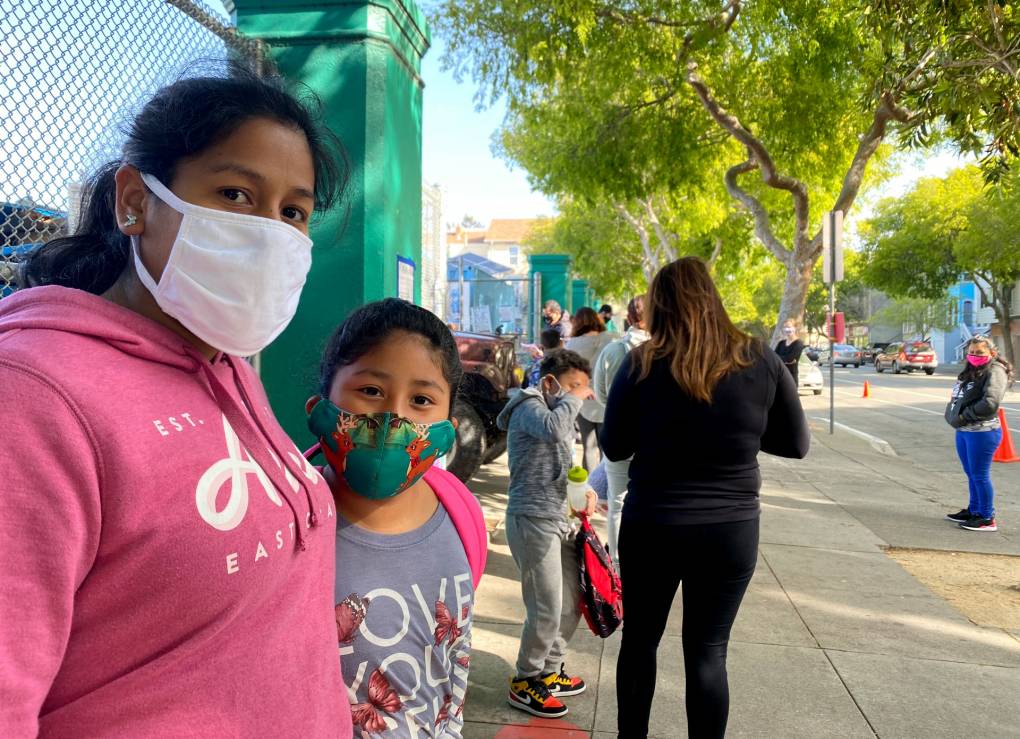
"caption": "César Chávez Elementary School mom Cynthia Peña and her second grader, Ayaline Cabrera wait to have their health forms checked on the way into school on the first day back to campus on April 12, 2021 in San Francisco's Mission District.",
"description": "César Chávez Elementary School mom Cynthia Peña and her second grader, Ayaline Cabrera wait to have their health forms checked on the way into school on the first day back to campus on April 12, 2021 in San Francisco's Mission District.",
"title": "SFUSDBacktoSchool",
"credit": "Julia McEvoy/KQED",
"status": "inherit",
"altTag": "Mom and daughter wearing masks outside school",
"isLoading": false,
"fetchFailed": false
},
"news_11862423": {
"type": "attachments",
"id": "news_11862423",
"meta": {
"index": "attachments_1716263798",
"site": "news",
"id": "11862423",
"found": true
},
"parent": 11862295,
"imgSizes": {
"apple_news_ca_landscape_5_5": {
"file": "https://ww2.kqed.org/app/uploads/sites/10/2021/02/MARQUEE-818-1044x720.jpg",
"width": 1044,
"mimeType": "image/jpeg",
"height": 720
},
"apple_news_ca_square_4_0": {
"file": "https://ww2.kqed.org/app/uploads/sites/10/2021/02/MARQUEE-818-470x470.jpg",
"width": 470,
"mimeType": "image/jpeg",
"height": 470
},
"twentyfourteen-full-width": {
"file": "https://ww2.kqed.org/app/uploads/sites/10/2021/02/MARQUEE-818-1038x576.jpg",
"width": 1038,
"mimeType": "image/jpeg",
"height": 576
},
"thumbnail": {
"file": "https://ww2.kqed.org/app/uploads/sites/10/2021/02/MARQUEE-818-160x90.jpg",
"width": 160,
"mimeType": "image/jpeg",
"height": 90
},
"post-thumbnail": {
"file": "https://ww2.kqed.org/app/uploads/sites/10/2021/02/MARQUEE-818-672x372.jpg",
"width": 672,
"mimeType": "image/jpeg",
"height": 372
},
"kqedFullSize": {
"file": "https://ww2.kqed.org/app/uploads/sites/10/2021/02/MARQUEE-818.jpg",
"width": 1280,
"height": 720
},
"apple_news_ca_landscape_4_7": {
"file": "https://ww2.kqed.org/app/uploads/sites/10/2021/02/MARQUEE-818-632x474.jpg",
"width": 632,
"mimeType": "image/jpeg",
"height": 474
},
"large": {
"file": "https://ww2.kqed.org/app/uploads/sites/10/2021/02/MARQUEE-818-1020x574.jpg",
"width": 1020,
"mimeType": "image/jpeg",
"height": 574
},
"apple_news_ca_landscape_4_0": {
"file": "https://ww2.kqed.org/app/uploads/sites/10/2021/02/MARQUEE-818-536x402.jpg",
"width": 536,
"mimeType": "image/jpeg",
"height": 402
},
"apple_news_ca_portrait_12_9": {
"file": "https://ww2.kqed.org/app/uploads/sites/10/2021/02/MARQUEE-818-1122x720.jpg",
"width": 1122,
"mimeType": "image/jpeg",
"height": 720
},
"medium": {
"file": "https://ww2.kqed.org/app/uploads/sites/10/2021/02/MARQUEE-818-800x450.jpg",
"width": 800,
"mimeType": "image/jpeg",
"height": 450
},
"apple_news_ca_portrait_4_0": {
"file": "https://ww2.kqed.org/app/uploads/sites/10/2021/02/MARQUEE-818-354x472.jpg",
"width": 354,
"mimeType": "image/jpeg",
"height": 472
},
"apple_news_ca_portrait_9_7": {
"file": "https://ww2.kqed.org/app/uploads/sites/10/2021/02/MARQUEE-818-840x720.jpg",
"width": 840,
"mimeType": "image/jpeg",
"height": 720
},
"apple_news_ca_square_9_7": {
"file": "https://ww2.kqed.org/app/uploads/sites/10/2021/02/MARQUEE-818-1104x720.jpg",
"width": 1104,
"mimeType": "image/jpeg",
"height": 720
},
"apple_news_ca_portrait_4_7": {
"file": "https://ww2.kqed.org/app/uploads/sites/10/2021/02/MARQUEE-818-414x552.jpg",
"width": 414,
"mimeType": "image/jpeg",
"height": 552
},
"apple_news_ca_portrait_5_5": {
"file": "https://ww2.kqed.org/app/uploads/sites/10/2021/02/MARQUEE-818-687x720.jpg",
"width": 687,
"mimeType": "image/jpeg",
"height": 720
},
"apple_news_ca_square_4_7": {
"file": "https://ww2.kqed.org/app/uploads/sites/10/2021/02/MARQUEE-818-550x550.jpg",
"width": 550,
"mimeType": "image/jpeg",
"height": 550
},
"apple_news_ca_square_5_5": {
"file": "https://ww2.kqed.org/app/uploads/sites/10/2021/02/MARQUEE-818-912x720.jpg",
"width": 912,
"mimeType": "image/jpeg",
"height": 720
}
},
"publishDate": 1614389768,
"modified": 1614389768,
"caption": null,
"description": null,
"title": "MARQUEE 818",
"credit": null,
"status": "inherit",
"altTag": null,
"isLoading": false,
"fetchFailed": false
},
"news_11861561": {
"type": "attachments",
"id": "news_11861561",
"meta": {
"index": "attachments_1716263798",
"site": "news",
"id": "11861561",
"found": true
},
"parent": 11861556,
"imgSizes": {
"apple_news_ca_landscape_5_5": {
"file": "https://ww2.kqed.org/app/uploads/sites/10/2021/02/mistakes_022221_final-1044x783.png",
"width": 1044,
"mimeType": "image/png",
"height": 783
},
"apple_news_ca_square_4_0": {
"file": "https://ww2.kqed.org/app/uploads/sites/10/2021/02/mistakes_022221_final-470x470.png",
"width": 470,
"mimeType": "image/png",
"height": 470
},
"twentyfourteen-full-width": {
"file": "https://ww2.kqed.org/app/uploads/sites/10/2021/02/mistakes_022221_final-1038x576.png",
"width": 1038,
"mimeType": "image/png",
"height": 576
},
"thumbnail": {
"file": "https://ww2.kqed.org/app/uploads/sites/10/2021/02/mistakes_022221_final-160x108.png",
"width": 160,
"mimeType": "image/png",
"height": 108
},
"post-thumbnail": {
"file": "https://ww2.kqed.org/app/uploads/sites/10/2021/02/mistakes_022221_final-672x372.png",
"width": 672,
"mimeType": "image/png",
"height": 372
},
"kqedFullSize": {
"file": "https://ww2.kqed.org/app/uploads/sites/10/2021/02/mistakes_022221_final.png",
"width": 1920,
"height": 1298
},
"apple_news_ca_landscape_4_7": {
"file": "https://ww2.kqed.org/app/uploads/sites/10/2021/02/mistakes_022221_final-632x474.png",
"width": 632,
"mimeType": "image/png",
"height": 474
},
"large": {
"file": "https://ww2.kqed.org/app/uploads/sites/10/2021/02/mistakes_022221_final-1020x690.png",
"width": 1020,
"mimeType": "image/png",
"height": 690
},
"apple_news_ca_landscape_4_0": {
"file": "https://ww2.kqed.org/app/uploads/sites/10/2021/02/mistakes_022221_final-536x402.png",
"width": 536,
"mimeType": "image/png",
"height": 402
},
"apple_news_ca_portrait_12_9": {
"file": "https://ww2.kqed.org/app/uploads/sites/10/2021/02/mistakes_022221_final-1122x1298.png",
"width": 1122,
"mimeType": "image/png",
"height": 1298
},
"medium": {
"file": "https://ww2.kqed.org/app/uploads/sites/10/2021/02/mistakes_022221_final-800x541.png",
"width": 800,
"mimeType": "image/png",
"height": 541
},
"apple_news_ca_portrait_4_0": {
"file": "https://ww2.kqed.org/app/uploads/sites/10/2021/02/mistakes_022221_final-354x472.png",
"width": 354,
"mimeType": "image/png",
"height": 472
},
"apple_news_ca_portrait_9_7": {
"file": "https://ww2.kqed.org/app/uploads/sites/10/2021/02/mistakes_022221_final-840x1120.png",
"width": 840,
"mimeType": "image/png",
"height": 1120
},
"apple_news_ca_landscape_12_9": {
"file": "https://ww2.kqed.org/app/uploads/sites/10/2021/02/mistakes_022221_final-1832x1298.png",
"width": 1832,
"mimeType": "image/png",
"height": 1298
},
"apple_news_ca_square_9_7": {
"file": "https://ww2.kqed.org/app/uploads/sites/10/2021/02/mistakes_022221_final-1104x1104.png",
"width": 1104,
"mimeType": "image/png",
"height": 1104
},
"1536x1536": {
"file": "https://ww2.kqed.org/app/uploads/sites/10/2021/02/mistakes_022221_final-1536x1038.png",
"width": 1536,
"mimeType": "image/png",
"height": 1038
},
"apple_news_ca_portrait_4_7": {
"file": "https://ww2.kqed.org/app/uploads/sites/10/2021/02/mistakes_022221_final-414x552.png",
"width": 414,
"mimeType": "image/png",
"height": 552
},
"apple_news_ca_square_12_9": {
"file": "https://ww2.kqed.org/app/uploads/sites/10/2021/02/mistakes_022221_final-1472x1298.png",
"width": 1472,
"mimeType": "image/png",
"height": 1298
},
"apple_news_ca_portrait_5_5": {
"file": "https://ww2.kqed.org/app/uploads/sites/10/2021/02/mistakes_022221_final-687x916.png",
"width": 687,
"mimeType": "image/png",
"height": 916
},
"apple_news_ca_square_4_7": {
"file": "https://ww2.kqed.org/app/uploads/sites/10/2021/02/mistakes_022221_final-550x550.png",
"width": 550,
"mimeType": "image/png",
"height": 550
},
"apple_news_ca_landscape_9_7": {
"file": "https://ww2.kqed.org/app/uploads/sites/10/2021/02/mistakes_022221_final-1376x1032.png",
"width": 1376,
"mimeType": "image/png",
"height": 1032
},
"apple_news_ca_square_5_5": {
"file": "https://ww2.kqed.org/app/uploads/sites/10/2021/02/mistakes_022221_final-912x912.png",
"width": 912,
"mimeType": "image/png",
"height": 912
}
},
"publishDate": 1614032959,
"modified": 1614033028,
"caption": null,
"description": null,
"title": "mistakes_022221_final",
"credit": null,
"status": "inherit",
"altTag": "A Mark Fiore cartoon about the San Francisco school board showing historic figures (and Dianne Feinstein) tossed in the dumpster with the school board president saying \"mistakes were made.\"",
"isLoading": false,
"fetchFailed": false
},
"news_11859486": {
"type": "attachments",
"id": "news_11859486",
"meta": {
"index": "attachments_1716263798",
"site": "news",
"id": "11859486",
"found": true
},
"parent": 11859477,
"imgSizes": {
"apple_news_ca_landscape_5_5": {
"file": "https://ww2.kqed.org/app/uploads/sites/10/2021/02/plans_020921_final-1044x783.png",
"width": 1044,
"mimeType": "image/png",
"height": 783
},
"apple_news_ca_square_4_0": {
"file": "https://ww2.kqed.org/app/uploads/sites/10/2021/02/plans_020921_final-470x470.png",
"width": 470,
"mimeType": "image/png",
"height": 470
},
"twentyfourteen-full-width": {
"file": "https://ww2.kqed.org/app/uploads/sites/10/2021/02/plans_020921_final-1038x576.png",
"width": 1038,
"mimeType": "image/png",
"height": 576
},
"thumbnail": {
"file": "https://ww2.kqed.org/app/uploads/sites/10/2021/02/plans_020921_final-160x111.png",
"width": 160,
"mimeType": "image/png",
"height": 111
},
"post-thumbnail": {
"file": "https://ww2.kqed.org/app/uploads/sites/10/2021/02/plans_020921_final-672x372.png",
"width": 672,
"mimeType": "image/png",
"height": 372
},
"kqedFullSize": {
"file": "https://ww2.kqed.org/app/uploads/sites/10/2021/02/plans_020921_final.png",
"width": 1920,
"height": 1336
},
"apple_news_ca_landscape_4_7": {
"file": "https://ww2.kqed.org/app/uploads/sites/10/2021/02/plans_020921_final-632x474.png",
"width": 632,
"mimeType": "image/png",
"height": 474
},
"large": {
"file": "https://ww2.kqed.org/app/uploads/sites/10/2021/02/plans_020921_final-1020x710.png",
"width": 1020,
"mimeType": "image/png",
"height": 710
},
"apple_news_ca_landscape_4_0": {
"file": "https://ww2.kqed.org/app/uploads/sites/10/2021/02/plans_020921_final-536x402.png",
"width": 536,
"mimeType": "image/png",
"height": 402
},
"apple_news_ca_portrait_12_9": {
"file": "https://ww2.kqed.org/app/uploads/sites/10/2021/02/plans_020921_final-1122x1336.png",
"width": 1122,
"mimeType": "image/png",
"height": 1336
},
"medium": {
"file": "https://ww2.kqed.org/app/uploads/sites/10/2021/02/plans_020921_final-800x557.png",
"width": 800,
"mimeType": "image/png",
"height": 557
},
"apple_news_ca_portrait_4_0": {
"file": "https://ww2.kqed.org/app/uploads/sites/10/2021/02/plans_020921_final-354x472.png",
"width": 354,
"mimeType": "image/png",
"height": 472
},
"apple_news_ca_portrait_9_7": {
"file": "https://ww2.kqed.org/app/uploads/sites/10/2021/02/plans_020921_final-840x1120.png",
"width": 840,
"mimeType": "image/png",
"height": 1120
},
"apple_news_ca_landscape_12_9": {
"file": "https://ww2.kqed.org/app/uploads/sites/10/2021/02/plans_020921_final-1832x1336.png",
"width": 1832,
"mimeType": "image/png",
"height": 1336
},
"apple_news_ca_square_9_7": {
"file": "https://ww2.kqed.org/app/uploads/sites/10/2021/02/plans_020921_final-1104x1104.png",
"width": 1104,
"mimeType": "image/png",
"height": 1104
},
"1536x1536": {
"file": "https://ww2.kqed.org/app/uploads/sites/10/2021/02/plans_020921_final-1536x1069.png",
"width": 1536,
"mimeType": "image/png",
"height": 1069
},
"apple_news_ca_portrait_4_7": {
"file": "https://ww2.kqed.org/app/uploads/sites/10/2021/02/plans_020921_final-414x552.png",
"width": 414,
"mimeType": "image/png",
"height": 552
},
"apple_news_ca_square_12_9": {
"file": "https://ww2.kqed.org/app/uploads/sites/10/2021/02/plans_020921_final-1472x1336.png",
"width": 1472,
"mimeType": "image/png",
"height": 1336
},
"apple_news_ca_portrait_5_5": {
"file": "https://ww2.kqed.org/app/uploads/sites/10/2021/02/plans_020921_final-687x916.png",
"width": 687,
"mimeType": "image/png",
"height": 916
},
"apple_news_ca_square_4_7": {
"file": "https://ww2.kqed.org/app/uploads/sites/10/2021/02/plans_020921_final-550x550.png",
"width": 550,
"mimeType": "image/png",
"height": 550
},
"apple_news_ca_landscape_9_7": {
"file": "https://ww2.kqed.org/app/uploads/sites/10/2021/02/plans_020921_final-1376x1032.png",
"width": 1376,
"mimeType": "image/png",
"height": 1032
},
"apple_news_ca_square_5_5": {
"file": "https://ww2.kqed.org/app/uploads/sites/10/2021/02/plans_020921_final-912x912.png",
"width": 912,
"mimeType": "image/png",
"height": 912
}
},
"publishDate": 1612912212,
"modified": 1612912294,
"caption": null,
"description": null,
"title": "plans_020921_final",
"credit": null,
"status": "inherit",
"altTag": "A Mark Fiore cartoon featuring the plans for reopening schools. Plan A is multiple layers of a flow chart with online education, hybrid, public and private, while Plan B is the vaccine.",
"isLoading": false,
"fetchFailed": false
},
"news_11857528": {
"type": "attachments",
"id": "news_11857528",
"meta": {
"index": "attachments_1716263798",
"site": "news",
"id": "11857528",
"found": true
},
"parent": 11857527,
"imgSizes": {
"apple_news_ca_landscape_5_5": {
"file": "https://ww2.kqed.org/app/uploads/sites/10/2021/01/ap21027641449813-3cd4a6f9788400120682e274f2c4a9354bed63fd-1044x783.jpg",
"width": 1044,
"mimeType": "image/jpeg",
"height": 783
},
"apple_news_ca_square_4_0": {
"file": "https://ww2.kqed.org/app/uploads/sites/10/2021/01/ap21027641449813-3cd4a6f9788400120682e274f2c4a9354bed63fd-470x470.jpg",
"width": 470,
"mimeType": "image/jpeg",
"height": 470
},
"twentyfourteen-full-width": {
"file": "https://ww2.kqed.org/app/uploads/sites/10/2021/01/ap21027641449813-3cd4a6f9788400120682e274f2c4a9354bed63fd-1038x576.jpg",
"width": 1038,
"mimeType": "image/jpeg",
"height": 576
},
"thumbnail": {
"file": "https://ww2.kqed.org/app/uploads/sites/10/2021/01/ap21027641449813-3cd4a6f9788400120682e274f2c4a9354bed63fd-160x120.jpg",
"width": 160,
"mimeType": "image/jpeg",
"height": 120
},
"post-thumbnail": {
"file": "https://ww2.kqed.org/app/uploads/sites/10/2021/01/ap21027641449813-3cd4a6f9788400120682e274f2c4a9354bed63fd-672x372.jpg",
"width": 672,
"mimeType": "image/jpeg",
"height": 372
},
"kqedFullSize": {
"file": "https://ww2.kqed.org/app/uploads/sites/10/2021/01/ap21027641449813-3cd4a6f9788400120682e274f2c4a9354bed63fd-scaled.jpg",
"width": 2560,
"height": 1920
},
"2048x2048": {
"file": "https://ww2.kqed.org/app/uploads/sites/10/2021/01/ap21027641449813-3cd4a6f9788400120682e274f2c4a9354bed63fd-2048x1536.jpg",
"width": 2048,
"mimeType": "image/jpeg",
"height": 1536
},
"apple_news_ca_landscape_4_7": {
"file": "https://ww2.kqed.org/app/uploads/sites/10/2021/01/ap21027641449813-3cd4a6f9788400120682e274f2c4a9354bed63fd-632x474.jpg",
"width": 632,
"mimeType": "image/jpeg",
"height": 474
},
"large": {
"file": "https://ww2.kqed.org/app/uploads/sites/10/2021/01/ap21027641449813-3cd4a6f9788400120682e274f2c4a9354bed63fd-1020x765.jpg",
"width": 1020,
"mimeType": "image/jpeg",
"height": 765
},
"apple_news_ca_landscape_4_0": {
"file": "https://ww2.kqed.org/app/uploads/sites/10/2021/01/ap21027641449813-3cd4a6f9788400120682e274f2c4a9354bed63fd-536x402.jpg",
"width": 536,
"mimeType": "image/jpeg",
"height": 402
},
"apple_news_ca_portrait_12_9": {
"file": "https://ww2.kqed.org/app/uploads/sites/10/2021/01/ap21027641449813-3cd4a6f9788400120682e274f2c4a9354bed63fd-1122x1496.jpg",
"width": 1122,
"mimeType": "image/jpeg",
"height": 1496
},
"medium": {
"file": "https://ww2.kqed.org/app/uploads/sites/10/2021/01/ap21027641449813-3cd4a6f9788400120682e274f2c4a9354bed63fd-800x600.jpg",
"width": 800,
"mimeType": "image/jpeg",
"height": 600
},
"apple_news_ca_portrait_4_0": {
"file": "https://ww2.kqed.org/app/uploads/sites/10/2021/01/ap21027641449813-3cd4a6f9788400120682e274f2c4a9354bed63fd-354x472.jpg",
"width": 354,
"mimeType": "image/jpeg",
"height": 472
},
"apple_news_ca_portrait_9_7": {
"file": "https://ww2.kqed.org/app/uploads/sites/10/2021/01/ap21027641449813-3cd4a6f9788400120682e274f2c4a9354bed63fd-840x1120.jpg",
"width": 840,
"mimeType": "image/jpeg",
"height": 1120
},
"apple_news_ca_landscape_12_9": {
"file": "https://ww2.kqed.org/app/uploads/sites/10/2021/01/ap21027641449813-3cd4a6f9788400120682e274f2c4a9354bed63fd-1832x1374.jpg",
"width": 1832,
"mimeType": "image/jpeg",
"height": 1374
},
"apple_news_ca_square_9_7": {
"file": "https://ww2.kqed.org/app/uploads/sites/10/2021/01/ap21027641449813-3cd4a6f9788400120682e274f2c4a9354bed63fd-1104x1104.jpg",
"width": 1104,
"mimeType": "image/jpeg",
"height": 1104
},
"1536x1536": {
"file": "https://ww2.kqed.org/app/uploads/sites/10/2021/01/ap21027641449813-3cd4a6f9788400120682e274f2c4a9354bed63fd-1536x1152.jpg",
"width": 1536,
"mimeType": "image/jpeg",
"height": 1152
},
"apple_news_ca_portrait_4_7": {
"file": "https://ww2.kqed.org/app/uploads/sites/10/2021/01/ap21027641449813-3cd4a6f9788400120682e274f2c4a9354bed63fd-414x552.jpg",
"width": 414,
"mimeType": "image/jpeg",
"height": 552
},
"apple_news_ca_square_12_9": {
"file": "https://ww2.kqed.org/app/uploads/sites/10/2021/01/ap21027641449813-3cd4a6f9788400120682e274f2c4a9354bed63fd-1472x1472.jpg",
"width": 1472,
"mimeType": "image/jpeg",
"height": 1472
},
"apple_news_ca_portrait_5_5": {
"file": "https://ww2.kqed.org/app/uploads/sites/10/2021/01/ap21027641449813-3cd4a6f9788400120682e274f2c4a9354bed63fd-687x916.jpg",
"width": 687,
"mimeType": "image/jpeg",
"height": 916
},
"full-width": {
"file": "https://ww2.kqed.org/app/uploads/sites/10/2021/01/ap21027641449813-3cd4a6f9788400120682e274f2c4a9354bed63fd-1920x1440.jpg",
"width": 1920,
"mimeType": "image/jpeg",
"height": 1440
},
"apple_news_ca_square_4_7": {
"file": "https://ww2.kqed.org/app/uploads/sites/10/2021/01/ap21027641449813-3cd4a6f9788400120682e274f2c4a9354bed63fd-550x550.jpg",
"width": 550,
"mimeType": "image/jpeg",
"height": 550
},
"apple_news_ca_landscape_9_7": {
"file": "https://ww2.kqed.org/app/uploads/sites/10/2021/01/ap21027641449813-3cd4a6f9788400120682e274f2c4a9354bed63fd-1376x1032.jpg",
"width": 1376,
"mimeType": "image/jpeg",
"height": 1032
},
"apple_news_ca_square_5_5": {
"file": "https://ww2.kqed.org/app/uploads/sites/10/2021/01/ap21027641449813-3cd4a6f9788400120682e274f2c4a9354bed63fd-912x912.jpg",
"width": 912,
"mimeType": "image/jpeg",
"height": 912
}
},
"publishDate": 1611862419,
"modified": 1611863768,
"caption": "The San Francisco school board has voted to consider removing the names of George Washington and Abraham Lincoln from public schools, such as Abraham Lincoln High School.",
"description": "The San Francisco school board has voted to consider removing the names of George Washington and Abraham Lincoln from public schools, such as Abraham Lincoln High School.",
"title": "The San Francisco school board has voted to consider removing the names of George Washington and Abraham Lincoln from public schools, such as Abraham Lincoln High School.",
"credit": "Jeff Chiu/AP",
"status": "inherit",
"altTag": null,
"isLoading": false,
"fetchFailed": false
},
"news_11794347": {
"type": "attachments",
"id": "news_11794347",
"meta": {
"index": "attachments_1716263798",
"site": "news",
"id": "11794347",
"found": true
},
"parent": 11794234,
"imgSizes": {
"apple_news_ca_landscape_5_5": {
"file": "https://ww2.kqed.org/app/uploads/sites/10/2020/01/burns-1044x783.jpg",
"width": 1044,
"mimeType": "image/jpeg",
"height": 783
},
"apple_news_ca_square_4_0": {
"file": "https://ww2.kqed.org/app/uploads/sites/10/2020/01/burns-470x470.jpg",
"width": 470,
"mimeType": "image/jpeg",
"height": 470
},
"twentyfourteen-full-width": {
"file": "https://ww2.kqed.org/app/uploads/sites/10/2020/01/burns-1038x576.jpg",
"width": 1038,
"mimeType": "image/jpeg",
"height": 576
},
"thumbnail": {
"file": "https://ww2.kqed.org/app/uploads/sites/10/2020/01/burns-160x107.jpg",
"width": 160,
"mimeType": "image/jpeg",
"height": 107
},
"post-thumbnail": {
"file": "https://ww2.kqed.org/app/uploads/sites/10/2020/01/burns-672x372.jpg",
"width": 672,
"mimeType": "image/jpeg",
"height": 372
},
"kqedFullSize": {
"file": "https://ww2.kqed.org/app/uploads/sites/10/2020/01/burns.jpg",
"width": 1920,
"height": 1280
},
"apple_news_ca_landscape_4_7": {
"file": "https://ww2.kqed.org/app/uploads/sites/10/2020/01/burns-632x474.jpg",
"width": 632,
"mimeType": "image/jpeg",
"height": 474
},
"large": {
"file": "https://ww2.kqed.org/app/uploads/sites/10/2020/01/burns-1020x680.jpg",
"width": 1020,
"mimeType": "image/jpeg",
"height": 680
},
"complete_open_graph": {
"file": "https://ww2.kqed.org/app/uploads/sites/10/2020/01/burns-1200x800.jpg",
"width": 1200,
"mimeType": "image/jpeg",
"height": 800
},
"apple_news_ca_landscape_4_0": {
"file": "https://ww2.kqed.org/app/uploads/sites/10/2020/01/burns-536x402.jpg",
"width": 536,
"mimeType": "image/jpeg",
"height": 402
},
"apple_news_ca_portrait_12_9": {
"file": "https://ww2.kqed.org/app/uploads/sites/10/2020/01/burns-1122x1280.jpg",
"width": 1122,
"mimeType": "image/jpeg",
"height": 1280
},
"medium": {
"file": "https://ww2.kqed.org/app/uploads/sites/10/2020/01/burns-800x533.jpg",
"width": 800,
"mimeType": "image/jpeg",
"height": 533
},
"apple_news_ca_portrait_4_0": {
"file": "https://ww2.kqed.org/app/uploads/sites/10/2020/01/burns-354x472.jpg",
"width": 354,
"mimeType": "image/jpeg",
"height": 472
},
"apple_news_ca_portrait_9_7": {
"file": "https://ww2.kqed.org/app/uploads/sites/10/2020/01/burns-840x1120.jpg",
"width": 840,
"mimeType": "image/jpeg",
"height": 1120
},
"apple_news_ca_landscape_12_9": {
"file": "https://ww2.kqed.org/app/uploads/sites/10/2020/01/burns-1832x1280.jpg",
"width": 1832,
"mimeType": "image/jpeg",
"height": 1280
},
"apple_news_ca_square_9_7": {
"file": "https://ww2.kqed.org/app/uploads/sites/10/2020/01/burns-1104x1104.jpg",
"width": 1104,
"mimeType": "image/jpeg",
"height": 1104
},
"apple_news_ca_portrait_4_7": {
"file": "https://ww2.kqed.org/app/uploads/sites/10/2020/01/burns-414x552.jpg",
"width": 414,
"mimeType": "image/jpeg",
"height": 552
},
"apple_news_ca_square_12_9": {
"file": "https://ww2.kqed.org/app/uploads/sites/10/2020/01/burns-1472x1280.jpg",
"width": 1472,
"mimeType": "image/jpeg",
"height": 1280
},
"apple_news_ca_portrait_5_5": {
"file": "https://ww2.kqed.org/app/uploads/sites/10/2020/01/burns-687x916.jpg",
"width": 687,
"mimeType": "image/jpeg",
"height": 916
},
"full-width": {
"file": "https://ww2.kqed.org/app/uploads/sites/10/2020/01/burns-1920x1280.jpg",
"width": 1920,
"mimeType": "image/jpeg",
"height": 1280
},
"apple_news_ca_square_4_7": {
"file": "https://ww2.kqed.org/app/uploads/sites/10/2020/01/burns-550x550.jpg",
"width": 550,
"mimeType": "image/jpeg",
"height": 550
},
"apple_news_ca_landscape_9_7": {
"file": "https://ww2.kqed.org/app/uploads/sites/10/2020/01/burns-1376x1032.jpg",
"width": 1376,
"mimeType": "image/jpeg",
"height": 1032
},
"apple_news_ca_square_5_5": {
"file": "https://ww2.kqed.org/app/uploads/sites/10/2020/01/burns-912x912.jpg",
"width": 912,
"mimeType": "image/jpeg",
"height": 912
}
},
"publishDate": 1578411354,
"modified": 1578416717,
"caption": "Heather Burns sits in her third grade classroom at Martin Elementary in South San Francisco. She was diagnosed with breast cancer in 2016. While on extended sick leave, Burns began getting paychecks that amounted to less than half of her regular pay after the cost of her substitute had been deducted.",
"description": "Heather Burns sits in her third grade classroom at Martin Elementary in South San Francisco. She was diagnosed with breast cancer in 2016. While on extended sick leave, Burns began getting paychecks that amounted to less than half of her regular pay after the cost of her substitute had been deducted.",
"title": "burns",
"credit": "Stephanie Lister/KQED",
"status": "inherit",
"isLoading": false,
"fetchFailed": false
},
"news_11683169": {
"type": "attachments",
"id": "news_11683169",
"meta": {
"index": "attachments_1716263798",
"site": "news",
"id": "11683169",
"found": true
},
"parent": 11682907,
"imgSizes": {
"small": {
"file": "https://ww2.kqed.org/app/uploads/sites/10/2018/07/ShipyardConstruct-520x329.jpg",
"width": 520,
"mimeType": "image/jpeg",
"height": 329
},
"twentyfourteen-full-width": {
"file": "https://ww2.kqed.org/app/uploads/sites/10/2018/07/ShipyardConstruct-1038x576.jpg",
"width": 1038,
"mimeType": "image/jpeg",
"height": 576
},
"thumbnail": {
"file": "https://ww2.kqed.org/app/uploads/sites/10/2018/07/ShipyardConstruct-160x101.jpg",
"width": 160,
"mimeType": "image/jpeg",
"height": 101
},
"fd-sm": {
"file": "https://ww2.kqed.org/app/uploads/sites/10/2018/07/ShipyardConstruct-960x607.jpg",
"width": 960,
"mimeType": "image/jpeg",
"height": 607
},
"post-thumbnail": {
"file": "https://ww2.kqed.org/app/uploads/sites/10/2018/07/ShipyardConstruct-672x372.jpg",
"width": 672,
"mimeType": "image/jpeg",
"height": 372
},
"xsmall": {
"file": "https://ww2.kqed.org/app/uploads/sites/10/2018/07/ShipyardConstruct-375x237.jpg",
"width": 375,
"mimeType": "image/jpeg",
"height": 237
},
"kqedFullSize": {
"file": "https://ww2.kqed.org/app/uploads/sites/10/2018/07/ShipyardConstruct.jpg",
"width": 1920,
"height": 1214
},
"large": {
"file": "https://ww2.kqed.org/app/uploads/sites/10/2018/07/ShipyardConstruct-1020x645.jpg",
"width": 1020,
"mimeType": "image/jpeg",
"height": 645
},
"xlarge": {
"file": "https://ww2.kqed.org/app/uploads/sites/10/2018/07/ShipyardConstruct-1180x746.jpg",
"width": 1180,
"mimeType": "image/jpeg",
"height": 746
},
"complete_open_graph": {
"file": "https://ww2.kqed.org/app/uploads/sites/10/2018/07/ShipyardConstruct-1200x759.jpg",
"width": 1200,
"mimeType": "image/jpeg",
"height": 759
},
"guest-author-50": {
"file": "https://ww2.kqed.org/app/uploads/sites/10/2018/07/ShipyardConstruct-50x50.jpg",
"width": 50,
"mimeType": "image/jpeg",
"height": 50
},
"guest-author-96": {
"file": "https://ww2.kqed.org/app/uploads/sites/10/2018/07/ShipyardConstruct-96x96.jpg",
"width": 96,
"mimeType": "image/jpeg",
"height": 96
},
"medium": {
"file": "https://ww2.kqed.org/app/uploads/sites/10/2018/07/ShipyardConstruct-800x506.jpg",
"width": 800,
"mimeType": "image/jpeg",
"height": 506
},
"guest-author-64": {
"file": "https://ww2.kqed.org/app/uploads/sites/10/2018/07/ShipyardConstruct-64x64.jpg",
"width": 64,
"mimeType": "image/jpeg",
"height": 64
},
"guest-author-32": {
"file": "https://ww2.kqed.org/app/uploads/sites/10/2018/07/ShipyardConstruct-32x32.jpg",
"width": 32,
"mimeType": "image/jpeg",
"height": 32
},
"fd-lrg": {
"file": "https://ww2.kqed.org/app/uploads/sites/10/2018/07/ShipyardConstruct-1920x1214.jpg",
"width": 1920,
"mimeType": "image/jpeg",
"height": 1214
},
"fd-med": {
"file": "https://ww2.kqed.org/app/uploads/sites/10/2018/07/ShipyardConstruct-1180x746.jpg",
"width": 1180,
"mimeType": "image/jpeg",
"height": 746
},
"full-width": {
"file": "https://ww2.kqed.org/app/uploads/sites/10/2018/07/ShipyardConstruct-1920x1214.jpg",
"width": 1920,
"mimeType": "image/jpeg",
"height": 1214
},
"detail": {
"file": "https://ww2.kqed.org/app/uploads/sites/10/2018/07/ShipyardConstruct-150x150.jpg",
"width": 150,
"mimeType": "image/jpeg",
"height": 150
},
"guest-author-128": {
"file": "https://ww2.kqed.org/app/uploads/sites/10/2018/07/ShipyardConstruct-128x128.jpg",
"width": 128,
"mimeType": "image/jpeg",
"height": 128
},
"xxsmall": {
"file": "https://ww2.kqed.org/app/uploads/sites/10/2018/07/ShipyardConstruct-240x152.jpg",
"width": 240,
"mimeType": "image/jpeg",
"height": 152
}
},
"publishDate": 1532720795,
"modified": 1532720865,
"caption": "Construction workers outside new apartment buildings in the San Francisco Shipyard development at Hunters Point, in July, 2016.",
"description": "Construction workers outside new apartment buildings in the San Francisco Shipyard development at Hunters Point, in July, 2016.",
"title": "ShipyardConstruct",
"credit": "Brittany Hosea-Small/KQED",
"status": "inherit",
"isLoading": false,
"fetchFailed": false
},
"news_11781039": {
"type": "attachments",
"id": "news_11781039",
"meta": {
"index": "attachments_1716263798",
"site": "news",
"id": "11781039",
"found": true
},
"parent": 11781032,
"imgSizes": {
"apple_news_ca_landscape_5_5": {
"file": "https://ww2.kqed.org/app/uploads/sites/10/2019/10/10182019_SE_Main-Photo-Darryl-and-Cecilia-qut-1044x783.jpg",
"width": 1044,
"mimeType": "image/jpeg",
"height": 783
},
"apple_news_ca_square_4_0": {
"file": "https://ww2.kqed.org/app/uploads/sites/10/2019/10/10182019_SE_Main-Photo-Darryl-and-Cecilia-qut-470x470.jpg",
"width": 470,
"mimeType": "image/jpeg",
"height": 470
},
"twentyfourteen-full-width": {
"file": "https://ww2.kqed.org/app/uploads/sites/10/2019/10/10182019_SE_Main-Photo-Darryl-and-Cecilia-qut-1038x576.jpg",
"width": 1038,
"mimeType": "image/jpeg",
"height": 576
},
"thumbnail": {
"file": "https://ww2.kqed.org/app/uploads/sites/10/2019/10/10182019_SE_Main-Photo-Darryl-and-Cecilia-qut-160x120.jpg",
"width": 160,
"mimeType": "image/jpeg",
"height": 120
},
"post-thumbnail": {
"file": "https://ww2.kqed.org/app/uploads/sites/10/2019/10/10182019_SE_Main-Photo-Darryl-and-Cecilia-qut-672x372.jpg",
"width": 672,
"mimeType": "image/jpeg",
"height": 372
},
"kqedFullSize": {
"file": "https://ww2.kqed.org/app/uploads/sites/10/2019/10/10182019_SE_Main-Photo-Darryl-and-Cecilia-qut.jpg",
"width": 1920,
"height": 1440
},
"apple_news_ca_landscape_4_7": {
"file": "https://ww2.kqed.org/app/uploads/sites/10/2019/10/10182019_SE_Main-Photo-Darryl-and-Cecilia-qut-632x474.jpg",
"width": 632,
"mimeType": "image/jpeg",
"height": 474
},
"large": {
"file": "https://ww2.kqed.org/app/uploads/sites/10/2019/10/10182019_SE_Main-Photo-Darryl-and-Cecilia-qut-1020x765.jpg",
"width": 1020,
"mimeType": "image/jpeg",
"height": 765
},
"complete_open_graph": {
"file": "https://ww2.kqed.org/app/uploads/sites/10/2019/10/10182019_SE_Main-Photo-Darryl-and-Cecilia-qut-1200x900.jpg",
"width": 1200,
"mimeType": "image/jpeg",
"height": 900
},
"apple_news_ca_landscape_4_0": {
"file": "https://ww2.kqed.org/app/uploads/sites/10/2019/10/10182019_SE_Main-Photo-Darryl-and-Cecilia-qut-536x402.jpg",
"width": 536,
"mimeType": "image/jpeg",
"height": 402
},
"apple_news_ca_portrait_12_9": {
"file": "https://ww2.kqed.org/app/uploads/sites/10/2019/10/10182019_SE_Main-Photo-Darryl-and-Cecilia-qut-1122x1440.jpg",
"width": 1122,
"mimeType": "image/jpeg",
"height": 1440
},
"medium": {
"file": "https://ww2.kqed.org/app/uploads/sites/10/2019/10/10182019_SE_Main-Photo-Darryl-and-Cecilia-qut-800x600.jpg",
"width": 800,
"mimeType": "image/jpeg",
"height": 600
},
"apple_news_ca_portrait_4_0": {
"file": "https://ww2.kqed.org/app/uploads/sites/10/2019/10/10182019_SE_Main-Photo-Darryl-and-Cecilia-qut-354x472.jpg",
"width": 354,
"mimeType": "image/jpeg",
"height": 472
},
"apple_news_ca_portrait_9_7": {
"file": "https://ww2.kqed.org/app/uploads/sites/10/2019/10/10182019_SE_Main-Photo-Darryl-and-Cecilia-qut-840x1120.jpg",
"width": 840,
"mimeType": "image/jpeg",
"height": 1120
},
"apple_news_ca_landscape_12_9": {
"file": "https://ww2.kqed.org/app/uploads/sites/10/2019/10/10182019_SE_Main-Photo-Darryl-and-Cecilia-qut-1832x1374.jpg",
"width": 1832,
"mimeType": "image/jpeg",
"height": 1374
},
"apple_news_ca_square_9_7": {
"file": "https://ww2.kqed.org/app/uploads/sites/10/2019/10/10182019_SE_Main-Photo-Darryl-and-Cecilia-qut-1104x1104.jpg",
"width": 1104,
"mimeType": "image/jpeg",
"height": 1104
},
"apple_news_ca_portrait_4_7": {
"file": "https://ww2.kqed.org/app/uploads/sites/10/2019/10/10182019_SE_Main-Photo-Darryl-and-Cecilia-qut-414x552.jpg",
"width": 414,
"mimeType": "image/jpeg",
"height": 552
},
"apple_news_ca_square_12_9": {
"file": "https://ww2.kqed.org/app/uploads/sites/10/2019/10/10182019_SE_Main-Photo-Darryl-and-Cecilia-qut-1472x1440.jpg",
"width": 1472,
"mimeType": "image/jpeg",
"height": 1440
},
"apple_news_ca_portrait_5_5": {
"file": "https://ww2.kqed.org/app/uploads/sites/10/2019/10/10182019_SE_Main-Photo-Darryl-and-Cecilia-qut-687x916.jpg",
"width": 687,
"mimeType": "image/jpeg",
"height": 916
},
"full-width": {
"file": "https://ww2.kqed.org/app/uploads/sites/10/2019/10/10182019_SE_Main-Photo-Darryl-and-Cecilia-qut-1920x1440.jpg",
"width": 1920,
"mimeType": "image/jpeg",
"height": 1440
},
"apple_news_ca_square_4_7": {
"file": "https://ww2.kqed.org/app/uploads/sites/10/2019/10/10182019_SE_Main-Photo-Darryl-and-Cecilia-qut-550x550.jpg",
"width": 550,
"mimeType": "image/jpeg",
"height": 550
},
"apple_news_ca_landscape_9_7": {
"file": "https://ww2.kqed.org/app/uploads/sites/10/2019/10/10182019_SE_Main-Photo-Darryl-and-Cecilia-qut-1376x1032.jpg",
"width": 1376,
"mimeType": "image/jpeg",
"height": 1032
},
"apple_news_ca_square_5_5": {
"file": "https://ww2.kqed.org/app/uploads/sites/10/2019/10/10182019_SE_Main-Photo-Darryl-and-Cecilia-qut-912x912.jpg",
"width": 912,
"mimeType": "image/jpeg",
"height": 912
}
},
"publishDate": 1571427584,
"modified": 1571437504,
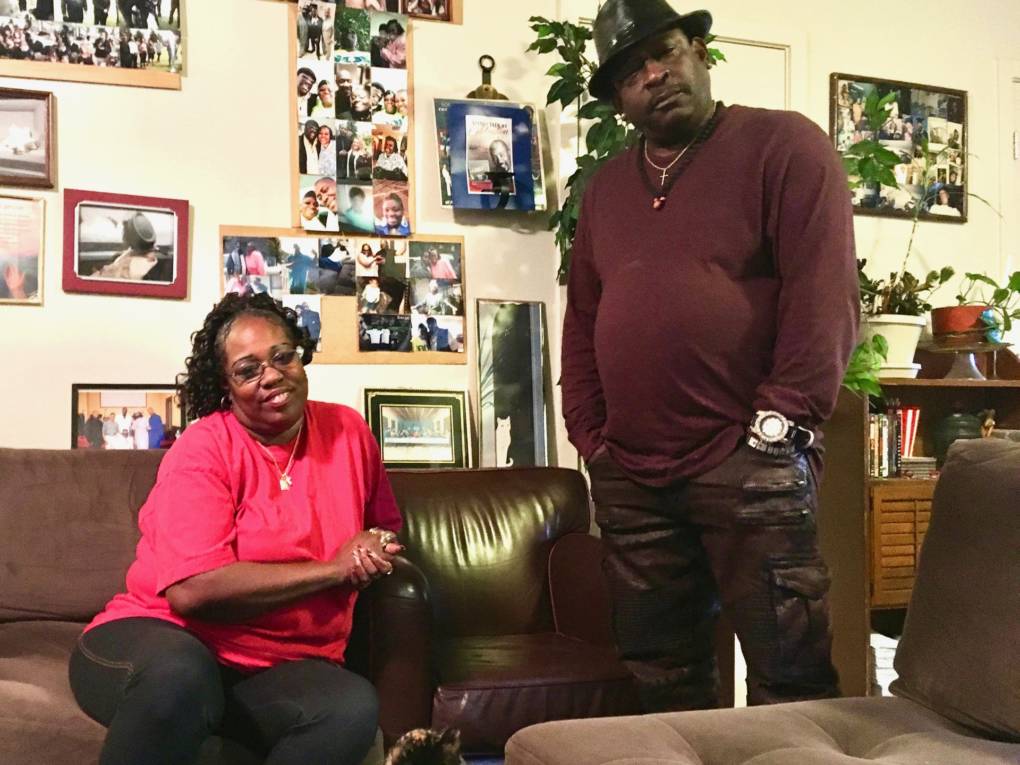
"caption": "Darryl and Cecilia Lester at their home in a redeveloped housing project in Tacoma, Washington. Darryl never knew he was the lead plaintiff in a landmark California special education lawsuit filed in 1971 — or that his pseudonym was “Larry P” — until a reporter tracked him down.",
"description": "Darryl and Cecilia Lester at their home in a redeveloped housing project in Tacoma, Washington. Darryl never knew he was the lead plaintiff in a landmark California special education lawsuit filed in 1971 — or that his pseudonym was “Larry P” — until a reporter tracked him down.",
"title": "10182019_SE_Main Photo Darryl and Cecilia-qut",
"credit": "Lee Romney/KQED",
"status": "inherit",
"isLoading": false,
"fetchFailed": false
},
"news_11769172": {
"type": "attachments",
"id": "news_11769172",
"meta": {
"index": "attachments_1716263798",
"site": "news",
"id": "11769172",
"found": true
},
"parent": 11768639,
"imgSizes": {
"apple_news_ca_landscape_5_5": {
"file": "https://ww2.kqed.org/app/uploads/sites/10/2019/08/45384738302_7119e15943_k-1044x783.jpg",
"width": 1044,
"mimeType": "image/jpeg",
"height": 783
},
"apple_news_ca_square_4_0": {
"file": "https://ww2.kqed.org/app/uploads/sites/10/2019/08/45384738302_7119e15943_k-470x470.jpg",
"width": 470,
"mimeType": "image/jpeg",
"height": 470
},
"twentyfourteen-full-width": {
"file": "https://ww2.kqed.org/app/uploads/sites/10/2019/08/45384738302_7119e15943_k-1038x576.jpg",
"width": 1038,
"mimeType": "image/jpeg",
"height": 576
},
"thumbnail": {
"file": "https://ww2.kqed.org/app/uploads/sites/10/2019/08/45384738302_7119e15943_k-160x107.jpg",
"width": 160,
"mimeType": "image/jpeg",
"height": 107
},
"post-thumbnail": {
"file": "https://ww2.kqed.org/app/uploads/sites/10/2019/08/45384738302_7119e15943_k-672x372.jpg",
"width": 672,
"mimeType": "image/jpeg",
"height": 372
},
"kqedFullSize": {
"file": "https://ww2.kqed.org/app/uploads/sites/10/2019/08/45384738302_7119e15943_k-e1566492702542.jpg",
"width": 1920,
"height": 1280
},
"apple_news_ca_landscape_4_7": {
"file": "https://ww2.kqed.org/app/uploads/sites/10/2019/08/45384738302_7119e15943_k-632x474.jpg",
"width": 632,
"mimeType": "image/jpeg",
"height": 474
},
"large": {
"file": "https://ww2.kqed.org/app/uploads/sites/10/2019/08/45384738302_7119e15943_k-1020x680.jpg",
"width": 1020,
"mimeType": "image/jpeg",
"height": 680
},
"complete_open_graph": {
"file": "https://ww2.kqed.org/app/uploads/sites/10/2019/08/45384738302_7119e15943_k-1200x800.jpg",
"width": 1200,
"mimeType": "image/jpeg",
"height": 800
},
"apple_news_ca_landscape_4_0": {
"file": "https://ww2.kqed.org/app/uploads/sites/10/2019/08/45384738302_7119e15943_k-536x402.jpg",
"width": 536,
"mimeType": "image/jpeg",
"height": 402
},
"apple_news_ca_portrait_12_9": {
"file": "https://ww2.kqed.org/app/uploads/sites/10/2019/08/45384738302_7119e15943_k-1122x1365.jpg",
"width": 1122,
"mimeType": "image/jpeg",
"height": 1365
},
"medium": {
"file": "https://ww2.kqed.org/app/uploads/sites/10/2019/08/45384738302_7119e15943_k-800x533.jpg",
"width": 800,
"mimeType": "image/jpeg",
"height": 533
},
"apple_news_ca_portrait_4_0": {
"file": "https://ww2.kqed.org/app/uploads/sites/10/2019/08/45384738302_7119e15943_k-354x472.jpg",
"width": 354,
"mimeType": "image/jpeg",
"height": 472
},
"apple_news_ca_portrait_9_7": {
"file": "https://ww2.kqed.org/app/uploads/sites/10/2019/08/45384738302_7119e15943_k-840x1120.jpg",
"width": 840,
"mimeType": "image/jpeg",
"height": 1120
},
"apple_news_ca_landscape_12_9": {
"file": "https://ww2.kqed.org/app/uploads/sites/10/2019/08/45384738302_7119e15943_k-1832x1365.jpg",
"width": 1832,
"mimeType": "image/jpeg",
"height": 1365
},
"apple_news_ca_square_9_7": {
"file": "https://ww2.kqed.org/app/uploads/sites/10/2019/08/45384738302_7119e15943_k-1104x1104.jpg",
"width": 1104,
"mimeType": "image/jpeg",
"height": 1104
},
"apple_news_ca_portrait_4_7": {
"file": "https://ww2.kqed.org/app/uploads/sites/10/2019/08/45384738302_7119e15943_k-414x552.jpg",
"width": 414,
"mimeType": "image/jpeg",
"height": 552
},
"apple_news_ca_square_12_9": {
"file": "https://ww2.kqed.org/app/uploads/sites/10/2019/08/45384738302_7119e15943_k-1472x1365.jpg",
"width": 1472,
"mimeType": "image/jpeg",
"height": 1365
},
"apple_news_ca_portrait_5_5": {
"file": "https://ww2.kqed.org/app/uploads/sites/10/2019/08/45384738302_7119e15943_k-687x916.jpg",
"width": 687,
"mimeType": "image/jpeg",
"height": 916
},
"full-width": {
"file": "https://ww2.kqed.org/app/uploads/sites/10/2019/08/45384738302_7119e15943_k-1920x1280.jpg",
"width": 1920,
"mimeType": "image/jpeg",
"height": 1280
},
"apple_news_ca_square_4_7": {
"file": "https://ww2.kqed.org/app/uploads/sites/10/2019/08/45384738302_7119e15943_k-550x550.jpg",
"width": 550,
"mimeType": "image/jpeg",
"height": 550
},
"apple_news_ca_landscape_9_7": {
"file": "https://ww2.kqed.org/app/uploads/sites/10/2019/08/45384738302_7119e15943_k-1376x1032.jpg",
"width": 1376,
"mimeType": "image/jpeg",
"height": 1032
},
"apple_news_ca_square_5_5": {
"file": "https://ww2.kqed.org/app/uploads/sites/10/2019/08/45384738302_7119e15943_k-912x912.jpg",
"width": 912,
"mimeType": "image/jpeg",
"height": 912
}
},
"publishDate": 1566492584,
"modified": 1566492802,
"caption": "Mayor London Breed, pictured here speaking at a private event in October 2018, has advocated for retaining more teachers in the city through financial incentives and affordable housing.",
"description": null,
"title": "YGL Alumni Annual Summit 2018",
"credit": "\u003ca href=\"https://www.flickr.com/photos/yglvoices/45384738302/in/photostream/\">Foundations World Economic Forum/Flickr\u003c/a>",
"status": "inherit",
"isLoading": false,
"fetchFailed": false
},
"news_11765101": {
"type": "attachments",
"id": "news_11765101",
"meta": {
"index": "attachments_1716263798",
"site": "news",
"id": "11765101",
"found": true
},
"parent": 11765093,
"imgSizes": {
"apple_news_ca_square_4_0": {
"file": "https://ww2.kqed.org/app/uploads/sites/10/2019/08/washignton-mural-photos-470x470.jpg",
"width": 470,
"mimeType": "image/jpeg",
"height": 470
},
"thumbnail": {
"file": "https://ww2.kqed.org/app/uploads/sites/10/2019/08/washignton-mural-photos-160x120.jpg",
"width": 160,
"mimeType": "image/jpeg",
"height": 120
},
"post-thumbnail": {
"file": "https://ww2.kqed.org/app/uploads/sites/10/2019/08/washignton-mural-photos-640x372.jpg",
"width": 640,
"mimeType": "image/jpeg",
"height": 372
},
"kqedFullSize": {
"file": "https://ww2.kqed.org/app/uploads/sites/10/2019/08/washignton-mural-photos.jpg",
"width": 640,
"height": 480
},
"apple_news_ca_landscape_4_7": {
"file": "https://ww2.kqed.org/app/uploads/sites/10/2019/08/washignton-mural-photos-632x474.jpg",
"width": 632,
"mimeType": "image/jpeg",
"height": 474
},
"apple_news_ca_portrait_4_7": {
"file": "https://ww2.kqed.org/app/uploads/sites/10/2019/08/washignton-mural-photos-414x480.jpg",
"width": 414,
"mimeType": "image/jpeg",
"height": 480
},
"apple_news_ca_square_4_7": {
"file": "https://ww2.kqed.org/app/uploads/sites/10/2019/08/washignton-mural-photos-550x480.jpg",
"width": 550,
"mimeType": "image/jpeg",
"height": 480
},
"apple_news_ca_landscape_4_0": {
"file": "https://ww2.kqed.org/app/uploads/sites/10/2019/08/washignton-mural-photos-536x402.jpg",
"width": 536,
"mimeType": "image/jpeg",
"height": 402
},
"apple_news_ca_portrait_4_0": {
"file": "https://ww2.kqed.org/app/uploads/sites/10/2019/08/washignton-mural-photos-354x472.jpg",
"width": 354,
"mimeType": "image/jpeg",
"height": 472
}
},
"publishDate": 1564706129,
"modified": 1641850764,
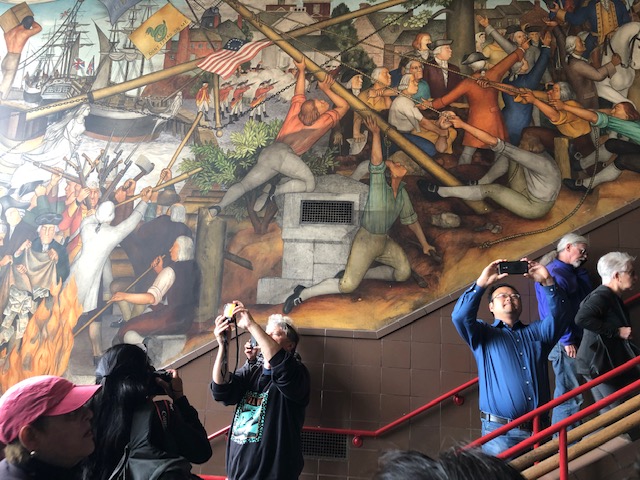
"caption": "Members of the public snap pictures of the controversial 'Life of Washington' mural during viewing hours at George Washington High School. ",
"description": "Members of the public snap pictures of the controversial 'Life of Washington' mural during viewing hours at George Washington High School. ",
"title": "washignton mural photos",
"credit": "Chloe Veltman/KQED",
"status": "inherit",
"altTag": "People take photos of a mural.",
"isLoading": false,
"fetchFailed": false
},
"news_11612131": {
"type": "attachments",
"id": "news_11612131",
"meta": {
"index": "attachments_1716263798",
"site": "news",
"id": "11612131",
"found": true
},
"parent": 11611940,
"imgSizes": {
"small": {
"file": "https://ww2.kqed.org/app/uploads/sites/10/2017/08/pic-520x248.jpg",
"width": 520,
"mimeType": "image/jpeg",
"height": 248
},
"thumbnail": {
"file": "https://ww2.kqed.org/app/uploads/sites/10/2017/08/pic-160x76.jpg",
"width": 160,
"mimeType": "image/jpeg",
"height": 76
},
"post-thumbnail": {
"file": "https://ww2.kqed.org/app/uploads/sites/10/2017/08/pic-672x372.jpg",
"width": 672,
"mimeType": "image/jpeg",
"height": 372
},
"xsmall": {
"file": "https://ww2.kqed.org/app/uploads/sites/10/2017/08/pic-375x179.jpg",
"width": 375,
"mimeType": "image/jpeg",
"height": 179
},
"kqedFullSize": {
"file": "https://ww2.kqed.org/app/uploads/sites/10/2017/08/pic.jpg",
"width": 834,
"height": 398
},
"guest-author-50": {
"file": "https://ww2.kqed.org/app/uploads/sites/10/2017/08/pic-50x50.jpg",
"width": 50,
"mimeType": "image/jpeg",
"height": 50
},
"guest-author-96": {
"file": "https://ww2.kqed.org/app/uploads/sites/10/2017/08/pic-96x96.jpg",
"width": 96,
"mimeType": "image/jpeg",
"height": 96
},
"medium": {
"file": "https://ww2.kqed.org/app/uploads/sites/10/2017/08/pic-800x382.jpg",
"width": 800,
"mimeType": "image/jpeg",
"height": 382
},
"guest-author-64": {
"file": "https://ww2.kqed.org/app/uploads/sites/10/2017/08/pic-64x64.jpg",
"width": 64,
"mimeType": "image/jpeg",
"height": 64
},
"guest-author-32": {
"file": "https://ww2.kqed.org/app/uploads/sites/10/2017/08/pic-32x32.jpg",
"width": 32,
"mimeType": "image/jpeg",
"height": 32
},
"detail": {
"file": "https://ww2.kqed.org/app/uploads/sites/10/2017/08/pic-150x150.jpg",
"width": 150,
"mimeType": "image/jpeg",
"height": 150
},
"guest-author-128": {
"file": "https://ww2.kqed.org/app/uploads/sites/10/2017/08/pic-128x128.jpg",
"width": 128,
"mimeType": "image/jpeg",
"height": 128
},
"xxsmall": {
"file": "https://ww2.kqed.org/app/uploads/sites/10/2017/08/pic-240x115.jpg",
"width": 240,
"mimeType": "image/jpeg",
"height": 115
}
},
"publishDate": 1502833207,
"modified": 1502833292,
"caption": "Oakland's Kyla Johnson-Trammell and San Francisco's Vincent Matthews will lead their respective school districts in the 2017-2018 school year.",
"description": null,
"title": null,
"credit": "Devin Katayama/KQED",
"status": "inherit",
"isLoading": false,
"fetchFailed": false
}
},
"audioPlayerReducer": {
"postId": "stream_live",
"isPaused": true,
"isPlaying": false,
"pfsActive": false,
"pledgeModalIsOpen": true,
"playerDrawerIsOpen": false,
"liveAudioPlayStartedAt": 0,
"liveAudioPlayContext": ""
},
"authorsReducer": {
"byline_news_11857527": {
"type": "authors",
"id": "byline_news_11857527",
"meta": {
"override": true
},
"slug": "byline_news_11857527",
"name": "Merrit Kennedy",
"isLoading": false
},
"byline_news_11781032": {
"type": "authors",
"id": "byline_news_11781032",
"meta": {
"override": true
},
"slug": "byline_news_11781032",
"name": "\u003cstrong>Lee Romney\u003c/strong>",
"isLoading": false
},
"anatintocalis": {
"type": "authors",
"id": "211",
"meta": {
"index": "authors_1716337520",
"id": "211",
"found": true
},
"name": "Ana Tintocalis",
"firstName": "Ana",
"lastName": "Tintocalis",
"slug": "anatintocalis",
"email": "atintocalis@kqed.org",
"display_author_email": false,
"staff_mastheads": [],
"title": null,
"bio": null,
"avatar": "https://secure.gravatar.com/avatar/722c50f51f04eff38fa0e5a3f1d29450?s=600&d=blank&r=g",
"twitter": null,
"facebook": null,
"instagram": null,
"linkedin": null,
"sites": [
{
"site": "news",
"roles": [
"subscriber"
]
},
{
"site": "stateofhealth",
"roles": [
"subscriber"
]
}
],
"headData": {
"title": "Ana Tintocalis | KQED",
"description": null,
"ogImgSrc": "https://secure.gravatar.com/avatar/722c50f51f04eff38fa0e5a3f1d29450?s=600&d=blank&r=g",
"twImgSrc": "https://secure.gravatar.com/avatar/722c50f51f04eff38fa0e5a3f1d29450?s=600&d=blank&r=g"
},
"isLoading": false,
"link": "/author/anatintocalis"
},
"jmcevoy": {
"type": "authors",
"id": "231",
"meta": {
"index": "authors_1716337520",
"id": "231",
"found": true
},
"name": "Julia McEvoy",
"firstName": "Julia",
"lastName": "McEvoy",
"slug": "jmcevoy",
"email": "jmcevoy@KQED.org",
"display_author_email": true,
"staff_mastheads": [
"news"
],
"title": "KQED Senior Editor",
"bio": "Julia McEvoy is KQED's Senior Editor, Education Equity.\r\n\r\nJulia heads KQED’s education coverage examining inequities students face in Bay Area and California schools, and reports on what it will take to educate the next generation.\r\n\r\nJulia's editorial work has received a Peabody Award, a Casey Medal for Coverage of Children and Families, several Edward R. Murrow awards, as well as awards from the Public Radio News Directors Inc. and the Society for Professional Journalists.",
"avatar": "https://secure.gravatar.com/avatar/aec3ce21abe02b302fd33638abd56a22?s=600&d=blank&r=g",
"twitter": "juliamcevoy1",
"facebook": null,
"instagram": null,
"linkedin": null,
"sites": [
{
"site": "news",
"roles": []
},
{
"site": "stateofhealth",
"roles": [
"author"
]
}
],
"headData": {
"title": "Julia McEvoy | KQED",
"description": "KQED Senior Editor",
"ogImgSrc": "https://secure.gravatar.com/avatar/aec3ce21abe02b302fd33638abd56a22?s=600&d=blank&r=g",
"twImgSrc": "https://secure.gravatar.com/avatar/aec3ce21abe02b302fd33638abd56a22?s=600&d=blank&r=g"
},
"isLoading": false,
"link": "/author/jmcevoy"
},
"kqed": {
"type": "authors",
"id": "236",
"meta": {
"index": "authors_1716337520",
"id": "236",
"found": true
},
"name": "KQED News Staff",
"firstName": "KQED News Staff",
"lastName": null,
"slug": "kqed",
"email": "faq@kqed.org",
"display_author_email": false,
"staff_mastheads": [],
"title": null,
"bio": null,
"avatar": "https://secure.gravatar.com/avatar/ef0e801a68c4c54afa9180db14084167?s=600&d=blank&r=g",
"twitter": null,
"facebook": null,
"instagram": null,
"linkedin": null,
"sites": [
{
"site": "arts",
"roles": [
"contributor"
]
},
{
"site": "news",
"roles": [
"editor"
]
},
{
"site": "futureofyou",
"roles": [
"author"
]
}
],
"headData": {
"title": "KQED News Staff | KQED",
"description": null,
"ogImgSrc": "https://secure.gravatar.com/avatar/ef0e801a68c4c54afa9180db14084167?s=600&d=blank&r=g",
"twImgSrc": "https://secure.gravatar.com/avatar/ef0e801a68c4c54afa9180db14084167?s=600&d=blank&r=g"
},
"isLoading": false,
"link": "/author/kqed"
},
"matthewgreen": {
"type": "authors",
"id": "1263",
"meta": {
"index": "authors_1716337520",
"id": "1263",
"found": true
},
"name": "Matthew Green",
"firstName": "Matthew",
"lastName": "Green",
"slug": "matthewgreen",
"email": "mgreen@kqed.org",
"display_author_email": false,
"staff_mastheads": [],
"title": "KQED Editor/Reporter",
"bio": "Matthew Green is a digital media producer for KQED News. He previously produced \u003ca href=\"http://www.kqed.org/lowdown\">The Lowdown\u003c/a>, KQED’s multimedia news education blog. Matthew's written for numerous Bay Area publications, including the Oakland Tribune and San Francisco Chronicle. He also taught journalism classes at Fremont High School in East Oakland.\r\n\r\nEmail: mgreen@kqed.org; Twitter: @MGreenKQED",
"avatar": "https://secure.gravatar.com/avatar/3bf498d1267ca02c8494f33d8cfc575e?s=600&d=blank&r=g",
"twitter": "MGreenKQED",
"facebook": null,
"instagram": null,
"linkedin": null,
"sites": [
{
"site": "news",
"roles": []
},
{
"site": "lowdown",
"roles": []
},
{
"site": "science",
"roles": []
},
{
"site": "education",
"roles": []
},
{
"site": "quest",
"roles": []
},
{
"site": "liveblog",
"roles": []
}
],
"headData": {
"title": "Matthew Green | KQED",
"description": "KQED Editor/Reporter",
"ogImgSrc": "https://secure.gravatar.com/avatar/3bf498d1267ca02c8494f33d8cfc575e?s=600&d=blank&r=g",
"twImgSrc": "https://secure.gravatar.com/avatar/3bf498d1267ca02c8494f33d8cfc575e?s=600&d=blank&r=g"
},
"isLoading": false,
"link": "/author/matthewgreen"
},
"markfiore": {
"type": "authors",
"id": "3236",
"meta": {
"index": "authors_1716337520",
"id": "3236",
"found": true
},
"name": "Mark Fiore",
"firstName": "Mark",
"lastName": "Fiore",
"slug": "markfiore",
"email": "mark@markfiore.com",
"display_author_email": false,
"staff_mastheads": [
"news"
],
"title": "KQED News Cartoonist",
"bio": "\u003ca href=\"http://www.MarkFiore.com\">MarkFiore.com\u003c/a> | \u003ca href=\"https://twitter.com/markfiore\">Follow on Twitter\u003c/a> | \u003ca href=\"https://www.facebook.com/pages/Mark-Fiore-Animated-Political-Cartoons/94451707396?ref=bookmarks\">Facebook\u003c/a> | \u003ca href=\"mailto:mark@markfiore.com\">email\u003c/a>\r\n\r\nPulitzer Prize-winner, Mark Fiore, who the Wall Street Journal has called “the undisputed guru of the form,” creates animated political cartoons in San Francisco, where his work has been featured regularly on the San Francisco Chronicle’s web site, SFGate.com. His work has appeared on Newsweek.com, Slate.com, CBSNews.com, MotherJones.com, DailyKos.com and NPR’s web site. Fiore’s political animation has appeared on CNN, Frontline, Bill Moyers Journal, Salon.com and cable and broadcast outlets across the globe.\r\n\r\nBeginning his professional life by drawing traditional political cartoons for newspapers, Fiore’s work appeared in publications ranging from the Washington Post to the Los Angeles Times. In the late 1990s, he began to experiment with animating political cartoons and, after a short stint at the San Jose Mercury News as their staff cartoonist, Fiore devoted all his energies to animation.\r\nGrowing up in California, Fiore also spent a good portion of his life in the backwoods of Idaho. It was this combination that shaped him politically. Mark majored in political science at Colorado College, where, in a perfect send-off for a cartoonist, he received his diploma in 1991 as commencement speaker Dick Cheney smiled approvingly.\r\nMark Fiore was awarded the Pulitzer Prize for political cartooning in 2010, a Robert F. Kennedy Journalism Award in 2004 and has twice received an Online Journalism Award for commentary from the Online News Association (2002, 2008). Fiore has received two awards for his work in new media from the National Cartoonists Society (2001, 2002), and in 2006 received The James Madison Freedom of Information Award from The Society of Professional Journalists.",
"avatar": "https://secure.gravatar.com/avatar/fc4e2a612b15b67bad0c6f0e1db4ca9b?s=600&d=blank&r=g",
"twitter": "MarkFiore",
"facebook": null,
"instagram": "https://www.instagram.com/markfiore/?hl=en",
"linkedin": null,
"sites": [
{
"site": "arts",
"roles": [
"contributor"
]
},
{
"site": "news",
"roles": [
"editor"
]
},
{
"site": "futureofyou",
"roles": [
"editor"
]
},
{
"site": "science",
"roles": [
"editor"
]
}
],
"headData": {
"title": "Mark Fiore | KQED",
"description": "KQED News Cartoonist",
"ogImgSrc": "https://secure.gravatar.com/avatar/fc4e2a612b15b67bad0c6f0e1db4ca9b?s=600&d=blank&r=g",
"twImgSrc": "https://secure.gravatar.com/avatar/fc4e2a612b15b67bad0c6f0e1db4ca9b?s=600&d=blank&r=g"
},
"isLoading": false,
"link": "/author/markfiore"
},
"dkatayama": {
"type": "authors",
"id": "7240",
"meta": {
"index": "authors_1716337520",
"id": "7240",
"found": true
},
"name": "Devin Katayama",
"firstName": "Devin",
"lastName": "Katayama",
"slug": "dkatayama",
"email": "dkatayama@kqed.org",
"display_author_email": true,
"staff_mastheads": [
"news"
],
"title": "Editor of Talent and Development",
"bio": "Devin Katayama is former Editor of Talent and Development for KQED. He supported our internship program and on-call staff by looking for equitable opportunities to improve the newsroom.\r\n\r\nHe previously hosted The Bay and American Suburb podcasts from KQED News. Prior to returning to the Bay Area in 2015, Devin was the education reporter for WFPL in Louisville and worked as a producer with radio stations in Chicago and Portland, OR. His work has appeared on NPR’s \u003cem>Morning Edition, All Things Considered, The Takeaway\u003c/em> and \u003cem>Here and Now.\u003c/em>\r\n\r\nDevin earned his MA in Journalism from Columbia College Chicago, where he was a Follett Fellow and the recipient of the 2011 Studs Terkel Community Media Workshop Scholarship for his story on Chicago's homeless youth. He won WBUR's 2014 Daniel Schorr award and a regional RTNDA Edward R. Murrow Award for his documentary \"At Risk\" that looked at issues facing some of Louisville's students. Devin has also received numerous local awards from the Associated Press and the Society of Professional Journalists.",
"avatar": "https://secure.gravatar.com/avatar/d0d2978a31002fb2de107921a8e18405?s=600&d=blank&r=g",
"twitter": "RadioDevin",
"facebook": null,
"instagram": null,
"linkedin": null,
"sites": [
{
"site": "arts",
"roles": []
},
{
"site": "news",
"roles": [
"author"
]
},
{
"site": "stateofhealth",
"roles": [
"author"
]
},
{
"site": "forum",
"roles": [
"editor"
]
},
{
"site": "perspectives",
"roles": [
"editor"
]
}
],
"headData": {
"title": "Devin Katayama | KQED",
"description": "Editor of Talent and Development",
"ogImgSrc": "https://secure.gravatar.com/avatar/d0d2978a31002fb2de107921a8e18405?s=600&d=blank&r=g",
"twImgSrc": "https://secure.gravatar.com/avatar/d0d2978a31002fb2de107921a8e18405?s=600&d=blank&r=g"
},
"isLoading": false,
"link": "/author/dkatayama"
},
"cveltman": {
"type": "authors",
"id": "8608",
"meta": {
"index": "authors_1716337520",
"id": "8608",
"found": true
},
"name": "Chloe Veltman",
"firstName": "Chloe",
"lastName": "Veltman",
"slug": "cveltman",
"email": "cveltman@kqed.org",
"display_author_email": true,
"staff_mastheads": [],
"title": "Arts and Culture Reporter",
"bio": "Chloe Veltman is a former arts and culture reporter for KQED. Prior to joining the organization, she launched and led the arts bureau at Colorado Public Radio, served as the Bay Area's culture columnist for the New York Times, and was the founder, host and executive producer of VoiceBox, a national award-winning weekly podcast/radio show and live events series all about the human voice. Chloe is the recipient of numerous prizes, grants and fellowships including a Webby Award for her work on interactive storytelling, both the John S Knight Journalism Fellowship and Humanities Center Fellowship at Stanford University, the Sundance Arts Writing Fellowship and a Library of Congress Research Fellowship. She is the author of the book \"On Acting\" and has appeared as a guest lecturer at Yale University and the San Francisco Conservatory of Music among other institutions. She holds a BA in english literature from King's College, Cambridge, and a Masters in Dramaturgy from the Central School of Speech and Drama/Harvard Institute for Advanced Theater Training.\r\n\u003ca href=\"https://www.chloeveltman.com\">www.chloeveltman.com\u003c/a>",
"avatar": "https://secure.gravatar.com/avatar/55403394b00a1ddab683952c2eb2cf85?s=600&d=blank&r=g",
"twitter": "chloeveltman",
"facebook": null,
"instagram": null,
"linkedin": null,
"sites": [
{
"site": "arts",
"roles": []
},
{
"site": "news",
"roles": [
"author"
]
},
{
"site": "pop",
"roles": [
"editor"
]
},
{
"site": "science",
"roles": []
}
],
"headData": {
"title": "Chloe Veltman | KQED",
"description": "Arts and Culture Reporter",
"ogImgSrc": "https://secure.gravatar.com/avatar/55403394b00a1ddab683952c2eb2cf85?s=600&d=blank&r=g",
"twImgSrc": "https://secure.gravatar.com/avatar/55403394b00a1ddab683952c2eb2cf85?s=600&d=blank&r=g"
},
"isLoading": false,
"link": "/author/cveltman"
},
"eaguilar": {
"type": "authors",
"id": "11382",
"meta": {
"index": "authors_1716337520",
"id": "11382",
"found": true
},
"name": "Erika Aguilar",
"firstName": "Erika",
"lastName": "Aguilar",
"slug": "eaguilar",
"email": "eaa712@gmail.com",
"display_author_email": false,
"staff_mastheads": [],
"title": "KQED Contributor",
"bio": "Erika Aguilar was the director of podcasts at KQED. She was in charge of KQED's portfolio of original podcasts and teams, and sets strategic plans for production and engagement.\r\n\r\nErika helped establish KQED's new housing affordability desk as senior editor. She was also a producer and editor for KQED's local news podcast called \u003cem>The Bay, \u003c/em>and wrote stories about housing in the Bay Area as a reporter for KQED News.\r\n\r\nErika joined KQED in 2017 after producing independent audio projects and podcasts in Southern California. She spent more than a dozen years reporting stories about law enforcement, breaking news, homelessness, government and the environment for KPCC in Los Angeles and KUT in Austin. She also volunteers as an editor and mentor for various journalism training programs.\r\n\r\nErika Aguilar is a proud Tejana from San Antonio. She believes in compromise, optimism and Selena.",
"avatar": "https://secure.gravatar.com/avatar/85bf7bb8dd9af4136525d94cef00f026?s=600&d=blank&r=g",
"twitter": "erikaaaguilar",
"facebook": null,
"instagram": null,
"linkedin": null,
"sites": [
{
"site": "",
"roles": [
"editor"
]
},
{
"site": "news",
"roles": [
"subscriber"
]
},
{
"site": "podcasts",
"roles": [
"editor"
]
}
],
"headData": {
"title": "Erika Aguilar | KQED",
"description": "KQED Contributor",
"ogImgSrc": "https://secure.gravatar.com/avatar/85bf7bb8dd9af4136525d94cef00f026?s=600&d=blank&r=g",
"twImgSrc": "https://secure.gravatar.com/avatar/85bf7bb8dd9af4136525d94cef00f026?s=600&d=blank&r=g"
},
"isLoading": false,
"link": "/author/eaguilar"
},
"jrodriguez": {
"type": "authors",
"id": "11690",
"meta": {
"index": "authors_1716337520",
"id": "11690",
"found": true
},
"name": "Joe Fitzgerald Rodriguez",
"firstName": "Joe",
"lastName": "Fitzgerald Rodriguez",
"slug": "jrodriguez",
"email": "jrodriguez@kqed.org",
"display_author_email": true,
"staff_mastheads": [
"news"
],
"title": "Reporter and Producer",
"bio": "Joe Fitzgerald Rodriguez is a reporter and digital producer for KQED covering politics. Joe most recently wrote for the \u003cem>San Francisco Examiner\u003c/em> as a political columnist covering The City. He was raised in San Francisco and has spent his reporting career in his beloved, foggy, city by the bay. Joe was 12-years-old when he conducted his first interview in journalism, grilling former San Francisco Mayor Willie Brown for the Marina Middle School newspaper, \u003cem>The Penguin Press, \u003c/em>and he continues to report on the San Francisco Bay Area to this day.",
"avatar": "https://secure.gravatar.com/avatar/2247beb0564c1e9c62228d5649d2edac?s=600&d=blank&r=g",
"twitter": "FitztheReporter",
"facebook": null,
"instagram": "https://www.instagram.com/fitzthereporter/",
"linkedin": null,
"sites": [
{
"site": "",
"roles": [
"editor"
]
},
{
"site": "arts",
"roles": [
"editor"
]
},
{
"site": "news",
"roles": [
"editor"
]
},
{
"site": "science",
"roles": [
"editor"
]
},
{
"site": "elections",
"roles": [
"editor"
]
},
{
"site": "liveblog",
"roles": [
"editor"
]
}
],
"headData": {
"title": "Joe Fitzgerald Rodriguez | KQED",
"description": "Reporter and Producer",
"ogImgSrc": "https://secure.gravatar.com/avatar/2247beb0564c1e9c62228d5649d2edac?s=600&d=blank&r=g",
"twImgSrc": "https://secure.gravatar.com/avatar/2247beb0564c1e9c62228d5649d2edac?s=600&d=blank&r=g"
},
"isLoading": false,
"link": "/author/jrodriguez"
}
},
"pagesReducer": {
"news_tag_san-francisco-unified-school-district": {
"type": "terms",
"id": "news_3946",
"meta": {
"index": "terms_1716263798",
"site": "news",
"id": "3946",
"score": 9.553679
},
"featImg": null,
"name": "San Francisco Unified School District",
"description": null,
"taxonomy": "tag",
"headData": {
"twImgId": null,
"twTitle": null,
"ogTitle": null,
"ogImgId": null,
"twDescription": null,
"description": null,
"title": "San Francisco Unified School District Archives | KQED News",
"ogDescription": null
},
"ttid": 3965,
"slug": "san-francisco-unified-school-district",
"isLoading": false,
"title": "San Francisco Unified School District",
"pageMeta": {
"site": "news",
"WpPageTemplate": "page-topic-editorial",
"currentPage": 8
},
"blocks": [
{
"blockName": "kqed/post-list",
"attrs": {
"layout": "cardArticle2",
"query": "posts/news?tag=san-francisco-unified-school-district",
"seeMore": false,
"paginated": true,
"page": 8
}
},
{
"blockName": "kqed/ad"
}
]
}
},
"pfsSessionReducer": {},
"postsReducer": {
"stream_live": {
"type": "live",
"id": "stream_live",
"audioUrl": "https://streams.kqed.org/kqedradio",
"title": "Live Stream",
"excerpt": "Live Stream information currently unavailable.",
"link": "/radio",
"featImg": "",
"label": {
"name": "KQED Live",
"link": "/"
}
},
"stream_kqedNewscast": {
"type": "posts",
"id": "stream_kqedNewscast",
"audioUrl": "https://www.kqed.org/.stream/anon/radio/RDnews/newscast.mp3?_=1",
"title": "KQED Newscast",
"featImg": "",
"label": {
"name": "88.5 FM",
"link": "/"
}
},
"news_11869108": {
"type": "posts",
"id": "news_11869108",
"meta": {
"index": "posts_1716263798",
"site": "news",
"id": "11869108",
"score": null,
"sort": [
1618344535000
]
},
"parent": 0,
"labelTerm": {
"site": "news"
},
"blocks": [],
"publishDate": 1618344535,
"format": "standard",
"disqusTitle": "SFUSD Moves Free Meal Service Out of Chinatown, Raising Community Fears",
"title": "SFUSD Moves Free Meal Service Out of Chinatown, Raising Community Fears",
"headTitle": "KQED News",
"content": "\u003cp>At Gordon J. Lau Elementary School, on a hill just above Stockton Street in San Francisco's Chinatown, 1,000 meals are given out freely each week to impoverished families.\u003c/p>\n\u003cp>More than 6 million of these so-called grab-and-go meals have been served up hot by the San Francisco Unified School District during the pandemic \u003ca href=\"https://www.sfusd.edu/services/health-wellness/nutrition-school-meals\">at various sites citywide\u003c/a>. And for many who have lost their jobs, the meals can mean the difference between feeding their kids, or not.\u003c/p>\n\u003cp>But starting Tuesday, April 20, the meals won't be served in Chinatown anymore. As schools reopen across the city this week and next, grab-and-go meals served at school sites across San Francisco will be shifted to new locations.\u003c/p>\n\u003cp>For Chinatown residents, the nearest available SFUSD-provided grab and go meals will shift to the Tenderloin neighborhood at 225 Eddy St. — a Muni bus ride away. Some families and groups that provide services to them say even this seemingly short extension of a journey is dangerous at a time when racist attacks against Asian communities are on the rise.\u003c/p>\n\u003cp>[pullquote size=\"medium\" align=\"right\" citation=\"Jun Chang Tan, Chinatown resident whose family relies on SFUSD meals\"]'I’m worried about getting attacked. This risk is greater. So I feel that it’s not desirable.'[/pullquote]\u003c/p>\n\u003cp>Jun Chang Tan is a custodian who lives with his family in a single room occupancy hotel in Chinatown. His wife lost her job at a salon during the pandemic, and he lost hours at his custodian job. They rely on the grab-and-go meals from Gordon J. Lau Elementary to feed their two children, a 15-year-old son and 8-year-old daughter.\u003c/p>\n\u003cp>Tan said he fears having to go to the Tenderloin to pick up food because of recent attacks.\u003c/p>\n\u003cp>\"When I was looking at the map — one of the locations is in the Tenderloin. That street is basically — I’ve seen it — it’s all homeless people,\" Tan told KQED in Cantonese. \"So my worries include the impact on my health and sanitation. I’m also worried about getting attacked. This risk is greater. So I feel that it’s not desirable.\"\u003c/p>\n\u003cp>Tan described lines for meals at Gordon J. Lau Elementary stretching farther than a block every Tuesday and Thursday. The need in Chinatown, he said, is high. Others in Chinatown echoed Tan's concerns.\u003c/p>\n\u003cp>\"I wouldn't feel safe lining up in the Tenderloin,\" said Donny Aoieong, vice president of Service Employees International Union Local 1021's school district chapter. Aoieong was raised in Chinatown, where he still lives with his wife, Maria Yap, a school nutrition worker. He said he raised the issue with the school board last week.\u003c/p>\n\u003cfigure id=\"attachment_11869176\" class=\"wp-caption aligncenter\" style=\"max-width: 926px\">\u003cimg src=\"https://ww2.kqed.org/app/uploads/sites/10/2021/04/LiningUpForFoodElementary.jpg\" alt=\"\" width=\"926\" height=\"739\" class=\"size-full wp-image-11869176\" srcset=\"https://ww2.kqed.org/app/uploads/sites/10/2021/04/LiningUpForFoodElementary.jpg 926w, https://ww2.kqed.org/app/uploads/sites/10/2021/04/LiningUpForFoodElementary-800x638.jpg 800w, https://ww2.kqed.org/app/uploads/sites/10/2021/04/LiningUpForFoodElementary-160x128.jpg 160w\" sizes=\"(max-width: 926px) 100vw, 926px\">\u003cfigcaption class=\"wp-caption-text\">People line up, often for a block or more, to pick up food for their children at Gordon J. Lau Elementary School in San Francisco's Chinatown. \u003ccite>(Courtesy of the Chinatown Community Development Center)\u003c/cite>\u003c/figcaption>\u003c/figure>\n\u003cp>Free meals will continue to be served to students going to school in person at Gordon J. Lau Elementary, but many families are hesitant to return to in-person learning, SFUSD data shows. Out of the families 741 students, only 18% of respondents said they felt comfortable returning for in-person instruction in a December SFUSD survey. Aoieong said that number hasn't changed much, and that only about 60 families have said they'd return for in-person instruction at the school, a number SFUSD did not confirm in time for publication.\u003c/p>\n\u003cp>Families not returning for in-person instruction still need access to food. But they won't be getting it in Chinatown, at least not from SFUSD.\u003c/p>\n\u003cp>\"Why transfer all these people to a different community when we could have them in our own community?\" Aoieong asked.\u003c/p>\n\u003cp>[ad fullwidth]\u003c/p>\n\u003cp>In an email chain obtained by KQED, SFUSD Commissioner Alison Collins – who \u003ca href=\"https://www.kqed.org/news/11867599/censured-sf-school-board-member-alison-collins-sues-district-colleagues-for-constitutional-rights-violations\">recently drew public condemnation\u003c/a> for tweets about the Asian community she wrote in 2016 – wrote to district staff calling the grab-and-go meals location shift concerning due to hate crimes against Asian families, who are \"fearful of walking long distances to get food.\"\u003c/p>\n\u003cp>Orla O'Keefe, chief of policy and operations at SFUSD, wrote in response to Collins' email that district Student Nutrition Services staff have done an \"incredible job\" serving 6.1 million meals during the pandemic, and that their \"number one priority right now\" is a successful return to in-person learning.\u003c/p>\n\u003cp>While she recognizes the needs of the community, O'Keefe said her team is \"at maximum bandwidth\" and \"near breaking point\" working to launch meals in 80 schools across the city, while keeping 10 grab-and-go sites open, and coordinating some home food deliveries.\u003c/p>\n\u003cp>It's a difficult logistical feat, O'Keefe said, and the reopening has put a strain on the entire district.\u003c/p>\n\u003cp>[aside label='Related Coverage' tag='chinatown']In a statement to KQED, SFUSD spokesperson Laura Dudnick wrote, \"To ensure we have enough staff to support all schools offering in-person learning, Grab and Go sites at elementary schools are closing. Grab and Go will continue at ~ 10 locations across the City,\" adding that district nutrition staff \"are deeply committed to providing as much access to meals as possible with the constraints of all available resources.\"\u003c/p>\n\u003cp>Dudnick said schools may be reevaluated to reopen on-site grab-and-go locations in the future.\u003c/p>\n\u003cp>Supervisor Aaron Peskin's office was also copied on the email thread and was working to coordinate restoring grab-and-go food access to the Chinatown community.\u003c/p>\n\u003cp>A food pantry run by the San Francisco-Marin Food Bank will also soon shift from Gordon J. Lau Elementary to Woh Hei Yuen Park in Chinatown. While access to the pantry will remain in Chinatown, easy access to the pre-prepared grab-and-go meals from SFUSD is especially important for SRO residents who fear using communal kitchens due to COVID risk.\u003c/p>\n\u003cp>Restoring that food access would mean much to Tan and his family, who live in an SRO hotel. Even keeping food in their home is difficult, because their refrigerator has to be small enough to fit in their single room, and it's so broken that the door frequently falls off of its hinges.\u003c/p>\n\u003cp>\"My feeling is they’re saying, 'You don’t need it, and if you need it, you have to go elsewhere,' \" Tan said. \"But every single week, twice a week, the line is about one block long or longer — that’s how many people there are. So if there are so many people who want it, why they don’t support this location is something I really don’t understand.\"\u003c/p>\n\u003cp>\u003cem>KQED's Monica Lam contributed to this story.\u003c/em>\u003c/p>\n\u003cp>[ad floatright]\u003c/p>\n",
"disqusIdentifier": "11869108 https://ww2.kqed.org/news/?p=11869108",
"disqusUrl": "https://ww2.kqed.org/news/2021/04/13/sfusd-moves-free-meal-service-out-of-chinatown-raising-community-fear/",
"stats": {
"hasVideo": false,
"hasChartOrMap": false,
"hasAudio": false,
"hasPolis": false,
"wordCount": 1137,
"hasGoogleForm": false,
"hasGallery": false,
"hasHearkenModule": false,
"iframeSrcs": [],
"paragraphCount": 26
},
"modified": 1618347226,
"excerpt": "Fears over having to travel farther to obtain food come in the wake of violent attacks against Asian communities.",
"headData": {
"twImgId": "",
"twTitle": "",
"ogTitle": "",
"ogImgId": "",
"twDescription": "",
"description": "Fears over having to travel farther to obtain food come in the wake of violent attacks against Asian communities.",
"title": "SFUSD Moves Free Meal Service Out of Chinatown, Raising Community Fears | KQED",
"ogDescription": "",
"schema": {
"@context": "https://schema.org",
"@type": "NewsArticle",
"headline": "SFUSD Moves Free Meal Service Out of Chinatown, Raising Community Fears",
"datePublished": "2021-04-13T13:08:55-07:00",
"dateModified": "2021-04-13T13:53:46-07:00",
"image": "https://cdn.kqed.org/wp-content/uploads/2020/02/KQED-OG-Image@1x.png",
"isAccessibleForFree": "True",
"publisher": {
"@type": "NewsMediaOrganization",
"@id": "https://www.kqed.org/#organization",
"name": "KQED",
"logo": "https://cdn.kqed.org/wp-content/uploads/2020/02/KQED-OG-Image@1x.png",
"url": "https://www.kqed.org",
"sameAs": [
"https://www.facebook.com/KQED",
"https://twitter.com/KQED",
"https://www.instagram.com/kqed/",
"https://www.tiktok.com/@kqedofficial",
"https://www.linkedin.com/company/kqed",
"https://www.youtube.com/channel/UCeC0IOo7i1P_61zVUWbJ4nw"
]
}
}
},
"guestAuthors": [],
"slug": "sfusd-moves-free-meal-service-out-of-chinatown-raising-community-fear",
"status": "publish",
"path": "/news/11869108/sfusd-moves-free-meal-service-out-of-chinatown-raising-community-fear",
"audioTrackLength": null,
"parsedContent": [
{
"type": "contentString",
"content": "\u003cdiv class=\"post-body\">\u003cp>\u003cp>At Gordon J. Lau Elementary School, on a hill just above Stockton Street in San Francisco's Chinatown, 1,000 meals are given out freely each week to impoverished families.\u003c/p>\n\u003cp>More than 6 million of these so-called grab-and-go meals have been served up hot by the San Francisco Unified School District during the pandemic \u003ca href=\"https://www.sfusd.edu/services/health-wellness/nutrition-school-meals\">at various sites citywide\u003c/a>. And for many who have lost their jobs, the meals can mean the difference between feeding their kids, or not.\u003c/p>\n\u003cp>But starting Tuesday, April 20, the meals won't be served in Chinatown anymore. As schools reopen across the city this week and next, grab-and-go meals served at school sites across San Francisco will be shifted to new locations.\u003c/p>\n\u003cp>For Chinatown residents, the nearest available SFUSD-provided grab and go meals will shift to the Tenderloin neighborhood at 225 Eddy St. — a Muni bus ride away. Some families and groups that provide services to them say even this seemingly short extension of a journey is dangerous at a time when racist attacks against Asian communities are on the rise.\u003c/p>\n\u003cp>\u003c/p>\u003c/div>",
"attributes": {
"named": {},
"numeric": []
}
},
{
"type": "component",
"content": "'I’m worried about getting attacked. This risk is greater. So I feel that it’s not desirable.'",
"name": "pullquote",
"attributes": {
"named": {
"size": "medium",
"align": "right",
"citation": "Jun Chang Tan, Chinatown resident whose family relies on SFUSD meals",
"label": ""
},
"numeric": []
}
},
{
"type": "contentString",
"content": "\u003cdiv class=\"post-body\">\u003cp>\u003c/p>\n\u003cp>Jun Chang Tan is a custodian who lives with his family in a single room occupancy hotel in Chinatown. His wife lost her job at a salon during the pandemic, and he lost hours at his custodian job. They rely on the grab-and-go meals from Gordon J. Lau Elementary to feed their two children, a 15-year-old son and 8-year-old daughter.\u003c/p>\n\u003cp>Tan said he fears having to go to the Tenderloin to pick up food because of recent attacks.\u003c/p>\n\u003cp>\"When I was looking at the map — one of the locations is in the Tenderloin. That street is basically — I’ve seen it — it’s all homeless people,\" Tan told KQED in Cantonese. \"So my worries include the impact on my health and sanitation. I’m also worried about getting attacked. This risk is greater. So I feel that it’s not desirable.\"\u003c/p>\n\u003cp>Tan described lines for meals at Gordon J. Lau Elementary stretching farther than a block every Tuesday and Thursday. The need in Chinatown, he said, is high. Others in Chinatown echoed Tan's concerns.\u003c/p>\n\u003cp>\"I wouldn't feel safe lining up in the Tenderloin,\" said Donny Aoieong, vice president of Service Employees International Union Local 1021's school district chapter. Aoieong was raised in Chinatown, where he still lives with his wife, Maria Yap, a school nutrition worker. He said he raised the issue with the school board last week.\u003c/p>\n\u003cfigure id=\"attachment_11869176\" class=\"wp-caption aligncenter\" style=\"max-width: 926px\">\u003cimg src=\"https://ww2.kqed.org/app/uploads/sites/10/2021/04/LiningUpForFoodElementary.jpg\" alt=\"\" width=\"926\" height=\"739\" class=\"size-full wp-image-11869176\" srcset=\"https://ww2.kqed.org/app/uploads/sites/10/2021/04/LiningUpForFoodElementary.jpg 926w, https://ww2.kqed.org/app/uploads/sites/10/2021/04/LiningUpForFoodElementary-800x638.jpg 800w, https://ww2.kqed.org/app/uploads/sites/10/2021/04/LiningUpForFoodElementary-160x128.jpg 160w\" sizes=\"(max-width: 926px) 100vw, 926px\">\u003cfigcaption class=\"wp-caption-text\">People line up, often for a block or more, to pick up food for their children at Gordon J. Lau Elementary School in San Francisco's Chinatown. \u003ccite>(Courtesy of the Chinatown Community Development Center)\u003c/cite>\u003c/figcaption>\u003c/figure>\n\u003cp>Free meals will continue to be served to students going to school in person at Gordon J. Lau Elementary, but many families are hesitant to return to in-person learning, SFUSD data shows. Out of the families 741 students, only 18% of respondents said they felt comfortable returning for in-person instruction in a December SFUSD survey. Aoieong said that number hasn't changed much, and that only about 60 families have said they'd return for in-person instruction at the school, a number SFUSD did not confirm in time for publication.\u003c/p>\n\u003cp>Families not returning for in-person instruction still need access to food. But they won't be getting it in Chinatown, at least not from SFUSD.\u003c/p>\n\u003cp>\"Why transfer all these people to a different community when we could have them in our own community?\" Aoieong asked.\u003c/p>\n\u003cp>\u003c/p>\u003c/div>",
"attributes": {
"named": {},
"numeric": []
}
},
{
"type": "component",
"content": "",
"name": "ad",
"attributes": {
"named": {
"label": "fullwidth"
},
"numeric": [
"fullwidth"
]
}
},
{
"type": "contentString",
"content": "\u003cdiv class=\"post-body\">\u003cp>\u003c/p>\n\u003cp>In an email chain obtained by KQED, SFUSD Commissioner Alison Collins – who \u003ca href=\"https://www.kqed.org/news/11867599/censured-sf-school-board-member-alison-collins-sues-district-colleagues-for-constitutional-rights-violations\">recently drew public condemnation\u003c/a> for tweets about the Asian community she wrote in 2016 – wrote to district staff calling the grab-and-go meals location shift concerning due to hate crimes against Asian families, who are \"fearful of walking long distances to get food.\"\u003c/p>\n\u003cp>Orla O'Keefe, chief of policy and operations at SFUSD, wrote in response to Collins' email that district Student Nutrition Services staff have done an \"incredible job\" serving 6.1 million meals during the pandemic, and that their \"number one priority right now\" is a successful return to in-person learning.\u003c/p>\n\u003cp>While she recognizes the needs of the community, O'Keefe said her team is \"at maximum bandwidth\" and \"near breaking point\" working to launch meals in 80 schools across the city, while keeping 10 grab-and-go sites open, and coordinating some home food deliveries.\u003c/p>\n\u003cp>It's a difficult logistical feat, O'Keefe said, and the reopening has put a strain on the entire district.\u003c/p>\n\u003cp>\u003c/p>\u003c/div>",
"attributes": {
"named": {},
"numeric": []
}
},
{
"type": "component",
"content": "",
"name": "aside",
"attributes": {
"named": {
"label": "Related Coverage ",
"tag": "chinatown"
},
"numeric": []
}
},
{
"type": "contentString",
"content": "\u003cdiv class=\"post-body\">\u003cp>In a statement to KQED, SFUSD spokesperson Laura Dudnick wrote, \"To ensure we have enough staff to support all schools offering in-person learning, Grab and Go sites at elementary schools are closing. Grab and Go will continue at ~ 10 locations across the City,\" adding that district nutrition staff \"are deeply committed to providing as much access to meals as possible with the constraints of all available resources.\"\u003c/p>\n\u003cp>Dudnick said schools may be reevaluated to reopen on-site grab-and-go locations in the future.\u003c/p>\n\u003cp>Supervisor Aaron Peskin's office was also copied on the email thread and was working to coordinate restoring grab-and-go food access to the Chinatown community.\u003c/p>\n\u003cp>A food pantry run by the San Francisco-Marin Food Bank will also soon shift from Gordon J. Lau Elementary to Woh Hei Yuen Park in Chinatown. While access to the pantry will remain in Chinatown, easy access to the pre-prepared grab-and-go meals from SFUSD is especially important for SRO residents who fear using communal kitchens due to COVID risk.\u003c/p>\n\u003cp>Restoring that food access would mean much to Tan and his family, who live in an SRO hotel. Even keeping food in their home is difficult, because their refrigerator has to be small enough to fit in their single room, and it's so broken that the door frequently falls off of its hinges.\u003c/p>\n\u003cp>\"My feeling is they’re saying, 'You don’t need it, and if you need it, you have to go elsewhere,' \" Tan said. \"But every single week, twice a week, the line is about one block long or longer — that’s how many people there are. So if there are so many people who want it, why they don’t support this location is something I really don’t understand.\"\u003c/p>\n\u003cp>\u003cem>KQED's Monica Lam contributed to this story.\u003c/em>\u003c/p>\n\u003cp>\u003c/p>\u003c/div>",
"attributes": {
"named": {},
"numeric": []
}
},
{
"type": "component",
"content": "",
"name": "ad",
"attributes": {
"named": {
"label": "floatright"
},
"numeric": [
"floatright"
]
}
},
{
"type": "contentString",
"content": "\u003cdiv class=\"post-body\">\u003cp>\u003c/p>\n\u003c/div>\u003c/p>",
"attributes": {
"named": {},
"numeric": []
}
}
],
"link": "/news/11869108/sfusd-moves-free-meal-service-out-of-chinatown-raising-community-fear",
"authors": [
"11690"
],
"categories": [
"news_24114",
"news_8"
],
"tags": [
"news_393",
"news_333",
"news_38",
"news_3946",
"news_29229",
"news_1290"
],
"featImg": "news_11869186",
"label": "news"
},
"news_11869003": {
"type": "posts",
"id": "news_11869003",
"meta": {
"index": "posts_1716263798",
"site": "news",
"id": "11869003",
"score": null,
"sort": [
1618229033000
]
},
"guestAuthors": [],
"slug": "a-light-at-the-end-of-the-tunnel-some-san-francisco-kids-return-to-in-person-school",
"title": "‘A Light at the End of the Tunnel’: Some San Francisco Kids Return to In-Person School",
"publishDate": 1618229033,
"format": "audio",
"headTitle": "‘A Light at the End of the Tunnel’: Some San Francisco Kids Return to In-Person School | KQED",
"labelTerm": {
"site": "news"
},
"content": "\u003cp>In San Francisco on Monday, a long-forgotten sound will finally ring out — bouncing off concrete, soaring over grass and echoing between the city’s Victorian homes to the ears of parents and children across the city.\u003c/p>\n\u003cp>School bells and buzzers will sound off.\u003c/p>\n\u003cp>After a year of pandemic closures, in-person classes are back in session for some students in pre-K through second grade, with a staggered schedule of which schools will welcome kids inside beginning April 12. More students from those grades will start on April 19, which will also mark the (also staggered) return of third through fifth graders.\u003c/p>\n\u003cp>“Trapped inside a three-bedroom apartment with four kids for a year, it does feel like a light at the end of the tunnel,” said San Francisco parent Andy Martone, who spoke to KQED on Sunday.\u003c/p>\n\u003cp>The 42-year-old software engineer and his wife live in the Mission District, and their 6-year-old twin daughters are set to return to school this week. Martone remembers when he told his twins the news.\u003c/p>\n\u003cp>[ad fullwidth]\u003c/p>\n\u003cp>“One of them said, ‘I can’t wait to do more math equations!’ I was like, ‘Oh really?’ The other one said, ‘I can’t wait to see my teacher in person,’ ” Martone said.\u003c/p>\n\u003cp>Still, not all the city’s students will find themselves in classrooms this week. Or even this semester.\u003c/p>\n\u003cp>San Francisco lags behind other California cities in reopening, \u003ca href=\"https://www.kqed.org/news/11866954/the-day-has-finally-arrived-berkeleys-youngest-students-return-to-classrooms-for-first-time-in-a-very-long-year\">with some Berkeley and Oakland students filling classrooms weeks ago\u003c/a>. And there are still many lingering questions — for instance, when will teenagers be back in San Francisco Unified School District classrooms?\u003c/p>\n\u003cp>The San Francisco Board of Education voted last week to put all kids back in classrooms this fall, but those plans are so far just written in classroom chalk, not stone.\u003c/p>\n\u003cp>https://twitter.com/KQED/status/1379965974246531076\u003c/p>\n\u003cp>\u003cem>The San Francisco Board of Education has put itself on record as wanting kids back in classrooms in the fall, as seen in KQED’s coverage, above.\u003c/em>\u003c/p>\n\u003cp>The reopening efforts have been clouded by clashes between city politicians, some vocal parent groups and the school board. The city of San Francisco sued the school district to speed up its reopening process, a school commissioner caused community furor \u003ca href=\"https://www.kqed.org/news/11867918/no-one-was-asking-what-we-thought-san-francisco-students-weigh-in-on-school-district-controversies\">over her tweets, which some have called racist\u003c/a>, and the board recently put on hold its controversial decision to rename 44 high schools related to historical figures with pasts ostensibly tied to racism. Nearly all of these tussles prompted acrimony on all sides even as many students’ ability to learn via hours of screen time instruction plummeted.\u003c/p>\n\u003cp>Another challenge still facing the district is that not all families yet feel safe or otherwise able to return to in-person learning. About 67% of kindergarten through second grade families and 70% of third through fifth grade families surveyed wish to return for in-person learning, according to an SFUSD survey released in March.\u003c/p>\n\u003cp>Jun Chang Tan is a custodian who lives with his family in a single room occupancy hotel in Chinatown. His 15-year-old son and 8-year-old daughter both attend San Francisco schools, but he’s not ready to let either return to classrooms.\u003c/p>\n\u003cp>Since all four live in a room together, he said even a remote chance of catching COVID-19 is still too dangerous for them — they lack the space to quarantine themselves from each other, should the worst happen. SRO’s are congregate settings where people living in rooms share kitchens and bathrooms with others on their floors, another worry for those trying to quarantine.\u003c/p>\n\u003cp>[pullquote size=\"medium\" align=\"right\" citation=\"Tara Ramos, SFUSD teacher-librarian\"]’Most of our families live in the Mission neighborhood, and we know that they have been more impacted by COVID.’[/pullquote]\u003c/p>\n\u003cp>“There won’t be any space for quarantine,” he said in Cantonese, which was translated by KQED. “That’s one room for four of us.” When his kids are home, he feels he can help them stay safe. But they take Muni to get to school, where he fears he has “no control over” who they’d have contact with.\u003c/p>\n\u003cp>With some students in school, and some still at home, teachers are finding themselves split in their duties. Andrew Patel is one of those teachers juggling multiple cohorts — in person and online — at Leonard R. Flynn Elementary School on Cesar Chavez Street, a stone’s throw from Precita Park.\u003c/p>\n\u003cp>Patel said it’s important not to forget why distance learning started in the first place.\u003c/p>\n\u003cp>“We went to distance learning because of COVID-19 and we’re still, as a community, experiencing a lot of loss and a lot of hardship. And we have to think about what we’re going to do as a school to bring joy and healing and feel good once we return while also staying safe in our classrooms,” he said.\u003c/p>\n\u003cp>That will be no easy task. Like other schools where demand has been high to return to physical classrooms, when Patel’s school reopens he will divide up his class, welcoming eight students who are his “cohort A” kids into his physical classroom while signing on to Zoom with eight other children, who will be in class from home. There is not enough space to accommodate them safely in his classroom, he said, hence the split. But cohort A and B students will each spend some time in class, and some time on Zoom.\u003c/p>\n\u003cp>Patel must also plan to continue the distance learning curriculum for two more students who are in “cohort C,” whose parents have opted to keep them in distance learning the entire time.\u003c/p>\n\u003cp>Not every teacher feels safe returning yet. SFUSD staffers can request accommodations to work remotely should they belong to a group of increased risk, with a substitute teacher assigned to buttress in-person learning. So far, 584 SFUSD staffers requested accommodations, and 290 have met the criteria for approval, according to SFUSD.\u003c/p>\n\u003cp>But the district will still need educators present to meet student demand. At a recent Board of Education meeting, SFUSD staff said only 91 new substitute teacher applications have been received, prompting a warning from staff that “current substitute teacher availability does not meet anticipated need.” The district is exploring “additional options” to deploy other staff as needed.\u003c/p>\n\u003cp>https://twitter.com/SFUnified/status/1380626572445577218\u003c/p>\n\u003cp>\u003cem>In the tweet above, SFUSD seeks new hires to help meet the demand of students. \u003c/em>\u003c/p>\n\u003cp>And for those who are returning, teachers have even another layer of complexity to worry about when returning to in-person learning — their own children.\u003c/p>\n\u003cp>Sanchez Elementary School teacher-librarian Tara Ramos will spend Monday performing an intake of kids at her school, helping to supervise all the new rules and procedures kids and staff must follow for safety, from distancing to hand-washing. As she juggles that challenge, her own 8-year-old daughter will be attending an in-person school hub.\u003c/p>\n\u003cp>Ramos said she feels lucky that her husband can start work a little later to drop her daughter off at school, “but that’s not everybody’s situation.” There’s a “void of child care for teachers,” she said.\u003c/p>\n\u003cp>[aside postID=\"news_11858457\" label=\"Equity issues arise in SF school reopening battle\"]\u003c/p>\n\u003cp>Still, despite the challenges, Ramos said her school worked carefully with families in the Mission District, many of whom are Latino and especially impacted by the pandemic, to find ways to educate their children in the safest ways possible.\u003c/p>\n\u003cp>“Most of our families live in the Mission neighborhood, and we know what they have been more impacted by COVID,” Ramos said. “I feel proud of us that we are being so careful with their health and safety.”\u003c/p>\n\u003cp>But the flip side of that is schools may be hyperfocused on safety for the foreseeable future, Ramos said, which may hurt their ability to concentrate on learning.\u003c/p>\n\u003cp>“How can we still make school fun? How can we still have engaging activities for kids?” Ramos said. “I just think that’s the part maybe people aren’t necessarily considering, like how much this undertaking is really about safety and not so much about learning.”\u003c/p>\n\u003cp>[ad floatright]\u003c/p>\n\u003cp>\u003cem>KQED’s Vanessa Rancaño, Julia McEvoy and Julia Chan contributed to this story.\u003c/em>\u003c/p>\n\n",
"blocks": [],
"excerpt": "About 67% of kindergarten through second grade families and 70% of third through fifth grade families surveyed wish to return for in-person learning, according to as SFUSD survey released in March.",
"status": "publish",
"parent": 0,
"modified": 1721107427,
"stats": {
"hasAudio": false,
"hasVideo": false,
"hasChartOrMap": false,
"iframeSrcs": [],
"hasGoogleForm": false,
"hasGallery": false,
"hasHearkenModule": false,
"hasPolis": false,
"paragraphCount": 35,
"wordCount": 1442
},
"headData": {
"title": "‘A Light at the End of the Tunnel’: Some San Francisco Kids Return to In-Person School | KQED",
"description": "About 67% of kindergarten through second grade families and 70% of third through fifth grade families surveyed wish to return for in-person learning, according to as SFUSD survey released in March.",
"ogTitle": "",
"ogDescription": "",
"ogImgId": "",
"twTitle": "",
"twDescription": "",
"twImgId": "",
"schema": {
"@context": "https://schema.org",
"@type": "NewsArticle",
"headline": "‘A Light at the End of the Tunnel’: Some San Francisco Kids Return to In-Person School",
"datePublished": "2021-04-12T05:03:53-07:00",
"dateModified": "2024-07-15T22:23:47-07:00",
"image": "https://cdn.kqed.org/wp-content/uploads/2020/02/KQED-OG-Image@1x.png",
"isAccessibleForFree": "True",
"publisher": {
"@type": "NewsMediaOrganization",
"@id": "https://www.kqed.org/#organization",
"name": "KQED",
"logo": "https://cdn.kqed.org/wp-content/uploads/2020/02/KQED-OG-Image@1x.png",
"url": "https://www.kqed.org",
"sameAs": [
"https://www.facebook.com/KQED",
"https://twitter.com/KQED",
"https://www.instagram.com/kqed/",
"https://www.tiktok.com/@kqedofficial",
"https://www.linkedin.com/company/kqed",
"https://www.youtube.com/channel/UCeC0IOo7i1P_61zVUWbJ4nw"
]
}
}
},
"audioUrl": "https://traffic.omny.fm/d/clips/0af137ef-751e-4b19-a055-aaef00d2d578/ffca7e9f-6831-41c5-bcaf-aaef00f5a073/4b590417-b56a-4d26-b49a-ad08011c33a4/audio.mp3",
"sticky": false,
"path": "/news/11869003/a-light-at-the-end-of-the-tunnel-some-san-francisco-kids-return-to-in-person-school",
"audioDuration": 243000,
"audioTrackLength": null,
"parsedContent": [
{
"type": "contentString",
"content": "\u003cdiv class=\"post-body\">\u003cp>\u003cp>In San Francisco on Monday, a long-forgotten sound will finally ring out — bouncing off concrete, soaring over grass and echoing between the city’s Victorian homes to the ears of parents and children across the city.\u003c/p>\n\u003cp>School bells and buzzers will sound off.\u003c/p>\n\u003cp>After a year of pandemic closures, in-person classes are back in session for some students in pre-K through second grade, with a staggered schedule of which schools will welcome kids inside beginning April 12. More students from those grades will start on April 19, which will also mark the (also staggered) return of third through fifth graders.\u003c/p>\n\u003cp>“Trapped inside a three-bedroom apartment with four kids for a year, it does feel like a light at the end of the tunnel,” said San Francisco parent Andy Martone, who spoke to KQED on Sunday.\u003c/p>\n\u003cp>The 42-year-old software engineer and his wife live in the Mission District, and their 6-year-old twin daughters are set to return to school this week. Martone remembers when he told his twins the news.\u003c/p>\n\u003cp>\u003c/p>\u003c/div>",
"attributes": {
"named": {},
"numeric": []
}
},
{
"type": "component",
"content": "",
"name": "ad",
"attributes": {
"named": {
"label": "fullwidth"
},
"numeric": [
"fullwidth"
]
}
},
{
"type": "contentString",
"content": "\u003cdiv class=\"post-body\">\u003cp>\u003c/p>\n\u003cp>“One of them said, ‘I can’t wait to do more math equations!’ I was like, ‘Oh really?’ The other one said, ‘I can’t wait to see my teacher in person,’ ” Martone said.\u003c/p>\n\u003cp>Still, not all the city’s students will find themselves in classrooms this week. Or even this semester.\u003c/p>\n\u003cp>San Francisco lags behind other California cities in reopening, \u003ca href=\"https://www.kqed.org/news/11866954/the-day-has-finally-arrived-berkeleys-youngest-students-return-to-classrooms-for-first-time-in-a-very-long-year\">with some Berkeley and Oakland students filling classrooms weeks ago\u003c/a>. And there are still many lingering questions — for instance, when will teenagers be back in San Francisco Unified School District classrooms?\u003c/p>\n\u003cp>The San Francisco Board of Education voted last week to put all kids back in classrooms this fall, but those plans are so far just written in classroom chalk, not stone.\u003c/p>\u003c/p>\u003c/div>",
"attributes": {
"named": {},
"numeric": []
}
},
{
"type": "component",
"content": "",
"name": "singleTwitterStatus",
"attributes": {
"named": {
"id": "1379965974246531076"
},
"numeric": []
}
},
{
"type": "contentString",
"content": "\u003cdiv class=\"post-body\">\u003cp>\n\u003cp>\u003cem>The San Francisco Board of Education has put itself on record as wanting kids back in classrooms in the fall, as seen in KQED’s coverage, above.\u003c/em>\u003c/p>\n\u003cp>The reopening efforts have been clouded by clashes between city politicians, some vocal parent groups and the school board. The city of San Francisco sued the school district to speed up its reopening process, a school commissioner caused community furor \u003ca href=\"https://www.kqed.org/news/11867918/no-one-was-asking-what-we-thought-san-francisco-students-weigh-in-on-school-district-controversies\">over her tweets, which some have called racist\u003c/a>, and the board recently put on hold its controversial decision to rename 44 high schools related to historical figures with pasts ostensibly tied to racism. Nearly all of these tussles prompted acrimony on all sides even as many students’ ability to learn via hours of screen time instruction plummeted.\u003c/p>\n\u003cp>Another challenge still facing the district is that not all families yet feel safe or otherwise able to return to in-person learning. About 67% of kindergarten through second grade families and 70% of third through fifth grade families surveyed wish to return for in-person learning, according to an SFUSD survey released in March.\u003c/p>\n\u003cp>Jun Chang Tan is a custodian who lives with his family in a single room occupancy hotel in Chinatown. His 15-year-old son and 8-year-old daughter both attend San Francisco schools, but he’s not ready to let either return to classrooms.\u003c/p>\n\u003cp>Since all four live in a room together, he said even a remote chance of catching COVID-19 is still too dangerous for them — they lack the space to quarantine themselves from each other, should the worst happen. SRO’s are congregate settings where people living in rooms share kitchens and bathrooms with others on their floors, another worry for those trying to quarantine.\u003c/p>\n\u003cp>\u003c/p>\u003c/div>",
"attributes": {
"named": {},
"numeric": []
}
},
{
"type": "component",
"content": "’Most of our families live in the Mission neighborhood, and we know that they have been more impacted by COVID.’",
"name": "pullquote",
"attributes": {
"named": {
"size": "medium",
"align": "right",
"citation": "Tara Ramos, SFUSD teacher-librarian",
"label": ""
},
"numeric": []
}
},
{
"type": "contentString",
"content": "\u003cdiv class=\"post-body\">\u003cp>\u003c/p>\n\u003cp>“There won’t be any space for quarantine,” he said in Cantonese, which was translated by KQED. “That’s one room for four of us.” When his kids are home, he feels he can help them stay safe. But they take Muni to get to school, where he fears he has “no control over” who they’d have contact with.\u003c/p>\n\u003cp>With some students in school, and some still at home, teachers are finding themselves split in their duties. Andrew Patel is one of those teachers juggling multiple cohorts — in person and online — at Leonard R. Flynn Elementary School on Cesar Chavez Street, a stone’s throw from Precita Park.\u003c/p>\n\u003cp>Patel said it’s important not to forget why distance learning started in the first place.\u003c/p>\n\u003cp>“We went to distance learning because of COVID-19 and we’re still, as a community, experiencing a lot of loss and a lot of hardship. And we have to think about what we’re going to do as a school to bring joy and healing and feel good once we return while also staying safe in our classrooms,” he said.\u003c/p>\n\u003cp>That will be no easy task. Like other schools where demand has been high to return to physical classrooms, when Patel’s school reopens he will divide up his class, welcoming eight students who are his “cohort A” kids into his physical classroom while signing on to Zoom with eight other children, who will be in class from home. There is not enough space to accommodate them safely in his classroom, he said, hence the split. But cohort A and B students will each spend some time in class, and some time on Zoom.\u003c/p>\n\u003cp>Patel must also plan to continue the distance learning curriculum for two more students who are in “cohort C,” whose parents have opted to keep them in distance learning the entire time.\u003c/p>\n\u003cp>Not every teacher feels safe returning yet. SFUSD staffers can request accommodations to work remotely should they belong to a group of increased risk, with a substitute teacher assigned to buttress in-person learning. So far, 584 SFUSD staffers requested accommodations, and 290 have met the criteria for approval, according to SFUSD.\u003c/p>\n\u003cp>But the district will still need educators present to meet student demand. At a recent Board of Education meeting, SFUSD staff said only 91 new substitute teacher applications have been received, prompting a warning from staff that “current substitute teacher availability does not meet anticipated need.” The district is exploring “additional options” to deploy other staff as needed.\u003c/p>\u003c/p>\u003c/div>",
"attributes": {
"named": {},
"numeric": []
}
},
{
"type": "component",
"content": "",
"name": "singleTwitterStatus",
"attributes": {
"named": {
"id": "1380626572445577218"
},
"numeric": []
}
},
{
"type": "contentString",
"content": "\u003cdiv class=\"post-body\">\u003cp>\n\u003cp>\u003cem>In the tweet above, SFUSD seeks new hires to help meet the demand of students. \u003c/em>\u003c/p>\n\u003cp>And for those who are returning, teachers have even another layer of complexity to worry about when returning to in-person learning — their own children.\u003c/p>\n\u003cp>Sanchez Elementary School teacher-librarian Tara Ramos will spend Monday performing an intake of kids at her school, helping to supervise all the new rules and procedures kids and staff must follow for safety, from distancing to hand-washing. As she juggles that challenge, her own 8-year-old daughter will be attending an in-person school hub.\u003c/p>\n\u003cp>Ramos said she feels lucky that her husband can start work a little later to drop her daughter off at school, “but that’s not everybody’s situation.” There’s a “void of child care for teachers,” she said.\u003c/p>\n\u003cp>\u003c/p>\u003c/div>",
"attributes": {
"named": {},
"numeric": []
}
},
{
"type": "component",
"content": "",
"name": "aside",
"attributes": {
"named": {
"postid": "news_11858457",
"label": "Equity issues arise in SF school reopening battle "
},
"numeric": []
}
},
{
"type": "contentString",
"content": "\u003cdiv class=\"post-body\">\u003cp>\u003c/p>\n\u003cp>Still, despite the challenges, Ramos said her school worked carefully with families in the Mission District, many of whom are Latino and especially impacted by the pandemic, to find ways to educate their children in the safest ways possible.\u003c/p>\n\u003cp>“Most of our families live in the Mission neighborhood, and we know what they have been more impacted by COVID,” Ramos said. “I feel proud of us that we are being so careful with their health and safety.”\u003c/p>\n\u003cp>But the flip side of that is schools may be hyperfocused on safety for the foreseeable future, Ramos said, which may hurt their ability to concentrate on learning.\u003c/p>\n\u003cp>“How can we still make school fun? How can we still have engaging activities for kids?” Ramos said. “I just think that’s the part maybe people aren’t necessarily considering, like how much this undertaking is really about safety and not so much about learning.”\u003c/p>\n\u003cp>\u003c/p>\u003c/div>",
"attributes": {
"named": {},
"numeric": []
}
},
{
"type": "component",
"content": "",
"name": "ad",
"attributes": {
"named": {
"label": "floatright"
},
"numeric": [
"floatright"
]
}
},
{
"type": "contentString",
"content": "\u003cdiv class=\"post-body\">\u003cp>\u003c/p>\n\u003cp>\u003cem>KQED’s Vanessa Rancaño, Julia McEvoy and Julia Chan contributed to this story.\u003c/em>\u003c/p>\n\n\u003c/div>\u003c/p>",
"attributes": {
"named": {},
"numeric": []
}
}
],
"link": "/news/11869003/a-light-at-the-end-of-the-tunnel-some-san-francisco-kids-return-to-in-person-school",
"authors": [
"11690"
],
"categories": [
"news_18540",
"news_8"
],
"tags": [
"news_20013",
"news_27626",
"news_3946",
"news_28267",
"news_29229",
"news_1290"
],
"featImg": "news_11869122",
"label": "news"
},
"news_11862295": {
"type": "posts",
"id": "news_11862295",
"meta": {
"index": "posts_1716263798",
"site": "news",
"id": "11862295",
"score": null,
"sort": [
1614389995000
]
},
"guestAuthors": [],
"slug": "sf-da-chesa-boudin-california-schools-struggle-to-reopen",
"title": "SF DA Chesa Boudin, California Schools Struggle to Reopen",
"publishDate": 1614389995,
"format": "video",
"headTitle": "SF DA Chesa Boudin, California Schools Struggle to Reopen | KQED",
"labelTerm": {
"term": 7052,
"site": "news"
},
"content": "\u003cp>\u003cb>California Schools Struggle to Reopen\u003cbr>\n\u003c/b>\u003cspan style=\"font-weight: 400\">The pressure to reopen schools that have been shuttered for almost a year by the pandemic is reaching a boiling point. State lawmakers, the governor and powerful teachers unions have been wrangling over how to safely get kids back in classrooms, while some school boards are facing lawsuits and even recall campaigns over not moving quickly enough. This week, Gov. Gavin Newsom announced plans to further prioritize getting vaccines to teachers.\u003c/span>\u003c/p>\n\u003cp>\u003cb>Guests:\u003c/b>\u003c/p>\n\u003cul>\n\u003cli style=\"font-weight: 400\">\u003cspan style=\"font-weight: 400\">Julia McEvoy, KQED senior editor of education and equity \u003c/span>\u003c/li>\n\u003cli style=\"font-weight: 400\">\u003cspan style=\"font-weight: 400\">Ashley McBride, The Oaklandside education and equity reporter\u003c/span>\u003c/li>\n\u003c/ul>\n\u003cp>\u003cb>San Francisco District Attorney Chesa Boudin\u003cbr>\n\u003c/b>\u003cspan style=\"font-weight: 400\">Another elected official with a recall effort building against him is San Francisco District Attorney Chesa Boudin. Boudin was a deputy public defender before getting voted into this job in a narrow Election Day win. Over the past year, Boudin has made history as the first district attorney in modern history to charge a police officer with homicide. He was also the first in the nation to eliminate cash bail in criminal cases.\u003c/span>\u003c/p>\n\u003cp>\u003cb>Guest:\u003c/b>\u003c/p>\n\u003cul>\n\u003cli style=\"font-weight: 400\">\u003cspan style=\"font-weight: 400\">Chesa Boudin, San Francisco district attorney\u003c/span>\u003c/li>\n\u003c/ul>\n\u003cp>\u003cb>Something Beautiful: SF Mission District Murals\u003cbr>\n\u003c/b>\u003cspan style=\"font-weight: 400\">Murals have become part of our urban landscape, adding culture and history to streets and sidewalks. The murals of Clarion and Balmy alleys in San Francisco are in the spotlight in this week’s look at Something Beautiful.\u003c/span>\u003c/p>\n\u003cp>[ad fullwidth]\u003c/p>\u003cp>\u003c/p>\n",
"blocks": [],
"excerpt": null,
"status": "publish",
"parent": 0,
"modified": 1721128717,
"stats": {
"hasAudio": false,
"hasVideo": false,
"hasChartOrMap": false,
"iframeSrcs": [],
"hasGoogleForm": false,
"hasGallery": false,
"hasHearkenModule": false,
"hasPolis": false,
"paragraphCount": 7,
"wordCount": 228
},
"headData": {
"title": "SF DA Chesa Boudin, California Schools Struggle to Reopen | KQED",
"description": "California Schools Struggle to Reopen The pressure to reopen schools that have been shuttered for almost a year by the pandemic is reaching a boiling point. State lawmakers, the governor and powerful teachers unions have been wrangling over how to safely get kids back in classrooms, while some school boards are facing lawsuits and even",
"ogTitle": "",
"ogDescription": "",
"ogImgId": "",
"twTitle": "",
"twDescription": "",
"twImgId": "",
"schema": {
"@context": "https://schema.org",
"@type": "NewsArticle",
"headline": "SF DA Chesa Boudin, California Schools Struggle to Reopen",
"datePublished": "2021-02-26T17:39:55-08:00",
"dateModified": "2024-07-16T04:18:37-07:00",
"image": "https://cdn.kqed.org/wp-content/uploads/2020/02/KQED-OG-Image@1x.png",
"isAccessibleForFree": "True",
"publisher": {
"@type": "NewsMediaOrganization",
"@id": "https://www.kqed.org/#organization",
"name": "KQED",
"logo": "https://cdn.kqed.org/wp-content/uploads/2020/02/KQED-OG-Image@1x.png",
"url": "https://www.kqed.org",
"sameAs": [
"https://www.facebook.com/KQED",
"https://twitter.com/KQED",
"https://www.instagram.com/kqed/",
"https://www.tiktok.com/@kqedofficial",
"https://www.linkedin.com/company/kqed",
"https://www.youtube.com/channel/UCeC0IOo7i1P_61zVUWbJ4nw"
]
}
}
},
"videoEmbed": "https://youtu.be/pxemhAj6bm0 ",
"sticky": false,
"path": "/news/11862295/sf-da-chesa-boudin-california-schools-struggle-to-reopen",
"audioTrackLength": null,
"parsedContent": [
{
"type": "contentString",
"content": "\u003cdiv class=\"post-body\">\u003cp>\u003cp>\u003cb>California Schools Struggle to Reopen\u003cbr>\n\u003c/b>\u003cspan style=\"font-weight: 400\">The pressure to reopen schools that have been shuttered for almost a year by the pandemic is reaching a boiling point. State lawmakers, the governor and powerful teachers unions have been wrangling over how to safely get kids back in classrooms, while some school boards are facing lawsuits and even recall campaigns over not moving quickly enough. This week, Gov. Gavin Newsom announced plans to further prioritize getting vaccines to teachers.\u003c/span>\u003c/p>\n\u003cp>\u003cb>Guests:\u003c/b>\u003c/p>\n\u003cul>\n\u003cli style=\"font-weight: 400\">\u003cspan style=\"font-weight: 400\">Julia McEvoy, KQED senior editor of education and equity \u003c/span>\u003c/li>\n\u003cli style=\"font-weight: 400\">\u003cspan style=\"font-weight: 400\">Ashley McBride, The Oaklandside education and equity reporter\u003c/span>\u003c/li>\n\u003c/ul>\n\u003cp>\u003cb>San Francisco District Attorney Chesa Boudin\u003cbr>\n\u003c/b>\u003cspan style=\"font-weight: 400\">Another elected official with a recall effort building against him is San Francisco District Attorney Chesa Boudin. Boudin was a deputy public defender before getting voted into this job in a narrow Election Day win. Over the past year, Boudin has made history as the first district attorney in modern history to charge a police officer with homicide. He was also the first in the nation to eliminate cash bail in criminal cases.\u003c/span>\u003c/p>\n\u003cp>\u003cb>Guest:\u003c/b>\u003c/p>\n\u003cul>\n\u003cli style=\"font-weight: 400\">\u003cspan style=\"font-weight: 400\">Chesa Boudin, San Francisco district attorney\u003c/span>\u003c/li>\n\u003c/ul>\n\u003cp>\u003cb>Something Beautiful: SF Mission District Murals\u003cbr>\n\u003c/b>\u003cspan style=\"font-weight: 400\">Murals have become part of our urban landscape, adding culture and history to streets and sidewalks. The murals of Clarion and Balmy alleys in San Francisco are in the spotlight in this week’s look at Something Beautiful.\u003c/span>\u003c/p>\n\u003cp>\u003c/p>\u003c/div>",
"attributes": {
"named": {},
"numeric": []
}
},
{
"type": "component",
"content": "",
"name": "ad",
"attributes": {
"named": {
"label": "fullwidth"
},
"numeric": [
"fullwidth"
]
}
},
{
"type": "contentString",
"content": "\u003cdiv class=\"post-body\">\u003cp>\u003c/p>\u003cp>\u003c/p>\n\u003c/div>\u003c/p>",
"attributes": {
"named": {},
"numeric": []
}
}
],
"link": "/news/11862295/sf-da-chesa-boudin-california-schools-struggle-to-reopen",
"authors": [
"236"
],
"programs": [
"news_7052"
],
"categories": [
"news_223",
"news_18540",
"news_6188",
"news_28250",
"news_8",
"news_13"
],
"tags": [
"news_19133",
"news_24162",
"news_29204",
"news_24539",
"news_20297",
"news_19177",
"news_5270",
"news_1826",
"news_3946",
"news_28267"
],
"featImg": "news_11862423",
"label": "news_7052"
},
"news_11861556": {
"type": "posts",
"id": "news_11861556",
"meta": {
"index": "posts_1716263798",
"site": "news",
"id": "11861556",
"score": null,
"sort": [
1614039431000
]
},
"parent": 0,
"labelTerm": {
"site": "news",
"term": 18515
},
"blocks": [],
"publishDate": 1614039431,
"format": "standard",
"disqusTitle": "Reopening First, Renaming Second",
"title": "Reopening First, Renaming Second",
"headTitle": "Mark Fiore: Drawn to the Bay | KQED News",
"content": "\u003cp>The San Francisco school board is \u003ca href=\"http://bit.ly/fioreschoolrenamebacktrack\">pausing its much-criticized plan\u003c/a> to rename 44 schools, and will instead focus on reopening classrooms.\u003c/p>\n\u003cp>San Francisco Board of Education President Gabriela López announced that \"mistakes were made\" and that she would not discuss renaming any schools until the city's schools were reopened.\u003c/p>\n\u003cp>That seems like a pretty solid first step that should have been taken quite a while ago.\u003c/p>\n\u003cp>I'm in full agreement that some historic figures \u003ca href=\"http://www.markfiore.com/april-june-2020/2020/6/24/preserve-the-racist-statues\">shouldn't be honored\u003c/a>, but I sure hope the school board will \u003ca href=\"https://missionlocal.org/2021/01/the-san-francisco-school-districts-renaming-debacle-has-been-a-historic-travesty/\">include actual historians\u003c/a> in their next renaming go-round and won't rely solely on Wikipedia and the History Channel.\u003c/p>\n\u003cp>[ad fullwidth]\u003c/p>\n\u003cp>\u003c/p>\n",
"disqusIdentifier": "11861556 https://ww2.kqed.org/news/?p=11861556",
"disqusUrl": "https://ww2.kqed.org/news/2021/02/22/reopening-first-renaming-second/",
"stats": {
"hasVideo": false,
"hasChartOrMap": false,
"hasAudio": false,
"hasPolis": false,
"wordCount": 113,
"hasGoogleForm": false,
"hasGallery": false,
"hasHearkenModule": false,
"iframeSrcs": [],
"paragraphCount": 6
},
"modified": 1614041000,
"excerpt": "The San Francisco school board is pausing its much-criticized plan to rename 44 schools and will instead focus on reopening classrooms. ",
"headData": {
"twImgId": "",
"twTitle": "",
"ogTitle": "",
"ogImgId": "",
"twDescription": "",
"description": "The San Francisco school board is pausing its much-criticized plan to rename 44 schools and will instead focus on reopening classrooms. ",
"title": "Reopening First, Renaming Second | KQED",
"ogDescription": "",
"schema": {
"@context": "https://schema.org",
"@type": "NewsArticle",
"headline": "Reopening First, Renaming Second",
"datePublished": "2021-02-22T16:17:11-08:00",
"dateModified": "2021-02-22T16:43:20-08:00",
"image": "https://cdn.kqed.org/wp-content/uploads/2020/02/KQED-OG-Image@1x.png",
"isAccessibleForFree": "True",
"publisher": {
"@type": "NewsMediaOrganization",
"@id": "https://www.kqed.org/#organization",
"name": "KQED",
"logo": "https://cdn.kqed.org/wp-content/uploads/2020/02/KQED-OG-Image@1x.png",
"url": "https://www.kqed.org",
"sameAs": [
"https://www.facebook.com/KQED",
"https://twitter.com/KQED",
"https://www.instagram.com/kqed/",
"https://www.tiktok.com/@kqedofficial",
"https://www.linkedin.com/company/kqed",
"https://www.youtube.com/channel/UCeC0IOo7i1P_61zVUWbJ4nw"
]
}
}
},
"guestAuthors": [],
"slug": "reopening-first-renaming-second",
"status": "publish",
"path": "/news/11861556/reopening-first-renaming-second",
"audioTrackLength": null,
"parsedContent": [
{
"type": "contentString",
"content": "\u003cdiv class=\"post-body\">\u003cp>\u003cp>The San Francisco school board is \u003ca href=\"http://bit.ly/fioreschoolrenamebacktrack\">pausing its much-criticized plan\u003c/a> to rename 44 schools, and will instead focus on reopening classrooms.\u003c/p>\n\u003cp>San Francisco Board of Education President Gabriela López announced that \"mistakes were made\" and that she would not discuss renaming any schools until the city's schools were reopened.\u003c/p>\n\u003cp>That seems like a pretty solid first step that should have been taken quite a while ago.\u003c/p>\n\u003cp>I'm in full agreement that some historic figures \u003ca href=\"http://www.markfiore.com/april-june-2020/2020/6/24/preserve-the-racist-statues\">shouldn't be honored\u003c/a>, but I sure hope the school board will \u003ca href=\"https://missionlocal.org/2021/01/the-san-francisco-school-districts-renaming-debacle-has-been-a-historic-travesty/\">include actual historians\u003c/a> in their next renaming go-round and won't rely solely on Wikipedia and the History Channel.\u003c/p>\n\u003cp>\u003c/p>\u003c/div>",
"attributes": {
"named": {},
"numeric": []
}
},
{
"type": "component",
"content": "",
"name": "ad",
"attributes": {
"named": {
"label": "fullwidth"
},
"numeric": [
"fullwidth"
]
}
},
{
"type": "contentString",
"content": "\u003cdiv class=\"post-body\">\u003cp>\u003c/p>\n\u003cp>\u003c/p>\n\u003c/div>\u003c/p>",
"attributes": {
"named": {},
"numeric": []
}
}
],
"link": "/news/11861556/reopening-first-renaming-second",
"authors": [
"3236"
],
"series": [
"news_18515"
],
"categories": [
"news_18540",
"news_13"
],
"tags": [
"news_27350",
"news_27504",
"news_20949",
"news_27660",
"news_27881",
"news_3946",
"news_28267",
"news_1290"
],
"featImg": "news_11861561",
"label": "news_18515"
},
"news_11859477": {
"type": "posts",
"id": "news_11859477",
"meta": {
"index": "posts_1716263798",
"site": "news",
"id": "11859477",
"score": null,
"sort": [
1612913748000
]
},
"guestAuthors": [],
"slug": "recalibrating-reopening",
"title": "Recalibrating Reopening",
"publishDate": 1612913748,
"format": "standard",
"headTitle": "Recalibrating Reopening | KQED",
"labelTerm": {
"term": 18515,
"site": "news"
},
"content": "\u003cp>Vaccines may speed school reopenings and are an important part of a \u003ca href=\"https://www.kqed.org/coronavirusliveupdates/news/11859162/san-francisco-school-district-unions-reach-tentative-agreement-on-reopening-classrooms\">deal between the San Francisco Unified School District and labor unions\u003c/a>, but \u003ca href=\"http://bit.ly/fiorelevisvaccination\">getting enough vaccine supply\u003c/a> is a different story.\u003c/p>\n\u003cp>\u003ca href=\"https://www.kqed.org/news/11858457/as-battle-over-reopening-san-francisco-schools-turns-ugly-equity-emerges-as-fault-line\">A multitude of overlapping issues\u003c/a> of equity, labor relations and privilege have managed to slow school reopenings to a crawl.\u003c/p>\n\u003cp>Though not quite a miracle solution, if all of California’s teachers were vaccinated, the reopening flow chart would definitely become much simpler.\u003c/p>\n\u003cp>[ad fullwidth]\u003c/p>\u003cp>\u003c/p>\n",
"blocks": [],
"excerpt": "Vaccines may speed school reopenings and are an important part of a deal between San Francisco Unified School District and teachers unions, but getting enough vaccine supply is a different story.",
"status": "publish",
"parent": 0,
"modified": 1721120735,
"stats": {
"hasAudio": false,
"hasVideo": false,
"hasChartOrMap": false,
"iframeSrcs": [],
"hasGoogleForm": false,
"hasGallery": false,
"hasHearkenModule": false,
"hasPolis": false,
"paragraphCount": 5,
"wordCount": 78
},
"headData": {
"title": "Recalibrating Reopening | KQED",
"description": "Vaccines may speed school reopenings and are an important part of a deal between San Francisco Unified School District and teachers unions, but getting enough vaccine supply is a different story.",
"ogTitle": "",
"ogDescription": "",
"ogImgId": "",
"twTitle": "",
"twDescription": "",
"twImgId": "",
"schema": {
"@context": "https://schema.org",
"@type": "NewsArticle",
"headline": "Recalibrating Reopening",
"datePublished": "2021-02-09T15:35:48-08:00",
"dateModified": "2024-07-16T02:05:35-07:00",
"image": "https://cdn.kqed.org/wp-content/uploads/2020/02/KQED-OG-Image@1x.png",
"isAccessibleForFree": "True",
"publisher": {
"@type": "NewsMediaOrganization",
"@id": "https://www.kqed.org/#organization",
"name": "KQED",
"logo": "https://cdn.kqed.org/wp-content/uploads/2020/02/KQED-OG-Image@1x.png",
"url": "https://www.kqed.org",
"sameAs": [
"https://www.facebook.com/KQED",
"https://twitter.com/KQED",
"https://www.instagram.com/kqed/",
"https://www.tiktok.com/@kqedofficial",
"https://www.linkedin.com/company/kqed",
"https://www.youtube.com/channel/UCeC0IOo7i1P_61zVUWbJ4nw"
]
}
}
},
"sticky": false,
"path": "/news/11859477/recalibrating-reopening",
"audioTrackLength": null,
"parsedContent": [
{
"type": "contentString",
"content": "\u003cdiv class=\"post-body\">\u003cp>\u003cp>Vaccines may speed school reopenings and are an important part of a \u003ca href=\"https://www.kqed.org/coronavirusliveupdates/news/11859162/san-francisco-school-district-unions-reach-tentative-agreement-on-reopening-classrooms\">deal between the San Francisco Unified School District and labor unions\u003c/a>, but \u003ca href=\"http://bit.ly/fiorelevisvaccination\">getting enough vaccine supply\u003c/a> is a different story.\u003c/p>\n\u003cp>\u003ca href=\"https://www.kqed.org/news/11858457/as-battle-over-reopening-san-francisco-schools-turns-ugly-equity-emerges-as-fault-line\">A multitude of overlapping issues\u003c/a> of equity, labor relations and privilege have managed to slow school reopenings to a crawl.\u003c/p>\n\u003cp>Though not quite a miracle solution, if all of California’s teachers were vaccinated, the reopening flow chart would definitely become much simpler.\u003c/p>\n\u003cp>\u003c/p>\u003c/div>",
"attributes": {
"named": {},
"numeric": []
}
},
{
"type": "component",
"content": "",
"name": "ad",
"attributes": {
"named": {
"label": "fullwidth"
},
"numeric": [
"fullwidth"
]
}
},
{
"type": "contentString",
"content": "\u003cdiv class=\"post-body\">\u003cp>\u003c/p>\u003cp>\u003c/p>\n\u003c/div>\u003c/p>",
"attributes": {
"named": {},
"numeric": []
}
}
],
"link": "/news/11859477/recalibrating-reopening",
"authors": [
"3236"
],
"series": [
"news_18515"
],
"categories": [
"news_18540",
"news_6188",
"news_13"
],
"tags": [
"news_27350",
"news_27504",
"news_20949",
"news_27660",
"news_3946",
"news_28267",
"news_2998",
"news_1290",
"news_2044",
"news_794"
],
"featImg": "news_11859486",
"label": "news_18515"
},
"news_11857527": {
"type": "posts",
"id": "news_11857527",
"meta": {
"index": "posts_1716263798",
"site": "news",
"id": "11857527",
"score": null,
"sort": [
1611863995000
]
},
"parent": 0,
"labelTerm": {},
"blocks": [],
"publishDate": 1611863995,
"format": "standard",
"disqusTitle": "San Francisco May Rename Schools Named After Washington, Lincoln and Others",
"title": "San Francisco May Rename Schools Named After Washington, Lincoln and Others",
"headTitle": "KQED News",
"content": "\u003cp>San Francisco is pushing ahead with a plan to rename dozens of public schools, committing to potentially remove names of public figures such as George Washington, Abraham Lincoln, Thomas Jefferson and U.S. Sen. Dianne Feinstein.\u003c/p>\n\u003cp>A \"blue ribbon panel of community leaders\" recommended 44 school names be changed, joining many other renamed institutions across the country, as the U.S. reckons with its history of racial injustice. But the move has also sparked debate in San Francisco about its timing and whether the list is overly broad.\u003c/p>\n\u003cp>The San Francisco Board of Education passed the resolution on Tuesday in a 6-1 vote, prompting mixed reaction from parents and Mayor London Breed. The resolution requires that the public submit alternative names \u003ca href=\"https://go.boarddocs.com/ca/sfusd/Board.nsf/files/BXHBNY2D407B/%24file/Sanchez%20Support%20Panels%20Renaming%20Schl's%201%2012%2021.pdf\">by April 19\u003c/a>, after which the panel will make its recommendations to the school board.\u003c/p>\n\u003cp>\"This is an important conversation to have, and one that we should involve our communities, our families, and our students,\" Breed said in a \u003ca href=\"https://sfmayor.org/article/statement-mayor-london-breed-school-renaming\">statement Wednesday\u003c/a>. \"What I cannot understand is why the School Board is advancing a plan to have all these schools renamed by April, when there isn't a plan to have our kids back in the classroom by then. Our students are suffering, and we should be talking about getting them in classrooms, getting them mental health support, and getting them the resources they need in this challenging time.\"\u003c/p>\n\u003cp>[ad fullwidth]\u003c/p>\n\u003cp>The text of the resolution says the board will \"review and sanction the panel's list of school names for potential renaming.\" In a statement, the board said it views the resolution as a \"commitment to replace the names.\"\u003c/p>\n\u003cp>School board President Gabriela López called it \"an opportunity for our students to learn about the history of our school's [sic] names, including the potential new ones.\"\u003c/p>\n\u003cp>\"This resolution came to the school board in the wake of the attacks in Charlottesville, and we are working alongside the rest of the country to dismantle symbols of racism and white supremacy culture,\" she added \u003ca href=\"https://www.sfusd.edu/about/news/current-news/SF-Board-of-Education-Advances-Plan-to-Rename-Schools\">in a statement\u003c/a>.\u003c/p>\n\u003cp>The school board passed \u003ca href=\"https://go.boarddocs.com/ca/sfusd/Board.nsf/files/BXHBNY2D407B/%24file/Sanchez%20Support%20Panels%20Renaming%20Schl's%201%2012%2021.pdf\">a resolution\u003c/a> in May 2018 to change names if the person \"engaged in the subjugation and enslavement of human beings; or who oppressed women, inhibiting societal progress; or whose actions led to genocide; or who otherwise significantly diminished the opportunities of those amongst us to the right to life, liberty, and the pursuit of happiness.\"\u003c/p>\n\u003cp>[aside label='Related Coverage' tag='education']Among schools the panel recommended be renamed are those named for former President Herbert Hoover, naturalist John Muir, Revolutionary War figure Paul Revere and author Robert Louis Stevenson. Former President James Monroe is also on the list, who is known to have held enslaved people, as did Washington and Jefferson.\u003c/p>\n\u003cp>Lincoln, known for his legacy of emancipation, is included \"because of the Civil War president's treatment of American Indians, which included a mass hanging after an uprising,\" according to the \u003ca href=\"https://www.sfchronicle.com/education/article/Here-s-what-comes-next-after-the-S-F-school-15903075.php\">San Francisco Chronicle\u003c/a>.\u003c/p>\n\u003cp>Feinstein, the longtime Democratic senator, is included \"because as mayor in 1984 she replaced a vandalized Confederate flag that was part of a long-standing flag display in front of City Hall,\" The Associated Press reported. \"When the flag was pulled down a second time, she did not replace it.\"\u003c/p>\n\u003cp>Schools whose names are slated to be changed are encouraged to propose alternatives to the committee. Other community members can put forward suggestions, too. The Board of Education will make final decisions about the new names. \u003c/p>\n\u003cdiv class=\"fullattribution\">Copyright 2021 NPR. To see more, visit \u003ca href=\"https://www.npr.org\">NPR.org\u003c/a>.\u003cimg src=\"https://www.google-analytics.com/__utm.gif?utmac=UA-5828686-4&utmdt=San+Francisco+May+Rename+Schools+Named+After+Washington%2C+Lincoln+And+Others&utme=8(APIKey)9(MDAxOTAwOTE4MDEyMTkxMDAzNjczZDljZA004)\">\u003c/div>\n\u003cp>\u003c/p>\n",
"disqusIdentifier": "11857527 https://ww2.kqed.org/news/?p=11857527",
"disqusUrl": "https://ww2.kqed.org/news/2021/01/28/san-francisco-may-rename-schools-named-after-washington-lincoln-and-others/",
"stats": {
"hasVideo": false,
"hasChartOrMap": false,
"hasAudio": false,
"hasPolis": false,
"wordCount": 584,
"hasGoogleForm": false,
"hasGallery": false,
"hasHearkenModule": false,
"iframeSrcs": [],
"paragraphCount": 14
},
"modified": 1611865405,
"excerpt": "The move to potentially change the names of 44 schools, approved by the school board this week, has sparked debate about its timing and whether the list is overly broad.",
"headData": {
"twImgId": "",
"twTitle": "",
"ogTitle": "",
"ogImgId": "",
"twDescription": "",
"description": "The move to potentially change the names of 44 schools, approved by the school board this week, has sparked debate about its timing and whether the list is overly broad.",
"title": "San Francisco May Rename Schools Named After Washington, Lincoln and Others | KQED",
"ogDescription": "",
"schema": {
"@context": "https://schema.org",
"@type": "NewsArticle",
"headline": "San Francisco May Rename Schools Named After Washington, Lincoln and Others",
"datePublished": "2021-01-28T11:59:55-08:00",
"dateModified": "2021-01-28T12:23:25-08:00",
"image": "https://cdn.kqed.org/wp-content/uploads/2020/02/KQED-OG-Image@1x.png",
"isAccessibleForFree": "True",
"publisher": {
"@type": "NewsMediaOrganization",
"@id": "https://www.kqed.org/#organization",
"name": "KQED",
"logo": "https://cdn.kqed.org/wp-content/uploads/2020/02/KQED-OG-Image@1x.png",
"url": "https://www.kqed.org",
"sameAs": [
"https://www.facebook.com/KQED",
"https://twitter.com/KQED",
"https://www.instagram.com/kqed/",
"https://www.tiktok.com/@kqedofficial",
"https://www.linkedin.com/company/kqed",
"https://www.youtube.com/channel/UCeC0IOo7i1P_61zVUWbJ4nw"
]
}
}
},
"guestAuthors": [],
"slug": "san-francisco-may-rename-schools-named-after-washington-lincoln-and-others",
"status": "publish",
"sourceUrl": "https://www.npr.org/",
"nprApiLink": "http://api.npr.org/query?id=961511395&apiKey=MDAxOTAwOTE4MDEyMTkxMDAzNjczZDljZA004",
"nprByline": "Merrit Kennedy",
"nprStoryDate": "Thu, 28 Jan 2021 12:37:00 -0500",
"nprLastModifiedDate": "Thu, 28 Jan 2021 12:39:16 -0500",
"nprHtmlLink": "https://www.npr.org/2021/01/28/961511395/san-francisco-may-rename-schools-named-after-washington-lincoln-and-others?ft=nprml&f=961511395",
"nprImageAgency": "AP",
"nprImageCredit": "Jeff Chiu",
"source": "NPR",
"nprStoryId": "961511395",
"nprRetrievedStory": "1",
"nprPubDate": "Thu, 28 Jan 2021 12:37:00 -0500",
"path": "/news/11857527/san-francisco-may-rename-schools-named-after-washington-lincoln-and-others",
"audioTrackLength": null,
"parsedContent": [
{
"type": "contentString",
"content": "\u003cdiv class=\"post-body\">\u003cp>\u003cp>San Francisco is pushing ahead with a plan to rename dozens of public schools, committing to potentially remove names of public figures such as George Washington, Abraham Lincoln, Thomas Jefferson and U.S. Sen. Dianne Feinstein.\u003c/p>\n\u003cp>A \"blue ribbon panel of community leaders\" recommended 44 school names be changed, joining many other renamed institutions across the country, as the U.S. reckons with its history of racial injustice. But the move has also sparked debate in San Francisco about its timing and whether the list is overly broad.\u003c/p>\n\u003cp>The San Francisco Board of Education passed the resolution on Tuesday in a 6-1 vote, prompting mixed reaction from parents and Mayor London Breed. The resolution requires that the public submit alternative names \u003ca href=\"https://go.boarddocs.com/ca/sfusd/Board.nsf/files/BXHBNY2D407B/%24file/Sanchez%20Support%20Panels%20Renaming%20Schl's%201%2012%2021.pdf\">by April 19\u003c/a>, after which the panel will make its recommendations to the school board.\u003c/p>\n\u003cp>\"This is an important conversation to have, and one that we should involve our communities, our families, and our students,\" Breed said in a \u003ca href=\"https://sfmayor.org/article/statement-mayor-london-breed-school-renaming\">statement Wednesday\u003c/a>. \"What I cannot understand is why the School Board is advancing a plan to have all these schools renamed by April, when there isn't a plan to have our kids back in the classroom by then. Our students are suffering, and we should be talking about getting them in classrooms, getting them mental health support, and getting them the resources they need in this challenging time.\"\u003c/p>\n\u003cp>\u003c/p>\u003c/div>",
"attributes": {
"named": {},
"numeric": []
}
},
{
"type": "component",
"content": "",
"name": "ad",
"attributes": {
"named": {
"label": "fullwidth"
},
"numeric": [
"fullwidth"
]
}
},
{
"type": "contentString",
"content": "\u003cdiv class=\"post-body\">\u003cp>\u003c/p>\n\u003cp>The text of the resolution says the board will \"review and sanction the panel's list of school names for potential renaming.\" In a statement, the board said it views the resolution as a \"commitment to replace the names.\"\u003c/p>\n\u003cp>School board President Gabriela López called it \"an opportunity for our students to learn about the history of our school's [sic] names, including the potential new ones.\"\u003c/p>\n\u003cp>\"This resolution came to the school board in the wake of the attacks in Charlottesville, and we are working alongside the rest of the country to dismantle symbols of racism and white supremacy culture,\" she added \u003ca href=\"https://www.sfusd.edu/about/news/current-news/SF-Board-of-Education-Advances-Plan-to-Rename-Schools\">in a statement\u003c/a>.\u003c/p>\n\u003cp>The school board passed \u003ca href=\"https://go.boarddocs.com/ca/sfusd/Board.nsf/files/BXHBNY2D407B/%24file/Sanchez%20Support%20Panels%20Renaming%20Schl's%201%2012%2021.pdf\">a resolution\u003c/a> in May 2018 to change names if the person \"engaged in the subjugation and enslavement of human beings; or who oppressed women, inhibiting societal progress; or whose actions led to genocide; or who otherwise significantly diminished the opportunities of those amongst us to the right to life, liberty, and the pursuit of happiness.\"\u003c/p>\n\u003cp>\u003c/p>\u003c/div>",
"attributes": {
"named": {},
"numeric": []
}
},
{
"type": "component",
"content": "",
"name": "aside",
"attributes": {
"named": {
"label": "Related Coverage ",
"tag": "education"
},
"numeric": []
}
},
{
"type": "contentString",
"content": "\u003cdiv class=\"post-body\">\u003cp>Among schools the panel recommended be renamed are those named for former President Herbert Hoover, naturalist John Muir, Revolutionary War figure Paul Revere and author Robert Louis Stevenson. Former President James Monroe is also on the list, who is known to have held enslaved people, as did Washington and Jefferson.\u003c/p>\n\u003cp>Lincoln, known for his legacy of emancipation, is included \"because of the Civil War president's treatment of American Indians, which included a mass hanging after an uprising,\" according to the \u003ca href=\"https://www.sfchronicle.com/education/article/Here-s-what-comes-next-after-the-S-F-school-15903075.php\">San Francisco Chronicle\u003c/a>.\u003c/p>\n\u003cp>Feinstein, the longtime Democratic senator, is included \"because as mayor in 1984 she replaced a vandalized Confederate flag that was part of a long-standing flag display in front of City Hall,\" The Associated Press reported. \"When the flag was pulled down a second time, she did not replace it.\"\u003c/p>\n\u003cp>Schools whose names are slated to be changed are encouraged to propose alternatives to the committee. Other community members can put forward suggestions, too. The Board of Education will make final decisions about the new names. \u003c/p>\n\u003cdiv class=\"fullattribution\">Copyright 2021 NPR. To see more, visit \u003ca href=\"https://www.npr.org\">NPR.org\u003c/a>.\u003cimg src=\"https://www.google-analytics.com/__utm.gif?utmac=UA-5828686-4&utmdt=San+Francisco+May+Rename+Schools+Named+After+Washington%2C+Lincoln+And+Others&utme=8(APIKey)9(MDAxOTAwOTE4MDEyMTkxMDAzNjczZDljZA004)\">\u003c/div>\n\u003cp>\u003c/p>\n\u003c/div>\u003c/p>",
"attributes": {
"named": {},
"numeric": []
}
}
],
"link": "/news/11857527/san-francisco-may-rename-schools-named-after-washington-lincoln-and-others",
"authors": [
"byline_news_11857527"
],
"categories": [
"news_18540",
"news_8"
],
"tags": [
"news_20013",
"news_38",
"news_3946"
],
"featImg": "news_11857528",
"label": "source_news_11857527"
},
"news_11794234": {
"type": "posts",
"id": "news_11794234",
"meta": {
"index": "posts_1716263798",
"site": "news",
"id": "11794234",
"score": null,
"sort": [
1578413268000
]
},
"parent": 0,
"labelTerm": {
"site": "news",
"term": 72
},
"blocks": [],
"publishDate": 1578413268,
"format": "audio",
"disqusTitle": "Teachers Who Must Pay Their Subs While on Extended Leave May Get Relief",
"title": "Teachers Who Must Pay Their Subs While on Extended Leave May Get Relief",
"headTitle": "The California Report | KQED News",
"content": "\u003cp>A California state lawmaker is moving to repeal a 40-year-old law requiring public school teachers on extended sick leave to pay for their own substitute teachers.\u003c/p>\n\u003cp>\u003ca href=\"https://www.kqed.org/news/11746999/outrage-over-sick-teachers-paying-for-their-own-substitutes-sparks-calls-for-reform-in-sacramento\" target=\"_blank\" rel=\"noopener noreferrer\">KQED first reported on the state law last spring\u003c/a>, after a San Francisco Unified school community created a GoFundMe account to help one of their teachers who was battling cancer. That teacher had to pay the cost of her own substitute — amounting to nearly half of her paycheck — while she underwent extended treatment. After the story published, more California public school teachers came forward to describe similar hardships.\u003c/p>\n\u003cp>[pullquote size=\"medium\" align=\"right\" citation=\"Heather Burns, San Francisco teacher\"]'We want to be able to fight for our lives in a major health crisis without becoming homeless or going to others for outside support.'[/pullquote]\u003c/p>\n\u003cp>Democratic State Sen. Connie Leyva of Chino, chair of the education committee, then \u003ca href=\"https://www.kqed.org/news/11743992/should-california-teachers-who-get-seriously-ill-have-to-pay-for-their-own-subs\" target=\"_blank\" rel=\"noopener noreferrer\">took up the issue\u003c/a>, but said action would need to wait until this session. Now she's introduced Senate Bill 796, which would entitle school employees to continue to receive full pay while on extended sick leave.\u003c/p>\n\u003cp>“No public school employee on extended sick leave should ever lose the majority of their salary while they are in the fight of their life.” Leyva said in a statement. “In that moment, the employee’s job is to simply survive. It should not be the employee’s job to pay for their own replacement or, even worse, figure out how to feed or keep a roof over their family’s head while they are undergoing cancer treatment or any other health crisis while on extended sick leave.\"\u003c/p>\n\u003cp>[ad fullwidth]\u003c/p>\n\u003cp>Heather Burns was diagnosed with breast cancer in 2016 while teaching fifth grade at Sheridan Elementary School in San Francisco. She and her husband had just had a child and purchased a new home.\u003c/p>\n\u003cp>While receiving treatment on extended sick leave, Burns began getting paychecks that amounted to less than half of her regular pay after the cost of the substitute had been deducted. She said she and her husband almost lost everything, including the new home they had bought before she became ill.\u003c/p>\n\u003cp>[aside tag='education' label='More California Education Coverage']\"Finally Sen. Connie Leyva listened to our outrage and is fighting for teachers,\" Burns said. \"We want to be treated with dignity and respect in our darkest hour. We want to be able to fight for our lives in a major health crisis without becoming homeless or going to others for outside support.\"\u003c/p>\n\u003cp>Leyva's office said the fiscal impact of this bill would represent a cost shift from school employees, including teachers, to their employers, but that any potential fiscal impacts have not yet been analyzed by the Legislature.\u003c/p>\n\u003cp>\u003c/p>\n\u003cp>A spokesperson for the San Francisco Unified School District said its current policy is agreed upon between the teachers union and district, and the district will work with the union to update the policy to reflect any new state laws that take effect.\u003c/p>\n\n",
"disqusIdentifier": "11794234 https://ww2.kqed.org/news/?p=11794234",
"disqusUrl": "https://ww2.kqed.org/news/2020/01/07/teachers-who-must-pay-their-subs-while-on-extended-leave-may-get-relief/",
"stats": {
"hasVideo": false,
"hasChartOrMap": false,
"hasAudio": false,
"hasPolis": false,
"wordCount": 508,
"hasGoogleForm": false,
"hasGallery": false,
"hasHearkenModule": false,
"iframeSrcs": [],
"paragraphCount": 12
},
"modified": 1578437194,
"excerpt": "California state Sen. Connie Leyva is moving to repeal a 40-year-old law requiring public school teachers on extended sick leave to pay for their own substitute teachers.",
"headData": {
"twImgId": "",
"twTitle": "",
"ogTitle": "",
"ogImgId": "",
"twDescription": "",
"description": "California state Sen. Connie Leyva is moving to repeal a 40-year-old law requiring public school teachers on extended sick leave to pay for their own substitute teachers.",
"title": "Teachers Who Must Pay Their Subs While on Extended Leave May Get Relief | KQED",
"ogDescription": "",
"schema": {
"@context": "https://schema.org",
"@type": "NewsArticle",
"headline": "Teachers Who Must Pay Their Subs While on Extended Leave May Get Relief",
"datePublished": "2020-01-07T08:07:48-08:00",
"dateModified": "2020-01-07T14:46:34-08:00",
"image": "https://cdn.kqed.org/wp-content/uploads/2020/02/KQED-OG-Image@1x.png",
"isAccessibleForFree": "True",
"publisher": {
"@type": "NewsMediaOrganization",
"@id": "https://www.kqed.org/#organization",
"name": "KQED",
"logo": "https://cdn.kqed.org/wp-content/uploads/2020/02/KQED-OG-Image@1x.png",
"url": "https://www.kqed.org",
"sameAs": [
"https://www.facebook.com/KQED",
"https://twitter.com/KQED",
"https://www.instagram.com/kqed/",
"https://www.tiktok.com/@kqedofficial",
"https://www.linkedin.com/company/kqed",
"https://www.youtube.com/channel/UCeC0IOo7i1P_61zVUWbJ4nw"
]
}
}
},
"guestAuthors": [],
"slug": "teachers-who-must-pay-their-subs-while-on-extended-leave-may-get-relief",
"status": "publish",
"audioUrl": "https://www.kqed.org/.stream/anon/radio/RDnews/2020/01/McEvoySubTeacherPay.mp3",
"audioTrackLength": 68,
"path": "/news/11794234/teachers-who-must-pay-their-subs-while-on-extended-leave-may-get-relief",
"audioDuration": 68000,
"parsedContent": [
{
"type": "contentString",
"content": "\u003cdiv class=\"post-body\">\u003cp>\u003cp>A California state lawmaker is moving to repeal a 40-year-old law requiring public school teachers on extended sick leave to pay for their own substitute teachers.\u003c/p>\n\u003cp>\u003ca href=\"https://www.kqed.org/news/11746999/outrage-over-sick-teachers-paying-for-their-own-substitutes-sparks-calls-for-reform-in-sacramento\" target=\"_blank\" rel=\"noopener noreferrer\">KQED first reported on the state law last spring\u003c/a>, after a San Francisco Unified school community created a GoFundMe account to help one of their teachers who was battling cancer. That teacher had to pay the cost of her own substitute — amounting to nearly half of her paycheck — while she underwent extended treatment. After the story published, more California public school teachers came forward to describe similar hardships.\u003c/p>\n\u003cp>\u003c/p>\u003c/div>",
"attributes": {
"named": {},
"numeric": []
}
},
{
"type": "component",
"content": "'We want to be able to fight for our lives in a major health crisis without becoming homeless or going to others for outside support.'",
"name": "pullquote",
"attributes": {
"named": {
"size": "medium",
"align": "right",
"citation": "Heather Burns, San Francisco teacher",
"label": ""
},
"numeric": []
}
},
{
"type": "contentString",
"content": "\u003cdiv class=\"post-body\">\u003cp>\u003c/p>\n\u003cp>Democratic State Sen. Connie Leyva of Chino, chair of the education committee, then \u003ca href=\"https://www.kqed.org/news/11743992/should-california-teachers-who-get-seriously-ill-have-to-pay-for-their-own-subs\" target=\"_blank\" rel=\"noopener noreferrer\">took up the issue\u003c/a>, but said action would need to wait until this session. Now she's introduced Senate Bill 796, which would entitle school employees to continue to receive full pay while on extended sick leave.\u003c/p>\n\u003cp>“No public school employee on extended sick leave should ever lose the majority of their salary while they are in the fight of their life.” Leyva said in a statement. “In that moment, the employee’s job is to simply survive. It should not be the employee’s job to pay for their own replacement or, even worse, figure out how to feed or keep a roof over their family’s head while they are undergoing cancer treatment or any other health crisis while on extended sick leave.\"\u003c/p>\n\u003cp>\u003c/p>\u003c/div>",
"attributes": {
"named": {},
"numeric": []
}
},
{
"type": "component",
"content": "",
"name": "ad",
"attributes": {
"named": {
"label": "fullwidth"
},
"numeric": [
"fullwidth"
]
}
},
{
"type": "contentString",
"content": "\u003cdiv class=\"post-body\">\u003cp>\u003c/p>\n\u003cp>Heather Burns was diagnosed with breast cancer in 2016 while teaching fifth grade at Sheridan Elementary School in San Francisco. She and her husband had just had a child and purchased a new home.\u003c/p>\n\u003cp>While receiving treatment on extended sick leave, Burns began getting paychecks that amounted to less than half of her regular pay after the cost of the substitute had been deducted. She said she and her husband almost lost everything, including the new home they had bought before she became ill.\u003c/p>\n\u003cp>\u003c/p>\u003c/div>",
"attributes": {
"named": {},
"numeric": []
}
},
{
"type": "component",
"content": "",
"name": "aside",
"attributes": {
"named": {
"tag": "education",
"label": "More California Education Coverage "
},
"numeric": []
}
},
{
"type": "contentString",
"content": "\u003cdiv class=\"post-body\">\u003cp>\"Finally Sen. Connie Leyva listened to our outrage and is fighting for teachers,\" Burns said. \"We want to be treated with dignity and respect in our darkest hour. We want to be able to fight for our lives in a major health crisis without becoming homeless or going to others for outside support.\"\u003c/p>\n\u003cp>Leyva's office said the fiscal impact of this bill would represent a cost shift from school employees, including teachers, to their employers, but that any potential fiscal impacts have not yet been analyzed by the Legislature.\u003c/p>\n\u003cp>\u003c/p>\n\u003cp>A spokesperson for the San Francisco Unified School District said its current policy is agreed upon between the teachers union and district, and the district will work with the union to update the policy to reflect any new state laws that take effect.\u003c/p>\n\n\u003c/div>\u003c/p>",
"attributes": {
"named": {},
"numeric": []
}
}
],
"link": "/news/11794234/teachers-who-must-pay-their-subs-while-on-extended-leave-may-get-relief",
"authors": [
"231"
],
"programs": [
"news_72"
],
"categories": [
"news_18540",
"news_8",
"news_13"
],
"tags": [
"news_25612",
"news_23186",
"news_20013",
"news_24539",
"news_20516",
"news_3946",
"news_17041"
],
"featImg": "news_11794347",
"label": "news_72"
},
"news_11782256": {
"type": "posts",
"id": "news_11782256",
"meta": {
"index": "posts_1716263798",
"site": "news",
"id": "11782256",
"score": null,
"sort": [
1572305766000
]
},
"guestAuthors": [],
"slug": "san-francisco-puts-2-big-affordable-housing-measures-to-voters-heres-what-theyd-do",
"title": "San Francisco Puts 2 Big Affordable Housing Measures to Voters. Here’s What They’d Do",
"publishDate": 1572305766,
"format": "standard",
"headTitle": "San Francisco Puts 2 Big Affordable Housing Measures to Voters. Here’s What They’d Do | KQED",
"labelTerm": {
"site": "news"
},
"content": "\u003cp>Housing is expensive. It’s expensive to buy. It’s expensive to build.\u003c/p>\n\u003cp>In fact, San Francisco’s mayor’s office estimates it costs $700,000 to build one unit of affordable housing, which can take about five years. So, it’s no big surprise that voters are being asked to decide on the largest affordable housing bond in the city’s history this November.\u003c/p>\n\u003cp>[aside label=\"Affordable Housing\" tag=\"affordable-housing\"]\u003c/p>\n\u003cp>San Francisco voters face two big, but separate measures that could provide $600 million for affordable housing, and help build housing for teachers and other educators that work for San Francisco schools.\u003c/p>\n\u003cp>To help you prepare, here are the basics for those measures, Proposition A and Proposition E.\u003c/p>\n\u003ch3>Proposition A\u003c/h3>\n\u003cp>Proposition A is a $600 million bond that would pay for the acquisition, rehabilitation and production of approximately 2,800 affordable housing units over the next five years. The money would be \u003ca href=\"https://sfelections.sfgov.org/sites/default/files/Documents/candidates/Nov2019_AffordableHousingBond_Legislative%20Digest.pdf\">committed in these ways\u003c/a>:\u003c/p>\n\u003cul>\n\u003cli>$220 million to buy, rehabilitate and build low-income housing\u003c/li>\n\u003cli>$150 million for repairing and rebuilding public housing\u003c/li>\n\u003cli>$150 million to buy and build senior housing\u003c/li>\n\u003cli>$60 million to buy, rehabilitate and preserve middle-income housing\u003c/li>\n\u003cli>$20 million to support educator housing\u003c/li>\n\u003c/ul>\n\u003cp>This bond is nearly double the size of the 2015 low-and-middle income housing bond measure backed by then-Mayor Ed Lee. \u003ca href=\"https://sfelections.org/results/20151103/\">Voters green-lit\u003c/a> that $310 million bond, which has created about 1,500 units, according to Malcom Yeung, campaign committee co-chair for this year’s Proposition A.\u003c/p>\n\u003cp>Before that, San Francisco hadn’t passed an affordable housing bond since 1996, when former mayor Willie Brown pushed for a \u003ca href=\"https://www.spur.org/publications/spur-report/2002-08-02/san-francisco-s-affordable-housing-bond\">$100 million measure\u003c/a>. Out of that money, $15 million was earmarked for down payment assistance loans for first-time home buyers; the rest was for the renovation and construction of very-low-income housing.\u003c/p>\n\u003cp>“For years, the city never really considered affordable housing to be infrastructure and as a result never regularly programmed it into the capital planning cycle,” Yeung said. “Hopefully by having a housing bond every five years or so, we are going to be regularly addressing the affordability needs, as opposed to waiting 20 years.”\u003c/p>\n\u003cp>Proposition A has support from Mayor London Breed and the Board of Supervisors as well as some state politicians. Salesforce and the Facebook-affiliated Chan Zuckerberg Initiative have helped financed the bond campaign. There’s no major opposition.\u003c/p>\n\u003cp>Proposition A needs two-thirds to pass.\u003c/p>\n\u003cp>[ad fullwidth]\u003c/p>\n\u003ch3>Proposition E\u003c/h3>\n\u003cp>Proposition E, meanwhile, needs a simple majority to pass. And if you’re having trouble keeping the two straight, remember that the “E” stands for educator housing.\u003c/p>\n\u003cp>A ‘yes’ vote on Proposition E would change the city’s planning code to allow housing projects, specifically for educators, to be built on publicly-owned land. It would also relax some zoning requirements and expedite the city’s approval process for those projects. Park land is not included, and lots must be 10,000 square feet or bigger to qualify.\u003c/p>\n\u003cp>Educators working for San Francisco Unified School District — including teachers, staff, teaching assistants and aides — as well as City College educators would be eligible for the new housing.\u003c/p>\n\u003cp>The onus ultimately falls on San Francisco Unified and City College to provide funding for the construction of new educator housing. If Proposition A passes, the city would chip in $20 million.\u003c/p>\n\u003cp>[aside postID=news_11768639,news_11740509 label='Hanging on to Teachers']Susan Solomon, president of the United Educators of San Francisco, said teachers here face unprecedented affordability challenges that make it hard to stay in the city.\u003c/p>\n\u003cp>“For many of them, especially newer teachers, they are also paying off their student loans,” she said. “So, what it means for them is that they are living with many roommates, or tiny apartments or commuting from very far away.”\u003c/p>\n\u003cp>The profession has a national attrition rate of about 8 percent annually, \u003ca href=\"https://learningpolicyinstitute.org/sites/default/files/product-files/Teacher_Turnover_REPORT.pdf\">according to 2017 study by the Learning Policy Institute\u003c/a>. \u003c/p>\n\u003cp>San Francisco Unified has a 10 percent attrition rate, \u003ca href=\"https://archive.sfusd.edu/en/assets/sfusd-staff/RFQ%20Educator%20Housing%20Development%20Final%203.1.2019.pdf\">according to a school district memo\u003c/a> from April that sought pitches from developers for potential housing projects.\u003c/p>\n\u003cp>The school district has identified a few lots that would be eligible for Proposition E development if it passes: One in the Inner Sunset, another in Laurel Heights and one in the Bayview neighborhood.\u003c/p>\n\u003cp>The district has already started working with the Mayor’s Office of Housing and Community Development on \u003ca href=\"https://sfmohcd.org/francis-scott-key-annex\">a housing project planned for the Francis Scott Key Annex\u003c/a> in the Outer Sunset. It is expected to have more than 100 new one-to-three bedroom apartments for teachers and classroom aides.\u003c/p>\n\u003cp>But the potential impacts could reach further because Proposition E would expedite and relax zoning rules for housing built on publicly-owned land if it is 100-percent affordable and meets the 10,000-square foot requirement.\u003c/p>\n\u003cp>That could be a big deal for building anywhere in the city, said Peter Cohen, co-director of the Council of Community Housing Organizations, which is a big supporter of both ballot measures. Of course, the city would have to first acquire the land.\u003c/p>\n\u003cp>“We say that Prop. A and E are complementary measures,” Cohen said. “They both address affordable housing developers’ two biggest obstacles: the funding and the land.”\u003c/p>\n\u003cp>\u003c/p>\n",
"blocks": [],
"excerpt": "Proposition A, the largest measure of its kind in San Francisco history, would provide $600 million for affordable housing. Proposition E would allow housing projects for educators to be built on public land.",
"status": "publish",
"parent": 0,
"modified": 1721123555,
"stats": {
"hasAudio": false,
"hasVideo": false,
"hasChartOrMap": false,
"iframeSrcs": [],
"hasGoogleForm": false,
"hasGallery": false,
"hasHearkenModule": false,
"hasPolis": false,
"paragraphCount": 26,
"wordCount": 904
},
"headData": {
"title": "San Francisco Puts 2 Big Affordable Housing Measures to Voters. Here’s What They’d Do | KQED",
"description": "Proposition A, the largest measure of its kind in San Francisco history, would provide $600 million for affordable housing. Proposition E would allow housing projects for educators to be built on public land.",
"ogTitle": "",
"ogDescription": "",
"ogImgId": "",
"twTitle": "",
"twDescription": "",
"twImgId": "",
"schema": {
"@context": "https://schema.org",
"@type": "NewsArticle",
"headline": "San Francisco Puts 2 Big Affordable Housing Measures to Voters. Here’s What They’d Do",
"datePublished": "2019-10-28T16:36:06-07:00",
"dateModified": "2024-07-16T02:52:35-07:00",
"image": "https://cdn.kqed.org/wp-content/uploads/2020/02/KQED-OG-Image@1x.png",
"isAccessibleForFree": "True",
"publisher": {
"@type": "NewsMediaOrganization",
"@id": "https://www.kqed.org/#organization",
"name": "KQED",
"logo": "https://cdn.kqed.org/wp-content/uploads/2020/02/KQED-OG-Image@1x.png",
"url": "https://www.kqed.org",
"sameAs": [
"https://www.facebook.com/KQED",
"https://twitter.com/KQED",
"https://www.instagram.com/kqed/",
"https://www.tiktok.com/@kqedofficial",
"https://www.linkedin.com/company/kqed",
"https://www.youtube.com/channel/UCeC0IOo7i1P_61zVUWbJ4nw"
]
}
}
},
"sticky": false,
"path": "/news/11782256/san-francisco-puts-2-big-affordable-housing-measures-to-voters-heres-what-theyd-do",
"audioTrackLength": null,
"parsedContent": [
{
"type": "contentString",
"content": "\u003cdiv class=\"post-body\">\u003cp>\u003cp>Housing is expensive. It’s expensive to buy. It’s expensive to build.\u003c/p>\n\u003cp>In fact, San Francisco’s mayor’s office estimates it costs $700,000 to build one unit of affordable housing, which can take about five years. So, it’s no big surprise that voters are being asked to decide on the largest affordable housing bond in the city’s history this November.\u003c/p>\n\u003cp>\u003c/p>\u003c/div>",
"attributes": {
"named": {},
"numeric": []
}
},
{
"type": "component",
"content": "",
"name": "aside",
"attributes": {
"named": {
"label": "Affordable Housing ",
"tag": "affordable-housing"
},
"numeric": []
}
},
{
"type": "contentString",
"content": "\u003cdiv class=\"post-body\">\u003cp>\u003c/p>\n\u003cp>San Francisco voters face two big, but separate measures that could provide $600 million for affordable housing, and help build housing for teachers and other educators that work for San Francisco schools.\u003c/p>\n\u003cp>To help you prepare, here are the basics for those measures, Proposition A and Proposition E.\u003c/p>\n\u003ch3>Proposition A\u003c/h3>\n\u003cp>Proposition A is a $600 million bond that would pay for the acquisition, rehabilitation and production of approximately 2,800 affordable housing units over the next five years. The money would be \u003ca href=\"https://sfelections.sfgov.org/sites/default/files/Documents/candidates/Nov2019_AffordableHousingBond_Legislative%20Digest.pdf\">committed in these ways\u003c/a>:\u003c/p>\n\u003cul>\n\u003cli>$220 million to buy, rehabilitate and build low-income housing\u003c/li>\n\u003cli>$150 million for repairing and rebuilding public housing\u003c/li>\n\u003cli>$150 million to buy and build senior housing\u003c/li>\n\u003cli>$60 million to buy, rehabilitate and preserve middle-income housing\u003c/li>\n\u003cli>$20 million to support educator housing\u003c/li>\n\u003c/ul>\n\u003cp>This bond is nearly double the size of the 2015 low-and-middle income housing bond measure backed by then-Mayor Ed Lee. \u003ca href=\"https://sfelections.org/results/20151103/\">Voters green-lit\u003c/a> that $310 million bond, which has created about 1,500 units, according to Malcom Yeung, campaign committee co-chair for this year’s Proposition A.\u003c/p>\n\u003cp>Before that, San Francisco hadn’t passed an affordable housing bond since 1996, when former mayor Willie Brown pushed for a \u003ca href=\"https://www.spur.org/publications/spur-report/2002-08-02/san-francisco-s-affordable-housing-bond\">$100 million measure\u003c/a>. Out of that money, $15 million was earmarked for down payment assistance loans for first-time home buyers; the rest was for the renovation and construction of very-low-income housing.\u003c/p>\n\u003cp>“For years, the city never really considered affordable housing to be infrastructure and as a result never regularly programmed it into the capital planning cycle,” Yeung said. “Hopefully by having a housing bond every five years or so, we are going to be regularly addressing the affordability needs, as opposed to waiting 20 years.”\u003c/p>\n\u003cp>Proposition A has support from Mayor London Breed and the Board of Supervisors as well as some state politicians. Salesforce and the Facebook-affiliated Chan Zuckerberg Initiative have helped financed the bond campaign. There’s no major opposition.\u003c/p>\n\u003cp>Proposition A needs two-thirds to pass.\u003c/p>\n\u003cp>\u003c/p>\u003c/div>",
"attributes": {
"named": {},
"numeric": []
}
},
{
"type": "component",
"content": "",
"name": "ad",
"attributes": {
"named": {
"label": "fullwidth"
},
"numeric": [
"fullwidth"
]
}
},
{
"type": "contentString",
"content": "\u003cdiv class=\"post-body\">\u003cp>\u003c/p>\n\u003ch3>Proposition E\u003c/h3>\n\u003cp>Proposition E, meanwhile, needs a simple majority to pass. And if you’re having trouble keeping the two straight, remember that the “E” stands for educator housing.\u003c/p>\n\u003cp>A ‘yes’ vote on Proposition E would change the city’s planning code to allow housing projects, specifically for educators, to be built on publicly-owned land. It would also relax some zoning requirements and expedite the city’s approval process for those projects. Park land is not included, and lots must be 10,000 square feet or bigger to qualify.\u003c/p>\n\u003cp>Educators working for San Francisco Unified School District — including teachers, staff, teaching assistants and aides — as well as City College educators would be eligible for the new housing.\u003c/p>\n\u003cp>The onus ultimately falls on San Francisco Unified and City College to provide funding for the construction of new educator housing. If Proposition A passes, the city would chip in $20 million.\u003c/p>\n\u003cp>\u003c/p>\u003c/div>",
"attributes": {
"named": {},
"numeric": []
}
},
{
"type": "component",
"content": "",
"name": "aside",
"attributes": {
"named": {
"postid": "news_11768639,news_11740509",
"label": "Hanging on to Teachers "
},
"numeric": []
}
},
{
"type": "contentString",
"content": "\u003cdiv class=\"post-body\">\u003cp>Susan Solomon, president of the United Educators of San Francisco, said teachers here face unprecedented affordability challenges that make it hard to stay in the city.\u003c/p>\n\u003cp>“For many of them, especially newer teachers, they are also paying off their student loans,” she said. “So, what it means for them is that they are living with many roommates, or tiny apartments or commuting from very far away.”\u003c/p>\n\u003cp>The profession has a national attrition rate of about 8 percent annually, \u003ca href=\"https://learningpolicyinstitute.org/sites/default/files/product-files/Teacher_Turnover_REPORT.pdf\">according to 2017 study by the Learning Policy Institute\u003c/a>. \u003c/p>\n\u003cp>San Francisco Unified has a 10 percent attrition rate, \u003ca href=\"https://archive.sfusd.edu/en/assets/sfusd-staff/RFQ%20Educator%20Housing%20Development%20Final%203.1.2019.pdf\">according to a school district memo\u003c/a> from April that sought pitches from developers for potential housing projects.\u003c/p>\n\u003cp>The school district has identified a few lots that would be eligible for Proposition E development if it passes: One in the Inner Sunset, another in Laurel Heights and one in the Bayview neighborhood.\u003c/p>\n\u003cp>The district has already started working with the Mayor’s Office of Housing and Community Development on \u003ca href=\"https://sfmohcd.org/francis-scott-key-annex\">a housing project planned for the Francis Scott Key Annex\u003c/a> in the Outer Sunset. It is expected to have more than 100 new one-to-three bedroom apartments for teachers and classroom aides.\u003c/p>\n\u003cp>But the potential impacts could reach further because Proposition E would expedite and relax zoning rules for housing built on publicly-owned land if it is 100-percent affordable and meets the 10,000-square foot requirement.\u003c/p>\n\u003cp>That could be a big deal for building anywhere in the city, said Peter Cohen, co-director of the Council of Community Housing Organizations, which is a big supporter of both ballot measures. Of course, the city would have to first acquire the land.\u003c/p>\n\u003cp>“We say that Prop. A and E are complementary measures,” Cohen said. “They both address affordable housing developers’ two biggest obstacles: the funding and the land.”\u003c/p>\n\u003cp>\u003c/p>\n\u003c/div>\u003c/p>",
"attributes": {
"named": {},
"numeric": []
}
}
],
"link": "/news/11782256/san-francisco-puts-2-big-affordable-housing-measures-to-voters-heres-what-theyd-do",
"authors": [
"11382"
],
"categories": [
"news_18540",
"news_6266",
"news_8",
"news_13"
],
"tags": [
"news_3921",
"news_2863",
"news_26970",
"news_23394",
"news_1775",
"news_17968",
"news_23246",
"news_38",
"news_3946"
],
"featImg": "news_11683169",
"label": "news"
},
"news_11781032": {
"type": "posts",
"id": "news_11781032",
"meta": {
"index": "posts_1716263798",
"site": "news",
"id": "11781032",
"score": null,
"sort": [
1571443327000
]
},
"guestAuthors": [],
"slug": "a-landmark-lawsuit-aimed-to-fix-special-ed-for-californias-black-students-it-didnt",
"title": "A Landmark Lawsuit Aimed to Fix Special Ed for California's Black Students. It Didn’t.",
"publishDate": 1571443327,
"format": "audio",
"headTitle": "A Landmark Lawsuit Aimed to Fix Special Ed for California’s Black Students. It Didn’t. | KQED",
"labelTerm": {
"term": 72,
"site": "news"
},
"content": "\u003cp>Darryl Lester was at his mom’s place in Tacoma, Washington, when a letter he’d been waiting for arrived in the mail. At 40, he was destitute, in pain and out of work.\u003c/p>\n\u003cp>[pullquote size='medium' align='right' citation='Darryl Lester, lead plaintiff in landmark special education lawsuit in California']‘My dream is to be able to pick up a book and read it by myself.’[/pullquote]The letter delivered good news: Lester would be getting disability benefits after blowing out his back in a sheet metal accident. But he crumpled it up and threw it in the trash.\u003c/p>\n\u003cp>Why? Because he couldn’t read it. From first through seventh grades, Lester had attended three public schools in San Francisco. At each, he struggled with reading and didn’t get the help he needed for it.\u003c/p>\n\u003cp>What he didn’t know until last year: His reading difficulties had made him the lead plaintiff — under the pseudonym Larry P. — in a landmark lawsuit that changed special education for black students across California. October marks the 40th anniversary of the judge’s ruling, which was supposed to help fix a system he had deemed discriminatory. But many educators, black parents and advocates for black students say plenty remains broken.\u003c/p>\n\u003cp>\u003cstrong>‘Educable Mentally Retarded’\u003c/strong>\u003c/p>\n\u003cp>Before the Larry P. case, California education code \u003ca href=\"https://law.justia.com/cases/federal/district-courts/FSupp/495/926/2007878/\" target=\"_blank\" rel=\"noopener\">required\u003c/a> school districts to use IQ scores when assessing students for special education.\u003c/p>\n\u003cp>Based on the test results, black students statewide — young Darryl included — wound up categorized as “educable mentally retarded” at disproportionate rates: 27% labeled that way in 1968 were black — even though black students made up less than 9% of the student body.\u003c/p>\n\u003cp>That same year, a group of black psychologists broke off from the American Psychological Association in protest over black community concerns that they believed the larger organization was too slow to address. Their top priority was to stop districts from using IQ tests, which they thought were culturally biased, to decide who belonged in special education, said one of the breakaway group’s founders, Harold Dent.\u003c/p>\n\u003cp>When the Bay Area chapter of the Association of Black Psychologists learned of complaints from black parents in San Francisco, they teamed up with civil rights lawyers and sued in 1971.\u003c/p>\n\u003cp>As a group, African Americans across the country scored lower on IQ tests. The \u003ca href=\"https://law.justia.com/cases/federal/district-courts/FSupp/495/926/2007878/\" target=\"_blank\" rel=\"noopener\">lawsuit\u003c/a> alleged that was because the tests were biased toward Eurocentric culture. Questions like, ”Who wrote Romeo and Juliet,” they argued, didn’t assess a student’s innate capacity to learn. It tested knowledge that some – and not others — had acquired at home or school.\u003c/p>\n\u003cp>U.S. District Judge Robert Peckham agreed, calling the tests “racially and culturally biased” and “discriminatory.” He ordered a permanent ban on IQ testing of black students across California for purposes of special education placement. Today, California is the only state that has such a ban.\u003c/p>\n\u003cp>The students who landed in classes for the “educable mentally retarded,” Peckham wrote, were doomed to fall “farther and farther behind,” because — instead of academics — the classes emphasized “personal hygiene and grooming” and “basic home and community living skills.”\u003c/p>\n\u003cp>Darryl Lester remembers those classes: lots of recess time and plenty of field trips.\u003c/p>\n\u003cp>“I walked to school and cried all the way,” he said. “I just didn’t like it, you know, because they wasn’t teaching us nothing.”\u003c/p>\n\u003cp>\u003cstrong>The District Labeled Her Son Mentally Retarded — and Didn’t Tell Her\u003c/strong>\u003c/p>\n\u003cp>Lester and his mom and older brothers moved from Marietta, Georgia, to San Francisco in 1965, he said, because “she didn’t want to find us dead one day hanging by a tree.”\u003c/p>\n\u003cp>[pullquote size='medium' align='right' citation='Darryl Lester, lead plaintiff in landmark special education lawsuit in California']‘I walked to school and cried all the way. I just didn’t like it, you know, because they wasn’t teaching us nothing.’[/pullquote]Their first home was a Victorian in the Fillmore District. Lester said he learned his way around the “gorgeous” city by bus and bicycle. Life was pretty good, except in school. Although he was “very good at math,” Lester said, he had a hard time with reading.\u003c/p>\n\u003cp>Lester said he remembers a teacher telling him he was looking at words backwards as he sought to pronounce them. People with dyslexia see words the same way as everyone else — but have a neurobiological language processing disorder that’s often responsive to intervention.\u003c/p>\n\u003cp>Whether Lester has dyslexia is unclear. What is clear is that instead of getting help with his reading, he got teased, into fights and suspended.\u003c/p>\n\u003cp>“I would get frustrated, agitated, upset, and then I’d get sent to the principal’s office,” he said.\u003c/p>\n\u003cp>Lester’s mom, Lucille Lester, didn’t learn that the school district had labeled her son “mentally retarded” until one of the black psychologists visited their home to evaluate Darryl and go through some tests.\u003c/p>\n\u003cp>“After he talked to Darryl, he turns to me and says, ‘Well, there is nothing wrong with this child,’ ” she testified in court in 1977.\u003c/p>\n\u003cp>That, she said, is when he told her what kind of classes Darryl had been attending.\u003c/p>\n\u003cp>“Naturally I didn’t feel good about it, and I got angry about it,” she told the court. “This is when I really found out what was really going on.”\u003c/p>\n\u003cfigure id=\"attachment_11781040\" class=\"wp-caption alignnone\" style=\"max-width: 800px\">\u003cimg loading=\"lazy\" decoding=\"async\" class=\"size-medium wp-image-11781040\" src=\"https://ww2.kqed.org/news/wp-content/uploads/sites/10/2019/10/10182019_SE_mom-qut-800x600.jpg\" alt=\"Family photos adorn the walls of Darryl and Cecilia Lester’s home in Tacoma, Washington. On the right is Darryl’s mother, Lucille Lester, now 91.\" width=\"800\" height=\"600\" srcset=\"https://cdn.kqed.org/wp-content/uploads/sites/10/2019/10/10182019_SE_mom-qut-800x600.jpg 800w, https://cdn.kqed.org/wp-content/uploads/sites/10/2019/10/10182019_SE_mom-qut-160x120.jpg 160w, https://cdn.kqed.org/wp-content/uploads/sites/10/2019/10/10182019_SE_mom-qut-1020x764.jpg 1020w, https://cdn.kqed.org/wp-content/uploads/sites/10/2019/10/10182019_SE_mom-qut-1200x899.jpg 1200w, https://cdn.kqed.org/wp-content/uploads/sites/10/2019/10/10182019_SE_mom-qut-1376x1032.jpg 1376w, https://cdn.kqed.org/wp-content/uploads/sites/10/2019/10/10182019_SE_mom-qut-1044x783.jpg 1044w, https://cdn.kqed.org/wp-content/uploads/sites/10/2019/10/10182019_SE_mom-qut-632x474.jpg 632w, https://cdn.kqed.org/wp-content/uploads/sites/10/2019/10/10182019_SE_mom-qut-536x402.jpg 536w, https://cdn.kqed.org/wp-content/uploads/sites/10/2019/10/10182019_SE_mom-qut.jpg 1680w\" sizes=\"auto, (max-width: 800px) 100vw, 800px\">\u003cfigcaption class=\"wp-caption-text\">Family photos adorn the walls of Darryl and Cecilia Lester’s home in Tacoma, Washington. On the right is Darryl’s mother, Lucille Lester, now 91. \u003ccite>(Lee Romney/KQED)\u003c/cite>\u003c/figcaption>\u003c/figure>\n\u003cp>Not long after, Lucille Lester packed up the family and headed to Tacoma, where an older son was serving on a nearby military base. There, Darryl continued to struggle, because as Judge Peckham had predicted, he had fallen behind.\u003c/p>\n\u003cp>His new high school placed him in a half-day special education program. The other half, he spent at Safeway. Every morning, Lester said, he reported at 7:30 a.m. to the grocery store, where he worked for high school credits — but no pay — until 11 a.m. before attending a few classes in the back of the campus.\u003c/p>\n\u003cp>After his family protested, the school put him in with the other kids.\u003c/p>\n\u003cp>He tried hard, going to “summer school, night classes, hardly getting any sleep,” but fell two credits short of a high school diploma, Lester said.\u003c/p>\n\u003cp>To this day, Lester, now 60, can barely read.\u003c/p>\n\u003cp>Lester knew he was part of a lawsuit. His mom had joined it on his behalf in 1971 — the year it was filed and when the family moved to Tacoma.\u003c/p>\n\u003cp>But until a reporter tracked him down last year, he never knew his pseudonym was “Larry P.” And he knew nothing of the ruling’s lasting impact on California schools.\u003c/p>\n\u003cp>Of the 1977 trip to the courthouse, Lester, then 18, recalled: “I asked my momma, ‘Are we done?’ And she said, ‘Yes son, we done.’ ”\u003c/p>\n\u003cp>They never spoke of it again.\u003c/p>\n\u003cfigure id=\"attachment_11781037\" class=\"wp-caption aligncenter\" style=\"max-width: 800px\">\u003cimg loading=\"lazy\" decoding=\"async\" class=\"size-medium wp-image-11781037\" src=\"https://ww2.kqed.org/news/wp-content/uploads/sites/10/2019/10/10182019_SE_conference-qut-800x472.jpg\" alt=\"Darryl Lester gets ready to share his experiences on a March 2019 panel of black San Francisco parents who are navigating the special education system.\" width=\"800\" height=\"472\" srcset=\"https://cdn.kqed.org/wp-content/uploads/sites/10/2019/10/10182019_SE_conference-qut-800x472.jpg 800w, https://cdn.kqed.org/wp-content/uploads/sites/10/2019/10/10182019_SE_conference-qut-160x94.jpg 160w, https://cdn.kqed.org/wp-content/uploads/sites/10/2019/10/10182019_SE_conference-qut-1020x601.jpg 1020w, https://cdn.kqed.org/wp-content/uploads/sites/10/2019/10/10182019_SE_conference-qut-1200x708.jpg 1200w, https://cdn.kqed.org/wp-content/uploads/sites/10/2019/10/10182019_SE_conference-qut.jpg 1920w\" sizes=\"auto, (max-width: 800px) 100vw, 800px\">\u003cfigcaption class=\"wp-caption-text\">Darryl Lester gets ready to share his experiences on a March 2019 panel of black San Francisco parents who are navigating the special education system. \u003ccite>(Joe Goyos/Support for Families of Children With Disabilities)\u003c/cite>\u003c/figcaption>\u003c/figure>\n\u003cp>\u003cstrong>Special Education Today\u003c/strong>\u003c/p>\n\u003cp>The Larry P. judge made California school districts reassess all black students who’d been designated “educable mentally retarded” — without IQ tests — and the numbers dropped. He banned the use of the tests specifically for black students. In time, more subtle special education categories replaced the old ones.\u003c/p>\n\u003cp>By the time the judge ruled in 1979, a new \u003ca href=\"https://www2.ed.gov/policy/speced/leg/idea/history.html\" target=\"_blank\" rel=\"noopener\">federal law\u003c/a> enacted in 1975 guaranteed students with disabilities equal access to public education. Today, each special education student gets an Individualized Education Program, or IEP, which spells out their struggles and the support they’ll get at school.\u003c/p>\n\u003cp>[pullquote size='medium' align='right' citation='Jean Robertson, chief of special education services for San Francisco Unified School District, on deciding who belongs in special education and who requires other types of support']‘That’s the crux of my tension in this work. That is with me every single day, particularly for black children.’[/pullquote]But \u003ca href=\"https://www2.ed.gov/programs/osepidea/618-data/LEA-racial-ethnic-disparities-tables/disproportionality-analysis-by-state-analysis-category.pdf\" target=\"_blank\" rel=\"noopener\">data\u003c/a> released in 2016 show that black students nationwide are still being placed disproportionately in special education — particularly in categories like “emotional disturbance,” which are tied to behavior. They’re underassessed in categories such as autism spectrum disorder. And some who need special education don’t get assessed for anything. That, parents and special education advocates say, is because some teachers expect so little of them.\u003c/p>\n\u003cp>Despite those risks, plenty of black parents want their kids in special education because it gives families a legal avenue to hold schools accountable. Last year, a group of black parents gathered at a San Francisco school to talk about their struggles getting their kids assessed and making sure they receive the support guaranteed under the law.\u003c/p>\n\u003cp>Many black families find themselves navigating the system because nearly one in three black students in San Francisco Unified School District (SFUSD) is in special education — compared to one in eight non-black students, district data \u003ca href=\"//drive.google.com/open?id=13EX-vu62Ie1EcPO0VcoM-lI2lp-eEmwE\" target=\"_blank\" rel=\"noopener\">shows\u003c/a>.\u003c/p>\n\u003cp>That overrepresentation is highest in special education categories dealing with behavior. And educators, \u003ca href=\"http://kirwaninstitute.osu.edu/racial-disproportionality-in-school-discipline-implicit-bias-is-heavily-implicated/\" target=\"_blank\" rel=\"noopener\">studies show\u003c/a>, are more likely to perceive the behavior of black boys as aggressive or defiant. That’s why black boys routinely post the highest rates of suspensions and expulsions in the country.\u003c/p>\n\u003cp>[ad fullwidth]\u003c/p>\n\u003cp>Mauricha Robinson said it’s not just boys: Her daughter Zariah excelled in school until sixth grade — when the curriculum got more complex. She tanked in her studies for the next two years.\u003c/p>\n\u003cp>Instead of seeking to assess Zariah for special needs, Robinson said, the school was kicking her out of class, sending her home or to the principal’s office.\u003c/p>\n\u003cp>“It was just, ‘How do we curb the behavior, behavior, behavior,’ ” she said. “And it was all punitive.”\u003c/p>\n\u003cp>Like all districts in California, SFUSD is working to reduce the disproportionately high numbers of black students in special education. Robinson speculates maybe that’s why no one in Zariah’s school sought to have her assessed, “to avoid stigmatizing another black child with a special education label.” But she thinks stereotypes played in, too, “of her being a black girl. Aggressive, ‘adultifying’ her, or ‘she’s sassy’ or ‘she’s outspoken.’ ”\u003c/p>\n\u003cp>[pullquote size='medium' align='right' citation='Darryl Lester, lead plaintiff in landmark special education lawsuit in California']‘If you’re a kid that can’t read something, it’s embarrassing.’[/pullquote]That’s also common: \u003ca href=\"https://www.aecf.org/blog/new-study-the-adultification-of-black-girls/\" target=\"_blank\" rel=\"noopener\">Research\u003c/a> has shown that adults at school often treat black girls “as less innocent and more adult-like than white girls of the same age” and punish them more harshly as a result.\u003c/p>\n\u003cp>So Robinson got some advice: If she requested her daughter get assessed, she’d be inoculated against expulsion. And she did: The assessment showed Zariah has a learning disability — a cognitive processing disorder that affects short-term memory and comprehension.\u003c/p>\n\u003cp>For eighth grade, Robinson moved Zariah into a regular class in a new school with some special assistance. It’s called “full inclusion” and aims to keep special education students from being singled out. Zariah’s grades shot up.\u003c/p>\n\u003cp>Jean Robertson, chief of special education services for SFUSD, said the push for “full inclusion” is among many changes the district has been implementing since a 2010 audit found black students were more likely to be segregated from the mainstream student population in special classes.\u003c/p>\n\u003cp>The \u003ca href=\"https://drive.google.com/open?id=1ApjCq-tEsycdkQD9UkeUkik-8owoQsCwXtrs0P6Cw8w\" target=\"_blank\" rel=\"noopener\">audit\u003c/a> also found black students were significantly overrepresented in several special education categories, like “emotional disturbance”: They were 8.5 times more likely than non-black students to be designated “emotionally disturbed.” Today, that number is down to about four times more likely.\u003c/p>\n\u003cfigure id=\"attachment_11781036\" class=\"wp-caption alignnone\" style=\"max-width: 800px\">\u003cimg loading=\"lazy\" decoding=\"async\" class=\"size-medium wp-image-11781036\" src=\"https://ww2.kqed.org/news/wp-content/uploads/sites/10/2019/10/10182019_Chart-of-Emotional-Disturbance-Risk-Ratios-qut-800x543.jpg\" alt=\"In 2010, black students at SF Unified School District were 8.5 times more likely than non-black students to be labeled “emotionally disturbed.” Today, that’s down to about four times more likely.\" width=\"800\" height=\"543\" srcset=\"https://cdn.kqed.org/wp-content/uploads/sites/10/2019/10/10182019_Chart-of-Emotional-Disturbance-Risk-Ratios-qut-800x543.jpg 800w, https://cdn.kqed.org/wp-content/uploads/sites/10/2019/10/10182019_Chart-of-Emotional-Disturbance-Risk-Ratios-qut-160x109.jpg 160w, https://cdn.kqed.org/wp-content/uploads/sites/10/2019/10/10182019_Chart-of-Emotional-Disturbance-Risk-Ratios-qut-1020x692.jpg 1020w, https://cdn.kqed.org/wp-content/uploads/sites/10/2019/10/10182019_Chart-of-Emotional-Disturbance-Risk-Ratios-qut-1200x814.jpg 1200w, https://cdn.kqed.org/wp-content/uploads/sites/10/2019/10/10182019_Chart-of-Emotional-Disturbance-Risk-Ratios-qut.jpg 1802w\" sizes=\"auto, (max-width: 800px) 100vw, 800px\">\u003cfigcaption class=\"wp-caption-text\">In 2010, black students at SFUSD were 8.5 times more likely than non-black students to be labeled “emotionally disturbed.” Today, that’s down to about four times more likely. \u003ccite>(San Francisco Unified School District)\u003c/cite>\u003c/figcaption>\u003c/figure>\n\u003cp>California Department of Education data received in response to a public records request show 28 of the state’s nearly 1,000 school districts faring worse for black students in that category. The relatively low number of 28 is not surprising since many districts serve a very small number of black students, or none at all. At the high end, the data showed that one Southern California district is 12 times more likely to categorize black students as “emotionally disturbed.”\u003c/p>\n\u003cp>Other changes SFUSD has made over the past decade include working to support students early on so they don’t land in special education, doing deeper assessments and better tailoring services to each special education student instead of putting them in cookie-cutter programs.\u003c/p>\n\u003cp>But deciding who belongs in special education and who requires other types of support remains a huge challenge.\u003c/p>\n\u003cp>“That’s the crux of my tension in this work,” Robertson said. “That is with me every single day, particularly for black children.”\u003c/p>\n\u003cp>\u003cstrong>Putting an IQ Label on Students Is Like ‘Walking Around With Dynamite’\u003c/strong>\u003c/p>\n\u003cp>The IQ testing ban at the heart of the Larry P. ruling has created tensions of its own. The California Association of School Psychologists wants it lifted, noting that the persistent overrepresentation of black students in special education shows the ban hasn’t served its purpose.\u003c/p>\n\u003cp>[pullquote size='medium' align='right' citation='Mauricha Robinson, on trying to get help for her daughter, Zariah, an SFUSD student']“It was just, ‘How do we curb the behavior, behavior, behavior. And it was all punitive.’ “[/pullquote]\u003c/p>\n\u003cp>But many advocates for black students want the ban to remain in place, saying so many other biases still exist in the educational system.\u003c/p>\n\u003cp>John Affeldt, a managing attorney at Public Advocates, one of the civil rights firms that filed the Larry P. lawsuit, acknowledged IQ tests have improved since then — but not by enough.\u003c/p>\n\u003cp>Putting an intelligence label on a student is “like walking around with dynamite,” he said. “It’s not going to blow up for every kid.”\u003c/p>\n\u003cp>But when it does, the cost is simply too high.\u003c/p>\n\u003cp>That’s what happened to Darryl Lester. His lack of an education, inability to read and the shame he carried cost him. He struggled with addiction and low-wage jobs before hard physical labor left him disabled.\u003c/p>\n\u003cp>Lester said he has worked hard to rise above all that. He has been sober for 18 years now, happily married for 14. He and his wife, Cecilia Lester, now live in a redeveloped Tacoma housing project.\u003c/p>\n\u003cp>But Cecilia sometimes finds him alone, crying.\u003c/p>\n\u003cp>“It hurts on the inside, but you have to swallow your pride and look over it and just find some strength somewhere and say, ‘Hey, come on, you can do this. I’m better than this,’ and that gets me through the day,” he said.\u003c/p>\n\u003cfigure id=\"attachment_11781165\" class=\"wp-caption alignnone\" style=\"max-width: 800px\">\u003cimg loading=\"lazy\" decoding=\"async\" class=\"size-medium wp-image-11781165\" src=\"https://ww2.kqed.org/news/wp-content/uploads/sites/10/2019/10/10182019_SE_Lester_SF-800x600.jpeg\" alt=\"Darryl Lester at Fisherman’s Wharf in March 2019 on his first visit to San Francisco since he testified in the “Larry P.” trial in 1977.\" width=\"800\" height=\"600\" srcset=\"https://cdn.kqed.org/wp-content/uploads/sites/10/2019/10/10182019_SE_Lester_SF-800x600.jpeg 800w, https://cdn.kqed.org/wp-content/uploads/sites/10/2019/10/10182019_SE_Lester_SF-160x120.jpeg 160w, https://cdn.kqed.org/wp-content/uploads/sites/10/2019/10/10182019_SE_Lester_SF-1020x765.jpeg 1020w, https://cdn.kqed.org/wp-content/uploads/sites/10/2019/10/10182019_SE_Lester_SF-1200x900.jpeg 1200w, https://cdn.kqed.org/wp-content/uploads/sites/10/2019/10/10182019_SE_Lester_SF-1044x783.jpeg 1044w, https://cdn.kqed.org/wp-content/uploads/sites/10/2019/10/10182019_SE_Lester_SF-632x474.jpeg 632w, https://cdn.kqed.org/wp-content/uploads/sites/10/2019/10/10182019_SE_Lester_SF-536x402.jpeg 536w, https://cdn.kqed.org/wp-content/uploads/sites/10/2019/10/10182019_SE_Lester_SF.jpeg 1280w\" sizes=\"auto, (max-width: 800px) 100vw, 800px\">\u003cfigcaption class=\"wp-caption-text\">Darryl Lester at Fisherman’s Wharf in March 2019 on his first visit to San Francisco since he testified in the “Larry P.” trial in 1977. \u003ccite>(Lee Romney/KQED)\u003c/cite>\u003c/figcaption>\u003c/figure>\n\u003cp>\u003cstrong>‘To Be Able to Pick Up a Book and Read it by Myself’\u003c/strong>\u003c/p>\n\u003cp>The Larry P. case remains the subject of \u003ca href=\"https://scholar.google.com/scholar?hl=en&as_sdt=0%2C5&q=%22larry+p%22+%22special+education%22&btnG=\" target=\"_blank\" rel=\"noopener\">academic articles\u003c/a>, online tutorials and plenty of debate. But for decades, the identity of Larry P. — and what happened to him — remained a mystery.\u003c/p>\n\u003cp>That’s no longer true, and Darryl Lester said he wants some good to come of it.\u003c/p>\n\u003cp>[aside tag='schools' label='Related Coverage']Revisiting his schooling and the burden he carried into adulthood has been painful, he said. But it has driven him to share his experience in hopes that it might help today’s black students who aren’t getting the support they need.\u003c/p>\n\u003cp>Last spring, Lester returned to San Francisco for the first time since he testified. He was the guest of honor on a panel that included mothers of current black special education students.\u003c/p>\n\u003cp>“If a teacher’s not helping you, that is not good,” Lester told the gathering of educators, disability rights advocates and black parents, his voice cracking. “You’ve got other kids that will make fun of you. And if you’re a kid that can’t read something, it’s embarrassing.”\u003c/p>\n\u003cp>To the few students who attended the event, Lester said he had a special message: They should fight for an education and never feel ashamed.\u003c/p>\n\u003cp>Next week, he’ll tell his story again at the convention of the California Association of School Psychologists, the organization trying to lift that Larry P. ban.\u003c/p>\n\u003cp>Meanwhile, the grassroots group Decoding Dyslexia CA and the Northern California branch of the International Dyslexia Association are fundraising to create a “Larry P.” scholarship for African American students in Northern California who are struggling to read.\u003c/p>\n\u003cp>Decoding Dyslexia CA has also found a tutor in Tacoma to teach Lester to read. Lester knows it will be hard work, but he said: “My dream is to be able to pick up a book and read it by myself.”\u003c/p>\n\u003cp>\u003cem>An \u003ca href=\"https://www.kalw.org/post/legacy-mistreatment-san-francisco-s-black-special-ed-students#stream/0\" target=\"_blank\" rel=\"noopener\">earlier version\u003c/a> of this story aired on KALW’s news magazine, Crosscurrents. This story was reported with the \u003ca href=\"http://www.centerforhealthjournalism.org/\" target=\"_blank\" rel=\"noopener\">support\u003c/a> of the Fund for Journalism on Child Well-Being, a program of the University of Southern California Center for Health Journalism.\u003c/em>\u003c/p>\n\u003cp>[ad floatright]\u003c/p>\n",
"blocks": [],
"excerpt": "A landmark ruling in 1977 changed special education for black students across California. But many educators, black parents and advocates for black students say plenty remains broken.",
"status": "publish",
"parent": 0,
"modified": 1740613050,
"stats": {
"hasAudio": false,
"hasVideo": false,
"hasChartOrMap": false,
"iframeSrcs": [],
"hasGoogleForm": false,
"hasGallery": false,
"hasHearkenModule": false,
"hasPolis": false,
"paragraphCount": 77,
"wordCount": 3049
},
"headData": {
"title": "A Landmark Lawsuit Aimed to Fix Special Ed for California's Black Students. It Didn’t. | KQED",
"description": "A landmark ruling in 1977 changed special education for black students across California. But many educators, black parents and advocates for black students say plenty remains broken.",
"ogTitle": "",
"ogDescription": "",
"ogImgId": "",
"twTitle": "",
"twDescription": "",
"twImgId": "",
"schema": {
"@context": "https://schema.org",
"@type": "NewsArticle",
"headline": "A Landmark Lawsuit Aimed to Fix Special Ed for California's Black Students. It Didn’t.",
"datePublished": "2019-10-18T17:02:07-07:00",
"dateModified": "2025-02-26T15:37:30-08:00",
"image": "https://cdn.kqed.org/wp-content/uploads/2020/02/KQED-OG-Image@1x.png",
"isAccessibleForFree": "True",
"publisher": {
"@type": "NewsMediaOrganization",
"@id": "https://www.kqed.org/#organization",
"name": "KQED",
"logo": "https://cdn.kqed.org/wp-content/uploads/2020/02/KQED-OG-Image@1x.png",
"url": "https://www.kqed.org",
"sameAs": [
"https://www.facebook.com/KQED",
"https://twitter.com/KQED",
"https://www.instagram.com/kqed/",
"https://www.tiktok.com/@kqedofficial",
"https://www.linkedin.com/company/kqed",
"https://www.youtube.com/channel/UCeC0IOo7i1P_61zVUWbJ4nw"
]
}
}
},
"audioUrl": "https://www.kqed.org/.stream/anon/radio/tcrmag/2019/10/TCRPM20191018.mp3",
"sticky": false,
"nprByline": "\u003cstrong>Lee Romney\u003c/strong>",
"audioTrackLength": 1726,
"path": "/news/11781032/a-landmark-lawsuit-aimed-to-fix-special-ed-for-californias-black-students-it-didnt",
"audioDuration": 1723000,
"parsedContent": [
{
"type": "contentString",
"content": "\u003cdiv class=\"post-body\">\u003cp>\u003cp>Darryl Lester was at his mom’s place in Tacoma, Washington, when a letter he’d been waiting for arrived in the mail. At 40, he was destitute, in pain and out of work.\u003c/p>\n\u003cp>\u003c/p>\u003c/div>",
"attributes": {
"named": {},
"numeric": []
}
},
{
"type": "component",
"content": "‘My dream is to be able to pick up a book and read it by myself.’",
"name": "pullquote",
"attributes": {
"named": {
"size": "medium",
"align": "right",
"citation": "Darryl Lester, lead plaintiff in landmark special education lawsuit in California",
"label": ""
},
"numeric": []
}
},
{
"type": "contentString",
"content": "\u003cdiv class=\"post-body\">\u003cp>The letter delivered good news: Lester would be getting disability benefits after blowing out his back in a sheet metal accident. But he crumpled it up and threw it in the trash.\u003c/p>\n\u003cp>Why? Because he couldn’t read it. From first through seventh grades, Lester had attended three public schools in San Francisco. At each, he struggled with reading and didn’t get the help he needed for it.\u003c/p>\n\u003cp>What he didn’t know until last year: His reading difficulties had made him the lead plaintiff — under the pseudonym Larry P. — in a landmark lawsuit that changed special education for black students across California. October marks the 40th anniversary of the judge’s ruling, which was supposed to help fix a system he had deemed discriminatory. But many educators, black parents and advocates for black students say plenty remains broken.\u003c/p>\n\u003cp>\u003cstrong>‘Educable Mentally Retarded’\u003c/strong>\u003c/p>\n\u003cp>Before the Larry P. case, California education code \u003ca href=\"https://law.justia.com/cases/federal/district-courts/FSupp/495/926/2007878/\" target=\"_blank\" rel=\"noopener\">required\u003c/a> school districts to use IQ scores when assessing students for special education.\u003c/p>\n\u003cp>Based on the test results, black students statewide — young Darryl included — wound up categorized as “educable mentally retarded” at disproportionate rates: 27% labeled that way in 1968 were black — even though black students made up less than 9% of the student body.\u003c/p>\n\u003cp>That same year, a group of black psychologists broke off from the American Psychological Association in protest over black community concerns that they believed the larger organization was too slow to address. Their top priority was to stop districts from using IQ tests, which they thought were culturally biased, to decide who belonged in special education, said one of the breakaway group’s founders, Harold Dent.\u003c/p>\n\u003cp>When the Bay Area chapter of the Association of Black Psychologists learned of complaints from black parents in San Francisco, they teamed up with civil rights lawyers and sued in 1971.\u003c/p>\n\u003cp>As a group, African Americans across the country scored lower on IQ tests. The \u003ca href=\"https://law.justia.com/cases/federal/district-courts/FSupp/495/926/2007878/\" target=\"_blank\" rel=\"noopener\">lawsuit\u003c/a> alleged that was because the tests were biased toward Eurocentric culture. Questions like, ”Who wrote Romeo and Juliet,” they argued, didn’t assess a student’s innate capacity to learn. It tested knowledge that some – and not others — had acquired at home or school.\u003c/p>\n\u003cp>U.S. District Judge Robert Peckham agreed, calling the tests “racially and culturally biased” and “discriminatory.” He ordered a permanent ban on IQ testing of black students across California for purposes of special education placement. Today, California is the only state that has such a ban.\u003c/p>\n\u003cp>The students who landed in classes for the “educable mentally retarded,” Peckham wrote, were doomed to fall “farther and farther behind,” because — instead of academics — the classes emphasized “personal hygiene and grooming” and “basic home and community living skills.”\u003c/p>\n\u003cp>Darryl Lester remembers those classes: lots of recess time and plenty of field trips.\u003c/p>\n\u003cp>“I walked to school and cried all the way,” he said. “I just didn’t like it, you know, because they wasn’t teaching us nothing.”\u003c/p>\n\u003cp>\u003cstrong>The District Labeled Her Son Mentally Retarded — and Didn’t Tell Her\u003c/strong>\u003c/p>\n\u003cp>Lester and his mom and older brothers moved from Marietta, Georgia, to San Francisco in 1965, he said, because “she didn’t want to find us dead one day hanging by a tree.”\u003c/p>\n\u003cp>\u003c/p>\u003c/div>",
"attributes": {
"named": {},
"numeric": []
}
},
{
"type": "component",
"content": "‘I walked to school and cried all the way. I just didn’t like it, you know, because they wasn’t teaching us nothing.’",
"name": "pullquote",
"attributes": {
"named": {
"size": "medium",
"align": "right",
"citation": "Darryl Lester, lead plaintiff in landmark special education lawsuit in California",
"label": ""
},
"numeric": []
}
},
{
"type": "contentString",
"content": "\u003cdiv class=\"post-body\">\u003cp>Their first home was a Victorian in the Fillmore District. Lester said he learned his way around the “gorgeous” city by bus and bicycle. Life was pretty good, except in school. Although he was “very good at math,” Lester said, he had a hard time with reading.\u003c/p>\n\u003cp>Lester said he remembers a teacher telling him he was looking at words backwards as he sought to pronounce them. People with dyslexia see words the same way as everyone else — but have a neurobiological language processing disorder that’s often responsive to intervention.\u003c/p>\n\u003cp>Whether Lester has dyslexia is unclear. What is clear is that instead of getting help with his reading, he got teased, into fights and suspended.\u003c/p>\n\u003cp>“I would get frustrated, agitated, upset, and then I’d get sent to the principal’s office,” he said.\u003c/p>\n\u003cp>Lester’s mom, Lucille Lester, didn’t learn that the school district had labeled her son “mentally retarded” until one of the black psychologists visited their home to evaluate Darryl and go through some tests.\u003c/p>\n\u003cp>“After he talked to Darryl, he turns to me and says, ‘Well, there is nothing wrong with this child,’ ” she testified in court in 1977.\u003c/p>\n\u003cp>That, she said, is when he told her what kind of classes Darryl had been attending.\u003c/p>\n\u003cp>“Naturally I didn’t feel good about it, and I got angry about it,” she told the court. “This is when I really found out what was really going on.”\u003c/p>\n\u003cfigure id=\"attachment_11781040\" class=\"wp-caption alignnone\" style=\"max-width: 800px\">\u003cimg loading=\"lazy\" decoding=\"async\" class=\"size-medium wp-image-11781040\" src=\"https://ww2.kqed.org/news/wp-content/uploads/sites/10/2019/10/10182019_SE_mom-qut-800x600.jpg\" alt=\"Family photos adorn the walls of Darryl and Cecilia Lester’s home in Tacoma, Washington. On the right is Darryl’s mother, Lucille Lester, now 91.\" width=\"800\" height=\"600\" srcset=\"https://cdn.kqed.org/wp-content/uploads/sites/10/2019/10/10182019_SE_mom-qut-800x600.jpg 800w, https://cdn.kqed.org/wp-content/uploads/sites/10/2019/10/10182019_SE_mom-qut-160x120.jpg 160w, https://cdn.kqed.org/wp-content/uploads/sites/10/2019/10/10182019_SE_mom-qut-1020x764.jpg 1020w, https://cdn.kqed.org/wp-content/uploads/sites/10/2019/10/10182019_SE_mom-qut-1200x899.jpg 1200w, https://cdn.kqed.org/wp-content/uploads/sites/10/2019/10/10182019_SE_mom-qut-1376x1032.jpg 1376w, https://cdn.kqed.org/wp-content/uploads/sites/10/2019/10/10182019_SE_mom-qut-1044x783.jpg 1044w, https://cdn.kqed.org/wp-content/uploads/sites/10/2019/10/10182019_SE_mom-qut-632x474.jpg 632w, https://cdn.kqed.org/wp-content/uploads/sites/10/2019/10/10182019_SE_mom-qut-536x402.jpg 536w, https://cdn.kqed.org/wp-content/uploads/sites/10/2019/10/10182019_SE_mom-qut.jpg 1680w\" sizes=\"auto, (max-width: 800px) 100vw, 800px\">\u003cfigcaption class=\"wp-caption-text\">Family photos adorn the walls of Darryl and Cecilia Lester’s home in Tacoma, Washington. On the right is Darryl’s mother, Lucille Lester, now 91. \u003ccite>(Lee Romney/KQED)\u003c/cite>\u003c/figcaption>\u003c/figure>\n\u003cp>Not long after, Lucille Lester packed up the family and headed to Tacoma, where an older son was serving on a nearby military base. There, Darryl continued to struggle, because as Judge Peckham had predicted, he had fallen behind.\u003c/p>\n\u003cp>His new high school placed him in a half-day special education program. The other half, he spent at Safeway. Every morning, Lester said, he reported at 7:30 a.m. to the grocery store, where he worked for high school credits — but no pay — until 11 a.m. before attending a few classes in the back of the campus.\u003c/p>\n\u003cp>After his family protested, the school put him in with the other kids.\u003c/p>\n\u003cp>He tried hard, going to “summer school, night classes, hardly getting any sleep,” but fell two credits short of a high school diploma, Lester said.\u003c/p>\n\u003cp>To this day, Lester, now 60, can barely read.\u003c/p>\n\u003cp>Lester knew he was part of a lawsuit. His mom had joined it on his behalf in 1971 — the year it was filed and when the family moved to Tacoma.\u003c/p>\n\u003cp>But until a reporter tracked him down last year, he never knew his pseudonym was “Larry P.” And he knew nothing of the ruling’s lasting impact on California schools.\u003c/p>\n\u003cp>Of the 1977 trip to the courthouse, Lester, then 18, recalled: “I asked my momma, ‘Are we done?’ And she said, ‘Yes son, we done.’ ”\u003c/p>\n\u003cp>They never spoke of it again.\u003c/p>\n\u003cfigure id=\"attachment_11781037\" class=\"wp-caption aligncenter\" style=\"max-width: 800px\">\u003cimg loading=\"lazy\" decoding=\"async\" class=\"size-medium wp-image-11781037\" src=\"https://ww2.kqed.org/news/wp-content/uploads/sites/10/2019/10/10182019_SE_conference-qut-800x472.jpg\" alt=\"Darryl Lester gets ready to share his experiences on a March 2019 panel of black San Francisco parents who are navigating the special education system.\" width=\"800\" height=\"472\" srcset=\"https://cdn.kqed.org/wp-content/uploads/sites/10/2019/10/10182019_SE_conference-qut-800x472.jpg 800w, https://cdn.kqed.org/wp-content/uploads/sites/10/2019/10/10182019_SE_conference-qut-160x94.jpg 160w, https://cdn.kqed.org/wp-content/uploads/sites/10/2019/10/10182019_SE_conference-qut-1020x601.jpg 1020w, https://cdn.kqed.org/wp-content/uploads/sites/10/2019/10/10182019_SE_conference-qut-1200x708.jpg 1200w, https://cdn.kqed.org/wp-content/uploads/sites/10/2019/10/10182019_SE_conference-qut.jpg 1920w\" sizes=\"auto, (max-width: 800px) 100vw, 800px\">\u003cfigcaption class=\"wp-caption-text\">Darryl Lester gets ready to share his experiences on a March 2019 panel of black San Francisco parents who are navigating the special education system. \u003ccite>(Joe Goyos/Support for Families of Children With Disabilities)\u003c/cite>\u003c/figcaption>\u003c/figure>\n\u003cp>\u003cstrong>Special Education Today\u003c/strong>\u003c/p>\n\u003cp>The Larry P. judge made California school districts reassess all black students who’d been designated “educable mentally retarded” — without IQ tests — and the numbers dropped. He banned the use of the tests specifically for black students. In time, more subtle special education categories replaced the old ones.\u003c/p>\n\u003cp>By the time the judge ruled in 1979, a new \u003ca href=\"https://www2.ed.gov/policy/speced/leg/idea/history.html\" target=\"_blank\" rel=\"noopener\">federal law\u003c/a> enacted in 1975 guaranteed students with disabilities equal access to public education. Today, each special education student gets an Individualized Education Program, or IEP, which spells out their struggles and the support they’ll get at school.\u003c/p>\n\u003cp>\u003c/p>\u003c/div>",
"attributes": {
"named": {},
"numeric": []
}
},
{
"type": "component",
"content": "‘That’s the crux of my tension in this work. That is with me every single day, particularly for black children.’",
"name": "pullquote",
"attributes": {
"named": {
"size": "medium",
"align": "right",
"citation": "Jean Robertson, chief of special education services for San Francisco Unified School District, on deciding who belongs in special education and who requires other types of support",
"label": ""
},
"numeric": []
}
},
{
"type": "contentString",
"content": "\u003cdiv class=\"post-body\">\u003cp>But \u003ca href=\"https://www2.ed.gov/programs/osepidea/618-data/LEA-racial-ethnic-disparities-tables/disproportionality-analysis-by-state-analysis-category.pdf\" target=\"_blank\" rel=\"noopener\">data\u003c/a> released in 2016 show that black students nationwide are still being placed disproportionately in special education — particularly in categories like “emotional disturbance,” which are tied to behavior. They’re underassessed in categories such as autism spectrum disorder. And some who need special education don’t get assessed for anything. That, parents and special education advocates say, is because some teachers expect so little of them.\u003c/p>\n\u003cp>Despite those risks, plenty of black parents want their kids in special education because it gives families a legal avenue to hold schools accountable. Last year, a group of black parents gathered at a San Francisco school to talk about their struggles getting their kids assessed and making sure they receive the support guaranteed under the law.\u003c/p>\n\u003cp>Many black families find themselves navigating the system because nearly one in three black students in San Francisco Unified School District (SFUSD) is in special education — compared to one in eight non-black students, district data \u003ca href=\"//drive.google.com/open?id=13EX-vu62Ie1EcPO0VcoM-lI2lp-eEmwE\" target=\"_blank\" rel=\"noopener\">shows\u003c/a>.\u003c/p>\n\u003cp>That overrepresentation is highest in special education categories dealing with behavior. And educators, \u003ca href=\"http://kirwaninstitute.osu.edu/racial-disproportionality-in-school-discipline-implicit-bias-is-heavily-implicated/\" target=\"_blank\" rel=\"noopener\">studies show\u003c/a>, are more likely to perceive the behavior of black boys as aggressive or defiant. That’s why black boys routinely post the highest rates of suspensions and expulsions in the country.\u003c/p>\n\u003cp>\u003c/p>\u003c/div>",
"attributes": {
"named": {},
"numeric": []
}
},
{
"type": "component",
"content": "",
"name": "ad",
"attributes": {
"named": {
"label": "fullwidth"
},
"numeric": [
"fullwidth"
]
}
},
{
"type": "contentString",
"content": "\u003cdiv class=\"post-body\">\u003cp>\u003c/p>\n\u003cp>Mauricha Robinson said it’s not just boys: Her daughter Zariah excelled in school until sixth grade — when the curriculum got more complex. She tanked in her studies for the next two years.\u003c/p>\n\u003cp>Instead of seeking to assess Zariah for special needs, Robinson said, the school was kicking her out of class, sending her home or to the principal’s office.\u003c/p>\n\u003cp>“It was just, ‘How do we curb the behavior, behavior, behavior,’ ” she said. “And it was all punitive.”\u003c/p>\n\u003cp>Like all districts in California, SFUSD is working to reduce the disproportionately high numbers of black students in special education. Robinson speculates maybe that’s why no one in Zariah’s school sought to have her assessed, “to avoid stigmatizing another black child with a special education label.” But she thinks stereotypes played in, too, “of her being a black girl. Aggressive, ‘adultifying’ her, or ‘she’s sassy’ or ‘she’s outspoken.’ ”\u003c/p>\n\u003cp>\u003c/p>\u003c/div>",
"attributes": {
"named": {},
"numeric": []
}
},
{
"type": "component",
"content": "‘If you’re a kid that can’t read something, it’s embarrassing.’",
"name": "pullquote",
"attributes": {
"named": {
"size": "medium",
"align": "right",
"citation": "Darryl Lester, lead plaintiff in landmark special education lawsuit in California",
"label": ""
},
"numeric": []
}
},
{
"type": "contentString",
"content": "\u003cdiv class=\"post-body\">\u003cp>That’s also common: \u003ca href=\"https://www.aecf.org/blog/new-study-the-adultification-of-black-girls/\" target=\"_blank\" rel=\"noopener\">Research\u003c/a> has shown that adults at school often treat black girls “as less innocent and more adult-like than white girls of the same age” and punish them more harshly as a result.\u003c/p>\n\u003cp>So Robinson got some advice: If she requested her daughter get assessed, she’d be inoculated against expulsion. And she did: The assessment showed Zariah has a learning disability — a cognitive processing disorder that affects short-term memory and comprehension.\u003c/p>\n\u003cp>For eighth grade, Robinson moved Zariah into a regular class in a new school with some special assistance. It’s called “full inclusion” and aims to keep special education students from being singled out. Zariah’s grades shot up.\u003c/p>\n\u003cp>Jean Robertson, chief of special education services for SFUSD, said the push for “full inclusion” is among many changes the district has been implementing since a 2010 audit found black students were more likely to be segregated from the mainstream student population in special classes.\u003c/p>\n\u003cp>The \u003ca href=\"https://drive.google.com/open?id=1ApjCq-tEsycdkQD9UkeUkik-8owoQsCwXtrs0P6Cw8w\" target=\"_blank\" rel=\"noopener\">audit\u003c/a> also found black students were significantly overrepresented in several special education categories, like “emotional disturbance”: They were 8.5 times more likely than non-black students to be designated “emotionally disturbed.” Today, that number is down to about four times more likely.\u003c/p>\n\u003cfigure id=\"attachment_11781036\" class=\"wp-caption alignnone\" style=\"max-width: 800px\">\u003cimg loading=\"lazy\" decoding=\"async\" class=\"size-medium wp-image-11781036\" src=\"https://ww2.kqed.org/news/wp-content/uploads/sites/10/2019/10/10182019_Chart-of-Emotional-Disturbance-Risk-Ratios-qut-800x543.jpg\" alt=\"In 2010, black students at SF Unified School District were 8.5 times more likely than non-black students to be labeled “emotionally disturbed.” Today, that’s down to about four times more likely.\" width=\"800\" height=\"543\" srcset=\"https://cdn.kqed.org/wp-content/uploads/sites/10/2019/10/10182019_Chart-of-Emotional-Disturbance-Risk-Ratios-qut-800x543.jpg 800w, https://cdn.kqed.org/wp-content/uploads/sites/10/2019/10/10182019_Chart-of-Emotional-Disturbance-Risk-Ratios-qut-160x109.jpg 160w, https://cdn.kqed.org/wp-content/uploads/sites/10/2019/10/10182019_Chart-of-Emotional-Disturbance-Risk-Ratios-qut-1020x692.jpg 1020w, https://cdn.kqed.org/wp-content/uploads/sites/10/2019/10/10182019_Chart-of-Emotional-Disturbance-Risk-Ratios-qut-1200x814.jpg 1200w, https://cdn.kqed.org/wp-content/uploads/sites/10/2019/10/10182019_Chart-of-Emotional-Disturbance-Risk-Ratios-qut.jpg 1802w\" sizes=\"auto, (max-width: 800px) 100vw, 800px\">\u003cfigcaption class=\"wp-caption-text\">In 2010, black students at SFUSD were 8.5 times more likely than non-black students to be labeled “emotionally disturbed.” Today, that’s down to about four times more likely. \u003ccite>(San Francisco Unified School District)\u003c/cite>\u003c/figcaption>\u003c/figure>\n\u003cp>California Department of Education data received in response to a public records request show 28 of the state’s nearly 1,000 school districts faring worse for black students in that category. The relatively low number of 28 is not surprising since many districts serve a very small number of black students, or none at all. At the high end, the data showed that one Southern California district is 12 times more likely to categorize black students as “emotionally disturbed.”\u003c/p>\n\u003cp>Other changes SFUSD has made over the past decade include working to support students early on so they don’t land in special education, doing deeper assessments and better tailoring services to each special education student instead of putting them in cookie-cutter programs.\u003c/p>\n\u003cp>But deciding who belongs in special education and who requires other types of support remains a huge challenge.\u003c/p>\n\u003cp>“That’s the crux of my tension in this work,” Robertson said. “That is with me every single day, particularly for black children.”\u003c/p>\n\u003cp>\u003cstrong>Putting an IQ Label on Students Is Like ‘Walking Around With Dynamite’\u003c/strong>\u003c/p>\n\u003cp>The IQ testing ban at the heart of the Larry P. ruling has created tensions of its own. The California Association of School Psychologists wants it lifted, noting that the persistent overrepresentation of black students in special education shows the ban hasn’t served its purpose.\u003c/p>\n\u003cp>\u003c/p>\u003c/div>",
"attributes": {
"named": {},
"numeric": []
}
},
{
"type": "component",
"content": "“It was just, ‘How do we curb the behavior, behavior, behavior. And it was all punitive.’ “",
"name": "pullquote",
"attributes": {
"named": {
"size": "medium",
"align": "right",
"citation": "Mauricha Robinson, on trying to get help for her daughter, Zariah, an SFUSD student",
"label": ""
},
"numeric": []
}
},
{
"type": "contentString",
"content": "\u003cdiv class=\"post-body\">\u003cp>\u003c/p>\n\u003cp>But many advocates for black students want the ban to remain in place, saying so many other biases still exist in the educational system.\u003c/p>\n\u003cp>John Affeldt, a managing attorney at Public Advocates, one of the civil rights firms that filed the Larry P. lawsuit, acknowledged IQ tests have improved since then — but not by enough.\u003c/p>\n\u003cp>Putting an intelligence label on a student is “like walking around with dynamite,” he said. “It’s not going to blow up for every kid.”\u003c/p>\n\u003cp>But when it does, the cost is simply too high.\u003c/p>\n\u003cp>That’s what happened to Darryl Lester. His lack of an education, inability to read and the shame he carried cost him. He struggled with addiction and low-wage jobs before hard physical labor left him disabled.\u003c/p>\n\u003cp>Lester said he has worked hard to rise above all that. He has been sober for 18 years now, happily married for 14. He and his wife, Cecilia Lester, now live in a redeveloped Tacoma housing project.\u003c/p>\n\u003cp>But Cecilia sometimes finds him alone, crying.\u003c/p>\n\u003cp>“It hurts on the inside, but you have to swallow your pride and look over it and just find some strength somewhere and say, ‘Hey, come on, you can do this. I’m better than this,’ and that gets me through the day,” he said.\u003c/p>\n\u003cfigure id=\"attachment_11781165\" class=\"wp-caption alignnone\" style=\"max-width: 800px\">\u003cimg loading=\"lazy\" decoding=\"async\" class=\"size-medium wp-image-11781165\" src=\"https://ww2.kqed.org/news/wp-content/uploads/sites/10/2019/10/10182019_SE_Lester_SF-800x600.jpeg\" alt=\"Darryl Lester at Fisherman’s Wharf in March 2019 on his first visit to San Francisco since he testified in the “Larry P.” trial in 1977.\" width=\"800\" height=\"600\" srcset=\"https://cdn.kqed.org/wp-content/uploads/sites/10/2019/10/10182019_SE_Lester_SF-800x600.jpeg 800w, https://cdn.kqed.org/wp-content/uploads/sites/10/2019/10/10182019_SE_Lester_SF-160x120.jpeg 160w, https://cdn.kqed.org/wp-content/uploads/sites/10/2019/10/10182019_SE_Lester_SF-1020x765.jpeg 1020w, https://cdn.kqed.org/wp-content/uploads/sites/10/2019/10/10182019_SE_Lester_SF-1200x900.jpeg 1200w, https://cdn.kqed.org/wp-content/uploads/sites/10/2019/10/10182019_SE_Lester_SF-1044x783.jpeg 1044w, https://cdn.kqed.org/wp-content/uploads/sites/10/2019/10/10182019_SE_Lester_SF-632x474.jpeg 632w, https://cdn.kqed.org/wp-content/uploads/sites/10/2019/10/10182019_SE_Lester_SF-536x402.jpeg 536w, https://cdn.kqed.org/wp-content/uploads/sites/10/2019/10/10182019_SE_Lester_SF.jpeg 1280w\" sizes=\"auto, (max-width: 800px) 100vw, 800px\">\u003cfigcaption class=\"wp-caption-text\">Darryl Lester at Fisherman’s Wharf in March 2019 on his first visit to San Francisco since he testified in the “Larry P.” trial in 1977. \u003ccite>(Lee Romney/KQED)\u003c/cite>\u003c/figcaption>\u003c/figure>\n\u003cp>\u003cstrong>‘To Be Able to Pick Up a Book and Read it by Myself’\u003c/strong>\u003c/p>\n\u003cp>The Larry P. case remains the subject of \u003ca href=\"https://scholar.google.com/scholar?hl=en&as_sdt=0%2C5&q=%22larry+p%22+%22special+education%22&btnG=\" target=\"_blank\" rel=\"noopener\">academic articles\u003c/a>, online tutorials and plenty of debate. But for decades, the identity of Larry P. — and what happened to him — remained a mystery.\u003c/p>\n\u003cp>That’s no longer true, and Darryl Lester said he wants some good to come of it.\u003c/p>\n\u003cp>\u003c/p>\u003c/div>",
"attributes": {
"named": {},
"numeric": []
}
},
{
"type": "component",
"content": "",
"name": "aside",
"attributes": {
"named": {
"tag": "schools",
"label": "Related Coverage "
},
"numeric": []
}
},
{
"type": "contentString",
"content": "\u003cdiv class=\"post-body\">\u003cp>Revisiting his schooling and the burden he carried into adulthood has been painful, he said. But it has driven him to share his experience in hopes that it might help today’s black students who aren’t getting the support they need.\u003c/p>\n\u003cp>Last spring, Lester returned to San Francisco for the first time since he testified. He was the guest of honor on a panel that included mothers of current black special education students.\u003c/p>\n\u003cp>“If a teacher’s not helping you, that is not good,” Lester told the gathering of educators, disability rights advocates and black parents, his voice cracking. “You’ve got other kids that will make fun of you. And if you’re a kid that can’t read something, it’s embarrassing.”\u003c/p>\n\u003cp>To the few students who attended the event, Lester said he had a special message: They should fight for an education and never feel ashamed.\u003c/p>\n\u003cp>Next week, he’ll tell his story again at the convention of the California Association of School Psychologists, the organization trying to lift that Larry P. ban.\u003c/p>\n\u003cp>Meanwhile, the grassroots group Decoding Dyslexia CA and the Northern California branch of the International Dyslexia Association are fundraising to create a “Larry P.” scholarship for African American students in Northern California who are struggling to read.\u003c/p>\n\u003cp>Decoding Dyslexia CA has also found a tutor in Tacoma to teach Lester to read. Lester knows it will be hard work, but he said: “My dream is to be able to pick up a book and read it by myself.”\u003c/p>\n\u003cp>\u003cem>An \u003ca href=\"https://www.kalw.org/post/legacy-mistreatment-san-francisco-s-black-special-ed-students#stream/0\" target=\"_blank\" rel=\"noopener\">earlier version\u003c/a> of this story aired on KALW’s news magazine, Crosscurrents. This story was reported with the \u003ca href=\"http://www.centerforhealthjournalism.org/\" target=\"_blank\" rel=\"noopener\">support\u003c/a> of the Fund for Journalism on Child Well-Being, a program of the University of Southern California Center for Health Journalism.\u003c/em>\u003c/p>\n\u003cp>\u003c/p>\u003c/div>",
"attributes": {
"named": {},
"numeric": []
}
},
{
"type": "component",
"content": "",
"name": "ad",
"attributes": {
"named": {
"label": "floatright"
},
"numeric": [
"floatright"
]
}
},
{
"type": "contentString",
"content": "\u003cdiv class=\"post-body\">\u003cp>\u003c/p>\n\u003c/div>\u003c/p>",
"attributes": {
"named": {},
"numeric": []
}
}
],
"link": "/news/11781032/a-landmark-lawsuit-aimed-to-fix-special-ed-for-californias-black-students-it-didnt",
"authors": [
"byline_news_11781032"
],
"programs": [
"news_72"
],
"categories": [
"news_18540",
"news_6188",
"news_8",
"news_33520"
],
"tags": [
"news_23778",
"news_3946",
"news_2998",
"news_1290",
"news_4449",
"news_3457",
"news_17041"
],
"featImg": "news_11781039",
"label": "news_72"
},
"news_11768639": {
"type": "posts",
"id": "news_11768639",
"meta": {
"index": "posts_1716263798",
"site": "news",
"id": "11768639",
"score": null,
"sort": [
1566478847000
]
},
"parent": 0,
"labelTerm": {
"site": "news"
},
"blocks": [],
"publishDate": 1566478847,
"format": "standard",
"disqusTitle": "S.F. Mayor Offers $10 Million in Stipends in Bid to Keep Teachers at Highest-Need Schools",
"title": "S.F. Mayor Offers $10 Million in Stipends in Bid to Keep Teachers at Highest-Need Schools",
"headTitle": "KQED News",
"content": "\u003cp>Teachers at San Francisco's hardest-to-staff schools began the school year with news of a much-welcomed bonus.\u003c/p>\n\u003cp>More than 1,000 teachers at San Francisco Unified's so-called \u003ca href=\"http://www.sfusd.edu/en/employment/certificated-careers/teaching-careers/why-teach-with-sfusd/where-we-need-you-most.html\" target=\"_blank\" rel=\"noopener\">high-potential schools\u003c/a>, which predominantly serve lower-income students of color, will receive an additional $3,000 stipend this year. The funding comes from a new $10 million, two-year pilot program, announced Monday — on the first day of school — by San Francisco Mayor London Breed, in an effort to retain educators at schools with high teacher turnover.\u003c/p>\n\u003cp>[pullquote size='medium' align='right' citation=\"Latrice Simmons, educator at Dr. George Washington Carver Elementary School\"]'A lot of us are having a hard time staying in the neighborhoods we teach in.'[/pullquote]\u003c/p>\n\u003cp>This comes in addition to the $2,000 annual stipends that teachers at these schools already receive on top of their base salaries, a bump stemming from a 2008 voter-approved bond. In the coming fiscal year, those educators will also receive an additional $2,500, bringing their total stipend amount to $7,500, the mayor's office said.\u003c/p>\n\u003cp>\"Students in San Francisco deserve a high-quality education, regardless of where they live or go to school,\" Breed said in a statement. \"San Francisco is an expensive place to live and we hope that these stipends will help our educators afford the cost of living so that they can be part of the community in which they work.\"\u003c/p>\n\u003cp>California's housing crisis has taken a particularly tough toll on the state's educators, particularly those living and working in expensive coastal regions, where average teaching salaries have generally failed to keep pace with skyrocketing rents or home prices and other living costs. \u003c/p>\n\u003cp>\u003ca href=\"#property\">[Check out the interactive teacher-housing cost calulator tool below.]\u003c/a>\n\u003c/p>\u003cp>Almost nowhere is this more apparent than in notoriously expensive San Francisco. Here, the average SFUSD teacher makes nearly $84,000, according to the district, a salary that's slightly higher than the \u003ca href=\"https://www.sacbee.com/news/databases/article3187034.html\" target=\"_blank\" rel=\"noopener\">average for teachers statewide\u003c/a> but still hardly enough to cover expenses in a city where rents alone typically exceed $3,000.\u003c/p>\n\u003cp>\"Relatively low pay, on top of a full-fledged housing crisis is a big reason why teachers leave the district,\" said Jenny Lam, a San Francisco Board of Education commissioner, who also serves as Breed's education adviser. \"We see that the turnover rate at high-potential schools is higher. So this is an opportunity to focus in on [those] schools. ... The goal is to continue building retention over time.\"\u003c/p>\n\u003cp>Breed's new stipend plan comes on the heels of recent efforts by her administration to create more affordable housing for teachers in the city. One \u003ca href=\"https://www.sfchronicle.com/bayarea/article/Breed-supervisors-strike-a-deal-over-dueling-14123003.php?psid=9kEMi\" target=\"_blank\" rel=\"noopener\">upcoming ballot measure \u003c/a>would allow 100% affordable and educator housing to be built on parcels of public land that are over 10,000 square feet (not including parks).\u003c/p>\n\u003cp>At San Francisco’s 25 high-potential schools, nearly all of which are in the city's Bayview, Mission and southeastern neighborhoods, roughly a third of educators are first- or second-year teachers, and the turnover rate is 27%, as compared to the districtwide rate of 21%, according to the mayor's office.\u003c/p>\n\u003cp>[aside label=\"related stories\" tag=\"teachers\"]\u003c/p>\n\u003cp>\"This is fantastic for schools like ours,\" said Emmanuel S. Stewart, principal of Dr. George Washington Carver Elementary School in the Bayview-Hunter's Point neighborhood. \"It's something they should've been paying us for a long time. ... Our educators very seldom get the full compensation they deserve.\"\u003c/p>\n\u003cp>Nearly 70% of his school's staff lives outside of San Francisco, Stewart said, noting that an increasing number of his students have also moved out of the city but are still enrolled and now commute to school.\u003c/p>\n\u003cp>In the three years Stewart has been principal at Carver, at least 10 teachers have departed, many for jobs in higher-paying districts, he said. Last year, three of his young teachers accepted positions at higher-income schools in Palo Alto, taking with them \"the [teaching] knowledge that we gave them,\" he said.\u003c/p>\n\u003cp>Stewart said he hopes similar financial incentives will be offered to his school's classified staff, including the custodians, food-service workers and instructional assistants, who typically make less than teachers and often face even greater financial strain.\u003c/p>\n\u003cp>\"I'm hoping they'll really consider everyone who’s dedicated time to our community,\" he said.\u003c/p>\n\u003cp>Latrice Simmons, an educator at Carver, said she moved out of San Francisco several years ago, and now commutes from Daly City.\u003c/p>\n\u003cp>\"I can’t afford to live in the city. It just got so expensive I couldn’t continue,” she said. \"A lot of us are having a hard time staying in the neighborhoods we teach in.\"\u003c/p>\n\u003cp>The extra cash the district is offering is a much-needed boost, but still not enough for most teachers to be able to continue living in San Francisco, Simmons said.\u003c/p>\n\u003cp>\"I’ll be honest. We kind of need more,\" she said. \"The typical studio apartment starts at about $3,000. There's not too much left over at that.\"\u003c/p>\n\u003cp>But that all aside, she added, \"I'm committed to staying in San Francisco, and specifically staying in schools where people look like me. I want to make sure brown and black children have access to a quality education.\"\u003c/p>\n\u003ch3>\u003ca id=\"property\">\u003c/a>How much housing can California teachers afford?\u003c/h3>\n\u003cp>\u003ci>An interactive tool from \u003ca href=\"https://edsource.org/2019/how-much-housing-can-california-teachers-afford/611235\">EdSource\u003c/a>, produced by Yuxuan Xie, Daniel J. Willis and Justin Allen.\u003c/i>\u003c/p>\n\u003cp>\u003c/p>\n\u003cp>\u003ci>(Note: salary data based on 2017-18 California Department of Education figures.)\u003c/i>\u003c/p>\n\u003cp>\u003c!-- iframe plugin v.4.3 wordpress.org/plugins/iframe/ -->\u003cbr>\n\u003ciframe src=\"https://edsource.org/dataviz/ca-teachers-housing/index.html\" width=\"800\" height=\"500\" scrolling=\"yes\" class=\"iframe-class\" frameborder=\"0\">\u003c/iframe>\u003c/p>\n\u003cp>\u003ci>KQED's Holly McDede contributed reporting to this article.\u003c/i>\u003cbr>\n[ad fullwidth]\u003c/p>\n\u003cp>\u003c/p>\n",
"disqusIdentifier": "11768639 https://ww2.kqed.org/news/?p=11768639",
"disqusUrl": "https://ww2.kqed.org/news/2019/08/22/mayor-breed-announces-10-million-in-stipends-to-retain-teachers-in-san-franciscos-highest-need-schools/",
"stats": {
"hasVideo": false,
"hasChartOrMap": false,
"hasAudio": false,
"hasPolis": false,
"wordCount": 947,
"hasGoogleForm": false,
"hasGallery": false,
"hasHearkenModule": false,
"iframeSrcs": [],
"paragraphCount": 28
},
"modified": 1566512637,
"excerpt": "Teachers at hard-to-staff schools will receive a $3,000 stipend this year and an additional $2,500 next year, San Francisco Mayor London Breed announced this week.",
"headData": {
"twImgId": "",
"twTitle": "",
"ogTitle": "",
"ogImgId": "",
"twDescription": "",
"description": "Teachers at hard-to-staff schools will receive a $3,000 stipend this year and an additional $2,500 next year, San Francisco Mayor London Breed announced this week.",
"title": "S.F. Mayor Offers $10 Million in Stipends in Bid to Keep Teachers at Highest-Need Schools | KQED",
"ogDescription": "",
"schema": {
"@context": "https://schema.org",
"@type": "NewsArticle",
"headline": "S.F. Mayor Offers $10 Million in Stipends in Bid to Keep Teachers at Highest-Need Schools",
"datePublished": "2019-08-22T06:00:47-07:00",
"dateModified": "2019-08-22T15:23:57-07:00",
"image": "https://cdn.kqed.org/wp-content/uploads/2020/02/KQED-OG-Image@1x.png",
"isAccessibleForFree": "True",
"publisher": {
"@type": "NewsMediaOrganization",
"@id": "https://www.kqed.org/#organization",
"name": "KQED",
"logo": "https://cdn.kqed.org/wp-content/uploads/2020/02/KQED-OG-Image@1x.png",
"url": "https://www.kqed.org",
"sameAs": [
"https://www.facebook.com/KQED",
"https://twitter.com/KQED",
"https://www.instagram.com/kqed/",
"https://www.tiktok.com/@kqedofficial",
"https://www.linkedin.com/company/kqed",
"https://www.youtube.com/channel/UCeC0IOo7i1P_61zVUWbJ4nw"
]
}
}
},
"guestAuthors": [],
"slug": "mayor-breed-announces-10-million-in-stipends-to-retain-teachers-in-san-franciscos-highest-need-schools",
"status": "publish",
"path": "/news/11768639/mayor-breed-announces-10-million-in-stipends-to-retain-teachers-in-san-franciscos-highest-need-schools",
"audioTrackLength": null,
"parsedContent": [
{
"type": "contentString",
"content": "\u003cdiv class=\"post-body\">\u003cp>\u003cp>Teachers at San Francisco's hardest-to-staff schools began the school year with news of a much-welcomed bonus.\u003c/p>\n\u003cp>More than 1,000 teachers at San Francisco Unified's so-called \u003ca href=\"http://www.sfusd.edu/en/employment/certificated-careers/teaching-careers/why-teach-with-sfusd/where-we-need-you-most.html\" target=\"_blank\" rel=\"noopener\">high-potential schools\u003c/a>, which predominantly serve lower-income students of color, will receive an additional $3,000 stipend this year. The funding comes from a new $10 million, two-year pilot program, announced Monday — on the first day of school — by San Francisco Mayor London Breed, in an effort to retain educators at schools with high teacher turnover.\u003c/p>\n\u003cp>\u003c/p>\u003c/div>",
"attributes": {
"named": {},
"numeric": []
}
},
{
"type": "component",
"content": "'A lot of us are having a hard time staying in the neighborhoods we teach in.'",
"name": "pullquote",
"attributes": {
"named": {
"size": "medium",
"align": "right",
"citation": "Latrice Simmons, educator at Dr. George Washington Carver Elementary School",
"label": ""
},
"numeric": []
}
},
{
"type": "contentString",
"content": "\u003cdiv class=\"post-body\">\u003cp>\u003c/p>\n\u003cp>This comes in addition to the $2,000 annual stipends that teachers at these schools already receive on top of their base salaries, a bump stemming from a 2008 voter-approved bond. In the coming fiscal year, those educators will also receive an additional $2,500, bringing their total stipend amount to $7,500, the mayor's office said.\u003c/p>\n\u003cp>\"Students in San Francisco deserve a high-quality education, regardless of where they live or go to school,\" Breed said in a statement. \"San Francisco is an expensive place to live and we hope that these stipends will help our educators afford the cost of living so that they can be part of the community in which they work.\"\u003c/p>\n\u003cp>California's housing crisis has taken a particularly tough toll on the state's educators, particularly those living and working in expensive coastal regions, where average teaching salaries have generally failed to keep pace with skyrocketing rents or home prices and other living costs. \u003c/p>\n\u003cp>\u003ca href=\"#property\">[Check out the interactive teacher-housing cost calulator tool below.]\u003c/a>\n\u003c/p>\u003cp>Almost nowhere is this more apparent than in notoriously expensive San Francisco. Here, the average SFUSD teacher makes nearly $84,000, according to the district, a salary that's slightly higher than the \u003ca href=\"https://www.sacbee.com/news/databases/article3187034.html\" target=\"_blank\" rel=\"noopener\">average for teachers statewide\u003c/a> but still hardly enough to cover expenses in a city where rents alone typically exceed $3,000.\u003c/p>\n\u003cp>\"Relatively low pay, on top of a full-fledged housing crisis is a big reason why teachers leave the district,\" said Jenny Lam, a San Francisco Board of Education commissioner, who also serves as Breed's education adviser. \"We see that the turnover rate at high-potential schools is higher. So this is an opportunity to focus in on [those] schools. ... The goal is to continue building retention over time.\"\u003c/p>\n\u003cp>Breed's new stipend plan comes on the heels of recent efforts by her administration to create more affordable housing for teachers in the city. One \u003ca href=\"https://www.sfchronicle.com/bayarea/article/Breed-supervisors-strike-a-deal-over-dueling-14123003.php?psid=9kEMi\" target=\"_blank\" rel=\"noopener\">upcoming ballot measure \u003c/a>would allow 100% affordable and educator housing to be built on parcels of public land that are over 10,000 square feet (not including parks).\u003c/p>\n\u003cp>At San Francisco’s 25 high-potential schools, nearly all of which are in the city's Bayview, Mission and southeastern neighborhoods, roughly a third of educators are first- or second-year teachers, and the turnover rate is 27%, as compared to the districtwide rate of 21%, according to the mayor's office.\u003c/p>\n\u003cp>\u003c/p>\u003c/div>",
"attributes": {
"named": {},
"numeric": []
}
},
{
"type": "component",
"content": "",
"name": "aside",
"attributes": {
"named": {
"label": "related stories ",
"tag": "teachers"
},
"numeric": []
}
},
{
"type": "contentString",
"content": "\u003cdiv class=\"post-body\">\u003cp>\u003c/p>\n\u003cp>\"This is fantastic for schools like ours,\" said Emmanuel S. Stewart, principal of Dr. George Washington Carver Elementary School in the Bayview-Hunter's Point neighborhood. \"It's something they should've been paying us for a long time. ... Our educators very seldom get the full compensation they deserve.\"\u003c/p>\n\u003cp>Nearly 70% of his school's staff lives outside of San Francisco, Stewart said, noting that an increasing number of his students have also moved out of the city but are still enrolled and now commute to school.\u003c/p>\n\u003cp>In the three years Stewart has been principal at Carver, at least 10 teachers have departed, many for jobs in higher-paying districts, he said. Last year, three of his young teachers accepted positions at higher-income schools in Palo Alto, taking with them \"the [teaching] knowledge that we gave them,\" he said.\u003c/p>\n\u003cp>Stewart said he hopes similar financial incentives will be offered to his school's classified staff, including the custodians, food-service workers and instructional assistants, who typically make less than teachers and often face even greater financial strain.\u003c/p>\n\u003cp>\"I'm hoping they'll really consider everyone who’s dedicated time to our community,\" he said.\u003c/p>\n\u003cp>Latrice Simmons, an educator at Carver, said she moved out of San Francisco several years ago, and now commutes from Daly City.\u003c/p>\n\u003cp>\"I can’t afford to live in the city. It just got so expensive I couldn’t continue,” she said. \"A lot of us are having a hard time staying in the neighborhoods we teach in.\"\u003c/p>\n\u003cp>The extra cash the district is offering is a much-needed boost, but still not enough for most teachers to be able to continue living in San Francisco, Simmons said.\u003c/p>\n\u003cp>\"I’ll be honest. We kind of need more,\" she said. \"The typical studio apartment starts at about $3,000. There's not too much left over at that.\"\u003c/p>\n\u003cp>But that all aside, she added, \"I'm committed to staying in San Francisco, and specifically staying in schools where people look like me. I want to make sure brown and black children have access to a quality education.\"\u003c/p>\n\u003ch3>\u003ca id=\"property\">\u003c/a>How much housing can California teachers afford?\u003c/h3>\n\u003cp>\u003ci>An interactive tool from \u003ca href=\"https://edsource.org/2019/how-much-housing-can-california-teachers-afford/611235\">EdSource\u003c/a>, produced by Yuxuan Xie, Daniel J. Willis and Justin Allen.\u003c/i>\u003c/p>\n\u003cp>\u003c/p>\n\u003cp>\u003ci>(Note: salary data based on 2017-18 California Department of Education figures.)\u003c/i>\u003c/p>\n\u003cp>\u003c!-- iframe plugin v.4.3 wordpress.org/plugins/iframe/ -->\u003cbr>\n\u003ciframe src=\"https://edsource.org/dataviz/ca-teachers-housing/index.html\" width=\"800\" height=\"500\" scrolling=\"yes\" class=\"iframe-class\" frameborder=\"0\">\u003c/iframe>\u003c/p>\n\u003cp>\u003ci>KQED's Holly McDede contributed reporting to this article.\u003c/i>\u003cbr>\n\u003c/p>\u003c/div>",
"attributes": {
"named": {},
"numeric": []
}
},
{
"type": "component",
"content": "",
"name": "ad",
"attributes": {
"named": {
"label": "fullwidth"
},
"numeric": [
"fullwidth"
]
}
},
{
"type": "contentString",
"content": "\u003cdiv class=\"post-body\">\u003cp>\u003c/p>\n\u003cp>\u003c/p>\n\u003c/div>\u003c/p>",
"attributes": {
"named": {},
"numeric": []
}
}
],
"link": "/news/11768639/mayor-breed-announces-10-million-in-stipends-to-retain-teachers-in-san-franciscos-highest-need-schools",
"authors": [
"1263"
],
"categories": [
"news_18540",
"news_6266",
"news_8",
"news_13"
],
"tags": [
"news_3921",
"news_19542",
"news_6931",
"news_3946",
"news_1290",
"news_2044"
],
"featImg": "news_11769172",
"label": "news"
},
"news_11765093": {
"type": "posts",
"id": "news_11765093",
"meta": {
"index": "posts_1716263798",
"site": "news",
"id": "11765093",
"score": null,
"sort": [
1564762511000
]
},
"guestAuthors": [],
"slug": "public-gets-final-glimpse-of-controversial-life-of-washington-mural",
"title": "Public Gets Final Glimpse of Controversial 'Life of Washington' Mural",
"publishDate": 1564762511,
"format": "standard",
"headTitle": "Public Gets Final Glimpse of Controversial ‘Life of Washington’ Mural | KQED",
"labelTerm": {
"site": "news"
},
"content": "\u003cp>A controversial mural at a San Francisco high school is getting increased attention just as it’s about to be covered up.\u003c/p>\n\u003cp>[aside postID=\"arts_13860237,arts_13854510,news_11756796\"]Hundreds of people squeezed into the main lobby of George Washington High School on Thursday afternoon to catch a final glimpse of San Francisco artist Victor Arnautoff’s \u003cem>Life of Washington\u003c/em> mural.\u003c/p>\n\u003cp>The vibrant fresco that has adorned the walls of the school since 1935 is rarely on public view. A spokeswoman for the San Francisco Unified School District said officials decided to allow the public to view the mural during a two-hour window in response to multiple requests from individuals.\u003c/p>\n\u003cp>Locals, like Myron Lee, were excited to finally see it. “I’m very interested to see what got the whole city in a tizzy,” he said.\u003c/p>\n\u003cp>The 1600-square-foot mural has been a topic of debate for decades. In the 1960s, the school’s Black Student Union campaigned to have the work removed, protesting its depiction of oppressed African- and Native Americans.\u003c/p>\n\u003cfigure id=\"attachment_11765102\" class=\"wp-caption aligncenter\" style=\"max-width: 640px\">\u003ca href=\"https://ww2.kqed.org/news/2019/08/02/public-gets-final-glimpse-of-controversial-life-of-washington-mural/francee-covington/\" rel=\"attachment wp-att-11765102\">\u003cimg loading=\"lazy\" decoding=\"async\" class=\"size-full wp-image-11765102\" src=\"https://ww2.kqed.org/news/wp-content/uploads/sites/10/2019/08/Francee-Covington.jpg\" alt=\"\" width=\"640\" height=\"480\" srcset=\"https://cdn.kqed.org/wp-content/uploads/sites/10/2019/08/Francee-Covington.jpg 640w, https://cdn.kqed.org/wp-content/uploads/sites/10/2019/08/Francee-Covington-160x120.jpg 160w, https://cdn.kqed.org/wp-content/uploads/sites/10/2019/08/Francee-Covington-632x474.jpg 632w, https://cdn.kqed.org/wp-content/uploads/sites/10/2019/08/Francee-Covington-536x402.jpg 536w\" sizes=\"(max-width: 640px) 100vw, 640px\">\u003c/a>\u003cfigcaption class=\"wp-caption-text\">San Francisco resident Francee Covington believes the mural should go. \u003ccite>(Chloe Veltman/KQED)\u003c/cite>\u003c/figcaption>\u003c/figure>\n\u003cp>But the outcry against the work has grown in recent months, leading to the Board of Education’s \u003ca href=\"https://www.kqed.org/arts/13860237/this-is-reparations-s-f-school-board-votes-to-paint-over-controversial-high-school-mural\" target=\"_blank\" rel=\"noopener\">unanimous decision\u003c/a> earlier this summer to remove it.\u003c/p>\n\u003cp>“We can’t pretend that the Founding Fathers included everyone in their vision of what liberty and justice looked like,” said San Francisco resident Francee Covington. “Because they did not.” She agreed that the mural should go.\u003c/p>\n\u003cp>Others argue the artwork should stay. Among them was 13-year-old Berkeley student Donatella Donovan. She said \u003cem>Life of Washington\u003c/em> depicts American history in a truthful way.\u003c/p>\n\u003cfigure id=\"attachment_11765103\" class=\"wp-caption aligncenter\" style=\"max-width: 640px\">\u003ca href=\"https://ww2.kqed.org/news/2019/08/02/public-gets-final-glimpse-of-controversial-life-of-washington-mural/donatella-donovan/\" rel=\"attachment wp-att-11765103\">\u003cimg loading=\"lazy\" decoding=\"async\" class=\"size-full wp-image-11765103\" src=\"https://ww2.kqed.org/news/wp-content/uploads/sites/10/2019/08/Donatella-Donovan.jpg\" alt=\"\" width=\"640\" height=\"480\" srcset=\"https://cdn.kqed.org/wp-content/uploads/sites/10/2019/08/Donatella-Donovan.jpg 640w, https://cdn.kqed.org/wp-content/uploads/sites/10/2019/08/Donatella-Donovan-160x120.jpg 160w, https://cdn.kqed.org/wp-content/uploads/sites/10/2019/08/Donatella-Donovan-632x474.jpg 632w, https://cdn.kqed.org/wp-content/uploads/sites/10/2019/08/Donatella-Donovan-536x402.jpg 536w\" sizes=\"(max-width: 640px) 100vw, 640px\">\u003c/a>\u003cfigcaption class=\"wp-caption-text\">Berkeley student Donatella Donovan thinks the mural should stay. \u003ccite>(Chloe Veltman/KQED)\u003c/cite>\u003c/figcaption>\u003c/figure>\n\u003cp>“It’s meant to show the history of our country that a lot of people don’t want to recognize is there, because they’re ashamed of it,” said Donovan, adding she also thought it should stay because it’s beautiful.\u003c/p>\n\u003cp>A San Francisco Unified School District spokeswoman said the Board of Education has not yet decided when to go ahead with the removal, or whether to use paint or solid panels to cover it up.\u003c/p>\n\u003cp>[ad fullwidth]\u003c/p>\n\u003cp>\u003c/p>\n",
"blocks": [],
"excerpt": "The public got a look this week at a controversial high school mural about to be covered up.\r\n\r\n",
"status": "publish",
"parent": 0,
"modified": 1721155084,
"stats": {
"hasAudio": false,
"hasVideo": false,
"hasChartOrMap": false,
"iframeSrcs": [],
"hasGoogleForm": false,
"hasGallery": false,
"hasHearkenModule": false,
"hasPolis": false,
"paragraphCount": 12,
"wordCount": 384
},
"headData": {
"title": "Public Gets Final Glimpse of Controversial 'Life of Washington' Mural | KQED",
"description": "The public got a look this week at a controversial high school mural about to be covered up.\r\n\r\n",
"ogTitle": "",
"ogDescription": "",
"ogImgId": "",
"twTitle": "",
"twDescription": "",
"twImgId": "",
"schema": {
"@context": "https://schema.org",
"@type": "NewsArticle",
"headline": "Public Gets Final Glimpse of Controversial 'Life of Washington' Mural",
"datePublished": "2019-08-02T09:15:11-07:00",
"dateModified": "2024-07-16T11:38:04-07:00",
"image": "https://cdn.kqed.org/wp-content/uploads/2020/02/KQED-OG-Image@1x.png",
"isAccessibleForFree": "True",
"publisher": {
"@type": "NewsMediaOrganization",
"@id": "https://www.kqed.org/#organization",
"name": "KQED",
"logo": "https://cdn.kqed.org/wp-content/uploads/2020/02/KQED-OG-Image@1x.png",
"url": "https://www.kqed.org",
"sameAs": [
"https://www.facebook.com/KQED",
"https://twitter.com/KQED",
"https://www.instagram.com/kqed/",
"https://www.tiktok.com/@kqedofficial",
"https://www.linkedin.com/company/kqed",
"https://www.youtube.com/channel/UCeC0IOo7i1P_61zVUWbJ4nw"
]
}
}
},
"audioUrl": "https://www.kqed.org/.stream/anon/radio/RDnews/2019/08/VeltmanWHSMural.mp3",
"sticky": false,
"audioTrackLength": 111,
"path": "/news/11765093/public-gets-final-glimpse-of-controversial-life-of-washington-mural",
"audioDuration": 111000,
"parsedContent": [
{
"type": "contentString",
"content": "\u003cdiv class=\"post-body\">\u003cp>\u003cp>A controversial mural at a San Francisco high school is getting increased attention just as it’s about to be covered up.\u003c/p>\n\u003cp>\u003c/p>\u003c/div>",
"attributes": {
"named": {},
"numeric": []
}
},
{
"type": "component",
"content": "",
"name": "aside",
"attributes": {
"named": {
"postid": "arts_13860237,arts_13854510,news_11756796",
"label": ""
},
"numeric": []
}
},
{
"type": "contentString",
"content": "\u003cdiv class=\"post-body\">\u003cp>Hundreds of people squeezed into the main lobby of George Washington High School on Thursday afternoon to catch a final glimpse of San Francisco artist Victor Arnautoff’s \u003cem>Life of Washington\u003c/em> mural.\u003c/p>\n\u003cp>The vibrant fresco that has adorned the walls of the school since 1935 is rarely on public view. A spokeswoman for the San Francisco Unified School District said officials decided to allow the public to view the mural during a two-hour window in response to multiple requests from individuals.\u003c/p>\n\u003cp>Locals, like Myron Lee, were excited to finally see it. “I’m very interested to see what got the whole city in a tizzy,” he said.\u003c/p>\n\u003cp>The 1600-square-foot mural has been a topic of debate for decades. In the 1960s, the school’s Black Student Union campaigned to have the work removed, protesting its depiction of oppressed African- and Native Americans.\u003c/p>\n\u003cfigure id=\"attachment_11765102\" class=\"wp-caption aligncenter\" style=\"max-width: 640px\">\u003ca href=\"https://ww2.kqed.org/news/2019/08/02/public-gets-final-glimpse-of-controversial-life-of-washington-mural/francee-covington/\" rel=\"attachment wp-att-11765102\">\u003cimg loading=\"lazy\" decoding=\"async\" class=\"size-full wp-image-11765102\" src=\"https://ww2.kqed.org/news/wp-content/uploads/sites/10/2019/08/Francee-Covington.jpg\" alt=\"\" width=\"640\" height=\"480\" srcset=\"https://cdn.kqed.org/wp-content/uploads/sites/10/2019/08/Francee-Covington.jpg 640w, https://cdn.kqed.org/wp-content/uploads/sites/10/2019/08/Francee-Covington-160x120.jpg 160w, https://cdn.kqed.org/wp-content/uploads/sites/10/2019/08/Francee-Covington-632x474.jpg 632w, https://cdn.kqed.org/wp-content/uploads/sites/10/2019/08/Francee-Covington-536x402.jpg 536w\" sizes=\"(max-width: 640px) 100vw, 640px\">\u003c/a>\u003cfigcaption class=\"wp-caption-text\">San Francisco resident Francee Covington believes the mural should go. \u003ccite>(Chloe Veltman/KQED)\u003c/cite>\u003c/figcaption>\u003c/figure>\n\u003cp>But the outcry against the work has grown in recent months, leading to the Board of Education’s \u003ca href=\"https://www.kqed.org/arts/13860237/this-is-reparations-s-f-school-board-votes-to-paint-over-controversial-high-school-mural\" target=\"_blank\" rel=\"noopener\">unanimous decision\u003c/a> earlier this summer to remove it.\u003c/p>\n\u003cp>“We can’t pretend that the Founding Fathers included everyone in their vision of what liberty and justice looked like,” said San Francisco resident Francee Covington. “Because they did not.” She agreed that the mural should go.\u003c/p>\n\u003cp>Others argue the artwork should stay. Among them was 13-year-old Berkeley student Donatella Donovan. She said \u003cem>Life of Washington\u003c/em> depicts American history in a truthful way.\u003c/p>\n\u003cfigure id=\"attachment_11765103\" class=\"wp-caption aligncenter\" style=\"max-width: 640px\">\u003ca href=\"https://ww2.kqed.org/news/2019/08/02/public-gets-final-glimpse-of-controversial-life-of-washington-mural/donatella-donovan/\" rel=\"attachment wp-att-11765103\">\u003cimg loading=\"lazy\" decoding=\"async\" class=\"size-full wp-image-11765103\" src=\"https://ww2.kqed.org/news/wp-content/uploads/sites/10/2019/08/Donatella-Donovan.jpg\" alt=\"\" width=\"640\" height=\"480\" srcset=\"https://cdn.kqed.org/wp-content/uploads/sites/10/2019/08/Donatella-Donovan.jpg 640w, https://cdn.kqed.org/wp-content/uploads/sites/10/2019/08/Donatella-Donovan-160x120.jpg 160w, https://cdn.kqed.org/wp-content/uploads/sites/10/2019/08/Donatella-Donovan-632x474.jpg 632w, https://cdn.kqed.org/wp-content/uploads/sites/10/2019/08/Donatella-Donovan-536x402.jpg 536w\" sizes=\"(max-width: 640px) 100vw, 640px\">\u003c/a>\u003cfigcaption class=\"wp-caption-text\">Berkeley student Donatella Donovan thinks the mural should stay. \u003ccite>(Chloe Veltman/KQED)\u003c/cite>\u003c/figcaption>\u003c/figure>\n\u003cp>“It’s meant to show the history of our country that a lot of people don’t want to recognize is there, because they’re ashamed of it,” said Donovan, adding she also thought it should stay because it’s beautiful.\u003c/p>\n\u003cp>A San Francisco Unified School District spokeswoman said the Board of Education has not yet decided when to go ahead with the removal, or whether to use paint or solid panels to cover it up.\u003c/p>\n\u003cp>\u003c/p>\u003c/div>",
"attributes": {
"named": {},
"numeric": []
}
},
{
"type": "component",
"content": "",
"name": "ad",
"attributes": {
"named": {
"label": "fullwidth"
},
"numeric": [
"fullwidth"
]
}
},
{
"type": "contentString",
"content": "\u003cdiv class=\"post-body\">\u003cp>\u003c/p>\n\u003cp>\u003c/p>\n\u003c/div>\u003c/p>",
"attributes": {
"named": {},
"numeric": []
}
}
],
"link": "/news/11765093/public-gets-final-glimpse-of-controversial-life-of-washington-mural",
"authors": [
"8608"
],
"categories": [
"news_223",
"news_8"
],
"tags": [
"news_26343",
"news_3946"
],
"featImg": "news_11765101",
"label": "news"
},
"news_11611940": {
"type": "posts",
"id": "news_11611940",
"meta": {
"index": "posts_1716263798",
"site": "news",
"id": "11611940",
"score": null,
"sort": [
1502925913000
]
},
"guestAuthors": [],
"slug": "meet-the-homegrown-superintendents-from-san-francisco-and-oakland",
"title": "Meet the 'Homegrown' Superintendents From San Francisco and Oakland",
"publishDate": 1502925913,
"format": "audio",
"headTitle": "Meet the ‘Homegrown’ Superintendents From San Francisco and Oakland | KQED",
"labelTerm": {
"term": 6944,
"site": "news"
},
"content": "\u003cp>If you’re a public school parent in San Francisco or Oakland, your child’s education is now in the hands of a new leader.\u003c/p>\n\u003cp>Kyla Johnson-Trammell is the new schools chief in the Oakland Unified School District.\u003c/p>\n\u003cp>Vincent Matthews now heads up San Francisco Unified.\u003c/p>\n\u003cp>While their districts are very different, these leaders have one thing in common: They attended and worked in the schools they now lead.\u003c/p>\n\u003cp>They also join a \u003ca href=\"https://edsource.org/2017/oakland-is-the-latest-big-district-turning-to-insider-to-head-schools/582833\" target=\"_blank\" rel=\"noopener noreferrer\">growing list\u003c/a> of “homegrown superintendents” in California. The trend comes after years of large urban school districts bringing in outsiders who often divided school communities with their ambitious agendas and short tenures.\u003c/p>\n\u003cp>[ad fullwidth]\u003c/p>\n\u003cp>In Oakland and San Francisco, the hope is that Johnson-Trammell and Mathews will stay longer, easily win trust among families and community members, and stabilize their districts.\u003c/p>\n\u003cp>\u003cstrong>Vincent Matthews: ‘This Is My Home’\u003c/strong>\u003c/p>\n\u003cp>A prominent African-American school administrator, Matthews led \u003ca href=\"https://ww2.kqed.org/forum/2015/08/25/california-bay-area-school-districts-scramble-to-hire-teachers/\" target=\"_blank\" rel=\"noopener noreferrer\">San Jose Unified\u003c/a> for more than five years. Before that, he was the state-appointed administrator for Oakland Unified, helping the district get out of its financial mess in 2007.\u003c/p>\n\u003cp>Until recently, he was overseeing the troubled Inglewood Unified School District near Los Angeles, also as a state-appointed administrator.\u003c/p>\n\u003cp>“I’ve loved every place that I’ve had the opportunity to be a part of. But San Francisco is where I was raised. This is my home,” Matthews said.\u003c/p>\n\u003cp>He grew up in the Haight-Ashbury District in the 1970s. His mom and siblings lived in a Victorian with two other families. He attended public schools in the neighborhood, went to San Francisco State University and returned to the district as a teacher and then a principal.\u003c/p>\n\u003cp>His deep connection to San Francisco — combined with his 30 years of experience as a successful school leader — helped him land his new job.\u003c/p>\n\u003cp>“My job is to be the chief collaborator around getting students in this city a high-quality education,” he said. “I will scream that from the mountaintops, and I will talk to each and every person who wants to hear it. Even people who don’t want to hear it. They will hear it from me.”\u003c/p>\n\u003cp>Matthews demonstrated his unique ability to connect with local educators at a recent meet-and-greet at one of Google’s downtown offices.\u003c/p>\n\u003caside class=\"pullquote alignright\">“Your ZIP code should not determine the quality of the education you receive.”\u003cbr>\n\u003ccite>Vincent Matthews, Superintendent San Francisco Unified Schools\u003cbr>\n\u003c/cite>\u003c/aside>\n\u003caside class=\"pullquote\">\u003c/aside>\n\u003caside class=\"pullquote\">\u003c/aside>\n\u003cp>Teachers from the city’s Bayview District were invited to attend, and Matthews told the crowd it felt like a reunion. He said that even though he went to school in the Haight, he spent a lot of time in the Bayview, where many African-American families lived. He has fond memories of attending church in the neighborhood, going to choir practice and hanging out with friends.\u003c/p>\n\u003cp>However, Matthews said that even as a kid he noticed the educational inequities within district schools, which he believes remain today.\u003c/p>\n\u003cp>“That is key for me. Your ZIP code should not determine the quality of the education you receive,” he told the roomful of teachers.\u003c/p>\n\u003cp>Matthews said to expect an even greater emphasis on making sure all schools are offering a high-quality education – especially at schools that he believes have not gotten the attention they deserve.\u003c/p>\n\u003cp>Above all, when it comes to learning in a city that’s the epicenter of all things tech, Matthews said he wants district students to master the skill of creativity.\u003c/p>\n\u003cp>“It assists them in becoming much more flexible. Being able not to just see two years down the road, but to begin to see five years, 10 years, 20 years down the road.”\u003c/p>\n\u003cp>Matthews’ flexibility will be tested on Day One – jumping into district contract negotiations with teachers and figuring out affordable housing solutions for all its educators.\u003c/p>\n\u003cp>He’s also expected to face some skepticism around his stance on charter schools. Matthews spent five years promoting and running charter schools during this career and he believes they play a role in offering families more options.\u003c/p>\n\u003cfigure id=\"attachment_11611968\" class=\"wp-caption aligncenter\" style=\"max-width: 800px\">\u003cimg loading=\"lazy\" decoding=\"async\" class=\"size-medium wp-image-11611968\" src=\"https://ww2.kqed.org/news/wp-content/uploads/sites/10/2017/08/IMG_2877-800x533.jpg\" alt=\"\" width=\"800\" height=\"533\" srcset=\"https://cdn.kqed.org/wp-content/uploads/sites/10/2017/08/IMG_2877-800x533.jpg 800w, https://cdn.kqed.org/wp-content/uploads/sites/10/2017/08/IMG_2877-160x107.jpg 160w, https://cdn.kqed.org/wp-content/uploads/sites/10/2017/08/IMG_2877-1020x680.jpg 1020w, https://cdn.kqed.org/wp-content/uploads/sites/10/2017/08/IMG_2877-1920x1280.jpg 1920w, https://cdn.kqed.org/wp-content/uploads/sites/10/2017/08/IMG_2877-1180x787.jpg 1180w, https://cdn.kqed.org/wp-content/uploads/sites/10/2017/08/IMG_2877-960x640.jpg 960w, https://cdn.kqed.org/wp-content/uploads/sites/10/2017/08/IMG_2877-240x160.jpg 240w, https://cdn.kqed.org/wp-content/uploads/sites/10/2017/08/IMG_2877-375x250.jpg 375w, https://cdn.kqed.org/wp-content/uploads/sites/10/2017/08/IMG_2877-520x347.jpg 520w\" sizes=\"(max-width: 800px) 100vw, 800px\">\u003cfigcaption class=\"wp-caption-text\">Kyla Johnson-Trammell looks on during a leadership event at La Escuelita Elementary School before the 2017-2018 school year. \u003ccite>(Devin Katayama/KQED)\u003c/cite>\u003c/figcaption>\u003c/figure>\n\u003cp>\u003cstrong>Kyla Johnson-Trammell: The Insider\u003c/strong>\u003c/p>\n\u003cp>Kyla Johnson-Trammell has spent her entire professional career — more than 18 years — in the Oakland Unified School District. The 41-year-old mother of two has been an elementary school teacher and principal and has held administrative positions.\u003c/p>\n\u003cp>On a recent morning, Johnson-Trammell introduced her leadership style to a crowded gym of Oakland principals and educators, most of whom she knew, saying she wants to be less of a “hero” who would offer silver-bullet solutions to solve the district’s problems and more of a “host,” who creates a culture of innovation and collaboration.\u003c/p>\n\u003cp>“I believe from my gut that it is not about one individual to help us become the organization we want to be,” she said. “It’s about the collective.”\u003c/p>\n\u003cp>Oakland Unified’s turmoil over recent years has, in large part, been caused by leadership turnover, Johnson-Trammell told KQED. OUSD has had four superintendents in the last five years.\u003c/p>\n\u003cp>Before Antwan Wilson departed earlier this year to lead the Washington, D.C., school district, he announced Oakland Unified would be forced to make millions of dollars in cuts, while ultimately impacted the central office that Johnson-Trammell would soon inherit.\u003c/p>\n\u003caside class=\"pullquote alignright\">“It is not about one individual to help us become the organization we want to be.”\u003cbr>\n\u003ccite>Kyla Johnson-Trammell, Superintendent of the Oakland Unified School District\u003cbr>\n\u003c/cite>\u003c/aside>\n\u003cp>The East Oakland native knows the task of improving the district is “daunting.” OUSD has a graduation rate that has increased slowly over the last few years, but remains low at 66 percent. Charter school enrollment continues to climb, while district school enrollment is expected to remain around 37,000.\u003c/p>\n\u003cp>Johnson-Trammell expects more budget cuts in the future caused, in part, by cost-of-living increases, pensions and more students with special needs.\u003c/p>\n\u003cp>“We’re going to have to think very conservatively,” she said.\u003c/p>\n\u003cp>[ad floatright]\u003c/p>\n\u003cp>Johnson-Trammell wants to remain superintendent as long as she can create a culture that allows teachers, principals, families and schools to find creative solutions to problems they face, she said. As to whether she’ll stay for the long run, she says she’d like to, but “I can’t make that promise.”\u003c/p>\n\n",
"blocks": [],
"excerpt": "Experience and familiarity in local districts could give new school leaders the edge that outsiders lack.",
"status": "publish",
"parent": 0,
"modified": 1721111617,
"stats": {
"hasAudio": false,
"hasVideo": false,
"hasChartOrMap": false,
"iframeSrcs": [],
"hasGoogleForm": false,
"hasGallery": false,
"hasHearkenModule": false,
"hasPolis": false,
"paragraphCount": 34,
"wordCount": 1121
},
"headData": {
"title": "Meet the 'Homegrown' Superintendents From San Francisco and Oakland | KQED",
"description": "Experience and familiarity in local districts could give new school leaders the edge that outsiders lack.",
"ogTitle": "",
"ogDescription": "",
"ogImgId": "",
"twTitle": "",
"twDescription": "",
"twImgId": "",
"schema": {
"@context": "https://schema.org",
"@type": "NewsArticle",
"headline": "Meet the 'Homegrown' Superintendents From San Francisco and Oakland",
"datePublished": "2017-08-16T16:25:13-07:00",
"dateModified": "2024-07-15T23:33:37-07:00",
"image": "https://cdn.kqed.org/wp-content/uploads/2020/02/KQED-OG-Image@1x.png",
"isAccessibleForFree": "True",
"publisher": {
"@type": "NewsMediaOrganization",
"@id": "https://www.kqed.org/#organization",
"name": "KQED",
"logo": "https://cdn.kqed.org/wp-content/uploads/2020/02/KQED-OG-Image@1x.png",
"url": "https://www.kqed.org",
"sameAs": [
"https://www.facebook.com/KQED",
"https://twitter.com/KQED",
"https://www.instagram.com/kqed/",
"https://www.tiktok.com/@kqedofficial",
"https://www.linkedin.com/company/kqed",
"https://www.youtube.com/channel/UCeC0IOo7i1P_61zVUWbJ4nw"
]
}
}
},
"audioUrl": "http://www.kqed.org/.stream/anon/radio/RDnews/2017/08/20170815HomegrownSchoolSupers.mp3",
"guestFields": "0",
"sticky": false,
"path": "/news/11611940/meet-the-homegrown-superintendents-from-san-francisco-and-oakland",
"audioTrackLength": null,
"parsedContent": [
{
"type": "contentString",
"content": "\u003cdiv class=\"post-body\">\u003cp>\u003cp>If you’re a public school parent in San Francisco or Oakland, your child’s education is now in the hands of a new leader.\u003c/p>\n\u003cp>Kyla Johnson-Trammell is the new schools chief in the Oakland Unified School District.\u003c/p>\n\u003cp>Vincent Matthews now heads up San Francisco Unified.\u003c/p>\n\u003cp>While their districts are very different, these leaders have one thing in common: They attended and worked in the schools they now lead.\u003c/p>\n\u003cp>They also join a \u003ca href=\"https://edsource.org/2017/oakland-is-the-latest-big-district-turning-to-insider-to-head-schools/582833\" target=\"_blank\" rel=\"noopener noreferrer\">growing list\u003c/a> of “homegrown superintendents” in California. The trend comes after years of large urban school districts bringing in outsiders who often divided school communities with their ambitious agendas and short tenures.\u003c/p>\n\u003cp>\u003c/p>\u003c/div>",
"attributes": {
"named": {},
"numeric": []
}
},
{
"type": "component",
"content": "",
"name": "ad",
"attributes": {
"named": {
"label": "fullwidth"
},
"numeric": [
"fullwidth"
]
}
},
{
"type": "contentString",
"content": "\u003cdiv class=\"post-body\">\u003cp>\u003c/p>\n\u003cp>In Oakland and San Francisco, the hope is that Johnson-Trammell and Mathews will stay longer, easily win trust among families and community members, and stabilize their districts.\u003c/p>\n\u003cp>\u003cstrong>Vincent Matthews: ‘This Is My Home’\u003c/strong>\u003c/p>\n\u003cp>A prominent African-American school administrator, Matthews led \u003ca href=\"https://ww2.kqed.org/forum/2015/08/25/california-bay-area-school-districts-scramble-to-hire-teachers/\" target=\"_blank\" rel=\"noopener noreferrer\">San Jose Unified\u003c/a> for more than five years. Before that, he was the state-appointed administrator for Oakland Unified, helping the district get out of its financial mess in 2007.\u003c/p>\n\u003cp>Until recently, he was overseeing the troubled Inglewood Unified School District near Los Angeles, also as a state-appointed administrator.\u003c/p>\n\u003cp>“I’ve loved every place that I’ve had the opportunity to be a part of. But San Francisco is where I was raised. This is my home,” Matthews said.\u003c/p>\n\u003cp>He grew up in the Haight-Ashbury District in the 1970s. His mom and siblings lived in a Victorian with two other families. He attended public schools in the neighborhood, went to San Francisco State University and returned to the district as a teacher and then a principal.\u003c/p>\n\u003cp>His deep connection to San Francisco — combined with his 30 years of experience as a successful school leader — helped him land his new job.\u003c/p>\n\u003cp>“My job is to be the chief collaborator around getting students in this city a high-quality education,” he said. “I will scream that from the mountaintops, and I will talk to each and every person who wants to hear it. Even people who don’t want to hear it. They will hear it from me.”\u003c/p>\n\u003cp>Matthews demonstrated his unique ability to connect with local educators at a recent meet-and-greet at one of Google’s downtown offices.\u003c/p>\n\u003caside class=\"pullquote alignright\">“Your ZIP code should not determine the quality of the education you receive.”\u003cbr>\n\u003ccite>Vincent Matthews, Superintendent San Francisco Unified Schools\u003cbr>\n\u003c/cite>\u003c/aside>\n\u003caside class=\"pullquote\">\u003c/aside>\n\u003caside class=\"pullquote\">\u003c/aside>\n\u003cp>Teachers from the city’s Bayview District were invited to attend, and Matthews told the crowd it felt like a reunion. He said that even though he went to school in the Haight, he spent a lot of time in the Bayview, where many African-American families lived. He has fond memories of attending church in the neighborhood, going to choir practice and hanging out with friends.\u003c/p>\n\u003cp>However, Matthews said that even as a kid he noticed the educational inequities within district schools, which he believes remain today.\u003c/p>\n\u003cp>“That is key for me. Your ZIP code should not determine the quality of the education you receive,” he told the roomful of teachers.\u003c/p>\n\u003cp>Matthews said to expect an even greater emphasis on making sure all schools are offering a high-quality education – especially at schools that he believes have not gotten the attention they deserve.\u003c/p>\n\u003cp>Above all, when it comes to learning in a city that’s the epicenter of all things tech, Matthews said he wants district students to master the skill of creativity.\u003c/p>\n\u003cp>“It assists them in becoming much more flexible. Being able not to just see two years down the road, but to begin to see five years, 10 years, 20 years down the road.”\u003c/p>\n\u003cp>Matthews’ flexibility will be tested on Day One – jumping into district contract negotiations with teachers and figuring out affordable housing solutions for all its educators.\u003c/p>\n\u003cp>He’s also expected to face some skepticism around his stance on charter schools. Matthews spent five years promoting and running charter schools during this career and he believes they play a role in offering families more options.\u003c/p>\n\u003cfigure id=\"attachment_11611968\" class=\"wp-caption aligncenter\" style=\"max-width: 800px\">\u003cimg loading=\"lazy\" decoding=\"async\" class=\"size-medium wp-image-11611968\" src=\"https://ww2.kqed.org/news/wp-content/uploads/sites/10/2017/08/IMG_2877-800x533.jpg\" alt=\"\" width=\"800\" height=\"533\" srcset=\"https://cdn.kqed.org/wp-content/uploads/sites/10/2017/08/IMG_2877-800x533.jpg 800w, https://cdn.kqed.org/wp-content/uploads/sites/10/2017/08/IMG_2877-160x107.jpg 160w, https://cdn.kqed.org/wp-content/uploads/sites/10/2017/08/IMG_2877-1020x680.jpg 1020w, https://cdn.kqed.org/wp-content/uploads/sites/10/2017/08/IMG_2877-1920x1280.jpg 1920w, https://cdn.kqed.org/wp-content/uploads/sites/10/2017/08/IMG_2877-1180x787.jpg 1180w, https://cdn.kqed.org/wp-content/uploads/sites/10/2017/08/IMG_2877-960x640.jpg 960w, https://cdn.kqed.org/wp-content/uploads/sites/10/2017/08/IMG_2877-240x160.jpg 240w, https://cdn.kqed.org/wp-content/uploads/sites/10/2017/08/IMG_2877-375x250.jpg 375w, https://cdn.kqed.org/wp-content/uploads/sites/10/2017/08/IMG_2877-520x347.jpg 520w\" sizes=\"(max-width: 800px) 100vw, 800px\">\u003cfigcaption class=\"wp-caption-text\">Kyla Johnson-Trammell looks on during a leadership event at La Escuelita Elementary School before the 2017-2018 school year. \u003ccite>(Devin Katayama/KQED)\u003c/cite>\u003c/figcaption>\u003c/figure>\n\u003cp>\u003cstrong>Kyla Johnson-Trammell: The Insider\u003c/strong>\u003c/p>\n\u003cp>Kyla Johnson-Trammell has spent her entire professional career — more than 18 years — in the Oakland Unified School District. The 41-year-old mother of two has been an elementary school teacher and principal and has held administrative positions.\u003c/p>\n\u003cp>On a recent morning, Johnson-Trammell introduced her leadership style to a crowded gym of Oakland principals and educators, most of whom she knew, saying she wants to be less of a “hero” who would offer silver-bullet solutions to solve the district’s problems and more of a “host,” who creates a culture of innovation and collaboration.\u003c/p>\n\u003cp>“I believe from my gut that it is not about one individual to help us become the organization we want to be,” she said. “It’s about the collective.”\u003c/p>\n\u003cp>Oakland Unified’s turmoil over recent years has, in large part, been caused by leadership turnover, Johnson-Trammell told KQED. OUSD has had four superintendents in the last five years.\u003c/p>\n\u003cp>Before Antwan Wilson departed earlier this year to lead the Washington, D.C., school district, he announced Oakland Unified would be forced to make millions of dollars in cuts, while ultimately impacted the central office that Johnson-Trammell would soon inherit.\u003c/p>\n\u003caside class=\"pullquote alignright\">“It is not about one individual to help us become the organization we want to be.”\u003cbr>\n\u003ccite>Kyla Johnson-Trammell, Superintendent of the Oakland Unified School District\u003cbr>\n\u003c/cite>\u003c/aside>\n\u003cp>The East Oakland native knows the task of improving the district is “daunting.” OUSD has a graduation rate that has increased slowly over the last few years, but remains low at 66 percent. Charter school enrollment continues to climb, while district school enrollment is expected to remain around 37,000.\u003c/p>\n\u003cp>Johnson-Trammell expects more budget cuts in the future caused, in part, by cost-of-living increases, pensions and more students with special needs.\u003c/p>\n\u003cp>“We’re going to have to think very conservatively,” she said.\u003c/p>\n\u003cp>\u003c/p>\u003c/div>",
"attributes": {
"named": {},
"numeric": []
}
},
{
"type": "component",
"content": "",
"name": "ad",
"attributes": {
"named": {
"label": "floatright"
},
"numeric": [
"floatright"
]
}
},
{
"type": "contentString",
"content": "\u003cdiv class=\"post-body\">\u003cp>\u003c/p>\n\u003cp>Johnson-Trammell wants to remain superintendent as long as she can create a culture that allows teachers, principals, families and schools to find creative solutions to problems they face, she said. As to whether she’ll stay for the long run, she says she’d like to, but “I can’t make that promise.”\u003c/p>\n\n\u003c/div>\u003c/p>",
"attributes": {
"named": {},
"numeric": []
}
}
],
"link": "/news/11611940/meet-the-homegrown-superintendents-from-san-francisco-and-oakland",
"authors": [
"7240",
"211"
],
"programs": [
"news_6944"
],
"categories": [
"news_18540",
"news_8"
],
"tags": [
"news_20013",
"news_1826",
"news_3946"
],
"featImg": "news_11612131",
"label": "news_6944"
}
},
"podcastsReducer": {
"isFetching": false,
"fetchFailed": false,
"hasFetched": false,
"podcasts": {}
},
"radioProgramsReducer": {
"isFetching": false,
"fetchFailed": false,
"hasFetched": false,
"radioPrograms": {}
},
"programsReducer": {
"all-things-considered": {
"id": "all-things-considered",
"title": "All Things Considered",
"info": "Every weekday, \u003cem>All Things Considered\u003c/em> hosts Robert Siegel, Audie Cornish, Ari Shapiro, and Kelly McEvers present the program's trademark mix of news, interviews, commentaries, reviews, and offbeat features. Michel Martin hosts on the weekends.",
"airtime": "MON-FRI 1pm-2pm, 4:30pm-6:30pm\u003cbr />SAT-SUN 5pm-6pm",
"imageSrc": "https://cdn.kqed.org/wp-content/uploads/2024/04/All-Things-Considered-Podcast-Tile-360x360-1.jpg",
"officialWebsiteLink": "https://www.npr.org/programs/all-things-considered/",
"meta": {
"site": "news",
"source": "npr"
},
"link": "/radio/program/all-things-considered"
},
"american-suburb-podcast": {
"id": "american-suburb-podcast",
"title": "American Suburb: The Podcast",
"tagline": "The flip side of gentrification, told through one town",
"info": "Gentrification is changing cities across America, forcing people from neighborhoods they have long called home. Call them the displaced. Now those priced out of the Bay Area are looking for a better life in an unlikely place. American Suburb follows this migration to one California town along the Delta, 45 miles from San Francisco. But is this once sleepy suburb ready for them?",
"imageSrc": "https://cdn.kqed.org/wp-content/uploads/2024/04/American-Suburb-Podcast-Tile-703x703-1.jpg",
"officialWebsiteLink": "/news/series/american-suburb-podcast",
"meta": {
"site": "news",
"source": "kqed",
"order": 19
},
"link": "/news/series/american-suburb-podcast/",
"subscribe": {
"npr": "https://rpb3r.app.goo.gl/RBrW",
"apple": "https://itunes.apple.com/WebObjects/MZStore.woa/wa/viewPodcast?mt=2&id=1287748328",
"tuneIn": "https://tunein.com/radio/American-Suburb-p1086805/",
"rss": "https://ww2.kqed.org/news/series/american-suburb-podcast/feed/podcast",
"google": "https://podcasts.google.com/feed/aHR0cHM6Ly9mZWVkcy5tZWdhcGhvbmUuZm0vS1FJTkMzMDExODgxNjA5"
}
},
"baycurious": {
"id": "baycurious",
"title": "Bay Curious",
"tagline": "Exploring the Bay Area, one question at a time",
"info": "KQED’s new podcast, Bay Curious, gets to the bottom of the mysteries — both profound and peculiar — that give the Bay Area its unique identity. And we’ll do it with your help! You ask the questions. You decide what Bay Curious investigates. And you join us on the journey to find the answers.",
"imageSrc": "https://cdn.kqed.org/wp-content/uploads/2024/04/Bay-Curious-Podcast-Tile-703x703-1.jpg",
"imageAlt": "KQED Bay Curious",
"officialWebsiteLink": "/news/series/baycurious",
"meta": {
"site": "news",
"source": "kqed",
"order": 3
},
"link": "/podcasts/baycurious",
"subscribe": {
"apple": "https://podcasts.apple.com/us/podcast/bay-curious/id1172473406",
"npr": "https://www.npr.org/podcasts/500557090/bay-curious",
"rss": "https://ww2.kqed.org/news/category/bay-curious-podcast/feed/podcast",
"amazon": "https://music.amazon.com/podcasts/9a90d476-aa04-455d-9a4c-0871ed6216d4/bay-curious",
"stitcher": "https://www.stitcher.com/podcast/kqed/bay-curious",
"spotify": "https://open.spotify.com/show/6O76IdmhixfijmhTZLIJ8k"
}
},
"bbc-world-service": {
"id": "bbc-world-service",
"title": "BBC World Service",
"info": "The day's top stories from BBC News compiled twice daily in the week, once at weekends.",
"airtime": "MON-FRI 9pm-10pm, TUE-FRI 1am-2am",
"imageSrc": "https://cdn.kqed.org/wp-content/uploads/2024/04/BBC-World-Service-Podcast-Tile-360x360-1.jpg",
"officialWebsiteLink": "https://www.bbc.co.uk/sounds/play/live:bbc_world_service",
"meta": {
"site": "news",
"source": "BBC World Service"
},
"link": "/radio/program/bbc-world-service",
"subscribe": {
"apple": "https://itunes.apple.com/us/podcast/global-news-podcast/id135067274?mt=2",
"tuneIn": "https://tunein.com/radio/BBC-World-Service-p455581/",
"rss": "https://podcasts.files.bbci.co.uk/p02nq0gn.rss"
}
},
"californiareport": {
"id": "californiareport",
"title": "The California Report",
"tagline": "California, day by day",
"info": "KQED’s statewide radio news program providing daily coverage of issues, trends and public policy decisions.",
"imageSrc": "https://cdn.kqed.org/wp-content/uploads/2024/04/The-California-Report-Podcast-Tile-703x703-1.jpg",
"imageAlt": "KQED The California Report",
"officialWebsiteLink": "/californiareport",
"meta": {
"site": "news",
"source": "kqed",
"order": 8
},
"link": "/californiareport",
"subscribe": {
"apple": "https://podcasts.apple.com/us/podcast/kqeds-the-california-report/id79681292",
"amazon": "https://music.amazon.com/podcasts/26099305-72af-4542-9dde-ac1807fe36d5/kqed-s-the-california-report",
"npr": "https://www.npr.org/podcasts/432285393/the-california-report",
"stitcher": "https://www.stitcher.com/podcast/kqedfm-kqeds-the-california-report-podcast-8838",
"rss": "https://ww2.kqed.org/news/tag/tcram/feed/podcast"
}
},
"californiareportmagazine": {
"id": "californiareportmagazine",
"title": "The California Report Magazine",
"tagline": "Your state, your stories",
"info": "Every week, The California Report Magazine takes you on a road trip for the ears: to visit the places and meet the people who make California unique. The in-depth storytelling podcast from the California Report.",
"airtime": "FRI 4:30pm-5pm, 6:30pm-7pm, 11pm-11:30pm",
"imageSrc": "https://cdn.kqed.org/wp-content/uploads/2024/04/The-California-Report-Magazine-Podcast-Tile-703x703-1.jpg",
"imageAlt": "KQED The California Report Magazine",
"officialWebsiteLink": "/californiareportmagazine",
"meta": {
"site": "news",
"source": "kqed",
"order": 10
},
"link": "/californiareportmagazine",
"subscribe": {
"apple": "https://podcasts.apple.com/us/podcast/the-california-report-magazine/id1314750545",
"google": "https://podcasts.google.com/feed/aHR0cHM6Ly9mZWVkcy5tZWdhcGhvbmUuZm0vS1FJTkM3NjkwNjk1OTAz",
"npr": "https://www.npr.org/podcasts/564733126/the-california-report-magazine",
"stitcher": "https://www.stitcher.com/podcast/kqed/the-california-report-magazine",
"rss": "https://ww2.kqed.org/news/tag/tcrmag/feed/podcast"
}
},
"city-arts": {
"id": "city-arts",
"title": "City Arts & Lectures",
"info": "A one-hour radio program to hear celebrated writers, artists and thinkers address contemporary ideas and values, often discussing the creative process. Please note: tapes or transcripts are not available",
"imageSrc": "https://ww2.kqed.org/radio/wp-content/uploads/sites/50/2018/05/cityartsandlecture-300x300.jpg",
"officialWebsiteLink": "https://www.cityarts.net/",
"airtime": "SUN 1pm-2pm, TUE 10pm, WED 1am",
"meta": {
"site": "news",
"source": "City Arts & Lectures"
},
"link": "https://www.cityarts.net",
"subscribe": {
"tuneIn": "https://tunein.com/radio/City-Arts-and-Lectures-p692/",
"rss": "https://www.cityarts.net/feed/"
}
},
"closealltabs": {
"id": "closealltabs",
"title": "Close All Tabs",
"tagline": "Your irreverent guide to the trends redefining our world",
"info": "Close All Tabs breaks down how digital culture shapes our world through thoughtful insights and irreverent humor.",
"imageSrc": "https://cdn.kqed.org/wp-content/uploads/2025/02/CAT_2_Tile-scaled.jpg",
"imageAlt": "KQED Close All Tabs",
"officialWebsiteLink": "/podcasts/closealltabs",
"meta": {
"site": "news",
"source": "kqed",
"order": 1
},
"link": "/podcasts/closealltabs",
"subscribe": {
"apple": "https://podcasts.apple.com/us/podcast/close-all-tabs/id214663465",
"rss": "https://feeds.megaphone.fm/KQINC6993880386",
"amazon": "https://music.amazon.com/podcasts/92d9d4ac-67a3-4eed-b10a-fb45d45b1ef2/close-all-tabs",
"spotify": "https://open.spotify.com/show/6LAJFHnGK1pYXYzv6SIol6?si=deb0cae19813417c"
}
},
"code-switch-life-kit": {
"id": "code-switch-life-kit",
"title": "Code Switch / Life Kit",
"info": "\u003cem>Code Switch\u003c/em>, which listeners will hear in the first part of the hour, has fearless and much-needed conversations about race. Hosted by journalists of color, the show tackles the subject of race head-on, exploring how it impacts every part of society — from politics and pop culture to history, sports and more.\u003cbr />\u003cbr />\u003cem>Life Kit\u003c/em>, which will be in the second part of the hour, guides you through spaces and feelings no one prepares you for — from finances to mental health, from workplace microaggressions to imposter syndrome, from relationships to parenting. The show features experts with real world experience and shares their knowledge. Because everyone needs a little help being human.\u003cbr />\u003cbr />\u003ca href=\"https://www.npr.org/podcasts/510312/codeswitch\">\u003cem>Code Switch\u003c/em> offical site and podcast\u003c/a>\u003cbr />\u003ca href=\"https://www.npr.org/lifekit\">\u003cem>Life Kit\u003c/em> offical site and podcast\u003c/a>\u003cbr />",
"airtime": "SUN 9pm-10pm",
"imageSrc": "https://cdn.kqed.org/wp-content/uploads/2024/04/Code-Switch-Life-Kit-Podcast-Tile-360x360-1.jpg",
"meta": {
"site": "radio",
"source": "npr"
},
"link": "/radio/program/code-switch-life-kit",
"subscribe": {
"apple": "https://podcasts.apple.com/podcast/1112190608?mt=2&at=11l79Y&ct=nprdirectory",
"google": "https://podcasts.google.com/feed/aHR0cHM6Ly93d3cubnByLm9yZy9yc3MvcG9kY2FzdC5waHA_aWQ9NTEwMzEy",
"spotify": "https://open.spotify.com/show/3bExJ9JQpkwNhoHvaIIuyV",
"rss": "https://feeds.npr.org/510312/podcast.xml"
}
},
"commonwealth-club": {
"id": "commonwealth-club",
"title": "Commonwealth Club of California Podcast",
"info": "The Commonwealth Club of California is the nation's oldest and largest public affairs forum. As a non-partisan forum, The Club brings to the public airwaves diverse viewpoints on important topics. The Club's weekly radio broadcast - the oldest in the U.S., dating back to 1924 - is carried across the nation on public radio stations and is now podcasting. Our website archive features audio of our recent programs, as well as selected speeches from our long and distinguished history. This podcast feed is usually updated twice a week and is always un-edited.",
"airtime": "THU 10pm, FRI 1am",
"imageSrc": "https://cdn.kqed.org/wp-content/uploads/2024/04/Commonwealth-Club-Podcast-Tile-360x360-1.jpg",
"officialWebsiteLink": "https://www.commonwealthclub.org/podcasts",
"meta": {
"site": "news",
"source": "Commonwealth Club of California"
},
"link": "/radio/program/commonwealth-club",
"subscribe": {
"apple": "https://itunes.apple.com/us/podcast/commonwealth-club-of-california-podcast/id976334034?mt=2",
"google": "https://podcasts.google.com/feed/aHR0cDovL3d3dy5jb21tb253ZWFsdGhjbHViLm9yZy9hdWRpby9wb2RjYXN0L3dlZWtseS54bWw",
"tuneIn": "https://tunein.com/radio/Commonwealth-Club-of-California-p1060/"
}
},
"forum": {
"id": "forum",
"title": "Forum",
"tagline": "The conversation starts here",
"info": "KQED’s live call-in program discussing local, state, national and international issues, as well as in-depth interviews.",
"airtime": "MON-FRI 9am-11am, 10pm-11pm",
"imageSrc": "https://cdn.kqed.org/wp-content/uploads/2024/04/Forum-Podcast-Tile-703x703-1.jpg",
"imageAlt": "KQED Forum with Mina Kim and Alexis Madrigal",
"officialWebsiteLink": "/forum",
"meta": {
"site": "news",
"source": "kqed",
"order": 9
},
"link": "/forum",
"subscribe": {
"apple": "https://podcasts.apple.com/us/podcast/kqeds-forum/id73329719",
"google": "https://podcasts.google.com/feed/aHR0cHM6Ly9mZWVkcy5tZWdhcGhvbmUuZm0vS1FJTkM5NTU3MzgxNjMz",
"npr": "https://www.npr.org/podcasts/432307980/forum",
"stitcher": "https://www.stitcher.com/podcast/kqedfm-kqeds-forum-podcast",
"rss": "https://feeds.megaphone.fm/KQINC9557381633"
}
},
"freakonomics-radio": {
"id": "freakonomics-radio",
"title": "Freakonomics Radio",
"info": "Freakonomics Radio is a one-hour award-winning podcast and public-radio project hosted by Stephen Dubner, with co-author Steve Levitt as a regular guest. It is produced in partnership with WNYC.",
"imageSrc": "https://ww2.kqed.org/news/wp-content/uploads/sites/10/2018/05/freakonomicsRadio.png",
"officialWebsiteLink": "http://freakonomics.com/",
"airtime": "SUN 1am-2am, SAT 3pm-4pm",
"meta": {
"site": "radio",
"source": "WNYC"
},
"link": "/radio/program/freakonomics-radio",
"subscribe": {
"npr": "https://rpb3r.app.goo.gl/4s8b",
"apple": "https://itunes.apple.com/us/podcast/freakonomics-radio/id354668519",
"tuneIn": "https://tunein.com/podcasts/WNYC-Podcasts/Freakonomics-Radio-p272293/",
"rss": "https://feeds.feedburner.com/freakonomicsradio"
}
},
"fresh-air": {
"id": "fresh-air",
"title": "Fresh Air",
"info": "Hosted by Terry Gross, \u003cem>Fresh Air from WHYY\u003c/em> is the Peabody Award-winning weekday magazine of contemporary arts and issues. One of public radio's most popular programs, Fresh Air features intimate conversations with today's biggest luminaries.",
"airtime": "MON-FRI 7pm-8pm",
"imageSrc": "https://cdn.kqed.org/wp-content/uploads/2024/04/Fresh-Air-Podcast-Tile-360x360-1.jpg",
"officialWebsiteLink": "https://www.npr.org/programs/fresh-air/",
"meta": {
"site": "radio",
"source": "npr"
},
"link": "/radio/program/fresh-air",
"subscribe": {
"npr": "https://rpb3r.app.goo.gl/4s8b",
"apple": "https://itunes.apple.com/WebObjects/MZStore.woa/wa/viewPodcast?s=143441&mt=2&id=214089682&at=11l79Y&ct=nprdirectory",
"tuneIn": "https://tunein.com/radio/Fresh-Air-p17/",
"rss": "https://feeds.npr.org/381444908/podcast.xml"
}
},
"here-and-now": {
"id": "here-and-now",
"title": "Here & Now",
"info": "A live production of NPR and WBUR Boston, in collaboration with stations across the country, Here & Now reflects the fluid world of news as it's happening in the middle of the day, with timely, in-depth news, interviews and conversation. Hosted by Robin Young, Jeremy Hobson and Tonya Mosley.",
"airtime": "MON-THU 11am-12pm",
"imageSrc": "https://cdn.kqed.org/wp-content/uploads/2024/04/Here-And-Now-Podcast-Tile-360x360-1.jpg",
"officialWebsiteLink": "http://www.wbur.org/hereandnow",
"meta": {
"site": "news",
"source": "npr"
},
"link": "/radio/program/here-and-now",
"subsdcribe": {
"apple": "https://itunes.apple.com/WebObjects/MZStore.woa/wa/viewPodcast?mt=2&id=426698661",
"tuneIn": "https://tunein.com/radio/Here--Now-p211/",
"rss": "https://feeds.npr.org/510051/podcast.xml"
}
},
"hidden-brain": {
"id": "hidden-brain",
"title": "Hidden Brain",
"info": "Shankar Vedantam uses science and storytelling to reveal the unconscious patterns that drive human behavior, shape our choices and direct our relationships.",
"imageSrc": "https://ww2.kqed.org/radio/wp-content/uploads/sites/50/2018/05/hiddenbrain.jpg",
"officialWebsiteLink": "https://www.npr.org/series/423302056/hidden-brain",
"airtime": "SUN 7pm-8pm",
"meta": {
"site": "news",
"source": "NPR"
},
"link": "/radio/program/hidden-brain",
"subscribe": {
"apple": "https://itunes.apple.com/us/podcast/hidden-brain/id1028908750?mt=2",
"tuneIn": "https://tunein.com/podcasts/Science-Podcasts/Hidden-Brain-p787503/",
"rss": "https://feeds.npr.org/510308/podcast.xml"
}
},
"how-i-built-this": {
"id": "how-i-built-this",
"title": "How I Built This with Guy Raz",
"info": "Guy Raz dives into the stories behind some of the world's best known companies. How I Built This weaves a narrative journey about innovators, entrepreneurs and idealists—and the movements they built.",
"imageSrc": "https://ww2.kqed.org/news/wp-content/uploads/sites/10/2018/05/howIBuiltThis.png",
"officialWebsiteLink": "https://www.npr.org/podcasts/510313/how-i-built-this",
"airtime": "SUN 7:30pm-8pm",
"meta": {
"site": "news",
"source": "npr"
},
"link": "/radio/program/how-i-built-this",
"subscribe": {
"npr": "https://rpb3r.app.goo.gl/3zxy",
"apple": "https://itunes.apple.com/us/podcast/how-i-built-this-with-guy-raz/id1150510297?mt=2",
"tuneIn": "https://tunein.com/podcasts/Arts--Culture-Podcasts/How-I-Built-This-p910896/",
"rss": "https://feeds.npr.org/510313/podcast.xml"
}
},
"hyphenacion": {
"id": "hyphenacion",
"title": "Hyphenación",
"tagline": "Where conversation and cultura meet",
"info": "What kind of no sabo word is Hyphenación? For us, it’s about living within a hyphenation. Like being a third-gen Mexican-American from the Texas border now living that Bay Area Chicano life. Like Xorje! Each week we bring together a couple of hyphenated Latinos to talk all about personal life choices: family, careers, relationships, belonging … everything is on the table. ",
"imageSrc": "https://cdn.kqed.org/wp-content/uploads/2025/03/Hyphenacion_FinalAssets_PodcastTile.png",
"imageAlt": "KQED Hyphenación",
"officialWebsiteLink": "/podcasts/hyphenacion",
"meta": {
"site": "news",
"source": "kqed",
"order": 15
},
"link": "/podcasts/hyphenacion",
"subscribe": {
"apple": "https://podcasts.apple.com/us/podcast/hyphenaci%C3%B3n/id1191591838",
"spotify": "https://open.spotify.com/show/2p3Fifq96nw9BPcmFdIq0o?si=39209f7b25774f38",
"youtube": "https://www.youtube.com/c/kqedarts",
"amazon": "https://music.amazon.com/podcasts/6c3dd23c-93fb-4aab-97ba-1725fa6315f1/hyphenaci%C3%B3n",
"rss": "https://feeds.megaphone.fm/KQINC2275451163"
}
},
"jerrybrown": {
"id": "jerrybrown",
"title": "The Political Mind of Jerry Brown",
"tagline": "Lessons from a lifetime in politics",
"info": "The Political Mind of Jerry Brown brings listeners the wisdom of the former Governor, Mayor, and presidential candidate. Scott Shafer interviewed Brown for more than 40 hours, covering the former governor's life and half-century in the political game – and Brown has some lessons he'd like to share. ",
"imageSrc": "https://cdn.kqed.org/wp-content/uploads/2024/04/The-Political-Mind-of-Jerry-Brown-Podcast-Tile-703x703-1.jpg",
"imageAlt": "KQED The Political Mind of Jerry Brown",
"officialWebsiteLink": "/podcasts/jerrybrown",
"meta": {
"site": "news",
"source": "kqed",
"order": 18
},
"link": "/podcasts/jerrybrown",
"subscribe": {
"npr": "https://www.npr.org/podcasts/790253322/the-political-mind-of-jerry-brown",
"apple": "https://itunes.apple.com/us/podcast/id1492194549",
"rss": "https://ww2.kqed.org/news/series/jerrybrown/feed/podcast/",
"tuneIn": "http://tun.in/pjGcK",
"stitcher": "https://www.stitcher.com/podcast/kqed/the-political-mind-of-jerry-brown",
"spotify": "https://open.spotify.com/show/54C1dmuyFyKMFttY6X2j6r?si=K8SgRCoISNK6ZbjpXrX5-w",
"amazon": "https://music.amazon.com/podcasts/44420f75-3b0e-4301-ab3b-16da6b09e543/the-political-mind-of-jerry-brown"
}
},
"latino-usa": {
"id": "latino-usa",
"title": "Latino USA",
"airtime": "MON 1am-2am, SUN 6pm-7pm",
"info": "Latino USA, the radio journal of news and culture, is the only national, English-language radio program produced from a Latino perspective.",
"imageSrc": "https://ww2.kqed.org/radio/wp-content/uploads/sites/50/2018/04/latinoUsa.jpg",
"officialWebsiteLink": "http://latinousa.org/",
"meta": {
"site": "news",
"source": "npr"
},
"link": "/radio/program/latino-usa",
"subscribe": {
"npr": "https://rpb3r.app.goo.gl/xtTd",
"apple": "https://itunes.apple.com/WebObjects/MZStore.woa/wa/viewPodcast?s=143441&mt=2&id=79681317&at=11l79Y&ct=nprdirectory",
"tuneIn": "https://tunein.com/radio/Latino-USA-p621/",
"rss": "https://feeds.npr.org/510016/podcast.xml"
}
},
"marketplace": {
"id": "marketplace",
"title": "Marketplace",
"info": "Our flagship program, helmed by Kai Ryssdal, examines what the day in money delivered, through stories, conversations, newsworthy numbers and more. Updated Monday through Friday at about 3:30 p.m. PT.",
"airtime": "MON-FRI 4pm-4:30pm, MON-WED 6:30pm-7pm",
"imageSrc": "https://cdn.kqed.org/wp-content/uploads/2024/04/Marketplace-Podcast-Tile-360x360-1.jpg",
"officialWebsiteLink": "https://www.marketplace.org/",
"meta": {
"site": "news",
"source": "American Public Media"
},
"link": "/radio/program/marketplace",
"subscribe": {
"apple": "https://itunes.apple.com/WebObjects/MZStore.woa/wa/viewPodcast?s=143441&mt=2&id=201853034&at=11l79Y&ct=nprdirectory",
"tuneIn": "https://tunein.com/radio/APM-Marketplace-p88/",
"rss": "https://feeds.publicradio.org/public_feeds/marketplace-pm/rss/rss"
}
},
"masters-of-scale": {
"id": "masters-of-scale",
"title": "Masters of Scale",
"info": "Masters of Scale is an original podcast in which LinkedIn co-founder and Greylock Partner Reid Hoffman sets out to describe and prove theories that explain how great entrepreneurs take their companies from zero to a gazillion in ingenious fashion.",
"airtime": "Every other Wednesday June 12 through October 16 at 8pm (repeats Thursdays at 2am)",
"imageSrc": "https://cdn.kqed.org/wp-content/uploads/2024/04/Masters-of-Scale-Podcast-Tile-360x360-1.jpg",
"officialWebsiteLink": "https://mastersofscale.com/",
"meta": {
"site": "radio",
"source": "WaitWhat"
},
"link": "/radio/program/masters-of-scale",
"subscribe": {
"apple": "http://mastersofscale.app.link/",
"rss": "https://rss.art19.com/masters-of-scale"
}
},
"mindshift": {
"id": "mindshift",
"title": "MindShift",
"tagline": "A podcast about the future of learning and how we raise our kids",
"info": "The MindShift podcast explores the innovations in education that are shaping how kids learn. Hosts Ki Sung and Katrina Schwartz introduce listeners to educators, researchers, parents and students who are developing effective ways to improve how kids learn. We cover topics like how fed-up administrators are developing surprising tactics to deal with classroom disruptions; how listening to podcasts are helping kids develop reading skills; the consequences of overparenting; and why interdisciplinary learning can engage students on all ends of the traditional achievement spectrum. This podcast is part of the MindShift education site, a division of KQED News. KQED is an NPR/PBS member station based in San Francisco. You can also visit the MindShift website for episodes and supplemental blog posts or tweet us \u003ca href=\"https://twitter.com/MindShiftKQED\">@MindShiftKQED\u003c/a> or visit us at \u003ca href=\"/mindshift\">MindShift.KQED.org\u003c/a>",
"imageSrc": "https://cdn.kqed.org/wp-content/uploads/2024/04/Mindshift-Podcast-Tile-703x703-1.jpg",
"imageAlt": "KQED MindShift: How We Will Learn",
"officialWebsiteLink": "/mindshift/",
"meta": {
"site": "news",
"source": "kqed",
"order": 12
},
"link": "/podcasts/mindshift",
"subscribe": {
"apple": "https://podcasts.apple.com/us/podcast/mindshift-podcast/id1078765985",
"google": "https://podcasts.google.com/feed/aHR0cHM6Ly9mZWVkcy5tZWdhcGhvbmUuZm0vS1FJTkM1NzY0NjAwNDI5",
"npr": "https://www.npr.org/podcasts/464615685/mind-shift-podcast",
"stitcher": "https://www.stitcher.com/podcast/kqed/stories-teachers-share",
"spotify": "https://open.spotify.com/show/0MxSpNYZKNprFLCl7eEtyx"
}
},
"morning-edition": {
"id": "morning-edition",
"title": "Morning Edition",
"info": "\u003cem>Morning Edition\u003c/em> takes listeners around the country and the world with multi-faceted stories and commentaries every weekday. Hosts Steve Inskeep, David Greene and Rachel Martin bring you the latest breaking news and features to prepare you for the day.",
"airtime": "MON-FRI 3am-9am",
"imageSrc": "https://cdn.kqed.org/wp-content/uploads/2024/04/Morning-Edition-Podcast-Tile-360x360-1.jpg",
"officialWebsiteLink": "https://www.npr.org/programs/morning-edition/",
"meta": {
"site": "news",
"source": "npr"
},
"link": "/radio/program/morning-edition"
},
"onourwatch": {
"id": "onourwatch",
"title": "On Our Watch",
"tagline": "Deeply-reported investigative journalism",
"info": "For decades, the process for how police police themselves has been inconsistent – if not opaque. In some states, like California, these proceedings were completely hidden. After a new police transparency law unsealed scores of internal affairs files, our reporters set out to examine these cases and the shadow world of police discipline. On Our Watch brings listeners into the rooms where officers are questioned and witnesses are interrogated to find out who this system is really protecting. Is it the officers, or the public they've sworn to serve?",
"imageSrc": "https://cdn.kqed.org/wp-content/uploads/2024/04/On-Our-Watch-Podcast-Tile-703x703-1.jpg",
"imageAlt": "On Our Watch from NPR and KQED",
"officialWebsiteLink": "/podcasts/onourwatch",
"meta": {
"site": "news",
"source": "kqed",
"order": 11
},
"link": "/podcasts/onourwatch",
"subscribe": {
"apple": "https://podcasts.apple.com/podcast/id1567098962",
"google": "https://podcasts.google.com/feed/aHR0cHM6Ly9mZWVkcy5ucHIub3JnLzUxMDM2MC9wb2RjYXN0LnhtbD9zYz1nb29nbGVwb2RjYXN0cw",
"npr": "https://rpb3r.app.goo.gl/onourwatch",
"spotify": "https://open.spotify.com/show/0OLWoyizopu6tY1XiuX70x",
"tuneIn": "https://tunein.com/radio/On-Our-Watch-p1436229/",
"stitcher": "https://www.stitcher.com/show/on-our-watch",
"rss": "https://feeds.npr.org/510360/podcast.xml"
}
},
"on-the-media": {
"id": "on-the-media",
"title": "On The Media",
"info": "Our weekly podcast explores how the media 'sausage' is made, casts an incisive eye on fluctuations in the marketplace of ideas, and examines threats to the freedom of information and expression in America and abroad. For one hour a week, the show tries to lift the veil from the process of \"making media,\" especially news media, because it's through that lens that we see the world and the world sees us",
"airtime": "SUN 2pm-3pm, MON 12am-1am",
"imageSrc": "https://ww2.kqed.org/radio/wp-content/uploads/sites/50/2018/04/onTheMedia.png",
"officialWebsiteLink": "https://www.wnycstudios.org/shows/otm",
"meta": {
"site": "news",
"source": "wnyc"
},
"link": "/radio/program/on-the-media",
"subscribe": {
"apple": "https://itunes.apple.com/us/podcast/on-the-media/id73330715?mt=2",
"tuneIn": "https://tunein.com/radio/On-the-Media-p69/",
"rss": "http://feeds.wnyc.org/onthemedia"
}
},
"pbs-newshour": {
"id": "pbs-newshour",
"title": "PBS NewsHour",
"info": "Analysis, background reports and updates from the PBS NewsHour putting today's news in context.",
"airtime": "MON-FRI 3pm-4pm",
"imageSrc": "https://cdn.kqed.org/wp-content/uploads/2024/04/PBS-News-Hour-Podcast-Tile-360x360-1.jpg",
"officialWebsiteLink": "https://www.pbs.org/newshour/",
"meta": {
"site": "news",
"source": "pbs"
},
"link": "/radio/program/pbs-newshour",
"subscribe": {
"apple": "https://itunes.apple.com/us/podcast/pbs-newshour-full-show/id394432287?mt=2",
"tuneIn": "https://tunein.com/radio/PBS-NewsHour---Full-Show-p425698/",
"rss": "https://www.pbs.org/newshour/feeds/rss/podcasts/show"
}
},
"perspectives": {
"id": "perspectives",
"title": "Perspectives",
"tagline": "KQED's series of daily listener commentaries since 1991",
"info": "KQED's series of daily listener commentaries since 1991.",
"imageSrc": "https://cdn.kqed.org/wp-content/uploads/2025/01/Perspectives_Tile_Final.jpg",
"imageAlt": "KQED Perspectives",
"officialWebsiteLink": "/perspectives/",
"meta": {
"site": "radio",
"source": "kqed",
"order": 14
},
"link": "/perspectives",
"subscribe": {
"apple": "https://podcasts.apple.com/us/podcast/id73801135",
"npr": "https://www.npr.org/podcasts/432309616/perspectives",
"rss": "https://ww2.kqed.org/perspectives/category/perspectives/feed/",
"google": "https://podcasts.google.com/feed/aHR0cHM6Ly93dzIua3FlZC5vcmcvcGVyc3BlY3RpdmVzL2NhdGVnb3J5L3BlcnNwZWN0aXZlcy9mZWVkLw"
}
},
"planet-money": {
"id": "planet-money",
"title": "Planet Money",
"info": "The economy explained. Imagine you could call up a friend and say, Meet me at the bar and tell me what's going on with the economy. Now imagine that's actually a fun evening.",
"airtime": "SUN 3pm-4pm",
"imageSrc": "https://ww2.kqed.org/radio/wp-content/uploads/sites/50/2018/04/planetmoney.jpg",
"officialWebsiteLink": "https://www.npr.org/sections/money/",
"meta": {
"site": "news",
"source": "npr"
},
"link": "/radio/program/planet-money",
"subscribe": {
"npr": "https://rpb3r.app.goo.gl/M4f5",
"apple": "https://itunes.apple.com/us/podcast/planet-money/id290783428?mt=2",
"tuneIn": "https://tunein.com/podcasts/Business--Economics-Podcasts/Planet-Money-p164680/",
"rss": "https://feeds.npr.org/510289/podcast.xml"
}
},
"politicalbreakdown": {
"id": "politicalbreakdown",
"title": "Political Breakdown",
"tagline": "Politics from a personal perspective",
"info": "Political Breakdown is a new series that explores the political intersection of California and the nation. Each week hosts Scott Shafer and Marisa Lagos are joined with a new special guest to unpack politics -- with personality — and offer an insider’s glimpse at how politics happens.",
"airtime": "THU 6:30pm-7pm",
"imageSrc": "https://cdn.kqed.org/wp-content/uploads/2024/04/Political-Breakdown-2024-Podcast-Tile-703x703-1.jpg",
"imageAlt": "KQED Political Breakdown",
"officialWebsiteLink": "/podcasts/politicalbreakdown",
"meta": {
"site": "radio",
"source": "kqed",
"order": 5
},
"link": "/podcasts/politicalbreakdown",
"subscribe": {
"apple": "https://podcasts.apple.com/us/podcast/political-breakdown/id1327641087",
"amazon": "https://music.amazon.com/podcasts/e0c2d153-ad36-4c8d-901d-f1da6a724824/political-breakdown",
"npr": "https://www.npr.org/podcasts/572155894/political-breakdown",
"stitcher": "https://www.stitcher.com/podcast/kqed/political-breakdown",
"spotify": "https://open.spotify.com/show/07RVyIjIdk2WDuVehvBMoN",
"rss": "https://ww2.kqed.org/news/tag/political-breakdown/feed/podcast"
}
},
"possible": {
"id": "possible",
"title": "Possible",
"info": "Possible is hosted by entrepreneur Reid Hoffman and writer Aria Finger. Together in Possible, Hoffman and Finger lead enlightening discussions about building a brighter collective future. The show features interviews with visionary guests like Trevor Noah, Sam Altman and Janette Sadik-Khan. Possible paints an optimistic portrait of the world we can create through science, policy, business, art and our shared humanity. It asks: What if everything goes right for once? How can we get there? Each episode also includes a short fiction story generated by advanced AI GPT-4, serving as a thought-provoking springboard to speculate how humanity could leverage technology for good.",
"airtime": "SUN 2pm",
"imageSrc": "https://cdn.kqed.org/wp-content/uploads/2024/04/Possible-Podcast-Tile-360x360-1.jpg",
"officialWebsiteLink": "https://www.possible.fm/",
"meta": {
"site": "news",
"source": "Possible"
},
"link": "/radio/program/possible",
"subscribe": {
"apple": "https://podcasts.apple.com/us/podcast/possible/id1677184070",
"spotify": "https://open.spotify.com/show/730YpdUSNlMyPQwNnyjp4k"
}
},
"pri-the-world": {
"id": "pri-the-world",
"title": "PRI's The World: Latest Edition",
"info": "Each weekday, host Marco Werman and his team of producers bring you the world's most interesting stories in an hour of radio that reminds us just how small our planet really is.",
"airtime": "MON-FRI 2pm-3pm",
"imageSrc": "https://cdn.kqed.org/wp-content/uploads/2024/04/The-World-Podcast-Tile-360x360-1.jpg",
"officialWebsiteLink": "https://www.pri.org/programs/the-world",
"meta": {
"site": "news",
"source": "PRI"
},
"link": "/radio/program/pri-the-world",
"subscribe": {
"apple": "https://itunes.apple.com/us/podcast/pris-the-world-latest-edition/id278196007?mt=2",
"tuneIn": "https://tunein.com/podcasts/News--Politics-Podcasts/PRIs-The-World-p24/",
"rss": "http://feeds.feedburner.com/pri/theworld"
}
},
"radiolab": {
"id": "radiolab",
"title": "Radiolab",
"info": "A two-time Peabody Award-winner, Radiolab is an investigation told through sounds and stories, and centered around one big idea. In the Radiolab world, information sounds like music and science and culture collide. Hosted by Jad Abumrad and Robert Krulwich, the show is designed for listeners who demand skepticism, but appreciate wonder. WNYC Studios is the producer of other leading podcasts including Freakonomics Radio, Death, Sex & Money, On the Media and many more.",
"airtime": "SUN 12am-1am, SAT 2pm-3pm",
"imageSrc": "https://ww2.kqed.org/radio/wp-content/uploads/sites/50/2018/04/radiolab1400.png",
"officialWebsiteLink": "https://www.wnycstudios.org/shows/radiolab/",
"meta": {
"site": "science",
"source": "WNYC"
},
"link": "/radio/program/radiolab",
"subscribe": {
"apple": "https://itunes.apple.com/us/podcast/radiolab/id152249110?mt=2",
"tuneIn": "https://tunein.com/radio/RadioLab-p68032/",
"rss": "https://feeds.wnyc.org/radiolab"
}
},
"reveal": {
"id": "reveal",
"title": "Reveal",
"info": "Created by The Center for Investigative Reporting and PRX, Reveal is public radios first one-hour weekly radio show and podcast dedicated to investigative reporting. Credible, fact based and without a partisan agenda, Reveal combines the power and artistry of driveway moment storytelling with data-rich reporting on critically important issues. The result is stories that inform and inspire, arming our listeners with information to right injustices, hold the powerful accountable and improve lives.Reveal is hosted by Al Letson and showcases the award-winning work of CIR and newsrooms large and small across the nation. In a radio and podcast market crowded with choices, Reveal focuses on important and often surprising stories that illuminate the world for our listeners.",
"airtime": "SAT 4pm-5pm",
"imageSrc": "https://ww2.kqed.org/radio/wp-content/uploads/sites/50/2018/04/reveal300px.png",
"officialWebsiteLink": "https://www.revealnews.org/episodes/",
"meta": {
"site": "news",
"source": "npr"
},
"link": "/radio/program/reveal",
"subscribe": {
"apple": "https://itunes.apple.com/us/podcast/reveal/id886009669",
"tuneIn": "https://tunein.com/radio/Reveal-p679597/",
"rss": "http://feeds.revealradio.org/revealpodcast"
}
},
"rightnowish": {
"id": "rightnowish",
"title": "Rightnowish",
"tagline": "Art is where you find it",
"info": "Rightnowish digs into life in the Bay Area right now… ish. Journalist Pendarvis Harshaw takes us to galleries painted on the sides of liquor stores in West Oakland. We'll dance in warehouses in the Bayview, make smoothies with kids in South Berkeley, and listen to classical music in a 1984 Cutlass Supreme in Richmond. Every week, Pen talks to movers and shakers about how the Bay Area shapes what they create, and how they shape the place we call home.",
"imageSrc": "https://cdn.kqed.org/wp-content/uploads/2024/04/Rightnowish-Podcast-Tile-500x500-1.jpg",
"imageAlt": "KQED Rightnowish with Pendarvis Harshaw",
"officialWebsiteLink": "/podcasts/rightnowish",
"meta": {
"site": "arts",
"source": "kqed",
"order": 16
},
"link": "/podcasts/rightnowish",
"subscribe": {
"npr": "https://www.npr.org/podcasts/721590300/rightnowish",
"rss": "https://ww2.kqed.org/arts/programs/rightnowish/feed/podcast",
"apple": "https://podcasts.apple.com/us/podcast/rightnowish/id1482187648",
"stitcher": "https://www.stitcher.com/podcast/kqed/rightnowish",
"google": "https://podcasts.google.com/feed/aHR0cHM6Ly9mZWVkcy5tZWdhcGhvbmUuZm0vS1FJTkMxMjU5MTY3NDc4",
"spotify": "https://open.spotify.com/show/7kEJuafTzTVan7B78ttz1I"
}
},
"science-friday": {
"id": "science-friday",
"title": "Science Friday",
"info": "Science Friday is a weekly science talk show, broadcast live over public radio stations nationwide. Each week, the show focuses on science topics that are in the news and tries to bring an educated, balanced discussion to bear on the scientific issues at hand. Panels of expert guests join host Ira Flatow, a veteran science journalist, to discuss science and to take questions from listeners during the call-in portion of the program.",
"airtime": "FRI 11am-1pm",
"imageSrc": "https://cdn.kqed.org/wp-content/uploads/2024/04/Science-Friday-Podcast-Tile-360x360-1.jpg",
"officialWebsiteLink": "https://www.wnycstudios.org/shows/science-friday",
"meta": {
"site": "news",
"source": "npr"
},
"link": "/radio/program/science-friday",
"subscribe": {
"apple": "https://itunes.apple.com/WebObjects/MZStore.woa/wa/viewPodcast?s=143441&mt=2&id=73329284&at=11l79Y&ct=nprdirectory",
"tuneIn": "https://tunein.com/radio/Science-Friday-p394/",
"rss": "http://feeds.wnyc.org/science-friday"
}
},
"snap-judgment": {
"id": "snap-judgment",
"title": "Snap Judgment",
"tagline": "Real stories with killer beats",
"info": "The Snap Judgment radio show and podcast mixes real stories with killer beats to produce cinematic, dramatic radio. Snap's musical brand of storytelling dares listeners to see the world through the eyes of another. This is storytelling... with a BEAT!! Snap first aired on public radio stations nationwide in July 2010. Today, Snap Judgment airs on over 450 public radio stations and is brought to the airwaves by KQED & PRX.",
"airtime": "SAT 1pm-2pm, 9pm-10pm",
"imageSrc": "https://cdn.kqed.org/wp-content/uploads/2024/05/Snap-Judgment-Podcast-Tile-703x703-1.jpg",
"imageAlt": "KQED Snap Judgment",
"officialWebsiteLink": "https://snapjudgment.org",
"meta": {
"site": "arts",
"source": "kqed",
"order": 4
},
"link": "https://snapjudgment.org",
"subscribe": {
"apple": "https://podcasts.apple.com/us/podcast/snap-judgment/id283657561",
"npr": "https://www.npr.org/podcasts/449018144/snap-judgment",
"stitcher": "https://www.pandora.com/podcast/snap-judgment/PC:241?source=stitcher-sunset",
"spotify": "https://open.spotify.com/show/3Cct7ZWmxHNAtLgBTqjC5v",
"rss": "https://snap.feed.snapjudgment.org/"
}
},
"soldout": {
"id": "soldout",
"title": "SOLD OUT: Rethinking Housing in America",
"tagline": "A new future for housing",
"info": "Sold Out: Rethinking Housing in America",
"imageSrc": "https://cdn.kqed.org/wp-content/uploads/2024/04/Sold-Out-Podcast-Tile-703x703-1.jpg",
"imageAlt": "KQED Sold Out: Rethinking Housing in America",
"officialWebsiteLink": "/podcasts/soldout",
"meta": {
"site": "news",
"source": "kqed",
"order": 13
},
"link": "/podcasts/soldout",
"subscribe": {
"npr": "https://www.npr.org/podcasts/911586047/s-o-l-d-o-u-t-a-new-future-for-housing",
"apple": "https://podcasts.apple.com/us/podcast/introducing-sold-out-rethinking-housing-in-america/id1531354937",
"rss": "https://feeds.megaphone.fm/soldout",
"spotify": "https://open.spotify.com/show/38dTBSk2ISFoPiyYNoKn1X",
"stitcher": "https://www.stitcher.com/podcast/kqed/sold-out-rethinking-housing-in-america",
"tunein": "https://tunein.com/radio/SOLD-OUT-Rethinking-Housing-in-America-p1365871/"
}
},
"spooked": {
"id": "spooked",
"title": "Spooked",
"tagline": "True-life supernatural stories",
"info": "",
"imageSrc": "https://cdn.kqed.org/wp-content/uploads/2024/10/Spooked-Podcast-Tile-703x703-1.jpg",
"imageAlt": "KQED Spooked",
"officialWebsiteLink": "https://spookedpodcast.org/",
"meta": {
"site": "news",
"source": "kqed",
"order": 7
},
"link": "https://spookedpodcast.org/",
"subscribe": {
"apple": "https://podcasts.apple.com/us/podcast/spooked/id1279361017",
"npr": "https://www.npr.org/podcasts/549547848/snap-judgment-presents-spooked",
"spotify": "https://open.spotify.com/show/76571Rfl3m7PLJQZKQIGCT",
"rss": "https://feeds.simplecast.com/TBotaapn"
}
},
"tech-nation": {
"id": "tech-nation",
"title": "Tech Nation Radio Podcast",
"info": "Tech Nation is a weekly public radio program, hosted by Dr. Moira Gunn. Founded in 1993, it has grown from a simple interview show to a multi-faceted production, featuring conversations with noted technology and science leaders, and a weekly science and technology-related commentary.",
"airtime": "FRI 10pm",
"imageSrc": "https://cdn.kqed.org/wp-content/uploads/2024/04/Tech-Nation-Radio-Podcast-Tile-360x360-1.jpg",
"officialWebsiteLink": "http://technation.podomatic.com/",
"meta": {
"site": "science",
"source": "Tech Nation Media"
},
"link": "/radio/program/tech-nation",
"subscribe": {
"rss": "https://technation.podomatic.com/rss2.xml"
}
},
"ted-radio-hour": {
"id": "ted-radio-hour",
"title": "TED Radio Hour",
"info": "The TED Radio Hour is a journey through fascinating ideas, astonishing inventions, fresh approaches to old problems, and new ways to think and create.",
"airtime": "SUN 3pm-4pm, SAT 10pm-11pm",
"imageSrc": "https://ww2.kqed.org/radio/wp-content/uploads/sites/50/2018/04/tedRadioHour.jpg",
"officialWebsiteLink": "https://www.npr.org/programs/ted-radio-hour/?showDate=2018-06-22",
"meta": {
"site": "news",
"source": "npr"
},
"link": "/radio/program/ted-radio-hour",
"subscribe": {
"npr": "https://rpb3r.app.goo.gl/8vsS",
"apple": "https://itunes.apple.com/WebObjects/MZStore.woa/wa/viewPodcast?s=143441&mt=2&id=523121474&at=11l79Y&ct=nprdirectory",
"tuneIn": "https://tunein.com/radio/TED-Radio-Hour-p418021/",
"rss": "https://feeds.npr.org/510298/podcast.xml"
}
},
"thebay": {
"id": "thebay",
"title": "The Bay",
"tagline": "Local news to keep you rooted",
"info": "Host Devin Katayama walks you through the biggest story of the day with reporters and newsmakers.",
"imageSrc": "https://cdn.kqed.org/wp-content/uploads/2024/04/The-Bay-Podcast-Tile-703x703-1.jpg",
"imageAlt": "KQED The Bay",
"officialWebsiteLink": "/podcasts/thebay",
"meta": {
"site": "radio",
"source": "kqed",
"order": 2
},
"link": "/podcasts/thebay",
"subscribe": {
"apple": "https://podcasts.apple.com/us/podcast/the-bay/id1350043452",
"amazon": "https://music.amazon.com/podcasts/d800ea4c-7a2c-42f2-b861-edaf78a5db0b/the-bay",
"npr": "https://www.npr.org/podcasts/586725995/the-bay",
"stitcher": "https://www.stitcher.com/podcast/kqed/the-bay",
"spotify": "https://open.spotify.com/show/4BIKBKIujizLHlIlBNaAqQ",
"rss": "https://feeds.megaphone.fm/KQINC8259786327"
}
},
"thelatest": {
"id": "thelatest",
"title": "The Latest",
"tagline": "Trusted local news in real time",
"info": "",
"imageSrc": "https://cdn.kqed.org/wp-content/uploads/2025/05/The-Latest-2025-Podcast-Tile-703x703-1.jpg",
"imageAlt": "KQED The Latest",
"officialWebsiteLink": "/thelatest",
"meta": {
"site": "news",
"source": "kqed",
"order": 6
},
"link": "/thelatest",
"subscribe": {
"apple": "https://podcasts.apple.com/us/podcast/the-latest-from-kqed/id1197721799",
"npr": "https://www.npr.org/podcasts/1257949365/the-latest-from-k-q-e-d",
"spotify": "https://open.spotify.com/show/5KIIXMgM9GTi5AepwOYvIZ?si=bd3053fec7244dba",
"rss": "https://feeds.megaphone.fm/KQINC9137121918"
}
},
"theleap": {
"id": "theleap",
"title": "The Leap",
"tagline": "What if you closed your eyes, and jumped?",
"info": "Stories about people making dramatic, risky changes, told by award-winning public radio reporter Judy Campbell.",
"imageSrc": "https://cdn.kqed.org/wp-content/uploads/2024/04/The-Leap-Podcast-Tile-703x703-1.jpg",
"imageAlt": "KQED The Leap",
"officialWebsiteLink": "/podcasts/theleap",
"meta": {
"site": "news",
"source": "kqed",
"order": 17
},
"link": "/podcasts/theleap",
"subscribe": {
"apple": "https://podcasts.apple.com/us/podcast/the-leap/id1046668171",
"npr": "https://www.npr.org/podcasts/447248267/the-leap",
"stitcher": "https://www.stitcher.com/podcast/kqed/the-leap",
"spotify": "https://open.spotify.com/show/3sSlVHHzU0ytLwuGs1SD1U",
"rss": "https://ww2.kqed.org/news/programs/the-leap/feed/podcast"
}
},
"the-moth-radio-hour": {
"id": "the-moth-radio-hour",
"title": "The Moth Radio Hour",
"info": "Since its launch in 1997, The Moth has presented thousands of true stories, told live and without notes, to standing-room-only crowds worldwide. Moth storytellers stand alone, under a spotlight, with only a microphone and a roomful of strangers. The storyteller and the audience embark on a high-wire act of shared experience which is both terrifying and exhilarating. Since 2008, The Moth podcast has featured many of our favorite stories told live on Moth stages around the country. For information on all of our programs and live events, visit themoth.org.",
"airtime": "SAT 8pm-9pm and SUN 11am-12pm",
"imageSrc": "https://ww2.kqed.org/radio/wp-content/uploads/sites/50/2018/04/theMoth.jpg",
"officialWebsiteLink": "https://themoth.org/",
"meta": {
"site": "arts",
"source": "prx"
},
"link": "/radio/program/the-moth-radio-hour",
"subscribe": {
"apple": "https://itunes.apple.com/us/podcast/the-moth-podcast/id275699983?mt=2",
"tuneIn": "https://tunein.com/radio/The-Moth-p273888/",
"rss": "http://feeds.themoth.org/themothpodcast"
}
},
"the-new-yorker-radio-hour": {
"id": "the-new-yorker-radio-hour",
"title": "The New Yorker Radio Hour",
"info": "The New Yorker Radio Hour is a weekly program presented by the magazine's editor, David Remnick, and produced by WNYC Studios and The New Yorker. Each episode features a diverse mix of interviews, profiles, storytelling, and an occasional burst of humor inspired by the magazine, and shaped by its writers, artists, and editors. This isn't a radio version of a magazine, but something all its own, reflecting the rich possibilities of audio storytelling and conversation. Theme music for the show was composed and performed by Merrill Garbus of tUnE-YArDs.",
"airtime": "SAT 10am-11am",
"imageSrc": "https://cdn.kqed.org/wp-content/uploads/2024/04/The-New-Yorker-Podcast-Tile-360x360-1.jpg",
"officialWebsiteLink": "https://www.wnycstudios.org/shows/tnyradiohour",
"meta": {
"site": "arts",
"source": "WNYC"
},
"link": "/radio/program/the-new-yorker-radio-hour",
"subscribe": {
"apple": "https://itunes.apple.com/us/podcast/id1050430296",
"tuneIn": "https://tunein.com/podcasts/WNYC-Podcasts/New-Yorker-Radio-Hour-p803804/",
"rss": "https://feeds.feedburner.com/newyorkerradiohour"
}
},
"the-sam-sanders-show": {
"id": "the-sam-sanders-show",
"title": "The Sam Sanders Show",
"info": "One of public radio's most dynamic voices, Sam Sanders helped launch The NPR Politics Podcast and hosted NPR's hit show It's Been A Minute. Now, the award-winning host returns with something brand new, The Sam Sanders Show. Every week, Sam Sanders and friends dig into the culture that shapes our lives: what's driving the biggest trends, how artists really think, and even the memes you can't stop scrolling past. Sam is beloved for his way of unpacking the world and bringing you up close to fresh currents and engaging conversations. The Sam Sanders Show is smart, funny and always a good time.",
"airtime": "FRI 12-1pm AND SAT 11am-12pm",
"imageSrc": "https://cdn.kqed.org/wp-content/uploads/2025/11/The-Sam-Sanders-Show-Podcast-Tile-400x400-1.jpg",
"officialWebsiteLink": "https://www.kcrw.com/shows/the-sam-sanders-show/latest",
"meta": {
"site": "arts",
"source": "KCRW"
},
"link": "https://www.kcrw.com/shows/the-sam-sanders-show/latest",
"subscribe": {
"rss": "https://feed.cdnstream1.com/zjb/feed/download/ac/28/59/ac28594c-e1d0-4231-8728-61865cdc80e8.xml"
}
},
"the-splendid-table": {
"id": "the-splendid-table",
"title": "The Splendid Table",
"info": "\u003cem>The Splendid Table\u003c/em> hosts our nation's conversations about cooking, sustainability and food culture.",
"imageSrc": "https://cdn.kqed.org/wp-content/uploads/2024/04/The-Splendid-Table-Podcast-Tile-360x360-1.jpg",
"officialWebsiteLink": "https://www.splendidtable.org/",
"airtime": "SUN 10-11 pm",
"meta": {
"site": "radio",
"source": "npr"
},
"link": "/radio/program/the-splendid-table"
},
"this-american-life": {
"id": "this-american-life",
"title": "This American Life",
"info": "This American Life is a weekly public radio show, heard by 2.2 million people on more than 500 stations. Another 2.5 million people download the weekly podcast. It is hosted by Ira Glass, produced in collaboration with Chicago Public Media, delivered to stations by PRX The Public Radio Exchange, and has won all of the major broadcasting awards.",
"airtime": "SAT 12pm-1pm, 7pm-8pm",
"imageSrc": "https://ww2.kqed.org/radio/wp-content/uploads/sites/50/2018/04/thisAmericanLife.png",
"officialWebsiteLink": "https://www.thisamericanlife.org/",
"meta": {
"site": "news",
"source": "wbez"
},
"link": "/radio/program/this-american-life",
"subscribe": {
"apple": "https://itunes.apple.com/WebObjects/MZStore.woa/wa/viewPodcast?s=143441&mt=2&id=201671138&at=11l79Y&ct=nprdirectory",
"rss": "https://www.thisamericanlife.org/podcast/rss.xml"
}
},
"tinydeskradio": {
"id": "tinydeskradio",
"title": "Tiny Desk Radio",
"info": "We're bringing the best of Tiny Desk to the airwaves, only on public radio.",
"airtime": "SUN 8pm and SAT 9pm",
"imageSrc": "https://cdn.kqed.org/wp-content/uploads/2025/04/300x300-For-Member-Station-Logo-Tiny-Desk-Radio-@2x.png",
"officialWebsiteLink": "https://www.npr.org/series/g-s1-52030/tiny-desk-radio",
"meta": {
"site": "news",
"source": "npr"
},
"link": "/radio/program/tinydeskradio",
"subscribe": {
"rss": "https://feeds.npr.org/g-s1-52030/rss.xml"
}
},
"wait-wait-dont-tell-me": {
"id": "wait-wait-dont-tell-me",
"title": "Wait Wait... Don't Tell Me!",
"info": "Peter Sagal and Bill Kurtis host the weekly NPR News quiz show alongside some of the best and brightest news and entertainment personalities.",
"airtime": "SUN 10am-11am, SAT 11am-12pm, SAT 6pm-7pm",
"imageSrc": "https://cdn.kqed.org/wp-content/uploads/2024/04/Wait-Wait-Podcast-Tile-300x300-1.jpg",
"officialWebsiteLink": "https://www.npr.org/programs/wait-wait-dont-tell-me/",
"meta": {
"site": "news",
"source": "npr"
},
"link": "/radio/program/wait-wait-dont-tell-me",
"subscribe": {
"npr": "https://rpb3r.app.goo.gl/Xogv",
"apple": "https://itunes.apple.com/WebObjects/MZStore.woa/wa/viewPodcast?s=143441&mt=2&id=121493804&at=11l79Y&ct=nprdirectory",
"tuneIn": "https://tunein.com/radio/Wait-Wait-Dont-Tell-Me-p46/",
"rss": "https://feeds.npr.org/344098539/podcast.xml"
}
},
"weekend-edition-saturday": {
"id": "weekend-edition-saturday",
"title": "Weekend Edition Saturday",
"info": "Weekend Edition Saturday wraps up the week's news and offers a mix of analysis and features on a wide range of topics, including arts, sports, entertainment, and human interest stories. The two-hour program is hosted by NPR's Peabody Award-winning Scott Simon.",
"airtime": "SAT 5am-10am",
"imageSrc": "https://cdn.kqed.org/wp-content/uploads/2024/04/Weekend-Edition-Podcast-Tile-360x360-1.jpg",
"officialWebsiteLink": "https://www.npr.org/programs/weekend-edition-saturday/",
"meta": {
"site": "news",
"source": "npr"
},
"link": "/radio/program/weekend-edition-saturday"
},
"weekend-edition-sunday": {
"id": "weekend-edition-sunday",
"title": "Weekend Edition Sunday",
"info": "Weekend Edition Sunday features interviews with newsmakers, artists, scientists, politicians, musicians, writers, theologians and historians. The program has covered news events from Nelson Mandela's 1990 release from a South African prison to the capture of Saddam Hussein.",
"airtime": "SUN 5am-10am",
"imageSrc": "https://cdn.kqed.org/wp-content/uploads/2024/04/Weekend-Edition-Podcast-Tile-360x360-1.jpg",
"officialWebsiteLink": "https://www.npr.org/programs/weekend-edition-sunday/",
"meta": {
"site": "news",
"source": "npr"
},
"link": "/radio/program/weekend-edition-sunday"
}
},
"racesReducer": {},
"racesGenElectionReducer": {},
"racesGenElection2026Reducer": {},
"radioSchedulesReducer": {},
"listsReducer": {
"posts/news?tag=san-francisco-unified-school-district": {
"isFetching": false,
"latestQuery": {
"from": 84,
"size": 12
},
"vitalsOnly": false,
"totalRequested": 12,
"isLoading": false,
"isLoadingMore": true,
"total": {
"value": 103,
"relation": "eq"
},
"items": [
"news_11869108",
"news_11869003",
"news_11862295",
"news_11861556",
"news_11859477",
"news_11857527",
"news_11794234",
"news_11782256",
"news_11781032",
"news_11768639",
"news_11765093",
"news_11611940"
],
"complete": true
}
},
"recallGuideReducer": {
"intros": {},
"policy": {},
"candidates": {}
},
"savedArticleReducer": {
"articles": [],
"status": {}
},
"newslettersReducer": {
"isFetching": false,
"fetchFailed": false,
"hasFetched": false,
"newsletters": {},
"isSubscribing": false,
"isUnsubscribing": false,
"subscribedNewsletters": {}
},
"termsReducer": {
"about": {
"name": "About",
"type": "terms",
"id": "about",
"slug": "about",
"link": "/about",
"taxonomy": "site"
},
"arts": {
"name": "Arts & Culture",
"grouping": [
"arts",
"pop",
"trulyca"
],
"description": "KQED Arts provides daily in-depth coverage of the Bay Area's music, art, film, performing arts, literature and arts news, as well as cultural commentary and criticism.",
"type": "terms",
"id": "arts",
"slug": "arts",
"link": "/arts",
"taxonomy": "site"
},
"artschool": {
"name": "Art School",
"parent": "arts",
"type": "terms",
"id": "artschool",
"slug": "artschool",
"link": "/artschool",
"taxonomy": "site"
},
"bayareabites": {
"name": "KQED food",
"grouping": [
"food",
"bayareabites",
"checkplease"
],
"parent": "food",
"type": "terms",
"id": "bayareabites",
"slug": "bayareabites",
"link": "/food",
"taxonomy": "site"
},
"bayareahiphop": {
"name": "Bay Area Hiphop",
"type": "terms",
"id": "bayareahiphop",
"slug": "bayareahiphop",
"link": "/bayareahiphop",
"taxonomy": "site"
},
"campaign21": {
"name": "Campaign 21",
"type": "terms",
"id": "campaign21",
"slug": "campaign21",
"link": "/campaign21",
"taxonomy": "site"
},
"careers": {
"name": "Careers",
"type": "terms",
"id": "careers",
"slug": "careers",
"link": "/careers",
"taxonomy": "site"
},
"checkplease": {
"name": "KQED food",
"grouping": [
"food",
"bayareabites",
"checkplease"
],
"parent": "food",
"type": "terms",
"id": "checkplease",
"slug": "checkplease",
"link": "/food",
"taxonomy": "site"
},
"education": {
"name": "Education",
"grouping": [
"education"
],
"type": "terms",
"id": "education",
"slug": "education",
"link": "/education",
"taxonomy": "site"
},
"elections": {
"name": "Elections",
"type": "terms",
"id": "elections",
"slug": "elections",
"link": "/elections",
"taxonomy": "site"
},
"events": {
"name": "Events",
"type": "terms",
"id": "events",
"slug": "events",
"link": "/events",
"taxonomy": "site"
},
"event": {
"name": "Event",
"alias": "events",
"type": "terms",
"id": "event",
"slug": "event",
"link": "/event",
"taxonomy": "site"
},
"filmschoolshorts": {
"name": "Film School Shorts",
"type": "terms",
"id": "filmschoolshorts",
"slug": "filmschoolshorts",
"link": "/filmschoolshorts",
"taxonomy": "site"
},
"food": {
"name": "KQED food",
"grouping": [
"food",
"bayareabites",
"checkplease"
],
"type": "terms",
"id": "food",
"slug": "food",
"link": "/food",
"taxonomy": "site"
},
"forum": {
"name": "Forum",
"relatedContentQuery": "posts/forum?",
"parent": "news",
"type": "terms",
"id": "forum",
"slug": "forum",
"link": "/forum",
"taxonomy": "site"
},
"futureofyou": {
"name": "Future of You",
"grouping": [
"science",
"futureofyou"
],
"parent": "science",
"type": "terms",
"id": "futureofyou",
"slug": "futureofyou",
"link": "/futureofyou",
"taxonomy": "site"
},
"jpepinheart": {
"name": "KQED food",
"relatedContentQuery": "posts/food,bayareabites,checkplease",
"parent": "food",
"type": "terms",
"id": "jpepinheart",
"slug": "jpepinheart",
"link": "/food",
"taxonomy": "site"
},
"liveblog": {
"name": "Live Blog",
"type": "terms",
"id": "liveblog",
"slug": "liveblog",
"link": "/liveblog",
"taxonomy": "site"
},
"livetv": {
"name": "Live TV",
"parent": "tv",
"type": "terms",
"id": "livetv",
"slug": "livetv",
"link": "/livetv",
"taxonomy": "site"
},
"lowdown": {
"name": "The Lowdown",
"relatedContentQuery": "posts/lowdown?",
"parent": "news",
"type": "terms",
"id": "lowdown",
"slug": "lowdown",
"link": "/lowdown",
"taxonomy": "site"
},
"mindshift": {
"name": "Mindshift",
"parent": "news",
"description": "MindShift explores the future of education by highlighting the innovative – and sometimes counterintuitive – ways educators and parents are helping all children succeed.",
"type": "terms",
"id": "mindshift",
"slug": "mindshift",
"link": "/mindshift",
"taxonomy": "site"
},
"news": {
"name": "News",
"grouping": [
"news",
"forum"
],
"type": "terms",
"id": "news",
"slug": "news",
"link": "/news",
"taxonomy": "site"
},
"newsletters": {
"name": "newsletters",
"type": "terms",
"id": "newsletters",
"slug": "newsletters",
"link": "/newsletters",
"taxonomy": "site"
},
"perspectives": {
"name": "Perspectives",
"parent": "radio",
"type": "terms",
"id": "perspectives",
"slug": "perspectives",
"link": "/perspectives",
"taxonomy": "site"
},
"podcasts": {
"name": "Podcasts",
"type": "terms",
"id": "podcasts",
"slug": "podcasts",
"link": "/podcasts",
"taxonomy": "site"
},
"pop": {
"name": "Pop",
"parent": "arts",
"type": "terms",
"id": "pop",
"slug": "pop",
"link": "/pop",
"taxonomy": "site"
},
"pressroom": {
"name": "Pressroom",
"type": "terms",
"id": "pressroom",
"slug": "pressroom",
"link": "/pressroom",
"taxonomy": "site"
},
"quest": {
"name": "Quest",
"parent": "science",
"type": "terms",
"id": "quest",
"slug": "quest",
"link": "/quest",
"taxonomy": "site"
},
"radio": {
"name": "Radio",
"grouping": [
"forum",
"perspectives"
],
"description": "Listen to KQED Public Radio – home of Forum and The California Report – on 88.5 FM in San Francisco, 89.3 FM in Sacramento, 88.3 FM in Santa Rosa and 88.1 FM in Martinez.",
"type": "terms",
"id": "radio",
"slug": "radio",
"link": "/radio",
"taxonomy": "site"
},
"root": {
"name": "KQED",
"image": "https://ww2.kqed.org/app/uploads/2020/02/KQED-OG-Image@1x.png",
"imageWidth": 1200,
"imageHeight": 630,
"headData": {
"title": "KQED | News, Radio, Podcasts, TV | Public Media for Northern California",
"description": "KQED provides public radio, television, and independent reporting on issues that matter to the Bay Area. We’re the NPR and PBS member station for Northern California."
},
"type": "terms",
"id": "root",
"slug": "root",
"link": "/root",
"taxonomy": "site"
},
"science": {
"name": "Science",
"grouping": [
"science",
"futureofyou"
],
"description": "KQED Science brings you award-winning science and environment coverage from the Bay Area and beyond.",
"type": "terms",
"id": "science",
"slug": "science",
"link": "/science",
"taxonomy": "site"
},
"stateofhealth": {
"name": "State of Health",
"parent": "science",
"type": "terms",
"id": "stateofhealth",
"slug": "stateofhealth",
"link": "/stateofhealth",
"taxonomy": "site"
},
"support": {
"name": "Support",
"type": "terms",
"id": "support",
"slug": "support",
"link": "/support",
"taxonomy": "site"
},
"thedolist": {
"name": "The Do List",
"parent": "arts",
"type": "terms",
"id": "thedolist",
"slug": "thedolist",
"link": "/thedolist",
"taxonomy": "site"
},
"trulyca": {
"name": "Truly CA",
"grouping": [
"arts",
"pop",
"trulyca"
],
"parent": "arts",
"type": "terms",
"id": "trulyca",
"slug": "trulyca",
"link": "/trulyca",
"taxonomy": "site"
},
"tv": {
"name": "TV",
"type": "terms",
"id": "tv",
"slug": "tv",
"link": "/tv",
"taxonomy": "site"
},
"voterguide": {
"name": "Voter Guide",
"parent": "elections",
"alias": "elections",
"type": "terms",
"id": "voterguide",
"slug": "voterguide",
"link": "/voterguide",
"taxonomy": "site"
},
"guiaelectoral": {
"name": "Guia Electoral",
"parent": "elections",
"alias": "elections",
"type": "terms",
"id": "guiaelectoral",
"slug": "guiaelectoral",
"link": "/guiaelectoral",
"taxonomy": "site"
},
"news_tag_san-francisco-unified-school-district": {
"isLoading": true
},
"news_3946": {
"type": "terms",
"id": "news_3946",
"meta": {
"index": "terms_1716263798",
"site": "news",
"id": "3946",
"found": true
},
"relationships": {},
"featImg": null,
"name": "San Francisco Unified School District",
"description": null,
"taxonomy": "tag",
"headData": {
"twImgId": null,
"twTitle": null,
"ogTitle": null,
"ogImgId": null,
"twDescription": null,
"description": null,
"title": "San Francisco Unified School District Archives | KQED News",
"ogDescription": null
},
"ttid": 3965,
"slug": "san-francisco-unified-school-district",
"isLoading": false,
"link": "/news/tag/san-francisco-unified-school-district"
},
"source_news_11857527": {
"type": "terms",
"id": "source_news_11857527",
"meta": {
"override": true
},
"name": "NPR",
"link": "https://www.npr.org/",
"isLoading": false
},
"news_24114": {
"type": "terms",
"id": "news_24114",
"meta": {
"index": "terms_1716263798",
"site": "news",
"id": "24114",
"found": true
},
"relationships": {},
"featImg": null,
"name": "Food",
"description": null,
"taxonomy": "category",
"headData": {
"twImgId": null,
"twTitle": null,
"ogTitle": null,
"ogImgId": null,
"twDescription": null,
"description": null,
"title": "Food Archives | KQED News",
"ogDescription": null
},
"ttid": 24131,
"slug": "food",
"isLoading": false,
"link": "/news/category/food"
},
"news_8": {
"type": "terms",
"id": "news_8",
"meta": {
"index": "terms_1716263798",
"site": "news",
"id": "8",
"found": true
},
"relationships": {},
"featImg": null,
"name": "News",
"description": null,
"taxonomy": "category",
"headData": {
"twImgId": null,
"twTitle": null,
"ogTitle": null,
"ogImgId": null,
"twDescription": null,
"description": null,
"title": "News Archives | KQED News",
"ogDescription": null
},
"ttid": 8,
"slug": "news",
"isLoading": false,
"link": "/news/category/news"
},
"news_393": {
"type": "terms",
"id": "news_393",
"meta": {
"index": "terms_1716263798",
"site": "news",
"id": "393",
"found": true
},
"relationships": {},
"featImg": null,
"name": "Chinatown",
"description": null,
"taxonomy": "tag",
"headData": {
"twImgId": null,
"twTitle": null,
"ogTitle": null,
"ogImgId": null,
"twDescription": null,
"description": null,
"title": "Chinatown Archives | KQED News",
"ogDescription": null
},
"ttid": 401,
"slug": "chinatown",
"isLoading": false,
"link": "/news/tag/chinatown"
},
"news_333": {
"type": "terms",
"id": "news_333",
"meta": {
"index": "terms_1716263798",
"site": "news",
"id": "333",
"found": true
},
"relationships": {},
"featImg": null,
"name": "Food",
"description": null,
"taxonomy": "tag",
"headData": {
"twImgId": null,
"twTitle": null,
"ogTitle": null,
"ogImgId": null,
"twDescription": null,
"description": null,
"title": "Food Archives | KQED News",
"ogDescription": null
},
"ttid": 341,
"slug": "food",
"isLoading": false,
"link": "/news/tag/food"
},
"news_38": {
"type": "terms",
"id": "news_38",
"meta": {
"index": "terms_1716263798",
"site": "news",
"id": "38",
"found": true
},
"relationships": {},
"featImg": null,
"name": "San Francisco",
"description": null,
"taxonomy": "tag",
"headData": {
"twImgId": null,
"twTitle": null,
"ogTitle": null,
"ogImgId": null,
"twDescription": null,
"description": null,
"title": "San Francisco Archives | KQED News",
"ogDescription": null
},
"ttid": 58,
"slug": "san-francisco",
"isLoading": false,
"link": "/news/tag/san-francisco"
},
"news_29229": {
"type": "terms",
"id": "news_29229",
"meta": {
"index": "terms_1716263798",
"site": "news",
"id": "29229",
"found": true
},
"relationships": {},
"featImg": null,
"name": "school reopenings",
"description": null,
"taxonomy": "tag",
"headData": {
"twImgId": null,
"twTitle": null,
"ogTitle": null,
"ogImgId": null,
"twDescription": null,
"description": null,
"title": "school reopenings Archives | KQED News",
"ogDescription": null
},
"ttid": 29246,
"slug": "school-reopenings",
"isLoading": false,
"link": "/news/tag/school-reopenings"
},
"news_1290": {
"type": "terms",
"id": "news_1290",
"meta": {
"index": "terms_1716263798",
"site": "news",
"id": "1290",
"found": true
},
"relationships": {},
"featImg": null,
"name": "SFUSD",
"description": null,
"taxonomy": "tag",
"headData": {
"twImgId": null,
"twTitle": null,
"ogTitle": null,
"ogImgId": null,
"twDescription": null,
"description": null,
"title": "SFUSD Archives | KQED News",
"ogDescription": null
},
"ttid": 1302,
"slug": "sfusd",
"isLoading": false,
"link": "/news/tag/sfusd"
},
"news_18540": {
"type": "terms",
"id": "news_18540",
"meta": {
"index": "terms_1716263798",
"site": "news",
"id": "18540",
"found": true
},
"relationships": {},
"featImg": null,
"name": "Education",
"description": null,
"taxonomy": "category",
"headData": {
"twImgId": null,
"twTitle": null,
"ogTitle": null,
"ogImgId": null,
"twDescription": null,
"description": null,
"title": "Education Archives | KQED News",
"ogDescription": null
},
"ttid": 2595,
"slug": "education",
"isLoading": false,
"link": "/news/category/education"
},
"news_20013": {
"type": "terms",
"id": "news_20013",
"meta": {
"index": "terms_1716263798",
"site": "news",
"id": "20013",
"found": true
},
"relationships": {},
"featImg": null,
"name": "education",
"description": null,
"taxonomy": "tag",
"headData": {
"twImgId": null,
"twTitle": null,
"ogTitle": null,
"ogImgId": null,
"twDescription": null,
"description": null,
"title": "education Archives | KQED News",
"ogDescription": null
},
"ttid": 20030,
"slug": "education",
"isLoading": false,
"link": "/news/tag/education"
},
"news_27626": {
"type": "terms",
"id": "news_27626",
"meta": {
"index": "terms_1716263798",
"site": "news",
"id": "27626",
"found": true
},
"relationships": {},
"featImg": null,
"name": "featured-news",
"description": null,
"taxonomy": "tag",
"headData": {
"twImgId": null,
"twTitle": null,
"ogTitle": null,
"ogImgId": null,
"twDescription": null,
"description": null,
"title": "featured-news Archives | KQED News",
"ogDescription": null
},
"ttid": 27643,
"slug": "featured-news",
"isLoading": false,
"link": "/news/tag/featured-news"
},
"news_28267": {
"type": "terms",
"id": "news_28267",
"meta": {
"index": "terms_1716263798",
"site": "news",
"id": "28267",
"found": true
},
"relationships": {},
"featImg": null,
"name": "school reopening",
"description": null,
"taxonomy": "tag",
"headData": {
"twImgId": null,
"twTitle": null,
"ogTitle": null,
"ogImgId": null,
"twDescription": null,
"description": null,
"title": "school reopening Archives | KQED News",
"ogDescription": null
},
"ttid": 28284,
"slug": "school-reopening",
"isLoading": false,
"link": "/news/tag/school-reopening"
},
"news_7052": {
"type": "terms",
"id": "news_7052",
"meta": {
"index": "terms_1716263798",
"site": "news",
"id": "7052",
"found": true
},
"relationships": {
"ogImgId": {
"data": {
"type": "attachments",
"id": "news_117396"
}
}
},
"featImg": "https://ww2.kqed.org/app/uploads/sites/10/2014/10/KQED-Newsroom-Logo-Web-Banners-051.png",
"name": "KQED Newsroom",
"description": null,
"taxonomy": "program",
"headData": {
"twImgId": null,
"twTitle": null,
"ogTitle": "KQED Newsroom",
"ogImgId": "news_117396",
"twDescription": null,
"description": "KQED Newsroom airs every Friday on KQED-9",
"title": "KQED Newsroom | KQED Arts",
"ogDescription": "KQED Newsroom is our weekly show highlighting the issues that matter most to the people of Northern California."
},
"ttid": 7078,
"slug": "kqed-newsroom",
"isLoading": false,
"link": "/news/program/kqed-newsroom"
},
"news_223": {
"type": "terms",
"id": "news_223",
"meta": {
"index": "terms_1716263798",
"site": "news",
"id": "223",
"found": true
},
"relationships": {},
"featImg": null,
"name": "Arts and Culture",
"description": null,
"taxonomy": "category",
"headData": {
"twImgId": null,
"twTitle": null,
"ogTitle": null,
"ogImgId": null,
"twDescription": null,
"description": null,
"title": "Arts and Culture Archives | KQED News",
"ogDescription": null
},
"ttid": 231,
"slug": "arts-and-culture",
"isLoading": false,
"link": "/news/category/arts-and-culture"
},
"news_6188": {
"type": "terms",
"id": "news_6188",
"meta": {
"index": "terms_1716263798",
"site": "news",
"id": "6188",
"found": true
},
"relationships": {},
"featImg": null,
"name": "Law and Justice",
"description": null,
"taxonomy": "category",
"headData": {
"twImgId": null,
"twTitle": null,
"ogTitle": null,
"ogImgId": null,
"twDescription": null,
"description": null,
"title": "Law and Justice Archives | KQED News",
"ogDescription": null
},
"ttid": 6212,
"slug": "law-and-justice",
"isLoading": false,
"link": "/news/category/law-and-justice"
},
"news_28250": {
"type": "terms",
"id": "news_28250",
"meta": {
"index": "terms_1716263798",
"site": "news",
"id": "28250",
"found": true
},
"relationships": {},
"featImg": null,
"name": "Local",
"description": null,
"taxonomy": "category",
"headData": {
"twImgId": null,
"twTitle": null,
"ogTitle": null,
"ogImgId": null,
"twDescription": null,
"description": null,
"title": "Local Archives | KQED News",
"ogDescription": null
},
"ttid": 28267,
"slug": "local",
"isLoading": false,
"link": "/news/category/local"
},
"news_13": {
"type": "terms",
"id": "news_13",
"meta": {
"index": "terms_1716263798",
"site": "news",
"id": "13",
"found": true
},
"relationships": {},
"name": "Politics",
"slug": "politics",
"taxonomy": "category",
"description": null,
"featImg": null,
"headData": {
"title": "Politics | KQED News",
"description": null,
"ogTitle": null,
"ogDescription": null,
"ogImgId": null,
"twTitle": null,
"twDescription": null,
"twImgId": null
},
"ttid": 13,
"isLoading": false,
"link": "/news/category/politics"
},
"news_19133": {
"type": "terms",
"id": "news_19133",
"meta": {
"index": "terms_1716263798",
"site": "news",
"id": "19133",
"found": true
},
"relationships": {},
"featImg": null,
"name": "Arts",
"description": null,
"taxonomy": "tag",
"headData": {
"twImgId": null,
"twTitle": null,
"ogTitle": null,
"ogImgId": null,
"twDescription": null,
"description": null,
"title": "Arts Archives | KQED News",
"ogDescription": null
},
"ttid": 19150,
"slug": "arts",
"isLoading": false,
"link": "/news/tag/arts"
},
"news_24162": {
"type": "terms",
"id": "news_24162",
"meta": {
"index": "terms_1716263798",
"site": "news",
"id": "24162",
"found": true
},
"relationships": {},
"featImg": null,
"name": "Chesa Boudin",
"description": null,
"taxonomy": "tag",
"headData": {
"twImgId": null,
"twTitle": null,
"ogTitle": null,
"ogImgId": null,
"twDescription": null,
"description": null,
"title": "Chesa Boudin Archives | KQED News",
"ogDescription": null
},
"ttid": 24179,
"slug": "chesa-boudin",
"isLoading": false,
"link": "/news/tag/chesa-boudin"
},
"news_29204": {
"type": "terms",
"id": "news_29204",
"meta": {
"index": "terms_1716263798",
"site": "news",
"id": "29204",
"found": true
},
"relationships": {},
"name": "Clarion Alley",
"slug": "clarion-alley",
"taxonomy": "tag",
"description": null,
"featImg": null,
"headData": {
"title": "Clarion Alley | KQED News",
"description": null,
"ogTitle": null,
"ogDescription": null,
"ogImgId": null,
"twTitle": null,
"twDescription": null,
"twImgId": null,
"metaRobotsNoIndex": "noindex"
},
"ttid": 29221,
"isLoading": false,
"link": "/news/tag/clarion-alley"
},
"news_24539": {
"type": "terms",
"id": "news_24539",
"meta": {
"index": "terms_1716263798",
"site": "news",
"id": "24539",
"found": true
},
"relationships": {},
"featImg": null,
"name": "Julia McEvoy",
"description": null,
"taxonomy": "tag",
"headData": {
"twImgId": null,
"twTitle": null,
"ogTitle": null,
"ogImgId": null,
"twDescription": null,
"description": null,
"title": "Julia McEvoy Archives | KQED News",
"ogDescription": null
},
"ttid": 24556,
"slug": "julia-mcevoy",
"isLoading": false,
"link": "/news/tag/julia-mcevoy"
},
"news_20297": {
"type": "terms",
"id": "news_20297",
"meta": {
"index": "terms_1716263798",
"site": "news",
"id": "20297",
"found": true
},
"relationships": {},
"featImg": "https://ww2.kqed.org/app/uploads/sites/10/2014/10/KQED-Newsroom-Logo-Web-Banners-051.png",
"name": "KQED Newsroom Full Episodes",
"description": null,
"taxonomy": "tag",
"headData": {
"twImgId": null,
"twTitle": null,
"ogTitle": null,
"ogImgId": null,
"twDescription": null,
"description": null,
"title": "KQED Newsroom Full Episodes Archives | KQED News",
"ogDescription": null
},
"ttid": 20314,
"slug": "kqed-newsroom-episode",
"isLoading": false,
"link": "/news/tag/kqed-newsroom-episode"
},
"news_19177": {
"type": "terms",
"id": "news_19177",
"meta": {
"index": "terms_1716263798",
"site": "news",
"id": "19177",
"found": true
},
"relationships": {},
"featImg": null,
"name": "kqed-newsroom-featured",
"description": null,
"taxonomy": "tag",
"headData": {
"twImgId": null,
"twTitle": null,
"ogTitle": null,
"ogImgId": null,
"twDescription": null,
"description": null,
"title": "kqed-newsroom-featured Archives | KQED News",
"ogDescription": null
},
"ttid": 19194,
"slug": "kqed-newsroom-featured",
"isLoading": false,
"link": "/news/tag/kqed-newsroom-featured"
},
"news_5270": {
"type": "terms",
"id": "news_5270",
"meta": {
"index": "terms_1716263798",
"site": "news",
"id": "5270",
"found": true
},
"relationships": {},
"featImg": null,
"name": "Mission District",
"description": null,
"taxonomy": "tag",
"headData": {
"twImgId": null,
"twTitle": null,
"ogTitle": null,
"ogImgId": null,
"twDescription": null,
"description": null,
"title": "Mission District Archives | KQED News",
"ogDescription": null
},
"ttid": 5292,
"slug": "mission-district",
"isLoading": false,
"link": "/news/tag/mission-district"
},
"news_1826": {
"type": "terms",
"id": "news_1826",
"meta": {
"index": "terms_1716263798",
"site": "news",
"id": "1826",
"found": true
},
"relationships": {},
"featImg": null,
"name": "Oakland Unified School District",
"description": null,
"taxonomy": "tag",
"headData": {
"twImgId": null,
"twTitle": null,
"ogTitle": null,
"ogImgId": null,
"twDescription": null,
"description": null,
"title": "Oakland Unified School District Archives | KQED News",
"ogDescription": null
},
"ttid": 1841,
"slug": "oakland-unified-school-district",
"isLoading": false,
"link": "/news/tag/oakland-unified-school-district"
},
"news_18515": {
"type": "terms",
"id": "news_18515",
"meta": {
"index": "terms_1716263798",
"site": "news",
"id": "18515",
"found": true
},
"relationships": {},
"featImg": "https://ww2.kqed.org/app/uploads/sites/10/2015/09/DrawnBayHeader.jpg",
"name": "Mark Fiore: Drawn to the Bay",
"description": "\"Mark Fiore: Drawn to the Bay\" is a look at the Bay Area through the eyes of a longtime local cartoonist. Sometimes current, sometimes quirky, always interesting and engaging, you can find Drawn to the Bay here and on KQED’s Facebook, Twitter and Instagram feeds Monday through Friday. Mark Fiore is a Pulitzer Prize-winning political animator and cartoonist who hatched in California before the Intertubes were even invented.\r\n",
"taxonomy": "series",
"headData": {
"twImgId": null,
"twTitle": null,
"ogTitle": null,
"ogImgId": null,
"twDescription": null,
"description": "\"Mark Fiore: Drawn to the Bay\" is a look at the Bay Area through the eyes of a longtime local cartoonist. Sometimes current, sometimes quirky, always interesting and engaging, you can find Drawn to the Bay here and on KQED’s Facebook, Twitter and Instagram feeds Monday through Friday. Mark Fiore is a Pulitzer Prize-winning political animator and cartoonist who hatched in California before the Intertubes were even invented.",
"title": "Mark Fiore: Drawn to the Bay Archives | KQED News",
"ogDescription": null
},
"ttid": 18549,
"slug": "mark-fiore-drawn-to-the-bay",
"isLoading": false,
"link": "/news/series/mark-fiore-drawn-to-the-bay"
},
"news_27350": {
"type": "terms",
"id": "news_27350",
"meta": {
"index": "terms_1716263798",
"site": "news",
"id": "27350",
"found": true
},
"relationships": {},
"featImg": null,
"name": "coronavirus",
"description": null,
"taxonomy": "tag",
"headData": {
"twImgId": null,
"twTitle": null,
"ogTitle": null,
"ogImgId": null,
"twDescription": null,
"description": null,
"title": "coronavirus Archives | KQED News",
"ogDescription": null
},
"ttid": 27367,
"slug": "coronavirus",
"isLoading": false,
"link": "/news/tag/coronavirus"
},
"news_27504": {
"type": "terms",
"id": "news_27504",
"meta": {
"index": "terms_1716263798",
"site": "news",
"id": "27504",
"found": true
},
"relationships": {},
"featImg": null,
"name": "covid-19",
"description": null,
"taxonomy": "tag",
"headData": {
"twImgId": null,
"twTitle": null,
"ogTitle": null,
"ogImgId": null,
"twDescription": null,
"description": null,
"title": "covid-19 Archives | KQED News",
"ogDescription": null
},
"ttid": 27521,
"slug": "covid-19",
"isLoading": false,
"link": "/news/tag/covid-19"
},
"news_20949": {
"type": "terms",
"id": "news_20949",
"meta": {
"index": "terms_1716263798",
"site": "news",
"id": "20949",
"found": true
},
"relationships": {},
"featImg": null,
"name": "mark-fiore-drawn-to-the-bay-featured",
"description": null,
"taxonomy": "tag",
"headData": {
"twImgId": null,
"twTitle": null,
"ogTitle": null,
"ogImgId": null,
"twDescription": null,
"description": null,
"title": "mark-fiore-drawn-to-the-bay-featured Archives | KQED News",
"ogDescription": null
},
"ttid": 20966,
"slug": "mark-fiore-drawn-to-the-bay-featured",
"isLoading": false,
"link": "/news/tag/mark-fiore-drawn-to-the-bay-featured"
},
"news_27660": {
"type": "terms",
"id": "news_27660",
"meta": {
"index": "terms_1716263798",
"site": "news",
"id": "27660",
"found": true
},
"relationships": {},
"featImg": null,
"name": "pandemic",
"description": null,
"taxonomy": "tag",
"headData": {
"twImgId": null,
"twTitle": null,
"ogTitle": null,
"ogImgId": null,
"twDescription": null,
"description": null,
"title": "pandemic Archives | KQED News",
"ogDescription": null
},
"ttid": 27677,
"slug": "pandemic",
"isLoading": false,
"link": "/news/tag/pandemic"
},
"news_27881": {
"type": "terms",
"id": "news_27881",
"meta": {
"index": "terms_1716263798",
"site": "news",
"id": "27881",
"found": true
},
"relationships": {},
"featImg": null,
"name": "reopening",
"description": null,
"taxonomy": "tag",
"headData": {
"twImgId": null,
"twTitle": null,
"ogTitle": null,
"ogImgId": null,
"twDescription": null,
"description": null,
"title": "reopening Archives | KQED News",
"ogDescription": null
},
"ttid": 27898,
"slug": "reopening",
"isLoading": false,
"link": "/news/tag/reopening"
},
"news_2998": {
"type": "terms",
"id": "news_2998",
"meta": {
"index": "terms_1716263798",
"site": "news",
"id": "2998",
"found": true
},
"relationships": {},
"featImg": null,
"name": "schools",
"description": null,
"taxonomy": "tag",
"headData": {
"twImgId": null,
"twTitle": null,
"ogTitle": null,
"ogImgId": null,
"twDescription": null,
"description": null,
"title": "schools Archives | KQED News",
"ogDescription": null
},
"ttid": 3016,
"slug": "schools",
"isLoading": false,
"link": "/news/tag/schools"
},
"news_2044": {
"type": "terms",
"id": "news_2044",
"meta": {
"index": "terms_1716263798",
"site": "news",
"id": "2044",
"found": true
},
"relationships": {},
"featImg": null,
"name": "teachers",
"description": null,
"taxonomy": "tag",
"headData": {
"twImgId": null,
"twTitle": null,
"ogTitle": null,
"ogImgId": null,
"twDescription": null,
"description": null,
"title": "teachers Archives | KQED News",
"ogDescription": null
},
"ttid": 2059,
"slug": "teachers",
"isLoading": false,
"link": "/news/tag/teachers"
},
"news_794": {
"type": "terms",
"id": "news_794",
"meta": {
"index": "terms_1716263798",
"site": "news",
"id": "794",
"found": true
},
"relationships": {},
"name": "Unions",
"slug": "unions",
"taxonomy": "tag",
"description": null,
"featImg": null,
"headData": {
"title": "Unions | KQED News",
"description": null,
"ogTitle": null,
"ogDescription": null,
"ogImgId": null,
"twTitle": null,
"twDescription": null,
"twImgId": null
},
"ttid": 804,
"isLoading": false,
"link": "/news/tag/unions"
},
"news_72": {
"type": "terms",
"id": "news_72",
"meta": {
"index": "terms_1716263798",
"site": "news",
"id": "72",
"found": true
},
"relationships": {},
"featImg": "https://ww2.kqed.org/app/uploads/sites/10/2014/10/TCR-2-Logo-Web-Banners-03.png",
"name": "The California Report",
"description": null,
"taxonomy": "program",
"headData": {
"twImgId": null,
"twTitle": null,
"ogTitle": null,
"ogImgId": null,
"twDescription": null,
"description": null,
"title": "The California Report Archives | KQED News",
"ogDescription": null
},
"ttid": 6969,
"slug": "the-california-report",
"isLoading": false,
"link": "/news/program/the-california-report"
},
"news_25612": {
"type": "terms",
"id": "news_25612",
"meta": {
"index": "terms_1716263798",
"site": "news",
"id": "25612",
"found": true
},
"relationships": {},
"featImg": null,
"name": "California Department of Education",
"description": null,
"taxonomy": "tag",
"headData": {
"twImgId": null,
"twTitle": null,
"ogTitle": null,
"ogImgId": null,
"twDescription": null,
"description": null,
"title": "California Department of Education Archives | KQED News",
"ogDescription": null
},
"ttid": 25629,
"slug": "california-department-of-education",
"isLoading": false,
"link": "/news/tag/california-department-of-education"
},
"news_23186": {
"type": "terms",
"id": "news_23186",
"meta": {
"index": "terms_1716263798",
"site": "news",
"id": "23186",
"found": true
},
"relationships": {},
"featImg": null,
"name": "Connie Leyva",
"description": null,
"taxonomy": "tag",
"headData": {
"twImgId": null,
"twTitle": null,
"ogTitle": null,
"ogImgId": null,
"twDescription": null,
"description": null,
"title": "Connie Leyva Archives | KQED News",
"ogDescription": null
},
"ttid": 23203,
"slug": "connie-leyva",
"isLoading": false,
"link": "/news/tag/connie-leyva"
},
"news_20516": {
"type": "terms",
"id": "news_20516",
"meta": {
"index": "terms_1716263798",
"site": "news",
"id": "20516",
"found": true
},
"relationships": {},
"featImg": null,
"name": "public schools",
"description": null,
"taxonomy": "tag",
"headData": {
"twImgId": null,
"twTitle": null,
"ogTitle": null,
"ogImgId": null,
"twDescription": null,
"description": null,
"title": "public schools Archives | KQED News",
"ogDescription": null
},
"ttid": 20533,
"slug": "public-schools",
"isLoading": false,
"link": "/news/tag/public-schools"
},
"news_17041": {
"type": "terms",
"id": "news_17041",
"meta": {
"index": "terms_1716263798",
"site": "news",
"id": "17041",
"found": true
},
"relationships": {},
"featImg": null,
"name": "the-california-report-featured",
"description": null,
"taxonomy": "tag",
"headData": {
"twImgId": null,
"twTitle": null,
"ogTitle": null,
"ogImgId": null,
"twDescription": null,
"description": null,
"title": "the-california-report-featured Archives | KQED News",
"ogDescription": null
},
"ttid": 17067,
"slug": "the-california-report-featured",
"isLoading": false,
"link": "/news/tag/the-california-report-featured"
},
"news_6266": {
"type": "terms",
"id": "news_6266",
"meta": {
"index": "terms_1716263798",
"site": "news",
"id": "6266",
"found": true
},
"relationships": {},
"featImg": null,
"name": "Housing",
"description": null,
"taxonomy": "category",
"headData": {
"twImgId": null,
"twTitle": null,
"ogTitle": null,
"ogImgId": null,
"twDescription": null,
"description": null,
"title": "Housing Archives | KQED News",
"ogDescription": null
},
"ttid": 6290,
"slug": "housing",
"isLoading": false,
"link": "/news/category/housing"
},
"news_3921": {
"type": "terms",
"id": "news_3921",
"meta": {
"index": "terms_1716263798",
"site": "news",
"id": "3921",
"found": true
},
"relationships": {},
"featImg": null,
"name": "affordable housing",
"description": null,
"taxonomy": "tag",
"headData": {
"twImgId": null,
"twTitle": null,
"ogTitle": null,
"ogImgId": null,
"twDescription": null,
"description": null,
"title": "affordable housing Archives | KQED News",
"ogDescription": null
},
"ttid": 3940,
"slug": "affordable-housing",
"isLoading": false,
"link": "/news/tag/affordable-housing"
},
"news_2863": {
"type": "terms",
"id": "news_2863",
"meta": {
"index": "terms_1716263798",
"site": "news",
"id": "2863",
"found": true
},
"relationships": {},
"featImg": null,
"name": "City College of San Francisco",
"description": null,
"taxonomy": "tag",
"headData": {
"twImgId": null,
"twTitle": null,
"ogTitle": null,
"ogImgId": null,
"twDescription": null,
"description": null,
"title": "City College of San Francisco Archives | KQED News",
"ogDescription": null
},
"ttid": 2881,
"slug": "city-college-of-san-francisco",
"isLoading": false,
"link": "/news/tag/city-college-of-san-francisco"
},
"news_26970": {
"type": "terms",
"id": "news_26970",
"meta": {
"index": "terms_1716263798",
"site": "news",
"id": "26970",
"found": true
},
"relationships": {},
"featImg": null,
"name": "election 2019",
"description": null,
"taxonomy": "tag",
"headData": {
"twImgId": null,
"twTitle": null,
"ogTitle": null,
"ogImgId": null,
"twDescription": null,
"description": null,
"title": "election 2019 Archives | KQED News",
"ogDescription": null
},
"ttid": 26987,
"slug": "election-2019",
"isLoading": false,
"link": "/news/tag/election-2019"
},
"news_23394": {
"type": "terms",
"id": "news_23394",
"meta": {
"index": "terms_1716263798",
"site": "news",
"id": "23394",
"found": true
},
"relationships": {},
"featImg": null,
"name": "elections",
"description": null,
"taxonomy": "tag",
"headData": {
"twImgId": null,
"twTitle": null,
"ogTitle": null,
"ogImgId": null,
"twDescription": null,
"description": null,
"title": "elections Archives | KQED News",
"ogDescription": null
},
"ttid": 23411,
"slug": "elections",
"isLoading": false,
"link": "/news/tag/elections"
},
"news_1775": {
"type": "terms",
"id": "news_1775",
"meta": {
"index": "terms_1716263798",
"site": "news",
"id": "1775",
"found": true
},
"relationships": {},
"featImg": null,
"name": "housing",
"description": null,
"taxonomy": "tag",
"headData": {
"twImgId": null,
"twTitle": null,
"ogTitle": null,
"ogImgId": null,
"twDescription": null,
"description": null,
"title": "housing Archives | KQED News",
"ogDescription": null
},
"ttid": 1790,
"slug": "housing",
"isLoading": false,
"link": "/news/tag/housing"
},
"news_17968": {
"type": "terms",
"id": "news_17968",
"meta": {
"index": "terms_1716263798",
"site": "news",
"id": "17968",
"found": true
},
"relationships": {},
"name": "Politics",
"slug": "politics",
"taxonomy": "tag",
"description": null,
"featImg": null,
"headData": {
"title": "Politics | KQED News",
"description": null,
"ogTitle": null,
"ogDescription": null,
"ogImgId": null,
"twTitle": null,
"twDescription": null,
"twImgId": null
},
"ttid": 18002,
"isLoading": false,
"link": "/news/tag/politics"
},
"news_23246": {
"type": "terms",
"id": "news_23246",
"meta": {
"index": "terms_1716263798",
"site": "news",
"id": "23246",
"found": true
},
"relationships": {},
"featImg": null,
"name": "Proposition E",
"description": null,
"taxonomy": "tag",
"headData": {
"twImgId": null,
"twTitle": null,
"ogTitle": null,
"ogImgId": null,
"twDescription": null,
"description": null,
"title": "Proposition E Archives | KQED News",
"ogDescription": null
},
"ttid": 23263,
"slug": "proposition-e",
"isLoading": false,
"link": "/news/tag/proposition-e"
},
"news_33520": {
"type": "terms",
"id": "news_33520",
"meta": {
"index": "terms_1716263798",
"site": "news",
"id": "33520",
"found": true
},
"relationships": {},
"featImg": null,
"name": "Podcast",
"description": null,
"taxonomy": "category",
"headData": {
"twImgId": null,
"twTitle": null,
"ogTitle": null,
"ogImgId": null,
"twDescription": null,
"description": null,
"title": "Podcast Archives | KQED News",
"ogDescription": null
},
"ttid": 33537,
"slug": "podcast",
"isLoading": false,
"link": "/news/category/podcast"
},
"news_23778": {
"type": "terms",
"id": "news_23778",
"meta": {
"index": "terms_1716263798",
"site": "news",
"id": "23778",
"found": true
},
"relationships": {},
"featImg": null,
"name": "California Board of Education",
"description": null,
"taxonomy": "tag",
"headData": {
"twImgId": null,
"twTitle": null,
"ogTitle": null,
"ogImgId": null,
"twDescription": null,
"description": null,
"title": "California Board of Education Archives | KQED News",
"ogDescription": null
},
"ttid": 23795,
"slug": "california-board-of-education",
"isLoading": false,
"link": "/news/tag/california-board-of-education"
},
"news_4449": {
"type": "terms",
"id": "news_4449",
"meta": {
"index": "terms_1716263798",
"site": "news",
"id": "4449",
"found": true
},
"relationships": {},
"featImg": null,
"name": "special education",
"description": null,
"taxonomy": "tag",
"headData": {
"twImgId": null,
"twTitle": null,
"ogTitle": null,
"ogImgId": null,
"twDescription": null,
"description": null,
"title": "special education Archives | KQED News",
"ogDescription": null
},
"ttid": 4468,
"slug": "special-education",
"isLoading": false,
"link": "/news/tag/special-education"
},
"news_3457": {
"type": "terms",
"id": "news_3457",
"meta": {
"index": "terms_1716263798",
"site": "news",
"id": "3457",
"found": true
},
"relationships": {},
"name": "Students",
"slug": "students",
"taxonomy": "tag",
"description": null,
"featImg": null,
"headData": {
"title": "Students | KQED News",
"description": null,
"ogTitle": null,
"ogDescription": null,
"ogImgId": null,
"twTitle": null,
"twDescription": null,
"twImgId": null
},
"ttid": 3475,
"isLoading": false,
"link": "/news/tag/students"
},
"news_19542": {
"type": "terms",
"id": "news_19542",
"meta": {
"index": "terms_1716263798",
"site": "news",
"id": "19542",
"found": true
},
"relationships": {},
"featImg": null,
"name": "featured",
"description": null,
"taxonomy": "tag",
"headData": {
"twImgId": null,
"twTitle": null,
"ogTitle": null,
"ogImgId": null,
"twDescription": null,
"description": null,
"title": "featured Archives | KQED News",
"ogDescription": null
},
"ttid": 19559,
"slug": "featured",
"isLoading": false,
"link": "/news/tag/featured"
},
"news_6931": {
"type": "terms",
"id": "news_6931",
"meta": {
"index": "terms_1716263798",
"site": "news",
"id": "6931",
"found": true
},
"relationships": {},
"featImg": null,
"name": "London Breed",
"description": null,
"taxonomy": "tag",
"headData": {
"twImgId": null,
"twTitle": null,
"ogTitle": null,
"ogImgId": null,
"twDescription": null,
"description": null,
"title": "London Breed Archives | KQED News",
"ogDescription": null
},
"ttid": 6955,
"slug": "london-breed",
"isLoading": false,
"link": "/news/tag/london-breed"
},
"news_26343": {
"type": "terms",
"id": "news_26343",
"meta": {
"index": "terms_1716263798",
"site": "news",
"id": "26343",
"found": true
},
"relationships": {},
"featImg": null,
"name": "George Washington High School",
"description": null,
"taxonomy": "tag",
"headData": {
"twImgId": null,
"twTitle": null,
"ogTitle": null,
"ogImgId": null,
"twDescription": null,
"description": null,
"title": "George Washington High School Archives | KQED News",
"ogDescription": null
},
"ttid": 26360,
"slug": "george-washington-high-school",
"isLoading": false,
"link": "/news/tag/george-washington-high-school"
},
"news_6944": {
"type": "terms",
"id": "news_6944",
"meta": {
"index": "terms_1716263798",
"site": "news",
"id": "6944",
"found": true
},
"relationships": {},
"featImg": "https://ww2.kqed.org/app/uploads/sites/10/2014/10/News-Fix-Logo-Web-Banners-04.png",
"name": "News Fix",
"description": null,
"taxonomy": "program",
"headData": {
"twImgId": null,
"twTitle": null,
"ogTitle": null,
"ogImgId": null,
"twDescription": null,
"description": "The News Fix is a daily news podcast from KQED that breaks down the latest headlines and provides in-depth analysis of the stories that matter to the Bay Area.",
"title": "News Fix - Daily Dose of Bay Area News | KQED",
"ogDescription": null
},
"ttid": 6968,
"slug": "news-fix",
"isLoading": false,
"link": "/news/program/news-fix"
}
},
"userPermissionsReducer": {
"wpLoggedIn": false
},
"eventsReducer": {},
"fssReducer": {},
"tvDailyScheduleReducer": {},
"tvWeeklyScheduleReducer": {},
"tvPrimetimeScheduleReducer": {},
"tvMonthlyScheduleReducer": {},
"userAccountReducer": {
"user": {
"email": null,
"emailStatus": "EMAIL_UNVALIDATED",
"loggedStatus": "LOGGED_OUT",
"loggingChecked": false,
"articles": [],
"firstName": null,
"lastName": null,
"phoneNumber": null,
"fetchingMembership": false,
"membershipError": false,
"memberships": [
{
"id": null,
"startDate": null,
"firstName": null,
"lastName": null,
"familyNumber": null,
"memberNumber": null,
"memberSince": null,
"expirationDate": null,
"pfsEligible": false,
"isSustaining": false,
"membershipLevel": "Prospect",
"membershipStatus": "Non Member",
"lastGiftDate": null,
"renewalDate": null,
"lastDonationAmount": null
}
]
},
"authModal": {
"isOpen": false,
"view": "LANDING_VIEW"
},
"error": null
},
"youthMediaReducer": {},
"checkPleaseReducer": {
"filterData": {
"region": {
"key": "Restaurant Region",
"filters": [
"Any Region"
]
},
"cuisine": {
"key": "Restaurant Cuisine",
"filters": [
"Any Cuisine"
]
}
},
"restaurantDataById": {},
"restaurantIdsSorted": [],
"error": null
},
"userAgentReducer": {
"userAgent": "Mozilla/5.0 AppleWebKit/537.36 (KHTML, like Gecko; compatible; ClaudeBot/1.0; +claudebot@anthropic.com)",
"isBot": true
}
}