window.__IS_SSR__=true
window.__INITIAL_STATE__={
"attachmentsReducer": {
"audio_0": {
"type": "attachments",
"id": "audio_0",
"imgSizes": {
"kqedFullSize": {
"file": "https://ww2.kqed.org/news/wp-content/themes/KQED-unified/img/audio_bgs/background0.jpg"
}
}
},
"audio_1": {
"type": "attachments",
"id": "audio_1",
"imgSizes": {
"kqedFullSize": {
"file": "https://ww2.kqed.org/news/wp-content/themes/KQED-unified/img/audio_bgs/background1.jpg"
}
}
},
"audio_2": {
"type": "attachments",
"id": "audio_2",
"imgSizes": {
"kqedFullSize": {
"file": "https://ww2.kqed.org/news/wp-content/themes/KQED-unified/img/audio_bgs/background2.jpg"
}
}
},
"audio_3": {
"type": "attachments",
"id": "audio_3",
"imgSizes": {
"kqedFullSize": {
"file": "https://ww2.kqed.org/news/wp-content/themes/KQED-unified/img/audio_bgs/background3.jpg"
}
}
},
"audio_4": {
"type": "attachments",
"id": "audio_4",
"imgSizes": {
"kqedFullSize": {
"file": "https://ww2.kqed.org/news/wp-content/themes/KQED-unified/img/audio_bgs/background4.jpg"
}
}
},
"placeholder": {
"type": "attachments",
"id": "placeholder",
"imgSizes": {
"thumbnail": {
"file": "https://cdn.kqed.org/wp-content/uploads/2024/12/KQED-Default-Image-816638274-2000x1333-1-160x107.jpg",
"width": 160,
"height": 107,
"mimeType": "image/jpeg"
},
"medium": {
"file": "https://cdn.kqed.org/wp-content/uploads/2024/12/KQED-Default-Image-816638274-2000x1333-1-800x533.jpg",
"width": 800,
"height": 533,
"mimeType": "image/jpeg"
},
"medium_large": {
"file": "https://cdn.kqed.org/wp-content/uploads/2024/12/KQED-Default-Image-816638274-2000x1333-1-768x512.jpg",
"width": 768,
"height": 512,
"mimeType": "image/jpeg"
},
"large": {
"file": "https://cdn.kqed.org/wp-content/uploads/2024/12/KQED-Default-Image-816638274-2000x1333-1-1020x680.jpg",
"width": 1020,
"height": 680,
"mimeType": "image/jpeg"
},
"1536x1536": {
"file": "https://cdn.kqed.org/wp-content/uploads/2024/12/KQED-Default-Image-816638274-2000x1333-1-1536x1024.jpg",
"width": 1536,
"height": 1024,
"mimeType": "image/jpeg"
},
"fd-lrg": {
"file": "https://cdn.kqed.org/wp-content/uploads/2024/12/KQED-Default-Image-816638274-2000x1333-1-1536x1024.jpg",
"width": 1536,
"height": 1024,
"mimeType": "image/jpeg"
},
"fd-med": {
"file": "https://cdn.kqed.org/wp-content/uploads/2024/12/KQED-Default-Image-816638274-2000x1333-1-1020x680.jpg",
"width": 1020,
"height": 680,
"mimeType": "image/jpeg"
},
"fd-sm": {
"file": "https://cdn.kqed.org/wp-content/uploads/2024/12/KQED-Default-Image-816638274-2000x1333-1-800x533.jpg",
"width": 800,
"height": 533,
"mimeType": "image/jpeg"
},
"post-thumbnail": {
"file": "https://cdn.kqed.org/wp-content/uploads/2024/12/KQED-Default-Image-816638274-2000x1333-1-672x372.jpg",
"width": 672,
"height": 372,
"mimeType": "image/jpeg"
},
"twentyfourteen-full-width": {
"file": "https://cdn.kqed.org/wp-content/uploads/2024/12/KQED-Default-Image-816638274-2000x1333-1-1038x576.jpg",
"width": 1038,
"height": 576,
"mimeType": "image/jpeg"
},
"xxsmall": {
"file": "https://cdn.kqed.org/wp-content/uploads/2024/12/KQED-Default-Image-816638274-2000x1333-1-160x107.jpg",
"width": 160,
"height": 107,
"mimeType": "image/jpeg"
},
"xsmall": {
"file": "https://cdn.kqed.org/wp-content/uploads/2024/12/KQED-Default-Image-816638274-2000x1333-1-672x372.jpg",
"width": 672,
"height": 372,
"mimeType": "image/jpeg"
},
"small": {
"file": "https://cdn.kqed.org/wp-content/uploads/2024/12/KQED-Default-Image-816638274-2000x1333-1-672x372.jpg",
"width": 672,
"height": 372,
"mimeType": "image/jpeg"
},
"xlarge": {
"file": "https://cdn.kqed.org/wp-content/uploads/2024/12/KQED-Default-Image-816638274-2000x1333-1-1020x680.jpg",
"width": 1020,
"height": 680,
"mimeType": "image/jpeg"
},
"full-width": {
"file": "https://cdn.kqed.org/wp-content/uploads/2024/12/KQED-Default-Image-816638274-2000x1333-1-1920x1280.jpg",
"width": 1920,
"height": 1280,
"mimeType": "image/jpeg"
},
"guest-author-32": {
"file": "https://cdn.kqed.org/wp-content/uploads/2025/01/KQED-Default-Image-816638274-1333x1333-1-160x160.jpg",
"width": 32,
"height": 32,
"mimeType": "image/jpeg"
},
"guest-author-50": {
"file": "https://cdn.kqed.org/wp-content/uploads/2025/01/KQED-Default-Image-816638274-1333x1333-1-160x160.jpg",
"width": 50,
"height": 50,
"mimeType": "image/jpeg"
},
"guest-author-64": {
"file": "https://cdn.kqed.org/wp-content/uploads/2025/01/KQED-Default-Image-816638274-1333x1333-1-160x160.jpg",
"width": 64,
"height": 64,
"mimeType": "image/jpeg"
},
"guest-author-96": {
"file": "https://cdn.kqed.org/wp-content/uploads/2025/01/KQED-Default-Image-816638274-1333x1333-1-160x160.jpg",
"width": 96,
"height": 96,
"mimeType": "image/jpeg"
},
"guest-author-128": {
"file": "https://cdn.kqed.org/wp-content/uploads/2025/01/KQED-Default-Image-816638274-1333x1333-1-160x160.jpg",
"width": 128,
"height": 128,
"mimeType": "image/jpeg"
},
"detail": {
"file": "https://cdn.kqed.org/wp-content/uploads/2025/01/KQED-Default-Image-816638274-1333x1333-1-160x160.jpg",
"width": 160,
"height": 160,
"mimeType": "image/jpeg"
},
"kqedFullSize": {
"file": "https://cdn.kqed.org/wp-content/uploads/2024/12/KQED-Default-Image-816638274-2000x1333-1.jpg",
"width": 2000,
"height": 1333
}
}
},
"news_11905724": {
"type": "attachments",
"id": "news_11905724",
"meta": {
"index": "attachments_1716263798",
"site": "news",
"id": "11905724",
"found": true
},
"parent": 11905723,
"imgSizes": {
"twentyfourteen-full-width": {
"file": "https://ww2.kqed.org/app/uploads/sites/10/2022/02/ja0821_024-copy_custom-8d65814ad407ba34e63025bb416277e20ae665aa-1038x576.jpg",
"width": 1038,
"mimeType": "image/jpeg",
"height": 576
},
"thumbnail": {
"file": "https://ww2.kqed.org/app/uploads/sites/10/2022/02/ja0821_024-copy_custom-8d65814ad407ba34e63025bb416277e20ae665aa-160x104.jpg",
"width": 160,
"mimeType": "image/jpeg",
"height": 104
},
"post-thumbnail": {
"file": "https://ww2.kqed.org/app/uploads/sites/10/2022/02/ja0821_024-copy_custom-8d65814ad407ba34e63025bb416277e20ae665aa-672x372.jpg",
"width": 672,
"mimeType": "image/jpeg",
"height": 372
},
"kqedFullSize": {
"file": "https://ww2.kqed.org/app/uploads/sites/10/2022/02/ja0821_024-copy_custom-8d65814ad407ba34e63025bb416277e20ae665aa-scaled.jpg",
"width": 2560,
"height": 1667
},
"2048x2048": {
"file": "https://ww2.kqed.org/app/uploads/sites/10/2022/02/ja0821_024-copy_custom-8d65814ad407ba34e63025bb416277e20ae665aa-2048x1334.jpg",
"width": 2048,
"mimeType": "image/jpeg",
"height": 1334
},
"large": {
"file": "https://ww2.kqed.org/app/uploads/sites/10/2022/02/ja0821_024-copy_custom-8d65814ad407ba34e63025bb416277e20ae665aa-1020x664.jpg",
"width": 1020,
"mimeType": "image/jpeg",
"height": 664
},
"1536x1536": {
"file": "https://ww2.kqed.org/app/uploads/sites/10/2022/02/ja0821_024-copy_custom-8d65814ad407ba34e63025bb416277e20ae665aa-1536x1000.jpg",
"width": 1536,
"mimeType": "image/jpeg",
"height": 1000
},
"full-width": {
"file": "https://ww2.kqed.org/app/uploads/sites/10/2022/02/ja0821_024-copy_custom-8d65814ad407ba34e63025bb416277e20ae665aa-1920x1251.jpg",
"width": 1920,
"mimeType": "image/jpeg",
"height": 1251
},
"medium": {
"file": "https://ww2.kqed.org/app/uploads/sites/10/2022/02/ja0821_024-copy_custom-8d65814ad407ba34e63025bb416277e20ae665aa-800x521.jpg",
"width": 800,
"mimeType": "image/jpeg",
"height": 521
}
},
"publishDate": 1645206358,
"modified": 1645224564,
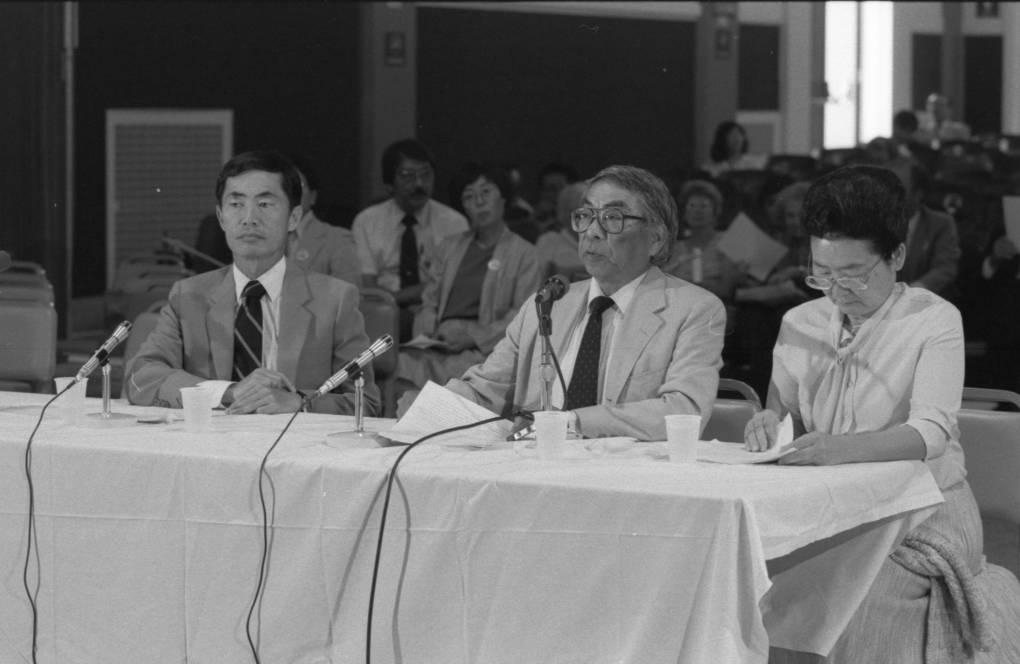
"caption": "George Takei testifies with other witnesses in front of the Commission on Wartime Relocation and Internment of Civilians (CWRIC) in California in 1981.",
"description": null,
"title": "George Takei testifies before the Commission on Wartime Relocation and Internment of Civilians in California in 1981.",
"credit": "Kaz Takeuchi/Visual Communications Photographic Archive",
"status": "inherit",
"altTag": "Black and white photo of two men and one woman sitting at a desk with microphones in front of them",
"isLoading": false,
"fetchFailed": false
},
"news_11905406": {
"type": "attachments",
"id": "news_11905406",
"meta": {
"index": "attachments_1716263798",
"site": "news",
"id": "11905406",
"found": true
},
"parent": 11905371,
"imgSizes": {
"twentyfourteen-full-width": {
"file": "https://ww2.kqed.org/app/uploads/sites/10/2022/02/CA-capitol-building-1038x576.jpg",
"width": 1038,
"mimeType": "image/jpeg",
"height": 576
},
"thumbnail": {
"file": "https://ww2.kqed.org/app/uploads/sites/10/2022/02/CA-capitol-building-160x90.jpg",
"width": 160,
"mimeType": "image/jpeg",
"height": 90
},
"post-thumbnail": {
"file": "https://ww2.kqed.org/app/uploads/sites/10/2022/02/CA-capitol-building-672x372.jpg",
"width": 672,
"mimeType": "image/jpeg",
"height": 372
},
"kqedFullSize": {
"file": "https://ww2.kqed.org/app/uploads/sites/10/2022/02/CA-capitol-building.jpg",
"width": 1920,
"height": 1080
},
"large": {
"file": "https://ww2.kqed.org/app/uploads/sites/10/2022/02/CA-capitol-building-1020x574.jpg",
"width": 1020,
"mimeType": "image/jpeg",
"height": 574
},
"1536x1536": {
"file": "https://ww2.kqed.org/app/uploads/sites/10/2022/02/CA-capitol-building-1536x864.jpg",
"width": 1536,
"mimeType": "image/jpeg",
"height": 864
},
"medium": {
"file": "https://ww2.kqed.org/app/uploads/sites/10/2022/02/CA-capitol-building-800x450.jpg",
"width": 800,
"mimeType": "image/jpeg",
"height": 450
}
},
"publishDate": 1645043218,
"modified": 1645123235,
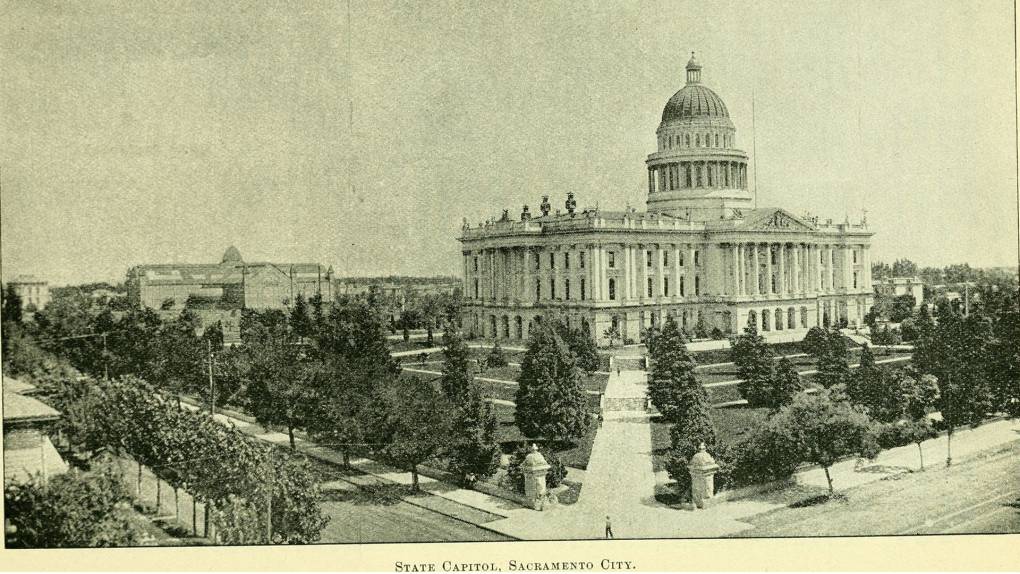
"caption": "California's Capitol building in Sacramento, 1853.",
"description": null,
"title": "CA-capitol-building",
"credit": "\u003ca href=\"https://commons.wikimedia.org/wiki/File:Appendix_to_the_Journals_of_the_Senate_and_Assembly_of_the_session_of_the_Legislature_of_the_State_of_California_(1903)_(14596722720).jpg#/media/File:Appendix_to_the_Journals_of_the_Senate_and_Assembly_of_the_session_of_the_Legislature_of_the_State_of_California_(1903)_(14596722720).jpg\">Wikimedia Commons\u003c/a>",
"status": "inherit",
"altTag": "Old black and white drawing of a neoclassical building with a large cupola surrounded by a carefully tended garden.",
"isLoading": false,
"fetchFailed": false
},
"news_11904279": {
"type": "attachments",
"id": "news_11904279",
"meta": {
"index": "attachments_1716263798",
"site": "news",
"id": "11904279",
"found": true
},
"parent": 11904278,
"imgSizes": {
"twentyfourteen-full-width": {
"file": "https://ww2.kqed.org/app/uploads/sites/10/2022/02/RS53503_20220204-IMG_2135-2-qut-1038x576.jpg",
"width": 1038,
"mimeType": "image/jpeg",
"height": 576
},
"thumbnail": {
"file": "https://ww2.kqed.org/app/uploads/sites/10/2022/02/RS53503_20220204-IMG_2135-2-qut-160x107.jpg",
"width": 160,
"mimeType": "image/jpeg",
"height": 107
},
"post-thumbnail": {
"file": "https://ww2.kqed.org/app/uploads/sites/10/2022/02/RS53503_20220204-IMG_2135-2-qut-672x372.jpg",
"width": 672,
"mimeType": "image/jpeg",
"height": 372
},
"kqedFullSize": {
"file": "https://ww2.kqed.org/app/uploads/sites/10/2022/02/RS53503_20220204-IMG_2135-2-qut.jpg",
"width": 1920,
"height": 1280
},
"large": {
"file": "https://ww2.kqed.org/app/uploads/sites/10/2022/02/RS53503_20220204-IMG_2135-2-qut-1020x680.jpg",
"width": 1020,
"mimeType": "image/jpeg",
"height": 680
},
"1536x1536": {
"file": "https://ww2.kqed.org/app/uploads/sites/10/2022/02/RS53503_20220204-IMG_2135-2-qut-1536x1024.jpg",
"width": 1536,
"mimeType": "image/jpeg",
"height": 1024
},
"medium": {
"file": "https://ww2.kqed.org/app/uploads/sites/10/2022/02/RS53503_20220204-IMG_2135-2-qut-800x533.jpg",
"width": 800,
"mimeType": "image/jpeg",
"height": 533
}
},
"publishDate": 1644098777,
"modified": 1644098981,
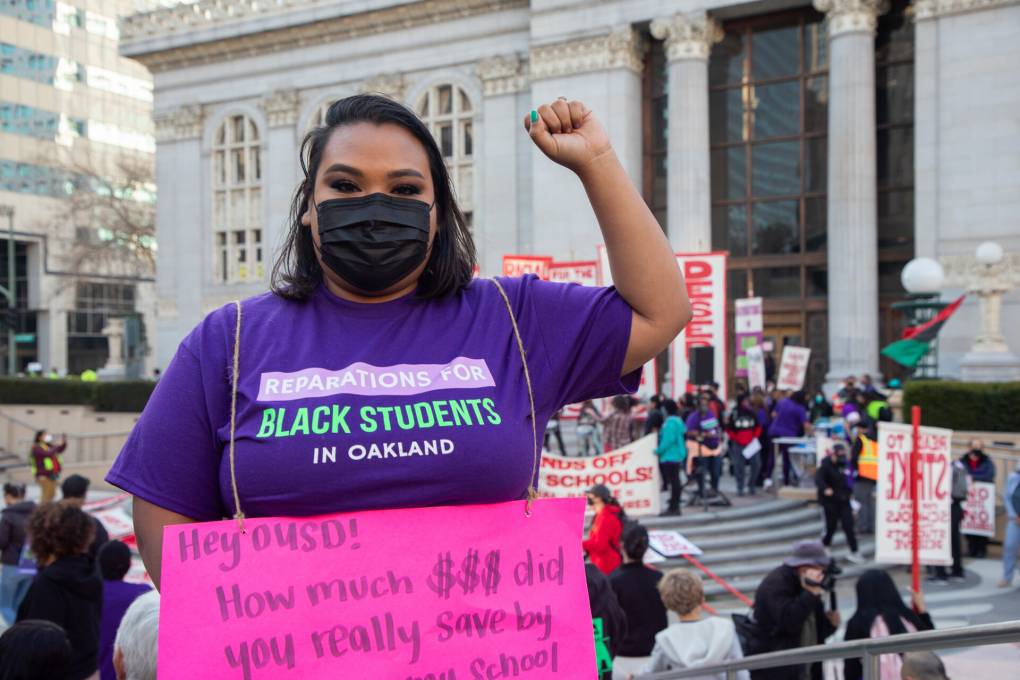
"caption": "Sasha Ritzie-Hernandez poses for a portrait during a rally at Oakland City Hall on Feb. 4, 2022.",
"description": null,
"title": "RS53503_20220204-IMG_2135-2-qut",
"credit": "Amaya Edwards/KQED",
"status": "inherit",
"altTag": "A woman in a purple shirt with the phrase 'Reparations for Black Students in Oakland' appears holding a pink protest sign with her fist up and Oakland City Hall in the background.",
"isLoading": false,
"fetchFailed": false
},
"news_11903984": {
"type": "attachments",
"id": "news_11903984",
"meta": {
"index": "attachments_1716263798",
"site": "news",
"id": "11903984",
"found": true
},
"parent": 11903945,
"imgSizes": {
"twentyfourteen-full-width": {
"file": "https://ww2.kqed.org/app/uploads/sites/10/2022/02/RS53406_005_KQED_CAReparatioinsTaskForce_01282022-qut-1038x576.jpg",
"width": 1038,
"mimeType": "image/jpeg",
"height": 576
},
"thumbnail": {
"file": "https://ww2.kqed.org/app/uploads/sites/10/2022/02/RS53406_005_KQED_CAReparatioinsTaskForce_01282022-qut-160x107.jpg",
"width": 160,
"mimeType": "image/jpeg",
"height": 107
},
"post-thumbnail": {
"file": "https://ww2.kqed.org/app/uploads/sites/10/2022/02/RS53406_005_KQED_CAReparatioinsTaskForce_01282022-qut-672x372.jpg",
"width": 672,
"mimeType": "image/jpeg",
"height": 372
},
"kqedFullSize": {
"file": "https://ww2.kqed.org/app/uploads/sites/10/2022/02/RS53406_005_KQED_CAReparatioinsTaskForce_01282022-qut.jpg",
"width": 1920,
"height": 1280
},
"large": {
"file": "https://ww2.kqed.org/app/uploads/sites/10/2022/02/RS53406_005_KQED_CAReparatioinsTaskForce_01282022-qut-1020x680.jpg",
"width": 1020,
"mimeType": "image/jpeg",
"height": 680
},
"1536x1536": {
"file": "https://ww2.kqed.org/app/uploads/sites/10/2022/02/RS53406_005_KQED_CAReparatioinsTaskForce_01282022-qut-1536x1024.jpg",
"width": 1536,
"mimeType": "image/jpeg",
"height": 1024
},
"medium": {
"file": "https://ww2.kqed.org/app/uploads/sites/10/2022/02/RS53406_005_KQED_CAReparatioinsTaskForce_01282022-qut-800x533.jpg",
"width": 800,
"mimeType": "image/jpeg",
"height": 533
}
},
"publishDate": 1643936164,
"modified": 1643936184,
"caption": "The California Reparations Task Force members listen to public comment during a virtual meeting on Jan. 28, 2022.",
"description": null,
"title": "RS53406_005_KQED_CAReparatioinsTaskForce_01282022-qut",
"credit": "Beth LaBerge/KQED",
"status": "inherit",
"altTag": null,
"isLoading": false,
"fetchFailed": false
},
"news_11903709": {
"type": "attachments",
"id": "news_11903709",
"meta": {
"index": "attachments_1716263798",
"site": "news",
"id": "11903709",
"found": true
},
"parent": 11903552,
"imgSizes": {
"twentyfourteen-full-width": {
"file": "https://ww2.kqed.org/app/uploads/sites/10/2022/02/RS53400_GettyImages-1236937103-qut-1038x576.jpg",
"width": 1038,
"mimeType": "image/jpeg",
"height": 576
},
"thumbnail": {
"file": "https://ww2.kqed.org/app/uploads/sites/10/2022/02/RS53400_GettyImages-1236937103-qut-160x110.jpg",
"width": 160,
"mimeType": "image/jpeg",
"height": 110
},
"post-thumbnail": {
"file": "https://ww2.kqed.org/app/uploads/sites/10/2022/02/RS53400_GettyImages-1236937103-qut-672x372.jpg",
"width": 672,
"mimeType": "image/jpeg",
"height": 372
},
"kqedFullSize": {
"file": "https://ww2.kqed.org/app/uploads/sites/10/2022/02/RS53400_GettyImages-1236937103-qut.jpg",
"width": 1920,
"height": 1315
},
"large": {
"file": "https://ww2.kqed.org/app/uploads/sites/10/2022/02/RS53400_GettyImages-1236937103-qut-1020x699.jpg",
"width": 1020,
"mimeType": "image/jpeg",
"height": 699
},
"1536x1536": {
"file": "https://ww2.kqed.org/app/uploads/sites/10/2022/02/RS53400_GettyImages-1236937103-qut-1536x1052.jpg",
"width": 1536,
"mimeType": "image/jpeg",
"height": 1052
},
"medium": {
"file": "https://ww2.kqed.org/app/uploads/sites/10/2022/02/RS53400_GettyImages-1236937103-qut-800x548.jpg",
"width": 800,
"mimeType": "image/jpeg",
"height": 548
}
},
"publishDate": 1643824814,
"modified": 1643828494,
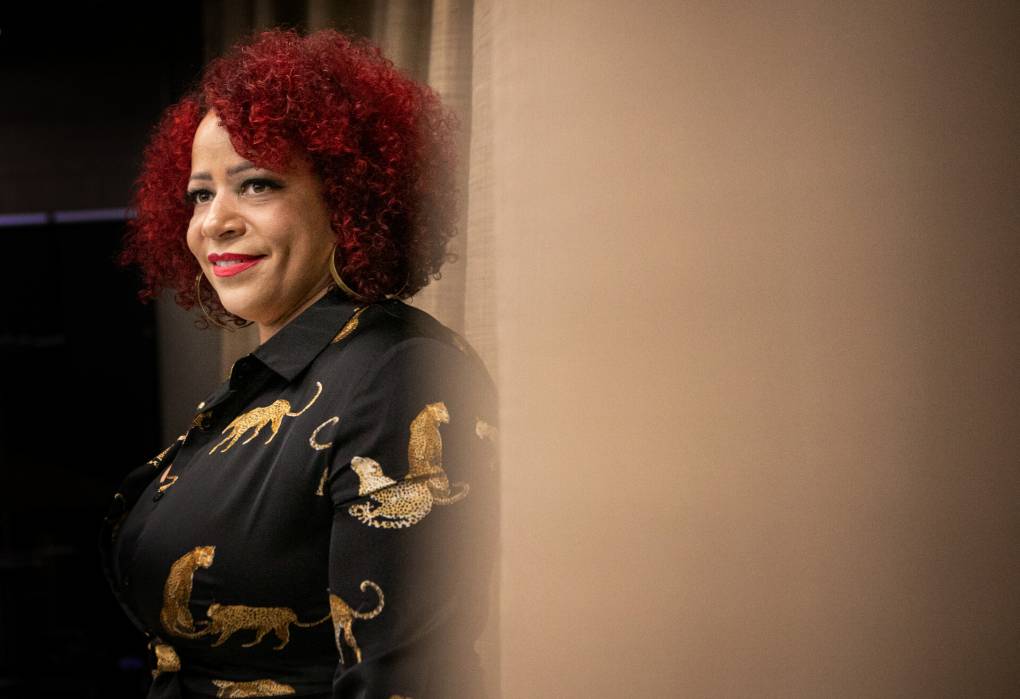
"caption": "Pulitzer Prize-winning investigative journalist Nikole Hannah-Jones poses for a portrait before taking the stage to discuss her new book, 'The 1619 Project: A New Origin Story,' with the Los Angeles Times Executive Editor Kevin Merida at an LA Times book club event on Nov. 30, 2021, in Los Angeles.",
"description": null,
"title": "Pulitzer Prize-winning investigative journalist Nikole Hannah-Jones discusses her new book, The 1619 Project: A New Origin Story, with Times Executive Editor Kevin Merida",
"credit": "Jason Armond/Los Angeles Times via Getty Images",
"status": "inherit",
"altTag": null,
"isLoading": false,
"fetchFailed": false
},
"news_11898319": {
"type": "attachments",
"id": "news_11898319",
"meta": {
"index": "attachments_1716263798",
"site": "news",
"id": "11898319",
"found": true
},
"parent": 11898258,
"imgSizes": {
"twentyfourteen-full-width": {
"file": "https://ww2.kqed.org/app/uploads/sites/10/2021/12/RS52282_014_Berkeley_JovanScottLewis_10272021-qut-1038x576.jpg",
"width": 1038,
"mimeType": "image/jpeg",
"height": 576
},
"thumbnail": {
"file": "https://ww2.kqed.org/app/uploads/sites/10/2021/12/RS52282_014_Berkeley_JovanScottLewis_10272021-qut-160x107.jpg",
"width": 160,
"mimeType": "image/jpeg",
"height": 107
},
"post-thumbnail": {
"file": "https://ww2.kqed.org/app/uploads/sites/10/2021/12/RS52282_014_Berkeley_JovanScottLewis_10272021-qut-672x372.jpg",
"width": 672,
"mimeType": "image/jpeg",
"height": 372
},
"kqedFullSize": {
"file": "https://ww2.kqed.org/app/uploads/sites/10/2021/12/RS52282_014_Berkeley_JovanScottLewis_10272021-qut.jpg",
"width": 1920,
"height": 1280
},
"large": {
"file": "https://ww2.kqed.org/app/uploads/sites/10/2021/12/RS52282_014_Berkeley_JovanScottLewis_10272021-qut-1020x680.jpg",
"width": 1020,
"mimeType": "image/jpeg",
"height": 680
},
"1536x1536": {
"file": "https://ww2.kqed.org/app/uploads/sites/10/2021/12/RS52282_014_Berkeley_JovanScottLewis_10272021-qut-1536x1024.jpg",
"width": 1536,
"mimeType": "image/jpeg",
"height": 1024
},
"medium": {
"file": "https://ww2.kqed.org/app/uploads/sites/10/2021/12/RS52282_014_Berkeley_JovanScottLewis_10272021-qut-800x533.jpg",
"width": 800,
"mimeType": "image/jpeg",
"height": 533
}
},
"publishDate": 1638908796,
"modified": 1638932628,
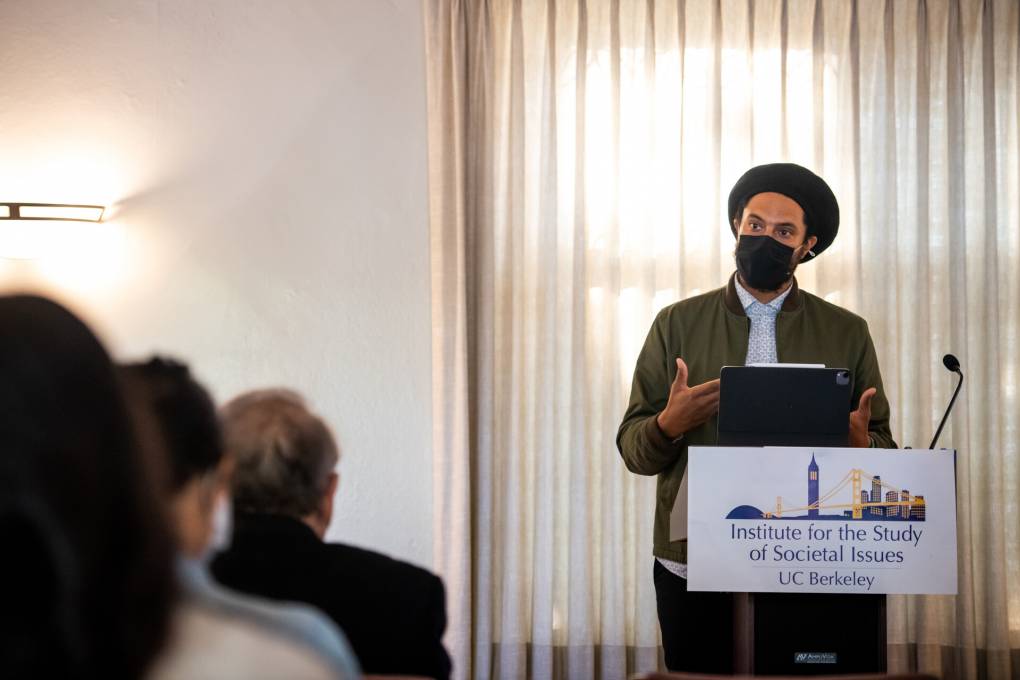
"caption": "Dr. Jovan Scott Lewis, a member of the reparations task force and a professor, at the University of California, Berkeley, on Oct. 27, 2021.",
"description": null,
"title": "RS52282_014_Berkeley_JovanScottLewis_10272021-qut",
"credit": "Beth LaBerge/KQED",
"status": "inherit",
"altTag": "A man on the right side of the frame speaks from a podium while standing, some people sitting in the foreground listen.",
"isLoading": false,
"fetchFailed": false
},
"news_11684847": {
"type": "attachments",
"id": "news_11684847",
"meta": {
"index": "attachments_1716263798",
"site": "news",
"id": "11684847",
"found": true
},
"parent": 11684836,
"imgSizes": {
"small": {
"file": "https://ww2.kqed.org/app/uploads/sites/10/2018/08/College-Avenue-Apartment-complex-520x347.jpg",
"width": 520,
"mimeType": "image/jpeg",
"height": 347
},
"thumbnail": {
"file": "https://ww2.kqed.org/app/uploads/sites/10/2018/08/College-Avenue-Apartment-complex-160x107.jpg",
"width": 160,
"mimeType": "image/jpeg",
"height": 107
},
"post-thumbnail": {
"file": "https://ww2.kqed.org/app/uploads/sites/10/2018/08/College-Avenue-Apartment-complex-672x372.jpg",
"width": 672,
"mimeType": "image/jpeg",
"height": 372
},
"xsmall": {
"file": "https://ww2.kqed.org/app/uploads/sites/10/2018/08/College-Avenue-Apartment-complex-375x250.jpg",
"width": 375,
"mimeType": "image/jpeg",
"height": 250
},
"kqedFullSize": {
"file": "https://ww2.kqed.org/app/uploads/sites/10/2018/08/College-Avenue-Apartment-complex.jpg",
"width": 720,
"height": 480
},
"guest-author-50": {
"file": "https://ww2.kqed.org/app/uploads/sites/10/2018/08/College-Avenue-Apartment-complex-50x50.jpg",
"width": 50,
"mimeType": "image/jpeg",
"height": 50
},
"guest-author-96": {
"file": "https://ww2.kqed.org/app/uploads/sites/10/2018/08/College-Avenue-Apartment-complex-96x96.jpg",
"width": 96,
"mimeType": "image/jpeg",
"height": 96
},
"guest-author-64": {
"file": "https://ww2.kqed.org/app/uploads/sites/10/2018/08/College-Avenue-Apartment-complex-64x64.jpg",
"width": 64,
"mimeType": "image/jpeg",
"height": 64
},
"detail": {
"file": "https://ww2.kqed.org/app/uploads/sites/10/2018/08/College-Avenue-Apartment-complex-150x150.jpg",
"width": 150,
"mimeType": "image/jpeg",
"height": 150
},
"guest-author-32": {
"file": "https://ww2.kqed.org/app/uploads/sites/10/2018/08/College-Avenue-Apartment-complex-32x32.jpg",
"width": 32,
"mimeType": "image/jpeg",
"height": 32
},
"guest-author-128": {
"file": "https://ww2.kqed.org/app/uploads/sites/10/2018/08/College-Avenue-Apartment-complex-128x128.jpg",
"width": 128,
"mimeType": "image/jpeg",
"height": 128
},
"xxsmall": {
"file": "https://ww2.kqed.org/app/uploads/sites/10/2018/08/College-Avenue-Apartment-complex-240x160.jpg",
"width": 240,
"mimeType": "image/jpeg",
"height": 160
}
},
"publishDate": 1533402192,
"modified": 1533402224,
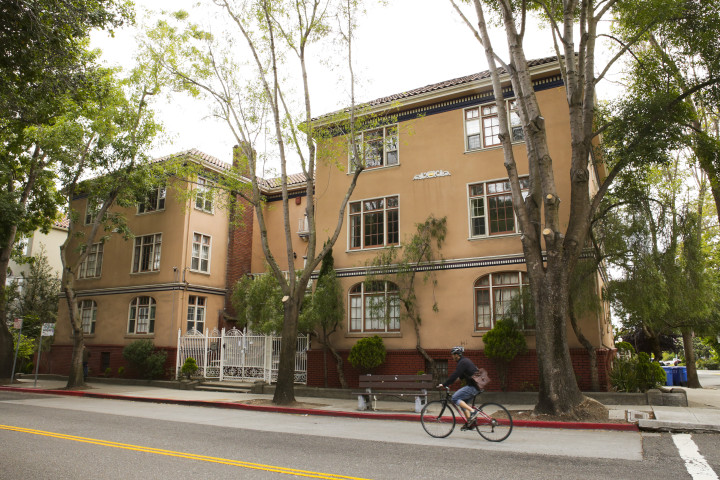
"caption": "A rent-controlled apartment complex at 3100 College Ave. in Berkeley.",
"description": "A rent-controlled apartment complex at 3100 College Ave. in Berkeley.",
"title": "College-Avenue-Apartment-complex",
"credit": "Melati Citrawireja/KQED",
"status": "inherit",
"isLoading": false,
"fetchFailed": false
},
"news_11898062": {
"type": "attachments",
"id": "news_11898062",
"meta": {
"index": "attachments_1716263798",
"site": "news",
"id": "11898062",
"found": true
},
"parent": 11897843,
"imgSizes": {
"twentyfourteen-full-width": {
"file": "https://ww2.kqed.org/app/uploads/sites/10/2021/12/Hayward_RussellCity_Mural-1038x576.jpg",
"width": 1038,
"mimeType": "image/jpeg",
"height": 576
},
"thumbnail": {
"file": "https://ww2.kqed.org/app/uploads/sites/10/2021/12/Hayward_RussellCity_Mural-160x80.jpg",
"width": 160,
"mimeType": "image/jpeg",
"height": 80
},
"post-thumbnail": {
"file": "https://ww2.kqed.org/app/uploads/sites/10/2021/12/Hayward_RussellCity_Mural-672x372.jpg",
"width": 672,
"mimeType": "image/jpeg",
"height": 372
},
"kqedFullSize": {
"file": "https://ww2.kqed.org/app/uploads/sites/10/2021/12/Hayward_RussellCity_Mural.jpg",
"width": 1920,
"height": 965
},
"large": {
"file": "https://ww2.kqed.org/app/uploads/sites/10/2021/12/Hayward_RussellCity_Mural-1020x513.jpg",
"width": 1020,
"mimeType": "image/jpeg",
"height": 513
},
"1536x1536": {
"file": "https://ww2.kqed.org/app/uploads/sites/10/2021/12/Hayward_RussellCity_Mural-1536x772.jpg",
"width": 1536,
"mimeType": "image/jpeg",
"height": 772
},
"medium": {
"file": "https://ww2.kqed.org/app/uploads/sites/10/2021/12/Hayward_RussellCity_Mural-800x402.jpg",
"width": 800,
"mimeType": "image/jpeg",
"height": 402
}
},
"publishDate": 1638572923,
"modified": 1638839511,
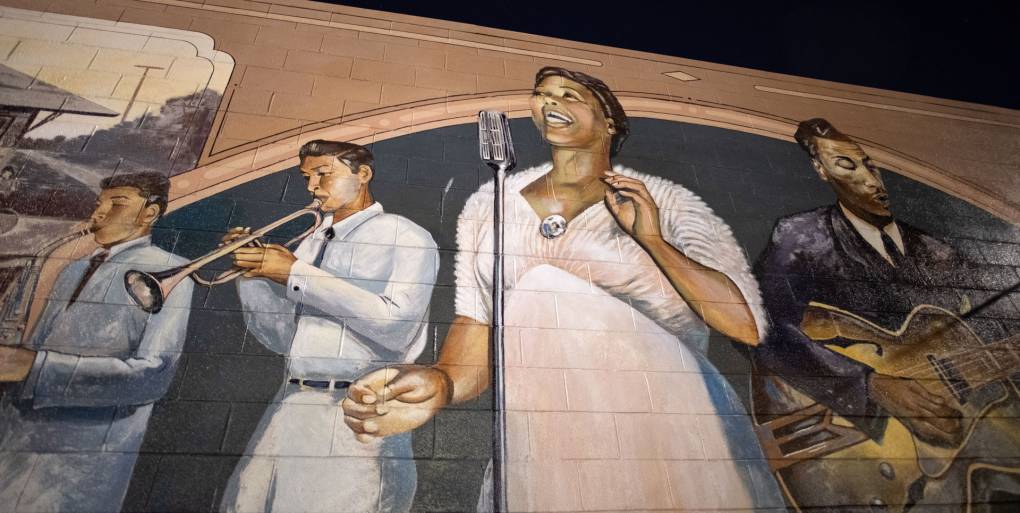
"caption": "A mural depicts scenes of Russell City, including blues singer Charlie Bell Sanders, at A Street and Maple Court in Hayward. Russell City's residents were forcibly relocated and the community bulldozed in 1963. Joshua Powell painted the mural, assisted by Wythe Bowart, Nicole Pierret and Brent McHugh.",
"description": "A mural depicts scenes of Russell City, including blues singer Charlie Bell Sanders, at A Street and Maple Court in Hayward. Russell City's residents were forcibly relocated and the community bulldozed in 1963. Joshua Powell painted the mural, assisted by Wythe Bowart, Nicole Pierret and Brent McHugh.",
"title": "Hayward_RussellCity_Mural",
"credit": "Beth LaBerge/KQED",
"status": "inherit",
"altTag": "large outdoor mural showing renowned blues singer and band",
"isLoading": false,
"fetchFailed": false
},
"news_11892313": {
"type": "attachments",
"id": "news_11892313",
"meta": {
"index": "attachments_1716263798",
"site": "news",
"id": "11892313",
"found": true
},
"parent": 11892312,
"imgSizes": {
"twentyfourteen-full-width": {
"file": "https://ww2.kqed.org/app/uploads/sites/10/2021/10/RS47078_004_SanFrancisco_LowellBSURally_02052021-qut-1038x576.jpg",
"width": 1038,
"mimeType": "image/jpeg",
"height": 576
},
"thumbnail": {
"file": "https://ww2.kqed.org/app/uploads/sites/10/2021/10/RS47078_004_SanFrancisco_LowellBSURally_02052021-qut-160x107.jpg",
"width": 160,
"mimeType": "image/jpeg",
"height": 107
},
"post-thumbnail": {
"file": "https://ww2.kqed.org/app/uploads/sites/10/2021/10/RS47078_004_SanFrancisco_LowellBSURally_02052021-qut-672x372.jpg",
"width": 672,
"mimeType": "image/jpeg",
"height": 372
},
"kqedFullSize": {
"file": "https://ww2.kqed.org/app/uploads/sites/10/2021/10/RS47078_004_SanFrancisco_LowellBSURally_02052021-qut.jpg",
"width": 1920,
"height": 1278
},
"large": {
"file": "https://ww2.kqed.org/app/uploads/sites/10/2021/10/RS47078_004_SanFrancisco_LowellBSURally_02052021-qut-1020x679.jpg",
"width": 1020,
"mimeType": "image/jpeg",
"height": 679
},
"1536x1536": {
"file": "https://ww2.kqed.org/app/uploads/sites/10/2021/10/RS47078_004_SanFrancisco_LowellBSURally_02052021-qut-1536x1022.jpg",
"width": 1536,
"mimeType": "image/jpeg",
"height": 1022
},
"medium": {
"file": "https://ww2.kqed.org/app/uploads/sites/10/2021/10/RS47078_004_SanFrancisco_LowellBSURally_02052021-qut-800x533.jpg",
"width": 800,
"mimeType": "image/jpeg",
"height": 533
}
},
"publishDate": 1634246967,
"modified": 1634273147,
"caption": "Civil rights activist Reverend Dr. Amos C. Brown speaks during a rally at Lowell High School on Feb. 5, 2021. Brown is the vice-chair of the California Reparations Task Force.",
"description": null,
"title": "RS47078_004_SanFrancisco_LowellBSURally_02052021-qut",
"credit": "Beth LaBerge/KQED",
"status": "inherit",
"altTag": null,
"isLoading": false,
"fetchFailed": false
},
"news_11891779": {
"type": "attachments",
"id": "news_11891779",
"meta": {
"index": "attachments_1716263798",
"site": "news",
"id": "11891779",
"found": true
},
"parent": 11891771,
"imgSizes": {
"twentyfourteen-full-width": {
"file": "https://ww2.kqed.org/app/uploads/sites/10/2021/10/RS47077_003_SanFrancisco_LowellBSURally_02052021-qut-1038x576.jpg",
"width": 1038,
"mimeType": "image/jpeg",
"height": 576
},
"thumbnail": {
"file": "https://ww2.kqed.org/app/uploads/sites/10/2021/10/RS47077_003_SanFrancisco_LowellBSURally_02052021-qut-160x107.jpg",
"width": 160,
"mimeType": "image/jpeg",
"height": 107
},
"post-thumbnail": {
"file": "https://ww2.kqed.org/app/uploads/sites/10/2021/10/RS47077_003_SanFrancisco_LowellBSURally_02052021-qut-672x372.jpg",
"width": 672,
"mimeType": "image/jpeg",
"height": 372
},
"kqedFullSize": {
"file": "https://ww2.kqed.org/app/uploads/sites/10/2021/10/RS47077_003_SanFrancisco_LowellBSURally_02052021-qut.jpg",
"width": 1920,
"height": 1278
},
"large": {
"file": "https://ww2.kqed.org/app/uploads/sites/10/2021/10/RS47077_003_SanFrancisco_LowellBSURally_02052021-qut-1020x679.jpg",
"width": 1020,
"mimeType": "image/jpeg",
"height": 679
},
"1536x1536": {
"file": "https://ww2.kqed.org/app/uploads/sites/10/2021/10/RS47077_003_SanFrancisco_LowellBSURally_02052021-qut-1536x1022.jpg",
"width": 1536,
"mimeType": "image/jpeg",
"height": 1022
},
"medium": {
"file": "https://ww2.kqed.org/app/uploads/sites/10/2021/10/RS47077_003_SanFrancisco_LowellBSURally_02052021-qut-800x533.jpg",
"width": 800,
"mimeType": "image/jpeg",
"height": 533
}
},
"publishDate": 1633900580,
"modified": 1634066382,
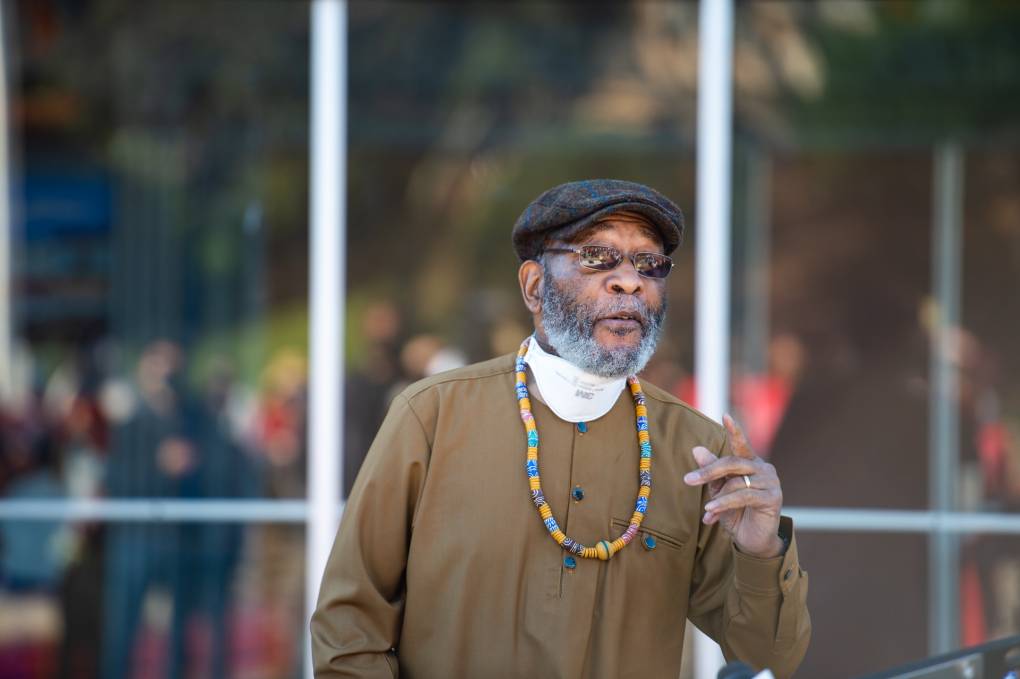
"caption": "Civil rights activist Reverend Dr. Amos C. Brown speaks during a rally at Lowell High School on Feb. 5, 2021. Brown is the vice-chair of the California Reparations Task Force.",
"description": "Civil rights activist Reverend Dr. Amos C. Brown speaks during a rally at Lowell High School on Feb. 5, 2021. Brown is the Vice Chair of the California Task Force on Reparations.",
"title": "RS47077_003_SanFrancisco_LowellBSURally_02052021-qut",
"credit": "Beth LaBerge/KQED",
"status": "inherit",
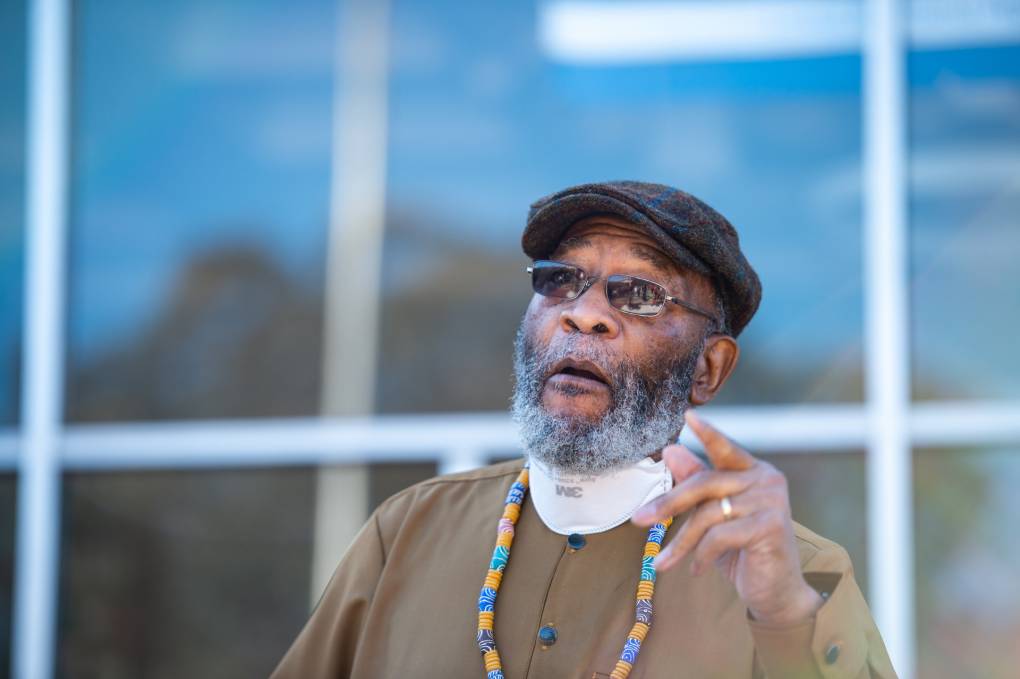
"altTag": "Amos Brown, in a hat, beard, glasses, and green, blue and yellow necklace, raises his hand mid-speech, the windows of a building behind him.",
"isLoading": false,
"fetchFailed": false
},
"news_11890614": {
"type": "attachments",
"id": "news_11890614",
"meta": {
"index": "attachments_1716263798",
"site": "news",
"id": "11890614",
"found": true
},
"parent": 11890613,
"imgSizes": {
"twentyfourteen-full-width": {
"file": "https://ww2.kqed.org/app/uploads/sites/10/2021/09/1280px-Bruces_Beach_3-1038x576.jpeg",
"width": 1038,
"mimeType": "image/jpeg",
"height": 576
},
"thumbnail": {
"file": "https://ww2.kqed.org/app/uploads/sites/10/2021/09/1280px-Bruces_Beach_3-160x120.jpeg",
"width": 160,
"mimeType": "image/jpeg",
"height": 120
},
"post-thumbnail": {
"file": "https://ww2.kqed.org/app/uploads/sites/10/2021/09/1280px-Bruces_Beach_3-672x372.jpeg",
"width": 672,
"mimeType": "image/jpeg",
"height": 372
},
"kqedFullSize": {
"file": "https://ww2.kqed.org/app/uploads/sites/10/2021/09/1280px-Bruces_Beach_3.jpeg",
"width": 1280,
"height": 960
},
"large": {
"file": "https://ww2.kqed.org/app/uploads/sites/10/2021/09/1280px-Bruces_Beach_3-1020x765.jpeg",
"width": 1020,
"mimeType": "image/jpeg",
"height": 765
},
"medium": {
"file": "https://ww2.kqed.org/app/uploads/sites/10/2021/09/1280px-Bruces_Beach_3-800x600.jpeg",
"width": 800,
"mimeType": "image/jpeg",
"height": 600
}
},
"publishDate": 1633035044,
"modified": 1633048662,
"caption": "View from the top of \"Bruce's Beach\" in Los Angeles County. ",
"description": null,
"title": "1280px-Bruce's_Beach_3",
"credit": "\u003ca href=\"https://en.wikipedia.org/wiki/Bruce%27s_Beach#/media/File:Bruce's_Beach_3.jpg\">ChildoMidnight/Wikimedia\u003c/a>",
"status": "inherit",
"altTag": "Green lawn overlooking the ocean.",
"isLoading": false,
"fetchFailed": false
},
"news_11876271": {
"type": "attachments",
"id": "news_11876271",
"meta": {
"index": "attachments_1716263798",
"site": "news",
"id": "11876271",
"found": true
},
"parent": 11876194,
"imgSizes": {
"twentyfourteen-full-width": {
"file": "https://ww2.kqed.org/app/uploads/sites/10/2021/06/1920_GettyImages-941502582-1038x576.jpg",
"width": 1038,
"mimeType": "image/jpeg",
"height": 576
},
"thumbnail": {
"file": "https://ww2.kqed.org/app/uploads/sites/10/2021/06/1920_GettyImages-941502582-160x90.jpg",
"width": 160,
"mimeType": "image/jpeg",
"height": 90
},
"post-thumbnail": {
"file": "https://ww2.kqed.org/app/uploads/sites/10/2021/06/1920_GettyImages-941502582-672x372.jpg",
"width": 672,
"mimeType": "image/jpeg",
"height": 372
},
"kqedFullSize": {
"file": "https://ww2.kqed.org/app/uploads/sites/10/2021/06/1920_GettyImages-941502582.jpg",
"width": 1920,
"height": 1080
},
"large": {
"file": "https://ww2.kqed.org/app/uploads/sites/10/2021/06/1920_GettyImages-941502582-1020x574.jpg",
"width": 1020,
"mimeType": "image/jpeg",
"height": 574
},
"1536x1536": {
"file": "https://ww2.kqed.org/app/uploads/sites/10/2021/06/1920_GettyImages-941502582-1536x864.jpg",
"width": 1536,
"mimeType": "image/jpeg",
"height": 864
},
"medium": {
"file": "https://ww2.kqed.org/app/uploads/sites/10/2021/06/1920_GettyImages-941502582-800x450.jpg",
"width": 800,
"mimeType": "image/jpeg",
"height": 450
}
},
"publishDate": 1622592363,
"modified": 1622596255,
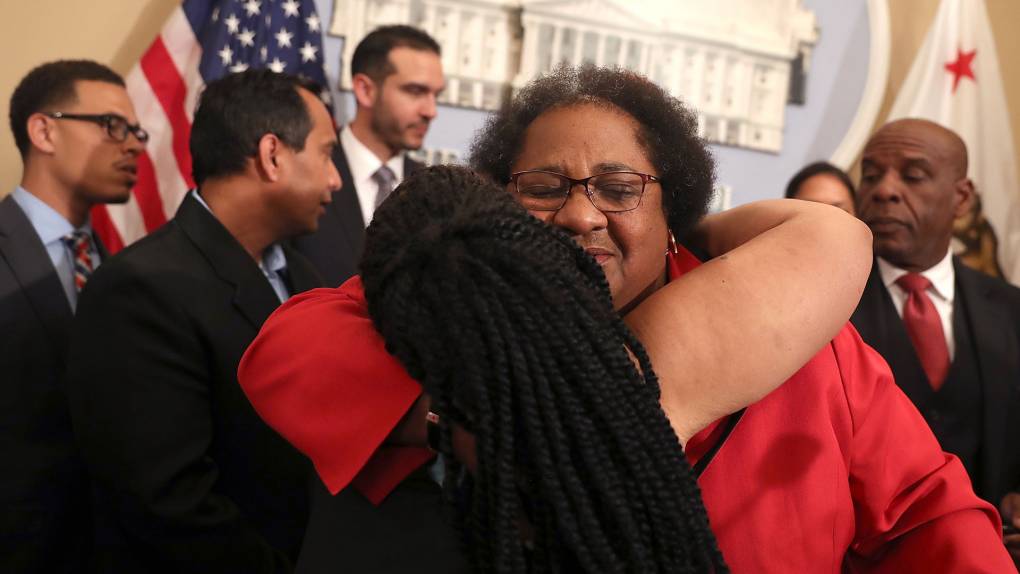
"caption": "‘Your task is to determine the depth of the harm, and the ways in which we are to repair that harm,’ said Shirley Weber, whose parents were sharecroppers forced to leave the South. Weber, who authored the law and is now California’s Secretary of State appears in this file photo from when she was a State Assemblymember (D-San Diego) at news conference on April 3, 2018 in Sacramento, California. ",
"description": null,
"title": "1920_GettyImages-941502582",
"credit": "Justin Sullivan/Getty Images",
"status": "inherit",
"altTag": null,
"isLoading": false,
"fetchFailed": false
}
},
"audioPlayerReducer": {
"postId": "stream_live",
"isPaused": true,
"isPlaying": false,
"pfsActive": false,
"pledgeModalIsOpen": true,
"playerDrawerIsOpen": false,
"liveAudioPlayStartedAt": 0,
"liveAudioPlayContext": ""
},
"authorsReducer": {
"byline_news_11905723": {
"type": "authors",
"id": "byline_news_11905723",
"meta": {
"override": true
},
"slug": "byline_news_11905723",
"name": "Neda Ulaby",
"isLoading": false
},
"byline_news_11890613": {
"type": "authors",
"id": "byline_news_11890613",
"meta": {
"override": true
},
"slug": "byline_news_11890613",
"name": "Stefanie Dazio\u003cbr>The Associated Press",
"isLoading": false
},
"katrinaschwartz": {
"type": "authors",
"id": "234",
"meta": {
"index": "authors_1716337520",
"id": "234",
"found": true
},
"name": "Katrina Schwartz",
"firstName": "Katrina",
"lastName": "Schwartz",
"slug": "katrinaschwartz",
"email": "kschwartz@kqed.org",
"display_author_email": false,
"staff_mastheads": [
"news"
],
"title": "Producer",
"bio": "Katrina Schwartz is a journalist based in San Francisco. She's worked at KPCC public radio in LA and has reported on air and online for KQED since 2010. She covered how teaching and learning is changing for MindShift between 2012 and 2020. She is the co-host of the MindShift podcast and now produces KQED's Bay Curious podcast.",
"avatar": "https://secure.gravatar.com/avatar/edb4ee79070447a018538c9aae6eeecf28786515b8a0c30e43b6b7dce5aa44c8?s=600&d=blank&r=g",
"twitter": "kschwart",
"bluesky": null,
"facebook": null,
"instagram": null,
"linkedin": null,
"sites": [
{
"site": "news",
"roles": [
"editor"
]
},
{
"site": "mindshift",
"roles": [
"administrator"
]
},
{
"site": "stateofhealth",
"roles": [
"author"
]
},
{
"site": "science",
"roles": [
"editor"
]
}
],
"headData": {
"title": "Katrina Schwartz | KQED",
"description": "Producer",
"ogImgSrc": "https://secure.gravatar.com/avatar/edb4ee79070447a018538c9aae6eeecf28786515b8a0c30e43b6b7dce5aa44c8?s=600&d=blank&r=g",
"twImgSrc": "https://secure.gravatar.com/avatar/edb4ee79070447a018538c9aae6eeecf28786515b8a0c30e43b6b7dce5aa44c8?s=600&d=blank&r=g"
},
"isLoading": false,
"link": "/author/katrinaschwartz"
},
"minakim": {
"type": "authors",
"id": "243",
"meta": {
"index": "authors_1716337520",
"id": "243",
"found": true
},
"name": "Mina Kim",
"firstName": "Mina",
"lastName": "Kim",
"slug": "minakim",
"email": "mkim@kqed.org",
"display_author_email": false,
"staff_mastheads": [
"news"
],
"title": "Host, Forum",
"bio": "Mina Kim is host of the 10 a.m. statewide hour of Forum; a live daily talk show for curious Californians on issues that matter to the state and nation, with a particular emphasis on race and equity.\r\n\r\nBefore joining the Forum team, Mina was KQED’s evening news anchor, and health reporter for The California Report. Her award-winning work has included natural disasters in Napa and gun violence in Oakland. Mina grew up in St. John’s, Newfoundland.",
"avatar": "https://secure.gravatar.com/avatar/145ce657a2d08cb86d93686beb958982?s=600&d=blank&r=g",
"twitter": "mkimreporter",
"facebook": null,
"instagram": null,
"linkedin": null,
"sites": [
{
"site": "news",
"roles": [
"contributor"
]
},
{
"site": "stateofhealth",
"roles": [
"author"
]
},
{
"site": "forum",
"roles": [
"editor"
]
}
],
"headData": {
"title": "Mina Kim | KQED",
"description": "Host, Forum",
"ogImgSrc": "https://secure.gravatar.com/avatar/145ce657a2d08cb86d93686beb958982?s=600&d=blank&r=g",
"twImgSrc": "https://secure.gravatar.com/avatar/145ce657a2d08cb86d93686beb958982?s=600&d=blank&r=g"
},
"isLoading": false,
"link": "/author/minakim"
},
"scottshafer": {
"type": "authors",
"id": "255",
"meta": {
"index": "authors_1716337520",
"id": "255",
"found": true
},
"name": "Scott Shafer",
"firstName": "Scott",
"lastName": "Shafer",
"slug": "scottshafer",
"email": "sshafer@kqed.org",
"display_author_email": false,
"staff_mastheads": [
"news"
],
"title": "KQED Contributor",
"bio": "Scott Shafer is a senior editor with the KQED Politics and Government desk. He is co-host of Political Breakdown, the award-winning radio show and podcast with a personal take on the world of politics. Scott came to KQED in 1998 to host the statewide\u003cem> California Report\u003c/em>. Prior to that he had extended stints in politics and government\u003cem>.\u003c/em> He uses that inside experience at KQED in his, reporting, hosting and analysis for the politics desk. Scott collaborated \u003cem>Political Breakdown a\u003c/em>nd on \u003cem>The Political Mind of Jerry Brown, \u003c/em>an eight-part series about the life and extraordinary political career of the former governor. For fun, he plays water polo with the San Francisco Tsunami.",
"avatar": "https://secure.gravatar.com/avatar/a62ebae45b79d7aed1a39a0e3bf68104?s=600&d=blank&r=g",
"twitter": "scottshafer",
"bluesky": null,
"facebook": null,
"instagram": null,
"linkedin": null,
"sites": [
{
"site": "news",
"roles": [
"editor"
]
},
{
"site": "stateofhealth",
"roles": [
"author"
]
},
{
"site": "science",
"roles": [
"author"
]
},
{
"site": "forum",
"roles": [
"subscriber"
]
},
{
"site": "liveblog",
"roles": [
"author"
]
}
],
"headData": {
"title": "Scott Shafer | KQED",
"description": "KQED Contributor",
"ogImgSrc": "https://secure.gravatar.com/avatar/a62ebae45b79d7aed1a39a0e3bf68104?s=600&d=blank&r=g",
"twImgSrc": "https://secure.gravatar.com/avatar/a62ebae45b79d7aed1a39a0e3bf68104?s=600&d=blank&r=g"
},
"isLoading": false,
"link": "/author/scottshafer"
},
"mlagos": {
"type": "authors",
"id": "3239",
"meta": {
"index": "authors_1716337520",
"id": "3239",
"found": true
},
"name": "Marisa Lagos",
"firstName": "Marisa",
"lastName": "Lagos",
"slug": "mlagos",
"email": "mlagos@kqed.org",
"display_author_email": false,
"staff_mastheads": [
"news"
],
"title": "KQED Contributor",
"bio": "Marisa Lagos is a correspondent for KQED’s California Politics and Government Desk and co-hosts the award-winning show and podcast, Political Breakdown. At KQED, Lagos also conducts reporting, analysis and investigations into state, local and national politics for radio, TV, online and onstage. In 2022, she and co-host, Scott Shafer, moderated the only gubernatorial debate in California. In 2020, the \u003ci>Washington Post\u003c/i> named her one of the top political journalists in California; she was nominated for a Peabody and won several other awards for her work investigating the 2017 California wildfires. She has worked at the \u003ci>San Francisco Chronicle\u003c/i>, \u003ci>San Francisco Examiner\u003c/i> and \u003ci>Los Angeles Times\u003c/i>. A UC Santa Barbara graduate, she lives in San Francisco with her two sons and husband.",
"avatar": "https://secure.gravatar.com/avatar/a261a0d3696fc066871ef96b85b5e7d2?s=600&d=blank&r=g",
"twitter": "@mlagos",
"facebook": null,
"instagram": null,
"linkedin": null,
"sites": [
{
"site": "arts",
"roles": [
"author"
]
},
{
"site": "news",
"roles": [
"editor"
]
},
{
"site": "science",
"roles": [
"editor"
]
},
{
"site": "forum",
"roles": [
"author"
]
},
{
"site": "liveblog",
"roles": [
"author"
]
}
],
"headData": {
"title": "Marisa Lagos | KQED",
"description": "KQED Contributor",
"ogImgSrc": "https://secure.gravatar.com/avatar/a261a0d3696fc066871ef96b85b5e7d2?s=600&d=blank&r=g",
"twImgSrc": "https://secure.gravatar.com/avatar/a261a0d3696fc066871ef96b85b5e7d2?s=600&d=blank&r=g"
},
"isLoading": false,
"link": "/author/mlagos"
},
"ecruzguevarra": {
"type": "authors",
"id": "8654",
"meta": {
"index": "authors_1716337520",
"id": "8654",
"found": true
},
"name": "Ericka Cruz Guevarra",
"firstName": "Ericka",
"lastName": "Cruz Guevarra",
"slug": "ecruzguevarra",
"email": "ecruzguevarra@kqed.org",
"display_author_email": true,
"staff_mastheads": [
"news"
],
"title": "Producer, The Bay Podcast",
"bio": "Ericka Cruz Guevarra is host of \u003ca href=\"https://www.kqed.org/podcasts/thebay\">\u003cem>The Bay\u003c/em>\u003c/a> podcast at KQED. Before host, she was the show’s producer. Her work in that capacity includes a three-part reported series on policing in Vallejo, which won a 2020 excellence in journalism award from the Society of Professional Journalists. Ericka has worked as a breaking news reporter at Oregon Public Broadcasting, helped produce the Code Switch podcast, and was KQED’s inaugural Raul Ramirez Diversity Fund intern. She’s also an alumna of NPR’s Next Generation Radio program. Send her an email if you have strong feelings about whether Fairfield and Suisun City are the Bay. Ericka is represented by SAG-AFTRA.",
"avatar": "https://secure.gravatar.com/avatar/25e5ab8d3d53fad2dcc7bb2b5c506b1a?s=600&d=blank&r=g",
"twitter": "NotoriousECG",
"facebook": null,
"instagram": null,
"linkedin": null,
"sites": [
{
"site": "arts",
"roles": [
"subscriber"
]
},
{
"site": "news",
"roles": [
"editor",
"manage_categories"
]
},
{
"site": "futureofyou",
"roles": [
"subscriber"
]
},
{
"site": "stateofhealth",
"roles": [
"subscriber"
]
},
{
"site": "science",
"roles": [
"editor"
]
},
{
"site": "forum",
"roles": [
"subscriber"
]
}
],
"headData": {
"title": "Ericka Cruz Guevarra | KQED",
"description": "Producer, The Bay Podcast",
"ogImgSrc": "https://secure.gravatar.com/avatar/25e5ab8d3d53fad2dcc7bb2b5c506b1a?s=600&d=blank&r=g",
"twImgSrc": "https://secure.gravatar.com/avatar/25e5ab8d3d53fad2dcc7bb2b5c506b1a?s=600&d=blank&r=g"
},
"isLoading": false,
"link": "/author/ecruzguevarra"
},
"bwatt": {
"type": "authors",
"id": "11238",
"meta": {
"index": "authors_1716337520",
"id": "11238",
"found": true
},
"name": "Brian Watt",
"firstName": "Brian",
"lastName": "Watt",
"slug": "bwatt",
"email": "bwatt@KQED.org",
"display_author_email": false,
"staff_mastheads": [
"news"
],
"title": "Morning News Anchor",
"bio": "Brian Watt is KQED's morning radio news anchor. He joined the KQED News team in April of 2016. Prior to that, he worked as a Reporter for KPCC in Los Angeles and a producer at \u003cem>Marketplace.\u003c/em>\r\n\r\nDuring eight years at KPCC, Brian covered business and economics, and his work won several awards. In 2008, he won the Los Angeles Press Club’s first-place award for Business and Financial Reporting, Broadcast. He’s also received honorable mention and been first runner up for the Press Club’s Radio Journalist of the Year. He won two Golden Mike awards from the Radio and TV News Association of Southern California.\r\n\r\nBrian holds degrees in theater from Yale University and the Sorbonne, and has worked as an actor in France, Italy, Brazil, Hungary and . . . Hollywood. He appeared in a few television shows, including \u003cem>The West Wing, Judging Amy\u003c/em> and \u003cem>The District.\u003c/em>\r\n\r\nEmail: bwatt@KQED.org Twitter: @RadioBWatt",
"avatar": "https://secure.gravatar.com/avatar/55393ff57ed34e2be773ba4789dd6a19?s=600&d=blank&r=g",
"twitter": "@RadioBWatt",
"facebook": null,
"instagram": null,
"linkedin": null,
"sites": [
{
"site": "arts",
"roles": [
"contributor"
]
},
{
"site": "news",
"roles": [
"editor"
]
}
],
"headData": {
"title": "Brian Watt | KQED",
"description": "Morning News Anchor",
"ogImgSrc": "https://secure.gravatar.com/avatar/55393ff57ed34e2be773ba4789dd6a19?s=600&d=blank&r=g",
"twImgSrc": "https://secure.gravatar.com/avatar/55393ff57ed34e2be773ba4789dd6a19?s=600&d=blank&r=g"
},
"isLoading": false,
"link": "/author/bwatt"
},
"katewolffe": {
"type": "authors",
"id": "11523",
"meta": {
"index": "authors_1716337520",
"id": "11523",
"found": true
},
"name": "Kate Wolffe",
"firstName": "Kate",
"lastName": "Wolffe",
"slug": "katewolffe",
"email": "kwolffe@kqed.org",
"display_author_email": true,
"staff_mastheads": [
"news"
],
"title": "KQED Reporter + Weekend Host",
"bio": "Kate Wolffe reports on local Bay Area happenings for KQED, and hosts the news on weekend afternoons. She joined KQED in 2018 as an intern on the Forum team, before moving to cover topics ranging from politics to criminal justice to homelessness. A Bay Area native and UC Berkeley graduate, Kate loves to discover new corners of the region.",
"avatar": "https://secure.gravatar.com/avatar/22455f14db824a03ee252f73052fe939?s=600&d=blank&r=g",
"twitter": "katewolffe",
"facebook": null,
"instagram": null,
"linkedin": null,
"sites": [
{
"site": "arts",
"roles": [
"editor"
]
},
{
"site": "news",
"roles": [
"author",
"edit_others_posts"
]
},
{
"site": "forum",
"roles": [
"editor"
]
}
],
"headData": {
"title": "Kate Wolffe | KQED",
"description": "KQED Reporter + Weekend Host",
"ogImgSrc": "https://secure.gravatar.com/avatar/22455f14db824a03ee252f73052fe939?s=600&d=blank&r=g",
"twImgSrc": "https://secure.gravatar.com/avatar/22455f14db824a03ee252f73052fe939?s=600&d=blank&r=g"
},
"isLoading": false,
"link": "/author/katewolffe"
},
"lsarah": {
"type": "authors",
"id": "11626",
"meta": {
"index": "authors_1716337520",
"id": "11626",
"found": true
},
"name": "Lakshmi Sarah",
"firstName": "Lakshmi",
"lastName": "Sarah",
"slug": "lsarah",
"email": "lsarah@kqed.org",
"display_author_email": false,
"staff_mastheads": [],
"title": "Digital Producer",
"bio": "Lakshmi Sarah is an educator, author and journalist with a focus on innovative storytelling. She has worked with newspapers, radio and magazines from Ahmedabad, India to Los Angeles, California. She has written and produced for Die Zeit, Global Voices, AJ+, KQED, Fusion Media Group and the New York Times.",
"avatar": "https://secure.gravatar.com/avatar/652dcaecd8b28826fc17a8b2d6bb4e93?s=600&d=blank&r=g",
"twitter": "lakitalki",
"facebook": null,
"instagram": "https://www.instagram.com/laki.talki/",
"linkedin": "https://www.linkedin.com/in/lakisarah/",
"sites": [
{
"site": "arts",
"roles": []
},
{
"site": "news",
"roles": []
},
{
"site": "bayareabites",
"roles": []
},
{
"site": "science",
"roles": []
}
],
"headData": {
"title": "Lakshmi Sarah | KQED",
"description": "Digital Producer",
"ogImgSrc": "https://secure.gravatar.com/avatar/652dcaecd8b28826fc17a8b2d6bb4e93?s=600&d=blank&r=g",
"twImgSrc": "https://secure.gravatar.com/avatar/652dcaecd8b28826fc17a8b2d6bb4e93?s=600&d=blank&r=g"
},
"isLoading": false,
"link": "/author/lsarah"
},
"amontecillo": {
"type": "authors",
"id": "11649",
"meta": {
"index": "authors_1716337520",
"id": "11649",
"found": true
},
"name": "Alan Montecillo",
"firstName": "Alan",
"lastName": "Montecillo",
"slug": "amontecillo",
"email": "amontecillo@kqed.org",
"display_author_email": false,
"staff_mastheads": [
"news"
],
"title": "KQED Contributor",
"bio": "Alan Montecillo is the senior editor of \u003cem>\u003ca href=\"http://kqed.org/thebay\">The Bay\u003c/a>, \u003c/em> KQED's local news podcast. Before moving to the Bay Area, he worked as a senior talk show producer for WILL in Champaign-Urbana, Illinois and at Oregon Public Broadcasting in Portland, Oregon. He has won journalism awards from the Society of Professional Journalists Northern California, the Public Media Journalists Association, The Signal Awards, and has also received a regional Edward R. Murrow award. Alan is a Filipino American from Hong Kong and a graduate of Reed College.",
"avatar": "https://secure.gravatar.com/avatar/d5e4e7a76481969ccba76f4e2b5ccabc?s=600&d=blank&r=g",
"twitter": "alanmontecillo",
"facebook": null,
"instagram": null,
"linkedin": null,
"sites": [
{
"site": "",
"roles": [
"editor"
]
},
{
"site": "news",
"roles": [
"editor",
"manage_categories"
]
}
],
"headData": {
"title": "Alan Montecillo | KQED",
"description": "KQED Contributor",
"ogImgSrc": "https://secure.gravatar.com/avatar/d5e4e7a76481969ccba76f4e2b5ccabc?s=600&d=blank&r=g",
"twImgSrc": "https://secure.gravatar.com/avatar/d5e4e7a76481969ccba76f4e2b5ccabc?s=600&d=blank&r=g"
},
"isLoading": false,
"link": "/author/amontecillo"
},
"agonzalez": {
"type": "authors",
"id": "11724",
"meta": {
"index": "authors_1716337520",
"id": "11724",
"found": true
},
"name": "Alexander Gonzalez",
"firstName": "Alexander",
"lastName": "Gonzalez",
"slug": "agonzalez",
"email": "AlexanderGonzalez@KQED.org",
"display_author_email": false,
"staff_mastheads": [
"news"
],
"title": "KQED Contributor",
"bio": null,
"avatar": "https://secure.gravatar.com/avatar/9e291ed34e154df4c662edf858b641d70b4859939bfe40be478408f9dfd057d2?s=600&d=blank&r=g",
"twitter": null,
"bluesky": null,
"facebook": null,
"instagram": null,
"linkedin": null,
"sites": [
{
"site": "arts",
"roles": [
"editor"
]
},
{
"site": "news",
"roles": [
"editor"
]
},
{
"site": "science",
"roles": [
"editor"
]
}
],
"headData": {
"title": "Alexander Gonzalez | KQED",
"description": "KQED Contributor",
"ogImgSrc": "https://secure.gravatar.com/avatar/9e291ed34e154df4c662edf858b641d70b4859939bfe40be478408f9dfd057d2?s=600&d=blank&r=g",
"twImgSrc": "https://secure.gravatar.com/avatar/9e291ed34e154df4c662edf858b641d70b4859939bfe40be478408f9dfd057d2?s=600&d=blank&r=g"
},
"isLoading": false,
"link": "/author/agonzalez"
},
"eromero": {
"type": "authors",
"id": "11746",
"meta": {
"index": "authors_1716337520",
"id": "11746",
"found": true
},
"name": "Ezra David Romero",
"firstName": "Ezra David",
"lastName": "Romero",
"slug": "eromero",
"email": "eromero@kqed.org",
"display_author_email": true,
"staff_mastheads": [
"news",
"science"
],
"title": "Climate Reporter",
"bio": "Ezra David Romero is a climate reporter for KQED News. He covers the absence and excess of water in the Bay Area — think sea level rise, flooding and drought. For nearly a decade he’s covered how warming temperatures are altering the lives of Californians. He’s reported on farmers worried their pistachio trees aren’t getting enough sleep, families desperate for water, scientists studying dying giant sequoias, and alongside firefighters containing wildfires. His work has appeared on local stations across California and nationally on public radio shows like Morning Edition, Here and Now, All Things Considered and Science Friday. ",
"avatar": "https://secure.gravatar.com/avatar/9c15bb8bab267e058708a9eeaeef16bf?s=600&d=blank&r=g",
"twitter": "ezraromero",
"bluesky": null,
"facebook": null,
"instagram": null,
"linkedin": null,
"sites": [
{
"site": "arts",
"roles": [
"editor"
]
},
{
"site": "news",
"roles": [
"editor"
]
},
{
"site": "science",
"roles": [
"editor"
]
},
{
"site": "liveblog",
"roles": [
"author"
]
}
],
"headData": {
"title": "Ezra David Romero | KQED",
"description": "Climate Reporter",
"ogImgSrc": "https://secure.gravatar.com/avatar/9c15bb8bab267e058708a9eeaeef16bf?s=600&d=blank&r=g",
"twImgSrc": "https://secure.gravatar.com/avatar/9c15bb8bab267e058708a9eeaeef16bf?s=600&d=blank&r=g"
},
"isLoading": false,
"link": "/author/eromero"
},
"afinney": {
"type": "authors",
"id": "11772",
"meta": {
"index": "authors_1716337520",
"id": "11772",
"found": true
},
"name": "Annelise Finney",
"firstName": "Annelise",
"lastName": "Finney",
"slug": "afinney",
"email": "afinney@kqed.org",
"display_author_email": true,
"staff_mastheads": [
"news"
],
"title": "Reporter",
"bio": "Annelise reports on reparations in California and East Bay politics. She co-produced the Sunday Music Drop, a limited-term radio series featuring Bay Area musicians that aired between Sept 2022 and Oct 2024. She joined KQED in 2021 as a general assignment reporter and is an alumna of KALW's Audio Academy. She was born and raised in the East Bay. She is currently away from KQED completing a year-long reporting project in Berlin, Germany as a Alexander Von Humboldt German Chancellor Fellow.",
"avatar": "https://secure.gravatar.com/avatar/5fded66cae47704cdfc5021cde0f3aa4?s=600&d=blank&r=g",
"twitter": null,
"facebook": null,
"instagram": null,
"linkedin": null,
"sites": [
{
"site": "news",
"roles": [
"editor"
]
},
{
"site": "liveblog",
"roles": [
"author"
]
}
],
"headData": {
"title": "Annelise Finney | KQED",
"description": "Reporter",
"ogImgSrc": "https://secure.gravatar.com/avatar/5fded66cae47704cdfc5021cde0f3aa4?s=600&d=blank&r=g",
"twImgSrc": "https://secure.gravatar.com/avatar/5fded66cae47704cdfc5021cde0f3aa4?s=600&d=blank&r=g"
},
"isLoading": false,
"link": "/author/afinney"
},
"swhitney": {
"type": "authors",
"id": "11784",
"meta": {
"index": "authors_1716337520",
"id": "11784",
"found": true
},
"name": "Spencer Whitney",
"firstName": "Spencer",
"lastName": "Whitney",
"slug": "swhitney",
"email": "swhitney@kqed.org",
"display_author_email": false,
"staff_mastheads": [],
"title": "KQED Digital Editor",
"bio": "Spencer Whitney is currently a Digital Editor for KQED News. Prior to joining KQED News, Spencer worked as the Multimedia Editor at the Oakland Post and an Assistant Editor in the Editorial department at the San Francisco Chronicle. He attended Howard University as an undergraduate and interned with SiriusXM. He also attended UC Berkeley's Graduate School of Journalism and had the opportunity to write for the hyperlocal news sites Richmond Confidential and Oakland North.",
"avatar": "https://secure.gravatar.com/avatar/e33ff4fd8b8f0d2796f36472fb32607ca8fc46ef5e537dcfdbdee688d8ea5b80?s=600&d=mm&r=g",
"twitter": null,
"bluesky": null,
"facebook": null,
"instagram": null,
"linkedin": null,
"sites": [
{
"site": "arts",
"roles": [
"editor"
]
},
{
"site": "news",
"roles": [
"editor"
]
},
{
"site": "science",
"roles": [
"editor"
]
},
{
"site": "perspectives",
"roles": [
"editor"
]
}
],
"headData": {
"title": "Spencer Whitney | KQED",
"description": "KQED Digital Editor",
"ogImgSrc": "https://secure.gravatar.com/avatar/e33ff4fd8b8f0d2796f36472fb32607ca8fc46ef5e537dcfdbdee688d8ea5b80?s=600&d=mm&r=g",
"twImgSrc": "https://secure.gravatar.com/avatar/e33ff4fd8b8f0d2796f36472fb32607ca8fc46ef5e537dcfdbdee688d8ea5b80?s=600&d=mm&r=g"
},
"isLoading": false,
"link": "/author/swhitney"
},
"acampos": {
"type": "authors",
"id": "11800",
"meta": {
"index": "authors_1716337520",
"id": "11800",
"found": true
},
"name": "Annette Campos",
"firstName": "Annette",
"lastName": "Campos",
"slug": "acampos",
"email": "acampos@kqed.org",
"display_author_email": false,
"staff_mastheads": [],
"title": "KQED Contributor",
"bio": null,
"avatar": "https://secure.gravatar.com/avatar/b5acde5877649aaccfcdeeac366b0029?s=600&d=blank&r=g",
"twitter": null,
"facebook": null,
"instagram": null,
"linkedin": null,
"sites": [
{
"site": "news",
"roles": [
"subscriber"
]
}
],
"headData": {
"title": "Annette Campos | KQED",
"description": "KQED Contributor",
"ogImgSrc": "https://secure.gravatar.com/avatar/b5acde5877649aaccfcdeeac366b0029?s=600&d=blank&r=g",
"twImgSrc": "https://secure.gravatar.com/avatar/b5acde5877649aaccfcdeeac366b0029?s=600&d=blank&r=g"
},
"isLoading": false,
"link": "/author/acampos"
}
},
"pagesReducer": {
"news_tag_reparations": {
"type": "terms",
"id": "news_2923",
"meta": {
"index": "terms_1716263798",
"site": "news",
"id": "2923",
"score": 8.93464
},
"featImg": null,
"name": "reparations",
"description": null,
"taxonomy": "tag",
"headData": {
"twImgId": null,
"twTitle": null,
"ogTitle": null,
"ogImgId": null,
"twDescription": null,
"description": null,
"title": "reparations Archives | KQED News",
"ogDescription": null
},
"ttid": 2941,
"slug": "reparations",
"isLoading": false,
"title": "reparations",
"pageMeta": {
"site": "news",
"WpPageTemplate": "page-topic-editorial",
"currentPage": 8
},
"blocks": [
{
"blockName": "kqed/post-list",
"attrs": {
"layout": "cardArticle2",
"query": "posts/news?tag=reparations",
"seeMore": false,
"paginated": true,
"page": 8
}
},
{
"blockName": "kqed/ad"
}
]
}
},
"pfsSessionReducer": {},
"postsReducer": {
"stream_live": {
"type": "live",
"id": "stream_live",
"audioUrl": "https://streams.kqed.org/kqedradio",
"title": "Live Stream",
"excerpt": "Live Stream information currently unavailable.",
"link": "/radio",
"featImg": "",
"label": {
"name": "KQED Live",
"link": "/"
}
},
"stream_kqedNewscast": {
"type": "posts",
"id": "stream_kqedNewscast",
"audioUrl": "https://www.kqed.org/.stream/anon/radio/RDnews/newscast.mp3?_=1",
"title": "KQED Newscast",
"featImg": "",
"label": {
"name": "88.5 FM",
"link": "/"
}
},
"news_11905723": {
"type": "posts",
"id": "news_11905723",
"meta": {
"index": "posts_1716263798",
"site": "news",
"id": "11905723",
"score": null,
"sort": [
1645226235000
]
},
"parent": 0,
"labelTerm": {},
"blocks": [],
"publishDate": 1645226235,
"format": "standard",
"disqusTitle": "George Takei Got Reparations. He Says They 'Strengthen the Integrity of America'",
"title": "George Takei Got Reparations. He Says They 'Strengthen the Integrity of America'",
"headTitle": "KQED News",
"content": "\u003cp>On Feb. 19, 1942, President Franklin Delano Roosevelt signed Executive Order 9066. It \u003ca href=\"https://www.archives.gov/education/lessons/japanese-relocation#background\">sent approximately 70,000 U.S. citizens\u003c/a> into \u003ca href=\"#concentrationcamp\">concentration camps\u003c/a> for years, including a very young \u003ca href=\"https://www.georgetakei.com/\">George Takei\u003c/a>.\u003c/p>\n\u003cp>\"I was 5 years old at the time,\" recalls the actor. \"It was a terrorizing morning I will never be able to forget. Literally at gunpoint, we were ordered out of our home.\"\u003c/p>\n\u003cp>Best known for playing Mr. Sulu in the original \"Star Trek,\" Takei is a longtime activist whose causes have included LGBTQ rights and reparations for Japanese American survivors of concentration camps. In 1942, his family was sent to Rohwer War Relocation Center in Arkansas, then later to Tule Lake Segregation Center in Northern California. The Takei family was among thousands of American families who lost their homes, farms, stores, cars, churches, temples and countless belongings because of xenophobia and racism.\u003c/p>\n\u003cp>\"Some people had their life savings taken from them just because we looked like the people who bombed Pearl Harbor,\" Takei says.\u003c/p>\n\u003cfigure id=\"attachment_11905725\" class=\"wp-caption aligncenter\" style=\"max-width: 1920px\">\u003cimg class=\"wp-image-11905725 size-full\" src=\"https://ww2.kqed.org/app/uploads/sites/10/2022/02/gettyimages-2696598-c8618e2cb82ad24872943ba94c33ff875df34960-scaled-e1645224923493.jpg\" alt=\"black and white photo of a car in front of a downtown Oakland storefront, with a large sign saying 'I AM AN AMERICAN' hung above the entrance\" width=\"1920\" height=\"1440\">\u003cfigcaption class=\"wp-caption-text\">A sign on the Wanto Co. grocery store in Oakland on Dec. 8, 1941, the day after the attack on Pearl Harbor. The store was closed and the Matsuda family, who owned it, was relocated and incarcerated by the U.S. government. \u003ccite>(Dorothea Lange/Getty Images)\u003c/cite>\u003c/figcaption>\u003c/figure>\n\u003cp>Collectively, Japanese Americans forced into concentration camps lost more than $6 billion adjusted for inflation, according to \u003ca href=\"https://www.upi.com/Archives/1983/06/15/The-economic-losses-of-Japanese-Americans-interned-during-World-War/5877424497600/\">an estimate from the Commission on Wartime Relocation and Internment of Civilians\u003c/a>.\u003c/p>\n\u003cp>This is a story George Takei has told over and over: \u003ca href=\"https://www.npr.org/2019/07/17/742558996/george-takei-recalls-time-in-an-american-internment-camp-in-they-called-us-enemy\">in a memoir\u003c/a>, \u003ca href=\"https://www.youtube.com/watch?v=E-Bo59p_B7U\">on Broadway\u003c/a>, and to members of Congress in 1981. Takei testified at a hearing as part of an effort to push for redress.\u003c/p>\n\u003cp>\"I urge restitution for the incarceration of Japanese Americans because that restitution would, at the same time, be a bold move to strengthen the integrity of America,\" Takei told a federal commission.\u003c/p>\n\u003cp>Working with other activists, he succeeded. In 1988, President Ronald Reagan, a Republican, signed legislation to give $20,000 and a formal apology to Japanese Americans who had survived incarceration.\u003c/p>\n\u003cp>[ad fullwidth]\u003c/p>\n\u003cp>George Takei dedicated the money he received from the federal government to the \u003ca href=\"https://www.janm.org/\">Japanese American National Museum\u003c/a> in Los Angeles. Now, he's a passionate supporter of redress for descendants of enslaved people in the U.S.\u003c/p>\n\u003cp>\"For us, it was four horrific years,\" Takei says. \"For African Americans, it's four torturous centuries.\"\u003c/p>\n\u003cp>[aside label='Reparations in California' tag='california-reparations']Such solidarity warms the heart of \u003ca href=\"https://www.brookings.edu/experts/andre-m-perry/\">Andre Perry, a renowned scholar of reparations and a senior fellow at the Brookings Institute\u003c/a>. \"George is exerting a level of patriotism that we don't see today,\" he says. \"You can be of a different persuasion but share a common cause, a common purpose. I may not be related to you, but civically, I'm your brother. I'm your sister. I'm your friend.\"\u003c/p>\n\u003cp>\"If he were around, I'd give him a big hug,\" he adds.\u003c/p>\n\u003cp>Perry notes that the historic experiences of Black Americans and Japanese Americans are obviously very different, but ultimately, he says, it's about getting to a similar place.\u003c/p>\n\u003cp>\"Even with slavery, it's not impossible to find out who deserves reparations,\" he points out. \"And it's clearly not impossible with redlining and criminal justice atrocities. That was not that long ago. We can identify who is injured and who deserves how much. It's really about willingness.\"\u003c/p>\n\u003cfigure id=\"attachment_11905726\" class=\"wp-caption aligncenter\" style=\"max-width: 1920px\">\u003cimg class=\"size-full wp-image-11905726\" src=\"https://ww2.kqed.org/app/uploads/sites/10/2022/02/gettyimages-151717374-53de73ad756ea52c6bb54825cb15b48019312275-scaled-e1645226050120.jpg\" alt=\"profile shot of george takei\" width=\"1920\" height=\"1439\">\u003cfigcaption class=\"wp-caption-text\">Actor George Takei in Hollywood in September 2012. \u003ccite>(Robyn Beck/AFP via Getty Images)\u003c/cite>\u003c/figcaption>\u003c/figure>\n\u003cp>Last year, composer \u003ca href=\"https://www.kenjibunch.net/\">Kenji Bunch\u003c/a> set George Takei's testimony before Congress to music. His piece, called \"Lost Freedom: A Memory,\" premiered at the Moab Music Festival. Takei himself provided narration. \"I believe that America today is strong enough and confident enough to recognize a grievous failure,\" he reads in his inimitable baritone. \"I believe that it is honest enough to acknowledge that damage was done. And I would like to think it is honorable enough to provide proper restitution to the injury that was done.\"\u003c/p>\n\u003cp>Does George Takei still believe that in 2022? He says he does.\u003c/p>\n\u003cp>He says he believes America — and Americans — are still strong and honorable enough for the best of this country's ideals to prevail.\u003c/p>\n\u003cp>\u003cem>\u003ca id=\"concentrationcamp\">\u003c/a>Editor's note: KQED is using the term \"concentration camp\" to describe the facilities in which Japanese American and Japanese people were imprisoned by the United States during World War II. The term \"internment\" most appropriately applies to the detention of foreign nationals during wartime — but during World War II, 70,000 U.S. citizens were incarcerated in camps. The phrase \"internment camp,\" in this context, is a euphemism and therefore misleading. \"Concentration camp\" is most associated with the facilities where millions of Jewish (and non-Jewish) people were forcibly relocated and massacred by the Nazis during the Holocaust. It is also appropriate for the experience of Japanese and Japanese American people in the U.S. during World War II, as the definition of \"concentration camp\" is \"a place where large numbers of people, especially political prisoners or members of persecuted minorities, are deliberately imprisoned in a relatively small area with inadequate facilities, sometimes to provide forced labor or to await mass execution.\"\u003c/em>\u003c/p>\n\u003cdiv class=\"fullattribution\">Copyright 2022 NPR. To see more, visit \u003ca href=\"https://www.npr.org\">NPR.org\u003c/a>.\u003cimg src=\"https://www.google-analytics.com/__utm.gif?utmac=UA-5828686-4&utmdt=George+Takei+got+reparations.+He+says+they+%27strengthen+the+integrity+of+America%27+&utme=8(APIKey)9(MDAxOTAwOTE4MDEyMTkxMDAzNjczZDljZA004)\">\u003c/div>\n\u003cp>\u003c/p>\n",
"disqusIdentifier": "11905723 https://ww2.kqed.org/news/?p=11905723",
"disqusUrl": "https://ww2.kqed.org/news/2022/02/18/george-takei-got-reparations-he-says-they-strengthen-the-integrity-of-america/",
"stats": {
"hasVideo": false,
"hasChartOrMap": false,
"hasAudio": false,
"hasPolis": false,
"wordCount": 877,
"hasGoogleForm": false,
"hasGallery": false,
"hasHearkenModule": false,
"iframeSrcs": [],
"paragraphCount": 20
},
"modified": 1645228654,
"excerpt": "Eighty years ago, President Franklin Delano Roosevelt signed an executive order that sent thousands of Japanese Americans to concentration camps. Actor George Takei was among them.",
"headData": {
"twImgId": "",
"twTitle": "",
"ogTitle": "",
"ogImgId": "",
"twDescription": "",
"description": "Eighty years ago, President Franklin Delano Roosevelt signed an executive order that sent thousands of Japanese Americans to concentration camps. Actor George Takei was among them.",
"title": "George Takei Got Reparations. He Says They 'Strengthen the Integrity of America' | KQED",
"ogDescription": "",
"schema": {
"@context": "https://schema.org",
"@type": "NewsArticle",
"headline": "George Takei Got Reparations. He Says They 'Strengthen the Integrity of America'",
"datePublished": "2022-02-18T15:17:15-08:00",
"dateModified": "2022-02-18T15:57:34-08:00",
"image": "https://cdn.kqed.org/wp-content/uploads/2020/02/KQED-OG-Image@1x.png",
"isAccessibleForFree": "True",
"publisher": {
"@type": "NewsMediaOrganization",
"@id": "https://www.kqed.org/#organization",
"name": "KQED",
"logo": "https://cdn.kqed.org/wp-content/uploads/2020/02/KQED-OG-Image@1x.png",
"url": "https://www.kqed.org",
"sameAs": [
"https://www.facebook.com/KQED",
"https://twitter.com/KQED",
"https://www.instagram.com/kqed/",
"https://www.tiktok.com/@kqedofficial",
"https://www.linkedin.com/company/kqed",
"https://www.youtube.com/channel/UCeC0IOo7i1P_61zVUWbJ4nw"
]
}
}
},
"guestAuthors": [],
"slug": "george-takei-got-reparations-he-says-they-strengthen-the-integrity-of-america",
"status": "publish",
"nprApiLink": "http://api.npr.org/query?id=1077276293&apiKey=MDAxOTAwOTE4MDEyMTkxMDAzNjczZDljZA004",
"nprStoryDate": "Fri, 18 Feb 2022 07:00:52 -0500",
"excludeFromSiteSearch": "Include",
"nprLastModifiedDate": "Fri, 18 Feb 2022 12:45:02 -0500",
"nprHtmlLink": "https://www.npr.org/2022/02/18/1077276293/george-takei-got-reparations-he-says-they-strengthen-the-integrity-of-america?ft=nprml&f=1077276293",
"nprImageAgency": "Visual Communications Photographic Archive",
"source": "NPR",
"nprStoryId": "1077276293",
"sourceUrl": "https://www.npr.org/",
"nprByline": "Neda Ulaby",
"nprImageCredit": "Kaz Takeuchi",
"showOnAuthorArchivePages": "No",
"nprRetrievedStory": "1",
"nprPubDate": "Fri, 18 Feb 2022 12:45:00 -0500",
"path": "/news/11905723/george-takei-got-reparations-he-says-they-strengthen-the-integrity-of-america",
"audioTrackLength": null,
"parsedContent": [
{
"type": "contentString",
"content": "\u003cdiv class=\"post-body\">\u003cp>\u003cp>On Feb. 19, 1942, President Franklin Delano Roosevelt signed Executive Order 9066. It \u003ca href=\"https://www.archives.gov/education/lessons/japanese-relocation#background\">sent approximately 70,000 U.S. citizens\u003c/a> into \u003ca href=\"#concentrationcamp\">concentration camps\u003c/a> for years, including a very young \u003ca href=\"https://www.georgetakei.com/\">George Takei\u003c/a>.\u003c/p>\n\u003cp>\"I was 5 years old at the time,\" recalls the actor. \"It was a terrorizing morning I will never be able to forget. Literally at gunpoint, we were ordered out of our home.\"\u003c/p>\n\u003cp>Best known for playing Mr. Sulu in the original \"Star Trek,\" Takei is a longtime activist whose causes have included LGBTQ rights and reparations for Japanese American survivors of concentration camps. In 1942, his family was sent to Rohwer War Relocation Center in Arkansas, then later to Tule Lake Segregation Center in Northern California. The Takei family was among thousands of American families who lost their homes, farms, stores, cars, churches, temples and countless belongings because of xenophobia and racism.\u003c/p>\n\u003cp>\"Some people had their life savings taken from them just because we looked like the people who bombed Pearl Harbor,\" Takei says.\u003c/p>\n\u003cfigure id=\"attachment_11905725\" class=\"wp-caption aligncenter\" style=\"max-width: 1920px\">\u003cimg class=\"wp-image-11905725 size-full\" src=\"https://ww2.kqed.org/app/uploads/sites/10/2022/02/gettyimages-2696598-c8618e2cb82ad24872943ba94c33ff875df34960-scaled-e1645224923493.jpg\" alt=\"black and white photo of a car in front of a downtown Oakland storefront, with a large sign saying 'I AM AN AMERICAN' hung above the entrance\" width=\"1920\" height=\"1440\">\u003cfigcaption class=\"wp-caption-text\">A sign on the Wanto Co. grocery store in Oakland on Dec. 8, 1941, the day after the attack on Pearl Harbor. The store was closed and the Matsuda family, who owned it, was relocated and incarcerated by the U.S. government. \u003ccite>(Dorothea Lange/Getty Images)\u003c/cite>\u003c/figcaption>\u003c/figure>\n\u003cp>Collectively, Japanese Americans forced into concentration camps lost more than $6 billion adjusted for inflation, according to \u003ca href=\"https://www.upi.com/Archives/1983/06/15/The-economic-losses-of-Japanese-Americans-interned-during-World-War/5877424497600/\">an estimate from the Commission on Wartime Relocation and Internment of Civilians\u003c/a>.\u003c/p>\n\u003cp>This is a story George Takei has told over and over: \u003ca href=\"https://www.npr.org/2019/07/17/742558996/george-takei-recalls-time-in-an-american-internment-camp-in-they-called-us-enemy\">in a memoir\u003c/a>, \u003ca href=\"https://www.youtube.com/watch?v=E-Bo59p_B7U\">on Broadway\u003c/a>, and to members of Congress in 1981. Takei testified at a hearing as part of an effort to push for redress.\u003c/p>\n\u003cp>\"I urge restitution for the incarceration of Japanese Americans because that restitution would, at the same time, be a bold move to strengthen the integrity of America,\" Takei told a federal commission.\u003c/p>\n\u003cp>Working with other activists, he succeeded. In 1988, President Ronald Reagan, a Republican, signed legislation to give $20,000 and a formal apology to Japanese Americans who had survived incarceration.\u003c/p>\n\u003cp>\u003c/p>\u003c/div>",
"attributes": {
"named": {},
"numeric": []
}
},
{
"type": "component",
"content": "",
"name": "ad",
"attributes": {
"named": {
"label": "fullwidth"
},
"numeric": [
"fullwidth"
]
}
},
{
"type": "contentString",
"content": "\u003cdiv class=\"post-body\">\u003cp>\u003c/p>\n\u003cp>George Takei dedicated the money he received from the federal government to the \u003ca href=\"https://www.janm.org/\">Japanese American National Museum\u003c/a> in Los Angeles. Now, he's a passionate supporter of redress for descendants of enslaved people in the U.S.\u003c/p>\n\u003cp>\"For us, it was four horrific years,\" Takei says. \"For African Americans, it's four torturous centuries.\"\u003c/p>\n\u003cp>\u003c/p>\u003c/div>",
"attributes": {
"named": {},
"numeric": []
}
},
{
"type": "component",
"content": "",
"name": "aside",
"attributes": {
"named": {
"label": "Reparations in California ",
"tag": "california-reparations"
},
"numeric": []
}
},
{
"type": "contentString",
"content": "\u003cdiv class=\"post-body\">\u003cp>Such solidarity warms the heart of \u003ca href=\"https://www.brookings.edu/experts/andre-m-perry/\">Andre Perry, a renowned scholar of reparations and a senior fellow at the Brookings Institute\u003c/a>. \"George is exerting a level of patriotism that we don't see today,\" he says. \"You can be of a different persuasion but share a common cause, a common purpose. I may not be related to you, but civically, I'm your brother. I'm your sister. I'm your friend.\"\u003c/p>\n\u003cp>\"If he were around, I'd give him a big hug,\" he adds.\u003c/p>\n\u003cp>Perry notes that the historic experiences of Black Americans and Japanese Americans are obviously very different, but ultimately, he says, it's about getting to a similar place.\u003c/p>\n\u003cp>\"Even with slavery, it's not impossible to find out who deserves reparations,\" he points out. \"And it's clearly not impossible with redlining and criminal justice atrocities. That was not that long ago. We can identify who is injured and who deserves how much. It's really about willingness.\"\u003c/p>\n\u003cfigure id=\"attachment_11905726\" class=\"wp-caption aligncenter\" style=\"max-width: 1920px\">\u003cimg class=\"size-full wp-image-11905726\" src=\"https://ww2.kqed.org/app/uploads/sites/10/2022/02/gettyimages-151717374-53de73ad756ea52c6bb54825cb15b48019312275-scaled-e1645226050120.jpg\" alt=\"profile shot of george takei\" width=\"1920\" height=\"1439\">\u003cfigcaption class=\"wp-caption-text\">Actor George Takei in Hollywood in September 2012. \u003ccite>(Robyn Beck/AFP via Getty Images)\u003c/cite>\u003c/figcaption>\u003c/figure>\n\u003cp>Last year, composer \u003ca href=\"https://www.kenjibunch.net/\">Kenji Bunch\u003c/a> set George Takei's testimony before Congress to music. His piece, called \"Lost Freedom: A Memory,\" premiered at the Moab Music Festival. Takei himself provided narration. \"I believe that America today is strong enough and confident enough to recognize a grievous failure,\" he reads in his inimitable baritone. \"I believe that it is honest enough to acknowledge that damage was done. And I would like to think it is honorable enough to provide proper restitution to the injury that was done.\"\u003c/p>\n\u003cp>Does George Takei still believe that in 2022? He says he does.\u003c/p>\n\u003cp>He says he believes America — and Americans — are still strong and honorable enough for the best of this country's ideals to prevail.\u003c/p>\n\u003cp>\u003cem>\u003ca id=\"concentrationcamp\">\u003c/a>Editor's note: KQED is using the term \"concentration camp\" to describe the facilities in which Japanese American and Japanese people were imprisoned by the United States during World War II. The term \"internment\" most appropriately applies to the detention of foreign nationals during wartime — but during World War II, 70,000 U.S. citizens were incarcerated in camps. The phrase \"internment camp,\" in this context, is a euphemism and therefore misleading. \"Concentration camp\" is most associated with the facilities where millions of Jewish (and non-Jewish) people were forcibly relocated and massacred by the Nazis during the Holocaust. It is also appropriate for the experience of Japanese and Japanese American people in the U.S. during World War II, as the definition of \"concentration camp\" is \"a place where large numbers of people, especially political prisoners or members of persecuted minorities, are deliberately imprisoned in a relatively small area with inadequate facilities, sometimes to provide forced labor or to await mass execution.\"\u003c/em>\u003c/p>\n\u003cdiv class=\"fullattribution\">Copyright 2022 NPR. To see more, visit \u003ca href=\"https://www.npr.org\">NPR.org\u003c/a>.\u003cimg src=\"https://www.google-analytics.com/__utm.gif?utmac=UA-5828686-4&utmdt=George+Takei+got+reparations.+He+says+they+%27strengthen+the+integrity+of+America%27+&utme=8(APIKey)9(MDAxOTAwOTE4MDEyMTkxMDAzNjczZDljZA004)\">\u003c/div>\n\u003cp>\u003c/p>\n\u003c/div>\u003c/p>",
"attributes": {
"named": {},
"numeric": []
}
}
],
"link": "/news/11905723/george-takei-got-reparations-he-says-they-strengthen-the-integrity-of-america",
"authors": [
"byline_news_11905723"
],
"categories": [
"news_6188",
"news_8",
"news_13"
],
"tags": [
"news_18538",
"news_6948",
"news_2842",
"news_6431",
"news_2267",
"news_19644",
"news_2923"
],
"featImg": "news_11905724",
"label": "source_news_11905723"
},
"news_11905371": {
"type": "posts",
"id": "news_11905371",
"meta": {
"index": "posts_1716263798",
"site": "news",
"id": "11905371",
"score": null,
"sort": [
1645095649000
]
},
"guestAuthors": [],
"slug": "california-celebrates-its-history-as-a-free-state-but-there-was-slavery-here",
"title": "California Celebrates Its History As a 'Free State.' But There Was Slavery Here.",
"publishDate": 1645095649,
"format": "standard",
"headTitle": "California Celebrates Its History As a ‘Free State.’ But There Was Slavery Here. | KQED",
"labelTerm": {},
"content": "\u003cp>When we look at the California of today, so much of who we are is because of the Gold Rush. It’s true that people flooded into the state after gold was found in 1848, and that there were opportunities here for some fortune-seekers. But there are darker parts of that history we don’t often hear about. Some of those gold-seekers came from the South and brought enslaved people with them to mine for gold in California.\u003c/p>\n\u003cp>“I find it very interesting that we don’t know any of this part of California’s history,” said Bay Curious listener Doug Spindler. “And yet this is so big and so important.”\u003c/p>\n\u003cp>[baycuriouspodcastinfo]\u003c/p>\n\u003cp>Doug came across some of this information while researching the Gold Rush era and California’s recognition of statehood soon after. California entered the union in 1850 as a “free state.” The \u003ca href=\"https://www.visitthecapitol.gov/exhibitions/artifact/first-constitution-california-1849\">state constitution says\u003c/a>: “Neither slavery, nor involuntary servitude, unless for the punishment of crimes, shall ever be tolerated in this State.”\u003c/p>\n\u003cp>But what’s on paper is not the reality of what happened here.\u003c/p>\n\u003cp>[ad fullwidth]\u003c/p>\n\u003cp>As California was filling up with gold-seekers, a Civil War about slavery was brewing in the United States, and 3,000 miles wasn’t enough distance to keep California out of the dispute. Some of California’s first leaders built their wealth by exploiting the labor of enslaved people. At the constitutional convention, many argued that California shouldn’t allow Black people into the state at all. There were fears that they would compete with white people for jobs — and win. While those voices didn’t prevail, early state legislators showed their sympathy to the South in other ways.\u003c/p>\n\u003cp>In 1850, Congress passed the Fugitive Slave Act — a law that required white people living in free states to help catch and re-enslave people living in freedom. Many free states fought against the mandate. Not California.\u003c/p>\n\u003cp>[aside label=\"Learn More About Slavery in California\" link1=\"https://www.aclunc.org/sites/goldchains/podcast/,ACLU's Gold Chains Podcast\" link2=\"https://www.kqed.org/reparations,KQED's Reparations Coverage\"]\u003c/p>\n\u003cp>“California did the opposite,” \u003ca href=\"https://www.kqed.org/forum/2010101887335/reparations-task-force-sheds-light-on-history-of-slavery-in-california\">said Stacey L. Smith, professor of history at Oregon State University\u003c/a>. “Not just cooperating with the Fugitive Slave Act, the federal one from 1850, but \u003ca href=\"https://www.blackpast.org/african-american-history/pacific-bound-california-s-1852-fugitive-slave-law/\">passing its own 1852 Fugitive Slave Act that essentially was a supplement to that federal act\u003c/a> and pledged that the state would help the federal government do everything it could to help protect slave holders and not freedom seekers.”\u003c/p>\n\u003cp>California’s Supreme Court ruled that enslavers who came to California before it became a state — and thus was not technically a free state yet — should have the right to reclaim their human property.[aside label=“Learn More About Slavery in California” link1=“https://www.aclunc.org/sites/goldchains/podcast/,ACLU's Gold Chains Podcast” link2=“https://www.kqed.org/reparations,KQED's Reparations Coverage”]Smith’s book, “Freedom’s Frontier: California and the Struggle Over Unfree Labor, Emancipation, and Reconstruction,” traces California’s history of supporting enslavers and how that legacy set the stage for its brutal treatment of other ethnic groups, particularly Native Americans and Chinese immigrants.\u003c/p>\n\u003cp>[aside postID='news_11906054']\u003c/p>\n\u003cp>Even after the Civil War ended and President Abraham Lincoln issued the Emancipation Proclamation, California’s representatives to Congress fought against new legislation to give rights to the formerly enslaved.\u003c/p>\n\u003cp>“California legislators really opposed the 14th and 15th amendments,” Smith said. The 14th Amendment granted citizenship to Black people and the 15th gave them the right to vote.\u003c/p>\n\u003cp>“There are all of these concerns among whites in California that Chinese immigrants and Chinese Americans were going to get new rights, new legal protections and the right to vote under the 14th and 15th amendments,” Smith said. “California was among some of the few states that really fought Reconstruction.”\u003c/p>\n\u003cp>The legacy of California’s early sympathy with the South and a litany of early laws that ensured people of color would have little to no power in the state are still being felt in the racial disparities we see today.\u003c/p>\n\u003cp>Smith, along with other Californians who have lived experience of this deep-seated inequality, have been testifying to \u003ca href=\"https://oag.ca.gov/ab3121\">California’s Task Force to Study and Develop Reparation Proposals for African Americans\u003c/a>. The task force is specifically looking at the history of chattel slavery in California and how the state could formally apologize and make amends. The task force has been meeting since the summer of 2021 and plans to make an initial report to the legislature in the summer of 2022.\u003c/p>\n\u003cp>KQED has been following the work of the task force closely and \u003ca href=\"https://www.kqed.org/reparations\">will continue to report on the testimony and recommendations presented there\u003c/a>.\u003c/p>\n\u003cp>\u003c/p>\n\u003cp>[baycuriousquestion]\u003c/p>\n\n",
"blocks": [],
"excerpt": "When California became a state in 1850, it did not allow slavery. That's the history most people know. But in reality, California did allow slavery, and its early leaders sided with the South and the rights of enslavers through a litany of early laws. The effects of that racist foundation are still being felt by people of color in California today.",
"status": "publish",
"parent": 0,
"modified": 1725920387,
"stats": {
"hasAudio": false,
"hasVideo": false,
"hasChartOrMap": false,
"iframeSrcs": [],
"hasGoogleForm": false,
"hasGallery": false,
"hasHearkenModule": true,
"hasPolis": false,
"paragraphCount": 20,
"wordCount": 831
},
"headData": {
"title": "California Celebrates Its History As a 'Free State.' But There Was Slavery Here. | KQED",
"description": "When California became a state in 1850, it did not allow slavery. That's the history most people know. But in reality, California did allow slavery, and its early leaders sided with the South and the rights of enslavers through a litany of early laws. The effects of that racist foundation are still being felt by people of color in California today.",
"ogTitle": "",
"ogDescription": "",
"ogImgId": "",
"twTitle": "",
"twDescription": "",
"twImgId": "",
"schema": {
"@context": "https://schema.org",
"@type": "NewsArticle",
"headline": "California Celebrates Its History As a 'Free State.' But There Was Slavery Here.",
"datePublished": "2022-02-17T03:00:49-08:00",
"dateModified": "2024-09-09T15:19:47-07:00",
"image": "https://cdn.kqed.org/wp-content/uploads/2020/02/KQED-OG-Image@1x.png",
"isAccessibleForFree": "True",
"publisher": {
"@type": "NewsMediaOrganization",
"@id": "https://www.kqed.org/#organization",
"name": "KQED",
"logo": "https://cdn.kqed.org/wp-content/uploads/2020/02/KQED-OG-Image@1x.png",
"url": "https://www.kqed.org",
"sameAs": [
"https://www.facebook.com/KQED",
"https://twitter.com/KQED",
"https://www.instagram.com/kqed/",
"https://www.tiktok.com/@kqedofficial",
"https://www.linkedin.com/company/kqed",
"https://www.youtube.com/channel/UCeC0IOo7i1P_61zVUWbJ4nw"
]
}
}
},
"source": "Bay Curious",
"sourceUrl": "https://www.kqed.org/podcasts/baycurious",
"audioUrl": "https://dcs.megaphone.fm/KQINC3400079856.mp3?key=238539dd02789c3c69e640ca8fd1f355",
"sticky": false,
"templateType": "standard",
"featuredImageType": "standard",
"excludeFromSiteSearch": "Include",
"path": "/news/11905371/california-celebrates-its-history-as-a-free-state-but-there-was-slavery-here",
"audioTrackLength": null,
"parsedContent": [
{
"type": "contentString",
"content": "\u003cdiv class=\"post-body\">\u003cp>\u003cp>When we look at the California of today, so much of who we are is because of the Gold Rush. It’s true that people flooded into the state after gold was found in 1848, and that there were opportunities here for some fortune-seekers. But there are darker parts of that history we don’t often hear about. Some of those gold-seekers came from the South and brought enslaved people with them to mine for gold in California.\u003c/p>\n\u003cp>“I find it very interesting that we don’t know any of this part of California’s history,” said Bay Curious listener Doug Spindler. “And yet this is so big and so important.”\u003c/p>\n\u003cp>\u003c/p>\u003cp>\u003caside class=\"alignleft utils-parseShortcode-shortcodes-__bayCuriousPodcastShortcode__bayCurious\">\u003cimg src=https://cdn.kqed.org/wp-content/uploads/2023/02/bayCuriousLogo.png alt=\"Bay Curious Podcast\" loading=\"lazy\" />\n \u003ca href=\"/news/series/baycurious\">Bay Curious\u003c/a> is a podcast that answers your questions about the Bay Area.\n Subscribe on \u003ca href=\"https://itunes.apple.com/us/podcast/bay-curious/id1172473406\" target=\"_blank\" rel=\"noopener noreferrer\">Apple Podcasts\u003c/a>,\n \u003ca href=\"http://www.npr.org/podcasts/500557090/bay-curious\" target=\"_blank\" rel=\"noopener noreferrer\">NPR One\u003c/a> or your favorite podcast platform.\u003c/aside>\u003c/p>\u003cp>\u003c/p>\n\u003cp>Doug came across some of this information while researching the Gold Rush era and California’s recognition of statehood soon after. California entered the union in 1850 as a “free state.” The \u003ca href=\"https://www.visitthecapitol.gov/exhibitions/artifact/first-constitution-california-1849\">state constitution says\u003c/a>: “Neither slavery, nor involuntary servitude, unless for the punishment of crimes, shall ever be tolerated in this State.”\u003c/p>\n\u003cp>But what’s on paper is not the reality of what happened here.\u003c/p>\n\u003cp>\u003c/p>\u003c/div>",
"attributes": {
"named": {},
"numeric": []
}
},
{
"type": "component",
"content": "",
"name": "ad",
"attributes": {
"named": {
"label": "fullwidth"
},
"numeric": [
"fullwidth"
]
}
},
{
"type": "contentString",
"content": "\u003cdiv class=\"post-body\">\u003cp>\u003c/p>\n\u003cp>As California was filling up with gold-seekers, a Civil War about slavery was brewing in the United States, and 3,000 miles wasn’t enough distance to keep California out of the dispute. Some of California’s first leaders built their wealth by exploiting the labor of enslaved people. At the constitutional convention, many argued that California shouldn’t allow Black people into the state at all. There were fears that they would compete with white people for jobs — and win. While those voices didn’t prevail, early state legislators showed their sympathy to the South in other ways.\u003c/p>\n\u003cp>In 1850, Congress passed the Fugitive Slave Act — a law that required white people living in free states to help catch and re-enslave people living in freedom. Many free states fought against the mandate. Not California.\u003c/p>\n\u003cp>\u003c/p>\u003c/div>",
"attributes": {
"named": {},
"numeric": []
}
},
{
"type": "component",
"content": "",
"name": "aside",
"attributes": {
"named": {
"label": "Learn More About Slavery in California ",
"link1": "https://www.aclunc.org/sites/goldchains/podcast/,ACLU's Gold Chains Podcast",
"link2": "https://www.kqed.org/reparations,KQED's Reparations Coverage"
},
"numeric": []
}
},
{
"type": "contentString",
"content": "\u003cdiv class=\"post-body\">\u003cp>\u003c/p>\n\u003cp>“California did the opposite,” \u003ca href=\"https://www.kqed.org/forum/2010101887335/reparations-task-force-sheds-light-on-history-of-slavery-in-california\">said Stacey L. Smith, professor of history at Oregon State University\u003c/a>. “Not just cooperating with the Fugitive Slave Act, the federal one from 1850, but \u003ca href=\"https://www.blackpast.org/african-american-history/pacific-bound-california-s-1852-fugitive-slave-law/\">passing its own 1852 Fugitive Slave Act that essentially was a supplement to that federal act\u003c/a> and pledged that the state would help the federal government do everything it could to help protect slave holders and not freedom seekers.”\u003c/p>\n\u003cp>California’s Supreme Court ruled that enslavers who came to California before it became a state — and thus was not technically a free state yet — should have the right to reclaim their human property.\u003c/p>\u003c/div>",
"attributes": {
"named": {},
"numeric": []
}
},
{
"type": "component",
"content": "",
"name": "aside",
"attributes": {
"named": {
"label": "“Learn More About Slavery in California link1=“https://www.aclunc.org/sites/goldchains/podcast/,ACLU's Gold Chains Podcast link2=“https://www.kqed.org/reparations,KQED's Reparations Coverage"
},
"numeric": [
"More",
"About",
"Slavery",
"in",
"California”",
"link1=“https://www.aclunc.org/sites/goldchains/podcast/,ACLU's",
"Gold",
"Chains",
"Podcast”",
"link2=“https://www.kqed.org/reparations,KQED's",
"Reparations",
"Coverage”"
]
}
},
{
"type": "contentString",
"content": "\u003cdiv class=\"post-body\">\u003cp>Smith’s book, “Freedom’s Frontier: California and the Struggle Over Unfree Labor, Emancipation, and Reconstruction,” traces California’s history of supporting enslavers and how that legacy set the stage for its brutal treatment of other ethnic groups, particularly Native Americans and Chinese immigrants.\u003c/p>\n\u003cp>\u003c/p>\u003c/div>",
"attributes": {
"named": {},
"numeric": []
}
},
{
"type": "component",
"content": "",
"name": "aside",
"attributes": {
"named": {
"postid": "news_11906054",
"label": ""
},
"numeric": []
}
},
{
"type": "contentString",
"content": "\u003cdiv class=\"post-body\">\u003cp>\u003c/p>\n\u003cp>Even after the Civil War ended and President Abraham Lincoln issued the Emancipation Proclamation, California’s representatives to Congress fought against new legislation to give rights to the formerly enslaved.\u003c/p>\n\u003cp>“California legislators really opposed the 14th and 15th amendments,” Smith said. The 14th Amendment granted citizenship to Black people and the 15th gave them the right to vote.\u003c/p>\n\u003cp>“There are all of these concerns among whites in California that Chinese immigrants and Chinese Americans were going to get new rights, new legal protections and the right to vote under the 14th and 15th amendments,” Smith said. “California was among some of the few states that really fought Reconstruction.”\u003c/p>\n\u003cp>The legacy of California’s early sympathy with the South and a litany of early laws that ensured people of color would have little to no power in the state are still being felt in the racial disparities we see today.\u003c/p>\n\u003cp>Smith, along with other Californians who have lived experience of this deep-seated inequality, have been testifying to \u003ca href=\"https://oag.ca.gov/ab3121\">California’s Task Force to Study and Develop Reparation Proposals for African Americans\u003c/a>. The task force is specifically looking at the history of chattel slavery in California and how the state could formally apologize and make amends. The task force has been meeting since the summer of 2021 and plans to make an initial report to the legislature in the summer of 2022.\u003c/p>\n\u003cp>KQED has been following the work of the task force closely and \u003ca href=\"https://www.kqed.org/reparations\">will continue to report on the testimony and recommendations presented there\u003c/a>.\u003c/p>\n\u003cp>\u003c/p>\n\u003cp>\u003c/p>\u003c/div>",
"attributes": {
"named": {},
"numeric": []
}
},
{
"type": "component",
"content": "",
"name": "baycuriousquestion",
"attributes": {
"named": {
"label": ""
},
"numeric": []
}
},
{
"type": "contentString",
"content": "\u003cdiv class=\"post-body\">\u003cp>\u003c/p>\n\n\u003c/div>\u003c/p>",
"attributes": {
"named": {},
"numeric": []
}
}
],
"link": "/news/11905371/california-celebrates-its-history-as-a-free-state-but-there-was-slavery-here",
"authors": [
"234"
],
"programs": [
"news_33523"
],
"series": [
"news_17986",
"news_34369"
],
"categories": [
"news_8",
"news_33520"
],
"tags": [
"news_18538",
"news_20397",
"news_30652",
"news_27626",
"news_2923",
"news_22493"
],
"featImg": "news_11905406",
"label": "source_news_11905371"
},
"news_11904278": {
"type": "posts",
"id": "news_11904278",
"meta": {
"index": "posts_1716263798",
"site": "news",
"id": "11904278",
"score": null,
"sort": [
1644339627000
]
},
"guestAuthors": [],
"slug": "teachers-and-families-rally-ahead-of-upcoming-vote-on-oakland-school-closures",
"title": "Teachers and Families Rally Ahead of Upcoming Vote on Oakland School Closures",
"publishDate": 1644339627,
"format": "standard",
"headTitle": "Teachers and Families Rally Ahead of Upcoming Vote on Oakland School Closures | KQED",
"labelTerm": {
"site": "news"
},
"content": "\u003cp>\u003cspan style=\"font-weight: 400\">Rachel Mann, a fourth grade teacher at Allendale Elementary, sat on the concrete steps of the amphitheater in front of Oakland’s City Hall on Friday, among the roughly 200 people gathered to protest the city’s recently announced school closure plans. \u003c/span>\u003c/p>\n\u003cp>\u003cspan style=\"font-weight: 400\">“We are a school district,” Mann said. “We should be keeping schools open and cutting everything else we could possibly cut.” \u003c/span>\u003c/p>\n\u003cp>\u003cspan style=\"font-weight: 400\">At the end of January, the Oakland Unified School District announced its controversial \u003c/span>\u003ca href=\"https://drive.google.com/file/d/1pWL0ZdDNCWBGV4OgE3oyQ0nNgHi4F-Nj/view?usp=sharing\">\u003cspan style=\"font-weight: 400\">plan to close eight schools and merge six others over the next two years\u003c/span>\u003c/a>\u003cspan style=\"font-weight: 400\">. If approved, the move would disproportionately affect Black students, who make up only 22% of the district’s enrollees, but about 43% of students at the eight schools slated for closure. \u003c/span>\u003c/p>\n\u003cp>\u003cspan style=\"font-weight: 400\">The \u003c/span>\u003ca href=\"https://oaklandside.org/2021/01/12/how-to-watch-and-participate-in-oakland-school-board-meetings/?gclid=Cj0KCQiAgP6PBhDmARIsAPWMq6l80j09E4PPDprx-M-slG7l7Ah3rqM0OtHxTiE_6wHP_MVq0izmCHAaAlsTEALw_wcB\">\u003cspan style=\"font-weight: 400\">school board\u003c/span>\u003c/a>\u003cspan style=\"font-weight: 400\"> will vote on the plan on Tuesday at 5 p.m. in a meeting open to the public virtually via \u003c/span>\u003ca href=\"https://www.ousd.org/boewatch\">\u003cspan style=\"font-weight: 400\">Zoom\u003c/span>\u003c/a>\u003cspan style=\"font-weight: 400\">.\u003c/span>\u003c/p>\n\u003cfigure id=\"attachment_11904280\" class=\"wp-caption alignnone\" style=\"max-width: 800px\">\u003cimg loading=\"lazy\" decoding=\"async\" class=\"size-medium wp-image-11904280\" src=\"https://ww2.kqed.org/app/uploads/sites/10/2022/02/RS53505_20220204-IMG_2199-2-qut-800x533.jpg\" alt=\"\" width=\"800\" height=\"533\" srcset=\"https://cdn.kqed.org/wp-content/uploads/sites/10/2022/02/RS53505_20220204-IMG_2199-2-qut-800x533.jpg 800w, https://cdn.kqed.org/wp-content/uploads/sites/10/2022/02/RS53505_20220204-IMG_2199-2-qut-1020x680.jpg 1020w, https://cdn.kqed.org/wp-content/uploads/sites/10/2022/02/RS53505_20220204-IMG_2199-2-qut-160x107.jpg 160w, https://cdn.kqed.org/wp-content/uploads/sites/10/2022/02/RS53505_20220204-IMG_2199-2-qut-1536x1024.jpg 1536w, https://cdn.kqed.org/wp-content/uploads/sites/10/2022/02/RS53505_20220204-IMG_2199-2-qut.jpg 1920w\" sizes=\"auto, (max-width: 800px) 100vw, 800px\">\u003cfigcaption class=\"wp-caption-text\">Keith Brown, Oakland Education Association President, speaks to the crowd during a citywide rally at Oakland City Hall on Feb. 4, 2022. \u003ccite>(Amaya Edwards/KQED)\u003c/cite>\u003c/figcaption>\u003c/figure>\n\u003cp>\u003cspan style=\"font-weight: 400\">Since the announcement, families and teachers opposing the proposal have demonstrated on school campuses, \u003ca href=\"https://oaklandside.org/2022/02/03/protesters-caravan-to-denounce-ousd-school-closures/\">in car caravans and outside the homes of school board members\u003c/a>.\u003c/span>[pullquote size=\"medium\" align=\"right\" citation=\"Mike Hutchinson, OUSD school board director\"]‘We forget the real services that our public schools provide, everything from a community meeting space to educating generations of kids, to the anchor and the source of pride for a lot of communities.’[/pullquote]\u003c/p>\n\u003cp>\u003cspan style=\"font-weight: 400\">Mann said she’d rather see cuts come from the salaries of district administrators or from the money OUSD pays to lease and operate its downtown headquarters. \u003c/span>\u003c/p>\n\u003cp>\u003cspan style=\"font-weight: 400\">“I think those things should be cut first before actual humans are made to change their whole entire lives and go to a new school or have no school in their neighborhood,” she said. \u003c/span>\u003c/p>\n\u003cp>\u003cspan style=\"font-weight: 400\">Standing nearby was Audrey Darnis, a teacher at Manzanita Community School, which serves students in Fruitvale and East Oakland. The district’s proposal would merge her school with Fruitvale Elementary, starting in the 2023-2024 school year.\u003c/span>\u003c/p>\n\u003cp>\u003cspan style=\"font-weight: 400\">“Many of the students live right in the neighborhood, right? So they walk to school. A majority of my students’ families do not have cars,” Darnis said, noting that Fruitvale Elementary is about a mile away from Manzanita. “If their school shuts down, it’s going to be very hard for them to get to another school.” \u003c/span>\u003c/p>\n\u003cfigure id=\"attachment_11904281\" class=\"wp-caption alignnone\" style=\"max-width: 800px\">\u003cimg loading=\"lazy\" decoding=\"async\" class=\"size-medium wp-image-11904281\" src=\"https://ww2.kqed.org/app/uploads/sites/10/2022/02/RS53509_20220204-IMG_2284-2-qut-800x550.jpg\" alt='Three young people stand with their signs. One in a purple jacket, one in a red jacket and one person in a jean jacket with a sign saying \"Hands off our schools.\"' width=\"800\" height=\"550\" srcset=\"https://cdn.kqed.org/wp-content/uploads/sites/10/2022/02/RS53509_20220204-IMG_2284-2-qut-800x550.jpg 800w, https://cdn.kqed.org/wp-content/uploads/sites/10/2022/02/RS53509_20220204-IMG_2284-2-qut-1020x701.jpg 1020w, https://cdn.kqed.org/wp-content/uploads/sites/10/2022/02/RS53509_20220204-IMG_2284-2-qut-160x110.jpg 160w, https://cdn.kqed.org/wp-content/uploads/sites/10/2022/02/RS53509_20220204-IMG_2284-2-qut-1536x1056.jpg 1536w, https://cdn.kqed.org/wp-content/uploads/sites/10/2022/02/RS53509_20220204-IMG_2284-2-qut.jpg 1920w\" sizes=\"auto, (max-width: 800px) 100vw, 800px\">\u003cfigcaption class=\"wp-caption-text\">Malou, a Melrose Leadership Academy student, listens to speeches with two friends during a rally at Oakland City Hall on Feb. 4, 2022. \u003ccite>(Amaya Edwards/KQED)\u003c/cite>\u003c/figcaption>\u003c/figure>\n\u003cp>\u003cspan style=\"font-weight: 400\">Oakland Mayor Libby Schaaf says she understands the district’s proposal is hard on students and teachers, especially given Oakland’s history of school closures over the last two decades — many of them campuses where the majority of students were Black. \u003c/span>[aside postID=\"forum_2010101887739,news_11900752\" label=\"Related Posts\"]\u003c/p>\n\u003cp>\u003cspan style=\"font-weight: 400\">“We have been through so much trauma and they have every right to feel distrustful and fearful about this decision,” she said in an interview with KQED on Friday.\u003c/span>\u003c/p>\n\u003cp>\u003cspan style=\"font-weight: 400\">Enrollment in OUSD has declined by nearly 20,000 students over the last two decades, from over 52,000 in 2002 to just under 35,500 now, according to \u003c/span>\u003ca href=\"https://dashboards.ousd.org/views/Enrollment/Historic?%3Aembed=y&%3AshowShareOptions=true&%3Adisplay_count=no&%3AshowVizHome=no&%3Arender=false#7\">\u003cspan style=\"font-weight: 400\">district data\u003c/span>\u003c/a>\u003cspan style=\"font-weight: 400\">. And because state funding for public schools is tied to attendance, as students left the district, so did a lot of money. \u003c/span>\u003c/p>\n\u003cp>\u003cspan style=\"font-weight: 400\">Schaaf says consolidating schools is necessary to fix structural problems in the district’s budget. “When you look at districts like Stockton, Fremont, San Jose, they serve roughly the same number of students — about 33,000,” she said. “But they do it in almost half the campuses — between 41 and 48 campuses — in those three districts, whereas Oakland has 80 campuses.”\u003c/span>\u003c/p>\n\u003cp>\u003cspan style=\"font-weight: 400\">According to Schaaf, the consolidation would allow the district to redirect more funds from building upkeep and redundant administrative costs to student services. “This is an opportunity to do better for our students, our educators, and our families,” she said. \u003c/span>\u003c/p>\n\u003cfigure id=\"attachment_11904283\" class=\"wp-caption alignnone\" style=\"max-width: 800px\">\u003cimg loading=\"lazy\" decoding=\"async\" class=\"size-medium wp-image-11904283\" src=\"https://ww2.kqed.org/app/uploads/sites/10/2022/02/RS53515_20220204-IMG_2539-2-qut-800x559.jpg\" alt=\"Several red and white signs shown from a distance with many people standing in front of City Hall in Oakland\" width=\"800\" height=\"559\" srcset=\"https://cdn.kqed.org/wp-content/uploads/sites/10/2022/02/RS53515_20220204-IMG_2539-2-qut-800x559.jpg 800w, https://cdn.kqed.org/wp-content/uploads/sites/10/2022/02/RS53515_20220204-IMG_2539-2-qut-1020x713.jpg 1020w, https://cdn.kqed.org/wp-content/uploads/sites/10/2022/02/RS53515_20220204-IMG_2539-2-qut-160x112.jpg 160w, https://cdn.kqed.org/wp-content/uploads/sites/10/2022/02/RS53515_20220204-IMG_2539-2-qut-1536x1074.jpg 1536w, https://cdn.kqed.org/wp-content/uploads/sites/10/2022/02/RS53515_20220204-IMG_2539-2-qut.jpg 1920w\" sizes=\"auto, (max-width: 800px) 100vw, 800px\">\u003cfigcaption class=\"wp-caption-text\">Educators, parents and youth gather in protest during a citywide rally at Oakland City Hall on Feb. 4, 2022. \u003ccite>(Amaya Edwards/KQED)\u003c/cite>\u003c/figcaption>\u003c/figure>\n\u003cp>\u003cspan style=\"font-weight: 400\">School board member Mike Hutchinson, who is opposed to the consolidation plan, said it breaks promises the district made to the community. \u003c/span>\u003c/p>\n\u003cp>\u003cspan style=\"font-weight: 400\">In March 2021, the school board passed the \u003c/span>\u003ca href=\"https://drive.google.com/file/d/1knTRaGliW06LnPCATRmaILnwrgViLgsC/view\">\u003cspan style=\"font-weight: 400\">Reparations for Black Students Resolution\u003c/span>\u003c/a>\u003cspan style=\"font-weight: 400\">, a response to longtime efforts by community activists to call attention to the displacement of Black students and the disproportionate impact school closures in the district have had on them. \u003c/span>\u003c/p>\n\u003cp>\u003cspan style=\"font-weight: 400\">As part of the resolution, the board promised, among other things, to work with the newly created Black Students and Families Thriving Task Force to develop an equity impact analysis before announcing additional school closures. \u003c/span>\u003c/p>\n\u003cp>\u003cspan style=\"font-weight: 400\">But on January 12, \u003c/span>\u003ca href=\"https://drive.google.com/file/d/19DPEJIKPw_pyiS_6ZTzya59OpvIAYtPC/view\">\u003cspan style=\"font-weight: 400\">the board instructed the superintendent\u003c/span>\u003c/a>\u003cspan style=\"font-weight: 400\"> to move forward on a consolidation plan, in spite of its commitments made in the Reparations for Black Students resolution. They also instructed the district to do so without consideration for previous resolutions designed to improve community engagement ahead of school closures. Instead, the board asked for a plan as soon as possible, that could be put into action in the next school year and the year after. \u003c/span>\u003c/p>\n\u003cfigure id=\"attachment_11904318\" class=\"wp-caption alignnone\" style=\"max-width: 800px\">\u003cimg loading=\"lazy\" decoding=\"async\" class=\"size-medium wp-image-11904318\" src=\"https://ww2.kqed.org/app/uploads/sites/10/2022/02/IMG_7844-2-800x589.jpeg\" alt=\"A bald man in a light blue hoodie stands for a portrait. Behind him a scattered crowd stands on blacktop at Prescott School. \" width=\"800\" height=\"589\" srcset=\"https://cdn.kqed.org/wp-content/uploads/sites/10/2022/02/IMG_7844-2-800x589.jpeg 800w, https://cdn.kqed.org/wp-content/uploads/sites/10/2022/02/IMG_7844-2-1020x751.jpeg 1020w, https://cdn.kqed.org/wp-content/uploads/sites/10/2022/02/IMG_7844-2-160x118.jpeg 160w, https://cdn.kqed.org/wp-content/uploads/sites/10/2022/02/IMG_7844-2-1536x1131.jpeg 1536w, https://cdn.kqed.org/wp-content/uploads/sites/10/2022/02/IMG_7844-2-2048x1508.jpeg 2048w, https://cdn.kqed.org/wp-content/uploads/sites/10/2022/02/IMG_7844-2-1920x1413.jpeg 1920w\" sizes=\"auto, (max-width: 800px) 100vw, 800px\">\u003cfigcaption class=\"wp-caption-text\">Mike Hutchinson, school board director for District 5, stands on the blacktop of Prescott School in West Oakland during a rally there on Feb. 5, 2022. \u003ccite>(Annelise Finney/KQED)\u003c/cite>\u003c/figcaption>\u003c/figure>\n\u003cp>\u003cspan style=\"font-weight: 400\">Hutchinson says the rush is eroding community trust in the board. \u003c/span>\u003c/p>\n\u003cp>\u003cspan style=\"font-weight: 400\">“We forget the real services that our public schools provide, everything from a community meeting space to educating generations of kids, to the anchor and the source of pride for a lot of communities,” Hutchinson said at a rally on Saturday. \u003c/span>\u003c/p>\n\u003cp>\u003cspan style=\"font-weight: 400\">Prescott, an elementary school in West Oakland, is a prime example. The school, which has served Oakland students for more than a century, is where Ida Louise Jackson, Oakland’s first Black teacher, began teaching in the 1920s. Now it’s on the chopping block.\u003c/span>\u003c/p>\n\u003cp>\u003cspan style=\"font-weight: 400\">Lavena Brown, who attended a rally at Prescott on Saturday morning, says she lives near the school and was once a student there. \u003c/span>\u003c/p>\n\u003cp>\u003cspan style=\"font-weight: 400\">“There’s a lot of memories here,” she said of Prescott, the only elementary school in the Lower Bottoms neighborhood of West Oakland. “All my family, my parents went to this school. I went to this school in the ’70s, my parents way before me.”\u003c/span>\u003c/p>\n\u003cp>\u003cspan style=\"font-weight: 400\">Under the district’s plan, Prescott students would go to either Martin Luther King Jr. Elementary — about a mile away — or Hoover Elementary — about two miles away — starting next school year.\u003c/span>\u003c/p>\n\u003cfigure id=\"attachment_11904314\" class=\"wp-caption alignnone\" style=\"max-width: 800px\">\u003cimg loading=\"lazy\" decoding=\"async\" class=\"wp-image-11904314 size-medium\" src=\"https://ww2.kqed.org/app/uploads/sites/10/2022/02/IMG_7838-800x600.jpeg\" alt=\"A woman wearing a black head scarf and a black hoodie with images from Mario Kart poses for a portrait the a young child wearing glasses. The child is holding a sign that reads, "Don't cut our kids." Stick into the frame above them is the top of a basketball hoop. Behind them are two cream and blue portable classrooms. \" width=\"800\" height=\"600\" srcset=\"https://cdn.kqed.org/wp-content/uploads/sites/10/2022/02/IMG_7838-800x600.jpeg 800w, https://cdn.kqed.org/wp-content/uploads/sites/10/2022/02/IMG_7838-1020x765.jpeg 1020w, https://cdn.kqed.org/wp-content/uploads/sites/10/2022/02/IMG_7838-160x120.jpeg 160w, https://cdn.kqed.org/wp-content/uploads/sites/10/2022/02/IMG_7838-1536x1152.jpeg 1536w, https://cdn.kqed.org/wp-content/uploads/sites/10/2022/02/IMG_7838-2048x1536.jpeg 2048w, https://cdn.kqed.org/wp-content/uploads/sites/10/2022/02/IMG_7838-1920x1440.jpeg 1920w\" sizes=\"auto, (max-width: 800px) 100vw, 800px\">\u003cfigcaption class=\"wp-caption-text\">Erica Wade and her son Samuel pose for a portrait during a rally at Prescott School on Feb. 5, 2022. Wade is a graduate of Prescott and Samuel is a student at OUSD’s Martin Luther King Jr. Elementary School. \u003ccite>(Annelise Finney/KQED)\u003c/cite>\u003c/figcaption>\u003c/figure>\n\u003cp>\u003cspan style=\"font-weight: 400\">Hutchinson says keeping neighborhood schools open is a basic issue of fairness. “Every community pays taxes. Every community deserves the same access to resources,” he says. “If our anchor public elementary schools close, that leaves that community, that neighborhood, without access to public resources.”\u003c/span>\u003c/p>\n\u003cp>\u003cspan style=\"font-weight: 400\">Across town, two OUSD staff members have turned to more drastic methods to protest the closure plan: Moses Omolade, OUSD’s program director for community schools, and Maurice André San-Chez, a choir and dance teacher at Westlake Middle School, have been on a hunger strike since last Monday. The two are camped out on the front lawn of the school, which, under the district’s proposal, would be merged with West Oakland Middle School, roughly two miles away. \u003c/span>\u003c/p>\n\u003cfigure id=\"attachment_11904317\" class=\"wp-caption alignnone\" style=\"max-width: 800px\">\u003cimg loading=\"lazy\" decoding=\"async\" class=\"wp-image-11904317 size-medium\" src=\"https://ww2.kqed.org/app/uploads/sites/10/2022/02/IMG_7847-800x600.jpeg\" alt='Two tents, one gray and one red stand on a lawn above a small retaining wall. A sign next to the tents reads, \"Westlake Middle School, Westlake convocation hunger strike day 5.\" In front of the tents a line of protest signs lines the edge of the retaining wall. Two read, \"No cuts, no closures.\" Behind the tents and one story white and green school building is visible. ' width=\"800\" height=\"600\" srcset=\"https://cdn.kqed.org/wp-content/uploads/sites/10/2022/02/IMG_7847-800x600.jpeg 800w, https://cdn.kqed.org/wp-content/uploads/sites/10/2022/02/IMG_7847-1020x765.jpeg 1020w, https://cdn.kqed.org/wp-content/uploads/sites/10/2022/02/IMG_7847-160x120.jpeg 160w, https://cdn.kqed.org/wp-content/uploads/sites/10/2022/02/IMG_7847-1536x1152.jpeg 1536w, https://cdn.kqed.org/wp-content/uploads/sites/10/2022/02/IMG_7847-2048x1536.jpeg 2048w, https://cdn.kqed.org/wp-content/uploads/sites/10/2022/02/IMG_7847-1920x1440.jpeg 1920w\" sizes=\"auto, (max-width: 800px) 100vw, 800px\">\u003cfigcaption class=\"wp-caption-text\">The OUSD staff members engaged in a hunger strike have set up a camp on the front lawn of Westlake Middle School. \u003ccite>(Annelise Finney/KQED)\u003c/cite>\u003c/figcaption>\u003c/figure>\n\u003cp>\u003cspan style=\"font-weight: 400\">Omolade says the short timeline for the approval of the plan and the lack of community engagement in the process has backed the families and teachers into a corner. When the plan was announced, he says, his world was turned upside down. “The community was struck. Kids freaking out, parents freaking out, staff freaking out,” he said. “Prescott, 150 years! At the stroke of a pen and a Zoom call, you think you’re about to take Prescott?”\u003c/span>\u003c/p>\n\u003cp>\u003cspan style=\"font-weight: 400\">In thinking about how to protest, Omolade said he reflected on how his body has always been politicized. “I’m in a really large Black body — 6’8”, 210, and dark as night. And it’s a beautiful thing, but that hasn’t always been the messaging.”\u003c/span>\u003c/p>\n\u003cfigure id=\"attachment_11904316\" class=\"wp-caption alignnone\" style=\"max-width: 800px\">\u003cimg loading=\"lazy\" decoding=\"async\" class=\"wp-image-11904316 size-medium\" src=\"https://ww2.kqed.org/app/uploads/sites/10/2022/02/IMG_7846-2-800x600.jpeg\" alt=\"A waist-up photo of a man wearing a maroon beanie and a gray Westlake Middle School t-shirt. He's sitting in a green armchair. He has two nose piercings and septum piercing. He has beaded necklaces around his neck and his arms are spread out over the arms of the armchair. \" width=\"800\" height=\"600\" srcset=\"https://cdn.kqed.org/wp-content/uploads/sites/10/2022/02/IMG_7846-2-800x600.jpeg 800w, https://cdn.kqed.org/wp-content/uploads/sites/10/2022/02/IMG_7846-2-1020x765.jpeg 1020w, https://cdn.kqed.org/wp-content/uploads/sites/10/2022/02/IMG_7846-2-160x120.jpeg 160w, https://cdn.kqed.org/wp-content/uploads/sites/10/2022/02/IMG_7846-2-1536x1152.jpeg 1536w, https://cdn.kqed.org/wp-content/uploads/sites/10/2022/02/IMG_7846-2-2048x1536.jpeg 2048w, https://cdn.kqed.org/wp-content/uploads/sites/10/2022/02/IMG_7846-2-1920x1440.jpeg 1920w\" sizes=\"auto, (max-width: 800px) 100vw, 800px\">\u003cfigcaption class=\"wp-caption-text\">Moses Omolade, OUSD program director of community schools, sits in an armchair outside Westlake Middle School. Omolade is one of two OUSD staff members on a hunger strike. \u003ccite>(Annelise Finney/KQED)\u003c/cite>\u003c/figcaption>\u003c/figure>\n\u003cp>\u003cspan style=\"font-weight: 400\">He says his decision to go on hunger strike is a way to show the board how much these closures will affect the community. \u003c/span>\u003c/p>\n\u003cp>\u003cspan style=\"font-weight: 400\">“This is what it looks like when you continue to make choices that create harm that you are so far removed from,” he said. “You don’t get to see those children and those families hurt and cry and travel across Oakland, lose hubs, community hubs, that produced their ancestors. So now this is what it looks like. I want you to see my body.”\u003c/span>\u003c/p>\n\u003cp>[ad fullwidth]\u003c/p>\n\u003cp>[ad floatright]\u003c/p>\n",
"blocks": [],
"excerpt": "The Oakland Unified School District announced its controversial plan to close eight schools and merge six others over the next two years. If approved, the move would disproportionately affect Black students, who make up only 22% of the district's enrollees, but about 43% of students at the eight schools slated for closure. ",
"status": "publish",
"parent": 0,
"modified": 1740613015,
"stats": {
"hasAudio": false,
"hasVideo": false,
"hasChartOrMap": false,
"iframeSrcs": [],
"hasGoogleForm": false,
"hasGallery": false,
"hasHearkenModule": false,
"hasPolis": false,
"paragraphCount": 32,
"wordCount": 1616
},
"headData": {
"title": "Teachers and Families Rally Ahead of Upcoming Vote on Oakland School Closures | KQED",
"description": "The Oakland Unified School District announced its controversial plan to close eight schools and merge six others over the next two years. If approved, the move would disproportionately affect Black students, who make up only 22% of the district's enrollees, but about 43% of students at the eight schools slated for closure. ",
"ogTitle": "",
"ogDescription": "",
"ogImgId": "",
"twTitle": "",
"twDescription": "",
"twImgId": "",
"schema": {
"@context": "https://schema.org",
"@type": "NewsArticle",
"headline": "Teachers and Families Rally Ahead of Upcoming Vote on Oakland School Closures",
"datePublished": "2022-02-08T09:00:27-08:00",
"dateModified": "2025-02-26T15:36:55-08:00",
"image": "https://cdn.kqed.org/wp-content/uploads/2020/02/KQED-OG-Image@1x.png",
"isAccessibleForFree": "True",
"publisher": {
"@type": "NewsMediaOrganization",
"@id": "https://www.kqed.org/#organization",
"name": "KQED",
"logo": "https://cdn.kqed.org/wp-content/uploads/2020/02/KQED-OG-Image@1x.png",
"url": "https://www.kqed.org",
"sameAs": [
"https://www.facebook.com/KQED",
"https://twitter.com/KQED",
"https://www.instagram.com/kqed/",
"https://www.tiktok.com/@kqedofficial",
"https://www.linkedin.com/company/kqed",
"https://www.youtube.com/channel/UCeC0IOo7i1P_61zVUWbJ4nw"
]
}
}
},
"sticky": false,
"excludeFromSiteSearch": "Include",
"path": "/news/11904278/teachers-and-families-rally-ahead-of-upcoming-vote-on-oakland-school-closures",
"audioTrackLength": null,
"parsedContent": [
{
"type": "contentString",
"content": "\u003cdiv class=\"post-body\">\u003cp>\u003cp>\u003cspan style=\"font-weight: 400\">Rachel Mann, a fourth grade teacher at Allendale Elementary, sat on the concrete steps of the amphitheater in front of Oakland’s City Hall on Friday, among the roughly 200 people gathered to protest the city’s recently announced school closure plans. \u003c/span>\u003c/p>\n\u003cp>\u003cspan style=\"font-weight: 400\">“We are a school district,” Mann said. “We should be keeping schools open and cutting everything else we could possibly cut.” \u003c/span>\u003c/p>\n\u003cp>\u003cspan style=\"font-weight: 400\">At the end of January, the Oakland Unified School District announced its controversial \u003c/span>\u003ca href=\"https://drive.google.com/file/d/1pWL0ZdDNCWBGV4OgE3oyQ0nNgHi4F-Nj/view?usp=sharing\">\u003cspan style=\"font-weight: 400\">plan to close eight schools and merge six others over the next two years\u003c/span>\u003c/a>\u003cspan style=\"font-weight: 400\">. If approved, the move would disproportionately affect Black students, who make up only 22% of the district’s enrollees, but about 43% of students at the eight schools slated for closure. \u003c/span>\u003c/p>\n\u003cp>\u003cspan style=\"font-weight: 400\">The \u003c/span>\u003ca href=\"https://oaklandside.org/2021/01/12/how-to-watch-and-participate-in-oakland-school-board-meetings/?gclid=Cj0KCQiAgP6PBhDmARIsAPWMq6l80j09E4PPDprx-M-slG7l7Ah3rqM0OtHxTiE_6wHP_MVq0izmCHAaAlsTEALw_wcB\">\u003cspan style=\"font-weight: 400\">school board\u003c/span>\u003c/a>\u003cspan style=\"font-weight: 400\"> will vote on the plan on Tuesday at 5 p.m. in a meeting open to the public virtually via \u003c/span>\u003ca href=\"https://www.ousd.org/boewatch\">\u003cspan style=\"font-weight: 400\">Zoom\u003c/span>\u003c/a>\u003cspan style=\"font-weight: 400\">.\u003c/span>\u003c/p>\n\u003cfigure id=\"attachment_11904280\" class=\"wp-caption alignnone\" style=\"max-width: 800px\">\u003cimg loading=\"lazy\" decoding=\"async\" class=\"size-medium wp-image-11904280\" src=\"https://ww2.kqed.org/app/uploads/sites/10/2022/02/RS53505_20220204-IMG_2199-2-qut-800x533.jpg\" alt=\"\" width=\"800\" height=\"533\" srcset=\"https://cdn.kqed.org/wp-content/uploads/sites/10/2022/02/RS53505_20220204-IMG_2199-2-qut-800x533.jpg 800w, https://cdn.kqed.org/wp-content/uploads/sites/10/2022/02/RS53505_20220204-IMG_2199-2-qut-1020x680.jpg 1020w, https://cdn.kqed.org/wp-content/uploads/sites/10/2022/02/RS53505_20220204-IMG_2199-2-qut-160x107.jpg 160w, https://cdn.kqed.org/wp-content/uploads/sites/10/2022/02/RS53505_20220204-IMG_2199-2-qut-1536x1024.jpg 1536w, https://cdn.kqed.org/wp-content/uploads/sites/10/2022/02/RS53505_20220204-IMG_2199-2-qut.jpg 1920w\" sizes=\"auto, (max-width: 800px) 100vw, 800px\">\u003cfigcaption class=\"wp-caption-text\">Keith Brown, Oakland Education Association President, speaks to the crowd during a citywide rally at Oakland City Hall on Feb. 4, 2022. \u003ccite>(Amaya Edwards/KQED)\u003c/cite>\u003c/figcaption>\u003c/figure>\n\u003cp>\u003cspan style=\"font-weight: 400\">Since the announcement, families and teachers opposing the proposal have demonstrated on school campuses, \u003ca href=\"https://oaklandside.org/2022/02/03/protesters-caravan-to-denounce-ousd-school-closures/\">in car caravans and outside the homes of school board members\u003c/a>.\u003c/span>\u003c/p>\u003c/div>",
"attributes": {
"named": {},
"numeric": []
}
},
{
"type": "component",
"content": "‘We forget the real services that our public schools provide, everything from a community meeting space to educating generations of kids, to the anchor and the source of pride for a lot of communities.’",
"name": "pullquote",
"attributes": {
"named": {
"size": "medium",
"align": "right",
"citation": "Mike Hutchinson, OUSD school board director",
"label": ""
},
"numeric": []
}
},
{
"type": "contentString",
"content": "\u003cdiv class=\"post-body\">\u003cp>\u003c/p>\n\u003cp>\u003cspan style=\"font-weight: 400\">Mann said she’d rather see cuts come from the salaries of district administrators or from the money OUSD pays to lease and operate its downtown headquarters. \u003c/span>\u003c/p>\n\u003cp>\u003cspan style=\"font-weight: 400\">“I think those things should be cut first before actual humans are made to change their whole entire lives and go to a new school or have no school in their neighborhood,” she said. \u003c/span>\u003c/p>\n\u003cp>\u003cspan style=\"font-weight: 400\">Standing nearby was Audrey Darnis, a teacher at Manzanita Community School, which serves students in Fruitvale and East Oakland. The district’s proposal would merge her school with Fruitvale Elementary, starting in the 2023-2024 school year.\u003c/span>\u003c/p>\n\u003cp>\u003cspan style=\"font-weight: 400\">“Many of the students live right in the neighborhood, right? So they walk to school. A majority of my students’ families do not have cars,” Darnis said, noting that Fruitvale Elementary is about a mile away from Manzanita. “If their school shuts down, it’s going to be very hard for them to get to another school.” \u003c/span>\u003c/p>\n\u003cfigure id=\"attachment_11904281\" class=\"wp-caption alignnone\" style=\"max-width: 800px\">\u003cimg loading=\"lazy\" decoding=\"async\" class=\"size-medium wp-image-11904281\" src=\"https://ww2.kqed.org/app/uploads/sites/10/2022/02/RS53509_20220204-IMG_2284-2-qut-800x550.jpg\" alt='Three young people stand with their signs. One in a purple jacket, one in a red jacket and one person in a jean jacket with a sign saying \"Hands off our schools.\"' width=\"800\" height=\"550\" srcset=\"https://cdn.kqed.org/wp-content/uploads/sites/10/2022/02/RS53509_20220204-IMG_2284-2-qut-800x550.jpg 800w, https://cdn.kqed.org/wp-content/uploads/sites/10/2022/02/RS53509_20220204-IMG_2284-2-qut-1020x701.jpg 1020w, https://cdn.kqed.org/wp-content/uploads/sites/10/2022/02/RS53509_20220204-IMG_2284-2-qut-160x110.jpg 160w, https://cdn.kqed.org/wp-content/uploads/sites/10/2022/02/RS53509_20220204-IMG_2284-2-qut-1536x1056.jpg 1536w, https://cdn.kqed.org/wp-content/uploads/sites/10/2022/02/RS53509_20220204-IMG_2284-2-qut.jpg 1920w\" sizes=\"auto, (max-width: 800px) 100vw, 800px\">\u003cfigcaption class=\"wp-caption-text\">Malou, a Melrose Leadership Academy student, listens to speeches with two friends during a rally at Oakland City Hall on Feb. 4, 2022. \u003ccite>(Amaya Edwards/KQED)\u003c/cite>\u003c/figcaption>\u003c/figure>\n\u003cp>\u003cspan style=\"font-weight: 400\">Oakland Mayor Libby Schaaf says she understands the district’s proposal is hard on students and teachers, especially given Oakland’s history of school closures over the last two decades — many of them campuses where the majority of students were Black. \u003c/span>\u003c/p>\u003c/div>",
"attributes": {
"named": {},
"numeric": []
}
},
{
"type": "component",
"content": "",
"name": "aside",
"attributes": {
"named": {
"postid": "forum_2010101887739,news_11900752",
"label": "Related Posts "
},
"numeric": []
}
},
{
"type": "contentString",
"content": "\u003cdiv class=\"post-body\">\u003cp>\u003c/p>\n\u003cp>\u003cspan style=\"font-weight: 400\">“We have been through so much trauma and they have every right to feel distrustful and fearful about this decision,” she said in an interview with KQED on Friday.\u003c/span>\u003c/p>\n\u003cp>\u003cspan style=\"font-weight: 400\">Enrollment in OUSD has declined by nearly 20,000 students over the last two decades, from over 52,000 in 2002 to just under 35,500 now, according to \u003c/span>\u003ca href=\"https://dashboards.ousd.org/views/Enrollment/Historic?%3Aembed=y&%3AshowShareOptions=true&%3Adisplay_count=no&%3AshowVizHome=no&%3Arender=false#7\">\u003cspan style=\"font-weight: 400\">district data\u003c/span>\u003c/a>\u003cspan style=\"font-weight: 400\">. And because state funding for public schools is tied to attendance, as students left the district, so did a lot of money. \u003c/span>\u003c/p>\n\u003cp>\u003cspan style=\"font-weight: 400\">Schaaf says consolidating schools is necessary to fix structural problems in the district’s budget. “When you look at districts like Stockton, Fremont, San Jose, they serve roughly the same number of students — about 33,000,” she said. “But they do it in almost half the campuses — between 41 and 48 campuses — in those three districts, whereas Oakland has 80 campuses.”\u003c/span>\u003c/p>\n\u003cp>\u003cspan style=\"font-weight: 400\">According to Schaaf, the consolidation would allow the district to redirect more funds from building upkeep and redundant administrative costs to student services. “This is an opportunity to do better for our students, our educators, and our families,” she said. \u003c/span>\u003c/p>\n\u003cfigure id=\"attachment_11904283\" class=\"wp-caption alignnone\" style=\"max-width: 800px\">\u003cimg loading=\"lazy\" decoding=\"async\" class=\"size-medium wp-image-11904283\" src=\"https://ww2.kqed.org/app/uploads/sites/10/2022/02/RS53515_20220204-IMG_2539-2-qut-800x559.jpg\" alt=\"Several red and white signs shown from a distance with many people standing in front of City Hall in Oakland\" width=\"800\" height=\"559\" srcset=\"https://cdn.kqed.org/wp-content/uploads/sites/10/2022/02/RS53515_20220204-IMG_2539-2-qut-800x559.jpg 800w, https://cdn.kqed.org/wp-content/uploads/sites/10/2022/02/RS53515_20220204-IMG_2539-2-qut-1020x713.jpg 1020w, https://cdn.kqed.org/wp-content/uploads/sites/10/2022/02/RS53515_20220204-IMG_2539-2-qut-160x112.jpg 160w, https://cdn.kqed.org/wp-content/uploads/sites/10/2022/02/RS53515_20220204-IMG_2539-2-qut-1536x1074.jpg 1536w, https://cdn.kqed.org/wp-content/uploads/sites/10/2022/02/RS53515_20220204-IMG_2539-2-qut.jpg 1920w\" sizes=\"auto, (max-width: 800px) 100vw, 800px\">\u003cfigcaption class=\"wp-caption-text\">Educators, parents and youth gather in protest during a citywide rally at Oakland City Hall on Feb. 4, 2022. \u003ccite>(Amaya Edwards/KQED)\u003c/cite>\u003c/figcaption>\u003c/figure>\n\u003cp>\u003cspan style=\"font-weight: 400\">School board member Mike Hutchinson, who is opposed to the consolidation plan, said it breaks promises the district made to the community. \u003c/span>\u003c/p>\n\u003cp>\u003cspan style=\"font-weight: 400\">In March 2021, the school board passed the \u003c/span>\u003ca href=\"https://drive.google.com/file/d/1knTRaGliW06LnPCATRmaILnwrgViLgsC/view\">\u003cspan style=\"font-weight: 400\">Reparations for Black Students Resolution\u003c/span>\u003c/a>\u003cspan style=\"font-weight: 400\">, a response to longtime efforts by community activists to call attention to the displacement of Black students and the disproportionate impact school closures in the district have had on them. \u003c/span>\u003c/p>\n\u003cp>\u003cspan style=\"font-weight: 400\">As part of the resolution, the board promised, among other things, to work with the newly created Black Students and Families Thriving Task Force to develop an equity impact analysis before announcing additional school closures. \u003c/span>\u003c/p>\n\u003cp>\u003cspan style=\"font-weight: 400\">But on January 12, \u003c/span>\u003ca href=\"https://drive.google.com/file/d/19DPEJIKPw_pyiS_6ZTzya59OpvIAYtPC/view\">\u003cspan style=\"font-weight: 400\">the board instructed the superintendent\u003c/span>\u003c/a>\u003cspan style=\"font-weight: 400\"> to move forward on a consolidation plan, in spite of its commitments made in the Reparations for Black Students resolution. They also instructed the district to do so without consideration for previous resolutions designed to improve community engagement ahead of school closures. Instead, the board asked for a plan as soon as possible, that could be put into action in the next school year and the year after. \u003c/span>\u003c/p>\n\u003cfigure id=\"attachment_11904318\" class=\"wp-caption alignnone\" style=\"max-width: 800px\">\u003cimg loading=\"lazy\" decoding=\"async\" class=\"size-medium wp-image-11904318\" src=\"https://ww2.kqed.org/app/uploads/sites/10/2022/02/IMG_7844-2-800x589.jpeg\" alt=\"A bald man in a light blue hoodie stands for a portrait. Behind him a scattered crowd stands on blacktop at Prescott School. \" width=\"800\" height=\"589\" srcset=\"https://cdn.kqed.org/wp-content/uploads/sites/10/2022/02/IMG_7844-2-800x589.jpeg 800w, https://cdn.kqed.org/wp-content/uploads/sites/10/2022/02/IMG_7844-2-1020x751.jpeg 1020w, https://cdn.kqed.org/wp-content/uploads/sites/10/2022/02/IMG_7844-2-160x118.jpeg 160w, https://cdn.kqed.org/wp-content/uploads/sites/10/2022/02/IMG_7844-2-1536x1131.jpeg 1536w, https://cdn.kqed.org/wp-content/uploads/sites/10/2022/02/IMG_7844-2-2048x1508.jpeg 2048w, https://cdn.kqed.org/wp-content/uploads/sites/10/2022/02/IMG_7844-2-1920x1413.jpeg 1920w\" sizes=\"auto, (max-width: 800px) 100vw, 800px\">\u003cfigcaption class=\"wp-caption-text\">Mike Hutchinson, school board director for District 5, stands on the blacktop of Prescott School in West Oakland during a rally there on Feb. 5, 2022. \u003ccite>(Annelise Finney/KQED)\u003c/cite>\u003c/figcaption>\u003c/figure>\n\u003cp>\u003cspan style=\"font-weight: 400\">Hutchinson says the rush is eroding community trust in the board. \u003c/span>\u003c/p>\n\u003cp>\u003cspan style=\"font-weight: 400\">“We forget the real services that our public schools provide, everything from a community meeting space to educating generations of kids, to the anchor and the source of pride for a lot of communities,” Hutchinson said at a rally on Saturday. \u003c/span>\u003c/p>\n\u003cp>\u003cspan style=\"font-weight: 400\">Prescott, an elementary school in West Oakland, is a prime example. The school, which has served Oakland students for more than a century, is where Ida Louise Jackson, Oakland’s first Black teacher, began teaching in the 1920s. Now it’s on the chopping block.\u003c/span>\u003c/p>\n\u003cp>\u003cspan style=\"font-weight: 400\">Lavena Brown, who attended a rally at Prescott on Saturday morning, says she lives near the school and was once a student there. \u003c/span>\u003c/p>\n\u003cp>\u003cspan style=\"font-weight: 400\">“There’s a lot of memories here,” she said of Prescott, the only elementary school in the Lower Bottoms neighborhood of West Oakland. “All my family, my parents went to this school. I went to this school in the ’70s, my parents way before me.”\u003c/span>\u003c/p>\n\u003cp>\u003cspan style=\"font-weight: 400\">Under the district’s plan, Prescott students would go to either Martin Luther King Jr. Elementary — about a mile away — or Hoover Elementary — about two miles away — starting next school year.\u003c/span>\u003c/p>\n\u003cfigure id=\"attachment_11904314\" class=\"wp-caption alignnone\" style=\"max-width: 800px\">\u003cimg loading=\"lazy\" decoding=\"async\" class=\"wp-image-11904314 size-medium\" src=\"https://ww2.kqed.org/app/uploads/sites/10/2022/02/IMG_7838-800x600.jpeg\" alt=\"A woman wearing a black head scarf and a black hoodie with images from Mario Kart poses for a portrait the a young child wearing glasses. The child is holding a sign that reads, "Don't cut our kids." Stick into the frame above them is the top of a basketball hoop. Behind them are two cream and blue portable classrooms. \" width=\"800\" height=\"600\" srcset=\"https://cdn.kqed.org/wp-content/uploads/sites/10/2022/02/IMG_7838-800x600.jpeg 800w, https://cdn.kqed.org/wp-content/uploads/sites/10/2022/02/IMG_7838-1020x765.jpeg 1020w, https://cdn.kqed.org/wp-content/uploads/sites/10/2022/02/IMG_7838-160x120.jpeg 160w, https://cdn.kqed.org/wp-content/uploads/sites/10/2022/02/IMG_7838-1536x1152.jpeg 1536w, https://cdn.kqed.org/wp-content/uploads/sites/10/2022/02/IMG_7838-2048x1536.jpeg 2048w, https://cdn.kqed.org/wp-content/uploads/sites/10/2022/02/IMG_7838-1920x1440.jpeg 1920w\" sizes=\"auto, (max-width: 800px) 100vw, 800px\">\u003cfigcaption class=\"wp-caption-text\">Erica Wade and her son Samuel pose for a portrait during a rally at Prescott School on Feb. 5, 2022. Wade is a graduate of Prescott and Samuel is a student at OUSD’s Martin Luther King Jr. Elementary School. \u003ccite>(Annelise Finney/KQED)\u003c/cite>\u003c/figcaption>\u003c/figure>\n\u003cp>\u003cspan style=\"font-weight: 400\">Hutchinson says keeping neighborhood schools open is a basic issue of fairness. “Every community pays taxes. Every community deserves the same access to resources,” he says. “If our anchor public elementary schools close, that leaves that community, that neighborhood, without access to public resources.”\u003c/span>\u003c/p>\n\u003cp>\u003cspan style=\"font-weight: 400\">Across town, two OUSD staff members have turned to more drastic methods to protest the closure plan: Moses Omolade, OUSD’s program director for community schools, and Maurice André San-Chez, a choir and dance teacher at Westlake Middle School, have been on a hunger strike since last Monday. The two are camped out on the front lawn of the school, which, under the district’s proposal, would be merged with West Oakland Middle School, roughly two miles away. \u003c/span>\u003c/p>\n\u003cfigure id=\"attachment_11904317\" class=\"wp-caption alignnone\" style=\"max-width: 800px\">\u003cimg loading=\"lazy\" decoding=\"async\" class=\"wp-image-11904317 size-medium\" src=\"https://ww2.kqed.org/app/uploads/sites/10/2022/02/IMG_7847-800x600.jpeg\" alt='Two tents, one gray and one red stand on a lawn above a small retaining wall. A sign next to the tents reads, \"Westlake Middle School, Westlake convocation hunger strike day 5.\" In front of the tents a line of protest signs lines the edge of the retaining wall. Two read, \"No cuts, no closures.\" Behind the tents and one story white and green school building is visible. ' width=\"800\" height=\"600\" srcset=\"https://cdn.kqed.org/wp-content/uploads/sites/10/2022/02/IMG_7847-800x600.jpeg 800w, https://cdn.kqed.org/wp-content/uploads/sites/10/2022/02/IMG_7847-1020x765.jpeg 1020w, https://cdn.kqed.org/wp-content/uploads/sites/10/2022/02/IMG_7847-160x120.jpeg 160w, https://cdn.kqed.org/wp-content/uploads/sites/10/2022/02/IMG_7847-1536x1152.jpeg 1536w, https://cdn.kqed.org/wp-content/uploads/sites/10/2022/02/IMG_7847-2048x1536.jpeg 2048w, https://cdn.kqed.org/wp-content/uploads/sites/10/2022/02/IMG_7847-1920x1440.jpeg 1920w\" sizes=\"auto, (max-width: 800px) 100vw, 800px\">\u003cfigcaption class=\"wp-caption-text\">The OUSD staff members engaged in a hunger strike have set up a camp on the front lawn of Westlake Middle School. \u003ccite>(Annelise Finney/KQED)\u003c/cite>\u003c/figcaption>\u003c/figure>\n\u003cp>\u003cspan style=\"font-weight: 400\">Omolade says the short timeline for the approval of the plan and the lack of community engagement in the process has backed the families and teachers into a corner. When the plan was announced, he says, his world was turned upside down. “The community was struck. Kids freaking out, parents freaking out, staff freaking out,” he said. “Prescott, 150 years! At the stroke of a pen and a Zoom call, you think you’re about to take Prescott?”\u003c/span>\u003c/p>\n\u003cp>\u003cspan style=\"font-weight: 400\">In thinking about how to protest, Omolade said he reflected on how his body has always been politicized. “I’m in a really large Black body — 6’8”, 210, and dark as night. And it’s a beautiful thing, but that hasn’t always been the messaging.”\u003c/span>\u003c/p>\n\u003cfigure id=\"attachment_11904316\" class=\"wp-caption alignnone\" style=\"max-width: 800px\">\u003cimg loading=\"lazy\" decoding=\"async\" class=\"wp-image-11904316 size-medium\" src=\"https://ww2.kqed.org/app/uploads/sites/10/2022/02/IMG_7846-2-800x600.jpeg\" alt=\"A waist-up photo of a man wearing a maroon beanie and a gray Westlake Middle School t-shirt. He's sitting in a green armchair. He has two nose piercings and septum piercing. He has beaded necklaces around his neck and his arms are spread out over the arms of the armchair. \" width=\"800\" height=\"600\" srcset=\"https://cdn.kqed.org/wp-content/uploads/sites/10/2022/02/IMG_7846-2-800x600.jpeg 800w, https://cdn.kqed.org/wp-content/uploads/sites/10/2022/02/IMG_7846-2-1020x765.jpeg 1020w, https://cdn.kqed.org/wp-content/uploads/sites/10/2022/02/IMG_7846-2-160x120.jpeg 160w, https://cdn.kqed.org/wp-content/uploads/sites/10/2022/02/IMG_7846-2-1536x1152.jpeg 1536w, https://cdn.kqed.org/wp-content/uploads/sites/10/2022/02/IMG_7846-2-2048x1536.jpeg 2048w, https://cdn.kqed.org/wp-content/uploads/sites/10/2022/02/IMG_7846-2-1920x1440.jpeg 1920w\" sizes=\"auto, (max-width: 800px) 100vw, 800px\">\u003cfigcaption class=\"wp-caption-text\">Moses Omolade, OUSD program director of community schools, sits in an armchair outside Westlake Middle School. Omolade is one of two OUSD staff members on a hunger strike. \u003ccite>(Annelise Finney/KQED)\u003c/cite>\u003c/figcaption>\u003c/figure>\n\u003cp>\u003cspan style=\"font-weight: 400\">He says his decision to go on hunger strike is a way to show the board how much these closures will affect the community. \u003c/span>\u003c/p>\n\u003cp>\u003cspan style=\"font-weight: 400\">“This is what it looks like when you continue to make choices that create harm that you are so far removed from,” he said. “You don’t get to see those children and those families hurt and cry and travel across Oakland, lose hubs, community hubs, that produced their ancestors. So now this is what it looks like. I want you to see my body.”\u003c/span>\u003c/p>\n\u003cp>\u003c/p>\u003c/div>",
"attributes": {
"named": {},
"numeric": []
}
},
{
"type": "component",
"content": "",
"name": "ad",
"attributes": {
"named": {
"label": "fullwidth"
},
"numeric": [
"fullwidth"
]
}
},
{
"type": "contentString",
"content": "\u003cdiv class=\"post-body\">\u003cp>\u003c/p>\n\u003cp>\u003c/p>\u003c/div>",
"attributes": {
"named": {},
"numeric": []
}
},
{
"type": "component",
"content": "",
"name": "ad",
"attributes": {
"named": {
"label": "floatright"
},
"numeric": [
"floatright"
]
}
},
{
"type": "contentString",
"content": "\u003cdiv class=\"post-body\">\u003cp>\u003c/p>\n\u003c/div>\u003c/p>",
"attributes": {
"named": {},
"numeric": []
}
}
],
"link": "/news/11904278/teachers-and-families-rally-ahead-of-upcoming-vote-on-oakland-school-closures",
"authors": [
"11772"
],
"categories": [
"news_18540",
"news_28250",
"news_8",
"news_13"
],
"tags": [
"news_20013",
"news_27626",
"news_3202",
"news_3366",
"news_1100",
"news_2923",
"news_24524",
"news_2998",
"news_3457"
],
"featImg": "news_11904279",
"label": "news"
},
"news_11903945": {
"type": "posts",
"id": "news_11903945",
"meta": {
"index": "posts_1716263798",
"site": "news",
"id": "11903945",
"score": null,
"sort": [
1643941505000
]
},
"parent": 0,
"labelTerm": {},
"blocks": [],
"publishDate": 1643941505,
"format": "audio",
"title": "Recall Fever in Shasta County and Kamilah Moore on California's Reparations Task Force",
"headTitle": "Recall Fever in Shasta County and Kamilah Moore on California’s Reparations Task Force | KQED",
"content": "\u003cp>Marisa and Scott discuss the failure of a bill to move California toward a single-payer health care system and a new mask controversy facing Governor Gavin Newsom. Then, Doni Chamberlain, reporter for A News Cafe in Shasta County, joins to talk about the results of a recall election there against Supervisor Leonard Moty. Finally, Kamilah Moore, chair of California’s Reparations Task Force, discusses her work, California’s role in chattel slavery and what forms reparations could take.\u003c/p>\n\u003cp>[ad fullwidth]\u003c/p>\u003cp>\u003c/p>\n",
"stats": {
"hasVideo": false,
"hasChartOrMap": false,
"hasAudio": false,
"hasPolis": false,
"wordCount": 83,
"hasGoogleForm": false,
"hasGallery": false,
"hasHearkenModule": false,
"iframeSrcs": [],
"paragraphCount": 3
},
"modified": 1700875039,
"excerpt": null,
"headData": {
"twImgId": "",
"twTitle": "",
"ogTitle": "",
"ogImgId": "",
"twDescription": "",
"description": "Marisa and Scott discuss the failure of a bill to move California toward a single-payer health care system and a new mask controversy facing Governor Gavin Newsom. Then, Doni Chamberlain, reporter for A News Cafe in Shasta County, joins to talk about the results of a recall election there against Supervisor Leonard Moty. Finally, Kamilah",
"title": "Recall Fever in Shasta County and Kamilah Moore on California's Reparations Task Force | KQED",
"ogDescription": "",
"schema": {
"@context": "https://schema.org",
"@type": "NewsArticle",
"headline": "Recall Fever in Shasta County and Kamilah Moore on California's Reparations Task Force",
"datePublished": "2022-02-03T18:25:05-08:00",
"dateModified": "2023-11-24T17:17:19-08:00",
"image": "https://cdn.kqed.org/wp-content/uploads/2020/02/KQED-OG-Image@1x.png",
"isAccessibleForFree": "True",
"publisher": {
"@type": "NewsMediaOrganization",
"@id": "https://www.kqed.org/#organization",
"name": "KQED",
"logo": "https://cdn.kqed.org/wp-content/uploads/2020/02/KQED-OG-Image@1x.png",
"url": "https://www.kqed.org",
"sameAs": [
"https://www.facebook.com/KQED",
"https://twitter.com/KQED",
"https://www.instagram.com/kqed/",
"https://www.tiktok.com/@kqedofficial",
"https://www.linkedin.com/company/kqed",
"https://www.youtube.com/channel/UCeC0IOo7i1P_61zVUWbJ4nw"
]
}
}
},
"guestAuthors": [],
"slug": "recall-fever-in-shasta-county-and-kamilah-moore-on-californias-reparations-task-force",
"status": "publish",
"audioUrl": "https://www.podtrac.com/pts/redirect.mp3/traffic.megaphone.fm/KQINC3810070018.mp3",
"excludeFromSiteSearch": "Include",
"source": "Political Breakdown",
"path": "/news/11903945/recall-fever-in-shasta-county-and-kamilah-moore-on-californias-reparations-task-force",
"audioDuration": 1724000,
"audioTrackLength": null,
"parsedContent": [
{
"type": "contentString",
"content": "\u003cdiv class=\"post-body\">\u003cp>\u003cp>Marisa and Scott discuss the failure of a bill to move California toward a single-payer health care system and a new mask controversy facing Governor Gavin Newsom. Then, Doni Chamberlain, reporter for A News Cafe in Shasta County, joins to talk about the results of a recall election there against Supervisor Leonard Moty. Finally, Kamilah Moore, chair of California’s Reparations Task Force, discusses her work, California’s role in chattel slavery and what forms reparations could take.\u003c/p>\n\u003cp>\u003c/p>\u003c/div>",
"attributes": {
"named": {},
"numeric": []
}
},
{
"type": "component",
"content": "",
"name": "ad",
"attributes": {
"named": {
"label": "fullwidth"
},
"numeric": [
"fullwidth"
]
}
},
{
"type": "contentString",
"content": "\u003cdiv class=\"post-body\">\u003cp>\u003c/p>\u003cp>\u003c/p>\n\u003c/div>\u003c/p>",
"attributes": {
"named": {},
"numeric": []
}
}
],
"link": "/news/11903945/recall-fever-in-shasta-county-and-kamilah-moore-on-californias-reparations-task-force",
"authors": [
"3239",
"255"
],
"programs": [
"news_33544"
],
"categories": [
"news_8",
"news_33520"
],
"tags": [
"news_30345",
"news_22235",
"news_2923"
],
"featImg": "news_11903984",
"label": "source_news_11903945"
},
"news_11903552": {
"type": "posts",
"id": "news_11903552",
"meta": {
"index": "posts_1716263798",
"site": "news",
"id": "11903552",
"score": null,
"sort": [
1643826635000
]
},
"parent": 0,
"labelTerm": {
"site": "news"
},
"blocks": [],
"publishDate": 1643826635,
"format": "image",
"disqusTitle": "Nikole Hannah-Jones on The 1619 Project and 'Reckoning With What Our Country Was Founded Upon'",
"title": "Nikole Hannah-Jones on The 1619 Project and 'Reckoning With What Our Country Was Founded Upon'",
"headTitle": "KQED News",
"content": "\u003cp>In her book, \"The 1619 Project: A New Origin Story,\" creator and Pulitzer Prize-winning journalist Nikole Hannah-Jones asks readers to reconsider the origin story of America: one that did not start with the Declaration of Independence, but earlier, in the year 1619.\u003c/p>\n\u003cp>That was the year the first enslaved African people arrived at the British colony of Virginia, a part of history that Hannah-Jones learned from a book given to her by a high school teacher — outside of class.\u003c/p>\n\u003cp>\"We’ve been taught a very narrow version of American history,\" says Hannah-Jones. \"It is a version that tries to keep us complacent. That tries to tell Black people that we haven't contributed much to this society, that we haven't resisted, that we don't have a foundational role.\"\u003c/p>\n\u003cp>The project, which touches on the history of slavery and its enduring role in American society, began as \u003ca href=\"https://www.nytimes.com/interactive/2019/08/14/magazine/1619-america-slavery.html\">part of a 2019 New York Times Magazine special edition\u003c/a>. The expansion of the project features new essays along with poetry and photography, and also serves as a response to the debates sparked when it was first published.\u003c/p>\n\u003cp>\u003ca href=\"https://www.kqed.org/forum/2010101887372/journalist-nikole-hannah-jones-on-the-1619-project-a-new-origin-story\">Hannah-Jones appeared on KQED Forum\u003c/a> to discuss co-opted Black history in America, the development of \"The 1619 Project,\" the case for reparations, and the direction of American society moving forward.\u003c/p>\n\u003cp>\u003cem>This interview has been edited for length and clarity.\u003c/em>\u003c/p>\n\u003ch2>\u003ca href=\"https://twitter.com/nhannahjones/status/1483187472276328449\">On being called a 'discredited activist'\u003c/a> when being asked to give a speech commemorating Dr. Martin Luther King, and the manipulation and whitewashing of Black history and civil rights activists\u003c/h2>\n\u003cp>This time of year, people who are actively working against the things that Dr. King most fought for like to use him against those who are still fighting for social justice. Many people who talk about Dr. King — [what he] would have respected, or what he would have wanted, or whose side he would have been on — have never actually read most of what he's written, and have no idea how radical he truly is. I know certainly Dr. King has been used against me, where people have said I have defiled his legacy by the work that I do.\u003c/p>\n\u003cp>Everyone seems to know about the part [in King’s 1963 \"I Have a Dream\" speech made at the Lincoln Memorial in Washington, D.C.] about judging. You know, \"I hope one day my children will be judged by the content of their character, not by the color of their skin\" — but they don't know the rest of that speech, which is actually an indictment of America. He says that the Declaration of Independence was a promissory note, but that the United States had defaulted on that promissory note when it came to Black people, and that Black people had come to Washington to cash a check to demand that their rights be fulfilled.\u003c/p>\n\u003cp>If we're allowing people to teach us a truncated history, a manipulated history, and not actually doing the research for ourselves, then that is a means of social control.\u003c/p>\n\u003ch2>On the moment she realized history can be managed and manipulated\u003c/h2>\n\u003cp>I was 16 years old. I took a class at my high school. My teacher gave me a book called \"Before the Mayflower\" and, some 30 pages in, I came across the date 1619 — which marks, of course, the first Africans being sold into slavery and what would become the original 13 colonies. They were sold into Virginia. And this was a full year before the Mayflower.\u003cspan style=\"font-weight: 400\">[pullquote size='medium' align='right' citation=\"Nikole Hannah-Jones\"]'If we're allowing people to teach us a truncated history, a manipulated history, and not actually doing the research for ourselves, then that is a means of social control.'[/pullquote]\u003c/span>\u003c/p>\n\u003cp>And, as a 16-year-old child, I remember just being struck by the fact that we all knew about the Mayflower, and no one had taught us about the White Lion [the first slave ship]. No one had taught us about 1619, and I had no idea that Black people had been here that long, that slavery was that old.\u003c/p>\n\u003cp>This had never been mentioned, and I understood then that these were choices. That people had made choices about the history we were going to learn. And it really kind of began this lifelong obsession with trying to learn as much of this history as I could.\u003c/p>\n\u003ch2>On the pitch and development of 'The 1619 Project' with The New York Times\u003c/h2>\n\u003cp>The pitch was, \"Do you know that this year will mark the 400th anniversary of slavery in America?\" And the answer was no. No one knew that date in that room.\u003c/p>\n\u003cp>I said, \"I would like to pitch a project that shows all of the ways that slavery still shapes modern society. Do you know that slavery undergirded capitalism in America? Did you know that slavery undergirded the lack of democracy in America?\" And I just listed some things and said we should dedicate an entire issue of the magazine — not just to talking about what happened a long time ago, but to showing the surprising ways that the legacy of slavery still shapes America.[aside postID=\"news_11897977\"]I've been working towards this in my career for a long time, and I have always infused my work with a lot of history. This 400th anniversary [of slavery in 2019] just seemed like a colossal moment in American history that you could produce something really big. And that's what we did.\u003c/p>\n\u003ch2>On how the book has been expanded from its online version\u003c/h2>\n\u003cp>All of the original essays that were in the magazine have been significantly expanded. Of course, we also have added endnotes — which I think is very important, particularly for people who have criticized some of the claims of the project — and for the regular readers who haven’t heard of these things before and would like to know where we got the facts in our project.\u003c/p>\n\u003cfigure id=\"attachment_11903711\" class=\"wp-caption alignnone\" style=\"max-width: 1920px\">\u003cimg class=\"size-full wp-image-11903711\" src=\"https://ww2.kqed.org/app/uploads/sites/10/2022/02/RS53401_GettyImages-1353852302-qut.jpg\" alt=\"\" width=\"1920\" height=\"1280\" srcset=\"https://ww2.kqed.org/app/uploads/sites/10/2022/02/RS53401_GettyImages-1353852302-qut.jpg 1920w, https://ww2.kqed.org/app/uploads/sites/10/2022/02/RS53401_GettyImages-1353852302-qut-800x533.jpg 800w, https://ww2.kqed.org/app/uploads/sites/10/2022/02/RS53401_GettyImages-1353852302-qut-1020x680.jpg 1020w, https://ww2.kqed.org/app/uploads/sites/10/2022/02/RS53401_GettyImages-1353852302-qut-160x107.jpg 160w, https://ww2.kqed.org/app/uploads/sites/10/2022/02/RS53401_GettyImages-1353852302-qut-1536x1024.jpg 1536w\" sizes=\"(max-width: 1920px) 100vw, 1920px\">\u003cfigcaption class=\"wp-caption-text\">Nikole Hannah-Jones's book 'The 1619 Project: A New Origin Story' is displayed at a bookstore on Nov. 17, 2021, in New York City. \u003ccite>(Spencer Platt/Getty Images)\u003c/cite>\u003c/figcaption>\u003c/figure>\n\u003cp>And then we've added eight new essays — all of them, except the new essays that I wrote, written by academic historians. We have an essay in there by the Harvard historian Tiya Miles on settler colonialism and Indian removal and the slave-holding tribes of the Southeast. There is an excellent essay by Carol Anderson on the Second Amendment and the role that slave insurrections played in us getting a Second Amendment.\u003c/p>\n\u003cp>One of my favorite essays is an essay by Michelle Alexander, the author of \"The New Jim Crow,\" and her sister, Leslie Alexander, who’s a historian, on the Haitian Revolution, and how the Haitian Revolution really helped to shape the ongoing fear of Black Americans as this internal enemy who can't be trusted, and need to be violently suppressed. And then two of my favorite parts are ... the original project also had original short fiction and poetry by some of the greatest writers in America. And then there's archival photos.\u003c/p>\n\u003ch2>On the role of 'The 1619 Project' in the case for reparations\u003c/h2>\n\u003cp>I've been a believer in reparations my entire adult life. I do believe in journalism as activism. To create this project that is really trying to force an acknowledgment of the centrality of slavery — of the created generations of disadvantage that Black Americans experience, and to show that being a descendant of American slavery still disadvantages you in every aspect of American life — and to just leave it at that would feel like I was misusing the platform, and misusing the platform [of] journalism, and the platform of The New York Times. To me, an argument for reparations was always a natural outcome of this project.\u003cspan style=\"font-weight: 400\">[pullquote size='medium' align='right' citation=\"Nikole Hannah-Jones\"]'I picked this project to force a reckoning with what our country was founded upon, and how slavery is a foundational American institution. But that reckoning also meant we have to reckon with 'what do we owe to the people who had to go through this.''[/pullquote]\u003c/span>\u003c/p>\n\u003cp>I picked this project to force a reckoning with what our country was founded upon, and how slavery is a foundational American institution. But that reckoning also meant we have to reckon with ‘what do we owe to the people who had to go through this.’\u003c/p>\n\u003ch2>On the role journalism plays in promoting systemic change\u003c/h2>\n\u003cp>This ‘view from nowhere’ is actually fairly recent. The New York Times was founded as a Republican paper, and most journalism, for the vast history of this country, had a point of view. They were making arguments from [this] point of view, and certainly the Black press — which had to be founded in a country where first [Black Americans] were enslaved, and then we didn't have our citizenship rights recognized by our own government — you couldn't pretend to [be neutral] in your journalism.\u003c/p>\n\u003cp>So I've never bought into this idea of neutrality, and I certainly never bought into the idea that journalism is a neutral profession. I think we've been forced to try to pretend that we are. But you know this as a journalist, we all have points of view on the world we inhabit, on the things that we cover.[aside postID=\"news_11892312\"]What we must do is try to ensure that we are being accurate, and that we're being fair to the things and the people that we're covering. But I've never believed in this idea that we are objective and certainly I'm not.\u003c/p>\n\u003ch2>On the U.S. being built on a system of inequality, and how progressive change could bring an imbalance\u003c/h2>\n\u003cp>The idea of democracy was \"democracy for white Americans.\" And since we've now had to share democracy, and who gets to exercise the levers of power in the democracy, you have one political party that doesn't seem that interested in democracy anymore. It is a scary thought because our country was not designed to be a multiracial democracy.\u003c/p>\n\u003cfigure id=\"attachment_11903710\" class=\"wp-caption alignnone\" style=\"max-width: 1020px\">\u003cimg class=\"size-full wp-image-11903710\" src=\"https://ww2.kqed.org/app/uploads/sites/10/2022/02/Nikole-Hannah-Jones-1020x574-1.jpg\" alt=\"\" width=\"1020\" height=\"574\" srcset=\"https://ww2.kqed.org/app/uploads/sites/10/2022/02/Nikole-Hannah-Jones-1020x574-1.jpg 1020w, https://ww2.kqed.org/app/uploads/sites/10/2022/02/Nikole-Hannah-Jones-1020x574-1-800x450.jpg 800w, https://ww2.kqed.org/app/uploads/sites/10/2022/02/Nikole-Hannah-Jones-1020x574-1-160x90.jpg 160w\" sizes=\"(max-width: 1020px) 100vw, 1020px\">\u003cfigcaption class=\"wp-caption-text\">Journalist Nikole Hannah-Jones is the creator of 'The 1619 Project.' \u003ccite>(James Estrin)\u003c/cite>\u003c/figcaption>\u003c/figure>\n\u003cp>But then the question must be asked: What is the alternative, then? That Black Americans and other marginalized Americans just bow out? That we don't try to exercise the rights that we should have always had, because there is a segment of white Americans who can't handle the idea of sharing power?\u003c/p>\n\u003cp>What happens is largely dependent upon what we do in this moment, and we do have power to make this country the country of our highest ideals. But too many of us are ceding that power right now.\u003c/p>\n\u003ch2>On 'The 1619 Project' in American public schools\u003c/h2>\n\u003cp>It was never our intent that \"The 1619 Project\" would replace the pretty poor history curriculum that we already get in most of our schools. And I wouldn't want it to, because \"The 1619 Project\" is the story of America told through the lens of slavery. And that is not the whole story of America either. \"The 1619 Project\" was always intended to supplement our understanding to really widen that lens.\u003c/p>\n\u003cp>You could have a similar project around Indigenous people. You could have a similar project around Latinos. I would love to see, of course, the project expanded into schools — not to replace history, but to add.\u003c/p>\n\u003cp>[ad fullwidth]\u003c/p>\n\u003ch2>On the power of shame, white guilt and white denial\u003c/h2>\n\u003cp>I find shame to be a useful emotion. When people do terrible things in our name, we should feel ashamed of that — and then we should use that shame to push for things to be better, to do things differently.\u003c/p>\n\u003cp>I realize how difficult and how shocking and disconcerting it has to be to have grown up and lived your entire life with this narrative of American exceptionalism … and then have to be confronted with all of the many ways that this country was cruel, and operated antithetical to its own highest ideals.\u003cspan style=\"font-weight: 400\">[pullquote size='medium' align='right' citation=\"Nikole Hannah-Jones\"]'What happens is largely dependent upon what we do in this moment, and we do have power to make this country the country of our highest ideals. But too many of us are ceding that power right now.'[/pullquote]\u003c/span>I hear from people all the time: \"Well, my ancestors didn't own slaves.\" \"My ancestors never did any of this.\" But your ancestors didn't sign the Declaration of Independence, either. Your ancestors didn't write the Constitution.\u003c/p>\n\u003cp>I think too many Americans don't want to feel any sense of obligation for the wrongs of this country, and they only want to take glory in the good things that this country has done. But you can't do one without the other.\u003c/p>\n\u003cp>If we actually believe in American greatness, then we can handle and withstand the truth. We show our greatness by grappling honestly with it, and then using our collective power to make amends for what was done.\u003c/p>\n\u003ch2>On her feelings on where America is headed\u003c/h2>\n\u003cp>As a nation, politically, I'm very afraid. Not because I think most Americans are content with the direction that our country is going. Not because I think most Americans want to see the dismantling of our democracy. But I do think a minority of Americans, as they always have in this country, have an outsized power.\u003c/p>\n\u003cp>With that said, you would not see [the efforts to suppress and discredit \"The 1619 Project\"] if there wasn’t a fear of Americans [who are] embracing this understanding of history.\u003c/p>\n\u003cp>And that is what gives me — I don't wanna say hope, because I'm not a hopeful person. But, I know that it speaks to the openness of so many Americans. \"The 1619 Project\" and other works that have undergirded the project is giving them that same sense that I had as a 16-year-old. Like, \"Wow, what? What else haven’t I been taught?\" And that is empowering.\u003c/p>\n\u003cp>I think there are millions of Americans who would do better, if they knew better.\u003c/p>\n\u003cp>[ad floatright]\u003c/p>\n",
"disqusIdentifier": "11903552 https://ww2.kqed.org/news/?p=11903552",
"disqusUrl": "https://ww2.kqed.org/news/2022/02/02/nikole-hannah-jones-on-the-1619-project-and-reckoning-with-what-our-country-was-founded-upon/",
"stats": {
"hasVideo": false,
"hasChartOrMap": false,
"hasAudio": false,
"hasPolis": false,
"wordCount": 2401,
"hasGoogleForm": false,
"hasGallery": false,
"hasHearkenModule": false,
"iframeSrcs": [],
"paragraphCount": 36
},
"modified": 1643832742,
"excerpt": "Pulitzer Prize-winning journalist Nikole Hannah-Jones asks readers to reconsider the origin story of America in her book, \"The 1619 Project: A New Origin.\"",
"headData": {
"twImgId": "",
"twTitle": "",
"ogTitle": "",
"ogImgId": "",
"twDescription": "",
"description": "Pulitzer Prize-winning journalist Nikole Hannah-Jones asks readers to reconsider the origin story of America in her book, "The 1619 Project: A New Origin."",
"title": "Nikole Hannah-Jones on The 1619 Project and 'Reckoning With What Our Country Was Founded Upon' | KQED",
"ogDescription": "",
"schema": {
"@context": "https://schema.org",
"@type": "NewsArticle",
"headline": "Nikole Hannah-Jones on The 1619 Project and 'Reckoning With What Our Country Was Founded Upon'",
"datePublished": "2022-02-02T10:30:35-08:00",
"dateModified": "2022-02-02T12:12:22-08:00",
"image": "https://cdn.kqed.org/wp-content/uploads/2020/02/KQED-OG-Image@1x.png",
"isAccessibleForFree": "True",
"publisher": {
"@type": "NewsMediaOrganization",
"@id": "https://www.kqed.org/#organization",
"name": "KQED",
"logo": "https://cdn.kqed.org/wp-content/uploads/2020/02/KQED-OG-Image@1x.png",
"url": "https://www.kqed.org",
"sameAs": [
"https://www.facebook.com/KQED",
"https://twitter.com/KQED",
"https://www.instagram.com/kqed/",
"https://www.tiktok.com/@kqedofficial",
"https://www.linkedin.com/company/kqed",
"https://www.youtube.com/channel/UCeC0IOo7i1P_61zVUWbJ4nw"
]
}
}
},
"guestAuthors": [],
"slug": "nikole-hannah-jones-on-the-1619-project-and-reckoning-with-what-our-country-was-founded-upon",
"status": "publish",
"excludeFromSiteSearch": "Include",
"path": "/news/11903552/nikole-hannah-jones-on-the-1619-project-and-reckoning-with-what-our-country-was-founded-upon",
"audioTrackLength": null,
"parsedContent": [
{
"type": "contentString",
"content": "\u003cdiv class=\"post-body\">\u003cp>\u003cp>In her book, \"The 1619 Project: A New Origin Story,\" creator and Pulitzer Prize-winning journalist Nikole Hannah-Jones asks readers to reconsider the origin story of America: one that did not start with the Declaration of Independence, but earlier, in the year 1619.\u003c/p>\n\u003cp>That was the year the first enslaved African people arrived at the British colony of Virginia, a part of history that Hannah-Jones learned from a book given to her by a high school teacher — outside of class.\u003c/p>\n\u003cp>\"We’ve been taught a very narrow version of American history,\" says Hannah-Jones. \"It is a version that tries to keep us complacent. That tries to tell Black people that we haven't contributed much to this society, that we haven't resisted, that we don't have a foundational role.\"\u003c/p>\n\u003cp>The project, which touches on the history of slavery and its enduring role in American society, began as \u003ca href=\"https://www.nytimes.com/interactive/2019/08/14/magazine/1619-america-slavery.html\">part of a 2019 New York Times Magazine special edition\u003c/a>. The expansion of the project features new essays along with poetry and photography, and also serves as a response to the debates sparked when it was first published.\u003c/p>\n\u003cp>\u003ca href=\"https://www.kqed.org/forum/2010101887372/journalist-nikole-hannah-jones-on-the-1619-project-a-new-origin-story\">Hannah-Jones appeared on KQED Forum\u003c/a> to discuss co-opted Black history in America, the development of \"The 1619 Project,\" the case for reparations, and the direction of American society moving forward.\u003c/p>\n\u003cp>\u003cem>This interview has been edited for length and clarity.\u003c/em>\u003c/p>\n\u003ch2>\u003ca href=\"https://twitter.com/nhannahjones/status/1483187472276328449\">On being called a 'discredited activist'\u003c/a> when being asked to give a speech commemorating Dr. Martin Luther King, and the manipulation and whitewashing of Black history and civil rights activists\u003c/h2>\n\u003cp>This time of year, people who are actively working against the things that Dr. King most fought for like to use him against those who are still fighting for social justice. Many people who talk about Dr. King — [what he] would have respected, or what he would have wanted, or whose side he would have been on — have never actually read most of what he's written, and have no idea how radical he truly is. I know certainly Dr. King has been used against me, where people have said I have defiled his legacy by the work that I do.\u003c/p>\n\u003cp>Everyone seems to know about the part [in King’s 1963 \"I Have a Dream\" speech made at the Lincoln Memorial in Washington, D.C.] about judging. You know, \"I hope one day my children will be judged by the content of their character, not by the color of their skin\" — but they don't know the rest of that speech, which is actually an indictment of America. He says that the Declaration of Independence was a promissory note, but that the United States had defaulted on that promissory note when it came to Black people, and that Black people had come to Washington to cash a check to demand that their rights be fulfilled.\u003c/p>\n\u003cp>If we're allowing people to teach us a truncated history, a manipulated history, and not actually doing the research for ourselves, then that is a means of social control.\u003c/p>\n\u003ch2>On the moment she realized history can be managed and manipulated\u003c/h2>\n\u003cp>I was 16 years old. I took a class at my high school. My teacher gave me a book called \"Before the Mayflower\" and, some 30 pages in, I came across the date 1619 — which marks, of course, the first Africans being sold into slavery and what would become the original 13 colonies. They were sold into Virginia. And this was a full year before the Mayflower.\u003cspan style=\"font-weight: 400\">\u003c/p>\u003c/div>",
"attributes": {
"named": {},
"numeric": []
}
},
{
"type": "component",
"content": "'If we're allowing people to teach us a truncated history, a manipulated history, and not actually doing the research for ourselves, then that is a means of social control.'",
"name": "pullquote",
"attributes": {
"named": {
"size": "medium",
"align": "right",
"citation": "Nikole Hannah-Jones",
"label": ""
},
"numeric": []
}
},
{
"type": "contentString",
"content": "\u003cdiv class=\"post-body\">\u003cp>\u003c/span>\u003c/p>\n\u003cp>And, as a 16-year-old child, I remember just being struck by the fact that we all knew about the Mayflower, and no one had taught us about the White Lion [the first slave ship]. No one had taught us about 1619, and I had no idea that Black people had been here that long, that slavery was that old.\u003c/p>\n\u003cp>This had never been mentioned, and I understood then that these were choices. That people had made choices about the history we were going to learn. And it really kind of began this lifelong obsession with trying to learn as much of this history as I could.\u003c/p>\n\u003ch2>On the pitch and development of 'The 1619 Project' with The New York Times\u003c/h2>\n\u003cp>The pitch was, \"Do you know that this year will mark the 400th anniversary of slavery in America?\" And the answer was no. No one knew that date in that room.\u003c/p>\n\u003cp>I said, \"I would like to pitch a project that shows all of the ways that slavery still shapes modern society. Do you know that slavery undergirded capitalism in America? Did you know that slavery undergirded the lack of democracy in America?\" And I just listed some things and said we should dedicate an entire issue of the magazine — not just to talking about what happened a long time ago, but to showing the surprising ways that the legacy of slavery still shapes America.\u003c/p>\u003c/div>",
"attributes": {
"named": {},
"numeric": []
}
},
{
"type": "component",
"content": "",
"name": "aside",
"attributes": {
"named": {
"postid": "news_11897977",
"label": ""
},
"numeric": []
}
},
{
"type": "contentString",
"content": "\u003cdiv class=\"post-body\">\u003cp>I've been working towards this in my career for a long time, and I have always infused my work with a lot of history. This 400th anniversary [of slavery in 2019] just seemed like a colossal moment in American history that you could produce something really big. And that's what we did.\u003c/p>\n\u003ch2>On how the book has been expanded from its online version\u003c/h2>\n\u003cp>All of the original essays that were in the magazine have been significantly expanded. Of course, we also have added endnotes — which I think is very important, particularly for people who have criticized some of the claims of the project — and for the regular readers who haven’t heard of these things before and would like to know where we got the facts in our project.\u003c/p>\n\u003cfigure id=\"attachment_11903711\" class=\"wp-caption alignnone\" style=\"max-width: 1920px\">\u003cimg class=\"size-full wp-image-11903711\" src=\"https://ww2.kqed.org/app/uploads/sites/10/2022/02/RS53401_GettyImages-1353852302-qut.jpg\" alt=\"\" width=\"1920\" height=\"1280\" srcset=\"https://ww2.kqed.org/app/uploads/sites/10/2022/02/RS53401_GettyImages-1353852302-qut.jpg 1920w, https://ww2.kqed.org/app/uploads/sites/10/2022/02/RS53401_GettyImages-1353852302-qut-800x533.jpg 800w, https://ww2.kqed.org/app/uploads/sites/10/2022/02/RS53401_GettyImages-1353852302-qut-1020x680.jpg 1020w, https://ww2.kqed.org/app/uploads/sites/10/2022/02/RS53401_GettyImages-1353852302-qut-160x107.jpg 160w, https://ww2.kqed.org/app/uploads/sites/10/2022/02/RS53401_GettyImages-1353852302-qut-1536x1024.jpg 1536w\" sizes=\"(max-width: 1920px) 100vw, 1920px\">\u003cfigcaption class=\"wp-caption-text\">Nikole Hannah-Jones's book 'The 1619 Project: A New Origin Story' is displayed at a bookstore on Nov. 17, 2021, in New York City. \u003ccite>(Spencer Platt/Getty Images)\u003c/cite>\u003c/figcaption>\u003c/figure>\n\u003cp>And then we've added eight new essays — all of them, except the new essays that I wrote, written by academic historians. We have an essay in there by the Harvard historian Tiya Miles on settler colonialism and Indian removal and the slave-holding tribes of the Southeast. There is an excellent essay by Carol Anderson on the Second Amendment and the role that slave insurrections played in us getting a Second Amendment.\u003c/p>\n\u003cp>One of my favorite essays is an essay by Michelle Alexander, the author of \"The New Jim Crow,\" and her sister, Leslie Alexander, who’s a historian, on the Haitian Revolution, and how the Haitian Revolution really helped to shape the ongoing fear of Black Americans as this internal enemy who can't be trusted, and need to be violently suppressed. And then two of my favorite parts are ... the original project also had original short fiction and poetry by some of the greatest writers in America. And then there's archival photos.\u003c/p>\n\u003ch2>On the role of 'The 1619 Project' in the case for reparations\u003c/h2>\n\u003cp>I've been a believer in reparations my entire adult life. I do believe in journalism as activism. To create this project that is really trying to force an acknowledgment of the centrality of slavery — of the created generations of disadvantage that Black Americans experience, and to show that being a descendant of American slavery still disadvantages you in every aspect of American life — and to just leave it at that would feel like I was misusing the platform, and misusing the platform [of] journalism, and the platform of The New York Times. To me, an argument for reparations was always a natural outcome of this project.\u003cspan style=\"font-weight: 400\">\u003c/p>\u003c/div>",
"attributes": {
"named": {},
"numeric": []
}
},
{
"type": "component",
"content": "'I picked this project to force a reckoning with what our country was founded upon, and how slavery is a foundational American institution. But that reckoning also meant we have to reckon with 'what do we owe to the people who had to go through this.''",
"name": "pullquote",
"attributes": {
"named": {
"size": "medium",
"align": "right",
"citation": "Nikole Hannah-Jones",
"label": ""
},
"numeric": []
}
},
{
"type": "contentString",
"content": "\u003cdiv class=\"post-body\">\u003cp>\u003c/span>\u003c/p>\n\u003cp>I picked this project to force a reckoning with what our country was founded upon, and how slavery is a foundational American institution. But that reckoning also meant we have to reckon with ‘what do we owe to the people who had to go through this.’\u003c/p>\n\u003ch2>On the role journalism plays in promoting systemic change\u003c/h2>\n\u003cp>This ‘view from nowhere’ is actually fairly recent. The New York Times was founded as a Republican paper, and most journalism, for the vast history of this country, had a point of view. They were making arguments from [this] point of view, and certainly the Black press — which had to be founded in a country where first [Black Americans] were enslaved, and then we didn't have our citizenship rights recognized by our own government — you couldn't pretend to [be neutral] in your journalism.\u003c/p>\n\u003cp>So I've never bought into this idea of neutrality, and I certainly never bought into the idea that journalism is a neutral profession. I think we've been forced to try to pretend that we are. But you know this as a journalist, we all have points of view on the world we inhabit, on the things that we cover.\u003c/p>\u003c/div>",
"attributes": {
"named": {},
"numeric": []
}
},
{
"type": "component",
"content": "",
"name": "aside",
"attributes": {
"named": {
"postid": "news_11892312",
"label": ""
},
"numeric": []
}
},
{
"type": "contentString",
"content": "\u003cdiv class=\"post-body\">\u003cp>What we must do is try to ensure that we are being accurate, and that we're being fair to the things and the people that we're covering. But I've never believed in this idea that we are objective and certainly I'm not.\u003c/p>\n\u003ch2>On the U.S. being built on a system of inequality, and how progressive change could bring an imbalance\u003c/h2>\n\u003cp>The idea of democracy was \"democracy for white Americans.\" And since we've now had to share democracy, and who gets to exercise the levers of power in the democracy, you have one political party that doesn't seem that interested in democracy anymore. It is a scary thought because our country was not designed to be a multiracial democracy.\u003c/p>\n\u003cfigure id=\"attachment_11903710\" class=\"wp-caption alignnone\" style=\"max-width: 1020px\">\u003cimg class=\"size-full wp-image-11903710\" src=\"https://ww2.kqed.org/app/uploads/sites/10/2022/02/Nikole-Hannah-Jones-1020x574-1.jpg\" alt=\"\" width=\"1020\" height=\"574\" srcset=\"https://ww2.kqed.org/app/uploads/sites/10/2022/02/Nikole-Hannah-Jones-1020x574-1.jpg 1020w, https://ww2.kqed.org/app/uploads/sites/10/2022/02/Nikole-Hannah-Jones-1020x574-1-800x450.jpg 800w, https://ww2.kqed.org/app/uploads/sites/10/2022/02/Nikole-Hannah-Jones-1020x574-1-160x90.jpg 160w\" sizes=\"(max-width: 1020px) 100vw, 1020px\">\u003cfigcaption class=\"wp-caption-text\">Journalist Nikole Hannah-Jones is the creator of 'The 1619 Project.' \u003ccite>(James Estrin)\u003c/cite>\u003c/figcaption>\u003c/figure>\n\u003cp>But then the question must be asked: What is the alternative, then? That Black Americans and other marginalized Americans just bow out? That we don't try to exercise the rights that we should have always had, because there is a segment of white Americans who can't handle the idea of sharing power?\u003c/p>\n\u003cp>What happens is largely dependent upon what we do in this moment, and we do have power to make this country the country of our highest ideals. But too many of us are ceding that power right now.\u003c/p>\n\u003ch2>On 'The 1619 Project' in American public schools\u003c/h2>\n\u003cp>It was never our intent that \"The 1619 Project\" would replace the pretty poor history curriculum that we already get in most of our schools. And I wouldn't want it to, because \"The 1619 Project\" is the story of America told through the lens of slavery. And that is not the whole story of America either. \"The 1619 Project\" was always intended to supplement our understanding to really widen that lens.\u003c/p>\n\u003cp>You could have a similar project around Indigenous people. You could have a similar project around Latinos. I would love to see, of course, the project expanded into schools — not to replace history, but to add.\u003c/p>\n\u003cp>\u003c/p>\u003c/div>",
"attributes": {
"named": {},
"numeric": []
}
},
{
"type": "component",
"content": "",
"name": "ad",
"attributes": {
"named": {
"label": "fullwidth"
},
"numeric": [
"fullwidth"
]
}
},
{
"type": "contentString",
"content": "\u003cdiv class=\"post-body\">\u003cp>\u003c/p>\n\u003ch2>On the power of shame, white guilt and white denial\u003c/h2>\n\u003cp>I find shame to be a useful emotion. When people do terrible things in our name, we should feel ashamed of that — and then we should use that shame to push for things to be better, to do things differently.\u003c/p>\n\u003cp>I realize how difficult and how shocking and disconcerting it has to be to have grown up and lived your entire life with this narrative of American exceptionalism … and then have to be confronted with all of the many ways that this country was cruel, and operated antithetical to its own highest ideals.\u003cspan style=\"font-weight: 400\">\u003c/p>\u003c/div>",
"attributes": {
"named": {},
"numeric": []
}
},
{
"type": "component",
"content": "'What happens is largely dependent upon what we do in this moment, and we do have power to make this country the country of our highest ideals. But too many of us are ceding that power right now.'",
"name": "pullquote",
"attributes": {
"named": {
"size": "medium",
"align": "right",
"citation": "Nikole Hannah-Jones",
"label": ""
},
"numeric": []
}
},
{
"type": "contentString",
"content": "\u003cdiv class=\"post-body\">\u003cp>\u003c/span>I hear from people all the time: \"Well, my ancestors didn't own slaves.\" \"My ancestors never did any of this.\" But your ancestors didn't sign the Declaration of Independence, either. Your ancestors didn't write the Constitution.\u003c/p>\n\u003cp>I think too many Americans don't want to feel any sense of obligation for the wrongs of this country, and they only want to take glory in the good things that this country has done. But you can't do one without the other.\u003c/p>\n\u003cp>If we actually believe in American greatness, then we can handle and withstand the truth. We show our greatness by grappling honestly with it, and then using our collective power to make amends for what was done.\u003c/p>\n\u003ch2>On her feelings on where America is headed\u003c/h2>\n\u003cp>As a nation, politically, I'm very afraid. Not because I think most Americans are content with the direction that our country is going. Not because I think most Americans want to see the dismantling of our democracy. But I do think a minority of Americans, as they always have in this country, have an outsized power.\u003c/p>\n\u003cp>With that said, you would not see [the efforts to suppress and discredit \"The 1619 Project\"] if there wasn’t a fear of Americans [who are] embracing this understanding of history.\u003c/p>\n\u003cp>And that is what gives me — I don't wanna say hope, because I'm not a hopeful person. But, I know that it speaks to the openness of so many Americans. \"The 1619 Project\" and other works that have undergirded the project is giving them that same sense that I had as a 16-year-old. Like, \"Wow, what? What else haven’t I been taught?\" And that is empowering.\u003c/p>\n\u003cp>I think there are millions of Americans who would do better, if they knew better.\u003c/p>\n\u003cp>\u003c/p>\u003c/div>",
"attributes": {
"named": {},
"numeric": []
}
},
{
"type": "component",
"content": "",
"name": "ad",
"attributes": {
"named": {
"label": "floatright"
},
"numeric": [
"floatright"
]
}
},
{
"type": "contentString",
"content": "\u003cdiv class=\"post-body\">\u003cp>\u003c/p>\n\u003c/div>\u003c/p>",
"attributes": {
"named": {},
"numeric": []
}
}
],
"link": "/news/11903552/nikole-hannah-jones-on-the-1619-project-and-reckoning-with-what-our-country-was-founded-upon",
"authors": [
"11800",
"243"
],
"categories": [
"news_8"
],
"tags": [
"news_30617",
"news_30618",
"news_2923",
"news_22493"
],
"featImg": "news_11903709",
"label": "news"
},
"news_11898258": {
"type": "posts",
"id": "news_11898258",
"meta": {
"index": "posts_1716263798",
"site": "news",
"id": "11898258",
"score": null,
"sort": [
1638911170000
]
},
"parent": 0,
"labelTerm": {
"site": "news"
},
"blocks": [],
"publishDate": 1638911170,
"format": "standard",
"disqusTitle": "How to Participate in California's Reparations Task Force Meetings",
"title": "How to Participate in California's Reparations Task Force Meetings",
"headTitle": "KQED News",
"content": "\u003cp>\u003cstrong>Skip to: \u003c/strong>\u003c/p>\n\u003cul>\n\u003cli>\u003cstrong>\u003ca href=\"#watch\">Where can I watch the reparations task force sessions?\u003c/a>\u003c/strong>\u003c/li>\n\u003cli>\u003cstrong>\u003ca href=\"#comment\">What should I do if I want to share my experience?\u003c/a>\u003c/strong>\u003c/li>\n\u003cli>\u003cstrong>\u003ca href=\"#local\">How can I take action in reparations efforts where I live? \u003c/a>\u003c/strong>\u003c/li>\n\u003cli>\u003cstrong>\u003ca href=\"#signup\">Where can I get updates on the state reparations effort?\u003c/a>\u003c/strong>\u003c/li>\n\u003c/ul>\n\u003cp>December 7 and 8 mark the third substantive set of meetings for California's reparations task force. Participation is easy for now — it's as simple as logging into the conference — but it could become more difficult to access as the nine members are slated to begin meeting in person next February. \u003cspan style=\"font-weight: 400\"> [pullquote size=\"medium\" align=\"right\" citation=\"Kamilah Moore, chair of California's reparations task force\"]'All interested Californians should participate no matter their identity.'[/pullquote]\u003c/span>\u003c/p>\n\u003cp>Established with the passage of AB 3121, authored by former Assemblymember Shirley Weber and passed in 2020, the group is tasked with studying slavery and its lingering impact on the lives of African Americans. The group also is charged with exploring remedies of \"compensation, rehabilitation, and restitution\" for Black Americans, with special consideration for descendants of persons enslaved in the United States. Under the bill, the task force must issue a report to the state's Legislature by June 1, 2022. \u003ca href=\"https://www.kqed.org/news/11891771/californias-reparations-task-force-to-hear-testimony-on-anti-black-housing-and-education-discrimination-this-week\">Read more of our previous coverage here.\u003c/a>\u003c/p>\n\u003cp>\"I think all interested Californians should participate no matter their identity,\" said task force chair Kamilah Moore.\u003c/p>\n\u003cp>Moore said she also has been asking people who have experienced the effects of homelessness and gentrification to reach out to the task force. \"Black Californians who were pushed out of the major cities like LA or San Francisco, or even pushed out of the state in general because of issues of affordability and gentrification — we definitely want to hear from people like that because that ties into our conversation on the community of eligibility,\" she said. The question of who might be eligible for reparations is one the task force began discussing in October.\u003c/p>\n\u003cp>[ad fullwidth]\u003c/p>\n\u003cp>https://www.youtube.com/watch?v=ypkolboJEG8\u003c/p>\n\u003cp>\u003cem>The above video is a reparations task force meeting originally livestreamed by Emend the Mass Media Group.\u003c/em>\u003c/p>\n\u003cp>“Precision early on is always best,” said task force member Dr. Jovan Scott Lewis, in the October meeting. Lewis is associate professor and chair of the UC Berkeley Department of Geography. “I wanted us to make sure that we were very clear about who we were talking about and what kinds of injuries we were tracing.” He zeroed in on questions they've yet to answer: What is the cutoff point to award reparations? How long do you have to have lived in California to qualify? At what point do you have to have had arrived in the state?\u003c/p>\n\u003cp>For Black Californians who were born and raised in the state, but had to leave, would they still be eligible for reparations? \"That's an open question,\" Moore said.\u003c/p>\n\u003cp>On Dec. 8, the task force will host a panel focusing on entertainment, arts and culture, so those with experience in those industries are especially welcome to participate.\u003c/p>\n\u003cp>There are a few different ways to get involved. Here's how to watch, and how to participate through public comment, and some tips for finding even more opportunities to plug into local and national conversations on reparations.\u003c/p>\n\u003ch3>\u003cstrong>What's on the agenda for December?\u003c/strong>\u003c/h3>\n\u003cp>Before looking at how you can participate, \u003ca href=\"https://oag.ca.gov/system/files/media/task-force-notice-agenda-120721-120821.pdf\" target=\"_blank\" rel=\"noopener noreferrer\">the agenda\u003c/a> is a great place to start to understand the broader topics that will be discussed. For those interested in the meeting materials, these are also available on the California Department of Justice website and link to an \u003ca href=\"https://oag.ca.gov/system/files/media/task-force-materials-120721-120821.pdf\" target=\"_blank\" rel=\"noopener noreferrer\">848-page document\u003c/a> (which includes meeting minutes of the October meeting) and two more documents (\u003ca href=\"https://oag.ca.gov/system/files/media/task-force-materials%20p2-120721-120821.pdf\" target=\"_blank\" rel=\"noopener noreferrer\">64 pages\u003c/a> and \u003ca href=\"https://oag.ca.gov/system/files/media/task-force-materials-p3-120721-120821.pdf\" target=\"_blank\" rel=\"noopener noreferrer\">68 pages\u003c/a>) that include some testimony from experts who will also provide their perspective live.\u003c/p>\n\u003cp>The public comment period for Dec. 7 is 9:05 a.m.-10:05 a.m., followed by a panel on infrastructure from 10:15 a.m.-11:30 a.m. with expert testimony from:\u003c/p>\n\u003cul>\n\u003cli>\u003ca href=\"https://sociology.sdsu.edu/faculty-and-staff/gibbons\" target=\"_blank\" rel=\"noopener noreferrer\">Joseph Gibbons\u003c/a>\u003c/li>\n\u003cli>\u003ca href=\"http://www.bruceappleyard.com/\" target=\"_blank\" rel=\"noopener noreferrer\">Bruce Appleyard\u003c/a>\u003c/li>\n\u003cli>\u003ca href=\"https://www.aclu.org/news/civil-liberties/meet-deborah-archer-aclu-national-board-president/\" target=\"_blank\" rel=\"noopener noreferrer\">Deborah Archer\u003c/a>\u003c/li>\n\u003cli>\u003ca href=\"https://usp.ucsd.edu/people/faculty/profiles/martin.html\" target=\"_blank\" rel=\"noopener noreferrer\">Isaac Martin\u003c/a>\u003c/li>\n\u003c/ul>\n\u003cp>In the afternoon, a panel on gentrification and homelessness from 1:50 p.m.-3:00 p.m. will feature expert testimony from:\u003c/p>\n\u003cul>\n\u003cli>\u003ca href=\"https://www.aclunc.org/staff/brandon-greene\" target=\"_blank\" rel=\"noopener noreferrer\">Brandon Greene\u003c/a>\u003c/li>\n\u003cli>\u003ca href=\"https://twitter.com/IDoTheThinking\" target=\"_blank\" rel=\"noopener noreferrer\">Darrell Owens\u003c/a>\u003c/li>\n\u003cli>\u003ca href=\"https://www.crenshawsubway.org/executivedirector\" target=\"_blank\" rel=\"noopener noreferrer\">Damien Goodmon\u003c/a>\u003c/li>\n\u003cli>\u003ca href=\"https://www.tenantsincommon.org/zertia-en\" target=\"_blank\" rel=\"noopener noreferrer\">Zerita Jones\u003c/a>\u003c/li>\n\u003c/ul>\n\u003cp>On Dec. 8, the public comment period is again from 9:05 a.m.-10:05 a.m., followed by a panel on entertainment, arts/culture and sports with testimony from:\u003c/p>\n\u003cul>\n\u003cli>\u003ca href=\"https://www.annenberglab.com/employees/arianne-edmonds/\" target=\"_blank\" rel=\"noopener noreferrer\">Arianne Edmonds\u003c/a>\u003c/li>\n\u003cli>\u003ca href=\"https://soc.ucla.edu/faculty/darnell-hunt\" target=\"_blank\" rel=\"noopener noreferrer\">Darnell Hunt\u003c/a>\u003c/li>\n\u003cli>\u003ca href=\"https://www.colorfarmmedia.com/congressional-testimony\" target=\"_blank\" rel=\"noopener noreferrer\">Erika Alexander\u003c/a>\u003c/li>\n\u003cli>\u003ca href=\"https://alisonrosejefferson.com/\" target=\"_blank\" rel=\"noopener noreferrer\">Alison R. Jefferson\u003c/a>\u003c/li>\n\u003c/ul>\n\u003cp>Once you have the agenda and decide to tune in, here's how to watch and make your voice heard.\u003c/p>\n\u003ch3>\u003ca id=\"watch\">\u003c/a>Watch: Live on YouTube or the CA Department of Justice\u003c/h3>\n\u003cp>\u003ca href=\"https://www.youtube.com/c/ETMMediaGroup/about\" target=\"_blank\" rel=\"noopener noreferrer\">Emend the Mass Media Group\u003c/a>, a Black media outlet that self-identifies as \"laser-focused on political advocacy for reparations,\" will continue to livestream the task force meetings. Previous meetings are available on their \u003ca href=\"https://www.youtube.com/c/ETMMediaGroup/about\" target=\"_blank\" rel=\"noopener noreferrer\">YouTube\u003c/a> page.\u003c/p>\n\u003cp>The \u003ca href=\"https://oag.ca.gov/ab3121\" target=\"_blank\" rel=\"noopener noreferrer\">California Department of Justice\u003c/a> also will be livestreaming the meetings as of December. For those who prefer to watch afterward, or watch the two days' worth of meetings all at once, previous meetings are available on the \u003ca href=\"https://oag.ca.gov/ab3121/meetings\" target=\"_blank\" rel=\"noopener noreferrer\">Department of Justice website\u003c/a>, which links to the DOJ \u003ca href=\"https://www.youtube.com/channel/UCjXa1XmcH3HxoriWp6B7TSg\" target=\"_blank\" rel=\"noopener noreferrer\">YouTube\u003c/a> page.\u003c/p>\n\u003ch3>\u003ca id=\"comment\">\u003c/a>Ensure your voice is heard — make a public comment\u003c/h3>\n\u003cp>The task force uses \u003ca href=\"https://www.bluejeans.com/\" target=\"_blank\" rel=\"noopener noreferrer\">BlueJeans\u003c/a>, a desktop application similar to Zoom that can be accessed through a mobile app or on a desktop computer.\u003c/p>\n\u003cp>To give public comment, join the meeting through the BlueJeans app.\u003c/p>\n\u003cp>For now, public comment takes place at the beginning of each day on a first-come, first-serve basis. Click the \"raise your hand\" button when prompted. Each person has up to three minutes to make a comment, after which the microphone is turned off.\u003c/p>\n\u003ch3>\u003ca id=\"local\">\u003c/a>Find reparations-related initiatives locally\u003c/h3>\n\u003cp>While California is discussing reparations on the statewide level, many cities are considering their own initiatives. [aside tag=\"reparations\" label=\"More Related Stories\"]\u003c/p>\n\u003cp>\u003cstrong>San Francisco County\u003c/strong>\u003c/p>\n\u003cp>\u003ca href=\"https://www.kqed.org/news/11872266/san-francisco-approves-task-force-to-study-reparations-for-black-residents\" target=\"_blank\" rel=\"noopener noreferrer\">San Francisco supervisors\u003c/a> appointed 15 people to the city's African American Reparations Advisory Committee in May. Just weeks ago, actor Danny Glover and NAACP San Francisco chapter President Rev. Amos Brown, who is also vice chair of the state's task force, asked the city of San Francisco to \u003ca href=\"https://www.sfchronicle.com/sf/article/S-F-s-first-reparations-for-Blacks-residents-16623294.php\" target=\"_blank\" rel=\"noopener noreferrer\">give the Fillmore Heritage Center to a nonprofit\u003c/a> to rebuild a Black business center.\u003c/p>\n\u003cp>In San Francisco, \u003ca href=\"https://sf-hrc.org/city-fund-reallocation-dream-keeper-initiative\">follow the Dream Keeper Initiative\u003c/a> for its next meetings on reparations.\u003c/p>\n\u003cp>\u003cstrong>Alameda County\u003c/strong>\u003c/p>\n\u003cp>In October 2020 the Alameda County board of supervisors adopted a resolution \u003ca href=\"https://www.ktvu.com/news/alameda-county-supervisors-adopt-reparations-resolution-for-african-americans\" target=\"_blank\" rel=\"noopener noreferrer\">calling for reparations for African Americans\u003c/a>, and \u003ca href=\"https://www.berkeleyside.org/2021/02/23/state-of-black-berkeley-ca-points-to-challenges-new-and-old-for-black-residents\" target=\"_blank\" rel=\"noopener noreferrer\">reparations were discussed\u003c/a> in Berkeley in February 2021.\u003c/p>\n\u003cp>\u003cspan style=\"font-weight: 400\">\u003ca href=\"https://africam.berkeley.edu/people/charles-p-henry/\" target=\"_blank\" rel=\"noopener noreferrer\">Charles P. Henry\u003c/a>, author of \"Long Overdue: The Politics of Racial Reparations\" and professor emeritus at UC Berkeley, said he’s \u003c/span>\u003cspan style=\"font-weight: 400\">hopeful California will ”be a pioneer path-setter in what can happen in a positive way.”\u003c/span>\u003c/p>\n\u003cp>Henry also noted how it's become easier to get involved at the local level: \"In almost any community in the United States and certainly in any state in the United States, you can find a reparations issue and you can find a reparations group — and actively work with that group.\"\u003c/p>\n\u003cp>Henry said this could mean getting involved with local \u003ca href=\"https://news.berkeley.edu/2020/11/18/uc-berkeleys-leconte-and-barrows-halls-lose-their-names/\" target=\"_blank\" rel=\"noopener noreferrer\">renaming\u003c/a> initiatives like the one to rename buildings on UC Berkeley's campus. But involvement in reparations is part of a broader movement, he said, and getting involved will broaden people's curiosity.\u003c/p>\n\u003cp>\"You're going to meet people who are interested in other issues, around Native American sovereignty or land rights or repatriation of remains,\" he said. \"There are issues where you can get involved and help try to heal the polarization that's going on — that all of us are sort of upset about — but don't find ways of connecting to help overcome it.\"\u003c/p>\n\u003cp>While reparations as an issue has been seen as divisive, he said, it's actually an effort that means to repair relationships. \"That should be seen as a very positive thing to do,\" he said.\u003c/p>\n\u003ch3>\u003ca id=\"signup\">\u003c/a>Sign up for more communications\u003c/h3>\n\u003cp>An occasional reminder of what's happening with California's reparations task force may be useful for many. For notifications on upcoming meetings, anyone can sign up for the AB 3121 \u003ca href=\"https://oag.ca.gov/subscribe\" target=\"_blank\" rel=\"noopener noreferrer\">mailing list\u003c/a>.\u003c/p>\n\u003cp>[ad floatright]\u003c/p>\n\u003cp>Since the mailing list is from the Department of Justice, their communications tend to be simple and to the point, without much flourish. The agenda for upcoming meetings is sent out 10 days prior to each meeting.\u003c/p>\n\n",
"disqusIdentifier": "11898258 https://ww2.kqed.org/news/?p=11898258",
"disqusUrl": "https://ww2.kqed.org/news/2021/12/07/how-to-participate-in-californias-reparations-task-force-meetings/",
"stats": {
"hasVideo": true,
"hasChartOrMap": false,
"hasAudio": false,
"hasPolis": false,
"wordCount": 1404,
"hasGoogleForm": false,
"hasGallery": false,
"hasHearkenModule": false,
"iframeSrcs": [],
"paragraphCount": 35
},
"modified": 1638986013,
"excerpt": "How to get plugged in to local and statewide conversations on reparations for Black Americans that talk about broader issues of justice, atonement and wealth.",
"headData": {
"twImgId": "",
"twTitle": "",
"ogTitle": "",
"ogImgId": "",
"twDescription": "",
"description": "How to get plugged in to local and statewide conversations on reparations for Black Americans that talk about broader issues of justice, atonement and wealth.",
"title": "How to Participate in California's Reparations Task Force Meetings | KQED",
"ogDescription": "",
"schema": {
"@context": "https://schema.org",
"@type": "NewsArticle",
"headline": "How to Participate in California's Reparations Task Force Meetings",
"datePublished": "2021-12-07T13:06:10-08:00",
"dateModified": "2021-12-08T09:53:33-08:00",
"image": "https://cdn.kqed.org/wp-content/uploads/2020/02/KQED-OG-Image@1x.png",
"isAccessibleForFree": "True",
"publisher": {
"@type": "NewsMediaOrganization",
"@id": "https://www.kqed.org/#organization",
"name": "KQED",
"logo": "https://cdn.kqed.org/wp-content/uploads/2020/02/KQED-OG-Image@1x.png",
"url": "https://www.kqed.org",
"sameAs": [
"https://www.facebook.com/KQED",
"https://twitter.com/KQED",
"https://www.instagram.com/kqed/",
"https://www.tiktok.com/@kqedofficial",
"https://www.linkedin.com/company/kqed",
"https://www.youtube.com/channel/UCeC0IOo7i1P_61zVUWbJ4nw"
]
}
}
},
"guestAuthors": [],
"slug": "how-to-participate-in-californias-reparations-task-force-meetings",
"status": "publish",
"excludeFromSiteSearch": "Include",
"path": "/news/11898258/how-to-participate-in-californias-reparations-task-force-meetings",
"audioTrackLength": null,
"parsedContent": [
{
"type": "contentString",
"content": "\u003cdiv class=\"post-body\">\u003cp>\u003cp>\u003cstrong>Skip to: \u003c/strong>\u003c/p>\n\u003cul>\n\u003cli>\u003cstrong>\u003ca href=\"#watch\">Where can I watch the reparations task force sessions?\u003c/a>\u003c/strong>\u003c/li>\n\u003cli>\u003cstrong>\u003ca href=\"#comment\">What should I do if I want to share my experience?\u003c/a>\u003c/strong>\u003c/li>\n\u003cli>\u003cstrong>\u003ca href=\"#local\">How can I take action in reparations efforts where I live? \u003c/a>\u003c/strong>\u003c/li>\n\u003cli>\u003cstrong>\u003ca href=\"#signup\">Where can I get updates on the state reparations effort?\u003c/a>\u003c/strong>\u003c/li>\n\u003c/ul>\n\u003cp>December 7 and 8 mark the third substantive set of meetings for California's reparations task force. Participation is easy for now — it's as simple as logging into the conference — but it could become more difficult to access as the nine members are slated to begin meeting in person next February. \u003cspan style=\"font-weight: 400\"> \u003c/p>\u003c/div>",
"attributes": {
"named": {},
"numeric": []
}
},
{
"type": "component",
"content": "'All interested Californians should participate no matter their identity.'",
"name": "pullquote",
"attributes": {
"named": {
"size": "medium",
"align": "right",
"citation": "Kamilah Moore, chair of California's reparations task force",
"label": ""
},
"numeric": []
}
},
{
"type": "contentString",
"content": "\u003cdiv class=\"post-body\">\u003cp>\u003c/span>\u003c/p>\n\u003cp>Established with the passage of AB 3121, authored by former Assemblymember Shirley Weber and passed in 2020, the group is tasked with studying slavery and its lingering impact on the lives of African Americans. The group also is charged with exploring remedies of \"compensation, rehabilitation, and restitution\" for Black Americans, with special consideration for descendants of persons enslaved in the United States. Under the bill, the task force must issue a report to the state's Legislature by June 1, 2022. \u003ca href=\"https://www.kqed.org/news/11891771/californias-reparations-task-force-to-hear-testimony-on-anti-black-housing-and-education-discrimination-this-week\">Read more of our previous coverage here.\u003c/a>\u003c/p>\n\u003cp>\"I think all interested Californians should participate no matter their identity,\" said task force chair Kamilah Moore.\u003c/p>\n\u003cp>Moore said she also has been asking people who have experienced the effects of homelessness and gentrification to reach out to the task force. \"Black Californians who were pushed out of the major cities like LA or San Francisco, or even pushed out of the state in general because of issues of affordability and gentrification — we definitely want to hear from people like that because that ties into our conversation on the community of eligibility,\" she said. The question of who might be eligible for reparations is one the task force began discussing in October.\u003c/p>\n\u003cp>\u003c/p>\u003c/div>",
"attributes": {
"named": {},
"numeric": []
}
},
{
"type": "component",
"content": "",
"name": "ad",
"attributes": {
"named": {
"label": "fullwidth"
},
"numeric": [
"fullwidth"
]
}
},
{
"type": "contentString",
"content": "\u003cdiv class=\"post-body\">\u003cp>\u003c/p>\u003c/p>\u003cp>\u003cspan class='utils-parseShortcode-shortcodes-__youtubeShortcode__embedYoutube'>\n \u003cspan class='utils-parseShortcode-shortcodes-__youtubeShortcode__embedYoutubeInside'>\n \u003ciframe\n loading='lazy'\n class='utils-parseShortcode-shortcodes-__youtubeShortcode__youtubePlayer'\n type='text/html'\n src='//www.youtube.com/embed/ypkolboJEG8'\n title='//www.youtube.com/embed/ypkolboJEG8'\n allowfullscreen='true'\n style='border:0;'>\u003c/iframe>\n \u003c/span>\n \u003c/span>\u003c/p>\u003cp>\u003cp>\u003cem>The above video is a reparations task force meeting originally livestreamed by Emend the Mass Media Group.\u003c/em>\u003c/p>\n\u003cp>“Precision early on is always best,” said task force member Dr. Jovan Scott Lewis, in the October meeting. Lewis is associate professor and chair of the UC Berkeley Department of Geography. “I wanted us to make sure that we were very clear about who we were talking about and what kinds of injuries we were tracing.” He zeroed in on questions they've yet to answer: What is the cutoff point to award reparations? How long do you have to have lived in California to qualify? At what point do you have to have had arrived in the state?\u003c/p>\n\u003cp>For Black Californians who were born and raised in the state, but had to leave, would they still be eligible for reparations? \"That's an open question,\" Moore said.\u003c/p>\n\u003cp>On Dec. 8, the task force will host a panel focusing on entertainment, arts and culture, so those with experience in those industries are especially welcome to participate.\u003c/p>\n\u003cp>There are a few different ways to get involved. Here's how to watch, and how to participate through public comment, and some tips for finding even more opportunities to plug into local and national conversations on reparations.\u003c/p>\n\u003ch3>\u003cstrong>What's on the agenda for December?\u003c/strong>\u003c/h3>\n\u003cp>Before looking at how you can participate, \u003ca href=\"https://oag.ca.gov/system/files/media/task-force-notice-agenda-120721-120821.pdf\" target=\"_blank\" rel=\"noopener noreferrer\">the agenda\u003c/a> is a great place to start to understand the broader topics that will be discussed. For those interested in the meeting materials, these are also available on the California Department of Justice website and link to an \u003ca href=\"https://oag.ca.gov/system/files/media/task-force-materials-120721-120821.pdf\" target=\"_blank\" rel=\"noopener noreferrer\">848-page document\u003c/a> (which includes meeting minutes of the October meeting) and two more documents (\u003ca href=\"https://oag.ca.gov/system/files/media/task-force-materials%20p2-120721-120821.pdf\" target=\"_blank\" rel=\"noopener noreferrer\">64 pages\u003c/a> and \u003ca href=\"https://oag.ca.gov/system/files/media/task-force-materials-p3-120721-120821.pdf\" target=\"_blank\" rel=\"noopener noreferrer\">68 pages\u003c/a>) that include some testimony from experts who will also provide their perspective live.\u003c/p>\n\u003cp>The public comment period for Dec. 7 is 9:05 a.m.-10:05 a.m., followed by a panel on infrastructure from 10:15 a.m.-11:30 a.m. with expert testimony from:\u003c/p>\n\u003cul>\n\u003cli>\u003ca href=\"https://sociology.sdsu.edu/faculty-and-staff/gibbons\" target=\"_blank\" rel=\"noopener noreferrer\">Joseph Gibbons\u003c/a>\u003c/li>\n\u003cli>\u003ca href=\"http://www.bruceappleyard.com/\" target=\"_blank\" rel=\"noopener noreferrer\">Bruce Appleyard\u003c/a>\u003c/li>\n\u003cli>\u003ca href=\"https://www.aclu.org/news/civil-liberties/meet-deborah-archer-aclu-national-board-president/\" target=\"_blank\" rel=\"noopener noreferrer\">Deborah Archer\u003c/a>\u003c/li>\n\u003cli>\u003ca href=\"https://usp.ucsd.edu/people/faculty/profiles/martin.html\" target=\"_blank\" rel=\"noopener noreferrer\">Isaac Martin\u003c/a>\u003c/li>\n\u003c/ul>\n\u003cp>In the afternoon, a panel on gentrification and homelessness from 1:50 p.m.-3:00 p.m. will feature expert testimony from:\u003c/p>\n\u003cul>\n\u003cli>\u003ca href=\"https://www.aclunc.org/staff/brandon-greene\" target=\"_blank\" rel=\"noopener noreferrer\">Brandon Greene\u003c/a>\u003c/li>\n\u003cli>\u003ca href=\"https://twitter.com/IDoTheThinking\" target=\"_blank\" rel=\"noopener noreferrer\">Darrell Owens\u003c/a>\u003c/li>\n\u003cli>\u003ca href=\"https://www.crenshawsubway.org/executivedirector\" target=\"_blank\" rel=\"noopener noreferrer\">Damien Goodmon\u003c/a>\u003c/li>\n\u003cli>\u003ca href=\"https://www.tenantsincommon.org/zertia-en\" target=\"_blank\" rel=\"noopener noreferrer\">Zerita Jones\u003c/a>\u003c/li>\n\u003c/ul>\n\u003cp>On Dec. 8, the public comment period is again from 9:05 a.m.-10:05 a.m., followed by a panel on entertainment, arts/culture and sports with testimony from:\u003c/p>\n\u003cul>\n\u003cli>\u003ca href=\"https://www.annenberglab.com/employees/arianne-edmonds/\" target=\"_blank\" rel=\"noopener noreferrer\">Arianne Edmonds\u003c/a>\u003c/li>\n\u003cli>\u003ca href=\"https://soc.ucla.edu/faculty/darnell-hunt\" target=\"_blank\" rel=\"noopener noreferrer\">Darnell Hunt\u003c/a>\u003c/li>\n\u003cli>\u003ca href=\"https://www.colorfarmmedia.com/congressional-testimony\" target=\"_blank\" rel=\"noopener noreferrer\">Erika Alexander\u003c/a>\u003c/li>\n\u003cli>\u003ca href=\"https://alisonrosejefferson.com/\" target=\"_blank\" rel=\"noopener noreferrer\">Alison R. Jefferson\u003c/a>\u003c/li>\n\u003c/ul>\n\u003cp>Once you have the agenda and decide to tune in, here's how to watch and make your voice heard.\u003c/p>\n\u003ch3>\u003ca id=\"watch\">\u003c/a>Watch: Live on YouTube or the CA Department of Justice\u003c/h3>\n\u003cp>\u003ca href=\"https://www.youtube.com/c/ETMMediaGroup/about\" target=\"_blank\" rel=\"noopener noreferrer\">Emend the Mass Media Group\u003c/a>, a Black media outlet that self-identifies as \"laser-focused on political advocacy for reparations,\" will continue to livestream the task force meetings. Previous meetings are available on their \u003ca href=\"https://www.youtube.com/c/ETMMediaGroup/about\" target=\"_blank\" rel=\"noopener noreferrer\">YouTube\u003c/a> page.\u003c/p>\n\u003cp>The \u003ca href=\"https://oag.ca.gov/ab3121\" target=\"_blank\" rel=\"noopener noreferrer\">California Department of Justice\u003c/a> also will be livestreaming the meetings as of December. For those who prefer to watch afterward, or watch the two days' worth of meetings all at once, previous meetings are available on the \u003ca href=\"https://oag.ca.gov/ab3121/meetings\" target=\"_blank\" rel=\"noopener noreferrer\">Department of Justice website\u003c/a>, which links to the DOJ \u003ca href=\"https://www.youtube.com/channel/UCjXa1XmcH3HxoriWp6B7TSg\" target=\"_blank\" rel=\"noopener noreferrer\">YouTube\u003c/a> page.\u003c/p>\n\u003ch3>\u003ca id=\"comment\">\u003c/a>Ensure your voice is heard — make a public comment\u003c/h3>\n\u003cp>The task force uses \u003ca href=\"https://www.bluejeans.com/\" target=\"_blank\" rel=\"noopener noreferrer\">BlueJeans\u003c/a>, a desktop application similar to Zoom that can be accessed through a mobile app or on a desktop computer.\u003c/p>\n\u003cp>To give public comment, join the meeting through the BlueJeans app.\u003c/p>\n\u003cp>For now, public comment takes place at the beginning of each day on a first-come, first-serve basis. Click the \"raise your hand\" button when prompted. Each person has up to three minutes to make a comment, after which the microphone is turned off.\u003c/p>\n\u003ch3>\u003ca id=\"local\">\u003c/a>Find reparations-related initiatives locally\u003c/h3>\n\u003cp>While California is discussing reparations on the statewide level, many cities are considering their own initiatives. \u003c/p>\u003c/div>",
"attributes": {
"named": {},
"numeric": []
}
},
{
"type": "component",
"content": "",
"name": "aside",
"attributes": {
"named": {
"tag": "reparations",
"label": "More Related Stories "
},
"numeric": []
}
},
{
"type": "contentString",
"content": "\u003cdiv class=\"post-body\">\u003cp>\u003c/p>\n\u003cp>\u003cstrong>San Francisco County\u003c/strong>\u003c/p>\n\u003cp>\u003ca href=\"https://www.kqed.org/news/11872266/san-francisco-approves-task-force-to-study-reparations-for-black-residents\" target=\"_blank\" rel=\"noopener noreferrer\">San Francisco supervisors\u003c/a> appointed 15 people to the city's African American Reparations Advisory Committee in May. Just weeks ago, actor Danny Glover and NAACP San Francisco chapter President Rev. Amos Brown, who is also vice chair of the state's task force, asked the city of San Francisco to \u003ca href=\"https://www.sfchronicle.com/sf/article/S-F-s-first-reparations-for-Blacks-residents-16623294.php\" target=\"_blank\" rel=\"noopener noreferrer\">give the Fillmore Heritage Center to a nonprofit\u003c/a> to rebuild a Black business center.\u003c/p>\n\u003cp>In San Francisco, \u003ca href=\"https://sf-hrc.org/city-fund-reallocation-dream-keeper-initiative\">follow the Dream Keeper Initiative\u003c/a> for its next meetings on reparations.\u003c/p>\n\u003cp>\u003cstrong>Alameda County\u003c/strong>\u003c/p>\n\u003cp>In October 2020 the Alameda County board of supervisors adopted a resolution \u003ca href=\"https://www.ktvu.com/news/alameda-county-supervisors-adopt-reparations-resolution-for-african-americans\" target=\"_blank\" rel=\"noopener noreferrer\">calling for reparations for African Americans\u003c/a>, and \u003ca href=\"https://www.berkeleyside.org/2021/02/23/state-of-black-berkeley-ca-points-to-challenges-new-and-old-for-black-residents\" target=\"_blank\" rel=\"noopener noreferrer\">reparations were discussed\u003c/a> in Berkeley in February 2021.\u003c/p>\n\u003cp>\u003cspan style=\"font-weight: 400\">\u003ca href=\"https://africam.berkeley.edu/people/charles-p-henry/\" target=\"_blank\" rel=\"noopener noreferrer\">Charles P. Henry\u003c/a>, author of \"Long Overdue: The Politics of Racial Reparations\" and professor emeritus at UC Berkeley, said he’s \u003c/span>\u003cspan style=\"font-weight: 400\">hopeful California will ”be a pioneer path-setter in what can happen in a positive way.”\u003c/span>\u003c/p>\n\u003cp>Henry also noted how it's become easier to get involved at the local level: \"In almost any community in the United States and certainly in any state in the United States, you can find a reparations issue and you can find a reparations group — and actively work with that group.\"\u003c/p>\n\u003cp>Henry said this could mean getting involved with local \u003ca href=\"https://news.berkeley.edu/2020/11/18/uc-berkeleys-leconte-and-barrows-halls-lose-their-names/\" target=\"_blank\" rel=\"noopener noreferrer\">renaming\u003c/a> initiatives like the one to rename buildings on UC Berkeley's campus. But involvement in reparations is part of a broader movement, he said, and getting involved will broaden people's curiosity.\u003c/p>\n\u003cp>\"You're going to meet people who are interested in other issues, around Native American sovereignty or land rights or repatriation of remains,\" he said. \"There are issues where you can get involved and help try to heal the polarization that's going on — that all of us are sort of upset about — but don't find ways of connecting to help overcome it.\"\u003c/p>\n\u003cp>While reparations as an issue has been seen as divisive, he said, it's actually an effort that means to repair relationships. \"That should be seen as a very positive thing to do,\" he said.\u003c/p>\n\u003ch3>\u003ca id=\"signup\">\u003c/a>Sign up for more communications\u003c/h3>\n\u003cp>An occasional reminder of what's happening with California's reparations task force may be useful for many. For notifications on upcoming meetings, anyone can sign up for the AB 3121 \u003ca href=\"https://oag.ca.gov/subscribe\" target=\"_blank\" rel=\"noopener noreferrer\">mailing list\u003c/a>.\u003c/p>\n\u003cp>\u003c/p>\u003c/div>",
"attributes": {
"named": {},
"numeric": []
}
},
{
"type": "component",
"content": "",
"name": "ad",
"attributes": {
"named": {
"label": "floatright"
},
"numeric": [
"floatright"
]
}
},
{
"type": "contentString",
"content": "\u003cdiv class=\"post-body\">\u003cp>\u003c/p>\n\u003cp>Since the mailing list is from the Department of Justice, their communications tend to be simple and to the point, without much flourish. The agenda for upcoming meetings is sent out 10 days prior to each meeting.\u003c/p>\n\n\u003c/div>\u003c/p>",
"attributes": {
"named": {},
"numeric": []
}
}
],
"link": "/news/11898258/how-to-participate-in-californias-reparations-task-force-meetings",
"authors": [
"11626"
],
"categories": [
"news_1758",
"news_457",
"news_6266",
"news_28250",
"news_8",
"news_13"
],
"tags": [
"news_19971",
"news_28097",
"news_4750",
"news_27626",
"news_28211",
"news_2923",
"news_30343"
],
"featImg": "news_11898319",
"label": "news"
},
"news_11897977": {
"type": "posts",
"id": "news_11897977",
"meta": {
"index": "posts_1716263798",
"site": "news",
"id": "11897977",
"score": null,
"sort": [
1638885606000
]
},
"guestAuthors": [],
"slug": "berkeley-housing-analyst-says-hell-highlight-black-resident-decline-at-state-reparations-task-force-meeting",
"title": "California Reparations Task Force: Berkeley Housing Advocate to Highlight Sharp Decline in Black Residents",
"publishDate": 1638885606,
"format": "standard",
"headTitle": "California Reparations Task Force: Berkeley Housing Advocate to Highlight Sharp Decline in Black Residents | KQED",
"labelTerm": {
"term": 34369,
"site": "news"
},
"content": "\u003cp>California’s reparations task force, a statewide group charged with developing recommendations that address the impact of slavery in the state, is scheduled to\u003ca href=\"https://oag.ca.gov/ab3121/meetings\"> meet this week\u003c/a> to discuss ongoing housing issues, such as \u003ca href=\"https://oag.ca.gov/system/files/media/task-force-notice-agenda-120721-120821.pdf\">gentrification\u003c/a>.\u003c/p>\n\u003cp>The first of its kind in the nation, the task force was created through AB 3121, authored by then-Assemblymember Shirley Weber, now the state’s first Black secretary of state. The task force has been investigating anti-Black discrimination in California that continued after slavery, working to educate the public on its research, determining the compensation for Black Californians, and drafting an apology. The task force also is researching: the history of environmental racism, where higher concentrations of pollution have been found in Black neighborhoods, and the devastating effects of white supremacy and overpolicing.\u003c/p>\n\u003cfigure id=\"attachment_11898245\" class=\"wp-caption aligncenter\" style=\"max-width: 800px\">\u003ca href=\"https://ww2.kqed.org/app/uploads/sites/10/2021/12/darrell-owens_headshot-scaled.jpg\">\u003cimg loading=\"lazy\" decoding=\"async\" class=\"size-medium wp-image-11898245\" src=\"https://ww2.kqed.org/app/uploads/sites/10/2021/12/darrell-owens_headshot-800x1067.jpg\" alt=\"A man with a short afro wearing a red shirt.\" width=\"800\" height=\"1067\" srcset=\"https://cdn.kqed.org/wp-content/uploads/sites/10/2021/12/darrell-owens_headshot-800x1067.jpg 800w, https://cdn.kqed.org/wp-content/uploads/sites/10/2021/12/darrell-owens_headshot-1020x1360.jpg 1020w, https://cdn.kqed.org/wp-content/uploads/sites/10/2021/12/darrell-owens_headshot-160x213.jpg 160w, https://cdn.kqed.org/wp-content/uploads/sites/10/2021/12/darrell-owens_headshot-1152x1536.jpg 1152w, https://cdn.kqed.org/wp-content/uploads/sites/10/2021/12/darrell-owens_headshot-1536x2048.jpg 1536w, https://cdn.kqed.org/wp-content/uploads/sites/10/2021/12/darrell-owens_headshot-scaled.jpg 1920w\" sizes=\"(max-width: 800px) 100vw, 800px\">\u003c/a>\u003cfigcaption class=\"wp-caption-text\">Darrell Owens, a data and policy analyst at the nonprofit California YIMBY, will be giving expert testimony at the task force meeting Tuesday, Dec. 6, 2021. \u003ccite>(Courtesy of Darrell Owens)\u003c/cite>\u003c/figcaption>\u003c/figure>\n\u003cp>“More data shows that \u003ca href=\"https://darrellowens.substack.com/p/where-did-all-the-black-people-in\">Black residents are leaving the state\u003c/a> for other cities and states. You can’t give reparations to a group of people who no longer live in your state,” said \u003ca href=\"https://twitter.com/IDoTheThinking\">Darrell Owens\u003c/a>, a data and policy analyst at the nonprofit California YIMBY, which advocates for affordable housing. “This is the fundamental problem that the housing affordability crisis and gentrification is causing on Black Californians.\u003c/p>\n\u003cp>Owens, also an activist with East Bay for Everyone and a former commissioner on the Berkeley Housing Advisory Commission, is giving expert testimony at the task force meeting Tuesday. He talked about this with KQED’s Brian Watt.\u003c/p>\n\u003cp>\u003cem>The following interview has been edited for brevity and clarity.\u003c/em>\u003c/p>\n\u003cp>\u003cstrong>Brian Watt: What is your personal experience with gentrification?\u003c/strong>\u003c/p>\n\u003cp>\u003cstrong>Darrell Owens\u003c/strong>: The area that I grew up in Berkeley gentrified pretty heavily. Like [with] many Black families, we had to leave when we could no longer afford to keep our house.[pullquote size=\"medium\" align=\"right\" citation=\"Darrell Owens, data and policy analyst at California YIMBY\"]‘We don’t really talk a lot about how the foreclosure crisis was so impactful on the massive demographic decline.’[/pullquote]\u003c/p>\n\u003cp>If you’re a Black family, and you live in a single-family home, or any home that you own, and you have a medical crisis that comes up, or a big bill that comes up, if you don’t have a lot of income, the only asset of value you really have is your house. So reverse mortgages are a very common way in which a lot of Black families have been disappearing from places like Oakland, Berkeley and San Francisco, because as soon as an emergency comes up, they need to cash in on the only asset they have value on — which is their house.\u003c/p>\n\u003cp>\u003cstrong>On your block of Berkeley, were the Black families who were leaving selling homes that they owned? Or were they simply unable to pay rent in homes they had been renting for almost generations?\u003c/strong>\u003c/p>\n\u003cp>I would say that the homeowners left first. And what a lot of people don’t talk about in housing — and something I’m going to very much emphasize at the committee [task force meeting] — is that the “Big Bang” of gentrification in the Bay Area, a lot of people think, is the tech boom. But I was pretty stunned to see the census data show clearly that in many cases, in Oakland’s case, twice as many Black residents had been displaced from Oakland or had left Oakland in the 2000s than in the 2010s.\u003c/p>\n\u003cp>The reason that’s the case is because of the foreclosure crisis. We don’t really talk a lot about how the foreclosure crisis was so impactful on the massive demographic decline. I remember, growing up in my neighborhood, foreclosure signs on every other block. And a lot of Black residents just packing up and moving to suburban areas outside of the Bay Area or leaving the metropolitan area altogether.[aside postID=\"forum_2010101886031,news_11892312\" label=\"Related Posts\"]\u003c/p>\n\u003cp>\u003cstrong>In the short term, as you prepare to address this reparations task force, what do you hope gets achieved?\u003c/strong>\u003c/p>\n\u003cp>I hope that there’s some reckoning with the current reality that we are losing Black residents and that so much discrimination against Black people in California has manifested through housing policy. Even when the Civil Rights Act was passed, all kinds of suburban communities installed single-family-only zoning so that they would never have any apartments in their communities where they thought Black people would live.\u003c/p>\n\u003cp>I want to be clear that there’s a difference between a reparation and, say, a solution to the housing crisis. A reparation is to owe debt for the discrimination of state-sponsored attacks against Black Americans and slavery, of course, along with Jim Crow laws. A lot of that actually does intertwine with housing in the form of redlining and exclusionary zoning. So one of the solutions, in part, to help solve the housing crisis and reduce the burden on Black families is to build more housing. A lot of Black families are moving to other states where they’re building lots of housing — notably places like Houston and King County in Washington. We want to make sure that we have an opportunity for Black families to continue in California, as well.\u003c/p>\n\u003cp>\u003cstrong>So when you think about policy decisions that could provide long-term solutions, what are you going to tell the committee?\u003c/strong>\u003c/p>\n\u003cp>In particular, there’s a lot of talk about the \u003ca href=\"https://www.kqed.org/news/11889113/in-one-week-newsom-signed-three-major-housing-bills-heres-what-they-mean\">new state law that allows for two homes in single-family zones\u003c/a>. And though disproportionately single-family zones have whiter residents, in cases where there are Black residents living in single-family-only zones, there’s a really intelligent way to go about helping Black families generate wealth without cashing out their homes, especially in highly gentrifying areas. The way is to build a duplex or a granny flat, an ADU [accessory dwelling unit], which will allow Black families to rent them out and collect money without actually cashing out on their homes and being forced to leave. So this is a way for a lot of Black families to get more income without having to cause their displacement.\u003c/p>\n\u003cp>\u003cem>California’s reparations task force is scheduled to meet Dec. 7-8. It’s open to the public. \u003ca href=\"https://primetime.bluejeans.com/a2m/live-event/bdgzebhd\">You can join virtually here.\u003c/a>\u003c/em>\u003c/p>\n\u003cp>\u003cem>To learn more about the housing crisis, listen to our podcast \u003ca href=\"https://www.kqed.org/podcasts/soldout\">Sold Out: Rethinking Housing in America.\u003c/a>\u003c/em>\u003c/p>\n\u003cp>[ad fullwidth]\u003c/p>\n\u003cp>[ad floatright]\u003c/p>\n",
"blocks": [],
"excerpt": "KQED's Brian Watt talks with data and policy analyst Darrell Owens ahead of his presentation to the California reparations task force.",
"status": "publish",
"parent": 0,
"modified": 1725920396,
"stats": {
"hasAudio": false,
"hasVideo": false,
"hasChartOrMap": false,
"iframeSrcs": [],
"hasGoogleForm": false,
"hasGallery": false,
"hasHearkenModule": false,
"hasPolis": false,
"paragraphCount": 20,
"wordCount": 1112
},
"headData": {
"title": "California Reparations Task Force: Berkeley Housing Advocate to Highlight Sharp Decline in Black Residents | KQED",
"description": "KQED's Brian Watt talks with data and policy analyst Darrell Owens ahead of his presentation to the California reparations task force.",
"ogTitle": "",
"ogDescription": "",
"ogImgId": "",
"twTitle": "",
"twDescription": "",
"twImgId": "",
"schema": {
"@context": "https://schema.org",
"@type": "NewsArticle",
"headline": "California Reparations Task Force: Berkeley Housing Advocate to Highlight Sharp Decline in Black Residents",
"datePublished": "2021-12-07T06:00:06-08:00",
"dateModified": "2024-09-09T15:19:56-07:00",
"image": "https://cdn.kqed.org/wp-content/uploads/2020/02/KQED-OG-Image@1x.png",
"isAccessibleForFree": "True",
"publisher": {
"@type": "NewsMediaOrganization",
"@id": "https://www.kqed.org/#organization",
"name": "KQED",
"logo": "https://cdn.kqed.org/wp-content/uploads/2020/02/KQED-OG-Image@1x.png",
"url": "https://www.kqed.org",
"sameAs": [
"https://www.facebook.com/KQED",
"https://twitter.com/KQED",
"https://www.instagram.com/kqed/",
"https://www.tiktok.com/@kqedofficial",
"https://www.linkedin.com/company/kqed",
"https://www.youtube.com/channel/UCeC0IOo7i1P_61zVUWbJ4nw"
]
}
}
},
"audioUrl": "https://traffic.omny.fm/d/clips/0af137ef-751e-4b19-a055-aaef00d2d578/ffca7e9f-6831-4[…]f-aaef00f5a073/d734afc8-19f0-40e5-8199-adf6013449f4/audio.mp3",
"sticky": false,
"excludeFromSiteSearch": "Include",
"path": "/news/11897977/berkeley-housing-analyst-says-hell-highlight-black-resident-decline-at-state-reparations-task-force-meeting",
"audioTrackLength": null,
"parsedContent": [
{
"type": "contentString",
"content": "\u003cdiv class=\"post-body\">\u003cp>\u003cp>California’s reparations task force, a statewide group charged with developing recommendations that address the impact of slavery in the state, is scheduled to\u003ca href=\"https://oag.ca.gov/ab3121/meetings\"> meet this week\u003c/a> to discuss ongoing housing issues, such as \u003ca href=\"https://oag.ca.gov/system/files/media/task-force-notice-agenda-120721-120821.pdf\">gentrification\u003c/a>.\u003c/p>\n\u003cp>The first of its kind in the nation, the task force was created through AB 3121, authored by then-Assemblymember Shirley Weber, now the state’s first Black secretary of state. The task force has been investigating anti-Black discrimination in California that continued after slavery, working to educate the public on its research, determining the compensation for Black Californians, and drafting an apology. The task force also is researching: the history of environmental racism, where higher concentrations of pollution have been found in Black neighborhoods, and the devastating effects of white supremacy and overpolicing.\u003c/p>\n\u003cfigure id=\"attachment_11898245\" class=\"wp-caption aligncenter\" style=\"max-width: 800px\">\u003ca href=\"https://ww2.kqed.org/app/uploads/sites/10/2021/12/darrell-owens_headshot-scaled.jpg\">\u003cimg loading=\"lazy\" decoding=\"async\" class=\"size-medium wp-image-11898245\" src=\"https://ww2.kqed.org/app/uploads/sites/10/2021/12/darrell-owens_headshot-800x1067.jpg\" alt=\"A man with a short afro wearing a red shirt.\" width=\"800\" height=\"1067\" srcset=\"https://cdn.kqed.org/wp-content/uploads/sites/10/2021/12/darrell-owens_headshot-800x1067.jpg 800w, https://cdn.kqed.org/wp-content/uploads/sites/10/2021/12/darrell-owens_headshot-1020x1360.jpg 1020w, https://cdn.kqed.org/wp-content/uploads/sites/10/2021/12/darrell-owens_headshot-160x213.jpg 160w, https://cdn.kqed.org/wp-content/uploads/sites/10/2021/12/darrell-owens_headshot-1152x1536.jpg 1152w, https://cdn.kqed.org/wp-content/uploads/sites/10/2021/12/darrell-owens_headshot-1536x2048.jpg 1536w, https://cdn.kqed.org/wp-content/uploads/sites/10/2021/12/darrell-owens_headshot-scaled.jpg 1920w\" sizes=\"(max-width: 800px) 100vw, 800px\">\u003c/a>\u003cfigcaption class=\"wp-caption-text\">Darrell Owens, a data and policy analyst at the nonprofit California YIMBY, will be giving expert testimony at the task force meeting Tuesday, Dec. 6, 2021. \u003ccite>(Courtesy of Darrell Owens)\u003c/cite>\u003c/figcaption>\u003c/figure>\n\u003cp>“More data shows that \u003ca href=\"https://darrellowens.substack.com/p/where-did-all-the-black-people-in\">Black residents are leaving the state\u003c/a> for other cities and states. You can’t give reparations to a group of people who no longer live in your state,” said \u003ca href=\"https://twitter.com/IDoTheThinking\">Darrell Owens\u003c/a>, a data and policy analyst at the nonprofit California YIMBY, which advocates for affordable housing. “This is the fundamental problem that the housing affordability crisis and gentrification is causing on Black Californians.\u003c/p>\n\u003cp>Owens, also an activist with East Bay for Everyone and a former commissioner on the Berkeley Housing Advisory Commission, is giving expert testimony at the task force meeting Tuesday. He talked about this with KQED’s Brian Watt.\u003c/p>\n\u003cp>\u003cem>The following interview has been edited for brevity and clarity.\u003c/em>\u003c/p>\n\u003cp>\u003cstrong>Brian Watt: What is your personal experience with gentrification?\u003c/strong>\u003c/p>\n\u003cp>\u003cstrong>Darrell Owens\u003c/strong>: The area that I grew up in Berkeley gentrified pretty heavily. Like [with] many Black families, we had to leave when we could no longer afford to keep our house.\u003c/p>\u003c/div>",
"attributes": {
"named": {},
"numeric": []
}
},
{
"type": "component",
"content": "‘We don’t really talk a lot about how the foreclosure crisis was so impactful on the massive demographic decline.’",
"name": "pullquote",
"attributes": {
"named": {
"size": "medium",
"align": "right",
"citation": "Darrell Owens, data and policy analyst at California YIMBY",
"label": ""
},
"numeric": []
}
},
{
"type": "contentString",
"content": "\u003cdiv class=\"post-body\">\u003cp>\u003c/p>\n\u003cp>If you’re a Black family, and you live in a single-family home, or any home that you own, and you have a medical crisis that comes up, or a big bill that comes up, if you don’t have a lot of income, the only asset of value you really have is your house. So reverse mortgages are a very common way in which a lot of Black families have been disappearing from places like Oakland, Berkeley and San Francisco, because as soon as an emergency comes up, they need to cash in on the only asset they have value on — which is their house.\u003c/p>\n\u003cp>\u003cstrong>On your block of Berkeley, were the Black families who were leaving selling homes that they owned? Or were they simply unable to pay rent in homes they had been renting for almost generations?\u003c/strong>\u003c/p>\n\u003cp>I would say that the homeowners left first. And what a lot of people don’t talk about in housing — and something I’m going to very much emphasize at the committee [task force meeting] — is that the “Big Bang” of gentrification in the Bay Area, a lot of people think, is the tech boom. But I was pretty stunned to see the census data show clearly that in many cases, in Oakland’s case, twice as many Black residents had been displaced from Oakland or had left Oakland in the 2000s than in the 2010s.\u003c/p>\n\u003cp>The reason that’s the case is because of the foreclosure crisis. We don’t really talk a lot about how the foreclosure crisis was so impactful on the massive demographic decline. I remember, growing up in my neighborhood, foreclosure signs on every other block. And a lot of Black residents just packing up and moving to suburban areas outside of the Bay Area or leaving the metropolitan area altogether.\u003c/p>\u003c/div>",
"attributes": {
"named": {},
"numeric": []
}
},
{
"type": "component",
"content": "",
"name": "aside",
"attributes": {
"named": {
"postid": "forum_2010101886031,news_11892312",
"label": "Related Posts "
},
"numeric": []
}
},
{
"type": "contentString",
"content": "\u003cdiv class=\"post-body\">\u003cp>\u003c/p>\n\u003cp>\u003cstrong>In the short term, as you prepare to address this reparations task force, what do you hope gets achieved?\u003c/strong>\u003c/p>\n\u003cp>I hope that there’s some reckoning with the current reality that we are losing Black residents and that so much discrimination against Black people in California has manifested through housing policy. Even when the Civil Rights Act was passed, all kinds of suburban communities installed single-family-only zoning so that they would never have any apartments in their communities where they thought Black people would live.\u003c/p>\n\u003cp>I want to be clear that there’s a difference between a reparation and, say, a solution to the housing crisis. A reparation is to owe debt for the discrimination of state-sponsored attacks against Black Americans and slavery, of course, along with Jim Crow laws. A lot of that actually does intertwine with housing in the form of redlining and exclusionary zoning. So one of the solutions, in part, to help solve the housing crisis and reduce the burden on Black families is to build more housing. A lot of Black families are moving to other states where they’re building lots of housing — notably places like Houston and King County in Washington. We want to make sure that we have an opportunity for Black families to continue in California, as well.\u003c/p>\n\u003cp>\u003cstrong>So when you think about policy decisions that could provide long-term solutions, what are you going to tell the committee?\u003c/strong>\u003c/p>\n\u003cp>In particular, there’s a lot of talk about the \u003ca href=\"https://www.kqed.org/news/11889113/in-one-week-newsom-signed-three-major-housing-bills-heres-what-they-mean\">new state law that allows for two homes in single-family zones\u003c/a>. And though disproportionately single-family zones have whiter residents, in cases where there are Black residents living in single-family-only zones, there’s a really intelligent way to go about helping Black families generate wealth without cashing out their homes, especially in highly gentrifying areas. The way is to build a duplex or a granny flat, an ADU [accessory dwelling unit], which will allow Black families to rent them out and collect money without actually cashing out on their homes and being forced to leave. So this is a way for a lot of Black families to get more income without having to cause their displacement.\u003c/p>\n\u003cp>\u003cem>California’s reparations task force is scheduled to meet Dec. 7-8. It’s open to the public. \u003ca href=\"https://primetime.bluejeans.com/a2m/live-event/bdgzebhd\">You can join virtually here.\u003c/a>\u003c/em>\u003c/p>\n\u003cp>\u003cem>To learn more about the housing crisis, listen to our podcast \u003ca href=\"https://www.kqed.org/podcasts/soldout\">Sold Out: Rethinking Housing in America.\u003c/a>\u003c/em>\u003c/p>\n\u003cp>\u003c/p>\u003c/div>",
"attributes": {
"named": {},
"numeric": []
}
},
{
"type": "component",
"content": "",
"name": "ad",
"attributes": {
"named": {
"label": "fullwidth"
},
"numeric": [
"fullwidth"
]
}
},
{
"type": "contentString",
"content": "\u003cdiv class=\"post-body\">\u003cp>\u003c/p>\n\u003cp>\u003c/p>\u003c/div>",
"attributes": {
"named": {},
"numeric": []
}
},
{
"type": "component",
"content": "",
"name": "ad",
"attributes": {
"named": {
"label": "floatright"
},
"numeric": [
"floatright"
]
}
},
{
"type": "contentString",
"content": "\u003cdiv class=\"post-body\">\u003cp>\u003c/p>\n\u003c/div>\u003c/p>",
"attributes": {
"named": {},
"numeric": []
}
}
],
"link": "/news/11897977/berkeley-housing-analyst-says-hell-highlight-black-resident-decline-at-state-reparations-task-force-meeting",
"authors": [
"11724",
"11238"
],
"series": [
"news_34369"
],
"categories": [
"news_8"
],
"tags": [
"news_30652",
"news_20228",
"news_2923"
],
"featImg": "news_11684847",
"label": "news_34369"
},
"news_11897843": {
"type": "posts",
"id": "news_11897843",
"meta": {
"index": "posts_1716263798",
"site": "news",
"id": "11897843",
"score": null,
"sort": [
1638752877000
]
},
"guestAuthors": [],
"slug": "decades-after-cultural-genocide-residents-of-a-bulldozed-community-get-apology-from-hayward",
"title": "Decades After 'Cultural Genocide,' Residents of a Bulldozed Community Get Apology from Hayward",
"publishDate": 1638752877,
"format": "image",
"headTitle": "Decades After ‘Cultural Genocide,’ Residents of a Bulldozed Community Get Apology from Hayward | KQED",
"labelTerm": {
"term": 34369,
"site": "news"
},
"content": "\u003cp>The descendants of a once vibrant, tight-knit community in the East Bay that was wiped off the map to make way for an industrial park in the early 1960s received some positive news recently, when the city of\u003ca href=\"https://www.hayward-ca.gov/discover/news/nov21/hayward-city-council-issues-formal-apology-city%E2%80%99s-role-racial-discrimination-0\"> Hayward issued a formal apology\u003c/a> on Nov. 16 for its past racist policies and the role it played in demolishing Russell City.\u003c/p>\n\u003cp>Once home to around 1,400 predominantly Black and Latino residents in an unincorporated 12-block area of Hayward, Russell City was a cultural hub for blues music, where legends like Ray Charles and Etta James performed in clubs when they toured the West Coast. The community saw much of its growth during and after World War II, in part because of African Americans migrating from southern states to work in shipyards and factories.\u003c/p>\n\u003cp>Established in 1853 and named after a teacher who moved to California during the Gold Rush, Russell City at its peak in the post-World War II years “was more of a community and not a city. It was kind of a town in a way,” said Diane Curry, executive director and curator at the Hayward Area Historical Society. “The title of ‘city’ is a misnomer.”\u003c/p>\n\u003cfigure id=\"attachment_11898131\" class=\"wp-caption aligncenter\" style=\"max-width: 850px\">\u003ca href=\"https://ww2.kqed.org/app/uploads/sites/10/2025/12/790337790.jpg\">\u003cimg loading=\"lazy\" decoding=\"async\" class=\"size-full wp-image-11898131\" src=\"https://ww2.kqed.org/app/uploads/sites/10/2025/12/790337790.jpg\" alt=\"A black and white photograph of an airport and town.\" width=\"850\" height=\"584\" srcset=\"https://cdn.kqed.org/wp-content/uploads/sites/10/2025/12/790337790.jpg 850w, https://cdn.kqed.org/wp-content/uploads/sites/10/2025/12/790337790-800x550.jpg 800w, https://cdn.kqed.org/wp-content/uploads/sites/10/2025/12/790337790-160x110.jpg 160w\" sizes=\"(max-width: 850px) 100vw, 850px\">\u003c/a>\u003cfigcaption class=\"wp-caption-text\">Black-and-white aerial photograph from 1948 of Hayward Airport and Russell City. \u003ccite>(Courtesy of the Hayward Area Historical Society)\u003c/cite>\u003c/figcaption>\u003c/figure>\n\u003cp>The community was home to numerous businesses, a hog ranch, sheep herders, nightclubs, a church, a library, a school and its own fire department. In the 1950s, however, all that changed when Alameda County and Hayward city officials declared Russell City a “blight” and decided to transform the area into an industrial business park.\u003c/p>\n\u003cp>[pullquote size=\"medium\" align=\"right\" citation=\"Sam Nava, former Russell City resident\"]‘People lived and worked together, and watched out for each other’s children. Russell City is a good example of showing that people, no matter their race or creed, could get along. Those people were down to earth. We all saw each other as equal.’[/pullquote]Despite pushback from residents who had unsuccessfully petitioned officials to provide sewage and electricity and to pave the dirt roads, local governments began forcibly relocating residents and bulldozed the entire community in 1963. Many families ended up in Kelly Hill, East Oakland and other neighboring communities.\u003c/p>\n\u003cp>“I call it cultural genocide. They took all the street names of Russell City and put in names like ‘Industrial Avenue,'” said Ronnie Stewart, executive director and founder of the West Coast Blues Society.\u003c/p>\n\u003cp>“The community had no understanding about lobbying,” Stewart said. “When redevelopment happened, they bought people’s property well below market rate. Homes were burned down. They didn’t want it tied up in court even if residents filed an injunction, which could take over 10 years. They wanted to make sure they didn’t have a place to live.”\u003c/p>\n\u003cp>[ad fullwidth]\u003c/p>\n\u003cp>According to a city report included with Hayward’s apology resolution, racist, discriminatory \u003ca href=\"https://hayward.legistar.com/View.ashx?M=F&ID=9957852&GUID=B5709B92-34CB-4807-BC70-49503D4BFD36\">housing practices such as redlining and “racial steering” were a big reason\u003c/a> so many Black and Latino residents wound up in Russell City in the first place.\u003c/p>\n\u003cp>Redlining, a government-sanctioned racist practice that started in the 1930s, encouraged segregation across the nation by applying stricter mortgage requirements for African American homebuyers and other communities of color. It pushed many families to seek refuge in unincorporated areas like Russell City. That discrimination went further with racial steering, where real estate agents and developers actively directed people of color away from white neighborhoods, with prohibitions against the sale of property to non-white homebuyers.\u003c/p>\n\u003cp>[aside postID=lowdown_18486 hero='https://ww2.kqed.org/app/uploads/sites/26/2015/07/OaklandBerkeleyHOLCmap-MED-1180x871.jpg']When homes and businesses in Russell City were demolished, residents lost more than just their property. An entire community was uprooted as families were scattered across the Bay Area. Some who were able to resettle relatively close made a concerted effort to keep the bonds forged alive through ongoing gatherings.\u003c/p>\n\u003cp>“People lived and worked together, and watched out for each other’s children that would play in the surrounding open fields,” said Sam Nava, a former Russell City resident. Nava, the grandson of Pancho Villa, moved to Russell City with his family in 1942, when he was 2 years old, and fondly remembers the strong sense of community and pride among residents, as well as the nightclub near his house where he would get ice cream during the day as a child.\u003c/p>\n\u003cp>Nava, now 82, remains in close contact with other former residents and their descendants through an annual picnic celebration at Kennedy Park in Hayward where families gather and reflect on the good times in Russell City. The annual picnic had been going on for over 20 years until 2018, when renovations began at the park. The park was scheduled to reopen in the spring of 2021 but was delayed.\u003c/p>\n\u003cp>Nava created a wall-size cardboard sign filled with photos submitted from former residents and a hand-drawn map of Russell City where descendants could write their names by the streets where they used to live.\u003c/p>\n\u003cp>“Russell City is a good example of showing that people, no matter their race or creed, could get along,” said Nava. “Those people were down to earth. We all saw each other as equal.”\u003c/p>\n\u003cfigure id=\"attachment_11898068\" class=\"wp-caption aligncenter\" style=\"max-width: 1930px\">\u003cimg loading=\"lazy\" decoding=\"async\" class=\"wp-image-11898068 size-full\" src=\"https://ww2.kqed.org/app/uploads/sites/10/2021/12/MapDetail.jpg\" alt=\"\" width=\"1930\" height=\"1709\" srcset=\"https://cdn.kqed.org/wp-content/uploads/sites/10/2021/12/MapDetail.jpg 1930w, https://cdn.kqed.org/wp-content/uploads/sites/10/2021/12/MapDetail-800x708.jpg 800w, https://cdn.kqed.org/wp-content/uploads/sites/10/2021/12/MapDetail-1020x903.jpg 1020w, https://cdn.kqed.org/wp-content/uploads/sites/10/2021/12/MapDetail-160x142.jpg 160w, https://cdn.kqed.org/wp-content/uploads/sites/10/2021/12/MapDetail-1536x1360.jpg 1536w, https://cdn.kqed.org/wp-content/uploads/sites/10/2021/12/MapDetail-1920x1700.jpg 1920w\" sizes=\"(max-width: 1930px) 100vw, 1930px\">\u003cfigcaption class=\"wp-caption-text\">Detail of a hand-drawn map from former Russell City resident Sam Nava displaying the neighborhood layout he made around 1970. Nava and other former residents marked where they lived at an annual picnic that year. \u003ccite>(Courtesy of Aisha Knowles)\u003c/cite>\u003c/figcaption>\u003c/figure>\n\u003cp>Aisha Knowles, 44, who was born and raised in Hayward and is a descendant of Russell City residents, remembers attending the annual picnic at Kennedy Park every year since she was a child and learning more about the history of the community. Her family owned an auto shop called Honest Abe and Sons, and her grandmother and great-uncle, Fannie Knowles and Bill Eastland, helped found the First Baptist Church of Russell City in 1943.\u003c/p>\n\u003cp>“I grew up hearing so many different stories and loved meeting other people from Russell City,” said Knowles. “I was pleased to see the commission’s work. It was one step and component that makes sure Russell City is never forgotten.”\u003c/p>\n\u003cfigure id=\"attachment_11898070\" class=\"wp-caption aligncenter\" style=\"max-width: 1920px\">\u003cimg loading=\"lazy\" decoding=\"async\" class=\"size-full wp-image-11898070\" src=\"https://ww2.kqed.org/app/uploads/sites/10/2021/12/KnowlesPicnic.jpg\" alt=\"\" width=\"1920\" height=\"1440\" srcset=\"https://cdn.kqed.org/wp-content/uploads/sites/10/2021/12/KnowlesPicnic.jpg 1920w, https://cdn.kqed.org/wp-content/uploads/sites/10/2021/12/KnowlesPicnic-800x600.jpg 800w, https://cdn.kqed.org/wp-content/uploads/sites/10/2021/12/KnowlesPicnic-1020x765.jpg 1020w, https://cdn.kqed.org/wp-content/uploads/sites/10/2021/12/KnowlesPicnic-160x120.jpg 160w, https://cdn.kqed.org/wp-content/uploads/sites/10/2021/12/KnowlesPicnic-1536x1152.jpg 1536w\" sizes=\"(max-width: 1920px) 100vw, 1920px\">\u003cfigcaption class=\"wp-caption-text\">From left, Frances Doyal, Winny Knowles and Aisha Knowles, former residents and descendants of families from Russell City, pose for a photo during the annual Russell City reunion picnic at Kennedy Park in Hayward on Sept. 3, 2017. \u003ccite>(Courtesy of Aisha Knowles)\u003c/cite>\u003c/figcaption>\u003c/figure>\n\u003cp>In the wake of the police murder of George Floyd in Minneapolis in 2020, other Bay Area cities have been grappling with their own discriminatory pasts, and in recent months have shown a willingness to acknowledge and apologize for damage done. On Sept. 29, the San Jos\u003cspan style=\"font-weight: 400;\">é\u003c/span> City Council held a ceremony at the Circle of Palms Plaza to \u003ca href=\"https://www.kqed.org/news/11890341/san-jose-to-apologize-for-the-1887-burning-of-the-citys-chinatown\">apologize to Chinese immigrants and their descendants\u003c/a> for deliberately setting fire to San Jos\u003cspan style=\"font-weight: 400;\">é\u003c/span>’s Chinatown in 1887, destroying businesses and displacing over 1,000 people. Over the summer, the \u003ca href=\"https://www.kqed.org/forum/2010101886267/california-cities-apologize-for-historical-wrongs-against-chinese-community\">Antioch City Council apologized to the Chinese community\u003c/a> for burning down its Chinatown in 1876.\u003c/p>\n\u003cp>[pullquote size=\"medium\" align=\"right\" citation=\"Artavia Berry, chair, Hayward Community Services Commission\"]‘We wanted the city to apologize, but we also want solutions.’[/pullquote]Hayward’s formal apology to Russell City residents and their descendants was spurred on by the actions of residents like Artavia Berry, chair of the Hayward Community Services Commission.\u003c/p>\n\u003cp>Berry, who helped draft Hayward’s apology, said the commission has been pushing the city to improve equity, add new training for the police department and talk about how governments and institutions can engage communities of color. Along with the formal apology is an 10-part plan to address the many concerns of Hayward’s Black community.\u003c/p>\n\u003cp>“Many other communities have received reparations and apologies, but I haven’t seen many institutions apologize to Black people for anything,” said Berry. “We wanted the city to apologize, but we also want solutions.”\u003c/p>\n\u003cfigure id=\"attachment_11898075\" class=\"wp-caption aligncenter\" style=\"max-width: 1920px\">\u003cimg loading=\"lazy\" decoding=\"async\" class=\"size-full wp-image-11898075\" src=\"https://ww2.kqed.org/app/uploads/sites/10/2021/12/RS52748_003_Hayward_RussellCity_12022021-qut.jpg\" alt=\"\" width=\"1920\" height=\"1280\" srcset=\"https://cdn.kqed.org/wp-content/uploads/sites/10/2021/12/RS52748_003_Hayward_RussellCity_12022021-qut.jpg 1920w, https://cdn.kqed.org/wp-content/uploads/sites/10/2021/12/RS52748_003_Hayward_RussellCity_12022021-qut-800x533.jpg 800w, https://cdn.kqed.org/wp-content/uploads/sites/10/2021/12/RS52748_003_Hayward_RussellCity_12022021-qut-1020x680.jpg 1020w, https://cdn.kqed.org/wp-content/uploads/sites/10/2021/12/RS52748_003_Hayward_RussellCity_12022021-qut-160x107.jpg 160w, https://cdn.kqed.org/wp-content/uploads/sites/10/2021/12/RS52748_003_Hayward_RussellCity_12022021-qut-1536x1024.jpg 1536w\" sizes=\"(max-width: 1920px) 100vw, 1920px\">\u003cfigcaption class=\"wp-caption-text\">Artavia Berry, chair of the Hayward Community Services Commission, near her home in Hayward on Dec. 2, 2021. \u003ccite>(Beth LaBerge/KQED)\u003c/cite>\u003c/figcaption>\u003c/figure>\n\u003cp>Proposed solutions include financial resources being allocated for a Black homeowner business fund, supporting an annual Juneteenth citywide celebration in Hayward, providing culturally relevant educational tools for Black students and developing Black businesses.\u003c/p>\n\u003cp>Two weeks ago, the commission made a presentation to Hayward’s city council on potential restitution and how to incorporate their recommendations into the city’s strategic plan. Berry is optimistic that the city will work with her commission and add their proposals into the city budget by next June.\u003c/p>\n\u003cfigure id=\"attachment_11898081\" class=\"wp-caption aligncenter\" style=\"max-width: 1920px\">\u003cimg loading=\"lazy\" decoding=\"async\" class=\"size-full wp-image-11898081\" src=\"https://ww2.kqed.org/app/uploads/sites/10/2021/12/RS52751_006_Hayward_RussellCity_12022021-qut.jpg\" alt=\"hand holds open a book with detail of historical black and white photos of Russell City\" width=\"1920\" height=\"1280\" srcset=\"https://cdn.kqed.org/wp-content/uploads/sites/10/2021/12/RS52751_006_Hayward_RussellCity_12022021-qut.jpg 1920w, https://cdn.kqed.org/wp-content/uploads/sites/10/2021/12/RS52751_006_Hayward_RussellCity_12022021-qut-800x533.jpg 800w, https://cdn.kqed.org/wp-content/uploads/sites/10/2021/12/RS52751_006_Hayward_RussellCity_12022021-qut-1020x680.jpg 1020w, https://cdn.kqed.org/wp-content/uploads/sites/10/2021/12/RS52751_006_Hayward_RussellCity_12022021-qut-160x107.jpg 160w, https://cdn.kqed.org/wp-content/uploads/sites/10/2021/12/RS52751_006_Hayward_RussellCity_12022021-qut-1536x1024.jpg 1536w\" sizes=\"(max-width: 1920px) 100vw, 1920px\">\u003cfigcaption class=\"wp-caption-text\">Artavia Berry, chair of the Hayward Community Services Commission, looks through the book ‘Images of America: Russell City.’ \u003ccite>(Beth LaBerge/KQED)\u003c/cite>\u003c/figcaption>\u003c/figure>\n\u003cp>Berry said despite her anger after learning about how poorly Russell City residents were treated, she admires their resilience to be able to work together and build a community on their own. She hopes the work being done in Hayward can serve as a blueprint for other cities across the nation on how to heal old wounds and move forward in an equitable way.\u003c/p>\n\u003cp>“This process really shows that you don’t have to be an elected official to make change and influence policy,” said Berry.\u003c/p>\n\u003cp>“Everyone on the commission are volunteers and residents of Hayward who care about the community. It doesn’t matter what your station is in life. If you’re willing to speak up, you can make change.”\u003c/p>\n\u003cp>[ad fullwidth]\u003c/p>\n\u003cp>[ad floatright]\u003c/p>\n",
"blocks": [],
"excerpt": "The descendants of the once vibrant, tight-knit East Bay community of Russell City, which was wiped off the map in 1963, got positive news recently, when the city of Hayward issued a formal apology for its past racist policies and the role it played in demolishing the town.",
"status": "publish",
"parent": 0,
"modified": 1725920400,
"stats": {
"hasAudio": false,
"hasVideo": false,
"hasChartOrMap": false,
"iframeSrcs": [],
"hasGoogleForm": false,
"hasGallery": false,
"hasHearkenModule": false,
"hasPolis": false,
"paragraphCount": 28,
"wordCount": 1638
},
"headData": {
"title": "Decades After 'Cultural Genocide,' Residents of a Bulldozed Community Get Apology from Hayward | KQED",
"description": "The descendants of the once vibrant, tight-knit East Bay community of Russell City, which was wiped off the map in 1963, got positive news recently, when the city of Hayward issued a formal apology for its past racist policies and the role it played in demolishing the town.",
"ogTitle": "",
"ogDescription": "",
"ogImgId": "",
"twTitle": "",
"twDescription": "",
"twImgId": "",
"schema": {
"@context": "https://schema.org",
"@type": "NewsArticle",
"headline": "Decades After 'Cultural Genocide,' Residents of a Bulldozed Community Get Apology from Hayward",
"datePublished": "2021-12-05T17:07:57-08:00",
"dateModified": "2024-09-09T15:20:00-07:00",
"image": "https://cdn.kqed.org/wp-content/uploads/2020/02/KQED-OG-Image@1x.png",
"isAccessibleForFree": "True",
"publisher": {
"@type": "NewsMediaOrganization",
"@id": "https://www.kqed.org/#organization",
"name": "KQED",
"logo": "https://cdn.kqed.org/wp-content/uploads/2020/02/KQED-OG-Image@1x.png",
"url": "https://www.kqed.org",
"sameAs": [
"https://www.facebook.com/KQED",
"https://twitter.com/KQED",
"https://www.instagram.com/kqed/",
"https://www.tiktok.com/@kqedofficial",
"https://www.linkedin.com/company/kqed",
"https://www.youtube.com/channel/UCeC0IOo7i1P_61zVUWbJ4nw"
]
}
}
},
"sticky": false,
"excludeFromSiteSearch": "Include",
"path": "/news/11897843/decades-after-cultural-genocide-residents-of-a-bulldozed-community-get-apology-from-hayward",
"audioTrackLength": null,
"parsedContent": [
{
"type": "contentString",
"content": "\u003cdiv class=\"post-body\">\u003cp>\u003cp>The descendants of a once vibrant, tight-knit community in the East Bay that was wiped off the map to make way for an industrial park in the early 1960s received some positive news recently, when the city of\u003ca href=\"https://www.hayward-ca.gov/discover/news/nov21/hayward-city-council-issues-formal-apology-city%E2%80%99s-role-racial-discrimination-0\"> Hayward issued a formal apology\u003c/a> on Nov. 16 for its past racist policies and the role it played in demolishing Russell City.\u003c/p>\n\u003cp>Once home to around 1,400 predominantly Black and Latino residents in an unincorporated 12-block area of Hayward, Russell City was a cultural hub for blues music, where legends like Ray Charles and Etta James performed in clubs when they toured the West Coast. The community saw much of its growth during and after World War II, in part because of African Americans migrating from southern states to work in shipyards and factories.\u003c/p>\n\u003cp>Established in 1853 and named after a teacher who moved to California during the Gold Rush, Russell City at its peak in the post-World War II years “was more of a community and not a city. It was kind of a town in a way,” said Diane Curry, executive director and curator at the Hayward Area Historical Society. “The title of ‘city’ is a misnomer.”\u003c/p>\n\u003cfigure id=\"attachment_11898131\" class=\"wp-caption aligncenter\" style=\"max-width: 850px\">\u003ca href=\"https://ww2.kqed.org/app/uploads/sites/10/2025/12/790337790.jpg\">\u003cimg loading=\"lazy\" decoding=\"async\" class=\"size-full wp-image-11898131\" src=\"https://ww2.kqed.org/app/uploads/sites/10/2025/12/790337790.jpg\" alt=\"A black and white photograph of an airport and town.\" width=\"850\" height=\"584\" srcset=\"https://cdn.kqed.org/wp-content/uploads/sites/10/2025/12/790337790.jpg 850w, https://cdn.kqed.org/wp-content/uploads/sites/10/2025/12/790337790-800x550.jpg 800w, https://cdn.kqed.org/wp-content/uploads/sites/10/2025/12/790337790-160x110.jpg 160w\" sizes=\"(max-width: 850px) 100vw, 850px\">\u003c/a>\u003cfigcaption class=\"wp-caption-text\">Black-and-white aerial photograph from 1948 of Hayward Airport and Russell City. \u003ccite>(Courtesy of the Hayward Area Historical Society)\u003c/cite>\u003c/figcaption>\u003c/figure>\n\u003cp>The community was home to numerous businesses, a hog ranch, sheep herders, nightclubs, a church, a library, a school and its own fire department. In the 1950s, however, all that changed when Alameda County and Hayward city officials declared Russell City a “blight” and decided to transform the area into an industrial business park.\u003c/p>\n\u003cp>\u003c/p>\u003c/div>",
"attributes": {
"named": {},
"numeric": []
}
},
{
"type": "component",
"content": "‘People lived and worked together, and watched out for each other’s children. Russell City is a good example of showing that people, no matter their race or creed, could get along. Those people were down to earth. We all saw each other as equal.’",
"name": "pullquote",
"attributes": {
"named": {
"size": "medium",
"align": "right",
"citation": "Sam Nava, former Russell City resident",
"label": ""
},
"numeric": []
}
},
{
"type": "contentString",
"content": "\u003cdiv class=\"post-body\">\u003cp>Despite pushback from residents who had unsuccessfully petitioned officials to provide sewage and electricity and to pave the dirt roads, local governments began forcibly relocating residents and bulldozed the entire community in 1963. Many families ended up in Kelly Hill, East Oakland and other neighboring communities.\u003c/p>\n\u003cp>“I call it cultural genocide. They took all the street names of Russell City and put in names like ‘Industrial Avenue,'” said Ronnie Stewart, executive director and founder of the West Coast Blues Society.\u003c/p>\n\u003cp>“The community had no understanding about lobbying,” Stewart said. “When redevelopment happened, they bought people’s property well below market rate. Homes were burned down. They didn’t want it tied up in court even if residents filed an injunction, which could take over 10 years. They wanted to make sure they didn’t have a place to live.”\u003c/p>\n\u003cp>\u003c/p>\u003c/div>",
"attributes": {
"named": {},
"numeric": []
}
},
{
"type": "component",
"content": "",
"name": "ad",
"attributes": {
"named": {
"label": "fullwidth"
},
"numeric": [
"fullwidth"
]
}
},
{
"type": "contentString",
"content": "\u003cdiv class=\"post-body\">\u003cp>\u003c/p>\n\u003cp>According to a city report included with Hayward’s apology resolution, racist, discriminatory \u003ca href=\"https://hayward.legistar.com/View.ashx?M=F&ID=9957852&GUID=B5709B92-34CB-4807-BC70-49503D4BFD36\">housing practices such as redlining and “racial steering” were a big reason\u003c/a> so many Black and Latino residents wound up in Russell City in the first place.\u003c/p>\n\u003cp>Redlining, a government-sanctioned racist practice that started in the 1930s, encouraged segregation across the nation by applying stricter mortgage requirements for African American homebuyers and other communities of color. It pushed many families to seek refuge in unincorporated areas like Russell City. That discrimination went further with racial steering, where real estate agents and developers actively directed people of color away from white neighborhoods, with prohibitions against the sale of property to non-white homebuyers.\u003c/p>\n\u003cp>\u003c/p>\u003c/div>",
"attributes": {
"named": {},
"numeric": []
}
},
{
"type": "component",
"content": "",
"name": "aside",
"attributes": {
"named": {
"postid": "lowdown_18486",
"hero": "https://ww2.kqed.org/app/uploads/sites/26/2015/07/OaklandBerkeleyHOLCmap-MED-1180x871.jpg",
"label": ""
},
"numeric": []
}
},
{
"type": "contentString",
"content": "\u003cdiv class=\"post-body\">\u003cp>When homes and businesses in Russell City were demolished, residents lost more than just their property. An entire community was uprooted as families were scattered across the Bay Area. Some who were able to resettle relatively close made a concerted effort to keep the bonds forged alive through ongoing gatherings.\u003c/p>\n\u003cp>“People lived and worked together, and watched out for each other’s children that would play in the surrounding open fields,” said Sam Nava, a former Russell City resident. Nava, the grandson of Pancho Villa, moved to Russell City with his family in 1942, when he was 2 years old, and fondly remembers the strong sense of community and pride among residents, as well as the nightclub near his house where he would get ice cream during the day as a child.\u003c/p>\n\u003cp>Nava, now 82, remains in close contact with other former residents and their descendants through an annual picnic celebration at Kennedy Park in Hayward where families gather and reflect on the good times in Russell City. The annual picnic had been going on for over 20 years until 2018, when renovations began at the park. The park was scheduled to reopen in the spring of 2021 but was delayed.\u003c/p>\n\u003cp>Nava created a wall-size cardboard sign filled with photos submitted from former residents and a hand-drawn map of Russell City where descendants could write their names by the streets where they used to live.\u003c/p>\n\u003cp>“Russell City is a good example of showing that people, no matter their race or creed, could get along,” said Nava. “Those people were down to earth. We all saw each other as equal.”\u003c/p>\n\u003cfigure id=\"attachment_11898068\" class=\"wp-caption aligncenter\" style=\"max-width: 1930px\">\u003cimg loading=\"lazy\" decoding=\"async\" class=\"wp-image-11898068 size-full\" src=\"https://ww2.kqed.org/app/uploads/sites/10/2021/12/MapDetail.jpg\" alt=\"\" width=\"1930\" height=\"1709\" srcset=\"https://cdn.kqed.org/wp-content/uploads/sites/10/2021/12/MapDetail.jpg 1930w, https://cdn.kqed.org/wp-content/uploads/sites/10/2021/12/MapDetail-800x708.jpg 800w, https://cdn.kqed.org/wp-content/uploads/sites/10/2021/12/MapDetail-1020x903.jpg 1020w, https://cdn.kqed.org/wp-content/uploads/sites/10/2021/12/MapDetail-160x142.jpg 160w, https://cdn.kqed.org/wp-content/uploads/sites/10/2021/12/MapDetail-1536x1360.jpg 1536w, https://cdn.kqed.org/wp-content/uploads/sites/10/2021/12/MapDetail-1920x1700.jpg 1920w\" sizes=\"(max-width: 1930px) 100vw, 1930px\">\u003cfigcaption class=\"wp-caption-text\">Detail of a hand-drawn map from former Russell City resident Sam Nava displaying the neighborhood layout he made around 1970. Nava and other former residents marked where they lived at an annual picnic that year. \u003ccite>(Courtesy of Aisha Knowles)\u003c/cite>\u003c/figcaption>\u003c/figure>\n\u003cp>Aisha Knowles, 44, who was born and raised in Hayward and is a descendant of Russell City residents, remembers attending the annual picnic at Kennedy Park every year since she was a child and learning more about the history of the community. Her family owned an auto shop called Honest Abe and Sons, and her grandmother and great-uncle, Fannie Knowles and Bill Eastland, helped found the First Baptist Church of Russell City in 1943.\u003c/p>\n\u003cp>“I grew up hearing so many different stories and loved meeting other people from Russell City,” said Knowles. “I was pleased to see the commission’s work. It was one step and component that makes sure Russell City is never forgotten.”\u003c/p>\n\u003cfigure id=\"attachment_11898070\" class=\"wp-caption aligncenter\" style=\"max-width: 1920px\">\u003cimg loading=\"lazy\" decoding=\"async\" class=\"size-full wp-image-11898070\" src=\"https://ww2.kqed.org/app/uploads/sites/10/2021/12/KnowlesPicnic.jpg\" alt=\"\" width=\"1920\" height=\"1440\" srcset=\"https://cdn.kqed.org/wp-content/uploads/sites/10/2021/12/KnowlesPicnic.jpg 1920w, https://cdn.kqed.org/wp-content/uploads/sites/10/2021/12/KnowlesPicnic-800x600.jpg 800w, https://cdn.kqed.org/wp-content/uploads/sites/10/2021/12/KnowlesPicnic-1020x765.jpg 1020w, https://cdn.kqed.org/wp-content/uploads/sites/10/2021/12/KnowlesPicnic-160x120.jpg 160w, https://cdn.kqed.org/wp-content/uploads/sites/10/2021/12/KnowlesPicnic-1536x1152.jpg 1536w\" sizes=\"(max-width: 1920px) 100vw, 1920px\">\u003cfigcaption class=\"wp-caption-text\">From left, Frances Doyal, Winny Knowles and Aisha Knowles, former residents and descendants of families from Russell City, pose for a photo during the annual Russell City reunion picnic at Kennedy Park in Hayward on Sept. 3, 2017. \u003ccite>(Courtesy of Aisha Knowles)\u003c/cite>\u003c/figcaption>\u003c/figure>\n\u003cp>In the wake of the police murder of George Floyd in Minneapolis in 2020, other Bay Area cities have been grappling with their own discriminatory pasts, and in recent months have shown a willingness to acknowledge and apologize for damage done. On Sept. 29, the San Jos\u003cspan style=\"font-weight: 400;\">é\u003c/span> City Council held a ceremony at the Circle of Palms Plaza to \u003ca href=\"https://www.kqed.org/news/11890341/san-jose-to-apologize-for-the-1887-burning-of-the-citys-chinatown\">apologize to Chinese immigrants and their descendants\u003c/a> for deliberately setting fire to San Jos\u003cspan style=\"font-weight: 400;\">é\u003c/span>’s Chinatown in 1887, destroying businesses and displacing over 1,000 people. Over the summer, the \u003ca href=\"https://www.kqed.org/forum/2010101886267/california-cities-apologize-for-historical-wrongs-against-chinese-community\">Antioch City Council apologized to the Chinese community\u003c/a> for burning down its Chinatown in 1876.\u003c/p>\n\u003cp>\u003c/p>\u003c/div>",
"attributes": {
"named": {},
"numeric": []
}
},
{
"type": "component",
"content": "‘We wanted the city to apologize, but we also want solutions.’",
"name": "pullquote",
"attributes": {
"named": {
"size": "medium",
"align": "right",
"citation": "Artavia Berry, chair, Hayward Community Services Commission",
"label": ""
},
"numeric": []
}
},
{
"type": "contentString",
"content": "\u003cdiv class=\"post-body\">\u003cp>Hayward’s formal apology to Russell City residents and their descendants was spurred on by the actions of residents like Artavia Berry, chair of the Hayward Community Services Commission.\u003c/p>\n\u003cp>Berry, who helped draft Hayward’s apology, said the commission has been pushing the city to improve equity, add new training for the police department and talk about how governments and institutions can engage communities of color. Along with the formal apology is an 10-part plan to address the many concerns of Hayward’s Black community.\u003c/p>\n\u003cp>“Many other communities have received reparations and apologies, but I haven’t seen many institutions apologize to Black people for anything,” said Berry. “We wanted the city to apologize, but we also want solutions.”\u003c/p>\n\u003cfigure id=\"attachment_11898075\" class=\"wp-caption aligncenter\" style=\"max-width: 1920px\">\u003cimg loading=\"lazy\" decoding=\"async\" class=\"size-full wp-image-11898075\" src=\"https://ww2.kqed.org/app/uploads/sites/10/2021/12/RS52748_003_Hayward_RussellCity_12022021-qut.jpg\" alt=\"\" width=\"1920\" height=\"1280\" srcset=\"https://cdn.kqed.org/wp-content/uploads/sites/10/2021/12/RS52748_003_Hayward_RussellCity_12022021-qut.jpg 1920w, https://cdn.kqed.org/wp-content/uploads/sites/10/2021/12/RS52748_003_Hayward_RussellCity_12022021-qut-800x533.jpg 800w, https://cdn.kqed.org/wp-content/uploads/sites/10/2021/12/RS52748_003_Hayward_RussellCity_12022021-qut-1020x680.jpg 1020w, https://cdn.kqed.org/wp-content/uploads/sites/10/2021/12/RS52748_003_Hayward_RussellCity_12022021-qut-160x107.jpg 160w, https://cdn.kqed.org/wp-content/uploads/sites/10/2021/12/RS52748_003_Hayward_RussellCity_12022021-qut-1536x1024.jpg 1536w\" sizes=\"(max-width: 1920px) 100vw, 1920px\">\u003cfigcaption class=\"wp-caption-text\">Artavia Berry, chair of the Hayward Community Services Commission, near her home in Hayward on Dec. 2, 2021. \u003ccite>(Beth LaBerge/KQED)\u003c/cite>\u003c/figcaption>\u003c/figure>\n\u003cp>Proposed solutions include financial resources being allocated for a Black homeowner business fund, supporting an annual Juneteenth citywide celebration in Hayward, providing culturally relevant educational tools for Black students and developing Black businesses.\u003c/p>\n\u003cp>Two weeks ago, the commission made a presentation to Hayward’s city council on potential restitution and how to incorporate their recommendations into the city’s strategic plan. Berry is optimistic that the city will work with her commission and add their proposals into the city budget by next June.\u003c/p>\n\u003cfigure id=\"attachment_11898081\" class=\"wp-caption aligncenter\" style=\"max-width: 1920px\">\u003cimg loading=\"lazy\" decoding=\"async\" class=\"size-full wp-image-11898081\" src=\"https://ww2.kqed.org/app/uploads/sites/10/2021/12/RS52751_006_Hayward_RussellCity_12022021-qut.jpg\" alt=\"hand holds open a book with detail of historical black and white photos of Russell City\" width=\"1920\" height=\"1280\" srcset=\"https://cdn.kqed.org/wp-content/uploads/sites/10/2021/12/RS52751_006_Hayward_RussellCity_12022021-qut.jpg 1920w, https://cdn.kqed.org/wp-content/uploads/sites/10/2021/12/RS52751_006_Hayward_RussellCity_12022021-qut-800x533.jpg 800w, https://cdn.kqed.org/wp-content/uploads/sites/10/2021/12/RS52751_006_Hayward_RussellCity_12022021-qut-1020x680.jpg 1020w, https://cdn.kqed.org/wp-content/uploads/sites/10/2021/12/RS52751_006_Hayward_RussellCity_12022021-qut-160x107.jpg 160w, https://cdn.kqed.org/wp-content/uploads/sites/10/2021/12/RS52751_006_Hayward_RussellCity_12022021-qut-1536x1024.jpg 1536w\" sizes=\"(max-width: 1920px) 100vw, 1920px\">\u003cfigcaption class=\"wp-caption-text\">Artavia Berry, chair of the Hayward Community Services Commission, looks through the book ‘Images of America: Russell City.’ \u003ccite>(Beth LaBerge/KQED)\u003c/cite>\u003c/figcaption>\u003c/figure>\n\u003cp>Berry said despite her anger after learning about how poorly Russell City residents were treated, she admires their resilience to be able to work together and build a community on their own. She hopes the work being done in Hayward can serve as a blueprint for other cities across the nation on how to heal old wounds and move forward in an equitable way.\u003c/p>\n\u003cp>“This process really shows that you don’t have to be an elected official to make change and influence policy,” said Berry.\u003c/p>\n\u003cp>“Everyone on the commission are volunteers and residents of Hayward who care about the community. It doesn’t matter what your station is in life. If you’re willing to speak up, you can make change.”\u003c/p>\n\u003cp>\u003c/p>\u003c/div>",
"attributes": {
"named": {},
"numeric": []
}
},
{
"type": "component",
"content": "",
"name": "ad",
"attributes": {
"named": {
"label": "fullwidth"
},
"numeric": [
"fullwidth"
]
}
},
{
"type": "contentString",
"content": "\u003cdiv class=\"post-body\">\u003cp>\u003c/p>\n\u003cp>\u003c/p>\u003c/div>",
"attributes": {
"named": {},
"numeric": []
}
},
{
"type": "component",
"content": "",
"name": "ad",
"attributes": {
"named": {
"label": "floatright"
},
"numeric": [
"floatright"
]
}
},
{
"type": "contentString",
"content": "\u003cdiv class=\"post-body\">\u003cp>\u003c/p>\n\u003c/div>\u003c/p>",
"attributes": {
"named": {},
"numeric": []
}
}
],
"link": "/news/11897843/decades-after-cultural-genocide-residents-of-a-bulldozed-community-get-apology-from-hayward",
"authors": [
"11784"
],
"series": [
"news_34369"
],
"categories": [
"news_223",
"news_6266",
"news_28250",
"news_8"
],
"tags": [
"news_30652",
"news_20228",
"news_27626",
"news_25329",
"news_19216",
"news_21028",
"news_2923",
"news_30320"
],
"featImg": "news_11898062",
"label": "news_34369"
},
"news_11892312": {
"type": "posts",
"id": "news_11892312",
"meta": {
"index": "posts_1716263798",
"site": "news",
"id": "11892312",
"score": null,
"sort": [
1634292048000
]
},
"guestAuthors": [],
"slug": "californias-reparations-process",
"title": "‘40 Acres and a Tesla’? California Considers Reparations for Black Americans",
"publishDate": 1634292048,
"format": "audio",
"headTitle": "‘40 Acres and a Tesla’? California Considers Reparations for Black Americans | KQED",
"labelTerm": {},
"content": "\u003cp>\u003cspan style=\"font-weight: 400;\">California’s Reparations Task Force has a huge challenge before them: to study and recommend reparation proposals for Black Californians and descendants of enslaved people.\u003c/span>\u003c/p>\n\u003cp>\u003cspan style=\"font-weight: 400;\">The task force wrapped up a series of meetings this week ranging from housing discrimination, to environmental racism to educational inequities. But this formal public process is also a time for people to share their personal emotions and experiences — and tell the state what reparations would mean to them.\u003c/span>\u003c/p>\n\u003cp>\u003ca href=\"https://oag.ca.gov/ab3121/meetings\">\u003ci>\u003cspan style=\"font-weight: 400;\">View past meetings and see more about upcoming meetings\u003c/span>\u003c/i>\u003c/a>\u003ci>\u003cspan style=\"font-weight: 400;\"> of the Task Force to Study and Develop Reparations Proposals for African Americans\u003c/span>\u003c/i>\u003c/p>\n\u003cp>\u003cb>Guest: \u003c/b>\u003cspan style=\"font-weight: 400;\">\u003ca href=\"https://twitter.com/lakitalki\">Lakshmi Sarah\u003c/a>, KQED digital producer and reporter\u003c/span>\u003c/p>\n\u003cp id=\"embed-code\" class=\"inconsolata\">\n\u003c!-- iframe plugin v.4.3 wordpress.org/plugins/iframe/ -->\u003cbr>\n\u003ciframe loading=\"lazy\" frameborder=\"0\" height=\"200\" scrolling=\"no\" src=\"https://playlist.megaphone.fm?e=KQINC1757745030&light=true\" width=\"100%\" class=\"iframe-class\">\u003c/iframe>\n\u003c/p>\n\u003cp>[ad fullwidth]\u003c/p>\n\u003cp>\u003ci>Follow \u003c/i>\u003ca href=\"https://www.kqed.org/news/tag/the-bay\">\u003ci>The Bay\u003c/i>\u003c/a>\u003ci> to hear more local Bay Area stories like this one. New episodes are released Monday, Wednesday and Friday at 3 a.m. Find The Bay on \u003c/i>\u003ca href=\"https://podcasts.apple.com/us/podcast/the-bay/id1350043452?mt=2\">\u003ci>Apple Podcasts\u003c/i>\u003c/a>\u003ci>, \u003c/i>\u003ca href=\"https://open.spotify.com/show/4BIKBKIujizLHlIlBNaAqQ\">\u003ci>Spotify\u003c/i>\u003c/a>\u003ci>, \u003c/i>\u003ca href=\"https://www.stitcher.com/podcast/kqed/the-bay\">\u003ci>Stitcher\u003c/i>\u003c/a>\u003ci>, NPR One or via \u003c/i>\u003ca href=\"https://www.amazon.com/KQED-The-Bay-Flash-Briefing/dp/B07H6YYV23\">\u003ci>Alexa\u003c/i>\u003c/a>.\u003c/p>\n\u003cp>\u003c/p>\n\u003cp> \u003c/p>\n\n",
"blocks": [],
"excerpt": null,
"status": "publish",
"parent": 0,
"modified": 1725920407,
"stats": {
"hasAudio": true,
"hasVideo": false,
"hasChartOrMap": false,
"iframeSrcs": [],
"hasGoogleForm": false,
"hasGallery": false,
"hasHearkenModule": false,
"hasPolis": false,
"paragraphCount": 7,
"wordCount": 147
},
"headData": {
"title": "‘40 Acres and a Tesla’? California Considers Reparations for Black Americans | KQED",
"description": "California’s Reparations Task Force has a huge challenge before them: to study and recommend reparation proposals for Black Californians and descendants of enslaved people. The task force wrapped up a series of meetings this week ranging from housing discrimination, to environmental racism to educational inequities. But this formal public process is also a time for people to share their personal emotions and experiences — and tell the state what reparations would mean to them. View past meetings and see more about upcoming meetings of the Task Force to Study and Develop Reparations Proposals for African Americans Guest: Lakshmi Sarah, KQED",
"ogTitle": "",
"ogDescription": "",
"ogImgId": "",
"twTitle": "",
"twDescription": "",
"twImgId": "",
"schema": {
"@context": "https://schema.org",
"@type": "NewsArticle",
"headline": "‘40 Acres and a Tesla’? California Considers Reparations for Black Americans",
"datePublished": "2021-10-15T03:00:48-07:00",
"dateModified": "2024-09-09T15:20:07-07:00",
"image": "https://cdn.kqed.org/wp-content/uploads/2020/02/KQED-OG-Image@1x.png",
"isAccessibleForFree": "True",
"publisher": {
"@type": "NewsMediaOrganization",
"@id": "https://www.kqed.org/#organization",
"name": "KQED",
"logo": "https://cdn.kqed.org/wp-content/uploads/2020/02/KQED-OG-Image@1x.png",
"url": "https://www.kqed.org",
"sameAs": [
"https://www.facebook.com/KQED",
"https://twitter.com/KQED",
"https://www.instagram.com/kqed/",
"https://www.tiktok.com/@kqedofficial",
"https://www.linkedin.com/company/kqed",
"https://www.youtube.com/channel/UCeC0IOo7i1P_61zVUWbJ4nw"
]
}
}
},
"source": "The Bay",
"sourceUrl": "https://www.kqed.org/podcasts/thebay",
"audioUrl": "https://www.podtrac.com/pts/redirect.mp3/traffic.megaphone.fm/KQINC1757745030.mp3?updated=1634273681",
"sticky": false,
"excludeFromSiteSearch": "Include",
"path": "/news/11892312/californias-reparations-process",
"audioTrackLength": null,
"parsedContent": [
{
"type": "contentString",
"content": "\u003cdiv class=\"post-body\">\u003cp>\u003cp>\u003cspan style=\"font-weight: 400;\">California’s Reparations Task Force has a huge challenge before them: to study and recommend reparation proposals for Black Californians and descendants of enslaved people.\u003c/span>\u003c/p>\n\u003cp>\u003cspan style=\"font-weight: 400;\">The task force wrapped up a series of meetings this week ranging from housing discrimination, to environmental racism to educational inequities. But this formal public process is also a time for people to share their personal emotions and experiences — and tell the state what reparations would mean to them.\u003c/span>\u003c/p>\n\u003cp>\u003ca href=\"https://oag.ca.gov/ab3121/meetings\">\u003ci>\u003cspan style=\"font-weight: 400;\">View past meetings and see more about upcoming meetings\u003c/span>\u003c/i>\u003c/a>\u003ci>\u003cspan style=\"font-weight: 400;\"> of the Task Force to Study and Develop Reparations Proposals for African Americans\u003c/span>\u003c/i>\u003c/p>\n\u003cp>\u003cb>Guest: \u003c/b>\u003cspan style=\"font-weight: 400;\">\u003ca href=\"https://twitter.com/lakitalki\">Lakshmi Sarah\u003c/a>, KQED digital producer and reporter\u003c/span>\u003c/p>\n\u003cp id=\"embed-code\" class=\"inconsolata\">\n\u003c!-- iframe plugin v.4.3 wordpress.org/plugins/iframe/ -->\u003cbr>\n\u003ciframe loading=\"lazy\" frameborder=\"0\" height=\"200\" scrolling=\"no\" src=\"https://playlist.megaphone.fm?e=KQINC1757745030&light=true\" width=\"100%\" class=\"iframe-class\">\u003c/iframe>\n\u003c/p>\n\u003cp>\u003c/p>\u003c/div>",
"attributes": {
"named": {},
"numeric": []
}
},
{
"type": "component",
"content": "",
"name": "ad",
"attributes": {
"named": {
"label": "fullwidth"
},
"numeric": [
"fullwidth"
]
}
},
{
"type": "contentString",
"content": "\u003cdiv class=\"post-body\">\u003cp>\u003c/p>\n\u003cp>\u003ci>Follow \u003c/i>\u003ca href=\"https://www.kqed.org/news/tag/the-bay\">\u003ci>The Bay\u003c/i>\u003c/a>\u003ci> to hear more local Bay Area stories like this one. New episodes are released Monday, Wednesday and Friday at 3 a.m. Find The Bay on \u003c/i>\u003ca href=\"https://podcasts.apple.com/us/podcast/the-bay/id1350043452?mt=2\">\u003ci>Apple Podcasts\u003c/i>\u003c/a>\u003ci>, \u003c/i>\u003ca href=\"https://open.spotify.com/show/4BIKBKIujizLHlIlBNaAqQ\">\u003ci>Spotify\u003c/i>\u003c/a>\u003ci>, \u003c/i>\u003ca href=\"https://www.stitcher.com/podcast/kqed/the-bay\">\u003ci>Stitcher\u003c/i>\u003c/a>\u003ci>, NPR One or via \u003c/i>\u003ca href=\"https://www.amazon.com/KQED-The-Bay-Flash-Briefing/dp/B07H6YYV23\">\u003ci>Alexa\u003c/i>\u003c/a>.\u003c/p>\n\u003cp>\u003c/p>\n\u003cp> \u003c/p>\n\n\u003c/div>\u003c/p>",
"attributes": {
"named": {},
"numeric": []
}
}
],
"link": "/news/11892312/californias-reparations-process",
"authors": [
"11649",
"11626",
"8654",
"11523"
],
"programs": [
"news_28779"
],
"series": [
"news_34369"
],
"categories": [
"news_8",
"news_33520"
],
"tags": [
"news_26650",
"news_30652",
"news_2923",
"news_22598"
],
"featImg": "news_11892313",
"label": "source_news_11892312"
},
"news_11891771": {
"type": "posts",
"id": "news_11891771",
"meta": {
"index": "posts_1716263798",
"site": "news",
"id": "11891771",
"score": null,
"sort": [
1634040051000
]
},
"parent": 0,
"labelTerm": {
"site": "news"
},
"blocks": [],
"publishDate": 1634040051,
"format": "standard",
"title": "California's Reparations Task Force to Hear Testimony on Anti-Black Racism in Housing and Education Policy",
"headTitle": "KQED News",
"content": "\u003cp>Continuing their historic charge,\u003ca href=\"https://www.kqed.org/news/11876194/first-in-the-us-californias-task-force-on-reparations-looks-at-harms-of-slavery\"> California’s Reparations Task Force\u003c/a>, the first in the nation, will meet this Tuesday and Wednesday to hear testimony on housing and education segregation, the impacts of environmental racism, discrimination in banking and the wealth gap.\u003c/p>\n\u003cp>It's the fourth of at least 10 meetings as the group considers the history and impact of slavery in the state — and how best to repay Black Californians for those injustices.\u003c/p>\n\u003cp>[ad fullwidth]\u003c/p>\n\u003cp>“We're moving more towards detailing some of the contemporary crimes against Black Americans — specifically, discrimination in public and private life,\" said Kamilah Moore, a Los Angeles-based lawyer who was elected chair of the task force in June.\u003c/p>\n\u003cp>During this week's meetings, the task force will hear from experts such as \u003ca href=\"https://www.law.uci.edu/faculty/full-time/baradaran/\" target=\"_blank\" rel=\"noopener noreferrer\">M\u003c/a>\u003ca href=\"https://www.law.uci.edu/faculty/full-time/baradaran/\" target=\"_blank\" rel=\"noopener noreferrer\">ehrsa Baradaran\u003c/a>, a University of California Irvine law professor and author of \"The Color of Money.\" Detailing racism in banking against Black Americans also is on the schedule for Wednesday. [aside postID=news_11876194,news_11841801]\u003c/p>\n\u003cp>In addition to experts, the task force will listen to testimony from people with direct personal experience, like Kawika Smith, a young Black man who was a \u003ca href=\"http://www.publiccounsel.org/press_releases?id=0138\" target=\"_blank\" rel=\"noopener noreferrer\">plaintiff in a case against the University of California system\u003c/a> arguing that the use of the tests at UC campuses essentially create a two-tier system inaccessible to some students, and “rations access to public higher education on the bases of race, privilege, and wealth.”\u003c/p>\n\u003cp>A Tuesday morning panel on housing and education will include testimony from \u003ca href=\"https://www.kqed.org/arts/tag/bobby-seale\" target=\"_blank\" rel=\"noopener noreferrer\">Bobby Seale\u003c/a>, the co-founder and former chair of the Black Panther Party for Self-Defense, as well as author and researcher Stephen Menendian, who recently published a study called the \u003ca href=\"https://belonging.berkeley.edu/roots-structural-racism\" target=\"_blank\" rel=\"noopener noreferrer\">Roots of Structural Racism Project\u003cstrong>, \u003c/strong>\u003c/a>which aims to reveal the persistence of racial residential segregation.\u003c/p>\n\u003cp>The \u003ca href=\"https://oag.ca.gov/ab3121/members\">nine-member task force\u003c/a> has held meetings in June, July and September. But the September meetings marked the first in which witnesses presented personal and expert testimony. [pullquote size=\"medium\" align=\"right\" citation=\"Kamilah Moore, lawyer and chair of California's Reparations Task Force\"]'This is the first-in-the-nation task force. We beat the federal government in this effort.'[/pullquote]\u003c/p>\n\u003cp>The task force, created with the passage of \u003ca href=\"https://leginfo.legislature.ca.gov/faces/billStatusClient.xhtml?bill_id=201920200AB3121\" target=\"_blank\" rel=\"noopener noreferrer\">Assembly Bill 3121\u003c/a> last fall, is charged with making recommendations to the state of California on how to eliminate discrimination in existing state laws and policies, what an apology might look like as well as what a compensation package could be, and who would qualify. The text of the bill specifies special consideration for descendants of those enslaved in the United States. The task force has until July 2023 to make recommendations to the state.\u003c/p>\n\u003cp>The group also is charged with determining how any potential compensation should be calculated and who would be eligible, as well as additional forms of reparations like rehabilitation or restitution. The \u003ca href=\"https://oag.ca.gov/ab3121/meetings\">two-day September meetings\u003c/a> covered national and international reparations efforts, the Great Migration and political disenfranchisement.\u003c/p>\n\u003cp>During the September meetings, the task force heard from well-known experts such as \u003ca href=\"https://www.isabelwilkerson.com/\" target=\"_blank\" rel=\"noopener noreferrer\">Isabel Wilkerson\u003c/a>, author of the award-winning book \"Caste\" and another bestseller, \"The Warmth of Other Suns\" and academics such as \u003ca href=\"https://jmparman.people.wm.edu/\" target=\"_blank\" rel=\"noopener noreferrer\">John M. Parman\u003c/a> and \u003ca href=\"https://belonging.berkeley.edu/john-powell\" target=\"_blank\" rel=\"noopener noreferrer\">john a. powell\u003c/a>, law professor at UC Berkeley and director of the Othering and Belonging Institute. But they also heard from those who provided more personal testimony.\u003c/p>\n\u003cp>“We had people come to testify like Dawn Basciano and Bertha Gorman, who is \u003ca href=\"https://www.youtube.com/watch?v=LZ055ilIiN4\">the poet Amanda Gorman\u003c/a>'s grandmother, to talk about their experience living in California and the discrimination that they and their families faced over time,” Moore said.\u003c/p>\n\u003cp>Gorman described how she grew up listening to the stories of enslaved people from her parents, grandparents and great-grandparents.[aside label=\"KQED's Forum on Bay Area Segregation\" link1=\"https://www.kqed.org/forum/2010101884131/how-3-decades-of-increased-segregation-in-the-bay-area-is-hurting-communities-of-color,How 3 Decades of Increased Segregation in the Bay Area Is Hurting Communities of Color\"]\u003c/p>\n\u003cp>When she came to California, she lost her first job as a babysitter when she signed up to take a test for a clerk position with the state. But she was not allowed to take the test. \"It was 1959, and I was given every imaginable excuse — they had already given the test, they lost my application,\" she said. She was never allowed to take the test. \"At every step of the way, in my growth, and in my career and in my education, I have experienced discrimination, pay inequities, sexism, [and] sexual harassment.\"\u003c/p>\n\u003cp>While the personal testimonies proved powerful and brought some task force members to tears, communication between the Department of Justice staff and the task force appeared tense at times — notably, when the DOJ said they would be unable to accommodate a request for future Saturday meetings. Also, during a brief discussion of who has final say over the agenda, the task force and the DOJ did not appear to come to an agreement.\u003c/p>\n\u003cp>“There ought to be a few meetings that fit the schedule of the oppressed,\" vice-chair Dr. \u003ca href=\"https://naacp.org/people/rev-amos-brown\" target=\"_blank\" rel=\"noopener noreferrer\">Amos C. Brown\u003c/a> said during the meeting. \"Not for us, but for the sake of the people.\" Brown has been a pastor at San Francisco's Third Baptist Church since 1976.\u003c/p>\n\u003cp>The DOJ told KQED in an email on Monday that these questions would be addressed in the updates portion of the task force meeting, but emphasized that the DOJ is taking direction from the task force itself.[pullquote size=\"medium\" align=\"right\" citation=\"Bertha Gorman\"]'At every step of the way, in my growth, and in my career and in my education, I have experienced discrimination, pay inequities, sexism, [and] sexual harassment.'[/pullquote]\u003c/p>\n\u003cp>Despite some minor administrative hiccups, and the plethora of testimony and information to sift through, Moore is optimistic. \"This is the first-in-the-nation task force. We beat the federal government in this effort,\" she said.\u003c/p>\n\u003cp>The \u003ca href=\"https://oag.ca.gov/system/files/media/task-force-notice-agenda-101221-101321.pdf\">full agenda is available\u003c/a>, and all meetings are open to the public. Moore said she welcomes the public both to attend the online meetings and participate in the public comment period. \"We definitely encourage public comment. It informs our work so much,\" she said.\u003c/p>\n\u003cp>After this week, the next scheduled meetings will be held in December.\u003c/p>\n\u003cp>\u003c/p>\n",
"stats": {
"hasVideo": false,
"hasChartOrMap": false,
"hasAudio": false,
"hasPolis": false,
"wordCount": 1051,
"hasGoogleForm": false,
"hasGallery": false,
"hasHearkenModule": false,
"iframeSrcs": [],
"paragraphCount": 21
},
"modified": 1673647960,
"excerpt": "California's Reparations Task Force meets again this week to continue hearing testimony on the history and impact of slavery in the state.",
"headData": {
"twImgId": "",
"twTitle": "",
"ogTitle": "",
"ogImgId": "",
"twDescription": "",
"description": "California's Reparations Task Force meets again this week to continue hearing testimony on the history and impact of slavery in the state.",
"title": "California's Reparations Task Force to Hear Testimony on Anti-Black Racism in Housing and Education Policy | KQED",
"ogDescription": "",
"schema": {
"@context": "https://schema.org",
"@type": "NewsArticle",
"headline": "California's Reparations Task Force to Hear Testimony on Anti-Black Racism in Housing and Education Policy",
"datePublished": "2021-10-12T05:00:51-07:00",
"dateModified": "2023-01-13T14:12:40-08:00",
"image": "https://cdn.kqed.org/wp-content/uploads/2020/02/KQED-OG-Image@1x.png",
"isAccessibleForFree": "True",
"publisher": {
"@type": "NewsMediaOrganization",
"@id": "https://www.kqed.org/#organization",
"name": "KQED",
"logo": "https://cdn.kqed.org/wp-content/uploads/2020/02/KQED-OG-Image@1x.png",
"url": "https://www.kqed.org",
"sameAs": [
"https://www.facebook.com/KQED",
"https://twitter.com/KQED",
"https://www.instagram.com/kqed/",
"https://www.tiktok.com/@kqedofficial",
"https://www.linkedin.com/company/kqed",
"https://www.youtube.com/channel/UCeC0IOo7i1P_61zVUWbJ4nw"
]
}
}
},
"guestAuthors": [],
"slug": "californias-reparations-task-force-to-hear-testimony-on-anti-black-housing-and-education-discrimination-this-week",
"status": "publish",
"path": "/news/11891771/californias-reparations-task-force-to-hear-testimony-on-anti-black-housing-and-education-discrimination-this-week",
"audioTrackLength": null,
"parsedContent": [
{
"type": "contentString",
"content": "\u003cdiv class=\"post-body\">\u003cp>\u003cp>Continuing their historic charge,\u003ca href=\"https://www.kqed.org/news/11876194/first-in-the-us-californias-task-force-on-reparations-looks-at-harms-of-slavery\"> California’s Reparations Task Force\u003c/a>, the first in the nation, will meet this Tuesday and Wednesday to hear testimony on housing and education segregation, the impacts of environmental racism, discrimination in banking and the wealth gap.\u003c/p>\n\u003cp>It's the fourth of at least 10 meetings as the group considers the history and impact of slavery in the state — and how best to repay Black Californians for those injustices.\u003c/p>\n\u003cp>\u003c/p>\u003c/div>",
"attributes": {
"named": {},
"numeric": []
}
},
{
"type": "component",
"content": "",
"name": "ad",
"attributes": {
"named": {
"label": "fullwidth"
},
"numeric": [
"fullwidth"
]
}
},
{
"type": "contentString",
"content": "\u003cdiv class=\"post-body\">\u003cp>\u003c/p>\n\u003cp>“We're moving more towards detailing some of the contemporary crimes against Black Americans — specifically, discrimination in public and private life,\" said Kamilah Moore, a Los Angeles-based lawyer who was elected chair of the task force in June.\u003c/p>\n\u003cp>During this week's meetings, the task force will hear from experts such as \u003ca href=\"https://www.law.uci.edu/faculty/full-time/baradaran/\" target=\"_blank\" rel=\"noopener noreferrer\">M\u003c/a>\u003ca href=\"https://www.law.uci.edu/faculty/full-time/baradaran/\" target=\"_blank\" rel=\"noopener noreferrer\">ehrsa Baradaran\u003c/a>, a University of California Irvine law professor and author of \"The Color of Money.\" Detailing racism in banking against Black Americans also is on the schedule for Wednesday. \u003c/p>\u003c/div>",
"attributes": {
"named": {},
"numeric": []
}
},
{
"type": "component",
"content": "",
"name": "aside",
"attributes": {
"named": {
"postid": "news_11876194,news_11841801",
"label": ""
},
"numeric": []
}
},
{
"type": "contentString",
"content": "\u003cdiv class=\"post-body\">\u003cp>\u003c/p>\n\u003cp>In addition to experts, the task force will listen to testimony from people with direct personal experience, like Kawika Smith, a young Black man who was a \u003ca href=\"http://www.publiccounsel.org/press_releases?id=0138\" target=\"_blank\" rel=\"noopener noreferrer\">plaintiff in a case against the University of California system\u003c/a> arguing that the use of the tests at UC campuses essentially create a two-tier system inaccessible to some students, and “rations access to public higher education on the bases of race, privilege, and wealth.”\u003c/p>\n\u003cp>A Tuesday morning panel on housing and education will include testimony from \u003ca href=\"https://www.kqed.org/arts/tag/bobby-seale\" target=\"_blank\" rel=\"noopener noreferrer\">Bobby Seale\u003c/a>, the co-founder and former chair of the Black Panther Party for Self-Defense, as well as author and researcher Stephen Menendian, who recently published a study called the \u003ca href=\"https://belonging.berkeley.edu/roots-structural-racism\" target=\"_blank\" rel=\"noopener noreferrer\">Roots of Structural Racism Project\u003cstrong>, \u003c/strong>\u003c/a>which aims to reveal the persistence of racial residential segregation.\u003c/p>\n\u003cp>The \u003ca href=\"https://oag.ca.gov/ab3121/members\">nine-member task force\u003c/a> has held meetings in June, July and September. But the September meetings marked the first in which witnesses presented personal and expert testimony. \u003c/p>\u003c/div>",
"attributes": {
"named": {},
"numeric": []
}
},
{
"type": "component",
"content": "'This is the first-in-the-nation task force. We beat the federal government in this effort.'",
"name": "pullquote",
"attributes": {
"named": {
"size": "medium",
"align": "right",
"citation": "Kamilah Moore, lawyer and chair of California's Reparations Task Force",
"label": ""
},
"numeric": []
}
},
{
"type": "contentString",
"content": "\u003cdiv class=\"post-body\">\u003cp>\u003c/p>\n\u003cp>The task force, created with the passage of \u003ca href=\"https://leginfo.legislature.ca.gov/faces/billStatusClient.xhtml?bill_id=201920200AB3121\" target=\"_blank\" rel=\"noopener noreferrer\">Assembly Bill 3121\u003c/a> last fall, is charged with making recommendations to the state of California on how to eliminate discrimination in existing state laws and policies, what an apology might look like as well as what a compensation package could be, and who would qualify. The text of the bill specifies special consideration for descendants of those enslaved in the United States. The task force has until July 2023 to make recommendations to the state.\u003c/p>\n\u003cp>The group also is charged with determining how any potential compensation should be calculated and who would be eligible, as well as additional forms of reparations like rehabilitation or restitution. The \u003ca href=\"https://oag.ca.gov/ab3121/meetings\">two-day September meetings\u003c/a> covered national and international reparations efforts, the Great Migration and political disenfranchisement.\u003c/p>\n\u003cp>During the September meetings, the task force heard from well-known experts such as \u003ca href=\"https://www.isabelwilkerson.com/\" target=\"_blank\" rel=\"noopener noreferrer\">Isabel Wilkerson\u003c/a>, author of the award-winning book \"Caste\" and another bestseller, \"The Warmth of Other Suns\" and academics such as \u003ca href=\"https://jmparman.people.wm.edu/\" target=\"_blank\" rel=\"noopener noreferrer\">John M. Parman\u003c/a> and \u003ca href=\"https://belonging.berkeley.edu/john-powell\" target=\"_blank\" rel=\"noopener noreferrer\">john a. powell\u003c/a>, law professor at UC Berkeley and director of the Othering and Belonging Institute. But they also heard from those who provided more personal testimony.\u003c/p>\n\u003cp>“We had people come to testify like Dawn Basciano and Bertha Gorman, who is \u003ca href=\"https://www.youtube.com/watch?v=LZ055ilIiN4\">the poet Amanda Gorman\u003c/a>'s grandmother, to talk about their experience living in California and the discrimination that they and their families faced over time,” Moore said.\u003c/p>\n\u003cp>Gorman described how she grew up listening to the stories of enslaved people from her parents, grandparents and great-grandparents.\u003c/p>\u003c/div>",
"attributes": {
"named": {},
"numeric": []
}
},
{
"type": "component",
"content": "",
"name": "aside",
"attributes": {
"named": {
"label": "KQED's Forum on Bay Area Segregation ",
"link1": "https://www.kqed.org/forum/2010101884131/how-3-decades-of-increased-segregation-in-the-bay-area-is-hurting-communities-of-color,How 3 Decades of Increased Segregation in the Bay Area Is Hurting Communities of Color"
},
"numeric": []
}
},
{
"type": "contentString",
"content": "\u003cdiv class=\"post-body\">\u003cp>\u003c/p>\n\u003cp>When she came to California, she lost her first job as a babysitter when she signed up to take a test for a clerk position with the state. But she was not allowed to take the test. \"It was 1959, and I was given every imaginable excuse — they had already given the test, they lost my application,\" she said. She was never allowed to take the test. \"At every step of the way, in my growth, and in my career and in my education, I have experienced discrimination, pay inequities, sexism, [and] sexual harassment.\"\u003c/p>\n\u003cp>While the personal testimonies proved powerful and brought some task force members to tears, communication between the Department of Justice staff and the task force appeared tense at times — notably, when the DOJ said they would be unable to accommodate a request for future Saturday meetings. Also, during a brief discussion of who has final say over the agenda, the task force and the DOJ did not appear to come to an agreement.\u003c/p>\n\u003cp>“There ought to be a few meetings that fit the schedule of the oppressed,\" vice-chair Dr. \u003ca href=\"https://naacp.org/people/rev-amos-brown\" target=\"_blank\" rel=\"noopener noreferrer\">Amos C. Brown\u003c/a> said during the meeting. \"Not for us, but for the sake of the people.\" Brown has been a pastor at San Francisco's Third Baptist Church since 1976.\u003c/p>\n\u003cp>The DOJ told KQED in an email on Monday that these questions would be addressed in the updates portion of the task force meeting, but emphasized that the DOJ is taking direction from the task force itself.\u003c/p>\u003c/div>",
"attributes": {
"named": {},
"numeric": []
}
},
{
"type": "component",
"content": "'At every step of the way, in my growth, and in my career and in my education, I have experienced discrimination, pay inequities, sexism, [and] sexual harassment.'",
"name": "pullquote",
"attributes": {
"named": {
"size": "medium",
"align": "right",
"citation": "Bertha Gorman",
"label": ""
},
"numeric": []
}
},
{
"type": "contentString",
"content": "\u003cdiv class=\"post-body\">\u003cp>\u003c/p>\n\u003cp>Despite some minor administrative hiccups, and the plethora of testimony and information to sift through, Moore is optimistic. \"This is the first-in-the-nation task force. We beat the federal government in this effort,\" she said.\u003c/p>\n\u003cp>The \u003ca href=\"https://oag.ca.gov/system/files/media/task-force-notice-agenda-101221-101321.pdf\">full agenda is available\u003c/a>, and all meetings are open to the public. Moore said she welcomes the public both to attend the online meetings and participate in the public comment period. \"We definitely encourage public comment. It informs our work so much,\" she said.\u003c/p>\n\u003cp>After this week, the next scheduled meetings will be held in December.\u003c/p>\n\u003cp>\u003c/p>\n\u003c/div>\u003c/p>",
"attributes": {
"named": {},
"numeric": []
}
}
],
"link": "/news/11891771/californias-reparations-task-force-to-hear-testimony-on-anti-black-housing-and-education-discrimination-this-week",
"authors": [
"11626"
],
"categories": [
"news_18540",
"news_6266",
"news_6188",
"news_28250",
"news_8",
"news_13"
],
"tags": [
"news_30036",
"news_30038",
"news_18538",
"news_30037",
"news_30035",
"news_2923",
"news_22493"
],
"featImg": "news_11891779",
"label": "news"
},
"news_11890613": {
"type": "posts",
"id": "news_11890613",
"meta": {
"index": "posts_1716263798",
"site": "news",
"id": "11890613",
"score": null,
"sort": [
1633039085000
]
},
"guestAuthors": [],
"slug": "california-moves-to-return-stolen-land-to-heirs-of-couple-who-built-socal-black-beach-resort-in-early-1900s",
"title": "California Moves to Return Stolen Land to Heirs of Couple Who Built SoCal Black Beach Resort in Early 1900s",
"publishDate": 1633039085,
"format": "standard",
"headTitle": "California Moves to Return Stolen Land to Heirs of Couple Who Built SoCal Black Beach Resort in Early 1900s | KQED",
"labelTerm": {
"site": "news"
},
"content": "\u003cp>California Gov. Gavin Newsom signed a law Thursday allowing ownership of a prime Southern California beachfront property to be transferred to heirs of a couple who built a resort for Black people in the early 1900s, but were stripped of the land shortly thereafter by local officials.\u003c/p>\n\u003cp>[pullquote align=\"right\" size=\"medium\" citation=\"Janice Hahn, Los Angeles County supervisor\"]‘The law was used to steal this property 100 years ago, and the law today will give it back.’[/pullquote]The legislation, unanimously approved by state lawmakers this month, was necessary to allow the start of the complex legal process of transferring ownership of what was once known as Bruce’s Beach in the city of Manhattan Beach, and that has been under the ownership of Los Angeles County for decades.\u003c/p>\n\u003cp>“The journey here was far from easy,” said Kavon Ward, a Black resident who learned of the property’s history and founded Justice for Bruce’s Beach.\u003c/p>\n\u003cp>Ward also cofounded Where Is My Land, an organization that aims to return land taken from Black Americans and get restitution. The organization is looking at several other unspecified projects, including one in California, to see if its goals are possible.\u003c/p>\n\u003cp>With a half dozen descendants of the couple present during a ceremony at the property, Newsom apologized for how the land was taken before signing the bill. He suggested the move could be the start of broader reparations.\u003c/p>\n\u003cp>“This can be catalytic,” he said. “What we’re doing here today can be done and replicated anywhere else.”\u003c/p>\n\u003cp>https://twitter.com/ChristinaKTLA/status/1443665925257891844\u003c/p>\n\u003cp>Newsom said the Bruces could have become like other leading Southern California entrepreneurs, like the Getty family that garnered fame for its oil wealth and art collection.\u003c/p>\n\u003cp>County Supervisor Janice Hahn, who led a government push to transfer the land, said the heirs would almost certainly be millionaires now if the property had not been taken.\u003c/p>\n\u003cp>“The law was used to steal this property 100 years ago, and the law today will give it back,” Hahn said.\u003c/p>\n\u003cp>The property along the south shore of Santa Monica Bay encompasses two parcels purchased in 1912 by Willa and Charles Bruce, who built the first West Coast resort for Black people at a time when segregation barred them from many beaches. The facility included a lodge, a café, a dance hall and dressing tents.\u003c/p>\n\u003cp>[aside label=\"related coverage\" tag=\"reparations\"]White neighbors harassed the Bruces, and there was an attempt to burn down the resort. The Manhattan Beach City Council used eminent domain to take the land from the Bruces in the 1920s, purportedly for use as a park.\u003c/p>\n\u003cp>The land lay unused for years, however, and was transferred to the state in 1948. In 1995, it was transferred to Los Angeles County for beach operations. It came with restrictions limiting the ability to sell or transfer the property, which could only be lifted through a new state law.\u003c/p>\n\u003cp>The county’s lifeguard training headquarters building sits there now, along a scenic beach walkway called The Strand that is lined with luxury homes overlooking the beach. In Manhattan Beach, an upscale Los Angeles seaside suburb, the population of 35,000 is more than 84% white and 0.8% Black, the city website says.\u003c/p>\n\u003cp>This year, the city council formally condemned the efforts of their early 20th-century predecessors to displace the Bruces and several other Black families.\u003c/p>\n\u003cp>The county, meanwhile, has outlined steps needed to move forward with the transfer, including assessing the value of the parcels and trying to find a means to lessen the tax burden on the heirs.\u003c/p>\n\u003cp>The county also needs to vet the legal heirs of the Bruces and possibly find a new site for the lifeguard training headquarters. One option would be for the heirs to lease the land back to the county for continued use.\u003c/p>\n\u003cp>Patricia Bruce, 65, from nearby Hawthorne, said the family has not yet decided what it will do with the property.\u003c/p>\n\u003cp>[ad fullwidth]\u003c/p>\n\u003cp>\u003c/p>\n",
"blocks": [],
"excerpt": "'Bruce's Beach' in the city of Manhattan Beach encompasses two parcels along the south shore of Santa Monica Bay that were purchased in 1912 by Willa and Charles Bruce, who built the first West Coast resort for Black people, and whose land was confiscated by the city in the 1920s.",
"status": "publish",
"parent": 0,
"modified": 1721129016,
"stats": {
"hasAudio": false,
"hasVideo": false,
"hasChartOrMap": false,
"iframeSrcs": [],
"hasGoogleForm": false,
"hasGallery": false,
"hasHearkenModule": false,
"hasPolis": false,
"paragraphCount": 19,
"wordCount": 677
},
"headData": {
"title": "California Moves to Return Stolen Land to Heirs of Couple Who Built SoCal Black Beach Resort in Early 1900s | KQED",
"description": "'Bruce's Beach' in the city of Manhattan Beach encompasses two parcels along the south shore of Santa Monica Bay that were purchased in 1912 by Willa and Charles Bruce, who built the first West Coast resort for Black people, and whose land was confiscated by the city in the 1920s.",
"ogTitle": "",
"ogDescription": "",
"ogImgId": "",
"twTitle": "",
"twDescription": "",
"twImgId": "",
"schema": {
"@context": "https://schema.org",
"@type": "NewsArticle",
"headline": "California Moves to Return Stolen Land to Heirs of Couple Who Built SoCal Black Beach Resort in Early 1900s",
"datePublished": "2021-09-30T14:58:05-07:00",
"dateModified": "2024-07-16T04:23:36-07:00",
"image": "https://cdn.kqed.org/wp-content/uploads/2020/02/KQED-OG-Image@1x.png",
"isAccessibleForFree": "True",
"publisher": {
"@type": "NewsMediaOrganization",
"@id": "https://www.kqed.org/#organization",
"name": "KQED",
"logo": "https://cdn.kqed.org/wp-content/uploads/2020/02/KQED-OG-Image@1x.png",
"url": "https://www.kqed.org",
"sameAs": [
"https://www.facebook.com/KQED",
"https://twitter.com/KQED",
"https://www.instagram.com/kqed/",
"https://www.tiktok.com/@kqedofficial",
"https://www.linkedin.com/company/kqed",
"https://www.youtube.com/channel/UCeC0IOo7i1P_61zVUWbJ4nw"
]
}
}
},
"sticky": false,
"nprByline": "Stefanie Dazio\u003cbr>The Associated Press",
"path": "/news/11890613/california-moves-to-return-stolen-land-to-heirs-of-couple-who-built-socal-black-beach-resort-in-early-1900s",
"audioTrackLength": null,
"parsedContent": [
{
"type": "contentString",
"content": "\u003cdiv class=\"post-body\">\u003cp>\u003cp>California Gov. Gavin Newsom signed a law Thursday allowing ownership of a prime Southern California beachfront property to be transferred to heirs of a couple who built a resort for Black people in the early 1900s, but were stripped of the land shortly thereafter by local officials.\u003c/p>\n\u003cp>\u003c/p>\u003c/div>",
"attributes": {
"named": {},
"numeric": []
}
},
{
"type": "component",
"content": "‘The law was used to steal this property 100 years ago, and the law today will give it back.’",
"name": "pullquote",
"attributes": {
"named": {
"align": "right",
"size": "medium",
"citation": "Janice Hahn, Los Angeles County supervisor",
"label": ""
},
"numeric": []
}
},
{
"type": "contentString",
"content": "\u003cdiv class=\"post-body\">\u003cp>The legislation, unanimously approved by state lawmakers this month, was necessary to allow the start of the complex legal process of transferring ownership of what was once known as Bruce’s Beach in the city of Manhattan Beach, and that has been under the ownership of Los Angeles County for decades.\u003c/p>\n\u003cp>“The journey here was far from easy,” said Kavon Ward, a Black resident who learned of the property’s history and founded Justice for Bruce’s Beach.\u003c/p>\n\u003cp>Ward also cofounded Where Is My Land, an organization that aims to return land taken from Black Americans and get restitution. The organization is looking at several other unspecified projects, including one in California, to see if its goals are possible.\u003c/p>\n\u003cp>With a half dozen descendants of the couple present during a ceremony at the property, Newsom apologized for how the land was taken before signing the bill. He suggested the move could be the start of broader reparations.\u003c/p>\n\u003cp>“This can be catalytic,” he said. “What we’re doing here today can be done and replicated anywhere else.”\u003c/p>\u003c/p>\u003c/div>",
"attributes": {
"named": {},
"numeric": []
}
},
{
"type": "component",
"content": "",
"name": "singleTwitterStatus",
"attributes": {
"named": {
"id": "1443665925257891844"
},
"numeric": []
}
},
{
"type": "contentString",
"content": "\u003cdiv class=\"post-body\">\u003cp>\n\u003cp>Newsom said the Bruces could have become like other leading Southern California entrepreneurs, like the Getty family that garnered fame for its oil wealth and art collection.\u003c/p>\n\u003cp>County Supervisor Janice Hahn, who led a government push to transfer the land, said the heirs would almost certainly be millionaires now if the property had not been taken.\u003c/p>\n\u003cp>“The law was used to steal this property 100 years ago, and the law today will give it back,” Hahn said.\u003c/p>\n\u003cp>The property along the south shore of Santa Monica Bay encompasses two parcels purchased in 1912 by Willa and Charles Bruce, who built the first West Coast resort for Black people at a time when segregation barred them from many beaches. The facility included a lodge, a café, a dance hall and dressing tents.\u003c/p>\n\u003cp>\u003c/p>\u003c/div>",
"attributes": {
"named": {},
"numeric": []
}
},
{
"type": "component",
"content": "",
"name": "aside",
"attributes": {
"named": {
"label": "related coverage ",
"tag": "reparations"
},
"numeric": []
}
},
{
"type": "contentString",
"content": "\u003cdiv class=\"post-body\">\u003cp>White neighbors harassed the Bruces, and there was an attempt to burn down the resort. The Manhattan Beach City Council used eminent domain to take the land from the Bruces in the 1920s, purportedly for use as a park.\u003c/p>\n\u003cp>The land lay unused for years, however, and was transferred to the state in 1948. In 1995, it was transferred to Los Angeles County for beach operations. It came with restrictions limiting the ability to sell or transfer the property, which could only be lifted through a new state law.\u003c/p>\n\u003cp>The county’s lifeguard training headquarters building sits there now, along a scenic beach walkway called The Strand that is lined with luxury homes overlooking the beach. In Manhattan Beach, an upscale Los Angeles seaside suburb, the population of 35,000 is more than 84% white and 0.8% Black, the city website says.\u003c/p>\n\u003cp>This year, the city council formally condemned the efforts of their early 20th-century predecessors to displace the Bruces and several other Black families.\u003c/p>\n\u003cp>The county, meanwhile, has outlined steps needed to move forward with the transfer, including assessing the value of the parcels and trying to find a means to lessen the tax burden on the heirs.\u003c/p>\n\u003cp>The county also needs to vet the legal heirs of the Bruces and possibly find a new site for the lifeguard training headquarters. One option would be for the heirs to lease the land back to the county for continued use.\u003c/p>\n\u003cp>Patricia Bruce, 65, from nearby Hawthorne, said the family has not yet decided what it will do with the property.\u003c/p>\n\u003cp>\u003c/p>\u003c/div>",
"attributes": {
"named": {},
"numeric": []
}
},
{
"type": "component",
"content": "",
"name": "ad",
"attributes": {
"named": {
"label": "fullwidth"
},
"numeric": [
"fullwidth"
]
}
},
{
"type": "contentString",
"content": "\u003cdiv class=\"post-body\">\u003cp>\u003c/p>\n\u003cp>\u003c/p>\n\u003c/div>\u003c/p>",
"attributes": {
"named": {},
"numeric": []
}
}
],
"link": "/news/11890613/california-moves-to-return-stolen-land-to-heirs-of-couple-who-built-socal-black-beach-resort-in-early-1900s",
"authors": [
"byline_news_11890613"
],
"categories": [
"news_8"
],
"tags": [
"news_29336",
"news_16",
"news_2923"
],
"featImg": "news_11890614",
"label": "news"
},
"news_11876194": {
"type": "posts",
"id": "news_11876194",
"meta": {
"index": "posts_1716263798",
"site": "news",
"id": "11876194",
"score": null,
"sort": [
1622596262000
]
},
"guestAuthors": [],
"slug": "first-in-the-us-californias-task-force-on-reparations-looks-at-harms-of-slavery",
"title": "First in the US — California’s Task Force on Reparations Looks at Harms of Slavery",
"publishDate": 1622596262,
"format": "standard",
"headTitle": "First in the US — California’s Task Force on Reparations Looks at Harms of Slavery | KQED",
"labelTerm": {
"term": 34369,
"site": "news"
},
"content": "\u003cp>A first-in-the-country state task force to study reparations for Black Californians launched its inaugural meeting Tuesday. The task force is charged with outlining slavery’s modern-day impacts on Black people, eliminating discriminatory laws and crafting a state apology for past wrongs.\u003c/p>\n\u003cp>“Never has any state government in 400 years of American history embarked on such an expansive effort of truth and reconciliation around the institution of slavery and its present-day effects,” California Attorney General Rob Bonta said in his opening remarks. [pullquote size=\"medium\" align=\"right\" citation=\"Shirley Weber, California secretary of state\"]‘We cannot separate the things that people are crying for in the streets in terms of justice, and what has happened in the past. Your task is to determine the depth of the harm and the ways in which we are to repair that harm.’[/pullquote]\u003c/p>\n\u003cp>Eight of the nine task force members are Black and one is Japanese American. The members, appointed by Gov. Gavin Newsom and leaders of the Legislature, include the descendants of slaves who are now lawyers, academics and politicians.\u003c/p>\n\u003cp>“I’m so thankful to my ancestors who survived so much trauma so that I could thrive,” said Los Angeles trial attorney Lisa Holder, one of the members. “I stand on the shoulders of my ancestors, and I am ready to deliver them justice.”\u003c/p>\n\u003cp>Holder has spent 20 years as a civil rights litigator focusing on police misconduct and has also worked on workplace discrimination cases, as well as education equity and efforts to dismantle the school-to-prison pipeline.\u003c/p>\n\u003cp>[ad fullwidth]\u003c/p>\n\u003cp>“There can be no reconciliation on race in America without truth, there can be no peace with respect to race in America without justice, and reparations is a critical pathway to authentic reconciliation and lasting peace,” she said.\u003c/p>\n\u003cp>The task force has the power to hold hearings and request witness testimony to help the group develop suggestions for correcting past wrongs.\u003c/p>\n\u003cp>Secretary of State Shirley Weber, who as a state assemblymember authored the legislation creating the task force, noted the solemnity of the occasion as well as the opportunity to right historic wrongs.\u003c/p>\n\u003cp>“We cannot separate the things that people are crying for in the streets in terms of justice, and what has happened in the past,” Weber said. “Your task is to determine the depth of the harm and the ways in which we are to repair that harm.” [aside postID=news_11840465]\u003c/p>\n\u003cp>Critics have said that California did not have slaves and should not have to study reparations. But Weber said the state is an economic powerhouse that can point the way for a federal government that has been unable to address the issue.\u003c/p>\n\u003cp>The task force will craft an apology and identify policies that contribute to ongoing racial disparities in education, the criminal justice system, generational wealth and other areas. Black people make up just 6% of California’s population yet constitute an overwhelming percentage of people in prison, the economically marginalized and those who are unhoused.\u003c/p>\n\u003cp>“We have lost more than we have ever taken from this country. We have given more than has ever been given to us,” said state Sen. Steven Bradford, D-Gardena, who is on the committee.[aside tag=\"reparations, racism\" label=\"More Related Stories\"]\u003c/p>\n\u003cp>Attorney General Rob Bonta said at the beginning of the day’s meeting, “Although the horrors of slavery may have begun in the past, its harms are felt every single day by Black Americans in the present.”\u003c/p>\n\u003cp>Bonta also brought up California as a leader in the nation, but said the state has still moved too slowly on issues of race.\u003c/p>\n\u003cp>“California continues to lead the nation. But as a nation, we have moved far too slowly,” Bonta said, pointing out how the first convening comes just after the 100th anniversary of the \u003ca href=\"https://www.npr.org/series/1001433852/the-tulsa-race-massacre\" target=\"_blank\" rel=\"noopener noreferrer\">Tulsa Race Massacre\u003c/a>, an event that he said was hidden from our collective consciousness by “our inability to confront the past.”\u003c/p>\n\u003cp>As established in the bill, the task force will have 10 meetings in the next two years and each one will be dedicated to a different subtopic. The next meeting will take place in August 2021 and will focus on the roots of systemic racism, institution of slavery, political participation and racial terror. The third meeting is planned for October and will tackle government segregation in housing, education and environmental justice.\u003c/p>\n\u003cp>The task force sunsets July 2023.\u003c/p>\n\u003cp>\u003c/p>\n\u003cp>\u003cem>This article includes reporting from The Associated Press.\u003c/em>\u003c/p>\n\n",
"blocks": [],
"excerpt": "A first-in-the-country state task force to study reparations for Black Californians launched its inaugural meeting Tuesday. The task force is charged with outlining slavery’s modern-day impacts on Black people, eliminating discriminatory laws and crafting a state apology.",
"status": "publish",
"parent": 0,
"modified": 1725920418,
"stats": {
"hasAudio": false,
"hasVideo": false,
"hasChartOrMap": false,
"iframeSrcs": [],
"hasGoogleForm": false,
"hasGallery": false,
"hasHearkenModule": false,
"hasPolis": false,
"paragraphCount": 20,
"wordCount": 771
},
"headData": {
"title": "First in the US — California’s Task Force on Reparations Looks at Harms of Slavery | KQED",
"description": "A first-in-the-country state task force to study reparations for Black Californians launched its inaugural meeting Tuesday. The task force is charged with outlining slavery’s modern-day impacts on Black people, eliminating discriminatory laws and crafting a state apology.",
"ogTitle": "",
"ogDescription": "",
"ogImgId": "",
"twTitle": "",
"twDescription": "",
"twImgId": "",
"schema": {
"@context": "https://schema.org",
"@type": "NewsArticle",
"headline": "First in the US — California’s Task Force on Reparations Looks at Harms of Slavery",
"datePublished": "2021-06-01T18:11:02-07:00",
"dateModified": "2024-09-09T15:20:18-07:00",
"image": "https://cdn.kqed.org/wp-content/uploads/2020/02/KQED-OG-Image@1x.png",
"isAccessibleForFree": "True",
"publisher": {
"@type": "NewsMediaOrganization",
"@id": "https://www.kqed.org/#organization",
"name": "KQED",
"logo": "https://cdn.kqed.org/wp-content/uploads/2020/02/KQED-OG-Image@1x.png",
"url": "https://www.kqed.org",
"sameAs": [
"https://www.facebook.com/KQED",
"https://twitter.com/KQED",
"https://www.instagram.com/kqed/",
"https://www.tiktok.com/@kqedofficial",
"https://www.linkedin.com/company/kqed",
"https://www.youtube.com/channel/UCeC0IOo7i1P_61zVUWbJ4nw"
]
}
}
},
"sticky": false,
"excludeFromSiteSearch": "Include",
"path": "/news/11876194/first-in-the-us-californias-task-force-on-reparations-looks-at-harms-of-slavery",
"audioTrackLength": null,
"parsedContent": [
{
"type": "contentString",
"content": "\u003cdiv class=\"post-body\">\u003cp>\u003cp>A first-in-the-country state task force to study reparations for Black Californians launched its inaugural meeting Tuesday. The task force is charged with outlining slavery’s modern-day impacts on Black people, eliminating discriminatory laws and crafting a state apology for past wrongs.\u003c/p>\n\u003cp>“Never has any state government in 400 years of American history embarked on such an expansive effort of truth and reconciliation around the institution of slavery and its present-day effects,” California Attorney General Rob Bonta said in his opening remarks. \u003c/p>\u003c/div>",
"attributes": {
"named": {},
"numeric": []
}
},
{
"type": "component",
"content": "‘We cannot separate the things that people are crying for in the streets in terms of justice, and what has happened in the past. Your task is to determine the depth of the harm and the ways in which we are to repair that harm.’",
"name": "pullquote",
"attributes": {
"named": {
"size": "medium",
"align": "right",
"citation": "Shirley Weber, California secretary of state",
"label": ""
},
"numeric": []
}
},
{
"type": "contentString",
"content": "\u003cdiv class=\"post-body\">\u003cp>\u003c/p>\n\u003cp>Eight of the nine task force members are Black and one is Japanese American. The members, appointed by Gov. Gavin Newsom and leaders of the Legislature, include the descendants of slaves who are now lawyers, academics and politicians.\u003c/p>\n\u003cp>“I’m so thankful to my ancestors who survived so much trauma so that I could thrive,” said Los Angeles trial attorney Lisa Holder, one of the members. “I stand on the shoulders of my ancestors, and I am ready to deliver them justice.”\u003c/p>\n\u003cp>Holder has spent 20 years as a civil rights litigator focusing on police misconduct and has also worked on workplace discrimination cases, as well as education equity and efforts to dismantle the school-to-prison pipeline.\u003c/p>\n\u003cp>\u003c/p>\u003c/div>",
"attributes": {
"named": {},
"numeric": []
}
},
{
"type": "component",
"content": "",
"name": "ad",
"attributes": {
"named": {
"label": "fullwidth"
},
"numeric": [
"fullwidth"
]
}
},
{
"type": "contentString",
"content": "\u003cdiv class=\"post-body\">\u003cp>\u003c/p>\n\u003cp>“There can be no reconciliation on race in America without truth, there can be no peace with respect to race in America without justice, and reparations is a critical pathway to authentic reconciliation and lasting peace,” she said.\u003c/p>\n\u003cp>The task force has the power to hold hearings and request witness testimony to help the group develop suggestions for correcting past wrongs.\u003c/p>\n\u003cp>Secretary of State Shirley Weber, who as a state assemblymember authored the legislation creating the task force, noted the solemnity of the occasion as well as the opportunity to right historic wrongs.\u003c/p>\n\u003cp>“We cannot separate the things that people are crying for in the streets in terms of justice, and what has happened in the past,” Weber said. “Your task is to determine the depth of the harm and the ways in which we are to repair that harm.” \u003c/p>\u003c/div>",
"attributes": {
"named": {},
"numeric": []
}
},
{
"type": "component",
"content": "",
"name": "aside",
"attributes": {
"named": {
"postid": "news_11840465",
"label": ""
},
"numeric": []
}
},
{
"type": "contentString",
"content": "\u003cdiv class=\"post-body\">\u003cp>\u003c/p>\n\u003cp>Critics have said that California did not have slaves and should not have to study reparations. But Weber said the state is an economic powerhouse that can point the way for a federal government that has been unable to address the issue.\u003c/p>\n\u003cp>The task force will craft an apology and identify policies that contribute to ongoing racial disparities in education, the criminal justice system, generational wealth and other areas. Black people make up just 6% of California’s population yet constitute an overwhelming percentage of people in prison, the economically marginalized and those who are unhoused.\u003c/p>\n\u003cp>“We have lost more than we have ever taken from this country. We have given more than has ever been given to us,” said state Sen. Steven Bradford, D-Gardena, who is on the committee.\u003c/p>\u003c/div>",
"attributes": {
"named": {},
"numeric": []
}
},
{
"type": "component",
"content": "",
"name": "aside",
"attributes": {
"named": {
"tag": "reparations, racism",
"label": "More Related Stories "
},
"numeric": []
}
},
{
"type": "contentString",
"content": "\u003cdiv class=\"post-body\">\u003cp>\u003c/p>\n\u003cp>Attorney General Rob Bonta said at the beginning of the day’s meeting, “Although the horrors of slavery may have begun in the past, its harms are felt every single day by Black Americans in the present.”\u003c/p>\n\u003cp>Bonta also brought up California as a leader in the nation, but said the state has still moved too slowly on issues of race.\u003c/p>\n\u003cp>“California continues to lead the nation. But as a nation, we have moved far too slowly,” Bonta said, pointing out how the first convening comes just after the 100th anniversary of the \u003ca href=\"https://www.npr.org/series/1001433852/the-tulsa-race-massacre\" target=\"_blank\" rel=\"noopener noreferrer\">Tulsa Race Massacre\u003c/a>, an event that he said was hidden from our collective consciousness by “our inability to confront the past.”\u003c/p>\n\u003cp>As established in the bill, the task force will have 10 meetings in the next two years and each one will be dedicated to a different subtopic. The next meeting will take place in August 2021 and will focus on the roots of systemic racism, institution of slavery, political participation and racial terror. The third meeting is planned for October and will tackle government segregation in housing, education and environmental justice.\u003c/p>\n\u003cp>The task force sunsets July 2023.\u003c/p>\n\u003cp>\u003c/p>\n\u003cp>\u003cem>This article includes reporting from The Associated Press.\u003c/em>\u003c/p>\n\n\u003c/div>\u003c/p>",
"attributes": {
"named": {},
"numeric": []
}
}
],
"link": "/news/11876194/first-in-the-us-californias-task-force-on-reparations-looks-at-harms-of-slavery",
"authors": [
"11746",
"11626"
],
"series": [
"news_34369"
],
"categories": [
"news_6188",
"news_28250",
"news_8",
"news_13"
],
"tags": [
"news_18538",
"news_30345",
"news_30652",
"news_2923",
"news_25419",
"news_22493"
],
"featImg": "news_11876271",
"label": "news_34369"
}
},
"podcastsReducer": {
"isFetching": false,
"fetchFailed": false,
"hasFetched": false,
"podcasts": {}
},
"radioProgramsReducer": {
"isFetching": false,
"fetchFailed": false,
"hasFetched": false,
"radioPrograms": {}
},
"programsReducer": {
"all-things-considered": {
"id": "all-things-considered",
"title": "All Things Considered",
"info": "Every weekday, \u003cem>All Things Considered\u003c/em> hosts Robert Siegel, Audie Cornish, Ari Shapiro, and Kelly McEvers present the program's trademark mix of news, interviews, commentaries, reviews, and offbeat features. Michel Martin hosts on the weekends.",
"airtime": "MON-FRI 1pm-2pm, 4:30pm-6:30pm\u003cbr />SAT-SUN 5pm-6pm",
"imageSrc": "https://cdn.kqed.org/wp-content/uploads/2024/04/All-Things-Considered-Podcast-Tile-360x360-1.jpg",
"officialWebsiteLink": "https://www.npr.org/programs/all-things-considered/",
"meta": {
"site": "news",
"source": "npr"
},
"link": "/radio/program/all-things-considered"
},
"american-suburb-podcast": {
"id": "american-suburb-podcast",
"title": "American Suburb: The Podcast",
"tagline": "The flip side of gentrification, told through one town",
"info": "Gentrification is changing cities across America, forcing people from neighborhoods they have long called home. Call them the displaced. Now those priced out of the Bay Area are looking for a better life in an unlikely place. American Suburb follows this migration to one California town along the Delta, 45 miles from San Francisco. But is this once sleepy suburb ready for them?",
"imageSrc": "https://cdn.kqed.org/wp-content/uploads/2024/04/American-Suburb-Podcast-Tile-703x703-1.jpg",
"officialWebsiteLink": "/news/series/american-suburb-podcast",
"meta": {
"site": "news",
"source": "kqed",
"order": 19
},
"link": "/news/series/american-suburb-podcast/",
"subscribe": {
"npr": "https://rpb3r.app.goo.gl/RBrW",
"apple": "https://itunes.apple.com/WebObjects/MZStore.woa/wa/viewPodcast?mt=2&id=1287748328",
"tuneIn": "https://tunein.com/radio/American-Suburb-p1086805/",
"rss": "https://ww2.kqed.org/news/series/american-suburb-podcast/feed/podcast",
"google": "https://podcasts.google.com/feed/aHR0cHM6Ly9mZWVkcy5tZWdhcGhvbmUuZm0vS1FJTkMzMDExODgxNjA5"
}
},
"baycurious": {
"id": "baycurious",
"title": "Bay Curious",
"tagline": "Exploring the Bay Area, one question at a time",
"info": "KQED’s new podcast, Bay Curious, gets to the bottom of the mysteries — both profound and peculiar — that give the Bay Area its unique identity. And we’ll do it with your help! You ask the questions. You decide what Bay Curious investigates. And you join us on the journey to find the answers.",
"imageSrc": "https://cdn.kqed.org/wp-content/uploads/2024/04/Bay-Curious-Podcast-Tile-703x703-1.jpg",
"imageAlt": "KQED Bay Curious",
"officialWebsiteLink": "/news/series/baycurious",
"meta": {
"site": "news",
"source": "kqed",
"order": 3
},
"link": "/podcasts/baycurious",
"subscribe": {
"apple": "https://podcasts.apple.com/us/podcast/bay-curious/id1172473406",
"npr": "https://www.npr.org/podcasts/500557090/bay-curious",
"rss": "https://ww2.kqed.org/news/category/bay-curious-podcast/feed/podcast",
"amazon": "https://music.amazon.com/podcasts/9a90d476-aa04-455d-9a4c-0871ed6216d4/bay-curious",
"stitcher": "https://www.stitcher.com/podcast/kqed/bay-curious",
"spotify": "https://open.spotify.com/show/6O76IdmhixfijmhTZLIJ8k"
}
},
"bbc-world-service": {
"id": "bbc-world-service",
"title": "BBC World Service",
"info": "The day's top stories from BBC News compiled twice daily in the week, once at weekends.",
"airtime": "MON-FRI 9pm-10pm, TUE-FRI 1am-2am",
"imageSrc": "https://cdn.kqed.org/wp-content/uploads/2024/04/BBC-World-Service-Podcast-Tile-360x360-1.jpg",
"officialWebsiteLink": "https://www.bbc.co.uk/sounds/play/live:bbc_world_service",
"meta": {
"site": "news",
"source": "BBC World Service"
},
"link": "/radio/program/bbc-world-service",
"subscribe": {
"apple": "https://itunes.apple.com/us/podcast/global-news-podcast/id135067274?mt=2",
"tuneIn": "https://tunein.com/radio/BBC-World-Service-p455581/",
"rss": "https://podcasts.files.bbci.co.uk/p02nq0gn.rss"
}
},
"californiareport": {
"id": "californiareport",
"title": "The California Report",
"tagline": "California, day by day",
"info": "KQED’s statewide radio news program providing daily coverage of issues, trends and public policy decisions.",
"imageSrc": "https://cdn.kqed.org/wp-content/uploads/2024/04/The-California-Report-Podcast-Tile-703x703-1.jpg",
"imageAlt": "KQED The California Report",
"officialWebsiteLink": "/californiareport",
"meta": {
"site": "news",
"source": "kqed",
"order": 8
},
"link": "/californiareport",
"subscribe": {
"apple": "https://podcasts.apple.com/us/podcast/kqeds-the-california-report/id79681292",
"amazon": "https://music.amazon.com/podcasts/26099305-72af-4542-9dde-ac1807fe36d5/kqed-s-the-california-report",
"npr": "https://www.npr.org/podcasts/432285393/the-california-report",
"stitcher": "https://www.stitcher.com/podcast/kqedfm-kqeds-the-california-report-podcast-8838",
"rss": "https://ww2.kqed.org/news/tag/tcram/feed/podcast"
}
},
"californiareportmagazine": {
"id": "californiareportmagazine",
"title": "The California Report Magazine",
"tagline": "Your state, your stories",
"info": "Every week, The California Report Magazine takes you on a road trip for the ears: to visit the places and meet the people who make California unique. The in-depth storytelling podcast from the California Report.",
"airtime": "FRI 4:30pm-5pm, 6:30pm-7pm, 11pm-11:30pm",
"imageSrc": "https://cdn.kqed.org/wp-content/uploads/2024/04/The-California-Report-Magazine-Podcast-Tile-703x703-1.jpg",
"imageAlt": "KQED The California Report Magazine",
"officialWebsiteLink": "/californiareportmagazine",
"meta": {
"site": "news",
"source": "kqed",
"order": 10
},
"link": "/californiareportmagazine",
"subscribe": {
"apple": "https://podcasts.apple.com/us/podcast/the-california-report-magazine/id1314750545",
"google": "https://podcasts.google.com/feed/aHR0cHM6Ly9mZWVkcy5tZWdhcGhvbmUuZm0vS1FJTkM3NjkwNjk1OTAz",
"npr": "https://www.npr.org/podcasts/564733126/the-california-report-magazine",
"stitcher": "https://www.stitcher.com/podcast/kqed/the-california-report-magazine",
"rss": "https://ww2.kqed.org/news/tag/tcrmag/feed/podcast"
}
},
"city-arts": {
"id": "city-arts",
"title": "City Arts & Lectures",
"info": "A one-hour radio program to hear celebrated writers, artists and thinkers address contemporary ideas and values, often discussing the creative process. Please note: tapes or transcripts are not available",
"imageSrc": "https://ww2.kqed.org/radio/wp-content/uploads/sites/50/2018/05/cityartsandlecture-300x300.jpg",
"officialWebsiteLink": "https://www.cityarts.net/",
"airtime": "SUN 1pm-2pm, TUE 10pm, WED 1am",
"meta": {
"site": "news",
"source": "City Arts & Lectures"
},
"link": "https://www.cityarts.net",
"subscribe": {
"tuneIn": "https://tunein.com/radio/City-Arts-and-Lectures-p692/",
"rss": "https://www.cityarts.net/feed/"
}
},
"closealltabs": {
"id": "closealltabs",
"title": "Close All Tabs",
"tagline": "Your irreverent guide to the trends redefining our world",
"info": "Close All Tabs breaks down how digital culture shapes our world through thoughtful insights and irreverent humor.",
"imageSrc": "https://cdn.kqed.org/wp-content/uploads/2025/02/CAT_2_Tile-scaled.jpg",
"imageAlt": "KQED Close All Tabs",
"officialWebsiteLink": "/podcasts/closealltabs",
"meta": {
"site": "news",
"source": "kqed",
"order": 1
},
"link": "/podcasts/closealltabs",
"subscribe": {
"apple": "https://podcasts.apple.com/us/podcast/close-all-tabs/id214663465",
"rss": "https://feeds.megaphone.fm/KQINC6993880386",
"amazon": "https://music.amazon.com/podcasts/92d9d4ac-67a3-4eed-b10a-fb45d45b1ef2/close-all-tabs",
"spotify": "https://open.spotify.com/show/6LAJFHnGK1pYXYzv6SIol6?si=deb0cae19813417c"
}
},
"code-switch-life-kit": {
"id": "code-switch-life-kit",
"title": "Code Switch / Life Kit",
"info": "\u003cem>Code Switch\u003c/em>, which listeners will hear in the first part of the hour, has fearless and much-needed conversations about race. Hosted by journalists of color, the show tackles the subject of race head-on, exploring how it impacts every part of society — from politics and pop culture to history, sports and more.\u003cbr />\u003cbr />\u003cem>Life Kit\u003c/em>, which will be in the second part of the hour, guides you through spaces and feelings no one prepares you for — from finances to mental health, from workplace microaggressions to imposter syndrome, from relationships to parenting. The show features experts with real world experience and shares their knowledge. Because everyone needs a little help being human.\u003cbr />\u003cbr />\u003ca href=\"https://www.npr.org/podcasts/510312/codeswitch\">\u003cem>Code Switch\u003c/em> offical site and podcast\u003c/a>\u003cbr />\u003ca href=\"https://www.npr.org/lifekit\">\u003cem>Life Kit\u003c/em> offical site and podcast\u003c/a>\u003cbr />",
"airtime": "SUN 9pm-10pm",
"imageSrc": "https://cdn.kqed.org/wp-content/uploads/2024/04/Code-Switch-Life-Kit-Podcast-Tile-360x360-1.jpg",
"meta": {
"site": "radio",
"source": "npr"
},
"link": "/radio/program/code-switch-life-kit",
"subscribe": {
"apple": "https://podcasts.apple.com/podcast/1112190608?mt=2&at=11l79Y&ct=nprdirectory",
"google": "https://podcasts.google.com/feed/aHR0cHM6Ly93d3cubnByLm9yZy9yc3MvcG9kY2FzdC5waHA_aWQ9NTEwMzEy",
"spotify": "https://open.spotify.com/show/3bExJ9JQpkwNhoHvaIIuyV",
"rss": "https://feeds.npr.org/510312/podcast.xml"
}
},
"commonwealth-club": {
"id": "commonwealth-club",
"title": "Commonwealth Club of California Podcast",
"info": "The Commonwealth Club of California is the nation's oldest and largest public affairs forum. As a non-partisan forum, The Club brings to the public airwaves diverse viewpoints on important topics. The Club's weekly radio broadcast - the oldest in the U.S., dating back to 1924 - is carried across the nation on public radio stations and is now podcasting. Our website archive features audio of our recent programs, as well as selected speeches from our long and distinguished history. This podcast feed is usually updated twice a week and is always un-edited.",
"airtime": "THU 10pm, FRI 1am",
"imageSrc": "https://cdn.kqed.org/wp-content/uploads/2024/04/Commonwealth-Club-Podcast-Tile-360x360-1.jpg",
"officialWebsiteLink": "https://www.commonwealthclub.org/podcasts",
"meta": {
"site": "news",
"source": "Commonwealth Club of California"
},
"link": "/radio/program/commonwealth-club",
"subscribe": {
"apple": "https://itunes.apple.com/us/podcast/commonwealth-club-of-california-podcast/id976334034?mt=2",
"google": "https://podcasts.google.com/feed/aHR0cDovL3d3dy5jb21tb253ZWFsdGhjbHViLm9yZy9hdWRpby9wb2RjYXN0L3dlZWtseS54bWw",
"tuneIn": "https://tunein.com/radio/Commonwealth-Club-of-California-p1060/"
}
},
"forum": {
"id": "forum",
"title": "Forum",
"tagline": "The conversation starts here",
"info": "KQED’s live call-in program discussing local, state, national and international issues, as well as in-depth interviews.",
"airtime": "MON-FRI 9am-11am, 10pm-11pm",
"imageSrc": "https://cdn.kqed.org/wp-content/uploads/2024/04/Forum-Podcast-Tile-703x703-1.jpg",
"imageAlt": "KQED Forum with Mina Kim and Alexis Madrigal",
"officialWebsiteLink": "/forum",
"meta": {
"site": "news",
"source": "kqed",
"order": 9
},
"link": "/forum",
"subscribe": {
"apple": "https://podcasts.apple.com/us/podcast/kqeds-forum/id73329719",
"google": "https://podcasts.google.com/feed/aHR0cHM6Ly9mZWVkcy5tZWdhcGhvbmUuZm0vS1FJTkM5NTU3MzgxNjMz",
"npr": "https://www.npr.org/podcasts/432307980/forum",
"stitcher": "https://www.stitcher.com/podcast/kqedfm-kqeds-forum-podcast",
"rss": "https://feeds.megaphone.fm/KQINC9557381633"
}
},
"freakonomics-radio": {
"id": "freakonomics-radio",
"title": "Freakonomics Radio",
"info": "Freakonomics Radio is a one-hour award-winning podcast and public-radio project hosted by Stephen Dubner, with co-author Steve Levitt as a regular guest. It is produced in partnership with WNYC.",
"imageSrc": "https://ww2.kqed.org/news/wp-content/uploads/sites/10/2018/05/freakonomicsRadio.png",
"officialWebsiteLink": "http://freakonomics.com/",
"airtime": "SUN 1am-2am, SAT 3pm-4pm",
"meta": {
"site": "radio",
"source": "WNYC"
},
"link": "/radio/program/freakonomics-radio",
"subscribe": {
"npr": "https://rpb3r.app.goo.gl/4s8b",
"apple": "https://itunes.apple.com/us/podcast/freakonomics-radio/id354668519",
"tuneIn": "https://tunein.com/podcasts/WNYC-Podcasts/Freakonomics-Radio-p272293/",
"rss": "https://feeds.feedburner.com/freakonomicsradio"
}
},
"fresh-air": {
"id": "fresh-air",
"title": "Fresh Air",
"info": "Hosted by Terry Gross, \u003cem>Fresh Air from WHYY\u003c/em> is the Peabody Award-winning weekday magazine of contemporary arts and issues. One of public radio's most popular programs, Fresh Air features intimate conversations with today's biggest luminaries.",
"airtime": "MON-FRI 7pm-8pm",
"imageSrc": "https://cdn.kqed.org/wp-content/uploads/2024/04/Fresh-Air-Podcast-Tile-360x360-1.jpg",
"officialWebsiteLink": "https://www.npr.org/programs/fresh-air/",
"meta": {
"site": "radio",
"source": "npr"
},
"link": "/radio/program/fresh-air",
"subscribe": {
"npr": "https://rpb3r.app.goo.gl/4s8b",
"apple": "https://itunes.apple.com/WebObjects/MZStore.woa/wa/viewPodcast?s=143441&mt=2&id=214089682&at=11l79Y&ct=nprdirectory",
"tuneIn": "https://tunein.com/radio/Fresh-Air-p17/",
"rss": "https://feeds.npr.org/381444908/podcast.xml"
}
},
"here-and-now": {
"id": "here-and-now",
"title": "Here & Now",
"info": "A live production of NPR and WBUR Boston, in collaboration with stations across the country, Here & Now reflects the fluid world of news as it's happening in the middle of the day, with timely, in-depth news, interviews and conversation. Hosted by Robin Young, Jeremy Hobson and Tonya Mosley.",
"airtime": "MON-THU 11am-12pm",
"imageSrc": "https://cdn.kqed.org/wp-content/uploads/2024/04/Here-And-Now-Podcast-Tile-360x360-1.jpg",
"officialWebsiteLink": "http://www.wbur.org/hereandnow",
"meta": {
"site": "news",
"source": "npr"
},
"link": "/radio/program/here-and-now",
"subsdcribe": {
"apple": "https://itunes.apple.com/WebObjects/MZStore.woa/wa/viewPodcast?mt=2&id=426698661",
"tuneIn": "https://tunein.com/radio/Here--Now-p211/",
"rss": "https://feeds.npr.org/510051/podcast.xml"
}
},
"hidden-brain": {
"id": "hidden-brain",
"title": "Hidden Brain",
"info": "Shankar Vedantam uses science and storytelling to reveal the unconscious patterns that drive human behavior, shape our choices and direct our relationships.",
"imageSrc": "https://ww2.kqed.org/radio/wp-content/uploads/sites/50/2018/05/hiddenbrain.jpg",
"officialWebsiteLink": "https://www.npr.org/series/423302056/hidden-brain",
"airtime": "SUN 7pm-8pm",
"meta": {
"site": "news",
"source": "NPR"
},
"link": "/radio/program/hidden-brain",
"subscribe": {
"apple": "https://itunes.apple.com/us/podcast/hidden-brain/id1028908750?mt=2",
"tuneIn": "https://tunein.com/podcasts/Science-Podcasts/Hidden-Brain-p787503/",
"rss": "https://feeds.npr.org/510308/podcast.xml"
}
},
"how-i-built-this": {
"id": "how-i-built-this",
"title": "How I Built This with Guy Raz",
"info": "Guy Raz dives into the stories behind some of the world's best known companies. How I Built This weaves a narrative journey about innovators, entrepreneurs and idealists—and the movements they built.",
"imageSrc": "https://ww2.kqed.org/news/wp-content/uploads/sites/10/2018/05/howIBuiltThis.png",
"officialWebsiteLink": "https://www.npr.org/podcasts/510313/how-i-built-this",
"airtime": "SUN 7:30pm-8pm",
"meta": {
"site": "news",
"source": "npr"
},
"link": "/radio/program/how-i-built-this",
"subscribe": {
"npr": "https://rpb3r.app.goo.gl/3zxy",
"apple": "https://itunes.apple.com/us/podcast/how-i-built-this-with-guy-raz/id1150510297?mt=2",
"tuneIn": "https://tunein.com/podcasts/Arts--Culture-Podcasts/How-I-Built-This-p910896/",
"rss": "https://feeds.npr.org/510313/podcast.xml"
}
},
"hyphenacion": {
"id": "hyphenacion",
"title": "Hyphenación",
"tagline": "Where conversation and cultura meet",
"info": "What kind of no sabo word is Hyphenación? For us, it’s about living within a hyphenation. Like being a third-gen Mexican-American from the Texas border now living that Bay Area Chicano life. Like Xorje! Each week we bring together a couple of hyphenated Latinos to talk all about personal life choices: family, careers, relationships, belonging … everything is on the table. ",
"imageSrc": "https://cdn.kqed.org/wp-content/uploads/2025/03/Hyphenacion_FinalAssets_PodcastTile.png",
"imageAlt": "KQED Hyphenación",
"officialWebsiteLink": "/podcasts/hyphenacion",
"meta": {
"site": "news",
"source": "kqed",
"order": 15
},
"link": "/podcasts/hyphenacion",
"subscribe": {
"apple": "https://podcasts.apple.com/us/podcast/hyphenaci%C3%B3n/id1191591838",
"spotify": "https://open.spotify.com/show/2p3Fifq96nw9BPcmFdIq0o?si=39209f7b25774f38",
"youtube": "https://www.youtube.com/c/kqedarts",
"amazon": "https://music.amazon.com/podcasts/6c3dd23c-93fb-4aab-97ba-1725fa6315f1/hyphenaci%C3%B3n",
"rss": "https://feeds.megaphone.fm/KQINC2275451163"
}
},
"jerrybrown": {
"id": "jerrybrown",
"title": "The Political Mind of Jerry Brown",
"tagline": "Lessons from a lifetime in politics",
"info": "The Political Mind of Jerry Brown brings listeners the wisdom of the former Governor, Mayor, and presidential candidate. Scott Shafer interviewed Brown for more than 40 hours, covering the former governor's life and half-century in the political game – and Brown has some lessons he'd like to share. ",
"imageSrc": "https://cdn.kqed.org/wp-content/uploads/2024/04/The-Political-Mind-of-Jerry-Brown-Podcast-Tile-703x703-1.jpg",
"imageAlt": "KQED The Political Mind of Jerry Brown",
"officialWebsiteLink": "/podcasts/jerrybrown",
"meta": {
"site": "news",
"source": "kqed",
"order": 18
},
"link": "/podcasts/jerrybrown",
"subscribe": {
"npr": "https://www.npr.org/podcasts/790253322/the-political-mind-of-jerry-brown",
"apple": "https://itunes.apple.com/us/podcast/id1492194549",
"rss": "https://ww2.kqed.org/news/series/jerrybrown/feed/podcast/",
"tuneIn": "http://tun.in/pjGcK",
"stitcher": "https://www.stitcher.com/podcast/kqed/the-political-mind-of-jerry-brown",
"spotify": "https://open.spotify.com/show/54C1dmuyFyKMFttY6X2j6r?si=K8SgRCoISNK6ZbjpXrX5-w",
"amazon": "https://music.amazon.com/podcasts/44420f75-3b0e-4301-ab3b-16da6b09e543/the-political-mind-of-jerry-brown"
}
},
"latino-usa": {
"id": "latino-usa",
"title": "Latino USA",
"airtime": "MON 1am-2am, SUN 6pm-7pm",
"info": "Latino USA, the radio journal of news and culture, is the only national, English-language radio program produced from a Latino perspective.",
"imageSrc": "https://ww2.kqed.org/radio/wp-content/uploads/sites/50/2018/04/latinoUsa.jpg",
"officialWebsiteLink": "http://latinousa.org/",
"meta": {
"site": "news",
"source": "npr"
},
"link": "/radio/program/latino-usa",
"subscribe": {
"npr": "https://rpb3r.app.goo.gl/xtTd",
"apple": "https://itunes.apple.com/WebObjects/MZStore.woa/wa/viewPodcast?s=143441&mt=2&id=79681317&at=11l79Y&ct=nprdirectory",
"tuneIn": "https://tunein.com/radio/Latino-USA-p621/",
"rss": "https://feeds.npr.org/510016/podcast.xml"
}
},
"marketplace": {
"id": "marketplace",
"title": "Marketplace",
"info": "Our flagship program, helmed by Kai Ryssdal, examines what the day in money delivered, through stories, conversations, newsworthy numbers and more. Updated Monday through Friday at about 3:30 p.m. PT.",
"airtime": "MON-FRI 4pm-4:30pm, MON-WED 6:30pm-7pm",
"imageSrc": "https://cdn.kqed.org/wp-content/uploads/2024/04/Marketplace-Podcast-Tile-360x360-1.jpg",
"officialWebsiteLink": "https://www.marketplace.org/",
"meta": {
"site": "news",
"source": "American Public Media"
},
"link": "/radio/program/marketplace",
"subscribe": {
"apple": "https://itunes.apple.com/WebObjects/MZStore.woa/wa/viewPodcast?s=143441&mt=2&id=201853034&at=11l79Y&ct=nprdirectory",
"tuneIn": "https://tunein.com/radio/APM-Marketplace-p88/",
"rss": "https://feeds.publicradio.org/public_feeds/marketplace-pm/rss/rss"
}
},
"masters-of-scale": {
"id": "masters-of-scale",
"title": "Masters of Scale",
"info": "Masters of Scale is an original podcast in which LinkedIn co-founder and Greylock Partner Reid Hoffman sets out to describe and prove theories that explain how great entrepreneurs take their companies from zero to a gazillion in ingenious fashion.",
"airtime": "Every other Wednesday June 12 through October 16 at 8pm (repeats Thursdays at 2am)",
"imageSrc": "https://cdn.kqed.org/wp-content/uploads/2024/04/Masters-of-Scale-Podcast-Tile-360x360-1.jpg",
"officialWebsiteLink": "https://mastersofscale.com/",
"meta": {
"site": "radio",
"source": "WaitWhat"
},
"link": "/radio/program/masters-of-scale",
"subscribe": {
"apple": "http://mastersofscale.app.link/",
"rss": "https://rss.art19.com/masters-of-scale"
}
},
"mindshift": {
"id": "mindshift",
"title": "MindShift",
"tagline": "A podcast about the future of learning and how we raise our kids",
"info": "The MindShift podcast explores the innovations in education that are shaping how kids learn. Hosts Ki Sung and Katrina Schwartz introduce listeners to educators, researchers, parents and students who are developing effective ways to improve how kids learn. We cover topics like how fed-up administrators are developing surprising tactics to deal with classroom disruptions; how listening to podcasts are helping kids develop reading skills; the consequences of overparenting; and why interdisciplinary learning can engage students on all ends of the traditional achievement spectrum. This podcast is part of the MindShift education site, a division of KQED News. KQED is an NPR/PBS member station based in San Francisco. You can also visit the MindShift website for episodes and supplemental blog posts or tweet us \u003ca href=\"https://twitter.com/MindShiftKQED\">@MindShiftKQED\u003c/a> or visit us at \u003ca href=\"/mindshift\">MindShift.KQED.org\u003c/a>",
"imageSrc": "https://cdn.kqed.org/wp-content/uploads/2024/04/Mindshift-Podcast-Tile-703x703-1.jpg",
"imageAlt": "KQED MindShift: How We Will Learn",
"officialWebsiteLink": "/mindshift/",
"meta": {
"site": "news",
"source": "kqed",
"order": 12
},
"link": "/podcasts/mindshift",
"subscribe": {
"apple": "https://podcasts.apple.com/us/podcast/mindshift-podcast/id1078765985",
"google": "https://podcasts.google.com/feed/aHR0cHM6Ly9mZWVkcy5tZWdhcGhvbmUuZm0vS1FJTkM1NzY0NjAwNDI5",
"npr": "https://www.npr.org/podcasts/464615685/mind-shift-podcast",
"stitcher": "https://www.stitcher.com/podcast/kqed/stories-teachers-share",
"spotify": "https://open.spotify.com/show/0MxSpNYZKNprFLCl7eEtyx"
}
},
"morning-edition": {
"id": "morning-edition",
"title": "Morning Edition",
"info": "\u003cem>Morning Edition\u003c/em> takes listeners around the country and the world with multi-faceted stories and commentaries every weekday. Hosts Steve Inskeep, David Greene and Rachel Martin bring you the latest breaking news and features to prepare you for the day.",
"airtime": "MON-FRI 3am-9am",
"imageSrc": "https://cdn.kqed.org/wp-content/uploads/2024/04/Morning-Edition-Podcast-Tile-360x360-1.jpg",
"officialWebsiteLink": "https://www.npr.org/programs/morning-edition/",
"meta": {
"site": "news",
"source": "npr"
},
"link": "/radio/program/morning-edition"
},
"onourwatch": {
"id": "onourwatch",
"title": "On Our Watch",
"tagline": "Deeply-reported investigative journalism",
"info": "For decades, the process for how police police themselves has been inconsistent – if not opaque. In some states, like California, these proceedings were completely hidden. After a new police transparency law unsealed scores of internal affairs files, our reporters set out to examine these cases and the shadow world of police discipline. On Our Watch brings listeners into the rooms where officers are questioned and witnesses are interrogated to find out who this system is really protecting. Is it the officers, or the public they've sworn to serve?",
"imageSrc": "https://cdn.kqed.org/wp-content/uploads/2024/04/On-Our-Watch-Podcast-Tile-703x703-1.jpg",
"imageAlt": "On Our Watch from NPR and KQED",
"officialWebsiteLink": "/podcasts/onourwatch",
"meta": {
"site": "news",
"source": "kqed",
"order": 11
},
"link": "/podcasts/onourwatch",
"subscribe": {
"apple": "https://podcasts.apple.com/podcast/id1567098962",
"google": "https://podcasts.google.com/feed/aHR0cHM6Ly9mZWVkcy5ucHIub3JnLzUxMDM2MC9wb2RjYXN0LnhtbD9zYz1nb29nbGVwb2RjYXN0cw",
"npr": "https://rpb3r.app.goo.gl/onourwatch",
"spotify": "https://open.spotify.com/show/0OLWoyizopu6tY1XiuX70x",
"tuneIn": "https://tunein.com/radio/On-Our-Watch-p1436229/",
"stitcher": "https://www.stitcher.com/show/on-our-watch",
"rss": "https://feeds.npr.org/510360/podcast.xml"
}
},
"on-the-media": {
"id": "on-the-media",
"title": "On The Media",
"info": "Our weekly podcast explores how the media 'sausage' is made, casts an incisive eye on fluctuations in the marketplace of ideas, and examines threats to the freedom of information and expression in America and abroad. For one hour a week, the show tries to lift the veil from the process of \"making media,\" especially news media, because it's through that lens that we see the world and the world sees us",
"airtime": "SUN 2pm-3pm, MON 12am-1am",
"imageSrc": "https://ww2.kqed.org/radio/wp-content/uploads/sites/50/2018/04/onTheMedia.png",
"officialWebsiteLink": "https://www.wnycstudios.org/shows/otm",
"meta": {
"site": "news",
"source": "wnyc"
},
"link": "/radio/program/on-the-media",
"subscribe": {
"apple": "https://itunes.apple.com/us/podcast/on-the-media/id73330715?mt=2",
"tuneIn": "https://tunein.com/radio/On-the-Media-p69/",
"rss": "http://feeds.wnyc.org/onthemedia"
}
},
"pbs-newshour": {
"id": "pbs-newshour",
"title": "PBS NewsHour",
"info": "Analysis, background reports and updates from the PBS NewsHour putting today's news in context.",
"airtime": "MON-FRI 3pm-4pm",
"imageSrc": "https://cdn.kqed.org/wp-content/uploads/2024/04/PBS-News-Hour-Podcast-Tile-360x360-1.jpg",
"officialWebsiteLink": "https://www.pbs.org/newshour/",
"meta": {
"site": "news",
"source": "pbs"
},
"link": "/radio/program/pbs-newshour",
"subscribe": {
"apple": "https://itunes.apple.com/us/podcast/pbs-newshour-full-show/id394432287?mt=2",
"tuneIn": "https://tunein.com/radio/PBS-NewsHour---Full-Show-p425698/",
"rss": "https://www.pbs.org/newshour/feeds/rss/podcasts/show"
}
},
"perspectives": {
"id": "perspectives",
"title": "Perspectives",
"tagline": "KQED's series of daily listener commentaries since 1991",
"info": "KQED's series of daily listener commentaries since 1991.",
"imageSrc": "https://cdn.kqed.org/wp-content/uploads/2025/01/Perspectives_Tile_Final.jpg",
"imageAlt": "KQED Perspectives",
"officialWebsiteLink": "/perspectives/",
"meta": {
"site": "radio",
"source": "kqed",
"order": 14
},
"link": "/perspectives",
"subscribe": {
"apple": "https://podcasts.apple.com/us/podcast/id73801135",
"npr": "https://www.npr.org/podcasts/432309616/perspectives",
"rss": "https://ww2.kqed.org/perspectives/category/perspectives/feed/",
"google": "https://podcasts.google.com/feed/aHR0cHM6Ly93dzIua3FlZC5vcmcvcGVyc3BlY3RpdmVzL2NhdGVnb3J5L3BlcnNwZWN0aXZlcy9mZWVkLw"
}
},
"planet-money": {
"id": "planet-money",
"title": "Planet Money",
"info": "The economy explained. Imagine you could call up a friend and say, Meet me at the bar and tell me what's going on with the economy. Now imagine that's actually a fun evening.",
"airtime": "SUN 3pm-4pm",
"imageSrc": "https://ww2.kqed.org/radio/wp-content/uploads/sites/50/2018/04/planetmoney.jpg",
"officialWebsiteLink": "https://www.npr.org/sections/money/",
"meta": {
"site": "news",
"source": "npr"
},
"link": "/radio/program/planet-money",
"subscribe": {
"npr": "https://rpb3r.app.goo.gl/M4f5",
"apple": "https://itunes.apple.com/us/podcast/planet-money/id290783428?mt=2",
"tuneIn": "https://tunein.com/podcasts/Business--Economics-Podcasts/Planet-Money-p164680/",
"rss": "https://feeds.npr.org/510289/podcast.xml"
}
},
"politicalbreakdown": {
"id": "politicalbreakdown",
"title": "Political Breakdown",
"tagline": "Politics from a personal perspective",
"info": "Political Breakdown is a new series that explores the political intersection of California and the nation. Each week hosts Scott Shafer and Marisa Lagos are joined with a new special guest to unpack politics -- with personality — and offer an insider’s glimpse at how politics happens.",
"airtime": "THU 6:30pm-7pm",
"imageSrc": "https://cdn.kqed.org/wp-content/uploads/2024/04/Political-Breakdown-2024-Podcast-Tile-703x703-1.jpg",
"imageAlt": "KQED Political Breakdown",
"officialWebsiteLink": "/podcasts/politicalbreakdown",
"meta": {
"site": "radio",
"source": "kqed",
"order": 5
},
"link": "/podcasts/politicalbreakdown",
"subscribe": {
"apple": "https://podcasts.apple.com/us/podcast/political-breakdown/id1327641087",
"amazon": "https://music.amazon.com/podcasts/e0c2d153-ad36-4c8d-901d-f1da6a724824/political-breakdown",
"npr": "https://www.npr.org/podcasts/572155894/political-breakdown",
"stitcher": "https://www.stitcher.com/podcast/kqed/political-breakdown",
"spotify": "https://open.spotify.com/show/07RVyIjIdk2WDuVehvBMoN",
"rss": "https://ww2.kqed.org/news/tag/political-breakdown/feed/podcast"
}
},
"possible": {
"id": "possible",
"title": "Possible",
"info": "Possible is hosted by entrepreneur Reid Hoffman and writer Aria Finger. Together in Possible, Hoffman and Finger lead enlightening discussions about building a brighter collective future. The show features interviews with visionary guests like Trevor Noah, Sam Altman and Janette Sadik-Khan. Possible paints an optimistic portrait of the world we can create through science, policy, business, art and our shared humanity. It asks: What if everything goes right for once? How can we get there? Each episode also includes a short fiction story generated by advanced AI GPT-4, serving as a thought-provoking springboard to speculate how humanity could leverage technology for good.",
"airtime": "SUN 2pm",
"imageSrc": "https://cdn.kqed.org/wp-content/uploads/2024/04/Possible-Podcast-Tile-360x360-1.jpg",
"officialWebsiteLink": "https://www.possible.fm/",
"meta": {
"site": "news",
"source": "Possible"
},
"link": "/radio/program/possible",
"subscribe": {
"apple": "https://podcasts.apple.com/us/podcast/possible/id1677184070",
"spotify": "https://open.spotify.com/show/730YpdUSNlMyPQwNnyjp4k"
}
},
"pri-the-world": {
"id": "pri-the-world",
"title": "PRI's The World: Latest Edition",
"info": "Each weekday, host Marco Werman and his team of producers bring you the world's most interesting stories in an hour of radio that reminds us just how small our planet really is.",
"airtime": "MON-FRI 2pm-3pm",
"imageSrc": "https://cdn.kqed.org/wp-content/uploads/2024/04/The-World-Podcast-Tile-360x360-1.jpg",
"officialWebsiteLink": "https://www.pri.org/programs/the-world",
"meta": {
"site": "news",
"source": "PRI"
},
"link": "/radio/program/pri-the-world",
"subscribe": {
"apple": "https://itunes.apple.com/us/podcast/pris-the-world-latest-edition/id278196007?mt=2",
"tuneIn": "https://tunein.com/podcasts/News--Politics-Podcasts/PRIs-The-World-p24/",
"rss": "http://feeds.feedburner.com/pri/theworld"
}
},
"radiolab": {
"id": "radiolab",
"title": "Radiolab",
"info": "A two-time Peabody Award-winner, Radiolab is an investigation told through sounds and stories, and centered around one big idea. In the Radiolab world, information sounds like music and science and culture collide. Hosted by Jad Abumrad and Robert Krulwich, the show is designed for listeners who demand skepticism, but appreciate wonder. WNYC Studios is the producer of other leading podcasts including Freakonomics Radio, Death, Sex & Money, On the Media and many more.",
"airtime": "SUN 12am-1am, SAT 2pm-3pm",
"imageSrc": "https://ww2.kqed.org/radio/wp-content/uploads/sites/50/2018/04/radiolab1400.png",
"officialWebsiteLink": "https://www.wnycstudios.org/shows/radiolab/",
"meta": {
"site": "science",
"source": "WNYC"
},
"link": "/radio/program/radiolab",
"subscribe": {
"apple": "https://itunes.apple.com/us/podcast/radiolab/id152249110?mt=2",
"tuneIn": "https://tunein.com/radio/RadioLab-p68032/",
"rss": "https://feeds.wnyc.org/radiolab"
}
},
"reveal": {
"id": "reveal",
"title": "Reveal",
"info": "Created by The Center for Investigative Reporting and PRX, Reveal is public radios first one-hour weekly radio show and podcast dedicated to investigative reporting. Credible, fact based and without a partisan agenda, Reveal combines the power and artistry of driveway moment storytelling with data-rich reporting on critically important issues. The result is stories that inform and inspire, arming our listeners with information to right injustices, hold the powerful accountable and improve lives.Reveal is hosted by Al Letson and showcases the award-winning work of CIR and newsrooms large and small across the nation. In a radio and podcast market crowded with choices, Reveal focuses on important and often surprising stories that illuminate the world for our listeners.",
"airtime": "SAT 4pm-5pm",
"imageSrc": "https://ww2.kqed.org/radio/wp-content/uploads/sites/50/2018/04/reveal300px.png",
"officialWebsiteLink": "https://www.revealnews.org/episodes/",
"meta": {
"site": "news",
"source": "npr"
},
"link": "/radio/program/reveal",
"subscribe": {
"apple": "https://itunes.apple.com/us/podcast/reveal/id886009669",
"tuneIn": "https://tunein.com/radio/Reveal-p679597/",
"rss": "http://feeds.revealradio.org/revealpodcast"
}
},
"rightnowish": {
"id": "rightnowish",
"title": "Rightnowish",
"tagline": "Art is where you find it",
"info": "Rightnowish digs into life in the Bay Area right now… ish. Journalist Pendarvis Harshaw takes us to galleries painted on the sides of liquor stores in West Oakland. We'll dance in warehouses in the Bayview, make smoothies with kids in South Berkeley, and listen to classical music in a 1984 Cutlass Supreme in Richmond. Every week, Pen talks to movers and shakers about how the Bay Area shapes what they create, and how they shape the place we call home.",
"imageSrc": "https://cdn.kqed.org/wp-content/uploads/2024/04/Rightnowish-Podcast-Tile-500x500-1.jpg",
"imageAlt": "KQED Rightnowish with Pendarvis Harshaw",
"officialWebsiteLink": "/podcasts/rightnowish",
"meta": {
"site": "arts",
"source": "kqed",
"order": 16
},
"link": "/podcasts/rightnowish",
"subscribe": {
"npr": "https://www.npr.org/podcasts/721590300/rightnowish",
"rss": "https://ww2.kqed.org/arts/programs/rightnowish/feed/podcast",
"apple": "https://podcasts.apple.com/us/podcast/rightnowish/id1482187648",
"stitcher": "https://www.stitcher.com/podcast/kqed/rightnowish",
"google": "https://podcasts.google.com/feed/aHR0cHM6Ly9mZWVkcy5tZWdhcGhvbmUuZm0vS1FJTkMxMjU5MTY3NDc4",
"spotify": "https://open.spotify.com/show/7kEJuafTzTVan7B78ttz1I"
}
},
"science-friday": {
"id": "science-friday",
"title": "Science Friday",
"info": "Science Friday is a weekly science talk show, broadcast live over public radio stations nationwide. Each week, the show focuses on science topics that are in the news and tries to bring an educated, balanced discussion to bear on the scientific issues at hand. Panels of expert guests join host Ira Flatow, a veteran science journalist, to discuss science and to take questions from listeners during the call-in portion of the program.",
"airtime": "FRI 11am-1pm",
"imageSrc": "https://cdn.kqed.org/wp-content/uploads/2024/04/Science-Friday-Podcast-Tile-360x360-1.jpg",
"officialWebsiteLink": "https://www.wnycstudios.org/shows/science-friday",
"meta": {
"site": "news",
"source": "npr"
},
"link": "/radio/program/science-friday",
"subscribe": {
"apple": "https://itunes.apple.com/WebObjects/MZStore.woa/wa/viewPodcast?s=143441&mt=2&id=73329284&at=11l79Y&ct=nprdirectory",
"tuneIn": "https://tunein.com/radio/Science-Friday-p394/",
"rss": "http://feeds.wnyc.org/science-friday"
}
},
"snap-judgment": {
"id": "snap-judgment",
"title": "Snap Judgment",
"tagline": "Real stories with killer beats",
"info": "The Snap Judgment radio show and podcast mixes real stories with killer beats to produce cinematic, dramatic radio. Snap's musical brand of storytelling dares listeners to see the world through the eyes of another. This is storytelling... with a BEAT!! Snap first aired on public radio stations nationwide in July 2010. Today, Snap Judgment airs on over 450 public radio stations and is brought to the airwaves by KQED & PRX.",
"airtime": "SAT 1pm-2pm, 9pm-10pm",
"imageSrc": "https://cdn.kqed.org/wp-content/uploads/2024/05/Snap-Judgment-Podcast-Tile-703x703-1.jpg",
"imageAlt": "KQED Snap Judgment",
"officialWebsiteLink": "https://snapjudgment.org",
"meta": {
"site": "arts",
"source": "kqed",
"order": 4
},
"link": "https://snapjudgment.org",
"subscribe": {
"apple": "https://podcasts.apple.com/us/podcast/snap-judgment/id283657561",
"npr": "https://www.npr.org/podcasts/449018144/snap-judgment",
"stitcher": "https://www.pandora.com/podcast/snap-judgment/PC:241?source=stitcher-sunset",
"spotify": "https://open.spotify.com/show/3Cct7ZWmxHNAtLgBTqjC5v",
"rss": "https://snap.feed.snapjudgment.org/"
}
},
"soldout": {
"id": "soldout",
"title": "SOLD OUT: Rethinking Housing in America",
"tagline": "A new future for housing",
"info": "Sold Out: Rethinking Housing in America",
"imageSrc": "https://cdn.kqed.org/wp-content/uploads/2024/04/Sold-Out-Podcast-Tile-703x703-1.jpg",
"imageAlt": "KQED Sold Out: Rethinking Housing in America",
"officialWebsiteLink": "/podcasts/soldout",
"meta": {
"site": "news",
"source": "kqed",
"order": 13
},
"link": "/podcasts/soldout",
"subscribe": {
"npr": "https://www.npr.org/podcasts/911586047/s-o-l-d-o-u-t-a-new-future-for-housing",
"apple": "https://podcasts.apple.com/us/podcast/introducing-sold-out-rethinking-housing-in-america/id1531354937",
"rss": "https://feeds.megaphone.fm/soldout",
"spotify": "https://open.spotify.com/show/38dTBSk2ISFoPiyYNoKn1X",
"stitcher": "https://www.stitcher.com/podcast/kqed/sold-out-rethinking-housing-in-america",
"tunein": "https://tunein.com/radio/SOLD-OUT-Rethinking-Housing-in-America-p1365871/"
}
},
"spooked": {
"id": "spooked",
"title": "Spooked",
"tagline": "True-life supernatural stories",
"info": "",
"imageSrc": "https://cdn.kqed.org/wp-content/uploads/2024/10/Spooked-Podcast-Tile-703x703-1.jpg",
"imageAlt": "KQED Spooked",
"officialWebsiteLink": "https://spookedpodcast.org/",
"meta": {
"site": "news",
"source": "kqed",
"order": 7
},
"link": "https://spookedpodcast.org/",
"subscribe": {
"apple": "https://podcasts.apple.com/us/podcast/spooked/id1279361017",
"npr": "https://www.npr.org/podcasts/549547848/snap-judgment-presents-spooked",
"spotify": "https://open.spotify.com/show/76571Rfl3m7PLJQZKQIGCT",
"rss": "https://feeds.simplecast.com/TBotaapn"
}
},
"tech-nation": {
"id": "tech-nation",
"title": "Tech Nation Radio Podcast",
"info": "Tech Nation is a weekly public radio program, hosted by Dr. Moira Gunn. Founded in 1993, it has grown from a simple interview show to a multi-faceted production, featuring conversations with noted technology and science leaders, and a weekly science and technology-related commentary.",
"airtime": "FRI 10pm",
"imageSrc": "https://cdn.kqed.org/wp-content/uploads/2024/04/Tech-Nation-Radio-Podcast-Tile-360x360-1.jpg",
"officialWebsiteLink": "http://technation.podomatic.com/",
"meta": {
"site": "science",
"source": "Tech Nation Media"
},
"link": "/radio/program/tech-nation",
"subscribe": {
"rss": "https://technation.podomatic.com/rss2.xml"
}
},
"ted-radio-hour": {
"id": "ted-radio-hour",
"title": "TED Radio Hour",
"info": "The TED Radio Hour is a journey through fascinating ideas, astonishing inventions, fresh approaches to old problems, and new ways to think and create.",
"airtime": "SUN 3pm-4pm, SAT 10pm-11pm",
"imageSrc": "https://ww2.kqed.org/radio/wp-content/uploads/sites/50/2018/04/tedRadioHour.jpg",
"officialWebsiteLink": "https://www.npr.org/programs/ted-radio-hour/?showDate=2018-06-22",
"meta": {
"site": "news",
"source": "npr"
},
"link": "/radio/program/ted-radio-hour",
"subscribe": {
"npr": "https://rpb3r.app.goo.gl/8vsS",
"apple": "https://itunes.apple.com/WebObjects/MZStore.woa/wa/viewPodcast?s=143441&mt=2&id=523121474&at=11l79Y&ct=nprdirectory",
"tuneIn": "https://tunein.com/radio/TED-Radio-Hour-p418021/",
"rss": "https://feeds.npr.org/510298/podcast.xml"
}
},
"thebay": {
"id": "thebay",
"title": "The Bay",
"tagline": "Local news to keep you rooted",
"info": "Host Devin Katayama walks you through the biggest story of the day with reporters and newsmakers.",
"imageSrc": "https://cdn.kqed.org/wp-content/uploads/2024/04/The-Bay-Podcast-Tile-703x703-1.jpg",
"imageAlt": "KQED The Bay",
"officialWebsiteLink": "/podcasts/thebay",
"meta": {
"site": "radio",
"source": "kqed",
"order": 2
},
"link": "/podcasts/thebay",
"subscribe": {
"apple": "https://podcasts.apple.com/us/podcast/the-bay/id1350043452",
"amazon": "https://music.amazon.com/podcasts/d800ea4c-7a2c-42f2-b861-edaf78a5db0b/the-bay",
"npr": "https://www.npr.org/podcasts/586725995/the-bay",
"stitcher": "https://www.stitcher.com/podcast/kqed/the-bay",
"spotify": "https://open.spotify.com/show/4BIKBKIujizLHlIlBNaAqQ",
"rss": "https://feeds.megaphone.fm/KQINC8259786327"
}
},
"thelatest": {
"id": "thelatest",
"title": "The Latest",
"tagline": "Trusted local news in real time",
"info": "",
"imageSrc": "https://cdn.kqed.org/wp-content/uploads/2025/05/The-Latest-2025-Podcast-Tile-703x703-1.jpg",
"imageAlt": "KQED The Latest",
"officialWebsiteLink": "/thelatest",
"meta": {
"site": "news",
"source": "kqed",
"order": 6
},
"link": "/thelatest",
"subscribe": {
"apple": "https://podcasts.apple.com/us/podcast/the-latest-from-kqed/id1197721799",
"npr": "https://www.npr.org/podcasts/1257949365/the-latest-from-k-q-e-d",
"spotify": "https://open.spotify.com/show/5KIIXMgM9GTi5AepwOYvIZ?si=bd3053fec7244dba",
"rss": "https://feeds.megaphone.fm/KQINC9137121918"
}
},
"theleap": {
"id": "theleap",
"title": "The Leap",
"tagline": "What if you closed your eyes, and jumped?",
"info": "Stories about people making dramatic, risky changes, told by award-winning public radio reporter Judy Campbell.",
"imageSrc": "https://cdn.kqed.org/wp-content/uploads/2024/04/The-Leap-Podcast-Tile-703x703-1.jpg",
"imageAlt": "KQED The Leap",
"officialWebsiteLink": "/podcasts/theleap",
"meta": {
"site": "news",
"source": "kqed",
"order": 17
},
"link": "/podcasts/theleap",
"subscribe": {
"apple": "https://podcasts.apple.com/us/podcast/the-leap/id1046668171",
"npr": "https://www.npr.org/podcasts/447248267/the-leap",
"stitcher": "https://www.stitcher.com/podcast/kqed/the-leap",
"spotify": "https://open.spotify.com/show/3sSlVHHzU0ytLwuGs1SD1U",
"rss": "https://ww2.kqed.org/news/programs/the-leap/feed/podcast"
}
},
"the-moth-radio-hour": {
"id": "the-moth-radio-hour",
"title": "The Moth Radio Hour",
"info": "Since its launch in 1997, The Moth has presented thousands of true stories, told live and without notes, to standing-room-only crowds worldwide. Moth storytellers stand alone, under a spotlight, with only a microphone and a roomful of strangers. The storyteller and the audience embark on a high-wire act of shared experience which is both terrifying and exhilarating. Since 2008, The Moth podcast has featured many of our favorite stories told live on Moth stages around the country. For information on all of our programs and live events, visit themoth.org.",
"airtime": "SAT 8pm-9pm and SUN 11am-12pm",
"imageSrc": "https://ww2.kqed.org/radio/wp-content/uploads/sites/50/2018/04/theMoth.jpg",
"officialWebsiteLink": "https://themoth.org/",
"meta": {
"site": "arts",
"source": "prx"
},
"link": "/radio/program/the-moth-radio-hour",
"subscribe": {
"apple": "https://itunes.apple.com/us/podcast/the-moth-podcast/id275699983?mt=2",
"tuneIn": "https://tunein.com/radio/The-Moth-p273888/",
"rss": "http://feeds.themoth.org/themothpodcast"
}
},
"the-new-yorker-radio-hour": {
"id": "the-new-yorker-radio-hour",
"title": "The New Yorker Radio Hour",
"info": "The New Yorker Radio Hour is a weekly program presented by the magazine's editor, David Remnick, and produced by WNYC Studios and The New Yorker. Each episode features a diverse mix of interviews, profiles, storytelling, and an occasional burst of humor inspired by the magazine, and shaped by its writers, artists, and editors. This isn't a radio version of a magazine, but something all its own, reflecting the rich possibilities of audio storytelling and conversation. Theme music for the show was composed and performed by Merrill Garbus of tUnE-YArDs.",
"airtime": "SAT 10am-11am",
"imageSrc": "https://cdn.kqed.org/wp-content/uploads/2024/04/The-New-Yorker-Podcast-Tile-360x360-1.jpg",
"officialWebsiteLink": "https://www.wnycstudios.org/shows/tnyradiohour",
"meta": {
"site": "arts",
"source": "WNYC"
},
"link": "/radio/program/the-new-yorker-radio-hour",
"subscribe": {
"apple": "https://itunes.apple.com/us/podcast/id1050430296",
"tuneIn": "https://tunein.com/podcasts/WNYC-Podcasts/New-Yorker-Radio-Hour-p803804/",
"rss": "https://feeds.feedburner.com/newyorkerradiohour"
}
},
"the-sam-sanders-show": {
"id": "the-sam-sanders-show",
"title": "The Sam Sanders Show",
"info": "One of public radio's most dynamic voices, Sam Sanders helped launch The NPR Politics Podcast and hosted NPR's hit show It's Been A Minute. Now, the award-winning host returns with something brand new, The Sam Sanders Show. Every week, Sam Sanders and friends dig into the culture that shapes our lives: what's driving the biggest trends, how artists really think, and even the memes you can't stop scrolling past. Sam is beloved for his way of unpacking the world and bringing you up close to fresh currents and engaging conversations. The Sam Sanders Show is smart, funny and always a good time.",
"airtime": "FRI 12-1pm AND SAT 11am-12pm",
"imageSrc": "https://cdn.kqed.org/wp-content/uploads/2025/11/The-Sam-Sanders-Show-Podcast-Tile-400x400-1.jpg",
"officialWebsiteLink": "https://www.kcrw.com/shows/the-sam-sanders-show/latest",
"meta": {
"site": "arts",
"source": "KCRW"
},
"link": "https://www.kcrw.com/shows/the-sam-sanders-show/latest",
"subscribe": {
"rss": "https://feed.cdnstream1.com/zjb/feed/download/ac/28/59/ac28594c-e1d0-4231-8728-61865cdc80e8.xml"
}
},
"the-splendid-table": {
"id": "the-splendid-table",
"title": "The Splendid Table",
"info": "\u003cem>The Splendid Table\u003c/em> hosts our nation's conversations about cooking, sustainability and food culture.",
"imageSrc": "https://cdn.kqed.org/wp-content/uploads/2024/04/The-Splendid-Table-Podcast-Tile-360x360-1.jpg",
"officialWebsiteLink": "https://www.splendidtable.org/",
"airtime": "SUN 10-11 pm",
"meta": {
"site": "radio",
"source": "npr"
},
"link": "/radio/program/the-splendid-table"
},
"this-american-life": {
"id": "this-american-life",
"title": "This American Life",
"info": "This American Life is a weekly public radio show, heard by 2.2 million people on more than 500 stations. Another 2.5 million people download the weekly podcast. It is hosted by Ira Glass, produced in collaboration with Chicago Public Media, delivered to stations by PRX The Public Radio Exchange, and has won all of the major broadcasting awards.",
"airtime": "SAT 12pm-1pm, 7pm-8pm",
"imageSrc": "https://ww2.kqed.org/radio/wp-content/uploads/sites/50/2018/04/thisAmericanLife.png",
"officialWebsiteLink": "https://www.thisamericanlife.org/",
"meta": {
"site": "news",
"source": "wbez"
},
"link": "/radio/program/this-american-life",
"subscribe": {
"apple": "https://itunes.apple.com/WebObjects/MZStore.woa/wa/viewPodcast?s=143441&mt=2&id=201671138&at=11l79Y&ct=nprdirectory",
"rss": "https://www.thisamericanlife.org/podcast/rss.xml"
}
},
"tinydeskradio": {
"id": "tinydeskradio",
"title": "Tiny Desk Radio",
"info": "We're bringing the best of Tiny Desk to the airwaves, only on public radio.",
"airtime": "SUN 8pm and SAT 9pm",
"imageSrc": "https://cdn.kqed.org/wp-content/uploads/2025/04/300x300-For-Member-Station-Logo-Tiny-Desk-Radio-@2x.png",
"officialWebsiteLink": "https://www.npr.org/series/g-s1-52030/tiny-desk-radio",
"meta": {
"site": "news",
"source": "npr"
},
"link": "/radio/program/tinydeskradio",
"subscribe": {
"rss": "https://feeds.npr.org/g-s1-52030/rss.xml"
}
},
"wait-wait-dont-tell-me": {
"id": "wait-wait-dont-tell-me",
"title": "Wait Wait... Don't Tell Me!",
"info": "Peter Sagal and Bill Kurtis host the weekly NPR News quiz show alongside some of the best and brightest news and entertainment personalities.",
"airtime": "SUN 10am-11am, SAT 11am-12pm, SAT 6pm-7pm",
"imageSrc": "https://cdn.kqed.org/wp-content/uploads/2024/04/Wait-Wait-Podcast-Tile-300x300-1.jpg",
"officialWebsiteLink": "https://www.npr.org/programs/wait-wait-dont-tell-me/",
"meta": {
"site": "news",
"source": "npr"
},
"link": "/radio/program/wait-wait-dont-tell-me",
"subscribe": {
"npr": "https://rpb3r.app.goo.gl/Xogv",
"apple": "https://itunes.apple.com/WebObjects/MZStore.woa/wa/viewPodcast?s=143441&mt=2&id=121493804&at=11l79Y&ct=nprdirectory",
"tuneIn": "https://tunein.com/radio/Wait-Wait-Dont-Tell-Me-p46/",
"rss": "https://feeds.npr.org/344098539/podcast.xml"
}
},
"weekend-edition-saturday": {
"id": "weekend-edition-saturday",
"title": "Weekend Edition Saturday",
"info": "Weekend Edition Saturday wraps up the week's news and offers a mix of analysis and features on a wide range of topics, including arts, sports, entertainment, and human interest stories. The two-hour program is hosted by NPR's Peabody Award-winning Scott Simon.",
"airtime": "SAT 5am-10am",
"imageSrc": "https://cdn.kqed.org/wp-content/uploads/2024/04/Weekend-Edition-Podcast-Tile-360x360-1.jpg",
"officialWebsiteLink": "https://www.npr.org/programs/weekend-edition-saturday/",
"meta": {
"site": "news",
"source": "npr"
},
"link": "/radio/program/weekend-edition-saturday"
},
"weekend-edition-sunday": {
"id": "weekend-edition-sunday",
"title": "Weekend Edition Sunday",
"info": "Weekend Edition Sunday features interviews with newsmakers, artists, scientists, politicians, musicians, writers, theologians and historians. The program has covered news events from Nelson Mandela's 1990 release from a South African prison to the capture of Saddam Hussein.",
"airtime": "SUN 5am-10am",
"imageSrc": "https://cdn.kqed.org/wp-content/uploads/2024/04/Weekend-Edition-Podcast-Tile-360x360-1.jpg",
"officialWebsiteLink": "https://www.npr.org/programs/weekend-edition-sunday/",
"meta": {
"site": "news",
"source": "npr"
},
"link": "/radio/program/weekend-edition-sunday"
}
},
"racesReducer": {},
"racesGenElectionReducer": {},
"racesGenElection2026Reducer": {},
"radioSchedulesReducer": {},
"listsReducer": {
"posts/news?tag=reparations": {
"isFetching": false,
"latestQuery": {
"from": 84,
"size": 12
},
"vitalsOnly": false,
"totalRequested": 12,
"isLoading": false,
"isLoadingMore": true,
"total": {
"value": 103,
"relation": "eq"
},
"items": [
"news_11905723",
"news_11905371",
"news_11904278",
"news_11903945",
"news_11903552",
"news_11898258",
"news_11897977",
"news_11897843",
"news_11892312",
"news_11891771",
"news_11890613",
"news_11876194"
],
"complete": true
}
},
"recallGuideReducer": {
"intros": {},
"policy": {},
"candidates": {}
},
"savedArticleReducer": {
"articles": [],
"status": {}
},
"newslettersReducer": {
"isFetching": false,
"fetchFailed": false,
"hasFetched": false,
"newsletters": {},
"isSubscribing": false,
"isUnsubscribing": false,
"subscribedNewsletters": {}
},
"termsReducer": {
"about": {
"name": "About",
"type": "terms",
"id": "about",
"slug": "about",
"link": "/about",
"taxonomy": "site"
},
"arts": {
"name": "Arts & Culture",
"grouping": [
"arts",
"pop",
"trulyca"
],
"description": "KQED Arts provides daily in-depth coverage of the Bay Area's music, art, film, performing arts, literature and arts news, as well as cultural commentary and criticism.",
"type": "terms",
"id": "arts",
"slug": "arts",
"link": "/arts",
"taxonomy": "site"
},
"artschool": {
"name": "Art School",
"parent": "arts",
"type": "terms",
"id": "artschool",
"slug": "artschool",
"link": "/artschool",
"taxonomy": "site"
},
"bayareabites": {
"name": "KQED food",
"grouping": [
"food",
"bayareabites",
"checkplease"
],
"parent": "food",
"type": "terms",
"id": "bayareabites",
"slug": "bayareabites",
"link": "/food",
"taxonomy": "site"
},
"bayareahiphop": {
"name": "Bay Area Hiphop",
"type": "terms",
"id": "bayareahiphop",
"slug": "bayareahiphop",
"link": "/bayareahiphop",
"taxonomy": "site"
},
"campaign21": {
"name": "Campaign 21",
"type": "terms",
"id": "campaign21",
"slug": "campaign21",
"link": "/campaign21",
"taxonomy": "site"
},
"careers": {
"name": "Careers",
"type": "terms",
"id": "careers",
"slug": "careers",
"link": "/careers",
"taxonomy": "site"
},
"checkplease": {
"name": "KQED food",
"grouping": [
"food",
"bayareabites",
"checkplease"
],
"parent": "food",
"type": "terms",
"id": "checkplease",
"slug": "checkplease",
"link": "/food",
"taxonomy": "site"
},
"education": {
"name": "Education",
"grouping": [
"education"
],
"type": "terms",
"id": "education",
"slug": "education",
"link": "/education",
"taxonomy": "site"
},
"elections": {
"name": "Elections",
"type": "terms",
"id": "elections",
"slug": "elections",
"link": "/elections",
"taxonomy": "site"
},
"events": {
"name": "Events",
"type": "terms",
"id": "events",
"slug": "events",
"link": "/events",
"taxonomy": "site"
},
"event": {
"name": "Event",
"alias": "events",
"type": "terms",
"id": "event",
"slug": "event",
"link": "/event",
"taxonomy": "site"
},
"filmschoolshorts": {
"name": "Film School Shorts",
"type": "terms",
"id": "filmschoolshorts",
"slug": "filmschoolshorts",
"link": "/filmschoolshorts",
"taxonomy": "site"
},
"food": {
"name": "KQED food",
"grouping": [
"food",
"bayareabites",
"checkplease"
],
"type": "terms",
"id": "food",
"slug": "food",
"link": "/food",
"taxonomy": "site"
},
"forum": {
"name": "Forum",
"relatedContentQuery": "posts/forum?",
"parent": "news",
"type": "terms",
"id": "forum",
"slug": "forum",
"link": "/forum",
"taxonomy": "site"
},
"futureofyou": {
"name": "Future of You",
"grouping": [
"science",
"futureofyou"
],
"parent": "science",
"type": "terms",
"id": "futureofyou",
"slug": "futureofyou",
"link": "/futureofyou",
"taxonomy": "site"
},
"jpepinheart": {
"name": "KQED food",
"relatedContentQuery": "posts/food,bayareabites,checkplease",
"parent": "food",
"type": "terms",
"id": "jpepinheart",
"slug": "jpepinheart",
"link": "/food",
"taxonomy": "site"
},
"liveblog": {
"name": "Live Blog",
"type": "terms",
"id": "liveblog",
"slug": "liveblog",
"link": "/liveblog",
"taxonomy": "site"
},
"livetv": {
"name": "Live TV",
"parent": "tv",
"type": "terms",
"id": "livetv",
"slug": "livetv",
"link": "/livetv",
"taxonomy": "site"
},
"lowdown": {
"name": "The Lowdown",
"relatedContentQuery": "posts/lowdown?",
"parent": "news",
"type": "terms",
"id": "lowdown",
"slug": "lowdown",
"link": "/lowdown",
"taxonomy": "site"
},
"mindshift": {
"name": "Mindshift",
"parent": "news",
"description": "MindShift explores the future of education by highlighting the innovative – and sometimes counterintuitive – ways educators and parents are helping all children succeed.",
"type": "terms",
"id": "mindshift",
"slug": "mindshift",
"link": "/mindshift",
"taxonomy": "site"
},
"news": {
"name": "News",
"grouping": [
"news",
"forum"
],
"type": "terms",
"id": "news",
"slug": "news",
"link": "/news",
"taxonomy": "site"
},
"newsletters": {
"name": "newsletters",
"type": "terms",
"id": "newsletters",
"slug": "newsletters",
"link": "/newsletters",
"taxonomy": "site"
},
"perspectives": {
"name": "Perspectives",
"parent": "radio",
"type": "terms",
"id": "perspectives",
"slug": "perspectives",
"link": "/perspectives",
"taxonomy": "site"
},
"podcasts": {
"name": "Podcasts",
"type": "terms",
"id": "podcasts",
"slug": "podcasts",
"link": "/podcasts",
"taxonomy": "site"
},
"pop": {
"name": "Pop",
"parent": "arts",
"type": "terms",
"id": "pop",
"slug": "pop",
"link": "/pop",
"taxonomy": "site"
},
"pressroom": {
"name": "Pressroom",
"type": "terms",
"id": "pressroom",
"slug": "pressroom",
"link": "/pressroom",
"taxonomy": "site"
},
"quest": {
"name": "Quest",
"parent": "science",
"type": "terms",
"id": "quest",
"slug": "quest",
"link": "/quest",
"taxonomy": "site"
},
"radio": {
"name": "Radio",
"grouping": [
"forum",
"perspectives"
],
"description": "Listen to KQED Public Radio – home of Forum and The California Report – on 88.5 FM in San Francisco, 89.3 FM in Sacramento, 88.3 FM in Santa Rosa and 88.1 FM in Martinez.",
"type": "terms",
"id": "radio",
"slug": "radio",
"link": "/radio",
"taxonomy": "site"
},
"root": {
"name": "KQED",
"image": "https://ww2.kqed.org/app/uploads/2020/02/KQED-OG-Image@1x.png",
"imageWidth": 1200,
"imageHeight": 630,
"headData": {
"title": "KQED | News, Radio, Podcasts, TV | Public Media for Northern California",
"description": "KQED provides public radio, television, and independent reporting on issues that matter to the Bay Area. We’re the NPR and PBS member station for Northern California."
},
"type": "terms",
"id": "root",
"slug": "root",
"link": "/root",
"taxonomy": "site"
},
"science": {
"name": "Science",
"grouping": [
"science",
"futureofyou"
],
"description": "KQED Science brings you award-winning science and environment coverage from the Bay Area and beyond.",
"type": "terms",
"id": "science",
"slug": "science",
"link": "/science",
"taxonomy": "site"
},
"stateofhealth": {
"name": "State of Health",
"parent": "science",
"type": "terms",
"id": "stateofhealth",
"slug": "stateofhealth",
"link": "/stateofhealth",
"taxonomy": "site"
},
"support": {
"name": "Support",
"type": "terms",
"id": "support",
"slug": "support",
"link": "/support",
"taxonomy": "site"
},
"thedolist": {
"name": "The Do List",
"parent": "arts",
"type": "terms",
"id": "thedolist",
"slug": "thedolist",
"link": "/thedolist",
"taxonomy": "site"
},
"trulyca": {
"name": "Truly CA",
"grouping": [
"arts",
"pop",
"trulyca"
],
"parent": "arts",
"type": "terms",
"id": "trulyca",
"slug": "trulyca",
"link": "/trulyca",
"taxonomy": "site"
},
"tv": {
"name": "TV",
"type": "terms",
"id": "tv",
"slug": "tv",
"link": "/tv",
"taxonomy": "site"
},
"voterguide": {
"name": "Voter Guide",
"parent": "elections",
"alias": "elections",
"type": "terms",
"id": "voterguide",
"slug": "voterguide",
"link": "/voterguide",
"taxonomy": "site"
},
"guiaelectoral": {
"name": "Guia Electoral",
"parent": "elections",
"alias": "elections",
"type": "terms",
"id": "guiaelectoral",
"slug": "guiaelectoral",
"link": "/guiaelectoral",
"taxonomy": "site"
},
"news_tag_reparations": {
"isLoading": true
},
"news_2923": {
"type": "terms",
"id": "news_2923",
"meta": {
"index": "terms_1716263798",
"site": "news",
"id": "2923",
"found": true
},
"relationships": {},
"featImg": null,
"name": "reparations",
"description": null,
"taxonomy": "tag",
"headData": {
"twImgId": null,
"twTitle": null,
"ogTitle": null,
"ogImgId": null,
"twDescription": null,
"description": null,
"title": "reparations Archives | KQED News",
"ogDescription": null
},
"ttid": 2941,
"slug": "reparations",
"isLoading": false,
"link": "/news/tag/reparations"
},
"source_news_11905723": {
"type": "terms",
"id": "source_news_11905723",
"meta": {
"override": true
},
"name": "NPR",
"link": "https://www.npr.org/",
"isLoading": false
},
"source_news_11905371": {
"type": "terms",
"id": "source_news_11905371",
"meta": {
"override": true
},
"name": "Bay Curious",
"link": "https://www.kqed.org/podcasts/baycurious",
"isLoading": false
},
"source_news_11903945": {
"type": "terms",
"id": "source_news_11903945",
"meta": {
"override": true
},
"name": "Political Breakdown",
"isLoading": false
},
"source_news_11892312": {
"type": "terms",
"id": "source_news_11892312",
"meta": {
"override": true
},
"name": "The Bay",
"link": "https://www.kqed.org/podcasts/thebay",
"isLoading": false
},
"news_6188": {
"type": "terms",
"id": "news_6188",
"meta": {
"index": "terms_1716263798",
"site": "news",
"id": "6188",
"found": true
},
"relationships": {},
"featImg": null,
"name": "Law and Justice",
"description": null,
"taxonomy": "category",
"headData": {
"twImgId": null,
"twTitle": null,
"ogTitle": null,
"ogImgId": null,
"twDescription": null,
"description": null,
"title": "Law and Justice Archives | KQED News",
"ogDescription": null
},
"ttid": 6212,
"slug": "law-and-justice",
"isLoading": false,
"link": "/news/category/law-and-justice"
},
"news_8": {
"type": "terms",
"id": "news_8",
"meta": {
"index": "terms_1716263798",
"site": "news",
"id": "8",
"found": true
},
"relationships": {},
"featImg": null,
"name": "News",
"description": null,
"taxonomy": "category",
"headData": {
"twImgId": null,
"twTitle": null,
"ogTitle": null,
"ogImgId": null,
"twDescription": null,
"description": null,
"title": "News Archives | KQED News",
"ogDescription": null
},
"ttid": 8,
"slug": "news",
"isLoading": false,
"link": "/news/category/news"
},
"news_13": {
"type": "terms",
"id": "news_13",
"meta": {
"index": "terms_1716263798",
"site": "news",
"id": "13",
"found": true
},
"relationships": {},
"name": "Politics",
"slug": "politics",
"taxonomy": "category",
"description": null,
"featImg": null,
"headData": {
"title": "Politics | KQED News",
"description": null,
"ogTitle": null,
"ogDescription": null,
"ogImgId": null,
"twTitle": null,
"twDescription": null,
"twImgId": null
},
"ttid": 13,
"isLoading": false,
"link": "/news/category/politics"
},
"news_18538": {
"type": "terms",
"id": "news_18538",
"meta": {
"index": "terms_1716263798",
"site": "news",
"id": "18538",
"found": true
},
"relationships": {},
"featImg": null,
"name": "California",
"description": null,
"taxonomy": "tag",
"headData": {
"twImgId": null,
"twTitle": null,
"ogTitle": null,
"ogImgId": null,
"twDescription": null,
"description": null,
"title": "California Archives | KQED News",
"ogDescription": null
},
"ttid": 31,
"slug": "california",
"isLoading": false,
"link": "/news/tag/california"
},
"news_6948": {
"type": "terms",
"id": "news_6948",
"meta": {
"index": "terms_1716263798",
"site": "news",
"id": "6948",
"found": true
},
"relationships": {},
"name": "George Takei",
"slug": "george-takei",
"taxonomy": "tag",
"description": null,
"featImg": null,
"headData": {
"title": "George Takei | KQED News",
"description": null,
"ogTitle": null,
"ogDescription": null,
"ogImgId": null,
"twTitle": null,
"twDescription": null,
"twImgId": null,
"metaRobotsNoIndex": "noindex"
},
"ttid": 6973,
"isLoading": false,
"link": "/news/tag/george-takei"
},
"news_2842": {
"type": "terms",
"id": "news_2842",
"meta": {
"index": "terms_1716263798",
"site": "news",
"id": "2842",
"found": true
},
"relationships": {},
"featImg": null,
"name": "incarceration",
"description": null,
"taxonomy": "tag",
"headData": {
"twImgId": null,
"twTitle": null,
"ogTitle": null,
"ogImgId": null,
"twDescription": null,
"description": null,
"title": "incarceration Archives | KQED News",
"ogDescription": null
},
"ttid": 2860,
"slug": "incarceration",
"isLoading": false,
"link": "/news/tag/incarceration"
},
"news_6431": {
"type": "terms",
"id": "news_6431",
"meta": {
"index": "terms_1716263798",
"site": "news",
"id": "6431",
"found": true
},
"relationships": {},
"featImg": null,
"name": "Japanese American internment",
"description": null,
"taxonomy": "tag",
"headData": {
"twImgId": null,
"twTitle": null,
"ogTitle": null,
"ogImgId": null,
"twDescription": null,
"description": null,
"title": "Japanese American internment Archives | KQED News",
"ogDescription": null
},
"ttid": 6455,
"slug": "japanese-american-internment",
"isLoading": false,
"link": "/news/tag/japanese-american-internment"
},
"news_2267": {
"type": "terms",
"id": "news_2267",
"meta": {
"index": "terms_1716263798",
"site": "news",
"id": "2267",
"found": true
},
"relationships": {},
"featImg": null,
"name": "Japanese internment",
"description": null,
"taxonomy": "tag",
"headData": {
"twImgId": null,
"twTitle": null,
"ogTitle": null,
"ogImgId": null,
"twDescription": null,
"description": null,
"title": "Japanese internment Archives | KQED News",
"ogDescription": null
},
"ttid": 2282,
"slug": "japanese-internment",
"isLoading": false,
"link": "/news/tag/japanese-internment"
},
"news_19644": {
"type": "terms",
"id": "news_19644",
"meta": {
"index": "terms_1716263798",
"site": "news",
"id": "19644",
"found": true
},
"relationships": {},
"featImg": null,
"name": "Mass Incarceration",
"description": null,
"taxonomy": "tag",
"headData": {
"twImgId": null,
"twTitle": null,
"ogTitle": null,
"ogImgId": null,
"twDescription": null,
"description": null,
"title": "Mass Incarceration Archives | KQED News",
"ogDescription": null
},
"ttid": 19661,
"slug": "mass-incarceration",
"isLoading": false,
"link": "/news/tag/mass-incarceration"
},
"news_33523": {
"type": "terms",
"id": "news_33523",
"meta": {
"index": "terms_1716263798",
"site": "news",
"id": "33523",
"found": true
},
"relationships": {},
"featImg": null,
"name": "Bay Curious",
"description": null,
"taxonomy": "program",
"headData": {
"twImgId": null,
"twTitle": null,
"ogTitle": null,
"ogImgId": null,
"twDescription": null,
"description": null,
"title": "Bay Curious Archives | KQED News",
"ogDescription": null
},
"ttid": 33540,
"slug": "bay-curious",
"isLoading": false,
"link": "/news/program/bay-curious"
},
"news_17986": {
"type": "terms",
"id": "news_17986",
"meta": {
"index": "terms_1716263798",
"site": "news",
"id": "17986",
"found": true
},
"relationships": {},
"featImg": "https://ww2.kqed.org/app/uploads/sites/10/2016/11/BayCuriousLogoFinal01-e1493662037229.png",
"name": "Bay Curious",
"description": "\u003ch2>A podcast exploring the Bay Area one question at a time\u003c/h2>\r\n\r\n\u003caside>\r\n\u003cdiv style=\"width: 100%; padding-right: 20px;\">\r\n\r\nKQED’s \u003cstrong>Bay Curious\u003c/strong> gets to the bottom of the mysteries — both profound and peculiar — that give the Bay Area its unique identity. And we’ll do it with your help! You ask the questions. You decide what Bay Curious investigates. And you join us on the journey to find the answers.\r\n\u003cbr />\r\n\u003cspan class=\"alignleft\">\u003ca href=\"https://itunes.apple.com/us/podcast/id1172473406\">\u003cimg width=\"75px\" src=\"https://ww2.kqed.org/news/wp-content/uploads/sites/10/2016/11/DownloadOniTunes_100x100.png\">\u003c/a> \u003ca href=\"https://goo.gl/app/playmusic?ibi=com.google.PlayMusic&isi=691797987&ius=googleplaymusic&link=https://play.google.com/music/m/Ipi2mc5aqfen4nr2daayiziiyuy?t%3DBay_Curious\">\u003cimg width=\"75px\" src=\"https://ww2.kqed.org/news/wp-content/uploads/sites/10/2016/11/Google_Play_100x100.png\">\u003c/a>\u003c/span>\u003c/div>\r\n\u003c/aside> \r\n\u003ch2>What's your question?\u003c/h2>\r\n\u003cdiv id=\"huxq6\" class=\"curiosity-module\" data-pym-src=\"//modules.wearehearken.com/kqed/curiosity_modules/133\">\u003c/div>\r\n\u003cscript src=\"//assets.wearehearken.com/production/thirdparty/p.m.js\">\u003c/script>\r\n\u003ch2>Bay Curious monthly newsletter\u003c/h2>\r\nWe're launching it soon! \u003ca href=\"https://docs.google.com/forms/d/e/1FAIpQLSdEtzbyNbSQkRHCCAkKhoGiAl3Bd0zWxhk0ZseJ1KH_o_ZDjQ/viewform\" target=\"_blank\">Sign up\u003c/a> so you don't miss it when it drops.\r\n",
"taxonomy": "series",
"headData": {
"twImgId": null,
"twTitle": null,
"ogTitle": null,
"ogImgId": null,
"twDescription": null,
"description": "A podcast exploring the Bay Area one question at a time KQED’s Bay Curious gets to the bottom of the mysteries — both profound and peculiar — that give the Bay Area its unique identity. And we’ll do it with your help! You ask the questions. You decide what Bay Curious investigates. And you join us on the journey to find the answers. What's your question? Bay Curious monthly newsletter We're launching it soon! Sign up so you don't miss it when it drops.",
"title": "Bay Curious Archives | KQED News",
"ogDescription": null
},
"ttid": 18020,
"slug": "baycurious",
"isLoading": false,
"link": "/news/series/baycurious"
},
"news_34369": {
"type": "terms",
"id": "news_34369",
"meta": {
"index": "terms_1716263798",
"site": "news",
"id": "34369",
"found": true
},
"relationships": {},
"name": "Reparations",
"slug": "reparations",
"taxonomy": "series",
"description": null,
"featImg": null,
"headData": {
"title": "Reparations Archives | KQED News",
"description": null,
"ogTitle": null,
"ogDescription": null,
"ogImgId": null,
"twTitle": null,
"twDescription": null,
"twImgId": null
},
"ttid": 34386,
"isLoading": false,
"link": "/news/series/reparations"
},
"news_33520": {
"type": "terms",
"id": "news_33520",
"meta": {
"index": "terms_1716263798",
"site": "news",
"id": "33520",
"found": true
},
"relationships": {},
"featImg": null,
"name": "Podcast",
"description": null,
"taxonomy": "category",
"headData": {
"twImgId": null,
"twTitle": null,
"ogTitle": null,
"ogImgId": null,
"twDescription": null,
"description": null,
"title": "Podcast Archives | KQED News",
"ogDescription": null
},
"ttid": 33537,
"slug": "podcast",
"isLoading": false,
"link": "/news/category/podcast"
},
"news_20397": {
"type": "terms",
"id": "news_20397",
"meta": {
"index": "terms_1716263798",
"site": "news",
"id": "20397",
"found": true
},
"relationships": {},
"featImg": null,
"name": "California history",
"description": null,
"taxonomy": "tag",
"headData": {
"twImgId": null,
"twTitle": null,
"ogTitle": null,
"ogImgId": null,
"twDescription": null,
"description": null,
"title": "California history Archives | KQED News",
"ogDescription": null
},
"ttid": 20414,
"slug": "california-history",
"isLoading": false,
"link": "/news/tag/california-history"
},
"news_30652": {
"type": "terms",
"id": "news_30652",
"meta": {
"index": "terms_1716263798",
"site": "news",
"id": "30652",
"found": true
},
"relationships": {},
"featImg": null,
"name": "california-reparations",
"description": null,
"taxonomy": "tag",
"headData": {
"twImgId": null,
"twTitle": null,
"ogTitle": null,
"ogImgId": null,
"twDescription": null,
"description": null,
"title": "california-reparations Archives | KQED News",
"ogDescription": null
},
"ttid": 30669,
"slug": "california-reparations",
"isLoading": false,
"link": "/news/tag/california-reparations"
},
"news_27626": {
"type": "terms",
"id": "news_27626",
"meta": {
"index": "terms_1716263798",
"site": "news",
"id": "27626",
"found": true
},
"relationships": {},
"featImg": null,
"name": "featured-news",
"description": null,
"taxonomy": "tag",
"headData": {
"twImgId": null,
"twTitle": null,
"ogTitle": null,
"ogImgId": null,
"twDescription": null,
"description": null,
"title": "featured-news Archives | KQED News",
"ogDescription": null
},
"ttid": 27643,
"slug": "featured-news",
"isLoading": false,
"link": "/news/tag/featured-news"
},
"news_22493": {
"type": "terms",
"id": "news_22493",
"meta": {
"index": "terms_1716263798",
"site": "news",
"id": "22493",
"found": true
},
"relationships": {},
"featImg": null,
"name": "Slavery",
"description": null,
"taxonomy": "tag",
"headData": {
"twImgId": null,
"twTitle": null,
"ogTitle": null,
"ogImgId": null,
"twDescription": null,
"description": null,
"title": "Slavery Archives | KQED News",
"ogDescription": null
},
"ttid": 22510,
"slug": "slavery",
"isLoading": false,
"link": "/news/tag/slavery"
},
"news_18540": {
"type": "terms",
"id": "news_18540",
"meta": {
"index": "terms_1716263798",
"site": "news",
"id": "18540",
"found": true
},
"relationships": {},
"featImg": null,
"name": "Education",
"description": null,
"taxonomy": "category",
"headData": {
"twImgId": null,
"twTitle": null,
"ogTitle": null,
"ogImgId": null,
"twDescription": null,
"description": null,
"title": "Education Archives | KQED News",
"ogDescription": null
},
"ttid": 2595,
"slug": "education",
"isLoading": false,
"link": "/news/category/education"
},
"news_28250": {
"type": "terms",
"id": "news_28250",
"meta": {
"index": "terms_1716263798",
"site": "news",
"id": "28250",
"found": true
},
"relationships": {},
"featImg": null,
"name": "Local",
"description": null,
"taxonomy": "category",
"headData": {
"twImgId": null,
"twTitle": null,
"ogTitle": null,
"ogImgId": null,
"twDescription": null,
"description": null,
"title": "Local Archives | KQED News",
"ogDescription": null
},
"ttid": 28267,
"slug": "local",
"isLoading": false,
"link": "/news/category/local"
},
"news_20013": {
"type": "terms",
"id": "news_20013",
"meta": {
"index": "terms_1716263798",
"site": "news",
"id": "20013",
"found": true
},
"relationships": {},
"featImg": null,
"name": "education",
"description": null,
"taxonomy": "tag",
"headData": {
"twImgId": null,
"twTitle": null,
"ogTitle": null,
"ogImgId": null,
"twDescription": null,
"description": null,
"title": "education Archives | KQED News",
"ogDescription": null
},
"ttid": 20030,
"slug": "education",
"isLoading": false,
"link": "/news/tag/education"
},
"news_3202": {
"type": "terms",
"id": "news_3202",
"meta": {
"index": "terms_1716263798",
"site": "news",
"id": "3202",
"found": true
},
"relationships": {},
"featImg": null,
"name": "Oakland schools",
"description": null,
"taxonomy": "tag",
"headData": {
"twImgId": null,
"twTitle": null,
"ogTitle": null,
"ogImgId": null,
"twDescription": null,
"description": null,
"title": "Oakland schools Archives | KQED News",
"ogDescription": null
},
"ttid": 3220,
"slug": "oakland-schools",
"isLoading": false,
"link": "/news/tag/oakland-schools"
},
"news_3366": {
"type": "terms",
"id": "news_3366",
"meta": {
"index": "terms_1716263798",
"site": "news",
"id": "3366",
"found": true
},
"relationships": {},
"featImg": null,
"name": "OUSD",
"description": null,
"taxonomy": "tag",
"headData": {
"twImgId": null,
"twTitle": null,
"ogTitle": null,
"ogImgId": null,
"twDescription": null,
"description": null,
"title": "OUSD Archives | KQED News",
"ogDescription": null
},
"ttid": 3384,
"slug": "ousd",
"isLoading": false,
"link": "/news/tag/ousd"
},
"news_1100": {
"type": "terms",
"id": "news_1100",
"meta": {
"index": "terms_1716263798",
"site": "news",
"id": "1100",
"found": true
},
"relationships": {},
"featImg": null,
"name": "protest",
"description": null,
"taxonomy": "tag",
"headData": {
"twImgId": null,
"twTitle": null,
"ogTitle": null,
"ogImgId": null,
"twDescription": null,
"description": null,
"title": "protest Archives | KQED News",
"ogDescription": null
},
"ttid": 1111,
"slug": "protest",
"isLoading": false,
"link": "/news/tag/protest"
},
"news_24524": {
"type": "terms",
"id": "news_24524",
"meta": {
"index": "terms_1716263798",
"site": "news",
"id": "24524",
"found": true
},
"relationships": {},
"featImg": null,
"name": "school closures",
"description": null,
"taxonomy": "tag",
"headData": {
"twImgId": null,
"twTitle": null,
"ogTitle": null,
"ogImgId": null,
"twDescription": null,
"description": null,
"title": "school closures Archives | KQED News",
"ogDescription": null
},
"ttid": 24541,
"slug": "school-closures",
"isLoading": false,
"link": "/news/tag/school-closures"
},
"news_2998": {
"type": "terms",
"id": "news_2998",
"meta": {
"index": "terms_1716263798",
"site": "news",
"id": "2998",
"found": true
},
"relationships": {},
"featImg": null,
"name": "schools",
"description": null,
"taxonomy": "tag",
"headData": {
"twImgId": null,
"twTitle": null,
"ogTitle": null,
"ogImgId": null,
"twDescription": null,
"description": null,
"title": "schools Archives | KQED News",
"ogDescription": null
},
"ttid": 3016,
"slug": "schools",
"isLoading": false,
"link": "/news/tag/schools"
},
"news_3457": {
"type": "terms",
"id": "news_3457",
"meta": {
"index": "terms_1716263798",
"site": "news",
"id": "3457",
"found": true
},
"relationships": {},
"name": "Students",
"slug": "students",
"taxonomy": "tag",
"description": null,
"featImg": null,
"headData": {
"title": "Students | KQED News",
"description": null,
"ogTitle": null,
"ogDescription": null,
"ogImgId": null,
"twTitle": null,
"twDescription": null,
"twImgId": null
},
"ttid": 3475,
"isLoading": false,
"link": "/news/tag/students"
},
"news_33544": {
"type": "terms",
"id": "news_33544",
"meta": {
"index": "terms_1716263798",
"site": "news",
"id": "33544",
"found": true
},
"relationships": {},
"featImg": null,
"name": "Political Breakdown",
"description": null,
"taxonomy": "program",
"headData": {
"twImgId": null,
"twTitle": null,
"ogTitle": null,
"ogImgId": null,
"twDescription": null,
"description": null,
"title": "Political Breakdown Archives | KQED News",
"ogDescription": null
},
"ttid": 33561,
"slug": "political-breakdown",
"isLoading": false,
"link": "/news/program/political-breakdown"
},
"news_30345": {
"type": "terms",
"id": "news_30345",
"meta": {
"index": "terms_1716263798",
"site": "news",
"id": "30345",
"found": true
},
"relationships": {},
"featImg": null,
"name": "California reparations task force",
"description": null,
"taxonomy": "tag",
"headData": {
"twImgId": null,
"twTitle": null,
"ogTitle": null,
"ogImgId": null,
"twDescription": null,
"description": null,
"title": "California reparations task force Archives | KQED News",
"ogDescription": null
},
"ttid": 30362,
"slug": "california-reparations-task-force",
"isLoading": false,
"link": "/news/tag/california-reparations-task-force"
},
"news_22235": {
"type": "terms",
"id": "news_22235",
"meta": {
"index": "terms_1716263798",
"site": "news",
"id": "22235",
"found": true
},
"relationships": {},
"featImg": null,
"name": "Political Breakdown",
"description": "\u003cimg class=\"alignnone size-medium wp-image-11638190\" src=\"https://ww2.kqed.org/news/wp-content/uploads/sites/10/2018/01/PB-for-FB-links.png\" alt=\"\" />\r\n\r\nJoin hosts\u003cstrong> Scott Shafer\u003c/strong> and \u003cstrong>Marisa Lagos\u003c/strong> as they unpack the week in politics with a California perspective. Featuring interviews with reporters and other insiders involved in the craft of politics—including elected officials, candidates, pollsters, campaign managers, fundraisers, and other political players—\u003ci>Political Breakdown \u003c/i>pulls back the curtain to offer an insider’s glimpse at how politics works today.\r\n\r\n\u003ca href=\"https://itunes.apple.com/us/podcast/political-breakdown/id1327641087?mt=2\">\u003cimg src=\"https://ww2.kqed.org/news/wp-content/uploads/sites/10/2018/01/Listen_on_Apple_Podcasts_sRGB_US-e1515635079510.png\" />\u003c/a>",
"taxonomy": "tag",
"headData": {
"twImgId": null,
"twTitle": null,
"ogTitle": null,
"ogImgId": null,
"twDescription": null,
"description": "Join hosts Scott Shafer and Marisa Lagos as they unpack the week in politics with a California perspective. Featuring interviews with reporters and other insiders involved in the craft of politics—including elected officials, candidates, pollsters, campaign managers, fundraisers, and other political players—Political Breakdown pulls back the curtain to offer an insider’s glimpse at how politics works today.",
"title": "Political Breakdown Archives | KQED News",
"ogDescription": null
},
"ttid": 22252,
"slug": "political-breakdown",
"isLoading": false,
"link": "/news/tag/political-breakdown"
},
"news_1758": {
"type": "terms",
"id": "news_1758",
"meta": {
"index": "terms_1716263798",
"site": "news",
"id": "1758",
"found": true
},
"relationships": {},
"featImg": null,
"name": "Economy",
"description": null,
"taxonomy": "category",
"headData": {
"twImgId": null,
"twTitle": null,
"ogTitle": null,
"ogImgId": null,
"twDescription": null,
"description": "Full coverage of the economy",
"title": "Economy Archives | KQED News",
"ogDescription": null
},
"ttid": 2648,
"slug": "economy",
"isLoading": false,
"link": "/news/category/economy"
},
"news_457": {
"type": "terms",
"id": "news_457",
"meta": {
"index": "terms_1716263798",
"site": "news",
"id": "457",
"found": true
},
"relationships": {},
"featImg": null,
"name": "Health",
"description": null,
"taxonomy": "category",
"headData": {
"twImgId": null,
"twTitle": null,
"ogTitle": null,
"ogImgId": null,
"twDescription": null,
"description": null,
"title": "Health Archives | KQED News",
"ogDescription": null
},
"ttid": 16998,
"slug": "health",
"isLoading": false,
"link": "/news/category/health"
},
"news_6266": {
"type": "terms",
"id": "news_6266",
"meta": {
"index": "terms_1716263798",
"site": "news",
"id": "6266",
"found": true
},
"relationships": {},
"featImg": null,
"name": "Housing",
"description": null,
"taxonomy": "category",
"headData": {
"twImgId": null,
"twTitle": null,
"ogTitle": null,
"ogImgId": null,
"twDescription": null,
"description": null,
"title": "Housing Archives | KQED News",
"ogDescription": null
},
"ttid": 6290,
"slug": "housing",
"isLoading": false,
"link": "/news/category/housing"
},
"news_19971": {
"type": "terms",
"id": "news_19971",
"meta": {
"index": "terms_1716263798",
"site": "news",
"id": "19971",
"found": true
},
"relationships": {},
"featImg": null,
"name": "black lives matter",
"description": null,
"taxonomy": "tag",
"headData": {
"twImgId": null,
"twTitle": null,
"ogTitle": null,
"ogImgId": null,
"twDescription": null,
"description": null,
"title": "black lives matter Archives | KQED News",
"ogDescription": null
},
"ttid": 19988,
"slug": "black-lives-matter",
"isLoading": false,
"link": "/news/tag/black-lives-matter"
},
"news_28097": {
"type": "terms",
"id": "news_28097",
"meta": {
"index": "terms_1716263798",
"site": "news",
"id": "28097",
"found": true
},
"relationships": {},
"featImg": null,
"name": "blm",
"description": null,
"taxonomy": "tag",
"headData": {
"twImgId": null,
"twTitle": null,
"ogTitle": null,
"ogImgId": null,
"twDescription": null,
"description": null,
"title": "blm Archives | KQED News",
"ogDescription": null
},
"ttid": 28114,
"slug": "blm",
"isLoading": false,
"link": "/news/tag/blm"
},
"news_4750": {
"type": "terms",
"id": "news_4750",
"meta": {
"index": "terms_1716263798",
"site": "news",
"id": "4750",
"found": true
},
"relationships": {},
"featImg": null,
"name": "civil rights",
"description": null,
"taxonomy": "tag",
"headData": {
"twImgId": null,
"twTitle": null,
"ogTitle": null,
"ogImgId": null,
"twDescription": null,
"description": null,
"title": "civil rights Archives | KQED News",
"ogDescription": null
},
"ttid": 4769,
"slug": "civil-rights",
"isLoading": false,
"link": "/news/tag/civil-rights"
},
"news_28211": {
"type": "terms",
"id": "news_28211",
"meta": {
"index": "terms_1716263798",
"site": "news",
"id": "28211",
"found": true
},
"relationships": {},
"featImg": null,
"name": "racial justice",
"description": null,
"taxonomy": "tag",
"headData": {
"twImgId": null,
"twTitle": null,
"ogTitle": null,
"ogImgId": null,
"twDescription": null,
"description": null,
"title": "racial justice Archives | KQED News",
"ogDescription": null
},
"ttid": 28228,
"slug": "racial-justice",
"isLoading": false,
"link": "/news/tag/racial-justice"
},
"news_30343": {
"type": "terms",
"id": "news_30343",
"meta": {
"index": "terms_1716263798",
"site": "news",
"id": "30343",
"found": true
},
"relationships": {},
"featImg": null,
"name": "reparations task force",
"description": null,
"taxonomy": "tag",
"headData": {
"twImgId": null,
"twTitle": null,
"ogTitle": null,
"ogImgId": null,
"twDescription": null,
"description": null,
"title": "reparations task force Archives | KQED News",
"ogDescription": null
},
"ttid": 30360,
"slug": "reparations-task-force",
"isLoading": false,
"link": "/news/tag/reparations-task-force"
},
"news_20228": {
"type": "terms",
"id": "news_20228",
"meta": {
"index": "terms_1716263798",
"site": "news",
"id": "20228",
"found": true
},
"relationships": {},
"featImg": null,
"name": "discrimination",
"description": null,
"taxonomy": "tag",
"headData": {
"twImgId": null,
"twTitle": null,
"ogTitle": null,
"ogImgId": null,
"twDescription": null,
"description": null,
"title": "discrimination Archives | KQED News",
"ogDescription": null
},
"ttid": 20245,
"slug": "discrimination",
"isLoading": false,
"link": "/news/tag/discrimination"
},
"news_223": {
"type": "terms",
"id": "news_223",
"meta": {
"index": "terms_1716263798",
"site": "news",
"id": "223",
"found": true
},
"relationships": {},
"featImg": null,
"name": "Arts and Culture",
"description": null,
"taxonomy": "category",
"headData": {
"twImgId": null,
"twTitle": null,
"ogTitle": null,
"ogImgId": null,
"twDescription": null,
"description": null,
"title": "Arts and Culture Archives | KQED News",
"ogDescription": null
},
"ttid": 231,
"slug": "arts-and-culture",
"isLoading": false,
"link": "/news/category/arts-and-culture"
},
"news_25329": {
"type": "terms",
"id": "news_25329",
"meta": {
"index": "terms_1716263798",
"site": "news",
"id": "25329",
"found": true
},
"relationships": {},
"featImg": null,
"name": "housing discrimination",
"description": null,
"taxonomy": "tag",
"headData": {
"twImgId": null,
"twTitle": null,
"ogTitle": null,
"ogImgId": null,
"twDescription": null,
"description": null,
"title": "housing discrimination Archives | KQED News",
"ogDescription": null
},
"ttid": 25346,
"slug": "housing-discrimination",
"isLoading": false,
"link": "/news/tag/housing-discrimination"
},
"news_19216": {
"type": "terms",
"id": "news_19216",
"meta": {
"index": "terms_1716263798",
"site": "news",
"id": "19216",
"found": true
},
"relationships": {},
"featImg": null,
"name": "racism",
"description": null,
"taxonomy": "tag",
"headData": {
"twImgId": null,
"twTitle": null,
"ogTitle": null,
"ogImgId": null,
"twDescription": null,
"description": null,
"title": "racism Archives | KQED News",
"ogDescription": null
},
"ttid": 19233,
"slug": "racism",
"isLoading": false,
"link": "/news/tag/racism"
},
"news_21028": {
"type": "terms",
"id": "news_21028",
"meta": {
"index": "terms_1716263798",
"site": "news",
"id": "21028",
"found": true
},
"relationships": {},
"featImg": null,
"name": "redlining",
"description": null,
"taxonomy": "tag",
"headData": {
"twImgId": null,
"twTitle": null,
"ogTitle": null,
"ogImgId": null,
"twDescription": null,
"description": null,
"title": "redlining Archives | KQED News",
"ogDescription": null
},
"ttid": 21045,
"slug": "redlining",
"isLoading": false,
"link": "/news/tag/redlining"
},
"news_30320": {
"type": "terms",
"id": "news_30320",
"meta": {
"index": "terms_1716263798",
"site": "news",
"id": "30320",
"found": true
},
"relationships": {},
"featImg": null,
"name": "Russell City",
"description": null,
"taxonomy": "tag",
"headData": {
"twImgId": null,
"twTitle": null,
"ogTitle": null,
"ogImgId": null,
"twDescription": null,
"description": null,
"title": "Russell City Archives | KQED News",
"ogDescription": null
},
"ttid": 30337,
"slug": "russell-city",
"isLoading": false,
"link": "/news/tag/russell-city"
},
"news_28779": {
"type": "terms",
"id": "news_28779",
"meta": {
"index": "terms_1716263798",
"site": "news",
"id": "28779",
"found": true
},
"relationships": {},
"featImg": null,
"name": "The Bay",
"description": null,
"taxonomy": "program",
"headData": {
"twImgId": null,
"twTitle": null,
"ogTitle": null,
"ogImgId": null,
"twDescription": null,
"description": "The Bay is a daily news and culture program from KQED that covers the latest headlines, trends, and stories that matter to the Bay Area.",
"title": "The Bay Area Archives | KQED",
"ogDescription": null
},
"ttid": 28796,
"slug": "the-bay",
"isLoading": false,
"link": "/news/program/the-bay"
},
"news_26650": {
"type": "terms",
"id": "news_26650",
"meta": {
"index": "terms_1716263798",
"site": "news",
"id": "26650",
"found": true
},
"relationships": {},
"featImg": null,
"name": "California State Legislature",
"description": null,
"taxonomy": "tag",
"headData": {
"twImgId": null,
"twTitle": null,
"ogTitle": null,
"ogImgId": null,
"twDescription": null,
"description": null,
"title": "California State Legislature Archives | KQED News",
"ogDescription": null
},
"ttid": 26667,
"slug": "california-state-legislature",
"isLoading": false,
"link": "/news/tag/california-state-legislature"
},
"news_22598": {
"type": "terms",
"id": "news_22598",
"meta": {
"index": "terms_1716263798",
"site": "news",
"id": "22598",
"found": true
},
"relationships": {},
"featImg": null,
"name": "The Bay",
"description": "\u003cimg class=\"alignnone size-medium wp-image-11638190\" src=\"https://ww2.kqed.org/news/wp-content/uploads/sites/10/2018/02/TheBay_1200x6301.png\" alt=\"\" />\r\n\u003cbr/>\r\n\r\nEvery good story starts local. So that’s where we start. \u003ci>The Bay\u003c/i> is storytelling for daily news. KQED host Devin Katayama talks with reporters to help us make sense of what’s happening in the Bay Area. One story. One conversation. One idea.\r\n\r\n\u003cstrong>Subscribe to The Bay:\u003c/strong>\r\n\r\n\u003ca href=\"https://itunes.apple.com/us/podcast/the-bay/id1350043452?mt=2\">\u003cimg src=\"https://ww2.kqed.org/news/wp-content/uploads/sites/10/2018/01/Listen_on_Apple_Podcasts_sRGB_US-e1515635079510.png\" />\u003c/a>",
"taxonomy": "tag",
"headData": {
"twImgId": null,
"twTitle": null,
"ogTitle": null,
"ogImgId": null,
"twDescription": null,
"description": "Every good story starts local. So that’s where we start. The Bay is storytelling for daily news. KQED host Devin Katayama talks with reporters to help us make sense of what’s happening in the Bay Area. One story. One conversation. One idea. Subscribe to The Bay:",
"title": "The Bay Archives | KQED News",
"ogDescription": null
},
"ttid": 22615,
"slug": "the-bay",
"isLoading": false,
"link": "/news/tag/the-bay"
},
"news_30035": {
"type": "terms",
"id": "news_30035",
"meta": {
"index": "terms_1716263798",
"site": "news",
"id": "30035",
"found": true
},
"relationships": {},
"name": "repair",
"slug": "repair",
"taxonomy": "tag",
"description": null,
"featImg": null,
"headData": {
"title": "repair | KQED News",
"description": null,
"ogTitle": null,
"ogDescription": null,
"ogImgId": null,
"twTitle": null,
"twDescription": null,
"twImgId": null,
"metaRobotsNoIndex": "noindex"
},
"ttid": 30052,
"isLoading": false,
"link": "/news/tag/repair"
},
"news_29336": {
"type": "terms",
"id": "news_29336",
"meta": {
"index": "terms_1716263798",
"site": "news",
"id": "29336",
"found": true
},
"relationships": {},
"name": "Bruce's beach",
"slug": "bruces-beach",
"taxonomy": "tag",
"description": null,
"featImg": null,
"headData": {
"title": "Bruce's beach | KQED News",
"description": null,
"ogTitle": null,
"ogDescription": null,
"ogImgId": null,
"twTitle": null,
"twDescription": null,
"twImgId": null,
"metaRobotsNoIndex": "noindex"
},
"ttid": 29353,
"isLoading": false,
"link": "/news/tag/bruces-beach"
},
"news_16": {
"type": "terms",
"id": "news_16",
"meta": {
"index": "terms_1716263798",
"site": "news",
"id": "16",
"found": true
},
"relationships": {},
"featImg": null,
"name": "Gavin Newsom",
"description": null,
"taxonomy": "tag",
"headData": {
"twImgId": null,
"twTitle": null,
"ogTitle": null,
"ogImgId": null,
"twDescription": null,
"description": null,
"title": "Gavin Newsom Archives | KQED News",
"ogDescription": null
},
"ttid": 16,
"slug": "gavin-newsom",
"isLoading": false,
"link": "/news/tag/gavin-newsom"
},
"news_25419": {
"type": "terms",
"id": "news_25419",
"meta": {
"index": "terms_1716263798",
"site": "news",
"id": "25419",
"found": true
},
"relationships": {},
"featImg": null,
"name": "Shirley Weber",
"description": null,
"taxonomy": "tag",
"headData": {
"twImgId": null,
"twTitle": null,
"ogTitle": null,
"ogImgId": null,
"twDescription": null,
"description": null,
"title": "Shirley Weber Archives | KQED News",
"ogDescription": null
},
"ttid": 25436,
"slug": "shirley-weber",
"isLoading": false,
"link": "/news/tag/shirley-weber"
}
},
"userPermissionsReducer": {
"wpLoggedIn": false
},
"eventsReducer": {},
"fssReducer": {},
"tvDailyScheduleReducer": {},
"tvWeeklyScheduleReducer": {},
"tvPrimetimeScheduleReducer": {},
"tvMonthlyScheduleReducer": {},
"userAccountReducer": {
"user": {
"email": null,
"emailStatus": "EMAIL_UNVALIDATED",
"loggedStatus": "LOGGED_OUT",
"loggingChecked": false,
"articles": [],
"firstName": null,
"lastName": null,
"phoneNumber": null,
"fetchingMembership": false,
"membershipError": false,
"memberships": [
{
"id": null,
"startDate": null,
"firstName": null,
"lastName": null,
"familyNumber": null,
"memberNumber": null,
"memberSince": null,
"expirationDate": null,
"pfsEligible": false,
"isSustaining": false,
"membershipLevel": "Prospect",
"membershipStatus": "Non Member",
"lastGiftDate": null,
"renewalDate": null,
"lastDonationAmount": null
}
]
},
"authModal": {
"isOpen": false,
"view": "LANDING_VIEW"
},
"error": null
},
"youthMediaReducer": {},
"checkPleaseReducer": {
"filterData": {
"region": {
"key": "Restaurant Region",
"filters": [
"Any Region"
]
},
"cuisine": {
"key": "Restaurant Cuisine",
"filters": [
"Any Cuisine"
]
}
},
"restaurantDataById": {},
"restaurantIdsSorted": [],
"error": null
},
"userAgentReducer": {
"userAgent": "Mozilla/5.0 AppleWebKit/537.36 (KHTML, like Gecko; compatible; ClaudeBot/1.0; +claudebot@anthropic.com)",
"isBot": true
}
}