window.__IS_SSR__=true
window.__INITIAL_STATE__={
"attachmentsReducer": {
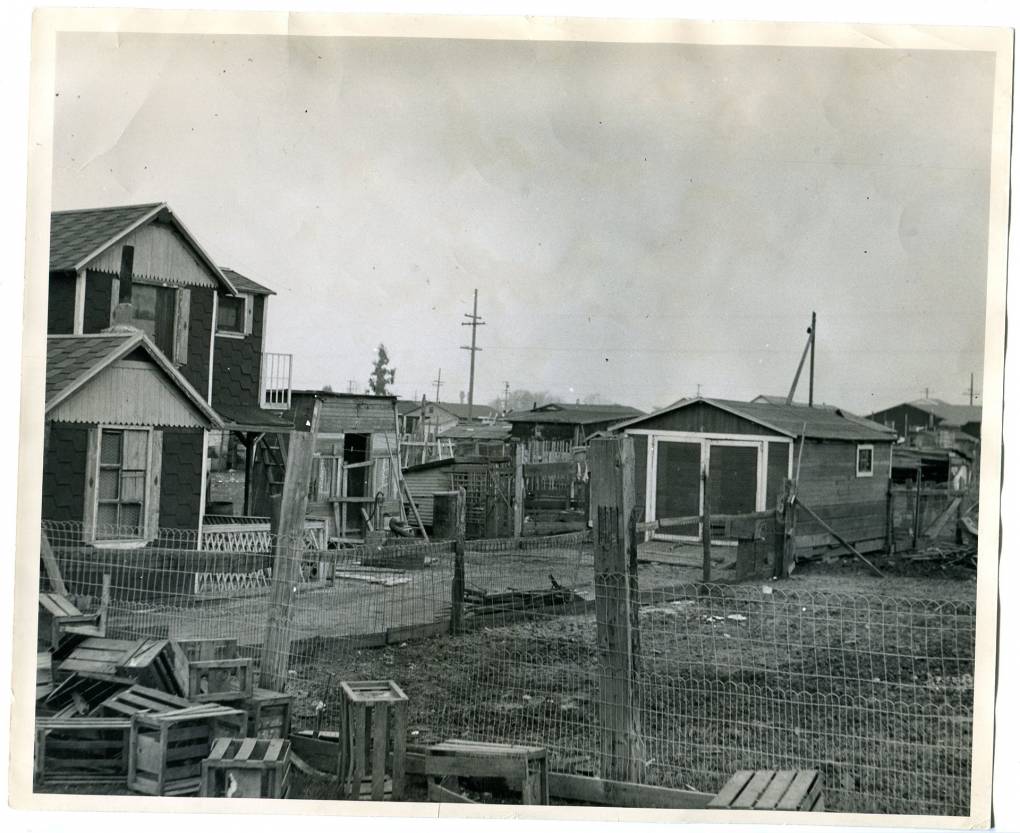
"audio_0": {
"type": "attachments",
"id": "audio_0",
"imgSizes": {
"kqedFullSize": {
"file": "https://ww2.kqed.org/news/wp-content/themes/KQED-unified/img/audio_bgs/background0.jpg"
}
}
},
"audio_1": {
"type": "attachments",
"id": "audio_1",
"imgSizes": {
"kqedFullSize": {
"file": "https://ww2.kqed.org/news/wp-content/themes/KQED-unified/img/audio_bgs/background1.jpg"
}
}
},
"audio_2": {
"type": "attachments",
"id": "audio_2",
"imgSizes": {
"kqedFullSize": {
"file": "https://ww2.kqed.org/news/wp-content/themes/KQED-unified/img/audio_bgs/background2.jpg"
}
}
},
"audio_3": {
"type": "attachments",
"id": "audio_3",
"imgSizes": {
"kqedFullSize": {
"file": "https://ww2.kqed.org/news/wp-content/themes/KQED-unified/img/audio_bgs/background3.jpg"
}
}
},
"audio_4": {
"type": "attachments",
"id": "audio_4",
"imgSizes": {
"kqedFullSize": {
"file": "https://ww2.kqed.org/news/wp-content/themes/KQED-unified/img/audio_bgs/background4.jpg"
}
}
},
"placeholder": {
"type": "attachments",
"id": "placeholder",
"imgSizes": {
"thumbnail": {
"file": "https://cdn.kqed.org/wp-content/uploads/2024/12/KQED-Default-Image-816638274-2000x1333-1-160x107.jpg",
"width": 160,
"height": 107,
"mimeType": "image/jpeg"
},
"medium": {
"file": "https://cdn.kqed.org/wp-content/uploads/2024/12/KQED-Default-Image-816638274-2000x1333-1-800x533.jpg",
"width": 800,
"height": 533,
"mimeType": "image/jpeg"
},
"medium_large": {
"file": "https://cdn.kqed.org/wp-content/uploads/2024/12/KQED-Default-Image-816638274-2000x1333-1-768x512.jpg",
"width": 768,
"height": 512,
"mimeType": "image/jpeg"
},
"large": {
"file": "https://cdn.kqed.org/wp-content/uploads/2024/12/KQED-Default-Image-816638274-2000x1333-1-1020x680.jpg",
"width": 1020,
"height": 680,
"mimeType": "image/jpeg"
},
"1536x1536": {
"file": "https://cdn.kqed.org/wp-content/uploads/2024/12/KQED-Default-Image-816638274-2000x1333-1-1536x1024.jpg",
"width": 1536,
"height": 1024,
"mimeType": "image/jpeg"
},
"fd-lrg": {
"file": "https://cdn.kqed.org/wp-content/uploads/2024/12/KQED-Default-Image-816638274-2000x1333-1-1536x1024.jpg",
"width": 1536,
"height": 1024,
"mimeType": "image/jpeg"
},
"fd-med": {
"file": "https://cdn.kqed.org/wp-content/uploads/2024/12/KQED-Default-Image-816638274-2000x1333-1-1020x680.jpg",
"width": 1020,
"height": 680,
"mimeType": "image/jpeg"
},
"fd-sm": {
"file": "https://cdn.kqed.org/wp-content/uploads/2024/12/KQED-Default-Image-816638274-2000x1333-1-800x533.jpg",
"width": 800,
"height": 533,
"mimeType": "image/jpeg"
},
"post-thumbnail": {
"file": "https://cdn.kqed.org/wp-content/uploads/2024/12/KQED-Default-Image-816638274-2000x1333-1-672x372.jpg",
"width": 672,
"height": 372,
"mimeType": "image/jpeg"
},
"twentyfourteen-full-width": {
"file": "https://cdn.kqed.org/wp-content/uploads/2024/12/KQED-Default-Image-816638274-2000x1333-1-1038x576.jpg",
"width": 1038,
"height": 576,
"mimeType": "image/jpeg"
},
"xxsmall": {
"file": "https://cdn.kqed.org/wp-content/uploads/2024/12/KQED-Default-Image-816638274-2000x1333-1-160x107.jpg",
"width": 160,
"height": 107,
"mimeType": "image/jpeg"
},
"xsmall": {
"file": "https://cdn.kqed.org/wp-content/uploads/2024/12/KQED-Default-Image-816638274-2000x1333-1-672x372.jpg",
"width": 672,
"height": 372,
"mimeType": "image/jpeg"
},
"small": {
"file": "https://cdn.kqed.org/wp-content/uploads/2024/12/KQED-Default-Image-816638274-2000x1333-1-672x372.jpg",
"width": 672,
"height": 372,
"mimeType": "image/jpeg"
},
"xlarge": {
"file": "https://cdn.kqed.org/wp-content/uploads/2024/12/KQED-Default-Image-816638274-2000x1333-1-1020x680.jpg",
"width": 1020,
"height": 680,
"mimeType": "image/jpeg"
},
"full-width": {
"file": "https://cdn.kqed.org/wp-content/uploads/2024/12/KQED-Default-Image-816638274-2000x1333-1-1920x1280.jpg",
"width": 1920,
"height": 1280,
"mimeType": "image/jpeg"
},
"guest-author-32": {
"file": "https://cdn.kqed.org/wp-content/uploads/2025/01/KQED-Default-Image-816638274-1333x1333-1-160x160.jpg",
"width": 32,
"height": 32,
"mimeType": "image/jpeg"
},
"guest-author-50": {
"file": "https://cdn.kqed.org/wp-content/uploads/2025/01/KQED-Default-Image-816638274-1333x1333-1-160x160.jpg",
"width": 50,
"height": 50,
"mimeType": "image/jpeg"
},
"guest-author-64": {
"file": "https://cdn.kqed.org/wp-content/uploads/2025/01/KQED-Default-Image-816638274-1333x1333-1-160x160.jpg",
"width": 64,
"height": 64,
"mimeType": "image/jpeg"
},
"guest-author-96": {
"file": "https://cdn.kqed.org/wp-content/uploads/2025/01/KQED-Default-Image-816638274-1333x1333-1-160x160.jpg",
"width": 96,
"height": 96,
"mimeType": "image/jpeg"
},
"guest-author-128": {
"file": "https://cdn.kqed.org/wp-content/uploads/2025/01/KQED-Default-Image-816638274-1333x1333-1-160x160.jpg",
"width": 128,
"height": 128,
"mimeType": "image/jpeg"
},
"detail": {
"file": "https://cdn.kqed.org/wp-content/uploads/2025/01/KQED-Default-Image-816638274-1333x1333-1-160x160.jpg",
"width": 160,
"height": 160,
"mimeType": "image/jpeg"
},
"kqedFullSize": {
"file": "https://cdn.kqed.org/wp-content/uploads/2024/12/KQED-Default-Image-816638274-2000x1333-1.jpg",
"width": 2000,
"height": 1333
}
}
},
"news_11922192": {
"type": "attachments",
"id": "news_11922192",
"meta": {
"index": "attachments_1716263798",
"site": "news",
"id": "11922192",
"found": true
},
"title": "Property-Russell-City-sized",
"publishDate": 1660166611,
"status": "inherit",
"parent": 11922175,
"modified": 1785972308,
"caption": "A Russell City home circa 1950. Alameda County Supervisors on Tuesday voted to issue a first round of payments of up to $25,000 per household.\r\n\r\n",
"credit": "Courtesy of the Hayward Area Historical Society",
"altTag": "A black-and-white photograph of several wooden buildings, including a home, a large shed or garage and several small structures.",
"description": null,
"imgSizes": {
"medium": {
"file": "https://cdn.kqed.org/wp-content/uploads/sites/10/2022/08/Property-Russell-City-sized-800x653.jpg",
"width": 800,
"height": 653,
"mimeType": "image/jpeg"
},
"large": {
"file": "https://cdn.kqed.org/wp-content/uploads/sites/10/2022/08/Property-Russell-City-sized-1020x833.jpg",
"width": 1020,
"height": 833,
"mimeType": "image/jpeg"
},
"thumbnail": {
"file": "https://cdn.kqed.org/wp-content/uploads/sites/10/2022/08/Property-Russell-City-sized-160x131.jpg",
"width": 160,
"height": 131,
"mimeType": "image/jpeg"
},
"1536x1536": {
"file": "https://cdn.kqed.org/wp-content/uploads/sites/10/2022/08/Property-Russell-City-sized-1536x1254.jpg",
"width": 1536,
"height": 1254,
"mimeType": "image/jpeg"
},
"post-thumbnail": {
"file": "https://cdn.kqed.org/wp-content/uploads/sites/10/2022/08/Property-Russell-City-sized-672x372.jpg",
"width": 672,
"height": 372,
"mimeType": "image/jpeg"
},
"twentyfourteen-full-width": {
"file": "https://cdn.kqed.org/wp-content/uploads/sites/10/2022/08/Property-Russell-City-sized-1038x576.jpg",
"width": 1038,
"height": 576,
"mimeType": "image/jpeg"
},
"kqedFullSize": {
"file": "https://cdn.kqed.org/wp-content/uploads/sites/10/2022/08/Property-Russell-City-sized.jpg",
"width": 1920,
"height": 1568
}
},
"isLoading": false,
"fetchFailed": false
},
"news_12088578": {
"type": "attachments",
"id": "news_12088578",
"meta": {
"index": "attachments_1716263798",
"site": "news",
"id": "12088578",
"found": true
},
"title": "20260619-BlackEnglish-JY-07-KQED",
"publishDate": 1782250805,
"status": "inherit",
"parent": 0,
"modified": 1782944550,
"caption": "Ashley Williams holds her 2-year-old son Ashtyn as she dances with family members during a Juneteenth celebration at her home in El Sobrante, California, on Friday, June 19, 2026.",
"credit": "Juliana Yamada for KQED",
"altTag": null,
"description": null,
"imgSizes": {
"thumbnail": {
"file": "https://cdn.kqed.org/wp-content/uploads/sites/10/2026/06/20260619-BlackEnglish-JY-07-KQED-160x107.jpg",
"width": 160,
"height": 107,
"mimeType": "image/jpeg"
},
"1536x1536": {
"file": "https://cdn.kqed.org/wp-content/uploads/sites/10/2026/06/20260619-BlackEnglish-JY-07-KQED-1536x1024.jpg",
"width": 1536,
"height": 1024,
"mimeType": "image/jpeg"
},
"post-thumbnail": {
"file": "https://cdn.kqed.org/wp-content/uploads/sites/10/2026/06/20260619-BlackEnglish-JY-07-KQED-672x372.jpg",
"width": 672,
"height": 372,
"mimeType": "image/jpeg"
},
"twentyfourteen-full-width": {
"file": "https://cdn.kqed.org/wp-content/uploads/sites/10/2026/06/20260619-BlackEnglish-JY-07-KQED-1038x576.jpg",
"width": 1038,
"height": 576,
"mimeType": "image/jpeg"
},
"npr-cds-wide": {
"file": "https://cdn.kqed.org/wp-content/uploads/sites/10/2026/06/20260619-BlackEnglish-JY-07-KQED-1200x675.jpg",
"width": 1200,
"height": 675,
"mimeType": "image/jpeg"
},
"npr-cds-square": {
"file": "https://cdn.kqed.org/wp-content/uploads/sites/10/2026/06/20260619-BlackEnglish-JY-07-KQED-600x600.jpg",
"width": 600,
"height": 600,
"mimeType": "image/jpeg"
},
"kqedFullSize": {
"file": "https://cdn.kqed.org/wp-content/uploads/sites/10/2026/06/20260619-BlackEnglish-JY-07-KQED.jpg",
"width": 2000,
"height": 1333
}
},
"isLoading": false,
"fetchFailed": false
},
"news_12088274": {
"type": "attachments",
"id": "news_12088274",
"meta": {
"index": "attachments_1716263798",
"site": "news",
"id": "12088274",
"found": true
},
"title": "20260619_Juneteenth_GC-13",
"publishDate": 1781912517,
"status": "inherit",
"parent": 0,
"modified": 1781912616,
"caption": null,
"credit": "Gina Castro for KQED",
"altTag": null,
"description": null,
"imgSizes": {
"thumbnail": {
"file": "https://cdn.kqed.org/wp-content/uploads/sites/10/2026/06/20260619_Juneteenth_GC-13-160x107.jpg",
"width": 160,
"height": 107,
"mimeType": "image/jpeg"
},
"1536x1536": {
"file": "https://cdn.kqed.org/wp-content/uploads/sites/10/2026/06/20260619_Juneteenth_GC-13-1536x1024.jpg",
"width": 1536,
"height": 1024,
"mimeType": "image/jpeg"
},
"post-thumbnail": {
"file": "https://cdn.kqed.org/wp-content/uploads/sites/10/2026/06/20260619_Juneteenth_GC-13-672x372.jpg",
"width": 672,
"height": 372,
"mimeType": "image/jpeg"
},
"twentyfourteen-full-width": {
"file": "https://cdn.kqed.org/wp-content/uploads/sites/10/2026/06/20260619_Juneteenth_GC-13-1038x576.jpg",
"width": 1038,
"height": 576,
"mimeType": "image/jpeg"
},
"npr-cds-wide": {
"file": "https://cdn.kqed.org/wp-content/uploads/sites/10/2026/06/20260619_Juneteenth_GC-13-1200x675.jpg",
"width": 1200,
"height": 675,
"mimeType": "image/jpeg"
},
"npr-cds-square": {
"file": "https://cdn.kqed.org/wp-content/uploads/sites/10/2026/06/20260619_Juneteenth_GC-13-600x600.jpg",
"width": 600,
"height": 600,
"mimeType": "image/jpeg"
},
"kqedFullSize": {
"file": "https://cdn.kqed.org/wp-content/uploads/sites/10/2026/06/20260619_Juneteenth_GC-13.jpg",
"width": 2000,
"height": 1333
}
},
"isLoading": false,
"fetchFailed": false
},
"news_12060430": {
"type": "attachments",
"id": "news_12060430",
"meta": {
"index": "attachments_1716263798",
"site": "news",
"id": "12060430",
"found": true
},
"title": "California Reparations Task Force meets to hear public input on reparations at the California Science Center in Los Angeles on Sept. 22, 2022.",
"publishDate": 1760737868,
"status": "inherit",
"parent": 0,
"modified": 1760737909,
"caption": "Los Angeles long-time resident Walter Foster holds up a sign as the Reparations Task Force meets to hear public input on reparations at the California Science Center in Los Angeles on Sept. 22, 2022.",
"credit": "Carolyn Cole/Los Angeles Times via Getty Images",
"altTag": null,
"description": null,
"imgSizes": {
"thumbnail": {
"file": "https://cdn.kqed.org/wp-content/uploads/sites/10/2025/10/GETTYIMAGES-1243475910-KQED-160x107.jpg",
"width": 160,
"height": 107,
"mimeType": "image/jpeg"
},
"1536x1536": {
"file": "https://cdn.kqed.org/wp-content/uploads/sites/10/2025/10/GETTYIMAGES-1243475910-KQED-1536x1024.jpg",
"width": 1536,
"height": 1024,
"mimeType": "image/jpeg"
},
"post-thumbnail": {
"file": "https://cdn.kqed.org/wp-content/uploads/sites/10/2025/10/GETTYIMAGES-1243475910-KQED-672x372.jpg",
"width": 672,
"height": 372,
"mimeType": "image/jpeg"
},
"twentyfourteen-full-width": {
"file": "https://cdn.kqed.org/wp-content/uploads/sites/10/2025/10/GETTYIMAGES-1243475910-KQED-1038x576.jpg",
"width": 1038,
"height": 576,
"mimeType": "image/jpeg"
},
"kqedFullSize": {
"file": "https://cdn.kqed.org/wp-content/uploads/sites/10/2025/10/GETTYIMAGES-1243475910-KQED.jpg",
"width": 2000,
"height": 1333
}
},
"isLoading": false,
"fetchFailed": false
},
"news_12059791": {
"type": "attachments",
"id": "news_12059791",
"meta": {
"index": "attachments_1716263798",
"site": "news",
"id": "12059791",
"found": true
},
"title": "Activists In Los Angeles Hold Rally In Honor Of George Floyd",
"publishDate": 1760398603,
"status": "inherit",
"parent": 12059600,
"modified": 1760402655,
"caption": "A protester displays a sign reading \"Reparations Now!\" during a rally billed as a Day of Resistance held in honor of George Floyd on May 21, 2025, in Los Angeles, California.",
"credit": "Mario Tama/Getty Images",
"altTag": null,
"description": null,
"imgSizes": {
"thumbnail": {
"file": "https://cdn.kqed.org/wp-content/uploads/sites/10/2025/10/CaliforniaReparationsGetty-160x107.jpg",
"width": 160,
"height": 107,
"mimeType": "image/jpeg"
},
"1536x1536": {
"file": "https://cdn.kqed.org/wp-content/uploads/sites/10/2025/10/CaliforniaReparationsGetty-1536x1024.jpg",
"width": 1536,
"height": 1024,
"mimeType": "image/jpeg"
},
"post-thumbnail": {
"file": "https://cdn.kqed.org/wp-content/uploads/sites/10/2025/10/CaliforniaReparationsGetty-672x372.jpg",
"width": 672,
"height": 372,
"mimeType": "image/jpeg"
},
"twentyfourteen-full-width": {
"file": "https://cdn.kqed.org/wp-content/uploads/sites/10/2025/10/CaliforniaReparationsGetty-1038x576.jpg",
"width": 1038,
"height": 576,
"mimeType": "image/jpeg"
},
"kqedFullSize": {
"file": "https://cdn.kqed.org/wp-content/uploads/sites/10/2025/10/CaliforniaReparationsGetty.jpg",
"width": 2000,
"height": 1333
}
},
"isLoading": false,
"fetchFailed": false
},
"news_12056462": {
"type": "attachments",
"id": "news_12056462",
"meta": {
"index": "attachments_1716263798",
"site": "news",
"id": "12056462",
"found": true
},
"title": "250826-HolocaustReparations-02-BL_qed",
"publishDate": 1758151850,
"status": "inherit",
"parent": 12056446,
"modified": 1758151877,
"caption": "Elissa Eckman looks through family photos at her home in San Anselmo on Aug. 26, 2025. Her family had a home in Eisenach, Germany, which was taken from them during the Holocaust and later returned through post–World War II restitution.",
"credit": "Beth LaBerge/KQED",
"altTag": null,
"description": null,
"imgSizes": {
"thumbnail": {
"file": "https://cdn.kqed.org/wp-content/uploads/sites/10/2025/09/250826-HolocaustReparations-02-BL_qed-160x107.jpg",
"width": 160,
"height": 107,
"mimeType": "image/jpeg"
},
"1536x1536": {
"file": "https://cdn.kqed.org/wp-content/uploads/sites/10/2025/09/250826-HolocaustReparations-02-BL_qed-1536x1024.jpg",
"width": 1536,
"height": 1024,
"mimeType": "image/jpeg"
},
"post-thumbnail": {
"file": "https://cdn.kqed.org/wp-content/uploads/sites/10/2025/09/250826-HolocaustReparations-02-BL_qed-672x372.jpg",
"width": 672,
"height": 372,
"mimeType": "image/jpeg"
},
"twentyfourteen-full-width": {
"file": "https://cdn.kqed.org/wp-content/uploads/sites/10/2025/09/250826-HolocaustReparations-02-BL_qed-1038x576.jpg",
"width": 1038,
"height": 576,
"mimeType": "image/jpeg"
},
"kqedFullSize": {
"file": "https://cdn.kqed.org/wp-content/uploads/sites/10/2025/09/250826-HolocaustReparations-02-BL_qed.jpg",
"width": 2000,
"height": 1333
}
},
"isLoading": false,
"fetchFailed": false
},
"news_12051414": {
"type": "attachments",
"id": "news_12051414",
"meta": {
"index": "attachments_1716263798",
"site": "news",
"id": "12051414",
"found": true
},
"title": "250802-AFROFUTURES_01253_TV-KQED-1",
"publishDate": 1754660438,
"status": "inherit",
"parent": 0,
"modified": 1754672001,
"caption": "Selena Wilson, CEO of the EOYDC, speaks at the Black Futures Ball Banquet hosted by The East Oakland Youth Development Center at Chabot Space and Science Center in Oakland on Aug. 2, 2025.",
"credit": "Tâm Vũ/KQED",
"altTag": null,
"description": null,
"imgSizes": {
"thumbnail": {
"file": "https://cdn.kqed.org/wp-content/uploads/sites/10/2025/08/250802-AFROFUTURES_01253_TV-KQED-1-160x107.jpg",
"width": 160,
"height": 107,
"mimeType": "image/jpeg"
},
"1536x1536": {
"file": "https://cdn.kqed.org/wp-content/uploads/sites/10/2025/08/250802-AFROFUTURES_01253_TV-KQED-1-1536x1024.jpg",
"width": 1536,
"height": 1024,
"mimeType": "image/jpeg"
},
"post-thumbnail": {
"file": "https://cdn.kqed.org/wp-content/uploads/sites/10/2025/08/250802-AFROFUTURES_01253_TV-KQED-1-672x372.jpg",
"width": 672,
"height": 372,
"mimeType": "image/jpeg"
},
"twentyfourteen-full-width": {
"file": "https://cdn.kqed.org/wp-content/uploads/sites/10/2025/08/250802-AFROFUTURES_01253_TV-KQED-1-1038x576.jpg",
"width": 1038,
"height": 576,
"mimeType": "image/jpeg"
},
"kqedFullSize": {
"file": "https://cdn.kqed.org/wp-content/uploads/sites/10/2025/08/250802-AFROFUTURES_01253_TV-KQED-1.jpg",
"width": 2000,
"height": 1333
}
},
"isLoading": false,
"fetchFailed": false
},
"news_11898070": {
"type": "attachments",
"id": "news_11898070",
"meta": {
"index": "attachments_1716263798",
"site": "news",
"id": "11898070",
"found": true
},
"parent": 11897843,
"imgSizes": {
"twentyfourteen-full-width": {
"file": "https://ww2.kqed.org/app/uploads/sites/10/2021/12/KnowlesPicnic-1038x576.jpg",
"width": 1038,
"mimeType": "image/jpeg",
"height": 576
},
"thumbnail": {
"file": "https://ww2.kqed.org/app/uploads/sites/10/2021/12/KnowlesPicnic-160x120.jpg",
"width": 160,
"mimeType": "image/jpeg",
"height": 120
},
"post-thumbnail": {
"file": "https://ww2.kqed.org/app/uploads/sites/10/2021/12/KnowlesPicnic-672x372.jpg",
"width": 672,
"mimeType": "image/jpeg",
"height": 372
},
"kqedFullSize": {
"file": "https://ww2.kqed.org/app/uploads/sites/10/2021/12/KnowlesPicnic.jpg",
"width": 1920,
"height": 1440
},
"large": {
"file": "https://ww2.kqed.org/app/uploads/sites/10/2021/12/KnowlesPicnic-1020x765.jpg",
"width": 1020,
"mimeType": "image/jpeg",
"height": 765
},
"1536x1536": {
"file": "https://ww2.kqed.org/app/uploads/sites/10/2021/12/KnowlesPicnic-1536x1152.jpg",
"width": 1536,
"mimeType": "image/jpeg",
"height": 1152
},
"medium": {
"file": "https://ww2.kqed.org/app/uploads/sites/10/2021/12/KnowlesPicnic-800x600.jpg",
"width": 800,
"mimeType": "image/jpeg",
"height": 600
}
},
"publishDate": 1638574502,
"modified": 1638750096,
"caption": "Frances Doyal (left), Winny Knowles (center) and Aisha Knowles, former residents and descendants of families from Russell City, pose for a photo during the annual Russell City reunion picnic at Kennedy Park in Hayward on Sept. 3, 2017.",
"description": "Frances Doyal (left), Winny Knowles (center) and Aisha Knowles, former residents and descendants of families from Russell City, pose for a photo during the annual Russell City reunion picnic at Kennedy Park in Hayward on Sept. 3, 2017.",
"title": "KnowlesPicnic",
"credit": "Courtesy of Aisha Knowles",
"status": "inherit",
"altTag": "Three women stand together. The woman on the left is wearing glasses, a turquoise sweater with a brown purse. The woman in the middle with her hand holding her wrist is wearing a green shirt and light brown bag. The woman on the right is wearing a grey shirt with a black purse on her left shoulder.",
"isLoading": false,
"fetchFailed": false
},
"news_11897865": {
"type": "attachments",
"id": "news_11897865",
"meta": {
"index": "attachments_1716263798",
"site": "news",
"id": "11897865",
"found": true
},
"title": "IMG_2829",
"publishDate": 1638419658,
"status": "inherit",
"parent": 11897843,
"modified": 1753224057,
"caption": "A board honoring the families that lived in Russell City is displayed during the annual Russell City reunion picnic at Kennedy Park in Hayward on Sept. 3, 2017.",
"credit": "Courtesy of Aisha Knowles",
"altTag": "A board reads, \"Russell City: The city may be gone, but the memories live on.\"",
"description": null,
"imgSizes": {
"medium": {
"file": "https://cdn.kqed.org/wp-content/uploads/sites/10/2021/12/IMG_2829-800x600.jpg",
"width": 800,
"height": 600,
"mimeType": "image/jpeg"
},
"large": {
"file": "https://cdn.kqed.org/wp-content/uploads/sites/10/2021/12/IMG_2829-1020x765.jpg",
"width": 1020,
"height": 765,
"mimeType": "image/jpeg"
},
"thumbnail": {
"file": "https://cdn.kqed.org/wp-content/uploads/sites/10/2021/12/IMG_2829-160x120.jpg",
"width": 160,
"height": 120,
"mimeType": "image/jpeg"
},
"1536x1536": {
"file": "https://cdn.kqed.org/wp-content/uploads/sites/10/2021/12/IMG_2829-1536x1152.jpg",
"width": 1536,
"height": 1152,
"mimeType": "image/jpeg"
},
"2048x2048": {
"file": "https://cdn.kqed.org/wp-content/uploads/sites/10/2021/12/IMG_2829-2048x1536.jpg",
"width": 2048,
"height": 1536,
"mimeType": "image/jpeg"
},
"post-thumbnail": {
"file": "https://cdn.kqed.org/wp-content/uploads/sites/10/2021/12/IMG_2829-672x372.jpg",
"width": 672,
"height": 372,
"mimeType": "image/jpeg"
},
"twentyfourteen-full-width": {
"file": "https://cdn.kqed.org/wp-content/uploads/sites/10/2021/12/IMG_2829-1038x576.jpg",
"width": 1038,
"height": 576,
"mimeType": "image/jpeg"
},
"full-width": {
"file": "https://cdn.kqed.org/wp-content/uploads/sites/10/2021/12/IMG_2829-1920x1440.jpg",
"width": 1920,
"height": 1440,
"mimeType": "image/jpeg"
},
"kqedFullSize": {
"file": "https://cdn.kqed.org/wp-content/uploads/sites/10/2021/12/IMG_2829-scaled-e1638419681640.jpg",
"width": 1920,
"height": 1440
}
},
"isLoading": false,
"fetchFailed": false
},
"news_12048774": {
"type": "attachments",
"id": "news_12048774",
"meta": {
"index": "attachments_1716263798",
"site": "news",
"id": "12048774",
"found": true
},
"title": "004_Hayward_RussellCity_12022021_qed",
"publishDate": 1752864034,
"status": "inherit",
"parent": 12048684,
"modified": 1752864045,
"caption": "Artavia Berry, chair of the Hayward Community Services Commission, holds the book \"Russell City Images of America\" in Hayward on Dec. 2, 2021.",
"credit": "Beth LaBerge/KQED",
"altTag": null,
"description": null,
"imgSizes": {
"thumbnail": {
"file": "https://cdn.kqed.org/wp-content/uploads/sites/10/2025/07/004_Hayward_RussellCity_12022021_qed-160x107.jpg",
"width": 160,
"height": 107,
"mimeType": "image/jpeg"
},
"1536x1536": {
"file": "https://cdn.kqed.org/wp-content/uploads/sites/10/2025/07/004_Hayward_RussellCity_12022021_qed-1536x1024.jpg",
"width": 1536,
"height": 1024,
"mimeType": "image/jpeg"
},
"post-thumbnail": {
"file": "https://cdn.kqed.org/wp-content/uploads/sites/10/2025/07/004_Hayward_RussellCity_12022021_qed-672x372.jpg",
"width": 672,
"height": 372,
"mimeType": "image/jpeg"
},
"twentyfourteen-full-width": {
"file": "https://cdn.kqed.org/wp-content/uploads/sites/10/2025/07/004_Hayward_RussellCity_12022021_qed-1038x576.jpg",
"width": 1038,
"height": 576,
"mimeType": "image/jpeg"
},
"kqedFullSize": {
"file": "https://cdn.kqed.org/wp-content/uploads/sites/10/2025/07/004_Hayward_RussellCity_12022021_qed.jpg",
"width": 2000,
"height": 1333
}
},
"isLoading": false,
"fetchFailed": false
}
},
"audioPlayerReducer": {
"postId": "stream_live",
"isPaused": true,
"isPlaying": false,
"pfsActive": false,
"pledgeModalIsOpen": true,
"playerDrawerIsOpen": false,
"liveAudioPlayStartedAt": 0,
"liveAudioPlayContext": ""
},
"authorsReducer": {
"byline_news_12060403": {
"type": "authors",
"id": "byline_news_12060403",
"meta": {
"override": true
},
"slug": "byline_news_12060403",
"name": "Virginie Ladisch",
"isLoading": false
},
"gmarzorati": {
"type": "authors",
"id": "227",
"meta": {
"index": "authors_1716337520",
"id": "227",
"found": true
},
"name": "Guy Marzorati",
"firstName": "Guy",
"lastName": "Marzorati",
"slug": "gmarzorati",
"email": "gmarzorati@KQED.org",
"display_author_email": true,
"staff_mastheads": [
"news"
],
"title": "Correspondent",
"bio": "Guy Marzorati is a correspondent on KQED's California Politics and Government Desk, based in San Jose. A graduate of Santa Clara University, Guy joined KQED in 2013. He reports on state and local politics and produces KQED's digital voter guide.",
"avatar": "https://secure.gravatar.com/avatar/e7038b8dbfd55b104369b76b1cd0b9de?s=600&d=blank&r=g",
"twitter": "guymarzorati",
"facebook": null,
"instagram": null,
"linkedin": null,
"sites": [
{
"site": "",
"roles": [
"editor"
]
},
{
"site": "news",
"roles": [
"editor"
]
},
{
"site": "science",
"roles": [
"editor"
]
},
{
"site": "forum",
"roles": [
"editor"
]
},
{
"site": "elections",
"roles": [
"editor"
]
},
{
"site": "liveblog",
"roles": [
"editor"
]
}
],
"headData": {
"title": "Guy Marzorati | KQED",
"description": "Correspondent",
"ogImgSrc": "https://secure.gravatar.com/avatar/e7038b8dbfd55b104369b76b1cd0b9de?s=600&d=blank&r=g",
"twImgSrc": "https://secure.gravatar.com/avatar/e7038b8dbfd55b104369b76b1cd0b9de?s=600&d=blank&r=g"
},
"isLoading": false,
"link": "/author/gmarzorati"
},
"kqed": {
"type": "authors",
"id": "236",
"meta": {
"index": "authors_1716337520",
"id": "236",
"found": true
},
"name": "KQED News Staff",
"firstName": "KQED News Staff",
"lastName": null,
"slug": "kqed",
"email": "faq@kqed.org",
"display_author_email": false,
"staff_mastheads": [],
"title": null,
"bio": null,
"avatar": "https://secure.gravatar.com/avatar/ef0e801a68c4c54afa9180db14084167?s=600&d=blank&r=g",
"twitter": null,
"facebook": null,
"instagram": null,
"linkedin": null,
"sites": [
{
"site": "arts",
"roles": [
"contributor"
]
},
{
"site": "news",
"roles": [
"editor"
]
},
{
"site": "futureofyou",
"roles": [
"author"
]
}
],
"headData": {
"title": "KQED News Staff | KQED",
"description": null,
"ogImgSrc": "https://secure.gravatar.com/avatar/ef0e801a68c4c54afa9180db14084167?s=600&d=blank&r=g",
"twImgSrc": "https://secure.gravatar.com/avatar/ef0e801a68c4c54afa9180db14084167?s=600&d=blank&r=g"
},
"isLoading": false,
"link": "/author/kqed"
},
"ecruzguevarra": {
"type": "authors",
"id": "8654",
"meta": {
"index": "authors_1716337520",
"id": "8654",
"found": true
},
"name": "Ericka Cruz Guevarra",
"firstName": "Ericka",
"lastName": "Cruz Guevarra",
"slug": "ecruzguevarra",
"email": "ecruzguevarra@kqed.org",
"display_author_email": true,
"staff_mastheads": [
"news"
],
"title": "Producer, The Bay Podcast",
"bio": "Ericka Cruz Guevarra is host of \u003ca href=\"https://www.kqed.org/podcasts/thebay\">\u003cem>The Bay\u003c/em>\u003c/a> podcast at KQED. Before host, she was the show’s producer. Her work in that capacity includes a three-part reported series on policing in Vallejo, which won a 2020 excellence in journalism award from the Society of Professional Journalists. Ericka has worked as a breaking news reporter at Oregon Public Broadcasting, helped produce the Code Switch podcast, and was KQED’s inaugural Raul Ramirez Diversity Fund intern. She’s also an alumna of NPR’s Next Generation Radio program. Send her an email if you have strong feelings about whether Fairfield and Suisun City are the Bay. Ericka is represented by SAG-AFTRA.",
"avatar": "https://secure.gravatar.com/avatar/accefc1de4bafc7e234b69bcb9b6f6536c130fd84709bc3069ef11a78787e1bb?s=600&d=blank&r=g",
"twitter": "NotoriousECG",
"bluesky": null,
"facebook": null,
"instagram": null,
"linkedin": null,
"sites": [
{
"site": "arts",
"roles": [
"subscriber"
]
},
{
"site": "news",
"roles": [
"editor",
"manage_categories"
]
},
{
"site": "futureofyou",
"roles": [
"subscriber"
]
},
{
"site": "stateofhealth",
"roles": [
"subscriber"
]
},
{
"site": "science",
"roles": [
"editor"
]
},
{
"site": "forum",
"roles": [
"subscriber"
]
}
],
"headData": {
"title": "Ericka Cruz Guevarra | KQED",
"description": "Producer, The Bay Podcast",
"ogImgSrc": "https://secure.gravatar.com/avatar/accefc1de4bafc7e234b69bcb9b6f6536c130fd84709bc3069ef11a78787e1bb?s=600&d=blank&r=g",
"twImgSrc": "https://secure.gravatar.com/avatar/accefc1de4bafc7e234b69bcb9b6f6536c130fd84709bc3069ef11a78787e1bb?s=600&d=blank&r=g"
},
"isLoading": false,
"link": "/author/ecruzguevarra"
},
"amontecillo": {
"type": "authors",
"id": "11649",
"meta": {
"index": "authors_1716337520",
"id": "11649",
"found": true
},
"name": "Alan Montecillo",
"firstName": "Alan",
"lastName": "Montecillo",
"slug": "amontecillo",
"email": "amontecillo@kqed.org",
"display_author_email": false,
"staff_mastheads": [
"news"
],
"title": "KQED Contributor",
"bio": "Alan Montecillo is the senior editor of \u003cem>\u003ca href=\"http://kqed.org/thebay\">The Bay\u003c/a>, \u003c/em> KQED's local news podcast. Before moving to the Bay Area, he worked as a senior talk show producer for WILL in Champaign-Urbana, Illinois and at Oregon Public Broadcasting in Portland, Oregon. He has won journalism awards from the Society of Professional Journalists Northern California, the Public Media Journalists Association, The Signal Awards, and has also received a regional Edward R. Murrow award. Alan is a Filipino American from Hong Kong and a graduate of Reed College.",
"avatar": "https://secure.gravatar.com/avatar/268f53a2066899ea9efdd8a5900218b17c822d9862cbc9326cccec53ef41d349?s=600&d=blank&r=g",
"twitter": "alanmontecillo",
"bluesky": null,
"facebook": null,
"instagram": null,
"linkedin": null,
"sites": [
{
"site": "",
"roles": [
"editor"
]
},
{
"site": "news",
"roles": [
"editor",
"manage_categories"
]
}
],
"headData": {
"title": "Alan Montecillo | KQED",
"description": "KQED Contributor",
"ogImgSrc": "https://secure.gravatar.com/avatar/268f53a2066899ea9efdd8a5900218b17c822d9862cbc9326cccec53ef41d349?s=600&d=blank&r=g",
"twImgSrc": "https://secure.gravatar.com/avatar/268f53a2066899ea9efdd8a5900218b17c822d9862cbc9326cccec53ef41d349?s=600&d=blank&r=g"
},
"isLoading": false,
"link": "/author/amontecillo"
},
"kmizuguchi": {
"type": "authors",
"id": "11739",
"meta": {
"index": "authors_1716337520",
"id": "11739",
"found": true
},
"name": "Keith Mizuguchi",
"firstName": "Keith",
"lastName": "Mizuguchi",
"slug": "kmizuguchi",
"email": "kmizuguchi@kqed.org",
"display_author_email": false,
"staff_mastheads": [],
"title": "KQED Contributor",
"bio": null,
"avatar": "https://secure.gravatar.com/avatar/64d8a7de0723d4099b9fe4e915136103febcc20809abce228ee4415bcb237023?s=600&d=blank&r=g",
"twitter": null,
"bluesky": null,
"facebook": null,
"instagram": null,
"linkedin": null,
"sites": [
{
"site": "news",
"roles": [
"editor"
]
},
{
"site": "science",
"roles": [
"editor"
]
}
],
"headData": {
"title": "Keith Mizuguchi | KQED",
"description": "KQED Contributor",
"ogImgSrc": "https://secure.gravatar.com/avatar/64d8a7de0723d4099b9fe4e915136103febcc20809abce228ee4415bcb237023?s=600&d=blank&r=g",
"twImgSrc": "https://secure.gravatar.com/avatar/64d8a7de0723d4099b9fe4e915136103febcc20809abce228ee4415bcb237023?s=600&d=blank&r=g"
},
"isLoading": false,
"link": "/author/kmizuguchi"
},
"daisynguyen": {
"type": "authors",
"id": "11829",
"meta": {
"index": "authors_1716337520",
"id": "11829",
"found": true
},
"name": "Daisy Nguyen",
"firstName": "Daisy",
"lastName": "Nguyen",
"slug": "daisynguyen",
"email": "daisynguyen@kqed.org",
"display_author_email": true,
"staff_mastheads": [
"news"
],
"title": "KQED Contributor",
"bio": "I have covered early childhood education and child care for KQED since 2022. I focus on policies aimed at increasing access to early care and education and how they shape individual lives. I've been a journalist for more than two decades, with most of that time devoted to covering breaking news throughout California for The Associated Press. I grew up in San Francisco and studied at UC Davis and Columbia University's Graduate School of Journalism. I live in Oakland with my husband and two kids.",
"avatar": "https://secure.gravatar.com/avatar/2da2127c27f7143b53ebd419800fd55f?s=600&d=blank&r=g",
"twitter": null,
"facebook": null,
"instagram": null,
"linkedin": "https://www.linkedin.com/in/daisynguyen/",
"sites": [
{
"site": "news",
"roles": [
"author"
]
},
{
"site": "liveblog",
"roles": [
"author"
]
}
],
"headData": {
"title": "Daisy Nguyen | KQED",
"description": "KQED Contributor",
"ogImgSrc": "https://secure.gravatar.com/avatar/2da2127c27f7143b53ebd419800fd55f?s=600&d=blank&r=g",
"twImgSrc": "https://secure.gravatar.com/avatar/2da2127c27f7143b53ebd419800fd55f?s=600&d=blank&r=g"
},
"isLoading": false,
"link": "/author/daisynguyen"
},
"jessicakariisa": {
"type": "authors",
"id": "11831",
"meta": {
"index": "authors_1716337520",
"id": "11831",
"found": true
},
"name": "Jessica Kariisa",
"firstName": "Jessica",
"lastName": "Kariisa",
"slug": "jessicakariisa",
"email": "jkariisa@kqed.org",
"display_author_email": false,
"staff_mastheads": [],
"title": "Producer, The Bay",
"bio": "Jessica Kariisa is the producer of The Bay. She first joined KQED as an intern for The California Report Magazine, after which she became an on-call producer. She reported a Bay Curious episode on the use of rap lyrics in criminal trials which won a Society of Professional Journalists award in 2023 for Excellence in Features Journalism and the 2023 Signal Award for Best Conversation Starter. She’s worked on podcasts for Snap Judgment and American Public Media. Before embarking on her audio career, she was a music journalist.\r\n\r\nJessica Kariisa is represented by SAG-AFTRA.",
"avatar": "https://secure.gravatar.com/avatar/522e97b28ac0b3d411621c0fde8f3419c7b71ea2c5c262c57c4bb600963f328c?s=600&d=blank&r=g",
"twitter": null,
"bluesky": null,
"facebook": null,
"instagram": null,
"linkedin": null,
"sites": [
{
"site": "arts",
"roles": [
"author"
]
},
{
"site": "news",
"roles": [
"editor",
"manage_categories"
]
}
],
"headData": {
"title": "Jessica Kariisa | KQED",
"description": "Producer, The Bay",
"ogImgSrc": "https://secure.gravatar.com/avatar/522e97b28ac0b3d411621c0fde8f3419c7b71ea2c5c262c57c4bb600963f328c?s=600&d=blank&r=g",
"twImgSrc": "https://secure.gravatar.com/avatar/522e97b28ac0b3d411621c0fde8f3419c7b71ea2c5c262c57c4bb600963f328c?s=600&d=blank&r=g"
},
"isLoading": false,
"link": "/author/jessicakariisa"
},
"nkhan": {
"type": "authors",
"id": "11867",
"meta": {
"index": "authors_1716337520",
"id": "11867",
"found": true
},
"name": "Nisa Khan",
"firstName": "Nisa",
"lastName": "Khan",
"slug": "nkhan",
"email": "nkhan@kqed.org",
"display_author_email": false,
"staff_mastheads": [],
"title": "KQED Contributor",
"bio": "Nisa Khan is a reporter for KQED's Audience News Desk. She was formerly a data reporter at Michigan Radio. She earned a Bachelor of Science in Information from the University of Michigan and a Master of Arts in Communication from Stanford University.",
"avatar": "https://secure.gravatar.com/avatar/8720459eef081ff64582b3506b124d58523e80e120704a0cbd9892533c914991?s=600&d=blank&r=g",
"twitter": "mnisakhan",
"bluesky": null,
"facebook": null,
"instagram": null,
"linkedin": null,
"sites": [
{
"site": "arts",
"roles": [
"editor"
]
},
{
"site": "news",
"roles": [
"editor"
]
},
{
"site": "science",
"roles": [
"editor",
"author"
]
},
{
"site": "forum",
"roles": [
"editor"
]
},
{
"site": "liveblog",
"roles": [
"contributor"
]
}
],
"headData": {
"title": "Nisa Khan | KQED",
"description": "KQED Contributor",
"ogImgSrc": "https://secure.gravatar.com/avatar/8720459eef081ff64582b3506b124d58523e80e120704a0cbd9892533c914991?s=600&d=blank&r=g",
"twImgSrc": "https://secure.gravatar.com/avatar/8720459eef081ff64582b3506b124d58523e80e120704a0cbd9892533c914991?s=600&d=blank&r=g"
},
"isLoading": false,
"link": "/author/nkhan"
},
"gcastro": {
"type": "authors",
"id": "11908",
"meta": {
"index": "authors_1716337520",
"id": "11908",
"found": true
},
"name": "Gina Castro",
"firstName": "Gina",
"lastName": "Castro",
"slug": "gcastro",
"email": "gcastro@kqed.org",
"display_author_email": false,
"staff_mastheads": [
"news"
],
"title": "KQED Contributor",
"bio": null,
"avatar": "https://secure.gravatar.com/avatar/27b36c9ac0b86aced91deb0fc63fc510307488fa6761ac6062ac2eb798ed123f?s=600&d=blank&r=g",
"twitter": null,
"bluesky": null,
"facebook": null,
"instagram": null,
"linkedin": null,
"sites": [
{
"site": "arts",
"roles": [
"editor"
]
},
{
"site": "news",
"roles": [
"editor",
"manage_categories"
]
},
{
"site": "science",
"roles": [
"editor"
]
},
{
"site": "perspectives",
"roles": [
"editor"
]
}
],
"headData": {
"title": "Gina Castro | KQED",
"description": "KQED Contributor",
"ogImgSrc": "https://secure.gravatar.com/avatar/27b36c9ac0b86aced91deb0fc63fc510307488fa6761ac6062ac2eb798ed123f?s=600&d=blank&r=g",
"twImgSrc": "https://secure.gravatar.com/avatar/27b36c9ac0b86aced91deb0fc63fc510307488fa6761ac6062ac2eb798ed123f?s=600&d=blank&r=g"
},
"isLoading": false,
"link": "/author/gcastro"
},
"slim": {
"type": "authors",
"id": "11920",
"meta": {
"index": "authors_1716337520",
"id": "11920",
"found": true
},
"name": "Samantha Lim",
"firstName": "Samantha",
"lastName": "Lim",
"slug": "slim",
"email": "slim@KQED.org",
"display_author_email": false,
"staff_mastheads": [],
"title": "KQED Contributor",
"bio": null,
"avatar": "https://secure.gravatar.com/avatar/82e592e6c15fe1a04d385e8ad0fb0b4e?s=600&d=blank&r=g",
"twitter": null,
"facebook": null,
"instagram": null,
"linkedin": null,
"sites": [
{
"site": "news",
"roles": []
}
],
"headData": {
"title": "Samantha Lim | KQED",
"description": "KQED Contributor",
"ogImgSrc": "https://secure.gravatar.com/avatar/82e592e6c15fe1a04d385e8ad0fb0b4e?s=600&d=blank&r=g",
"twImgSrc": "https://secure.gravatar.com/avatar/82e592e6c15fe1a04d385e8ad0fb0b4e?s=600&d=blank&r=g"
},
"isLoading": false,
"link": "/author/slim"
},
"gzada": {
"type": "authors",
"id": "11929",
"meta": {
"index": "authors_1716337520",
"id": "11929",
"found": true
},
"name": "Gilare Zada",
"firstName": "Gilare",
"lastName": "Zada",
"slug": "gzada",
"email": "gzada@kqed.org",
"display_author_email": true,
"staff_mastheads": [
"news"
],
"title": null,
"bio": "Gilare Zada is a Kurdish-American from San Diego, CA. Storytelling, fitness, and binge reading are some of her passions outside of news reporting. Her work has appeared in Mission Local, the Peninsula Press, the San Francisco Press Club, and more. She also writes as a class correspondent for the Stanford Magazine - go Card!",
"avatar": "https://secure.gravatar.com/avatar/33a75f2b947669a488a805edec3fbf3838c1cedaedda710e983770633b4d6a75?s=600&d=blank&r=g",
"twitter": null,
"bluesky": null,
"facebook": null,
"instagram": null,
"linkedin": null,
"sites": [
{
"site": "",
"roles": [
"editor"
]
},
{
"site": "arts",
"roles": [
"editor"
]
},
{
"site": "news",
"roles": [
"administrator"
]
},
{
"site": "science",
"roles": [
"editor"
]
}
],
"headData": {
"title": "Gilare Zada | KQED",
"description": null,
"ogImgSrc": "https://secure.gravatar.com/avatar/33a75f2b947669a488a805edec3fbf3838c1cedaedda710e983770633b4d6a75?s=600&d=blank&r=g",
"twImgSrc": "https://secure.gravatar.com/avatar/33a75f2b947669a488a805edec3fbf3838c1cedaedda710e983770633b4d6a75?s=600&d=blank&r=g"
},
"isLoading": false,
"link": "/author/gzada"
},
"aaliahmad": {
"type": "authors",
"id": "11986",
"meta": {
"index": "authors_1716337520",
"id": "11986",
"found": true
},
"name": "Ayah Ali-Ahmad",
"firstName": "Ayah",
"lastName": "Ali-Ahmad",
"slug": "aaliahmad",
"email": "aaliahmad@KQED.org",
"display_author_email": false,
"staff_mastheads": [],
"title": "KQED Contributor",
"bio": null,
"avatar": "https://secure.gravatar.com/avatar/1cf54f187a5e1064b2cfef3f3d2f1e4f93e453395d56912aca6382a6071ec3ed?s=600&d=blank&r=g",
"twitter": "ayahaliahmad",
"bluesky": null,
"facebook": null,
"instagram": null,
"linkedin": null,
"sites": [
{
"site": "news",
"roles": [
"subscriber"
]
}
],
"headData": {
"title": "Ayah Ali-Ahmad | KQED",
"description": "KQED Contributor",
"ogImgSrc": "https://secure.gravatar.com/avatar/1cf54f187a5e1064b2cfef3f3d2f1e4f93e453395d56912aca6382a6071ec3ed?s=600&d=blank&r=g",
"twImgSrc": "https://secure.gravatar.com/avatar/1cf54f187a5e1064b2cfef3f3d2f1e4f93e453395d56912aca6382a6071ec3ed?s=600&d=blank&r=g"
},
"isLoading": false,
"link": "/author/aaliahmad"
}
},
"pagesReducer": {
"news_tag_reparations": {
"type": "terms",
"id": "news_2923",
"meta": {
"index": "terms_1716263798",
"site": "news",
"id": "2923",
"score": 8.938291
},
"featImg": null,
"name": "reparations",
"description": null,
"taxonomy": "tag",
"headData": {
"twImgId": null,
"twTitle": null,
"ogTitle": null,
"ogImgId": null,
"twDescription": null,
"description": null,
"title": "reparations Archives | KQED News",
"ogDescription": null
},
"ttid": 2941,
"slug": "reparations",
"isLoading": false,
"title": "reparations",
"pageMeta": {
"site": "news",
"WpPageTemplate": "page-topic-editorial",
"currentPage": 1
},
"blocks": [
{
"blockName": "kqed/post-list",
"attrs": {
"layout": "cardArticle2",
"query": "posts/news?tag=reparations",
"seeMore": false,
"paginated": true,
"page": 1
}
},
{
"blockName": "kqed/ad"
}
]
}
},
"pfsSessionReducer": {},
"postsReducer": {
"stream_live": {
"type": "live",
"id": "stream_live",
"audioUrl": "https://streams.kqed.org/kqedradio",
"title": "Live Stream",
"excerpt": "Live Stream information currently unavailable.",
"link": "/radio",
"featImg": "",
"label": {
"name": "KQED Live",
"link": "/"
}
},
"stream_kqedNewscast": {
"type": "posts",
"id": "stream_kqedNewscast",
"audioUrl": "https://www.kqed.org/.stream/anon/radio/RDnews/newscast.mp3?_=1",
"title": "KQED Newscast",
"featImg": "",
"label": {
"name": "88.5 FM",
"link": "/"
}
},
"news_12093939": {
"type": "posts",
"id": "news_12093939",
"meta": {
"index": "posts_1716263798",
"site": "news",
"id": "12093939",
"score": null,
"sort": [
1786024800000
]
},
"guestAuthors": [],
"slug": "alameda-county-approves-1-3-million-in-reparations-for-displaced-black-hayward-families",
"title": "Alameda County Approves $1.3 Million in Reparations for Displaced Black Hayward Families",
"publishDate": 1786024800,
"format": "standard",
"headTitle": "Alameda County Approves $1.3 Million in Reparations for Displaced Black Hayward Families | KQED",
"labelTerm": {
"site": "news"
},
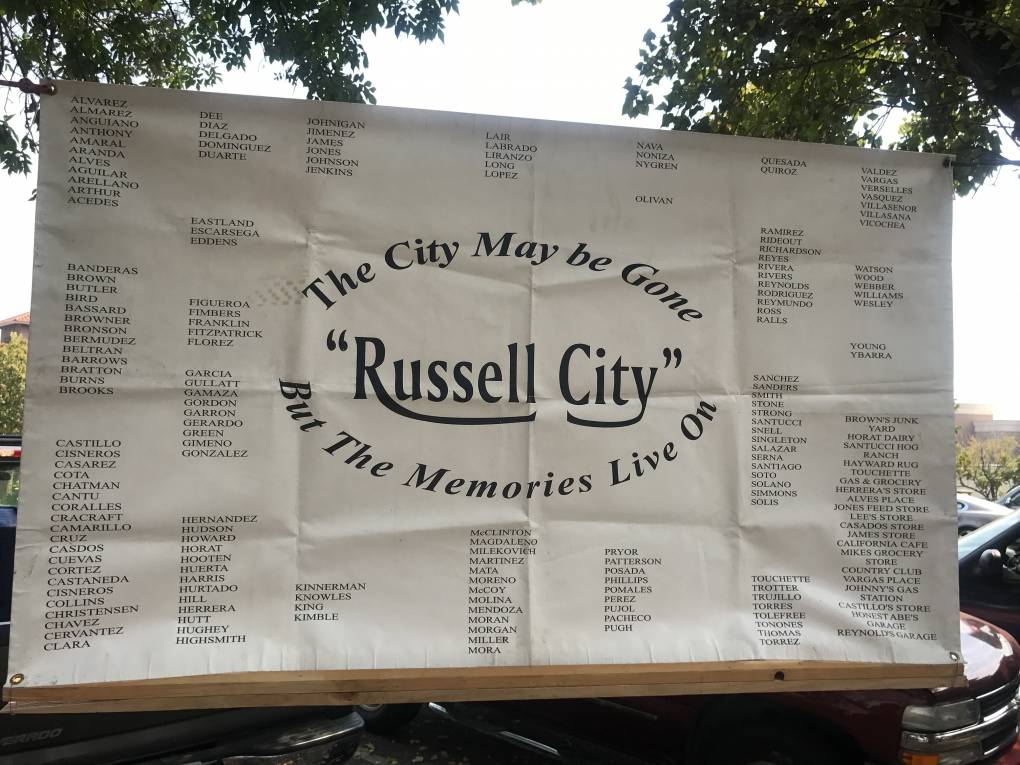
"content": "\u003cp>Alameda County supervisors unanimously voted Tuesday to begin sending \u003ca href=\"https://www.kqed.org/reparations\">cash payments\u003c/a> to the last surviving homeowners forced out of Russell City, the unincorporated community dismantled by the county and the city of Hayward six decades ago.\u003c/p>\n\n\n\n\u003cp>The vote approved a memorandum of understanding with Hayward that sets up shared governance of a $1.3 million \u003ca href=\"https://reparations.alamedacountyca.gov/reparations-for-wrongfully-evicted-russell-city-residents-nbc-bay-area/\">redress fund\u003c/a>, seeded by all five supervisors, the city and the Alameda County Office of Education, to make amends to residents who had property seized during the 1960s. \u003c/p>\n\n\n\n\u003cp>Supervisors also authorized the county to issue a first round of payments of up to $25,000 per household. Russell City \u003ca href=\"https://www.kqed.org/news/11922175/remembering-russell-city-a-thriving-east-bay-town-razed-by-racist-government\">once stood on the Hayward shoreline\u003c/a>, south of the modern Hayward Regional Shoreline Park. \u003c/p>\n\n\n\n\u003cp>In the 1960s, county authorities declared Russell City blighted and used eminent domain to acquire close to 700 parcels, displacing roughly 1,400 residents and converting the land into an industrial park annexed by Hayward in 1964. Today, nothing of \u003ca href=\"https://www.kqed.org/news/12051329/displaced-russell-city-residents-set-to-receive-cash-reparations\">the historic Black and Latino community\u003c/a> survives, except the name of the Calpine Russell City Energy Center, a natural gas power plant.\u003c/p>\n\n\n\n\u003cfigure class=\"wp-block-image size-full\">\u003cimg loading=\"lazy\" decoding=\"async\" width=\"1920\" height=\"1440\" src=\"https://cdn.kqed.org/wp-content/uploads/sites/10/2021/12/IMG_2829-scaled-e1638419681640.jpg\" alt='A board reads, \"Russell City: The city may be gone, but the memories live on.\"' class=\"wp-image-11897865\">\u003cfigcaption class=\"wp-element-caption\">A board honoring the families that lived in Russell City is displayed during the annual Russell City reunion picnic at Kennedy Park in Hayward on Sept. 3, 2017. (Courtesy of Aisha Knowles)\u003c/figcaption>\u003c/figure>\n\n\n\n\u003cp>The Fifth Amendment allows the government to seize private property for public use and requires it to pay “just compensation” in return. Research by the city of Hayward found some Russell City homeowners received around $2,000 for their homes, and some as little as $250.\u003c/p>\n\n\n\n\u003cp>[ad fullwidth]\u003c/p>\n\u003cp>Founded in 1853, Russell City was named for a Gold Rush-era schoolteacher, Joel Russell. The neighborhood filled in as World War II drew workers to nearby factories. \u003c/p>\n\n\n\n\u003cp>At a time when racial covenants and redlining shut Black and Latino families out elsewhere, unincorporated Russell City became one of the few places in the East Bay where they could buy property and build. Families kept sheep, chickens, pigs and rabbits, and tended gardens big enough to feed neighbors.\u003c/p>\n\n\n\n\u003cfigure class=\"wp-block-embed is-type-wp-embed is-provider-megaphone wp-block-embed-megaphone\">\u003cdiv class=\"wp-block-embed__wrapper\">\nhttps://playlist.megaphone.fm?e=KQINC4087576125&light=true\n\u003c/div>\u003c/figure>\n\n\n\n\u003cp>Decades later, Hayward and Alameda County issued formal \u003ca href=\"https://www.hayward-ca.gov/discover/news/nov21/hayward-city-council-issues-formal-apology-citys-role-racial-discrimination-0\">apologies\u003c/a> to community members in 2021 and 2023, respectively.\u003c/p>\n\n\n\n\u003cp>Alameda County Supervisor Elisa Márquez, who represents Hayward, Newark, Union City and parts of Fremont, and who supported the reparations plan, said the vote moves the county toward action.\u003c/p>\n\n\n\n\u003cp>“No payment can fully repair the harm caused by the destruction of Russell City,” she said. “But these first redress payments represent an important step toward acknowledging that harm, honoring the resilience of former residents and advancing justice for their families.”\u003c/p>\n\n\n\n\u003cp>Márquez’s voice broke as she explained why the first round goes only to the oldest survivors. \u003c/p>\n\n\n\n\u003cp>“When families come together, we don’t ask elders to get in line,” she said. “They are served first.”\u003c/p>\n\n\n\n\u003cfigure class=\"wp-block-image size-full\">\u003cimg loading=\"lazy\" decoding=\"async\" width=\"2000\" height=\"1334\" src=\"https://cdn.kqed.org/wp-content/uploads/sites/10/2026/08/Elisa-Marquez-Getty.jpg\" alt=\"\" class=\"wp-image-12094035\" srcset=\"https://cdn.kqed.org/wp-content/uploads/sites/10/2026/08/Elisa-Marquez-Getty.jpg 2000w, https://cdn.kqed.org/wp-content/uploads/sites/10/2026/08/Elisa-Marquez-Getty-160x107.jpg 160w, https://cdn.kqed.org/wp-content/uploads/sites/10/2026/08/Elisa-Marquez-Getty-1536x1025.jpg 1536w\" sizes=\"auto, (max-width: 2000px) 100vw, 2000px\">\u003cfigcaption class=\"wp-element-caption\">Alameda County Supervisor Elisa Márquez speaks during a press conference in Hayward, California, on March 2, 2026. (Jessica Christian/San Francisco Chronicle via Getty Images)\u003c/figcaption>\u003c/figure>\n\n\n\n\u003cp>\u003ca href=\"https://alamedacountyca.gov/board/bos_calendar/documents/RussellCMOU\">The first phase\u003c/a> of reparations is deliberately narrow. To qualify, an applicant must have both lived in and personally owned a home in Russell City between Jan. 1, 1961, and Dec. 31, 1964, and had that property taken by eminent domain during those years. Money is allocated by household rather than by person, and split evenly among qualifying residents of the same home. \u003c/p>\n\n\n\n\u003cp>Márquez said the county is “not anticipating a large number this first round” because applicants must still be living and must have owned their home. Once those payments go out, she said, the working group will release criteria for a second phase that includes descendants, though that will require another board vote.\u003c/p>\n\n\n\n\u003cp>Several speakers pressed the board on how the money will be divided. Priscilla Figueroa, a \u003ca href=\"https://www.hayward-ca.gov/your-government/staff/priscilla-figueroa\">Hayward resident\u003c/a> whose late husband’s family lived in Russell City, noted that $1.3 million divided by $25,000 covers only 52 households, and questioned how the county would determine who receives the full amount. \u003c/p>\n\n\n\n\u003cp>Deborah Harris, who grew up in Russell City with her parents, asked how the county will handle households where the original landowner has died, adding that “probably all of the original landowners are deceased at this point.” \u003c/p>\n\n\n\n\n\n\u003cp>Hayward Councilmember \u003ca href=\"https://www.alamedacountyca.gov/board/bos_calendar/documents/DocsAgendaReg_08_04_26/GENERAL%20ADMINISTRATION/Set%20Matter%20Calendar/Supervisor%20M%c3%a1rquez_409832.pdf\">Angela Andrews\u003c/a>, who spoke at the meeting on Hayward’s behalf, said the city’s 2021 apology was not enough on its own. \u003c/p>\n\n\n\n\u003cp>“An apology is nothing without action,” she said. She urged philanthropic partners, the real estate industry and the business community to contribute to the fund, saying they benefited from the displacement.\u003c/p>\n\n\n\n\u003cp>Supervisor Nate Miley committed another $250,000, and Márquez said she would match it, which would bring the fund to $1.8 million. Both stressed the pledges are not binding yet and will have to return to the board, likely in the fall.\u003c/p>\n\n\n\n\u003cp>Aisha Knowles, a Russell City descendant who chaired Hayward’s steering committee — and who produced a documentary on the community’s displacement, \u003ca href=\"https://www.theapologyfilm.com/\">\u003cem>The Apology\u003c/em>\u003c/a> — asked the county to aim higher, arguing the fund should eventually match what Russell City land sold for. \u003c/p>\n\n\n\n\u003cp>She told supervisors her grandfather never recovered from the loss.\u003c/p>\n\n\n\n\u003cp>“My grandfather did not live to be 50,” she said. “I am a year older than he was able to live and enjoy his life after Russell City.”\u003c/p>\n\n\n\n\u003cp>\u003c/p>\n\u003cp>She urged the board not to stop at phase one. “For those who are needing something to interrupt the trauma that they’ve held onto for the past 70 to 80 years, I encourage you to continue this work, and I thank you for staying in the fight.”\u003c/p>\n\n",
"blocks": [
{
"blockName": "core/paragraph",
"attrs": [],
"innerHTML": "\n\u003cp>Alameda County supervisors unanimously voted Tuesday to begin sending \u003ca href=\"https://www.kqed.org/reparations\">cash payments\u003c/a> to the last surviving homeowners forced out of Russell City, the unincorporated community dismantled by the county and the city of Hayward six decades ago.\u003c/p>\n",
"innerContent": [
"\n\u003cp>Alameda County supervisors unanimously voted Tuesday to begin sending \u003ca href=\"https://www.kqed.org/reparations\">cash payments\u003c/a> to the last surviving homeowners forced out of Russell City, the unincorporated community dismantled by the county and the city of Hayward six decades ago.\u003c/p>\n"
],
"innerBlocks": []
},
{
"blockName": "core/paragraph",
"attrs": [],
"innerHTML": "\n\u003cp>The vote approved a memorandum of understanding with Hayward that sets up shared governance of a $1.3 million \u003ca href=\"https://reparations.alamedacountyca.gov/reparations-for-wrongfully-evicted-russell-city-residents-nbc-bay-area/\">redress fund\u003c/a>, seeded by all five supervisors, the city and the Alameda County Office of Education, to make amends to residents who had property seized during the 1960s. \u003c/p>\n",
"innerContent": [
"\n\u003cp>The vote approved a memorandum of understanding with Hayward that sets up shared governance of a $1.3 million \u003ca href=\"https://reparations.alamedacountyca.gov/reparations-for-wrongfully-evicted-russell-city-residents-nbc-bay-area/\">redress fund\u003c/a>, seeded by all five supervisors, the city and the Alameda County Office of Education, to make amends to residents who had property seized during the 1960s. \u003c/p>\n"
],
"innerBlocks": []
},
{
"blockName": "core/paragraph",
"attrs": [],
"innerHTML": "\n\u003cp>Supervisors also authorized the county to issue a first round of payments of up to $25,000 per household. Russell City \u003ca href=\"https://www.kqed.org/news/11922175/remembering-russell-city-a-thriving-east-bay-town-razed-by-racist-government\">once stood on the Hayward shoreline\u003c/a>, south of the modern Hayward Regional Shoreline Park. \u003c/p>\n",
"innerContent": [
"\n\u003cp>Supervisors also authorized the county to issue a first round of payments of up to $25,000 per household. Russell City \u003ca href=\"https://www.kqed.org/news/11922175/remembering-russell-city-a-thriving-east-bay-town-razed-by-racist-government\">once stood on the Hayward shoreline\u003c/a>, south of the modern Hayward Regional Shoreline Park. \u003c/p>\n"
],
"innerBlocks": []
},
{
"blockName": "core/paragraph",
"attrs": [],
"innerHTML": "\n\u003cp>In the 1960s, county authorities declared Russell City blighted and used eminent domain to acquire close to 700 parcels, displacing roughly 1,400 residents and converting the land into an industrial park annexed by Hayward in 1964. Today, nothing of \u003ca href=\"https://www.kqed.org/news/12051329/displaced-russell-city-residents-set-to-receive-cash-reparations\">the historic Black and Latino community\u003c/a> survives, except the name of the Calpine Russell City Energy Center, a natural gas power plant.\u003c/p>\n",
"innerContent": [
"\n\u003cp>In the 1960s, county authorities declared Russell City blighted and used eminent domain to acquire close to 700 parcels, displacing roughly 1,400 residents and converting the land into an industrial park annexed by Hayward in 1964. Today, nothing of \u003ca href=\"https://www.kqed.org/news/12051329/displaced-russell-city-residents-set-to-receive-cash-reparations\">the historic Black and Latino community\u003c/a> survives, except the name of the Calpine Russell City Energy Center, a natural gas power plant.\u003c/p>\n"
],
"innerBlocks": []
},
{
"blockName": "core/image",
"attrs": {
"id": 11897865,
"sizeSlug": "full",
"linkDestination": "none",
"imageCredit": "Courtesy of Aisha Knowles"
},
"innerHTML": "\n\u003cfigure class=\"wp-block-image size-full\">\u003cimg src=\"https://cdn.kqed.org/wp-content/uploads/sites/10/2021/12/IMG_2829-scaled-e1638419681640.jpg\" alt=\"A board reads, "Russell City: The city may be gone, but the memories live on."\" class=\"wp-image-11897865\" />\u003cfigcaption class=\"wp-element-caption\">A board honoring the families that lived in Russell City is displayed during the annual Russell City reunion picnic at Kennedy Park in Hayward on Sept. 3, 2017.\u003c/figcaption>\u003c/figure>\n",
"innerContent": [
"\n\u003cfigure class=\"wp-block-image size-full\">\u003cimg src=\"https://cdn.kqed.org/wp-content/uploads/sites/10/2021/12/IMG_2829-scaled-e1638419681640.jpg\" alt=\"A board reads, "Russell City: The city may be gone, but the memories live on."\" class=\"wp-image-11897865\" />\u003cfigcaption class=\"wp-element-caption\">A board honoring the families that lived in Russell City is displayed during the annual Russell City reunion picnic at Kennedy Park in Hayward on Sept. 3, 2017.\u003c/figcaption>\u003c/figure>\n"
],
"innerBlocks": []
},
{
"blockName": "core/paragraph",
"attrs": [],
"innerHTML": "\n\u003cp>The Fifth Amendment allows the government to seize private property for public use and requires it to pay “just compensation” in return. Research by the city of Hayward found some Russell City homeowners received around $2,000 for their homes, and some as little as $250.\u003c/p>\n",
"innerContent": [
"\n\u003cp>The Fifth Amendment allows the government to seize private property for public use and requires it to pay “just compensation” in return. Research by the city of Hayward found some Russell City homeowners received around $2,000 for their homes, and some as little as $250.\u003c/p>\n"
],
"innerBlocks": []
},
{
"blockName": "kqed/ad",
"attrs": {
"format": "fullwidth"
},
"innerBlocks": [],
"innerHTML": "",
"innerContent": []
},
{
"blockName": "core/paragraph",
"attrs": [],
"innerHTML": "\n\u003cp>Founded in 1853, Russell City was named for a Gold Rush-era schoolteacher, Joel Russell. The neighborhood filled in as World War II drew workers to nearby factories. \u003c/p>\n",
"innerContent": [
"\n\u003cp>Founded in 1853, Russell City was named for a Gold Rush-era schoolteacher, Joel Russell. The neighborhood filled in as World War II drew workers to nearby factories. \u003c/p>\n"
],
"innerBlocks": []
},
{
"blockName": "core/paragraph",
"attrs": [],
"innerHTML": "\n\u003cp>At a time when racial covenants and redlining shut Black and Latino families out elsewhere, unincorporated Russell City became one of the few places in the East Bay where they could buy property and build. Families kept sheep, chickens, pigs and rabbits, and tended gardens big enough to feed neighbors.\u003c/p>\n",
"innerContent": [
"\n\u003cp>At a time when racial covenants and redlining shut Black and Latino families out elsewhere, unincorporated Russell City became one of the few places in the East Bay where they could buy property and build. Families kept sheep, chickens, pigs and rabbits, and tended gardens big enough to feed neighbors.\u003c/p>\n"
],
"innerBlocks": []
},
{
"blockName": "core/embed",
"attrs": {
"url": "https://playlist.megaphone.fm?e=KQINC4087576125&light=true",
"type": "wp-embed",
"providerNameSlug": "megaphone"
},
"innerHTML": "\n\u003cfigure class=\"wp-block-embed is-type-wp-embed is-provider-megaphone wp-block-embed-megaphone\">\u003cdiv class=\"wp-block-embed__wrapper\">\nhttps://playlist.megaphone.fm?e=KQINC4087576125&light=true\n\u003c/div>\u003c/figure>\n",
"innerContent": [
"\n\u003cfigure class=\"wp-block-embed is-type-wp-embed is-provider-megaphone wp-block-embed-megaphone\">\u003cdiv class=\"wp-block-embed__wrapper\">\nhttps://playlist.megaphone.fm?e=KQINC4087576125&light=true\n\u003c/div>\u003c/figure>\n"
],
"innerBlocks": []
},
{
"blockName": "core/paragraph",
"attrs": [],
"innerHTML": "\n\u003cp>Decades later, Hayward and Alameda County issued formal \u003ca href=\"https://www.hayward-ca.gov/discover/news/nov21/hayward-city-council-issues-formal-apology-citys-role-racial-discrimination-0\">apologies\u003c/a> to community members in 2021 and 2023, respectively.\u003c/p>\n",
"innerContent": [
"\n\u003cp>Decades later, Hayward and Alameda County issued formal \u003ca href=\"https://www.hayward-ca.gov/discover/news/nov21/hayward-city-council-issues-formal-apology-citys-role-racial-discrimination-0\">apologies\u003c/a> to community members in 2021 and 2023, respectively.\u003c/p>\n"
],
"innerBlocks": []
},
{
"blockName": "core/paragraph",
"attrs": [],
"innerHTML": "\n\u003cp>Alameda County Supervisor Elisa Márquez, who represents Hayward, Newark, Union City and parts of Fremont, and who supported the reparations plan, said the vote moves the county toward action.\u003c/p>\n",
"innerContent": [
"\n\u003cp>Alameda County Supervisor Elisa Márquez, who represents Hayward, Newark, Union City and parts of Fremont, and who supported the reparations plan, said the vote moves the county toward action.\u003c/p>\n"
],
"innerBlocks": []
},
{
"blockName": "core/paragraph",
"attrs": [],
"innerHTML": "\n\u003cp>“No payment can fully repair the harm caused by the destruction of Russell City,” she said. “But these first redress payments represent an important step toward acknowledging that harm, honoring the resilience of former residents and advancing justice for their families.”\u003c/p>\n",
"innerContent": [
"\n\u003cp>“No payment can fully repair the harm caused by the destruction of Russell City,” she said. “But these first redress payments represent an important step toward acknowledging that harm, honoring the resilience of former residents and advancing justice for their families.”\u003c/p>\n"
],
"innerBlocks": []
},
{
"blockName": "core/paragraph",
"attrs": [],
"innerHTML": "\n\u003cp>Márquez’s voice broke as she explained why the first round goes only to the oldest survivors. \u003c/p>\n",
"innerContent": [
"\n\u003cp>Márquez’s voice broke as she explained why the first round goes only to the oldest survivors. \u003c/p>\n"
],
"innerBlocks": []
},
{
"blockName": "core/paragraph",
"attrs": [],
"innerHTML": "\n\u003cp>“When families come together, we don’t ask elders to get in line,” she said. “They are served first.”\u003c/p>\n",
"innerContent": [
"\n\u003cp>“When families come together, we don’t ask elders to get in line,” she said. “They are served first.”\u003c/p>\n"
],
"innerBlocks": []
},
{
"blockName": "core/image",
"attrs": {
"id": 12094035,
"sizeSlug": "full",
"linkDestination": "none",
"imageCredit": "Jessica Christian/San Francisco Chronicle via Getty Images",
"srcset": "https://cdn.kqed.org/wp-content/uploads/sites/10/2026/08/Elisa-Marquez-Getty.jpg 2000w, https://cdn.kqed.org/wp-content/uploads/sites/10/2026/08/Elisa-Marquez-Getty-160x107.jpg 160w, https://cdn.kqed.org/wp-content/uploads/sites/10/2026/08/Elisa-Marquez-Getty-1536x1025.jpg 1536w",
"sizes": "(min-width: 992px) min(100vw, 1536px), (min-width: 768px) min(100vw, 1280px), min(100vw, 1020px)"
},
"innerHTML": "\n\u003cfigure class=\"wp-block-image size-full\">\u003cimg src=\"https://cdn.kqed.org/wp-content/uploads/sites/10/2026/08/Elisa-Marquez-Getty.jpg\" alt=\"\" class=\"wp-image-12094035\" srcset=\"https://cdn.kqed.org/wp-content/uploads/sites/10/2026/08/Elisa-Marquez-Getty.jpg 2000w, https://cdn.kqed.org/wp-content/uploads/sites/10/2026/08/Elisa-Marquez-Getty-160x107.jpg 160w, https://cdn.kqed.org/wp-content/uploads/sites/10/2026/08/Elisa-Marquez-Getty-1536x1025.jpg 1536w\" sizes=\"(min-width: 992px) min(100vw, 1536px), (min-width: 768px) min(100vw, 1280px), min(100vw, 1020px)\" />\u003cfigcaption class=\"wp-element-caption\">Alameda County Supervisor Elisa Márquez speaks during a press conference in Hayward, California, on March 2, 2026. \u003c/figcaption>\u003c/figure>\n",
"innerContent": [
"\n\u003cfigure class=\"wp-block-image size-full\">\u003cimg src=\"https://cdn.kqed.org/wp-content/uploads/sites/10/2026/08/Elisa-Marquez-Getty.jpg\" alt=\"\" class=\"wp-image-12094035\" />\u003cfigcaption class=\"wp-element-caption\">Alameda County Supervisor Elisa Márquez speaks during a press conference in Hayward, California, on March 2, 2026. \u003c/figcaption>\u003c/figure>\n"
],
"innerBlocks": []
},
{
"blockName": "core/paragraph",
"attrs": [],
"innerHTML": "\n\u003cp>\u003ca href=\"https://alamedacountyca.gov/board/bos_calendar/documents/RussellCMOU\">The first phase\u003c/a> of reparations is deliberately narrow. To qualify, an applicant must have both lived in and personally owned a home in Russell City between Jan. 1, 1961, and Dec. 31, 1964, and had that property taken by eminent domain during those years. Money is allocated by household rather than by person, and split evenly among qualifying residents of the same home. \u003c/p>\n",
"innerContent": [
"\n\u003cp>\u003ca href=\"https://alamedacountyca.gov/board/bos_calendar/documents/RussellCMOU\">The first phase\u003c/a> of reparations is deliberately narrow. To qualify, an applicant must have both lived in and personally owned a home in Russell City between Jan. 1, 1961, and Dec. 31, 1964, and had that property taken by eminent domain during those years. Money is allocated by household rather than by person, and split evenly among qualifying residents of the same home. \u003c/p>\n"
],
"innerBlocks": []
},
{
"blockName": "core/paragraph",
"attrs": [],
"innerHTML": "\n\u003cp>Márquez said the county is “not anticipating a large number this first round” because applicants must still be living and must have owned their home. Once those payments go out, she said, the working group will release criteria for a second phase that includes descendants, though that will require another board vote.\u003c/p>\n",
"innerContent": [
"\n\u003cp>Márquez said the county is “not anticipating a large number this first round” because applicants must still be living and must have owned their home. Once those payments go out, she said, the working group will release criteria for a second phase that includes descendants, though that will require another board vote.\u003c/p>\n"
],
"innerBlocks": []
},
{
"blockName": "core/paragraph",
"attrs": [],
"innerHTML": "\n\u003cp>Several speakers pressed the board on how the money will be divided. Priscilla Figueroa, a \u003ca href=\"https://www.hayward-ca.gov/your-government/staff/priscilla-figueroa\">Hayward resident\u003c/a> whose late husband’s family lived in Russell City, noted that $1.3 million divided by $25,000 covers only 52 households, and questioned how the county would determine who receives the full amount. \u003c/p>\n",
"innerContent": [
"\n\u003cp>Several speakers pressed the board on how the money will be divided. Priscilla Figueroa, a \u003ca href=\"https://www.hayward-ca.gov/your-government/staff/priscilla-figueroa\">Hayward resident\u003c/a> whose late husband’s family lived in Russell City, noted that $1.3 million divided by $25,000 covers only 52 households, and questioned how the county would determine who receives the full amount. \u003c/p>\n"
],
"innerBlocks": []
},
{
"blockName": "core/paragraph",
"attrs": [],
"innerHTML": "\n\u003cp>Deborah Harris, who grew up in Russell City with her parents, asked how the county will handle households where the original landowner has died, adding that “probably all of the original landowners are deceased at this point.” \u003c/p>\n",
"innerContent": [
"\n\u003cp>Deborah Harris, who grew up in Russell City with her parents, asked how the county will handle households where the original landowner has died, adding that “probably all of the original landowners are deceased at this point.” \u003c/p>\n"
],
"innerBlocks": []
},
{
"blockName": "kqed-v2/related-articles",
"attrs": {
"postIds": [
"news_12093422"
],
"label": "Related Articles",
"maxPosts": 1,
"showImages": false,
"heroImage": "https://cdn.kqed.org/wp-content/uploads/sites/10/2026/05/260512-Lyle-Prijoles-04-KQED.jpg"
},
"innerHTML": "",
"innerContent": [],
"innerBlocks": []
},
{
"blockName": "core/paragraph",
"attrs": [],
"innerHTML": "\n\u003cp>Hayward Councilmember \u003ca href=\"https://www.alamedacountyca.gov/board/bos_calendar/documents/DocsAgendaReg_08_04_26/GENERAL%20ADMINISTRATION/Set%20Matter%20Calendar/Supervisor%20M%c3%a1rquez_409832.pdf\">Angela Andrews\u003c/a>, who spoke at the meeting on Hayward’s behalf, said the city’s 2021 apology was not enough on its own. \u003c/p>\n",
"innerContent": [
"\n\u003cp>Hayward Councilmember \u003ca href=\"https://www.alamedacountyca.gov/board/bos_calendar/documents/DocsAgendaReg_08_04_26/GENERAL%20ADMINISTRATION/Set%20Matter%20Calendar/Supervisor%20M%c3%a1rquez_409832.pdf\">Angela Andrews\u003c/a>, who spoke at the meeting on Hayward’s behalf, said the city’s 2021 apology was not enough on its own. \u003c/p>\n"
],
"innerBlocks": []
},
{
"blockName": "core/paragraph",
"attrs": [],
"innerHTML": "\n\u003cp>“An apology is nothing without action,” she said. She urged philanthropic partners, the real estate industry and the business community to contribute to the fund, saying they benefited from the displacement.\u003c/p>\n",
"innerContent": [
"\n\u003cp>“An apology is nothing without action,” she said. She urged philanthropic partners, the real estate industry and the business community to contribute to the fund, saying they benefited from the displacement.\u003c/p>\n"
],
"innerBlocks": []
},
{
"blockName": "core/paragraph",
"attrs": [],
"innerHTML": "\n\u003cp>Supervisor Nate Miley committed another $250,000, and Márquez said she would match it, which would bring the fund to $1.8 million. Both stressed the pledges are not binding yet and will have to return to the board, likely in the fall.\u003c/p>\n",
"innerContent": [
"\n\u003cp>Supervisor Nate Miley committed another $250,000, and Márquez said she would match it, which would bring the fund to $1.8 million. Both stressed the pledges are not binding yet and will have to return to the board, likely in the fall.\u003c/p>\n"
],
"innerBlocks": []
},
{
"blockName": "core/paragraph",
"attrs": [],
"innerHTML": "\n\u003cp>Aisha Knowles, a Russell City descendant who chaired Hayward’s steering committee — and who produced a documentary on the community’s displacement, \u003ca href=\"https://www.theapologyfilm.com/\">\u003cem>The Apology\u003c/em>\u003c/a> — asked the county to aim higher, arguing the fund should eventually match what Russell City land sold for. \u003c/p>\n",
"innerContent": [
"\n\u003cp>Aisha Knowles, a Russell City descendant who chaired Hayward’s steering committee — and who produced a documentary on the community’s displacement, \u003ca href=\"https://www.theapologyfilm.com/\">\u003cem>The Apology\u003c/em>\u003c/a> — asked the county to aim higher, arguing the fund should eventually match what Russell City land sold for. \u003c/p>\n"
],
"innerBlocks": []
},
{
"blockName": "core/paragraph",
"attrs": [],
"innerHTML": "\n\u003cp>She told supervisors her grandfather never recovered from the loss.\u003c/p>\n",
"innerContent": [
"\n\u003cp>She told supervisors her grandfather never recovered from the loss.\u003c/p>\n"
],
"innerBlocks": []
},
{
"blockName": "core/paragraph",
"attrs": [],
"innerHTML": "\n\u003cp>“My grandfather did not live to be 50,” she said. “I am a year older than he was able to live and enjoy his life after Russell City.”\u003c/p>\n",
"innerContent": [
"\n\u003cp>“My grandfather did not live to be 50,” she said. “I am a year older than he was able to live and enjoy his life after Russell City.”\u003c/p>\n"
],
"innerBlocks": []
},
{
"blockName": "kqed/ad",
"attrs": {
"format": "floatright"
},
"innerBlocks": [],
"innerHTML": "",
"innerContent": []
},
{
"blockName": "core/paragraph",
"attrs": [],
"innerHTML": "\n\u003cp>She urged the board not to stop at phase one. “For those who are needing something to interrupt the trauma that they’ve held onto for the past 70 to 80 years, I encourage you to continue this work, and I thank you for staying in the fight.”\u003c/p>\n",
"innerContent": [
"\n\u003cp>She urged the board not to stop at phase one. “For those who are needing something to interrupt the trauma that they’ve held onto for the past 70 to 80 years, I encourage you to continue this work, and I thank you for staying in the fight.”\u003c/p>\n"
],
"innerBlocks": []
}
],
"excerpt": "Surviving homeowners of the East Bay neighborhood, whose property the county seized by eminent domain in the early 1960s, can receive up to $25,000 per household.\n",
"status": "publish",
"parent": 0,
"modified": 1785973551,
"stats": {
"hasAudio": false,
"hasVideo": false,
"hasChartOrMap": false,
"iframeSrcs": [],
"hasGoogleForm": false,
"hasGallery": false,
"hasHearkenModule": false,
"hasPolis": false,
"paragraphCount": 25,
"wordCount": 976
},
"headData": {
"title": "Alameda County Approves $1.3 Million in Reparations for Displaced Black Hayward Families | KQED",
"description": "Surviving homeowners of the East Bay neighborhood, whose property the county seized by eminent domain in the early 1960s, can receive up to $25,000 per household.\n",
"ogTitle": "",
"ogDescription": "",
"ogImgId": "",
"twTitle": "",
"twDescription": "",
"twImgId": "",
"schema": {
"@context": "https://schema.org",
"@type": "NewsArticle",
"headline": "Alameda County Approves $1.3 Million in Reparations for Displaced Black Hayward Families",
"datePublished": "2026-08-06T07:00:00-07:00",
"dateModified": "2026-08-05T16:45:51-07:00",
"image": "https://cdn.kqed.org/wp-content/uploads/2020/02/KQED-OG-Image@1x.png",
"isAccessibleForFree": "True",
"publisher": {
"@type": "NewsMediaOrganization",
"@id": "https://www.kqed.org/#organization",
"name": "KQED",
"logo": "https://cdn.kqed.org/wp-content/uploads/2020/02/KQED-OG-Image@1x.png",
"url": "https://www.kqed.org",
"sameAs": [
"https://www.facebook.com/KQED",
"https://twitter.com/KQED",
"https://www.instagram.com/kqed/",
"https://www.tiktok.com/@kqedofficial",
"https://www.linkedin.com/company/kqed",
"https://www.youtube.com/channel/UCeC0IOo7i1P_61zVUWbJ4nw"
]
}
}
},
"primaryCategory": {
"termId": 34199,
"slug": "reparations",
"name": "Reparations"
},
"sticky": false,
"templateType": "standard",
"featuredImageType": "standard",
"excludeFromSiteSearch": "Include",
"articleAge": "0",
"path": "/news/12093939/alameda-county-approves-1-3-million-in-reparations-for-displaced-black-hayward-families",
"audioTrackLength": null,
"parsedContent": [
{
"type": "contentString",
"content": "\u003cdiv class=\"post-body\">\u003cp>\u003cp>Alameda County supervisors unanimously voted Tuesday to begin sending \u003ca href=\"https://www.kqed.org/reparations\">cash payments\u003c/a> to the last surviving homeowners forced out of Russell City, the unincorporated community dismantled by the county and the city of Hayward six decades ago.\u003c/p>\n\n\n\n\u003cp>The vote approved a memorandum of understanding with Hayward that sets up shared governance of a $1.3 million \u003ca href=\"https://reparations.alamedacountyca.gov/reparations-for-wrongfully-evicted-russell-city-residents-nbc-bay-area/\">redress fund\u003c/a>, seeded by all five supervisors, the city and the Alameda County Office of Education, to make amends to residents who had property seized during the 1960s. \u003c/p>\n\n\n\n\u003cp>Supervisors also authorized the county to issue a first round of payments of up to $25,000 per household. Russell City \u003ca href=\"https://www.kqed.org/news/11922175/remembering-russell-city-a-thriving-east-bay-town-razed-by-racist-government\">once stood on the Hayward shoreline\u003c/a>, south of the modern Hayward Regional Shoreline Park. \u003c/p>\n\n\n\n\u003cp>In the 1960s, county authorities declared Russell City blighted and used eminent domain to acquire close to 700 parcels, displacing roughly 1,400 residents and converting the land into an industrial park annexed by Hayward in 1964. Today, nothing of \u003ca href=\"https://www.kqed.org/news/12051329/displaced-russell-city-residents-set-to-receive-cash-reparations\">the historic Black and Latino community\u003c/a> survives, except the name of the Calpine Russell City Energy Center, a natural gas power plant.\u003c/p>\n\n\n\n\u003cfigure class=\"wp-block-image size-full\">\u003cimg loading=\"lazy\" decoding=\"async\" width=\"1920\" height=\"1440\" src=\"https://cdn.kqed.org/wp-content/uploads/sites/10/2021/12/IMG_2829-scaled-e1638419681640.jpg\" alt='A board reads, \"Russell City: The city may be gone, but the memories live on.\"' class=\"wp-image-11897865\">\u003cfigcaption class=\"wp-element-caption\">A board honoring the families that lived in Russell City is displayed during the annual Russell City reunion picnic at Kennedy Park in Hayward on Sept. 3, 2017. (Courtesy of Aisha Knowles)\u003c/figcaption>\u003c/figure>\n\n\n\n\u003cp>The Fifth Amendment allows the government to seize private property for public use and requires it to pay “just compensation” in return. Research by the city of Hayward found some Russell City homeowners received around $2,000 for their homes, and some as little as $250.\u003c/p>\n\n\n\n\u003cp>\u003c/p>\u003c/div>",
"attributes": {
"named": {},
"numeric": []
}
},
{
"type": "component",
"content": "",
"name": "ad",
"attributes": {
"named": {
"label": "fullwidth"
},
"numeric": [
"fullwidth"
]
}
},
{
"type": "contentString",
"content": "\u003cdiv class=\"post-body\">\u003cp>\u003c/p>\n\u003cp>Founded in 1853, Russell City was named for a Gold Rush-era schoolteacher, Joel Russell. The neighborhood filled in as World War II drew workers to nearby factories. \u003c/p>\n\n\n\n\u003cp>At a time when racial covenants and redlining shut Black and Latino families out elsewhere, unincorporated Russell City became one of the few places in the East Bay where they could buy property and build. Families kept sheep, chickens, pigs and rabbits, and tended gardens big enough to feed neighbors.\u003c/p>\n\n\n\n\u003cfigure class=\"wp-block-embed is-type-wp-embed is-provider-megaphone wp-block-embed-megaphone\">\u003cdiv class=\"wp-block-embed__wrapper\">\nhttps://playlist.megaphone.fm?e=KQINC4087576125&light=true\n\u003c/div>\u003c/figure>\n\n\n\n\u003cp>Decades later, Hayward and Alameda County issued formal \u003ca href=\"https://www.hayward-ca.gov/discover/news/nov21/hayward-city-council-issues-formal-apology-citys-role-racial-discrimination-0\">apologies\u003c/a> to community members in 2021 and 2023, respectively.\u003c/p>\n\n\n\n\u003cp>Alameda County Supervisor Elisa Márquez, who represents Hayward, Newark, Union City and parts of Fremont, and who supported the reparations plan, said the vote moves the county toward action.\u003c/p>\n\n\n\n\u003cp>“No payment can fully repair the harm caused by the destruction of Russell City,” she said. “But these first redress payments represent an important step toward acknowledging that harm, honoring the resilience of former residents and advancing justice for their families.”\u003c/p>\n\n\n\n\u003cp>Márquez’s voice broke as she explained why the first round goes only to the oldest survivors. \u003c/p>\n\n\n\n\u003cp>“When families come together, we don’t ask elders to get in line,” she said. “They are served first.”\u003c/p>\n\n\n\n\u003cfigure class=\"wp-block-image size-full\">\u003cimg loading=\"lazy\" decoding=\"async\" width=\"2000\" height=\"1334\" src=\"https://cdn.kqed.org/wp-content/uploads/sites/10/2026/08/Elisa-Marquez-Getty.jpg\" alt=\"\" class=\"wp-image-12094035\" srcset=\"https://cdn.kqed.org/wp-content/uploads/sites/10/2026/08/Elisa-Marquez-Getty.jpg 2000w, https://cdn.kqed.org/wp-content/uploads/sites/10/2026/08/Elisa-Marquez-Getty-160x107.jpg 160w, https://cdn.kqed.org/wp-content/uploads/sites/10/2026/08/Elisa-Marquez-Getty-1536x1025.jpg 1536w\" sizes=\"auto, (max-width: 2000px) 100vw, 2000px\">\u003cfigcaption class=\"wp-element-caption\">Alameda County Supervisor Elisa Márquez speaks during a press conference in Hayward, California, on March 2, 2026. (Jessica Christian/San Francisco Chronicle via Getty Images)\u003c/figcaption>\u003c/figure>\n\n\n\n\u003cp>\u003ca href=\"https://alamedacountyca.gov/board/bos_calendar/documents/RussellCMOU\">The first phase\u003c/a> of reparations is deliberately narrow. To qualify, an applicant must have both lived in and personally owned a home in Russell City between Jan. 1, 1961, and Dec. 31, 1964, and had that property taken by eminent domain during those years. Money is allocated by household rather than by person, and split evenly among qualifying residents of the same home. \u003c/p>\n\n\n\n\u003cp>Márquez said the county is “not anticipating a large number this first round” because applicants must still be living and must have owned their home. Once those payments go out, she said, the working group will release criteria for a second phase that includes descendants, though that will require another board vote.\u003c/p>\n\n\n\n\u003cp>Several speakers pressed the board on how the money will be divided. Priscilla Figueroa, a \u003ca href=\"https://www.hayward-ca.gov/your-government/staff/priscilla-figueroa\">Hayward resident\u003c/a> whose late husband’s family lived in Russell City, noted that $1.3 million divided by $25,000 covers only 52 households, and questioned how the county would determine who receives the full amount. \u003c/p>\n\n\n\n\u003cp>Deborah Harris, who grew up in Russell City with her parents, asked how the county will handle households where the original landowner has died, adding that “probably all of the original landowners are deceased at this point.” \u003c/p>\n\n\n\n\n\n\u003cp>Hayward Councilmember \u003ca href=\"https://www.alamedacountyca.gov/board/bos_calendar/documents/DocsAgendaReg_08_04_26/GENERAL%20ADMINISTRATION/Set%20Matter%20Calendar/Supervisor%20M%c3%a1rquez_409832.pdf\">Angela Andrews\u003c/a>, who spoke at the meeting on Hayward’s behalf, said the city’s 2021 apology was not enough on its own. \u003c/p>\n\n\n\n\u003cp>“An apology is nothing without action,” she said. She urged philanthropic partners, the real estate industry and the business community to contribute to the fund, saying they benefited from the displacement.\u003c/p>\n\n\n\n\u003cp>Supervisor Nate Miley committed another $250,000, and Márquez said she would match it, which would bring the fund to $1.8 million. Both stressed the pledges are not binding yet and will have to return to the board, likely in the fall.\u003c/p>\n\n\n\n\u003cp>Aisha Knowles, a Russell City descendant who chaired Hayward’s steering committee — and who produced a documentary on the community’s displacement, \u003ca href=\"https://www.theapologyfilm.com/\">\u003cem>The Apology\u003c/em>\u003c/a> — asked the county to aim higher, arguing the fund should eventually match what Russell City land sold for. \u003c/p>\n\n\n\n\u003cp>She told supervisors her grandfather never recovered from the loss.\u003c/p>\n\n\n\n\u003cp>“My grandfather did not live to be 50,” she said. “I am a year older than he was able to live and enjoy his life after Russell City.”\u003c/p>\n\n\n\n\u003cp>\u003c/p>\n\u003cp>She urged the board not to stop at phase one. “For those who are needing something to interrupt the trauma that they’ve held onto for the past 70 to 80 years, I encourage you to continue this work, and I thank you for staying in the fight.”\u003c/p>\n\n\u003c/div>\u003c/p>",
"attributes": {
"named": {},
"numeric": []
}
}
],
"link": "/news/12093939/alameda-county-approves-1-3-million-in-reparations-for-displaced-black-hayward-families",
"authors": [
"11986"
],
"categories": [
"news_31795",
"news_6266",
"news_28250",
"news_8",
"news_34199"
],
"tags": [
"news_260",
"news_34150",
"news_1386",
"news_28272",
"news_37061",
"news_18352",
"news_33935",
"news_27626",
"news_34512",
"news_1775",
"news_2923"
],
"featImg": "news_11922192",
"label": "news"
},
"news_12088910": {
"type": "posts",
"id": "news_12088910",
"meta": {
"index": "posts_1716263798",
"site": "news",
"id": "12088910",
"score": null,
"sort": [
1783335633000
]
},
"guestAuthors": [],
"slug": "these-advocates-say-black-english-belongs-in-preschool-classrooms",
"title": "These Advocates Say Black English Belongs in Preschool Classrooms",
"publishDate": 1783335633,
"format": "standard",
"headTitle": "These Advocates Say Black English Belongs in Preschool Classrooms | KQED",
"labelTerm": {},
"content": "\u003cp>Whether at home or at work as a policy strategist and university lecturer, Ashley Williams said she feels relaxed sliding between Black English and standard English.\u003c/p>\n\u003cp>She didn’t feel comfortable communicating this way growing up in South Los Angeles.\u003c/p>\n\u003cp>Williams said that when she was 3 or 4 years old, her grandmother would correct the way she pronounced words like “napkin” whenever she dropped the “p” sound. Her older sister and cousin also told her the way she spoke: “amongst our community wasn’t OK at the schoolhouse.”\u003c/p>\n\u003cp>Generations of Black children grew up learning that their home language wasn’t acceptable in school or the workplace. Many internalized the belief that Black English — sometimes referred to as African American Vernacular English, or AAVE, African American language or Ebonics — is bad English, loaded with slang and grammatical errors.\u003c/p>\n\u003cp>[ad fullwidth]\u003c/p>\n\u003cp>“But with that comes a lot of shame and embarrassment because you’re being constantly corrected when you’re still in a moment when you’re just learning language,” she said.\u003c/p>\n\u003cp>Williams wants to change that.\u003c/p>\n\u003cp>As co-founder of Black Californians United for Early Care & Education, she’s part of a movement to get preschool teachers and caregivers to \u003ca href=\"https://blackece.org/blackenglish/\">legitimize Black English\u003c/a> as a way to build children’s early literacy skills and honor their cultural identity.\u003c/p>\n\u003cp>The work is personal for Williams because she doesn’t want her 2-year-old son to experience what she went through as a child.\u003c/p>\n\u003cfigure id=\"attachment_12088575\" class=\"wp-caption aligncenter\" style=\"max-width: 2000px\">\u003cimg loading=\"lazy\" decoding=\"async\" class=\"size-full wp-image-12088575\" src=\"https://cdn.kqed.org/wp-content/uploads/sites/10/2026/06/20260619-BlackEnglish-JY-02-KQED.jpg\" alt=\"\" width=\"2000\" height=\"1333\" srcset=\"https://cdn.kqed.org/wp-content/uploads/sites/10/2026/06/20260619-BlackEnglish-JY-02-KQED.jpg 2000w, https://cdn.kqed.org/wp-content/uploads/sites/10/2026/06/20260619-BlackEnglish-JY-02-KQED-160x107.jpg 160w, https://cdn.kqed.org/wp-content/uploads/sites/10/2026/06/20260619-BlackEnglish-JY-02-KQED-1536x1024.jpg 1536w\" sizes=\"auto, (max-width: 2000px) 100vw, 2000px\">\u003cfigcaption class=\"wp-caption-text\">Ashley Williams, center, her wife Lauren Ford, right, and their son sit together during a portrait session at their home in Contra Costa County, California, on Friday, June 19, 2026. Williams, an educator and a co-founder of Black Californians United for Early Care and Education (BlackECE), works to create equity-minded policies in early childhood care for Black children like her own son. \u003ccite>(Juliana Yamada for KQED)\u003c/cite>\u003c/figcaption>\u003c/figure>\n\u003cp>“I don’t want my son to walk into any room and feel like his voice is not valued or his perspective can’t be heard because he’s not saying it in one way or the other,” she said.\u003c/p>\n\u003cp>Over the last year and a half, the advocacy group, also known as BlackECE, has offered professional development training to spread the word about the importance of supporting Black English speakers the same way they support dual language learners, children who are learning two or more languages simultaneously.\u003c/p>\n\u003cp>In California, most children under age 5 are dual language learners and the state’s Master Plan for Early Learning and Care, which was released by Gov. Gavin Newsom in 2020, recognizes \u003ca href=\"https://californiaforallkids.chhs.ca.gov/assets/pdfs/CA%20For%20All%20Kids%20-%20Master%20Plan%20Knowledge%20Brief%20-%20DLL.pdf\">the opportunity to develop bilingualism during the early years\u003c/a>, when children’s brains are developing rapidly. It calls on educators to affirm children’s home language even as they’re learning standard English in the classroom. The 10-year road map lays out specific recommendations, such as training the workforce to support dual language learners to foster bilingualism.\u003c/p>\n\u003cp>BlackECE, along with \u003ca href=\"https://earlyedgecalifornia.org/early-edge-policy-corner-advancing-language-justice-the-black-english-language-workgroup/\">other early childhood advocacy groups\u003c/a> and education experts, said those recommendations should also apply to children who speak Black English.[aside postID=news_12087644 hero='https://cdn.kqed.org/wp-content/uploads/sites/10/2026/06/20260619_Juneteenth_GC-13.jpg']“We talk about multilinguals, but we don’t include Black children who may be African-American English speakers,” said Xigrid Soto-Boykin, an early childhood language expert at Arizona State University. “We completely miss this subgroup of children that could also benefit from their language backgrounds to be sustained, but also to be leveraged for their own learning.”\u003c/p>\n\u003cp>Training educators to recognize the legitimacy of Black English is important, she said, because although elements of the language have been \u003ca href=\"https://www.youtube.com/watch?v=dw0ifECyfPI\">embraced by young people\u003c/a> and popularized around the world, misperceptions persist.\u003c/p>\n\u003cp>\u003ca href=\"https://www.sciencedirect.com/science/article/pii/S0885200623000856\">Soto-Boykin co-authored a 2023 study\u003c/a> that found that white early childhood educators who were familiar with Black English or received training to support children from linguistically and culturally diverse backgrounds were more likely to have positive views about the language. Those with less knowledge or training were more likely to believe that it hinders students’ achievement.\u003c/p>\n\u003cp>She said these beliefs can dramatically affect the lives of Black children.\u003c/p>\n\u003cp>“We see it in terms of referrals to special education; we see it in how sometimes teachers correct children and say, ‘We don’t speak like this here in the classroom,’” she said.\u003c/p>\n\u003cp>A national study found that Black children are \u003ca href=\"https://pubmed.ncbi.nlm.nih.gov/30973798/#affiliation-1\">disproportionately diagnosed with speech and language impairments\u003c/a> in 14% of states.\u003c/p>\n\u003cp>Soto-Boykin’s study noted that veteran educators were more likely to have negative beliefs about Black English, possibly because they began their careers in the 1990s, around when the Oakland Unified School District’s Board of Education proposed using Ebonics to help Black students learn standard English. The idea sparked nationwide controversy, with critics disparaging the board for trying to dumb down education.\u003c/p>\n\u003cfigure id=\"attachment_12088576\" class=\"wp-caption aligncenter\" style=\"max-width: 2000px\">\u003cimg loading=\"lazy\" decoding=\"async\" class=\"wp-image-12088576 size-full\" src=\"https://cdn.kqed.org/wp-content/uploads/sites/10/2026/06/20260619-BlackEnglish-JY-05-KQED.jpg\" alt=\"\" width=\"2000\" height=\"1333\" srcset=\"https://cdn.kqed.org/wp-content/uploads/sites/10/2026/06/20260619-BlackEnglish-JY-05-KQED.jpg 2000w, https://cdn.kqed.org/wp-content/uploads/sites/10/2026/06/20260619-BlackEnglish-JY-05-KQED-160x107.jpg 160w, https://cdn.kqed.org/wp-content/uploads/sites/10/2026/06/20260619-BlackEnglish-JY-05-KQED-1536x1024.jpg 1536w\" sizes=\"auto, (max-width: 2000px) 100vw, 2000px\">\u003cfigcaption class=\"wp-caption-text\">Ashley Williams and her son raise their hands up in the air after saying a prayer over food alongside his Williams’ grandmother, Sonja Pollard, and her aunt Sharron Allen, during a family Juneteenth celebration in Contra Costa County, California, on June 19, 2026. \u003ccite>(Juliana Yamada for KQED)\u003c/cite>\u003c/figcaption>\u003c/figure>\n\u003cp>By contrast, early-career educators were more likely to have positive beliefs about Black English because they may have started their careers during the Black Lives Matter movement and have a greater awareness of the broader racial reckoning that followed.\u003c/p>\n\u003cp>“When the perception of how children speak sits at the intersection of Blackness, that perception is nine times out of 10 negative,” Williams said. “Like, you’re from the hood, you’re not speaking correctly, you’re uneducated.”\u003c/p>\n\u003cp>An awareness of Black English as a language is key, Williams said, “because then it allows that educator on the webinar to show up to work the next day and say, ‘There’s something here. … There’s a system behind the way that you speak as a Black child, and I want to learn more about how to support that and help you understand more standard English.’”\u003c/p>\n\u003cp>In webinars led by BlackECE, training begins with an explanation that Black English grew out of the English adopted by millions of people captured in Africa and forced into slavery in British colonial America, starting in 1619. Some linguists theorize that because enslaved people had to pick up the language of their captors quickly, they developed a more streamlined version of English. Over centuries of segregation, that speech evolved into a distinct language with its own rules of grammar, usage and pronunciation.\u003c/p>\n\u003cp>Some characteristics of Black English include double negation of verbs and the “habitual be,” to describe a repeated or ongoing action, as in “We be playin’ with Legos all the time.” Linguists say this use of “be” is systematic and more nuanced than standard English.\u003c/p>\n\u003cfigure id=\"attachment_12088577\" class=\"wp-caption aligncenter\" style=\"max-width: 2000px\">\u003cimg loading=\"lazy\" decoding=\"async\" class=\"wp-image-12088577 size-full\" src=\"https://cdn.kqed.org/wp-content/uploads/sites/10/2026/06/20260619-BlackEnglish-JY-06-KQED.jpg\" alt=\"\" width=\"2000\" height=\"1333\" srcset=\"https://cdn.kqed.org/wp-content/uploads/sites/10/2026/06/20260619-BlackEnglish-JY-06-KQED.jpg 2000w, https://cdn.kqed.org/wp-content/uploads/sites/10/2026/06/20260619-BlackEnglish-JY-06-KQED-160x107.jpg 160w, https://cdn.kqed.org/wp-content/uploads/sites/10/2026/06/20260619-BlackEnglish-JY-06-KQED-1536x1024.jpg 1536w\" sizes=\"auto, (max-width: 2000px) 100vw, 2000px\">\u003cfigcaption class=\"wp-caption-text\">Ashley Williams holds her 2-year-old son as she and her family members fill their plates with food during a Juneteenth celebration at her home in Contra Costa County, California, on June 19, 2026. \u003ccite>(Juliana Yamada for KQED)\u003c/cite>\u003c/figcaption>\u003c/figure>\n\u003cp>“When children learn that their language is valid and beautiful and follows rules, I can’t even describe the pride they feel with that identity,” said \u003ca href=\"https://sc.edu/study/colleges_schools/education/faculty-staff/boutte_gloria.php\">Gloria Swindler Boutte\u003c/a>, an early childhood education professor at the University of South Carolina.\u003c/p>\n\u003cp>“It keeps children from thinking, ‘I have to speak this way at school and this way at home, so maybe there’s something wrong with the people at home and how they speak,’” she said.\u003c/p>\n\u003cp>Educators don’t have to try to speak Black English to affirm the language, she said. They could provide books that feature Black English or identify Black English when they hear children speak it and “expand their repertoire” with alternative words or expressions in standard English.\u003c/p>\n\u003cp>Soto-Boykin suggests creating a vocabulary wall that includes words in Black English and standard English, so that children can make meaning with all the languages they know. For example, educators could help children understand that other words to describe something good could be “awesome, great, dope or fire.”\u003c/p>\n\u003cp>Educators could also invite community members who speak Black English to visit the classroom and tell stories, she said.[aside postID=news_12070361 hero='https://cdn.kqed.org/wp-content/uploads/sites/10/2025/10/CaliforniaReparationsGetty.jpg']Aisha White, founder of a program at the University of Pittsburgh focused on \u003ca href=\"https://www.racepride.pitt.edu/about-pride/\">helping young Black children develop a positive racial identity\u003c/a>, said Black parents could also benefit from some training around Black English. She said that when she showed segments of a documentary called \u003ca href=\"https://www.talkingblackinamerica.org/\">\u003cem>Talking Black in America\u003c/em>\u003c/a> and held discussions with Black parents, many told her they would stop correcting the way their children speak.\u003c/p>\n\u003cp>“It was one of the most impactful projects because there were parents who came into the sessions with negative attitudes toward AAVE, and then decided they will not correct their children’s language anymore,” she said. “That is remarkable that parents would be willing to change their parenting behaviors based on what they learned.”\u003c/p>\n\u003cp>Williams said this kind of support doesn’t cost anything, but can strengthen educators’ relationships with Black children and their families. On the other hand, the tendency to correct the way they speak comes at a personal cost to the kids.\u003c/p>\n\u003cp>When she was in third grade, Williams won a scholarship to attend summer camp, where for the first time she was surrounded by mostly white kids. She remembers picking up on some of the ways her campmates talked and listening to Ace of Bass.\u003c/p>\n\u003cp>When she came home, she remembers her sister and cousin teasing her for “talking white.” In fourth grade, a teacher who was “adamant about proper English” punished the Black students in her class by making them repeatedly enunciate words like “what” and “why.”\u003c/p>\n\u003cp>“It made me feel so insecure, but at the same time that was the language that I needed to be considered in the gifted program in elementary school and be considered the student who always got to lead the Pledge of Allegiance,” she said.\u003c/p>\n\u003cp>Learning to code-switch and “talk white” in school helped her excel academically. Williams went on to study child development at San Francisco State University and earn a doctorate in education.\u003c/p>\n\u003cfigure id=\"attachment_12088579\" class=\"wp-caption aligncenter\" style=\"max-width: 2000px\">\u003cimg loading=\"lazy\" decoding=\"async\" class=\"wp-image-12088579 size-full\" src=\"https://cdn.kqed.org/wp-content/uploads/sites/10/2026/06/20260619-BlackEnglish-JY-09-KQED.jpg\" alt=\"\" width=\"2000\" height=\"1333\" srcset=\"https://cdn.kqed.org/wp-content/uploads/sites/10/2026/06/20260619-BlackEnglish-JY-09-KQED.jpg 2000w, https://cdn.kqed.org/wp-content/uploads/sites/10/2026/06/20260619-BlackEnglish-JY-09-KQED-160x107.jpg 160w, https://cdn.kqed.org/wp-content/uploads/sites/10/2026/06/20260619-BlackEnglish-JY-09-KQED-1536x1024.jpg 1536w\" sizes=\"auto, (max-width: 2000px) 100vw, 2000px\">\u003cfigcaption class=\"wp-caption-text\">Ashley Williams records her wife Lauren Ford as they dance together during a family Juneteenth celebration at their home in Contra Costa County, California, on Friday, June 19, 2026. \u003ccite>(Juliana Yamada for KQED)\u003c/cite>\u003c/figcaption>\u003c/figure>\n\u003cp>But having to code-switch to fit in could be tiresome and felt inauthentic.\u003c/p>\n\u003cp>“When I’m in spaces where I feel the need to code-switch, my imposter syndrome is through the roof. I’m already feeling like, ‘I don’t belong here, I shouldn’t belong here,’” she said. “It’s like my throat closes because I am overthinking so much about what I’m saying.”\u003c/p>\n\u003cp>As she learned more about Black English, Williams began to feel freer to speak a mix of Black English and standard English wherever she goes. The blending of two languages is called \u003ca href=\"https://wida.wisc.edu/news/guide-translanguaging-classroom\">translanguaging\u003c/a>, a concept increasingly recognized in education as a valuable teaching tool.\u003c/p>\n\u003cp>“Really at the heart of this, it’s about affirming our identity and our culture and our humanity and not having to perform as something you’re not just to be accepted in a room,” she said.\u003c/p>\n\u003cp>Beyond raising awareness, BlackECE wants to include Black English speakers in California policies mandating state-funded preschools and child care programs to identify dual language learners to better understand their needs and design curriculum to support them.\u003c/p>\n\u003cp>“We know that with being deemed multilingual learners, there’s resources, there’s supports, there’s teacher training,” Williams said. “And we’re saying, ‘Yes, and we belong in that conversation too.’”\u003c/p>\n\u003cp>***\u003c/p>\n\u003cp>\u003ci>Correction: An earlier version of this story incorrectly identified Xigrid Soto-Boykin as the director of the Children’s Equity Project at Arizona State University. She is a researcher and the director of language justice and learning equity at the Children’s Equity Project.\u003c/i>\u003c/p>\n\u003cp>***\u003c/p>\n\u003ch2>What Does Repair Look Like? Start Here\u003c/h2>\n\u003cp>What does reparations actually mean? Who is pursuing it? What policies are moving forward, and which remain symbolic? As conversations about repair grow across the country, understanding the facts has never been more important.\u003c/p>\n\u003cp>Subscribe to \u003ca href=\"https://airtable.com/appYRab8nOv1F5DoN/pag8qdExQMOokhv5S/form\">A Declaration of Repair\u003c/a>, a weekly newsletter from KQED that follows the people, policies and ideas shaping the reparations movement. Through reporting, accountability tracking and analysis, we help readers understand how past harms continue to shape the present — and explore what efforts to repair them look like today.\u003c/p>\n\u003cp>\u003ca href=\"https://airtable.com/appYRab8nOv1F5DoN/pag8qdExQMOokhv5S/form\">SUBSCRIBE HERE\u003c/a>\u003c/p>\n\u003cp>[ad floatright]\u003c/p>\n",
"blocks": [],
"excerpt": "Generations of Black children grew up learning that their home language isn’t acceptable in school or the workplace. A movement is underway in California to change that.",
"status": "publish",
"parent": 0,
"modified": 1783621140,
"stats": {
"hasAudio": false,
"hasVideo": false,
"hasChartOrMap": false,
"iframeSrcs": [],
"hasGoogleForm": false,
"hasGallery": false,
"hasHearkenModule": false,
"hasPolis": false,
"paragraphCount": 48,
"wordCount": 2210
},
"headData": {
"title": "These Advocates Say Black English Belongs in Preschool Classrooms | KQED",
"description": "Generations of Black children grew up learning that their home language isn’t acceptable in school or the workplace. A movement is underway in California to change that.",
"ogTitle": "",
"ogDescription": "",
"ogImgId": "",
"twTitle": "",
"twDescription": "",
"twImgId": "",
"schema": {
"@context": "https://schema.org",
"@type": "NewsArticle",
"headline": "These Advocates Say Black English Belongs in Preschool Classrooms",
"datePublished": "2026-07-06T04:00:33-07:00",
"dateModified": "2026-07-09T11:19:00-07:00",
"image": "https://cdn.kqed.org/wp-content/uploads/2020/02/KQED-OG-Image@1x.png",
"isAccessibleForFree": "True",
"publisher": {
"@type": "NewsMediaOrganization",
"@id": "https://www.kqed.org/#organization",
"name": "KQED",
"logo": "https://cdn.kqed.org/wp-content/uploads/2020/02/KQED-OG-Image@1x.png",
"url": "https://www.kqed.org",
"sameAs": [
"https://www.facebook.com/KQED",
"https://twitter.com/KQED",
"https://www.instagram.com/kqed/",
"https://www.tiktok.com/@kqedofficial",
"https://www.linkedin.com/company/kqed",
"https://www.youtube.com/channel/UCeC0IOo7i1P_61zVUWbJ4nw"
]
}
}
},
"primaryCategory": {
"termId": 18540,
"slug": "education",
"name": "Education"
},
"source": "Reparations ",
"sourceUrl": "https://www.kqed.org/reparations",
"audioUrl": "https://traffic.omny.fm/d/clips/0af137ef-751e-4b19-a055-aaef00d2d578/ffca7e9f-6831-41c5-bcaf-aaef00f5a073/fbaada46-ea08-404e-88d6-b47f010ddb87/audio.mp3",
"sticky": false,
"nprStoryId": "kqed-12088910",
"templateType": "standard",
"featuredImageType": "standard",
"excludeFromSiteSearch": "Include",
"articleAge": "0",
"path": "/news/12088910/these-advocates-say-black-english-belongs-in-preschool-classrooms",
"audioTrackLength": null,
"parsedContent": [
{
"type": "contentString",
"content": "\u003cdiv class=\"post-body\">\u003cp>\u003cp>Whether at home or at work as a policy strategist and university lecturer, Ashley Williams said she feels relaxed sliding between Black English and standard English.\u003c/p>\n\u003cp>She didn’t feel comfortable communicating this way growing up in South Los Angeles.\u003c/p>\n\u003cp>Williams said that when she was 3 or 4 years old, her grandmother would correct the way she pronounced words like “napkin” whenever she dropped the “p” sound. Her older sister and cousin also told her the way she spoke: “amongst our community wasn’t OK at the schoolhouse.”\u003c/p>\n\u003cp>Generations of Black children grew up learning that their home language wasn’t acceptable in school or the workplace. Many internalized the belief that Black English — sometimes referred to as African American Vernacular English, or AAVE, African American language or Ebonics — is bad English, loaded with slang and grammatical errors.\u003c/p>\n\u003cp>\u003c/p>\u003c/div>",
"attributes": {
"named": {},
"numeric": []
}
},
{
"type": "component",
"content": "",
"name": "ad",
"attributes": {
"named": {
"label": "fullwidth"
},
"numeric": [
"fullwidth"
]
}
},
{
"type": "contentString",
"content": "\u003cdiv class=\"post-body\">\u003cp>\u003c/p>\n\u003cp>“But with that comes a lot of shame and embarrassment because you’re being constantly corrected when you’re still in a moment when you’re just learning language,” she said.\u003c/p>\n\u003cp>Williams wants to change that.\u003c/p>\n\u003cp>As co-founder of Black Californians United for Early Care & Education, she’s part of a movement to get preschool teachers and caregivers to \u003ca href=\"https://blackece.org/blackenglish/\">legitimize Black English\u003c/a> as a way to build children’s early literacy skills and honor their cultural identity.\u003c/p>\n\u003cp>The work is personal for Williams because she doesn’t want her 2-year-old son to experience what she went through as a child.\u003c/p>\n\u003cfigure id=\"attachment_12088575\" class=\"wp-caption aligncenter\" style=\"max-width: 2000px\">\u003cimg loading=\"lazy\" decoding=\"async\" class=\"size-full wp-image-12088575\" src=\"https://cdn.kqed.org/wp-content/uploads/sites/10/2026/06/20260619-BlackEnglish-JY-02-KQED.jpg\" alt=\"\" width=\"2000\" height=\"1333\" srcset=\"https://cdn.kqed.org/wp-content/uploads/sites/10/2026/06/20260619-BlackEnglish-JY-02-KQED.jpg 2000w, https://cdn.kqed.org/wp-content/uploads/sites/10/2026/06/20260619-BlackEnglish-JY-02-KQED-160x107.jpg 160w, https://cdn.kqed.org/wp-content/uploads/sites/10/2026/06/20260619-BlackEnglish-JY-02-KQED-1536x1024.jpg 1536w\" sizes=\"auto, (max-width: 2000px) 100vw, 2000px\">\u003cfigcaption class=\"wp-caption-text\">Ashley Williams, center, her wife Lauren Ford, right, and their son sit together during a portrait session at their home in Contra Costa County, California, on Friday, June 19, 2026. Williams, an educator and a co-founder of Black Californians United for Early Care and Education (BlackECE), works to create equity-minded policies in early childhood care for Black children like her own son. \u003ccite>(Juliana Yamada for KQED)\u003c/cite>\u003c/figcaption>\u003c/figure>\n\u003cp>“I don’t want my son to walk into any room and feel like his voice is not valued or his perspective can’t be heard because he’s not saying it in one way or the other,” she said.\u003c/p>\n\u003cp>Over the last year and a half, the advocacy group, also known as BlackECE, has offered professional development training to spread the word about the importance of supporting Black English speakers the same way they support dual language learners, children who are learning two or more languages simultaneously.\u003c/p>\n\u003cp>In California, most children under age 5 are dual language learners and the state’s Master Plan for Early Learning and Care, which was released by Gov. Gavin Newsom in 2020, recognizes \u003ca href=\"https://californiaforallkids.chhs.ca.gov/assets/pdfs/CA%20For%20All%20Kids%20-%20Master%20Plan%20Knowledge%20Brief%20-%20DLL.pdf\">the opportunity to develop bilingualism during the early years\u003c/a>, when children’s brains are developing rapidly. It calls on educators to affirm children’s home language even as they’re learning standard English in the classroom. The 10-year road map lays out specific recommendations, such as training the workforce to support dual language learners to foster bilingualism.\u003c/p>\n\u003cp>BlackECE, along with \u003ca href=\"https://earlyedgecalifornia.org/early-edge-policy-corner-advancing-language-justice-the-black-english-language-workgroup/\">other early childhood advocacy groups\u003c/a> and education experts, said those recommendations should also apply to children who speak Black English.\u003c/p>\u003c/div>",
"attributes": {
"named": {},
"numeric": []
}
},
{
"type": "component",
"content": "",
"name": "aside",
"attributes": {
"named": {
"postid": "news_12087644",
"hero": "https://cdn.kqed.org/wp-content/uploads/sites/10/2026/06/20260619_Juneteenth_GC-13.jpg",
"label": ""
},
"numeric": []
}
},
{
"type": "contentString",
"content": "\u003cdiv class=\"post-body\">\u003cp>“We talk about multilinguals, but we don’t include Black children who may be African-American English speakers,” said Xigrid Soto-Boykin, an early childhood language expert at Arizona State University. “We completely miss this subgroup of children that could also benefit from their language backgrounds to be sustained, but also to be leveraged for their own learning.”\u003c/p>\n\u003cp>Training educators to recognize the legitimacy of Black English is important, she said, because although elements of the language have been \u003ca href=\"https://www.youtube.com/watch?v=dw0ifECyfPI\">embraced by young people\u003c/a> and popularized around the world, misperceptions persist.\u003c/p>\n\u003cp>\u003ca href=\"https://www.sciencedirect.com/science/article/pii/S0885200623000856\">Soto-Boykin co-authored a 2023 study\u003c/a> that found that white early childhood educators who were familiar with Black English or received training to support children from linguistically and culturally diverse backgrounds were more likely to have positive views about the language. Those with less knowledge or training were more likely to believe that it hinders students’ achievement.\u003c/p>\n\u003cp>She said these beliefs can dramatically affect the lives of Black children.\u003c/p>\n\u003cp>“We see it in terms of referrals to special education; we see it in how sometimes teachers correct children and say, ‘We don’t speak like this here in the classroom,’” she said.\u003c/p>\n\u003cp>A national study found that Black children are \u003ca href=\"https://pubmed.ncbi.nlm.nih.gov/30973798/#affiliation-1\">disproportionately diagnosed with speech and language impairments\u003c/a> in 14% of states.\u003c/p>\n\u003cp>Soto-Boykin’s study noted that veteran educators were more likely to have negative beliefs about Black English, possibly because they began their careers in the 1990s, around when the Oakland Unified School District’s Board of Education proposed using Ebonics to help Black students learn standard English. The idea sparked nationwide controversy, with critics disparaging the board for trying to dumb down education.\u003c/p>\n\u003cfigure id=\"attachment_12088576\" class=\"wp-caption aligncenter\" style=\"max-width: 2000px\">\u003cimg loading=\"lazy\" decoding=\"async\" class=\"wp-image-12088576 size-full\" src=\"https://cdn.kqed.org/wp-content/uploads/sites/10/2026/06/20260619-BlackEnglish-JY-05-KQED.jpg\" alt=\"\" width=\"2000\" height=\"1333\" srcset=\"https://cdn.kqed.org/wp-content/uploads/sites/10/2026/06/20260619-BlackEnglish-JY-05-KQED.jpg 2000w, https://cdn.kqed.org/wp-content/uploads/sites/10/2026/06/20260619-BlackEnglish-JY-05-KQED-160x107.jpg 160w, https://cdn.kqed.org/wp-content/uploads/sites/10/2026/06/20260619-BlackEnglish-JY-05-KQED-1536x1024.jpg 1536w\" sizes=\"auto, (max-width: 2000px) 100vw, 2000px\">\u003cfigcaption class=\"wp-caption-text\">Ashley Williams and her son raise their hands up in the air after saying a prayer over food alongside his Williams’ grandmother, Sonja Pollard, and her aunt Sharron Allen, during a family Juneteenth celebration in Contra Costa County, California, on June 19, 2026. \u003ccite>(Juliana Yamada for KQED)\u003c/cite>\u003c/figcaption>\u003c/figure>\n\u003cp>By contrast, early-career educators were more likely to have positive beliefs about Black English because they may have started their careers during the Black Lives Matter movement and have a greater awareness of the broader racial reckoning that followed.\u003c/p>\n\u003cp>“When the perception of how children speak sits at the intersection of Blackness, that perception is nine times out of 10 negative,” Williams said. “Like, you’re from the hood, you’re not speaking correctly, you’re uneducated.”\u003c/p>\n\u003cp>An awareness of Black English as a language is key, Williams said, “because then it allows that educator on the webinar to show up to work the next day and say, ‘There’s something here. … There’s a system behind the way that you speak as a Black child, and I want to learn more about how to support that and help you understand more standard English.’”\u003c/p>\n\u003cp>In webinars led by BlackECE, training begins with an explanation that Black English grew out of the English adopted by millions of people captured in Africa and forced into slavery in British colonial America, starting in 1619. Some linguists theorize that because enslaved people had to pick up the language of their captors quickly, they developed a more streamlined version of English. Over centuries of segregation, that speech evolved into a distinct language with its own rules of grammar, usage and pronunciation.\u003c/p>\n\u003cp>Some characteristics of Black English include double negation of verbs and the “habitual be,” to describe a repeated or ongoing action, as in “We be playin’ with Legos all the time.” Linguists say this use of “be” is systematic and more nuanced than standard English.\u003c/p>\n\u003cfigure id=\"attachment_12088577\" class=\"wp-caption aligncenter\" style=\"max-width: 2000px\">\u003cimg loading=\"lazy\" decoding=\"async\" class=\"wp-image-12088577 size-full\" src=\"https://cdn.kqed.org/wp-content/uploads/sites/10/2026/06/20260619-BlackEnglish-JY-06-KQED.jpg\" alt=\"\" width=\"2000\" height=\"1333\" srcset=\"https://cdn.kqed.org/wp-content/uploads/sites/10/2026/06/20260619-BlackEnglish-JY-06-KQED.jpg 2000w, https://cdn.kqed.org/wp-content/uploads/sites/10/2026/06/20260619-BlackEnglish-JY-06-KQED-160x107.jpg 160w, https://cdn.kqed.org/wp-content/uploads/sites/10/2026/06/20260619-BlackEnglish-JY-06-KQED-1536x1024.jpg 1536w\" sizes=\"auto, (max-width: 2000px) 100vw, 2000px\">\u003cfigcaption class=\"wp-caption-text\">Ashley Williams holds her 2-year-old son as she and her family members fill their plates with food during a Juneteenth celebration at her home in Contra Costa County, California, on June 19, 2026. \u003ccite>(Juliana Yamada for KQED)\u003c/cite>\u003c/figcaption>\u003c/figure>\n\u003cp>“When children learn that their language is valid and beautiful and follows rules, I can’t even describe the pride they feel with that identity,” said \u003ca href=\"https://sc.edu/study/colleges_schools/education/faculty-staff/boutte_gloria.php\">Gloria Swindler Boutte\u003c/a>, an early childhood education professor at the University of South Carolina.\u003c/p>\n\u003cp>“It keeps children from thinking, ‘I have to speak this way at school and this way at home, so maybe there’s something wrong with the people at home and how they speak,’” she said.\u003c/p>\n\u003cp>Educators don’t have to try to speak Black English to affirm the language, she said. They could provide books that feature Black English or identify Black English when they hear children speak it and “expand their repertoire” with alternative words or expressions in standard English.\u003c/p>\n\u003cp>Soto-Boykin suggests creating a vocabulary wall that includes words in Black English and standard English, so that children can make meaning with all the languages they know. For example, educators could help children understand that other words to describe something good could be “awesome, great, dope or fire.”\u003c/p>\n\u003cp>Educators could also invite community members who speak Black English to visit the classroom and tell stories, she said.\u003c/p>\u003c/div>",
"attributes": {
"named": {},
"numeric": []
}
},
{
"type": "component",
"content": "",
"name": "aside",
"attributes": {
"named": {
"postid": "news_12070361",
"hero": "https://cdn.kqed.org/wp-content/uploads/sites/10/2025/10/CaliforniaReparationsGetty.jpg",
"label": ""
},
"numeric": []
}
},
{
"type": "contentString",
"content": "\u003cdiv class=\"post-body\">\u003cp>Aisha White, founder of a program at the University of Pittsburgh focused on \u003ca href=\"https://www.racepride.pitt.edu/about-pride/\">helping young Black children develop a positive racial identity\u003c/a>, said Black parents could also benefit from some training around Black English. She said that when she showed segments of a documentary called \u003ca href=\"https://www.talkingblackinamerica.org/\">\u003cem>Talking Black in America\u003c/em>\u003c/a> and held discussions with Black parents, many told her they would stop correcting the way their children speak.\u003c/p>\n\u003cp>“It was one of the most impactful projects because there were parents who came into the sessions with negative attitudes toward AAVE, and then decided they will not correct their children’s language anymore,” she said. “That is remarkable that parents would be willing to change their parenting behaviors based on what they learned.”\u003c/p>\n\u003cp>Williams said this kind of support doesn’t cost anything, but can strengthen educators’ relationships with Black children and their families. On the other hand, the tendency to correct the way they speak comes at a personal cost to the kids.\u003c/p>\n\u003cp>When she was in third grade, Williams won a scholarship to attend summer camp, where for the first time she was surrounded by mostly white kids. She remembers picking up on some of the ways her campmates talked and listening to Ace of Bass.\u003c/p>\n\u003cp>When she came home, she remembers her sister and cousin teasing her for “talking white.” In fourth grade, a teacher who was “adamant about proper English” punished the Black students in her class by making them repeatedly enunciate words like “what” and “why.”\u003c/p>\n\u003cp>“It made me feel so insecure, but at the same time that was the language that I needed to be considered in the gifted program in elementary school and be considered the student who always got to lead the Pledge of Allegiance,” she said.\u003c/p>\n\u003cp>Learning to code-switch and “talk white” in school helped her excel academically. Williams went on to study child development at San Francisco State University and earn a doctorate in education.\u003c/p>\n\u003cfigure id=\"attachment_12088579\" class=\"wp-caption aligncenter\" style=\"max-width: 2000px\">\u003cimg loading=\"lazy\" decoding=\"async\" class=\"wp-image-12088579 size-full\" src=\"https://cdn.kqed.org/wp-content/uploads/sites/10/2026/06/20260619-BlackEnglish-JY-09-KQED.jpg\" alt=\"\" width=\"2000\" height=\"1333\" srcset=\"https://cdn.kqed.org/wp-content/uploads/sites/10/2026/06/20260619-BlackEnglish-JY-09-KQED.jpg 2000w, https://cdn.kqed.org/wp-content/uploads/sites/10/2026/06/20260619-BlackEnglish-JY-09-KQED-160x107.jpg 160w, https://cdn.kqed.org/wp-content/uploads/sites/10/2026/06/20260619-BlackEnglish-JY-09-KQED-1536x1024.jpg 1536w\" sizes=\"auto, (max-width: 2000px) 100vw, 2000px\">\u003cfigcaption class=\"wp-caption-text\">Ashley Williams records her wife Lauren Ford as they dance together during a family Juneteenth celebration at their home in Contra Costa County, California, on Friday, June 19, 2026. \u003ccite>(Juliana Yamada for KQED)\u003c/cite>\u003c/figcaption>\u003c/figure>\n\u003cp>But having to code-switch to fit in could be tiresome and felt inauthentic.\u003c/p>\n\u003cp>“When I’m in spaces where I feel the need to code-switch, my imposter syndrome is through the roof. I’m already feeling like, ‘I don’t belong here, I shouldn’t belong here,’” she said. “It’s like my throat closes because I am overthinking so much about what I’m saying.”\u003c/p>\n\u003cp>As she learned more about Black English, Williams began to feel freer to speak a mix of Black English and standard English wherever she goes. The blending of two languages is called \u003ca href=\"https://wida.wisc.edu/news/guide-translanguaging-classroom\">translanguaging\u003c/a>, a concept increasingly recognized in education as a valuable teaching tool.\u003c/p>\n\u003cp>“Really at the heart of this, it’s about affirming our identity and our culture and our humanity and not having to perform as something you’re not just to be accepted in a room,” she said.\u003c/p>\n\u003cp>Beyond raising awareness, BlackECE wants to include Black English speakers in California policies mandating state-funded preschools and child care programs to identify dual language learners to better understand their needs and design curriculum to support them.\u003c/p>\n\u003cp>“We know that with being deemed multilingual learners, there’s resources, there’s supports, there’s teacher training,” Williams said. “And we’re saying, ‘Yes, and we belong in that conversation too.’”\u003c/p>\n\u003cp>***\u003c/p>\n\u003cp>\u003ci>Correction: An earlier version of this story incorrectly identified Xigrid Soto-Boykin as the director of the Children’s Equity Project at Arizona State University. She is a researcher and the director of language justice and learning equity at the Children’s Equity Project.\u003c/i>\u003c/p>\n\u003cp>***\u003c/p>\n\u003ch2>What Does Repair Look Like? Start Here\u003c/h2>\n\u003cp>What does reparations actually mean? Who is pursuing it? What policies are moving forward, and which remain symbolic? As conversations about repair grow across the country, understanding the facts has never been more important.\u003c/p>\n\u003cp>Subscribe to \u003ca href=\"https://airtable.com/appYRab8nOv1F5DoN/pag8qdExQMOokhv5S/form\">A Declaration of Repair\u003c/a>, a weekly newsletter from KQED that follows the people, policies and ideas shaping the reparations movement. Through reporting, accountability tracking and analysis, we help readers understand how past harms continue to shape the present — and explore what efforts to repair them look like today.\u003c/p>\n\u003cp>\u003ca href=\"https://airtable.com/appYRab8nOv1F5DoN/pag8qdExQMOokhv5S/form\">SUBSCRIBE HERE\u003c/a>\u003c/p>\n\u003cp>\u003c/p>\u003c/div>",
"attributes": {
"named": {},
"numeric": []
}
},
{
"type": "component",
"content": "",
"name": "ad",
"attributes": {
"named": {
"label": "floatright"
},
"numeric": [
"floatright"
]
}
},
{
"type": "contentString",
"content": "\u003cdiv class=\"post-body\">\u003cp>\u003c/p>\n\u003c/div>\u003c/p>",
"attributes": {
"named": {},
"numeric": []
}
}
],
"link": "/news/12088910/these-advocates-say-black-english-belongs-in-preschool-classrooms",
"authors": [
"11829"
],
"categories": [
"news_31795",
"news_18540",
"news_8"
],
"tags": [
"news_1386",
"news_28272",
"news_37061",
"news_20754",
"news_25966",
"news_32102",
"news_32928",
"news_29460",
"news_20013",
"news_33935",
"news_27626",
"news_34512",
"news_2923"
],
"featImg": "news_12088578",
"label": "source_news_12088910"
},
"news_12087644": {
"type": "posts",
"id": "news_12087644",
"meta": {
"index": "posts_1716263798",
"site": "news",
"id": "12087644",
"score": null,
"sort": [
1781917093000
]
},
"guestAuthors": [],
"slug": "what-does-repair-look-like-today-voices-from-an-oakland-juneteenth-celebration",
"title": "What Does Repair Look Like Today? Voices From an Oakland Juneteenth Celebration",
"publishDate": 1781917093,
"format": "standard",
"headTitle": "What Does Repair Look Like Today? Voices From an Oakland Juneteenth Celebration | KQED",
"labelTerm": {},
"content": "\u003cp>\u003ca href=\"https://www.kqed.org/news/tag/juneteenth\">Juneteenth\u003c/a> commemorates the day in 1865 when enslaved Black Americans in Texas finally learned they were free — more than two years after the Emancipation Proclamation. It is a celebration of freedom, but also a reminder that freedom delayed is freedom denied, and that the legacy of slavery did not end with emancipation.\u003c/p>\n\u003cp>At a time when some political leaders and institutions are \u003ca href=\"https://www.kqed.org/news/12034699/racial-justice-advocates-stay-course-dei-faces-mounting-attacks\">seeking to narrow\u003c/a> how slavery, racism and the contributions of Black Americans are discussed in public life, Juneteenth stands as a reminder that \u003ca href=\"https://www.kqed.org/news/11941469/the-reasons-for-reparations-and-why-theyre-necessary-to-achieve-equity\">understanding history\u003c/a> is essential to understanding the present.\u003c/p>\n\u003cp>[ad fullwidth]\u003c/p>\n\u003cp>For the past four years, \u003ca href=\"https://www.kqed.org/reparations\">KQED’s Reparations Desk\u003c/a> has reported on the people, policies and communities grappling with that legacy. Our journalism has explored how \u003ca href=\"https://www.kqed.org/news/12049197/alameda-county-moves-ahead-with-reparations-plan-for-displaced-russell-city-residents\">historic injustices\u003c/a> continue to shape \u003ca href=\"https://www.kqed.org/news/12036599/wall-war-vet-fight-land-one-familys-50-year-battle-livermore\">housing\u003c/a>, \u003ca href=\"https://www.kqed.org/news/12044638/california-reparations-bills-definition-12-million-explainer\">wealth\u003c/a>, \u003ca href=\"https://www.kqed.org/news/12050844/where-past-meets-possible-black-futures-ball-illuminates-dreams-in-oakland\">education and opportunity\u003c/a>, while documenting the \u003ca href=\"https://www.kqed.org/news/12060403/reparations-bills-establish-foundation-to-turn-californias-vision-into-reality\">growing movement\u003c/a> to \u003ca href=\"https://www.kqed.org/news/12008246/i-would-have-been-a-great-mom-california-finally-pays-reparations-to-woman-it-sterilized\">address those harms\u003c/a> through reparations and other forms of redress.\u003c/p>\n\u003cp>But this work is about more than policy. It is about repair. What does it mean to repair damage that accumulated across generations? What does accountability look like when the effects of discrimination remain visible in neighborhoods, schools and family histories? \u003ca href=\"https://www.kqed.org/news/12021914/rise-east-unlocks-100-million-to-reimagine-east-oakland\">And how are communities already working to rebuild what was taken\u003c/a>?\u003c/p>\n\u003cp>As part of Juneteenth celebrations at the Oakland Museum of California, we asked attendees a simple question: Juneteenth marks the end of slavery. What does repair look like today? Their answers reflect a range of perspectives, experiences and hopes for the future. Together, they offer a snapshot of how people are thinking about freedom, justice and the unfinished work of freedom.\u003c/p>\n\u003ch2>Raylene Ezike and son, Chinua Ezike\u003c/h2>\n\u003cfigure id=\"attachment_12088268\" class=\"wp-caption aligncenter\" style=\"max-width: 2000px\">\u003cimg loading=\"lazy\" decoding=\"async\" class=\"wp-image-12088268 size-full\" src=\"https://cdn.kqed.org/wp-content/uploads/sites/10/2026/06/20260619_Juneteenth_GC-3.jpg\" alt=\"\" width=\"2000\" height=\"1538\" srcset=\"https://cdn.kqed.org/wp-content/uploads/sites/10/2026/06/20260619_Juneteenth_GC-3.jpg 2000w, https://cdn.kqed.org/wp-content/uploads/sites/10/2026/06/20260619_Juneteenth_GC-3-160x123.jpg 160w, https://cdn.kqed.org/wp-content/uploads/sites/10/2026/06/20260619_Juneteenth_GC-3-1536x1181.jpg 1536w\" sizes=\"auto, (max-width: 2000px) 100vw, 2000px\">\u003cfigcaption class=\"wp-caption-text\">Raylene Ezike and son, Chinua Ezike. \u003ccite>(Gina Castro for KQED)\u003c/cite>\u003c/figcaption>\u003c/figure>\n\u003cp class=\"p1\">“Repair means honoring the history and taking the time to learn the history and making a commitment not to repeat the mistakes of the past,” Raylene said.\u003c/p>\n\u003cp class=\"p1\">Chinua added: “Removing the barriers that were previously in people’s places to succeed in life particularly for younger people because they don’t have the same history and outlook on life and providing them with the same opportunities as everyone else so that they don’t have to have the same history of struggle.”\u003c/p>\n\u003ch2>Maxwell Drati\u003c/h2>\n\u003cfigure id=\"attachment_12088275\" class=\"wp-caption aligncenter\" style=\"max-width: 2000px\">\u003cimg loading=\"lazy\" decoding=\"async\" class=\"size-full wp-image-12088275\" src=\"https://cdn.kqed.org/wp-content/uploads/sites/10/2026/06/20260619_Juneteenth_GC-15.jpg\" alt=\"\" width=\"2000\" height=\"1333\" srcset=\"https://cdn.kqed.org/wp-content/uploads/sites/10/2026/06/20260619_Juneteenth_GC-15.jpg 2000w, https://cdn.kqed.org/wp-content/uploads/sites/10/2026/06/20260619_Juneteenth_GC-15-160x107.jpg 160w, https://cdn.kqed.org/wp-content/uploads/sites/10/2026/06/20260619_Juneteenth_GC-15-1536x1024.jpg 1536w\" sizes=\"auto, (max-width: 2000px) 100vw, 2000px\">\u003cfigcaption class=\"wp-caption-text\">Maxwell Drati. \u003ccite>(Gina Castro for KQED)\u003c/cite>\u003c/figcaption>\u003c/figure>\n\u003cp>“Going beyond the money I want to see concentrated efforts by the government to repair the damage they’ve systemically done to our communities. I want to see pipeline being built for students who graduate from HBCU’s and colleges to full-time jobs. I want to see Black banks, businesses, hospitals, law offices. To me, reparations means giving us the ability to stand not just on one leg, but on two legs, to be able to compete in the race because it’s not fair that we were set back.”\u003c/p>\n\u003ch2> Jess Bailey\u003c/h2>\n\u003cfigure id=\"attachment_12088272\" class=\"wp-caption aligncenter\" style=\"max-width: 2000px\">\u003cimg loading=\"lazy\" decoding=\"async\" class=\"wp-image-12088272 size-full\" src=\"https://cdn.kqed.org/wp-content/uploads/sites/10/2026/06/20260619_Juneteenth_GC-9.jpg\" alt=\"\" width=\"2000\" height=\"1360\" srcset=\"https://cdn.kqed.org/wp-content/uploads/sites/10/2026/06/20260619_Juneteenth_GC-9.jpg 2000w, https://cdn.kqed.org/wp-content/uploads/sites/10/2026/06/20260619_Juneteenth_GC-9-160x109.jpg 160w, https://cdn.kqed.org/wp-content/uploads/sites/10/2026/06/20260619_Juneteenth_GC-9-1536x1044.jpg 1536w\" sizes=\"auto, (max-width: 2000px) 100vw, 2000px\">\u003cfigcaption class=\"wp-caption-text\">Jess Bailey. \u003ccite>(Gina Castro for KQED)\u003c/cite>\u003c/figcaption>\u003c/figure>\n\u003cp>“I think some of what it means is taking responsibility for the economic conditions today that are directly responsible coming from slavery. I also would love for white people to get really clear about the ways that racism has been created on this land to disenfranchise everyone and the micro interactions that they have, even walking down the street, like when is your body tense around somebody who is Black, Latino, queer. To dig in and do the excavation of that work would be an excellent start.”\u003c/p>\n\u003ch2>Jimi Ray and Asa Jean\u003c/h2>\n\u003cfigure id=\"attachment_12088269\" class=\"wp-caption aligncenter\" style=\"max-width: 2000px\">\u003cimg loading=\"lazy\" decoding=\"async\" class=\"wp-image-12088269 size-full\" src=\"https://cdn.kqed.org/wp-content/uploads/sites/10/2026/06/20260619_Juneteenth_GC-5.jpg\" alt=\"\" width=\"2000\" height=\"1352\" srcset=\"https://cdn.kqed.org/wp-content/uploads/sites/10/2026/06/20260619_Juneteenth_GC-5.jpg 2000w, https://cdn.kqed.org/wp-content/uploads/sites/10/2026/06/20260619_Juneteenth_GC-5-160x108.jpg 160w, https://cdn.kqed.org/wp-content/uploads/sites/10/2026/06/20260619_Juneteenth_GC-5-1536x1038.jpg 1536w\" sizes=\"auto, (max-width: 2000px) 100vw, 2000px\">\u003cfigcaption class=\"wp-caption-text\">Jimi Ray and Asa Jean. \u003ccite>(Gina Castro for KQED)\u003c/cite>\u003c/figcaption>\u003c/figure>\n\u003cp>“To sum it up, there’s a saying that my grandmother said, ‘Don’t be surprised when you start tripping over the stuff that you keep sweeping under the rug,’ and I feel like we keep sweeping all of the sins of this country under the rug and getting shocked and surprised when it constantly comes back to biting us,” said Ray, Asa Jean’s nanny. “I think the first thing we need to do is actually start to address the problems instead of pretending that there aren’t any and that’s all I gotta say.”\u003c/p>\n\u003ch2>Azayza Jimenez\u003c/h2>\n\u003cfigure id=\"attachment_12088270\" class=\"wp-caption aligncenter\" style=\"max-width: 2000px\">\u003cimg loading=\"lazy\" decoding=\"async\" class=\"wp-image-12088270 size-full\" src=\"https://cdn.kqed.org/wp-content/uploads/sites/10/2026/06/20260619_Juneteenth_GC-6.jpg\" alt=\"\" width=\"2000\" height=\"1305\" srcset=\"https://cdn.kqed.org/wp-content/uploads/sites/10/2026/06/20260619_Juneteenth_GC-6.jpg 2000w, https://cdn.kqed.org/wp-content/uploads/sites/10/2026/06/20260619_Juneteenth_GC-6-160x104.jpg 160w, https://cdn.kqed.org/wp-content/uploads/sites/10/2026/06/20260619_Juneteenth_GC-6-1536x1002.jpg 1536w\" sizes=\"auto, (max-width: 2000px) 100vw, 2000px\">\u003cfigcaption class=\"wp-caption-text\">Azayza Jimenez. \u003ccite>(Gina Castro for KQED)\u003c/cite>\u003c/figcaption>\u003c/figure>\n\u003cp>“Repair is taking every opportunity we can to be in joyous relationships with one another, especially in 2026. And just given the history of the United States, it is political to live in that good feeling and it is political to say that life is good. And for us to come together and to honor good life, it’s pushing against all of the forces that we don’t f— with right now. And it matters to be in community.”\u003c/p>\n\u003ch2>Cameron Joy\u003c/h2>\n\u003cfigure id=\"attachment_12088273\" class=\"wp-caption aligncenter\" style=\"max-width: 1867px\">\u003cimg loading=\"lazy\" decoding=\"async\" class=\"wp-image-12088273 size-full\" src=\"https://cdn.kqed.org/wp-content/uploads/sites/10/2026/06/20260619_Juneteenth_GC-12.jpg\" alt=\"\" width=\"1867\" height=\"2000\" srcset=\"https://cdn.kqed.org/wp-content/uploads/sites/10/2026/06/20260619_Juneteenth_GC-12.jpg 1867w, https://cdn.kqed.org/wp-content/uploads/sites/10/2026/06/20260619_Juneteenth_GC-12-160x171.jpg 160w, https://cdn.kqed.org/wp-content/uploads/sites/10/2026/06/20260619_Juneteenth_GC-12-1434x1536.jpg 1434w\" sizes=\"auto, (max-width: 1867px) 100vw, 1867px\">\u003cfigcaption class=\"wp-caption-text\">Cameron Joy. \u003ccite>(Gina Castro for KQED)\u003c/cite>\u003c/figcaption>\u003c/figure>\n\u003cp>“I feel like just everybody coming together no matter what race, just coming together and having a good time.”\u003c/p>\n\u003ch2>Marc Philpart\u003c/h2>\n\u003cfigure id=\"attachment_12088276\" class=\"wp-caption aligncenter\" style=\"max-width: 2000px\">\u003cimg loading=\"lazy\" decoding=\"async\" class=\"wp-image-12088276 size-full\" src=\"https://cdn.kqed.org/wp-content/uploads/sites/10/2026/06/20260619_Juneteenth_GC-21.jpg\" alt=\"\" width=\"2000\" height=\"1333\" srcset=\"https://cdn.kqed.org/wp-content/uploads/sites/10/2026/06/20260619_Juneteenth_GC-21.jpg 2000w, https://cdn.kqed.org/wp-content/uploads/sites/10/2026/06/20260619_Juneteenth_GC-21-160x107.jpg 160w, https://cdn.kqed.org/wp-content/uploads/sites/10/2026/06/20260619_Juneteenth_GC-21-1536x1024.jpg 1536w\" sizes=\"auto, (max-width: 2000px) 100vw, 2000px\">\u003cfigcaption class=\"wp-caption-text\">Marc Philpart. \u003ccite>(Gina Castro for KQED)\u003c/cite>\u003c/figcaption>\u003c/figure>\n\u003cp>“Repair is justice. It is a freedom from poverty, brutality, violence and freedom from all of the injustices that continue to enshackle people to this day.”\u003c/p>\n\u003ch2>Kendi Only and Maya Barnes\u003c/h2>\n\u003cfigure id=\"attachment_12088267\" class=\"wp-caption aligncenter\" style=\"max-width: 2000px\">\u003cimg loading=\"lazy\" decoding=\"async\" class=\"wp-image-12088267 size-full\" src=\"https://cdn.kqed.org/wp-content/uploads/sites/10/2026/06/20260619_Juneteenth_GC-2.jpg\" alt=\"\" width=\"2000\" height=\"1547\" srcset=\"https://cdn.kqed.org/wp-content/uploads/sites/10/2026/06/20260619_Juneteenth_GC-2.jpg 2000w, https://cdn.kqed.org/wp-content/uploads/sites/10/2026/06/20260619_Juneteenth_GC-2-160x124.jpg 160w, https://cdn.kqed.org/wp-content/uploads/sites/10/2026/06/20260619_Juneteenth_GC-2-1536x1188.jpg 1536w\" sizes=\"auto, (max-width: 2000px) 100vw, 2000px\">\u003cfigcaption class=\"wp-caption-text\">Maya Barnes and Kendi Only. \u003ccite>(Gina Castro for KQED)\u003c/cite>\u003c/figcaption>\u003c/figure>\n\u003cp>“Paying Black people what they deserve. You say you support it, —pay us,” Barnes said. “We suffered for so long and so many other people have gotten reparations, but we’ve never gotten anything and we’re still fighting just to be recognized in a lot of different places so I think just more of that all over every city.”\u003c/p>\n\u003cp>“Demolish the highway. Connect West Oakland to the rest of Oakland,” Only said.\u003c/p>\n\u003cp>\u003cem>KQED’s \u003ca href=\"https://www.kqed.org/author/otaylor\">Otis R. Taylor Jr.\u003c/a> and Gustavo Hernandez contributed to this story\u003c/em>.\u003c/p>\n\u003ch2>What Does Repair Look Like? Start Here.\u003c/h2>\n\u003cp>What does reparations actually mean? Who is pursuing it? What policies are moving forward, and which remain symbolic? As conversations about repair grow across the country, understanding the facts has never been more important.\u003c/p>\n\u003cp>Subscribe to \u003ca href=\"https://airtable.com/appYRab8nOv1F5DoN/pag8qdExQMOokhv5S/form\">\u003cem>A Declaration of Repair\u003c/em>\u003c/a>, a weekly newsletter from KQED that follows the people, policies and ideas shaping the reparations movement. Through reporting, accountability tracking and analysis, we help readers understand how past harms continue to shape the present — and explore what efforts to repair them look like today.\u003c/p>\n\u003cp>\u003ca href=\"https://airtable.com/appYRab8nOv1F5DoN/pag8qdExQMOokhv5S/form\">SUBSCRIBE HERE\u003c/a>\u003c/p>\n\u003cp>[ad floatright]\u003c/p>\n",
"blocks": [],
"excerpt": "Attendees at the Oakland Museum of California’s Juneteenth festival reflect on freedom, accountability and the legacy of slavery in America.",
"status": "publish",
"parent": 0,
"modified": 1782064107,
"stats": {
"hasAudio": false,
"hasVideo": false,
"hasChartOrMap": false,
"iframeSrcs": [],
"hasGoogleForm": false,
"hasGallery": false,
"hasHearkenModule": false,
"hasPolis": false,
"paragraphCount": 19,
"wordCount": 1057
},
"headData": {
"title": "What Does Repair Look Like Today? Voices From an Oakland Juneteenth Celebration | KQED",
"description": "Attendees at the Oakland Museum of California’s Juneteenth festival reflect on freedom, accountability and the legacy of slavery in America.",
"ogTitle": "",
"ogDescription": "",
"ogImgId": "",
"twTitle": "",
"twDescription": "",
"twImgId": "",
"schema": {
"@context": "https://schema.org",
"@type": "NewsArticle",
"headline": "What Does Repair Look Like Today? Voices From an Oakland Juneteenth Celebration",
"datePublished": "2026-06-19T17:58:13-07:00",
"dateModified": "2026-06-21T10:48:27-07:00",
"image": "https://cdn.kqed.org/wp-content/uploads/2020/02/KQED-OG-Image@1x.png",
"isAccessibleForFree": "True",
"publisher": {
"@type": "NewsMediaOrganization",
"@id": "https://www.kqed.org/#organization",
"name": "KQED",
"logo": "https://cdn.kqed.org/wp-content/uploads/2020/02/KQED-OG-Image@1x.png",
"url": "https://www.kqed.org",
"sameAs": [
"https://www.facebook.com/KQED",
"https://twitter.com/KQED",
"https://www.instagram.com/kqed/",
"https://www.tiktok.com/@kqedofficial",
"https://www.linkedin.com/company/kqed",
"https://www.youtube.com/channel/UCeC0IOo7i1P_61zVUWbJ4nw"
]
}
}
},
"primaryCategory": {
"termId": 34199,
"slug": "reparations",
"name": "Reparations"
},
"source": "Reparations in California",
"sourceUrl": "https://www.kqed.org/reparations",
"sticky": false,
"nprStoryId": "kqed-12087644",
"templateType": "standard",
"featuredImageType": "standard",
"excludeFromSiteSearch": "Include",
"articleAge": "0",
"path": "/news/12087644/what-does-repair-look-like-today-voices-from-an-oakland-juneteenth-celebration",
"audioTrackLength": null,
"parsedContent": [
{
"type": "contentString",
"content": "\u003cdiv class=\"post-body\">\u003cp>\u003cp>\u003ca href=\"https://www.kqed.org/news/tag/juneteenth\">Juneteenth\u003c/a> commemorates the day in 1865 when enslaved Black Americans in Texas finally learned they were free — more than two years after the Emancipation Proclamation. It is a celebration of freedom, but also a reminder that freedom delayed is freedom denied, and that the legacy of slavery did not end with emancipation.\u003c/p>\n\u003cp>At a time when some political leaders and institutions are \u003ca href=\"https://www.kqed.org/news/12034699/racial-justice-advocates-stay-course-dei-faces-mounting-attacks\">seeking to narrow\u003c/a> how slavery, racism and the contributions of Black Americans are discussed in public life, Juneteenth stands as a reminder that \u003ca href=\"https://www.kqed.org/news/11941469/the-reasons-for-reparations-and-why-theyre-necessary-to-achieve-equity\">understanding history\u003c/a> is essential to understanding the present.\u003c/p>\n\u003cp>\u003c/p>\u003c/div>",
"attributes": {
"named": {},
"numeric": []
}
},
{
"type": "component",
"content": "",
"name": "ad",
"attributes": {
"named": {
"label": "fullwidth"
},
"numeric": [
"fullwidth"
]
}
},
{
"type": "contentString",
"content": "\u003cdiv class=\"post-body\">\u003cp>\u003c/p>\n\u003cp>For the past four years, \u003ca href=\"https://www.kqed.org/reparations\">KQED’s Reparations Desk\u003c/a> has reported on the people, policies and communities grappling with that legacy. Our journalism has explored how \u003ca href=\"https://www.kqed.org/news/12049197/alameda-county-moves-ahead-with-reparations-plan-for-displaced-russell-city-residents\">historic injustices\u003c/a> continue to shape \u003ca href=\"https://www.kqed.org/news/12036599/wall-war-vet-fight-land-one-familys-50-year-battle-livermore\">housing\u003c/a>, \u003ca href=\"https://www.kqed.org/news/12044638/california-reparations-bills-definition-12-million-explainer\">wealth\u003c/a>, \u003ca href=\"https://www.kqed.org/news/12050844/where-past-meets-possible-black-futures-ball-illuminates-dreams-in-oakland\">education and opportunity\u003c/a>, while documenting the \u003ca href=\"https://www.kqed.org/news/12060403/reparations-bills-establish-foundation-to-turn-californias-vision-into-reality\">growing movement\u003c/a> to \u003ca href=\"https://www.kqed.org/news/12008246/i-would-have-been-a-great-mom-california-finally-pays-reparations-to-woman-it-sterilized\">address those harms\u003c/a> through reparations and other forms of redress.\u003c/p>\n\u003cp>But this work is about more than policy. It is about repair. What does it mean to repair damage that accumulated across generations? What does accountability look like when the effects of discrimination remain visible in neighborhoods, schools and family histories? \u003ca href=\"https://www.kqed.org/news/12021914/rise-east-unlocks-100-million-to-reimagine-east-oakland\">And how are communities already working to rebuild what was taken\u003c/a>?\u003c/p>\n\u003cp>As part of Juneteenth celebrations at the Oakland Museum of California, we asked attendees a simple question: Juneteenth marks the end of slavery. What does repair look like today? Their answers reflect a range of perspectives, experiences and hopes for the future. Together, they offer a snapshot of how people are thinking about freedom, justice and the unfinished work of freedom.\u003c/p>\n\u003ch2>Raylene Ezike and son, Chinua Ezike\u003c/h2>\n\u003cfigure id=\"attachment_12088268\" class=\"wp-caption aligncenter\" style=\"max-width: 2000px\">\u003cimg loading=\"lazy\" decoding=\"async\" class=\"wp-image-12088268 size-full\" src=\"https://cdn.kqed.org/wp-content/uploads/sites/10/2026/06/20260619_Juneteenth_GC-3.jpg\" alt=\"\" width=\"2000\" height=\"1538\" srcset=\"https://cdn.kqed.org/wp-content/uploads/sites/10/2026/06/20260619_Juneteenth_GC-3.jpg 2000w, https://cdn.kqed.org/wp-content/uploads/sites/10/2026/06/20260619_Juneteenth_GC-3-160x123.jpg 160w, https://cdn.kqed.org/wp-content/uploads/sites/10/2026/06/20260619_Juneteenth_GC-3-1536x1181.jpg 1536w\" sizes=\"auto, (max-width: 2000px) 100vw, 2000px\">\u003cfigcaption class=\"wp-caption-text\">Raylene Ezike and son, Chinua Ezike. \u003ccite>(Gina Castro for KQED)\u003c/cite>\u003c/figcaption>\u003c/figure>\n\u003cp class=\"p1\">“Repair means honoring the history and taking the time to learn the history and making a commitment not to repeat the mistakes of the past,” Raylene said.\u003c/p>\n\u003cp class=\"p1\">Chinua added: “Removing the barriers that were previously in people’s places to succeed in life particularly for younger people because they don’t have the same history and outlook on life and providing them with the same opportunities as everyone else so that they don’t have to have the same history of struggle.”\u003c/p>\n\u003ch2>Maxwell Drati\u003c/h2>\n\u003cfigure id=\"attachment_12088275\" class=\"wp-caption aligncenter\" style=\"max-width: 2000px\">\u003cimg loading=\"lazy\" decoding=\"async\" class=\"size-full wp-image-12088275\" src=\"https://cdn.kqed.org/wp-content/uploads/sites/10/2026/06/20260619_Juneteenth_GC-15.jpg\" alt=\"\" width=\"2000\" height=\"1333\" srcset=\"https://cdn.kqed.org/wp-content/uploads/sites/10/2026/06/20260619_Juneteenth_GC-15.jpg 2000w, https://cdn.kqed.org/wp-content/uploads/sites/10/2026/06/20260619_Juneteenth_GC-15-160x107.jpg 160w, https://cdn.kqed.org/wp-content/uploads/sites/10/2026/06/20260619_Juneteenth_GC-15-1536x1024.jpg 1536w\" sizes=\"auto, (max-width: 2000px) 100vw, 2000px\">\u003cfigcaption class=\"wp-caption-text\">Maxwell Drati. \u003ccite>(Gina Castro for KQED)\u003c/cite>\u003c/figcaption>\u003c/figure>\n\u003cp>“Going beyond the money I want to see concentrated efforts by the government to repair the damage they’ve systemically done to our communities. I want to see pipeline being built for students who graduate from HBCU’s and colleges to full-time jobs. I want to see Black banks, businesses, hospitals, law offices. To me, reparations means giving us the ability to stand not just on one leg, but on two legs, to be able to compete in the race because it’s not fair that we were set back.”\u003c/p>\n\u003ch2> Jess Bailey\u003c/h2>\n\u003cfigure id=\"attachment_12088272\" class=\"wp-caption aligncenter\" style=\"max-width: 2000px\">\u003cimg loading=\"lazy\" decoding=\"async\" class=\"wp-image-12088272 size-full\" src=\"https://cdn.kqed.org/wp-content/uploads/sites/10/2026/06/20260619_Juneteenth_GC-9.jpg\" alt=\"\" width=\"2000\" height=\"1360\" srcset=\"https://cdn.kqed.org/wp-content/uploads/sites/10/2026/06/20260619_Juneteenth_GC-9.jpg 2000w, https://cdn.kqed.org/wp-content/uploads/sites/10/2026/06/20260619_Juneteenth_GC-9-160x109.jpg 160w, https://cdn.kqed.org/wp-content/uploads/sites/10/2026/06/20260619_Juneteenth_GC-9-1536x1044.jpg 1536w\" sizes=\"auto, (max-width: 2000px) 100vw, 2000px\">\u003cfigcaption class=\"wp-caption-text\">Jess Bailey. \u003ccite>(Gina Castro for KQED)\u003c/cite>\u003c/figcaption>\u003c/figure>\n\u003cp>“I think some of what it means is taking responsibility for the economic conditions today that are directly responsible coming from slavery. I also would love for white people to get really clear about the ways that racism has been created on this land to disenfranchise everyone and the micro interactions that they have, even walking down the street, like when is your body tense around somebody who is Black, Latino, queer. To dig in and do the excavation of that work would be an excellent start.”\u003c/p>\n\u003ch2>Jimi Ray and Asa Jean\u003c/h2>\n\u003cfigure id=\"attachment_12088269\" class=\"wp-caption aligncenter\" style=\"max-width: 2000px\">\u003cimg loading=\"lazy\" decoding=\"async\" class=\"wp-image-12088269 size-full\" src=\"https://cdn.kqed.org/wp-content/uploads/sites/10/2026/06/20260619_Juneteenth_GC-5.jpg\" alt=\"\" width=\"2000\" height=\"1352\" srcset=\"https://cdn.kqed.org/wp-content/uploads/sites/10/2026/06/20260619_Juneteenth_GC-5.jpg 2000w, https://cdn.kqed.org/wp-content/uploads/sites/10/2026/06/20260619_Juneteenth_GC-5-160x108.jpg 160w, https://cdn.kqed.org/wp-content/uploads/sites/10/2026/06/20260619_Juneteenth_GC-5-1536x1038.jpg 1536w\" sizes=\"auto, (max-width: 2000px) 100vw, 2000px\">\u003cfigcaption class=\"wp-caption-text\">Jimi Ray and Asa Jean. \u003ccite>(Gina Castro for KQED)\u003c/cite>\u003c/figcaption>\u003c/figure>\n\u003cp>“To sum it up, there’s a saying that my grandmother said, ‘Don’t be surprised when you start tripping over the stuff that you keep sweeping under the rug,’ and I feel like we keep sweeping all of the sins of this country under the rug and getting shocked and surprised when it constantly comes back to biting us,” said Ray, Asa Jean’s nanny. “I think the first thing we need to do is actually start to address the problems instead of pretending that there aren’t any and that’s all I gotta say.”\u003c/p>\n\u003ch2>Azayza Jimenez\u003c/h2>\n\u003cfigure id=\"attachment_12088270\" class=\"wp-caption aligncenter\" style=\"max-width: 2000px\">\u003cimg loading=\"lazy\" decoding=\"async\" class=\"wp-image-12088270 size-full\" src=\"https://cdn.kqed.org/wp-content/uploads/sites/10/2026/06/20260619_Juneteenth_GC-6.jpg\" alt=\"\" width=\"2000\" height=\"1305\" srcset=\"https://cdn.kqed.org/wp-content/uploads/sites/10/2026/06/20260619_Juneteenth_GC-6.jpg 2000w, https://cdn.kqed.org/wp-content/uploads/sites/10/2026/06/20260619_Juneteenth_GC-6-160x104.jpg 160w, https://cdn.kqed.org/wp-content/uploads/sites/10/2026/06/20260619_Juneteenth_GC-6-1536x1002.jpg 1536w\" sizes=\"auto, (max-width: 2000px) 100vw, 2000px\">\u003cfigcaption class=\"wp-caption-text\">Azayza Jimenez. \u003ccite>(Gina Castro for KQED)\u003c/cite>\u003c/figcaption>\u003c/figure>\n\u003cp>“Repair is taking every opportunity we can to be in joyous relationships with one another, especially in 2026. And just given the history of the United States, it is political to live in that good feeling and it is political to say that life is good. And for us to come together and to honor good life, it’s pushing against all of the forces that we don’t f— with right now. And it matters to be in community.”\u003c/p>\n\u003ch2>Cameron Joy\u003c/h2>\n\u003cfigure id=\"attachment_12088273\" class=\"wp-caption aligncenter\" style=\"max-width: 1867px\">\u003cimg loading=\"lazy\" decoding=\"async\" class=\"wp-image-12088273 size-full\" src=\"https://cdn.kqed.org/wp-content/uploads/sites/10/2026/06/20260619_Juneteenth_GC-12.jpg\" alt=\"\" width=\"1867\" height=\"2000\" srcset=\"https://cdn.kqed.org/wp-content/uploads/sites/10/2026/06/20260619_Juneteenth_GC-12.jpg 1867w, https://cdn.kqed.org/wp-content/uploads/sites/10/2026/06/20260619_Juneteenth_GC-12-160x171.jpg 160w, https://cdn.kqed.org/wp-content/uploads/sites/10/2026/06/20260619_Juneteenth_GC-12-1434x1536.jpg 1434w\" sizes=\"auto, (max-width: 1867px) 100vw, 1867px\">\u003cfigcaption class=\"wp-caption-text\">Cameron Joy. \u003ccite>(Gina Castro for KQED)\u003c/cite>\u003c/figcaption>\u003c/figure>\n\u003cp>“I feel like just everybody coming together no matter what race, just coming together and having a good time.”\u003c/p>\n\u003ch2>Marc Philpart\u003c/h2>\n\u003cfigure id=\"attachment_12088276\" class=\"wp-caption aligncenter\" style=\"max-width: 2000px\">\u003cimg loading=\"lazy\" decoding=\"async\" class=\"wp-image-12088276 size-full\" src=\"https://cdn.kqed.org/wp-content/uploads/sites/10/2026/06/20260619_Juneteenth_GC-21.jpg\" alt=\"\" width=\"2000\" height=\"1333\" srcset=\"https://cdn.kqed.org/wp-content/uploads/sites/10/2026/06/20260619_Juneteenth_GC-21.jpg 2000w, https://cdn.kqed.org/wp-content/uploads/sites/10/2026/06/20260619_Juneteenth_GC-21-160x107.jpg 160w, https://cdn.kqed.org/wp-content/uploads/sites/10/2026/06/20260619_Juneteenth_GC-21-1536x1024.jpg 1536w\" sizes=\"auto, (max-width: 2000px) 100vw, 2000px\">\u003cfigcaption class=\"wp-caption-text\">Marc Philpart. \u003ccite>(Gina Castro for KQED)\u003c/cite>\u003c/figcaption>\u003c/figure>\n\u003cp>“Repair is justice. It is a freedom from poverty, brutality, violence and freedom from all of the injustices that continue to enshackle people to this day.”\u003c/p>\n\u003ch2>Kendi Only and Maya Barnes\u003c/h2>\n\u003cfigure id=\"attachment_12088267\" class=\"wp-caption aligncenter\" style=\"max-width: 2000px\">\u003cimg loading=\"lazy\" decoding=\"async\" class=\"wp-image-12088267 size-full\" src=\"https://cdn.kqed.org/wp-content/uploads/sites/10/2026/06/20260619_Juneteenth_GC-2.jpg\" alt=\"\" width=\"2000\" height=\"1547\" srcset=\"https://cdn.kqed.org/wp-content/uploads/sites/10/2026/06/20260619_Juneteenth_GC-2.jpg 2000w, https://cdn.kqed.org/wp-content/uploads/sites/10/2026/06/20260619_Juneteenth_GC-2-160x124.jpg 160w, https://cdn.kqed.org/wp-content/uploads/sites/10/2026/06/20260619_Juneteenth_GC-2-1536x1188.jpg 1536w\" sizes=\"auto, (max-width: 2000px) 100vw, 2000px\">\u003cfigcaption class=\"wp-caption-text\">Maya Barnes and Kendi Only. \u003ccite>(Gina Castro for KQED)\u003c/cite>\u003c/figcaption>\u003c/figure>\n\u003cp>“Paying Black people what they deserve. You say you support it, —pay us,” Barnes said. “We suffered for so long and so many other people have gotten reparations, but we’ve never gotten anything and we’re still fighting just to be recognized in a lot of different places so I think just more of that all over every city.”\u003c/p>\n\u003cp>“Demolish the highway. Connect West Oakland to the rest of Oakland,” Only said.\u003c/p>\n\u003cp>\u003cem>KQED’s \u003ca href=\"https://www.kqed.org/author/otaylor\">Otis R. Taylor Jr.\u003c/a> and Gustavo Hernandez contributed to this story\u003c/em>.\u003c/p>\n\u003ch2>What Does Repair Look Like? Start Here.\u003c/h2>\n\u003cp>What does reparations actually mean? Who is pursuing it? What policies are moving forward, and which remain symbolic? As conversations about repair grow across the country, understanding the facts has never been more important.\u003c/p>\n\u003cp>Subscribe to \u003ca href=\"https://airtable.com/appYRab8nOv1F5DoN/pag8qdExQMOokhv5S/form\">\u003cem>A Declaration of Repair\u003c/em>\u003c/a>, a weekly newsletter from KQED that follows the people, policies and ideas shaping the reparations movement. Through reporting, accountability tracking and analysis, we help readers understand how past harms continue to shape the present — and explore what efforts to repair them look like today.\u003c/p>\n\u003cp>\u003ca href=\"https://airtable.com/appYRab8nOv1F5DoN/pag8qdExQMOokhv5S/form\">SUBSCRIBE HERE\u003c/a>\u003c/p>\n\u003cp>\u003c/p>\u003c/div>",
"attributes": {
"named": {},
"numeric": []
}
},
{
"type": "component",
"content": "",
"name": "ad",
"attributes": {
"named": {
"label": "floatright"
},
"numeric": [
"floatright"
]
}
},
{
"type": "contentString",
"content": "\u003cdiv class=\"post-body\">\u003cp>\u003c/p>\n\u003c/div>\u003c/p>",
"attributes": {
"named": {},
"numeric": []
}
}
],
"link": "/news/12087644/what-does-repair-look-like-today-voices-from-an-oakland-juneteenth-celebration",
"authors": [
"11908"
],
"categories": [
"news_31795",
"news_34169",
"news_8",
"news_34199"
],
"tags": [
"news_18538",
"news_33935",
"news_27626",
"news_23528",
"news_2501",
"news_2672",
"news_2923"
],
"featImg": "news_12088274",
"label": "source_news_12087644"
},
"news_12088243": {
"type": "posts",
"id": "news_12088243",
"meta": {
"index": "posts_1716263798",
"site": "news",
"id": "12088243",
"score": null,
"sort": [
1781898175000
]
},
"guestAuthors": [],
"slug": "advocates-continue-fight-for-reparations-in-california",
"title": "Advocates Continue Fight for Reparations in California",
"publishDate": 1781898175,
"format": "standard",
"headTitle": "Advocates Continue Fight for Reparations in California | KQED",
"labelTerm": {},
"content": "\u003cp>\u003cb>Here are the morning’s top stories on Friday, June 19, 2026\u003c/b>\u003c/p>\n\u003cul>\n\u003cli style=\"font-weight: 400\">\u003cspan style=\"font-weight: 400\">On this Juneteenth holiday, we’re taking a closer look at the \u003ca href=\"https://www.kqed.org/reparations\">reparations movement\u003c/a> here in California. The state has been at the forefront of efforts to atone for state-inflicted harms from slavery to the present day. But some of that momentum stalled last year after Governor Gavin Newsom vetoed a handful of reparations-related bills. \u003c/span>\u003c/li>\n\u003cli style=\"font-weight: 400\">\u003cspan style=\"font-weight: 400\">California lawmakers included one year of funding in the state budget to keep alive a federal program many small farmers and food banks rely on. The Local Food Purchase Assistance Program helps food banks buy fresh food directly from local and underserved producers. But the program lost future federal funding earlier this year.\u003c/span>\u003c/li>\n\u003c/ul>\n\u003ch2>\u003cstrong>On Juneteenth holiday, fight for reparations continues in California\u003c/strong>\u003c/h2>\n\u003cp>Nearly three years ago, California’s Reparations Task Force released \u003ca href=\"https://oag.ca.gov/ab3121/report\">its final report\u003c/a>, a list of proposals to the legislature regarding reparations for African Americans. Since then, some bills have passed and others have been \u003ca href=\"https://www.kqed.org/news/12059600/newsom-vetoes-stall-californias-reparations-push-for-black-descendants\">vetoed by Gov. Gavin Newsom.\u003c/a>\u003c/p>\n\u003cp>Kristin Nimmers, Policy and Campaign Manager for the California Black Power Network, said the fight continues. The Legislature is \u003ca href=\"https://calmatters.org/commentary/2026/04/corporations-slavery-truth-act-california/\">currently considering\u003c/a> the \u003ca href=\"https://calmatters.digitaldemocracy.org/bills/ca_202520260ab2599\">Truth in Disclosure Act\u003c/a> (AB 2599). Introduced by Assemblymember Isaac Bryan and co-sponsored by the Alliance for Reparations, Reconciliation & Truth, the bill would compel major corporations doing business in California to examine their own history of “ill-gotten gains” so the state can compile and publicly disclose the true story of how corporations profited from slavery.\u003c/p>\n\u003cp>“This policy is really seeking to improve public awareness and corporate accountability, while really continuing to build trust in the community,” Nimmers said. “We already know that there are various corporations who have already started to research their own history and come out and talk about the ways that their businesses may have benefited from slavery. So there’s really a question about what does that mean for how these corporations operate in the community? What is their role and responsibility in terms of repair and in terms acknowledging this harm?”\u003c/p>\n\u003ch2>Local Food Purchase Assistance program to get state funding in budget proposal\u003c/h2>\n\u003cp>California lawmakers included one year of funding in the state budget proposal to keep alive a federal program many small farmers and food banks rely on.\u003c/p>\n\u003cp>[ad fullwidth]\u003c/p>\n\u003cp>The legislature approved $15 million for the Local Food Purchase Assistance Program, which helps food banks buy fresh food directly from local and underserved producers.\u003c/p>\n\u003cp>That’s only a third of the $45 million advocates requested for the next three years. Jamie Fanous with the Community Alliance with Family Farmers said the state funding provides a temporary solution. “This gives us a year-long bridge. We’ll still have to probably go back next year and ask for another $15 million until we see Farm Bill money that really keeps this going,” she said.\u003c/p>\n\u003cp>\u003c/p>\n\u003cp>The federal Farm Bill shapes U.S. food and agriculture policy. Fanous said the program has helped small farmers build lasting partnerships with local food banks. Jared Call with the California Association of Food Banks says LFPA has expanded access to fresh, local produce while keeping dollars in local communities. “It was a program that was really just getting started and gaining momentum. And so losing that momentum that is going to really help carry us over the finish line as we fight for this to be reinstated at the federal level is another risk that the state is taking if they choose not to fund it,” Call said.\u003c/p>\n\n",
"blocks": [],
"excerpt": "This year, the Legislature is considering the Truth in Disclosure Act. ",
"status": "publish",
"parent": 0,
"modified": 1781898175,
"stats": {
"hasAudio": false,
"hasVideo": false,
"hasChartOrMap": false,
"iframeSrcs": [],
"hasGoogleForm": false,
"hasGallery": false,
"hasHearkenModule": false,
"hasPolis": false,
"paragraphCount": 10,
"wordCount": 605
},
"headData": {
"title": "Advocates Continue Fight for Reparations in California | KQED",
"description": "This year, the Legislature is considering the Truth in Disclosure Act. ",
"ogTitle": "",
"ogDescription": "",
"ogImgId": "",
"twTitle": "",
"twDescription": "",
"twImgId": "",
"schema": {
"@context": "https://schema.org",
"@type": "NewsArticle",
"headline": "Advocates Continue Fight for Reparations in California",
"datePublished": "2026-06-19T12:42:55-07:00",
"dateModified": "2026-06-19T12:42:55-07:00",
"image": "https://cdn.kqed.org/wp-content/uploads/2020/02/KQED-OG-Image@1x.png",
"isAccessibleForFree": "True",
"publisher": {
"@type": "NewsMediaOrganization",
"@id": "https://www.kqed.org/#organization",
"name": "KQED",
"logo": "https://cdn.kqed.org/wp-content/uploads/2020/02/KQED-OG-Image@1x.png",
"url": "https://www.kqed.org",
"sameAs": [
"https://www.facebook.com/KQED",
"https://twitter.com/KQED",
"https://www.instagram.com/kqed/",
"https://www.tiktok.com/@kqedofficial",
"https://www.linkedin.com/company/kqed",
"https://www.youtube.com/channel/UCeC0IOo7i1P_61zVUWbJ4nw"
]
}
}
},
"primaryCategory": {
"termId": 33520,
"slug": "podcast",
"name": "Podcast"
},
"source": "The California Report",
"sourceUrl": "https://www.kqed.org/news/tag/tcrarchive/",
"audioUrl": "https://www.podtrac.com/pts/redirect.mp3/traffic.megaphone.fm/KQINC8640304763.mp3",
"sticky": false,
"nprStoryId": "kqed-12088243",
"templateType": "standard",
"featuredImageType": "standard",
"excludeFromSiteSearch": "Include",
"articleAge": "0",
"path": "/news/12088243/advocates-continue-fight-for-reparations-in-california",
"audioTrackLength": null,
"parsedContent": [
{
"type": "contentString",
"content": "\u003cdiv class=\"post-body\">\u003cp>\u003cp>\u003cb>Here are the morning’s top stories on Friday, June 19, 2026\u003c/b>\u003c/p>\n\u003cul>\n\u003cli style=\"font-weight: 400\">\u003cspan style=\"font-weight: 400\">On this Juneteenth holiday, we’re taking a closer look at the \u003ca href=\"https://www.kqed.org/reparations\">reparations movement\u003c/a> here in California. The state has been at the forefront of efforts to atone for state-inflicted harms from slavery to the present day. But some of that momentum stalled last year after Governor Gavin Newsom vetoed a handful of reparations-related bills. \u003c/span>\u003c/li>\n\u003cli style=\"font-weight: 400\">\u003cspan style=\"font-weight: 400\">California lawmakers included one year of funding in the state budget to keep alive a federal program many small farmers and food banks rely on. The Local Food Purchase Assistance Program helps food banks buy fresh food directly from local and underserved producers. But the program lost future federal funding earlier this year.\u003c/span>\u003c/li>\n\u003c/ul>\n\u003ch2>\u003cstrong>On Juneteenth holiday, fight for reparations continues in California\u003c/strong>\u003c/h2>\n\u003cp>Nearly three years ago, California’s Reparations Task Force released \u003ca href=\"https://oag.ca.gov/ab3121/report\">its final report\u003c/a>, a list of proposals to the legislature regarding reparations for African Americans. Since then, some bills have passed and others have been \u003ca href=\"https://www.kqed.org/news/12059600/newsom-vetoes-stall-californias-reparations-push-for-black-descendants\">vetoed by Gov. Gavin Newsom.\u003c/a>\u003c/p>\n\u003cp>Kristin Nimmers, Policy and Campaign Manager for the California Black Power Network, said the fight continues. The Legislature is \u003ca href=\"https://calmatters.org/commentary/2026/04/corporations-slavery-truth-act-california/\">currently considering\u003c/a> the \u003ca href=\"https://calmatters.digitaldemocracy.org/bills/ca_202520260ab2599\">Truth in Disclosure Act\u003c/a> (AB 2599). Introduced by Assemblymember Isaac Bryan and co-sponsored by the Alliance for Reparations, Reconciliation & Truth, the bill would compel major corporations doing business in California to examine their own history of “ill-gotten gains” so the state can compile and publicly disclose the true story of how corporations profited from slavery.\u003c/p>\n\u003cp>“This policy is really seeking to improve public awareness and corporate accountability, while really continuing to build trust in the community,” Nimmers said. “We already know that there are various corporations who have already started to research their own history and come out and talk about the ways that their businesses may have benefited from slavery. So there’s really a question about what does that mean for how these corporations operate in the community? What is their role and responsibility in terms of repair and in terms acknowledging this harm?”\u003c/p>\n\u003ch2>Local Food Purchase Assistance program to get state funding in budget proposal\u003c/h2>\n\u003cp>California lawmakers included one year of funding in the state budget proposal to keep alive a federal program many small farmers and food banks rely on.\u003c/p>\n\u003cp>\u003c/p>\u003c/div>",
"attributes": {
"named": {},
"numeric": []
}
},
{
"type": "component",
"content": "",
"name": "ad",
"attributes": {
"named": {
"label": "fullwidth"
},
"numeric": [
"fullwidth"
]
}
},
{
"type": "contentString",
"content": "\u003cdiv class=\"post-body\">\u003cp>\u003c/p>\n\u003cp>The legislature approved $15 million for the Local Food Purchase Assistance Program, which helps food banks buy fresh food directly from local and underserved producers.\u003c/p>\n\u003cp>That’s only a third of the $45 million advocates requested for the next three years. Jamie Fanous with the Community Alliance with Family Farmers said the state funding provides a temporary solution. “This gives us a year-long bridge. We’ll still have to probably go back next year and ask for another $15 million until we see Farm Bill money that really keeps this going,” she said.\u003c/p>\n\u003cp>\u003c/p>\n\u003cp>The federal Farm Bill shapes U.S. food and agriculture policy. Fanous said the program has helped small farmers build lasting partnerships with local food banks. Jared Call with the California Association of Food Banks says LFPA has expanded access to fresh, local produce while keeping dollars in local communities. “It was a program that was really just getting started and gaining momentum. And so losing that momentum that is going to really help carry us over the finish line as we fight for this to be reinstated at the federal level is another risk that the state is taking if they choose not to fund it,” Call said.\u003c/p>\n\n\u003c/div>\u003c/p>",
"attributes": {
"named": {},
"numeric": []
}
}
],
"link": "/news/12088243/advocates-continue-fight-for-reparations-in-california",
"authors": [
"11739"
],
"programs": [
"news_72"
],
"categories": [
"news_33520",
"news_34018"
],
"tags": [
"news_37067",
"news_23528",
"news_37066",
"news_2923",
"news_21998",
"news_21268",
"news_37065"
],
"featImg": "news_12060430",
"label": "source_news_12088243"
},
"news_12070361": {
"type": "posts",
"id": "news_12070361",
"meta": {
"index": "posts_1716263798",
"site": "news",
"id": "12070361",
"score": null,
"sort": [
1768850468000
]
},
"guestAuthors": [],
"slug": "push-for-reparations-for-black-californians-continues-despite-setbacks",
"title": "Push For Reparations For Black Californians Continues Despite Setbacks",
"publishDate": 1768850468,
"format": "audio",
"headTitle": "Push For Reparations For Black Californians Continues Despite Setbacks | KQED",
"labelTerm": {},
"content": "\u003cp>\u003cb>Here are the morning’s top stories on Monday, January 19, 2026\u003c/b>\u003c/p>\n\u003cul>\n\u003cli style=\"font-weight: 400;\">\u003cspan style=\"font-weight: 400;\">As we celebrate and honor the life of Dr. Martin Luther King Jr. today, we wanted to take a closer look at some of the issues that are facing Black Californians. In particular, \u003ca href=\"https://www.kqed.org/reparations\">the state’s reparations efforts.\u003c/a> While lawmakers approved a handful of measures meant to ensure reparative justice for Black Californians, others have been tabled or vetoed by Governor Gavin Newsom. So where does it all stand?\u003c/span>\u003c/li>\n\u003cli style=\"font-weight: 400;\">\u003cspan style=\"font-weight: 400;\">\u003ca href=\"https://www.gov.ca.gov/2026/01/16/governor-newsom-issues-proclamation-declaring-special-election-for-ca-congressional-district-1/\">A special election\u003c/a> is happening in Northern California this year that could further chip away at Republicans’ slim majority in the House of Representatives.\u003c/span>\u003c/li>\n\u003cli style=\"font-weight: 400;\">\u003cspan style=\"font-weight: 400;\">For the second time in four months, \u003ca href=\"https://www.kqed.org/news/12070263/union-of-31000-kaiser-workers-to-go-on-indefinite-strike\">a group of Kaiser workers are going out on an open-ended strike\u003c/a> at hospitals and clinics across California and Hawaii.\u003c/span>\u003c/li>\n\u003c/ul>\n\u003ch2>\u003cstrong>Reparation Efforts To Continue In 2026\u003c/strong>\u003c/h2>\n\u003cp>Gov. Gavin Newsom vetoed a handful of bills advancing the cause of \u003ca href=\"https://www.kqed.org/news/12027903/california-lawmakers-target-historical-harm-to-black-residents-in-latest-bill-push\">reparations for Black Californians\u003c/a> last year, dealing the latest blow to a first-of-its-kind movement to atone for state-inflicted harms from slavery to the present day. Newsom rejected bills that would have \u003ca href=\"https://www.kqed.org/forum/2010101910326/checking-in-on-californias-reparations-effort\">allowed the \u003c/a>descendants of enslaved people to receive preference in university admissions, business licenses and loans for first-time homebuyers.\u003c/p>\n\u003cp>The measures were among several \u003ca href=\"https://www.kqed.org/reparations\">reparations-related bills\u003c/a> advanced last year by the California Legislative Black Caucus, following a shift in strategy to focus on \u003ca href=\"https://www.kqed.org/news/12046328/lineage-not-race-californias-strategy-to-advance-equity-for-descendants-of-slavery\">descendants of enslaved\u003c/a> people rather than race-based programs — an approach designed to withstand mounting legal challenges.\u003c/p>\n\u003cp>Lisa Holder is a civil rights attorney and was a member of the state’s Reparations Task Force. She’s also president of the non-profit Equal Justice Society. She said this is going to be a long process. “You can’t legislate yourself out of 400 years of inequality and injustice. You have to do an entire body of laws to change the systems that have been disparately affecting black folks for decades.” she said. “You now have to put many, many laws in place to change practically every system, whether you’re talking about systems of finance, housing. Laws that require equitable treatment, laws that require affirmative hiring sometimes in industries where Black people were affirmatively not hired,” she said.\u003c/p>\n\u003ch2>\u003cstrong>Governor Sets Special Election To Fill Congressman LaMalfa’s Seat\u003c/strong>\u003c/h2>\n\u003cp>Governor Gavin Newsom \u003ca href=\"https://www.gov.ca.gov/2026/01/16/governor-newsom-issues-proclamation-declaring-special-election-for-ca-congressional-district-1/\">has set a dat\u003c/a>e for the special election to replace Republican Congressman Doug LaMalfa, \u003ca href=\"https://www.kqed.org/news/12068742/northern-california-republican-congressman-doug-lamalfa-dies-at-65\">who passed away\u003c/a> suddenly on January 6.\u003c/p>\n\u003cp>[ad fullwidth]\u003c/p>\n\u003cp>The election will take place on August 4. That’s later than the June date many observers expected, which would have coincided with the state’s already scheduled primary election. And it leaves a currently safe Republican House seat vacant for at least the next six months.\u003c/p>\n\u003cp>The winner of the special election would serve for only a few months, before having to run in a newly redrawn congressional district.\u003c/p>\n\u003ch2 class=\"routes-Site-routes-Post-Title-__Title__title\">\u003ca href=\"https://www.kqed.org/news/12070263/union-of-31000-kaiser-workers-to-go-on-indefinite-strike\">Union Of 31,000 Kaiser Workers To Go On Indefinite Strike\u003c/a>\u003c/h2>\n\u003cp>The union representing 31,000 nurses, rehab therapists, pharmacists and other specialty health care professionals at \u003ca href=\"https://www.kqed.org/news/tag/kaiser-permanente\">Kaiser Permanente\u003c/a> plans to go on an open-ended strike at hospitals and clinics across California and Hawaii.\u003c/p>\n\u003cp>After both sides hit a wall in their months-long contract talks, the walkout is set to begin Jan. 26 at nearly 20 Kaiser hospitals and 200 clinics, with no end in sight. “We will be on strike until we reach an agreement,” said Brian Mason, a negotiator for the United Nurses Associations of California/Union of Health Care Professionals. He warned that the strike will likely cause delayed or canceled surgeries and appointments.\u003c/p>\n\u003cp>UNAC/UHCP is part of an alliance of health care unions negotiating with Kaiser for a new set of national and local contracts. In October, about 61,000 members of the alliance \u003ca href=\"https://www.kqed.org/news/12060288/kaiser-strike-ends-sunday-as-union-and-management-plan-to-resume-wage-talks\">staged a five-day, multi-state strike\u003c/a> to demand wage and staffing increases. Talks resumed after the walkout, but they broke down in mid-December when Kaiser negotiators accused UNAC/UHCP leaders of not bargaining in good faith.\u003c/p>\n\u003cp>\u003c/p>\n\u003cp>In a \u003ca href=\"https://www.youtube.com/watch?v=FVpegM9XML4\">statement issued on YouTube\u003c/a>, chief human resources officer Greg Holmes said a union official threatened to release “evidence of illegal, unethical and reputationally damaging information about Kaiser Permanente” unless both sides reached an acceptable agreement.\u003c/p>\n\n",
"blocks": [],
"excerpt": "A handful of reparation-related bills were vetoed last year.",
"status": "publish",
"parent": 0,
"modified": 1768922401,
"stats": {
"hasAudio": false,
"hasVideo": false,
"hasChartOrMap": false,
"iframeSrcs": [],
"hasGoogleForm": false,
"hasGallery": false,
"hasHearkenModule": false,
"hasPolis": false,
"paragraphCount": 13,
"wordCount": 732
},
"headData": {
"title": "Push For Reparations For Black Californians Continues Despite Setbacks | KQED",
"description": "A handful of reparation-related bills were vetoed last year.",
"ogTitle": "",
"ogDescription": "",
"ogImgId": "",
"twTitle": "",
"twDescription": "",
"twImgId": "",
"schema": {
"@context": "https://schema.org",
"@type": "NewsArticle",
"headline": "Push For Reparations For Black Californians Continues Despite Setbacks",
"datePublished": "2026-01-19T11:21:08-08:00",
"dateModified": "2026-01-20T07:20:01-08:00",
"image": "https://cdn.kqed.org/wp-content/uploads/2020/02/KQED-OG-Image@1x.png",
"isAccessibleForFree": "True",
"publisher": {
"@type": "NewsMediaOrganization",
"@id": "https://www.kqed.org/#organization",
"name": "KQED",
"logo": "https://cdn.kqed.org/wp-content/uploads/2020/02/KQED-OG-Image@1x.png",
"url": "https://www.kqed.org",
"sameAs": [
"https://www.facebook.com/KQED",
"https://twitter.com/KQED",
"https://www.instagram.com/kqed/",
"https://www.tiktok.com/@kqedofficial",
"https://www.linkedin.com/company/kqed",
"https://www.youtube.com/channel/UCeC0IOo7i1P_61zVUWbJ4nw"
]
}
}
},
"primaryCategory": {
"termId": 33520,
"slug": "podcast",
"name": "Podcast"
},
"source": "The California Report",
"sourceUrl": "https://www.kqed.org/news/tag/tcrarchive/",
"audioUrl": "https://www.podtrac.com/pts/redirect.mp3/traffic.megaphone.fm/KQINC1796627658.mp3?updated=1768835432",
"sticky": false,
"nprStoryId": "kqed-12070361",
"templateType": "standard",
"featuredImageType": "standard",
"excludeFromSiteSearch": "Include",
"articleAge": "0",
"path": "/news/12070361/push-for-reparations-for-black-californians-continues-despite-setbacks",
"audioTrackLength": null,
"parsedContent": [
{
"type": "contentString",
"content": "\u003cdiv class=\"post-body\">\u003cp>\u003cp>\u003cb>Here are the morning’s top stories on Monday, January 19, 2026\u003c/b>\u003c/p>\n\u003cul>\n\u003cli style=\"font-weight: 400;\">\u003cspan style=\"font-weight: 400;\">As we celebrate and honor the life of Dr. Martin Luther King Jr. today, we wanted to take a closer look at some of the issues that are facing Black Californians. In particular, \u003ca href=\"https://www.kqed.org/reparations\">the state’s reparations efforts.\u003c/a> While lawmakers approved a handful of measures meant to ensure reparative justice for Black Californians, others have been tabled or vetoed by Governor Gavin Newsom. So where does it all stand?\u003c/span>\u003c/li>\n\u003cli style=\"font-weight: 400;\">\u003cspan style=\"font-weight: 400;\">\u003ca href=\"https://www.gov.ca.gov/2026/01/16/governor-newsom-issues-proclamation-declaring-special-election-for-ca-congressional-district-1/\">A special election\u003c/a> is happening in Northern California this year that could further chip away at Republicans’ slim majority in the House of Representatives.\u003c/span>\u003c/li>\n\u003cli style=\"font-weight: 400;\">\u003cspan style=\"font-weight: 400;\">For the second time in four months, \u003ca href=\"https://www.kqed.org/news/12070263/union-of-31000-kaiser-workers-to-go-on-indefinite-strike\">a group of Kaiser workers are going out on an open-ended strike\u003c/a> at hospitals and clinics across California and Hawaii.\u003c/span>\u003c/li>\n\u003c/ul>\n\u003ch2>\u003cstrong>Reparation Efforts To Continue In 2026\u003c/strong>\u003c/h2>\n\u003cp>Gov. Gavin Newsom vetoed a handful of bills advancing the cause of \u003ca href=\"https://www.kqed.org/news/12027903/california-lawmakers-target-historical-harm-to-black-residents-in-latest-bill-push\">reparations for Black Californians\u003c/a> last year, dealing the latest blow to a first-of-its-kind movement to atone for state-inflicted harms from slavery to the present day. Newsom rejected bills that would have \u003ca href=\"https://www.kqed.org/forum/2010101910326/checking-in-on-californias-reparations-effort\">allowed the \u003c/a>descendants of enslaved people to receive preference in university admissions, business licenses and loans for first-time homebuyers.\u003c/p>\n\u003cp>The measures were among several \u003ca href=\"https://www.kqed.org/reparations\">reparations-related bills\u003c/a> advanced last year by the California Legislative Black Caucus, following a shift in strategy to focus on \u003ca href=\"https://www.kqed.org/news/12046328/lineage-not-race-californias-strategy-to-advance-equity-for-descendants-of-slavery\">descendants of enslaved\u003c/a> people rather than race-based programs — an approach designed to withstand mounting legal challenges.\u003c/p>\n\u003cp>Lisa Holder is a civil rights attorney and was a member of the state’s Reparations Task Force. She’s also president of the non-profit Equal Justice Society. She said this is going to be a long process. “You can’t legislate yourself out of 400 years of inequality and injustice. You have to do an entire body of laws to change the systems that have been disparately affecting black folks for decades.” she said. “You now have to put many, many laws in place to change practically every system, whether you’re talking about systems of finance, housing. Laws that require equitable treatment, laws that require affirmative hiring sometimes in industries where Black people were affirmatively not hired,” she said.\u003c/p>\n\u003ch2>\u003cstrong>Governor Sets Special Election To Fill Congressman LaMalfa’s Seat\u003c/strong>\u003c/h2>\n\u003cp>Governor Gavin Newsom \u003ca href=\"https://www.gov.ca.gov/2026/01/16/governor-newsom-issues-proclamation-declaring-special-election-for-ca-congressional-district-1/\">has set a dat\u003c/a>e for the special election to replace Republican Congressman Doug LaMalfa, \u003ca href=\"https://www.kqed.org/news/12068742/northern-california-republican-congressman-doug-lamalfa-dies-at-65\">who passed away\u003c/a> suddenly on January 6.\u003c/p>\n\u003cp>\u003c/p>\u003c/div>",
"attributes": {
"named": {},
"numeric": []
}
},
{
"type": "component",
"content": "",
"name": "ad",
"attributes": {
"named": {
"label": "fullwidth"
},
"numeric": [
"fullwidth"
]
}
},
{
"type": "contentString",
"content": "\u003cdiv class=\"post-body\">\u003cp>\u003c/p>\n\u003cp>The election will take place on August 4. That’s later than the June date many observers expected, which would have coincided with the state’s already scheduled primary election. And it leaves a currently safe Republican House seat vacant for at least the next six months.\u003c/p>\n\u003cp>The winner of the special election would serve for only a few months, before having to run in a newly redrawn congressional district.\u003c/p>\n\u003ch2 class=\"routes-Site-routes-Post-Title-__Title__title\">\u003ca href=\"https://www.kqed.org/news/12070263/union-of-31000-kaiser-workers-to-go-on-indefinite-strike\">Union Of 31,000 Kaiser Workers To Go On Indefinite Strike\u003c/a>\u003c/h2>\n\u003cp>The union representing 31,000 nurses, rehab therapists, pharmacists and other specialty health care professionals at \u003ca href=\"https://www.kqed.org/news/tag/kaiser-permanente\">Kaiser Permanente\u003c/a> plans to go on an open-ended strike at hospitals and clinics across California and Hawaii.\u003c/p>\n\u003cp>After both sides hit a wall in their months-long contract talks, the walkout is set to begin Jan. 26 at nearly 20 Kaiser hospitals and 200 clinics, with no end in sight. “We will be on strike until we reach an agreement,” said Brian Mason, a negotiator for the United Nurses Associations of California/Union of Health Care Professionals. He warned that the strike will likely cause delayed or canceled surgeries and appointments.\u003c/p>\n\u003cp>UNAC/UHCP is part of an alliance of health care unions negotiating with Kaiser for a new set of national and local contracts. In October, about 61,000 members of the alliance \u003ca href=\"https://www.kqed.org/news/12060288/kaiser-strike-ends-sunday-as-union-and-management-plan-to-resume-wage-talks\">staged a five-day, multi-state strike\u003c/a> to demand wage and staffing increases. Talks resumed after the walkout, but they broke down in mid-December when Kaiser negotiators accused UNAC/UHCP leaders of not bargaining in good faith.\u003c/p>\n\u003cp>\u003c/p>\n\u003cp>In a \u003ca href=\"https://www.youtube.com/watch?v=FVpegM9XML4\">statement issued on YouTube\u003c/a>, chief human resources officer Greg Holmes said a union official threatened to release “evidence of illegal, unethical and reputationally damaging information about Kaiser Permanente” unless both sides reached an acceptable agreement.\u003c/p>\n\n\u003c/div>\u003c/p>",
"attributes": {
"named": {},
"numeric": []
}
}
],
"link": "/news/12070361/push-for-reparations-for-black-californians-continues-despite-setbacks",
"authors": [
"11739"
],
"programs": [
"news_72"
],
"categories": [
"news_33520",
"news_34018"
],
"tags": [
"news_30652",
"news_20149",
"news_35746",
"news_21790",
"news_2923",
"news_36045",
"news_2759",
"news_21998",
"news_21268"
],
"featImg": "news_12059791",
"label": "source_news_12070361"
},
"news_12060403": {
"type": "posts",
"id": "news_12060403",
"meta": {
"index": "posts_1716263798",
"site": "news",
"id": "12060403",
"score": null,
"sort": [
1760896807000
]
},
"guestAuthors": [],
"slug": "reparations-bills-establish-foundation-to-turn-californias-vision-into-reality",
"title": "Reparations Bills Establish Foundation to Turn California’s Vision Into Reality",
"publishDate": 1760896807,
"format": "standard",
"headTitle": "Reparations Bills Establish Foundation to Turn California’s Vision Into Reality | KQED",
"labelTerm": {},
"content": "\u003cp>Gov. Gavin Newsom \u003ca href=\"https://www.kqed.org/news/12059600/newsom-vetoes-stall-californias-reparations-push-for-black-descendants\">advanced California’s reparations efforts\u003c/a> by signing five bills from the Legislative Black Caucus’ Road to Repair 2025 \u003ca href=\"https://blackcaucus.legislature.ca.gov/news/california-legislative-black-caucus-announces-signing-several-key-legislative-priorities\">package\u003c/a> into law, with additional measures to be revisited next legislative cycle.\u003c/p>\n\u003cp>Key among them is SB 518 (Weber‑Pierson), which creates the Bureau for Descendants of American Slavery and lays the foundation needed to move reparations from theory to reality. Too many news outlets have framed this as a loss, but the outcome should be seen in the context of many wins already achieved in California — another step forward in this journey.\u003c/p>\n\u003cp>Cities and states across the nation are taking inspiration from California, the first state to establish a reparations task force to address the legacy of slavery and its enduring consequences. While progress may seem slow, California’s advances are groundbreaking. They align with established global practices in international law, where states provide reparations for violations committed against their citizens or for failing to protect them from harm.\u003c/p>\n\u003cp>[ad fullwidth]\u003c/p>\n\u003cp>From my work listening to harmed communities around the globe collectively tell their stories, I’ve learned that reparations are about the journey — not just the destination.\u003c/p>\n\u003cp>At the highest level, “reparations” is the process of the state making amends for harm. While many people think of reparations solely as compensation, it also includes a broader range of material, systemic and symbolic repair for victims, their families and society at large.\u003c/p>\n\u003cp>Following the \u003ca href=\"https://www.ohchr.org/en/instruments-mechanisms/instruments/basic-principles-and-guidelines-right-remedy-and-reparation\">United Nations Guidelines on the Right to a Remedy and Reparation,\u003c/a> these bills are part of the comprehensive reparations package clearly articulated in the California Reparations Task Force’s final report, including restitution, compensation, satisfaction (stopping violations, revealing the truth, public apology), rehabilitation (medical and psychological care as well as legal and social services) and guarantees of non-recurrence.\u003c/p>\n\u003cfigure id=\"attachment_11976639\" class=\"wp-caption aligncenter\" style=\"max-width: 2000px\">\u003cimg loading=\"lazy\" decoding=\"async\" class=\"size-full wp-image-11976639\" src=\"https://cdn.kqed.org/wp-content/uploads/sites/10/2024/02/AP24032786348814-scaled-e1760735466495.jpg\" alt=\"A group of men and women pose for a photo onstage.\" width=\"2000\" height=\"1334\">\u003cfigcaption class=\"wp-caption-text\">From left, state Sen. Steven Bradford, Secretary of State Shirley Weber, task force member Lisa Holder and Assemblymember Reggie Jones-Sawyer hold up a final report of the California Task Force to Study and Develop Reparation Proposals for African Americans during a hearing in Sacramento on June 29, 2023. \u003ccite>(Haven Daley/AP)\u003c/cite>\u003c/figcaption>\u003c/figure>\n\u003cp>A multi-generational, multi-racial coalition of lawyers, advocates and academics — called The Alliance for Reparations, Reconciliation and Truth (ARRT) — is the driving force behind this long-term strategy towards full repair.\u003c/p>\n\u003cp>As highlighted in a recent \u003ca href=\"https://drive.google.com/file/d/1vAdD6ctYmAMGWEhblWLoE2xXNrJVlC1w/view\">poll\u003c/a> from \u003ca href=\"https://www.liberationventures.org/\">Liberation Ventures\u003c/a>, a nonprofit dedicated to racial repair, 45% of Californians express support for comprehensive reparations that include direct payments alongside an apology, healing services and other investments in Black communities, while another 18% are neutral. Over half of respondents support investments in education, healthcare, land restitution, and economic development targeted to Black communities.\u003c/p>\n\u003cp>This growing public support mirrors significant legislative and public policy advances. Last year, Newsom signed \u003ca href=\"https://www.gov.ca.gov/2024/09/26/governor-newsom-signs-california-legislative-black-caucus-priority-bills-including-a-formal-bipartisan-apology-for-the-states-role-in-slavery/\">10 bills\u003c/a> as part of the “Road to Repair” package. Key among them was a public \u003ca href=\"https://www.gov.ca.gov/wp-content/uploads/2024/09/9.26.24-California-Apology.pdf\">apology\u003c/a> in which the state of California recognized and accepted responsibility for the harms of slavery and its enduring legacy, including systemic structures of discrimination, and pledged to restore and repair affected communities with actions beyond the apology itself.[aside postID=news_12059600 hero='https://cdn.kqed.org/wp-content/uploads/sites/10/2025/10/CaliforniaReparationsGetty.jpg']This acknowledgment is an essential step towards reparations, signaling the state’s commitment to taking concrete actions to make things right.\u003c/p>\n\u003cp>Globally, we have seen the crucial role apologies play in paving the way for comprehensive reparations. In Canada, for example, standing outside the Parliament building in June 2008 when Prime Minister Stephen Harper \u003ca href=\"https://nctr.ca/exhibits/indian-residential-school-apology/\">apologized\u003c/a> for Indian Residential Schools and its assimilationist policy designed to “kill the Indian in the child,” I witnessed the impact it had on the members of different tribal nations present — and how it spurred the Truth and Reconciliation Commission, and ongoing efforts to achieve comprehensive reparations for Indigenous Canadians.\u003c/p>\n\u003cp>Looking beyond our borders underscores that reparations require many steps and iterations. In Chile, it took over 30 years of negotiations and several rounds of legislation to implement reparations through health care benefits, pension plans, educational scholarships and other measures.\u003c/p>\n\u003cp>In the U.S., it took nearly 50 years of advocacy for reparations for Japanese Americans to become a reality. After Congress and President Jimmy Carter established the Commission on Wartime Relocation and Internment in 1980, it took almost a decade before President Ronald Reagan signed the Civil Liberties Act in 1988, leading to the first payment being issued in 1990.\u003c/p>\n\u003cfigure id=\"attachment_12037638\" class=\"wp-caption aligncenter\" style=\"max-width: 2000px\">\u003cimg loading=\"lazy\" decoding=\"async\" class=\"size-full wp-image-12037638\" src=\"https://cdn.kqed.org/wp-content/uploads/sites/10/2025/04/011_Oakland_ReparationsMarch_10162021_qed.jpg\" alt=\"\" width=\"2000\" height=\"1333\" srcset=\"https://cdn.kqed.org/wp-content/uploads/sites/10/2025/04/011_Oakland_ReparationsMarch_10162021_qed.jpg 2000w, https://cdn.kqed.org/wp-content/uploads/sites/10/2025/04/011_Oakland_ReparationsMarch_10162021_qed-800x533.jpg 800w, https://cdn.kqed.org/wp-content/uploads/sites/10/2025/04/011_Oakland_ReparationsMarch_10162021_qed-1020x680.jpg 1020w, https://cdn.kqed.org/wp-content/uploads/sites/10/2025/04/011_Oakland_ReparationsMarch_10162021_qed-160x107.jpg 160w, https://cdn.kqed.org/wp-content/uploads/sites/10/2025/04/011_Oakland_ReparationsMarch_10162021_qed-1536x1024.jpg 1536w, https://cdn.kqed.org/wp-content/uploads/sites/10/2025/04/011_Oakland_ReparationsMarch_10162021_qed-1920x1280.jpg 1920w\" sizes=\"auto, (max-width: 2000px) 100vw, 2000px\">\u003cfigcaption class=\"wp-caption-text\">Demonstrators march in support of reparations for African people in Oakland on Oct. 16, 2021, organized by the Uhuru Movement. \u003ccite>(Beth LaBerge/KQED)\u003c/cite>\u003c/figcaption>\u003c/figure>\n\u003cp>Considering that the country’s violations against Black Americans spanned more than 400 years, it will take more than one or two legislative cycles to redress and repair these harms.\u003c/p>\n\u003cp>While this work takes time, those whose rights have been and continue to be violated deserve to see meaningful changes now. We all share a responsibility to make this journey — this process — reparatory itself by staying unified, respectful and focused on progress. In this political landscape, all eyes are on California and Newsom. His follow-through on the commitment he made in 2021 when he convened the task force is pivotal to the process.\u003c/p>\n\u003cp>By leading by example, he can continue to distinguish himself by guiding a reparatory process that unites and makes reparations both common sense and commonplace. Together, we can — and we will — build a more just and equitable society for all.\u003c/p>\n\u003cfigure id=\"attachment_12060425\" class=\"wp-caption alignleft\" style=\"max-width: 250px\">\u003cimg loading=\"lazy\" decoding=\"async\" class=\"size-full wp-image-12060425\" src=\"https://cdn.kqed.org/wp-content/uploads/sites/10/2025/10/Virginie-Ladisch-head-shot.jpg.jpeg\" alt=\"\" width=\"250\" height=\"250\" srcset=\"https://cdn.kqed.org/wp-content/uploads/sites/10/2025/10/Virginie-Ladisch-head-shot.jpg.jpeg 250w, https://cdn.kqed.org/wp-content/uploads/sites/10/2025/10/Virginie-Ladisch-head-shot.jpg-160x160.jpeg 160w\" sizes=\"auto, (max-width: 250px) 100vw, 250px\">\u003cfigcaption class=\"wp-caption-text\">Virginie Ladisch\u003c/figcaption>\u003c/figure>\n\u003cp>\u003cem>Virginie Ladisch is senior director of state and local initiatives at \u003ca href=\"https://www.liberationventures.org/\">Liberation Ventures\u003c/a>, a field catalyst in the U.S. movement for reparations for slavery and its legacies. She has over 20 years of experience supporting truth-telling and reparations processes around the world, including in Australia, Canada, Chile, Colombia, Côte d’Ivoire, The Gambia, Kenya, Tunisia and Uganda.\u003c/em>\u003c/p>\n\u003cp>\u003c/p>\n",
"blocks": [],
"excerpt": "The new laws strengthen California’s commitment to repairing the harms of slavery, signaling a long-term effort that’s gaining power and purpose.",
"status": "publish",
"parent": 0,
"modified": 1760903877,
"stats": {
"hasAudio": false,
"hasVideo": false,
"hasChartOrMap": false,
"iframeSrcs": [],
"hasGoogleForm": false,
"hasGallery": false,
"hasHearkenModule": false,
"hasPolis": false,
"paragraphCount": 18,
"wordCount": 986
},
"headData": {
"title": "Reparations Bills Establish Foundation to Turn California’s Vision Into Reality | KQED",
"description": "The new laws strengthen California’s commitment to repairing the harms of slavery, signaling a long-term effort that’s gaining power and purpose.",
"ogTitle": "",
"ogDescription": "",
"ogImgId": "",
"twTitle": "",
"twDescription": "",
"twImgId": "",
"schema": {
"@context": "https://schema.org",
"@type": "NewsArticle",
"headline": "Reparations Bills Establish Foundation to Turn California’s Vision Into Reality",
"datePublished": "2025-10-19T11:00:07-07:00",
"dateModified": "2025-10-19T12:57:57-07:00",
"image": "https://cdn.kqed.org/wp-content/uploads/2020/02/KQED-OG-Image@1x.png",
"isAccessibleForFree": "True",
"publisher": {
"@type": "NewsMediaOrganization",
"@id": "https://www.kqed.org/#organization",
"name": "KQED",
"logo": "https://cdn.kqed.org/wp-content/uploads/2020/02/KQED-OG-Image@1x.png",
"url": "https://www.kqed.org",
"sameAs": [
"https://www.facebook.com/KQED",
"https://twitter.com/KQED",
"https://www.instagram.com/kqed/",
"https://www.tiktok.com/@kqedofficial",
"https://www.linkedin.com/company/kqed",
"https://www.youtube.com/channel/UCeC0IOo7i1P_61zVUWbJ4nw"
]
}
}
},
"primaryCategory": {
"termId": 34199,
"slug": "reparations",
"name": "Reparations"
},
"source": "Commentary",
"sticky": false,
"nprByline": "Virginie Ladisch",
"nprStoryId": "kqed-12060403",
"templateType": "standard",
"featuredImageType": "standard",
"excludeFromSiteSearch": "Include",
"showOnAuthorArchivePages": "No",
"articleAge": "0",
"path": "/news/12060403/reparations-bills-establish-foundation-to-turn-californias-vision-into-reality",
"audioTrackLength": null,
"parsedContent": [
{
"type": "contentString",
"content": "\u003cdiv class=\"post-body\">\u003cp>\u003cp>Gov. Gavin Newsom \u003ca href=\"https://www.kqed.org/news/12059600/newsom-vetoes-stall-californias-reparations-push-for-black-descendants\">advanced California’s reparations efforts\u003c/a> by signing five bills from the Legislative Black Caucus’ Road to Repair 2025 \u003ca href=\"https://blackcaucus.legislature.ca.gov/news/california-legislative-black-caucus-announces-signing-several-key-legislative-priorities\">package\u003c/a> into law, with additional measures to be revisited next legislative cycle.\u003c/p>\n\u003cp>Key among them is SB 518 (Weber‑Pierson), which creates the Bureau for Descendants of American Slavery and lays the foundation needed to move reparations from theory to reality. Too many news outlets have framed this as a loss, but the outcome should be seen in the context of many wins already achieved in California — another step forward in this journey.\u003c/p>\n\u003cp>Cities and states across the nation are taking inspiration from California, the first state to establish a reparations task force to address the legacy of slavery and its enduring consequences. While progress may seem slow, California’s advances are groundbreaking. They align with established global practices in international law, where states provide reparations for violations committed against their citizens or for failing to protect them from harm.\u003c/p>\n\u003cp>\u003c/p>\u003c/div>",
"attributes": {
"named": {},
"numeric": []
}
},
{
"type": "component",
"content": "",
"name": "ad",
"attributes": {
"named": {
"label": "fullwidth"
},
"numeric": [
"fullwidth"
]
}
},
{
"type": "contentString",
"content": "\u003cdiv class=\"post-body\">\u003cp>\u003c/p>\n\u003cp>From my work listening to harmed communities around the globe collectively tell their stories, I’ve learned that reparations are about the journey — not just the destination.\u003c/p>\n\u003cp>At the highest level, “reparations” is the process of the state making amends for harm. While many people think of reparations solely as compensation, it also includes a broader range of material, systemic and symbolic repair for victims, their families and society at large.\u003c/p>\n\u003cp>Following the \u003ca href=\"https://www.ohchr.org/en/instruments-mechanisms/instruments/basic-principles-and-guidelines-right-remedy-and-reparation\">United Nations Guidelines on the Right to a Remedy and Reparation,\u003c/a> these bills are part of the comprehensive reparations package clearly articulated in the California Reparations Task Force’s final report, including restitution, compensation, satisfaction (stopping violations, revealing the truth, public apology), rehabilitation (medical and psychological care as well as legal and social services) and guarantees of non-recurrence.\u003c/p>\n\u003cfigure id=\"attachment_11976639\" class=\"wp-caption aligncenter\" style=\"max-width: 2000px\">\u003cimg loading=\"lazy\" decoding=\"async\" class=\"size-full wp-image-11976639\" src=\"https://cdn.kqed.org/wp-content/uploads/sites/10/2024/02/AP24032786348814-scaled-e1760735466495.jpg\" alt=\"A group of men and women pose for a photo onstage.\" width=\"2000\" height=\"1334\">\u003cfigcaption class=\"wp-caption-text\">From left, state Sen. Steven Bradford, Secretary of State Shirley Weber, task force member Lisa Holder and Assemblymember Reggie Jones-Sawyer hold up a final report of the California Task Force to Study and Develop Reparation Proposals for African Americans during a hearing in Sacramento on June 29, 2023. \u003ccite>(Haven Daley/AP)\u003c/cite>\u003c/figcaption>\u003c/figure>\n\u003cp>A multi-generational, multi-racial coalition of lawyers, advocates and academics — called The Alliance for Reparations, Reconciliation and Truth (ARRT) — is the driving force behind this long-term strategy towards full repair.\u003c/p>\n\u003cp>As highlighted in a recent \u003ca href=\"https://drive.google.com/file/d/1vAdD6ctYmAMGWEhblWLoE2xXNrJVlC1w/view\">poll\u003c/a> from \u003ca href=\"https://www.liberationventures.org/\">Liberation Ventures\u003c/a>, a nonprofit dedicated to racial repair, 45% of Californians express support for comprehensive reparations that include direct payments alongside an apology, healing services and other investments in Black communities, while another 18% are neutral. Over half of respondents support investments in education, healthcare, land restitution, and economic development targeted to Black communities.\u003c/p>\n\u003cp>This growing public support mirrors significant legislative and public policy advances. Last year, Newsom signed \u003ca href=\"https://www.gov.ca.gov/2024/09/26/governor-newsom-signs-california-legislative-black-caucus-priority-bills-including-a-formal-bipartisan-apology-for-the-states-role-in-slavery/\">10 bills\u003c/a> as part of the “Road to Repair” package. Key among them was a public \u003ca href=\"https://www.gov.ca.gov/wp-content/uploads/2024/09/9.26.24-California-Apology.pdf\">apology\u003c/a> in which the state of California recognized and accepted responsibility for the harms of slavery and its enduring legacy, including systemic structures of discrimination, and pledged to restore and repair affected communities with actions beyond the apology itself.\u003c/p>\u003c/div>",
"attributes": {
"named": {},
"numeric": []
}
},
{
"type": "component",
"content": "",
"name": "aside",
"attributes": {
"named": {
"postid": "news_12059600",
"hero": "https://cdn.kqed.org/wp-content/uploads/sites/10/2025/10/CaliforniaReparationsGetty.jpg",
"label": ""
},
"numeric": []
}
},
{
"type": "contentString",
"content": "\u003cdiv class=\"post-body\">\u003cp>This acknowledgment is an essential step towards reparations, signaling the state’s commitment to taking concrete actions to make things right.\u003c/p>\n\u003cp>Globally, we have seen the crucial role apologies play in paving the way for comprehensive reparations. In Canada, for example, standing outside the Parliament building in June 2008 when Prime Minister Stephen Harper \u003ca href=\"https://nctr.ca/exhibits/indian-residential-school-apology/\">apologized\u003c/a> for Indian Residential Schools and its assimilationist policy designed to “kill the Indian in the child,” I witnessed the impact it had on the members of different tribal nations present — and how it spurred the Truth and Reconciliation Commission, and ongoing efforts to achieve comprehensive reparations for Indigenous Canadians.\u003c/p>\n\u003cp>Looking beyond our borders underscores that reparations require many steps and iterations. In Chile, it took over 30 years of negotiations and several rounds of legislation to implement reparations through health care benefits, pension plans, educational scholarships and other measures.\u003c/p>\n\u003cp>In the U.S., it took nearly 50 years of advocacy for reparations for Japanese Americans to become a reality. After Congress and President Jimmy Carter established the Commission on Wartime Relocation and Internment in 1980, it took almost a decade before President Ronald Reagan signed the Civil Liberties Act in 1988, leading to the first payment being issued in 1990.\u003c/p>\n\u003cfigure id=\"attachment_12037638\" class=\"wp-caption aligncenter\" style=\"max-width: 2000px\">\u003cimg loading=\"lazy\" decoding=\"async\" class=\"size-full wp-image-12037638\" src=\"https://cdn.kqed.org/wp-content/uploads/sites/10/2025/04/011_Oakland_ReparationsMarch_10162021_qed.jpg\" alt=\"\" width=\"2000\" height=\"1333\" srcset=\"https://cdn.kqed.org/wp-content/uploads/sites/10/2025/04/011_Oakland_ReparationsMarch_10162021_qed.jpg 2000w, https://cdn.kqed.org/wp-content/uploads/sites/10/2025/04/011_Oakland_ReparationsMarch_10162021_qed-800x533.jpg 800w, https://cdn.kqed.org/wp-content/uploads/sites/10/2025/04/011_Oakland_ReparationsMarch_10162021_qed-1020x680.jpg 1020w, https://cdn.kqed.org/wp-content/uploads/sites/10/2025/04/011_Oakland_ReparationsMarch_10162021_qed-160x107.jpg 160w, https://cdn.kqed.org/wp-content/uploads/sites/10/2025/04/011_Oakland_ReparationsMarch_10162021_qed-1536x1024.jpg 1536w, https://cdn.kqed.org/wp-content/uploads/sites/10/2025/04/011_Oakland_ReparationsMarch_10162021_qed-1920x1280.jpg 1920w\" sizes=\"auto, (max-width: 2000px) 100vw, 2000px\">\u003cfigcaption class=\"wp-caption-text\">Demonstrators march in support of reparations for African people in Oakland on Oct. 16, 2021, organized by the Uhuru Movement. \u003ccite>(Beth LaBerge/KQED)\u003c/cite>\u003c/figcaption>\u003c/figure>\n\u003cp>Considering that the country’s violations against Black Americans spanned more than 400 years, it will take more than one or two legislative cycles to redress and repair these harms.\u003c/p>\n\u003cp>While this work takes time, those whose rights have been and continue to be violated deserve to see meaningful changes now. We all share a responsibility to make this journey — this process — reparatory itself by staying unified, respectful and focused on progress. In this political landscape, all eyes are on California and Newsom. His follow-through on the commitment he made in 2021 when he convened the task force is pivotal to the process.\u003c/p>\n\u003cp>By leading by example, he can continue to distinguish himself by guiding a reparatory process that unites and makes reparations both common sense and commonplace. Together, we can — and we will — build a more just and equitable society for all.\u003c/p>\n\u003cfigure id=\"attachment_12060425\" class=\"wp-caption alignleft\" style=\"max-width: 250px\">\u003cimg loading=\"lazy\" decoding=\"async\" class=\"size-full wp-image-12060425\" src=\"https://cdn.kqed.org/wp-content/uploads/sites/10/2025/10/Virginie-Ladisch-head-shot.jpg.jpeg\" alt=\"\" width=\"250\" height=\"250\" srcset=\"https://cdn.kqed.org/wp-content/uploads/sites/10/2025/10/Virginie-Ladisch-head-shot.jpg.jpeg 250w, https://cdn.kqed.org/wp-content/uploads/sites/10/2025/10/Virginie-Ladisch-head-shot.jpg-160x160.jpeg 160w\" sizes=\"auto, (max-width: 250px) 100vw, 250px\">\u003cfigcaption class=\"wp-caption-text\">Virginie Ladisch\u003c/figcaption>\u003c/figure>\n\u003cp>\u003cem>Virginie Ladisch is senior director of state and local initiatives at \u003ca href=\"https://www.liberationventures.org/\">Liberation Ventures\u003c/a>, a field catalyst in the U.S. movement for reparations for slavery and its legacies. She has over 20 years of experience supporting truth-telling and reparations processes around the world, including in Australia, Canada, Chile, Colombia, Côte d’Ivoire, The Gambia, Kenya, Tunisia and Uganda.\u003c/em>\u003c/p>\n\u003cp>\u003c/p>\n\u003c/div>\u003c/p>",
"attributes": {
"named": {},
"numeric": []
}
}
],
"link": "/news/12060403/reparations-bills-establish-foundation-to-turn-californias-vision-into-reality",
"authors": [
"byline_news_12060403"
],
"categories": [
"news_31795",
"news_8",
"news_13",
"news_34199"
],
"tags": [
"news_18538",
"news_30652",
"news_31116",
"news_33935",
"news_27626",
"news_34377",
"news_34512",
"news_17968",
"news_2923"
],
"featImg": "news_12060430",
"label": "source_news_12060403"
},
"news_12059600": {
"type": "posts",
"id": "news_12059600",
"meta": {
"index": "posts_1716263798",
"site": "news",
"id": "12059600",
"score": null,
"sort": [
1760401944000
]
},
"guestAuthors": [],
"slug": "newsom-vetoes-stall-californias-reparations-push-for-black-descendants",
"title": "Newsom Vetoes Undercut Reparations Gains for Black Descendants in California",
"publishDate": 1760401944,
"format": "standard",
"headTitle": "Newsom Vetoes Undercut Reparations Gains for Black Descendants in California | KQED",
"labelTerm": {},
"content": "\u003cp>Gov. Gavin Newsom vetoed a handful of bills advancing the cause of \u003ca href=\"https://www.kqed.org/news/12027903/california-lawmakers-target-historical-harm-to-black-residents-in-latest-bill-push\">reparations for Black Californians\u003c/a> on Monday, dealing the latest blow to a first-of-its-kind movement to atone for state-inflicted harms from slavery to the present day.\u003c/p>\n\u003cp>Newsom rejected bills that would have \u003ca href=\"https://www.kqed.org/forum/2010101910326/checking-in-on-californias-reparations-effort\">allowed the \u003c/a>descendants of enslaved people to receive preference in university admissions, business licenses and loans for first-time homebuyers.\u003c/p>\n\u003cp>“The Governor’s veto is more than disappointing,” Assemblymember Isaac Bryan, D-Los Angeles, who wrote the college admissions bill, said in a statement. “While the Trump Administration threatens our institutions of higher learning and attacks the foundations of diversity and inclusivity, now is not the time to shy away from the fight to protect students who have descended from legacies of harm and exclusion.”\u003c/p>\n\u003cp>[ad fullwidth]\u003c/p>\n\u003cp>In a series of veto messages, the governor argued the bills were either unworkable, unnecessary or legally suspect.\u003c/p>\n\u003cp>The measures were among several reparations-related bills advanced this year by the California Legislative Black Caucus, following a shift in strategy to focus on \u003ca href=\"https://www.kqed.org/news/12046328/lineage-not-race-californias-strategy-to-advance-equity-for-descendants-of-slavery\">descendants of enslaved\u003c/a> people rather than race-based programs — an approach designed to withstand mounting legal challenges.\u003c/p>\n\u003cp>Proposition 209, passed by voters in 1996, banned affirmative action in public institutions. And in 2023, the U.S. Supreme Court effectively ended affirmative action in college admissions, a decision that reinforced the legal hurdles facing California’s reparations efforts.\u003c/p>\n\u003cfigure id=\"attachment_12054634\" class=\"wp-caption aligncenter\" style=\"max-width: 2000px\">\u003cimg loading=\"lazy\" decoding=\"async\" class=\"size-full wp-image-12054634\" src=\"https://cdn.kqed.org/wp-content/uploads/sites/10/2025/09/GavinNewsomAP.jpg\" alt=\"\" width=\"2000\" height=\"1333\" srcset=\"https://cdn.kqed.org/wp-content/uploads/sites/10/2025/09/GavinNewsomAP.jpg 2000w, https://cdn.kqed.org/wp-content/uploads/sites/10/2025/09/GavinNewsomAP-160x107.jpg 160w, https://cdn.kqed.org/wp-content/uploads/sites/10/2025/09/GavinNewsomAP-1536x1024.jpg 1536w\" sizes=\"auto, (max-width: 2000px) 100vw, 2000px\">\u003cfigcaption class=\"wp-caption-text\">Gov. Gavin Newsom at a press conference to discuss the measures to redraw the state’s Congressional districts and put new maps before voters in a special election, in Sacramento, California, on Aug. 21, 2025. \u003ccite>(Rich Pedroncelli/AP Photo)\u003c/cite>\u003c/figcaption>\u003c/figure>\n\u003cp>Newsom said California universities did not need Bryan’s bill, Assembly Bill 7, to prioritize applicants who were descendants of slaves.\u003c/p>\n\u003cp>“I encourage the institutions referenced in this bill to review and determine how, when, and if this type of preference can be adopted,” Newsom wrote.\u003c/p>\n\u003cp>The governor was more skeptical of the idea behind Assembly Bill 57, which would have set aside 10% of funds in the California Dream for All Program for descendants of enslaved people. The program provides down-payment assistance for first-time home buyers. Newsom instead vowed to set aside money in the state’s home-buying program for residents in low-income census tracts.[aside postID=news_12044638 hero='https://cdn.kqed.org/wp-content/uploads/sites/10/2025/06/12m-Reparations-1.jpg']“Creating an ancestry-based set-aside presents legal risks that could jeopardize [The California Housing Finance Agency’s] access to federal mortgage markets that are critical to providing housing assistance for thousands of Californians each year,” Newsom wrote.\u003c/p>\n\u003cp>Newsom vetoed two other reparations bills on Monday. \u003ca href=\"https://www.kqed.org/news/12056446/what-california-can-learn-from-germanys-holocaust-reparations-program\">Assembly Bill 62\u003c/a> would have allowed residents who lost property through racially motivated eminent domain to petition the state for compensation. And Assembly bill 742 would have expedited the applications for descendants seeking professional licenses needed for professions including architects, barbers and dental hygienists. Newsom said both bills would strain state resources — and added that prioritizing more residents for expedited licenses would diminish the benefit for populations that are already fast-tracked, including military spouses and refugees.\u003c/p>\n\u003cp>The vetoes come days after reparations advocates were encouraged by Newsom’s approval of \u003ca href=\"https://leginfo.legislature.ca.gov/faces/billNavClient.xhtml?bill_id=202520260SB518\">Senate Bill 518\u003c/a>, which created a new state agency to oversee restitution for descendants of enslaved people.\u003c/p>\n\u003cp>The law, authored by state Sen. Akilah Weber Pierson, D-San Diego, establishes a bureau within the Civil Rights Department that will verify eligibility, process claims and recommend how the state might deliver tangible repair.\u003c/p>\n\u003cfigure id=\"attachment_12037638\" class=\"wp-caption aligncenter\" style=\"max-width: 2000px\">\u003cimg loading=\"lazy\" decoding=\"async\" class=\"size-full wp-image-12037638\" src=\"https://cdn.kqed.org/wp-content/uploads/sites/10/2025/04/011_Oakland_ReparationsMarch_10162021_qed.jpg\" alt=\"\" width=\"2000\" height=\"1333\" srcset=\"https://cdn.kqed.org/wp-content/uploads/sites/10/2025/04/011_Oakland_ReparationsMarch_10162021_qed.jpg 2000w, https://cdn.kqed.org/wp-content/uploads/sites/10/2025/04/011_Oakland_ReparationsMarch_10162021_qed-800x533.jpg 800w, https://cdn.kqed.org/wp-content/uploads/sites/10/2025/04/011_Oakland_ReparationsMarch_10162021_qed-1020x680.jpg 1020w, https://cdn.kqed.org/wp-content/uploads/sites/10/2025/04/011_Oakland_ReparationsMarch_10162021_qed-160x107.jpg 160w, https://cdn.kqed.org/wp-content/uploads/sites/10/2025/04/011_Oakland_ReparationsMarch_10162021_qed-1536x1024.jpg 1536w, https://cdn.kqed.org/wp-content/uploads/sites/10/2025/04/011_Oakland_ReparationsMarch_10162021_qed-1920x1280.jpg 1920w\" sizes=\"auto, (max-width: 2000px) 100vw, 2000px\">\u003cfigcaption class=\"wp-caption-text\">Demonstrators march in support of reparations for African people in Oakland on Oct. 16, 2021, organized by the Uhuru Movement. \u003ccite>(Beth LaBerge/KQED)\u003c/cite>\u003c/figcaption>\u003c/figure>\n\u003cp>The new bureau will formalize a process for verifying lineage and implementing future reparations programs. But the law’s immediate impact is limited; it will require the governor and Legislature to allocate funding before the bureau can begin operations.\u003c/p>\n\u003cp>Newsom highlighted the legislation during a recent appearance on the podcast \u003cem>Higher Learning with Van Lathan and Rachel Lindsay.\u003c/em> “I signed a bill two days ago with the Black Caucus as it relates to creating a new office to address these systemic issues,” he said.\u003c/p>\n\u003cp>The Alliance for Reparations, Reconciliation, and Truth praised the governor’s action, calling SB 518 a crucial step toward the vision outlined by the state’s Reparations Task Force.\u003c/p>\n\u003cp>“Reparations are not just about addressing historical slavery; they also focus on the ongoing harms and unfair practices that Black people continue to experience today in education, healthcare, housing and employment,” said Dr. Cheryl Grills, an ARRT leader and former task force member. “Gov. Newsom is helping California right its wrongs and continue laying the groundwork for a fair and equitable future and healing for everyone.”[aside postID=news_11948198 hero='https://ww2.kqed.org/app/uploads/sites/10/2023/05/Rep-Episode-2_Thumbnail_1-1020x574.png']Lisa Holder, an ARRT leader, former task force member and president of the Equal Justice Society, said the bill reflects the power of broad coalitions.\u003c/p>\n\u003cp>“We’re proud to have played a critical role in the passage of this bill,” she said. “Amid deep divisions, our coalition is advancing a cross-racial alliance that places reparations at the heart of a shared vision for a resilient, multicultural democracy. Truth-telling and collective healing are essential steps toward reconciliation.”\u003c/p>\n\u003cp>California’s current reparations proposals \u003ca href=\"https://www.kqed.org/news/11916026/no-the-reparations-task-force-report-isnt-a-watershed-moment-action-will-be\">stem from recommendations\u003c/a> made by the state’s Reparations Task Force in a 2023 report. That 1,100-page document detailed how California lawmakers and institutions advanced the cause of slavery in the state’s early days and discriminated against Black residents in the decades that followed. The task force was created in 2020 when Newsom signed \u003ca href=\"https://oag.ca.gov/ab3121\">Assembly Bill 3121\u003c/a>, following a wave of national activism after the murder of George Floyd.\u003c/p>\n\u003cp>Since then, Newsom’s enthusiasm for the task force’s full slate of recommendations has cooled. While he has supported symbolic measures, like a formal state apology for slavery and systemic racism, he has resisted the idea of providing cash payments to eligible descendants, arguing that reparations must involve more than direct checks.\u003c/p>\n\u003cp>Last year’s legislative session ended in frustration for many advocates after disagreements within the Black Caucus and late amendments requested by Newsom derailed a proposal to create a similar agency. The governor later vetoed a bill to \u003ca href=\"https://www.kqed.org/news/11999415/california-reparations-\">compensate victims of racially motivated property seizures\u003c/a>, saying there was no state entity to manage such a program.\u003c/p>\n\u003cp>Those setbacks \u003ca href=\"https://www.kqed.org/news/12002804/centerpiece-reparations-bill-derailed-by-newsoms-late-request-heres-why\">galvanized activists\u003c/a>. At the close of the 2024 session, more than 8,500 letters were delivered to Newsom urging him to support a slate of reparations bills. The caucus responded this year with its “Road to Repair” agenda — a rebranded package of measures that avoided the politically charged term “reparations.”\u003c/p>\n\u003cp>For now, advocates say California’s new agency represents a foundation — not a finish line. Its future depends on funding, legislation and political will. Still, for the first time, the state has a structure in place to make good on its promises. As Holder put it, “We cannot move forward as one human family until we confront the harm, acknowledge the debt and take tangible action to repair what has been done.”\u003c/p>\n\u003cp>\u003cem>KQED’s \u003c/em>\u003ca href=\"https://www.kqed.org/author/otaylor\">\u003cem>Otis R. Taylor Jr.\u003c/em>\u003c/a>\u003cem> contributed to this report\u003c/em>.\u003c/p>\n\u003cp>[ad floatright]\u003c/p>\n",
"blocks": [],
"excerpt": "Gov. Gavin Newsom vetoed several reparations bills that would have given descendants of enslaved people preferences in college admissions, housing and business programs.",
"status": "publish",
"parent": 0,
"modified": 1760563321,
"stats": {
"hasAudio": false,
"hasVideo": false,
"hasChartOrMap": false,
"iframeSrcs": [],
"hasGoogleForm": false,
"hasGallery": false,
"hasHearkenModule": false,
"hasPolis": false,
"paragraphCount": 25,
"wordCount": 1259
},
"headData": {
"title": "Newsom Vetoes Undercut Reparations Gains for Black Descendants in California | KQED",
"description": "Gov. Gavin Newsom vetoed several reparations bills that would have given descendants of enslaved people preferences in college admissions, housing and business programs.",
"ogTitle": "",
"ogDescription": "",
"ogImgId": "",
"twTitle": "",
"twDescription": "",
"twImgId": "",
"schema": {
"@context": "https://schema.org",
"@type": "NewsArticle",
"headline": "Newsom Vetoes Undercut Reparations Gains for Black Descendants in California",
"datePublished": "2025-10-13T17:32:24-07:00",
"dateModified": "2025-10-15T14:22:01-07:00",
"image": "https://cdn.kqed.org/wp-content/uploads/2020/02/KQED-OG-Image@1x.png",
"isAccessibleForFree": "True",
"publisher": {
"@type": "NewsMediaOrganization",
"@id": "https://www.kqed.org/#organization",
"name": "KQED",
"logo": "https://cdn.kqed.org/wp-content/uploads/2020/02/KQED-OG-Image@1x.png",
"url": "https://www.kqed.org",
"sameAs": [
"https://www.facebook.com/KQED",
"https://twitter.com/KQED",
"https://www.instagram.com/kqed/",
"https://www.tiktok.com/@kqedofficial",
"https://www.linkedin.com/company/kqed",
"https://www.youtube.com/channel/UCeC0IOo7i1P_61zVUWbJ4nw"
]
}
}
},
"primaryCategory": {
"termId": 34199,
"slug": "reparations",
"name": "Reparations"
},
"source": "Reparations",
"sticky": false,
"nprStoryId": "kqed-12059600",
"templateType": "standard",
"featuredImageType": "standard",
"excludeFromSiteSearch": "Include",
"articleAge": "0",
"path": "/news/12059600/newsom-vetoes-stall-californias-reparations-push-for-black-descendants",
"audioTrackLength": null,
"parsedContent": [
{
"type": "contentString",
"content": "\u003cdiv class=\"post-body\">\u003cp>\u003cp>Gov. Gavin Newsom vetoed a handful of bills advancing the cause of \u003ca href=\"https://www.kqed.org/news/12027903/california-lawmakers-target-historical-harm-to-black-residents-in-latest-bill-push\">reparations for Black Californians\u003c/a> on Monday, dealing the latest blow to a first-of-its-kind movement to atone for state-inflicted harms from slavery to the present day.\u003c/p>\n\u003cp>Newsom rejected bills that would have \u003ca href=\"https://www.kqed.org/forum/2010101910326/checking-in-on-californias-reparations-effort\">allowed the \u003c/a>descendants of enslaved people to receive preference in university admissions, business licenses and loans for first-time homebuyers.\u003c/p>\n\u003cp>“The Governor’s veto is more than disappointing,” Assemblymember Isaac Bryan, D-Los Angeles, who wrote the college admissions bill, said in a statement. “While the Trump Administration threatens our institutions of higher learning and attacks the foundations of diversity and inclusivity, now is not the time to shy away from the fight to protect students who have descended from legacies of harm and exclusion.”\u003c/p>\n\u003cp>\u003c/p>\u003c/div>",
"attributes": {
"named": {},
"numeric": []
}
},
{
"type": "component",
"content": "",
"name": "ad",
"attributes": {
"named": {
"label": "fullwidth"
},
"numeric": [
"fullwidth"
]
}
},
{
"type": "contentString",
"content": "\u003cdiv class=\"post-body\">\u003cp>\u003c/p>\n\u003cp>In a series of veto messages, the governor argued the bills were either unworkable, unnecessary or legally suspect.\u003c/p>\n\u003cp>The measures were among several reparations-related bills advanced this year by the California Legislative Black Caucus, following a shift in strategy to focus on \u003ca href=\"https://www.kqed.org/news/12046328/lineage-not-race-californias-strategy-to-advance-equity-for-descendants-of-slavery\">descendants of enslaved\u003c/a> people rather than race-based programs — an approach designed to withstand mounting legal challenges.\u003c/p>\n\u003cp>Proposition 209, passed by voters in 1996, banned affirmative action in public institutions. And in 2023, the U.S. Supreme Court effectively ended affirmative action in college admissions, a decision that reinforced the legal hurdles facing California’s reparations efforts.\u003c/p>\n\u003cfigure id=\"attachment_12054634\" class=\"wp-caption aligncenter\" style=\"max-width: 2000px\">\u003cimg loading=\"lazy\" decoding=\"async\" class=\"size-full wp-image-12054634\" src=\"https://cdn.kqed.org/wp-content/uploads/sites/10/2025/09/GavinNewsomAP.jpg\" alt=\"\" width=\"2000\" height=\"1333\" srcset=\"https://cdn.kqed.org/wp-content/uploads/sites/10/2025/09/GavinNewsomAP.jpg 2000w, https://cdn.kqed.org/wp-content/uploads/sites/10/2025/09/GavinNewsomAP-160x107.jpg 160w, https://cdn.kqed.org/wp-content/uploads/sites/10/2025/09/GavinNewsomAP-1536x1024.jpg 1536w\" sizes=\"auto, (max-width: 2000px) 100vw, 2000px\">\u003cfigcaption class=\"wp-caption-text\">Gov. Gavin Newsom at a press conference to discuss the measures to redraw the state’s Congressional districts and put new maps before voters in a special election, in Sacramento, California, on Aug. 21, 2025. \u003ccite>(Rich Pedroncelli/AP Photo)\u003c/cite>\u003c/figcaption>\u003c/figure>\n\u003cp>Newsom said California universities did not need Bryan’s bill, Assembly Bill 7, to prioritize applicants who were descendants of slaves.\u003c/p>\n\u003cp>“I encourage the institutions referenced in this bill to review and determine how, when, and if this type of preference can be adopted,” Newsom wrote.\u003c/p>\n\u003cp>The governor was more skeptical of the idea behind Assembly Bill 57, which would have set aside 10% of funds in the California Dream for All Program for descendants of enslaved people. The program provides down-payment assistance for first-time home buyers. Newsom instead vowed to set aside money in the state’s home-buying program for residents in low-income census tracts.\u003c/p>\u003c/div>",
"attributes": {
"named": {},
"numeric": []
}
},
{
"type": "component",
"content": "",
"name": "aside",
"attributes": {
"named": {
"postid": "news_12044638",
"hero": "https://cdn.kqed.org/wp-content/uploads/sites/10/2025/06/12m-Reparations-1.jpg",
"label": ""
},
"numeric": []
}
},
{
"type": "contentString",
"content": "\u003cdiv class=\"post-body\">\u003cp>“Creating an ancestry-based set-aside presents legal risks that could jeopardize [The California Housing Finance Agency’s] access to federal mortgage markets that are critical to providing housing assistance for thousands of Californians each year,” Newsom wrote.\u003c/p>\n\u003cp>Newsom vetoed two other reparations bills on Monday. \u003ca href=\"https://www.kqed.org/news/12056446/what-california-can-learn-from-germanys-holocaust-reparations-program\">Assembly Bill 62\u003c/a> would have allowed residents who lost property through racially motivated eminent domain to petition the state for compensation. And Assembly bill 742 would have expedited the applications for descendants seeking professional licenses needed for professions including architects, barbers and dental hygienists. Newsom said both bills would strain state resources — and added that prioritizing more residents for expedited licenses would diminish the benefit for populations that are already fast-tracked, including military spouses and refugees.\u003c/p>\n\u003cp>The vetoes come days after reparations advocates were encouraged by Newsom’s approval of \u003ca href=\"https://leginfo.legislature.ca.gov/faces/billNavClient.xhtml?bill_id=202520260SB518\">Senate Bill 518\u003c/a>, which created a new state agency to oversee restitution for descendants of enslaved people.\u003c/p>\n\u003cp>The law, authored by state Sen. Akilah Weber Pierson, D-San Diego, establishes a bureau within the Civil Rights Department that will verify eligibility, process claims and recommend how the state might deliver tangible repair.\u003c/p>\n\u003cfigure id=\"attachment_12037638\" class=\"wp-caption aligncenter\" style=\"max-width: 2000px\">\u003cimg loading=\"lazy\" decoding=\"async\" class=\"size-full wp-image-12037638\" src=\"https://cdn.kqed.org/wp-content/uploads/sites/10/2025/04/011_Oakland_ReparationsMarch_10162021_qed.jpg\" alt=\"\" width=\"2000\" height=\"1333\" srcset=\"https://cdn.kqed.org/wp-content/uploads/sites/10/2025/04/011_Oakland_ReparationsMarch_10162021_qed.jpg 2000w, https://cdn.kqed.org/wp-content/uploads/sites/10/2025/04/011_Oakland_ReparationsMarch_10162021_qed-800x533.jpg 800w, https://cdn.kqed.org/wp-content/uploads/sites/10/2025/04/011_Oakland_ReparationsMarch_10162021_qed-1020x680.jpg 1020w, https://cdn.kqed.org/wp-content/uploads/sites/10/2025/04/011_Oakland_ReparationsMarch_10162021_qed-160x107.jpg 160w, https://cdn.kqed.org/wp-content/uploads/sites/10/2025/04/011_Oakland_ReparationsMarch_10162021_qed-1536x1024.jpg 1536w, https://cdn.kqed.org/wp-content/uploads/sites/10/2025/04/011_Oakland_ReparationsMarch_10162021_qed-1920x1280.jpg 1920w\" sizes=\"auto, (max-width: 2000px) 100vw, 2000px\">\u003cfigcaption class=\"wp-caption-text\">Demonstrators march in support of reparations for African people in Oakland on Oct. 16, 2021, organized by the Uhuru Movement. \u003ccite>(Beth LaBerge/KQED)\u003c/cite>\u003c/figcaption>\u003c/figure>\n\u003cp>The new bureau will formalize a process for verifying lineage and implementing future reparations programs. But the law’s immediate impact is limited; it will require the governor and Legislature to allocate funding before the bureau can begin operations.\u003c/p>\n\u003cp>Newsom highlighted the legislation during a recent appearance on the podcast \u003cem>Higher Learning with Van Lathan and Rachel Lindsay.\u003c/em> “I signed a bill two days ago with the Black Caucus as it relates to creating a new office to address these systemic issues,” he said.\u003c/p>\n\u003cp>The Alliance for Reparations, Reconciliation, and Truth praised the governor’s action, calling SB 518 a crucial step toward the vision outlined by the state’s Reparations Task Force.\u003c/p>\n\u003cp>“Reparations are not just about addressing historical slavery; they also focus on the ongoing harms and unfair practices that Black people continue to experience today in education, healthcare, housing and employment,” said Dr. Cheryl Grills, an ARRT leader and former task force member. “Gov. Newsom is helping California right its wrongs and continue laying the groundwork for a fair and equitable future and healing for everyone.”\u003c/p>\u003c/div>",
"attributes": {
"named": {},
"numeric": []
}
},
{
"type": "component",
"content": "",
"name": "aside",
"attributes": {
"named": {
"postid": "news_11948198",
"hero": "https://ww2.kqed.org/app/uploads/sites/10/2023/05/Rep-Episode-2_Thumbnail_1-1020x574.png",
"label": ""
},
"numeric": []
}
},
{
"type": "contentString",
"content": "\u003cdiv class=\"post-body\">\u003cp>Lisa Holder, an ARRT leader, former task force member and president of the Equal Justice Society, said the bill reflects the power of broad coalitions.\u003c/p>\n\u003cp>“We’re proud to have played a critical role in the passage of this bill,” she said. “Amid deep divisions, our coalition is advancing a cross-racial alliance that places reparations at the heart of a shared vision for a resilient, multicultural democracy. Truth-telling and collective healing are essential steps toward reconciliation.”\u003c/p>\n\u003cp>California’s current reparations proposals \u003ca href=\"https://www.kqed.org/news/11916026/no-the-reparations-task-force-report-isnt-a-watershed-moment-action-will-be\">stem from recommendations\u003c/a> made by the state’s Reparations Task Force in a 2023 report. That 1,100-page document detailed how California lawmakers and institutions advanced the cause of slavery in the state’s early days and discriminated against Black residents in the decades that followed. The task force was created in 2020 when Newsom signed \u003ca href=\"https://oag.ca.gov/ab3121\">Assembly Bill 3121\u003c/a>, following a wave of national activism after the murder of George Floyd.\u003c/p>\n\u003cp>Since then, Newsom’s enthusiasm for the task force’s full slate of recommendations has cooled. While he has supported symbolic measures, like a formal state apology for slavery and systemic racism, he has resisted the idea of providing cash payments to eligible descendants, arguing that reparations must involve more than direct checks.\u003c/p>\n\u003cp>Last year’s legislative session ended in frustration for many advocates after disagreements within the Black Caucus and late amendments requested by Newsom derailed a proposal to create a similar agency. The governor later vetoed a bill to \u003ca href=\"https://www.kqed.org/news/11999415/california-reparations-\">compensate victims of racially motivated property seizures\u003c/a>, saying there was no state entity to manage such a program.\u003c/p>\n\u003cp>Those setbacks \u003ca href=\"https://www.kqed.org/news/12002804/centerpiece-reparations-bill-derailed-by-newsoms-late-request-heres-why\">galvanized activists\u003c/a>. At the close of the 2024 session, more than 8,500 letters were delivered to Newsom urging him to support a slate of reparations bills. The caucus responded this year with its “Road to Repair” agenda — a rebranded package of measures that avoided the politically charged term “reparations.”\u003c/p>\n\u003cp>For now, advocates say California’s new agency represents a foundation — not a finish line. Its future depends on funding, legislation and political will. Still, for the first time, the state has a structure in place to make good on its promises. As Holder put it, “We cannot move forward as one human family until we confront the harm, acknowledge the debt and take tangible action to repair what has been done.”\u003c/p>\n\u003cp>\u003cem>KQED’s \u003c/em>\u003ca href=\"https://www.kqed.org/author/otaylor\">\u003cem>Otis R. Taylor Jr.\u003c/em>\u003c/a>\u003cem> contributed to this report\u003c/em>.\u003c/p>\n\u003cp>\u003c/p>\u003c/div>",
"attributes": {
"named": {},
"numeric": []
}
},
{
"type": "component",
"content": "",
"name": "ad",
"attributes": {
"named": {
"label": "floatright"
},
"numeric": [
"floatright"
]
}
},
{
"type": "contentString",
"content": "\u003cdiv class=\"post-body\">\u003cp>\u003c/p>\n\u003c/div>\u003c/p>",
"attributes": {
"named": {},
"numeric": []
}
}
],
"link": "/news/12059600/newsom-vetoes-stall-californias-reparations-push-for-black-descendants",
"authors": [
"227"
],
"categories": [
"news_31795",
"news_8",
"news_13",
"news_34199"
],
"tags": [
"news_18538",
"news_30652",
"news_1323",
"news_33935",
"news_27626",
"news_34377",
"news_34512",
"news_16",
"news_17968",
"news_2923"
],
"featImg": "news_12059791",
"label": "source_news_12059600"
},
"news_12056446": {
"type": "posts",
"id": "news_12056446",
"meta": {
"index": "posts_1716263798",
"site": "news",
"id": "12056446",
"score": null,
"sort": [
1758304842000
]
},
"guestAuthors": [],
"slug": "what-california-can-learn-from-germanys-holocaust-reparations-program",
"title": "What California Can Learn From Germany’s Holocaust Reparations Program",
"publishDate": 1758304842,
"format": "standard",
"headTitle": "What California Can Learn From Germany’s Holocaust Reparations Program | KQED",
"labelTerm": {},
"content": "\u003cp>\u003cem>\u003ca href=\"http://itunes.apple.com/us/podcast/the-california-report-magazine/id1314750545?mt=2\" target=\"_blank\" rel=\"noopener noreferrer\">Listen to this and more in-depth storytelling by subscribing to The California Report Magazine podcast.\u003c/a>\u003c/em>\u003c/p>\n\u003cdiv class=\"routes-Site-routes-Post-SinglePost-__SinglePost__mpost_Title\">\n\u003cp>Located near Hayward in Alameda County, Russell City was once home to mostly Black, Latino and poor white families boxed out of other Bay Area neighborhoods by redlining and the cost of living. But in the 1960s, after the county refused to extend water and sewer service to Russell City, it was declared it a “blight,” and used eminent domain laws to bulldoze the community and displace more than 1,000 residents.\u003c/p>\n\u003cp>\u003cspan style=\"font-weight: 400\">A few years ago, the City of Hayward made a formal apology to former residents, acknowledging that the destruction of Russell City was part of a nationwide pattern of displacing communities of color. And this year, lawmakers are considering a program that would give people in similar situations a chance to apply for money or land as compensation. It’s called Assembly Bill 62, and it’s part of California’s wider reparations proposal. It would be the first of its kind in the United States, but it builds on the legacy of reparations efforts around the world, including Germany’s decades-long programs for Holocaust survivors. KQED’s Annelise Finney explains how the German model might guide reparations efforts in California.\u003c/span>\u003c/p>\n\u003cp>And for the \u003ca href=\"https://www.kqed.org/news/11922175/remembering-russell-city-a-thriving-east-bay-town-razed-by-racist-government\">podcast Bay Curious\u003c/a>, KQED’s Spencer Whitney visits with former residents and other people with deep ties to Russell City to learn about the lasting pain of losing the place they called home.\u003c/p>\n\u003cp>[ad fullwidth]\u003c/p>\n\u003c/div>\n\u003cp>\u003c/p>\n",
"blocks": [],
"excerpt": null,
"status": "publish",
"parent": 0,
"modified": 1758214171,
"stats": {
"hasAudio": false,
"hasVideo": false,
"hasChartOrMap": false,
"iframeSrcs": [],
"hasGoogleForm": false,
"hasGallery": false,
"hasHearkenModule": false,
"hasPolis": false,
"paragraphCount": 6,
"wordCount": 258
},
"headData": {
"title": "What California Can Learn From Germany’s Holocaust Reparations Program | KQED",
"description": "Listen to this and more in-depth storytelling by subscribing to The California Report Magazine podcast. Located near Hayward in Alameda County, Russell City was once home to mostly Black, Latino and poor white families boxed out of other Bay Area neighborhoods by redlining and the cost of living. But in the 1960s, after the county",
"ogTitle": "",
"ogDescription": "",
"ogImgId": "",
"twTitle": "",
"twDescription": "",
"twImgId": "",
"schema": {
"@context": "https://schema.org",
"@type": "NewsArticle",
"headline": "What California Can Learn From Germany’s Holocaust Reparations Program",
"datePublished": "2025-09-19T11:00:42-07:00",
"dateModified": "2025-09-18T09:49:31-07:00",
"image": "https://cdn.kqed.org/wp-content/uploads/2020/02/KQED-OG-Image@1x.png",
"isAccessibleForFree": "True",
"publisher": {
"@type": "NewsMediaOrganization",
"@id": "https://www.kqed.org/#organization",
"name": "KQED",
"logo": "https://cdn.kqed.org/wp-content/uploads/2020/02/KQED-OG-Image@1x.png",
"url": "https://www.kqed.org",
"sameAs": [
"https://www.facebook.com/KQED",
"https://twitter.com/KQED",
"https://www.instagram.com/kqed/",
"https://www.tiktok.com/@kqedofficial",
"https://www.linkedin.com/company/kqed",
"https://www.youtube.com/channel/UCeC0IOo7i1P_61zVUWbJ4nw"
]
}
}
},
"primaryCategory": {
"termId": 31795,
"slug": "california",
"name": "California"
},
"source": "The California Report Magazine",
"sourceUrl": "https://www.kqed.org/news/tag/tcrmag/ ",
"audioUrl": "https://www.podtrac.com/pts/redirect.mp3/chrt.fm/track/G6C7C3/traffic.megaphone.fm/KQINC2268951142.mp3",
"sticky": false,
"templateType": "standard",
"featuredImageType": "standard",
"excludeFromSiteSearch": "Include",
"articleAge": "0",
"path": "/news/12056446/what-california-can-learn-from-germanys-holocaust-reparations-program",
"audioTrackLength": null,
"parsedContent": [
{
"type": "contentString",
"content": "\u003cdiv class=\"post-body\">\u003cp>\u003cp>\u003cem>\u003ca href=\"http://itunes.apple.com/us/podcast/the-california-report-magazine/id1314750545?mt=2\" target=\"_blank\" rel=\"noopener noreferrer\">Listen to this and more in-depth storytelling by subscribing to The California Report Magazine podcast.\u003c/a>\u003c/em>\u003c/p>\n\u003cdiv class=\"routes-Site-routes-Post-SinglePost-__SinglePost__mpost_Title\">\n\u003cp>Located near Hayward in Alameda County, Russell City was once home to mostly Black, Latino and poor white families boxed out of other Bay Area neighborhoods by redlining and the cost of living. But in the 1960s, after the county refused to extend water and sewer service to Russell City, it was declared it a “blight,” and used eminent domain laws to bulldoze the community and displace more than 1,000 residents.\u003c/p>\n\u003cp>\u003cspan style=\"font-weight: 400\">A few years ago, the City of Hayward made a formal apology to former residents, acknowledging that the destruction of Russell City was part of a nationwide pattern of displacing communities of color. And this year, lawmakers are considering a program that would give people in similar situations a chance to apply for money or land as compensation. It’s called Assembly Bill 62, and it’s part of California’s wider reparations proposal. It would be the first of its kind in the United States, but it builds on the legacy of reparations efforts around the world, including Germany’s decades-long programs for Holocaust survivors. KQED’s Annelise Finney explains how the German model might guide reparations efforts in California.\u003c/span>\u003c/p>\n\u003cp>And for the \u003ca href=\"https://www.kqed.org/news/11922175/remembering-russell-city-a-thriving-east-bay-town-razed-by-racist-government\">podcast Bay Curious\u003c/a>, KQED’s Spencer Whitney visits with former residents and other people with deep ties to Russell City to learn about the lasting pain of losing the place they called home.\u003c/p>\n\u003cp>\u003c/p>\u003c/div>",
"attributes": {
"named": {},
"numeric": []
}
},
{
"type": "component",
"content": "",
"name": "ad",
"attributes": {
"named": {
"label": "fullwidth"
},
"numeric": [
"fullwidth"
]
}
},
{
"type": "contentString",
"content": "\u003cdiv class=\"post-body\">\u003cp>\u003c/p>\n\u003c/div>\n\u003cp>\u003c/p>\n\u003c/div>\u003c/p>",
"attributes": {
"named": {},
"numeric": []
}
}
],
"link": "/news/12056446/what-california-can-learn-from-germanys-holocaust-reparations-program",
"authors": [
"236"
],
"programs": [
"news_72",
"news_26731"
],
"categories": [
"news_31795",
"news_33520"
],
"tags": [
"news_18538",
"news_2923"
],
"featImg": "news_12056462",
"label": "source_news_12056446"
},
"news_12050844": {
"type": "posts",
"id": "news_12050844",
"meta": {
"index": "posts_1716263798",
"site": "news",
"id": "12050844",
"score": null,
"sort": [
1754751617000
]
},
"guestAuthors": [],
"slug": "where-past-meets-possible-black-futures-ball-illuminates-dreams-in-oakland",
"title": "Where Past Meets Possible: Black Futures Ball Illuminates Dreams in Oakland",
"publishDate": 1754751617,
"format": "standard",
"headTitle": "Where Past Meets Possible: Black Futures Ball Illuminates Dreams in Oakland | KQED",
"labelTerm": {
"site": "news"
},
"content": "\u003cp>On the first Saturday night in August, the sun set on the Chabot Space and Science Center in \u003ca href=\"https://www.kqed.org/news/tag/oakland\">Oakland\u003c/a>, a steel-framed, futuristic campus reaching toward the sky.\u003c/p>\n\u003cp>At one of the entrances, a line formed. Spilling down the center’s stairs were patrons dressed head to toe in glittering silvers and golds, some in radiant fabrics that beamed like Technicolor.\u003c/p>\n\u003cp>A passerby might have mistaken the scene for a mini Met Gala — women sashaying in golden sun-shaped crowns, men in silver suits that caught the light and scattered it in a cascade.\u003c/p>\n\u003cp>[ad fullwidth]\u003c/p>\n\u003cp>But this wasn’t the Met Gala — it was the 2025 Black Futures Ball, an annual fundraiser hosted by the East Oakland Youth Development Center. Since its founding in 1978, the EOYDC has stood as a beacon of hope and support for Oakland’s youth, offering resources in career development, wellness, college preparation and arts programming.\u003c/p>\n\u003cp>The gala took place amid a rising tide of investment in East Oakland’s future — most notably, a $100 million community-led initiative known as \u003ca href=\"https://www.kqed.org/news/12021914/rise-east-unlocks-100-million-to-reimagine-east-oakland\">Rise East\u003c/a>, aimed at reversing generations of disinvestment. Powered by local leaders and a national funder, the effort centers Black and brown families and aims to transform a 40-block stretch of East Oakland through long-term support for housing, education and public safety.\u003c/p>\n\u003cfigure id=\"attachment_12051410\" class=\"wp-caption aligncenter\" style=\"max-width: 2000px\">\u003cimg loading=\"lazy\" decoding=\"async\" class=\"size-full wp-image-12051410\" src=\"https://cdn.kqed.org/wp-content/uploads/sites/10/2025/08/250802-AFROFUTURES_01096_TV-KQED.jpg\" alt=\"\" width=\"2000\" height=\"1333\" srcset=\"https://cdn.kqed.org/wp-content/uploads/sites/10/2025/08/250802-AFROFUTURES_01096_TV-KQED.jpg 2000w, https://cdn.kqed.org/wp-content/uploads/sites/10/2025/08/250802-AFROFUTURES_01096_TV-KQED-160x107.jpg 160w, https://cdn.kqed.org/wp-content/uploads/sites/10/2025/08/250802-AFROFUTURES_01096_TV-KQED-1536x1024.jpg 1536w\" sizes=\"auto, (max-width: 2000px) 100vw, 2000px\">\u003cfigcaption class=\"wp-caption-text\">Guests dance together at the Black Futures Ball hosted by The East Oakland Youth Development Center at Chabot Space and Science Center in Oakland on Aug. 2, 2025. \u003ccite>(Tâm Vũ/KQED)\u003c/cite>\u003c/figcaption>\u003c/figure>\n\u003cp>The EOYDC is part of the 40×40 Council, a coalition of community-based organizations working to improve health and quality of life in East Oakland.\u003c/p>\n\u003cp>One key EOYDC initiative is the Pathway to College and Careers Program, which helps prospective college students navigate the application process and provides financial scholarships to support their journeys.\u003c/p>\n\u003cp>This was the fourth year of the Black Futures Ball, which the EOYDC hosts to celebrate those scholars and raise funds to help ensure future generations dream big.[aside postID=news_12021914 hero='https://cdn.kqed.org/wp-content/uploads/sites/10/2024/12/241010-RiseEastDeepDown-07-BL-672x372.jpg']On Aug. 2, the past, present and future converged at the gala with the theme Space is the Place — Visionary Dreamwork. Many donors and attendees were once EOYDC participants themselves, giving youth a glimpse of what might await them — futures already mapped among the stars.\u003c/p>\n\u003cp>Selena Wilson, the EOYDC’s CEO, said the ball’s theme — while futuristic — is grounded in Oakland’s history. She said the 1974 Afrofuturist film \u003cem>Space is the Place \u003c/em>inspired her\u003cem>,\u003c/em> which starred \u003ca href=\"https://www.kqed.org/arts/13931735/sun-ra-where-to-begin\">jazz legend Sun Ra\u003c/a> and was largely shot in Oakland.\u003c/p>\n\u003cp>“We wanted to lean into radical imagination,” Wilson told KQED. “Making space for joy.”\u003c/p>\n\u003cp>The theme’s double meaning, Wilson said, is about embracing ambition and breaking boundaries, while also making room to uplift and celebrate each other.\u003c/p>\n\u003cp>To Jada White, a rising senior at UCLA and an EOYDC scholar, the theme takes on many meanings.\u003c/p>\n\u003cfigure id=\"attachment_12051407\" class=\"wp-caption aligncenter\" style=\"max-width: 2000px\">\u003cimg loading=\"lazy\" decoding=\"async\" class=\"wp-image-12051407 size-full\" src=\"https://cdn.kqed.org/wp-content/uploads/sites/10/2025/08/250802-AFROFUTURES_00907_TV-KQED.jpg\" alt=\"\" width=\"2000\" height=\"1333\" srcset=\"https://cdn.kqed.org/wp-content/uploads/sites/10/2025/08/250802-AFROFUTURES_00907_TV-KQED.jpg 2000w, https://cdn.kqed.org/wp-content/uploads/sites/10/2025/08/250802-AFROFUTURES_00907_TV-KQED-160x107.jpg 160w, https://cdn.kqed.org/wp-content/uploads/sites/10/2025/08/250802-AFROFUTURES_00907_TV-KQED-1536x1024.jpg 1536w\" sizes=\"auto, (max-width: 2000px) 100vw, 2000px\">\u003cfigcaption class=\"wp-caption-text\">(L-R) Kahnetah Thomas, Shoshonie Torres, Erin Dixon, and Alexandria Rivera pose for a portrait together at the Black Futures Ball hosted by The East Oakland Youth Development Center at Chabot Space and Science Center in Oakland on Aug. 2, 2025. \u003ccite>(Tâm Vũ/KQED)\u003c/cite>\u003c/figcaption>\u003c/figure>\n\u003cp>“As a Black student, I think I have to remind myself that my journey has a lot more obstacles than somebody else,” White, 21, said. “Me being in the same room as them is a feat within itself.”\u003c/p>\n\u003cp>Still, White added, it’s not just about taking up space — it’s about “making sure that we’re allowing space for others like us to enter.”\u003c/p>\n\u003cp>“That’s why it’s really important to have events like this, because most of these donors are Black scholars,” White said. “They were in our shoes before, and I think that seeing that as a scholar is kind of inspiring and endearing.”\u003c/p>\n\u003cfigure id=\"attachment_12051388\" class=\"wp-caption aligncenter\" style=\"max-width: 2000px\">\u003cimg loading=\"lazy\" decoding=\"async\" class=\"size-full wp-image-12051388\" src=\"https://cdn.kqed.org/wp-content/uploads/sites/10/2025/08/250802-AFROFUTURES_00394_TV-KQED.jpg\" alt=\"\" width=\"2000\" height=\"1333\" srcset=\"https://cdn.kqed.org/wp-content/uploads/sites/10/2025/08/250802-AFROFUTURES_00394_TV-KQED.jpg 2000w, https://cdn.kqed.org/wp-content/uploads/sites/10/2025/08/250802-AFROFUTURES_00394_TV-KQED-160x107.jpg 160w, https://cdn.kqed.org/wp-content/uploads/sites/10/2025/08/250802-AFROFUTURES_00394_TV-KQED-1536x1024.jpg 1536w\" sizes=\"auto, (max-width: 2000px) 100vw, 2000px\">\u003cfigcaption class=\"wp-caption-text\">Charlene Richardson (left) and Charlette Richardson (right), also known as The LoveLove Twins, pose for a portrait at the Black Futures Ball hosted by The East Oakland Youth Development Center at Chabot Space and Science Center in Oakland on Aug. 2, 2025. \u003ccite>(Tâm Vũ/KQED)\u003c/cite>\u003c/figcaption>\u003c/figure>\n\u003cp>Leila Fite, an incoming freshman at Temple University, said radical imagination helped shape her future in public health. At Skyline High School, where many of the scholars attended, Fite did her senior project on Black maternal health and was connected to resources through the EOYDC.\u003c/p>\n\u003cp>“I got to talk to a whole bunch of Black women in very different, specific medical fields that I had never even heard of,” Fite said. “It really just opened up a whole new scope of possibilities for me.”\u003c/p>\n\u003cp>Inside the banquet hall, students shared their college plans and majors with families and donors before hearing from guest speakers. This year’s honorary guests included Oakland Mayor Barbara Lee and Dolores Huerta, the labor leader and activist whose name is synonymous with the national farm workers movement.\u003c/p>\n\u003cfigure id=\"attachment_12051394\" class=\"wp-caption aligncenter\" style=\"max-width: 2000px\">\u003cimg loading=\"lazy\" decoding=\"async\" class=\"size-full wp-image-12051394\" src=\"https://cdn.kqed.org/wp-content/uploads/sites/10/2025/08/250802-AFROFUTURES_00563_TV-KQED.jpg\" alt=\"\" width=\"2000\" height=\"1333\" srcset=\"https://cdn.kqed.org/wp-content/uploads/sites/10/2025/08/250802-AFROFUTURES_00563_TV-KQED.jpg 2000w, https://cdn.kqed.org/wp-content/uploads/sites/10/2025/08/250802-AFROFUTURES_00563_TV-KQED-160x107.jpg 160w, https://cdn.kqed.org/wp-content/uploads/sites/10/2025/08/250802-AFROFUTURES_00563_TV-KQED-1536x1024.jpg 1536w\" sizes=\"auto, (max-width: 2000px) 100vw, 2000px\">\u003cfigcaption class=\"wp-caption-text\">Oakland Mayor Barbara Lee (left) and Dolores Huerta (right) pose for a photo at the Black Futures Ball banquet hosted by The East Oakland Youth Development Center at Chabot Space and Science Center in Oakland on Aug. 2, 2025. \u003ccite>(Tâm Vũ/KQED)\u003c/cite>\u003c/figcaption>\u003c/figure>\n\u003cp>Tears fell when a scholarship was announced in the memory of Marvin Boomer, a \u003ca href=\"https://www.kqed.org/news/12043904/oakland-watchdogs-say-chp-should-follow-opd-pursuit-policy-following-deadly-crash\">beloved Castlemont High School teacher\u003c/a> who was killed in June when he was struck by a driver fleeing from the California Highway Patrol.\u003c/p>\n\u003cp>Tears fell again when Rev. Dereca Blackmon led a libation ceremony.\u003c/p>\n\u003cp>She called forth the ancestors “not just to remember them, but to invite them to be with us right here, right now, to bless us as we’ve carved new spaces for our children and our communities.”\u003c/p>\n\u003cp>She also invoked “the young ones who are yet to be born, that they may call our names with pride.”\u003c/p>\n\u003cfigure id=\"attachment_12051392\" class=\"wp-caption aligncenter\" style=\"max-width: 2000px\">\u003cimg loading=\"lazy\" decoding=\"async\" class=\"size-full wp-image-12051392\" src=\"https://cdn.kqed.org/wp-content/uploads/sites/10/2025/08/250802-AFROFUTURES_00517_TV-KQED.jpg\" alt=\"\" width=\"2000\" height=\"1333\" srcset=\"https://cdn.kqed.org/wp-content/uploads/sites/10/2025/08/250802-AFROFUTURES_00517_TV-KQED.jpg 2000w, https://cdn.kqed.org/wp-content/uploads/sites/10/2025/08/250802-AFROFUTURES_00517_TV-KQED-160x107.jpg 160w, https://cdn.kqed.org/wp-content/uploads/sites/10/2025/08/250802-AFROFUTURES_00517_TV-KQED-1536x1024.jpg 1536w\" sizes=\"auto, (max-width: 2000px) 100vw, 2000px\">\u003cfigcaption class=\"wp-caption-text\">Oakland Mayor Barbara Lee walks up to the stage with a mayoral proclamation at the Black Futures Ball banquet hosted by The East Oakland Youth Development Center at Chabot Space and Science Center in Oakland on Aug. 2, 2025. \u003ccite>(Tâm Vũ/KQED)\u003c/cite>\u003c/figcaption>\u003c/figure>\n\u003cp>Lee presented the Ida Louise Jackson Award. She knew the trailblazing educator and philanthropist personally and called the moment “Sankofa” — a Ghanaian concept of reflecting on one’s history and heritage to look toward the future.\u003c/p>\n\u003cp>“Just know that those who had the vision are proud,” Lee told the scholars. “You all are making sure that the world survives, and you are secure in the world, for the future.”\u003c/p>\n\u003cp>When Huerta, now 95, made her way to the podium, the room fell silent.\u003c/p>\n\u003cfigure id=\"attachment_12051393\" class=\"wp-caption aligncenter\" style=\"max-width: 2000px\">\u003cimg loading=\"lazy\" decoding=\"async\" class=\"size-full wp-image-12051393\" src=\"https://cdn.kqed.org/wp-content/uploads/sites/10/2025/08/250802-AFROFUTURES_00554_TV-KQED.jpg\" alt=\"\" width=\"2000\" height=\"1333\" srcset=\"https://cdn.kqed.org/wp-content/uploads/sites/10/2025/08/250802-AFROFUTURES_00554_TV-KQED.jpg 2000w, https://cdn.kqed.org/wp-content/uploads/sites/10/2025/08/250802-AFROFUTURES_00554_TV-KQED-160x107.jpg 160w, https://cdn.kqed.org/wp-content/uploads/sites/10/2025/08/250802-AFROFUTURES_00554_TV-KQED-1536x1024.jpg 1536w\" sizes=\"auto, (max-width: 2000px) 100vw, 2000px\">\u003cfigcaption class=\"wp-caption-text\">Ryan Nicole Austin (left) helps Dolores Huerta (right) walk to the stage at the Black Futures Ball banquet hosted by The East Oakland Youth Development Center at Chabot Space and Science Center in Oakland on Aug. 2, 2025. \u003ccite>(Tâm Vũ/KQED)\u003c/cite>\u003c/figcaption>\u003c/figure>\n\u003cp>She reminded the audience of the importance of education and awareness — especially in a time when the federal government has placed those keystone values on a chopping block. Racial and religious divisions, she said, are bolstered by withholding education.\u003c/p>\n\u003cp>“Si Se Puede,” Huerta said, and the entire room bellowed back: “YES YOU CAN!”\u003c/p>\n\u003cp>Other speakers included Tajai and DJ Toure from the Oakland hip-hop collective Hieroglyphics. Tajai described “the beautiful vortex” of movements born in the Bay Area — the Black Panthers, hippies, disability rights — and the homegrown talent that Oakland has gifted the world.\u003c/p>\n\u003cp>“Y’all are the people that are gonna save us,” he said.\u003c/p>\n\u003cfigure id=\"attachment_12051398\" class=\"wp-caption aligncenter\" style=\"max-width: 2000px\">\u003cimg loading=\"lazy\" decoding=\"async\" class=\"size-full wp-image-12051398\" src=\"https://cdn.kqed.org/wp-content/uploads/sites/10/2025/08/250802-AFROFUTURES_00748_TV-KQED.jpg\" alt=\"\" width=\"2000\" height=\"1333\" srcset=\"https://cdn.kqed.org/wp-content/uploads/sites/10/2025/08/250802-AFROFUTURES_00748_TV-KQED.jpg 2000w, https://cdn.kqed.org/wp-content/uploads/sites/10/2025/08/250802-AFROFUTURES_00748_TV-KQED-160x107.jpg 160w, https://cdn.kqed.org/wp-content/uploads/sites/10/2025/08/250802-AFROFUTURES_00748_TV-KQED-1536x1024.jpg 1536w\" sizes=\"auto, (max-width: 2000px) 100vw, 2000px\">\u003cfigcaption class=\"wp-caption-text\">Charlay King hugs a friend at the Black Futures Ball hosted by The East Oakland Youth Development Center at Chabot Space and Science Center in Oakland on Aug. 2, 2025. \u003ccite>(Tâm Vũ/KQED)\u003c/cite>\u003c/figcaption>\u003c/figure>\n\u003cp>After the speeches and fundraising, the crowd poured onto the dance floor. Lights bounced off space helmets and NASA decals. A brilliant dome glowed overhead.\u003c/p>\n\u003cp>The crowd, blending in a mix of silver and neon, traditional African dress and elaborate face paint, bestows upon the present an insignia, the past marrying the future. Local Black and POC artisans filled tables with jewelry, desserts and more in celebration of abundance, art and joy.\u003c/p>\n\u003cp>Alyce Kareem, an incoming sophomore at Xavier University of Louisiana, has big dreams. A Skyline graduate and lifelong EOYDC participant, Kareem told KQED she wants to pursue both filmmaking and medicine — two passions she is certain can be blended into one path.\u003c/p>\n\u003cfigure id=\"attachment_12051403\" class=\"wp-caption aligncenter\" style=\"max-width: 2000px\">\u003cimg loading=\"lazy\" decoding=\"async\" class=\"size-full wp-image-12051403\" src=\"https://cdn.kqed.org/wp-content/uploads/sites/10/2025/08/250802-AFROFUTURES_00828_TV-KQED.jpg\" alt=\"\" width=\"2000\" height=\"1333\" srcset=\"https://cdn.kqed.org/wp-content/uploads/sites/10/2025/08/250802-AFROFUTURES_00828_TV-KQED.jpg 2000w, https://cdn.kqed.org/wp-content/uploads/sites/10/2025/08/250802-AFROFUTURES_00828_TV-KQED-160x107.jpg 160w, https://cdn.kqed.org/wp-content/uploads/sites/10/2025/08/250802-AFROFUTURES_00828_TV-KQED-1536x1024.jpg 1536w\" sizes=\"auto, (max-width: 2000px) 100vw, 2000px\">\u003cfigcaption class=\"wp-caption-text\">Sabrina Melton poses for a portrait showing off her jewelry at the Black Futures Ball hosted by The East Oakland Youth Development Center at Chabot Space and Science Center in Oakland on Aug. 2, 2025. \u003ccite>(Tâm Vũ/KQED)\u003c/cite>\u003c/figcaption>\u003c/figure>\n\u003cp>“These spaces push me to express myself and not put myself in a box,” Kareem said, gesturing to the flickering strobe lights and the crowd dancing near her.\u003c/p>\n\u003cp>When asked about her night and her time at the EOYDC, she simply said: “A dream of mine came true.”\u003c/p>\n\u003cp>As the midnight fog settled over Skyline Boulevard, the Chabot Center still glowed — lights and music spilling from every door — as though the night sky itself were alive and full of stars.\u003c/p>\n\u003cp>[ad floatright]\u003c/p>\n",
"blocks": [],
"excerpt": "The East Oakland Youth Development Center’s fourth annual gala fused Afrofuturism, legacy and the empowerment of Oakland youth to raise scholarship funds and celebrate the next generation of Black leaders.",
"status": "publish",
"parent": 0,
"modified": 1754758631,
"stats": {
"hasAudio": false,
"hasVideo": false,
"hasChartOrMap": false,
"iframeSrcs": [],
"hasGoogleForm": false,
"hasGallery": false,
"hasHearkenModule": false,
"hasPolis": false,
"paragraphCount": 37,
"wordCount": 1613
},
"headData": {
"title": "Where Past Meets Possible: Black Futures Ball Illuminates Dreams in Oakland | KQED",
"description": "The East Oakland Youth Development Center’s fourth annual gala fused Afrofuturism, legacy and the empowerment of Oakland youth to raise scholarship funds and celebrate the next generation of Black leaders.",
"ogTitle": "",
"ogDescription": "",
"ogImgId": "",
"twTitle": "",
"twDescription": "",
"twImgId": "",
"schema": {
"@context": "https://schema.org",
"@type": "NewsArticle",
"headline": "Where Past Meets Possible: Black Futures Ball Illuminates Dreams in Oakland",
"datePublished": "2025-08-09T08:00:17-07:00",
"dateModified": "2025-08-09T09:57:11-07:00",
"image": "https://cdn.kqed.org/wp-content/uploads/2020/02/KQED-OG-Image@1x.png",
"isAccessibleForFree": "True",
"publisher": {
"@type": "NewsMediaOrganization",
"@id": "https://www.kqed.org/#organization",
"name": "KQED",
"logo": "https://cdn.kqed.org/wp-content/uploads/2020/02/KQED-OG-Image@1x.png",
"url": "https://www.kqed.org",
"sameAs": [
"https://www.facebook.com/KQED",
"https://twitter.com/KQED",
"https://www.instagram.com/kqed/",
"https://www.tiktok.com/@kqedofficial",
"https://www.linkedin.com/company/kqed",
"https://www.youtube.com/channel/UCeC0IOo7i1P_61zVUWbJ4nw"
]
}
}
},
"primaryCategory": {
"termId": 8,
"slug": "news",
"name": "News"
},
"sticky": false,
"nprStoryId": "kqed-12050844",
"templateType": "standard",
"featuredImageType": "standard",
"excludeFromSiteSearch": "Include",
"articleAge": "0",
"path": "/news/12050844/where-past-meets-possible-black-futures-ball-illuminates-dreams-in-oakland",
"audioTrackLength": null,
"parsedContent": [
{
"type": "contentString",
"content": "\u003cdiv class=\"post-body\">\u003cp>\u003cp>On the first Saturday night in August, the sun set on the Chabot Space and Science Center in \u003ca href=\"https://www.kqed.org/news/tag/oakland\">Oakland\u003c/a>, a steel-framed, futuristic campus reaching toward the sky.\u003c/p>\n\u003cp>At one of the entrances, a line formed. Spilling down the center’s stairs were patrons dressed head to toe in glittering silvers and golds, some in radiant fabrics that beamed like Technicolor.\u003c/p>\n\u003cp>A passerby might have mistaken the scene for a mini Met Gala — women sashaying in golden sun-shaped crowns, men in silver suits that caught the light and scattered it in a cascade.\u003c/p>\n\u003cp>\u003c/p>\u003c/div>",
"attributes": {
"named": {},
"numeric": []
}
},
{
"type": "component",
"content": "",
"name": "ad",
"attributes": {
"named": {
"label": "fullwidth"
},
"numeric": [
"fullwidth"
]
}
},
{
"type": "contentString",
"content": "\u003cdiv class=\"post-body\">\u003cp>\u003c/p>\n\u003cp>But this wasn’t the Met Gala — it was the 2025 Black Futures Ball, an annual fundraiser hosted by the East Oakland Youth Development Center. Since its founding in 1978, the EOYDC has stood as a beacon of hope and support for Oakland’s youth, offering resources in career development, wellness, college preparation and arts programming.\u003c/p>\n\u003cp>The gala took place amid a rising tide of investment in East Oakland’s future — most notably, a $100 million community-led initiative known as \u003ca href=\"https://www.kqed.org/news/12021914/rise-east-unlocks-100-million-to-reimagine-east-oakland\">Rise East\u003c/a>, aimed at reversing generations of disinvestment. Powered by local leaders and a national funder, the effort centers Black and brown families and aims to transform a 40-block stretch of East Oakland through long-term support for housing, education and public safety.\u003c/p>\n\u003cfigure id=\"attachment_12051410\" class=\"wp-caption aligncenter\" style=\"max-width: 2000px\">\u003cimg loading=\"lazy\" decoding=\"async\" class=\"size-full wp-image-12051410\" src=\"https://cdn.kqed.org/wp-content/uploads/sites/10/2025/08/250802-AFROFUTURES_01096_TV-KQED.jpg\" alt=\"\" width=\"2000\" height=\"1333\" srcset=\"https://cdn.kqed.org/wp-content/uploads/sites/10/2025/08/250802-AFROFUTURES_01096_TV-KQED.jpg 2000w, https://cdn.kqed.org/wp-content/uploads/sites/10/2025/08/250802-AFROFUTURES_01096_TV-KQED-160x107.jpg 160w, https://cdn.kqed.org/wp-content/uploads/sites/10/2025/08/250802-AFROFUTURES_01096_TV-KQED-1536x1024.jpg 1536w\" sizes=\"auto, (max-width: 2000px) 100vw, 2000px\">\u003cfigcaption class=\"wp-caption-text\">Guests dance together at the Black Futures Ball hosted by The East Oakland Youth Development Center at Chabot Space and Science Center in Oakland on Aug. 2, 2025. \u003ccite>(Tâm Vũ/KQED)\u003c/cite>\u003c/figcaption>\u003c/figure>\n\u003cp>The EOYDC is part of the 40×40 Council, a coalition of community-based organizations working to improve health and quality of life in East Oakland.\u003c/p>\n\u003cp>One key EOYDC initiative is the Pathway to College and Careers Program, which helps prospective college students navigate the application process and provides financial scholarships to support their journeys.\u003c/p>\n\u003cp>This was the fourth year of the Black Futures Ball, which the EOYDC hosts to celebrate those scholars and raise funds to help ensure future generations dream big.\u003c/p>\u003c/div>",
"attributes": {
"named": {},
"numeric": []
}
},
{
"type": "component",
"content": "",
"name": "aside",
"attributes": {
"named": {
"postid": "news_12021914",
"hero": "https://cdn.kqed.org/wp-content/uploads/sites/10/2024/12/241010-RiseEastDeepDown-07-BL-672x372.jpg",
"label": ""
},
"numeric": []
}
},
{
"type": "contentString",
"content": "\u003cdiv class=\"post-body\">\u003cp>On Aug. 2, the past, present and future converged at the gala with the theme Space is the Place — Visionary Dreamwork. Many donors and attendees were once EOYDC participants themselves, giving youth a glimpse of what might await them — futures already mapped among the stars.\u003c/p>\n\u003cp>Selena Wilson, the EOYDC’s CEO, said the ball’s theme — while futuristic — is grounded in Oakland’s history. She said the 1974 Afrofuturist film \u003cem>Space is the Place \u003c/em>inspired her\u003cem>,\u003c/em> which starred \u003ca href=\"https://www.kqed.org/arts/13931735/sun-ra-where-to-begin\">jazz legend Sun Ra\u003c/a> and was largely shot in Oakland.\u003c/p>\n\u003cp>“We wanted to lean into radical imagination,” Wilson told KQED. “Making space for joy.”\u003c/p>\n\u003cp>The theme’s double meaning, Wilson said, is about embracing ambition and breaking boundaries, while also making room to uplift and celebrate each other.\u003c/p>\n\u003cp>To Jada White, a rising senior at UCLA and an EOYDC scholar, the theme takes on many meanings.\u003c/p>\n\u003cfigure id=\"attachment_12051407\" class=\"wp-caption aligncenter\" style=\"max-width: 2000px\">\u003cimg loading=\"lazy\" decoding=\"async\" class=\"wp-image-12051407 size-full\" src=\"https://cdn.kqed.org/wp-content/uploads/sites/10/2025/08/250802-AFROFUTURES_00907_TV-KQED.jpg\" alt=\"\" width=\"2000\" height=\"1333\" srcset=\"https://cdn.kqed.org/wp-content/uploads/sites/10/2025/08/250802-AFROFUTURES_00907_TV-KQED.jpg 2000w, https://cdn.kqed.org/wp-content/uploads/sites/10/2025/08/250802-AFROFUTURES_00907_TV-KQED-160x107.jpg 160w, https://cdn.kqed.org/wp-content/uploads/sites/10/2025/08/250802-AFROFUTURES_00907_TV-KQED-1536x1024.jpg 1536w\" sizes=\"auto, (max-width: 2000px) 100vw, 2000px\">\u003cfigcaption class=\"wp-caption-text\">(L-R) Kahnetah Thomas, Shoshonie Torres, Erin Dixon, and Alexandria Rivera pose for a portrait together at the Black Futures Ball hosted by The East Oakland Youth Development Center at Chabot Space and Science Center in Oakland on Aug. 2, 2025. \u003ccite>(Tâm Vũ/KQED)\u003c/cite>\u003c/figcaption>\u003c/figure>\n\u003cp>“As a Black student, I think I have to remind myself that my journey has a lot more obstacles than somebody else,” White, 21, said. “Me being in the same room as them is a feat within itself.”\u003c/p>\n\u003cp>Still, White added, it’s not just about taking up space — it’s about “making sure that we’re allowing space for others like us to enter.”\u003c/p>\n\u003cp>“That’s why it’s really important to have events like this, because most of these donors are Black scholars,” White said. “They were in our shoes before, and I think that seeing that as a scholar is kind of inspiring and endearing.”\u003c/p>\n\u003cfigure id=\"attachment_12051388\" class=\"wp-caption aligncenter\" style=\"max-width: 2000px\">\u003cimg loading=\"lazy\" decoding=\"async\" class=\"size-full wp-image-12051388\" src=\"https://cdn.kqed.org/wp-content/uploads/sites/10/2025/08/250802-AFROFUTURES_00394_TV-KQED.jpg\" alt=\"\" width=\"2000\" height=\"1333\" srcset=\"https://cdn.kqed.org/wp-content/uploads/sites/10/2025/08/250802-AFROFUTURES_00394_TV-KQED.jpg 2000w, https://cdn.kqed.org/wp-content/uploads/sites/10/2025/08/250802-AFROFUTURES_00394_TV-KQED-160x107.jpg 160w, https://cdn.kqed.org/wp-content/uploads/sites/10/2025/08/250802-AFROFUTURES_00394_TV-KQED-1536x1024.jpg 1536w\" sizes=\"auto, (max-width: 2000px) 100vw, 2000px\">\u003cfigcaption class=\"wp-caption-text\">Charlene Richardson (left) and Charlette Richardson (right), also known as The LoveLove Twins, pose for a portrait at the Black Futures Ball hosted by The East Oakland Youth Development Center at Chabot Space and Science Center in Oakland on Aug. 2, 2025. \u003ccite>(Tâm Vũ/KQED)\u003c/cite>\u003c/figcaption>\u003c/figure>\n\u003cp>Leila Fite, an incoming freshman at Temple University, said radical imagination helped shape her future in public health. At Skyline High School, where many of the scholars attended, Fite did her senior project on Black maternal health and was connected to resources through the EOYDC.\u003c/p>\n\u003cp>“I got to talk to a whole bunch of Black women in very different, specific medical fields that I had never even heard of,” Fite said. “It really just opened up a whole new scope of possibilities for me.”\u003c/p>\n\u003cp>Inside the banquet hall, students shared their college plans and majors with families and donors before hearing from guest speakers. This year’s honorary guests included Oakland Mayor Barbara Lee and Dolores Huerta, the labor leader and activist whose name is synonymous with the national farm workers movement.\u003c/p>\n\u003cfigure id=\"attachment_12051394\" class=\"wp-caption aligncenter\" style=\"max-width: 2000px\">\u003cimg loading=\"lazy\" decoding=\"async\" class=\"size-full wp-image-12051394\" src=\"https://cdn.kqed.org/wp-content/uploads/sites/10/2025/08/250802-AFROFUTURES_00563_TV-KQED.jpg\" alt=\"\" width=\"2000\" height=\"1333\" srcset=\"https://cdn.kqed.org/wp-content/uploads/sites/10/2025/08/250802-AFROFUTURES_00563_TV-KQED.jpg 2000w, https://cdn.kqed.org/wp-content/uploads/sites/10/2025/08/250802-AFROFUTURES_00563_TV-KQED-160x107.jpg 160w, https://cdn.kqed.org/wp-content/uploads/sites/10/2025/08/250802-AFROFUTURES_00563_TV-KQED-1536x1024.jpg 1536w\" sizes=\"auto, (max-width: 2000px) 100vw, 2000px\">\u003cfigcaption class=\"wp-caption-text\">Oakland Mayor Barbara Lee (left) and Dolores Huerta (right) pose for a photo at the Black Futures Ball banquet hosted by The East Oakland Youth Development Center at Chabot Space and Science Center in Oakland on Aug. 2, 2025. \u003ccite>(Tâm Vũ/KQED)\u003c/cite>\u003c/figcaption>\u003c/figure>\n\u003cp>Tears fell when a scholarship was announced in the memory of Marvin Boomer, a \u003ca href=\"https://www.kqed.org/news/12043904/oakland-watchdogs-say-chp-should-follow-opd-pursuit-policy-following-deadly-crash\">beloved Castlemont High School teacher\u003c/a> who was killed in June when he was struck by a driver fleeing from the California Highway Patrol.\u003c/p>\n\u003cp>Tears fell again when Rev. Dereca Blackmon led a libation ceremony.\u003c/p>\n\u003cp>She called forth the ancestors “not just to remember them, but to invite them to be with us right here, right now, to bless us as we’ve carved new spaces for our children and our communities.”\u003c/p>\n\u003cp>She also invoked “the young ones who are yet to be born, that they may call our names with pride.”\u003c/p>\n\u003cfigure id=\"attachment_12051392\" class=\"wp-caption aligncenter\" style=\"max-width: 2000px\">\u003cimg loading=\"lazy\" decoding=\"async\" class=\"size-full wp-image-12051392\" src=\"https://cdn.kqed.org/wp-content/uploads/sites/10/2025/08/250802-AFROFUTURES_00517_TV-KQED.jpg\" alt=\"\" width=\"2000\" height=\"1333\" srcset=\"https://cdn.kqed.org/wp-content/uploads/sites/10/2025/08/250802-AFROFUTURES_00517_TV-KQED.jpg 2000w, https://cdn.kqed.org/wp-content/uploads/sites/10/2025/08/250802-AFROFUTURES_00517_TV-KQED-160x107.jpg 160w, https://cdn.kqed.org/wp-content/uploads/sites/10/2025/08/250802-AFROFUTURES_00517_TV-KQED-1536x1024.jpg 1536w\" sizes=\"auto, (max-width: 2000px) 100vw, 2000px\">\u003cfigcaption class=\"wp-caption-text\">Oakland Mayor Barbara Lee walks up to the stage with a mayoral proclamation at the Black Futures Ball banquet hosted by The East Oakland Youth Development Center at Chabot Space and Science Center in Oakland on Aug. 2, 2025. \u003ccite>(Tâm Vũ/KQED)\u003c/cite>\u003c/figcaption>\u003c/figure>\n\u003cp>Lee presented the Ida Louise Jackson Award. She knew the trailblazing educator and philanthropist personally and called the moment “Sankofa” — a Ghanaian concept of reflecting on one’s history and heritage to look toward the future.\u003c/p>\n\u003cp>“Just know that those who had the vision are proud,” Lee told the scholars. “You all are making sure that the world survives, and you are secure in the world, for the future.”\u003c/p>\n\u003cp>When Huerta, now 95, made her way to the podium, the room fell silent.\u003c/p>\n\u003cfigure id=\"attachment_12051393\" class=\"wp-caption aligncenter\" style=\"max-width: 2000px\">\u003cimg loading=\"lazy\" decoding=\"async\" class=\"size-full wp-image-12051393\" src=\"https://cdn.kqed.org/wp-content/uploads/sites/10/2025/08/250802-AFROFUTURES_00554_TV-KQED.jpg\" alt=\"\" width=\"2000\" height=\"1333\" srcset=\"https://cdn.kqed.org/wp-content/uploads/sites/10/2025/08/250802-AFROFUTURES_00554_TV-KQED.jpg 2000w, https://cdn.kqed.org/wp-content/uploads/sites/10/2025/08/250802-AFROFUTURES_00554_TV-KQED-160x107.jpg 160w, https://cdn.kqed.org/wp-content/uploads/sites/10/2025/08/250802-AFROFUTURES_00554_TV-KQED-1536x1024.jpg 1536w\" sizes=\"auto, (max-width: 2000px) 100vw, 2000px\">\u003cfigcaption class=\"wp-caption-text\">Ryan Nicole Austin (left) helps Dolores Huerta (right) walk to the stage at the Black Futures Ball banquet hosted by The East Oakland Youth Development Center at Chabot Space and Science Center in Oakland on Aug. 2, 2025. \u003ccite>(Tâm Vũ/KQED)\u003c/cite>\u003c/figcaption>\u003c/figure>\n\u003cp>She reminded the audience of the importance of education and awareness — especially in a time when the federal government has placed those keystone values on a chopping block. Racial and religious divisions, she said, are bolstered by withholding education.\u003c/p>\n\u003cp>“Si Se Puede,” Huerta said, and the entire room bellowed back: “YES YOU CAN!”\u003c/p>\n\u003cp>Other speakers included Tajai and DJ Toure from the Oakland hip-hop collective Hieroglyphics. Tajai described “the beautiful vortex” of movements born in the Bay Area — the Black Panthers, hippies, disability rights — and the homegrown talent that Oakland has gifted the world.\u003c/p>\n\u003cp>“Y’all are the people that are gonna save us,” he said.\u003c/p>\n\u003cfigure id=\"attachment_12051398\" class=\"wp-caption aligncenter\" style=\"max-width: 2000px\">\u003cimg loading=\"lazy\" decoding=\"async\" class=\"size-full wp-image-12051398\" src=\"https://cdn.kqed.org/wp-content/uploads/sites/10/2025/08/250802-AFROFUTURES_00748_TV-KQED.jpg\" alt=\"\" width=\"2000\" height=\"1333\" srcset=\"https://cdn.kqed.org/wp-content/uploads/sites/10/2025/08/250802-AFROFUTURES_00748_TV-KQED.jpg 2000w, https://cdn.kqed.org/wp-content/uploads/sites/10/2025/08/250802-AFROFUTURES_00748_TV-KQED-160x107.jpg 160w, https://cdn.kqed.org/wp-content/uploads/sites/10/2025/08/250802-AFROFUTURES_00748_TV-KQED-1536x1024.jpg 1536w\" sizes=\"auto, (max-width: 2000px) 100vw, 2000px\">\u003cfigcaption class=\"wp-caption-text\">Charlay King hugs a friend at the Black Futures Ball hosted by The East Oakland Youth Development Center at Chabot Space and Science Center in Oakland on Aug. 2, 2025. \u003ccite>(Tâm Vũ/KQED)\u003c/cite>\u003c/figcaption>\u003c/figure>\n\u003cp>After the speeches and fundraising, the crowd poured onto the dance floor. Lights bounced off space helmets and NASA decals. A brilliant dome glowed overhead.\u003c/p>\n\u003cp>The crowd, blending in a mix of silver and neon, traditional African dress and elaborate face paint, bestows upon the present an insignia, the past marrying the future. Local Black and POC artisans filled tables with jewelry, desserts and more in celebration of abundance, art and joy.\u003c/p>\n\u003cp>Alyce Kareem, an incoming sophomore at Xavier University of Louisiana, has big dreams. A Skyline graduate and lifelong EOYDC participant, Kareem told KQED she wants to pursue both filmmaking and medicine — two passions she is certain can be blended into one path.\u003c/p>\n\u003cfigure id=\"attachment_12051403\" class=\"wp-caption aligncenter\" style=\"max-width: 2000px\">\u003cimg loading=\"lazy\" decoding=\"async\" class=\"size-full wp-image-12051403\" src=\"https://cdn.kqed.org/wp-content/uploads/sites/10/2025/08/250802-AFROFUTURES_00828_TV-KQED.jpg\" alt=\"\" width=\"2000\" height=\"1333\" srcset=\"https://cdn.kqed.org/wp-content/uploads/sites/10/2025/08/250802-AFROFUTURES_00828_TV-KQED.jpg 2000w, https://cdn.kqed.org/wp-content/uploads/sites/10/2025/08/250802-AFROFUTURES_00828_TV-KQED-160x107.jpg 160w, https://cdn.kqed.org/wp-content/uploads/sites/10/2025/08/250802-AFROFUTURES_00828_TV-KQED-1536x1024.jpg 1536w\" sizes=\"auto, (max-width: 2000px) 100vw, 2000px\">\u003cfigcaption class=\"wp-caption-text\">Sabrina Melton poses for a portrait showing off her jewelry at the Black Futures Ball hosted by The East Oakland Youth Development Center at Chabot Space and Science Center in Oakland on Aug. 2, 2025. \u003ccite>(Tâm Vũ/KQED)\u003c/cite>\u003c/figcaption>\u003c/figure>\n\u003cp>“These spaces push me to express myself and not put myself in a box,” Kareem said, gesturing to the flickering strobe lights and the crowd dancing near her.\u003c/p>\n\u003cp>When asked about her night and her time at the EOYDC, she simply said: “A dream of mine came true.”\u003c/p>\n\u003cp>As the midnight fog settled over Skyline Boulevard, the Chabot Center still glowed — lights and music spilling from every door — as though the night sky itself were alive and full of stars.\u003c/p>\n\u003cp>\u003c/p>\u003c/div>",
"attributes": {
"named": {},
"numeric": []
}
},
{
"type": "component",
"content": "",
"name": "ad",
"attributes": {
"named": {
"label": "floatright"
},
"numeric": [
"floatright"
]
}
},
{
"type": "contentString",
"content": "\u003cdiv class=\"post-body\">\u003cp>\u003c/p>\n\u003c/div>\u003c/p>",
"attributes": {
"named": {},
"numeric": []
}
}
],
"link": "/news/12050844/where-past-meets-possible-black-futures-ball-illuminates-dreams-in-oakland",
"authors": [
"11929"
],
"categories": [
"news_223",
"news_28250",
"news_8"
],
"tags": [
"news_19133",
"news_32662",
"news_22185",
"news_32487",
"news_18538",
"news_30652",
"news_22973",
"news_34638",
"news_886",
"news_18066",
"news_20013",
"news_33935",
"news_27626",
"news_34512",
"news_34054",
"news_2672",
"news_2923",
"news_3578"
],
"featImg": "news_12051414",
"label": "news"
},
"news_12051329": {
"type": "posts",
"id": "news_12051329",
"meta": {
"index": "posts_1716263798",
"site": "news",
"id": "12051329",
"score": null,
"sort": [
1754647219000
]
},
"guestAuthors": [],
"slug": "displaced-russell-city-residents-set-to-receive-cash-reparations",
"title": "Displaced Russell City Residents Set to Receive Reparations",
"publishDate": 1754647219,
"format": "audio",
"headTitle": "Displaced Russell City Residents Set to Receive Reparations | KQED",
"labelTerm": {},
"content": "\u003cp>\u003cspan data-slate-fragment=\"JTVCJTdCJTIydHlwZSUyMiUzQSUyMnBhcmFncmFwaCUyMiUyQyUyMmNoaWxkcmVuJTIyJTNBJTVCJTdCJTIydGV4dCUyMiUzQSUyMkluJTIwdGhlJTIwMTk2MHMlMkMlMjBBbGFtZWRhJTIwQ291bnR5JTIwYW5kJTIwdGhlJTIwY2l0eSUyMG9mJTIwSGF5d2FyZCUyMGZvcmNpYmx5JTIwZGlzcGxhY2VkJTIwbW9yZSUyMHRoYW4lMjAxJTJDMDAwJTIwbW9zdGx5JTIwQmxhY2slMjBhbmQlMjBMYXRpbm8lMjByZXNpZGVudHMlMjBsaXZpbmclMjBpbiUyMGElMjAxMi1ibG9jayUyMHVuaW5jb3Jwb3JhdGVkJTIwYXJlYSUyMGNhbGxlZCUyMFJ1c3NlbGwlMjBDaXR5JTIwdG8lMjBtYWtlJTIwd2F5JTIwZm9yJTIwYW4lMjBpbmR1c3RyaWFsJTIwcGFyay4lMjBOb3clMkMlMjB0aGUlMjBjaXR5JTIwYW5kJTIwY291bnR5JTIwaGF2ZSUyMGFwcHJvdmVkJTIwY2FzaCUyMHJlcGFyYXRpb25zJTIwZm9yJTIwZm9ybWVyJTIwcmVzaWRlbnRzJTIwd2hvc2UlMjBob21lcyUyMHdlcmUlMjBzZWl6ZWQlMjBieSUyMHRoZSUyMGdvdmVybm1lbnQuJTIyJTdEJTVEJTdEJTVE\">In the 1960s, Alameda County and the city of Hayward forcibly displaced more than 1,000 mostly Black and Latino residents living in a 12-block unincorporated area called Russell City to make way for an industrial park. Now, the city and county have approved reparations for former residents whose homes were seized by the government.\u003c/span>\u003c/p>\n\u003cp>\u003c!-- iframe plugin v.4.3 wordpress.org/plugins/iframe/ -->\u003cbr>\n\u003ciframe loading=\"lazy\" frameborder=\"0\" height=\"200\" scrolling=\"no\" src=\"https://playlist.megaphone.fm?e=KQINC4087576125&light=true\" width=\"100%\" class=\"iframe-class\">\u003c/iframe>\u003c/p>\n\u003cp>\u003cem>\u003ci>Some members of the KQED podcast team are represented by The Screen Actors Guild, American Federation of Television and Radio Artists. San Francisco Northern California Local.\u003c/i>\u003c/em>\u003c/p>\n\u003cp>\u003cb>Links:\u003c/b>\u003c/p>\n\u003cul>\n\u003cli>\u003ca href=\"https://www.kqed.org/news/11897843/decades-after-cultural-genocide-residents-of-a-bulldozed-community-get-apology-from-hayward\">Decades After ‘Cultural Genocide,’ Residents of a Bulldozed Community Get Apology from Hayward\u003c/a>\u003c/li>\n\u003cli>\u003ca href=\"https://www.kqed.org/news/12048684/alameda-county-set-to-approve-reparations-fund-for-displaced-russell-city-residents\">Alameda County Set to Approve Reparations Fund for Displaced Russell City Residents\u003c/a>\u003c/li>\n\u003c/ul>\n\u003cp>\u003cem>This is a computer-generated transcript. While our team has reviewed it, there may be errors.\u003c/em>\u003c/p>\n\u003cp>[ad fullwidth]\u003c/p>\n\u003cp>\u003cb>Ericka Cruz Guevarra: \u003c/b>\u003cem>[00:00:08] \u003c/em>Aisha Knowles’ family grew up in a place that doesn’t exist anymore. Russell City used to be a thriving community of predominantly Black and Latino families. But in the 1960s, families like Aisha’s were forced out to make way for urban development projects that were being built all over the bay.\u003c/p>\n\u003cp>\u003cb>Aisha Knowles: \u003c/b>\u003cem>[00:00:32] \u003c/em>My grandmother, she had faith all the time. She was not an angry woman. She believed that there would always be something greater, even if she didn’t get to see it.\u003c/p>\n\u003cp>\u003cb>Ericka Cruz Guevarra: \u003c/b>\u003cem>[00:00:45] \u003c/em>Now, after apologizing for racist policies that led to the destruction of Russell City, Alameda County and the city of Hayward want to make amends. And they’re putting their money where their mouth is.\u003c/p>\n\u003cp>\u003cb>Alameda County Supervisor Elisa Márquez: \u003c/b>\u003cem>[00:01:00] \u003c/em>So this is our commitment to say, you know, we met what we said publicly with apology and now we have to find a way to identify compensation to address that healing.\u003c/p>\n\u003cp>\u003cb>Ericka Cruz Guevarra: \u003c/b>\u003cem>[00:01:14] \u003c/em>Today, reparations for former Russell City residents.\u003c/p>\n\u003cp>\u003cb>Nisa Kahn: \u003c/b>\u003cem>[00:01:28] \u003c/em>Russell City was a 12 block unincorporated area within Alameda County. It was near the city of Hayward.\u003c/p>\n\u003cp>\u003cb>Ericka Cruz Guevarra: \u003c/b>\u003cem>[00:01:35] \u003c/em> Nisa Khan is an audience engagement reporter for KQED.\u003c/p>\n\u003cp>\u003cb>Nisa Khan: \u003c/b>\u003cem>[00:01:39] \u003c/em>It was a predominantly black and Latino community, so a lot of people who were unable to find housing and other spots in the Bay Area due to racist policies like redlining. Because it was an unincorporated area, there wasn’t any city services like sewage or plumbing. On the other hand, it was a really close, tight-knit community. They had churches and schools and clubs and businesses. One thing that people always talk about is this really vibrant culture hub for blues music and you had these legendary performers like Etta James and Ray Charles taking the stage there.\u003c/p>\n\u003cp>\u003cb>Ericka Cruz Guevarra: \u003c/b>\u003cem>[00:02:24] \u003c/em>And I know you talked with a descendant of folks who lived in Russell City and grew up there. Can you tell me a little bit about Aisha Knowles?\u003c/p>\n\u003cp>\u003cb>Nisa Khan: \u003c/b>\u003cem>[00:02:33] \u003c/em>Ayesha Knowles is somebody who’s been really, really involved in sort of the advocacy for Russell City of Residence.\u003c/p>\n\u003cp>\u003cb>Aisha Knowles: \u003c/b>\u003cem>[00:02:39] \u003c/em>As the daughter of someone who lived in Russell City, I didn’t start this fight. But, you know, I feel like as the father, it is part of my responsibility in living and, you know, in paying things forward.\u003c/p>\n\u003cp>\u003cb>Nisa Khan: \u003c/b>\u003cem>[00:02:51] \u003c/em>Her father, James Knowles, is part of the reparations committee in Alameda County, and she’s been involved in the Russell City efforts in Hayward. She grew up in Haywood, and she did a documentary about Vessel city, and has just been really involved in like telling people’s story, but also kind of introducing history to families who may not have totally known their entire background.\u003c/p>\n\u003cp>\u003cb>Aisha Knowles: \u003c/b>\u003cem>[00:03:10] \u003c/em>To me as an adult, it seems like there were efforts made to erase the history of Russell City. I think there are people who lived in Russell City who’ve always called it Hayward.\u003c/p>\n\u003cp>\u003cb>Nisa Khan: \u003c/b>\u003cem>[00:03:22] \u003c/em>Her grandfather owned a business and one thing that really struck me is that she said like her grandfather never really recovered from losing his home and his business.\u003c/p>\n\u003cp>\u003cb>Aisha Knowles: \u003c/b>\u003cem>[00:03:32] \u003c/em>My grandfather was a World War II veteran. After our family was forcibly removed from Russell City, he died at the age of 48. There are a lot of memories and harm and trauma that many families have experienced. I’m grateful that I have family members around who are still able to talk about it. But the reality is there are many former residents and descendants of Russell City who didn’t have any outlet, who didn’t talk about things and who lived very short lives.\u003c/p>\n\u003cp>\u003cb>Ericka Cruz Guevarra: \u003c/b>\u003cem>[00:04:13] \u003c/em>What eventually happened to Russell City, and why doesn’t it exist anymore?\u003c/p>\n\u003cp>\u003cb>Nisa Khan: \u003c/b>\u003cem>[00:04:18] \u003c/em>So I mentioned that there wasn’t any sewage, plumbing, things like that. And the residents repeatedly used to petition the county and the city of Hayward for assistance for any help. But they were repeatedly denied. And instead, those officials declared the community to be a blight and seized property through eminent domain. Then they made plans to redevelop it into an industrial park. And in 1963, officials kind of cleared out the community. And roughly 1,400 people were forcibly displaced.\u003c/p>\n\u003cp>\u003cb>Ericka Cruz Guevarra: \u003c/b>\u003cem>[00:04:58] \u003c/em>According to research from the city of Hayward, some homeowners in Russell City got around $2,000 after being displaced by the government, while others got as little as $250. Many residents moved to Hayward or East Oakland and still feel the impact of having their and their community taken from them. Ronnie Stewart, executive director of the West Coast Blues Society, called it cultural genocide. But residents and their family members have also kept the memory of Russell City alive, and have been fighting to get what they feel is owed to them. It seems like there was a huge impact on, and a lot of loss for a lot of the folks who used to live in Russell City.\u003c/p>\n\u003cp>\u003cb>Ericka Cruz Guevarra: \u003c/b>\u003cem>[00:05:52] \u003c/em>So I’m curious how residents and descendants have fought for recognition of this history over the years and what have they been asking for?\u003c/p>\n\u003cp>\u003cb>Nisa Khan: \u003c/b>\u003cem>[00:06:03] \u003c/em>Yeah I think a lot of it is just talking about reparations and talking about something to sort of compensate for those losses.\u003c/p>\n\u003cp>\u003cb>Aisha Knowles: \u003c/b>\u003cem>[00:06:10] \u003c/em>I’m sure that there are countless other examples from other families who had difficulty finding housing, keeping housing, finding employment. The stories are endless.\u003c/p>\n\u003cp>\u003cb>Nisa Khan: \u003c/b>\u003cem>[00:06:22] \u003c/em>Aisha knows is that one thing she mentions is like sustainable like solutions something to prevent this from happening again.\u003c/p>\n\u003cp>\u003cb>Aisha Knowles: \u003c/b>\u003cem>[00:06:29] \u003c/em>I have, like, a deep interest in ensuring that the pain that families have experienced is interrupted. You know, it cannot continue.\u003c/p>\n\u003cp>\u003cb>Ericka Cruz Guevarra: \u003c/b>\u003cem>[00:06:50] \u003c/em>Coming up, how Russell City residents finally won reparations. Stay with us. We’re talking now, Nisa, because reparations are, in fact, coming to former Russell City residents. How did this come about, and why is this happening now?\u003c/p>\n\u003cp>\u003cb>Nisa Khan: \u003c/b>\u003cem>[00:07:14] So in 2020, \u003c/em>there was the murder of George Floyd by Minneapolis police officers. And cities across the country, including in the Bay Area, began taking steps to revisit their history and acknowledge their, like, racist histories. Payward was one of those places. In 2021, they issued a public apology to former residents of Russell City. And then the following year, they launched what they called a Russell City Reparative Justice Project, which presented recommendations to the city council. This year, the created something which is called the Redress Fund, which has over $1 million that are planning on giving out payments to former Russell City residents.\u003c/p>\n\u003cp>\u003cb>Ericka Cruz Guevarra: \u003c/b>\u003cem>[00:08:00] \u003c/em>I know you spoke with Alameda County Supervisor Elisa Marquez about this specific detail of why it was important to offer money to some of these residents. What did she tell you about that?\u003c/p>\n\u003cp>\u003cb>Nisa Kahn: \u003c/b>\u003cem>[00:08:16] \u003c/em>For her it was kind of just commitment to be like we meant what we said.\u003cem> \u003c/em>\u003c/p>\n\u003cp>\u003cb>Alameda County Supervisor Elisa Márquez: \u003c/b>\u003cem>[00:08:19] \u003c/em>It’s really important that we expedite this so that way we could provide not just words but a tangible option to the community that suffered so much trauma and pain.\u003c/p>\n\u003cp>\u003cb>Nisa Khan: \u003c/b>\u003cem>[00:08:29] \u003c/em>She also acknowledges that it’s by no means meant to cover what was lost\u003c/p>\n\u003cp>\u003cb>Alameda County Supervisor Elisa Márquez: \u003c/b>\u003cem>[00:08:33] \u003c/em>This is just one small token to tell them, we’re here with you, we support you, and we wanna do everything we possibly can to expand that healing that they’ve been going through.\u003c/p>\n\u003cp>\u003cb>Ericka Cruz Guevarra: \u003c/b>\u003cem>[00:08:47] \u003c/em>So how much money are we talking about here, and where is it coming from exactly?\u003c/p>\n\u003cp>\u003cb>Nisa Khan: \u003c/b>\u003cem>[00:08:52] \u003c/em>So the redress fund was announced in early July and it originally had $900,000. Now it has a little over like $1 million. Some of that money came from the city of Hayward itself, but a lot of other being pledged by Alameda County Board of Supervisors.\u003c/p>\n\u003cp>\u003cb>Ericka Cruz Guevarra: \u003c/b>\u003cem>[00:09:10] \u003c/em>The City of Hayward is also contributing $250,000 for the role that it played in demolishing Russell City back in the 60s. Supporters are hoping that philanthropists and other public agencies might also get involved, especially once word of the Redress Fund gets around even more.\u003c/p>\n\u003cp>\u003cb>Ericka Cruz Guevarra: \u003c/b>\u003cem>[00:09:37] \u003c/em>Who is eligible for this money and how is this going to be distributed? Because I imagine we’re talking about the 1960s when these folks were displaced, perhaps many of them have spread out, ended up in different places, passed away maybe even. I mean, how are they gonna figure out who’s gonna get this money?\u003c/p>\n\u003cp>\u003cb>Nisa Khan: \u003c/b>\u003cem>[00:09:57] \u003c/em> Right now, I think the supervisors and the county and city are focusing on people who lived in Russell City and were displaced. I think a lot of it is dependent on money raised and how much they raised and maybe they can expand the eligibility. But a lot of that will be answered on September 2nd when they kind of said they’ll have a lot the details that they’re nailing out with like eligibility, how much money is being given, things like that. The supervisor told me that they’re planning on partnering with a foundation locally that will be doing the redistributing, so some of all these details are still being kind of nailed down. The idea is that when they announce the fund, they’re still planning on more people reaching out and being like, maybe they haven’t heard about the Russell City initiatives and they might be hearing now that that’s in the news. So they’re kind of telling people that if you think that you may be eligible of reaching out to the City of Hayward’s Office of City Attorney.\u003c/p>\n\u003cp>\u003cb>Ericka Cruz Guevarra: \u003c/b>\u003cem>[00:10:44] \u003c/em>Well, I want to go back to Aisha Knowles here, Nisa, who was a descendant of former Russell City residents. I mean, how is she feeling about this fun now that it’s been announced?\u003c/p>\n\u003cp>\u003cb>Nisa Khan: \u003c/b>\u003cem>[00:10:57] \u003c/em>I talked to her a couple of days after it was announced in July and it was like this understandable mixture of like happiness, but also like a little bit of reservations.\u003c/p>\n\u003cp>\u003cb>Aisha Knowles: \u003c/b>\u003cem>[00:11:06] \u003c/em>When I heard the news and received the the update there was a little part of me that felt like the ancestors were you know were smiling. I think when I’m looking at the bigger picture while this is a start there are a lot of other agencies who have a hand in contributing or have the ability to also contribute to the fund to increase the amount.\u003c/p>\n\u003cp>\u003cb>Nisa Khan: \u003c/b>\u003cem>[00:11:29] \u003c/em>She’s just been pushing this so hard and talking to so many families. A lot of people’s like trauma and their experiences and also her own family history\u003c/p>\n\u003cp>\u003cb>Aisha Knowles: \u003c/b>\u003cem>[00:11:37] \u003c/em>Those former residents who are still living, including my father, many are getting older and their health conditions are changing. We work to continue to do the work because we believe that an outcome that repairs the harm is is is possible.\u003c/p>\n\u003cp>\u003cb>Ericka Cruz Guevarra: \u003c/b>\u003cem>[00:12:06] \u003c/em>And I imagine this is bittersweet in a way for her too, because as I understand it, her grandfather passed away just 10 years after leaving Russell City, right? So he wasn’t alive to see this sort of recognition.\u003c/p>\n\u003cp>[ad floatright]\u003c/p>\n\u003cp>\u003cb>\u003c/b>\u003cem>[00:12:22] \u003c/em>Yeah, I think that’s also a lot of part of like this kind of idea of like connecting with descendants and sort of also in real time watching people learn more about their family. You know both of the supervisors kind of acknowledge that too just like the pain of knowing that when somebody passes away they don’t get the chance to see that. I think a lot is just sort of being able to find a way to repair that harm and maybe the Read Dress It Fund is a way of taking that step there.\u003c/p>\n\n",
"blocks": [],
"excerpt": "In the 1960s, Alameda County and the city of Hayward forcibly displaced more than 1,000 mostly Black and Latino residents living in a 12-block unincorporated area called Russell City to make way for an industrial park.",
"status": "publish",
"parent": 0,
"modified": 1755026152,
"stats": {
"hasAudio": true,
"hasVideo": false,
"hasChartOrMap": false,
"iframeSrcs": [],
"hasGoogleForm": false,
"hasGallery": false,
"hasHearkenModule": false,
"hasPolis": false,
"paragraphCount": 49,
"wordCount": 2321
},
"headData": {
"title": "Displaced Russell City Residents Set to Receive Reparations | KQED",
"description": "In the 1960s, Alameda County and the city of Hayward forcibly displaced more than 1,000 mostly Black and Latino residents living in a 12-block unincorporated area called Russell City to make way for an industrial park.",
"ogTitle": "",
"ogDescription": "",
"ogImgId": "",
"twTitle": "",
"twDescription": "",
"twImgId": "",
"schema": {
"@context": "https://schema.org",
"@type": "NewsArticle",
"headline": "Displaced Russell City Residents Set to Receive Reparations",
"datePublished": "2025-08-08T03:00:19-07:00",
"dateModified": "2025-08-12T12:15:52-07:00",
"image": "https://cdn.kqed.org/wp-content/uploads/2020/02/KQED-OG-Image@1x.png",
"isAccessibleForFree": "True",
"publisher": {
"@type": "NewsMediaOrganization",
"@id": "https://www.kqed.org/#organization",
"name": "KQED",
"logo": "https://cdn.kqed.org/wp-content/uploads/2020/02/KQED-OG-Image@1x.png",
"url": "https://www.kqed.org",
"sameAs": [
"https://www.facebook.com/KQED",
"https://twitter.com/KQED",
"https://www.instagram.com/kqed/",
"https://www.tiktok.com/@kqedofficial",
"https://www.linkedin.com/company/kqed",
"https://www.youtube.com/channel/UCeC0IOo7i1P_61zVUWbJ4nw"
]
}
}
},
"source": "The Bay",
"sourceUrl": "https://www.kqed.org/podcasts/thebay",
"audioUrl": "https://www.podtrac.com/pts/redirect.mp3/chrt.fm/track/G6C7C3/traffic.megaphone.fm/KQINC4087576125.mp3",
"sticky": false,
"nprStoryId": "kqed-12051329",
"templateType": "standard",
"featuredImageType": "standard",
"excludeFromSiteSearch": "Include",
"articleAge": "0",
"path": "/news/12051329/displaced-russell-city-residents-set-to-receive-cash-reparations",
"audioTrackLength": null,
"parsedContent": [
{
"type": "contentString",
"content": "\u003cdiv class=\"post-body\">\u003cp>\u003cp>\u003cspan data-slate-fragment=\"JTVCJTdCJTIydHlwZSUyMiUzQSUyMnBhcmFncmFwaCUyMiUyQyUyMmNoaWxkcmVuJTIyJTNBJTVCJTdCJTIydGV4dCUyMiUzQSUyMkluJTIwdGhlJTIwMTk2MHMlMkMlMjBBbGFtZWRhJTIwQ291bnR5JTIwYW5kJTIwdGhlJTIwY2l0eSUyMG9mJTIwSGF5d2FyZCUyMGZvcmNpYmx5JTIwZGlzcGxhY2VkJTIwbW9yZSUyMHRoYW4lMjAxJTJDMDAwJTIwbW9zdGx5JTIwQmxhY2slMjBhbmQlMjBMYXRpbm8lMjByZXNpZGVudHMlMjBsaXZpbmclMjBpbiUyMGElMjAxMi1ibG9jayUyMHVuaW5jb3Jwb3JhdGVkJTIwYXJlYSUyMGNhbGxlZCUyMFJ1c3NlbGwlMjBDaXR5JTIwdG8lMjBtYWtlJTIwd2F5JTIwZm9yJTIwYW4lMjBpbmR1c3RyaWFsJTIwcGFyay4lMjBOb3clMkMlMjB0aGUlMjBjaXR5JTIwYW5kJTIwY291bnR5JTIwaGF2ZSUyMGFwcHJvdmVkJTIwY2FzaCUyMHJlcGFyYXRpb25zJTIwZm9yJTIwZm9ybWVyJTIwcmVzaWRlbnRzJTIwd2hvc2UlMjBob21lcyUyMHdlcmUlMjBzZWl6ZWQlMjBieSUyMHRoZSUyMGdvdmVybm1lbnQuJTIyJTdEJTVEJTdEJTVE\">In the 1960s, Alameda County and the city of Hayward forcibly displaced more than 1,000 mostly Black and Latino residents living in a 12-block unincorporated area called Russell City to make way for an industrial park. Now, the city and county have approved reparations for former residents whose homes were seized by the government.\u003c/span>\u003c/p>\n\u003cp>\u003c!-- iframe plugin v.4.3 wordpress.org/plugins/iframe/ -->\u003cbr>\n\u003ciframe loading=\"lazy\" frameborder=\"0\" height=\"200\" scrolling=\"no\" src=\"https://playlist.megaphone.fm?e=KQINC4087576125&light=true\" width=\"100%\" class=\"iframe-class\">\u003c/iframe>\u003c/p>\n\u003cp>\u003cem>\u003ci>Some members of the KQED podcast team are represented by The Screen Actors Guild, American Federation of Television and Radio Artists. San Francisco Northern California Local.\u003c/i>\u003c/em>\u003c/p>\n\u003cp>\u003cb>Links:\u003c/b>\u003c/p>\n\u003cul>\n\u003cli>\u003ca href=\"https://www.kqed.org/news/11897843/decades-after-cultural-genocide-residents-of-a-bulldozed-community-get-apology-from-hayward\">Decades After ‘Cultural Genocide,’ Residents of a Bulldozed Community Get Apology from Hayward\u003c/a>\u003c/li>\n\u003cli>\u003ca href=\"https://www.kqed.org/news/12048684/alameda-county-set-to-approve-reparations-fund-for-displaced-russell-city-residents\">Alameda County Set to Approve Reparations Fund for Displaced Russell City Residents\u003c/a>\u003c/li>\n\u003c/ul>\n\u003cp>\u003cem>This is a computer-generated transcript. While our team has reviewed it, there may be errors.\u003c/em>\u003c/p>\n\u003cp>\u003c/p>\u003c/div>",
"attributes": {
"named": {},
"numeric": []
}
},
{
"type": "component",
"content": "",
"name": "ad",
"attributes": {
"named": {
"label": "fullwidth"
},
"numeric": [
"fullwidth"
]
}
},
{
"type": "contentString",
"content": "\u003cdiv class=\"post-body\">\u003cp>\u003c/p>\n\u003cp>\u003cb>Ericka Cruz Guevarra: \u003c/b>\u003cem>[00:00:08] \u003c/em>Aisha Knowles’ family grew up in a place that doesn’t exist anymore. Russell City used to be a thriving community of predominantly Black and Latino families. But in the 1960s, families like Aisha’s were forced out to make way for urban development projects that were being built all over the bay.\u003c/p>\n\u003cp>\u003cb>Aisha Knowles: \u003c/b>\u003cem>[00:00:32] \u003c/em>My grandmother, she had faith all the time. She was not an angry woman. She believed that there would always be something greater, even if she didn’t get to see it.\u003c/p>\n\u003cp>\u003cb>Ericka Cruz Guevarra: \u003c/b>\u003cem>[00:00:45] \u003c/em>Now, after apologizing for racist policies that led to the destruction of Russell City, Alameda County and the city of Hayward want to make amends. And they’re putting their money where their mouth is.\u003c/p>\n\u003cp>\u003cb>Alameda County Supervisor Elisa Márquez: \u003c/b>\u003cem>[00:01:00] \u003c/em>So this is our commitment to say, you know, we met what we said publicly with apology and now we have to find a way to identify compensation to address that healing.\u003c/p>\n\u003cp>\u003cb>Ericka Cruz Guevarra: \u003c/b>\u003cem>[00:01:14] \u003c/em>Today, reparations for former Russell City residents.\u003c/p>\n\u003cp>\u003cb>Nisa Kahn: \u003c/b>\u003cem>[00:01:28] \u003c/em>Russell City was a 12 block unincorporated area within Alameda County. It was near the city of Hayward.\u003c/p>\n\u003cp>\u003cb>Ericka Cruz Guevarra: \u003c/b>\u003cem>[00:01:35] \u003c/em> Nisa Khan is an audience engagement reporter for KQED.\u003c/p>\n\u003cp>\u003cb>Nisa Khan: \u003c/b>\u003cem>[00:01:39] \u003c/em>It was a predominantly black and Latino community, so a lot of people who were unable to find housing and other spots in the Bay Area due to racist policies like redlining. Because it was an unincorporated area, there wasn’t any city services like sewage or plumbing. On the other hand, it was a really close, tight-knit community. They had churches and schools and clubs and businesses. One thing that people always talk about is this really vibrant culture hub for blues music and you had these legendary performers like Etta James and Ray Charles taking the stage there.\u003c/p>\n\u003cp>\u003cb>Ericka Cruz Guevarra: \u003c/b>\u003cem>[00:02:24] \u003c/em>And I know you talked with a descendant of folks who lived in Russell City and grew up there. Can you tell me a little bit about Aisha Knowles?\u003c/p>\n\u003cp>\u003cb>Nisa Khan: \u003c/b>\u003cem>[00:02:33] \u003c/em>Ayesha Knowles is somebody who’s been really, really involved in sort of the advocacy for Russell City of Residence.\u003c/p>\n\u003cp>\u003cb>Aisha Knowles: \u003c/b>\u003cem>[00:02:39] \u003c/em>As the daughter of someone who lived in Russell City, I didn’t start this fight. But, you know, I feel like as the father, it is part of my responsibility in living and, you know, in paying things forward.\u003c/p>\n\u003cp>\u003cb>Nisa Khan: \u003c/b>\u003cem>[00:02:51] \u003c/em>Her father, James Knowles, is part of the reparations committee in Alameda County, and she’s been involved in the Russell City efforts in Hayward. She grew up in Haywood, and she did a documentary about Vessel city, and has just been really involved in like telling people’s story, but also kind of introducing history to families who may not have totally known their entire background.\u003c/p>\n\u003cp>\u003cb>Aisha Knowles: \u003c/b>\u003cem>[00:03:10] \u003c/em>To me as an adult, it seems like there were efforts made to erase the history of Russell City. I think there are people who lived in Russell City who’ve always called it Hayward.\u003c/p>\n\u003cp>\u003cb>Nisa Khan: \u003c/b>\u003cem>[00:03:22] \u003c/em>Her grandfather owned a business and one thing that really struck me is that she said like her grandfather never really recovered from losing his home and his business.\u003c/p>\n\u003cp>\u003cb>Aisha Knowles: \u003c/b>\u003cem>[00:03:32] \u003c/em>My grandfather was a World War II veteran. After our family was forcibly removed from Russell City, he died at the age of 48. There are a lot of memories and harm and trauma that many families have experienced. I’m grateful that I have family members around who are still able to talk about it. But the reality is there are many former residents and descendants of Russell City who didn’t have any outlet, who didn’t talk about things and who lived very short lives.\u003c/p>\n\u003cp>\u003cb>Ericka Cruz Guevarra: \u003c/b>\u003cem>[00:04:13] \u003c/em>What eventually happened to Russell City, and why doesn’t it exist anymore?\u003c/p>\n\u003cp>\u003cb>Nisa Khan: \u003c/b>\u003cem>[00:04:18] \u003c/em>So I mentioned that there wasn’t any sewage, plumbing, things like that. And the residents repeatedly used to petition the county and the city of Hayward for assistance for any help. But they were repeatedly denied. And instead, those officials declared the community to be a blight and seized property through eminent domain. Then they made plans to redevelop it into an industrial park. And in 1963, officials kind of cleared out the community. And roughly 1,400 people were forcibly displaced.\u003c/p>\n\u003cp>\u003cb>Ericka Cruz Guevarra: \u003c/b>\u003cem>[00:04:58] \u003c/em>According to research from the city of Hayward, some homeowners in Russell City got around $2,000 after being displaced by the government, while others got as little as $250. Many residents moved to Hayward or East Oakland and still feel the impact of having their and their community taken from them. Ronnie Stewart, executive director of the West Coast Blues Society, called it cultural genocide. But residents and their family members have also kept the memory of Russell City alive, and have been fighting to get what they feel is owed to them. It seems like there was a huge impact on, and a lot of loss for a lot of the folks who used to live in Russell City.\u003c/p>\n\u003cp>\u003cb>Ericka Cruz Guevarra: \u003c/b>\u003cem>[00:05:52] \u003c/em>So I’m curious how residents and descendants have fought for recognition of this history over the years and what have they been asking for?\u003c/p>\n\u003cp>\u003cb>Nisa Khan: \u003c/b>\u003cem>[00:06:03] \u003c/em>Yeah I think a lot of it is just talking about reparations and talking about something to sort of compensate for those losses.\u003c/p>\n\u003cp>\u003cb>Aisha Knowles: \u003c/b>\u003cem>[00:06:10] \u003c/em>I’m sure that there are countless other examples from other families who had difficulty finding housing, keeping housing, finding employment. The stories are endless.\u003c/p>\n\u003cp>\u003cb>Nisa Khan: \u003c/b>\u003cem>[00:06:22] \u003c/em>Aisha knows is that one thing she mentions is like sustainable like solutions something to prevent this from happening again.\u003c/p>\n\u003cp>\u003cb>Aisha Knowles: \u003c/b>\u003cem>[00:06:29] \u003c/em>I have, like, a deep interest in ensuring that the pain that families have experienced is interrupted. You know, it cannot continue.\u003c/p>\n\u003cp>\u003cb>Ericka Cruz Guevarra: \u003c/b>\u003cem>[00:06:50] \u003c/em>Coming up, how Russell City residents finally won reparations. Stay with us. We’re talking now, Nisa, because reparations are, in fact, coming to former Russell City residents. How did this come about, and why is this happening now?\u003c/p>\n\u003cp>\u003cb>Nisa Khan: \u003c/b>\u003cem>[00:07:14] So in 2020, \u003c/em>there was the murder of George Floyd by Minneapolis police officers. And cities across the country, including in the Bay Area, began taking steps to revisit their history and acknowledge their, like, racist histories. Payward was one of those places. In 2021, they issued a public apology to former residents of Russell City. And then the following year, they launched what they called a Russell City Reparative Justice Project, which presented recommendations to the city council. This year, the created something which is called the Redress Fund, which has over $1 million that are planning on giving out payments to former Russell City residents.\u003c/p>\n\u003cp>\u003cb>Ericka Cruz Guevarra: \u003c/b>\u003cem>[00:08:00] \u003c/em>I know you spoke with Alameda County Supervisor Elisa Marquez about this specific detail of why it was important to offer money to some of these residents. What did she tell you about that?\u003c/p>\n\u003cp>\u003cb>Nisa Kahn: \u003c/b>\u003cem>[00:08:16] \u003c/em>For her it was kind of just commitment to be like we meant what we said.\u003cem> \u003c/em>\u003c/p>\n\u003cp>\u003cb>Alameda County Supervisor Elisa Márquez: \u003c/b>\u003cem>[00:08:19] \u003c/em>It’s really important that we expedite this so that way we could provide not just words but a tangible option to the community that suffered so much trauma and pain.\u003c/p>\n\u003cp>\u003cb>Nisa Khan: \u003c/b>\u003cem>[00:08:29] \u003c/em>She also acknowledges that it’s by no means meant to cover what was lost\u003c/p>\n\u003cp>\u003cb>Alameda County Supervisor Elisa Márquez: \u003c/b>\u003cem>[00:08:33] \u003c/em>This is just one small token to tell them, we’re here with you, we support you, and we wanna do everything we possibly can to expand that healing that they’ve been going through.\u003c/p>\n\u003cp>\u003cb>Ericka Cruz Guevarra: \u003c/b>\u003cem>[00:08:47] \u003c/em>So how much money are we talking about here, and where is it coming from exactly?\u003c/p>\n\u003cp>\u003cb>Nisa Khan: \u003c/b>\u003cem>[00:08:52] \u003c/em>So the redress fund was announced in early July and it originally had $900,000. Now it has a little over like $1 million. Some of that money came from the city of Hayward itself, but a lot of other being pledged by Alameda County Board of Supervisors.\u003c/p>\n\u003cp>\u003cb>Ericka Cruz Guevarra: \u003c/b>\u003cem>[00:09:10] \u003c/em>The City of Hayward is also contributing $250,000 for the role that it played in demolishing Russell City back in the 60s. Supporters are hoping that philanthropists and other public agencies might also get involved, especially once word of the Redress Fund gets around even more.\u003c/p>\n\u003cp>\u003cb>Ericka Cruz Guevarra: \u003c/b>\u003cem>[00:09:37] \u003c/em>Who is eligible for this money and how is this going to be distributed? Because I imagine we’re talking about the 1960s when these folks were displaced, perhaps many of them have spread out, ended up in different places, passed away maybe even. I mean, how are they gonna figure out who’s gonna get this money?\u003c/p>\n\u003cp>\u003cb>Nisa Khan: \u003c/b>\u003cem>[00:09:57] \u003c/em> Right now, I think the supervisors and the county and city are focusing on people who lived in Russell City and were displaced. I think a lot of it is dependent on money raised and how much they raised and maybe they can expand the eligibility. But a lot of that will be answered on September 2nd when they kind of said they’ll have a lot the details that they’re nailing out with like eligibility, how much money is being given, things like that. The supervisor told me that they’re planning on partnering with a foundation locally that will be doing the redistributing, so some of all these details are still being kind of nailed down. The idea is that when they announce the fund, they’re still planning on more people reaching out and being like, maybe they haven’t heard about the Russell City initiatives and they might be hearing now that that’s in the news. So they’re kind of telling people that if you think that you may be eligible of reaching out to the City of Hayward’s Office of City Attorney.\u003c/p>\n\u003cp>\u003cb>Ericka Cruz Guevarra: \u003c/b>\u003cem>[00:10:44] \u003c/em>Well, I want to go back to Aisha Knowles here, Nisa, who was a descendant of former Russell City residents. I mean, how is she feeling about this fun now that it’s been announced?\u003c/p>\n\u003cp>\u003cb>Nisa Khan: \u003c/b>\u003cem>[00:10:57] \u003c/em>I talked to her a couple of days after it was announced in July and it was like this understandable mixture of like happiness, but also like a little bit of reservations.\u003c/p>\n\u003cp>\u003cb>Aisha Knowles: \u003c/b>\u003cem>[00:11:06] \u003c/em>When I heard the news and received the the update there was a little part of me that felt like the ancestors were you know were smiling. I think when I’m looking at the bigger picture while this is a start there are a lot of other agencies who have a hand in contributing or have the ability to also contribute to the fund to increase the amount.\u003c/p>\n\u003cp>\u003cb>Nisa Khan: \u003c/b>\u003cem>[00:11:29] \u003c/em>She’s just been pushing this so hard and talking to so many families. A lot of people’s like trauma and their experiences and also her own family history\u003c/p>\n\u003cp>\u003cb>Aisha Knowles: \u003c/b>\u003cem>[00:11:37] \u003c/em>Those former residents who are still living, including my father, many are getting older and their health conditions are changing. We work to continue to do the work because we believe that an outcome that repairs the harm is is is possible.\u003c/p>\n\u003cp>\u003cb>Ericka Cruz Guevarra: \u003c/b>\u003cem>[00:12:06] \u003c/em>And I imagine this is bittersweet in a way for her too, because as I understand it, her grandfather passed away just 10 years after leaving Russell City, right? So he wasn’t alive to see this sort of recognition.\u003c/p>\n\u003cp>\u003c/p>\u003c/div>",
"attributes": {
"named": {},
"numeric": []
}
},
{
"type": "component",
"content": "",
"name": "ad",
"attributes": {
"named": {
"label": "floatright"
},
"numeric": [
"floatright"
]
}
},
{
"type": "contentString",
"content": "\u003cdiv class=\"post-body\">\u003cp>\u003c/p>\n\u003cp>\u003cb>\u003c/b>\u003cem>[00:12:22] \u003c/em>Yeah, I think that’s also a lot of part of like this kind of idea of like connecting with descendants and sort of also in real time watching people learn more about their family. You know both of the supervisors kind of acknowledge that too just like the pain of knowing that when somebody passes away they don’t get the chance to see that. I think a lot is just sort of being able to find a way to repair that harm and maybe the Read Dress It Fund is a way of taking that step there.\u003c/p>\n\n\u003c/div>\u003c/p>",
"attributes": {
"named": {},
"numeric": []
}
}
],
"link": "/news/12051329/displaced-russell-city-residents-set-to-receive-cash-reparations",
"authors": [
"8654",
"11867",
"11831",
"11649"
],
"categories": [
"news_8"
],
"tags": [
"news_260",
"news_33812",
"news_2923",
"news_30320",
"news_22598"
],
"featImg": "news_11898070",
"label": "source_news_12051329"
},
"news_12049197": {
"type": "posts",
"id": "news_12049197",
"meta": {
"index": "posts_1716263798",
"site": "news",
"id": "12049197",
"score": null,
"sort": [
1753223621000
]
},
"guestAuthors": [],
"slug": "alameda-county-moves-ahead-with-reparations-plan-for-displaced-russell-city-residents",
"title": "Alameda County Moves Ahead With Reparations Plan for Displaced Russell City Residents",
"publishDate": 1753223621,
"format": "standard",
"headTitle": "Alameda County Moves Ahead With Reparations Plan for Displaced Russell City Residents | KQED",
"labelTerm": {},
"content": "\u003cp>Former residents of \u003ca href=\"https://www.kqed.org/news/11922175/remembering-russell-city-a-thriving-east-bay-town-razed-by-racist-government\">Russell City\u003c/a> may receive reparations payments after the Alameda County Board of Supervisors on Tuesday approved \u003ca href=\"https://www.kqed.org/news/12048684/alameda-county-set-to-approve-reparations-fund-for-displaced-russell-city-residents\">three-quarters of a million dollars\u003c/a> in redress funds for people who were forced out of their homes and businesses when officials bulldozed the community in the early 1960s.\u003c/p>\n\u003cp>Supervisors Elisa Márquez and Nate Miley, earlier this month, announced a proposal to earmark nearly a million dollars for the fund. The board’s vote this week agreed to allocate $750,000 to the pool in recognition of the county’s role in the displacement of former Russell City residents.\u003c/p>\n\u003cp>The city of Hayward pledged an additional $250,000 to the new fund as part of its justice initiative, bringing the total to $1 million.\u003c/p>\n\u003cp>[ad fullwidth]\u003c/p>\n\u003cp>“The destruction of Russell City is an atrocity that cannot be undone,” Márquez said during the board meeting. “The displacement of homes, businesses and livelihoods represents a profound injustice that continues to affect former residents, including the elders who are still alive and living in Alameda County today, as well as their descendants.”\u003c/p>\n\u003cp>\u003ca href=\"https://www.kqed.org/news/11922175/remembering-russell-city-a-thriving-east-bay-town-razed-by-racist-government\">Russell City\u003c/a>, an unincorporated neighborhood of about 1,400 people near the Hayward Shoreline, was a cultural and residential haven for Black and Latino families in the years following World War II. It was known for its thriving small business sector and its vibrant clubbing and art scene.\u003c/p>\n\u003cfigure id=\"attachment_11989386\" class=\"wp-caption aligncenter\" style=\"max-width: 1920px\">\u003cimg loading=\"lazy\" decoding=\"async\" class=\"size-full wp-image-11989386\" src=\"https://cdn.kqed.org/wp-content/uploads/sites/10/2024/06/008_Hayward_RussellCity_12022021_qut.jpg\" alt=\"\" width=\"1920\" height=\"1280\" srcset=\"https://cdn.kqed.org/wp-content/uploads/sites/10/2024/06/008_Hayward_RussellCity_12022021_qut.jpg 1920w, https://cdn.kqed.org/wp-content/uploads/sites/10/2024/06/008_Hayward_RussellCity_12022021_qut-800x533.jpg 800w, https://cdn.kqed.org/wp-content/uploads/sites/10/2024/06/008_Hayward_RussellCity_12022021_qut-1020x680.jpg 1020w, https://cdn.kqed.org/wp-content/uploads/sites/10/2024/06/008_Hayward_RussellCity_12022021_qut-160x107.jpg 160w, https://cdn.kqed.org/wp-content/uploads/sites/10/2024/06/008_Hayward_RussellCity_12022021_qut-1536x1024.jpg 1536w\" sizes=\"auto, (max-width: 1920px) 100vw, 1920px\">\u003cfigcaption class=\"wp-caption-text\">A mural at A Street and Maple Court in Hayward on Dec. 2, 2021, pays tribute to Russell City. Mural artists are Joshua Powell, assisted by Wythe Bowart, Nicole Pierret and Brent McHugh. \u003ccite>(Beth LaBerge/KQED)\u003c/cite>\u003c/figcaption>\u003c/figure>\n\u003cp>Because the city was unincorporated, however, it also lacked essential city services such as sewage, plumbing and electricity. When residents turned to local officials for assistance, they were repeatedly denied. Instead, officials used the conditions to declare Russell City a “blight” on the surrounding communities.\u003c/p>\n\u003cp>In the early 1960s, Alameda County and the city of Hayward began seizing property in the area through eminent domain as part of a plan to turn the neighborhood into an industrial park. By 1966, the beloved neighborhood was bulldozed to the ground.\u003c/p>\n\u003cp>More than a thousand residents were displaced from their homes, forced to rebuild their lives at a time when racist policies like redlining and racial steering made it extremely difficult for Black and brown people to relocate.[aside postID=news_12048684 hero='https://cdn.kqed.org/wp-content/uploads/sites/10/2025/07/004_Hayward_RussellCity_12022021_qed.jpg']Márquez acknowledged the role county officials played in the destruction of the community, adding that the funds are a recognition of the pain they inflicted on former residents and the suffering that continues to the present day.\u003c/p>\n\u003cp>In 2021, following the murder of George Floyd by Minneapolis police and the national reckoning it sparked, Hayward issued a formal apology for its culpability in the takeover of Russell City. It launched the Russell City Reparative Justice Project the following year.\u003c/p>\n\u003cp>“It signals to the community that the city of Hayward acknowledges what happened and is willing to take steps forward to apologize … and to make good on something that was so terribly wrong,” said Mayor Mark Salinas.\u003c/p>\n\u003cp>While Hayward officials didn’t issue eviction notices themselves, the city still benefited from the acquisition of Russell City and helped secure investors and developers, Salinas said, adding that it’s time to acknowledge the harm they caused.\u003c/p>\n\u003cp>“I hope cities begin to look at and evaluate their own histories in relation to families of color and neighborhoods of color,” he said. “Things don’t just happen out of thin air. People meet, people plan and people build. That’s where institutional racism and discrimination manifest.”\u003c/p>\n\u003cfigure id=\"attachment_11922192\" class=\"wp-caption aligncenter\" style=\"max-width: 1920px\">\u003cimg loading=\"lazy\" decoding=\"async\" class=\"size-full wp-image-11922192\" src=\"https://cdn.kqed.org/wp-content/uploads/sites/10/2022/08/Property-Russell-City-sized.jpg\" alt=\"Black and white photograph of several wooden buildings including a home, a large shed or garage and several small structures.\" width=\"1920\" height=\"1568\" srcset=\"https://cdn.kqed.org/wp-content/uploads/sites/10/2022/08/Property-Russell-City-sized.jpg 1920w, https://cdn.kqed.org/wp-content/uploads/sites/10/2022/08/Property-Russell-City-sized-800x653.jpg 800w, https://cdn.kqed.org/wp-content/uploads/sites/10/2022/08/Property-Russell-City-sized-1020x833.jpg 1020w, https://cdn.kqed.org/wp-content/uploads/sites/10/2022/08/Property-Russell-City-sized-160x131.jpg 160w, https://cdn.kqed.org/wp-content/uploads/sites/10/2022/08/Property-Russell-City-sized-1536x1254.jpg 1536w\" sizes=\"auto, (max-width: 1920px) 100vw, 1920px\">\u003cfigcaption class=\"wp-caption-text\">A Russell City home circa 1950. \u003ccite>(Courtesy of the Hayward Area Historical Society)\u003c/cite>\u003c/figcaption>\u003c/figure>\n\u003cp>Alameda County Supervisor David Haubert, who allocated $100,000 to the redress fund from his office, said he hopes that the money will allow families to “move forward.”\u003c/p>\n\u003cp>“This doesn’t completely address and redress all of the harms which are long-lasting, which are traumatic, and yet at the same time, I think it is very symbolic in terms of going beyond the apology,” Haubert said.\u003c/p>\n\u003cp>With the funds secured, the next step for officials is to determine eligibility requirements, identify which families lived in Russell City and figure out a process for disbursement, Salinas said. According to the Board of Supervisors’ proposal, direct payments will be provided to former residents who had their property seized by the county and annexed into Hayward.\u003c/p>\n\u003cp>\u003cem>Do you have more questions about the Russell City reparations fund? Read \u003c/em>\u003ca href=\"https://www.kqed.org/news/12048684/alameda-county-set-to-approve-reparations-fund-for-displaced-russell-city-residents#:~:text=Aisha%20Knowles'%20father%20grew%20up%20in%20a,1960s%2C%20forcibly%20displacing%20more%20than%201%2C000%20people.\">\u003cem>KQED’s explainer here\u003c/em>\u003c/a>\u003cem>.\u003c/em>\u003c/p>\n\u003cp>\u003cem>KQED’s \u003c/em>\u003ca href=\"https://www.kqed.org/author/bkrans\">\u003cem>Brian Krans\u003c/em>\u003c/a>\u003cem> contributed to this report.\u003c/em>\u003c/p>\n\u003cp>\u003c/p>\n",
"blocks": [],
"excerpt": "Russell City was a thriving Black and Latino community. Decades after officials razed it, they’re putting nearly a million dollars toward repairing the harm they caused former residents.",
"status": "publish",
"parent": 0,
"modified": 1753226078,
"stats": {
"hasAudio": false,
"hasVideo": false,
"hasChartOrMap": false,
"iframeSrcs": [],
"hasGoogleForm": false,
"hasGallery": false,
"hasHearkenModule": false,
"hasPolis": false,
"paragraphCount": 19,
"wordCount": 800
},
"headData": {
"title": "Alameda County Moves Ahead With Reparations Plan for Displaced Russell City Residents | KQED",
"description": "Russell City was a thriving Black and Latino community. Decades after officials razed it, they’re putting nearly a million dollars toward repairing the harm they caused former residents.",
"ogTitle": "",
"ogDescription": "",
"ogImgId": "",
"twTitle": "",
"twDescription": "",
"twImgId": "",
"schema": {
"@context": "https://schema.org",
"@type": "NewsArticle",
"headline": "Alameda County Moves Ahead With Reparations Plan for Displaced Russell City Residents",
"datePublished": "2025-07-22T15:33:41-07:00",
"dateModified": "2025-07-22T16:14:38-07:00",
"image": "https://cdn.kqed.org/wp-content/uploads/2020/02/KQED-OG-Image@1x.png",
"isAccessibleForFree": "True",
"publisher": {
"@type": "NewsMediaOrganization",
"@id": "https://www.kqed.org/#organization",
"name": "KQED",
"logo": "https://cdn.kqed.org/wp-content/uploads/2020/02/KQED-OG-Image@1x.png",
"url": "https://www.kqed.org",
"sameAs": [
"https://www.facebook.com/KQED",
"https://twitter.com/KQED",
"https://www.instagram.com/kqed/",
"https://www.tiktok.com/@kqedofficial",
"https://www.linkedin.com/company/kqed",
"https://www.youtube.com/channel/UCeC0IOo7i1P_61zVUWbJ4nw"
]
}
}
},
"primaryCategory": {
"termId": 8,
"slug": "news",
"name": "News"
},
"source": "Reparations",
"sticky": false,
"nprStoryId": "kqed-12049197",
"templateType": "standard",
"featuredImageType": "standard",
"excludeFromSiteSearch": "Include",
"articleAge": "0",
"path": "/news/12049197/alameda-county-moves-ahead-with-reparations-plan-for-displaced-russell-city-residents",
"audioTrackLength": null,
"parsedContent": [
{
"type": "contentString",
"content": "\u003cdiv class=\"post-body\">\u003cp>\u003cp>Former residents of \u003ca href=\"https://www.kqed.org/news/11922175/remembering-russell-city-a-thriving-east-bay-town-razed-by-racist-government\">Russell City\u003c/a> may receive reparations payments after the Alameda County Board of Supervisors on Tuesday approved \u003ca href=\"https://www.kqed.org/news/12048684/alameda-county-set-to-approve-reparations-fund-for-displaced-russell-city-residents\">three-quarters of a million dollars\u003c/a> in redress funds for people who were forced out of their homes and businesses when officials bulldozed the community in the early 1960s.\u003c/p>\n\u003cp>Supervisors Elisa Márquez and Nate Miley, earlier this month, announced a proposal to earmark nearly a million dollars for the fund. The board’s vote this week agreed to allocate $750,000 to the pool in recognition of the county’s role in the displacement of former Russell City residents.\u003c/p>\n\u003cp>The city of Hayward pledged an additional $250,000 to the new fund as part of its justice initiative, bringing the total to $1 million.\u003c/p>\n\u003cp>\u003c/p>\u003c/div>",
"attributes": {
"named": {},
"numeric": []
}
},
{
"type": "component",
"content": "",
"name": "ad",
"attributes": {
"named": {
"label": "fullwidth"
},
"numeric": [
"fullwidth"
]
}
},
{
"type": "contentString",
"content": "\u003cdiv class=\"post-body\">\u003cp>\u003c/p>\n\u003cp>“The destruction of Russell City is an atrocity that cannot be undone,” Márquez said during the board meeting. “The displacement of homes, businesses and livelihoods represents a profound injustice that continues to affect former residents, including the elders who are still alive and living in Alameda County today, as well as their descendants.”\u003c/p>\n\u003cp>\u003ca href=\"https://www.kqed.org/news/11922175/remembering-russell-city-a-thriving-east-bay-town-razed-by-racist-government\">Russell City\u003c/a>, an unincorporated neighborhood of about 1,400 people near the Hayward Shoreline, was a cultural and residential haven for Black and Latino families in the years following World War II. It was known for its thriving small business sector and its vibrant clubbing and art scene.\u003c/p>\n\u003cfigure id=\"attachment_11989386\" class=\"wp-caption aligncenter\" style=\"max-width: 1920px\">\u003cimg loading=\"lazy\" decoding=\"async\" class=\"size-full wp-image-11989386\" src=\"https://cdn.kqed.org/wp-content/uploads/sites/10/2024/06/008_Hayward_RussellCity_12022021_qut.jpg\" alt=\"\" width=\"1920\" height=\"1280\" srcset=\"https://cdn.kqed.org/wp-content/uploads/sites/10/2024/06/008_Hayward_RussellCity_12022021_qut.jpg 1920w, https://cdn.kqed.org/wp-content/uploads/sites/10/2024/06/008_Hayward_RussellCity_12022021_qut-800x533.jpg 800w, https://cdn.kqed.org/wp-content/uploads/sites/10/2024/06/008_Hayward_RussellCity_12022021_qut-1020x680.jpg 1020w, https://cdn.kqed.org/wp-content/uploads/sites/10/2024/06/008_Hayward_RussellCity_12022021_qut-160x107.jpg 160w, https://cdn.kqed.org/wp-content/uploads/sites/10/2024/06/008_Hayward_RussellCity_12022021_qut-1536x1024.jpg 1536w\" sizes=\"auto, (max-width: 1920px) 100vw, 1920px\">\u003cfigcaption class=\"wp-caption-text\">A mural at A Street and Maple Court in Hayward on Dec. 2, 2021, pays tribute to Russell City. Mural artists are Joshua Powell, assisted by Wythe Bowart, Nicole Pierret and Brent McHugh. \u003ccite>(Beth LaBerge/KQED)\u003c/cite>\u003c/figcaption>\u003c/figure>\n\u003cp>Because the city was unincorporated, however, it also lacked essential city services such as sewage, plumbing and electricity. When residents turned to local officials for assistance, they were repeatedly denied. Instead, officials used the conditions to declare Russell City a “blight” on the surrounding communities.\u003c/p>\n\u003cp>In the early 1960s, Alameda County and the city of Hayward began seizing property in the area through eminent domain as part of a plan to turn the neighborhood into an industrial park. By 1966, the beloved neighborhood was bulldozed to the ground.\u003c/p>\n\u003cp>More than a thousand residents were displaced from their homes, forced to rebuild their lives at a time when racist policies like redlining and racial steering made it extremely difficult for Black and brown people to relocate.\u003c/p>\u003c/div>",
"attributes": {
"named": {},
"numeric": []
}
},
{
"type": "component",
"content": "",
"name": "aside",
"attributes": {
"named": {
"postid": "news_12048684",
"hero": "https://cdn.kqed.org/wp-content/uploads/sites/10/2025/07/004_Hayward_RussellCity_12022021_qed.jpg",
"label": ""
},
"numeric": []
}
},
{
"type": "contentString",
"content": "\u003cdiv class=\"post-body\">\u003cp>Márquez acknowledged the role county officials played in the destruction of the community, adding that the funds are a recognition of the pain they inflicted on former residents and the suffering that continues to the present day.\u003c/p>\n\u003cp>In 2021, following the murder of George Floyd by Minneapolis police and the national reckoning it sparked, Hayward issued a formal apology for its culpability in the takeover of Russell City. It launched the Russell City Reparative Justice Project the following year.\u003c/p>\n\u003cp>“It signals to the community that the city of Hayward acknowledges what happened and is willing to take steps forward to apologize … and to make good on something that was so terribly wrong,” said Mayor Mark Salinas.\u003c/p>\n\u003cp>While Hayward officials didn’t issue eviction notices themselves, the city still benefited from the acquisition of Russell City and helped secure investors and developers, Salinas said, adding that it’s time to acknowledge the harm they caused.\u003c/p>\n\u003cp>“I hope cities begin to look at and evaluate their own histories in relation to families of color and neighborhoods of color,” he said. “Things don’t just happen out of thin air. People meet, people plan and people build. That’s where institutional racism and discrimination manifest.”\u003c/p>\n\u003cfigure id=\"attachment_11922192\" class=\"wp-caption aligncenter\" style=\"max-width: 1920px\">\u003cimg loading=\"lazy\" decoding=\"async\" class=\"size-full wp-image-11922192\" src=\"https://cdn.kqed.org/wp-content/uploads/sites/10/2022/08/Property-Russell-City-sized.jpg\" alt=\"Black and white photograph of several wooden buildings including a home, a large shed or garage and several small structures.\" width=\"1920\" height=\"1568\" srcset=\"https://cdn.kqed.org/wp-content/uploads/sites/10/2022/08/Property-Russell-City-sized.jpg 1920w, https://cdn.kqed.org/wp-content/uploads/sites/10/2022/08/Property-Russell-City-sized-800x653.jpg 800w, https://cdn.kqed.org/wp-content/uploads/sites/10/2022/08/Property-Russell-City-sized-1020x833.jpg 1020w, https://cdn.kqed.org/wp-content/uploads/sites/10/2022/08/Property-Russell-City-sized-160x131.jpg 160w, https://cdn.kqed.org/wp-content/uploads/sites/10/2022/08/Property-Russell-City-sized-1536x1254.jpg 1536w\" sizes=\"auto, (max-width: 1920px) 100vw, 1920px\">\u003cfigcaption class=\"wp-caption-text\">A Russell City home circa 1950. \u003ccite>(Courtesy of the Hayward Area Historical Society)\u003c/cite>\u003c/figcaption>\u003c/figure>\n\u003cp>Alameda County Supervisor David Haubert, who allocated $100,000 to the redress fund from his office, said he hopes that the money will allow families to “move forward.”\u003c/p>\n\u003cp>“This doesn’t completely address and redress all of the harms which are long-lasting, which are traumatic, and yet at the same time, I think it is very symbolic in terms of going beyond the apology,” Haubert said.\u003c/p>\n\u003cp>With the funds secured, the next step for officials is to determine eligibility requirements, identify which families lived in Russell City and figure out a process for disbursement, Salinas said. According to the Board of Supervisors’ proposal, direct payments will be provided to former residents who had their property seized by the county and annexed into Hayward.\u003c/p>\n\u003cp>\u003cem>Do you have more questions about the Russell City reparations fund? Read \u003c/em>\u003ca href=\"https://www.kqed.org/news/12048684/alameda-county-set-to-approve-reparations-fund-for-displaced-russell-city-residents#:~:text=Aisha%20Knowles'%20father%20grew%20up%20in%20a,1960s%2C%20forcibly%20displacing%20more%20than%201%2C000%20people.\">\u003cem>KQED’s explainer here\u003c/em>\u003c/a>\u003cem>.\u003c/em>\u003c/p>\n\u003cp>\u003cem>KQED’s \u003c/em>\u003ca href=\"https://www.kqed.org/author/bkrans\">\u003cem>Brian Krans\u003c/em>\u003c/a>\u003cem> contributed to this report.\u003c/em>\u003c/p>\n\u003cp>\u003c/p>\n\u003c/div>\u003c/p>",
"attributes": {
"named": {},
"numeric": []
}
}
],
"link": "/news/12049197/alameda-county-moves-ahead-with-reparations-plan-for-displaced-russell-city-residents",
"authors": [
"11920"
],
"categories": [
"news_31795",
"news_28250",
"news_8",
"news_13",
"news_34199"
],
"tags": [
"news_3921",
"news_30656",
"news_260",
"news_1386",
"news_32487",
"news_18538",
"news_30652",
"news_33935",
"news_34512",
"news_1775",
"news_31420",
"news_18142",
"news_17968",
"news_2923",
"news_30320"
],
"featImg": "news_11897865",
"label": "source_news_12049197"
},
"news_12048684": {
"type": "posts",
"id": "news_12048684",
"meta": {
"index": "posts_1716263798",
"site": "news",
"id": "12048684",
"score": null,
"sort": [
1753020045000
]
},
"guestAuthors": [],
"slug": "alameda-county-set-to-approve-reparations-fund-for-displaced-russell-city-residents",
"title": "Alameda County Set to Approve Reparations Fund for Displaced Russell City Residents",
"publishDate": 1753020045,
"format": "standard",
"headTitle": "Alameda County Set to Approve Reparations Fund for Displaced Russell City Residents | KQED",
"labelTerm": {},
"content": "\u003cp>Aisha Knowles’ father grew up in a place that no longer exists: \u003ca href=\"https://www.kqed.org/news/11897843/decades-after-cultural-genocide-residents-of-a-bulldozed-community-get-apology-from-hayward\">Russell City\u003c/a>, a 12-block unincorporated area within Alameda County.\u003c/p>\n\u003cp>The predominantly Black and Latino community was bulldozed by the county and the city of Hayward in the early 1960s, forcibly displacing more than 1,000 people.\u003c/p>\n\u003cp>Today, Knowles and her father, James Knowles, work to keep the memory of the once close-knit community alive. James Knowles serves on Alameda County’s\u003ca href=\"https://www.acgov.org/bnc/#/board/a0U4N00000NObxiUAD\"> Reparations Commission\u003c/a>, and Aisha Knowles volunteers for Hayward’s committee focused on\u003ca href=\"https://www.hayward-ca.gov/discover/hayward-history/russell-city/steering-committee\"> Russell City\u003c/a>.\u003c/p>\n\u003cp>[ad fullwidth]\u003c/p>\n\u003cp>“As the daughter of someone who lived in Russell City, I didn’t start this fight,” Knowles said. “But I feel like … it is part of my responsibility in living and paying things forward.”\u003c/p>\n\u003cp>Now, decades later, Knowles’ father and other former residents of Russell City may receive a form of payment from Alameda County and Hayward to make amends.\u003c/p>\n\u003cp>When she heard the news last week, Knowles said her emotions ranged from surprised to grateful to “a little bit cautious.”\u003c/p>\n\u003cp>“It’s a positive start,” she said.\u003c/p>\n\u003ch2>What was Russell City?\u003c/h2>\n\u003cp>Due to widespread racist policies like redlining, Russell City was one of the rare places where Black and Latino people could own homes in the Bay Area after World War II. It was a thriving community with schools, clubs, a church and businesses.\u003c/p>\n\u003cp>It was also known as \u003ca href=\"https://www.kqed.org/news/11897843/decades-after-cultural-genocide-residents-of-a-bulldozed-community-get-apology-from-hayward\">a vibrant culture hub\u003c/a> for blues music, with legendary performers like Etta James and Ray Charles taking the stage there.\u003c/p>\n\u003cfigure id=\"attachment_12048781\" class=\"wp-caption aligncenter\" style=\"max-width: 1999px\">\u003cimg loading=\"lazy\" decoding=\"async\" class=\"size-full wp-image-12048781\" src=\"https://cdn.kqed.org/wp-content/uploads/sites/10/2025/07/010_Hayward_RussellCity_12022021_qed.jpg\" alt=\"\" width=\"1999\" height=\"1333\" srcset=\"https://cdn.kqed.org/wp-content/uploads/sites/10/2025/07/010_Hayward_RussellCity_12022021_qed.jpg 1999w, https://cdn.kqed.org/wp-content/uploads/sites/10/2025/07/010_Hayward_RussellCity_12022021_qed-160x107.jpg 160w, https://cdn.kqed.org/wp-content/uploads/sites/10/2025/07/010_Hayward_RussellCity_12022021_qed-1536x1024.jpg 1536w\" sizes=\"auto, (max-width: 1999px) 100vw, 1999px\">\u003cfigcaption class=\"wp-caption-text\">A motorcycle drives by a mural depicting scenes from Russell City at A Street and Maple Court in Hayward on Dec. 2, 2021. Mural artists are Joshua Powell, assisted by Wythe Bowart, Nicole Pierret and Brent McHugh. \u003ccite>(Beth LaBerge/KQED)\u003c/cite>\u003c/figcaption>\u003c/figure>\n\u003cp>But because Russell City was unincorporated, it lacked basic city services such as sewage or plumbing. Residents repeatedly petitioned the county and the city of Hayward for assistance, but were denied. Instead, officials declared the community a “blight,” seized property through eminent domain and made plans to redevelop it into an industrial park. In 1963, officials cleared out \u003ca href=\"https://www.kqed.org/news/11897843/decades-after-cultural-genocide-residents-of-a-bulldozed-community-get-apology-from-hayward\">the entire community\u003c/a>.\u003c/p>\n\u003cp>Roughly 1,400 people were forcibly dislocated, including Knowles’ family. She said many former residents struggled to recover, including her grandfather, who lost the auto shop he owned.\u003c/p>\n\u003cp>“It was very difficult for him to recover from not being able to have a business,” she said. “He died at the age of 48 …There are a lot of memories, harm, and trauma that many families have experienced.”[aside postID=news_12044638 hero='https://cdn.kqed.org/wp-content/uploads/sites/10/2025/06/12m-Reparations-1.jpg']After the 2020 murder of George Floyd by Minneapolis police, cities across the country, including in the Bay Area, began taking steps to acknowledge their discriminatory and racist histories. In 2021, Hayward issued\u003ca href=\"https://www.kqed.org/news/11897843/decades-after-cultural-genocide-residents-of-a-bulldozed-community-get-apology-from-hayward\"> a public apology\u003c/a> to former residents of Russell City. The following year, the city launched the Russell City Reparative Justice Project, which presented recommendations to the city council in 2024.\u003c/p>\n\u003cp>“People were in support and happy when we did the apology, but it did feel like it wasn’t enough. Those are just words. It wasn’t anything tangible,” said Alameda County Supervisor Elisa Márquez.\u003c/p>\n\u003cp>In early July, Hayward, Márquez and fellow Alameda County Supervisor Nate Miley announced a \u003ca href=\"https://www.hayward-ca.gov/discover/news/jul25/city-hayward-and-alameda-county-ad-hoc-committee-reparations-announce-creation\">$900,000 fund\u003c/a> dedicated to the former residents of Russell City.\u003c/p>\n\u003cp>“This is our commitment to say, ‘We meant what we said publicly with apology,’” Márquez said. “By no means is it meant to cover the cost of what they lost because that’s insurmountable. But we do want to publicly tell them, ‘We care about you. We care about the pain.”\u003c/p>\n\u003cp>“This could be just the beginning as well. There might be other ways that we can get at redressing the harm for Russell City,” added Miley.\u003c/p>\n\u003cp>According to Márquez, the Alameda County Board of Supervisors is expected to vote to approve the funding for the Russell City fund on Tuesday.\u003c/p>\n\u003cp>“It’s just really important that we act as quickly as possible,” Márquez said. “It is really painful to learn every year that another elder has passed away.”\u003c/p>\n\u003ch2>How much money is in the fund?\u003c/h2>\n\u003cp>There is \u003ca href=\"https://www.hayward-ca.gov/discover/news/jul25/city-hayward-and-alameda-county-ad-hoc-committee-reparations-announce-creation\">$900,000\u003c/a> in the redress fund:\u003c/p>\n\u003cul>\n\u003cli>$250,000 will come from the city of Hayward\u003c/li>\n\u003cli>$400,000 from Márquez’s office\u003c/li>\n\u003cli>$250,000 from Miley’s office\u003c/li>\n\u003c/ul>\n\u003cp>Márquez added she is hoping the fund can reach a million dollars, and that “we’re all gonna work collectively — really hard — engaging in philanthropy as well as local businesses and anyone interested in contributing to the redress fund.”\u003c/p>\n\u003cfigure id=\"attachment_11898070\" class=\"wp-caption aligncenter\" style=\"max-width: 1920px\">\u003cimg loading=\"lazy\" decoding=\"async\" class=\"size-full wp-image-11898070\" src=\"https://cdn.kqed.org/wp-content/uploads/sites/10/2021/12/KnowlesPicnic.jpg\" alt=\"Three women stand together. The woman on the left is wearing glasses, a turquoise sweater with a brown purse. The woman in the middle with her hand holding her wrist is wearing a green shirt and light brown bag. The woman on the right is wearing a grey shirt with a black purse on her left shoulder.\" width=\"1920\" height=\"1440\" srcset=\"https://cdn.kqed.org/wp-content/uploads/sites/10/2021/12/KnowlesPicnic.jpg 1920w, https://cdn.kqed.org/wp-content/uploads/sites/10/2021/12/KnowlesPicnic-800x600.jpg 800w, https://cdn.kqed.org/wp-content/uploads/sites/10/2021/12/KnowlesPicnic-1020x765.jpg 1020w, https://cdn.kqed.org/wp-content/uploads/sites/10/2021/12/KnowlesPicnic-160x120.jpg 160w, https://cdn.kqed.org/wp-content/uploads/sites/10/2021/12/KnowlesPicnic-1536x1152.jpg 1536w\" sizes=\"auto, (max-width: 1920px) 100vw, 1920px\">\u003cfigcaption class=\"wp-caption-text\">Frances Doyal (left), Winny Knowles (center) and Aisha Knowles, former residents and descendants of families from Russell City, pose for a photo during the annual Russell City reunion picnic at Kennedy Park in Hayward on Sept. 3, 2017. \u003ccite>(Courtesy of Aisha Knowles)\u003c/cite>\u003c/figcaption>\u003c/figure>\n\u003cp>Knowles pointed out that there have been other government agencies in the area who could also contribute to the redress fund since they “had a role in what happened in Russell City.”\u003c/p>\n\u003cp>“[The fund is] a good start. It also is a sign to these other agencies to look at the history within their own organizations,” Knowles said.\u003c/p>\n\u003cp>Márquez said she is also working with the city of Hayward to find a local foundation that can administer the funds.\u003c/p>\n\u003ch2>Who is eligible?\u003c/h2>\n\u003cp>Márquez said her priority is for the funds to go to former residents and elders who are still living. They may consider expanding that criteria depending on how much money is ultimately raised.\u003c/p>\n\u003cfigure id=\"attachment_11922177\" class=\"wp-caption aligncenter\" style=\"max-width: 1920px\">\u003cimg loading=\"lazy\" decoding=\"async\" class=\"size-full wp-image-11922177\" src=\"https://cdn.kqed.org/wp-content/uploads/sites/10/2022/08/Kids-play-Russell-City-sized.jpg\" alt=\"Black and white photograph of kids playing volleyball by an empty field. Some low buildings rise up in the background\" width=\"1920\" height=\"1080\" srcset=\"https://cdn.kqed.org/wp-content/uploads/sites/10/2022/08/Kids-play-Russell-City-sized.jpg 1920w, https://cdn.kqed.org/wp-content/uploads/sites/10/2022/08/Kids-play-Russell-City-sized-800x450.jpg 800w, https://cdn.kqed.org/wp-content/uploads/sites/10/2022/08/Kids-play-Russell-City-sized-1020x574.jpg 1020w, https://cdn.kqed.org/wp-content/uploads/sites/10/2022/08/Kids-play-Russell-City-sized-160x90.jpg 160w, https://cdn.kqed.org/wp-content/uploads/sites/10/2022/08/Kids-play-Russell-City-sized-1536x864.jpg 1536w\" sizes=\"auto, (max-width: 1920px) 100vw, 1920px\">\u003cfigcaption class=\"wp-caption-text\">A large group of children playing volleyball on a dirt playground at Russell School, circa 1950. Former Russell City residents fondly remember playing together at the edge of town. \u003ccite>(Courtesy of the Hayward Area Historical Society)\u003c/cite>\u003c/figcaption>\u003c/figure>\n\u003cp>To identify past residents and collect their information, Márquez said the city did a survey with close to 400 respondents and held two town halls.\u003c/p>\n\u003cp>“That data is being compiled, and that’s what we’ll have to look at, in terms of who do we know that actually lived there,” she said. “Now that the issue has been elevated, [it] is very likely that we’ll learn of more former residents.”\u003c/p>\n\u003ch2>How much does a former resident get?\u003c/h2>\n\u003cp>It depends on how much the fund raises, Márquez said. She said the county is aiming to launch a website containing details in the next few weeks.\u003c/p>\n\u003ch2>When will people see the compensation?\u003c/h2>\n\u003cp>Márquez said her “ideal” timeline would be 60 to 90 days to get the fund running.\u003c/p>\n\u003ch2>What is the precedent for this?\u003c/h2>\n\u003cp>“I do feel it’s historic,” said Márquez. “This is a blueprint of what you could do at the local level.”\u003c/p>\n\u003cp>Kamilah Moore, an attorney who chaired \u003ca href=\"https://www.kqed.org/reparations\">California’s Reparations Task Force\u003c/a>, said some local governments and states created funds or programs to address past harms. In 2019, Evanston, Illinois, established a fund for Black residents using the city’s\u003ca href=\"https://dailynorthwestern.com/2025/04/22/city/poetic-justice-how-cannabis-fuels-evanstons-reparations/\"> 3% sales tax on marijuana\u003c/a>. In the 1990s, \u003ca href=\"https://www.washingtonpost.com/graphics/2020/national/rosewood-reparations/\">Florida passed a law\u003c/a> allowing descendants of a Black majority town that suffered a massacre in 1923 to attend college tuition-free.\u003c/p>\n\u003cfigure id=\"attachment_12029390\" class=\"wp-caption aligncenter\" style=\"max-width: 2000px\">\u003cimg loading=\"lazy\" decoding=\"async\" class=\"size-full wp-image-12029390\" src=\"https://cdn.kqed.org/wp-content/uploads/sites/10/2025/03/250228-RACIAL-VIOLENCE-CONFERENCE-MD-07-KQED.jpg\" alt=\"\" width=\"2000\" height=\"1333\" srcset=\"https://cdn.kqed.org/wp-content/uploads/sites/10/2025/03/250228-RACIAL-VIOLENCE-CONFERENCE-MD-07-KQED.jpg 2000w, https://cdn.kqed.org/wp-content/uploads/sites/10/2025/03/250228-RACIAL-VIOLENCE-CONFERENCE-MD-07-KQED-800x533.jpg 800w, https://cdn.kqed.org/wp-content/uploads/sites/10/2025/03/250228-RACIAL-VIOLENCE-CONFERENCE-MD-07-KQED-1020x680.jpg 1020w, https://cdn.kqed.org/wp-content/uploads/sites/10/2025/03/250228-RACIAL-VIOLENCE-CONFERENCE-MD-07-KQED-160x107.jpg 160w, https://cdn.kqed.org/wp-content/uploads/sites/10/2025/03/250228-RACIAL-VIOLENCE-CONFERENCE-MD-07-KQED-1536x1024.jpg 1536w, https://cdn.kqed.org/wp-content/uploads/sites/10/2025/03/250228-RACIAL-VIOLENCE-CONFERENCE-MD-07-KQED-1920x1280.jpg 1920w\" sizes=\"auto, (max-width: 2000px) 100vw, 2000px\">\u003cfigcaption class=\"wp-caption-text\">Kamilah Moore at Northeastern University in Oakland on Feb. 28, 2025. \u003ccite>(Martin do Nascimento/KQED)\u003c/cite>\u003c/figcaption>\u003c/figure>\n\u003cp>“This fund in Russell City seems to be unique,” she said.\u003c/p>\n\u003cp>In her studies of international law and reparations, Moore said a key component of making amends is providing payments to survivors.\u003c/p>\n\u003cp>“When we talk about recommendations, at the end of the day, we’ve got to make sure it includes compensation,” she said.[aside postID=news_11897843 hero='https://cdn.kqed.org/wp-content/uploads/sites/10/2021/12/Hayward_RussellCity_Mural-672x372.jpg']From her perspective, conversation about reparations has \u003ca href=\"https://www.kqed.org/news/12044638/california-reparations-bills-definition-12-million-explainer\">stagnated on the state level\u003c/a>, even as California officials discuss how to disperse the $12 million allocated toward reparative legislation. But she sees the Russell City fund as an example of momentum building locally.\u003c/p>\n\u003cp>“Localities are still doing what they need to do to make sure that they’re rectifying harms,” she said.\u003c/p>\n\u003cp>Knowles — who produced a documentary about Russell City called \u003ca href=\"https://www.theapologyfilm.com/\">\u003cem>The Apology\u003c/em>\u003c/a> — said it is important for communities across California to research past discrimination and violence, ensure harm is repaired and “prevent it from happening in the future.”\u003c/p>\n\u003cp>“As an adult, it seems like there were efforts made to erase the history of Russell City,” she said, her voice breaking as she held back tears. “I feel like my grandparents and my relatives who are no longer here are proud of me.”\u003c/p>\n\u003cp>“My grandmother had faith all the time. She was not an angry woman,” she added. “She believed that there would always be something greater, even if she didn’t get to see it.\u003c/p>\n\u003cp>“With the creation of the redress fund, there is a little bit of peace that I received, in understanding maybe this is what she knew that this would happen one day.”\u003c/p>\n\u003ch2>What other questions do you have?\u003c/h2>\n\u003cp>At KQED News, we aim to publish guides and explainers that dispel confusion and answer pressing questions.\u003c/p>\n\u003cp>If you have more inquiries about reparations or racial justice in California, please let us know, and we’ll do our best to answer. It will make our reporting stronger and will help us decide what to cover.\u003c/p>\n\u003cp>\u003c!-- iframe plugin v.4.3 wordpress.org/plugins/iframe/ -->\u003cbr>\n\u003ciframe loading=\"lazy\" src=\"https://docs.google.com/forms/d/e/1FAIpQLScwcbTYMD7fA9T1Tm7VvQfBTB1KZpCweq-RO5DfwzU5rfk2mQ/viewform?embedded=true\" width=\"640\" height=\"690\" frameborder=\"0\" marginheight=\"0\" marginwidth=\"0\" scrolling=\"yes\" class=\"iframe-class\">\u003c/iframe>\u003c/p>\n\u003cp>\u003cem>KQED’s \u003c/em>\u003ca href=\"https://www.kqed.org/author/swhitney\">\u003cem>Spencer Whitney\u003c/em>\u003c/a>\u003cem> and \u003c/em>\u003ca href=\"https://www.kqed.org/news/11922175/remembering-russell-city-a-thriving-east-bay-town-razed-by-racist-government\">\u003cem>Katrina Schwartz\u003c/em>\u003c/a>\u003cem> contributed to this report. \u003c/em>\u003c/p>\n\u003cp>[ad floatright]\u003c/p>\n",
"blocks": [],
"excerpt": "Alameda County is set to vote Tuesday to approve a $900,000 reparations fund for displaced Russell City residents as part of ongoing efforts to address historic racial displacement.",
"status": "publish",
"parent": 0,
"modified": 1753380279,
"stats": {
"hasAudio": false,
"hasVideo": false,
"hasChartOrMap": false,
"iframeSrcs": [],
"hasGoogleForm": false,
"hasGallery": false,
"hasHearkenModule": false,
"hasPolis": false,
"paragraphCount": 44,
"wordCount": 1668
},
"headData": {
"title": "Alameda County Set to Approve Reparations Fund for Displaced Russell City Residents | KQED",
"description": "Alameda County is set to vote Tuesday to approve a $900,000 reparations fund for displaced Russell City residents as part of ongoing efforts to address historic racial displacement.",
"ogTitle": "",
"ogDescription": "",
"ogImgId": "",
"twTitle": "",
"twDescription": "",
"twImgId": "",
"schema": {
"@context": "https://schema.org",
"@type": "NewsArticle",
"headline": "Alameda County Set to Approve Reparations Fund for Displaced Russell City Residents",
"datePublished": "2025-07-20T07:00:45-07:00",
"dateModified": "2025-07-24T11:04:39-07:00",
"image": "https://cdn.kqed.org/wp-content/uploads/2020/02/KQED-OG-Image@1x.png",
"isAccessibleForFree": "True",
"publisher": {
"@type": "NewsMediaOrganization",
"@id": "https://www.kqed.org/#organization",
"name": "KQED",
"logo": "https://cdn.kqed.org/wp-content/uploads/2020/02/KQED-OG-Image@1x.png",
"url": "https://www.kqed.org",
"sameAs": [
"https://www.facebook.com/KQED",
"https://twitter.com/KQED",
"https://www.instagram.com/kqed/",
"https://www.tiktok.com/@kqedofficial",
"https://www.linkedin.com/company/kqed",
"https://www.youtube.com/channel/UCeC0IOo7i1P_61zVUWbJ4nw"
]
}
}
},
"primaryCategory": {
"termId": 8,
"slug": "news",
"name": "News"
},
"source": "Reparations",
"sourceUrl": "https://www.kqed.org/news/tag/reparations",
"audioUrl": "https://traffic.omny.fm/d/clips/0af137ef-751e-4b19-a055-aaef00d2d578/ffca7e9f-6831-41c5-bcaf-aaef00f5a073/90b84557-ea64-4bfe-a527-b32101120e4f/audio.mp3",
"sticky": false,
"nprStoryId": "kqed-12048684",
"templateType": "standard",
"featuredImageType": "standard",
"excludeFromSiteSearch": "Include",
"articleAge": "0",
"path": "/news/12048684/alameda-county-set-to-approve-reparations-fund-for-displaced-russell-city-residents",
"audioTrackLength": null,
"parsedContent": [
{
"type": "contentString",
"content": "\u003cdiv class=\"post-body\">\u003cp>\u003cp>Aisha Knowles’ father grew up in a place that no longer exists: \u003ca href=\"https://www.kqed.org/news/11897843/decades-after-cultural-genocide-residents-of-a-bulldozed-community-get-apology-from-hayward\">Russell City\u003c/a>, a 12-block unincorporated area within Alameda County.\u003c/p>\n\u003cp>The predominantly Black and Latino community was bulldozed by the county and the city of Hayward in the early 1960s, forcibly displacing more than 1,000 people.\u003c/p>\n\u003cp>Today, Knowles and her father, James Knowles, work to keep the memory of the once close-knit community alive. James Knowles serves on Alameda County’s\u003ca href=\"https://www.acgov.org/bnc/#/board/a0U4N00000NObxiUAD\"> Reparations Commission\u003c/a>, and Aisha Knowles volunteers for Hayward’s committee focused on\u003ca href=\"https://www.hayward-ca.gov/discover/hayward-history/russell-city/steering-committee\"> Russell City\u003c/a>.\u003c/p>\n\u003cp>\u003c/p>\u003c/div>",
"attributes": {
"named": {},
"numeric": []
}
},
{
"type": "component",
"content": "",
"name": "ad",
"attributes": {
"named": {
"label": "fullwidth"
},
"numeric": [
"fullwidth"
]
}
},
{
"type": "contentString",
"content": "\u003cdiv class=\"post-body\">\u003cp>\u003c/p>\n\u003cp>“As the daughter of someone who lived in Russell City, I didn’t start this fight,” Knowles said. “But I feel like … it is part of my responsibility in living and paying things forward.”\u003c/p>\n\u003cp>Now, decades later, Knowles’ father and other former residents of Russell City may receive a form of payment from Alameda County and Hayward to make amends.\u003c/p>\n\u003cp>When she heard the news last week, Knowles said her emotions ranged from surprised to grateful to “a little bit cautious.”\u003c/p>\n\u003cp>“It’s a positive start,” she said.\u003c/p>\n\u003ch2>What was Russell City?\u003c/h2>\n\u003cp>Due to widespread racist policies like redlining, Russell City was one of the rare places where Black and Latino people could own homes in the Bay Area after World War II. It was a thriving community with schools, clubs, a church and businesses.\u003c/p>\n\u003cp>It was also known as \u003ca href=\"https://www.kqed.org/news/11897843/decades-after-cultural-genocide-residents-of-a-bulldozed-community-get-apology-from-hayward\">a vibrant culture hub\u003c/a> for blues music, with legendary performers like Etta James and Ray Charles taking the stage there.\u003c/p>\n\u003cfigure id=\"attachment_12048781\" class=\"wp-caption aligncenter\" style=\"max-width: 1999px\">\u003cimg loading=\"lazy\" decoding=\"async\" class=\"size-full wp-image-12048781\" src=\"https://cdn.kqed.org/wp-content/uploads/sites/10/2025/07/010_Hayward_RussellCity_12022021_qed.jpg\" alt=\"\" width=\"1999\" height=\"1333\" srcset=\"https://cdn.kqed.org/wp-content/uploads/sites/10/2025/07/010_Hayward_RussellCity_12022021_qed.jpg 1999w, https://cdn.kqed.org/wp-content/uploads/sites/10/2025/07/010_Hayward_RussellCity_12022021_qed-160x107.jpg 160w, https://cdn.kqed.org/wp-content/uploads/sites/10/2025/07/010_Hayward_RussellCity_12022021_qed-1536x1024.jpg 1536w\" sizes=\"auto, (max-width: 1999px) 100vw, 1999px\">\u003cfigcaption class=\"wp-caption-text\">A motorcycle drives by a mural depicting scenes from Russell City at A Street and Maple Court in Hayward on Dec. 2, 2021. Mural artists are Joshua Powell, assisted by Wythe Bowart, Nicole Pierret and Brent McHugh. \u003ccite>(Beth LaBerge/KQED)\u003c/cite>\u003c/figcaption>\u003c/figure>\n\u003cp>But because Russell City was unincorporated, it lacked basic city services such as sewage or plumbing. Residents repeatedly petitioned the county and the city of Hayward for assistance, but were denied. Instead, officials declared the community a “blight,” seized property through eminent domain and made plans to redevelop it into an industrial park. In 1963, officials cleared out \u003ca href=\"https://www.kqed.org/news/11897843/decades-after-cultural-genocide-residents-of-a-bulldozed-community-get-apology-from-hayward\">the entire community\u003c/a>.\u003c/p>\n\u003cp>Roughly 1,400 people were forcibly dislocated, including Knowles’ family. She said many former residents struggled to recover, including her grandfather, who lost the auto shop he owned.\u003c/p>\n\u003cp>“It was very difficult for him to recover from not being able to have a business,” she said. “He died at the age of 48 …There are a lot of memories, harm, and trauma that many families have experienced.”\u003c/p>\u003c/div>",
"attributes": {
"named": {},
"numeric": []
}
},
{
"type": "component",
"content": "",
"name": "aside",
"attributes": {
"named": {
"postid": "news_12044638",
"hero": "https://cdn.kqed.org/wp-content/uploads/sites/10/2025/06/12m-Reparations-1.jpg",
"label": ""
},
"numeric": []
}
},
{
"type": "contentString",
"content": "\u003cdiv class=\"post-body\">\u003cp>After the 2020 murder of George Floyd by Minneapolis police, cities across the country, including in the Bay Area, began taking steps to acknowledge their discriminatory and racist histories. In 2021, Hayward issued\u003ca href=\"https://www.kqed.org/news/11897843/decades-after-cultural-genocide-residents-of-a-bulldozed-community-get-apology-from-hayward\"> a public apology\u003c/a> to former residents of Russell City. The following year, the city launched the Russell City Reparative Justice Project, which presented recommendations to the city council in 2024.\u003c/p>\n\u003cp>“People were in support and happy when we did the apology, but it did feel like it wasn’t enough. Those are just words. It wasn’t anything tangible,” said Alameda County Supervisor Elisa Márquez.\u003c/p>\n\u003cp>In early July, Hayward, Márquez and fellow Alameda County Supervisor Nate Miley announced a \u003ca href=\"https://www.hayward-ca.gov/discover/news/jul25/city-hayward-and-alameda-county-ad-hoc-committee-reparations-announce-creation\">$900,000 fund\u003c/a> dedicated to the former residents of Russell City.\u003c/p>\n\u003cp>“This is our commitment to say, ‘We meant what we said publicly with apology,’” Márquez said. “By no means is it meant to cover the cost of what they lost because that’s insurmountable. But we do want to publicly tell them, ‘We care about you. We care about the pain.”\u003c/p>\n\u003cp>“This could be just the beginning as well. There might be other ways that we can get at redressing the harm for Russell City,” added Miley.\u003c/p>\n\u003cp>According to Márquez, the Alameda County Board of Supervisors is expected to vote to approve the funding for the Russell City fund on Tuesday.\u003c/p>\n\u003cp>“It’s just really important that we act as quickly as possible,” Márquez said. “It is really painful to learn every year that another elder has passed away.”\u003c/p>\n\u003ch2>How much money is in the fund?\u003c/h2>\n\u003cp>There is \u003ca href=\"https://www.hayward-ca.gov/discover/news/jul25/city-hayward-and-alameda-county-ad-hoc-committee-reparations-announce-creation\">$900,000\u003c/a> in the redress fund:\u003c/p>\n\u003cul>\n\u003cli>$250,000 will come from the city of Hayward\u003c/li>\n\u003cli>$400,000 from Márquez’s office\u003c/li>\n\u003cli>$250,000 from Miley’s office\u003c/li>\n\u003c/ul>\n\u003cp>Márquez added she is hoping the fund can reach a million dollars, and that “we’re all gonna work collectively — really hard — engaging in philanthropy as well as local businesses and anyone interested in contributing to the redress fund.”\u003c/p>\n\u003cfigure id=\"attachment_11898070\" class=\"wp-caption aligncenter\" style=\"max-width: 1920px\">\u003cimg loading=\"lazy\" decoding=\"async\" class=\"size-full wp-image-11898070\" src=\"https://cdn.kqed.org/wp-content/uploads/sites/10/2021/12/KnowlesPicnic.jpg\" alt=\"Three women stand together. The woman on the left is wearing glasses, a turquoise sweater with a brown purse. The woman in the middle with her hand holding her wrist is wearing a green shirt and light brown bag. The woman on the right is wearing a grey shirt with a black purse on her left shoulder.\" width=\"1920\" height=\"1440\" srcset=\"https://cdn.kqed.org/wp-content/uploads/sites/10/2021/12/KnowlesPicnic.jpg 1920w, https://cdn.kqed.org/wp-content/uploads/sites/10/2021/12/KnowlesPicnic-800x600.jpg 800w, https://cdn.kqed.org/wp-content/uploads/sites/10/2021/12/KnowlesPicnic-1020x765.jpg 1020w, https://cdn.kqed.org/wp-content/uploads/sites/10/2021/12/KnowlesPicnic-160x120.jpg 160w, https://cdn.kqed.org/wp-content/uploads/sites/10/2021/12/KnowlesPicnic-1536x1152.jpg 1536w\" sizes=\"auto, (max-width: 1920px) 100vw, 1920px\">\u003cfigcaption class=\"wp-caption-text\">Frances Doyal (left), Winny Knowles (center) and Aisha Knowles, former residents and descendants of families from Russell City, pose for a photo during the annual Russell City reunion picnic at Kennedy Park in Hayward on Sept. 3, 2017. \u003ccite>(Courtesy of Aisha Knowles)\u003c/cite>\u003c/figcaption>\u003c/figure>\n\u003cp>Knowles pointed out that there have been other government agencies in the area who could also contribute to the redress fund since they “had a role in what happened in Russell City.”\u003c/p>\n\u003cp>“[The fund is] a good start. It also is a sign to these other agencies to look at the history within their own organizations,” Knowles said.\u003c/p>\n\u003cp>Márquez said she is also working with the city of Hayward to find a local foundation that can administer the funds.\u003c/p>\n\u003ch2>Who is eligible?\u003c/h2>\n\u003cp>Márquez said her priority is for the funds to go to former residents and elders who are still living. They may consider expanding that criteria depending on how much money is ultimately raised.\u003c/p>\n\u003cfigure id=\"attachment_11922177\" class=\"wp-caption aligncenter\" style=\"max-width: 1920px\">\u003cimg loading=\"lazy\" decoding=\"async\" class=\"size-full wp-image-11922177\" src=\"https://cdn.kqed.org/wp-content/uploads/sites/10/2022/08/Kids-play-Russell-City-sized.jpg\" alt=\"Black and white photograph of kids playing volleyball by an empty field. Some low buildings rise up in the background\" width=\"1920\" height=\"1080\" srcset=\"https://cdn.kqed.org/wp-content/uploads/sites/10/2022/08/Kids-play-Russell-City-sized.jpg 1920w, https://cdn.kqed.org/wp-content/uploads/sites/10/2022/08/Kids-play-Russell-City-sized-800x450.jpg 800w, https://cdn.kqed.org/wp-content/uploads/sites/10/2022/08/Kids-play-Russell-City-sized-1020x574.jpg 1020w, https://cdn.kqed.org/wp-content/uploads/sites/10/2022/08/Kids-play-Russell-City-sized-160x90.jpg 160w, https://cdn.kqed.org/wp-content/uploads/sites/10/2022/08/Kids-play-Russell-City-sized-1536x864.jpg 1536w\" sizes=\"auto, (max-width: 1920px) 100vw, 1920px\">\u003cfigcaption class=\"wp-caption-text\">A large group of children playing volleyball on a dirt playground at Russell School, circa 1950. Former Russell City residents fondly remember playing together at the edge of town. \u003ccite>(Courtesy of the Hayward Area Historical Society)\u003c/cite>\u003c/figcaption>\u003c/figure>\n\u003cp>To identify past residents and collect their information, Márquez said the city did a survey with close to 400 respondents and held two town halls.\u003c/p>\n\u003cp>“That data is being compiled, and that’s what we’ll have to look at, in terms of who do we know that actually lived there,” she said. “Now that the issue has been elevated, [it] is very likely that we’ll learn of more former residents.”\u003c/p>\n\u003ch2>How much does a former resident get?\u003c/h2>\n\u003cp>It depends on how much the fund raises, Márquez said. She said the county is aiming to launch a website containing details in the next few weeks.\u003c/p>\n\u003ch2>When will people see the compensation?\u003c/h2>\n\u003cp>Márquez said her “ideal” timeline would be 60 to 90 days to get the fund running.\u003c/p>\n\u003ch2>What is the precedent for this?\u003c/h2>\n\u003cp>“I do feel it’s historic,” said Márquez. “This is a blueprint of what you could do at the local level.”\u003c/p>\n\u003cp>Kamilah Moore, an attorney who chaired \u003ca href=\"https://www.kqed.org/reparations\">California’s Reparations Task Force\u003c/a>, said some local governments and states created funds or programs to address past harms. In 2019, Evanston, Illinois, established a fund for Black residents using the city’s\u003ca href=\"https://dailynorthwestern.com/2025/04/22/city/poetic-justice-how-cannabis-fuels-evanstons-reparations/\"> 3% sales tax on marijuana\u003c/a>. In the 1990s, \u003ca href=\"https://www.washingtonpost.com/graphics/2020/national/rosewood-reparations/\">Florida passed a law\u003c/a> allowing descendants of a Black majority town that suffered a massacre in 1923 to attend college tuition-free.\u003c/p>\n\u003cfigure id=\"attachment_12029390\" class=\"wp-caption aligncenter\" style=\"max-width: 2000px\">\u003cimg loading=\"lazy\" decoding=\"async\" class=\"size-full wp-image-12029390\" src=\"https://cdn.kqed.org/wp-content/uploads/sites/10/2025/03/250228-RACIAL-VIOLENCE-CONFERENCE-MD-07-KQED.jpg\" alt=\"\" width=\"2000\" height=\"1333\" srcset=\"https://cdn.kqed.org/wp-content/uploads/sites/10/2025/03/250228-RACIAL-VIOLENCE-CONFERENCE-MD-07-KQED.jpg 2000w, https://cdn.kqed.org/wp-content/uploads/sites/10/2025/03/250228-RACIAL-VIOLENCE-CONFERENCE-MD-07-KQED-800x533.jpg 800w, https://cdn.kqed.org/wp-content/uploads/sites/10/2025/03/250228-RACIAL-VIOLENCE-CONFERENCE-MD-07-KQED-1020x680.jpg 1020w, https://cdn.kqed.org/wp-content/uploads/sites/10/2025/03/250228-RACIAL-VIOLENCE-CONFERENCE-MD-07-KQED-160x107.jpg 160w, https://cdn.kqed.org/wp-content/uploads/sites/10/2025/03/250228-RACIAL-VIOLENCE-CONFERENCE-MD-07-KQED-1536x1024.jpg 1536w, https://cdn.kqed.org/wp-content/uploads/sites/10/2025/03/250228-RACIAL-VIOLENCE-CONFERENCE-MD-07-KQED-1920x1280.jpg 1920w\" sizes=\"auto, (max-width: 2000px) 100vw, 2000px\">\u003cfigcaption class=\"wp-caption-text\">Kamilah Moore at Northeastern University in Oakland on Feb. 28, 2025. \u003ccite>(Martin do Nascimento/KQED)\u003c/cite>\u003c/figcaption>\u003c/figure>\n\u003cp>“This fund in Russell City seems to be unique,” she said.\u003c/p>\n\u003cp>In her studies of international law and reparations, Moore said a key component of making amends is providing payments to survivors.\u003c/p>\n\u003cp>“When we talk about recommendations, at the end of the day, we’ve got to make sure it includes compensation,” she said.\u003c/p>\u003c/div>",
"attributes": {
"named": {},
"numeric": []
}
},
{
"type": "component",
"content": "",
"name": "aside",
"attributes": {
"named": {
"postid": "news_11897843",
"hero": "https://cdn.kqed.org/wp-content/uploads/sites/10/2021/12/Hayward_RussellCity_Mural-672x372.jpg",
"label": ""
},
"numeric": []
}
},
{
"type": "contentString",
"content": "\u003cdiv class=\"post-body\">\u003cp>From her perspective, conversation about reparations has \u003ca href=\"https://www.kqed.org/news/12044638/california-reparations-bills-definition-12-million-explainer\">stagnated on the state level\u003c/a>, even as California officials discuss how to disperse the $12 million allocated toward reparative legislation. But she sees the Russell City fund as an example of momentum building locally.\u003c/p>\n\u003cp>“Localities are still doing what they need to do to make sure that they’re rectifying harms,” she said.\u003c/p>\n\u003cp>Knowles — who produced a documentary about Russell City called \u003ca href=\"https://www.theapologyfilm.com/\">\u003cem>The Apology\u003c/em>\u003c/a> — said it is important for communities across California to research past discrimination and violence, ensure harm is repaired and “prevent it from happening in the future.”\u003c/p>\n\u003cp>“As an adult, it seems like there were efforts made to erase the history of Russell City,” she said, her voice breaking as she held back tears. “I feel like my grandparents and my relatives who are no longer here are proud of me.”\u003c/p>\n\u003cp>“My grandmother had faith all the time. She was not an angry woman,” she added. “She believed that there would always be something greater, even if she didn’t get to see it.\u003c/p>\n\u003cp>“With the creation of the redress fund, there is a little bit of peace that I received, in understanding maybe this is what she knew that this would happen one day.”\u003c/p>\n\u003ch2>What other questions do you have?\u003c/h2>\n\u003cp>At KQED News, we aim to publish guides and explainers that dispel confusion and answer pressing questions.\u003c/p>\n\u003cp>If you have more inquiries about reparations or racial justice in California, please let us know, and we’ll do our best to answer. It will make our reporting stronger and will help us decide what to cover.\u003c/p>\n\u003cp>\u003c!-- iframe plugin v.4.3 wordpress.org/plugins/iframe/ -->\u003cbr>\n\u003ciframe loading=\"lazy\" src=\"https://docs.google.com/forms/d/e/1FAIpQLScwcbTYMD7fA9T1Tm7VvQfBTB1KZpCweq-RO5DfwzU5rfk2mQ/viewform?embedded=true\" width=\"640\" height=\"690\" frameborder=\"0\" marginheight=\"0\" marginwidth=\"0\" scrolling=\"yes\" class=\"iframe-class\">\u003c/iframe>\u003c/p>\n\u003cp>\u003cem>KQED’s \u003c/em>\u003ca href=\"https://www.kqed.org/author/swhitney\">\u003cem>Spencer Whitney\u003c/em>\u003c/a>\u003cem> and \u003c/em>\u003ca href=\"https://www.kqed.org/news/11922175/remembering-russell-city-a-thriving-east-bay-town-razed-by-racist-government\">\u003cem>Katrina Schwartz\u003c/em>\u003c/a>\u003cem> contributed to this report. \u003c/em>\u003c/p>\n\u003cp>\u003c/p>\u003c/div>",
"attributes": {
"named": {},
"numeric": []
}
},
{
"type": "component",
"content": "",
"name": "ad",
"attributes": {
"named": {
"label": "floatright"
},
"numeric": [
"floatright"
]
}
},
{
"type": "contentString",
"content": "\u003cdiv class=\"post-body\">\u003cp>\u003c/p>\n\u003c/div>\u003c/p>",
"attributes": {
"named": {},
"numeric": []
}
}
],
"link": "/news/12048684/alameda-county-set-to-approve-reparations-fund-for-displaced-russell-city-residents",
"authors": [
"11867"
],
"categories": [
"news_31795",
"news_8",
"news_34199"
],
"tags": [
"news_3921",
"news_260",
"news_32707",
"news_32487",
"news_18538",
"news_30652",
"news_18352",
"news_33935",
"news_27626",
"news_34512",
"news_1775",
"news_2923",
"news_30320"
],
"featImg": "news_12048774",
"label": "source_news_12048684"
}
},
"podcastsReducer": {
"isFetching": false,
"fetchFailed": false,
"hasFetched": false,
"podcasts": {}
},
"radioProgramsReducer": {
"isFetching": false,
"fetchFailed": false,
"hasFetched": false,
"radioPrograms": {}
},
"radioSearchSegmentsReducer": {},
"programsReducer": {
"all-things-considered": {
"id": "all-things-considered",
"title": "All Things Considered",
"info": "Every weekday, \u003cem>All Things Considered\u003c/em> hosts Robert Siegel, Audie Cornish, Ari Shapiro, and Kelly McEvers present the program's trademark mix of news, interviews, commentaries, reviews, and offbeat features. Michel Martin hosts on the weekends.",
"airtime": "MON-FRI 1pm-2pm, 4:30pm-6:30pm\u003cbr />SAT-SUN 5pm-6pm",
"imageSrc": "https://cdn.kqed.org/wp-content/uploads/2024/04/All-Things-Considered-Podcast-Tile-360x360-1.jpg",
"officialWebsiteLink": "https://www.npr.org/programs/all-things-considered/",
"meta": {
"site": "news",
"source": "npr"
},
"link": "/radio/program/all-things-considered"
},
"american-suburb-podcast": {
"id": "american-suburb-podcast",
"title": "American Suburb: The Podcast",
"tagline": "The flip side of gentrification, told through one town",
"info": "Gentrification is changing cities across America, forcing people from neighborhoods they have long called home. Call them the displaced. Now those priced out of the Bay Area are looking for a better life in an unlikely place. American Suburb follows this migration to one California town along the Delta, 45 miles from San Francisco. But is this once sleepy suburb ready for them?",
"imageSrc": "https://cdn.kqed.org/wp-content/uploads/2024/04/American-Suburb-Podcast-Tile-703x703-1.jpg",
"officialWebsiteLink": "/news/series/american-suburb-podcast",
"meta": {
"site": "news",
"source": "kqed",
"order": 19
},
"link": "/news/series/american-suburb-podcast/",
"subscribe": {
"npr": "https://rpb3r.app.goo.gl/RBrW",
"apple": "https://itunes.apple.com/WebObjects/MZStore.woa/wa/viewPodcast?mt=2&id=1287748328",
"tuneIn": "https://tunein.com/radio/American-Suburb-p1086805/",
"rss": "https://ww2.kqed.org/news/series/american-suburb-podcast/feed/podcast",
"google": "https://podcasts.google.com/feed/aHR0cHM6Ly9mZWVkcy5tZWdhcGhvbmUuZm0vS1FJTkMzMDExODgxNjA5"
}
},
"baycurious": {
"id": "baycurious",
"title": "Bay Curious",
"tagline": "Exploring the Bay Area, one question at a time",
"info": "KQED’s new podcast, Bay Curious, gets to the bottom of the mysteries — both profound and peculiar — that give the Bay Area its unique identity. And we’ll do it with your help! You ask the questions. You decide what Bay Curious investigates. And you join us on the journey to find the answers.",
"imageSrc": "https://cdn.kqed.org/wp-content/uploads/2024/04/Bay-Curious-Podcast-Tile-703x703-1.jpg",
"imageAlt": "KQED Bay Curious",
"officialWebsiteLink": "/news/series/baycurious",
"meta": {
"site": "news",
"source": "kqed",
"order": 3
},
"link": "/podcasts/baycurious",
"subscribe": {
"apple": "https://podcasts.apple.com/us/podcast/bay-curious/id1172473406",
"npr": "https://www.npr.org/podcasts/500557090/bay-curious",
"rss": "https://ww2.kqed.org/news/category/bay-curious-podcast/feed/podcast",
"amazon": "https://music.amazon.com/podcasts/9a90d476-aa04-455d-9a4c-0871ed6216d4/bay-curious",
"stitcher": "https://www.stitcher.com/podcast/kqed/bay-curious",
"spotify": "https://open.spotify.com/show/6O76IdmhixfijmhTZLIJ8k"
}
},
"bbc-world-service": {
"id": "bbc-world-service",
"title": "BBC World Service",
"info": "The day's top stories from BBC News compiled twice daily in the week, once at weekends.",
"airtime": "MON-FRI 9pm-10pm, TUE-FRI 1am-2am",
"imageSrc": "https://cdn.kqed.org/wp-content/uploads/2024/04/BBC-World-Service-Podcast-Tile-360x360-1.jpg",
"officialWebsiteLink": "https://www.bbc.co.uk/sounds/play/live:bbc_world_service",
"meta": {
"site": "news",
"source": "BBC World Service"
},
"link": "/radio/program/bbc-world-service",
"subscribe": {
"apple": "https://itunes.apple.com/us/podcast/global-news-podcast/id135067274?mt=2",
"tuneIn": "https://tunein.com/radio/BBC-World-Service-p455581/",
"rss": "https://podcasts.files.bbci.co.uk/p02nq0gn.rss"
}
},
"californiareport": {
"id": "californiareport",
"title": "The California Report",
"tagline": "California, day by day",
"info": "KQED’s statewide radio news program providing daily coverage of issues, trends and public policy decisions.",
"imageSrc": "https://cdn.kqed.org/wp-content/uploads/2024/04/The-California-Report-Podcast-Tile-703x703-1.jpg",
"imageAlt": "KQED The California Report",
"officialWebsiteLink": "/californiareport",
"meta": {
"site": "news",
"source": "kqed",
"order": 8
},
"link": "/californiareport",
"subscribe": {
"apple": "https://podcasts.apple.com/us/podcast/kqeds-the-california-report/id79681292",
"amazon": "https://music.amazon.com/podcasts/26099305-72af-4542-9dde-ac1807fe36d5/kqed-s-the-california-report",
"npr": "https://www.npr.org/podcasts/432285393/the-california-report",
"stitcher": "https://www.stitcher.com/podcast/kqedfm-kqeds-the-california-report-podcast-8838",
"rss": "https://ww2.kqed.org/news/tag/tcram/feed/podcast"
}
},
"californiareportmagazine": {
"id": "californiareportmagazine",
"title": "The California Report Magazine",
"tagline": "Your state, your stories",
"info": "Every week, The California Report Magazine takes you on a road trip for the ears: to visit the places and meet the people who make California unique. The in-depth storytelling podcast from the California Report.",
"airtime": "FRI 4:30pm-5pm, 6:30pm-7pm, 11pm-11:30pm",
"imageSrc": "https://cdn.kqed.org/wp-content/uploads/2024/04/The-California-Report-Magazine-Podcast-Tile-703x703-1.jpg",
"imageAlt": "KQED The California Report Magazine",
"officialWebsiteLink": "/californiareportmagazine",
"meta": {
"site": "news",
"source": "kqed",
"order": 10
},
"link": "/californiareportmagazine",
"subscribe": {
"apple": "https://podcasts.apple.com/us/podcast/the-california-report-magazine/id1314750545",
"google": "https://podcasts.google.com/feed/aHR0cHM6Ly9mZWVkcy5tZWdhcGhvbmUuZm0vS1FJTkM3NjkwNjk1OTAz",
"npr": "https://www.npr.org/podcasts/564733126/the-california-report-magazine",
"stitcher": "https://www.stitcher.com/podcast/kqed/the-california-report-magazine",
"rss": "https://ww2.kqed.org/news/tag/tcrmag/feed/podcast"
}
},
"city-arts": {
"id": "city-arts",
"title": "City Arts & Lectures",
"info": "A one-hour radio program to hear celebrated writers, artists and thinkers address contemporary ideas and values, often discussing the creative process. Please note: tapes or transcripts are not available",
"imageSrc": "https://ww2.kqed.org/radio/wp-content/uploads/sites/50/2018/05/cityartsandlecture-300x300.jpg",
"officialWebsiteLink": "https://www.cityarts.net/",
"airtime": "SUN 1pm-2pm, TUE 10pm, WED 1am",
"meta": {
"site": "news",
"source": "City Arts & Lectures"
},
"link": "https://www.cityarts.net",
"subscribe": {
"tuneIn": "https://tunein.com/radio/City-Arts-and-Lectures-p692/",
"rss": "https://www.cityarts.net/feed/"
}
},
"closealltabs": {
"id": "closealltabs",
"title": "Close All Tabs",
"tagline": "Your irreverent guide to the trends redefining our world",
"info": "Close All Tabs breaks down how digital culture shapes our world through thoughtful insights and irreverent humor.",
"imageSrc": "https://cdn.kqed.org/wp-content/uploads/2025/02/CAT_2_Tile-scaled.jpg",
"imageAlt": "KQED Close All Tabs",
"officialWebsiteLink": "/podcasts/closealltabs",
"meta": {
"site": "news",
"source": "kqed",
"order": 1
},
"link": "/podcasts/closealltabs",
"subscribe": {
"apple": "https://podcasts.apple.com/us/podcast/close-all-tabs/id214663465",
"rss": "https://feeds.megaphone.fm/KQINC6993880386",
"amazon": "https://music.amazon.com/podcasts/92d9d4ac-67a3-4eed-b10a-fb45d45b1ef2/close-all-tabs",
"spotify": "https://open.spotify.com/show/6LAJFHnGK1pYXYzv6SIol6?si=deb0cae19813417c"
}
},
"code-switch-life-kit": {
"id": "code-switch-life-kit",
"title": "Code Switch / Life Kit",
"info": "\u003cem>Code Switch\u003c/em>, which listeners will hear in the first part of the hour, has fearless and much-needed conversations about race. Hosted by journalists of color, the show tackles the subject of race head-on, exploring how it impacts every part of society — from politics and pop culture to history, sports and more.\u003cbr />\u003cbr />\u003cem>Life Kit\u003c/em>, which will be in the second part of the hour, guides you through spaces and feelings no one prepares you for — from finances to mental health, from workplace microaggressions to imposter syndrome, from relationships to parenting. The show features experts with real world experience and shares their knowledge. Because everyone needs a little help being human.\u003cbr />\u003cbr />\u003ca href=\"https://www.npr.org/podcasts/510312/codeswitch\">\u003cem>Code Switch\u003c/em> offical site and podcast\u003c/a>\u003cbr />\u003ca href=\"https://www.npr.org/lifekit\">\u003cem>Life Kit\u003c/em> offical site and podcast\u003c/a>\u003cbr />",
"airtime": "SUN 9pm-10pm",
"imageSrc": "https://cdn.kqed.org/wp-content/uploads/2024/04/Code-Switch-Life-Kit-Podcast-Tile-360x360-1.jpg",
"meta": {
"site": "radio",
"source": "npr"
},
"link": "/radio/program/code-switch-life-kit",
"subscribe": {
"apple": "https://podcasts.apple.com/podcast/1112190608?mt=2&at=11l79Y&ct=nprdirectory",
"google": "https://podcasts.google.com/feed/aHR0cHM6Ly93d3cubnByLm9yZy9yc3MvcG9kY2FzdC5waHA_aWQ9NTEwMzEy",
"spotify": "https://open.spotify.com/show/3bExJ9JQpkwNhoHvaIIuyV",
"rss": "https://feeds.npr.org/510312/podcast.xml"
}
},
"commonwealth-club": {
"id": "commonwealth-club",
"title": "Commonwealth Club of California Podcast",
"info": "The Commonwealth Club of California is the nation's oldest and largest public affairs forum. As a non-partisan forum, The Club brings to the public airwaves diverse viewpoints on important topics. The Club's weekly radio broadcast - the oldest in the U.S., dating back to 1924 - is carried across the nation on public radio stations and is now podcasting. Our website archive features audio of our recent programs, as well as selected speeches from our long and distinguished history. This podcast feed is usually updated twice a week and is always un-edited.",
"airtime": "THU 10pm, FRI 1am",
"imageSrc": "https://cdn.kqed.org/wp-content/uploads/2024/04/Commonwealth-Club-Podcast-Tile-360x360-1.jpg",
"officialWebsiteLink": "https://www.commonwealthclub.org/podcasts",
"meta": {
"site": "news",
"source": "Commonwealth Club of California"
},
"link": "/radio/program/commonwealth-club",
"subscribe": {
"apple": "https://itunes.apple.com/us/podcast/commonwealth-club-of-california-podcast/id976334034?mt=2",
"google": "https://podcasts.google.com/feed/aHR0cDovL3d3dy5jb21tb253ZWFsdGhjbHViLm9yZy9hdWRpby9wb2RjYXN0L3dlZWtseS54bWw",
"tuneIn": "https://tunein.com/radio/Commonwealth-Club-of-California-p1060/"
}
},
"forum": {
"id": "forum",
"title": "Forum",
"tagline": "The conversation starts here",
"info": "KQED’s live call-in program discussing local, state, national and international issues, as well as in-depth interviews.",
"airtime": "MON-FRI 9am-11am, 10pm-11pm",
"imageSrc": "https://cdn.kqed.org/wp-content/uploads/2024/04/Forum-Podcast-Tile-703x703-1.jpg",
"imageAlt": "KQED Forum with Mina Kim and Alexis Madrigal",
"officialWebsiteLink": "/forum",
"meta": {
"site": "news",
"source": "kqed",
"order": 9
},
"link": "/forum",
"subscribe": {
"apple": "https://podcasts.apple.com/us/podcast/kqeds-forum/id73329719",
"google": "https://podcasts.google.com/feed/aHR0cHM6Ly9mZWVkcy5tZWdhcGhvbmUuZm0vS1FJTkM5NTU3MzgxNjMz",
"npr": "https://www.npr.org/podcasts/432307980/forum",
"stitcher": "https://www.stitcher.com/podcast/kqedfm-kqeds-forum-podcast",
"rss": "https://feeds.megaphone.fm/KQINC9557381633"
}
},
"freakonomics-radio": {
"id": "freakonomics-radio",
"title": "Freakonomics Radio",
"info": "Freakonomics Radio is a one-hour award-winning podcast and public-radio project hosted by Stephen Dubner, with co-author Steve Levitt as a regular guest. It is produced in partnership with WNYC.",
"imageSrc": "https://ww2.kqed.org/news/wp-content/uploads/sites/10/2018/05/freakonomicsRadio.png",
"officialWebsiteLink": "http://freakonomics.com/",
"airtime": "SUN 1am-2am, SAT 3pm-4pm",
"meta": {
"site": "radio",
"source": "WNYC"
},
"link": "/radio/program/freakonomics-radio",
"subscribe": {
"npr": "https://rpb3r.app.goo.gl/4s8b",
"apple": "https://itunes.apple.com/us/podcast/freakonomics-radio/id354668519",
"tuneIn": "https://tunein.com/podcasts/WNYC-Podcasts/Freakonomics-Radio-p272293/",
"rss": "https://feeds.feedburner.com/freakonomicsradio"
}
},
"fresh-air": {
"id": "fresh-air",
"title": "Fresh Air",
"info": "Hosted by Terry Gross, \u003cem>Fresh Air from WHYY\u003c/em> is the Peabody Award-winning weekday magazine of contemporary arts and issues. One of public radio's most popular programs, Fresh Air features intimate conversations with today's biggest luminaries.",
"airtime": "MON-FRI 7pm-8pm",
"imageSrc": "https://cdn.kqed.org/wp-content/uploads/2024/04/Fresh-Air-Podcast-Tile-360x360-1.jpg",
"officialWebsiteLink": "https://www.npr.org/programs/fresh-air/",
"meta": {
"site": "radio",
"source": "npr"
},
"link": "/radio/program/fresh-air",
"subscribe": {
"npr": "https://rpb3r.app.goo.gl/4s8b",
"apple": "https://itunes.apple.com/WebObjects/MZStore.woa/wa/viewPodcast?s=143441&mt=2&id=214089682&at=11l79Y&ct=nprdirectory",
"tuneIn": "https://tunein.com/radio/Fresh-Air-p17/",
"rss": "https://feeds.npr.org/381444908/podcast.xml"
}
},
"here-and-now": {
"id": "here-and-now",
"title": "Here & Now",
"info": "A live production of NPR and WBUR Boston, in collaboration with stations across the country, Here & Now reflects the fluid world of news as it's happening in the middle of the day, with timely, in-depth news, interviews and conversation. Hosted by Robin Young, Jeremy Hobson and Tonya Mosley.",
"airtime": "MON-THU 11am-12pm",
"imageSrc": "https://cdn.kqed.org/wp-content/uploads/2024/04/Here-And-Now-Podcast-Tile-360x360-1.jpg",
"officialWebsiteLink": "http://www.wbur.org/hereandnow",
"meta": {
"site": "news",
"source": "npr"
},
"link": "/radio/program/here-and-now",
"subsdcribe": {
"apple": "https://itunes.apple.com/WebObjects/MZStore.woa/wa/viewPodcast?mt=2&id=426698661",
"tuneIn": "https://tunein.com/radio/Here--Now-p211/",
"rss": "https://feeds.npr.org/510051/podcast.xml"
}
},
"hidden-brain": {
"id": "hidden-brain",
"title": "Hidden Brain",
"info": "Shankar Vedantam uses science and storytelling to reveal the unconscious patterns that drive human behavior, shape our choices and direct our relationships.",
"imageSrc": "https://ww2.kqed.org/radio/wp-content/uploads/sites/50/2018/05/hiddenbrain.jpg",
"officialWebsiteLink": "https://www.npr.org/series/423302056/hidden-brain",
"airtime": "SUN 7pm-8pm",
"meta": {
"site": "news",
"source": "NPR"
},
"link": "/radio/program/hidden-brain",
"subscribe": {
"apple": "https://itunes.apple.com/us/podcast/hidden-brain/id1028908750?mt=2",
"tuneIn": "https://tunein.com/podcasts/Science-Podcasts/Hidden-Brain-p787503/",
"rss": "https://feeds.npr.org/510308/podcast.xml"
}
},
"how-i-built-this": {
"id": "how-i-built-this",
"title": "How I Built This with Guy Raz",
"info": "Guy Raz dives into the stories behind some of the world's best known companies. How I Built This weaves a narrative journey about innovators, entrepreneurs and idealists—and the movements they built.",
"imageSrc": "https://ww2.kqed.org/news/wp-content/uploads/sites/10/2018/05/howIBuiltThis.png",
"officialWebsiteLink": "https://www.npr.org/podcasts/510313/how-i-built-this",
"airtime": "SUN 7:30pm-8pm",
"meta": {
"site": "news",
"source": "npr"
},
"link": "/radio/program/how-i-built-this",
"subscribe": {
"npr": "https://rpb3r.app.goo.gl/3zxy",
"apple": "https://itunes.apple.com/us/podcast/how-i-built-this-with-guy-raz/id1150510297?mt=2",
"tuneIn": "https://tunein.com/podcasts/Arts--Culture-Podcasts/How-I-Built-This-p910896/",
"rss": "https://feeds.npr.org/510313/podcast.xml"
}
},
"hyphenacion": {
"id": "hyphenacion",
"title": "Hyphenación",
"tagline": "Where conversation and cultura meet",
"info": "What kind of no sabo word is Hyphenación? For us, it’s about living within a hyphenation. Like being a third-gen Mexican-American from the Texas border now living that Bay Area Chicano life. Like Xorje! Each week we bring together a couple of hyphenated Latinos to talk all about personal life choices: family, careers, relationships, belonging … everything is on the table. ",
"imageSrc": "https://cdn.kqed.org/wp-content/uploads/2025/03/Hyphenacion_FinalAssets_PodcastTile.png",
"imageAlt": "KQED Hyphenación",
"officialWebsiteLink": "/podcasts/hyphenacion",
"meta": {
"site": "news",
"source": "kqed",
"order": 15
},
"link": "/podcasts/hyphenacion",
"subscribe": {
"apple": "https://podcasts.apple.com/us/podcast/hyphenaci%C3%B3n/id1191591838",
"spotify": "https://open.spotify.com/show/2p3Fifq96nw9BPcmFdIq0o?si=39209f7b25774f38",
"youtube": "https://www.youtube.com/c/kqedarts",
"amazon": "https://music.amazon.com/podcasts/6c3dd23c-93fb-4aab-97ba-1725fa6315f1/hyphenaci%C3%B3n",
"rss": "https://feeds.megaphone.fm/KQINC2275451163"
}
},
"jerrybrown": {
"id": "jerrybrown",
"title": "The Political Mind of Jerry Brown",
"tagline": "Lessons from a lifetime in politics",
"info": "The Political Mind of Jerry Brown brings listeners the wisdom of the former Governor, Mayor, and presidential candidate. Scott Shafer interviewed Brown for more than 40 hours, covering the former governor's life and half-century in the political game – and Brown has some lessons he'd like to share. ",
"imageSrc": "https://cdn.kqed.org/wp-content/uploads/2024/04/The-Political-Mind-of-Jerry-Brown-Podcast-Tile-703x703-1.jpg",
"imageAlt": "KQED The Political Mind of Jerry Brown",
"officialWebsiteLink": "/podcasts/jerrybrown",
"meta": {
"site": "news",
"source": "kqed",
"order": 18
},
"link": "/podcasts/jerrybrown",
"subscribe": {
"npr": "https://www.npr.org/podcasts/790253322/the-political-mind-of-jerry-brown",
"apple": "https://itunes.apple.com/us/podcast/id1492194549",
"rss": "https://ww2.kqed.org/news/series/jerrybrown/feed/podcast/",
"tuneIn": "http://tun.in/pjGcK",
"stitcher": "https://www.stitcher.com/podcast/kqed/the-political-mind-of-jerry-brown",
"spotify": "https://open.spotify.com/show/54C1dmuyFyKMFttY6X2j6r?si=K8SgRCoISNK6ZbjpXrX5-w",
"amazon": "https://music.amazon.com/podcasts/44420f75-3b0e-4301-ab3b-16da6b09e543/the-political-mind-of-jerry-brown"
}
},
"latino-usa": {
"id": "latino-usa",
"title": "Latino USA",
"airtime": "MON 1am-2am, SUN 6pm-7pm",
"info": "Latino USA, the radio journal of news and culture, is the only national, English-language radio program produced from a Latino perspective.",
"imageSrc": "https://ww2.kqed.org/radio/wp-content/uploads/sites/50/2018/04/latinoUsa.jpg",
"officialWebsiteLink": "http://latinousa.org/",
"meta": {
"site": "news",
"source": "npr"
},
"link": "/radio/program/latino-usa",
"subscribe": {
"npr": "https://rpb3r.app.goo.gl/xtTd",
"apple": "https://itunes.apple.com/WebObjects/MZStore.woa/wa/viewPodcast?s=143441&mt=2&id=79681317&at=11l79Y&ct=nprdirectory",
"tuneIn": "https://tunein.com/radio/Latino-USA-p621/",
"rss": "https://feeds.npr.org/510016/podcast.xml"
}
},
"marketplace": {
"id": "marketplace",
"title": "Marketplace",
"info": "Our flagship program, helmed by Kai Ryssdal, examines what the day in money delivered, through stories, conversations, newsworthy numbers and more. Updated Monday through Friday at about 3:30 p.m. PT.",
"airtime": "MON-FRI 4pm-4:30pm, MON-WED 6:30pm-7pm",
"imageSrc": "https://cdn.kqed.org/wp-content/uploads/2024/04/Marketplace-Podcast-Tile-360x360-1.jpg",
"officialWebsiteLink": "https://www.marketplace.org/",
"meta": {
"site": "news",
"source": "American Public Media"
},
"link": "/radio/program/marketplace",
"subscribe": {
"apple": "https://itunes.apple.com/WebObjects/MZStore.woa/wa/viewPodcast?s=143441&mt=2&id=201853034&at=11l79Y&ct=nprdirectory",
"tuneIn": "https://tunein.com/radio/APM-Marketplace-p88/",
"rss": "https://feeds.publicradio.org/public_feeds/marketplace-pm/rss/rss"
}
},
"masters-of-scale": {
"id": "masters-of-scale",
"title": "Masters of Scale",
"info": "Masters of Scale is an original podcast in which LinkedIn co-founder and Greylock Partner Reid Hoffman sets out to describe and prove theories that explain how great entrepreneurs take their companies from zero to a gazillion in ingenious fashion.",
"airtime": "Every other Wednesday June 12 through October 16 at 8pm (repeats Thursdays at 2am)",
"imageSrc": "https://cdn.kqed.org/wp-content/uploads/2024/04/Masters-of-Scale-Podcast-Tile-360x360-1.jpg",
"officialWebsiteLink": "https://mastersofscale.com/",
"meta": {
"site": "radio",
"source": "WaitWhat"
},
"link": "/radio/program/masters-of-scale",
"subscribe": {
"apple": "http://mastersofscale.app.link/",
"rss": "https://rss.art19.com/masters-of-scale"
}
},
"mindshift": {
"id": "mindshift",
"title": "MindShift",
"tagline": "A podcast about the future of learning and how we raise our kids",
"info": "The MindShift podcast explores the innovations in education that are shaping how kids learn. Hosts Ki Sung and Katrina Schwartz introduce listeners to educators, researchers, parents and students who are developing effective ways to improve how kids learn. We cover topics like how fed-up administrators are developing surprising tactics to deal with classroom disruptions; how listening to podcasts are helping kids develop reading skills; the consequences of overparenting; and why interdisciplinary learning can engage students on all ends of the traditional achievement spectrum. This podcast is part of the MindShift education site, a division of KQED News. KQED is an NPR/PBS member station based in San Francisco. You can also visit the MindShift website for episodes and supplemental blog posts or tweet us \u003ca href=\"https://twitter.com/MindShiftKQED\">@MindShiftKQED\u003c/a> or visit us at \u003ca href=\"/mindshift\">MindShift.KQED.org\u003c/a>",
"imageSrc": "https://cdn.kqed.org/wp-content/uploads/2024/04/Mindshift-Podcast-Tile-703x703-1.jpg",
"imageAlt": "KQED MindShift: How We Will Learn",
"officialWebsiteLink": "/mindshift/",
"meta": {
"site": "news",
"source": "kqed",
"order": 12
},
"link": "/podcasts/mindshift",
"subscribe": {
"apple": "https://podcasts.apple.com/us/podcast/mindshift-podcast/id1078765985",
"google": "https://podcasts.google.com/feed/aHR0cHM6Ly9mZWVkcy5tZWdhcGhvbmUuZm0vS1FJTkM1NzY0NjAwNDI5",
"npr": "https://www.npr.org/podcasts/464615685/mind-shift-podcast",
"stitcher": "https://www.stitcher.com/podcast/kqed/stories-teachers-share",
"spotify": "https://open.spotify.com/show/0MxSpNYZKNprFLCl7eEtyx"
}
},
"morning-edition": {
"id": "morning-edition",
"title": "Morning Edition",
"info": "\u003cem>Morning Edition\u003c/em> takes listeners around the country and the world with multi-faceted stories and commentaries every weekday. Hosts Steve Inskeep, David Greene and Rachel Martin bring you the latest breaking news and features to prepare you for the day.",
"airtime": "MON-FRI 3am-9am",
"imageSrc": "https://cdn.kqed.org/wp-content/uploads/2024/04/Morning-Edition-Podcast-Tile-360x360-1.jpg",
"officialWebsiteLink": "https://www.npr.org/programs/morning-edition/",
"meta": {
"site": "news",
"source": "npr"
},
"link": "/radio/program/morning-edition"
},
"onourwatch": {
"id": "onourwatch",
"title": "On Our Watch",
"tagline": "Deeply-reported investigative journalism",
"info": "For decades, the process for how police police themselves has been inconsistent – if not opaque. In some states, like California, these proceedings were completely hidden. After a new police transparency law unsealed scores of internal affairs files, our reporters set out to examine these cases and the shadow world of police discipline. On Our Watch brings listeners into the rooms where officers are questioned and witnesses are interrogated to find out who this system is really protecting. Is it the officers, or the public they've sworn to serve?",
"imageSrc": "https://cdn.kqed.org/wp-content/uploads/2024/04/On-Our-Watch-Podcast-Tile-703x703-1.jpg",
"imageAlt": "On Our Watch from NPR and KQED",
"officialWebsiteLink": "/podcasts/onourwatch",
"meta": {
"site": "news",
"source": "kqed",
"order": 11
},
"link": "/podcasts/onourwatch",
"subscribe": {
"apple": "https://podcasts.apple.com/podcast/id1567098962",
"google": "https://podcasts.google.com/feed/aHR0cHM6Ly9mZWVkcy5ucHIub3JnLzUxMDM2MC9wb2RjYXN0LnhtbD9zYz1nb29nbGVwb2RjYXN0cw",
"npr": "https://rpb3r.app.goo.gl/onourwatch",
"spotify": "https://open.spotify.com/show/0OLWoyizopu6tY1XiuX70x",
"tuneIn": "https://tunein.com/radio/On-Our-Watch-p1436229/",
"stitcher": "https://www.stitcher.com/show/on-our-watch",
"rss": "https://feeds.npr.org/510360/podcast.xml"
}
},
"on-the-media": {
"id": "on-the-media",
"title": "On The Media",
"info": "Our weekly podcast explores how the media 'sausage' is made, casts an incisive eye on fluctuations in the marketplace of ideas, and examines threats to the freedom of information and expression in America and abroad. For one hour a week, the show tries to lift the veil from the process of \"making media,\" especially news media, because it's through that lens that we see the world and the world sees us",
"airtime": "SUN 2pm-3pm, MON 12am-1am",
"imageSrc": "https://ww2.kqed.org/radio/wp-content/uploads/sites/50/2018/04/onTheMedia.png",
"officialWebsiteLink": "https://www.wnycstudios.org/shows/otm",
"meta": {
"site": "news",
"source": "wnyc"
},
"link": "/radio/program/on-the-media",
"subscribe": {
"apple": "https://itunes.apple.com/us/podcast/on-the-media/id73330715?mt=2",
"tuneIn": "https://tunein.com/radio/On-the-Media-p69/",
"rss": "http://feeds.wnyc.org/onthemedia"
}
},
"pbs-newshour": {
"id": "pbs-newshour",
"title": "PBS NewsHour",
"info": "Analysis, background reports and updates from the PBS NewsHour putting today's news in context.",
"airtime": "MON-FRI 3pm-4pm",
"imageSrc": "https://cdn.kqed.org/wp-content/uploads/2024/04/PBS-News-Hour-Podcast-Tile-360x360-1.jpg",
"officialWebsiteLink": "https://www.pbs.org/newshour/",
"meta": {
"site": "news",
"source": "pbs"
},
"link": "/radio/program/pbs-newshour",
"subscribe": {
"apple": "https://itunes.apple.com/us/podcast/pbs-newshour-full-show/id394432287?mt=2",
"tuneIn": "https://tunein.com/radio/PBS-NewsHour---Full-Show-p425698/",
"rss": "https://www.pbs.org/newshour/feeds/rss/podcasts/show"
}
},
"perspectives": {
"id": "perspectives",
"title": "Perspectives",
"tagline": "KQED's series of daily listener commentaries since 1991",
"info": "KQED's series of daily listener commentaries since 1991.",
"imageSrc": "https://cdn.kqed.org/wp-content/uploads/2025/01/Perspectives_Tile_Final.jpg",
"imageAlt": "KQED Perspectives",
"officialWebsiteLink": "/perspectives/",
"meta": {
"site": "radio",
"source": "kqed",
"order": 14
},
"link": "/perspectives",
"subscribe": {
"apple": "https://podcasts.apple.com/us/podcast/id73801135",
"npr": "https://www.npr.org/podcasts/432309616/perspectives",
"rss": "https://ww2.kqed.org/perspectives/category/perspectives/feed/",
"google": "https://podcasts.google.com/feed/aHR0cHM6Ly93dzIua3FlZC5vcmcvcGVyc3BlY3RpdmVzL2NhdGVnb3J5L3BlcnNwZWN0aXZlcy9mZWVkLw"
}
},
"planet-money": {
"id": "planet-money",
"title": "Planet Money",
"info": "The economy explained. Imagine you could call up a friend and say, Meet me at the bar and tell me what's going on with the economy. Now imagine that's actually a fun evening.",
"airtime": "SUN 3pm-4pm",
"imageSrc": "https://ww2.kqed.org/radio/wp-content/uploads/sites/50/2018/04/planetmoney.jpg",
"officialWebsiteLink": "https://www.npr.org/sections/money/",
"meta": {
"site": "news",
"source": "npr"
},
"link": "/radio/program/planet-money",
"subscribe": {
"npr": "https://rpb3r.app.goo.gl/M4f5",
"apple": "https://itunes.apple.com/us/podcast/planet-money/id290783428?mt=2",
"tuneIn": "https://tunein.com/podcasts/Business--Economics-Podcasts/Planet-Money-p164680/",
"rss": "https://feeds.npr.org/510289/podcast.xml"
}
},
"politicalbreakdown": {
"id": "politicalbreakdown",
"title": "Political Breakdown",
"tagline": "Politics from a personal perspective",
"info": "Political Breakdown is a new series that explores the political intersection of California and the nation. Each week hosts Scott Shafer and Marisa Lagos are joined with a new special guest to unpack politics -- with personality — and offer an insider’s glimpse at how politics happens.",
"airtime": "THU 6:30pm-7pm",
"imageSrc": "https://cdn.kqed.org/wp-content/uploads/2024/04/Political-Breakdown-2024-Podcast-Tile-703x703-1.jpg",
"imageAlt": "KQED Political Breakdown",
"officialWebsiteLink": "/podcasts/politicalbreakdown",
"meta": {
"site": "radio",
"source": "kqed",
"order": 5
},
"link": "/podcasts/politicalbreakdown",
"subscribe": {
"apple": "https://podcasts.apple.com/us/podcast/political-breakdown/id1327641087",
"amazon": "https://music.amazon.com/podcasts/e0c2d153-ad36-4c8d-901d-f1da6a724824/political-breakdown",
"npr": "https://www.npr.org/podcasts/572155894/political-breakdown",
"stitcher": "https://www.stitcher.com/podcast/kqed/political-breakdown",
"spotify": "https://open.spotify.com/show/07RVyIjIdk2WDuVehvBMoN",
"rss": "https://ww2.kqed.org/news/tag/political-breakdown/feed/podcast"
}
},
"possible": {
"id": "possible",
"title": "Possible",
"info": "Possible is hosted by entrepreneur Reid Hoffman and writer Aria Finger. Together in Possible, Hoffman and Finger lead enlightening discussions about building a brighter collective future. The show features interviews with visionary guests like Trevor Noah, Sam Altman and Janette Sadik-Khan. Possible paints an optimistic portrait of the world we can create through science, policy, business, art and our shared humanity. It asks: What if everything goes right for once? How can we get there? Each episode also includes a short fiction story generated by advanced AI GPT-4, serving as a thought-provoking springboard to speculate how humanity could leverage technology for good.",
"airtime": "SUN 2pm",
"imageSrc": "https://cdn.kqed.org/wp-content/uploads/2024/04/Possible-Podcast-Tile-360x360-1.jpg",
"officialWebsiteLink": "https://www.possible.fm/",
"meta": {
"site": "news",
"source": "Possible"
},
"link": "/radio/program/possible",
"subscribe": {
"apple": "https://podcasts.apple.com/us/podcast/possible/id1677184070",
"spotify": "https://open.spotify.com/show/730YpdUSNlMyPQwNnyjp4k"
}
},
"pri-the-world": {
"id": "pri-the-world",
"title": "PRI's The World: Latest Edition",
"info": "Each weekday, host Marco Werman and his team of producers bring you the world's most interesting stories in an hour of radio that reminds us just how small our planet really is.",
"airtime": "MON-FRI 2pm-3pm",
"imageSrc": "https://cdn.kqed.org/wp-content/uploads/2024/04/The-World-Podcast-Tile-360x360-1.jpg",
"officialWebsiteLink": "https://www.pri.org/programs/the-world",
"meta": {
"site": "news",
"source": "PRI"
},
"link": "/radio/program/pri-the-world",
"subscribe": {
"apple": "https://itunes.apple.com/us/podcast/pris-the-world-latest-edition/id278196007?mt=2",
"tuneIn": "https://tunein.com/podcasts/News--Politics-Podcasts/PRIs-The-World-p24/",
"rss": "http://feeds.feedburner.com/pri/theworld"
}
},
"radiolab": {
"id": "radiolab",
"title": "Radiolab",
"info": "A two-time Peabody Award-winner, Radiolab is an investigation told through sounds and stories, and centered around one big idea. In the Radiolab world, information sounds like music and science and culture collide. Hosted by Jad Abumrad and Robert Krulwich, the show is designed for listeners who demand skepticism, but appreciate wonder. WNYC Studios is the producer of other leading podcasts including Freakonomics Radio, Death, Sex & Money, On the Media and many more.",
"airtime": "SUN 12am-1am, SAT 2pm-3pm",
"imageSrc": "https://ww2.kqed.org/radio/wp-content/uploads/sites/50/2018/04/radiolab1400.png",
"officialWebsiteLink": "https://www.wnycstudios.org/shows/radiolab/",
"meta": {
"site": "science",
"source": "WNYC"
},
"link": "/radio/program/radiolab",
"subscribe": {
"apple": "https://itunes.apple.com/us/podcast/radiolab/id152249110?mt=2",
"tuneIn": "https://tunein.com/radio/RadioLab-p68032/",
"rss": "https://feeds.wnyc.org/radiolab"
}
},
"reveal": {
"id": "reveal",
"title": "Reveal",
"info": "Created by The Center for Investigative Reporting and PRX, Reveal is public radios first one-hour weekly radio show and podcast dedicated to investigative reporting. Credible, fact based and without a partisan agenda, Reveal combines the power and artistry of driveway moment storytelling with data-rich reporting on critically important issues. The result is stories that inform and inspire, arming our listeners with information to right injustices, hold the powerful accountable and improve lives.Reveal is hosted by Al Letson and showcases the award-winning work of CIR and newsrooms large and small across the nation. In a radio and podcast market crowded with choices, Reveal focuses on important and often surprising stories that illuminate the world for our listeners.",
"airtime": "SAT 4pm-5pm",
"imageSrc": "https://ww2.kqed.org/radio/wp-content/uploads/sites/50/2018/04/reveal300px.png",
"officialWebsiteLink": "https://www.revealnews.org/episodes/",
"meta": {
"site": "news",
"source": "npr"
},
"link": "/radio/program/reveal",
"subscribe": {
"apple": "https://itunes.apple.com/us/podcast/reveal/id886009669",
"tuneIn": "https://tunein.com/radio/Reveal-p679597/",
"rss": "http://feeds.revealradio.org/revealpodcast"
}
},
"rightnowish": {
"id": "rightnowish",
"title": "Rightnowish",
"tagline": "Art is where you find it",
"info": "Rightnowish digs into life in the Bay Area right now… ish. Journalist Pendarvis Harshaw takes us to galleries painted on the sides of liquor stores in West Oakland. We'll dance in warehouses in the Bayview, make smoothies with kids in South Berkeley, and listen to classical music in a 1984 Cutlass Supreme in Richmond. Every week, Pen talks to movers and shakers about how the Bay Area shapes what they create, and how they shape the place we call home.",
"imageSrc": "https://cdn.kqed.org/wp-content/uploads/2024/04/Rightnowish-Podcast-Tile-500x500-1.jpg",
"imageAlt": "KQED Rightnowish with Pendarvis Harshaw",
"officialWebsiteLink": "/podcasts/rightnowish",
"meta": {
"site": "arts",
"source": "kqed",
"order": 16
},
"link": "/podcasts/rightnowish",
"subscribe": {
"npr": "https://www.npr.org/podcasts/721590300/rightnowish",
"rss": "https://ww2.kqed.org/arts/programs/rightnowish/feed/podcast",
"apple": "https://podcasts.apple.com/us/podcast/rightnowish/id1482187648",
"stitcher": "https://www.stitcher.com/podcast/kqed/rightnowish",
"google": "https://podcasts.google.com/feed/aHR0cHM6Ly9mZWVkcy5tZWdhcGhvbmUuZm0vS1FJTkMxMjU5MTY3NDc4",
"spotify": "https://open.spotify.com/show/7kEJuafTzTVan7B78ttz1I"
}
},
"science-friday": {
"id": "science-friday",
"title": "Science Friday",
"info": "Science Friday is a weekly science talk show, broadcast live over public radio stations nationwide. Each week, the show focuses on science topics that are in the news and tries to bring an educated, balanced discussion to bear on the scientific issues at hand. Panels of expert guests join host Ira Flatow, a veteran science journalist, to discuss science and to take questions from listeners during the call-in portion of the program.",
"airtime": "FRI 11am-1pm",
"imageSrc": "https://cdn.kqed.org/wp-content/uploads/2024/04/Science-Friday-Podcast-Tile-360x360-1.jpg",
"officialWebsiteLink": "https://www.wnycstudios.org/shows/science-friday",
"meta": {
"site": "news",
"source": "npr"
},
"link": "/radio/program/science-friday",
"subscribe": {
"apple": "https://itunes.apple.com/WebObjects/MZStore.woa/wa/viewPodcast?s=143441&mt=2&id=73329284&at=11l79Y&ct=nprdirectory",
"tuneIn": "https://tunein.com/radio/Science-Friday-p394/",
"rss": "http://feeds.wnyc.org/science-friday"
}
},
"snap-judgment": {
"id": "snap-judgment",
"title": "Snap Judgment",
"tagline": "Real stories with killer beats",
"info": "The Snap Judgment radio show and podcast mixes real stories with killer beats to produce cinematic, dramatic radio. Snap's musical brand of storytelling dares listeners to see the world through the eyes of another. This is storytelling... with a BEAT!! Snap first aired on public radio stations nationwide in July 2010. Today, Snap Judgment airs on over 450 public radio stations and is brought to the airwaves by KQED & PRX.",
"airtime": "SAT 1pm-2pm, 9pm-10pm",
"imageSrc": "https://cdn.kqed.org/wp-content/uploads/2024/05/Snap-Judgment-Podcast-Tile-703x703-1.jpg",
"imageAlt": "KQED Snap Judgment",
"officialWebsiteLink": "https://snapjudgment.org",
"meta": {
"site": "arts",
"source": "kqed",
"order": 4
},
"link": "https://snapjudgment.org",
"subscribe": {
"apple": "https://podcasts.apple.com/us/podcast/snap-judgment/id283657561",
"npr": "https://www.npr.org/podcasts/449018144/snap-judgment",
"stitcher": "https://www.pandora.com/podcast/snap-judgment/PC:241?source=stitcher-sunset",
"spotify": "https://open.spotify.com/show/3Cct7ZWmxHNAtLgBTqjC5v",
"rss": "https://snap.feed.snapjudgment.org/"
}
},
"soldout": {
"id": "soldout",
"title": "SOLD OUT: Rethinking Housing in America",
"tagline": "A new future for housing",
"info": "Sold Out: Rethinking Housing in America",
"imageSrc": "https://cdn.kqed.org/wp-content/uploads/2024/04/Sold-Out-Podcast-Tile-703x703-1.jpg",
"imageAlt": "KQED Sold Out: Rethinking Housing in America",
"officialWebsiteLink": "/podcasts/soldout",
"meta": {
"site": "news",
"source": "kqed",
"order": 13
},
"link": "/podcasts/soldout",
"subscribe": {
"npr": "https://www.npr.org/podcasts/911586047/s-o-l-d-o-u-t-a-new-future-for-housing",
"apple": "https://podcasts.apple.com/us/podcast/introducing-sold-out-rethinking-housing-in-america/id1531354937",
"rss": "https://feeds.megaphone.fm/soldout",
"spotify": "https://open.spotify.com/show/38dTBSk2ISFoPiyYNoKn1X",
"stitcher": "https://www.stitcher.com/podcast/kqed/sold-out-rethinking-housing-in-america",
"tunein": "https://tunein.com/radio/SOLD-OUT-Rethinking-Housing-in-America-p1365871/"
}
},
"spooked": {
"id": "spooked",
"title": "Spooked",
"tagline": "True-life supernatural stories",
"info": "",
"imageSrc": "https://cdn.kqed.org/wp-content/uploads/2024/10/Spooked-Podcast-Tile-703x703-1.jpg",
"imageAlt": "KQED Spooked",
"officialWebsiteLink": "https://spookedpodcast.org/",
"meta": {
"site": "news",
"source": "kqed",
"order": 7
},
"link": "https://spookedpodcast.org/",
"subscribe": {
"apple": "https://podcasts.apple.com/us/podcast/spooked/id1279361017",
"npr": "https://www.npr.org/podcasts/549547848/snap-judgment-presents-spooked",
"spotify": "https://open.spotify.com/show/76571Rfl3m7PLJQZKQIGCT",
"rss": "https://feeds.simplecast.com/TBotaapn"
}
},
"tech-nation": {
"id": "tech-nation",
"title": "Tech Nation Radio Podcast",
"info": "Tech Nation is a weekly public radio program, hosted by Dr. Moira Gunn. Founded in 1993, it has grown from a simple interview show to a multi-faceted production, featuring conversations with noted technology and science leaders, and a weekly science and technology-related commentary.",
"airtime": "FRI 10pm",
"imageSrc": "https://cdn.kqed.org/wp-content/uploads/2024/04/Tech-Nation-Radio-Podcast-Tile-360x360-1.jpg",
"officialWebsiteLink": "http://technation.podomatic.com/",
"meta": {
"site": "science",
"source": "Tech Nation Media"
},
"link": "/radio/program/tech-nation",
"subscribe": {
"rss": "https://technation.podomatic.com/rss2.xml"
}
},
"ted-radio-hour": {
"id": "ted-radio-hour",
"title": "TED Radio Hour",
"info": "The TED Radio Hour is a journey through fascinating ideas, astonishing inventions, fresh approaches to old problems, and new ways to think and create.",
"airtime": "SUN 3pm-4pm, SAT 10pm-11pm",
"imageSrc": "https://ww2.kqed.org/radio/wp-content/uploads/sites/50/2018/04/tedRadioHour.jpg",
"officialWebsiteLink": "https://www.npr.org/programs/ted-radio-hour/?showDate=2018-06-22",
"meta": {
"site": "news",
"source": "npr"
},
"link": "/radio/program/ted-radio-hour",
"subscribe": {
"npr": "https://rpb3r.app.goo.gl/8vsS",
"apple": "https://itunes.apple.com/WebObjects/MZStore.woa/wa/viewPodcast?s=143441&mt=2&id=523121474&at=11l79Y&ct=nprdirectory",
"tuneIn": "https://tunein.com/radio/TED-Radio-Hour-p418021/",
"rss": "https://feeds.npr.org/510298/podcast.xml"
}
},
"thebay": {
"id": "thebay",
"title": "The Bay",
"tagline": "Local news to keep you rooted",
"info": "Host Devin Katayama walks you through the biggest story of the day with reporters and newsmakers.",
"imageSrc": "https://cdn.kqed.org/wp-content/uploads/2024/04/The-Bay-Podcast-Tile-703x703-1.jpg",
"imageAlt": "KQED The Bay",
"officialWebsiteLink": "/podcasts/thebay",
"meta": {
"site": "radio",
"source": "kqed",
"order": 2
},
"link": "/podcasts/thebay",
"subscribe": {
"apple": "https://podcasts.apple.com/us/podcast/the-bay/id1350043452",
"amazon": "https://music.amazon.com/podcasts/d800ea4c-7a2c-42f2-b861-edaf78a5db0b/the-bay",
"npr": "https://www.npr.org/podcasts/586725995/the-bay",
"stitcher": "https://www.stitcher.com/podcast/kqed/the-bay",
"spotify": "https://open.spotify.com/show/4BIKBKIujizLHlIlBNaAqQ",
"rss": "https://feeds.megaphone.fm/KQINC8259786327"
}
},
"thelatest": {
"id": "thelatest",
"title": "The Latest",
"tagline": "Trusted local news in real time",
"info": "",
"imageSrc": "https://cdn.kqed.org/wp-content/uploads/2025/05/The-Latest-2025-Podcast-Tile-703x703-1.jpg",
"imageAlt": "KQED The Latest",
"officialWebsiteLink": "/thelatest",
"meta": {
"site": "news",
"source": "kqed",
"order": 6
},
"link": "/thelatest",
"subscribe": {
"apple": "https://podcasts.apple.com/us/podcast/the-latest-from-kqed/id1197721799",
"npr": "https://www.npr.org/podcasts/1257949365/the-latest-from-k-q-e-d",
"spotify": "https://open.spotify.com/show/5KIIXMgM9GTi5AepwOYvIZ?si=bd3053fec7244dba",
"rss": "https://feeds.megaphone.fm/KQINC9137121918"
}
},
"theleap": {
"id": "theleap",
"title": "The Leap",
"tagline": "What if you closed your eyes, and jumped?",
"info": "Stories about people making dramatic, risky changes, told by award-winning public radio reporter Judy Campbell.",
"imageSrc": "https://cdn.kqed.org/wp-content/uploads/2024/04/The-Leap-Podcast-Tile-703x703-1.jpg",
"imageAlt": "KQED The Leap",
"officialWebsiteLink": "/podcasts/theleap",
"meta": {
"site": "news",
"source": "kqed",
"order": 17
},
"link": "/podcasts/theleap",
"subscribe": {
"apple": "https://podcasts.apple.com/us/podcast/the-leap/id1046668171",
"npr": "https://www.npr.org/podcasts/447248267/the-leap",
"stitcher": "https://www.stitcher.com/podcast/kqed/the-leap",
"spotify": "https://open.spotify.com/show/3sSlVHHzU0ytLwuGs1SD1U",
"rss": "https://ww2.kqed.org/news/programs/the-leap/feed/podcast"
}
},
"the-moth-radio-hour": {
"id": "the-moth-radio-hour",
"title": "The Moth Radio Hour",
"info": "Since its launch in 1997, The Moth has presented thousands of true stories, told live and without notes, to standing-room-only crowds worldwide. Moth storytellers stand alone, under a spotlight, with only a microphone and a roomful of strangers. The storyteller and the audience embark on a high-wire act of shared experience which is both terrifying and exhilarating. Since 2008, The Moth podcast has featured many of our favorite stories told live on Moth stages around the country. For information on all of our programs and live events, visit themoth.org.",
"airtime": "SAT 8pm-9pm and SUN 11am-12pm",
"imageSrc": "https://ww2.kqed.org/radio/wp-content/uploads/sites/50/2018/04/theMoth.jpg",
"officialWebsiteLink": "https://themoth.org/",
"meta": {
"site": "arts",
"source": "prx"
},
"link": "/radio/program/the-moth-radio-hour",
"subscribe": {
"apple": "https://itunes.apple.com/us/podcast/the-moth-podcast/id275699983?mt=2",
"tuneIn": "https://tunein.com/radio/The-Moth-p273888/",
"rss": "http://feeds.themoth.org/themothpodcast"
}
},
"the-new-yorker-radio-hour": {
"id": "the-new-yorker-radio-hour",
"title": "The New Yorker Radio Hour",
"info": "The New Yorker Radio Hour is a weekly program presented by the magazine's editor, David Remnick, and produced by WNYC Studios and The New Yorker. Each episode features a diverse mix of interviews, profiles, storytelling, and an occasional burst of humor inspired by the magazine, and shaped by its writers, artists, and editors. This isn't a radio version of a magazine, but something all its own, reflecting the rich possibilities of audio storytelling and conversation. Theme music for the show was composed and performed by Merrill Garbus of tUnE-YArDs.",
"airtime": "SAT 10am-11am",
"imageSrc": "https://cdn.kqed.org/wp-content/uploads/2024/04/The-New-Yorker-Podcast-Tile-360x360-1.jpg",
"officialWebsiteLink": "https://www.wnycstudios.org/shows/tnyradiohour",
"meta": {
"site": "arts",
"source": "WNYC"
},
"link": "/radio/program/the-new-yorker-radio-hour",
"subscribe": {
"apple": "https://itunes.apple.com/us/podcast/id1050430296",
"tuneIn": "https://tunein.com/podcasts/WNYC-Podcasts/New-Yorker-Radio-Hour-p803804/",
"rss": "https://feeds.feedburner.com/newyorkerradiohour"
}
},
"the-sam-sanders-show": {
"id": "the-sam-sanders-show",
"title": "The Sam Sanders Show",
"info": "One of public radio's most dynamic voices, Sam Sanders helped launch The NPR Politics Podcast and hosted NPR's hit show It's Been A Minute. Now, the award-winning host returns with something brand new, The Sam Sanders Show. Every week, Sam Sanders and friends dig into the culture that shapes our lives: what's driving the biggest trends, how artists really think, and even the memes you can't stop scrolling past. Sam is beloved for his way of unpacking the world and bringing you up close to fresh currents and engaging conversations. The Sam Sanders Show is smart, funny and always a good time.",
"airtime": "FRI 12-1pm AND SAT 11am-12pm",
"imageSrc": "https://cdn.kqed.org/wp-content/uploads/2025/11/The-Sam-Sanders-Show-Podcast-Tile-400x400-1.jpg",
"officialWebsiteLink": "https://www.kcrw.com/shows/the-sam-sanders-show/latest",
"meta": {
"site": "arts",
"source": "KCRW"
},
"link": "https://www.kcrw.com/shows/the-sam-sanders-show/latest",
"subscribe": {
"rss": "https://feed.cdnstream1.com/zjb/feed/download/ac/28/59/ac28594c-e1d0-4231-8728-61865cdc80e8.xml"
}
},
"the-splendid-table": {
"id": "the-splendid-table",
"title": "The Splendid Table",
"info": "\u003cem>The Splendid Table\u003c/em> hosts our nation's conversations about cooking, sustainability and food culture.",
"imageSrc": "https://cdn.kqed.org/wp-content/uploads/2024/04/The-Splendid-Table-Podcast-Tile-360x360-1.jpg",
"officialWebsiteLink": "https://www.splendidtable.org/",
"airtime": "SUN 10-11 pm",
"meta": {
"site": "radio",
"source": "npr"
},
"link": "/radio/program/the-splendid-table"
},
"this-american-life": {
"id": "this-american-life",
"title": "This American Life",
"info": "This American Life is a weekly public radio show, heard by 2.2 million people on more than 500 stations. Another 2.5 million people download the weekly podcast. It is hosted by Ira Glass, produced in collaboration with Chicago Public Media, delivered to stations by PRX The Public Radio Exchange, and has won all of the major broadcasting awards.",
"airtime": "SAT 12pm-1pm, 7pm-8pm",
"imageSrc": "https://ww2.kqed.org/radio/wp-content/uploads/sites/50/2018/04/thisAmericanLife.png",
"officialWebsiteLink": "https://www.thisamericanlife.org/",
"meta": {
"site": "news",
"source": "wbez"
},
"link": "/radio/program/this-american-life",
"subscribe": {
"apple": "https://itunes.apple.com/WebObjects/MZStore.woa/wa/viewPodcast?s=143441&mt=2&id=201671138&at=11l79Y&ct=nprdirectory",
"rss": "https://www.thisamericanlife.org/podcast/rss.xml"
}
},
"tinydeskradio": {
"id": "tinydeskradio",
"title": "Tiny Desk Radio",
"info": "We're bringing the best of Tiny Desk to the airwaves, only on public radio.",
"airtime": "SUN 8pm and SAT 9pm",
"imageSrc": "https://cdn.kqed.org/wp-content/uploads/2025/04/300x300-For-Member-Station-Logo-Tiny-Desk-Radio-@2x.png",
"officialWebsiteLink": "https://www.npr.org/series/g-s1-52030/tiny-desk-radio",
"meta": {
"site": "news",
"source": "npr"
},
"link": "/radio/program/tinydeskradio",
"subscribe": {
"rss": "https://feeds.npr.org/g-s1-52030/rss.xml"
}
},
"wait-wait-dont-tell-me": {
"id": "wait-wait-dont-tell-me",
"title": "Wait Wait... Don't Tell Me!",
"info": "Peter Sagal and Bill Kurtis host the weekly NPR News quiz show alongside some of the best and brightest news and entertainment personalities.",
"airtime": "SUN 10am-11am, SAT 11am-12pm, SAT 6pm-7pm",
"imageSrc": "https://cdn.kqed.org/wp-content/uploads/2024/04/Wait-Wait-Podcast-Tile-300x300-1.jpg",
"officialWebsiteLink": "https://www.npr.org/programs/wait-wait-dont-tell-me/",
"meta": {
"site": "news",
"source": "npr"
},
"link": "/radio/program/wait-wait-dont-tell-me",
"subscribe": {
"npr": "https://rpb3r.app.goo.gl/Xogv",
"apple": "https://itunes.apple.com/WebObjects/MZStore.woa/wa/viewPodcast?s=143441&mt=2&id=121493804&at=11l79Y&ct=nprdirectory",
"tuneIn": "https://tunein.com/radio/Wait-Wait-Dont-Tell-Me-p46/",
"rss": "https://feeds.npr.org/344098539/podcast.xml"
}
},
"weekend-edition-saturday": {
"id": "weekend-edition-saturday",
"title": "Weekend Edition Saturday",
"info": "Weekend Edition Saturday wraps up the week's news and offers a mix of analysis and features on a wide range of topics, including arts, sports, entertainment, and human interest stories. The two-hour program is hosted by NPR's Peabody Award-winning Scott Simon.",
"airtime": "SAT 5am-10am",
"imageSrc": "https://cdn.kqed.org/wp-content/uploads/2024/04/Weekend-Edition-Podcast-Tile-360x360-1.jpg",
"officialWebsiteLink": "https://www.npr.org/programs/weekend-edition-saturday/",
"meta": {
"site": "news",
"source": "npr"
},
"link": "/radio/program/weekend-edition-saturday"
},
"weekend-edition-sunday": {
"id": "weekend-edition-sunday",
"title": "Weekend Edition Sunday",
"info": "Weekend Edition Sunday features interviews with newsmakers, artists, scientists, politicians, musicians, writers, theologians and historians. The program has covered news events from Nelson Mandela's 1990 release from a South African prison to the capture of Saddam Hussein.",
"airtime": "SUN 5am-10am",
"imageSrc": "https://cdn.kqed.org/wp-content/uploads/2024/04/Weekend-Edition-Podcast-Tile-360x360-1.jpg",
"officialWebsiteLink": "https://www.npr.org/programs/weekend-edition-sunday/",
"meta": {
"site": "news",
"source": "npr"
},
"link": "/radio/program/weekend-edition-sunday"
}
},
"racesReducer": {},
"racesGenElectionReducer": {},
"racesGenElection2026Reducer": {},
"racesGenElection2026PresidentialReducer": {},
"radioSchedulesReducer": {},
"listsReducer": {
"posts/news?tag=reparations": {
"isFetching": false,
"latestQuery": {
"from": 0,
"size": 12
},
"vitalsOnly": false,
"totalRequested": 12,
"isLoading": false,
"isLoadingMore": true,
"total": {
"value": 104,
"relation": "eq"
},
"items": [
"news_12093939",
"news_12088910",
"news_12087644",
"news_12088243",
"news_12070361",
"news_12060403",
"news_12059600",
"news_12056446",
"news_12050844",
"news_12051329",
"news_12049197",
"news_12048684"
],
"complete": true
}
},
"recallGuideReducer": {
"intros": {},
"policy": {},
"candidates": {}
},
"savedArticleReducer": {
"articles": [],
"status": {}
},
"newslettersReducer": {
"isFetching": false,
"fetchFailed": false,
"hasFetched": false,
"newsletters": {},
"isSubscribing": false,
"isUnsubscribing": false,
"subscribedNewsletters": {}
},
"termsReducer": {
"about": {
"name": "About",
"type": "terms",
"id": "about",
"slug": "about",
"link": "/about",
"taxonomy": "site"
},
"arts": {
"name": "Arts & Culture",
"grouping": [
"arts",
"pop",
"trulyca"
],
"description": "KQED Arts provides daily in-depth coverage of the Bay Area's music, art, film, performing arts, literature and arts news, as well as cultural commentary and criticism.",
"type": "terms",
"id": "arts",
"slug": "arts",
"link": "/arts",
"taxonomy": "site"
},
"artschool": {
"name": "Art School",
"parent": "arts",
"type": "terms",
"id": "artschool",
"slug": "artschool",
"link": "/artschool",
"taxonomy": "site"
},
"bayareabites": {
"name": "KQED food",
"grouping": [
"food",
"bayareabites",
"checkplease"
],
"parent": "food",
"type": "terms",
"id": "bayareabites",
"slug": "bayareabites",
"link": "/food",
"taxonomy": "site"
},
"bayareahiphop": {
"name": "Bay Area Hiphop",
"type": "terms",
"id": "bayareahiphop",
"slug": "bayareahiphop",
"link": "/bayareahiphop",
"taxonomy": "site"
},
"campaign21": {
"name": "Campaign 21",
"type": "terms",
"id": "campaign21",
"slug": "campaign21",
"link": "/campaign21",
"taxonomy": "site"
},
"careers": {
"name": "Careers",
"type": "terms",
"id": "careers",
"slug": "careers",
"link": "/careers",
"taxonomy": "site"
},
"checkplease": {
"name": "KQED food",
"grouping": [
"food",
"bayareabites",
"checkplease"
],
"parent": "food",
"type": "terms",
"id": "checkplease",
"slug": "checkplease",
"link": "/food",
"taxonomy": "site"
},
"education": {
"name": "Education",
"grouping": [
"education"
],
"type": "terms",
"id": "education",
"slug": "education",
"link": "/education",
"taxonomy": "site"
},
"elections": {
"name": "Elections",
"type": "terms",
"id": "elections",
"slug": "elections",
"link": "/elections",
"taxonomy": "site"
},
"events": {
"name": "Events",
"type": "terms",
"id": "events",
"slug": "events",
"link": "/events",
"taxonomy": "site"
},
"event": {
"name": "Event",
"alias": "events",
"type": "terms",
"id": "event",
"slug": "event",
"link": "/event",
"taxonomy": "site"
},
"filmschoolshorts": {
"name": "Film School Shorts",
"type": "terms",
"id": "filmschoolshorts",
"slug": "filmschoolshorts",
"link": "/filmschoolshorts",
"taxonomy": "site"
},
"food": {
"name": "KQED food",
"grouping": [
"food",
"bayareabites",
"checkplease"
],
"type": "terms",
"id": "food",
"slug": "food",
"link": "/food",
"taxonomy": "site"
},
"forum": {
"name": "Forum",
"relatedContentQuery": "posts/forum?",
"parent": "news",
"type": "terms",
"id": "forum",
"slug": "forum",
"link": "/forum",
"taxonomy": "site"
},
"futureofyou": {
"name": "Future of You",
"grouping": [
"science",
"futureofyou"
],
"parent": "science",
"type": "terms",
"id": "futureofyou",
"slug": "futureofyou",
"link": "/futureofyou",
"taxonomy": "site"
},
"jpepinheart": {
"name": "KQED food",
"relatedContentQuery": "posts/food,bayareabites,checkplease",
"parent": "food",
"type": "terms",
"id": "jpepinheart",
"slug": "jpepinheart",
"link": "/food",
"taxonomy": "site"
},
"liveblog": {
"name": "Live Blog",
"type": "terms",
"id": "liveblog",
"slug": "liveblog",
"link": "/liveblog",
"taxonomy": "site"
},
"livetv": {
"name": "Live TV",
"parent": "tv",
"type": "terms",
"id": "livetv",
"slug": "livetv",
"link": "/livetv",
"taxonomy": "site"
},
"lowdown": {
"name": "The Lowdown",
"relatedContentQuery": "posts/lowdown?",
"parent": "news",
"type": "terms",
"id": "lowdown",
"slug": "lowdown",
"link": "/lowdown",
"taxonomy": "site"
},
"mindshift": {
"name": "Mindshift",
"parent": "news",
"description": "MindShift explores the future of education by highlighting the innovative – and sometimes counterintuitive – ways educators and parents are helping all children succeed.",
"type": "terms",
"id": "mindshift",
"slug": "mindshift",
"link": "/mindshift",
"taxonomy": "site"
},
"news": {
"name": "News",
"grouping": [
"news",
"forum"
],
"type": "terms",
"id": "news",
"slug": "news",
"link": "/news",
"taxonomy": "site"
},
"newsletters": {
"name": "newsletters",
"type": "terms",
"id": "newsletters",
"slug": "newsletters",
"link": "/newsletters",
"taxonomy": "site"
},
"perspectives": {
"name": "Perspectives",
"parent": "radio",
"type": "terms",
"id": "perspectives",
"slug": "perspectives",
"link": "/perspectives",
"taxonomy": "site"
},
"podcasts": {
"name": "Podcasts",
"type": "terms",
"id": "podcasts",
"slug": "podcasts",
"link": "/podcasts",
"taxonomy": "site"
},
"pop": {
"name": "Pop",
"parent": "arts",
"type": "terms",
"id": "pop",
"slug": "pop",
"link": "/pop",
"taxonomy": "site"
},
"pressroom": {
"name": "Pressroom",
"type": "terms",
"id": "pressroom",
"slug": "pressroom",
"link": "/pressroom",
"taxonomy": "site"
},
"quest": {
"name": "Quest",
"parent": "science",
"type": "terms",
"id": "quest",
"slug": "quest",
"link": "/quest",
"taxonomy": "site"
},
"radio": {
"name": "Radio",
"grouping": [
"forum",
"perspectives"
],
"description": "Listen to KQED Public Radio – home of Forum and The California Report – on 88.5 FM in San Francisco, 89.3 FM in Sacramento, 88.3 FM in Santa Rosa and 88.1 FM in Martinez.",
"type": "terms",
"id": "radio",
"slug": "radio",
"link": "/radio",
"taxonomy": "site"
},
"root": {
"name": "KQED",
"image": "https://ww2.kqed.org/app/uploads/2020/02/KQED-OG-Image@1x.png",
"imageWidth": 1200,
"imageHeight": 630,
"headData": {
"title": "KQED | News, Radio, Podcasts, TV | Public Media for Northern California",
"description": "KQED provides public radio, television, and independent reporting on issues that matter to the Bay Area. We’re the NPR and PBS member station for Northern California."
},
"type": "terms",
"id": "root",
"slug": "root",
"link": "/root",
"taxonomy": "site"
},
"science": {
"name": "Science",
"grouping": [
"science",
"futureofyou"
],
"description": "KQED Science brings you award-winning science and environment coverage from the Bay Area and beyond.",
"type": "terms",
"id": "science",
"slug": "science",
"link": "/science",
"taxonomy": "site"
},
"stateofhealth": {
"name": "State of Health",
"parent": "science",
"type": "terms",
"id": "stateofhealth",
"slug": "stateofhealth",
"link": "/stateofhealth",
"taxonomy": "site"
},
"support": {
"name": "Support",
"type": "terms",
"id": "support",
"slug": "support",
"link": "/support",
"taxonomy": "site"
},
"thedolist": {
"name": "The Do List",
"parent": "arts",
"type": "terms",
"id": "thedolist",
"slug": "thedolist",
"link": "/thedolist",
"taxonomy": "site"
},
"trulyca": {
"name": "Truly CA",
"grouping": [
"arts",
"pop",
"trulyca"
],
"parent": "arts",
"type": "terms",
"id": "trulyca",
"slug": "trulyca",
"link": "/trulyca",
"taxonomy": "site"
},
"tv": {
"name": "TV",
"type": "terms",
"id": "tv",
"slug": "tv",
"link": "/tv",
"taxonomy": "site"
},
"voterguide": {
"name": "Voter Guide",
"parent": "elections",
"alias": "elections",
"type": "terms",
"id": "voterguide",
"slug": "voterguide",
"link": "/voterguide",
"taxonomy": "site"
},
"guiaelectoral": {
"name": "Guia Electoral",
"parent": "elections",
"alias": "elections",
"type": "terms",
"id": "guiaelectoral",
"slug": "guiaelectoral",
"link": "/guiaelectoral",
"taxonomy": "site"
},
"news_tag_reparations": {
"isLoading": true
},
"news_2923": {
"type": "terms",
"id": "news_2923",
"meta": {
"index": "terms_1716263798",
"site": "news",
"id": "2923",
"found": true
},
"relationships": {},
"featImg": null,
"name": "reparations",
"description": null,
"taxonomy": "tag",
"headData": {
"twImgId": null,
"twTitle": null,
"ogTitle": null,
"ogImgId": null,
"twDescription": null,
"description": null,
"title": "reparations Archives | KQED News",
"ogDescription": null
},
"ttid": 2941,
"slug": "reparations",
"isLoading": false,
"link": "/news/tag/reparations"
},
"source_news_12088910": {
"type": "terms",
"id": "source_news_12088910",
"meta": {
"override": true
},
"name": "Reparations ",
"link": "https://www.kqed.org/reparations",
"isLoading": false
},
"source_news_12087644": {
"type": "terms",
"id": "source_news_12087644",
"meta": {
"override": true
},
"name": "Reparations in California",
"link": "https://www.kqed.org/reparations",
"isLoading": false
},
"source_news_12088243": {
"type": "terms",
"id": "source_news_12088243",
"meta": {
"override": true
},
"name": "The California Report",
"link": "https://www.kqed.org/news/tag/tcrarchive/",
"isLoading": false
},
"source_news_12070361": {
"type": "terms",
"id": "source_news_12070361",
"meta": {
"override": true
},
"name": "The California Report",
"link": "https://www.kqed.org/news/tag/tcrarchive/",
"isLoading": false
},
"source_news_12060403": {
"type": "terms",
"id": "source_news_12060403",
"meta": {
"override": true
},
"name": "Commentary",
"isLoading": false
},
"source_news_12059600": {
"type": "terms",
"id": "source_news_12059600",
"meta": {
"override": true
},
"name": "Reparations",
"isLoading": false
},
"source_news_12056446": {
"type": "terms",
"id": "source_news_12056446",
"meta": {
"override": true
},
"name": "The California Report Magazine",
"link": "https://www.kqed.org/news/tag/tcrmag/ ",
"isLoading": false
},
"source_news_12051329": {
"type": "terms",
"id": "source_news_12051329",
"meta": {
"override": true
},
"name": "The Bay",
"link": "https://www.kqed.org/podcasts/thebay",
"isLoading": false
},
"source_news_12049197": {
"type": "terms",
"id": "source_news_12049197",
"meta": {
"override": true
},
"name": "Reparations",
"isLoading": false
},
"source_news_12048684": {
"type": "terms",
"id": "source_news_12048684",
"meta": {
"override": true
},
"name": "Reparations",
"link": "https://www.kqed.org/news/tag/reparations",
"isLoading": false
},
"news_31795": {
"type": "terms",
"id": "news_31795",
"meta": {
"index": "terms_1716263798",
"site": "news",
"id": "31795",
"found": true
},
"relationships": {},
"featImg": null,
"name": "California",
"description": null,
"taxonomy": "category",
"headData": {
"twImgId": null,
"twTitle": null,
"ogTitle": null,
"ogImgId": null,
"twDescription": null,
"description": null,
"title": "California Archives | KQED News",
"ogDescription": null
},
"ttid": 31812,
"slug": "california",
"isLoading": false,
"link": "/news/category/california"
},
"news_6266": {
"type": "terms",
"id": "news_6266",
"meta": {
"index": "terms_1716263798",
"site": "news",
"id": "6266",
"found": true
},
"relationships": {},
"featImg": null,
"name": "Housing",
"description": null,
"taxonomy": "category",
"headData": {
"twImgId": null,
"twTitle": null,
"ogTitle": null,
"ogImgId": null,
"twDescription": null,
"description": null,
"title": "Housing Archives | KQED News",
"ogDescription": null
},
"ttid": 6290,
"slug": "housing",
"isLoading": false,
"link": "/news/category/housing"
},
"news_28250": {
"type": "terms",
"id": "news_28250",
"meta": {
"index": "terms_1716263798",
"site": "news",
"id": "28250",
"found": true
},
"relationships": {},
"featImg": null,
"name": "Local",
"description": null,
"taxonomy": "category",
"headData": {
"twImgId": null,
"twTitle": null,
"ogTitle": null,
"ogImgId": null,
"twDescription": null,
"description": null,
"title": "Local Archives | KQED News",
"ogDescription": null
},
"ttid": 28267,
"slug": "local",
"isLoading": false,
"link": "/news/category/local"
},
"news_8": {
"type": "terms",
"id": "news_8",
"meta": {
"index": "terms_1716263798",
"site": "news",
"id": "8",
"found": true
},
"relationships": {},
"featImg": null,
"name": "News",
"description": null,
"taxonomy": "category",
"headData": {
"twImgId": null,
"twTitle": null,
"ogTitle": null,
"ogImgId": null,
"twDescription": null,
"description": null,
"title": "News Archives | KQED News",
"ogDescription": null
},
"ttid": 8,
"slug": "news",
"isLoading": false,
"link": "/news/category/news"
},
"news_34199": {
"type": "terms",
"id": "news_34199",
"meta": {
"index": "terms_1716263798",
"site": "news",
"id": "34199",
"found": true
},
"relationships": {},
"name": "Reparations",
"slug": "reparations",
"taxonomy": "category",
"description": null,
"featImg": null,
"headData": {
"title": "Reparations Archives | KQED News",
"description": null,
"ogTitle": null,
"ogDescription": null,
"ogImgId": null,
"twTitle": null,
"twDescription": null,
"twImgId": null
},
"ttid": 34216,
"isLoading": false,
"link": "/news/category/reparations"
},
"news_260": {
"type": "terms",
"id": "news_260",
"meta": {
"index": "terms_1716263798",
"site": "news",
"id": "260",
"found": true
},
"relationships": {},
"featImg": null,
"name": "Alameda County",
"description": null,
"taxonomy": "tag",
"headData": {
"twImgId": null,
"twTitle": null,
"ogTitle": null,
"ogImgId": null,
"twDescription": null,
"description": null,
"title": "Alameda County Archives | KQED News",
"ogDescription": null
},
"ttid": 268,
"slug": "alameda-county",
"isLoading": false,
"link": "/news/tag/alameda-county"
},
"news_34150": {
"type": "terms",
"id": "news_34150",
"meta": {
"index": "terms_1716263798",
"site": "news",
"id": "34150",
"found": true
},
"relationships": {},
"name": "Alameda County Supervisors",
"slug": "alameda-county-supervisors",
"taxonomy": "tag",
"description": null,
"featImg": null,
"headData": {
"title": "Alameda County Supervisors | KQED News",
"description": null,
"ogTitle": null,
"ogDescription": null,
"ogImgId": null,
"twTitle": null,
"twDescription": null,
"twImgId": null,
"metaRobotsNoIndex": "noindex"
},
"ttid": 34167,
"isLoading": false,
"link": "/news/tag/alameda-county-supervisors"
},
"news_1386": {
"type": "terms",
"id": "news_1386",
"meta": {
"index": "terms_1716263798",
"site": "news",
"id": "1386",
"found": true
},
"relationships": {},
"featImg": null,
"name": "Bay Area",
"description": null,
"taxonomy": "tag",
"headData": {
"twImgId": null,
"twTitle": null,
"ogTitle": null,
"ogImgId": null,
"twDescription": null,
"description": null,
"title": "Bay Area Archives | KQED News",
"ogDescription": null
},
"ttid": 1398,
"slug": "bay-area",
"isLoading": false,
"link": "/news/tag/bay-area"
},
"news_28272": {
"type": "terms",
"id": "news_28272",
"meta": {
"index": "terms_1716263798",
"site": "news",
"id": "28272",
"found": true
},
"relationships": {},
"featImg": null,
"name": "black californians",
"description": null,
"taxonomy": "tag",
"headData": {
"twImgId": null,
"twTitle": null,
"ogTitle": null,
"ogImgId": null,
"twDescription": null,
"description": null,
"title": "black californians Archives | KQED News",
"ogDescription": null
},
"ttid": 28289,
"slug": "black-californians",
"isLoading": false,
"link": "/news/tag/black-californians"
},
"news_37061": {
"type": "terms",
"id": "news_37061",
"meta": {
"index": "terms_1716263798",
"site": "news",
"id": "37061",
"found": true
},
"relationships": {},
"name": "black community",
"slug": "black-community",
"taxonomy": "tag",
"description": null,
"featImg": null,
"headData": {
"title": "black community | KQED News",
"description": null,
"ogTitle": null,
"ogDescription": null,
"ogImgId": null,
"twTitle": null,
"twDescription": null,
"twImgId": null
},
"ttid": 37078,
"isLoading": false,
"link": "/news/tag/black-community"
},
"news_18352": {
"type": "terms",
"id": "news_18352",
"meta": {
"index": "terms_1716263798",
"site": "news",
"id": "18352",
"found": true
},
"relationships": {},
"featImg": null,
"name": "East Bay",
"description": null,
"taxonomy": "tag",
"headData": {
"twImgId": null,
"twTitle": null,
"ogTitle": null,
"ogImgId": null,
"twDescription": null,
"description": null,
"title": "East Bay Archives | KQED News",
"ogDescription": null
},
"ttid": 18386,
"slug": "east-bay",
"isLoading": false,
"link": "/news/tag/east-bay"
},
"news_33935": {
"type": "terms",
"id": "news_33935",
"meta": {
"index": "terms_1716263798",
"site": "news",
"id": "33935",
"found": true
},
"relationships": {},
"featImg": null,
"name": "featured-california-reparations",
"description": null,
"taxonomy": "tag",
"headData": {
"twImgId": null,
"twTitle": null,
"ogTitle": null,
"ogImgId": null,
"twDescription": null,
"description": null,
"title": "featured-california-reparations Archives | KQED News",
"ogDescription": null
},
"ttid": 33952,
"slug": "featured-california-reparations",
"isLoading": false,
"link": "/news/tag/featured-california-reparations"
},
"news_27626": {
"type": "terms",
"id": "news_27626",
"meta": {
"index": "terms_1716263798",
"site": "news",
"id": "27626",
"found": true
},
"relationships": {},
"featImg": null,
"name": "featured-news",
"description": null,
"taxonomy": "tag",
"headData": {
"twImgId": null,
"twTitle": null,
"ogTitle": null,
"ogImgId": null,
"twDescription": null,
"description": null,
"title": "featured-news Archives | KQED News",
"ogDescription": null
},
"ttid": 27643,
"slug": "featured-news",
"isLoading": false,
"link": "/news/tag/featured-news"
},
"news_34512": {
"type": "terms",
"id": "news_34512",
"meta": {
"index": "terms_1716263798",
"site": "news",
"id": "34512",
"found": true
},
"relationships": {},
"name": "featured-reparations",
"slug": "featured-reparations",
"taxonomy": "tag",
"description": null,
"featImg": null,
"headData": {
"title": "featured-reparations | KQED News",
"description": null,
"ogTitle": null,
"ogDescription": null,
"ogImgId": null,
"twTitle": null,
"twDescription": null,
"twImgId": null
},
"ttid": 34529,
"isLoading": false,
"link": "/news/tag/featured-reparations"
},
"news_1775": {
"type": "terms",
"id": "news_1775",
"meta": {
"index": "terms_1716263798",
"site": "news",
"id": "1775",
"found": true
},
"relationships": {},
"featImg": null,
"name": "housing",
"description": null,
"taxonomy": "tag",
"headData": {
"twImgId": null,
"twTitle": null,
"ogTitle": null,
"ogImgId": null,
"twDescription": null,
"description": null,
"title": "housing Archives | KQED News",
"ogDescription": null
},
"ttid": 1790,
"slug": "housing",
"isLoading": false,
"link": "/news/tag/housing"
},
"news_33738": {
"type": "terms",
"id": "news_33738",
"meta": {
"index": "terms_1716263798",
"site": "news",
"id": "33738",
"found": true
},
"relationships": {},
"featImg": null,
"name": "California",
"description": null,
"taxonomy": "interest",
"headData": {
"twImgId": null,
"twTitle": null,
"ogTitle": null,
"ogImgId": null,
"twDescription": null,
"description": null,
"title": "California Archives | KQED News",
"ogDescription": null
},
"ttid": 33755,
"slug": "california",
"isLoading": false,
"link": "/news/interest/california"
},
"news_33741": {
"type": "terms",
"id": "news_33741",
"meta": {
"index": "terms_1716263798",
"site": "news",
"id": "33741",
"found": true
},
"relationships": {},
"featImg": null,
"name": "East Bay",
"description": null,
"taxonomy": "interest",
"headData": {
"twImgId": null,
"twTitle": null,
"ogTitle": null,
"ogImgId": null,
"twDescription": null,
"description": null,
"title": "East Bay Archives | KQED News",
"ogDescription": null
},
"ttid": 33758,
"slug": "east-bay",
"isLoading": false,
"link": "/news/interest/east-bay"
},
"news_33733": {
"type": "terms",
"id": "news_33733",
"meta": {
"index": "terms_1716263798",
"site": "news",
"id": "33733",
"found": true
},
"relationships": {},
"featImg": null,
"name": "News",
"description": null,
"taxonomy": "interest",
"headData": {
"twImgId": null,
"twTitle": null,
"ogTitle": null,
"ogImgId": null,
"twDescription": null,
"description": null,
"title": "News Archives | KQED News",
"ogDescription": null
},
"ttid": 33750,
"slug": "news",
"isLoading": false,
"link": "/news/interest/news"
},
"news_18540": {
"type": "terms",
"id": "news_18540",
"meta": {
"index": "terms_1716263798",
"site": "news",
"id": "18540",
"found": true
},
"relationships": {},
"featImg": null,
"name": "Education",
"description": null,
"taxonomy": "category",
"headData": {
"twImgId": null,
"twTitle": null,
"ogTitle": null,
"ogImgId": null,
"twDescription": null,
"description": null,
"title": "Education Archives | KQED News",
"ogDescription": null
},
"ttid": 2595,
"slug": "education",
"isLoading": false,
"link": "/news/category/education"
},
"news_20754": {
"type": "terms",
"id": "news_20754",
"meta": {
"index": "terms_1716263798",
"site": "news",
"id": "20754",
"found": true
},
"relationships": {},
"featImg": null,
"name": "child care",
"description": null,
"taxonomy": "tag",
"headData": {
"twImgId": null,
"twTitle": null,
"ogTitle": null,
"ogImgId": null,
"twDescription": null,
"description": null,
"title": "child care Archives | KQED News",
"ogDescription": null
},
"ttid": 20771,
"slug": "child-care",
"isLoading": false,
"link": "/news/tag/child-care"
},
"news_25966": {
"type": "terms",
"id": "news_25966",
"meta": {
"index": "terms_1716263798",
"site": "news",
"id": "25966",
"found": true
},
"relationships": {},
"featImg": null,
"name": "child care providers",
"description": null,
"taxonomy": "tag",
"headData": {
"twImgId": null,
"twTitle": null,
"ogTitle": null,
"ogImgId": null,
"twDescription": null,
"description": null,
"title": "child care providers Archives | KQED News",
"ogDescription": null
},
"ttid": 25983,
"slug": "child-care-providers",
"isLoading": false,
"link": "/news/tag/child-care-providers"
},
"news_32102": {
"type": "terms",
"id": "news_32102",
"meta": {
"index": "terms_1716263798",
"site": "news",
"id": "32102",
"found": true
},
"relationships": {},
"featImg": null,
"name": "early childhood education and care",
"description": null,
"taxonomy": "tag",
"headData": {
"twImgId": null,
"twTitle": null,
"ogTitle": null,
"ogImgId": null,
"twDescription": null,
"description": null,
"title": "early childhood education and care Archives | KQED News",
"ogDescription": null
},
"ttid": 32119,
"slug": "early-childhood-education-and-care",
"isLoading": false,
"link": "/news/tag/early-childhood-education-and-care"
},
"news_32928": {
"type": "terms",
"id": "news_32928",
"meta": {
"index": "terms_1716263798",
"site": "news",
"id": "32928",
"found": true
},
"relationships": {},
"featImg": null,
"name": "early childhood services",
"description": null,
"taxonomy": "tag",
"headData": {
"twImgId": null,
"twTitle": null,
"ogTitle": null,
"ogImgId": null,
"twDescription": null,
"description": null,
"title": "early childhood services Archives | KQED News",
"ogDescription": null
},
"ttid": 32945,
"slug": "early-childhood-services",
"isLoading": false,
"link": "/news/tag/early-childhood-services"
},
"news_29460": {
"type": "terms",
"id": "news_29460",
"meta": {
"index": "terms_1716263798",
"site": "news",
"id": "29460",
"found": true
},
"relationships": {},
"featImg": null,
"name": "early education",
"description": null,
"taxonomy": "tag",
"headData": {
"twImgId": null,
"twTitle": null,
"ogTitle": null,
"ogImgId": null,
"twDescription": null,
"description": null,
"title": "early education Archives | KQED News",
"ogDescription": null
},
"ttid": 29477,
"slug": "early-education",
"isLoading": false,
"link": "/news/tag/early-education"
},
"news_20013": {
"type": "terms",
"id": "news_20013",
"meta": {
"index": "terms_1716263798",
"site": "news",
"id": "20013",
"found": true
},
"relationships": {},
"featImg": null,
"name": "education",
"description": null,
"taxonomy": "tag",
"headData": {
"twImgId": null,
"twTitle": null,
"ogTitle": null,
"ogImgId": null,
"twDescription": null,
"description": null,
"title": "education Archives | KQED News",
"ogDescription": null
},
"ttid": 20030,
"slug": "education",
"isLoading": false,
"link": "/news/tag/education"
},
"news_33746": {
"type": "terms",
"id": "news_33746",
"meta": {
"index": "terms_1716263798",
"site": "news",
"id": "33746",
"found": true
},
"relationships": {},
"featImg": null,
"name": "Education",
"description": null,
"taxonomy": "interest",
"headData": {
"twImgId": null,
"twTitle": null,
"ogTitle": null,
"ogImgId": null,
"twDescription": null,
"description": null,
"title": "Education Archives | KQED News",
"ogDescription": null
},
"ttid": 33763,
"slug": "education",
"isLoading": false,
"link": "/news/interest/education"
},
"news_34169": {
"type": "terms",
"id": "news_34169",
"meta": {
"index": "terms_1716263798",
"site": "news",
"id": "34169",
"found": true
},
"relationships": {},
"name": "Cultural Commentary",
"slug": "cultural-commentary",
"taxonomy": "category",
"description": null,
"featImg": null,
"headData": {
"title": "Cultural Commentary Archives | KQED News",
"description": null,
"ogTitle": null,
"ogDescription": null,
"ogImgId": null,
"twTitle": null,
"twDescription": null,
"twImgId": null
},
"ttid": 34186,
"isLoading": false,
"link": "/news/category/cultural-commentary"
},
"news_18538": {
"type": "terms",
"id": "news_18538",
"meta": {
"index": "terms_1716263798",
"site": "news",
"id": "18538",
"found": true
},
"relationships": {},
"featImg": null,
"name": "California",
"description": null,
"taxonomy": "tag",
"headData": {
"twImgId": null,
"twTitle": null,
"ogTitle": null,
"ogImgId": null,
"twDescription": null,
"description": null,
"title": "California Archives | KQED News",
"ogDescription": null
},
"ttid": 31,
"slug": "california",
"isLoading": false,
"link": "/news/tag/california"
},
"news_23528": {
"type": "terms",
"id": "news_23528",
"meta": {
"index": "terms_1716263798",
"site": "news",
"id": "23528",
"found": true
},
"relationships": {},
"featImg": null,
"name": "Juneteenth",
"description": null,
"taxonomy": "tag",
"headData": {
"twImgId": null,
"twTitle": null,
"ogTitle": null,
"ogImgId": null,
"twDescription": null,
"description": null,
"title": "Juneteenth Archives | KQED News",
"ogDescription": null
},
"ttid": 23545,
"slug": "juneteenth",
"isLoading": false,
"link": "/news/tag/juneteenth"
},
"news_2501": {
"type": "terms",
"id": "news_2501",
"meta": {
"index": "terms_1716263798",
"site": "news",
"id": "2501",
"found": true
},
"relationships": {},
"featImg": null,
"name": "Oakland Museum of California",
"description": null,
"taxonomy": "tag",
"headData": {
"twImgId": null,
"twTitle": null,
"ogTitle": null,
"ogImgId": null,
"twDescription": null,
"description": null,
"title": "Oakland Museum of California Archives | KQED News",
"ogDescription": null
},
"ttid": 2516,
"slug": "oakland-museum-of-california",
"isLoading": false,
"link": "/news/tag/oakland-museum-of-california"
},
"news_2672": {
"type": "terms",
"id": "news_2672",
"meta": {
"index": "terms_1716263798",
"site": "news",
"id": "2672",
"found": true
},
"relationships": {},
"featImg": null,
"name": "Photography",
"description": "Witness the Bay Area through captivating images and compelling narratives. Explore the latest visually-driven storytelling by KQED and immerse yourself in the heart of our community.",
"taxonomy": "tag",
"headData": {
"twImgId": null,
"twTitle": null,
"ogTitle": null,
"ogImgId": null,
"twDescription": null,
"description": "Witness the Bay Area through captivating images and compelling narratives. Explore the latest visually-driven storytelling by KQED and immerse yourself in the heart of our community.",
"title": "Photography Archives | KQED News",
"ogDescription": null
},
"ttid": 2689,
"slug": "photography",
"isLoading": false,
"link": "/news/tag/photography"
},
"news_33730": {
"type": "terms",
"id": "news_33730",
"meta": {
"index": "terms_1716263798",
"site": "news",
"id": "33730",
"found": true
},
"relationships": {},
"featImg": null,
"name": "Oakland",
"description": null,
"taxonomy": "interest",
"headData": {
"twImgId": null,
"twTitle": null,
"ogTitle": null,
"ogImgId": null,
"twDescription": null,
"description": null,
"title": "Oakland Archives | KQED News",
"ogDescription": null
},
"ttid": 33747,
"slug": "oakland",
"isLoading": false,
"link": "/news/interest/oakland"
},
"news_33729": {
"type": "terms",
"id": "news_33729",
"meta": {
"index": "terms_1716263798",
"site": "news",
"id": "33729",
"found": true
},
"relationships": {},
"featImg": null,
"name": "San Francisco",
"description": null,
"taxonomy": "interest",
"headData": {
"twImgId": null,
"twTitle": null,
"ogTitle": null,
"ogImgId": null,
"twDescription": null,
"description": null,
"title": "San Francisco Archives | KQED News",
"ogDescription": null
},
"ttid": 33746,
"slug": "san-francisco",
"isLoading": false,
"link": "/news/interest/san-francisco"
},
"news_72": {
"type": "terms",
"id": "news_72",
"meta": {
"index": "terms_1716263798",
"site": "news",
"id": "72",
"found": true
},
"relationships": {},
"featImg": "https://ww2.kqed.org/app/uploads/sites/10/2014/10/TCR-2-Logo-Web-Banners-03.png",
"name": "The California Report",
"description": null,
"taxonomy": "program",
"headData": {
"twImgId": null,
"twTitle": null,
"ogTitle": null,
"ogImgId": null,
"twDescription": null,
"description": null,
"title": "The California Report Archives | KQED News",
"ogDescription": null
},
"ttid": 6969,
"slug": "the-california-report",
"isLoading": false,
"link": "/news/program/the-california-report"
},
"news_33520": {
"type": "terms",
"id": "news_33520",
"meta": {
"index": "terms_1716263798",
"site": "news",
"id": "33520",
"found": true
},
"relationships": {},
"featImg": null,
"name": "Podcast",
"description": null,
"taxonomy": "category",
"headData": {
"twImgId": null,
"twTitle": null,
"ogTitle": null,
"ogImgId": null,
"twDescription": null,
"description": null,
"title": "Podcast Archives | KQED News",
"ogDescription": null
},
"ttid": 33537,
"slug": "podcast",
"isLoading": false,
"link": "/news/category/podcast"
},
"news_34018": {
"type": "terms",
"id": "news_34018",
"meta": {
"index": "terms_1716263798",
"site": "news",
"id": "34018",
"found": true
},
"relationships": {},
"featImg": null,
"name": "tcr",
"description": null,
"taxonomy": "category",
"headData": {
"twImgId": null,
"twTitle": null,
"ogTitle": null,
"ogImgId": null,
"twDescription": null,
"description": null,
"title": "tcr Archives | KQED News",
"ogDescription": null
},
"ttid": 34035,
"slug": "tcr",
"isLoading": false,
"link": "/news/category/tcr"
},
"news_37067": {
"type": "terms",
"id": "news_37067",
"meta": {
"index": "terms_1716263798",
"site": "news",
"id": "37067",
"found": true
},
"relationships": {},
"name": "farm bill",
"slug": "farm-bill",
"taxonomy": "tag",
"description": null,
"featImg": null,
"headData": {
"title": "farm bill | KQED News",
"description": null,
"ogTitle": null,
"ogDescription": null,
"ogImgId": null,
"twTitle": null,
"twDescription": null,
"twImgId": null
},
"ttid": 37084,
"isLoading": false,
"link": "/news/tag/farm-bill"
},
"news_37066": {
"type": "terms",
"id": "news_37066",
"meta": {
"index": "terms_1716263798",
"site": "news",
"id": "37066",
"found": true
},
"relationships": {},
"name": "Local Food Purchase Assistance Program",
"slug": "local-food-purchase-assistance-program",
"taxonomy": "tag",
"description": null,
"featImg": null,
"headData": {
"title": "Local Food Purchase Assistance Program | KQED News",
"description": null,
"ogTitle": null,
"ogDescription": null,
"ogImgId": null,
"twTitle": null,
"twDescription": null,
"twImgId": null
},
"ttid": 37083,
"isLoading": false,
"link": "/news/tag/local-food-purchase-assistance-program"
},
"news_21998": {
"type": "terms",
"id": "news_21998",
"meta": {
"index": "terms_1716263798",
"site": "news",
"id": "21998",
"found": true
},
"relationships": {},
"featImg": null,
"name": "TCRAM",
"description": null,
"taxonomy": "tag",
"headData": {
"twImgId": null,
"twTitle": null,
"ogTitle": null,
"ogImgId": null,
"twDescription": null,
"description": null,
"title": "TCRAM Archives | KQED News",
"ogDescription": null
},
"ttid": 22015,
"slug": "tcram",
"isLoading": false,
"link": "/news/tag/tcram"
},
"news_21268": {
"type": "terms",
"id": "news_21268",
"meta": {
"index": "terms_1716263798",
"site": "news",
"id": "21268",
"found": true
},
"relationships": {},
"featImg": null,
"name": "tcrarchive",
"description": null,
"taxonomy": "tag",
"headData": {
"twImgId": null,
"twTitle": null,
"ogTitle": null,
"ogImgId": null,
"twDescription": null,
"description": null,
"title": "tcrarchive Archives | KQED News",
"ogDescription": null
},
"ttid": 21285,
"slug": "tcrarchive",
"isLoading": false,
"link": "/news/tag/tcrarchive"
},
"news_37065": {
"type": "terms",
"id": "news_37065",
"meta": {
"index": "terms_1716263798",
"site": "news",
"id": "37065",
"found": true
},
"relationships": {},
"name": "Truth in Disclosure Act",
"slug": "truth-in-disclosure-act",
"taxonomy": "tag",
"description": null,
"featImg": null,
"headData": {
"title": "Truth in Disclosure Act | KQED News",
"description": null,
"ogTitle": null,
"ogDescription": null,
"ogImgId": null,
"twTitle": null,
"twDescription": null,
"twImgId": null
},
"ttid": 37082,
"isLoading": false,
"link": "/news/tag/truth-in-disclosure-act"
},
"news_30652": {
"type": "terms",
"id": "news_30652",
"meta": {
"index": "terms_1716263798",
"site": "news",
"id": "30652",
"found": true
},
"relationships": {},
"featImg": null,
"name": "california-reparations",
"description": null,
"taxonomy": "tag",
"headData": {
"twImgId": null,
"twTitle": null,
"ogTitle": null,
"ogImgId": null,
"twDescription": null,
"description": null,
"title": "california-reparations Archives | KQED News",
"ogDescription": null
},
"ttid": 30669,
"slug": "california-reparations",
"isLoading": false,
"link": "/news/tag/california-reparations"
},
"news_20149": {
"type": "terms",
"id": "news_20149",
"meta": {
"index": "terms_1716263798",
"site": "news",
"id": "20149",
"found": true
},
"relationships": {},
"featImg": null,
"name": "Congress",
"description": null,
"taxonomy": "tag",
"headData": {
"twImgId": null,
"twTitle": null,
"ogTitle": null,
"ogImgId": null,
"twDescription": null,
"description": null,
"title": "Congress Archives | KQED News",
"ogDescription": null
},
"ttid": 20166,
"slug": "congress",
"isLoading": false,
"link": "/news/tag/congress"
},
"news_35746": {
"type": "terms",
"id": "news_35746",
"meta": {
"index": "terms_1716263798",
"site": "news",
"id": "35746",
"found": true
},
"relationships": {},
"name": "Doug LaMalfa",
"slug": "doug-lamalfa",
"taxonomy": "tag",
"description": null,
"featImg": null,
"headData": {
"title": "Doug LaMalfa | KQED News",
"description": null,
"ogTitle": null,
"ogDescription": null,
"ogImgId": null,
"twTitle": null,
"twDescription": null,
"twImgId": null
},
"ttid": 35763,
"isLoading": false,
"link": "/news/tag/doug-lamalfa"
},
"news_21790": {
"type": "terms",
"id": "news_21790",
"meta": {
"index": "terms_1716263798",
"site": "news",
"id": "21790",
"found": true
},
"relationships": {},
"featImg": null,
"name": "Kaiser",
"description": null,
"taxonomy": "tag",
"headData": {
"twImgId": null,
"twTitle": null,
"ogTitle": null,
"ogImgId": null,
"twDescription": null,
"description": null,
"title": "Kaiser Archives | KQED News",
"ogDescription": null
},
"ttid": 21807,
"slug": "kaiser",
"isLoading": false,
"link": "/news/tag/kaiser"
},
"news_36045": {
"type": "terms",
"id": "news_36045",
"meta": {
"index": "terms_1716263798",
"site": "news",
"id": "36045",
"found": true
},
"relationships": {},
"name": "Special Election",
"slug": "special-election",
"taxonomy": "tag",
"description": null,
"featImg": null,
"headData": {
"title": "Special Election | KQED News",
"description": null,
"ogTitle": null,
"ogDescription": null,
"ogImgId": null,
"twTitle": null,
"twDescription": null,
"twImgId": null
},
"ttid": 36062,
"isLoading": false,
"link": "/news/tag/special-election"
},
"news_2759": {
"type": "terms",
"id": "news_2759",
"meta": {
"index": "terms_1716263798",
"site": "news",
"id": "2759",
"found": true
},
"relationships": {},
"featImg": null,
"name": "Strike",
"description": null,
"taxonomy": "tag",
"headData": {
"twImgId": null,
"twTitle": null,
"ogTitle": null,
"ogImgId": null,
"twDescription": null,
"description": null,
"title": "Strike Archives | KQED News",
"ogDescription": null
},
"ttid": 2777,
"slug": "strike",
"isLoading": false,
"link": "/news/tag/strike"
},
"news_13": {
"type": "terms",
"id": "news_13",
"meta": {
"index": "terms_1716263798",
"site": "news",
"id": "13",
"found": true
},
"relationships": {},
"name": "Politics",
"slug": "politics",
"taxonomy": "category",
"description": null,
"featImg": null,
"headData": {
"title": "Politics | KQED News",
"description": null,
"ogTitle": null,
"ogDescription": null,
"ogImgId": null,
"twTitle": null,
"twDescription": null,
"twImgId": null
},
"ttid": 13,
"isLoading": false,
"link": "/news/category/politics"
},
"news_31116": {
"type": "terms",
"id": "news_31116",
"meta": {
"index": "terms_1716263798",
"site": "news",
"id": "31116",
"found": true
},
"relationships": {},
"featImg": null,
"name": "commentary",
"description": null,
"taxonomy": "tag",
"headData": {
"twImgId": null,
"twTitle": null,
"ogTitle": null,
"ogImgId": null,
"twDescription": null,
"description": null,
"title": "commentary Archives | KQED News",
"ogDescription": null
},
"ttid": 31133,
"slug": "commentary",
"isLoading": false,
"link": "/news/tag/commentary"
},
"news_34377": {
"type": "terms",
"id": "news_34377",
"meta": {
"index": "terms_1716263798",
"site": "news",
"id": "34377",
"found": true
},
"relationships": {},
"name": "featured-politics",
"slug": "featured-politics",
"taxonomy": "tag",
"description": null,
"featImg": null,
"headData": {
"title": "featured-politics Archives | KQED News",
"description": null,
"ogTitle": null,
"ogDescription": null,
"ogImgId": null,
"twTitle": null,
"twDescription": null,
"twImgId": null
},
"ttid": 34394,
"isLoading": false,
"link": "/news/tag/featured-politics"
},
"news_17968": {
"type": "terms",
"id": "news_17968",
"meta": {
"index": "terms_1716263798",
"site": "news",
"id": "17968",
"found": true
},
"relationships": {},
"name": "Politics",
"slug": "politics",
"taxonomy": "tag",
"description": null,
"featImg": null,
"headData": {
"title": "Politics | KQED News",
"description": null,
"ogTitle": null,
"ogDescription": null,
"ogImgId": null,
"twTitle": null,
"twDescription": null,
"twImgId": null
},
"ttid": 18002,
"isLoading": false,
"link": "/news/tag/politics"
},
"news_33734": {
"type": "terms",
"id": "news_33734",
"meta": {
"index": "terms_1716263798",
"site": "news",
"id": "33734",
"found": true
},
"relationships": {},
"featImg": null,
"name": "Local Politics",
"description": null,
"taxonomy": "interest",
"headData": {
"twImgId": null,
"twTitle": null,
"ogTitle": null,
"ogImgId": null,
"twDescription": null,
"description": null,
"title": "Local Politics Archives | KQED News",
"ogDescription": null
},
"ttid": 33751,
"slug": "local-politics",
"isLoading": false,
"link": "/news/interest/local-politics"
},
"news_1323": {
"type": "terms",
"id": "news_1323",
"meta": {
"index": "terms_1716263798",
"site": "news",
"id": "1323",
"found": true
},
"relationships": {},
"featImg": null,
"name": "Donald Trump",
"description": null,
"taxonomy": "tag",
"headData": {
"twImgId": null,
"twTitle": null,
"ogTitle": null,
"ogImgId": null,
"twDescription": null,
"description": null,
"title": "Donald Trump Archives | KQED News",
"ogDescription": null
},
"ttid": 1335,
"slug": "donald-trump",
"isLoading": false,
"link": "/news/tag/donald-trump"
},
"news_16": {
"type": "terms",
"id": "news_16",
"meta": {
"index": "terms_1716263798",
"site": "news",
"id": "16",
"found": true
},
"relationships": {},
"featImg": null,
"name": "Gavin Newsom",
"description": null,
"taxonomy": "tag",
"headData": {
"twImgId": null,
"twTitle": null,
"ogTitle": null,
"ogImgId": null,
"twDescription": null,
"description": null,
"title": "Gavin Newsom Archives | KQED News",
"ogDescription": null
},
"ttid": 16,
"slug": "gavin-newsom",
"isLoading": false,
"link": "/news/tag/gavin-newsom"
},
"news_26731": {
"type": "terms",
"id": "news_26731",
"meta": {
"index": "terms_1716263798",
"site": "news",
"id": "26731",
"found": true
},
"relationships": {},
"featImg": null,
"name": "The California Report Magazine",
"description": null,
"taxonomy": "program",
"headData": {
"twImgId": null,
"twTitle": null,
"ogTitle": null,
"ogImgId": null,
"twDescription": null,
"description": null,
"title": "The California Report Magazine Archives | KQED News",
"ogDescription": null
},
"ttid": 26748,
"slug": "the-california-report-magazine",
"isLoading": false,
"link": "/news/program/the-california-report-magazine"
},
"news_223": {
"type": "terms",
"id": "news_223",
"meta": {
"index": "terms_1716263798",
"site": "news",
"id": "223",
"found": true
},
"relationships": {},
"featImg": null,
"name": "Arts and Culture",
"description": null,
"taxonomy": "category",
"headData": {
"twImgId": null,
"twTitle": null,
"ogTitle": null,
"ogImgId": null,
"twDescription": null,
"description": null,
"title": "Arts and Culture Archives | KQED News",
"ogDescription": null
},
"ttid": 231,
"slug": "arts-and-culture",
"isLoading": false,
"link": "/news/category/arts-and-culture"
},
"news_19133": {
"type": "terms",
"id": "news_19133",
"meta": {
"index": "terms_1716263798",
"site": "news",
"id": "19133",
"found": true
},
"relationships": {},
"featImg": null,
"name": "Arts",
"description": null,
"taxonomy": "tag",
"headData": {
"twImgId": null,
"twTitle": null,
"ogTitle": null,
"ogImgId": null,
"twDescription": null,
"description": null,
"title": "Arts Archives | KQED News",
"ogDescription": null
},
"ttid": 19150,
"slug": "arts",
"isLoading": false,
"link": "/news/tag/arts"
},
"news_32662": {
"type": "terms",
"id": "news_32662",
"meta": {
"index": "terms_1716263798",
"site": "news",
"id": "32662",
"found": true
},
"relationships": {},
"featImg": null,
"name": "arts and culture",
"description": null,
"taxonomy": "tag",
"headData": {
"twImgId": null,
"twTitle": null,
"ogTitle": null,
"ogImgId": null,
"twDescription": null,
"description": null,
"title": "arts and culture Archives | KQED News",
"ogDescription": null
},
"ttid": 32679,
"slug": "arts-and-culture",
"isLoading": false,
"link": "/news/tag/arts-and-culture"
},
"news_22185": {
"type": "terms",
"id": "news_22185",
"meta": {
"index": "terms_1716263798",
"site": "news",
"id": "22185",
"found": true
},
"relationships": {},
"featImg": null,
"name": "Barbara Lee",
"description": null,
"taxonomy": "tag",
"headData": {
"twImgId": null,
"twTitle": null,
"ogTitle": null,
"ogImgId": null,
"twDescription": null,
"description": null,
"title": "Barbara Lee Archives | KQED News",
"ogDescription": null
},
"ttid": 22202,
"slug": "barbara-lee",
"isLoading": false,
"link": "/news/tag/barbara-lee"
},
"news_32487": {
"type": "terms",
"id": "news_32487",
"meta": {
"index": "terms_1716263798",
"site": "news",
"id": "32487",
"found": true
},
"relationships": {},
"featImg": null,
"name": "Black reparations",
"description": null,
"taxonomy": "tag",
"headData": {
"twImgId": null,
"twTitle": null,
"ogTitle": null,
"ogImgId": null,
"twDescription": null,
"description": null,
"title": "Black reparations Archives | KQED News",
"ogDescription": null
},
"ttid": 32504,
"slug": "black-reparations",
"isLoading": false,
"link": "/news/tag/black-reparations"
},
"news_22973": {
"type": "terms",
"id": "news_22973",
"meta": {
"index": "terms_1716263798",
"site": "news",
"id": "22973",
"found": true
},
"relationships": {},
"featImg": null,
"name": "culture",
"description": null,
"taxonomy": "tag",
"headData": {
"twImgId": null,
"twTitle": null,
"ogTitle": null,
"ogImgId": null,
"twDescription": null,
"description": null,
"title": "culture Archives | KQED News",
"ogDescription": null
},
"ttid": 22990,
"slug": "culture",
"isLoading": false,
"link": "/news/tag/culture"
},
"news_34638": {
"type": "terms",
"id": "news_34638",
"meta": {
"index": "terms_1716263798",
"site": "news",
"id": "34638",
"found": true
},
"relationships": {},
"name": "deep east oakland",
"slug": "deep-east-oakland",
"taxonomy": "tag",
"description": null,
"featImg": null,
"headData": {
"title": "deep east oakland | KQED News",
"description": null,
"ogTitle": null,
"ogDescription": null,
"ogImgId": null,
"twTitle": null,
"twDescription": null,
"twImgId": null
},
"ttid": 34655,
"isLoading": false,
"link": "/news/tag/deep-east-oakland"
},
"news_886": {
"type": "terms",
"id": "news_886",
"meta": {
"index": "terms_1716263798",
"site": "news",
"id": "886",
"found": true
},
"relationships": {},
"name": "Dolores Huerta",
"slug": "dolores-huerta",
"taxonomy": "tag",
"description": null,
"featImg": null,
"headData": {
"title": "Dolores Huerta | KQED News",
"description": null,
"ogTitle": null,
"ogDescription": null,
"ogImgId": null,
"twTitle": null,
"twDescription": null,
"twImgId": null,
"metaRobotsNoIndex": "noindex"
},
"ttid": 896,
"isLoading": false,
"link": "/news/tag/dolores-huerta"
},
"news_18066": {
"type": "terms",
"id": "news_18066",
"meta": {
"index": "terms_1716263798",
"site": "news",
"id": "18066",
"found": true
},
"relationships": {},
"featImg": null,
"name": "east oakland",
"description": null,
"taxonomy": "tag",
"headData": {
"twImgId": null,
"twTitle": null,
"ogTitle": null,
"ogImgId": null,
"twDescription": null,
"description": null,
"title": "east oakland Archives | KQED News",
"ogDescription": null
},
"ttid": 18100,
"slug": "east-oakland",
"isLoading": false,
"link": "/news/tag/east-oakland"
},
"news_34054": {
"type": "terms",
"id": "news_34054",
"meta": {
"index": "terms_1716263798",
"site": "news",
"id": "34054",
"found": true
},
"relationships": {},
"featImg": null,
"name": "oakland",
"description": null,
"taxonomy": "tag",
"headData": {
"twImgId": null,
"twTitle": null,
"ogTitle": null,
"ogImgId": null,
"twDescription": null,
"description": null,
"title": "oakland Archives | KQED News",
"ogDescription": null
},
"ttid": 34071,
"slug": "oakland",
"isLoading": false,
"link": "/news/tag/oakland"
},
"news_3578": {
"type": "terms",
"id": "news_3578",
"meta": {
"index": "terms_1716263798",
"site": "news",
"id": "3578",
"found": true
},
"relationships": {},
"featImg": null,
"name": "scholarships",
"description": null,
"taxonomy": "tag",
"headData": {
"twImgId": null,
"twTitle": null,
"ogTitle": null,
"ogImgId": null,
"twDescription": null,
"description": null,
"title": "scholarships Archives | KQED News",
"ogDescription": null
},
"ttid": 3596,
"slug": "scholarships",
"isLoading": false,
"link": "/news/tag/scholarships"
},
"news_33736": {
"type": "terms",
"id": "news_33736",
"meta": {
"index": "terms_1716263798",
"site": "news",
"id": "33736",
"found": true
},
"relationships": {},
"featImg": null,
"name": "Arts and Culture",
"description": null,
"taxonomy": "interest",
"headData": {
"twImgId": null,
"twTitle": null,
"ogTitle": null,
"ogImgId": null,
"twDescription": null,
"description": null,
"title": "Arts and Culture Archives | KQED News",
"ogDescription": null
},
"ttid": 33753,
"slug": "arts-and-culture",
"isLoading": false,
"link": "/news/interest/arts-and-culture"
},
"news_33812": {
"type": "terms",
"id": "news_33812",
"meta": {
"index": "terms_1716263798",
"site": "news",
"id": "33812",
"found": true
},
"relationships": {},
"featImg": null,
"name": "Interests",
"description": null,
"taxonomy": "tag",
"headData": {
"twImgId": null,
"twTitle": null,
"ogTitle": null,
"ogImgId": null,
"twDescription": null,
"description": null,
"title": "Interests Archives | KQED News",
"ogDescription": null
},
"ttid": 33829,
"slug": "interests",
"isLoading": false,
"link": "/news/tag/interests"
},
"news_30320": {
"type": "terms",
"id": "news_30320",
"meta": {
"index": "terms_1716263798",
"site": "news",
"id": "30320",
"found": true
},
"relationships": {},
"featImg": null,
"name": "Russell City",
"description": null,
"taxonomy": "tag",
"headData": {
"twImgId": null,
"twTitle": null,
"ogTitle": null,
"ogImgId": null,
"twDescription": null,
"description": null,
"title": "Russell City Archives | KQED News",
"ogDescription": null
},
"ttid": 30337,
"slug": "russell-city",
"isLoading": false,
"link": "/news/tag/russell-city"
},
"news_22598": {
"type": "terms",
"id": "news_22598",
"meta": {
"index": "terms_1716263798",
"site": "news",
"id": "22598",
"found": true
},
"relationships": {},
"featImg": null,
"name": "The Bay",
"description": "\u003cimg class=\"alignnone size-medium wp-image-11638190\" src=\"https://ww2.kqed.org/news/wp-content/uploads/sites/10/2018/02/TheBay_1200x6301.png\" alt=\"\" />\r\n\u003cbr/>\r\n\r\nEvery good story starts local. So that’s where we start. \u003ci>The Bay\u003c/i> is storytelling for daily news. KQED host Devin Katayama talks with reporters to help us make sense of what’s happening in the Bay Area. One story. One conversation. One idea.\r\n\r\n\u003cstrong>Subscribe to The Bay:\u003c/strong>\r\n\r\n\u003ca href=\"https://itunes.apple.com/us/podcast/the-bay/id1350043452?mt=2\">\u003cimg src=\"https://ww2.kqed.org/news/wp-content/uploads/sites/10/2018/01/Listen_on_Apple_Podcasts_sRGB_US-e1515635079510.png\" />\u003c/a>",
"taxonomy": "tag",
"headData": {
"twImgId": null,
"twTitle": null,
"ogTitle": null,
"ogImgId": null,
"twDescription": null,
"description": "Every good story starts local. So that’s where we start. The Bay is storytelling for daily news. KQED host Devin Katayama talks with reporters to help us make sense of what’s happening in the Bay Area. One story. One conversation. One idea. Subscribe to The Bay:",
"title": "The Bay Archives | KQED News",
"ogDescription": null
},
"ttid": 22615,
"slug": "the-bay",
"isLoading": false,
"link": "/news/tag/the-bay"
},
"news_3921": {
"type": "terms",
"id": "news_3921",
"meta": {
"index": "terms_1716263798",
"site": "news",
"id": "3921",
"found": true
},
"relationships": {},
"featImg": null,
"name": "affordable housing",
"description": null,
"taxonomy": "tag",
"headData": {
"twImgId": null,
"twTitle": null,
"ogTitle": null,
"ogImgId": null,
"twDescription": null,
"description": null,
"title": "affordable housing Archives | KQED News",
"ogDescription": null
},
"ttid": 3940,
"slug": "affordable-housing",
"isLoading": false,
"link": "/news/tag/affordable-housing"
},
"news_30656": {
"type": "terms",
"id": "news_30656",
"meta": {
"index": "terms_1716263798",
"site": "news",
"id": "30656",
"found": true
},
"relationships": {},
"featImg": null,
"name": "African American reparations",
"description": null,
"taxonomy": "tag",
"headData": {
"twImgId": null,
"twTitle": null,
"ogTitle": null,
"ogImgId": null,
"twDescription": null,
"description": null,
"title": "African American reparations Archives | KQED News",
"ogDescription": null
},
"ttid": 30673,
"slug": "african-american-reparations",
"isLoading": false,
"link": "/news/tag/african-american-reparations"
},
"news_31420": {
"type": "terms",
"id": "news_31420",
"meta": {
"index": "terms_1716263798",
"site": "news",
"id": "31420",
"found": true
},
"relationships": {},
"featImg": null,
"name": "latino community",
"description": null,
"taxonomy": "tag",
"headData": {
"twImgId": null,
"twTitle": null,
"ogTitle": null,
"ogImgId": null,
"twDescription": null,
"description": null,
"title": "latino community Archives | KQED News",
"ogDescription": null
},
"ttid": 31437,
"slug": "latino-community",
"isLoading": false,
"link": "/news/tag/latino-community"
},
"news_18142": {
"type": "terms",
"id": "news_18142",
"meta": {
"index": "terms_1716263798",
"site": "news",
"id": "18142",
"found": true
},
"relationships": {},
"featImg": null,
"name": "Latinos",
"description": null,
"taxonomy": "tag",
"headData": {
"twImgId": null,
"twTitle": null,
"ogTitle": null,
"ogImgId": null,
"twDescription": null,
"description": null,
"title": "Latinos Archives | KQED News",
"ogDescription": null
},
"ttid": 18176,
"slug": "latinos",
"isLoading": false,
"link": "/news/tag/latinos"
},
"news_32707": {
"type": "terms",
"id": "news_32707",
"meta": {
"index": "terms_1716263798",
"site": "news",
"id": "32707",
"found": true
},
"relationships": {},
"featImg": null,
"name": "audience-news",
"description": null,
"taxonomy": "tag",
"headData": {
"twImgId": null,
"twTitle": null,
"ogTitle": null,
"ogImgId": null,
"twDescription": null,
"description": null,
"title": "audience-news Archives | KQED News",
"ogDescription": null
},
"ttid": 32724,
"slug": "audience-news",
"isLoading": false,
"link": "/news/tag/audience-news"
}
},
"userPermissionsReducer": {
"wpLoggedIn": false
},
"eventsReducer": {},
"fssReducer": {},
"tvDailyScheduleReducer": {},
"tvWeeklyScheduleReducer": {},
"tvPrimetimeScheduleReducer": {},
"tvMonthlyScheduleReducer": {},
"userAccountReducer": {
"user": {
"email": null,
"emailStatus": "EMAIL_UNVALIDATED",
"loggedStatus": "LOGGED_OUT",
"loggingChecked": false,
"articles": [],
"firstName": null,
"lastName": null,
"phoneNumber": null,
"fetchingMembership": false,
"membershipError": false,
"memberships": [
{
"id": null,
"startDate": null,
"firstName": null,
"lastName": null,
"familyNumber": null,
"memberNumber": null,
"memberSince": null,
"expirationDate": null,
"pfsEligible": false,
"isSustaining": false,
"membershipLevel": "Prospect",
"membershipStatus": "Non Member",
"lastGiftDate": null,
"renewalDate": null,
"lastDonationAmount": null
}
]
},
"authModal": {
"isOpen": false,
"view": "LANDING_VIEW"
},
"error": null
},
"youthMediaReducer": {},
"checkPleaseReducer": {
"filterData": {
"region": {
"key": "Restaurant Region",
"filters": [
"Any Region"
]
},
"cuisine": {
"key": "Restaurant Cuisine",
"filters": [
"Any Cuisine"
]
}
},
"restaurantDataById": {},
"restaurantIdsSorted": [],
"error": null
},
"userAgentReducer": {
"userAgent": "Mozilla/5.0 AppleWebKit/537.36 (KHTML, like Gecko; compatible; ClaudeBot/1.0; +claudebot@anthropic.com)",
"isBot": true
},
"requestOutcomesReducer": {
"notFound": []
}
}