window.__IS_SSR__=true
window.__INITIAL_STATE__={
"attachmentsReducer": {
"audio_0": {
"type": "attachments",
"id": "audio_0",
"imgSizes": {
"kqedFullSize": {
"file": "https://ww2.kqed.org/news/wp-content/themes/KQED-unified/img/audio_bgs/background0.jpg"
}
}
},
"audio_1": {
"type": "attachments",
"id": "audio_1",
"imgSizes": {
"kqedFullSize": {
"file": "https://ww2.kqed.org/news/wp-content/themes/KQED-unified/img/audio_bgs/background1.jpg"
}
}
},
"audio_2": {
"type": "attachments",
"id": "audio_2",
"imgSizes": {
"kqedFullSize": {
"file": "https://ww2.kqed.org/news/wp-content/themes/KQED-unified/img/audio_bgs/background2.jpg"
}
}
},
"audio_3": {
"type": "attachments",
"id": "audio_3",
"imgSizes": {
"kqedFullSize": {
"file": "https://ww2.kqed.org/news/wp-content/themes/KQED-unified/img/audio_bgs/background3.jpg"
}
}
},
"audio_4": {
"type": "attachments",
"id": "audio_4",
"imgSizes": {
"kqedFullSize": {
"file": "https://ww2.kqed.org/news/wp-content/themes/KQED-unified/img/audio_bgs/background4.jpg"
}
}
},
"placeholder": {
"type": "attachments",
"id": "placeholder",
"imgSizes": {
"thumbnail": {
"file": "https://cdn.kqed.org/wp-content/uploads/2024/12/KQED-Default-Image-816638274-2000x1333-1-160x107.jpg",
"width": 160,
"height": 107,
"mimeType": "image/jpeg"
},
"medium": {
"file": "https://cdn.kqed.org/wp-content/uploads/2024/12/KQED-Default-Image-816638274-2000x1333-1-800x533.jpg",
"width": 800,
"height": 533,
"mimeType": "image/jpeg"
},
"medium_large": {
"file": "https://cdn.kqed.org/wp-content/uploads/2024/12/KQED-Default-Image-816638274-2000x1333-1-768x512.jpg",
"width": 768,
"height": 512,
"mimeType": "image/jpeg"
},
"large": {
"file": "https://cdn.kqed.org/wp-content/uploads/2024/12/KQED-Default-Image-816638274-2000x1333-1-1020x680.jpg",
"width": 1020,
"height": 680,
"mimeType": "image/jpeg"
},
"1536x1536": {
"file": "https://cdn.kqed.org/wp-content/uploads/2024/12/KQED-Default-Image-816638274-2000x1333-1-1536x1024.jpg",
"width": 1536,
"height": 1024,
"mimeType": "image/jpeg"
},
"fd-lrg": {
"file": "https://cdn.kqed.org/wp-content/uploads/2024/12/KQED-Default-Image-816638274-2000x1333-1-1536x1024.jpg",
"width": 1536,
"height": 1024,
"mimeType": "image/jpeg"
},
"fd-med": {
"file": "https://cdn.kqed.org/wp-content/uploads/2024/12/KQED-Default-Image-816638274-2000x1333-1-1020x680.jpg",
"width": 1020,
"height": 680,
"mimeType": "image/jpeg"
},
"fd-sm": {
"file": "https://cdn.kqed.org/wp-content/uploads/2024/12/KQED-Default-Image-816638274-2000x1333-1-800x533.jpg",
"width": 800,
"height": 533,
"mimeType": "image/jpeg"
},
"post-thumbnail": {
"file": "https://cdn.kqed.org/wp-content/uploads/2024/12/KQED-Default-Image-816638274-2000x1333-1-672x372.jpg",
"width": 672,
"height": 372,
"mimeType": "image/jpeg"
},
"twentyfourteen-full-width": {
"file": "https://cdn.kqed.org/wp-content/uploads/2024/12/KQED-Default-Image-816638274-2000x1333-1-1038x576.jpg",
"width": 1038,
"height": 576,
"mimeType": "image/jpeg"
},
"xxsmall": {
"file": "https://cdn.kqed.org/wp-content/uploads/2024/12/KQED-Default-Image-816638274-2000x1333-1-160x107.jpg",
"width": 160,
"height": 107,
"mimeType": "image/jpeg"
},
"xsmall": {
"file": "https://cdn.kqed.org/wp-content/uploads/2024/12/KQED-Default-Image-816638274-2000x1333-1-672x372.jpg",
"width": 672,
"height": 372,
"mimeType": "image/jpeg"
},
"small": {
"file": "https://cdn.kqed.org/wp-content/uploads/2024/12/KQED-Default-Image-816638274-2000x1333-1-672x372.jpg",
"width": 672,
"height": 372,
"mimeType": "image/jpeg"
},
"xlarge": {
"file": "https://cdn.kqed.org/wp-content/uploads/2024/12/KQED-Default-Image-816638274-2000x1333-1-1020x680.jpg",
"width": 1020,
"height": 680,
"mimeType": "image/jpeg"
},
"full-width": {
"file": "https://cdn.kqed.org/wp-content/uploads/2024/12/KQED-Default-Image-816638274-2000x1333-1-1920x1280.jpg",
"width": 1920,
"height": 1280,
"mimeType": "image/jpeg"
},
"guest-author-32": {
"file": "https://cdn.kqed.org/wp-content/uploads/2025/01/KQED-Default-Image-816638274-1333x1333-1-160x160.jpg",
"width": 32,
"height": 32,
"mimeType": "image/jpeg"
},
"guest-author-50": {
"file": "https://cdn.kqed.org/wp-content/uploads/2025/01/KQED-Default-Image-816638274-1333x1333-1-160x160.jpg",
"width": 50,
"height": 50,
"mimeType": "image/jpeg"
},
"guest-author-64": {
"file": "https://cdn.kqed.org/wp-content/uploads/2025/01/KQED-Default-Image-816638274-1333x1333-1-160x160.jpg",
"width": 64,
"height": 64,
"mimeType": "image/jpeg"
},
"guest-author-96": {
"file": "https://cdn.kqed.org/wp-content/uploads/2025/01/KQED-Default-Image-816638274-1333x1333-1-160x160.jpg",
"width": 96,
"height": 96,
"mimeType": "image/jpeg"
},
"guest-author-128": {
"file": "https://cdn.kqed.org/wp-content/uploads/2025/01/KQED-Default-Image-816638274-1333x1333-1-160x160.jpg",
"width": 128,
"height": 128,
"mimeType": "image/jpeg"
},
"detail": {
"file": "https://cdn.kqed.org/wp-content/uploads/2025/01/KQED-Default-Image-816638274-1333x1333-1-160x160.jpg",
"width": 160,
"height": 160,
"mimeType": "image/jpeg"
},
"kqedFullSize": {
"file": "https://cdn.kqed.org/wp-content/uploads/2024/12/KQED-Default-Image-816638274-2000x1333-1.jpg",
"width": 2000,
"height": 1333
}
}
},
"news_11925093": {
"type": "attachments",
"id": "news_11925093",
"meta": {
"index": "attachments_1716263798",
"site": "news",
"id": "11925093",
"found": true
},
"parent": 11925020,
"imgSizes": {
"twentyfourteen-full-width": {
"file": "https://ww2.kqed.org/app/uploads/sites/10/2022/09/03_Maxine_park-1038x576.jpg",
"width": 1038,
"mimeType": "image/jpeg",
"height": 576
},
"thumbnail": {
"file": "https://ww2.kqed.org/app/uploads/sites/10/2022/09/03_Maxine_park-160x120.jpg",
"width": 160,
"mimeType": "image/jpeg",
"height": 120
},
"post-thumbnail": {
"file": "https://ww2.kqed.org/app/uploads/sites/10/2022/09/03_Maxine_park-672x372.jpg",
"width": 672,
"mimeType": "image/jpeg",
"height": 372
},
"kqedFullSize": {
"file": "https://ww2.kqed.org/app/uploads/sites/10/2022/09/03_Maxine_park.jpg",
"width": 1920,
"height": 1440
},
"large": {
"file": "https://ww2.kqed.org/app/uploads/sites/10/2022/09/03_Maxine_park-1020x765.jpg",
"width": 1020,
"mimeType": "image/jpeg",
"height": 765
},
"1536x1536": {
"file": "https://ww2.kqed.org/app/uploads/sites/10/2022/09/03_Maxine_park-1536x1152.jpg",
"width": 1536,
"mimeType": "image/jpeg",
"height": 1152
},
"medium": {
"file": "https://ww2.kqed.org/app/uploads/sites/10/2022/09/03_Maxine_park-800x600.jpg",
"width": 800,
"mimeType": "image/jpeg",
"height": 600
}
},
"publishDate": 1662739973,
"modified": 1662750681,
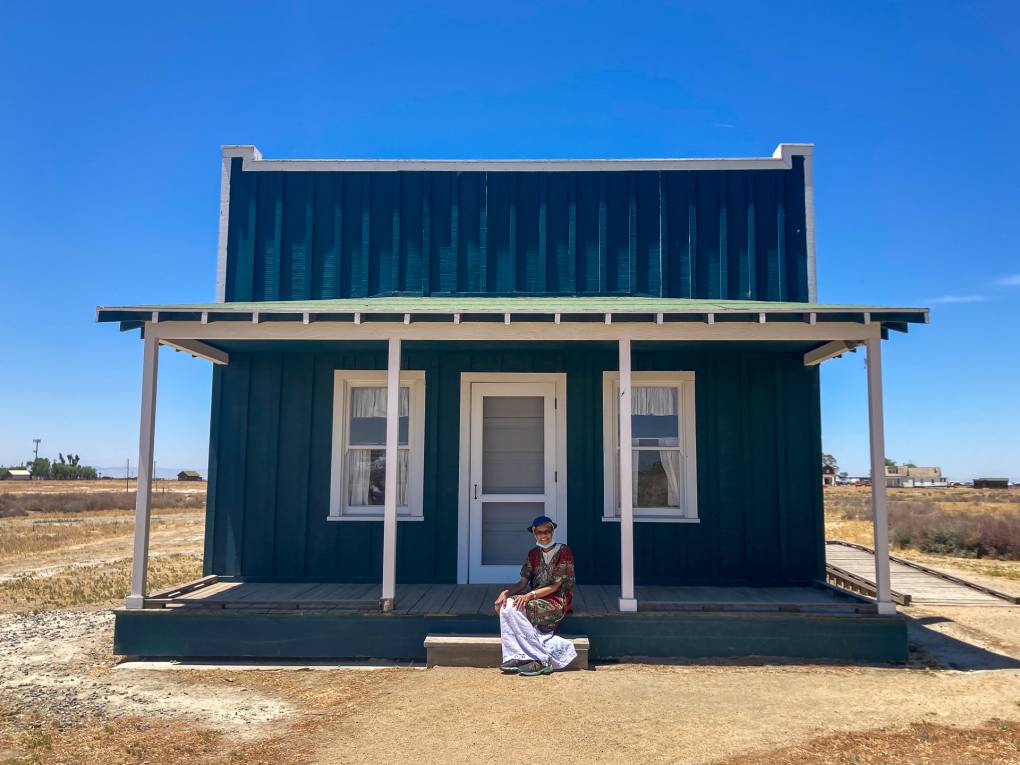
"caption": "Maxine Butler of Oakland, who recently learned she had relatives who lived in Allensworth, sits in front of a restored building in Colonel Allensworth State Historic Park, established in 1976.",
"description": null,
"title": "03_Maxine_park",
"credit": "Lakshmi Sarah/KQED",
"status": "inherit",
"altTag": "a woman sits in front of a blue building in a desert",
"isLoading": false,
"fetchFailed": false
},
"news_11922792": {
"type": "attachments",
"id": "news_11922792",
"meta": {
"index": "attachments_1716263798",
"site": "news",
"id": "11922792",
"found": true
},
"parent": 11922786,
"imgSizes": {
"twentyfourteen-full-width": {
"file": "https://ww2.kqed.org/app/uploads/sites/10/2022/08/RS56290_034_KQED_OaklandReparationsListeningSession_05282022-qut-1038x576.jpg",
"width": 1038,
"mimeType": "image/jpeg",
"height": 576
},
"thumbnail": {
"file": "https://ww2.kqed.org/app/uploads/sites/10/2022/08/RS56290_034_KQED_OaklandReparationsListeningSession_05282022-qut-160x107.jpg",
"width": 160,
"mimeType": "image/jpeg",
"height": 107
},
"post-thumbnail": {
"file": "https://ww2.kqed.org/app/uploads/sites/10/2022/08/RS56290_034_KQED_OaklandReparationsListeningSession_05282022-qut-672x372.jpg",
"width": 672,
"mimeType": "image/jpeg",
"height": 372
},
"kqedFullSize": {
"file": "https://ww2.kqed.org/app/uploads/sites/10/2022/08/RS56290_034_KQED_OaklandReparationsListeningSession_05282022-qut.jpg",
"width": 1920,
"height": 1278
},
"large": {
"file": "https://ww2.kqed.org/app/uploads/sites/10/2022/08/RS56290_034_KQED_OaklandReparationsListeningSession_05282022-qut-1020x679.jpg",
"width": 1020,
"mimeType": "image/jpeg",
"height": 679
},
"1536x1536": {
"file": "https://ww2.kqed.org/app/uploads/sites/10/2022/08/RS56290_034_KQED_OaklandReparationsListeningSession_05282022-qut-1536x1022.jpg",
"width": 1536,
"mimeType": "image/jpeg",
"height": 1022
},
"medium": {
"file": "https://ww2.kqed.org/app/uploads/sites/10/2022/08/RS56290_034_KQED_OaklandReparationsListeningSession_05282022-qut-800x533.jpg",
"width": 800,
"mimeType": "image/jpeg",
"height": 533
}
},
"publishDate": 1660759088,
"modified": 1660759530,
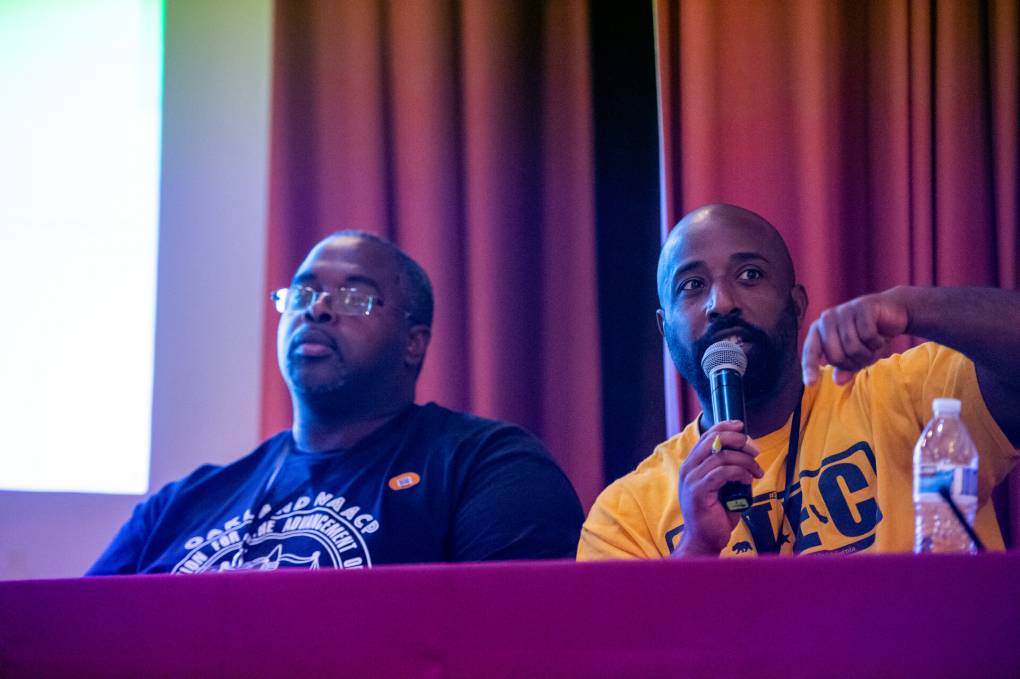
"caption": "Chris Lodgson speaks during a California Reparations Listening Session at the California Ballroom in Oakland on May 28, 2022. ",
"description": null,
"title": "RS56290_034_KQED_OaklandReparationsListeningSession_05282022-qut",
"credit": "Beth LaBerge/KQED",
"status": "inherit",
"altTag": "Two Black men sit in front of red cloth at a table. One speaks into a microphone.",
"isLoading": false,
"fetchFailed": false
},
"news_11920963": {
"type": "attachments",
"id": "news_11920963",
"meta": {
"index": "attachments_1716263798",
"site": "news",
"id": "11920963",
"found": true
},
"parent": 11920960,
"imgSizes": {
"twentyfourteen-full-width": {
"file": "https://ww2.kqed.org/app/uploads/sites/10/2022/07/028_KQED_BayviewBloodTesting_02252022-1536x1024-1-1038x576.jpeg",
"width": 1038,
"mimeType": "image/jpeg",
"height": 576
},
"thumbnail": {
"file": "https://ww2.kqed.org/app/uploads/sites/10/2022/07/028_KQED_BayviewBloodTesting_02252022-1536x1024-1-160x107.jpeg",
"width": 160,
"mimeType": "image/jpeg",
"height": 107
},
"post-thumbnail": {
"file": "https://ww2.kqed.org/app/uploads/sites/10/2022/07/028_KQED_BayviewBloodTesting_02252022-1536x1024-1-672x372.jpeg",
"width": 672,
"mimeType": "image/jpeg",
"height": 372
},
"kqedFullSize": {
"file": "https://ww2.kqed.org/app/uploads/sites/10/2022/07/028_KQED_BayviewBloodTesting_02252022-1536x1024-1.jpeg",
"width": 1536,
"height": 1024
},
"large": {
"file": "https://ww2.kqed.org/app/uploads/sites/10/2022/07/028_KQED_BayviewBloodTesting_02252022-1536x1024-1-1020x680.jpeg",
"width": 1020,
"mimeType": "image/jpeg",
"height": 680
},
"medium": {
"file": "https://ww2.kqed.org/app/uploads/sites/10/2022/07/028_KQED_BayviewBloodTesting_02252022-1536x1024-1-800x533.jpeg",
"width": 800,
"mimeType": "image/jpeg",
"height": 533
}
},
"publishDate": 1659128171,
"modified": 1659128185,
"caption": "Dr. Ahimsa Porter Sumchai is documenting the toxic load in Bayview-Hunters Point residents. ",
"description": null,
"title": "028_KQED_BayviewBloodTesting_02252022-1536x1024",
"credit": "Beth LaBerge/KQED",
"status": "inherit",
"altTag": null,
"isLoading": false,
"fetchFailed": false
},
"news_11917382": {
"type": "attachments",
"id": "news_11917382",
"meta": {
"index": "attachments_1716263798",
"site": "news",
"id": "11917382",
"found": true
},
"parent": 11917366,
"imgSizes": {
"twentyfourteen-full-width": {
"file": "https://ww2.kqed.org/app/uploads/sites/10/2022/06/Malcolm-Pearce-attends-attends-Berkeley-Juneteenth-Festival-on-Sunday-June-19-2022.--1038x576.jpg",
"width": 1038,
"mimeType": "image/jpeg",
"height": 576
},
"thumbnail": {
"file": "https://ww2.kqed.org/app/uploads/sites/10/2022/06/Malcolm-Pearce-attends-attends-Berkeley-Juneteenth-Festival-on-Sunday-June-19-2022.--160x107.jpg",
"width": 160,
"mimeType": "image/jpeg",
"height": 107
},
"post-thumbnail": {
"file": "https://ww2.kqed.org/app/uploads/sites/10/2022/06/Malcolm-Pearce-attends-attends-Berkeley-Juneteenth-Festival-on-Sunday-June-19-2022.--672x372.jpg",
"width": 672,
"mimeType": "image/jpeg",
"height": 372
},
"kqedFullSize": {
"file": "https://ww2.kqed.org/app/uploads/sites/10/2022/06/Malcolm-Pearce-attends-attends-Berkeley-Juneteenth-Festival-on-Sunday-June-19-2022.-.jpg",
"width": 1920,
"height": 1280
},
"large": {
"file": "https://ww2.kqed.org/app/uploads/sites/10/2022/06/Malcolm-Pearce-attends-attends-Berkeley-Juneteenth-Festival-on-Sunday-June-19-2022.--1020x680.jpg",
"width": 1020,
"mimeType": "image/jpeg",
"height": 680
},
"1536x1536": {
"file": "https://ww2.kqed.org/app/uploads/sites/10/2022/06/Malcolm-Pearce-attends-attends-Berkeley-Juneteenth-Festival-on-Sunday-June-19-2022.--1536x1024.jpg",
"width": 1536,
"mimeType": "image/jpeg",
"height": 1024
},
"medium": {
"file": "https://ww2.kqed.org/app/uploads/sites/10/2022/06/Malcolm-Pearce-attends-attends-Berkeley-Juneteenth-Festival-on-Sunday-June-19-2022.--800x533.jpg",
"width": 800,
"mimeType": "image/jpeg",
"height": 533
}
},
"publishDate": 1655686396,
"modified": 1655692871,
"caption": "Malcolm Perce attends attends Berkeley Juneteenth Festival on Sunday, June 19, 2022.",
"description": "Malcolm Perce attends attends Berkeley Juneteenth Festival on Sunday, June 19, 2022.",
"title": "Malcolm Pearce attends attends Berkeley Juneteenth Festival on Sunday, June 19, 2022.",
"credit": "Estefany Gonzalez",
"status": "inherit",
"altTag": null,
"isLoading": false,
"fetchFailed": false
},
"news_11916598": {
"type": "attachments",
"id": "news_11916598",
"meta": {
"index": "attachments_1716263798",
"site": "news",
"id": "11916598",
"found": true
},
"parent": 11914748,
"imgSizes": {
"thumbnail": {
"file": "https://ww2.kqed.org/app/uploads/sites/10/2022/06/RiCLandingPageGraphic-1020x574-1-160x90.png",
"width": 160,
"mimeType": "image/png",
"height": 90
},
"post-thumbnail": {
"file": "https://ww2.kqed.org/app/uploads/sites/10/2022/06/RiCLandingPageGraphic-1020x574-1-672x372.png",
"width": 672,
"mimeType": "image/png",
"height": 372
},
"kqedFullSize": {
"file": "https://ww2.kqed.org/app/uploads/sites/10/2022/06/RiCLandingPageGraphic-1020x574-1.png",
"width": 1020,
"height": 574
},
"medium": {
"file": "https://ww2.kqed.org/app/uploads/sites/10/2022/06/RiCLandingPageGraphic-1020x574-1-800x450.png",
"width": 800,
"mimeType": "image/png",
"height": 450
}
},
"publishDate": 1654797803,
"modified": 1654797803,
"caption": null,
"description": null,
"title": "RiCLandingPageGraphic-1020x574",
"credit": null,
"status": "inherit",
"altTag": null,
"isLoading": false,
"fetchFailed": false
},
"news_11916536": {
"type": "attachments",
"id": "news_11916536",
"meta": {
"index": "attachments_1716263798",
"site": "news",
"id": "11916536",
"found": true
},
"parent": 11916527,
"imgSizes": {
"twentyfourteen-full-width": {
"file": "https://ww2.kqed.org/app/uploads/sites/10/2022/06/060322-HASTINGS-NAME-CHANGE-SL-CM-_1_-1038x576.jpg",
"width": 1038,
"mimeType": "image/jpeg",
"height": 576
},
"thumbnail": {
"file": "https://ww2.kqed.org/app/uploads/sites/10/2022/06/060322-HASTINGS-NAME-CHANGE-SL-CM-_1_-160x106.jpg",
"width": 160,
"mimeType": "image/jpeg",
"height": 106
},
"post-thumbnail": {
"file": "https://ww2.kqed.org/app/uploads/sites/10/2022/06/060322-HASTINGS-NAME-CHANGE-SL-CM-_1_-672x372.jpg",
"width": 672,
"mimeType": "image/jpeg",
"height": 372
},
"kqedFullSize": {
"file": "https://ww2.kqed.org/app/uploads/sites/10/2022/06/060322-HASTINGS-NAME-CHANGE-SL-CM-_1_.jpg",
"width": 2000,
"height": 1330
},
"large": {
"file": "https://ww2.kqed.org/app/uploads/sites/10/2022/06/060322-HASTINGS-NAME-CHANGE-SL-CM-_1_-1020x678.jpg",
"width": 1020,
"mimeType": "image/jpeg",
"height": 678
},
"1536x1536": {
"file": "https://ww2.kqed.org/app/uploads/sites/10/2022/06/060322-HASTINGS-NAME-CHANGE-SL-CM-_1_-1536x1021.jpg",
"width": 1536,
"mimeType": "image/jpeg",
"height": 1021
},
"full-width": {
"file": "https://ww2.kqed.org/app/uploads/sites/10/2022/06/060322-HASTINGS-NAME-CHANGE-SL-CM-_1_-1920x1277.jpg",
"width": 1920,
"mimeType": "image/jpeg",
"height": 1277
},
"medium": {
"file": "https://ww2.kqed.org/app/uploads/sites/10/2022/06/060322-HASTINGS-NAME-CHANGE-SL-CM-_1_-800x532.jpg",
"width": 800,
"mimeType": "image/jpeg",
"height": 532
}
},
"publishDate": 1654723624,
"modified": 1654800962,
"caption": "Round Valley Indian Tribes Tribal Council President James Russ (center) participates in a UC Hastings Board of Directors meeting about changing the name of the law school, on Friday, June 3, 2022, in San Francisco.",
"description": null,
"title": "060322-HASTINGS-NAME-CHANGE-SL-CM-_1_",
"credit": "Samantha Laurey/CalMatters",
"status": "inherit",
"altTag": "A group of men sit on chairs in a conference room.",
"isLoading": false,
"fetchFailed": false
},
"news_11916075": {
"type": "attachments",
"id": "news_11916075",
"meta": {
"index": "attachments_1716263798",
"site": "news",
"id": "11916075",
"found": true
},
"parent": 11916026,
"imgSizes": {
"twentyfourteen-full-width": {
"file": "https://ww2.kqed.org/app/uploads/sites/10/2022/06/RS56284_027_KQED_OaklandReparationsListeningSession_05282022-qut-1038x576.jpg",
"width": 1038,
"mimeType": "image/jpeg",
"height": 576
},
"thumbnail": {
"file": "https://ww2.kqed.org/app/uploads/sites/10/2022/06/RS56284_027_KQED_OaklandReparationsListeningSession_05282022-qut-160x107.jpg",
"width": 160,
"mimeType": "image/jpeg",
"height": 107
},
"post-thumbnail": {
"file": "https://ww2.kqed.org/app/uploads/sites/10/2022/06/RS56284_027_KQED_OaklandReparationsListeningSession_05282022-qut-672x372.jpg",
"width": 672,
"mimeType": "image/jpeg",
"height": 372
},
"kqedFullSize": {
"file": "https://ww2.kqed.org/app/uploads/sites/10/2022/06/RS56284_027_KQED_OaklandReparationsListeningSession_05282022-qut.jpg",
"width": 1920,
"height": 1278
},
"large": {
"file": "https://ww2.kqed.org/app/uploads/sites/10/2022/06/RS56284_027_KQED_OaklandReparationsListeningSession_05282022-qut-1020x679.jpg",
"width": 1020,
"mimeType": "image/jpeg",
"height": 679
},
"1536x1536": {
"file": "https://ww2.kqed.org/app/uploads/sites/10/2022/06/RS56284_027_KQED_OaklandReparationsListeningSession_05282022-qut-1536x1022.jpg",
"width": 1536,
"mimeType": "image/jpeg",
"height": 1022
},
"medium": {
"file": "https://ww2.kqed.org/app/uploads/sites/10/2022/06/RS56284_027_KQED_OaklandReparationsListeningSession_05282022-qut-800x533.jpg",
"width": 800,
"mimeType": "image/jpeg",
"height": 533
}
},
"publishDate": 1654302679,
"modified": 1654644193,
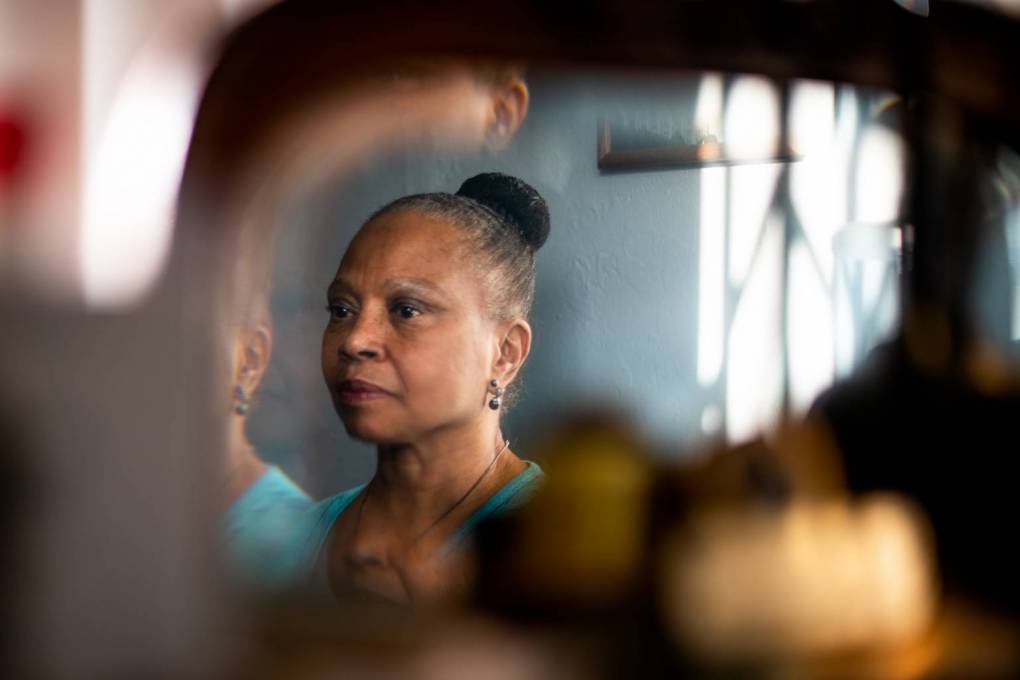
"caption": "Allie Whitehurst speaks during a reparations listening session in Oakland on May 28, 2022. Whitehurst emphasized the importance of correcting educational disparities, including reducing class sizes and getting kids the personal attention they need. 'That, to me, would be one of the ways in which we can provide reparations, because when this boat rises for Black folk, it rises for everybody,' she said.",
"description": null,
"title": "RS56284_027_KQED_OaklandReparationsListeningSession_05282022-qut",
"credit": "Beth LaBerge/KQED",
"status": "inherit",
"altTag": "An older Black woman with straight black hair and a cowry-shell earring is photographed close up and in left profile before a microphone, her head tilted slightly back, her expression stoic, and her lips closed (she is not speaking). In the background is a blurred brown wall and 10 orbs of bright, blurred overhead lights, as from a chandelier.",
"isLoading": false,
"fetchFailed": false
},
"news_11913899": {
"type": "attachments",
"id": "news_11913899",
"meta": {
"index": "attachments_1716263798",
"site": "news",
"id": "11913899",
"found": true
},
"parent": 11913895,
"imgSizes": {
"twentyfourteen-full-width": {
"file": "https://ww2.kqed.org/app/uploads/sites/10/2022/05/GettyImages-1298865526-1024x576.jpg",
"width": 1024,
"mimeType": "image/jpeg",
"height": 576
},
"thumbnail": {
"file": "https://ww2.kqed.org/app/uploads/sites/10/2022/05/GettyImages-1298865526-160x107.jpg",
"width": 160,
"mimeType": "image/jpeg",
"height": 107
},
"post-thumbnail": {
"file": "https://ww2.kqed.org/app/uploads/sites/10/2022/05/GettyImages-1298865526-672x372.jpg",
"width": 672,
"mimeType": "image/jpeg",
"height": 372
},
"kqedFullSize": {
"file": "https://ww2.kqed.org/app/uploads/sites/10/2022/05/GettyImages-1298865526.jpg",
"width": 1024,
"height": 682
},
"large": {
"file": "https://ww2.kqed.org/app/uploads/sites/10/2022/05/GettyImages-1298865526-1020x679.jpg",
"width": 1020,
"mimeType": "image/jpeg",
"height": 679
},
"medium": {
"file": "https://ww2.kqed.org/app/uploads/sites/10/2022/05/GettyImages-1298865526-800x533.jpg",
"width": 800,
"mimeType": "image/jpeg",
"height": 533
}
},
"publishDate": 1652307246,
"modified": 1652316966,
"caption": "A grand entry is performed by multiple tribes during the Two-Spirit Powwow at Festival Pavilion at Fort Mason in San Francisco, on Saturday, Feb. 2, 2019. The event was hosted by the Bay Area American Indian Two-Spirits (BAAITS). For the past eight years, BAAITS has held a powwow for queer Indigenous people. ",
"description": null,
"title": "A grand entry is performed by multiple tribes during the Two-Spirit Powwow at Festival Pavilion at Fort Mason in San Francisco, Calif., on Saturday, February 2, 2019. The event was hosted by the Bay Area American Indian Two-Spirits (BAAITS). For the past",
"credit": "Yalonda M. James/San Francisco Chronicle via Getty Images",
"status": "inherit",
"altTag": "Several people are seen wearing multiple colors and holding flags.",
"isLoading": false,
"fetchFailed": false
},
"news_11910753": {
"type": "attachments",
"id": "news_11910753",
"meta": {
"index": "attachments_1716263798",
"site": "news",
"id": "11910753",
"found": true
},
"parent": 11910733,
"imgSizes": {
"twentyfourteen-full-width": {
"file": "https://ww2.kqed.org/app/uploads/sites/10/2022/04/RS55173_Social-Distancing-Album-1020x838-qut-1020x576.jpg",
"width": 1020,
"mimeType": "image/jpeg",
"height": 576
},
"thumbnail": {
"file": "https://ww2.kqed.org/app/uploads/sites/10/2022/04/RS55173_Social-Distancing-Album-1020x838-qut-160x131.jpg",
"width": 160,
"mimeType": "image/jpeg",
"height": 131
},
"post-thumbnail": {
"file": "https://ww2.kqed.org/app/uploads/sites/10/2022/04/RS55173_Social-Distancing-Album-1020x838-qut-672x372.jpg",
"width": 672,
"mimeType": "image/jpeg",
"height": 372
},
"kqedFullSize": {
"file": "https://ww2.kqed.org/app/uploads/sites/10/2022/04/RS55173_Social-Distancing-Album-1020x838-qut.jpg",
"width": 1020,
"height": 838
},
"medium": {
"file": "https://ww2.kqed.org/app/uploads/sites/10/2022/04/RS55173_Social-Distancing-Album-1020x838-qut-800x657.jpg",
"width": 800,
"mimeType": "image/jpeg",
"height": 657
}
},
"publishDate": 1649697720,
"modified": 1649809187,
"caption": "The Oakland-based hip-hop and jazz artist Kev Choice has written songs about reparations in recent years.",
"description": "Man in black hoodie, black and white pants and a mask standing in the middle of the street at night",
"title": "RS55173_Social-Distancing-Album--1020x838-qut",
"credit": "Courtesy of Kev Choice",
"status": "inherit",
"altTag": "A man wearing a black sweatshirt with the hood pulled up over his head, a powder-blue face mask, black-and-white-patterned pants, and black shoes, stands in the middle of a cracked city street lit by what seems like a streetlight just to his left. Additional streetlights and neon signs illuminate the street and shops behind him. No cars are parked anywhere or appear anywhere on the street.",
"isLoading": false,
"fetchFailed": false
},
"news_11909833": {
"type": "attachments",
"id": "news_11909833",
"meta": {
"index": "attachments_1716263798",
"site": "news",
"id": "11909833",
"found": true
},
"parent": 11909471,
"imgSizes": {
"twentyfourteen-full-width": {
"file": "https://ww2.kqed.org/app/uploads/sites/10/2022/03/RS52277_008_Berkeley_JovanScottLewis_10272021-qut-1038x576.jpg",
"width": 1038,
"mimeType": "image/jpeg",
"height": 576
},
"thumbnail": {
"file": "https://ww2.kqed.org/app/uploads/sites/10/2022/03/RS52277_008_Berkeley_JovanScottLewis_10272021-qut-160x107.jpg",
"width": 160,
"mimeType": "image/jpeg",
"height": 107
},
"post-thumbnail": {
"file": "https://ww2.kqed.org/app/uploads/sites/10/2022/03/RS52277_008_Berkeley_JovanScottLewis_10272021-qut-672x372.jpg",
"width": 672,
"mimeType": "image/jpeg",
"height": 372
},
"kqedFullSize": {
"file": "https://ww2.kqed.org/app/uploads/sites/10/2022/03/RS52277_008_Berkeley_JovanScottLewis_10272021-qut.jpg",
"width": 1920,
"height": 1280
},
"large": {
"file": "https://ww2.kqed.org/app/uploads/sites/10/2022/03/RS52277_008_Berkeley_JovanScottLewis_10272021-qut-1020x680.jpg",
"width": 1020,
"mimeType": "image/jpeg",
"height": 680
},
"1536x1536": {
"file": "https://ww2.kqed.org/app/uploads/sites/10/2022/03/RS52277_008_Berkeley_JovanScottLewis_10272021-qut-1536x1024.jpg",
"width": 1536,
"mimeType": "image/jpeg",
"height": 1024
},
"medium": {
"file": "https://ww2.kqed.org/app/uploads/sites/10/2022/03/RS52277_008_Berkeley_JovanScottLewis_10272021-qut-800x533.jpg",
"width": 800,
"mimeType": "image/jpeg",
"height": 533
}
},
"publishDate": 1648681711,
"modified": 1648682019,
"caption": "Jovan Scott Lewis, California Reparations Task Force member and chair of UC Berkeley’s geography department, introduced a motion on March 29 to define eligibility for reparations based on lineage. The task force approved the motion.",
"description": null,
"title": "RS52277_008_Berkeley_JovanScottLewis_10272021-qut",
"credit": "Beth LaBerge/KQED",
"status": "inherit",
"altTag": "bearded man wearing green jacket crouches thoughtfully with a university staircase behind him",
"isLoading": false,
"fetchFailed": false
},
"news_11906220": {
"type": "attachments",
"id": "news_11906220",
"meta": {
"index": "attachments_1716263798",
"site": "news",
"id": "11906220",
"found": true
},
"parent": 11906054,
"imgSizes": {
"twentyfourteen-full-width": {
"file": "https://ww2.kqed.org/app/uploads/sites/10/2022/02/RS53887_GettyImages-1248797994-qut-1038x576.jpg",
"width": 1038,
"mimeType": "image/jpeg",
"height": 576
},
"thumbnail": {
"file": "https://ww2.kqed.org/app/uploads/sites/10/2022/02/RS53887_GettyImages-1248797994-qut-160x101.jpg",
"width": 160,
"mimeType": "image/jpeg",
"height": 101
},
"post-thumbnail": {
"file": "https://ww2.kqed.org/app/uploads/sites/10/2022/02/RS53887_GettyImages-1248797994-qut-672x372.jpg",
"width": 672,
"mimeType": "image/jpeg",
"height": 372
},
"kqedFullSize": {
"file": "https://ww2.kqed.org/app/uploads/sites/10/2022/02/RS53887_GettyImages-1248797994-qut.jpg",
"width": 1920,
"height": 1211
},
"large": {
"file": "https://ww2.kqed.org/app/uploads/sites/10/2022/02/RS53887_GettyImages-1248797994-qut-1020x643.jpg",
"width": 1020,
"mimeType": "image/jpeg",
"height": 643
},
"1536x1536": {
"file": "https://ww2.kqed.org/app/uploads/sites/10/2022/02/RS53887_GettyImages-1248797994-qut-1536x969.jpg",
"width": 1536,
"mimeType": "image/jpeg",
"height": 969
},
"medium": {
"file": "https://ww2.kqed.org/app/uploads/sites/10/2022/02/RS53887_GettyImages-1248797994-qut-800x505.jpg",
"width": 800,
"mimeType": "image/jpeg",
"height": 505
}
},
"publishDate": 1645649785,
"modified": 1645670204,
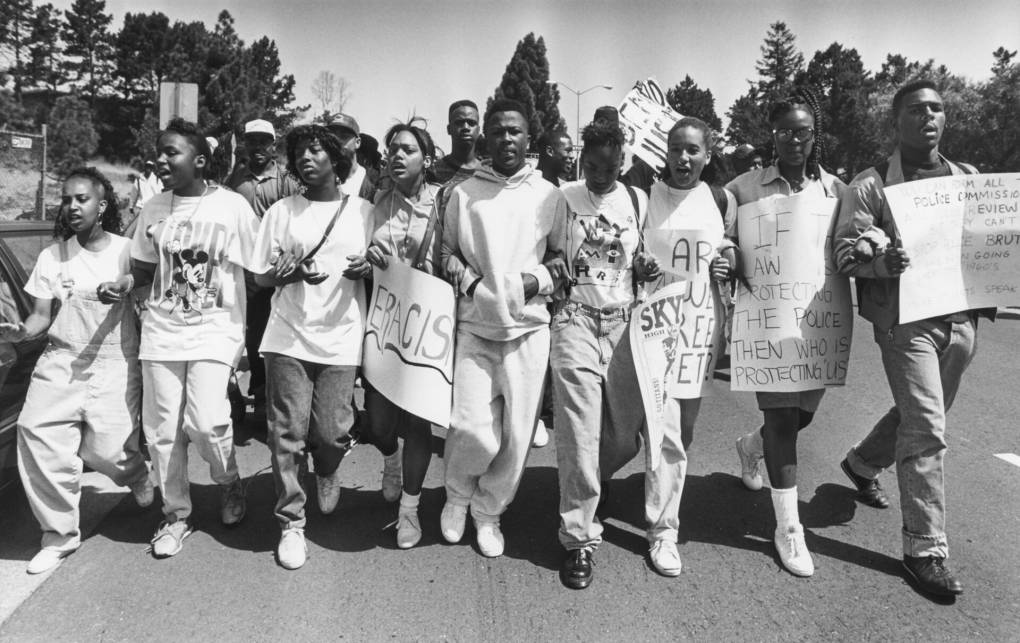
"caption": "Students from Oakland's Skyline High School march in protest on May 1, 1992, after the verdict in the Rodney King beating. The call for reparations is specifically about race and enslavement — the ongoing ramifications of which are seen in the glaring disparities in the criminal justice system — but it touches on basic questions of accountability and fairness.",
"description": null,
"title": "Students from Skyline High School in Oakland Protest",
"credit": "Gary Reyes/Media News Group/Oakland Tribune via Getty Images",
"status": "inherit",
"altTag": "Black and white historical image showing line of young Black students carrying signs and chanting",
"isLoading": false,
"fetchFailed": false
},
"news_11906133": {
"type": "attachments",
"id": "news_11906133",
"meta": {
"index": "attachments_1716263798",
"site": "news",
"id": "11906133",
"found": true
},
"parent": 11906015,
"imgSizes": {
"twentyfourteen-full-width": {
"file": "https://ww2.kqed.org/app/uploads/sites/10/2022/02/RS53414_006_KQED_ReparatioinsTaskForce_DonTamaki_02012022-qut-1038x576.jpg",
"width": 1038,
"mimeType": "image/jpeg",
"height": 576
},
"thumbnail": {
"file": "https://ww2.kqed.org/app/uploads/sites/10/2022/02/RS53414_006_KQED_ReparatioinsTaskForce_DonTamaki_02012022-qut-160x107.jpg",
"width": 160,
"mimeType": "image/jpeg",
"height": 107
},
"post-thumbnail": {
"file": "https://ww2.kqed.org/app/uploads/sites/10/2022/02/RS53414_006_KQED_ReparatioinsTaskForce_DonTamaki_02012022-qut-672x372.jpg",
"width": 672,
"mimeType": "image/jpeg",
"height": 372
},
"kqedFullSize": {
"file": "https://ww2.kqed.org/app/uploads/sites/10/2022/02/RS53414_006_KQED_ReparatioinsTaskForce_DonTamaki_02012022-qut.jpg",
"width": 1920,
"height": 1280
},
"large": {
"file": "https://ww2.kqed.org/app/uploads/sites/10/2022/02/RS53414_006_KQED_ReparatioinsTaskForce_DonTamaki_02012022-qut-1020x680.jpg",
"width": 1020,
"mimeType": "image/jpeg",
"height": 680
},
"1536x1536": {
"file": "https://ww2.kqed.org/app/uploads/sites/10/2022/02/RS53414_006_KQED_ReparatioinsTaskForce_DonTamaki_02012022-qut-1536x1024.jpg",
"width": 1536,
"mimeType": "image/jpeg",
"height": 1024
},
"medium": {
"file": "https://ww2.kqed.org/app/uploads/sites/10/2022/02/RS53414_006_KQED_ReparatioinsTaskForce_DonTamaki_02012022-qut-800x533.jpg",
"width": 800,
"mimeType": "image/jpeg",
"height": 533
}
},
"publishDate": 1645575371,
"modified": 1645590333,
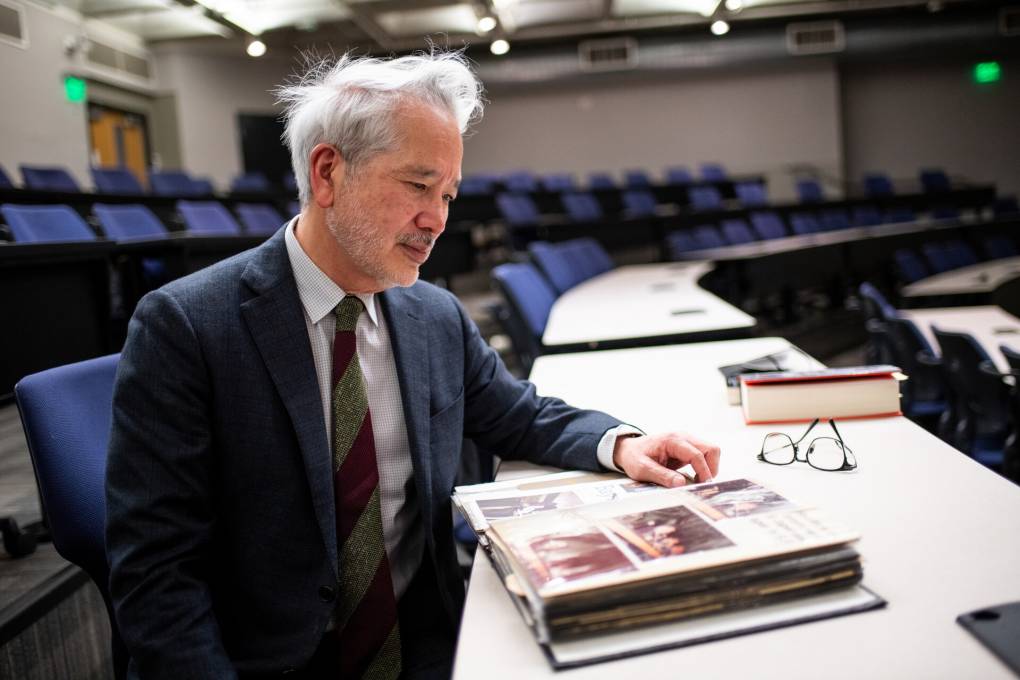
"caption": "Donald Tamaki, a member of the California Reparations Task Force, sits in a lecture hall at Golden Gate University in San Francisco on Feb. 1, 2022, looking through an album compiled by his parents of newspaper clippings and photos from the Japanese American reparations movement.",
"description": null,
"title": "RS53414_006_KQED_ReparatioinsTaskForce_DonTamaki_02012022-qut",
"credit": "Beth LaBerge/KQED",
"status": "inherit",
"altTag": "A man in a suit sits in an auditorium looking at a photo album.",
"isLoading": false,
"fetchFailed": false
}
},
"audioPlayerReducer": {
"postId": "stream_live",
"isPaused": true,
"isPlaying": false,
"pfsActive": false,
"pledgeModalIsOpen": true,
"playerDrawerIsOpen": false,
"liveAudioPlayStartedAt": 0,
"liveAudioPlayContext": ""
},
"authorsReducer": {
"byline_news_11922786": {
"type": "authors",
"id": "byline_news_11922786",
"meta": {
"override": true
},
"slug": "byline_news_11922786",
"name": "Jaclyn Diaz",
"isLoading": false
},
"byline_news_11916527": {
"type": "authors",
"id": "byline_news_11916527",
"meta": {
"override": true
},
"slug": "byline_news_11916527",
"name": "\u003ca href=\"https://calmatters.org/author/sindhu-ananthavel/\">Sindhu Ananthavel\u003c/a>",
"isLoading": false
},
"byline_news_11913895": {
"type": "authors",
"id": "byline_news_11913895",
"meta": {
"override": true
},
"slug": "byline_news_11913895",
"name": "\u003ca href=\"https://calmatters.org/author/lil-kalish/\">Lil Kalish\u003c/a>",
"isLoading": false
},
"kqed": {
"type": "authors",
"id": "236",
"meta": {
"index": "authors_1716337520",
"id": "236",
"found": true
},
"name": "KQED News Staff",
"firstName": "KQED News Staff",
"lastName": null,
"slug": "kqed",
"email": "faq@kqed.org",
"display_author_email": false,
"staff_mastheads": [],
"title": null,
"bio": null,
"avatar": "https://secure.gravatar.com/avatar/ef0e801a68c4c54afa9180db14084167?s=600&d=blank&r=g",
"twitter": null,
"facebook": null,
"instagram": null,
"linkedin": null,
"sites": [
{
"site": "arts",
"roles": [
"contributor"
]
},
{
"site": "news",
"roles": [
"editor"
]
},
{
"site": "futureofyou",
"roles": [
"author"
]
}
],
"headData": {
"title": "KQED News Staff | KQED",
"description": null,
"ogImgSrc": "https://secure.gravatar.com/avatar/ef0e801a68c4c54afa9180db14084167?s=600&d=blank&r=g",
"twImgSrc": "https://secure.gravatar.com/avatar/ef0e801a68c4c54afa9180db14084167?s=600&d=blank&r=g"
},
"isLoading": false,
"link": "/author/kqed"
},
"cveltman": {
"type": "authors",
"id": "8608",
"meta": {
"index": "authors_1716337520",
"id": "8608",
"found": true
},
"name": "Chloe Veltman",
"firstName": "Chloe",
"lastName": "Veltman",
"slug": "cveltman",
"email": "cveltman@kqed.org",
"display_author_email": true,
"staff_mastheads": [],
"title": "Arts and Culture Reporter",
"bio": "Chloe Veltman is a former arts and culture reporter for KQED. Prior to joining the organization, she launched and led the arts bureau at Colorado Public Radio, served as the Bay Area's culture columnist for the New York Times, and was the founder, host and executive producer of VoiceBox, a national award-winning weekly podcast/radio show and live events series all about the human voice. Chloe is the recipient of numerous prizes, grants and fellowships including a Webby Award for her work on interactive storytelling, both the John S Knight Journalism Fellowship and Humanities Center Fellowship at Stanford University, the Sundance Arts Writing Fellowship and a Library of Congress Research Fellowship. She is the author of the book \"On Acting\" and has appeared as a guest lecturer at Yale University and the San Francisco Conservatory of Music among other institutions. She holds a BA in english literature from King's College, Cambridge, and a Masters in Dramaturgy from the Central School of Speech and Drama/Harvard Institute for Advanced Theater Training.\r\n\u003ca href=\"https://www.chloeveltman.com\">www.chloeveltman.com\u003c/a>",
"avatar": "https://secure.gravatar.com/avatar/55403394b00a1ddab683952c2eb2cf85?s=600&d=blank&r=g",
"twitter": "chloeveltman",
"facebook": null,
"instagram": null,
"linkedin": null,
"sites": [
{
"site": "arts",
"roles": []
},
{
"site": "news",
"roles": [
"author"
]
},
{
"site": "pop",
"roles": [
"editor"
]
},
{
"site": "science",
"roles": []
}
],
"headData": {
"title": "Chloe Veltman | KQED",
"description": "Arts and Culture Reporter",
"ogImgSrc": "https://secure.gravatar.com/avatar/55403394b00a1ddab683952c2eb2cf85?s=600&d=blank&r=g",
"twImgSrc": "https://secure.gravatar.com/avatar/55403394b00a1ddab683952c2eb2cf85?s=600&d=blank&r=g"
},
"isLoading": false,
"link": "/author/cveltman"
},
"ecruzguevarra": {
"type": "authors",
"id": "8654",
"meta": {
"index": "authors_1716337520",
"id": "8654",
"found": true
},
"name": "Ericka Cruz Guevarra",
"firstName": "Ericka",
"lastName": "Cruz Guevarra",
"slug": "ecruzguevarra",
"email": "ecruzguevarra@kqed.org",
"display_author_email": true,
"staff_mastheads": [
"news"
],
"title": "Producer, The Bay Podcast",
"bio": "Ericka Cruz Guevarra is host of \u003ca href=\"https://www.kqed.org/podcasts/thebay\">\u003cem>The Bay\u003c/em>\u003c/a> podcast at KQED. Before host, she was the show’s producer. Her work in that capacity includes a three-part reported series on policing in Vallejo, which won a 2020 excellence in journalism award from the Society of Professional Journalists. Ericka has worked as a breaking news reporter at Oregon Public Broadcasting, helped produce the Code Switch podcast, and was KQED’s inaugural Raul Ramirez Diversity Fund intern. She’s also an alumna of NPR’s Next Generation Radio program. Send her an email if you have strong feelings about whether Fairfield and Suisun City are the Bay. Ericka is represented by SAG-AFTRA.",
"avatar": "https://secure.gravatar.com/avatar/25e5ab8d3d53fad2dcc7bb2b5c506b1a?s=600&d=blank&r=g",
"twitter": "NotoriousECG",
"facebook": null,
"instagram": null,
"linkedin": null,
"sites": [
{
"site": "arts",
"roles": [
"subscriber"
]
},
{
"site": "news",
"roles": [
"editor",
"manage_categories"
]
},
{
"site": "futureofyou",
"roles": [
"subscriber"
]
},
{
"site": "stateofhealth",
"roles": [
"subscriber"
]
},
{
"site": "science",
"roles": [
"editor"
]
},
{
"site": "forum",
"roles": [
"subscriber"
]
}
],
"headData": {
"title": "Ericka Cruz Guevarra | KQED",
"description": "Producer, The Bay Podcast",
"ogImgSrc": "https://secure.gravatar.com/avatar/25e5ab8d3d53fad2dcc7bb2b5c506b1a?s=600&d=blank&r=g",
"twImgSrc": "https://secure.gravatar.com/avatar/25e5ab8d3d53fad2dcc7bb2b5c506b1a?s=600&d=blank&r=g"
},
"isLoading": false,
"link": "/author/ecruzguevarra"
},
"lsarah": {
"type": "authors",
"id": "11626",
"meta": {
"index": "authors_1716337520",
"id": "11626",
"found": true
},
"name": "Lakshmi Sarah",
"firstName": "Lakshmi",
"lastName": "Sarah",
"slug": "lsarah",
"email": "lsarah@kqed.org",
"display_author_email": false,
"staff_mastheads": [],
"title": "Digital Producer",
"bio": "Lakshmi Sarah is an educator, author and journalist with a focus on innovative storytelling. She has worked with newspapers, radio and magazines from Ahmedabad, India to Los Angeles, California. She has written and produced for Die Zeit, Global Voices, AJ+, KQED, Fusion Media Group and the New York Times.",
"avatar": "https://secure.gravatar.com/avatar/652dcaecd8b28826fc17a8b2d6bb4e93?s=600&d=blank&r=g",
"twitter": "lakitalki",
"facebook": null,
"instagram": "https://www.instagram.com/laki.talki/",
"linkedin": "https://www.linkedin.com/in/lakisarah/",
"sites": [
{
"site": "arts",
"roles": []
},
{
"site": "news",
"roles": []
},
{
"site": "bayareabites",
"roles": []
},
{
"site": "science",
"roles": []
}
],
"headData": {
"title": "Lakshmi Sarah | KQED",
"description": "Digital Producer",
"ogImgSrc": "https://secure.gravatar.com/avatar/652dcaecd8b28826fc17a8b2d6bb4e93?s=600&d=blank&r=g",
"twImgSrc": "https://secure.gravatar.com/avatar/652dcaecd8b28826fc17a8b2d6bb4e93?s=600&d=blank&r=g"
},
"isLoading": false,
"link": "/author/lsarah"
},
"amontecillo": {
"type": "authors",
"id": "11649",
"meta": {
"index": "authors_1716337520",
"id": "11649",
"found": true
},
"name": "Alan Montecillo",
"firstName": "Alan",
"lastName": "Montecillo",
"slug": "amontecillo",
"email": "amontecillo@kqed.org",
"display_author_email": false,
"staff_mastheads": [
"news"
],
"title": "KQED Contributor",
"bio": "Alan Montecillo is the senior editor of \u003cem>\u003ca href=\"http://kqed.org/thebay\">The Bay\u003c/a>, \u003c/em> KQED's local news podcast. Before moving to the Bay Area, he worked as a senior talk show producer for WILL in Champaign-Urbana, Illinois and at Oregon Public Broadcasting in Portland, Oregon. He has won journalism awards from the Society of Professional Journalists Northern California, the Public Media Journalists Association, The Signal Awards, and has also received a regional Edward R. Murrow award. Alan is a Filipino American from Hong Kong and a graduate of Reed College.",
"avatar": "https://secure.gravatar.com/avatar/d5e4e7a76481969ccba76f4e2b5ccabc?s=600&d=blank&r=g",
"twitter": "alanmontecillo",
"facebook": null,
"instagram": null,
"linkedin": null,
"sites": [
{
"site": "",
"roles": [
"editor"
]
},
{
"site": "news",
"roles": [
"editor",
"manage_categories"
]
}
],
"headData": {
"title": "Alan Montecillo | KQED",
"description": "KQED Contributor",
"ogImgSrc": "https://secure.gravatar.com/avatar/d5e4e7a76481969ccba76f4e2b5ccabc?s=600&d=blank&r=g",
"twImgSrc": "https://secure.gravatar.com/avatar/d5e4e7a76481969ccba76f4e2b5ccabc?s=600&d=blank&r=g"
},
"isLoading": false,
"link": "/author/amontecillo"
},
"jrodriguez": {
"type": "authors",
"id": "11690",
"meta": {
"index": "authors_1716337520",
"id": "11690",
"found": true
},
"name": "Joe Fitzgerald Rodriguez",
"firstName": "Joe",
"lastName": "Fitzgerald Rodriguez",
"slug": "jrodriguez",
"email": "jrodriguez@kqed.org",
"display_author_email": true,
"staff_mastheads": [
"news"
],
"title": "Reporter and Producer",
"bio": "Joe Fitzgerald Rodriguez is a reporter and digital producer for KQED covering politics. Joe most recently wrote for the \u003cem>San Francisco Examiner\u003c/em> as a political columnist covering The City. He was raised in San Francisco and has spent his reporting career in his beloved, foggy, city by the bay. Joe was 12-years-old when he conducted his first interview in journalism, grilling former San Francisco Mayor Willie Brown for the Marina Middle School newspaper, \u003cem>The Penguin Press, \u003c/em>and he continues to report on the San Francisco Bay Area to this day.",
"avatar": "https://secure.gravatar.com/avatar/2247beb0564c1e9c62228d5649d2edac?s=600&d=blank&r=g",
"twitter": "FitztheReporter",
"facebook": null,
"instagram": "https://www.instagram.com/fitzthereporter/",
"linkedin": null,
"sites": [
{
"site": "",
"roles": [
"editor"
]
},
{
"site": "arts",
"roles": [
"editor"
]
},
{
"site": "news",
"roles": [
"editor"
]
},
{
"site": "science",
"roles": [
"editor"
]
},
{
"site": "elections",
"roles": [
"editor"
]
},
{
"site": "liveblog",
"roles": [
"editor"
]
}
],
"headData": {
"title": "Joe Fitzgerald Rodriguez | KQED",
"description": "Reporter and Producer",
"ogImgSrc": "https://secure.gravatar.com/avatar/2247beb0564c1e9c62228d5649d2edac?s=600&d=blank&r=g",
"twImgSrc": "https://secure.gravatar.com/avatar/2247beb0564c1e9c62228d5649d2edac?s=600&d=blank&r=g"
},
"isLoading": false,
"link": "/author/jrodriguez"
},
"eromero": {
"type": "authors",
"id": "11746",
"meta": {
"index": "authors_1716337520",
"id": "11746",
"found": true
},
"name": "Ezra David Romero",
"firstName": "Ezra David",
"lastName": "Romero",
"slug": "eromero",
"email": "eromero@kqed.org",
"display_author_email": true,
"staff_mastheads": [
"news",
"science"
],
"title": "Climate Reporter",
"bio": "Ezra David Romero is a climate reporter for KQED News. He covers the absence and excess of water in the Bay Area — think sea level rise, flooding and drought. For nearly a decade he’s covered how warming temperatures are altering the lives of Californians. He’s reported on farmers worried their pistachio trees aren’t getting enough sleep, families desperate for water, scientists studying dying giant sequoias, and alongside firefighters containing wildfires. His work has appeared on local stations across California and nationally on public radio shows like Morning Edition, Here and Now, All Things Considered and Science Friday. ",
"avatar": "https://secure.gravatar.com/avatar/9c15bb8bab267e058708a9eeaeef16bf?s=600&d=blank&r=g",
"twitter": "ezraromero",
"bluesky": null,
"facebook": null,
"instagram": null,
"linkedin": null,
"sites": [
{
"site": "arts",
"roles": [
"editor"
]
},
{
"site": "news",
"roles": [
"editor"
]
},
{
"site": "science",
"roles": [
"editor"
]
},
{
"site": "liveblog",
"roles": [
"author"
]
}
],
"headData": {
"title": "Ezra David Romero | KQED",
"description": "Climate Reporter",
"ogImgSrc": "https://secure.gravatar.com/avatar/9c15bb8bab267e058708a9eeaeef16bf?s=600&d=blank&r=g",
"twImgSrc": "https://secure.gravatar.com/avatar/9c15bb8bab267e058708a9eeaeef16bf?s=600&d=blank&r=g"
},
"isLoading": false,
"link": "/author/eromero"
},
"otaylor": {
"type": "authors",
"id": "11770",
"meta": {
"index": "authors_1716337520",
"id": "11770",
"found": true
},
"name": "Otis R. Taylor Jr.",
"firstName": "Otis R.",
"lastName": "Taylor Jr.",
"slug": "otaylor",
"email": "otaylor@kqed.org",
"display_author_email": false,
"staff_mastheads": [
"news"
],
"title": "KQED Editor",
"bio": null,
"avatar": "https://secure.gravatar.com/avatar/fe73e14d4842ac8e1c03d57def2530f57f1c5b0ca7d4a987ccc5bd90956cb7c6?s=600&d=mm&r=g",
"twitter": "otisrtaylorjr",
"bluesky": null,
"facebook": null,
"instagram": null,
"linkedin": null,
"sites": [
{
"site": "arts",
"roles": [
"editor"
]
},
{
"site": "news",
"roles": [
"subscriber"
]
},
{
"site": "science",
"roles": [
"subscriber"
]
},
{
"site": "liveblog",
"roles": [
"subscriber"
]
}
],
"headData": {
"title": "Otis R. Taylor Jr. | KQED",
"description": "KQED Editor",
"ogImgSrc": "https://secure.gravatar.com/avatar/fe73e14d4842ac8e1c03d57def2530f57f1c5b0ca7d4a987ccc5bd90956cb7c6?s=600&d=mm&r=g",
"twImgSrc": "https://secure.gravatar.com/avatar/fe73e14d4842ac8e1c03d57def2530f57f1c5b0ca7d4a987ccc5bd90956cb7c6?s=600&d=mm&r=g"
},
"isLoading": false,
"link": "/author/otaylor"
},
"afinney": {
"type": "authors",
"id": "11772",
"meta": {
"index": "authors_1716337520",
"id": "11772",
"found": true
},
"name": "Annelise Finney",
"firstName": "Annelise",
"lastName": "Finney",
"slug": "afinney",
"email": "afinney@kqed.org",
"display_author_email": true,
"staff_mastheads": [
"news"
],
"title": "Reporter",
"bio": "Annelise reports on reparations in California and East Bay politics. She co-produced the Sunday Music Drop, a limited-term radio series featuring Bay Area musicians that aired between Sept 2022 and Oct 2024. She joined KQED in 2021 as a general assignment reporter and is an alumna of KALW's Audio Academy. She was born and raised in the East Bay. She is currently away from KQED completing a year-long reporting project in Berlin, Germany as a Alexander Von Humboldt German Chancellor Fellow.",
"avatar": "https://secure.gravatar.com/avatar/5fded66cae47704cdfc5021cde0f3aa4?s=600&d=blank&r=g",
"twitter": null,
"facebook": null,
"instagram": null,
"linkedin": null,
"sites": [
{
"site": "news",
"roles": [
"editor"
]
},
{
"site": "liveblog",
"roles": [
"author"
]
}
],
"headData": {
"title": "Annelise Finney | KQED",
"description": "Reporter",
"ogImgSrc": "https://secure.gravatar.com/avatar/5fded66cae47704cdfc5021cde0f3aa4?s=600&d=blank&r=g",
"twImgSrc": "https://secure.gravatar.com/avatar/5fded66cae47704cdfc5021cde0f3aa4?s=600&d=blank&r=g"
},
"isLoading": false,
"link": "/author/afinney"
},
"mesquinca": {
"type": "authors",
"id": "11802",
"meta": {
"index": "authors_1716337520",
"id": "11802",
"found": true
},
"name": "Maria Esquinca",
"firstName": "Maria",
"lastName": "Esquinca",
"slug": "mesquinca",
"email": "mesquinca@kqed.org",
"display_author_email": false,
"staff_mastheads": [],
"title": "Producer, The Bay",
"bio": "María Esquinca is a producer of The Bay. Before that, she was a New York Women’s Foundation IGNITE Fellow at Latino USA. She worked at Radio Bilingue where she covered the San Joaquin Valley. Maria has interned at WLRN, News 21, The New York Times Student Journalism Institute and at Crain’s Detroit Business as a Dow Jones News Fund Business Reporting Intern. She is an MFA graduate from the University of Miami. In 2017, she graduated from the Walter Cronkite School of Journalism and Mass Communication with a Master of Mass Communication. A fronteriza, she was born in Ciudad Juárez, Chihuahua, Mexico and grew up in El Paso, Texas.",
"avatar": "https://secure.gravatar.com/avatar/77cedba18aae91da775038ba06dcd8d0?s=600&d=blank&r=g",
"twitter": "@m_esquinca",
"facebook": null,
"instagram": null,
"linkedin": null,
"sites": [
{
"site": "news",
"roles": []
}
],
"headData": {
"title": "Maria Esquinca | KQED",
"description": "Producer, The Bay",
"ogImgSrc": "https://secure.gravatar.com/avatar/77cedba18aae91da775038ba06dcd8d0?s=600&d=blank&r=g",
"twImgSrc": "https://secure.gravatar.com/avatar/77cedba18aae91da775038ba06dcd8d0?s=600&d=blank&r=g"
},
"isLoading": false,
"link": "/author/mesquinca"
}
},
"pagesReducer": {
"news_tag_reparations": {
"type": "terms",
"id": "news_2923",
"meta": {
"index": "terms_1716263798",
"site": "news",
"id": "2923",
"score": 8.93464
},
"featImg": null,
"name": "reparations",
"description": null,
"taxonomy": "tag",
"headData": {
"twImgId": null,
"twTitle": null,
"ogTitle": null,
"ogImgId": null,
"twDescription": null,
"description": null,
"title": "reparations Archives | KQED News",
"ogDescription": null
},
"ttid": 2941,
"slug": "reparations",
"isLoading": false,
"title": "reparations",
"pageMeta": {
"site": "news",
"WpPageTemplate": "page-topic-editorial",
"currentPage": 7
},
"blocks": [
{
"blockName": "kqed/post-list",
"attrs": {
"layout": "cardArticle2",
"query": "posts/news?tag=reparations",
"seeMore": false,
"paginated": true,
"page": 7
}
},
{
"blockName": "kqed/ad"
}
]
}
},
"pfsSessionReducer": {},
"postsReducer": {
"stream_live": {
"type": "live",
"id": "stream_live",
"audioUrl": "https://streams.kqed.org/kqedradio",
"title": "Live Stream",
"excerpt": "Live Stream information currently unavailable.",
"link": "/radio",
"featImg": "",
"label": {
"name": "KQED Live",
"link": "/"
}
},
"stream_kqedNewscast": {
"type": "posts",
"id": "stream_kqedNewscast",
"audioUrl": "https://www.kqed.org/.stream/anon/radio/RDnews/newscast.mp3?_=1",
"title": "KQED Newscast",
"featImg": "",
"label": {
"name": "88.5 FM",
"link": "/"
}
},
"news_11925020": {
"type": "posts",
"id": "news_11925020",
"meta": {
"index": "posts_1716263798",
"site": "news",
"id": "11925020",
"score": null,
"sort": [
1662756928000
]
},
"guestAuthors": [],
"slug": "promised-land-a-historically-black-california-town-honors-its-proud-painful-past-and-fights-for-its-future",
"title": "'Promised Land': A Historically Black California Town Honors Its Proud, Painful Past — and Fights for Its Future",
"publishDate": 1662756928,
"format": "audio",
"headTitle": "‘Promised Land’: A Historically Black California Town Honors Its Proud, Painful Past — and Fights for Its Future | KQED",
"labelTerm": {
"term": 26731,
"site": "news"
},
"content": "\u003cp>The town of Allensworth, located 30 minutes off Interstate 5 near Bakersfield, was a thriving Black community in the early 20th century. Its founders — a group of five Black settlers including Lieutenant Colonel Allen Allensworth — envisioned a Black utopia. The town had its own school, church and bank.\u003c/p>\n\u003cp>To escape racist violence and discrimination after the Civil War, Black people built settlements known as freedmen’s towns in a number of states across the U.S. But Allensworth, established in 1908, was the first of its kind in California: a town governed entirely by Black people.\u003c/p>\n\u003cp>[aside postID='news_11925109']Lt. Col. Allensworth, who was enslaved in Kentucky before fleeing and becoming a Union soldier in the Civil War, was also a minister, educator and businessman. With his town, he hoped to create the “Tuskegee of the West,” according to Terrance Dean, a Black studies professor at Denison University in Ohio who has provided expert testimony to \u003ca href=\"https://www.kqed.org/news/11906054/it-means-to-repair-what-you-should-know-about-reparations-for-black-californians\">California’s Reparations Task Force\u003c/a>.\u003c/p>\n\u003cp>In a letter to Booker T. Washington — a prominent Black leader in the early 20th century and the principal of Tuskegee Institute, now known as Tuskegee University, a historically Black school in Alabama — Allensworth said the town would be “where African Americans would settle upon the bare desert and cause it to blossom as a rose.”\u003c/p>\n\u003cfigure id=\"attachment_11925050\" class=\"wp-caption aligncenter\" style=\"max-width: 2560px\">\u003ca href=\"https://ww2.kqed.org/app/uploads/sites/10/2022/09/GettyImages-576842560-scaled.jpg\">\u003cimg loading=\"lazy\" decoding=\"async\" class=\"size-full wp-image-11925050\" src=\"https://ww2.kqed.org/app/uploads/sites/10/2022/09/GettyImages-576842560-scaled.jpg\" alt=\"\" width=\"2560\" height=\"1718\" srcset=\"https://cdn.kqed.org/wp-content/uploads/sites/10/2022/09/GettyImages-576842560-scaled.jpg 2560w, https://cdn.kqed.org/wp-content/uploads/sites/10/2022/09/GettyImages-576842560-800x537.jpg 800w, https://cdn.kqed.org/wp-content/uploads/sites/10/2022/09/GettyImages-576842560-1020x685.jpg 1020w, https://cdn.kqed.org/wp-content/uploads/sites/10/2022/09/GettyImages-576842560-160x107.jpg 160w, https://cdn.kqed.org/wp-content/uploads/sites/10/2022/09/GettyImages-576842560-1536x1031.jpg 1536w, https://cdn.kqed.org/wp-content/uploads/sites/10/2022/09/GettyImages-576842560-2048x1374.jpg 2048w, https://cdn.kqed.org/wp-content/uploads/sites/10/2022/09/GettyImages-576842560-1920x1289.jpg 1920w\" sizes=\"(max-width: 2560px) 100vw, 2560px\">\u003c/a>\u003cfigcaption class=\"wp-caption-text\">A portrait of Lt. Col. Allensworth near an abandoned home in Colonel Allensworth State Historic Park. \u003ccite>(Ted Streshinsky/Corbis/Corbis via Getty Images)\u003c/cite>\u003c/figcaption>\u003c/figure>\n\u003cp>Allensworth did blossom into a thriving town. But it had to rely on the state government and white-owned companies that controlled water distribution and the railroad, two lifelines that were soon snatched to squeeze Allensworth into submission — by 1920, the town was in severe decline.\u003c/p>\n\u003ch2>Determined to be recognized\u003c/h2>\n\u003cp>Before the more widely known 1921 incident in which a white mob destroyed the homes and businesses of prosperous Black residents in Tulsa, Okla., killing almost 40 people, there was Allensworth, a settlement decimated by racism.\u003c/p>\n\u003cp>Once a destination where Black people from around the country moved for safety and an opportunity to flourish, Allensworth is now a dusty Central Valley outpost with a population of roughly 500. The town is a remarkable part of the state’s history, yet many people have never heard of it.\u003c/p>\n\u003cp>[aside label=\"Related Stories\" postID=\"news_11922175,news_11840548,news_11916026\"]Allensworth and Colonel Allensworth State Historic Park, founded in 1974\u003cb data-stringify-type=\"bold\"> \u003c/b>to honor the town’s history and Black Californians, have come up in several meetings of California’s Reparations Task Force, the group researching reparations for the harm caused by the legacy of slavery in the state. The task force will make a formal recommendation to the state Legislature next summer.\u003c/p>\n\u003cp>There have been previous efforts to preserve and share Allensworth’s history and to revitalize the town’s economic base, but what might reparations look like? State Sen. Steven Bradford, a member of the Reparations Task Force, has referred to Allensworth as a ghost town. But a visit almost three months ago revealed a community determined to be recognized.\u003c/p>\n\u003cp>Amtrak offered a special 50% discount for train passengers stopping at Allensworth for a celebration of Juneteenth, the national holiday that commemorates emancipation. Maxine Butler was among those who took advantage of the chance to visit the town, catching the train at 6 a.m. on June 11 from the Emeryville Amtrak station. The platform bustled with excitement and anticipation as people boarded the Bakersfield-bound train.\u003c/p>\n\u003cp>Butler, who is from North Oakland, had received a terminal cancer diagnosis earlier that week. She said visiting Allensworth was on her bucket list. She’d also recently learned that her sister-in-law’s family lived there for six years, until 1940.\u003c/p>\n\u003cfigure id=\"attachment_11925097\" class=\"wp-caption aligncenter\" style=\"max-width: 1920px\">\u003ca href=\"https://ww2.kqed.org/app/uploads/sites/10/2022/09/02_Maxine_Butler.jpg\">\u003cimg loading=\"lazy\" decoding=\"async\" class=\"size-full wp-image-11925097\" src=\"https://ww2.kqed.org/app/uploads/sites/10/2022/09/02_Maxine_Butler.jpg\" alt=\"an older woman sits on a train wearing a hat and sunglasses and looking out the window\" width=\"1920\" height=\"1440\" srcset=\"https://cdn.kqed.org/wp-content/uploads/sites/10/2022/09/02_Maxine_Butler.jpg 1920w, https://cdn.kqed.org/wp-content/uploads/sites/10/2022/09/02_Maxine_Butler-800x600.jpg 800w, https://cdn.kqed.org/wp-content/uploads/sites/10/2022/09/02_Maxine_Butler-1020x765.jpg 1020w, https://cdn.kqed.org/wp-content/uploads/sites/10/2022/09/02_Maxine_Butler-160x120.jpg 160w, https://cdn.kqed.org/wp-content/uploads/sites/10/2022/09/02_Maxine_Butler-1536x1152.jpg 1536w\" sizes=\"(max-width: 1920px) 100vw, 1920px\">\u003c/a>\u003cfigcaption class=\"wp-caption-text\">Maxine Butler of Oakland rides an Amtrak train to visit Allensworth in June 2022. \u003ccite>(Lakshmi Sarah/KQED)\u003c/cite>\u003c/figcaption>\u003c/figure>\n\u003cp>“I can only imagine the atmosphere at that time,” she said, referring to Allensworth’s beginnings. “Escaping the lynchings. Escaping the aftereffects of slavery. And they probably heard about this — this Jerusalem, this promised land called Allensworth.”\u003c/p>\n\u003cp>Butler has bright eyes and is a classical music singer who used to sing with the Oakland Symphony Chorus. She broke into song more than once as the train made its way through Central Valley towns during the 4.5-hour ride.\u003c/p>\n\u003ch2>The importance of ‘home’\u003c/h2>\n\u003cp>Homeownership is often the largest contributor to personal wealth in the United States. According to a Public Policy Institute of California data analysis, the \u003ca href=\"https://www.ppic.org/blog/californias-housing-divide/\">Black homeownership rate in California is at 36.8%\u003c/a>, about 26.4 points below the rate for white households.\u003c/p>\n\u003cp>“Home helps us to place a marker on our beginnings,” said Dean, of Denison University, in his testimony to the Reparations Task Force. “This is where this American odyssey begins for the hundreds of Black families of Allensworth, Calif., who unfortunately do not and cannot claim inheritance to a home that their ancestors created for them.”\u003c/p>\n\u003cp>In addition to the town’s founding, Dean spoke about William Payne, Allensworth’s first teacher and principal, who was denied a teaching license by the state.\u003c/p>\n\u003cp>[pullquote align=\"right\" size=\"medium\" citation=\"Terrance Dean, Black studies professor, Denison University\"]‘Home helps us to place a marker on our beginnings. This is where this American odyssey begins for the hundreds of Black families … who unfortunately do not and cannot claim inheritance to a home that their ancestors created for them.’[/pullquote]Lt. Col. Allensworth had secured more than 9,000 acres “of the richest land in central California,” he wrote to Booker T. Washington. The settlement was on the main line of the Santa Fe Railway. According to Dean, Allensworth was the only transfer point between Los Angeles and Fresno at that time.\u003c/p>\n\u003cp>“In essence, it was a shining example of Black self-sufficiency and prosperity,” Dean said.\u003c/p>\n\u003ch2>A railroad diverted\u003c/h2>\n\u003cp>At Colonel Allensworth State Historic Park, visitors can peek into the windows of each structure — the schoolhouse, the library and homes. The nearly 20 buildings are meant to look like they would have looked in 1908, complete with outhouses, furniture, books and even fake food in the kitchen of Lt. Col. Allensworth’s home. There’s a bizarre ghost-like quality to the buildings on days when there isn’t a celebration.\u003c/p>\n\u003cp>In a self-guided tour of sorts, visitors can call a number to hear a brief recording describing aspects of each building. The recording also describes the railroad station that connected Allensworth to the outside world.\u003c/p>\n\u003cp>“Trains brought friends and relatives, mail supplies and building materials,” a recorded voice says. “Most important, freight shipments supported the town’s economy.”\u003c/p>\n\u003cp>In 1914, a new stop was created in a neighboring white town and the number of shipments from Allensworth severely declined. That’s one of the factors that led to the town’s demise, according to Jerelyn Oliveira, who leads tours of the park.\u003c/p>\n\u003cp>“They added tracks over to the little community of Alpaugh, which is west of here by about seven miles,” she said. “All that agricultural product was being transported from Alpaugh instead of Allensworth. So the money started slowing down, dwindling, and then the trains stopped stopping here in 1929.”\u003c/p>\n\u003cfigure id=\"attachment_11925098\" class=\"wp-caption aligncenter\" style=\"max-width: 2560px\">\u003ca href=\"https://ww2.kqed.org/app/uploads/sites/10/2022/09/MS189_0015-scaled.jpg\">\u003cimg loading=\"lazy\" decoding=\"async\" class=\"size-full wp-image-11925098\" src=\"https://ww2.kqed.org/app/uploads/sites/10/2022/09/MS189_0015-scaled.jpg\" alt=\"a bumper sticker that reads 'Visit California's Black Historic Town Allensworth'\" width=\"2560\" height=\"2095\" srcset=\"https://cdn.kqed.org/wp-content/uploads/sites/10/2022/09/MS189_0015-scaled.jpg 2560w, https://cdn.kqed.org/wp-content/uploads/sites/10/2022/09/MS189_0015-800x655.jpg 800w, https://cdn.kqed.org/wp-content/uploads/sites/10/2022/09/MS189_0015-1020x835.jpg 1020w, https://cdn.kqed.org/wp-content/uploads/sites/10/2022/09/MS189_0015-160x131.jpg 160w, https://cdn.kqed.org/wp-content/uploads/sites/10/2022/09/MS189_0015-1536x1257.jpg 1536w, https://cdn.kqed.org/wp-content/uploads/sites/10/2022/09/MS189_0015-2048x1676.jpg 2048w, https://cdn.kqed.org/wp-content/uploads/sites/10/2022/09/MS189_0015-1920x1571.jpg 1920w\" sizes=\"(max-width: 2560px) 100vw, 2560px\">\u003c/a>\u003cfigcaption class=\"wp-caption-text\">A bumper sticker from Allensworth, circa 1970s. \u003ccite>(Courtesy of the African American Museum and Library at Oakland Photograph Collection)\u003c/cite>\u003c/figcaption>\u003c/figure>\n\u003cp>\u003ca href=\"https://www.kqed.org/news/11925109/racism-robbed-this-historically-black-california-town-of-its-water-now-theyre-developing-water-of-their-own\">Water was another issue\u003c/a>. The Pacific Water Company built only four wells for Allensworth, compared to the 10 wells built for Alpaugh, according to a report released by the Reparations Task Force in June. Allensworth’s wells started drying up, and the water became contaminated. The settlers were “victims of a racist scam and were sold land that would never have enough water,” the report noted.\u003c/p>\n\u003cp>Denise Kadara’s mother, Nettie Morrison, moved Denise and her siblings to Allensworth in the ’70s. For almost four decades, \u003ca href=\"https://www.npr.org/transcripts/6640864\">Morrison helped keep the memory of the town alive\u003c/a> through park events, like the Juneteenth celebration. Though she passed away in 2018, her children — including Kadara and her twin brother, Dennis Hutson — are continuing the legacy.\u003c/p>\n\u003cp>“All we want to do here is bring the community back, and make it a thriving community once again,” Kadara said.\u003c/p>\n\u003ch2>Pride and sadness\u003c/h2>\n\u003cp>When Butler disembarked the train in the blazing heat, she walked across the tracks to wait for the small bus to take her to the schoolhouse. There, Butler told the docents that she heard a story about how Gloria Harris, her sister-in-law’s mother, had carved her name into a desk. She didn’t find Harris’ name on a desk, but one of the school’s record books confirmed Harris did attend the one-room school.\u003c/p>\n\u003cfigure id=\"attachment_11925095\" class=\"wp-caption aligncenter\" style=\"max-width: 2560px\">\u003ca href=\"https://ww2.kqed.org/app/uploads/sites/10/2022/09/MS189_0012-scaled.jpg\">\u003cimg loading=\"lazy\" decoding=\"async\" class=\"size-full wp-image-11925095\" src=\"https://ww2.kqed.org/app/uploads/sites/10/2022/09/MS189_0012-scaled.jpg\" alt=\"a black and white photo of a schoolhouse\" width=\"2560\" height=\"2102\" srcset=\"https://cdn.kqed.org/wp-content/uploads/sites/10/2022/09/MS189_0012-scaled.jpg 2560w, https://cdn.kqed.org/wp-content/uploads/sites/10/2022/09/MS189_0012-800x657.jpg 800w, https://cdn.kqed.org/wp-content/uploads/sites/10/2022/09/MS189_0012-1020x838.jpg 1020w, https://cdn.kqed.org/wp-content/uploads/sites/10/2022/09/MS189_0012-160x131.jpg 160w, https://cdn.kqed.org/wp-content/uploads/sites/10/2022/09/MS189_0012-1536x1261.jpg 1536w, https://cdn.kqed.org/wp-content/uploads/sites/10/2022/09/MS189_0012-2048x1682.jpg 2048w, https://cdn.kqed.org/wp-content/uploads/sites/10/2022/09/MS189_0012-1920x1577.jpg 1920w\" sizes=\"(max-width: 2560px) 100vw, 2560px\">\u003c/a>\u003cfigcaption class=\"wp-caption-text\">Exterior of Allensworth Elementary School building, Colonel Allensworth State Historic Park, circa 1970s. \u003ccite>(Courtesy of the African American Museum and Library at Oakland Photograph Collection)\u003c/cite>\u003c/figcaption>\u003c/figure>\n\u003cp>Several other visitors walked across the school’s creaky floorboards and examined the desks, including Latrice Hutchings, who took the train from Stockton.\u003c/p>\n\u003cp>“It feels amazing. There’s a sense of nostalgia,” said Hutchings, who had previously visited the park a few weeks prior to the Juneteenth celebration. All of the buildings had been closed then, and she could only look through the windows.\u003c/p>\n\u003cp>“It’s awesome to be inside,” Hutchings continued. “You feel a little bit emotional and you feel a little proud, because you can see that they had a good life here.”\u003c/p>\n\u003cp>Gail Autry, who boarded the train in the Bay Area, said she had mixed emotions being at the park.\u003c/p>\n\u003cp>“I kind of want to cry,” she said. “Any time I’ve ever gone to a different plantation, it’s just the feeling of pride, of sadness, of how they made it.”\u003c/p>\n\u003ch2>A road map to repair\u003c/h2>\n\u003cp>Sen. Bradford, of the Reparations Task Force, is focused on bringing attention to the accomplishments of Black people and properties they owned at the turn of the century, such as Val Verde and Bruce’s Beach.\u003c/p>\n\u003cp>[aside label=\"Reparations in California\" link1=\"https://www.kqed.org/reparations,Explore why California launched the first-in-the-nation task force to study reparations for Black people\" hero=\"https://ww2.kqed.org/app/uploads/2022/02/RiCLandingPageGraphic-1020x574.png\"]\u003ca href=\"https://abc7.com/val-verde-black-palm-springs-castaic/11587364/\">Val Verde\u003c/a> was a Santa Clarita Valley city known as the “Black Palm Springs,” where Black people could buy property before World War II. Bruce’s Beach was the beachfront resort built in Manhattan Beach by Charles and Willa Bruce in 1912; the property was seized by the city, and the land owned by Los Angeles County until last year, when the property was transferred to the couple’s descendants.\u003c/p>\n\u003cp>Bradford helped secure $40 million in the 2022 state budget for Allensworth, including $10 million for a teaching and innovation farm. According to The Sun Gazette\u003cem>,\u003c/em> \u003ca href=\"https://thesungazette.com/article/news/2022/07/14/state-funding-seeks-to-restore-historic-black-town/\">$28 million will be used for a park visitor center and almost $2 million for a town civic center\u003c/a>. But Bradford believes there’s more to be done.\u003c/p>\n\u003cfigure id=\"attachment_11925100\" class=\"wp-caption aligncenter\" style=\"max-width: 2560px\">\u003ca href=\"https://ww2.kqed.org/app/uploads/sites/10/2022/09/GettyImages-566048923-scaled.jpg\">\u003cimg loading=\"lazy\" decoding=\"async\" class=\"size-full wp-image-11925100\" src=\"https://ww2.kqed.org/app/uploads/sites/10/2022/09/GettyImages-566048923-scaled.jpg\" alt=\"a sunset over a desert town\" width=\"2560\" height=\"1707\" srcset=\"https://cdn.kqed.org/wp-content/uploads/sites/10/2022/09/GettyImages-566048923-scaled.jpg 2560w, https://cdn.kqed.org/wp-content/uploads/sites/10/2022/09/GettyImages-566048923-800x533.jpg 800w, https://cdn.kqed.org/wp-content/uploads/sites/10/2022/09/GettyImages-566048923-1020x680.jpg 1020w, https://cdn.kqed.org/wp-content/uploads/sites/10/2022/09/GettyImages-566048923-160x107.jpg 160w, https://cdn.kqed.org/wp-content/uploads/sites/10/2022/09/GettyImages-566048923-1536x1024.jpg 1536w, https://cdn.kqed.org/wp-content/uploads/sites/10/2022/09/GettyImages-566048923-2048x1365.jpg 2048w, https://cdn.kqed.org/wp-content/uploads/sites/10/2022/09/GettyImages-566048923-1920x1280.jpg 1920w\" sizes=\"(max-width: 2560px) 100vw, 2560px\">\u003c/a>\u003cfigcaption class=\"wp-caption-text\">The sun sets on Colonel Allensworth State Historic Park in 2008. \u003ccite>(Barbara Davidson/Los Angeles Times via Getty Images)\u003c/cite>\u003c/figcaption>\u003c/figure>\n\u003cp>“I think it has a nexus to reparations,” he said. “To show what was promised but was never delivered, but also what we had that was stolen from us.\u003c/p>\n\u003cp>“We need to know the full story. Far too often we look at where we are today and say, ‘Oh, things are great.’ But we’ve got to understand how we got here.”\u003c/p>\n\u003cp>[pullquote align=\"right\" size=\"medium\" citation=\"Dennis Hutson, son of Nettie Morrison, who moved to Allensworth in the 1970s\"]‘If you owed me $100 and you want to give me a dime, is that really reparations?’[/pullquote]Dennis Hutson, for his part, isn’t convinced the millions from the state budget will amount to reparations for the descendants of Allensworth settlers.\u003c/p>\n\u003cp>“It sounds like a good idea, but I just really wonder, is it really heartfelt?” Hutson said. “And if you owed me $100 and you want to give me a dime, is that really reparations?”\u003c/p>\n\u003cp>On the train ride back to Emeryville, I asked Butler how she was feeling.\u003c/p>\n\u003cp>“I really bristle when I hear about ‘the first African American who did this,’” she said. “(It’s) always something that was hidden, that never was brought to the surface.”\u003c/p>\n\u003cp>[ad fullwidth]\u003c/p>\n\u003cp>[ad floatright]\u003c/p>\n",
"blocks": [],
"excerpt": "In 1908, Allensworth was designed by its Black founders as a place where 'African Americans would settle upon the bare desert and cause it to blossom as a rose' — before racist policies squashed it into submission. More than a century later, the town is one of about a dozen Black communities shaping the conversation about what reparations might mean in California.",
"status": "publish",
"parent": 0,
"modified": 1725920346,
"stats": {
"hasAudio": false,
"hasVideo": false,
"hasChartOrMap": false,
"iframeSrcs": [],
"hasGoogleForm": false,
"hasGallery": false,
"hasHearkenModule": false,
"hasPolis": false,
"paragraphCount": 43,
"wordCount": 2144
},
"headData": {
"title": "'Promised Land': A Historically Black California Town Honors Its Proud, Painful Past — and Fights for Its Future | KQED",
"description": "In 1908, Allensworth was designed by its Black founders as a place where 'African Americans would settle upon the bare desert and cause it to blossom as a rose' — before racist policies squashed it into submission. More than a century later, the town is one of about a dozen Black communities shaping the conversation about what reparations might mean in California.",
"ogTitle": "",
"ogDescription": "",
"ogImgId": "",
"twTitle": "",
"twDescription": "",
"twImgId": "",
"schema": {
"@context": "https://schema.org",
"@type": "NewsArticle",
"headline": "'Promised Land': A Historically Black California Town Honors Its Proud, Painful Past — and Fights for Its Future",
"datePublished": "2022-09-09T13:55:28-07:00",
"dateModified": "2024-09-09T15:19:06-07:00",
"image": "https://cdn.kqed.org/wp-content/uploads/2020/02/KQED-OG-Image@1x.png",
"isAccessibleForFree": "True",
"publisher": {
"@type": "NewsMediaOrganization",
"@id": "https://www.kqed.org/#organization",
"name": "KQED",
"logo": "https://cdn.kqed.org/wp-content/uploads/2020/02/KQED-OG-Image@1x.png",
"url": "https://www.kqed.org",
"sameAs": [
"https://www.facebook.com/KQED",
"https://twitter.com/KQED",
"https://www.instagram.com/kqed/",
"https://www.tiktok.com/@kqedofficial",
"https://www.linkedin.com/company/kqed",
"https://www.youtube.com/channel/UCeC0IOo7i1P_61zVUWbJ4nw"
]
}
}
},
"audioUrl": "https://www.podtrac.com/pts/redirect.mp3/traffic.megaphone.fm/KQINC5704605842.mp3?updated=1662754277",
"sticky": false,
"excludeFromSiteSearch": "Include",
"path": "/news/11925020/promised-land-a-historically-black-california-town-honors-its-proud-painful-past-and-fights-for-its-future",
"audioTrackLength": null,
"parsedContent": [
{
"type": "contentString",
"content": "\u003cdiv class=\"post-body\">\u003cp>\u003cp>The town of Allensworth, located 30 minutes off Interstate 5 near Bakersfield, was a thriving Black community in the early 20th century. Its founders — a group of five Black settlers including Lieutenant Colonel Allen Allensworth — envisioned a Black utopia. The town had its own school, church and bank.\u003c/p>\n\u003cp>To escape racist violence and discrimination after the Civil War, Black people built settlements known as freedmen’s towns in a number of states across the U.S. But Allensworth, established in 1908, was the first of its kind in California: a town governed entirely by Black people.\u003c/p>\n\u003cp>\u003c/p>\u003c/div>",
"attributes": {
"named": {},
"numeric": []
}
},
{
"type": "component",
"content": "",
"name": "aside",
"attributes": {
"named": {
"postid": "news_11925109",
"label": ""
},
"numeric": []
}
},
{
"type": "contentString",
"content": "\u003cdiv class=\"post-body\">\u003cp>Lt. Col. Allensworth, who was enslaved in Kentucky before fleeing and becoming a Union soldier in the Civil War, was also a minister, educator and businessman. With his town, he hoped to create the “Tuskegee of the West,” according to Terrance Dean, a Black studies professor at Denison University in Ohio who has provided expert testimony to \u003ca href=\"https://www.kqed.org/news/11906054/it-means-to-repair-what-you-should-know-about-reparations-for-black-californians\">California’s Reparations Task Force\u003c/a>.\u003c/p>\n\u003cp>In a letter to Booker T. Washington — a prominent Black leader in the early 20th century and the principal of Tuskegee Institute, now known as Tuskegee University, a historically Black school in Alabama — Allensworth said the town would be “where African Americans would settle upon the bare desert and cause it to blossom as a rose.”\u003c/p>\n\u003cfigure id=\"attachment_11925050\" class=\"wp-caption aligncenter\" style=\"max-width: 2560px\">\u003ca href=\"https://ww2.kqed.org/app/uploads/sites/10/2022/09/GettyImages-576842560-scaled.jpg\">\u003cimg loading=\"lazy\" decoding=\"async\" class=\"size-full wp-image-11925050\" src=\"https://ww2.kqed.org/app/uploads/sites/10/2022/09/GettyImages-576842560-scaled.jpg\" alt=\"\" width=\"2560\" height=\"1718\" srcset=\"https://cdn.kqed.org/wp-content/uploads/sites/10/2022/09/GettyImages-576842560-scaled.jpg 2560w, https://cdn.kqed.org/wp-content/uploads/sites/10/2022/09/GettyImages-576842560-800x537.jpg 800w, https://cdn.kqed.org/wp-content/uploads/sites/10/2022/09/GettyImages-576842560-1020x685.jpg 1020w, https://cdn.kqed.org/wp-content/uploads/sites/10/2022/09/GettyImages-576842560-160x107.jpg 160w, https://cdn.kqed.org/wp-content/uploads/sites/10/2022/09/GettyImages-576842560-1536x1031.jpg 1536w, https://cdn.kqed.org/wp-content/uploads/sites/10/2022/09/GettyImages-576842560-2048x1374.jpg 2048w, https://cdn.kqed.org/wp-content/uploads/sites/10/2022/09/GettyImages-576842560-1920x1289.jpg 1920w\" sizes=\"(max-width: 2560px) 100vw, 2560px\">\u003c/a>\u003cfigcaption class=\"wp-caption-text\">A portrait of Lt. Col. Allensworth near an abandoned home in Colonel Allensworth State Historic Park. \u003ccite>(Ted Streshinsky/Corbis/Corbis via Getty Images)\u003c/cite>\u003c/figcaption>\u003c/figure>\n\u003cp>Allensworth did blossom into a thriving town. But it had to rely on the state government and white-owned companies that controlled water distribution and the railroad, two lifelines that were soon snatched to squeeze Allensworth into submission — by 1920, the town was in severe decline.\u003c/p>\n\u003ch2>Determined to be recognized\u003c/h2>\n\u003cp>Before the more widely known 1921 incident in which a white mob destroyed the homes and businesses of prosperous Black residents in Tulsa, Okla., killing almost 40 people, there was Allensworth, a settlement decimated by racism.\u003c/p>\n\u003cp>Once a destination where Black people from around the country moved for safety and an opportunity to flourish, Allensworth is now a dusty Central Valley outpost with a population of roughly 500. The town is a remarkable part of the state’s history, yet many people have never heard of it.\u003c/p>\n\u003cp>\u003c/p>\u003c/div>",
"attributes": {
"named": {},
"numeric": []
}
},
{
"type": "component",
"content": "",
"name": "aside",
"attributes": {
"named": {
"label": "Related Stories ",
"postid": "news_11922175,news_11840548,news_11916026"
},
"numeric": []
}
},
{
"type": "contentString",
"content": "\u003cdiv class=\"post-body\">\u003cp>Allensworth and Colonel Allensworth State Historic Park, founded in 1974\u003cb data-stringify-type=\"bold\"> \u003c/b>to honor the town’s history and Black Californians, have come up in several meetings of California’s Reparations Task Force, the group researching reparations for the harm caused by the legacy of slavery in the state. The task force will make a formal recommendation to the state Legislature next summer.\u003c/p>\n\u003cp>There have been previous efforts to preserve and share Allensworth’s history and to revitalize the town’s economic base, but what might reparations look like? State Sen. Steven Bradford, a member of the Reparations Task Force, has referred to Allensworth as a ghost town. But a visit almost three months ago revealed a community determined to be recognized.\u003c/p>\n\u003cp>Amtrak offered a special 50% discount for train passengers stopping at Allensworth for a celebration of Juneteenth, the national holiday that commemorates emancipation. Maxine Butler was among those who took advantage of the chance to visit the town, catching the train at 6 a.m. on June 11 from the Emeryville Amtrak station. The platform bustled with excitement and anticipation as people boarded the Bakersfield-bound train.\u003c/p>\n\u003cp>Butler, who is from North Oakland, had received a terminal cancer diagnosis earlier that week. She said visiting Allensworth was on her bucket list. She’d also recently learned that her sister-in-law’s family lived there for six years, until 1940.\u003c/p>\n\u003cfigure id=\"attachment_11925097\" class=\"wp-caption aligncenter\" style=\"max-width: 1920px\">\u003ca href=\"https://ww2.kqed.org/app/uploads/sites/10/2022/09/02_Maxine_Butler.jpg\">\u003cimg loading=\"lazy\" decoding=\"async\" class=\"size-full wp-image-11925097\" src=\"https://ww2.kqed.org/app/uploads/sites/10/2022/09/02_Maxine_Butler.jpg\" alt=\"an older woman sits on a train wearing a hat and sunglasses and looking out the window\" width=\"1920\" height=\"1440\" srcset=\"https://cdn.kqed.org/wp-content/uploads/sites/10/2022/09/02_Maxine_Butler.jpg 1920w, https://cdn.kqed.org/wp-content/uploads/sites/10/2022/09/02_Maxine_Butler-800x600.jpg 800w, https://cdn.kqed.org/wp-content/uploads/sites/10/2022/09/02_Maxine_Butler-1020x765.jpg 1020w, https://cdn.kqed.org/wp-content/uploads/sites/10/2022/09/02_Maxine_Butler-160x120.jpg 160w, https://cdn.kqed.org/wp-content/uploads/sites/10/2022/09/02_Maxine_Butler-1536x1152.jpg 1536w\" sizes=\"(max-width: 1920px) 100vw, 1920px\">\u003c/a>\u003cfigcaption class=\"wp-caption-text\">Maxine Butler of Oakland rides an Amtrak train to visit Allensworth in June 2022. \u003ccite>(Lakshmi Sarah/KQED)\u003c/cite>\u003c/figcaption>\u003c/figure>\n\u003cp>“I can only imagine the atmosphere at that time,” she said, referring to Allensworth’s beginnings. “Escaping the lynchings. Escaping the aftereffects of slavery. And they probably heard about this — this Jerusalem, this promised land called Allensworth.”\u003c/p>\n\u003cp>Butler has bright eyes and is a classical music singer who used to sing with the Oakland Symphony Chorus. She broke into song more than once as the train made its way through Central Valley towns during the 4.5-hour ride.\u003c/p>\n\u003ch2>The importance of ‘home’\u003c/h2>\n\u003cp>Homeownership is often the largest contributor to personal wealth in the United States. According to a Public Policy Institute of California data analysis, the \u003ca href=\"https://www.ppic.org/blog/californias-housing-divide/\">Black homeownership rate in California is at 36.8%\u003c/a>, about 26.4 points below the rate for white households.\u003c/p>\n\u003cp>“Home helps us to place a marker on our beginnings,” said Dean, of Denison University, in his testimony to the Reparations Task Force. “This is where this American odyssey begins for the hundreds of Black families of Allensworth, Calif., who unfortunately do not and cannot claim inheritance to a home that their ancestors created for them.”\u003c/p>\n\u003cp>In addition to the town’s founding, Dean spoke about William Payne, Allensworth’s first teacher and principal, who was denied a teaching license by the state.\u003c/p>\n\u003cp>\u003c/p>\u003c/div>",
"attributes": {
"named": {},
"numeric": []
}
},
{
"type": "component",
"content": "‘Home helps us to place a marker on our beginnings. This is where this American odyssey begins for the hundreds of Black families … who unfortunately do not and cannot claim inheritance to a home that their ancestors created for them.’",
"name": "pullquote",
"attributes": {
"named": {
"align": "right",
"size": "medium",
"citation": "Terrance Dean, Black studies professor, Denison University",
"label": ""
},
"numeric": []
}
},
{
"type": "contentString",
"content": "\u003cdiv class=\"post-body\">\u003cp>Lt. Col. Allensworth had secured more than 9,000 acres “of the richest land in central California,” he wrote to Booker T. Washington. The settlement was on the main line of the Santa Fe Railway. According to Dean, Allensworth was the only transfer point between Los Angeles and Fresno at that time.\u003c/p>\n\u003cp>“In essence, it was a shining example of Black self-sufficiency and prosperity,” Dean said.\u003c/p>\n\u003ch2>A railroad diverted\u003c/h2>\n\u003cp>At Colonel Allensworth State Historic Park, visitors can peek into the windows of each structure — the schoolhouse, the library and homes. The nearly 20 buildings are meant to look like they would have looked in 1908, complete with outhouses, furniture, books and even fake food in the kitchen of Lt. Col. Allensworth’s home. There’s a bizarre ghost-like quality to the buildings on days when there isn’t a celebration.\u003c/p>\n\u003cp>In a self-guided tour of sorts, visitors can call a number to hear a brief recording describing aspects of each building. The recording also describes the railroad station that connected Allensworth to the outside world.\u003c/p>\n\u003cp>“Trains brought friends and relatives, mail supplies and building materials,” a recorded voice says. “Most important, freight shipments supported the town’s economy.”\u003c/p>\n\u003cp>In 1914, a new stop was created in a neighboring white town and the number of shipments from Allensworth severely declined. That’s one of the factors that led to the town’s demise, according to Jerelyn Oliveira, who leads tours of the park.\u003c/p>\n\u003cp>“They added tracks over to the little community of Alpaugh, which is west of here by about seven miles,” she said. “All that agricultural product was being transported from Alpaugh instead of Allensworth. So the money started slowing down, dwindling, and then the trains stopped stopping here in 1929.”\u003c/p>\n\u003cfigure id=\"attachment_11925098\" class=\"wp-caption aligncenter\" style=\"max-width: 2560px\">\u003ca href=\"https://ww2.kqed.org/app/uploads/sites/10/2022/09/MS189_0015-scaled.jpg\">\u003cimg loading=\"lazy\" decoding=\"async\" class=\"size-full wp-image-11925098\" src=\"https://ww2.kqed.org/app/uploads/sites/10/2022/09/MS189_0015-scaled.jpg\" alt=\"a bumper sticker that reads 'Visit California's Black Historic Town Allensworth'\" width=\"2560\" height=\"2095\" srcset=\"https://cdn.kqed.org/wp-content/uploads/sites/10/2022/09/MS189_0015-scaled.jpg 2560w, https://cdn.kqed.org/wp-content/uploads/sites/10/2022/09/MS189_0015-800x655.jpg 800w, https://cdn.kqed.org/wp-content/uploads/sites/10/2022/09/MS189_0015-1020x835.jpg 1020w, https://cdn.kqed.org/wp-content/uploads/sites/10/2022/09/MS189_0015-160x131.jpg 160w, https://cdn.kqed.org/wp-content/uploads/sites/10/2022/09/MS189_0015-1536x1257.jpg 1536w, https://cdn.kqed.org/wp-content/uploads/sites/10/2022/09/MS189_0015-2048x1676.jpg 2048w, https://cdn.kqed.org/wp-content/uploads/sites/10/2022/09/MS189_0015-1920x1571.jpg 1920w\" sizes=\"(max-width: 2560px) 100vw, 2560px\">\u003c/a>\u003cfigcaption class=\"wp-caption-text\">A bumper sticker from Allensworth, circa 1970s. \u003ccite>(Courtesy of the African American Museum and Library at Oakland Photograph Collection)\u003c/cite>\u003c/figcaption>\u003c/figure>\n\u003cp>\u003ca href=\"https://www.kqed.org/news/11925109/racism-robbed-this-historically-black-california-town-of-its-water-now-theyre-developing-water-of-their-own\">Water was another issue\u003c/a>. The Pacific Water Company built only four wells for Allensworth, compared to the 10 wells built for Alpaugh, according to a report released by the Reparations Task Force in June. Allensworth’s wells started drying up, and the water became contaminated. The settlers were “victims of a racist scam and were sold land that would never have enough water,” the report noted.\u003c/p>\n\u003cp>Denise Kadara’s mother, Nettie Morrison, moved Denise and her siblings to Allensworth in the ’70s. For almost four decades, \u003ca href=\"https://www.npr.org/transcripts/6640864\">Morrison helped keep the memory of the town alive\u003c/a> through park events, like the Juneteenth celebration. Though she passed away in 2018, her children — including Kadara and her twin brother, Dennis Hutson — are continuing the legacy.\u003c/p>\n\u003cp>“All we want to do here is bring the community back, and make it a thriving community once again,” Kadara said.\u003c/p>\n\u003ch2>Pride and sadness\u003c/h2>\n\u003cp>When Butler disembarked the train in the blazing heat, she walked across the tracks to wait for the small bus to take her to the schoolhouse. There, Butler told the docents that she heard a story about how Gloria Harris, her sister-in-law’s mother, had carved her name into a desk. She didn’t find Harris’ name on a desk, but one of the school’s record books confirmed Harris did attend the one-room school.\u003c/p>\n\u003cfigure id=\"attachment_11925095\" class=\"wp-caption aligncenter\" style=\"max-width: 2560px\">\u003ca href=\"https://ww2.kqed.org/app/uploads/sites/10/2022/09/MS189_0012-scaled.jpg\">\u003cimg loading=\"lazy\" decoding=\"async\" class=\"size-full wp-image-11925095\" src=\"https://ww2.kqed.org/app/uploads/sites/10/2022/09/MS189_0012-scaled.jpg\" alt=\"a black and white photo of a schoolhouse\" width=\"2560\" height=\"2102\" srcset=\"https://cdn.kqed.org/wp-content/uploads/sites/10/2022/09/MS189_0012-scaled.jpg 2560w, https://cdn.kqed.org/wp-content/uploads/sites/10/2022/09/MS189_0012-800x657.jpg 800w, https://cdn.kqed.org/wp-content/uploads/sites/10/2022/09/MS189_0012-1020x838.jpg 1020w, https://cdn.kqed.org/wp-content/uploads/sites/10/2022/09/MS189_0012-160x131.jpg 160w, https://cdn.kqed.org/wp-content/uploads/sites/10/2022/09/MS189_0012-1536x1261.jpg 1536w, https://cdn.kqed.org/wp-content/uploads/sites/10/2022/09/MS189_0012-2048x1682.jpg 2048w, https://cdn.kqed.org/wp-content/uploads/sites/10/2022/09/MS189_0012-1920x1577.jpg 1920w\" sizes=\"(max-width: 2560px) 100vw, 2560px\">\u003c/a>\u003cfigcaption class=\"wp-caption-text\">Exterior of Allensworth Elementary School building, Colonel Allensworth State Historic Park, circa 1970s. \u003ccite>(Courtesy of the African American Museum and Library at Oakland Photograph Collection)\u003c/cite>\u003c/figcaption>\u003c/figure>\n\u003cp>Several other visitors walked across the school’s creaky floorboards and examined the desks, including Latrice Hutchings, who took the train from Stockton.\u003c/p>\n\u003cp>“It feels amazing. There’s a sense of nostalgia,” said Hutchings, who had previously visited the park a few weeks prior to the Juneteenth celebration. All of the buildings had been closed then, and she could only look through the windows.\u003c/p>\n\u003cp>“It’s awesome to be inside,” Hutchings continued. “You feel a little bit emotional and you feel a little proud, because you can see that they had a good life here.”\u003c/p>\n\u003cp>Gail Autry, who boarded the train in the Bay Area, said she had mixed emotions being at the park.\u003c/p>\n\u003cp>“I kind of want to cry,” she said. “Any time I’ve ever gone to a different plantation, it’s just the feeling of pride, of sadness, of how they made it.”\u003c/p>\n\u003ch2>A road map to repair\u003c/h2>\n\u003cp>Sen. Bradford, of the Reparations Task Force, is focused on bringing attention to the accomplishments of Black people and properties they owned at the turn of the century, such as Val Verde and Bruce’s Beach.\u003c/p>\n\u003cp>\u003c/p>\u003c/div>",
"attributes": {
"named": {},
"numeric": []
}
},
{
"type": "component",
"content": "",
"name": "aside",
"attributes": {
"named": {
"label": "Reparations in California ",
"link1": "https://www.kqed.org/reparations,Explore why California launched the first-in-the-nation task force to study reparations for Black people",
"hero": "https://ww2.kqed.org/app/uploads/2022/02/RiCLandingPageGraphic-1020x574.png"
},
"numeric": []
}
},
{
"type": "contentString",
"content": "\u003cdiv class=\"post-body\">\u003cp>\u003ca href=\"https://abc7.com/val-verde-black-palm-springs-castaic/11587364/\">Val Verde\u003c/a> was a Santa Clarita Valley city known as the “Black Palm Springs,” where Black people could buy property before World War II. Bruce’s Beach was the beachfront resort built in Manhattan Beach by Charles and Willa Bruce in 1912; the property was seized by the city, and the land owned by Los Angeles County until last year, when the property was transferred to the couple’s descendants.\u003c/p>\n\u003cp>Bradford helped secure $40 million in the 2022 state budget for Allensworth, including $10 million for a teaching and innovation farm. According to The Sun Gazette\u003cem>,\u003c/em> \u003ca href=\"https://thesungazette.com/article/news/2022/07/14/state-funding-seeks-to-restore-historic-black-town/\">$28 million will be used for a park visitor center and almost $2 million for a town civic center\u003c/a>. But Bradford believes there’s more to be done.\u003c/p>\n\u003cfigure id=\"attachment_11925100\" class=\"wp-caption aligncenter\" style=\"max-width: 2560px\">\u003ca href=\"https://ww2.kqed.org/app/uploads/sites/10/2022/09/GettyImages-566048923-scaled.jpg\">\u003cimg loading=\"lazy\" decoding=\"async\" class=\"size-full wp-image-11925100\" src=\"https://ww2.kqed.org/app/uploads/sites/10/2022/09/GettyImages-566048923-scaled.jpg\" alt=\"a sunset over a desert town\" width=\"2560\" height=\"1707\" srcset=\"https://cdn.kqed.org/wp-content/uploads/sites/10/2022/09/GettyImages-566048923-scaled.jpg 2560w, https://cdn.kqed.org/wp-content/uploads/sites/10/2022/09/GettyImages-566048923-800x533.jpg 800w, https://cdn.kqed.org/wp-content/uploads/sites/10/2022/09/GettyImages-566048923-1020x680.jpg 1020w, https://cdn.kqed.org/wp-content/uploads/sites/10/2022/09/GettyImages-566048923-160x107.jpg 160w, https://cdn.kqed.org/wp-content/uploads/sites/10/2022/09/GettyImages-566048923-1536x1024.jpg 1536w, https://cdn.kqed.org/wp-content/uploads/sites/10/2022/09/GettyImages-566048923-2048x1365.jpg 2048w, https://cdn.kqed.org/wp-content/uploads/sites/10/2022/09/GettyImages-566048923-1920x1280.jpg 1920w\" sizes=\"(max-width: 2560px) 100vw, 2560px\">\u003c/a>\u003cfigcaption class=\"wp-caption-text\">The sun sets on Colonel Allensworth State Historic Park in 2008. \u003ccite>(Barbara Davidson/Los Angeles Times via Getty Images)\u003c/cite>\u003c/figcaption>\u003c/figure>\n\u003cp>“I think it has a nexus to reparations,” he said. “To show what was promised but was never delivered, but also what we had that was stolen from us.\u003c/p>\n\u003cp>“We need to know the full story. Far too often we look at where we are today and say, ‘Oh, things are great.’ But we’ve got to understand how we got here.”\u003c/p>\n\u003cp>\u003c/p>\u003c/div>",
"attributes": {
"named": {},
"numeric": []
}
},
{
"type": "component",
"content": "‘If you owed me $100 and you want to give me a dime, is that really reparations?’",
"name": "pullquote",
"attributes": {
"named": {
"align": "right",
"size": "medium",
"citation": "Dennis Hutson, son of Nettie Morrison, who moved to Allensworth in the 1970s",
"label": ""
},
"numeric": []
}
},
{
"type": "contentString",
"content": "\u003cdiv class=\"post-body\">\u003cp>Dennis Hutson, for his part, isn’t convinced the millions from the state budget will amount to reparations for the descendants of Allensworth settlers.\u003c/p>\n\u003cp>“It sounds like a good idea, but I just really wonder, is it really heartfelt?” Hutson said. “And if you owed me $100 and you want to give me a dime, is that really reparations?”\u003c/p>\n\u003cp>On the train ride back to Emeryville, I asked Butler how she was feeling.\u003c/p>\n\u003cp>“I really bristle when I hear about ‘the first African American who did this,’” she said. “(It’s) always something that was hidden, that never was brought to the surface.”\u003c/p>\n\u003cp>\u003c/p>\u003c/div>",
"attributes": {
"named": {},
"numeric": []
}
},
{
"type": "component",
"content": "",
"name": "ad",
"attributes": {
"named": {
"label": "fullwidth"
},
"numeric": [
"fullwidth"
]
}
},
{
"type": "contentString",
"content": "\u003cdiv class=\"post-body\">\u003cp>\u003c/p>\n\u003cp>\u003c/p>\u003c/div>",
"attributes": {
"named": {},
"numeric": []
}
},
{
"type": "component",
"content": "",
"name": "ad",
"attributes": {
"named": {
"label": "floatright"
},
"numeric": [
"floatright"
]
}
},
{
"type": "contentString",
"content": "\u003cdiv class=\"post-body\">\u003cp>\u003c/p>\n\u003c/div>\u003c/p>",
"attributes": {
"named": {},
"numeric": []
}
}
],
"link": "/news/11925020/promised-land-a-historically-black-california-town-honors-its-proud-painful-past-and-fights-for-its-future",
"authors": [
"11626"
],
"programs": [
"news_26731"
],
"series": [
"news_34369"
],
"categories": [
"news_8"
],
"tags": [
"news_30656",
"news_31595",
"news_28272",
"news_29600",
"news_30652",
"news_311",
"news_27626",
"news_19216",
"news_2923"
],
"featImg": "news_11925093",
"label": "news_26731"
},
"news_11922786": {
"type": "posts",
"id": "news_11922786",
"meta": {
"index": "posts_1716263798",
"site": "news",
"id": "11922786",
"score": null,
"sort": [
1660762713000
]
},
"guestAuthors": [],
"slug": "california-becomes-the-first-state-to-break-down-black-employee-data-by-lineage",
"title": "California Becomes the First State to Break Down Black Employee Data by Lineage",
"publishDate": 1660762713,
"format": "standard",
"headTitle": "California Becomes the First State to Break Down Black Employee Data by Lineage | KQED",
"labelTerm": {
"site": "news"
},
"content": "\u003cp>California is the first state to require its agencies to present a separate demographic category for descendants of enslaved people when collecting state employee data.\u003c/p>\n\u003cp>According to a \u003ca href=\"https://leginfo.legislature.ca.gov/faces/billTextClient.xhtml?bill_id=202120220SB189&utm_campaign=SB189+DIRECT+LINK#:~:text=knowledge%20or%20control.-,SEC.%2014.%C2%A0Section%208310.6%20is%20added%20to%20the%20Government%20Code,who%20have%20no%20ancestors%20who%20were%20enslaved%20in%20the%20United%20States.,-SEC.%2015\" target=\"_blank\" rel=\"noopener noreferrer\">recently signed law\u003c/a>, the State Controller’s Office and the Department of Human Resources can start collecting this information as soon as Jan. 1, 2024.[pullquote size=\"medium\" align=\"right\" citation=\"Chris Lodgson, Organizer with Coalition for a Just and Equitable California\"]‘You can’t fix a problem until you see it, until you acknowledge it.’[/pullquote]\u003c/p>\n\u003cp>These demographic categories will include African Americans who are descendants of people who were enslaved in the United States and Black employees who are not descendants of people who were enslaved in the United States.\u003c/p>\n\u003cp>The data collected will be included in a public state report on or after Jan. 1, 2025. \u003c/p>\n\u003cp>Employees will not be required to disclose this demographic information, but advocates who have been pushing for this expansion of data collection say it is for the Black community’s benefit, according to the Coalition for a Just and Equitable California.[aside tag=\"reparations\" label=\"More Related Stories\"] \u003c/p>\n\u003cp>In recent years, the state has been working to determine whether the state will pay reparations to Black Californians, particularly those who are descendants of slaves. And this year, the California Reparations Task Force \u003ca href=\"https://www.kqed.org/news/11909471/unpacking-reparations-eligibility-in-california\" target=\"_blank\" rel=\"noopener noreferrer\">affirmed lineage-based eligibility\u003c/a> for state reparations — meaning people who can prove they are descendants of slaves would be eligible. \u003c/p>\n\u003cp>“Not only will this historic legislation provide critical and timely information to California’s Reparations Task Force, which recently affirmed lineage based eligibility for California Reparations, this legislation begins the process of recognizing the identity and peoplehood of African Americans/American\u003cbr>\nFreedmen in California whose ancestors came to America in chains, were enslaved for hundreds of years, suffered Jim Crow, and yet managed to build the most powerful and wealthiest country in the world,” the Coalition for a Just and Equitable California said in its news release.\u003c/p>\n\u003cp>The statement went on to say, “In addition, this legislation is a model for states and localities across the country seeking to take serious steps toward repairing the damage done to the identities and livelihoods of African Americans/American Freedmen for over 400 years.”\u003c/p>\n\u003cp>Chris Lodgson, the lead organizer of the Coalition for a Just and Equitable California, told \u003ca href=\"https://www.axios.com/2022/08/10/california-descendants-slavery-data-disaggregation\" target=\"_blank\" rel=\"noopener noreferrer\">Axios \u003c/a>that Black Californians who are descendants of U.S. slaves are subject to shocking economic disparities and oppression.[aside postID=\"news_11914748\"]\u003c/p>\n\u003cp>Lodgson told the news outlet that this mandate to collect detailed demographic information from state employees will open the door to revealing disparities in income, careers and leadership within California state agencies.\u003c/p>\n\u003cp>“You can’t fix a problem until you see it, until you acknowledge it,” Lodgson told Axios.\u003c/p>\n\u003cp>Copyright 2022 NPR.\u003c/p>\n\u003cp>[ad fullwidth]\u003c/p>\n\u003cp>\u003c/p>\n",
"blocks": [],
"excerpt": "Employees won't be required to disclose their information, but advocates who support this data collection say the data will shed light on more hidden disparities.",
"status": "publish",
"parent": 0,
"modified": 1721134294,
"stats": {
"hasAudio": false,
"hasVideo": false,
"hasChartOrMap": false,
"iframeSrcs": [],
"hasGoogleForm": false,
"hasGallery": false,
"hasHearkenModule": false,
"hasPolis": false,
"paragraphCount": 14,
"wordCount": 475
},
"headData": {
"title": "California Becomes the First State to Break Down Black Employee Data by Lineage | KQED",
"description": "Employees won't be required to disclose their information, but advocates who support this data collection say the data will shed light on more hidden disparities.",
"ogTitle": "",
"ogDescription": "",
"ogImgId": "",
"twTitle": "",
"twDescription": "",
"twImgId": "",
"schema": {
"@context": "https://schema.org",
"@type": "NewsArticle",
"headline": "California Becomes the First State to Break Down Black Employee Data by Lineage",
"datePublished": "2022-08-17T11:58:33-07:00",
"dateModified": "2024-07-16T05:51:34-07:00",
"image": "https://cdn.kqed.org/wp-content/uploads/2020/02/KQED-OG-Image@1x.png",
"isAccessibleForFree": "True",
"publisher": {
"@type": "NewsMediaOrganization",
"@id": "https://www.kqed.org/#organization",
"name": "KQED",
"logo": "https://cdn.kqed.org/wp-content/uploads/2020/02/KQED-OG-Image@1x.png",
"url": "https://www.kqed.org",
"sameAs": [
"https://www.facebook.com/KQED",
"https://twitter.com/KQED",
"https://www.instagram.com/kqed/",
"https://www.tiktok.com/@kqedofficial",
"https://www.linkedin.com/company/kqed",
"https://www.youtube.com/channel/UCeC0IOo7i1P_61zVUWbJ4nw"
]
}
}
},
"sticky": false,
"nprByline": "Jaclyn Diaz",
"nprStoryId": "1117631210",
"nprApiLink": "http://api.npr.org/query?id=1117631210&apiKey=MDAxOTAwOTE4MDEyMTkxMDAzNjczZDljZA004",
"nprHtmlLink": "https://www.npr.org/2022/08/16/1117631210/california-becomes-the-first-state-to-break-down-black-employee-data-by-lineage?ft=nprml&f=1117631210",
"nprRetrievedStory": "1",
"nprPubDate": "Tue, 16 Aug 2022 15:45:00 -0400",
"nprStoryDate": "Tue, 16 Aug 2022 15:45:06 -0400",
"nprLastModifiedDate": "Tue, 16 Aug 2022 15:45:35 -0400",
"excludeFromSiteSearch": "Include",
"showOnAuthorArchivePages": "No",
"path": "/news/11922786/california-becomes-the-first-state-to-break-down-black-employee-data-by-lineage",
"audioTrackLength": null,
"parsedContent": [
{
"type": "contentString",
"content": "\u003cdiv class=\"post-body\">\u003cp>\u003cp>California is the first state to require its agencies to present a separate demographic category for descendants of enslaved people when collecting state employee data.\u003c/p>\n\u003cp>According to a \u003ca href=\"https://leginfo.legislature.ca.gov/faces/billTextClient.xhtml?bill_id=202120220SB189&utm_campaign=SB189+DIRECT+LINK#:~:text=knowledge%20or%20control.-,SEC.%2014.%C2%A0Section%208310.6%20is%20added%20to%20the%20Government%20Code,who%20have%20no%20ancestors%20who%20were%20enslaved%20in%20the%20United%20States.,-SEC.%2015\" target=\"_blank\" rel=\"noopener noreferrer\">recently signed law\u003c/a>, the State Controller’s Office and the Department of Human Resources can start collecting this information as soon as Jan. 1, 2024.\u003c/p>\u003c/div>",
"attributes": {
"named": {},
"numeric": []
}
},
{
"type": "component",
"content": "‘You can’t fix a problem until you see it, until you acknowledge it.’",
"name": "pullquote",
"attributes": {
"named": {
"size": "medium",
"align": "right",
"citation": "Chris Lodgson, Organizer with Coalition for a Just and Equitable California",
"label": ""
},
"numeric": []
}
},
{
"type": "contentString",
"content": "\u003cdiv class=\"post-body\">\u003cp>\u003c/p>\n\u003cp>These demographic categories will include African Americans who are descendants of people who were enslaved in the United States and Black employees who are not descendants of people who were enslaved in the United States.\u003c/p>\n\u003cp>The data collected will be included in a public state report on or after Jan. 1, 2025. \u003c/p>\n\u003cp>Employees will not be required to disclose this demographic information, but advocates who have been pushing for this expansion of data collection say it is for the Black community’s benefit, according to the Coalition for a Just and Equitable California.\u003c/p>\u003c/div>",
"attributes": {
"named": {},
"numeric": []
}
},
{
"type": "component",
"content": "",
"name": "aside",
"attributes": {
"named": {
"tag": "reparations",
"label": "More Related Stories "
},
"numeric": []
}
},
{
"type": "contentString",
"content": "\u003cdiv class=\"post-body\">\u003cp> \u003c/p>\n\u003cp>In recent years, the state has been working to determine whether the state will pay reparations to Black Californians, particularly those who are descendants of slaves. And this year, the California Reparations Task Force \u003ca href=\"https://www.kqed.org/news/11909471/unpacking-reparations-eligibility-in-california\" target=\"_blank\" rel=\"noopener noreferrer\">affirmed lineage-based eligibility\u003c/a> for state reparations — meaning people who can prove they are descendants of slaves would be eligible. \u003c/p>\n\u003cp>“Not only will this historic legislation provide critical and timely information to California’s Reparations Task Force, which recently affirmed lineage based eligibility for California Reparations, this legislation begins the process of recognizing the identity and peoplehood of African Americans/American\u003cbr>\nFreedmen in California whose ancestors came to America in chains, were enslaved for hundreds of years, suffered Jim Crow, and yet managed to build the most powerful and wealthiest country in the world,” the Coalition for a Just and Equitable California said in its news release.\u003c/p>\n\u003cp>The statement went on to say, “In addition, this legislation is a model for states and localities across the country seeking to take serious steps toward repairing the damage done to the identities and livelihoods of African Americans/American Freedmen for over 400 years.”\u003c/p>\n\u003cp>Chris Lodgson, the lead organizer of the Coalition for a Just and Equitable California, told \u003ca href=\"https://www.axios.com/2022/08/10/california-descendants-slavery-data-disaggregation\" target=\"_blank\" rel=\"noopener noreferrer\">Axios \u003c/a>that Black Californians who are descendants of U.S. slaves are subject to shocking economic disparities and oppression.\u003c/p>\u003c/div>",
"attributes": {
"named": {},
"numeric": []
}
},
{
"type": "component",
"content": "",
"name": "aside",
"attributes": {
"named": {
"postid": "news_11914748",
"label": ""
},
"numeric": []
}
},
{
"type": "contentString",
"content": "\u003cdiv class=\"post-body\">\u003cp>\u003c/p>\n\u003cp>Lodgson told the news outlet that this mandate to collect detailed demographic information from state employees will open the door to revealing disparities in income, careers and leadership within California state agencies.\u003c/p>\n\u003cp>“You can’t fix a problem until you see it, until you acknowledge it,” Lodgson told Axios.\u003c/p>\n\u003cp>Copyright 2022 NPR.\u003c/p>\n\u003cp>\u003c/p>\u003c/div>",
"attributes": {
"named": {},
"numeric": []
}
},
{
"type": "component",
"content": "",
"name": "ad",
"attributes": {
"named": {
"label": "fullwidth"
},
"numeric": [
"fullwidth"
]
}
},
{
"type": "contentString",
"content": "\u003cdiv class=\"post-body\">\u003cp>\u003c/p>\n\u003cp>\u003c/p>\n\u003c/div>\u003c/p>",
"attributes": {
"named": {},
"numeric": []
}
}
],
"link": "/news/11922786/california-becomes-the-first-state-to-break-down-black-employee-data-by-lineage",
"authors": [
"byline_news_11922786"
],
"categories": [
"news_8",
"news_13"
],
"tags": [
"news_18538",
"news_2923"
],
"featImg": "news_11922792",
"label": "news"
},
"news_11920960": {
"type": "posts",
"id": "news_11920960",
"meta": {
"index": "posts_1716263798",
"site": "news",
"id": "11920960",
"score": null,
"sort": [
1659348010000
]
},
"guestAuthors": [],
"slug": "why-cleaning-up-bayview-hunters-point-is-an-issue-of-reparations",
"title": "Why Cleaning Up Bayview-Hunters Point is an Issue of Reparations",
"publishDate": 1659348010,
"format": "audio",
"headTitle": "Why Cleaning Up Bayview-Hunters Point is an Issue of Reparations | KQED",
"labelTerm": {},
"content": "\u003cp>If you talk to longtime residents of San Francisco’s Bayview-Hunters Point neighborhood, you’ll hear lots of stories about people getting sick from cancer or respiratory illnesses.\u003c/p>\n\u003cp>Many people believe that the polluted areas in the neighborhood, like the Hunters Point Naval Shipyard, are a big reason why. For decades, people in the Bayview have been surrounded by toxic chemicals coming from this Superfund site.\u003c/p>\n\u003cp>Now, the community is facing a combination of this historic pollution and the future threat of sea level rise. And advocates say that the best way forward — to repair the harm that’s been done and to help them adapt to climate change — is reparations.\u003c/p>\n\u003cp>\u003cstrong>Guest: \u003c/strong>\u003ca href=\"https://twitter.com/ezraromero\">\u003cspan style=\"font-weight: 400\">Ezra David Romero,\u003c/span>\u003c/a>\u003cspan style=\"font-weight: 400\"> climate reporter for KQED\u003c/span>\u003c/p>\n\u003cp>\u003ca href=\"https://bit.ly/3zqGGmo\">\u003cem>Episode transcript\u003c/em>\u003c/a>\u003c/p>\n\u003cdiv class=\"card card--enclosed grey\">\n\u003cp id=\"embed-code\" class=\"inconsolata\">\n\u003c!-- iframe plugin v.4.3 wordpress.org/plugins/iframe/ -->\u003cbr>\n\u003ciframe loading=\"lazy\" frameborder=\"0\" height=\"200\" scrolling=\"no\" src=\"https://playlist.megaphone.fm?e=KQINC2465399043&light=true\" width=\"100%\" class=\"iframe-class\">\u003c/iframe>\n\u003c/p>\n\u003c/div>\n\u003cul>\n\u003cli style=\"list-style-type: none\">\n\u003cul>\n\u003cli>Ezra’s digital piece: \u003ca href=\"https://www.kqed.org/science/1979614/for-these-black-bayview-hunters-point-residents-reparations-include-safeguarding-against-rising-toxic-contamination\">For These Black Bayview-Hunters Point Residents, Reparations Include Safeguarding Against Rising, Toxic Contamination\u003c/a>\u003c/li>\n\u003c/ul>\n\u003c/li>\n\u003c/ul>\n\u003cp>[ad fullwidth]\u003c/p>\u003cp>\u003c/p>\n",
"blocks": [],
"excerpt": null,
"status": "publish",
"parent": 0,
"modified": 1721110057,
"stats": {
"hasAudio": true,
"hasVideo": false,
"hasChartOrMap": false,
"iframeSrcs": [],
"hasGoogleForm": false,
"hasGallery": false,
"hasHearkenModule": false,
"hasPolis": false,
"paragraphCount": 7,
"wordCount": 148
},
"headData": {
"title": "Why Cleaning Up Bayview-Hunters Point is an Issue of Reparations | KQED",
"description": "If you talk to longtime residents of San Francisco’s Bayview-Hunters Point neighborhood, you’ll hear lots of stories about people getting sick from cancer or respiratory illnesses. Many people believe that the polluted areas in the neighborhood, like the Hunters Point Naval Shipyard, are a big reason why. For decades, people in the Bayview have been",
"ogTitle": "",
"ogDescription": "",
"ogImgId": "",
"twTitle": "",
"twDescription": "",
"twImgId": "",
"schema": {
"@context": "https://schema.org",
"@type": "NewsArticle",
"headline": "Why Cleaning Up Bayview-Hunters Point is an Issue of Reparations",
"datePublished": "2022-08-01T03:00:10-07:00",
"dateModified": "2024-07-15T23:07:37-07:00",
"image": "https://cdn.kqed.org/wp-content/uploads/2020/02/KQED-OG-Image@1x.png",
"isAccessibleForFree": "True",
"publisher": {
"@type": "NewsMediaOrganization",
"@id": "https://www.kqed.org/#organization",
"name": "KQED",
"logo": "https://cdn.kqed.org/wp-content/uploads/2020/02/KQED-OG-Image@1x.png",
"url": "https://www.kqed.org",
"sameAs": [
"https://www.facebook.com/KQED",
"https://twitter.com/KQED",
"https://www.instagram.com/kqed/",
"https://www.tiktok.com/@kqedofficial",
"https://www.linkedin.com/company/kqed",
"https://www.youtube.com/channel/UCeC0IOo7i1P_61zVUWbJ4nw"
]
}
}
},
"source": "The Bay",
"sourceUrl": "https://www.kqed.org/podcasts/thebay",
"audioUrl": "https://www.podtrac.com/pts/redirect.mp3/traffic.megaphone.fm/KQINC2465399043.mp3?updated=1659128932",
"sticky": false,
"excludeFromSiteSearch": "Include",
"path": "/news/11920960/why-cleaning-up-bayview-hunters-point-is-an-issue-of-reparations",
"audioTrackLength": null,
"parsedContent": [
{
"type": "contentString",
"content": "\u003cdiv class=\"post-body\">\u003cp>\u003cp>If you talk to longtime residents of San Francisco’s Bayview-Hunters Point neighborhood, you’ll hear lots of stories about people getting sick from cancer or respiratory illnesses.\u003c/p>\n\u003cp>Many people believe that the polluted areas in the neighborhood, like the Hunters Point Naval Shipyard, are a big reason why. For decades, people in the Bayview have been surrounded by toxic chemicals coming from this Superfund site.\u003c/p>\n\u003cp>Now, the community is facing a combination of this historic pollution and the future threat of sea level rise. And advocates say that the best way forward — to repair the harm that’s been done and to help them adapt to climate change — is reparations.\u003c/p>\n\u003cp>\u003cstrong>Guest: \u003c/strong>\u003ca href=\"https://twitter.com/ezraromero\">\u003cspan style=\"font-weight: 400\">Ezra David Romero,\u003c/span>\u003c/a>\u003cspan style=\"font-weight: 400\"> climate reporter for KQED\u003c/span>\u003c/p>\n\u003cp>\u003ca href=\"https://bit.ly/3zqGGmo\">\u003cem>Episode transcript\u003c/em>\u003c/a>\u003c/p>\n\u003cdiv class=\"card card--enclosed grey\">\n\u003cp id=\"embed-code\" class=\"inconsolata\">\n\u003c!-- iframe plugin v.4.3 wordpress.org/plugins/iframe/ -->\u003cbr>\n\u003ciframe loading=\"lazy\" frameborder=\"0\" height=\"200\" scrolling=\"no\" src=\"https://playlist.megaphone.fm?e=KQINC2465399043&light=true\" width=\"100%\" class=\"iframe-class\">\u003c/iframe>\n\u003c/p>\n\u003c/div>\n\u003cul>\n\u003cli style=\"list-style-type: none\">\n\u003cul>\n\u003cli>Ezra’s digital piece: \u003ca href=\"https://www.kqed.org/science/1979614/for-these-black-bayview-hunters-point-residents-reparations-include-safeguarding-against-rising-toxic-contamination\">For These Black Bayview-Hunters Point Residents, Reparations Include Safeguarding Against Rising, Toxic Contamination\u003c/a>\u003c/li>\n\u003c/ul>\n\u003c/li>\n\u003c/ul>\n\u003cp>\u003c/p>\u003c/div>",
"attributes": {
"named": {},
"numeric": []
}
},
{
"type": "component",
"content": "",
"name": "ad",
"attributes": {
"named": {
"label": "fullwidth"
},
"numeric": [
"fullwidth"
]
}
},
{
"type": "contentString",
"content": "\u003cdiv class=\"post-body\">\u003cp>\u003c/p>\u003cp>\u003c/p>\n\u003c/div>\u003c/p>",
"attributes": {
"named": {},
"numeric": []
}
}
],
"link": "/news/11920960/why-cleaning-up-bayview-hunters-point-is-an-issue-of-reparations",
"authors": [
"8654",
"11746",
"11802",
"11649"
],
"programs": [
"news_28779"
],
"categories": [
"news_8",
"news_33520"
],
"tags": [
"news_30656",
"news_1700",
"news_20023",
"news_2923",
"news_34037",
"news_22598"
],
"featImg": "news_11920963",
"label": "source_news_11920960"
},
"news_11917366": {
"type": "posts",
"id": "news_11917366",
"meta": {
"index": "posts_1716263798",
"site": "news",
"id": "11917366",
"score": null,
"sort": [
1655697773000
]
},
"parent": 0,
"labelTerm": {
"site": "news"
},
"blocks": [],
"publishDate": 1655697773,
"format": "standard",
"disqusTitle": "'It's About Freedom, for Everybody': Voices From Berkeley's Juneteenth Celebration",
"title": "'It's About Freedom, for Everybody': Voices From Berkeley's Juneteenth Celebration",
"headTitle": "KQED News",
"content": "\u003cp>Malcolm Perce is just 18 years old, but they have a clear message for older generations to hear on Juneteenth: The Black experience is more diverse than they often acknowledge.\u003c/p>\n\u003cp>\"Juneteenth is not only a celebration of Black people, but it's a celebration of all the intersectional parts of Black history and Black people, including Blasian communities, queer Black communities, Black Latinx communities. So I think that it's important to recognize everyone that's in the community,\" they said.\u003c/p>\n\u003cp>Perce, who is genderqueer, knows that personally and was one of several Black voices who told KQED what the celebration means to them at the 35th annual Berkeley Juneteenth Festival, Sunday. The holiday \u003ca href=\"https://www.kqed.org/news/11755577/the-women-who-fought-to-keep-juneteenth-in-san-francisco\">honors\u003c/a> the annual commemoration of the end of slavery in the United States.\u003c/p>\n\u003cp>While other cities across the Bay Area may have celebrated Juneteenth for longer — San Francisco for more than 70 years, and San Jose for more than 40 — Berkeley's organizers say their event's claim to fame is that it is the longest continuously running Juneteenth celebration in the Bay Area.\u003c/p>\n\u003cp>This year's Juneteenth also comes on the heels of a report by the state's nine-member Reparations Task Force recommending housing grants, state-backed mortgages, higher pay and free health care for Black Californians. It will release a comprehensive reparations plan next summer, \u003ca href=\"https://www.kqed.org/news/11916026/no-the-reparations-task-force-report-isnt-a-watershed-moment-action-will-be\">as KQED Managing Editor Otis Taylor highlighted this month\u003c/a>.\u003c/p>\n\u003cp>[ad fullwidth]\u003c/p>\n\u003cp>Berkeley also is grappling with its own promises of justice, as it weighs giving priority to housing those with family ties in historically disinvested Berkeley neighborhoods, \u003ca href=\"https://www.opentownhall.com/portals/257/Issue_9777/survey_responses\">or those historically displaced by government action, like the Black community during BART's construction.\u003c/a>\u003c/p>\n\u003cp>That's especially key as roughly 2,400 housing units may soon rise up over Ashby BART station, blocks way from the celebration, after Berkeley officials \u003ca href=\"https://www.berkeleyside.org/2022/06/03/council-approves-7-story-housing-ashby-north-berkeley-bart\">approved needed zoning changes just this month\u003c/a>.\u003c/p>\n\u003cp>The question of how to keep a sharply declining Black population in the East Bay wasn't confined to the halls of government — they were top of mind for Perce at Juneteenth on Sunday, too.\u003c/p>\n\u003cp>It's important in the Bay Area to remember houseless people who need to be compensated when considering reparations, Perce said, and it's also important to make the Bay Area more affordable so they and their peers can afford to stay in the place they call home.\u003c/p>\n\u003cp>\"I'm very worried. I'm trying to find little crevices in the Bay and just outside of the Bay where housing is affordable for young adults,\" they said.\u003c/p>\n\u003cp>Here's what others at Berkeley's Juneteenth had to say.\u003c/p>\n\u003ch3>Edythe Boone\u003c/h3>\n\u003cfigure id=\"attachment_11917377\" class=\"wp-caption alignnone\" style=\"max-width: 1920px\">\u003cimg class=\"size-full wp-image-11917377\" src=\"https://ww2.kqed.org/app/uploads/sites/10/2022/06/Edythe-Boone-right-attends-Berkeley-Juneteenth-Festival-on-Sunday-June-19-2022.-Boone-created-the-art-for-35th-annual-Berkeley-Juneteenth-festival.-.jpg\" alt=\"\" width=\"1920\" height=\"1280\" srcset=\"https://ww2.kqed.org/app/uploads/sites/10/2022/06/Edythe-Boone-right-attends-Berkeley-Juneteenth-Festival-on-Sunday-June-19-2022.-Boone-created-the-art-for-35th-annual-Berkeley-Juneteenth-festival.-.jpg 1920w, https://ww2.kqed.org/app/uploads/sites/10/2022/06/Edythe-Boone-right-attends-Berkeley-Juneteenth-Festival-on-Sunday-June-19-2022.-Boone-created-the-art-for-35th-annual-Berkeley-Juneteenth-festival.--800x533.jpg 800w, https://ww2.kqed.org/app/uploads/sites/10/2022/06/Edythe-Boone-right-attends-Berkeley-Juneteenth-Festival-on-Sunday-June-19-2022.-Boone-created-the-art-for-35th-annual-Berkeley-Juneteenth-festival.--1020x680.jpg 1020w, https://ww2.kqed.org/app/uploads/sites/10/2022/06/Edythe-Boone-right-attends-Berkeley-Juneteenth-Festival-on-Sunday-June-19-2022.-Boone-created-the-art-for-35th-annual-Berkeley-Juneteenth-festival.--160x107.jpg 160w, https://ww2.kqed.org/app/uploads/sites/10/2022/06/Edythe-Boone-right-attends-Berkeley-Juneteenth-Festival-on-Sunday-June-19-2022.-Boone-created-the-art-for-35th-annual-Berkeley-Juneteenth-festival.--1536x1024.jpg 1536w\" sizes=\"(max-width: 1920px) 100vw, 1920px\">\u003cfigcaption class=\"wp-caption-text\">Edythe Boone (center) attends Berkeley Juneteenth Festival on Sunday, June 19, 2022. Boone created the art for 35th annual Berkeley Juneteenth festival. \u003ccite>(Estefany Gonzalez)\u003c/cite>\u003c/figcaption>\u003c/figure>\n\u003cp>Art is Edythe Boone's passion, and at Juneteenth, she celebrated both her passion and her community. Sunday was the 84-year-old's first time at Berkeley's Juneteenth festival, but her impact has long been felt throughout California.\u003c/p>\n\u003cp>Boone is a storied artist and community activist, with mural work featured in San Francisco's Mission District, and elsewhere,\u003ca href=\"https://www.kqed.org/forum/2010101857076/muralist-and-activist-edythe-boon-brings-new-color-to-bay-area-communities\"> work highlighted in the documentary \"A New Color.\"\u003c/a> She is also the aunt of Eric Garner, who was choked and killed by New York Police Department officers.\u003c/p>\n\u003cp>His legacy, and many before him, inform her work, she said.\u003c/p>\n\u003cp>\"My ancestors were slaves,\" she said. \"That's why I'm here, and I'm hoping that this world will change into a world that we can appreciate.\"\u003c/p>\n\u003ch3>Gerald Baptiste Jr.\u003c/h3>\n\u003cfigure id=\"attachment_11917378\" class=\"wp-caption alignnone\" style=\"max-width: 1920px\">\u003cimg class=\"size-full wp-image-11917378\" src=\"https://ww2.kqed.org/app/uploads/sites/10/2022/06/Gerald-Baptiste-Jr.-attends-Berkeley-Juneteenth-Festival-on-Sunday-June-19-2022.-.jpg\" alt=\"\" width=\"1920\" height=\"1280\" srcset=\"https://ww2.kqed.org/app/uploads/sites/10/2022/06/Gerald-Baptiste-Jr.-attends-Berkeley-Juneteenth-Festival-on-Sunday-June-19-2022.-.jpg 1920w, https://ww2.kqed.org/app/uploads/sites/10/2022/06/Gerald-Baptiste-Jr.-attends-Berkeley-Juneteenth-Festival-on-Sunday-June-19-2022.--800x533.jpg 800w, https://ww2.kqed.org/app/uploads/sites/10/2022/06/Gerald-Baptiste-Jr.-attends-Berkeley-Juneteenth-Festival-on-Sunday-June-19-2022.--1020x680.jpg 1020w, https://ww2.kqed.org/app/uploads/sites/10/2022/06/Gerald-Baptiste-Jr.-attends-Berkeley-Juneteenth-Festival-on-Sunday-June-19-2022.--160x107.jpg 160w, https://ww2.kqed.org/app/uploads/sites/10/2022/06/Gerald-Baptiste-Jr.-attends-Berkeley-Juneteenth-Festival-on-Sunday-June-19-2022.--1536x1024.jpg 1536w\" sizes=\"(max-width: 1920px) 100vw, 1920px\">\u003cfigcaption class=\"wp-caption-text\">Gerald Baptiste Jr. attends Berkeley Juneteenth Festival on Sunday, June 19, 2022. \u003ccite>(Estefany Gonzalez)\u003c/cite>\u003c/figcaption>\u003c/figure>\n\u003cp>Gerald Baptiste Jr. has been at the festival since the beginning, and his family has deep roots in the community. His father, also Gerald Baptiste, worked with the Center for Independent Living, an organization that supports people living with disabilities and helped lead the push for the landmark Americans with Disabilities Act.\u003c/p>\n\u003cp>\u003ca href=\"https://www.kqed.org/news/125620/first-big-berkeley-celebration-of-black-history-month-on-saturday\">Baptiste\u003c/a> says his father was fundamental in getting the land for the Ed Roberts Campus, a hub for organizations providing services to people with disabilities in the local community right across the street from the Juneteenth Festival.\u003c/p>\n\u003cp>Baptiste Jr. helped found the Juneteenth festival 35 years ago. “I was born in Texas and they’ve been doing that for over a hundred years,” he said. But when he first came out to Berkeley in the 1980s, Juneteenth celebrations weren’t as common. “To be a part of something that was being basically established on the West Coast was special.”\u003c/p>\n\u003cp>That doesn’t mean it was easy. Baptiste Jr. remembers there was a lot of back-and-forth with the City about where the event would be. “The city of Berkeley and the politics that existed at that time, did not want us to have a large public gathering outside.” He says it was a struggle to get it off the ground, but eventually, it became the tradition it is today.\u003c/p>\n\u003cp>Baptiste said the festival didn’t happen last year, or the year before, because of COVID-19. He says, being back now on Adeline Street with his kids and grandkids “is just wonderful.”\u003c/p>\n\u003ch3>Kele Nitoto\u003c/h3>\n\u003cfigure id=\"attachment_11917380\" class=\"wp-caption alignnone\" style=\"max-width: 1920px\">\u003cimg class=\"size-full wp-image-11917380\" src=\"https://ww2.kqed.org/app/uploads/sites/10/2022/06/Keep-Nitoto-46-plays-the-hand-drum-at-Berkeley-Juneteenth-Festival-on-Sunday-June-19-2022.-0A-.jpg\" alt=\"\" width=\"1920\" height=\"1280\" srcset=\"https://ww2.kqed.org/app/uploads/sites/10/2022/06/Keep-Nitoto-46-plays-the-hand-drum-at-Berkeley-Juneteenth-Festival-on-Sunday-June-19-2022.-0A-.jpg 1920w, https://ww2.kqed.org/app/uploads/sites/10/2022/06/Keep-Nitoto-46-plays-the-hand-drum-at-Berkeley-Juneteenth-Festival-on-Sunday-June-19-2022.-0A--800x533.jpg 800w, https://ww2.kqed.org/app/uploads/sites/10/2022/06/Keep-Nitoto-46-plays-the-hand-drum-at-Berkeley-Juneteenth-Festival-on-Sunday-June-19-2022.-0A--1020x680.jpg 1020w, https://ww2.kqed.org/app/uploads/sites/10/2022/06/Keep-Nitoto-46-plays-the-hand-drum-at-Berkeley-Juneteenth-Festival-on-Sunday-June-19-2022.-0A--160x107.jpg 160w, https://ww2.kqed.org/app/uploads/sites/10/2022/06/Keep-Nitoto-46-plays-the-hand-drum-at-Berkeley-Juneteenth-Festival-on-Sunday-June-19-2022.-0A--1536x1024.jpg 1536w\" sizes=\"(max-width: 1920px) 100vw, 1920px\">\u003cfigcaption class=\"wp-caption-text\">Kele Nitoto, 46, plays the hand drum at the Berkeley Juneteenth Festival on Sunday, June 19, 2022. \u003ccite>(Estefany Gonzalez)\u003c/cite>\u003c/figcaption>\u003c/figure>\n\u003cp>Oakland native Kele Nitoto helped usher in Juneteenth with his djembe, \u003ca href=\"http://www.drumafrica.co.uk/articles/the-djembe/\">a West African drum\u003c/a>, by honoring the community's ancestors with his beat at the morning's African libation ceremony.\u003c/p>\n\u003cp>\"It's almost like a prayer before a meal,\" he said. \"We honor the ancestors because the 'most high,' God, is too far away. He's too noble, right? So your connection is those people who have passed on, those people that you respect and love, that you look up to from history.\"\u003c/p>\n\u003cp>When asked which of his own ancestors he honored in his heart during that ceremony, Nitoto said he looks up to his paternal grandfather, Charles Hoskins, an activist in Mississippi and a worker who took in neighborhood children to keep them safe.\u003c/p>\n\u003cp>On Juneteenth, he feels it's important to remember freedom in the context of history.\u003c/p>\n\u003cp>\"We have been out of slavery for much shorter a time than we were enslaved,\" Nitoto said. \"And slavery did not only affect those who were enslaved – that traumatized everyone in the country, especially those perpetrating the evil.\" That trauma lives on, and so, he said, \"this country is in need of healing this trauma.\"\u003c/p>\n\u003ch3>Janelle J. and Michelle Horn\u003c/h3>\n\u003cfigure id=\"attachment_11917379\" class=\"wp-caption alignnone\" style=\"max-width: 1920px\">\u003cimg class=\"size-full wp-image-11917379\" src=\"https://ww2.kqed.org/app/uploads/sites/10/2022/06/Janelle-J.-left-Michelle-Horn-and-friend-attend-Berkeley-Juneteenth-Festival-on-Sunday-June-19-2022.-0A-.jpg\" alt=\"\" width=\"1920\" height=\"1280\" srcset=\"https://ww2.kqed.org/app/uploads/sites/10/2022/06/Janelle-J.-left-Michelle-Horn-and-friend-attend-Berkeley-Juneteenth-Festival-on-Sunday-June-19-2022.-0A-.jpg 1920w, https://ww2.kqed.org/app/uploads/sites/10/2022/06/Janelle-J.-left-Michelle-Horn-and-friend-attend-Berkeley-Juneteenth-Festival-on-Sunday-June-19-2022.-0A--800x533.jpg 800w, https://ww2.kqed.org/app/uploads/sites/10/2022/06/Janelle-J.-left-Michelle-Horn-and-friend-attend-Berkeley-Juneteenth-Festival-on-Sunday-June-19-2022.-0A--1020x680.jpg 1020w, https://ww2.kqed.org/app/uploads/sites/10/2022/06/Janelle-J.-left-Michelle-Horn-and-friend-attend-Berkeley-Juneteenth-Festival-on-Sunday-June-19-2022.-0A--160x107.jpg 160w, https://ww2.kqed.org/app/uploads/sites/10/2022/06/Janelle-J.-left-Michelle-Horn-and-friend-attend-Berkeley-Juneteenth-Festival-on-Sunday-June-19-2022.-0A--1536x1024.jpg 1536w\" sizes=\"(max-width: 1920px) 100vw, 1920px\">\u003cfigcaption class=\"wp-caption-text\">Janelle J. (left), Michelle Horn and friend attend Berkeley Juneteenth Festival on Sunday, June 19, 2022. \u003ccite>(Estefany Gonzalez)\u003c/cite>\u003c/figcaption>\u003c/figure>\n\u003cp>For Berkeley residents Janelle J. and Michelle Horn, Juneteenth is about coming together to celebrate with people from other cultures, together. But it's also about ensuring the emancipation of enslaved people in Texas and elsewhere are not forgotten.\u003c/p>\n\u003cp>\"We all free now. It's about freedom, for everybody,\" Horn said. Janelle said, \"It's just beautiful to see people out here peacefully.\"\u003c/p>\n\u003cp>Janelle said she's glad Berkeley is looking at reparations for residents, but a recently announced housing preference for Black citizens is \"setting the bar low.\"\u003c/p>\n\u003cp>And a new development announced for the parking lot near Ashby BART station also alarms her due to fear of further gentrification.\u003c/p>\n\u003ch3>Thomas Leonard\u003c/h3>\n\u003cfigure id=\"attachment_11917406\" class=\"wp-caption alignnone\" style=\"max-width: 1920px\">\u003cimg class=\"size-full wp-image-11917406\" src=\"https://ww2.kqed.org/app/uploads/sites/10/2022/06/Thomas-Leonard-and-his-horse-Paco-attend-Berkeley-Juneteenth-Festival-on-Sunday-June-19-2022.-002.jpg\" alt=\"\" width=\"1920\" height=\"1280\" srcset=\"https://ww2.kqed.org/app/uploads/sites/10/2022/06/Thomas-Leonard-and-his-horse-Paco-attend-Berkeley-Juneteenth-Festival-on-Sunday-June-19-2022.-002.jpg 1920w, https://ww2.kqed.org/app/uploads/sites/10/2022/06/Thomas-Leonard-and-his-horse-Paco-attend-Berkeley-Juneteenth-Festival-on-Sunday-June-19-2022.-002-800x533.jpg 800w, https://ww2.kqed.org/app/uploads/sites/10/2022/06/Thomas-Leonard-and-his-horse-Paco-attend-Berkeley-Juneteenth-Festival-on-Sunday-June-19-2022.-002-1020x680.jpg 1020w, https://ww2.kqed.org/app/uploads/sites/10/2022/06/Thomas-Leonard-and-his-horse-Paco-attend-Berkeley-Juneteenth-Festival-on-Sunday-June-19-2022.-002-160x107.jpg 160w, https://ww2.kqed.org/app/uploads/sites/10/2022/06/Thomas-Leonard-and-his-horse-Paco-attend-Berkeley-Juneteenth-Festival-on-Sunday-June-19-2022.-002-1536x1024.jpg 1536w\" sizes=\"(max-width: 1920px) 100vw, 1920px\">\u003cfigcaption class=\"wp-caption-text\">Thomas Leonard and his horse Paco attend the Berkeley Juneteenth Festival on Sunday, June 19, 2022. Leonard, 69, said his clothing is an homage to his heritage. “This is how my people wore it in the beginning …and I decided to represent,“ Leonard said. \u003ccite>(Estefany Gonzalez)\u003c/cite>\u003c/figcaption>\u003c/figure>\n\u003cp>Thomas Leonard certainly knows how to make an entrance.\u003c/p>\n\u003cp>He rode into Berkeley's Juneteenth celebration atop Paco, his steed, shirtless in the sun, wearing little else other than a headdress, a waistcloth and a broad grin.\u003c/p>\n\u003cp>For Leonard, Juneteenth is a time to celebrate.\u003c/p>\n\u003cp>\"My people were told that they were free,\" he said. \"It's a reminder. I think it's nice to see my people, and all people, get together and celebrate.\"\u003c/p>\n\u003ch3>Yvonne Cagle\u003c/h3>\n\u003cfigure id=\"attachment_11917372\" class=\"wp-caption alignnone\" style=\"max-width: 1920px\">\u003cimg class=\"size-full wp-image-11917372\" src=\"https://ww2.kqed.org/app/uploads/sites/10/2022/06/Astronaut-Yvonne-Cagle-attends-Berkeley-Juneteenth-Festival-on-Sunday-June-19-2022.-0A-.jpg\" alt=\"\" width=\"1920\" height=\"1280\" srcset=\"https://ww2.kqed.org/app/uploads/sites/10/2022/06/Astronaut-Yvonne-Cagle-attends-Berkeley-Juneteenth-Festival-on-Sunday-June-19-2022.-0A-.jpg 1920w, https://ww2.kqed.org/app/uploads/sites/10/2022/06/Astronaut-Yvonne-Cagle-attends-Berkeley-Juneteenth-Festival-on-Sunday-June-19-2022.-0A--800x533.jpg 800w, https://ww2.kqed.org/app/uploads/sites/10/2022/06/Astronaut-Yvonne-Cagle-attends-Berkeley-Juneteenth-Festival-on-Sunday-June-19-2022.-0A--1020x680.jpg 1020w, https://ww2.kqed.org/app/uploads/sites/10/2022/06/Astronaut-Yvonne-Cagle-attends-Berkeley-Juneteenth-Festival-on-Sunday-June-19-2022.-0A--160x107.jpg 160w, https://ww2.kqed.org/app/uploads/sites/10/2022/06/Astronaut-Yvonne-Cagle-attends-Berkeley-Juneteenth-Festival-on-Sunday-June-19-2022.-0A--1536x1024.jpg 1536w\" sizes=\"(max-width: 1920px) 100vw, 1920px\">\u003cfigcaption class=\"wp-caption-text\">Astronaut Yvonne Cagle attends the Berkeley Juneteenth Festival on Sunday, June 19, 2022. \u003ccite>(Estefany Gonzalez )\u003c/cite>\u003c/figcaption>\u003c/figure>\n\u003cp>Raised in Novato, Dr. Yvonne Cagle, 64, eventually made her way to space.\u003c/p>\n\u003cp>\u003ca href=\"https://www.su.org/experts/yvonne-cagle\">While the NASA astronaut\u003c/a> explored the inky dark beyond Earth's atmosphere three times, on Sunday she found herself down on terra firma at Berkeley's Juneteenth celebration.\u003c/p>\n\u003cp>It's key for everyone, no matter their station, no matter their achievements, to remember those that came before, she said.\u003c/p>\n\u003cp>\"None of us arrived at our destination alone. We stand on the shoulders of our giants, our ancestors. The best way to look to and secure the future is by learning about and being inspired, and innovating, on the achievements and accomplishments of the past,\" she said. \"That's why I'm here on Juneteenth.\"\u003c/p>\n\u003cp>Well, she did have one more reason: the kids. She stood at a booth in the sun to teach the younger generations some of the science she took with her to space.\u003c/p>\n\u003cp>\"Crack of dawn, I was here setting up tables and helping out. I wasn't gonna miss it,\" she said.\u003c/p>\n\u003ch3>Orlando Williams\u003c/h3>\n\u003cfigure id=\"attachment_11917390\" class=\"wp-caption alignnone\" style=\"max-width: 1920px\">\u003cimg class=\"size-full wp-image-11917390\" src=\"https://ww2.kqed.org/app/uploads/sites/10/2022/06/Orlando-Williams-55-attends-Berkeley-Juneteenth-Festival-on-Sunday-June-19-2022.-.jpg\" alt=\"\" width=\"1920\" height=\"1280\" srcset=\"https://ww2.kqed.org/app/uploads/sites/10/2022/06/Orlando-Williams-55-attends-Berkeley-Juneteenth-Festival-on-Sunday-June-19-2022.-.jpg 1920w, https://ww2.kqed.org/app/uploads/sites/10/2022/06/Orlando-Williams-55-attends-Berkeley-Juneteenth-Festival-on-Sunday-June-19-2022.--800x533.jpg 800w, https://ww2.kqed.org/app/uploads/sites/10/2022/06/Orlando-Williams-55-attends-Berkeley-Juneteenth-Festival-on-Sunday-June-19-2022.--1020x680.jpg 1020w, https://ww2.kqed.org/app/uploads/sites/10/2022/06/Orlando-Williams-55-attends-Berkeley-Juneteenth-Festival-on-Sunday-June-19-2022.--160x107.jpg 160w, https://ww2.kqed.org/app/uploads/sites/10/2022/06/Orlando-Williams-55-attends-Berkeley-Juneteenth-Festival-on-Sunday-June-19-2022.--1536x1024.jpg 1536w\" sizes=\"(max-width: 1920px) 100vw, 1920px\">\u003cfigcaption class=\"wp-caption-text\">Orlando Williams, 55, attends Berkeley Juneteenth Festival on Sunday, June 19, 2022. \u003ccite>(Estefany Gonzalez)\u003c/cite>\u003c/figcaption>\u003c/figure>\n\u003cp>Orlando Williams grew up a few blocks from the festival.\u003c/p>\n\u003cp>“Growing up as a kid, we came to it,” he said, noting that now many of people who he used to come with have moved away or been displaced from the neighborhood.\u003c/p>\n\u003cp>But the festival gives people a reason to get together again. “This is more now like a reunion of everybody coming back,” he said “We haven’t had a chance to gather for a while. And so to come back to this means a lot.”\u003c/p>\n\u003cp>Williams said he’d like to see the city do more to support South Berkeley’s Black community, and the housing preference policy the City is considering sounds promising. But he has doubts. “The developers are really the ones that have the power,” he said.\u003c/p>\n\u003cp>Most important, he said, is maintaining Black community space. “A home, a business, anywhere people can gather and feel comfortable,” he said. “We’re running out of them.”\u003c/p>\n\u003cp>If developments are coming to the neighborhood, Williams said he’d like to see community spaces in the plans that recognize the legacy of the Black community in this neighborhood.\u003c/p>\n\u003ch3>Denzel Herrera-Davis and Lawrence Quincy Milton Jr.\u003c/h3>\n\u003cfigure id=\"attachment_11917404\" class=\"wp-caption alignnone\" style=\"max-width: 1920px\">\u003cimg class=\"size-full wp-image-11917404\" src=\"https://ww2.kqed.org/app/uploads/sites/10/2022/06/Denzel-Herrera-leftand-Lawrence-Quincy-Milton-Jr-attend-Berkeley-Juneteenth-Festival-on-Sunday-June-19-2022..jpg\" alt=\"\" width=\"1920\" height=\"1280\" srcset=\"https://ww2.kqed.org/app/uploads/sites/10/2022/06/Denzel-Herrera-leftand-Lawrence-Quincy-Milton-Jr-attend-Berkeley-Juneteenth-Festival-on-Sunday-June-19-2022..jpg 1920w, https://ww2.kqed.org/app/uploads/sites/10/2022/06/Denzel-Herrera-leftand-Lawrence-Quincy-Milton-Jr-attend-Berkeley-Juneteenth-Festival-on-Sunday-June-19-2022.-800x533.jpg 800w, https://ww2.kqed.org/app/uploads/sites/10/2022/06/Denzel-Herrera-leftand-Lawrence-Quincy-Milton-Jr-attend-Berkeley-Juneteenth-Festival-on-Sunday-June-19-2022.-1020x680.jpg 1020w, https://ww2.kqed.org/app/uploads/sites/10/2022/06/Denzel-Herrera-leftand-Lawrence-Quincy-Milton-Jr-attend-Berkeley-Juneteenth-Festival-on-Sunday-June-19-2022.-160x107.jpg 160w, https://ww2.kqed.org/app/uploads/sites/10/2022/06/Denzel-Herrera-leftand-Lawrence-Quincy-Milton-Jr-attend-Berkeley-Juneteenth-Festival-on-Sunday-June-19-2022.-1536x1024.jpg 1536w\" sizes=\"(max-width: 1920px) 100vw, 1920px\">\u003cfigcaption class=\"wp-caption-text\">Denzel Herrera-Davis (left) and Lawrence Quincy Milton, Jr attend Berkeley Juneteenth Festival on Sunday, June 19, 2022. \u003ccite>(Estefany Gonzalez)\u003c/cite>\u003c/figcaption>\u003c/figure>\n\u003cp>At Sunday's Juneteenth, Denzel Herrera-Davis and Lawrence Quincy Milton Jr. were on a mission to reach out to their community. Herrera-Davis founded \u003ca href=\"https://www.cr8thespace.com/\">Create the Space\u003c/a>, what he calls a wellness concierge, centering Black male health by offering clinicians, coaches and peer specialists to help Black men navigate life.\u003c/p>\n\u003cp>As local government debates reparations for Black Californians, a topic on the minds of some on Juneteenth, Herrera-Davis said he feels concessions are \"really, really trivial in the grand scheme of things.\"\u003c/p>\n\u003cp>\"Yes, we deserve what we deserve, but I'm always going to be of the position that it starts internally,\" he said. Instead, Herrera-Davis said his group aims at helping people become self-sufficient.\u003c/p>\n\u003cp>\"When we can provide support and structure and safety and all of the basic needs that Black men need to support themselves, they can do better for themselves. They can be better for one another. They can be better for their community, their families, and the household. And then that's how you really start stabilizing a community.\"\u003c/p>\n\u003cp>Quincy Milton Jr. said Create the Space \"saved my life\" through that sense of community. \"I think that's a really, really, really major thing that a lot of Black men are missing.\"\u003c/p>\n\u003ch3>Delores Nochi Cooper\u003c/h3>\n\u003cfigure id=\"attachment_11917401\" class=\"wp-caption alignnone\" style=\"max-width: 1920px\">\u003cimg class=\"size-full wp-image-11917401\" src=\"https://ww2.kqed.org/app/uploads/sites/10/2022/06/Delores-Nochi-Cooper-attends-Berkeley-Juneteenth-Festival-on-Sunday-June-19-2022.-.jpg\" alt=\"\" width=\"1920\" height=\"1280\" srcset=\"https://ww2.kqed.org/app/uploads/sites/10/2022/06/Delores-Nochi-Cooper-attends-Berkeley-Juneteenth-Festival-on-Sunday-June-19-2022.-.jpg 1920w, https://ww2.kqed.org/app/uploads/sites/10/2022/06/Delores-Nochi-Cooper-attends-Berkeley-Juneteenth-Festival-on-Sunday-June-19-2022.--800x533.jpg 800w, https://ww2.kqed.org/app/uploads/sites/10/2022/06/Delores-Nochi-Cooper-attends-Berkeley-Juneteenth-Festival-on-Sunday-June-19-2022.--1020x680.jpg 1020w, https://ww2.kqed.org/app/uploads/sites/10/2022/06/Delores-Nochi-Cooper-attends-Berkeley-Juneteenth-Festival-on-Sunday-June-19-2022.--160x107.jpg 160w, https://ww2.kqed.org/app/uploads/sites/10/2022/06/Delores-Nochi-Cooper-attends-Berkeley-Juneteenth-Festival-on-Sunday-June-19-2022.--1536x1024.jpg 1536w\" sizes=\"(max-width: 1920px) 100vw, 1920px\">\u003cfigcaption class=\"wp-caption-text\">Delores Nochi Cooper attends Berkeley Juneteenth Festival on Sunday, June 19, 2022. Nochi Cooper has helped organize the festival since 1986. “We just want people to enjoy the atmosphere...and celebrate the black experience,“ Nochi Cooper said. \u003ccite>(Estefany Gonzalez )\u003c/cite>\u003c/figcaption>\u003c/figure>\n\u003cp>For the past 35 years, \u003ca href=\"https://www.kqed.org/news/11824731/berkeley-juneteenth-2020\">Delores Nochi Cooper has shepherded the Berkeley Juneteenth Festival\u003c/a>. When it first started, she said, it was as simple as a chicken dinner at Nick's restaurant.\u003c/p>\n\u003cp>\"The next year we'd saved up enough money to have the first annual,\" she said.\u003c/p>\n\u003cp>The secret to their success is simple, she said: \"We just want people to enjoy the atmosphere, celebrate the black experience, of course, but just the idea that we're inviting the community to come in and partake of our culture.\"\u003c/p>\n\u003cp>If one thing has changed over the years, Nochi Cooper said, it's the population of Berkeley, which has \u003ca href=\"https://www.kqed.org/news/11897977/berkeley-housing-analyst-says-hell-highlight-black-resident-decline-at-state-reparations-task-force-meeting\">seen its Black community drop precipitously\u003c/a>.\u003c/p>\n\u003cp>[ad floatright]\u003c/p>\n\u003cp>Still, she said, \"we're still here. And we're still celebrating Juneteenth.\"\u003c/p>\n\n",
"disqusIdentifier": "11917366 https://ww2.kqed.org/news/?p=11917366",
"disqusUrl": "https://ww2.kqed.org/news/2022/06/19/its-about-freedom-for-everybody-voices-from-berkeleys-juneteenth-celebration/",
"stats": {
"hasVideo": false,
"hasChartOrMap": false,
"hasAudio": false,
"hasPolis": false,
"wordCount": 2170,
"hasGoogleForm": false,
"hasGallery": false,
"hasHearkenModule": false,
"iframeSrcs": [],
"paragraphCount": 57
},
"modified": 1655698990,
"excerpt": "Black Bay Area residents spoke to KQED about Juneteenth, reparations, Black justice, and the love of their community.",
"headData": {
"twImgId": "",
"twTitle": "",
"ogTitle": "",
"ogImgId": "",
"twDescription": "",
"description": "Black Bay Area residents spoke to KQED about Juneteenth, reparations, Black justice, and the love of their community.",
"title": "'It's About Freedom, for Everybody': Voices From Berkeley's Juneteenth Celebration | KQED",
"ogDescription": "",
"schema": {
"@context": "https://schema.org",
"@type": "NewsArticle",
"headline": "'It's About Freedom, for Everybody': Voices From Berkeley's Juneteenth Celebration",
"datePublished": "2022-06-19T21:02:53-07:00",
"dateModified": "2022-06-19T21:23:10-07:00",
"image": "https://cdn.kqed.org/wp-content/uploads/2020/02/KQED-OG-Image@1x.png",
"isAccessibleForFree": "True",
"publisher": {
"@type": "NewsMediaOrganization",
"@id": "https://www.kqed.org/#organization",
"name": "KQED",
"logo": "https://cdn.kqed.org/wp-content/uploads/2020/02/KQED-OG-Image@1x.png",
"url": "https://www.kqed.org",
"sameAs": [
"https://www.facebook.com/KQED",
"https://twitter.com/KQED",
"https://www.instagram.com/kqed/",
"https://www.tiktok.com/@kqedofficial",
"https://www.linkedin.com/company/kqed",
"https://www.youtube.com/channel/UCeC0IOo7i1P_61zVUWbJ4nw"
]
}
}
},
"guestAuthors": [],
"slug": "its-about-freedom-for-everybody-voices-from-berkeleys-juneteenth-celebration",
"status": "publish",
"excludeFromSiteSearch": "Include",
"path": "/news/11917366/its-about-freedom-for-everybody-voices-from-berkeleys-juneteenth-celebration",
"audioTrackLength": null,
"parsedContent": [
{
"type": "contentString",
"content": "\u003cdiv class=\"post-body\">\u003cp>\u003cp>Malcolm Perce is just 18 years old, but they have a clear message for older generations to hear on Juneteenth: The Black experience is more diverse than they often acknowledge.\u003c/p>\n\u003cp>\"Juneteenth is not only a celebration of Black people, but it's a celebration of all the intersectional parts of Black history and Black people, including Blasian communities, queer Black communities, Black Latinx communities. So I think that it's important to recognize everyone that's in the community,\" they said.\u003c/p>\n\u003cp>Perce, who is genderqueer, knows that personally and was one of several Black voices who told KQED what the celebration means to them at the 35th annual Berkeley Juneteenth Festival, Sunday. The holiday \u003ca href=\"https://www.kqed.org/news/11755577/the-women-who-fought-to-keep-juneteenth-in-san-francisco\">honors\u003c/a> the annual commemoration of the end of slavery in the United States.\u003c/p>\n\u003cp>While other cities across the Bay Area may have celebrated Juneteenth for longer — San Francisco for more than 70 years, and San Jose for more than 40 — Berkeley's organizers say their event's claim to fame is that it is the longest continuously running Juneteenth celebration in the Bay Area.\u003c/p>\n\u003cp>This year's Juneteenth also comes on the heels of a report by the state's nine-member Reparations Task Force recommending housing grants, state-backed mortgages, higher pay and free health care for Black Californians. It will release a comprehensive reparations plan next summer, \u003ca href=\"https://www.kqed.org/news/11916026/no-the-reparations-task-force-report-isnt-a-watershed-moment-action-will-be\">as KQED Managing Editor Otis Taylor highlighted this month\u003c/a>.\u003c/p>\n\u003cp>\u003c/p>\u003c/div>",
"attributes": {
"named": {},
"numeric": []
}
},
{
"type": "component",
"content": "",
"name": "ad",
"attributes": {
"named": {
"label": "fullwidth"
},
"numeric": [
"fullwidth"
]
}
},
{
"type": "contentString",
"content": "\u003cdiv class=\"post-body\">\u003cp>\u003c/p>\n\u003cp>Berkeley also is grappling with its own promises of justice, as it weighs giving priority to housing those with family ties in historically disinvested Berkeley neighborhoods, \u003ca href=\"https://www.opentownhall.com/portals/257/Issue_9777/survey_responses\">or those historically displaced by government action, like the Black community during BART's construction.\u003c/a>\u003c/p>\n\u003cp>That's especially key as roughly 2,400 housing units may soon rise up over Ashby BART station, blocks way from the celebration, after Berkeley officials \u003ca href=\"https://www.berkeleyside.org/2022/06/03/council-approves-7-story-housing-ashby-north-berkeley-bart\">approved needed zoning changes just this month\u003c/a>.\u003c/p>\n\u003cp>The question of how to keep a sharply declining Black population in the East Bay wasn't confined to the halls of government — they were top of mind for Perce at Juneteenth on Sunday, too.\u003c/p>\n\u003cp>It's important in the Bay Area to remember houseless people who need to be compensated when considering reparations, Perce said, and it's also important to make the Bay Area more affordable so they and their peers can afford to stay in the place they call home.\u003c/p>\n\u003cp>\"I'm very worried. I'm trying to find little crevices in the Bay and just outside of the Bay where housing is affordable for young adults,\" they said.\u003c/p>\n\u003cp>Here's what others at Berkeley's Juneteenth had to say.\u003c/p>\n\u003ch3>Edythe Boone\u003c/h3>\n\u003cfigure id=\"attachment_11917377\" class=\"wp-caption alignnone\" style=\"max-width: 1920px\">\u003cimg class=\"size-full wp-image-11917377\" src=\"https://ww2.kqed.org/app/uploads/sites/10/2022/06/Edythe-Boone-right-attends-Berkeley-Juneteenth-Festival-on-Sunday-June-19-2022.-Boone-created-the-art-for-35th-annual-Berkeley-Juneteenth-festival.-.jpg\" alt=\"\" width=\"1920\" height=\"1280\" srcset=\"https://ww2.kqed.org/app/uploads/sites/10/2022/06/Edythe-Boone-right-attends-Berkeley-Juneteenth-Festival-on-Sunday-June-19-2022.-Boone-created-the-art-for-35th-annual-Berkeley-Juneteenth-festival.-.jpg 1920w, https://ww2.kqed.org/app/uploads/sites/10/2022/06/Edythe-Boone-right-attends-Berkeley-Juneteenth-Festival-on-Sunday-June-19-2022.-Boone-created-the-art-for-35th-annual-Berkeley-Juneteenth-festival.--800x533.jpg 800w, https://ww2.kqed.org/app/uploads/sites/10/2022/06/Edythe-Boone-right-attends-Berkeley-Juneteenth-Festival-on-Sunday-June-19-2022.-Boone-created-the-art-for-35th-annual-Berkeley-Juneteenth-festival.--1020x680.jpg 1020w, https://ww2.kqed.org/app/uploads/sites/10/2022/06/Edythe-Boone-right-attends-Berkeley-Juneteenth-Festival-on-Sunday-June-19-2022.-Boone-created-the-art-for-35th-annual-Berkeley-Juneteenth-festival.--160x107.jpg 160w, https://ww2.kqed.org/app/uploads/sites/10/2022/06/Edythe-Boone-right-attends-Berkeley-Juneteenth-Festival-on-Sunday-June-19-2022.-Boone-created-the-art-for-35th-annual-Berkeley-Juneteenth-festival.--1536x1024.jpg 1536w\" sizes=\"(max-width: 1920px) 100vw, 1920px\">\u003cfigcaption class=\"wp-caption-text\">Edythe Boone (center) attends Berkeley Juneteenth Festival on Sunday, June 19, 2022. Boone created the art for 35th annual Berkeley Juneteenth festival. \u003ccite>(Estefany Gonzalez)\u003c/cite>\u003c/figcaption>\u003c/figure>\n\u003cp>Art is Edythe Boone's passion, and at Juneteenth, she celebrated both her passion and her community. Sunday was the 84-year-old's first time at Berkeley's Juneteenth festival, but her impact has long been felt throughout California.\u003c/p>\n\u003cp>Boone is a storied artist and community activist, with mural work featured in San Francisco's Mission District, and elsewhere,\u003ca href=\"https://www.kqed.org/forum/2010101857076/muralist-and-activist-edythe-boon-brings-new-color-to-bay-area-communities\"> work highlighted in the documentary \"A New Color.\"\u003c/a> She is also the aunt of Eric Garner, who was choked and killed by New York Police Department officers.\u003c/p>\n\u003cp>His legacy, and many before him, inform her work, she said.\u003c/p>\n\u003cp>\"My ancestors were slaves,\" she said. \"That's why I'm here, and I'm hoping that this world will change into a world that we can appreciate.\"\u003c/p>\n\u003ch3>Gerald Baptiste Jr.\u003c/h3>\n\u003cfigure id=\"attachment_11917378\" class=\"wp-caption alignnone\" style=\"max-width: 1920px\">\u003cimg class=\"size-full wp-image-11917378\" src=\"https://ww2.kqed.org/app/uploads/sites/10/2022/06/Gerald-Baptiste-Jr.-attends-Berkeley-Juneteenth-Festival-on-Sunday-June-19-2022.-.jpg\" alt=\"\" width=\"1920\" height=\"1280\" srcset=\"https://ww2.kqed.org/app/uploads/sites/10/2022/06/Gerald-Baptiste-Jr.-attends-Berkeley-Juneteenth-Festival-on-Sunday-June-19-2022.-.jpg 1920w, https://ww2.kqed.org/app/uploads/sites/10/2022/06/Gerald-Baptiste-Jr.-attends-Berkeley-Juneteenth-Festival-on-Sunday-June-19-2022.--800x533.jpg 800w, https://ww2.kqed.org/app/uploads/sites/10/2022/06/Gerald-Baptiste-Jr.-attends-Berkeley-Juneteenth-Festival-on-Sunday-June-19-2022.--1020x680.jpg 1020w, https://ww2.kqed.org/app/uploads/sites/10/2022/06/Gerald-Baptiste-Jr.-attends-Berkeley-Juneteenth-Festival-on-Sunday-June-19-2022.--160x107.jpg 160w, https://ww2.kqed.org/app/uploads/sites/10/2022/06/Gerald-Baptiste-Jr.-attends-Berkeley-Juneteenth-Festival-on-Sunday-June-19-2022.--1536x1024.jpg 1536w\" sizes=\"(max-width: 1920px) 100vw, 1920px\">\u003cfigcaption class=\"wp-caption-text\">Gerald Baptiste Jr. attends Berkeley Juneteenth Festival on Sunday, June 19, 2022. \u003ccite>(Estefany Gonzalez)\u003c/cite>\u003c/figcaption>\u003c/figure>\n\u003cp>Gerald Baptiste Jr. has been at the festival since the beginning, and his family has deep roots in the community. His father, also Gerald Baptiste, worked with the Center for Independent Living, an organization that supports people living with disabilities and helped lead the push for the landmark Americans with Disabilities Act.\u003c/p>\n\u003cp>\u003ca href=\"https://www.kqed.org/news/125620/first-big-berkeley-celebration-of-black-history-month-on-saturday\">Baptiste\u003c/a> says his father was fundamental in getting the land for the Ed Roberts Campus, a hub for organizations providing services to people with disabilities in the local community right across the street from the Juneteenth Festival.\u003c/p>\n\u003cp>Baptiste Jr. helped found the Juneteenth festival 35 years ago. “I was born in Texas and they’ve been doing that for over a hundred years,” he said. But when he first came out to Berkeley in the 1980s, Juneteenth celebrations weren’t as common. “To be a part of something that was being basically established on the West Coast was special.”\u003c/p>\n\u003cp>That doesn’t mean it was easy. Baptiste Jr. remembers there was a lot of back-and-forth with the City about where the event would be. “The city of Berkeley and the politics that existed at that time, did not want us to have a large public gathering outside.” He says it was a struggle to get it off the ground, but eventually, it became the tradition it is today.\u003c/p>\n\u003cp>Baptiste said the festival didn’t happen last year, or the year before, because of COVID-19. He says, being back now on Adeline Street with his kids and grandkids “is just wonderful.”\u003c/p>\n\u003ch3>Kele Nitoto\u003c/h3>\n\u003cfigure id=\"attachment_11917380\" class=\"wp-caption alignnone\" style=\"max-width: 1920px\">\u003cimg class=\"size-full wp-image-11917380\" src=\"https://ww2.kqed.org/app/uploads/sites/10/2022/06/Keep-Nitoto-46-plays-the-hand-drum-at-Berkeley-Juneteenth-Festival-on-Sunday-June-19-2022.-0A-.jpg\" alt=\"\" width=\"1920\" height=\"1280\" srcset=\"https://ww2.kqed.org/app/uploads/sites/10/2022/06/Keep-Nitoto-46-plays-the-hand-drum-at-Berkeley-Juneteenth-Festival-on-Sunday-June-19-2022.-0A-.jpg 1920w, https://ww2.kqed.org/app/uploads/sites/10/2022/06/Keep-Nitoto-46-plays-the-hand-drum-at-Berkeley-Juneteenth-Festival-on-Sunday-June-19-2022.-0A--800x533.jpg 800w, https://ww2.kqed.org/app/uploads/sites/10/2022/06/Keep-Nitoto-46-plays-the-hand-drum-at-Berkeley-Juneteenth-Festival-on-Sunday-June-19-2022.-0A--1020x680.jpg 1020w, https://ww2.kqed.org/app/uploads/sites/10/2022/06/Keep-Nitoto-46-plays-the-hand-drum-at-Berkeley-Juneteenth-Festival-on-Sunday-June-19-2022.-0A--160x107.jpg 160w, https://ww2.kqed.org/app/uploads/sites/10/2022/06/Keep-Nitoto-46-plays-the-hand-drum-at-Berkeley-Juneteenth-Festival-on-Sunday-June-19-2022.-0A--1536x1024.jpg 1536w\" sizes=\"(max-width: 1920px) 100vw, 1920px\">\u003cfigcaption class=\"wp-caption-text\">Kele Nitoto, 46, plays the hand drum at the Berkeley Juneteenth Festival on Sunday, June 19, 2022. \u003ccite>(Estefany Gonzalez)\u003c/cite>\u003c/figcaption>\u003c/figure>\n\u003cp>Oakland native Kele Nitoto helped usher in Juneteenth with his djembe, \u003ca href=\"http://www.drumafrica.co.uk/articles/the-djembe/\">a West African drum\u003c/a>, by honoring the community's ancestors with his beat at the morning's African libation ceremony.\u003c/p>\n\u003cp>\"It's almost like a prayer before a meal,\" he said. \"We honor the ancestors because the 'most high,' God, is too far away. He's too noble, right? So your connection is those people who have passed on, those people that you respect and love, that you look up to from history.\"\u003c/p>\n\u003cp>When asked which of his own ancestors he honored in his heart during that ceremony, Nitoto said he looks up to his paternal grandfather, Charles Hoskins, an activist in Mississippi and a worker who took in neighborhood children to keep them safe.\u003c/p>\n\u003cp>On Juneteenth, he feels it's important to remember freedom in the context of history.\u003c/p>\n\u003cp>\"We have been out of slavery for much shorter a time than we were enslaved,\" Nitoto said. \"And slavery did not only affect those who were enslaved – that traumatized everyone in the country, especially those perpetrating the evil.\" That trauma lives on, and so, he said, \"this country is in need of healing this trauma.\"\u003c/p>\n\u003ch3>Janelle J. and Michelle Horn\u003c/h3>\n\u003cfigure id=\"attachment_11917379\" class=\"wp-caption alignnone\" style=\"max-width: 1920px\">\u003cimg class=\"size-full wp-image-11917379\" src=\"https://ww2.kqed.org/app/uploads/sites/10/2022/06/Janelle-J.-left-Michelle-Horn-and-friend-attend-Berkeley-Juneteenth-Festival-on-Sunday-June-19-2022.-0A-.jpg\" alt=\"\" width=\"1920\" height=\"1280\" srcset=\"https://ww2.kqed.org/app/uploads/sites/10/2022/06/Janelle-J.-left-Michelle-Horn-and-friend-attend-Berkeley-Juneteenth-Festival-on-Sunday-June-19-2022.-0A-.jpg 1920w, https://ww2.kqed.org/app/uploads/sites/10/2022/06/Janelle-J.-left-Michelle-Horn-and-friend-attend-Berkeley-Juneteenth-Festival-on-Sunday-June-19-2022.-0A--800x533.jpg 800w, https://ww2.kqed.org/app/uploads/sites/10/2022/06/Janelle-J.-left-Michelle-Horn-and-friend-attend-Berkeley-Juneteenth-Festival-on-Sunday-June-19-2022.-0A--1020x680.jpg 1020w, https://ww2.kqed.org/app/uploads/sites/10/2022/06/Janelle-J.-left-Michelle-Horn-and-friend-attend-Berkeley-Juneteenth-Festival-on-Sunday-June-19-2022.-0A--160x107.jpg 160w, https://ww2.kqed.org/app/uploads/sites/10/2022/06/Janelle-J.-left-Michelle-Horn-and-friend-attend-Berkeley-Juneteenth-Festival-on-Sunday-June-19-2022.-0A--1536x1024.jpg 1536w\" sizes=\"(max-width: 1920px) 100vw, 1920px\">\u003cfigcaption class=\"wp-caption-text\">Janelle J. (left), Michelle Horn and friend attend Berkeley Juneteenth Festival on Sunday, June 19, 2022. \u003ccite>(Estefany Gonzalez)\u003c/cite>\u003c/figcaption>\u003c/figure>\n\u003cp>For Berkeley residents Janelle J. and Michelle Horn, Juneteenth is about coming together to celebrate with people from other cultures, together. But it's also about ensuring the emancipation of enslaved people in Texas and elsewhere are not forgotten.\u003c/p>\n\u003cp>\"We all free now. It's about freedom, for everybody,\" Horn said. Janelle said, \"It's just beautiful to see people out here peacefully.\"\u003c/p>\n\u003cp>Janelle said she's glad Berkeley is looking at reparations for residents, but a recently announced housing preference for Black citizens is \"setting the bar low.\"\u003c/p>\n\u003cp>And a new development announced for the parking lot near Ashby BART station also alarms her due to fear of further gentrification.\u003c/p>\n\u003ch3>Thomas Leonard\u003c/h3>\n\u003cfigure id=\"attachment_11917406\" class=\"wp-caption alignnone\" style=\"max-width: 1920px\">\u003cimg class=\"size-full wp-image-11917406\" src=\"https://ww2.kqed.org/app/uploads/sites/10/2022/06/Thomas-Leonard-and-his-horse-Paco-attend-Berkeley-Juneteenth-Festival-on-Sunday-June-19-2022.-002.jpg\" alt=\"\" width=\"1920\" height=\"1280\" srcset=\"https://ww2.kqed.org/app/uploads/sites/10/2022/06/Thomas-Leonard-and-his-horse-Paco-attend-Berkeley-Juneteenth-Festival-on-Sunday-June-19-2022.-002.jpg 1920w, https://ww2.kqed.org/app/uploads/sites/10/2022/06/Thomas-Leonard-and-his-horse-Paco-attend-Berkeley-Juneteenth-Festival-on-Sunday-June-19-2022.-002-800x533.jpg 800w, https://ww2.kqed.org/app/uploads/sites/10/2022/06/Thomas-Leonard-and-his-horse-Paco-attend-Berkeley-Juneteenth-Festival-on-Sunday-June-19-2022.-002-1020x680.jpg 1020w, https://ww2.kqed.org/app/uploads/sites/10/2022/06/Thomas-Leonard-and-his-horse-Paco-attend-Berkeley-Juneteenth-Festival-on-Sunday-June-19-2022.-002-160x107.jpg 160w, https://ww2.kqed.org/app/uploads/sites/10/2022/06/Thomas-Leonard-and-his-horse-Paco-attend-Berkeley-Juneteenth-Festival-on-Sunday-June-19-2022.-002-1536x1024.jpg 1536w\" sizes=\"(max-width: 1920px) 100vw, 1920px\">\u003cfigcaption class=\"wp-caption-text\">Thomas Leonard and his horse Paco attend the Berkeley Juneteenth Festival on Sunday, June 19, 2022. Leonard, 69, said his clothing is an homage to his heritage. “This is how my people wore it in the beginning …and I decided to represent,“ Leonard said. \u003ccite>(Estefany Gonzalez)\u003c/cite>\u003c/figcaption>\u003c/figure>\n\u003cp>Thomas Leonard certainly knows how to make an entrance.\u003c/p>\n\u003cp>He rode into Berkeley's Juneteenth celebration atop Paco, his steed, shirtless in the sun, wearing little else other than a headdress, a waistcloth and a broad grin.\u003c/p>\n\u003cp>For Leonard, Juneteenth is a time to celebrate.\u003c/p>\n\u003cp>\"My people were told that they were free,\" he said. \"It's a reminder. I think it's nice to see my people, and all people, get together and celebrate.\"\u003c/p>\n\u003ch3>Yvonne Cagle\u003c/h3>\n\u003cfigure id=\"attachment_11917372\" class=\"wp-caption alignnone\" style=\"max-width: 1920px\">\u003cimg class=\"size-full wp-image-11917372\" src=\"https://ww2.kqed.org/app/uploads/sites/10/2022/06/Astronaut-Yvonne-Cagle-attends-Berkeley-Juneteenth-Festival-on-Sunday-June-19-2022.-0A-.jpg\" alt=\"\" width=\"1920\" height=\"1280\" srcset=\"https://ww2.kqed.org/app/uploads/sites/10/2022/06/Astronaut-Yvonne-Cagle-attends-Berkeley-Juneteenth-Festival-on-Sunday-June-19-2022.-0A-.jpg 1920w, https://ww2.kqed.org/app/uploads/sites/10/2022/06/Astronaut-Yvonne-Cagle-attends-Berkeley-Juneteenth-Festival-on-Sunday-June-19-2022.-0A--800x533.jpg 800w, https://ww2.kqed.org/app/uploads/sites/10/2022/06/Astronaut-Yvonne-Cagle-attends-Berkeley-Juneteenth-Festival-on-Sunday-June-19-2022.-0A--1020x680.jpg 1020w, https://ww2.kqed.org/app/uploads/sites/10/2022/06/Astronaut-Yvonne-Cagle-attends-Berkeley-Juneteenth-Festival-on-Sunday-June-19-2022.-0A--160x107.jpg 160w, https://ww2.kqed.org/app/uploads/sites/10/2022/06/Astronaut-Yvonne-Cagle-attends-Berkeley-Juneteenth-Festival-on-Sunday-June-19-2022.-0A--1536x1024.jpg 1536w\" sizes=\"(max-width: 1920px) 100vw, 1920px\">\u003cfigcaption class=\"wp-caption-text\">Astronaut Yvonne Cagle attends the Berkeley Juneteenth Festival on Sunday, June 19, 2022. \u003ccite>(Estefany Gonzalez )\u003c/cite>\u003c/figcaption>\u003c/figure>\n\u003cp>Raised in Novato, Dr. Yvonne Cagle, 64, eventually made her way to space.\u003c/p>\n\u003cp>\u003ca href=\"https://www.su.org/experts/yvonne-cagle\">While the NASA astronaut\u003c/a> explored the inky dark beyond Earth's atmosphere three times, on Sunday she found herself down on terra firma at Berkeley's Juneteenth celebration.\u003c/p>\n\u003cp>It's key for everyone, no matter their station, no matter their achievements, to remember those that came before, she said.\u003c/p>\n\u003cp>\"None of us arrived at our destination alone. We stand on the shoulders of our giants, our ancestors. The best way to look to and secure the future is by learning about and being inspired, and innovating, on the achievements and accomplishments of the past,\" she said. \"That's why I'm here on Juneteenth.\"\u003c/p>\n\u003cp>Well, she did have one more reason: the kids. She stood at a booth in the sun to teach the younger generations some of the science she took with her to space.\u003c/p>\n\u003cp>\"Crack of dawn, I was here setting up tables and helping out. I wasn't gonna miss it,\" she said.\u003c/p>\n\u003ch3>Orlando Williams\u003c/h3>\n\u003cfigure id=\"attachment_11917390\" class=\"wp-caption alignnone\" style=\"max-width: 1920px\">\u003cimg class=\"size-full wp-image-11917390\" src=\"https://ww2.kqed.org/app/uploads/sites/10/2022/06/Orlando-Williams-55-attends-Berkeley-Juneteenth-Festival-on-Sunday-June-19-2022.-.jpg\" alt=\"\" width=\"1920\" height=\"1280\" srcset=\"https://ww2.kqed.org/app/uploads/sites/10/2022/06/Orlando-Williams-55-attends-Berkeley-Juneteenth-Festival-on-Sunday-June-19-2022.-.jpg 1920w, https://ww2.kqed.org/app/uploads/sites/10/2022/06/Orlando-Williams-55-attends-Berkeley-Juneteenth-Festival-on-Sunday-June-19-2022.--800x533.jpg 800w, https://ww2.kqed.org/app/uploads/sites/10/2022/06/Orlando-Williams-55-attends-Berkeley-Juneteenth-Festival-on-Sunday-June-19-2022.--1020x680.jpg 1020w, https://ww2.kqed.org/app/uploads/sites/10/2022/06/Orlando-Williams-55-attends-Berkeley-Juneteenth-Festival-on-Sunday-June-19-2022.--160x107.jpg 160w, https://ww2.kqed.org/app/uploads/sites/10/2022/06/Orlando-Williams-55-attends-Berkeley-Juneteenth-Festival-on-Sunday-June-19-2022.--1536x1024.jpg 1536w\" sizes=\"(max-width: 1920px) 100vw, 1920px\">\u003cfigcaption class=\"wp-caption-text\">Orlando Williams, 55, attends Berkeley Juneteenth Festival on Sunday, June 19, 2022. \u003ccite>(Estefany Gonzalez)\u003c/cite>\u003c/figcaption>\u003c/figure>\n\u003cp>Orlando Williams grew up a few blocks from the festival.\u003c/p>\n\u003cp>“Growing up as a kid, we came to it,” he said, noting that now many of people who he used to come with have moved away or been displaced from the neighborhood.\u003c/p>\n\u003cp>But the festival gives people a reason to get together again. “This is more now like a reunion of everybody coming back,” he said “We haven’t had a chance to gather for a while. And so to come back to this means a lot.”\u003c/p>\n\u003cp>Williams said he’d like to see the city do more to support South Berkeley’s Black community, and the housing preference policy the City is considering sounds promising. But he has doubts. “The developers are really the ones that have the power,” he said.\u003c/p>\n\u003cp>Most important, he said, is maintaining Black community space. “A home, a business, anywhere people can gather and feel comfortable,” he said. “We’re running out of them.”\u003c/p>\n\u003cp>If developments are coming to the neighborhood, Williams said he’d like to see community spaces in the plans that recognize the legacy of the Black community in this neighborhood.\u003c/p>\n\u003ch3>Denzel Herrera-Davis and Lawrence Quincy Milton Jr.\u003c/h3>\n\u003cfigure id=\"attachment_11917404\" class=\"wp-caption alignnone\" style=\"max-width: 1920px\">\u003cimg class=\"size-full wp-image-11917404\" src=\"https://ww2.kqed.org/app/uploads/sites/10/2022/06/Denzel-Herrera-leftand-Lawrence-Quincy-Milton-Jr-attend-Berkeley-Juneteenth-Festival-on-Sunday-June-19-2022..jpg\" alt=\"\" width=\"1920\" height=\"1280\" srcset=\"https://ww2.kqed.org/app/uploads/sites/10/2022/06/Denzel-Herrera-leftand-Lawrence-Quincy-Milton-Jr-attend-Berkeley-Juneteenth-Festival-on-Sunday-June-19-2022..jpg 1920w, https://ww2.kqed.org/app/uploads/sites/10/2022/06/Denzel-Herrera-leftand-Lawrence-Quincy-Milton-Jr-attend-Berkeley-Juneteenth-Festival-on-Sunday-June-19-2022.-800x533.jpg 800w, https://ww2.kqed.org/app/uploads/sites/10/2022/06/Denzel-Herrera-leftand-Lawrence-Quincy-Milton-Jr-attend-Berkeley-Juneteenth-Festival-on-Sunday-June-19-2022.-1020x680.jpg 1020w, https://ww2.kqed.org/app/uploads/sites/10/2022/06/Denzel-Herrera-leftand-Lawrence-Quincy-Milton-Jr-attend-Berkeley-Juneteenth-Festival-on-Sunday-June-19-2022.-160x107.jpg 160w, https://ww2.kqed.org/app/uploads/sites/10/2022/06/Denzel-Herrera-leftand-Lawrence-Quincy-Milton-Jr-attend-Berkeley-Juneteenth-Festival-on-Sunday-June-19-2022.-1536x1024.jpg 1536w\" sizes=\"(max-width: 1920px) 100vw, 1920px\">\u003cfigcaption class=\"wp-caption-text\">Denzel Herrera-Davis (left) and Lawrence Quincy Milton, Jr attend Berkeley Juneteenth Festival on Sunday, June 19, 2022. \u003ccite>(Estefany Gonzalez)\u003c/cite>\u003c/figcaption>\u003c/figure>\n\u003cp>At Sunday's Juneteenth, Denzel Herrera-Davis and Lawrence Quincy Milton Jr. were on a mission to reach out to their community. Herrera-Davis founded \u003ca href=\"https://www.cr8thespace.com/\">Create the Space\u003c/a>, what he calls a wellness concierge, centering Black male health by offering clinicians, coaches and peer specialists to help Black men navigate life.\u003c/p>\n\u003cp>As local government debates reparations for Black Californians, a topic on the minds of some on Juneteenth, Herrera-Davis said he feels concessions are \"really, really trivial in the grand scheme of things.\"\u003c/p>\n\u003cp>\"Yes, we deserve what we deserve, but I'm always going to be of the position that it starts internally,\" he said. Instead, Herrera-Davis said his group aims at helping people become self-sufficient.\u003c/p>\n\u003cp>\"When we can provide support and structure and safety and all of the basic needs that Black men need to support themselves, they can do better for themselves. They can be better for one another. They can be better for their community, their families, and the household. And then that's how you really start stabilizing a community.\"\u003c/p>\n\u003cp>Quincy Milton Jr. said Create the Space \"saved my life\" through that sense of community. \"I think that's a really, really, really major thing that a lot of Black men are missing.\"\u003c/p>\n\u003ch3>Delores Nochi Cooper\u003c/h3>\n\u003cfigure id=\"attachment_11917401\" class=\"wp-caption alignnone\" style=\"max-width: 1920px\">\u003cimg class=\"size-full wp-image-11917401\" src=\"https://ww2.kqed.org/app/uploads/sites/10/2022/06/Delores-Nochi-Cooper-attends-Berkeley-Juneteenth-Festival-on-Sunday-June-19-2022.-.jpg\" alt=\"\" width=\"1920\" height=\"1280\" srcset=\"https://ww2.kqed.org/app/uploads/sites/10/2022/06/Delores-Nochi-Cooper-attends-Berkeley-Juneteenth-Festival-on-Sunday-June-19-2022.-.jpg 1920w, https://ww2.kqed.org/app/uploads/sites/10/2022/06/Delores-Nochi-Cooper-attends-Berkeley-Juneteenth-Festival-on-Sunday-June-19-2022.--800x533.jpg 800w, https://ww2.kqed.org/app/uploads/sites/10/2022/06/Delores-Nochi-Cooper-attends-Berkeley-Juneteenth-Festival-on-Sunday-June-19-2022.--1020x680.jpg 1020w, https://ww2.kqed.org/app/uploads/sites/10/2022/06/Delores-Nochi-Cooper-attends-Berkeley-Juneteenth-Festival-on-Sunday-June-19-2022.--160x107.jpg 160w, https://ww2.kqed.org/app/uploads/sites/10/2022/06/Delores-Nochi-Cooper-attends-Berkeley-Juneteenth-Festival-on-Sunday-June-19-2022.--1536x1024.jpg 1536w\" sizes=\"(max-width: 1920px) 100vw, 1920px\">\u003cfigcaption class=\"wp-caption-text\">Delores Nochi Cooper attends Berkeley Juneteenth Festival on Sunday, June 19, 2022. Nochi Cooper has helped organize the festival since 1986. “We just want people to enjoy the atmosphere...and celebrate the black experience,“ Nochi Cooper said. \u003ccite>(Estefany Gonzalez )\u003c/cite>\u003c/figcaption>\u003c/figure>\n\u003cp>For the past 35 years, \u003ca href=\"https://www.kqed.org/news/11824731/berkeley-juneteenth-2020\">Delores Nochi Cooper has shepherded the Berkeley Juneteenth Festival\u003c/a>. When it first started, she said, it was as simple as a chicken dinner at Nick's restaurant.\u003c/p>\n\u003cp>\"The next year we'd saved up enough money to have the first annual,\" she said.\u003c/p>\n\u003cp>The secret to their success is simple, she said: \"We just want people to enjoy the atmosphere, celebrate the black experience, of course, but just the idea that we're inviting the community to come in and partake of our culture.\"\u003c/p>\n\u003cp>If one thing has changed over the years, Nochi Cooper said, it's the population of Berkeley, which has \u003ca href=\"https://www.kqed.org/news/11897977/berkeley-housing-analyst-says-hell-highlight-black-resident-decline-at-state-reparations-task-force-meeting\">seen its Black community drop precipitously\u003c/a>.\u003c/p>\n\u003cp>\u003c/p>\u003c/div>",
"attributes": {
"named": {},
"numeric": []
}
},
{
"type": "component",
"content": "",
"name": "ad",
"attributes": {
"named": {
"label": "floatright"
},
"numeric": [
"floatright"
]
}
},
{
"type": "contentString",
"content": "\u003cdiv class=\"post-body\">\u003cp>\u003c/p>\n\u003cp>Still, she said, \"we're still here. And we're still celebrating Juneteenth.\"\u003c/p>\n\n\u003c/div>\u003c/p>",
"attributes": {
"named": {},
"numeric": []
}
}
],
"link": "/news/11917366/its-about-freedom-for-everybody-voices-from-berkeleys-juneteenth-celebration",
"authors": [
"11690",
"11772"
],
"categories": [
"news_8"
],
"tags": [
"news_129",
"news_27626",
"news_23528",
"news_2923"
],
"featImg": "news_11917382",
"label": "news"
},
"news_11914748": {
"type": "posts",
"id": "news_11914748",
"meta": {
"index": "posts_1716263798",
"site": "news",
"id": "11914748",
"score": null,
"sort": [
1654806388000
]
},
"guestAuthors": [],
"slug": "tell-us-whats-your-vision-for-reparations-in-california",
"title": "Tell Us: What's Your Vision for Reparations in California?",
"publishDate": 1654806388,
"format": "standard",
"headTitle": "Tell Us: What’s Your Vision for Reparations in California? | KQED",
"labelTerm": {
"term": 34369,
"site": "news"
},
"content": "\u003cp>California has a task force to study reparations for Black people — the first statewide body of its kind in the United States.\u003c/p>\n\u003cp>We’ve been covering what reparations could mean for California, who would be eligible, and the reparative conversations around other communities who’ve been historically mistreated by the state — from Indigenous communities to Asian Americans. \u003ca href=\"https://www.kqed.org/reparations\">Check out our full reparations coverage here.\u003c/a>\u003c/p>\n\u003ch2>Now, we want to hear from you.\u003c/h2>\n\u003cp>\u003cstrong>Do you have a story to share? \u003c/strong>\u003c/p>\n\u003cp>Have you traced your lineage to those enslaved in the United States? Have you or someone you know been harmed by anti-Black racism in the state? What’s your vision for reparations in California?\u003c/p>\n\u003cul>\n\u003cli>\u003cstrong>Jump to: \u003ca href=\"#howshare\">How will we use the words you share with us?\u003c/a>\u003c/strong>\u003c/li>\n\u003c/ul>\n\u003cp>Share your thoughts, or your story, in the comment box below. Tell us everything and anything you’d like us to know. You could talk about:\u003c/p>\n\u003cul>\n\u003cli>Your own family’s history, or that of your community\u003c/li>\n\u003cli>What you think of \u003ca href=\"https://www.kqed.org/news/11909471/unpacking-reparations-eligibility-in-california\">current plans for who’d be eligible for reparations in California\u003c/a>\u003c/li>\n\u003cli>What you would like to see from the repair and redress process in California?\u003c/li>\n\u003cli>What questions do you have about reparations in California?\u003c/li>\n\u003c/ul>\n\u003cp>Prefer to email instead? Email KQED’s \u003ca href=\"https://twitter.com/otisrtaylorjr?lang=en\">Otis R. Taylor Jr.\u003c/a> at \u003ca href=\"mailto:otaylor@kqed.org\">otaylor@kqed.org\u003c/a>. You can also send us a Direct Message on Instagram: we’re \u003ca href=\"https://www.instagram.com/kqednews/\">@KQEDNews\u003c/a>.\u003c/p>\n\u003ch2>Share your story\u003c/h2>\n\u003cp>https://docs.google.com/forms/d/e/1FAIpQLSfEoMWxWxpbPyKWC90xKjf7ZEnik_LCPEBEi3-cEbTwLq6uHw/viewform?embedded=true\u003c/p>\n\u003ch2>\u003ca id=\"howshare\">\u003c/a>How will we use the words you share with us?\u003c/h2>\n\u003cp>We know these conversations may be hard or painful, and we’re grateful for your trust in us. We ask for your email address in the form above because KQED may reach out to you to request to share your words online in a kqed.org article, or to see whether you might be interested in having your voice heard on KQED Public Radio.\u003c/p>\n\u003cp>We won’t publish or use your words without getting in touch with you first.\u003c/p>\n\u003cp>Even if we don’t reach back out to you, what you submit will make \u003ca href=\"https://www.kqed.org/reparations\">our reporting on reparations\u003c/a> stronger, and help us decide what to cover.\u003c/p>\n\u003cp>[ad fullwidth]\u003c/p>\n\u003cp>\u003c/p>\n",
"blocks": [],
"excerpt": "KQED has been covering what reparations could mean for California. Now we want to hear from you.",
"status": "publish",
"parent": 0,
"modified": 1725920354,
"stats": {
"hasAudio": false,
"hasVideo": false,
"hasChartOrMap": false,
"iframeSrcs": [],
"hasGoogleForm": true,
"hasGallery": false,
"hasHearkenModule": false,
"hasPolis": false,
"paragraphCount": 11,
"wordCount": 373
},
"headData": {
"title": "Tell Us: What's Your Vision for Reparations in California? | KQED",
"description": "KQED has been covering what reparations could mean for California. Now we want to hear from you.",
"ogTitle": "",
"ogDescription": "",
"ogImgId": "",
"twTitle": "",
"twDescription": "",
"twImgId": "",
"schema": {
"@context": "https://schema.org",
"@type": "NewsArticle",
"headline": "Tell Us: What's Your Vision for Reparations in California?",
"datePublished": "2022-06-09T13:26:28-07:00",
"dateModified": "2024-09-09T15:19:14-07:00",
"image": "https://cdn.kqed.org/wp-content/uploads/2020/02/KQED-OG-Image@1x.png",
"isAccessibleForFree": "True",
"publisher": {
"@type": "NewsMediaOrganization",
"@id": "https://www.kqed.org/#organization",
"name": "KQED",
"logo": "https://cdn.kqed.org/wp-content/uploads/2020/02/KQED-OG-Image@1x.png",
"url": "https://www.kqed.org",
"sameAs": [
"https://www.facebook.com/KQED",
"https://twitter.com/KQED",
"https://www.instagram.com/kqed/",
"https://www.tiktok.com/@kqedofficial",
"https://www.linkedin.com/company/kqed",
"https://www.youtube.com/channel/UCeC0IOo7i1P_61zVUWbJ4nw"
]
}
}
},
"sticky": false,
"excludeFromSiteSearch": "Include",
"path": "/news/11914748/tell-us-whats-your-vision-for-reparations-in-california",
"audioTrackLength": null,
"parsedContent": [
{
"type": "contentString",
"content": "\u003cdiv class=\"post-body\">\u003cp>\u003cp>California has a task force to study reparations for Black people — the first statewide body of its kind in the United States.\u003c/p>\n\u003cp>We’ve been covering what reparations could mean for California, who would be eligible, and the reparative conversations around other communities who’ve been historically mistreated by the state — from Indigenous communities to Asian Americans. \u003ca href=\"https://www.kqed.org/reparations\">Check out our full reparations coverage here.\u003c/a>\u003c/p>\n\u003ch2>Now, we want to hear from you.\u003c/h2>\n\u003cp>\u003cstrong>Do you have a story to share? \u003c/strong>\u003c/p>\n\u003cp>Have you traced your lineage to those enslaved in the United States? Have you or someone you know been harmed by anti-Black racism in the state? What’s your vision for reparations in California?\u003c/p>\n\u003cul>\n\u003cli>\u003cstrong>Jump to: \u003ca href=\"#howshare\">How will we use the words you share with us?\u003c/a>\u003c/strong>\u003c/li>\n\u003c/ul>\n\u003cp>Share your thoughts, or your story, in the comment box below. Tell us everything and anything you’d like us to know. You could talk about:\u003c/p>\n\u003cul>\n\u003cli>Your own family’s history, or that of your community\u003c/li>\n\u003cli>What you think of \u003ca href=\"https://www.kqed.org/news/11909471/unpacking-reparations-eligibility-in-california\">current plans for who’d be eligible for reparations in California\u003c/a>\u003c/li>\n\u003cli>What you would like to see from the repair and redress process in California?\u003c/li>\n\u003cli>What questions do you have about reparations in California?\u003c/li>\n\u003c/ul>\n\u003cp>Prefer to email instead? Email KQED’s \u003ca href=\"https://twitter.com/otisrtaylorjr?lang=en\">Otis R. Taylor Jr.\u003c/a> at \u003ca href=\"mailto:otaylor@kqed.org\">otaylor@kqed.org\u003c/a>. You can also send us a Direct Message on Instagram: we’re \u003ca href=\"https://www.instagram.com/kqednews/\">@KQEDNews\u003c/a>.\u003c/p>\n\u003ch2>Share your story\u003c/h2>\u003c/p>\u003cp>\u003cdiv class='utils-parseShortcode-shortcodes-__shortcodes__shortcodeWrapper'>\n \u003ciframe\n src='https://docs.google.com/forms/d/e/1FAIpQLSfEoMWxWxpbPyKWC90xKjf7ZEnik_LCPEBEi3-cEbTwLq6uHw/viewform?embedded=true?embedded=true'\n title='https://docs.google.com/forms/d/e/1FAIpQLSfEoMWxWxpbPyKWC90xKjf7ZEnik_LCPEBEi3-cEbTwLq6uHw/viewform?embedded=true'\n width='760' height='500'\n frameborder='0'\n marginheight='0' marginwidth='0'>\u003c/iframe>\u003c/div>\u003c/p>\u003cp>\u003ch2>\u003ca id=\"howshare\">\u003c/a>How will we use the words you share with us?\u003c/h2>\n\u003cp>We know these conversations may be hard or painful, and we’re grateful for your trust in us. We ask for your email address in the form above because KQED may reach out to you to request to share your words online in a kqed.org article, or to see whether you might be interested in having your voice heard on KQED Public Radio.\u003c/p>\n\u003cp>We won’t publish or use your words without getting in touch with you first.\u003c/p>\n\u003cp>Even if we don’t reach back out to you, what you submit will make \u003ca href=\"https://www.kqed.org/reparations\">our reporting on reparations\u003c/a> stronger, and help us decide what to cover.\u003c/p>\n\u003cp>\u003c/p>\u003c/div>",
"attributes": {
"named": {},
"numeric": []
}
},
{
"type": "component",
"content": "",
"name": "ad",
"attributes": {
"named": {
"label": "fullwidth"
},
"numeric": [
"fullwidth"
]
}
},
{
"type": "contentString",
"content": "\u003cdiv class=\"post-body\">\u003cp>\u003c/p>\n\u003cp>\u003c/p>\n\u003c/div>\u003c/p>",
"attributes": {
"named": {},
"numeric": []
}
}
],
"link": "/news/11914748/tell-us-whats-your-vision-for-reparations-in-california",
"authors": [
"236"
],
"series": [
"news_34369"
],
"categories": [
"news_8"
],
"tags": [
"news_30345",
"news_30652",
"news_19216",
"news_2923",
"news_28497"
],
"featImg": "news_11916598",
"label": "news_34369"
},
"news_11916527": {
"type": "posts",
"id": "news_11916527",
"meta": {
"index": "posts_1716263798",
"site": "news",
"id": "11916527",
"score": null,
"sort": [
1654733490000
]
},
"parent": 0,
"labelTerm": {
"site": "news",
"term": 18481
},
"blocks": [],
"publishDate": 1654733490,
"format": "standard",
"disqusTitle": "UC Hastings, Tribal Leaders Continue Talks on Name Change and Possible Reparations",
"title": "UC Hastings, Tribal Leaders Continue Talks on Name Change and Possible Reparations",
"headTitle": "CALmatters | KQED News",
"content": "\u003cp>When the board of University of California Hastings College of the Law sat down last Friday to discuss the next steps in changing the school’s name, California tribal leaders were at the table with them.\u003c/p>\n\u003cp>The meeting of the two groups was the latest development in a years-long process to redress violence perpetrated against Indigenous Californians by the college’s founder, Serranus Clinton Hastings. The law school isn’t just getting a new name: Under a bill now pending in the Legislature, \u003ca href=\"https://leginfo.legislature.ca.gov/faces/billTextClient.xhtml?bill_id=202120220AB1936\">it would also make reparations to tribes affected by Hastings’ actions\u003c/a>.\u003c/p>\n\u003cp>Making sure tribal leaders are part of the conversation about the name change sets the tone for how restorative justice should be carried out, said the bill’s author, Assemblymember James Ramos, a Rancho Cucamonga Democrat and the first member of a California Native American tribe to serve in the state Legislature. Ramos is a member of the Serrano/Cahuilla Tribe.\u003c/p>\n\u003cp>“We’re laying the groundwork and a model for others to be able to follow when we’re dealing with these types of historical trauma that has been inflicted upon California Indian people,” he added.\u003c/p>\n\u003cp>The controversy dates back to 2017, when the university investigated how Hastings, the first chief justice of the California Supreme Court, promoted and funded massacres in the 1850s against the Yuki Tribe and other Indigenous Californians in the Eden Valley and Round Valley areas of what is now Mendocino County. A subsequent New York Times article looked at the university’s findings, sparking more widespread public outcry, and prompting the school’s board last year to sign off on the process of exploring a new name.\u003c/p>\n\u003cp>[ad fullwidth]\u003c/p>\n\u003cp>[aside label=\"Reparations in California\" link1=\"https://www.kqed.org/reparations,Explore why California launched the first-in-the-nation task force to study reparations for Black people\" hero=\"https://ww2.kqed.org/app/uploads/2022/02/RiCLandingPageGraphic-1020x574.png\"]“This has been a long road that has gotten us here, and the road will continue past this moment,” said the law school’s dean, David Faigman.\u003c/p>\n\u003cp>According to the university’s findings, Hastings funded hunting expeditions that led to the deaths of Yuki men, women and children; profited off the seizure of land following the massacres; and funded the college with a $100,000 donation.\u003c/p>\n\u003cp>James Russ, president of the Round Valley Indian Tribes Tribal Council, said the name change isn’t about placing blame.\u003c/p>\n\u003cp>“What we’re saying is this is what happened to our tribes historically, and it needs to be acknowledged,” he said.\u003c/p>\n\u003cp>The name-change process, though, remains contentious, with \u003ca href=\"https://www.nytimes.com/2022/03/17/us/new-name-california-law-school.html\">ongoing disagreement on what the college should be called\u003c/a>. During Friday’s meeting, members of the public urged the board to consider suggestions from tribal leaders.\u003c/p>\n\u003cp>One name proposed was “College of the Law: San Francisco.” Russ said tribal leaders pushed back against the proposal because of its connection to the Catholic mission system, which also perpetuated violence against California Indigenous people.\u003c/p>\n\u003cp>“To us, the name San Francisco means the same kind of death and destruction as the name Hastings, just a different time and place,” said Steve Brown, councilmember of the Yuki Committee. “We don’t feel restorative justice would be accomplished by substituting one name with a horrific history for another with an equally horrific history.”\u003c/p>\n\u003cp>Meanwhile, there’s also hope among some tribal representatives that the college will consider a Yuki name. The area where the massacres occurred was Yuki land, and other tribes were forcibly relocated there. Today, the confederated tribes of the Round Valley Indian Reservation include Yuki, Pit River, Little Lake Pomo, Nomlacki, Concow and Wailacki.\u003c/p>\n\u003cp>Brown urged board members to choose a name that includes two words from the Yuki language: Powe Nom, which means “one people.”\u003c/p>\n\u003cp>If a Yuki name is chosen, “all who attend and speak of this institution will be participating in the restorative justice process whenever the law school is mentioned, by speaking and helping revitalize the Yuki language,” said Yuki Committee Vice Chair Mona Oandasan during an April hearing on the bill.\u003c/p>\n\u003cp>The name change can’t happen without legislation, since the school was founded under the state’s education code. Ramos’ legislation, \u003ca href=\"https://leginfo.legislature.ca.gov/faces/billTextClient.xhtml?bill_id=202120220AB1936\">Assembly Bill 1936\u003c/a>, would authorize changing the college’s name with consultation from the Round Valley Indian Tribes and the Yuki Committee.\u003c/p>\n\u003cp>The bill also lays out restorative justice measures, including the creation of scholarships for Native students, installing memorials and developing ways for the school and its students to provide legal aid to tribes affected by the atrocities.[aside postID=\"news_11912123\" hero=\"https://ww2.kqed.org/app/uploads/sites/10/2022/04/ATN_611-Thumbnails-3-1038x576.png\"] The bill, approved on a 75-0 vote in the Assembly last month, is now before the Senate. At the same time, meetings will continue between the tribes and university leaders to settle on a new name, with the goal of adding it to the bill for lawmakers to vote on before the end of the legislative session in August.\u003c/p>\n\u003cp>UC Hastings is hardly the only university grappling with its history and namesakes.\u003c/p>\n\u003cp>In 2020, \u003ca href=\"https://news.berkeley.edu/2020/01/30/boalt-hall-denamed/#:~:text=Boalt%20and%20'The%20Chinese%20Question'&text=Out%20of%20respect%20for%20Elizabeth,law%20school%20relocated%20in%201951.\">UC Berkeley removed John Henry Boalt’s name from its law school building\u003c/a>, after racist anti-Chinese writings from the attorney were surfaced. And in 2017, \u003ca href=\"https://www.georgetown.edu/news/georgetown-to-rename-building-for-isaac-hawkins-one-of-272-enslaved-in-1838-sale/#:~:text=The%20university%20changed%20the%20name,during%20an%20April%2018%20ceremony.\">Georgetown University changed the names of two buildings\u003c/a> that had commemorated school presidents who oversaw the sale of 272 enslaved people in 1838.\u003c/p>\n\u003cp>Efforts at these universities have also put an emphasis on restorative justice. Along with the renaming, \u003ca href=\"https://abcnews.go.com/Politics/georgetown-university-announces-reparations-fund-benefit-descendants-slaves/story?id=66642286\">Georgetown offered preferred admission\u003c/a> to descendants of the 272 enslaved people. At Harvard University, after \u003ca href=\"https://news.harvard.edu/gazette/story/2022/04/slavery-probe-harvards-ties-inseparable-from-rise/\">research revealed deep links between slavery and past school presidents\u003c/a>, a university report recommended partnerships with community groups and relevant schools — such as historically Black colleges and universities — to benefit the descendants of those affected.\u003c/p>\n\u003cp>Some of the restorative justice efforts at Hastings have already begun. The university created an Indigenous Law Center and \u003ca href=\"https://www.uchastings.edu/2022/05/24/uc-hastings-students-will-give-free-legal-aid-to-indigenous-communities-this-summer/\">has established a fellowship for law students\u003c/a>, providing legal aid to Indigenous communities.\u003c/p>\n\u003cp>The renaming will cost UC Hastings an estimated $3 million, said university spokesperson Elizabeth Moore. A fiscal analysis of the bill states there would be \u003ca href=\"https://leginfo.legislature.ca.gov/faces/billAnalysisClient.xhtml?bill_id=202120220AB1936#\">ongoing costs of about $559,000\u003c/a> for the college’s Indigenous Law Center.\u003c/p>\n\u003cp>Other measures outlined in the bill include the formation of a nonprofit that would provide legal aid to tribal leaders on water and property rights' issues. The university also would create a memorial on its campus for the Yuki and Round Valley Indian tribes and establish scholarships for admitted law students who are tribal members.\u003c/p>\n\u003cp>Brown, of the Yuki Committee, said these initiatives would be a big step.\u003c/p>\n\u003cp>“The tribal council has ongoing issues with water rights and land boundaries,” said Brown. “The tribal members have legal issues with land and timber, so that pro bono legal advice will be helpful. The scholarships will help the tribe to become more educated and successful.”\u003c/p>\n\u003cp>Though a name hasn’t yet been chosen, both the school and tribes agree that the restorative justice measures ought to move forward. To Russ, of the Round Valley Indian Tribes Tribal Council, these conversations are the most critical part of the process.\u003c/p>\n\u003cp>“We want our story to be told. It’s not just about a name change, and we want our story to be told accurately,” he said.\u003c/p>\n\u003cp>[ad floatright]\u003c/p>\n\u003cp>\u003cem>Sindhu Ananthavel is a fellow with the \u003ca href=\"https://calmatters.org/projects/college-journalism-network/\">CalMatters College Journalism Network\u003c/a>, a collaboration between CalMatters and student journalists from across California. Marnette Federis, the network’s UC team leader, contributed to this report. This story and other higher education coverage are supported by the College Futures Foundation.\u003c/em>\u003c/p>\n\n",
"disqusIdentifier": "11916527 https://ww2.kqed.org/news/?p=11916527",
"disqusUrl": "https://ww2.kqed.org/news/2022/06/08/uc-hastings-would-have-to-change-name-offer-reparations-to-tribes-harmed-by-namesake-new-state-bill-says/",
"stats": {
"hasVideo": false,
"hasChartOrMap": false,
"hasAudio": false,
"hasPolis": false,
"wordCount": 1324,
"hasGoogleForm": false,
"hasGallery": false,
"hasHearkenModule": false,
"iframeSrcs": [],
"paragraphCount": 30
},
"modified": 1655316173,
"excerpt": "Debate continues over a new name for the UC Hastings law school, following revelations that its founder participated in massacres of Native Americans — and the California Assembly voted unanimously to support legislation requiring reparations.",
"headData": {
"twImgId": "",
"twTitle": "",
"ogTitle": "",
"ogImgId": "",
"twDescription": "",
"description": "Debate continues over a new name for the UC Hastings law school, following revelations that its founder participated in massacres of Native Americans — and the California Assembly voted unanimously to support legislation requiring reparations.",
"title": "UC Hastings, Tribal Leaders Continue Talks on Name Change and Possible Reparations | KQED",
"ogDescription": "",
"schema": {
"@context": "https://schema.org",
"@type": "NewsArticle",
"headline": "UC Hastings, Tribal Leaders Continue Talks on Name Change and Possible Reparations",
"datePublished": "2022-06-08T17:11:30-07:00",
"dateModified": "2022-06-15T11:02:53-07:00",
"image": "https://cdn.kqed.org/wp-content/uploads/2020/02/KQED-OG-Image@1x.png",
"isAccessibleForFree": "True",
"publisher": {
"@type": "NewsMediaOrganization",
"@id": "https://www.kqed.org/#organization",
"name": "KQED",
"logo": "https://cdn.kqed.org/wp-content/uploads/2020/02/KQED-OG-Image@1x.png",
"url": "https://www.kqed.org",
"sameAs": [
"https://www.facebook.com/KQED",
"https://twitter.com/KQED",
"https://www.instagram.com/kqed/",
"https://www.tiktok.com/@kqedofficial",
"https://www.linkedin.com/company/kqed",
"https://www.youtube.com/channel/UCeC0IOo7i1P_61zVUWbJ4nw"
]
}
}
},
"guestAuthors": [],
"slug": "uc-hastings-would-have-to-change-name-offer-reparations-to-tribes-harmed-by-namesake-new-state-bill-says",
"status": "publish",
"nprByline": "\u003ca href=\"https://calmatters.org/author/sindhu-ananthavel/\">Sindhu Ananthavel\u003c/a>",
"excludeFromSiteSearch": "Include",
"showOnAuthorArchivePages": "No",
"path": "/news/11916527/uc-hastings-would-have-to-change-name-offer-reparations-to-tribes-harmed-by-namesake-new-state-bill-says",
"audioTrackLength": null,
"parsedContent": [
{
"type": "contentString",
"content": "\u003cdiv class=\"post-body\">\u003cp>\u003cp>When the board of University of California Hastings College of the Law sat down last Friday to discuss the next steps in changing the school’s name, California tribal leaders were at the table with them.\u003c/p>\n\u003cp>The meeting of the two groups was the latest development in a years-long process to redress violence perpetrated against Indigenous Californians by the college’s founder, Serranus Clinton Hastings. The law school isn’t just getting a new name: Under a bill now pending in the Legislature, \u003ca href=\"https://leginfo.legislature.ca.gov/faces/billTextClient.xhtml?bill_id=202120220AB1936\">it would also make reparations to tribes affected by Hastings’ actions\u003c/a>.\u003c/p>\n\u003cp>Making sure tribal leaders are part of the conversation about the name change sets the tone for how restorative justice should be carried out, said the bill’s author, Assemblymember James Ramos, a Rancho Cucamonga Democrat and the first member of a California Native American tribe to serve in the state Legislature. Ramos is a member of the Serrano/Cahuilla Tribe.\u003c/p>\n\u003cp>“We’re laying the groundwork and a model for others to be able to follow when we’re dealing with these types of historical trauma that has been inflicted upon California Indian people,” he added.\u003c/p>\n\u003cp>The controversy dates back to 2017, when the university investigated how Hastings, the first chief justice of the California Supreme Court, promoted and funded massacres in the 1850s against the Yuki Tribe and other Indigenous Californians in the Eden Valley and Round Valley areas of what is now Mendocino County. A subsequent New York Times article looked at the university’s findings, sparking more widespread public outcry, and prompting the school’s board last year to sign off on the process of exploring a new name.\u003c/p>\n\u003cp>\u003c/p>\u003c/div>",
"attributes": {
"named": {},
"numeric": []
}
},
{
"type": "component",
"content": "",
"name": "ad",
"attributes": {
"named": {
"label": "fullwidth"
},
"numeric": [
"fullwidth"
]
}
},
{
"type": "contentString",
"content": "\u003cdiv class=\"post-body\">\u003cp>\u003c/p>\n\u003cp>\u003c/p>\u003c/div>",
"attributes": {
"named": {},
"numeric": []
}
},
{
"type": "component",
"content": "",
"name": "aside",
"attributes": {
"named": {
"label": "Reparations in California ",
"link1": "https://www.kqed.org/reparations,Explore why California launched the first-in-the-nation task force to study reparations for Black people",
"hero": "https://ww2.kqed.org/app/uploads/2022/02/RiCLandingPageGraphic-1020x574.png"
},
"numeric": []
}
},
{
"type": "contentString",
"content": "\u003cdiv class=\"post-body\">\u003cp>“This has been a long road that has gotten us here, and the road will continue past this moment,” said the law school’s dean, David Faigman.\u003c/p>\n\u003cp>According to the university’s findings, Hastings funded hunting expeditions that led to the deaths of Yuki men, women and children; profited off the seizure of land following the massacres; and funded the college with a $100,000 donation.\u003c/p>\n\u003cp>James Russ, president of the Round Valley Indian Tribes Tribal Council, said the name change isn’t about placing blame.\u003c/p>\n\u003cp>“What we’re saying is this is what happened to our tribes historically, and it needs to be acknowledged,” he said.\u003c/p>\n\u003cp>The name-change process, though, remains contentious, with \u003ca href=\"https://www.nytimes.com/2022/03/17/us/new-name-california-law-school.html\">ongoing disagreement on what the college should be called\u003c/a>. During Friday’s meeting, members of the public urged the board to consider suggestions from tribal leaders.\u003c/p>\n\u003cp>One name proposed was “College of the Law: San Francisco.” Russ said tribal leaders pushed back against the proposal because of its connection to the Catholic mission system, which also perpetuated violence against California Indigenous people.\u003c/p>\n\u003cp>“To us, the name San Francisco means the same kind of death and destruction as the name Hastings, just a different time and place,” said Steve Brown, councilmember of the Yuki Committee. “We don’t feel restorative justice would be accomplished by substituting one name with a horrific history for another with an equally horrific history.”\u003c/p>\n\u003cp>Meanwhile, there’s also hope among some tribal representatives that the college will consider a Yuki name. The area where the massacres occurred was Yuki land, and other tribes were forcibly relocated there. Today, the confederated tribes of the Round Valley Indian Reservation include Yuki, Pit River, Little Lake Pomo, Nomlacki, Concow and Wailacki.\u003c/p>\n\u003cp>Brown urged board members to choose a name that includes two words from the Yuki language: Powe Nom, which means “one people.”\u003c/p>\n\u003cp>If a Yuki name is chosen, “all who attend and speak of this institution will be participating in the restorative justice process whenever the law school is mentioned, by speaking and helping revitalize the Yuki language,” said Yuki Committee Vice Chair Mona Oandasan during an April hearing on the bill.\u003c/p>\n\u003cp>The name change can’t happen without legislation, since the school was founded under the state’s education code. Ramos’ legislation, \u003ca href=\"https://leginfo.legislature.ca.gov/faces/billTextClient.xhtml?bill_id=202120220AB1936\">Assembly Bill 1936\u003c/a>, would authorize changing the college’s name with consultation from the Round Valley Indian Tribes and the Yuki Committee.\u003c/p>\n\u003cp>The bill also lays out restorative justice measures, including the creation of scholarships for Native students, installing memorials and developing ways for the school and its students to provide legal aid to tribes affected by the atrocities.\u003c/p>\u003c/div>",
"attributes": {
"named": {},
"numeric": []
}
},
{
"type": "component",
"content": "",
"name": "aside",
"attributes": {
"named": {
"postid": "news_11912123",
"hero": "https://ww2.kqed.org/app/uploads/sites/10/2022/04/ATN_611-Thumbnails-3-1038x576.png",
"label": ""
},
"numeric": []
}
},
{
"type": "contentString",
"content": "\u003cdiv class=\"post-body\">\u003cp> The bill, approved on a 75-0 vote in the Assembly last month, is now before the Senate. At the same time, meetings will continue between the tribes and university leaders to settle on a new name, with the goal of adding it to the bill for lawmakers to vote on before the end of the legislative session in August.\u003c/p>\n\u003cp>UC Hastings is hardly the only university grappling with its history and namesakes.\u003c/p>\n\u003cp>In 2020, \u003ca href=\"https://news.berkeley.edu/2020/01/30/boalt-hall-denamed/#:~:text=Boalt%20and%20'The%20Chinese%20Question'&text=Out%20of%20respect%20for%20Elizabeth,law%20school%20relocated%20in%201951.\">UC Berkeley removed John Henry Boalt’s name from its law school building\u003c/a>, after racist anti-Chinese writings from the attorney were surfaced. And in 2017, \u003ca href=\"https://www.georgetown.edu/news/georgetown-to-rename-building-for-isaac-hawkins-one-of-272-enslaved-in-1838-sale/#:~:text=The%20university%20changed%20the%20name,during%20an%20April%2018%20ceremony.\">Georgetown University changed the names of two buildings\u003c/a> that had commemorated school presidents who oversaw the sale of 272 enslaved people in 1838.\u003c/p>\n\u003cp>Efforts at these universities have also put an emphasis on restorative justice. Along with the renaming, \u003ca href=\"https://abcnews.go.com/Politics/georgetown-university-announces-reparations-fund-benefit-descendants-slaves/story?id=66642286\">Georgetown offered preferred admission\u003c/a> to descendants of the 272 enslaved people. At Harvard University, after \u003ca href=\"https://news.harvard.edu/gazette/story/2022/04/slavery-probe-harvards-ties-inseparable-from-rise/\">research revealed deep links between slavery and past school presidents\u003c/a>, a university report recommended partnerships with community groups and relevant schools — such as historically Black colleges and universities — to benefit the descendants of those affected.\u003c/p>\n\u003cp>Some of the restorative justice efforts at Hastings have already begun. The university created an Indigenous Law Center and \u003ca href=\"https://www.uchastings.edu/2022/05/24/uc-hastings-students-will-give-free-legal-aid-to-indigenous-communities-this-summer/\">has established a fellowship for law students\u003c/a>, providing legal aid to Indigenous communities.\u003c/p>\n\u003cp>The renaming will cost UC Hastings an estimated $3 million, said university spokesperson Elizabeth Moore. A fiscal analysis of the bill states there would be \u003ca href=\"https://leginfo.legislature.ca.gov/faces/billAnalysisClient.xhtml?bill_id=202120220AB1936#\">ongoing costs of about $559,000\u003c/a> for the college’s Indigenous Law Center.\u003c/p>\n\u003cp>Other measures outlined in the bill include the formation of a nonprofit that would provide legal aid to tribal leaders on water and property rights' issues. The university also would create a memorial on its campus for the Yuki and Round Valley Indian tribes and establish scholarships for admitted law students who are tribal members.\u003c/p>\n\u003cp>Brown, of the Yuki Committee, said these initiatives would be a big step.\u003c/p>\n\u003cp>“The tribal council has ongoing issues with water rights and land boundaries,” said Brown. “The tribal members have legal issues with land and timber, so that pro bono legal advice will be helpful. The scholarships will help the tribe to become more educated and successful.”\u003c/p>\n\u003cp>Though a name hasn’t yet been chosen, both the school and tribes agree that the restorative justice measures ought to move forward. To Russ, of the Round Valley Indian Tribes Tribal Council, these conversations are the most critical part of the process.\u003c/p>\n\u003cp>“We want our story to be told. It’s not just about a name change, and we want our story to be told accurately,” he said.\u003c/p>\n\u003cp>\u003c/p>\u003c/div>",
"attributes": {
"named": {},
"numeric": []
}
},
{
"type": "component",
"content": "",
"name": "ad",
"attributes": {
"named": {
"label": "floatright"
},
"numeric": [
"floatright"
]
}
},
{
"type": "contentString",
"content": "\u003cdiv class=\"post-body\">\u003cp>\u003c/p>\n\u003cp>\u003cem>Sindhu Ananthavel is a fellow with the \u003ca href=\"https://calmatters.org/projects/college-journalism-network/\">CalMatters College Journalism Network\u003c/a>, a collaboration between CalMatters and student journalists from across California. Marnette Federis, the network’s UC team leader, contributed to this report. This story and other higher education coverage are supported by the College Futures Foundation.\u003c/em>\u003c/p>\n\n\u003c/div>\u003c/p>",
"attributes": {
"named": {},
"numeric": []
}
}
],
"link": "/news/11916527/uc-hastings-would-have-to-change-name-offer-reparations-to-tribes-harmed-by-namesake-new-state-bill-says",
"authors": [
"byline_news_11916527"
],
"categories": [
"news_8"
],
"tags": [
"news_1261",
"news_2923",
"news_21185"
],
"affiliates": [
"news_18481"
],
"featImg": "news_11916536",
"label": "news_18481"
},
"news_11916026": {
"type": "posts",
"id": "news_11916026",
"meta": {
"index": "posts_1716263798",
"site": "news",
"id": "11916026",
"score": null,
"sort": [
1654516842000
]
},
"guestAuthors": [],
"slug": "no-the-reparations-task-force-report-isnt-a-watershed-moment-action-will-be",
"title": "No, the Reparations Task Force Report Isn't a 'Watershed Moment.' Action Will Be",
"publishDate": 1654516842,
"format": "standard",
"headTitle": "No, the Reparations Task Force Report Isn’t a ‘Watershed Moment.’ Action Will Be | KQED",
"labelTerm": {},
"content": "\u003cp>[dropcap]L[/dropcap]uvVon Brown approached the microphone toward the end of the reparations listening session on May 28 in Oakland, exactly two weeks to the day since a white supremacist gunman walked into a grocery store in Buffalo, New York, and started shooting Black people.\u003c/p>\n\u003cp>Brown wanted to talk about her family and their lives on the Monterey Peninsula, the place she’s thought of as home for most of her life, the place she no longer recognizes.\u003c/p>\n\u003cp>Her mother was raised in Pacific Grove, one of three cities that make up the peninsula, which juts from California’s Central Coast like an unattached puzzle piece.\u003c/p>\n\u003cp>“There’s just a lot of Black history that’s here, not only in Monterey County, but all over California,” Brown told me last week, the day California’s Reparations Task Force released \u003ca href=\"https://oag.ca.gov/ab3121/reports\">its first report\u003c/a>. “It’s not preserved anymore.”\u003c/p>\n\u003cp>The nine-member task force — the first statewide body in the country to study institutional and systemic anti-Black racism, a wretchedness spawned from the horrors of chattel slavery — made several recommendations in the nearly 500-page report. Racism in this country is linked to income inequality, education inequality, mass incarceration and the widening racial wealth gap.\u003c/p>\n\u003cp>[ad fullwidth]\u003c/p>\n\u003cp>Here’s what the task force says is needed to achieve racial equity in California: housing grants, state-backed mortgages, higher pay and free health care, for starters. The preliminary recommendations included the establishment of an agency to address past and potential future harms, and to assist people in filing eligibility claims.\u003c/p>\n\u003cp>In March, the task force \u003ca href=\"https://www.kqed.org/news/11909471/unpacking-reparations-eligibility-in-california\">voted in favor of lineage-based reparations\u003c/a>, limiting eligibility to descendants of enslaved people or of free Black people living in the country in the 19th century. The group will release a comprehensive reparations plan next summer.\u003c/p>\n\u003cp>[aside label=\"Reparations in California\" link1=\"https://www.kqed.org/reparations,Explore why California launched the first-in-the-nation task force to study reparations for Black people\" hero=\"https://ww2.kqed.org/app/uploads/2022/02/RiCLandingPageGraphic-1020x574.png\"]Days before the report was released, inside the California Ballroom — a $300-an-hour art deco space used for weddings, conferences and family reunions on Franklin Street — the listening session, one of several planned this summer, was sparsely attended, with about four dozen people and as many more watching the livestream.\u003c/p>\n\u003cp>I was expecting a scene reminiscent of the movement to secure reparations for people of Japanese descent incarcerated during WWII, where \u003ca href=\"https://www.kqed.org/news/11906015/how-japanese-americans-in-the-bay-area-are-carrying-forward-the-legacy-of-reparations\">for three days people testified in a packed auditorium\u003c/a> at Golden Gate University in San Francisco, as my colleague Annelise Finney reported in February, marking the 80th year of the executive order that forced people, many American citizens, to abandon their jobs, schools and homes.\u003c/p>\n\u003cp>But this listening session was muted in comparison because, like the task force, which could produce a model for countrywide reparations, an argument must first be presented because the totality of America’s racist history isn’t taught in schools.\u003c/p>\n\u003cp>The road to racial equity in America starts in California, which entered the union as a free state in 1850.\u003c/p>\n\u003cp>In 1849, delegates met in Monterey to draft the state’s constitution, declaring California a free state where “neither slavery nor involuntary servitude, unless for punishment of crimes, shall ever be tolerated.” California’s first governor, the repugnant racist Peter Hardeman Burnett, sanctioned campaigns to exterminate Indigenous populations. He also wanted to block Black people from entering the state.\u003c/p>\n\u003cp>It didn’t work out that way, but Black people have still had a hard row to hoe in California.\u003c/p>\n\u003cp>In the early 20th century, Black people arrived on the Monterey Peninsula as fieldworkers, putting down roots in Pacific Grove. Brown’s grandmother was part of the Great Migration of Black folks fleeing Jim Crow-era lynchings and white mob violence in Arkansas and other southern states. Brown said her family — aunts, uncles and cousins — lived on the same street.\u003c/p>\n\u003cfigure id=\"attachment_11916047\" class=\"wp-caption aligncenter\" style=\"max-width: 1920px\">\u003cimg loading=\"lazy\" decoding=\"async\" class=\"size-full wp-image-11916047\" src=\"https://ww2.kqed.org/app/uploads/sites/10/2022/06/RS56289_037_KQED_OaklandReparationsListeningSession_05282022-qut.jpg\" alt=\"A Black woman looks towards the camera while holding a card standing in front of a microphone\" width=\"1920\" height=\"1278\" srcset=\"https://cdn.kqed.org/wp-content/uploads/sites/10/2022/06/RS56289_037_KQED_OaklandReparationsListeningSession_05282022-qut.jpg 1920w, https://cdn.kqed.org/wp-content/uploads/sites/10/2022/06/RS56289_037_KQED_OaklandReparationsListeningSession_05282022-qut-800x533.jpg 800w, https://cdn.kqed.org/wp-content/uploads/sites/10/2022/06/RS56289_037_KQED_OaklandReparationsListeningSession_05282022-qut-1020x679.jpg 1020w, https://cdn.kqed.org/wp-content/uploads/sites/10/2022/06/RS56289_037_KQED_OaklandReparationsListeningSession_05282022-qut-160x107.jpg 160w, https://cdn.kqed.org/wp-content/uploads/sites/10/2022/06/RS56289_037_KQED_OaklandReparationsListeningSession_05282022-qut-1536x1022.jpg 1536w\" sizes=\"(max-width: 1920px) 100vw, 1920px\">\u003cfigcaption class=\"wp-caption-text\">LuvVon Brown speaks during a reparations listening session at the California Ballroom in Oakland on May 28, 2022. Brown spoke about her family and their lives on the Monterey Peninsula, a place she no longer recognizes. \u003ccite>(Beth LaBerge/KQED)\u003c/cite>\u003c/figcaption>\u003c/figure>\n\u003cp>Fort Ord, an Army base overlooking Monterey Bay that closed in 1994, drew Black families from around the country, with many, including Brown’s mother, settling in Seaside. Many areas of Monterey County, like Carmel and Del Rey Oaks, were off-limits because of restrictive housing covenants that barred Black people from owning property in certain areas, Brown said, citing “African Americans of Monterey County,” a history of the county by Jan Batiste Adkins.\u003c/p>\n\u003cp>History is about all that’s left of the robust Black life that once thrived in the county.\u003c/p>\n\u003cp>“It’s like when you go back there now, it’s completely different,” said Brown, 34, who believes that providing land should be a reparations priority. “It’s almost like every trace of the Black community is almost gone.”\u003c/p>\n\u003cp>The \u003ca href=\"https://www.zillow.com/seaside-ca/home-values/\">median home price in Seaside\u003c/a>, according to Zillow, an online real estate marketplace, is almost $800,000. Now a sales representative for a human resources management company, Brown graduated from Seaside High School in 2005. She then moved to Nashville, Tennessee. Many in her family, including her mother, followed, unable to sustain the high cost of living on the California coast. In the course of her lifetime, Brown has seen Black wealth evaporate in Seaside.\u003c/p>\n\u003cp>“It just doesn’t feel like home because all of the families that grew up there are gone,” said Brown, who moved to the Bay Area during the pandemic.\u003c/p>\n\u003cp>The Bay Area, while racially diverse, remains deeply segregated, according to analyses by researchers at UC Berkeley’s Othering and Belonging Institute. In \u003ca href=\"https://belonging.berkeley.edu/most-segregated-cities-bay-area-2020\">an October 2021 report\u003c/a> titled “The Most Segregated Cities and Neighborhoods in the San Francisco Bay Area,” researchers, using 2020 Census data, found “that the Bay Area is significantly more segregated than it was in 1970, 1980, or even 1990,” and said that eight of the nine counties “are more segregated as of 2020 than they were in 1970, and 7 of the 9 are more segregated in 2020 than they were in 1980.”\u003c/p>\n\u003cp>[aside postID=news_11878403 hero='https://ww2.kqed.org/app/uploads/sites/10/2021/06/Screen-Shot-2021-06-21-at-8.36.32-PM-e1624333298534.png']Oakland is home to six of the 10 most segregated Black neighborhoods in the Bay Area, neighborhoods that were established because of racist housing covenants and \u003ca href=\"https://www.kqed.org/lowdown/18486/redlining\">redlining\u003c/a>, the racist housing policy started during the New Deal that determined the loan-worthiness of neighborhoods across the country for government-backed mortgages using color-coded maps. If an area was redlined, more than likely that’s where Black people lived.\u003c/p>\n\u003cp>In Oakland, Black neighborhoods were torn apart, houses and businesses demolished, to make room for the interstate highways that connected white, suburban homeowners to the cities they fled. The Great Recession, sparked in part by the foreclosure crisis 14 years ago, caused the median net worth of Black households nationally to drop 43%, according to a \u003ca href=\"https://www.pewresearch.org/fact-tank/2014/12/12/racial-wealth-gaps-great-recession/\">2014 report by the Pew Research Center\u003c/a>, a nonpartisan think tank that conducts public opinion polling, demographic research and content analysis.\u003c/p>\n\u003cp>Many Black people just can’t afford to live in the cities they think of as home.\u003c/p>\n\u003cp>The \u003ca href=\"https://bayareaequityatlas.org/black-pop-bayarea\">Bay Area Equity Atlas\u003c/a>, a tool that tracks racial inequities, found that, on average, Black workers in the Bay Area earn about half of what white men earn. The median wage for Black women workers is $52,000, and Black men make $3,000 more, according to the Atlas, which used 2019 data. White men make $107,000, a figure that’s reinforced by the fact that only 33% of Black high school graduates are college-ready, compared to more than half of white graduates.\u003c/p>\n\u003cp>I reached out to Sarah Treuhaft, vice president of research at PolicyLink, a nonprofit research organization dedicated to advancing economic and social equity, to hear what the data tells us about the Bay Area.\u003c/p>\n\u003cp>“It tells me that structural racism persists in this region. If there was no structural racism, we would not see these differences in earnings by race and gender,” she said. “There is no other reason for them, and we still even see these disparities when we look at people who have the same level of education. So it shows that there is continuing wage discrimination in the labor market and pay discrimination by race.”\u003c/p>\n\u003cp>The state’s education system doesn’t provide equal opportunity, and we see it in the outcomes. Have you ever wondered how it is that 40% of the state’s unhoused population is Black while just 6.5% of the state’s population identifies as Black?\u003c/p>\n\u003cp>And get this: In Monterey County, the percentage of Black people who were unhoused was more than seven times higher than the county’s Black population, according to \u003ca href=\"https://chsp.org/monterey-and-san-benito-county-homeless-census-reports/\">the county’s 2019 homeless census\u003c/a>.\u003c/p>\n\u003cp>That’s systemic racism at work.\u003c/p>\n\u003cp>[aside label='More Reparations Coverage' tag='california-reparations']“We know that people of color are more likely to live in communities that do not have well-funded schools and go to school with other low-income families,” Treuhaft said. “That leads to differences in educational outcomes in high school. We really need to address segregation by race and income to get at the root of these issues.”\u003c/p>\n\u003cp>Black people, who were kidnapped and transported to America, are the only group that hasn’t received reparations for “state-sanctioned racial discrimination, while slavery afforded some white families the ability to accrue tremendous wealth,” Rashawn Ray and Andre M. Perry, two senior fellows at the Brookings Institution, a nonprofit public policy and research group, \u003ca href=\"https://www.brookings.edu/policy2020/bigideas/why-we-need-reparations-for-black-americans/\">wrote in an argument for reparations published a month into the pandemic\u003c/a>.\u003c/p>\n\u003cp>“In America, we have to admit that the United States was founded on the backs of slave labor that has never been repaid,” Ray, a sociologist, told me in an interview. “And so, collectively, all the research I’ve done suggests that the only way for us to truly heal and get past the stain of racism in America is to provide reparations to descendants of enslaved Black people, as well as to engage in reparations programs in states and specific localities to address housing.”\u003c/p>\n\u003cp>In 2018, Black Californians earned, on average, about $37,000 less than white Californians, according to the Associated Press, which \u003ca href=\"https://apnews.com/article/california-race-and-ethnicity-san-francisco-voter-registration-0cb66f61c4b9f0136c43a17408720d98\">hailed the reparations task force’s report\u003c/a> as a “watershed moment.”\u003c/p>\n\u003cp>It wasn’t.\u003c/p>\n\u003cp>Let’s save the lofty declarations for when Gov. Gavin Newsom signs a bill that grants reparations.\u003c/p>\n\u003cp>[ad floatright]\u003c/p>\n",
"blocks": [],
"excerpt": "California's Reparations Task Force could produce a model for the nation. But amid widening inequities in a state where many Black people can't afford to live in the place they consider home, it's not time to celebrate, writes KQED's Otis Taylor Jr.",
"status": "publish",
"parent": 0,
"modified": 1725920357,
"stats": {
"hasAudio": false,
"hasVideo": false,
"hasChartOrMap": false,
"iframeSrcs": [],
"hasGoogleForm": false,
"hasGallery": false,
"hasHearkenModule": false,
"hasPolis": false,
"paragraphCount": 37,
"wordCount": 1846
},
"headData": {
"title": "No, the Reparations Task Force Report Isn't a 'Watershed Moment.' Action Will Be | KQED",
"description": "California's Reparations Task Force could produce a model for the nation. But amid widening inequities in a state where many Black people can't afford to live in the place they consider home, it's not time to celebrate, writes KQED's Otis Taylor Jr.",
"ogTitle": "",
"ogDescription": "",
"ogImgId": "",
"twTitle": "",
"twDescription": "",
"twImgId": "",
"schema": {
"@context": "https://schema.org",
"@type": "NewsArticle",
"headline": "No, the Reparations Task Force Report Isn't a 'Watershed Moment.' Action Will Be",
"datePublished": "2022-06-06T05:00:42-07:00",
"dateModified": "2024-09-09T15:19:17-07:00",
"image": "https://cdn.kqed.org/wp-content/uploads/2020/02/KQED-OG-Image@1x.png",
"isAccessibleForFree": "True",
"publisher": {
"@type": "NewsMediaOrganization",
"@id": "https://www.kqed.org/#organization",
"name": "KQED",
"logo": "https://cdn.kqed.org/wp-content/uploads/2020/02/KQED-OG-Image@1x.png",
"url": "https://www.kqed.org",
"sameAs": [
"https://www.facebook.com/KQED",
"https://twitter.com/KQED",
"https://www.instagram.com/kqed/",
"https://www.tiktok.com/@kqedofficial",
"https://www.linkedin.com/company/kqed",
"https://www.youtube.com/channel/UCeC0IOo7i1P_61zVUWbJ4nw"
]
}
}
},
"source": "Commentary",
"audioUrl": "https://traffic.omny.fm/d/clips/0af137ef-751e-4b19-a055-aaef00d2d578/ffca7e9f-6831-41c5-bcaf-aaef00f5a073/581b4cb4-a4b3-489b-9018-aeac010a1d21/audio.mp3",
"sticky": false,
"excludeFromSiteSearch": "Include",
"showOnAuthorArchivePages": "No",
"path": "/news/11916026/no-the-reparations-task-force-report-isnt-a-watershed-moment-action-will-be",
"audioTrackLength": null,
"parsedContent": [
{
"type": "contentString",
"content": "\u003cdiv class=\"post-body\">\u003cp>\u003cp>\u003c/p>\u003cp>\u003cspan class=\"utils-parseShortcode-shortcodes-__dropcapShortcode__dropcap\">L\u003c/span>\u003c/p>\u003cp>uvVon Brown approached the microphone toward the end of the reparations listening session on May 28 in Oakland, exactly two weeks to the day since a white supremacist gunman walked into a grocery store in Buffalo, New York, and started shooting Black people.\u003c/p>\n\u003cp>Brown wanted to talk about her family and their lives on the Monterey Peninsula, the place she’s thought of as home for most of her life, the place she no longer recognizes.\u003c/p>\n\u003cp>Her mother was raised in Pacific Grove, one of three cities that make up the peninsula, which juts from California’s Central Coast like an unattached puzzle piece.\u003c/p>\n\u003cp>“There’s just a lot of Black history that’s here, not only in Monterey County, but all over California,” Brown told me last week, the day California’s Reparations Task Force released \u003ca href=\"https://oag.ca.gov/ab3121/reports\">its first report\u003c/a>. “It’s not preserved anymore.”\u003c/p>\n\u003cp>The nine-member task force — the first statewide body in the country to study institutional and systemic anti-Black racism, a wretchedness spawned from the horrors of chattel slavery — made several recommendations in the nearly 500-page report. Racism in this country is linked to income inequality, education inequality, mass incarceration and the widening racial wealth gap.\u003c/p>\n\u003cp>\u003c/p>\u003c/div>",
"attributes": {
"named": {},
"numeric": []
}
},
{
"type": "component",
"content": "",
"name": "ad",
"attributes": {
"named": {
"label": "fullwidth"
},
"numeric": [
"fullwidth"
]
}
},
{
"type": "contentString",
"content": "\u003cdiv class=\"post-body\">\u003cp>\u003c/p>\n\u003cp>Here’s what the task force says is needed to achieve racial equity in California: housing grants, state-backed mortgages, higher pay and free health care, for starters. The preliminary recommendations included the establishment of an agency to address past and potential future harms, and to assist people in filing eligibility claims.\u003c/p>\n\u003cp>In March, the task force \u003ca href=\"https://www.kqed.org/news/11909471/unpacking-reparations-eligibility-in-california\">voted in favor of lineage-based reparations\u003c/a>, limiting eligibility to descendants of enslaved people or of free Black people living in the country in the 19th century. The group will release a comprehensive reparations plan next summer.\u003c/p>\n\u003cp>\u003c/p>\u003c/div>",
"attributes": {
"named": {},
"numeric": []
}
},
{
"type": "component",
"content": "",
"name": "aside",
"attributes": {
"named": {
"label": "Reparations in California ",
"link1": "https://www.kqed.org/reparations,Explore why California launched the first-in-the-nation task force to study reparations for Black people",
"hero": "https://ww2.kqed.org/app/uploads/2022/02/RiCLandingPageGraphic-1020x574.png"
},
"numeric": []
}
},
{
"type": "contentString",
"content": "\u003cdiv class=\"post-body\">\u003cp>Days before the report was released, inside the California Ballroom — a $300-an-hour art deco space used for weddings, conferences and family reunions on Franklin Street — the listening session, one of several planned this summer, was sparsely attended, with about four dozen people and as many more watching the livestream.\u003c/p>\n\u003cp>I was expecting a scene reminiscent of the movement to secure reparations for people of Japanese descent incarcerated during WWII, where \u003ca href=\"https://www.kqed.org/news/11906015/how-japanese-americans-in-the-bay-area-are-carrying-forward-the-legacy-of-reparations\">for three days people testified in a packed auditorium\u003c/a> at Golden Gate University in San Francisco, as my colleague Annelise Finney reported in February, marking the 80th year of the executive order that forced people, many American citizens, to abandon their jobs, schools and homes.\u003c/p>\n\u003cp>But this listening session was muted in comparison because, like the task force, which could produce a model for countrywide reparations, an argument must first be presented because the totality of America’s racist history isn’t taught in schools.\u003c/p>\n\u003cp>The road to racial equity in America starts in California, which entered the union as a free state in 1850.\u003c/p>\n\u003cp>In 1849, delegates met in Monterey to draft the state’s constitution, declaring California a free state where “neither slavery nor involuntary servitude, unless for punishment of crimes, shall ever be tolerated.” California’s first governor, the repugnant racist Peter Hardeman Burnett, sanctioned campaigns to exterminate Indigenous populations. He also wanted to block Black people from entering the state.\u003c/p>\n\u003cp>It didn’t work out that way, but Black people have still had a hard row to hoe in California.\u003c/p>\n\u003cp>In the early 20th century, Black people arrived on the Monterey Peninsula as fieldworkers, putting down roots in Pacific Grove. Brown’s grandmother was part of the Great Migration of Black folks fleeing Jim Crow-era lynchings and white mob violence in Arkansas and other southern states. Brown said her family — aunts, uncles and cousins — lived on the same street.\u003c/p>\n\u003cfigure id=\"attachment_11916047\" class=\"wp-caption aligncenter\" style=\"max-width: 1920px\">\u003cimg loading=\"lazy\" decoding=\"async\" class=\"size-full wp-image-11916047\" src=\"https://ww2.kqed.org/app/uploads/sites/10/2022/06/RS56289_037_KQED_OaklandReparationsListeningSession_05282022-qut.jpg\" alt=\"A Black woman looks towards the camera while holding a card standing in front of a microphone\" width=\"1920\" height=\"1278\" srcset=\"https://cdn.kqed.org/wp-content/uploads/sites/10/2022/06/RS56289_037_KQED_OaklandReparationsListeningSession_05282022-qut.jpg 1920w, https://cdn.kqed.org/wp-content/uploads/sites/10/2022/06/RS56289_037_KQED_OaklandReparationsListeningSession_05282022-qut-800x533.jpg 800w, https://cdn.kqed.org/wp-content/uploads/sites/10/2022/06/RS56289_037_KQED_OaklandReparationsListeningSession_05282022-qut-1020x679.jpg 1020w, https://cdn.kqed.org/wp-content/uploads/sites/10/2022/06/RS56289_037_KQED_OaklandReparationsListeningSession_05282022-qut-160x107.jpg 160w, https://cdn.kqed.org/wp-content/uploads/sites/10/2022/06/RS56289_037_KQED_OaklandReparationsListeningSession_05282022-qut-1536x1022.jpg 1536w\" sizes=\"(max-width: 1920px) 100vw, 1920px\">\u003cfigcaption class=\"wp-caption-text\">LuvVon Brown speaks during a reparations listening session at the California Ballroom in Oakland on May 28, 2022. Brown spoke about her family and their lives on the Monterey Peninsula, a place she no longer recognizes. \u003ccite>(Beth LaBerge/KQED)\u003c/cite>\u003c/figcaption>\u003c/figure>\n\u003cp>Fort Ord, an Army base overlooking Monterey Bay that closed in 1994, drew Black families from around the country, with many, including Brown’s mother, settling in Seaside. Many areas of Monterey County, like Carmel and Del Rey Oaks, were off-limits because of restrictive housing covenants that barred Black people from owning property in certain areas, Brown said, citing “African Americans of Monterey County,” a history of the county by Jan Batiste Adkins.\u003c/p>\n\u003cp>History is about all that’s left of the robust Black life that once thrived in the county.\u003c/p>\n\u003cp>“It’s like when you go back there now, it’s completely different,” said Brown, 34, who believes that providing land should be a reparations priority. “It’s almost like every trace of the Black community is almost gone.”\u003c/p>\n\u003cp>The \u003ca href=\"https://www.zillow.com/seaside-ca/home-values/\">median home price in Seaside\u003c/a>, according to Zillow, an online real estate marketplace, is almost $800,000. Now a sales representative for a human resources management company, Brown graduated from Seaside High School in 2005. She then moved to Nashville, Tennessee. Many in her family, including her mother, followed, unable to sustain the high cost of living on the California coast. In the course of her lifetime, Brown has seen Black wealth evaporate in Seaside.\u003c/p>\n\u003cp>“It just doesn’t feel like home because all of the families that grew up there are gone,” said Brown, who moved to the Bay Area during the pandemic.\u003c/p>\n\u003cp>The Bay Area, while racially diverse, remains deeply segregated, according to analyses by researchers at UC Berkeley’s Othering and Belonging Institute. In \u003ca href=\"https://belonging.berkeley.edu/most-segregated-cities-bay-area-2020\">an October 2021 report\u003c/a> titled “The Most Segregated Cities and Neighborhoods in the San Francisco Bay Area,” researchers, using 2020 Census data, found “that the Bay Area is significantly more segregated than it was in 1970, 1980, or even 1990,” and said that eight of the nine counties “are more segregated as of 2020 than they were in 1970, and 7 of the 9 are more segregated in 2020 than they were in 1980.”\u003c/p>\n\u003cp>\u003c/p>\u003c/div>",
"attributes": {
"named": {},
"numeric": []
}
},
{
"type": "component",
"content": "",
"name": "aside",
"attributes": {
"named": {
"postid": "news_11878403",
"hero": "https://ww2.kqed.org/app/uploads/sites/10/2021/06/Screen-Shot-2021-06-21-at-8.36.32-PM-e1624333298534.png",
"label": ""
},
"numeric": []
}
},
{
"type": "contentString",
"content": "\u003cdiv class=\"post-body\">\u003cp>Oakland is home to six of the 10 most segregated Black neighborhoods in the Bay Area, neighborhoods that were established because of racist housing covenants and \u003ca href=\"https://www.kqed.org/lowdown/18486/redlining\">redlining\u003c/a>, the racist housing policy started during the New Deal that determined the loan-worthiness of neighborhoods across the country for government-backed mortgages using color-coded maps. If an area was redlined, more than likely that’s where Black people lived.\u003c/p>\n\u003cp>In Oakland, Black neighborhoods were torn apart, houses and businesses demolished, to make room for the interstate highways that connected white, suburban homeowners to the cities they fled. The Great Recession, sparked in part by the foreclosure crisis 14 years ago, caused the median net worth of Black households nationally to drop 43%, according to a \u003ca href=\"https://www.pewresearch.org/fact-tank/2014/12/12/racial-wealth-gaps-great-recession/\">2014 report by the Pew Research Center\u003c/a>, a nonpartisan think tank that conducts public opinion polling, demographic research and content analysis.\u003c/p>\n\u003cp>Many Black people just can’t afford to live in the cities they think of as home.\u003c/p>\n\u003cp>The \u003ca href=\"https://bayareaequityatlas.org/black-pop-bayarea\">Bay Area Equity Atlas\u003c/a>, a tool that tracks racial inequities, found that, on average, Black workers in the Bay Area earn about half of what white men earn. The median wage for Black women workers is $52,000, and Black men make $3,000 more, according to the Atlas, which used 2019 data. White men make $107,000, a figure that’s reinforced by the fact that only 33% of Black high school graduates are college-ready, compared to more than half of white graduates.\u003c/p>\n\u003cp>I reached out to Sarah Treuhaft, vice president of research at PolicyLink, a nonprofit research organization dedicated to advancing economic and social equity, to hear what the data tells us about the Bay Area.\u003c/p>\n\u003cp>“It tells me that structural racism persists in this region. If there was no structural racism, we would not see these differences in earnings by race and gender,” she said. “There is no other reason for them, and we still even see these disparities when we look at people who have the same level of education. So it shows that there is continuing wage discrimination in the labor market and pay discrimination by race.”\u003c/p>\n\u003cp>The state’s education system doesn’t provide equal opportunity, and we see it in the outcomes. Have you ever wondered how it is that 40% of the state’s unhoused population is Black while just 6.5% of the state’s population identifies as Black?\u003c/p>\n\u003cp>And get this: In Monterey County, the percentage of Black people who were unhoused was more than seven times higher than the county’s Black population, according to \u003ca href=\"https://chsp.org/monterey-and-san-benito-county-homeless-census-reports/\">the county’s 2019 homeless census\u003c/a>.\u003c/p>\n\u003cp>That’s systemic racism at work.\u003c/p>\n\u003cp>\u003c/p>\u003c/div>",
"attributes": {
"named": {},
"numeric": []
}
},
{
"type": "component",
"content": "",
"name": "aside",
"attributes": {
"named": {
"label": "More Reparations Coverage ",
"tag": "california-reparations"
},
"numeric": []
}
},
{
"type": "contentString",
"content": "\u003cdiv class=\"post-body\">\u003cp>“We know that people of color are more likely to live in communities that do not have well-funded schools and go to school with other low-income families,” Treuhaft said. “That leads to differences in educational outcomes in high school. We really need to address segregation by race and income to get at the root of these issues.”\u003c/p>\n\u003cp>Black people, who were kidnapped and transported to America, are the only group that hasn’t received reparations for “state-sanctioned racial discrimination, while slavery afforded some white families the ability to accrue tremendous wealth,” Rashawn Ray and Andre M. Perry, two senior fellows at the Brookings Institution, a nonprofit public policy and research group, \u003ca href=\"https://www.brookings.edu/policy2020/bigideas/why-we-need-reparations-for-black-americans/\">wrote in an argument for reparations published a month into the pandemic\u003c/a>.\u003c/p>\n\u003cp>“In America, we have to admit that the United States was founded on the backs of slave labor that has never been repaid,” Ray, a sociologist, told me in an interview. “And so, collectively, all the research I’ve done suggests that the only way for us to truly heal and get past the stain of racism in America is to provide reparations to descendants of enslaved Black people, as well as to engage in reparations programs in states and specific localities to address housing.”\u003c/p>\n\u003cp>In 2018, Black Californians earned, on average, about $37,000 less than white Californians, according to the Associated Press, which \u003ca href=\"https://apnews.com/article/california-race-and-ethnicity-san-francisco-voter-registration-0cb66f61c4b9f0136c43a17408720d98\">hailed the reparations task force’s report\u003c/a> as a “watershed moment.”\u003c/p>\n\u003cp>It wasn’t.\u003c/p>\n\u003cp>Let’s save the lofty declarations for when Gov. Gavin Newsom signs a bill that grants reparations.\u003c/p>\n\u003cp>\u003c/p>\u003c/div>",
"attributes": {
"named": {},
"numeric": []
}
},
{
"type": "component",
"content": "",
"name": "ad",
"attributes": {
"named": {
"label": "floatright"
},
"numeric": [
"floatright"
]
}
},
{
"type": "contentString",
"content": "\u003cdiv class=\"post-body\">\u003cp>\u003c/p>\n\u003c/div>\u003c/p>",
"attributes": {
"named": {},
"numeric": []
}
}
],
"link": "/news/11916026/no-the-reparations-task-force-report-isnt-a-watershed-moment-action-will-be",
"authors": [
"11770"
],
"series": [
"news_34369"
],
"categories": [
"news_8"
],
"tags": [
"news_28272",
"news_18538",
"news_30652",
"news_21405",
"news_27626",
"news_160",
"news_5605",
"news_19216",
"news_2923",
"news_28497"
],
"featImg": "news_11916075",
"label": "source_news_11916026"
},
"news_11913895": {
"type": "posts",
"id": "news_11913895",
"meta": {
"index": "posts_1716263798",
"site": "news",
"id": "11913895",
"score": null,
"sort": [
1652312179000
]
},
"guestAuthors": [],
"slug": "a-catalyst-for-truth-and-healing-500000-to-be-distributed-to-californias-indigenous-communities",
"title": "'A Catalyst for Truth and Healing': $500,000 to Be Distributed to California's Indigenous Communities",
"publishDate": 1652312179,
"format": "standard",
"headTitle": "‘A Catalyst for Truth and Healing’: $500,000 to Be Distributed to California’s Indigenous Communities | KQED",
"labelTerm": {},
"content": "\u003cp>A racial equity organization is announcing a new fund that will help Native American communities preserve tribal history and further California’s effort to atone for its history of violence and wrongdoing against Native Americans.\u003c/p>\n\u003cp data-reader-unique-id=\"8\">The \u003ca href=\"https://decolonizingwealth.com/\" data-reader-unique-id=\"9\">Decolonizing Wealth Project\u003c/a>, an Indigenous and Black-led organization, will distribute $500,000 to California Indigenous communities and nonprofits. It’s to support storytelling and healing, said Carlos Rojas Alvarez, director of executive affairs and strategic initiatives.\u003c/p>\n\u003cp>[pullquote size=\"medium\" align=\"right\" citation=\"Carlos Rojas Alvarez, director of executive affairs and strategic initiatives, Decolonizing Wealth Project\"]‘We believe that we have a unique and historic opportunity, given that California is a state that is leading the way on truth and healing with Native communities.’[/pullquote]\u003c/p>\n\u003cp data-reader-unique-id=\"10\">The money comes from the California Endowment, the Christensen Fund and the fund supporting the Decolonizing Wealth Project, based in New York.\u003c/p>\n\u003cp data-reader-unique-id=\"11\">The Project has partnered with the \u003ca href=\"https://tribalaffairs.ca.gov/cthc/\" data-reader-unique-id=\"12\">California Truth and Healing Council\u003c/a>, which Gov. Gavin Newsom established in 2019 to, as he said, “clarify the record — and provide [Native Americans’] historical perspective — on the troubled relationship between tribes and the state.”\u003c/p>\n\u003cp data-reader-unique-id=\"19\">The Council on Truth and Healing is expected to release a report on the historical relationship between the state and California Native Americans by 2025. It may include recommendations to the Legislature about reparations or restoration of land for Native communities.\u003c/p>\n\u003cp data-reader-unique-id=\"21\">“California must reckon with our dark history,” Newsom said at the time. “We can never undo the wrongs inflicted on the peoples who have lived on this land that we now call California … but we can work together to build bridges, tell the truth about our past and begin to heal deep wounds.”[aside postID=\"news_11912123,news_11909471,education_535779\" label=\"Related Posts\"]The \u003ca href=\"https://calmatters.org/commentary/my-turn/2020/12/path-to-reconciliation-for-native-people-in-california-begins-with-truth-and-healing/\">country’s first such council\u003c/a>, it comprises 12 members of Indigenous tribes from across the state and is led by the state’s tribal advisor, Christina Snider, a lawyer and member of the Dry Creek Rancheria Band of Pomo Indians.\u003c/p>\n\u003cp data-reader-unique-id=\"31\">Newsom in his executive order issued a formal apology for the state’s history of violence against, and disenfranchisement of, Native Americans. He referred to the 1850 Act for the Government and Protection of Indians, which removed Indigenous people from their land and legalized separating families and enslaving them.\u003c/p>\n\u003cp data-reader-unique-id=\"32\">Now the Decolonizing Wealth Project has set a goal to “promote Native history and personal narratives as truth and to record the history, which clarifies and corrects the historical record that we have right now,” Rojas Alvarez said.\u003c/p>\n\u003cp data-reader-unique-id=\"33\">He added that the group hopes to raise more than $5 million to provide grants to Indigenous communities across the state. Among other things, the funds would pay for digitizing tribal oral histories and documenting tribal land loss for research and for \u003ca href=\"https://www.kqed.org/education/535779/land-back-the-indigenous-fight-to-reclaim-stolen-lands\" data-reader-unique-id=\"34\">Land Back\u003c/a> initiatives, an Indigenous-led movement to restore land to the original stewards.\u003c/p>\n\u003cp data-amp-original-style=\"font-size:15px\" data-reader-unique-id=\"39\">“We’re really hoping it will reach Native American communities, tribes and families directly,” he said. “That can include applying for transportation, lodging, child care, meeting space or any other barriers that they could face engaging in this important process.”\u003c/p>\n\u003cp data-reader-unique-id=\"51\">\u003ca href=\"https://decolonizingwealth.com/liberated-capital/cathf/\">Indigenous tribes and nonprofits can begin applying for grants\u003c/a> of $5,000 to $50,000 in two rounds, in July and October, Rojas Alvarez said.\u003c/p>\n\u003cp data-reader-unique-id=\"53\">“We believe that we have a unique and historic opportunity, given that California is a state that is leading the way on truth and healing with Native communities,” he said.\u003c/p>\n\u003cp data-reader-unique-id=\"54\">“We hope that not only will a rich and diverse group of California Native American communities engage with the process and shape it — including the recommendations that come out — but that they are resourced to do that. Hopefully it will be a catalyst for truth and healing processes across the country.”\u003c/p>\n\u003cp>[ad fullwidth]\u003c/p>\n\u003cp>\u003c/p>\n",
"blocks": [],
"excerpt": "The Decolonizing Wealth Project launched a new $500,000 fund to help Indigenous Californians record the state's history of colonial violence. Leaders are partnering with the state's Truth and Healing Council, which will produce a report.",
"status": "publish",
"parent": 0,
"modified": 1728933405,
"stats": {
"hasAudio": false,
"hasVideo": false,
"hasChartOrMap": false,
"iframeSrcs": [],
"hasGoogleForm": false,
"hasGallery": false,
"hasHearkenModule": false,
"hasPolis": false,
"paragraphCount": 4,
"wordCount": 652
},
"headData": {
"title": "'A Catalyst for Truth and Healing': $500,000 to Be Distributed to California's Indigenous Communities | KQED",
"description": "The Decolonizing Wealth Project launched a new $500,000 fund to help Indigenous Californians record the state's history of colonial violence. Leaders are partnering with the state's Truth and Healing Council, which will produce a report.",
"ogTitle": "",
"ogDescription": "",
"ogImgId": "",
"twTitle": "",
"twDescription": "",
"twImgId": "",
"schema": {
"@context": "https://schema.org",
"@type": "NewsArticle",
"headline": "'A Catalyst for Truth and Healing': $500,000 to Be Distributed to California's Indigenous Communities",
"datePublished": "2022-05-11T16:36:19-07:00",
"dateModified": "2024-10-14T12:16:45-07:00",
"image": "https://cdn.kqed.org/wp-content/uploads/2020/02/KQED-OG-Image@1x.png",
"isAccessibleForFree": "True",
"publisher": {
"@type": "NewsMediaOrganization",
"@id": "https://www.kqed.org/#organization",
"name": "KQED",
"logo": "https://cdn.kqed.org/wp-content/uploads/2020/02/KQED-OG-Image@1x.png",
"url": "https://www.kqed.org",
"sameAs": [
"https://www.facebook.com/KQED",
"https://twitter.com/KQED",
"https://www.instagram.com/kqed/",
"https://www.tiktok.com/@kqedofficial",
"https://www.linkedin.com/company/kqed",
"https://www.youtube.com/channel/UCeC0IOo7i1P_61zVUWbJ4nw"
]
}
}
},
"source": "CalMatters",
"sourceUrl": "https://calmatters.org/",
"sticky": false,
"nprByline": "\u003ca href=\"https://calmatters.org/author/lil-kalish/\">Lil Kalish\u003c/a>",
"excludeFromSiteSearch": "Include",
"showOnAuthorArchivePages": "No",
"path": "/news/11913895/a-catalyst-for-truth-and-healing-500000-to-be-distributed-to-californias-indigenous-communities",
"audioTrackLength": null,
"parsedContent": [
{
"type": "contentString",
"content": "\u003cdiv class=\"post-body\">\u003cp>\u003cp>A racial equity organization is announcing a new fund that will help Native American communities preserve tribal history and further California’s effort to atone for its history of violence and wrongdoing against Native Americans.\u003c/p>\n\u003cp data-reader-unique-id=\"8\">The \u003ca href=\"https://decolonizingwealth.com/\" data-reader-unique-id=\"9\">Decolonizing Wealth Project\u003c/a>, an Indigenous and Black-led organization, will distribute $500,000 to California Indigenous communities and nonprofits. It’s to support storytelling and healing, said Carlos Rojas Alvarez, director of executive affairs and strategic initiatives.\u003c/p>\n\u003cp>\u003c/p>\u003c/div>",
"attributes": {
"named": {},
"numeric": []
}
},
{
"type": "component",
"content": "‘We believe that we have a unique and historic opportunity, given that California is a state that is leading the way on truth and healing with Native communities.’",
"name": "pullquote",
"attributes": {
"named": {
"size": "medium",
"align": "right",
"citation": "Carlos Rojas Alvarez, director of executive affairs and strategic initiatives, Decolonizing Wealth Project",
"label": ""
},
"numeric": []
}
},
{
"type": "contentString",
"content": "\u003cdiv class=\"post-body\">\u003cp>\u003c/p>\n\u003cp data-reader-unique-id=\"10\">The money comes from the California Endowment, the Christensen Fund and the fund supporting the Decolonizing Wealth Project, based in New York.\u003c/p>\n\u003cp data-reader-unique-id=\"11\">The Project has partnered with the \u003ca href=\"https://tribalaffairs.ca.gov/cthc/\" data-reader-unique-id=\"12\">California Truth and Healing Council\u003c/a>, which Gov. Gavin Newsom established in 2019 to, as he said, “clarify the record — and provide [Native Americans’] historical perspective — on the troubled relationship between tribes and the state.”\u003c/p>\n\u003cp data-reader-unique-id=\"19\">The Council on Truth and Healing is expected to release a report on the historical relationship between the state and California Native Americans by 2025. It may include recommendations to the Legislature about reparations or restoration of land for Native communities.\u003c/p>\n\u003cp data-reader-unique-id=\"21\">“California must reckon with our dark history,” Newsom said at the time. “We can never undo the wrongs inflicted on the peoples who have lived on this land that we now call California … but we can work together to build bridges, tell the truth about our past and begin to heal deep wounds.”\u003c/p>\u003c/div>",
"attributes": {
"named": {},
"numeric": []
}
},
{
"type": "component",
"content": "",
"name": "aside",
"attributes": {
"named": {
"postid": "news_11912123,news_11909471,education_535779",
"label": "Related Posts "
},
"numeric": []
}
},
{
"type": "contentString",
"content": "\u003cdiv class=\"post-body\">\u003cp>The \u003ca href=\"https://calmatters.org/commentary/my-turn/2020/12/path-to-reconciliation-for-native-people-in-california-begins-with-truth-and-healing/\">country’s first such council\u003c/a>, it comprises 12 members of Indigenous tribes from across the state and is led by the state’s tribal advisor, Christina Snider, a lawyer and member of the Dry Creek Rancheria Band of Pomo Indians.\u003c/p>\n\u003cp data-reader-unique-id=\"31\">Newsom in his executive order issued a formal apology for the state’s history of violence against, and disenfranchisement of, Native Americans. He referred to the 1850 Act for the Government and Protection of Indians, which removed Indigenous people from their land and legalized separating families and enslaving them.\u003c/p>\n\u003cp data-reader-unique-id=\"32\">Now the Decolonizing Wealth Project has set a goal to “promote Native history and personal narratives as truth and to record the history, which clarifies and corrects the historical record that we have right now,” Rojas Alvarez said.\u003c/p>\n\u003cp data-reader-unique-id=\"33\">He added that the group hopes to raise more than $5 million to provide grants to Indigenous communities across the state. Among other things, the funds would pay for digitizing tribal oral histories and documenting tribal land loss for research and for \u003ca href=\"https://www.kqed.org/education/535779/land-back-the-indigenous-fight-to-reclaim-stolen-lands\" data-reader-unique-id=\"34\">Land Back\u003c/a> initiatives, an Indigenous-led movement to restore land to the original stewards.\u003c/p>\n\u003cp data-amp-original-style=\"font-size:15px\" data-reader-unique-id=\"39\">“We’re really hoping it will reach Native American communities, tribes and families directly,” he said. “That can include applying for transportation, lodging, child care, meeting space or any other barriers that they could face engaging in this important process.”\u003c/p>\n\u003cp data-reader-unique-id=\"51\">\u003ca href=\"https://decolonizingwealth.com/liberated-capital/cathf/\">Indigenous tribes and nonprofits can begin applying for grants\u003c/a> of $5,000 to $50,000 in two rounds, in July and October, Rojas Alvarez said.\u003c/p>\n\u003cp data-reader-unique-id=\"53\">“We believe that we have a unique and historic opportunity, given that California is a state that is leading the way on truth and healing with Native communities,” he said.\u003c/p>\n\u003cp data-reader-unique-id=\"54\">“We hope that not only will a rich and diverse group of California Native American communities engage with the process and shape it — including the recommendations that come out — but that they are resourced to do that. Hopefully it will be a catalyst for truth and healing processes across the country.”\u003c/p>\n\u003cp>\u003c/p>\u003c/div>",
"attributes": {
"named": {},
"numeric": []
}
},
{
"type": "component",
"content": "",
"name": "ad",
"attributes": {
"named": {
"label": "fullwidth"
},
"numeric": [
"fullwidth"
]
}
},
{
"type": "contentString",
"content": "\u003cdiv class=\"post-body\">\u003cp>\u003c/p>\n\u003cp>\u003c/p>\n\u003c/div>\u003c/p>",
"attributes": {
"named": {},
"numeric": []
}
}
],
"link": "/news/11913895/a-catalyst-for-truth-and-healing-500000-to-be-distributed-to-californias-indigenous-communities",
"authors": [
"byline_news_11913895"
],
"categories": [
"news_8"
],
"tags": [
"news_27966",
"news_21512",
"news_2923"
],
"featImg": "news_11913899",
"label": "source_news_11913895"
},
"news_11910733": {
"type": "posts",
"id": "news_11910733",
"meta": {
"index": "posts_1716263798",
"site": "news",
"id": "11910733",
"score": null,
"sort": [
1649862005000
]
},
"guestAuthors": [],
"slug": "i-aint-leaving-without-my-40-acres-how-musicians-have-called-for-reparations",
"title": "'I Ain't Leaving Without My 40 Acres': How Musicians Have Called for Reparations",
"publishDate": 1649862005,
"format": "audio",
"headTitle": "‘I Ain’t Leaving Without My 40 Acres’: How Musicians Have Called for Reparations | KQED",
"labelTerm": {
"term": 34369,
"site": "news"
},
"content": "\u003cp>As California’s Reparations Task Force — the first statewide body created to study the harmful and residual effects of slavery in the United States — moves toward creating legislation around reparations, musicians in the Bay Area like Kev Choice, as well as many others across the country, are using their art to make the case for compensating descendants of enslaved people.\u003c/p>\n\u003cp>\u003ca href=\"https://kevchoice.wordpress.com/about/\" target=\"_blank\" rel=\"noopener noreferrer\">Choice\u003c/a> says the topic of reparations has been on his mind for decades.\u003c/p>\n\u003cp>[pullquote size=\"medium\" align=\"right\" citation=\"Kev Choice, Bay Area musician\"]‘We need to use our music to help amplify the voices of the people who have been fighting for this for a long time — the legislators, the community activists.’[/pullquote]But it’s only been in recent years that the Oakland-based hip-hop and jazz artist has used the word explicitly in his music.\u003c/p>\n\u003cp>In “\u003ca href=\"https://www.youtube.com/watch?v=YyGsNUMsfwU\" target=\"_blank\" rel=\"noopener noreferrer\">Rebel\u003c/a>,” a song that heavily references Public Enemy, the rap group that shined a spotlight on the exploitation of Black recording artists and called for reparations on the 1990 album “\u003ca href=\"https://en.wikipedia.org/wiki/Fear_of_a_Black_Planet\" target=\"_blank\" rel=\"noopener noreferrer\">Fear of a Black Planet\u003c/a>,” Choice raps: “I’m thinking ’bout solutions, reparations, housing and education.”\u003c/p>\n\u003cp>https://www.youtube.com/watch?v=YyGsNUMsfwU\u003c/p>\n\u003cp>Meanwhile, the song “\u003ca href=\"https://www.youtube.com/watch?v=ug4tefu-SCg\" target=\"_blank\" rel=\"noopener noreferrer\">No Worries\u003c/a>” contains an urgent demand for payment: “When the government write them checks/Add reparations while the ink wet.”\u003c/p>\n\u003cp>“The conversations that have been happening nationwide politically have sparked me to include that word specifically,” Choice, who wrote both of the above songs in 2020, told KQED. “I’m saying, ‘OK, maybe this is a possibility. So let me speak it into existence.’ The more we speak things into existence, the more possibility they are going to happen.”\u003c/p>\n\u003cp>https://www.youtube.com/watch?v=ug4tefu-SCg\u003c/p>\n\u003cp>The call for reparations is nothing new in popular music, particularly in hip-hop, a genre that has been documenting inequities since its birth almost a half century ago.\u003c/p>\n\u003cp>[aside label=\"Reparations in California\" link1=\"https://www.kqed.org/reparations,Explore why California launched the first-in-the-nation task force to study reparations for Black people\" hero=\"https://ww2.kqed.org/app/uploads/2022/02/RiCLandingPageGraphic-1020x574.png\"]“We need to use our music to help amplify the voices of the people who have been fighting for this for a long time — the legislators, the community activists,” said Choice. “How can I use my music to support those who are on the front lines of this battle?”\u003c/p>\n\u003ch2>Hip-hop leads the charge\u003c/h2>\n\u003cp>In “\u003ca href=\"https://www.youtube.com/watch?v=zrFOb_f7ubw\" target=\"_blank\" rel=\"noopener noreferrer\">By the Time I Get to Arizona\u003c/a>,” Public Enemy’s 1991 protest anthem against the Arizona governor’s decision to cancel Martin Luther King Jr. Day, the song reaches its climax when rapper Chuck D demands reparations: “A piece of the pick, we picked a piece of the land that we’re deserving now/Reparation, a piece of the nation.”\u003c/p>\n\u003cp>https://www.youtube.com/watch?v=zrFOb_f7ubw\u003c/p>\n\u003cp>\u003ca href=\"https://afamstudies.yale.edu/people/daphne-brooks\" target=\"_blank\" rel=\"noopener noreferrer\">Daphne A. Brooks\u003c/a>, a Yale University professor who was raised in the Bay Area, described hip-hop as a “deeply fruitful and prolific space” to present the case for reparations.\u003c/p>\n\u003cp>“Hip-hop is fluid enough to be able to capture the immediacy and the intimacies of our everyday lives and, in particular, Black working-class people’s everyday lives,” said Brooks, a professor of music, African American studies, American studies and women’s, gender and sexuality studies. “And because of that, it’s a useful scaffold to critique the ways in which we think about race and sociopolitical structures of power, and how Black people operate within and against those sociopolitical structures of power.”\u003c/p>\n\u003cp>https://www.youtube.com/watch?v=zDMtaIcrfQ0\u003c/p>\n\u003cp>Not all hip-hop tracks focused on demanding reparations use that actual word. Songs like Saul Williams’s “\u003ca href=\"https://www.youtube.com/watch?v=zDMtaIcrfQ0\" target=\"_blank\" rel=\"noopener noreferrer\">List of Demands\u003c/a>,” released in 2004, are as explicit in their call for the U.S. government to pay Black people damages as any of the more than 950 songs that show up when you type “reparations” into the search box on lyrics websites.\u003c/p>\n\u003cp>On “\u003ca href=\"https://www.youtube.com/watch?v=WuAWTZ5jPxY\">You Owe Me\u003c/a>,” a 1999 single exploring the power dynamics of sex through images of slavey and money, Nas raps, “Yeah, owe me back like you owe your tax/Owe me back like 40 acres to Blacks.”\u003c/p>\n\u003cp>https://www.youtube.com/watch?v=WuAWTZ5jPxY\u003c/p>\n\u003cp>The reference to “40 acres” is shorthand for \u003ca href=\"https://en.wikipedia.org/wiki/Special_Field_Orders_No._15\" target=\"_blank\" rel=\"noopener noreferrer\">Special Field Order 15\u003c/a>, the military order issued in 1865 by Union General William Tecumseh Sherman, which arranged for 400,000 acres of property confiscated from Confederate landowners to be redistributed to emancipated Black families in 40-acre plots. President Andrew Johnson, an enslaver, quickly overturned the order after the assassination of Abraham Lincoln by a Confederate sympathizer.\u003c/p>\n\u003cp>The concept of 40 acres — or 40 acres and a mule — has become a particularly powerful way of talking about reparations — not just in songs, but also in American pop culture. It’s the name of filmmaker Spike Lee’s \u003ca href=\"https://40acres.com/\" target=\"_blank\" rel=\"noopener noreferrer\">production company\u003c/a>. Choice said the slogan was written across many T-shirts and sweatshirts when he was growing up in Oakland.\u003c/p>\n\u003cp>https://www.youtube.com/watch?v=vLmj4_ZciYU\u003c/p>\n\u003cp>[aside postID=\"news_11909471,news_11906054,news_11818409\" label=\"Related Posts\"]Many songs about reparations have been fueled by America’s broken promise, from Oscar Brown Jr.’s 1965 proto-rap spoken-word track “\u003ca href=\"https://www.youtube.com/watch?v=vLmj4_ZciYU\" target=\"_blank\" rel=\"noopener noreferrer\">Forty Acres and a Mule\u003c/a>” to, a little over half a century later, T.I.’s “\u003ca href=\"https://www.youtube.com/watch?v=UylWdBjvzHI\" target=\"_blank\" rel=\"noopener noreferrer\">40 Acres\u003c/a>,” released in 2016.\u003c/p>\n\u003cp>“Forty acres and a Mueller/I spent my reparations on the jeweler,” the song’s chorus begins before ending with, “40 acres and a mule, 40 acres and a mule/These n— actin’ f—’ fools, for 40 acres and a mule.”\u003c/p>\n\u003cp>Artists working in other musical genres also have contributed to the reparations repertoire.\u003c/p>\n\u003cp>https://www.youtube.com/watch?v=UylWdBjvzHI\u003c/p>\n\u003cp>Released two years ago on June 19 to celebrate Juneteenth — now a federal holiday commemorating the emancipation of enslaved people — Beyoncé’s “\u003ca href=\"https://www.youtube.com/watch?v=EJT1m1ele00\" target=\"_blank\" rel=\"noopener noreferrer\">Black Parade\u003c/a>” named Black activists and her mother before calling for reparations: “Curtis Mayfield on the speaker/Lil’ Malcolm, Martin, mixed with momma Tina/Need another march, lemme call Tamika/Need peace and reparation for my people.”\u003c/p>\n\u003cp>https://www.youtube.com/watch?v=EJT1m1ele00\u003c/p>\n\u003cp>Reggae artist Damian Marley’s pungent 2001 song “\u003ca href=\"https://www.youtube.com/watch?v=PqXumJdfI8I\" target=\"_blank\" rel=\"noopener noreferrer\">Educated Fools\u003c/a>” demands that colonial forces stand trial for the evils committed “until dem send di reparation dollars/Warning to all di political scholars/Political thieves and political liars.”\u003c/p>\n\u003cp>https://www.youtube.com/watch?v=PqXumJdfI8I\u003c/p>\n\u003cp>“\u003ca href=\"https://www.youtube.com/watch?v=KBG3Uc_D5ac\" target=\"_blank\" rel=\"noopener noreferrer\">Time for Reparations\u003c/a>,” released in 2021 by the Grammy Award-winning R&B-and-soul ensemble Sounds of Blackness, has a hypnotic chorus with one of the most insistent messages of any song on the topic released in recent years: “Time for reparations/Right now time for reparations,” the group repeats.\u003c/p>\n\u003cp>https://www.youtube.com/watch?v=KBG3Uc_D5ac\u003c/p>\n\u003cp>While hip-hop may be the most prominent musical genre in this country today, Choice said it’s important for the call for reparations to be heard across other genres to ensure as broad an audience hears it.\u003c/p>\n\u003cp>“I’m able to get into these spaces where I’m bringing with me the values, the energy, the mindset, the issues of my community,” said Choice, who has collaborated with the Oakland and San Francisco symphonies, as well as the SFJAZZ Center, among other local institutions.\u003c/p>\n\u003ch2>How explicit calls for reparations emerged\u003c/h2>\n\u003cp>There’s currently little scholarship on the specific topic of reparations in music. Academics interviewed for this story said they think of it as a strand within the larger field of Black music studies. A line from the hip-hop tracks of today that explicitly reference reparations can be traced to older songs that speak to the deep-rooted wrongs committed against Black people in this country.\u003c/p>\n\u003cp>https://www.youtube.com/watch?v=LJ25-U3jNWM\u003c/p>\n\u003cp>Songs from the civil rights era like Nina Simone’s 1964 song “\u003ca href=\"https://www.youtube.com/watch?v=LJ25-U3jNWM\" target=\"_blank\" rel=\"noopener noreferrer\">Mississippi Goddam\u003c/a>” and 19th-century spirituals, such as the anonymously published “\u003ca href=\"https://www.youtube.com/watch?v=SfbpsmbxE2c\" target=\"_blank\" rel=\"noopener noreferrer\">No More Auction Block for Me\u003c/a>,” protest racial inequality.\u003c/p>\n\u003cp>“‘No More Auction Block’ seems, to me, very much in line with this broader genealogy of popular representations of bondage,” said \u003ca href=\"https://english.columbia.edu/content/shana-l-redmond\" target=\"_blank\" rel=\"noopener noreferrer\">Shana Redmond\u003c/a>, a professor of English and comparative literature at Columbia University, who has written extensively about music. “Because the song really is about the sale of people and entire futures, and this is why we’re owed a debt.”\u003c/p>\n\u003cp>https://www.youtube.com/watch?v=SfbpsmbxE2c\u003c/p>\n\u003cp>Bay Area musician \u003ca href=\"https://www.samorapinderhughes.com/\" target=\"_blank\" rel=\"noopener noreferrer\">Samora Pinderhughes\u003c/a>, who’s currently working on a doctorate in music at Harvard University, makes a similar case for placing tracks like Curtis Mayfield’s “\u003ca href=\"https://www.youtube.com/watch?v=x1xmXOP3lhM\" target=\"_blank\" rel=\"noopener noreferrer\">If There’s a Hell Below, We’re All Gonna Go\u003c/a>” and Tupac Shakur’s “\u003ca href=\"https://www.youtube.com/watch?v=XW--IGAfeas\" target=\"_blank\" rel=\"noopener noreferrer\">Keep Ya Head Up\u003c/a>” in the tradition of reparations songs. He also includes many of the tracks on his own recently released album, “\u003ca href=\"https://samorapinderhughes.bandcamp.com/campaign/grief\" target=\"_blank\" rel=\"noopener noreferrer\">Grief\u003c/a>,” because the songs present a clear case for why Black Americans need reparations in the first place.\u003c/p>\n\u003cp>“I think they point back to these systemic issues that would be at the heart of what a real reparations conversation would look and sound and actually be like to me,” Pinderhughes said.\u003c/p>\n\u003cp>It’s challenging to pinpoint when artists began to call out the need for reparations explicitly. The earliest songs KQED found date back to Gil Scott-Heron’s 1970 track “\u003ca href=\"https://www.youtube.com/watch?v=QVoDV3icbgc\" target=\"_blank\" rel=\"noopener noreferrer\">Who’ll Pay Reparations on My Soul\u003c/a>,” which asks how the cost of racism in America can be accounted for. A request for historical sources from the \u003ca href=\"https://www.loc.gov/rr/perform/\" target=\"_blank\" rel=\"noopener noreferrer\">Library of Congress’s Music Division\u003c/a> was still pending at the time of publishing of this article.\u003c/p>\n\u003cp>https://www.youtube.com/watch?v=QVoDV3icbgc\u003c/p>\n\u003cp>“The turning point was Gil Scott-Heron putting the word ‘reparations’ front and center,” Redmond, of Columbia, said. “The kinds of access points and community investments that he’s speaking to in that piece were already in circulation.”\u003c/p>\n\u003cp>Los Angeles-based composer, producer and vintage vinyl buff \u003ca href=\"https://en.wikipedia.org/wiki/Adrian_Younge\" target=\"_blank\" rel=\"noopener noreferrer\">Adrian Younge\u003c/a> said the lack of songs explicitly referencing the concept of reparations before the 1960s can be explained by the fact that Black Americans in previous generations were fighting for other things, like the right to live in certain neighborhoods, attend certain schools and eat at certain restaurants.\u003c/p>\n\u003cp>“There were other forms of injustice that seemed a lot more immediate and within reach than reparations,” Younge said. “I mean, how are you going to ask for reparations when you can’t even drink out of the same water fountain? It’s baby steps.”\u003c/p>\n\u003cp>Accordingly, the first great wave of songs explicitly addressing reparations came during the 1990s and 2000s by artists like Shakur, Wu-Tang Clan, Public Enemy, Kanye West and Lil Wayne. Many of these tracks highlighted the problems underpinning the need for reparations.\u003c/p>\n\u003cp>https://www.youtube.com/watch?v=lS6OB2W1oRI\u003c/p>\n\u003cp>“Help me raise my Black nation, reparations are due/It’s true, caught up in this world I took advantage of you,” Shakur raps, from the perspective of a Black man in jail writing a love letter to a Black woman, in the 1996 song “\u003ca href=\"https://www.youtube.com/watch?v=lS6OB2W1oRI\" target=\"_blank\" rel=\"noopener noreferrer\">White Man’z World\u003c/a>.”\u003c/p>\n\u003cp>“Many of these artists who came of age as Gen Xers recognized that the next battlefront was being able to reckon with the afterlives of slavery — the ongoing catastrophe of Black subjugated life not having fully repaired, let alone ultimately addressed, the fiscal and sociopolitical problems linked to slavery,” said Brooks, of Yale. “These artists were standing on the scaffolding of civil rights and Black Power struggles, creating a space in their music to talk about these material and existential problems affecting Black life.\u003c/p>\n\u003cp>“And reparations becomes just one of the ways to try and address that emergency.”\u003c/p>\n\u003cp>Around the time of the publication of “\u003ca href=\"https://www.theatlantic.com/magazine/archive/2014/06/the-case-for-reparations/361631/\" target=\"_blank\" rel=\"noopener noreferrer\">The Case for Reparations\u003c/a>,” \u003ca href=\"https://ta-nehisicoates.com/\" target=\"_blank\" rel=\"noopener noreferrer\">Ta-Nehisi Coates\u003c/a>’s landmark 2014 essay in The Atlantic, songs about reparations blossomed anew, with artists like Nipsey Hussle, Jay-Z and others fueling the debate around the topic with their music.\u003c/p>\n\u003cp>“Coates is part of a broader kind of collective movement thinking in a multifaceted way about all of the different terms of repair that Black folks deserve,” Brooks said.\u003c/p>\n\u003cp>Some of the more recent songs, which gained an even greater urgency because of the Black Lives Matter movement, go beyond the question of why reparations should be paid to Black Americans to also address the how and the when.\u003c/p>\n\u003cp>https://www.youtube.com/watch?v=RXmfYM6dSFg\u003c/p>\n\u003cp>Nipsey Hussle’s 2018 song “\u003ca href=\"https://www.youtube.com/watch?v=RXmfYM6dSFg\" target=\"_blank\" rel=\"noopener noreferrer\">Dedication\u003c/a>” makes it clear that time has run out on waiting:\u003c/p>\n\u003cp>\u003cem>How long should I stay dedicated?\u003c/em>\u003cbr>\n\u003cem>How long ’til opportunity meet preparation?\u003c/em>\u003cbr>\n\u003cem>I need some real n— reparations\u003c/em>\u003cbr>\n\u003cem>Before I run up in your bank just for recreation\u003c/em>\u003c/p>\n\u003cp>In his 2013 song “\u003ca href=\"https://www.youtube.com/watch?v=ofIduVOyoDE\">40 Acres\u003c/a>,” Pusha T makes it clear he wants land:\u003c/p>\n\u003cp>\u003cem>No change of heart, no change of mind\u003c/em>\u003cbr>\n\u003cem>You can take what’s yours, but you gon’ leave what’s mine\u003c/em>\u003cbr>\n\u003cem>I’d rather die, than go home\u003c/em>\u003cbr>\n\u003cem>I’d rather die, than go home\u003c/em>\u003cbr>\n\u003cem>And I ain’t leaving without my 40 acres.\u003c/em>\u003c/p>\n\u003cp>https://www.youtube.com/watch?v=ofIduVOyoDE\u003c/p>\n\u003cp>In “Rebel,” Choice says reparations should take the form of equity in housing, health care, education and other social structures.\u003c/p>\n\u003cp>“I think it has to be more than just, ‘Here is a certain dollar amount,’” Choice told KQED. “Because it’s bigger than money. It’s the ability to live, sustain and uplift these communities that have been harmed.”\u003c/p>\n\u003cp>Choice said he plans to write more songs about reparations, but he’s not the only Bay Area artist with this intention.\u003c/p>\n\u003cfigure id=\"attachment_11910752\" class=\"wp-caption aligncenter\" style=\"max-width: 800px\">\u003cimg loading=\"lazy\" decoding=\"async\" class=\"wp-image-11910752 size-medium\" src=\"https://ww2.kqed.org/app/uploads/sites/10/2022/04/RS55175_MG_6703-qut-800x533.jpg\" alt=\"A Black man with shoulder-length locks wearing a white undershirt and white pants hitched to below his knees, with tattoos on both arms, both hands, his back and the contours of his face, leans against one red sports car inside a garage, with his left leg (and a black-sneakered foot) propped on a second red sports car, whose door is open. He looks directly at the camera. Beyond the cars in the half-dark, shelves are visible, some empty and some holding what might be cleaning supplies or extra food supplies.\" width=\"800\" height=\"533\" srcset=\"https://cdn.kqed.org/wp-content/uploads/sites/10/2022/04/RS55175_MG_6703-qut-800x533.jpg 800w, https://cdn.kqed.org/wp-content/uploads/sites/10/2022/04/RS55175_MG_6703-qut-1020x680.jpg 1020w, https://cdn.kqed.org/wp-content/uploads/sites/10/2022/04/RS55175_MG_6703-qut-160x107.jpg 160w, https://cdn.kqed.org/wp-content/uploads/sites/10/2022/04/RS55175_MG_6703-qut-1536x1024.jpg 1536w, https://cdn.kqed.org/wp-content/uploads/sites/10/2022/04/RS55175_MG_6703-qut.jpg 1920w\" sizes=\"(max-width: 800px) 100vw, 800px\">\u003cfigcaption class=\"wp-caption-text\">Nef the Pharaoh \u003ccite>(Estefany Gonzalez)\u003c/cite>\u003c/figcaption>\u003c/figure>\n\u003cp>In an interview with KQED, \u003ca href=\"https://en.wikipedia.org/wiki/Nef_the_Pharaoh\" target=\"_blank\" rel=\"noopener noreferrer\">Nef the Pharaoh\u003c/a> also expressed this desire. But even though the 27-year-old, Vallejo-based rapper is the creator of political songs like “\u003ca href=\"https://www.youtube.com/watch?v=ohHtt0ue9ZA\" target=\"_blank\" rel=\"noopener noreferrer\">Still I Rise\u003c/a>,” released in 2019, he said he’s been struggling to figure out how to make the subject of reparations resonate with his mostly teenage fan base.\u003c/p>\n\u003cp>He almost created a reparations-themed project titled “Forty Acres and a Mule,” but changed his mind.\u003c/p>\n\u003cp>“I felt like my listeners weren’t ready to pay attention to the topic,” he said. “And that was my fault.”\u003c/p>\n\u003cp>Nef said it’s on artists like himself to make their fans pay attention. “We’ve got to give way more people game,” he said.\u003c/p>\n\u003cp>\u003cem>Listen to “40 Acres and a Playlist” on \u003ca href=\"https://open.spotify.com/playlist/5mG1JXeLPHQTazI9gmgCyi\">Spotify\u003c/a> and \u003ca href=\"https://music.apple.com/us/playlist/40-acres-and-a-playlist/pl.u-PDb44ZVTLEmpvME\">Apple Music\u003c/a>.\u003c/em>\u003c/p>\n\u003cp>\u003c!-- iframe plugin v.4.3 wordpress.org/plugins/iframe/ -->\u003cbr>\n\u003ciframe loading=\"lazy\" src=\"https://open.spotify.com/embed?uri=spotify%3Aplaylist%3A5mG1JXeLPHQTazI9gmgCyi\" width=\"640\" height=\"360\" frameborder=\"0\" scrolling=\"auto\" class=\"iframe-class\">\u003c/iframe>\u003c/p>\n\u003cp>\u003cem>Corey Antonio Rose contributed reporting to this story.\u003c/em>\u003c/p>\n\u003cp>[ad fullwidth]\u003c/p>\n\u003cp>[ad floatright]\u003c/p>\n",
"blocks": [],
"excerpt": "As California's Reparations Task Force continues to push for reparations legislation, musicians in the Bay Area and across the country are using their art to further the cause.",
"status": "publish",
"parent": 0,
"modified": 1725920366,
"stats": {
"hasAudio": false,
"hasVideo": true,
"hasChartOrMap": false,
"iframeSrcs": [],
"hasGoogleForm": false,
"hasGallery": false,
"hasHearkenModule": false,
"hasPolis": false,
"paragraphCount": 55,
"wordCount": 2584
},
"headData": {
"title": "'I Ain't Leaving Without My 40 Acres': How Musicians Have Called for Reparations | KQED",
"description": "As California's Reparations Task Force continues to push for reparations legislation, musicians in the Bay Area and across the country are using their art to further the cause.",
"ogTitle": "",
"ogDescription": "",
"ogImgId": "",
"twTitle": "",
"twDescription": "",
"twImgId": "",
"schema": {
"@context": "https://schema.org",
"@type": "NewsArticle",
"headline": "'I Ain't Leaving Without My 40 Acres': How Musicians Have Called for Reparations",
"datePublished": "2022-04-13T08:00:05-07:00",
"dateModified": "2024-09-09T15:19:26-07:00",
"image": "https://cdn.kqed.org/wp-content/uploads/2020/02/KQED-OG-Image@1x.png",
"isAccessibleForFree": "True",
"publisher": {
"@type": "NewsMediaOrganization",
"@id": "https://www.kqed.org/#organization",
"name": "KQED",
"logo": "https://cdn.kqed.org/wp-content/uploads/2020/02/KQED-OG-Image@1x.png",
"url": "https://www.kqed.org",
"sameAs": [
"https://www.facebook.com/KQED",
"https://twitter.com/KQED",
"https://www.instagram.com/kqed/",
"https://www.tiktok.com/@kqedofficial",
"https://www.linkedin.com/company/kqed",
"https://www.youtube.com/channel/UCeC0IOo7i1P_61zVUWbJ4nw"
]
}
}
},
"audioUrl": "https://traffic.omny.fm/d/clips/0af137ef-751e-4b19-a055-aaef00d2d578/ffca7e9f-6831-41c5-bcaf-aaef00f5a073/87fa350f-4af3-4c98-bfcd-ae78003cfd2f/audio.mp3",
"sticky": false,
"excludeFromSiteSearch": "Include",
"path": "/news/11910733/i-aint-leaving-without-my-40-acres-how-musicians-have-called-for-reparations",
"audioTrackLength": null,
"parsedContent": [
{
"type": "contentString",
"content": "\u003cdiv class=\"post-body\">\u003cp>\u003cp>As California’s Reparations Task Force — the first statewide body created to study the harmful and residual effects of slavery in the United States — moves toward creating legislation around reparations, musicians in the Bay Area like Kev Choice, as well as many others across the country, are using their art to make the case for compensating descendants of enslaved people.\u003c/p>\n\u003cp>\u003ca href=\"https://kevchoice.wordpress.com/about/\" target=\"_blank\" rel=\"noopener noreferrer\">Choice\u003c/a> says the topic of reparations has been on his mind for decades.\u003c/p>\n\u003cp>\u003c/p>\u003c/div>",
"attributes": {
"named": {},
"numeric": []
}
},
{
"type": "component",
"content": "‘We need to use our music to help amplify the voices of the people who have been fighting for this for a long time — the legislators, the community activists.’",
"name": "pullquote",
"attributes": {
"named": {
"size": "medium",
"align": "right",
"citation": "Kev Choice, Bay Area musician",
"label": ""
},
"numeric": []
}
},
{
"type": "contentString",
"content": "\u003cdiv class=\"post-body\">\u003cp>But it’s only been in recent years that the Oakland-based hip-hop and jazz artist has used the word explicitly in his music.\u003c/p>\n\u003cp>In “\u003ca href=\"https://www.youtube.com/watch?v=YyGsNUMsfwU\" target=\"_blank\" rel=\"noopener noreferrer\">Rebel\u003c/a>,” a song that heavily references Public Enemy, the rap group that shined a spotlight on the exploitation of Black recording artists and called for reparations on the 1990 album “\u003ca href=\"https://en.wikipedia.org/wiki/Fear_of_a_Black_Planet\" target=\"_blank\" rel=\"noopener noreferrer\">Fear of a Black Planet\u003c/a>,” Choice raps: “I’m thinking ’bout solutions, reparations, housing and education.”\u003c/p>\u003c/p>\u003cp>\u003cspan class='utils-parseShortcode-shortcodes-__youtubeShortcode__embedYoutube'>\n \u003cspan class='utils-parseShortcode-shortcodes-__youtubeShortcode__embedYoutubeInside'>\n \u003ciframe\n loading='lazy'\n class='utils-parseShortcode-shortcodes-__youtubeShortcode__youtubePlayer'\n type='text/html'\n src='//www.youtube.com/embed/YyGsNUMsfwU'\n title='//www.youtube.com/embed/YyGsNUMsfwU'\n allowfullscreen='true'\n style='border:0;'>\u003c/iframe>\n \u003c/span>\n \u003c/span>\u003c/p>\u003cp>\u003cp>Meanwhile, the song “\u003ca href=\"https://www.youtube.com/watch?v=ug4tefu-SCg\" target=\"_blank\" rel=\"noopener noreferrer\">No Worries\u003c/a>” contains an urgent demand for payment: “When the government write them checks/Add reparations while the ink wet.”\u003c/p>\n\u003cp>“The conversations that have been happening nationwide politically have sparked me to include that word specifically,” Choice, who wrote both of the above songs in 2020, told KQED. “I’m saying, ‘OK, maybe this is a possibility. So let me speak it into existence.’ The more we speak things into existence, the more possibility they are going to happen.”\u003c/p>\u003c/p>\u003cp>\u003cspan class='utils-parseShortcode-shortcodes-__youtubeShortcode__embedYoutube'>\n \u003cspan class='utils-parseShortcode-shortcodes-__youtubeShortcode__embedYoutubeInside'>\n \u003ciframe\n loading='lazy'\n class='utils-parseShortcode-shortcodes-__youtubeShortcode__youtubePlayer'\n type='text/html'\n src='//www.youtube.com/embed/ug4tefu-SCg'\n title='//www.youtube.com/embed/ug4tefu-SCg'\n allowfullscreen='true'\n style='border:0;'>\u003c/iframe>\n \u003c/span>\n \u003c/span>\u003c/p>\u003cp>\u003cp>The call for reparations is nothing new in popular music, particularly in hip-hop, a genre that has been documenting inequities since its birth almost a half century ago.\u003c/p>\n\u003cp>\u003c/p>\u003c/div>",
"attributes": {
"named": {},
"numeric": []
}
},
{
"type": "component",
"content": "",
"name": "aside",
"attributes": {
"named": {
"label": "Reparations in California ",
"link1": "https://www.kqed.org/reparations,Explore why California launched the first-in-the-nation task force to study reparations for Black people",
"hero": "https://ww2.kqed.org/app/uploads/2022/02/RiCLandingPageGraphic-1020x574.png"
},
"numeric": []
}
},
{
"type": "contentString",
"content": "\u003cdiv class=\"post-body\">\u003cp>“We need to use our music to help amplify the voices of the people who have been fighting for this for a long time — the legislators, the community activists,” said Choice. “How can I use my music to support those who are on the front lines of this battle?”\u003c/p>\n\u003ch2>Hip-hop leads the charge\u003c/h2>\n\u003cp>In “\u003ca href=\"https://www.youtube.com/watch?v=zrFOb_f7ubw\" target=\"_blank\" rel=\"noopener noreferrer\">By the Time I Get to Arizona\u003c/a>,” Public Enemy’s 1991 protest anthem against the Arizona governor’s decision to cancel Martin Luther King Jr. Day, the song reaches its climax when rapper Chuck D demands reparations: “A piece of the pick, we picked a piece of the land that we’re deserving now/Reparation, a piece of the nation.”\u003c/p>\u003c/p>\u003cp>\u003cspan class='utils-parseShortcode-shortcodes-__youtubeShortcode__embedYoutube'>\n \u003cspan class='utils-parseShortcode-shortcodes-__youtubeShortcode__embedYoutubeInside'>\n \u003ciframe\n loading='lazy'\n class='utils-parseShortcode-shortcodes-__youtubeShortcode__youtubePlayer'\n type='text/html'\n src='//www.youtube.com/embed/zrFOb_f7ubw'\n title='//www.youtube.com/embed/zrFOb_f7ubw'\n allowfullscreen='true'\n style='border:0;'>\u003c/iframe>\n \u003c/span>\n \u003c/span>\u003c/p>\u003cp>\u003cp>\u003ca href=\"https://afamstudies.yale.edu/people/daphne-brooks\" target=\"_blank\" rel=\"noopener noreferrer\">Daphne A. Brooks\u003c/a>, a Yale University professor who was raised in the Bay Area, described hip-hop as a “deeply fruitful and prolific space” to present the case for reparations.\u003c/p>\n\u003cp>“Hip-hop is fluid enough to be able to capture the immediacy and the intimacies of our everyday lives and, in particular, Black working-class people’s everyday lives,” said Brooks, a professor of music, African American studies, American studies and women’s, gender and sexuality studies. “And because of that, it’s a useful scaffold to critique the ways in which we think about race and sociopolitical structures of power, and how Black people operate within and against those sociopolitical structures of power.”\u003c/p>\u003c/p>\u003cp>\u003cspan class='utils-parseShortcode-shortcodes-__youtubeShortcode__embedYoutube'>\n \u003cspan class='utils-parseShortcode-shortcodes-__youtubeShortcode__embedYoutubeInside'>\n \u003ciframe\n loading='lazy'\n class='utils-parseShortcode-shortcodes-__youtubeShortcode__youtubePlayer'\n type='text/html'\n src='//www.youtube.com/embed/zDMtaIcrfQ0'\n title='//www.youtube.com/embed/zDMtaIcrfQ0'\n allowfullscreen='true'\n style='border:0;'>\u003c/iframe>\n \u003c/span>\n \u003c/span>\u003c/p>\u003cp>\u003cp>Not all hip-hop tracks focused on demanding reparations use that actual word. Songs like Saul Williams’s “\u003ca href=\"https://www.youtube.com/watch?v=zDMtaIcrfQ0\" target=\"_blank\" rel=\"noopener noreferrer\">List of Demands\u003c/a>,” released in 2004, are as explicit in their call for the U.S. government to pay Black people damages as any of the more than 950 songs that show up when you type “reparations” into the search box on lyrics websites.\u003c/p>\n\u003cp>On “\u003ca href=\"https://www.youtube.com/watch?v=WuAWTZ5jPxY\">You Owe Me\u003c/a>,” a 1999 single exploring the power dynamics of sex through images of slavey and money, Nas raps, “Yeah, owe me back like you owe your tax/Owe me back like 40 acres to Blacks.”\u003c/p>\u003c/p>\u003cp>\u003cspan class='utils-parseShortcode-shortcodes-__youtubeShortcode__embedYoutube'>\n \u003cspan class='utils-parseShortcode-shortcodes-__youtubeShortcode__embedYoutubeInside'>\n \u003ciframe\n loading='lazy'\n class='utils-parseShortcode-shortcodes-__youtubeShortcode__youtubePlayer'\n type='text/html'\n src='//www.youtube.com/embed/WuAWTZ5jPxY'\n title='//www.youtube.com/embed/WuAWTZ5jPxY'\n allowfullscreen='true'\n style='border:0;'>\u003c/iframe>\n \u003c/span>\n \u003c/span>\u003c/p>\u003cp>\u003cp>The reference to “40 acres” is shorthand for \u003ca href=\"https://en.wikipedia.org/wiki/Special_Field_Orders_No._15\" target=\"_blank\" rel=\"noopener noreferrer\">Special Field Order 15\u003c/a>, the military order issued in 1865 by Union General William Tecumseh Sherman, which arranged for 400,000 acres of property confiscated from Confederate landowners to be redistributed to emancipated Black families in 40-acre plots. President Andrew Johnson, an enslaver, quickly overturned the order after the assassination of Abraham Lincoln by a Confederate sympathizer.\u003c/p>\n\u003cp>The concept of 40 acres — or 40 acres and a mule — has become a particularly powerful way of talking about reparations — not just in songs, but also in American pop culture. It’s the name of filmmaker Spike Lee’s \u003ca href=\"https://40acres.com/\" target=\"_blank\" rel=\"noopener noreferrer\">production company\u003c/a>. Choice said the slogan was written across many T-shirts and sweatshirts when he was growing up in Oakland.\u003c/p>\u003c/p>\u003cp>\u003cspan class='utils-parseShortcode-shortcodes-__youtubeShortcode__embedYoutube'>\n \u003cspan class='utils-parseShortcode-shortcodes-__youtubeShortcode__embedYoutubeInside'>\n \u003ciframe\n loading='lazy'\n class='utils-parseShortcode-shortcodes-__youtubeShortcode__youtubePlayer'\n type='text/html'\n src='//www.youtube.com/embed/vLmj4_ZciYU'\n title='//www.youtube.com/embed/vLmj4_ZciYU'\n allowfullscreen='true'\n style='border:0;'>\u003c/iframe>\n \u003c/span>\n \u003c/span>\u003c/p>\u003cp>\u003cp>\u003c/p>\u003c/div>",
"attributes": {
"named": {},
"numeric": []
}
},
{
"type": "component",
"content": "",
"name": "aside",
"attributes": {
"named": {
"postid": "news_11909471,news_11906054,news_11818409",
"label": "Related Posts "
},
"numeric": []
}
},
{
"type": "contentString",
"content": "\u003cdiv class=\"post-body\">\u003cp>Many songs about reparations have been fueled by America’s broken promise, from Oscar Brown Jr.’s 1965 proto-rap spoken-word track “\u003ca href=\"https://www.youtube.com/watch?v=vLmj4_ZciYU\" target=\"_blank\" rel=\"noopener noreferrer\">Forty Acres and a Mule\u003c/a>” to, a little over half a century later, T.I.’s “\u003ca href=\"https://www.youtube.com/watch?v=UylWdBjvzHI\" target=\"_blank\" rel=\"noopener noreferrer\">40 Acres\u003c/a>,” released in 2016.\u003c/p>\n\u003cp>“Forty acres and a Mueller/I spent my reparations on the jeweler,” the song’s chorus begins before ending with, “40 acres and a mule, 40 acres and a mule/These n— actin’ f—’ fools, for 40 acres and a mule.”\u003c/p>\n\u003cp>Artists working in other musical genres also have contributed to the reparations repertoire.\u003c/p>\u003c/p>\u003cp>\u003cspan class='utils-parseShortcode-shortcodes-__youtubeShortcode__embedYoutube'>\n \u003cspan class='utils-parseShortcode-shortcodes-__youtubeShortcode__embedYoutubeInside'>\n \u003ciframe\n loading='lazy'\n class='utils-parseShortcode-shortcodes-__youtubeShortcode__youtubePlayer'\n type='text/html'\n src='//www.youtube.com/embed/UylWdBjvzHI'\n title='//www.youtube.com/embed/UylWdBjvzHI'\n allowfullscreen='true'\n style='border:0;'>\u003c/iframe>\n \u003c/span>\n \u003c/span>\u003c/p>\u003cp>\u003cp>Released two years ago on June 19 to celebrate Juneteenth — now a federal holiday commemorating the emancipation of enslaved people — Beyoncé’s “\u003ca href=\"https://www.youtube.com/watch?v=EJT1m1ele00\" target=\"_blank\" rel=\"noopener noreferrer\">Black Parade\u003c/a>” named Black activists and her mother before calling for reparations: “Curtis Mayfield on the speaker/Lil’ Malcolm, Martin, mixed with momma Tina/Need another march, lemme call Tamika/Need peace and reparation for my people.”\u003c/p>\u003c/p>\u003cp>\u003cspan class='utils-parseShortcode-shortcodes-__youtubeShortcode__embedYoutube'>\n \u003cspan class='utils-parseShortcode-shortcodes-__youtubeShortcode__embedYoutubeInside'>\n \u003ciframe\n loading='lazy'\n class='utils-parseShortcode-shortcodes-__youtubeShortcode__youtubePlayer'\n type='text/html'\n src='//www.youtube.com/embed/EJT1m1ele00'\n title='//www.youtube.com/embed/EJT1m1ele00'\n allowfullscreen='true'\n style='border:0;'>\u003c/iframe>\n \u003c/span>\n \u003c/span>\u003c/p>\u003cp>\u003cp>Reggae artist Damian Marley’s pungent 2001 song “\u003ca href=\"https://www.youtube.com/watch?v=PqXumJdfI8I\" target=\"_blank\" rel=\"noopener noreferrer\">Educated Fools\u003c/a>” demands that colonial forces stand trial for the evils committed “until dem send di reparation dollars/Warning to all di political scholars/Political thieves and political liars.”\u003c/p>\u003c/p>\u003cp>\u003cspan class='utils-parseShortcode-shortcodes-__youtubeShortcode__embedYoutube'>\n \u003cspan class='utils-parseShortcode-shortcodes-__youtubeShortcode__embedYoutubeInside'>\n \u003ciframe\n loading='lazy'\n class='utils-parseShortcode-shortcodes-__youtubeShortcode__youtubePlayer'\n type='text/html'\n src='//www.youtube.com/embed/PqXumJdfI8I'\n title='//www.youtube.com/embed/PqXumJdfI8I'\n allowfullscreen='true'\n style='border:0;'>\u003c/iframe>\n \u003c/span>\n \u003c/span>\u003c/p>\u003cp>\u003cp>“\u003ca href=\"https://www.youtube.com/watch?v=KBG3Uc_D5ac\" target=\"_blank\" rel=\"noopener noreferrer\">Time for Reparations\u003c/a>,” released in 2021 by the Grammy Award-winning R&B-and-soul ensemble Sounds of Blackness, has a hypnotic chorus with one of the most insistent messages of any song on the topic released in recent years: “Time for reparations/Right now time for reparations,” the group repeats.\u003c/p>\u003c/p>\u003cp>\u003cspan class='utils-parseShortcode-shortcodes-__youtubeShortcode__embedYoutube'>\n \u003cspan class='utils-parseShortcode-shortcodes-__youtubeShortcode__embedYoutubeInside'>\n \u003ciframe\n loading='lazy'\n class='utils-parseShortcode-shortcodes-__youtubeShortcode__youtubePlayer'\n type='text/html'\n src='//www.youtube.com/embed/KBG3Uc_D5ac'\n title='//www.youtube.com/embed/KBG3Uc_D5ac'\n allowfullscreen='true'\n style='border:0;'>\u003c/iframe>\n \u003c/span>\n \u003c/span>\u003c/p>\u003cp>\u003cp>While hip-hop may be the most prominent musical genre in this country today, Choice said it’s important for the call for reparations to be heard across other genres to ensure as broad an audience hears it.\u003c/p>\n\u003cp>“I’m able to get into these spaces where I’m bringing with me the values, the energy, the mindset, the issues of my community,” said Choice, who has collaborated with the Oakland and San Francisco symphonies, as well as the SFJAZZ Center, among other local institutions.\u003c/p>\n\u003ch2>How explicit calls for reparations emerged\u003c/h2>\n\u003cp>There’s currently little scholarship on the specific topic of reparations in music. Academics interviewed for this story said they think of it as a strand within the larger field of Black music studies. A line from the hip-hop tracks of today that explicitly reference reparations can be traced to older songs that speak to the deep-rooted wrongs committed against Black people in this country.\u003c/p>\u003c/p>\u003cp>\u003cspan class='utils-parseShortcode-shortcodes-__youtubeShortcode__embedYoutube'>\n \u003cspan class='utils-parseShortcode-shortcodes-__youtubeShortcode__embedYoutubeInside'>\n \u003ciframe\n loading='lazy'\n class='utils-parseShortcode-shortcodes-__youtubeShortcode__youtubePlayer'\n type='text/html'\n src='//www.youtube.com/embed/LJ25-U3jNWM'\n title='//www.youtube.com/embed/LJ25-U3jNWM'\n allowfullscreen='true'\n style='border:0;'>\u003c/iframe>\n \u003c/span>\n \u003c/span>\u003c/p>\u003cp>\u003cp>Songs from the civil rights era like Nina Simone’s 1964 song “\u003ca href=\"https://www.youtube.com/watch?v=LJ25-U3jNWM\" target=\"_blank\" rel=\"noopener noreferrer\">Mississippi Goddam\u003c/a>” and 19th-century spirituals, such as the anonymously published “\u003ca href=\"https://www.youtube.com/watch?v=SfbpsmbxE2c\" target=\"_blank\" rel=\"noopener noreferrer\">No More Auction Block for Me\u003c/a>,” protest racial inequality.\u003c/p>\n\u003cp>“‘No More Auction Block’ seems, to me, very much in line with this broader genealogy of popular representations of bondage,” said \u003ca href=\"https://english.columbia.edu/content/shana-l-redmond\" target=\"_blank\" rel=\"noopener noreferrer\">Shana Redmond\u003c/a>, a professor of English and comparative literature at Columbia University, who has written extensively about music. “Because the song really is about the sale of people and entire futures, and this is why we’re owed a debt.”\u003c/p>\u003c/p>\u003cp>\u003cspan class='utils-parseShortcode-shortcodes-__youtubeShortcode__embedYoutube'>\n \u003cspan class='utils-parseShortcode-shortcodes-__youtubeShortcode__embedYoutubeInside'>\n \u003ciframe\n loading='lazy'\n class='utils-parseShortcode-shortcodes-__youtubeShortcode__youtubePlayer'\n type='text/html'\n src='//www.youtube.com/embed/SfbpsmbxE2c'\n title='//www.youtube.com/embed/SfbpsmbxE2c'\n allowfullscreen='true'\n style='border:0;'>\u003c/iframe>\n \u003c/span>\n \u003c/span>\u003c/p>\u003cp>\u003cp>Bay Area musician \u003ca href=\"https://www.samorapinderhughes.com/\" target=\"_blank\" rel=\"noopener noreferrer\">Samora Pinderhughes\u003c/a>, who’s currently working on a doctorate in music at Harvard University, makes a similar case for placing tracks like Curtis Mayfield’s “\u003ca href=\"https://www.youtube.com/watch?v=x1xmXOP3lhM\" target=\"_blank\" rel=\"noopener noreferrer\">If There’s a Hell Below, We’re All Gonna Go\u003c/a>” and Tupac Shakur’s “\u003ca href=\"https://www.youtube.com/watch?v=XW--IGAfeas\" target=\"_blank\" rel=\"noopener noreferrer\">Keep Ya Head Up\u003c/a>” in the tradition of reparations songs. He also includes many of the tracks on his own recently released album, “\u003ca href=\"https://samorapinderhughes.bandcamp.com/campaign/grief\" target=\"_blank\" rel=\"noopener noreferrer\">Grief\u003c/a>,” because the songs present a clear case for why Black Americans need reparations in the first place.\u003c/p>\n\u003cp>“I think they point back to these systemic issues that would be at the heart of what a real reparations conversation would look and sound and actually be like to me,” Pinderhughes said.\u003c/p>\n\u003cp>It’s challenging to pinpoint when artists began to call out the need for reparations explicitly. The earliest songs KQED found date back to Gil Scott-Heron’s 1970 track “\u003ca href=\"https://www.youtube.com/watch?v=QVoDV3icbgc\" target=\"_blank\" rel=\"noopener noreferrer\">Who’ll Pay Reparations on My Soul\u003c/a>,” which asks how the cost of racism in America can be accounted for. A request for historical sources from the \u003ca href=\"https://www.loc.gov/rr/perform/\" target=\"_blank\" rel=\"noopener noreferrer\">Library of Congress’s Music Division\u003c/a> was still pending at the time of publishing of this article.\u003c/p>\u003c/p>\u003cp>\u003cspan class='utils-parseShortcode-shortcodes-__youtubeShortcode__embedYoutube'>\n \u003cspan class='utils-parseShortcode-shortcodes-__youtubeShortcode__embedYoutubeInside'>\n \u003ciframe\n loading='lazy'\n class='utils-parseShortcode-shortcodes-__youtubeShortcode__youtubePlayer'\n type='text/html'\n src='//www.youtube.com/embed/QVoDV3icbgc'\n title='//www.youtube.com/embed/QVoDV3icbgc'\n allowfullscreen='true'\n style='border:0;'>\u003c/iframe>\n \u003c/span>\n \u003c/span>\u003c/p>\u003cp>\u003cp>“The turning point was Gil Scott-Heron putting the word ‘reparations’ front and center,” Redmond, of Columbia, said. “The kinds of access points and community investments that he’s speaking to in that piece were already in circulation.”\u003c/p>\n\u003cp>Los Angeles-based composer, producer and vintage vinyl buff \u003ca href=\"https://en.wikipedia.org/wiki/Adrian_Younge\" target=\"_blank\" rel=\"noopener noreferrer\">Adrian Younge\u003c/a> said the lack of songs explicitly referencing the concept of reparations before the 1960s can be explained by the fact that Black Americans in previous generations were fighting for other things, like the right to live in certain neighborhoods, attend certain schools and eat at certain restaurants.\u003c/p>\n\u003cp>“There were other forms of injustice that seemed a lot more immediate and within reach than reparations,” Younge said. “I mean, how are you going to ask for reparations when you can’t even drink out of the same water fountain? It’s baby steps.”\u003c/p>\n\u003cp>Accordingly, the first great wave of songs explicitly addressing reparations came during the 1990s and 2000s by artists like Shakur, Wu-Tang Clan, Public Enemy, Kanye West and Lil Wayne. Many of these tracks highlighted the problems underpinning the need for reparations.\u003c/p>\u003c/p>\u003cp>\u003cspan class='utils-parseShortcode-shortcodes-__youtubeShortcode__embedYoutube'>\n \u003cspan class='utils-parseShortcode-shortcodes-__youtubeShortcode__embedYoutubeInside'>\n \u003ciframe\n loading='lazy'\n class='utils-parseShortcode-shortcodes-__youtubeShortcode__youtubePlayer'\n type='text/html'\n src='//www.youtube.com/embed/lS6OB2W1oRI'\n title='//www.youtube.com/embed/lS6OB2W1oRI'\n allowfullscreen='true'\n style='border:0;'>\u003c/iframe>\n \u003c/span>\n \u003c/span>\u003c/p>\u003cp>\u003cp>“Help me raise my Black nation, reparations are due/It’s true, caught up in this world I took advantage of you,” Shakur raps, from the perspective of a Black man in jail writing a love letter to a Black woman, in the 1996 song “\u003ca href=\"https://www.youtube.com/watch?v=lS6OB2W1oRI\" target=\"_blank\" rel=\"noopener noreferrer\">White Man’z World\u003c/a>.”\u003c/p>\n\u003cp>“Many of these artists who came of age as Gen Xers recognized that the next battlefront was being able to reckon with the afterlives of slavery — the ongoing catastrophe of Black subjugated life not having fully repaired, let alone ultimately addressed, the fiscal and sociopolitical problems linked to slavery,” said Brooks, of Yale. “These artists were standing on the scaffolding of civil rights and Black Power struggles, creating a space in their music to talk about these material and existential problems affecting Black life.\u003c/p>\n\u003cp>“And reparations becomes just one of the ways to try and address that emergency.”\u003c/p>\n\u003cp>Around the time of the publication of “\u003ca href=\"https://www.theatlantic.com/magazine/archive/2014/06/the-case-for-reparations/361631/\" target=\"_blank\" rel=\"noopener noreferrer\">The Case for Reparations\u003c/a>,” \u003ca href=\"https://ta-nehisicoates.com/\" target=\"_blank\" rel=\"noopener noreferrer\">Ta-Nehisi Coates\u003c/a>’s landmark 2014 essay in The Atlantic, songs about reparations blossomed anew, with artists like Nipsey Hussle, Jay-Z and others fueling the debate around the topic with their music.\u003c/p>\n\u003cp>“Coates is part of a broader kind of collective movement thinking in a multifaceted way about all of the different terms of repair that Black folks deserve,” Brooks said.\u003c/p>\n\u003cp>Some of the more recent songs, which gained an even greater urgency because of the Black Lives Matter movement, go beyond the question of why reparations should be paid to Black Americans to also address the how and the when.\u003c/p>\u003c/p>\u003cp>\u003cspan class='utils-parseShortcode-shortcodes-__youtubeShortcode__embedYoutube'>\n \u003cspan class='utils-parseShortcode-shortcodes-__youtubeShortcode__embedYoutubeInside'>\n \u003ciframe\n loading='lazy'\n class='utils-parseShortcode-shortcodes-__youtubeShortcode__youtubePlayer'\n type='text/html'\n src='//www.youtube.com/embed/RXmfYM6dSFg'\n title='//www.youtube.com/embed/RXmfYM6dSFg'\n allowfullscreen='true'\n style='border:0;'>\u003c/iframe>\n \u003c/span>\n \u003c/span>\u003c/p>\u003cp>\u003cp>Nipsey Hussle’s 2018 song “\u003ca href=\"https://www.youtube.com/watch?v=RXmfYM6dSFg\" target=\"_blank\" rel=\"noopener noreferrer\">Dedication\u003c/a>” makes it clear that time has run out on waiting:\u003c/p>\n\u003cp>\u003cem>How long should I stay dedicated?\u003c/em>\u003cbr>\n\u003cem>How long ’til opportunity meet preparation?\u003c/em>\u003cbr>\n\u003cem>I need some real n— reparations\u003c/em>\u003cbr>\n\u003cem>Before I run up in your bank just for recreation\u003c/em>\u003c/p>\n\u003cp>In his 2013 song “\u003ca href=\"https://www.youtube.com/watch?v=ofIduVOyoDE\">40 Acres\u003c/a>,” Pusha T makes it clear he wants land:\u003c/p>\n\u003cp>\u003cem>No change of heart, no change of mind\u003c/em>\u003cbr>\n\u003cem>You can take what’s yours, but you gon’ leave what’s mine\u003c/em>\u003cbr>\n\u003cem>I’d rather die, than go home\u003c/em>\u003cbr>\n\u003cem>I’d rather die, than go home\u003c/em>\u003cbr>\n\u003cem>And I ain’t leaving without my 40 acres.\u003c/em>\u003c/p>\u003c/p>\u003cp>\u003cspan class='utils-parseShortcode-shortcodes-__youtubeShortcode__embedYoutube'>\n \u003cspan class='utils-parseShortcode-shortcodes-__youtubeShortcode__embedYoutubeInside'>\n \u003ciframe\n loading='lazy'\n class='utils-parseShortcode-shortcodes-__youtubeShortcode__youtubePlayer'\n type='text/html'\n src='//www.youtube.com/embed/ofIduVOyoDE'\n title='//www.youtube.com/embed/ofIduVOyoDE'\n allowfullscreen='true'\n style='border:0;'>\u003c/iframe>\n \u003c/span>\n \u003c/span>\u003c/p>\u003cp>\u003cp>In “Rebel,” Choice says reparations should take the form of equity in housing, health care, education and other social structures.\u003c/p>\n\u003cp>“I think it has to be more than just, ‘Here is a certain dollar amount,’” Choice told KQED. “Because it’s bigger than money. It’s the ability to live, sustain and uplift these communities that have been harmed.”\u003c/p>\n\u003cp>Choice said he plans to write more songs about reparations, but he’s not the only Bay Area artist with this intention.\u003c/p>\n\u003cfigure id=\"attachment_11910752\" class=\"wp-caption aligncenter\" style=\"max-width: 800px\">\u003cimg loading=\"lazy\" decoding=\"async\" class=\"wp-image-11910752 size-medium\" src=\"https://ww2.kqed.org/app/uploads/sites/10/2022/04/RS55175_MG_6703-qut-800x533.jpg\" alt=\"A Black man with shoulder-length locks wearing a white undershirt and white pants hitched to below his knees, with tattoos on both arms, both hands, his back and the contours of his face, leans against one red sports car inside a garage, with his left leg (and a black-sneakered foot) propped on a second red sports car, whose door is open. He looks directly at the camera. Beyond the cars in the half-dark, shelves are visible, some empty and some holding what might be cleaning supplies or extra food supplies.\" width=\"800\" height=\"533\" srcset=\"https://cdn.kqed.org/wp-content/uploads/sites/10/2022/04/RS55175_MG_6703-qut-800x533.jpg 800w, https://cdn.kqed.org/wp-content/uploads/sites/10/2022/04/RS55175_MG_6703-qut-1020x680.jpg 1020w, https://cdn.kqed.org/wp-content/uploads/sites/10/2022/04/RS55175_MG_6703-qut-160x107.jpg 160w, https://cdn.kqed.org/wp-content/uploads/sites/10/2022/04/RS55175_MG_6703-qut-1536x1024.jpg 1536w, https://cdn.kqed.org/wp-content/uploads/sites/10/2022/04/RS55175_MG_6703-qut.jpg 1920w\" sizes=\"(max-width: 800px) 100vw, 800px\">\u003cfigcaption class=\"wp-caption-text\">Nef the Pharaoh \u003ccite>(Estefany Gonzalez)\u003c/cite>\u003c/figcaption>\u003c/figure>\n\u003cp>In an interview with KQED, \u003ca href=\"https://en.wikipedia.org/wiki/Nef_the_Pharaoh\" target=\"_blank\" rel=\"noopener noreferrer\">Nef the Pharaoh\u003c/a> also expressed this desire. But even though the 27-year-old, Vallejo-based rapper is the creator of political songs like “\u003ca href=\"https://www.youtube.com/watch?v=ohHtt0ue9ZA\" target=\"_blank\" rel=\"noopener noreferrer\">Still I Rise\u003c/a>,” released in 2019, he said he’s been struggling to figure out how to make the subject of reparations resonate with his mostly teenage fan base.\u003c/p>\n\u003cp>He almost created a reparations-themed project titled “Forty Acres and a Mule,” but changed his mind.\u003c/p>\n\u003cp>“I felt like my listeners weren’t ready to pay attention to the topic,” he said. “And that was my fault.”\u003c/p>\n\u003cp>Nef said it’s on artists like himself to make their fans pay attention. “We’ve got to give way more people game,” he said.\u003c/p>\n\u003cp>\u003cem>Listen to “40 Acres and a Playlist” on \u003ca href=\"https://open.spotify.com/playlist/5mG1JXeLPHQTazI9gmgCyi\">Spotify\u003c/a> and \u003ca href=\"https://music.apple.com/us/playlist/40-acres-and-a-playlist/pl.u-PDb44ZVTLEmpvME\">Apple Music\u003c/a>.\u003c/em>\u003c/p>\n\u003cp>\u003c!-- iframe plugin v.4.3 wordpress.org/plugins/iframe/ -->\u003cbr>\n\u003ciframe loading=\"lazy\" src=\"https://open.spotify.com/embed?uri=spotify%3Aplaylist%3A5mG1JXeLPHQTazI9gmgCyi\" width=\"640\" height=\"360\" frameborder=\"0\" scrolling=\"auto\" class=\"iframe-class\">\u003c/iframe>\u003c/p>\n\u003cp>\u003cem>Corey Antonio Rose contributed reporting to this story.\u003c/em>\u003c/p>\n\u003cp>\u003c/p>\u003c/div>",
"attributes": {
"named": {},
"numeric": []
}
},
{
"type": "component",
"content": "",
"name": "ad",
"attributes": {
"named": {
"label": "fullwidth"
},
"numeric": [
"fullwidth"
]
}
},
{
"type": "contentString",
"content": "\u003cdiv class=\"post-body\">\u003cp>\u003c/p>\n\u003cp>\u003c/p>\u003c/div>",
"attributes": {
"named": {},
"numeric": []
}
},
{
"type": "component",
"content": "",
"name": "ad",
"attributes": {
"named": {
"label": "floatright"
},
"numeric": [
"floatright"
]
}
},
{
"type": "contentString",
"content": "\u003cdiv class=\"post-body\">\u003cp>\u003c/p>\n\u003c/div>\u003c/p>",
"attributes": {
"named": {},
"numeric": []
}
}
],
"link": "/news/11910733/i-aint-leaving-without-my-40-acres-how-musicians-have-called-for-reparations",
"authors": [
"8608"
],
"series": [
"news_34369"
],
"categories": [
"news_29992",
"news_8"
],
"tags": [
"news_30345",
"news_30652",
"news_27626",
"news_2923",
"news_22493",
"news_16988"
],
"featImg": "news_11910753",
"label": "news_34369"
},
"news_11909471": {
"type": "posts",
"id": "news_11909471",
"meta": {
"index": "posts_1716263798",
"site": "news",
"id": "11909471",
"score": null,
"sort": [
1648673110000
]
},
"guestAuthors": [],
"slug": "unpacking-reparations-eligibility-in-california",
"title": "Unpacking Reparations Eligibility in California",
"publishDate": 1648673110,
"format": "standard",
"headTitle": "Unpacking Reparations Eligibility in California | KQED",
"labelTerm": {
"term": 34369,
"site": "news"
},
"content": "\u003cp>\u003cem>\u003ca href=\"https://www.kqed.org/reparations\" target=\"_blank\" rel=\"noopener noreferrer\">Reparations in California\u003c/a> is a series of KQED stories exploring the road to racial equity in the state.\u003c/em>\u003c/p>\n\u003cp>\u003cem>Updated 1:55 p.m. Wednesday\u003c/em>\u003c/p>\n\u003cp>At a contentious meeting Tuesday, California’s Reparations Task Force decided who would qualify for reparations under any proposals the committee recommends.\u003c/p>\n\u003cp>The broad question the task force was considering: Should reparations be only for descendants of people enslaved in the United States or should reparations be extended to any Black person in the state?\u003c/p>\n\u003cp>After hours of debate, the nine-member task force voted 5-4 in favor of lineage-based reparations — a decision that has the potential to set precedent and affect other local, state and federal plans for reparations.\u003c/p>\n\u003cp>[aside label=\"Reparations in California\" link1=\"https://www.kqed.org/reparations,Explore why California launched the first-in-the-nation task force to study reparations for Black people\" hero=\"https://ww2.kqed.org/app/uploads/2022/02/RiCLandingPageGraphic-1020x574.png\"]“I move that we define the community of eligibility based on lineage determined by an individual being an African American descendant of a chattel-enslaved person or the descendant of a free Black person living in the United States prior to the end of the 19th century,” said task force member Jovan Scott Lewis, chair of UC Berkeley’s geography department, introducing the motion on Tuesday.\u003c/p>\n\u003cp>Task force Chair Kamilah Moore, who voted in favor of the motion, worried that making eligibility race-based would create fissures in the Black community.\u003c/p>\n\u003cp>“Under international law, reparations … is supposed to be a victim-led process and a victim-oriented process,” Moore said at Tuesday’s meeting. “So … with a race-based approach [to reparations eligibility], that is going to aggrieve the victims of the institution of slavery, which are the direct descendants of the enslaved people in the United States.”\u003c/p>\n\u003cp>Task force member Cheryl Grills, who did not support the motion, said lineage-based reparations fail to encompass the full harms of enslavement.\u003c/p>\n\u003cp>“Providing reparations only for those who can prove their descendants from enslaved Africans is yet another win for white supremacy because it dismisses and devalues the harms done to African descendants not enslaved here, but who were injured by slavery due to their blackness once they entered the shores of America,” Grills said.\u003c/p>\n\u003cp>https://twitter.com/lakitalki/status/1508832379971915785?s=20&t=8HyAz5R5Oou9o9kU65Rv9A\u003c/p>\n\u003ch2>Eligibility question has loomed for months\u003c/h2>\n\u003cp>The question of eligibility has loomed over the first-in-the-nation statewide task force since it began meeting in June. The topic also dominated meetings in February, when the task force tabled a decision until taking it up again this month.\u003c/p>\n\u003cp>One point of contention: Cash payments are expected to be one part of the reparations proposals, but there are a limited amount of financial resources. The eligibility discussion also has raised questions about lineage.\u003c/p>\n\u003cp>[pullquote size=\"medium\" align=\"right\" citation=\"Cheryl Grills, task force member\"]‘If you can’t trace your family ancestry to enslaved Africans, what does that mean, for example, for scores of Black children in the child welfare system who probably can’t trace anything back more than a generation?’[/pullquote]During the January meeting, Secretary of State Shirley Weber — who, while a state legislator, authored AB 3121, the bill that established the task force — shared her intention.\u003c/p>\n\u003cp>“It’s an issue not about being Black. It’s an issue of descendants and lineage,” Weber said. “There will be many Black people who do not deserve reparations, but there will be many whose lineage clearly says very strongly that they deserve to have reparations.”\u003c/p>\n\u003cp>In the February meeting, Moore reminded the task force of the story of \u003ca href=\"https://www.youtube.com/watch?v=BMUdKpDk8Yg\">Lawrence Lucas\u003c/a>, one of the leaders of the \u003ca href=\"https://justiceforblackfarmers.com/\">USDA Coalition of Minority Employees\u003c/a>, an organization advocating for Black farmers, who testified in October. Many Black farmers, who expected to receive pandemic aid allocated in the American Rescue Plan, have been \u003ca href=\"https://www.nytimes.com/2022/02/21/us/politics/black-farmers-debt-relief.html\">blocked by lawsuits from white farmers\u003c/a> who questioned whether the government could use race to give preferential debt relief.\u003c/p>\n\u003cp>“They know the land by virtue of them being the descendants of the enslaved,” said Moore, who used the example to argue lineage-based reparations. “Despite that agricultural knowledge that was passed onto them, they’re being refused aid.”\u003c/p>\n\u003cp>[ad fullwidth]\u003c/p>\n\u003cp>Jovan Scott Lewis echoed Moore’s sentiments on the importance of centering descendants of the enslaved.\u003c/p>\n\u003cp>“The idea here is that we are identifying a kind of central group that has been integral to the development of the United States, who have remained the reference for the abuse suffered by Black people,” he said at the February meeting.\u003c/p>\n\u003cp>Other members spoke of their own personal experience as a way to advocate for an expanded group who could receive reparations — those with lived experience of anti-Black racism, which is, potentially, all Black people in the state.\u003c/p>\n\u003cp>Task force member Lisa Holder, a Los Angeles-based lawyer, shared a personal story of losing her baby nearly 14 years ago during delivery. She recalled telling her doctors that something was wrong, but having her pleas be ignored.\u003c/p>\n\u003cp>“I believe I was ignored because I was a young Black woman,” Holder said, emphasizing that when at a hospital or applying for a loan at a bank, people are focused on skin color, not lineage. “No one asked me if my ancestors were enslaved in the United States. All they saw was my black skin.”\u003c/p>\n\u003cp>Cheryl Grills wondered how easy it would be to determine lineage, and whether the task force would be excluding people who can’t establish their lineage.\u003c/p>\n\u003cp>“If you can’t trace your family ancestry to enslaved Africans, what does that mean, for example, for scores of Black children in the child welfare system who probably can’t trace anything back more than a generation?” said Grills, a Loyola Marymount University professor who focuses on racial stress and trauma as well as implicit bias and community healing, at the February meeting.\u003c/p>\n\u003cp>[aside label='More Reparations Coverage' tag='california-reparations']Hollis Gentry, a genealogy specialist at the National Museum of African American History and Culture Library, said information is sometimes relatively quick to find, while other times it can take a very long time. Gentry began looking at her own family history in 1976 and is still uncovering connections today.\u003c/p>\n\u003cp>“The eligibility criteria is going to determine how you approach it,” she said. “If you’re looking at a solely lineage-based approach where they have to establish that they do, in fact, descend from someone who was enslaved, that’s going to require a lot of research.\u003c/p>\n\u003cp>“It’s not impossible.”\u003c/p>\n\u003cp>“From Here to Equality: Reparations for Black Americans in the Twenty-First Century,” a book by A. Kirsten Mullen and William A. Darity Jr., is frequently mentioned in task force meetings. The book suggests that requirements for reparations on the federal level include two aspects of eligibility: tracing an ancestor back to chattel slavery, and self-identifying as Black Negro or African American on the census for 10 to 12 years prior to the reparations program going into effect.\u003c/p>\n\u003cp>“Their two-pronged system is very simplistic, in my view,” said Khansa T. Jones-Muhammad, co-chair for the National Assembly of American Slavery Descendants. Instead, she would like to have a system that acknowledges the harms caused by certain laws.\u003c/p>\n\u003cp>“Were your ancestors subject to the three-fifths compromise at the United States Constitutional Convention of 1787?” Jones-Muhammad asked. “Were your ancestors subject to the Casual Killing Act or fugitive slave law? Were your ancestors subject to convict leasing and Jim Crow laws? Were they subject to the Great Migration?”\u003c/p>\n\u003cp>The National Assembly of American Slavery Descendants and the Coalition for a Just and Equitable California, two organizations Jones-Muhammad has worked with, helped Weber with the language in the bill.\u003c/p>\n\u003cp>In February the members seemed to agree there should be a special consideration for descendants of chattel slavery, as outlined in the bill, but appeared hesitant to make a definitive decision because of the potential impact on other reparations legislation, including HR 40, the federal reparations bill.\u003c/p>\n\u003cp>The debate has repeatedly circled back to who would be eligible to receive cash payments. It’s uncertain how much money would be needed for such an endeavor. The task force has hired a team of economists to make calculations.\u003c/p>\n\u003cp>Others have suggested different forms of compensation, such as tax breaks, grant aid and tuition waivers for students. Task force member Reggie Jones-Sawyer, a state Assemblymember, felt the committee should be having more expansive discussions.\u003c/p>\n\u003cp>“We’re talking about who’s getting the money,” he said. “We should be talking about how we’re going to take care of our people from this day forward. And how are we going to reverse all the harm? That should be the central question. We’re spending the money before we got it.”\u003c/p>\n\u003cp>[ad floatright]\u003c/p>\n",
"blocks": [],
"excerpt": "California's reparations task force just decided who would qualify for reparations for slavery. Here's why it's been so difficult.",
"status": "publish",
"parent": 0,
"modified": 1725920370,
"stats": {
"hasAudio": false,
"hasVideo": false,
"hasChartOrMap": false,
"iframeSrcs": [],
"hasGoogleForm": false,
"hasGallery": false,
"hasHearkenModule": false,
"hasPolis": false,
"paragraphCount": 36,
"wordCount": 1551
},
"headData": {
"title": "Unpacking Reparations Eligibility in California | KQED",
"description": "California's reparations task force just decided who would qualify for reparations for slavery. Here's why it's been so difficult.",
"ogTitle": "",
"ogDescription": "",
"ogImgId": "",
"twTitle": "",
"twDescription": "",
"twImgId": "",
"schema": {
"@context": "https://schema.org",
"@type": "NewsArticle",
"headline": "Unpacking Reparations Eligibility in California",
"datePublished": "2022-03-30T13:45:10-07:00",
"dateModified": "2024-09-09T15:19:30-07:00",
"image": "https://cdn.kqed.org/wp-content/uploads/2020/02/KQED-OG-Image@1x.png",
"isAccessibleForFree": "True",
"publisher": {
"@type": "NewsMediaOrganization",
"@id": "https://www.kqed.org/#organization",
"name": "KQED",
"logo": "https://cdn.kqed.org/wp-content/uploads/2020/02/KQED-OG-Image@1x.png",
"url": "https://www.kqed.org",
"sameAs": [
"https://www.facebook.com/KQED",
"https://twitter.com/KQED",
"https://www.instagram.com/kqed/",
"https://www.tiktok.com/@kqedofficial",
"https://www.linkedin.com/company/kqed",
"https://www.youtube.com/channel/UCeC0IOo7i1P_61zVUWbJ4nw"
]
}
}
},
"sticky": false,
"excludeFromSiteSearch": "Include",
"path": "/news/11909471/unpacking-reparations-eligibility-in-california",
"audioTrackLength": null,
"parsedContent": [
{
"type": "contentString",
"content": "\u003cdiv class=\"post-body\">\u003cp>\u003cp>\u003cem>\u003ca href=\"https://www.kqed.org/reparations\" target=\"_blank\" rel=\"noopener noreferrer\">Reparations in California\u003c/a> is a series of KQED stories exploring the road to racial equity in the state.\u003c/em>\u003c/p>\n\u003cp>\u003cem>Updated 1:55 p.m. Wednesday\u003c/em>\u003c/p>\n\u003cp>At a contentious meeting Tuesday, California’s Reparations Task Force decided who would qualify for reparations under any proposals the committee recommends.\u003c/p>\n\u003cp>The broad question the task force was considering: Should reparations be only for descendants of people enslaved in the United States or should reparations be extended to any Black person in the state?\u003c/p>\n\u003cp>After hours of debate, the nine-member task force voted 5-4 in favor of lineage-based reparations — a decision that has the potential to set precedent and affect other local, state and federal plans for reparations.\u003c/p>\n\u003cp>\u003c/p>\u003c/div>",
"attributes": {
"named": {},
"numeric": []
}
},
{
"type": "component",
"content": "",
"name": "aside",
"attributes": {
"named": {
"label": "Reparations in California ",
"link1": "https://www.kqed.org/reparations,Explore why California launched the first-in-the-nation task force to study reparations for Black people",
"hero": "https://ww2.kqed.org/app/uploads/2022/02/RiCLandingPageGraphic-1020x574.png"
},
"numeric": []
}
},
{
"type": "contentString",
"content": "\u003cdiv class=\"post-body\">\u003cp>“I move that we define the community of eligibility based on lineage determined by an individual being an African American descendant of a chattel-enslaved person or the descendant of a free Black person living in the United States prior to the end of the 19th century,” said task force member Jovan Scott Lewis, chair of UC Berkeley’s geography department, introducing the motion on Tuesday.\u003c/p>\n\u003cp>Task force Chair Kamilah Moore, who voted in favor of the motion, worried that making eligibility race-based would create fissures in the Black community.\u003c/p>\n\u003cp>“Under international law, reparations … is supposed to be a victim-led process and a victim-oriented process,” Moore said at Tuesday’s meeting. “So … with a race-based approach [to reparations eligibility], that is going to aggrieve the victims of the institution of slavery, which are the direct descendants of the enslaved people in the United States.”\u003c/p>\n\u003cp>Task force member Cheryl Grills, who did not support the motion, said lineage-based reparations fail to encompass the full harms of enslavement.\u003c/p>\n\u003cp>“Providing reparations only for those who can prove their descendants from enslaved Africans is yet another win for white supremacy because it dismisses and devalues the harms done to African descendants not enslaved here, but who were injured by slavery due to their blackness once they entered the shores of America,” Grills said.\u003c/p>\u003c/p>\u003c/div>",
"attributes": {
"named": {},
"numeric": []
}
},
{
"type": "component",
"content": "",
"name": "singleTwitterStatus",
"attributes": {
"named": {
"id": "1508832379971915785"
},
"numeric": []
}
},
{
"type": "contentString",
"content": "\u003cdiv class=\"post-body\">\u003cp>\n\u003ch2>Eligibility question has loomed for months\u003c/h2>\n\u003cp>The question of eligibility has loomed over the first-in-the-nation statewide task force since it began meeting in June. The topic also dominated meetings in February, when the task force tabled a decision until taking it up again this month.\u003c/p>\n\u003cp>One point of contention: Cash payments are expected to be one part of the reparations proposals, but there are a limited amount of financial resources. The eligibility discussion also has raised questions about lineage.\u003c/p>\n\u003cp>\u003c/p>\u003c/div>",
"attributes": {
"named": {},
"numeric": []
}
},
{
"type": "component",
"content": "‘If you can’t trace your family ancestry to enslaved Africans, what does that mean, for example, for scores of Black children in the child welfare system who probably can’t trace anything back more than a generation?’",
"name": "pullquote",
"attributes": {
"named": {
"size": "medium",
"align": "right",
"citation": "Cheryl Grills, task force member",
"label": ""
},
"numeric": []
}
},
{
"type": "contentString",
"content": "\u003cdiv class=\"post-body\">\u003cp>During the January meeting, Secretary of State Shirley Weber — who, while a state legislator, authored AB 3121, the bill that established the task force — shared her intention.\u003c/p>\n\u003cp>“It’s an issue not about being Black. It’s an issue of descendants and lineage,” Weber said. “There will be many Black people who do not deserve reparations, but there will be many whose lineage clearly says very strongly that they deserve to have reparations.”\u003c/p>\n\u003cp>In the February meeting, Moore reminded the task force of the story of \u003ca href=\"https://www.youtube.com/watch?v=BMUdKpDk8Yg\">Lawrence Lucas\u003c/a>, one of the leaders of the \u003ca href=\"https://justiceforblackfarmers.com/\">USDA Coalition of Minority Employees\u003c/a>, an organization advocating for Black farmers, who testified in October. Many Black farmers, who expected to receive pandemic aid allocated in the American Rescue Plan, have been \u003ca href=\"https://www.nytimes.com/2022/02/21/us/politics/black-farmers-debt-relief.html\">blocked by lawsuits from white farmers\u003c/a> who questioned whether the government could use race to give preferential debt relief.\u003c/p>\n\u003cp>“They know the land by virtue of them being the descendants of the enslaved,” said Moore, who used the example to argue lineage-based reparations. “Despite that agricultural knowledge that was passed onto them, they’re being refused aid.”\u003c/p>\n\u003cp>\u003c/p>\u003c/div>",
"attributes": {
"named": {},
"numeric": []
}
},
{
"type": "component",
"content": "",
"name": "ad",
"attributes": {
"named": {
"label": "fullwidth"
},
"numeric": [
"fullwidth"
]
}
},
{
"type": "contentString",
"content": "\u003cdiv class=\"post-body\">\u003cp>\u003c/p>\n\u003cp>Jovan Scott Lewis echoed Moore’s sentiments on the importance of centering descendants of the enslaved.\u003c/p>\n\u003cp>“The idea here is that we are identifying a kind of central group that has been integral to the development of the United States, who have remained the reference for the abuse suffered by Black people,” he said at the February meeting.\u003c/p>\n\u003cp>Other members spoke of their own personal experience as a way to advocate for an expanded group who could receive reparations — those with lived experience of anti-Black racism, which is, potentially, all Black people in the state.\u003c/p>\n\u003cp>Task force member Lisa Holder, a Los Angeles-based lawyer, shared a personal story of losing her baby nearly 14 years ago during delivery. She recalled telling her doctors that something was wrong, but having her pleas be ignored.\u003c/p>\n\u003cp>“I believe I was ignored because I was a young Black woman,” Holder said, emphasizing that when at a hospital or applying for a loan at a bank, people are focused on skin color, not lineage. “No one asked me if my ancestors were enslaved in the United States. All they saw was my black skin.”\u003c/p>\n\u003cp>Cheryl Grills wondered how easy it would be to determine lineage, and whether the task force would be excluding people who can’t establish their lineage.\u003c/p>\n\u003cp>“If you can’t trace your family ancestry to enslaved Africans, what does that mean, for example, for scores of Black children in the child welfare system who probably can’t trace anything back more than a generation?” said Grills, a Loyola Marymount University professor who focuses on racial stress and trauma as well as implicit bias and community healing, at the February meeting.\u003c/p>\n\u003cp>\u003c/p>\u003c/div>",
"attributes": {
"named": {},
"numeric": []
}
},
{
"type": "component",
"content": "",
"name": "aside",
"attributes": {
"named": {
"label": "More Reparations Coverage ",
"tag": "california-reparations"
},
"numeric": []
}
},
{
"type": "contentString",
"content": "\u003cdiv class=\"post-body\">\u003cp>Hollis Gentry, a genealogy specialist at the National Museum of African American History and Culture Library, said information is sometimes relatively quick to find, while other times it can take a very long time. Gentry began looking at her own family history in 1976 and is still uncovering connections today.\u003c/p>\n\u003cp>“The eligibility criteria is going to determine how you approach it,” she said. “If you’re looking at a solely lineage-based approach where they have to establish that they do, in fact, descend from someone who was enslaved, that’s going to require a lot of research.\u003c/p>\n\u003cp>“It’s not impossible.”\u003c/p>\n\u003cp>“From Here to Equality: Reparations for Black Americans in the Twenty-First Century,” a book by A. Kirsten Mullen and William A. Darity Jr., is frequently mentioned in task force meetings. The book suggests that requirements for reparations on the federal level include two aspects of eligibility: tracing an ancestor back to chattel slavery, and self-identifying as Black Negro or African American on the census for 10 to 12 years prior to the reparations program going into effect.\u003c/p>\n\u003cp>“Their two-pronged system is very simplistic, in my view,” said Khansa T. Jones-Muhammad, co-chair for the National Assembly of American Slavery Descendants. Instead, she would like to have a system that acknowledges the harms caused by certain laws.\u003c/p>\n\u003cp>“Were your ancestors subject to the three-fifths compromise at the United States Constitutional Convention of 1787?” Jones-Muhammad asked. “Were your ancestors subject to the Casual Killing Act or fugitive slave law? Were your ancestors subject to convict leasing and Jim Crow laws? Were they subject to the Great Migration?”\u003c/p>\n\u003cp>The National Assembly of American Slavery Descendants and the Coalition for a Just and Equitable California, two organizations Jones-Muhammad has worked with, helped Weber with the language in the bill.\u003c/p>\n\u003cp>In February the members seemed to agree there should be a special consideration for descendants of chattel slavery, as outlined in the bill, but appeared hesitant to make a definitive decision because of the potential impact on other reparations legislation, including HR 40, the federal reparations bill.\u003c/p>\n\u003cp>The debate has repeatedly circled back to who would be eligible to receive cash payments. It’s uncertain how much money would be needed for such an endeavor. The task force has hired a team of economists to make calculations.\u003c/p>\n\u003cp>Others have suggested different forms of compensation, such as tax breaks, grant aid and tuition waivers for students. Task force member Reggie Jones-Sawyer, a state Assemblymember, felt the committee should be having more expansive discussions.\u003c/p>\n\u003cp>“We’re talking about who’s getting the money,” he said. “We should be talking about how we’re going to take care of our people from this day forward. And how are we going to reverse all the harm? That should be the central question. We’re spending the money before we got it.”\u003c/p>\n\u003cp>\u003c/p>\u003c/div>",
"attributes": {
"named": {},
"numeric": []
}
},
{
"type": "component",
"content": "",
"name": "ad",
"attributes": {
"named": {
"label": "floatright"
},
"numeric": [
"floatright"
]
}
},
{
"type": "contentString",
"content": "\u003cdiv class=\"post-body\">\u003cp>\u003c/p>\n\u003c/div>\u003c/p>",
"attributes": {
"named": {},
"numeric": []
}
}
],
"link": "/news/11909471/unpacking-reparations-eligibility-in-california",
"authors": [
"11626"
],
"series": [
"news_34369"
],
"categories": [
"news_6188",
"news_8"
],
"tags": [
"news_30656",
"news_30652",
"news_27626",
"news_2923",
"news_30343"
],
"featImg": "news_11909833",
"label": "news_34369"
},
"news_11906054": {
"type": "posts",
"id": "news_11906054",
"meta": {
"index": "posts_1716263798",
"site": "news",
"id": "11906054",
"score": null,
"sort": [
1645707941000
]
},
"guestAuthors": [],
"slug": "it-means-to-repair-what-you-should-know-about-reparations-for-black-californians",
"title": "'It Means to Repair': What You Should Know About Reparations for Black Californians",
"publishDate": 1645707941,
"format": "image",
"headTitle": "‘It Means to Repair’: What You Should Know About Reparations for Black Californians | KQED",
"labelTerm": {
"term": 34369,
"site": "news"
},
"content": "\u003cp>\u003cem>Updated Thursday, May 12\u003c/em>\u003c/p>\n\u003cp>\u003cem>\u003cstrong>\u003ca href=\"https://www.kqed.org/reparations\">Reparations in California\u003c/a>\u003c/strong> is a series of KQED stories exploring the road to racial equity in the state.\u003c/em>\u003c/p>\n\u003cp>\u003cstrong>Skip straight to: \u003c/strong>\u003c/p>\n\u003cul>\n\u003cli>\u003cstrong>\u003ca href=\"#definition\">What’s the definition of reparations?\u003c/a>\u003c/strong>\u003c/li>\n\u003cli>\u003cstrong>\u003ca href=\"#taskforce\">Why did California create a task force to study reparations?\u003c/a>\u003c/strong>\u003c/li>\n\u003cli>\u003cstrong>\u003ca href=\"#paidbefore\">Have reparations been paid before?\u003c/a>\u003c/strong>\u003c/li>\n\u003cli>\u003cstrong>\u003ca href=\"#talkingnow\">Why are we talking about reparations now when slavery ended so long ago?\u003c/a>\u003c/strong>\u003c/li>\n\u003cli>\u003cstrong>\u003ca href=\"#needed\">Are reparations needed?\u003c/a>\u003c/strong>\u003c/li>\n\u003cli>\u003cstrong>\u003ca href=\"#enterunion\">Didn’t California enter the union as a slavery-free state?\u003c/a>\u003c/strong>\u003c/li>\n\u003cli>\u003cstrong>\u003ca href=\"#owed\">What is owed and who is eligible?\u003c/a>\u003c/strong>\u003c/li>\n\u003cli>\u003cstrong>\u003ca href=\"#looklike\">What might reparations look like? And how will compensation be granted?\u003c/a>\u003c/strong>\u003c/li>\n\u003cli>\u003cstrong>\u003ca href=\"#cities\">Do California cities have their own reparations programs?\u003c/a>\u003c/strong>\u003c/li>\n\u003cli>\u003cstrong>\u003ca href=\"#happensafter\">What happens after the task force delivers its recommendations? And how can I participate?\u003c/a>\u003c/strong>\u003c/li>\n\u003c/ul>\n\u003cp>[dropcap]I[/dropcap] was born and raised in California, and I feel a certain pride to be a product of this state. I’ve even considered getting a tattoo of the California produce sticker, like the neon orange ones from my youth.\u003c/p>\n\u003cp>My mother, who self-identifies as an Italian Jew, grew up in the suburbs of Chicago. She arrived in California in the 1970s as a divorcée with a young child in tow — my brother. My father was raised in a Catholic family in rural Kerala, India. They had a mixed-faith and mixed-race marriage, but they found a home in California.\u003c/p>\n\u003cp>[ad fullwidth]\u003c/p>\n\u003cp>My family benefited from government-subsidized housing in Palo Alto, one of the wealthiest cities in the country. My family story and personal trajectory could have been very different had either of my parents been Black.\u003c/p>\n\u003cp>That’s because the roots of racism run deep in this state.\u003c/p>\n\u003cp>That’s why I’ve been concentrating my reporting on the California Reparations Task Force, a nine-member body created to study and develop reparations proposals for Black Californians, with special consideration for descendants of those enslaved in the United States. The task force, which began conducting meetings in June 2021, is a result of \u003ca href=\"https://leginfo.legislature.ca.gov/faces/billTextClient.xhtml?bill_id=201920200AB3121\">Assembly Bill 3121\u003c/a>, a bill \u003ca href=\"https://www.kqed.org/news/11876194/first-in-the-us-californias-task-force-on-reparations-looks-at-harms-of-slavery\">written by Shirley Weber\u003c/a>, currently California’s secretary of state.\u003c/p>\n\u003cp>[aside postID=news_11876194 hero='https://ww2.kqed.org/app/uploads/sites/10/2021/06/1920_GettyImages-941502582-1020x574.jpg']Academics, who have studied the various ways in which racism and white supremacy have created lasting inequities in the state, have testified before the task force, as have people who have been affected by that racism. The meetings are creating a necessary archive of California’s history that wasn’t taught in most schools.\u003c/p>\n\u003cp>I chose to cover the task force, not only because it’s groundbreaking and its recommendations could potentially serve as a model for the rest of the country, but also because the hearings are deeply moving. There’s a disconnect between who we say we are as Californians and what we do in practice. We should unpack the history of this state and reexamine it in a way that decenters whiteness and the prevailing sanitized version of our history.\u003c/p>\n\u003cp>It’s important for the future of our aspiring multiracial democracy to set the record straight — and, as Amos Brown, the pastor of Third Baptist Church in San Francisco and vice chair of the task force likes to say, “return to the scene of the crime.”\u003c/p>\n\u003cp>The egregious discrimination and racism in California can be traced to the state’s founding. It’s necessary to look at the systems put in place by the state’s “founding fathers” that were designed to allow some to prosper and others to fail. So, when people ask me why I’m so interested in reparations, what I want to ask in return is, “Why aren’t you?”\u003c/p>\n\u003cp>[aside label=\"Reparations in California\" link1=\"https://www.kqed.org/reparations,Explore why California launched the first-in-the-nation task force to study reparations for Black people\" hero=\"https://ww2.kqed.org/app/uploads/2022/02/RiCLandingPageGraphic-1020x574.png\"]The call for reparations is specifically about race and enslavement, but it touches on basic questions of accountability and fairness.\u003c/p>\n\u003cp>In 1850, California entered the union as a slavery-free state. Still, \u003ca href=\"https://www.aclunc.org/sites/goldchains/index.html\">the state benefited from the exploitation of enslaved Black and Indigenous people\u003c/a>, as documented by Gold Chains, the ACLU’s exhaustive look at the hidden history of slavery in California. The beauty and promise of the state’s beaches and palm-tree-lined educational institutions contrasts starkly with its ugly past.\u003c/p>\n\u003cp>The ongoing ramifications of slavery are seen in the glaring disparities in the criminal justice system and health outcomes. Historical data also shows that \u003ca href=\"https://www.minneapolisfed.org/research/institute-working-papers/income-and-wealth-inequality-in-america-1949-2016\">no progress has been made in reducing wealth inequalities between Black and white\u003c/a> households over the past 70 years, according to a study by the Federal Reserve Bank of Minneapolis.\u003c/p>\n\u003cp>KQED’s coverage of the state’s reparations task force is for anyone who wonders about bigger questions like, why is there a disproportionate number of unhoused Black people? Why are incarceration rates highest for Black people? How do guns make it into Black communities? Why do Black communities lack what’s easily accessible to predominantly white communities?\u003c/p>\n\u003cp>Grocery stores, libraries, restaurants, banks and basic investment are missing in Black communities, many that were formed because of \u003ca href=\"https://www.kqed.org/lowdown/18486/redlining\">discriminatory redlining policies\u003c/a>. And when investors descend on Black communities, why is it that Black people are displaced?\u003c/p>\n\u003cp>History provides context, and yet our education system fails to trace the throughlines.\u003c/p>\n\u003cfigure id=\"attachment_11906238\" class=\"wp-caption alignright\" style=\"max-width: 1920px\">\u003cimg loading=\"lazy\" decoding=\"async\" class=\"size-full wp-image-11906238\" src=\"https://ww2.kqed.org/app/uploads/sites/10/2022/02/SlavesMine.jpg\" alt=\"Black and white image of men holding shovels standing next to a pile of rocks with a horse-drawn wagon in the background\" width=\"1920\" height=\"1722\" srcset=\"https://cdn.kqed.org/wp-content/uploads/sites/10/2022/02/SlavesMine.jpg 1920w, https://cdn.kqed.org/wp-content/uploads/sites/10/2022/02/SlavesMine-800x718.jpg 800w, https://cdn.kqed.org/wp-content/uploads/sites/10/2022/02/SlavesMine-1020x915.jpg 1020w, https://cdn.kqed.org/wp-content/uploads/sites/10/2022/02/SlavesMine-160x144.jpg 160w, https://cdn.kqed.org/wp-content/uploads/sites/10/2022/02/SlavesMine-1536x1378.jpg 1536w\" sizes=\"(max-width: 1920px) 100vw, 1920px\">\u003cfigcaption class=\"wp-caption-text\">Enslaved people work in a California gold mine in 1852. \u003ccite>(Universal Images Group via Getty Images)\u003c/cite>\u003c/figcaption>\u003c/figure>\n\u003cp>Why haven’t Black people been compensated for more than two centuries of enslavement and the subsequent restrictive and discriminatory laws enacted to stifle their progress?\u003c/p>\n\u003cp>“Reparations is an issue, ironically, that’s been used as a divisive issue, but it means to repair relationships — that should be seen as a very positive kind of thing to do,” Charles P. Henry, a professor emeritus of African American Studies at UC Berkeley, told me in an interview.\u003c/p>\n\u003cp>“Unless you get an agreement on the basic facts of what happened, and then the acknowledgment of what happened, it’s impossible to move to the next process,” Henry continued.\u003c/p>\n\u003cp>If you feel any sense of pride and appreciation for this state, and the nation as a whole, then examining California’s history is essential to imagining a more equitable future.\u003c/p>\n\u003cp>I compiled this FAQ to help guide readers through understanding the work of the reparations task force, and how that work fits into the broader local and national conversations. Think of this as a living document, as I’ll be updating this space as the task force progresses.\u003c/p>\n\u003ch2>\u003ca id=\"definition\">\u003c/a>What’s the definition of reparations?\u003c/h2>\n\u003cp>The term “reparation” comes from “repair.” Scholars often see reparations as a form of redress that can take two forms: restitution or atonement. Restitution is often seen as concrete and monetary, while atonement focuses on the ethical, moral and intangible nature of apology. One without the other wouldn’t fly for true reparations.\u003c/p>\n\u003cp>[pullquote size=\"medium\" align=\"right\" citation=\"Charles P. Henry, professor emeritus of African American Studies, UC Berkeley\"]‘Reparations is an issue, ironically, that’s been used as a divisive issue — but it means to repair relationships.’[/pullquote]In modern reparations discussions, the focus is on three main principles: acknowledgment, redress and closure. For Roy L. Brooks, who provided expert testimony to the task force in September and is the author of “\u003ca href=\"https://www.ucpress.edu/book/9780520343405/atonement-and-forgiveness\">Atonement and Forgiveness: A New Model for Black Reparations\u003c/a>,” a return of what has been unjustly taken is an essential element of reparations. In his book, he argues no one should be able to benefit from an injustice, and that victims should be compensated and the harm caused by the injustice removed.\u003c/p>\n\u003ch2>\u003ca id=\"taskforce\">\u003c/a>Why did California create a task force to study reparations?\u003c/h2>\n\u003cp>A better question might be, why has it taken so long for the United States to study and develop reparations proposals for ancestors of the enslaved? In the wake of protests after the murder of George Floyd by a Minneapolis police officer in May 2020, Shirley Weber, then a California Assemblymember, authored AB 3121. Gov. Gavin Newsom signed the bill in September 2020, establishing the nine-member task force to examine ways California might provide reparations.\u003c/p>\n\u003cp>The task force is expected to submit a first report to the state Legislature this summer. A final report, which is expected to include recommendations and proposals, will be submitted next summer.\u003c/p>\n\u003cfigure id=\"attachment_11906229\" class=\"wp-caption aligncenter\" style=\"max-width: 1920px\">\u003cimg loading=\"lazy\" decoding=\"async\" class=\"size-full wp-image-11906229\" src=\"https://ww2.kqed.org/app/uploads/sites/10/2022/02/RS53402_001_KQED_CAReparatioinsTaskForce_01282022-qut-1.jpg\" alt=\"screenshot of zoom meeting with participants faces\" width=\"1920\" height=\"1280\" srcset=\"https://cdn.kqed.org/wp-content/uploads/sites/10/2022/02/RS53402_001_KQED_CAReparatioinsTaskForce_01282022-qut-1.jpg 1920w, https://cdn.kqed.org/wp-content/uploads/sites/10/2022/02/RS53402_001_KQED_CAReparatioinsTaskForce_01282022-qut-1-800x533.jpg 800w, https://cdn.kqed.org/wp-content/uploads/sites/10/2022/02/RS53402_001_KQED_CAReparatioinsTaskForce_01282022-qut-1-1020x680.jpg 1020w, https://cdn.kqed.org/wp-content/uploads/sites/10/2022/02/RS53402_001_KQED_CAReparatioinsTaskForce_01282022-qut-1-160x107.jpg 160w, https://cdn.kqed.org/wp-content/uploads/sites/10/2022/02/RS53402_001_KQED_CAReparatioinsTaskForce_01282022-qut-1-1536x1024.jpg 1536w\" sizes=\"(max-width: 1920px) 100vw, 1920px\">\u003cfigcaption class=\"wp-caption-text\">Members of the California Reparations Task Force listen to public comment during a virtual meeting on Jan. 28, 2022. \u003ccite>(Beth LaBerge/KQED)\u003c/cite>\u003c/figcaption>\u003c/figure>\n\u003ch2>\u003ca id=\"paidbefore\">\u003c/a>Have reparations been paid before?\u003c/h2>\n\u003cp>Yes, but not on the federal or state level for chattel slavery.\u003c/p>\n\u003cp>You might’ve heard about “40 acres and a mule” before. It’s the name of Spike Lee’s film production company. Here’s where that comes from: In 1865, Special Field Order No. 15 authorized the distribution of 40-acre parcels of abandoned or confiscated land in the Confederate South to emancipated people. Some were given mules left over from the war — hence, 40 acres and a mule. After President Abraham Lincoln’s assassination, the \u003ca href=\"https://americanexperience.si.edu/wp-content/uploads/2014/09/Racial-Relations-during-Reconstruction_.pdf\">Southern apologist and vice president Andrew Johnson\u003c/a> assumed the presidency. He ordered that all the redistributed land be returned to the original owners.\u003c/p>\n\u003cp>On the federal level, reparations were awarded by the Civil Liberties Act of 1988 in response to the incarceration of people of Japanese ancestry, many of whom were American citizens, during World War II. The legislation authorized a national apology, an education fund and individual payments of $20,000 to each surviving person who was imprisoned. Even earlier, in 1946, the federal government created the Indian Claims Commission to respond to more than 100 years of treaty violations and land theft from Indigenous peoples.\u003c/p>\n\u003cp>[aside postID=news_11906015 hero='https://ww2.kqed.org/app/uploads/sites/10/2022/02/RS53414_006_KQED_ReparatioinsTaskForce_DonTamaki_02012022-qut-1020x680.jpg']Several cities across the country, including Evanston, Illinois, and Asheville, North Carolina, have created reparation programs to address harms committed locally. On the state level, in 2021, California \u003ca href=\"https://www.gov.ca.gov/2021/12/31/california-launches-program-to-compensate-survivors-of-state-sponsored-sterilization/\">allocated financial compensation for survivors of forced sterilization\u003c/a> and acknowledged the wrongful sterilization of thousands of vulnerable people.\u003c/p>\n\u003ch2>\u003ca id=\"talkingnow\">\u003c/a>Why are we talking about reparations now when slavery ended so long ago?\u003c/h2>\n\u003cp>After George Floyd’s murder and the subsequent racial reckoning, a greater awareness of structural inequities seems to have briefly seeped into the national consciousness.\u003c/p>\n\u003cp>Discussions of systemic inequality and white supremacy gained traction in communities across the country and around the world. In 2020, \u003ca href=\"https://www.vox.com/policy-and-politics/2019/3/11/18246741/reparations-democrats-2020-inequality-warren-harris-castro\">several Democratic candidates for president issued statements expressing different levels of support for reparations\u003c/a>.\u003c/p>\n\u003cp>Charles P. Henry, professor emeritus of African American Studies at UC Berkeley, noted that public opinion polling has shifted generally to more “pro-reparations among Democrats and independents.” But he credits the development of the Black Lives Matter movement and the “embrace of white supremacy by the Trump administration” for amplifying the quest for reparations.\u003c/p>\n\u003cfigure id=\"attachment_11906233\" class=\"wp-caption aligncenter\" style=\"max-width: 1920px\">\u003cimg loading=\"lazy\" decoding=\"async\" class=\"size-full wp-image-11906233\" src=\"https://ww2.kqed.org/app/uploads/sites/10/2022/02/RS43421_005_KQED_Oakland_GeorgeFloydProtest_05292020-qut.jpg\" alt=\"A young Black protester with pink bandana over their faces raises a fist along with other protesters\" width=\"1920\" height=\"1278\" srcset=\"https://cdn.kqed.org/wp-content/uploads/sites/10/2022/02/RS43421_005_KQED_Oakland_GeorgeFloydProtest_05292020-qut.jpg 1920w, https://cdn.kqed.org/wp-content/uploads/sites/10/2022/02/RS43421_005_KQED_Oakland_GeorgeFloydProtest_05292020-qut-800x533.jpg 800w, https://cdn.kqed.org/wp-content/uploads/sites/10/2022/02/RS43421_005_KQED_Oakland_GeorgeFloydProtest_05292020-qut-1020x679.jpg 1020w, https://cdn.kqed.org/wp-content/uploads/sites/10/2022/02/RS43421_005_KQED_Oakland_GeorgeFloydProtest_05292020-qut-160x107.jpg 160w, https://cdn.kqed.org/wp-content/uploads/sites/10/2022/02/RS43421_005_KQED_Oakland_GeorgeFloydProtest_05292020-qut-1536x1022.jpg 1536w\" sizes=\"(max-width: 1920px) 100vw, 1920px\">\u003cfigcaption class=\"wp-caption-text\">Demonstrators march in downtown Oakland on May 29, 2020, during a protest over the Minneapolis police murder of George Floyd. \u003ccite>(Beth LaBerge/KQED)\u003c/cite>\u003c/figcaption>\u003c/figure>\n\u003ch2>\u003ca id=\"needed\">\u003c/a>Are reparations needed?\u003c/h2>\n\u003cp>Without some kind of policy change and reparations, wealth inequality will continue to grow. Thomas Craemer — a public policy professor specializing in race relations and reparations at the University of Connecticut who \u003ca href=\"https://www.youtube.com/watch?v=Kv2KNh0-_y8\">testified before California’s reparations task force in October\u003c/a> — has done calculations to understand the financial implications.\u003c/p>\n\u003cp>“Slavery produced the start-up capital for the rise of the U.S. economy at the exclusive expense of the African Americans who were enslaved,” he said. “Their descendants deserve recognition of this fact through a comprehensive federal reparations program. Whatever California can do to support the call for federal reparations to the African American descendants of the enslaved in the U.S. will be an exercise in the restoration of justice.”\u003c/p>\n\u003cp>Without any interventions, Craemer said the wealth gap could become even more pronounced. Closing the gap in California alone could cost $778.6 billion, Craemer said.\u003c/p>\n\u003ch2>Has there been federal legislation for reparations for Black Americans?\u003c/h2>\n\u003cp>\u003ca href=\"https://www.npr.org/2021/11/12/1054889820/a-bill-to-study-reparations-for-slavery-had-momentum-in-congress-but-still-no-vo\">HR 40\u003c/a>, named after the 40 acres promise, is a bill to study reparations on the national level. It was proposed by the late John Conyers Jr., a member of Congress from Michigan, for decades — every year since 1989 until he left office in 2017. In 2018, Sheila Jackson Lee, a member of Congress from Texas, took up the mantle. If passed, HR 40 would establish a 13-person commission to study the effects of slavery and racial discrimination in the United States.\u003c/p>\n\u003ch2>\u003ca id=\"enterunion\">\u003c/a>Didn’t California enter the union as a slavery-free state?\u003c/h2>\n\u003cp>When California became a state in 1850, enslaved people had already been imported to the state. The ACLU’s \u003ca href=\"https://www.aclunc.org/sites/goldchains/podcast/index.html\">Gold Chains podcast\u003c/a> and \u003ca href=\"https://oag.ca.gov/system/files/media/task-force-meeting-materials-0921-part3.pdf\">testimony\u003c/a> to the state’s reparations task force from Stacy L. Smith, a USC professor and founder of the Annenberg Inclusion Initiative, provide an in-depth look at this early history.\u003c/p>\n\u003cp>[aside postID=news_11905371 hero='https://ww2.kqed.org/app/uploads/sites/10/2022/02/CA-capitol-building-1020x574.jpg']Smith’s testimony detailed how California’s early state government protected the institution of slavery and severely restricted Black people’s civil rights.\u003c/p>\n\u003cp>As California’s state constitution proclaimed that “neither slavery, nor involuntary servitude, unless for the punishment of crimes, shall ever be tolerated in this State,” little was done to stop the violent exploitation of enslaved people.\u003c/p>\n\u003ch2>\u003ca id=\"owed\">\u003c/a>What is owed?\u003c/h2>\n\u003cp>There are many different calculations used to determine what the cost of labor would be in today’s terms. Some include calculations for unpaid wages, the purchase prices of human property or the land promised to the formerly enslaved. National estimates range from \u003ca href=\"https://www.cnbc.com/2020/08/12/slavery-reparations-cost-us-government-10-to-12-trillion.html\">$10 trillion\u003c/a> to \u003ca href=\"https://magazine.uconn.edu/2020/06/15/the-new-reparations-math/#\">$14 trillion\u003c/a>.\u003c/p>\n\u003ch2>Who will be eligible?\u003c/h2>\n\u003cp>During the February meeting, the task force \u003ca href=\"https://www.kqed.org/news/11909471/unpacking-reparations-eligibility-in-california\" target=\"_blank\" rel=\"noopener noreferrer\">voted 5-4 in favor of lineage-based reparations\u003c/a> — a decision that has the potential to set precedent and affect other local, state and federal plans for reparations. The definition of the community of eligibility is “based on lineage determined by an individual being an African American descendant of a chattel-enslaved person or the descendant of a free Black person living in the United States prior to the end of the 19th century,” said task force member Jovan Scott Lewis, chair of UC Berkeley’s geography department, who introduced the motion.\u003c/p>\n\u003cp>Still, the task force has not yet determined what the formula for proving lineage will be. The criteria outlined by the authors of “From Here to Equality: Reparations for Black Americans in the Twenty-First Century,” A. Kirsten Mullen and William A. Darity Jr., provides one model. Darity, a professor of public policy and economics at Duke, and Mullen, a writer and folklorist, suggest eligibility on a federal level be based on two factors: American citizens should establish that they had at least one enslaved ancestor after the formation of the republic, and they would have to prove they self-identified as Black or African American at least 12 years before a reparations program.\u003c/p>\n\u003ch2>Who has testified to California’s reparations task force?\u003c/h2>\n\u003cp>As of February, over 30 people have provided their expertise. Some names that might be familiar include the following (click a name to watch their testimony):\u003c/p>\n\u003cul>\n\u003cli>\u003ca href=\"https://www.youtube.com/watch?v=8NRosq_2GCE\">Isabel Wilkerson\u003c/a>, Pulitzer Prize-winning author of “The Warmth of Other Suns” and “Caste: The Origins of Our Discontents”\u003c/li>\n\u003cli>\u003ca href=\"https://www.youtube.com/watch?v=oUE91a3cf_c\">Mehrsa Baradaran\u003c/a>, UC Irvine law professor and author of “The Color of Money: Black Banks and the Racial Wealth Gap“\u003c/li>\n\u003cli>\u003ca href=\"https://vimeo.com/manage/videos/670990780?embedded=false&source=video_title&owner=5065180\">Safiya U. Noble\u003c/a>, internet studies scholar and professor of gender studies and African American studies at UCLA\u003c/li>\n\u003cli>\u003ca href=\"https://youtu.be/vRtsUTLhqbc\">William Spriggs\u003c/a>, economics professor at Howard University and chief economist for the AFL-CIO\u003c/li>\n\u003cli>\u003ca href=\"https://youtu.be/t72wzjJnIBo\">Rucker Johnson\u003c/a>, professor of public policy in the Goldman School of Public Policy at UC Berkeley\u003c/li>\n\u003cli>\u003ca href=\"https://youtu.be/uEaNq95dXHk\">Daina Ramey Berry\u003c/a>, chair of the history department at the University of Texas at Austin\u003c/li>\n\u003cli>\u003ca href=\"https://www.youtube.com/watch?v=ao5any6D97c\">Darrick Hamilton\u003c/a>, professor of economics and urban policy at the New School for Social Research\u003c/li>\n\u003c/ul>\n\u003cp>A full list of those who have testified \u003ca href=\"https://oag.ca.gov/ab3121/meetings\">is available on the California Department of Justice website\u003c/a> under each meeting date.\u003c/p>\n\u003ch2>\u003ca id=\"looklike\">\u003c/a>What might reparations look like?\u003c/h2>\n\u003cp>Kamilah Moore, the chair of California’s reparations task force, told KQED in a recent interview that reparations could look like direct payments, subsidies for free mental health care and other forms of restitution such as the return of land, similar to the \u003ca href=\"https://www.kqed.org/news/11891836/a-black-family-got-their-beach-back-and-inspired-others-to-fight-against-land-theft\">case of Bruce’s Beach\u003c/a>.\u003c/p>\n\u003cp>[aside postID=news_11891836 hero='https://ww2.kqed.org/app/uploads/sites/10/2021/10/brucebeach_npr146-a9c2f203ff6c47e533d385d9548763cc026c8fc0-1020x764.jpg']Reparations might also take the form of policy changes in policing and sentencing. People who have testified before the task force have brought up education subsidies, support for genealogy studies, reinvestment and funding for archiving and preserving arts and culture.\u003c/p>\n\u003ch2>How will compensation be granted?\u003c/h2>\n\u003cp>The task force is working with a team of economists to decide how to compensate descendants of enslaved people and what financial models will be used to come up with a number. Many advocates and scholars believe that it would be best to have a federal reparations process instead of multiple separate state and local initiatives for the purpose of compensation.\u003c/p>\n\u003ch2>\u003ca id=\"cities\">\u003c/a>Do California cities have their own reparations programs?\u003c/h2>\n\u003cp>Some cities have established programs and committees to examine reparatory justice.\u003c/p>\n\u003cp>\u003cstrong>San Francisco\u003c/strong>\u003cbr>\nThe San Francisco Board of Supervisors established the 15-member \u003ca href=\"https://sf.gov/public-body/african-american-reparations-advisory-committee\" target=\"_blank\" rel=\"noopener noreferrer\">San Francisco African American Reparations Advisory Committee\u003c/a> in December 2020. The advisory committee holds public meetings on the second Monday of the month and submitted its \u003ca href=\"https://sf.gov/sites/default/files/2022-01/AA%20Reparations%20Advisory%20Committee%20-%20December%202021%20Update%20FINAL.pdf\" target=\"_blank\" rel=\"noopener noreferrer\">first report\u003c/a> in December 2021.\u003c/p>\n\u003cp>\u003cstrong>Berkeley\u003c/strong>\u003cbr>\nThe Berkeley City Council voted in March 2022 to allocate $350,000 for a consultant to design and implement a reparations process. The consultant is tasked with holding symposiums for the public about the generational wealth gap, barriers to economic mobility and systemic racism. They will also work with the community to make policy recommendations.\u003c/p>\n\u003cp>“I feel it in my DNA. I feel like the people before me … whose bones are in the ground are humming right now,” said City Council member Ben Bartlett, who authored the bill.\u003c/p>\n\u003cp>Bartlett hopes to have someone in place before 2023.\u003c/p>\n\u003cp>\u003cstrong>Hayward\u003c/strong>\u003cbr>\nIn 2021, the Hayward City Council apologized for the harms from the real estate and banking industry against African Americans and other people of color. The Hayward Community Services Commission also created a list of 10 steps the city could take to address historical racism. Hayward’s formal apology to Russell City residents and their descendants was spurred by the actions of residents like \u003ca href=\"https://www.kqed.org/news/11897843/decades-after-cultural-genocide-residents-of-a-bulldozed-community-get-apology-from-hayward\" target=\"_blank\" rel=\"noopener noreferrer\">Artavia Berry, chair of the Hayward Community Services Commission\u003c/a>.\u003c/p>\n\u003cp>There are other local initiatives in Oakland, Alameda County, Compton and San Diego. Some argue that programs like Stockton’s universal basic income effort provide a form of reparatory justice. But since UBI programs are not specifically targeted toward descendants of enslaved people, they don’t meet the full definition of both restitution and atonement.\u003c/p>\n\u003cp>\u003cem>Is there a local initiative in your community or city you would like to share? Let us know: Lsarah@kqed.org\u003c/em>\u003c/p>\n\u003ch2>\u003ca id=\"happensafter\">\u003c/a>What happens after the task force delivers its recommendations?\u003c/h2>\n\u003cp>It will be up to the Legislature to decide whether or not to implement policy change or act upon the recommendations from the task force.\u003c/p>\n\u003ch2>Who gets to participate?\u003c/h2>\n\u003cp>There are a few different ways to \u003ca href=\"https://www.kqed.org/news/11898258/how-to-participate-in-californias-reparations-task-force-meetings\">get involved\u003c/a>, such as watching meetings online and participating in public comment. But there’s also a bigger push to hear from African Americans in California through listening sessions across the state.\u003c/p>\n\u003cp>This summer, the state reparations task force, in partnership with the UCLA Ralph J. Bunche Center for African American Studies, will begin conducting sessions to hear from individuals. The session logistics are still being worked out, but the basic goal is to hear from California’s diverse Black communities about how the legacy of slavery has affected their lives and how they’d like to see California work to make it right.\u003c/p>\n\u003ch2>How do I stay informed?\u003c/h2>\n\u003cp>[ad floatright]\u003c/p>\n\u003cp>By watching this space, of course. You also can keep an eye on the Coalition for a Just and Equitable California, a statewide coalition of organizations and one of the anchor organizations working with the task force, to stay informed about upcoming events and listening sessions. California’s Department of Justice \u003ca href=\"https://oag.ca.gov/ab3121/meetings\">shares information from each meeting\u003c/a>, including meeting materials with a detailed agenda.\u003c/p>\n\n",
"blocks": [],
"excerpt": "What are reparations, what is owed, and why hasn't this happened before? Frequently asked questions on reparations in the context of California.",
"status": "publish",
"parent": 0,
"modified": 1725920382,
"stats": {
"hasAudio": false,
"hasVideo": false,
"hasChartOrMap": false,
"iframeSrcs": [],
"hasGoogleForm": false,
"hasGallery": false,
"hasHearkenModule": false,
"hasPolis": false,
"paragraphCount": 63,
"wordCount": 3466
},
"headData": {
"title": "'It Means to Repair': What You Should Know About Reparations for Black Californians | KQED",
"description": "What are reparations, what is owed, and why hasn't this happened before? Frequently asked questions on reparations in the context of California.",
"ogTitle": "",
"ogDescription": "",
"ogImgId": "",
"twTitle": "",
"twDescription": "",
"twImgId": "",
"schema": {
"@context": "https://schema.org",
"@type": "NewsArticle",
"headline": "'It Means to Repair': What You Should Know About Reparations for Black Californians",
"datePublished": "2022-02-24T05:05:41-08:00",
"dateModified": "2024-09-09T15:19:42-07:00",
"image": "https://cdn.kqed.org/wp-content/uploads/2020/02/KQED-OG-Image@1x.png",
"isAccessibleForFree": "True",
"publisher": {
"@type": "NewsMediaOrganization",
"@id": "https://www.kqed.org/#organization",
"name": "KQED",
"logo": "https://cdn.kqed.org/wp-content/uploads/2020/02/KQED-OG-Image@1x.png",
"url": "https://www.kqed.org",
"sameAs": [
"https://www.facebook.com/KQED",
"https://twitter.com/KQED",
"https://www.instagram.com/kqed/",
"https://www.tiktok.com/@kqedofficial",
"https://www.linkedin.com/company/kqed",
"https://www.youtube.com/channel/UCeC0IOo7i1P_61zVUWbJ4nw"
]
}
}
},
"sticky": false,
"excludeFromSiteSearch": "Include",
"path": "/news/11906054/it-means-to-repair-what-you-should-know-about-reparations-for-black-californians",
"audioTrackLength": null,
"parsedContent": [
{
"type": "contentString",
"content": "\u003cdiv class=\"post-body\">\u003cp>\u003cp>\u003cem>Updated Thursday, May 12\u003c/em>\u003c/p>\n\u003cp>\u003cem>\u003cstrong>\u003ca href=\"https://www.kqed.org/reparations\">Reparations in California\u003c/a>\u003c/strong> is a series of KQED stories exploring the road to racial equity in the state.\u003c/em>\u003c/p>\n\u003cp>\u003cstrong>Skip straight to: \u003c/strong>\u003c/p>\n\u003cul>\n\u003cli>\u003cstrong>\u003ca href=\"#definition\">What’s the definition of reparations?\u003c/a>\u003c/strong>\u003c/li>\n\u003cli>\u003cstrong>\u003ca href=\"#taskforce\">Why did California create a task force to study reparations?\u003c/a>\u003c/strong>\u003c/li>\n\u003cli>\u003cstrong>\u003ca href=\"#paidbefore\">Have reparations been paid before?\u003c/a>\u003c/strong>\u003c/li>\n\u003cli>\u003cstrong>\u003ca href=\"#talkingnow\">Why are we talking about reparations now when slavery ended so long ago?\u003c/a>\u003c/strong>\u003c/li>\n\u003cli>\u003cstrong>\u003ca href=\"#needed\">Are reparations needed?\u003c/a>\u003c/strong>\u003c/li>\n\u003cli>\u003cstrong>\u003ca href=\"#enterunion\">Didn’t California enter the union as a slavery-free state?\u003c/a>\u003c/strong>\u003c/li>\n\u003cli>\u003cstrong>\u003ca href=\"#owed\">What is owed and who is eligible?\u003c/a>\u003c/strong>\u003c/li>\n\u003cli>\u003cstrong>\u003ca href=\"#looklike\">What might reparations look like? And how will compensation be granted?\u003c/a>\u003c/strong>\u003c/li>\n\u003cli>\u003cstrong>\u003ca href=\"#cities\">Do California cities have their own reparations programs?\u003c/a>\u003c/strong>\u003c/li>\n\u003cli>\u003cstrong>\u003ca href=\"#happensafter\">What happens after the task force delivers its recommendations? And how can I participate?\u003c/a>\u003c/strong>\u003c/li>\n\u003c/ul>\n\u003cp>\u003c/p>\u003cp>\u003cspan class=\"utils-parseShortcode-shortcodes-__dropcapShortcode__dropcap\">I\u003c/span>\u003c/p>\u003cp> was born and raised in California, and I feel a certain pride to be a product of this state. I’ve even considered getting a tattoo of the California produce sticker, like the neon orange ones from my youth.\u003c/p>\n\u003cp>My mother, who self-identifies as an Italian Jew, grew up in the suburbs of Chicago. She arrived in California in the 1970s as a divorcée with a young child in tow — my brother. My father was raised in a Catholic family in rural Kerala, India. They had a mixed-faith and mixed-race marriage, but they found a home in California.\u003c/p>\n\u003cp>\u003c/p>\u003c/div>",
"attributes": {
"named": {},
"numeric": []
}
},
{
"type": "component",
"content": "",
"name": "ad",
"attributes": {
"named": {
"label": "fullwidth"
},
"numeric": [
"fullwidth"
]
}
},
{
"type": "contentString",
"content": "\u003cdiv class=\"post-body\">\u003cp>\u003c/p>\n\u003cp>My family benefited from government-subsidized housing in Palo Alto, one of the wealthiest cities in the country. My family story and personal trajectory could have been very different had either of my parents been Black.\u003c/p>\n\u003cp>That’s because the roots of racism run deep in this state.\u003c/p>\n\u003cp>That’s why I’ve been concentrating my reporting on the California Reparations Task Force, a nine-member body created to study and develop reparations proposals for Black Californians, with special consideration for descendants of those enslaved in the United States. The task force, which began conducting meetings in June 2021, is a result of \u003ca href=\"https://leginfo.legislature.ca.gov/faces/billTextClient.xhtml?bill_id=201920200AB3121\">Assembly Bill 3121\u003c/a>, a bill \u003ca href=\"https://www.kqed.org/news/11876194/first-in-the-us-californias-task-force-on-reparations-looks-at-harms-of-slavery\">written by Shirley Weber\u003c/a>, currently California’s secretary of state.\u003c/p>\n\u003cp>\u003c/p>\u003c/div>",
"attributes": {
"named": {},
"numeric": []
}
},
{
"type": "component",
"content": "",
"name": "aside",
"attributes": {
"named": {
"postid": "news_11876194",
"hero": "https://ww2.kqed.org/app/uploads/sites/10/2021/06/1920_GettyImages-941502582-1020x574.jpg",
"label": ""
},
"numeric": []
}
},
{
"type": "contentString",
"content": "\u003cdiv class=\"post-body\">\u003cp>Academics, who have studied the various ways in which racism and white supremacy have created lasting inequities in the state, have testified before the task force, as have people who have been affected by that racism. The meetings are creating a necessary archive of California’s history that wasn’t taught in most schools.\u003c/p>\n\u003cp>I chose to cover the task force, not only because it’s groundbreaking and its recommendations could potentially serve as a model for the rest of the country, but also because the hearings are deeply moving. There’s a disconnect between who we say we are as Californians and what we do in practice. We should unpack the history of this state and reexamine it in a way that decenters whiteness and the prevailing sanitized version of our history.\u003c/p>\n\u003cp>It’s important for the future of our aspiring multiracial democracy to set the record straight — and, as Amos Brown, the pastor of Third Baptist Church in San Francisco and vice chair of the task force likes to say, “return to the scene of the crime.”\u003c/p>\n\u003cp>The egregious discrimination and racism in California can be traced to the state’s founding. It’s necessary to look at the systems put in place by the state’s “founding fathers” that were designed to allow some to prosper and others to fail. So, when people ask me why I’m so interested in reparations, what I want to ask in return is, “Why aren’t you?”\u003c/p>\n\u003cp>\u003c/p>\u003c/div>",
"attributes": {
"named": {},
"numeric": []
}
},
{
"type": "component",
"content": "",
"name": "aside",
"attributes": {
"named": {
"label": "Reparations in California ",
"link1": "https://www.kqed.org/reparations,Explore why California launched the first-in-the-nation task force to study reparations for Black people",
"hero": "https://ww2.kqed.org/app/uploads/2022/02/RiCLandingPageGraphic-1020x574.png"
},
"numeric": []
}
},
{
"type": "contentString",
"content": "\u003cdiv class=\"post-body\">\u003cp>The call for reparations is specifically about race and enslavement, but it touches on basic questions of accountability and fairness.\u003c/p>\n\u003cp>In 1850, California entered the union as a slavery-free state. Still, \u003ca href=\"https://www.aclunc.org/sites/goldchains/index.html\">the state benefited from the exploitation of enslaved Black and Indigenous people\u003c/a>, as documented by Gold Chains, the ACLU’s exhaustive look at the hidden history of slavery in California. The beauty and promise of the state’s beaches and palm-tree-lined educational institutions contrasts starkly with its ugly past.\u003c/p>\n\u003cp>The ongoing ramifications of slavery are seen in the glaring disparities in the criminal justice system and health outcomes. Historical data also shows that \u003ca href=\"https://www.minneapolisfed.org/research/institute-working-papers/income-and-wealth-inequality-in-america-1949-2016\">no progress has been made in reducing wealth inequalities between Black and white\u003c/a> households over the past 70 years, according to a study by the Federal Reserve Bank of Minneapolis.\u003c/p>\n\u003cp>KQED’s coverage of the state’s reparations task force is for anyone who wonders about bigger questions like, why is there a disproportionate number of unhoused Black people? Why are incarceration rates highest for Black people? How do guns make it into Black communities? Why do Black communities lack what’s easily accessible to predominantly white communities?\u003c/p>\n\u003cp>Grocery stores, libraries, restaurants, banks and basic investment are missing in Black communities, many that were formed because of \u003ca href=\"https://www.kqed.org/lowdown/18486/redlining\">discriminatory redlining policies\u003c/a>. And when investors descend on Black communities, why is it that Black people are displaced?\u003c/p>\n\u003cp>History provides context, and yet our education system fails to trace the throughlines.\u003c/p>\n\u003cfigure id=\"attachment_11906238\" class=\"wp-caption alignright\" style=\"max-width: 1920px\">\u003cimg loading=\"lazy\" decoding=\"async\" class=\"size-full wp-image-11906238\" src=\"https://ww2.kqed.org/app/uploads/sites/10/2022/02/SlavesMine.jpg\" alt=\"Black and white image of men holding shovels standing next to a pile of rocks with a horse-drawn wagon in the background\" width=\"1920\" height=\"1722\" srcset=\"https://cdn.kqed.org/wp-content/uploads/sites/10/2022/02/SlavesMine.jpg 1920w, https://cdn.kqed.org/wp-content/uploads/sites/10/2022/02/SlavesMine-800x718.jpg 800w, https://cdn.kqed.org/wp-content/uploads/sites/10/2022/02/SlavesMine-1020x915.jpg 1020w, https://cdn.kqed.org/wp-content/uploads/sites/10/2022/02/SlavesMine-160x144.jpg 160w, https://cdn.kqed.org/wp-content/uploads/sites/10/2022/02/SlavesMine-1536x1378.jpg 1536w\" sizes=\"(max-width: 1920px) 100vw, 1920px\">\u003cfigcaption class=\"wp-caption-text\">Enslaved people work in a California gold mine in 1852. \u003ccite>(Universal Images Group via Getty Images)\u003c/cite>\u003c/figcaption>\u003c/figure>\n\u003cp>Why haven’t Black people been compensated for more than two centuries of enslavement and the subsequent restrictive and discriminatory laws enacted to stifle their progress?\u003c/p>\n\u003cp>“Reparations is an issue, ironically, that’s been used as a divisive issue, but it means to repair relationships — that should be seen as a very positive kind of thing to do,” Charles P. Henry, a professor emeritus of African American Studies at UC Berkeley, told me in an interview.\u003c/p>\n\u003cp>“Unless you get an agreement on the basic facts of what happened, and then the acknowledgment of what happened, it’s impossible to move to the next process,” Henry continued.\u003c/p>\n\u003cp>If you feel any sense of pride and appreciation for this state, and the nation as a whole, then examining California’s history is essential to imagining a more equitable future.\u003c/p>\n\u003cp>I compiled this FAQ to help guide readers through understanding the work of the reparations task force, and how that work fits into the broader local and national conversations. Think of this as a living document, as I’ll be updating this space as the task force progresses.\u003c/p>\n\u003ch2>\u003ca id=\"definition\">\u003c/a>What’s the definition of reparations?\u003c/h2>\n\u003cp>The term “reparation” comes from “repair.” Scholars often see reparations as a form of redress that can take two forms: restitution or atonement. Restitution is often seen as concrete and monetary, while atonement focuses on the ethical, moral and intangible nature of apology. One without the other wouldn’t fly for true reparations.\u003c/p>\n\u003cp>\u003c/p>\u003c/div>",
"attributes": {
"named": {},
"numeric": []
}
},
{
"type": "component",
"content": "‘Reparations is an issue, ironically, that’s been used as a divisive issue — but it means to repair relationships.’",
"name": "pullquote",
"attributes": {
"named": {
"size": "medium",
"align": "right",
"citation": "Charles P. Henry, professor emeritus of African American Studies, UC Berkeley",
"label": ""
},
"numeric": []
}
},
{
"type": "contentString",
"content": "\u003cdiv class=\"post-body\">\u003cp>In modern reparations discussions, the focus is on three main principles: acknowledgment, redress and closure. For Roy L. Brooks, who provided expert testimony to the task force in September and is the author of “\u003ca href=\"https://www.ucpress.edu/book/9780520343405/atonement-and-forgiveness\">Atonement and Forgiveness: A New Model for Black Reparations\u003c/a>,” a return of what has been unjustly taken is an essential element of reparations. In his book, he argues no one should be able to benefit from an injustice, and that victims should be compensated and the harm caused by the injustice removed.\u003c/p>\n\u003ch2>\u003ca id=\"taskforce\">\u003c/a>Why did California create a task force to study reparations?\u003c/h2>\n\u003cp>A better question might be, why has it taken so long for the United States to study and develop reparations proposals for ancestors of the enslaved? In the wake of protests after the murder of George Floyd by a Minneapolis police officer in May 2020, Shirley Weber, then a California Assemblymember, authored AB 3121. Gov. Gavin Newsom signed the bill in September 2020, establishing the nine-member task force to examine ways California might provide reparations.\u003c/p>\n\u003cp>The task force is expected to submit a first report to the state Legislature this summer. A final report, which is expected to include recommendations and proposals, will be submitted next summer.\u003c/p>\n\u003cfigure id=\"attachment_11906229\" class=\"wp-caption aligncenter\" style=\"max-width: 1920px\">\u003cimg loading=\"lazy\" decoding=\"async\" class=\"size-full wp-image-11906229\" src=\"https://ww2.kqed.org/app/uploads/sites/10/2022/02/RS53402_001_KQED_CAReparatioinsTaskForce_01282022-qut-1.jpg\" alt=\"screenshot of zoom meeting with participants faces\" width=\"1920\" height=\"1280\" srcset=\"https://cdn.kqed.org/wp-content/uploads/sites/10/2022/02/RS53402_001_KQED_CAReparatioinsTaskForce_01282022-qut-1.jpg 1920w, https://cdn.kqed.org/wp-content/uploads/sites/10/2022/02/RS53402_001_KQED_CAReparatioinsTaskForce_01282022-qut-1-800x533.jpg 800w, https://cdn.kqed.org/wp-content/uploads/sites/10/2022/02/RS53402_001_KQED_CAReparatioinsTaskForce_01282022-qut-1-1020x680.jpg 1020w, https://cdn.kqed.org/wp-content/uploads/sites/10/2022/02/RS53402_001_KQED_CAReparatioinsTaskForce_01282022-qut-1-160x107.jpg 160w, https://cdn.kqed.org/wp-content/uploads/sites/10/2022/02/RS53402_001_KQED_CAReparatioinsTaskForce_01282022-qut-1-1536x1024.jpg 1536w\" sizes=\"(max-width: 1920px) 100vw, 1920px\">\u003cfigcaption class=\"wp-caption-text\">Members of the California Reparations Task Force listen to public comment during a virtual meeting on Jan. 28, 2022. \u003ccite>(Beth LaBerge/KQED)\u003c/cite>\u003c/figcaption>\u003c/figure>\n\u003ch2>\u003ca id=\"paidbefore\">\u003c/a>Have reparations been paid before?\u003c/h2>\n\u003cp>Yes, but not on the federal or state level for chattel slavery.\u003c/p>\n\u003cp>You might’ve heard about “40 acres and a mule” before. It’s the name of Spike Lee’s film production company. Here’s where that comes from: In 1865, Special Field Order No. 15 authorized the distribution of 40-acre parcels of abandoned or confiscated land in the Confederate South to emancipated people. Some were given mules left over from the war — hence, 40 acres and a mule. After President Abraham Lincoln’s assassination, the \u003ca href=\"https://americanexperience.si.edu/wp-content/uploads/2014/09/Racial-Relations-during-Reconstruction_.pdf\">Southern apologist and vice president Andrew Johnson\u003c/a> assumed the presidency. He ordered that all the redistributed land be returned to the original owners.\u003c/p>\n\u003cp>On the federal level, reparations were awarded by the Civil Liberties Act of 1988 in response to the incarceration of people of Japanese ancestry, many of whom were American citizens, during World War II. The legislation authorized a national apology, an education fund and individual payments of $20,000 to each surviving person who was imprisoned. Even earlier, in 1946, the federal government created the Indian Claims Commission to respond to more than 100 years of treaty violations and land theft from Indigenous peoples.\u003c/p>\n\u003cp>\u003c/p>\u003c/div>",
"attributes": {
"named": {},
"numeric": []
}
},
{
"type": "component",
"content": "",
"name": "aside",
"attributes": {
"named": {
"postid": "news_11906015",
"hero": "https://ww2.kqed.org/app/uploads/sites/10/2022/02/RS53414_006_KQED_ReparatioinsTaskForce_DonTamaki_02012022-qut-1020x680.jpg",
"label": ""
},
"numeric": []
}
},
{
"type": "contentString",
"content": "\u003cdiv class=\"post-body\">\u003cp>Several cities across the country, including Evanston, Illinois, and Asheville, North Carolina, have created reparation programs to address harms committed locally. On the state level, in 2021, California \u003ca href=\"https://www.gov.ca.gov/2021/12/31/california-launches-program-to-compensate-survivors-of-state-sponsored-sterilization/\">allocated financial compensation for survivors of forced sterilization\u003c/a> and acknowledged the wrongful sterilization of thousands of vulnerable people.\u003c/p>\n\u003ch2>\u003ca id=\"talkingnow\">\u003c/a>Why are we talking about reparations now when slavery ended so long ago?\u003c/h2>\n\u003cp>After George Floyd’s murder and the subsequent racial reckoning, a greater awareness of structural inequities seems to have briefly seeped into the national consciousness.\u003c/p>\n\u003cp>Discussions of systemic inequality and white supremacy gained traction in communities across the country and around the world. In 2020, \u003ca href=\"https://www.vox.com/policy-and-politics/2019/3/11/18246741/reparations-democrats-2020-inequality-warren-harris-castro\">several Democratic candidates for president issued statements expressing different levels of support for reparations\u003c/a>.\u003c/p>\n\u003cp>Charles P. Henry, professor emeritus of African American Studies at UC Berkeley, noted that public opinion polling has shifted generally to more “pro-reparations among Democrats and independents.” But he credits the development of the Black Lives Matter movement and the “embrace of white supremacy by the Trump administration” for amplifying the quest for reparations.\u003c/p>\n\u003cfigure id=\"attachment_11906233\" class=\"wp-caption aligncenter\" style=\"max-width: 1920px\">\u003cimg loading=\"lazy\" decoding=\"async\" class=\"size-full wp-image-11906233\" src=\"https://ww2.kqed.org/app/uploads/sites/10/2022/02/RS43421_005_KQED_Oakland_GeorgeFloydProtest_05292020-qut.jpg\" alt=\"A young Black protester with pink bandana over their faces raises a fist along with other protesters\" width=\"1920\" height=\"1278\" srcset=\"https://cdn.kqed.org/wp-content/uploads/sites/10/2022/02/RS43421_005_KQED_Oakland_GeorgeFloydProtest_05292020-qut.jpg 1920w, https://cdn.kqed.org/wp-content/uploads/sites/10/2022/02/RS43421_005_KQED_Oakland_GeorgeFloydProtest_05292020-qut-800x533.jpg 800w, https://cdn.kqed.org/wp-content/uploads/sites/10/2022/02/RS43421_005_KQED_Oakland_GeorgeFloydProtest_05292020-qut-1020x679.jpg 1020w, https://cdn.kqed.org/wp-content/uploads/sites/10/2022/02/RS43421_005_KQED_Oakland_GeorgeFloydProtest_05292020-qut-160x107.jpg 160w, https://cdn.kqed.org/wp-content/uploads/sites/10/2022/02/RS43421_005_KQED_Oakland_GeorgeFloydProtest_05292020-qut-1536x1022.jpg 1536w\" sizes=\"(max-width: 1920px) 100vw, 1920px\">\u003cfigcaption class=\"wp-caption-text\">Demonstrators march in downtown Oakland on May 29, 2020, during a protest over the Minneapolis police murder of George Floyd. \u003ccite>(Beth LaBerge/KQED)\u003c/cite>\u003c/figcaption>\u003c/figure>\n\u003ch2>\u003ca id=\"needed\">\u003c/a>Are reparations needed?\u003c/h2>\n\u003cp>Without some kind of policy change and reparations, wealth inequality will continue to grow. Thomas Craemer — a public policy professor specializing in race relations and reparations at the University of Connecticut who \u003ca href=\"https://www.youtube.com/watch?v=Kv2KNh0-_y8\">testified before California’s reparations task force in October\u003c/a> — has done calculations to understand the financial implications.\u003c/p>\n\u003cp>“Slavery produced the start-up capital for the rise of the U.S. economy at the exclusive expense of the African Americans who were enslaved,” he said. “Their descendants deserve recognition of this fact through a comprehensive federal reparations program. Whatever California can do to support the call for federal reparations to the African American descendants of the enslaved in the U.S. will be an exercise in the restoration of justice.”\u003c/p>\n\u003cp>Without any interventions, Craemer said the wealth gap could become even more pronounced. Closing the gap in California alone could cost $778.6 billion, Craemer said.\u003c/p>\n\u003ch2>Has there been federal legislation for reparations for Black Americans?\u003c/h2>\n\u003cp>\u003ca href=\"https://www.npr.org/2021/11/12/1054889820/a-bill-to-study-reparations-for-slavery-had-momentum-in-congress-but-still-no-vo\">HR 40\u003c/a>, named after the 40 acres promise, is a bill to study reparations on the national level. It was proposed by the late John Conyers Jr., a member of Congress from Michigan, for decades — every year since 1989 until he left office in 2017. In 2018, Sheila Jackson Lee, a member of Congress from Texas, took up the mantle. If passed, HR 40 would establish a 13-person commission to study the effects of slavery and racial discrimination in the United States.\u003c/p>\n\u003ch2>\u003ca id=\"enterunion\">\u003c/a>Didn’t California enter the union as a slavery-free state?\u003c/h2>\n\u003cp>When California became a state in 1850, enslaved people had already been imported to the state. The ACLU’s \u003ca href=\"https://www.aclunc.org/sites/goldchains/podcast/index.html\">Gold Chains podcast\u003c/a> and \u003ca href=\"https://oag.ca.gov/system/files/media/task-force-meeting-materials-0921-part3.pdf\">testimony\u003c/a> to the state’s reparations task force from Stacy L. Smith, a USC professor and founder of the Annenberg Inclusion Initiative, provide an in-depth look at this early history.\u003c/p>\n\u003cp>\u003c/p>\u003c/div>",
"attributes": {
"named": {},
"numeric": []
}
},
{
"type": "component",
"content": "",
"name": "aside",
"attributes": {
"named": {
"postid": "news_11905371",
"hero": "https://ww2.kqed.org/app/uploads/sites/10/2022/02/CA-capitol-building-1020x574.jpg",
"label": ""
},
"numeric": []
}
},
{
"type": "contentString",
"content": "\u003cdiv class=\"post-body\">\u003cp>Smith’s testimony detailed how California’s early state government protected the institution of slavery and severely restricted Black people’s civil rights.\u003c/p>\n\u003cp>As California’s state constitution proclaimed that “neither slavery, nor involuntary servitude, unless for the punishment of crimes, shall ever be tolerated in this State,” little was done to stop the violent exploitation of enslaved people.\u003c/p>\n\u003ch2>\u003ca id=\"owed\">\u003c/a>What is owed?\u003c/h2>\n\u003cp>There are many different calculations used to determine what the cost of labor would be in today’s terms. Some include calculations for unpaid wages, the purchase prices of human property or the land promised to the formerly enslaved. National estimates range from \u003ca href=\"https://www.cnbc.com/2020/08/12/slavery-reparations-cost-us-government-10-to-12-trillion.html\">$10 trillion\u003c/a> to \u003ca href=\"https://magazine.uconn.edu/2020/06/15/the-new-reparations-math/#\">$14 trillion\u003c/a>.\u003c/p>\n\u003ch2>Who will be eligible?\u003c/h2>\n\u003cp>During the February meeting, the task force \u003ca href=\"https://www.kqed.org/news/11909471/unpacking-reparations-eligibility-in-california\" target=\"_blank\" rel=\"noopener noreferrer\">voted 5-4 in favor of lineage-based reparations\u003c/a> — a decision that has the potential to set precedent and affect other local, state and federal plans for reparations. The definition of the community of eligibility is “based on lineage determined by an individual being an African American descendant of a chattel-enslaved person or the descendant of a free Black person living in the United States prior to the end of the 19th century,” said task force member Jovan Scott Lewis, chair of UC Berkeley’s geography department, who introduced the motion.\u003c/p>\n\u003cp>Still, the task force has not yet determined what the formula for proving lineage will be. The criteria outlined by the authors of “From Here to Equality: Reparations for Black Americans in the Twenty-First Century,” A. Kirsten Mullen and William A. Darity Jr., provides one model. Darity, a professor of public policy and economics at Duke, and Mullen, a writer and folklorist, suggest eligibility on a federal level be based on two factors: American citizens should establish that they had at least one enslaved ancestor after the formation of the republic, and they would have to prove they self-identified as Black or African American at least 12 years before a reparations program.\u003c/p>\n\u003ch2>Who has testified to California’s reparations task force?\u003c/h2>\n\u003cp>As of February, over 30 people have provided their expertise. Some names that might be familiar include the following (click a name to watch their testimony):\u003c/p>\n\u003cul>\n\u003cli>\u003ca href=\"https://www.youtube.com/watch?v=8NRosq_2GCE\">Isabel Wilkerson\u003c/a>, Pulitzer Prize-winning author of “The Warmth of Other Suns” and “Caste: The Origins of Our Discontents”\u003c/li>\n\u003cli>\u003ca href=\"https://www.youtube.com/watch?v=oUE91a3cf_c\">Mehrsa Baradaran\u003c/a>, UC Irvine law professor and author of “The Color of Money: Black Banks and the Racial Wealth Gap“\u003c/li>\n\u003cli>\u003ca href=\"https://vimeo.com/manage/videos/670990780?embedded=false&source=video_title&owner=5065180\">Safiya U. Noble\u003c/a>, internet studies scholar and professor of gender studies and African American studies at UCLA\u003c/li>\n\u003cli>\u003ca href=\"https://youtu.be/vRtsUTLhqbc\">William Spriggs\u003c/a>, economics professor at Howard University and chief economist for the AFL-CIO\u003c/li>\n\u003cli>\u003ca href=\"https://youtu.be/t72wzjJnIBo\">Rucker Johnson\u003c/a>, professor of public policy in the Goldman School of Public Policy at UC Berkeley\u003c/li>\n\u003cli>\u003ca href=\"https://youtu.be/uEaNq95dXHk\">Daina Ramey Berry\u003c/a>, chair of the history department at the University of Texas at Austin\u003c/li>\n\u003cli>\u003ca href=\"https://www.youtube.com/watch?v=ao5any6D97c\">Darrick Hamilton\u003c/a>, professor of economics and urban policy at the New School for Social Research\u003c/li>\n\u003c/ul>\n\u003cp>A full list of those who have testified \u003ca href=\"https://oag.ca.gov/ab3121/meetings\">is available on the California Department of Justice website\u003c/a> under each meeting date.\u003c/p>\n\u003ch2>\u003ca id=\"looklike\">\u003c/a>What might reparations look like?\u003c/h2>\n\u003cp>Kamilah Moore, the chair of California’s reparations task force, told KQED in a recent interview that reparations could look like direct payments, subsidies for free mental health care and other forms of restitution such as the return of land, similar to the \u003ca href=\"https://www.kqed.org/news/11891836/a-black-family-got-their-beach-back-and-inspired-others-to-fight-against-land-theft\">case of Bruce’s Beach\u003c/a>.\u003c/p>\n\u003cp>\u003c/p>\u003c/div>",
"attributes": {
"named": {},
"numeric": []
}
},
{
"type": "component",
"content": "",
"name": "aside",
"attributes": {
"named": {
"postid": "news_11891836",
"hero": "https://ww2.kqed.org/app/uploads/sites/10/2021/10/brucebeach_npr146-a9c2f203ff6c47e533d385d9548763cc026c8fc0-1020x764.jpg",
"label": ""
},
"numeric": []
}
},
{
"type": "contentString",
"content": "\u003cdiv class=\"post-body\">\u003cp>Reparations might also take the form of policy changes in policing and sentencing. People who have testified before the task force have brought up education subsidies, support for genealogy studies, reinvestment and funding for archiving and preserving arts and culture.\u003c/p>\n\u003ch2>How will compensation be granted?\u003c/h2>\n\u003cp>The task force is working with a team of economists to decide how to compensate descendants of enslaved people and what financial models will be used to come up with a number. Many advocates and scholars believe that it would be best to have a federal reparations process instead of multiple separate state and local initiatives for the purpose of compensation.\u003c/p>\n\u003ch2>\u003ca id=\"cities\">\u003c/a>Do California cities have their own reparations programs?\u003c/h2>\n\u003cp>Some cities have established programs and committees to examine reparatory justice.\u003c/p>\n\u003cp>\u003cstrong>San Francisco\u003c/strong>\u003cbr>\nThe San Francisco Board of Supervisors established the 15-member \u003ca href=\"https://sf.gov/public-body/african-american-reparations-advisory-committee\" target=\"_blank\" rel=\"noopener noreferrer\">San Francisco African American Reparations Advisory Committee\u003c/a> in December 2020. The advisory committee holds public meetings on the second Monday of the month and submitted its \u003ca href=\"https://sf.gov/sites/default/files/2022-01/AA%20Reparations%20Advisory%20Committee%20-%20December%202021%20Update%20FINAL.pdf\" target=\"_blank\" rel=\"noopener noreferrer\">first report\u003c/a> in December 2021.\u003c/p>\n\u003cp>\u003cstrong>Berkeley\u003c/strong>\u003cbr>\nThe Berkeley City Council voted in March 2022 to allocate $350,000 for a consultant to design and implement a reparations process. The consultant is tasked with holding symposiums for the public about the generational wealth gap, barriers to economic mobility and systemic racism. They will also work with the community to make policy recommendations.\u003c/p>\n\u003cp>“I feel it in my DNA. I feel like the people before me … whose bones are in the ground are humming right now,” said City Council member Ben Bartlett, who authored the bill.\u003c/p>\n\u003cp>Bartlett hopes to have someone in place before 2023.\u003c/p>\n\u003cp>\u003cstrong>Hayward\u003c/strong>\u003cbr>\nIn 2021, the Hayward City Council apologized for the harms from the real estate and banking industry against African Americans and other people of color. The Hayward Community Services Commission also created a list of 10 steps the city could take to address historical racism. Hayward’s formal apology to Russell City residents and their descendants was spurred by the actions of residents like \u003ca href=\"https://www.kqed.org/news/11897843/decades-after-cultural-genocide-residents-of-a-bulldozed-community-get-apology-from-hayward\" target=\"_blank\" rel=\"noopener noreferrer\">Artavia Berry, chair of the Hayward Community Services Commission\u003c/a>.\u003c/p>\n\u003cp>There are other local initiatives in Oakland, Alameda County, Compton and San Diego. Some argue that programs like Stockton’s universal basic income effort provide a form of reparatory justice. But since UBI programs are not specifically targeted toward descendants of enslaved people, they don’t meet the full definition of both restitution and atonement.\u003c/p>\n\u003cp>\u003cem>Is there a local initiative in your community or city you would like to share? Let us know: Lsarah@kqed.org\u003c/em>\u003c/p>\n\u003ch2>\u003ca id=\"happensafter\">\u003c/a>What happens after the task force delivers its recommendations?\u003c/h2>\n\u003cp>It will be up to the Legislature to decide whether or not to implement policy change or act upon the recommendations from the task force.\u003c/p>\n\u003ch2>Who gets to participate?\u003c/h2>\n\u003cp>There are a few different ways to \u003ca href=\"https://www.kqed.org/news/11898258/how-to-participate-in-californias-reparations-task-force-meetings\">get involved\u003c/a>, such as watching meetings online and participating in public comment. But there’s also a bigger push to hear from African Americans in California through listening sessions across the state.\u003c/p>\n\u003cp>This summer, the state reparations task force, in partnership with the UCLA Ralph J. Bunche Center for African American Studies, will begin conducting sessions to hear from individuals. The session logistics are still being worked out, but the basic goal is to hear from California’s diverse Black communities about how the legacy of slavery has affected their lives and how they’d like to see California work to make it right.\u003c/p>\n\u003ch2>How do I stay informed?\u003c/h2>\n\u003cp>\u003c/p>\u003c/div>",
"attributes": {
"named": {},
"numeric": []
}
},
{
"type": "component",
"content": "",
"name": "ad",
"attributes": {
"named": {
"label": "floatright"
},
"numeric": [
"floatright"
]
}
},
{
"type": "contentString",
"content": "\u003cdiv class=\"post-body\">\u003cp>\u003c/p>\n\u003cp>By watching this space, of course. You also can keep an eye on the Coalition for a Just and Equitable California, a statewide coalition of organizations and one of the anchor organizations working with the task force, to stay informed about upcoming events and listening sessions. California’s Department of Justice \u003ca href=\"https://oag.ca.gov/ab3121/meetings\">shares information from each meeting\u003c/a>, including meeting materials with a detailed agenda.\u003c/p>\n\n\u003c/div>\u003c/p>",
"attributes": {
"named": {},
"numeric": []
}
}
],
"link": "/news/11906054/it-means-to-repair-what-you-should-know-about-reparations-for-black-californians",
"authors": [
"11626"
],
"series": [
"news_34369"
],
"categories": [
"news_6188",
"news_8",
"news_13"
],
"tags": [
"news_30656",
"news_18538",
"news_20397",
"news_30345",
"news_30652",
"news_27626",
"news_19216",
"news_2923",
"news_25419",
"news_28497"
],
"featImg": "news_11906220",
"label": "news_34369"
},
"news_11906015": {
"type": "posts",
"id": "news_11906015",
"meta": {
"index": "posts_1716263798",
"site": "news",
"id": "11906015",
"score": null,
"sort": [
1645624826000
]
},
"guestAuthors": [],
"slug": "how-japanese-americans-in-the-bay-area-are-carrying-forward-the-legacy-of-reparations",
"title": "How Japanese Americans in the Bay Area Are Carrying Forward the Legacy of Reparations",
"publishDate": 1645624826,
"format": "standard",
"headTitle": "How Japanese Americans in the Bay Area Are Carrying Forward the Legacy of Reparations | KQED",
"labelTerm": {
"term": 34369,
"site": "news"
},
"content": "\u003cp>\u003cem>\u003cstrong>\u003ca href=\"https://www.kqed.org/reparations\">Reparations in California\u003c/a>\u003c/strong> is a series of KQED stories exploring the road to racial equity in the state.\u003c/em>\u003c/p>\n\u003cp>Earlier this month, Donald Tamaki sat in an empty auditorium at Golden Gate University in San Francisco flipping through pages of a photo album until he found what he was looking for.[pullquote align=\"right\" size=\"medium\" citation=\"Donald Tamaki, member, California Reparations Task Force\"]‘For those who think that the current reparations effort for Black Americans is a pipe dream, that it’s impossible, I remind them that, actually, it was done before.’[/pullquote]From underneath the clear page protector, an image of his mother’s face beamed up at him. By her side in the photo are two of her grandchildren. One holds a letter and the other a white paper check from the United States government for $20,000.\u003c/p>\n\u003cp>Tamaki’s parents were among the estimated \u003ca href=\"https://www.archives.gov/research/japanese-americans/redress\">82,000 Japanese Americans who received reparations\u003c/a> more than three decades ago for the mass incarceration of people of Japanese ancestry during World War II. It was in this auditorium, in 1981, that Tamaki’s father testified in front of a commission established to explore reparations.\u003c/p>\n\u003cp>This month marks the 80th year since Japanese Americans living on the West Coast were imprisoned, beginning in 1942. The U.S. government claimed that the wartime incarceration was necessary to prevent sabotage and spying following the surprise bombing of Pearl Harbor on Dec. 7, 1941, by the Imperial Japanese Navy Air Service.\u003c/p>\n\u003cp>Two months later, President Franklin D. Roosevelt issued Executive Order 9066, which authorized the displacement of people of Japanese ancestry.\u003c/p>\n\u003cfigure id=\"attachment_11906161\" class=\"wp-caption aligncenter\" style=\"max-width: 1920px\">\u003cimg loading=\"lazy\" decoding=\"async\" class=\"size-full wp-image-11906161\" src=\"https://ww2.kqed.org/app/uploads/sites/10/2022/02/RS53419_010_KQED_ReparatioinsTaskForce_DonTamaki_02012022-qut.jpg\" alt=\"A finger pointing to a photo of a women in an album.\" width=\"1920\" height=\"1280\" srcset=\"https://cdn.kqed.org/wp-content/uploads/sites/10/2022/02/RS53419_010_KQED_ReparatioinsTaskForce_DonTamaki_02012022-qut.jpg 1920w, https://cdn.kqed.org/wp-content/uploads/sites/10/2022/02/RS53419_010_KQED_ReparatioinsTaskForce_DonTamaki_02012022-qut-800x533.jpg 800w, https://cdn.kqed.org/wp-content/uploads/sites/10/2022/02/RS53419_010_KQED_ReparatioinsTaskForce_DonTamaki_02012022-qut-1020x680.jpg 1020w, https://cdn.kqed.org/wp-content/uploads/sites/10/2022/02/RS53419_010_KQED_ReparatioinsTaskForce_DonTamaki_02012022-qut-160x107.jpg 160w, https://cdn.kqed.org/wp-content/uploads/sites/10/2022/02/RS53419_010_KQED_ReparatioinsTaskForce_DonTamaki_02012022-qut-1536x1024.jpg 1536w\" sizes=\"(max-width: 1920px) 100vw, 1920px\">\u003cfigcaption class=\"wp-caption-text\">Don Tamaki, a member of the California Reparations Task Force, points to a photo of his mother in an album compiled by his parents, documenting the 1981 Japanese American reparations movement. Below the photo is a check for $20,000 that his parents received as reparation for the injustice inflicted on them during World War II. \u003ccite>(Beth LaBerge/KQED)\u003c/cite>\u003c/figcaption>\u003c/figure>\n\u003cp>The incarceration was the result of a racist hysteria in a country that still hasn’t reckoned with its long history of racism. In California, there were \u003ca href=\"https://maps.densho.org/sitesofshame/?facilityCategories=WRA%7CEAIS%7CHawaii&farDestVisible=true&farPreVisible=true&farSelectedCamp=&lat=37.2875&layers=exclusion%20orders%7Csos-facilities&lng=-117.6780&selectedFamily=&zoom=5.078681400972185\">23 sites\u003c/a> where Japanese people, many of whom were American-born citizens, including Tamaki’s parents, were imprisoned.\u003c/p>\n\u003cp>More than three decades since his mother received some compensation and an apology for the injustices she suffered, Tamaki, a senior attorney at San Francisco law firm Minami Tamaki LLP, is working on another reparations movement, this time for Black Californians. Tamaki, 70, is a member of California’s Reparations Task Force, the nine-member group appointed to study the issue and recommend proposals to address the systemic marginalization and oppression of Black people in California since the state’s founding in 1850.\u003c/p>\n\u003cp>Born and raised in Oakland, Tamaki is the only non-Black member of the task force. He said his parents’ incarceration was connected to white supremacy.\u003c/p>\n\u003cp>The entrenchment of white supremacy in this country’s institutions and laws has handcuffed the experience of Black people in America since the first enslaved Africans were delivered to Virginia’s shores in 1619.[aside label=\"Related Coverage\" tag=\"japanese-american-internment\"]“Every person of color has been impacted by it, but some groups certainly worse than others and none more persistently and as long and horrifically, I think, as African Americans,” said Tamaki, who was appointed to the task force by Gov. Gavin Newsom. “The Japanese American incarceration that my family faced was simply just a permutation and was an offshoot of that system that permitted it.”\u003c/p>\n\u003cp>Both born and raised in the Bay Area, Tamaki’s parents — his father, Minoru, and his mother, Iyo — were in their early 20s when Pearl Harbor was bombed. In the aftermath of the attack, law enforcement officials raided Japanese American communities along the West Coast, ordering curfews for residents and arresting community leaders.\u003c/p>\n\u003cp>Minoru’s family removed anything from their home that appeared Japanese, burning family photos and wall hangings containing calligraphy. Iyo’s family found hate mail slipped under the door of the family’s tailoring shop in West Oakland.\u003c/p>\n\u003cp>Minoru and Iyo, along with nearly 8,000 Bay Area residents of Japanese ancestry, were required to report to a detention center at Tanforan Racetrack, a horse-racing facility in San Bruno.\u003c/p>\n\u003cp>Minoru’s family closed the hotel they owned in San Francisco’s Japantown, handing the keys to an acquaintance, who was Black, to keep safe. Minoru stopped attending pharmacology classes at UC Berkeley. Japanese people were told to pack only essentials — something to sleep on, eating utensils, cups and plates — for Tanforan, and they weren’t given any information on how long they’d be incarcerated.\u003c/p>\n\u003cp>Minoru, Iyo and their families slept in hastily converted horse stalls for months before being sent 700 miles away to the Topaz War Relocation Center in Utah. They were not allowed to return home for three years. At the end of the war, Minoru’s family settled in Oakland and reopened their hotel across the bay.\u003c/p>\n\u003cp>California’s current reparations task force is modeled, in part, after the Commission on Wartime Relocation and Internment of Civilians, the body that studied and recommended reparations for Japanese Americans.\u003c/p>\n\u003cfigure id=\"attachment_11906167\" class=\"wp-caption aligncenter\" style=\"max-width: 1920px\">\u003ca href=\"https://ww2.kqed.org/app/uploads/sites/10/2022/02/RS53448_038_KQED_ReparatioinsTaskForce_DonTamaki_02012022-qut.jpg\">\u003cimg loading=\"lazy\" decoding=\"async\" class=\"size-full wp-image-11906167\" src=\"https://ww2.kqed.org/app/uploads/sites/10/2022/02/RS53448_038_KQED_ReparatioinsTaskForce_DonTamaki_02012022-qut.jpg\" alt=\"A man posing in a hall.\" width=\"1920\" height=\"1280\" srcset=\"https://cdn.kqed.org/wp-content/uploads/sites/10/2022/02/RS53448_038_KQED_ReparatioinsTaskForce_DonTamaki_02012022-qut.jpg 1920w, https://cdn.kqed.org/wp-content/uploads/sites/10/2022/02/RS53448_038_KQED_ReparatioinsTaskForce_DonTamaki_02012022-qut-800x533.jpg 800w, https://cdn.kqed.org/wp-content/uploads/sites/10/2022/02/RS53448_038_KQED_ReparatioinsTaskForce_DonTamaki_02012022-qut-1020x680.jpg 1020w, https://cdn.kqed.org/wp-content/uploads/sites/10/2022/02/RS53448_038_KQED_ReparatioinsTaskForce_DonTamaki_02012022-qut-160x107.jpg 160w, https://cdn.kqed.org/wp-content/uploads/sites/10/2022/02/RS53448_038_KQED_ReparatioinsTaskForce_DonTamaki_02012022-qut-1536x1024.jpg 1536w\" sizes=\"(max-width: 1920px) 100vw, 1920px\">\u003c/a>\u003cfigcaption class=\"wp-caption-text\">Donald Tamaki, a member of the California Reparations Task Force, outside Golden Gate University in San Francisco on Feb. 1, 2022. \u003ccite>(Beth LaBerge/KQED)\u003c/cite>\u003c/figcaption>\u003c/figure>\n\u003cp>Commission members traveled around the country to gather testimony from people who experienced wartime incarceration. For the three days the commission was in the Bay Area in 1981, public hearings were held in Golden Gate University’s auditorium, during which \u003ca href=\"https://ww2.kqed.org/app/uploads/sites/10/2022/02/JA-Reparations-Finney-Minoru-Tamaki-CWRIC-Testimony.mp3\">Minoru shared his story of imprisonment\u003c/a> and how it affected his life.\u003c/p>\n\u003cp>Tamaki, then a young lawyer, wasn’t able to see his father’s testimony on the third day because he was working to overturn the conviction of Fred Korematsu, a Japanese American man from Oakland who had resisted incarceration. Korematsu claimed the exclusion of a specific racial group from the West Coast was unconstitutional. The 1942 conviction was formally vacated in 1983.[aside postID=news_11905371 hero='https://ww2.kqed.org/app/uploads/sites/10/2022/02/CA-capitol-building-1020x574.jpg']“I didn’t view it as being particularly historic at the time,” Tamaki said of his father’s testimony, during his first trip back to the auditorium since the hearings. “It was a defining moment in my own parents’ lives. Up to that point, they had never talked about what had happened. After this, they began to speak out and open up.”\u003c/p>\n\u003cp>Before the reparations movement, it was common for people who’d been through incarceration to keep quiet about what they endured.\u003c/p>\n\u003cp>“Culturally speaking, one Japanese tradition is the tradition of gaman. Gaman, loosely translated, means you endure hardship,” Tamaki said. “You don’t say anything about it. You deal with it and you just suck it up, basically.”\u003c/p>\n\u003cp>Tamaki said it was also a form of survival in a society dominated by white supremacy.\u003c/p>\n\u003cp>“Many of these folks who were put in concentration camps when the war ended returned to the very communities that exiled them in the first place,” Tamaki said. “And so the way of dealing with it was to not talk about it.”\u003c/p>\n\u003cfigure id=\"attachment_11906166\" class=\"wp-caption aligncenter\" style=\"max-width: 1920px\">\u003ca href=\"https://ww2.kqed.org/app/uploads/sites/10/2022/02/RS53324_030_KQED_NaomiKubotaLee_01272022-qut.jpg\">\u003cimg loading=\"lazy\" decoding=\"async\" class=\"size-full wp-image-11906166\" src=\"https://ww2.kqed.org/app/uploads/sites/10/2022/02/RS53324_030_KQED_NaomiKubotaLee_01272022-qut.jpg\" alt=\"A woman standing in a garden.\" width=\"1920\" height=\"1280\" srcset=\"https://cdn.kqed.org/wp-content/uploads/sites/10/2022/02/RS53324_030_KQED_NaomiKubotaLee_01272022-qut.jpg 1920w, https://cdn.kqed.org/wp-content/uploads/sites/10/2022/02/RS53324_030_KQED_NaomiKubotaLee_01272022-qut-800x533.jpg 800w, https://cdn.kqed.org/wp-content/uploads/sites/10/2022/02/RS53324_030_KQED_NaomiKubotaLee_01272022-qut-1020x680.jpg 1020w, https://cdn.kqed.org/wp-content/uploads/sites/10/2022/02/RS53324_030_KQED_NaomiKubotaLee_01272022-qut-160x107.jpg 160w, https://cdn.kqed.org/wp-content/uploads/sites/10/2022/02/RS53324_030_KQED_NaomiKubotaLee_01272022-qut-1536x1024.jpg 1536w\" sizes=\"(max-width: 1920px) 100vw, 1920px\">\u003c/a>\u003cfigcaption class=\"wp-caption-text\">Naomi Kubota Lee outside her home in Mill Valley on Jan. 27, 2022. \u003ccite>(Beth LaBerge/KQED)\u003c/cite>\u003c/figcaption>\u003c/figure>\n\u003cp>In 1981, Naomi Kubota Lee, then a UC Berkeley undergraduate student, was the co-chair for the San Francisco branch of the \u003ca href=\"https://ncrr-la.org/about.html\">National Coalition for Redress/Reparations\u003c/a>, a Japanese American grassroots organization that organized people to testify at the commission hearings. Lee’s parents and grandparents were incarcerated at Topaz with Tamaki’s parents.\u003c/p>\n\u003cp>Lee keeps an archive from the hearings, filled with transcripts of testimony and handbills, stored in three rows of filing boxes in a studio in her Mill Valley home. She remembers sitting in the audience, surrounded by other Japanese Americans, listening to people describe their experiences, in some cases, for the very first time. The rapt audience cheered for the speakers, while also weeping with them.\u003c/p>\n\u003cp>“It’s really quite an emotional process when I reopen and read some testimonies here and there,” Lee said. “I can actually remember the people. Their voices come back into my thinking. There’s a healing thing about being heard, being listened to finally. It wasn’t just for the commissioners.”\u003c/p>\n\u003cp>The bill granting reparations passed on Aug. 4, 1988. The package included $20,000 for each survivor, a letter of apology from President George H.W. Bush and a federal grant program to fund public education projects about Japanese American incarceration.\u003c/p>\n\u003cp>“It gave me a sense that it really honored my ancestors,” Lee said. “I think that’s the first feeling I had — happiness for them. Maybe not happiness, but just that it reversed the terrible silence surrounding the camps and what they had to live through.”\u003c/p>\n\u003cfigure id=\"attachment_11906159\" class=\"wp-caption aligncenter\" style=\"max-width: 1920px\">\u003ca href=\"https://ww2.kqed.org/app/uploads/sites/10/2022/02/RS53332_038_KQED_NaomiKubotaLee_01272022-qut.jpg\">\u003cimg loading=\"lazy\" decoding=\"async\" class=\"size-full wp-image-11906159\" src=\"https://ww2.kqed.org/app/uploads/sites/10/2022/02/RS53332_038_KQED_NaomiKubotaLee_01272022-qut.jpg\" alt=\"A women looks through an album.\" width=\"1920\" height=\"1280\" srcset=\"https://cdn.kqed.org/wp-content/uploads/sites/10/2022/02/RS53332_038_KQED_NaomiKubotaLee_01272022-qut.jpg 1920w, https://cdn.kqed.org/wp-content/uploads/sites/10/2022/02/RS53332_038_KQED_NaomiKubotaLee_01272022-qut-800x533.jpg 800w, https://cdn.kqed.org/wp-content/uploads/sites/10/2022/02/RS53332_038_KQED_NaomiKubotaLee_01272022-qut-1020x680.jpg 1020w, https://cdn.kqed.org/wp-content/uploads/sites/10/2022/02/RS53332_038_KQED_NaomiKubotaLee_01272022-qut-160x107.jpg 160w, https://cdn.kqed.org/wp-content/uploads/sites/10/2022/02/RS53332_038_KQED_NaomiKubotaLee_01272022-qut-1536x1024.jpg 1536w\" sizes=\"(max-width: 1920px) 100vw, 1920px\">\u003c/a>\u003cfigcaption class=\"wp-caption-text\">Naomi Kubota Lee looks through her archive of documents and photos relating to the Japanese American redress and reparations movement, at her home in Mill Valley on Jan. 27, 2022. \u003ccite>(Beth LaBerge/KQED)\u003c/cite>\u003c/figcaption>\u003c/figure>\n\u003cp>In total, just over two-thirds of the people incarcerated received monetary reparations. Many, like Lee’s grandparents, passed away before they could receive a payment. While the checks didn’t repay Japanese Americans for what was lost, Lee said the money provided recognition.\u003c/p>\n\u003cp>Tamaki said it was being viewed as an American — deserving of an apology and compensation — that mattered most.\u003c/p>\n\u003cp>“That’s the problem for all people of color, this concept that you’re a perpetual foreigner, you’re not a real American,” he said.\u003c/p>\n\u003cp>It was the way Black Americans organized during the civil rights movement of the 1950s and 1960s that galvanized Japanese Americans to demand reparations, according to Tamaki.\u003c/p>\n\u003cp>“We grew up not knowing who we were. Racism becomes so pervasive that it’s normal. We saw ourselves as second-class citizens,” he said. “It wasn’t until the Black civil rights movement that our community, my father included, and others began to realize that this is not normal. This is not the way it should be. And I think that motivated him to testify.”\u003c/p>\n\u003cfigure id=\"attachment_11906160\" class=\"wp-caption aligncenter\" style=\"max-width: 1920px\">\u003cimg loading=\"lazy\" decoding=\"async\" class=\"size-full wp-image-11906160\" src=\"https://ww2.kqed.org/app/uploads/sites/10/2022/02/RS53339_046_KQED_NaomiKubotaLee_01272022-qut.jpg\" alt=\"Someone holding a black-and-white photo of a family.\" width=\"1920\" height=\"1280\" srcset=\"https://cdn.kqed.org/wp-content/uploads/sites/10/2022/02/RS53339_046_KQED_NaomiKubotaLee_01272022-qut.jpg 1920w, https://cdn.kqed.org/wp-content/uploads/sites/10/2022/02/RS53339_046_KQED_NaomiKubotaLee_01272022-qut-800x533.jpg 800w, https://cdn.kqed.org/wp-content/uploads/sites/10/2022/02/RS53339_046_KQED_NaomiKubotaLee_01272022-qut-1020x680.jpg 1020w, https://cdn.kqed.org/wp-content/uploads/sites/10/2022/02/RS53339_046_KQED_NaomiKubotaLee_01272022-qut-160x107.jpg 160w, https://cdn.kqed.org/wp-content/uploads/sites/10/2022/02/RS53339_046_KQED_NaomiKubotaLee_01272022-qut-1536x1024.jpg 1536w\" sizes=\"(max-width: 1920px) 100vw, 1920px\">\u003cfigcaption class=\"wp-caption-text\">Naomi Kubota Lee looks at photos of her family from when they were imprisoned at the Topaz concentration camp during WWII. \u003ccite>(Beth LaBerge/KQED)\u003c/cite>\u003c/figcaption>\u003c/figure>\n\u003cp>This summer, the task force Tamaki is part of will host listening sessions across the state, in partnership with UCLA’s Ralph J. Bunche Center for African American Studies. Black Californians are invited to share how the legacy of slavery has affected their lives and what kinds of reparations would be meaningful.\u003c/p>\n\u003cp>“For those who think that the current reparations effort for Black Americans is a pipe dream, that it’s impossible, I remind them that, actually, it was done before,” Tamaki said. “It’s going to take all of us to change this country. It can’t be done by Black people alone.”[ad fullwidth]\u003c/p>\n\u003cp>[ad floatright]\u003c/p>\n",
"blocks": [],
"excerpt": "More than three decades since Japanese Americans in California received a formal apology and some degree of compensation for injustices they suffered during World War II, some are advancing another reparations movement — this time for Black Californians.",
"status": "publish",
"parent": 0,
"modified": 1725920385,
"stats": {
"hasAudio": false,
"hasVideo": false,
"hasChartOrMap": false,
"iframeSrcs": [],
"hasGoogleForm": false,
"hasGallery": false,
"hasHearkenModule": false,
"hasPolis": false,
"paragraphCount": 34,
"wordCount": 1905
},
"headData": {
"title": "How Japanese Americans in the Bay Area Are Carrying Forward the Legacy of Reparations | KQED",
"description": "More than three decades since Japanese Americans in California received a formal apology and some degree of compensation for injustices they suffered during World War II, some are advancing another reparations movement — this time for Black Californians.",
"ogTitle": "",
"ogDescription": "",
"ogImgId": "",
"twTitle": "",
"twDescription": "",
"twImgId": "",
"schema": {
"@context": "https://schema.org",
"@type": "NewsArticle",
"headline": "How Japanese Americans in the Bay Area Are Carrying Forward the Legacy of Reparations",
"datePublished": "2022-02-23T06:00:26-08:00",
"dateModified": "2024-09-09T15:19:45-07:00",
"image": "https://cdn.kqed.org/wp-content/uploads/2020/02/KQED-OG-Image@1x.png",
"isAccessibleForFree": "True",
"publisher": {
"@type": "NewsMediaOrganization",
"@id": "https://www.kqed.org/#organization",
"name": "KQED",
"logo": "https://cdn.kqed.org/wp-content/uploads/2020/02/KQED-OG-Image@1x.png",
"url": "https://www.kqed.org",
"sameAs": [
"https://www.facebook.com/KQED",
"https://twitter.com/KQED",
"https://www.instagram.com/kqed/",
"https://www.tiktok.com/@kqedofficial",
"https://www.linkedin.com/company/kqed",
"https://www.youtube.com/channel/UCeC0IOo7i1P_61zVUWbJ4nw"
]
}
}
},
"audioUrl": "https://traffic.omny.fm/d/clips/0af137ef-751e-4b19-a055-aaef00d2d578/ffca7e9f-6831-41c5-bcaf-aaef00f5a073/23869d7b-639e-42e6-9e8b-ae40012d85aa/audio.mp3",
"sticky": false,
"excludeFromSiteSearch": "Include",
"path": "/news/11906015/how-japanese-americans-in-the-bay-area-are-carrying-forward-the-legacy-of-reparations",
"audioTrackLength": null,
"parsedContent": [
{
"type": "contentString",
"content": "\u003cdiv class=\"post-body\">\u003cp>\u003cp>\u003cem>\u003cstrong>\u003ca href=\"https://www.kqed.org/reparations\">Reparations in California\u003c/a>\u003c/strong> is a series of KQED stories exploring the road to racial equity in the state.\u003c/em>\u003c/p>\n\u003cp>Earlier this month, Donald Tamaki sat in an empty auditorium at Golden Gate University in San Francisco flipping through pages of a photo album until he found what he was looking for.\u003c/p>\u003c/div>",
"attributes": {
"named": {},
"numeric": []
}
},
{
"type": "component",
"content": "‘For those who think that the current reparations effort for Black Americans is a pipe dream, that it’s impossible, I remind them that, actually, it was done before.’",
"name": "pullquote",
"attributes": {
"named": {
"align": "right",
"size": "medium",
"citation": "Donald Tamaki, member, California Reparations Task Force",
"label": ""
},
"numeric": []
}
},
{
"type": "contentString",
"content": "\u003cdiv class=\"post-body\">\u003cp>From underneath the clear page protector, an image of his mother’s face beamed up at him. By her side in the photo are two of her grandchildren. One holds a letter and the other a white paper check from the United States government for $20,000.\u003c/p>\n\u003cp>Tamaki’s parents were among the estimated \u003ca href=\"https://www.archives.gov/research/japanese-americans/redress\">82,000 Japanese Americans who received reparations\u003c/a> more than three decades ago for the mass incarceration of people of Japanese ancestry during World War II. It was in this auditorium, in 1981, that Tamaki’s father testified in front of a commission established to explore reparations.\u003c/p>\n\u003cp>This month marks the 80th year since Japanese Americans living on the West Coast were imprisoned, beginning in 1942. The U.S. government claimed that the wartime incarceration was necessary to prevent sabotage and spying following the surprise bombing of Pearl Harbor on Dec. 7, 1941, by the Imperial Japanese Navy Air Service.\u003c/p>\n\u003cp>Two months later, President Franklin D. Roosevelt issued Executive Order 9066, which authorized the displacement of people of Japanese ancestry.\u003c/p>\n\u003cfigure id=\"attachment_11906161\" class=\"wp-caption aligncenter\" style=\"max-width: 1920px\">\u003cimg loading=\"lazy\" decoding=\"async\" class=\"size-full wp-image-11906161\" src=\"https://ww2.kqed.org/app/uploads/sites/10/2022/02/RS53419_010_KQED_ReparatioinsTaskForce_DonTamaki_02012022-qut.jpg\" alt=\"A finger pointing to a photo of a women in an album.\" width=\"1920\" height=\"1280\" srcset=\"https://cdn.kqed.org/wp-content/uploads/sites/10/2022/02/RS53419_010_KQED_ReparatioinsTaskForce_DonTamaki_02012022-qut.jpg 1920w, https://cdn.kqed.org/wp-content/uploads/sites/10/2022/02/RS53419_010_KQED_ReparatioinsTaskForce_DonTamaki_02012022-qut-800x533.jpg 800w, https://cdn.kqed.org/wp-content/uploads/sites/10/2022/02/RS53419_010_KQED_ReparatioinsTaskForce_DonTamaki_02012022-qut-1020x680.jpg 1020w, https://cdn.kqed.org/wp-content/uploads/sites/10/2022/02/RS53419_010_KQED_ReparatioinsTaskForce_DonTamaki_02012022-qut-160x107.jpg 160w, https://cdn.kqed.org/wp-content/uploads/sites/10/2022/02/RS53419_010_KQED_ReparatioinsTaskForce_DonTamaki_02012022-qut-1536x1024.jpg 1536w\" sizes=\"(max-width: 1920px) 100vw, 1920px\">\u003cfigcaption class=\"wp-caption-text\">Don Tamaki, a member of the California Reparations Task Force, points to a photo of his mother in an album compiled by his parents, documenting the 1981 Japanese American reparations movement. Below the photo is a check for $20,000 that his parents received as reparation for the injustice inflicted on them during World War II. \u003ccite>(Beth LaBerge/KQED)\u003c/cite>\u003c/figcaption>\u003c/figure>\n\u003cp>The incarceration was the result of a racist hysteria in a country that still hasn’t reckoned with its long history of racism. In California, there were \u003ca href=\"https://maps.densho.org/sitesofshame/?facilityCategories=WRA%7CEAIS%7CHawaii&farDestVisible=true&farPreVisible=true&farSelectedCamp=&lat=37.2875&layers=exclusion%20orders%7Csos-facilities&lng=-117.6780&selectedFamily=&zoom=5.078681400972185\">23 sites\u003c/a> where Japanese people, many of whom were American-born citizens, including Tamaki’s parents, were imprisoned.\u003c/p>\n\u003cp>More than three decades since his mother received some compensation and an apology for the injustices she suffered, Tamaki, a senior attorney at San Francisco law firm Minami Tamaki LLP, is working on another reparations movement, this time for Black Californians. Tamaki, 70, is a member of California’s Reparations Task Force, the nine-member group appointed to study the issue and recommend proposals to address the systemic marginalization and oppression of Black people in California since the state’s founding in 1850.\u003c/p>\n\u003cp>Born and raised in Oakland, Tamaki is the only non-Black member of the task force. He said his parents’ incarceration was connected to white supremacy.\u003c/p>\n\u003cp>The entrenchment of white supremacy in this country’s institutions and laws has handcuffed the experience of Black people in America since the first enslaved Africans were delivered to Virginia’s shores in 1619.\u003c/p>\u003c/div>",
"attributes": {
"named": {},
"numeric": []
}
},
{
"type": "component",
"content": "",
"name": "aside",
"attributes": {
"named": {
"label": "Related Coverage ",
"tag": "japanese-american-internment"
},
"numeric": []
}
},
{
"type": "contentString",
"content": "\u003cdiv class=\"post-body\">\u003cp>“Every person of color has been impacted by it, but some groups certainly worse than others and none more persistently and as long and horrifically, I think, as African Americans,” said Tamaki, who was appointed to the task force by Gov. Gavin Newsom. “The Japanese American incarceration that my family faced was simply just a permutation and was an offshoot of that system that permitted it.”\u003c/p>\n\u003cp>Both born and raised in the Bay Area, Tamaki’s parents — his father, Minoru, and his mother, Iyo — were in their early 20s when Pearl Harbor was bombed. In the aftermath of the attack, law enforcement officials raided Japanese American communities along the West Coast, ordering curfews for residents and arresting community leaders.\u003c/p>\n\u003cp>Minoru’s family removed anything from their home that appeared Japanese, burning family photos and wall hangings containing calligraphy. Iyo’s family found hate mail slipped under the door of the family’s tailoring shop in West Oakland.\u003c/p>\n\u003cp>Minoru and Iyo, along with nearly 8,000 Bay Area residents of Japanese ancestry, were required to report to a detention center at Tanforan Racetrack, a horse-racing facility in San Bruno.\u003c/p>\n\u003cp>Minoru’s family closed the hotel they owned in San Francisco’s Japantown, handing the keys to an acquaintance, who was Black, to keep safe. Minoru stopped attending pharmacology classes at UC Berkeley. Japanese people were told to pack only essentials — something to sleep on, eating utensils, cups and plates — for Tanforan, and they weren’t given any information on how long they’d be incarcerated.\u003c/p>\n\u003cp>Minoru, Iyo and their families slept in hastily converted horse stalls for months before being sent 700 miles away to the Topaz War Relocation Center in Utah. They were not allowed to return home for three years. At the end of the war, Minoru’s family settled in Oakland and reopened their hotel across the bay.\u003c/p>\n\u003cp>California’s current reparations task force is modeled, in part, after the Commission on Wartime Relocation and Internment of Civilians, the body that studied and recommended reparations for Japanese Americans.\u003c/p>\n\u003cfigure id=\"attachment_11906167\" class=\"wp-caption aligncenter\" style=\"max-width: 1920px\">\u003ca href=\"https://ww2.kqed.org/app/uploads/sites/10/2022/02/RS53448_038_KQED_ReparatioinsTaskForce_DonTamaki_02012022-qut.jpg\">\u003cimg loading=\"lazy\" decoding=\"async\" class=\"size-full wp-image-11906167\" src=\"https://ww2.kqed.org/app/uploads/sites/10/2022/02/RS53448_038_KQED_ReparatioinsTaskForce_DonTamaki_02012022-qut.jpg\" alt=\"A man posing in a hall.\" width=\"1920\" height=\"1280\" srcset=\"https://cdn.kqed.org/wp-content/uploads/sites/10/2022/02/RS53448_038_KQED_ReparatioinsTaskForce_DonTamaki_02012022-qut.jpg 1920w, https://cdn.kqed.org/wp-content/uploads/sites/10/2022/02/RS53448_038_KQED_ReparatioinsTaskForce_DonTamaki_02012022-qut-800x533.jpg 800w, https://cdn.kqed.org/wp-content/uploads/sites/10/2022/02/RS53448_038_KQED_ReparatioinsTaskForce_DonTamaki_02012022-qut-1020x680.jpg 1020w, https://cdn.kqed.org/wp-content/uploads/sites/10/2022/02/RS53448_038_KQED_ReparatioinsTaskForce_DonTamaki_02012022-qut-160x107.jpg 160w, https://cdn.kqed.org/wp-content/uploads/sites/10/2022/02/RS53448_038_KQED_ReparatioinsTaskForce_DonTamaki_02012022-qut-1536x1024.jpg 1536w\" sizes=\"(max-width: 1920px) 100vw, 1920px\">\u003c/a>\u003cfigcaption class=\"wp-caption-text\">Donald Tamaki, a member of the California Reparations Task Force, outside Golden Gate University in San Francisco on Feb. 1, 2022. \u003ccite>(Beth LaBerge/KQED)\u003c/cite>\u003c/figcaption>\u003c/figure>\n\u003cp>Commission members traveled around the country to gather testimony from people who experienced wartime incarceration. For the three days the commission was in the Bay Area in 1981, public hearings were held in Golden Gate University’s auditorium, during which \u003ca href=\"https://ww2.kqed.org/app/uploads/sites/10/2022/02/JA-Reparations-Finney-Minoru-Tamaki-CWRIC-Testimony.mp3\">Minoru shared his story of imprisonment\u003c/a> and how it affected his life.\u003c/p>\n\u003cp>Tamaki, then a young lawyer, wasn’t able to see his father’s testimony on the third day because he was working to overturn the conviction of Fred Korematsu, a Japanese American man from Oakland who had resisted incarceration. Korematsu claimed the exclusion of a specific racial group from the West Coast was unconstitutional. The 1942 conviction was formally vacated in 1983.\u003c/p>\u003c/div>",
"attributes": {
"named": {},
"numeric": []
}
},
{
"type": "component",
"content": "",
"name": "aside",
"attributes": {
"named": {
"postid": "news_11905371",
"hero": "https://ww2.kqed.org/app/uploads/sites/10/2022/02/CA-capitol-building-1020x574.jpg",
"label": ""
},
"numeric": []
}
},
{
"type": "contentString",
"content": "\u003cdiv class=\"post-body\">\u003cp>“I didn’t view it as being particularly historic at the time,” Tamaki said of his father’s testimony, during his first trip back to the auditorium since the hearings. “It was a defining moment in my own parents’ lives. Up to that point, they had never talked about what had happened. After this, they began to speak out and open up.”\u003c/p>\n\u003cp>Before the reparations movement, it was common for people who’d been through incarceration to keep quiet about what they endured.\u003c/p>\n\u003cp>“Culturally speaking, one Japanese tradition is the tradition of gaman. Gaman, loosely translated, means you endure hardship,” Tamaki said. “You don’t say anything about it. You deal with it and you just suck it up, basically.”\u003c/p>\n\u003cp>Tamaki said it was also a form of survival in a society dominated by white supremacy.\u003c/p>\n\u003cp>“Many of these folks who were put in concentration camps when the war ended returned to the very communities that exiled them in the first place,” Tamaki said. “And so the way of dealing with it was to not talk about it.”\u003c/p>\n\u003cfigure id=\"attachment_11906166\" class=\"wp-caption aligncenter\" style=\"max-width: 1920px\">\u003ca href=\"https://ww2.kqed.org/app/uploads/sites/10/2022/02/RS53324_030_KQED_NaomiKubotaLee_01272022-qut.jpg\">\u003cimg loading=\"lazy\" decoding=\"async\" class=\"size-full wp-image-11906166\" src=\"https://ww2.kqed.org/app/uploads/sites/10/2022/02/RS53324_030_KQED_NaomiKubotaLee_01272022-qut.jpg\" alt=\"A woman standing in a garden.\" width=\"1920\" height=\"1280\" srcset=\"https://cdn.kqed.org/wp-content/uploads/sites/10/2022/02/RS53324_030_KQED_NaomiKubotaLee_01272022-qut.jpg 1920w, https://cdn.kqed.org/wp-content/uploads/sites/10/2022/02/RS53324_030_KQED_NaomiKubotaLee_01272022-qut-800x533.jpg 800w, https://cdn.kqed.org/wp-content/uploads/sites/10/2022/02/RS53324_030_KQED_NaomiKubotaLee_01272022-qut-1020x680.jpg 1020w, https://cdn.kqed.org/wp-content/uploads/sites/10/2022/02/RS53324_030_KQED_NaomiKubotaLee_01272022-qut-160x107.jpg 160w, https://cdn.kqed.org/wp-content/uploads/sites/10/2022/02/RS53324_030_KQED_NaomiKubotaLee_01272022-qut-1536x1024.jpg 1536w\" sizes=\"(max-width: 1920px) 100vw, 1920px\">\u003c/a>\u003cfigcaption class=\"wp-caption-text\">Naomi Kubota Lee outside her home in Mill Valley on Jan. 27, 2022. \u003ccite>(Beth LaBerge/KQED)\u003c/cite>\u003c/figcaption>\u003c/figure>\n\u003cp>In 1981, Naomi Kubota Lee, then a UC Berkeley undergraduate student, was the co-chair for the San Francisco branch of the \u003ca href=\"https://ncrr-la.org/about.html\">National Coalition for Redress/Reparations\u003c/a>, a Japanese American grassroots organization that organized people to testify at the commission hearings. Lee’s parents and grandparents were incarcerated at Topaz with Tamaki’s parents.\u003c/p>\n\u003cp>Lee keeps an archive from the hearings, filled with transcripts of testimony and handbills, stored in three rows of filing boxes in a studio in her Mill Valley home. She remembers sitting in the audience, surrounded by other Japanese Americans, listening to people describe their experiences, in some cases, for the very first time. The rapt audience cheered for the speakers, while also weeping with them.\u003c/p>\n\u003cp>“It’s really quite an emotional process when I reopen and read some testimonies here and there,” Lee said. “I can actually remember the people. Their voices come back into my thinking. There’s a healing thing about being heard, being listened to finally. It wasn’t just for the commissioners.”\u003c/p>\n\u003cp>The bill granting reparations passed on Aug. 4, 1988. The package included $20,000 for each survivor, a letter of apology from President George H.W. Bush and a federal grant program to fund public education projects about Japanese American incarceration.\u003c/p>\n\u003cp>“It gave me a sense that it really honored my ancestors,” Lee said. “I think that’s the first feeling I had — happiness for them. Maybe not happiness, but just that it reversed the terrible silence surrounding the camps and what they had to live through.”\u003c/p>\n\u003cfigure id=\"attachment_11906159\" class=\"wp-caption aligncenter\" style=\"max-width: 1920px\">\u003ca href=\"https://ww2.kqed.org/app/uploads/sites/10/2022/02/RS53332_038_KQED_NaomiKubotaLee_01272022-qut.jpg\">\u003cimg loading=\"lazy\" decoding=\"async\" class=\"size-full wp-image-11906159\" src=\"https://ww2.kqed.org/app/uploads/sites/10/2022/02/RS53332_038_KQED_NaomiKubotaLee_01272022-qut.jpg\" alt=\"A women looks through an album.\" width=\"1920\" height=\"1280\" srcset=\"https://cdn.kqed.org/wp-content/uploads/sites/10/2022/02/RS53332_038_KQED_NaomiKubotaLee_01272022-qut.jpg 1920w, https://cdn.kqed.org/wp-content/uploads/sites/10/2022/02/RS53332_038_KQED_NaomiKubotaLee_01272022-qut-800x533.jpg 800w, https://cdn.kqed.org/wp-content/uploads/sites/10/2022/02/RS53332_038_KQED_NaomiKubotaLee_01272022-qut-1020x680.jpg 1020w, https://cdn.kqed.org/wp-content/uploads/sites/10/2022/02/RS53332_038_KQED_NaomiKubotaLee_01272022-qut-160x107.jpg 160w, https://cdn.kqed.org/wp-content/uploads/sites/10/2022/02/RS53332_038_KQED_NaomiKubotaLee_01272022-qut-1536x1024.jpg 1536w\" sizes=\"(max-width: 1920px) 100vw, 1920px\">\u003c/a>\u003cfigcaption class=\"wp-caption-text\">Naomi Kubota Lee looks through her archive of documents and photos relating to the Japanese American redress and reparations movement, at her home in Mill Valley on Jan. 27, 2022. \u003ccite>(Beth LaBerge/KQED)\u003c/cite>\u003c/figcaption>\u003c/figure>\n\u003cp>In total, just over two-thirds of the people incarcerated received monetary reparations. Many, like Lee’s grandparents, passed away before they could receive a payment. While the checks didn’t repay Japanese Americans for what was lost, Lee said the money provided recognition.\u003c/p>\n\u003cp>Tamaki said it was being viewed as an American — deserving of an apology and compensation — that mattered most.\u003c/p>\n\u003cp>“That’s the problem for all people of color, this concept that you’re a perpetual foreigner, you’re not a real American,” he said.\u003c/p>\n\u003cp>It was the way Black Americans organized during the civil rights movement of the 1950s and 1960s that galvanized Japanese Americans to demand reparations, according to Tamaki.\u003c/p>\n\u003cp>“We grew up not knowing who we were. Racism becomes so pervasive that it’s normal. We saw ourselves as second-class citizens,” he said. “It wasn’t until the Black civil rights movement that our community, my father included, and others began to realize that this is not normal. This is not the way it should be. And I think that motivated him to testify.”\u003c/p>\n\u003cfigure id=\"attachment_11906160\" class=\"wp-caption aligncenter\" style=\"max-width: 1920px\">\u003cimg loading=\"lazy\" decoding=\"async\" class=\"size-full wp-image-11906160\" src=\"https://ww2.kqed.org/app/uploads/sites/10/2022/02/RS53339_046_KQED_NaomiKubotaLee_01272022-qut.jpg\" alt=\"Someone holding a black-and-white photo of a family.\" width=\"1920\" height=\"1280\" srcset=\"https://cdn.kqed.org/wp-content/uploads/sites/10/2022/02/RS53339_046_KQED_NaomiKubotaLee_01272022-qut.jpg 1920w, https://cdn.kqed.org/wp-content/uploads/sites/10/2022/02/RS53339_046_KQED_NaomiKubotaLee_01272022-qut-800x533.jpg 800w, https://cdn.kqed.org/wp-content/uploads/sites/10/2022/02/RS53339_046_KQED_NaomiKubotaLee_01272022-qut-1020x680.jpg 1020w, https://cdn.kqed.org/wp-content/uploads/sites/10/2022/02/RS53339_046_KQED_NaomiKubotaLee_01272022-qut-160x107.jpg 160w, https://cdn.kqed.org/wp-content/uploads/sites/10/2022/02/RS53339_046_KQED_NaomiKubotaLee_01272022-qut-1536x1024.jpg 1536w\" sizes=\"(max-width: 1920px) 100vw, 1920px\">\u003cfigcaption class=\"wp-caption-text\">Naomi Kubota Lee looks at photos of her family from when they were imprisoned at the Topaz concentration camp during WWII. \u003ccite>(Beth LaBerge/KQED)\u003c/cite>\u003c/figcaption>\u003c/figure>\n\u003cp>This summer, the task force Tamaki is part of will host listening sessions across the state, in partnership with UCLA’s Ralph J. Bunche Center for African American Studies. Black Californians are invited to share how the legacy of slavery has affected their lives and what kinds of reparations would be meaningful.\u003c/p>\n\u003cp>“For those who think that the current reparations effort for Black Americans is a pipe dream, that it’s impossible, I remind them that, actually, it was done before,” Tamaki said. “It’s going to take all of us to change this country. It can’t be done by Black people alone.”\u003c/p>\u003c/div>",
"attributes": {
"named": {},
"numeric": []
}
},
{
"type": "component",
"content": "",
"name": "ad",
"attributes": {
"named": {
"label": "fullwidth"
},
"numeric": [
"fullwidth"
]
}
},
{
"type": "contentString",
"content": "\u003cdiv class=\"post-body\">\u003cp>\u003c/p>\n\u003cp>\u003c/p>\u003c/div>",
"attributes": {
"named": {},
"numeric": []
}
},
{
"type": "component",
"content": "",
"name": "ad",
"attributes": {
"named": {
"label": "floatright"
},
"numeric": [
"floatright"
]
}
},
{
"type": "contentString",
"content": "\u003cdiv class=\"post-body\">\u003cp>\u003c/p>\n\u003c/div>\u003c/p>",
"attributes": {
"named": {},
"numeric": []
}
}
],
"link": "/news/11906015/how-japanese-americans-in-the-bay-area-are-carrying-forward-the-legacy-of-reparations",
"authors": [
"11772"
],
"series": [
"news_34369"
],
"categories": [
"news_8"
],
"tags": [
"news_18538",
"news_30652",
"news_27626",
"news_6431",
"news_2267",
"news_28180",
"news_28211",
"news_2923"
],
"featImg": "news_11906133",
"label": "news_34369"
}
},
"podcastsReducer": {
"isFetching": false,
"fetchFailed": false,
"hasFetched": false,
"podcasts": {}
},
"radioProgramsReducer": {
"isFetching": false,
"fetchFailed": false,
"hasFetched": false,
"radioPrograms": {}
},
"programsReducer": {
"all-things-considered": {
"id": "all-things-considered",
"title": "All Things Considered",
"info": "Every weekday, \u003cem>All Things Considered\u003c/em> hosts Robert Siegel, Audie Cornish, Ari Shapiro, and Kelly McEvers present the program's trademark mix of news, interviews, commentaries, reviews, and offbeat features. Michel Martin hosts on the weekends.",
"airtime": "MON-FRI 1pm-2pm, 4:30pm-6:30pm\u003cbr />SAT-SUN 5pm-6pm",
"imageSrc": "https://cdn.kqed.org/wp-content/uploads/2024/04/All-Things-Considered-Podcast-Tile-360x360-1.jpg",
"officialWebsiteLink": "https://www.npr.org/programs/all-things-considered/",
"meta": {
"site": "news",
"source": "npr"
},
"link": "/radio/program/all-things-considered"
},
"american-suburb-podcast": {
"id": "american-suburb-podcast",
"title": "American Suburb: The Podcast",
"tagline": "The flip side of gentrification, told through one town",
"info": "Gentrification is changing cities across America, forcing people from neighborhoods they have long called home. Call them the displaced. Now those priced out of the Bay Area are looking for a better life in an unlikely place. American Suburb follows this migration to one California town along the Delta, 45 miles from San Francisco. But is this once sleepy suburb ready for them?",
"imageSrc": "https://cdn.kqed.org/wp-content/uploads/2024/04/American-Suburb-Podcast-Tile-703x703-1.jpg",
"officialWebsiteLink": "/news/series/american-suburb-podcast",
"meta": {
"site": "news",
"source": "kqed",
"order": 19
},
"link": "/news/series/american-suburb-podcast/",
"subscribe": {
"npr": "https://rpb3r.app.goo.gl/RBrW",
"apple": "https://itunes.apple.com/WebObjects/MZStore.woa/wa/viewPodcast?mt=2&id=1287748328",
"tuneIn": "https://tunein.com/radio/American-Suburb-p1086805/",
"rss": "https://ww2.kqed.org/news/series/american-suburb-podcast/feed/podcast",
"google": "https://podcasts.google.com/feed/aHR0cHM6Ly9mZWVkcy5tZWdhcGhvbmUuZm0vS1FJTkMzMDExODgxNjA5"
}
},
"baycurious": {
"id": "baycurious",
"title": "Bay Curious",
"tagline": "Exploring the Bay Area, one question at a time",
"info": "KQED’s new podcast, Bay Curious, gets to the bottom of the mysteries — both profound and peculiar — that give the Bay Area its unique identity. And we’ll do it with your help! You ask the questions. You decide what Bay Curious investigates. And you join us on the journey to find the answers.",
"imageSrc": "https://cdn.kqed.org/wp-content/uploads/2024/04/Bay-Curious-Podcast-Tile-703x703-1.jpg",
"imageAlt": "KQED Bay Curious",
"officialWebsiteLink": "/news/series/baycurious",
"meta": {
"site": "news",
"source": "kqed",
"order": 3
},
"link": "/podcasts/baycurious",
"subscribe": {
"apple": "https://podcasts.apple.com/us/podcast/bay-curious/id1172473406",
"npr": "https://www.npr.org/podcasts/500557090/bay-curious",
"rss": "https://ww2.kqed.org/news/category/bay-curious-podcast/feed/podcast",
"amazon": "https://music.amazon.com/podcasts/9a90d476-aa04-455d-9a4c-0871ed6216d4/bay-curious",
"stitcher": "https://www.stitcher.com/podcast/kqed/bay-curious",
"spotify": "https://open.spotify.com/show/6O76IdmhixfijmhTZLIJ8k"
}
},
"bbc-world-service": {
"id": "bbc-world-service",
"title": "BBC World Service",
"info": "The day's top stories from BBC News compiled twice daily in the week, once at weekends.",
"airtime": "MON-FRI 9pm-10pm, TUE-FRI 1am-2am",
"imageSrc": "https://cdn.kqed.org/wp-content/uploads/2024/04/BBC-World-Service-Podcast-Tile-360x360-1.jpg",
"officialWebsiteLink": "https://www.bbc.co.uk/sounds/play/live:bbc_world_service",
"meta": {
"site": "news",
"source": "BBC World Service"
},
"link": "/radio/program/bbc-world-service",
"subscribe": {
"apple": "https://itunes.apple.com/us/podcast/global-news-podcast/id135067274?mt=2",
"tuneIn": "https://tunein.com/radio/BBC-World-Service-p455581/",
"rss": "https://podcasts.files.bbci.co.uk/p02nq0gn.rss"
}
},
"californiareport": {
"id": "californiareport",
"title": "The California Report",
"tagline": "California, day by day",
"info": "KQED’s statewide radio news program providing daily coverage of issues, trends and public policy decisions.",
"imageSrc": "https://cdn.kqed.org/wp-content/uploads/2024/04/The-California-Report-Podcast-Tile-703x703-1.jpg",
"imageAlt": "KQED The California Report",
"officialWebsiteLink": "/californiareport",
"meta": {
"site": "news",
"source": "kqed",
"order": 8
},
"link": "/californiareport",
"subscribe": {
"apple": "https://podcasts.apple.com/us/podcast/kqeds-the-california-report/id79681292",
"amazon": "https://music.amazon.com/podcasts/26099305-72af-4542-9dde-ac1807fe36d5/kqed-s-the-california-report",
"npr": "https://www.npr.org/podcasts/432285393/the-california-report",
"stitcher": "https://www.stitcher.com/podcast/kqedfm-kqeds-the-california-report-podcast-8838",
"rss": "https://ww2.kqed.org/news/tag/tcram/feed/podcast"
}
},
"californiareportmagazine": {
"id": "californiareportmagazine",
"title": "The California Report Magazine",
"tagline": "Your state, your stories",
"info": "Every week, The California Report Magazine takes you on a road trip for the ears: to visit the places and meet the people who make California unique. The in-depth storytelling podcast from the California Report.",
"airtime": "FRI 4:30pm-5pm, 6:30pm-7pm, 11pm-11:30pm",
"imageSrc": "https://cdn.kqed.org/wp-content/uploads/2024/04/The-California-Report-Magazine-Podcast-Tile-703x703-1.jpg",
"imageAlt": "KQED The California Report Magazine",
"officialWebsiteLink": "/californiareportmagazine",
"meta": {
"site": "news",
"source": "kqed",
"order": 10
},
"link": "/californiareportmagazine",
"subscribe": {
"apple": "https://podcasts.apple.com/us/podcast/the-california-report-magazine/id1314750545",
"google": "https://podcasts.google.com/feed/aHR0cHM6Ly9mZWVkcy5tZWdhcGhvbmUuZm0vS1FJTkM3NjkwNjk1OTAz",
"npr": "https://www.npr.org/podcasts/564733126/the-california-report-magazine",
"stitcher": "https://www.stitcher.com/podcast/kqed/the-california-report-magazine",
"rss": "https://ww2.kqed.org/news/tag/tcrmag/feed/podcast"
}
},
"city-arts": {
"id": "city-arts",
"title": "City Arts & Lectures",
"info": "A one-hour radio program to hear celebrated writers, artists and thinkers address contemporary ideas and values, often discussing the creative process. Please note: tapes or transcripts are not available",
"imageSrc": "https://ww2.kqed.org/radio/wp-content/uploads/sites/50/2018/05/cityartsandlecture-300x300.jpg",
"officialWebsiteLink": "https://www.cityarts.net/",
"airtime": "SUN 1pm-2pm, TUE 10pm, WED 1am",
"meta": {
"site": "news",
"source": "City Arts & Lectures"
},
"link": "https://www.cityarts.net",
"subscribe": {
"tuneIn": "https://tunein.com/radio/City-Arts-and-Lectures-p692/",
"rss": "https://www.cityarts.net/feed/"
}
},
"closealltabs": {
"id": "closealltabs",
"title": "Close All Tabs",
"tagline": "Your irreverent guide to the trends redefining our world",
"info": "Close All Tabs breaks down how digital culture shapes our world through thoughtful insights and irreverent humor.",
"imageSrc": "https://cdn.kqed.org/wp-content/uploads/2025/02/CAT_2_Tile-scaled.jpg",
"imageAlt": "KQED Close All Tabs",
"officialWebsiteLink": "/podcasts/closealltabs",
"meta": {
"site": "news",
"source": "kqed",
"order": 1
},
"link": "/podcasts/closealltabs",
"subscribe": {
"apple": "https://podcasts.apple.com/us/podcast/close-all-tabs/id214663465",
"rss": "https://feeds.megaphone.fm/KQINC6993880386",
"amazon": "https://music.amazon.com/podcasts/92d9d4ac-67a3-4eed-b10a-fb45d45b1ef2/close-all-tabs",
"spotify": "https://open.spotify.com/show/6LAJFHnGK1pYXYzv6SIol6?si=deb0cae19813417c"
}
},
"code-switch-life-kit": {
"id": "code-switch-life-kit",
"title": "Code Switch / Life Kit",
"info": "\u003cem>Code Switch\u003c/em>, which listeners will hear in the first part of the hour, has fearless and much-needed conversations about race. Hosted by journalists of color, the show tackles the subject of race head-on, exploring how it impacts every part of society — from politics and pop culture to history, sports and more.\u003cbr />\u003cbr />\u003cem>Life Kit\u003c/em>, which will be in the second part of the hour, guides you through spaces and feelings no one prepares you for — from finances to mental health, from workplace microaggressions to imposter syndrome, from relationships to parenting. The show features experts with real world experience and shares their knowledge. Because everyone needs a little help being human.\u003cbr />\u003cbr />\u003ca href=\"https://www.npr.org/podcasts/510312/codeswitch\">\u003cem>Code Switch\u003c/em> offical site and podcast\u003c/a>\u003cbr />\u003ca href=\"https://www.npr.org/lifekit\">\u003cem>Life Kit\u003c/em> offical site and podcast\u003c/a>\u003cbr />",
"airtime": "SUN 9pm-10pm",
"imageSrc": "https://cdn.kqed.org/wp-content/uploads/2024/04/Code-Switch-Life-Kit-Podcast-Tile-360x360-1.jpg",
"meta": {
"site": "radio",
"source": "npr"
},
"link": "/radio/program/code-switch-life-kit",
"subscribe": {
"apple": "https://podcasts.apple.com/podcast/1112190608?mt=2&at=11l79Y&ct=nprdirectory",
"google": "https://podcasts.google.com/feed/aHR0cHM6Ly93d3cubnByLm9yZy9yc3MvcG9kY2FzdC5waHA_aWQ9NTEwMzEy",
"spotify": "https://open.spotify.com/show/3bExJ9JQpkwNhoHvaIIuyV",
"rss": "https://feeds.npr.org/510312/podcast.xml"
}
},
"commonwealth-club": {
"id": "commonwealth-club",
"title": "Commonwealth Club of California Podcast",
"info": "The Commonwealth Club of California is the nation's oldest and largest public affairs forum. As a non-partisan forum, The Club brings to the public airwaves diverse viewpoints on important topics. The Club's weekly radio broadcast - the oldest in the U.S., dating back to 1924 - is carried across the nation on public radio stations and is now podcasting. Our website archive features audio of our recent programs, as well as selected speeches from our long and distinguished history. This podcast feed is usually updated twice a week and is always un-edited.",
"airtime": "THU 10pm, FRI 1am",
"imageSrc": "https://cdn.kqed.org/wp-content/uploads/2024/04/Commonwealth-Club-Podcast-Tile-360x360-1.jpg",
"officialWebsiteLink": "https://www.commonwealthclub.org/podcasts",
"meta": {
"site": "news",
"source": "Commonwealth Club of California"
},
"link": "/radio/program/commonwealth-club",
"subscribe": {
"apple": "https://itunes.apple.com/us/podcast/commonwealth-club-of-california-podcast/id976334034?mt=2",
"google": "https://podcasts.google.com/feed/aHR0cDovL3d3dy5jb21tb253ZWFsdGhjbHViLm9yZy9hdWRpby9wb2RjYXN0L3dlZWtseS54bWw",
"tuneIn": "https://tunein.com/radio/Commonwealth-Club-of-California-p1060/"
}
},
"forum": {
"id": "forum",
"title": "Forum",
"tagline": "The conversation starts here",
"info": "KQED’s live call-in program discussing local, state, national and international issues, as well as in-depth interviews.",
"airtime": "MON-FRI 9am-11am, 10pm-11pm",
"imageSrc": "https://cdn.kqed.org/wp-content/uploads/2024/04/Forum-Podcast-Tile-703x703-1.jpg",
"imageAlt": "KQED Forum with Mina Kim and Alexis Madrigal",
"officialWebsiteLink": "/forum",
"meta": {
"site": "news",
"source": "kqed",
"order": 9
},
"link": "/forum",
"subscribe": {
"apple": "https://podcasts.apple.com/us/podcast/kqeds-forum/id73329719",
"google": "https://podcasts.google.com/feed/aHR0cHM6Ly9mZWVkcy5tZWdhcGhvbmUuZm0vS1FJTkM5NTU3MzgxNjMz",
"npr": "https://www.npr.org/podcasts/432307980/forum",
"stitcher": "https://www.stitcher.com/podcast/kqedfm-kqeds-forum-podcast",
"rss": "https://feeds.megaphone.fm/KQINC9557381633"
}
},
"freakonomics-radio": {
"id": "freakonomics-radio",
"title": "Freakonomics Radio",
"info": "Freakonomics Radio is a one-hour award-winning podcast and public-radio project hosted by Stephen Dubner, with co-author Steve Levitt as a regular guest. It is produced in partnership with WNYC.",
"imageSrc": "https://ww2.kqed.org/news/wp-content/uploads/sites/10/2018/05/freakonomicsRadio.png",
"officialWebsiteLink": "http://freakonomics.com/",
"airtime": "SUN 1am-2am, SAT 3pm-4pm",
"meta": {
"site": "radio",
"source": "WNYC"
},
"link": "/radio/program/freakonomics-radio",
"subscribe": {
"npr": "https://rpb3r.app.goo.gl/4s8b",
"apple": "https://itunes.apple.com/us/podcast/freakonomics-radio/id354668519",
"tuneIn": "https://tunein.com/podcasts/WNYC-Podcasts/Freakonomics-Radio-p272293/",
"rss": "https://feeds.feedburner.com/freakonomicsradio"
}
},
"fresh-air": {
"id": "fresh-air",
"title": "Fresh Air",
"info": "Hosted by Terry Gross, \u003cem>Fresh Air from WHYY\u003c/em> is the Peabody Award-winning weekday magazine of contemporary arts and issues. One of public radio's most popular programs, Fresh Air features intimate conversations with today's biggest luminaries.",
"airtime": "MON-FRI 7pm-8pm",
"imageSrc": "https://cdn.kqed.org/wp-content/uploads/2024/04/Fresh-Air-Podcast-Tile-360x360-1.jpg",
"officialWebsiteLink": "https://www.npr.org/programs/fresh-air/",
"meta": {
"site": "radio",
"source": "npr"
},
"link": "/radio/program/fresh-air",
"subscribe": {
"npr": "https://rpb3r.app.goo.gl/4s8b",
"apple": "https://itunes.apple.com/WebObjects/MZStore.woa/wa/viewPodcast?s=143441&mt=2&id=214089682&at=11l79Y&ct=nprdirectory",
"tuneIn": "https://tunein.com/radio/Fresh-Air-p17/",
"rss": "https://feeds.npr.org/381444908/podcast.xml"
}
},
"here-and-now": {
"id": "here-and-now",
"title": "Here & Now",
"info": "A live production of NPR and WBUR Boston, in collaboration with stations across the country, Here & Now reflects the fluid world of news as it's happening in the middle of the day, with timely, in-depth news, interviews and conversation. Hosted by Robin Young, Jeremy Hobson and Tonya Mosley.",
"airtime": "MON-THU 11am-12pm",
"imageSrc": "https://cdn.kqed.org/wp-content/uploads/2024/04/Here-And-Now-Podcast-Tile-360x360-1.jpg",
"officialWebsiteLink": "http://www.wbur.org/hereandnow",
"meta": {
"site": "news",
"source": "npr"
},
"link": "/radio/program/here-and-now",
"subsdcribe": {
"apple": "https://itunes.apple.com/WebObjects/MZStore.woa/wa/viewPodcast?mt=2&id=426698661",
"tuneIn": "https://tunein.com/radio/Here--Now-p211/",
"rss": "https://feeds.npr.org/510051/podcast.xml"
}
},
"hidden-brain": {
"id": "hidden-brain",
"title": "Hidden Brain",
"info": "Shankar Vedantam uses science and storytelling to reveal the unconscious patterns that drive human behavior, shape our choices and direct our relationships.",
"imageSrc": "https://ww2.kqed.org/radio/wp-content/uploads/sites/50/2018/05/hiddenbrain.jpg",
"officialWebsiteLink": "https://www.npr.org/series/423302056/hidden-brain",
"airtime": "SUN 7pm-8pm",
"meta": {
"site": "news",
"source": "NPR"
},
"link": "/radio/program/hidden-brain",
"subscribe": {
"apple": "https://itunes.apple.com/us/podcast/hidden-brain/id1028908750?mt=2",
"tuneIn": "https://tunein.com/podcasts/Science-Podcasts/Hidden-Brain-p787503/",
"rss": "https://feeds.npr.org/510308/podcast.xml"
}
},
"how-i-built-this": {
"id": "how-i-built-this",
"title": "How I Built This with Guy Raz",
"info": "Guy Raz dives into the stories behind some of the world's best known companies. How I Built This weaves a narrative journey about innovators, entrepreneurs and idealists—and the movements they built.",
"imageSrc": "https://ww2.kqed.org/news/wp-content/uploads/sites/10/2018/05/howIBuiltThis.png",
"officialWebsiteLink": "https://www.npr.org/podcasts/510313/how-i-built-this",
"airtime": "SUN 7:30pm-8pm",
"meta": {
"site": "news",
"source": "npr"
},
"link": "/radio/program/how-i-built-this",
"subscribe": {
"npr": "https://rpb3r.app.goo.gl/3zxy",
"apple": "https://itunes.apple.com/us/podcast/how-i-built-this-with-guy-raz/id1150510297?mt=2",
"tuneIn": "https://tunein.com/podcasts/Arts--Culture-Podcasts/How-I-Built-This-p910896/",
"rss": "https://feeds.npr.org/510313/podcast.xml"
}
},
"hyphenacion": {
"id": "hyphenacion",
"title": "Hyphenación",
"tagline": "Where conversation and cultura meet",
"info": "What kind of no sabo word is Hyphenación? For us, it’s about living within a hyphenation. Like being a third-gen Mexican-American from the Texas border now living that Bay Area Chicano life. Like Xorje! Each week we bring together a couple of hyphenated Latinos to talk all about personal life choices: family, careers, relationships, belonging … everything is on the table. ",
"imageSrc": "https://cdn.kqed.org/wp-content/uploads/2025/03/Hyphenacion_FinalAssets_PodcastTile.png",
"imageAlt": "KQED Hyphenación",
"officialWebsiteLink": "/podcasts/hyphenacion",
"meta": {
"site": "news",
"source": "kqed",
"order": 15
},
"link": "/podcasts/hyphenacion",
"subscribe": {
"apple": "https://podcasts.apple.com/us/podcast/hyphenaci%C3%B3n/id1191591838",
"spotify": "https://open.spotify.com/show/2p3Fifq96nw9BPcmFdIq0o?si=39209f7b25774f38",
"youtube": "https://www.youtube.com/c/kqedarts",
"amazon": "https://music.amazon.com/podcasts/6c3dd23c-93fb-4aab-97ba-1725fa6315f1/hyphenaci%C3%B3n",
"rss": "https://feeds.megaphone.fm/KQINC2275451163"
}
},
"jerrybrown": {
"id": "jerrybrown",
"title": "The Political Mind of Jerry Brown",
"tagline": "Lessons from a lifetime in politics",
"info": "The Political Mind of Jerry Brown brings listeners the wisdom of the former Governor, Mayor, and presidential candidate. Scott Shafer interviewed Brown for more than 40 hours, covering the former governor's life and half-century in the political game – and Brown has some lessons he'd like to share. ",
"imageSrc": "https://cdn.kqed.org/wp-content/uploads/2024/04/The-Political-Mind-of-Jerry-Brown-Podcast-Tile-703x703-1.jpg",
"imageAlt": "KQED The Political Mind of Jerry Brown",
"officialWebsiteLink": "/podcasts/jerrybrown",
"meta": {
"site": "news",
"source": "kqed",
"order": 18
},
"link": "/podcasts/jerrybrown",
"subscribe": {
"npr": "https://www.npr.org/podcasts/790253322/the-political-mind-of-jerry-brown",
"apple": "https://itunes.apple.com/us/podcast/id1492194549",
"rss": "https://ww2.kqed.org/news/series/jerrybrown/feed/podcast/",
"tuneIn": "http://tun.in/pjGcK",
"stitcher": "https://www.stitcher.com/podcast/kqed/the-political-mind-of-jerry-brown",
"spotify": "https://open.spotify.com/show/54C1dmuyFyKMFttY6X2j6r?si=K8SgRCoISNK6ZbjpXrX5-w",
"amazon": "https://music.amazon.com/podcasts/44420f75-3b0e-4301-ab3b-16da6b09e543/the-political-mind-of-jerry-brown"
}
},
"latino-usa": {
"id": "latino-usa",
"title": "Latino USA",
"airtime": "MON 1am-2am, SUN 6pm-7pm",
"info": "Latino USA, the radio journal of news and culture, is the only national, English-language radio program produced from a Latino perspective.",
"imageSrc": "https://ww2.kqed.org/radio/wp-content/uploads/sites/50/2018/04/latinoUsa.jpg",
"officialWebsiteLink": "http://latinousa.org/",
"meta": {
"site": "news",
"source": "npr"
},
"link": "/radio/program/latino-usa",
"subscribe": {
"npr": "https://rpb3r.app.goo.gl/xtTd",
"apple": "https://itunes.apple.com/WebObjects/MZStore.woa/wa/viewPodcast?s=143441&mt=2&id=79681317&at=11l79Y&ct=nprdirectory",
"tuneIn": "https://tunein.com/radio/Latino-USA-p621/",
"rss": "https://feeds.npr.org/510016/podcast.xml"
}
},
"marketplace": {
"id": "marketplace",
"title": "Marketplace",
"info": "Our flagship program, helmed by Kai Ryssdal, examines what the day in money delivered, through stories, conversations, newsworthy numbers and more. Updated Monday through Friday at about 3:30 p.m. PT.",
"airtime": "MON-FRI 4pm-4:30pm, MON-WED 6:30pm-7pm",
"imageSrc": "https://cdn.kqed.org/wp-content/uploads/2024/04/Marketplace-Podcast-Tile-360x360-1.jpg",
"officialWebsiteLink": "https://www.marketplace.org/",
"meta": {
"site": "news",
"source": "American Public Media"
},
"link": "/radio/program/marketplace",
"subscribe": {
"apple": "https://itunes.apple.com/WebObjects/MZStore.woa/wa/viewPodcast?s=143441&mt=2&id=201853034&at=11l79Y&ct=nprdirectory",
"tuneIn": "https://tunein.com/radio/APM-Marketplace-p88/",
"rss": "https://feeds.publicradio.org/public_feeds/marketplace-pm/rss/rss"
}
},
"masters-of-scale": {
"id": "masters-of-scale",
"title": "Masters of Scale",
"info": "Masters of Scale is an original podcast in which LinkedIn co-founder and Greylock Partner Reid Hoffman sets out to describe and prove theories that explain how great entrepreneurs take their companies from zero to a gazillion in ingenious fashion.",
"airtime": "Every other Wednesday June 12 through October 16 at 8pm (repeats Thursdays at 2am)",
"imageSrc": "https://cdn.kqed.org/wp-content/uploads/2024/04/Masters-of-Scale-Podcast-Tile-360x360-1.jpg",
"officialWebsiteLink": "https://mastersofscale.com/",
"meta": {
"site": "radio",
"source": "WaitWhat"
},
"link": "/radio/program/masters-of-scale",
"subscribe": {
"apple": "http://mastersofscale.app.link/",
"rss": "https://rss.art19.com/masters-of-scale"
}
},
"mindshift": {
"id": "mindshift",
"title": "MindShift",
"tagline": "A podcast about the future of learning and how we raise our kids",
"info": "The MindShift podcast explores the innovations in education that are shaping how kids learn. Hosts Ki Sung and Katrina Schwartz introduce listeners to educators, researchers, parents and students who are developing effective ways to improve how kids learn. We cover topics like how fed-up administrators are developing surprising tactics to deal with classroom disruptions; how listening to podcasts are helping kids develop reading skills; the consequences of overparenting; and why interdisciplinary learning can engage students on all ends of the traditional achievement spectrum. This podcast is part of the MindShift education site, a division of KQED News. KQED is an NPR/PBS member station based in San Francisco. You can also visit the MindShift website for episodes and supplemental blog posts or tweet us \u003ca href=\"https://twitter.com/MindShiftKQED\">@MindShiftKQED\u003c/a> or visit us at \u003ca href=\"/mindshift\">MindShift.KQED.org\u003c/a>",
"imageSrc": "https://cdn.kqed.org/wp-content/uploads/2024/04/Mindshift-Podcast-Tile-703x703-1.jpg",
"imageAlt": "KQED MindShift: How We Will Learn",
"officialWebsiteLink": "/mindshift/",
"meta": {
"site": "news",
"source": "kqed",
"order": 12
},
"link": "/podcasts/mindshift",
"subscribe": {
"apple": "https://podcasts.apple.com/us/podcast/mindshift-podcast/id1078765985",
"google": "https://podcasts.google.com/feed/aHR0cHM6Ly9mZWVkcy5tZWdhcGhvbmUuZm0vS1FJTkM1NzY0NjAwNDI5",
"npr": "https://www.npr.org/podcasts/464615685/mind-shift-podcast",
"stitcher": "https://www.stitcher.com/podcast/kqed/stories-teachers-share",
"spotify": "https://open.spotify.com/show/0MxSpNYZKNprFLCl7eEtyx"
}
},
"morning-edition": {
"id": "morning-edition",
"title": "Morning Edition",
"info": "\u003cem>Morning Edition\u003c/em> takes listeners around the country and the world with multi-faceted stories and commentaries every weekday. Hosts Steve Inskeep, David Greene and Rachel Martin bring you the latest breaking news and features to prepare you for the day.",
"airtime": "MON-FRI 3am-9am",
"imageSrc": "https://cdn.kqed.org/wp-content/uploads/2024/04/Morning-Edition-Podcast-Tile-360x360-1.jpg",
"officialWebsiteLink": "https://www.npr.org/programs/morning-edition/",
"meta": {
"site": "news",
"source": "npr"
},
"link": "/radio/program/morning-edition"
},
"onourwatch": {
"id": "onourwatch",
"title": "On Our Watch",
"tagline": "Deeply-reported investigative journalism",
"info": "For decades, the process for how police police themselves has been inconsistent – if not opaque. In some states, like California, these proceedings were completely hidden. After a new police transparency law unsealed scores of internal affairs files, our reporters set out to examine these cases and the shadow world of police discipline. On Our Watch brings listeners into the rooms where officers are questioned and witnesses are interrogated to find out who this system is really protecting. Is it the officers, or the public they've sworn to serve?",
"imageSrc": "https://cdn.kqed.org/wp-content/uploads/2024/04/On-Our-Watch-Podcast-Tile-703x703-1.jpg",
"imageAlt": "On Our Watch from NPR and KQED",
"officialWebsiteLink": "/podcasts/onourwatch",
"meta": {
"site": "news",
"source": "kqed",
"order": 11
},
"link": "/podcasts/onourwatch",
"subscribe": {
"apple": "https://podcasts.apple.com/podcast/id1567098962",
"google": "https://podcasts.google.com/feed/aHR0cHM6Ly9mZWVkcy5ucHIub3JnLzUxMDM2MC9wb2RjYXN0LnhtbD9zYz1nb29nbGVwb2RjYXN0cw",
"npr": "https://rpb3r.app.goo.gl/onourwatch",
"spotify": "https://open.spotify.com/show/0OLWoyizopu6tY1XiuX70x",
"tuneIn": "https://tunein.com/radio/On-Our-Watch-p1436229/",
"stitcher": "https://www.stitcher.com/show/on-our-watch",
"rss": "https://feeds.npr.org/510360/podcast.xml"
}
},
"on-the-media": {
"id": "on-the-media",
"title": "On The Media",
"info": "Our weekly podcast explores how the media 'sausage' is made, casts an incisive eye on fluctuations in the marketplace of ideas, and examines threats to the freedom of information and expression in America and abroad. For one hour a week, the show tries to lift the veil from the process of \"making media,\" especially news media, because it's through that lens that we see the world and the world sees us",
"airtime": "SUN 2pm-3pm, MON 12am-1am",
"imageSrc": "https://ww2.kqed.org/radio/wp-content/uploads/sites/50/2018/04/onTheMedia.png",
"officialWebsiteLink": "https://www.wnycstudios.org/shows/otm",
"meta": {
"site": "news",
"source": "wnyc"
},
"link": "/radio/program/on-the-media",
"subscribe": {
"apple": "https://itunes.apple.com/us/podcast/on-the-media/id73330715?mt=2",
"tuneIn": "https://tunein.com/radio/On-the-Media-p69/",
"rss": "http://feeds.wnyc.org/onthemedia"
}
},
"pbs-newshour": {
"id": "pbs-newshour",
"title": "PBS NewsHour",
"info": "Analysis, background reports and updates from the PBS NewsHour putting today's news in context.",
"airtime": "MON-FRI 3pm-4pm",
"imageSrc": "https://cdn.kqed.org/wp-content/uploads/2024/04/PBS-News-Hour-Podcast-Tile-360x360-1.jpg",
"officialWebsiteLink": "https://www.pbs.org/newshour/",
"meta": {
"site": "news",
"source": "pbs"
},
"link": "/radio/program/pbs-newshour",
"subscribe": {
"apple": "https://itunes.apple.com/us/podcast/pbs-newshour-full-show/id394432287?mt=2",
"tuneIn": "https://tunein.com/radio/PBS-NewsHour---Full-Show-p425698/",
"rss": "https://www.pbs.org/newshour/feeds/rss/podcasts/show"
}
},
"perspectives": {
"id": "perspectives",
"title": "Perspectives",
"tagline": "KQED's series of daily listener commentaries since 1991",
"info": "KQED's series of daily listener commentaries since 1991.",
"imageSrc": "https://cdn.kqed.org/wp-content/uploads/2025/01/Perspectives_Tile_Final.jpg",
"imageAlt": "KQED Perspectives",
"officialWebsiteLink": "/perspectives/",
"meta": {
"site": "radio",
"source": "kqed",
"order": 14
},
"link": "/perspectives",
"subscribe": {
"apple": "https://podcasts.apple.com/us/podcast/id73801135",
"npr": "https://www.npr.org/podcasts/432309616/perspectives",
"rss": "https://ww2.kqed.org/perspectives/category/perspectives/feed/",
"google": "https://podcasts.google.com/feed/aHR0cHM6Ly93dzIua3FlZC5vcmcvcGVyc3BlY3RpdmVzL2NhdGVnb3J5L3BlcnNwZWN0aXZlcy9mZWVkLw"
}
},
"planet-money": {
"id": "planet-money",
"title": "Planet Money",
"info": "The economy explained. Imagine you could call up a friend and say, Meet me at the bar and tell me what's going on with the economy. Now imagine that's actually a fun evening.",
"airtime": "SUN 3pm-4pm",
"imageSrc": "https://ww2.kqed.org/radio/wp-content/uploads/sites/50/2018/04/planetmoney.jpg",
"officialWebsiteLink": "https://www.npr.org/sections/money/",
"meta": {
"site": "news",
"source": "npr"
},
"link": "/radio/program/planet-money",
"subscribe": {
"npr": "https://rpb3r.app.goo.gl/M4f5",
"apple": "https://itunes.apple.com/us/podcast/planet-money/id290783428?mt=2",
"tuneIn": "https://tunein.com/podcasts/Business--Economics-Podcasts/Planet-Money-p164680/",
"rss": "https://feeds.npr.org/510289/podcast.xml"
}
},
"politicalbreakdown": {
"id": "politicalbreakdown",
"title": "Political Breakdown",
"tagline": "Politics from a personal perspective",
"info": "Political Breakdown is a new series that explores the political intersection of California and the nation. Each week hosts Scott Shafer and Marisa Lagos are joined with a new special guest to unpack politics -- with personality — and offer an insider’s glimpse at how politics happens.",
"airtime": "THU 6:30pm-7pm",
"imageSrc": "https://cdn.kqed.org/wp-content/uploads/2024/04/Political-Breakdown-2024-Podcast-Tile-703x703-1.jpg",
"imageAlt": "KQED Political Breakdown",
"officialWebsiteLink": "/podcasts/politicalbreakdown",
"meta": {
"site": "radio",
"source": "kqed",
"order": 5
},
"link": "/podcasts/politicalbreakdown",
"subscribe": {
"apple": "https://podcasts.apple.com/us/podcast/political-breakdown/id1327641087",
"amazon": "https://music.amazon.com/podcasts/e0c2d153-ad36-4c8d-901d-f1da6a724824/political-breakdown",
"npr": "https://www.npr.org/podcasts/572155894/political-breakdown",
"stitcher": "https://www.stitcher.com/podcast/kqed/political-breakdown",
"spotify": "https://open.spotify.com/show/07RVyIjIdk2WDuVehvBMoN",
"rss": "https://ww2.kqed.org/news/tag/political-breakdown/feed/podcast"
}
},
"possible": {
"id": "possible",
"title": "Possible",
"info": "Possible is hosted by entrepreneur Reid Hoffman and writer Aria Finger. Together in Possible, Hoffman and Finger lead enlightening discussions about building a brighter collective future. The show features interviews with visionary guests like Trevor Noah, Sam Altman and Janette Sadik-Khan. Possible paints an optimistic portrait of the world we can create through science, policy, business, art and our shared humanity. It asks: What if everything goes right for once? How can we get there? Each episode also includes a short fiction story generated by advanced AI GPT-4, serving as a thought-provoking springboard to speculate how humanity could leverage technology for good.",
"airtime": "SUN 2pm",
"imageSrc": "https://cdn.kqed.org/wp-content/uploads/2024/04/Possible-Podcast-Tile-360x360-1.jpg",
"officialWebsiteLink": "https://www.possible.fm/",
"meta": {
"site": "news",
"source": "Possible"
},
"link": "/radio/program/possible",
"subscribe": {
"apple": "https://podcasts.apple.com/us/podcast/possible/id1677184070",
"spotify": "https://open.spotify.com/show/730YpdUSNlMyPQwNnyjp4k"
}
},
"pri-the-world": {
"id": "pri-the-world",
"title": "PRI's The World: Latest Edition",
"info": "Each weekday, host Marco Werman and his team of producers bring you the world's most interesting stories in an hour of radio that reminds us just how small our planet really is.",
"airtime": "MON-FRI 2pm-3pm",
"imageSrc": "https://cdn.kqed.org/wp-content/uploads/2024/04/The-World-Podcast-Tile-360x360-1.jpg",
"officialWebsiteLink": "https://www.pri.org/programs/the-world",
"meta": {
"site": "news",
"source": "PRI"
},
"link": "/radio/program/pri-the-world",
"subscribe": {
"apple": "https://itunes.apple.com/us/podcast/pris-the-world-latest-edition/id278196007?mt=2",
"tuneIn": "https://tunein.com/podcasts/News--Politics-Podcasts/PRIs-The-World-p24/",
"rss": "http://feeds.feedburner.com/pri/theworld"
}
},
"radiolab": {
"id": "radiolab",
"title": "Radiolab",
"info": "A two-time Peabody Award-winner, Radiolab is an investigation told through sounds and stories, and centered around one big idea. In the Radiolab world, information sounds like music and science and culture collide. Hosted by Jad Abumrad and Robert Krulwich, the show is designed for listeners who demand skepticism, but appreciate wonder. WNYC Studios is the producer of other leading podcasts including Freakonomics Radio, Death, Sex & Money, On the Media and many more.",
"airtime": "SUN 12am-1am, SAT 2pm-3pm",
"imageSrc": "https://ww2.kqed.org/radio/wp-content/uploads/sites/50/2018/04/radiolab1400.png",
"officialWebsiteLink": "https://www.wnycstudios.org/shows/radiolab/",
"meta": {
"site": "science",
"source": "WNYC"
},
"link": "/radio/program/radiolab",
"subscribe": {
"apple": "https://itunes.apple.com/us/podcast/radiolab/id152249110?mt=2",
"tuneIn": "https://tunein.com/radio/RadioLab-p68032/",
"rss": "https://feeds.wnyc.org/radiolab"
}
},
"reveal": {
"id": "reveal",
"title": "Reveal",
"info": "Created by The Center for Investigative Reporting and PRX, Reveal is public radios first one-hour weekly radio show and podcast dedicated to investigative reporting. Credible, fact based and without a partisan agenda, Reveal combines the power and artistry of driveway moment storytelling with data-rich reporting on critically important issues. The result is stories that inform and inspire, arming our listeners with information to right injustices, hold the powerful accountable and improve lives.Reveal is hosted by Al Letson and showcases the award-winning work of CIR and newsrooms large and small across the nation. In a radio and podcast market crowded with choices, Reveal focuses on important and often surprising stories that illuminate the world for our listeners.",
"airtime": "SAT 4pm-5pm",
"imageSrc": "https://ww2.kqed.org/radio/wp-content/uploads/sites/50/2018/04/reveal300px.png",
"officialWebsiteLink": "https://www.revealnews.org/episodes/",
"meta": {
"site": "news",
"source": "npr"
},
"link": "/radio/program/reveal",
"subscribe": {
"apple": "https://itunes.apple.com/us/podcast/reveal/id886009669",
"tuneIn": "https://tunein.com/radio/Reveal-p679597/",
"rss": "http://feeds.revealradio.org/revealpodcast"
}
},
"rightnowish": {
"id": "rightnowish",
"title": "Rightnowish",
"tagline": "Art is where you find it",
"info": "Rightnowish digs into life in the Bay Area right now… ish. Journalist Pendarvis Harshaw takes us to galleries painted on the sides of liquor stores in West Oakland. We'll dance in warehouses in the Bayview, make smoothies with kids in South Berkeley, and listen to classical music in a 1984 Cutlass Supreme in Richmond. Every week, Pen talks to movers and shakers about how the Bay Area shapes what they create, and how they shape the place we call home.",
"imageSrc": "https://cdn.kqed.org/wp-content/uploads/2024/04/Rightnowish-Podcast-Tile-500x500-1.jpg",
"imageAlt": "KQED Rightnowish with Pendarvis Harshaw",
"officialWebsiteLink": "/podcasts/rightnowish",
"meta": {
"site": "arts",
"source": "kqed",
"order": 16
},
"link": "/podcasts/rightnowish",
"subscribe": {
"npr": "https://www.npr.org/podcasts/721590300/rightnowish",
"rss": "https://ww2.kqed.org/arts/programs/rightnowish/feed/podcast",
"apple": "https://podcasts.apple.com/us/podcast/rightnowish/id1482187648",
"stitcher": "https://www.stitcher.com/podcast/kqed/rightnowish",
"google": "https://podcasts.google.com/feed/aHR0cHM6Ly9mZWVkcy5tZWdhcGhvbmUuZm0vS1FJTkMxMjU5MTY3NDc4",
"spotify": "https://open.spotify.com/show/7kEJuafTzTVan7B78ttz1I"
}
},
"science-friday": {
"id": "science-friday",
"title": "Science Friday",
"info": "Science Friday is a weekly science talk show, broadcast live over public radio stations nationwide. Each week, the show focuses on science topics that are in the news and tries to bring an educated, balanced discussion to bear on the scientific issues at hand. Panels of expert guests join host Ira Flatow, a veteran science journalist, to discuss science and to take questions from listeners during the call-in portion of the program.",
"airtime": "FRI 11am-1pm",
"imageSrc": "https://cdn.kqed.org/wp-content/uploads/2024/04/Science-Friday-Podcast-Tile-360x360-1.jpg",
"officialWebsiteLink": "https://www.wnycstudios.org/shows/science-friday",
"meta": {
"site": "news",
"source": "npr"
},
"link": "/radio/program/science-friday",
"subscribe": {
"apple": "https://itunes.apple.com/WebObjects/MZStore.woa/wa/viewPodcast?s=143441&mt=2&id=73329284&at=11l79Y&ct=nprdirectory",
"tuneIn": "https://tunein.com/radio/Science-Friday-p394/",
"rss": "http://feeds.wnyc.org/science-friday"
}
},
"snap-judgment": {
"id": "snap-judgment",
"title": "Snap Judgment",
"tagline": "Real stories with killer beats",
"info": "The Snap Judgment radio show and podcast mixes real stories with killer beats to produce cinematic, dramatic radio. Snap's musical brand of storytelling dares listeners to see the world through the eyes of another. This is storytelling... with a BEAT!! Snap first aired on public radio stations nationwide in July 2010. Today, Snap Judgment airs on over 450 public radio stations and is brought to the airwaves by KQED & PRX.",
"airtime": "SAT 1pm-2pm, 9pm-10pm",
"imageSrc": "https://cdn.kqed.org/wp-content/uploads/2024/05/Snap-Judgment-Podcast-Tile-703x703-1.jpg",
"imageAlt": "KQED Snap Judgment",
"officialWebsiteLink": "https://snapjudgment.org",
"meta": {
"site": "arts",
"source": "kqed",
"order": 4
},
"link": "https://snapjudgment.org",
"subscribe": {
"apple": "https://podcasts.apple.com/us/podcast/snap-judgment/id283657561",
"npr": "https://www.npr.org/podcasts/449018144/snap-judgment",
"stitcher": "https://www.pandora.com/podcast/snap-judgment/PC:241?source=stitcher-sunset",
"spotify": "https://open.spotify.com/show/3Cct7ZWmxHNAtLgBTqjC5v",
"rss": "https://snap.feed.snapjudgment.org/"
}
},
"soldout": {
"id": "soldout",
"title": "SOLD OUT: Rethinking Housing in America",
"tagline": "A new future for housing",
"info": "Sold Out: Rethinking Housing in America",
"imageSrc": "https://cdn.kqed.org/wp-content/uploads/2024/04/Sold-Out-Podcast-Tile-703x703-1.jpg",
"imageAlt": "KQED Sold Out: Rethinking Housing in America",
"officialWebsiteLink": "/podcasts/soldout",
"meta": {
"site": "news",
"source": "kqed",
"order": 13
},
"link": "/podcasts/soldout",
"subscribe": {
"npr": "https://www.npr.org/podcasts/911586047/s-o-l-d-o-u-t-a-new-future-for-housing",
"apple": "https://podcasts.apple.com/us/podcast/introducing-sold-out-rethinking-housing-in-america/id1531354937",
"rss": "https://feeds.megaphone.fm/soldout",
"spotify": "https://open.spotify.com/show/38dTBSk2ISFoPiyYNoKn1X",
"stitcher": "https://www.stitcher.com/podcast/kqed/sold-out-rethinking-housing-in-america",
"tunein": "https://tunein.com/radio/SOLD-OUT-Rethinking-Housing-in-America-p1365871/"
}
},
"spooked": {
"id": "spooked",
"title": "Spooked",
"tagline": "True-life supernatural stories",
"info": "",
"imageSrc": "https://cdn.kqed.org/wp-content/uploads/2024/10/Spooked-Podcast-Tile-703x703-1.jpg",
"imageAlt": "KQED Spooked",
"officialWebsiteLink": "https://spookedpodcast.org/",
"meta": {
"site": "news",
"source": "kqed",
"order": 7
},
"link": "https://spookedpodcast.org/",
"subscribe": {
"apple": "https://podcasts.apple.com/us/podcast/spooked/id1279361017",
"npr": "https://www.npr.org/podcasts/549547848/snap-judgment-presents-spooked",
"spotify": "https://open.spotify.com/show/76571Rfl3m7PLJQZKQIGCT",
"rss": "https://feeds.simplecast.com/TBotaapn"
}
},
"tech-nation": {
"id": "tech-nation",
"title": "Tech Nation Radio Podcast",
"info": "Tech Nation is a weekly public radio program, hosted by Dr. Moira Gunn. Founded in 1993, it has grown from a simple interview show to a multi-faceted production, featuring conversations with noted technology and science leaders, and a weekly science and technology-related commentary.",
"airtime": "FRI 10pm",
"imageSrc": "https://cdn.kqed.org/wp-content/uploads/2024/04/Tech-Nation-Radio-Podcast-Tile-360x360-1.jpg",
"officialWebsiteLink": "http://technation.podomatic.com/",
"meta": {
"site": "science",
"source": "Tech Nation Media"
},
"link": "/radio/program/tech-nation",
"subscribe": {
"rss": "https://technation.podomatic.com/rss2.xml"
}
},
"ted-radio-hour": {
"id": "ted-radio-hour",
"title": "TED Radio Hour",
"info": "The TED Radio Hour is a journey through fascinating ideas, astonishing inventions, fresh approaches to old problems, and new ways to think and create.",
"airtime": "SUN 3pm-4pm, SAT 10pm-11pm",
"imageSrc": "https://ww2.kqed.org/radio/wp-content/uploads/sites/50/2018/04/tedRadioHour.jpg",
"officialWebsiteLink": "https://www.npr.org/programs/ted-radio-hour/?showDate=2018-06-22",
"meta": {
"site": "news",
"source": "npr"
},
"link": "/radio/program/ted-radio-hour",
"subscribe": {
"npr": "https://rpb3r.app.goo.gl/8vsS",
"apple": "https://itunes.apple.com/WebObjects/MZStore.woa/wa/viewPodcast?s=143441&mt=2&id=523121474&at=11l79Y&ct=nprdirectory",
"tuneIn": "https://tunein.com/radio/TED-Radio-Hour-p418021/",
"rss": "https://feeds.npr.org/510298/podcast.xml"
}
},
"thebay": {
"id": "thebay",
"title": "The Bay",
"tagline": "Local news to keep you rooted",
"info": "Host Devin Katayama walks you through the biggest story of the day with reporters and newsmakers.",
"imageSrc": "https://cdn.kqed.org/wp-content/uploads/2024/04/The-Bay-Podcast-Tile-703x703-1.jpg",
"imageAlt": "KQED The Bay",
"officialWebsiteLink": "/podcasts/thebay",
"meta": {
"site": "radio",
"source": "kqed",
"order": 2
},
"link": "/podcasts/thebay",
"subscribe": {
"apple": "https://podcasts.apple.com/us/podcast/the-bay/id1350043452",
"amazon": "https://music.amazon.com/podcasts/d800ea4c-7a2c-42f2-b861-edaf78a5db0b/the-bay",
"npr": "https://www.npr.org/podcasts/586725995/the-bay",
"stitcher": "https://www.stitcher.com/podcast/kqed/the-bay",
"spotify": "https://open.spotify.com/show/4BIKBKIujizLHlIlBNaAqQ",
"rss": "https://feeds.megaphone.fm/KQINC8259786327"
}
},
"thelatest": {
"id": "thelatest",
"title": "The Latest",
"tagline": "Trusted local news in real time",
"info": "",
"imageSrc": "https://cdn.kqed.org/wp-content/uploads/2025/05/The-Latest-2025-Podcast-Tile-703x703-1.jpg",
"imageAlt": "KQED The Latest",
"officialWebsiteLink": "/thelatest",
"meta": {
"site": "news",
"source": "kqed",
"order": 6
},
"link": "/thelatest",
"subscribe": {
"apple": "https://podcasts.apple.com/us/podcast/the-latest-from-kqed/id1197721799",
"npr": "https://www.npr.org/podcasts/1257949365/the-latest-from-k-q-e-d",
"spotify": "https://open.spotify.com/show/5KIIXMgM9GTi5AepwOYvIZ?si=bd3053fec7244dba",
"rss": "https://feeds.megaphone.fm/KQINC9137121918"
}
},
"theleap": {
"id": "theleap",
"title": "The Leap",
"tagline": "What if you closed your eyes, and jumped?",
"info": "Stories about people making dramatic, risky changes, told by award-winning public radio reporter Judy Campbell.",
"imageSrc": "https://cdn.kqed.org/wp-content/uploads/2024/04/The-Leap-Podcast-Tile-703x703-1.jpg",
"imageAlt": "KQED The Leap",
"officialWebsiteLink": "/podcasts/theleap",
"meta": {
"site": "news",
"source": "kqed",
"order": 17
},
"link": "/podcasts/theleap",
"subscribe": {
"apple": "https://podcasts.apple.com/us/podcast/the-leap/id1046668171",
"npr": "https://www.npr.org/podcasts/447248267/the-leap",
"stitcher": "https://www.stitcher.com/podcast/kqed/the-leap",
"spotify": "https://open.spotify.com/show/3sSlVHHzU0ytLwuGs1SD1U",
"rss": "https://ww2.kqed.org/news/programs/the-leap/feed/podcast"
}
},
"the-moth-radio-hour": {
"id": "the-moth-radio-hour",
"title": "The Moth Radio Hour",
"info": "Since its launch in 1997, The Moth has presented thousands of true stories, told live and without notes, to standing-room-only crowds worldwide. Moth storytellers stand alone, under a spotlight, with only a microphone and a roomful of strangers. The storyteller and the audience embark on a high-wire act of shared experience which is both terrifying and exhilarating. Since 2008, The Moth podcast has featured many of our favorite stories told live on Moth stages around the country. For information on all of our programs and live events, visit themoth.org.",
"airtime": "SAT 8pm-9pm and SUN 11am-12pm",
"imageSrc": "https://ww2.kqed.org/radio/wp-content/uploads/sites/50/2018/04/theMoth.jpg",
"officialWebsiteLink": "https://themoth.org/",
"meta": {
"site": "arts",
"source": "prx"
},
"link": "/radio/program/the-moth-radio-hour",
"subscribe": {
"apple": "https://itunes.apple.com/us/podcast/the-moth-podcast/id275699983?mt=2",
"tuneIn": "https://tunein.com/radio/The-Moth-p273888/",
"rss": "http://feeds.themoth.org/themothpodcast"
}
},
"the-new-yorker-radio-hour": {
"id": "the-new-yorker-radio-hour",
"title": "The New Yorker Radio Hour",
"info": "The New Yorker Radio Hour is a weekly program presented by the magazine's editor, David Remnick, and produced by WNYC Studios and The New Yorker. Each episode features a diverse mix of interviews, profiles, storytelling, and an occasional burst of humor inspired by the magazine, and shaped by its writers, artists, and editors. This isn't a radio version of a magazine, but something all its own, reflecting the rich possibilities of audio storytelling and conversation. Theme music for the show was composed and performed by Merrill Garbus of tUnE-YArDs.",
"airtime": "SAT 10am-11am",
"imageSrc": "https://cdn.kqed.org/wp-content/uploads/2024/04/The-New-Yorker-Podcast-Tile-360x360-1.jpg",
"officialWebsiteLink": "https://www.wnycstudios.org/shows/tnyradiohour",
"meta": {
"site": "arts",
"source": "WNYC"
},
"link": "/radio/program/the-new-yorker-radio-hour",
"subscribe": {
"apple": "https://itunes.apple.com/us/podcast/id1050430296",
"tuneIn": "https://tunein.com/podcasts/WNYC-Podcasts/New-Yorker-Radio-Hour-p803804/",
"rss": "https://feeds.feedburner.com/newyorkerradiohour"
}
},
"the-sam-sanders-show": {
"id": "the-sam-sanders-show",
"title": "The Sam Sanders Show",
"info": "One of public radio's most dynamic voices, Sam Sanders helped launch The NPR Politics Podcast and hosted NPR's hit show It's Been A Minute. Now, the award-winning host returns with something brand new, The Sam Sanders Show. Every week, Sam Sanders and friends dig into the culture that shapes our lives: what's driving the biggest trends, how artists really think, and even the memes you can't stop scrolling past. Sam is beloved for his way of unpacking the world and bringing you up close to fresh currents and engaging conversations. The Sam Sanders Show is smart, funny and always a good time.",
"airtime": "FRI 12-1pm AND SAT 11am-12pm",
"imageSrc": "https://cdn.kqed.org/wp-content/uploads/2025/11/The-Sam-Sanders-Show-Podcast-Tile-400x400-1.jpg",
"officialWebsiteLink": "https://www.kcrw.com/shows/the-sam-sanders-show/latest",
"meta": {
"site": "arts",
"source": "KCRW"
},
"link": "https://www.kcrw.com/shows/the-sam-sanders-show/latest",
"subscribe": {
"rss": "https://feed.cdnstream1.com/zjb/feed/download/ac/28/59/ac28594c-e1d0-4231-8728-61865cdc80e8.xml"
}
},
"the-splendid-table": {
"id": "the-splendid-table",
"title": "The Splendid Table",
"info": "\u003cem>The Splendid Table\u003c/em> hosts our nation's conversations about cooking, sustainability and food culture.",
"imageSrc": "https://cdn.kqed.org/wp-content/uploads/2024/04/The-Splendid-Table-Podcast-Tile-360x360-1.jpg",
"officialWebsiteLink": "https://www.splendidtable.org/",
"airtime": "SUN 10-11 pm",
"meta": {
"site": "radio",
"source": "npr"
},
"link": "/radio/program/the-splendid-table"
},
"this-american-life": {
"id": "this-american-life",
"title": "This American Life",
"info": "This American Life is a weekly public radio show, heard by 2.2 million people on more than 500 stations. Another 2.5 million people download the weekly podcast. It is hosted by Ira Glass, produced in collaboration with Chicago Public Media, delivered to stations by PRX The Public Radio Exchange, and has won all of the major broadcasting awards.",
"airtime": "SAT 12pm-1pm, 7pm-8pm",
"imageSrc": "https://ww2.kqed.org/radio/wp-content/uploads/sites/50/2018/04/thisAmericanLife.png",
"officialWebsiteLink": "https://www.thisamericanlife.org/",
"meta": {
"site": "news",
"source": "wbez"
},
"link": "/radio/program/this-american-life",
"subscribe": {
"apple": "https://itunes.apple.com/WebObjects/MZStore.woa/wa/viewPodcast?s=143441&mt=2&id=201671138&at=11l79Y&ct=nprdirectory",
"rss": "https://www.thisamericanlife.org/podcast/rss.xml"
}
},
"tinydeskradio": {
"id": "tinydeskradio",
"title": "Tiny Desk Radio",
"info": "We're bringing the best of Tiny Desk to the airwaves, only on public radio.",
"airtime": "SUN 8pm and SAT 9pm",
"imageSrc": "https://cdn.kqed.org/wp-content/uploads/2025/04/300x300-For-Member-Station-Logo-Tiny-Desk-Radio-@2x.png",
"officialWebsiteLink": "https://www.npr.org/series/g-s1-52030/tiny-desk-radio",
"meta": {
"site": "news",
"source": "npr"
},
"link": "/radio/program/tinydeskradio",
"subscribe": {
"rss": "https://feeds.npr.org/g-s1-52030/rss.xml"
}
},
"wait-wait-dont-tell-me": {
"id": "wait-wait-dont-tell-me",
"title": "Wait Wait... Don't Tell Me!",
"info": "Peter Sagal and Bill Kurtis host the weekly NPR News quiz show alongside some of the best and brightest news and entertainment personalities.",
"airtime": "SUN 10am-11am, SAT 11am-12pm, SAT 6pm-7pm",
"imageSrc": "https://cdn.kqed.org/wp-content/uploads/2024/04/Wait-Wait-Podcast-Tile-300x300-1.jpg",
"officialWebsiteLink": "https://www.npr.org/programs/wait-wait-dont-tell-me/",
"meta": {
"site": "news",
"source": "npr"
},
"link": "/radio/program/wait-wait-dont-tell-me",
"subscribe": {
"npr": "https://rpb3r.app.goo.gl/Xogv",
"apple": "https://itunes.apple.com/WebObjects/MZStore.woa/wa/viewPodcast?s=143441&mt=2&id=121493804&at=11l79Y&ct=nprdirectory",
"tuneIn": "https://tunein.com/radio/Wait-Wait-Dont-Tell-Me-p46/",
"rss": "https://feeds.npr.org/344098539/podcast.xml"
}
},
"weekend-edition-saturday": {
"id": "weekend-edition-saturday",
"title": "Weekend Edition Saturday",
"info": "Weekend Edition Saturday wraps up the week's news and offers a mix of analysis and features on a wide range of topics, including arts, sports, entertainment, and human interest stories. The two-hour program is hosted by NPR's Peabody Award-winning Scott Simon.",
"airtime": "SAT 5am-10am",
"imageSrc": "https://cdn.kqed.org/wp-content/uploads/2024/04/Weekend-Edition-Podcast-Tile-360x360-1.jpg",
"officialWebsiteLink": "https://www.npr.org/programs/weekend-edition-saturday/",
"meta": {
"site": "news",
"source": "npr"
},
"link": "/radio/program/weekend-edition-saturday"
},
"weekend-edition-sunday": {
"id": "weekend-edition-sunday",
"title": "Weekend Edition Sunday",
"info": "Weekend Edition Sunday features interviews with newsmakers, artists, scientists, politicians, musicians, writers, theologians and historians. The program has covered news events from Nelson Mandela's 1990 release from a South African prison to the capture of Saddam Hussein.",
"airtime": "SUN 5am-10am",
"imageSrc": "https://cdn.kqed.org/wp-content/uploads/2024/04/Weekend-Edition-Podcast-Tile-360x360-1.jpg",
"officialWebsiteLink": "https://www.npr.org/programs/weekend-edition-sunday/",
"meta": {
"site": "news",
"source": "npr"
},
"link": "/radio/program/weekend-edition-sunday"
}
},
"racesReducer": {},
"racesGenElectionReducer": {},
"racesGenElection2026Reducer": {},
"radioSchedulesReducer": {},
"listsReducer": {
"posts/news?tag=reparations": {
"isFetching": false,
"latestQuery": {
"from": 72,
"size": 12
},
"vitalsOnly": false,
"totalRequested": 12,
"isLoading": false,
"isLoadingMore": true,
"total": {
"value": 103,
"relation": "eq"
},
"items": [
"news_11925020",
"news_11922786",
"news_11920960",
"news_11917366",
"news_11914748",
"news_11916527",
"news_11916026",
"news_11913895",
"news_11910733",
"news_11909471",
"news_11906054",
"news_11906015"
],
"complete": true
}
},
"recallGuideReducer": {
"intros": {},
"policy": {},
"candidates": {}
},
"savedArticleReducer": {
"articles": [],
"status": {}
},
"newslettersReducer": {
"isFetching": false,
"fetchFailed": false,
"hasFetched": false,
"newsletters": {},
"isSubscribing": false,
"isUnsubscribing": false,
"subscribedNewsletters": {}
},
"termsReducer": {
"about": {
"name": "About",
"type": "terms",
"id": "about",
"slug": "about",
"link": "/about",
"taxonomy": "site"
},
"arts": {
"name": "Arts & Culture",
"grouping": [
"arts",
"pop",
"trulyca"
],
"description": "KQED Arts provides daily in-depth coverage of the Bay Area's music, art, film, performing arts, literature and arts news, as well as cultural commentary and criticism.",
"type": "terms",
"id": "arts",
"slug": "arts",
"link": "/arts",
"taxonomy": "site"
},
"artschool": {
"name": "Art School",
"parent": "arts",
"type": "terms",
"id": "artschool",
"slug": "artschool",
"link": "/artschool",
"taxonomy": "site"
},
"bayareabites": {
"name": "KQED food",
"grouping": [
"food",
"bayareabites",
"checkplease"
],
"parent": "food",
"type": "terms",
"id": "bayareabites",
"slug": "bayareabites",
"link": "/food",
"taxonomy": "site"
},
"bayareahiphop": {
"name": "Bay Area Hiphop",
"type": "terms",
"id": "bayareahiphop",
"slug": "bayareahiphop",
"link": "/bayareahiphop",
"taxonomy": "site"
},
"campaign21": {
"name": "Campaign 21",
"type": "terms",
"id": "campaign21",
"slug": "campaign21",
"link": "/campaign21",
"taxonomy": "site"
},
"careers": {
"name": "Careers",
"type": "terms",
"id": "careers",
"slug": "careers",
"link": "/careers",
"taxonomy": "site"
},
"checkplease": {
"name": "KQED food",
"grouping": [
"food",
"bayareabites",
"checkplease"
],
"parent": "food",
"type": "terms",
"id": "checkplease",
"slug": "checkplease",
"link": "/food",
"taxonomy": "site"
},
"education": {
"name": "Education",
"grouping": [
"education"
],
"type": "terms",
"id": "education",
"slug": "education",
"link": "/education",
"taxonomy": "site"
},
"elections": {
"name": "Elections",
"type": "terms",
"id": "elections",
"slug": "elections",
"link": "/elections",
"taxonomy": "site"
},
"events": {
"name": "Events",
"type": "terms",
"id": "events",
"slug": "events",
"link": "/events",
"taxonomy": "site"
},
"event": {
"name": "Event",
"alias": "events",
"type": "terms",
"id": "event",
"slug": "event",
"link": "/event",
"taxonomy": "site"
},
"filmschoolshorts": {
"name": "Film School Shorts",
"type": "terms",
"id": "filmschoolshorts",
"slug": "filmschoolshorts",
"link": "/filmschoolshorts",
"taxonomy": "site"
},
"food": {
"name": "KQED food",
"grouping": [
"food",
"bayareabites",
"checkplease"
],
"type": "terms",
"id": "food",
"slug": "food",
"link": "/food",
"taxonomy": "site"
},
"forum": {
"name": "Forum",
"relatedContentQuery": "posts/forum?",
"parent": "news",
"type": "terms",
"id": "forum",
"slug": "forum",
"link": "/forum",
"taxonomy": "site"
},
"futureofyou": {
"name": "Future of You",
"grouping": [
"science",
"futureofyou"
],
"parent": "science",
"type": "terms",
"id": "futureofyou",
"slug": "futureofyou",
"link": "/futureofyou",
"taxonomy": "site"
},
"jpepinheart": {
"name": "KQED food",
"relatedContentQuery": "posts/food,bayareabites,checkplease",
"parent": "food",
"type": "terms",
"id": "jpepinheart",
"slug": "jpepinheart",
"link": "/food",
"taxonomy": "site"
},
"liveblog": {
"name": "Live Blog",
"type": "terms",
"id": "liveblog",
"slug": "liveblog",
"link": "/liveblog",
"taxonomy": "site"
},
"livetv": {
"name": "Live TV",
"parent": "tv",
"type": "terms",
"id": "livetv",
"slug": "livetv",
"link": "/livetv",
"taxonomy": "site"
},
"lowdown": {
"name": "The Lowdown",
"relatedContentQuery": "posts/lowdown?",
"parent": "news",
"type": "terms",
"id": "lowdown",
"slug": "lowdown",
"link": "/lowdown",
"taxonomy": "site"
},
"mindshift": {
"name": "Mindshift",
"parent": "news",
"description": "MindShift explores the future of education by highlighting the innovative – and sometimes counterintuitive – ways educators and parents are helping all children succeed.",
"type": "terms",
"id": "mindshift",
"slug": "mindshift",
"link": "/mindshift",
"taxonomy": "site"
},
"news": {
"name": "News",
"grouping": [
"news",
"forum"
],
"type": "terms",
"id": "news",
"slug": "news",
"link": "/news",
"taxonomy": "site"
},
"newsletters": {
"name": "newsletters",
"type": "terms",
"id": "newsletters",
"slug": "newsletters",
"link": "/newsletters",
"taxonomy": "site"
},
"perspectives": {
"name": "Perspectives",
"parent": "radio",
"type": "terms",
"id": "perspectives",
"slug": "perspectives",
"link": "/perspectives",
"taxonomy": "site"
},
"podcasts": {
"name": "Podcasts",
"type": "terms",
"id": "podcasts",
"slug": "podcasts",
"link": "/podcasts",
"taxonomy": "site"
},
"pop": {
"name": "Pop",
"parent": "arts",
"type": "terms",
"id": "pop",
"slug": "pop",
"link": "/pop",
"taxonomy": "site"
},
"pressroom": {
"name": "Pressroom",
"type": "terms",
"id": "pressroom",
"slug": "pressroom",
"link": "/pressroom",
"taxonomy": "site"
},
"quest": {
"name": "Quest",
"parent": "science",
"type": "terms",
"id": "quest",
"slug": "quest",
"link": "/quest",
"taxonomy": "site"
},
"radio": {
"name": "Radio",
"grouping": [
"forum",
"perspectives"
],
"description": "Listen to KQED Public Radio – home of Forum and The California Report – on 88.5 FM in San Francisco, 89.3 FM in Sacramento, 88.3 FM in Santa Rosa and 88.1 FM in Martinez.",
"type": "terms",
"id": "radio",
"slug": "radio",
"link": "/radio",
"taxonomy": "site"
},
"root": {
"name": "KQED",
"image": "https://ww2.kqed.org/app/uploads/2020/02/KQED-OG-Image@1x.png",
"imageWidth": 1200,
"imageHeight": 630,
"headData": {
"title": "KQED | News, Radio, Podcasts, TV | Public Media for Northern California",
"description": "KQED provides public radio, television, and independent reporting on issues that matter to the Bay Area. We’re the NPR and PBS member station for Northern California."
},
"type": "terms",
"id": "root",
"slug": "root",
"link": "/root",
"taxonomy": "site"
},
"science": {
"name": "Science",
"grouping": [
"science",
"futureofyou"
],
"description": "KQED Science brings you award-winning science and environment coverage from the Bay Area and beyond.",
"type": "terms",
"id": "science",
"slug": "science",
"link": "/science",
"taxonomy": "site"
},
"stateofhealth": {
"name": "State of Health",
"parent": "science",
"type": "terms",
"id": "stateofhealth",
"slug": "stateofhealth",
"link": "/stateofhealth",
"taxonomy": "site"
},
"support": {
"name": "Support",
"type": "terms",
"id": "support",
"slug": "support",
"link": "/support",
"taxonomy": "site"
},
"thedolist": {
"name": "The Do List",
"parent": "arts",
"type": "terms",
"id": "thedolist",
"slug": "thedolist",
"link": "/thedolist",
"taxonomy": "site"
},
"trulyca": {
"name": "Truly CA",
"grouping": [
"arts",
"pop",
"trulyca"
],
"parent": "arts",
"type": "terms",
"id": "trulyca",
"slug": "trulyca",
"link": "/trulyca",
"taxonomy": "site"
},
"tv": {
"name": "TV",
"type": "terms",
"id": "tv",
"slug": "tv",
"link": "/tv",
"taxonomy": "site"
},
"voterguide": {
"name": "Voter Guide",
"parent": "elections",
"alias": "elections",
"type": "terms",
"id": "voterguide",
"slug": "voterguide",
"link": "/voterguide",
"taxonomy": "site"
},
"guiaelectoral": {
"name": "Guia Electoral",
"parent": "elections",
"alias": "elections",
"type": "terms",
"id": "guiaelectoral",
"slug": "guiaelectoral",
"link": "/guiaelectoral",
"taxonomy": "site"
},
"news_tag_reparations": {
"isLoading": true
},
"news_2923": {
"type": "terms",
"id": "news_2923",
"meta": {
"index": "terms_1716263798",
"site": "news",
"id": "2923",
"found": true
},
"relationships": {},
"featImg": null,
"name": "reparations",
"description": null,
"taxonomy": "tag",
"headData": {
"twImgId": null,
"twTitle": null,
"ogTitle": null,
"ogImgId": null,
"twDescription": null,
"description": null,
"title": "reparations Archives | KQED News",
"ogDescription": null
},
"ttid": 2941,
"slug": "reparations",
"isLoading": false,
"link": "/news/tag/reparations"
},
"source_news_11920960": {
"type": "terms",
"id": "source_news_11920960",
"meta": {
"override": true
},
"name": "The Bay",
"link": "https://www.kqed.org/podcasts/thebay",
"isLoading": false
},
"source_news_11916026": {
"type": "terms",
"id": "source_news_11916026",
"meta": {
"override": true
},
"name": "Commentary",
"isLoading": false
},
"source_news_11913895": {
"type": "terms",
"id": "source_news_11913895",
"meta": {
"override": true
},
"name": "CalMatters",
"link": "https://calmatters.org/",
"isLoading": false
},
"news_26731": {
"type": "terms",
"id": "news_26731",
"meta": {
"index": "terms_1716263798",
"site": "news",
"id": "26731",
"found": true
},
"relationships": {},
"featImg": null,
"name": "The California Report Magazine",
"description": null,
"taxonomy": "program",
"headData": {
"twImgId": null,
"twTitle": null,
"ogTitle": null,
"ogImgId": null,
"twDescription": null,
"description": null,
"title": "The California Report Magazine Archives | KQED News",
"ogDescription": null
},
"ttid": 26748,
"slug": "the-california-report-magazine",
"isLoading": false,
"link": "/news/program/the-california-report-magazine"
},
"news_34369": {
"type": "terms",
"id": "news_34369",
"meta": {
"index": "terms_1716263798",
"site": "news",
"id": "34369",
"found": true
},
"relationships": {},
"name": "Reparations",
"slug": "reparations",
"taxonomy": "series",
"description": null,
"featImg": null,
"headData": {
"title": "Reparations Archives | KQED News",
"description": null,
"ogTitle": null,
"ogDescription": null,
"ogImgId": null,
"twTitle": null,
"twDescription": null,
"twImgId": null
},
"ttid": 34386,
"isLoading": false,
"link": "/news/series/reparations"
},
"news_8": {
"type": "terms",
"id": "news_8",
"meta": {
"index": "terms_1716263798",
"site": "news",
"id": "8",
"found": true
},
"relationships": {},
"featImg": null,
"name": "News",
"description": null,
"taxonomy": "category",
"headData": {
"twImgId": null,
"twTitle": null,
"ogTitle": null,
"ogImgId": null,
"twDescription": null,
"description": null,
"title": "News Archives | KQED News",
"ogDescription": null
},
"ttid": 8,
"slug": "news",
"isLoading": false,
"link": "/news/category/news"
},
"news_30656": {
"type": "terms",
"id": "news_30656",
"meta": {
"index": "terms_1716263798",
"site": "news",
"id": "30656",
"found": true
},
"relationships": {},
"featImg": null,
"name": "African American reparations",
"description": null,
"taxonomy": "tag",
"headData": {
"twImgId": null,
"twTitle": null,
"ogTitle": null,
"ogImgId": null,
"twDescription": null,
"description": null,
"title": "African American reparations Archives | KQED News",
"ogDescription": null
},
"ttid": 30673,
"slug": "african-american-reparations",
"isLoading": false,
"link": "/news/tag/african-american-reparations"
},
"news_31595": {
"type": "terms",
"id": "news_31595",
"meta": {
"index": "terms_1716263798",
"site": "news",
"id": "31595",
"found": true
},
"relationships": {},
"name": "allensworth",
"slug": "allensworth",
"taxonomy": "tag",
"description": null,
"featImg": null,
"headData": {
"title": "allensworth | KQED News",
"description": null,
"ogTitle": null,
"ogDescription": null,
"ogImgId": null,
"twTitle": null,
"twDescription": null,
"twImgId": null,
"metaRobotsNoIndex": "noindex"
},
"ttid": 31612,
"isLoading": false,
"link": "/news/tag/allensworth"
},
"news_28272": {
"type": "terms",
"id": "news_28272",
"meta": {
"index": "terms_1716263798",
"site": "news",
"id": "28272",
"found": true
},
"relationships": {},
"featImg": null,
"name": "black californians",
"description": null,
"taxonomy": "tag",
"headData": {
"twImgId": null,
"twTitle": null,
"ogTitle": null,
"ogImgId": null,
"twDescription": null,
"description": null,
"title": "black californians Archives | KQED News",
"ogDescription": null
},
"ttid": 28289,
"slug": "black-californians",
"isLoading": false,
"link": "/news/tag/black-californians"
},
"news_29600": {
"type": "terms",
"id": "news_29600",
"meta": {
"index": "terms_1716263798",
"site": "news",
"id": "29600",
"found": true
},
"relationships": {},
"featImg": null,
"name": "black history",
"description": null,
"taxonomy": "tag",
"headData": {
"twImgId": null,
"twTitle": null,
"ogTitle": null,
"ogImgId": null,
"twDescription": null,
"description": null,
"title": "black history Archives | KQED News",
"ogDescription": null
},
"ttid": 29617,
"slug": "black-history",
"isLoading": false,
"link": "/news/tag/black-history"
},
"news_30652": {
"type": "terms",
"id": "news_30652",
"meta": {
"index": "terms_1716263798",
"site": "news",
"id": "30652",
"found": true
},
"relationships": {},
"featImg": null,
"name": "california-reparations",
"description": null,
"taxonomy": "tag",
"headData": {
"twImgId": null,
"twTitle": null,
"ogTitle": null,
"ogImgId": null,
"twDescription": null,
"description": null,
"title": "california-reparations Archives | KQED News",
"ogDescription": null
},
"ttid": 30669,
"slug": "california-reparations",
"isLoading": false,
"link": "/news/tag/california-reparations"
},
"news_311": {
"type": "terms",
"id": "news_311",
"meta": {
"index": "terms_1716263798",
"site": "news",
"id": "311",
"found": true
},
"relationships": {},
"featImg": null,
"name": "Central Valley",
"description": null,
"taxonomy": "tag",
"headData": {
"twImgId": null,
"twTitle": null,
"ogTitle": null,
"ogImgId": null,
"twDescription": null,
"description": null,
"title": "Central Valley Archives | KQED News",
"ogDescription": null
},
"ttid": 319,
"slug": "central-valley",
"isLoading": false,
"link": "/news/tag/central-valley"
},
"news_27626": {
"type": "terms",
"id": "news_27626",
"meta": {
"index": "terms_1716263798",
"site": "news",
"id": "27626",
"found": true
},
"relationships": {},
"featImg": null,
"name": "featured-news",
"description": null,
"taxonomy": "tag",
"headData": {
"twImgId": null,
"twTitle": null,
"ogTitle": null,
"ogImgId": null,
"twDescription": null,
"description": null,
"title": "featured-news Archives | KQED News",
"ogDescription": null
},
"ttid": 27643,
"slug": "featured-news",
"isLoading": false,
"link": "/news/tag/featured-news"
},
"news_19216": {
"type": "terms",
"id": "news_19216",
"meta": {
"index": "terms_1716263798",
"site": "news",
"id": "19216",
"found": true
},
"relationships": {},
"featImg": null,
"name": "racism",
"description": null,
"taxonomy": "tag",
"headData": {
"twImgId": null,
"twTitle": null,
"ogTitle": null,
"ogImgId": null,
"twDescription": null,
"description": null,
"title": "racism Archives | KQED News",
"ogDescription": null
},
"ttid": 19233,
"slug": "racism",
"isLoading": false,
"link": "/news/tag/racism"
},
"news_13": {
"type": "terms",
"id": "news_13",
"meta": {
"index": "terms_1716263798",
"site": "news",
"id": "13",
"found": true
},
"relationships": {},
"name": "Politics",
"slug": "politics",
"taxonomy": "category",
"description": null,
"featImg": null,
"headData": {
"title": "Politics | KQED News",
"description": null,
"ogTitle": null,
"ogDescription": null,
"ogImgId": null,
"twTitle": null,
"twDescription": null,
"twImgId": null
},
"ttid": 13,
"isLoading": false,
"link": "/news/category/politics"
},
"news_18538": {
"type": "terms",
"id": "news_18538",
"meta": {
"index": "terms_1716263798",
"site": "news",
"id": "18538",
"found": true
},
"relationships": {},
"featImg": null,
"name": "California",
"description": null,
"taxonomy": "tag",
"headData": {
"twImgId": null,
"twTitle": null,
"ogTitle": null,
"ogImgId": null,
"twDescription": null,
"description": null,
"title": "California Archives | KQED News",
"ogDescription": null
},
"ttid": 31,
"slug": "california",
"isLoading": false,
"link": "/news/tag/california"
},
"news_28779": {
"type": "terms",
"id": "news_28779",
"meta": {
"index": "terms_1716263798",
"site": "news",
"id": "28779",
"found": true
},
"relationships": {},
"featImg": null,
"name": "The Bay",
"description": null,
"taxonomy": "program",
"headData": {
"twImgId": null,
"twTitle": null,
"ogTitle": null,
"ogImgId": null,
"twDescription": null,
"description": "The Bay is a daily news and culture program from KQED that covers the latest headlines, trends, and stories that matter to the Bay Area.",
"title": "The Bay Area Archives | KQED",
"ogDescription": null
},
"ttid": 28796,
"slug": "the-bay",
"isLoading": false,
"link": "/news/program/the-bay"
},
"news_33520": {
"type": "terms",
"id": "news_33520",
"meta": {
"index": "terms_1716263798",
"site": "news",
"id": "33520",
"found": true
},
"relationships": {},
"featImg": null,
"name": "Podcast",
"description": null,
"taxonomy": "category",
"headData": {
"twImgId": null,
"twTitle": null,
"ogTitle": null,
"ogImgId": null,
"twDescription": null,
"description": null,
"title": "Podcast Archives | KQED News",
"ogDescription": null
},
"ttid": 33537,
"slug": "podcast",
"isLoading": false,
"link": "/news/category/podcast"
},
"news_1700": {
"type": "terms",
"id": "news_1700",
"meta": {
"index": "terms_1716263798",
"site": "news",
"id": "1700",
"found": true
},
"relationships": {},
"featImg": null,
"name": "Bayview Hunters Point",
"description": null,
"taxonomy": "tag",
"headData": {
"twImgId": null,
"twTitle": null,
"ogTitle": null,
"ogImgId": null,
"twDescription": null,
"description": null,
"title": "Bayview Hunters Point Archives | KQED News",
"ogDescription": null
},
"ttid": 1712,
"slug": "bayview-hunters-point",
"isLoading": false,
"link": "/news/tag/bayview-hunters-point"
},
"news_20023": {
"type": "terms",
"id": "news_20023",
"meta": {
"index": "terms_1716263798",
"site": "news",
"id": "20023",
"found": true
},
"relationships": {},
"featImg": null,
"name": "environment",
"description": null,
"taxonomy": "tag",
"headData": {
"twImgId": null,
"twTitle": null,
"ogTitle": null,
"ogImgId": null,
"twDescription": null,
"description": null,
"title": "environment Archives | KQED News",
"ogDescription": null
},
"ttid": 20040,
"slug": "environment",
"isLoading": false,
"link": "/news/tag/environment"
},
"news_34037": {
"type": "terms",
"id": "news_34037",
"meta": {
"index": "terms_1716263798",
"site": "news",
"id": "34037",
"found": true
},
"relationships": {},
"name": "superfund sites",
"slug": "superfund-sites",
"taxonomy": "tag",
"description": null,
"featImg": null,
"headData": {
"title": "superfund sites | KQED News",
"description": null,
"ogTitle": null,
"ogDescription": null,
"ogImgId": null,
"twTitle": null,
"twDescription": null,
"twImgId": null,
"metaRobotsNoIndex": "noindex"
},
"ttid": 34054,
"isLoading": false,
"link": "/news/tag/superfund-sites"
},
"news_22598": {
"type": "terms",
"id": "news_22598",
"meta": {
"index": "terms_1716263798",
"site": "news",
"id": "22598",
"found": true
},
"relationships": {},
"featImg": null,
"name": "The Bay",
"description": "\u003cimg class=\"alignnone size-medium wp-image-11638190\" src=\"https://ww2.kqed.org/news/wp-content/uploads/sites/10/2018/02/TheBay_1200x6301.png\" alt=\"\" />\r\n\u003cbr/>\r\n\r\nEvery good story starts local. So that’s where we start. \u003ci>The Bay\u003c/i> is storytelling for daily news. KQED host Devin Katayama talks with reporters to help us make sense of what’s happening in the Bay Area. One story. One conversation. One idea.\r\n\r\n\u003cstrong>Subscribe to The Bay:\u003c/strong>\r\n\r\n\u003ca href=\"https://itunes.apple.com/us/podcast/the-bay/id1350043452?mt=2\">\u003cimg src=\"https://ww2.kqed.org/news/wp-content/uploads/sites/10/2018/01/Listen_on_Apple_Podcasts_sRGB_US-e1515635079510.png\" />\u003c/a>",
"taxonomy": "tag",
"headData": {
"twImgId": null,
"twTitle": null,
"ogTitle": null,
"ogImgId": null,
"twDescription": null,
"description": "Every good story starts local. So that’s where we start. The Bay is storytelling for daily news. KQED host Devin Katayama talks with reporters to help us make sense of what’s happening in the Bay Area. One story. One conversation. One idea. Subscribe to The Bay:",
"title": "The Bay Archives | KQED News",
"ogDescription": null
},
"ttid": 22615,
"slug": "the-bay",
"isLoading": false,
"link": "/news/tag/the-bay"
},
"news_129": {
"type": "terms",
"id": "news_129",
"meta": {
"index": "terms_1716263798",
"site": "news",
"id": "129",
"found": true
},
"relationships": {},
"featImg": null,
"name": "Berkeley",
"description": null,
"taxonomy": "tag",
"headData": {
"twImgId": null,
"twTitle": null,
"ogTitle": null,
"ogImgId": null,
"twDescription": null,
"description": null,
"title": "Berkeley Archives | KQED News",
"ogDescription": null
},
"ttid": 133,
"slug": "berkeley",
"isLoading": false,
"link": "/news/tag/berkeley"
},
"news_23528": {
"type": "terms",
"id": "news_23528",
"meta": {
"index": "terms_1716263798",
"site": "news",
"id": "23528",
"found": true
},
"relationships": {},
"featImg": null,
"name": "Juneteenth",
"description": null,
"taxonomy": "tag",
"headData": {
"twImgId": null,
"twTitle": null,
"ogTitle": null,
"ogImgId": null,
"twDescription": null,
"description": null,
"title": "Juneteenth Archives | KQED News",
"ogDescription": null
},
"ttid": 23545,
"slug": "juneteenth",
"isLoading": false,
"link": "/news/tag/juneteenth"
},
"news_30345": {
"type": "terms",
"id": "news_30345",
"meta": {
"index": "terms_1716263798",
"site": "news",
"id": "30345",
"found": true
},
"relationships": {},
"featImg": null,
"name": "California reparations task force",
"description": null,
"taxonomy": "tag",
"headData": {
"twImgId": null,
"twTitle": null,
"ogTitle": null,
"ogImgId": null,
"twDescription": null,
"description": null,
"title": "California reparations task force Archives | KQED News",
"ogDescription": null
},
"ttid": 30362,
"slug": "california-reparations-task-force",
"isLoading": false,
"link": "/news/tag/california-reparations-task-force"
},
"news_28497": {
"type": "terms",
"id": "news_28497",
"meta": {
"index": "terms_1716263798",
"site": "news",
"id": "28497",
"found": true
},
"relationships": {},
"featImg": null,
"name": "systemic racism",
"description": null,
"taxonomy": "tag",
"headData": {
"twImgId": null,
"twTitle": null,
"ogTitle": null,
"ogImgId": null,
"twDescription": null,
"description": null,
"title": "systemic racism Archives | KQED News",
"ogDescription": null
},
"ttid": 28514,
"slug": "systemic-racism",
"isLoading": false,
"link": "/news/tag/systemic-racism"
},
"news_1261": {
"type": "terms",
"id": "news_1261",
"meta": {
"index": "terms_1716263798",
"site": "news",
"id": "1261",
"found": true
},
"relationships": {},
"featImg": null,
"name": "Native American Issues",
"description": null,
"taxonomy": "tag",
"headData": {
"twImgId": null,
"twTitle": null,
"ogTitle": null,
"ogImgId": null,
"twDescription": null,
"description": null,
"title": "Native American Issues Archives | KQED News",
"ogDescription": null
},
"ttid": 1273,
"slug": "native-american-issues",
"isLoading": false,
"link": "/news/tag/native-american-issues"
},
"news_21185": {
"type": "terms",
"id": "news_21185",
"meta": {
"index": "terms_1716263798",
"site": "news",
"id": "21185",
"found": true
},
"relationships": {},
"name": "UC Hastings College of the Law",
"slug": "uc-hastings-college-of-the-law",
"taxonomy": "tag",
"description": null,
"featImg": null,
"headData": {
"title": "UC Hastings College of the Law | KQED News",
"description": null,
"ogTitle": null,
"ogDescription": null,
"ogImgId": null,
"twTitle": null,
"twDescription": null,
"twImgId": null,
"metaRobotsNoIndex": "noindex"
},
"ttid": 21202,
"isLoading": false,
"link": "/news/tag/uc-hastings-college-of-the-law"
},
"news_18481": {
"type": "terms",
"id": "news_18481",
"meta": {
"index": "terms_1716263798",
"site": "news",
"id": "18481",
"found": true
},
"relationships": {},
"featImg": null,
"name": "CALmatters",
"description": null,
"taxonomy": "affiliate",
"headData": {
"twImgId": null,
"twTitle": null,
"ogTitle": null,
"ogImgId": null,
"twDescription": null,
"description": null,
"title": "CALmatters Archives | KQED Arts",
"ogDescription": null
},
"ttid": 18515,
"slug": "calmatters",
"isLoading": false,
"link": "/news/affiliate/calmatters"
},
"news_21405": {
"type": "terms",
"id": "news_21405",
"meta": {
"index": "terms_1716263798",
"site": "news",
"id": "21405",
"found": true
},
"relationships": {},
"featImg": null,
"name": "equity",
"description": null,
"taxonomy": "tag",
"headData": {
"twImgId": null,
"twTitle": null,
"ogTitle": null,
"ogImgId": null,
"twDescription": null,
"description": null,
"title": "equity Archives | KQED News",
"ogDescription": null
},
"ttid": 21422,
"slug": "equity",
"isLoading": false,
"link": "/news/tag/equity"
},
"news_160": {
"type": "terms",
"id": "news_160",
"meta": {
"index": "terms_1716263798",
"site": "news",
"id": "160",
"found": true
},
"relationships": {},
"featImg": null,
"name": "history",
"description": null,
"taxonomy": "tag",
"headData": {
"twImgId": null,
"twTitle": null,
"ogTitle": null,
"ogImgId": null,
"twDescription": null,
"description": null,
"title": "history Archives | KQED News",
"ogDescription": null
},
"ttid": 167,
"slug": "history",
"isLoading": false,
"link": "/news/tag/history"
},
"news_5605": {
"type": "terms",
"id": "news_5605",
"meta": {
"index": "terms_1716263798",
"site": "news",
"id": "5605",
"found": true
},
"relationships": {},
"featImg": null,
"name": "inequality",
"description": null,
"taxonomy": "tag",
"headData": {
"twImgId": null,
"twTitle": null,
"ogTitle": null,
"ogImgId": null,
"twDescription": null,
"description": null,
"title": "inequality Archives | KQED News",
"ogDescription": null
},
"ttid": 5629,
"slug": "inequality",
"isLoading": false,
"link": "/news/tag/inequality"
},
"news_27966": {
"type": "terms",
"id": "news_27966",
"meta": {
"index": "terms_1716263798",
"site": "news",
"id": "27966",
"found": true
},
"relationships": {},
"featImg": null,
"name": "indigenous",
"description": null,
"taxonomy": "tag",
"headData": {
"twImgId": null,
"twTitle": null,
"ogTitle": null,
"ogImgId": null,
"twDescription": null,
"description": null,
"title": "indigenous Archives | KQED News",
"ogDescription": null
},
"ttid": 27983,
"slug": "indigenous",
"isLoading": false,
"link": "/news/tag/indigenous"
},
"news_21512": {
"type": "terms",
"id": "news_21512",
"meta": {
"index": "terms_1716263798",
"site": "news",
"id": "21512",
"found": true
},
"relationships": {},
"featImg": null,
"name": "Native American",
"description": null,
"taxonomy": "tag",
"headData": {
"twImgId": null,
"twTitle": null,
"ogTitle": null,
"ogImgId": null,
"twDescription": null,
"description": null,
"title": "Native American Archives | KQED News",
"ogDescription": null
},
"ttid": 21529,
"slug": "native-american",
"isLoading": false,
"link": "/news/tag/native-american"
},
"news_29992": {
"type": "terms",
"id": "news_29992",
"meta": {
"index": "terms_1716263798",
"site": "news",
"id": "29992",
"found": true
},
"relationships": {},
"featImg": null,
"name": "Arts",
"description": null,
"taxonomy": "category",
"headData": {
"twImgId": null,
"twTitle": null,
"ogTitle": null,
"ogImgId": null,
"twDescription": null,
"description": null,
"title": "Arts Archives | KQED News",
"ogDescription": null
},
"ttid": 30009,
"slug": "arts",
"isLoading": false,
"link": "/news/category/arts"
},
"news_22493": {
"type": "terms",
"id": "news_22493",
"meta": {
"index": "terms_1716263798",
"site": "news",
"id": "22493",
"found": true
},
"relationships": {},
"featImg": null,
"name": "Slavery",
"description": null,
"taxonomy": "tag",
"headData": {
"twImgId": null,
"twTitle": null,
"ogTitle": null,
"ogImgId": null,
"twDescription": null,
"description": null,
"title": "Slavery Archives | KQED News",
"ogDescription": null
},
"ttid": 22510,
"slug": "slavery",
"isLoading": false,
"link": "/news/tag/slavery"
},
"news_16988": {
"type": "terms",
"id": "news_16988",
"meta": {
"index": "terms_1716263798",
"site": "news",
"id": "16988",
"found": true
},
"relationships": {},
"featImg": null,
"name": "social justice",
"description": null,
"taxonomy": "tag",
"headData": {
"twImgId": null,
"twTitle": null,
"ogTitle": null,
"ogImgId": null,
"twDescription": null,
"description": null,
"title": "social justice Archives | KQED News",
"ogDescription": null
},
"ttid": 17014,
"slug": "social-justice",
"isLoading": false,
"link": "/news/tag/social-justice"
},
"news_6188": {
"type": "terms",
"id": "news_6188",
"meta": {
"index": "terms_1716263798",
"site": "news",
"id": "6188",
"found": true
},
"relationships": {},
"featImg": null,
"name": "Law and Justice",
"description": null,
"taxonomy": "category",
"headData": {
"twImgId": null,
"twTitle": null,
"ogTitle": null,
"ogImgId": null,
"twDescription": null,
"description": null,
"title": "Law and Justice Archives | KQED News",
"ogDescription": null
},
"ttid": 6212,
"slug": "law-and-justice",
"isLoading": false,
"link": "/news/category/law-and-justice"
},
"news_30343": {
"type": "terms",
"id": "news_30343",
"meta": {
"index": "terms_1716263798",
"site": "news",
"id": "30343",
"found": true
},
"relationships": {},
"featImg": null,
"name": "reparations task force",
"description": null,
"taxonomy": "tag",
"headData": {
"twImgId": null,
"twTitle": null,
"ogTitle": null,
"ogImgId": null,
"twDescription": null,
"description": null,
"title": "reparations task force Archives | KQED News",
"ogDescription": null
},
"ttid": 30360,
"slug": "reparations-task-force",
"isLoading": false,
"link": "/news/tag/reparations-task-force"
},
"news_20397": {
"type": "terms",
"id": "news_20397",
"meta": {
"index": "terms_1716263798",
"site": "news",
"id": "20397",
"found": true
},
"relationships": {},
"featImg": null,
"name": "California history",
"description": null,
"taxonomy": "tag",
"headData": {
"twImgId": null,
"twTitle": null,
"ogTitle": null,
"ogImgId": null,
"twDescription": null,
"description": null,
"title": "California history Archives | KQED News",
"ogDescription": null
},
"ttid": 20414,
"slug": "california-history",
"isLoading": false,
"link": "/news/tag/california-history"
},
"news_25419": {
"type": "terms",
"id": "news_25419",
"meta": {
"index": "terms_1716263798",
"site": "news",
"id": "25419",
"found": true
},
"relationships": {},
"featImg": null,
"name": "Shirley Weber",
"description": null,
"taxonomy": "tag",
"headData": {
"twImgId": null,
"twTitle": null,
"ogTitle": null,
"ogImgId": null,
"twDescription": null,
"description": null,
"title": "Shirley Weber Archives | KQED News",
"ogDescription": null
},
"ttid": 25436,
"slug": "shirley-weber",
"isLoading": false,
"link": "/news/tag/shirley-weber"
},
"news_6431": {
"type": "terms",
"id": "news_6431",
"meta": {
"index": "terms_1716263798",
"site": "news",
"id": "6431",
"found": true
},
"relationships": {},
"featImg": null,
"name": "Japanese American internment",
"description": null,
"taxonomy": "tag",
"headData": {
"twImgId": null,
"twTitle": null,
"ogTitle": null,
"ogImgId": null,
"twDescription": null,
"description": null,
"title": "Japanese American internment Archives | KQED News",
"ogDescription": null
},
"ttid": 6455,
"slug": "japanese-american-internment",
"isLoading": false,
"link": "/news/tag/japanese-american-internment"
},
"news_2267": {
"type": "terms",
"id": "news_2267",
"meta": {
"index": "terms_1716263798",
"site": "news",
"id": "2267",
"found": true
},
"relationships": {},
"featImg": null,
"name": "Japanese internment",
"description": null,
"taxonomy": "tag",
"headData": {
"twImgId": null,
"twTitle": null,
"ogTitle": null,
"ogImgId": null,
"twDescription": null,
"description": null,
"title": "Japanese internment Archives | KQED News",
"ogDescription": null
},
"ttid": 2282,
"slug": "japanese-internment",
"isLoading": false,
"link": "/news/tag/japanese-internment"
},
"news_28180": {
"type": "terms",
"id": "news_28180",
"meta": {
"index": "terms_1716263798",
"site": "news",
"id": "28180",
"found": true
},
"relationships": {},
"featImg": null,
"name": "racial discrimination",
"description": null,
"taxonomy": "tag",
"headData": {
"twImgId": null,
"twTitle": null,
"ogTitle": null,
"ogImgId": null,
"twDescription": null,
"description": null,
"title": "racial discrimination Archives | KQED News",
"ogDescription": null
},
"ttid": 28197,
"slug": "racial-discrimination",
"isLoading": false,
"link": "/news/tag/racial-discrimination"
},
"news_28211": {
"type": "terms",
"id": "news_28211",
"meta": {
"index": "terms_1716263798",
"site": "news",
"id": "28211",
"found": true
},
"relationships": {},
"featImg": null,
"name": "racial justice",
"description": null,
"taxonomy": "tag",
"headData": {
"twImgId": null,
"twTitle": null,
"ogTitle": null,
"ogImgId": null,
"twDescription": null,
"description": null,
"title": "racial justice Archives | KQED News",
"ogDescription": null
},
"ttid": 28228,
"slug": "racial-justice",
"isLoading": false,
"link": "/news/tag/racial-justice"
}
},
"userPermissionsReducer": {
"wpLoggedIn": false
},
"eventsReducer": {},
"fssReducer": {},
"tvDailyScheduleReducer": {},
"tvWeeklyScheduleReducer": {},
"tvPrimetimeScheduleReducer": {},
"tvMonthlyScheduleReducer": {},
"userAccountReducer": {
"user": {
"email": null,
"emailStatus": "EMAIL_UNVALIDATED",
"loggedStatus": "LOGGED_OUT",
"loggingChecked": false,
"articles": [],
"firstName": null,
"lastName": null,
"phoneNumber": null,
"fetchingMembership": false,
"membershipError": false,
"memberships": [
{
"id": null,
"startDate": null,
"firstName": null,
"lastName": null,
"familyNumber": null,
"memberNumber": null,
"memberSince": null,
"expirationDate": null,
"pfsEligible": false,
"isSustaining": false,
"membershipLevel": "Prospect",
"membershipStatus": "Non Member",
"lastGiftDate": null,
"renewalDate": null,
"lastDonationAmount": null
}
]
},
"authModal": {
"isOpen": false,
"view": "LANDING_VIEW"
},
"error": null
},
"youthMediaReducer": {},
"checkPleaseReducer": {
"filterData": {
"region": {
"key": "Restaurant Region",
"filters": [
"Any Region"
]
},
"cuisine": {
"key": "Restaurant Cuisine",
"filters": [
"Any Cuisine"
]
}
},
"restaurantDataById": {},
"restaurantIdsSorted": [],
"error": null
},
"userAgentReducer": {
"userAgent": "Mozilla/5.0 AppleWebKit/537.36 (KHTML, like Gecko; compatible; ClaudeBot/1.0; +claudebot@anthropic.com)",
"isBot": true
}
}